Book Review: Fins – Harley Earl, the Rise of General Motors, and the Glory Days of Detroit, by William Knoedelseder
From the publisher:
The New York Times bestselling author of Bitter Brew chronicles the birth and rise to greatness of the American auto industry through the remarkable life of Harley Earl, an eccentric six-foot-five, stuttering visionary who dropped out of college and went on to invent the profession of automobile styling, thereby revolutionized the way cars were made, marketed, and even imagined.
Knoedelseder tells the story in ways both large and small, weaving the history of the company with the history of Detroit and the Earl family as Fins examines the effect of the automobile on America’s economy, culture, and national psyche.
I came across this book in my local library and decided I had to read it. If you already have the slightest interest in the history of American automobiles of the twentieth century, the name Harley Earl will be familiar to you. His thirty-year career with General Motors, from the late twenties through the late fifties, was instrumental in GM’s sales dominance at that time. With chapter titles like “The Cadillac Kid,” “The Birth of Fins,” and “The Great American Sports Car Race,” the author’s deep dive into Earl’s role within the General’s hierarchy is thorough, and keeps the reader’s interest throughout. Although I thought I knew much about the man, I discovered many interesting details about Earl’s life after reading this book.
For example, he grew up not in Detroit but near Hollywood, before that town became home to wealthy movie stars. From a young age, he did design work in his father’s carriage shop, and that expanded to sleek, one-off custom bodies for Hollywood’s new elite class. When a local Cadillac dealer sought to purchase 100 bare chassis for Earl to customize, the sales order got the attention of G.M. brass, some of whom flew to California to investigate. Once they saw what was going on, they asked Earl to create new designs for Cadillac and LaSalle. In 1926, new Cadillacs were available in three different body colors. In 1927, under Earl, there were 500 color and upholstery combinations. The newly launched LaSalle is cited as being the first car that was “styled,” thanks to Harley Earl.
Harley pioneered the use of modeling clay in the studio, saving much time in creating mockups. In short order, he was promoted to become the company’s first V.P. of Styling, and he is credited with inventing the concept of annual model year design changes. Harley was not an easy man to work for, and the book retells many stories about rank-and-file designers who were sometimes required to work seven days a week, even through holidays like Christmas. He was not beyond reducing grown men to tears, and more than one designer quit or was fired if the slightest infraction incensed Mr. Earl. Some of them outright hated their boss, but hung on because of the success of their work.
One of my favorite stories as told in this book concerns the design work for the 1958 Buicks (the ’58 GM lineup is considered a low point against what was otherwise a long series of successes for Mr. Earl). The stylists were torn between a large trim piece for the rear fender (what the book calls a “thick, five-foot long oblong configuration of chrome and stainless steel”), or a simple sweep spear, similar to what previous Buicks had used. About to break for lunch, the designers, as a matter of expediency, attached both ideas to the side of the full-size mockup. Harley happened to walk through the studio while the staff was dining. When they returned, he excitedly said to them, “Boys, you’ve done it! This rear quarter trim on the Buick is perfect. Let’s do it just like this!” To their utter horror, their boss wanted BOTH trim considerations used, and that’s what went into production.

Harley’s Y-Job and LeSabre custom cars were outstanding visions of what the future of car design could look like, and even better, they were fully operational. Earl regularly commuted to work in one or the other, to the delight of fellow motorists who were lucky enough to catch a glimpse.
The book does an admirable job covering the state of the industry in parallel with Earl’s history. His main competitor at the time, Henry Ford, is also written about extensively, but I found some of this coverage to be the biggest fault of the book. While it is understandable that the author would be a fan of his subject, and find ways to praise him despite his shortcomings, Henry Ford gets no such slack. Ford’s personal faults are well known: his antisemitism (the New York Times is quoted as calling Ford “… an industrial Fascist…. The Mussolini of Detroit”), his battles with his son Edsel, and his stubborn refusal to adapt new engineering, but Knoedelseder included these without offering corresponding praise for Ford’s many great achievements, giving the book a one-sided flavor. He even credits Earl with the invention of the tail fin, although the book’s text makes it clear that another designer, Frank Hershey, deserves that credit. (Hershey, fed up with working for Earl, moved to Ford, where he designed the new two-seat Thunderbird.)
Despite these criticisms, overall, I greatly enjoyed the book, and I highly recommend it, not only for fans of General Motors cars, but for anyone who desires to learn more about the history of American automobiles.
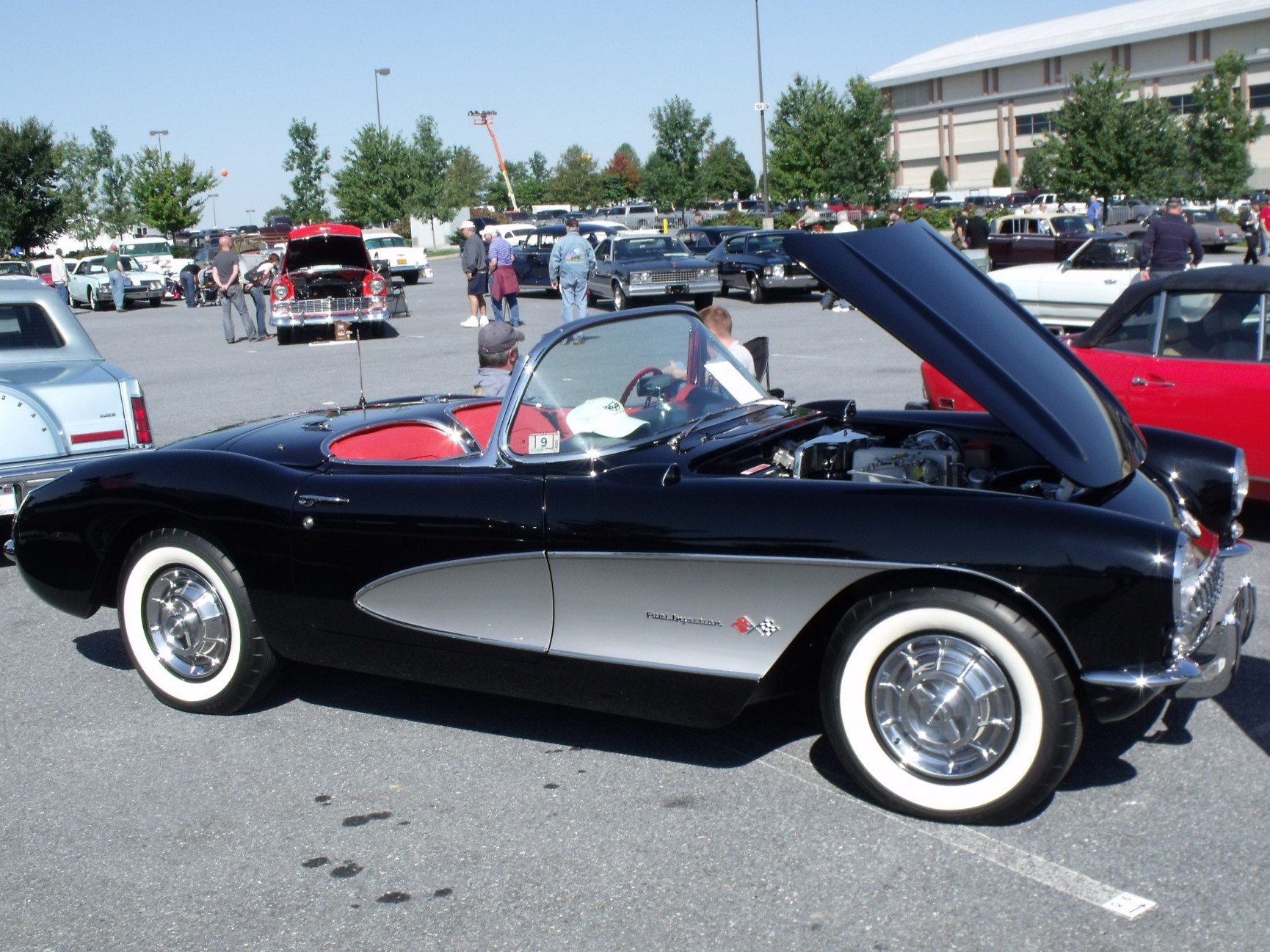
SOME EXAMPLES OF HARLEY EARL’S WORK


Entire blog post content copyright © 2025 Richard A. Reina. Text and photos may not be copied or reproduced without express written permission.
 richardscarblog