RICH’S REPAIR RAMBLINGS, ORIGINALLY PUBLISHED SEP. 2019
AUTOMOTIVE-SPECIFIC TOOLS & EQUIPMENT
In the initial installment of this column, found in the Aug. 2019 Road Map, we listed the basic hand tools you should have for maintenance and repair work on your classic car. This month, we’ll add the automotive-specific tools and equipment you’ll need, plus our recommended shop supplies and consumables which should be in any automotive workshop. (Additional car-specific tools will be covered when we feature certain repairs, for example, brake tools for brake work.)
Lifting: Performing the most basic repairs, such as oil changes and front end work, requires lifting the car. So let’s make this point early: YOUR SAFETY, MEANING PREVENTION OF INJURY OR DEATH, DEPENDS ON SAFELY LIFTING A CAR. Never, ever, use the factory jack for anything but changing a tire in an emergency. And never, ever, get under a car supported by just a floor jack, or heavens, by milk crates or cinder blocks.
Get a good floor jack, and one or two pair of jack stands. The floor jack weight rating should equal or exceed the weight of the entire car (for example, use a 2-ton jack to lift a corner of a 4,000-lb. car). Make sure the jack stands are low enough to get under your car, and high enough to raise the car to your desired working height. Use the jack stands every time you raise and work on the car. I have a floor jack and three sets of jack stands (different heights for different cars), plus a set of drive-on ramps, convenient for oil changes since wheel removal isn’t necessary.

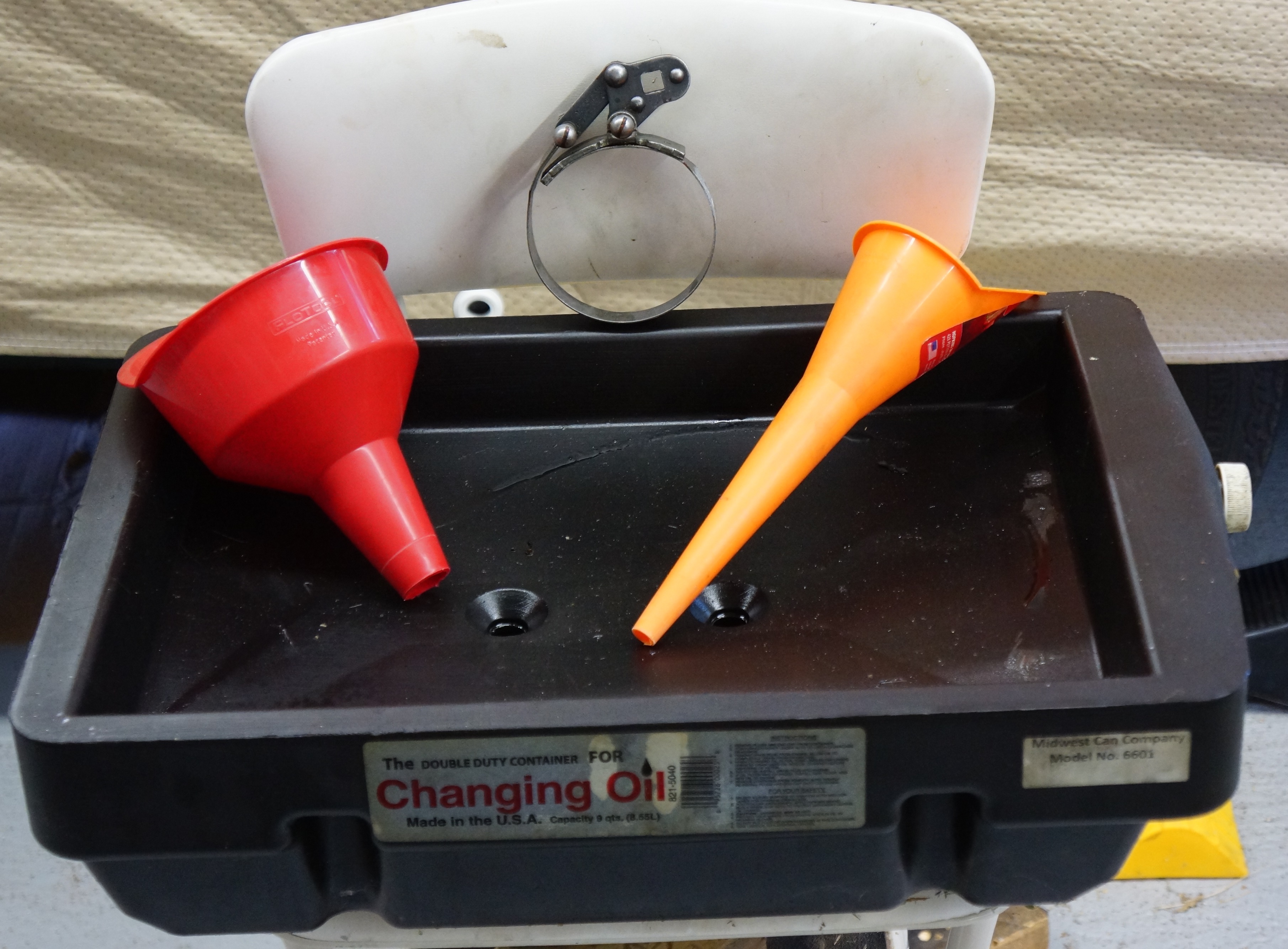
Oil Change: You can do an oil change without these, but a dedicated oil drain bucket (low profile, with at least a 6 qt. capacity), a selection of funnels, and an oil filter wrench that fits your car’s filter will make the job easier and neater.
Electrical Work: You don’t do electrical work? I’m hoping you will after future columns discuss how easy this can be. For wiring repair, start with a wiring cutting/stripping/crimping tool. Basic circuit checks can be made with a test light, but better still, consider investing in a digital multimeter (DMM). They have dropped in price; I bought mine for under $50. Also handy is a terminal release tool to disengage terminals from multi-plugs.

Ignition: Our old jalopies use ignition points, condenser, cap, rotor, spark plugs, and plug wires. To do the job right, you need a dwell meter, timing light, and plug gapper. Spark plug sockets are worth it: internal foam protects the ceramic and grips the plug upon removal (there are two sizes, so check whether your plugs are 5/8” or 13/16”). Spark plug wire pliers are nice to have; they help remove stubborn wires.

SUPPLIES
It’s a major annoyance when I want to start a job on a weekend only to discover that I’m missing some “supply” that requires me to drive back and forth to the store, when it’s a $10 item I really should have on hand. Whether you’re just starting out, or looking to replenish, it’s a best practice to have a variety of supplies and consumables in your storage cabinet.
Chemicals: Here are the “essential seven” that I couldn’t work without:
- Spray lube: WD-40 is most folks’ go-to lube, handy whenever you need to unstick something. Most of it evaporates, which is usually an advantage. If you need something heavier, white lithium grease in a spray or tube works well.
- Rust-buster: Sooner or later, you’ll need help loosening a fitting that’s rusted tight. My dad used Liquid Wrench, and so do I, although lately I’ve been fond of B’laster spray. Your local store shelves have lots of choices.
- Thread locker: Some automotive fittings rely on more than mechanical tightening; they need chemical help too. Thread locker liquid hardens and prevents fasteners from loosening due to vibration. Your vehicle service manual will tell you when it’s required.
- Glue: Glue fixes objects which are NLA (no longer available), and on our old buggies, there could be many such things. Again, dad was using two-part epoxy back in the 1970s, and I’ve made repairs with it that are still holding 40 years later. Other automotive choices include rubber cement, contact cement, and weatherstrip adhesive.
- Cleaner/degreaser: Dirty car parts need to be clean upon reassembly. If I don’t want water in the mix, a great all-around product is spray brake cleaner. Be aware that you’ll go through a can in about 5 minutes. If it’s OK to get the part wet, Simple Green works well. Your local hardware store has a variety of grease-cutters.
- Gasket maker: Gasketing material in a tube is a life-saver when working on old cars. Many gaskets are NLA; even with a gasket, gasket makers can act as an additional sealant. We don’t want leaks! RTV (room temperature vulcanizing) dries semi-hard; I’m partial to the stuff that stays sticky and doesn’t get completely firm.
- Petroleum jelly/dielectric grease: Great for battery terminals, I use this on electrical connections on my old Italian car to chase away those electrical gremlins. British car owners should buy it by the gallon.

Electrical: A roll of black electrical tape, some 14-gauge black wire (the smaller the number, the thicker the wire), and crimp-on terminals will get you started with electrical repairs.

General Shop Supplies: A fire extinguisher, eye protection, and a first-aid kit can literally be lifesavers. Gloves, paper towels, rags, and hand cleaner all help keep the mess at bay.

All photographs copyright © 2023 Richard A. Reina. Photos may not be copied or reproduced without express written permission.




 richardscarblog