Mecum Auctions, Harrisburg, PA, July 2025

Mecum Auctions returned to Harrisburg, PA, this year, scheduling their four-day auction to run from Wednesday, July 23 through Saturday, July 26, 2025. Mecum’s first Harrisburg outing was in 2014, and the event has only grown in size and stature since then. As is typical at most multi-day auctions, Day One is considered “bargain day,” while the final day (in this case, Saturday) is reserved for the vehicles predicted to bring the big bucks.

I’ve been in attendance most years since that inaugural event. The location is ideal for me: Harrisburg is halfway between Hershey and Carlisle, and is only a two-hour car ride. The location is ideal for Mecum as well, as this part of PA is chock full of classic car enthusiasts. I was in attendance both Wednesday and Thursday and sat through much of the live auction. One big improvement: there are now padded chairs and tables provided for registered bidders, and they’ve added this 21st century perk: the tables have a QR code which you can scan, allowing you to place a food and drink order to be delivered to your seat. I didn’t take advantage of the delivery service, but it was nice to know that it was there.
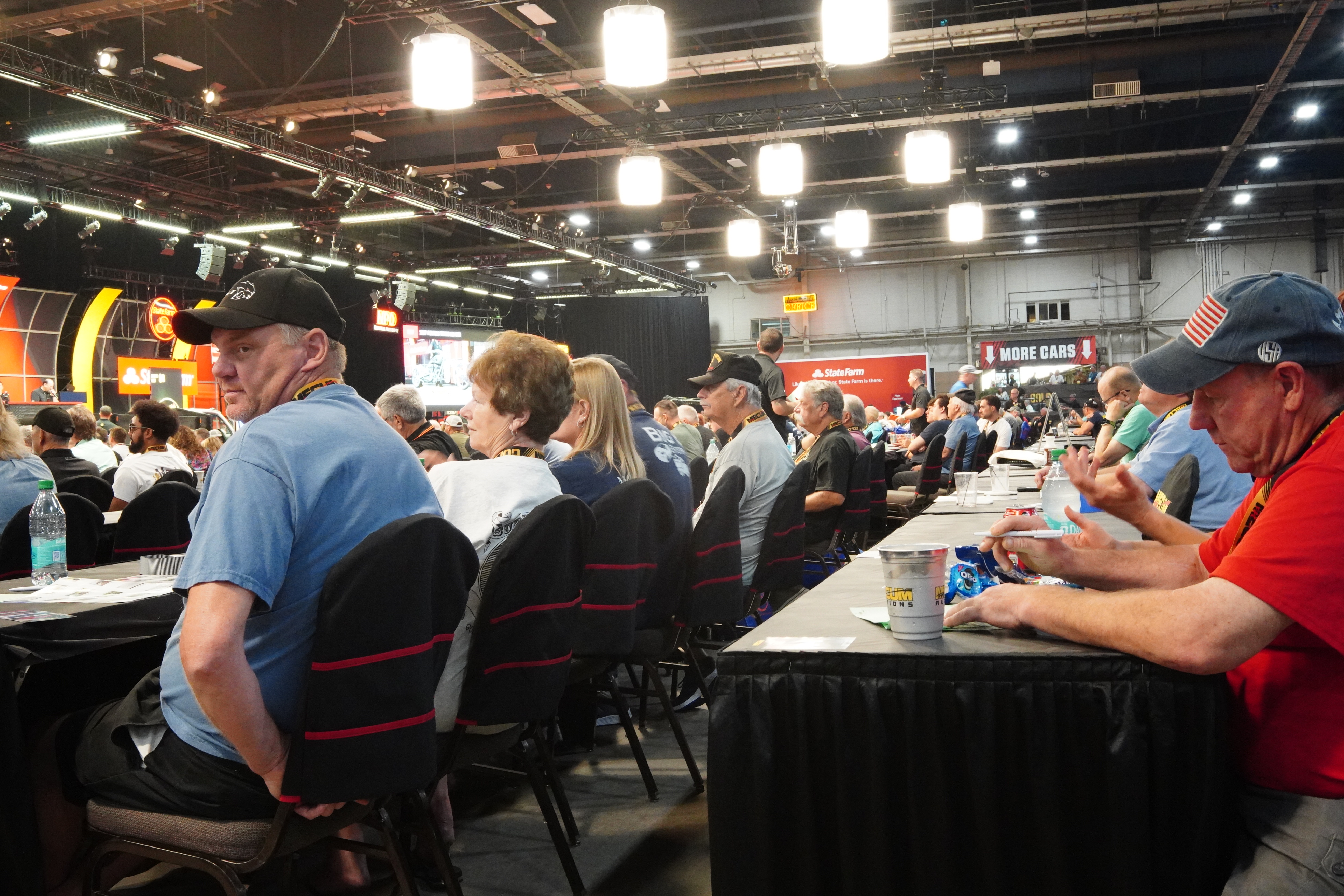
Tables and chairs!

During my two day visit, I watched 171 cars cross the block, and observed 106 of them declared “sold”, for a two-say sell-through rate of 62%, respectable, but not great. Breaking it down further, Wednesday’s performance was weak: 44 of 81 observed lots were declared sold, for a sell-through of 54%. Thursday’s number was better at 69% sold, and closer to what I typically see at Mecum. The relatively large number of no-reserve lots helped these results, but it is obvious that many sellers still set unrealistic reserves for their cars. As has been the trend, groups of no-reserve cars were announced to be “from so-and-so’s estate,” indicating that the ol’ collector has either departed or has decided to relinquish his horde, whereupon the family ships it off to be sold at auction for whatever they can get.

Whether the sell-through rate is 50% or 95%, someone needs to tackle the job of setting up, and it’s a huge job. As I entered the Farm Show Complex early on Wednesday, I was struck by how much effort and manpower it must take to run this show. The podiums, stage, TV screens, lights, cameras, and signs must all be carried in and precisely arranged. Hundreds of chairs and tables are placed in rows for bidders. A tent large enough to provide shade for hundreds of cars at a time is set up outside behind the main hall. A crew of drivers, pushers, detailers, and the like is on hand for the entire time that the event is open to the public. I’ve heard griping through the years about the amount of money Mecum rakes in with its 10% buyer’s commission, and of course this is a profitable undertaking. At the same time, their overhead costs must be considerable.
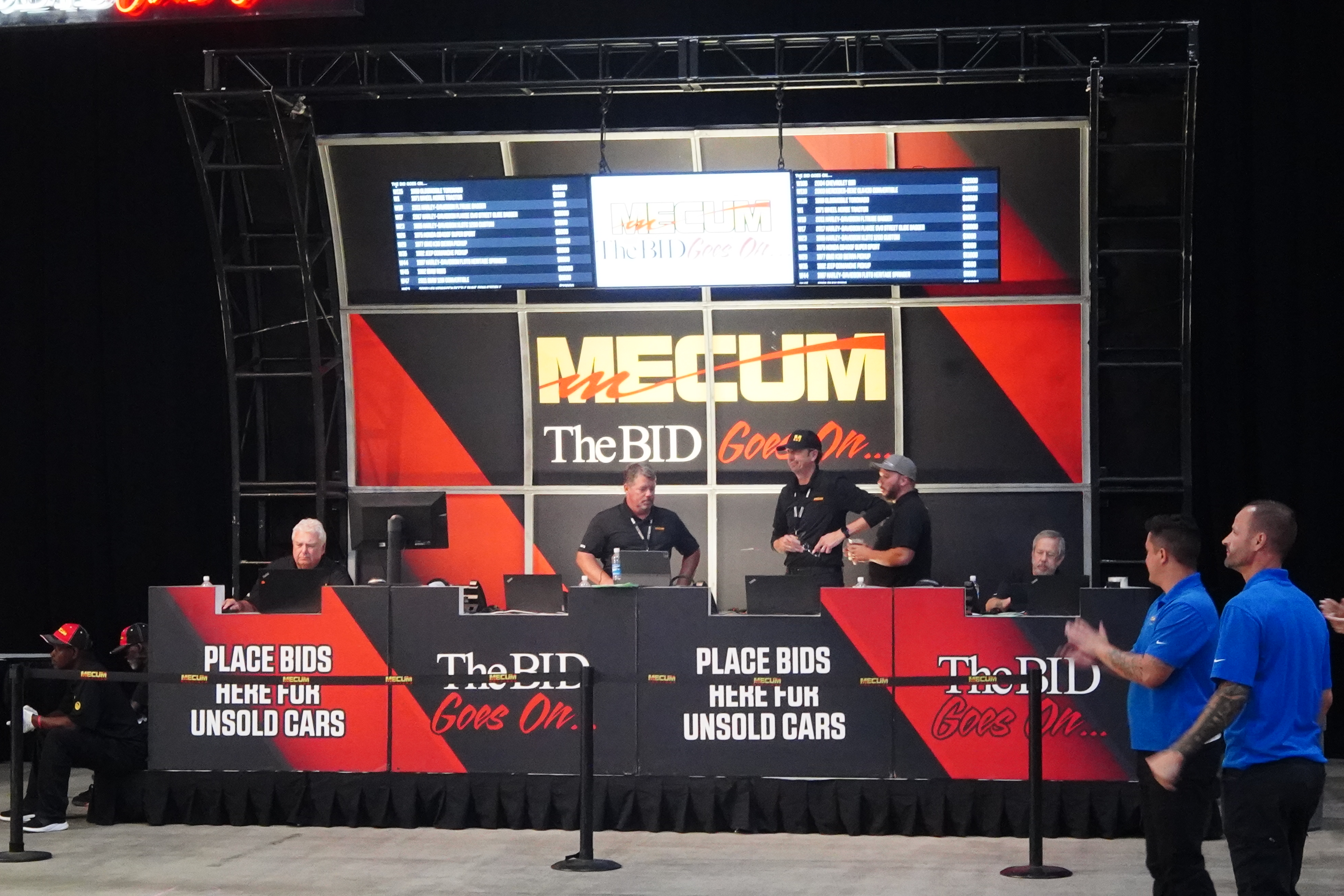
The “Bid Goes On” desk. As the sign says, “place bids here for unsold cars.”

The bread and butter at a Mecum auction consists of the most popular and collectible American-made cars and trucks of the last seventy years or so. Muscle cars, restomods, pickups, and everyone’s favorite models from the Big Three are in plentiful supply. However, my interests lean toward the orphans, oddballs, imports, and other rarely-seen automobiles. To my happy surprise, there was enough of that to keep me entertained, and I’ve reported on many of those lots below, whether they sold or not. I mentioned above that Day One is bargain day, and if you wanted to buy a car at auction and spend less than $5,000, you could do so here. To cite three examples: a 1995 Buick Roadmaster wagon with 175k on the clock hammered for $2,500; a 1999 Chevy Tahoe with 185k miles went for $3,500; and a 2007 Pontiac Solstice convertible (with an automatic) with 167k on it sold for $4,500. I did not personally inspect any of these, and make no promises that they were without issues. However, someone bought them and presumably, someone will find a way to make them useful.
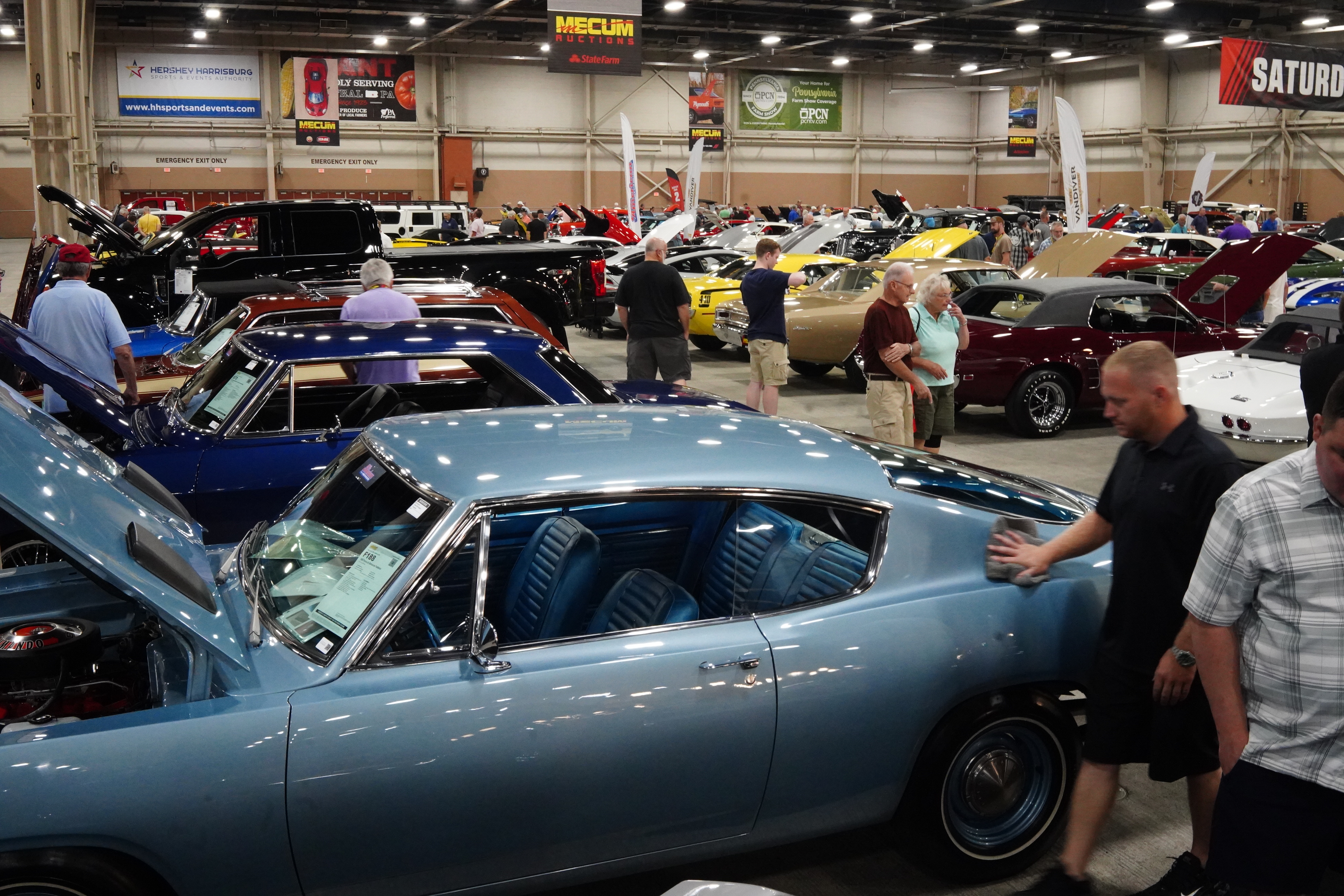
Saturday’s cars, aka the cream of the crop, are kept inside
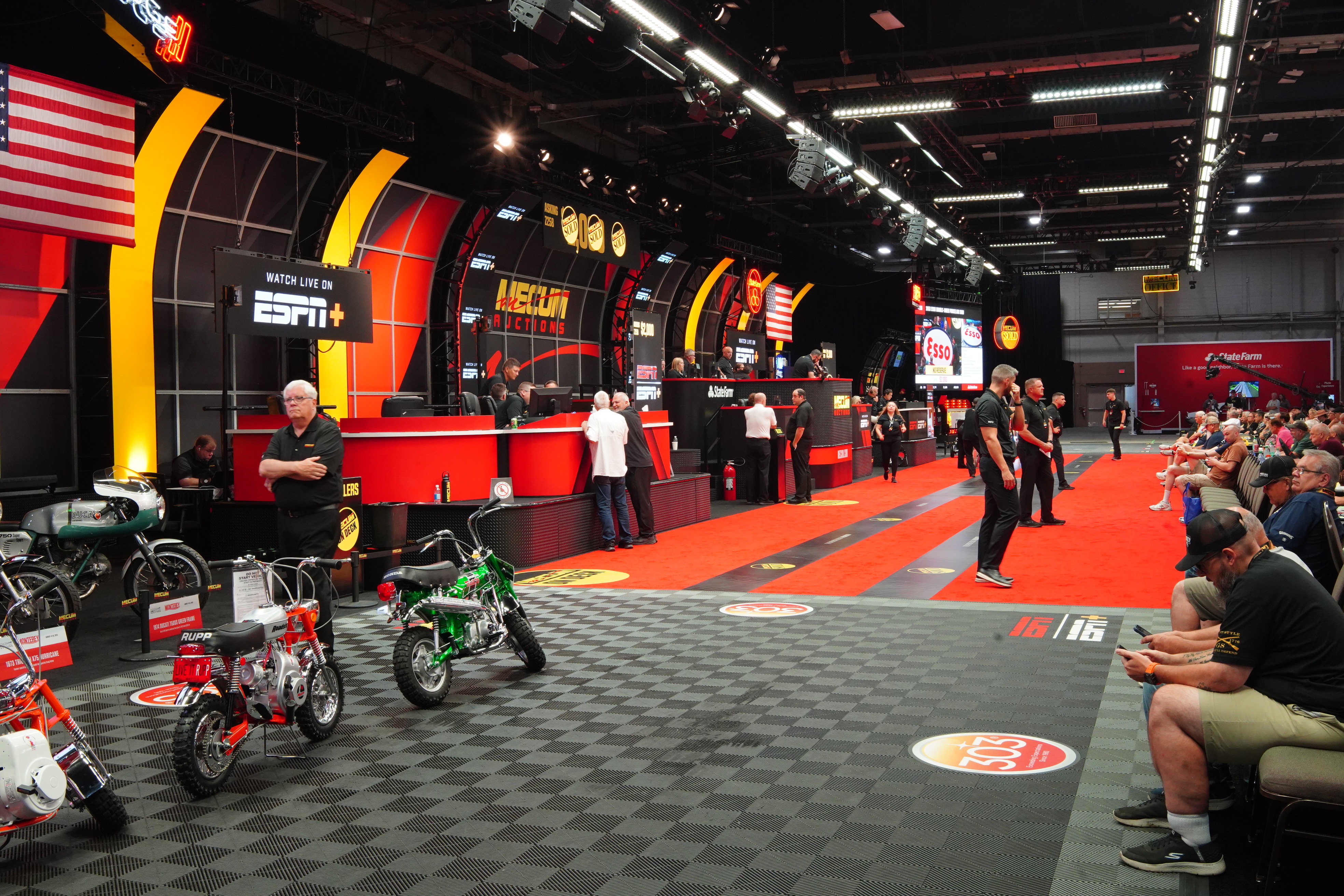
Where the action is
Two huge screens, large enough to be seen from the back of the room, flank the auctioneer’s podium

Auction lots below are broken out into SOLD units first, then NOTABLE NO SALES. As always on Richard’s Car Blog, lots are listed in SOLD PRICE order, the better for you to gauge what your dollars will get you. All numbers below are the hammer prices, and do NOT include the 10% buyer’s premium owed to Mecum.


SOLD LOTS


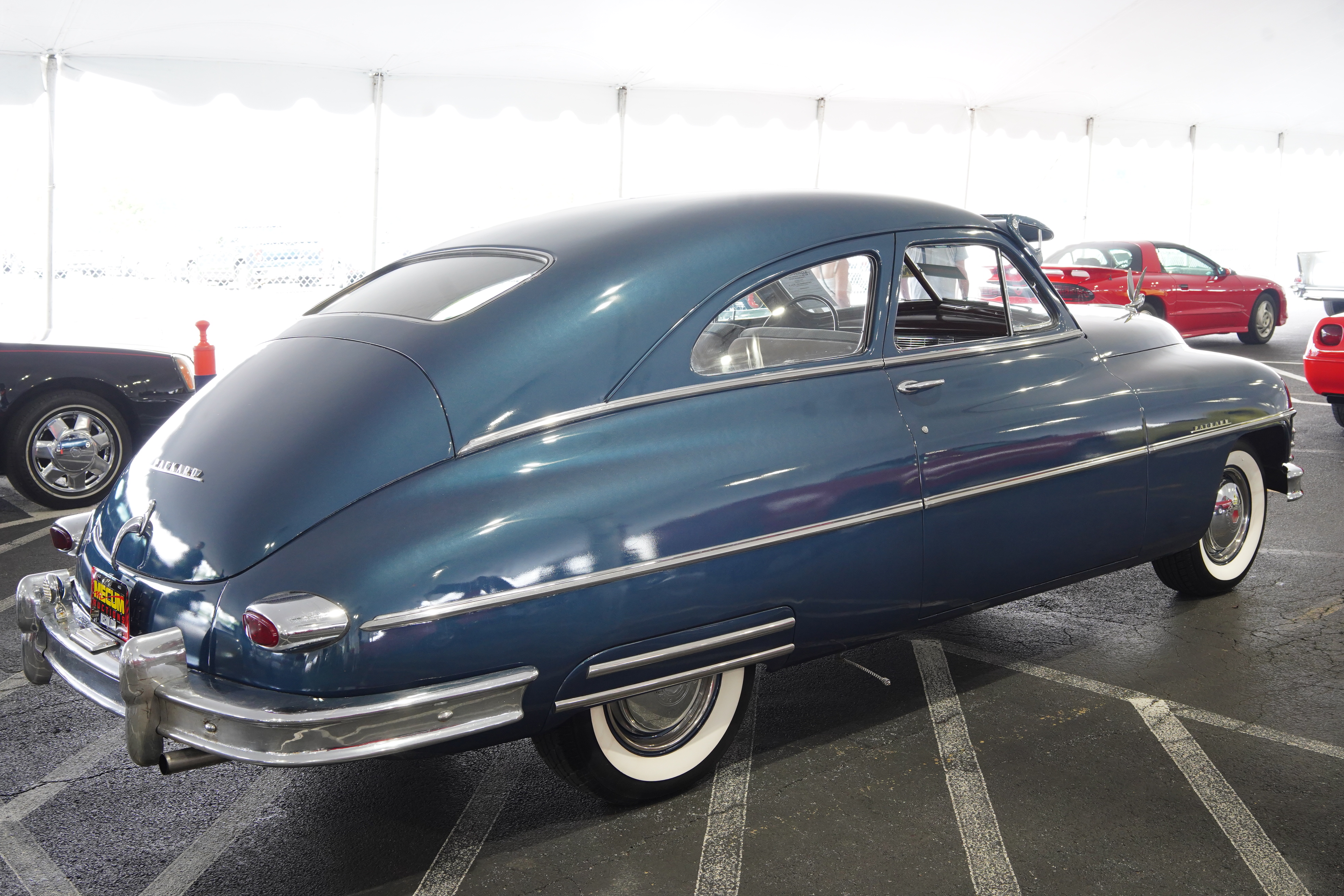
Lot T81, 1949 Packard Eight Club Sedan, two-door fastback, metallic blue paint, brown and grey interior, 327 straight-eight engine, three-speed manual transmission, large sunvisor on exterior above windshield. Paint looked just ok (not sure how correct the metallic was) but much of the chrome was pitted. A rarely-seen two-door bathtub Packard.

SOLD at no reserve for $6,500. In this condition, what do you do with it? It would need thousands to become any kind of show car. You could maintain it as is and drive it to cruise nights, where it might be the only Packard there. A car for the hardcore Packard enthusiast.

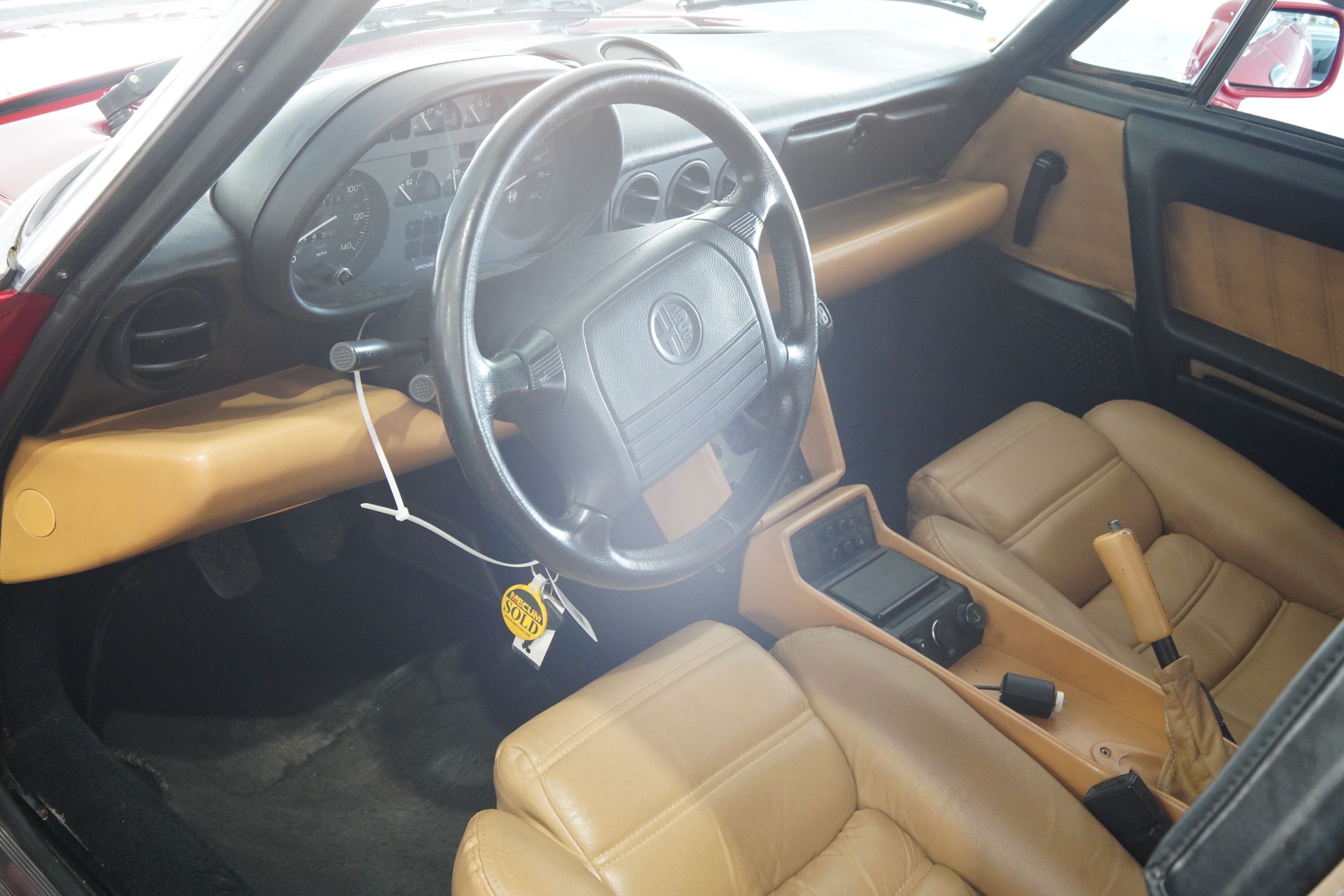
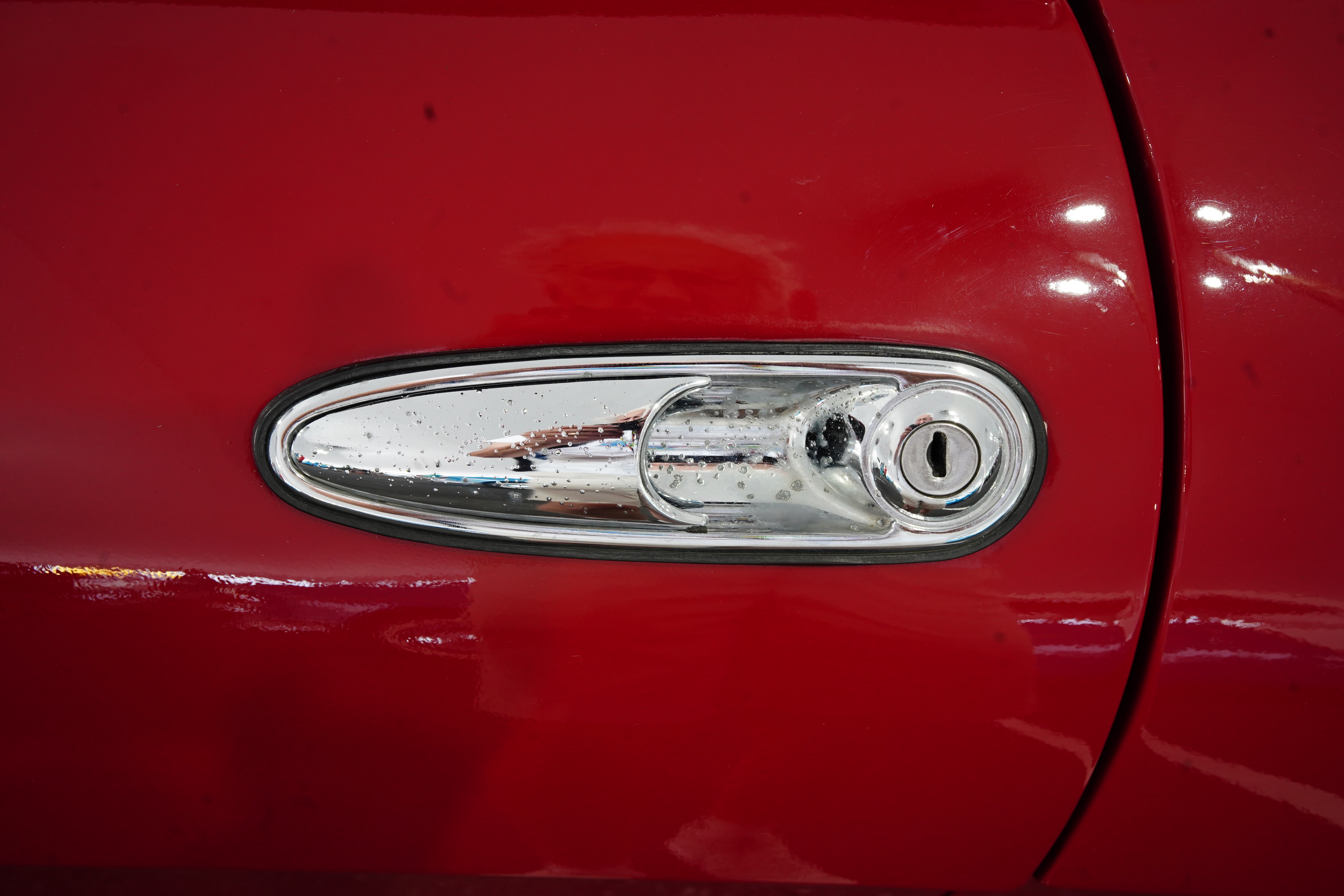
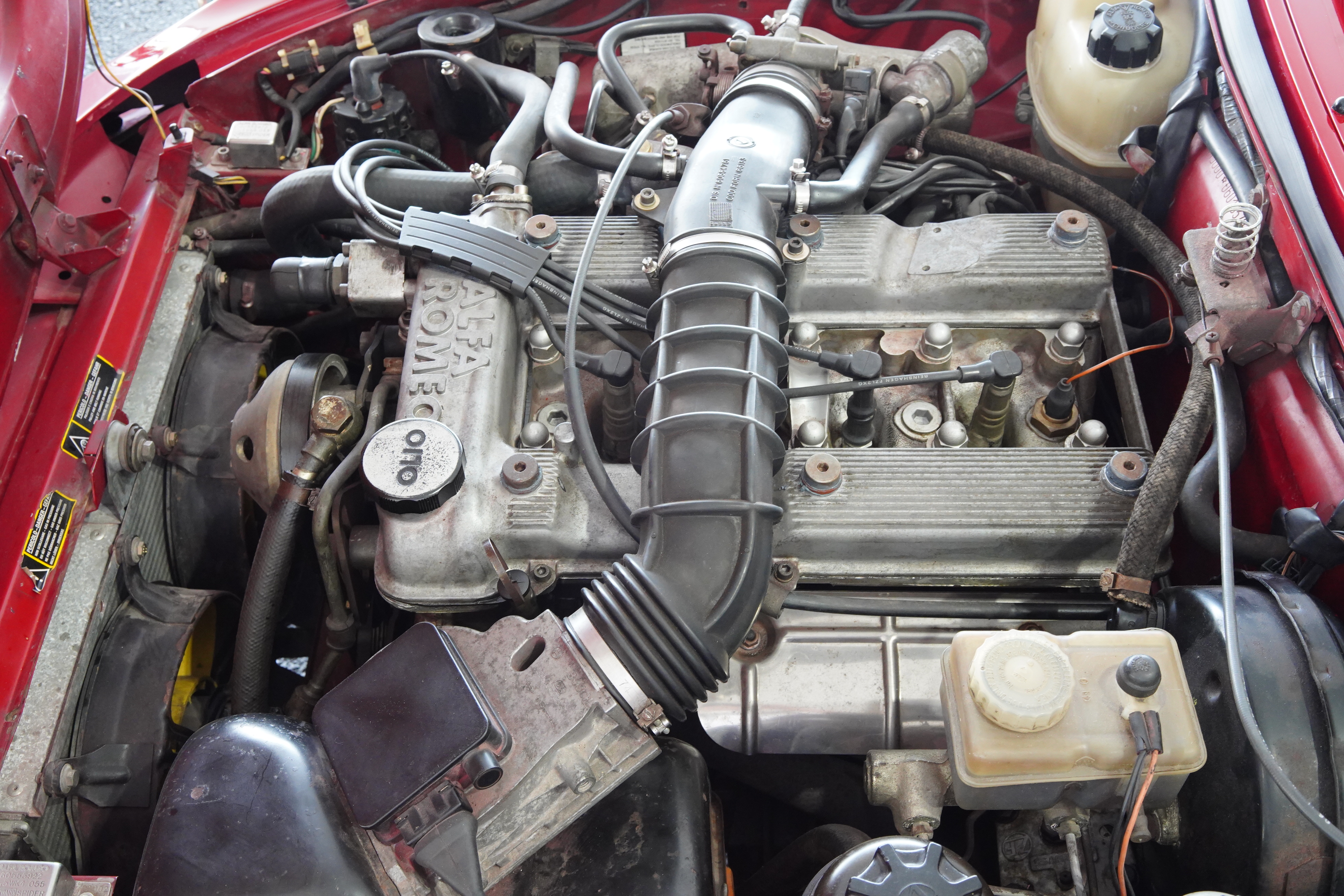
Lot T5, 1991 Alfa Romeo Spider Veloce, red paint, tan top and tan leather interior, 2.0L four-cylinder, five-speed manual, factory A/C, power steering, factory “phone dial” wheels. Paint looked ok, but strangely, much of the exterior chrome, such as the door handles, was very pitted. Underhood was not detailed. Spare tire well looked rusty from an undercar inspection.

SOLD at no reserve for $8,000. This Series 4 Alfa Spider was the model’s final iteration. To me, by this time, the car had gone soft. Items like the A/C and PS added weight and complexity, and detracted from performance. Of the four different series of Spiders, the styling on these is my least favorite. There were a few red flags on this one, but the price was fair if someone just wants a fair weather driver to use for a few thousand miles a year.

 

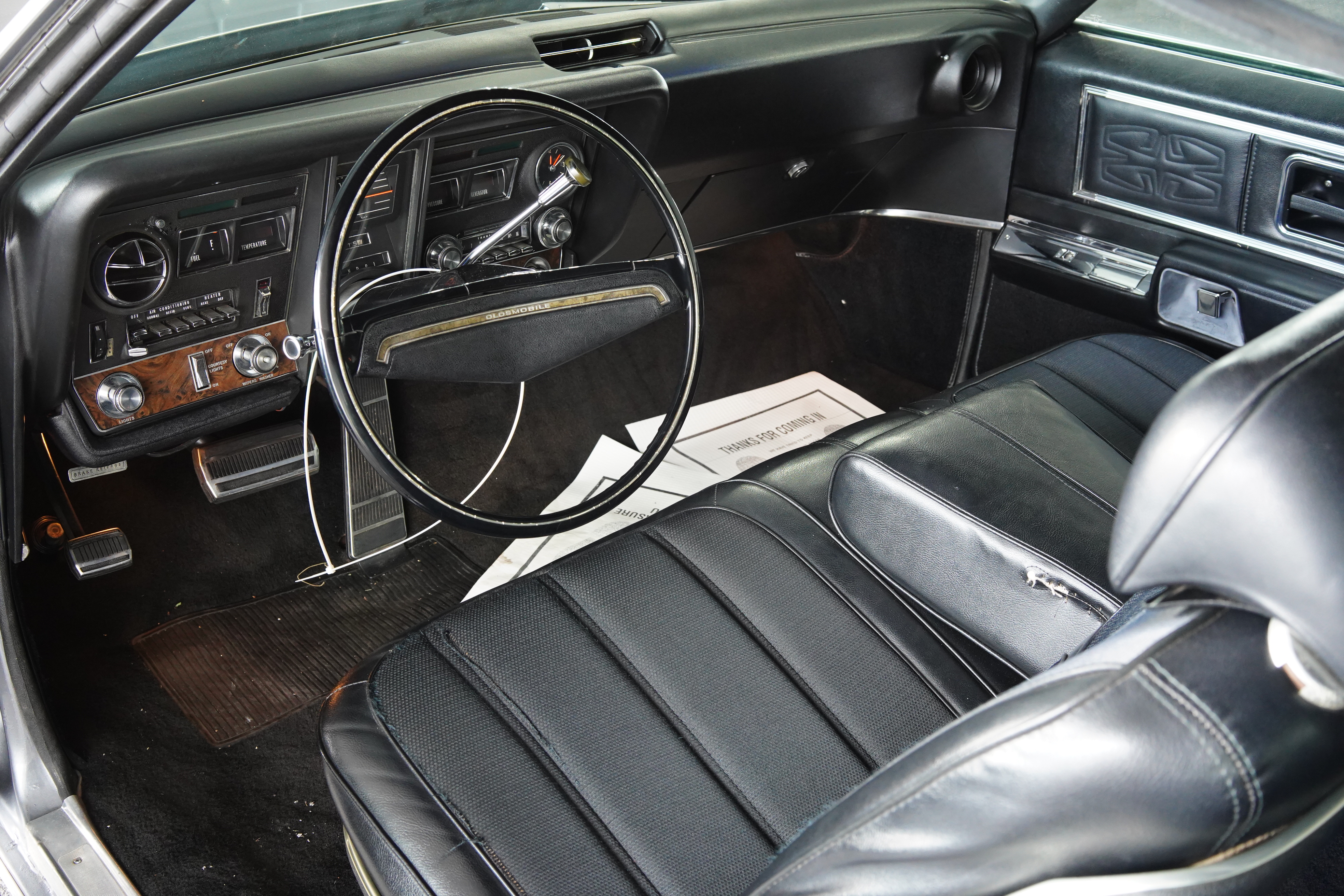
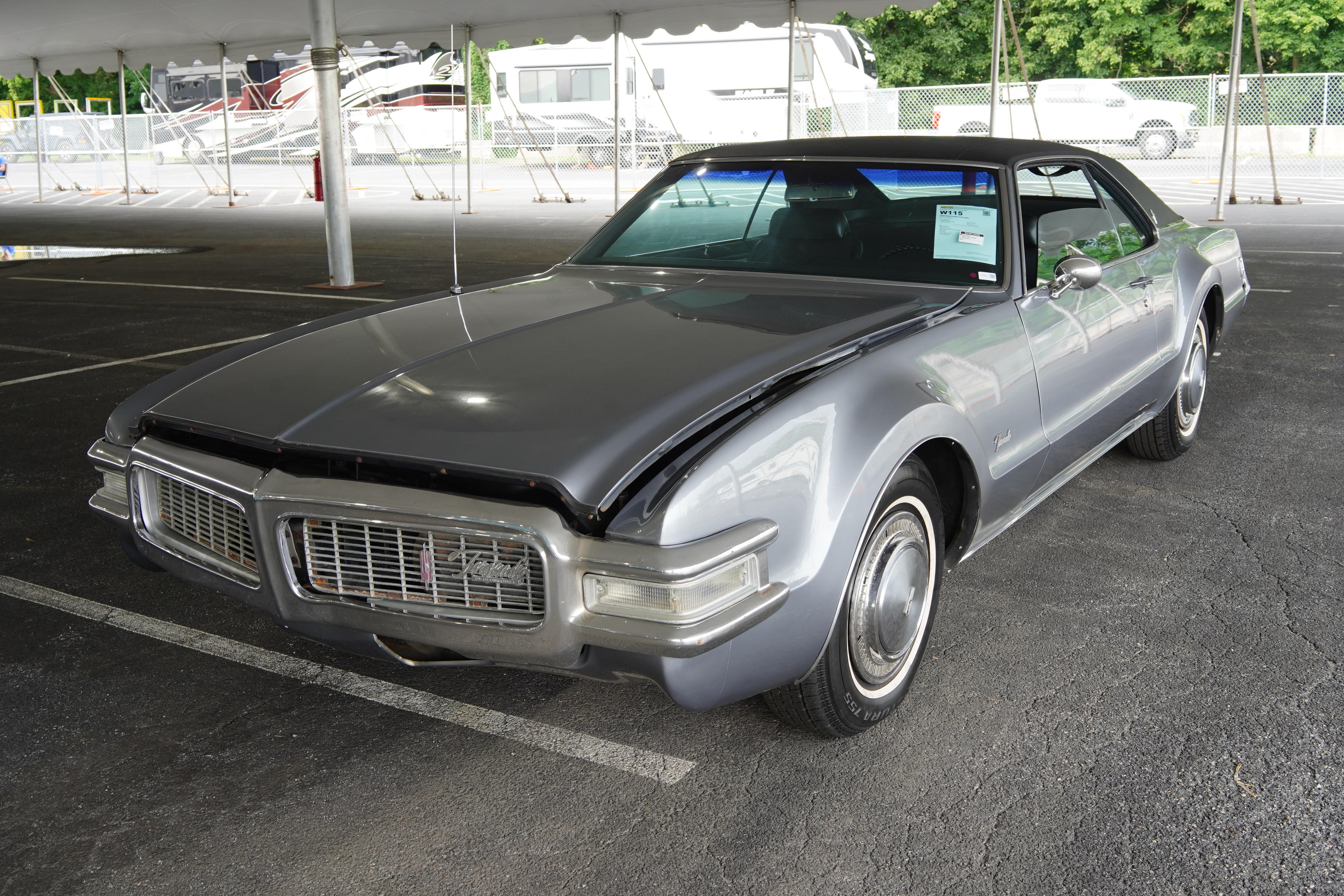
Lot W115, 1969 Oldsmobile Toronado, 455 V-8, automatic transmission, FWD (natch), silver paint, black vinyl roof, black interior. Odometer reads 11,000 miles, very likely on its second go-round. Front bumper dented, most of engine compartment has been sprayed flat black. A weekend detail would have done wonders for its presentation.

SOLD for $10,500. The ’69 Toro still used the original body shell from ’66, but with a massive front bumper replacing the initial design. Full-size American luxury for not a lot of money, and fingers crossed that the mechanicals are ok.

 

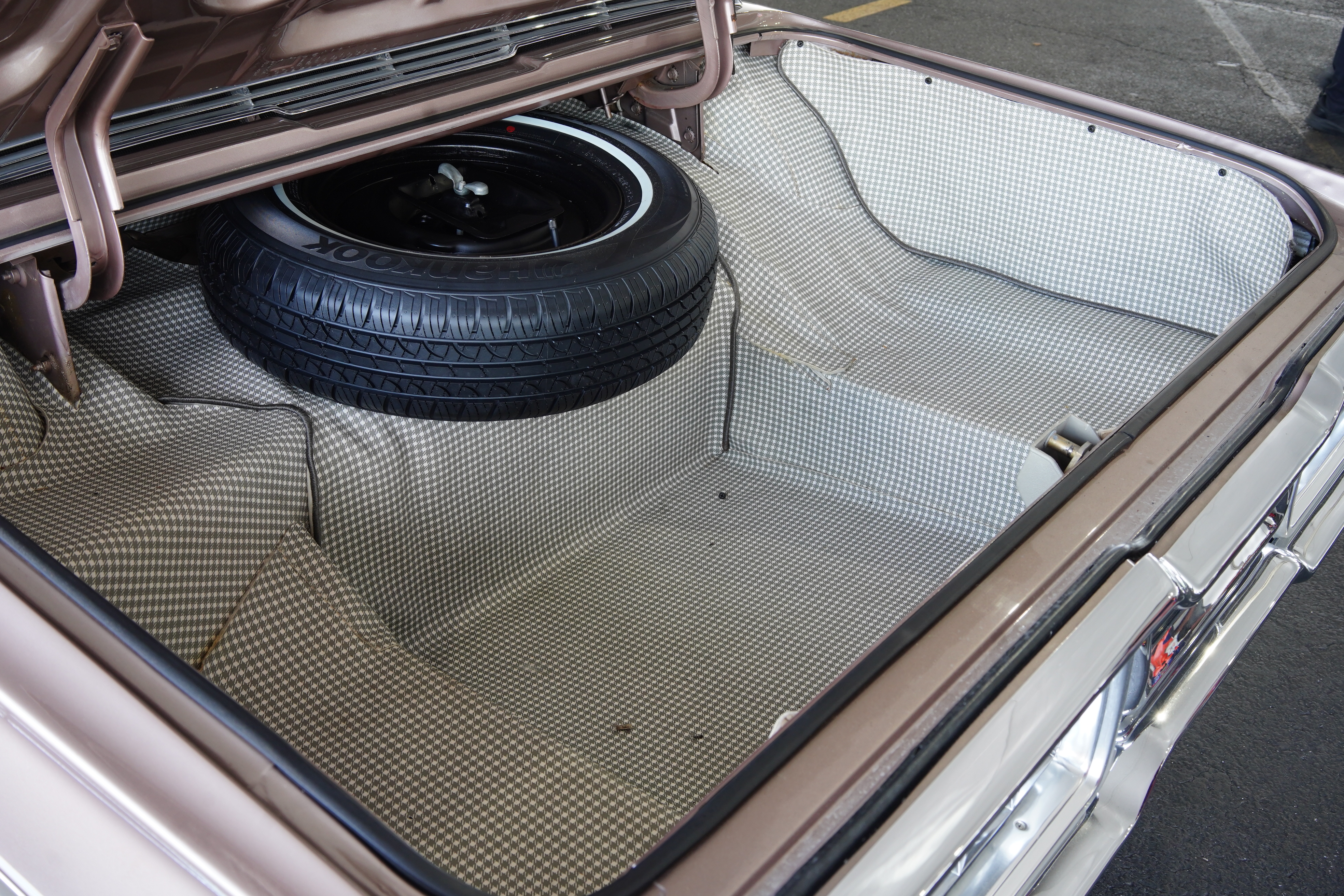
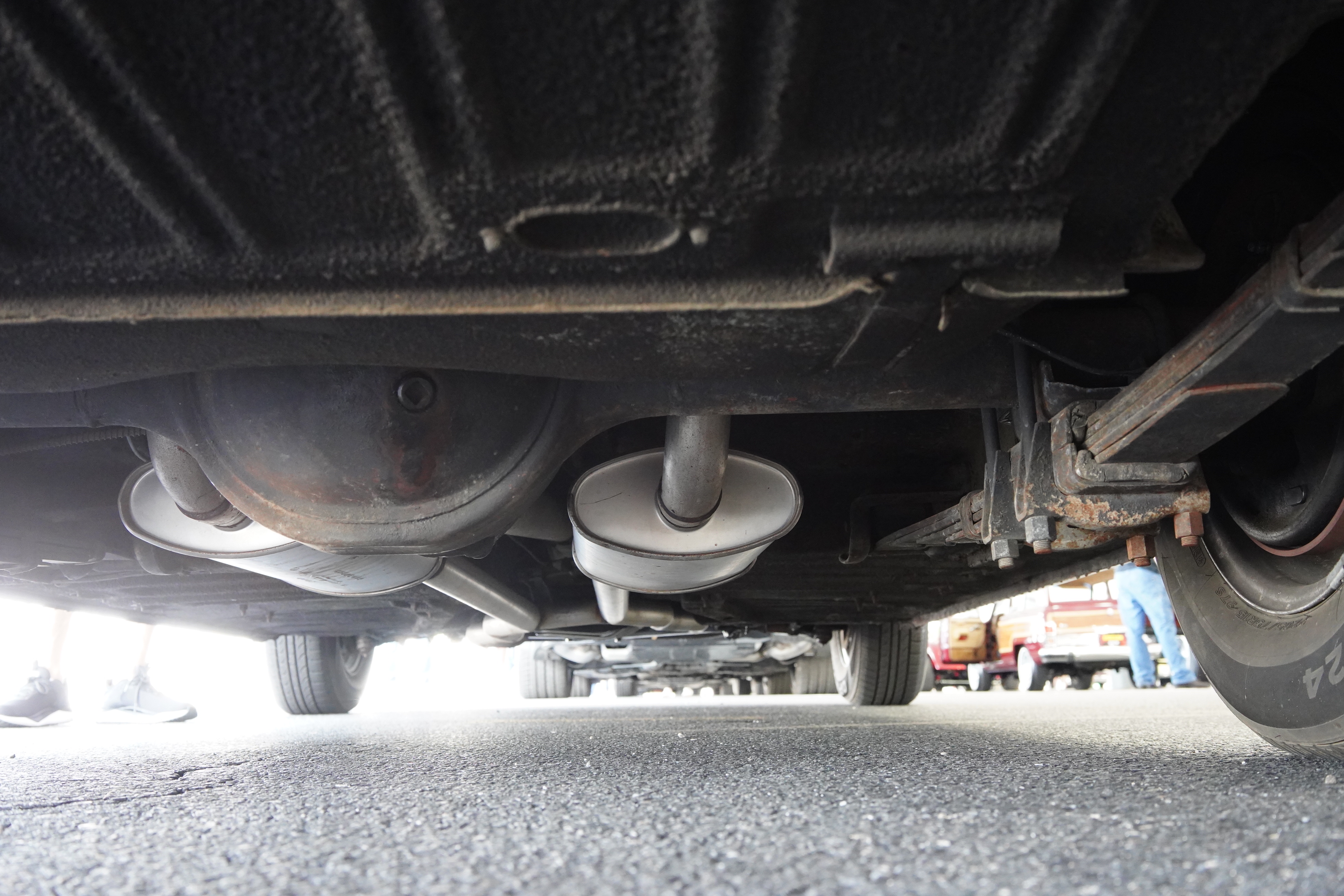
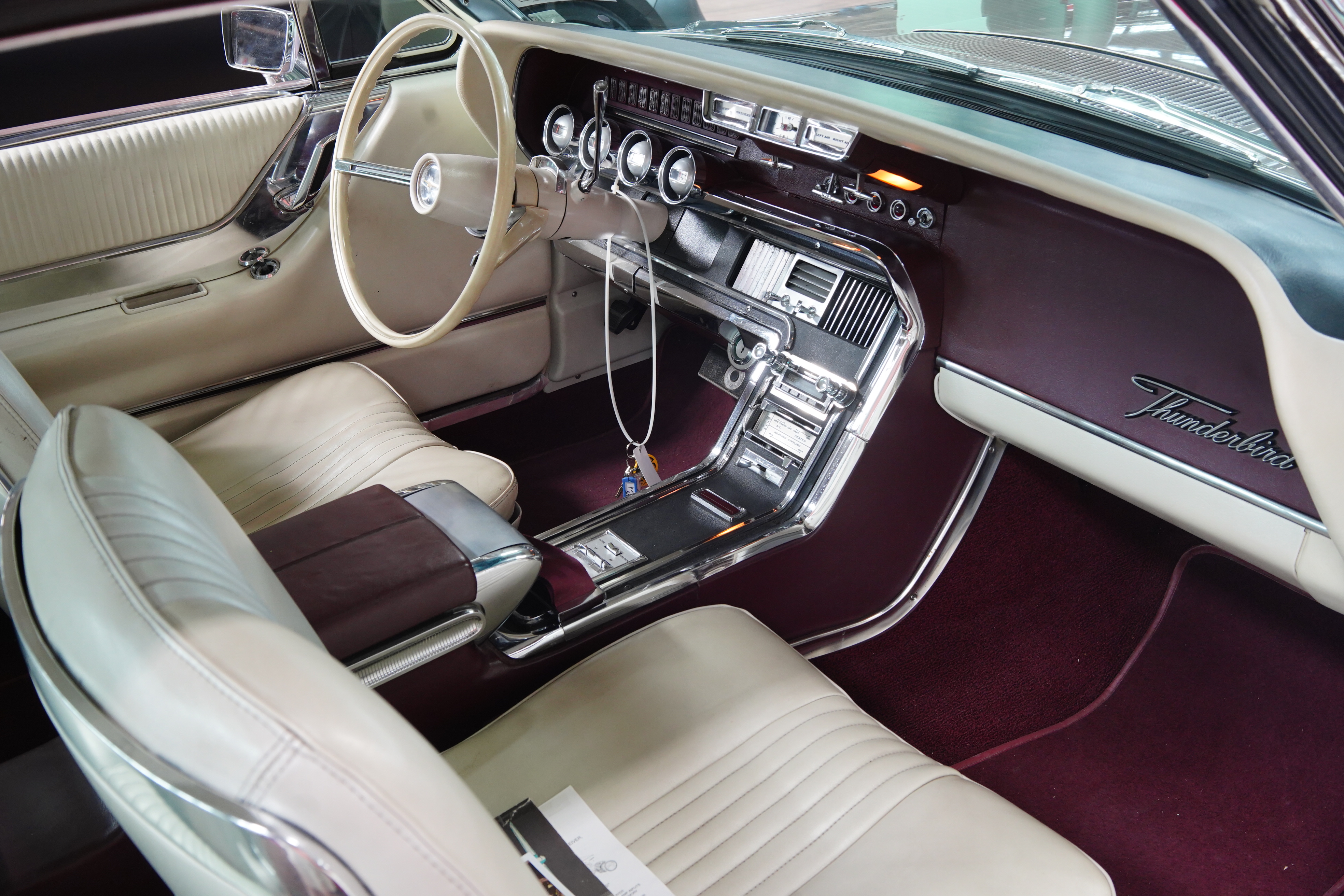
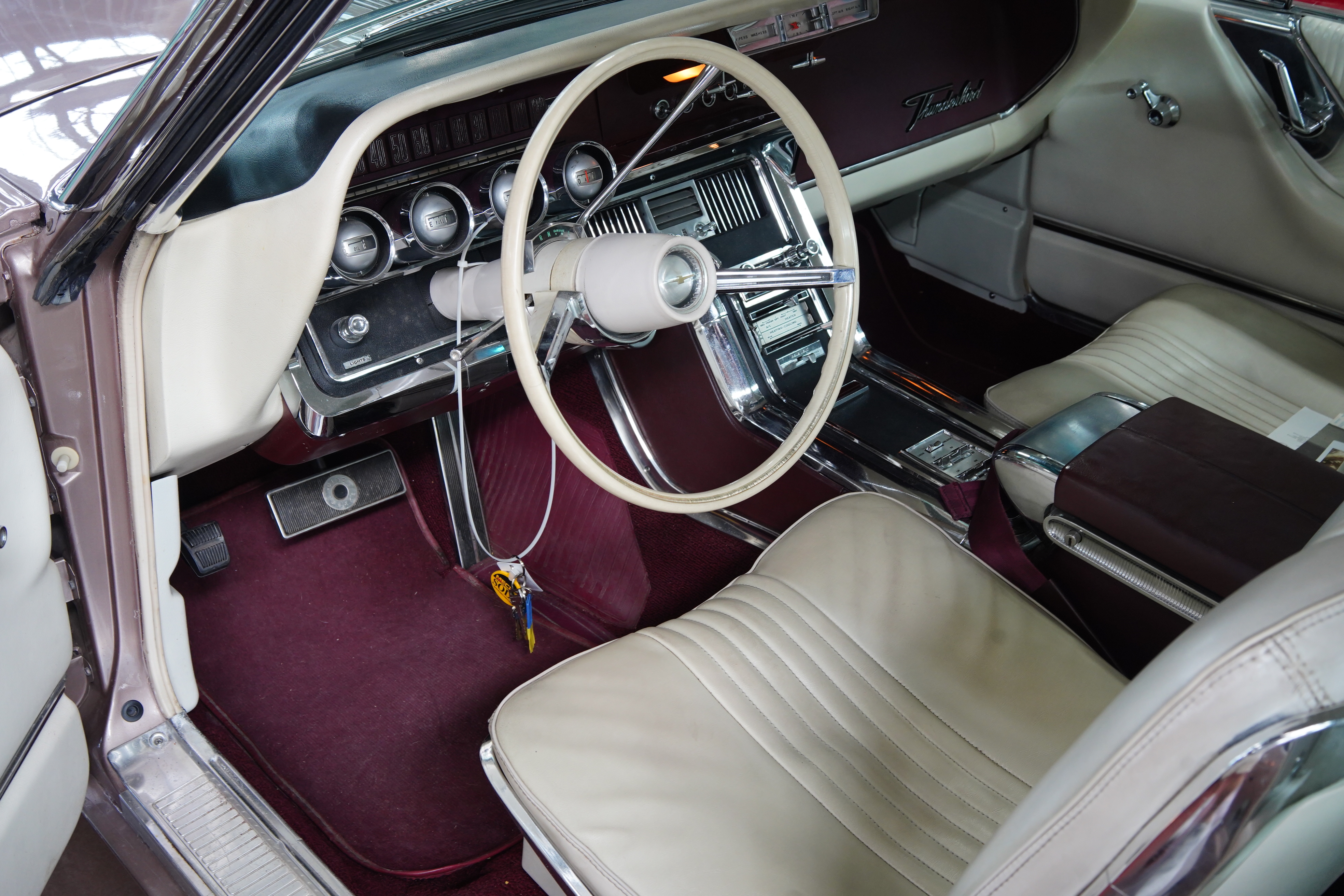
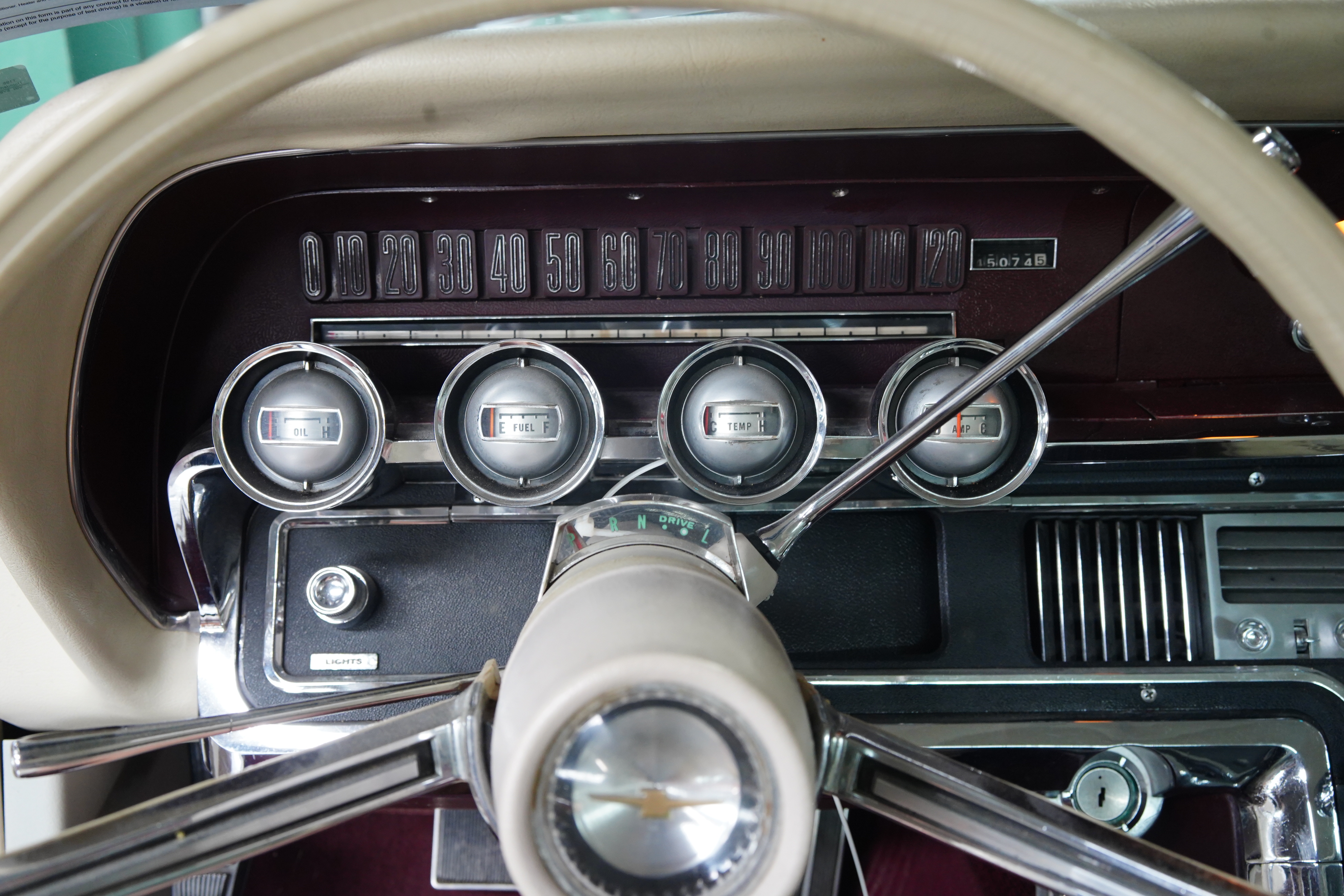
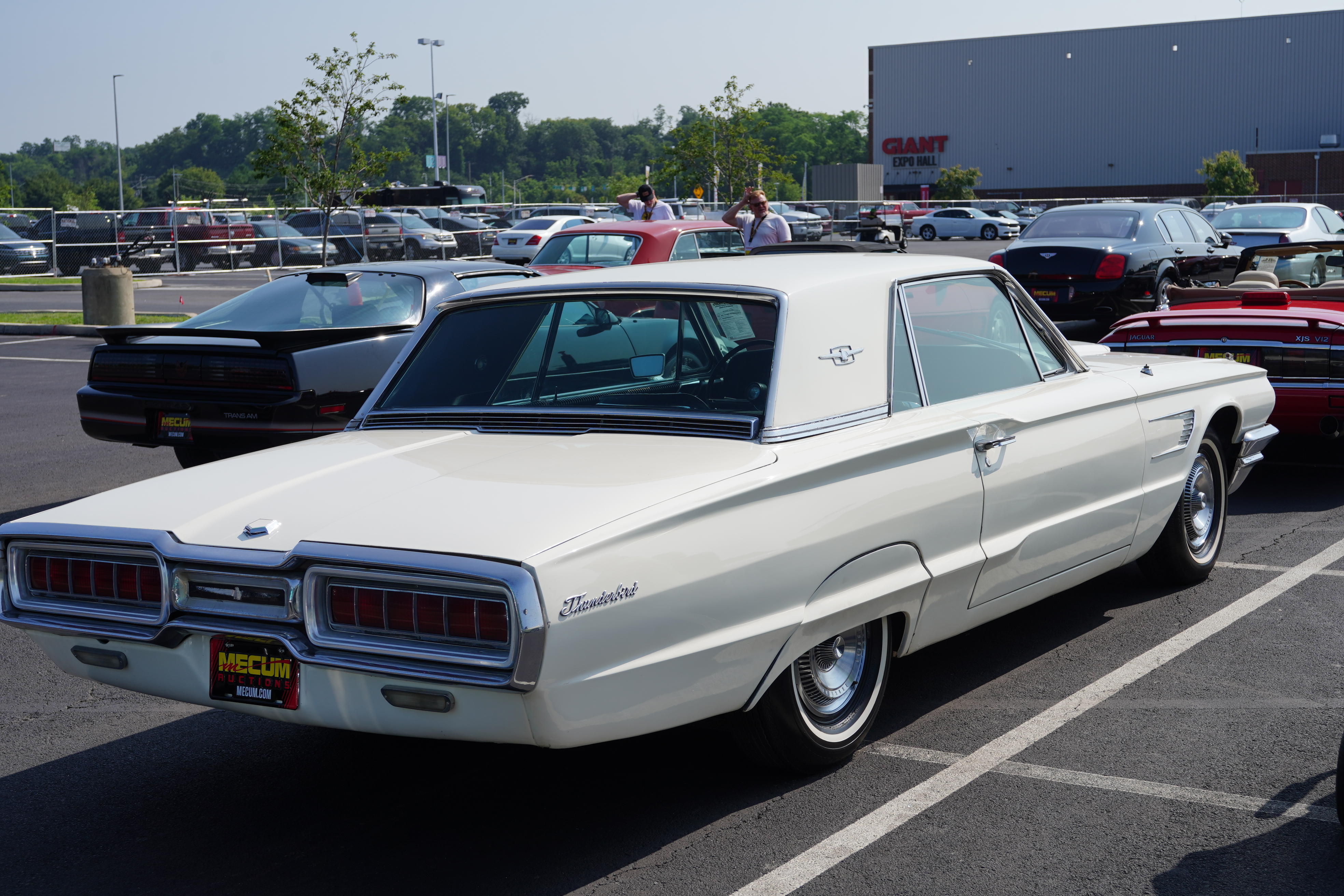
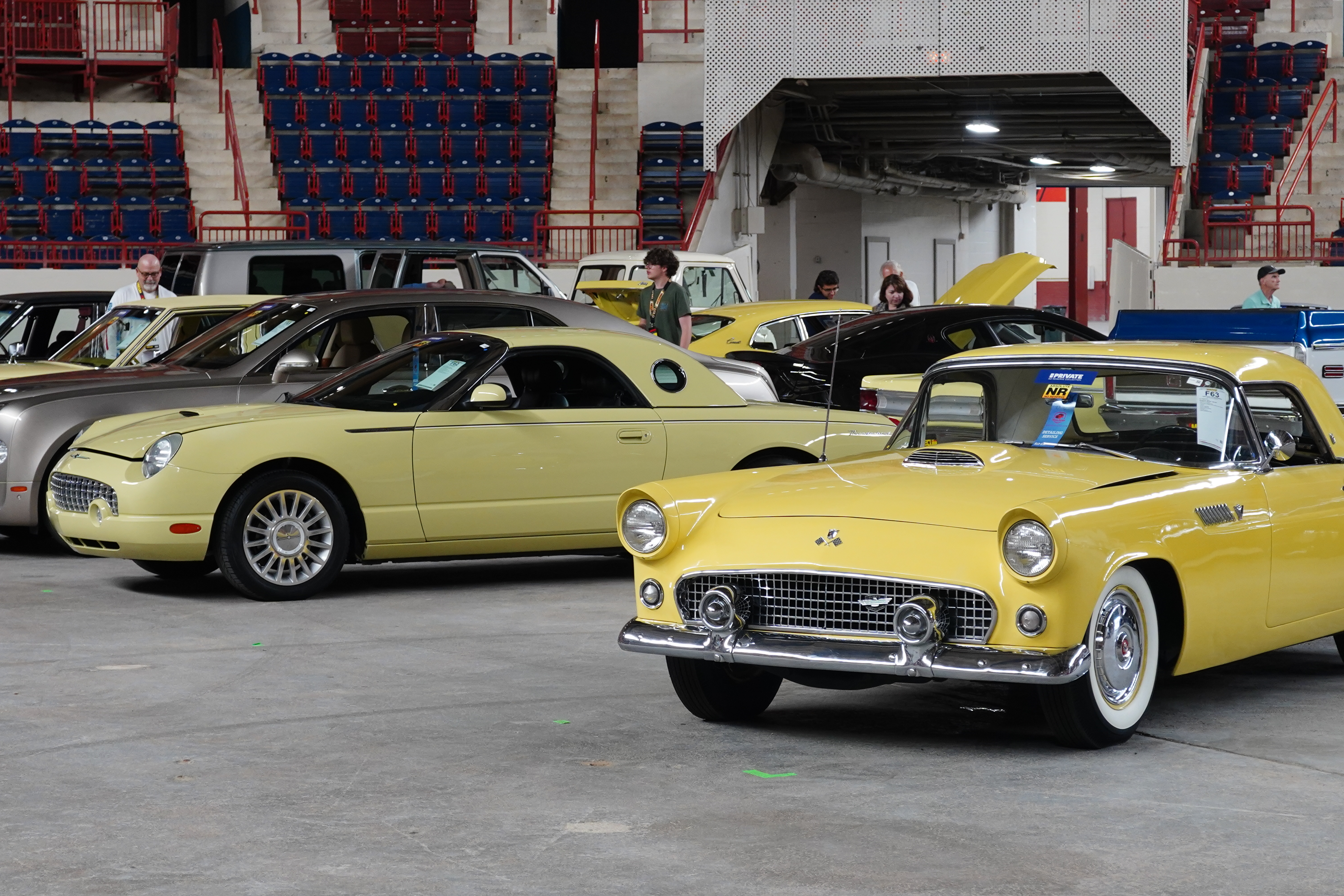
Lot T198, 1965 Ford Thunderbird two-door hardtop, rose beige paint, white vinyl upholstery with burgundy carpeting, 390 V-8, automatic transmission, factory A/C, power windows, power driver’s seat, wire wheels. Odometer reads 45,074. Aftermarket rub strips detract slightly from exterior styling. Body plugs imply that car received rustproofing at some point in its past.

SOLD for $13,000. A Polaroid found on the passenger sheet showed that the car received a complete repaint in 2004. According to my source books, “rose beige” was a T-Bird-only color for ’65, and was striking in person. The driver’s power seat would only move the seat about halfway back, and was very uncomfortable to sit in. Peering underneath, I saw the seat foam had turned to powder and would need replacement. This may have also been causing the restricted movement. Still, this was a very attractive car in person, and I don’t think my photos do complete justice to its appearance. At this price, I had some regrets about not bidding.

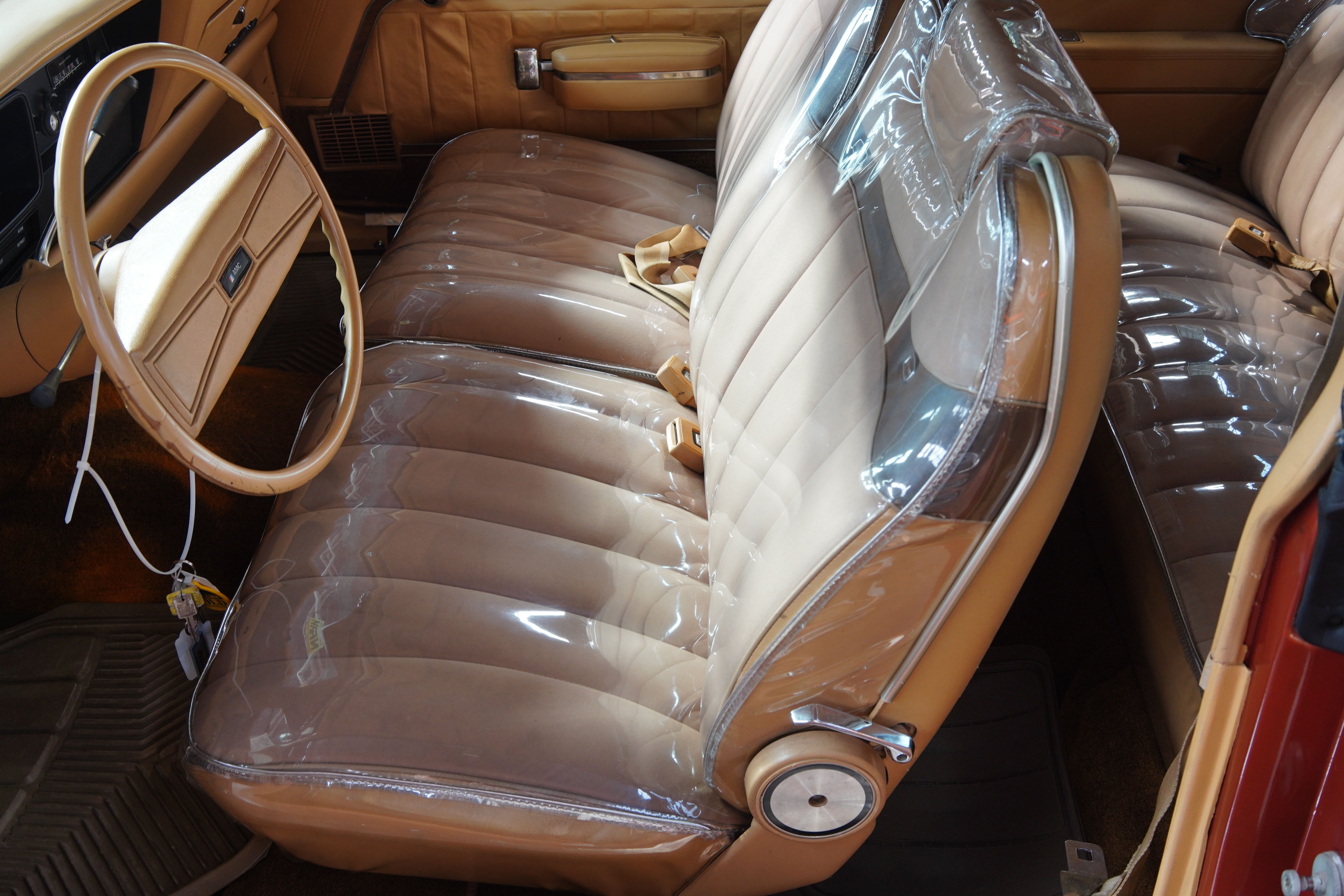
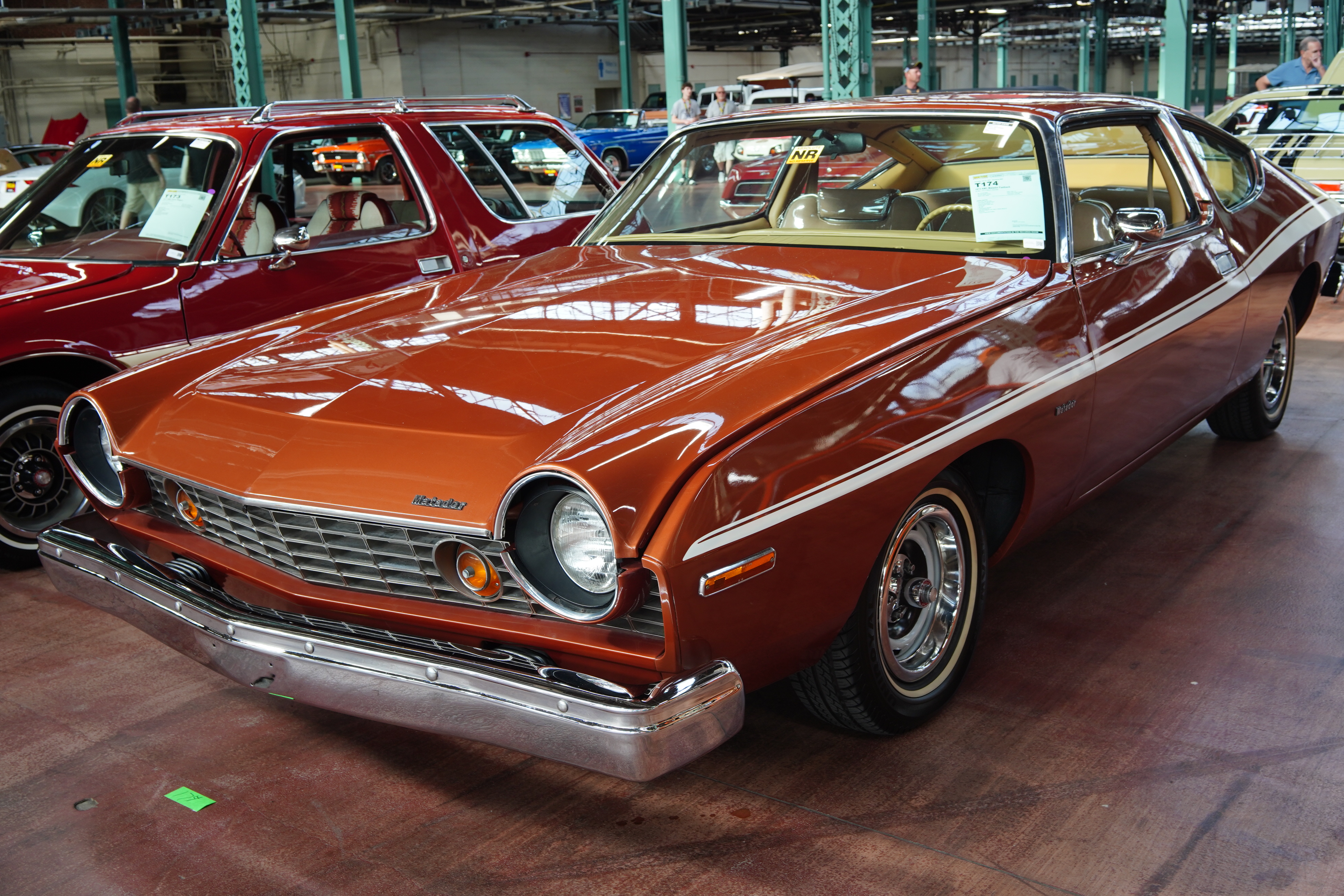
Lot T174, 1974 AMC Matador two-door fastback, copper paint, white stripe, tan interior (with seating areas covered by clear vinyl covers), 232 inline-six, automatic transmission. Windshield sign claims 68 miles, implying that is original, but … sign also states “mostly original copper paint.” Front bench seat is twisted and bent backwards on driver’s side, and driver’s door window rubber very deteriorated. Air cleaner looks to be repainted, and several radiator hose clamps are aftermarket.

SOLD at no reserve for $14,000. I clearly remember when these were new, Car and Driver magazine put one on the cover and declared, “the best-looking new car of the year.” I was twenty years old and thought they were nuts. In fact, the magazine later tried to take back the praise. I would need to see more documentation about the mileage to believe it. If this was truly a 68-mile car, it may have been poorly stored. I thought this was pricey with the six; the hammer price might have made more sense with a V-8.
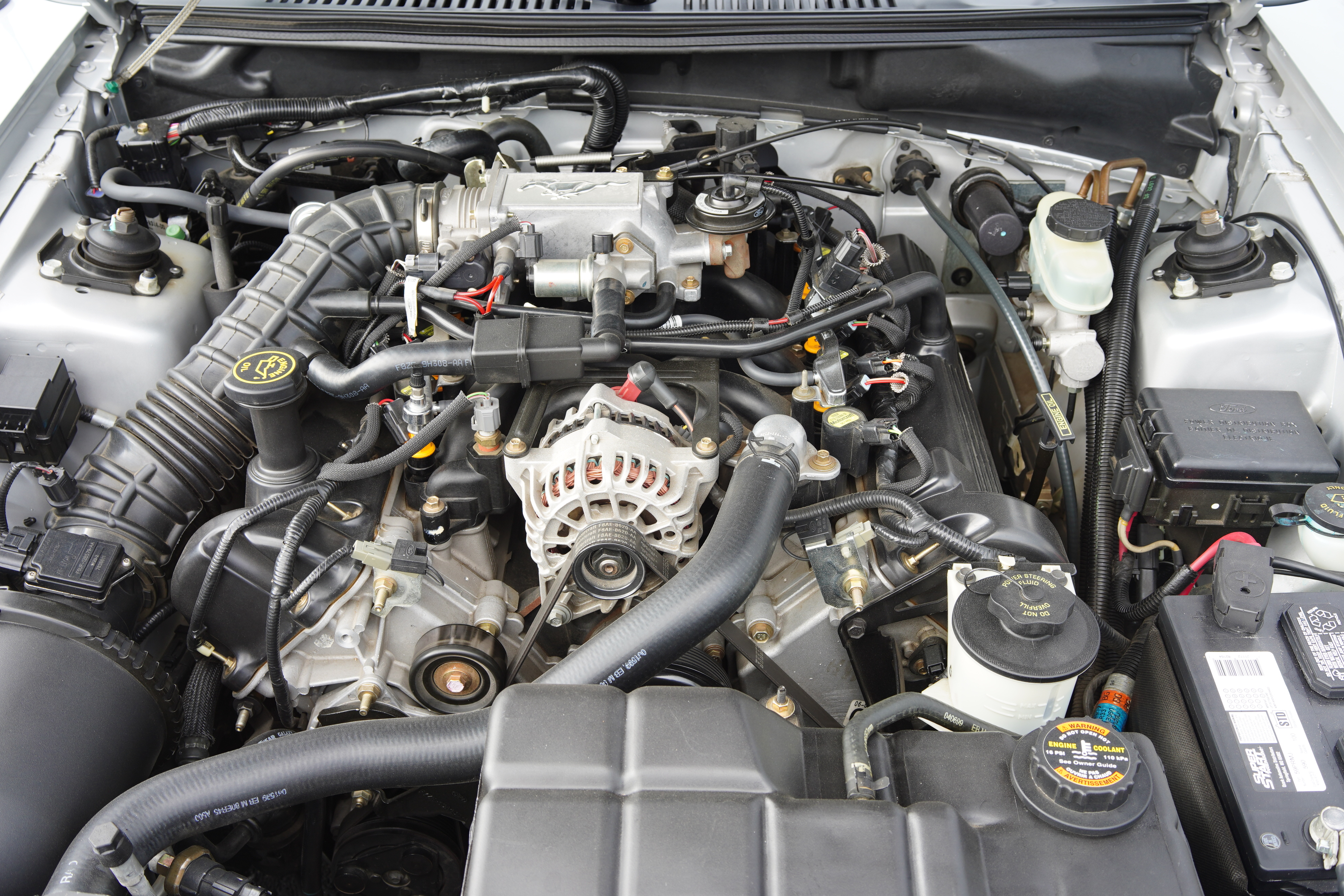
W257, 1999 Ford Mustang 35th Anniversary two-door coupe, 4.6L V-8, 5-speed manual, silver paint, silver and black interior, windshield sign claims 12,000 miles (unverified).

SOLD for $14,000. If the low miles are legit, this was a decent purchase that might retain some value as long as the owner isn’t adding another 10k a year.

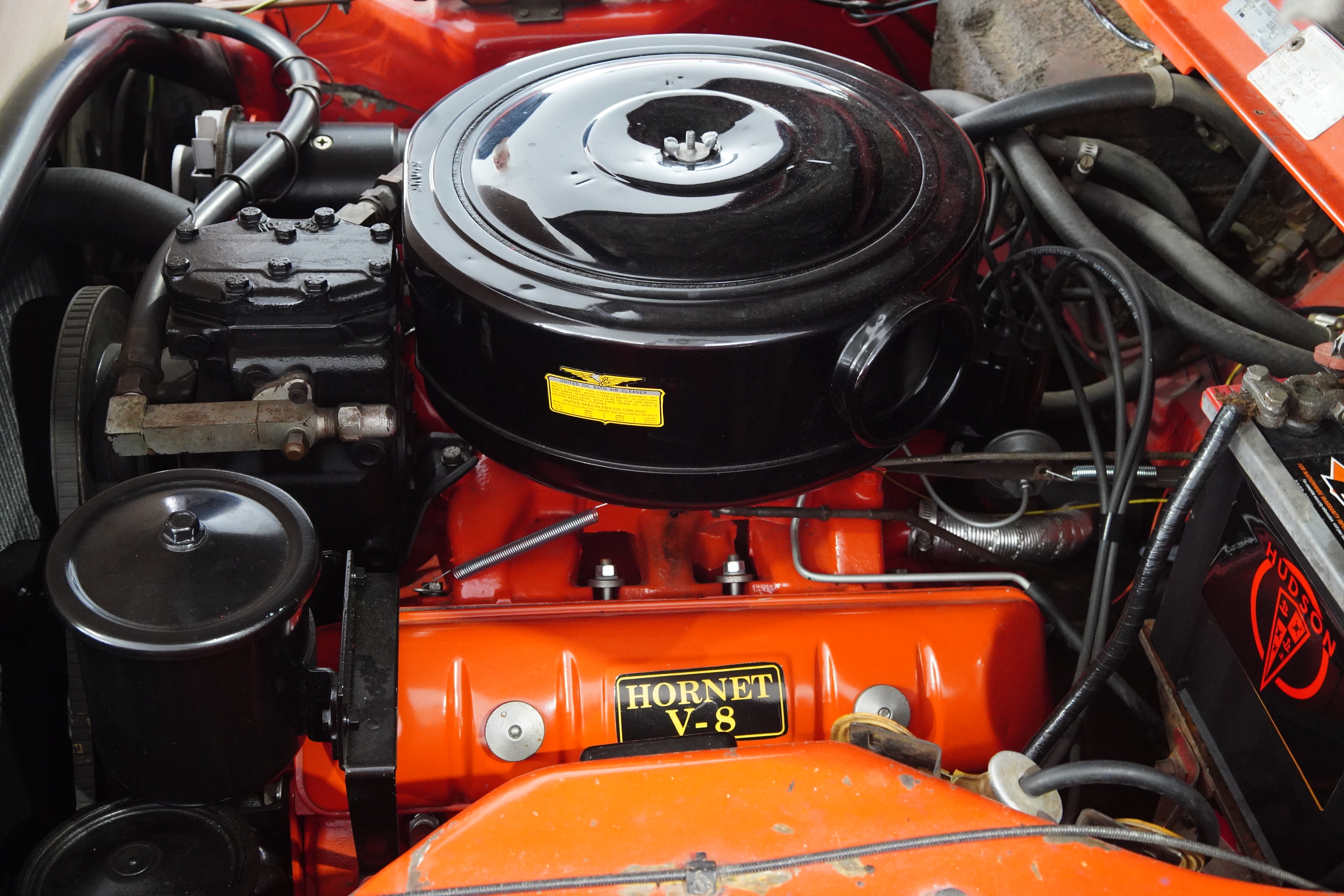
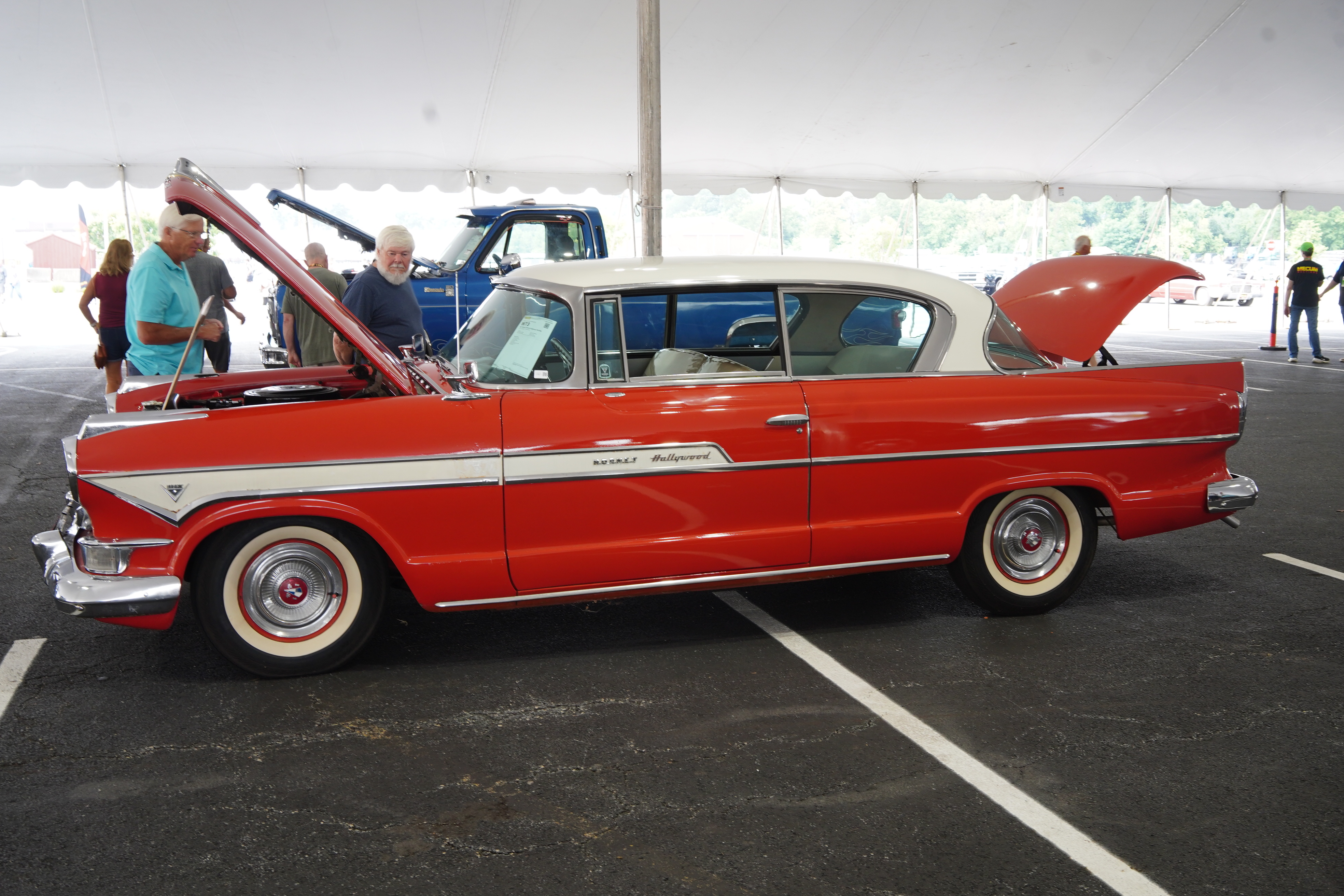
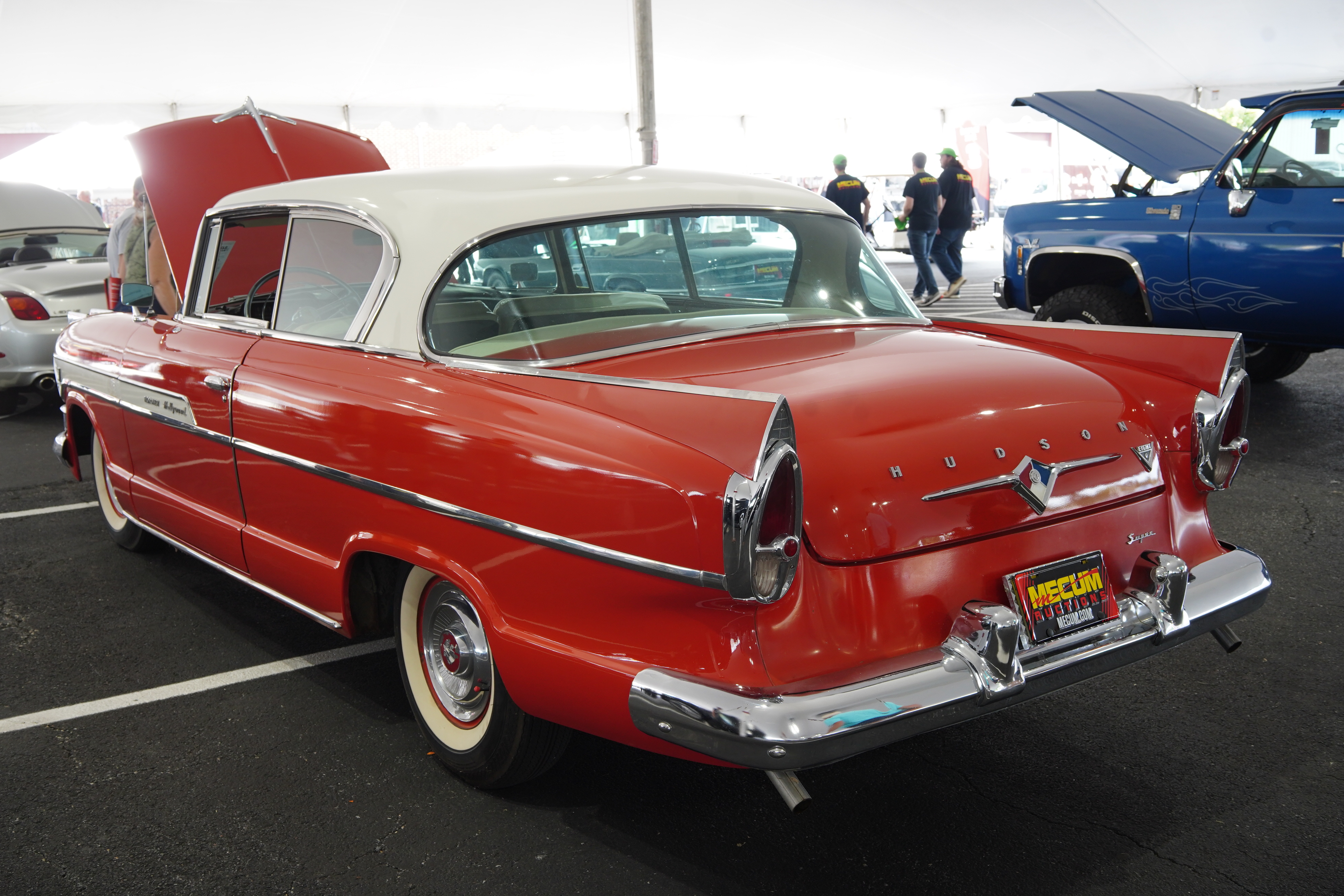
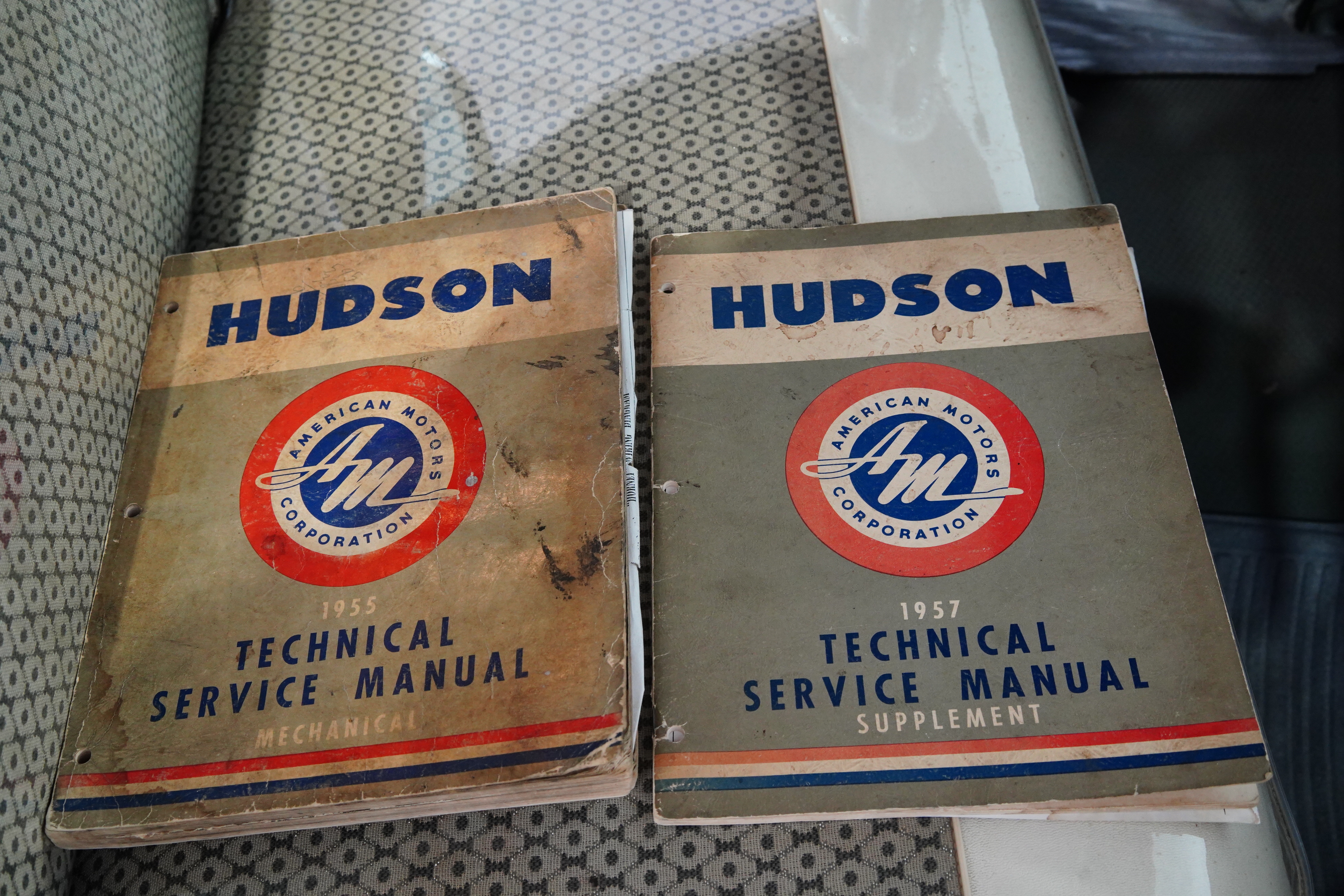
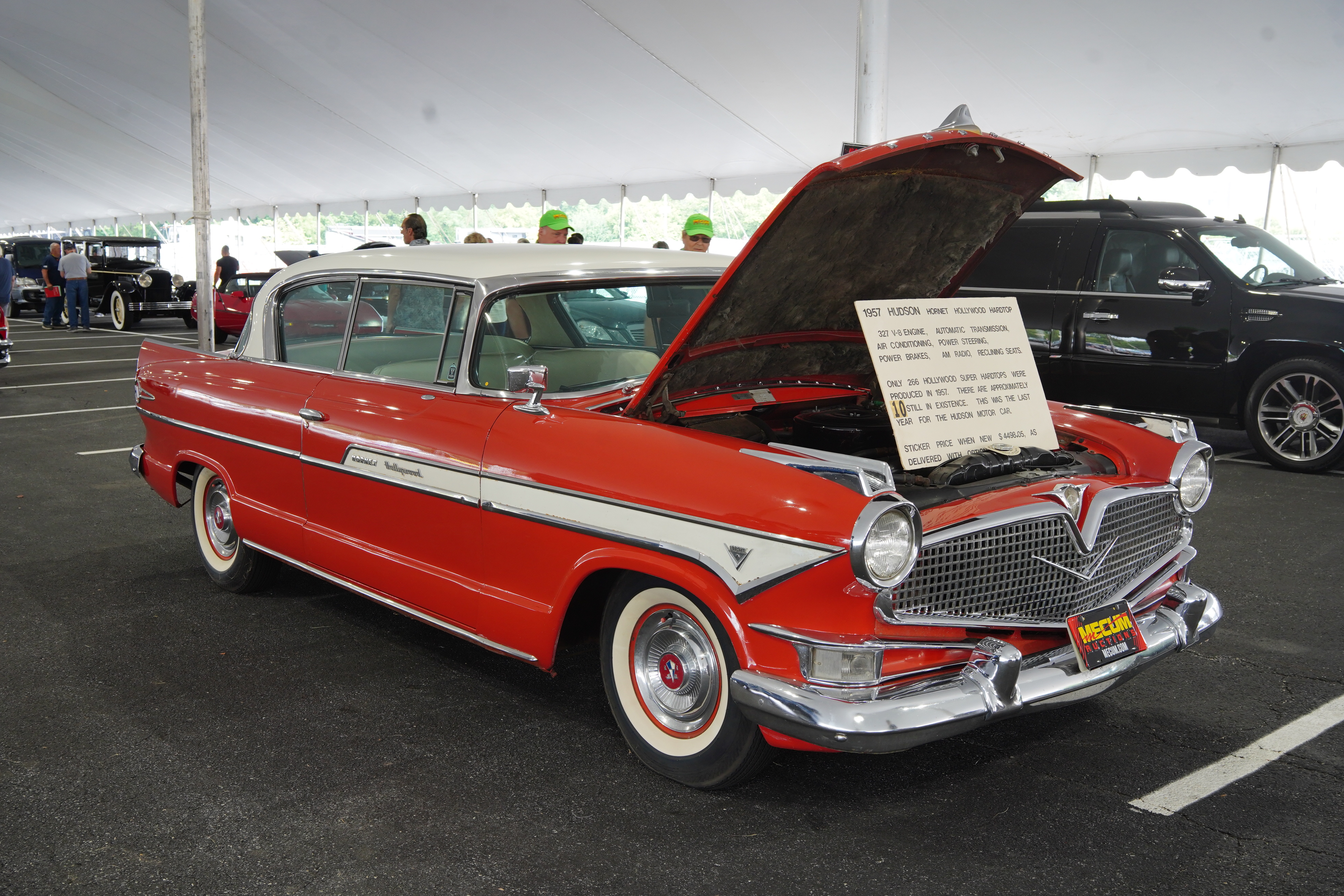
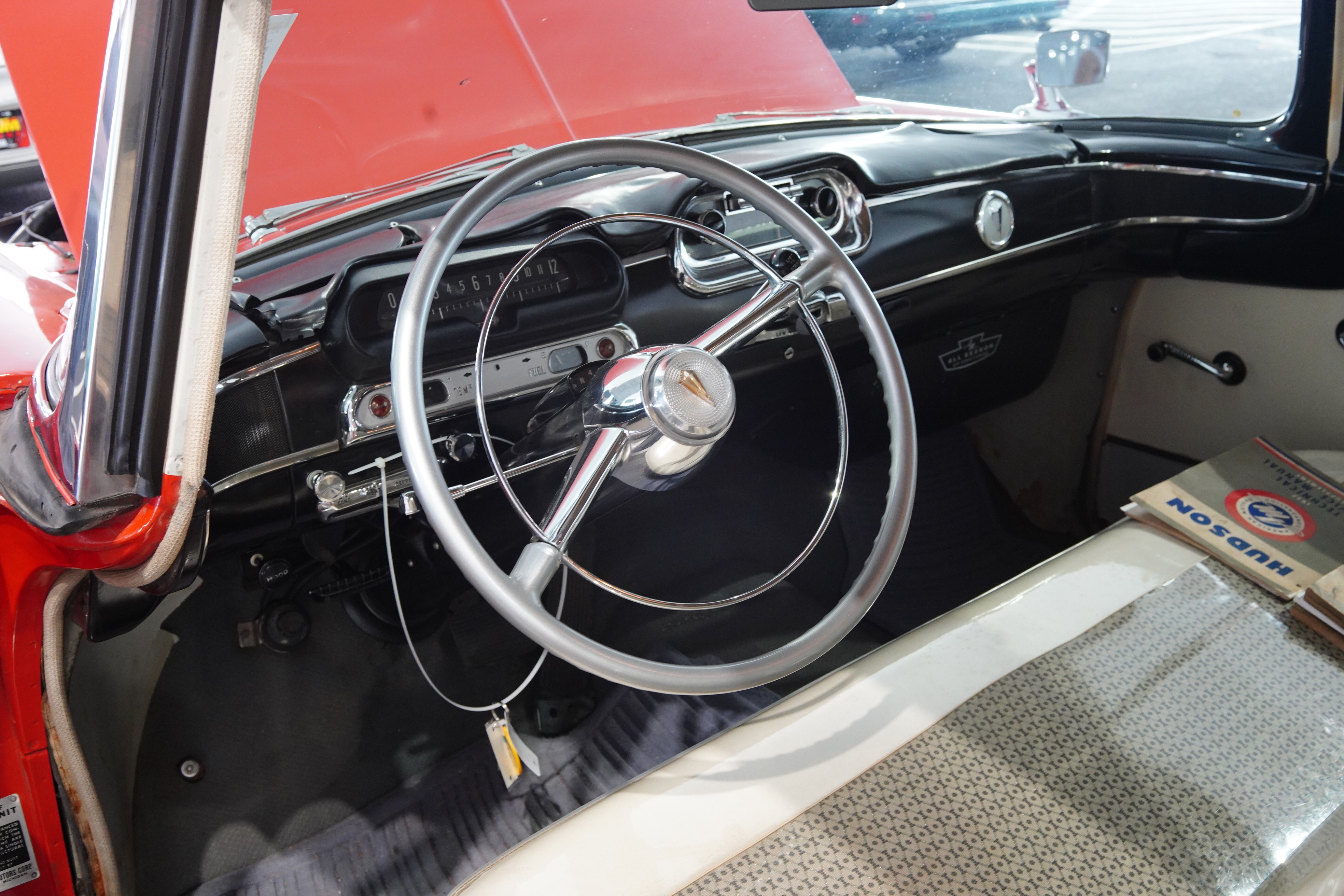
W73, 1957 Hudson Hornet two-door hardtop, 327 V-8, automatic transmission, two-tone orange and white paint, black and white interior (clear covers on front seats), full wheel covers, whitewall tires, factory air conditioning, power steering and brakes. Windshield sign claims 57,000 miles (unverified).

SOLD for $18,000. I go to a lot of car shows and auctions, and I’ve seen 1957 Hudsons before, but I don’t think I’ve ever seen a ’57 Hudson two-door hardtop. My source books agree that only 266 “Super” two-door hardtops were built (as were 483 “Custom” models with slightly higher trim). Factory price was $2,911, with the following options available: automatic transmission for $232; power steering for $100; power brakes for $40; and air conditioning for $415. Together, that totals $3,698. The auction car was a good “ten-footer.” There was a lot of orange peel in the paint, the tires looked ancient, and one could only guess at the operating condition of the A/C. In its favor, the chrome looked decent, the engine compartment appeared to have been given some recent attention, and the interior was in very good shape. Definitely not a car for everyone, and I have no idea what Hudson values are, but for under 20 large, someone got one of the most interesting cars at this auction.
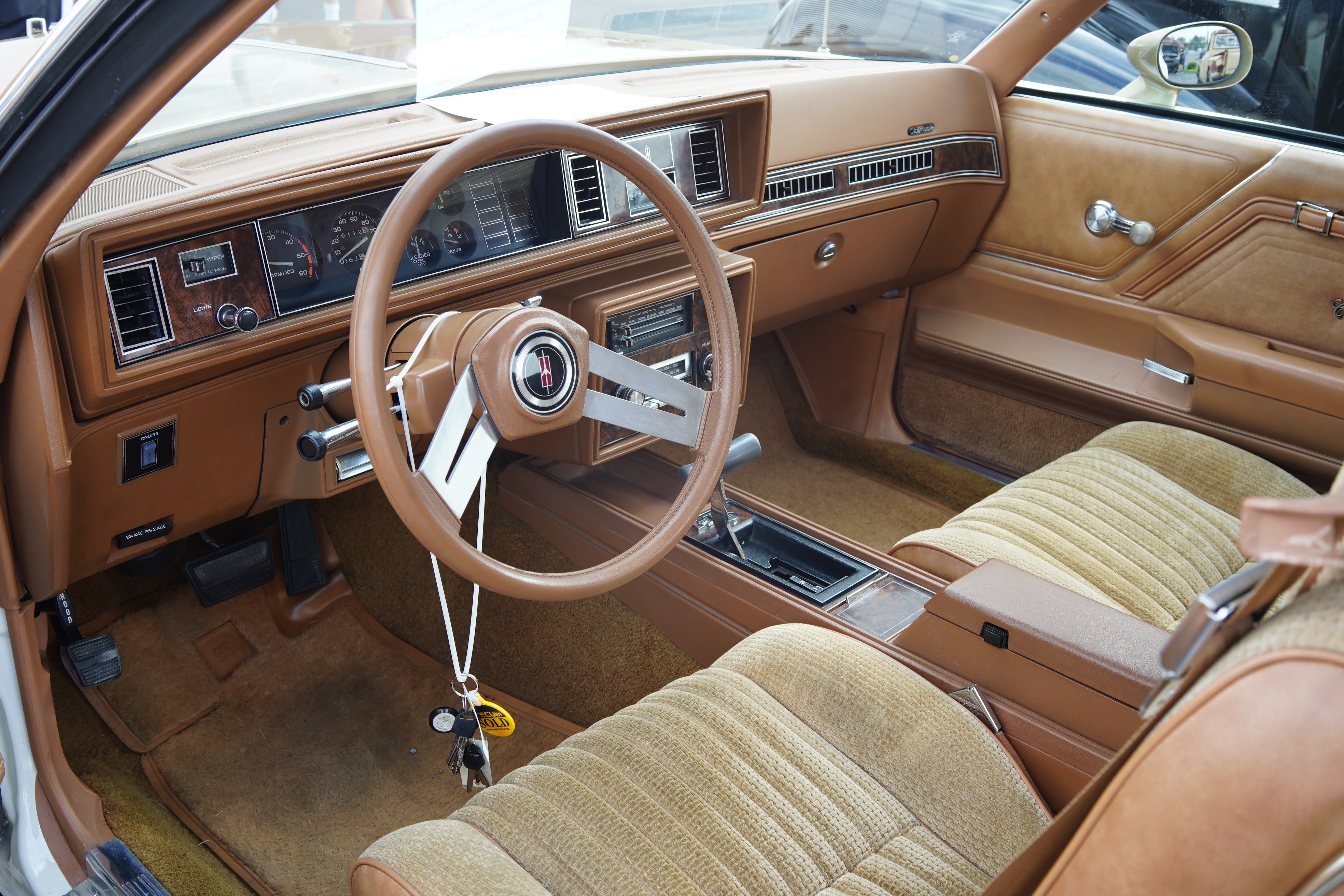
Lot W173, 1979 Oldsmobile Hurst/Olds W30 two-door coupe, 350 V-8, automatic transmission, white/gold paint, tan cloth interior, five-digit odometer reads 16,000 miles which looks believable, T-tops, factory A/C, bucket seats with center console. Stainless band on C-pillar I’m told is not factory.

SOLD for $21,000. I was attracted to this car because of its overall size: it’s one of the smaller domestic cars from this era, yet doesn’t feel small to sit in, and in fact feels very comfortable from the driver’s seat (dare I say like an imported car?). I watched it cross the block where it was bid to $25,000 and declared a No Sale. Most of the time, Mecum will not announce the reserve, but in this case, the auctioneer said, “it will take $30,000.” That was on Wednesday. On Friday, while composing this blog post, I saw on Mecum’s website that the car was listed as “sold” for $23,100. Backing out the 10% buyer’s premium leaves us with a hammer price of $21,000. What’s up with this? I’m very suspicious, because I personally recorded a high bid of $25k. Was that a chandelier bid, since the house knew they were still $5k below the seller’s reserve? And I didn’t know that one could approach the Bid Goes On desk and bid an amount BELOW the previous high bid (but now I do). Caveat emptor indeed.

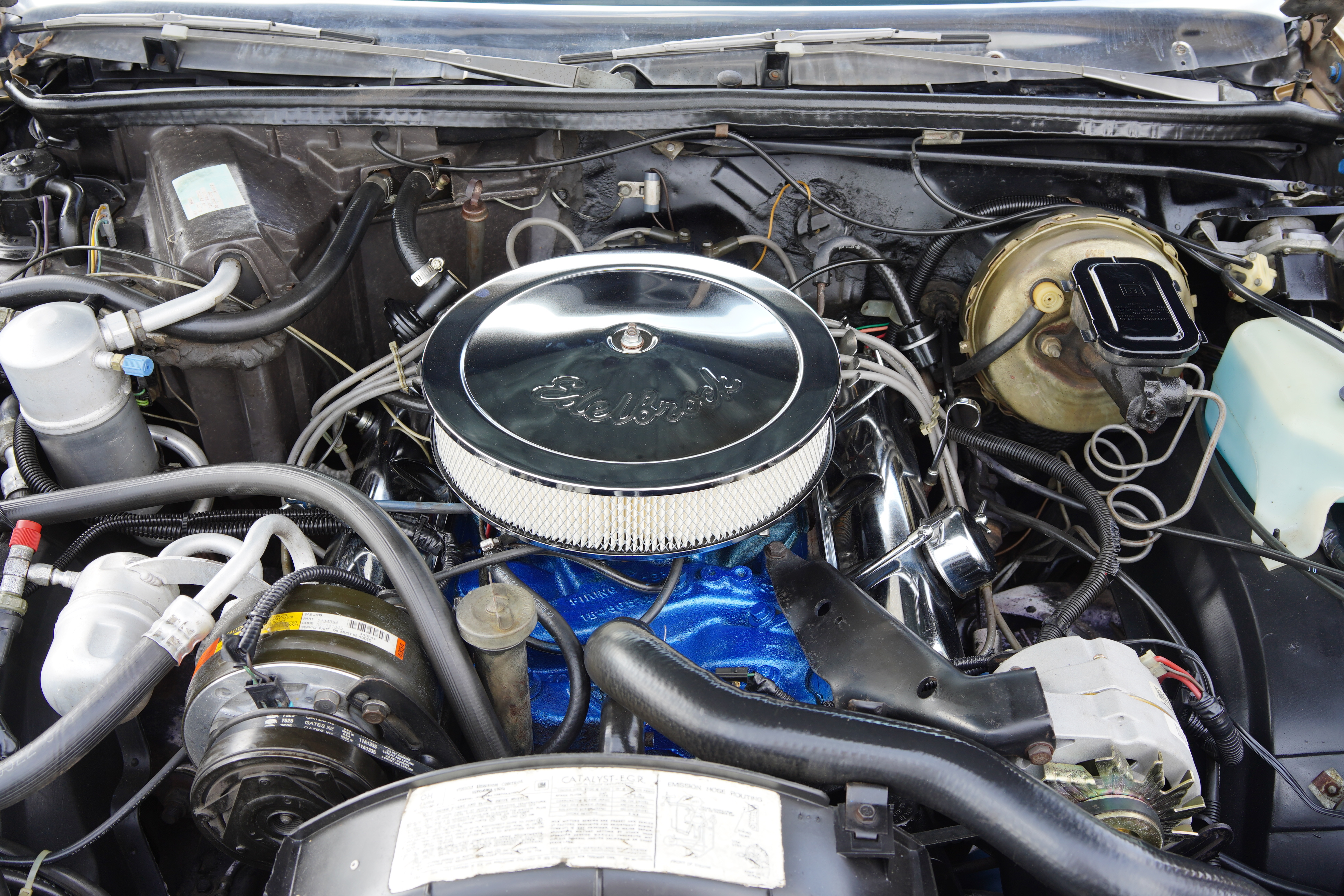
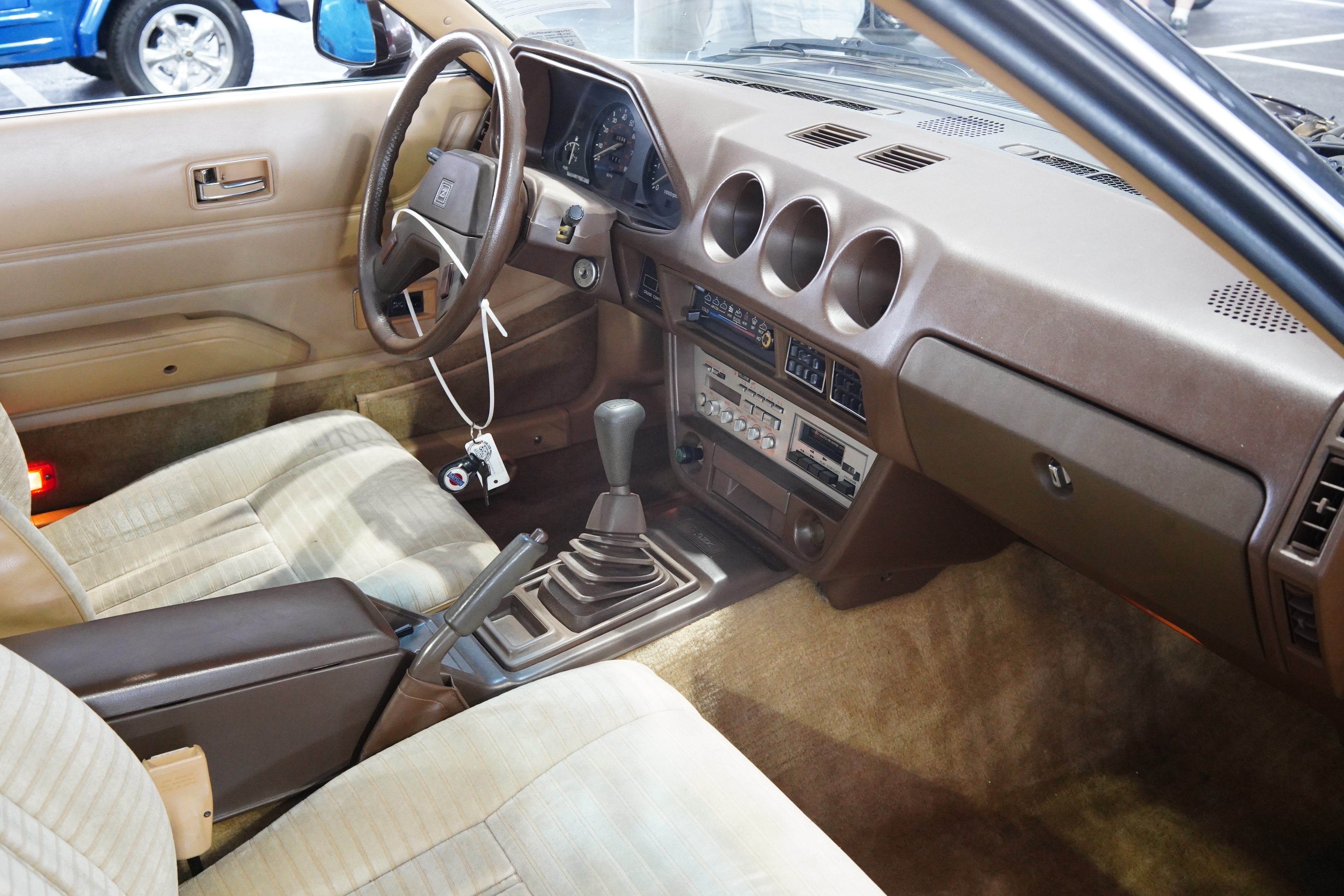
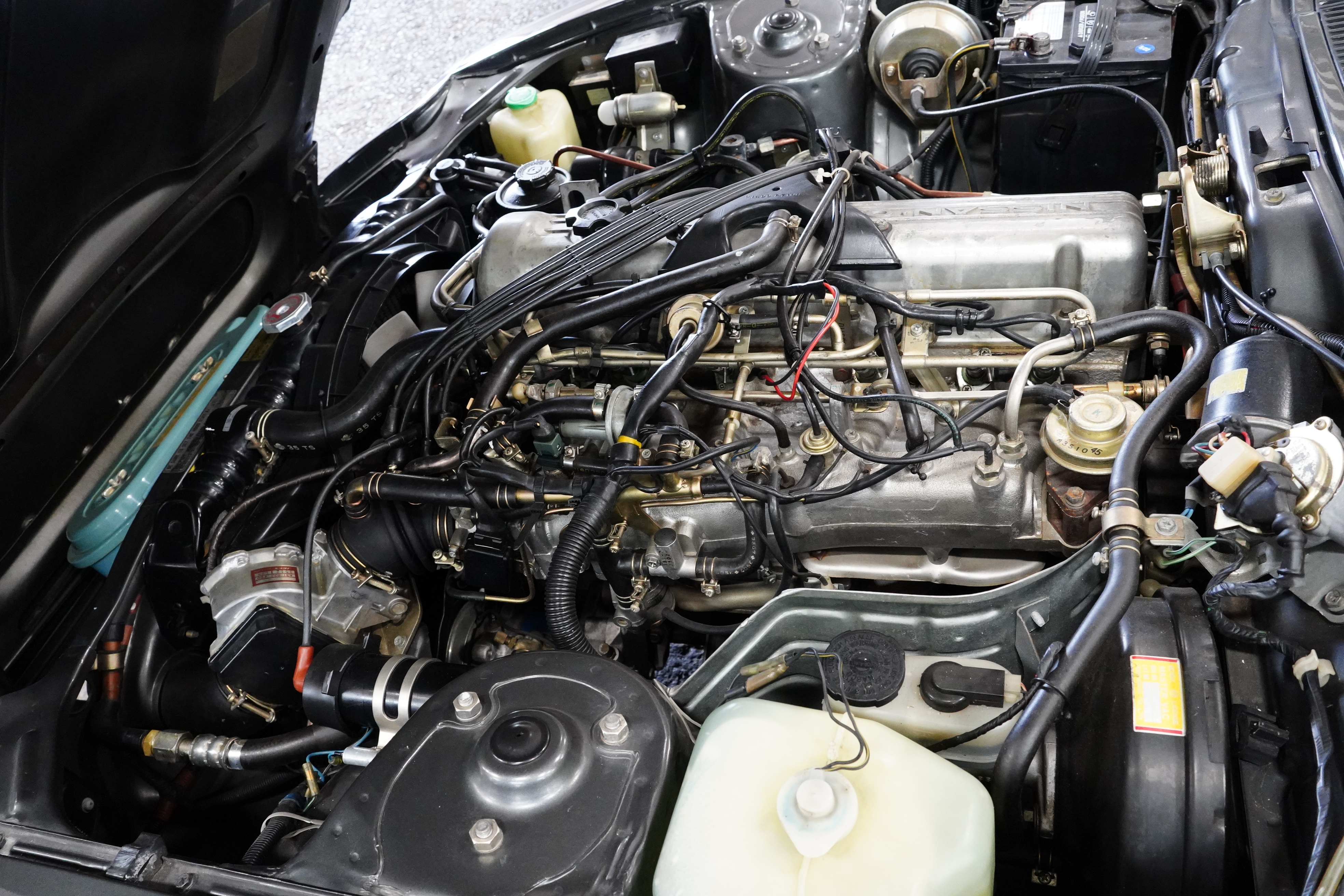
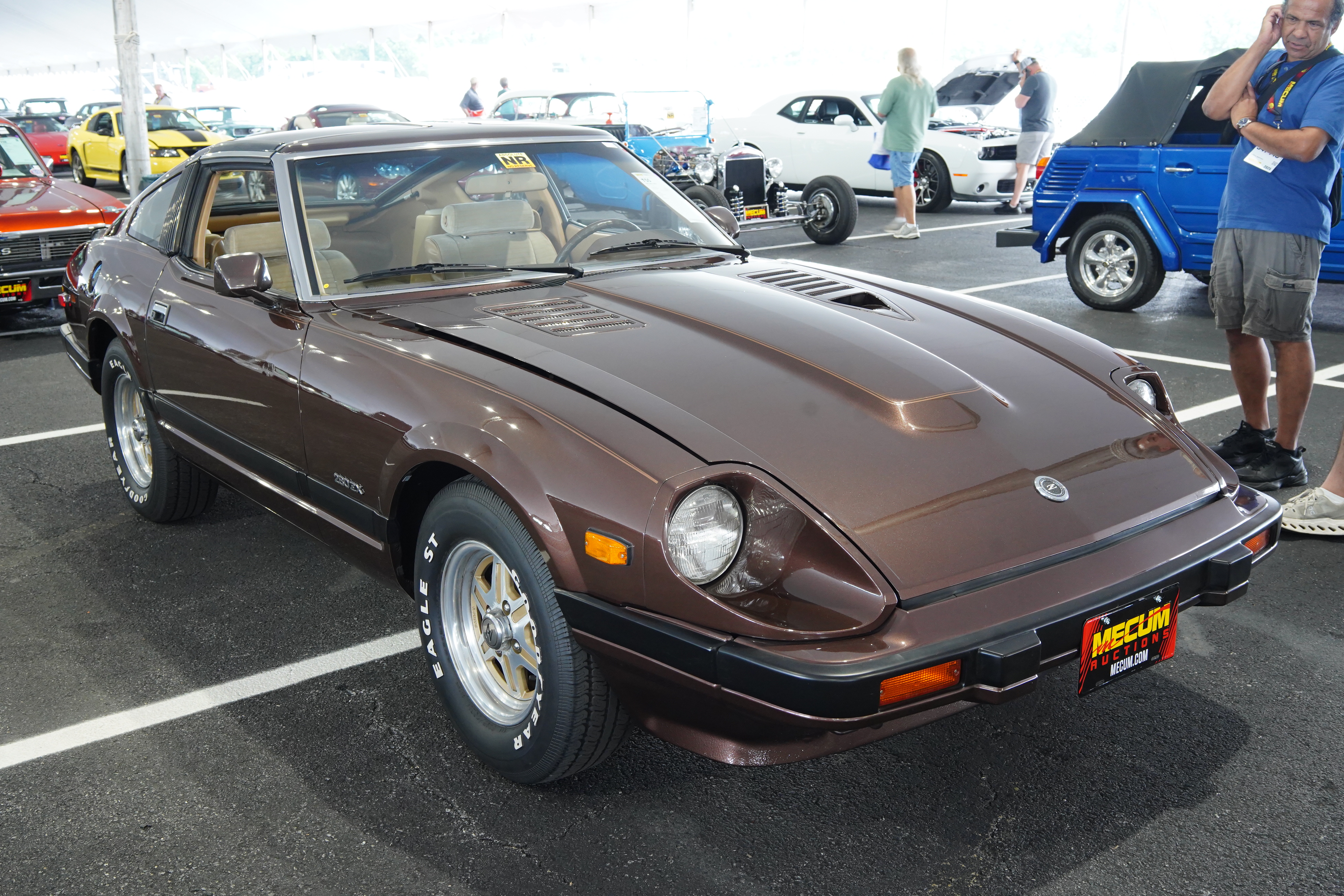
Lot T55, 1982 Datsun 280ZX two-door coupe, brown metallic, tan cloth interior, 2.8L inline-six engine, five-speed manual transmission, six-digit odometer shows 59,874 miles, T-tops, analog gauges, factory A/C, raised white-letter tires, factory sound system. Underhood shows “normal” accumulation of dirt; it’s the only area of the car, including underside, that does not present extremely well. A very attractive car overall, as long as one is ok with brown (which I am).

SOLD at no reserve for $22,000. Many prospective bidders were lingering around this car, including me. I happened to gain access to its Carfax report. The first entry is from 1982. Almost every entry cites either a registration renewal or a state inspection. There is almost no mention of any service or repair work. The car changed hands in 2006 at 57k miles (the owner from ’90 to ’06 added 36k miles in 16 years). This new owner sold it in 2024 with 59,600 miles on the clock, for a total of 2,374 miles over 19 years of ownership, working out to be 125 miles a year. As you know, that’s both good and bad; however, looking at the car, it was obvious that cosmetically, it was well-preserved. The hammer price was more than fair for condition, even if it might need come reconditioning of soft rubber parts.
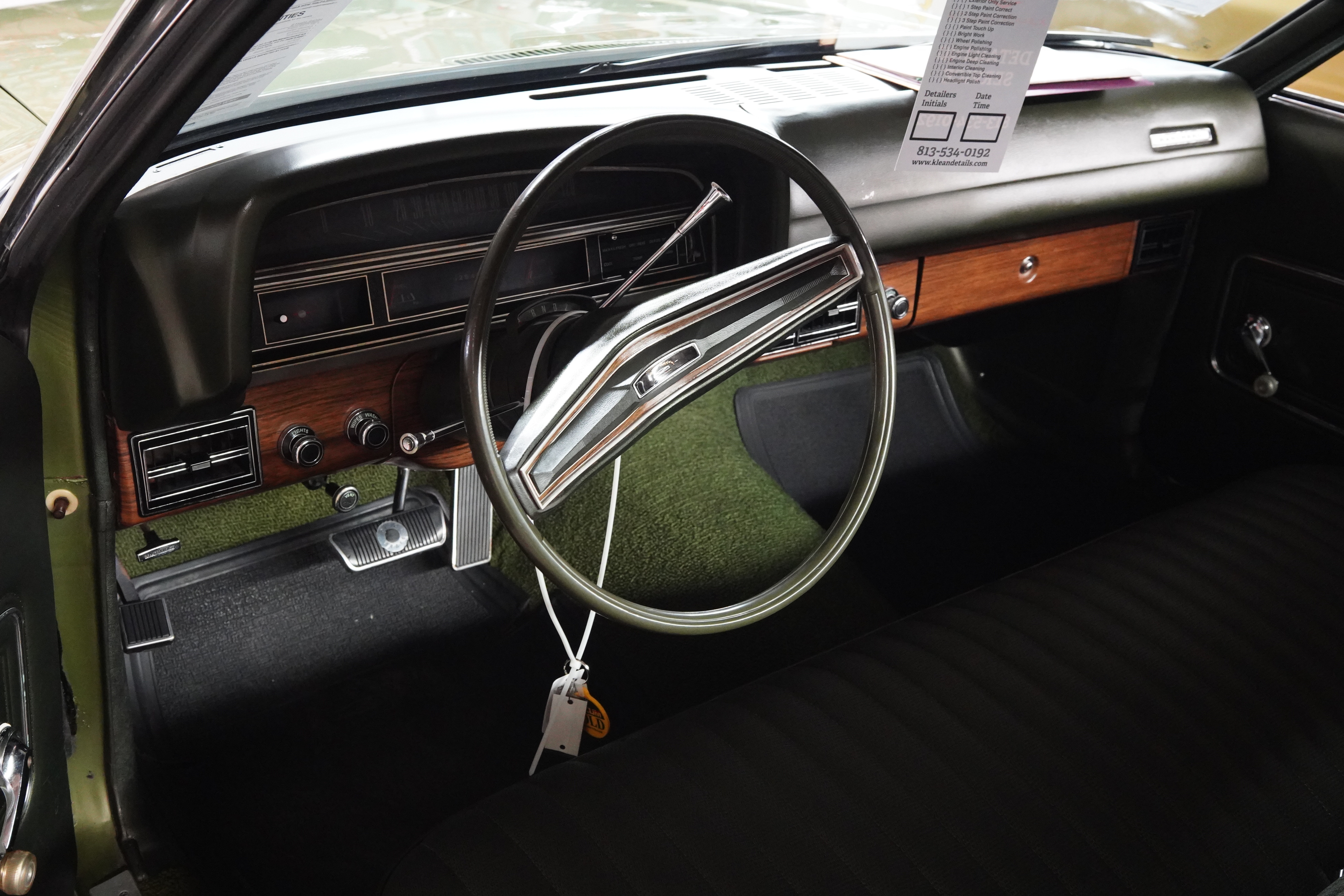
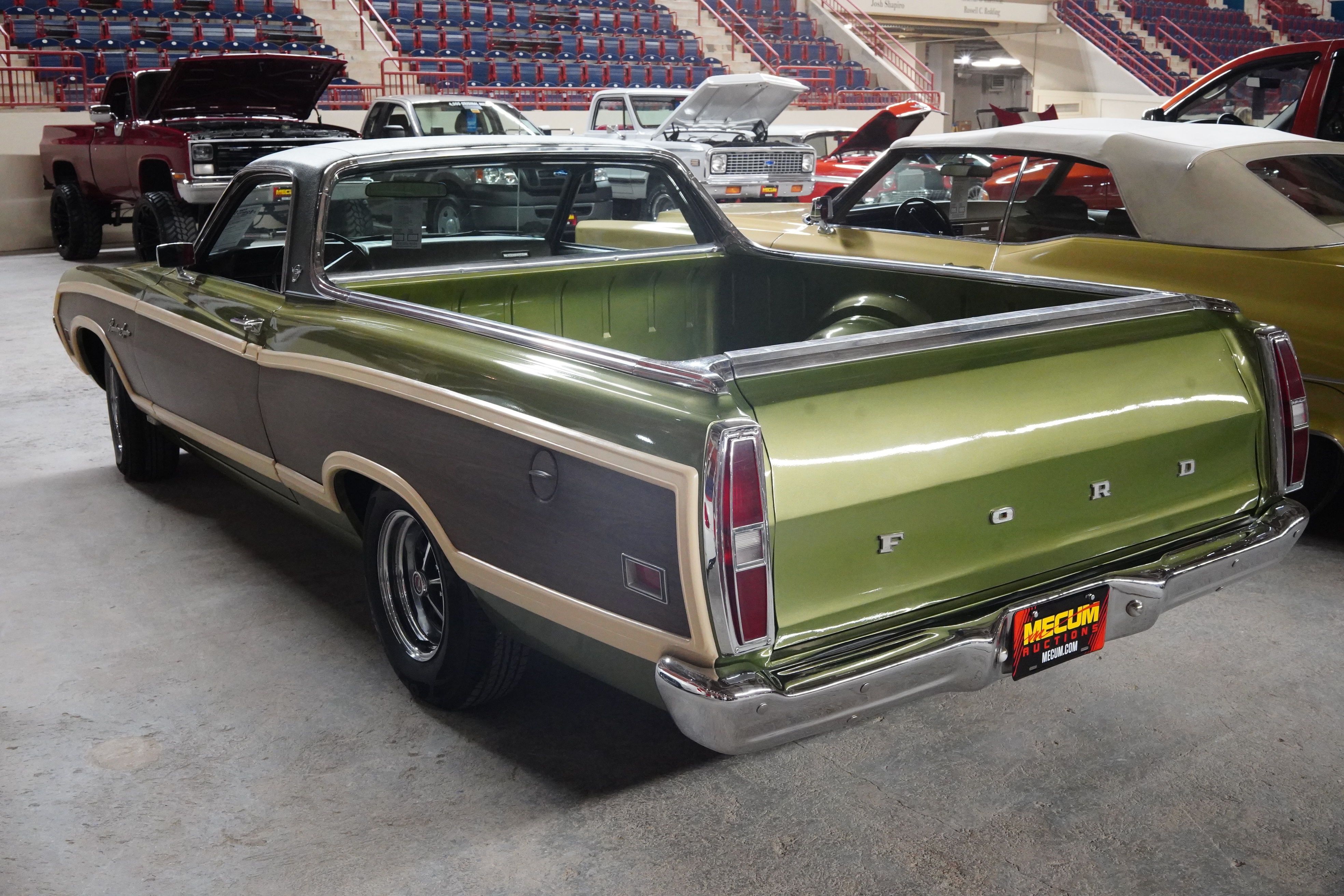
Lot F112, 1970 Ford Ranchero Squire, metallic green, green vinyl roof, green interior, faux wood trim on exterior, 351 V-8, automatic on column, reported 62,000 miles (unverified). There were a lot of El Caminos at this auction but this was the only Ranchero I saw, and while the Country Squire look wouldn’t be my first choice, it fit the overall presentation very well. Vehicle was in strong #2 condition.

SOLD at no reserve for $23,000. This car sold on Friday and I got the hammer price from Mecum’s website. Perhaps slightly pricey for a Ranchero, but I found the period-correct look very appealing. This Ranchero was ready to hit the show circuit, it was that nice.

Lot T168, 1972 AMC Gremlin X, two-door hatchback, green paint, black interior, 4.2L inline-six, automatic transmission, claimed to be 13,000 original miles and looks it. Gold exterior trim, roof-mounted luggage rack, factory alloy wheels, raised white-letter tires. Offered at No Reserve.

SOLD at no reserve for $37,000. And who said Gremlins weren’t valuable or collectible?? The windshield sign said that this car was previously owned by Jeff Dunham, and I never heard of him, so that would not have influenced my bid any…. However, the car was featured on Jay Leno’s garage, which could account for a hammer price approximately three times what I would have guessed.

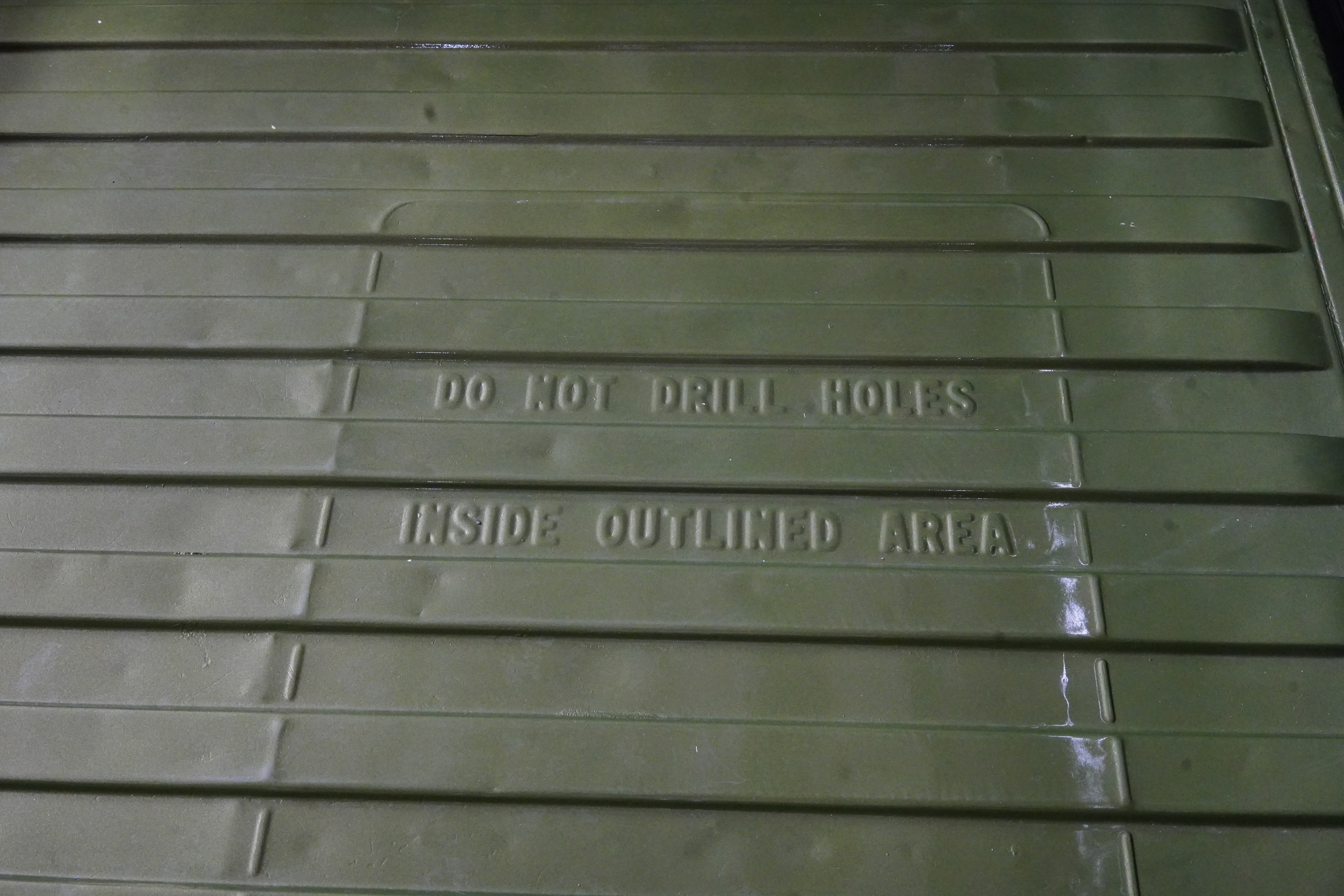
Door pocket held on with quarter-turn clips
Pocket easily removed from car for carrying purposes

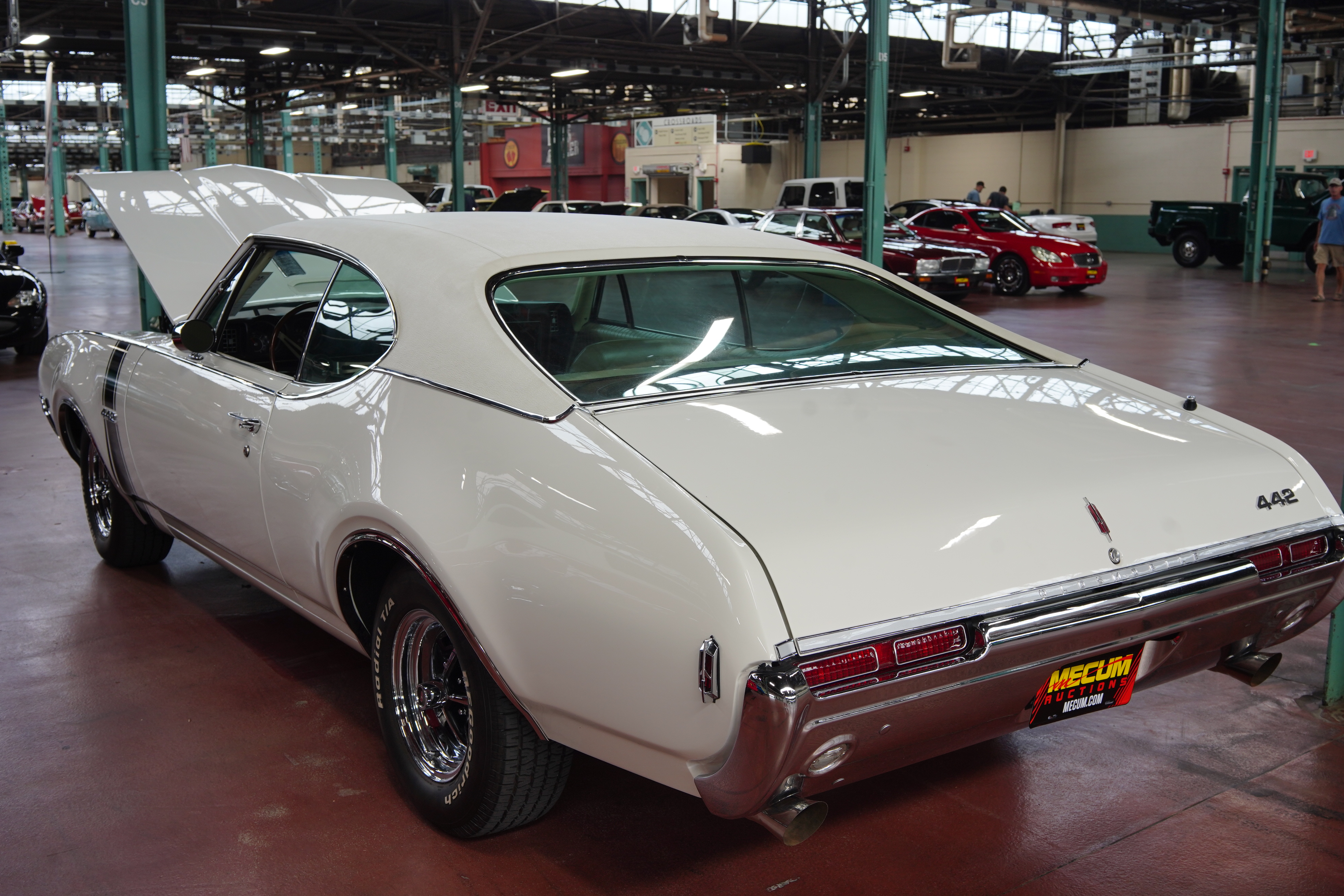
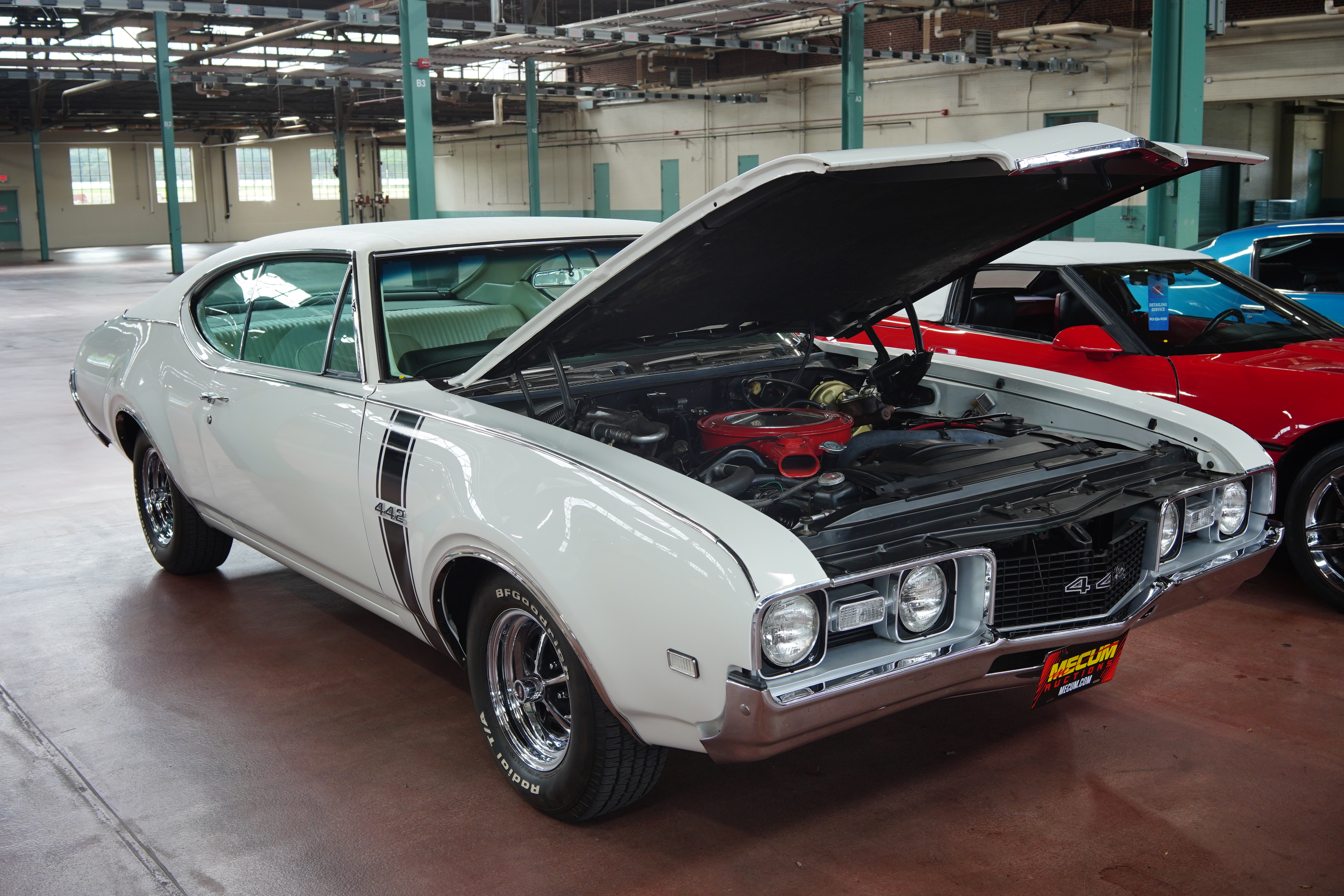
Lot T291, 1968 Olds 442 two-door hardtop, triple white, 400 V-8, automatic, windshield sign claims 10,000 miles (unverified), factory A/C, AM radio with 8-track player, sign states, “concours restoration,” yet hood hinges were so stiff that I was unable to lower the hood without fear of inflicting sheet metal damage.

SOLD for $43,000. All 1968 Cutlass models are special to me because of my Aunt Rita, who bought a new ’68 Cutlass S two-door hardtop, a car I loved. I don’t see too many ‘68s (but check my Spring Carlisle report from earlier this year where there were two). This one at Mecum was nice but not quite “concours”. The 442 model brought out the bidders.


NOTABLE NO-SALES


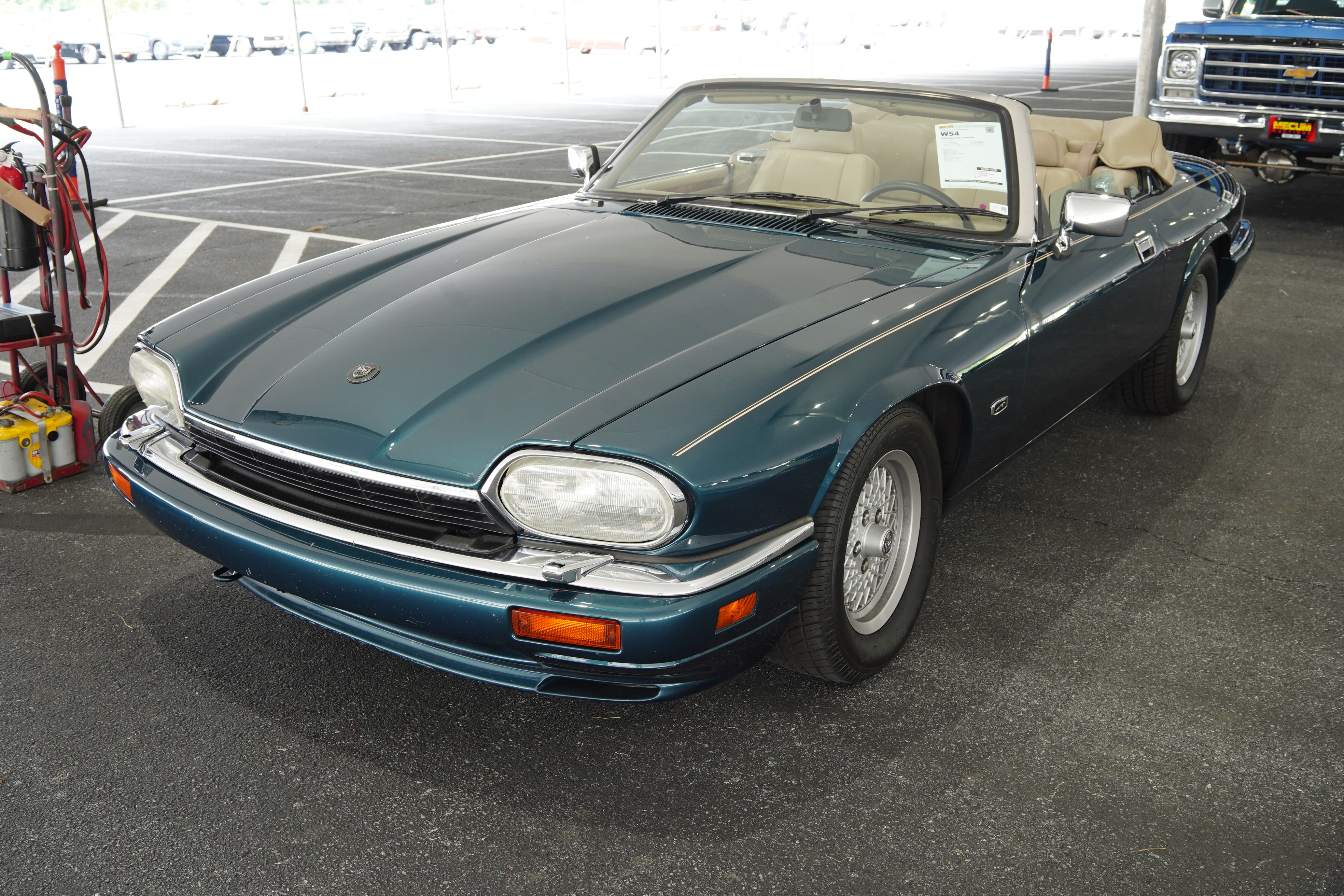
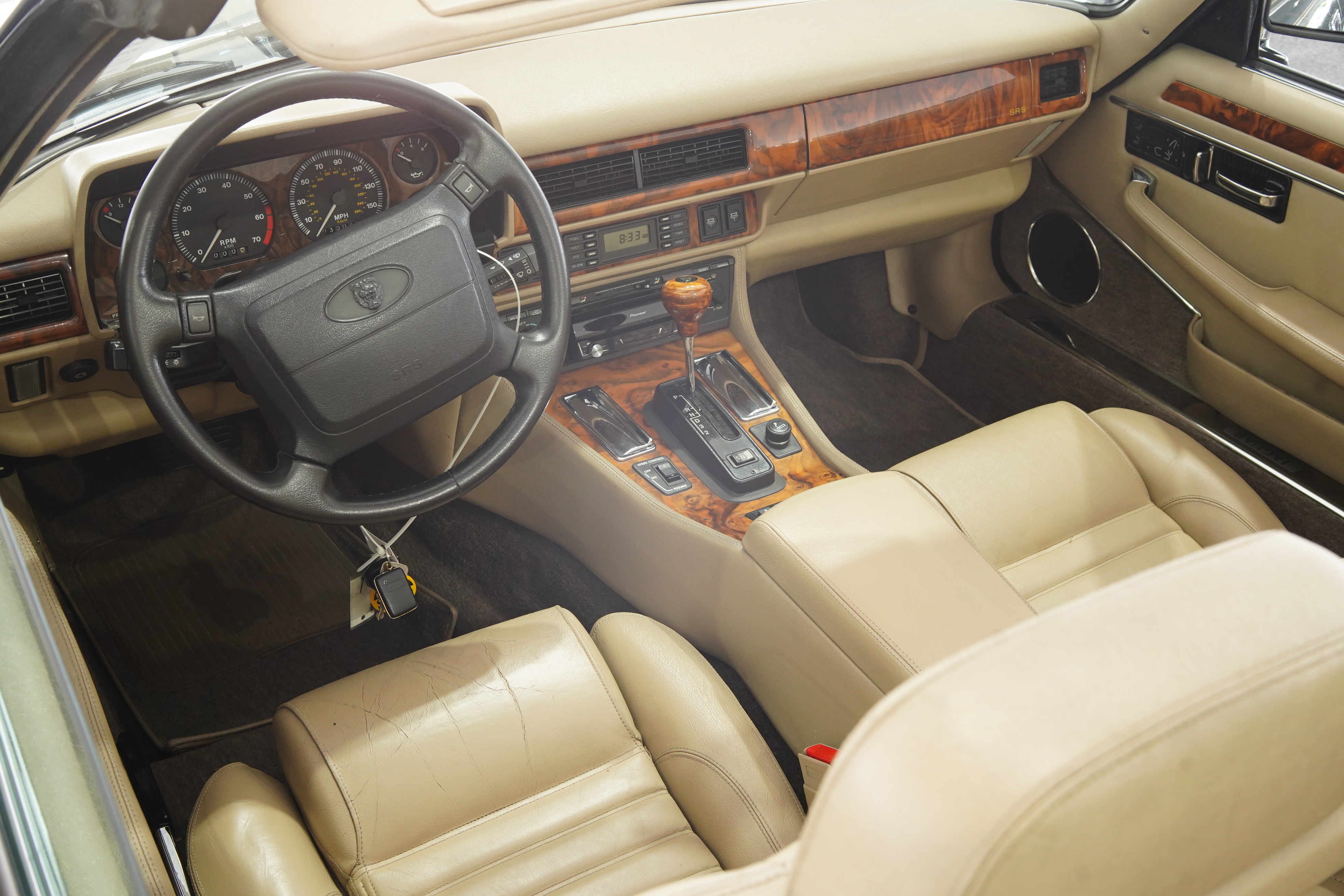
Lot W54, 1994 Jaguar XJS convertible, green paint, tan top and interior, 4.0L inline six cylinder, automatic. Six-digit odometer read 30,000 miles. Driver’s seat leather shows minor wear. An attractive car, especially with the six (as opposed to the V-12).

NOT SOLD at high bid of $8,000. I inquired at the “Bid Goes On” desk about the car, stating that I was unable to find it. The Mecum employee told me, “the guy checked out and took it home. I understand he’s not coming back.” I asked what his reserve was and was told, “$12,000.” Interesting marketing approach: Pay to enter the auction, and when the bidding doesn’t reach your reserve, take your ball and go home.
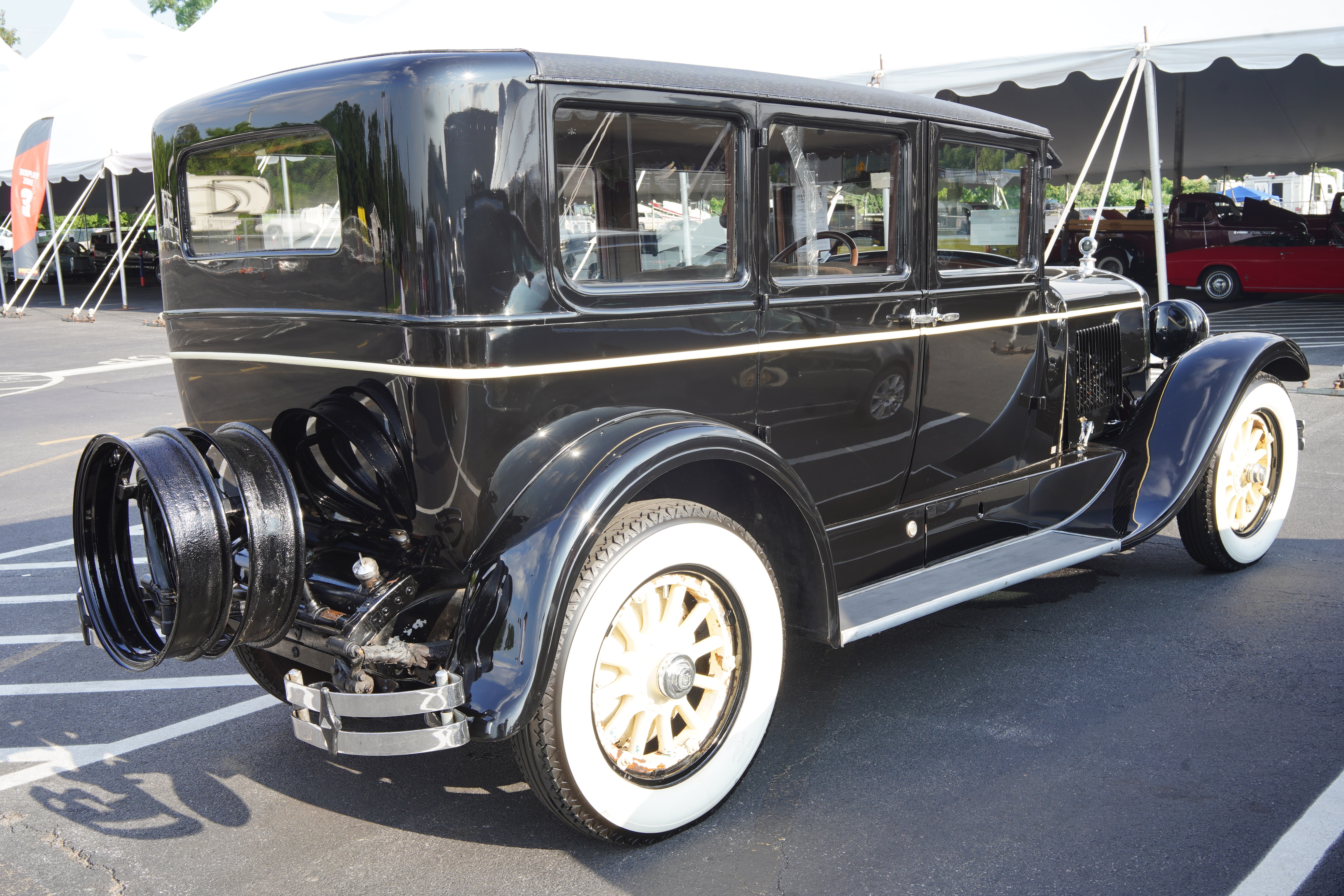
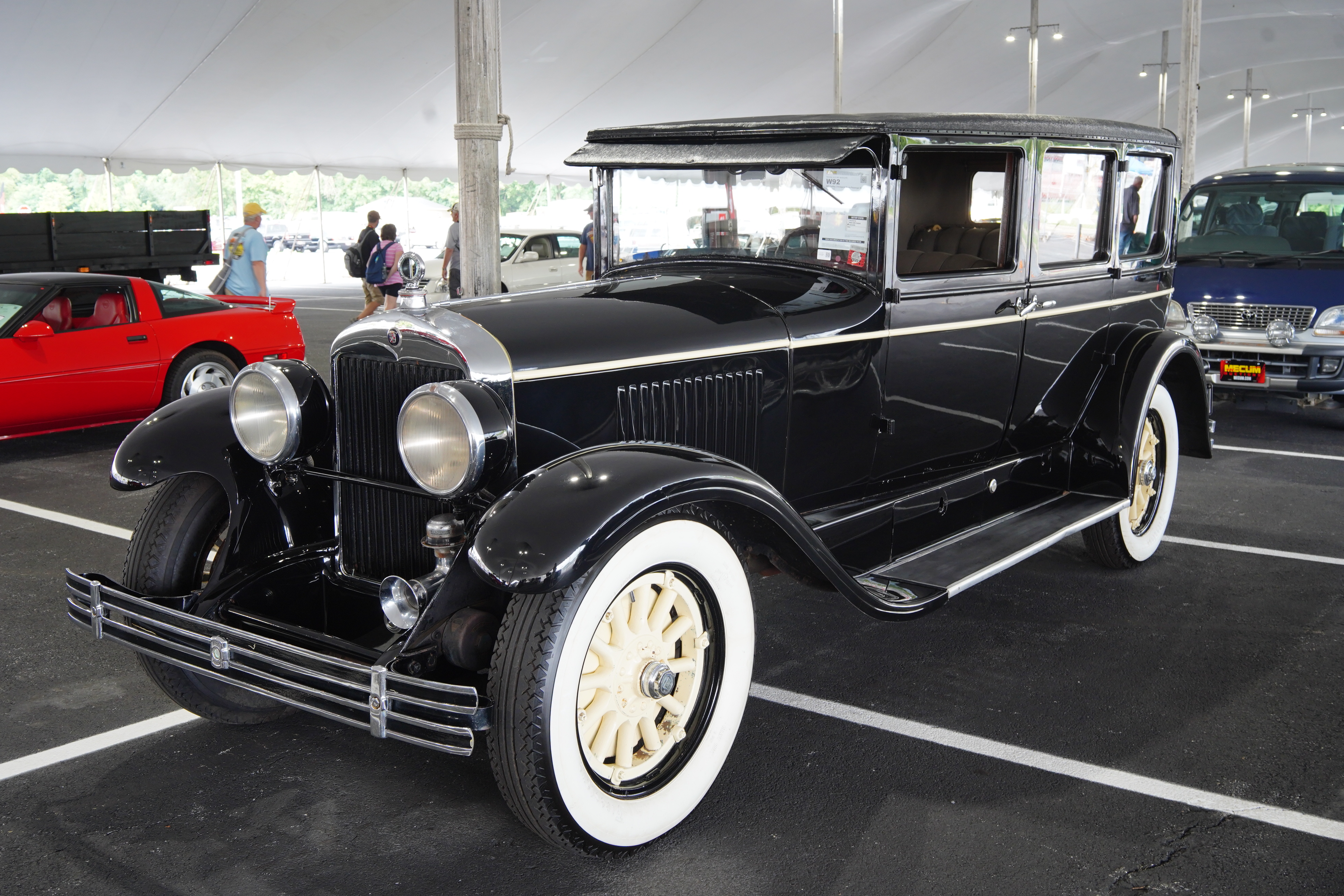
Lot W92, 1927 Cadillac 314 Imperial seven-passenger sedan, repainted black, yellow wood wheels with whitewall tires, interior is brown and allegedly original, 314 V-8, three-speed manual transmission. Three rows of seats: front bench seat, second row foldable jump seats, and third row bench with seat back against rear window. A stately-looking old thing with tons of presence.

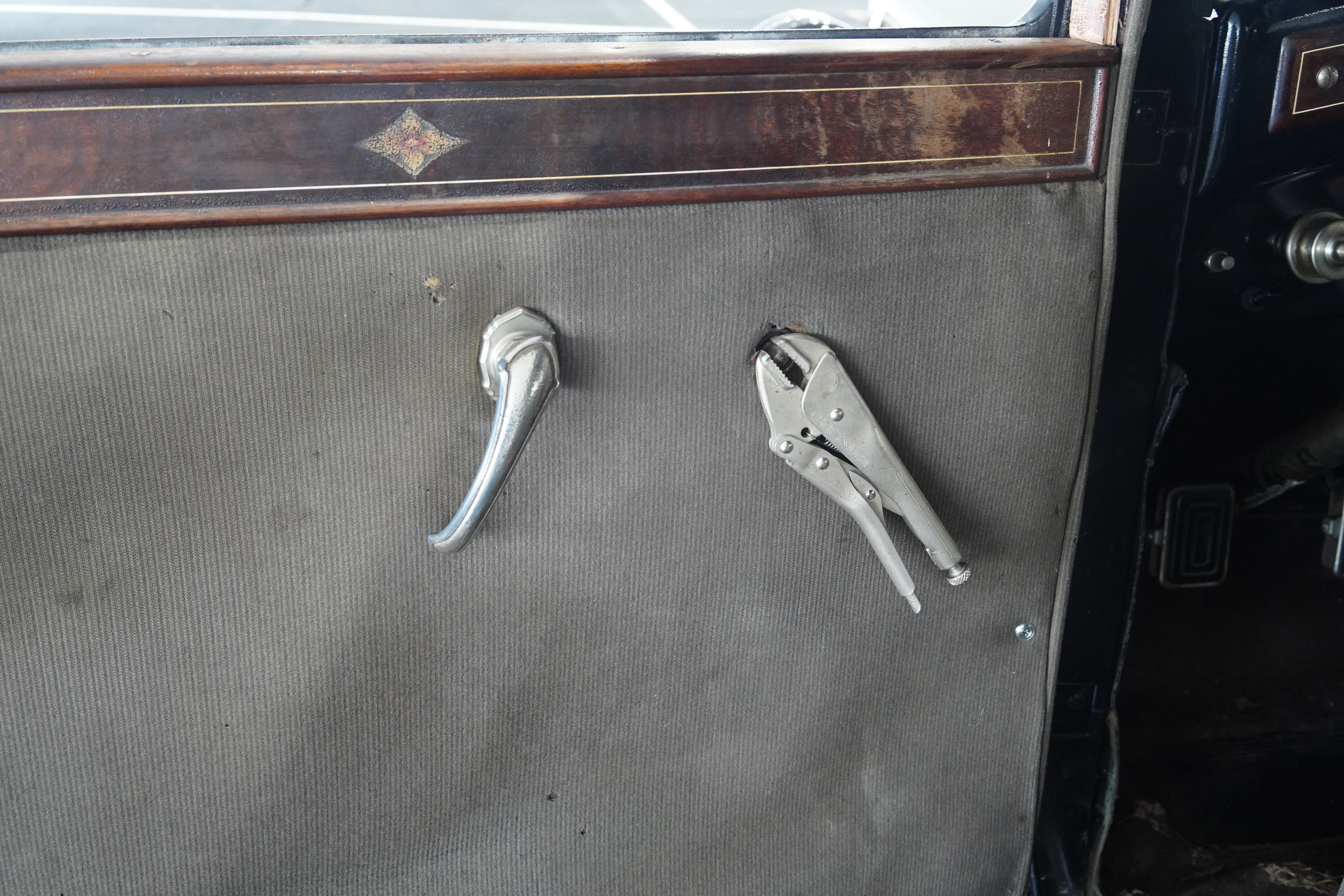
NOT SOLD at high bid of $12,000. It’s very unusual to find any pre-war cars at a Mecum auction, and what a car this is! I did not get a chance to see or hear it run, so I can’t comment at all about that. From the outside, aside from two spare wheels without tires mounted at the rear, it appeared to be all there. The interior is a conundrum: it’s original enough that you might want to try to preserve it, but it’s deteriorated enough that it might deserve to be redone. The present owner left a notebook on the front seat, taking TWO pages to describe the procedure to start the engine and then drive the car. The auctioneer announced that at $12k, “it won’t take much more,” but I didn’t inquire. As of this writing, it’s still for sale on Mecum’s website.
No word on whether the Craftsman locking pliers are included with the sale

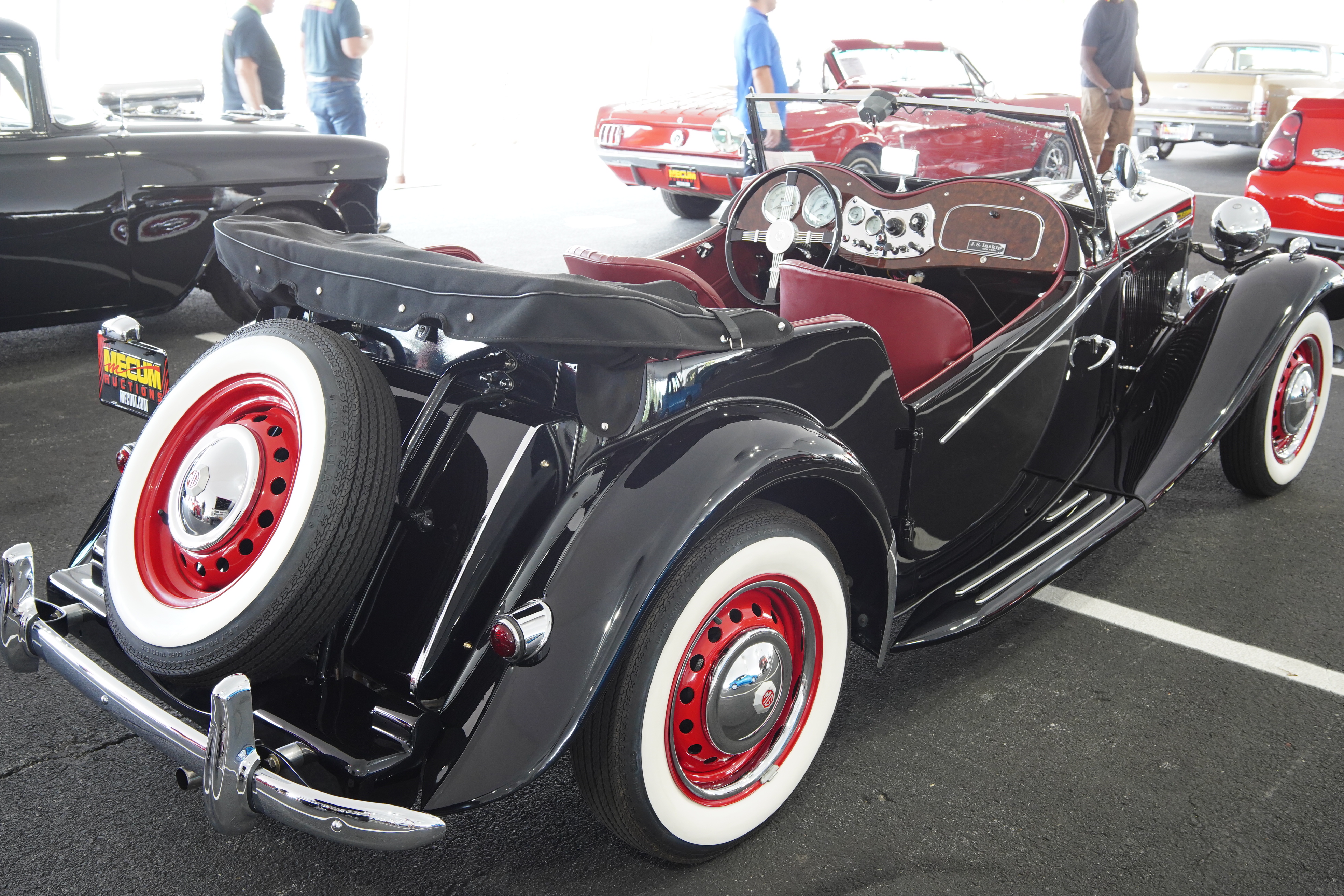
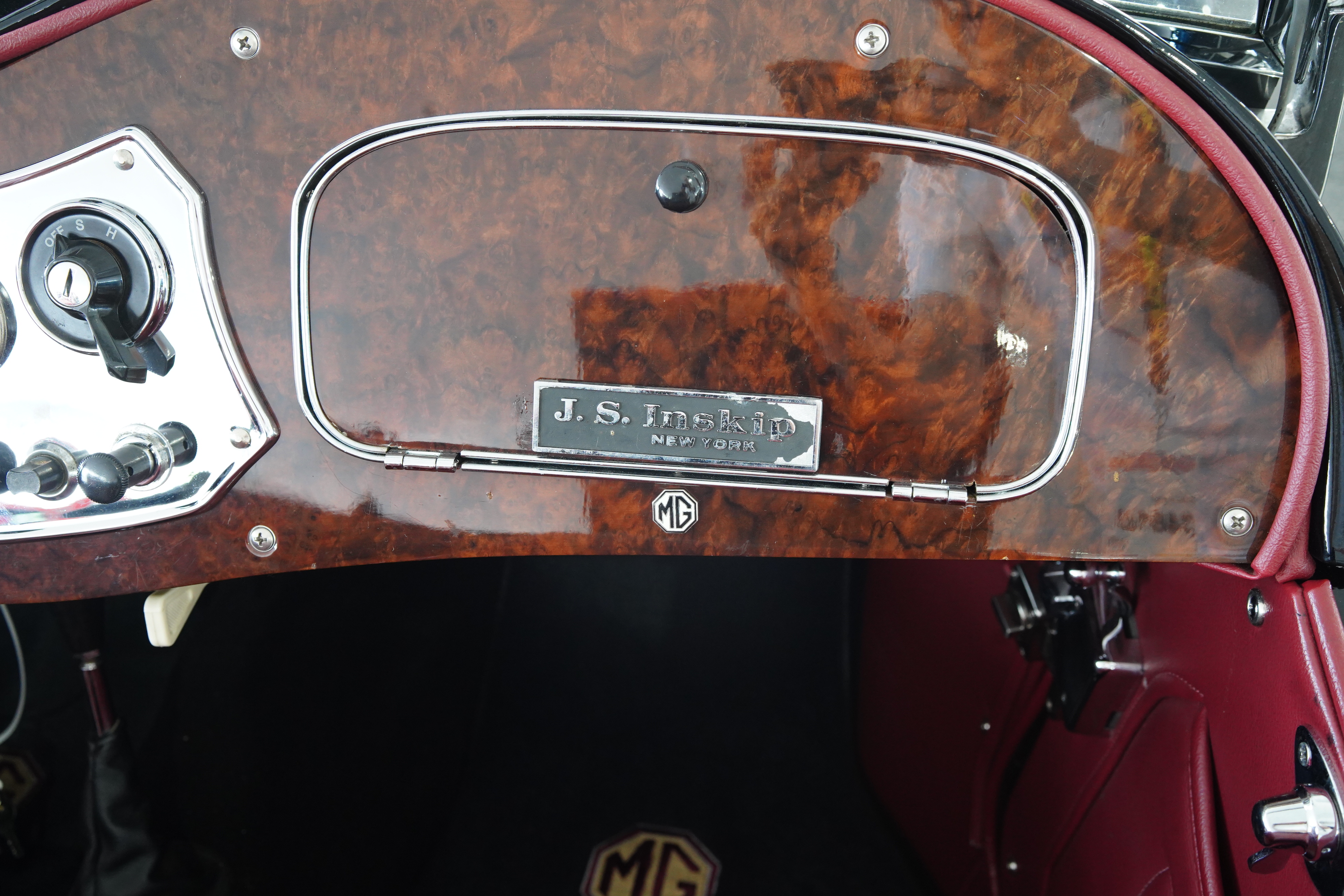
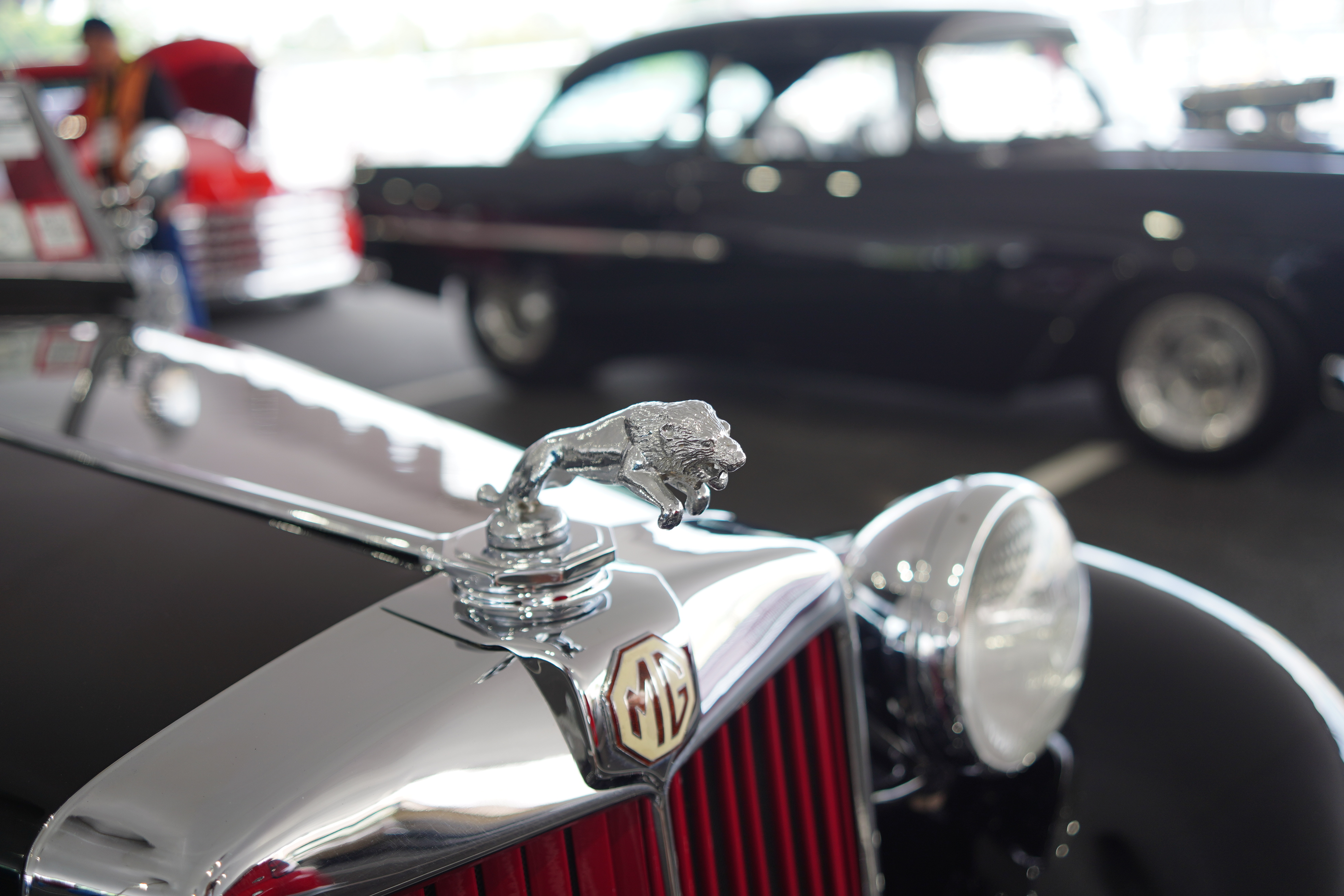
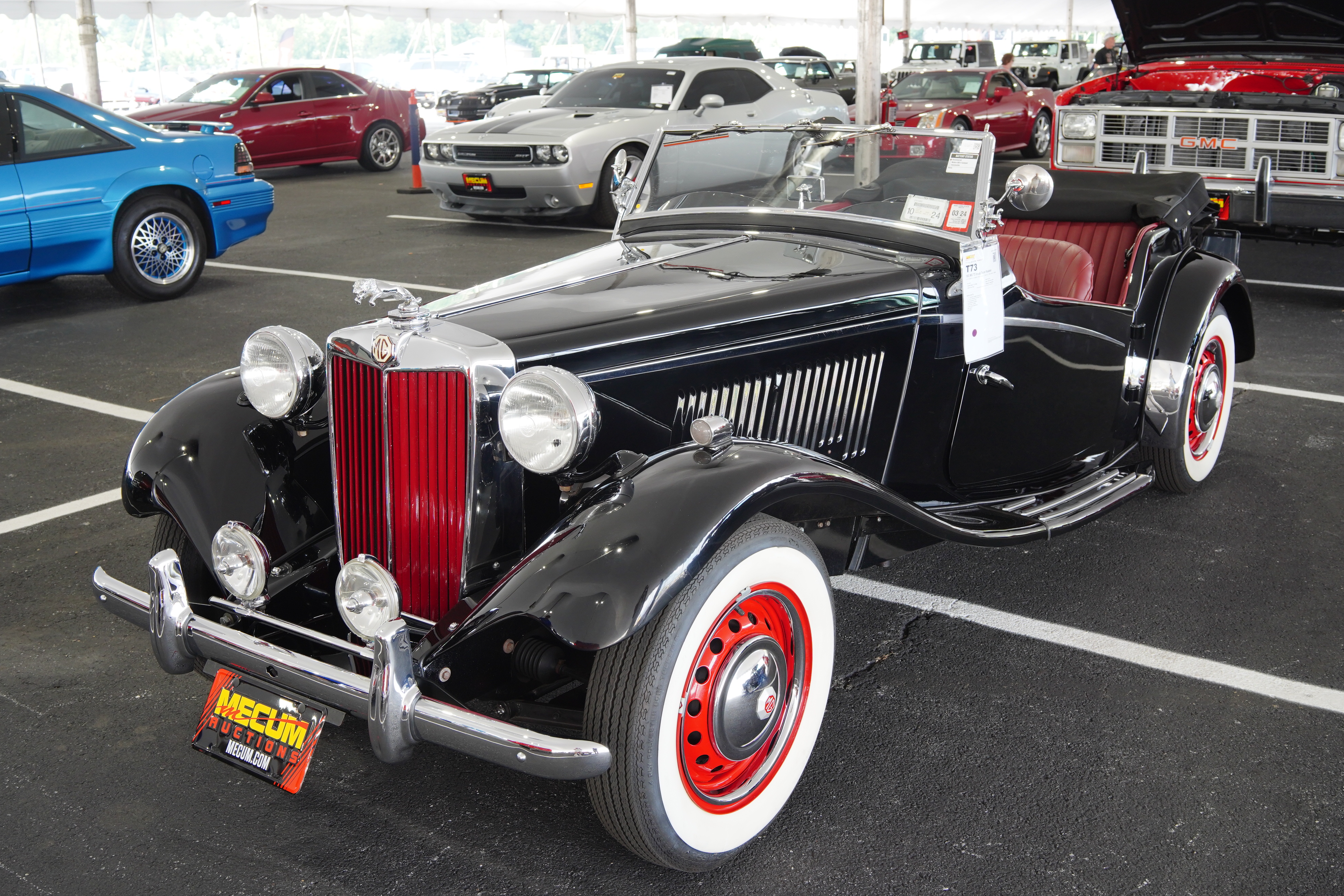
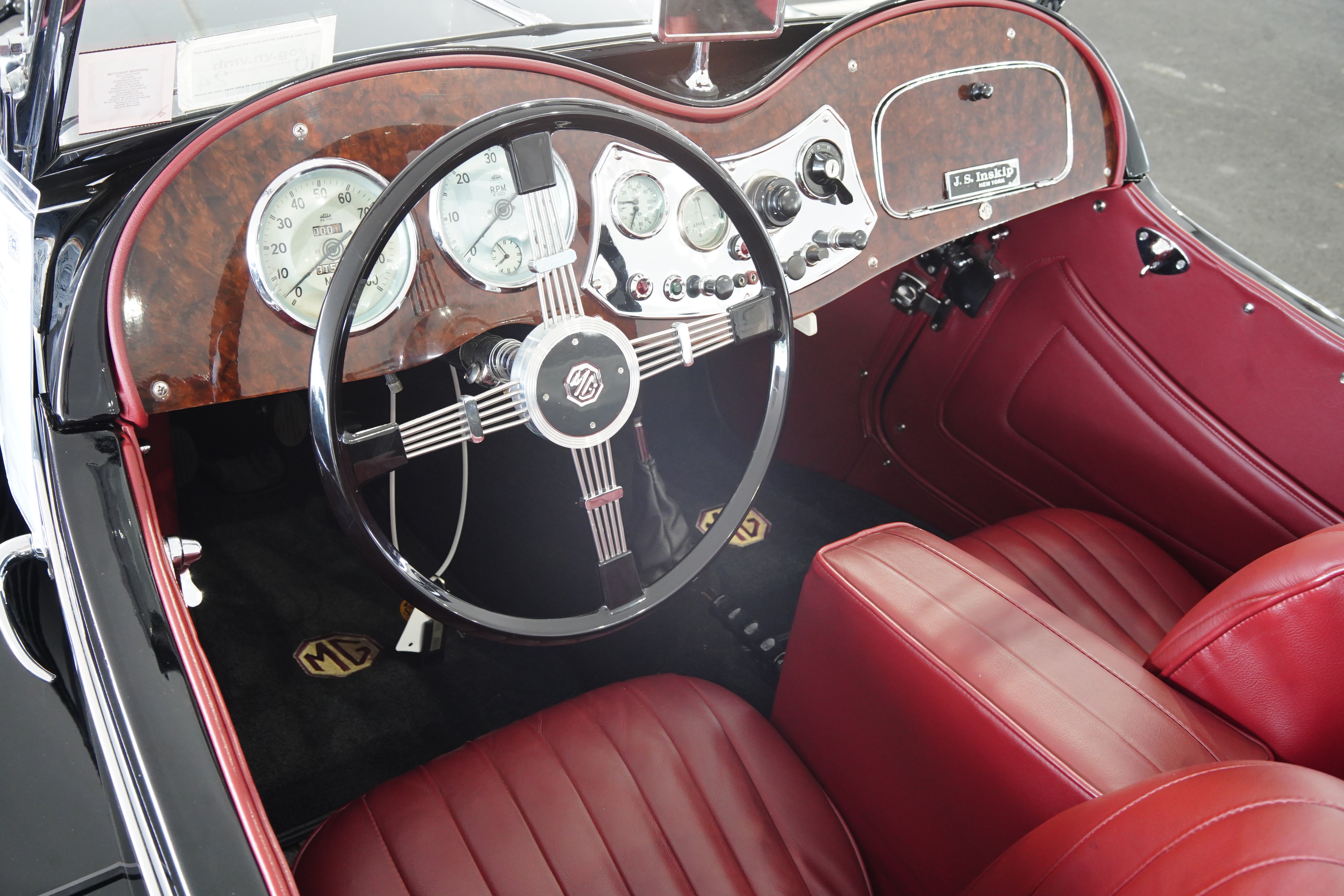
Lot T73, 1953 MG-TD Inskip Tourer Roadster, black paint, red interior, black top with side curtains, red wheels with small hub caps, whitewall tires, 1250cc inline-four, four-speed manual, odometer reads 31,535 (not verified). Supposedly one of twelve produced by J.S. Inskip, the NYC-based MG importer. They took an MG-TD, lengthened the chassis by ten inches, and added a rear seat. I never heard of this particular variant before, although I have heard of J.S. Inskip.

NOT SOLD at high bid of $22,000. I approached this car from the rear and had no idea what it was. Even from the front, which was not changed from the original TD, it looked quite different. To my eye, the extended wheelbase improved the car’s looks. With only twelve produced, there’s no easy way to assign a market value, but I can’t imagine that we weren’t far off at $22k.
 

FINAL THOUGHTS

Yes, kids, if you wanted a phone in your car in 1967, it still had a rotary dial


Difficult to believe now how much car styling used to change each year. Just three years separate the 1956 Chevrolet on the right from the 1959 Chevrolet on the left.


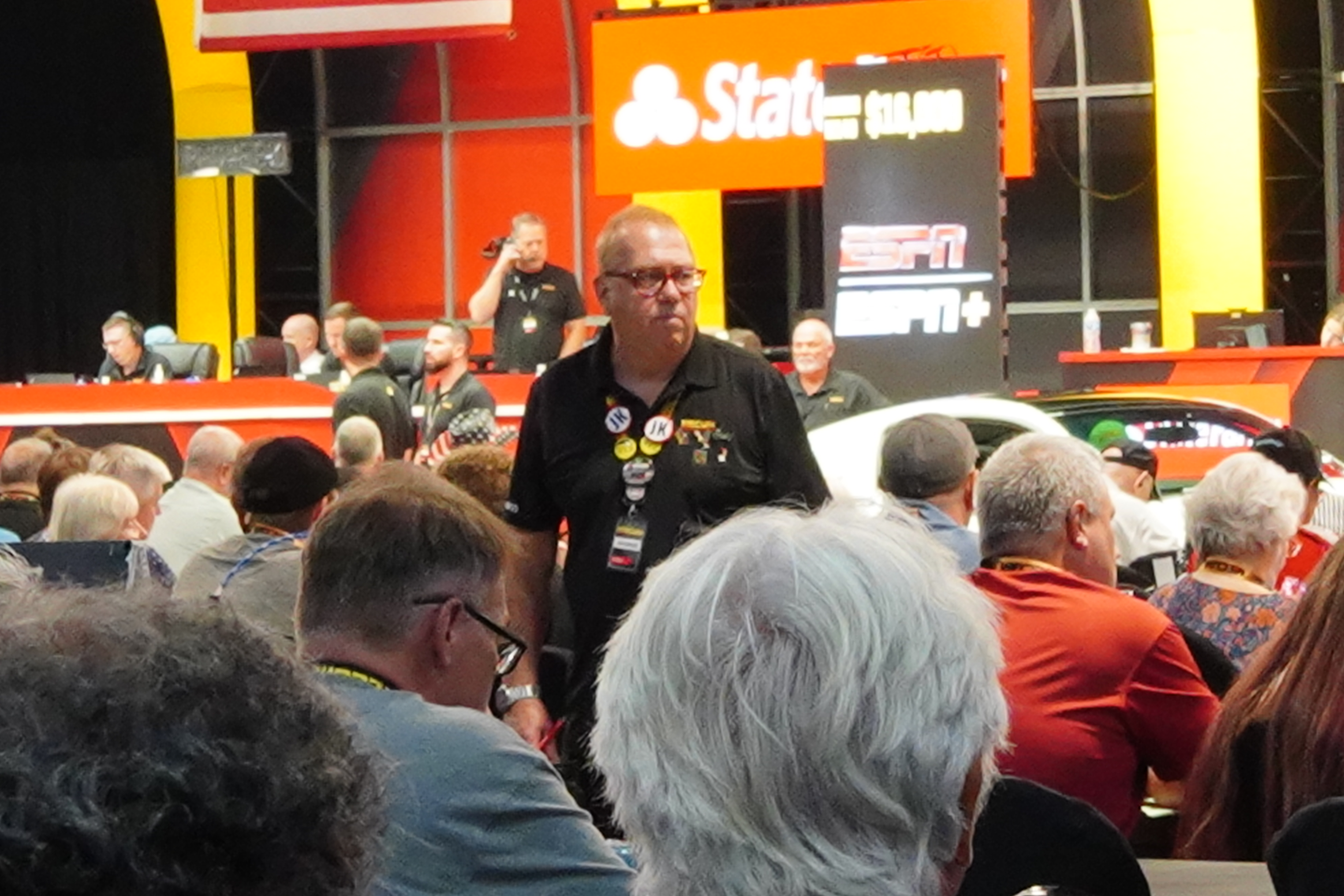
Chicken George himself, looking for bids

Entire blog post content copyright © 2025 Richard A. Reina. Text and photos may not be copied or reproduced without express written permission.


Mecum Harrisburg Auction, July 2023

My appearance at the 2023 edition of the Mecum Harrisburg collector car auction marks the 6th time I have made the trek. Mecum’s reputation is up there with Barrett-Jackson as an auction company that sells comparatively affordable classics, compared to the “catalog” auction companies like RM Sotheby’s and Gooding. Nothing against those outfits, in fact, I’m a fanboy of RM especially after they sold my BMW Isetta for me. But Mecum at least dangles the possibility of a “good deal” for the hobbyist.

If you want to read my prior posts, which can be entertaining when you see what some cars have sold for, here are the links:

Mecum Harrisburg 2015

Mecum Harrisburg 2016

Mecum Harrisburg 2017

Mecum Harrisburg 2018

Mecum Harrisburg 2022

Harrisburg is only a 2+ hour drive from my home, and it’s smack in between Hershey and Carlisle, the two east coast locations with which every old car fanatic is familiar. In years past I’ve made the Mecum Harrisburg visit a multi-day affair, but I’ve observed that the most fun happens on Day One. Prices quickly escalate on subsequent days. To the credit of Mr. Dana Mecum and his staff, their Harrisburg event has grown substantially. In prior years it was a 3-day auction, Thursday through Saturday. This year, Day One was Wednesday, but still ended on Saturday, for a total of 4 days. They try to run about 250-275 cars a day, so in round numbers, figure that they auctioned around 1,000 cars.

Part of the growth is that this PA location is Mecum’s only event in the Northeast. The next closest locale for them is Indianapolis. Yet the Day One crowd looked smaller than in previous years. A lot has changed since their 2014 inaugural event in Harrisburg, still in the PA Farm Show Complex. One of the biggest changes is the eruption of successful online auctions, most notably Bring A Trailer. But there’s nothing like kicking the tires with real shoes. Several cars which looked great in photos on Mecum’s website showed serious battle scars when examined up close and personal.

Below are highlights of some of the cars which caught my attention, mostly cars which sold on Wednesday, the day we were there. Indicated prices are HAMMER prices. All sold lots incur a 10% buyer’s premium, included in the prices shown on Mecum’s website, which is why my listed prices are lower. (Auction companies love to do that, as it inflates the appearance of how much they raked in.)

Richard’s Car Blog is the only online auction reporting site which arranges sold cars in price order, to give the reader some sense of what a particular amount of money will buy. And may I point out yet again, for all those who continue to moan that “there’s nothing affordable in the hobby anymore!”: the first seven cars listed below hammered at $15,000 or under. That is NOT to say that all were good deals. Some were decidedly not; in some cases, spending $5,000 to $10,000 more would get you the better deal. But there are still some very good starter collector cars available to those willing to be open-minded about make and model.


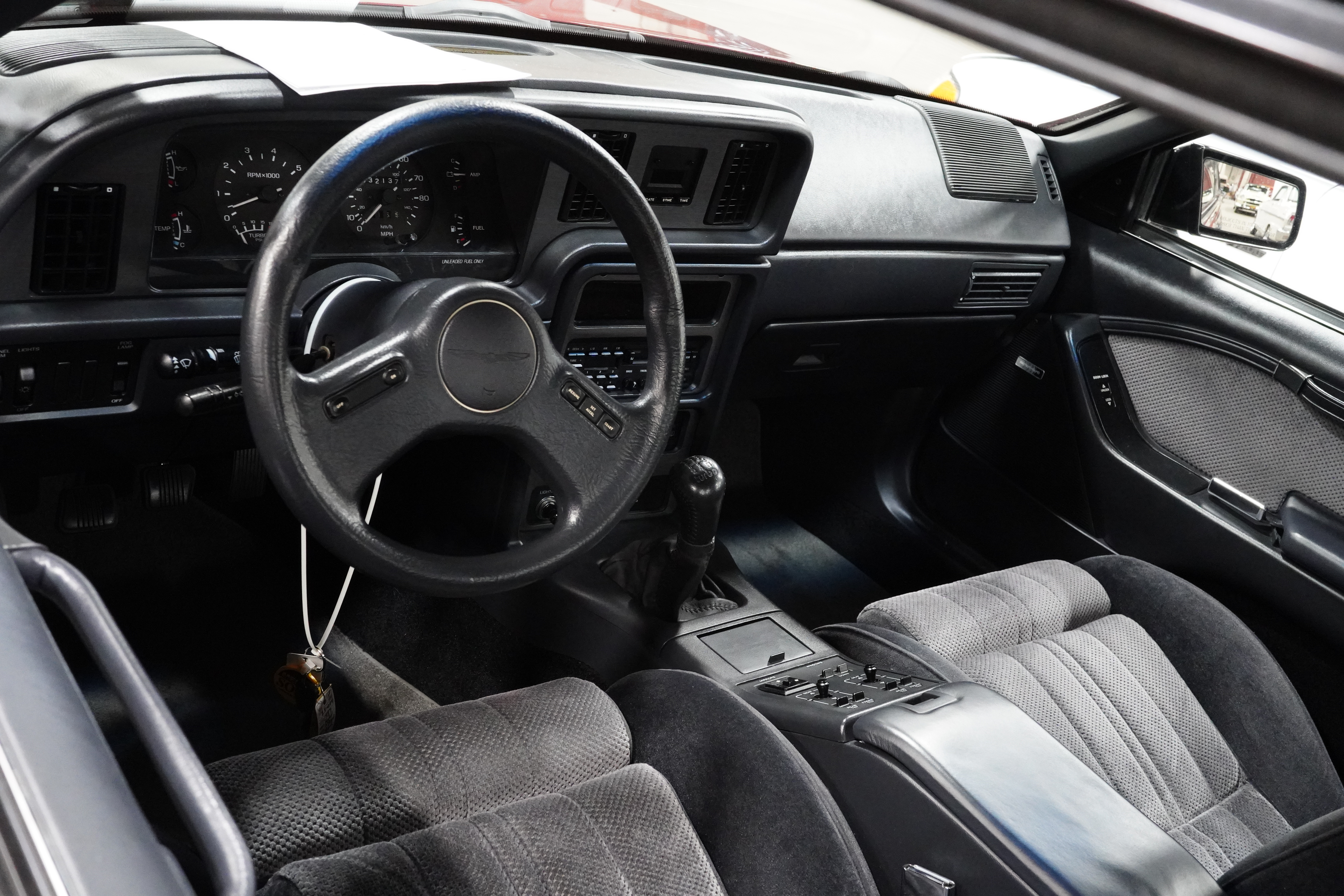
F190.1 1984 Ford Mustang SVO, 2.3L inline turbo 4, 5-speed manual, dark red, grey cloth interior. First year of the Mustang SVO, which was made only 3 years (’84-’86). Very worn paint, other exterior trim show excess wear. Interior relatively clean by comparison.

SOLD FOR $7,000. Condition is everything sometimes. Compare to W218 below, another SVO, which sold for almost 3 times this sale price and would be the smarter purchase.


W25, 1983 Buick Riviera convertible, white, burgundy top and interior, 5.0L V8, odo shows 59k, decent shape overall, few Riviera convertibles built (sign claims only 1,750 of them in 1983). Aftermarket wood steering wheel detracts.

SOLD FOR $8,500. I know a club member who has one and he loves his. This was one of the first cars across the block on Wednesday, which may have affected the price. I’ve also seen Riv coupes of this generation sell for near this number, so I’d mark this as well bought.


W133 1964 Ford Thunderbird hardtop, color possibly “rose beige”, matching interior, black vinyl roof with landau bars, 390 V8, automatic, Orange plug wires and aftermarket carb don’t “fit” the car.

SOLD FOR $10,000. This was one that looked decent on my home PC – until my in-person inspection quickly turned up a thick bead of silicone squeezed into the junction of the windshield and vinyl roof. Fixing that in a proper way will be pricey.


W136 1965 Ford Thunderbird, white, black interior, 390 V8, automatic, LF wheel cover is off the wheel and sitting behind the driver’s seat. Clean, straight looking car, but nothing extraordinary.

SOLD FOR $11,500. For an additional $1,500, this was the better deal compared to W133 above. This could be a good starter collector car.


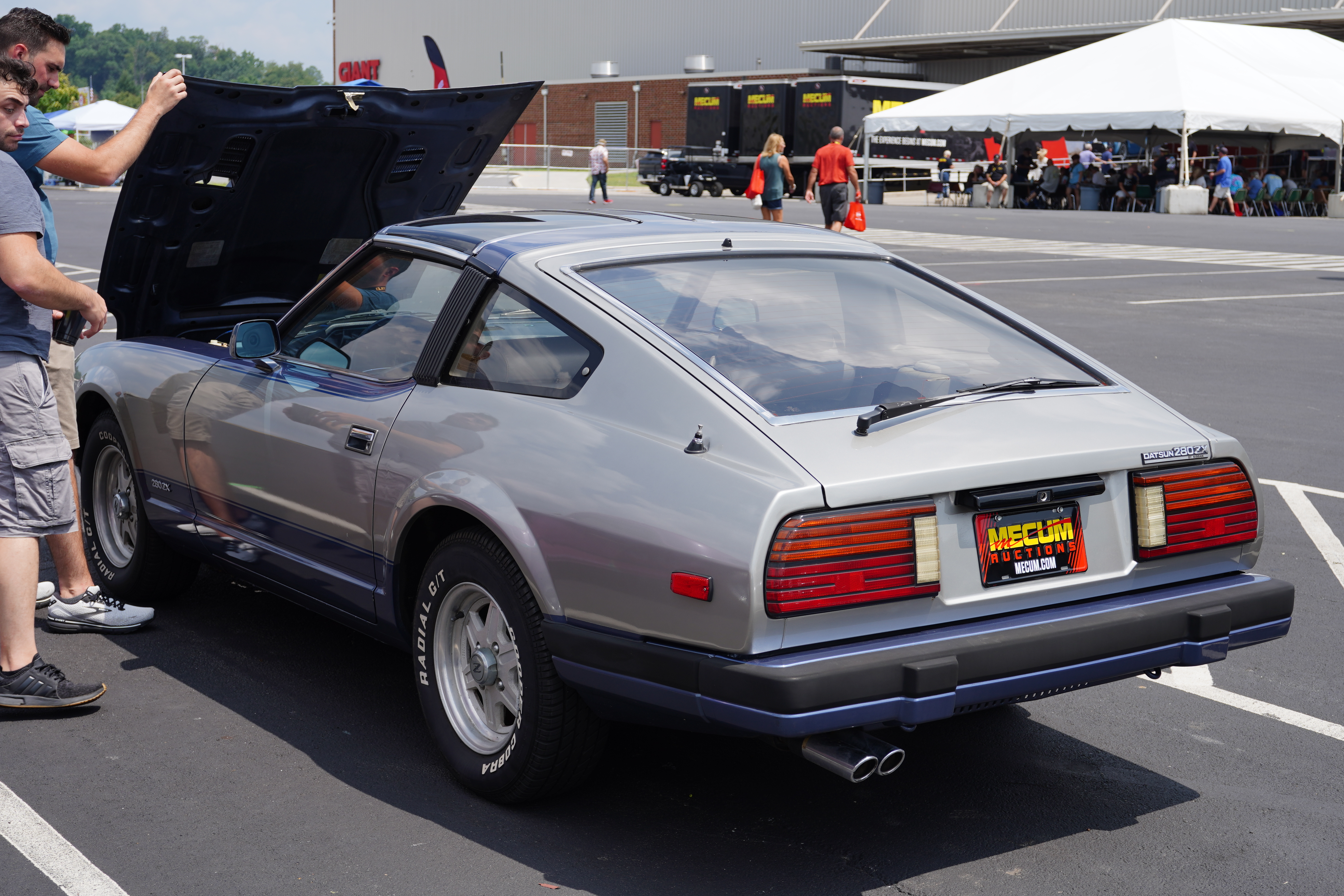
W237 1983 Datsun 280ZX, 2.8L straight 6, 5-speed manual. Tacky two-tone silver and blue straight from the early ‘80s. Blue interior with shiny silver leather seats, ditto. Covered headlights and T-tops complete the look. Sign claims 78k miles.

SOLD FOR $11,500. If you can ignore the colors (or perhaps if you like them), this is actually a lot of car for the money. These 2nd gen Z-cars, while lacking the purity of the 1st gen, still are fun drivers and decent GT cars if not out-and-out sports cars. Given how earlier and later Z-car prices are climbing, I’m predicting that these will see a slow but steady appreciation.


W93 1955 Chrysler New Yorker, blue & white outside, blue & white inside. Sign on car claims 64k miles. Hemi V8 engine, 331 cubic inches, automatic, power steering, brakes, and windows.

SOLD FOR $12,000. This was an odd presentation. The outside looked mostly original, with what might have been a much older repaint. The inside was recently redone, but with non-original materials and patterns. Price seemed high based on body style and condition. Any attempt to fully restore it would have you upside-down.


W120.1 1966 Ford Mustang hardtop, inline 6, automatic, light blue with two-tone blue interior, dealer or aftermarket A/C, few options other than that.

SOLD FOR $14,000. The only reason this car drew me in was its very high quality cosmetic condition. It’s unusual to see this much love and money poured into a six-banger. It’s equally unusual to see the small engine kept, as often it gets pulled in favor of a non-original V8. If you were in the market for a good-looking first gen Mustang and were not concerned with the ponies, this was your car. I doubt you could find another well-restored Mustang of this generation for a price near this.


W147 1961 Pontiac Bonneville bubble-top coupe, red, tri-tone red interior, 389 V8, automatic, 8-lug wheels. Looks like it’s all there, but most paint is faded away, and rust is bursting out like teenage acne from all the lower sheetmetal.

SOLD FOR $15,000. When Bill Mitchell took the styling reins from Harley Earl at GM in 1959, the changes were dramatic and almost immediate. Gone were the excesses of the ‘50s, replaced by smooth, clean, downsized shapes. The ’61 Pontiacs have always stood out for me as Exhibit A of that change, especially the 2-door bubble tops like this one. This was expensive for a project, but will be amazing if restored correctly. However, will take bucks to make it right.


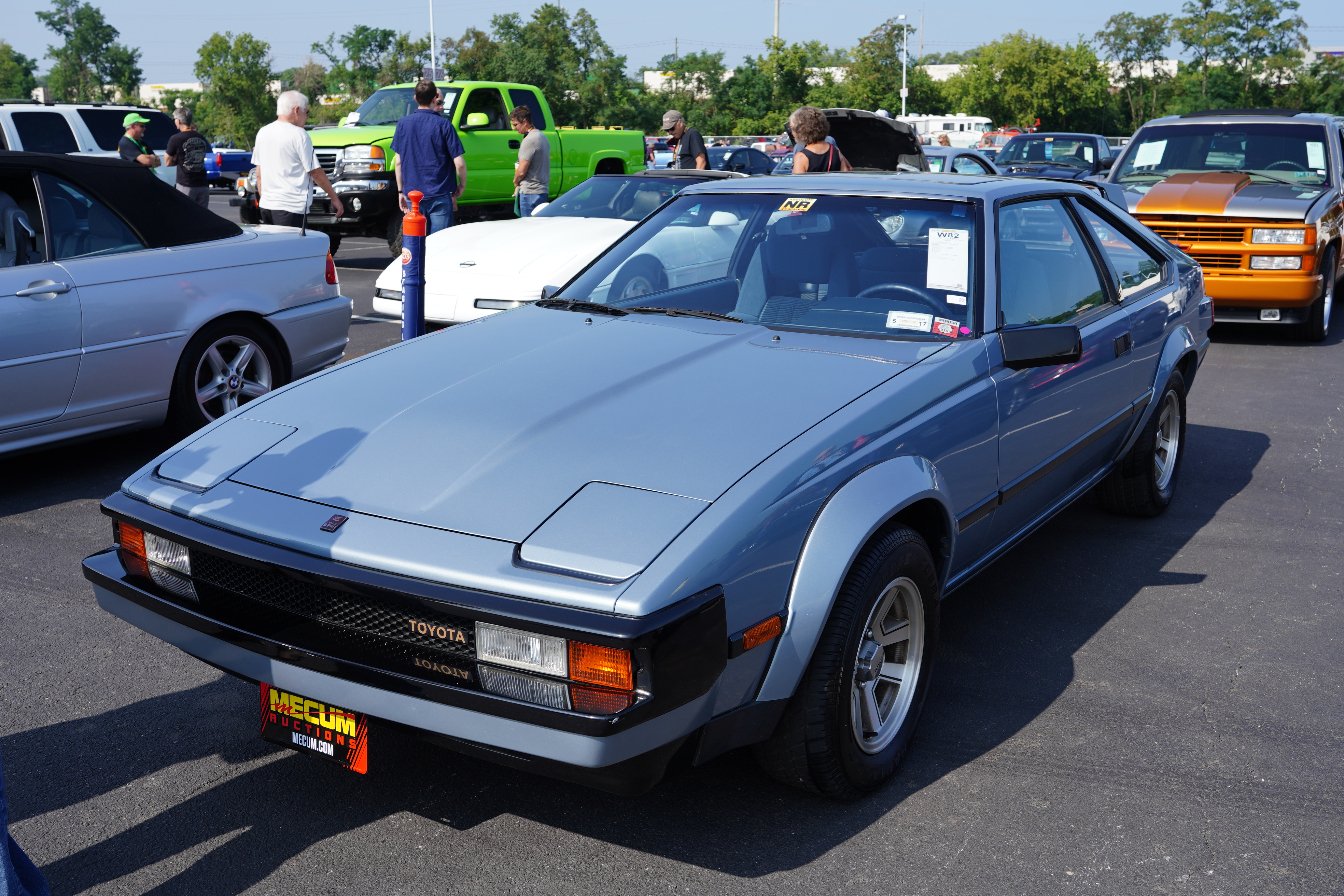
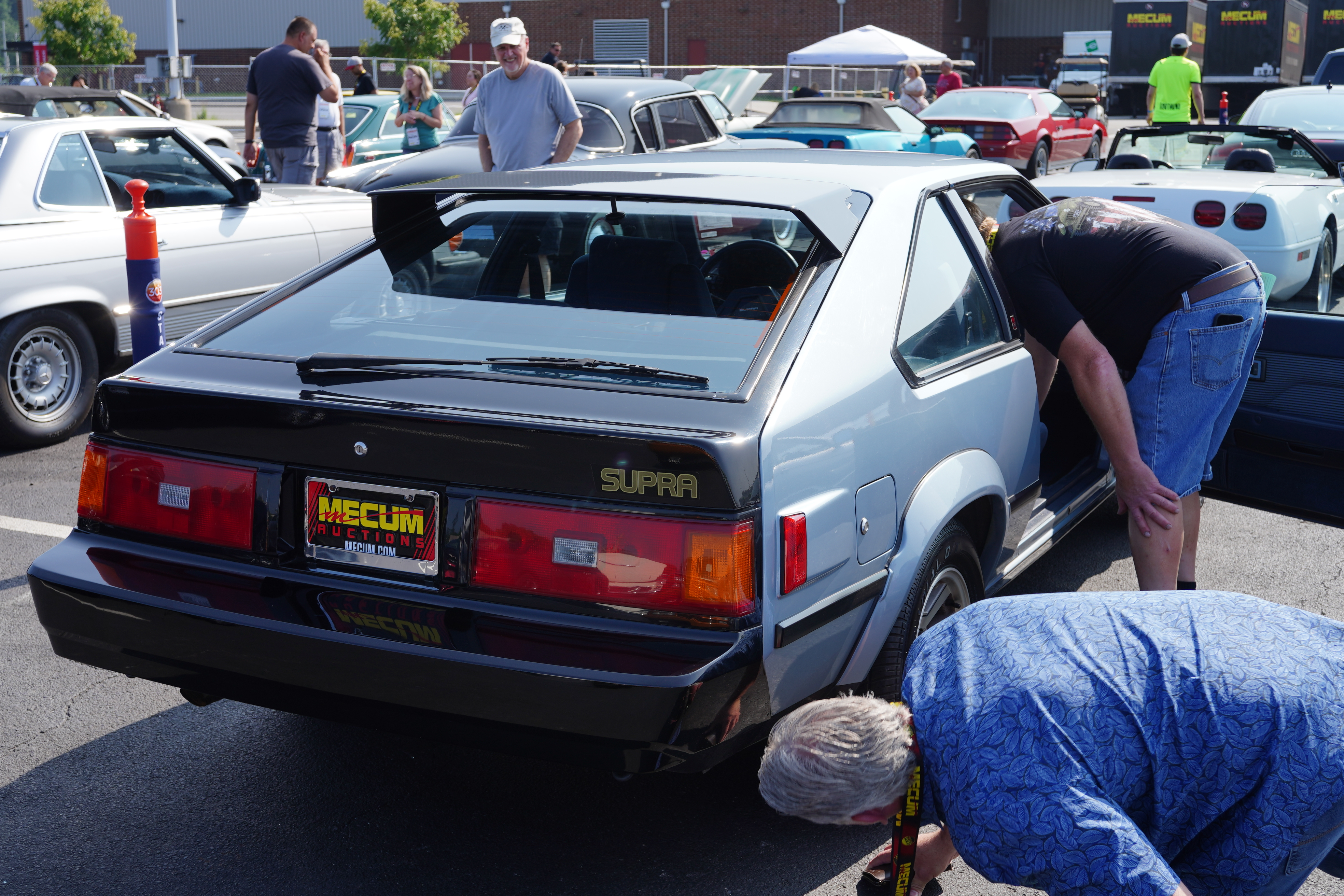
W82 1982 Toyota Supra, blue metallic, blue and grey cloth upholstery, 2.8L inline 6, 5-speed manual, sign claims 49k miles, believed to be “P” package car based on large fender flares and even larger rear wing.

SOLD FOR $17,000. The first-gen Supras looked very much like the Celica on which they were based. This car, a 2nd gen, was given a more unique styling treatment. I remember these well when they were new and we thought they were hot. Prices for 2nd (and 3rd) gen Supras were reasonable until very recently; check BaT to verify the escalation in sale prices. Based on what I’ve seen online, this was about right, maybe even a little light.


S34 1967 Buick Special, gold, black vinyl roof, black interior with bench seat, 340 V8, auto on column, factory A/C. Online photos look stunning, in person less so. However, overall cosmetic condition is strong.

SOLD FOR $17,500. I liked this car, spurred on no doubt by my ownership of a ’66 Buick Sportwagon in the same color combo. Note that this car is a ‘Special’ and is NOT a ‘Skylark’. I think finding a GM intermediate in this condition at this price makes this a good deal.


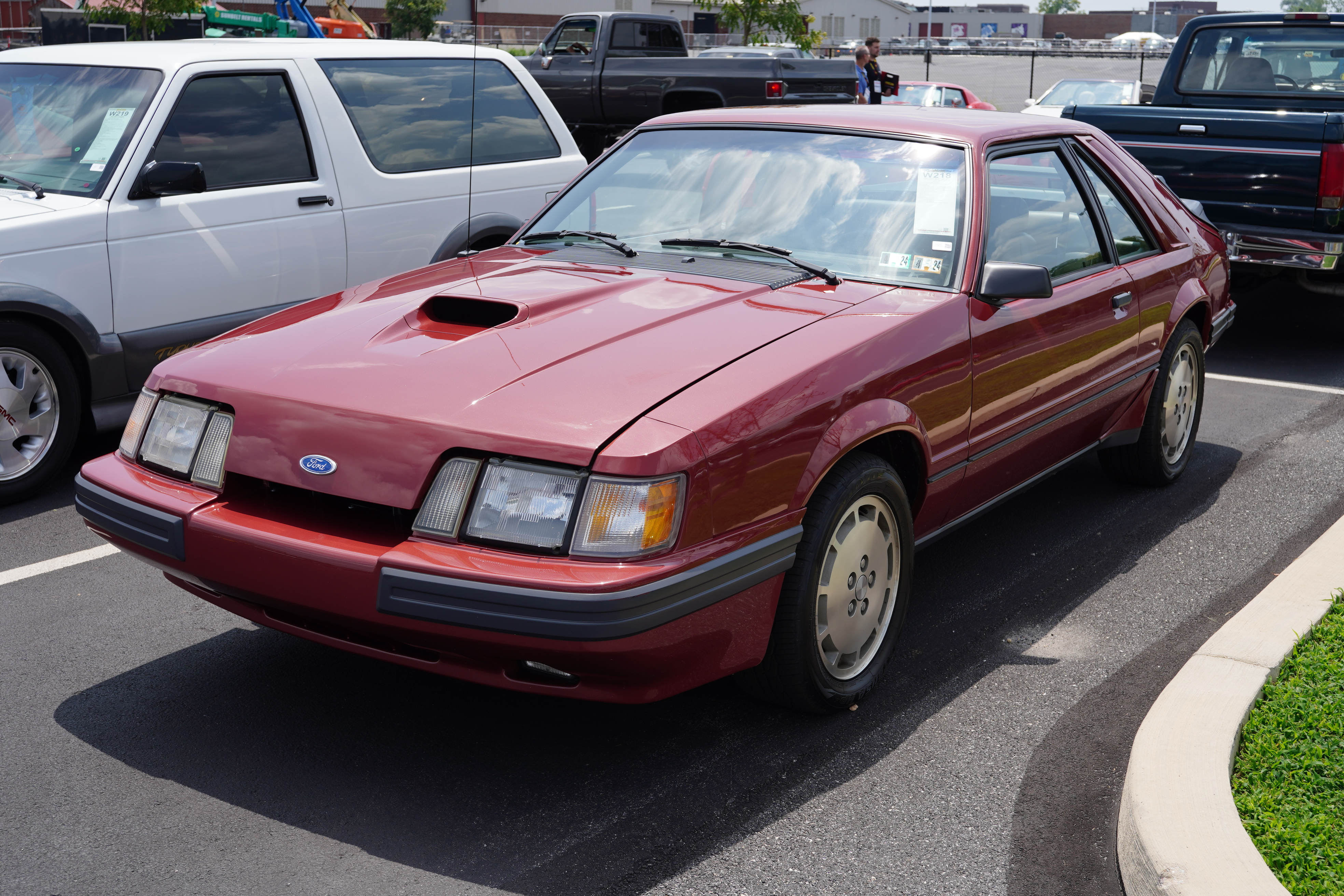
W218 1985 Ford Mustang SVO, claim to fame is the reported 10k original miles, but it looks it. Dark red, grey leather interior, 2.3L inline-4 turbo, 5-speed manual. “Late ’85” with the aerodynamic headlights and greater power output.

SOLD FOR $19,000. If I ever were to get a Fox body, the SVO would be my first choice. When new, these sold for more than the V8-powered GTs. Their lighter 4-cylinder engines made them better handling cars. My price guide puts SVOs between $10k and $20k, and very clean ones have sold on BaT for very high teens, so this one, as a 10k mile survivor, was worth the winning bid.


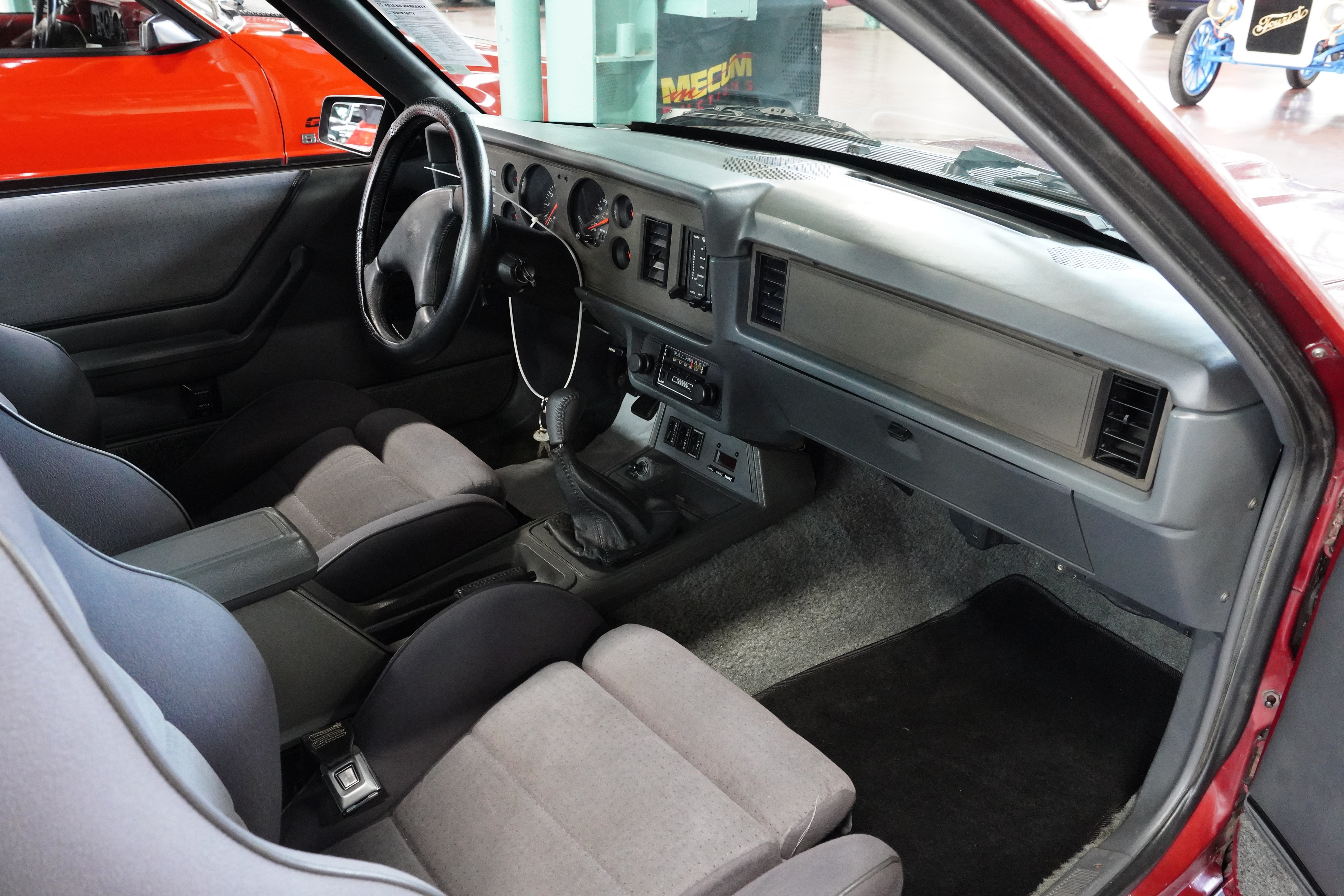
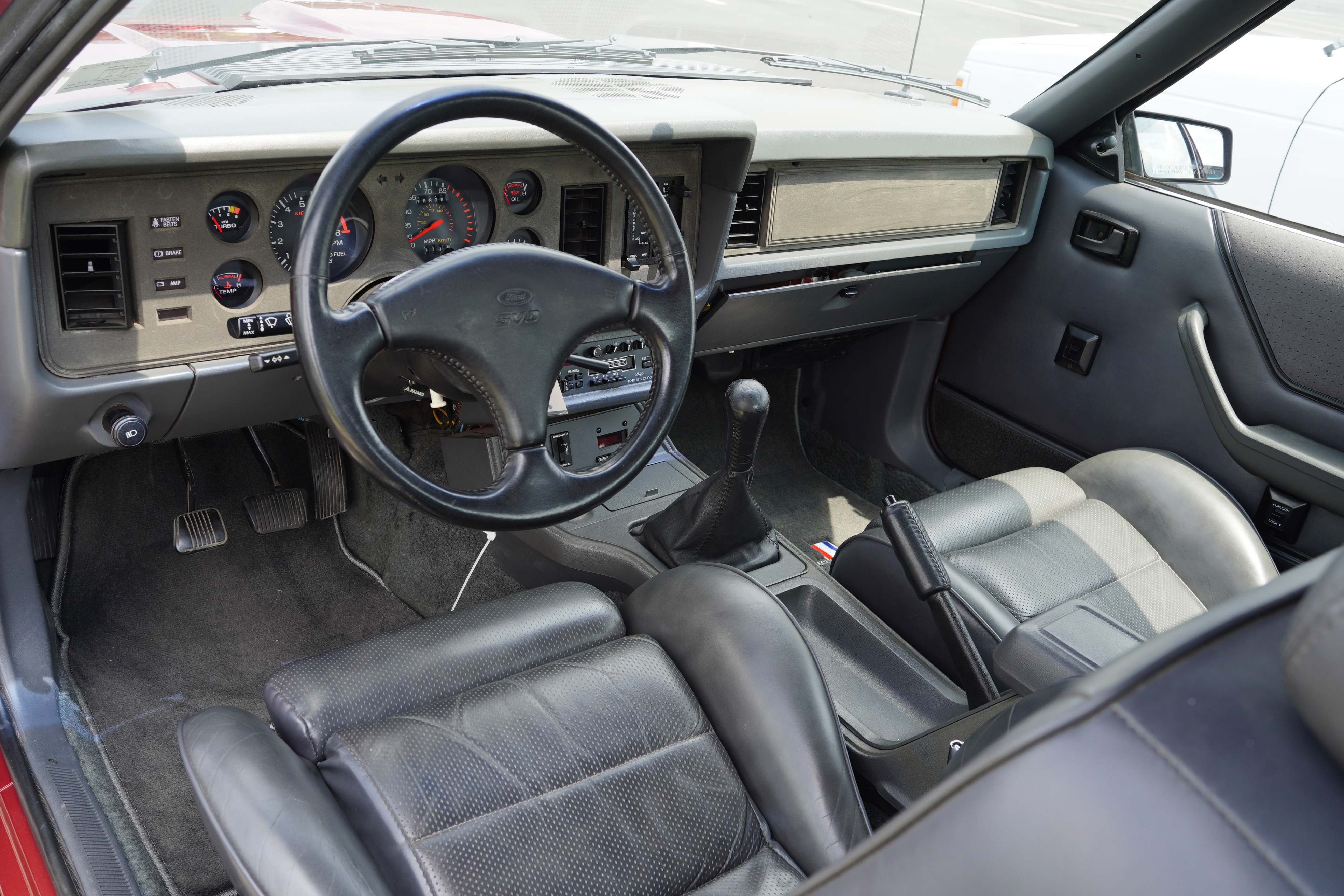
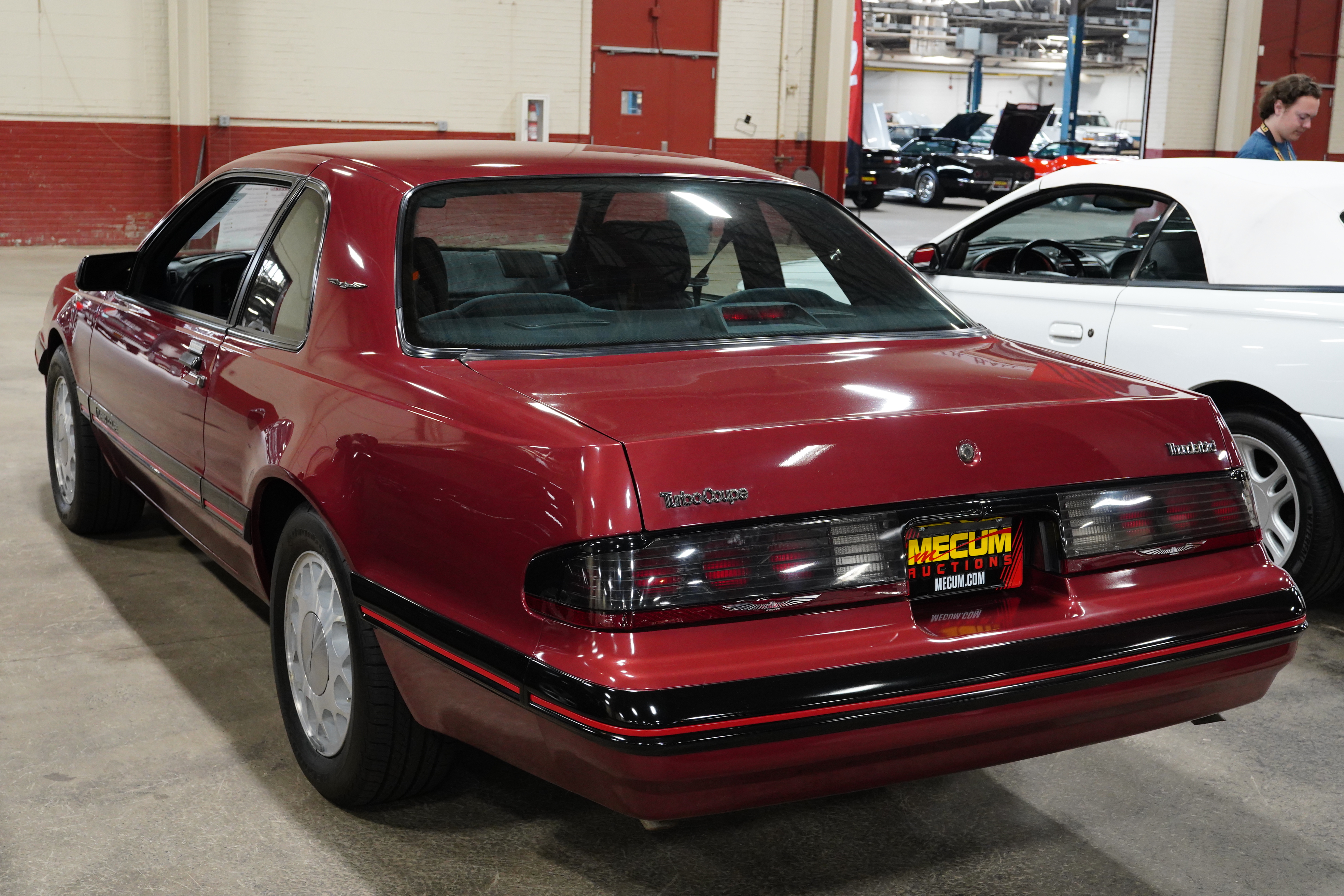
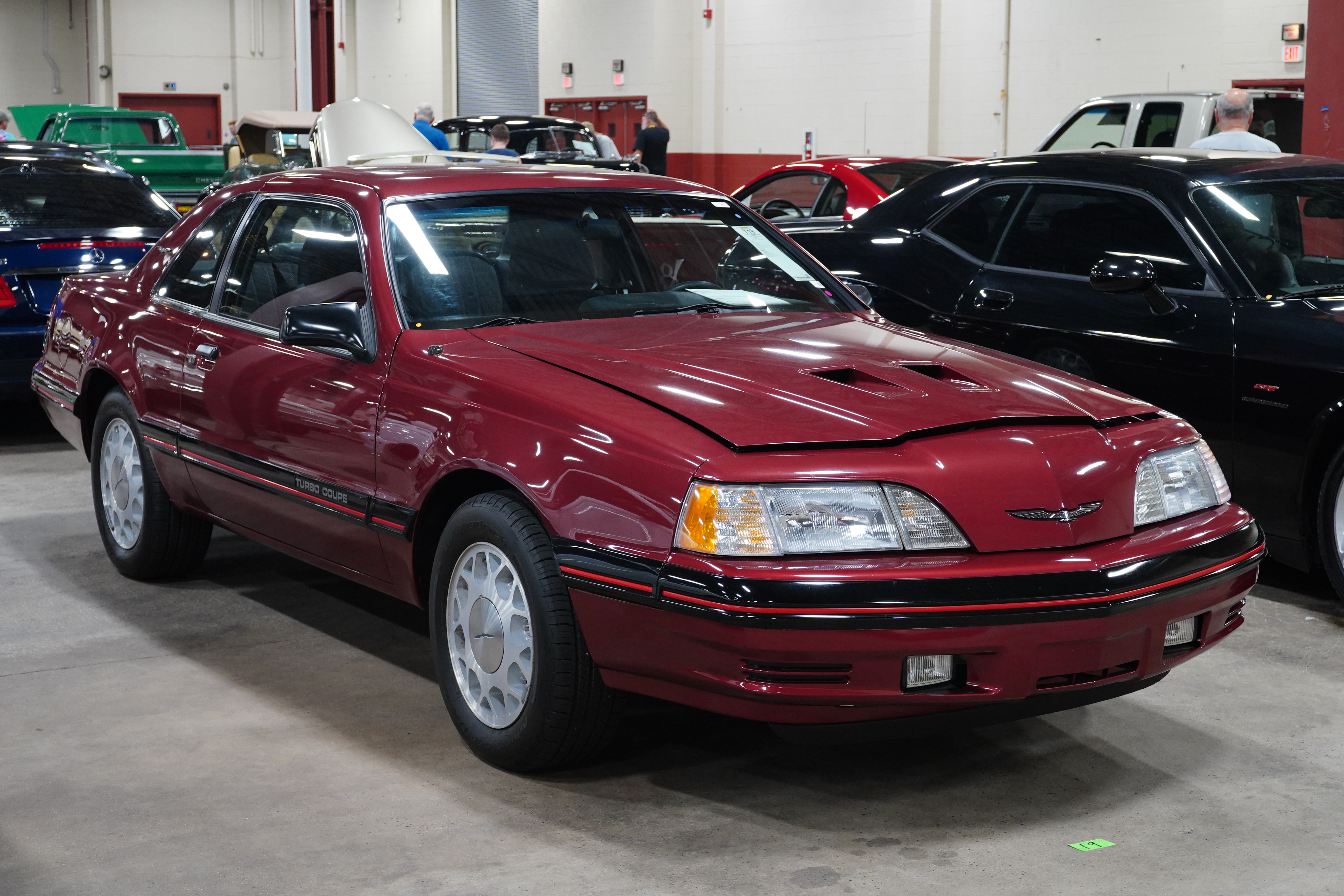
T19 1987 Ford Thunderbird Turbo Coupe, 2.3L inline 4, 5-speed manual, sign claims 32k original miles, dark red, grey cloth interior.

SOLD FOR $21,500. These are Fox body platform cars, but larger than their Mustang brethren. This one sold for a bit of a premium, probably because of condition and the rarity of the 5-speed. Nice car.


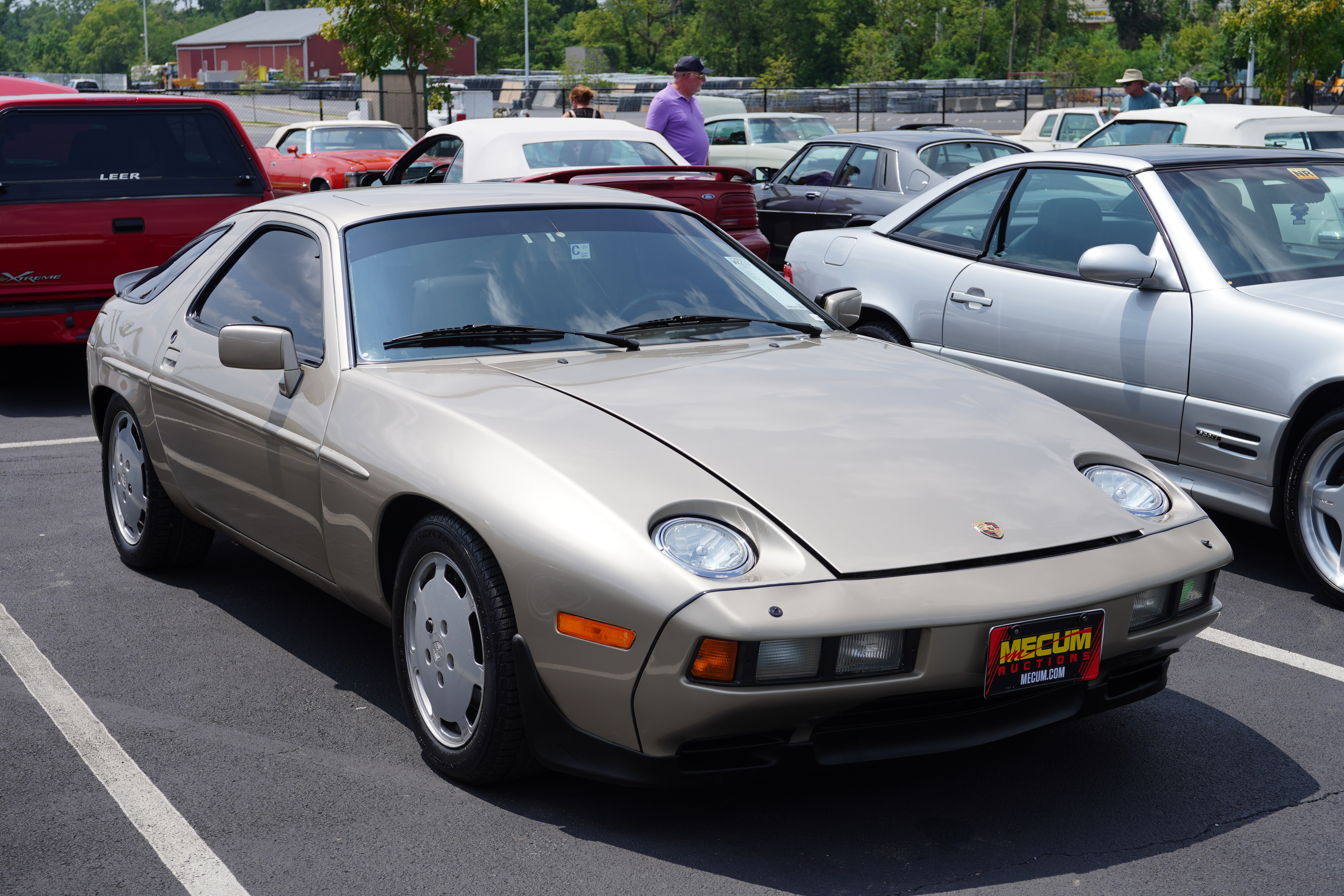
W232 1986 Porsche 928, metallic beige, beige leather interior, 5.0L V8, automatic, odo stated to read 80k miles. Sign on car claims original paint.

SOLD FOR $22,000. It doesn’t seem that long ago when nice 928s were sub-$10k cars, but no one wanted them. Prices took off around the start of Covid and may have cooled a bit since. This car was straight but nothing special other than being the only 928 here. Interior seemed better than many other 928s, which tend to show cracked dashes and seat upholstery. Mileage is on the low side; many 928s at auction show well over 100k on the clock. At this price I’d give slight advantage to the seller. Hope the new owner plans to drive it and not just stare at it.


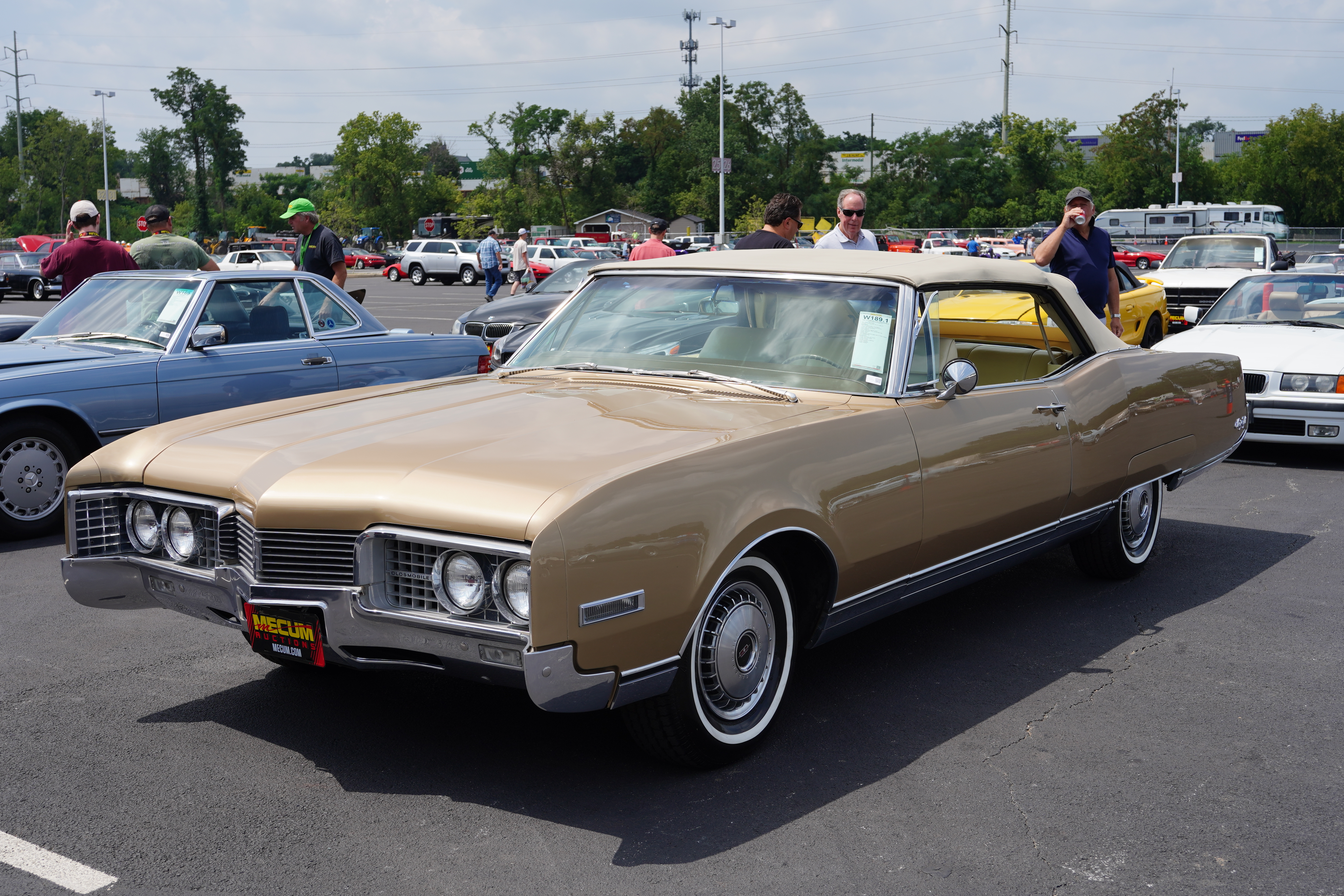
W189.1 1967 Oldsmobile 98 convertible, gold, tan top, tan interior, 425 V8, automatic. A huge boat of a car, it was in gorgeous condition and looked great in these colors.

SOLD FOR $28,000. Expensive? Not for condition. I would bet that a Chevy from the same year would sell for more; this Olds is arguably the better-looking car.


S82.1 1983 Datsun 280ZX, dark grey metallic, silver leather, 2.8L inline 6, 5-speed manual, sign claims under 60k original miles. Factory A/C, T-tops, sign claims car kept in climate-controlled garage.

SOLD FOR $31,000. Condition was great; the car looked like a 5-year-old well-kept used car. Compare this selling price with W237, the other 280ZX in this report: colors and condition brought almost triple the money.


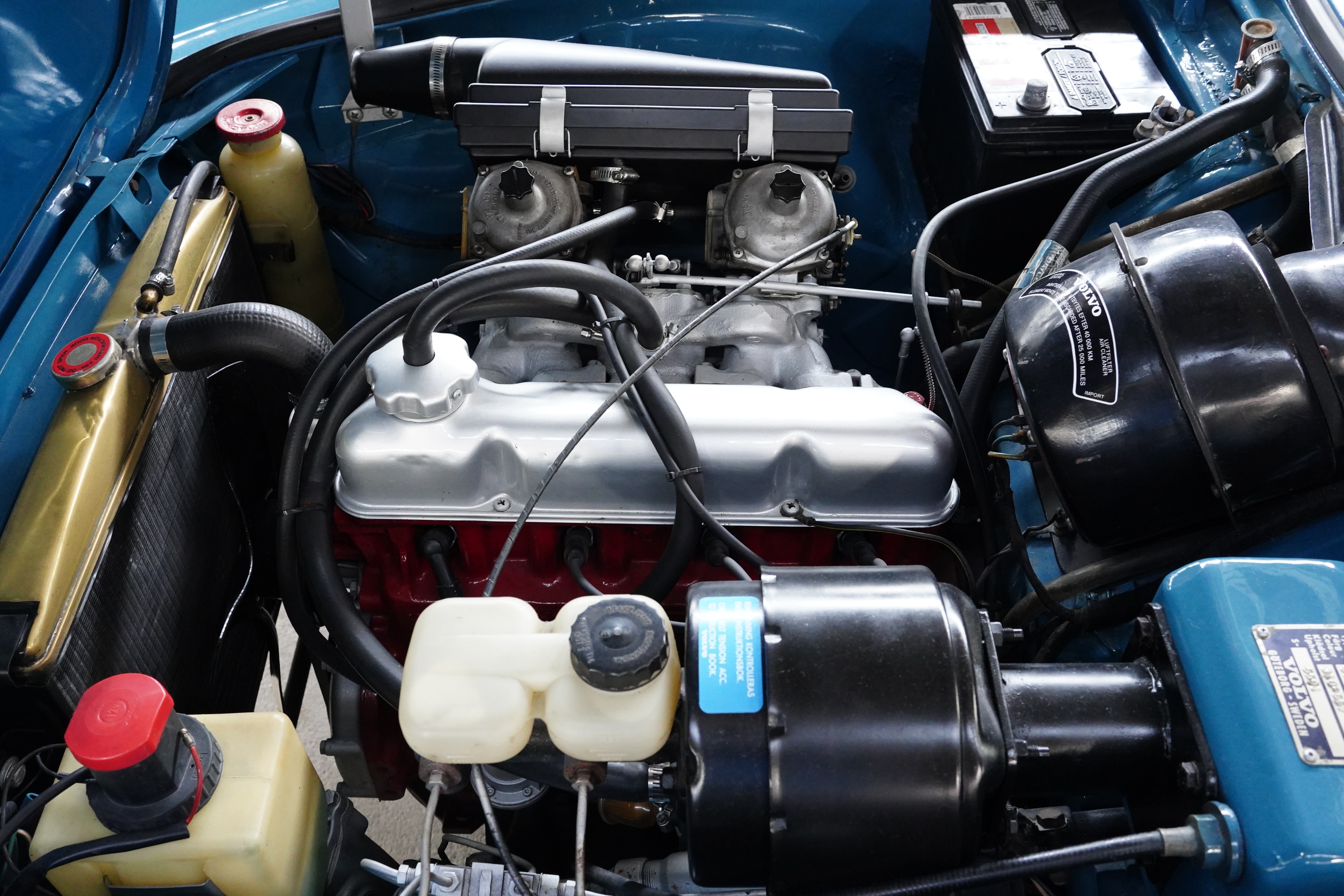
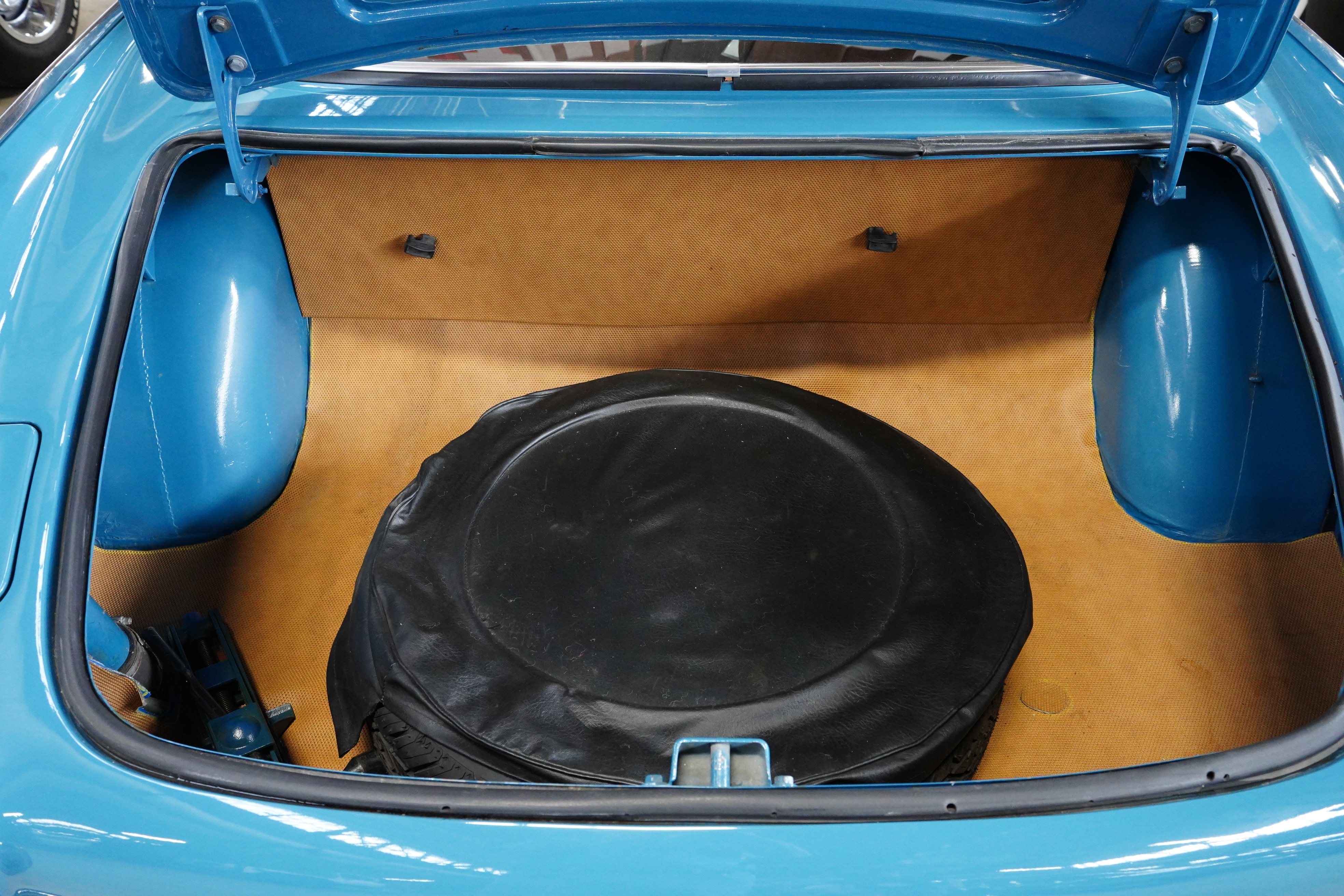
T109 1969 Volvo 1800S, blue with brown interior, 2.0L inline 4, 4-speed manual with electric overdrive.

SOLD FOR $32,500. While the car was spotless, something looked off to me, and that was the color, or perhaps the colors. I’m clearly not an 1800 expert, but I cannot recall seeing this exact shade of blue on a Volvo before. Same with the brown interior, at least not on a ’69. The trunk panels appeared non-original as well. Even some engine compartment detailing wasn’t what I’d call factory correct. Would love to hear comments from some of the Volvo faithful.


F175.1 1969 Jaguar E-type roadster, Series II car, red, tan top and interior, 4.2L inline-6, sign on car claims 5-speed manual. Clean, straight XKE.

SOLD FOR $82,000. These used to be the “affordable” E-Types, after the Series I cars. But “affordable” is a relative term here. Roadsters still bring much more than the coupes. Buyer’s premium brought the price to over $90k; sale price was about the going rate for a Series II roadster, possibly a bit of a steal for the buyer.


All photographs copyright © 2023 Richard A. Reina. Photos may not be copied or reproduced without express written permission.


Mecum Harrisburg Auction, July 2022

What constitutes a “bargain”? Is it always limited to an “on sale” price? Does a bargain happen when a seller is unsure of an item’s value and lets it go for a lowball offer? Is it possible that when an entire category (think housing) is deemed expensive that anything which sells below market, no matter its condition, is perceived as a bargain?

The definition of a bargain has been discussed a lot lately in the superheated collector car market. Starting sometime in 2020, soon after the Covid pandemic shutdown, prices of special interest cars skyrocketed. In some cases, certain cars saw their values double and triple compared to one or two years prior. Vehicles that were previously deemed uninteresting were bringing silly money, especially at online auctions. It has gotten to the point where some collectors have opined that “any running, driving collector car for under $15,000 is a ‘bargain’”.

There’s that word again. When I attended Day 1 of Mecum’s 2022 Harrisburg auction (their first time back in PA since before the pandemic), it was because I knew from past experience that any potential bargains happen early in the proceedings. My auction report below covers the sale of 11 cars which I found interesting, 10 of which sold on Wednesday, and one on Thursday. All the cars below sold between $5,000 and $22,000. Not all were bargains (looking at you, 2002). However, as I’ve heard myself repeatedly state, if you are looking for a collector car, have between $10k and $20k to spend, and most importantly are open-minded about make and model, there are indeed some bargains to be had.

Vehicles are listed in ascending sale price order. Listed sale price is the HAMMER price and does NOT include the 10% buyer’s premium.


Lot #W67, 1937 Pontiac 2-door sedan. Black paint, plaid seat covers over very worn tan upholstery. Red wheels with newer looking whitewall tires. Six cylinder, 3-speed. Much of the exterior glass is cracked and/or delaminated. No reserve sale.

SOLD for $5,000. We had a long talk with a bidder was fiddling with the car the entire time. (I thought at first he was the owner.) He claimed that the car was in good shape and that he was going to buy it, however, we saw a young man, perhaps in his early 20s, who was the winning bidder. Hope he has fun with it.

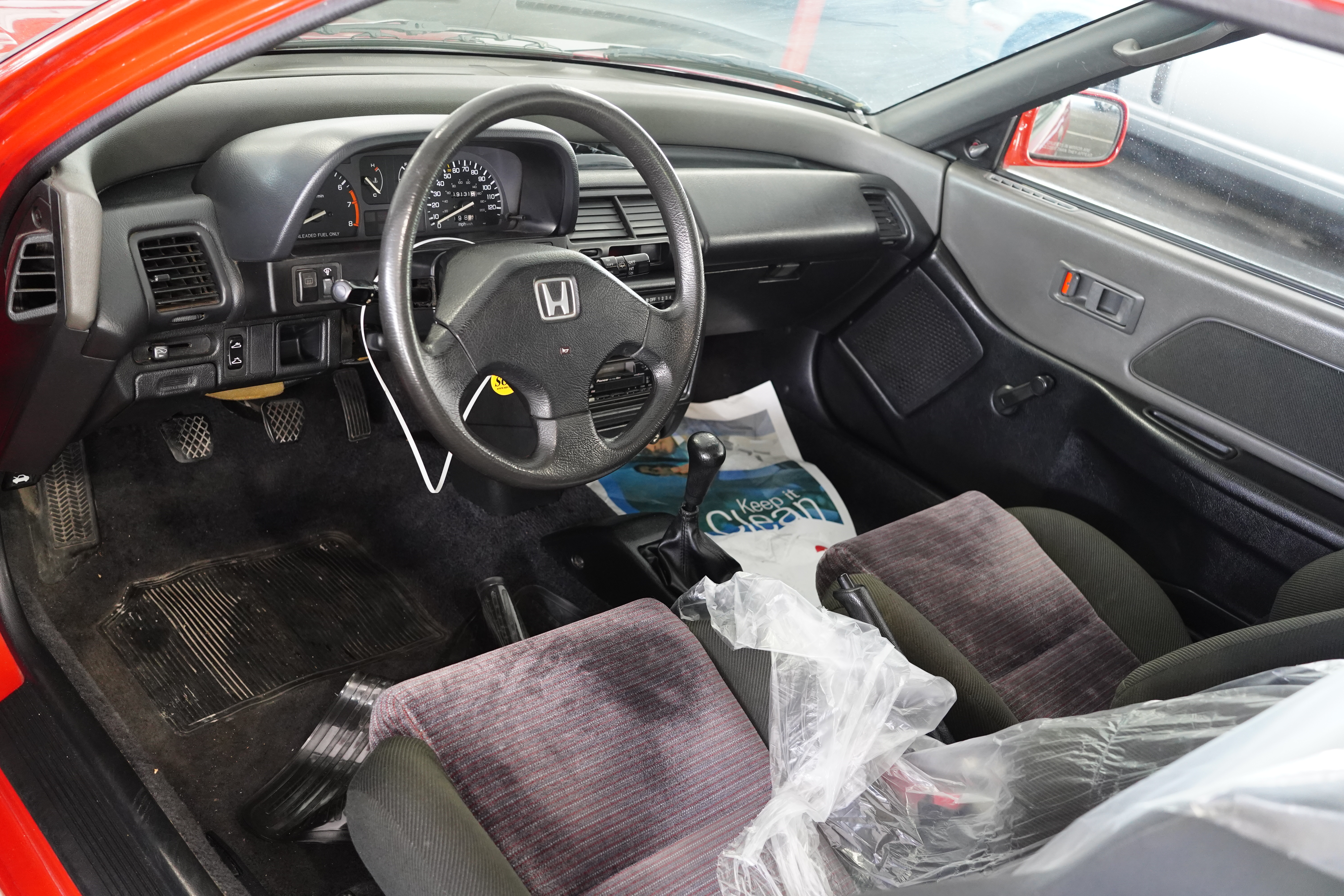
Lot #W132, 1991 Honda Civic Si, 2-door sedan, red, black interior. 108 HP 4-cylinder engine with 5-speed manual gearbox. Odometer shows 119,131 miles. Looks clean for its age and mileage, and more strikingly, appears unmodified. May have been painted at one point to a less than professional standard.

SOLD for $8,500. Miles are low for a 30-year-old Honda. Aside from sketchy repaint, there were no glaring faults. Let’s hope the new owner drives it and avoids any temptation to make mods, which thankfully all previous owners were able to do.


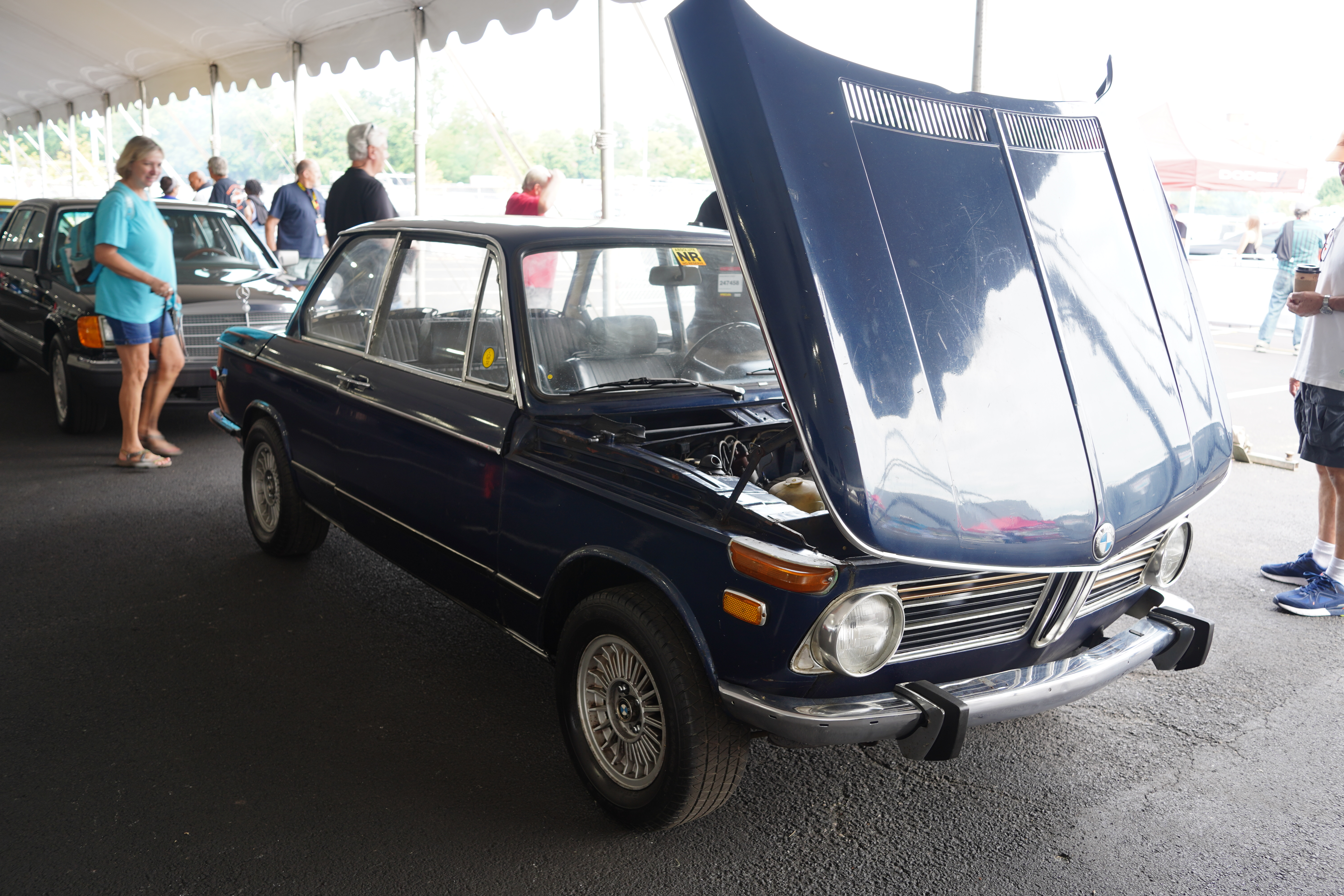
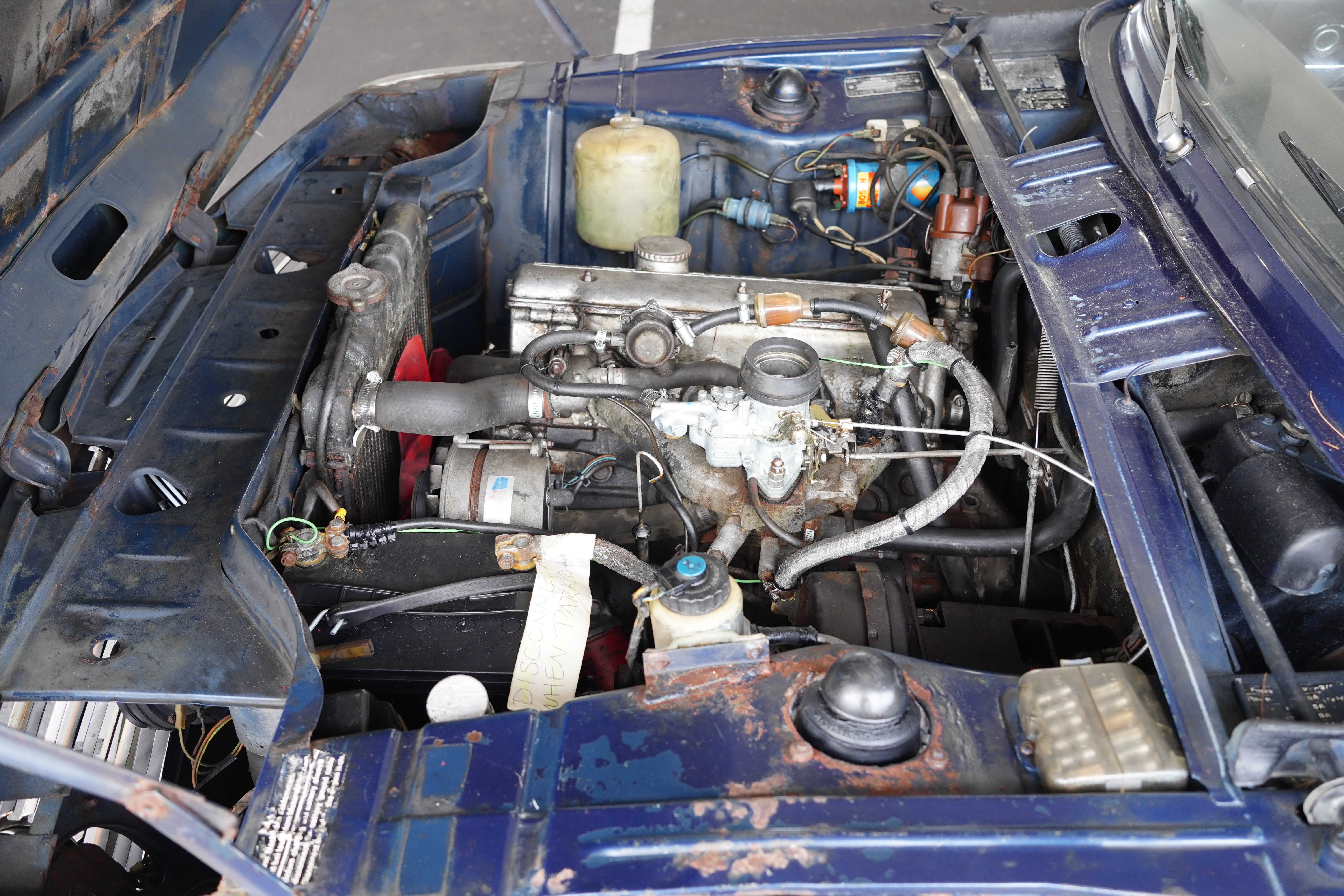
Lot #W36, 1971 BMW 2002 2-door sport sedan, dark blue, black vinyl interior, odometer shows 84k miles. Windshield label claims “in climate-controlled storage since 1987”, but must have lived a rough life prior to that. Extensive rust throughout body and engine compartment.

SOLD for $9,000. A shockingly high result, even in this overinflated age. I had pegged it at 5 grand max. I thought I heard the auctioneer state that it was sold to an online bidder, who may have thought the car looked good in photos.


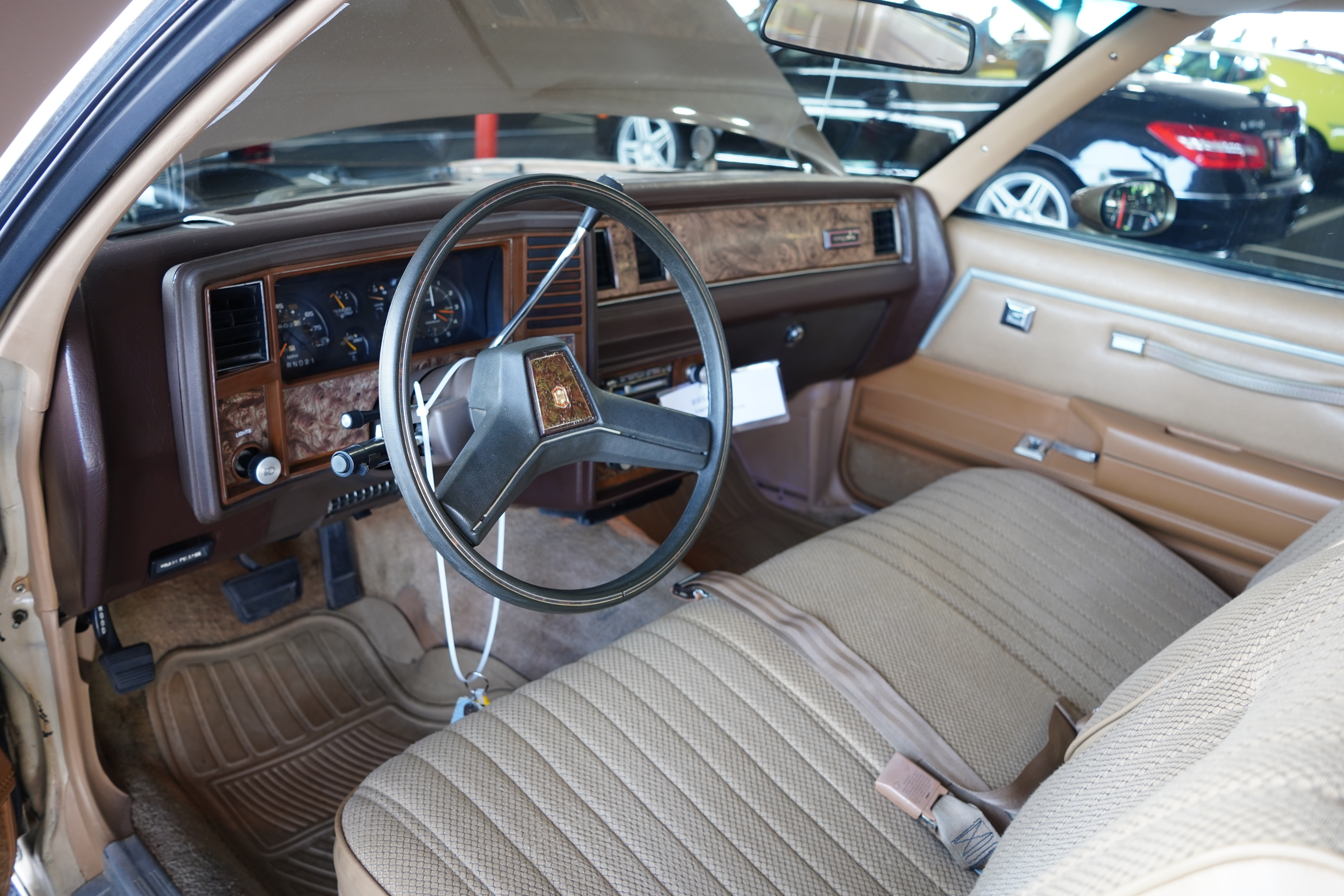
Lot #W57, 1982 Chevrolet El Camino, two-tone tan and beige, tan interior. 350 V8, automatic, A/C. Sign states recent repaint. Little to fault cosmetically.

SOLD for $10,500. El Caminos will always have a following, although it’s the Chevelle-based ones from the 1960s and early ‘70s which generate the most interest. Still, given the popularity of pickup trucks of all sizes and ages, and the behemoths which pass for full-size trucks today, it’s easy to look at something so reasonably sized like this one from 1982 and understand the attraction.


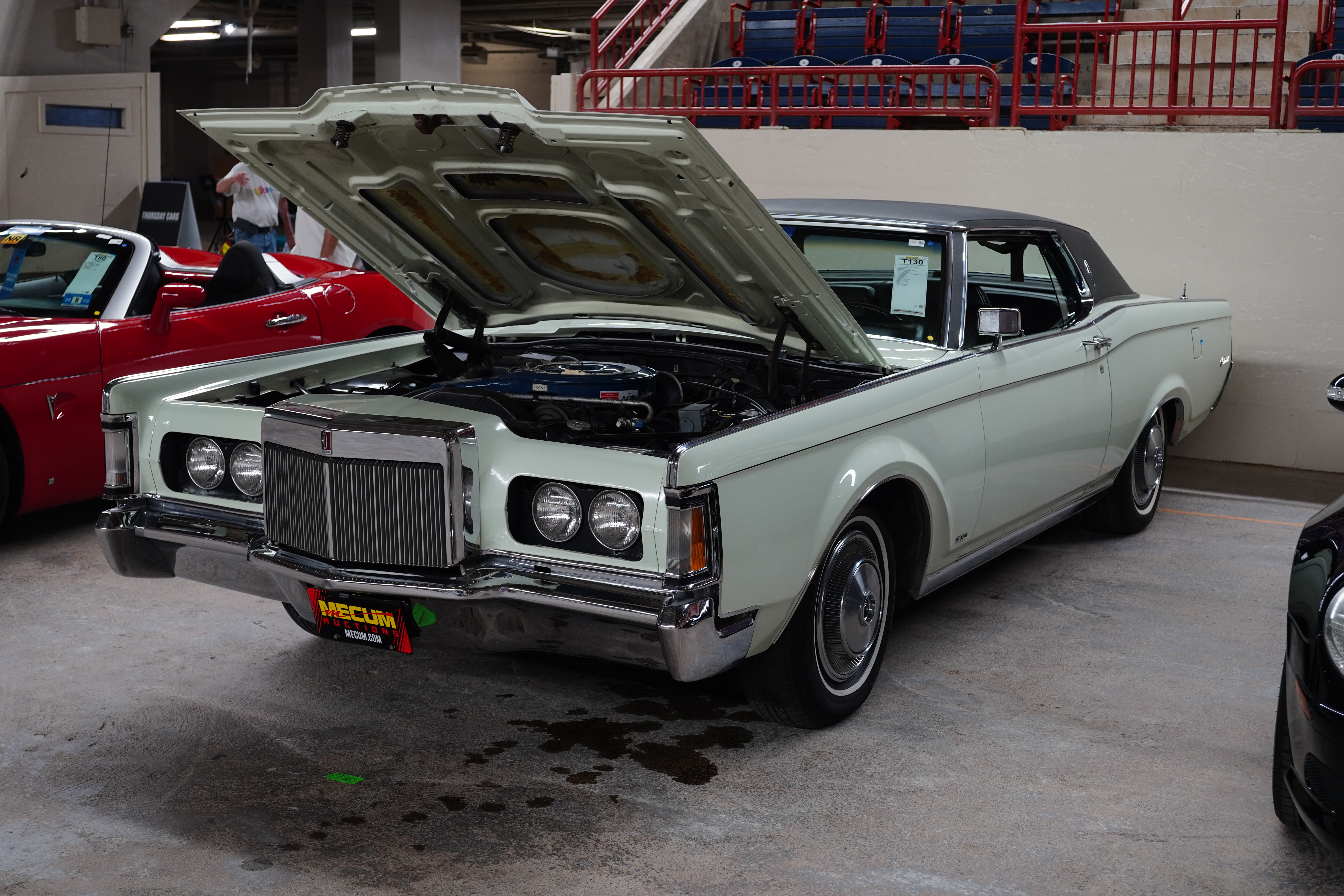
Lot #T130, 1970 Lincoln Continental Mark III, pale green, dark green vinyl top, black interior. 460 V8, fully equipped with all the luxury features of 1970.

SOLD for $10,500. This sold on Thursday, so while we didn’t see this one cross the block, we got the sale result from Mecum’s website. The right people weren’t in the room. This was a #3+ condition car which sold for #4 money. I can only guess that the green colors held it back.


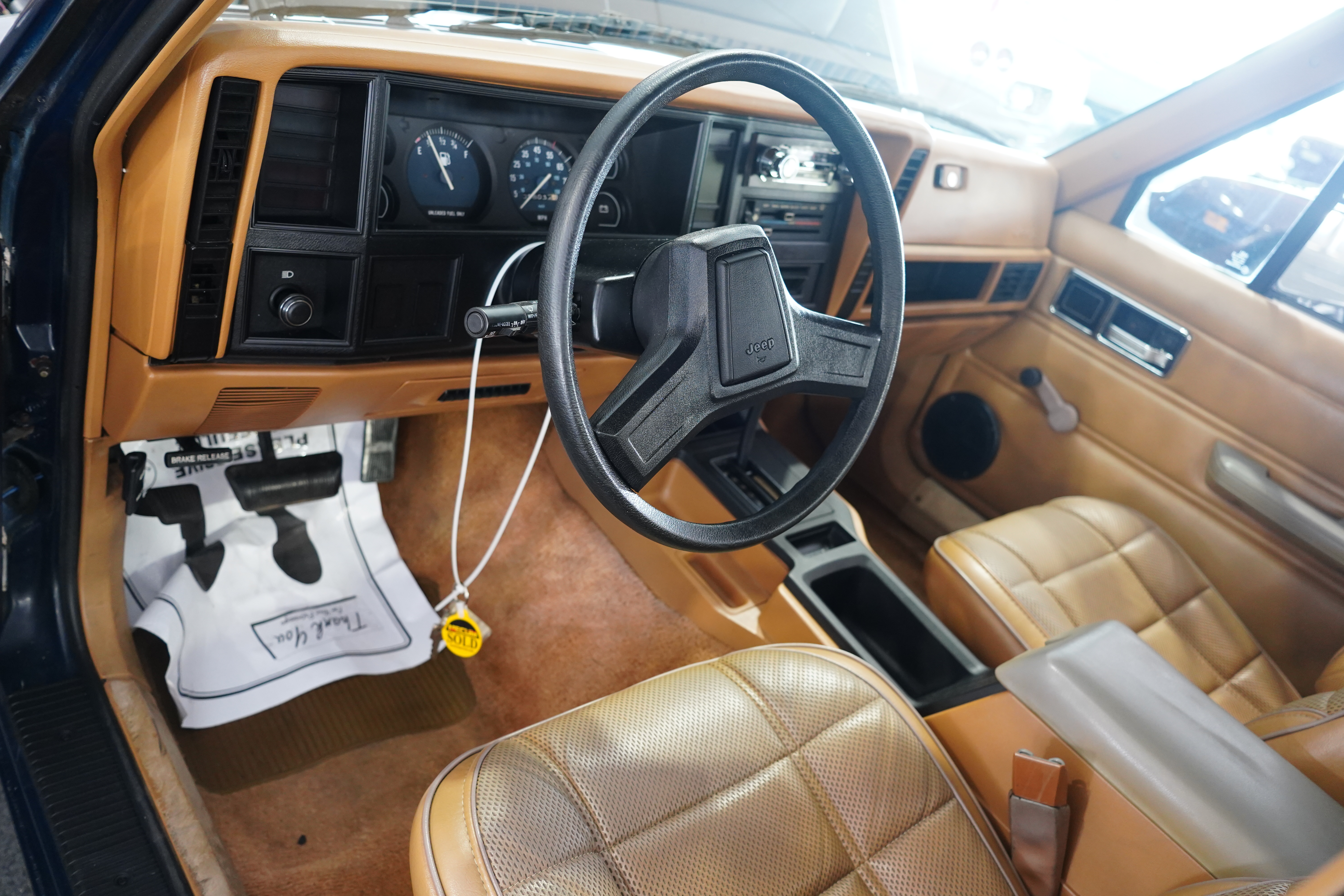
Lot #117, 1986 Jeep Comanche pickup truck, dark blue, tan interior, V6 and automatic. Sign claims 58k miles. Factory A/C, power steering and brakes, radio, and not much else.

SOLD for $13,500. Might seem like a lot for an ‘80s pickup truck, but given what Chevy and Ford versions are selling for, this price seems fair. Besides, if you like having something different, this is the ticket.


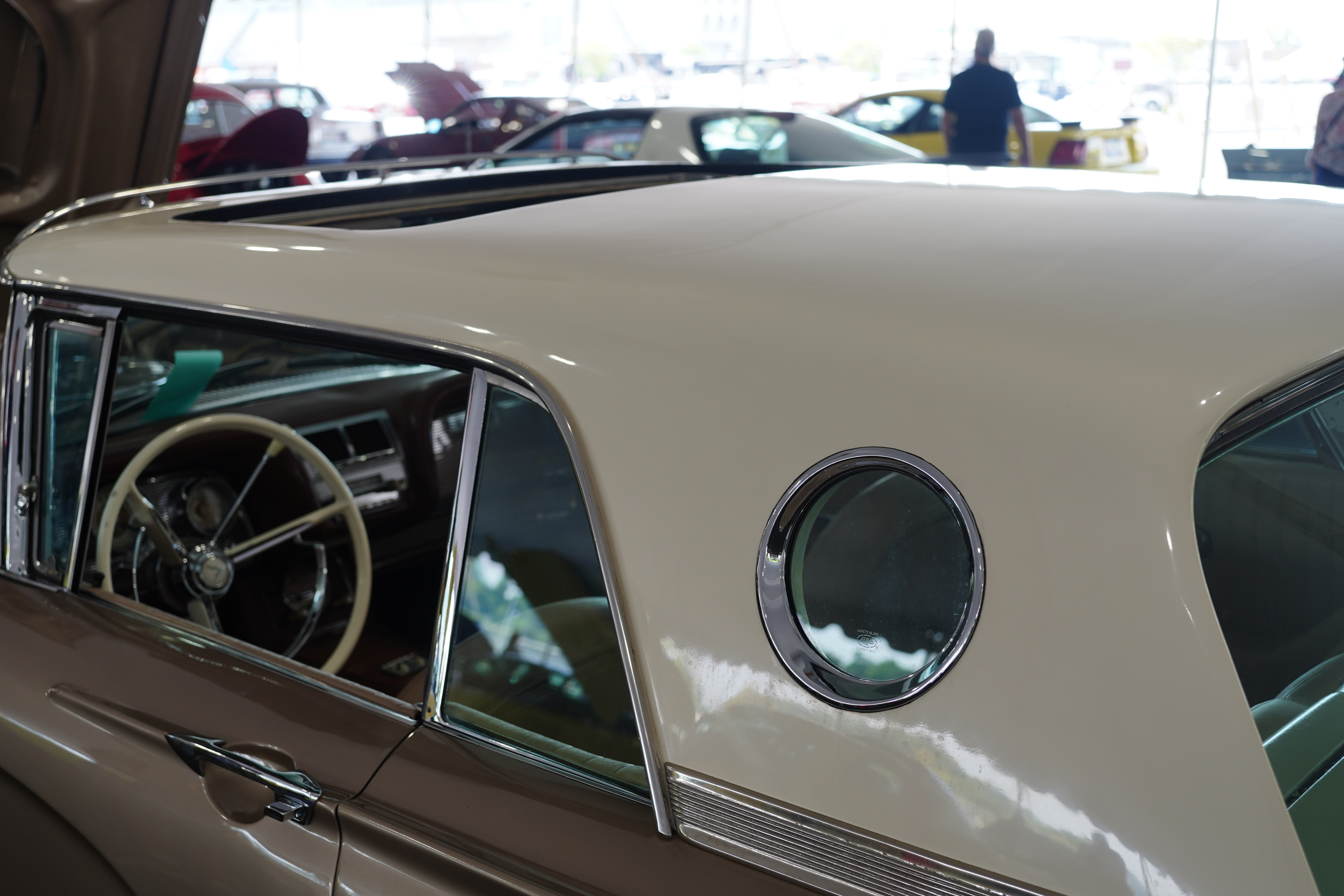
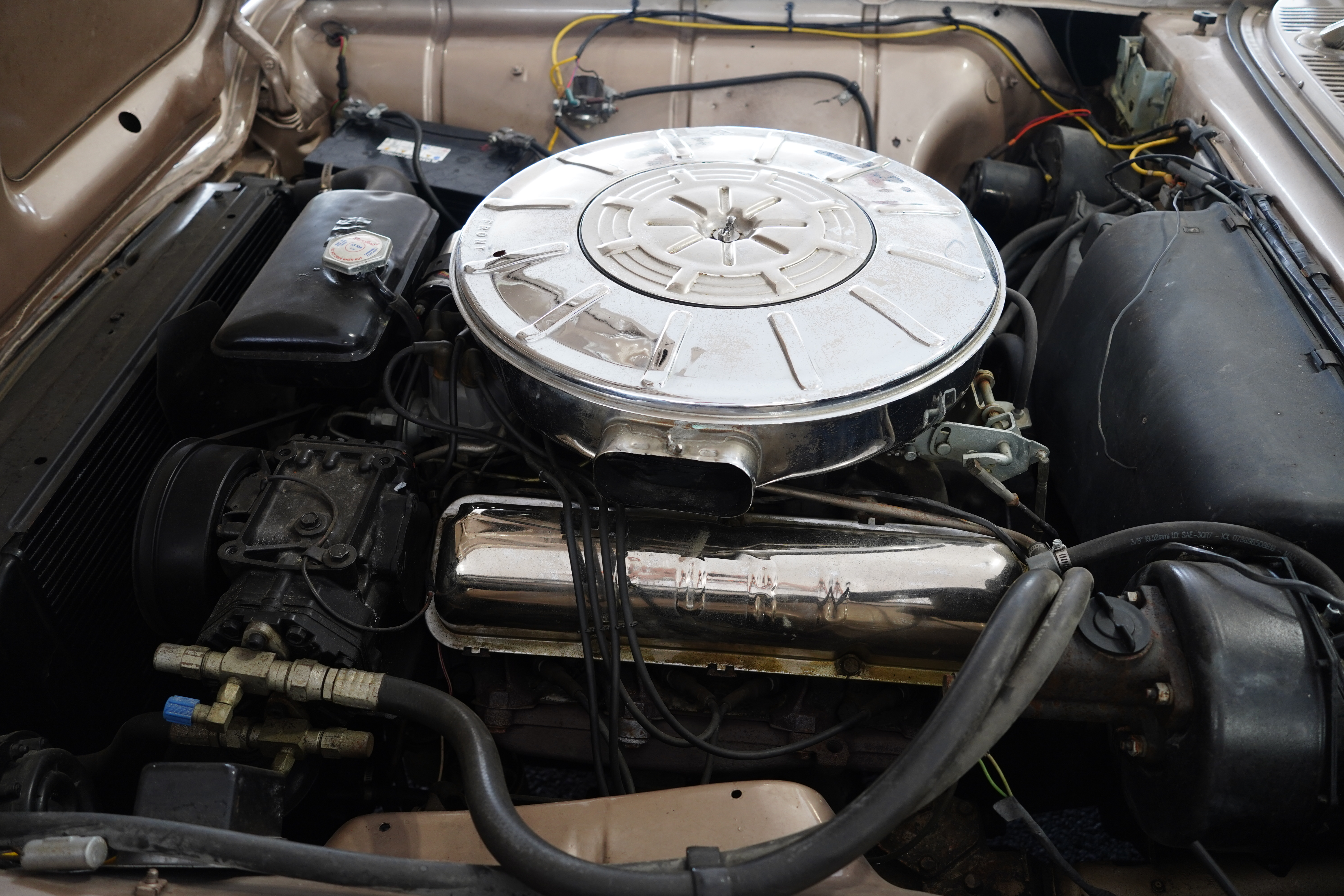
Lot #W106, 1960 Ford Thunderbird 2-door hardtop, bronze, white painted top, bronze interior, wire wheels, whitewall tires. Sign states “Special Edition”; not sure what that includes, but this car had factory air, super rare sliding sunroof, and porthole windows. No reserve sale.

SOLD for $18,000. Last year of the Squarebirds, of which I’m not a big fan. However, the color combo, condition, and perhaps most importantly, options on this one made for an appealing package. This might have been a bit of a bargain at this price.

Lot #W147, 1963 Buick Riviera, black on black. First year for GM’s first “personal luxury car” to compete with Ford’s Thunderbird. Appears done to correct original standards except for unattractive aftermarket wheels, but they should be an easy fix. Well-equipped from factory, except lacks A/C.

SOLD for $20,000. Imagine that it’s 1963, you have about $5,000 burning a hole in your pocket, and you’re in the market for a new car. Your choices include 3 new cars introduced this model year: the Riviera, the Corvette Sting Ray, and the Studebaker Avanti. Oh, and although it was introduced in 1961, let’s throw in the Jaguar XKE. If you needed yours to be a 4-seater, and you (correctly) had doubts about Studebaker’s longevity as a manufacturer, the Riv wins. It’s amazing these first-gen Rivieras aren’t worth more. This one sold a little under current market.

Lot #W107, 1965 VW Beetle 2-door sedan, red, grey/white interior. Appears freshly restored to decent standard. Sign claims upgraded from 6V to 12V electrics (necessary to power those LED headlights which were added). Cheeky little thing.

SOLD for $20,000. When I was a younger man and first started going to car shows, I swore that VW Beetles would never become collectible. I was very wrong. The world will never forget the Beetle.

Lot #W87, 1968 Mercury Cyclone GT (sign states Fastback, but car is notchback). Burgundy, black vinyl top, black interior, gold stripe, full wheel covers, whitewall tires. 302 V8, 4-speed manual, bucket seats and center console. Exterior and interior in good to very good condition, engine compartment could use a detailing.

SOLD for $20,500. As we have seen time and again, it’s the Fords that bring the bucks while similar Mercurys, which cost more when new, don’t perform as well. This was a rare model in a rare body style. The 4-speed was the big attraction. A sold deal for the FoMoCo fan looking for something a little different.
Lot #W146, 1929 Ford Model A roadster, green body, black top and fenders, yellow wire wheels with whitewall tires. Appears to be an older restoration. We spoke briefly with the owner who claimed that the car “runs well”.
SOLD for $22,000.  It’s unusual to see pre-war cars at a Mecum auction, but this was one of several that crossed the block, and that was just on Wednesday. Interest in these old sleds is far from dead, even though anyone who would have bought this new has long since gone to the great salvage yard in the sky.


All photographs copyright © 2022 Richard A. Reina. Photos may not be copied or reproduced without express written permission.