A personal highlight of the annual October sojourn to Hershey is the RM Sotheby’s auction, held just a few miles away from the showfield at the Hershey Lodge. I’ve reported extensively about previous RM Hershey auctions on this blog, and even though my 2021 visit was a one day in-and-out, I still found time to scoot over to The Lodge to take in the cars and some of the auction action.
RM Sotheby’s, at least at this location, prides itself on mainly featuring American iron, much of it pre-war (that would be World War II, which serves as a handy demarcation line, since no vehicles were produced in this country from 1942 to 1945). There continues to be much discussion about the relative value of these older pieces of machinery. For the most part, those who drove them when new have departed; and those who bought them as old used cars right after the war are also quickly vacating the premises.

The standard argument goes: “If those who had them in their younger years are no longer here, then their value has plummeted”. The reality is a bit more nuanced than that. Car collectors, at least many that I know (and I put myself in this category) have an appreciation for ALL vehicles. One respected observer of this scene whose acquaintance I’ve made told me that the cars of the nineteen teens, twenties, and thirties are gaining a new audience as collectors have learned to appreciate their styling, engineering, and standing in automotive history. As my pictures below will show, some of these cars have an undeniable stately presence that would be an appropriate fit in any collection, no matter how narrow or diverse. Values for pre-war cars may be off their highs of the early aughts, but they’re not selling for twenty cents on the dollar either. As further evidence, nine of the top ten sales at this auction were pre-war, with prices ranging between $170,000 and $1.5 million.
According to RM’s website, the two-day auction achieved a phenomenal 98% sell-through rate. Granted, many of them were no reserve, but many had reserves (for the cars I’ve reported on, the reserve status is stated). The tremendous sell-through can be chalked up to a combination of quality wares, reasonable reserves, and a continued hot collector car market.
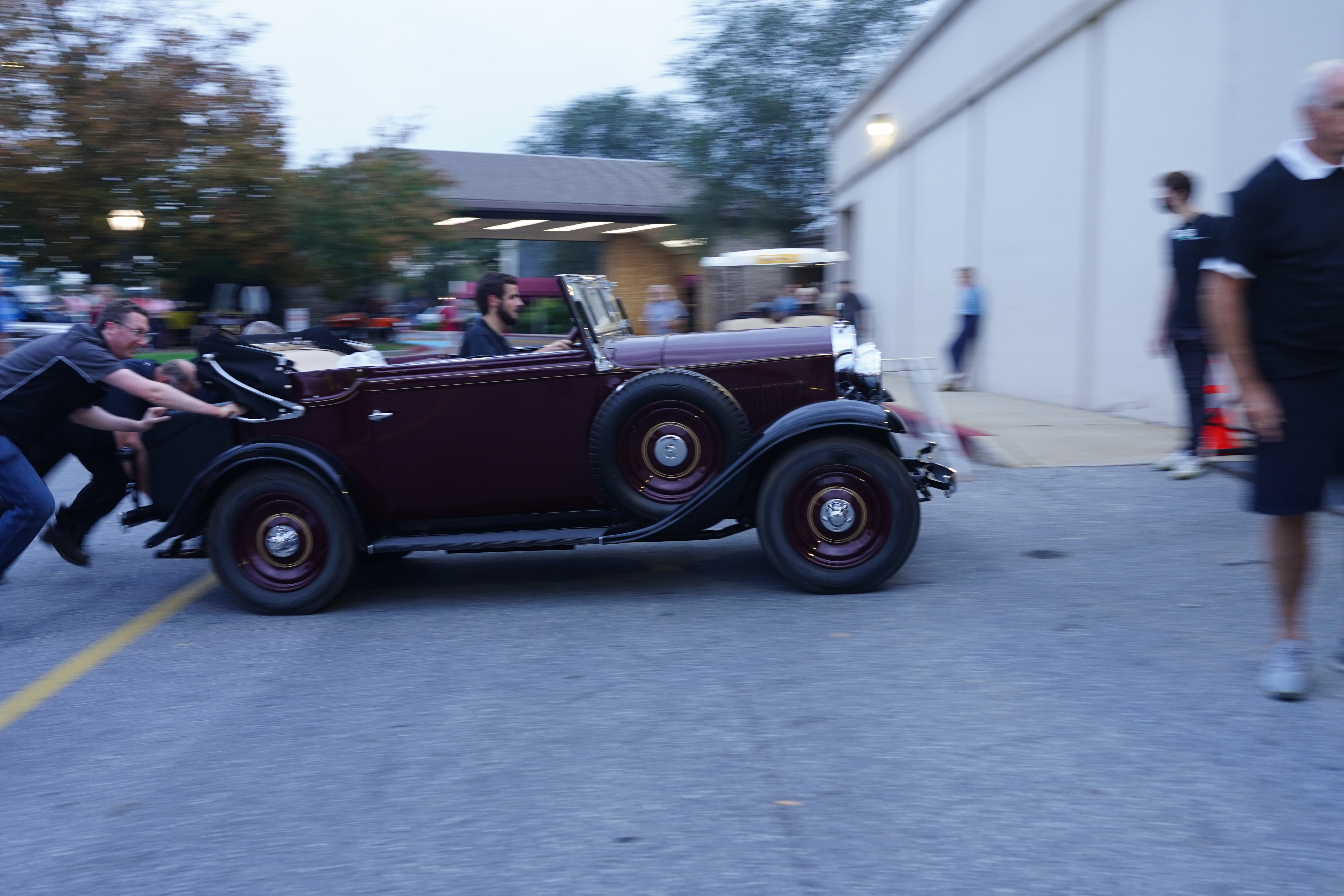
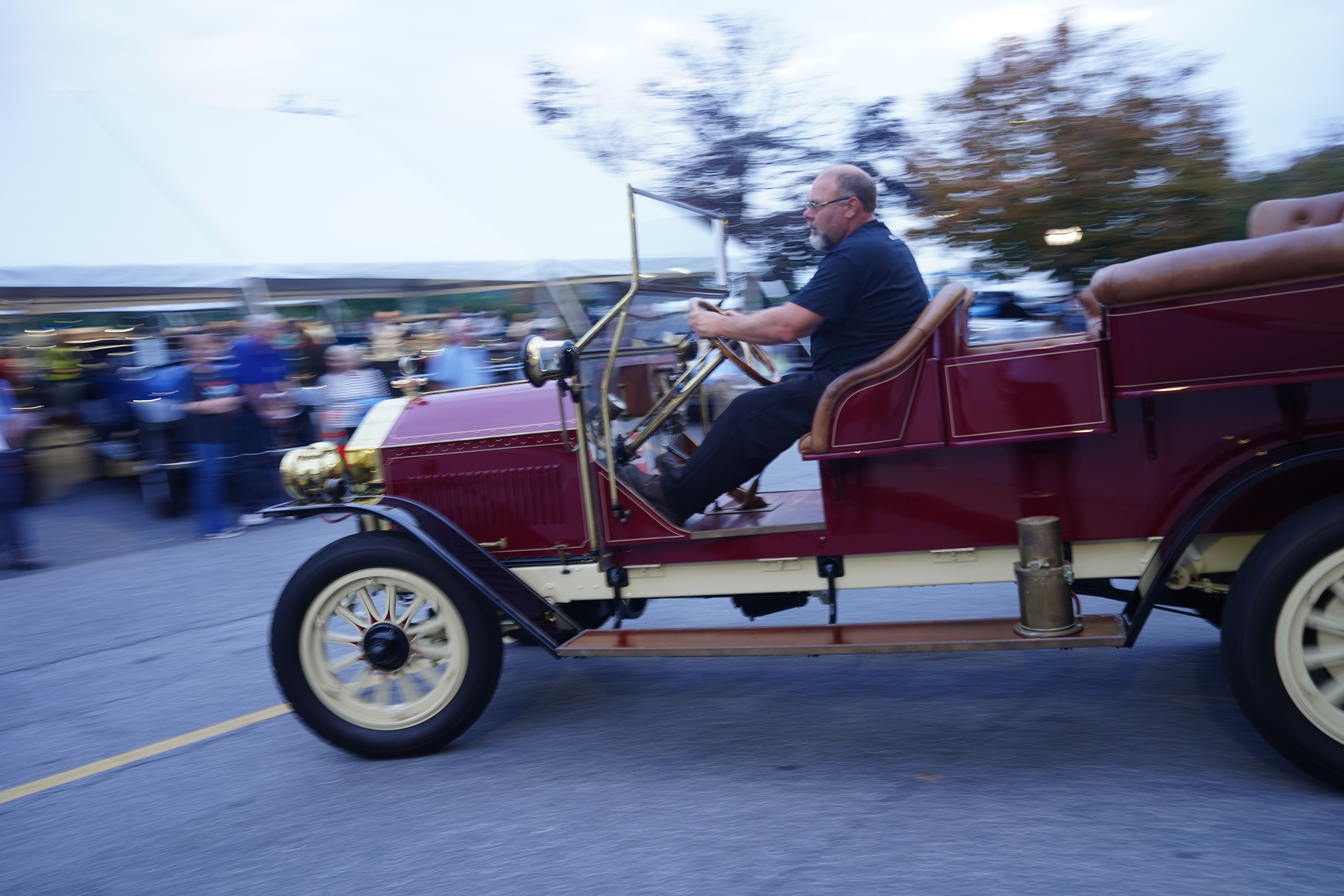
A big part of the fun is sitting outside the entrance / exit door and watching these cars run under their own power. The crew handling that job was working non-stop to get some of these old jalopies started and keep them running (and hope that the brakes worked). By the time darkness fell, I was on my way, but it was a glorious way to end my 2021 Hershey visit.
The cars below are listed in ascending sale price order; sale prices were taken from the RM Sotheby’s website, and the 10% buyer’s premium was backed out, so the “sold” price shown is the hammer price.
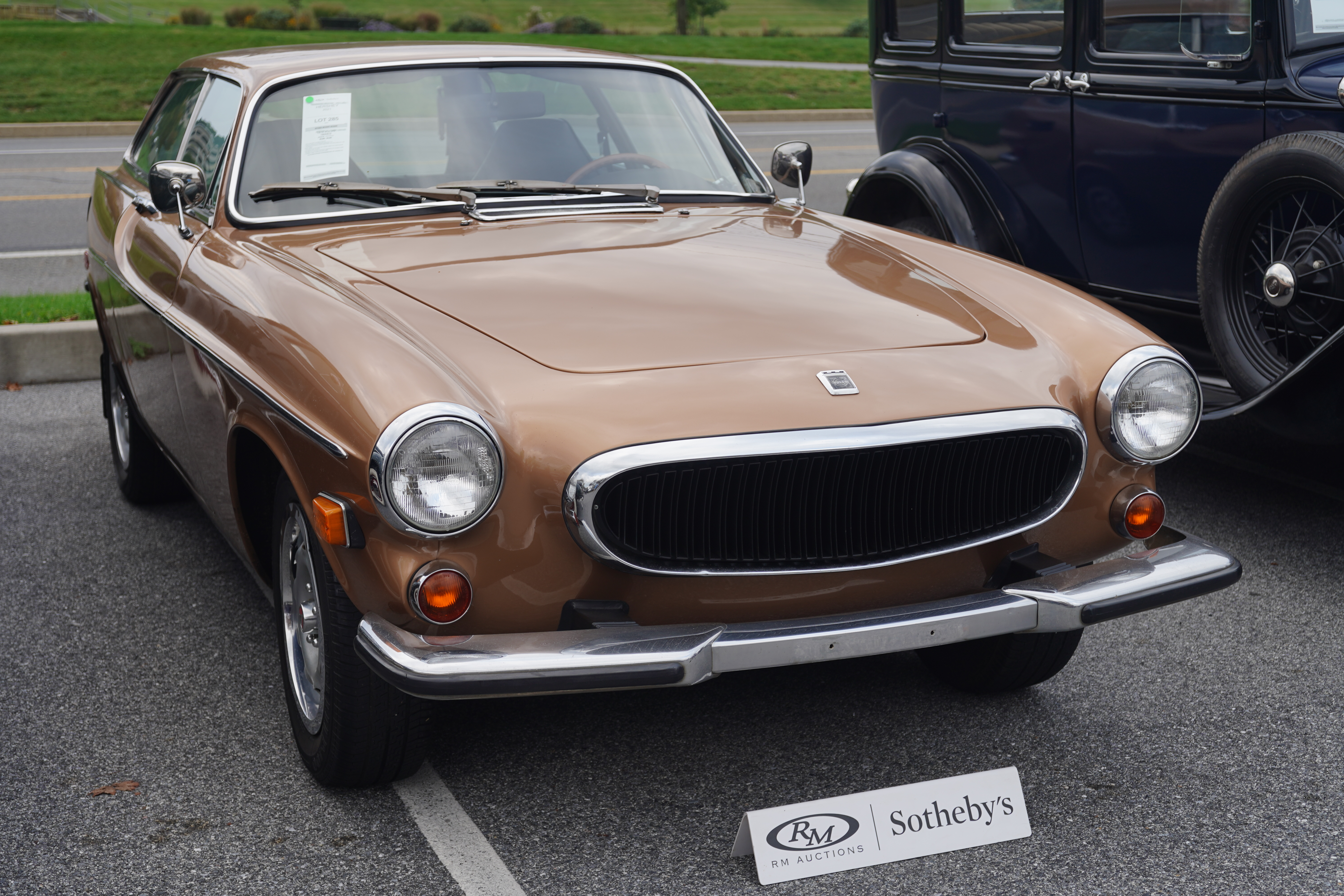
Lot #285, 1973 Volvo 1800ES, 4-speed manual. Pre-sale estimate $25-30,000. No reserve. Sold for $30,000.
This was the final year for the 1800, and only the ES (station wagon) model was offered. Sold right at the high end of the estimate. CPI values a #2 car at $44,000, which this wasn’t, but 1800s continue to be popular at the moment. Fair price.
Lot #152, 1948 Alvis drophead coupe, 4-cylinder, 4-speed manual. Pre-sale estimate $45-70,000. No reserve. Sold for $34,000.
Alvis was never a big seller on this side of the pond, but I’ve seen a greater number of them come up for sale recently. The two-tone brown and tan wasn’t the most attractive, and the RHD is either a fun factor or a pain. Sold well below estimate. I hope it runs well, because I know nothing about parts availability.

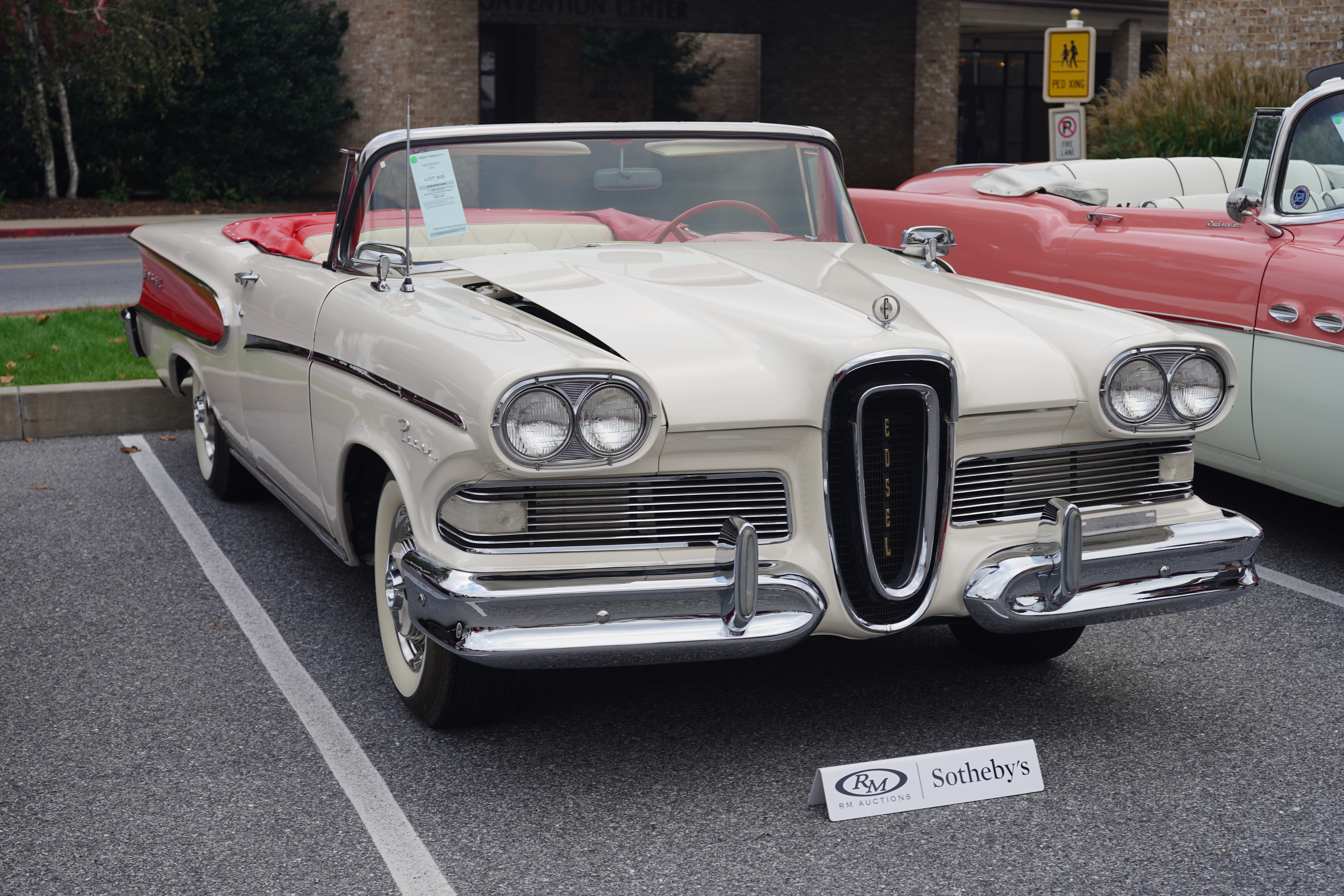
Lot #305, 1958 Edsel Pacer convertible. First model year of Ford’s Fifties flop. Attractive two-tone white and red. Pre-sale estimate $40-50,000. No reserve. Sold for $34,000.
The risk of no reserve is just that, there is NO reserve. This car missed its low pre-sale estimate by eight grand. CPI values these between $44,000 and $84,000, which sounds generous. Still, this is a unique and historic fifties car that should be easily serviced and maintained. It could be a challenge to find another decent ‘50s American convertible at this price. I hope the new owner drives it.
Lot #291, 1957 Chevrolet Corvette, fuel-injected 250-horse 283, 4-speed manual. Pre-sale estimate $70-90,000. With reserve. Sold for $65,000.
Apparently there were two different f.i. horsepower engines, and this was the lower of the two. This sounded too cheap to me, but CPI shows a value range between $53,000 and $100,000. I still think it was well-bought.

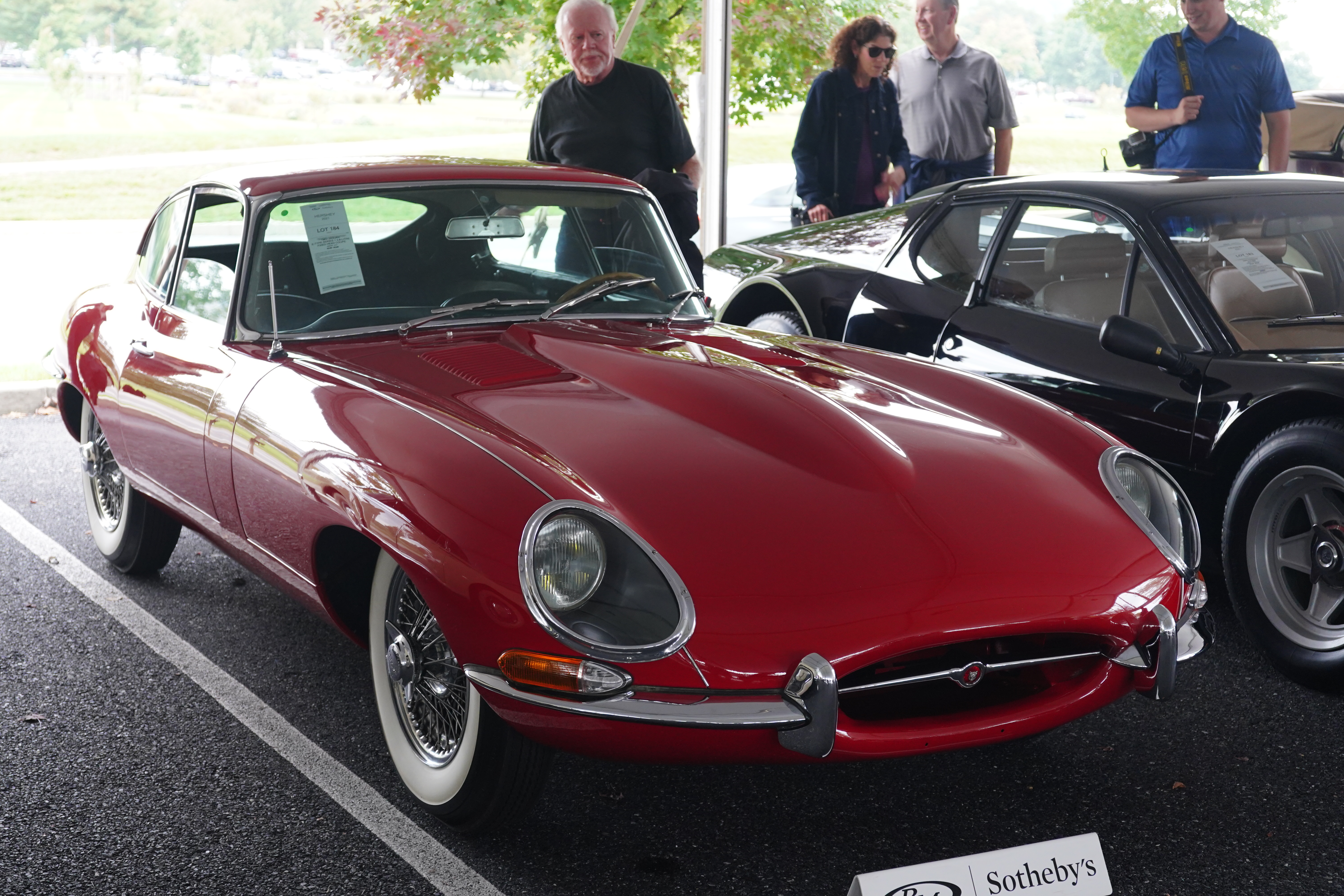
Lot #184, 1963 Jaguar E-Type FHC (fixed-head coupe). Red over black, looked great from afar, but a closer inspection revealed rough areas. Pre-sale estimate $90-110,000. With reserve. Sold for $65,000.
This is an early Series 1 car, with the 3.8 six-cylinder, 4-speed with non-synchro first, and low-back bucket seats. Many refinements were added to the ’65 and newer Series 1 cars with the 4.2 engine. See the photo of the rear window: the glass seal was completely hardened, there was paint overspray on it, and the window trim was missing. CPI has these at $88,000 for a #4 (fair) car; $130,000 for #3 (good), and $195,000 for #2 (excellent). Even with the defects, this was a bargain for a Series 1 XKE.

Lot #193, 1956 Jaguar XK140 roadster. 3.4 six, 4-speed. Pre-sale estimate $100-120,000. With reserve. Sold for $77,500.
Another possible Jaguar bargain which sold well below estimate, as CPI has a #3 car at $112,000. This car may have been a little better than that. Try it before you buy it though: the one time I sat in one required lower body contortions to get in and out.

Lot #150, 1939 Alvis pillarless two-door saloon. A unique and never-seen-before body style (and the 2nd Alvis at this auction). Pre-sale estimate $90-130,000. No reserve. Sold for $102,500.
This was one of the more striking pre-war designs at this auction, and certainly rare in the States. The bidders recognized this, and knowing it was a no-reserve sale, they stepped up to a final sale price which was mid-estimate. Guaranteed to be the star at the next all-British car show.

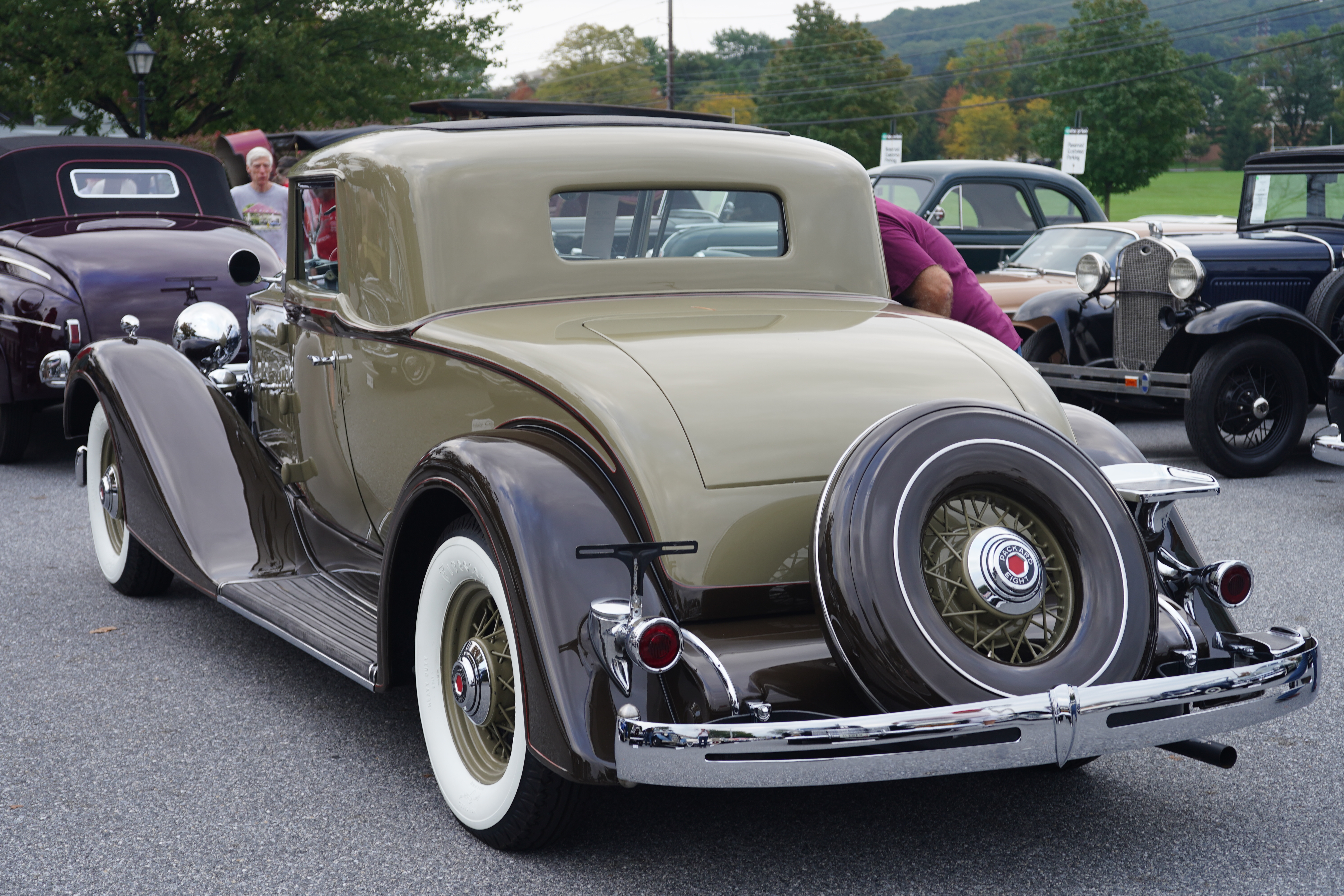
Lot #272, 1934 Packard Eight Coupe. Elegant two-tone light and dark brown. Pre-sale estimate $90-120,000. With reserve. Sold for $105,000.
I’ve been infatuated with almost all Packards I see these last few years, and this one stopped me dead in my tracks. It was stunning, and in close to perfect condition. While it sold mid-estimate, a higher number would have still been reasonable. That’s a lot of Packard for just over six figures.

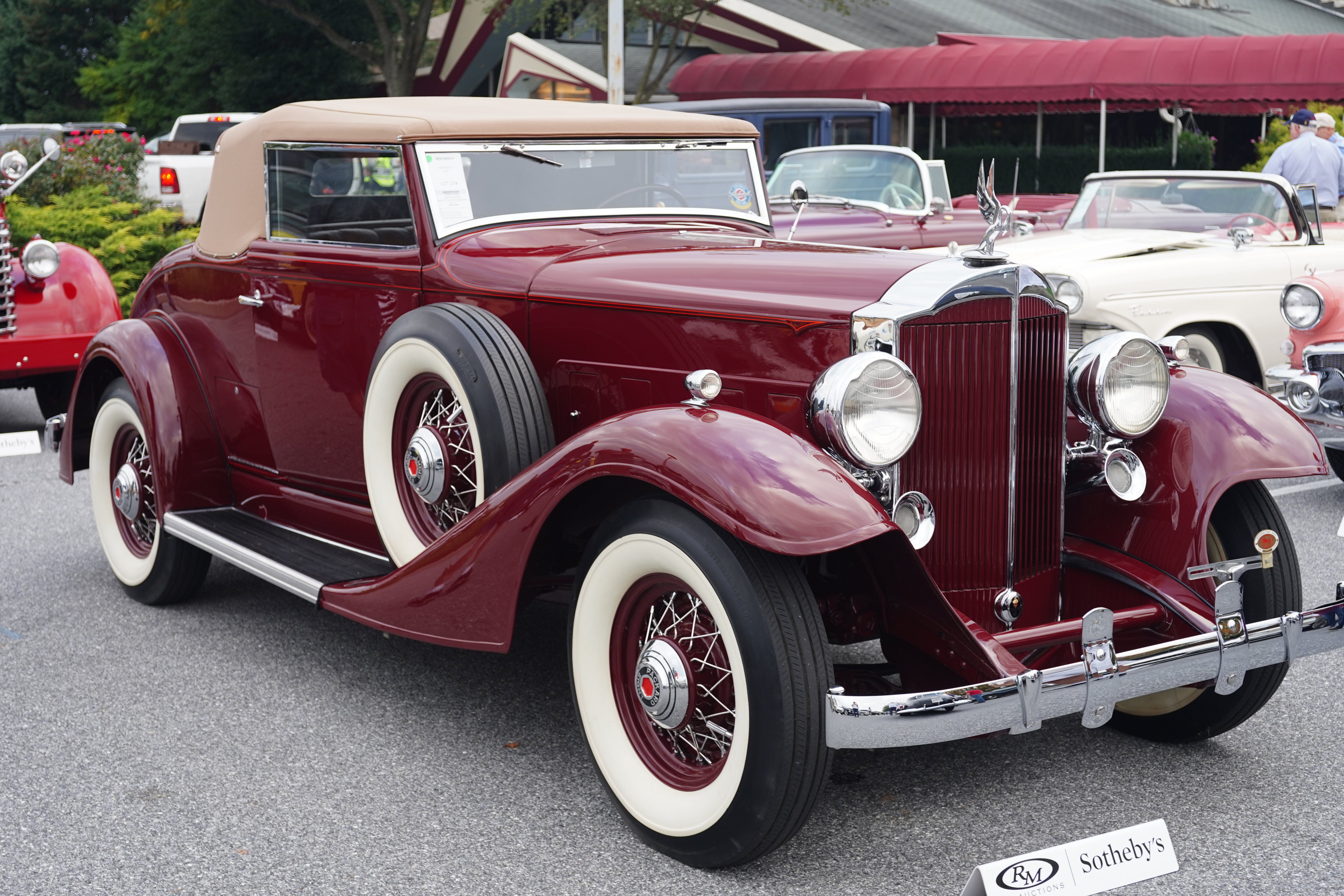
Lot #274, 1933 Packard Eight Roadster. Dark red, tan convertible top. Looks like the sister car to Lot #272. Pre-sale estimate $120-140,000. No reserve. Sold for $105,000.
I have no explanation for this result. This car, a convertible, sold for the exact same price as the Packard coupe which was just one year newer. Honestly, I did not look at these two cars that closely to discern any condition differences. Maybe the same person bought both cars and now has twin Packards in the collection.

FUN TIMES WATCHING THE CARS DRIVE IN AND OUT OF THE HERSHEY LODGE




All photographs copyright © 2021 Richard A. Reina. Photos may not be copied or reproduced without express written permission.






 richardscarblog