The National Automobile Museum in Torino, Italy

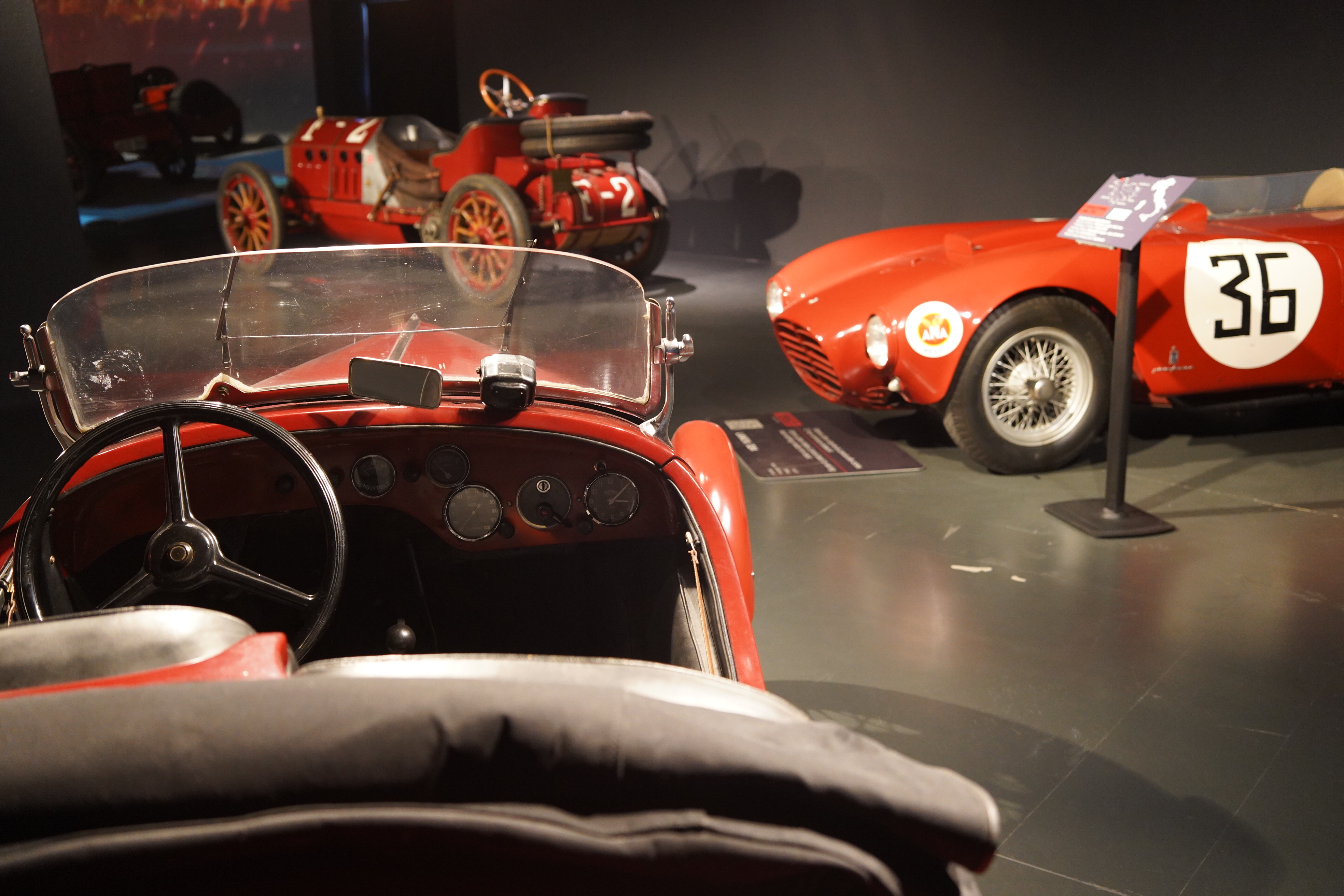
When we were in Italy last month for the Auto e Moto d’Epoca, Bologna was not the only city we visited. We started our trip in Torino (Turin to you Americans), specifically because my brother-in-law and I have an old mutual friend, John, who has lived full-time in Torino for the past nine years or so. It was great having a local to show us the sights, and one of those sights was the Museo Nazionale Dell’Automobile (The National Automobile Museum). Before venturing over, John made a point of stating that the museum had enough history in it that he expected my wife and brother-in-law would still enjoy it, even though they are not exactly fanatical about automobiles, and I believe that they did.

When purchasing our tickets, a museum employee informed us that some sections of the place were temporarily closed for a changeover of exhibits. We agreed to enter anyway, and it was worth it. There was still plenty to see, and I was particularly taken with the effort made to display vehicles from a variety of countries, not just Italy. Signage was in Italian and English, which helped keep our interest.

Below are photos of some of the highlights of this museum. My belated thanks to John for directing us here, because I had never heard of this place before he suggested it!

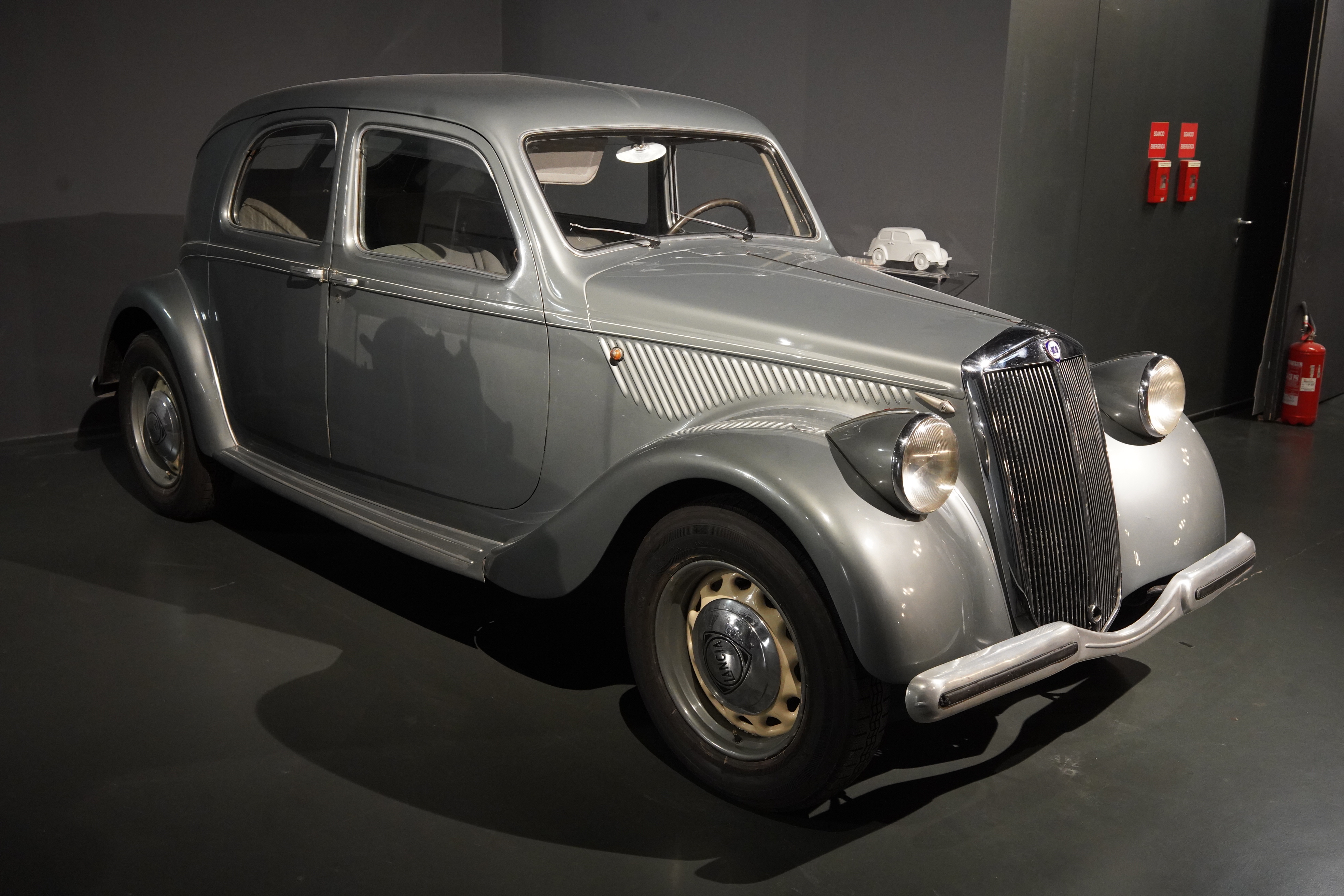
1948 Lancia Aprilia


1936 Fiat 500, better known as the Topolino


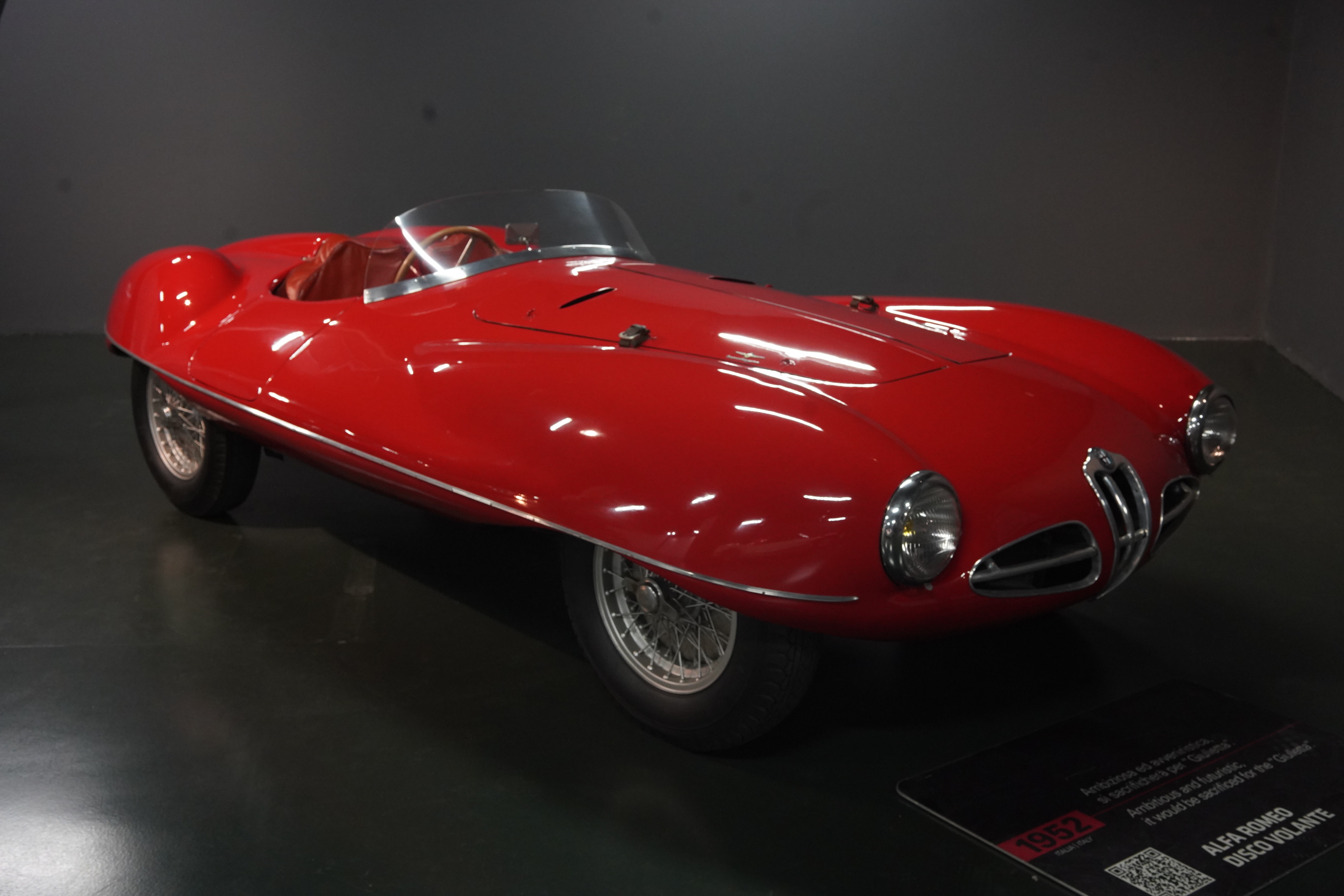
The Alfa Romeo with my all-time favorite model name, “Disco Volante” (flying saucer)


1948 Cisitalia, which was on display at the Museum of Modern Art in NY


The heft of this Buick wagon stood out against the European machines


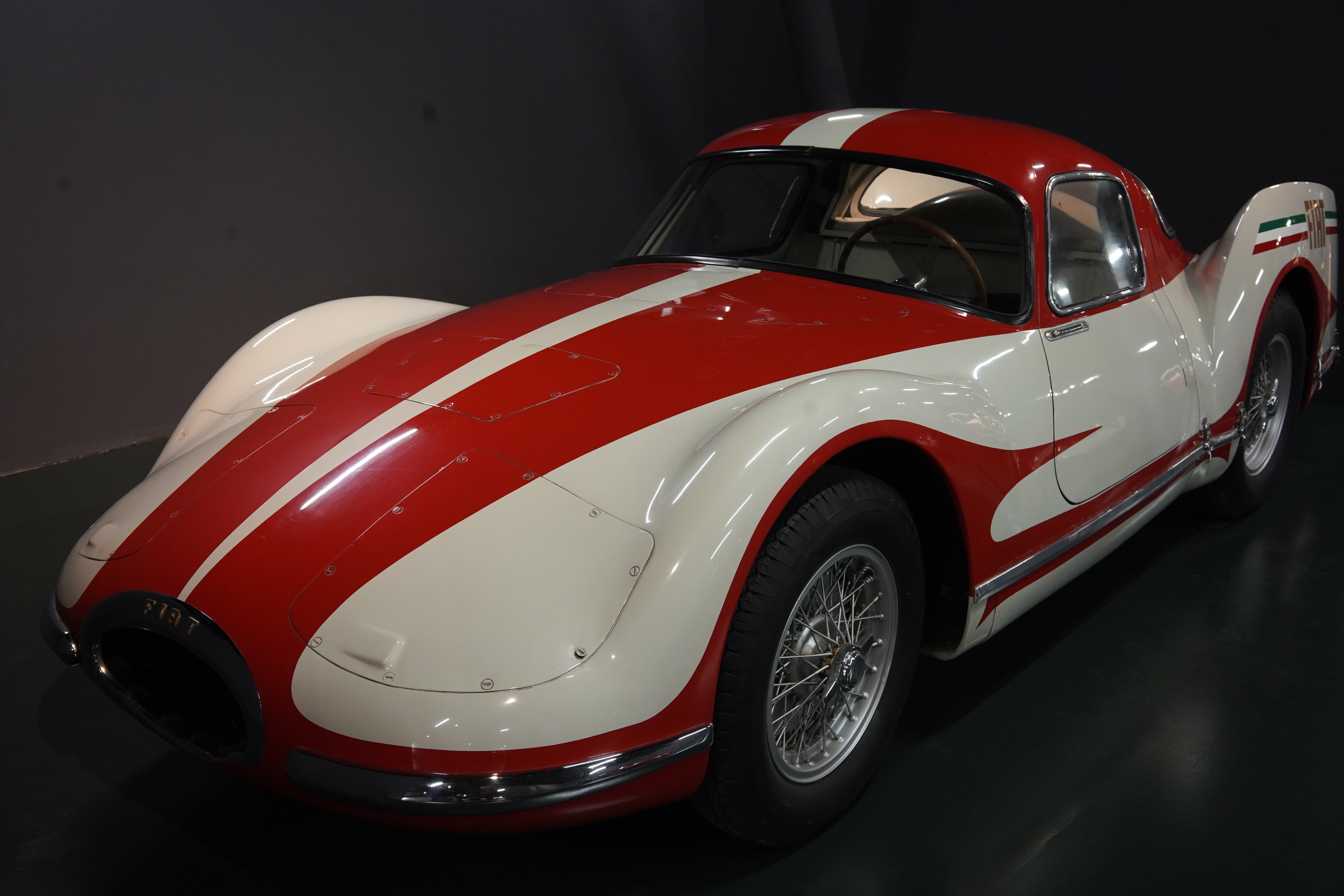
A fanciful Fiat design study
Even the Italians added fins


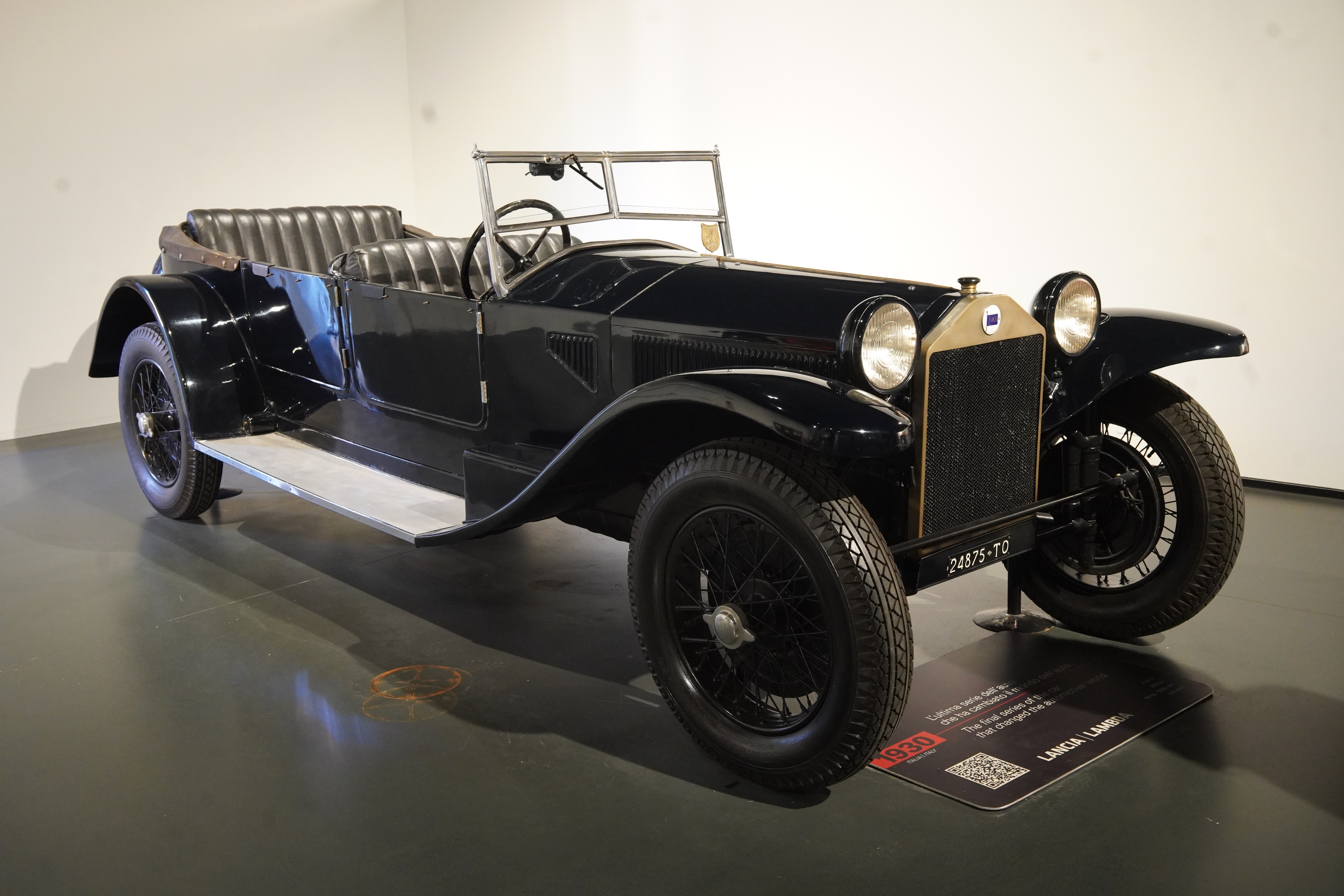
1930 Lancia Lambda


This 1910 Renault was labeled “one of Paris’s most popular taxis”


I loved the sportiness of this 1908 REO Gentleman’s Roadster


The infamous DeLorean


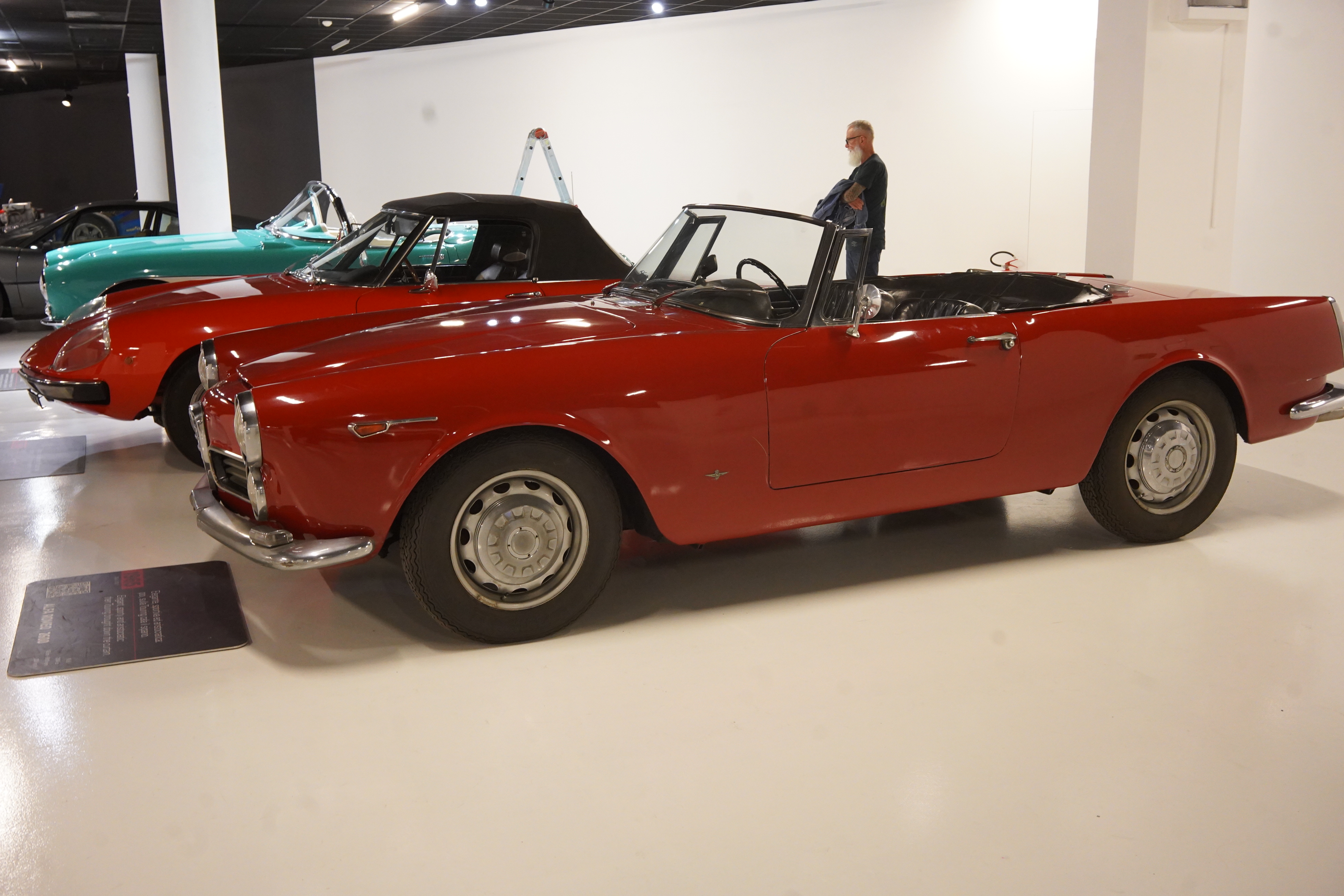
1965 Alfa Romeo 2600 Spider, with a Duetto behind it


1934 Fiat 508 S


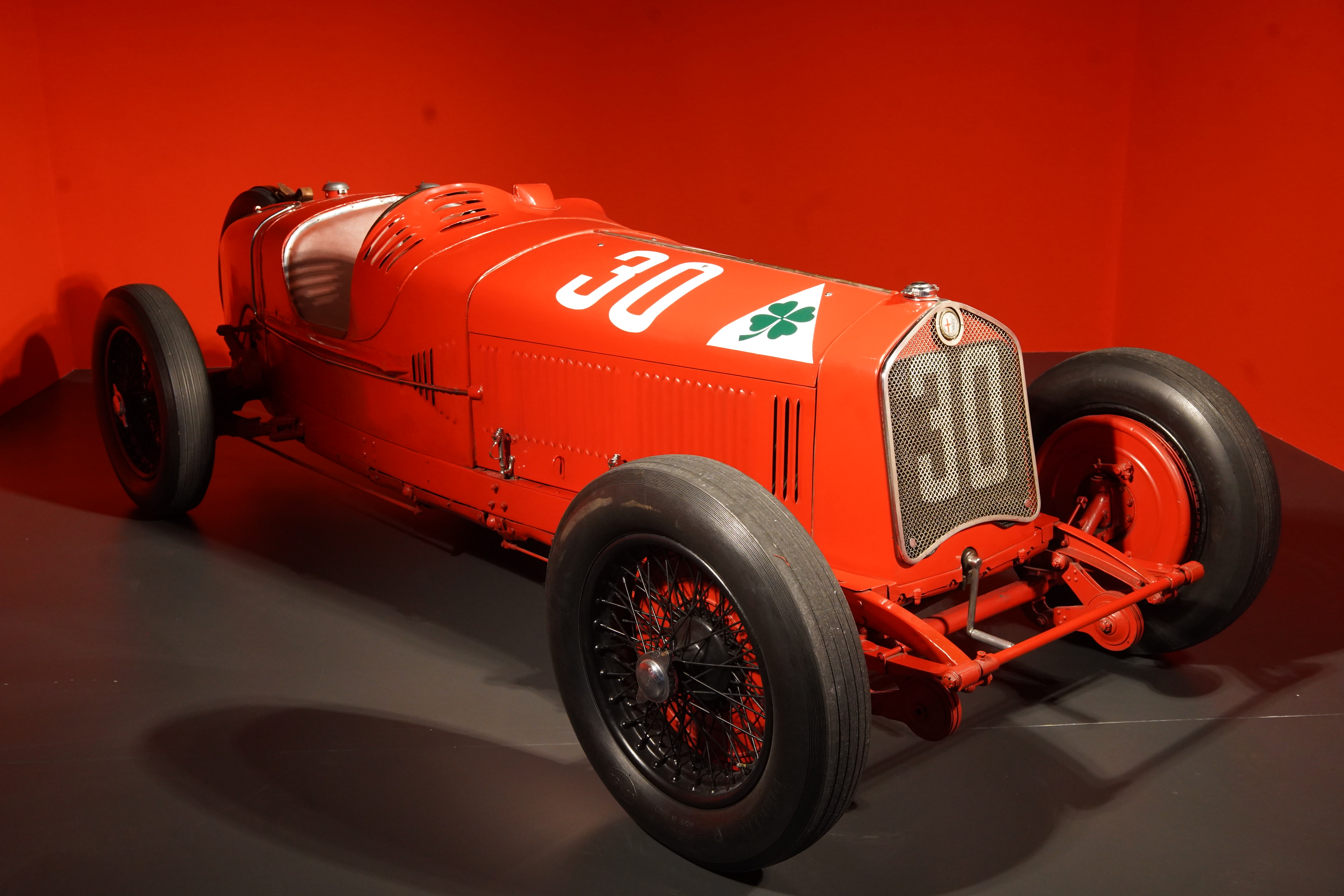
1930 Alfa Romeo P2


Fiat Abarth 500


The BMW Isetta. Sharp-eyed readers will notice this is the European version, with different bumpers


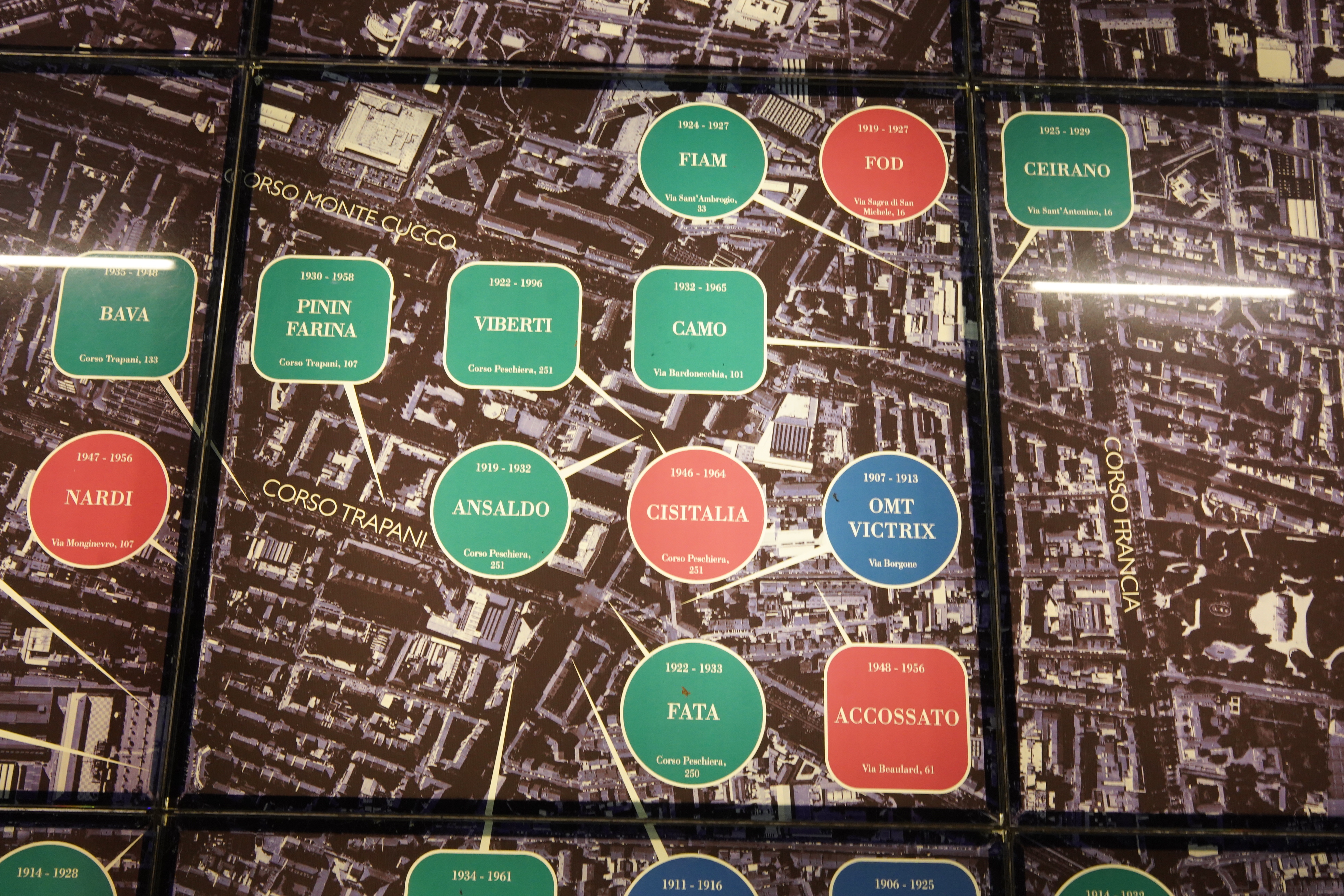
Near the end of our visit, John delighted in showing me a large room where the entire floor was a map of the city of Torino. On the map were signs pinpointing the location of every automotive business concern that once was located in this city. You will undoubtedly recognize some of these famous firms, as I did, but I also admitted to John that there were many I had not heard of as well.


Entire blog post content copyright © 2025 Richard A. Reina. Text and photos may not be copied or reproduced without express written permission.


NJ Alfa Club Breakfast Meet, Oct. 12, 2025

Last month, between my trip to Hershey in early October and jetting off to Italy in mid October, there was an Alfa Romeo Club breakfast that fell through the cracks! However, better late than never, so here is the post about the NJ-AROC monthly breakfast from Sunday, October 12, 2025.

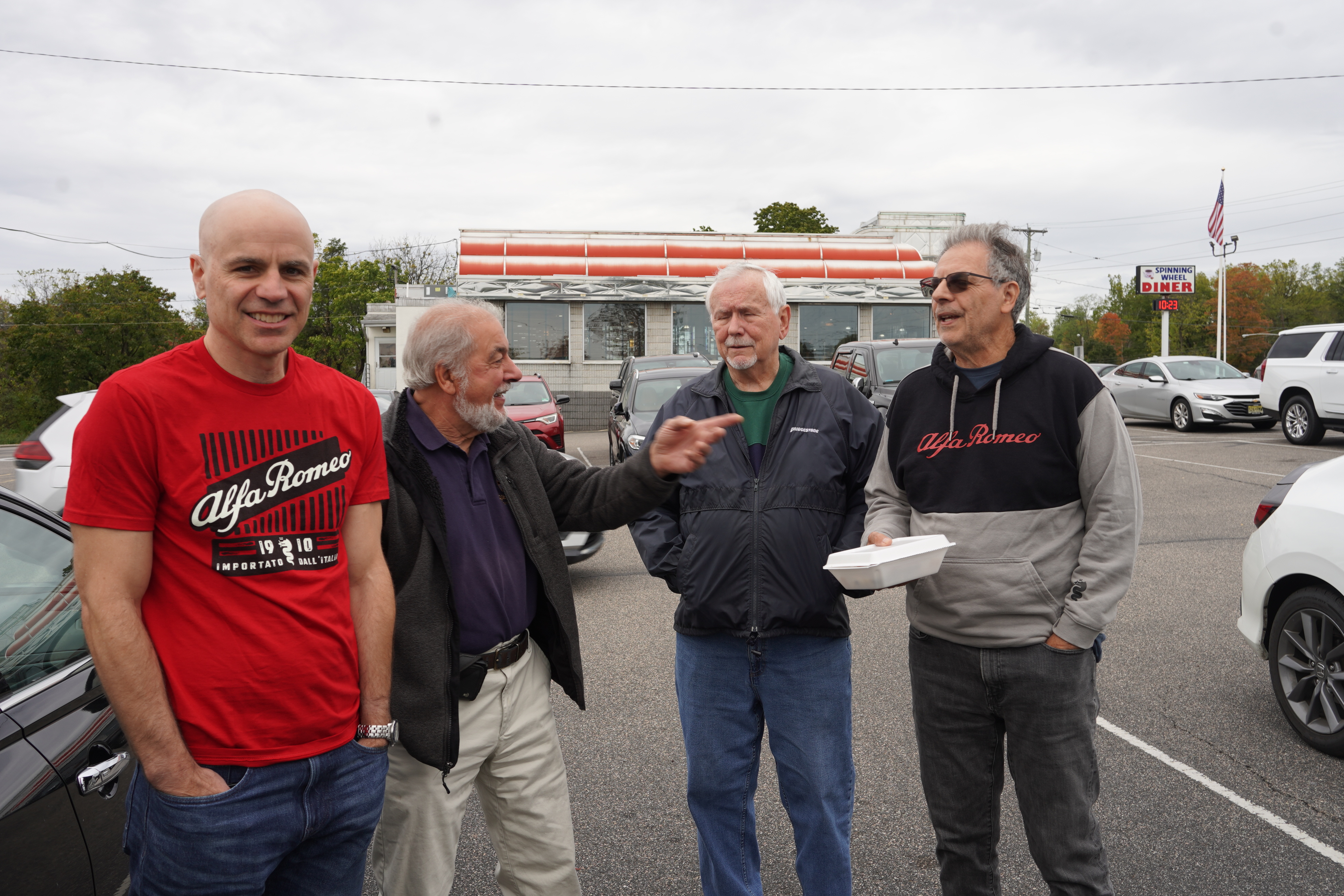
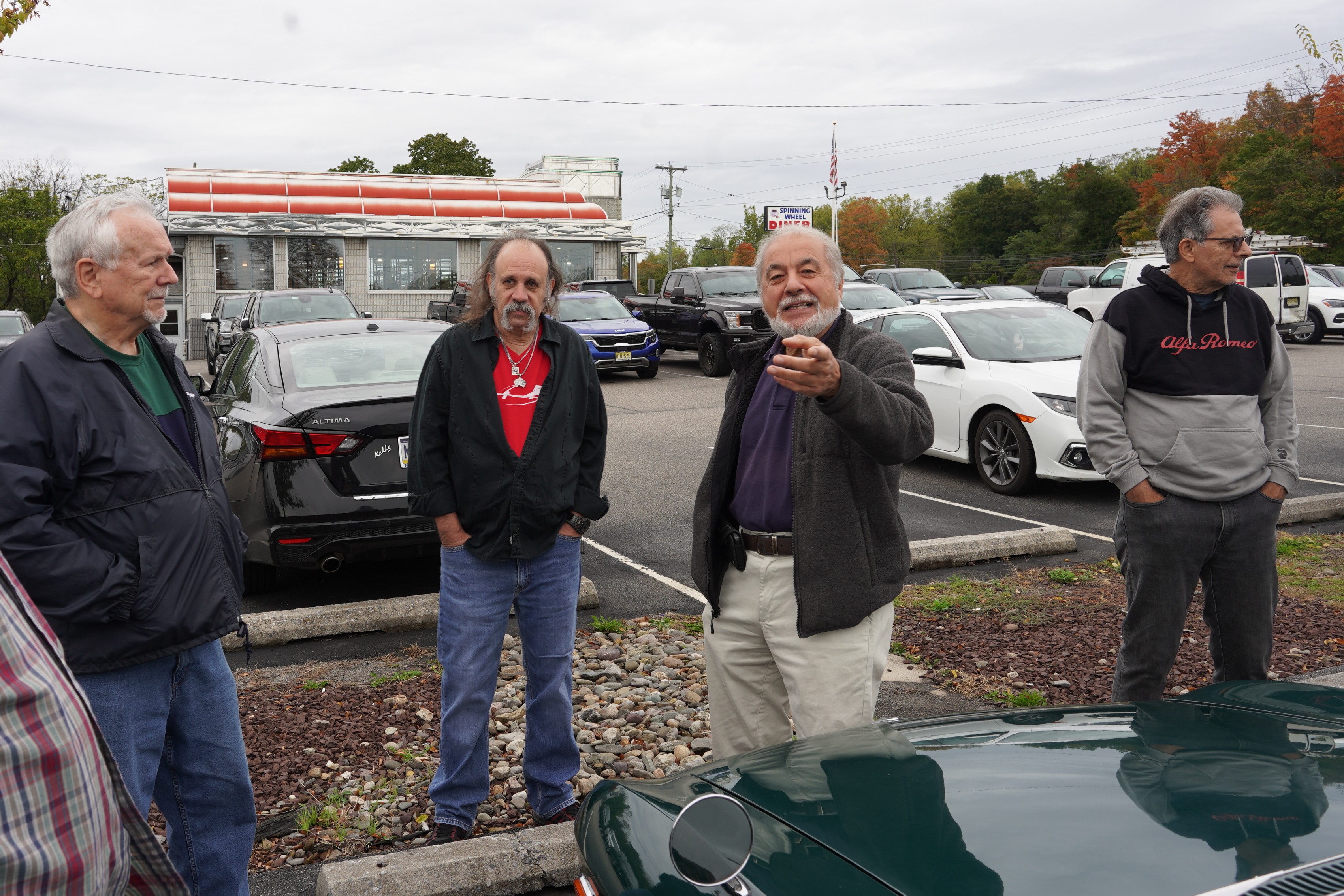
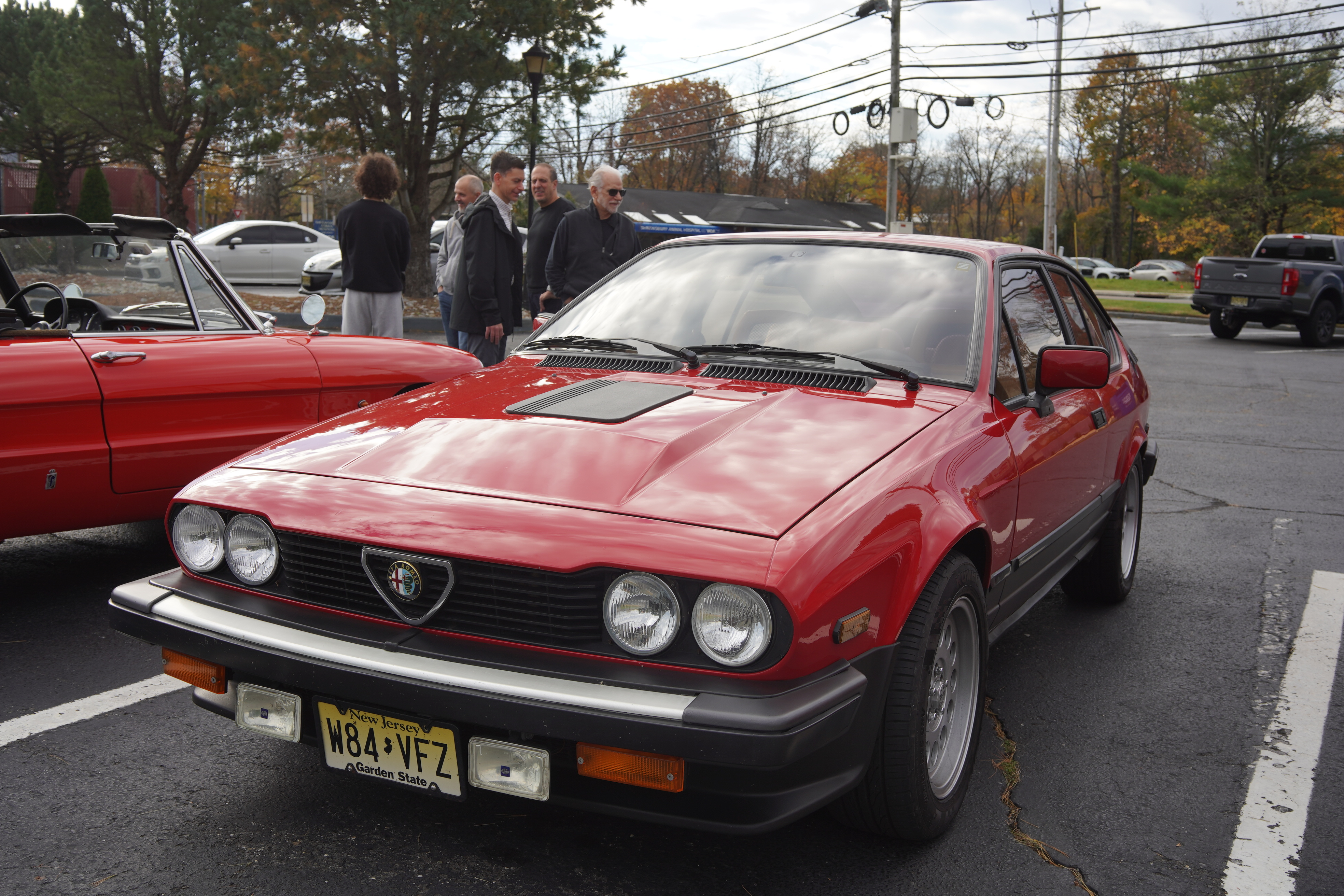
We met at one of our regular haunts, the Spinning Wheel Diner on Route 22 in Lebanon, NJ. I didn’t even get a table shot, which always helps me obtain an accurate head count, but from the photos I have, it looks like we had seven Alfisti plus one guest, my friend Doug from the NJ-AACA. He had been expressing interest in Alfa Spiders to me, so I invited him to join us for the morning, which he gladly did.

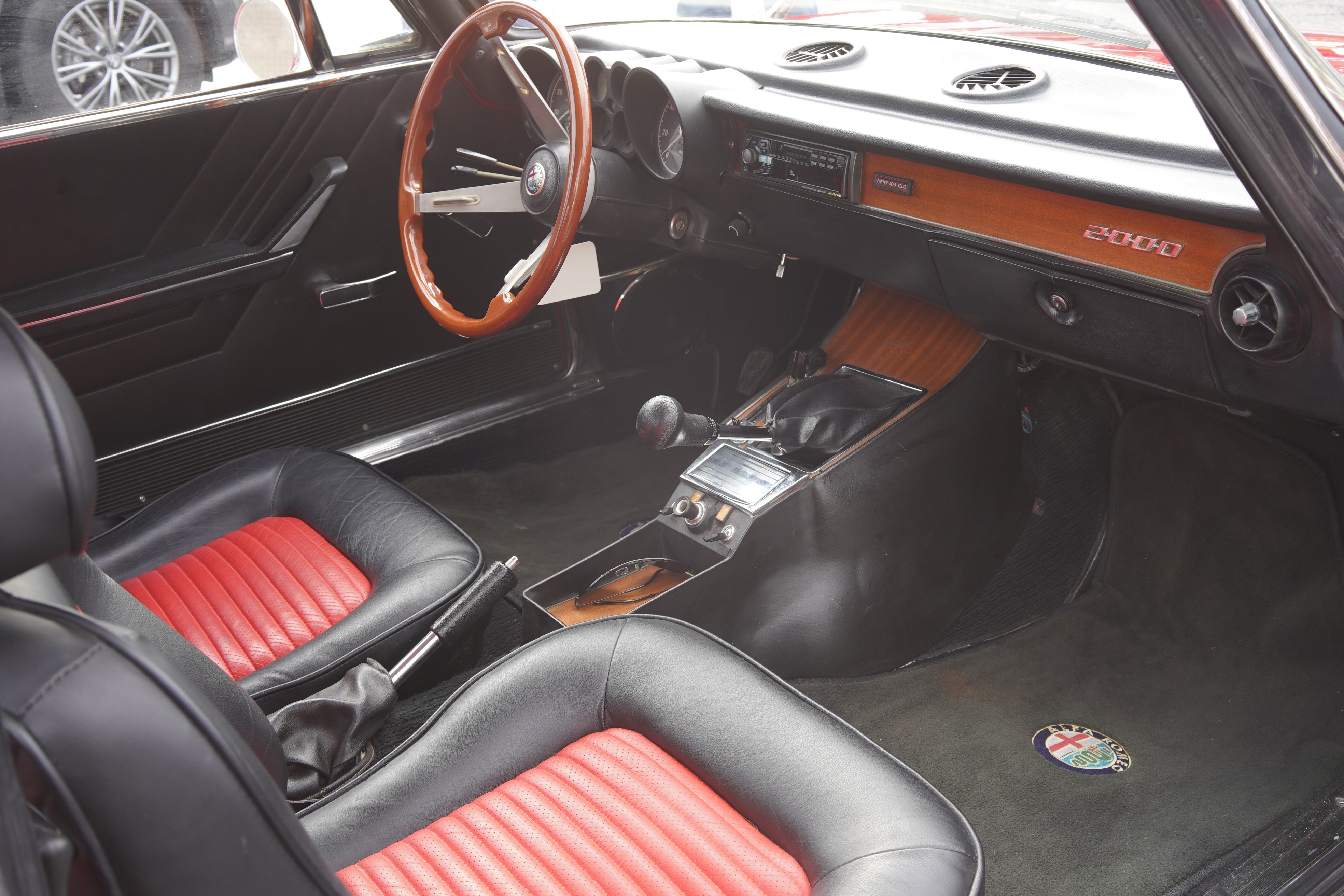
After breakfast, we did our usual hanging around in the parking lot. Jeff’s Spider was the only one there, so with Doug, that’s the car that got our attention. I sat in it and marveled at the seats, much more supportive with their more aggressive side bolsters than in an earlier car like mine. This group of Jersey guys are always great to spend time with, which makes me doubly glad that as a club, we have been able to keep to our monthly breakfast meets.

Tony’s Giulia TI
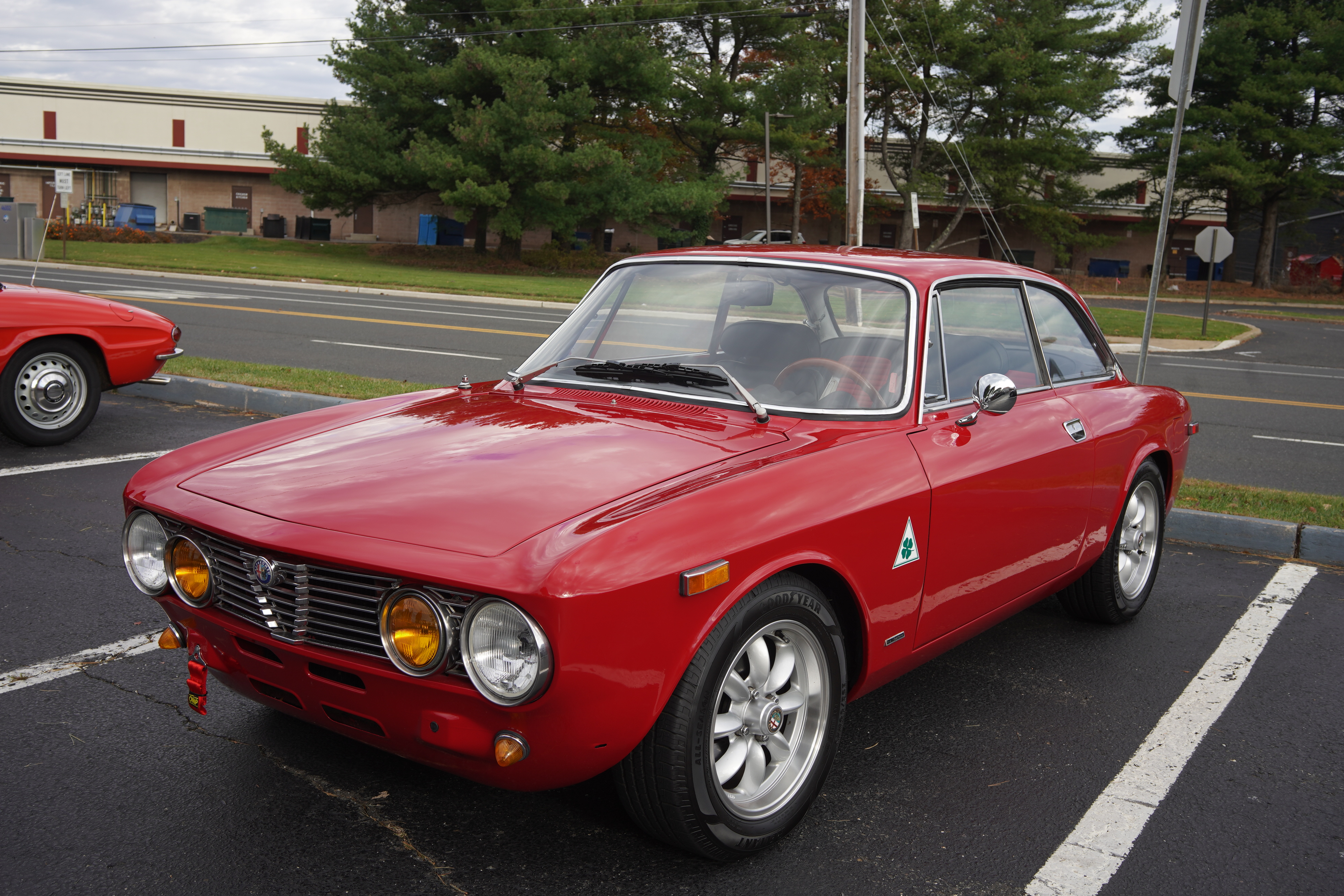
Richard’s GT 1300 Jr.
Paul’s Giulia
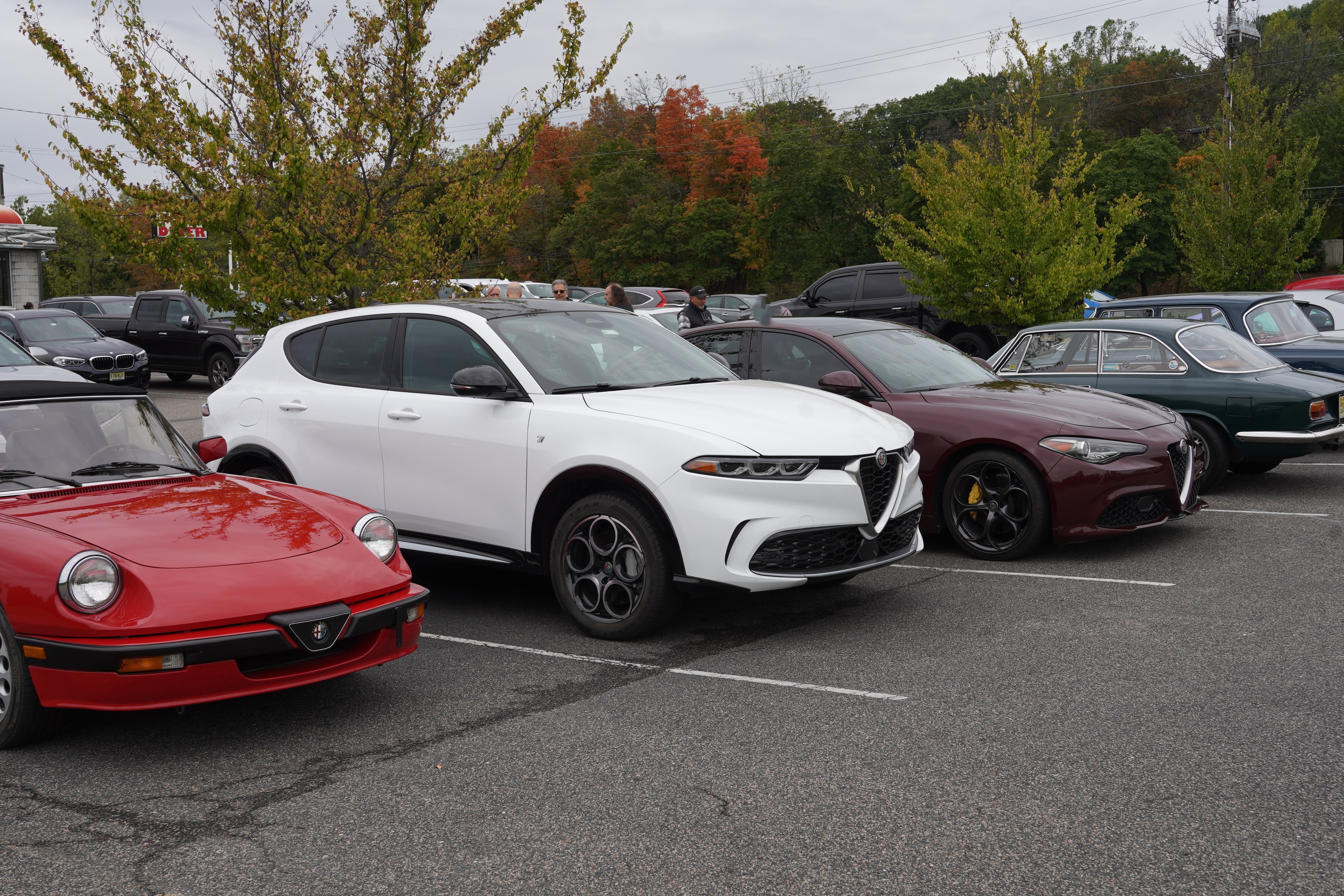
John’s Tonale
Steve’s Giulia
Bill’s Giulia


Jeff’s Spider got all the love that morning:


And Bill kept pointing his finger at people:


Entire blog post content copyright © 2025 Richard A. Reina. Text and photos may not be copied or reproduced without express written permission.

NJ Alfa Club Breakfast Meet, Nov. 9, 2025

Members of the New Jersey Chapter of the Alfa Romeo Owners Club got together on Sunday November 9th, 2025, for our monthly breakfast meetup. The Americana Diner in Shrewsbury, NJ again played host for the thirteen intrepid Alfisti who braved changeable skies and the ever-present threat of rain. But the promise of fresh griddle cakes, hot coffee, and conversation about Italian cars will get us up and out of the house, no matter the time or temperature.

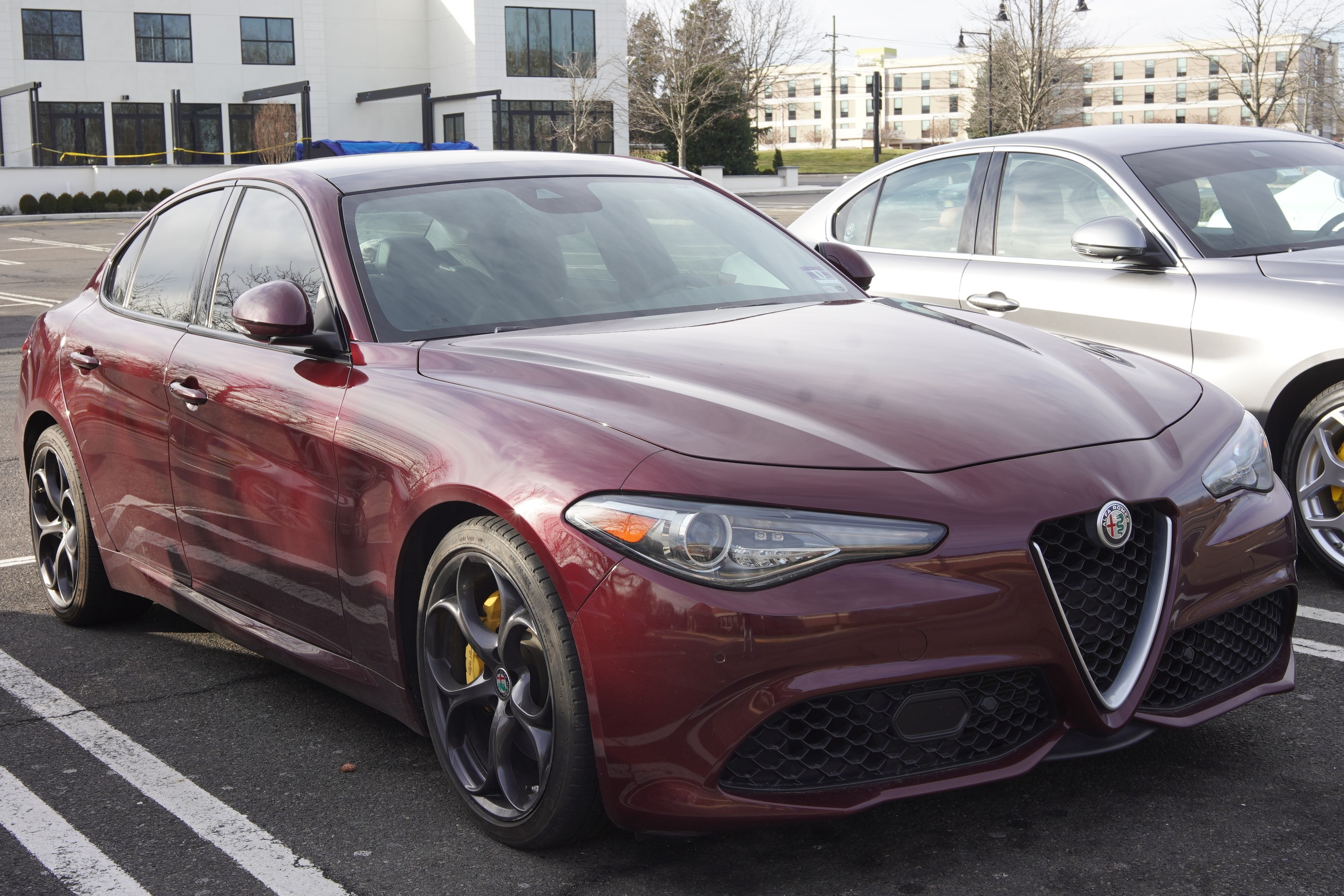
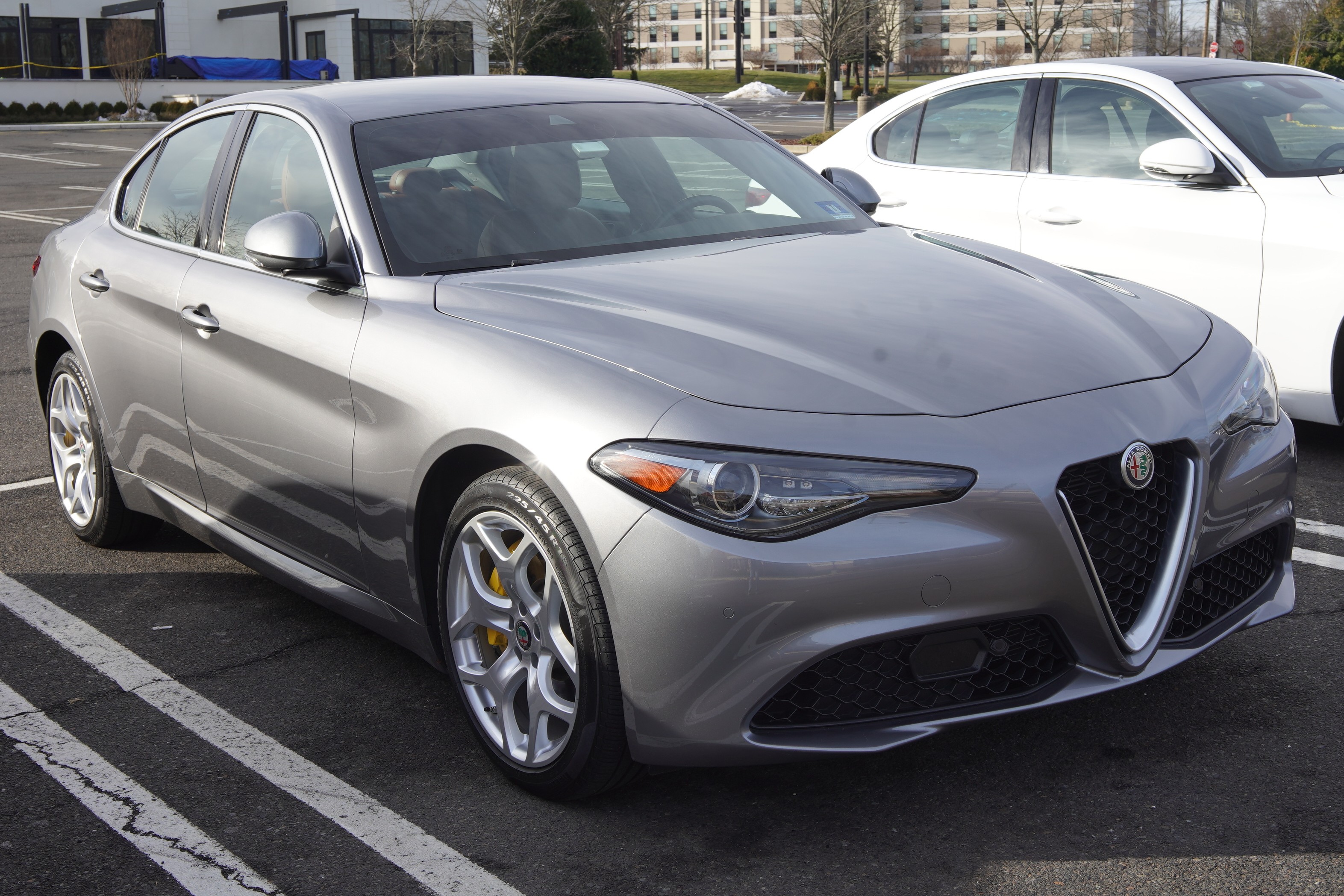
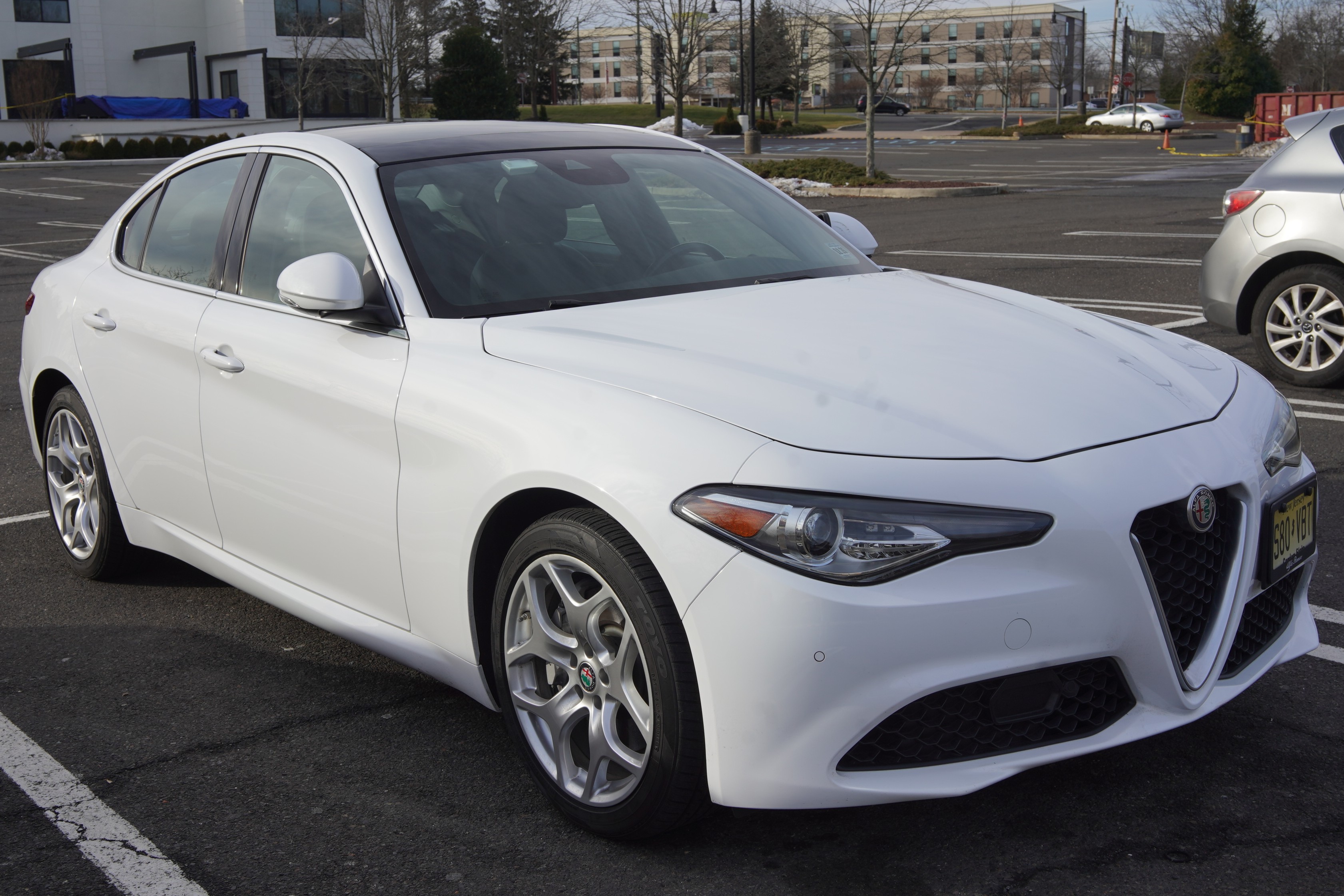
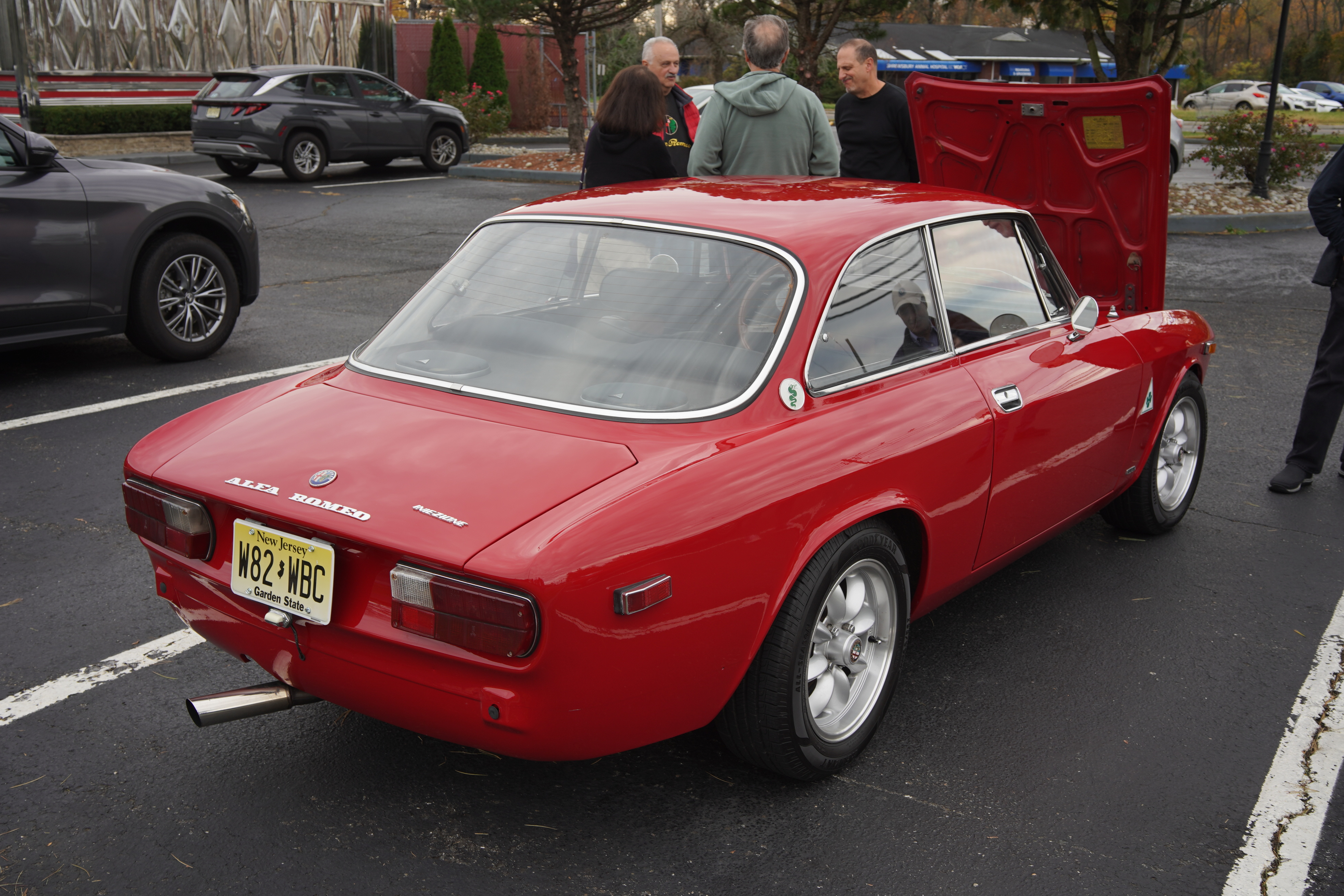
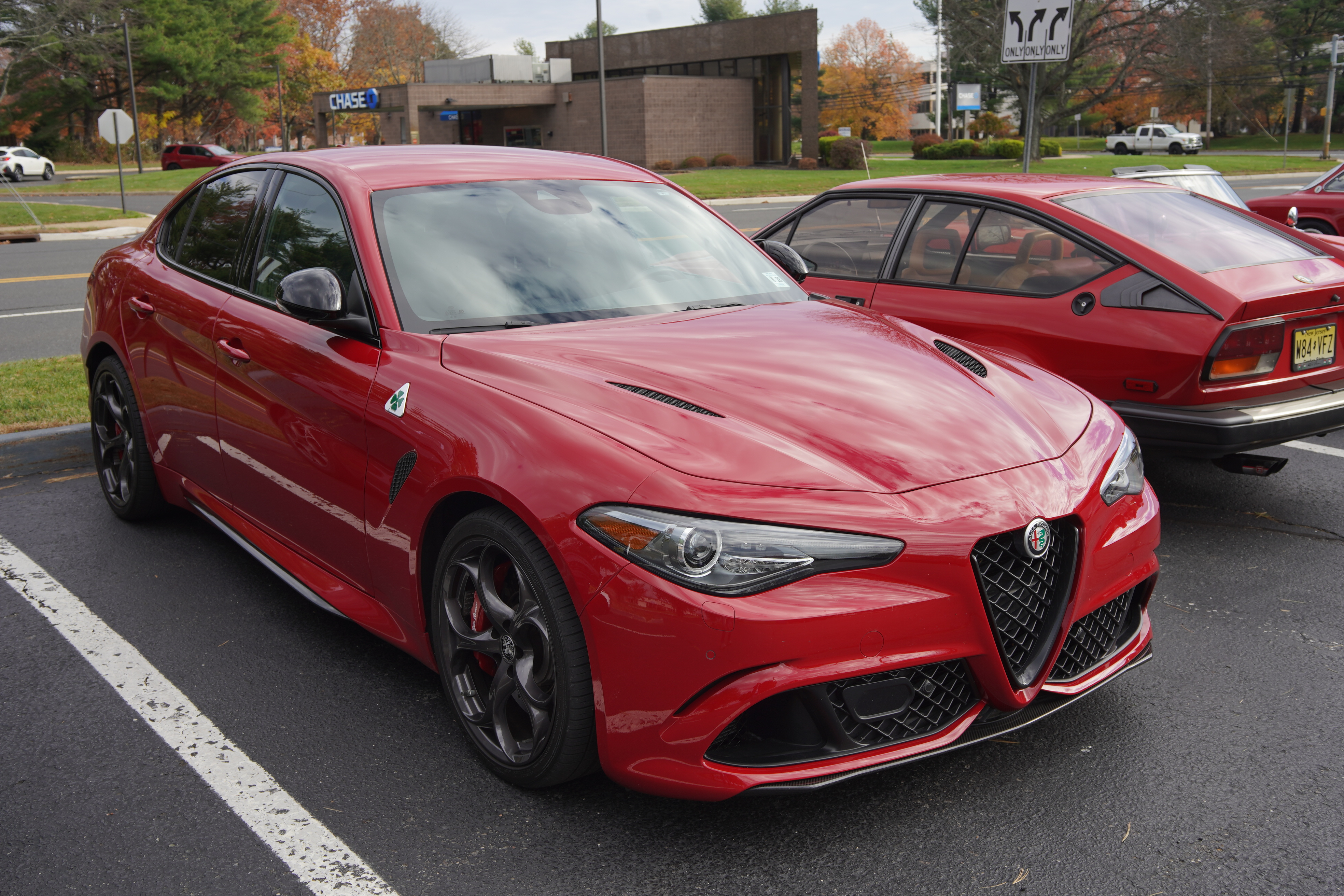
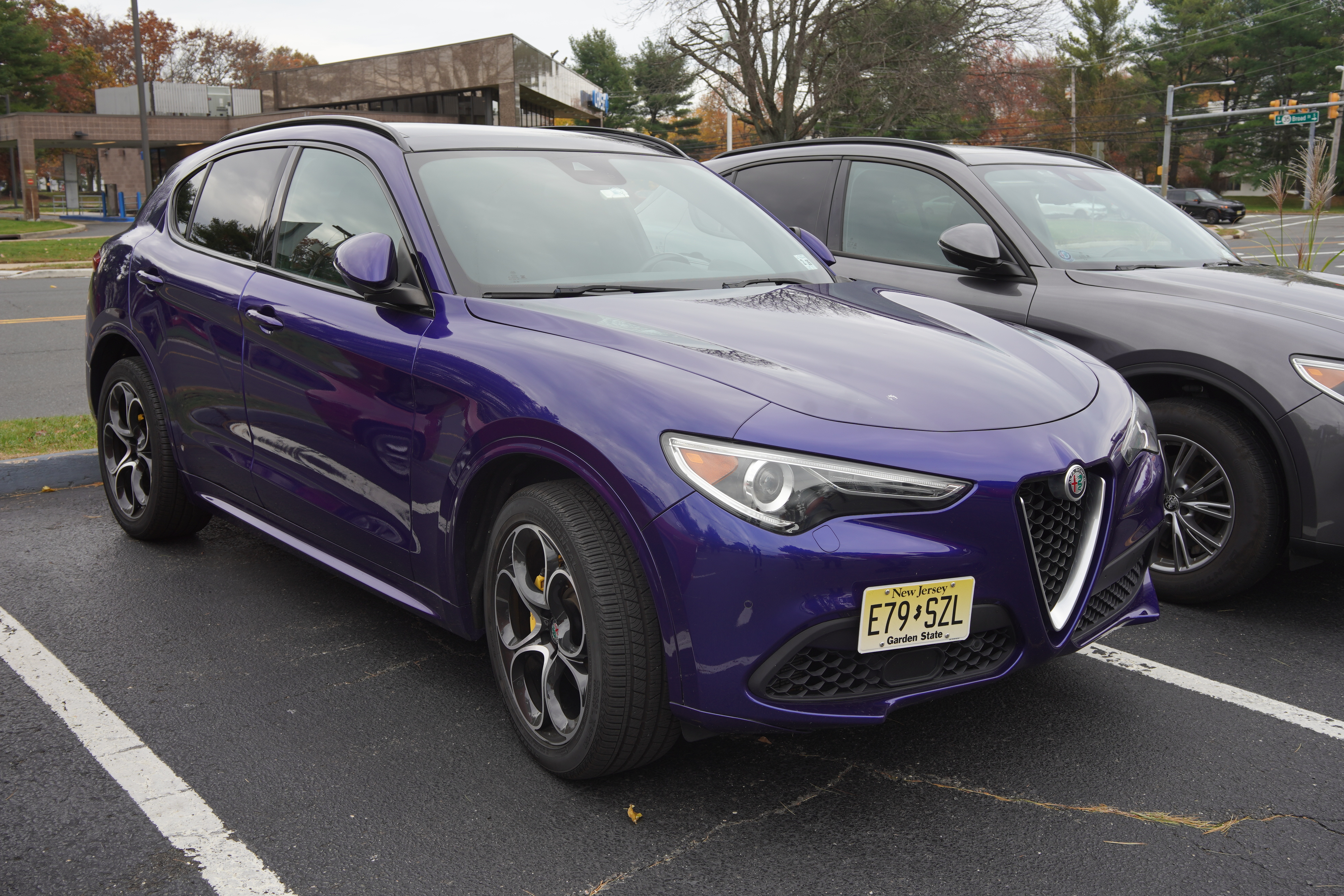
We had a particularly nice variety of Milanese macchine this time around, with Lee’s GTV6 (a model we seem to rarely see), Dave’s new-to-him ’71 GTV, Alex’s always-impressive Duetto (on which he bravely kept the top down through breakfast) and several moderns, including three Stelvios and a Guilia Quadrifoglio. The thirteen of us were crammed around a table for ten, but we made it work. Our waitress did an exemplary job keeping us plied with food and drink, and as is the custom, after breakfast we spilled out into the parking lot where we continued the conversations.

Yes, there’s 12 here; Frank stepped away.

We finally bid ciao around 11 a.m. and headed home. Our Chapter has, in my humble opinion, done an outstanding job keeping the monthly breakfast tradition alive, and rotating the location among several diners throughout the state also helps bring out members who might not otherwise be able to make a longer drive. With the holiday season approaching, I’m certain that we’ll still find the time (and the room in our bellies) for a December breakfast.


Lee’s GTV6:

Dave’s GTV:

And the rest:


Entire blog post content copyright © 2025 Richard A. Reina. Text and photos may not be copied or reproduced without express written permission.


Vendors and Car Clubs at the 2025 Auto e Moto d’Epoca

THE VENDORS

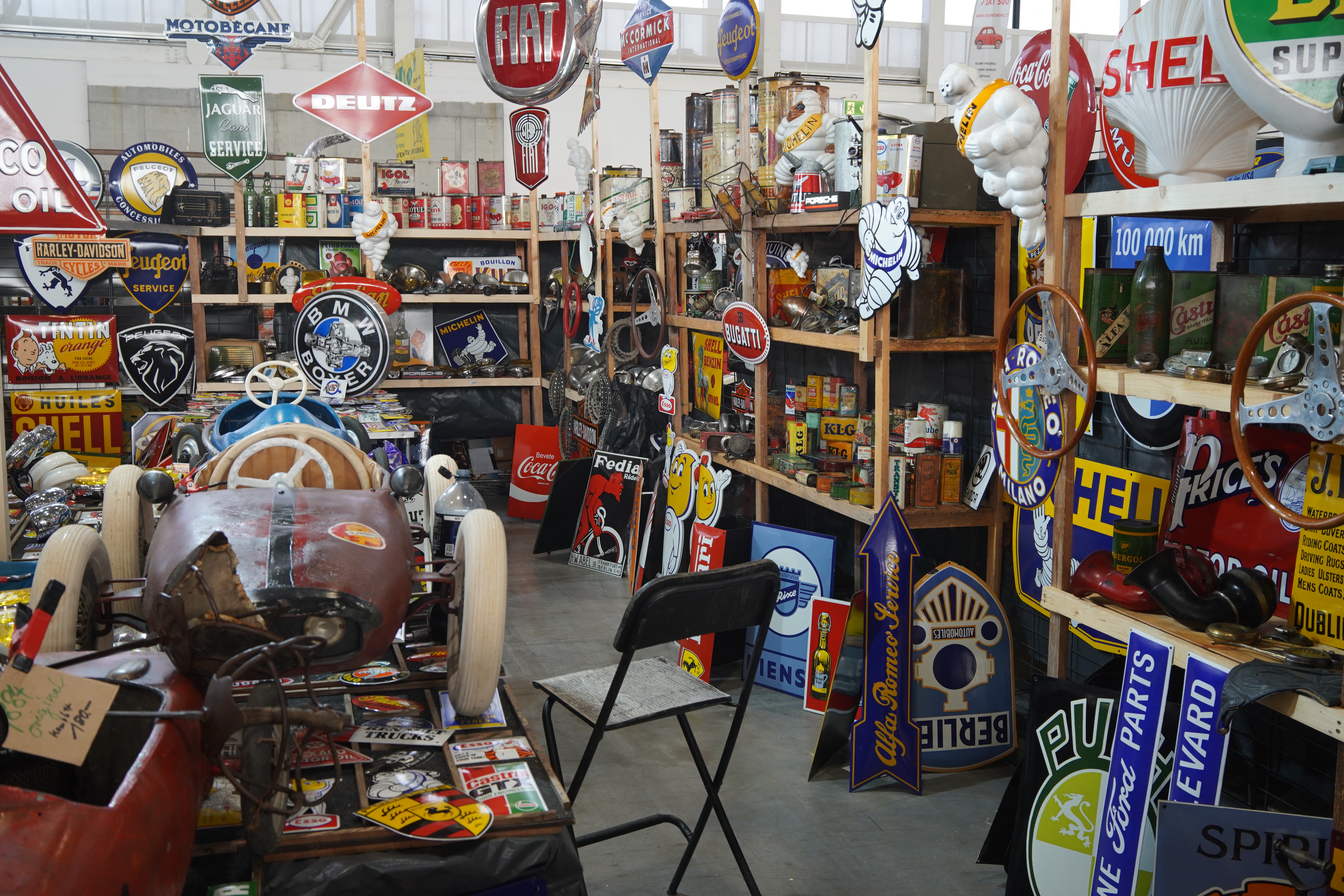
Spare parts vendors were a big part of this year’s Auto e Moto d’Epoca, taking up approximately 20% of the available floor space at the BolognaFiere. When I write “spare parts vendors,” I am including businesses selling everything from original-equipment replacement items to performance components, clothing, books, magazines, scale models, and lots of automobilia (collectibles like signs, oil cans, gas cans, advertising material, toys, etc.). The photographs below highlight some of the more interesting vendors I visited during my romp through Building .

Alfa parts vendors were aplenty, which was no surprise given our location:

Note the orange-and-black NOS Alfa parts boxes

MyAlfaGroup was a vendor I utilized for some small items last year, and again this year:

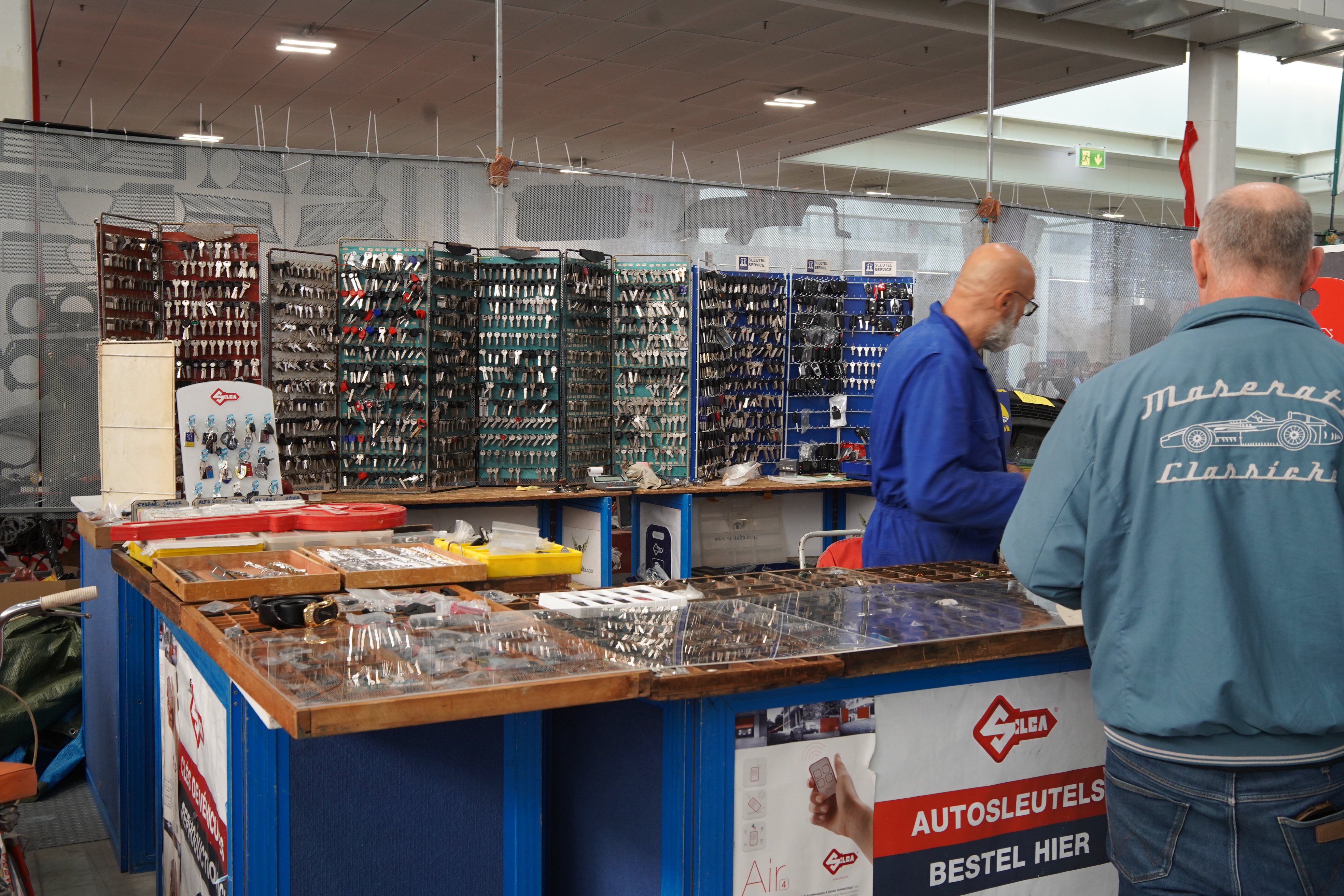
If you needed new keys cut, this vendor stocked plenty of key blanks:

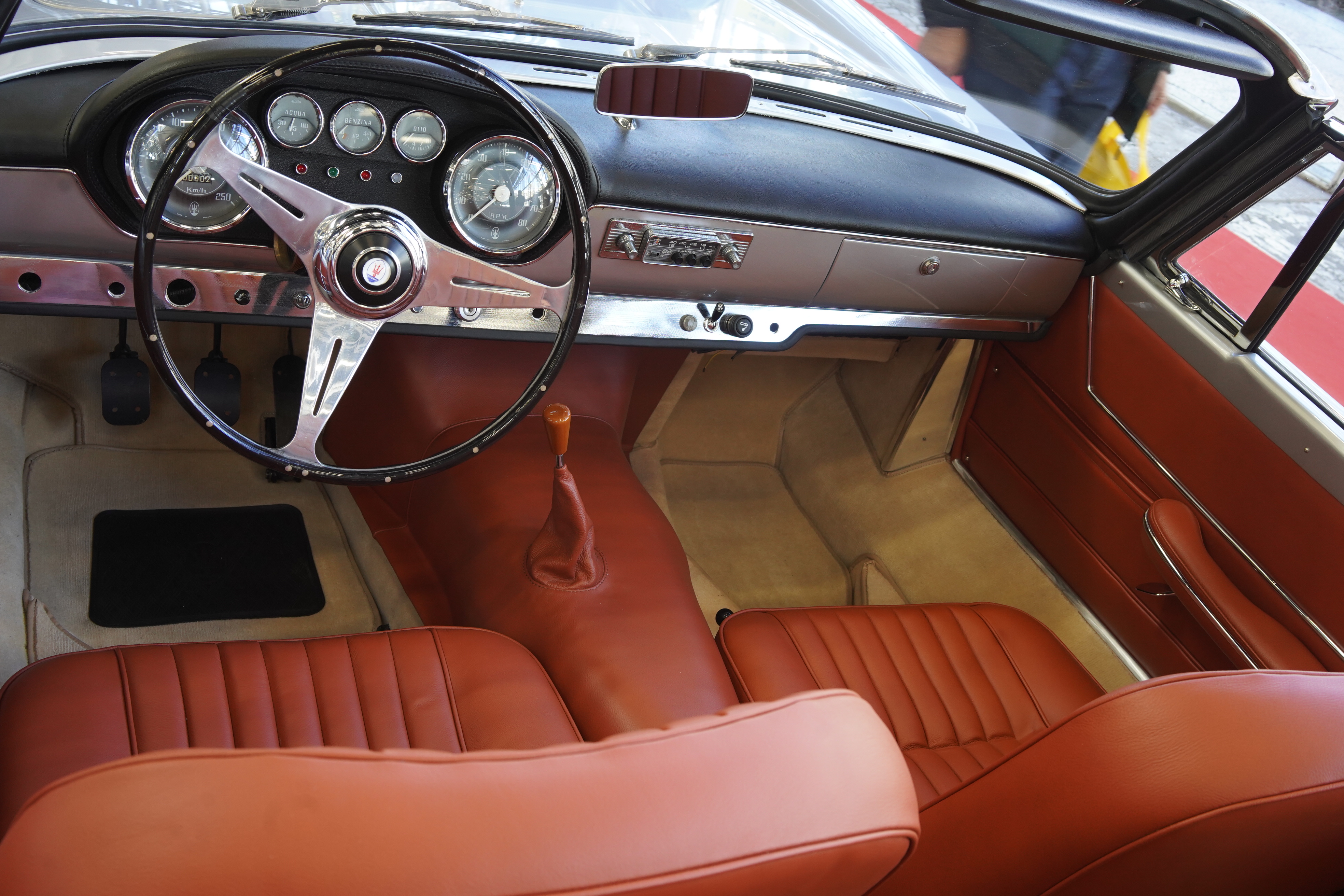
Several upholstery vendors were on hand. While my car does not need upholstery work, I thought it would be a good idea to gather some intelligence for future reference. Looking at the upholstery job in this Maserati, I was impressed. The company name was Commerciale MediciStyle, and I gave my contact info to the young woman behind the counter, who followed up with an email to me. BTW, her name was Giulia!

Here was another upholstery vendor who looked like they had interesting things:

Are you out of room for the full-size items? Scale models take up much less space:

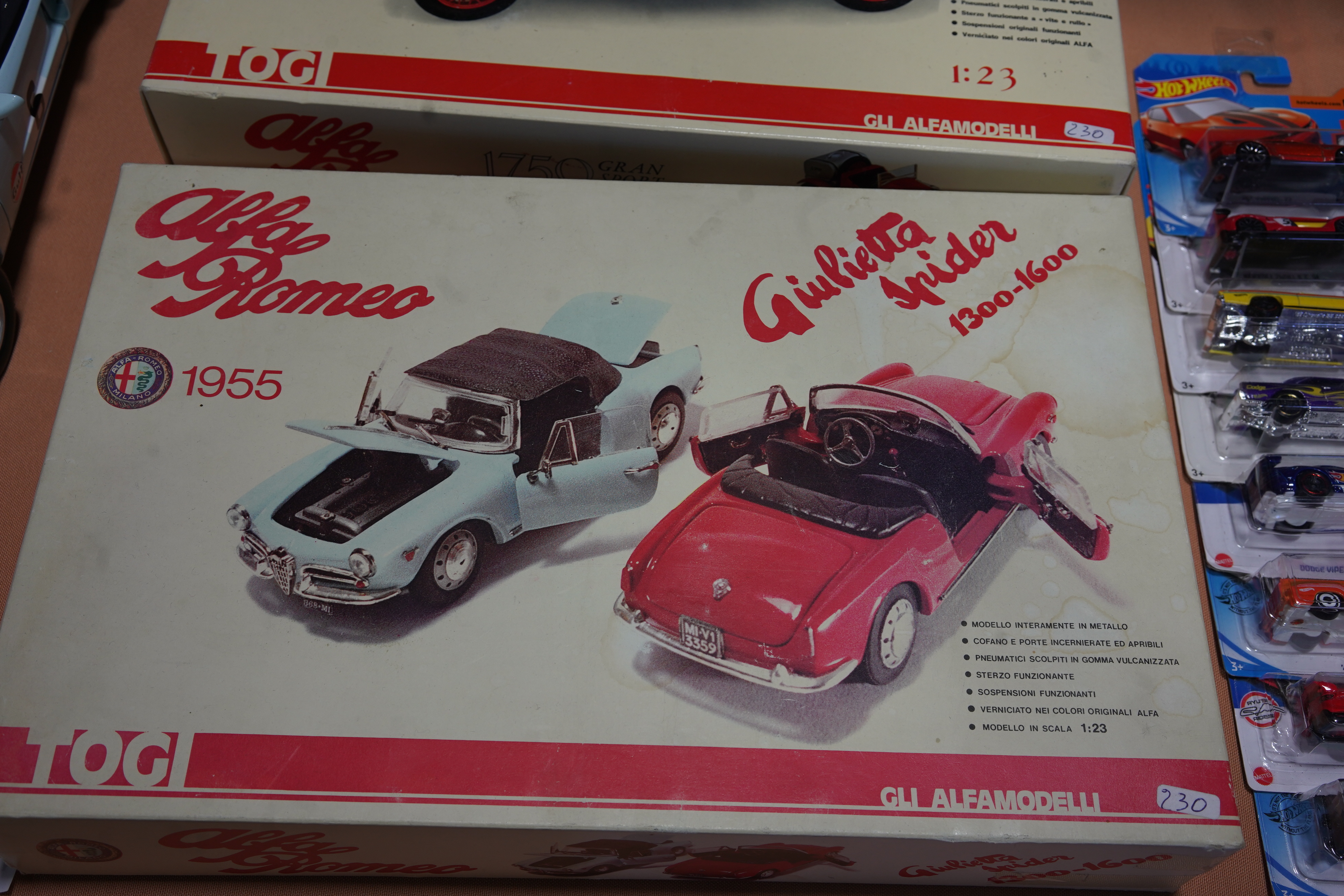
If you want to relive your boyhood and purchase a kit for assembly, this vendor had one for a 1955 Alfa Giulietta Spider. And it was only $265!

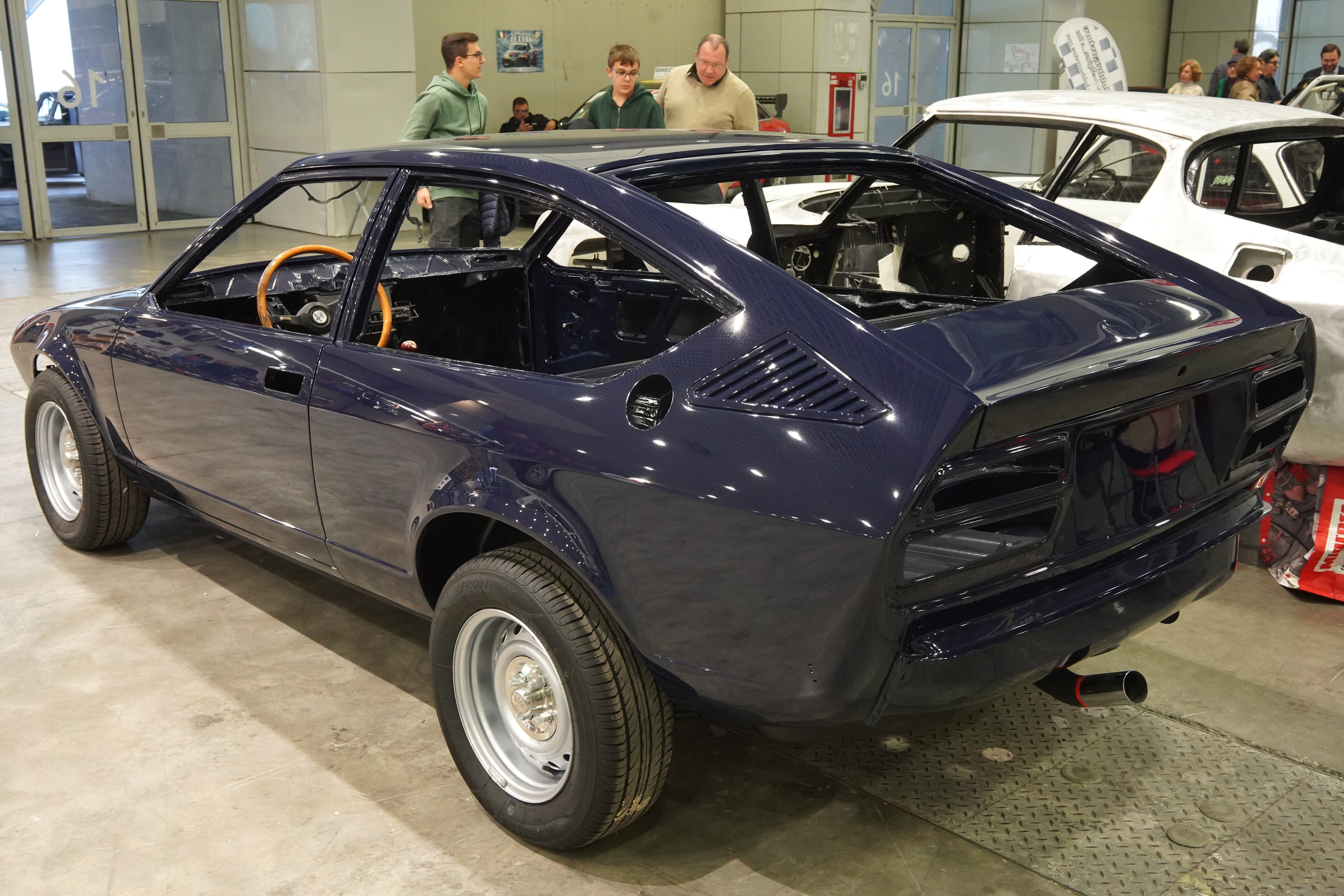
This body shop was demonstrating its glass-out approach to a complete paint job:

Just lots of everything


I must give a joyous shout-out to D’Angelo Motors. I remember this vendor well from last year. They make performance parts for the classic Fiat 500, offering everything from bolt-on suspension components to major engine overhauls to outrageous resto-mods. This year, they also hosted my new artist friend Ada Gambino, who was the subject of a recent previous post.

Me and my new friend Marco (and dig the ‘stache)


This 500 had a complete air suspension, allowing it to be raised or lowered by several inches:


THE CAR CLUBS

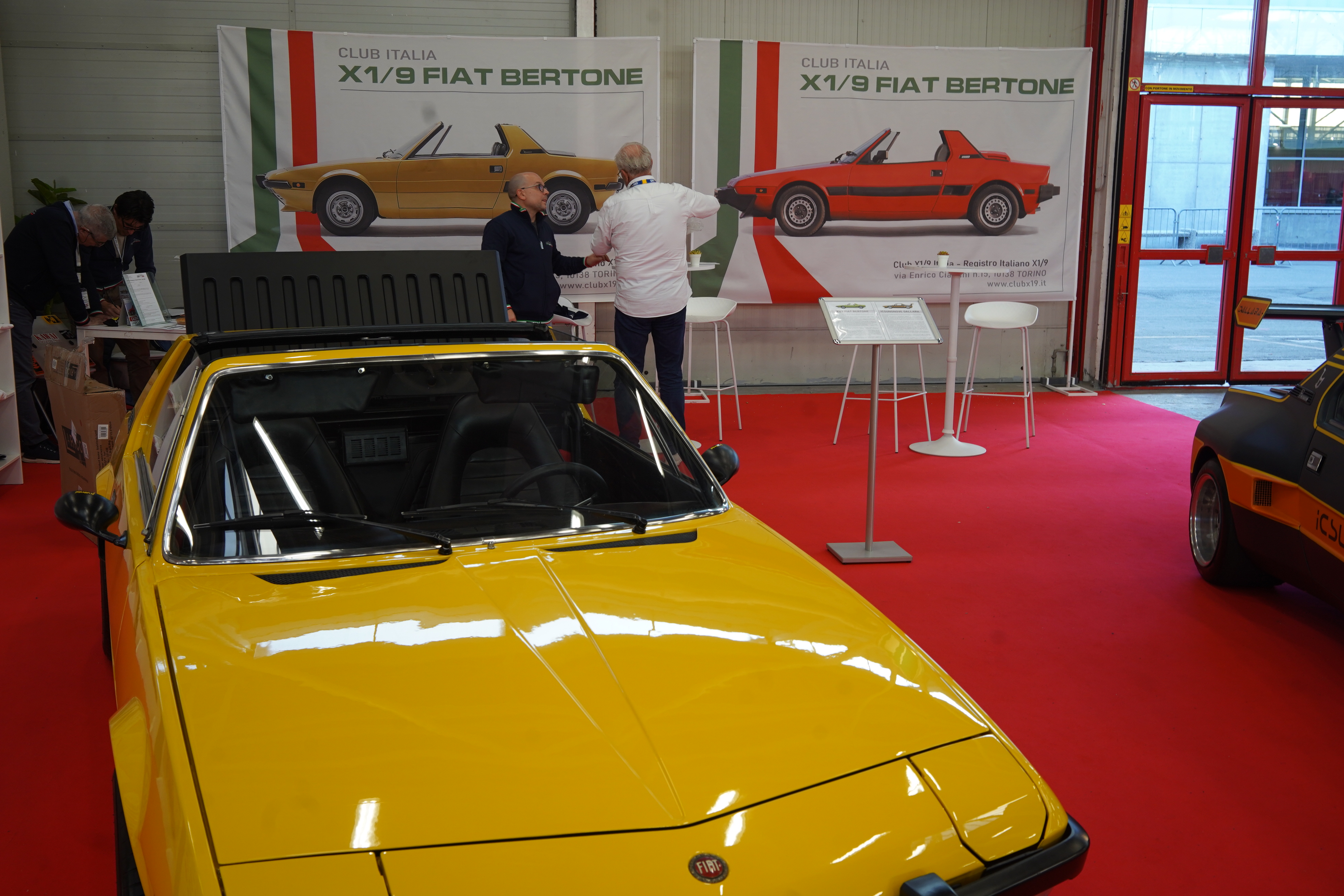
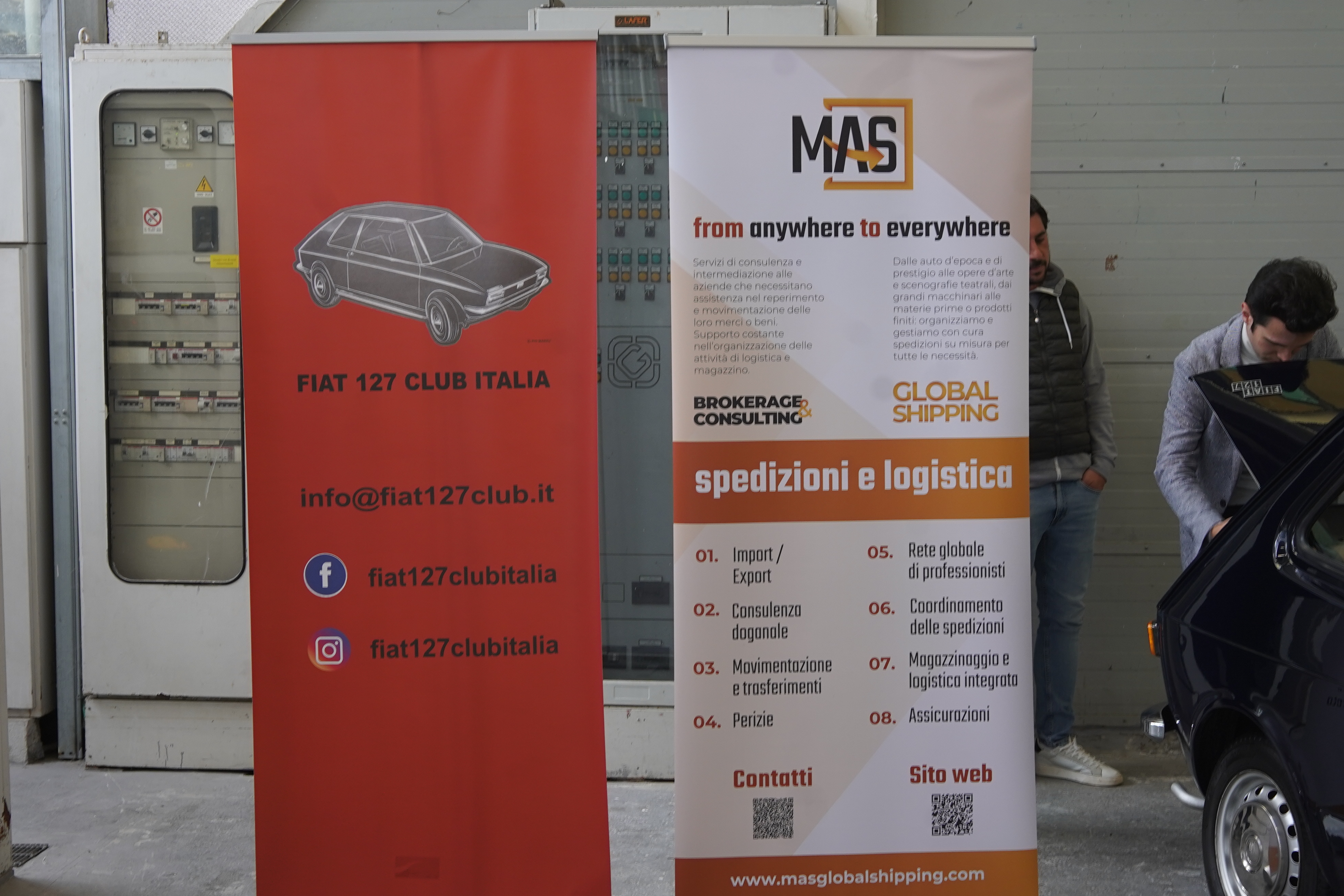
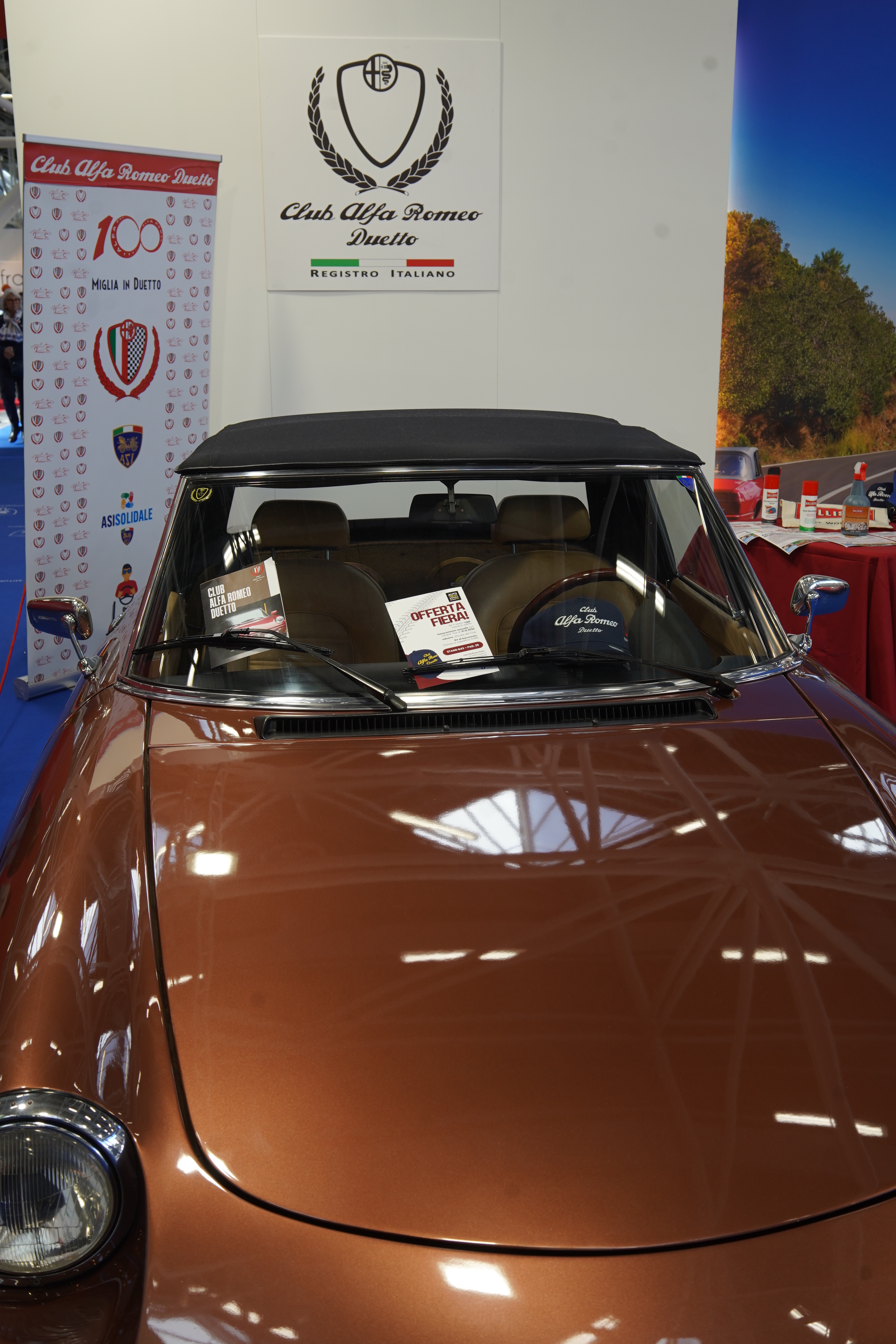
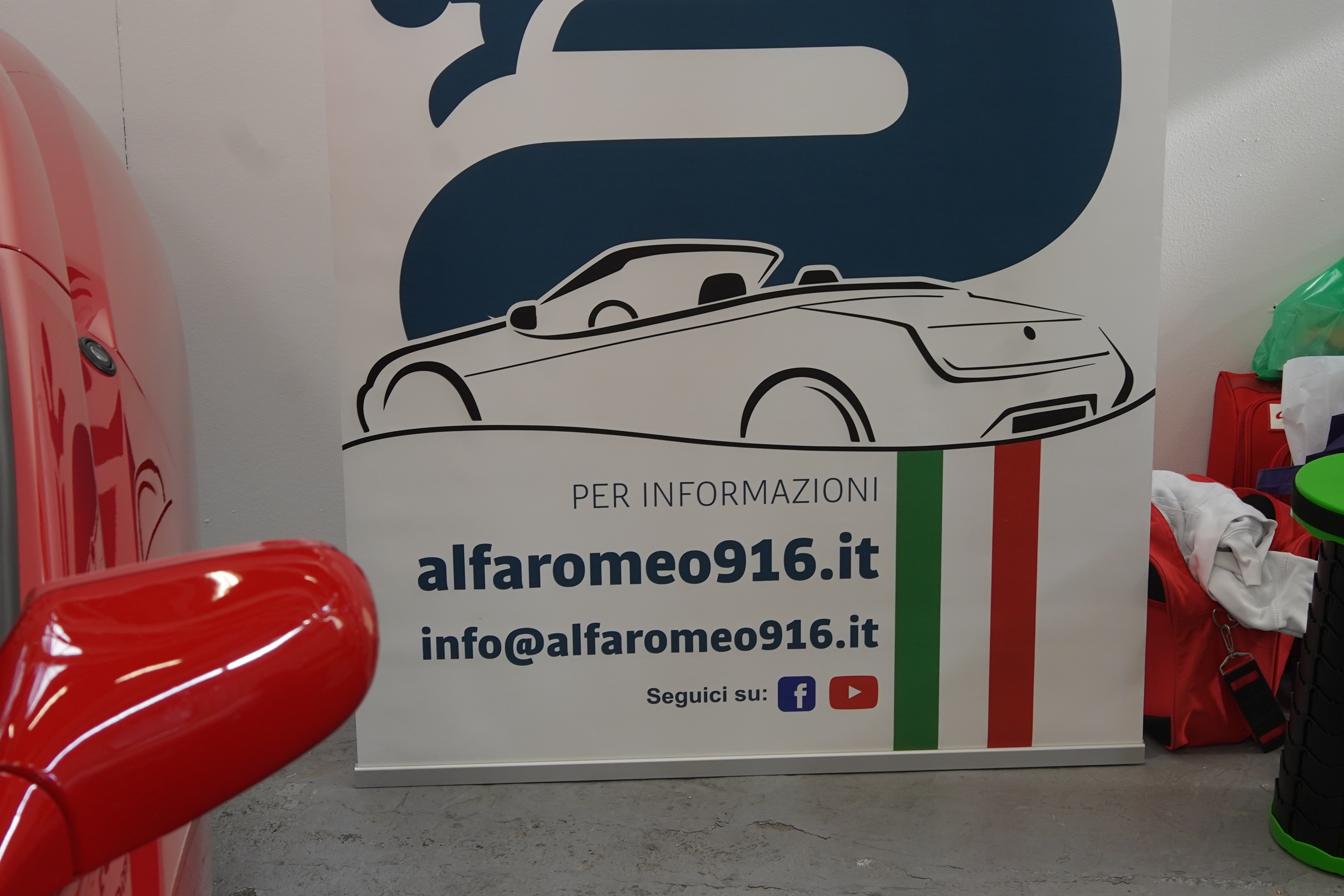
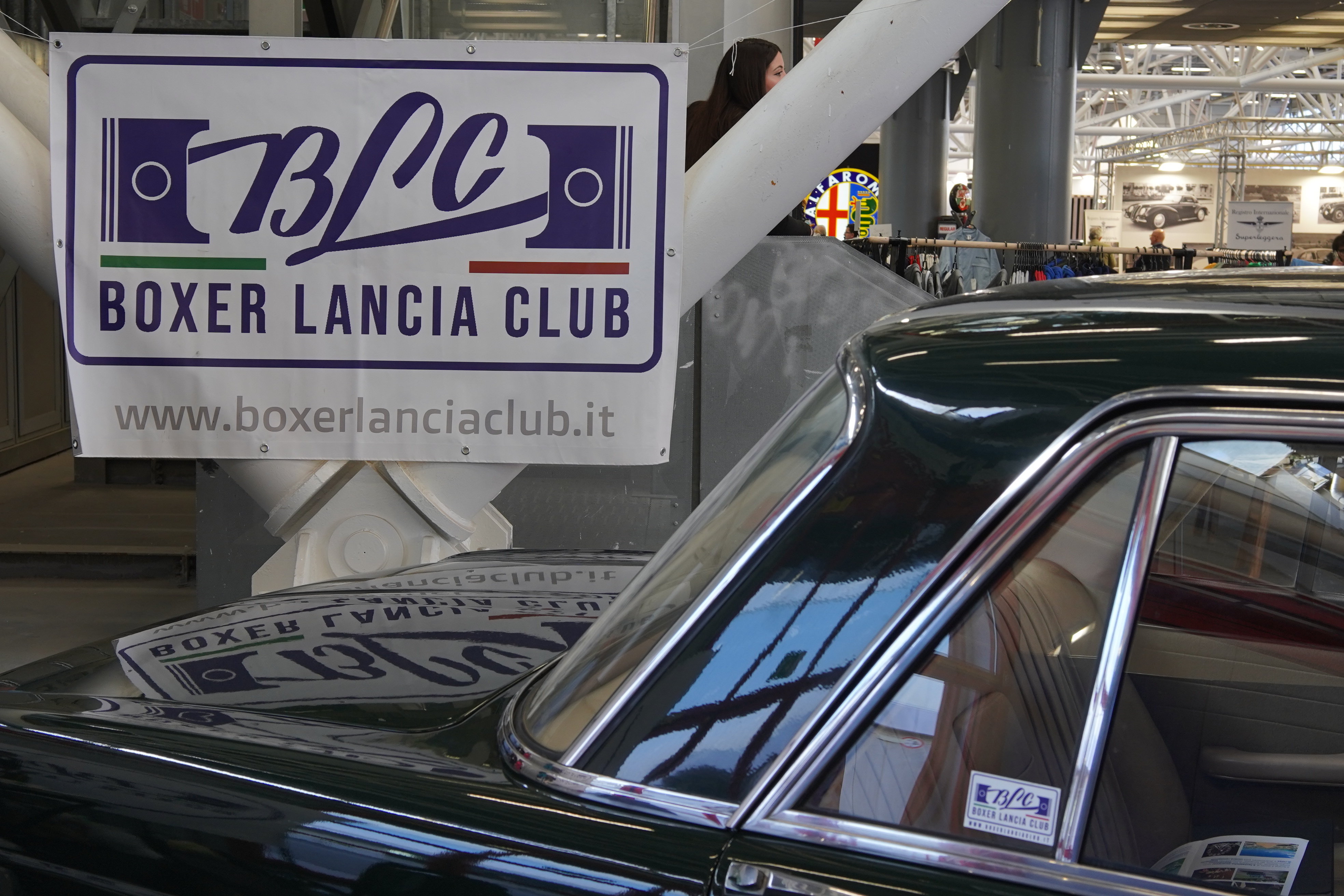
Car clubs (along with organizations, teams, and museums) occupied four of the sixteen buildings, so their presence was significant. Unlike in the U.S. , where we mostly have car clubs devoted to one manufacturer (with exceptions, of course, like the Mustang Club), in Italy, it is quite typical to see car clubs devoted to a single model. For example, for Fiat, there were clubs solely for the 124 Spider, the Barchetta, the X1/9, the 127, and the Ritmo. For Alfa Romeo, I spotted car clubs for the Duetto and the 916. Lancia had a club just for cars with boxer engines! The photos below illustrate these examples.

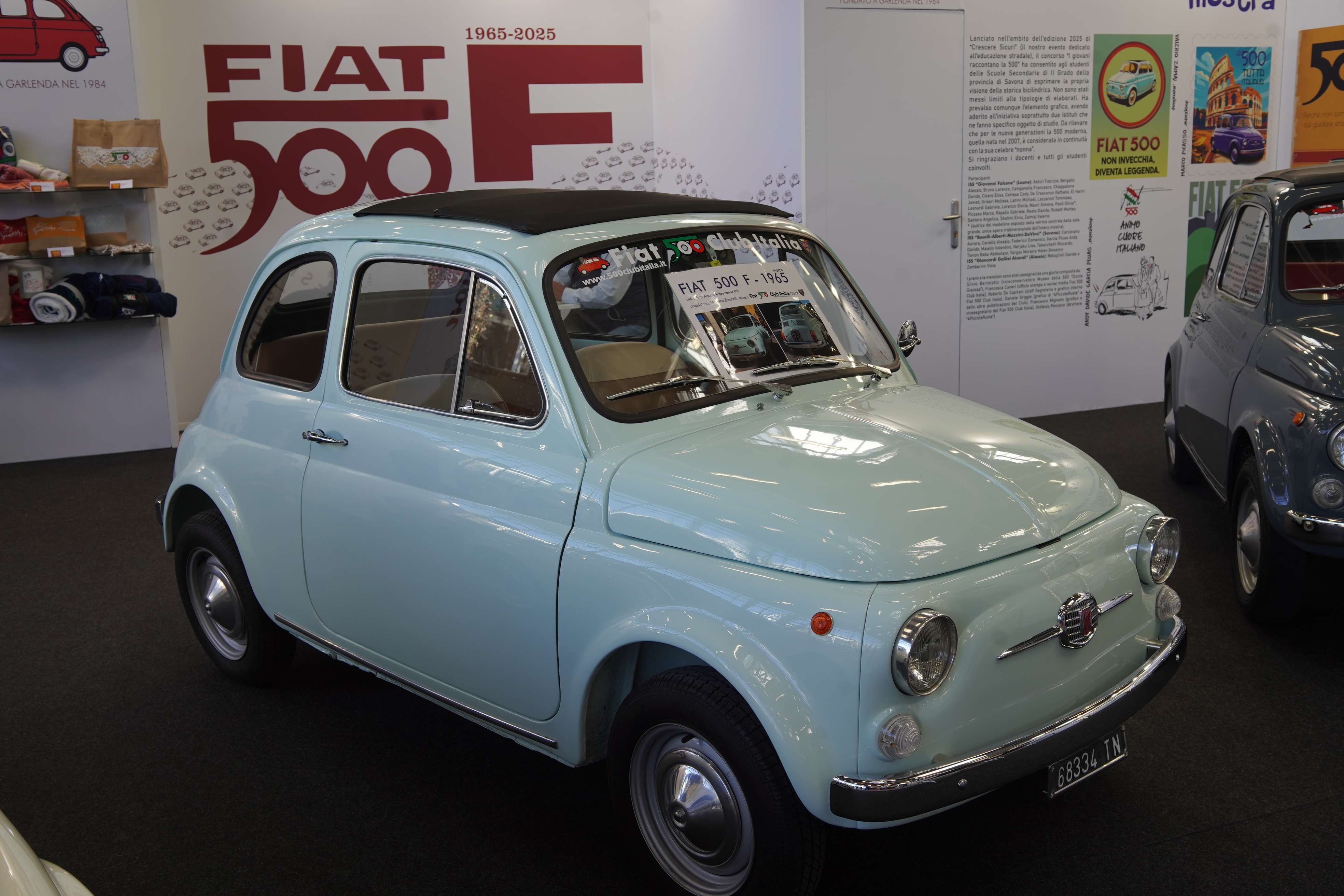
The Fiat 500 Club, a big club for a little car


The Barchetta Club
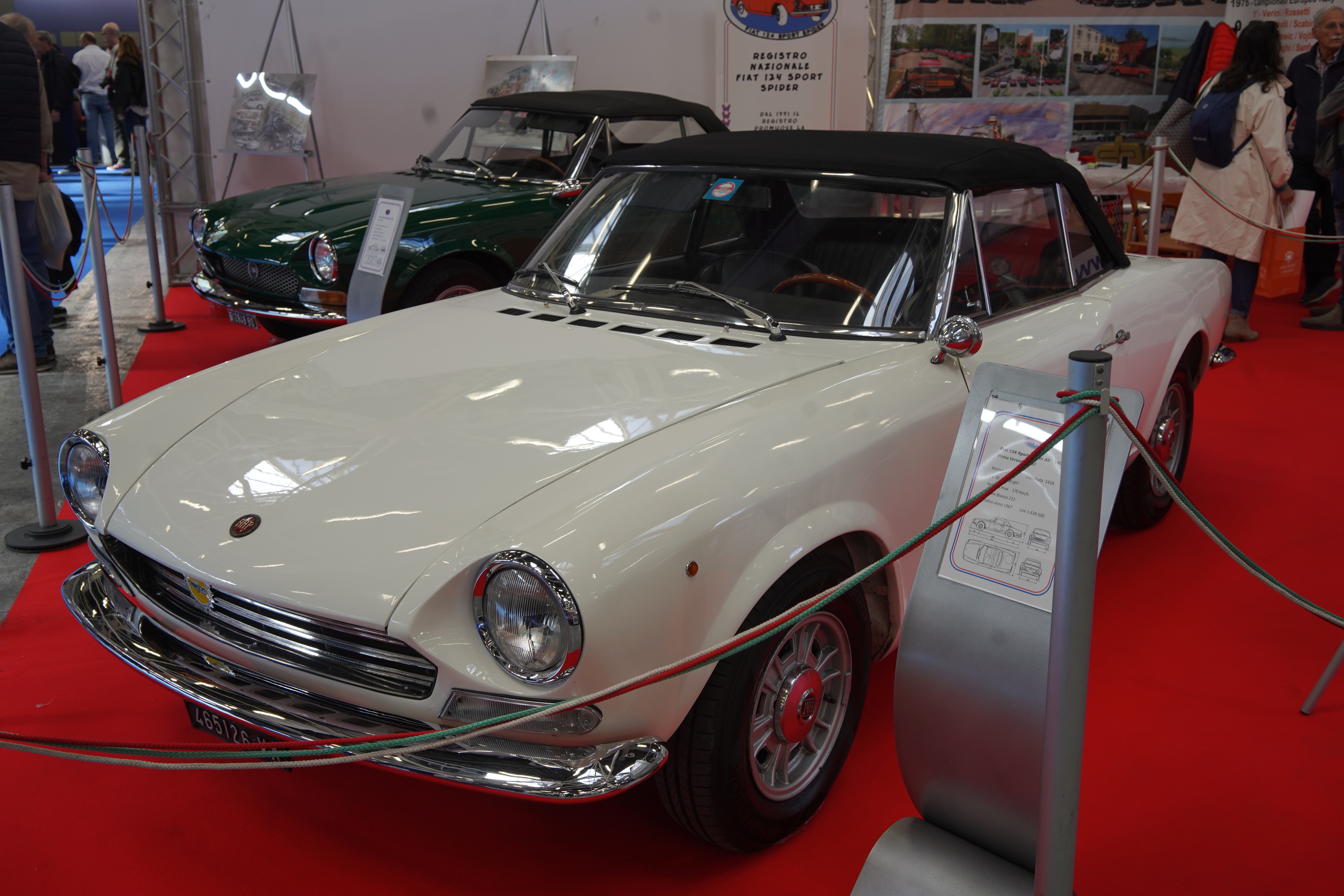
The Fiat 124 Spider National Registry


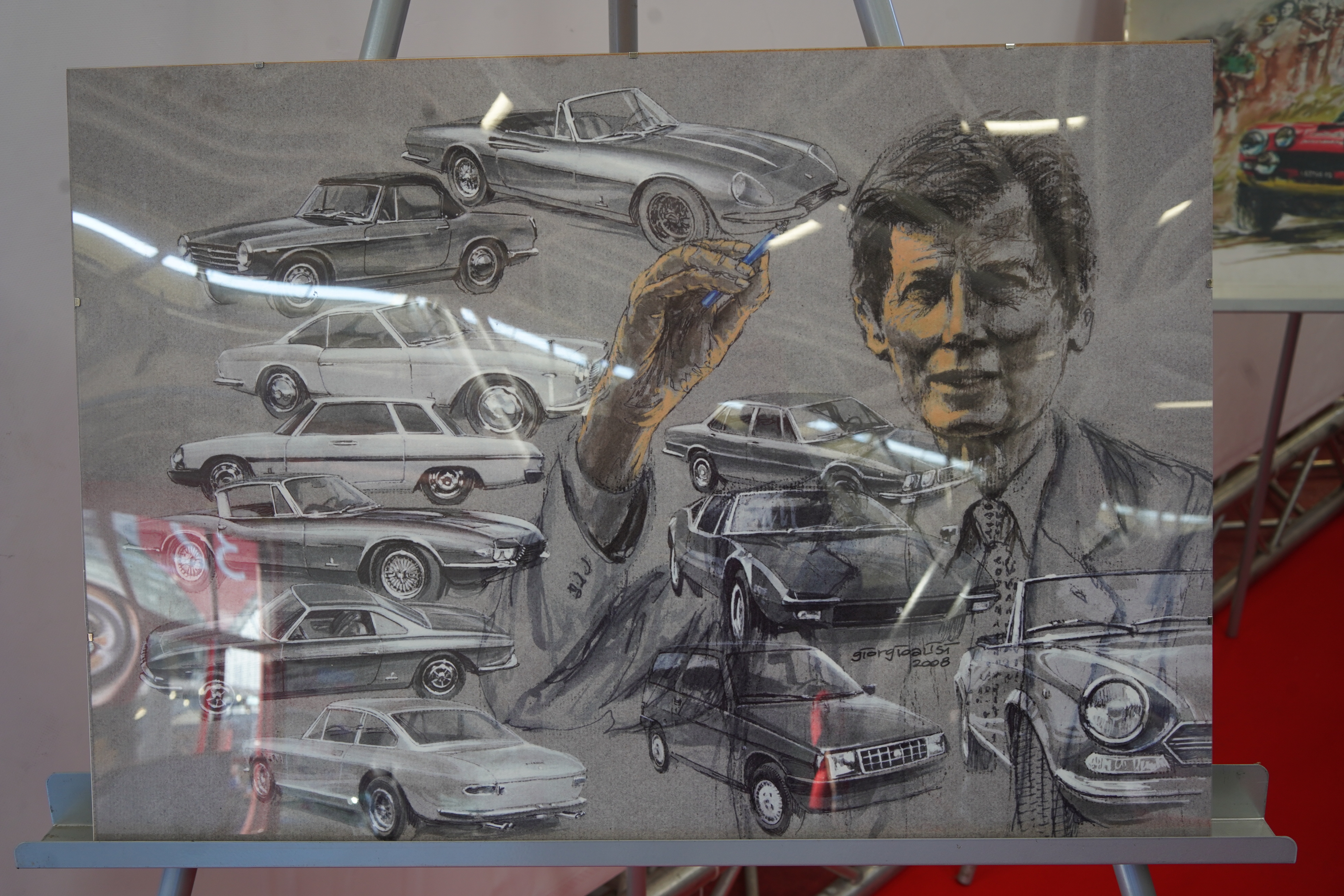
Part of their display included this illustrated tribute to Tom Tjaarda, who designed the 124 Spider among other cars.


The Fiat X1/9 Club


The Fiat 127 Club. Wonder if they have a U.S. Chapter?


The Fiat Ritmo Club. That car was sold in the States as the Strada.


A club solely for the Duetto


The Alfa 916 Club!


The Lancia Club, which looked like they embraced all Lancias


But here’s the Boxer Lancia Club; that name has got to fool the unknowing


The ASI (Automotoclub Storico Italiano) is an overarching organization for historic automobiles


Entire blog post content copyright © 2025 Richard A. Reina. Text and photos may not be copied or reproduced without express written permission.

Introducing Automotive Artist Ada Gambino at the Auto e Moto d’Epoca

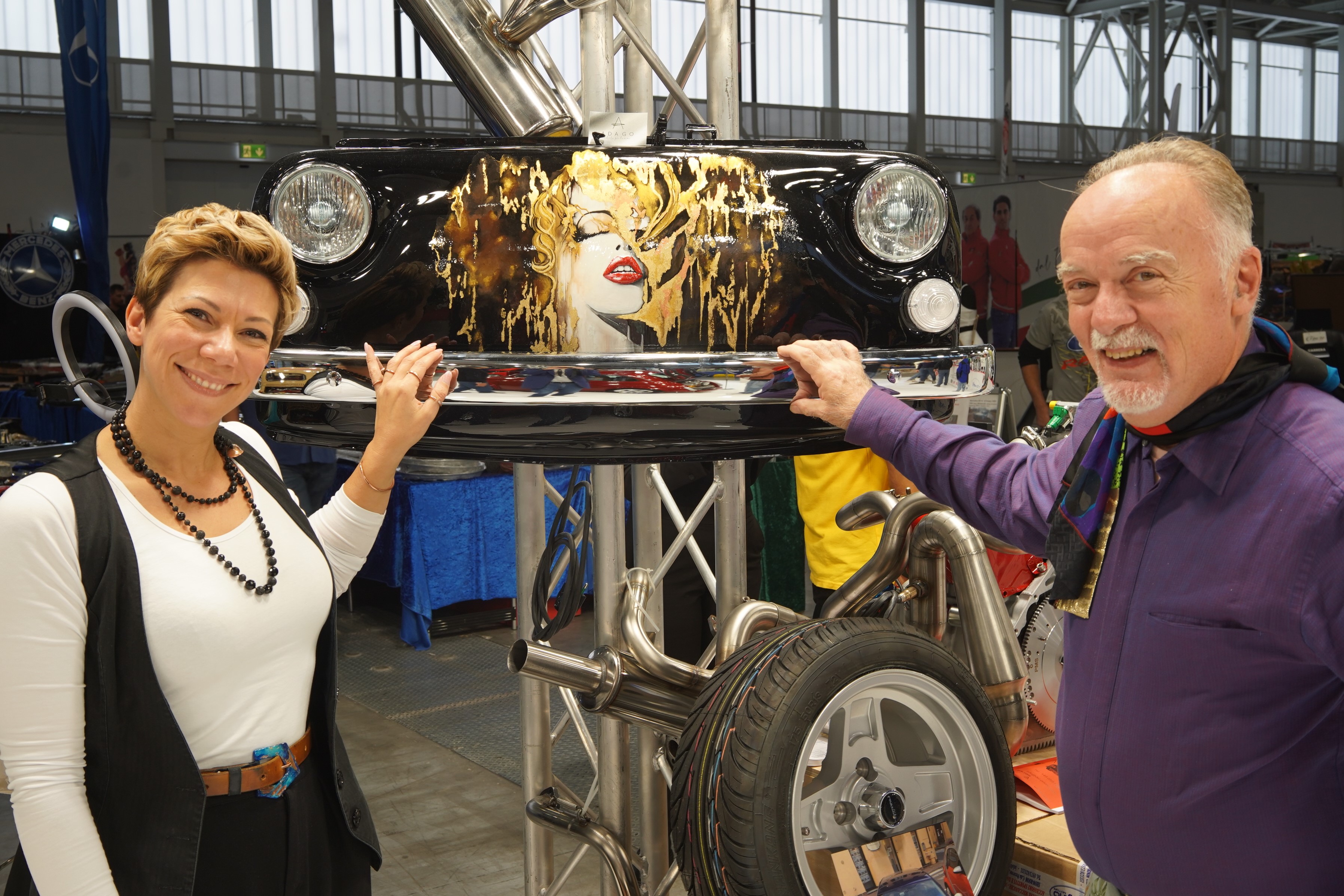
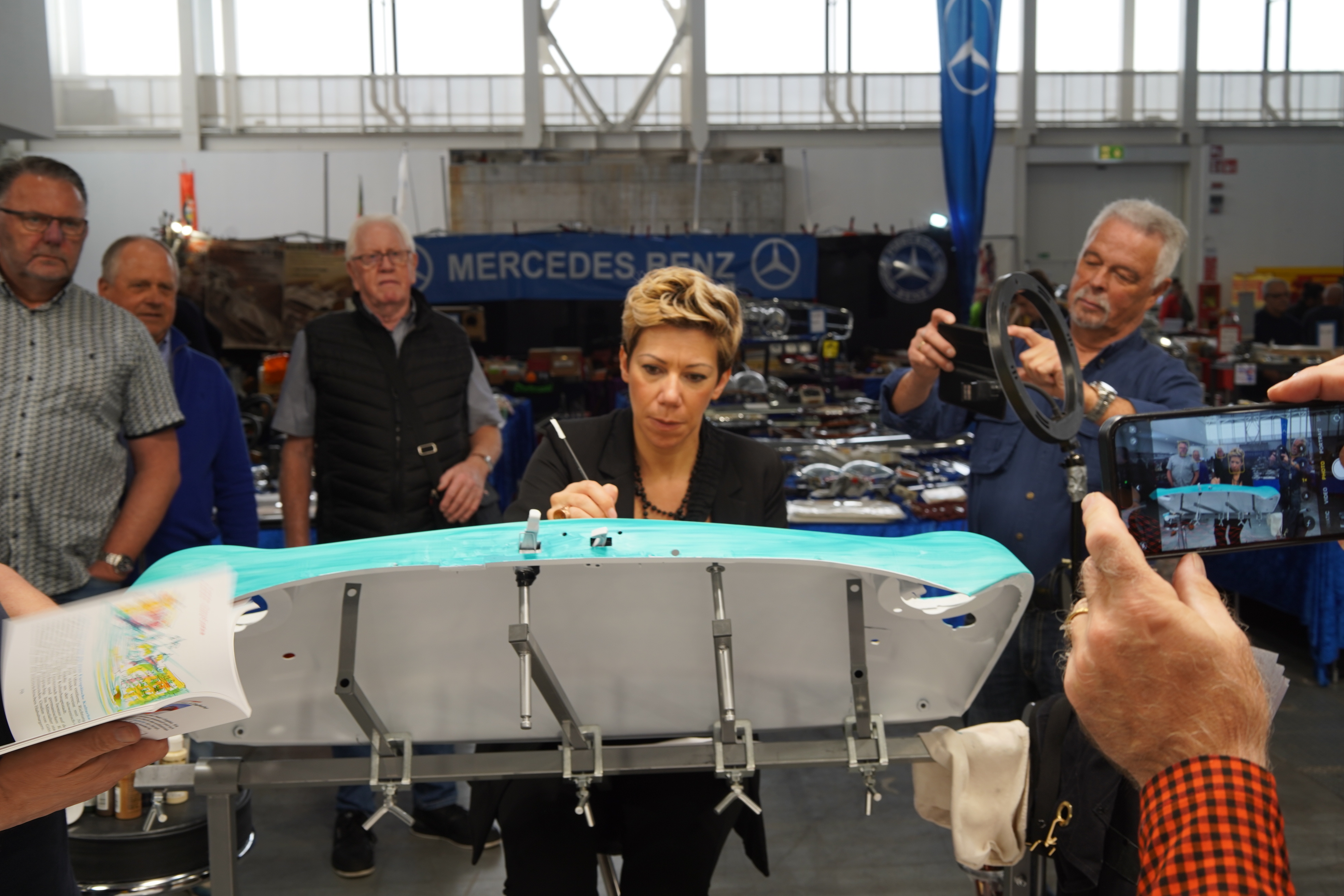
Before arriving in Bologna for the Auto e Moto d’Epoca, we spent several days in Torino. Traveling as I was with my wife Margaretanne and her brother Kevin, with whom I attended high school, Kevin and I had a mutual school colleague named John Rasiej, who now resides full-time in Torino. We three alumni had a fantastic reunion, highlighted by John and his wife Luisa in the role of our own private tour guides. During our days there, John introduced me to an artist friend of his named Ada Gambino. After seeing that she had creatively painted the entire side of a vintage Fiat Cinquecento (500) for display in a barbershop’s entrance, John commissioned her to paint an original image of Marilyn Monroe on a piece of automotive sheetmetal, specifically, the front clip of a Fiat Cinquecento (500). The flat, grille-less front provided plenty of space on which to paint. Subsequently, Ada received an invitation from a vendor in Fiat 500 performance parts to set herself up in their booth at the BolognaFiere, giving her the potential for huge exposure.

In Torino: Margaretanne, Ada, John, and Kevin

In Torino, I spent some time getting to know Ada, which was a fun challenge as she spoke almost no English, forcing me to utilize my months of Duolingo Italian training. Of course, John, who is bilingual, was always close by and ready to bail me out. With Ada set to work all four days of the show, John decided that he would also travel to Bologna in support of Ada, which also enabled us to spend some time walking the show together.

Ada and John with Marilyn

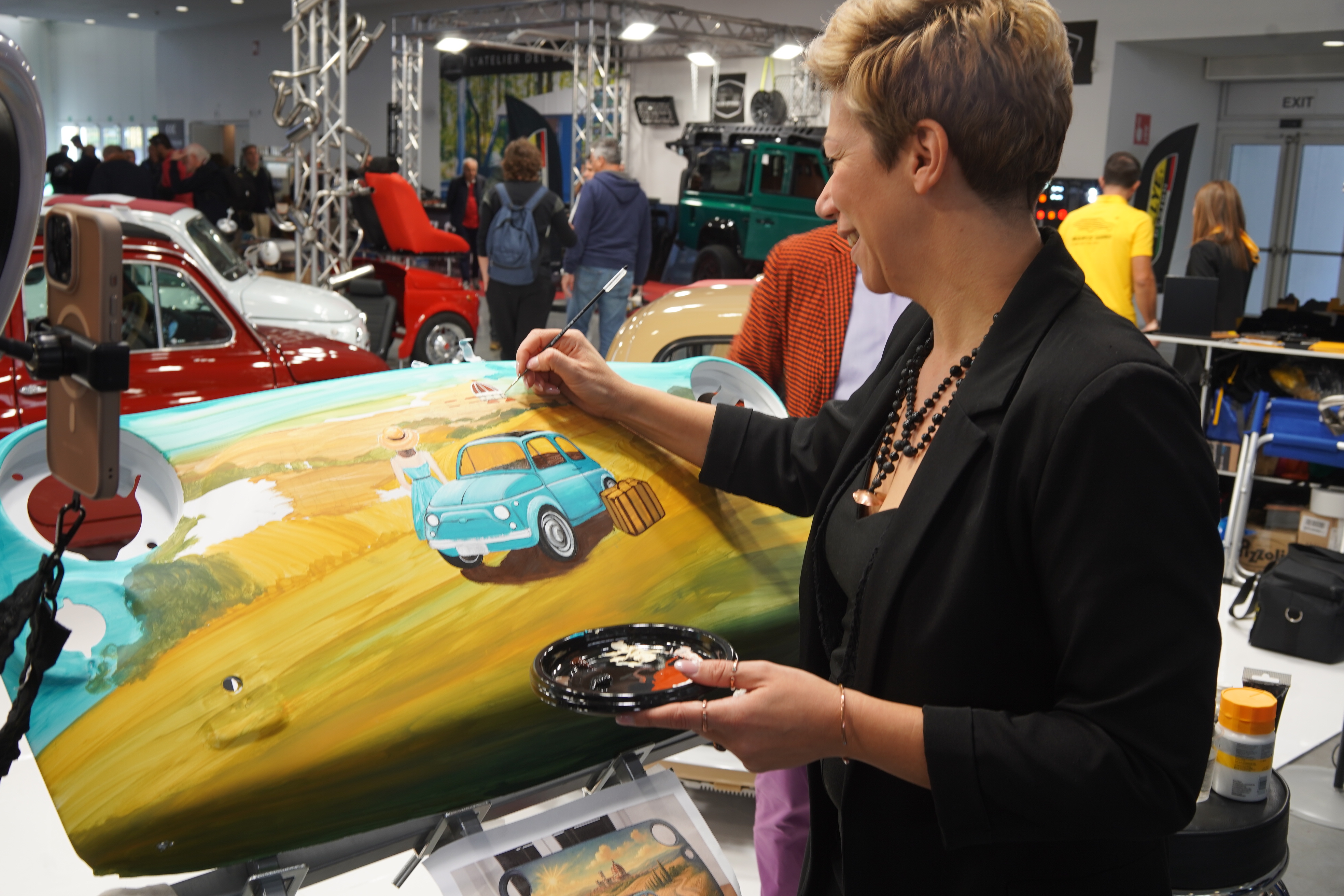
On my first day at the show, I immediately sought them out. There was Ada, comfortably perched on her artist’s stool, at work on a delightful painting on another Fiat 500 nose. This image would depict a Fiat 500 in the Italian countryside, and this painting was being done for Raffaele D’Angelo, the proprietor of D’Angelo Motors, who so generously offered Ada her own work area.  I watched as many show attendees stopped and gazed as the painting progressed in real time. Ada seemed completely at ease fielding questions and comments. Amazingly, a national news reporting crew who was covering the show stopped by to admire her artwork and interview her, and the clip ended up on Italian TV.

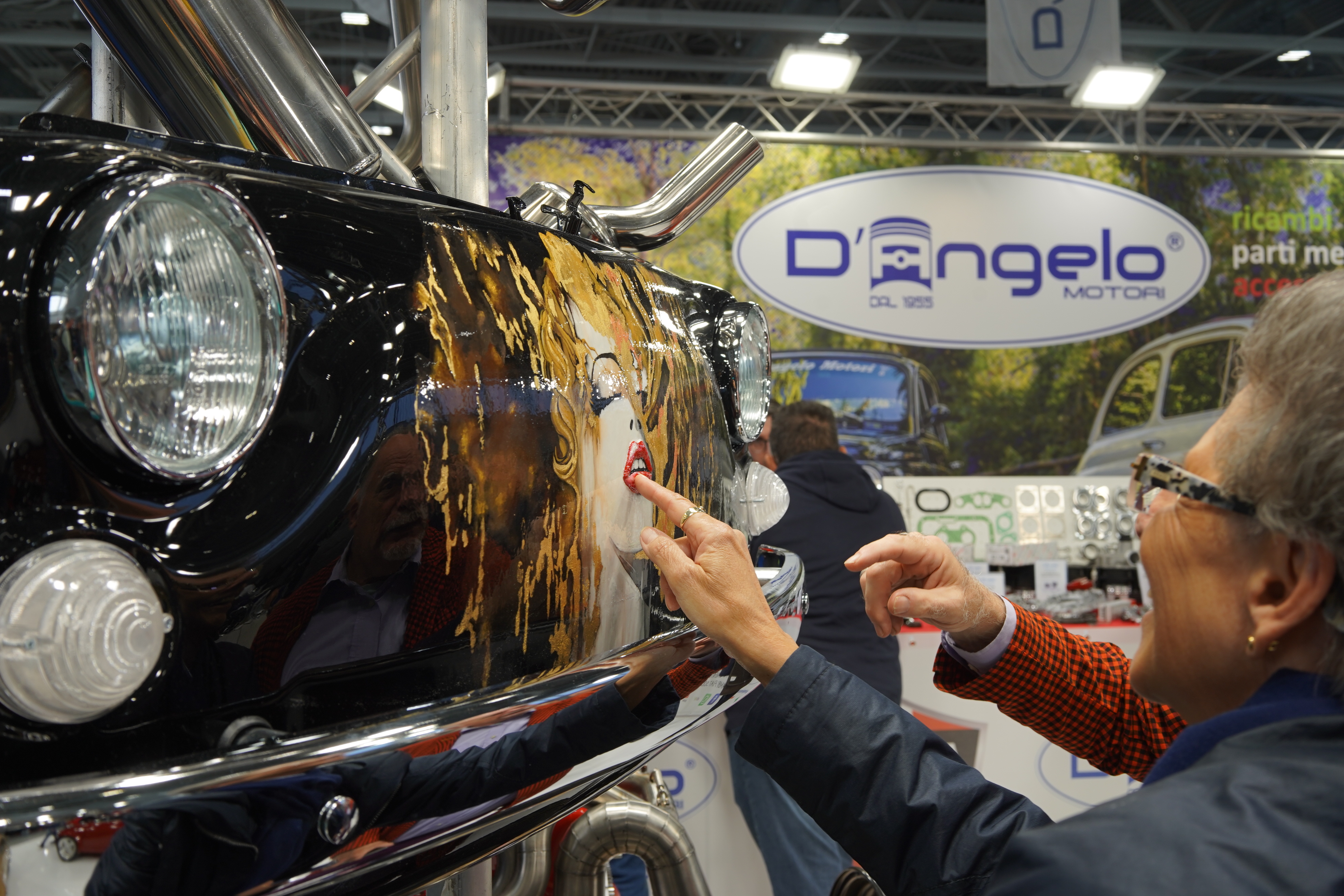
This woman actually asked to touch Marilyn’s lips

According to John, as the weekend went on, some of the passers-by expressed serious interest in acquiring a painting from her. She is open to either supplying a piece of sheetmetal herself (she has a local source for that), or having the customer provide the “canvas.” This is a somewhat new venture for Ada, who, previous to this, has both painted on canvas as well as painted on copper jewelry of her own design.

As her business card states (in English), “Ada Gambino: Hand-painted Italian masterpieces of automotive art.” During the week with him, John picked my brain, asking me what I thought about the market for this type of art. I first told him that this is a new field to me; at the same time, I informed him that in America at least, the collecting of “automobiliia,” including everything from spark plugs to oil cans to road signs, is huge. Certainly, there are collector car hobbyists who would be interested in adding a custom hand-painted painting such as Ada can create to their collection of garage art in their man caves.

John’s finished piece was displayed just a few meters from the work in progress

Ada’s business card is attached among the images. It includes her phone number, email address, and a QR code to her Instagram account. Should anyone reading this post have an interest in her art, or be simply looking for additional information, please reach out directly to her. If you do so, as an option, let her know that you found out about her from this blog post. I wish her nothing but the best success with her automotive artistic endeavors.

Admirers were stopping by all day long (Note John’s phone on the right capturing this same image)


Entire blog post content copyright © 2025 Richard A. Reina. Text and photos may not be copied or reproduced without express written permission.


Cars For Sale at the 2025 Auto e Moto d’Epoca

When I describe the Auto e Moto d’Epoca as a “car show,” what exactly does that mean? In the States, a “car show” can be a Concours d’Elegance, a judged show, a cruise night, or even a bunch of locals meeting up at a diner for a Sunday breakfast. The BolognaFiere event was four shows in one: motorcycles, motorcycle manufacturers, and motorbike clubs; spare parts and automobilia; automobile clubs, museums, and institutions; and cars for sale. The motorcycles represented the smallest element, limited to one of the smaller buildings. The spare parts and automobilia were in three buildings. The car clubs and institutions took up four buildings. And the cars for sale occupied SIX of the larger buildings on the premises. Like last year, this show was mainly focused on European dealers, along with a few privateers, offering classic cars for sale.

Last year’s visit was my first, and I was so overwhelmed with the immersion into Italian collector car culture that I didn’t pay enough attention to the buying and selling. This year, I put more effort into recording what treasures were being offered to the public. My focus remained on Italian cars only, and I went so far as to engage a couple of dealers in conversations about potential purchases (more about that anon). This post’s entire content covers cars for sale. They are arranged first by marque (Alfa Romeo, Fiat, and Lancia) and then by asking price.

Speaking of price, a few words about the realities of purchasing a car overseas. Unlike 2024, when the Euro and dollar were almost at parity, the dollar has slipped (or the Euro has strengthened) in 2025. Prices given in Euros must be multiplied by 1.15 for conversion to dollars. Ouch. Adding to the pain is the ever-evolving tariff situation. The best information I had as of last week was that a car purchased in Europe and shipped to the U.S. would be subject to a 10% tariff. Now let’s do some math. Let’s say you found the Italian car of your dreams for twenty grand. Except, that’s in Euros, so in dollars, it’s $23,000. A 10% tariff on that number brings things up to $25,300. Figure that enclosed shipping to a NY port is $3,000. So your “20,000” (Euro) dream car is $28,300. Still, for the right car, it could be worth it. Keep these calculations in mind as you peruse the listings below.


ALFA ROMEO

1995 Alfa Romeo 155 Super, €6,500 / $7,500. Attractive four-door model which was not sold here. According to Wikipedia, the 155 replaced the 75 (Milano in the U.S.) and the switch from RWD to FWD resulted in a lukewarm reception from the buying public. At this price, though, this would be fun to have.


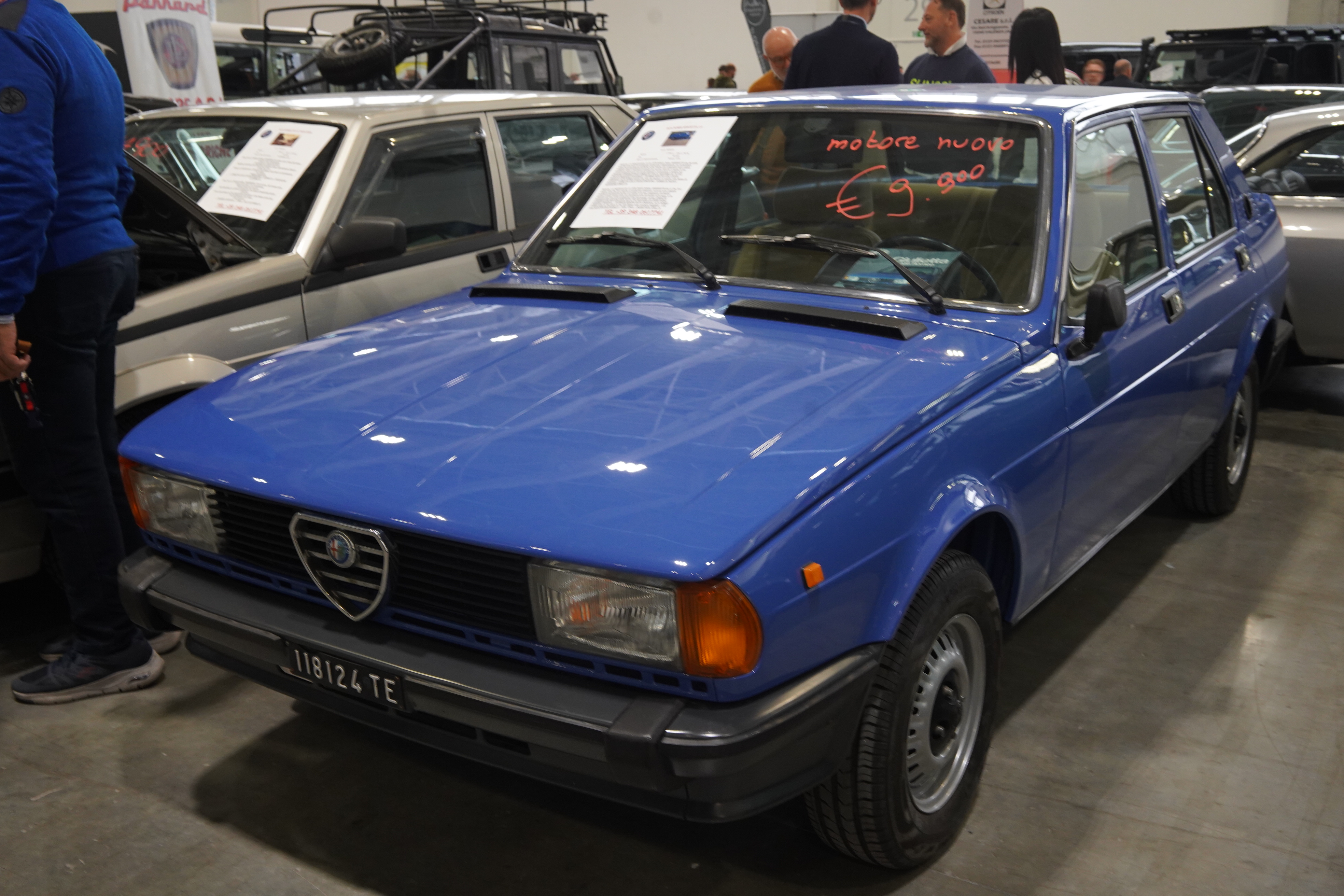
1978 Alfa Romeo Giulietta sedan, €9,900 / $11,400. Dark blue paint, tan interior. I had a lengthy talk with the dealer about this car. His English wasn’t great, but I surmised that he claimed this to be a two-owner car with a new engine, fresh paint, and a reupholstered interior. It was he who quoted me an “all in” shipping price of €2,500 (about $2,900). This berlina was FWD, and is a different model than the RWD Alfetta sedan which was sold here in the late ‘70s.
 

2004 Alfa Romeo 916-series GTV Spider, €16,500 / $19,000. The car looked sharp in metallic blue. These were introduced in the 1990’s and if you find one which is twenty-five years old or older, it can be legally imported. This one, though, as a 2004 model, is still too new to bring home.


1982 Alfasud, €16,800 / $19,300. This version, with its blacked-out grille, black fender flares, alloy wheels, and rear spoiler, was one of the more sporty-looking Alfasuds I’ve seen. I believe that it’s still FWD with a boxer engine, though.


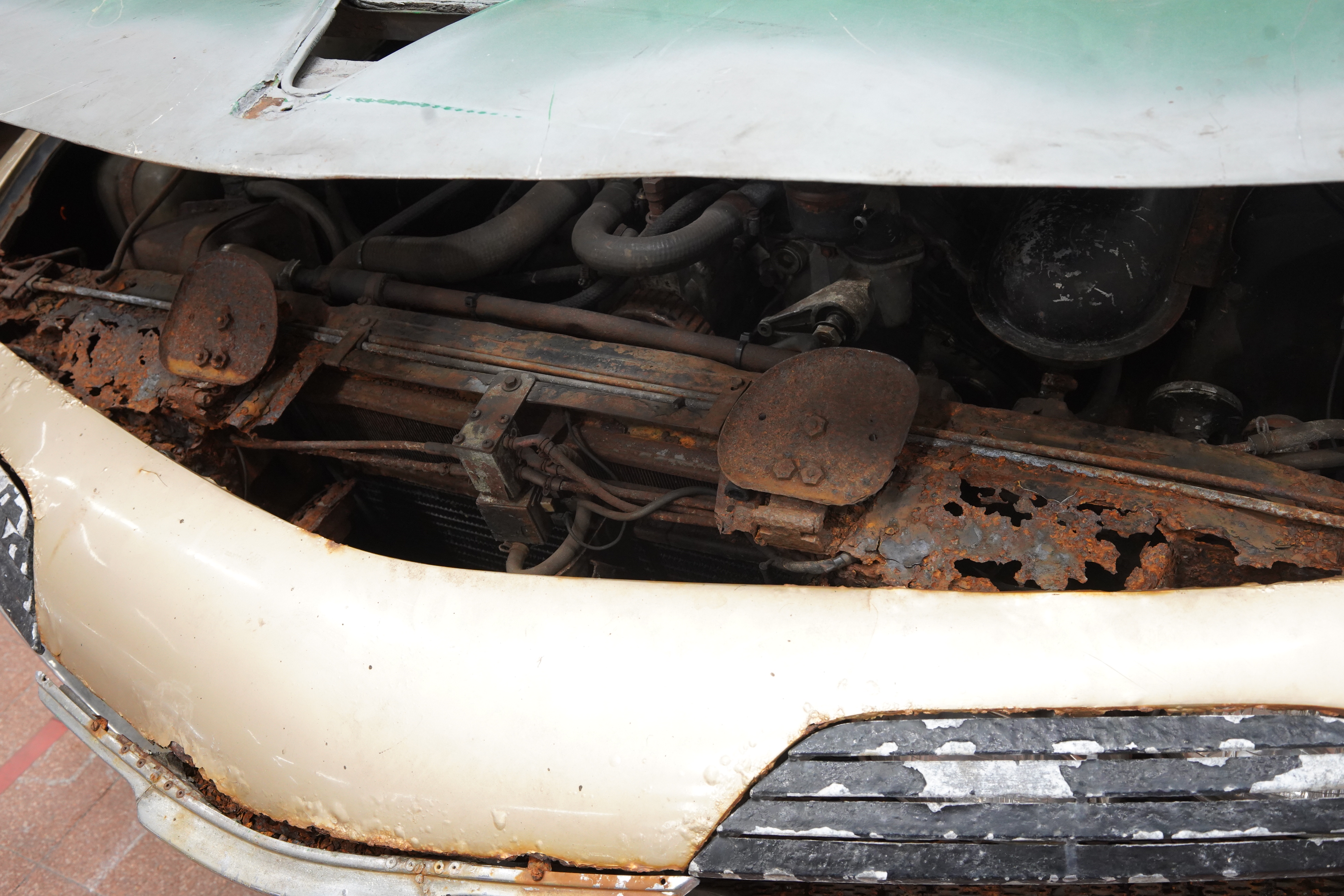
1971 Alfa Romeo Montreal, €17,500 / $20,000. The saddest looking car at the entire event. I know that my fellow Alfisti are going to cry at these photos. My question is, how does one allow such a rare, beautiful, and valuable car to deteriorate to this extent?


1973 Alfa Romeo 2000 Berlina, €18,500 / $21,200. These later Berlinas, with their smooth flanks, are some of the better-looking Alfa sedans. This car looked very clean.


2009 Alfa Romeo Brera coupe, €24,500 / $28,000. Brera, oh sweet Brera, where have you been all my life? Is this the best-looking Alfa of the twenty-first century? Alas, it’s too new to import. If I can just hang on nine more years….


1958 Alfa Romeo Giulietta TI, €28,900 / $33,250. Very straight, and very striking in this unusual color. At this price, one could possibly bring this home and resell for a profit, even after the taxes and tariffs.


1964 Alfa Romeo 2600 Sprint, €39,500 / $45,500. The silver over red looked great, and the interior was like new. The paint, however, was a poor respray, with cracks and scratches in various places. Here’s another one where I engaged with the dealer. Actually, when I couldn’t find a salesperson, I knew how to get someone’s attention. I ignored the NON TOCCARE (DO NOT TOUCH) signs and I opened the driver’s door. Within thirty seconds, a saleswoman was next to me, scolding me for my brazen act (I actually had no idea what she was saying to me). She fetched a salesman who spoke some English, and after a short while, he said to me, “I’m ready.” I told him I would think about it…. At first I thought the price was below market, but soon after, I checked Bring a Trailer and discovered that these 2600 Sprints are selling for less money than I thought.


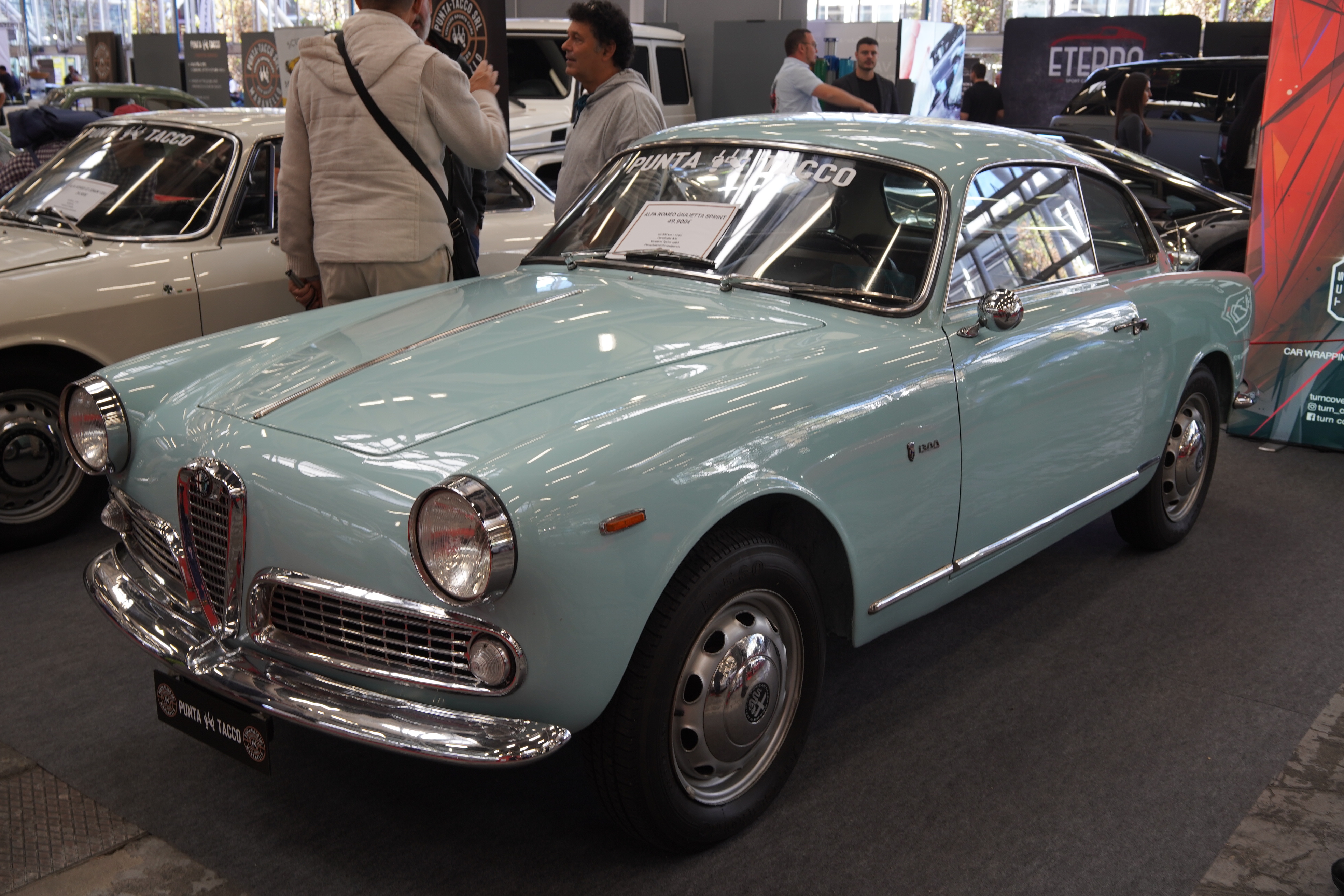
1965 Alfa Romeo Giulietta Sprint, €49,900 / $57,500. As a ’65, this must be one of the last of the Giulietta Sprints. They still command strong money.
 

1968 Alfa Romeo 1300 Spider, €58,000 / $66,700. This one looked freshly restored and I thought the color combo was great. I have not included many “Duetto” and later Spiders here because I found the asking prices to be much higher than one would pay in the States. Is that because most of them were shipped out of Italy, making them somewhat rare there?

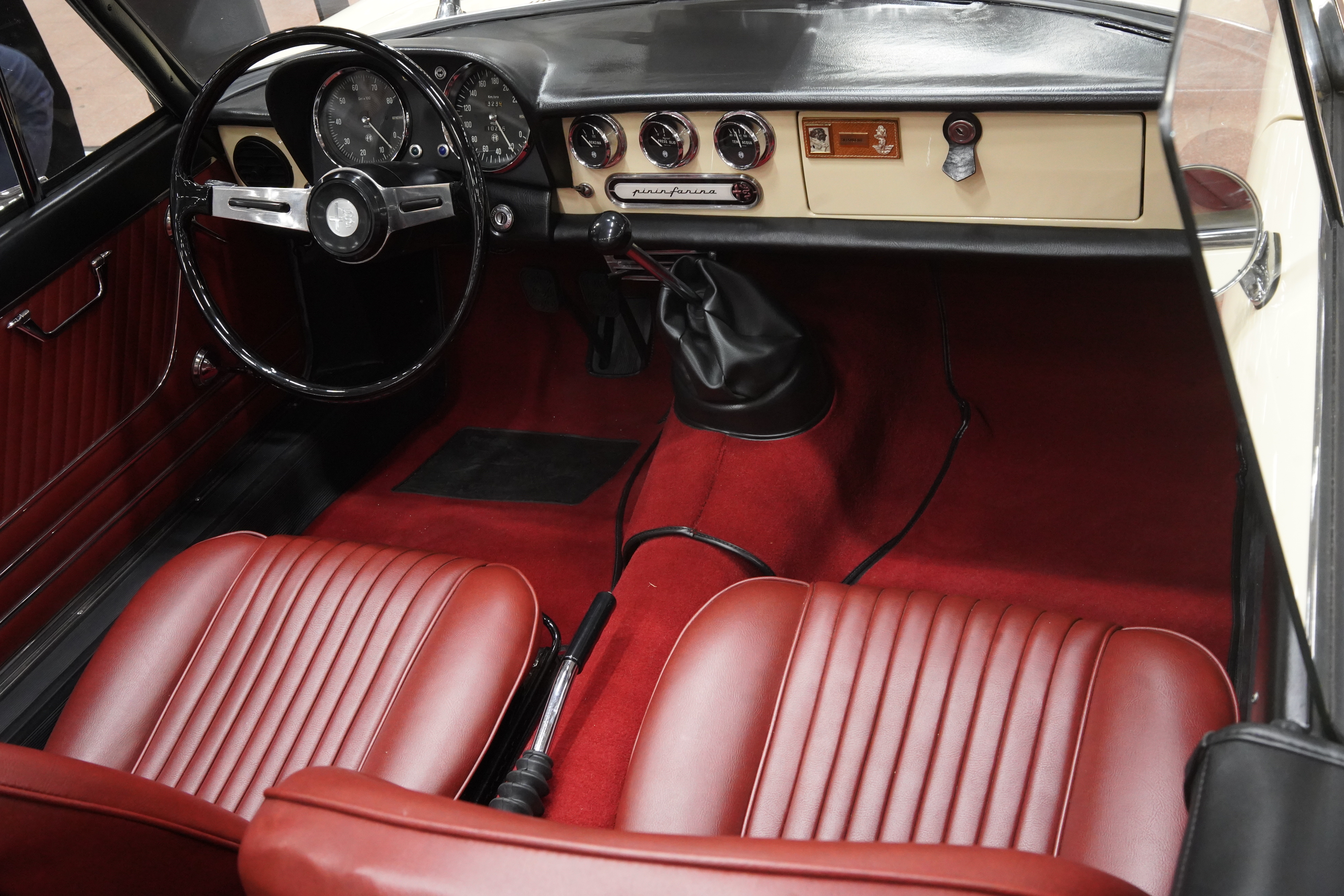
 

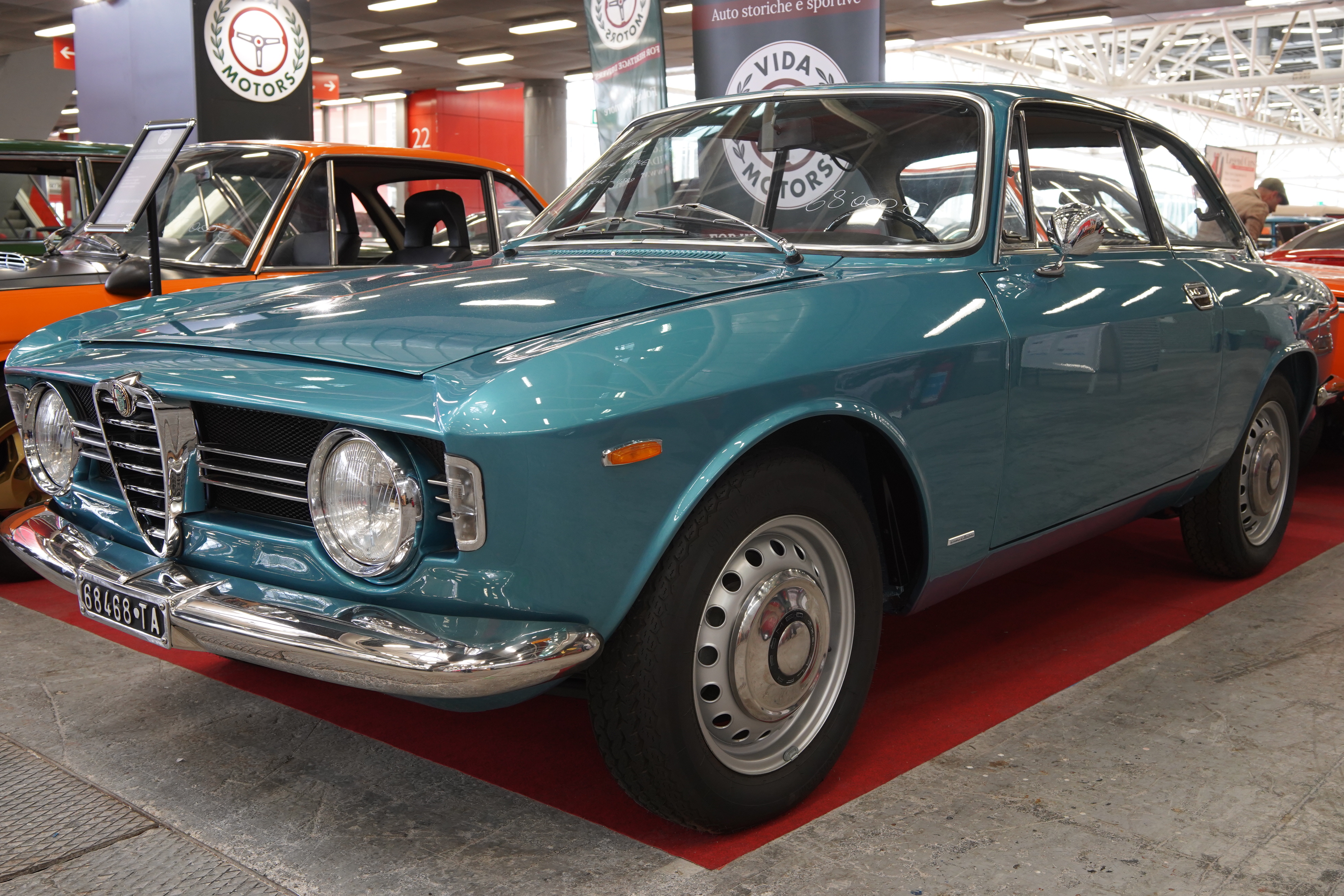
1966 Alfa Romeo Giulia Sprint GT, €68,000 /$78,000. Like the Spiders, I have included very few Bertone coupes because I found the prices to be crazy high. This scalino, though, was striking in this color, which I’ve never seen before.
 

1957 Alfa Romeo Giulietta Sprint, €79,500 / $91,500. This one is over 50% higher in price than the one above.


1959 Alfa Romeo 2000 Touring Spider, €82,500 /$95,000. Years ago, I didn’t care for these large 102- and 106-series Spiders at all, but they’ve grown on me. The price is still a bit out of my range, and this is a lot of money for a four-cylinder car. For a bit more lire, one can move up to a six. See below.


1966 Alfa Romeo 2600 Touring Spider, €105,000 / $120,000. That big inline six must be delightful, even if the car is slower than a Duetto 1600. I need to drive one, then I need to figure out how to buy one.


1963 Alfa Romeo Sprint Speciale, €110,000 / $126,500. The Alfa for those who find the Bertone-designed Giulia coupes just a little bit too ordinary.


1956 Alfa Romeo 1900 Coupe, €110,000 / $126,500. Same ask as the Sprint Speciale above. I’d choose this 1900 over the SS.


FIAT

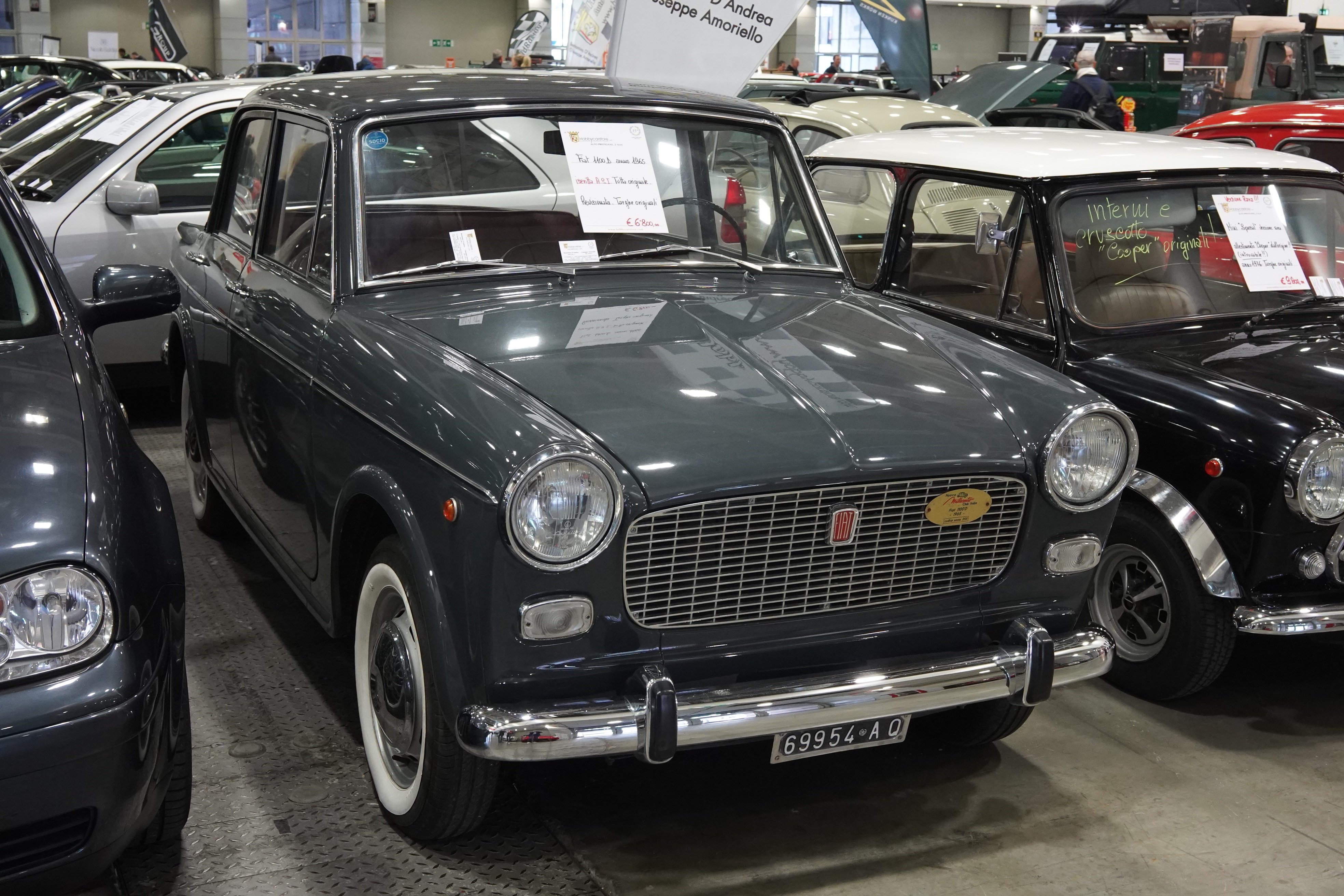
1965 Fiat 1100D sedan, €6,800 / $7,800. Your basic mid-‘60s Italian economy sedan. Room for the family (as opposed to the 500). A most affordable way to enter the collector car hobby.
 

1965 Fiat 600D, €7,000 / $8,000.

1968 Fiat 600D, €8,900 / $10,200.

Compact Fiats which, with their four-cylinder engines, are a step up from the two-cylinder 500.


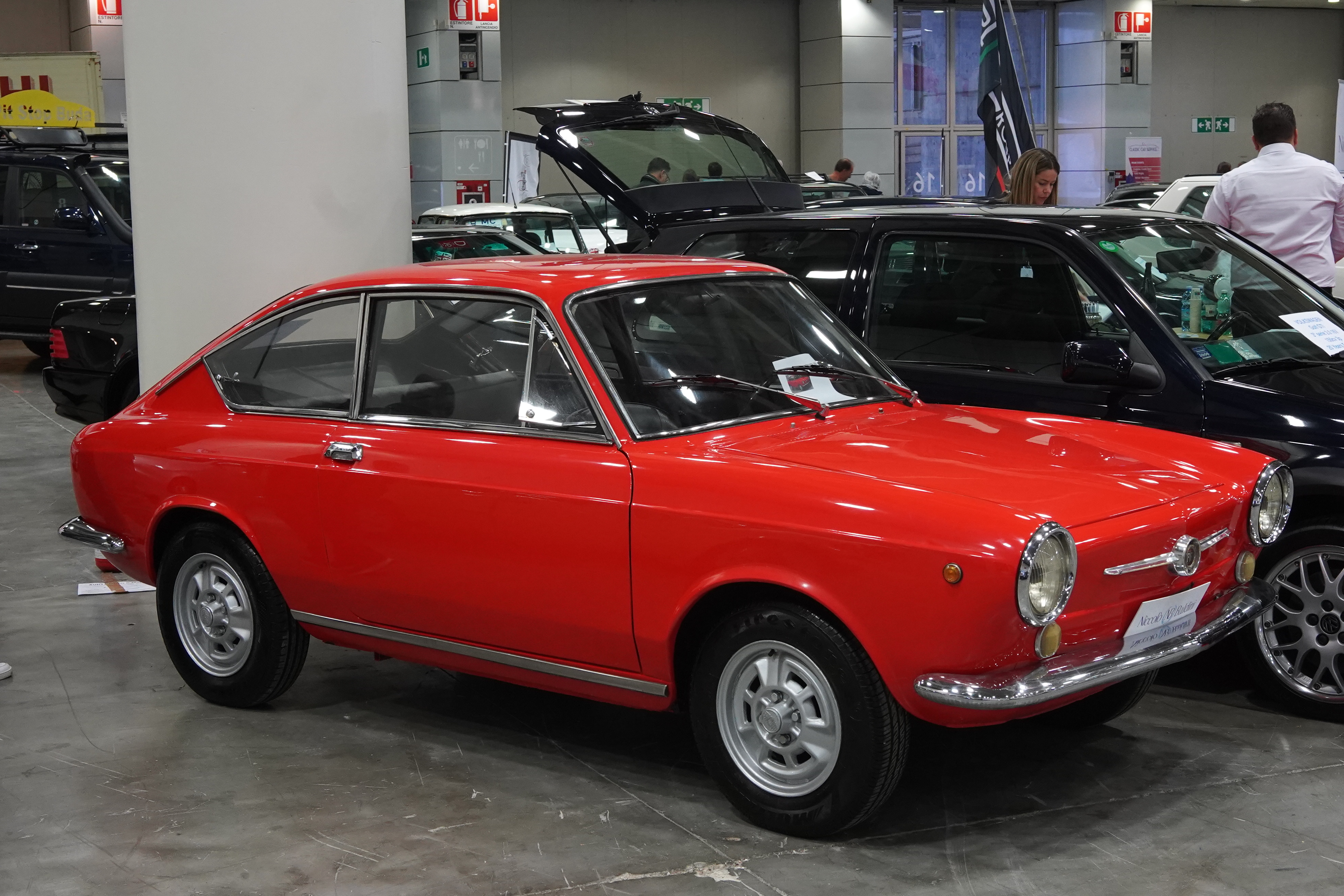
1965 Fiat 850 Coupe, €11,900 / $13,700. I adore these, and in the 1970s, these were not difficult to find in the Northeast. But I have not spotted one in the wild in at least 40 years. The tin worm ate them. This would be a blast to have, in some ways, more fun than the 850 Spider.
 

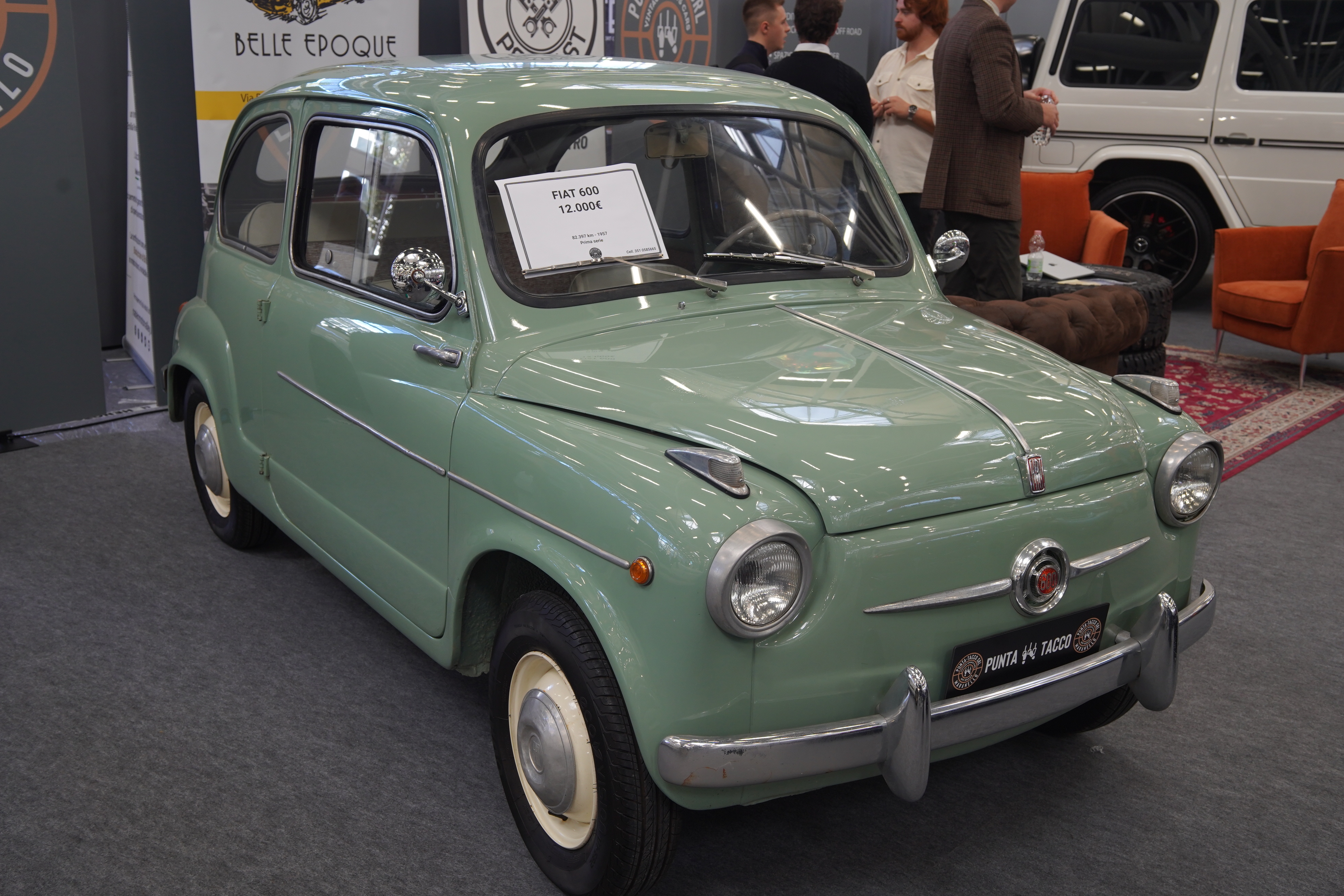
1957 Fiat 600, €12,000/ $13,800. A first-series 600. Note the suicide-hinged doors.
 

1974 Fiat 124 Special T sedan, €13,000 / $15,000. Two gentlemen who spoke no English engaged me in conversation at this car. Turned out that they were trying to sell me parts for a Fiat 124. Somehow, I managed to convince them that I don’t own one. During the intervening sign language, I was able to confirm (I think) that this car has the twin-cam engine (I think).


1967 Fiat 500, €16,500 / $19,000. There must have been three dozen of these for sale at the show. Take your pick! (But prices for them in the U.S. have come down.)


1964 Fiat Multipla, €25,900 / $30,000. Some folks refer to this car as an early version of the minivan (ignoring the VW Bus). I always found these to have a certain charm. This price seemed reasonable compared to some BaT sales which I recall.


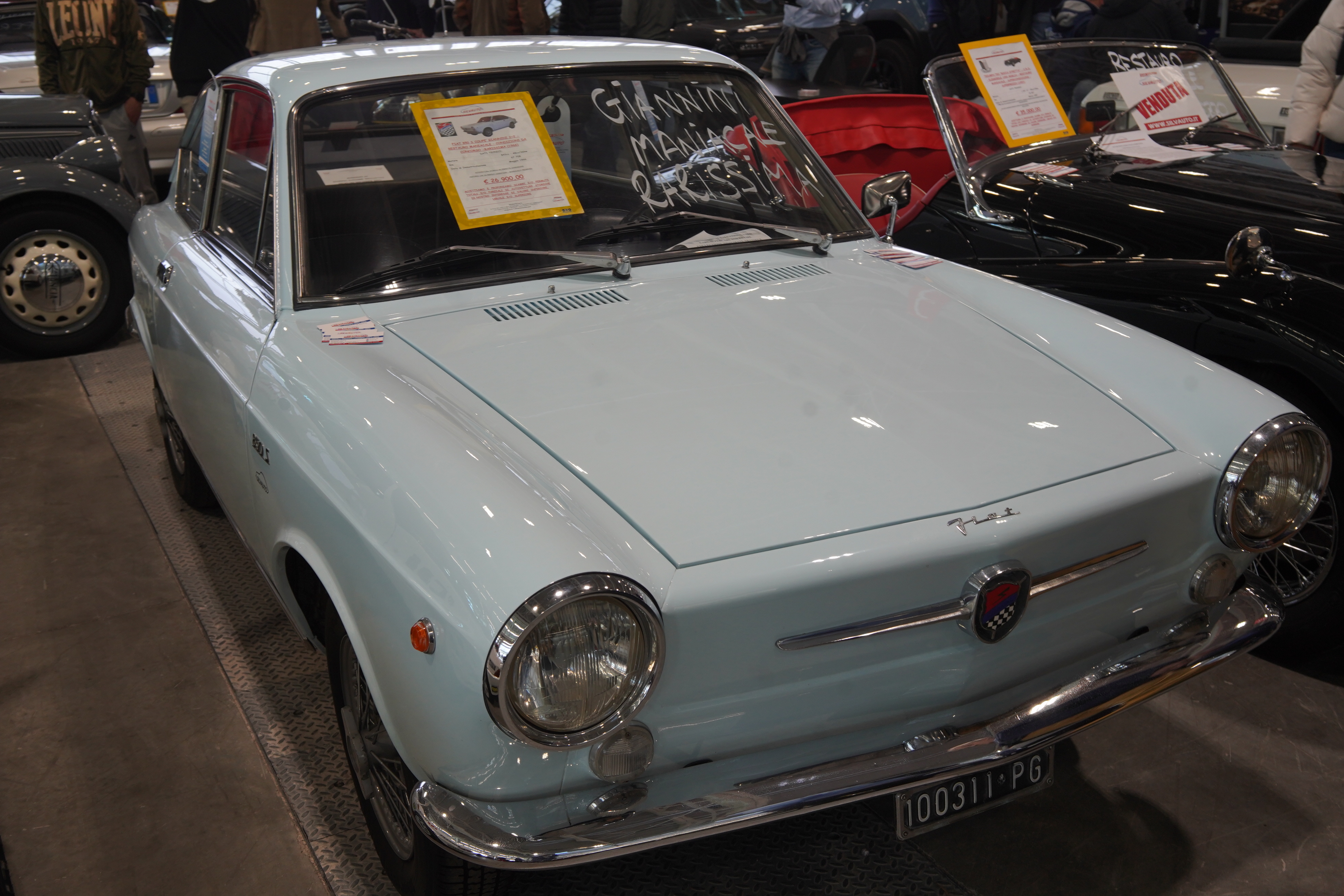
1966 Fiat 850 Coupe, €26,900 / $31,000. I’m not sure what made this one worth twice as much as the one above. The signage alluded to a special edition of some sort.
 

1968 Fiat Dino Coupe, €32,500 /$37,400. I have been smitten with these since I saw one on the street in Rome in 1978. They have always been about 1/3 the price of the Dino Spider, yet you still get the Ferrari V6 motore. As you can see, this one is sold (venduta). I’ll take mine in red, thank you.


1964 Fiat 2300 Coupe Abarth, €45,900 / $53,000. A large Fiat, with some styling cues which to my eye looked outdated. Still, not a car you’ll find in the States.


1958 Fiat 1200 Transformabile, €49,900 / $57,500. One of Fiat’s better-looking Spiders from this time period. But pricey for what it is.

1972 Fiat 124 Spider Abarth Rally, €79,900 / $92,000. Fiat successfully campaigned these heavily-modified Spiders in various rallies. From my understanding, most of them got used up, understandably so. Before plunking down all those Euros, a buyer had better do their homework to ensure this is not a “tribute car” (gotta love the clever way to say FAKE). BTW, this was the less expensive of the two on the floor. The ask on the other car was €100,000 / $115,000.


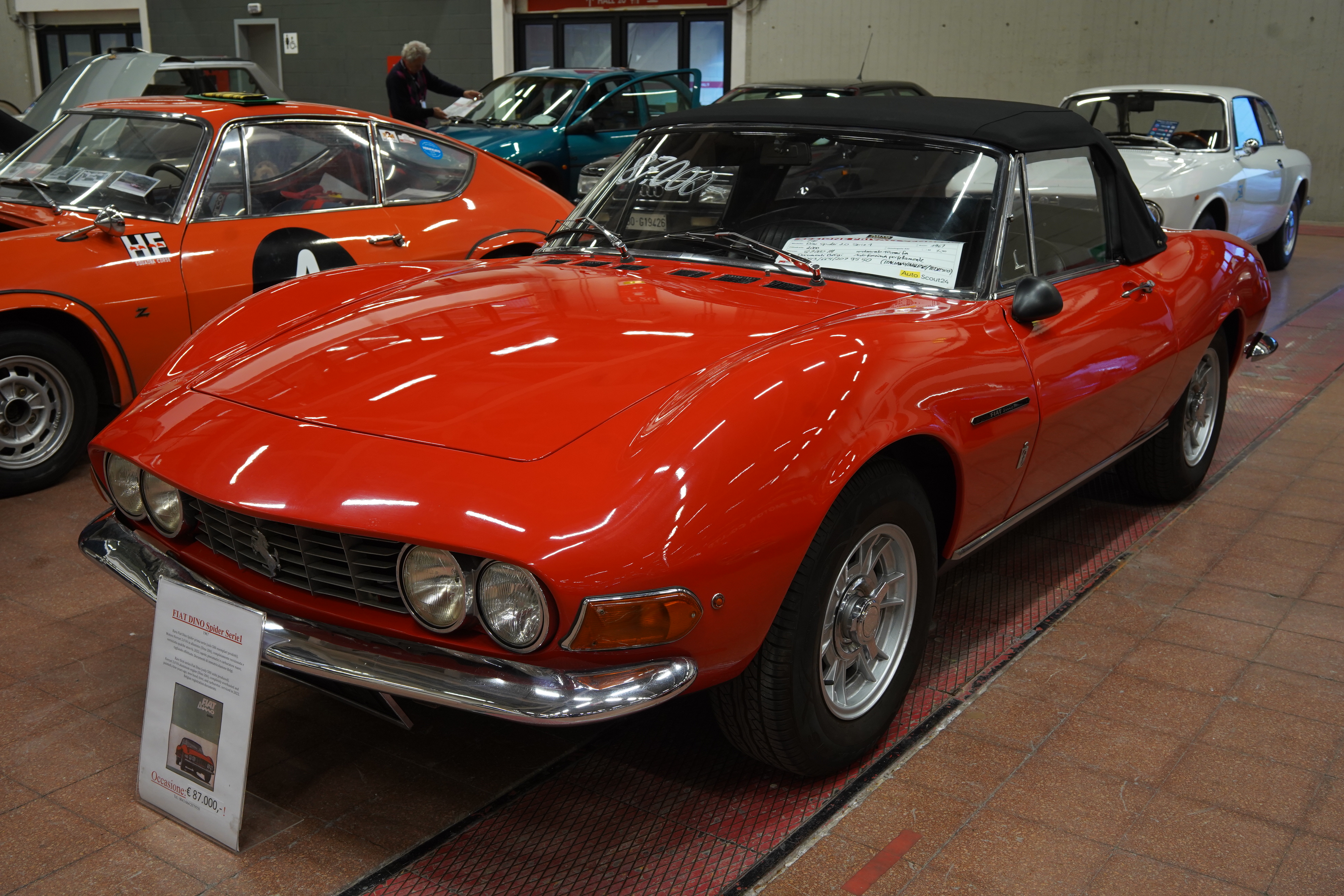
1967 Fiat Dino Spider, €87,000 / $100,000. This was the least-expensive of numerous Fiat Dino Spiders on the floor. Prices are down from their highs of several years ago, when it took about $130,000 to put one in your garage.
 

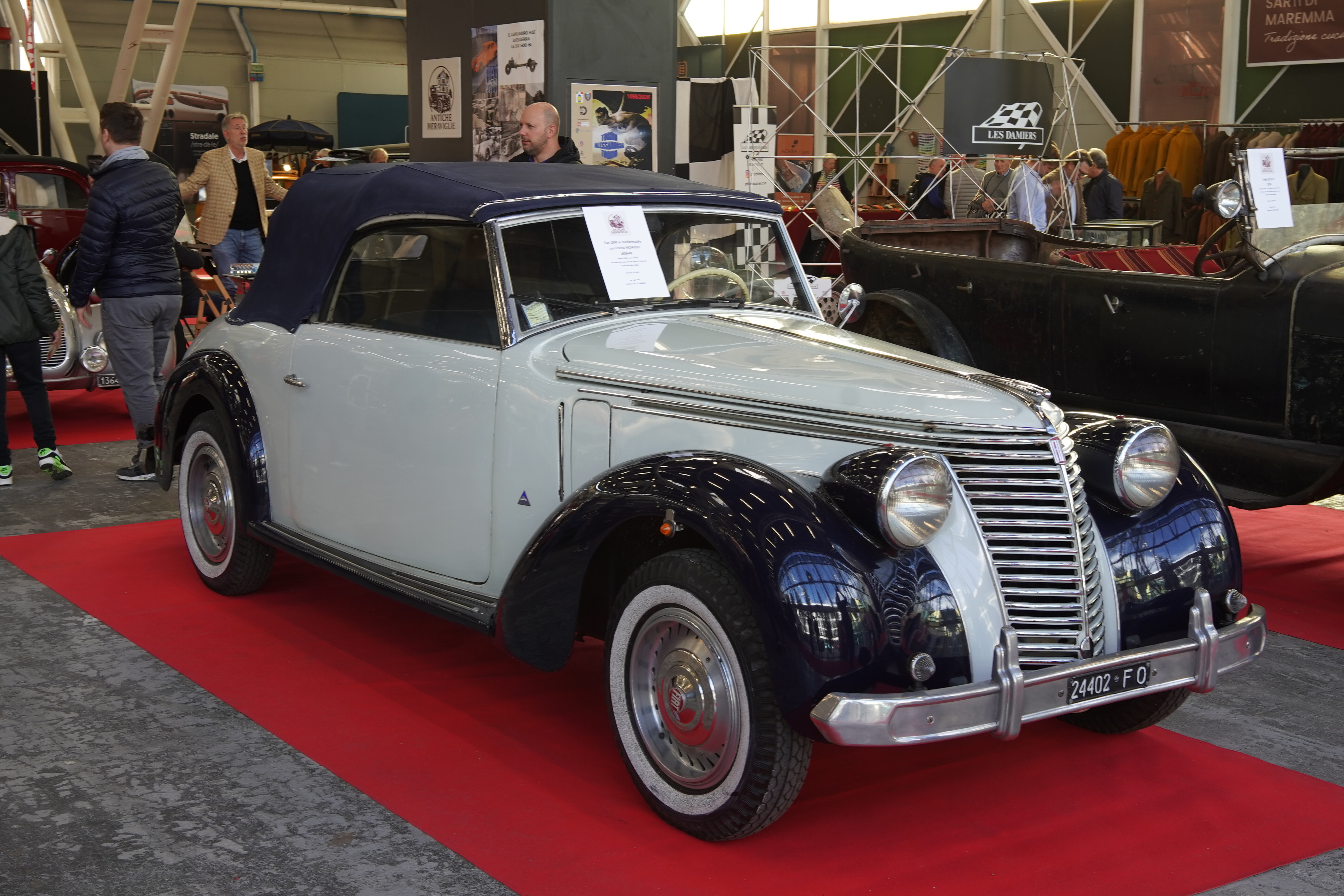
1939 Fiat 1500 6C Transformabile, €95,000 / $109,000. Built just before things got very nasty in Europe, I thought this car had a lot of presence. Expensive, but find another one.
 

LANCIA


1989 Lancia Delta GT 1.6, €4,900 / $5,600. The least-expensive car at the event. A bare-bones Delta, and with bad paint to boot. Just a car, but worth it to someone.
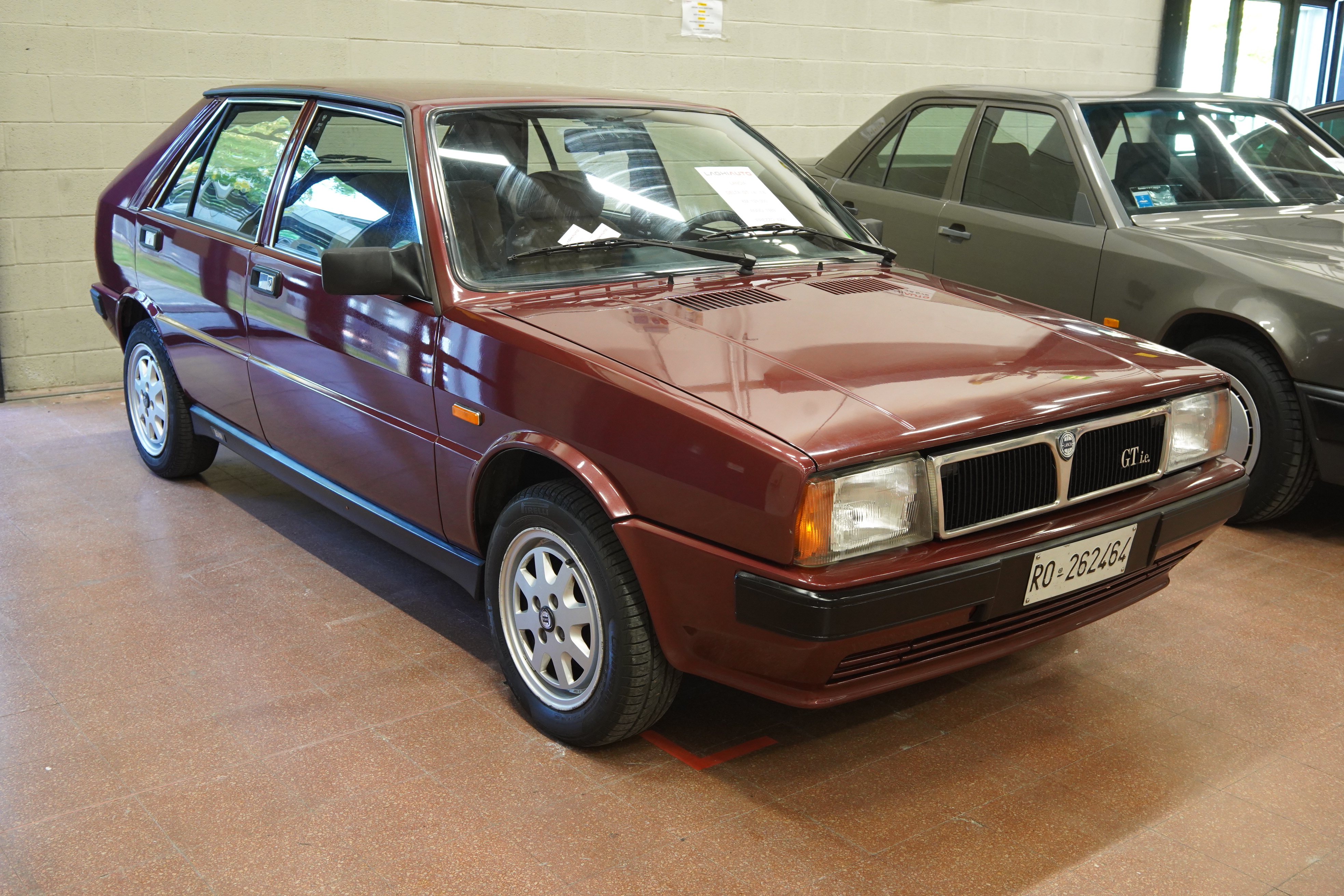
 

1972 Lancia Fulvia 1300 sedan, €5,500 / $6,300. Do you love Fulvias like I do, but can’t afford the coupe? This sedan shares its mechanicals with its two-door brother, and can carry all your work buddies to the bar on a Friday night.


1969 Lancia Fulvia Coupe, €23,900 / $27,500. The world still can’t get over how affordable these are compared to Alfa GTV coupes. A lot of style and engineering for the money. You can still find decent ones here in the U.S. for a little less than this.
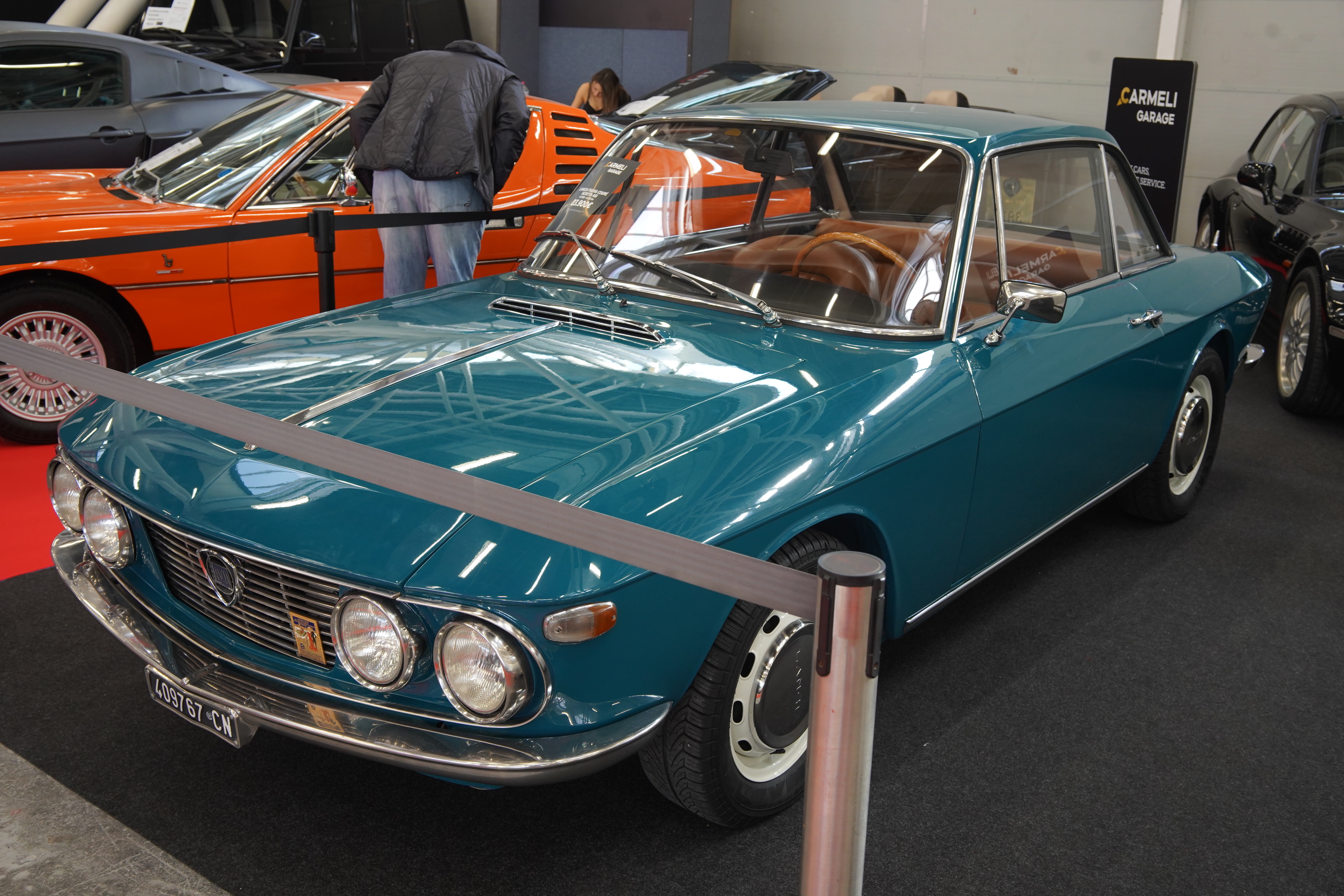
 

1968 Lancia Fulvia Zagato, €24,000 / $27,600. While I prefer the styling of the regular coupe over this design, this is one of the least expensive ways to own anything “Zagato.” I thought that this car might have been one of the better deals at the show.


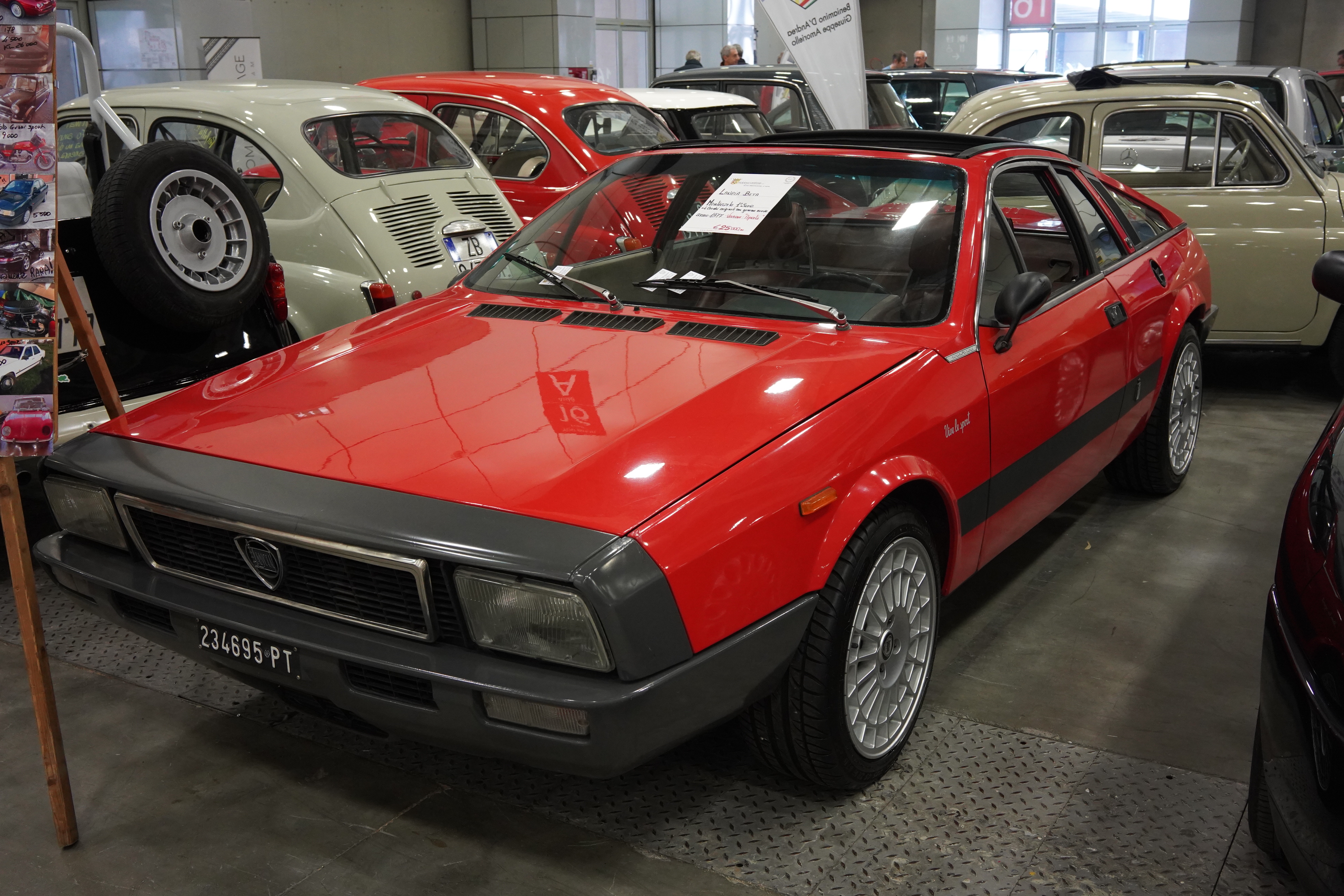
1977 Lancia Beta Montecarlo, €25,000 / $28,800. In Europe the car was badged “Montecarlo.” But because Chevrolet sold a Monte Carlo in the U.S., Lancia renamed the car “Scorpion” in our market. It was sold in the states for only two years. Outrageous design, outrageous transverse mid-engine placement.
 

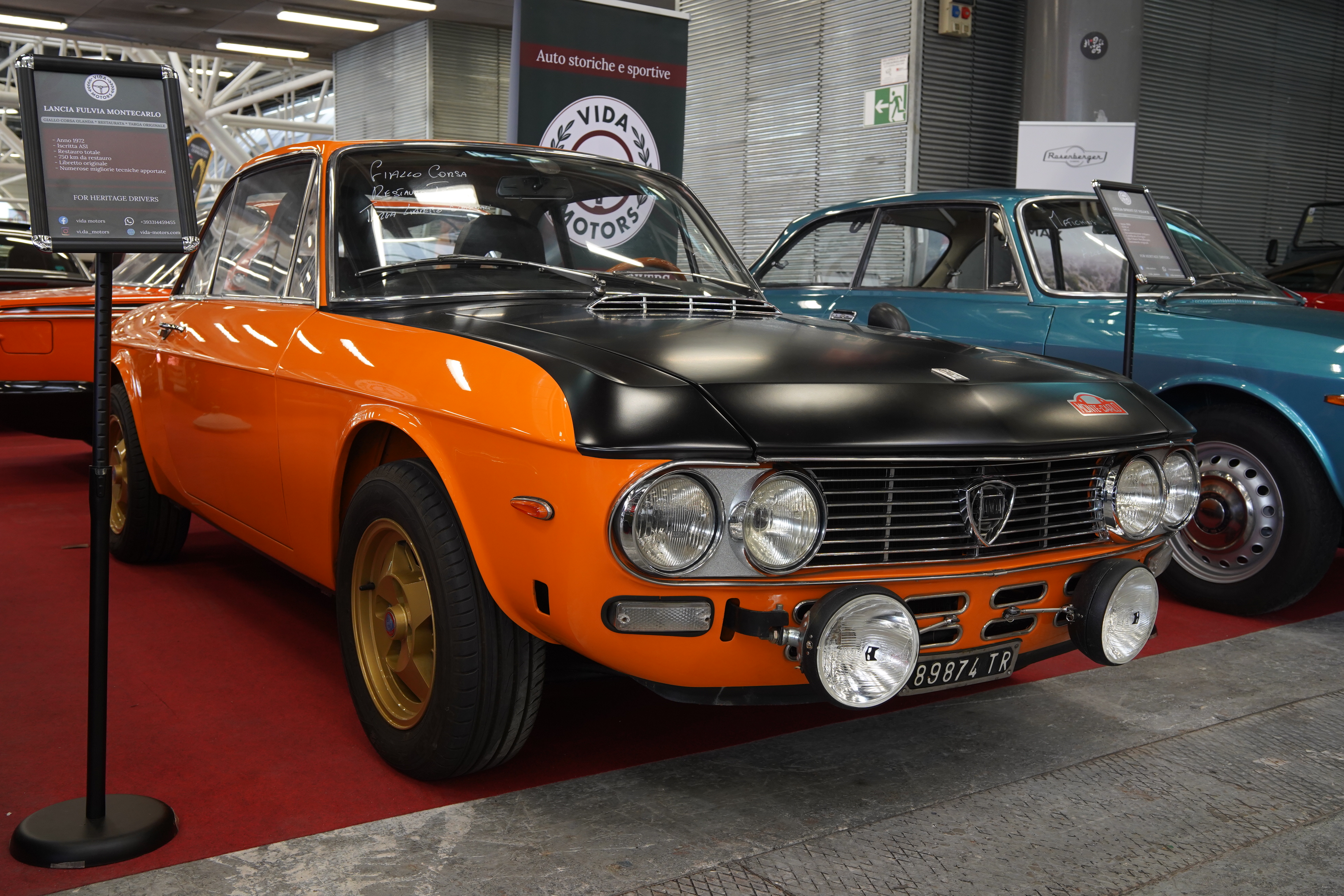
1972 Lancia Fulvia Coupe, €27,000 / $31,000. A racier livery made for a higher asking price.
 

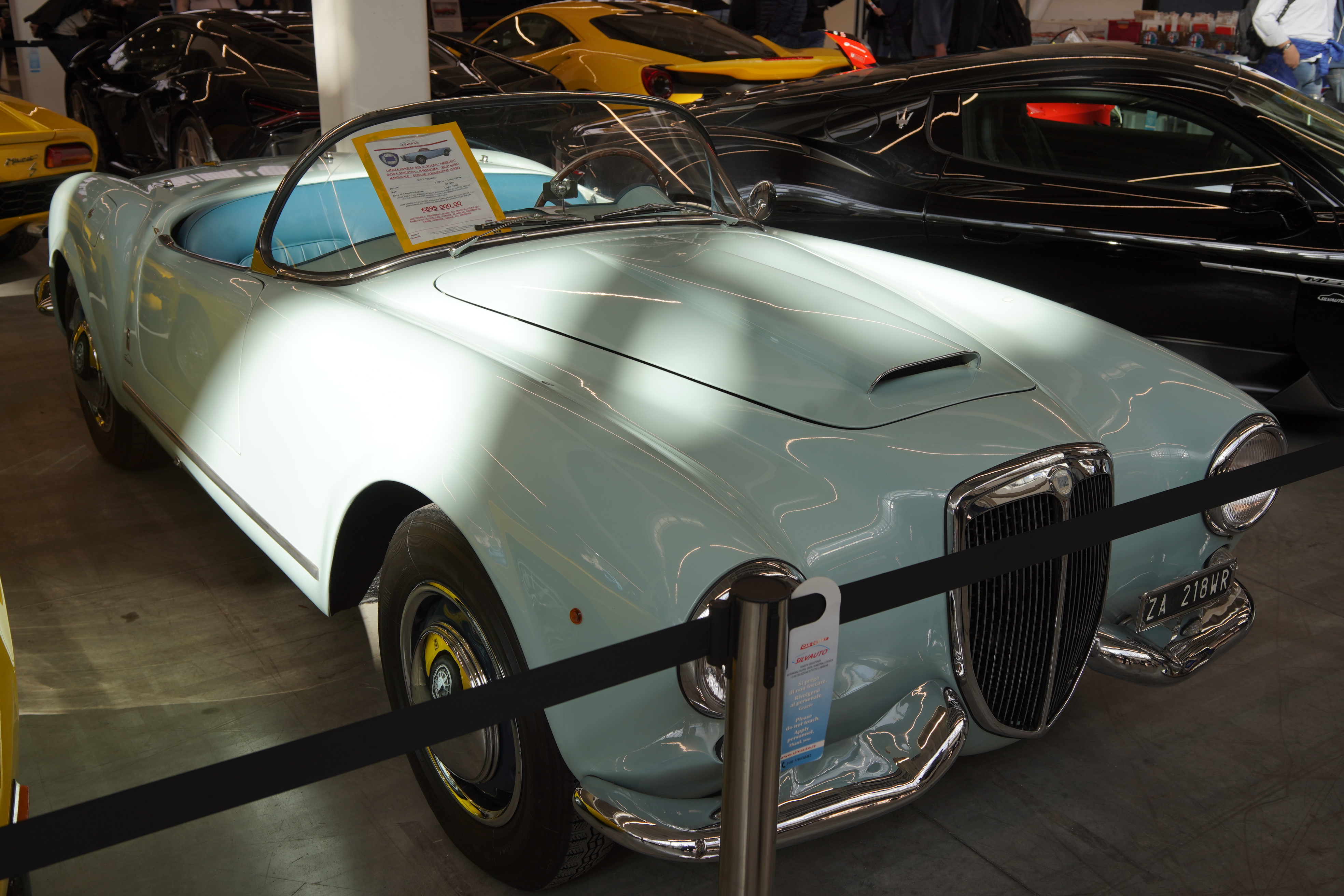
1955 Lancia Aurelia B24 Spider, €895,000 / $1,300,000. For 1955, one of the most striking and beautiful designs from any car maker anywhere. And it has the engineering to match its looks. At a million smackers, you have lots of choices, but nothing looks like one of these.
 

Still to come: spare parts vendors, car clubs, and a special guest artist! 


Entire blog post content copyright © 2025 Richard A. Reina. Text and photos may not be copied or reproduced without express written permission.
 

The Rare and the Unusual at the 2025 Auto e Moto d’Epoca

This year’s Auto e Moto d’Epoca (Autos and Motorbikes of the Classic Period) was again held at the BolognaFiere, a massive exhibition hall located in its namesake city. Every day spent there was an overwhelming automotive delight for the senses. Most of the the Fiats, Alfa Romeos, and Lancias which were everywhere were familiar to me. But if I thought I knew Italian cars well, it only took a few minutes of strolling the aisles to teach me otherwise. At almost every turn, I came across some vehicle that I had never seen in the metal before, or had never heard of before. Below are the highlights of the cars I’ve grouped together as “the rare and the unusual.” Note that I have indicated the prices in Euros as displayed. At the time of the show, the equivalent dollar value would be calculated by multiplying the Euro by 1.15.


This 1971 Fiat was labeled as an “850 Grand Prix.” From what I could translate, the description read: “This rare version of a Fiat 850 was made by the noted Francis Lombardi design house. Mechanically functional, it is a good base for a restoration.” It was for sale for an asking price of €17,000 ($19,500). Because of its positioning, this was the only shot I was able to take of it.

This very 1950s-looking thing was listed as a 1956 Fiat 1100 103 Elite Vignale. The windshield placard opened with “Vignale is one of the more important Italian automobile design houses,” and it further identified Michelotti as having had a hand in this car’s design. Mechanicals are based on the Nuova Fiat 1100, and while production numbers of around 250,000 are quoted for the “regular” Fiat 1100, the placard further stated, “it is unknown how many of the Elite Vignale were produced.” The dealer was asking €24,950 ($28,700) for this rare Fiat.

The Alfa Romeo 75 of the 1980s was sold in the States badged as the Milano. But I never heard of the “75 Evoluzione” version. This one was a 1987 model year, with an 1800-cc turbo engine. Supposedly one of only 500 produced, the placard said “everything works.” Asking price was €65,000 ($75,000).

This Alfa 1900 Coupe was stopping traffic based on its color alone, never mind its striking design. A “Touring Superleggera,” the only signage on the vehicle itself was a phone number. Several design houses did their own versions of the 1900 Coupe, but this one from Touring is magnificent.

Here is another Alfa 1900, this time, a four-door Berlina. Again, no further information was provided.

An Italian version of the VW Microbus? That’s what this “Romeo” van looked like. It appeared like you could seat about eleven people in there. I especially liked the roof-mounted windows, which really gave it that Microbus vibe.

I was greatly helped by a placard that was 100% in English: “1967 Osca 1600 GT2, with 48,000 km (about 30,000 miles). Four cylinder 1568cc engine with 140 HP, four-speed manual. Osca GT2 with Fissore bodywork. Twenty-one units built. Fiat-derived engine, Maserati chassis. Price on request.” (Badge on rear says “Sebring”.) Osca was the company started by the Maserati brothers after they sold the company named after them. This tiny car was adorable.

This Alfa 6C was on display by an organization sponsoring a reenactment of a tour/rally throughout Sicily to be conducted in May of 2026. There was no signage about the car anywhere. Based on its design, I’d pin it as from the late 1940s. Maybe if I sign up for the event they would let me drive it for a day.

The Lancia Club displayed a number of cars including this Gamma Coupe. According to Wikipedia, the coupes were designed by Pininfarina and were built from 1977 to 1984. The car bears some similarity to other squared-off designs from around this time including the Ferrari 400 and the Fiat 130 Coupe. I don’t think I had ever seen one before.

The signage had plenty of information in English about this car: “The Fiat 525 SS (the initials SS stand for high-compression) is considered the most beautiful Italian car of the period between the 1920s and 1930s, achieving numerous victories in Concours d’Elegance.” Further to that, it was identified as 1929 model year car, with a 3.8L engine producing 88.5 HP at 3350 RPM, allowing it to hit a top speed of 120 KPH (75 MPH). I found the design striking for 1929, and I can even see how it may have influenced some Mercedes-Benz and BMW designs of the ‘30s.

A Fiat Barchetta (little boat). An Italian Miata? I remember seeing photos of these when they were introduced, and at that time, did not find the looks to be attractive. In person, though, the car has a certain quirky charm.

A Fiat 8V. The story goes, Fiat wanted to name this car the “V8” but they were convinced that the Ford Motor Company held the rights to the V8 name. Ergo, they named it 8V (in Italian, “otto vu”; doesn’t exactly roll off the tongue the same way). Turns out that Ford in fact did not own those rights. I think this one was designed in-house. I’ve seen more attractive versions penned by outside design houses.

This 1960 Abarth 850 Scorpione Allemano looked great in giallo (I would bet money that before this, every Abarth I’ve ever seen was red). This sign claimed that this was one of only forty ever produced.

This Alfasud Sprint Veloce 1.3 looked like an Alfetta coupe that had been shrunk by 20%. It was the opening of a factory in the south (sud) which caused Alfa to drop “Milano” from their badge. I believe that all Alfasud models were FWD with boxer engines. These were never sold stateside.

Here is a very cute pair of the original Fiat Topolinos.

Again, I’m helped by a placard in English: “1965 Fiat 1200S OSI Spider. Rare spider designed by Giovanni Michelotti and produced by OSI in Turin (Torino), only 280 produced, 1221cc engine, 58 HP, only two owners.” Hmm, looks a bit like a TR6 from the front. And who designed that? Oh, wait…. The vendor was asking €29,500 ($34,000).

From the same vendor: “1965 Fiat 1300S Coupe Vignale, very rare car, produced in only 50 units by Carrozzeria Vignale of Turin based on a design by Michelotti, 1295cc engine.” Asking price was €32,000 ($36,800).

Here’s another pre-war car: a 1938 Fiat Balilla convertible, looking very dapper in light yellow. The vendor started out asking €39,900 ($45,900). By the time I saw it, the price was marked down to €34,900 ($40,000), “trattabile” (negotiable).

Another Alfa 6C, this one a 1949 6C 2500 SS Passo Corte. The placard stated that this car has an SS engine with 110 HP.

Still to come: posts about car clubs, vendors, and cars for sale. Stay tuned….


Entire blog post content copyright © 2025 Richard A. Reina. Text and photos may not be copied or reproduced without express written permission.
 

Overview: the 2025 Auto e Moto d’Epoca Car Show in Bologna, Italy

The 2025 Auto e Moto d’Epoca (Cars and Motorbikes of the Classic Period) car show in Bologna, Italy ran from Thursday October 23 through Sunday October 26, and I was thrilled to again be in attendance this year. I have hundreds of photos to sort through, and once that is done, numerous posts about the many different aspects of the event will be coming in the next few days. In the meantime, here are some photographs to whet your appetite for this automotive version of La Dolce Vita.

The doors opened at 9am each morning, and the crowd excitedly poured in


Each of the many buildings was filled door-to-door with cars


Italian cars were in the majority, but other European makes were there as well


Fiats of all years, shapes, and sizes were well-represented


A pair of Topolinos


A pair of Alfa coupes


This Lancia Stratos was one of many at the show


This vendor was advertising a 2026 tour of Sicily


A beautiful Alfa Romeo Giulietta Sprint


The building with parts and automobiia for sale was full of vendors like this one


Ya gotta eat! The food there was 100% Italian, of course


Fiats bathed in the morning sun

Entire blog post content copyright © 2025 Richard A. Reina. Text and photos may not be copied or reproduced without express written permission.
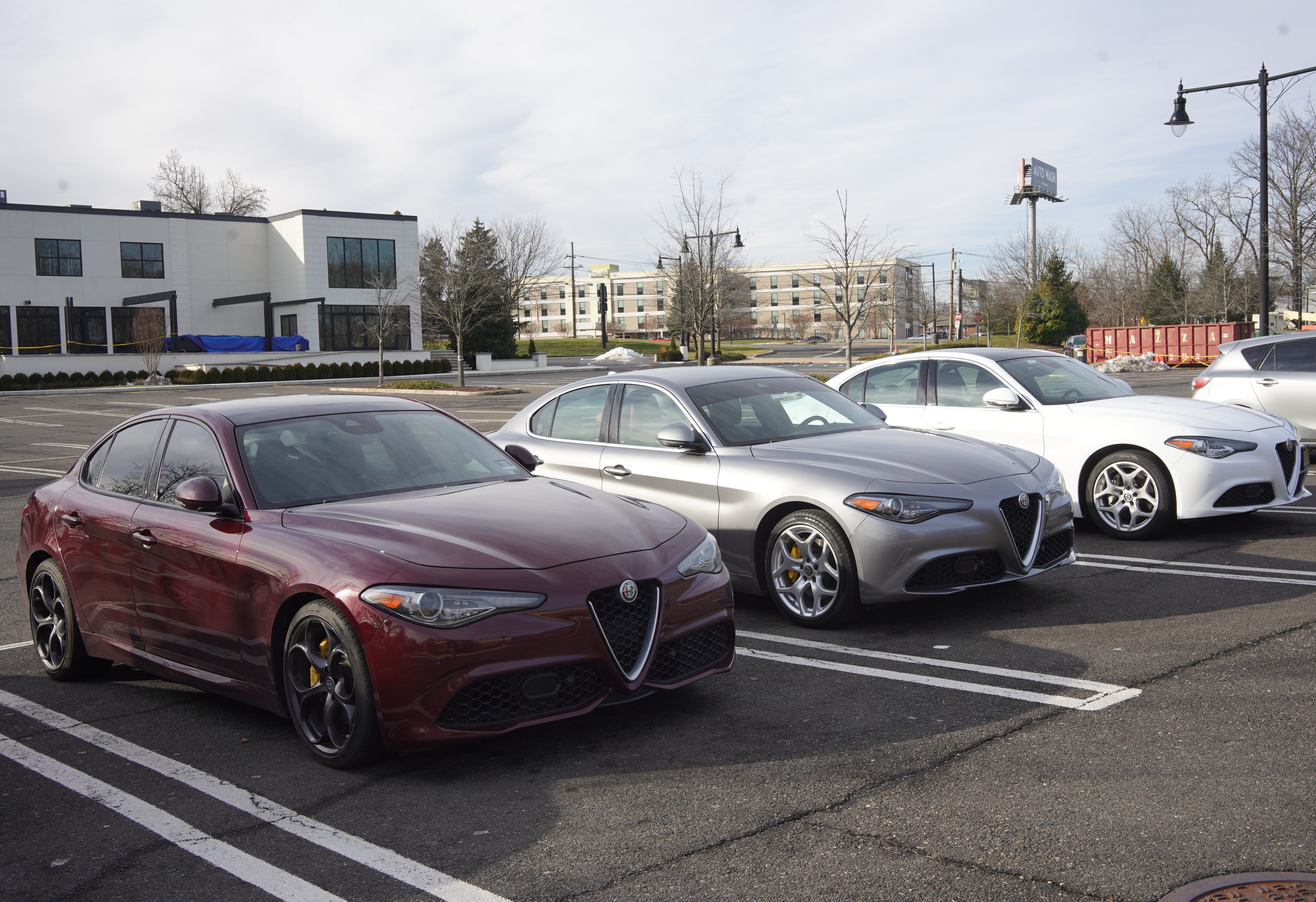
 

Hershey 2025 Part 3: the RM-Sotheby’s Auction

Attending collector car auctions is one of my favorite ways to enjoy the hobby. Compared to classified ads or car corrals, where sellers can shoot for as high an asking price as they dare, an auction result is a concrete data point: on that day, a seller was willing to sell a vehicle at a price that a buyer was willing to pay. This year, as I have done so many times in the past, I attended the RM-Sotheby’s auction at the Hershey Lodge, held on October 8 and 9 during Hershey week.

RM-Sotheby’s conducts auctions around the world, but at Hershey, they specialize in pre-war and early post-war American iron. There was a large collection of convertibles from the late ‘40s/early ‘50s, apparently from a single collection (another growing trend as older enthusiasts age out of the hobby). As you read the results below, you can presume that, at least cosmetically, most of these cars were in Number 2 or Number 1 condition, which is to say, they looked great. Mechanically, the best one can do is to observe the RM staff as they start and drive these cars up to and across the auction block.

A word about pre-sale estimates: every vehicle is given a price range, clearly displayed on the windshield placard. Savvy bidders know that this is just an estimate, and that the auction company, in an attempt to encourage bidding, might push the estimates a bit over expectations. I documented the sale of twenty cars, and the spread is interesting: of these twenty, eight sold below the low estimate; seven sold within the estimate range; and five sold over the high estimate. Were there deals? Possibly, provided that there weren’t too many hidden surprises once the new toy arrived home. I still maintain that buying a car at auction, while slightly risky, has the potential to reward the educated buyer who can bid with a level head.

As always on Richard’s Car Blog, results are arranged in sale price order from low to high, a detail that you will not find anywhere else. Sale prices shown are “hammer” prices, and do NOT include the 10% buyer’s premium owed to the auction house.


LOT 123, 1951 Pontiac Chieftain 4-door sedan, estimate range $15-20,000

SOLD for $15,500

Sold for only $500 above the low estimate. A rather ordinary car in drab colors, but in very nice condition. For the Pontiac collector who doesn’t have one.


LOT 124, 1952 Studebaker Commander convertible, estimate range $25-35,000

SOLD for $17,500

The red over red looked dashing. The top color was not noted. This car hammered for $7,500 under its low estimate, and was only $2,000 more than the Pontiac. I know which one of the two I would prefer.


LOT 136, 1930 DeSoto CF Eight roadster, estimate range $25-35,000

SOLD for $25,000

Sold right at low estimate, car looked ready to drive in the next local parade. A nice and somewhat unique alternative to a Model A Ford.


LOT 253, 1931 Dodge Six Series DH Coupe, estimate range $25-35,000

SOLD for $26,000

Sold a grand above low estimate. Car appeared to be in excellent condition, but: I could not get past the FIVE different exterior paint colors (including the wheels). The body was a lighter red over a darker red, the two colors separated by green. The fenders were black, and the red wheels, to my eye, appeared to be a shade of red different than the body. Someone liked it enough to bring it home.


LOT 131, 1950 Frazer Manhattan convertible sedan, estimate range $40-60,000

SOLD for $30,000

I can only guess that Frazers play to a very narrow audience. Still, this was a rare car in a rare body style. Winning bid was a full $10,000 below the low estimate.


LOT 262, 1953 Hudson Hornet Twin-H Club Coupe, estimate range $40-50,000

SOLD for $35,000

One of three Hudsons covered here, and the one which sold for the least, five grand below low estimate. The two-door body style looked sporty, and the yellow fog lights and windshield visor added to that sportiness.


LOT 129, 1950 Hudson Commodore convertible, estimate range $60-70,000

SOLD for $40,000

At a full $20,000 below low estimate, and only $5,000 more than the Hudson hardtop above, someone got a very nice immediate post-war droptop at a fair price.


LOT 301, 1940 Ford Deluxe convertible, estimate range $50-60,000

SOLD for $42,000

I follow these pre-war Ford V8s a little bit, and prices are certainly off their highs of several years ago. I would guess that five or six years ago, this car could have fetched $60,000. Someone took advantage to grab this car at $8,000 below low estimate.


LOT 258, 1939 Ford Deluxe convertible, estimate range $35-45,000

SOLD for $42,500

Just one year older than lot 301 above, and look at the difference in the estimate range. While the ’39s will never be as desirable as the ’40s, this was still a good-looking automobile. and actually sold for $500 more than the ’40.


LOT 151, 1931 Chrysler CD Deluxe Eight coupe, estimate range $40-50,000

SOLD for $45,000

Sold right in the middle of the estimate range, these early Chryslers are handsome and stately cars. This would be a nice ride for a Glidden tour.


LOT 134, 1932 Plymouth Model PB Sport roadster, estimate range $35-45,000

SOLD for $50,000

The first of our cars to have hammered above the high estimate (by $5,000), this droptop was striking in its two-tone blue and white. Even the wire wheels were white, lending a jaunty look to the car. This early Plymouth sold for more than both the ’39 and the ’40 Ford convertibles.


LOT 160, 1960 Ford Thunderbird convertible, estimate range $40-60,000

SOLD for $52,000

The optional Continental kit did nothing to improve the looks of this final-year Squarebird. I follow sales of the ’61 through ’66 T-Birds a bit, and I thought that the pre-sale estimates here were high, making it a surprise to me that this car hammered mid-estimate.


LOT 149, 1941 Packard Super Eighty 180 Touring sedan, estimate range $40-50,000

SOLD for $52,500

Packards of all ages remain very collectible, but values vary wildly based on year, powertrain, and body style. I found this car to have a certain appeal, but I’m not certain if the two-tone green was a factory choice. Interior was especially nice. The car sold for $2,500 above high estimate, which was still a fair price.


LOT 303, 1954 Packard Caribbean convertible, estimate range $60-75,000

SOLD for $55,000

There is usually one Caribbean at every high-end auction, and this one stood out for its rather plain colors (in two-tone rather than the more frequently-seen tri-tone). Values have dropped; that estimate range would have been more accurate several years ago. Sold for $5,000 below low estimate, and interestingly, only $2,500 more than lot 149 above.


LOT 269, 1966 Chrysler 300 convertible, estimate range $30-40,000

SOLD for $57,500

A non-letter 300, but still impressive in every way: size, power, comfort, image. I wasn’t in the room for the bidding, but I can only wonder if there was a bidding war, as this car hammered for an impressive $17,500 above its high estimate.


LOT 130, 1948 Chrysler Town and Country convertible, estimate range $70-80,000

SOLD for $70,000

A lot of Mopars at this auction! These woodie convertibles have always had a following. Like some other cars from this time, values are down. I remember when these were easily six-figure cars. Hammer price just reached low estimate, which looks fair to buyer and seller.


LOT 246, 1952 Hudson Wasp Twin-H two-door Brougham, estimate range $40-60,000

SOLD for $100,000

This was the only car of the several dozen I inspected which showed some serious paint and sheet metal defects (see lead photo), which made the hammer price a head-scratcher, until I read that this car was once owned by Steve McQueen (a fact surprisingly omitted from the windshield placard). In that light, I’m surprised that it didn’t bring more.


LOT 189, 1954 Aston Martin DB2/4 hardtop, estimate range $125-200,000

SOLD for $100,000

I used to turn my nose up at these early Aston Martins, especially compared to the DB4, 5, and 6 cars, but over time my opinion of them has softened. Last October, RM sold a similar car for $160,000, making this one look like the bargain of the day at $100,000, twenty-five grand below low estimate. Let’s see, if I sold my Alfa….


LOT 162, 1965 AMC (Rambler) Ambassador 990 convertible, estimate range $40-60,000

SOLD for $102,500

The shock of the show! Yes, it had factory A/C, and was in excellent condition, and would be impossible to duplicate, but still …. This sale price, $42,500 above high estimate, handily beat most every other American ’50s-’60s convertible in this auction. Wow.

LOT 297, 1937 Cord 812 Supercharged Cabriolet, estimate range $250-300,000

SOLD for $190,000

The 810 and 812 Cords of 1936 and 1937 will always be collectible. This one, in supercharged form, was in a stunning color combination. But here was a case where I think RM went overboard in its pre-sale estimates. Historically, the roadsters and cabriolets have sold between $150,000 and $200,000, making this hammer price market-correct.


This concludes the Hershey reports for 2025. I hope you enjoyed the articles and photographs. 


Entire blog post content copyright © 2025 Richard A. Reina. Text and photos may not be copied or reproduced without express written permission.
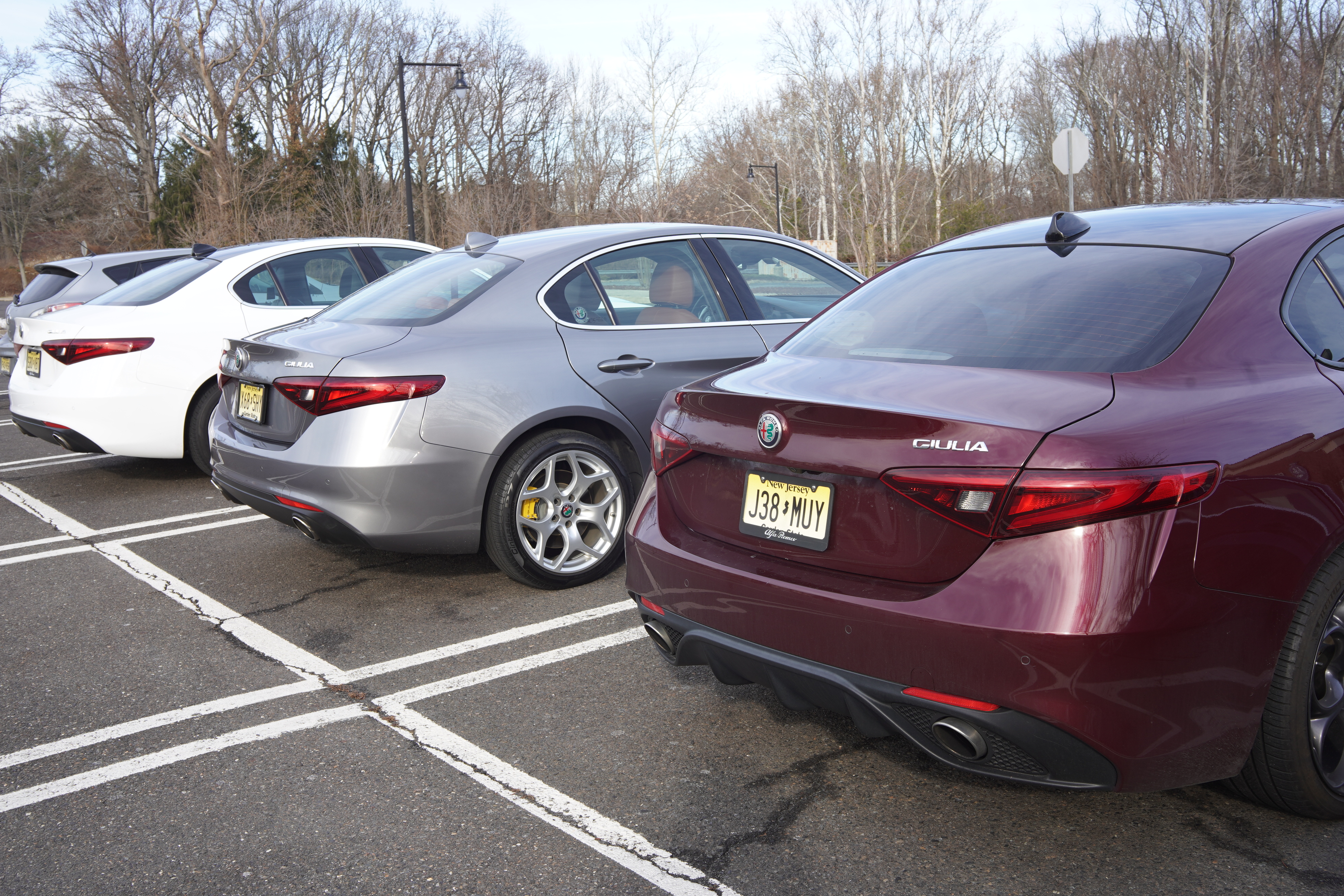
 

Hershey 2025 Part 2: The AACA Car Show

We made the discovery by accident. It was the late 1990’s, and my rally brother Steve and I both took the week off from work so that we could attend Hershey. When Saturday rolled around (at that time, the judged car show was on Saturday; it has since been moved to Friday), for reasons which are lost to time, we got up extra early and headed to the show field, arriving around 7:30 a.m. To our amazement, we stumbled upon the sight of the show car owners driving their cars onto the field. We quickly secured a convenient vantage point and stood, transfixed and unmoving, for several hours as we saw and heard these exquisite antique automobiles being driven to their assigned Class parking spots. (As per AACA Judging Guidelines: “All vehicles must be driven on the show field under their own power, except motorcycles and race cars.” Once on the show field, cars are NOT checked or judged for the operational ability of any equipment.)

This Ford is parked adjacent to its Class sign

Since that discovery, whenever I’m at Hershey, I’ve made it a habit to attend this morning parade. This year, I arrived at the show by 7:45, and found a great viewing spot, with the glorious golden sunlight on my back (and good thing, too, as it was 37 degrees F). For an hour and a half, I held my ground as I snapped photos of hundreds of cars motoring up the entrance road. By 9:15, it was time to move, so I headed across the street to take in the rest of the show.

This row of all 1942 model year cars is part of the NB Collection of Nicola Bulgari

What is posted below is a huge photo dump of the morning parade. The morning sun bathed every car in a light the quality of which only comes along at certain times of day. The temps rose to a tolerable low 60s, and I walked the rows until early afternoon, by which time I was ready to head home. Hershey 2025 was a rousing success.


NOTE THE TOW ROPE!
I know the owner, Alex, from the NJ-AACA. This is the only 1944 model year ANYTHING ever entered into an AACA National.


Coming up: Part 3, the RM-Sotheby’s Auction. 
 

Entire blog post content copyright © 2025 Richard A. Reina. Text and photos may not be copied or reproduced without express written permission.