When we were in Italy last month for the Auto e Moto d’Epoca, Bologna was not the only city we visited. We started our trip in Torino (Turin to you Americans), specifically because my brother-in-law and I have an old mutual friend, John, who has lived full-time in Torino for the past nine years or so. It was great having a local to show us the sights, and one of those sights was the Museo Nazionale Dell’Automobile (The National Automobile Museum). Before venturing over, John made a point of stating that the museum had enough history in it that he expected my wife and brother-in-law would still enjoy it, even though they are not exactly fanatical about automobiles, and I believe that they did.
When purchasing our tickets, a museum employee informed us that some sections of the place were temporarily closed for a changeover of exhibits. We agreed to enter anyway, and it was worth it. There was still plenty to see, and I was particularly taken with the effort made to display vehicles from a variety of countries, not just Italy. Signage was in Italian and English, which helped keep our interest.
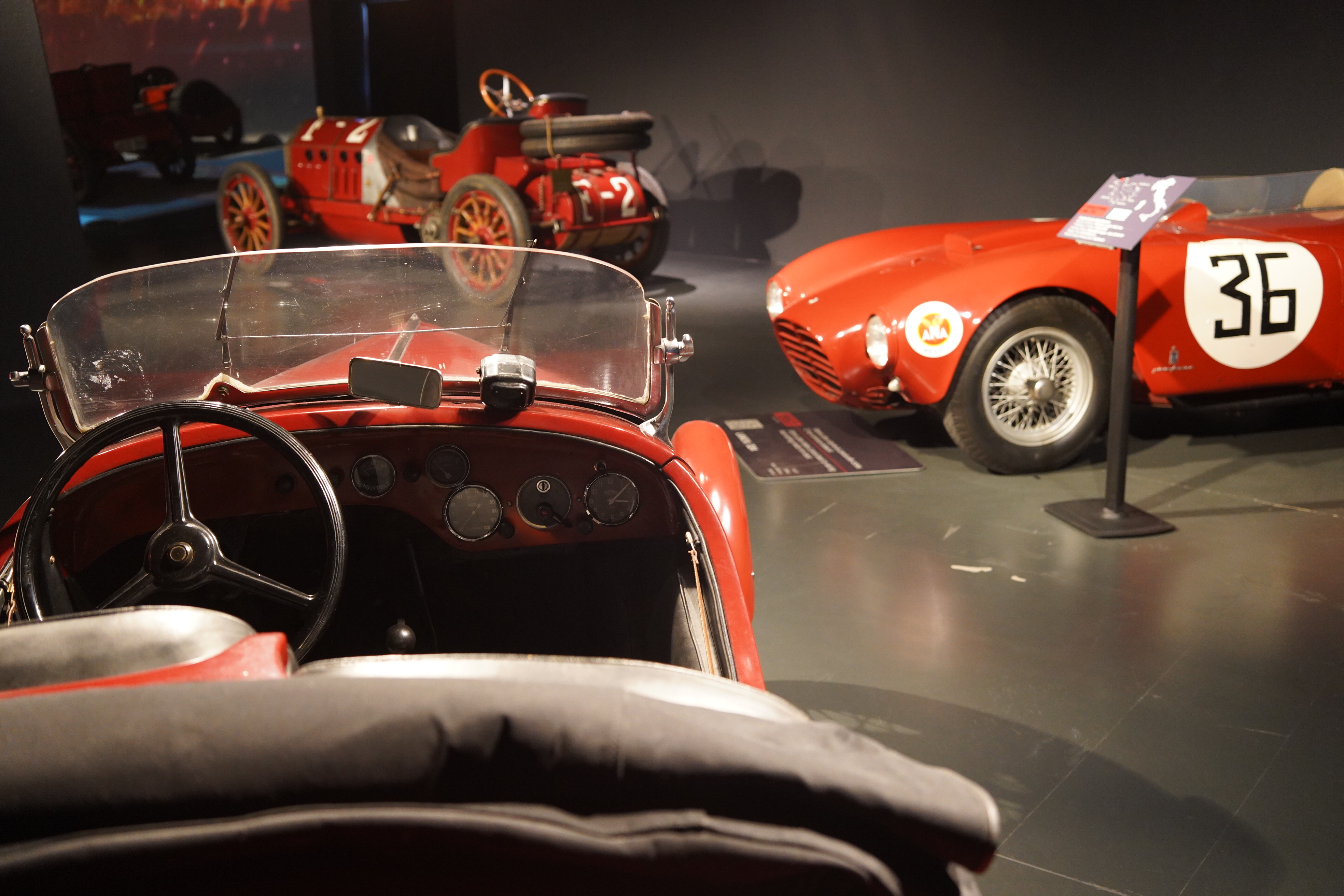
Below are photos of some of the highlights of this museum. My belated thanks to John for directing us here, because I had never heard of this place before he suggested it!
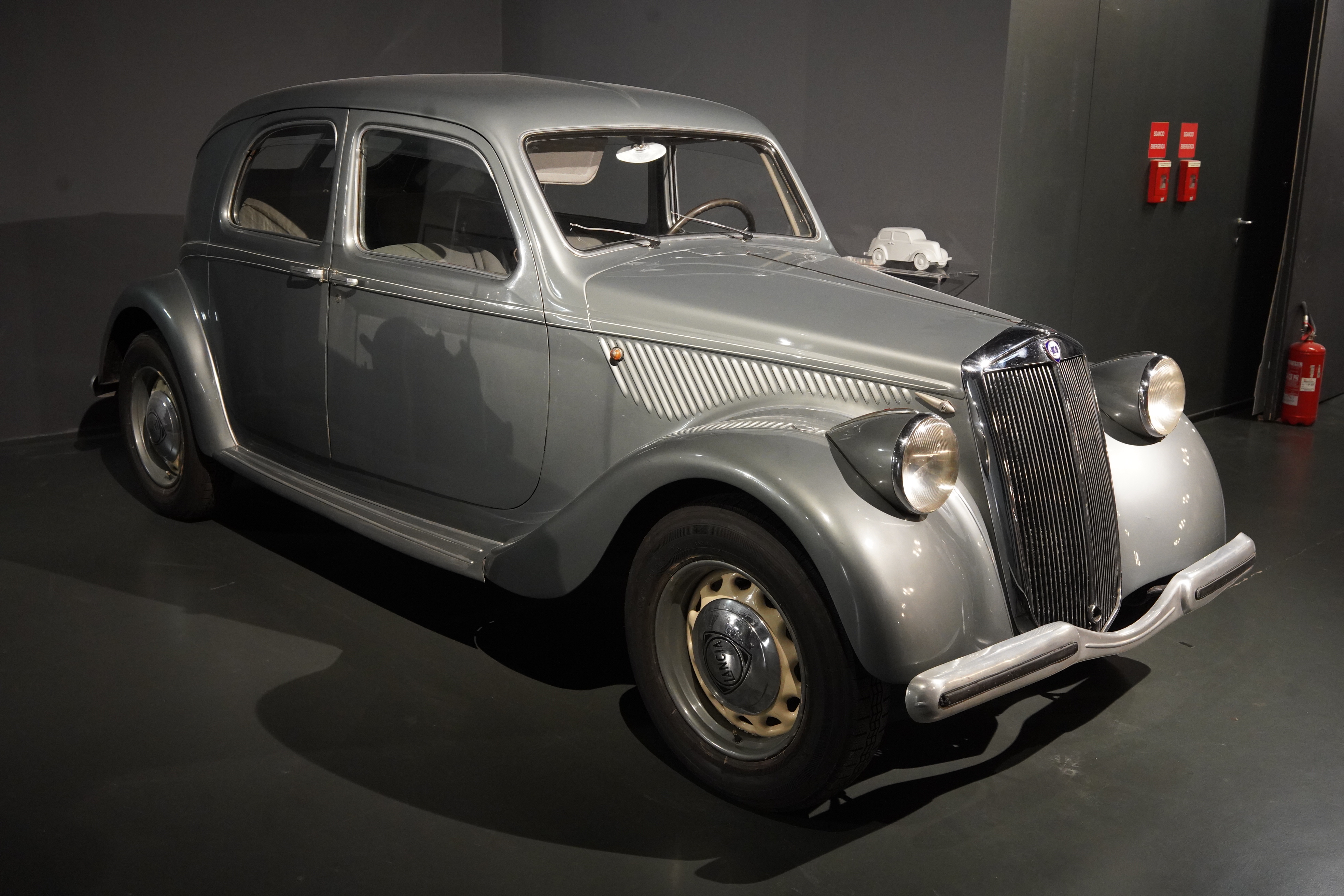
1948 Lancia Aprilia
1936 Fiat 500, better known as the Topolino
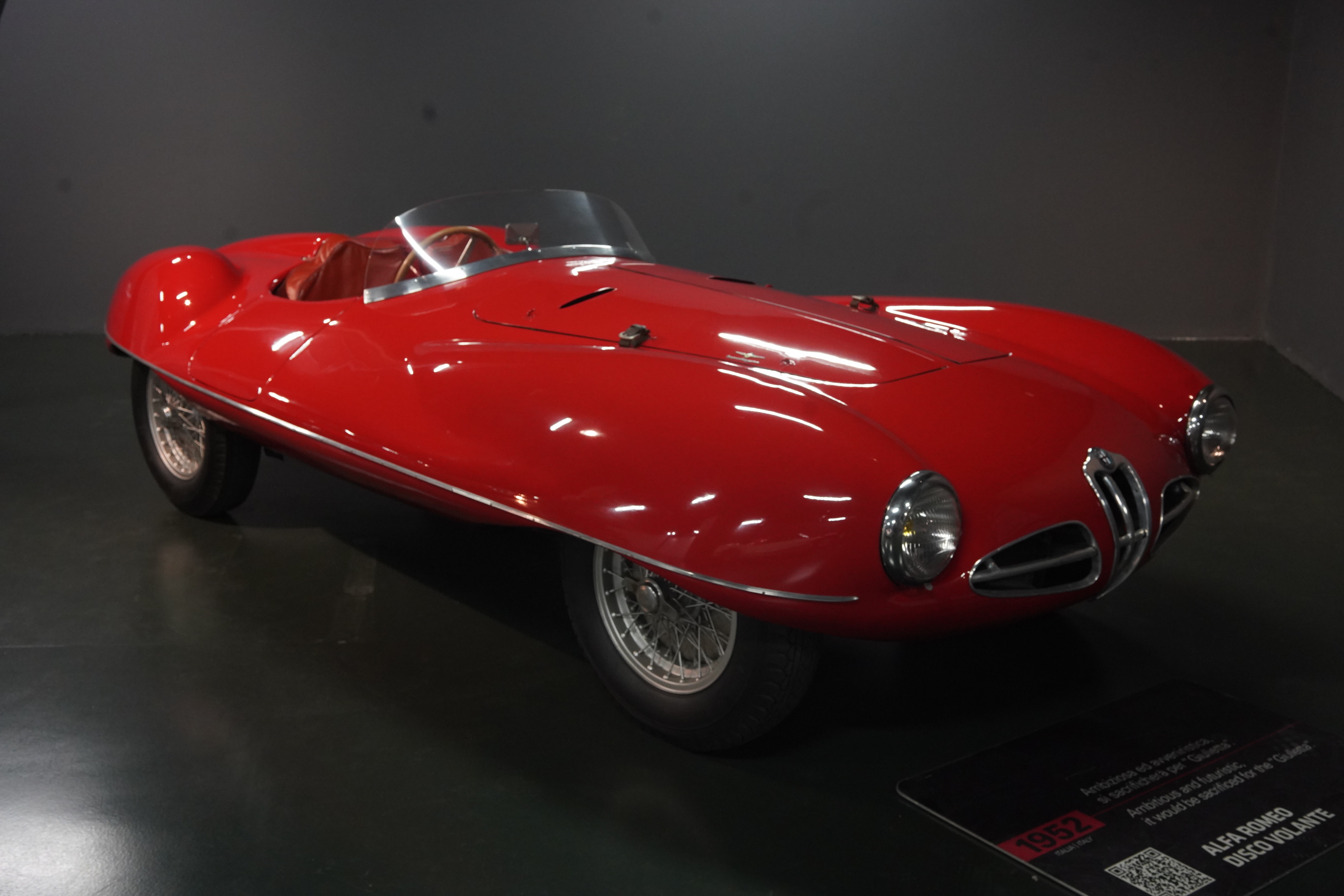
The Alfa Romeo with my all-time favorite model name, “Disco Volante” (flying saucer)
1948 Cisitalia, which was on display at the Museum of Modern Art in NY
The heft of this Buick wagon stood out against the European machines
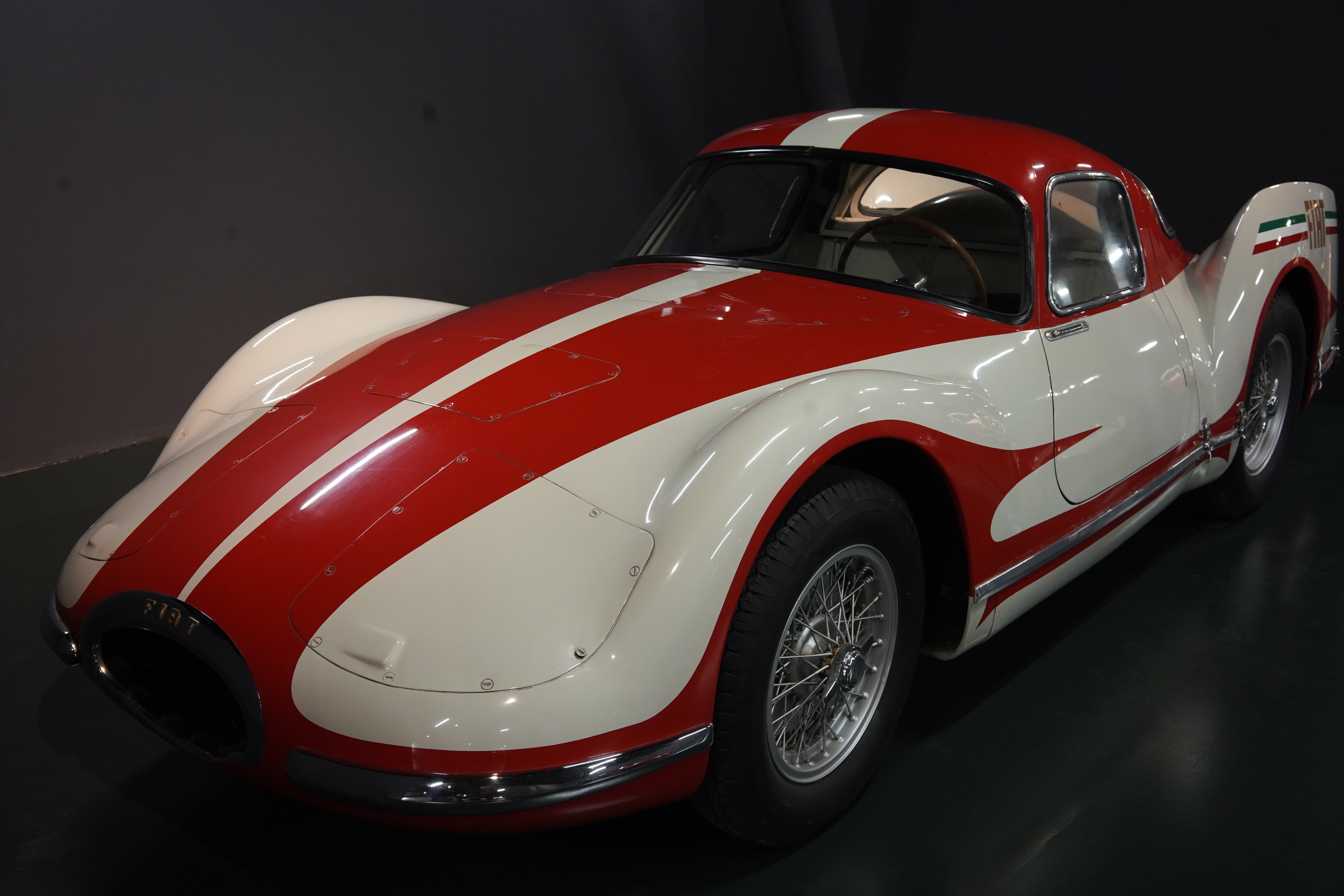
A fanciful Fiat design studyEven the Italians added fins
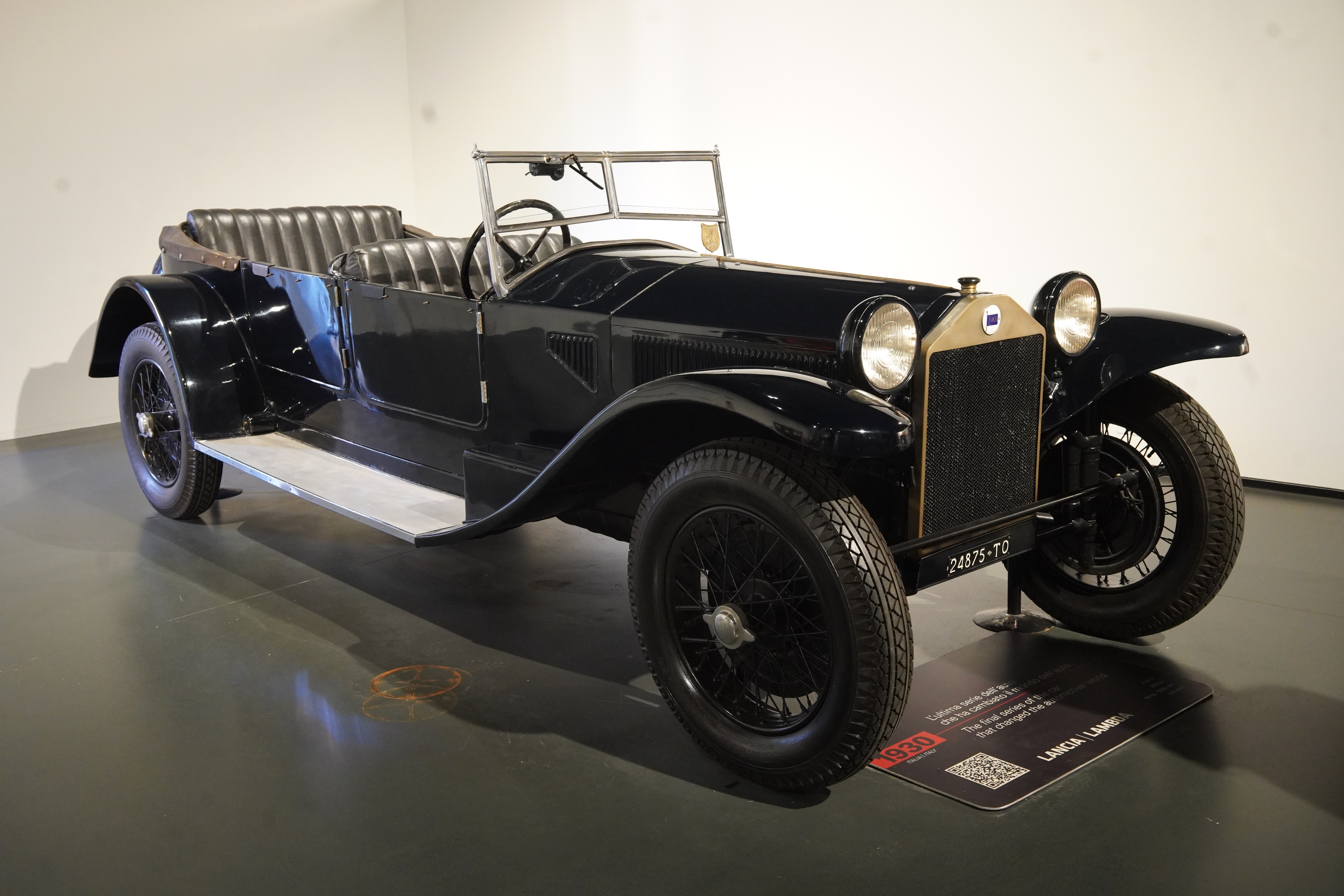
1930 Lancia Lambda
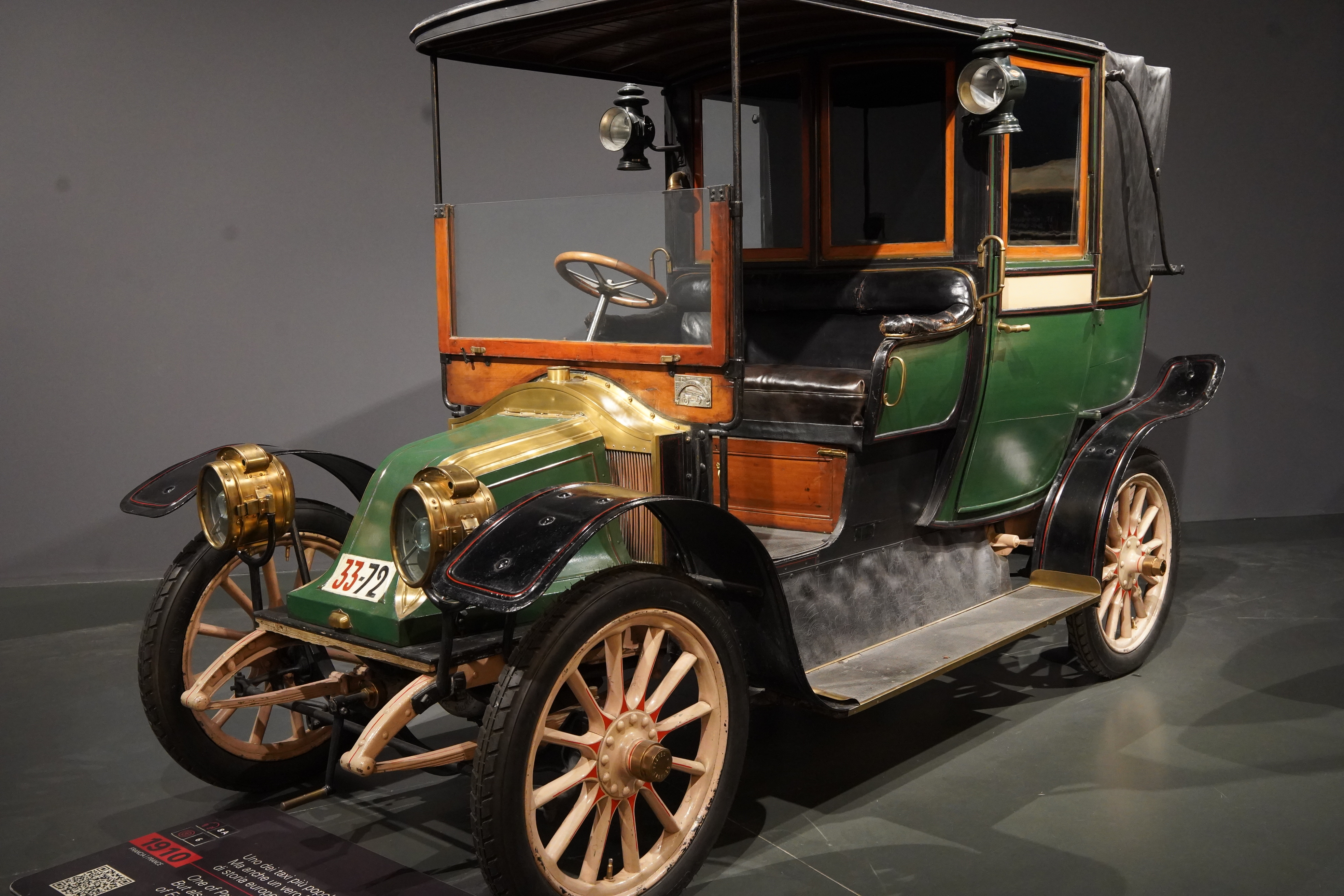
This 1910 Renault was labeled “one of Paris’s most popular taxis”
I loved the sportiness of this 1908 REO Gentleman’s Roadster
The infamous DeLorean
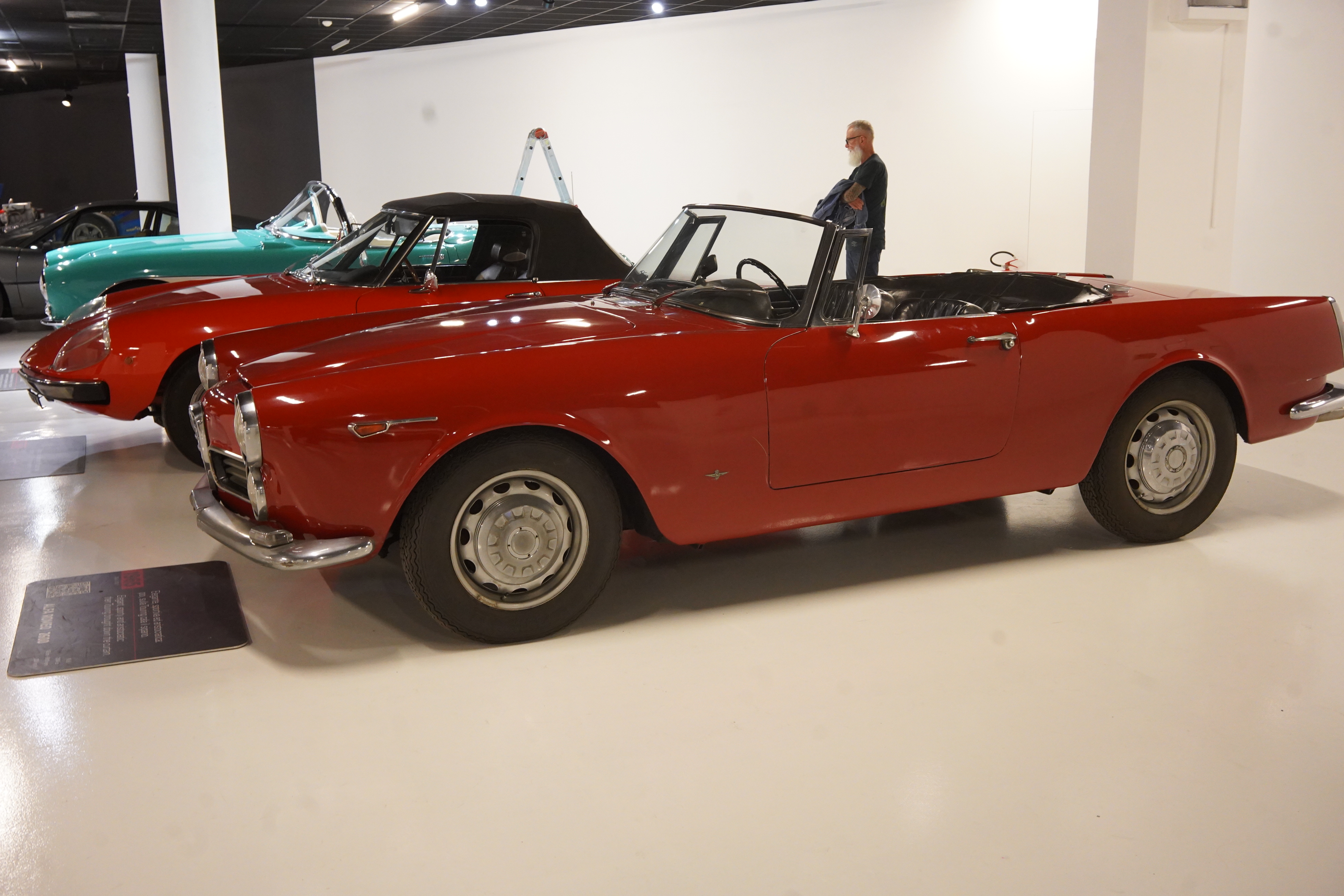
1965 Alfa Romeo 2600 Spider, with a Duetto behind it
1934 Fiat 508 S
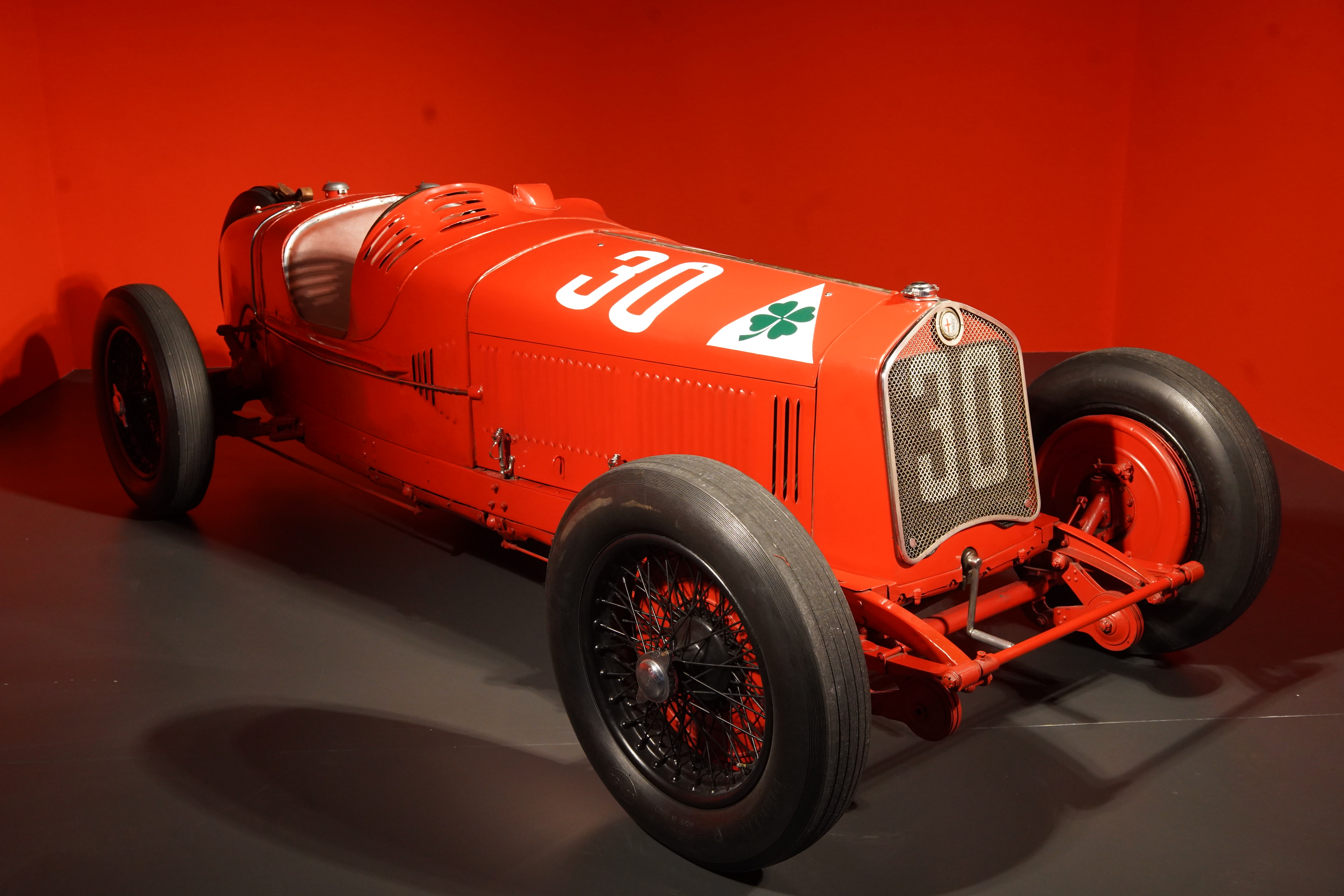
1930 Alfa Romeo P2
Fiat Abarth 500
The BMW Isetta. Sharp-eyed readers will notice this is the European version, with different bumpers
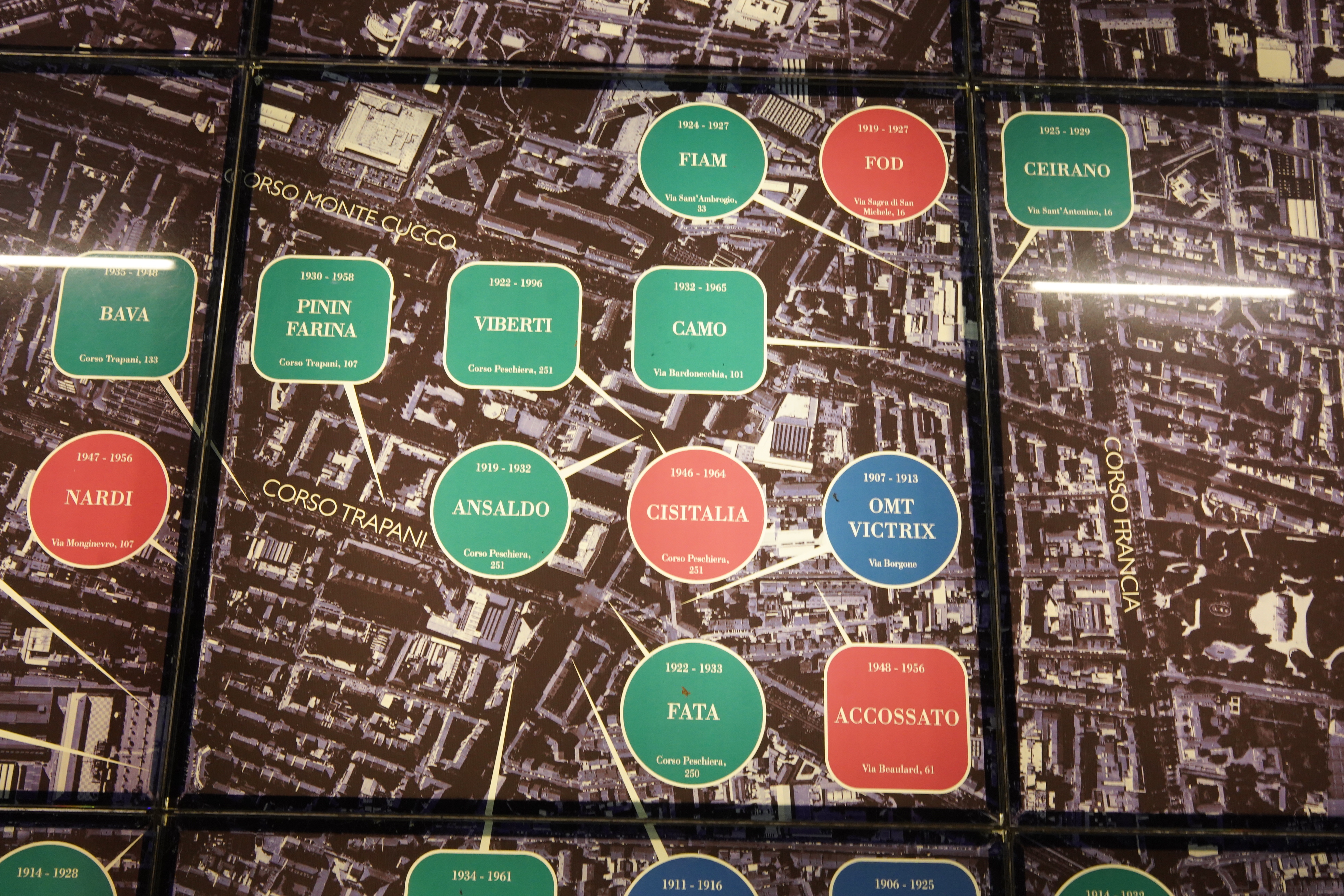
Near the end of our visit, John delighted in showing me a large room where the entire floor was a map of the city of Torino. On the map were signs pinpointing the location of every automotive business concern that once was located in this city. You will undoubtedly recognize some of these famous firms, as I did, but I also admitted to John that there were many I had not heard of as well.
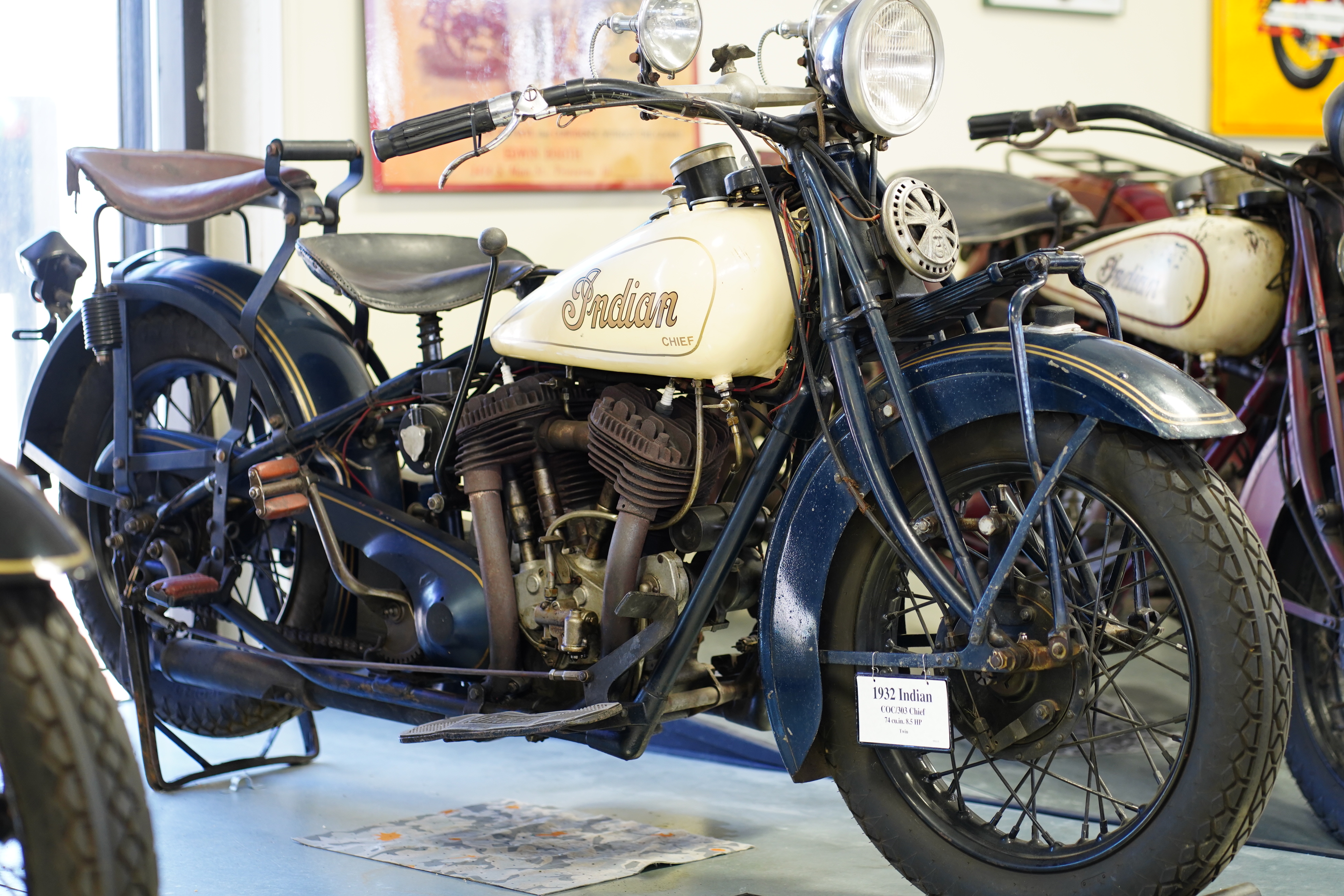
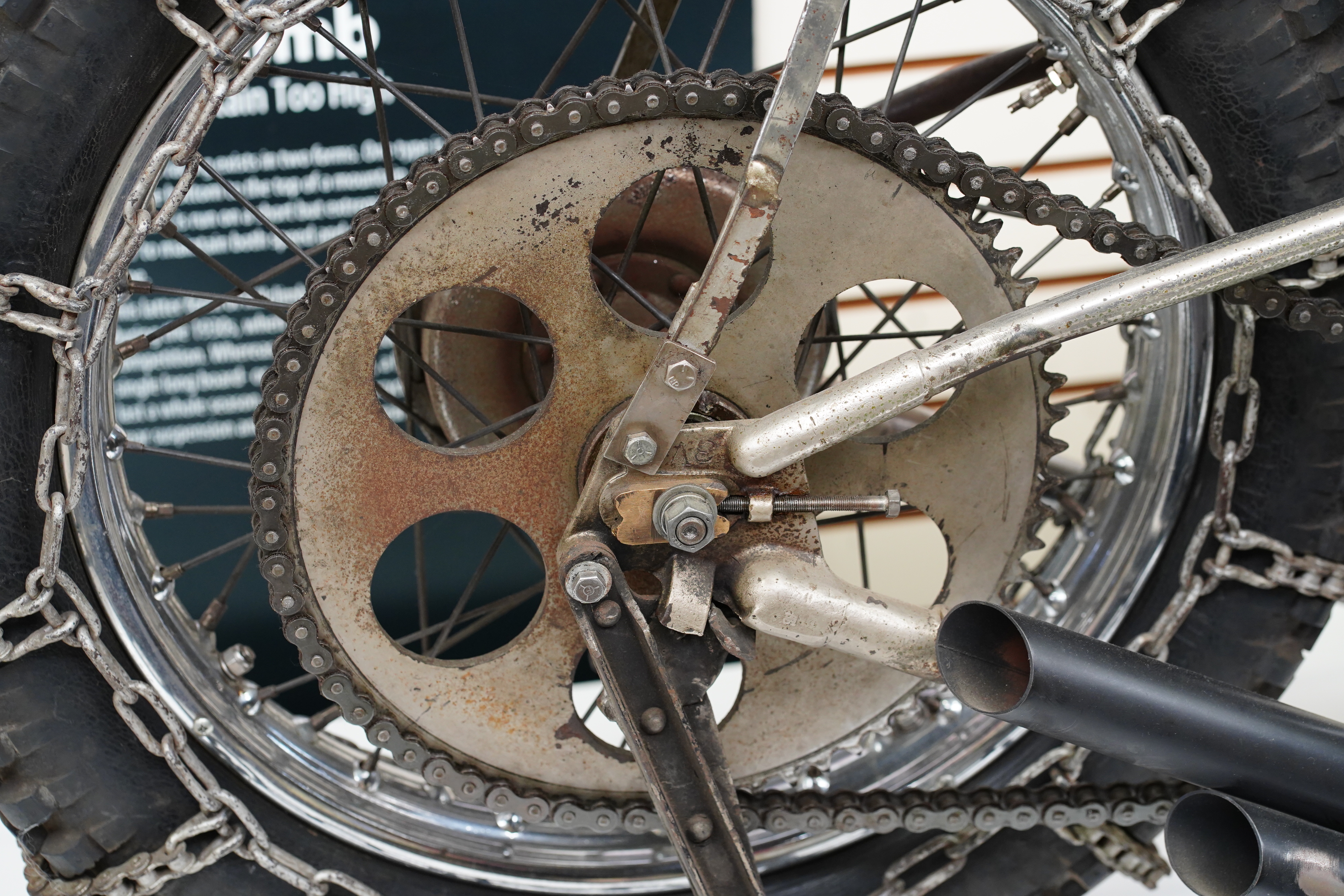
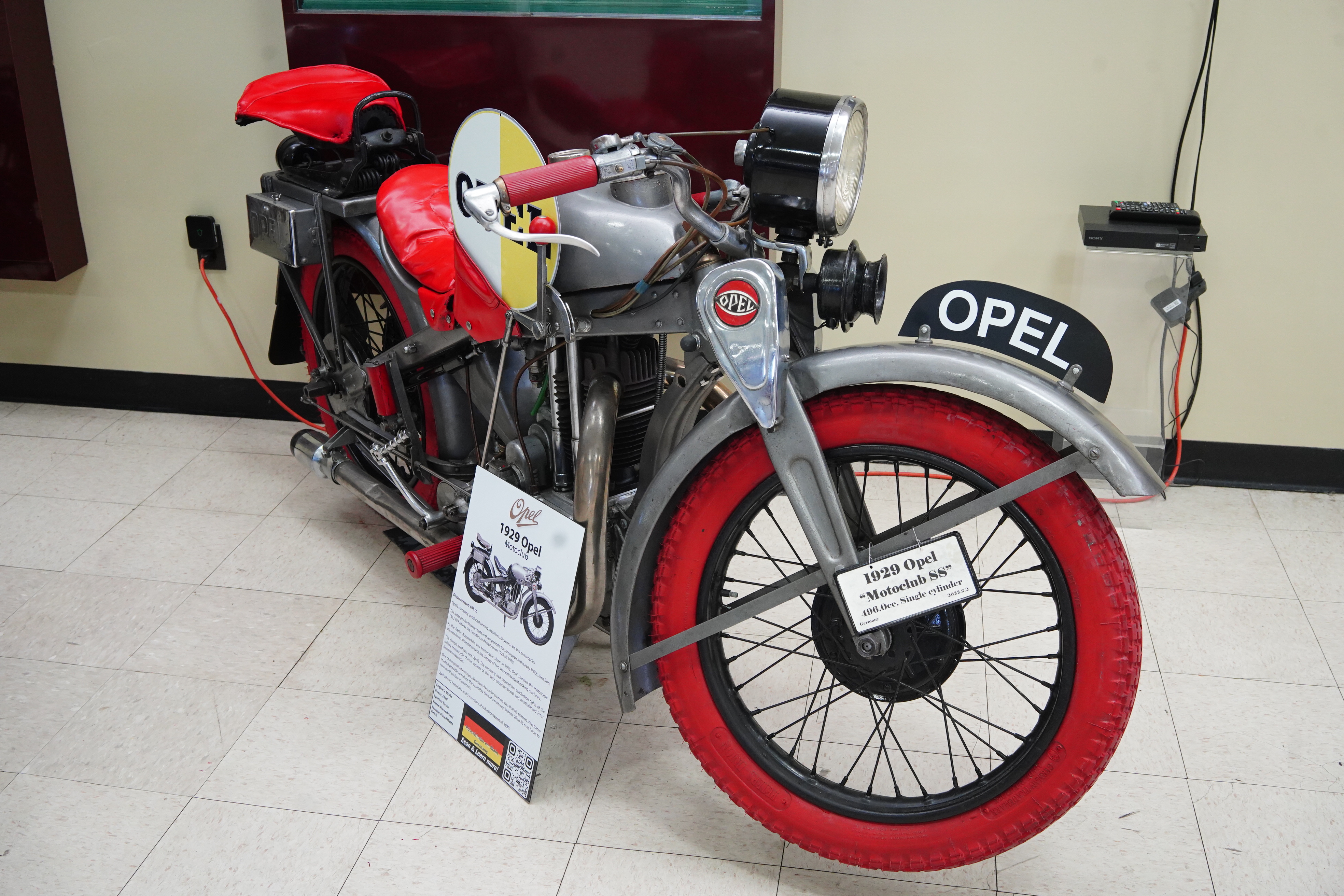
Last week, I made my second visit to what might be one of the few motorcycle museums on the East Coast, “Motorcyclepedia” in Newburgh, NY. Unlike my first visit in 2021, which was more of a quick walk-through, this time I had the pleasure of an informal tour guide in the form of my good friend Terry, who has done some volunteer work at this museum and is more familiar with its content.
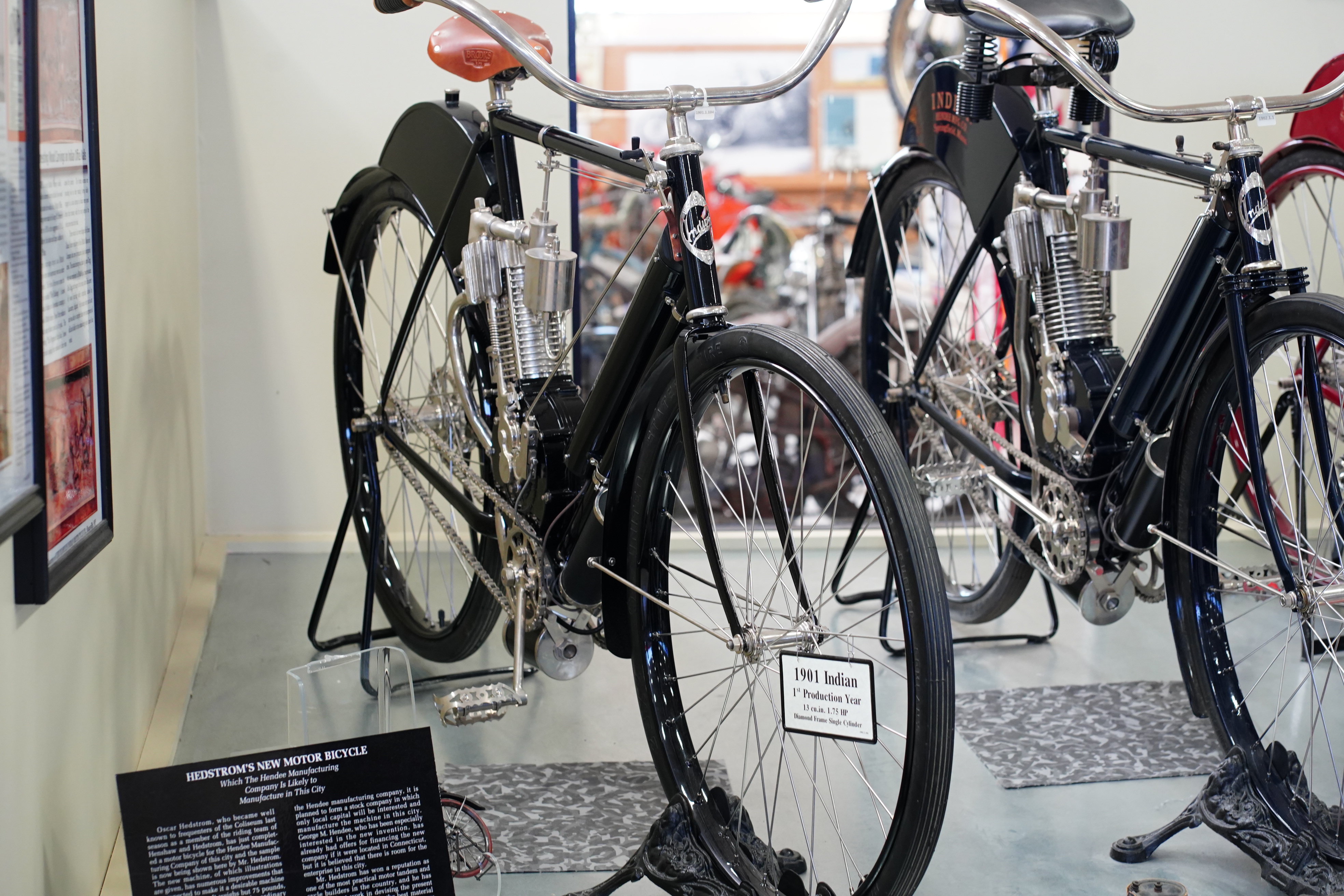
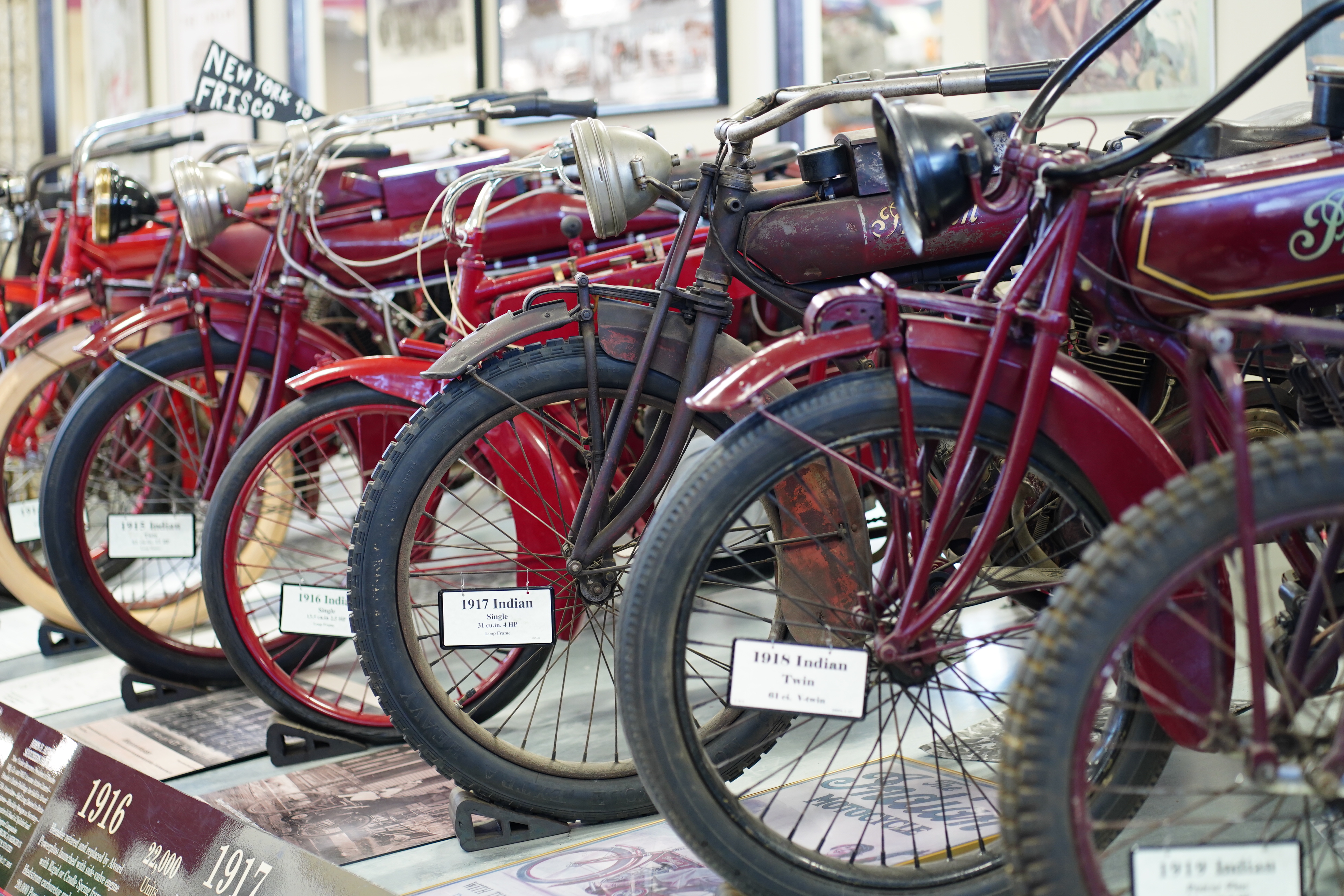
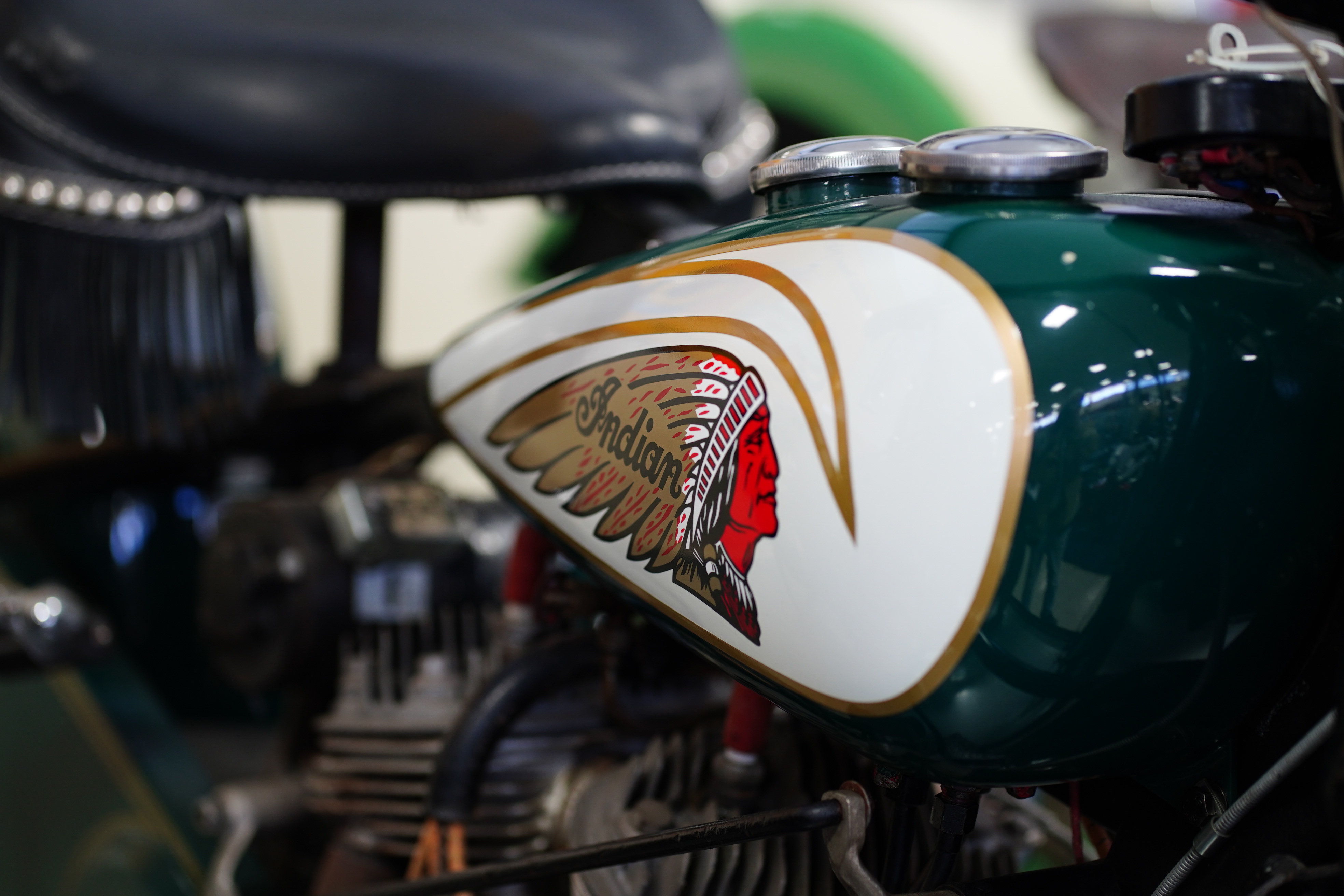
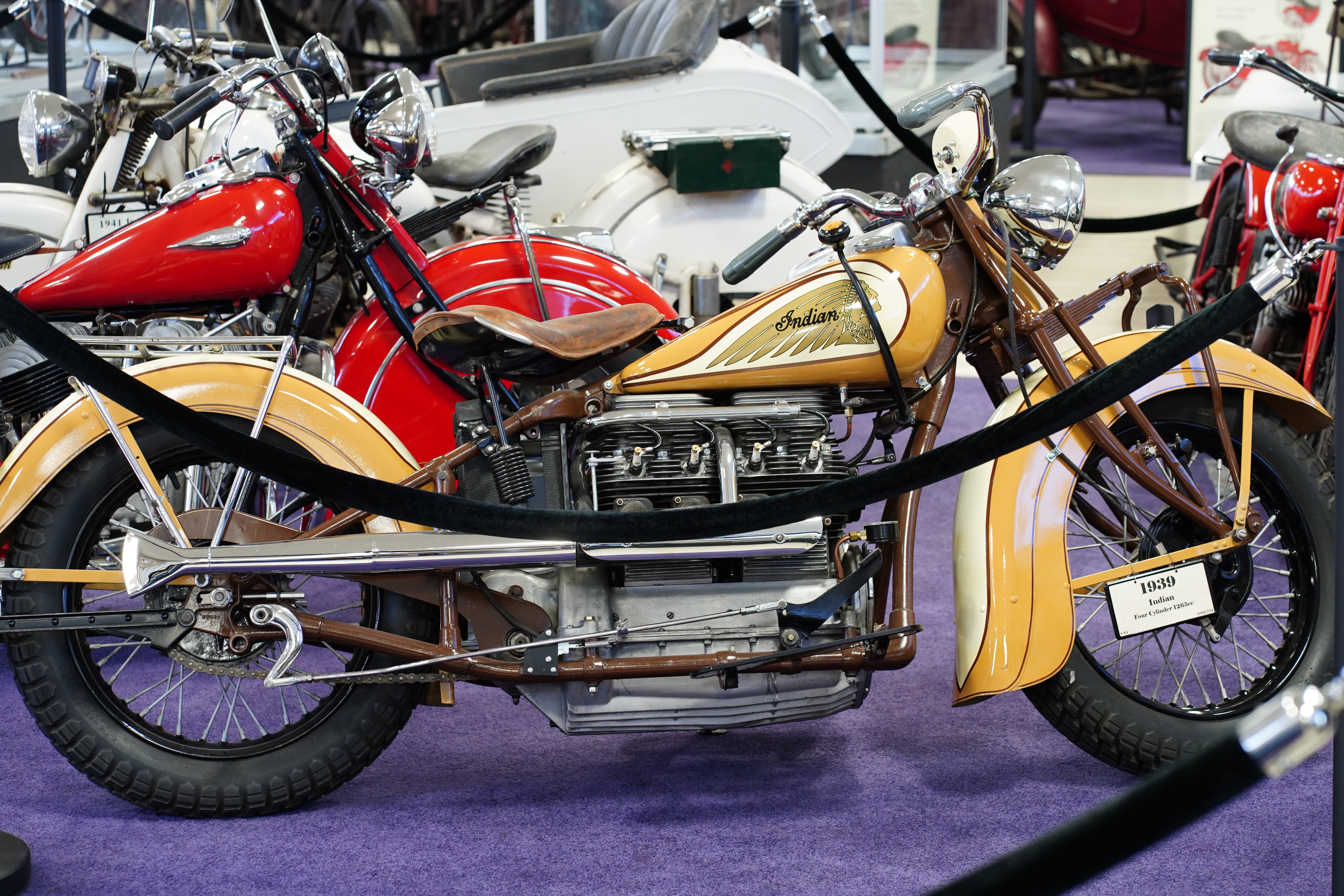
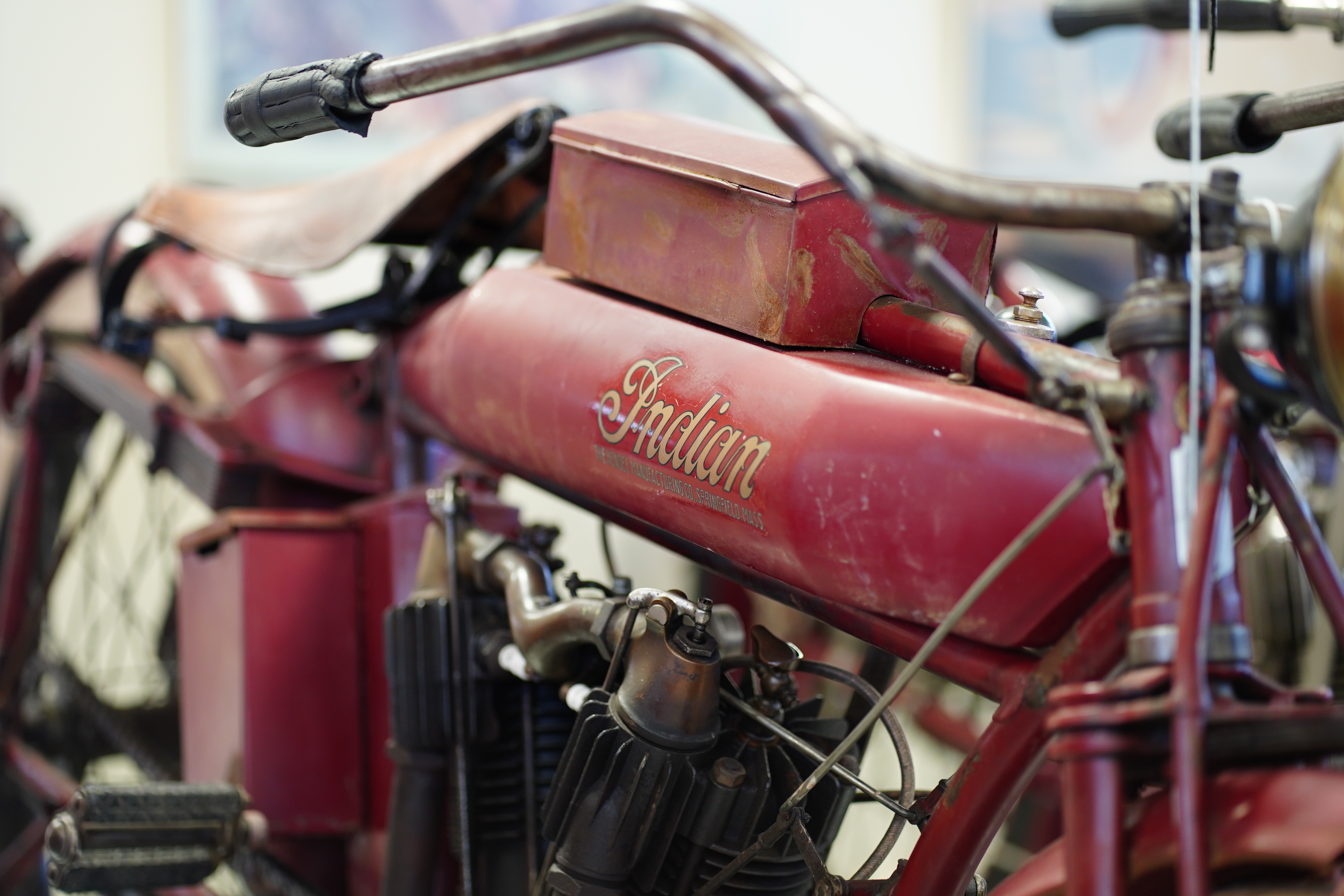
First, the building is huge, with displays which are well-lit, well-maintained, and well-organized. Perhaps the museum’s biggest claim to fame is its collection of Indian motorcycles. Arranged in chronological order, there is one Indian bike of each model year from 1901, the first year of production, through 1953, the final year. Whether you are a bike buff or not, the history as represented here is also a history of the U.S. and its growth as a nation which was putting its citizens into motorized transport.
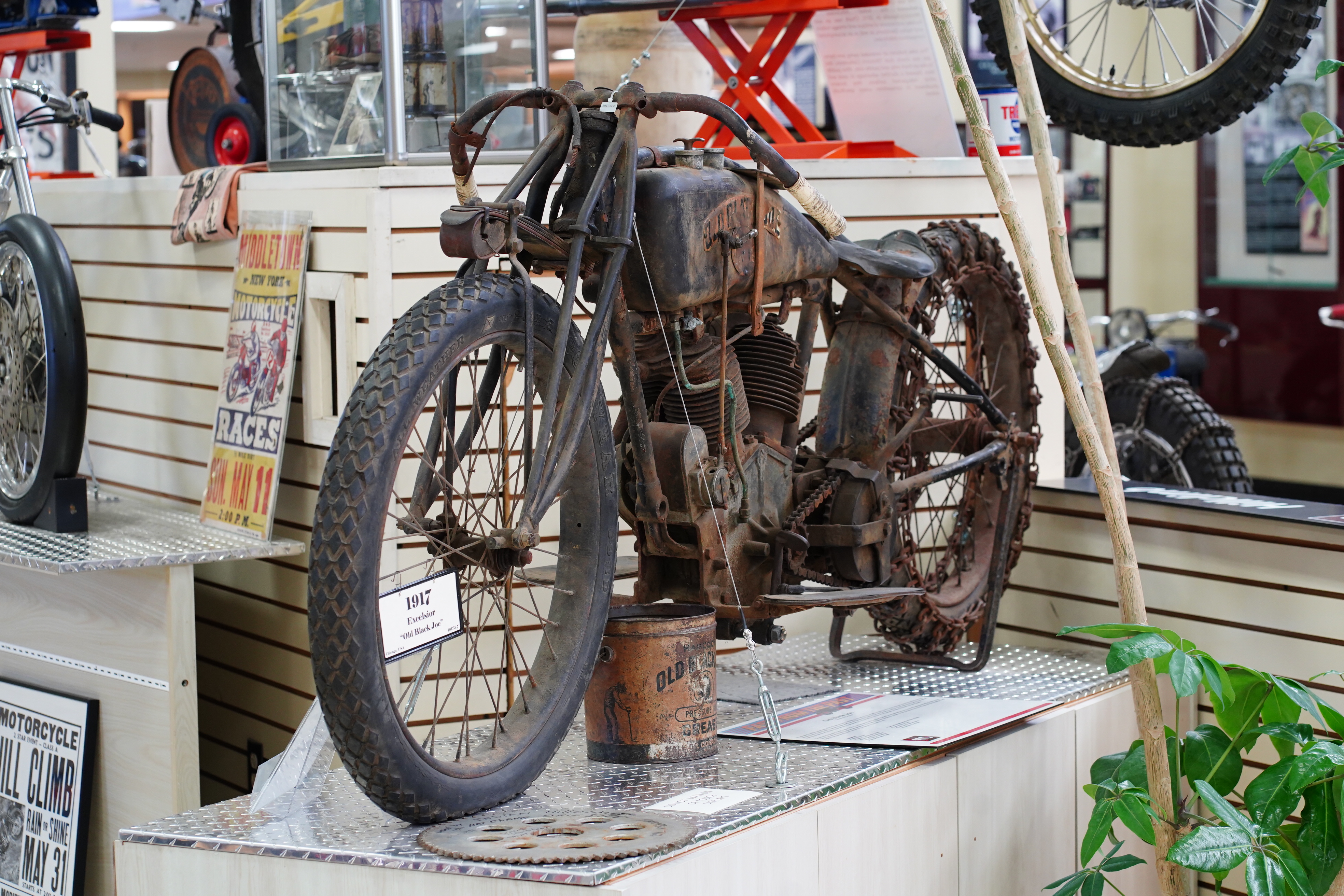
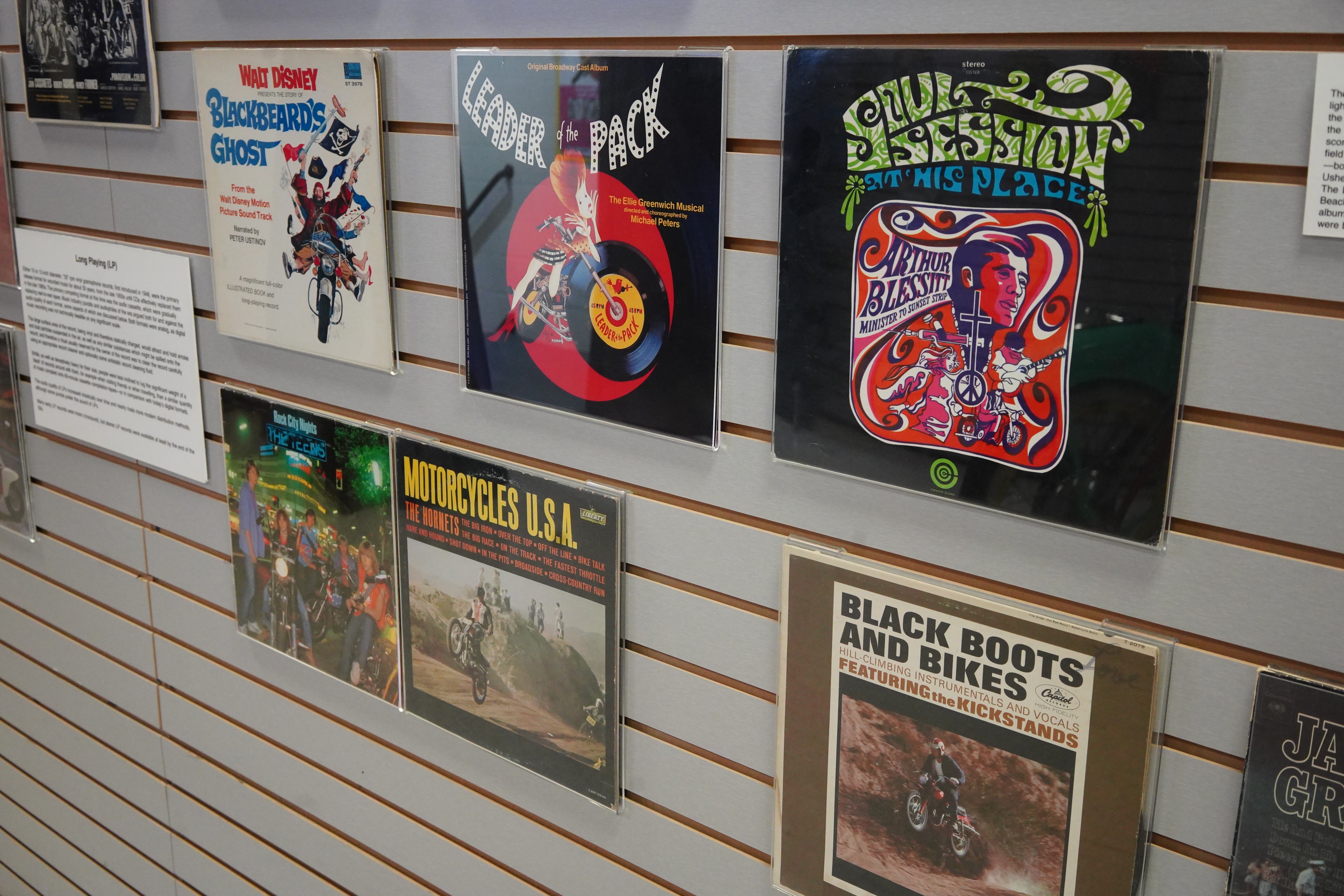
The Indians are on the main floor, along with a somewhat bizarre collection of motorcycles built for television, movies, and shows. A name familiar to me was Ed “Big Daddy” Roth. If you are at all aware of some of his four-wheeled creations, you can imagine what he might have been able to do with motorcycles. Another interesting element of the collection is the number of original, unrestored bikes.
This entire collection was amassed over many years by a father and son team, and the level of preservation is beyond reproach. If you are into motorcycles, this museum is a must-see. Even if you are not, it is an impressive display which thoroughly captures a significant slice of the history of 20th century America.
INDIAN DISPLAY
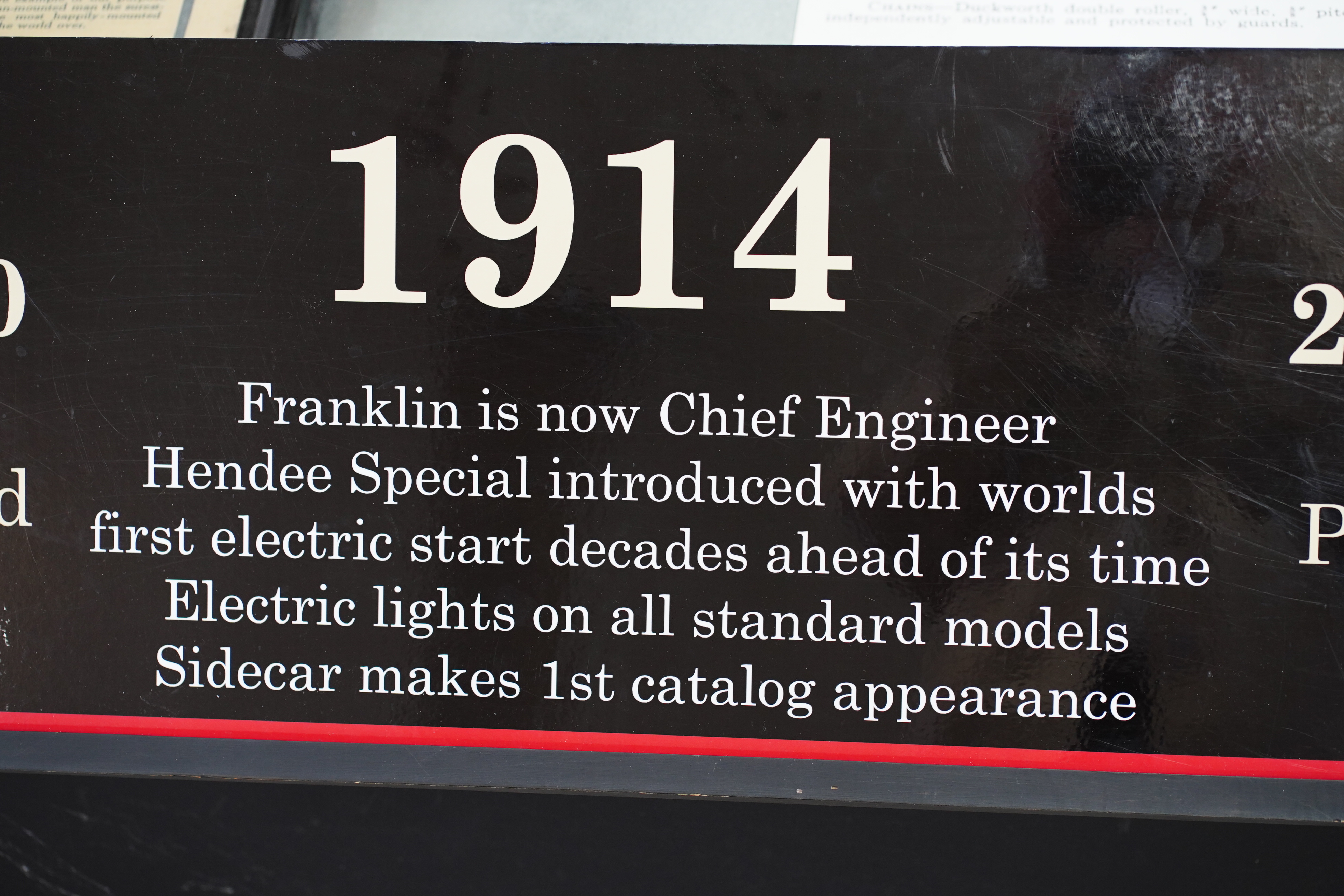
Not only was there one bike from each model year arranged in order, each bike included a descriptive placard. It was fascinating to read how the bikes changed and sales grew year over year.
UNRESTORED BIKES
A number of bikes were displayed in “as found” condition, including one where a tree grew into and around the motorcycle.
Although I knew in the back of my mind that this could be a bad idea, I decided to head out to Hershey PA on Wednesday of last week for a “twofer”: I intended to visit the AACA Museum and also swing by the AACA Library to drop off some books I wanted to donate. Yes, it was raining when I left, with the forecast predicting “rain all day”. I’ve tried more and more to not let the weather forecast dictate my plans, and so I departed around 7 a.m. as intended. However, the weather forecast I had consulted was the one for my hometown. Neglectfully, I had not checked the weather predictions for central Pennsylvania.
The first hour and a half of the drive, though, was uneventful. At about the halfway point, I pulled into a favorite Dunkin’ Donuts which I frequent, treated myself to a hot brew, and sat down for a while. That’s when I heard the sheets of rain begin to whip against the building, riled up by the increasing winds. Hmmm. If I got to the Museum by 10, rushed through it, skipped the book dropoff, and skipped lunch, I’d still be driving back home in what now looked like the brunt of the storm. Time to reconsider….
I remembered that there was a car museum in Allentown PA, although I knew nothing about it. I looked it up: “America on Wheels”. I called to ensure that they were open, but the best I could glean from the voice recording was that they were open “Wednesday through Sunday, 9 a.m. to 5 p.m.”. Since today was Wednesday, I reckoned that they were indeed open. This meant heading back the way I had just traveled, but maybe I could salvage the day. Allentown would be only an hour home, so reverse direction I did.
The Google Machine took me directly there, which was a few miles off the highway. I was not alone in visiting the museum on this soggy day. Paying my $13 Senior rate, I walked in and was immediately impressed. The displays were well done, and each car had a descriptive plaque. There were also “side exhibits” more geared toward school-age children, which were nevertheless nice to see. A standout feature was the continuous focus on local Pennsylvania history, such as several antique automobiles which had been sold new in the Allentown area.
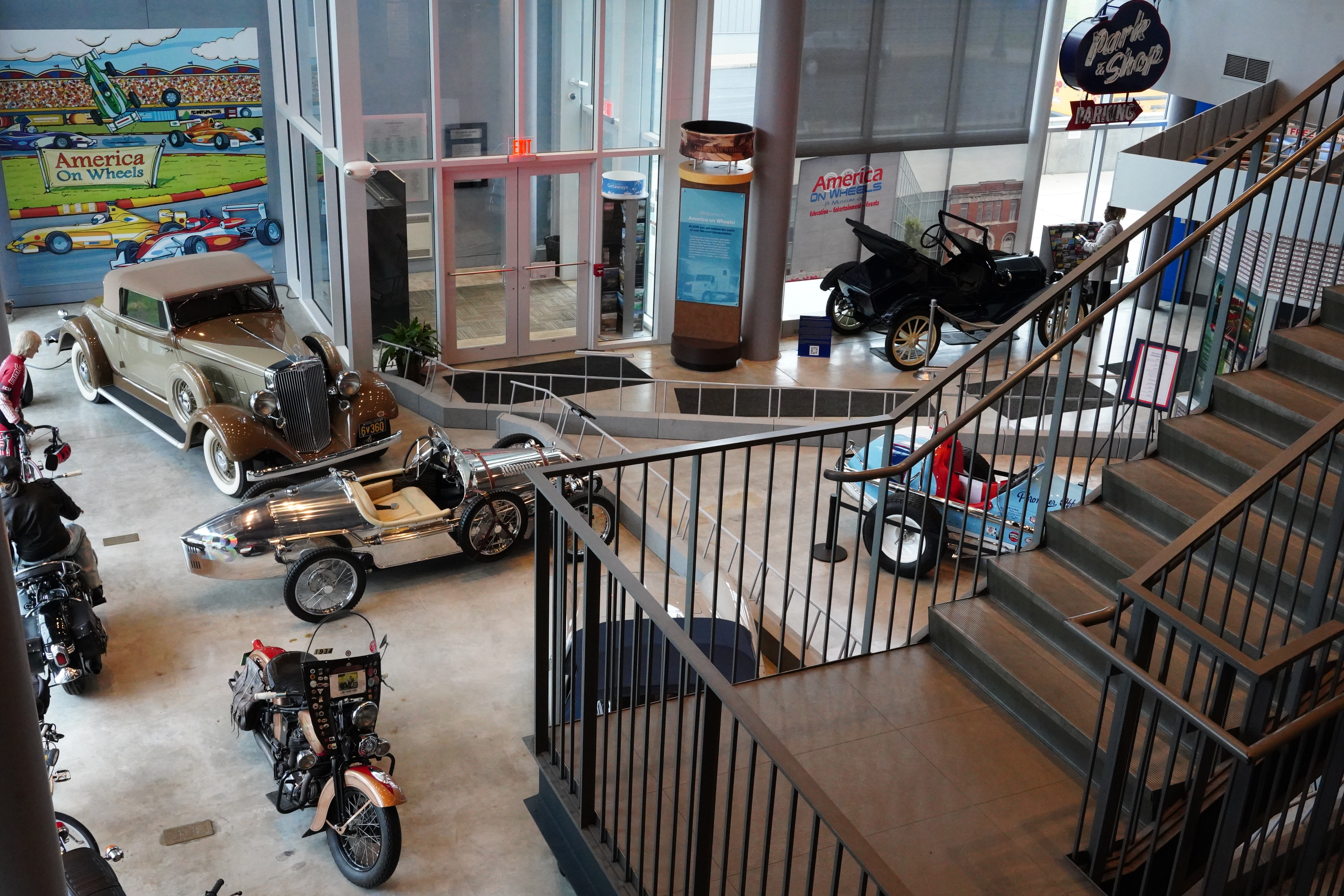
A view from above of the lobby
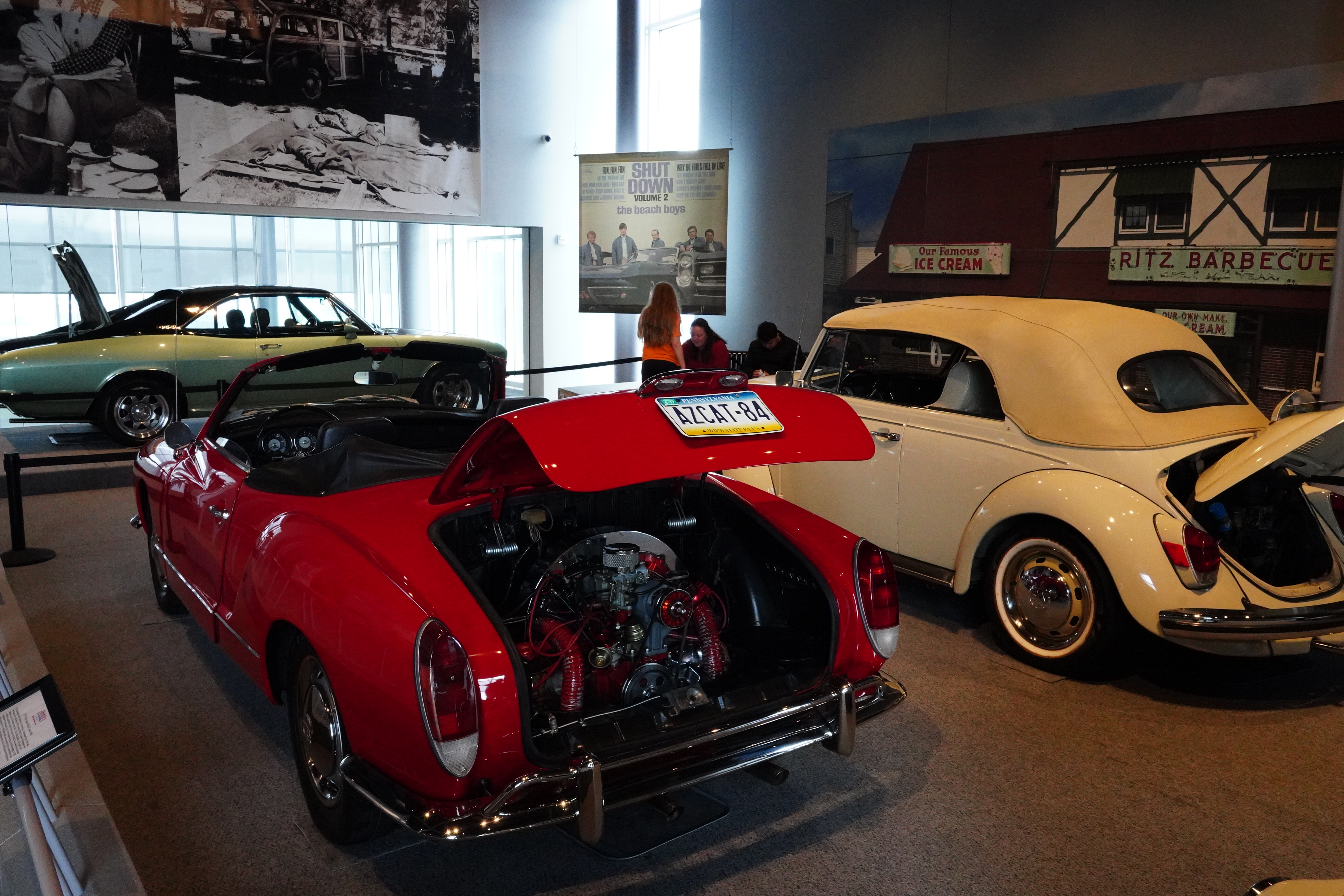
The day’s highlight was the special exhibit of air-cooled cars. As I entered it, my low expectations were quickly exceeded when I spotted, of all things, a beautifully restored BMW Isetta. The remainder of the air-cooled cars did not disappoint either.
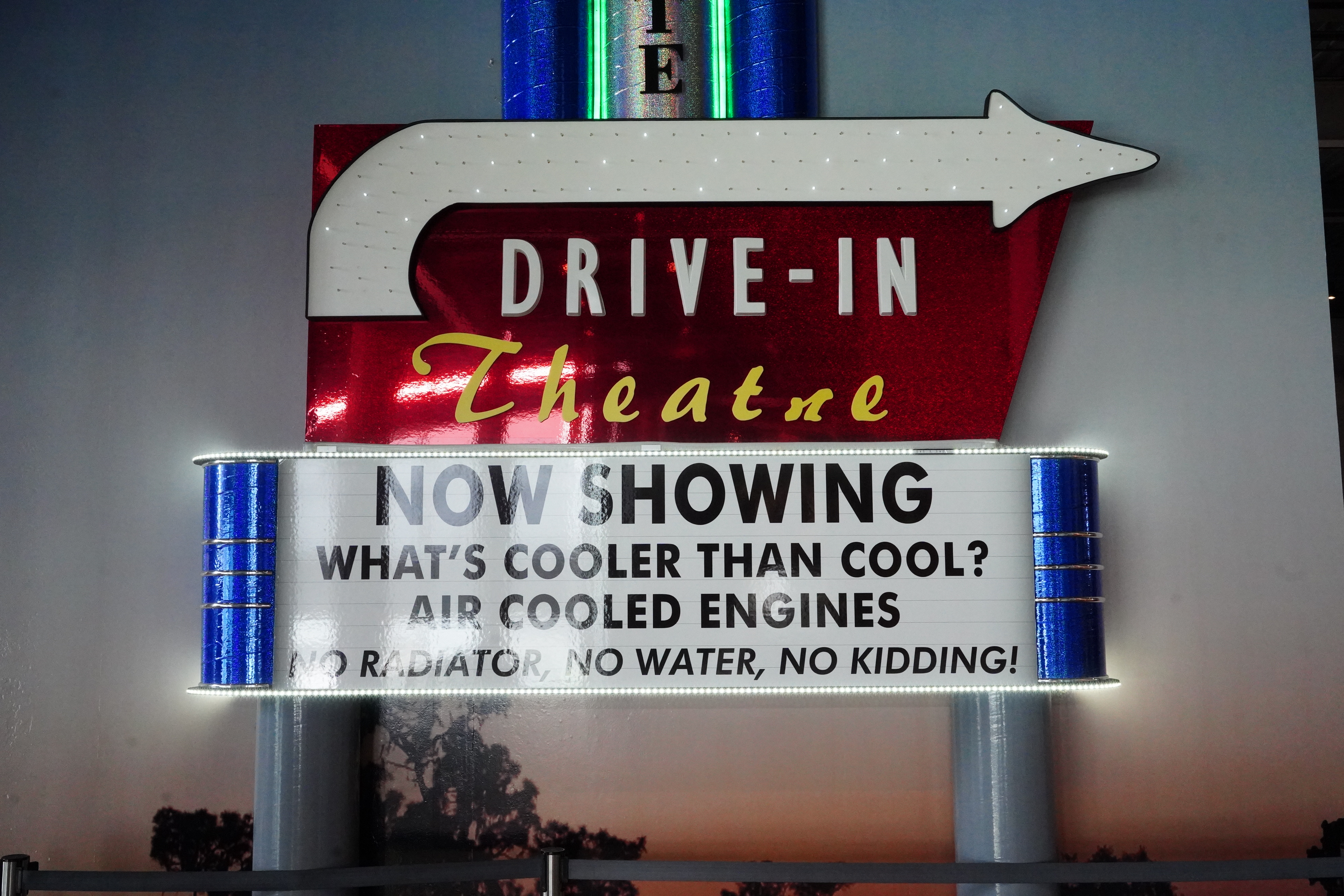
The use of the drive-in marquee was clever
It’s ironic and perhaps a bit sad that this museum does not do more marketing. As someone who has been regularly traveling for the last few decades in the greater Macungie/Carlisle/Hershey area for automotive events, I would suggest that the museum could (and should) do a better job of promoting itself. If you’re reading this and have not paid the America on Wheels Museum a visit, it is highly recommended.
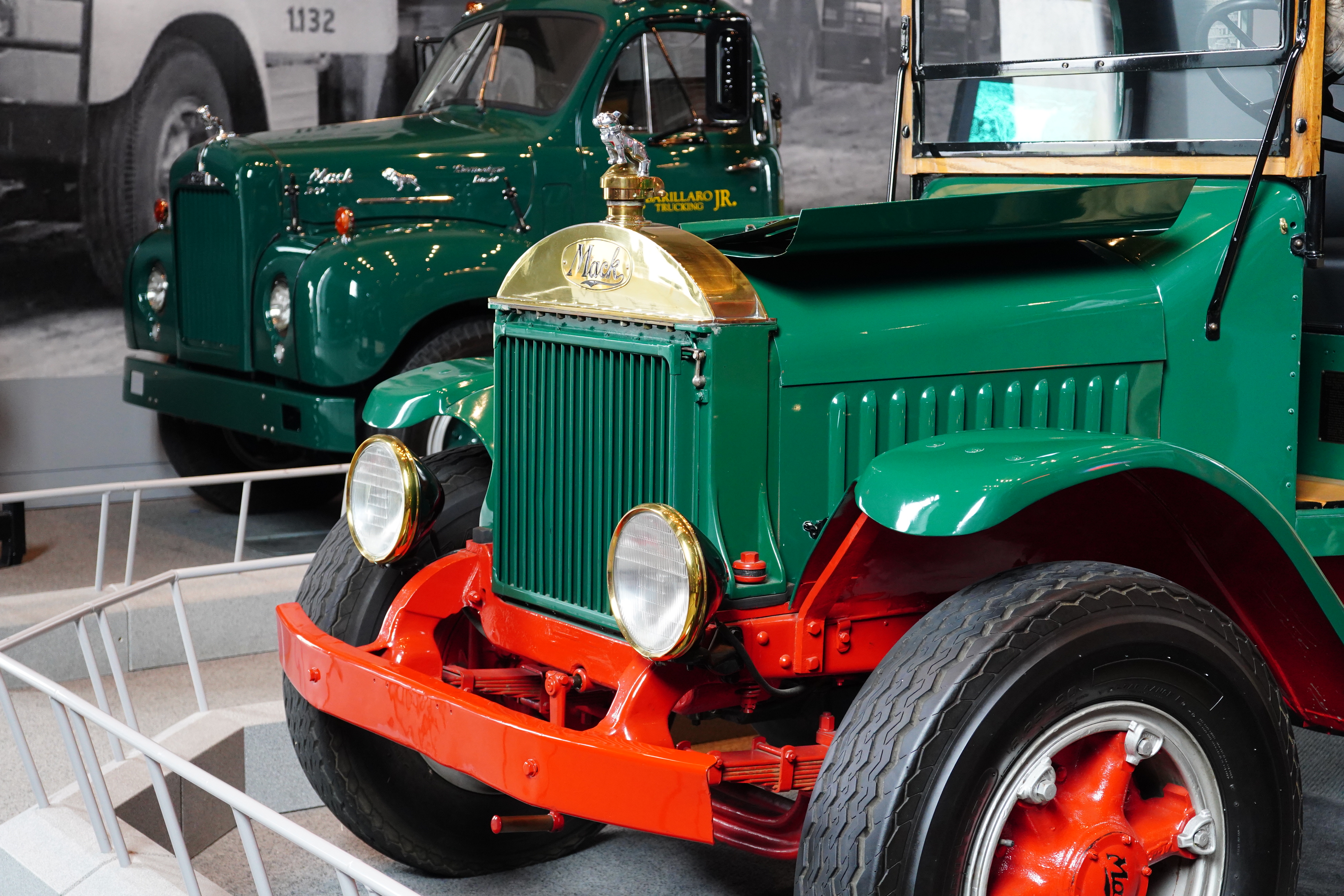
BELOW, MACK TRUCKS, AS A LOCALLY-MANUFACTURED BRAND, WAS WELL-REPRESENTED
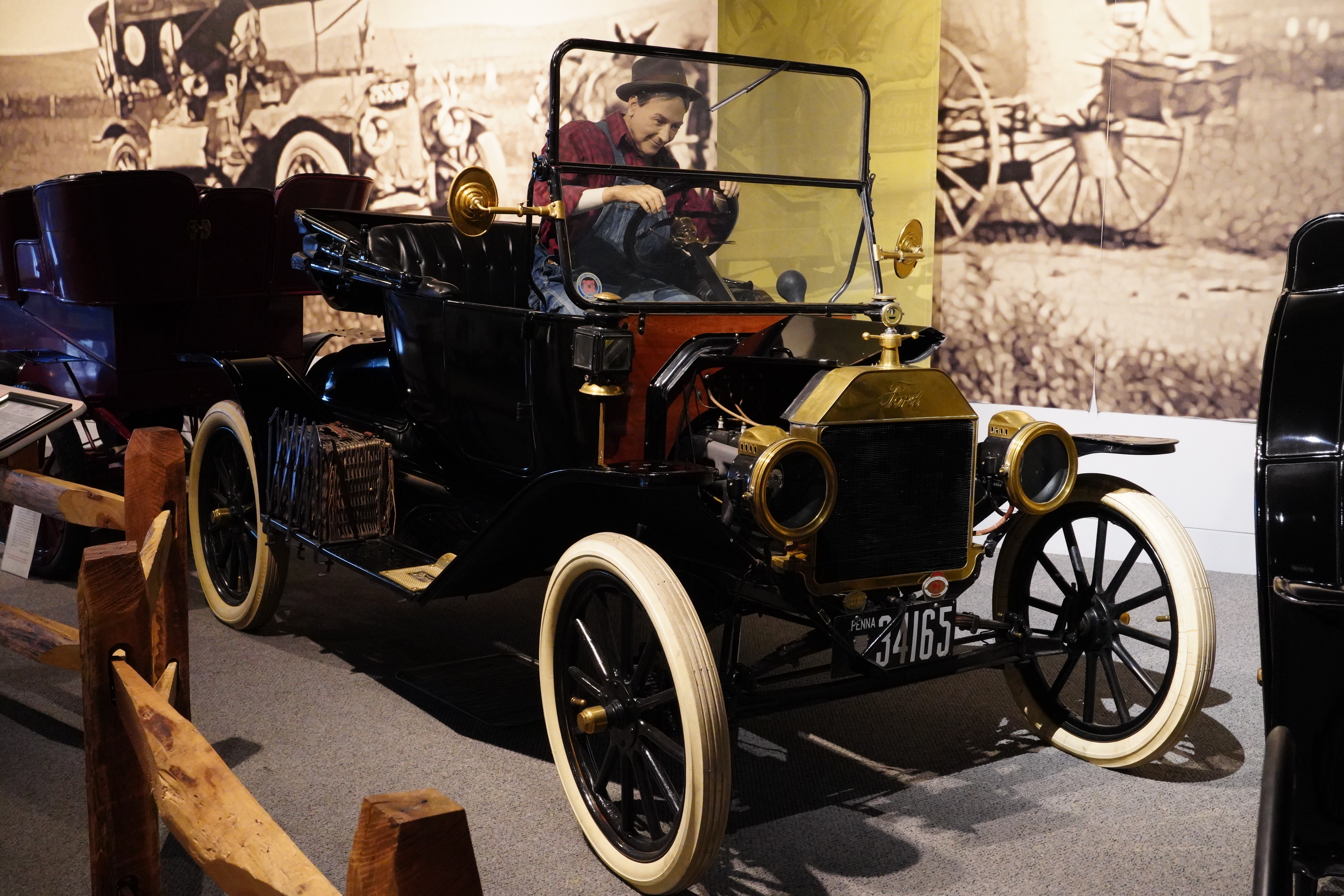
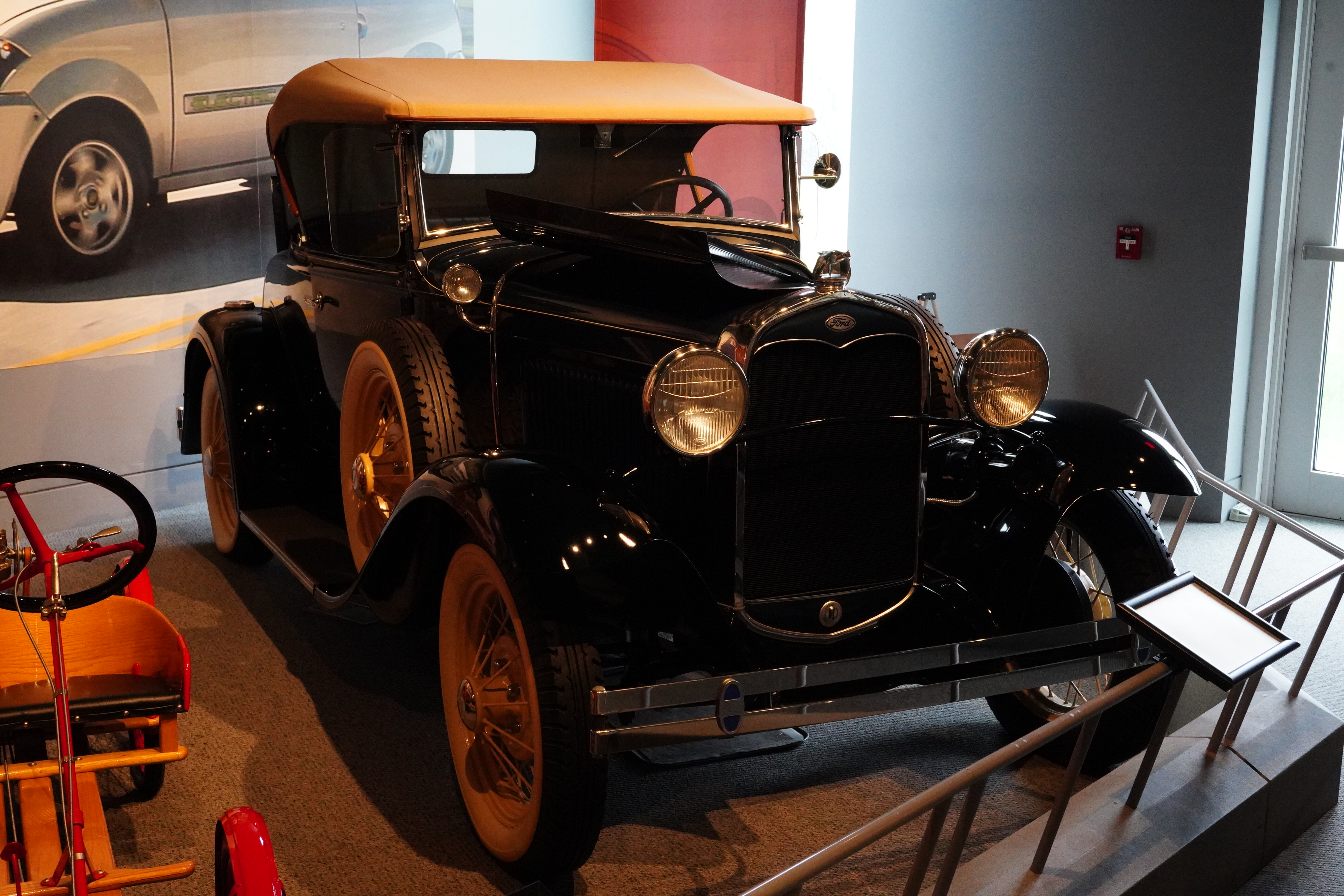
BELOW, A TRIO OF PRE-WAR FORDS
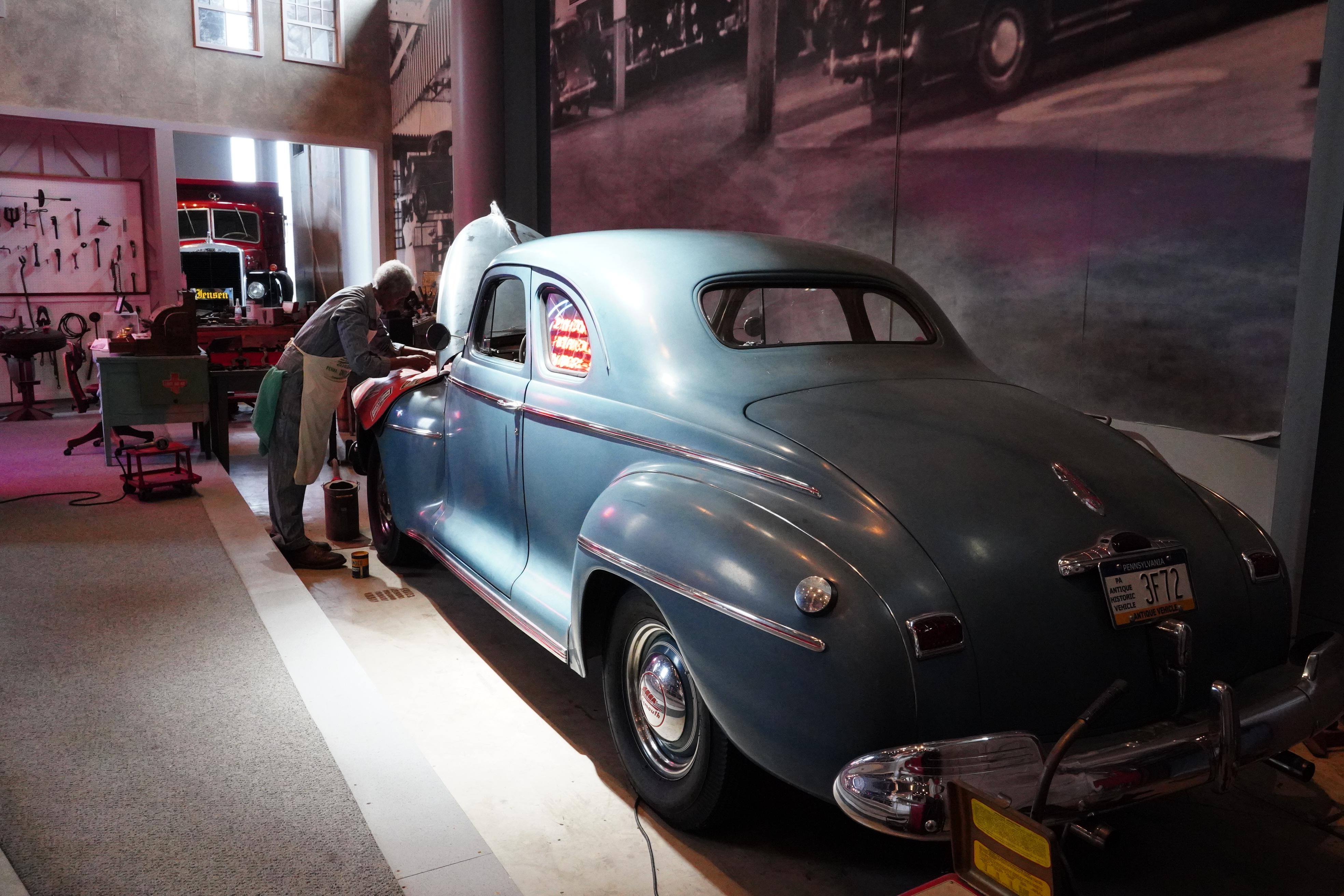
BELOW, AN ORIGINAL CONDITION 1942 PLYMOUTH (ANY ’42 CAR IS RARE)
BELOW, AIR COOLED CARS GALORE!
BMW Isetta sliding window coupeThe upholstery & sunroof were non-original material, otherwise, a nice restoration
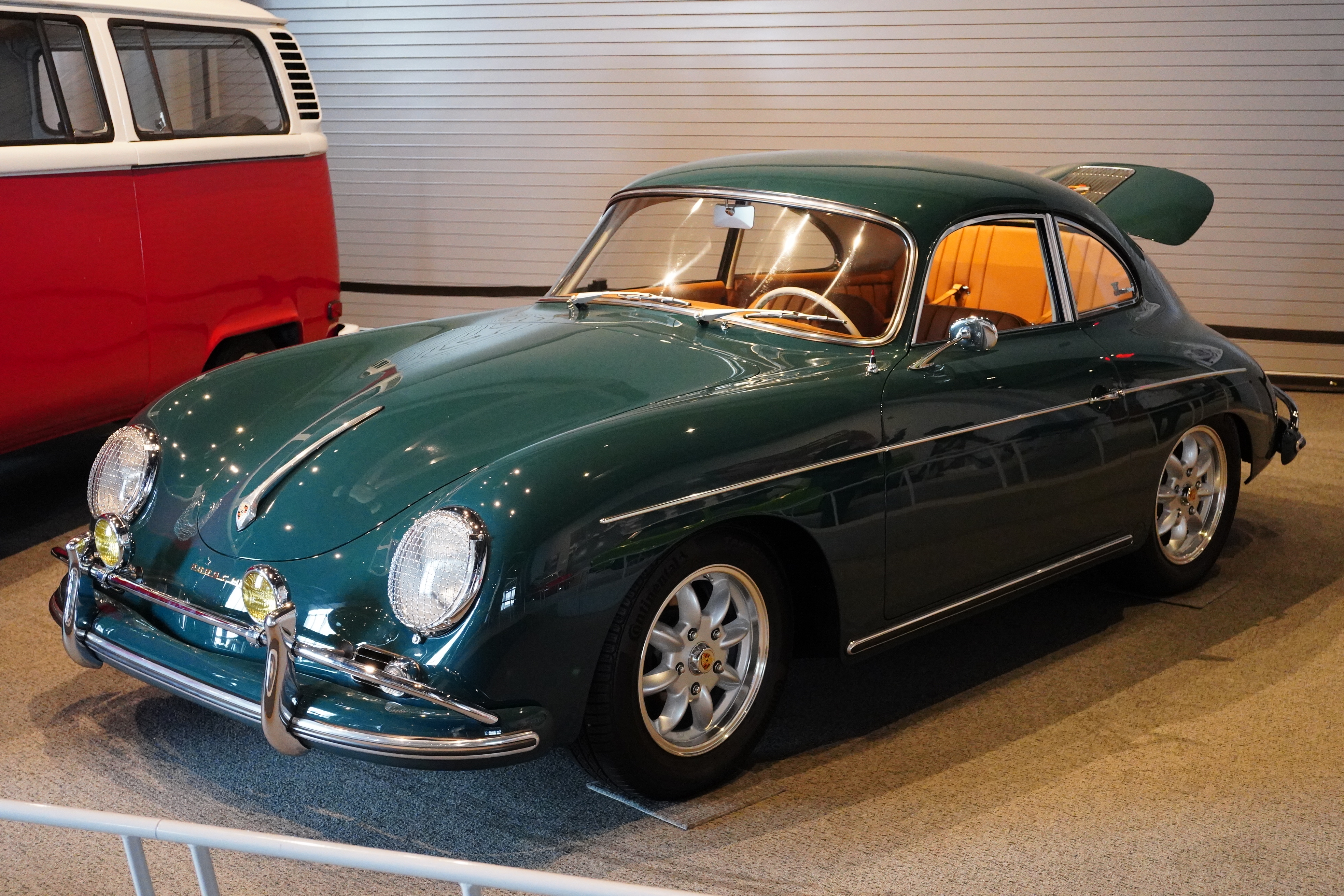
This Porsche 356 was cosmetically stunning
A rare Corvair Fitch Sprint
Plenty of air-cooled VWs
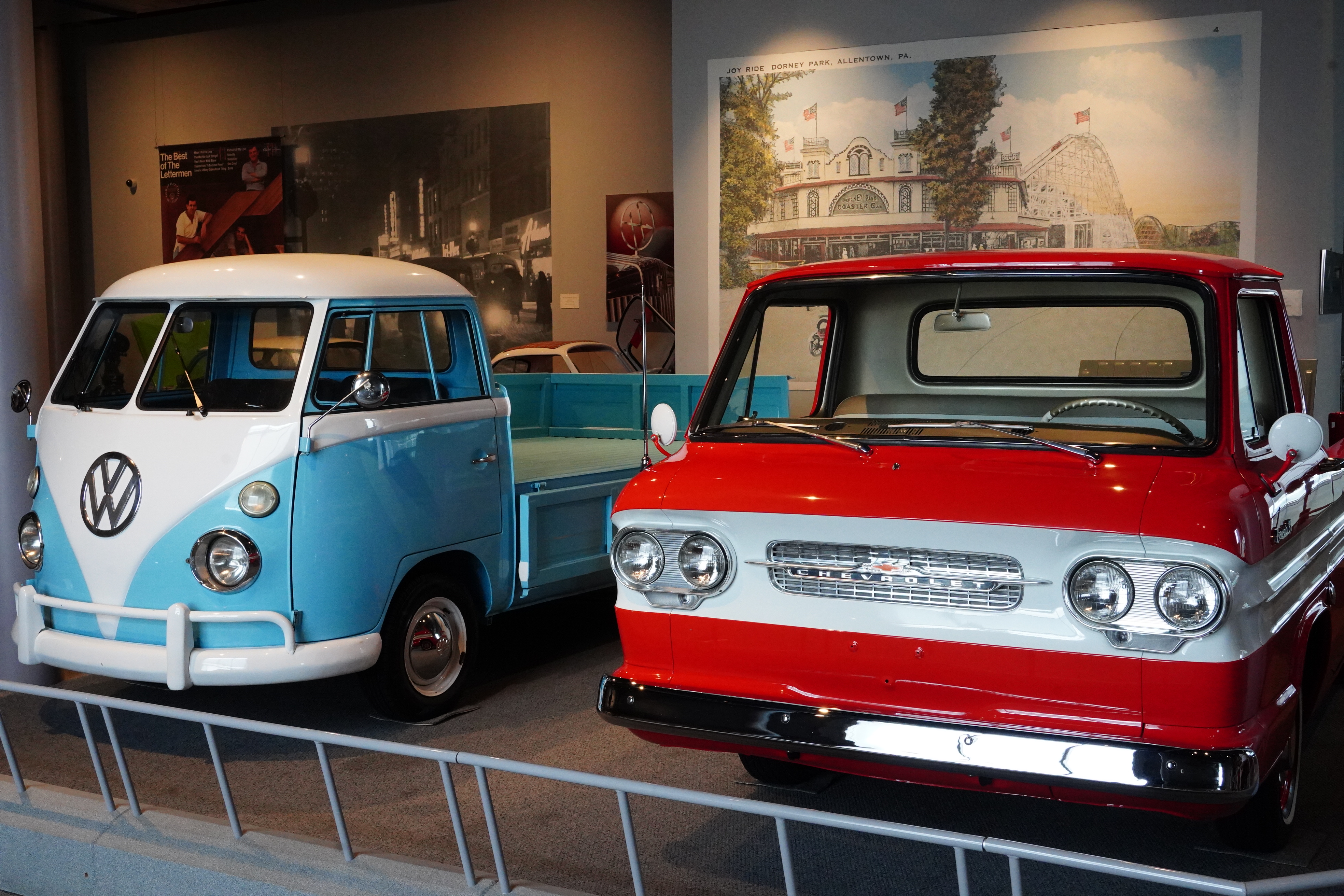
The VW Microbus pickup and its Corvair competition
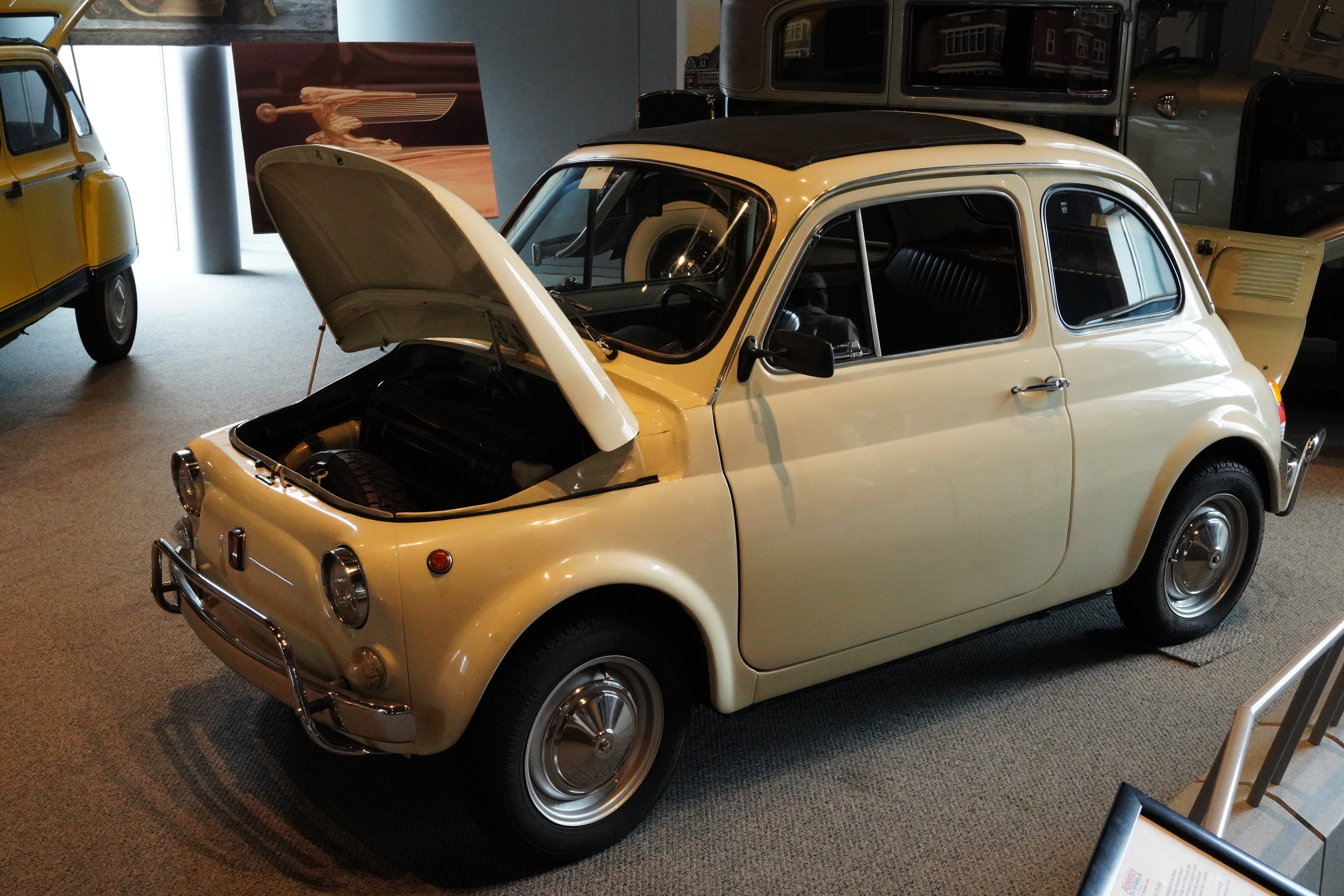
A Fiat 500 with an air-cooled 2-cylinder engine
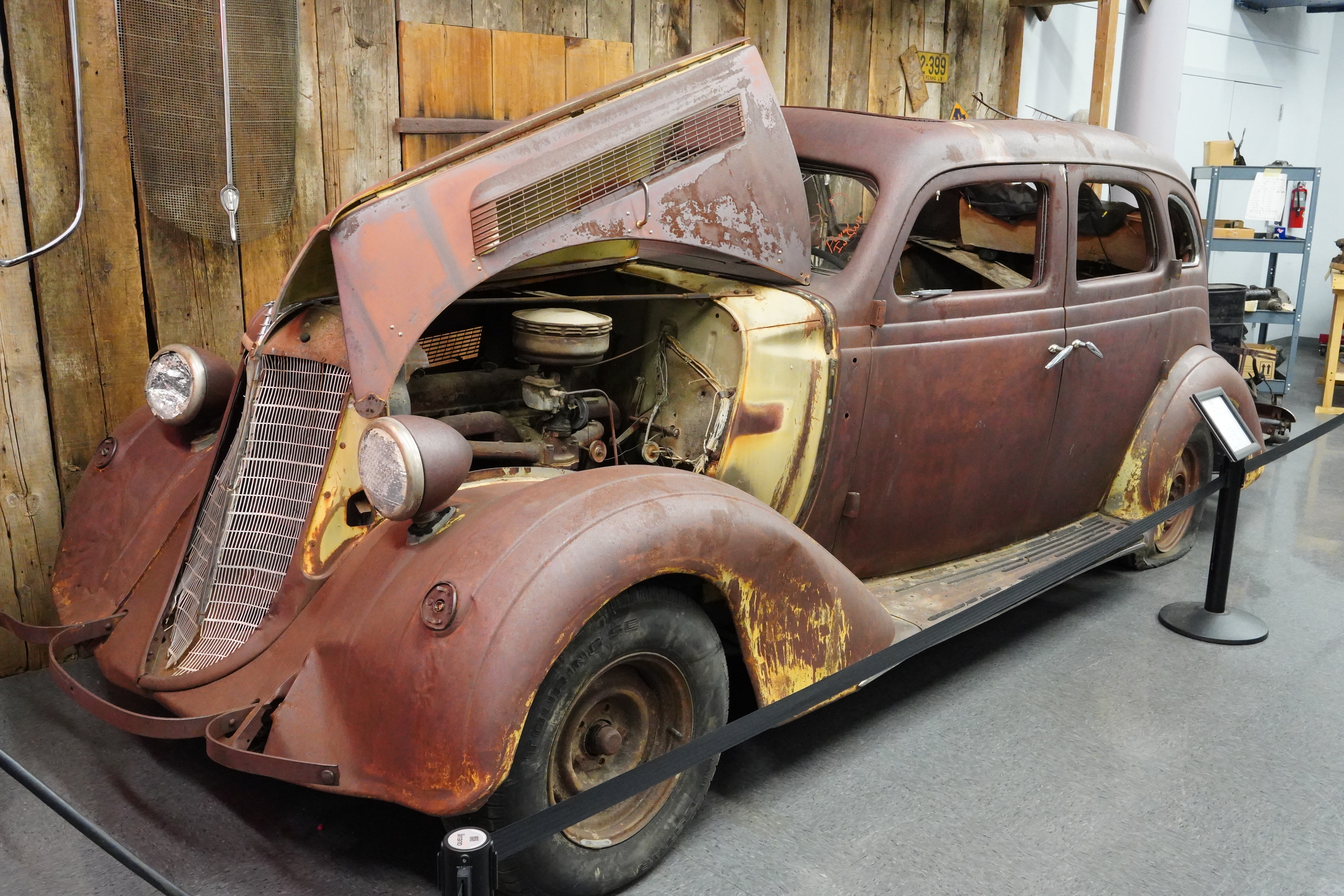
BELOW, THE ‘RESTORATION SHOP’ FEATURED SOME BEFORE & AFTER EXAMPLES
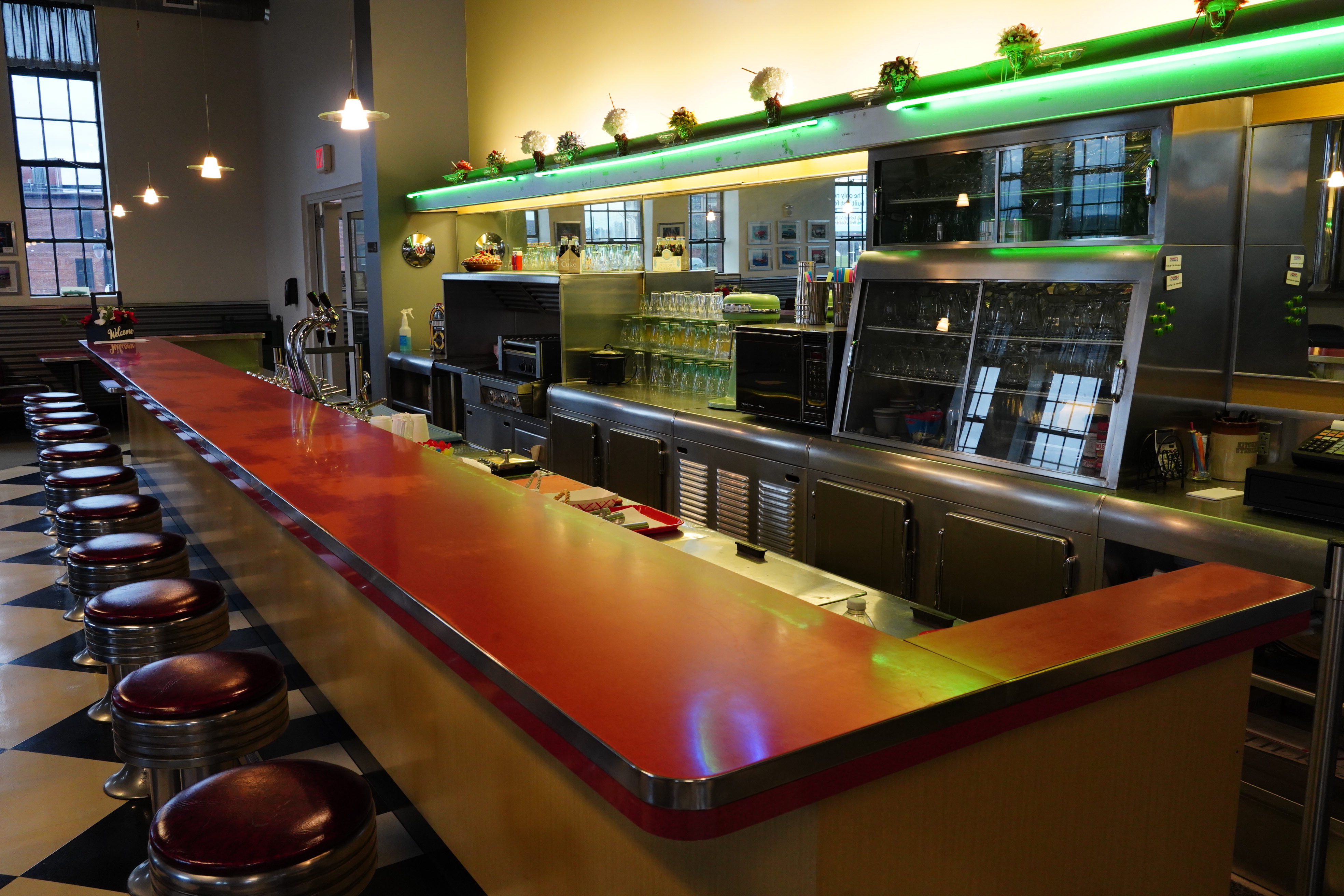
BELOW, THE INTERIOR OF A 1950S DINER HAD BEEN PURCHASED AND MOVED TO THE MUSEUM
If my own blog posts are to be believed, I have visited the Simeone Museum in Philadelphia five times: October 2011, October 2012, December 2015, June 2016, and February 2022. This most recent Saturday, March 25, 2023, can now be counted as visit #6. Any visit to the Simeone, with its collection of historic racing and sports cars, is special. Saturday was a Demo Day, and Demo Days are extra special because a small theme-based collection of vehicles is chosen, and they are taken outside to the back lot so that attendees may delight to the sights and sounds of them motorvatin’ (a Chuck Berry coinage) under their own power.
Crowd surrounds cars before show begins
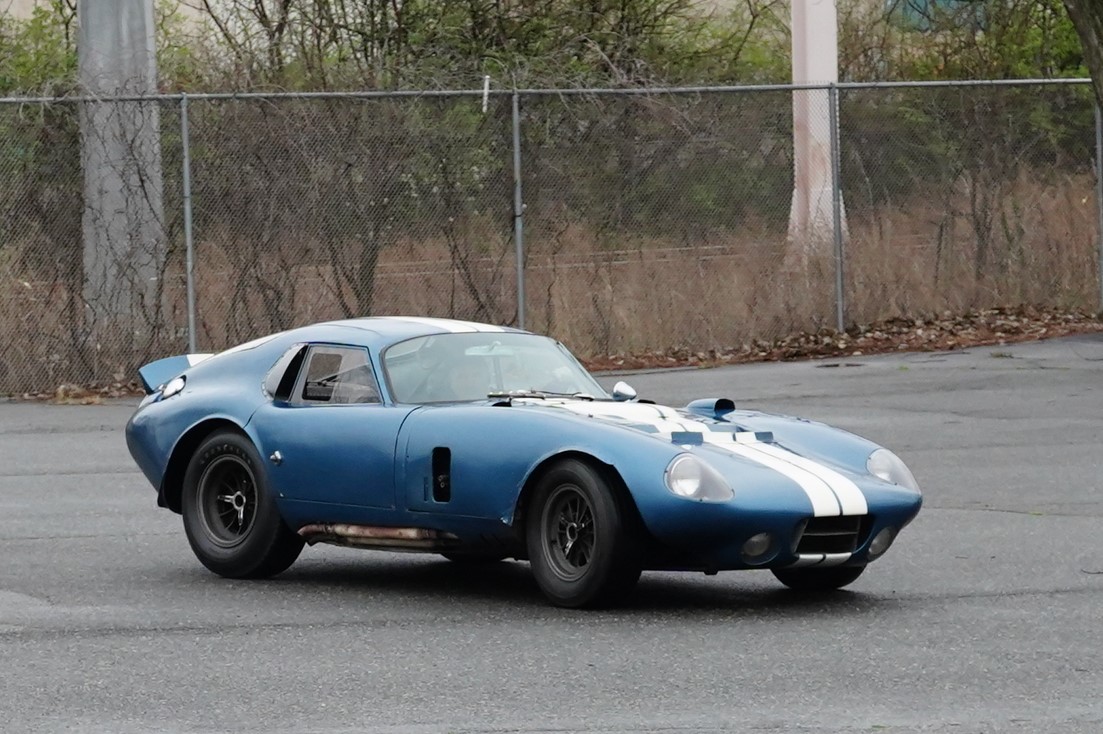
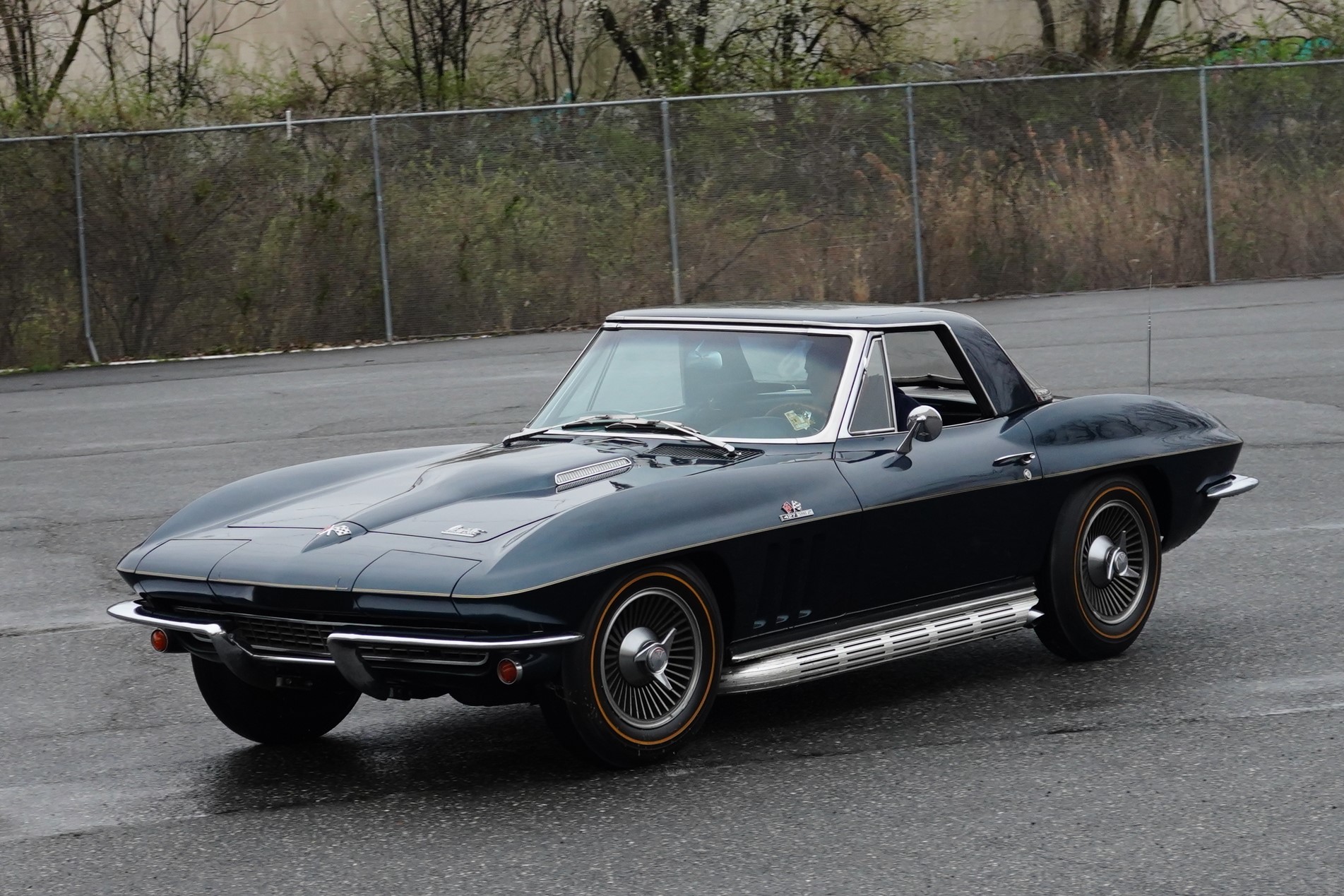
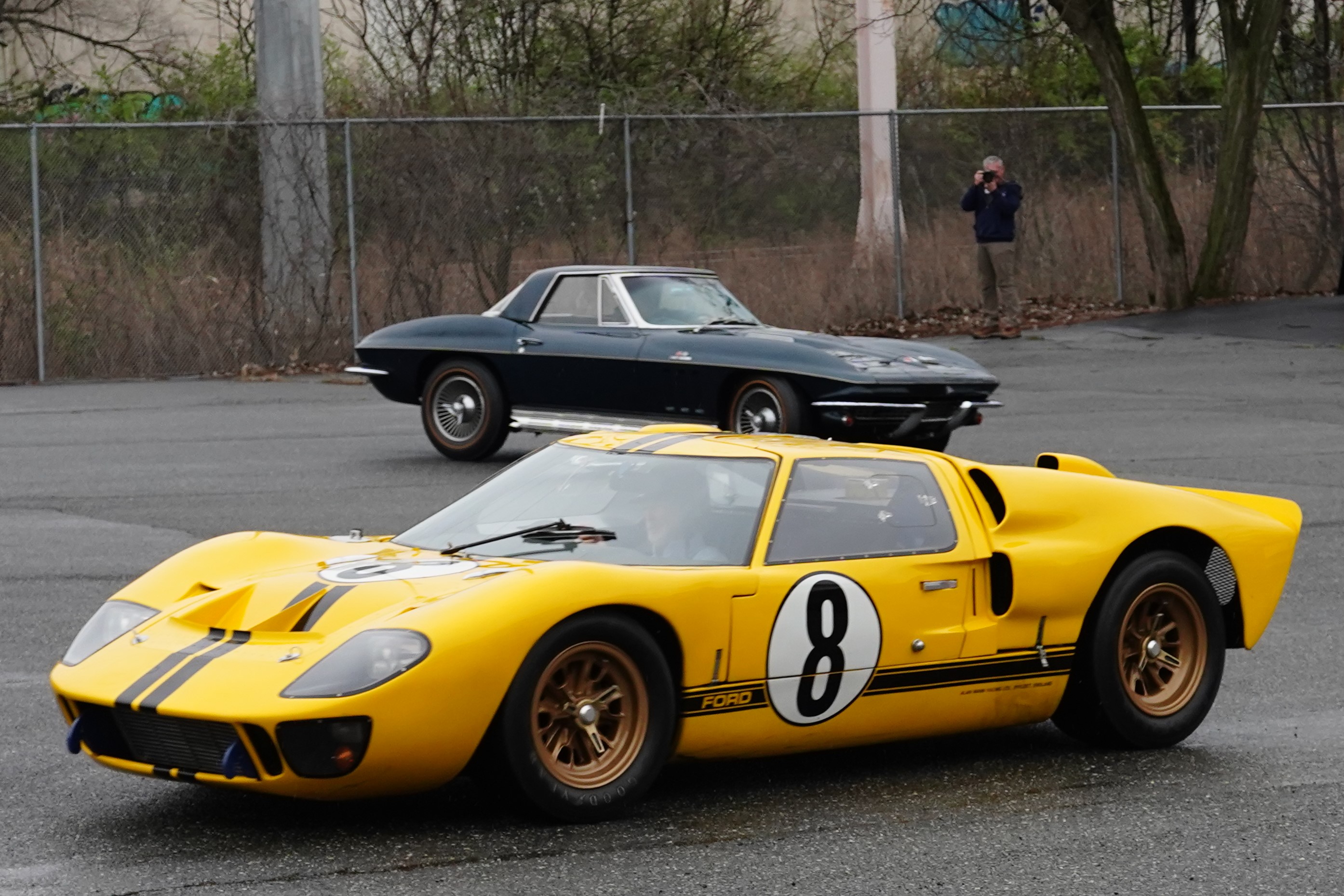
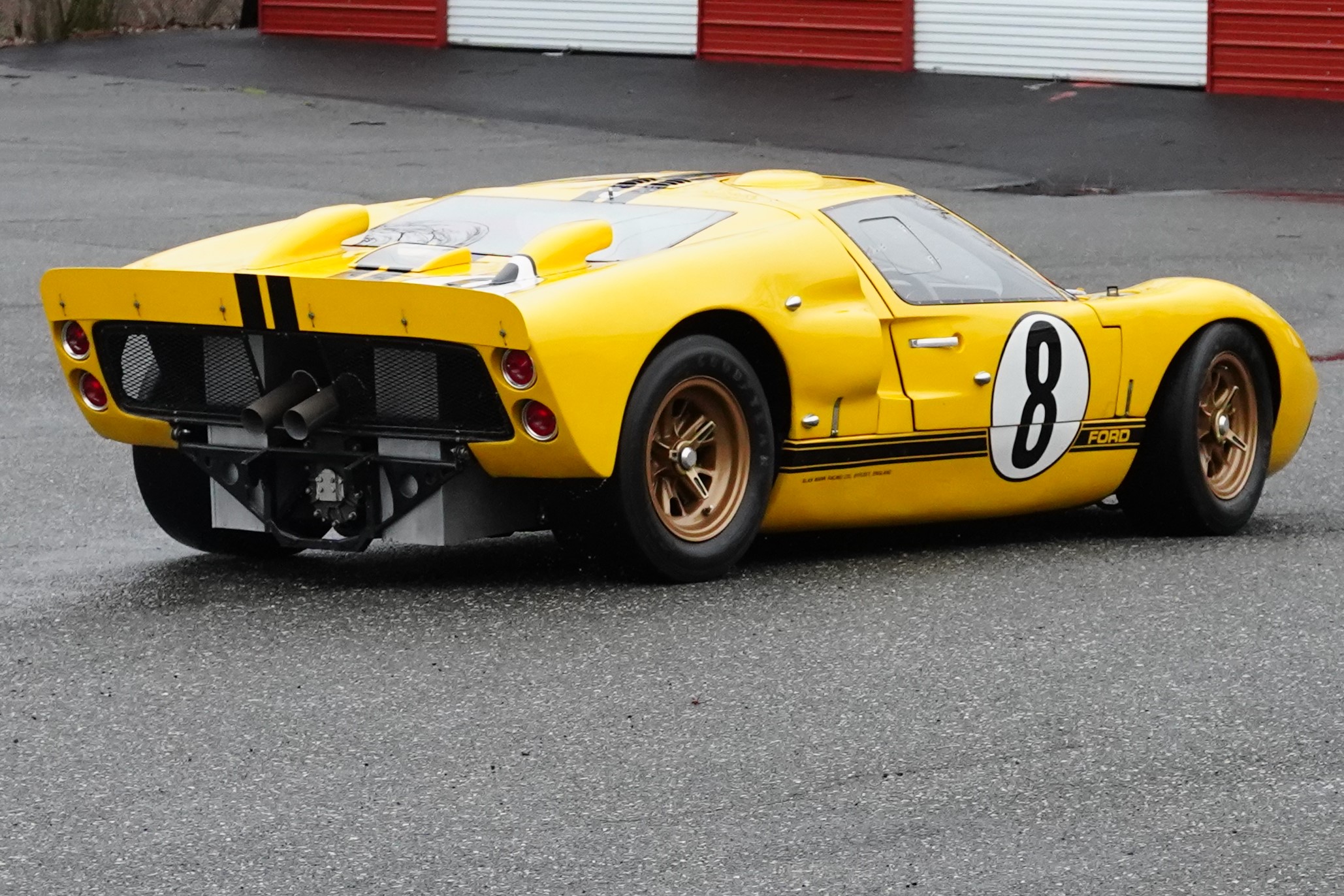
The theme this time was “Sebring ‘65”, an infamous race because of the deluge which caused cars to plow through what was described as up to 8 inches of standing water on the track. For this Demo, the museum selected its ’64 Shelby Cobra Daytona Coupe and ’66 Ford GT40 Mk II. The program listed the ’63 Corvette Grand Sport, but in lieu of that, a stock ’66 Corvette 427 roadster was chosen (nice to have such illustrious machinery as backup). Last but not least, on loan from Luigi Chinetti Jr. was a ’63 Ferrari 250P. (The Ferrari was not part of the driving portion of the day’s festivities – one can only presume that the loan arrangement excluded such an option.)
The Shelby Daytona Coupe
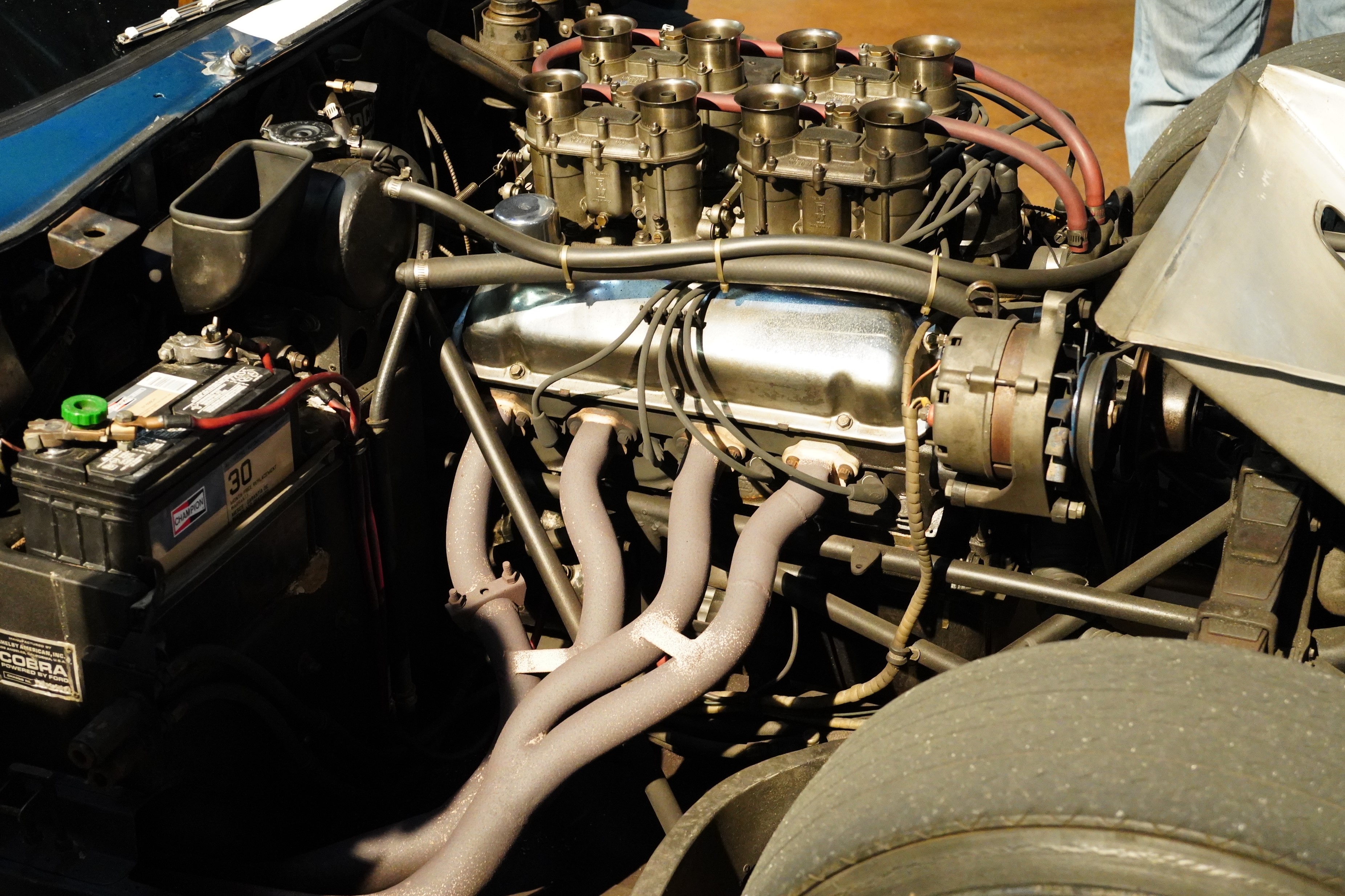
Ford 5 liter pushrod V8
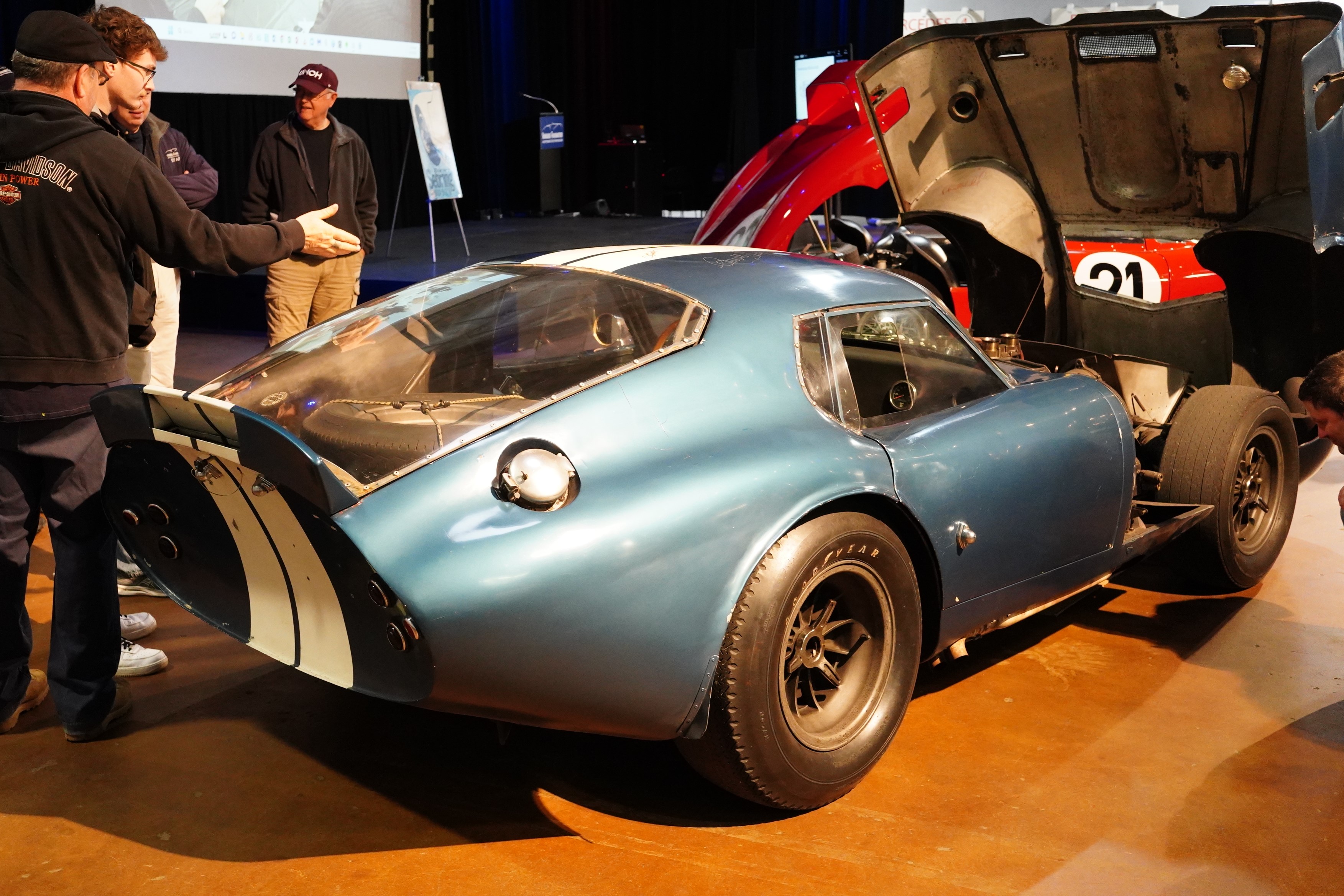
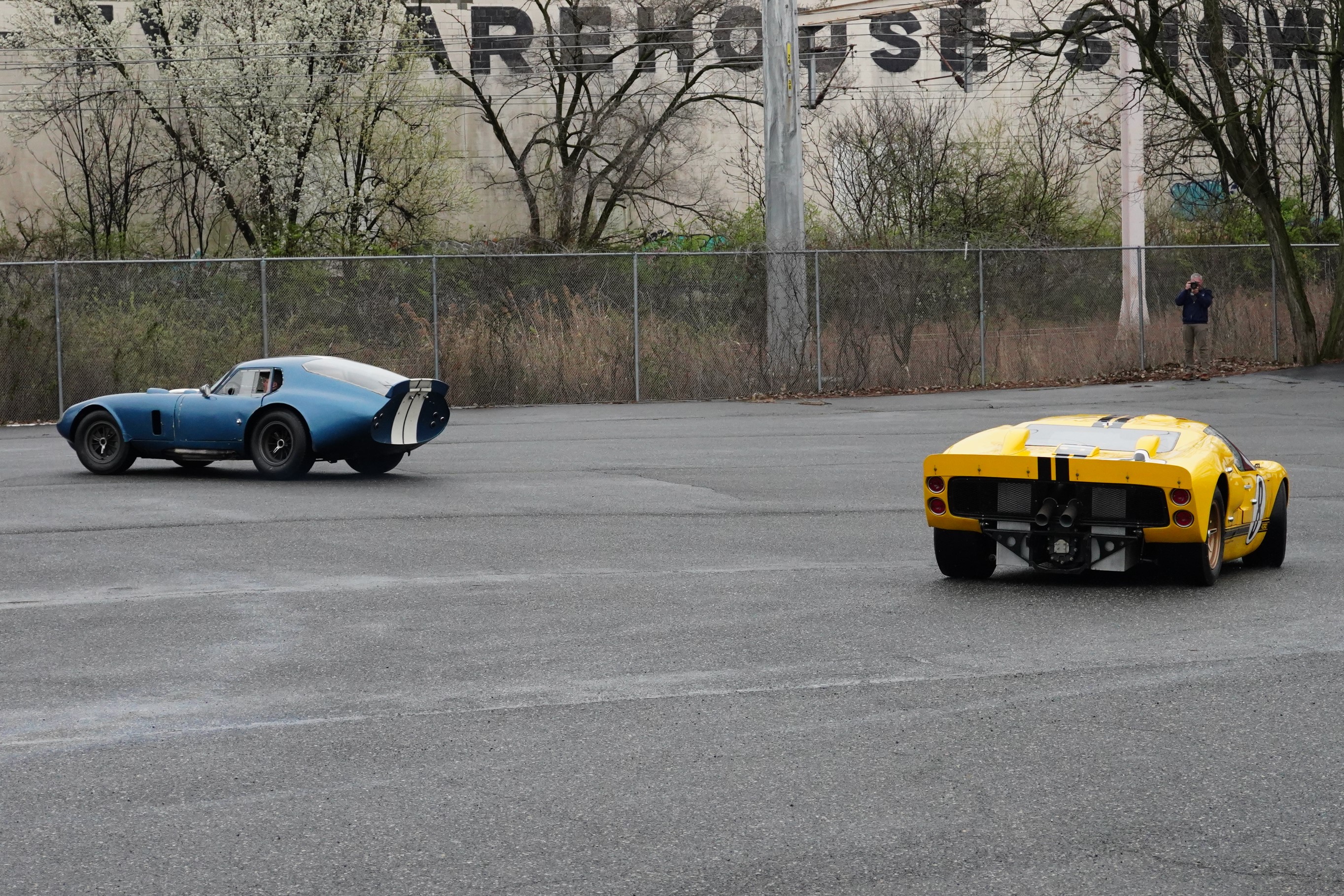
Rear shot shows agressive tail
Ford GT40 Mk II
Another Ford V8, but 7 liters
My friend Terry, whose idea it was to visit on this particular Demo Day, accompanied me. We arrived about 30 minutes before showtime, and to my pleasant surprise, all four cars were arranged at the front of the seating area; they were not roped off (as I’ve seen done previously) so guests were free to get up close and personal with the cars. Soon enough, the program started and we were treated to a slide show, including technical specs of the cars and film footage of the actual 1965 Sebring 12-hour race. The variety of vehicles racing that day, American and foreign, was huge, and the race stood out because 1st and 2nd place overall were taken by two American teams. The Chevy-powered Chaparral of Jim Hall and Hap Sharp came in first, followed by a GT40 driven by Ken Miles and Bruce McLaren. To Enzo’s chagrin (he had earlier threatened to boycott the race), his 250LM finished third.
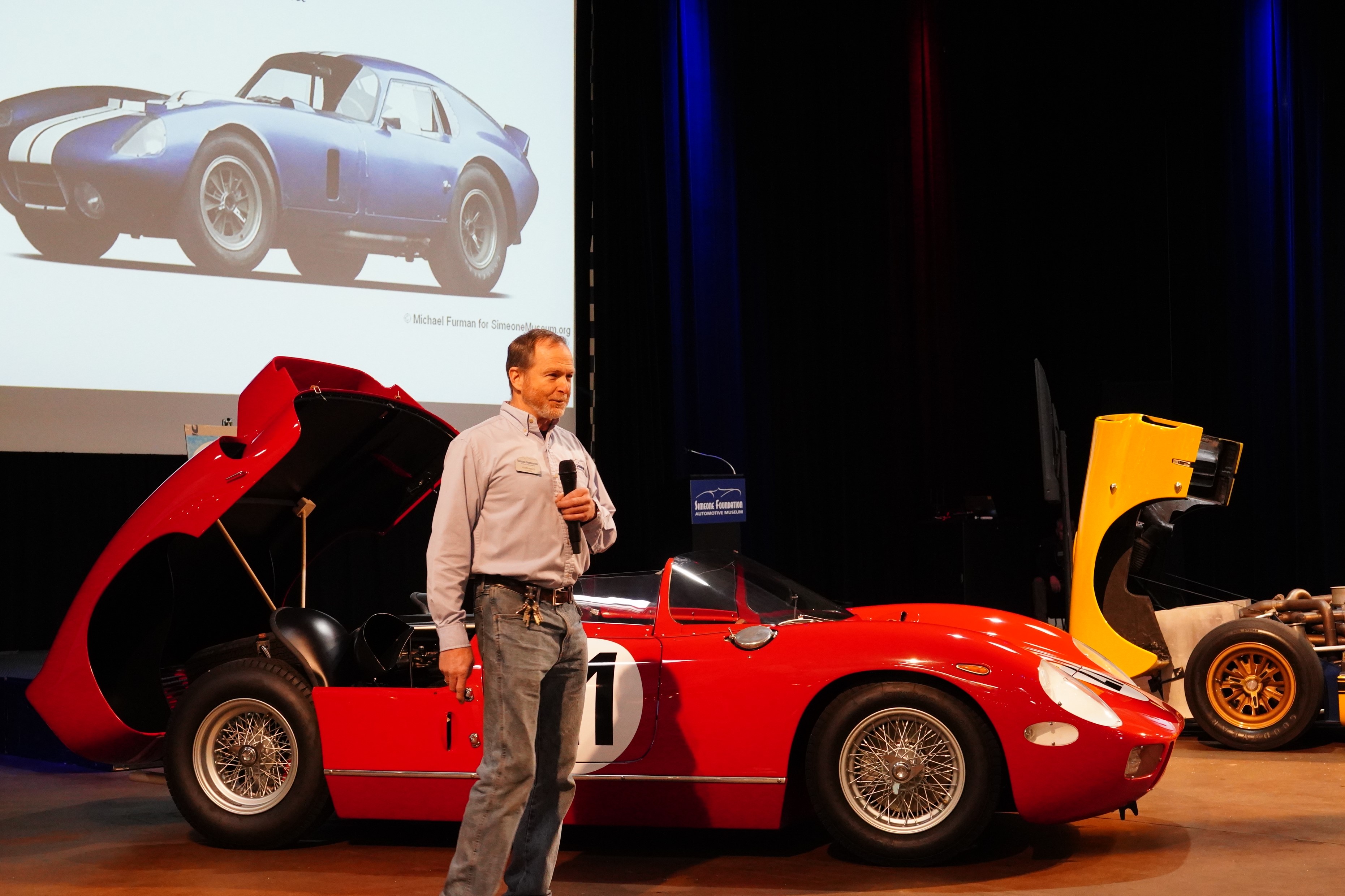
BELOW: RED FERRARI AND YELLOW FORD GT DURING SLIDE SHOW PRESENTATION:
After the slide show, it was Ford vs. Chevy in the back lot. I should not have been amazed that all three cars started up on first attempt. They were slowly driven out of the building, and once on pavement, the drivers picked up a little bit of speed, but not too much! These vehicles are too valuable to put them at risk. (The Cobra Daytona, in particular, as one of the most singularly-famous cars in the world, must have an incalculable monetary value.)
After the show, we toured the rest of the static display within the museum, and promised each other that this would not be the last time we’d visit the Simeone in 2023.
Last week, two buddies and I made a long-overdue return visit to the AACA Museum in Hershey, PA. While “AACA” is in the name, this statement of clarification is on the Museum’s website: The AACA Museum, Inc. has been and remains an independent 501 (c) (3) non-profit organization, not affiliated with the Antique Automobile Club of America.
A Plymouth Superbird is in the front lobby to greet you
I know very little of the story and don’t care to know the details, so let’s just say that there was a courtship which ended in an ugly breakup. In spite of the divorce, it was a happy surprise that my National AACA membership card gained me free entrance!
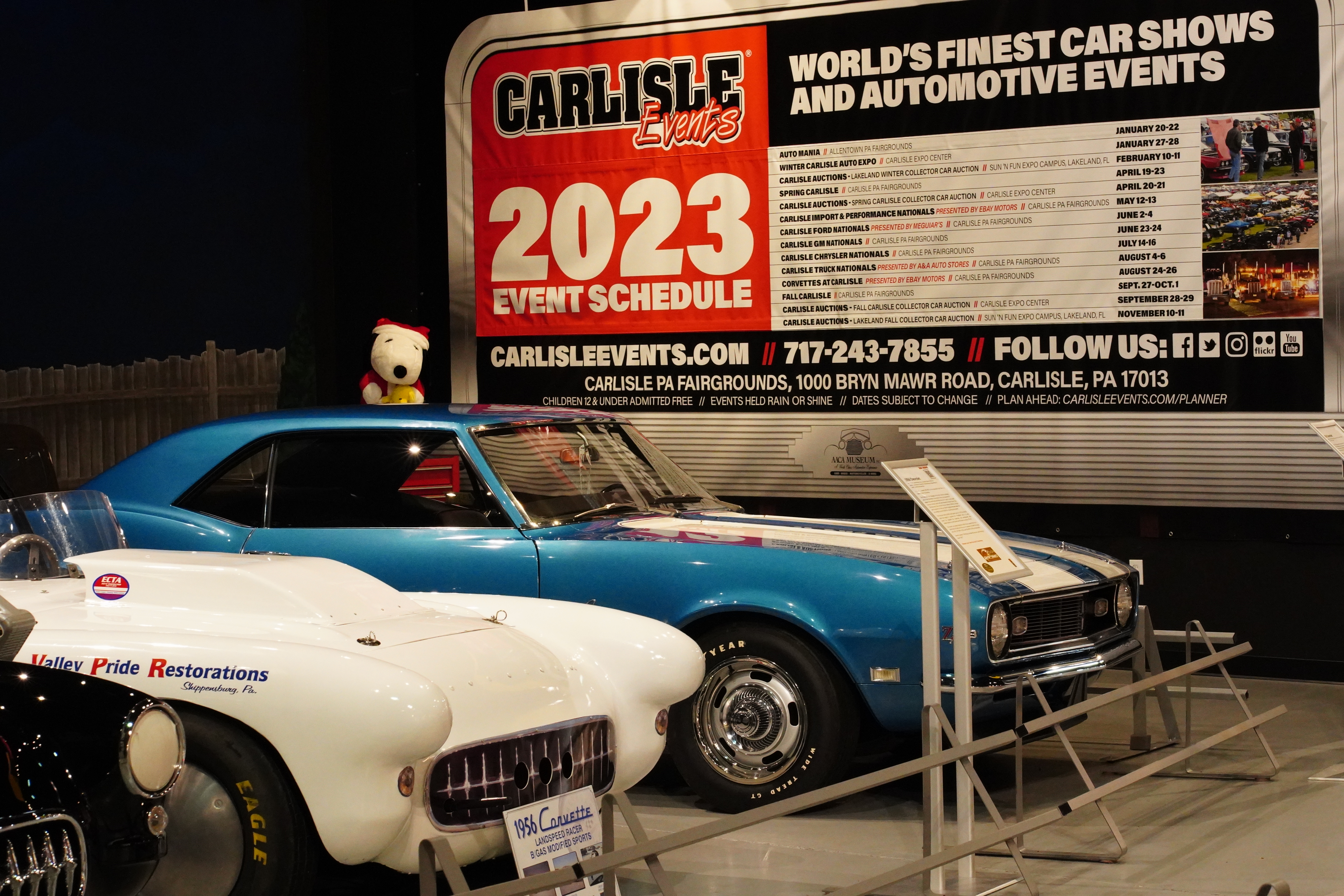
Not surprising that Carlisle events, and not AACA events, are displayed
My most recent previous visit there was almost six years ago, to fetch my ’67 Alfa Romeo after it spent the winter inside the Museum as part of its Amore della Stradaexhibit of Italian cars. It was good to be back; it was also relatively quiet on the day we visited, so it felt like we had the place to ourselves.
Most of the vehicles on display were not the same as we saw in 2017. The Museum is known for rotating what’s on the floor, and the curators are also known for putting on special exbibits, all of which keeps it fresh for repeat visitors. This time, it was racing cars which were featured. Although I don’t count myself as a rabid fan of the sport, there was still plenty of history to be absorbed.
A C2 and C3 Corvettes share space
A constructive comment about the displays: I appreciate the Museum’s efforts to create dioramas for all the cars, and that space is somewhat at a premium. As a photographer, though, it was very challenging to take pictures that showed an entire vehicle while keeping other vehicles and distractions out of the frame. As a result, many of these snaps show most, but not all, of the cars.
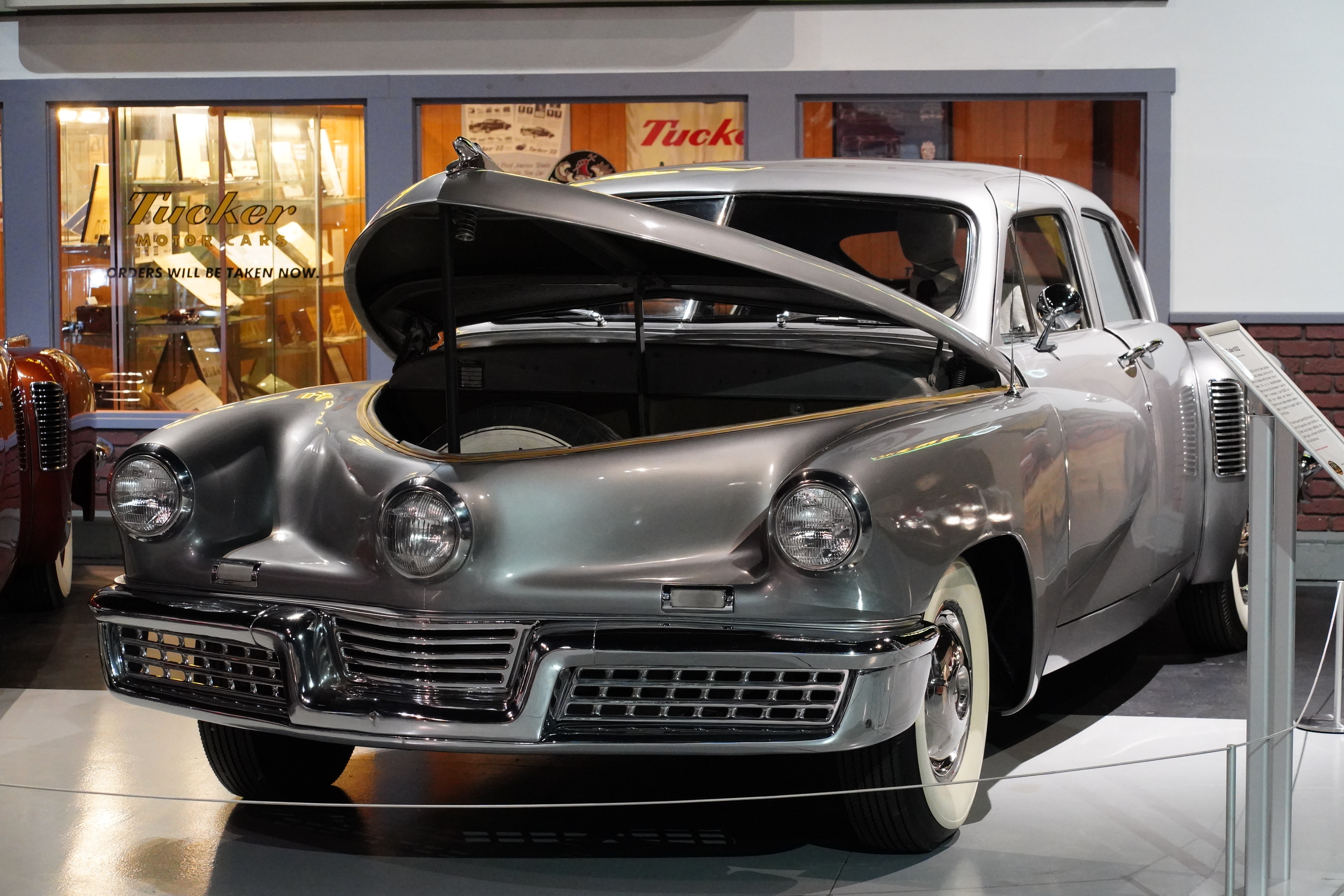
A permanent display which was little-changed since our last visit was the Tucker Exhibit. A private collector, David Cammack, began collecting Tucker cars, parts, and memorabilia in the early 1970s. He eventually willed the entirety of it to the Museum. Even though I’ve seen it several times before, there are fascinating aspects of the Tucker story which are worth revisiting.
Part of the Tucker Exhibit
While wandering around the bottom floor (there are 3 levels), a Museum employee engaged with us and offered to take us back into a work area normally off-limits to the public. There, we saw some vehicles being prepped for their turn in the spotlight, and also learned that a regular troop of volunteers makes their way to the Museum to lend a helping hand with the cars. It sounded to this writer like a possible future activity in which to participate.
You need a big basement to house buses
For those who have been to Hershey and have not taken in a tour of the Museum, it’s worth the detour. It is located perhaps 10 minutes from Hersheypark Drive, and admission is $12, $10.50 for seniors, and as I mentioned above, free if you belong to the AACA.
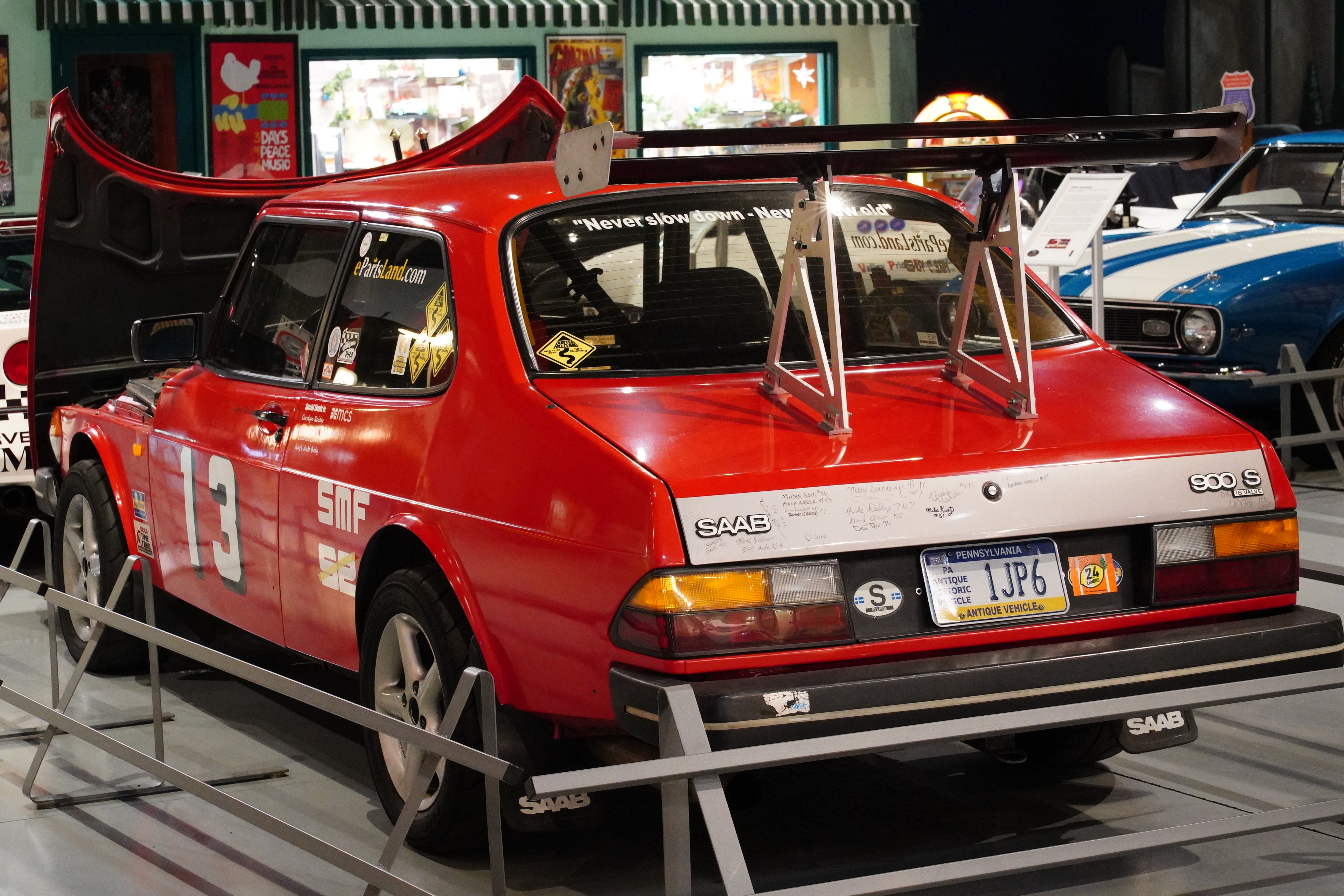
The placard for this Saab stated that it was one of very few notchback coupes
A blown ‘vette
This one had the corner display to itself
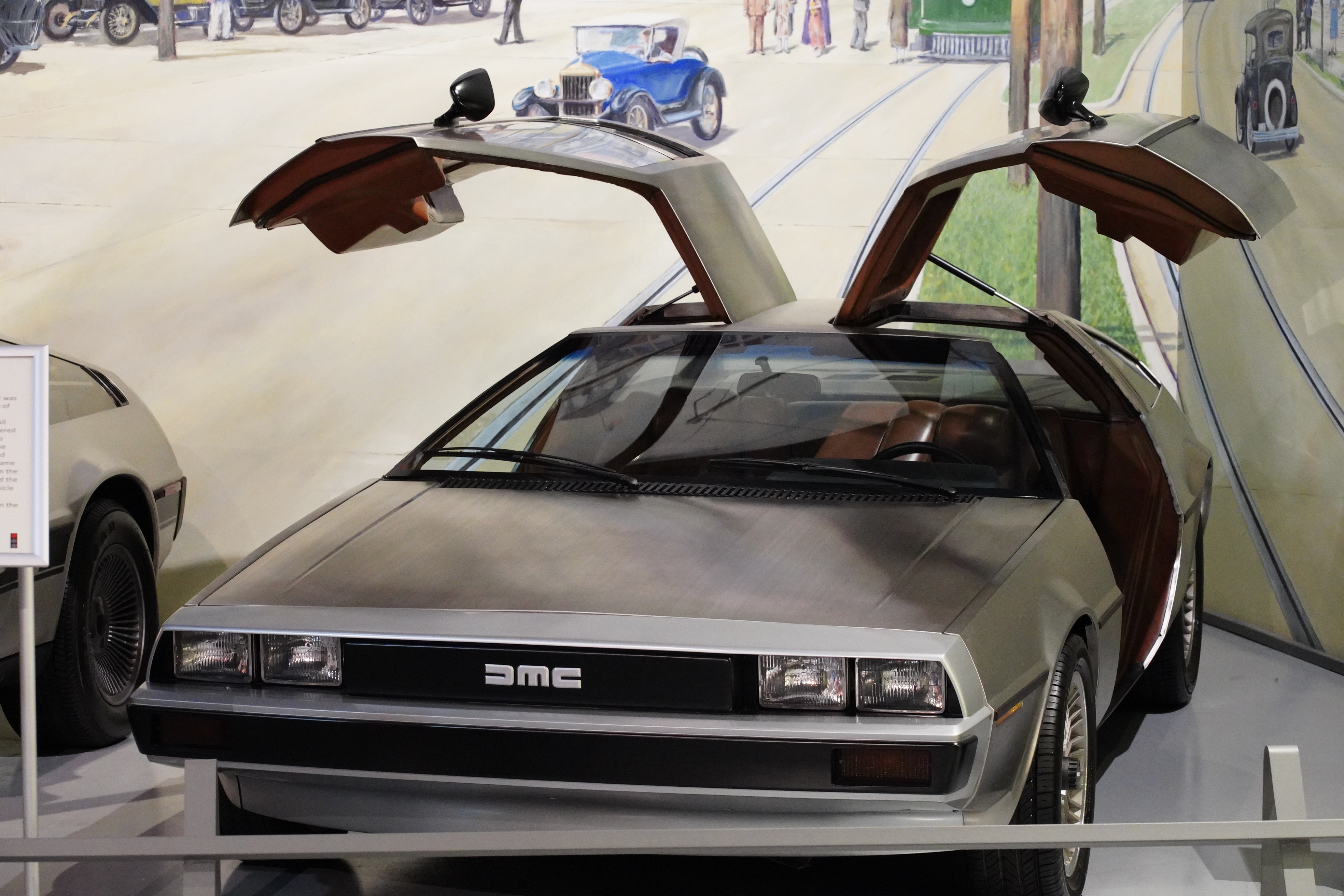
THE DELOREANS
I spotted the two DeLoreans side-by-side from a distance at first, and snapped the first photo while noting that one looked a bit lower than the other, and didn’t give it much more thought. I was a shock to get closer, read the placard, and learn about this previously-unknown prototype:
Hopefully you can see in these closer photos that the prototype shares few exterior body panels with the production car. The seats are different as well.
THE TUCKER EXHIBIT
Of the 51 Tuckers manufactured, David Cammack ended up owning 3, and all 3 are here in Hershey.
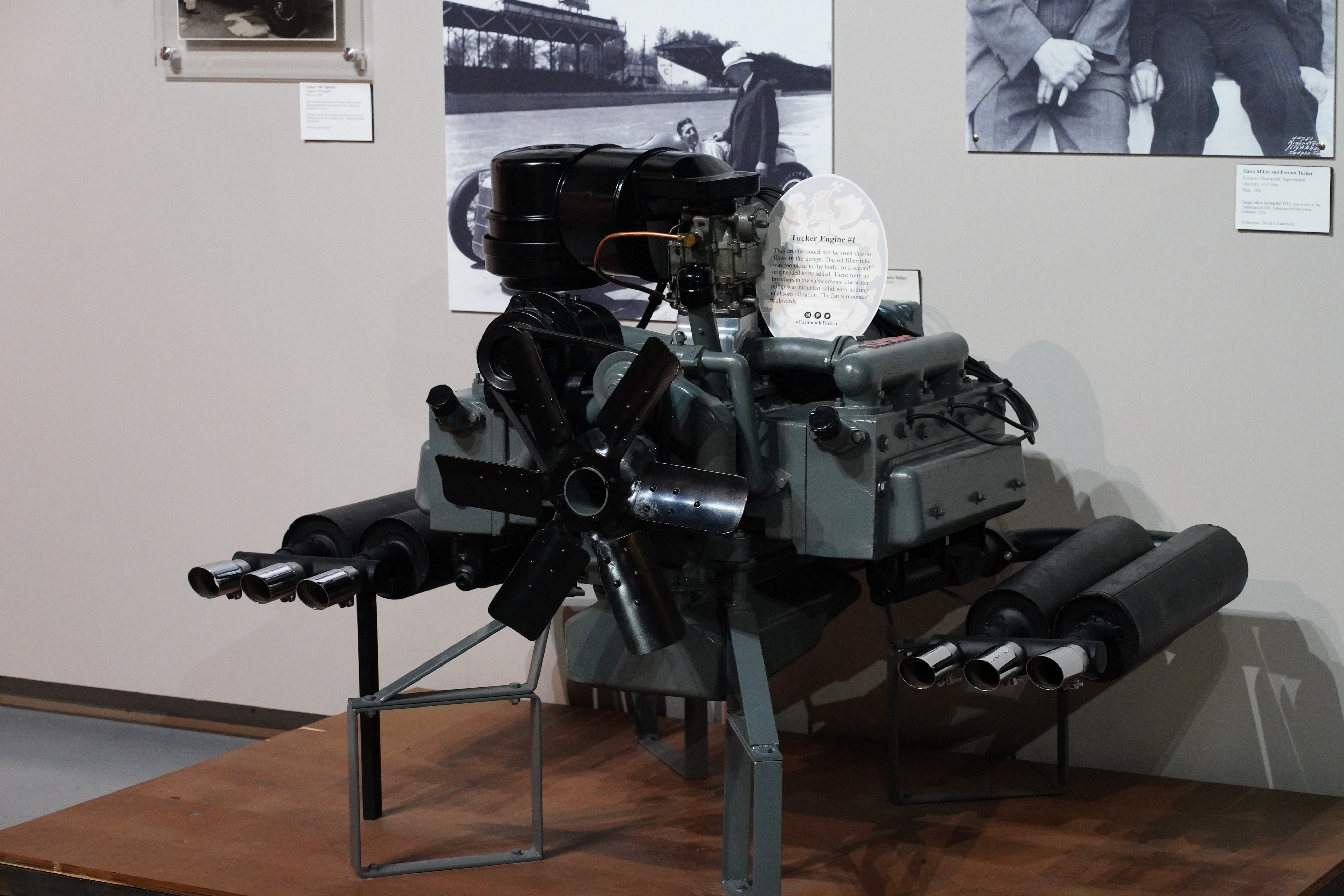
Engines comprise a large part of the display. Tucker experimented with many different ideas before deciding on a water-cooler flat-6 engine. The engine in red is an experimental engine with hydraulically-operated valves. It looks like a service nightmare.
THE LOWER LEVEL
The majority of the Museum’s displays are on the main level (in this case, the race cars, the Tuckers, the DeLoreans, and assorted other cars). The top level is a mezzanine with some scooters but no cars. The lower level has historically been primarily taken up with buses. This visit was the first time that I can recall seeing so many cars sharing space with the buses.
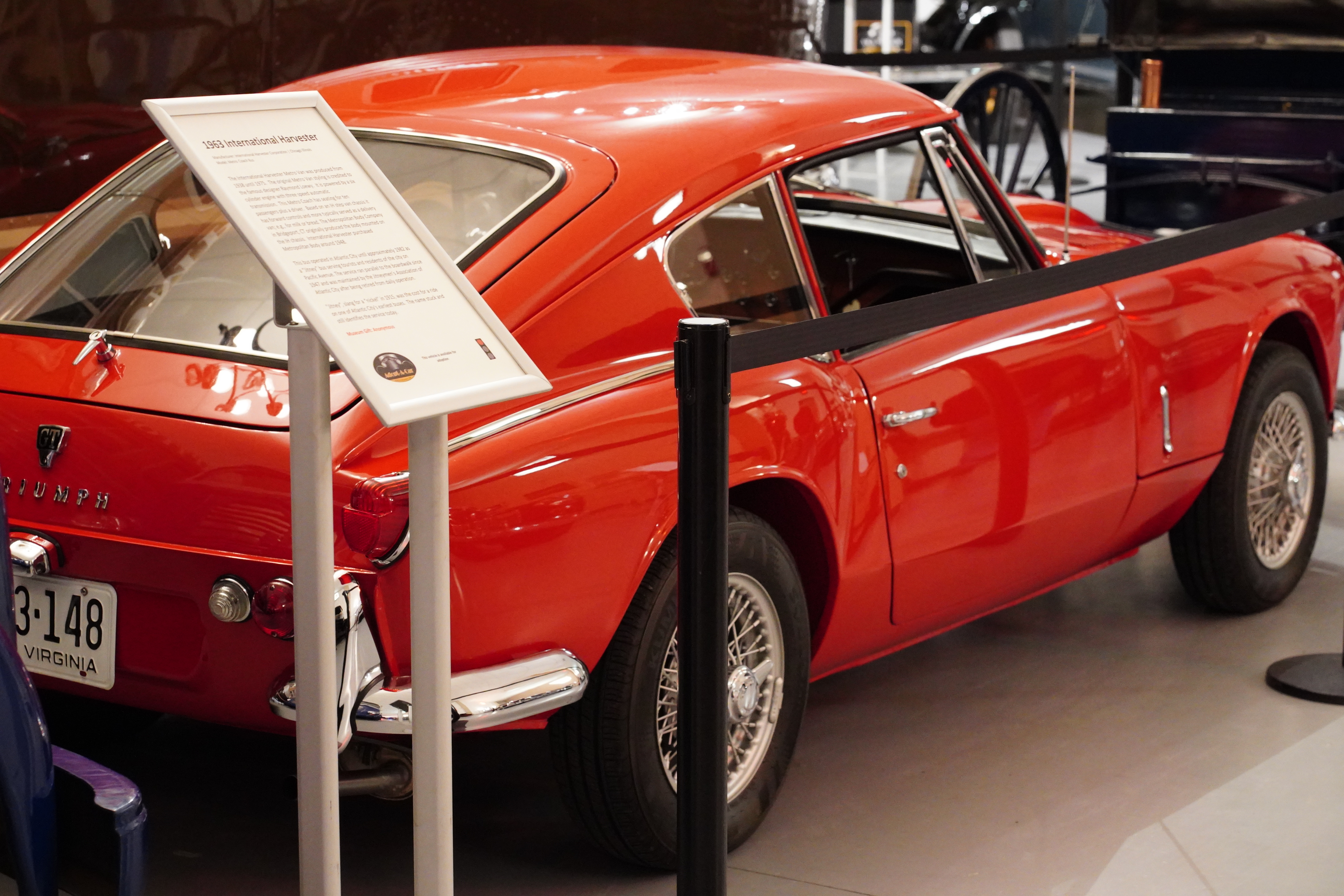
Triumph GT6
1964 Studebaker Daytona convertible
Volvo PV544
1935 Terraplane coupe (which we all agreed was quite attractive)
MG-TF
THE WORKSHOP
Our behind-the-scenes tour included sneak peeks at these cars:
Step-down Hudson convertible
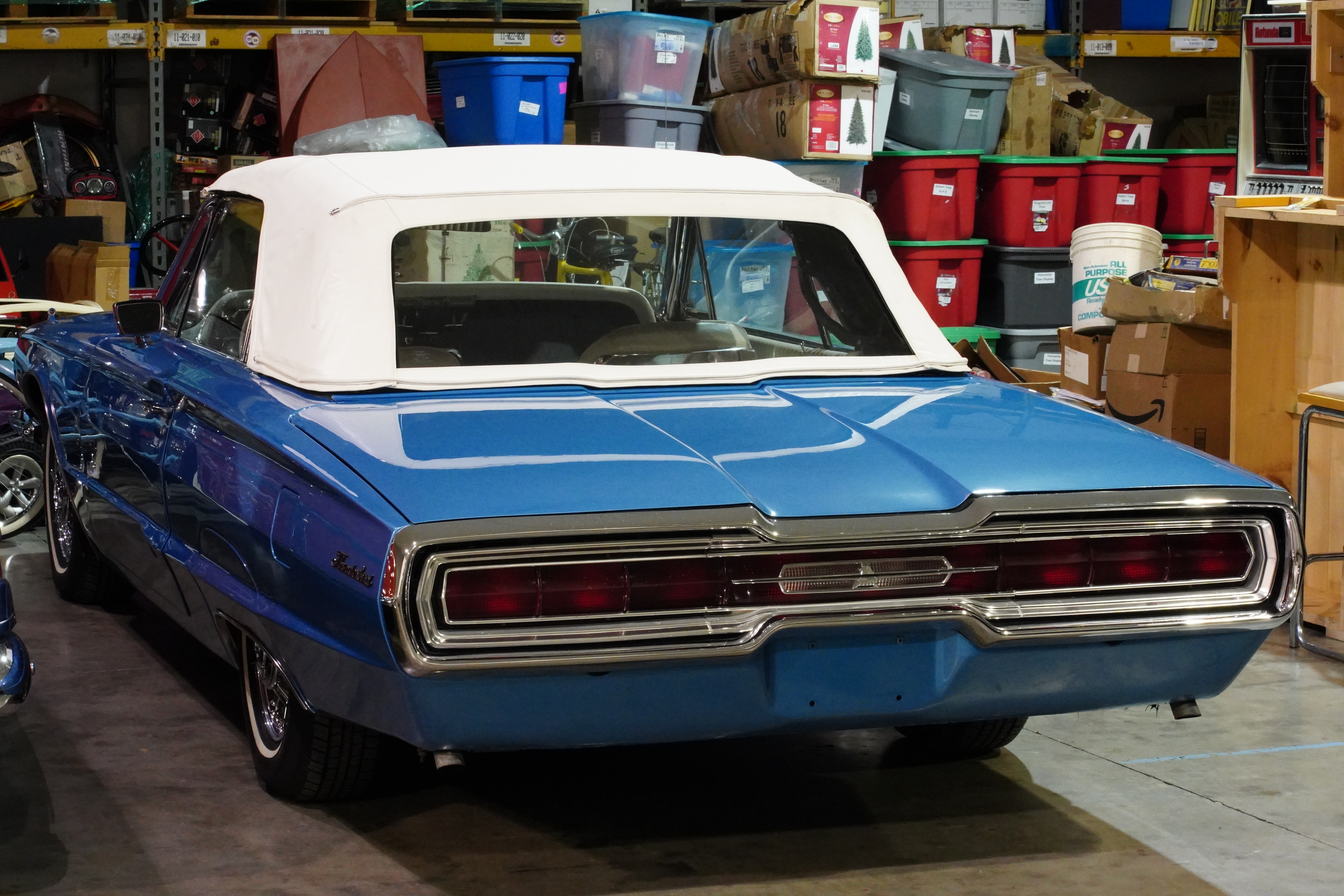
1966 Thunderbird convertible
Rolls-Royce, year and model not noted
AUTOMOBILIA
It’s not just cars on display! In this hobby, everything is collectible.
My wife and I drove to Washington D.C. earlier this week to visit her brother, who has lived there for over 30 years. It had been a few years since we visited, and I was looking forward to a few relaxing days, taking in a couple of museums and strolling around his neighborhood. The last thing I expected was to find material for a blog post, but that is exactly what happened.
My wife wanted to see a quilt exhibit at the Smithsonian Museum of American History. However, before we got near any quilts, a full-size Ford grabbed my attention. A highly-modified 1969 Ford LTD, billed as “Dave’s Dream”, was featured on the main floor. It was cordoned off so that you couldn’t not get too close. It was the only car on display, and I can only surmise that the theme, in its own way, represents some slice of American History.
On an upper floor was a Richard Avedon photography exhibit. His black & white portraiture is stunning and striking, and part of the exhibit highlighted his start as a photographer for Life, Look, the Saturday Evening Post, and other long-gone weeklies. A nearby sitting area had actual magazines from the ‘40s and ‘50s available for browsing. I selected one at random and opened it, only to find a Willys Jeep ad, one I had never seen before. It was news to me that as early as the late 1940s, Willys-Overland was advertising the purported superior traction advantages of its Jeep.
The next day we strolled around a nearby residential area. A road was closed for construction work. A crew was using a gas-powered saw to slice through the asphalt, then using a backhoe to dig. To my surprise, they were doing this directly alongside a Chevrolet Malibu which had ignored the “don’t park here because we’re going to start work soon” signage. The crew was so far along that even if the owner wanted to relocate the car, it would necessitate driving on the sidewalk.
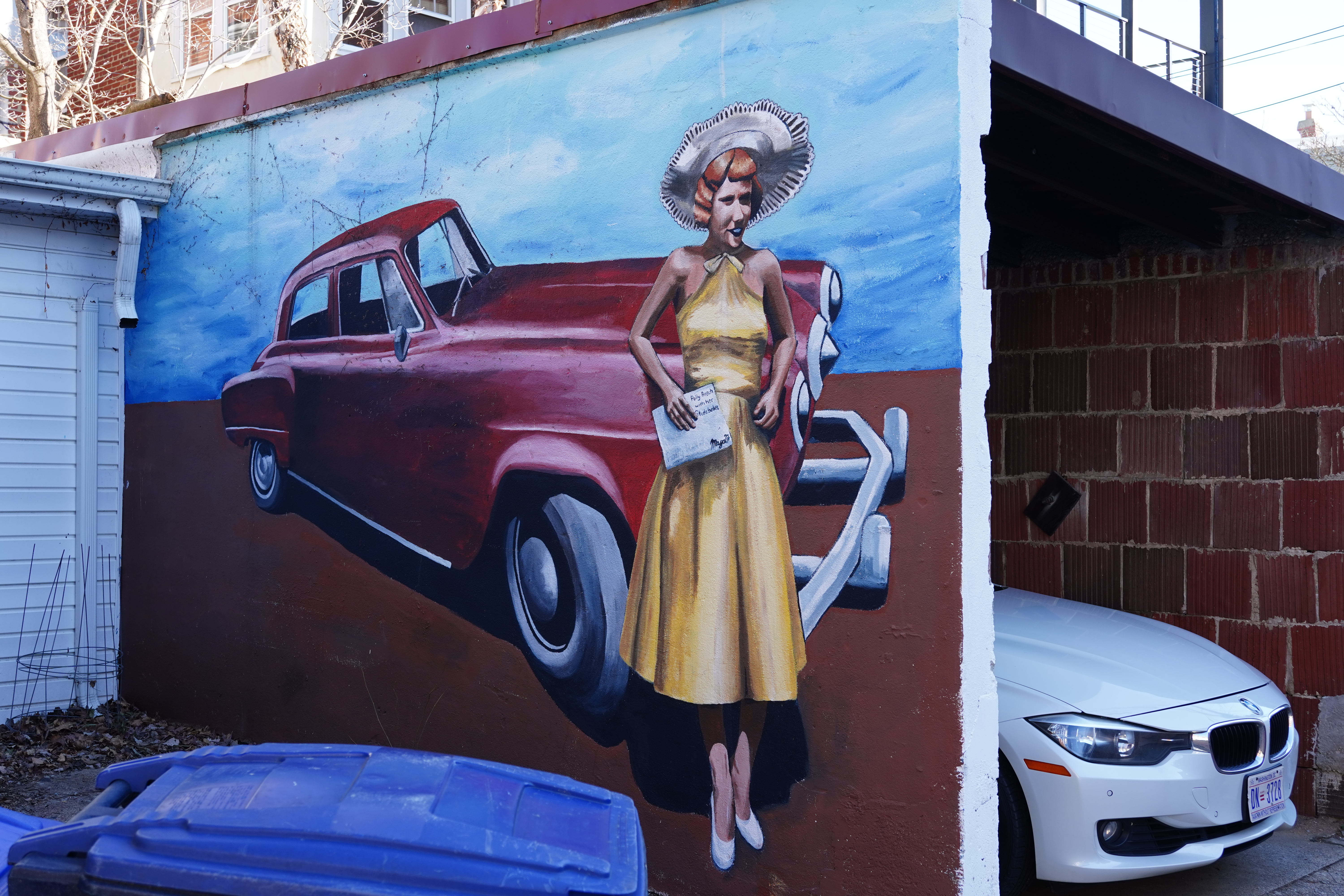
The garage for this BMW had this lovely mural painted on its side. Can we presume that the owner would rather be behind the wheel of the bullet-nose Studebaker?
In the same neighborhood as the marooned Malibu and the post-war poster car was this ancient Dodge Caravan, its paint long-lost to the elements. The roof rack was supporting sawn-off tree branches. (Also make note of the steering wheel lock, as if this thing is a likely target for thieves.) My brother-in-law said that the townhomes on this block sell in the $2 million+ range. I am beyond creating any rationale for the existence of this minivan.
We were sworn to secrecy (sort of): during the AACA National held last year in Saratoga Springs, NY, attendees were offered the chance to tour a nearby private car collection. Upon arrival, our host, Jim Taylor, warmly invited us, but also cautioned us that while photographs were allowed, he did not want to see his name, face, location, and automotive particulars “splattered all over social media”. Taking his request literally, my posts from that event in June 2021 made no mention of the visit. Did my fellow visitors also comply? I have no idea, but I generally follow the rules when requested.
Jim Taylor greets his visitors
This was not my first visit to the Taylor Collection. While on the 2013 edition of the New England 1000 classic car rally with my rally brother Steve, we were granted access to the huge facility. At that time, there was no request to keep things quiet; perhaps social media’s outreach was not quite as far-reaching eight years prior.
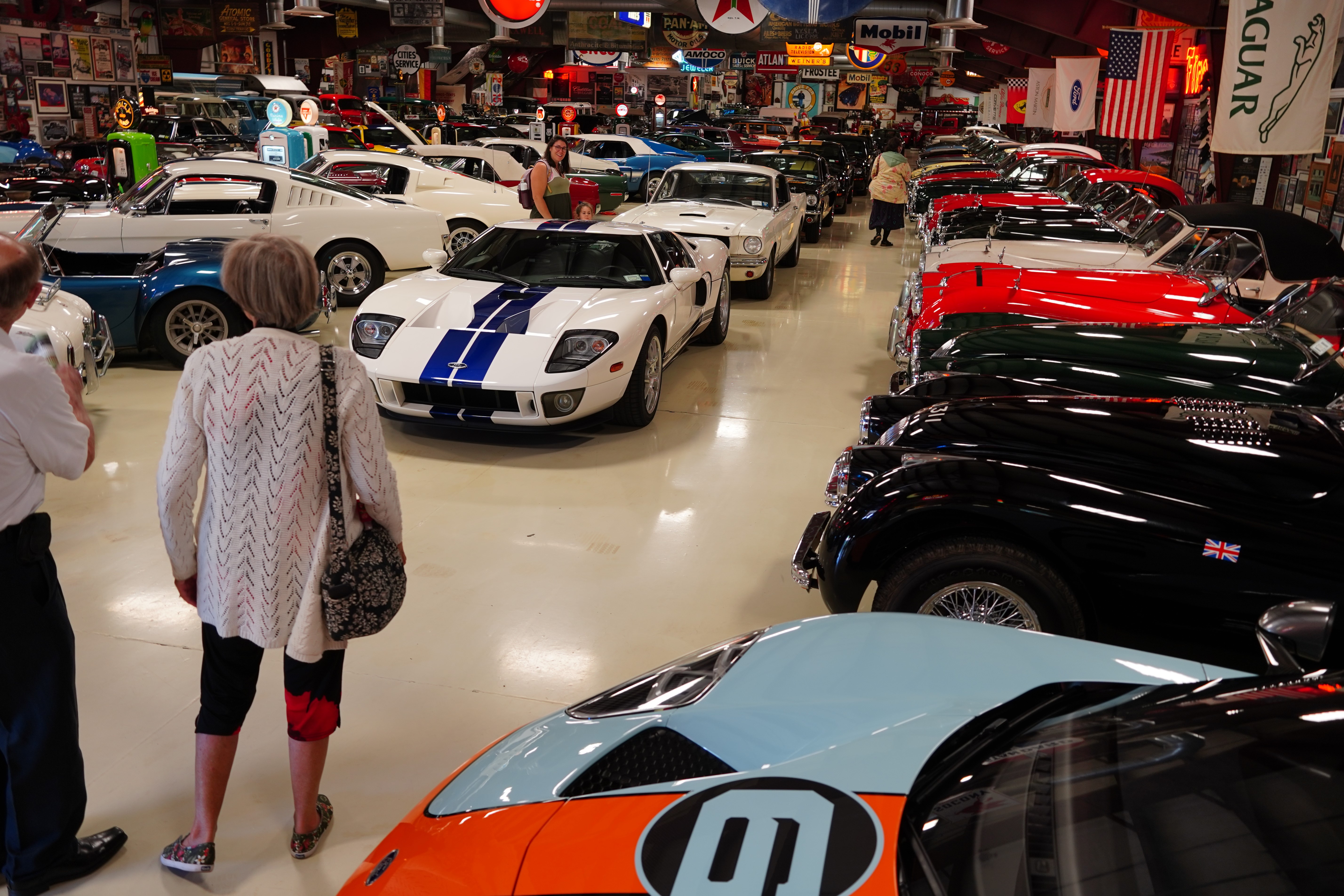
In both instances, the impression left by visiting his four-wheeled treasures was the same: complete awe. Not only are the cars in immaculate condition; most of the collection is represented by sporting machinery of the ‘50s, ‘60s, and ‘70s, which strikes at the center of my own passion. Even so, the variety of cars cuts across numerous domestic and import brands, so no matter your taste, you’re sure to see at least one car that will make you smile.
I have broken Jim’s privacy request very simply because Jim himself has. In recent weeks I have received several emails letting it be known that he plans to auction off his entire collection. The auction will be conducted by Broad Arrow Auctions in October of this year. With the exception of Jim’s Jaguar D-Type, the collection will be offered at no reserve. Here’s some verbiage from the auction company’s website:
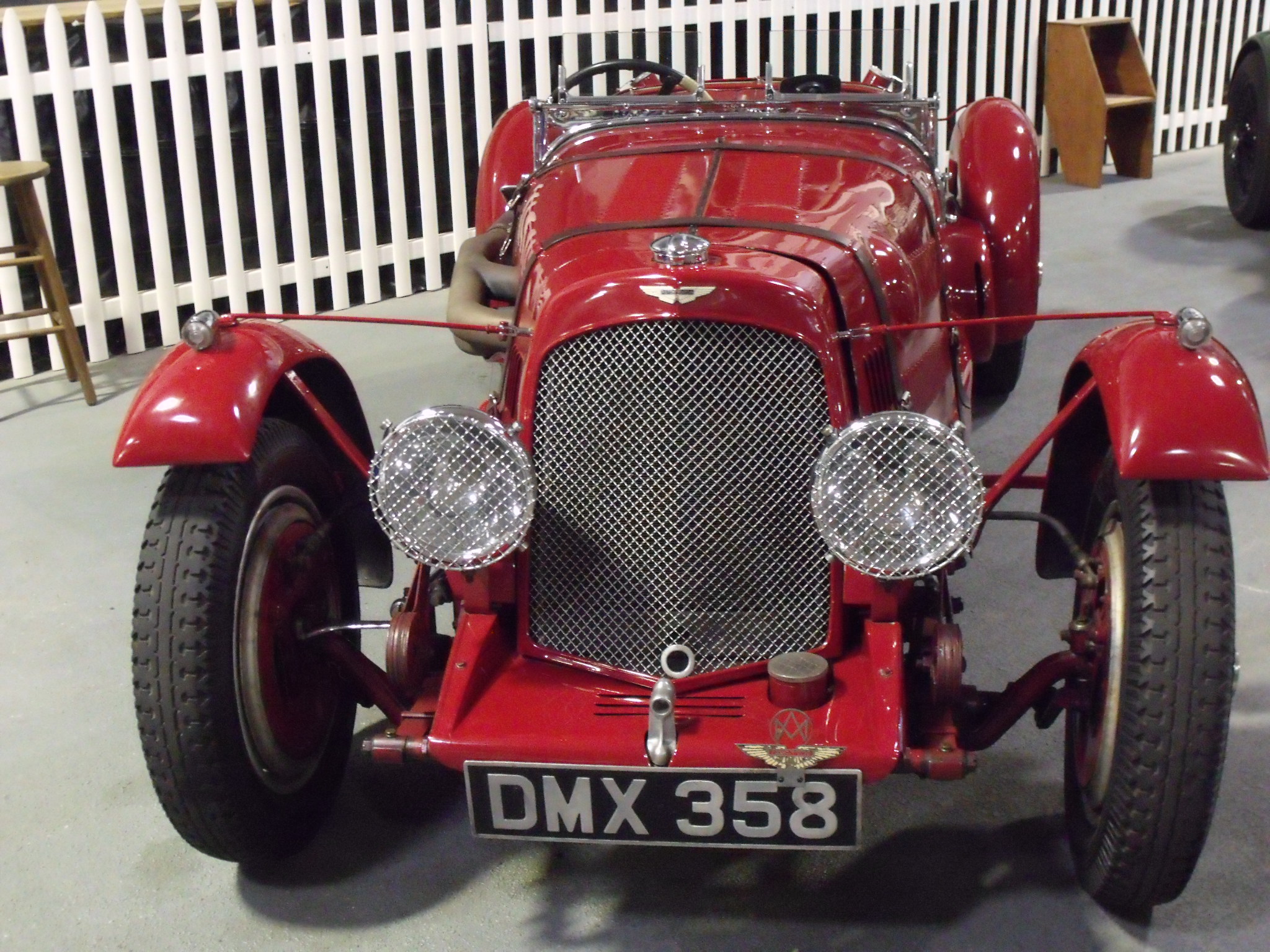
Broad Arrow Auctions, a Broad Arrow Group Company, is thrilled to announce the single owner offering auction of Mr. Jim Taylor, taking place this 14-15 October in his hometown of Gloversville, located a short distance from Albany, New York. The grouping of more than 120-motor cars represents one of the finest assemblages of European, British, and American sports and vintage cars including an impressive selection of Allard, Alvis, Aston Martin, Bentley, Bugatti, Buick, Cadillac, Chevrolet, Cunningham, Dodge, Ferrari, Ford, Jaguar, Land Rover, Maserati, Mercedes-Benz, and Shelby motor cars.
I don’t pretend to know Jim, but I met him and heard him speak at some length, both in 2013 and in 2021, and frankly, I’m surprised he’s doing this. Of course, one never knows another’s full personal situation. He’s had the chance to enjoy his cars over many years, and his family situation may warrant that a selloff now is better than one in the future.
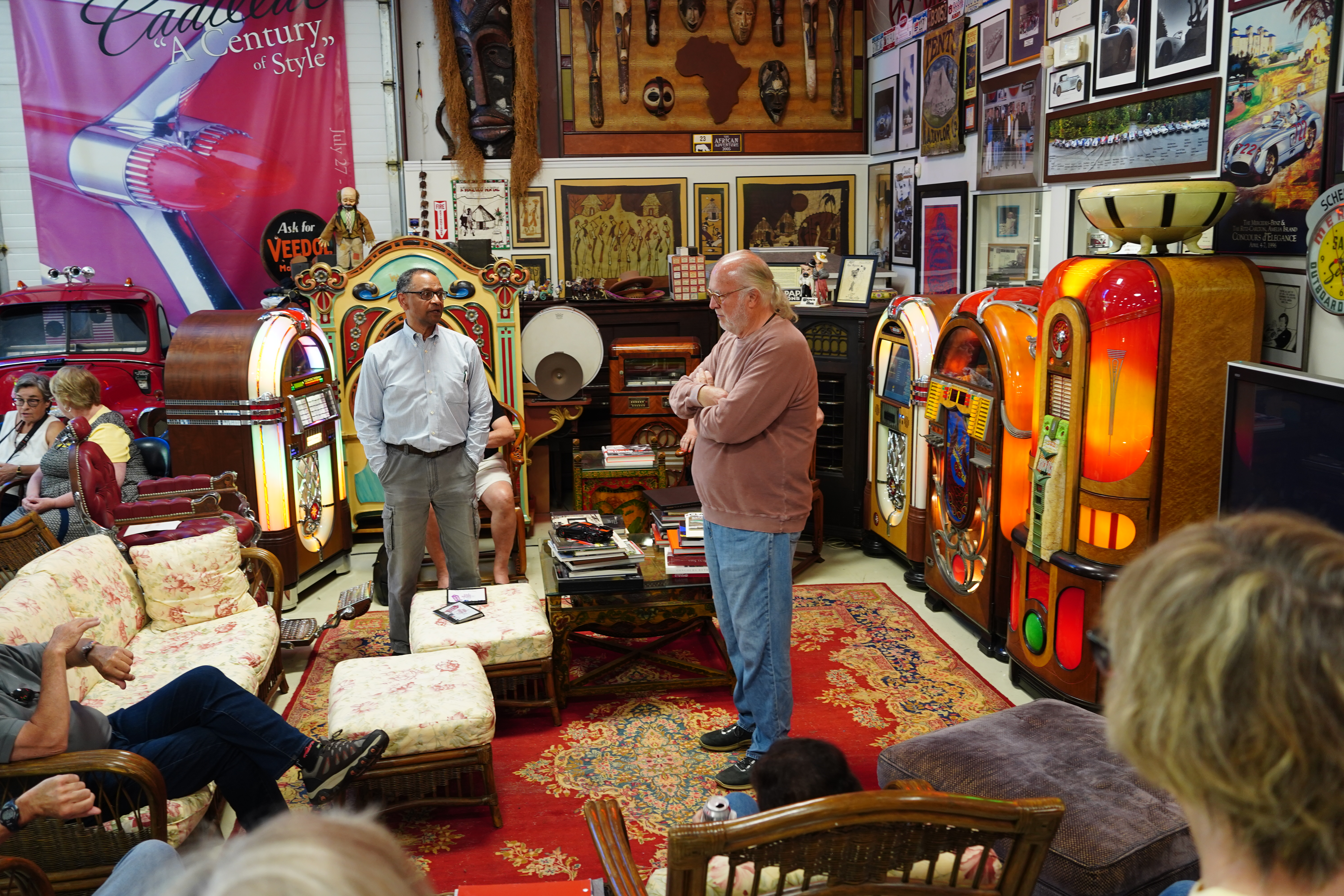
Jim in his ‘lounge’ – he collects more than cars
Jim and his family have owned and operated Taylor Made Marine products for years. A quick Internet search revealed one change that occurred between my first and second visits: the company was bought out. Whether this has anything to do with the liquidation of the collector cars is not for me to guess. However, I assure you that based what I’ve seen and heard, these cars are pristine and are kept in top-notch mechanical shape too, so bidders, bid with confidence!
Below is an assortment of photos from my most recent visit in June 2021.
JAGUARS
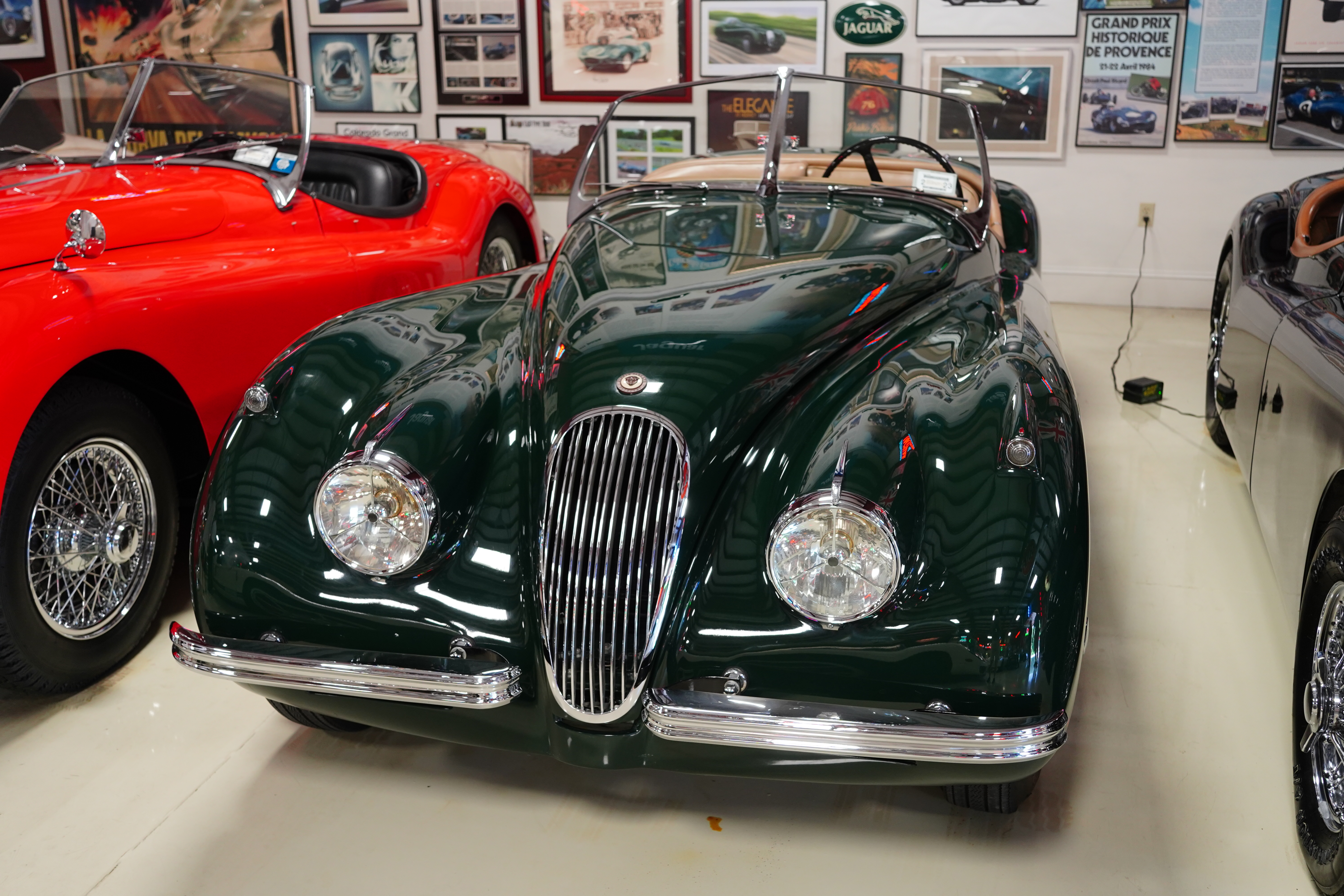
Jaguars are obviously one of Jim’s favorite brands, as verified here by his collection of XK-120/140/150s, E-Types, and ’60s-era sedans.
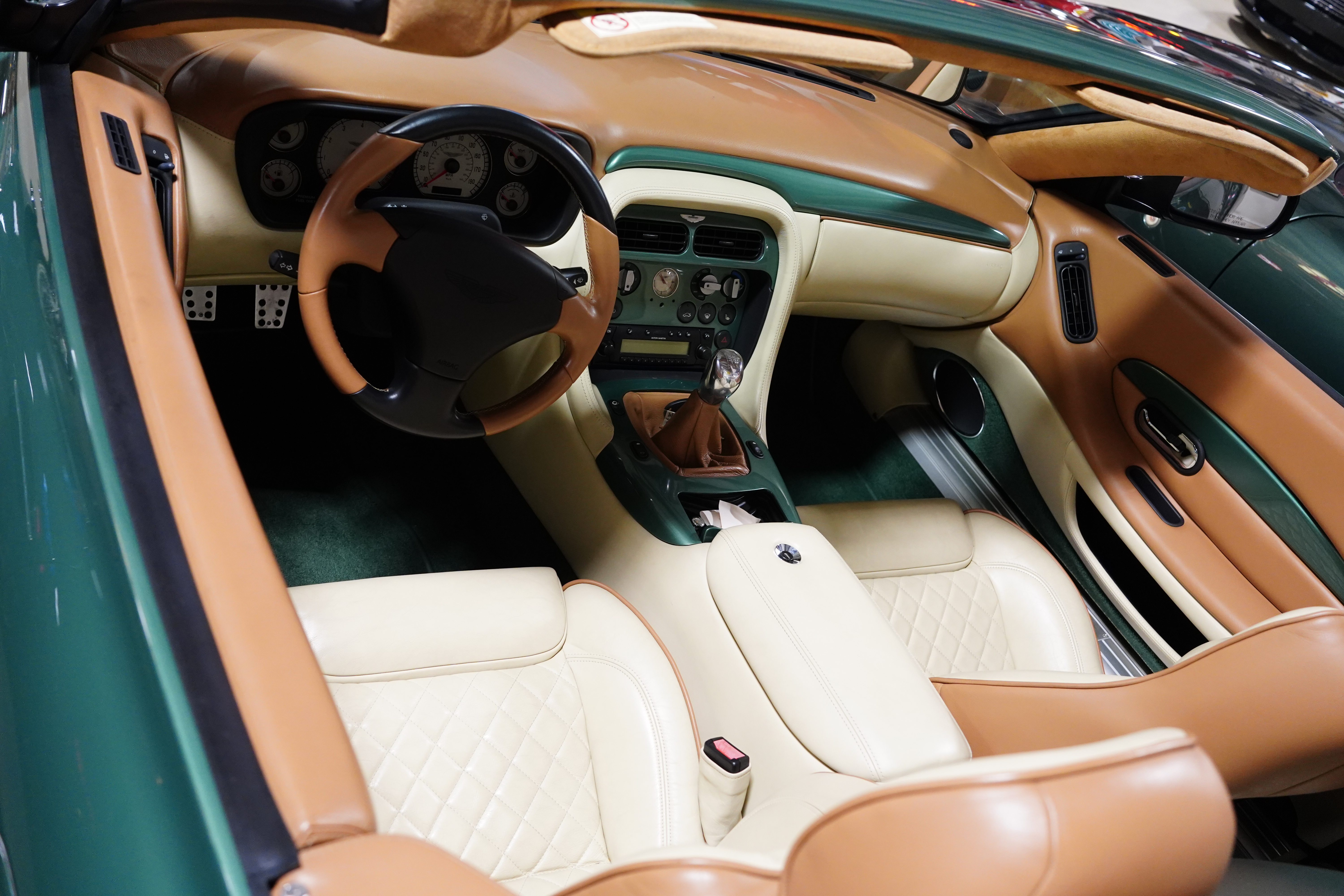
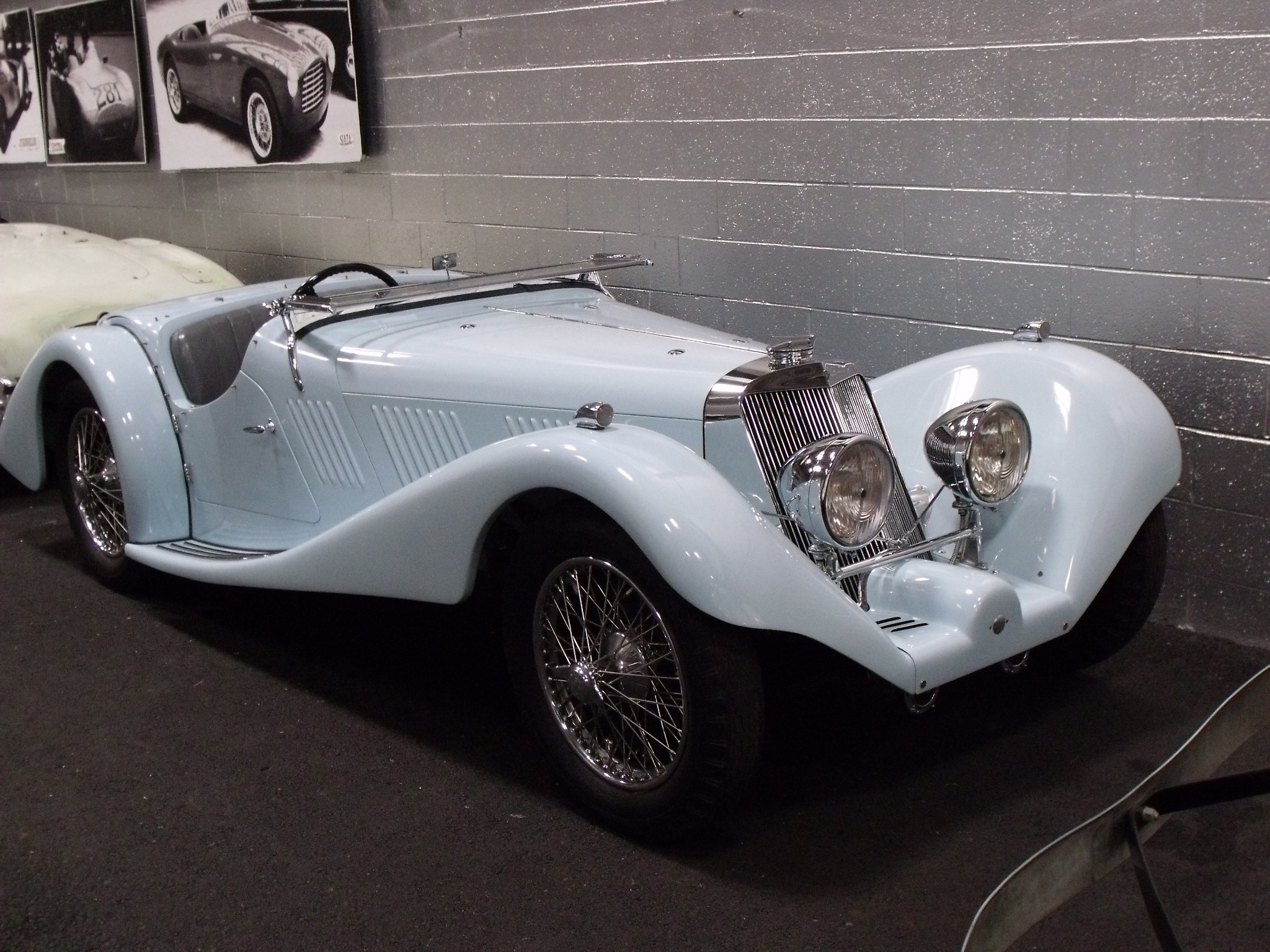
ASTON MARTIN ZAGATO:
BUICK:
CHEVROLET CORVAIR STATION WAGON:
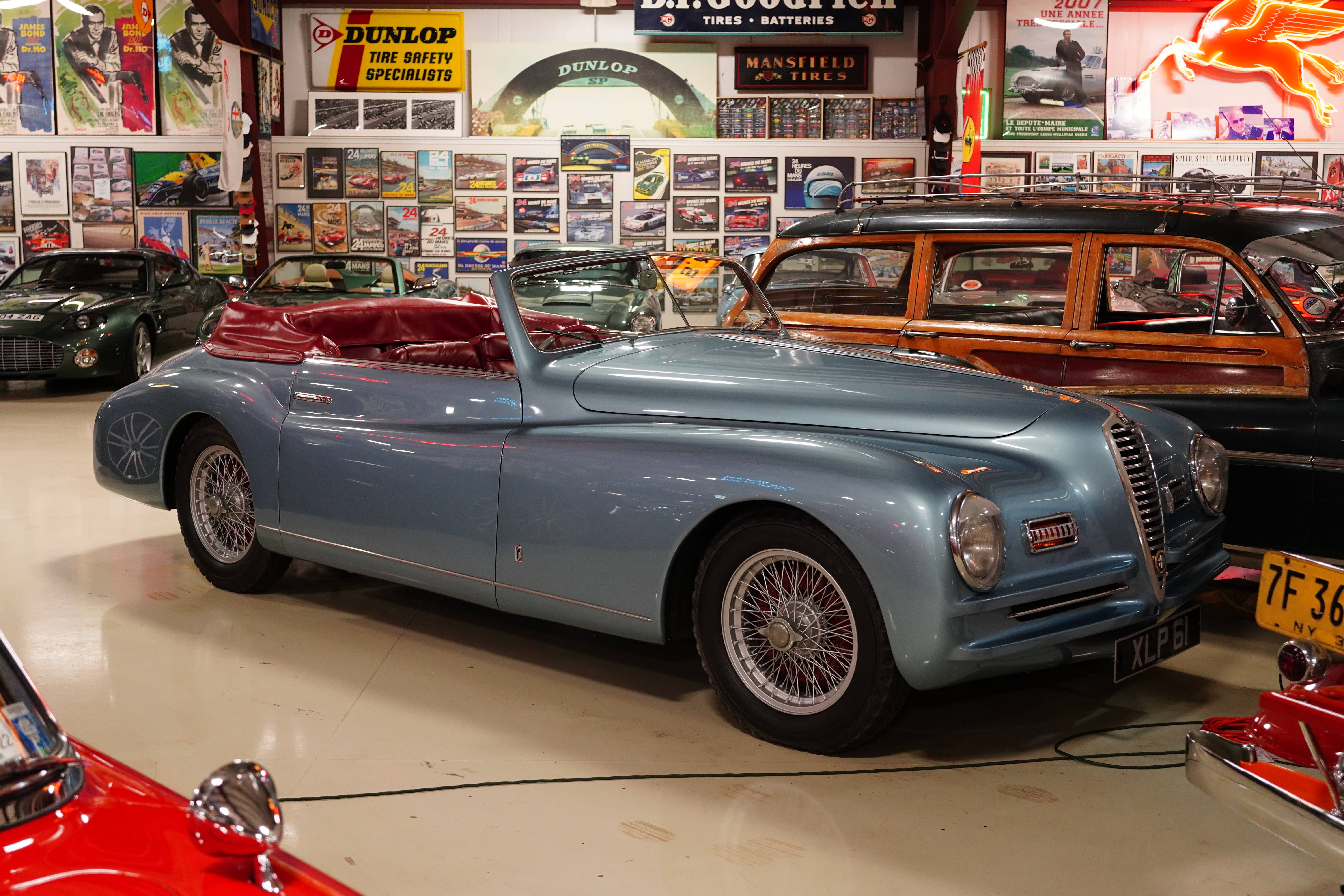
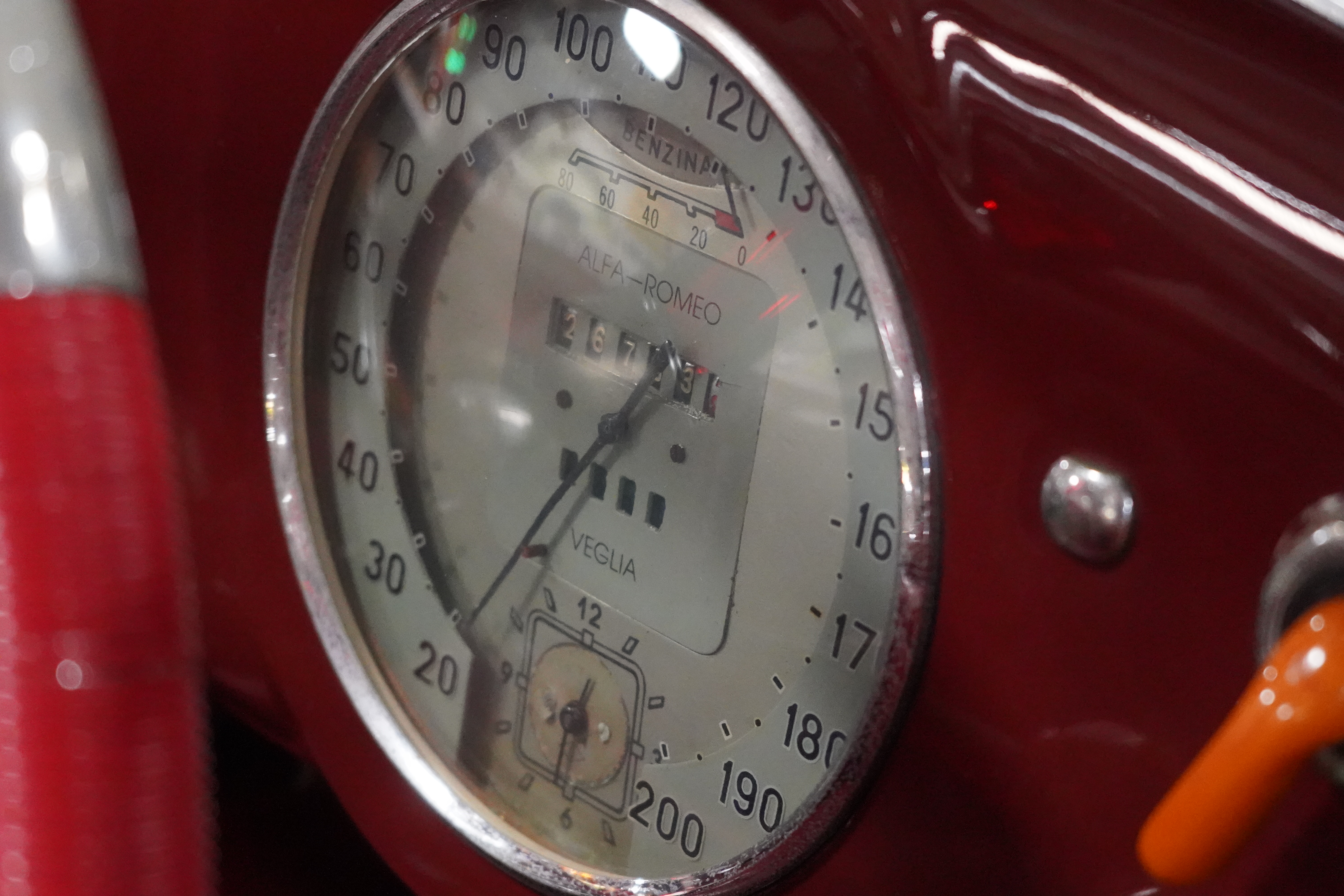
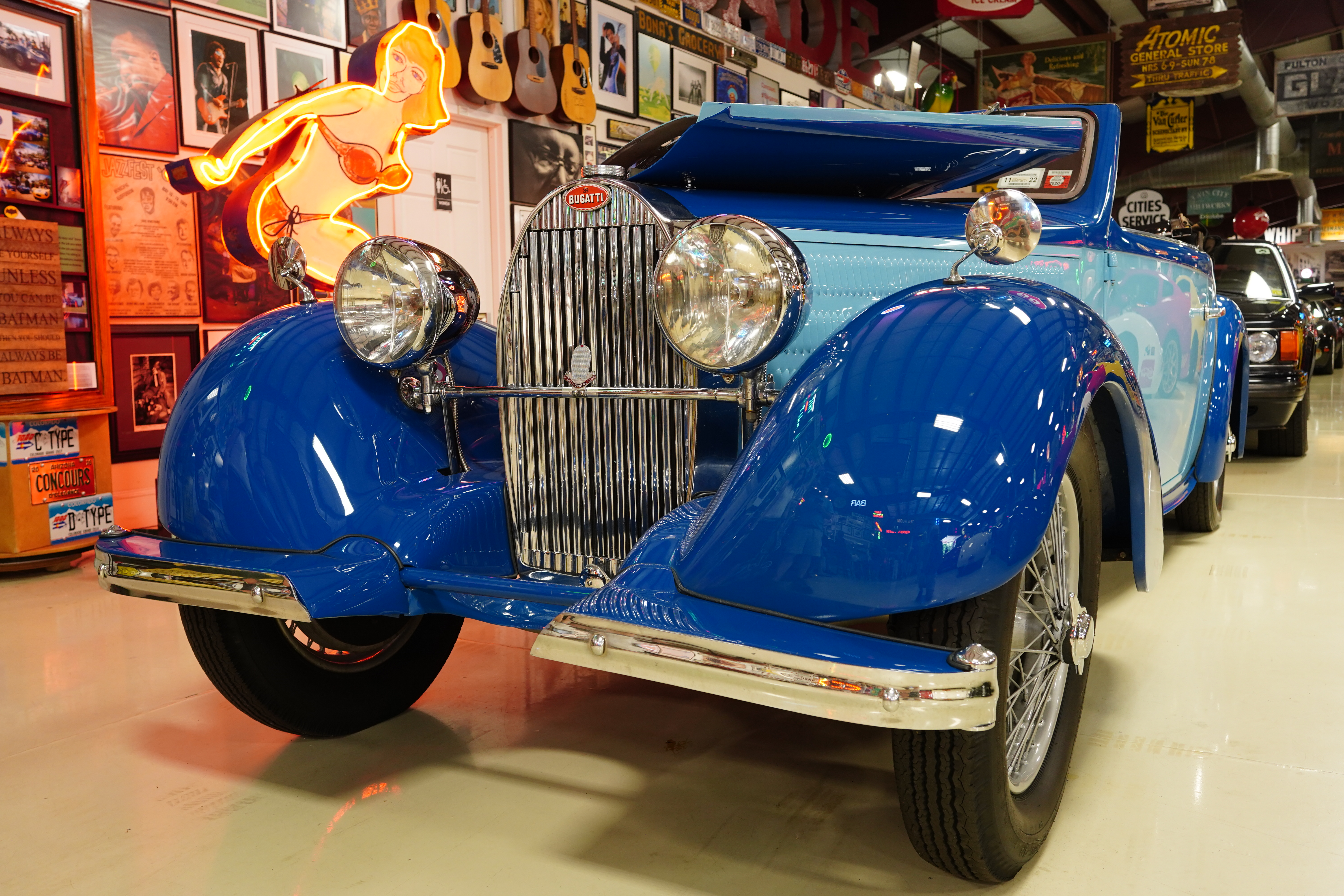
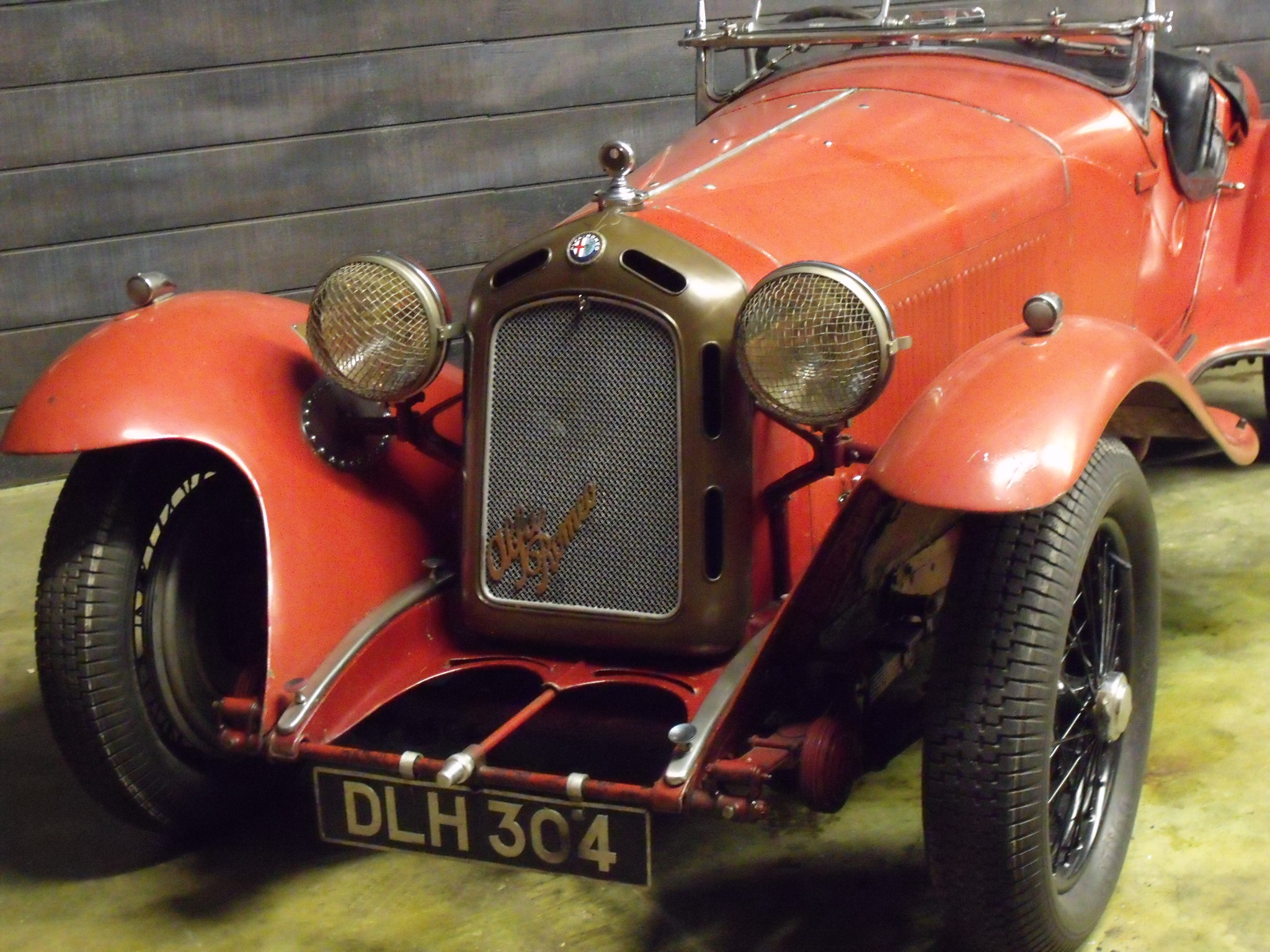
PRE-WAR ALFA ROMEO:
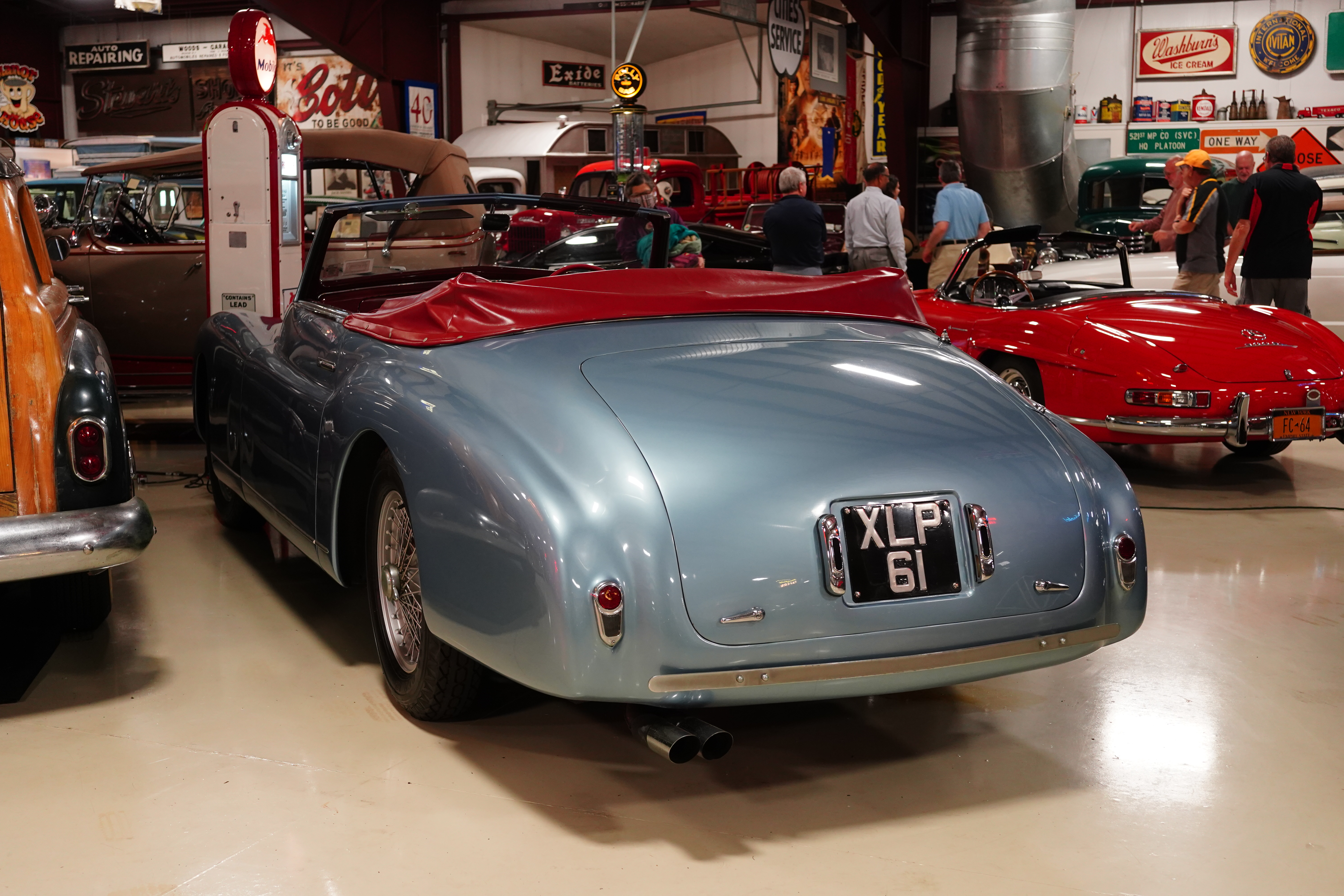
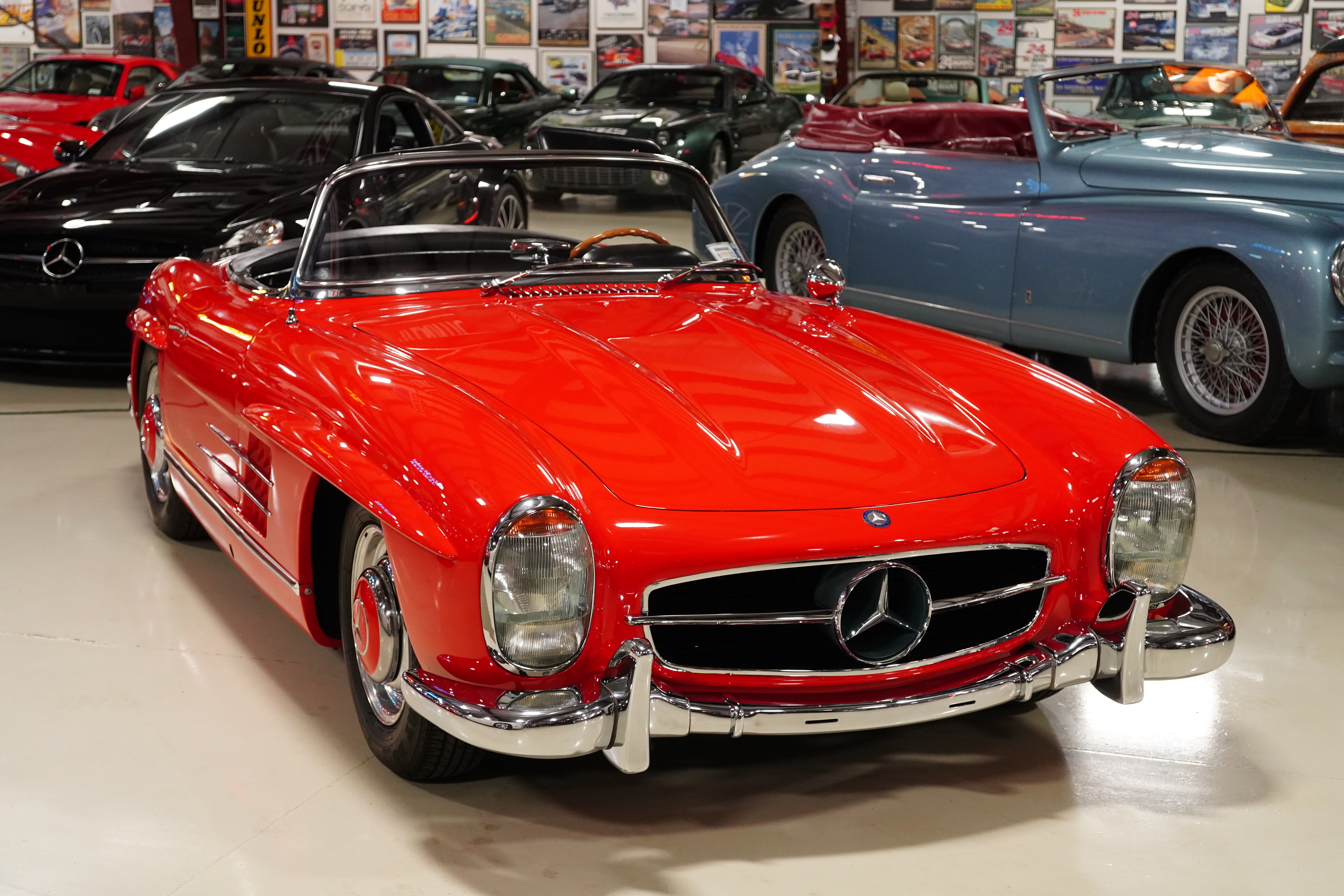
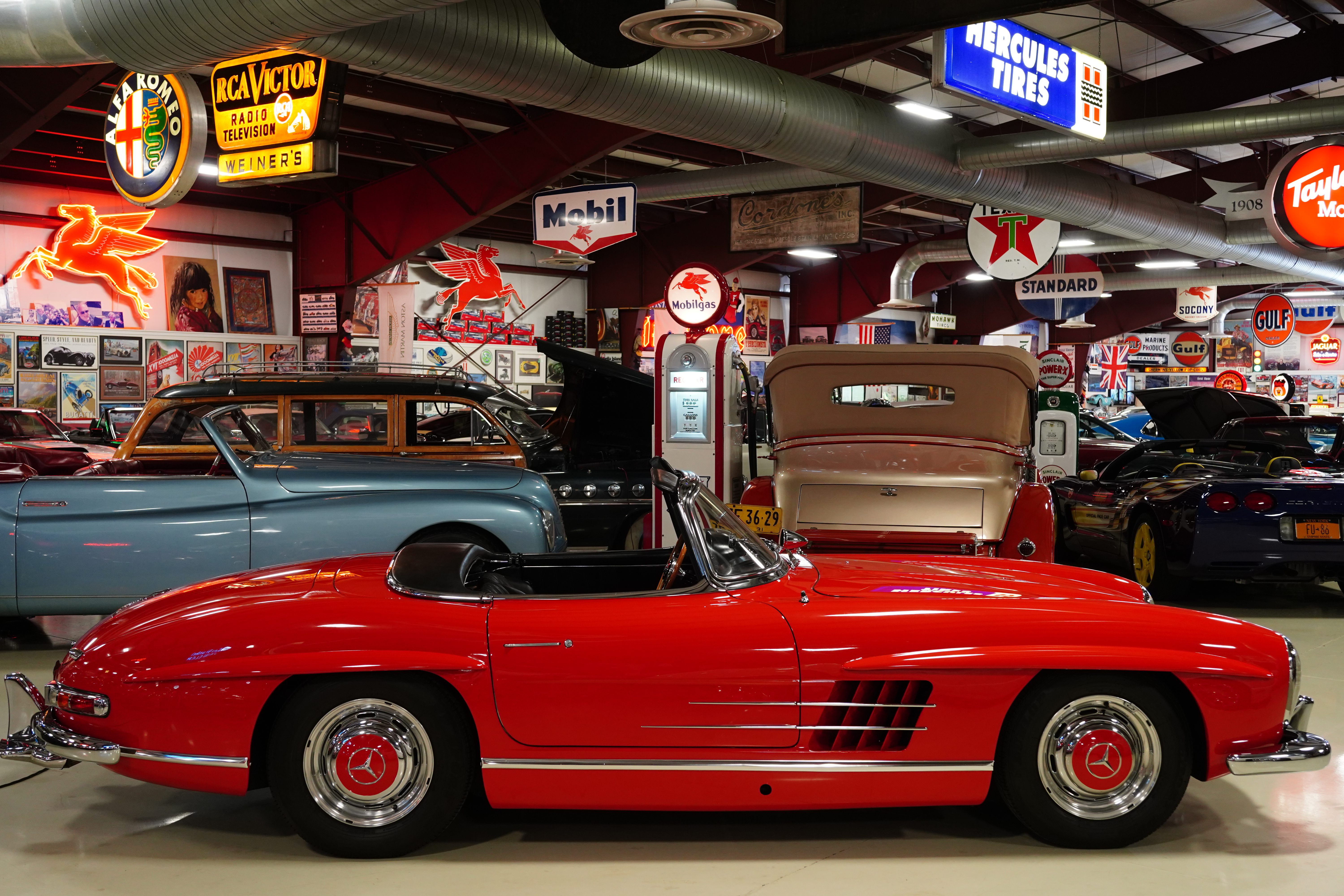
MERCEDES-BENZ 300SL ROADSTER:
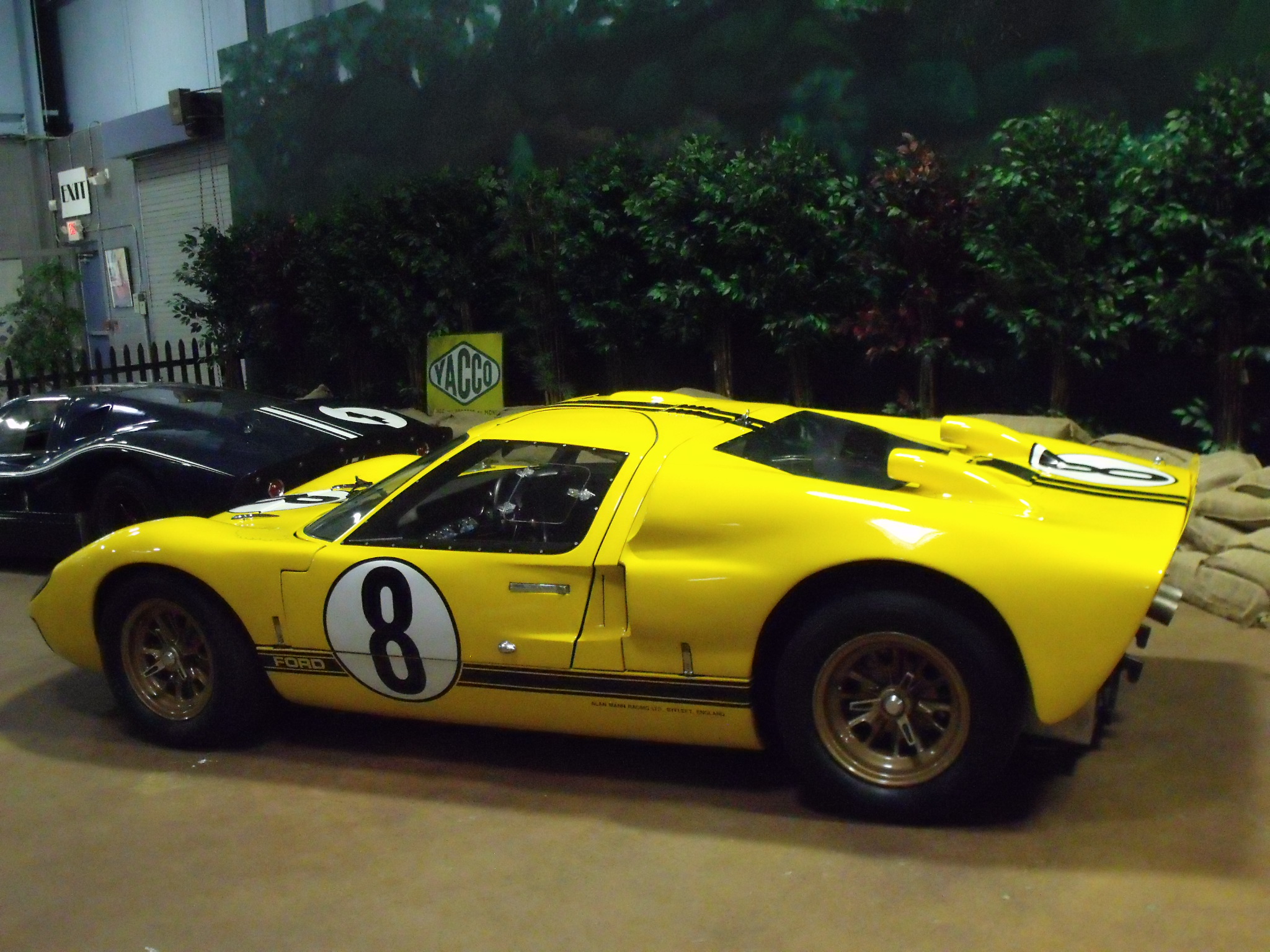
FIRST- AND SECOND-GEN FORD GTs, BOTH IN GULF LIVERY:
Each of us paid for our own admission, and once inside, Jim, a museum docent and our guide for the day, began the tour promptly at 10:30 as promised. He was extremely knowledgeable and more importantly, spoke enthusiastically about each vehicle, bringing the cars and their stories to life. Many of the cars in the Simeone Collection are singularly famous, having participated in or won racing events around the globe. As such, they are arranged by theme, typically displayed together based on the race track or racing event where they competed.
There were two other highlights for us: first, it was a Demo Day, and the museum had chosen four cars to take outside and buzz around the back lot. The weather was in our favor, as after a particularly long stretch of daytime temps barely breaking above the freezing mark, Saturday reached 60 F, albeit with a stiff breeze. I had every intention of including video of the Demo Day, however, all my attempts to capture the cars while in motion are unusable. While I am proud of some of my photographic efforts, my skills as a videographer are quite poor.
The cars that raced at LeMans
Secondly, a special exhibit of English sports cars, all of them in British Racing Green, graced the walkway just inside the entrance. One downside was the crowd: in addition to the 40+ Alfa Club members, a British car club was also on hand. This led our docent Jim to remark that in his 10 years with the museum, he had never seen it so crowded on a Saturday morning. The museum’s insistence on 100% compliance with mask wearing helped alleviate any fears one may have had regarding the close quarters.
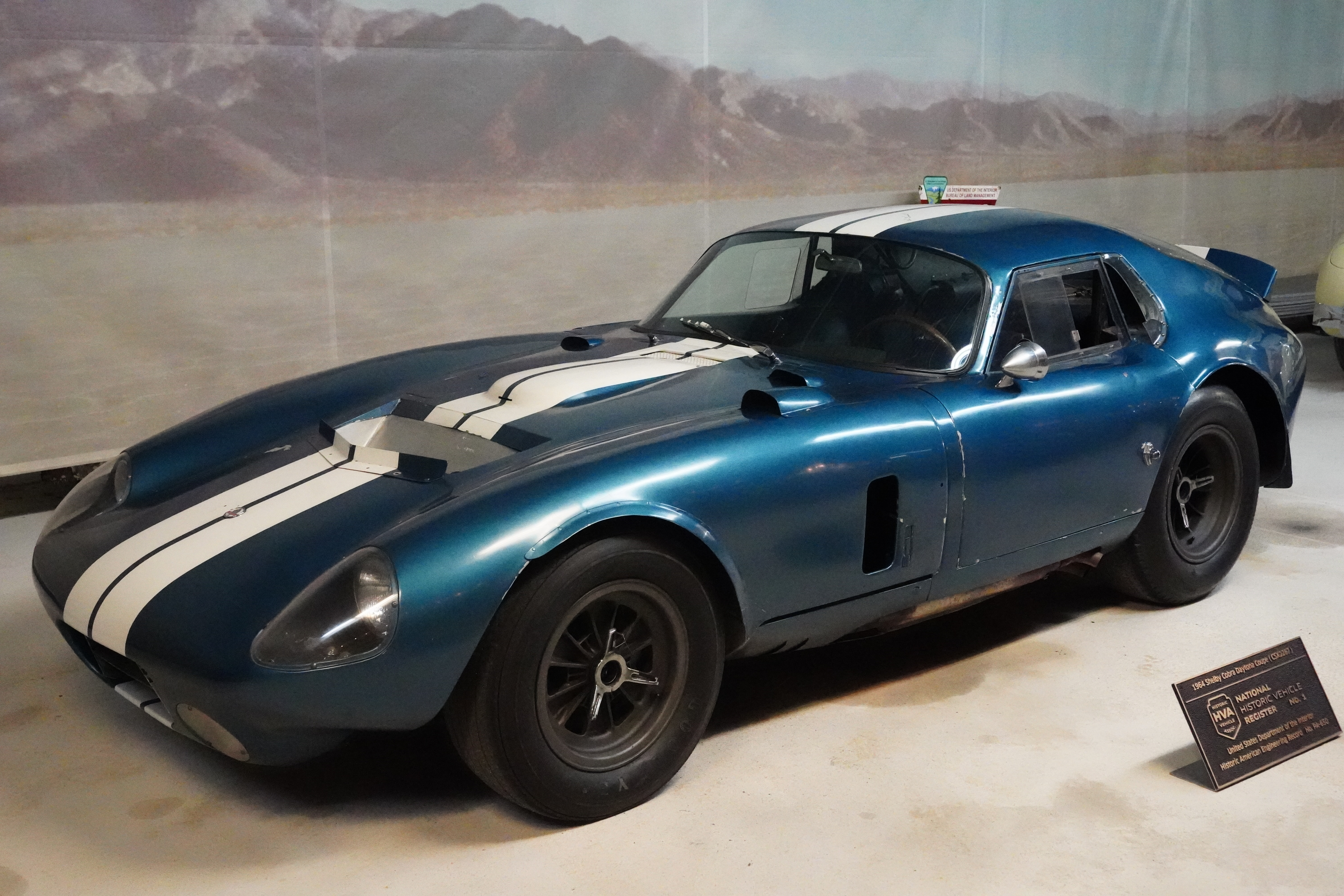
The photos below represent just some of the museum’s highlights. I’ve tried to avoid too much repetition with last week’s post. While about 90% of the museum’s collection is the same as it has been since it opened 12 years ago, some vehicles have been added to the mix. Another change worth noting is that the Shelby Daytona Coupe, known by its chassis number (CSX2287), is the very first car admitted to the National Historic Vehicle Register, quite an achievement over and above its performance accomplishments.
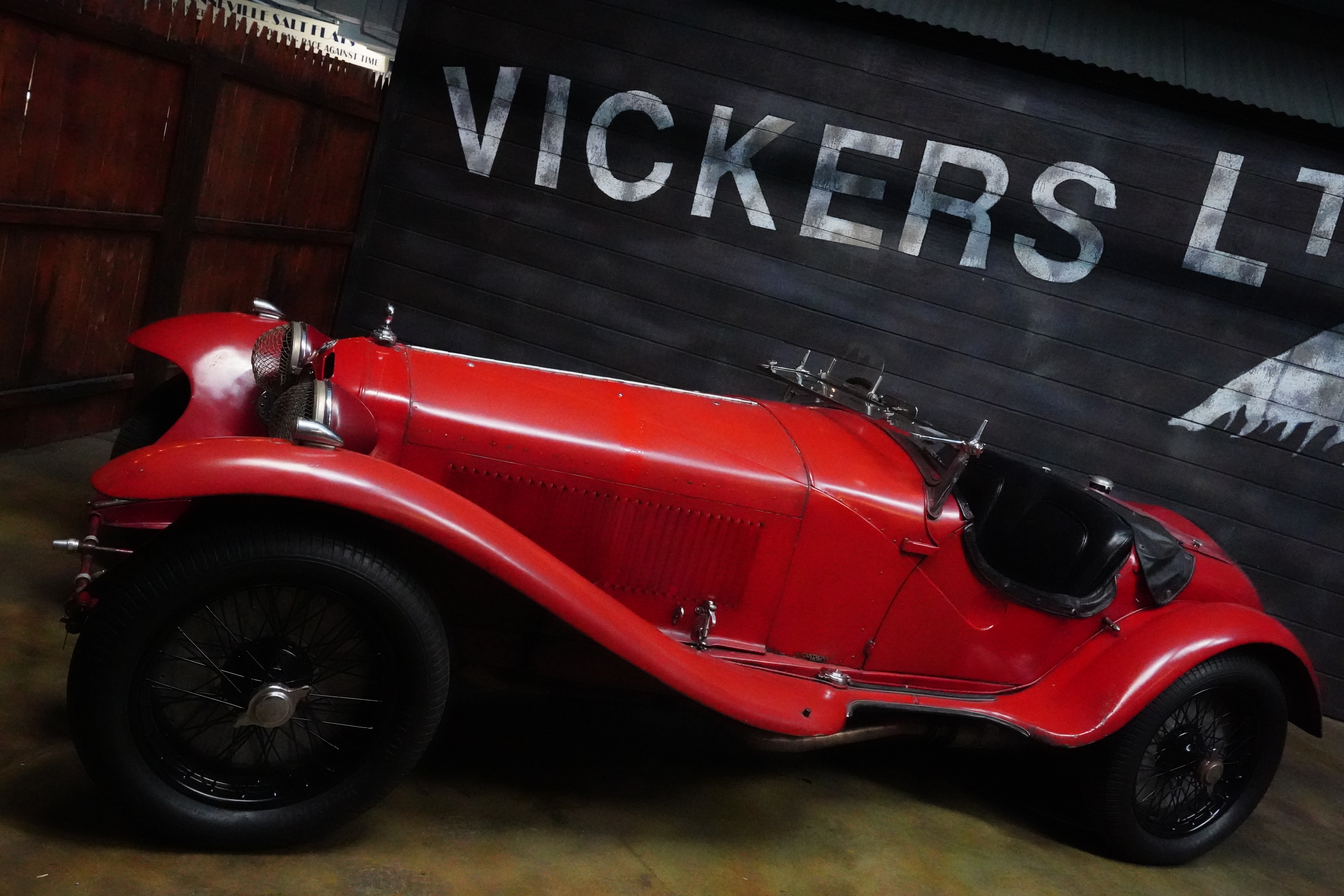
Formally known as the Simeone Foundation Automotive Museum, Dr. Fred Simeone founded it using the historically significant race cars that he and his father had been collecting for decades. Many of their purchases were made decades ago when old racing cars were seen as worn out and without value. The museum is further set apart from others by their “Demo Days”, during which a small selection of machines, tied together by some central theme, is taken outside and driven around the large paved lot behind the museum. While no top speed runs are attempted, the driving is as spirited as conditions allow. Dr. Simeone, the hands-on collector that he is, uses these Demo Days to grab a microphone and speak to the cars’ histories.
My first visit to The Simeone, located in an industrial area not far from Philadelphia Airport, was in 2011. It was a Demo Day, and while the exact years and makes of the vehicles driven that day were not noted, I clearly recall the thrill of seeing and hearing older cars used as intended, rather than staring at them while they silently sat. (At a subsequent visit, I chuckled and nodded my head in agreement when I heard Dr. Simeone state, “A car that is not driven is a statue!”)
Of course, during any particular visit, most cars are on display inside, as reflected in these photos from that initial visit. I’m not the biggest automobile racing fan in the world, but it is moving to read about the historic accomplishments of these cars. If you have not visited the Simeone Museum, I strongly recommend it. If it’s at all possible to get there on a Demo Day (always Saturdays), all the better.
The New Jersey Region of the Antique Automobile Club of America (AACA) has had a long tradition of holding summer tours. A tour, as compared to a rally such as the New England 1000, is conducted under much more relaxed circumstances. Tours typically involve leisurely drives along country roads to visit local attractions. Tour participants have the option to caravan together or to follow their own timetables. Planned stops will include sights like museums, parks, and of course eateries. (Rallies require more spirited driving and may encompass TSD [time, speed, distance] measurements of your ‘performance’ versus your fellow competitors.)
Having never partaken of a NJ Regional tour before, and continuing with my pledge to make up for the lost year of 2020, I signed up for my Region’s summer tour, which was held from July 29 through August 2, 2021. A trend I’ve noticed in recent years with both tours and rallies has been to conduct them as “hub tours” or “hub rallies”, which is to say that participants stay at the same hotel for the duration (the hotel effectively operating as the hub), with daily drives heading out in different directions and returning to the same hub each evening. So it was with this event: the Hampton Inn in Sayre PA (a stone’s throw from the NY border) served as the hub hotel, while our daily drives took us into the Finger Lakes Region of NYS each day.
The weather was outstanding for all but one of the days we were in the area. Unfortunately, the one rainy day occurred on the same day as a planned boat ride on Lake Cayuga, which necessitated the cancellation of our water outing.
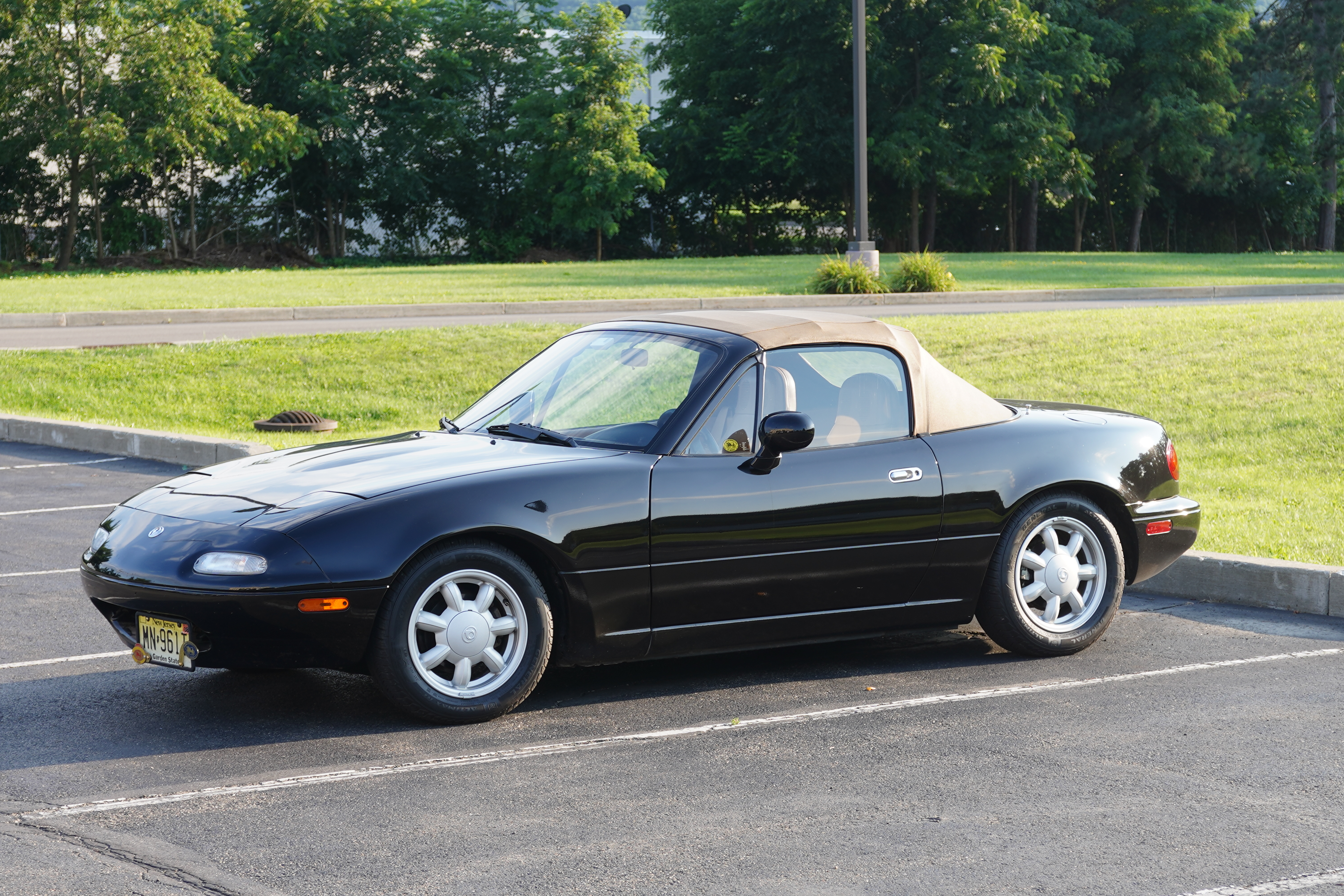
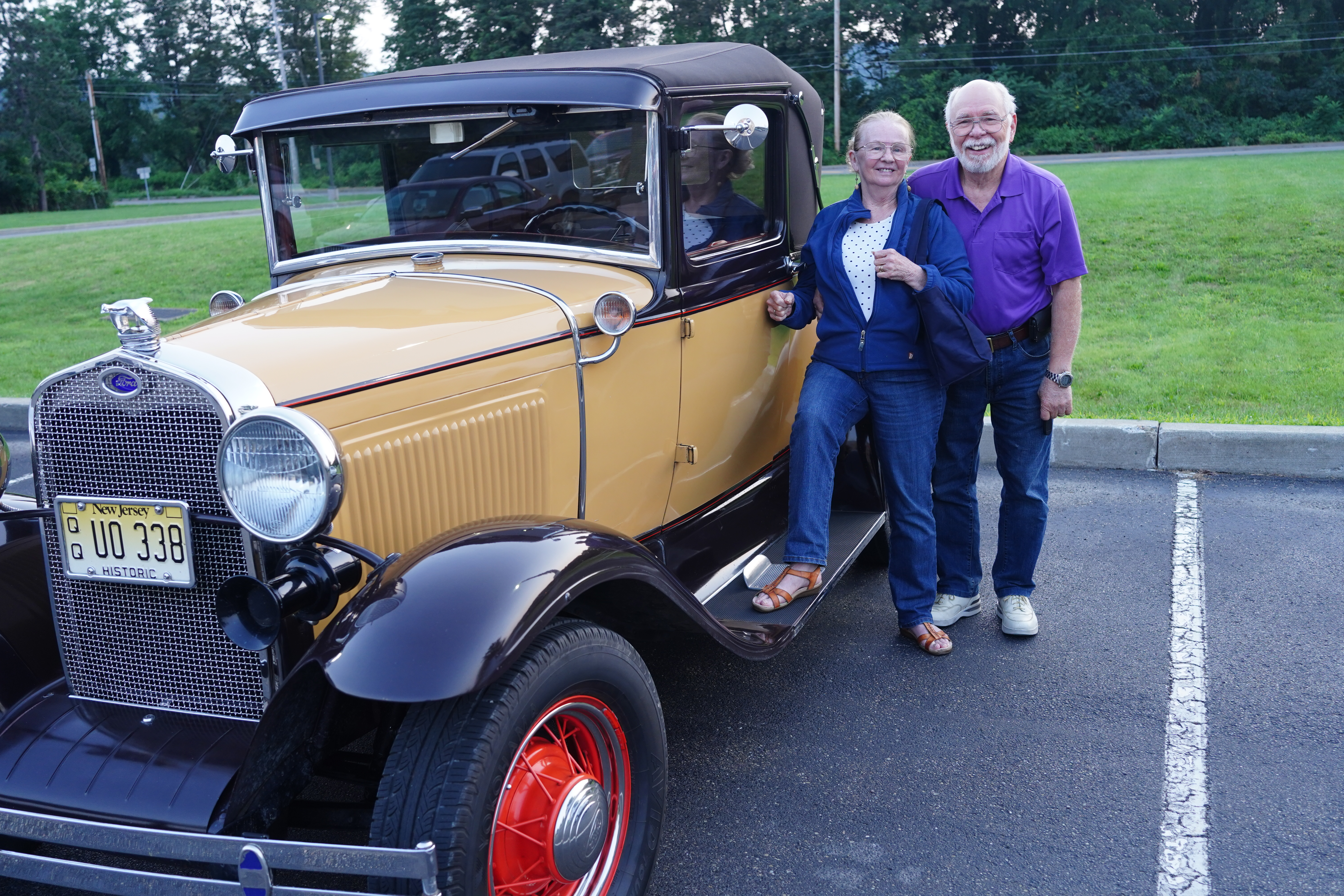
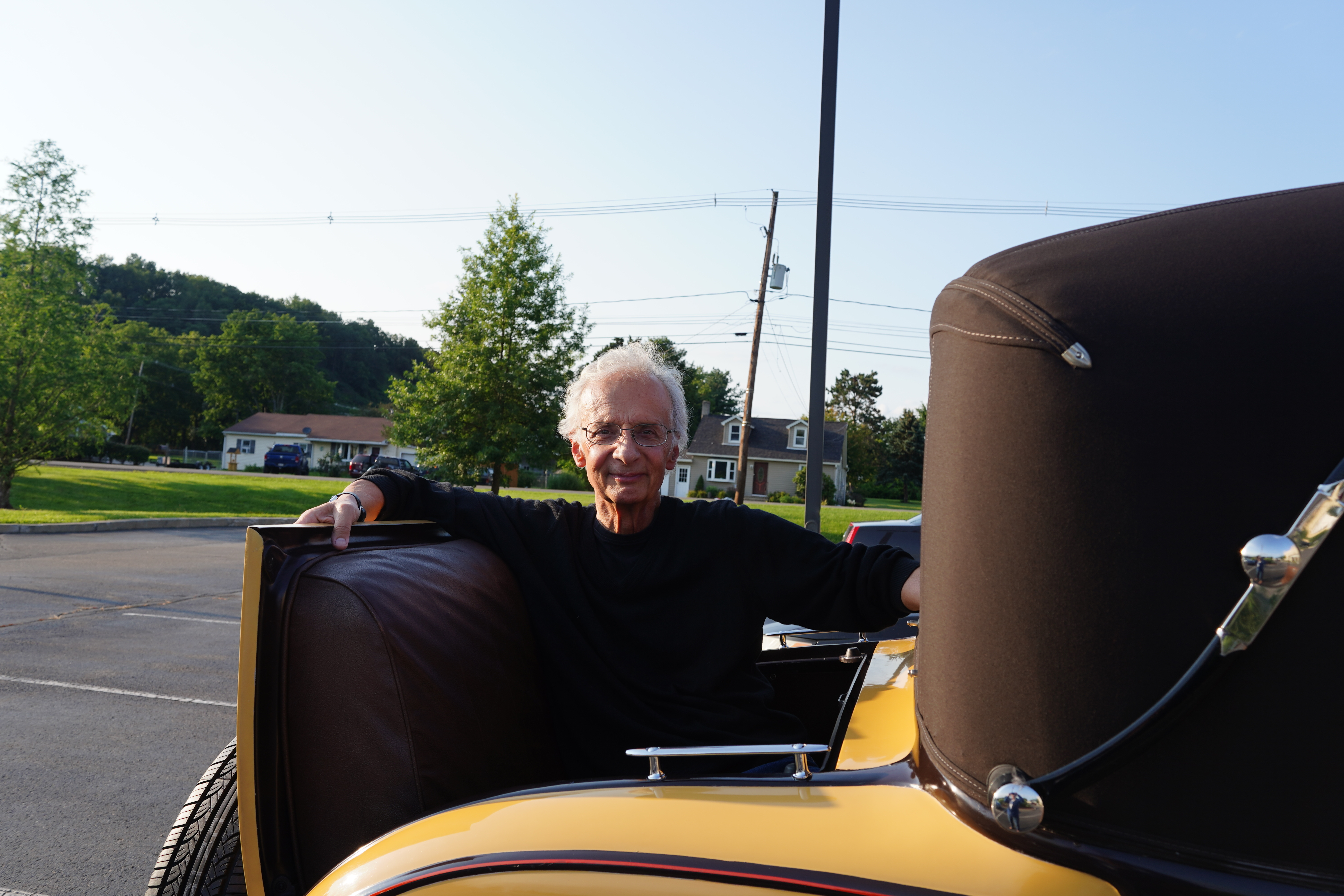
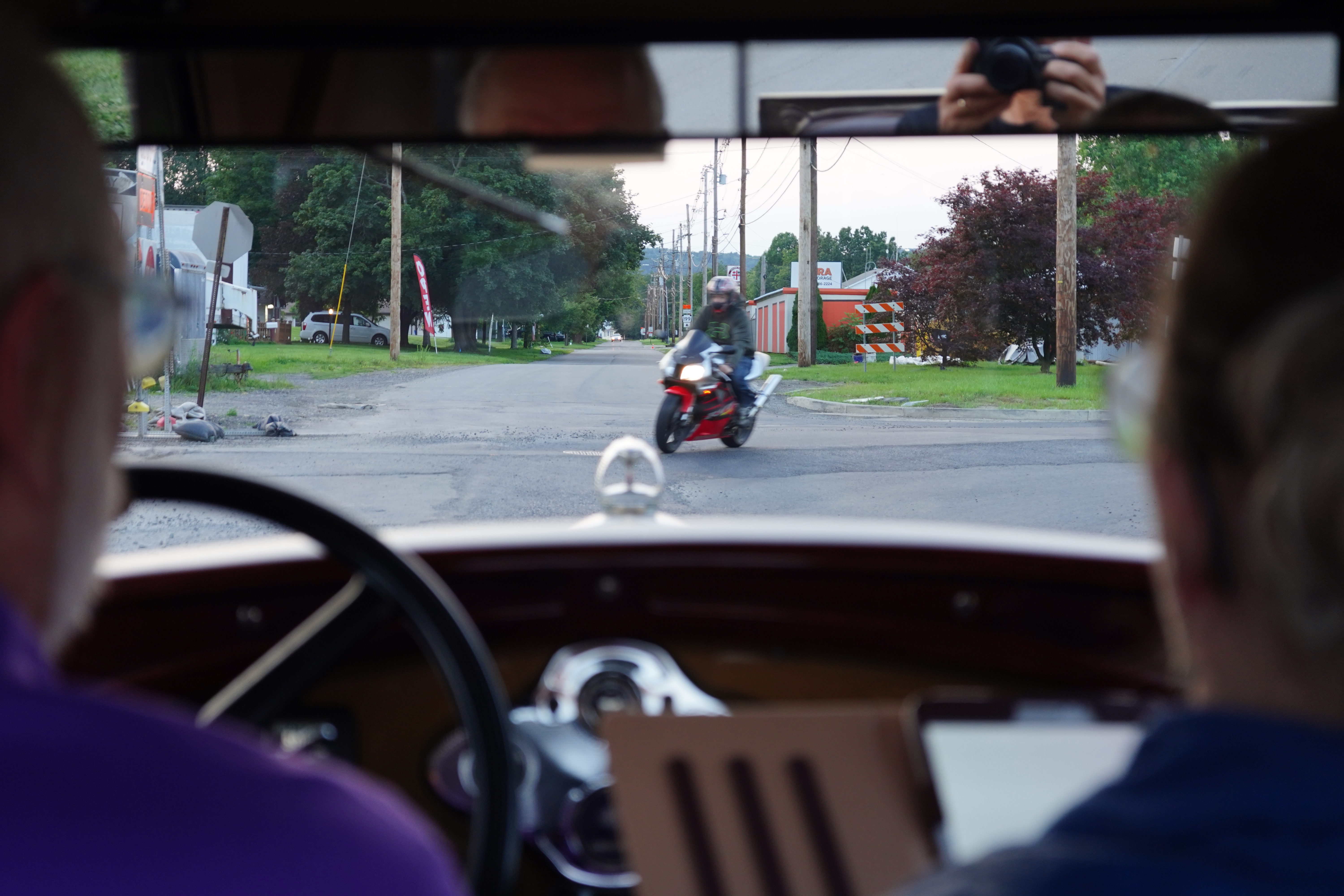
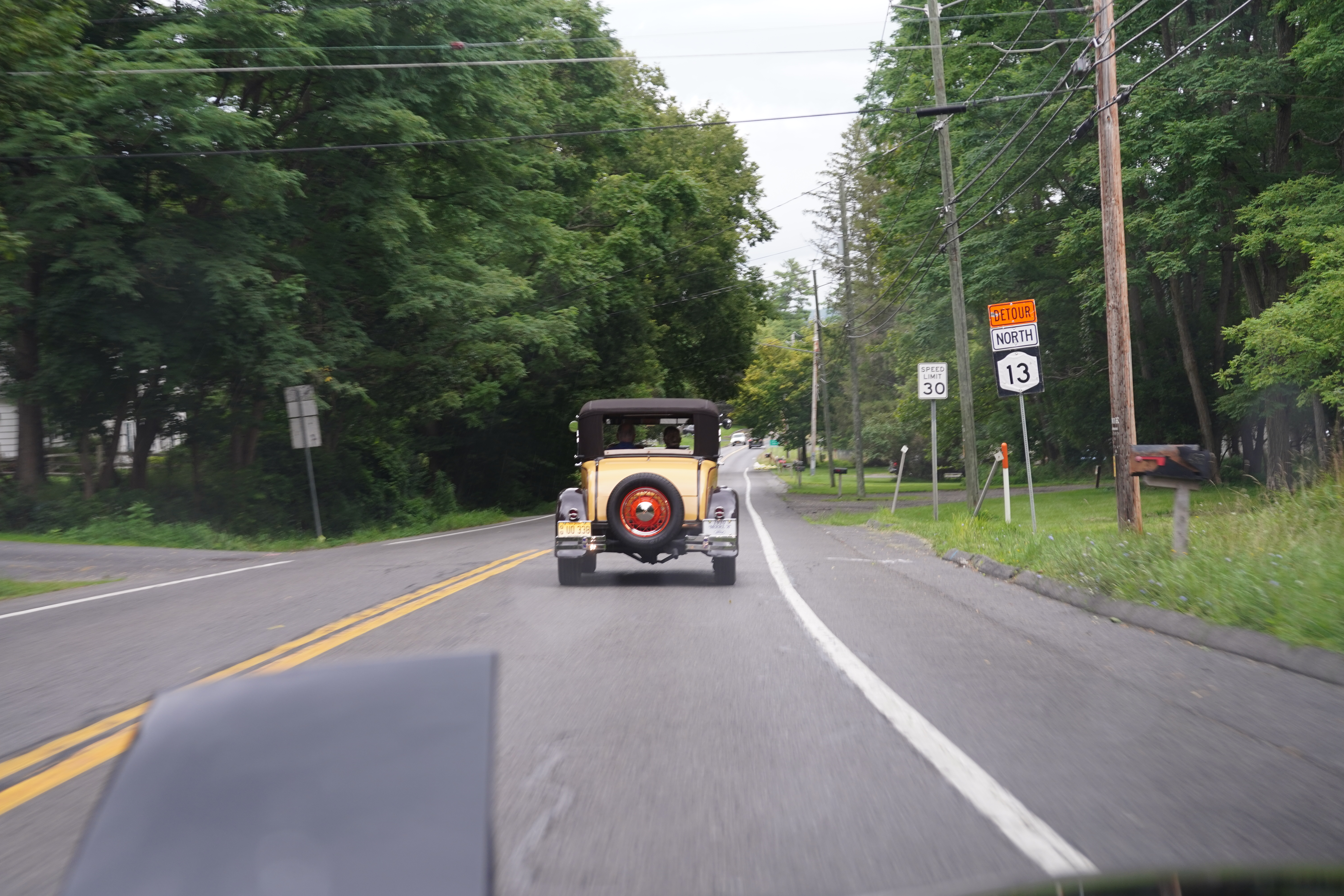
There were about 25 people on the tour, mostly Regional members; some folks brought along friends and family members, which was nice to see, and made for an even more diverse group. Of the approximately 12 couples that I counted, 6 drove modern iron, and 6 drove AACA-eligible cars. Excepting the 1930 Ford Model A driven by my friends Dick and Bobbi, the other AACA vehicles were all from the ‘80s and ‘90s, including my 1993 Miata (NOT the newest car on the tour!). A personal thrill was my first ride in a rumble seat, which was offered to me when Dick and Bobbi drove to dinner. (It was easy to get into and less easy to get out of; agility with one’s limbs is a helpful trait when entering and exiting such a conveyance.)
The tour ended on a Monday, and I skipped that morning’s visit to a windshield frame restoration shop as I needed to scoot home a bit early. Would I tour again? Most certainly I would. It’s an additional and wonderfully relaxing way to indulge in the hobby. I would wish for a slightly more varied lineup of activities (not everyone prefers five museum visits in 2.5 days), but having helped organize and having participated in dozens of one-day and multi-day tours, I have great appreciation for the amount of work involved in planning such ventures. The NJ Region put in significant effort to make the event as enjoyable as possible for all.
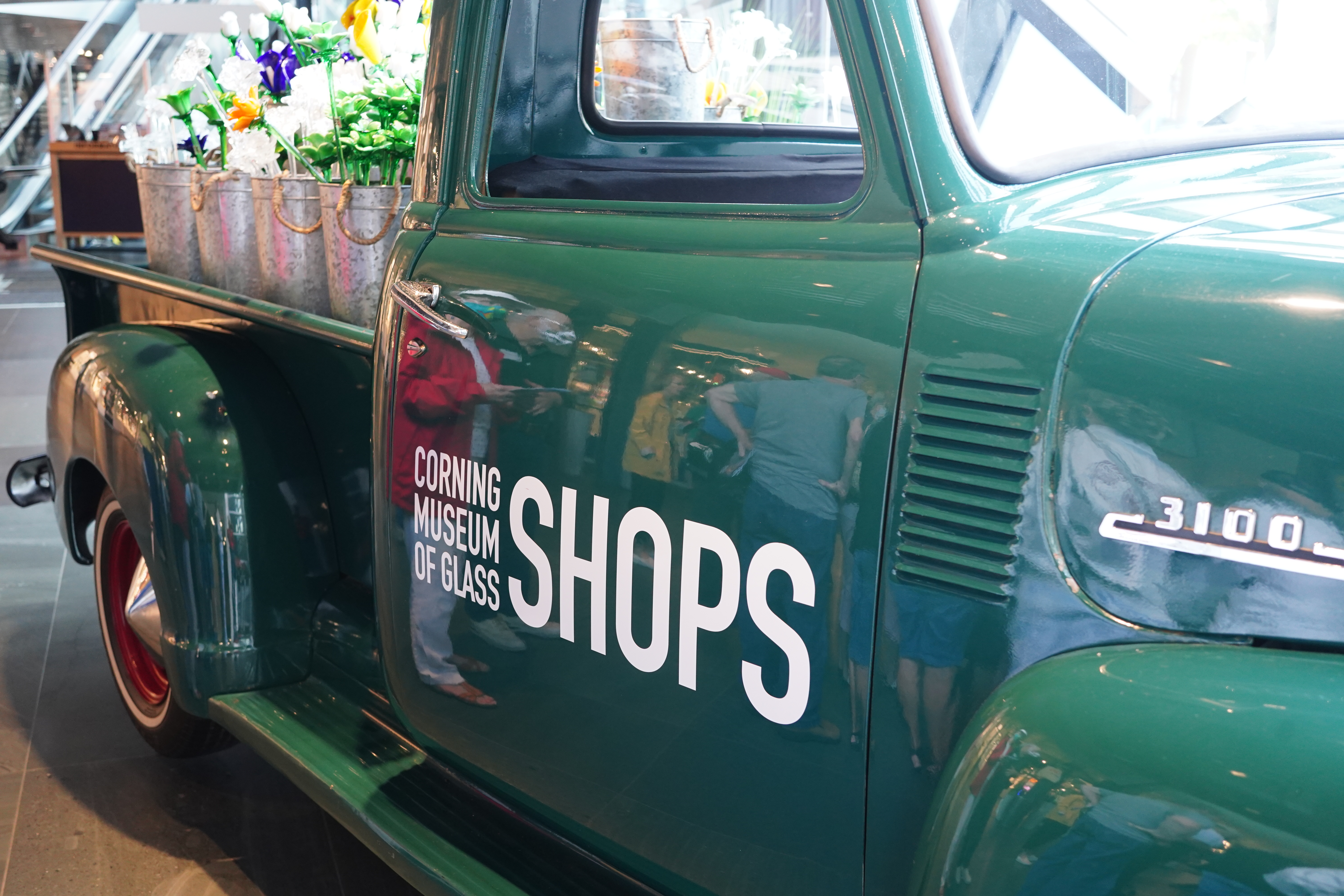
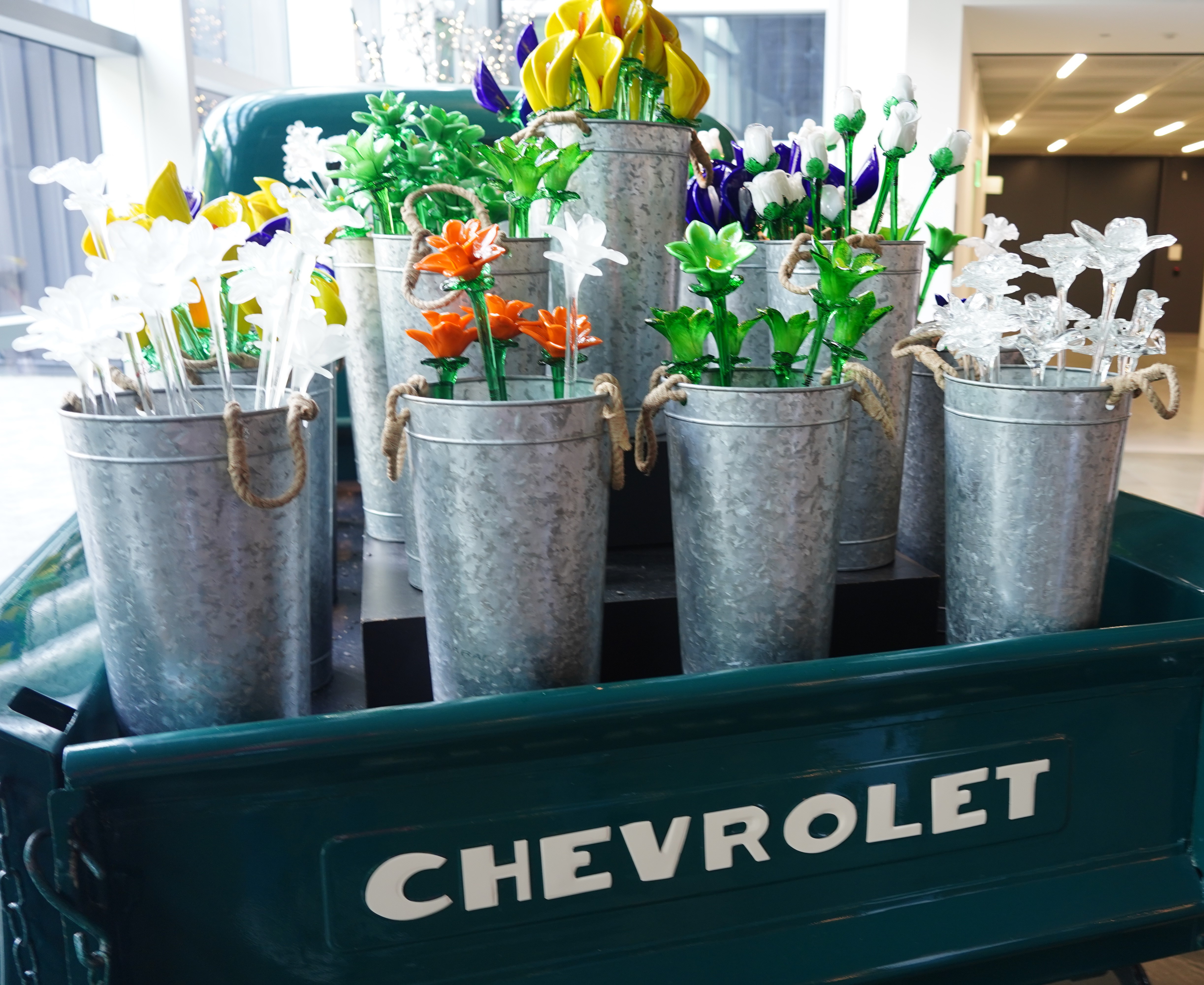
The Corning Museum of Glass parked this Chevy pickup in its lobby and filled its bed with flowers made of glass; the flowers were available in the gift shop.
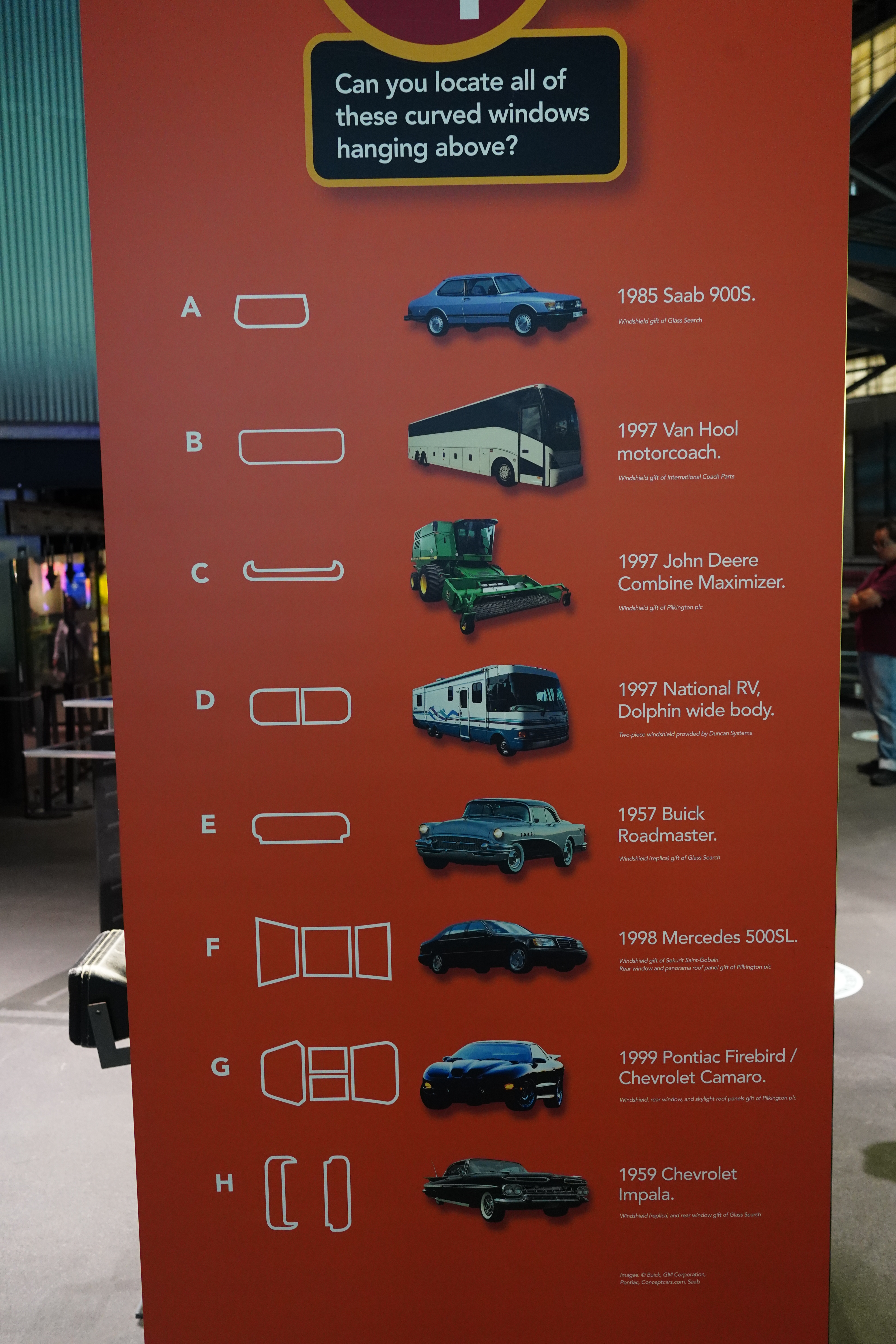
This automotive-themed display is from the Corning Glass Museum
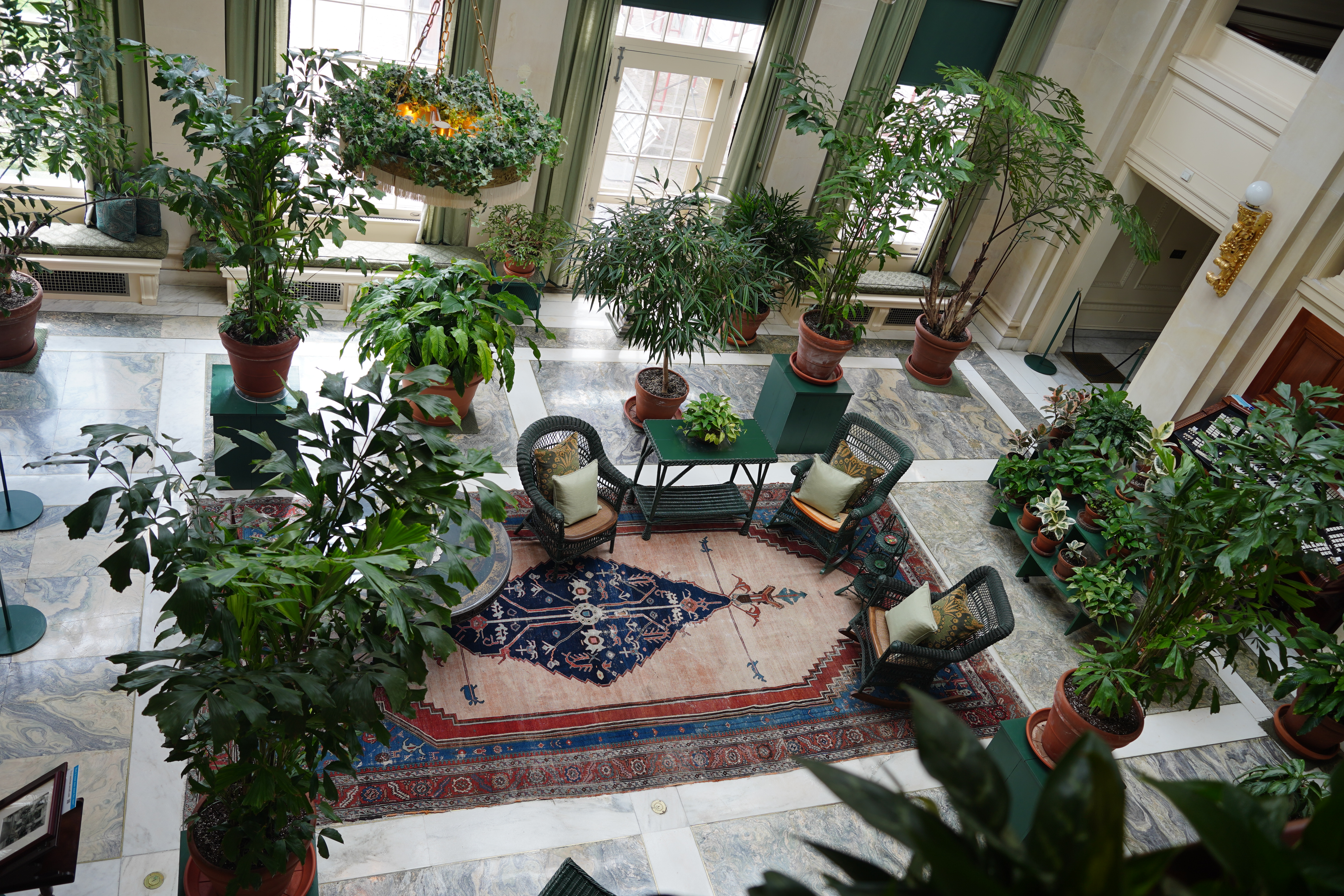
A room from the George Eastman House
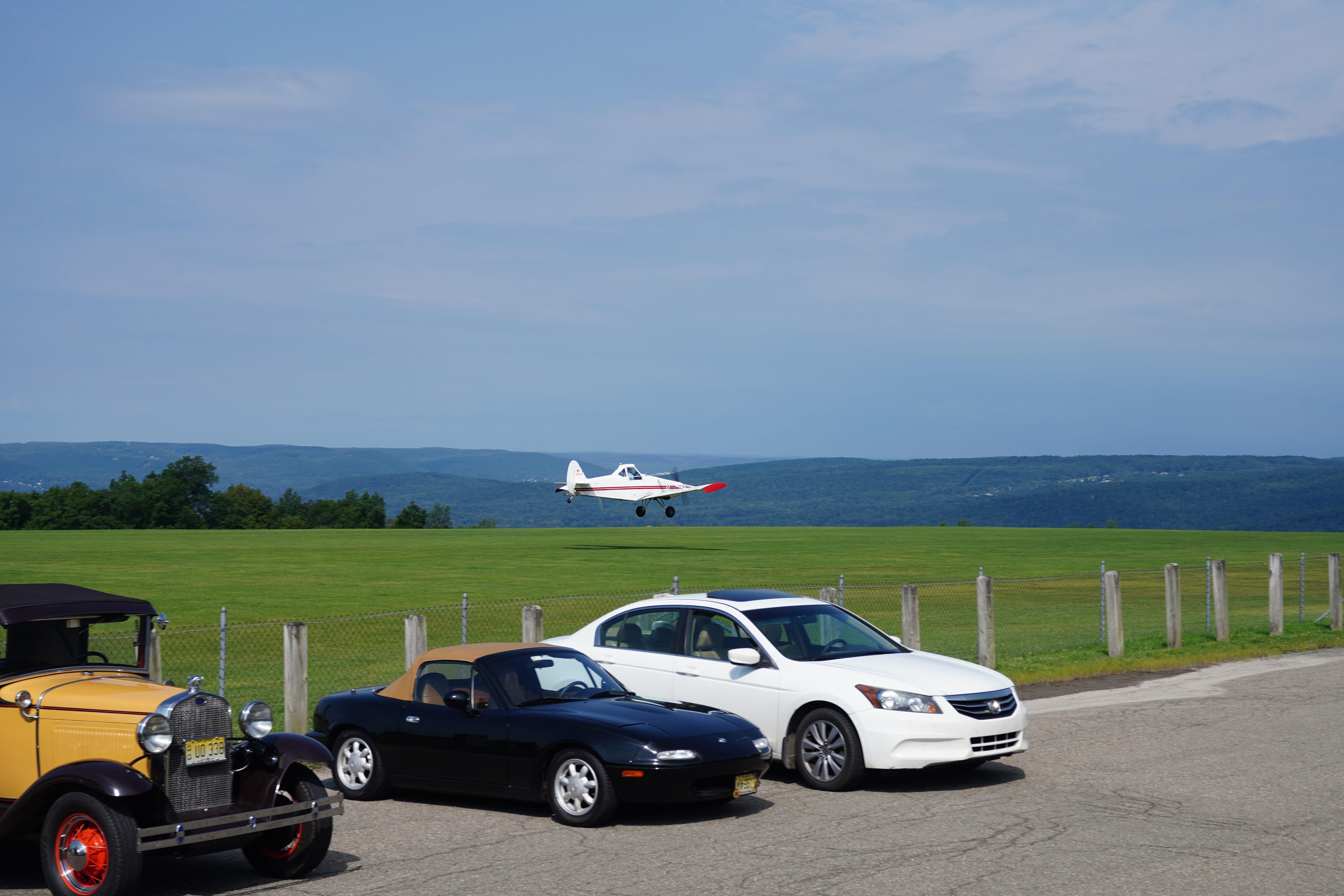
An engine-powered plane takes off from the Soaring Museum’s runway
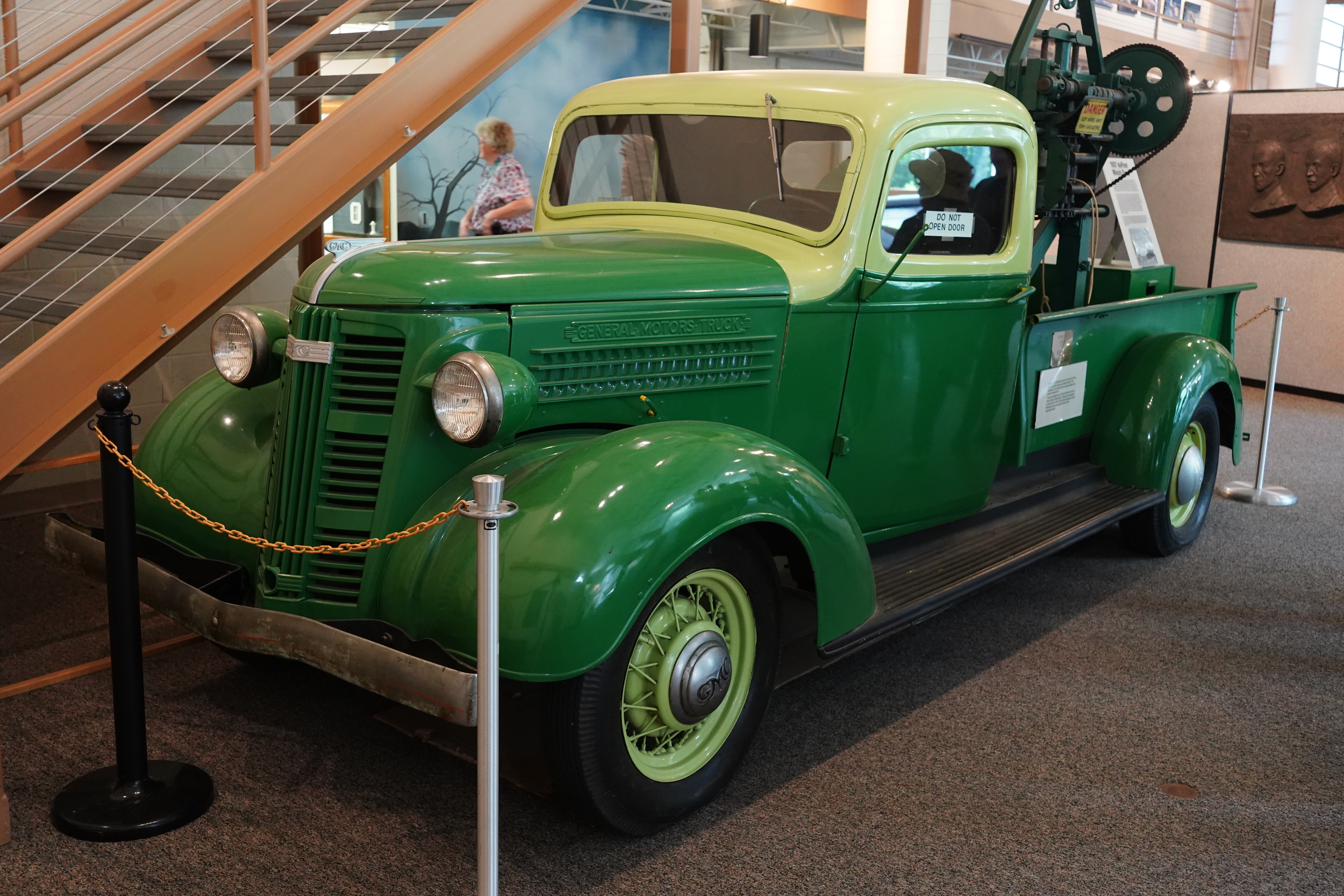
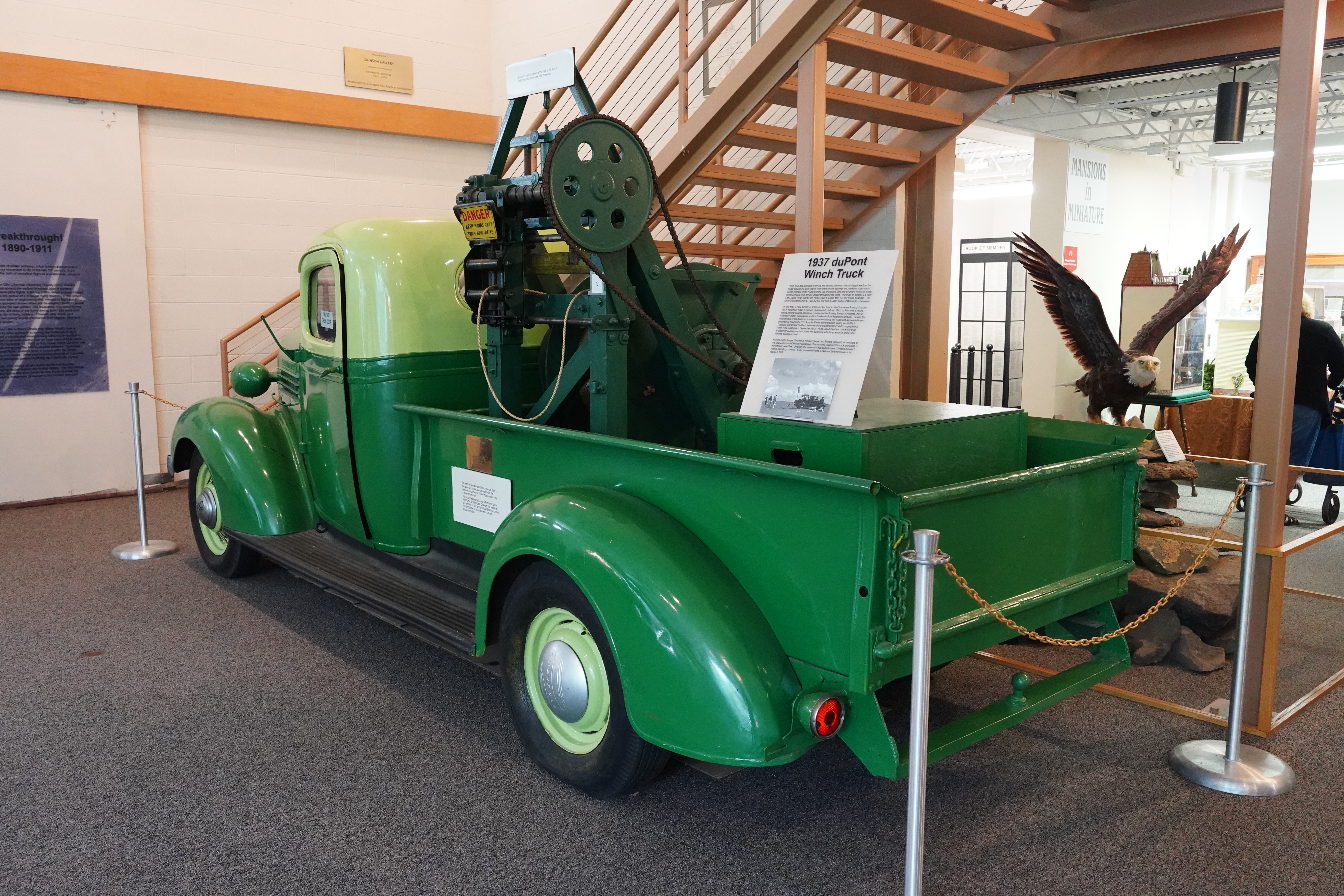
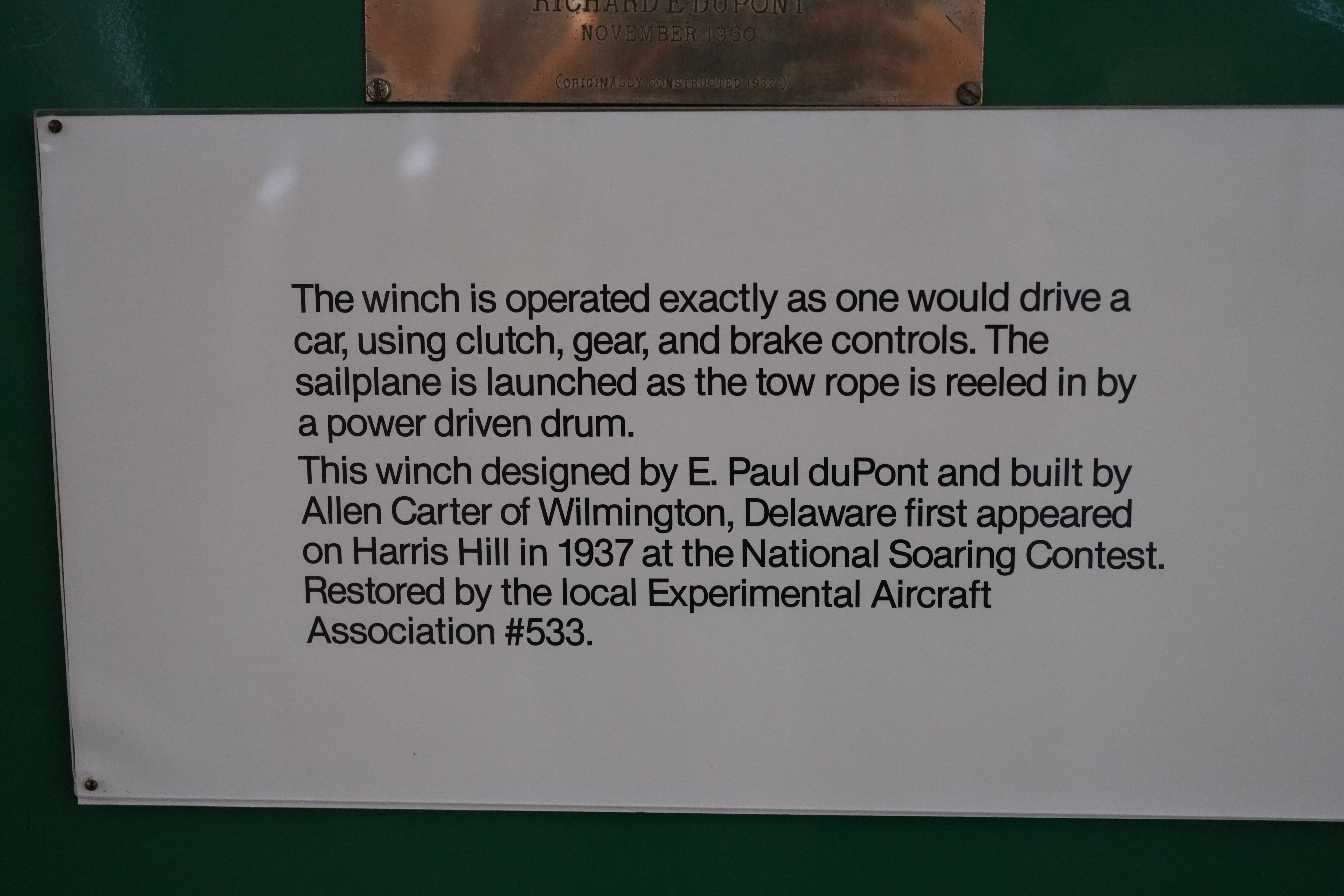
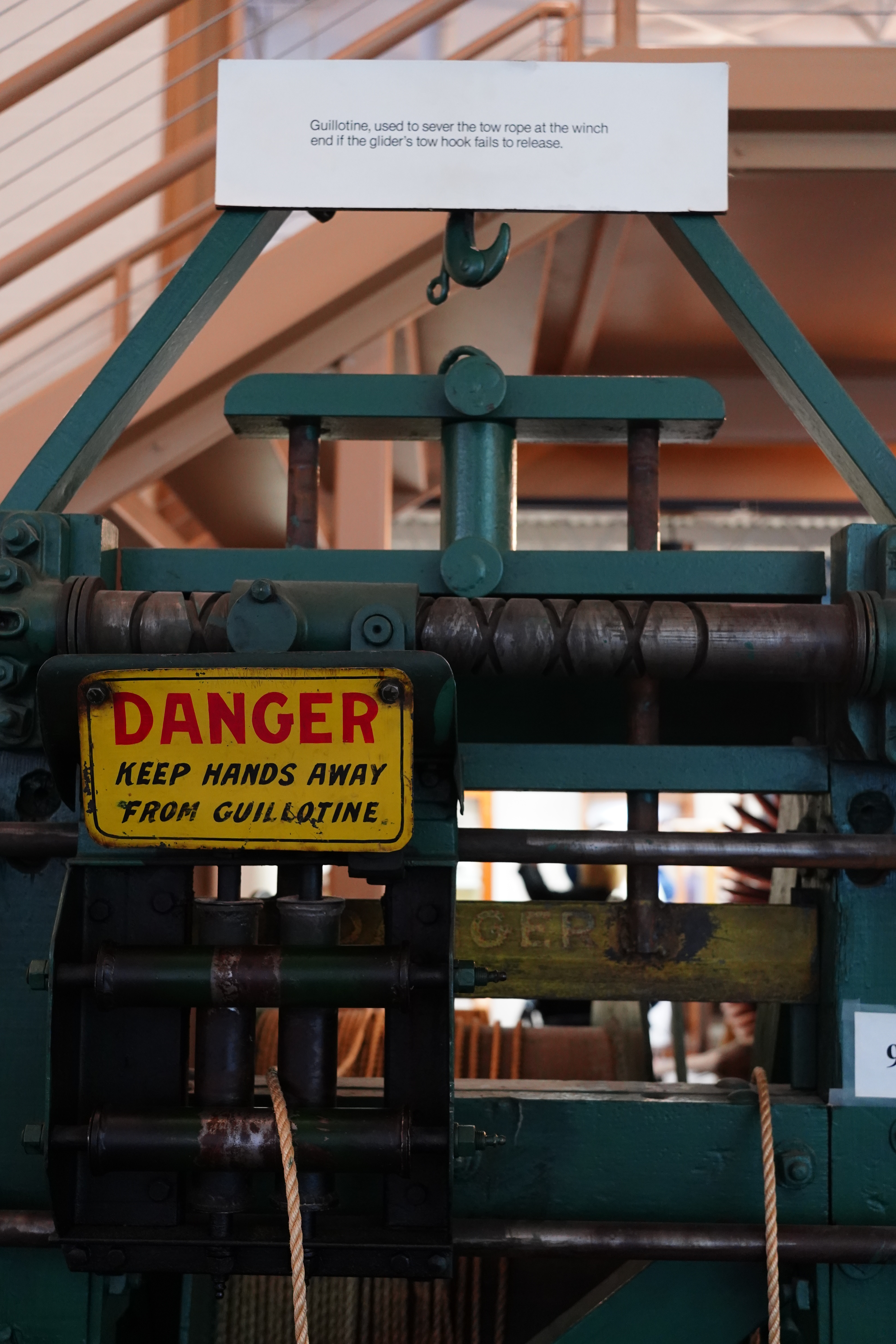
This ’30s-era GMC pickup from inside the Soaring museum was used as a tow vehicle to bring gliders up to speed. Its winch held a rope attached to the glider, and there was a mechanism to disconnect the rope from the plane. In the event that failed, the guillotine was deployed to sever the rope!













































































 richardscarblog