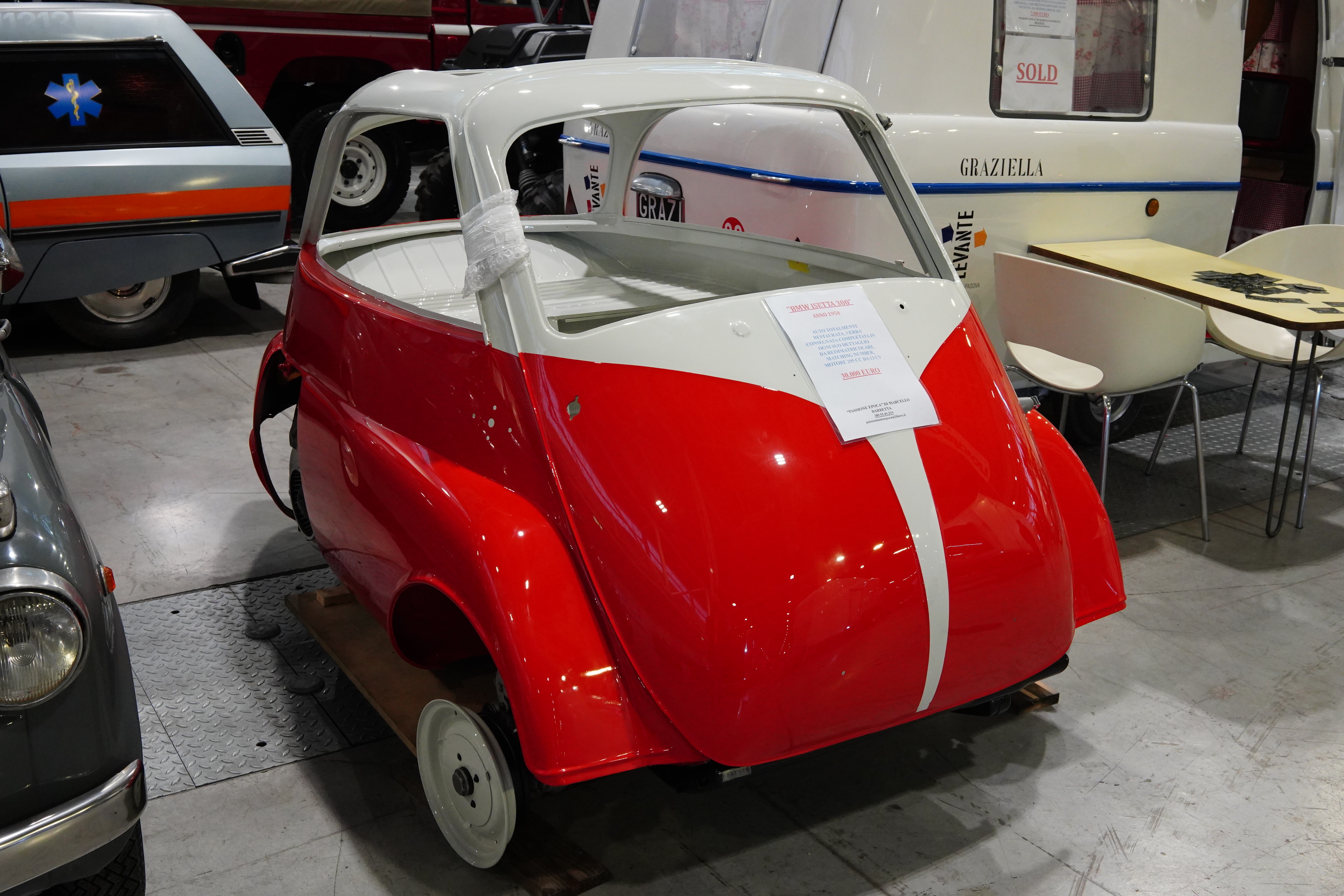
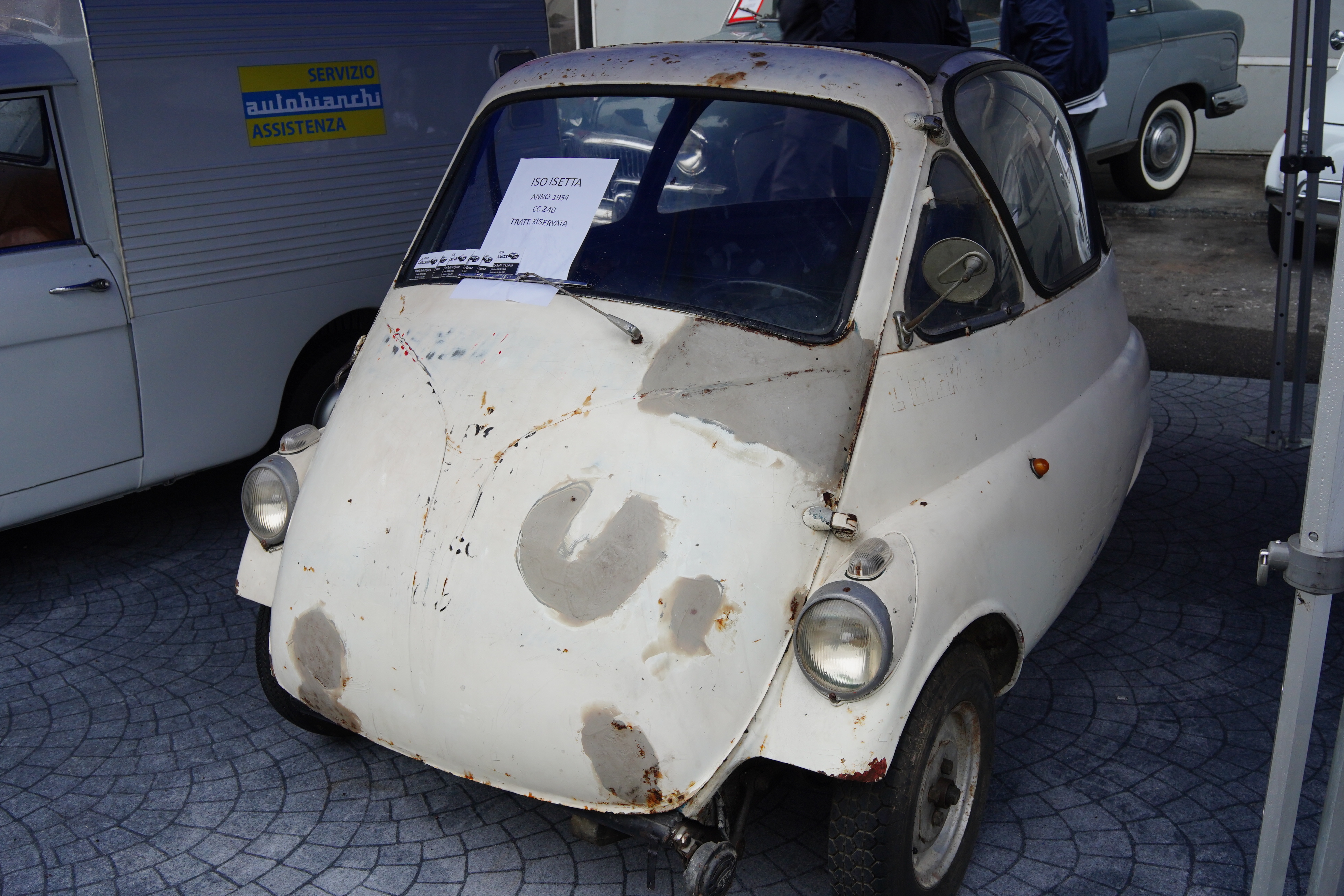
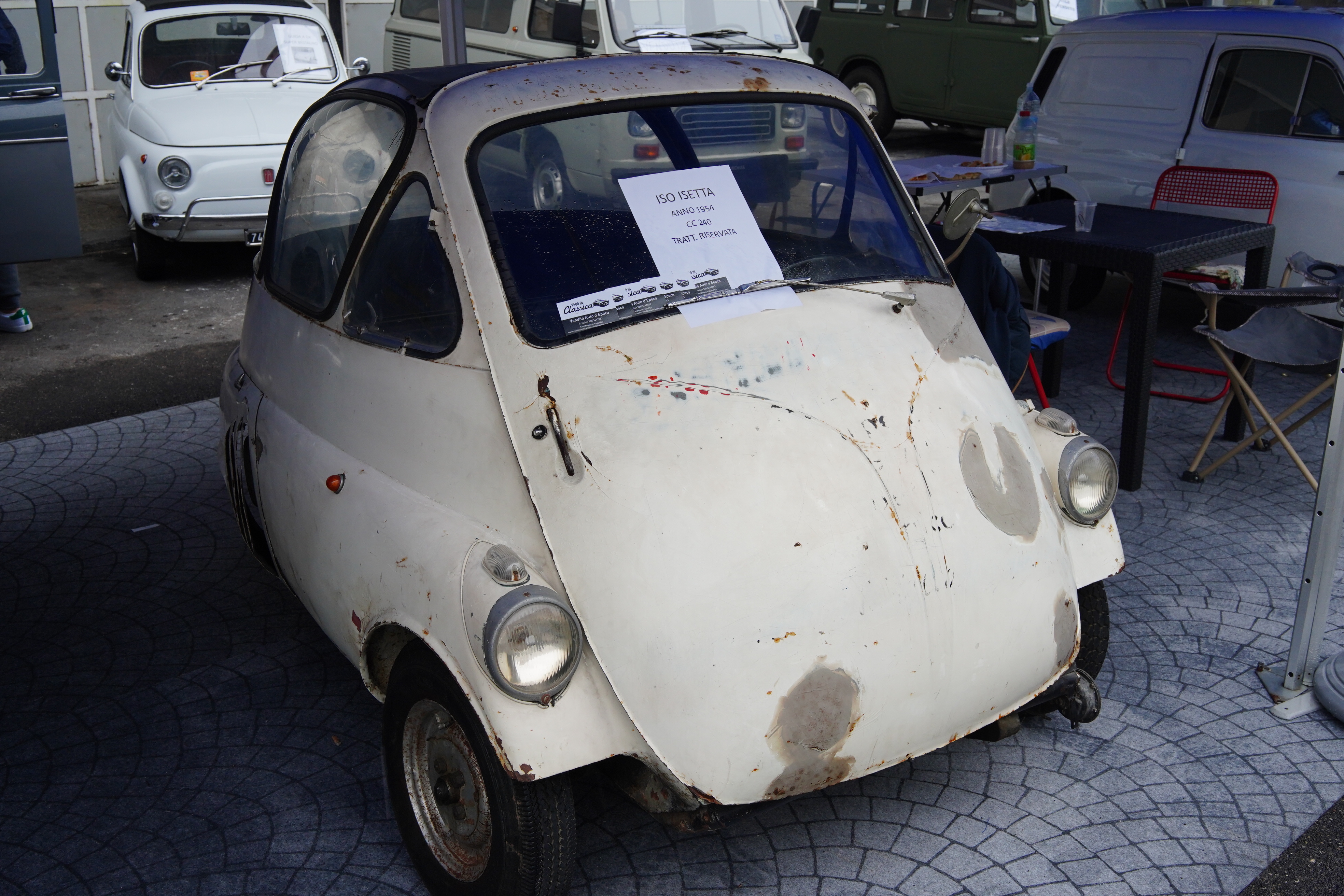
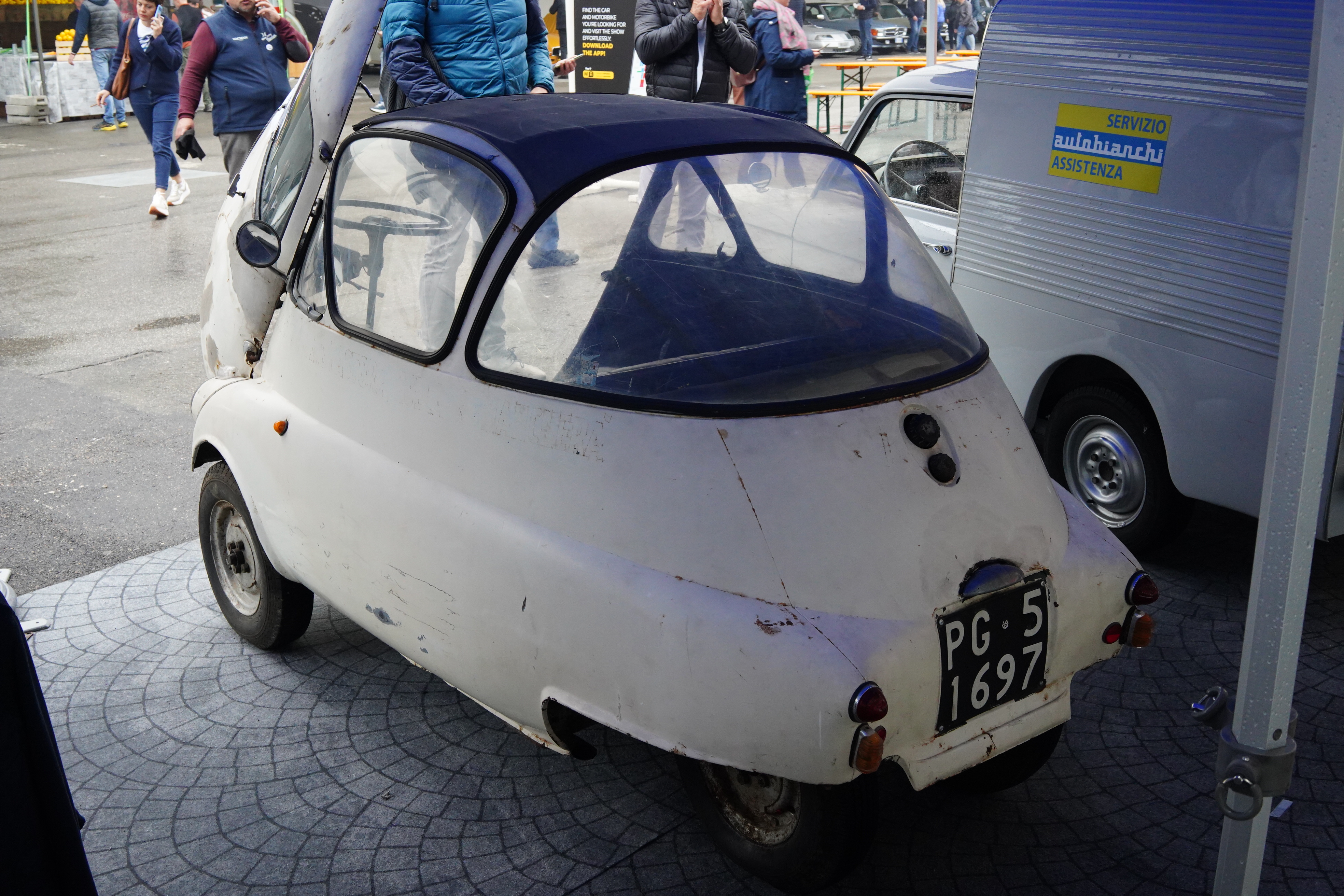
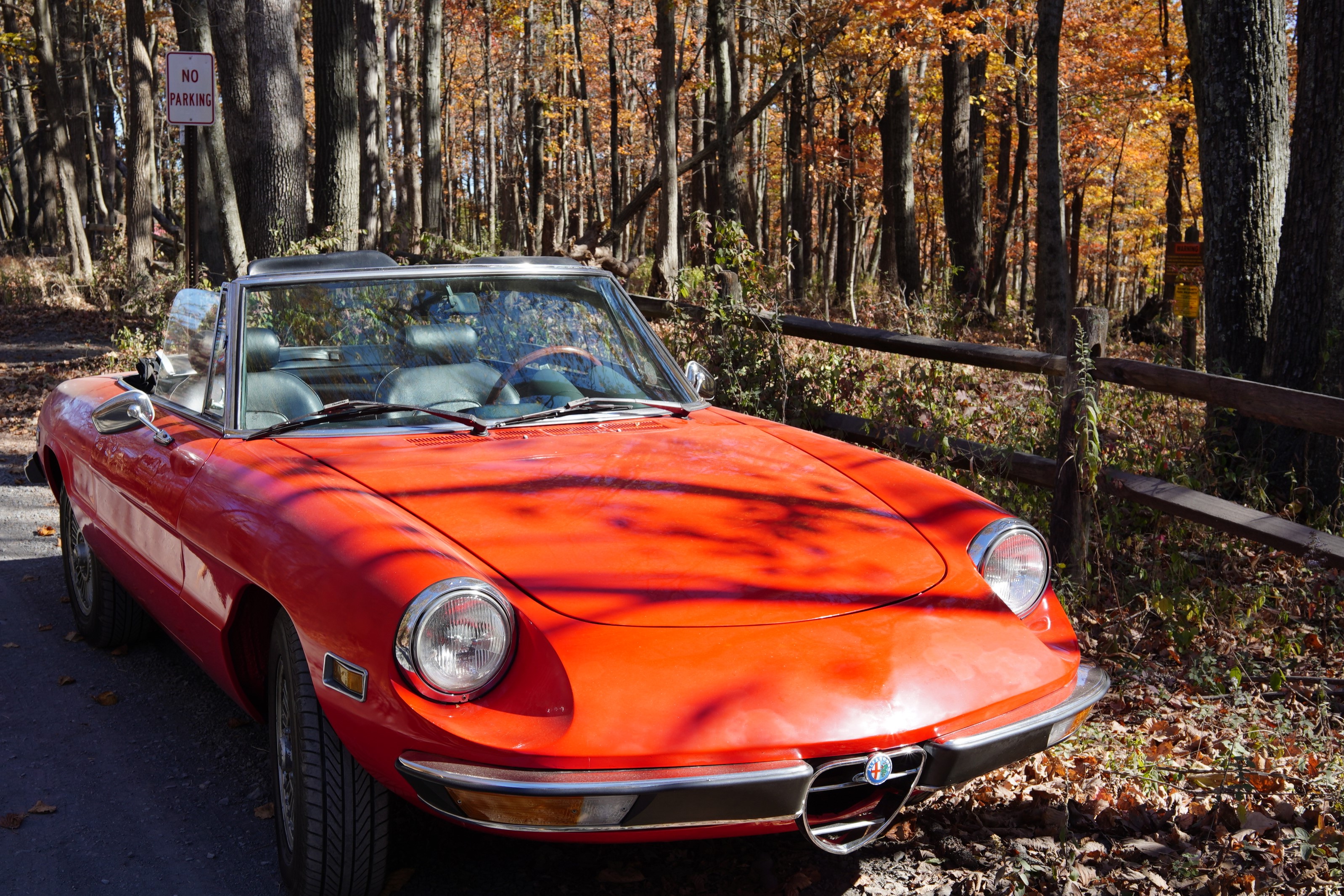
Auto e Moto d’Epoca Summary Part 3

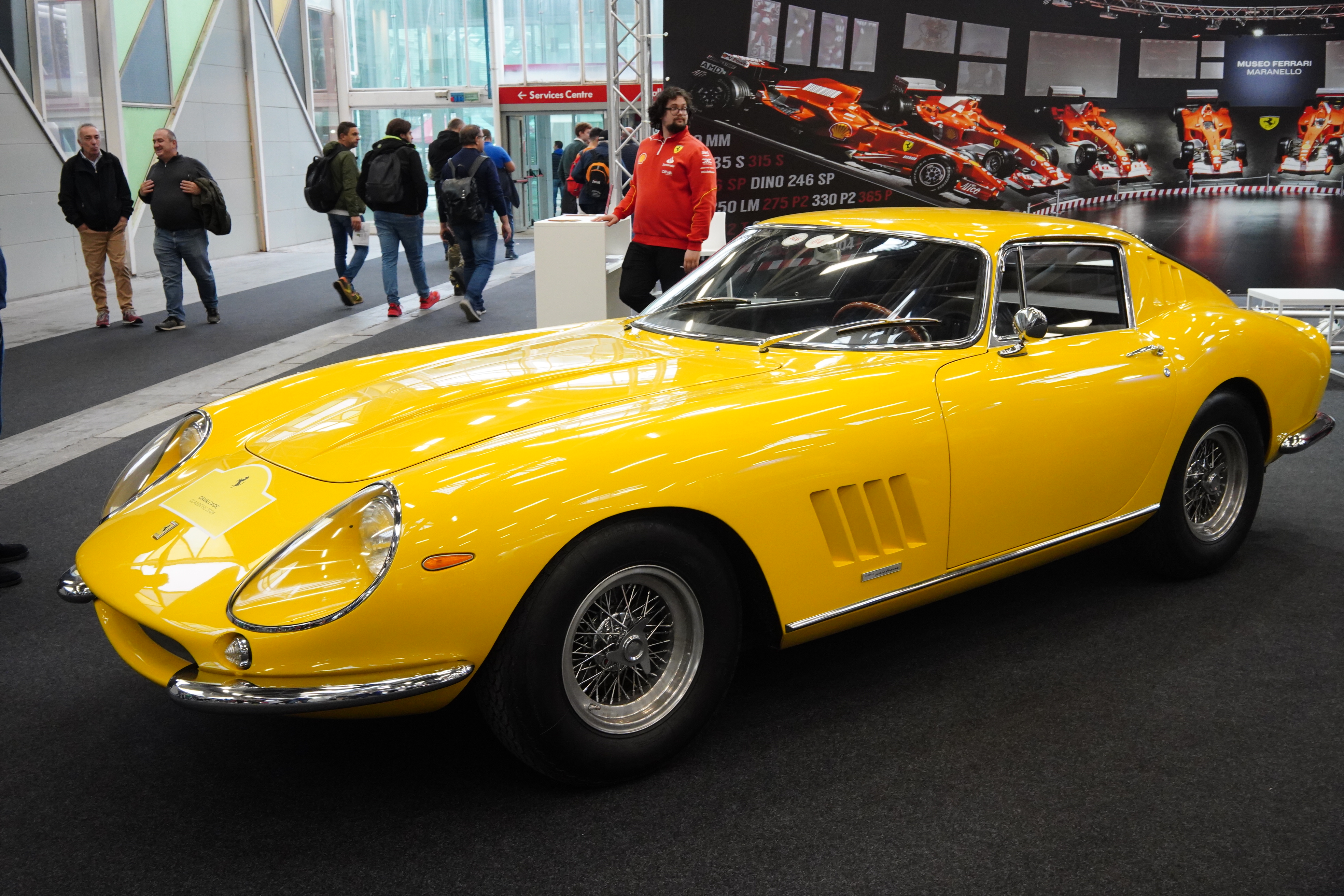
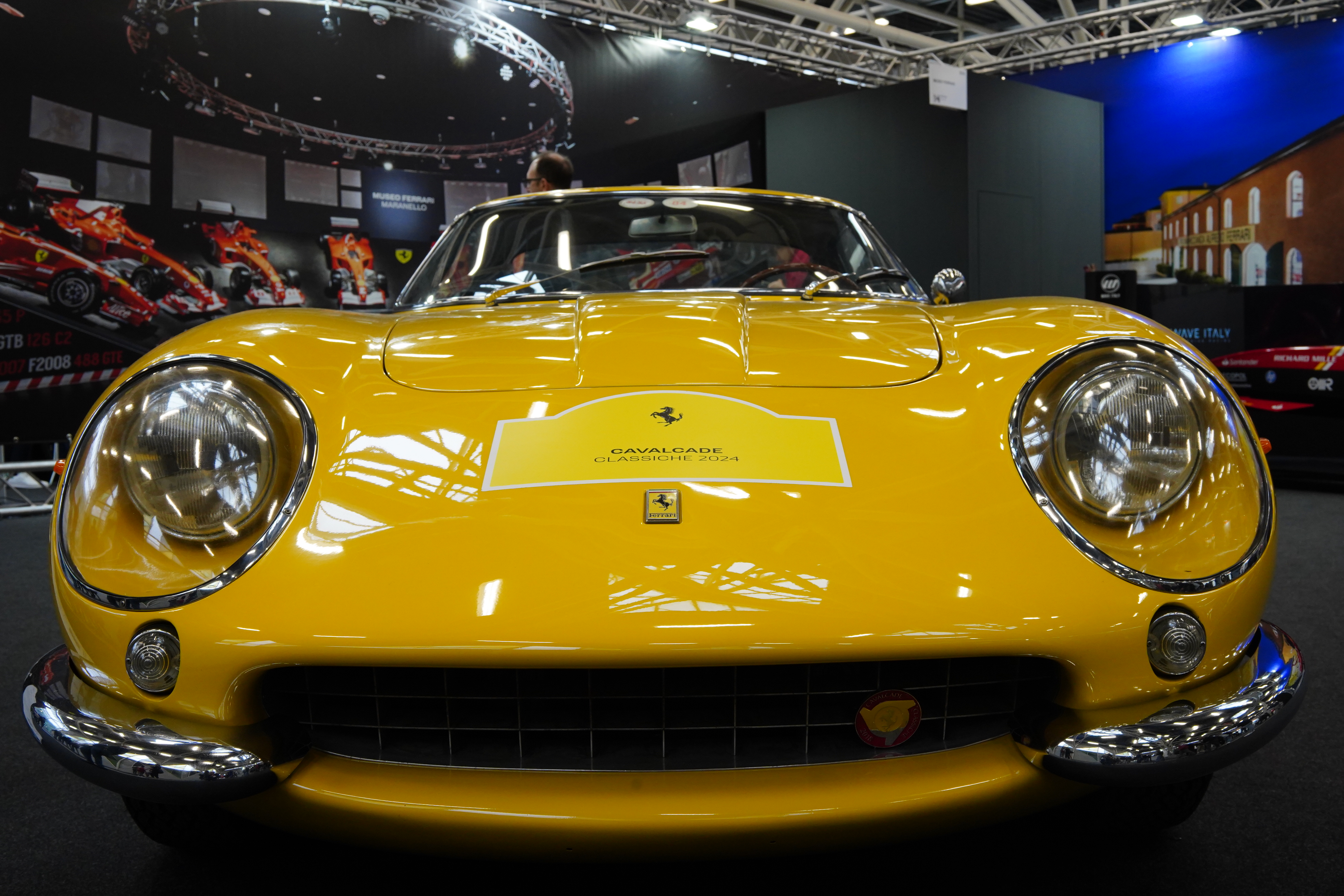
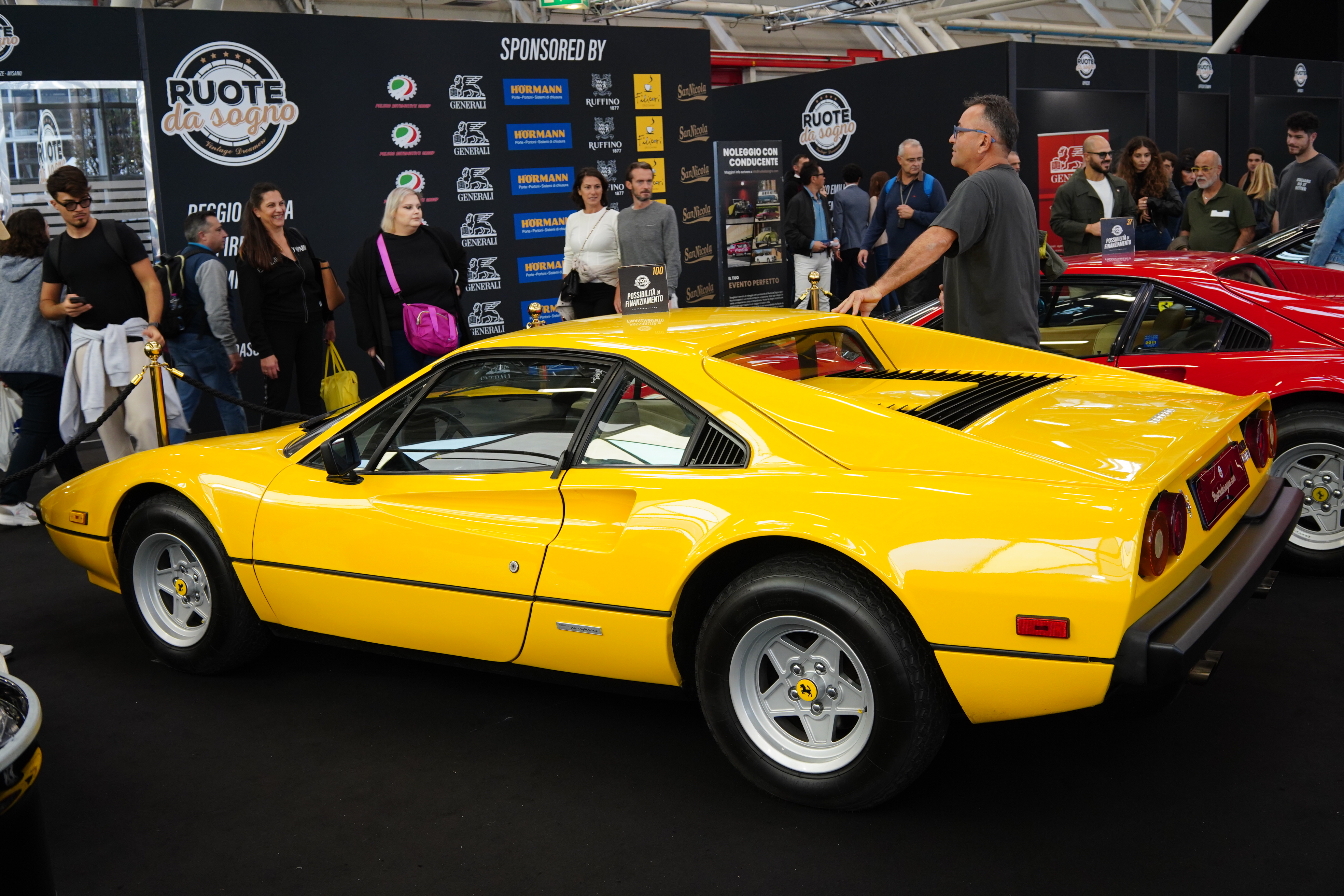
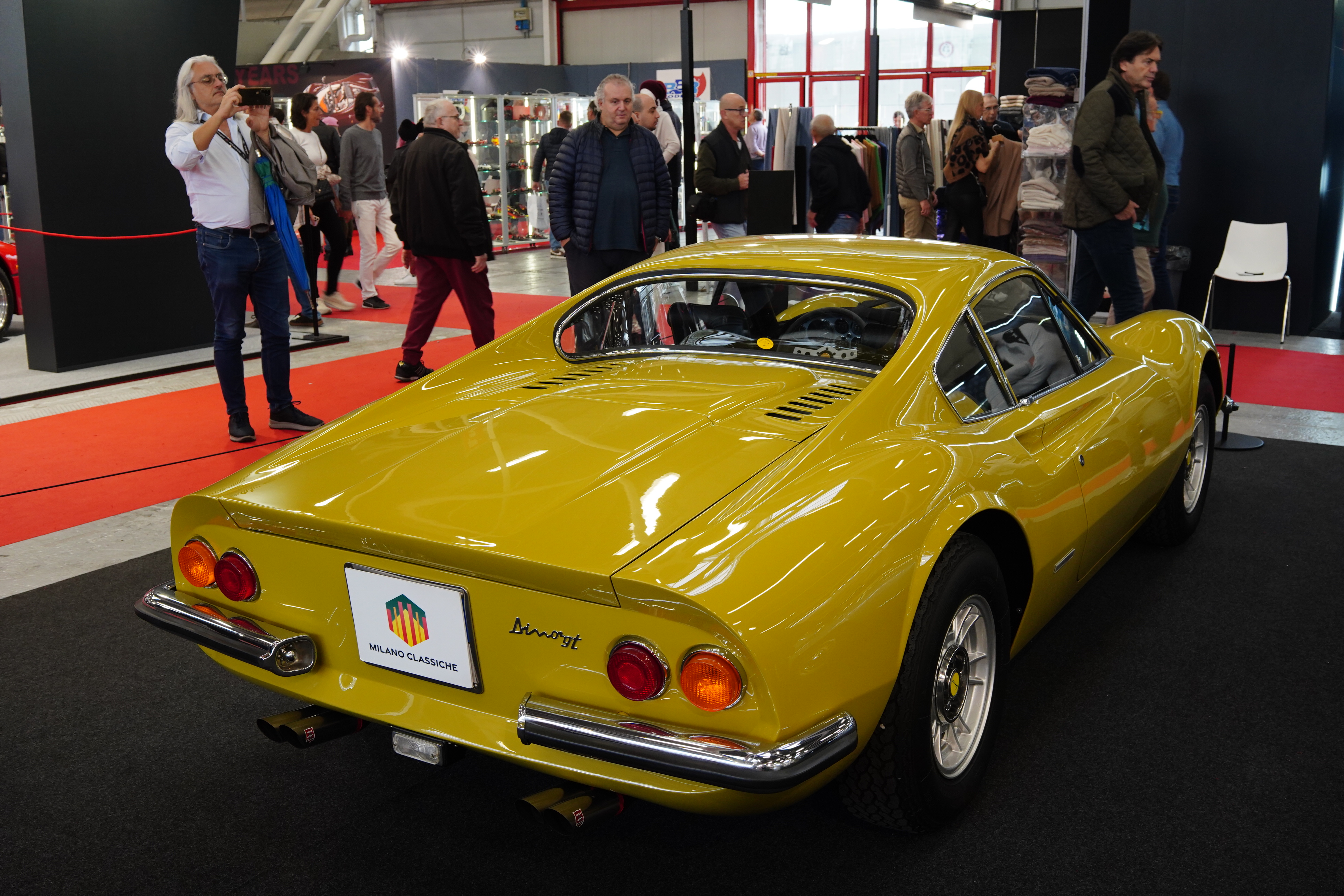
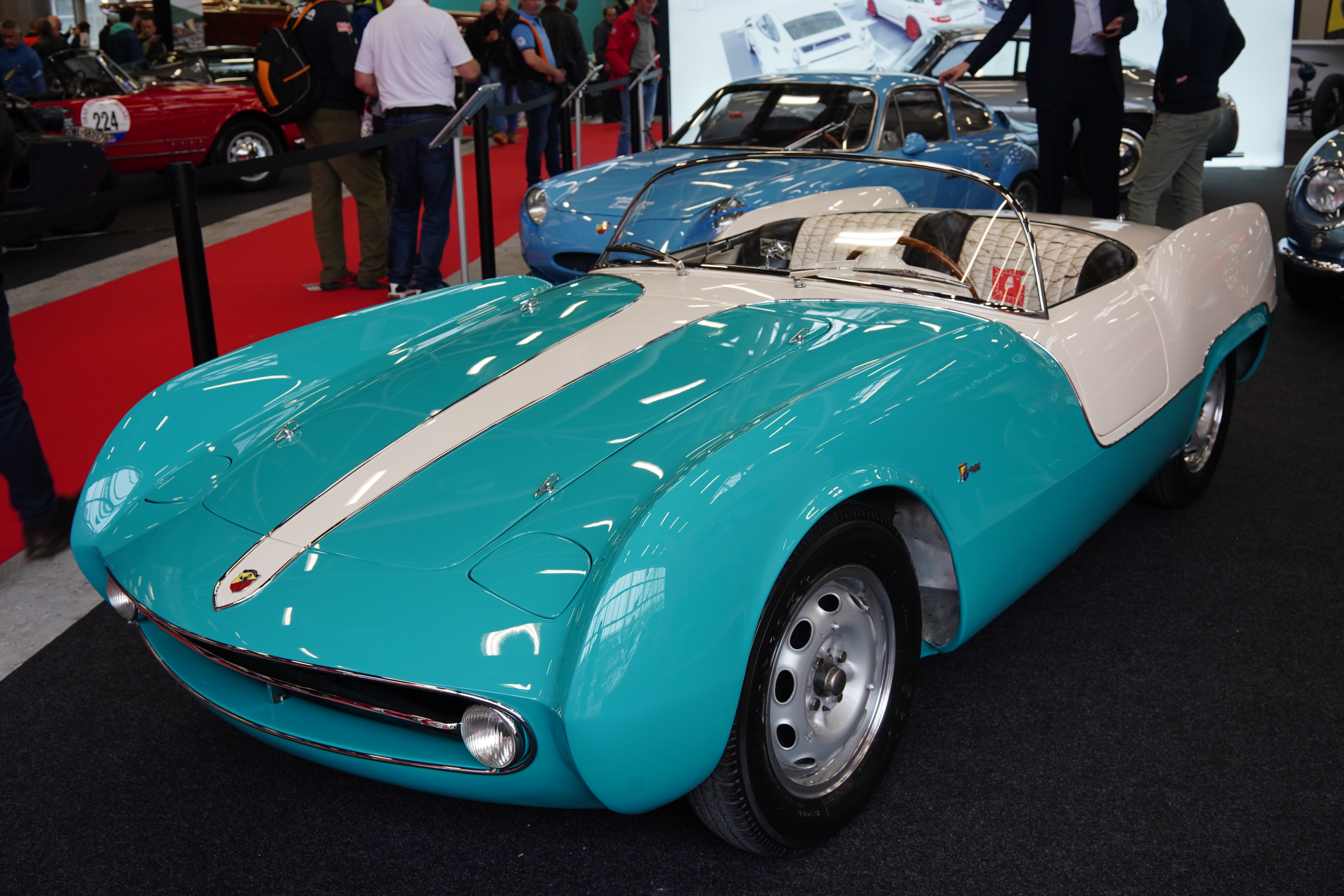
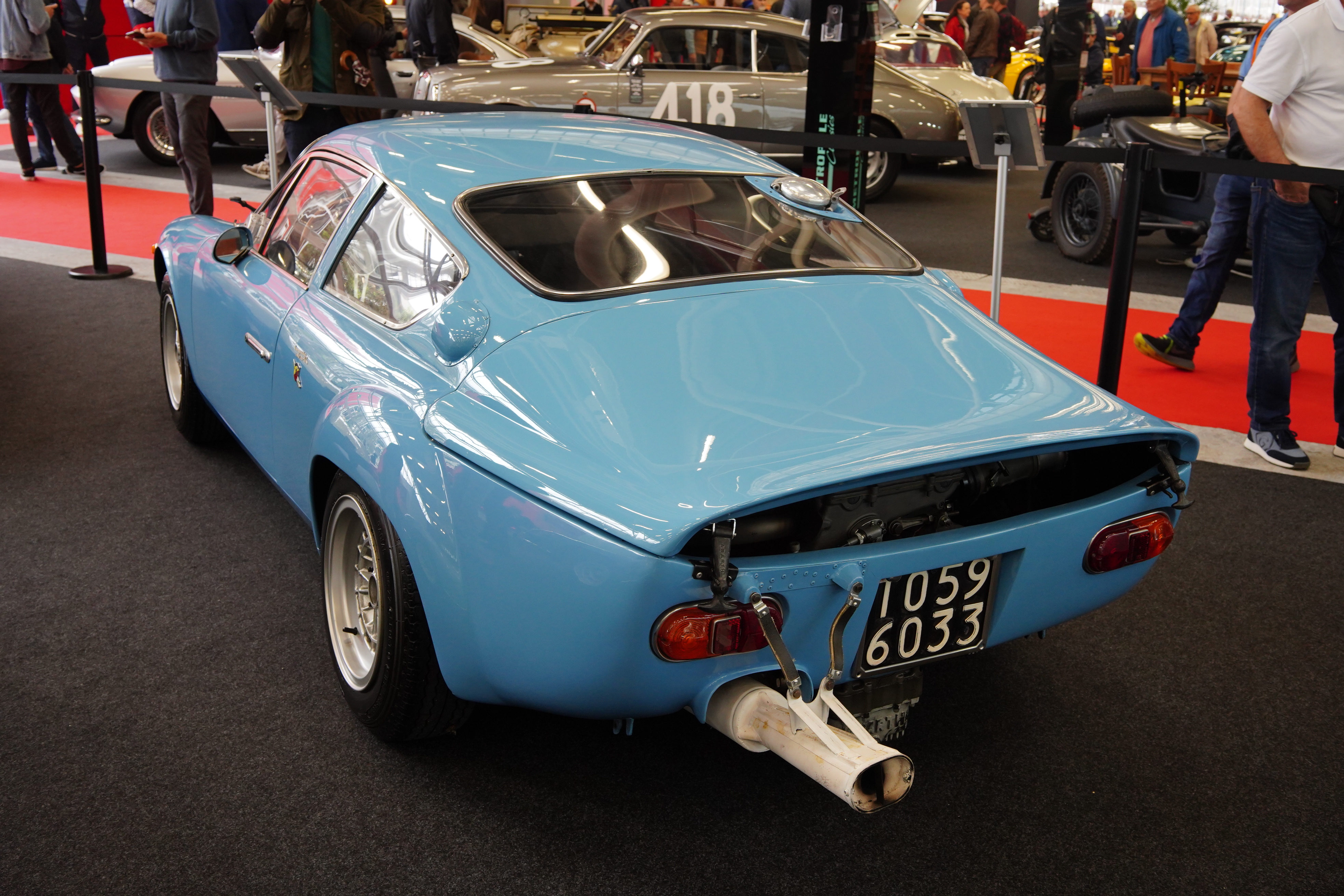
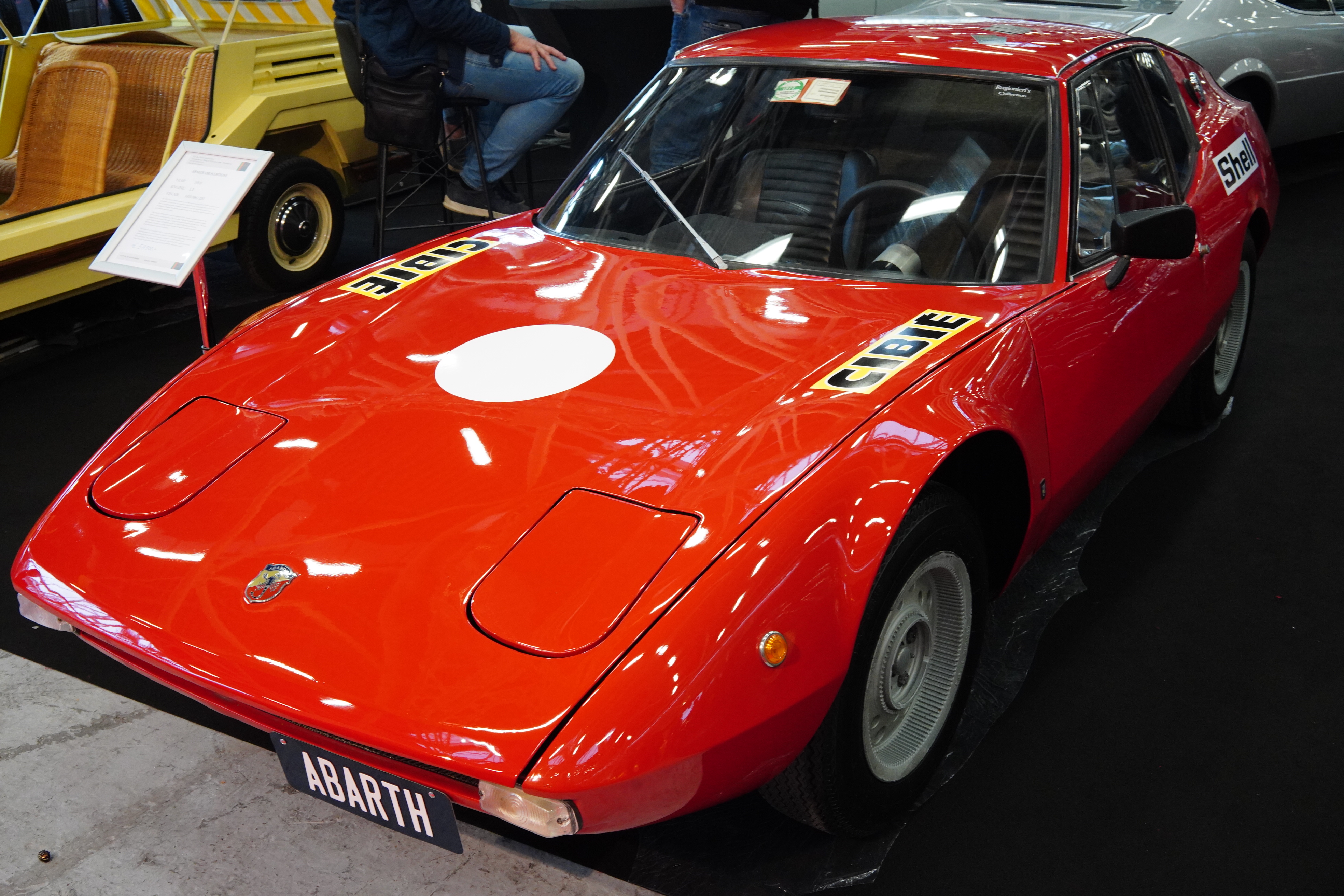
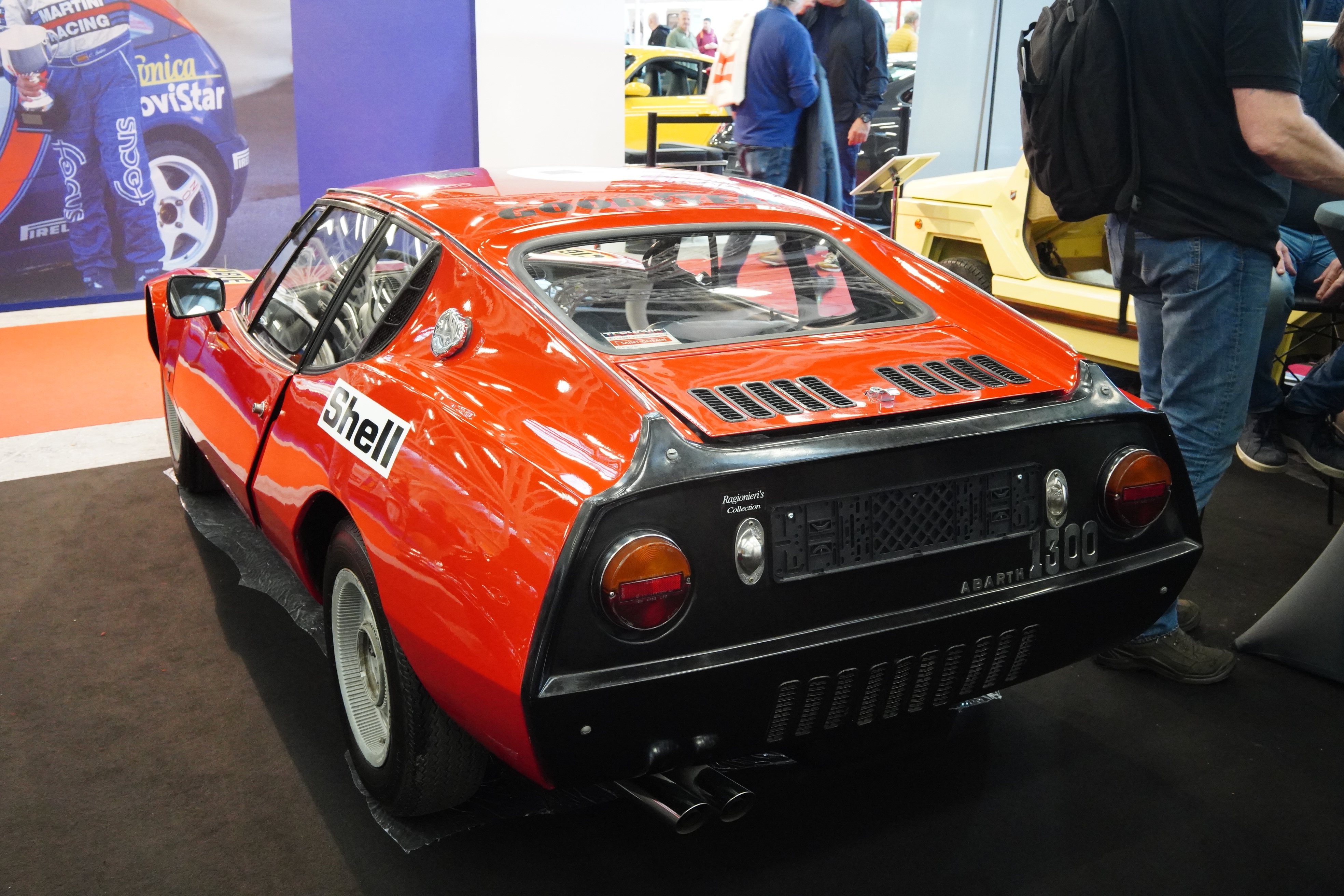
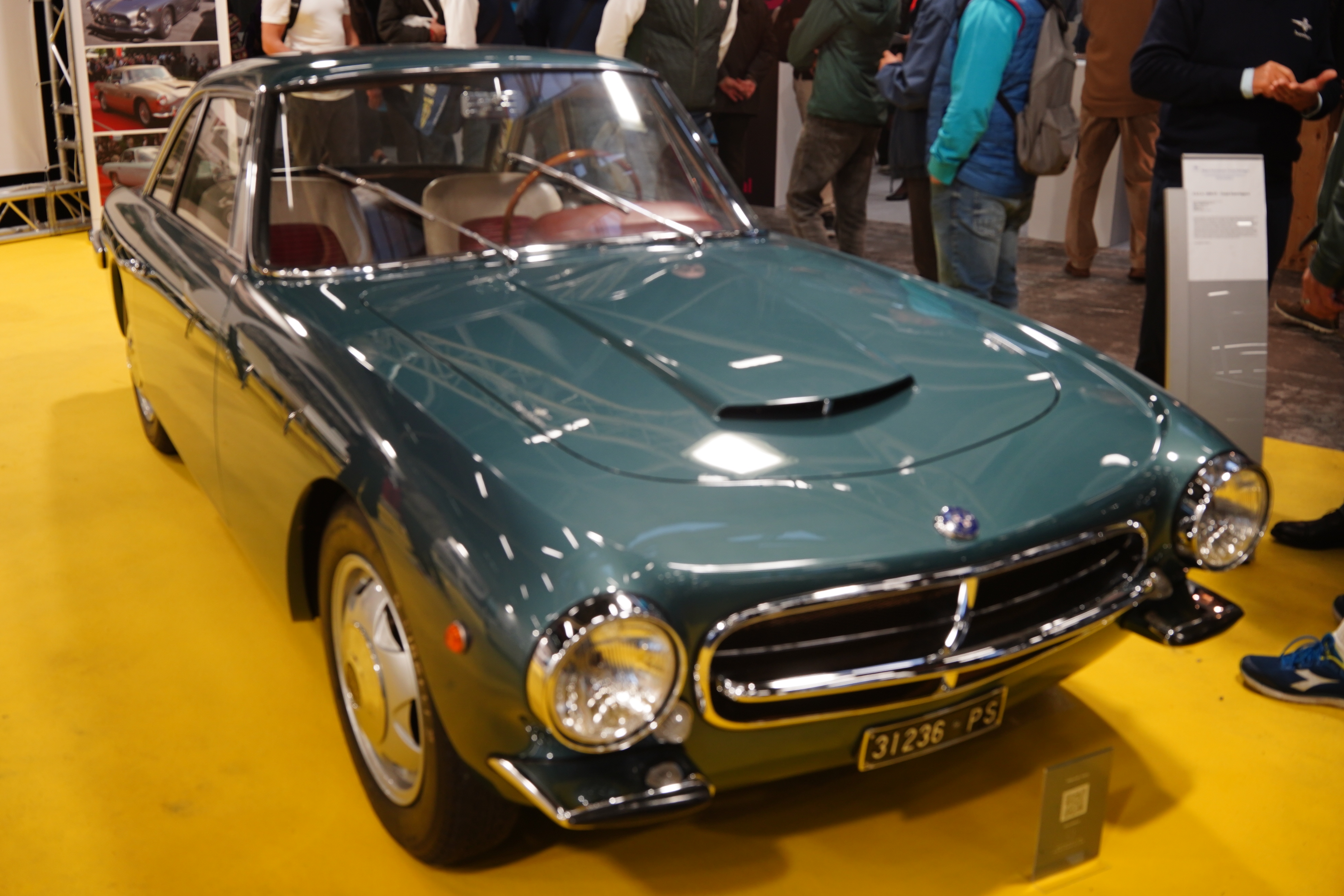
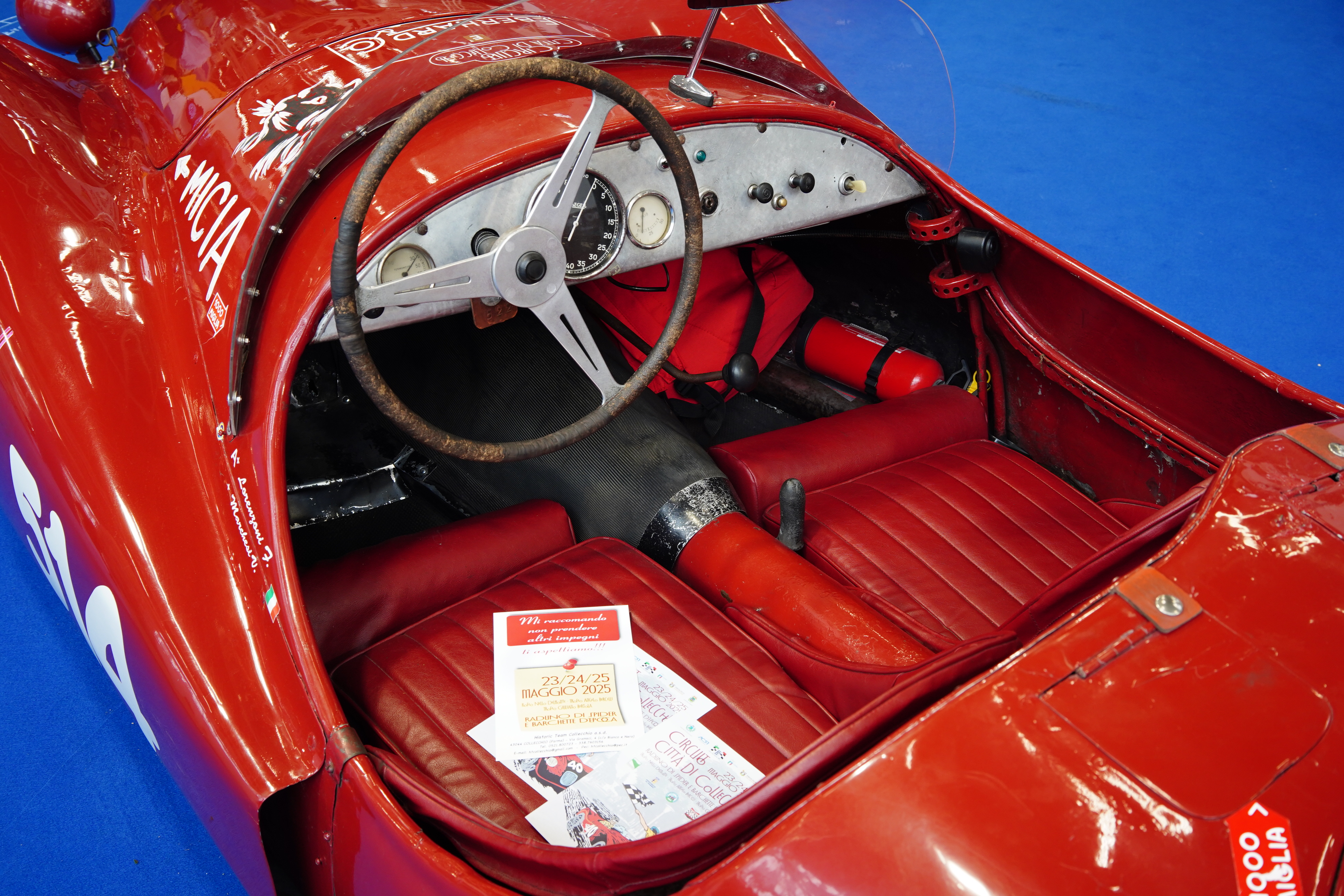
Days 3 and 4 in the BolognaFiere were spent making sure that I walked at least once through every one of the 13 halls. The show category called “The World of Classics” did not contain vehicles for sale; instead, it consisted of display cars which were brought in by manufacturers, car clubs, and organizations. Non-Italian brands were well represented. Clubs for Alpine, BMW, Volvo, MG, Jaguar, Land Rover, Mercedes Benz, Mini, Mustang, Porsche, Triumph, Toyota, and Volkswagen had vehicles there. ASI, which stands for “Automotoclub Storico Italiano” (Historic Italian Automobile Club) had a huge presence, taking up most of one hall.

By Sunday afternoon, the final day of the show, I made one last walk through the cars for sale sections, this time paying more attention to the asking prices. After being on my feet for 6 hours a day for 4 days, it was time to quit.

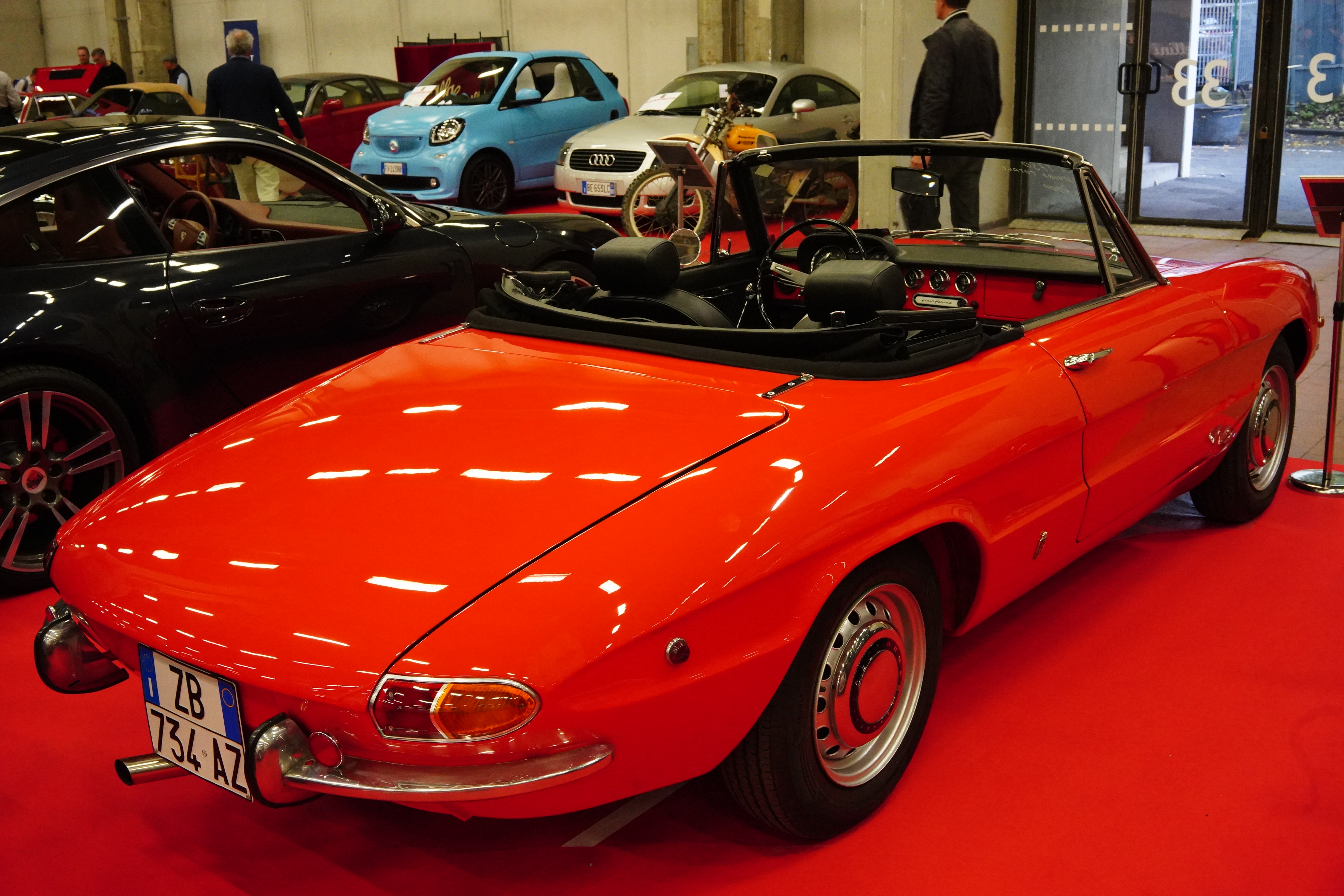
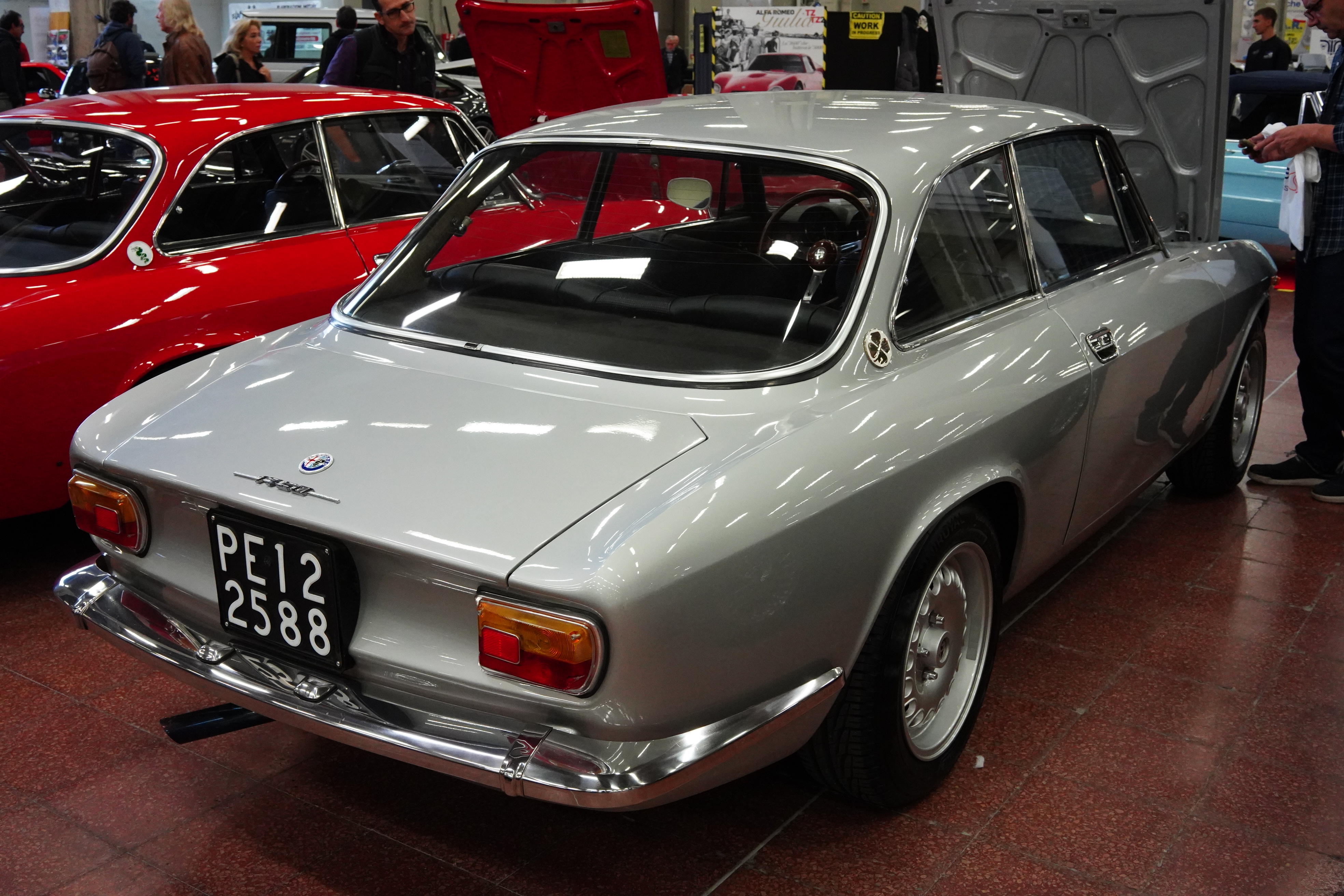
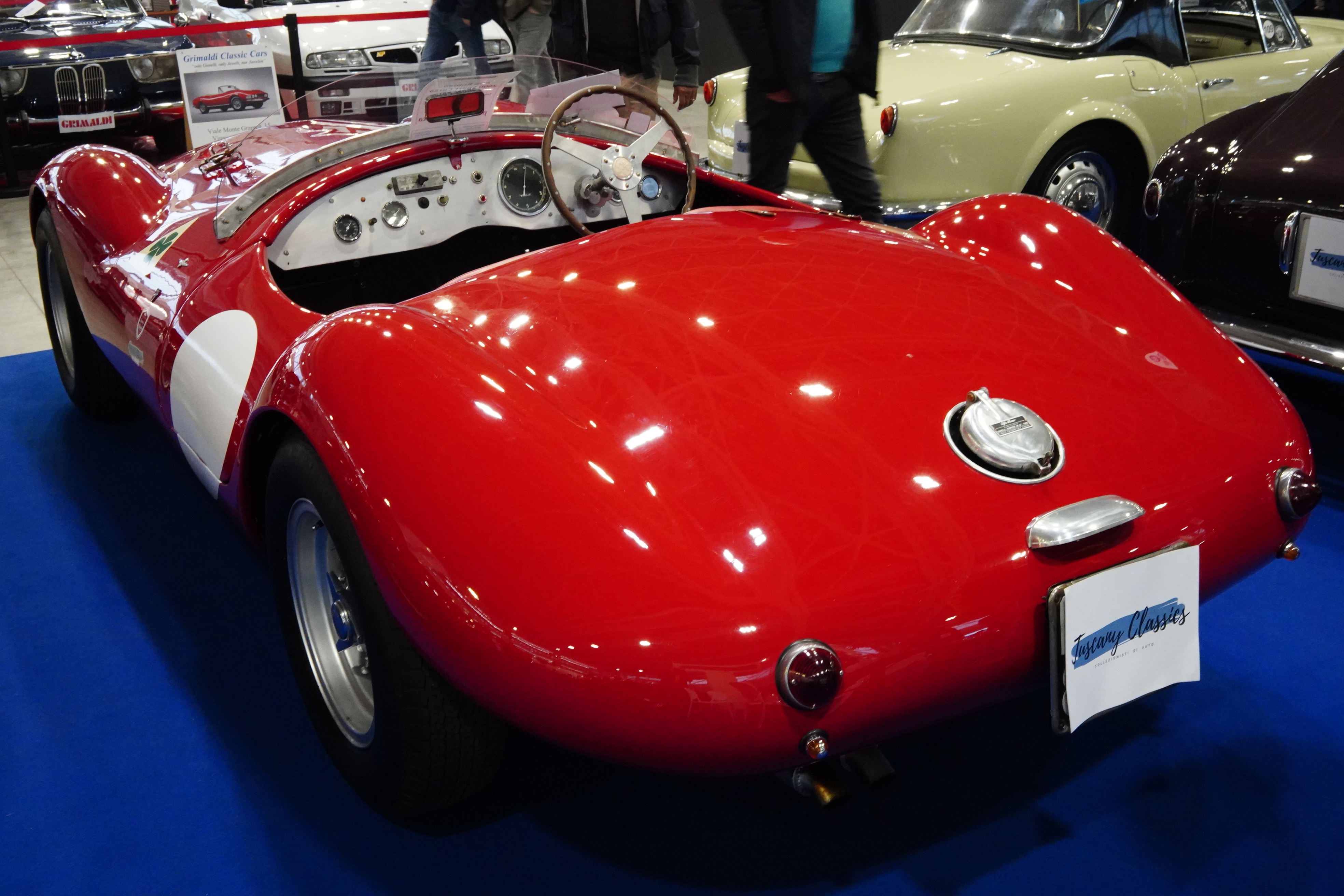
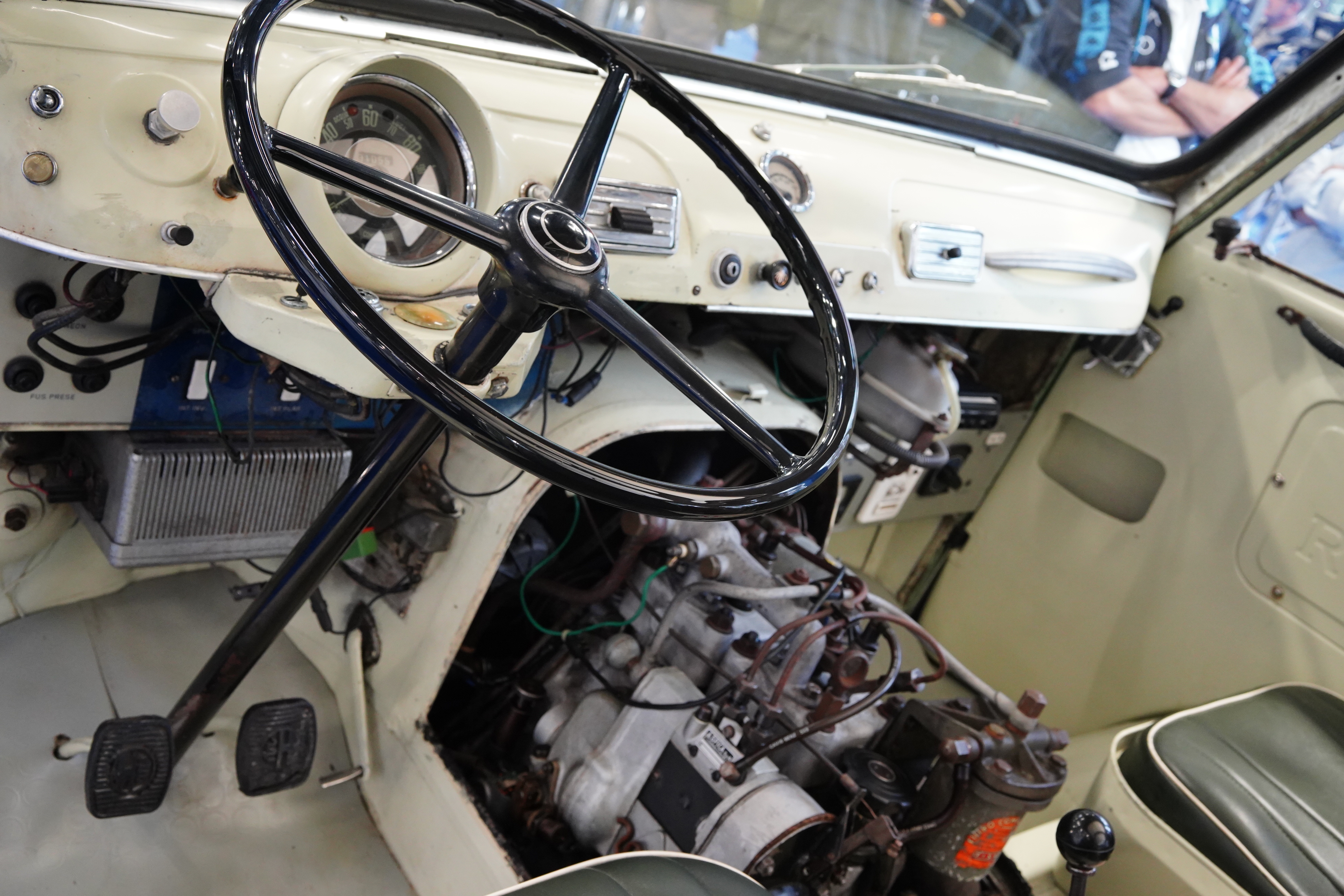
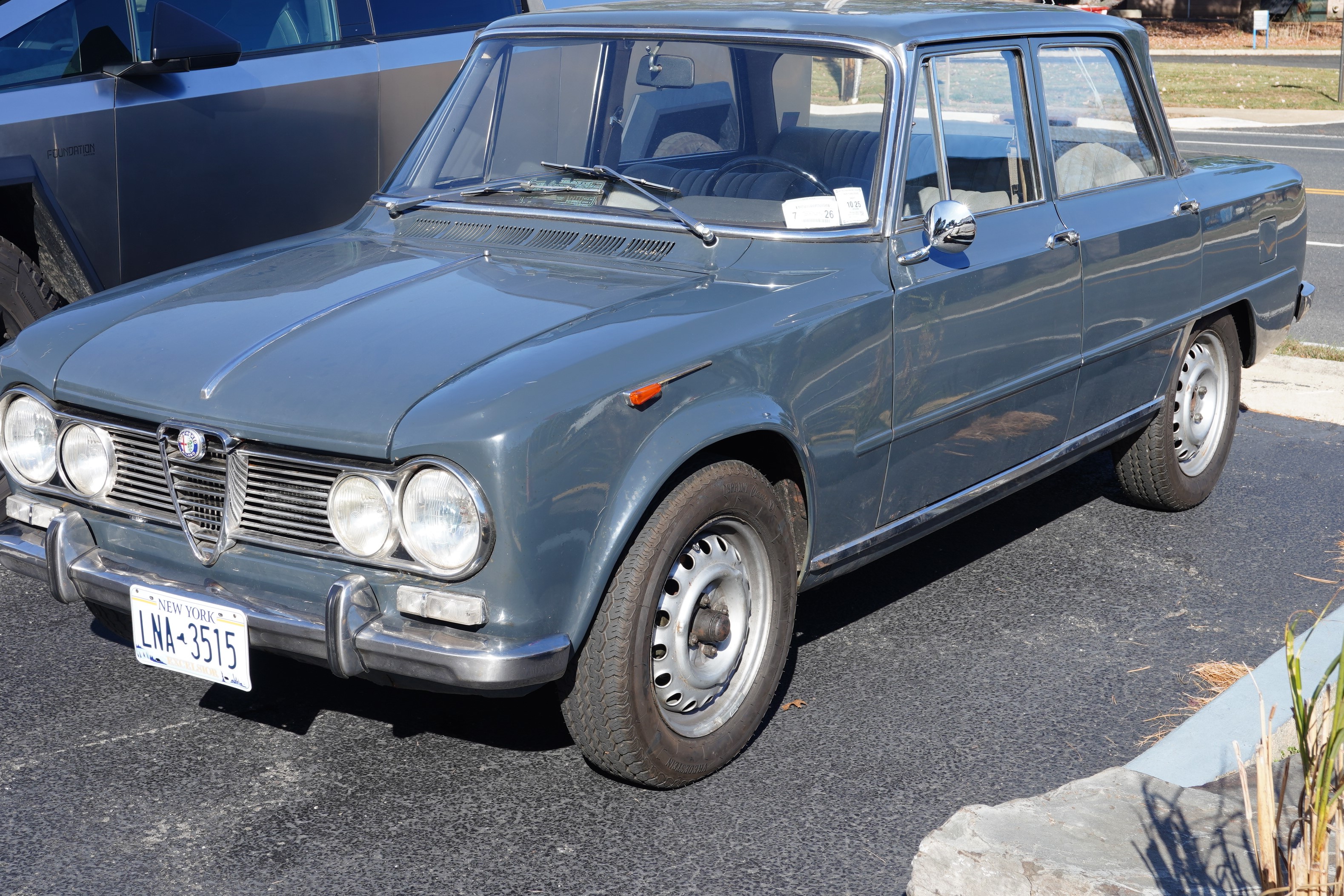
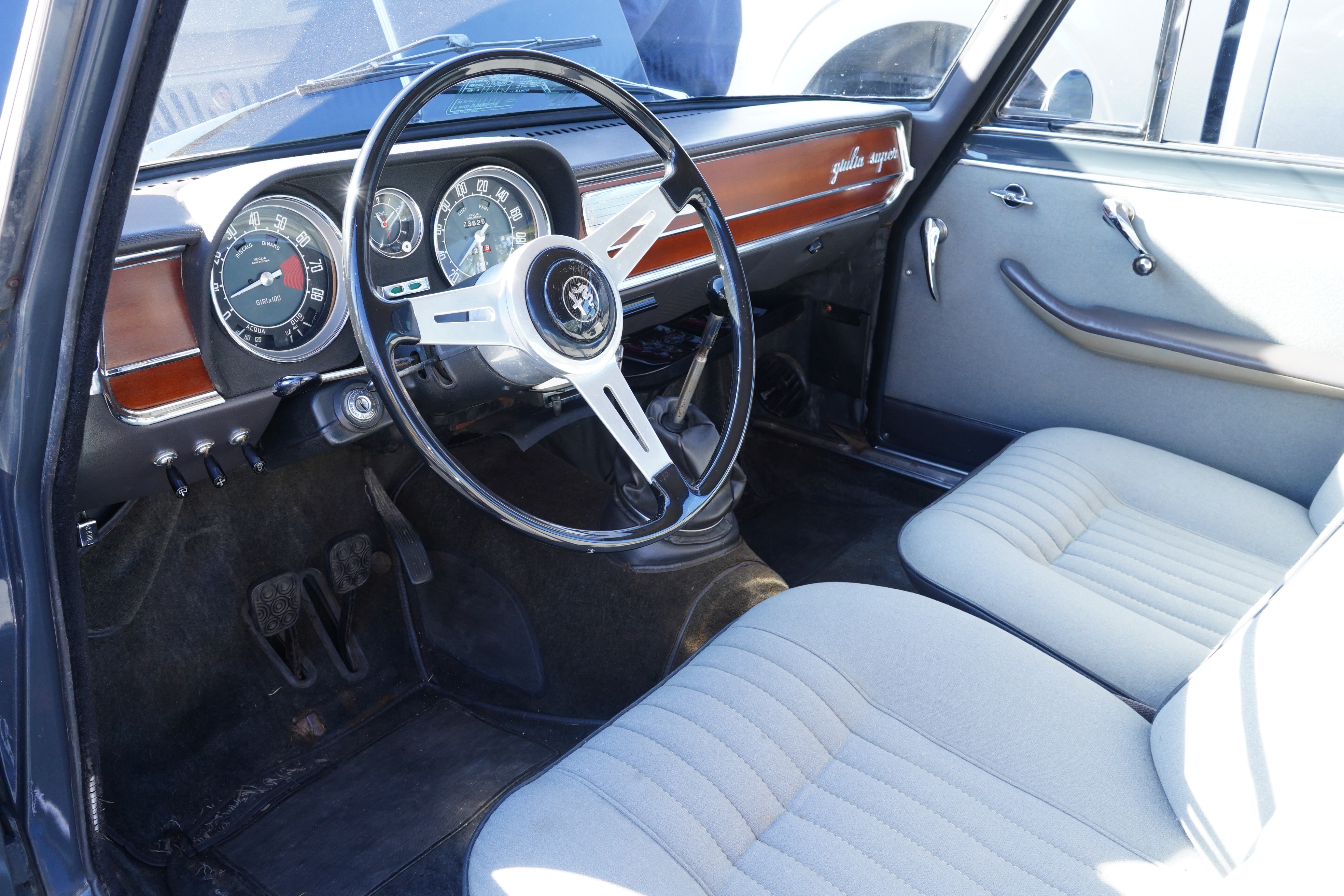
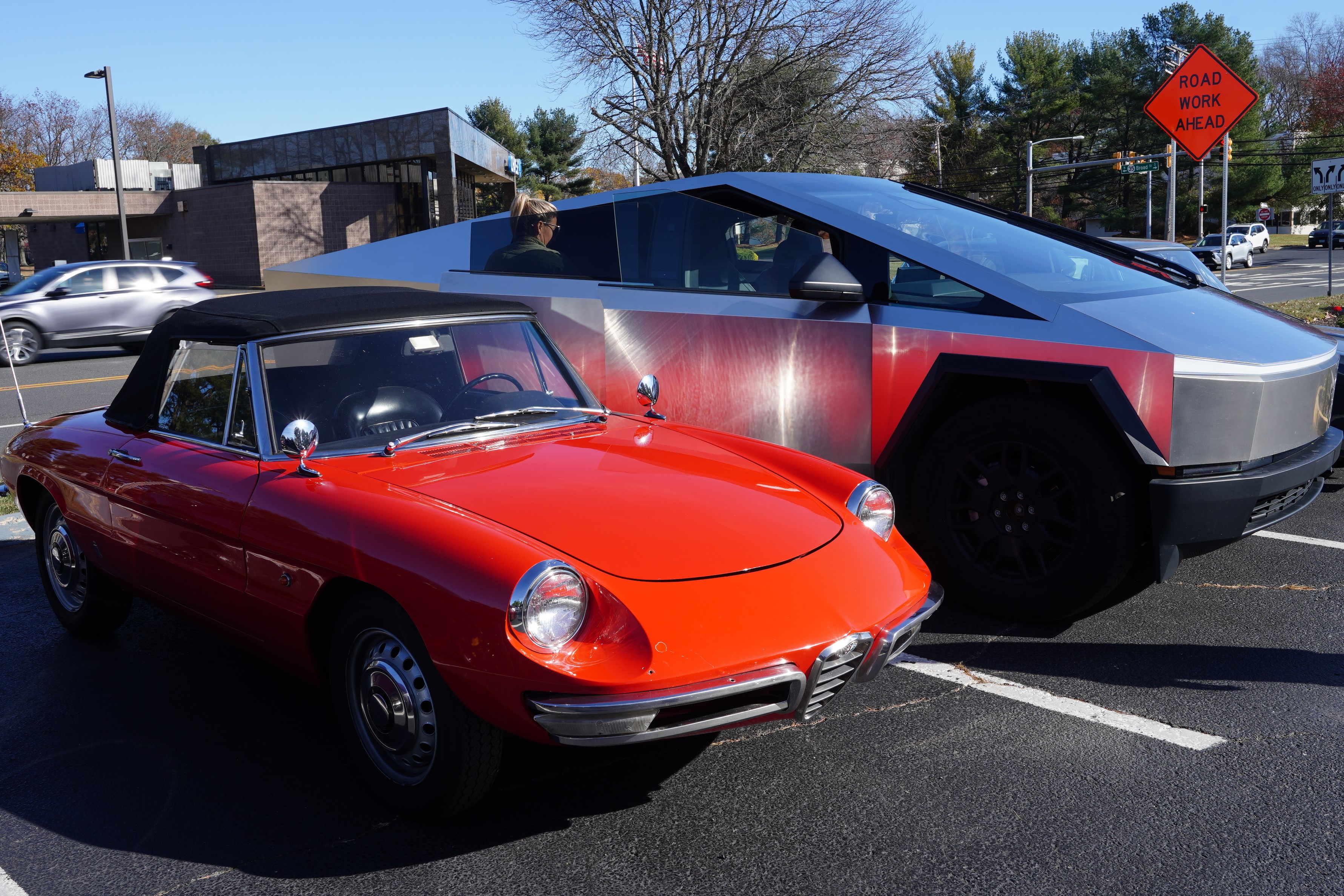
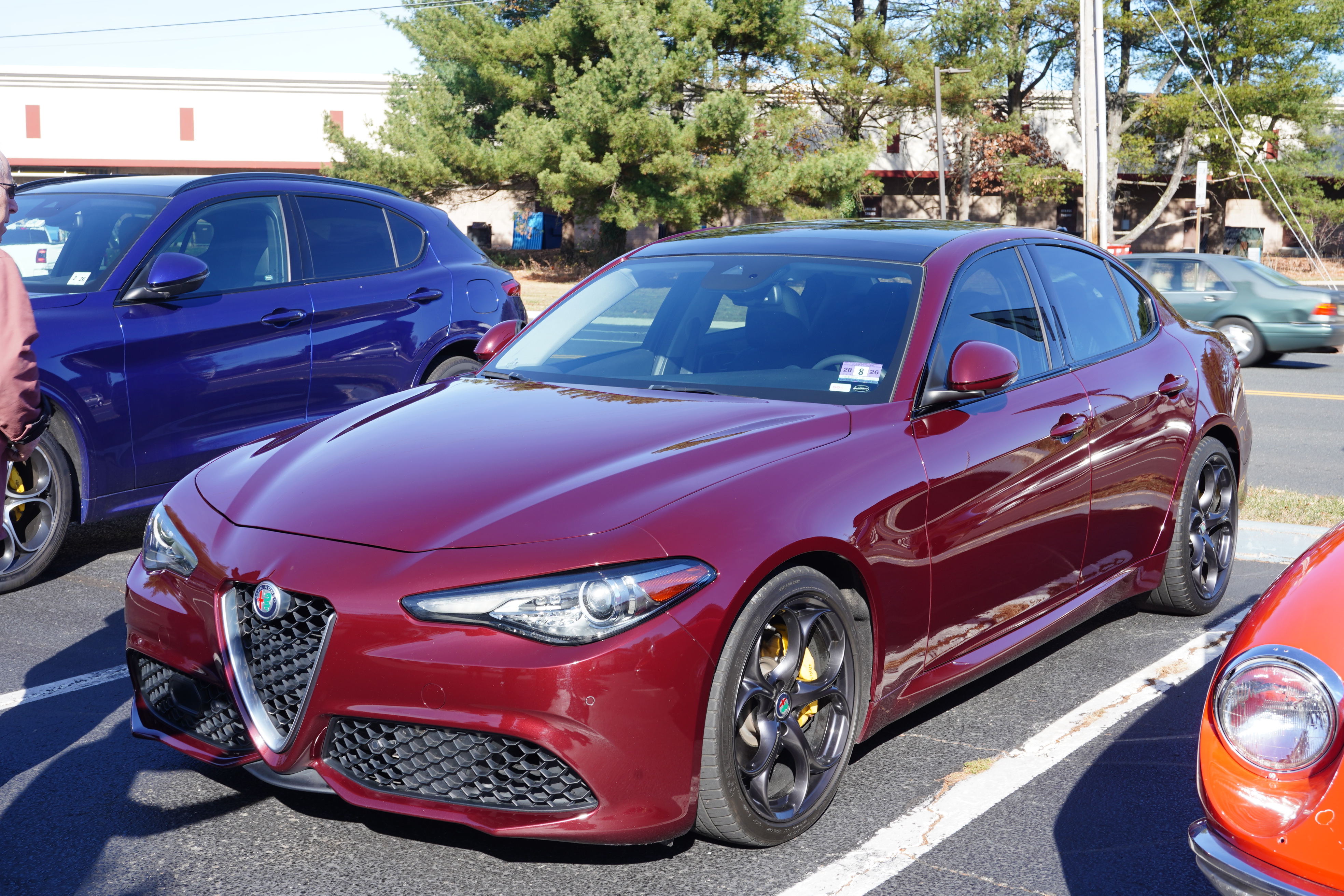
While I like all cars, I especially like Italian cars. And while I like all Italian cars, it’s my ownership of an Alfa Romeo which puts that brand at the top of the mucchio (heap). The below photos reflect just a sample of the many Alfas at this show.


This 1963 Giulia Spider was for sale for €78,000, presumably including the hardtop.
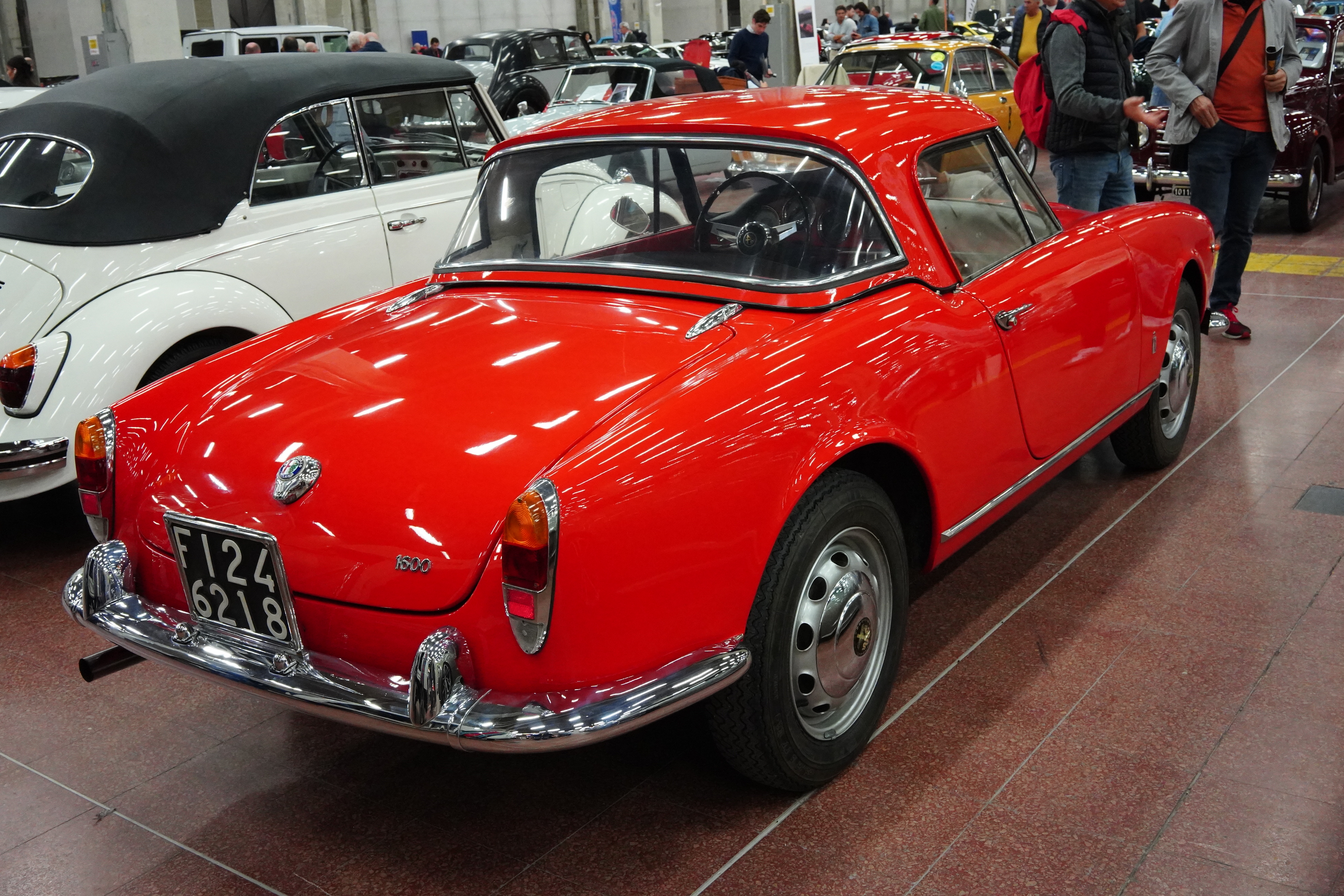
This 1961 Giulietta Sprint could be yours for €55,000. It would make a nice bookend with the Giulia Spider above.
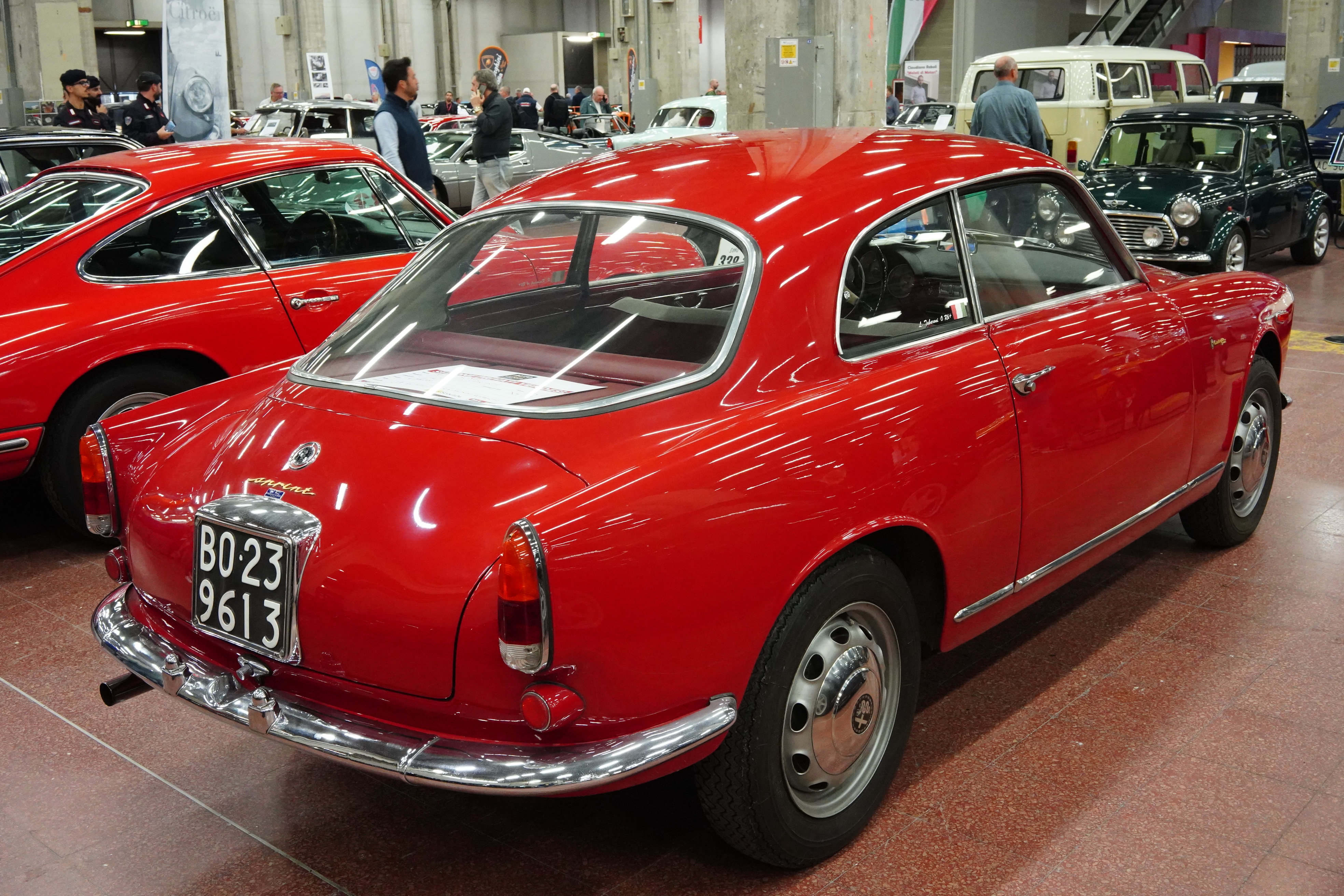
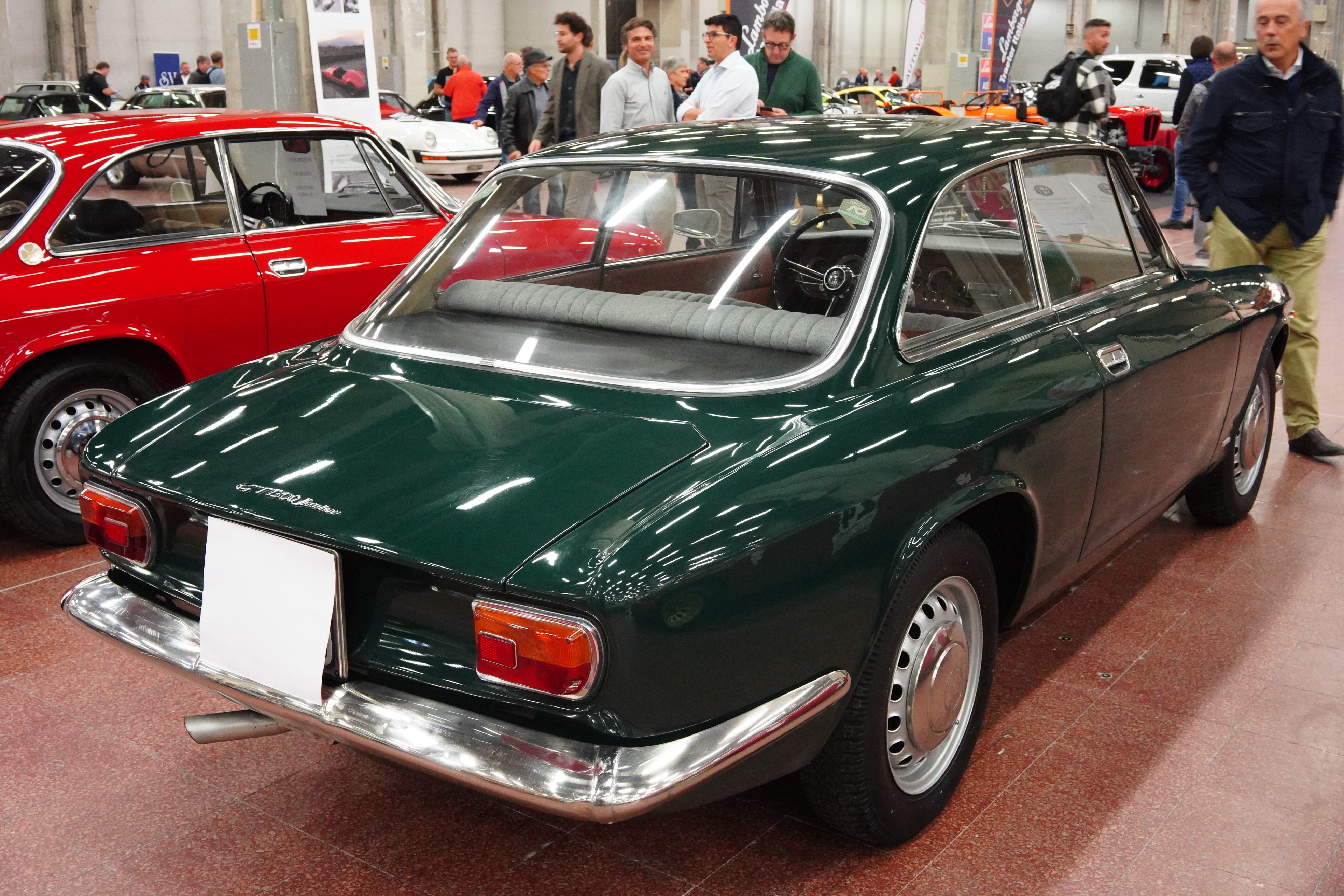
I was smitten with this ’67 GT 1300 Junior because it was an almost exact duplicate of my car. The owner was asking €46,000.
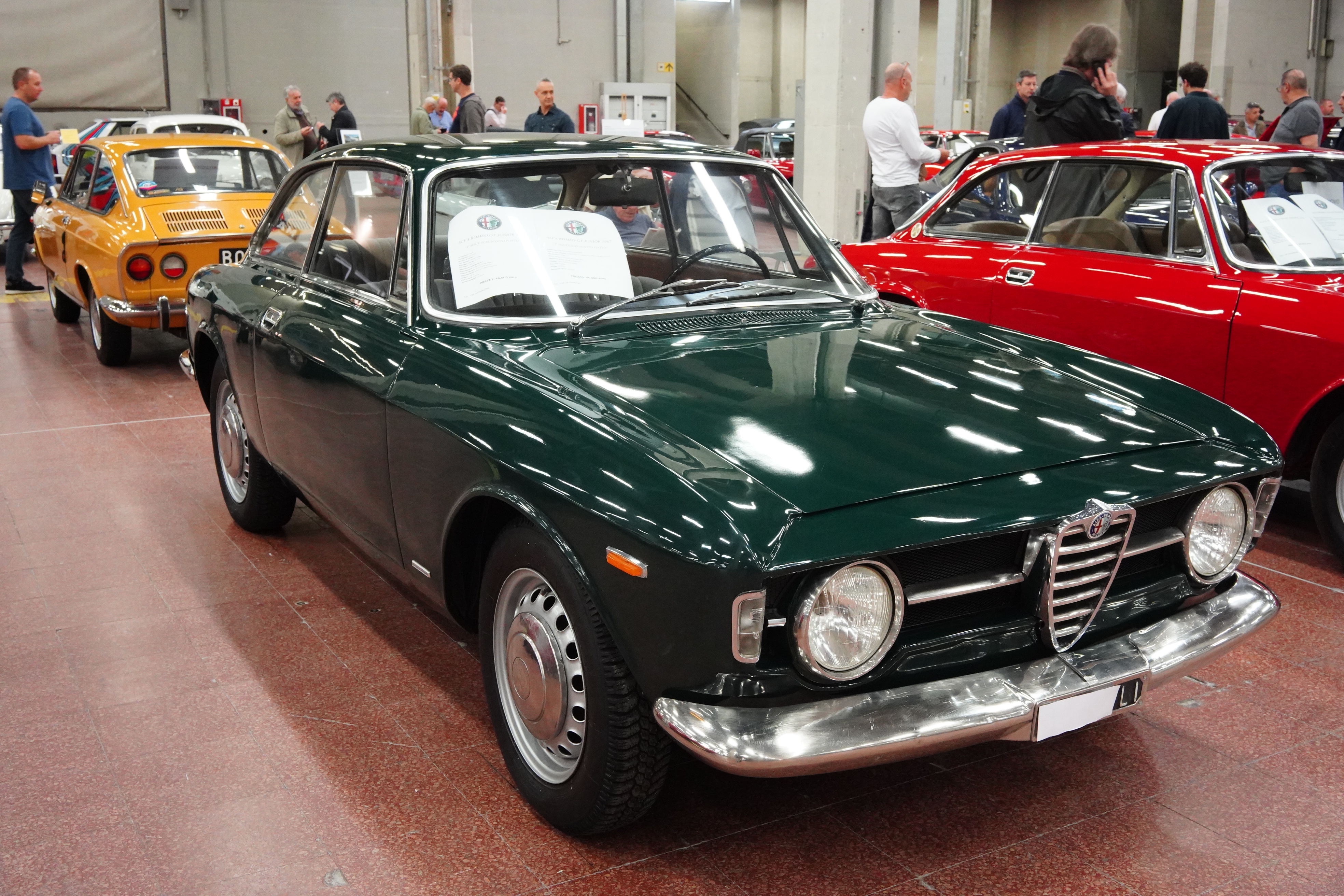
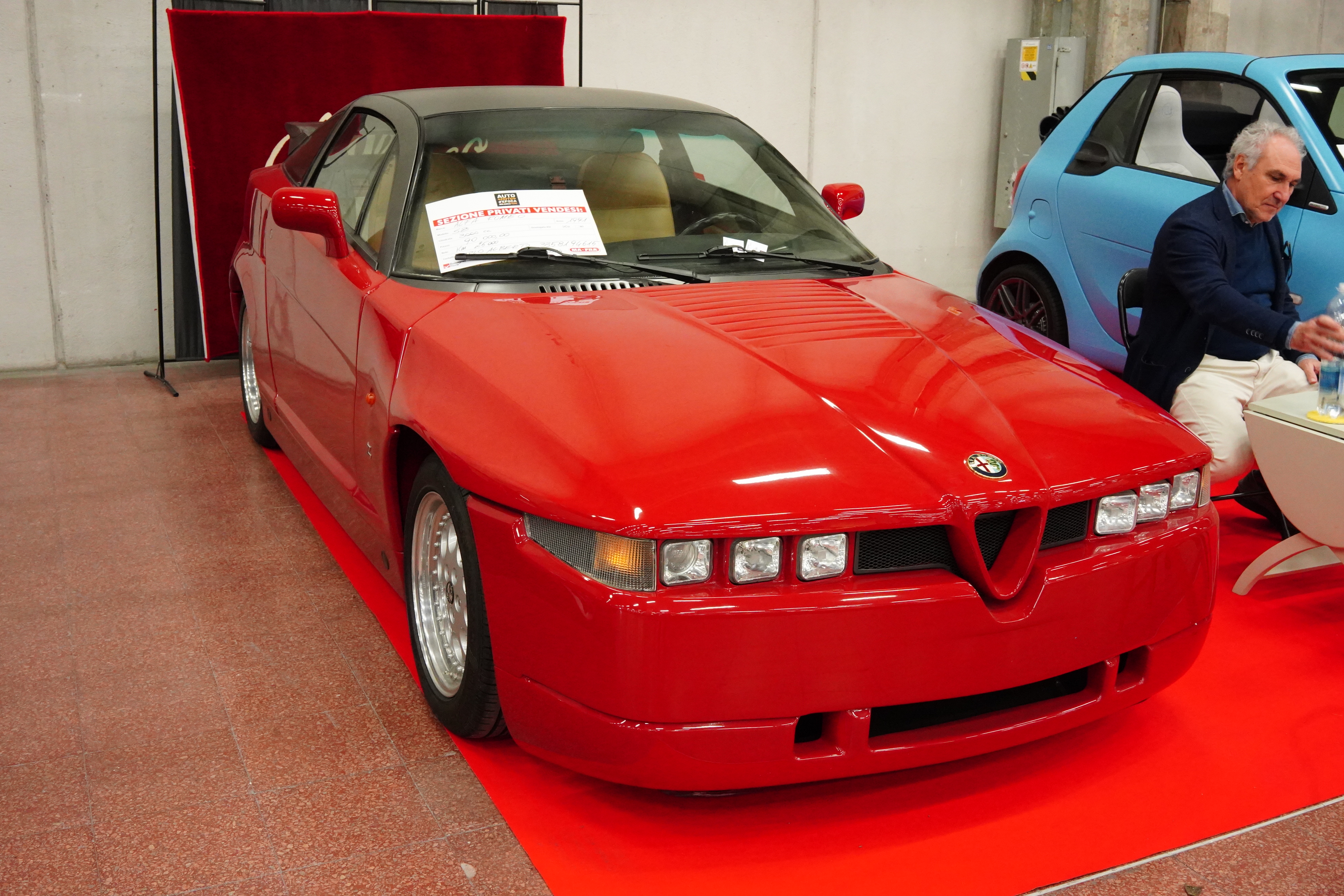
This 1991 SZ had an ask of €90,000.
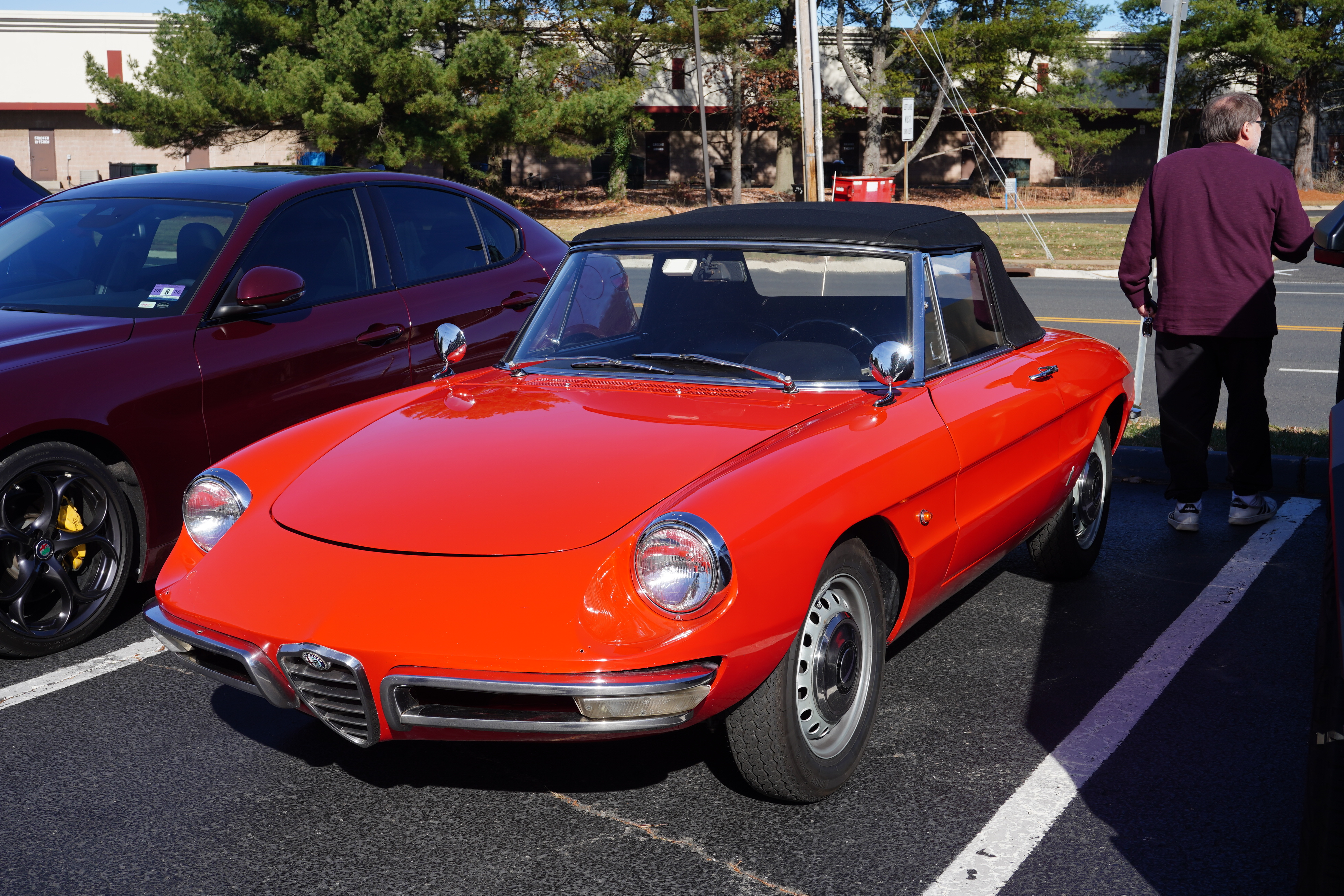
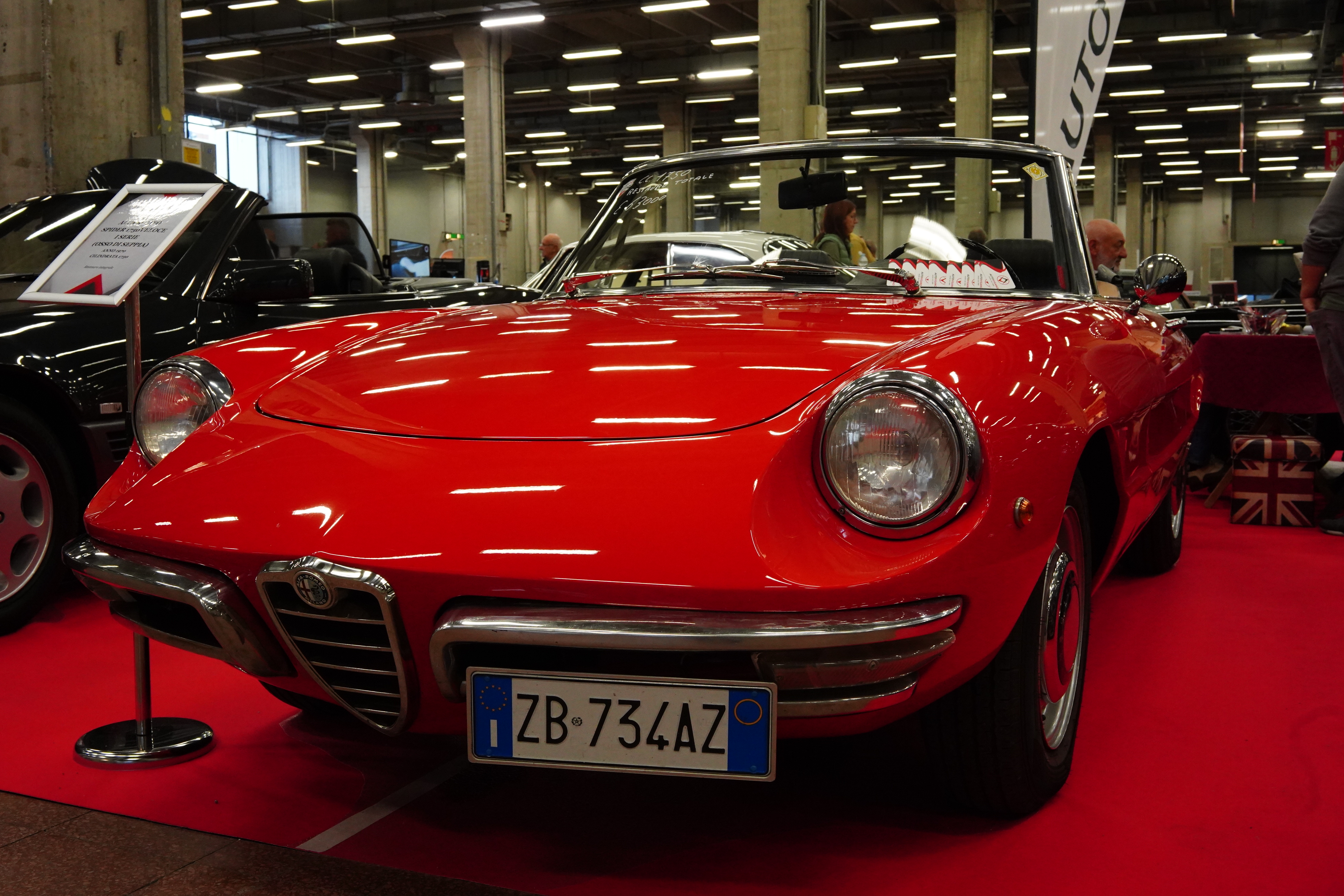
This 1970 Spider looked to be cosmetically near perfect, and it stood out for me compared to almost every other Spider at the show. The vendor was asking €63,000.
A 1973 GT 1300 Junior in white. Note the 2nd series front end styling.

An Alfetta GT coupe in black. This was one of only a few at the show.

This blue GTA “tributo” was only €39,000.

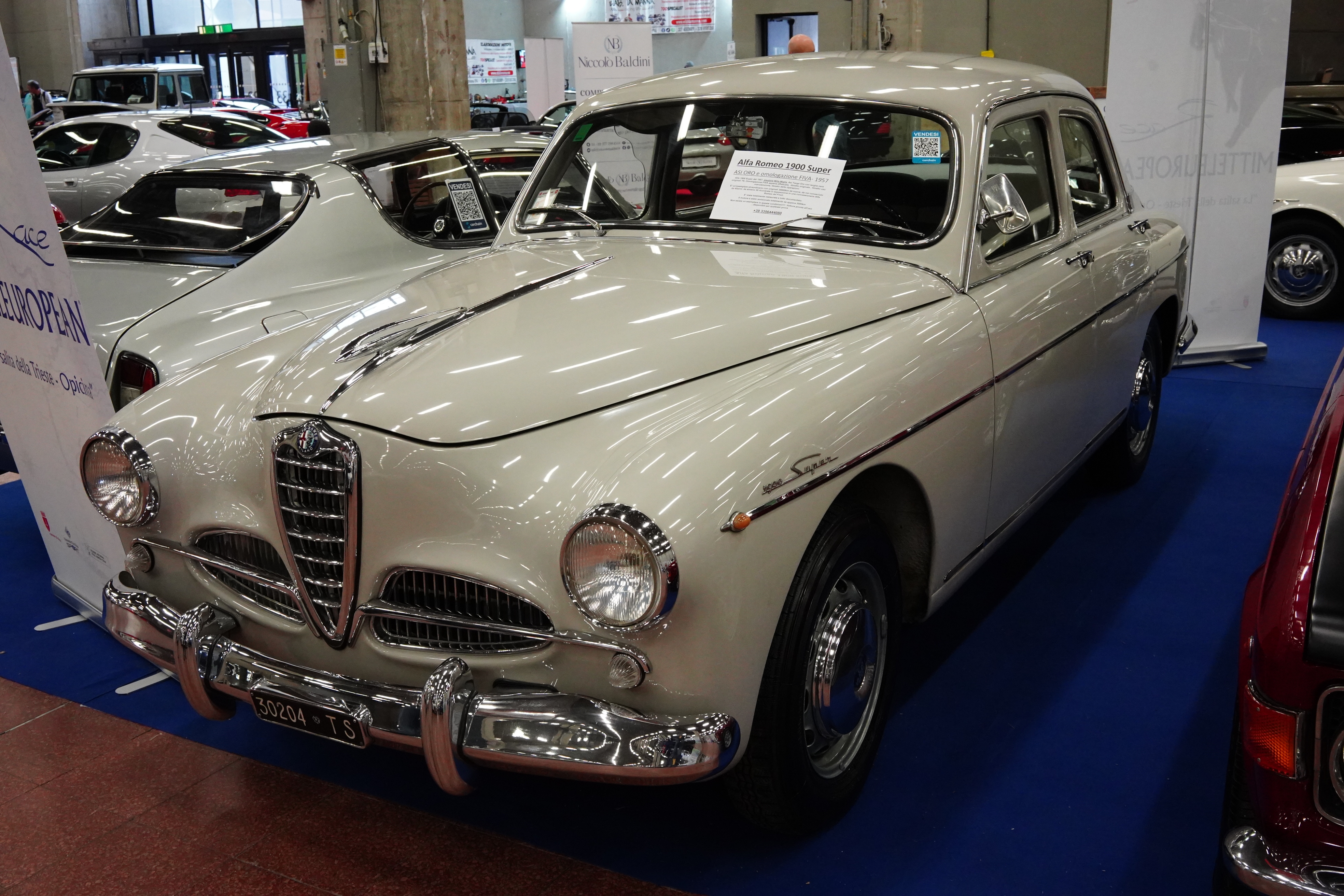
A 1957 1900 Super sedan.
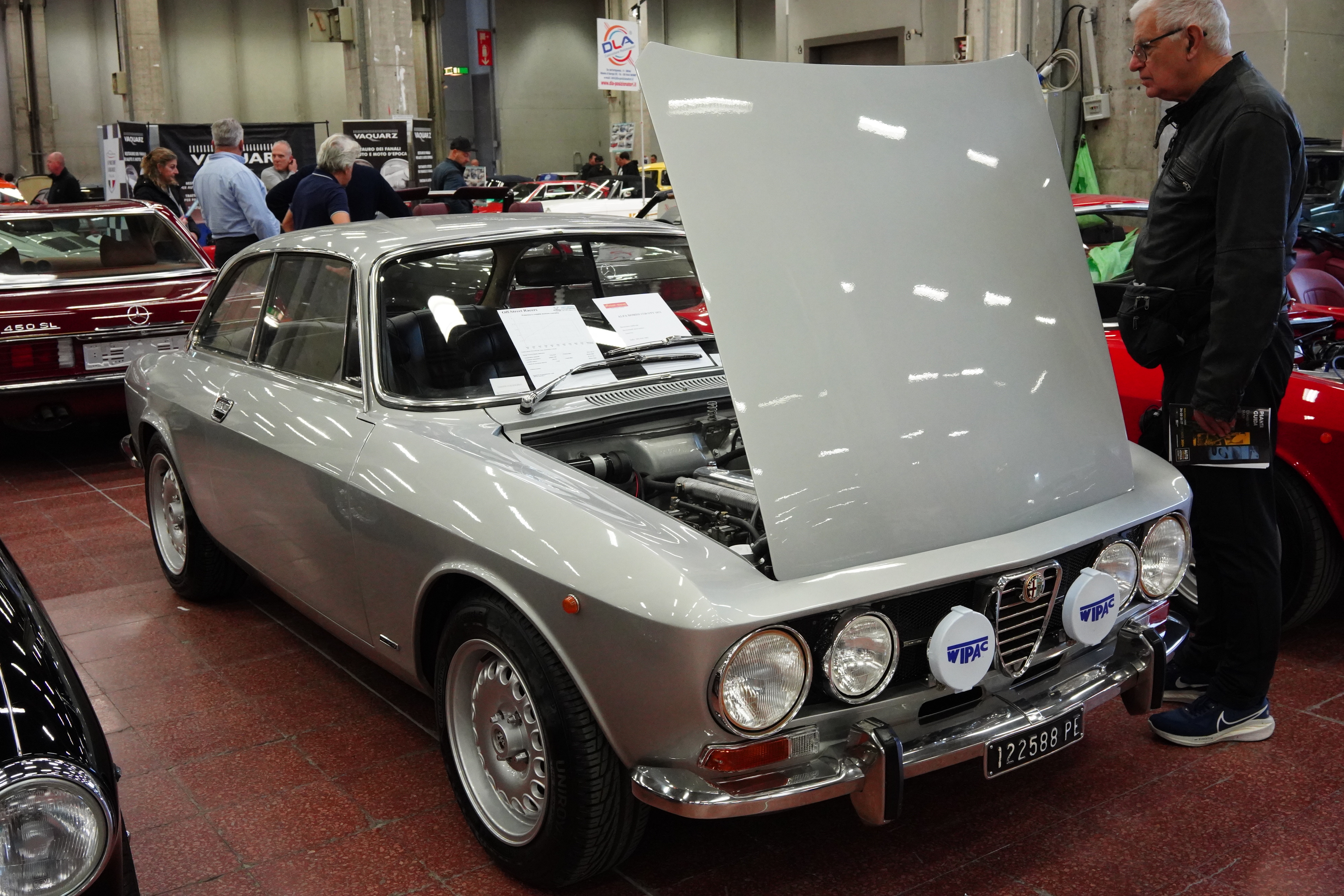
I thought this GTV looked sharp in silver with the silver wheels.
One of the better priced Alfas here was this 1976 Spider 2000 for €26,500. The sign on it seemed to claim that it had only 9,000 original kilometers on it.

A beautiful blue 2600 Sprint.

A beautiful silver Giulietta Sprint.

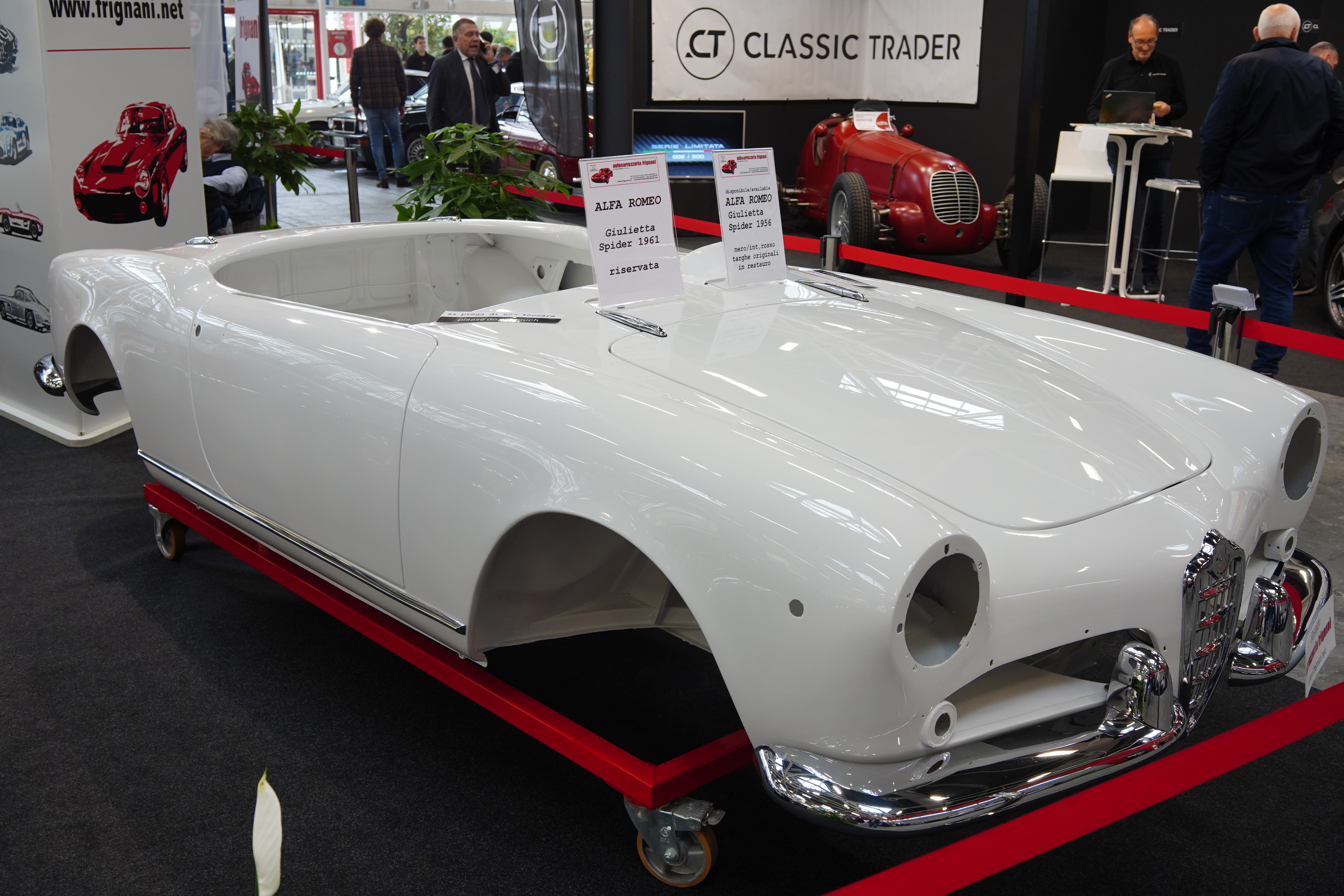
If you’re looking for a starting point, this restored shell was for sale.
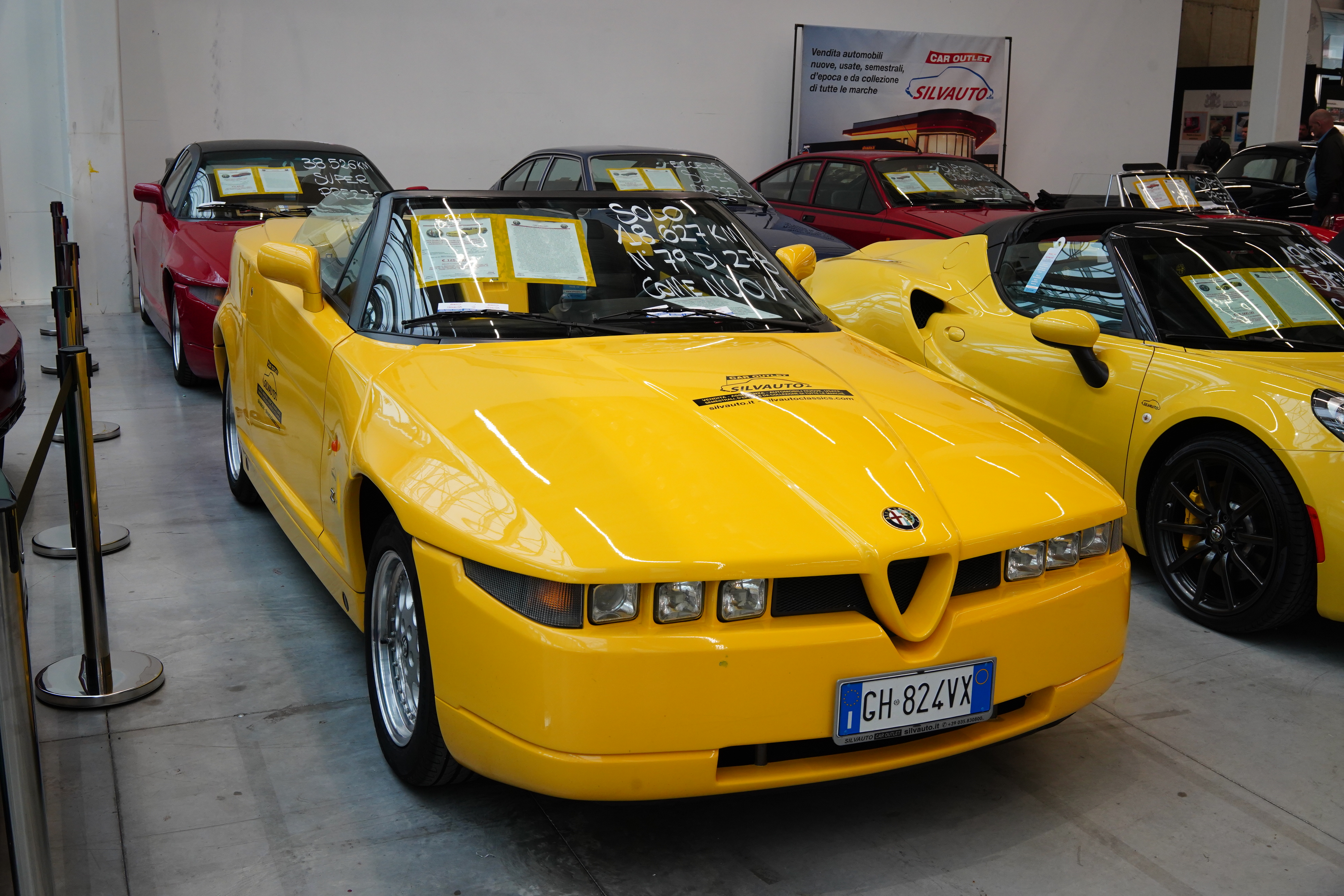
This yellow RZ Spider was for sale for €125,000.
There weren’t too many 4Cs there either; this one had a sale price of €85,000.

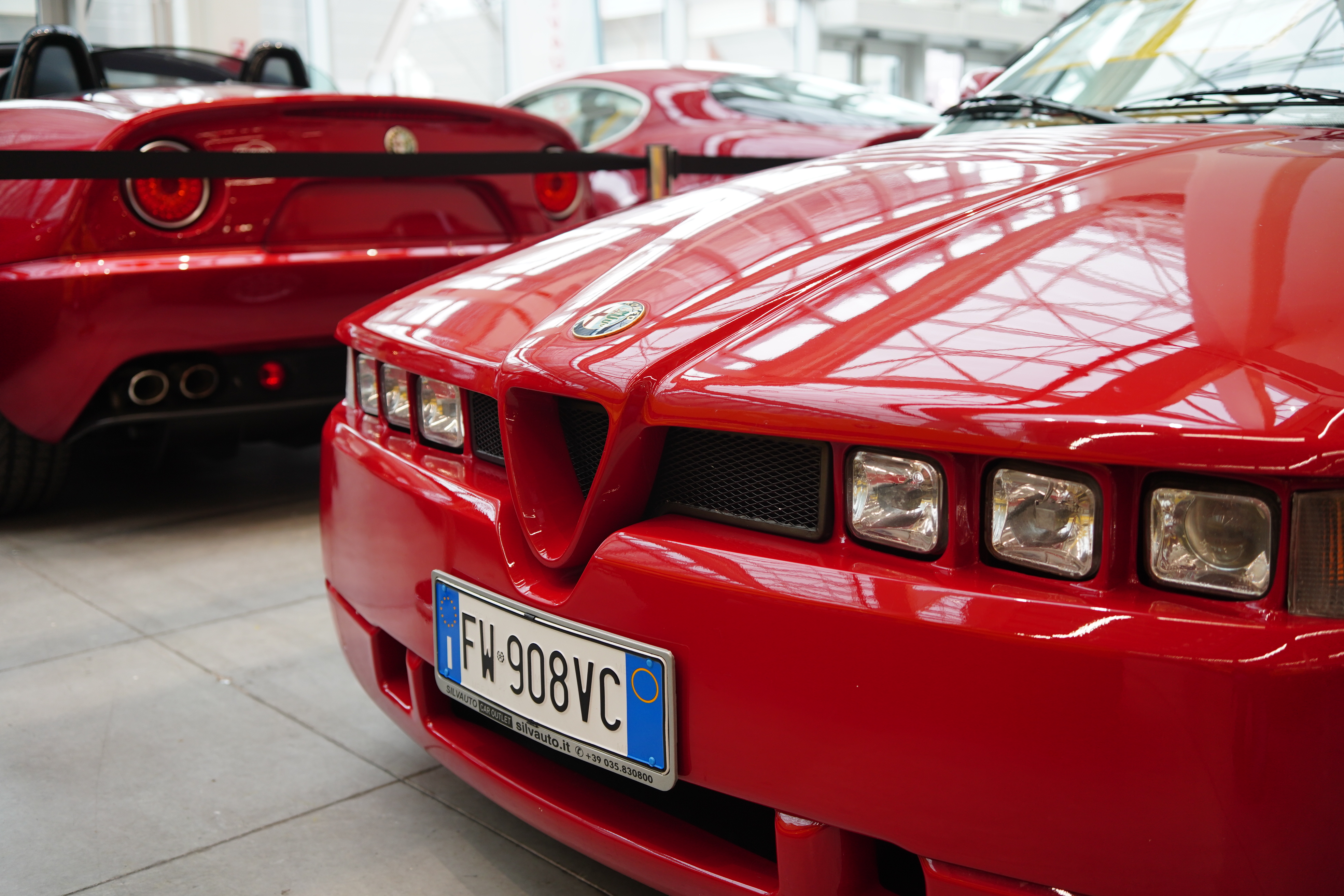
SZ in the front; 8C Spider in the rear.
A 1982 Alfetta GTV with a 2.0L in it, for €25,000.

A white 1968 Super for €27,800.

Another Super, looking sharp in grey.

I loved this Disco Volante, even though (or maybe because) it’s a replica.
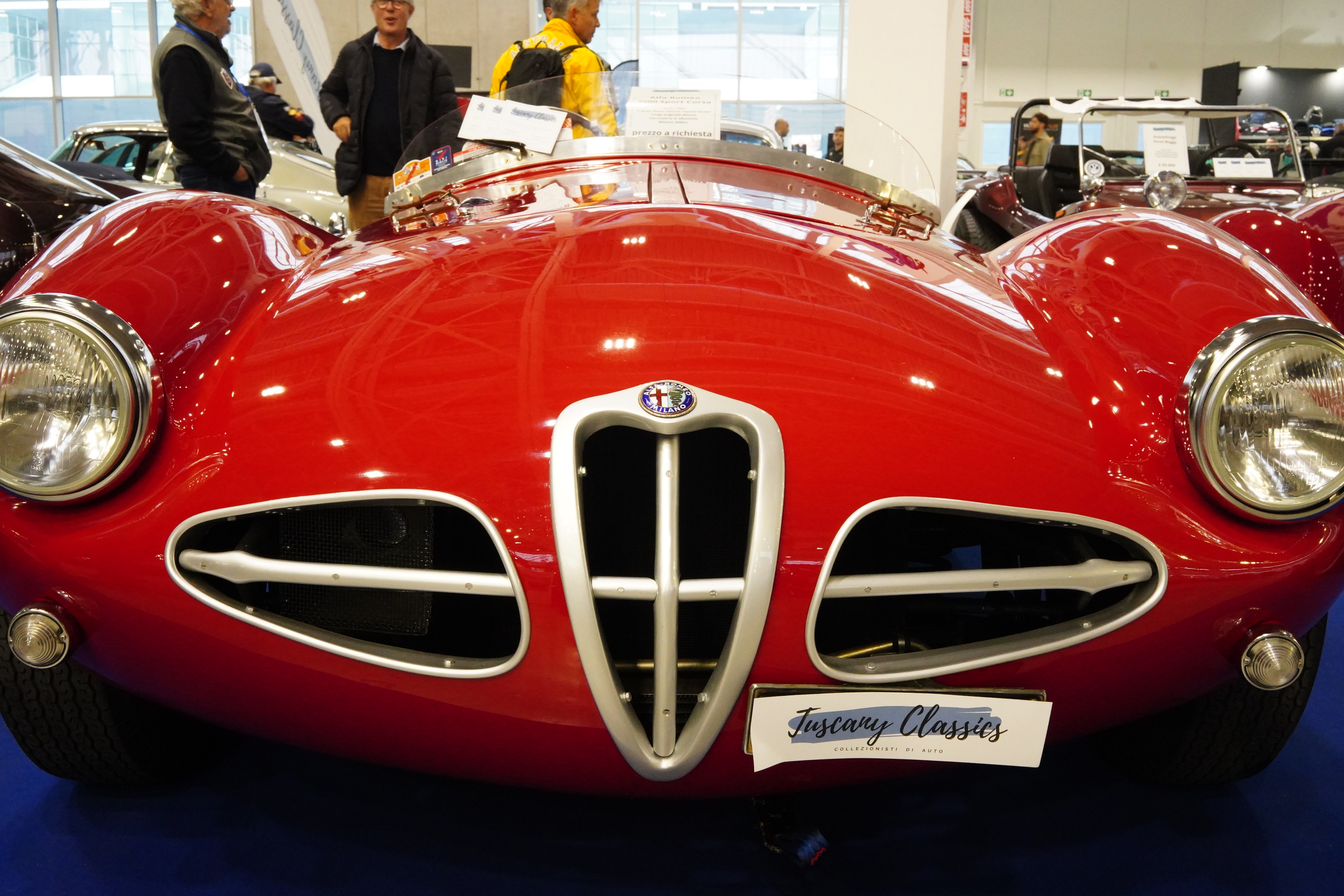
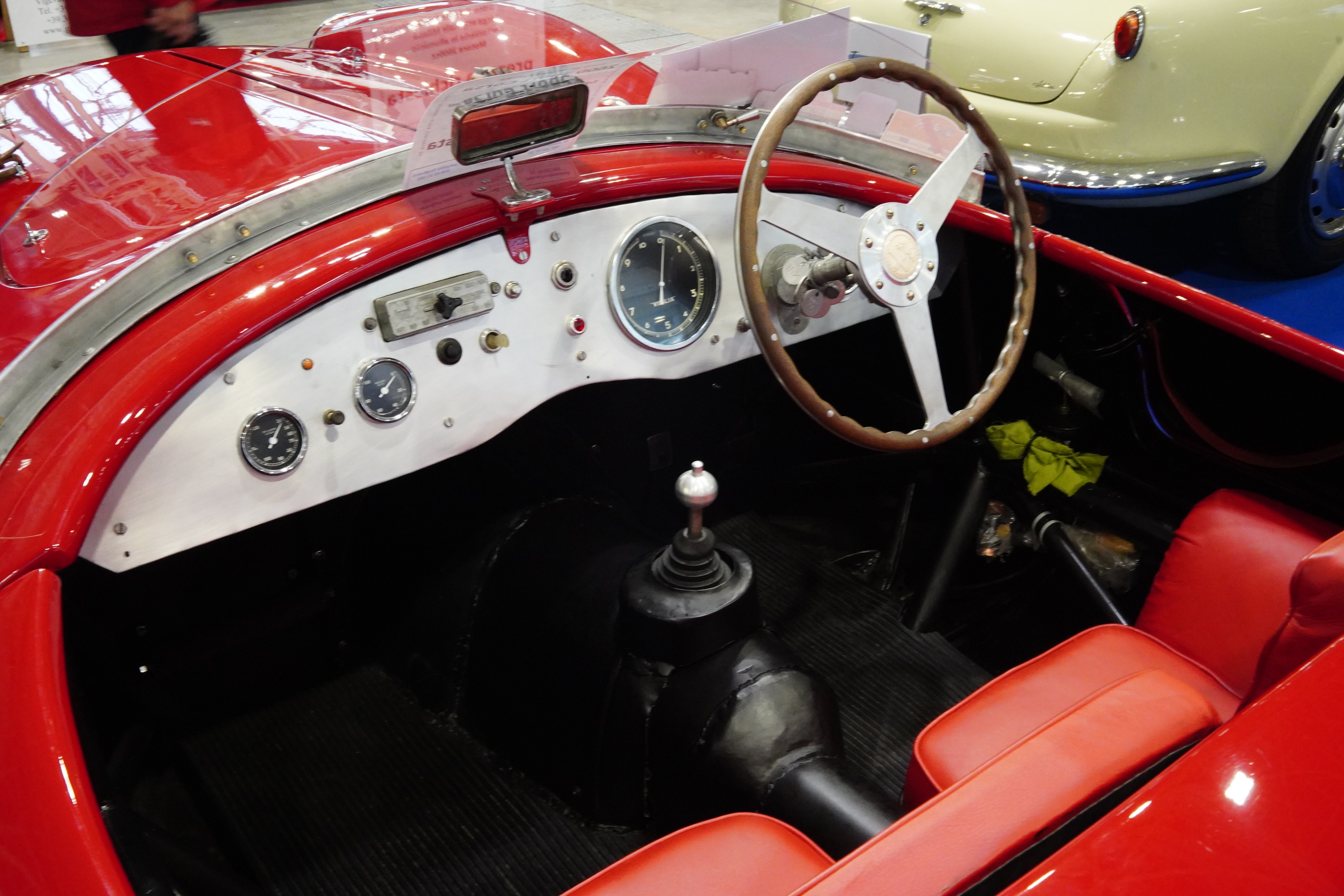
A rare (only 1,000 made?) GTC. Asking price of €120,000 makes me wonder what else I could get for that amount of money.

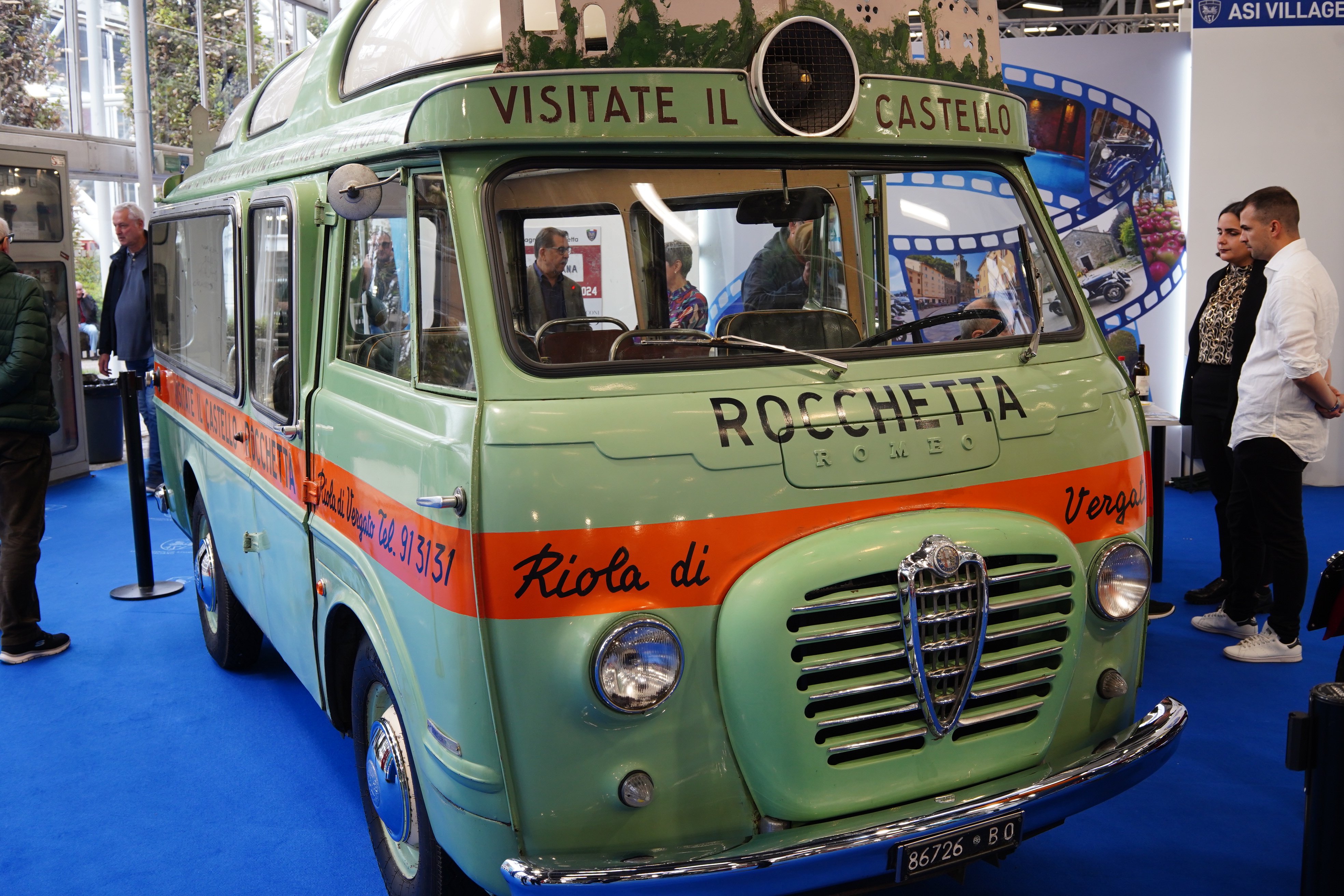
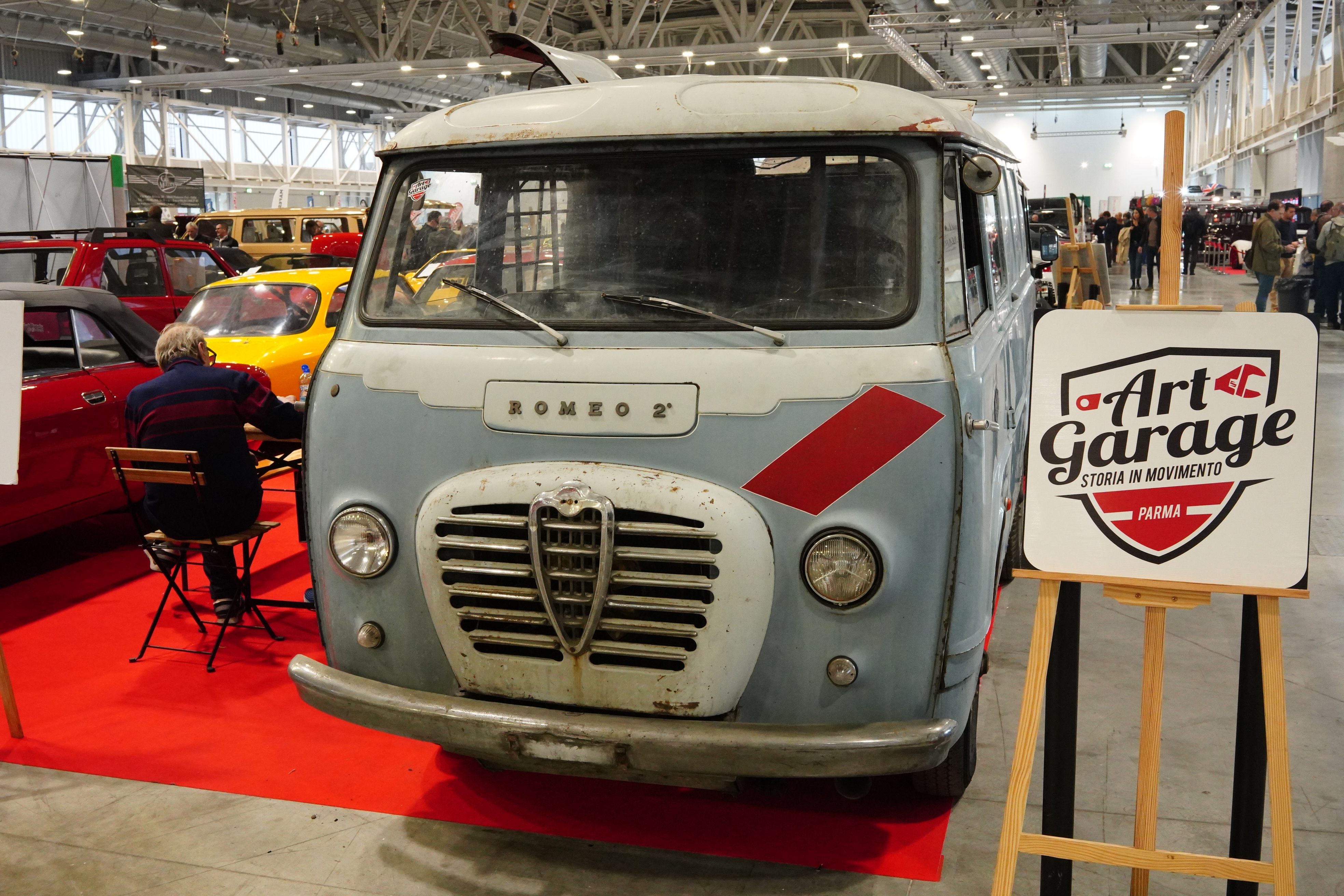
An unrestored Romeo truck.
 

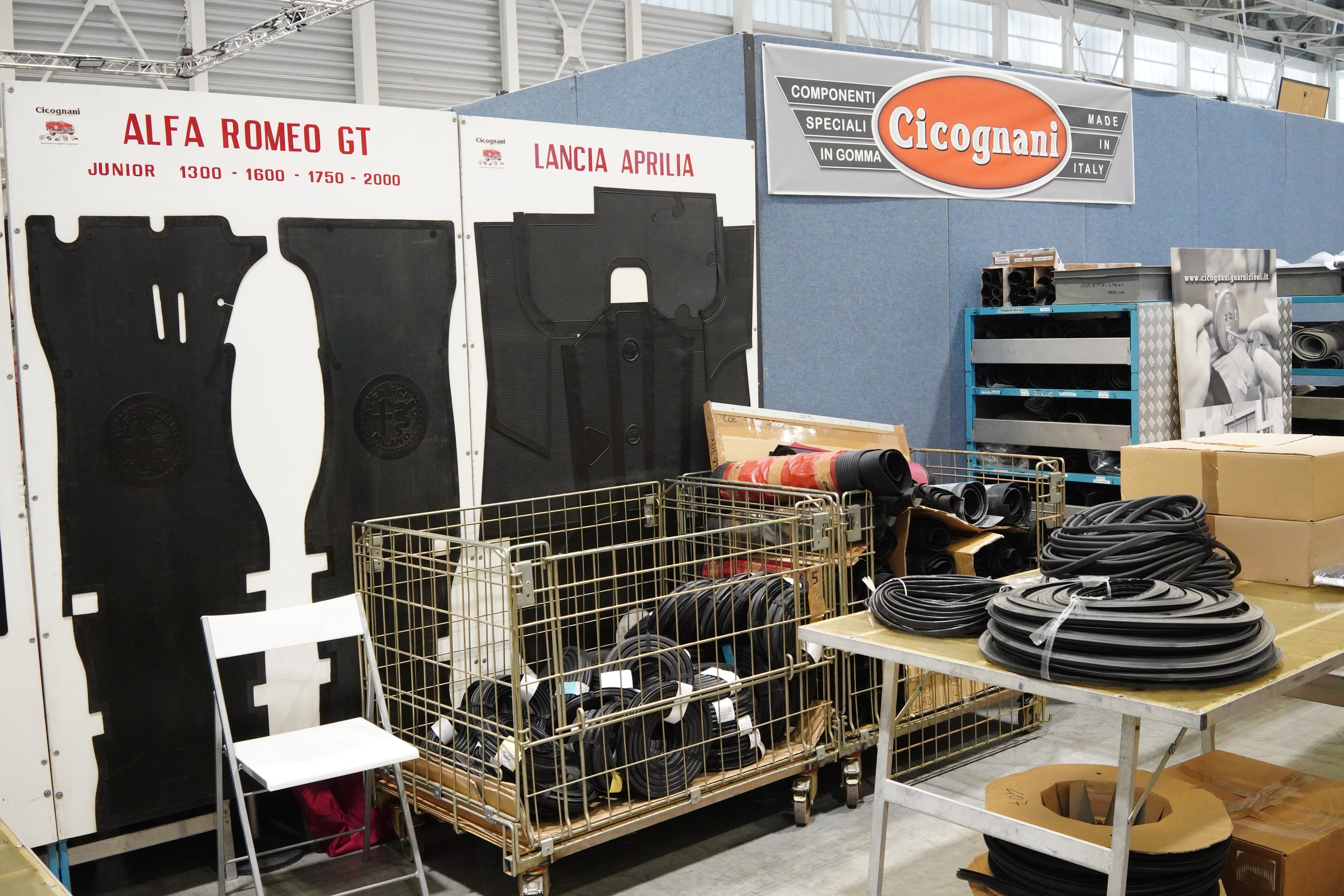
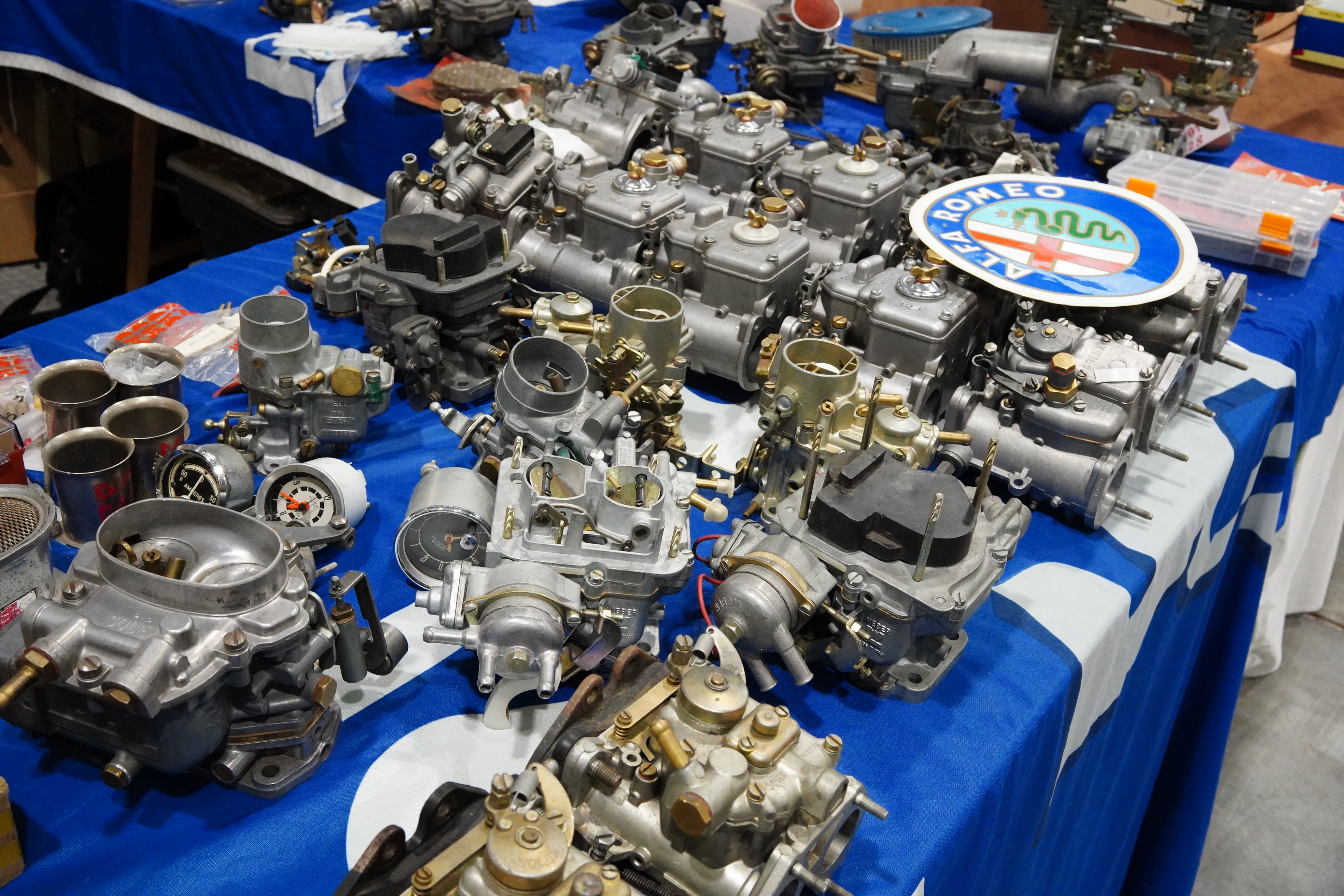
The Alfa parts vendors were out in full force. Cicognani is a well-known supplier for rubber, upholstery, and other soft goods parts.
Who said Italians don’t talk with their hands? I think he was saying “your offer is an insult!”
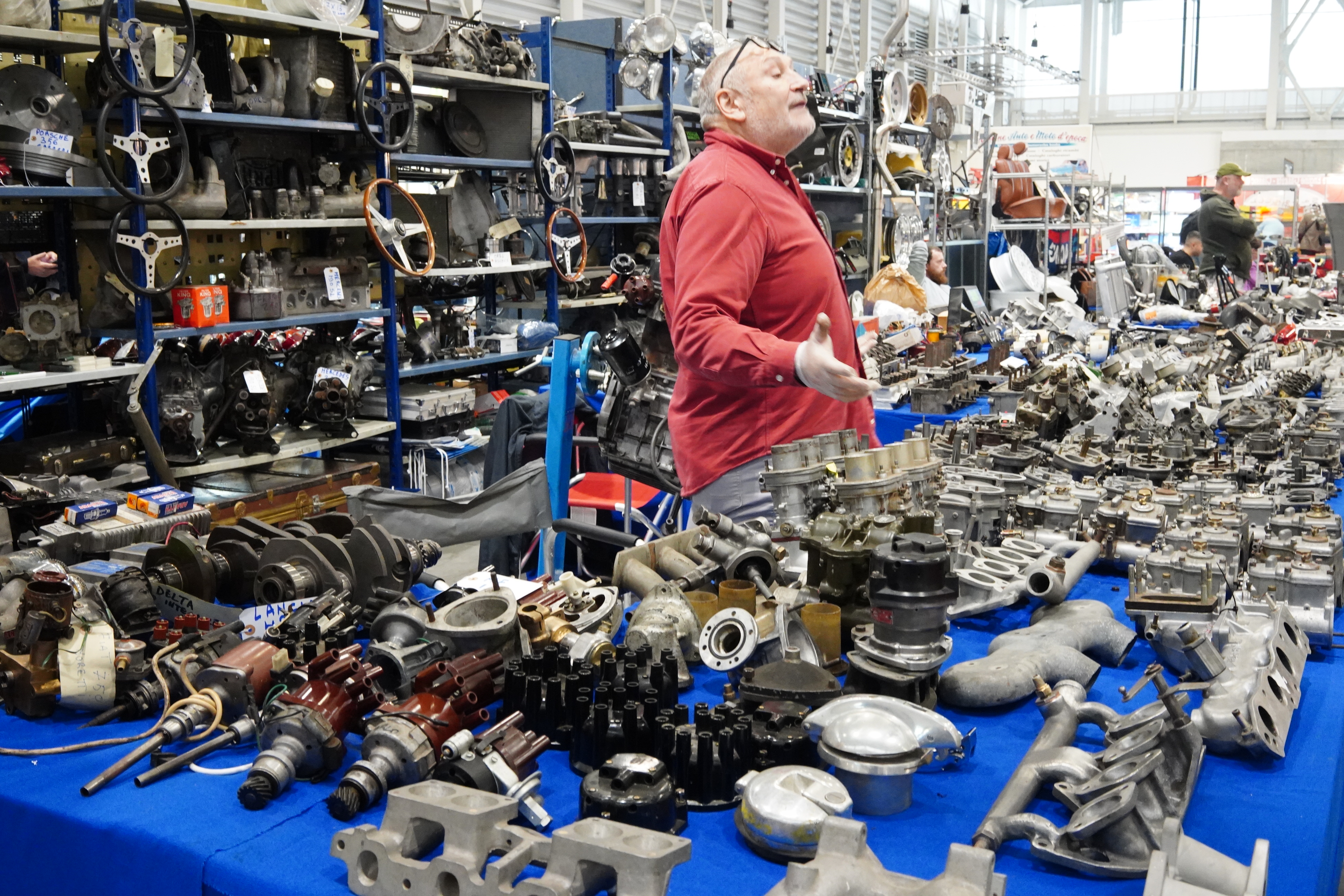
Looking for those hard-to-find Lodge plugs? Here they are.

Label on the starter on the right: Alfa Romeo Giulia, 8 teeth, pre-’68. Hey, that’s my car!

Carburetors? We have carburetors.
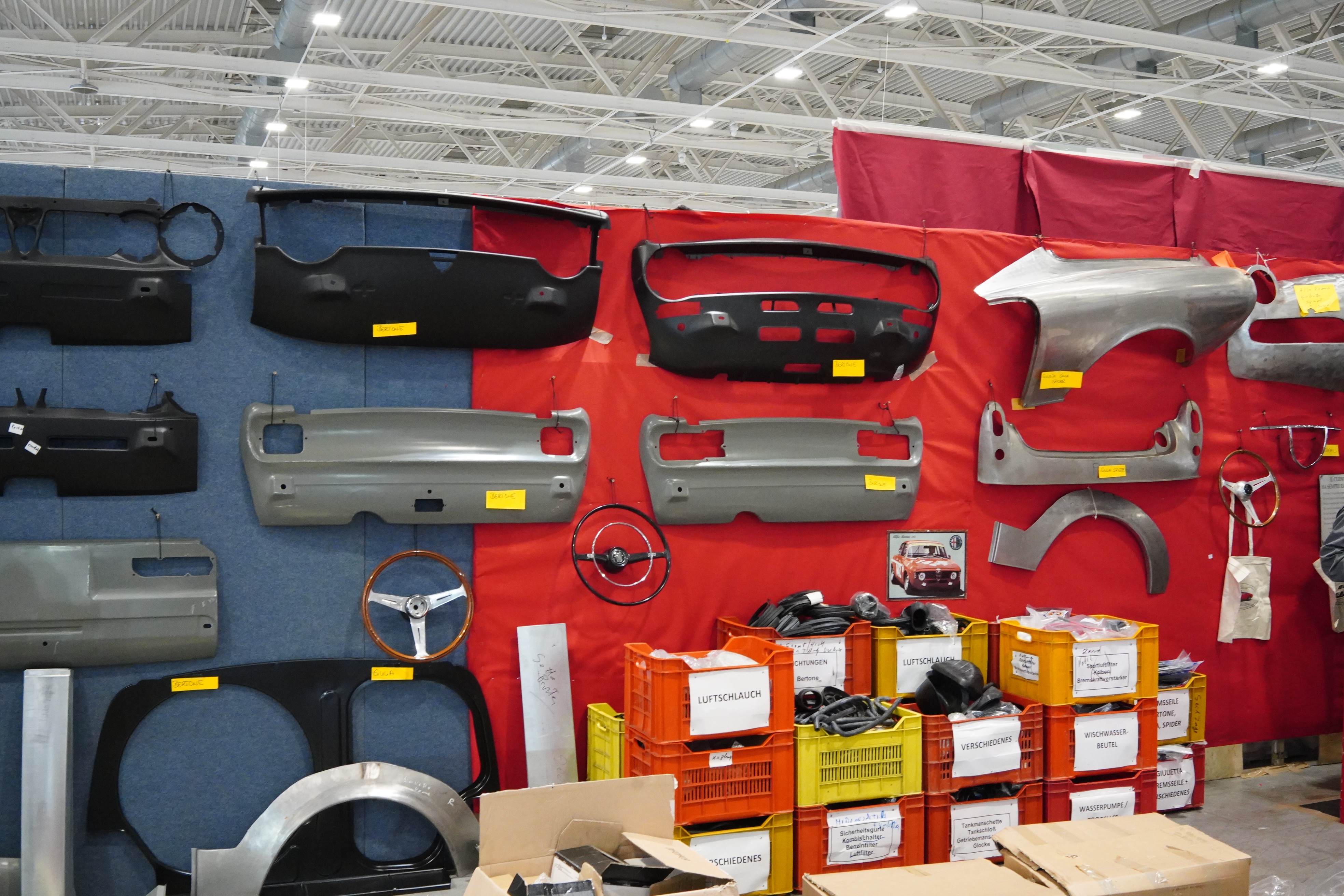
Wheels in many sizes, designs, and colors.

Sheetmetal too.
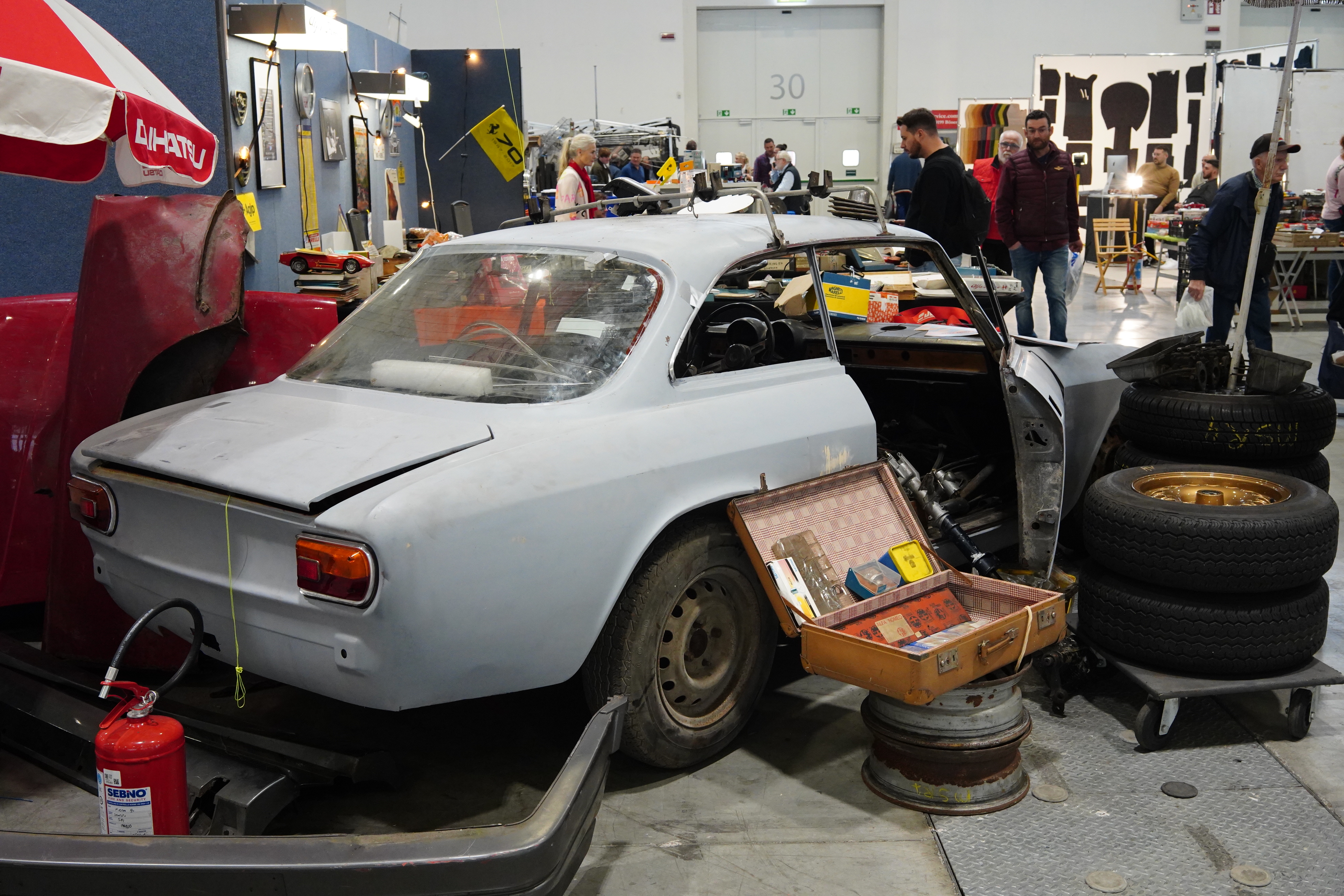
Project cars are still out there.
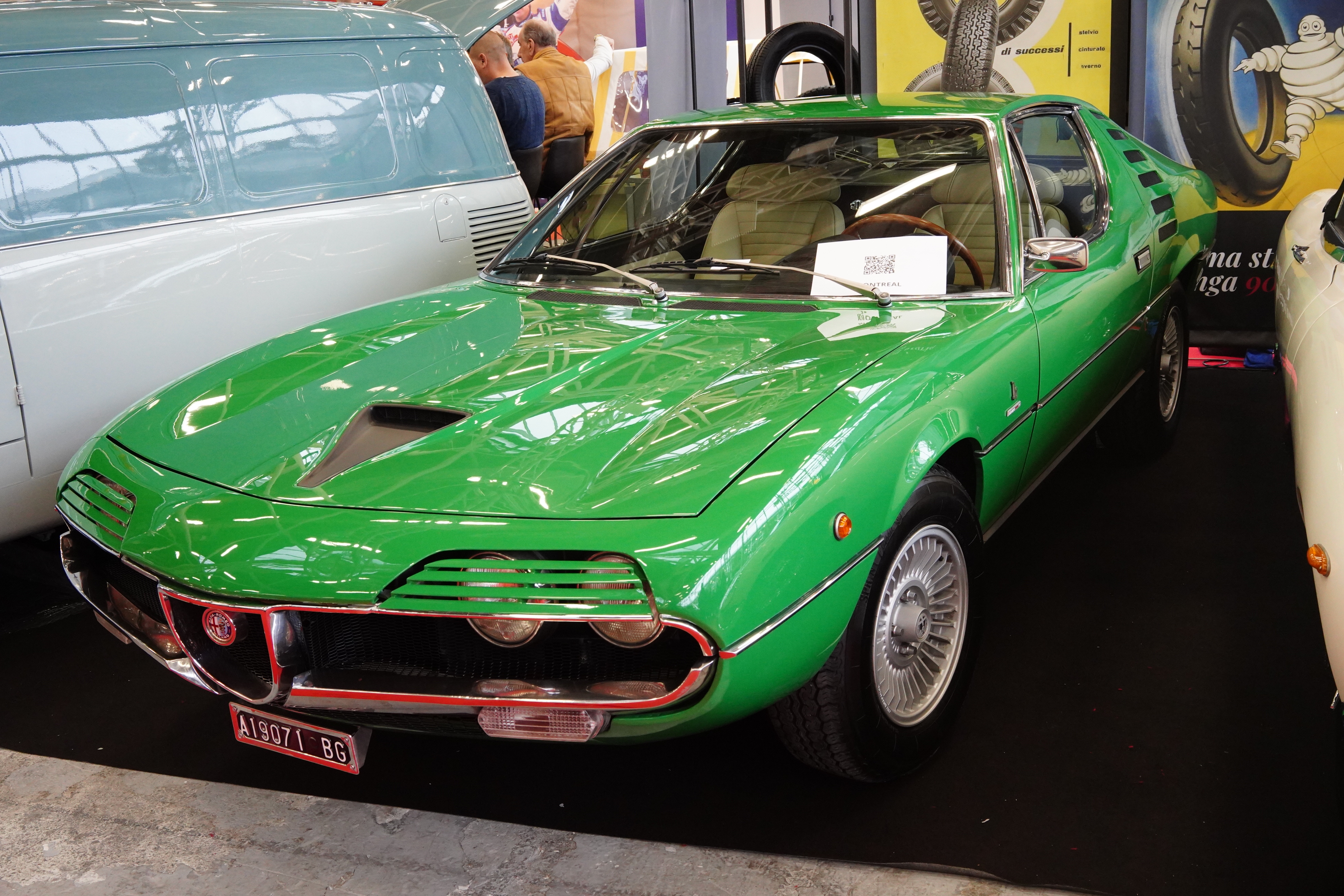
One of the few Montreals at the show.
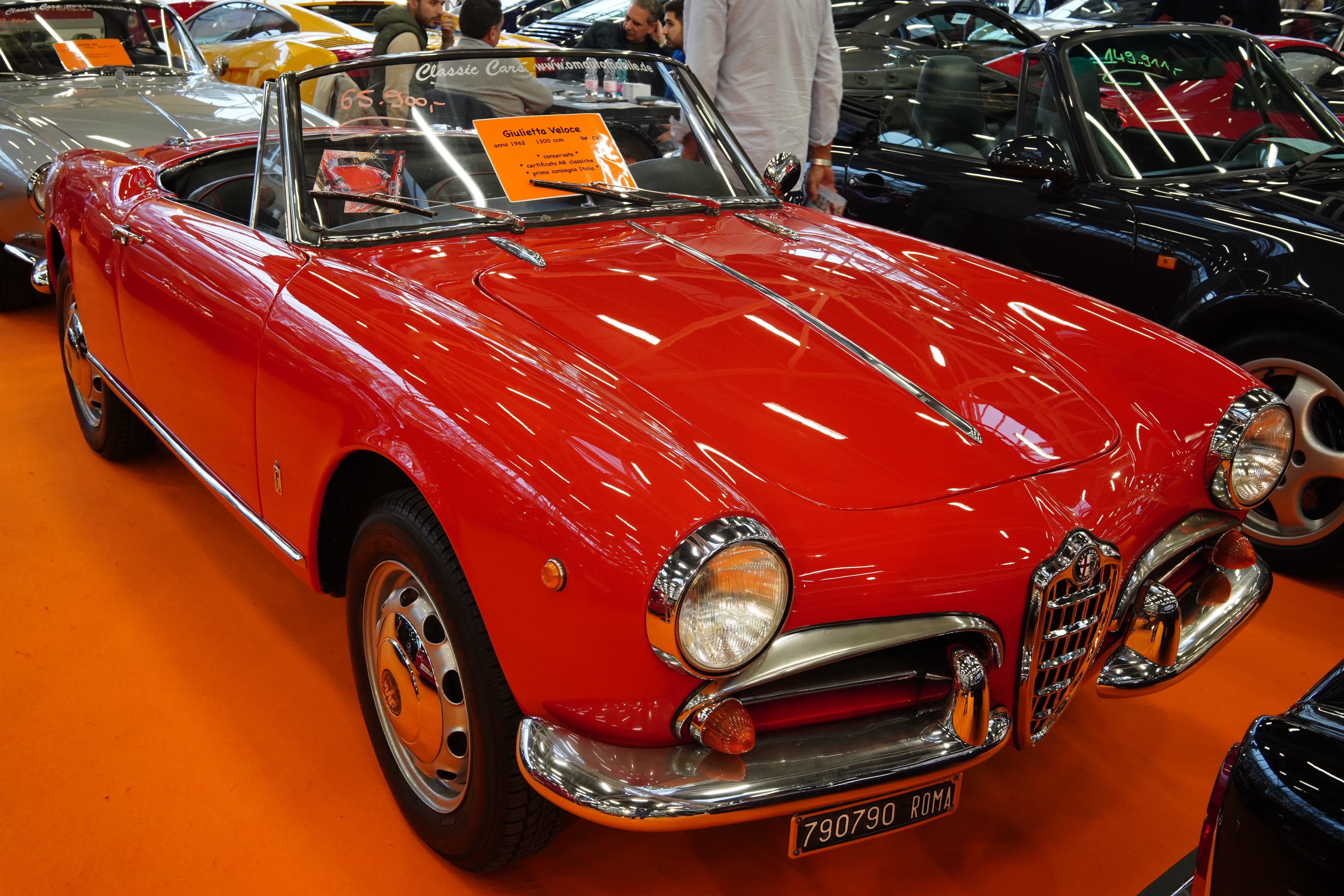
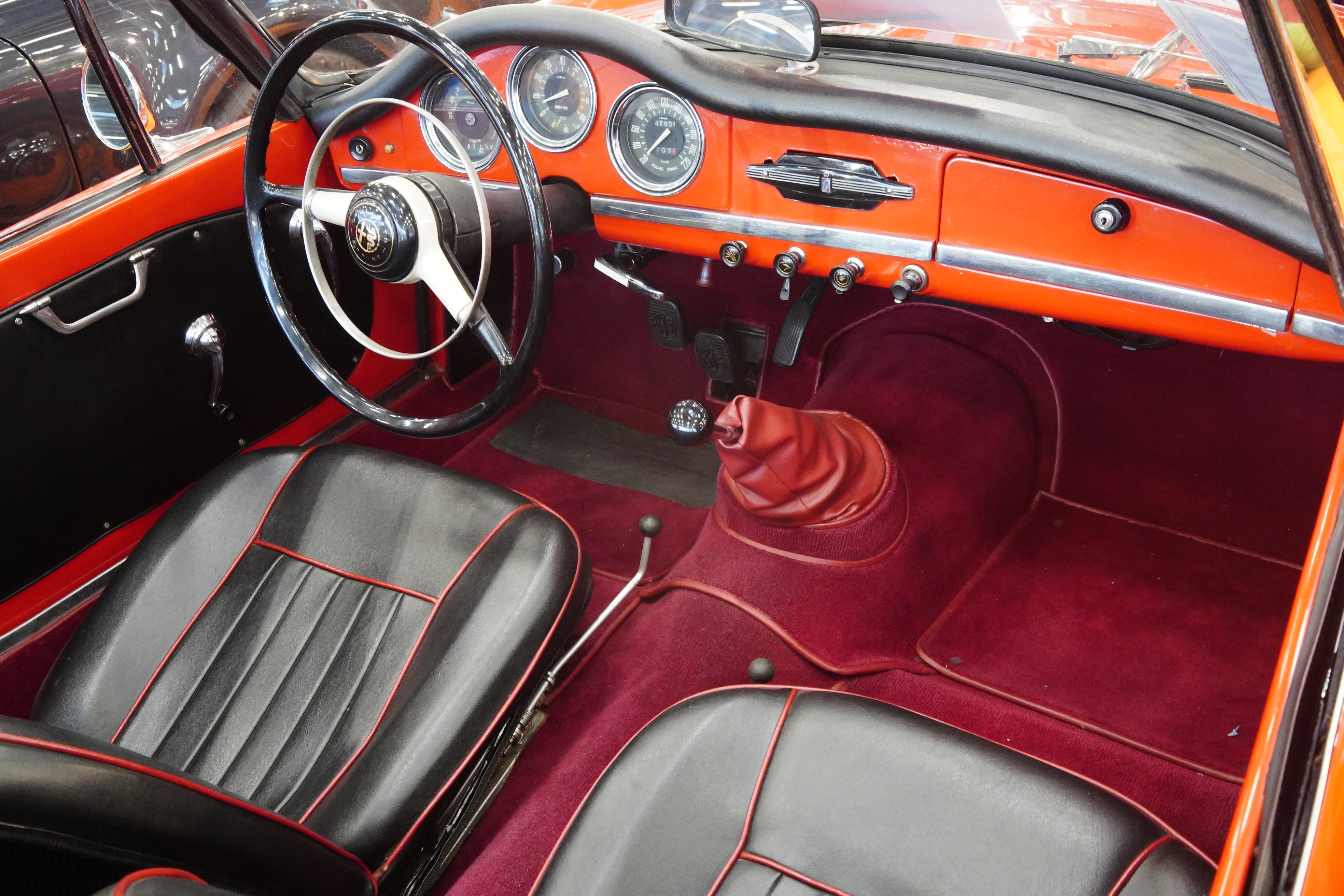
This red ’62 Giulietta Veloce had an asking price of €65,900.
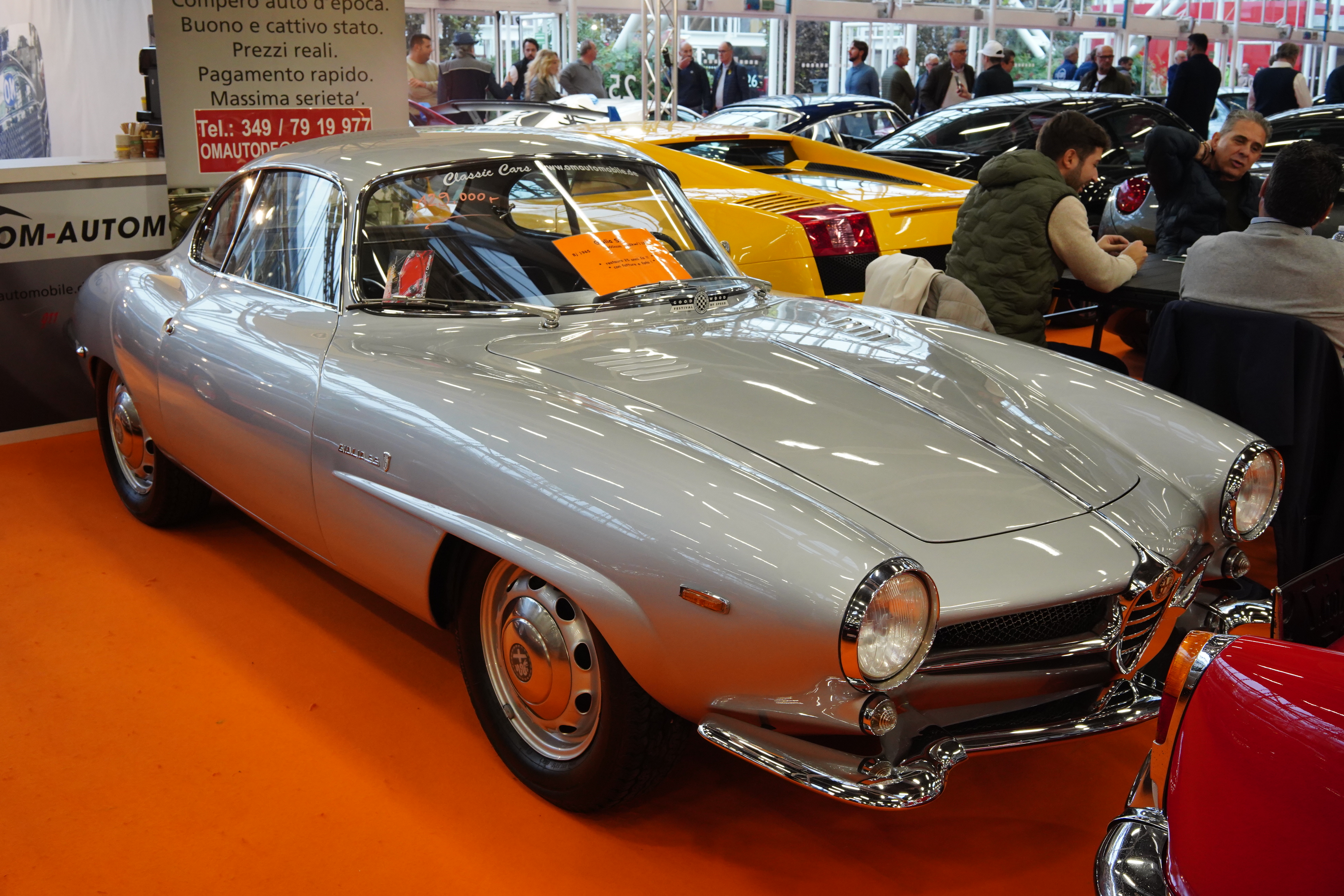
Or, this silver Giulia Sprint Speciale for €129,000.
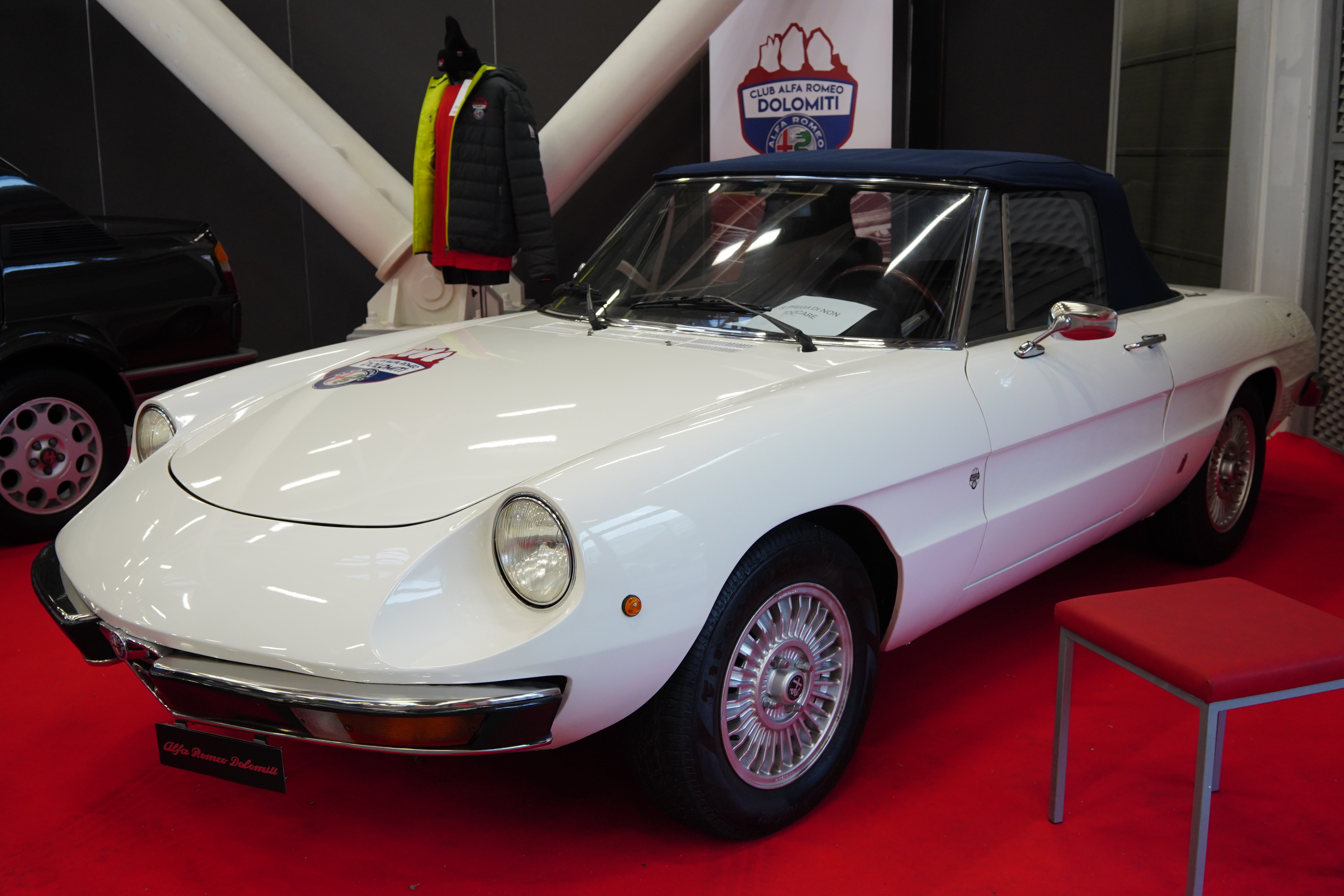
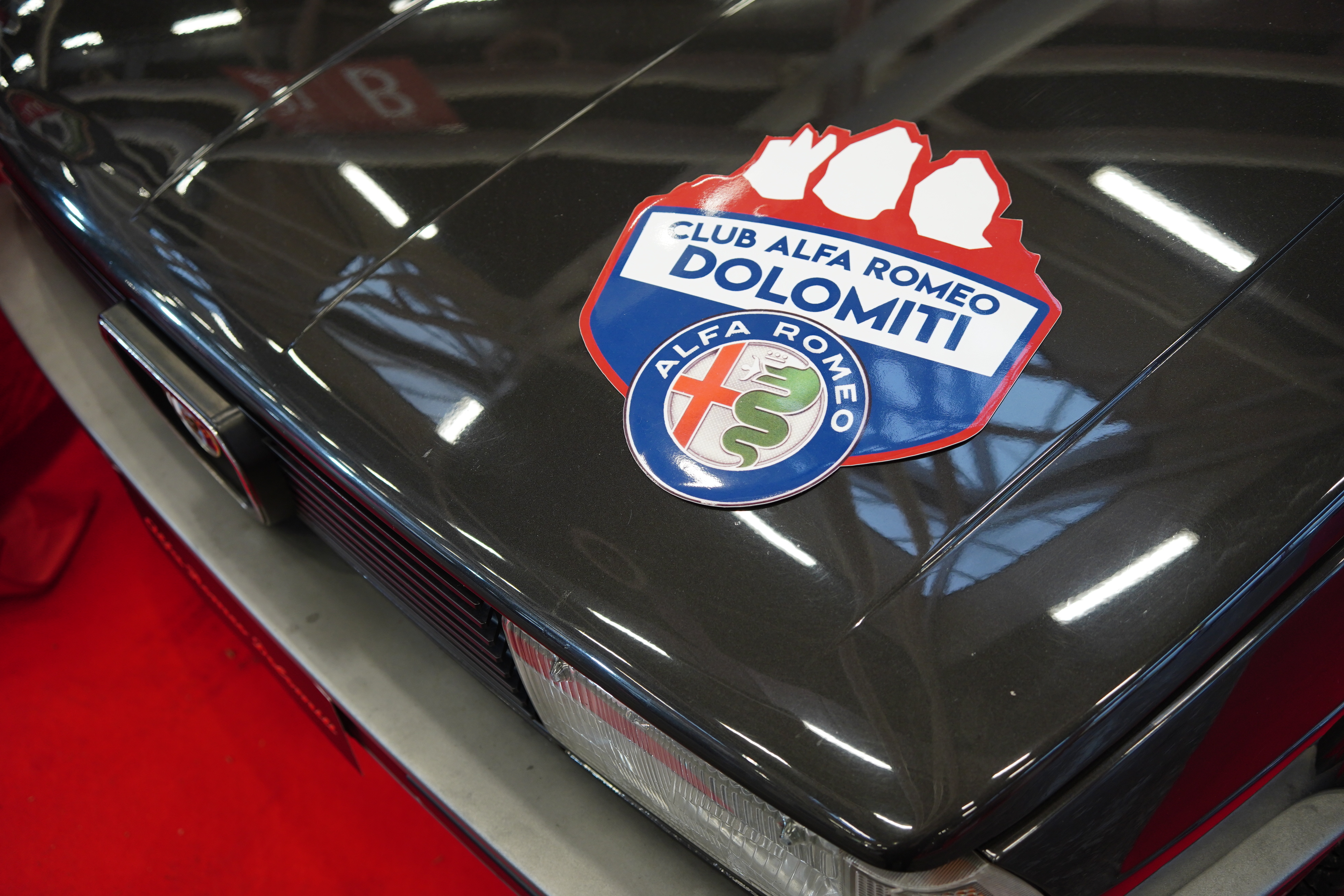
Club Alfa Romeo Dolomiti had a nice display.
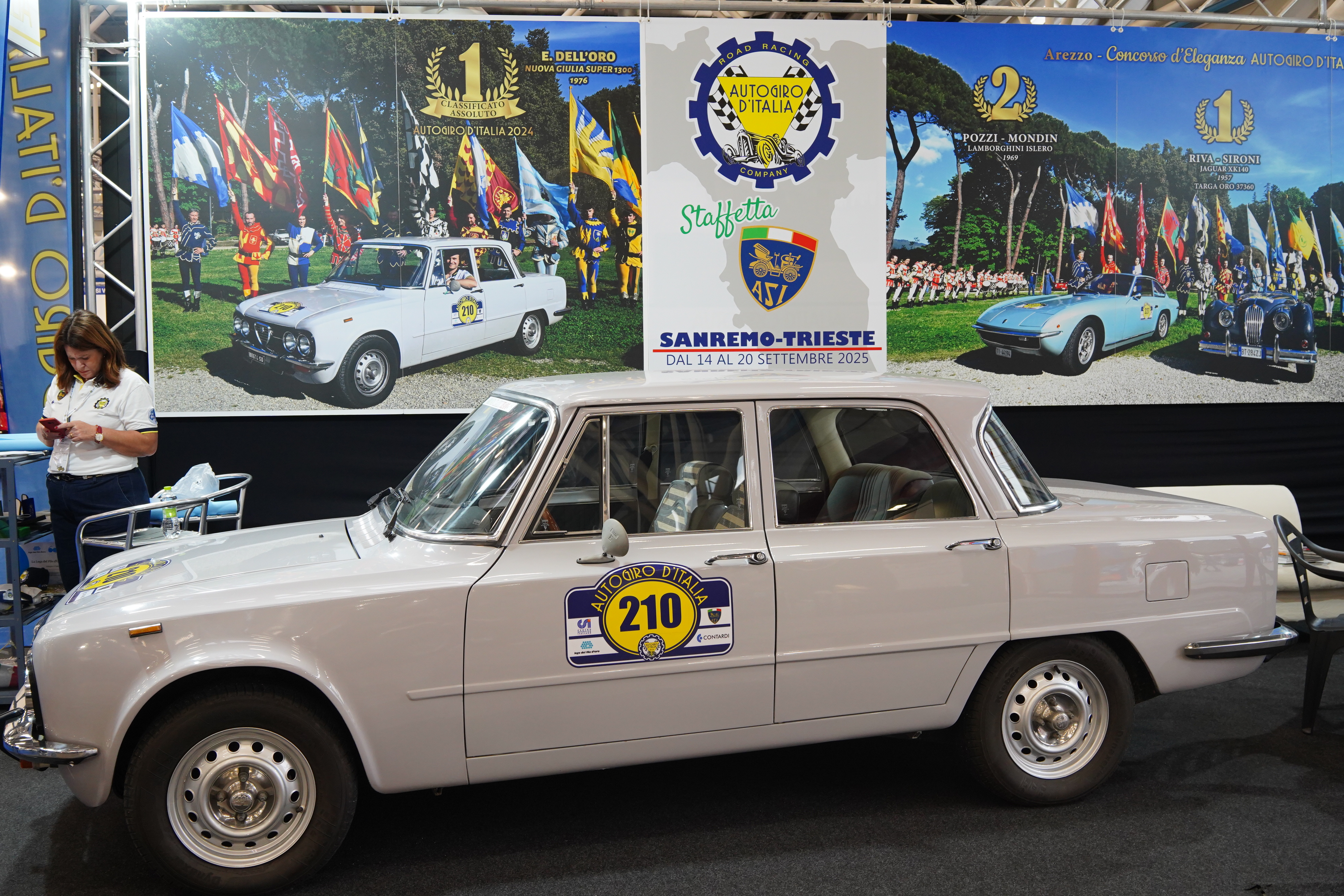
AutoGiro d’Italia was here to advertise a rally to be held in September of 2025.
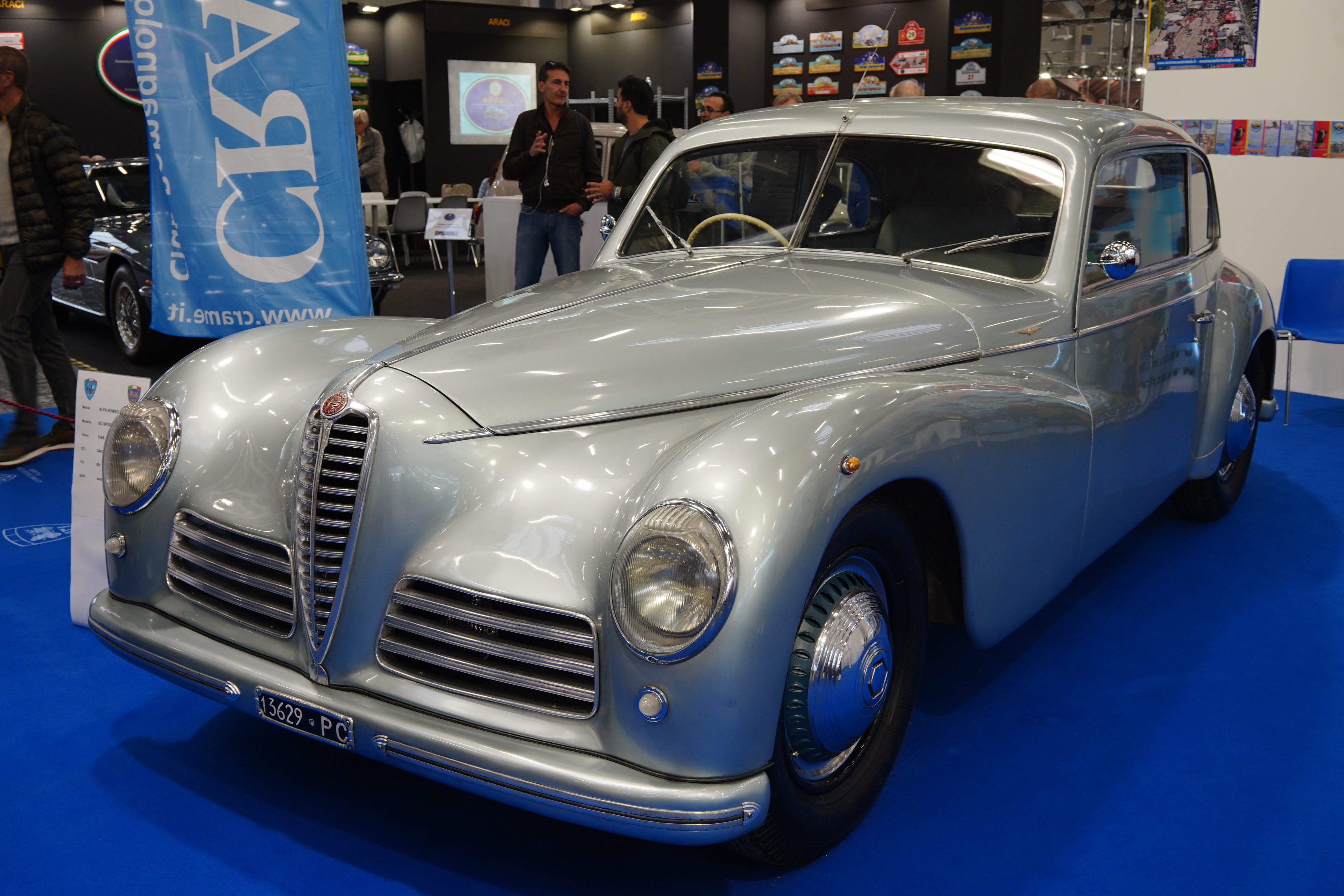
1948 Alfa Romeo 6C Sport.
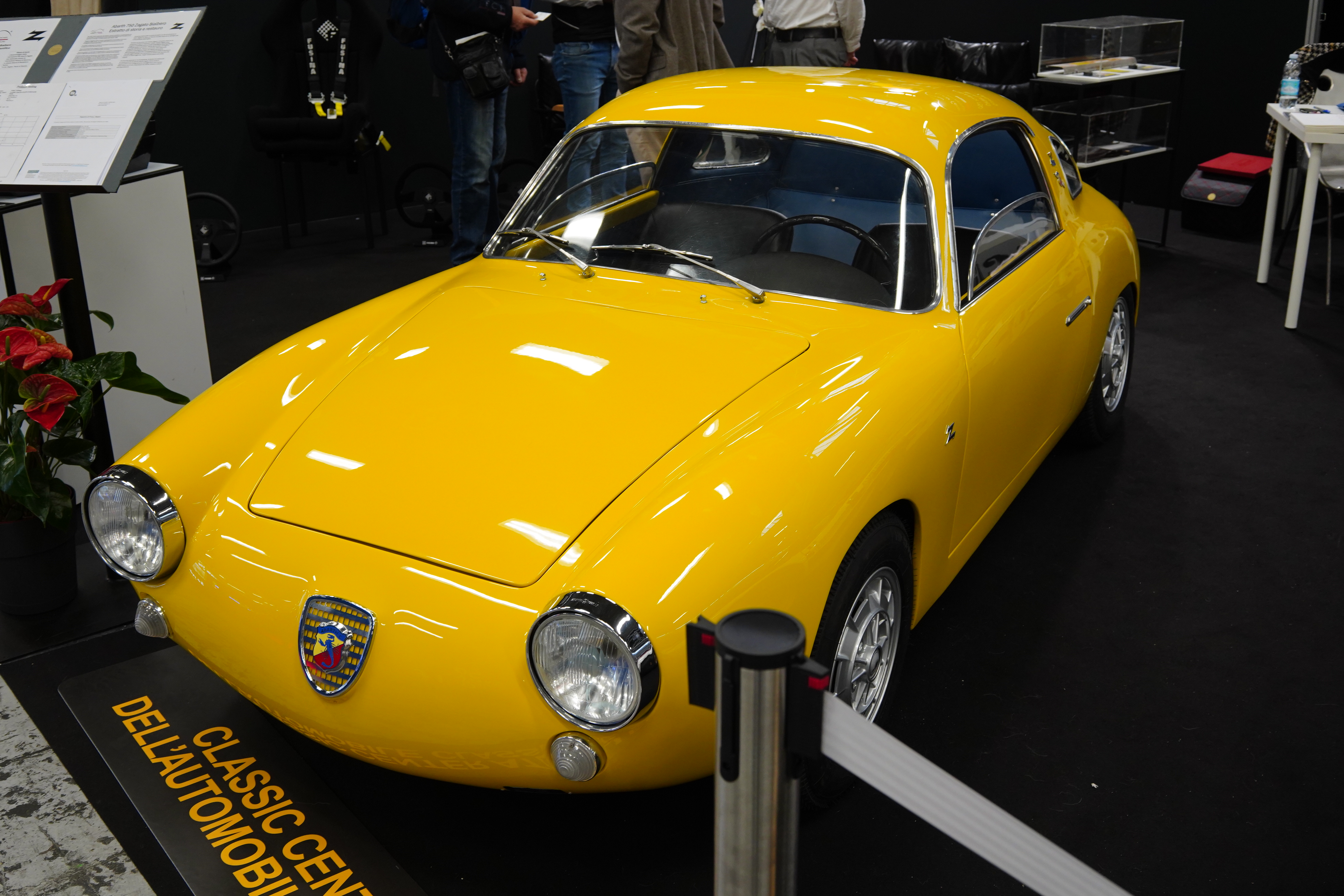
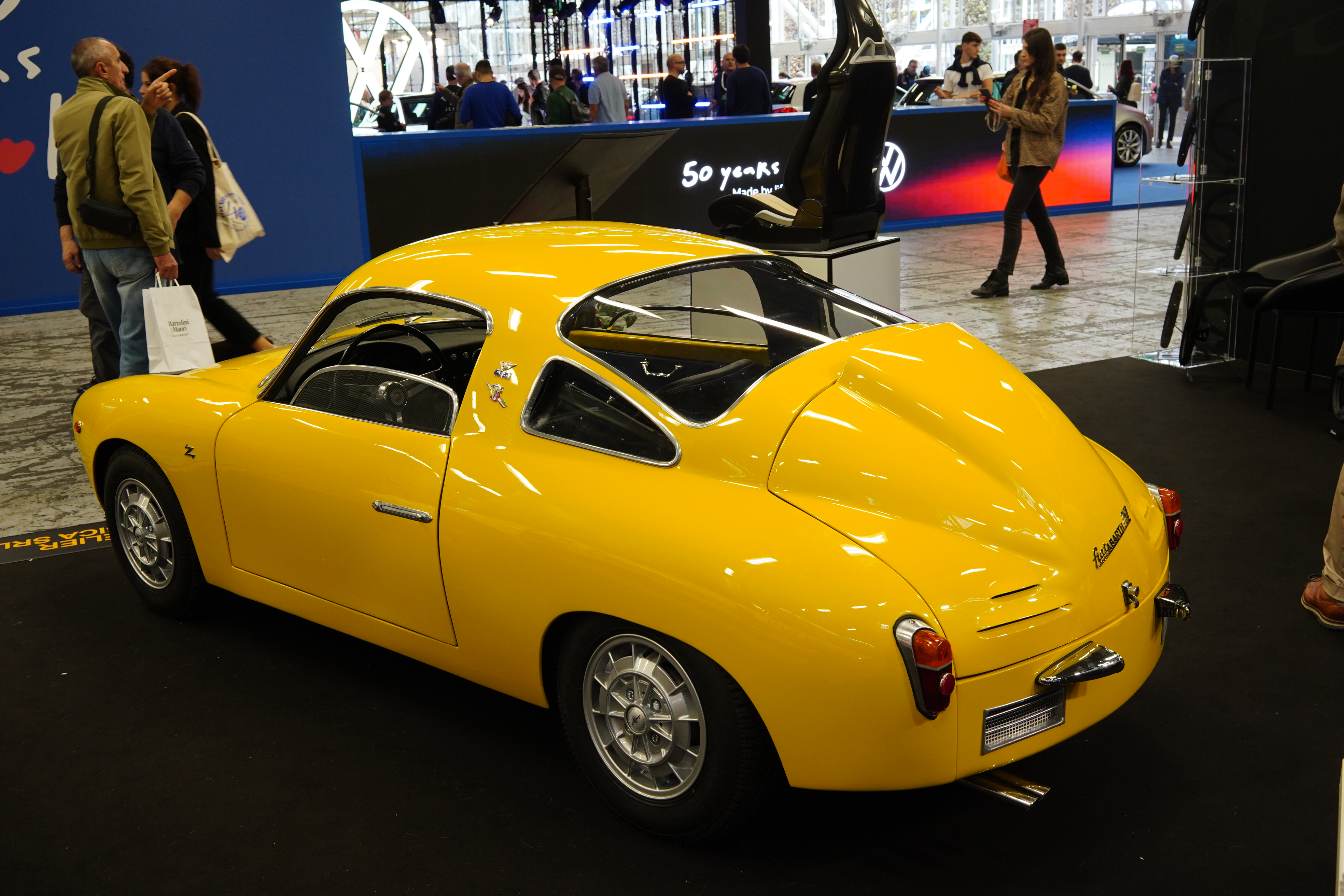
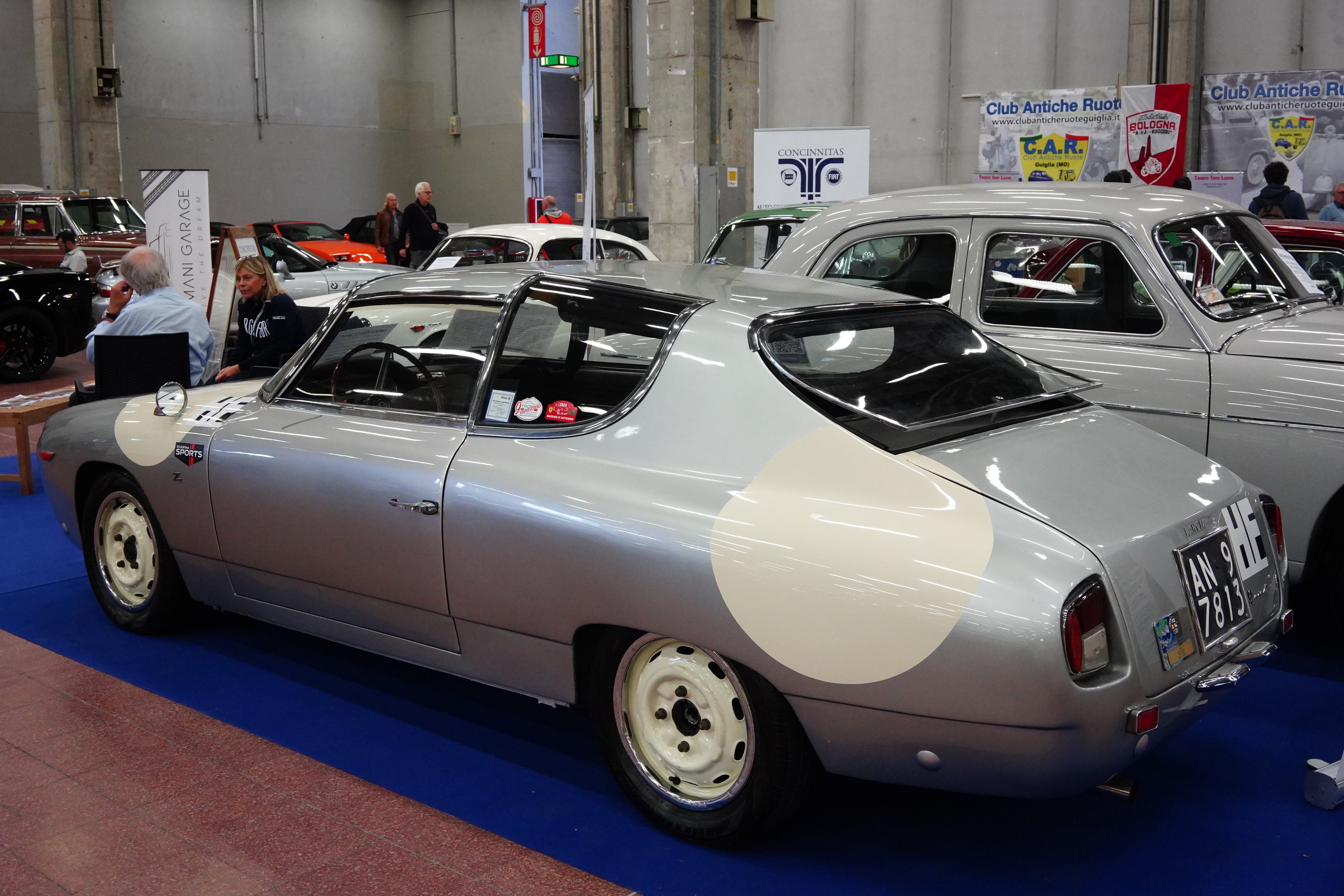
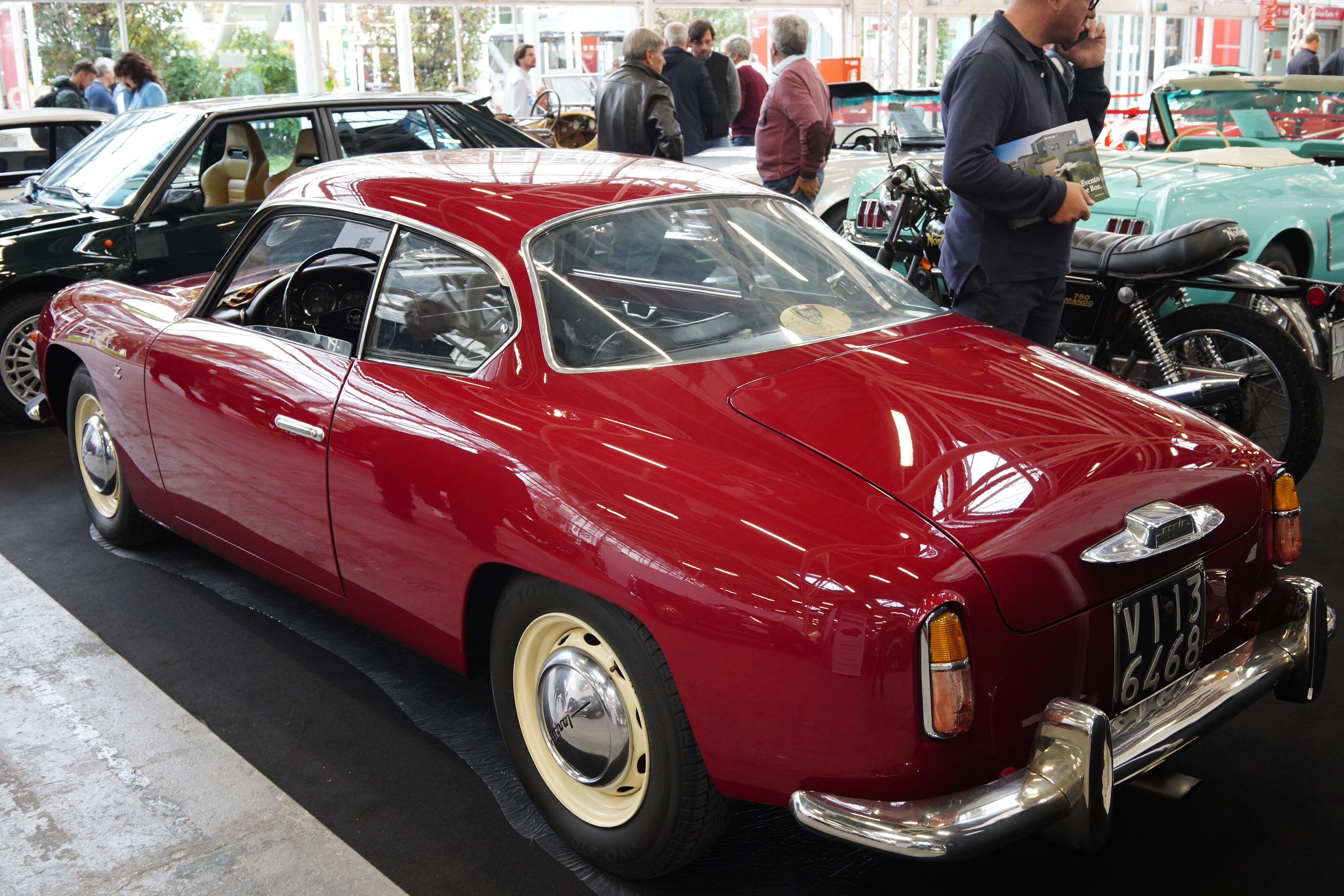
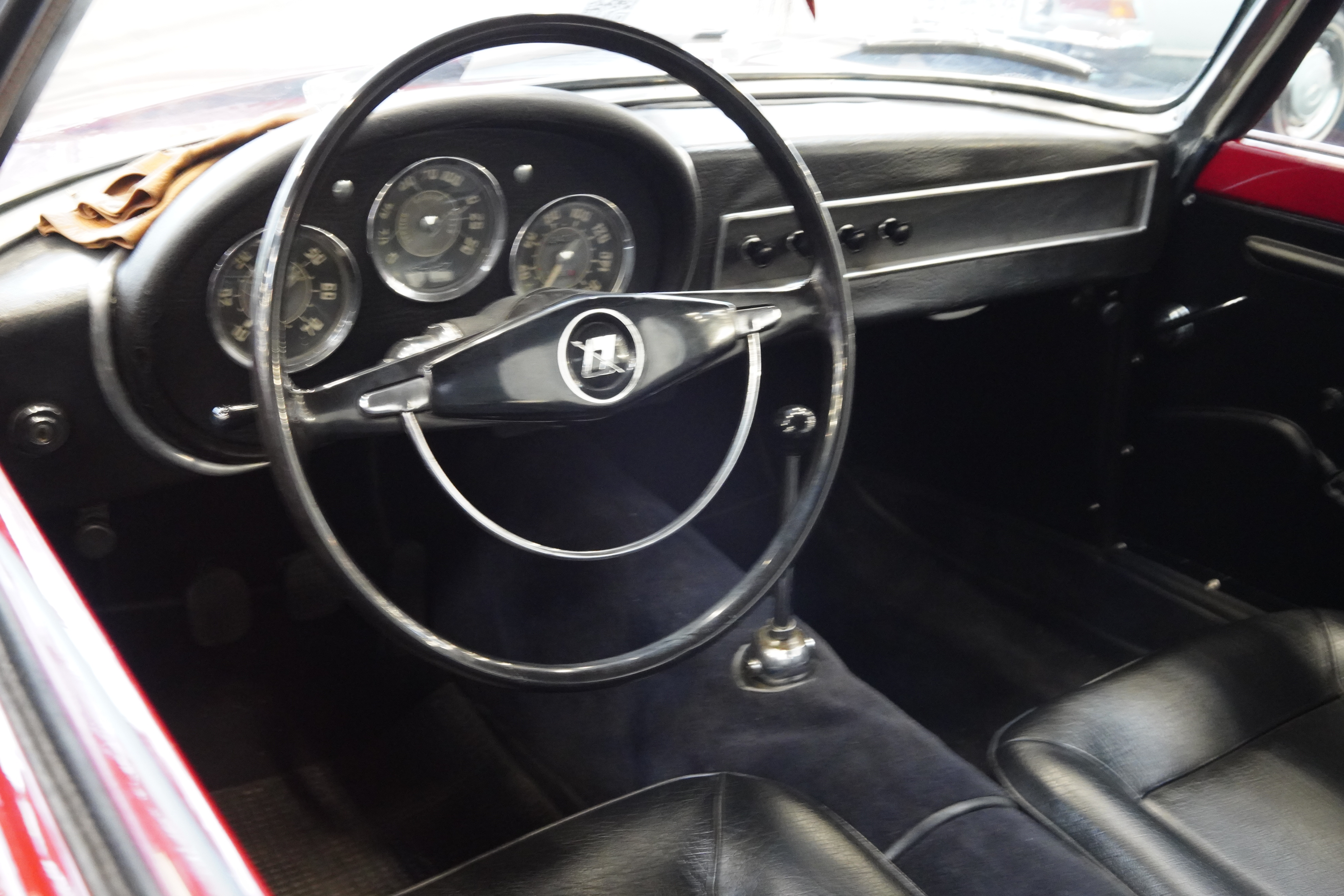
A personal favorite was this 1961 Giulietta Sprint Zagato.

Another Romeo truck, this one done up as a tour bus.

This ’73 Berlina looked very clean for €20,500.

A vendor who specializes in Alfas brought this impressive lineup.
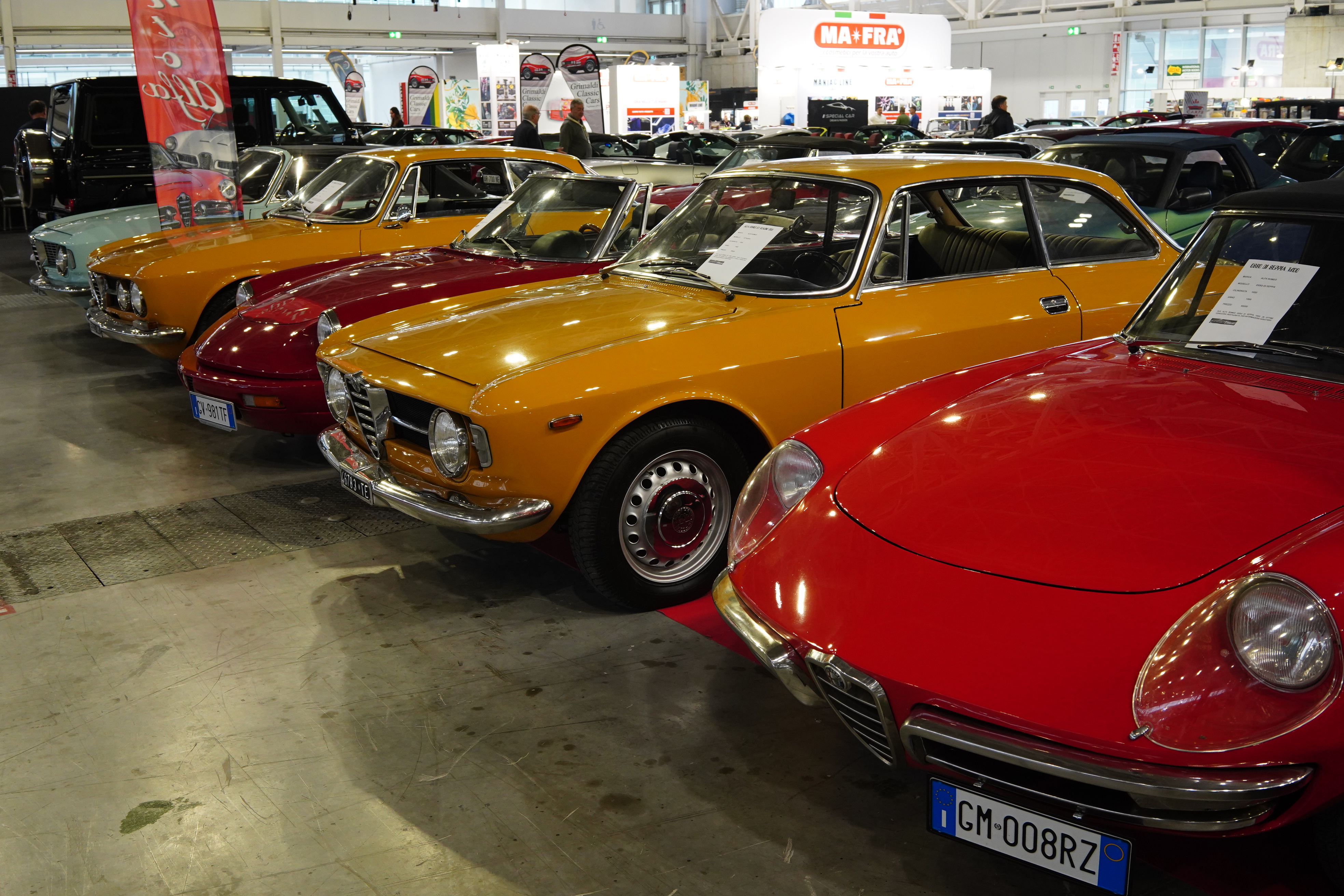
Older and newer Alfas side by side, in red of course.

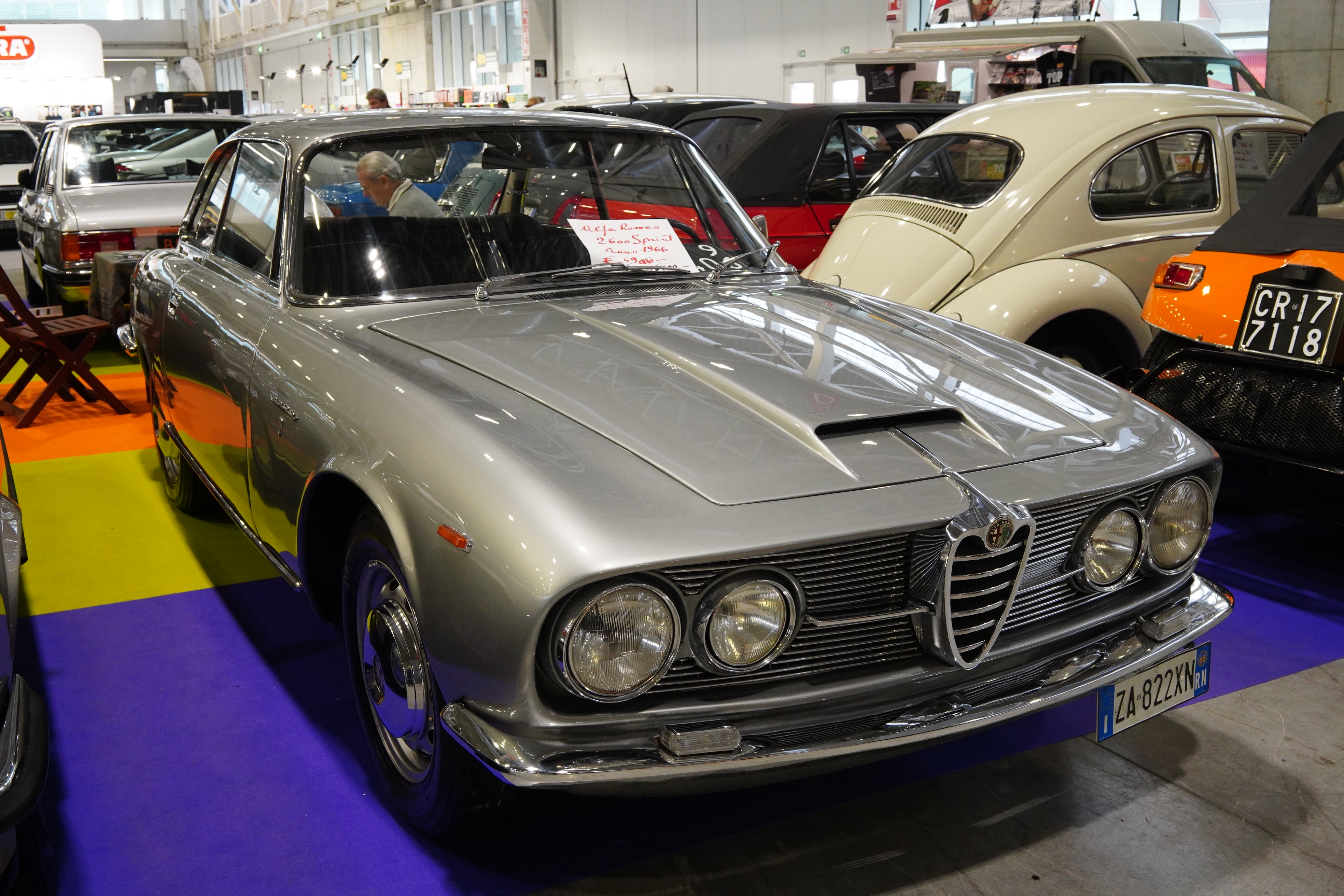
By Day 3, the asking price on this ’66 2600 Sprint was reduced from €49,000 to €46,000.
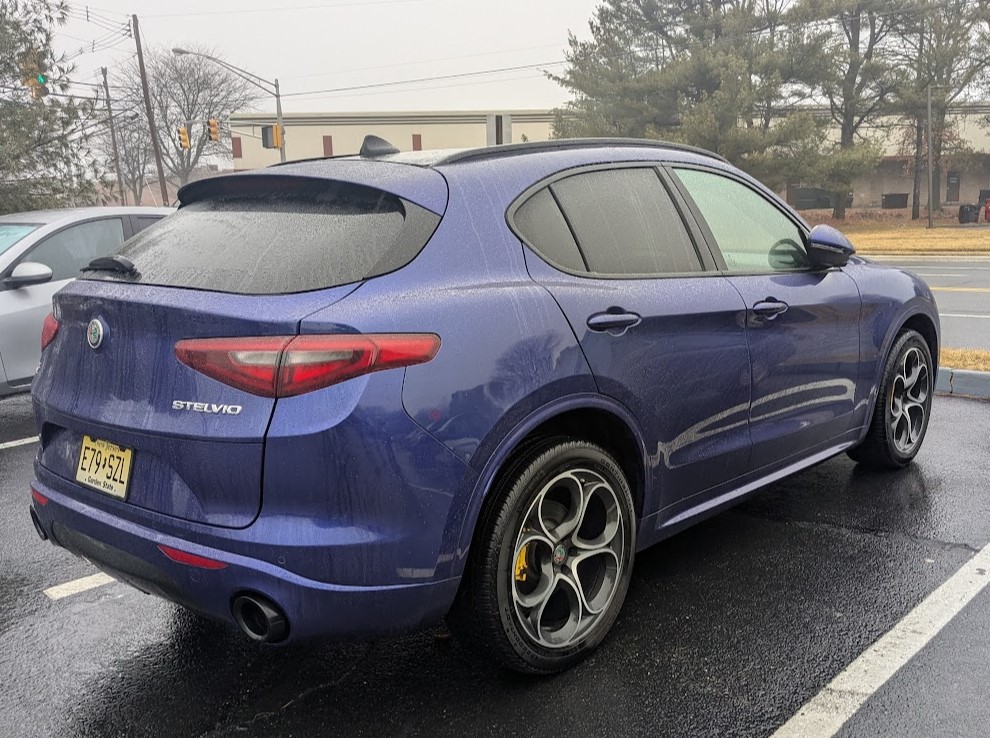
A trio of Alfa Type 916 2-doors.

This SS was nicely staged outside in front of a filling station display.


The next and final post from this show: the rest of the cars.


Entire blog post content copyright © 2024 Richard A. Reina. Text and photos may not be copied or reproduced without express written permission.

Auto e Moto d’Epoca Summary Part 2

My Day 2 stroll through the BolognaFiere began by tackling the huge hall filled with vendors who were selling parts, accessories, books, and clothing. My personal goal was to find sales or marketing literature specifically for my ’67 GT 1300 Junior, and while I did find a maintenance manual (I passed at the asking price of €125), and while there were sale brochures for newer Alfas, I struck out on my search. So I turned my attention to the numerous parts suppliers, most of whom I had not heard of. I was pleasantly surprised to find that they sold repair parts of interest to me, and I collected their contact info for future reference.

Although I have close to zero interest in motorcycles, I did wander through the single motorcycle hall just to be able to say that I saw it. I concluded the day’s tour by taking in the sixth of the six buildings with cars for sale. Like Thursday, Friday was 6 hours on my feet, so I headed back to the hotel for the day.

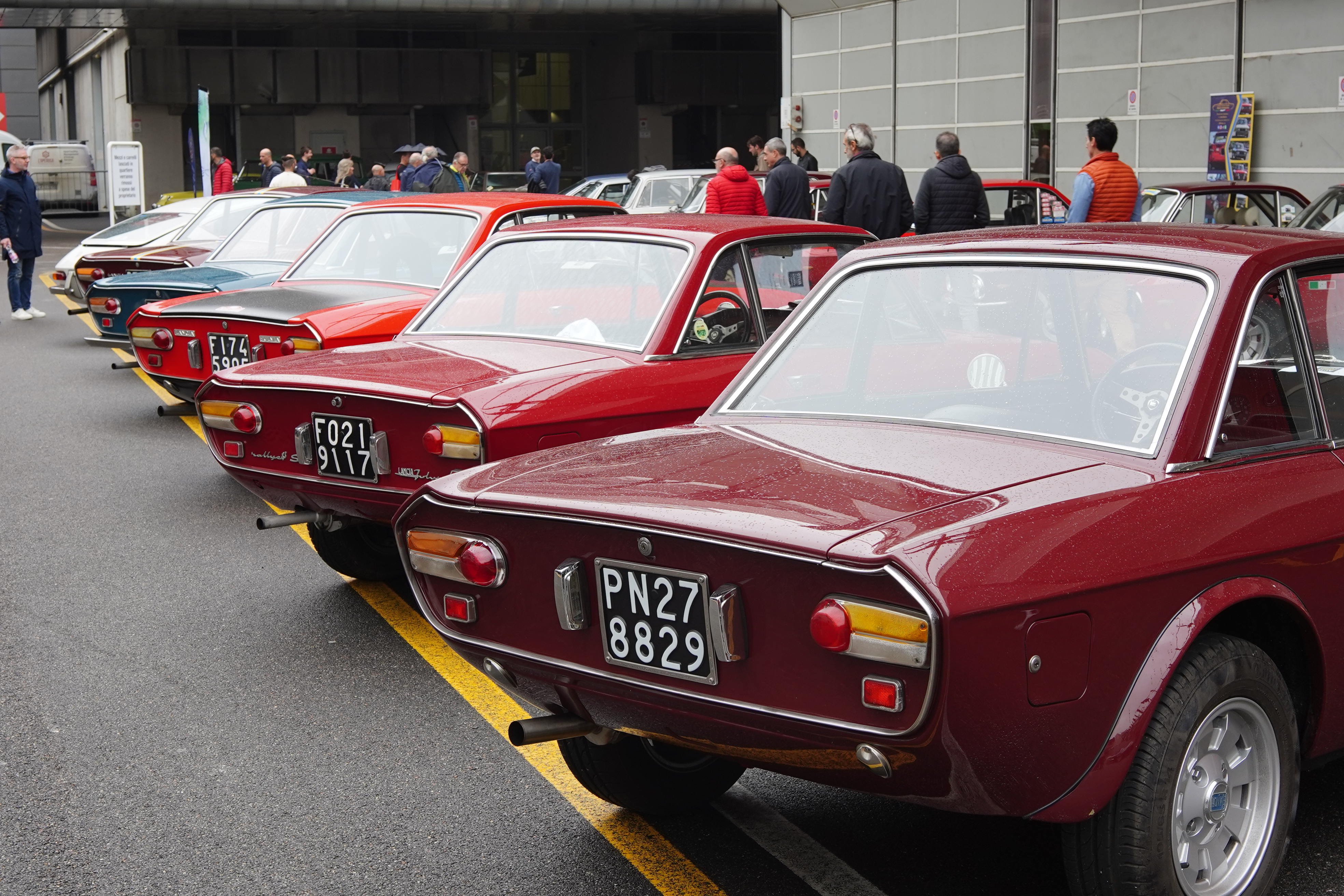
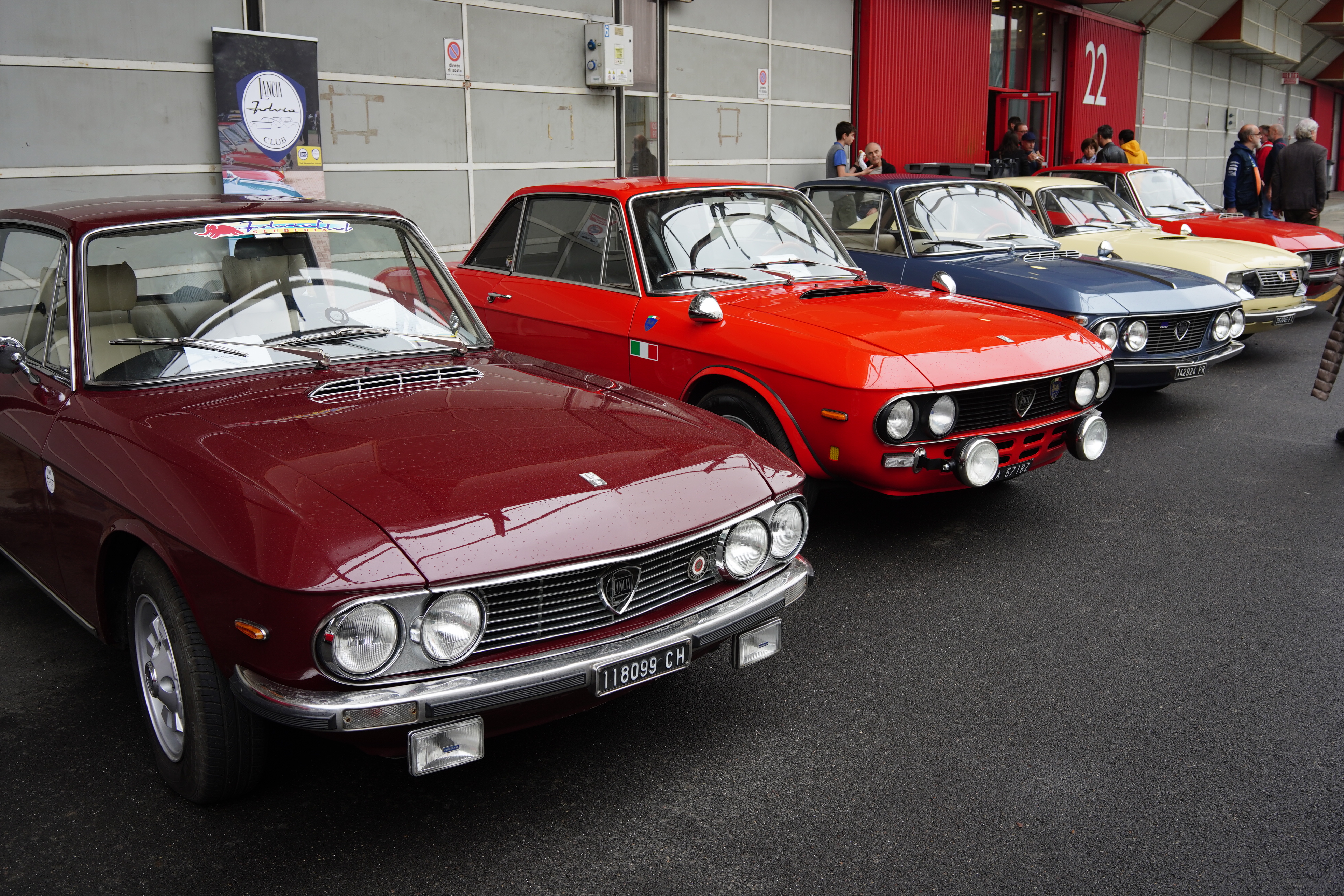
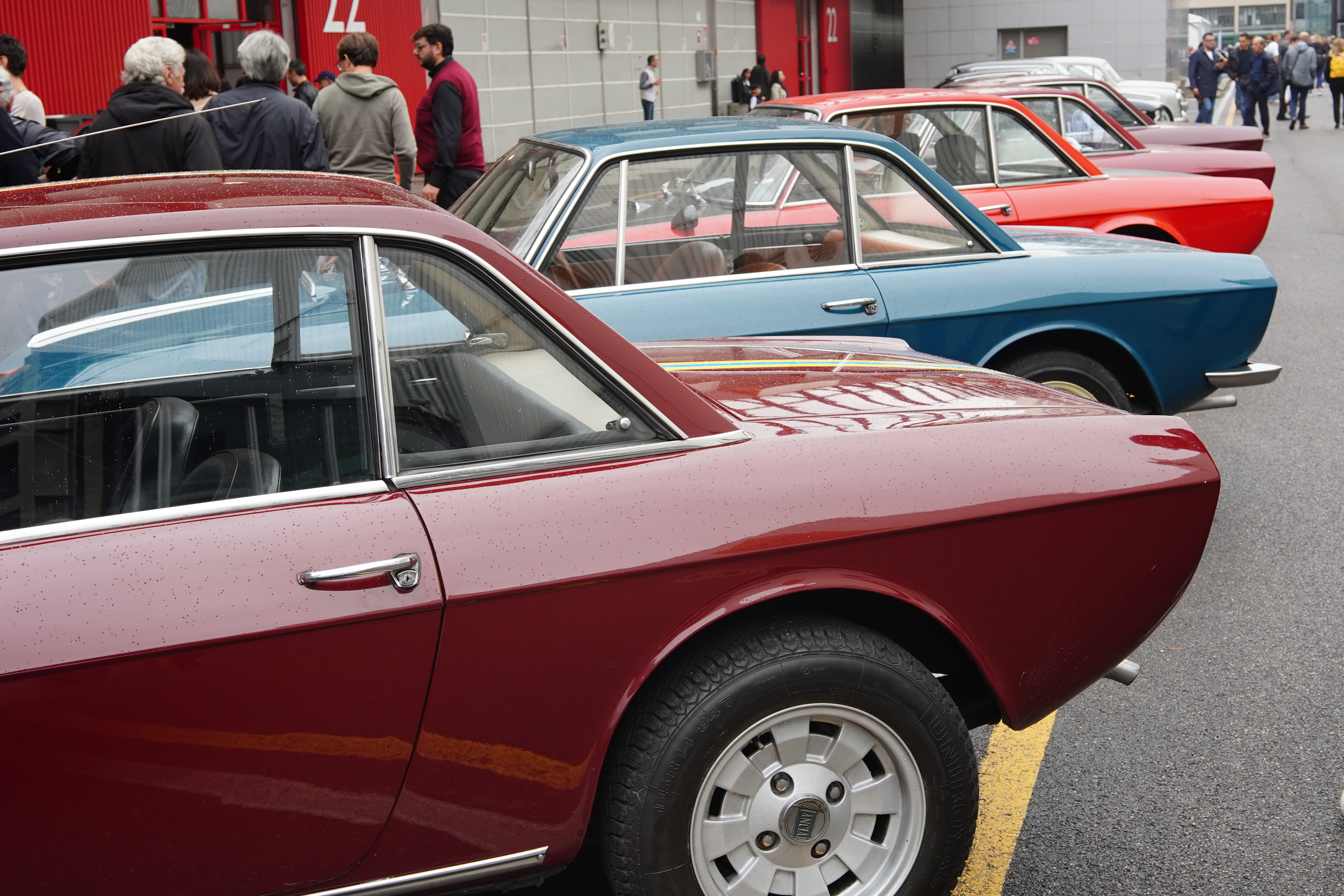
Among the many surprises waiting for me at the Auto e Moto d’Epoca were the large number of Lancia automobiles. Compared to Fiat and Alfa Romeo, Lancia never gained a strong sales following in the United States. Lancia’s reputation in Europe was due in great part to its huge rallying success. Perhaps the most popular Lancia models for us were the FWD Beta coupes and sedans which were launched in the mid-1970s. Like other European makes, though, lack of a strong dealer network was the most likely cause of the brand’s failure in America, in spite of attempts by others to blame the quality of the automobiles. Today, my photos will feature Lancias. Note the asking prices here, as many of them seemed relatively affordable.


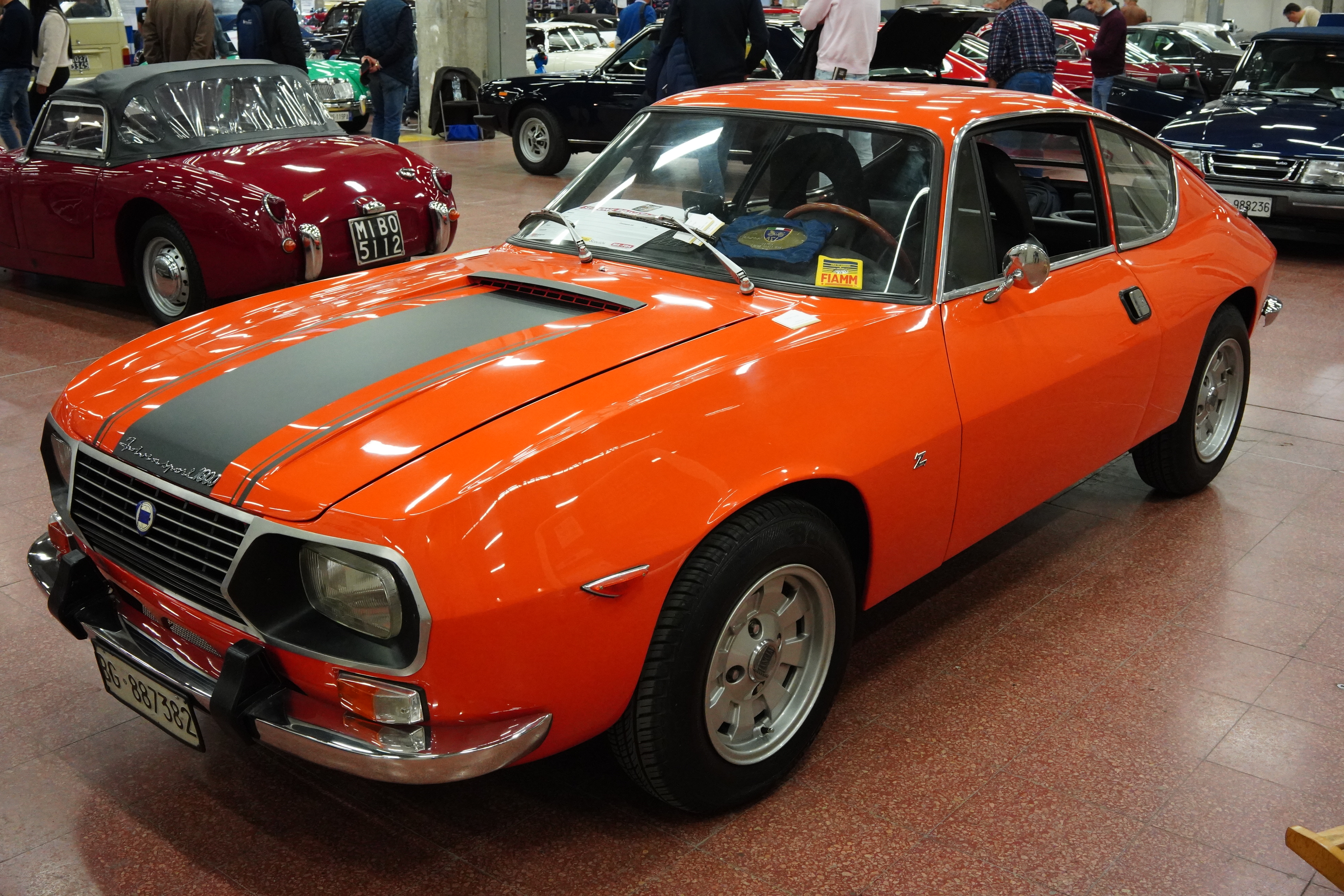
This Lancia Fulvia Zagato was the very first car I saw upon entering the show on Thursday.

This ’67 Fulvia Coupe in white had a For Sale sign which read: “Published book value €22,000, price negotiable”.

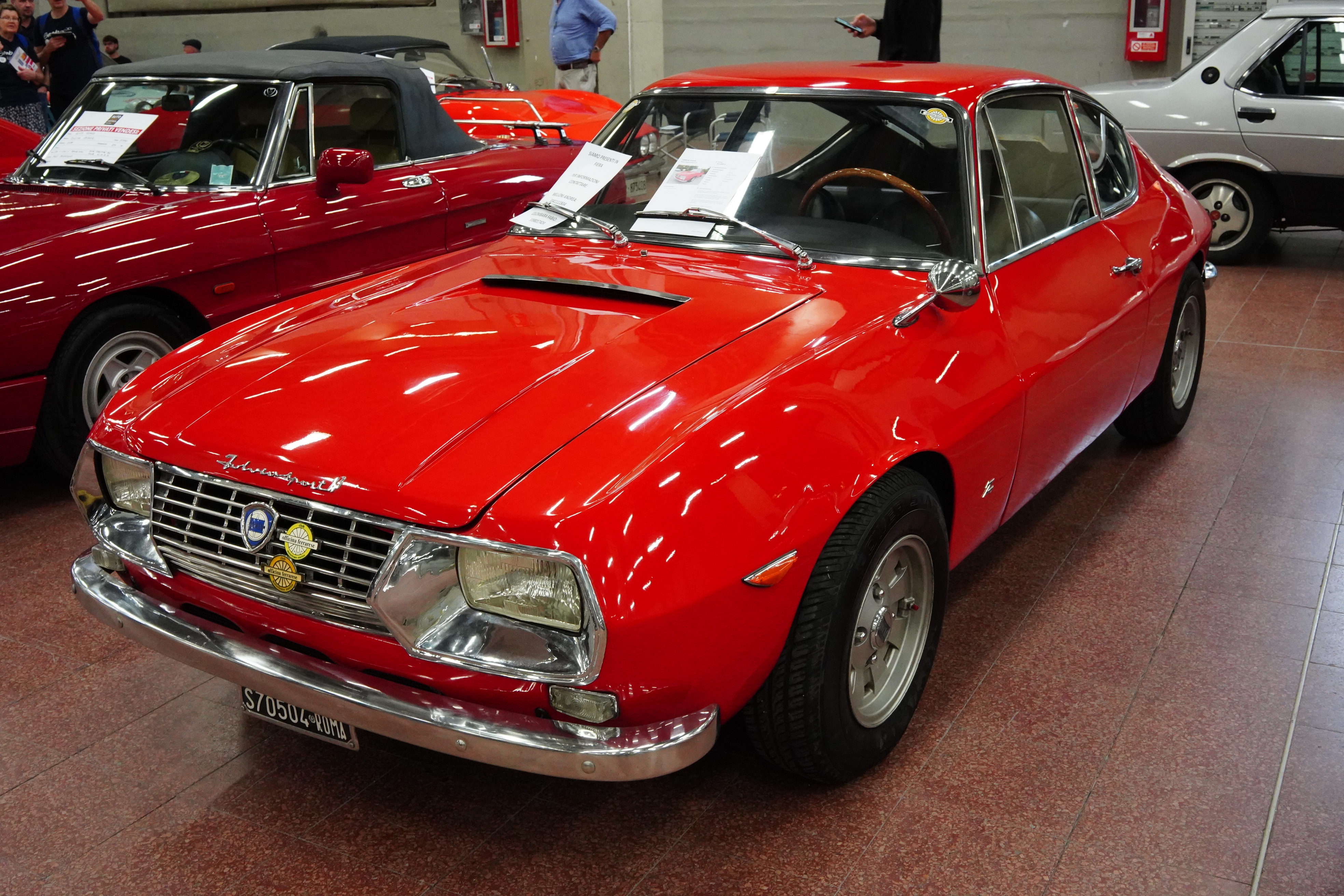
Another Fulvia Zagato, this time in red.

A handsome Flaminia convertible in silver.

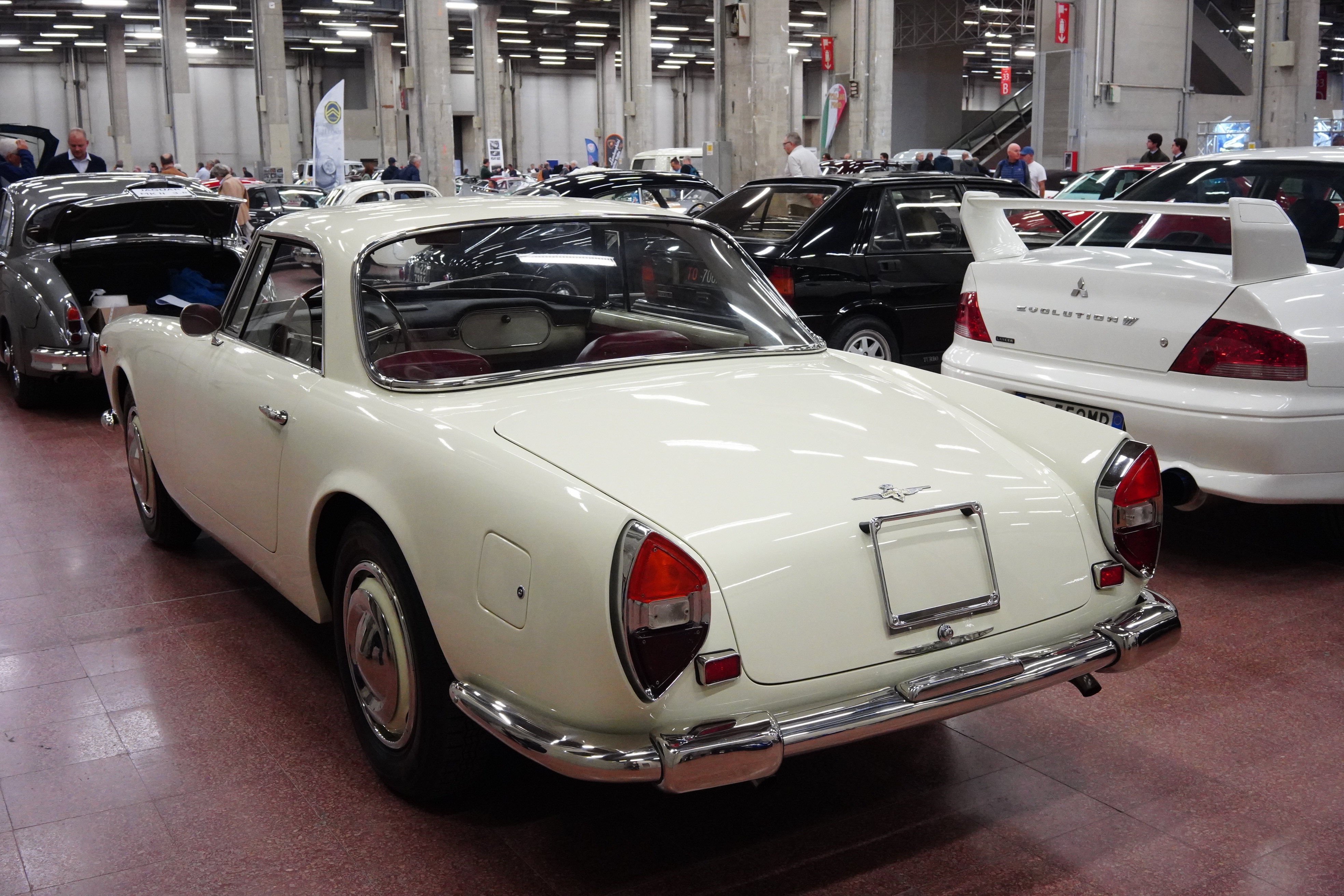
A white Flaminia, this time a coupe.


A Lancia Flavia Sport. Get a load of that quarter window treatment!

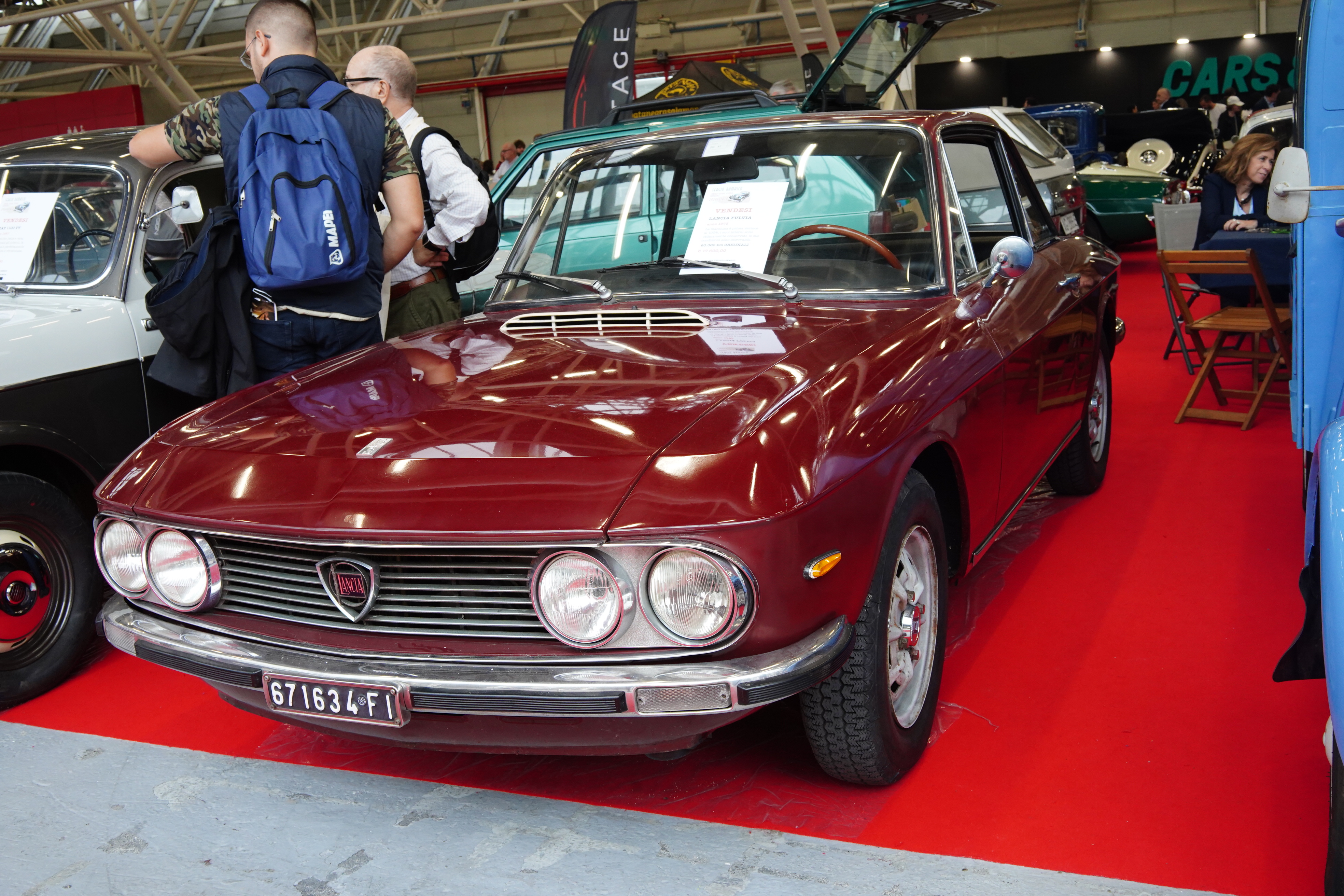
This white Fulvia coupe had an asking price of €21,000.

A Lancia Appia Zagato for sale, at €115,000.

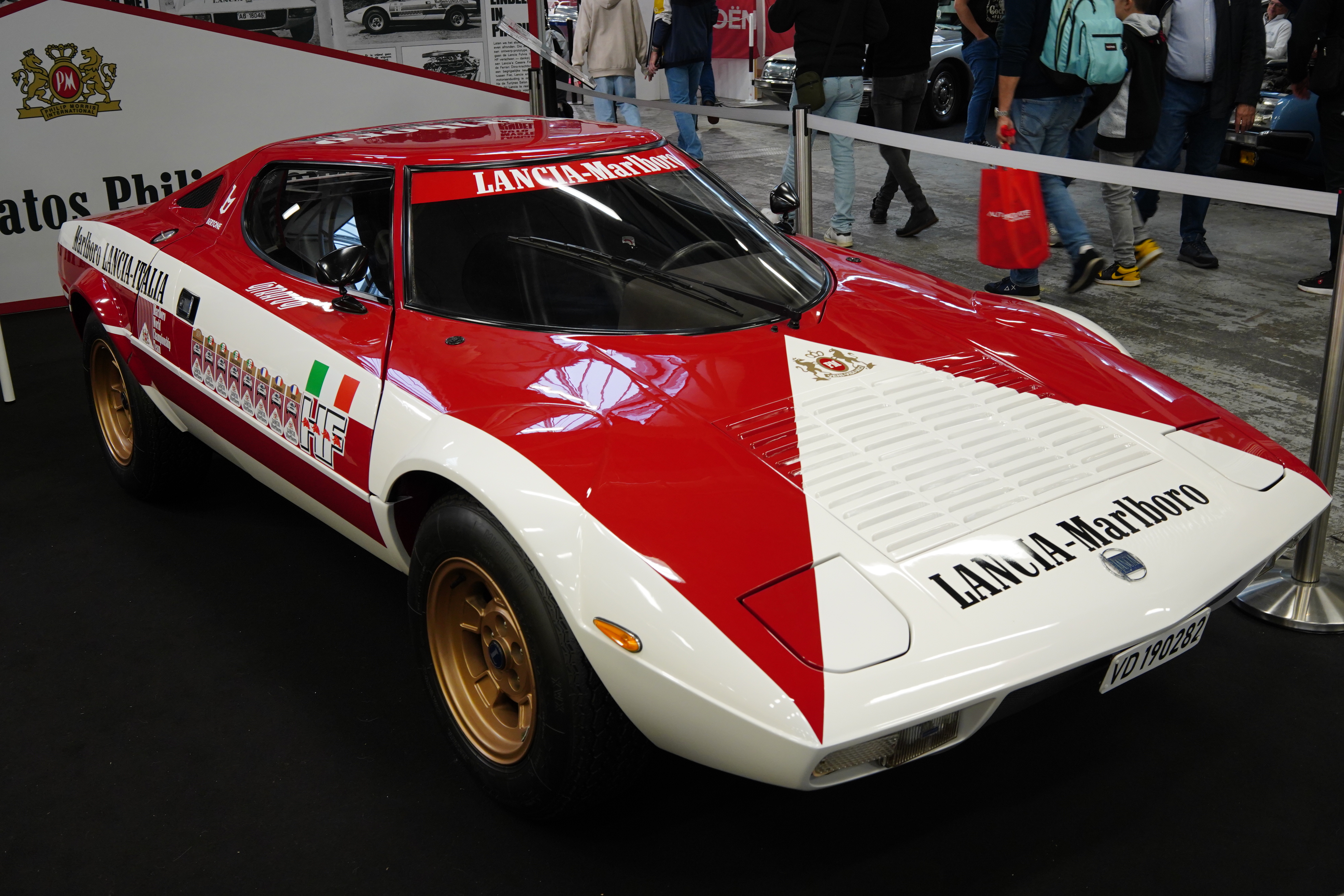
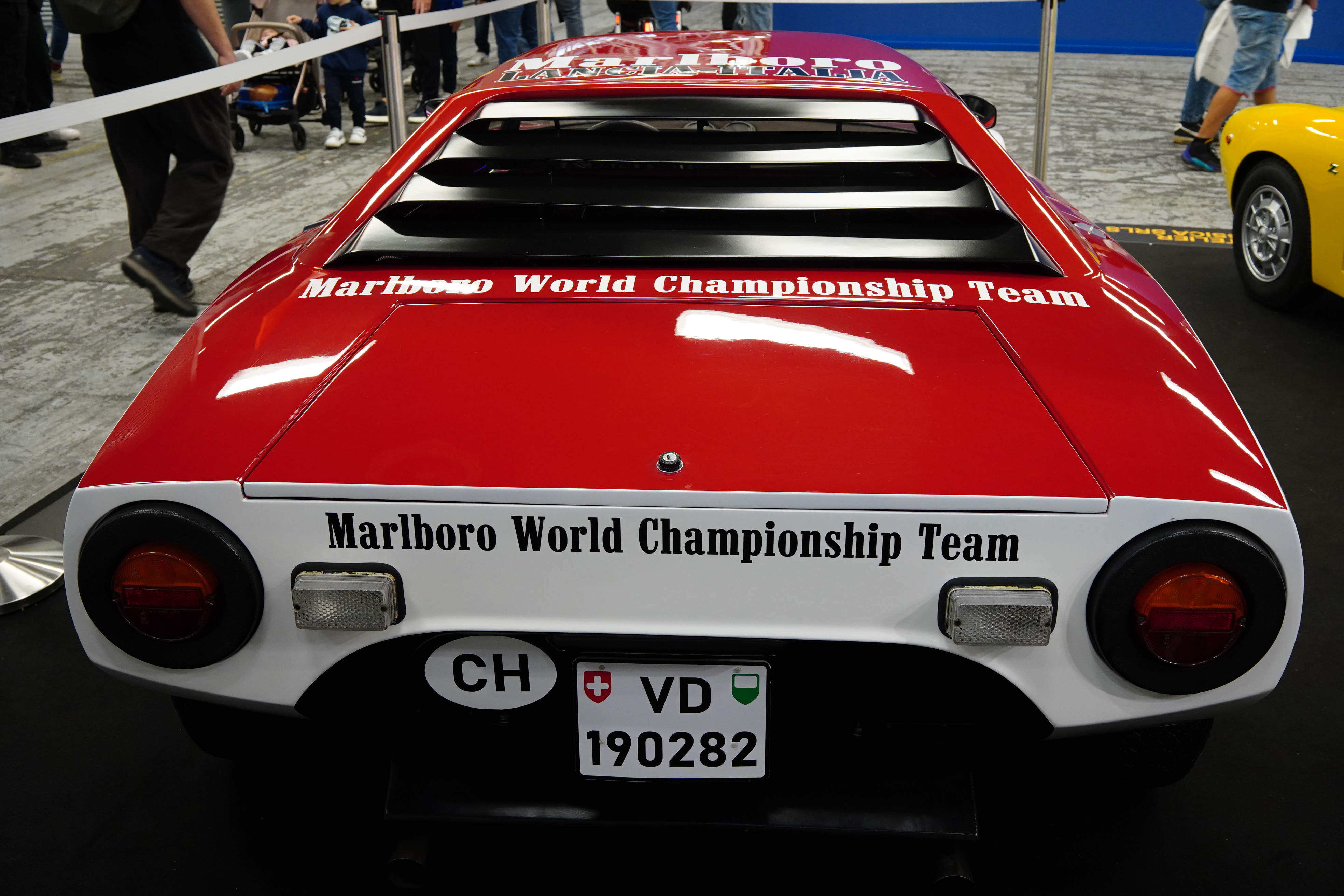
The ultimate rally car? A Lancia Stratos, a car that I’ve read about for decades and have seen maybe once in my life. “Confidential negotiation” said the price sign, but these sell in the States for around a half million.

The Lancia Beta Montecarlo was sold in the U.S. as the Scorpion, to avoid conflict with Chevy’s Monte Carlo. These are mid-engined cars with terrific handling.

A Fulvia HF “Fanalone” (large lights), asking €93,500.


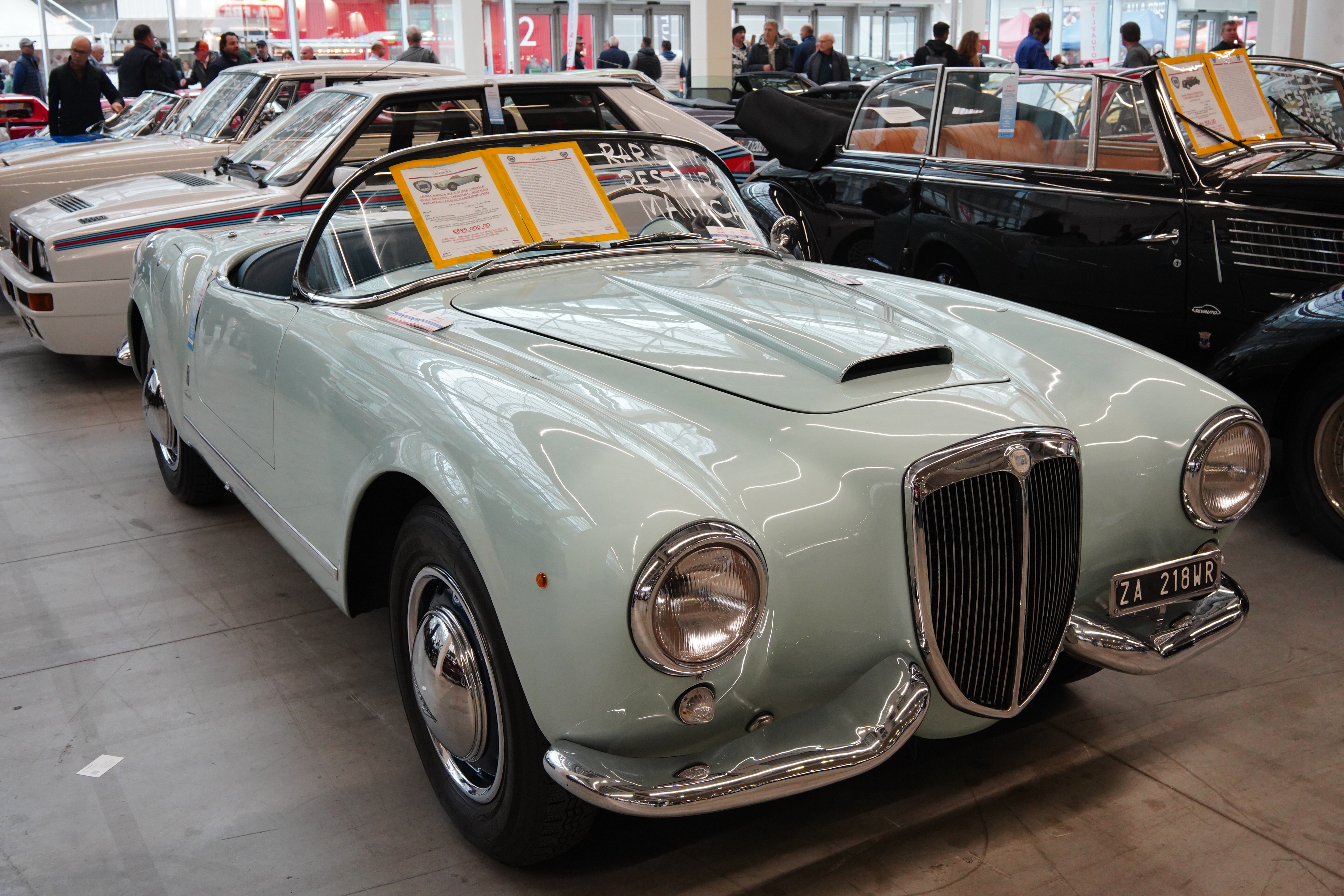
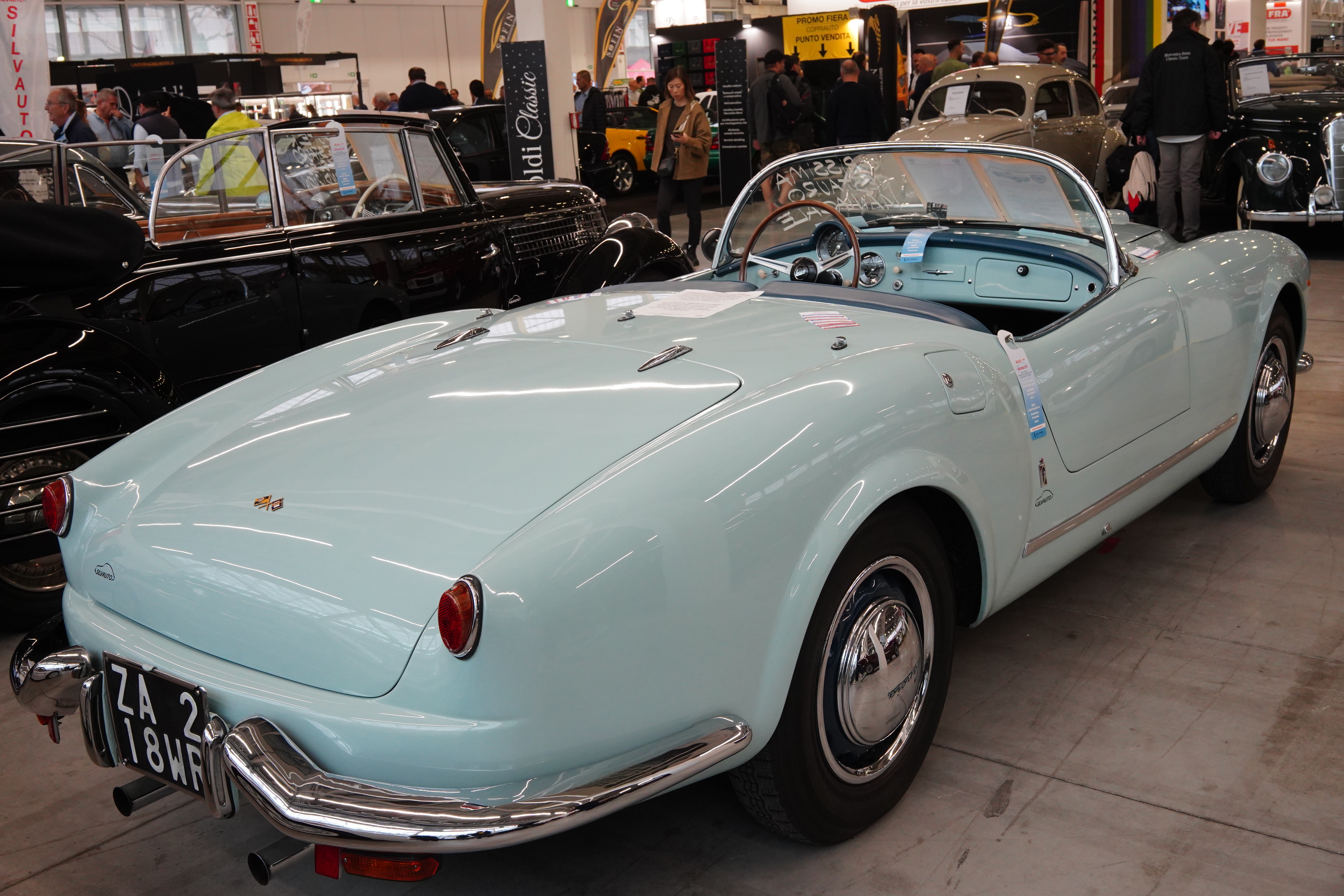
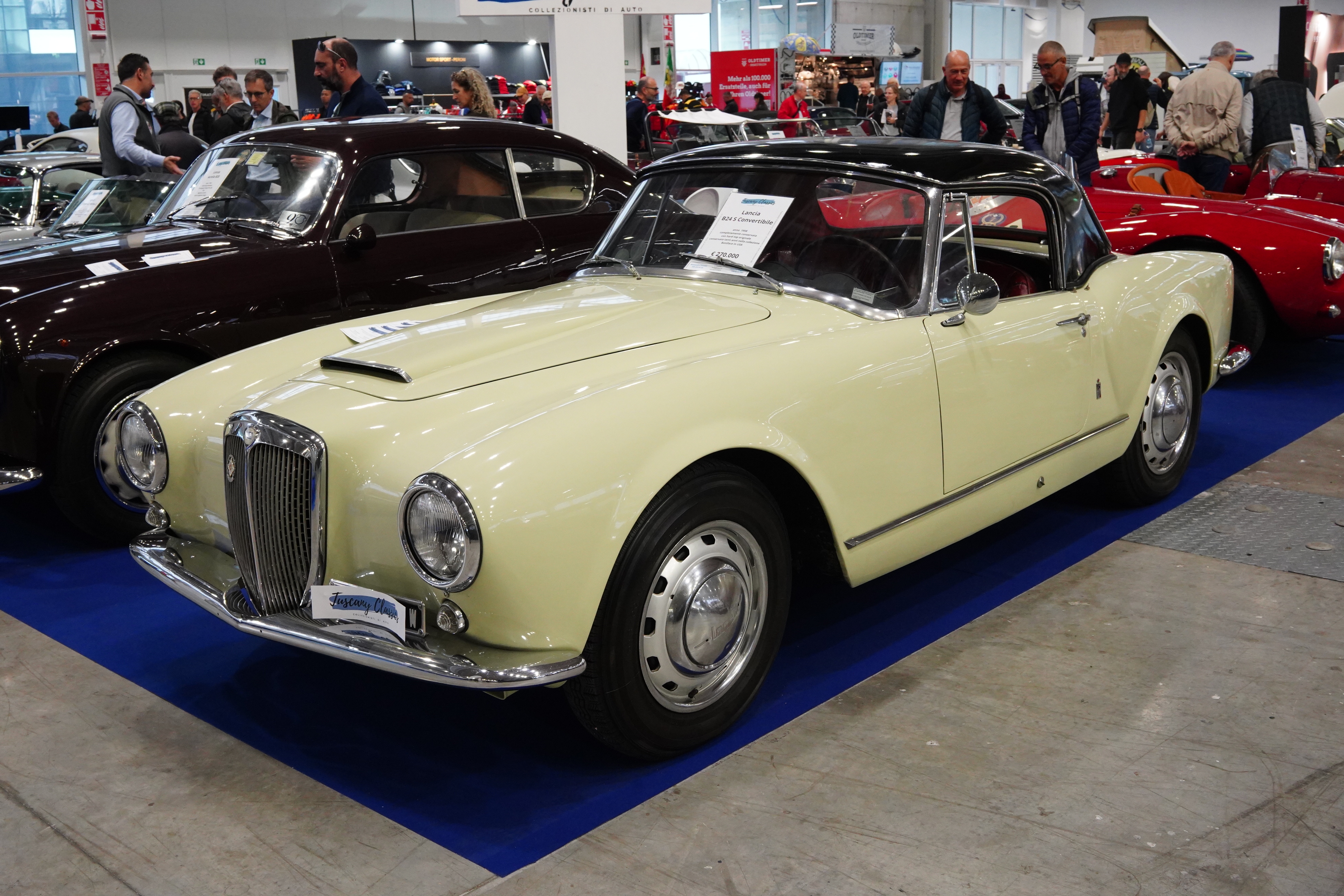
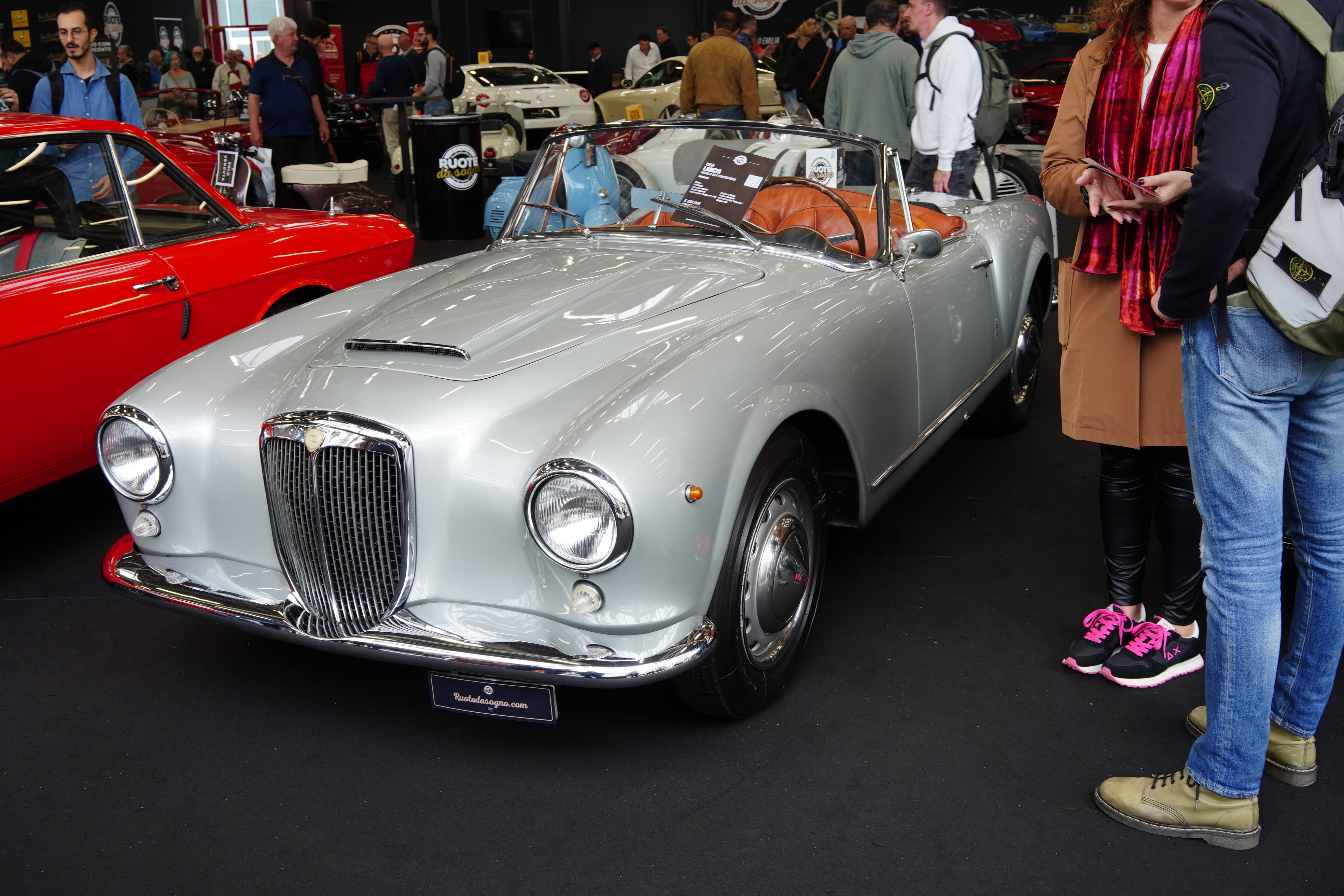
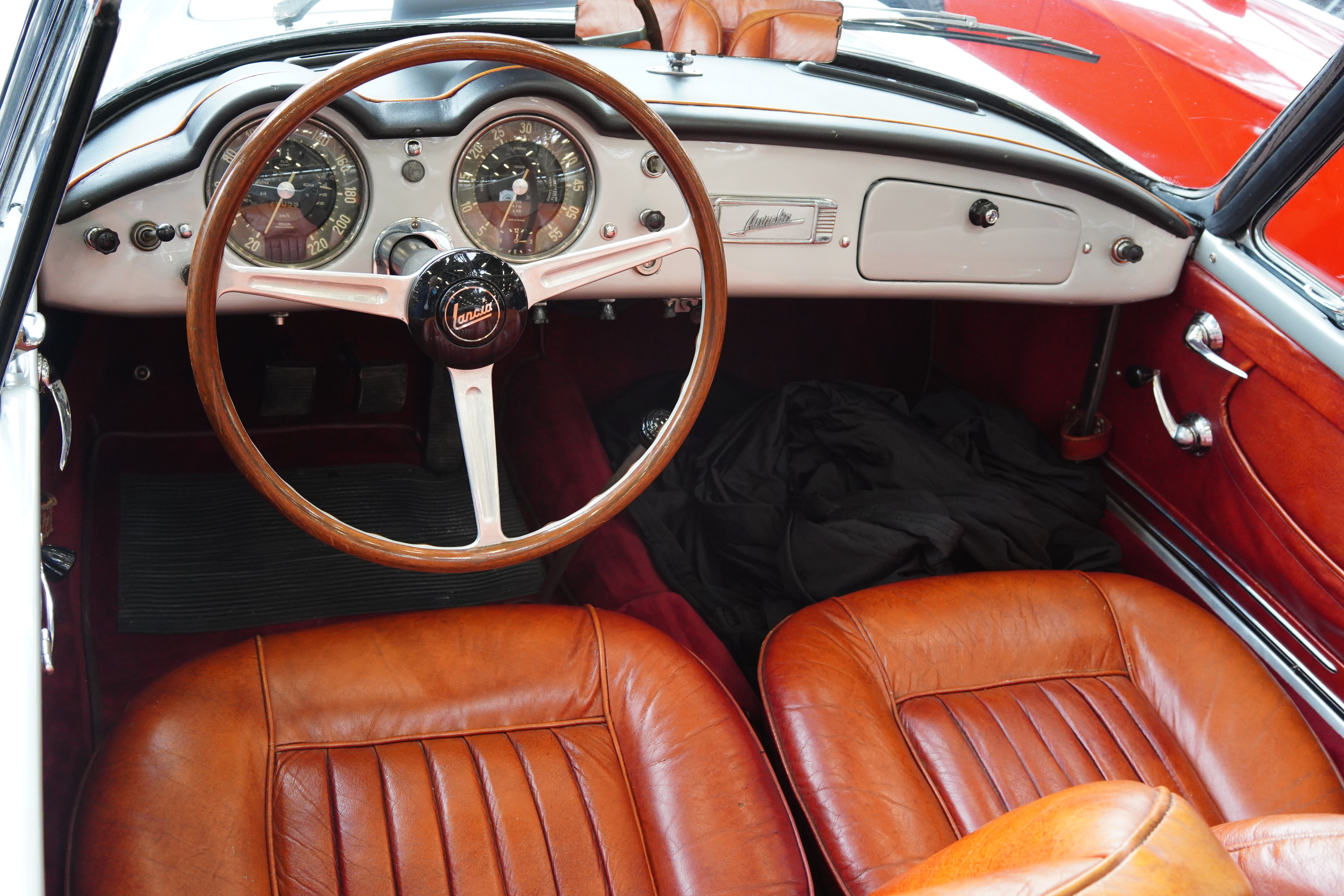
There were two versions of the Lancia Aurelia B24 convertible. The 1st version, the “America”, had a split front bumper, wraparound windshield, side curtains, and lacked outside door handles. Only 240 were manufactured, and they command a premium price. The 2nd version had a one-piece front bumper, vent windows, external door handles, and wind-up windows.

This Lancia B24 Spider is the “America” model, with an asking price of €895,000.

This yellow B24S is the second series convertible, so its asking price is only €270,000.

This second-series Aurelia Spider had an asking price of €298,000.


A grey Flavia 2-door for sale for €29,000.

Here is a Montecarlo in red. Note the transverse engine placement. The vendor was asking €25,500.

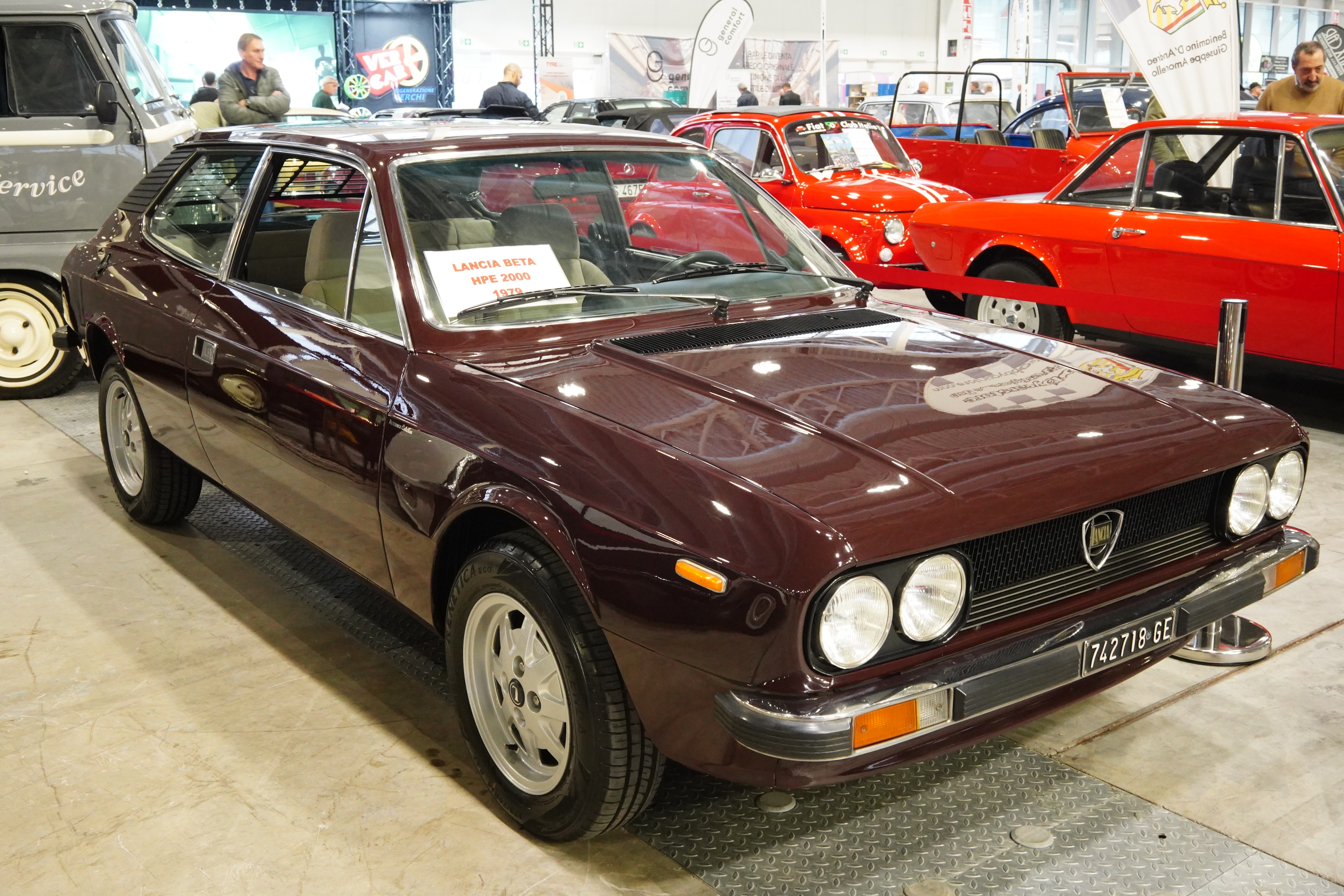
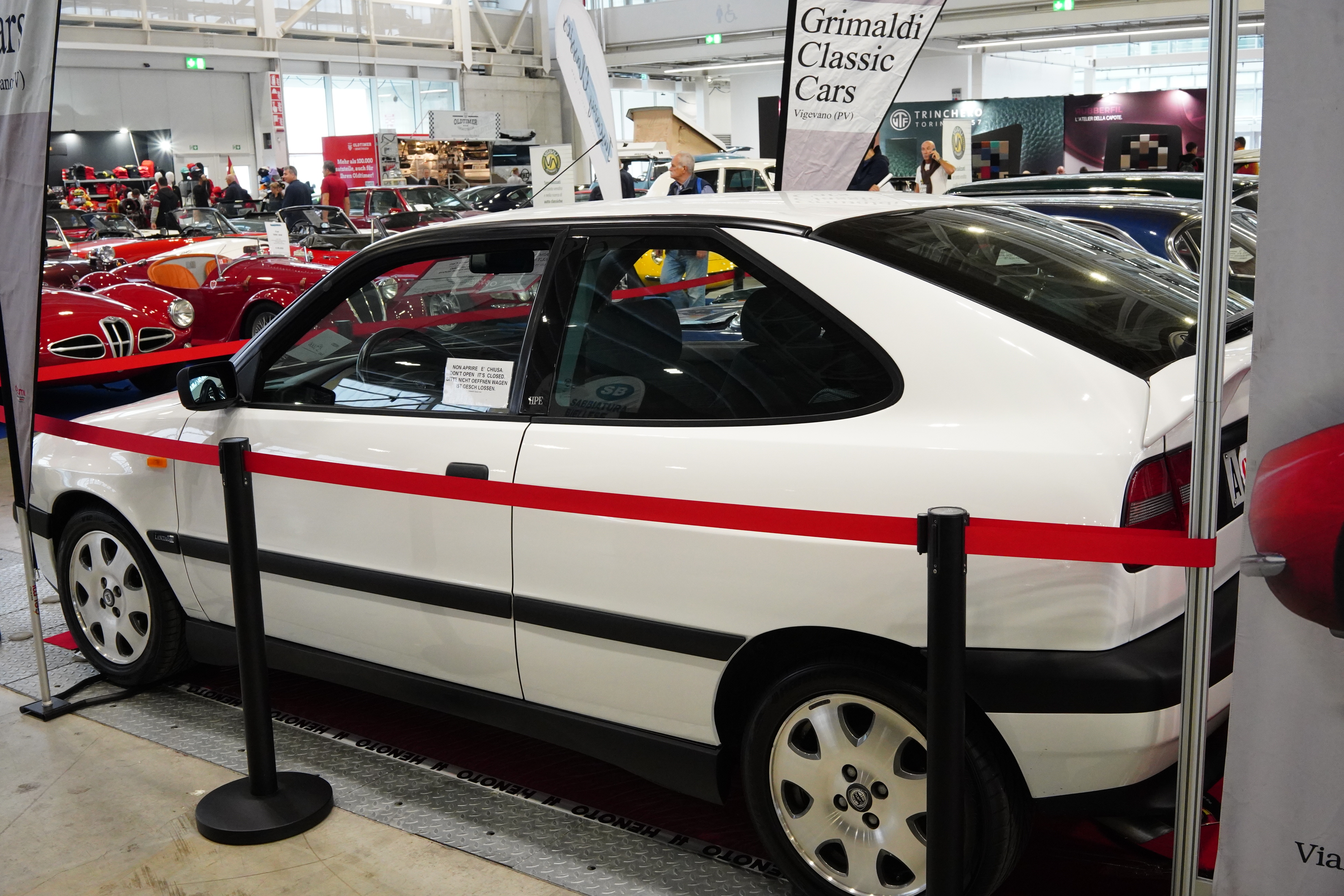
A rare body style: the Beta HPE hatchback.

A Lancia Beta Zagato in silver, with a removable targa top and fold-down rear window, for only €15,900.

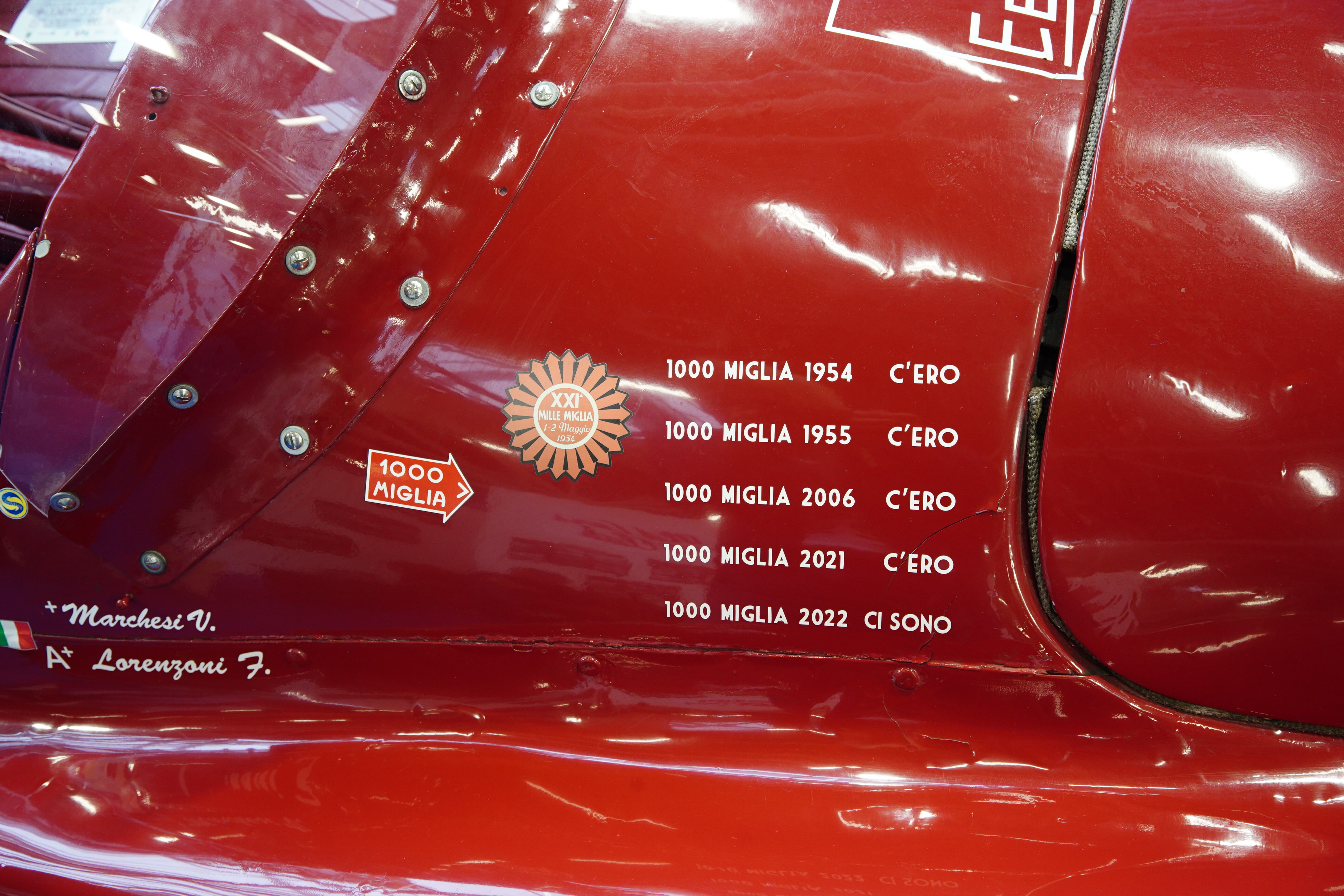
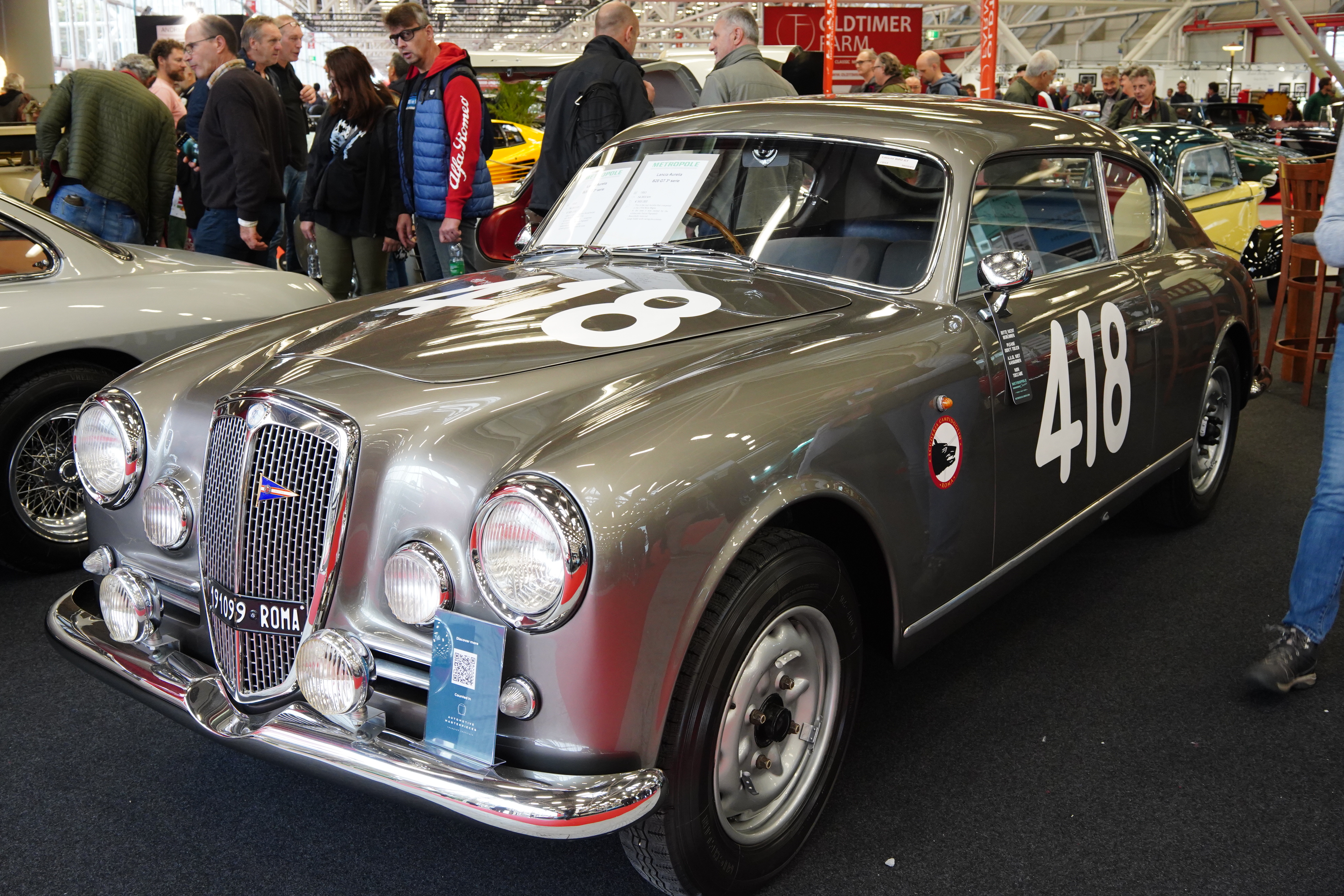
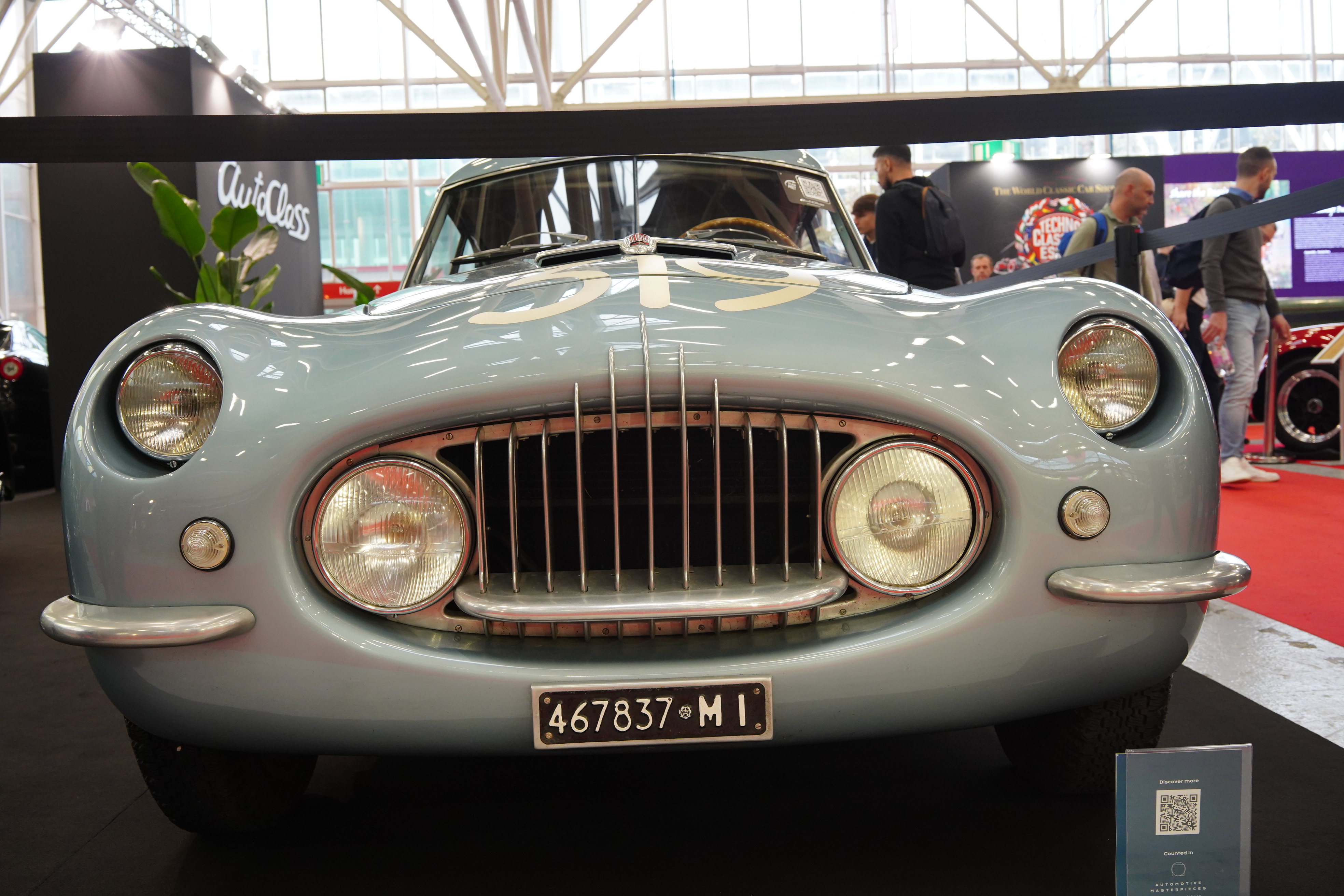
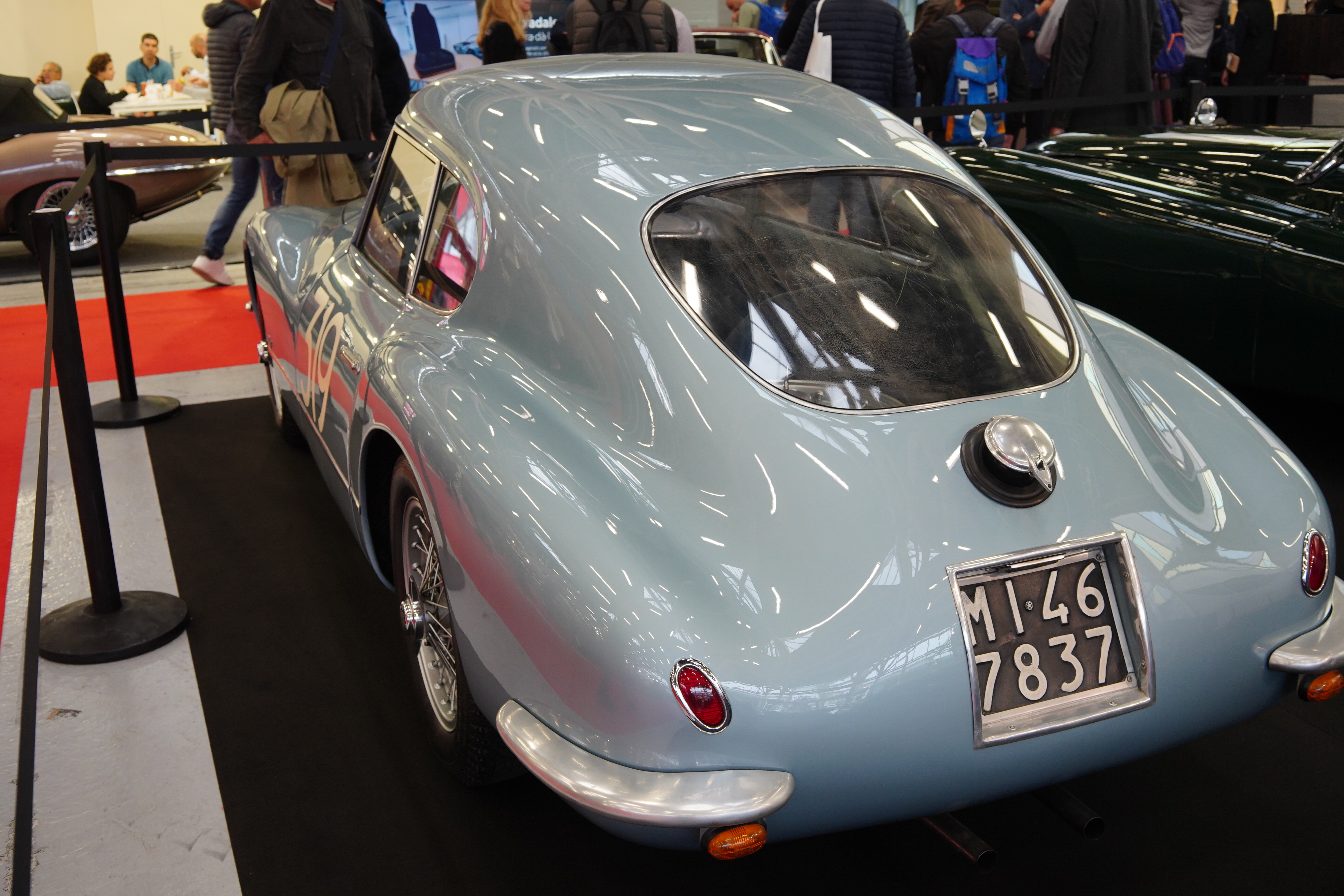
An Aurelia B20 coupe which competed in the 1954 Mille Miglia, with an ask of €585,000.

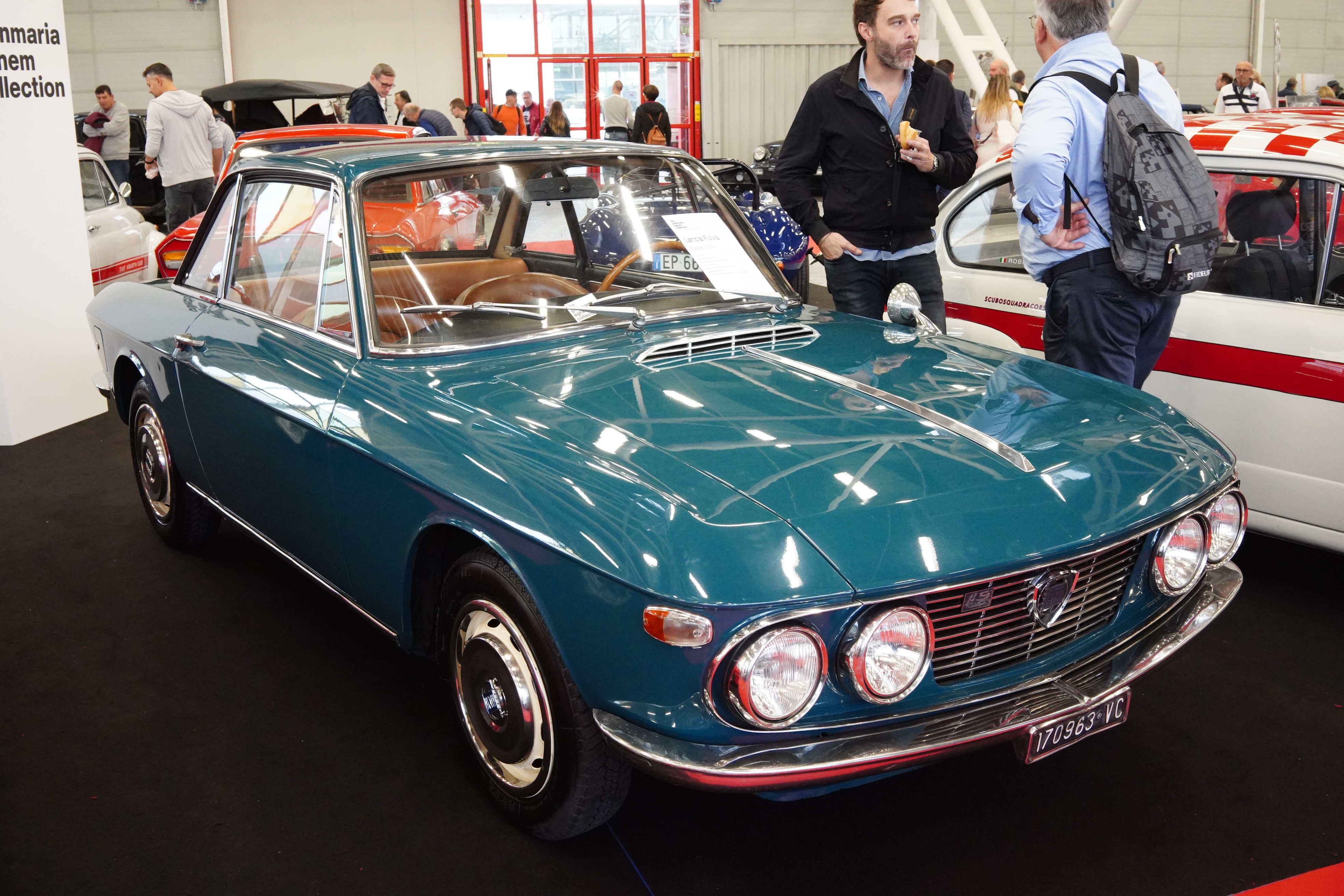
I loved the color combo on this Fulvia coupe. At €25,000, I thought about bringing it home.

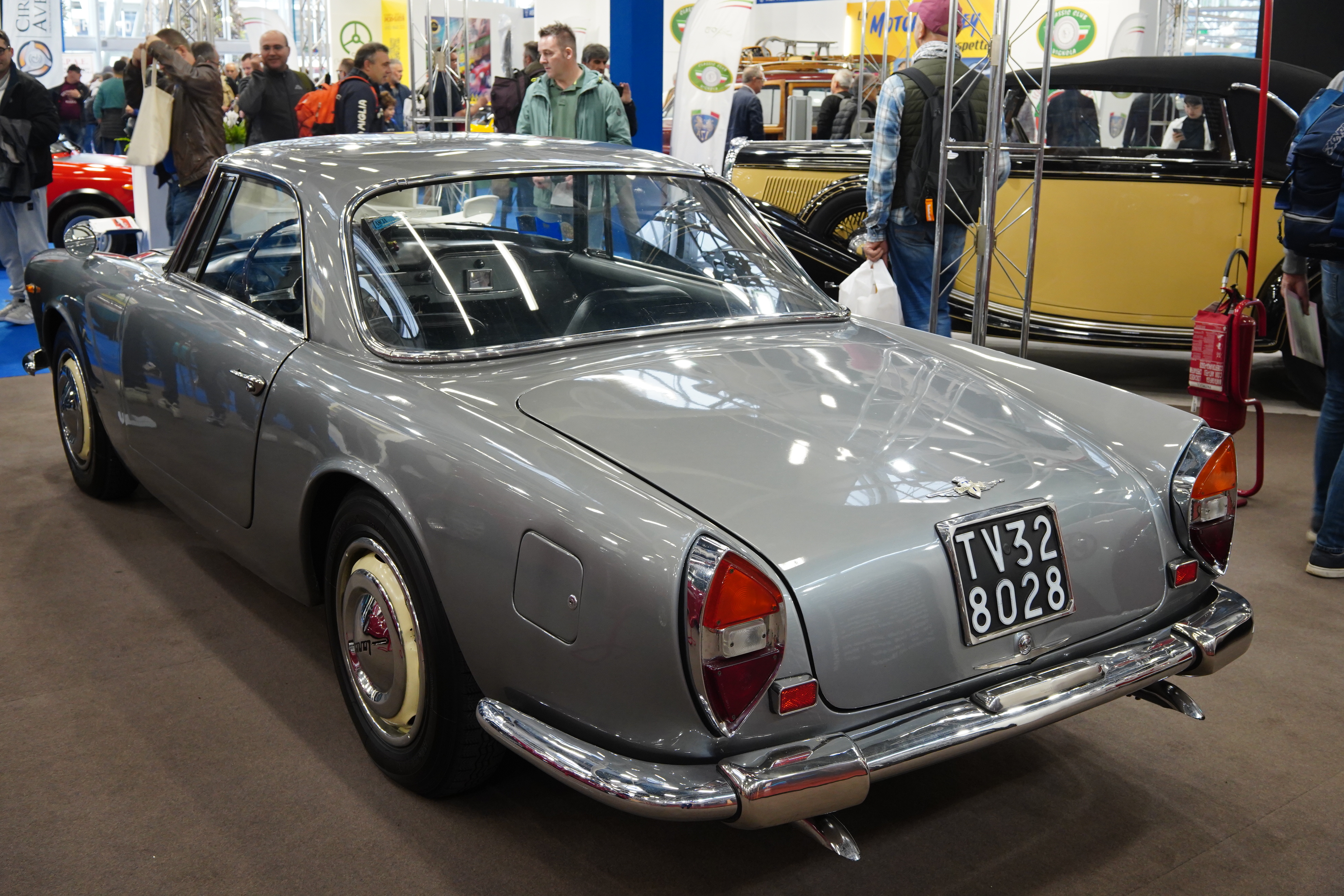
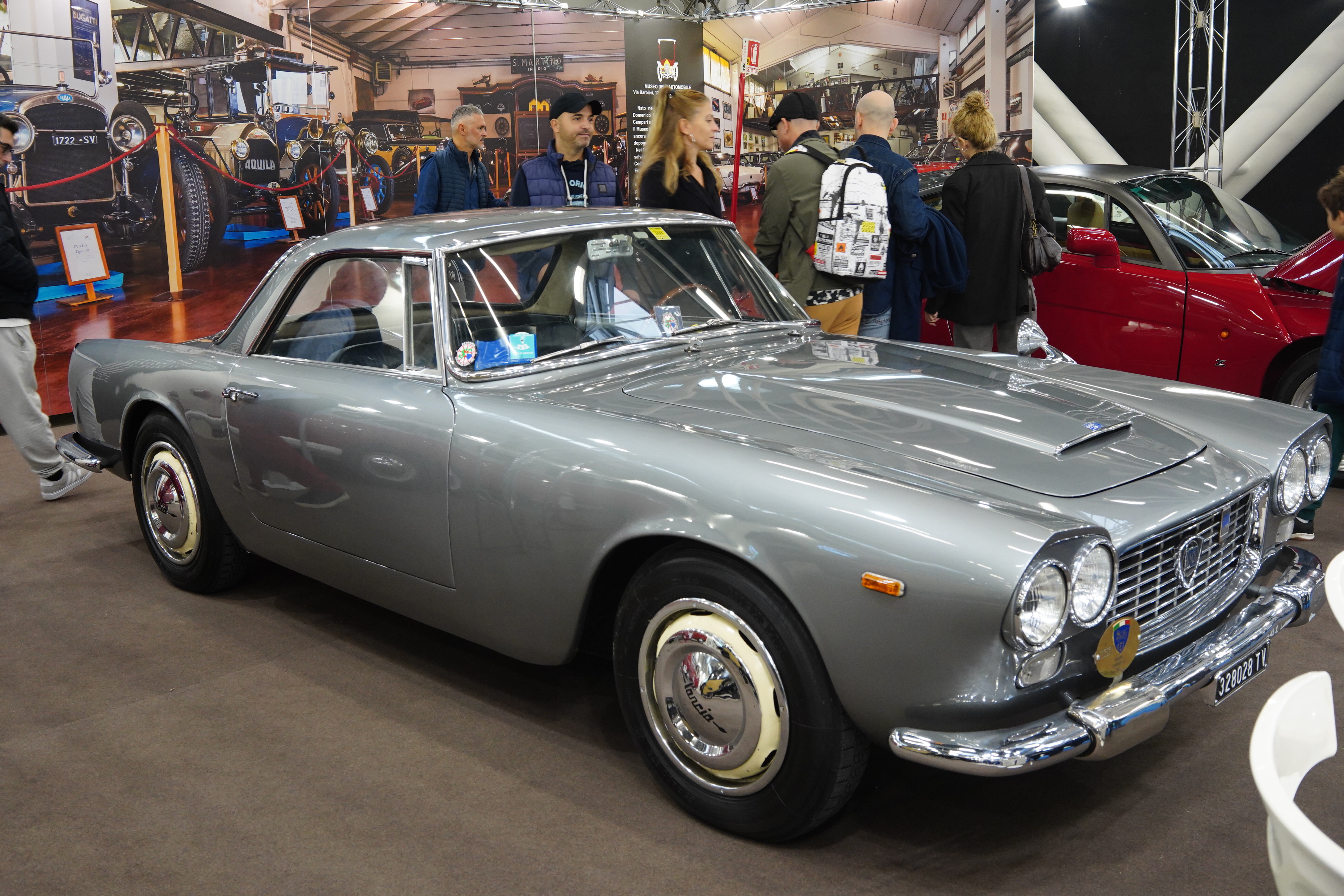
Another Flaminia coupe, this one in grey. Note the off-white wheels, seen on many Lancias.

Possibly the oldest Lancia at the show, this 1947 Aprilla Berlinetta Pinin Farina looked resplendent in green over tan. Note the RHD.

Strong club support brought out this impressive row of Lancia Delta models.

Likewise, the Lancia club showed up with more Fulvias than I could count.

Another day, another Lancia Stratos, this one in rally livery.


This one got my attention: I’ve never heard of nor seen a Lancia Kappa, also simply called “K”. It’s a 1999, FWD with a 5-cylinder turbo engine putting out 220 HP. Styling was a bit bland but inoffensive. The ask? €10,000, not negotiable.

And yet another one new to me: a 1997 Delta 2-door, 2.0L turbo making 193 HP, 51,000 kilometers (about 32,000 miles). The vendor was asking €19,000.

Was this the least expensive Fulvia coupe at the show? This 1973 with 60,000 original km (37,000 miles) had an asking price of €17,500.


Entire blog post content copyright © 2024 Richard A. Reina. Text and photos may not be copied or reproduced without express written permission.
Auto e Moto d’Epoca Summary Part 1

The “Auto e Moto d’Epoca” (Autos and Motorbikes of the Period, referring to vintage and classic items) is an annual motor vehicle show held in Italy. The 2024 event was its 41st edition, and substantial growth forced it to move from Padova to a larger venue in Bologna. I first became aware of this show in 2023 and had hoped to attend but was unable to. However, I made the journey in October 2024 and attended all four days. I’ve experienced all types of car shows over the decades, but this was easily one of the best shows of my life (it helps that I love not only Alfa Romeos, but all Italian motor vehicles).

The 2024 show dates were from Thursday Oct. 24 through Sunday Oct. 27. I arrived in Bologna on Tuesday the 22nd so I could adjust to the 6-hour time difference. Once I got off the plane in Bologna, a 15-minute taxi ride got me to my Marriott hotel. The show was held at the BolognaFiere, a huge exhibition complex which was an easy 15-minute walk from the hotel. The Auto e Moto d’Epoca occupied 13 of its buildings, or halls, with the halls organized into 4 categories: vehicles for sale; vehicles displayed by car clubs, manufacturers, and other organizations; motorcycles; and spare parts & automobilia.

Thursday was billed as preview day, and I had pre-purchased a combo ticket for all 4 days. I arrived shortly after the doors opened at 9 a.m., and as I walked into the hall and got my first glance of the cars on the floor, I knew that my expectations were about to be greatly exceeded.  As it happened, the first of the 13 buildings I entered featured cars for sale by private individuals. Italian cars included various Fiat models such has 124 Sport Coupes, 130 Coupes, Dino Coupes and Spiders, and 500 sedans. Lancias were plentiful and included various Fulvias and Flaminias. Of course, there were many Alfa Romeos, mostly GT Coupes and Spiders, but a fair number of sedans too. Non-Italian cars included various Jaguars, Mercedes-Benzes, Volkswagens, and even some American cars. And this was just the first building!

On Thursday, I only visited the halls which contained cars for sale. Aside from cars offered by private individuals, many of the remaining vehicles for sale had been brought in by specialty auto dealers, of which there seem to be a great number in Italy. Asking prices were listed in Euros, and with the dollar almost at 1:1 parity (actually the Euro is worth a little more), there were no complicated calculations to make regarding pricing. I spent about 6 hours on Day 1 wandering through 5 of the 6 buildings with cars for sale.

I’ve decided that the most organized way to share my photos is to break up the blog posts into segments based on vehicle marques, starting with Fiat.

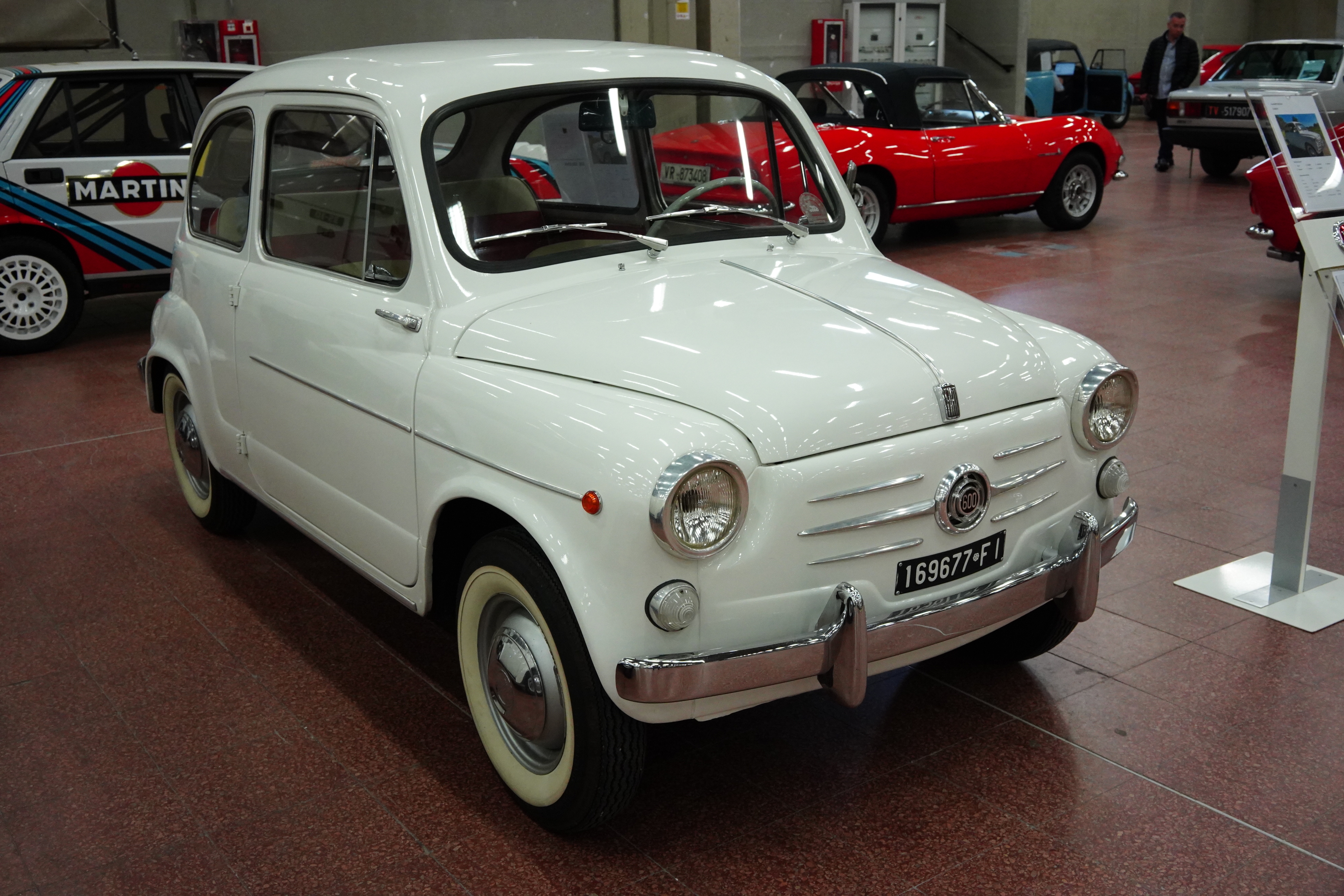
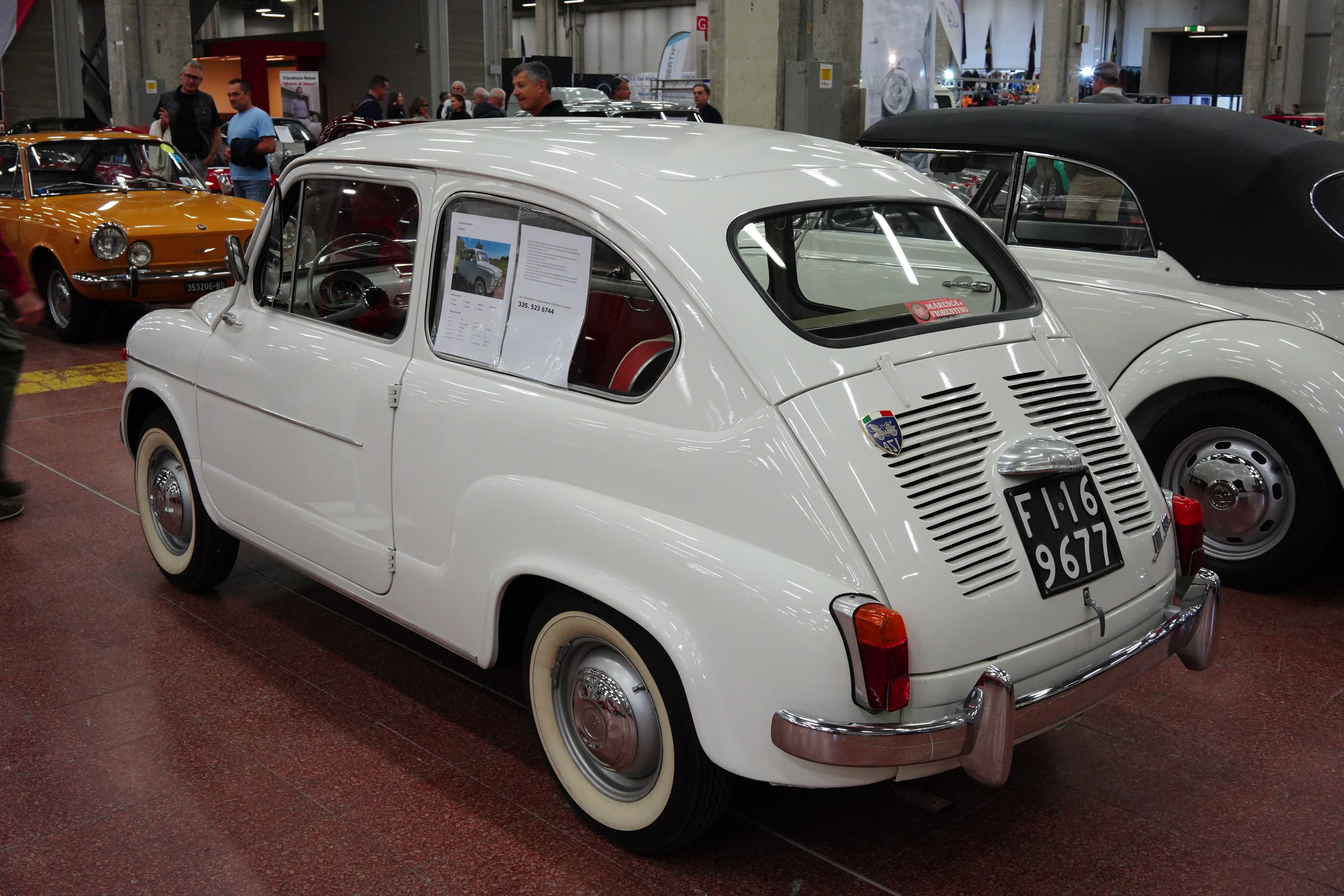
This 1962 Fiat 600D had an asking price of €8200
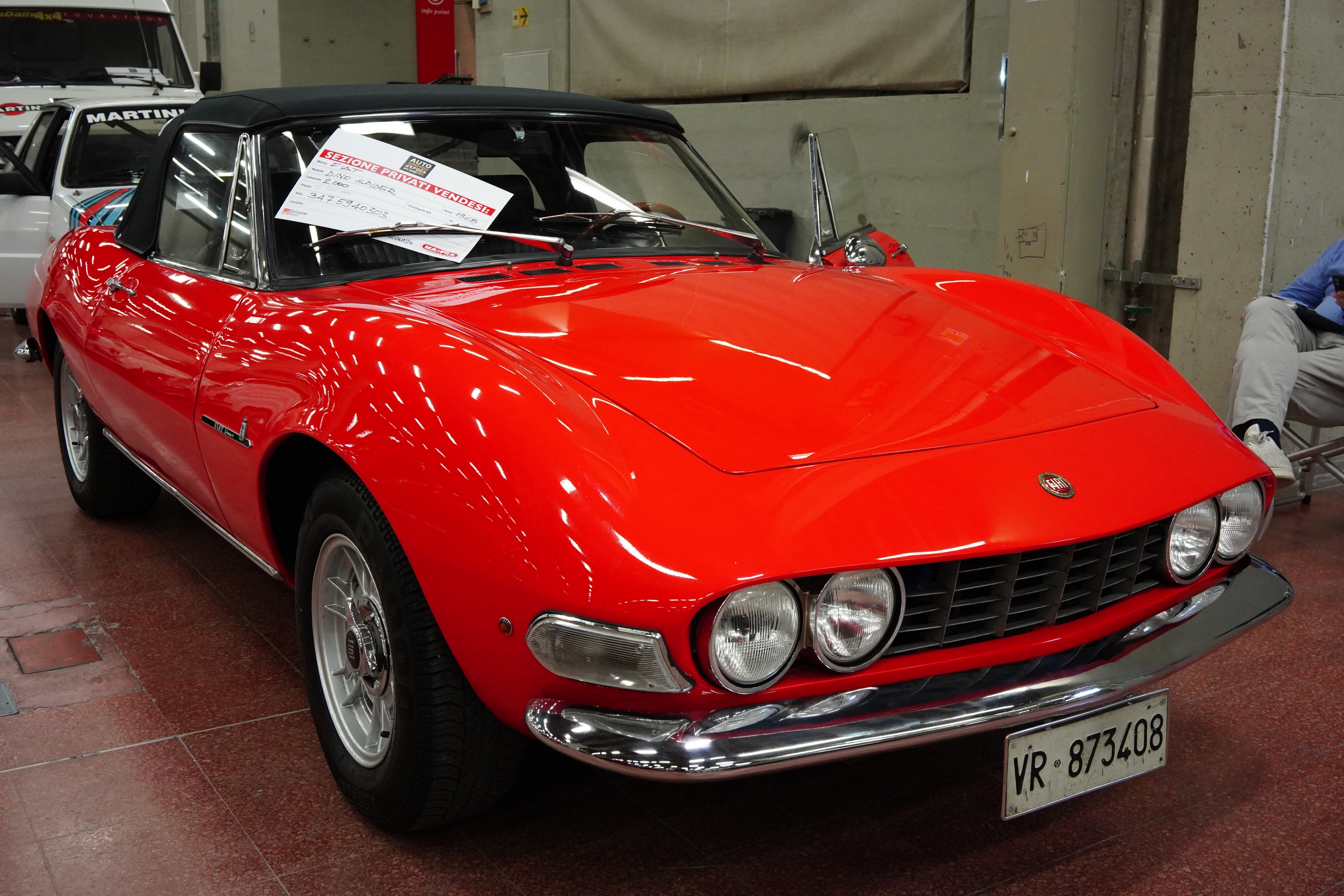
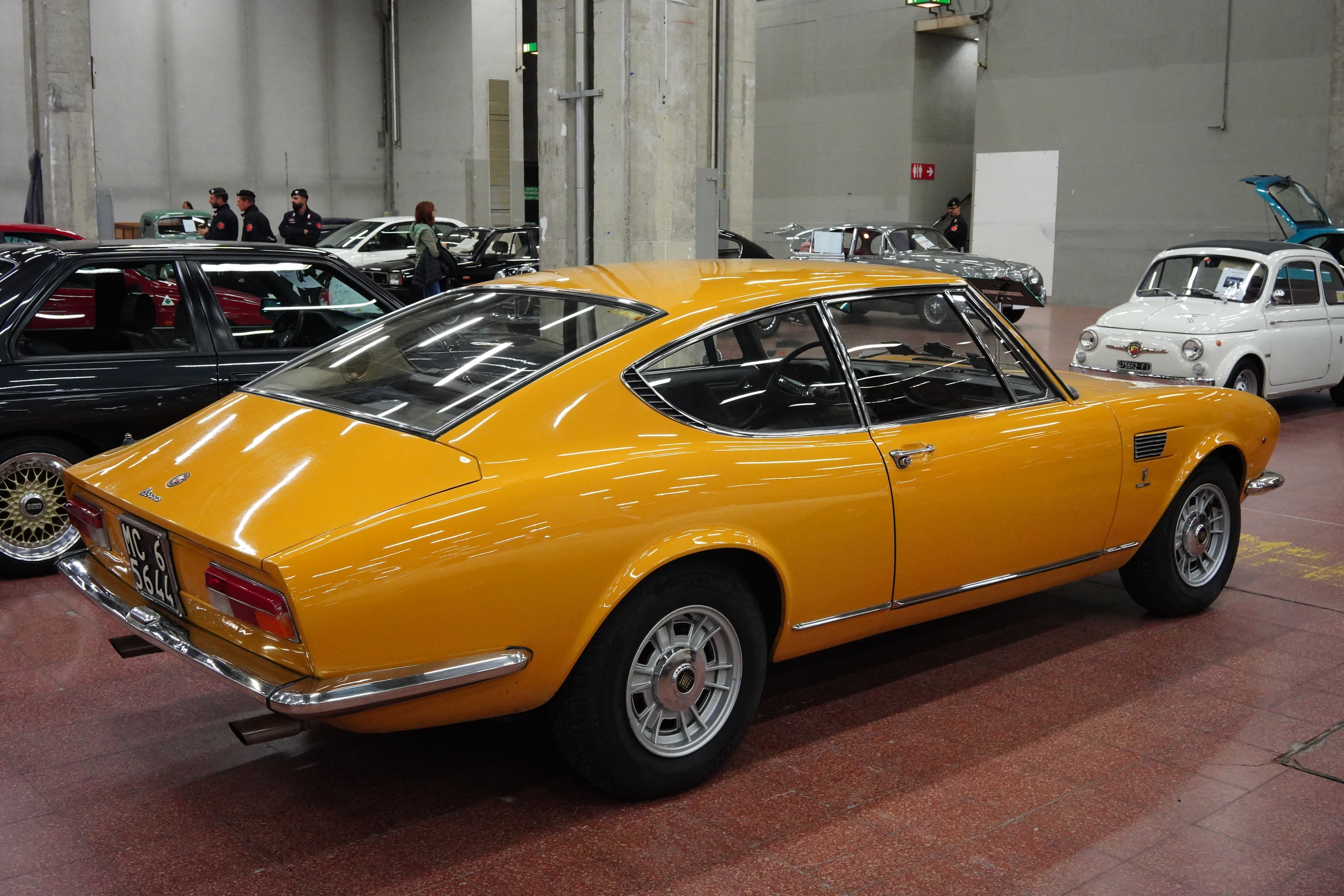
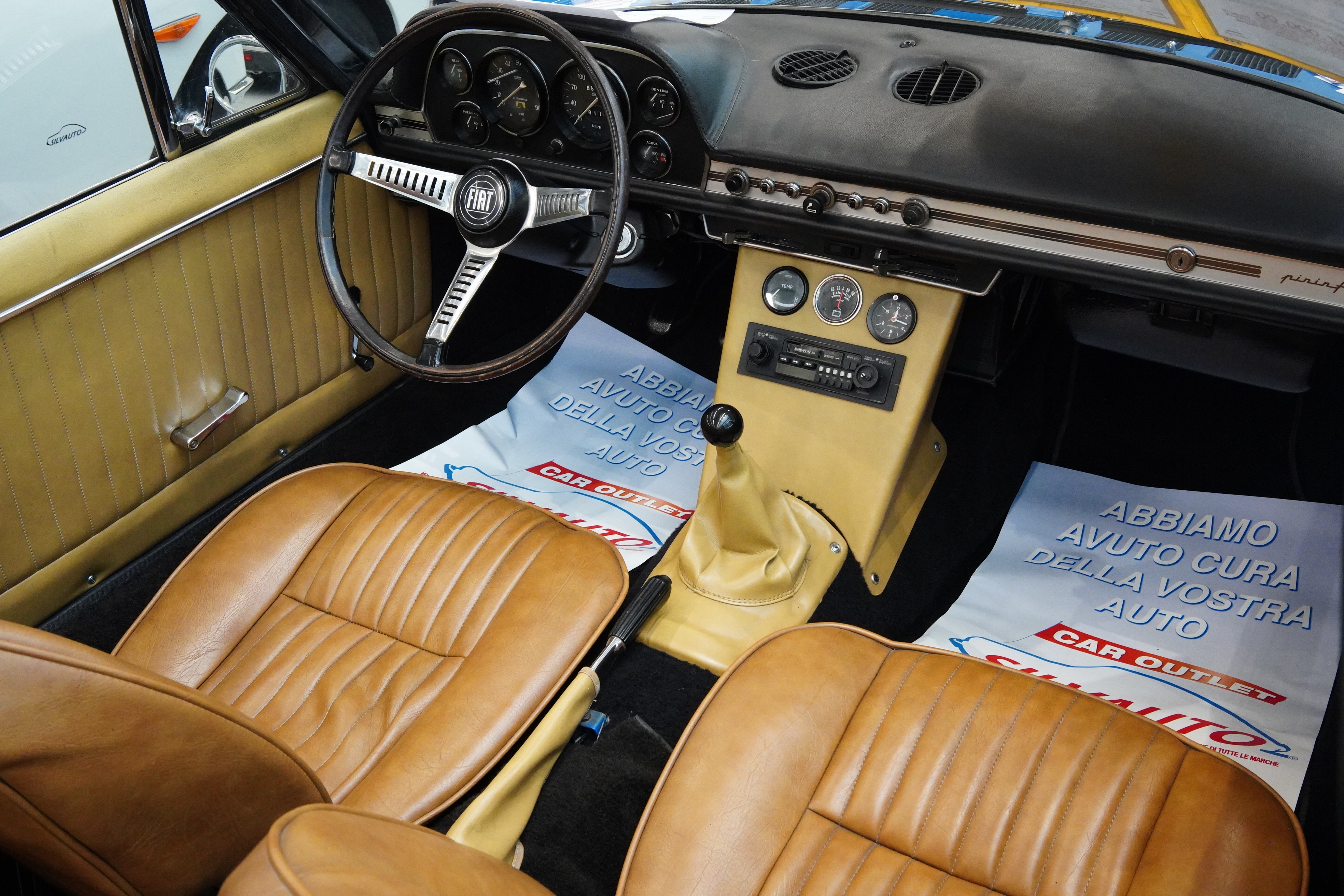
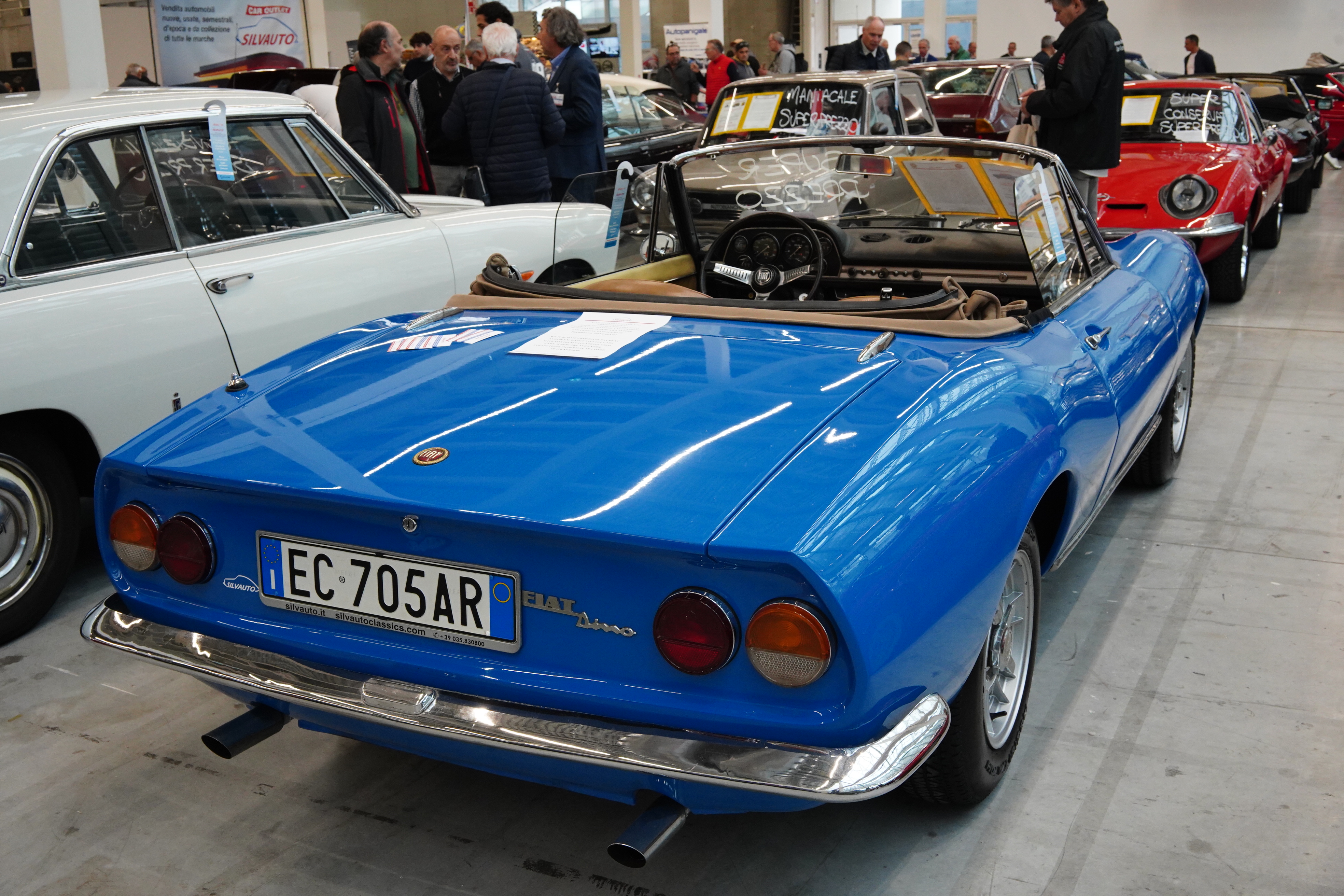
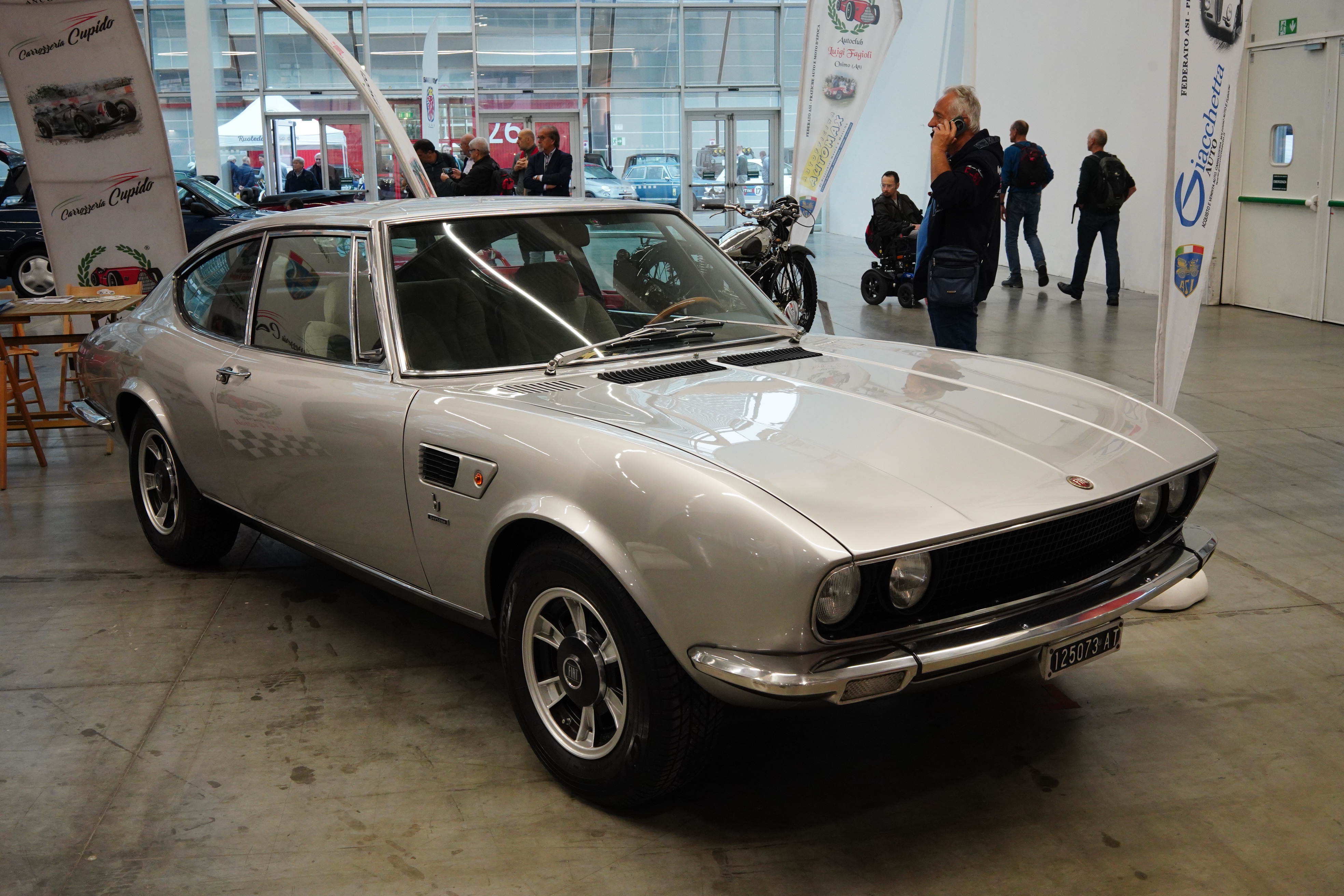
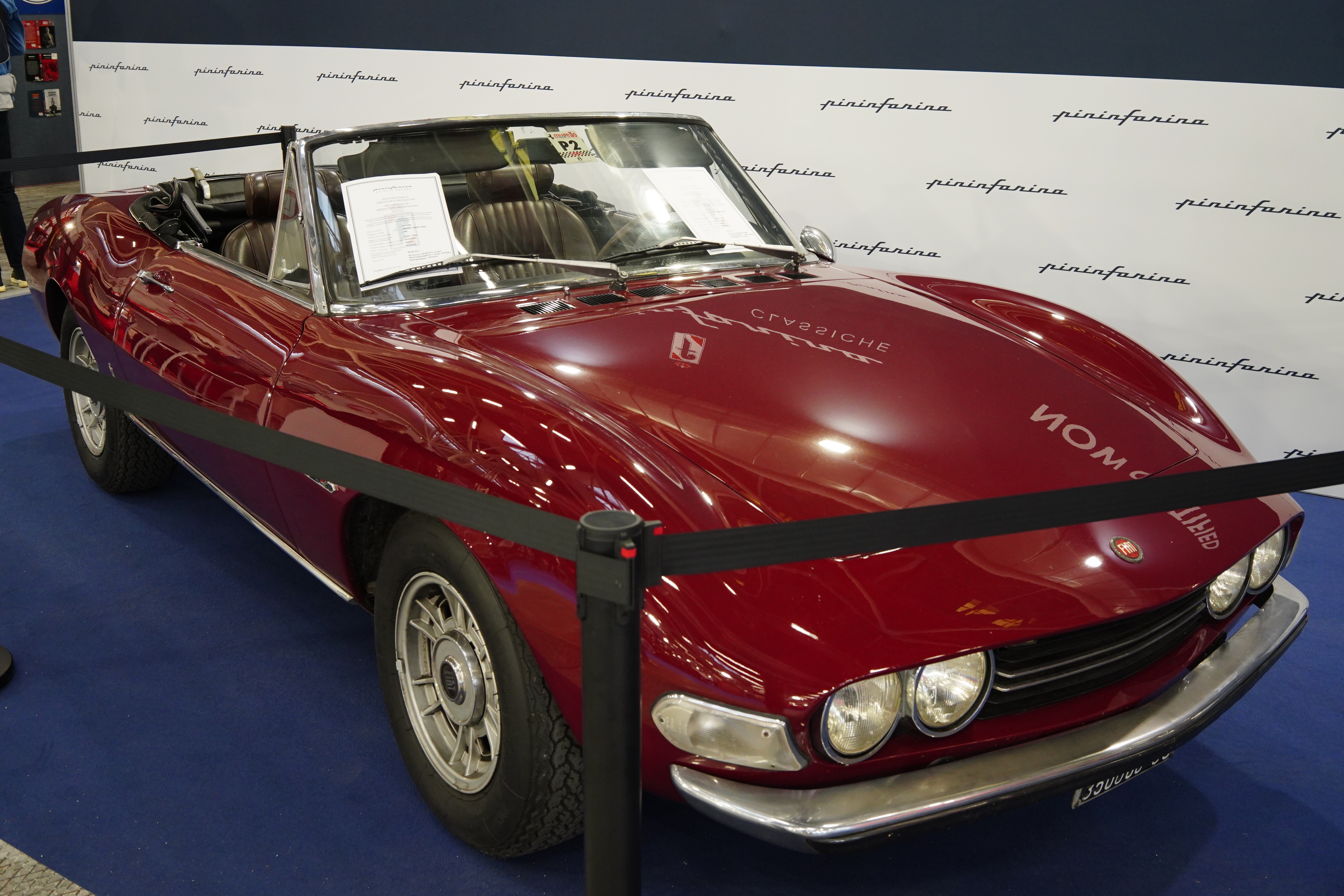
Fiat Dino Coupes and Spiders

Fiat, in collaboration with Ferrari, agreed to build a certain number of “Dino” Coupes and Spiders with the Ferrari V6 engine for homologation purposes. Never officially imported into the U.S., they were built in limited numbers during the late ‘60s-early ‘70s. They have always been a favorite of mine, and I’m lucky if I see one a year in the States. Here, I saw EIGHT.

1968 Dino Spider in red
1968 Dino Coupe in red, paint was bad, asking €23,000
Yellow Dino Coupe
Blue Dino Spider, asking €97,000

1967 Dino Spider in red, asking €115,000
Yellow Dino Coupe, asking €57,000
Silver Dino Coupe
Dark red Dino Spider with a brown interior
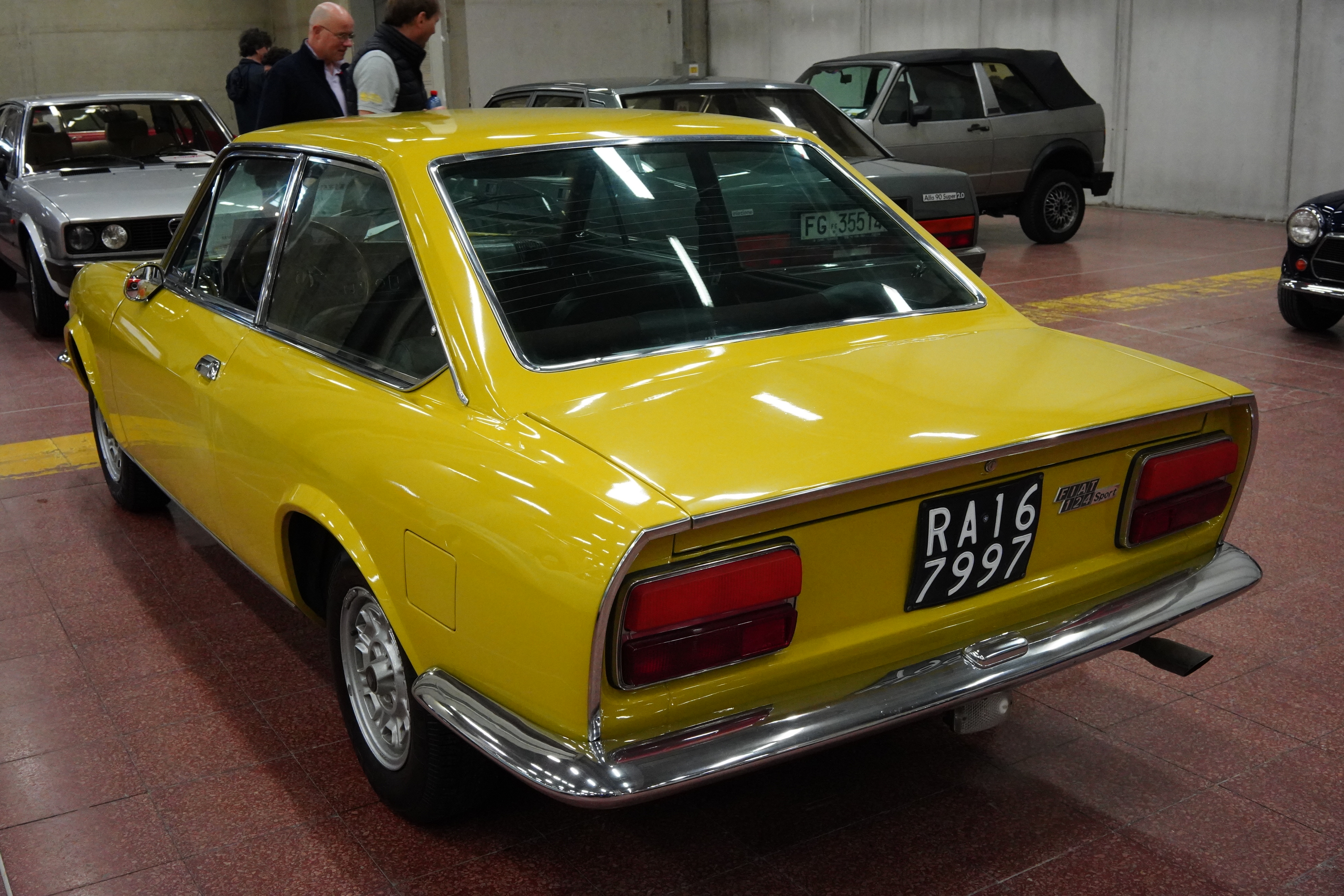
Fiat 124 Sport Coupes

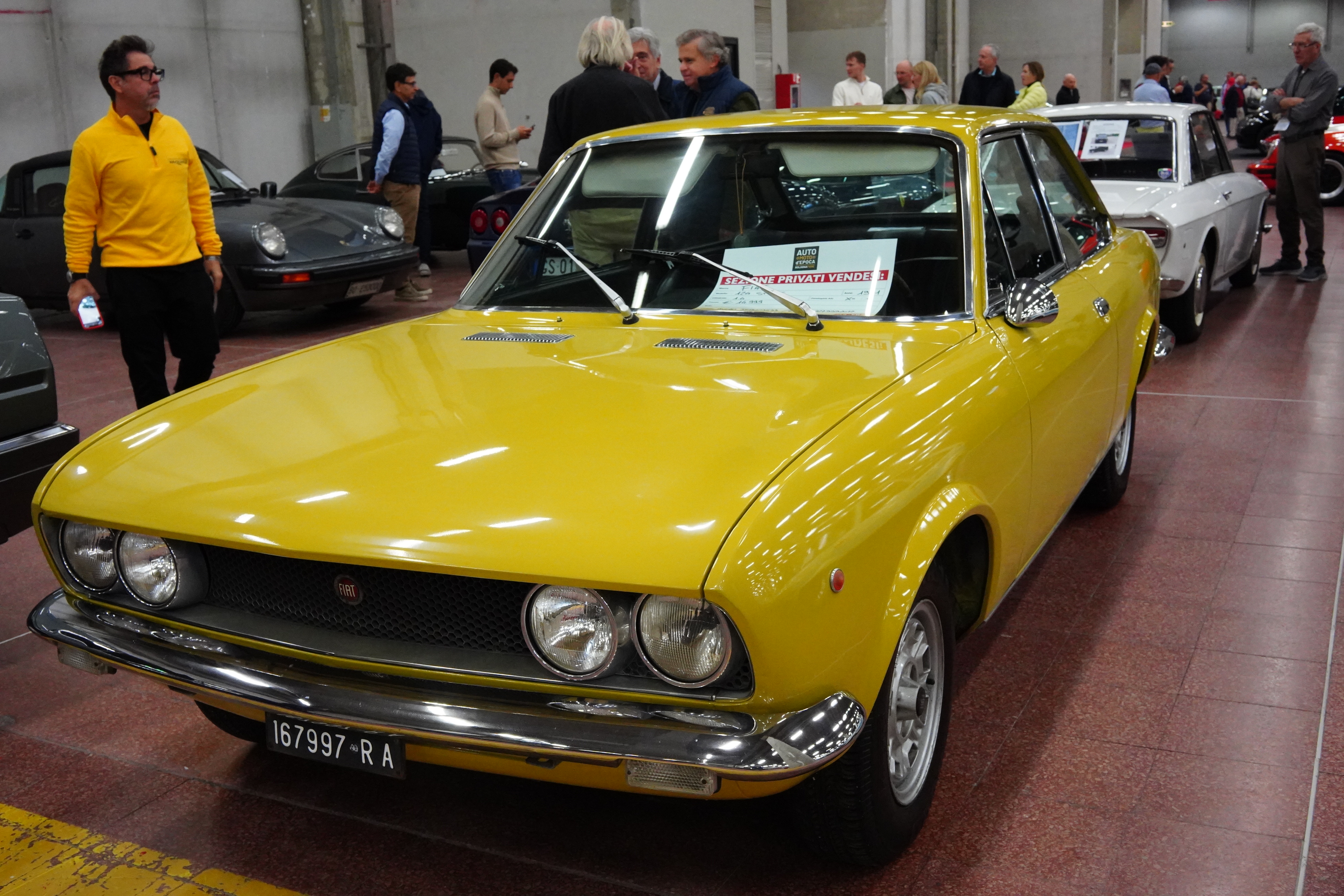
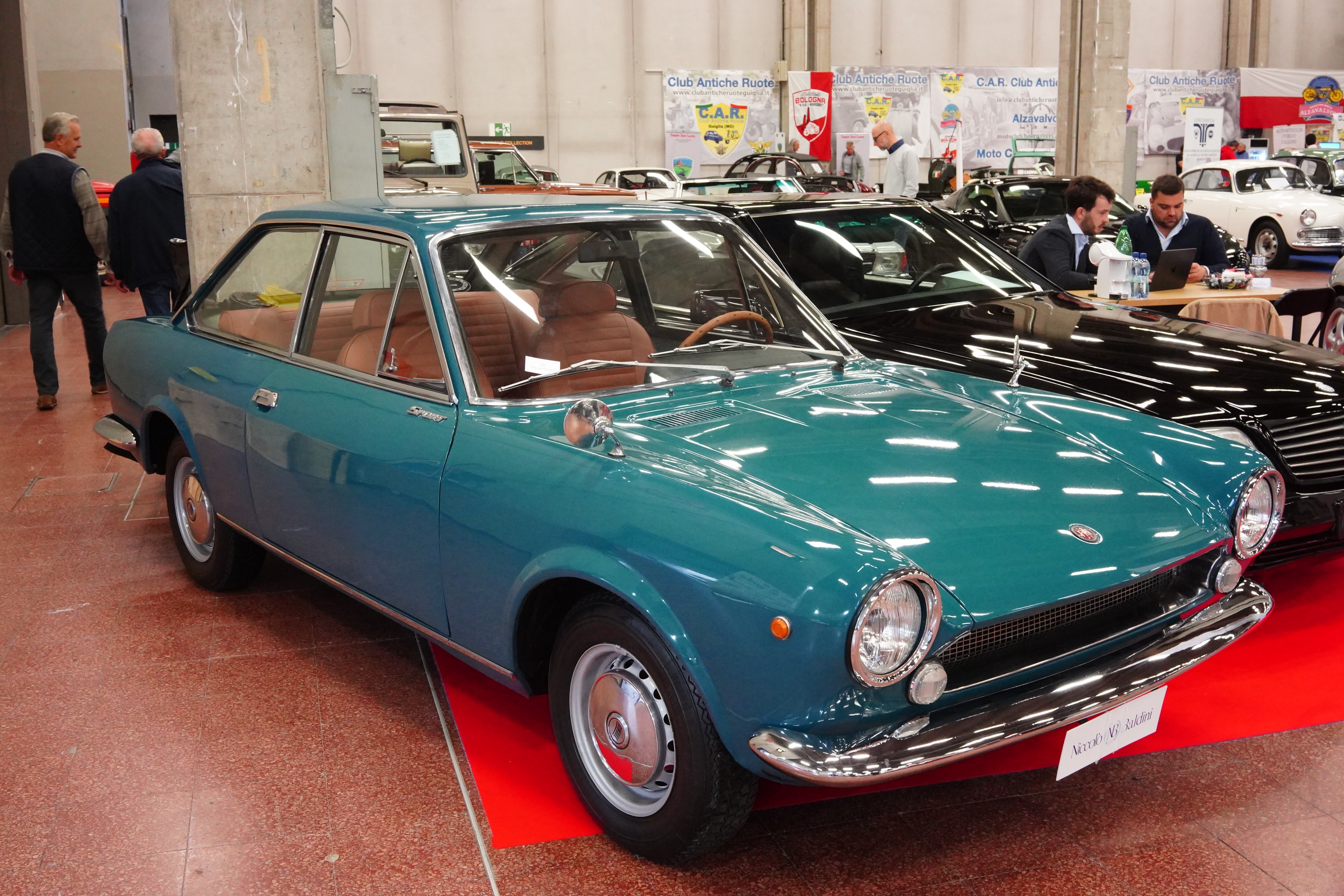
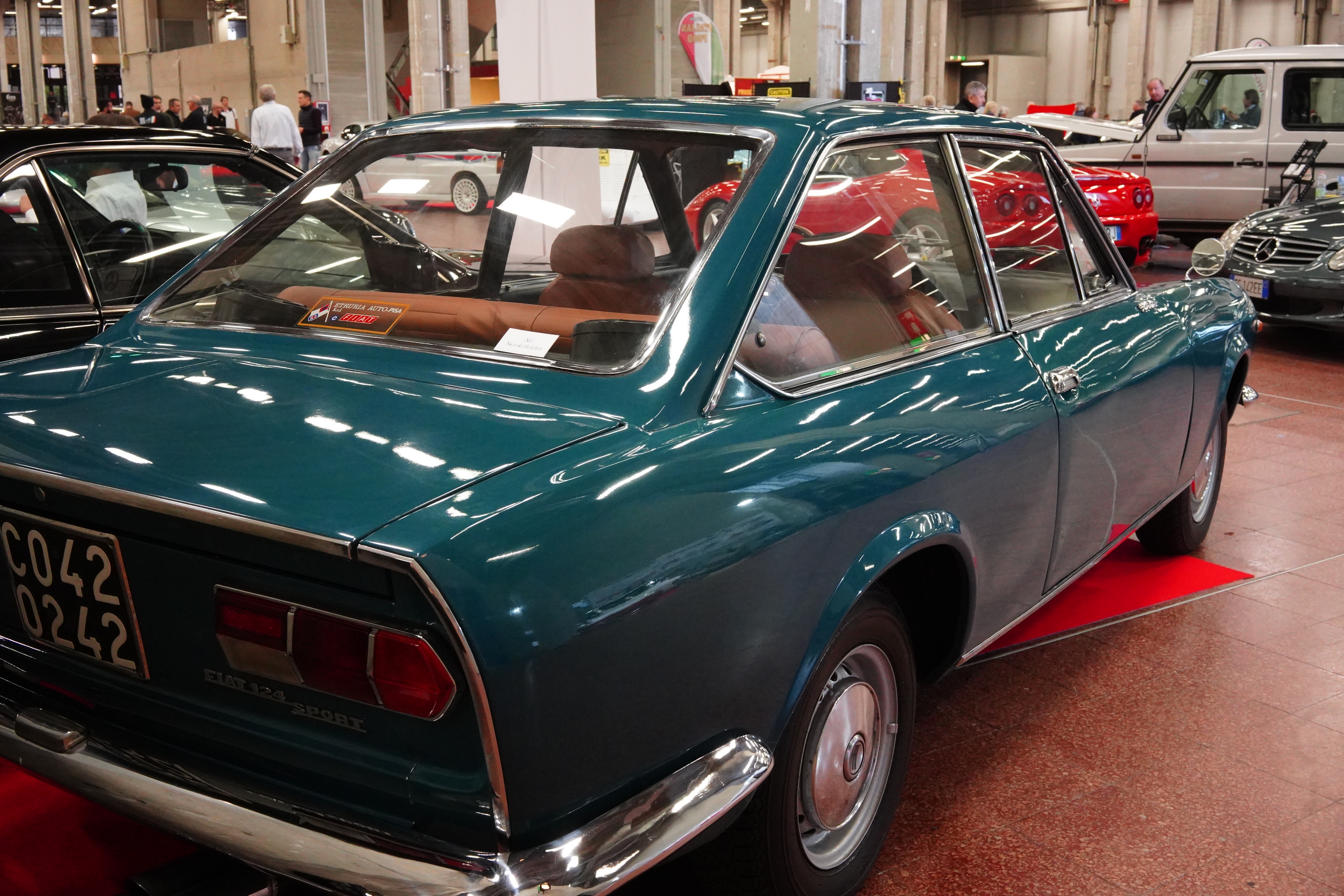
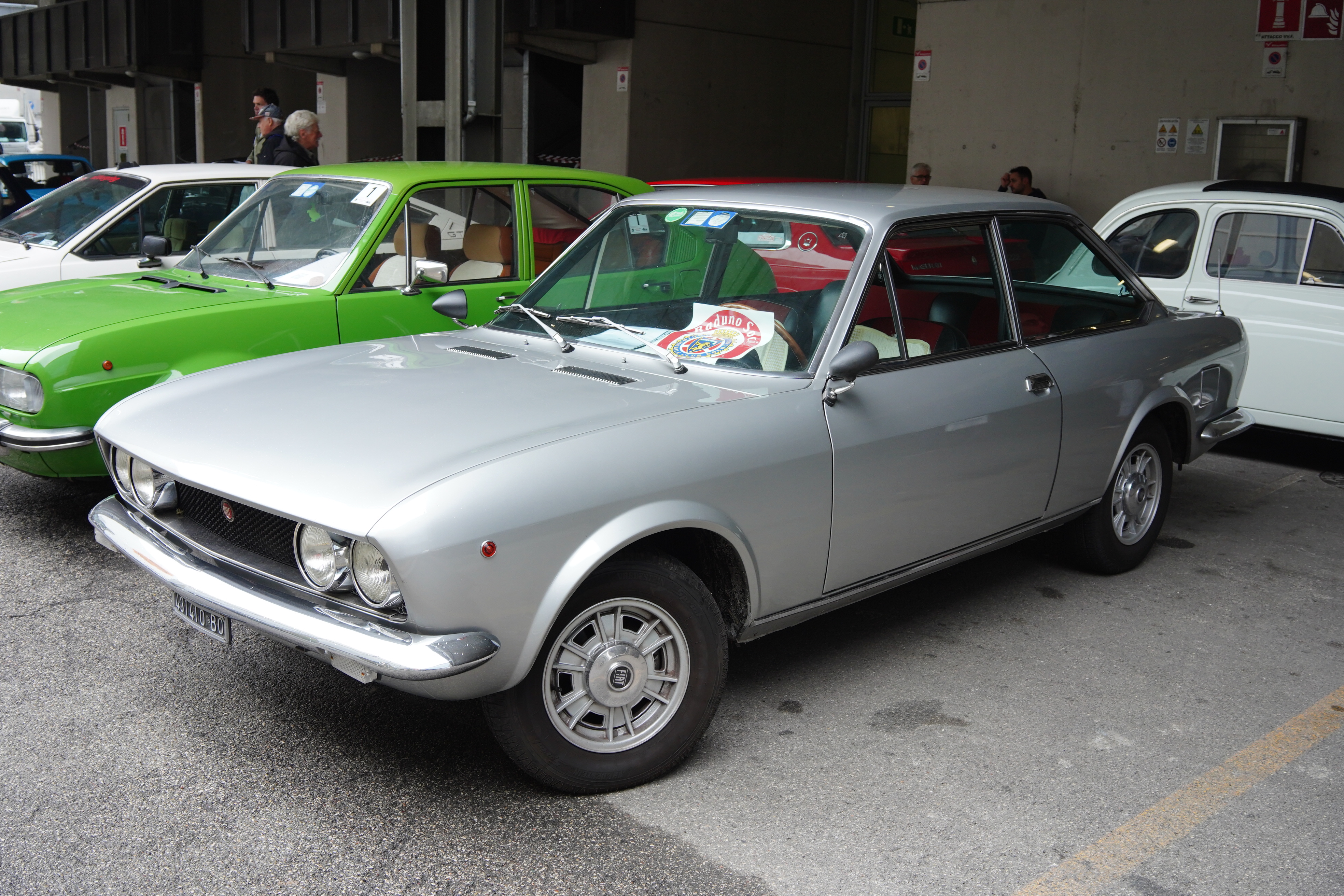
Long a favorite, as I had one in college, which ignited this Italian love affair. They have all but disappeared from the roads here, but there were 3 at the show, and two were for sale at seemingly fair prices.

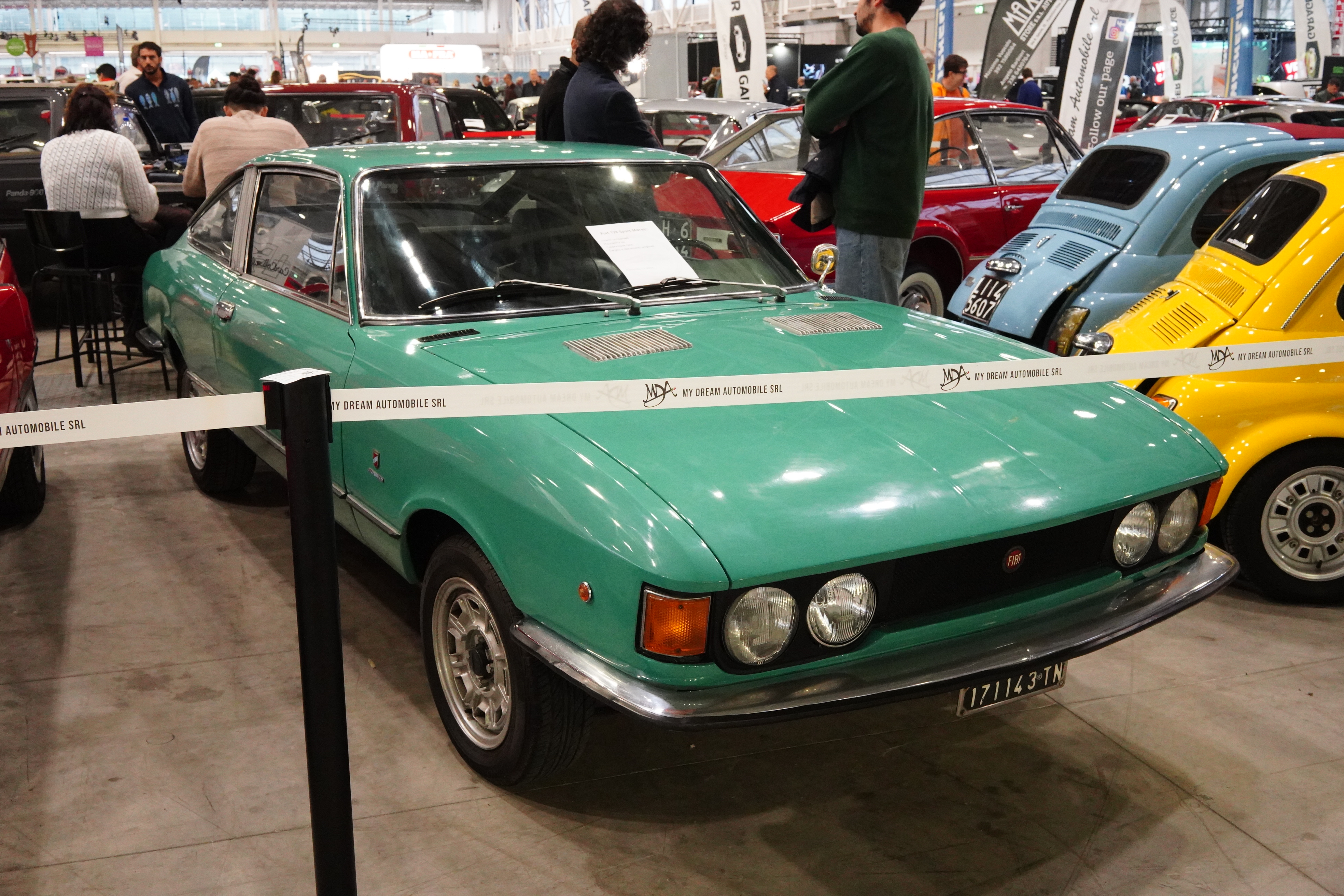
This 2nd-generation 1971 Coupe had an asking price of €16,999. It looked sharp in yellow over black with its alloy wheels, but with the hood up, the yellow in the engine compartment didn’t match the exterior paint. The car was still for sale when I walked past it on Sunday.
This 1968 Coupe (1st gen car, note the single headlamp per side compared to the yellow one) had what looked like a restored interior, with headrests on the front seats. The owner was asking €13,900, a bit less than the yellow car.
This 2nd-gen silver car was displayed outside, and I presume that it was there as part of a Fiat club.
Fiat 130 Coupes
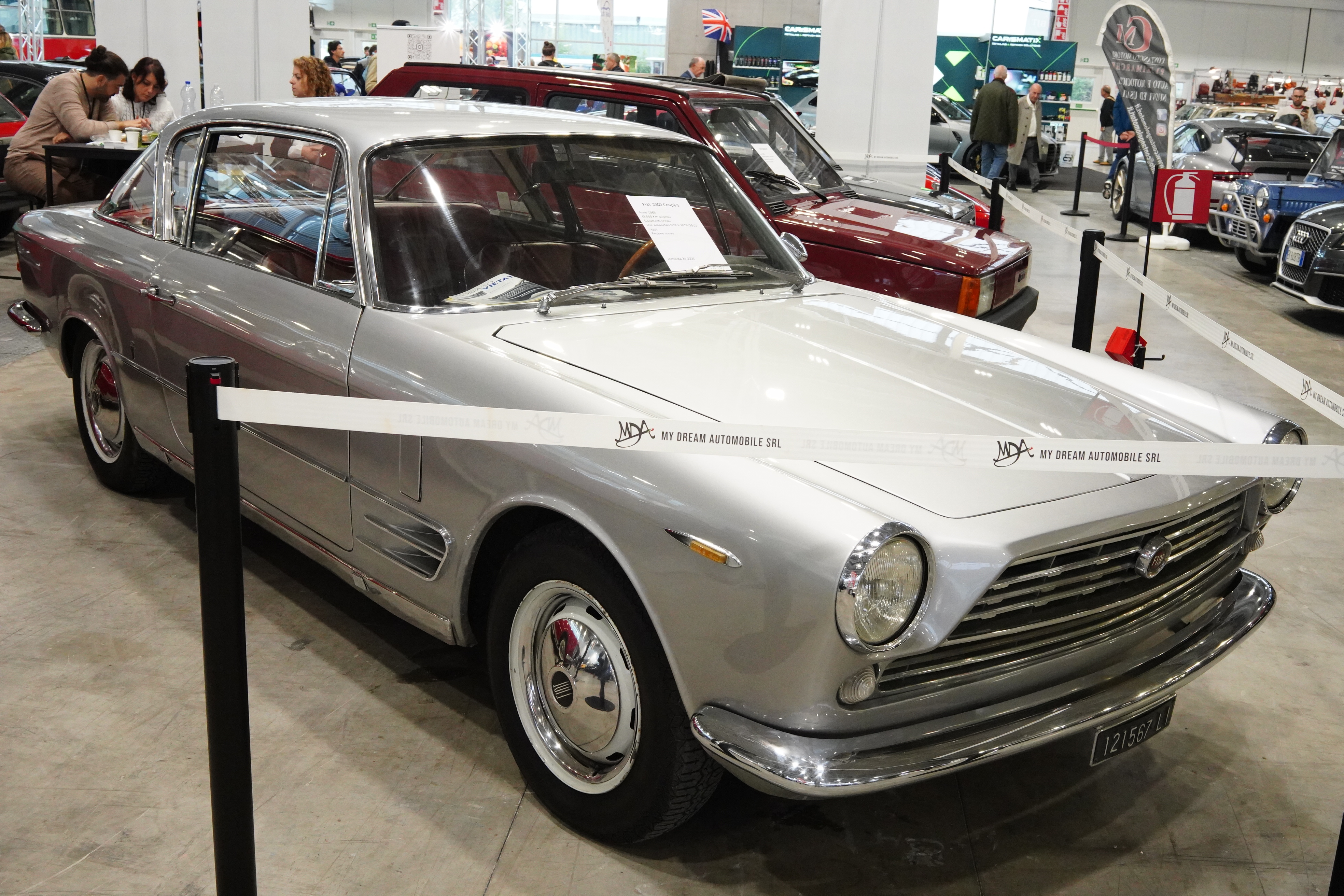
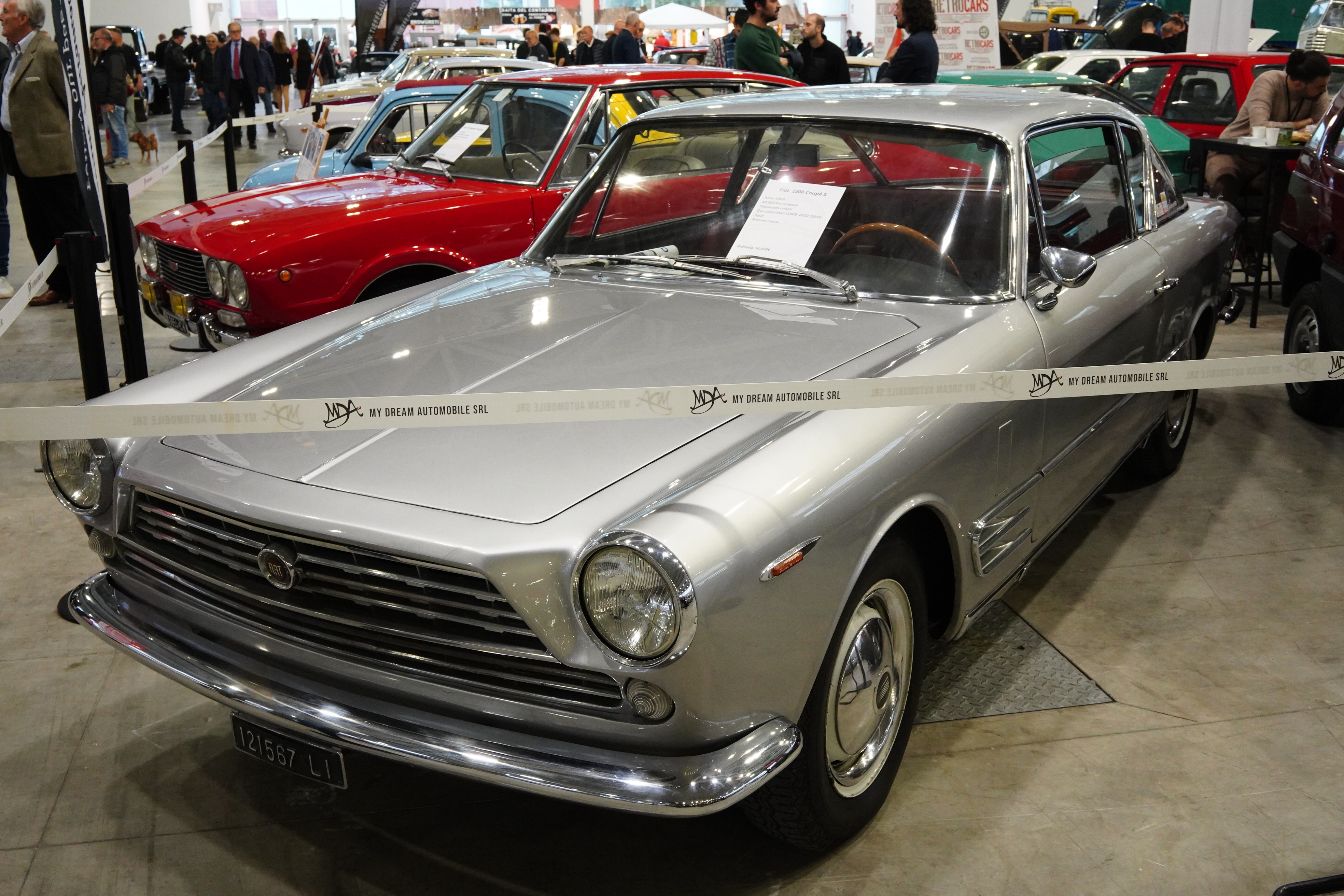
Looking somewhat like the 124 Coupe’s big brother, these V6-powered cruisers pop up once in a while on Bring a Trailer. There were two at the show.


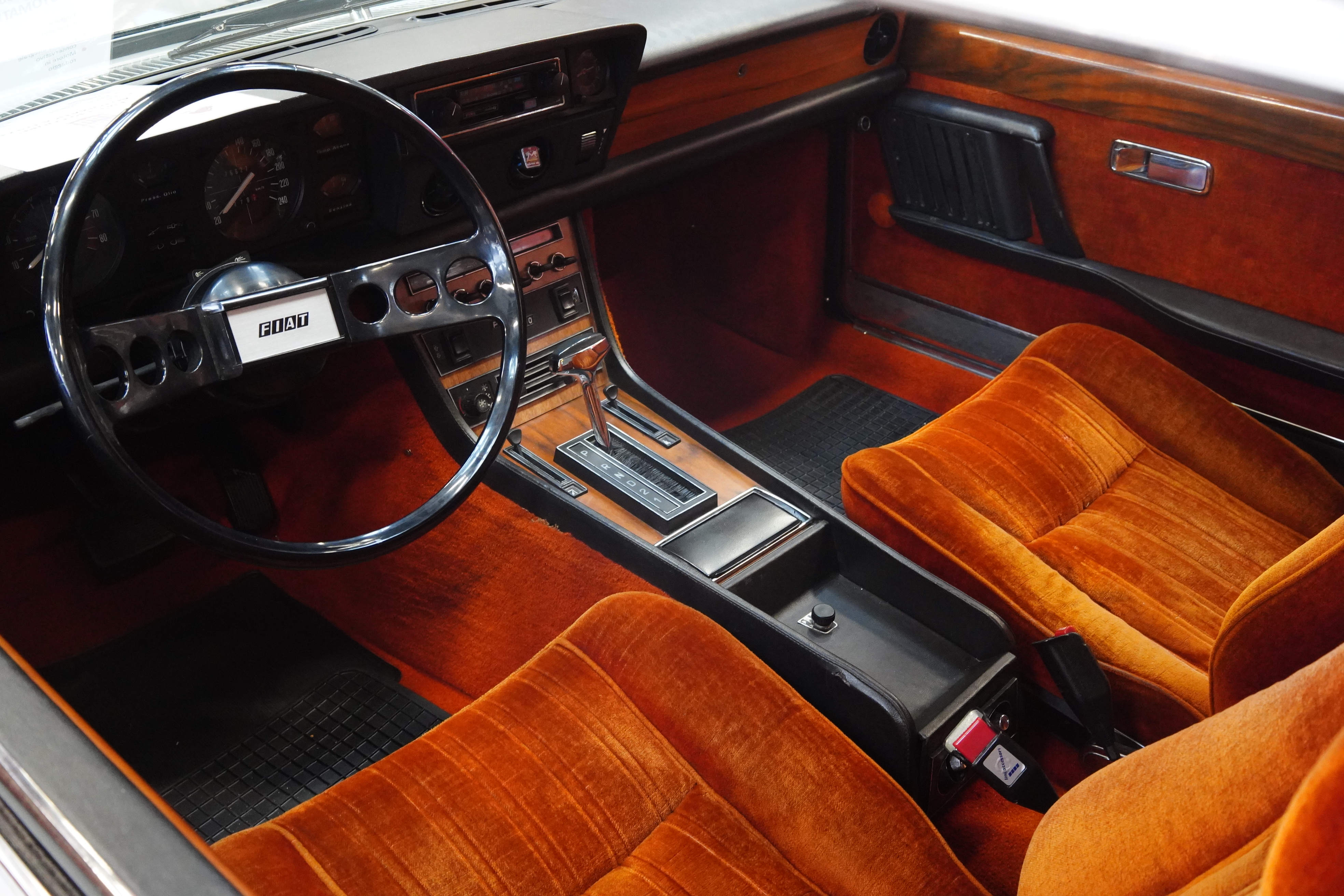
This 1969 Fiat 2300 Coupe had an asking price of €34,000
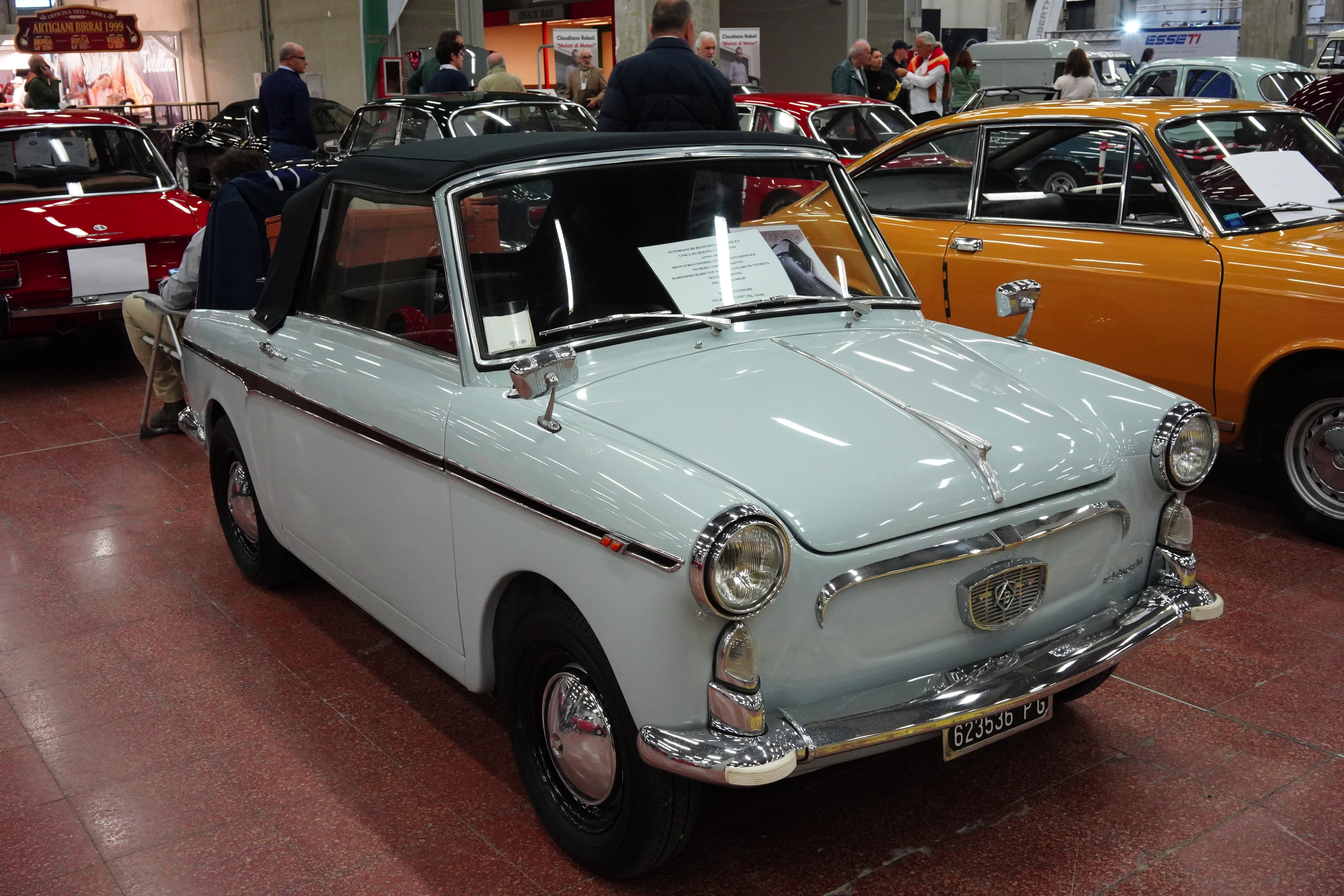
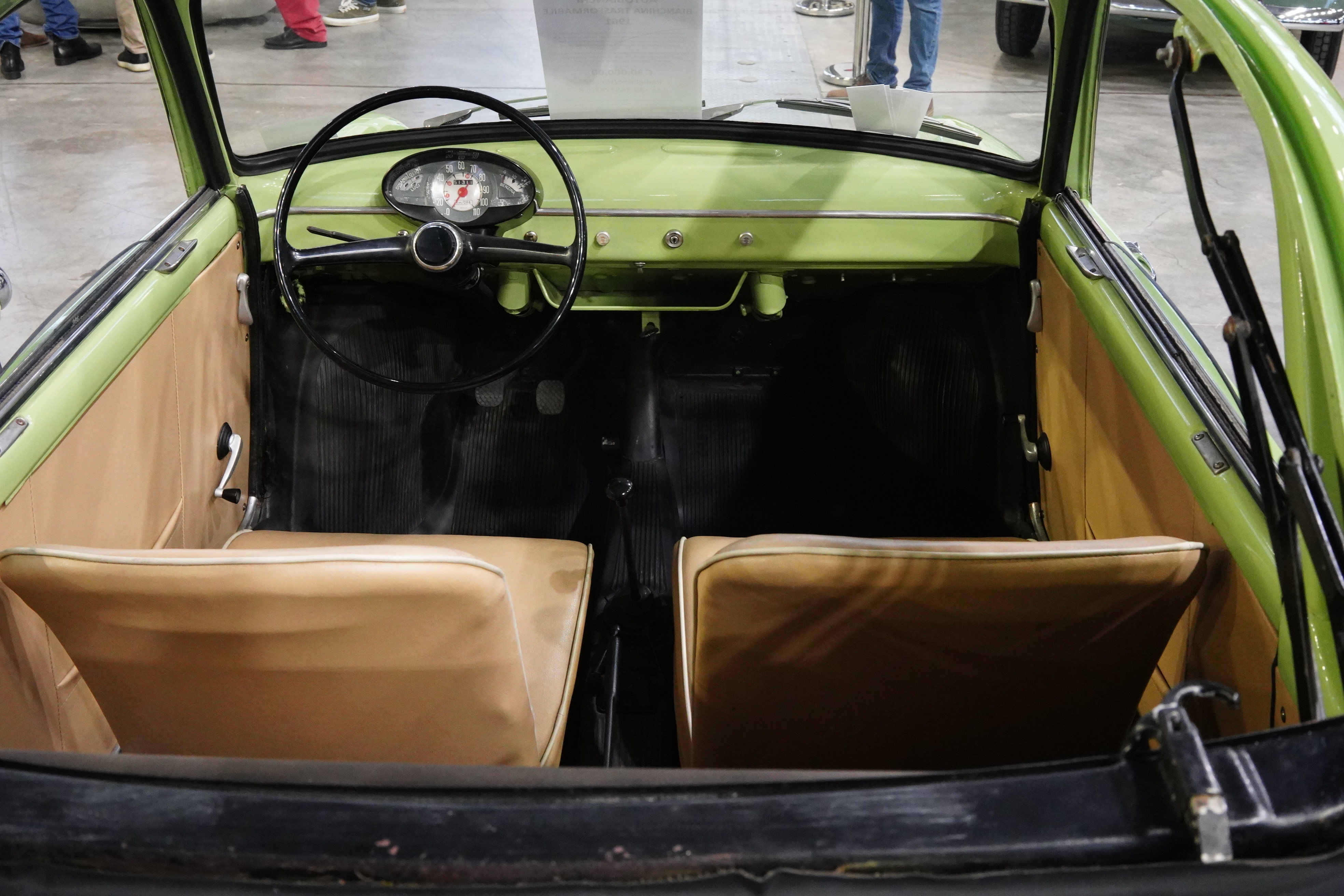
I call this 1955 Fiat 1100 “Transformabile” the ‘Eleanor Roosevelt car’, because there is a photo of her in the driver’s seat of one. The vendor was asking €57,500 for this one.

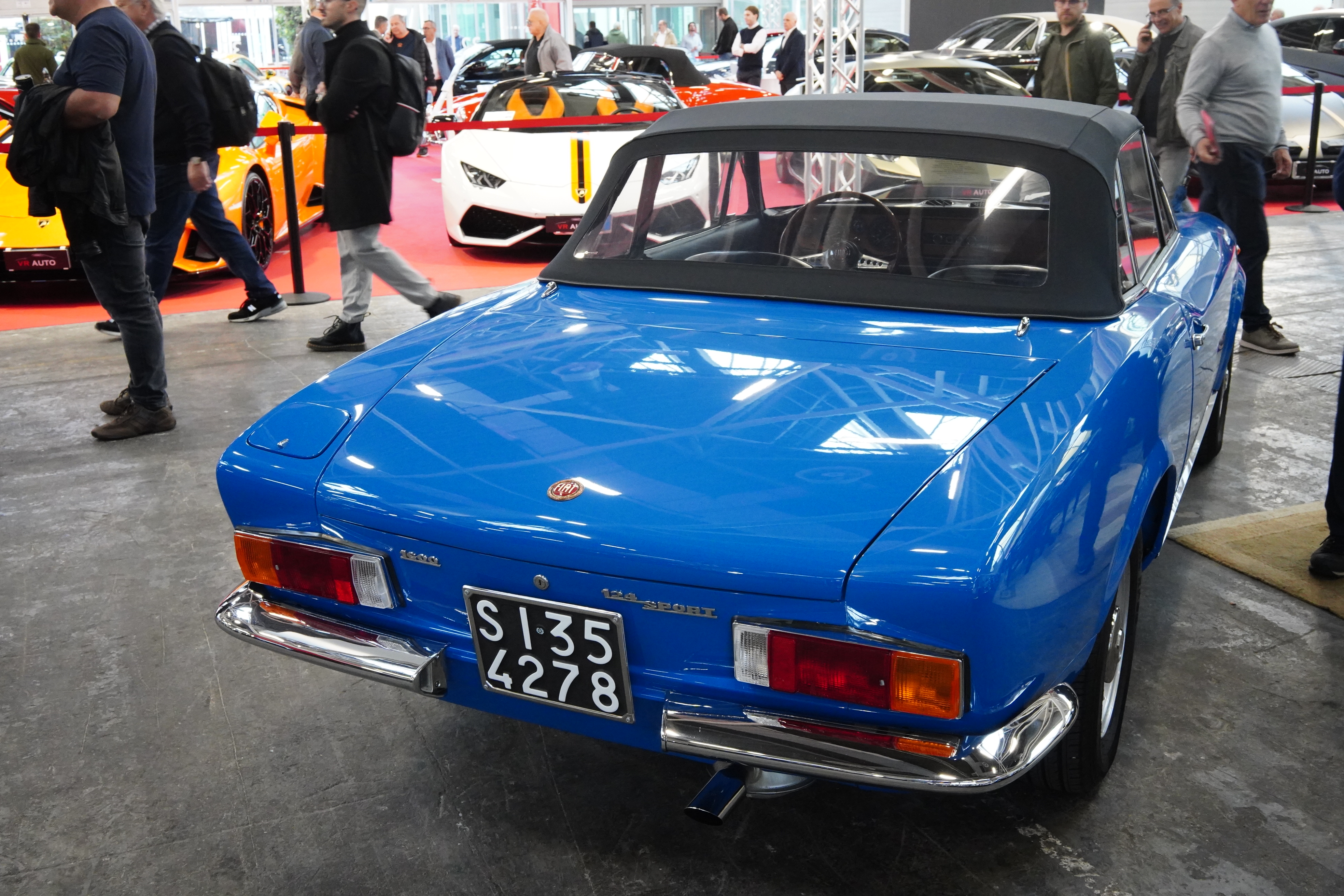
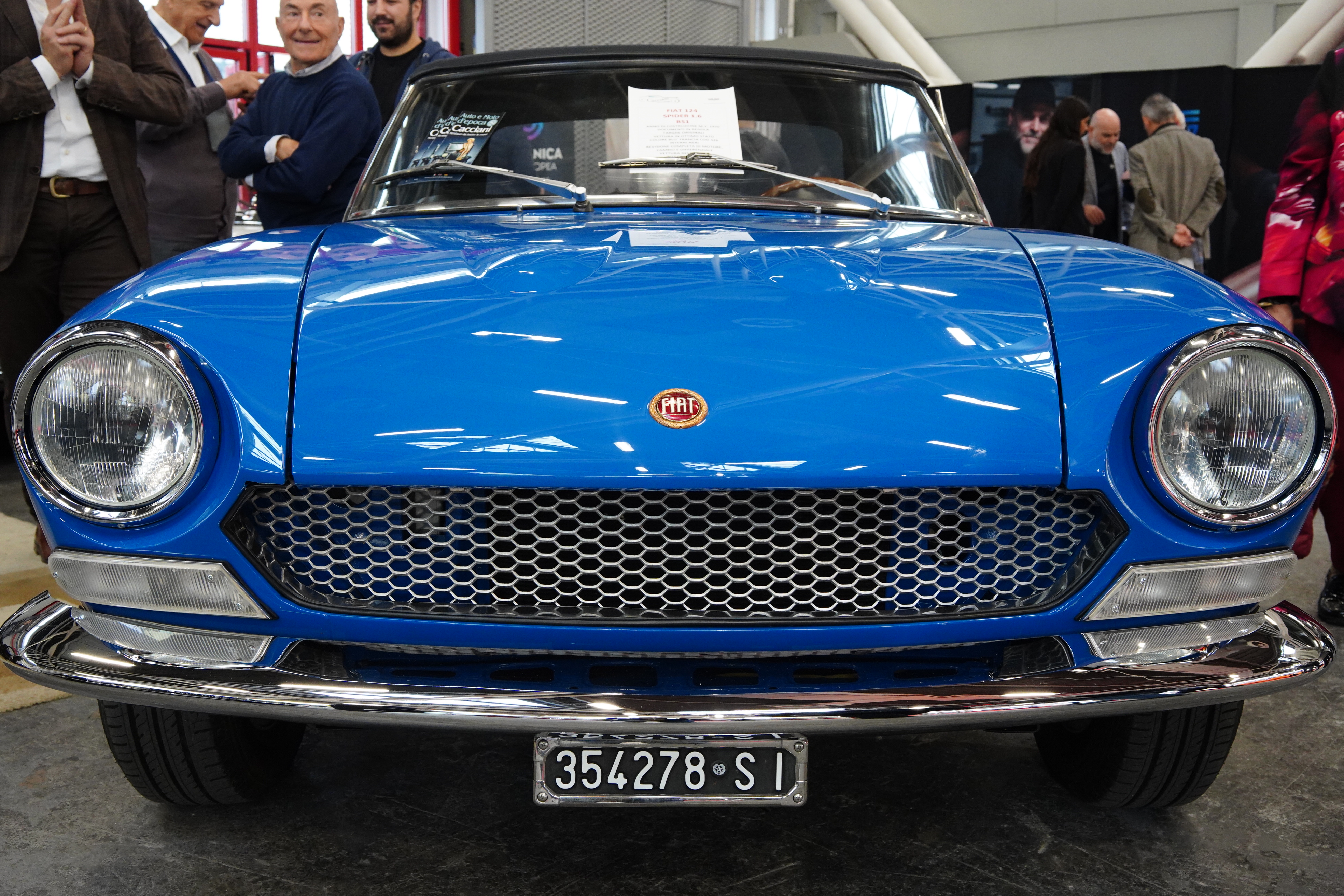
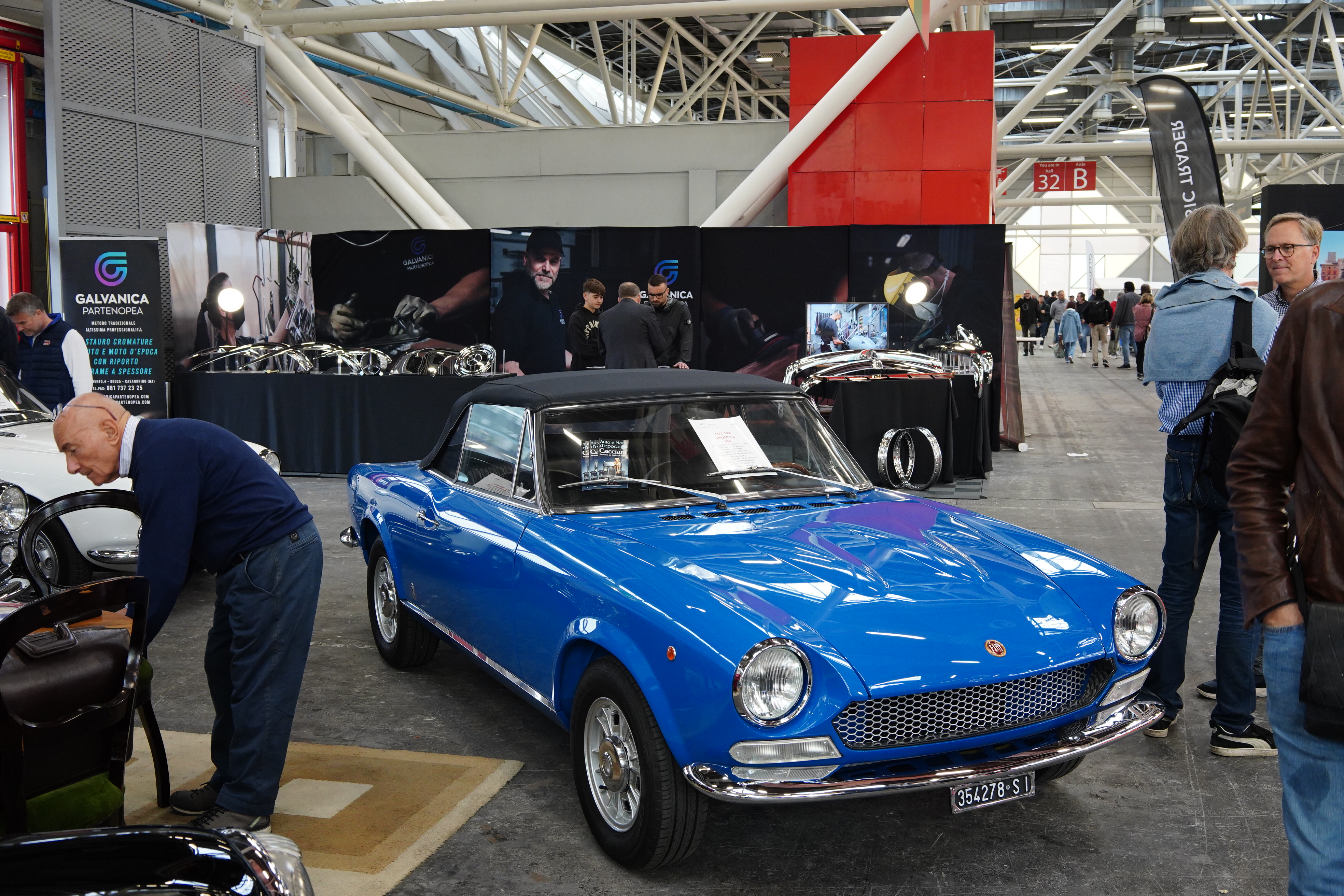
Fiat 124 Spiders were thin on the ground at this show, and understandably so, since out of a total production of 197,913 vehicles (1966-1985), 170,720 were imported into the U.S.! Still, a few interesting examples were there.

This blue Spider looked impeccably restored, and featured the dual carbs under the so-called ‘turtleback’ air cleaner.
This presumably authentic Abarth 124 Rally car had an asking price of €105,000.
This ’69 Spider was claimed to be one of only 4 prepped by the factory for competition.
A ’68 Spider in yellow. Note the original style grille with horizontal bars.

I’ve read about Fiat 8Vs, but had never seen one in the metal before this show. Interestingly, Fiat gave it that name under the mistaken impression that “V8” had been trademarked by the Ford Motor Company.

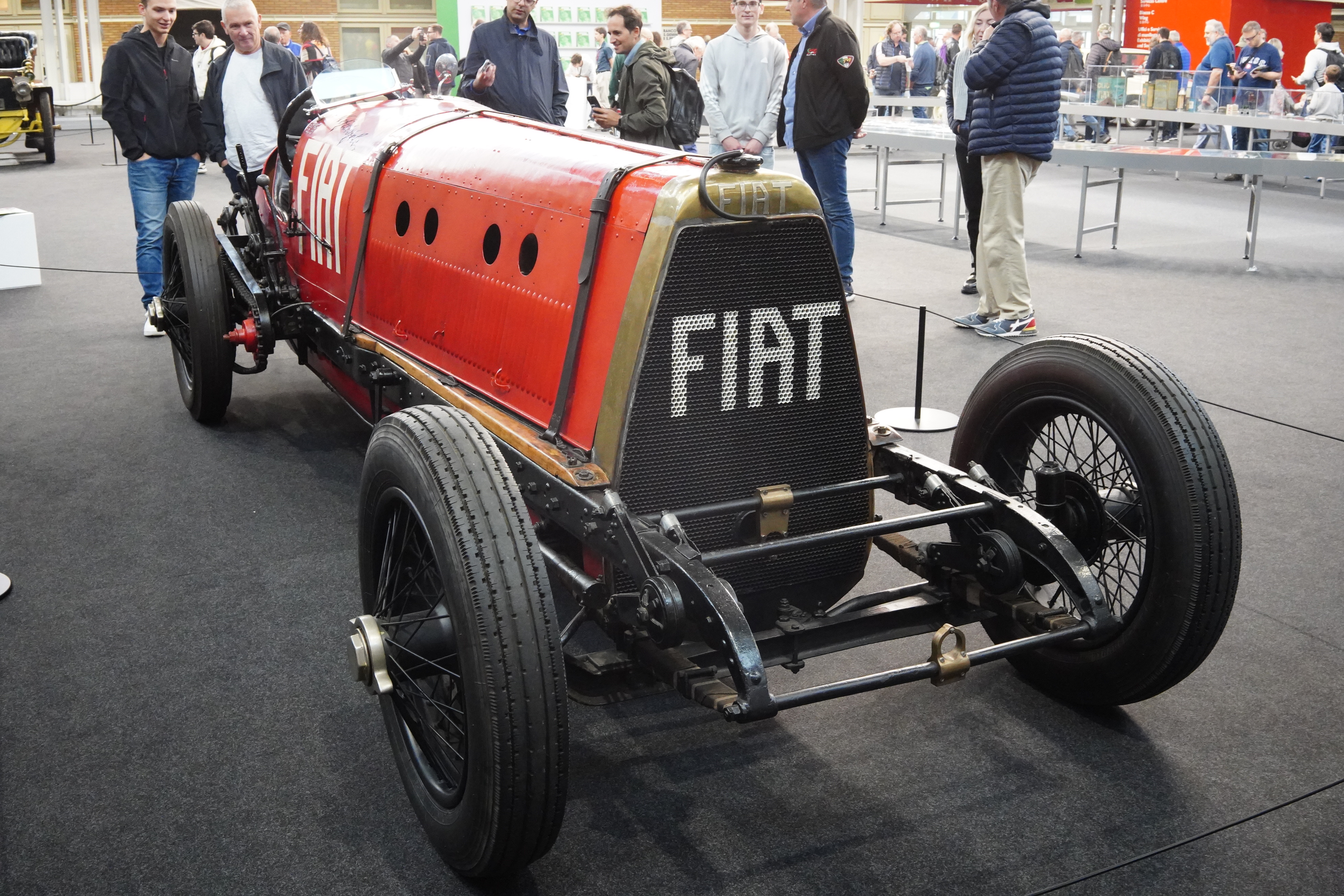
This early 20th century Fiat racer was on display in the Center Hall.
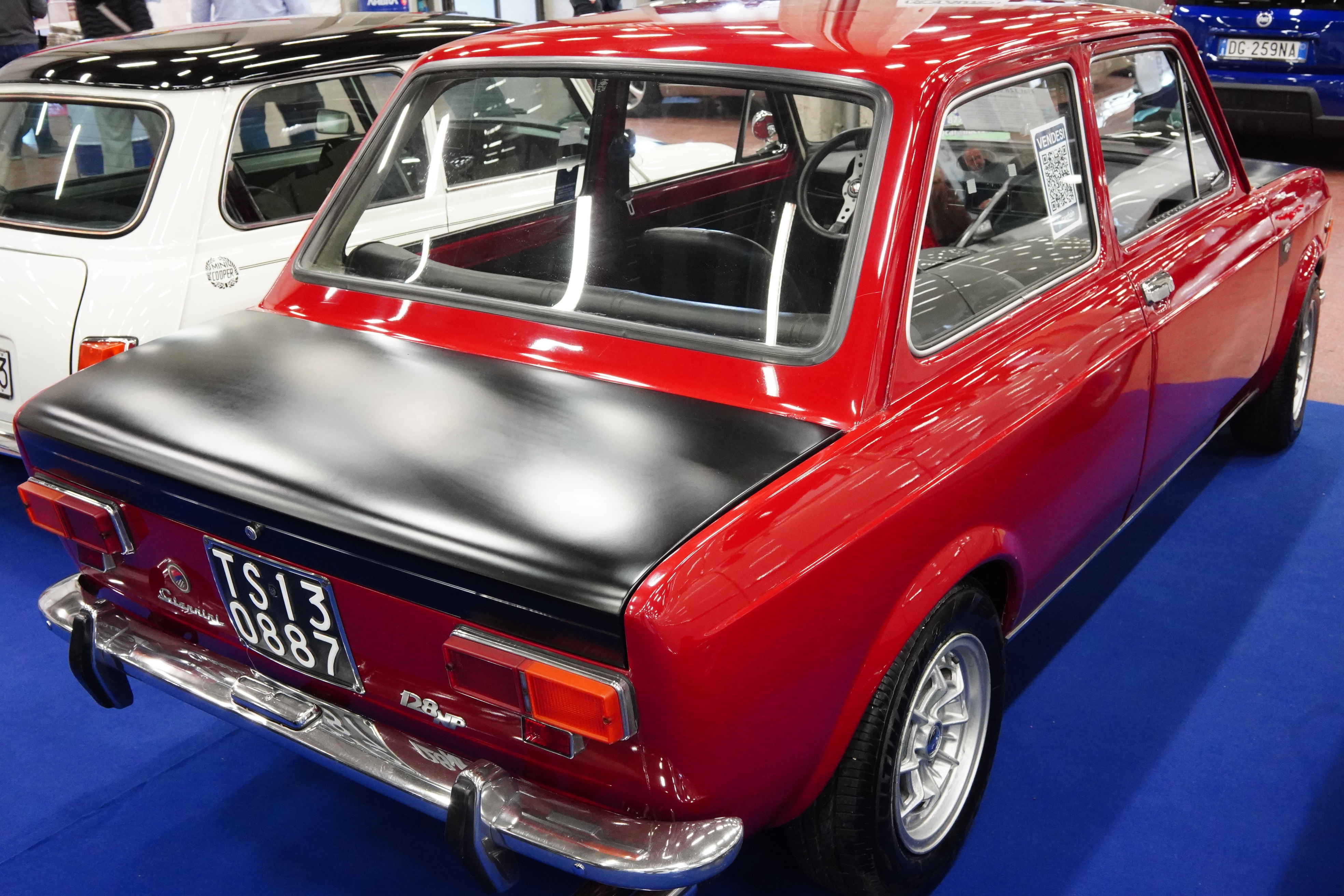
This Fiat 128 2-door sedan looked racy with its blacked-out panels. It sold in 2 days.

The Fiat Multipla is considered by some to be the first “minivan”.

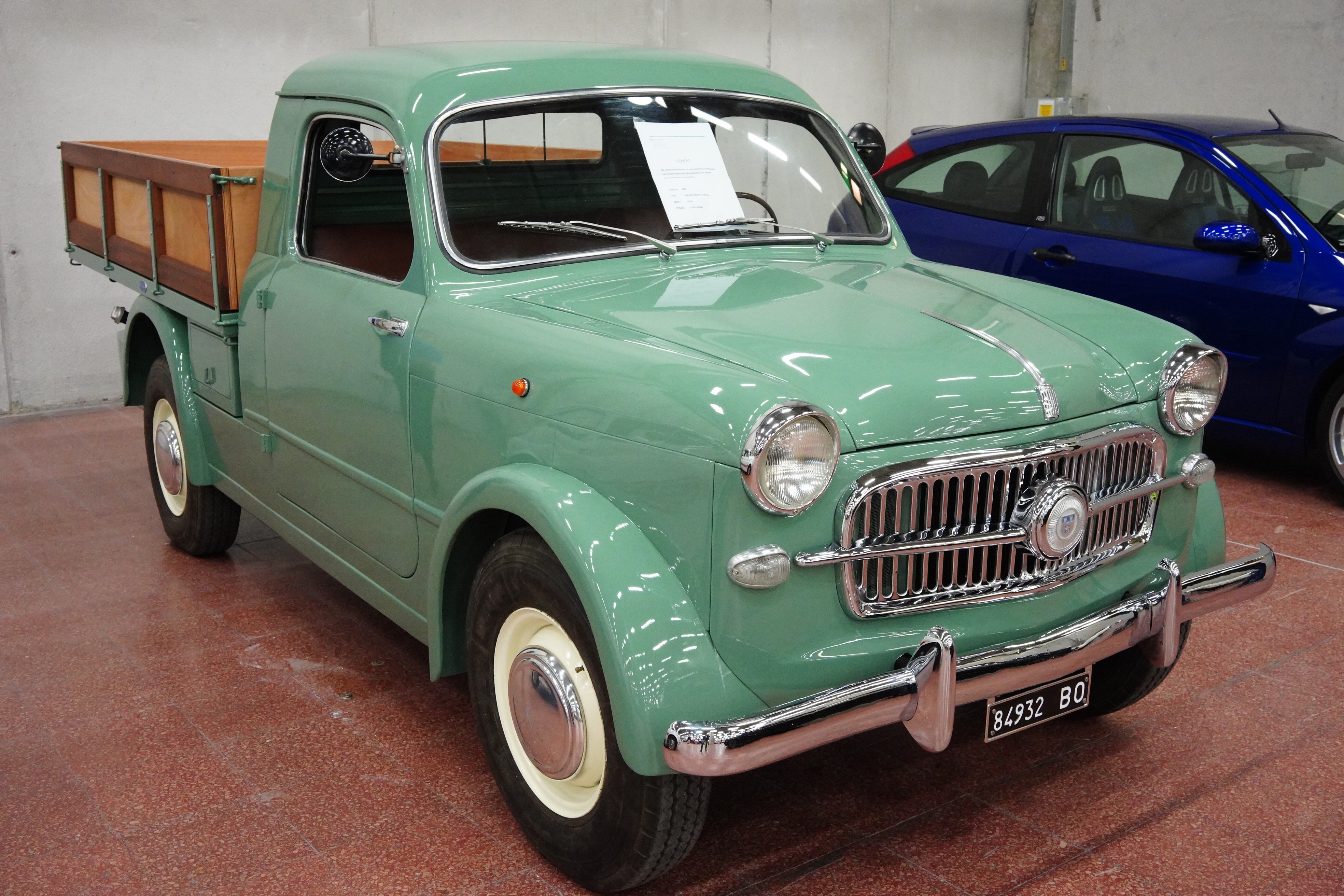
This Fiat pickup looked like a conversion job, although I’m not sure.

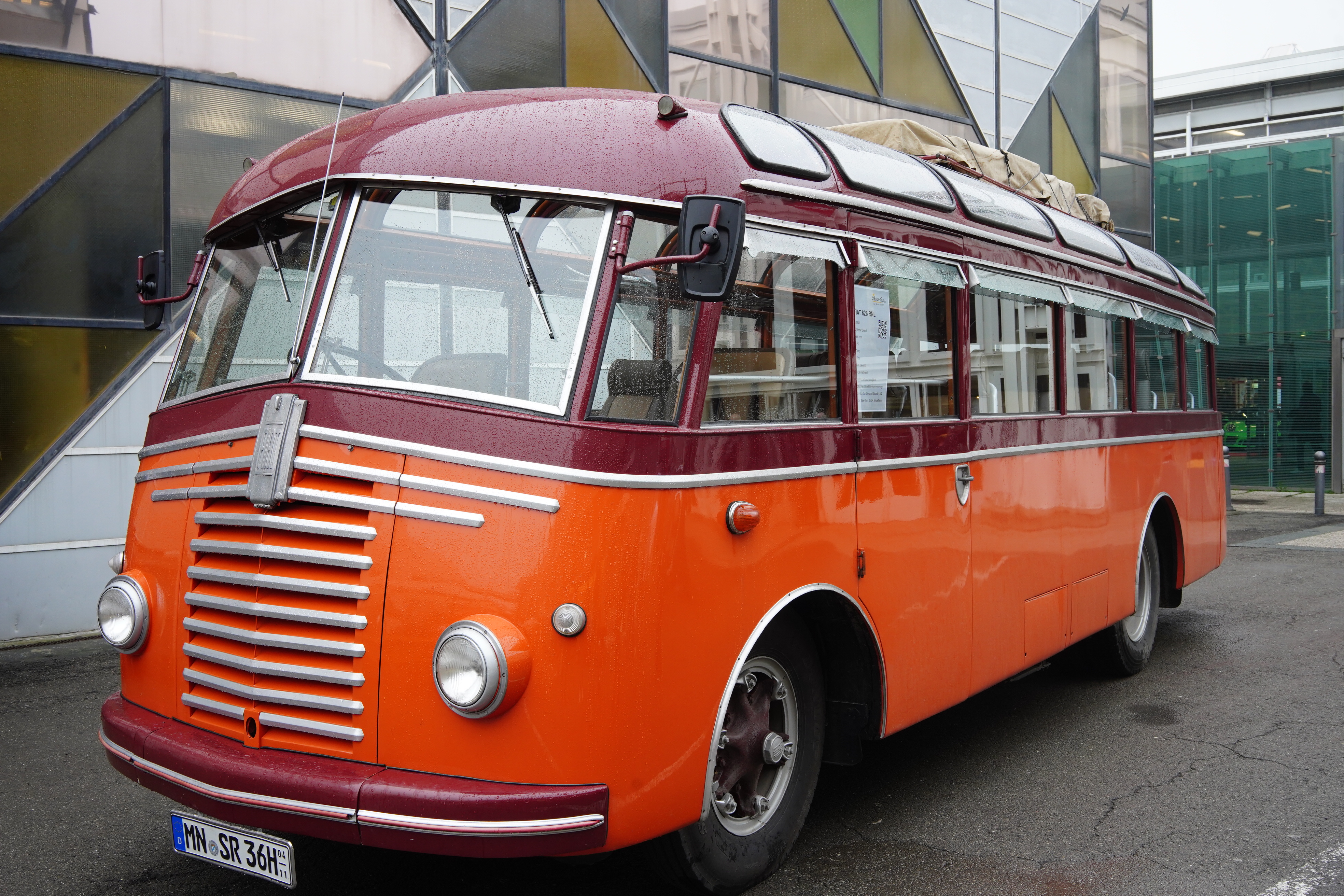
And you thought that Fiat only made small vehicles? This bus was plenty big. It had a 6-cylinder diesel engine.
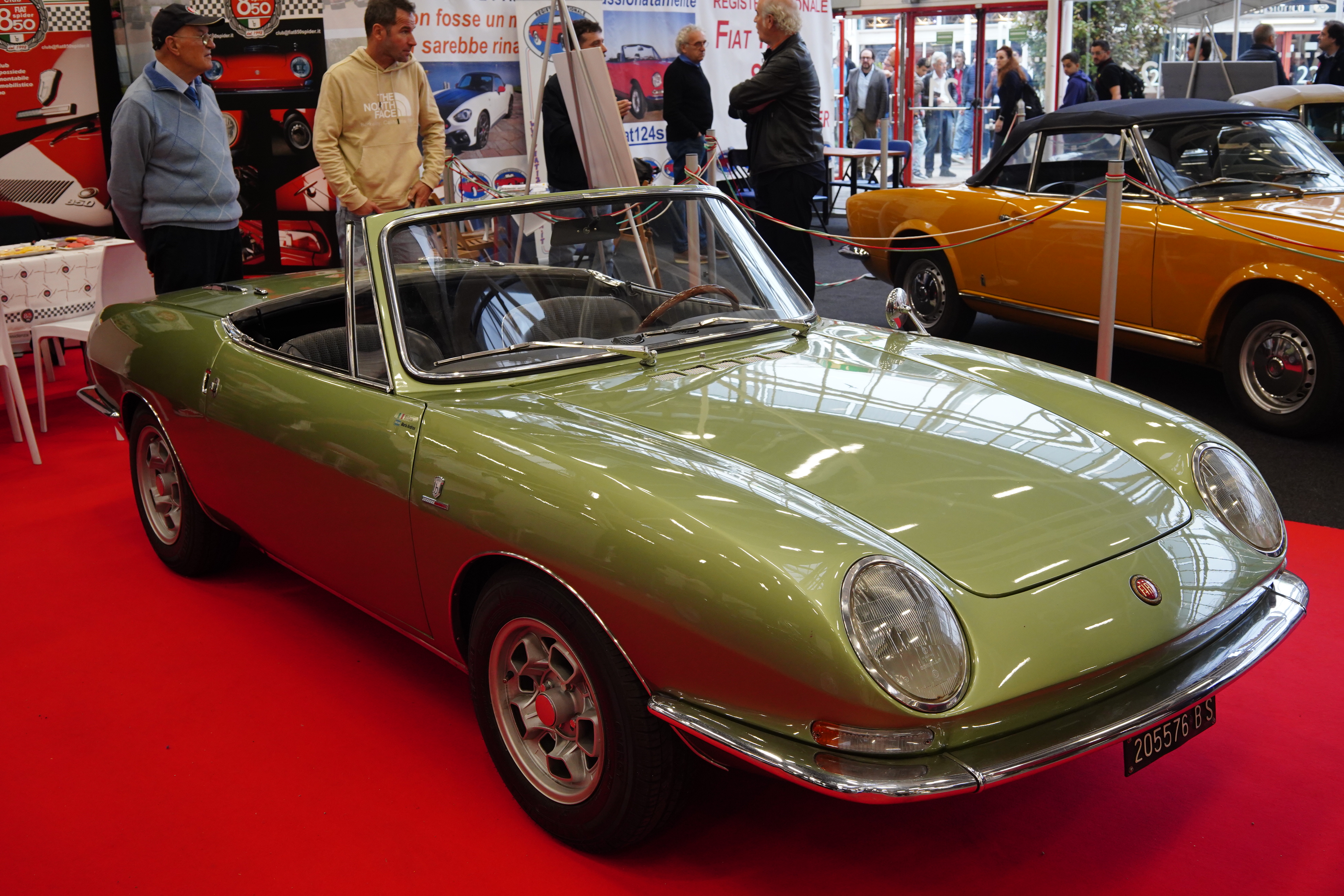
This Fiat 850 Spider was likely the nicest one I’ve ever seen. It was an early model as noted by its flush headlights.
A Fiat Ritmo Abarth. The Ritmo was Fiat’s answer to the successful VW Golf (Rabbit in the U.S.).

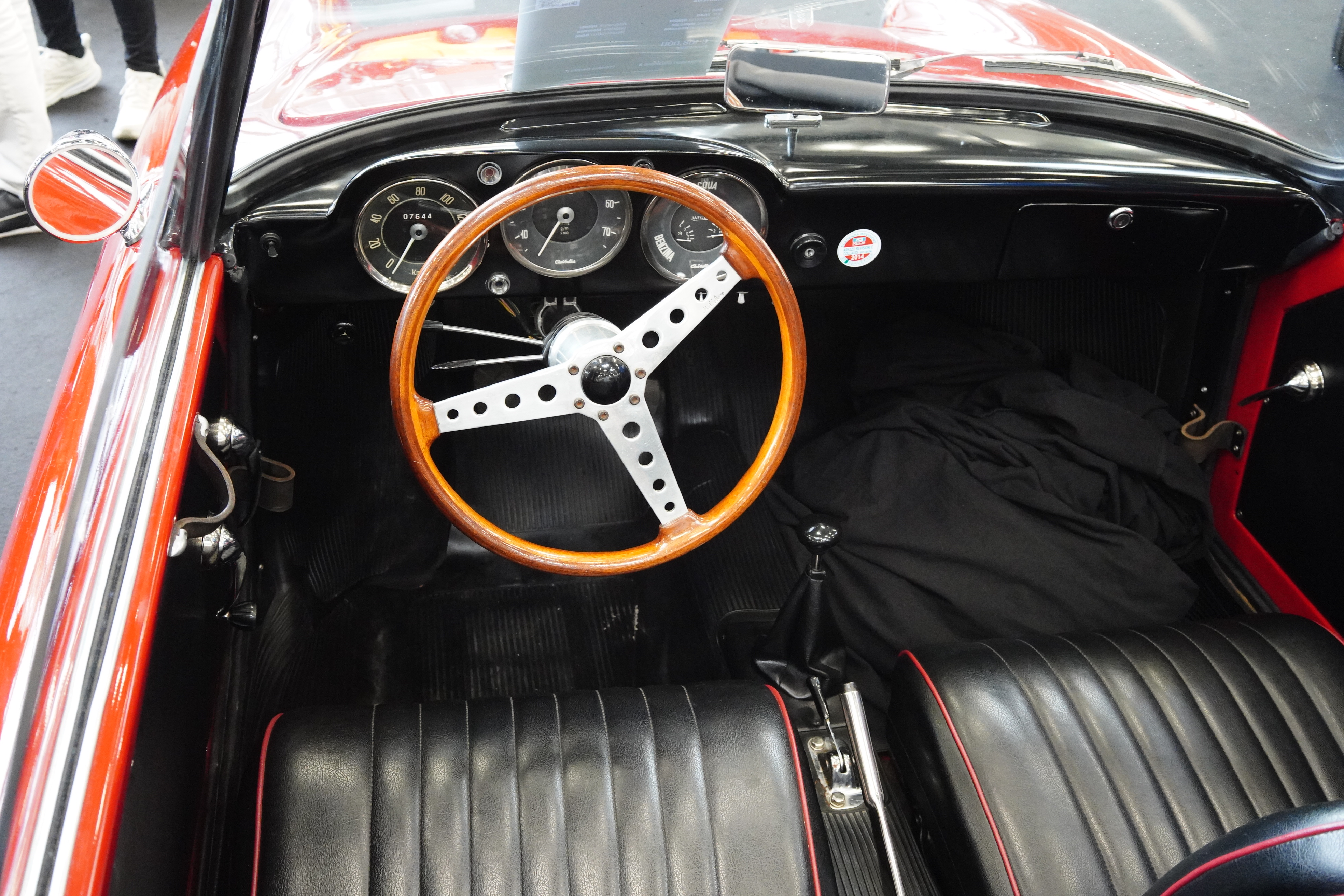
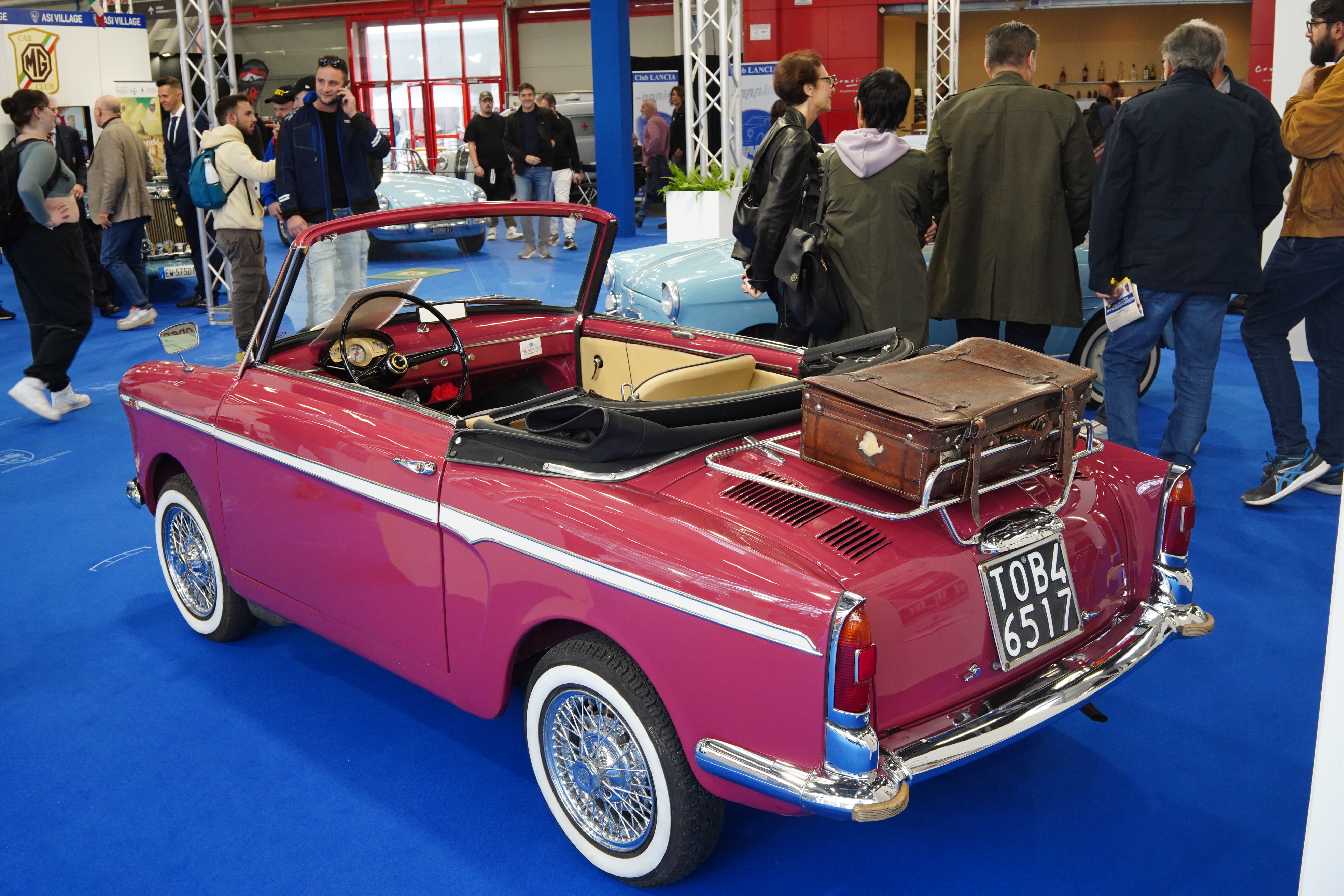
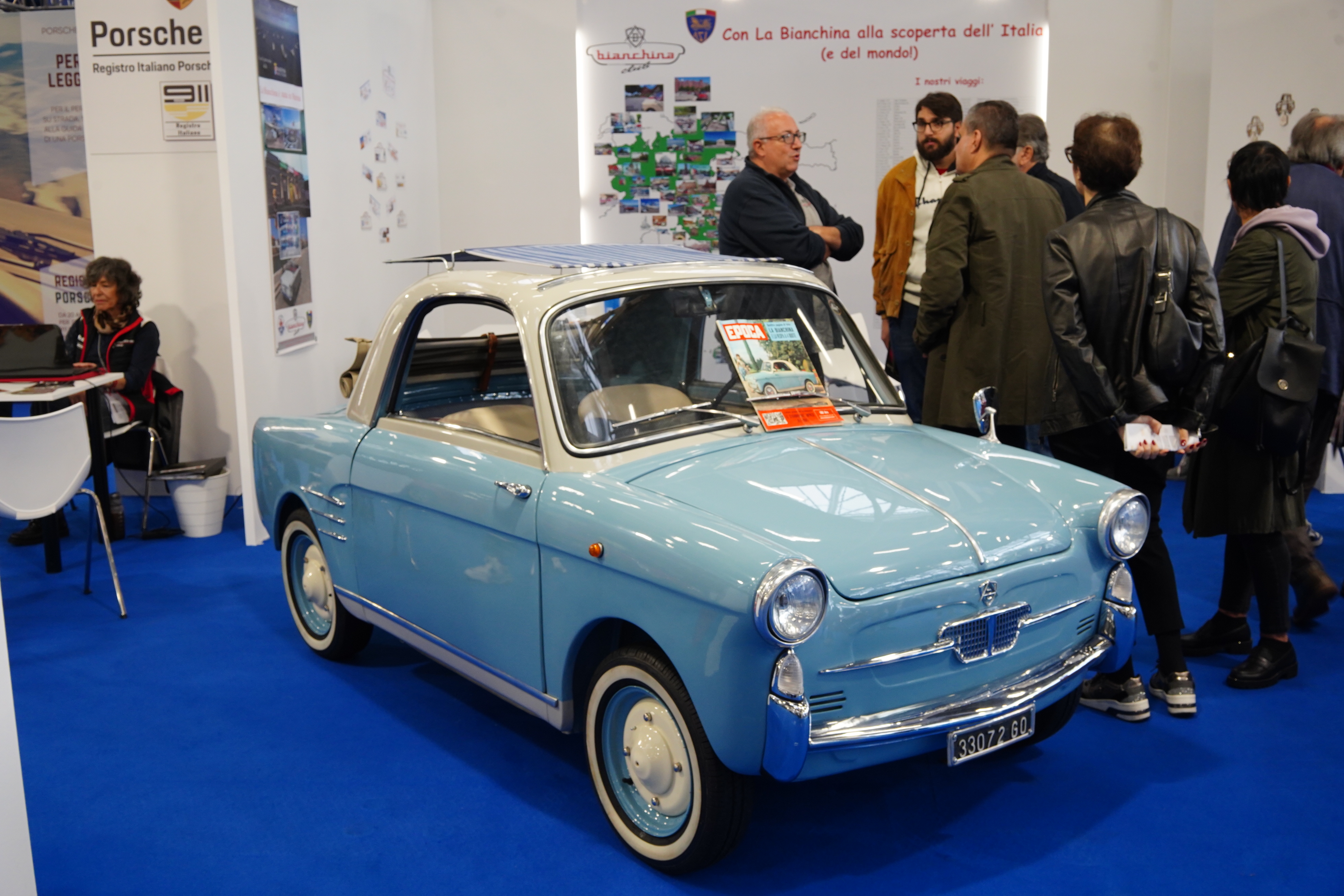
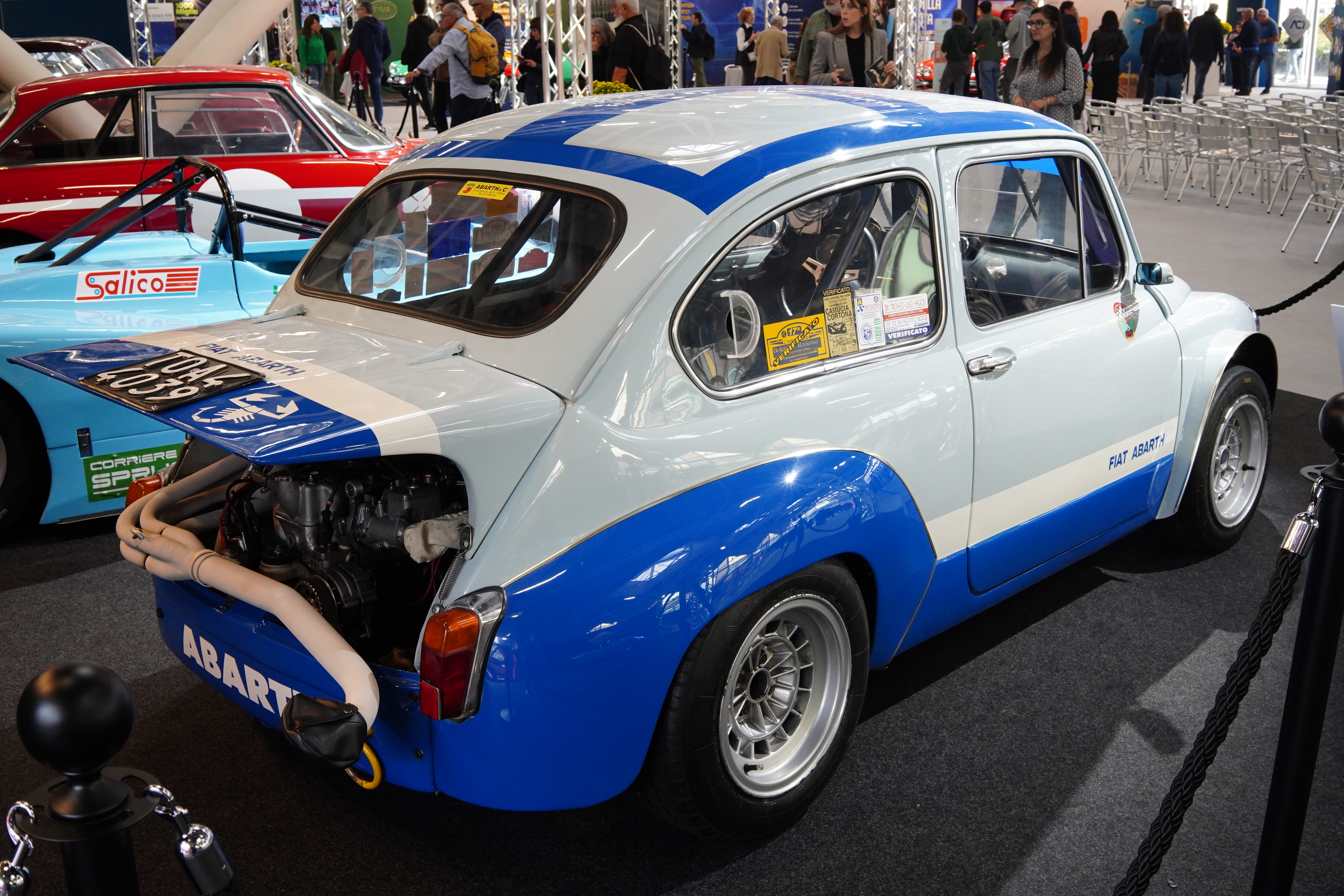
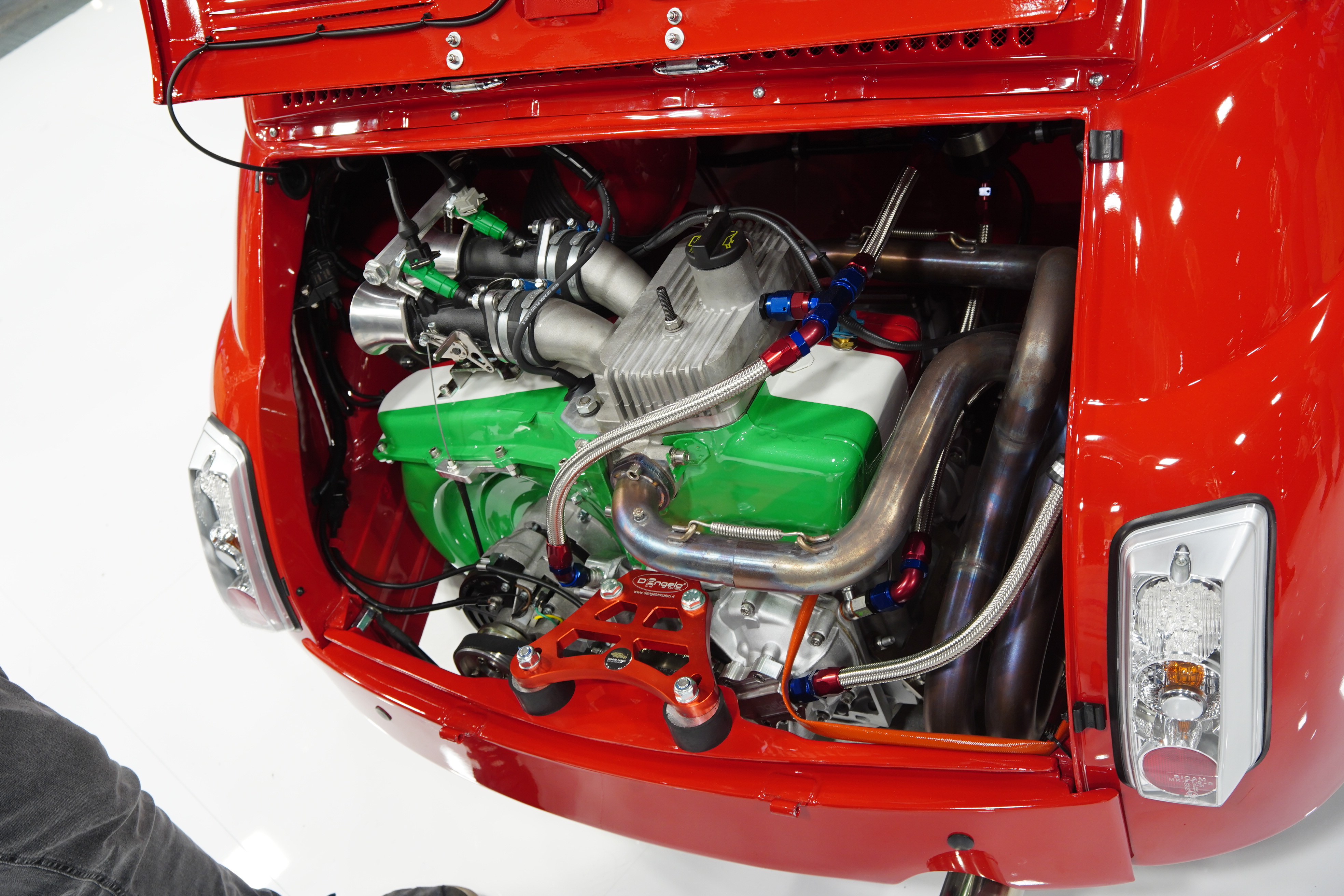
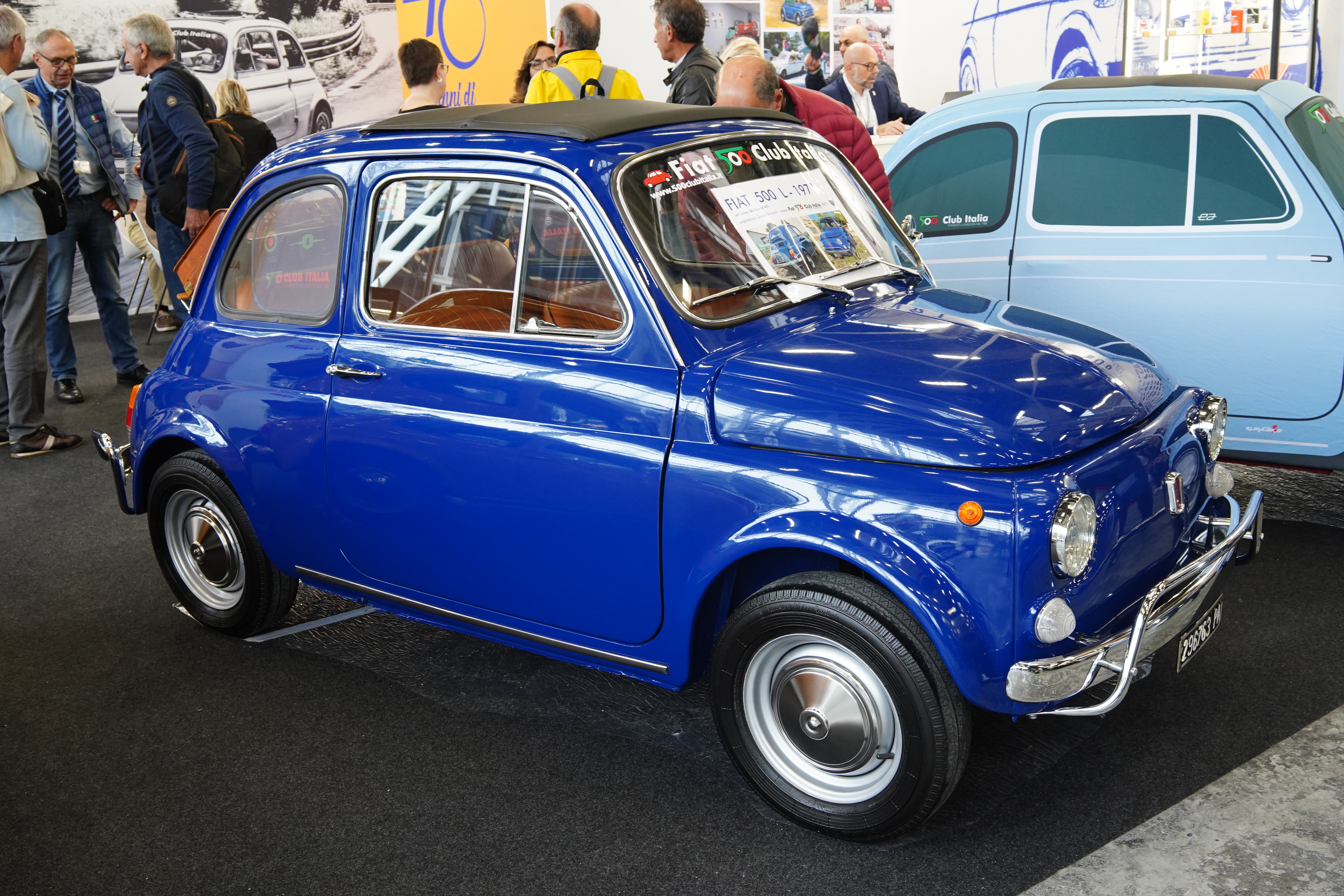
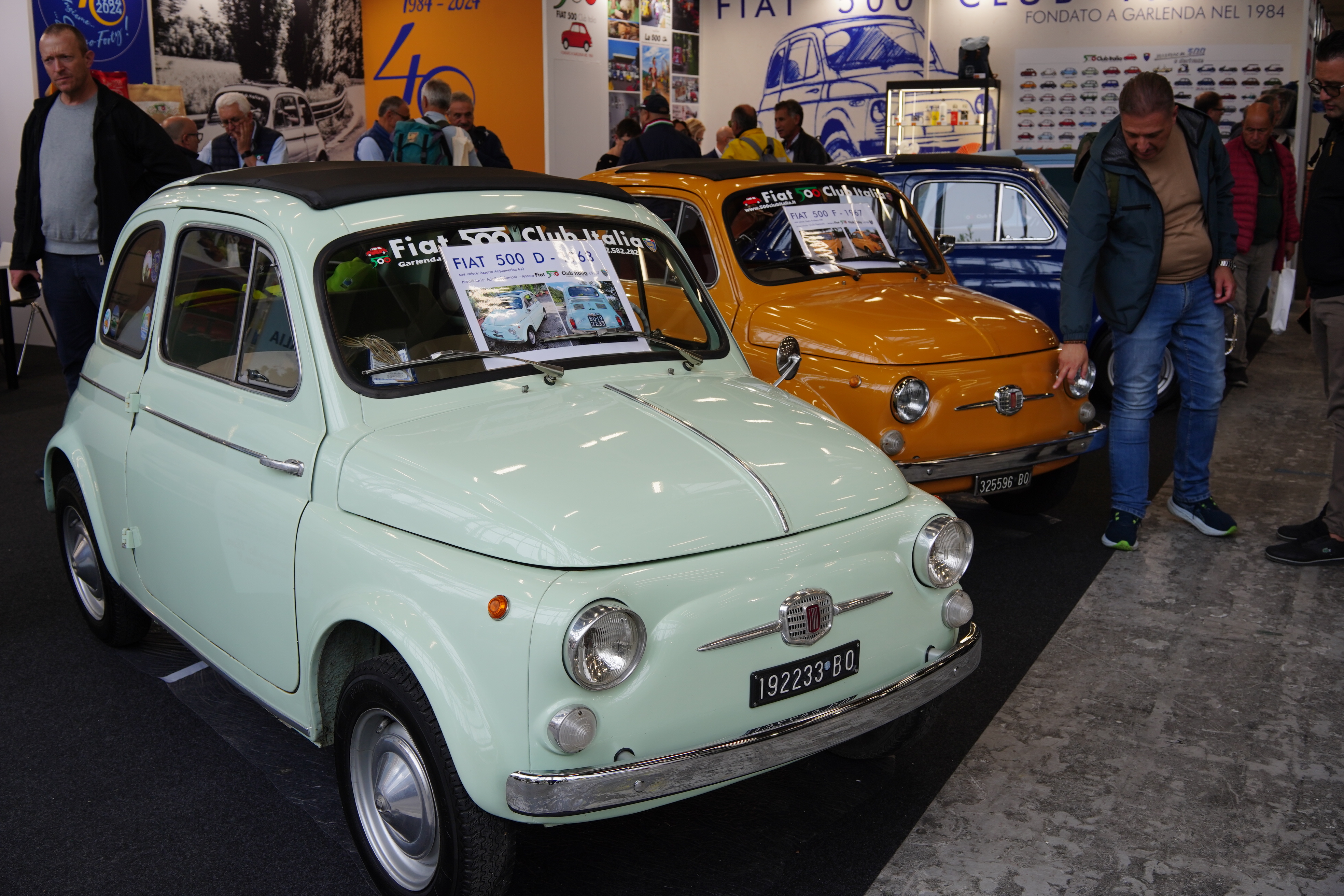
The hit of the show among the Fiats were the diminutive 500 models. They were out in great numbers, in stock and modified versions. In fact, there were plenty of vendors at the show selling all kinds of performance upgrades for these air-cooled 2-cylinder pocket rockets.


Next up will the Lancia (say “Lon-sha”, NOT “Lan-see-ya”)

Entire blog post content copyright © 2024 Richard A. Reina. Text and photos may not be copied or reproduced without express written permission.


NJ Alfa Club Fall Foliage Tour, October 2024

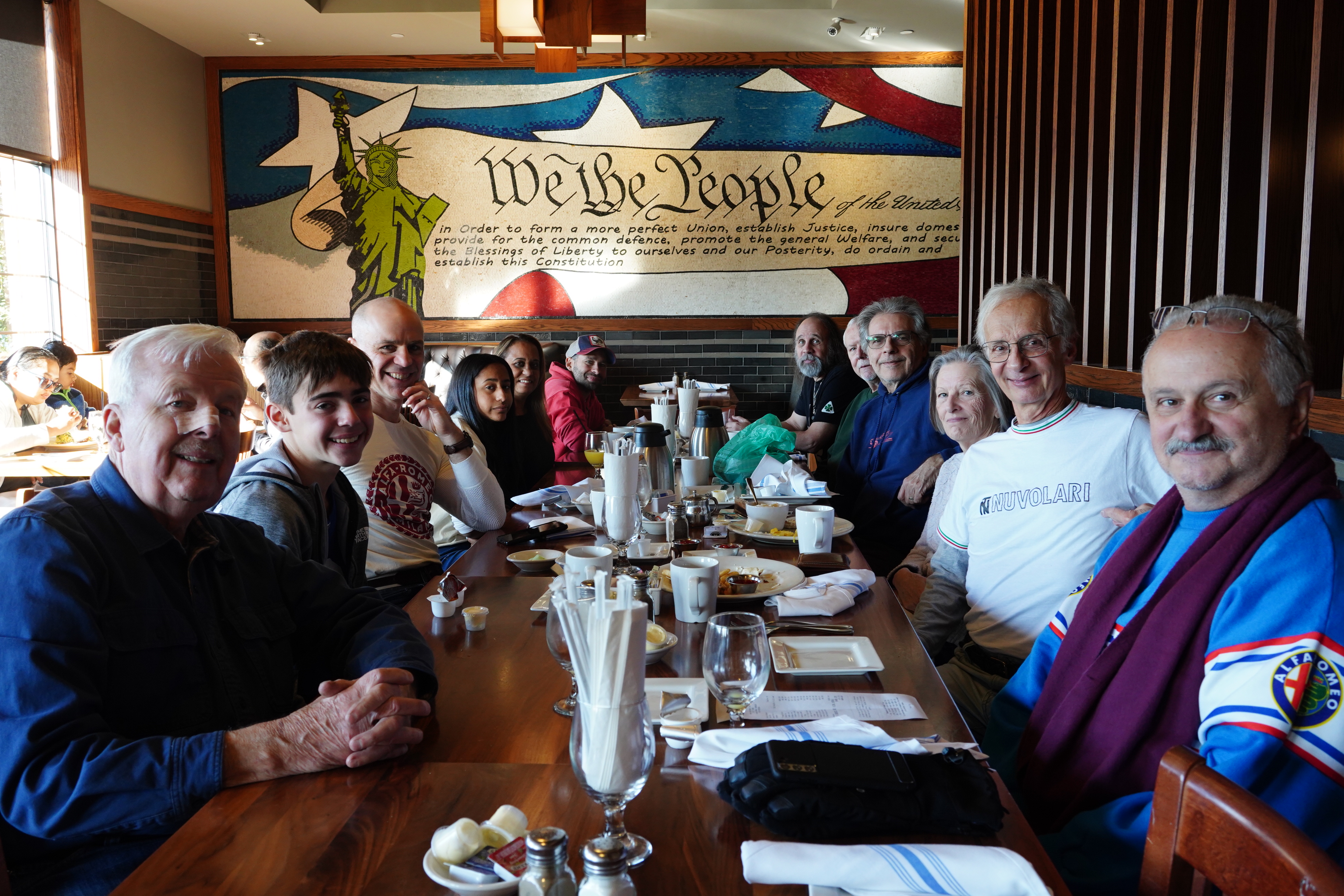
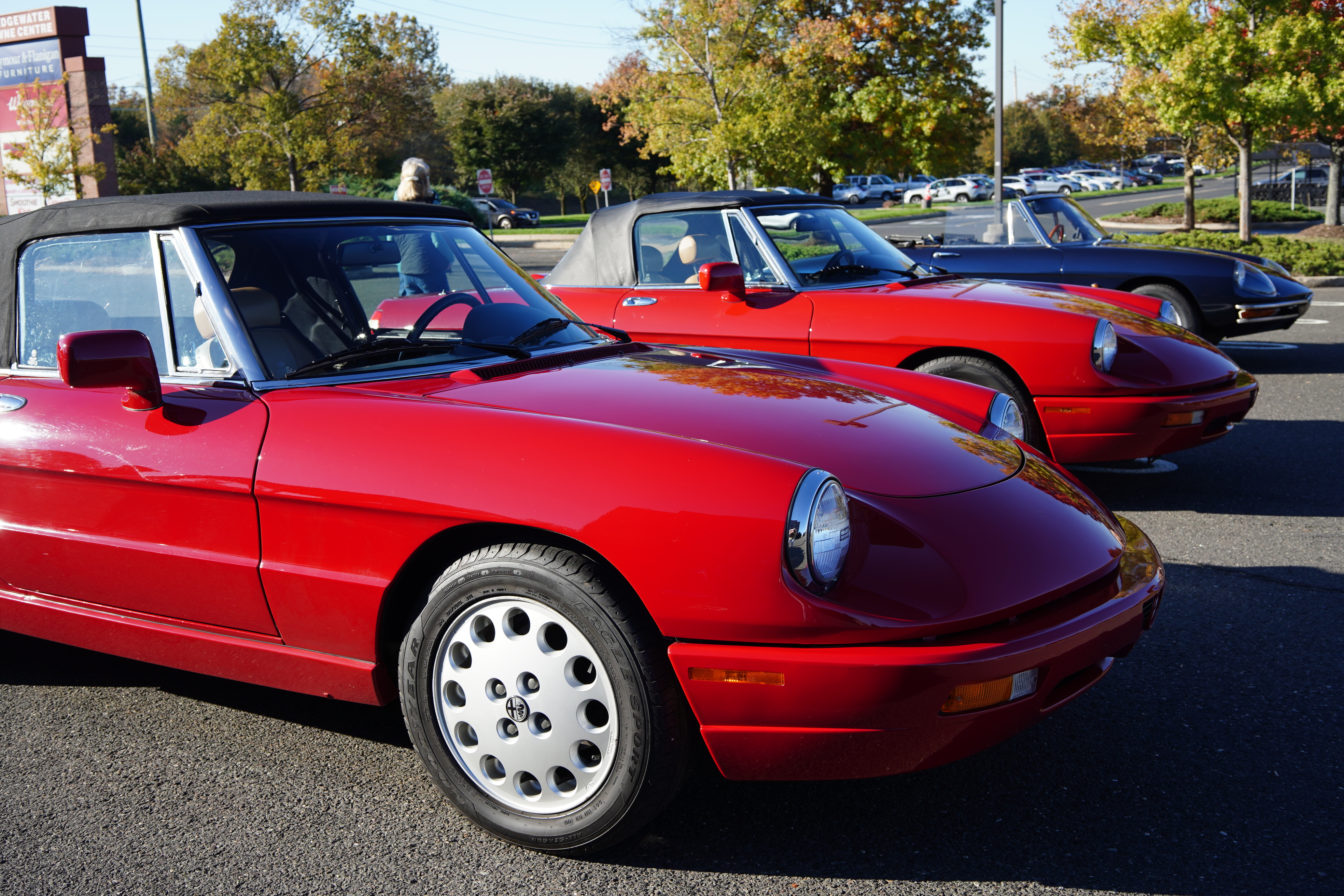
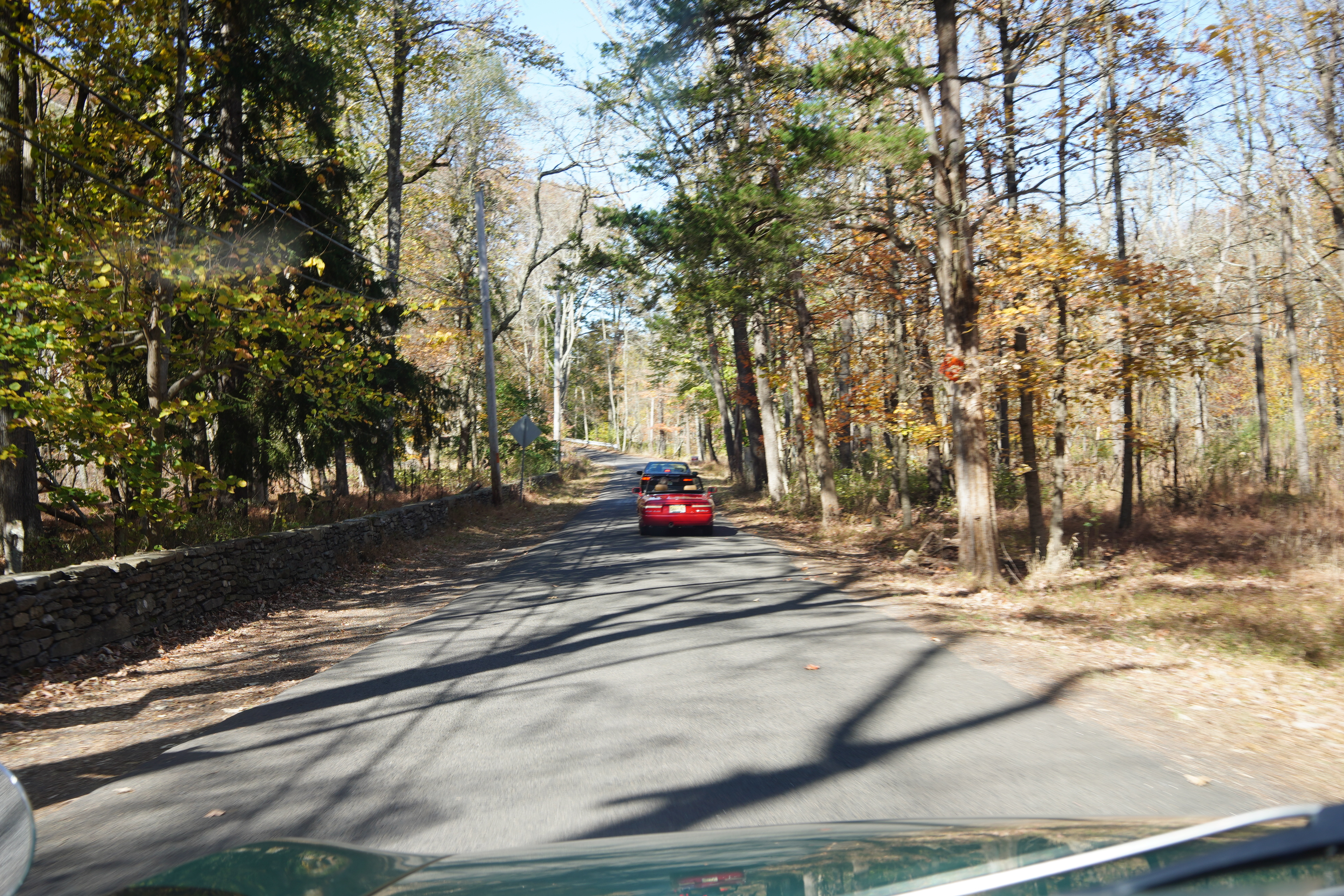
The New Jersey Alfa Romeo Club (AROC-NJ) might be setting a record this month, with three events on the calendar. Last week was our monthly breakfast, and Sunday October 20 was a fall foliage driving tour, arranged by our event coordinator Bill D. Starting in the Wegman’s parking lot in Bridgewater, NJ, a group of 12 Alfa Romeos wound its way through Flemington, Frenchtown, Stockton, and Lambertville NJ before crossing the bridge at Lambertville and into PA. From there, we headed north on Route 32, drove through 3 covered bridges, stopped for a scenic overlook at High Rocks Vista, and concluded our 70-mile, 2+ hour drive with brunch at The Narrows Restaurant in Upper Black Eddy, PA.

The weather again cooperated, and the scenery was wonderful (even if the traffic through some of the NJ towns wasn’t, but it was a beautiful Sunday morning and everyone wanted to be outside). My only regret is that I was not able to capture more photos. The meal at The Narrows was wonderful, and the kindly waitress agreed to photograph all the smiling Alfa owners and passengers.

This coming weekend, the Alfa Club is visiting the Simeone Museum in Philly. I won’t be there as I will be out of the country. Watch this space for updates about that trip!

Entire blog post content copyright © 2024 Richard A. Reina. Text and photos may not be copied or reproduced without express written permission.

Alfa Romeo Club Monthly Breakfast Meet, Oct. 13, 2024

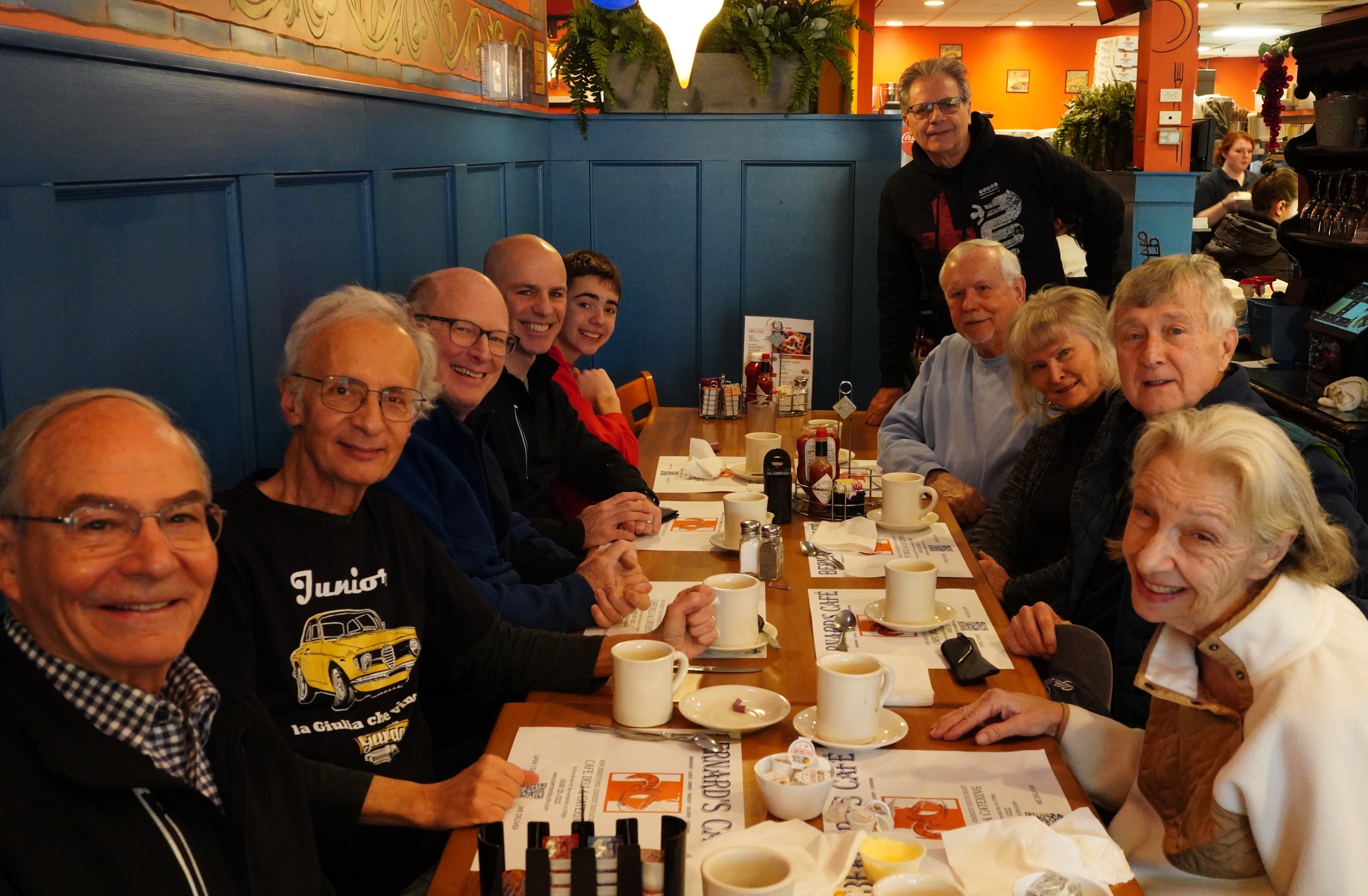
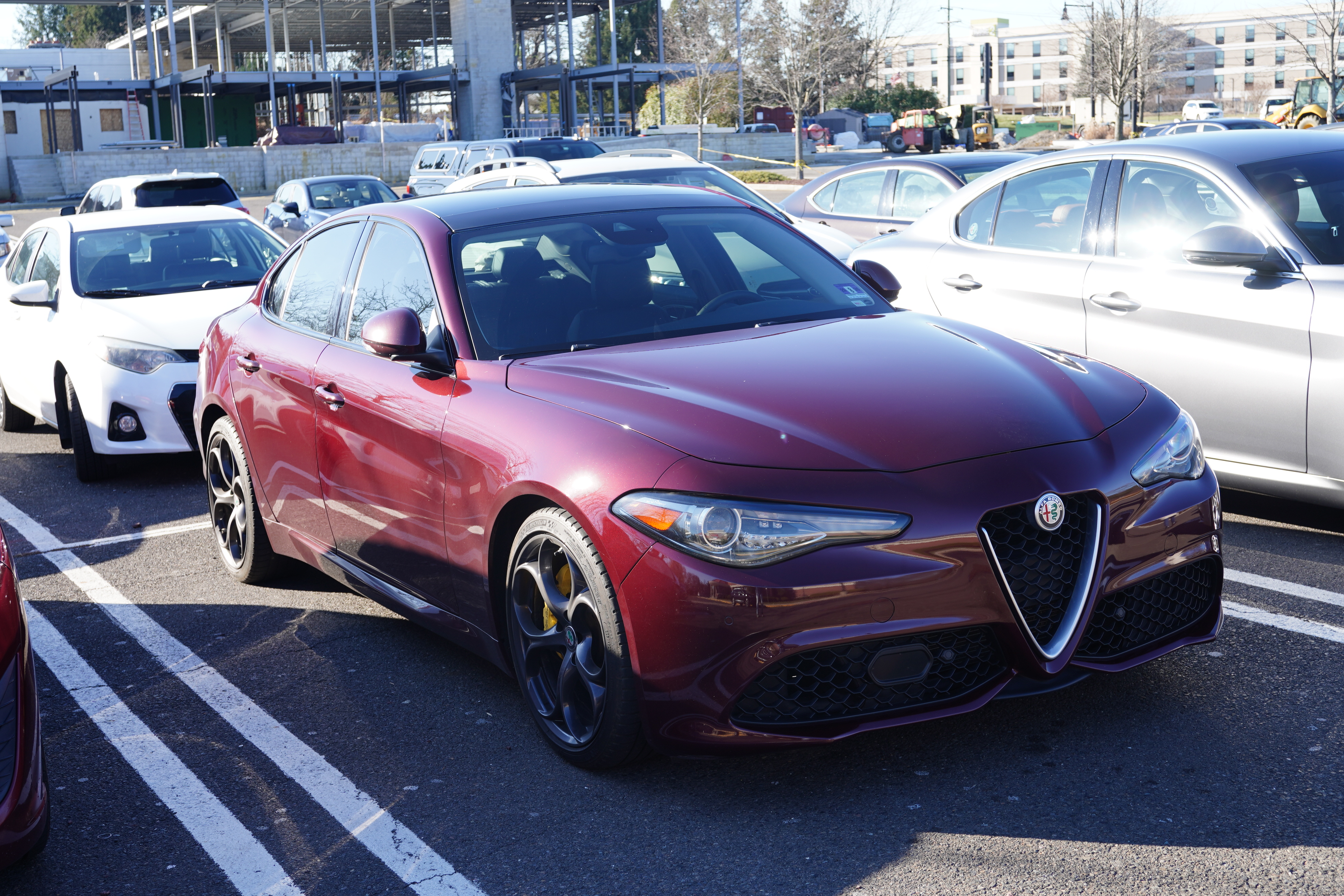
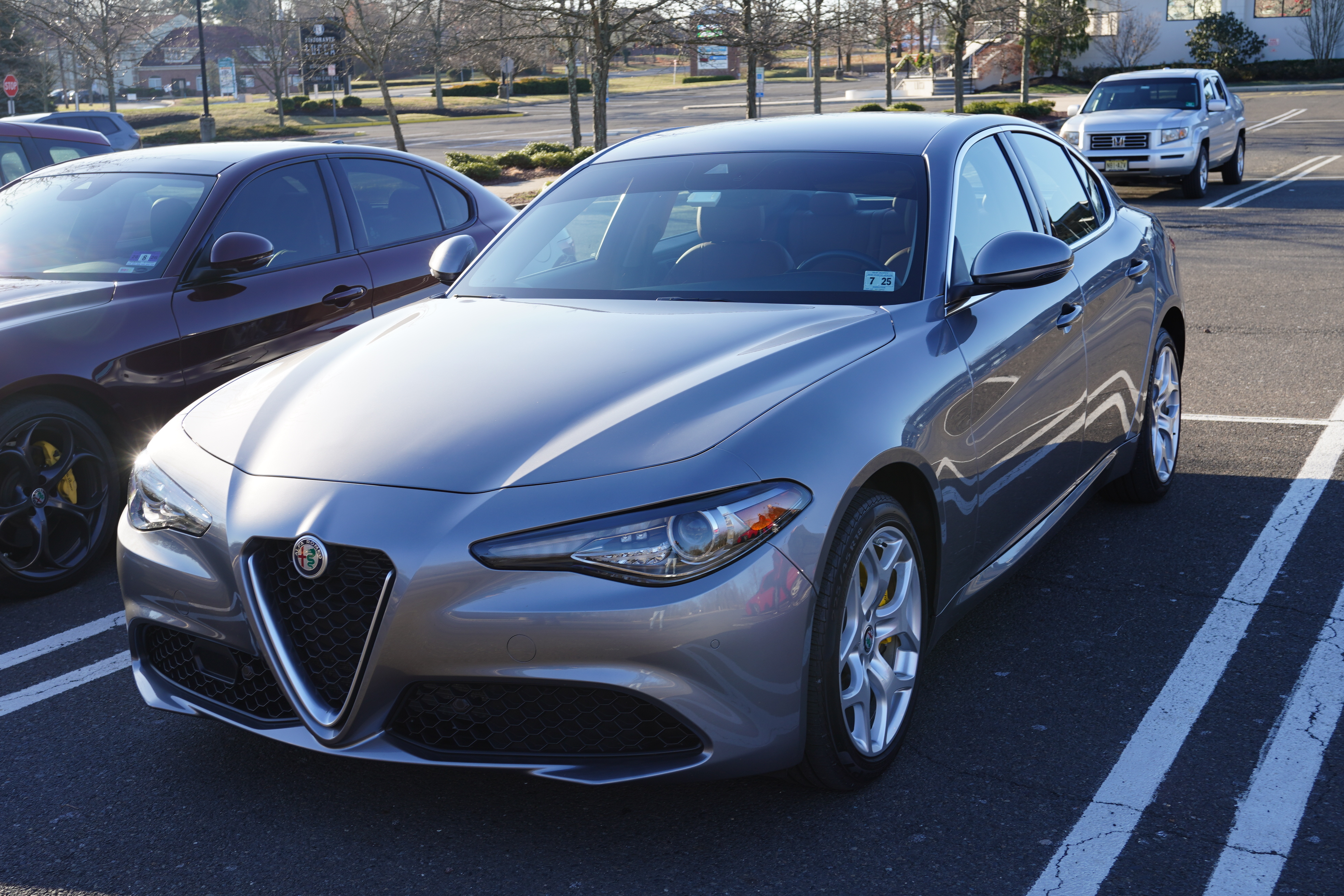
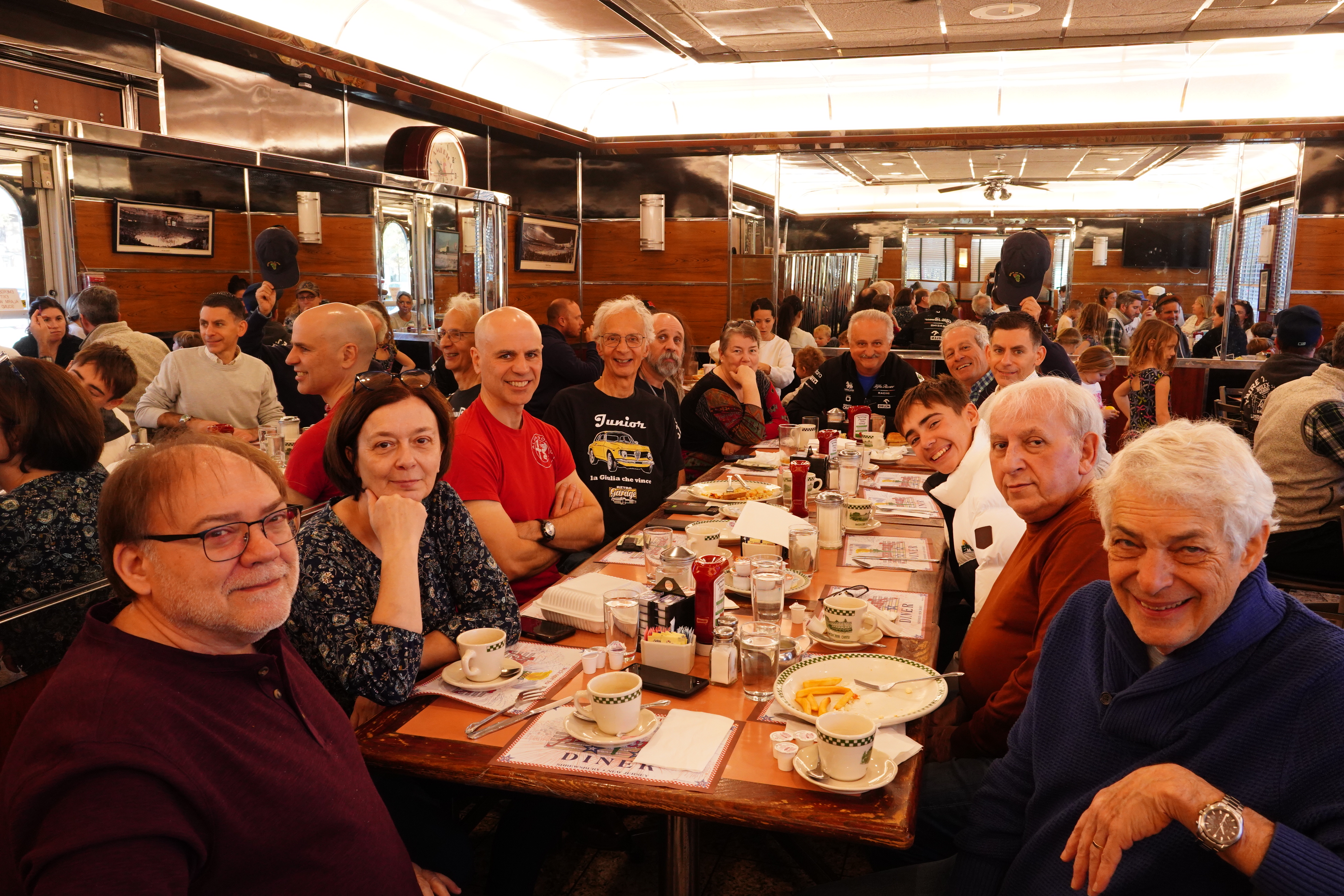
Our AROC-NJ monthly breakfast tradition continues! On Sunday October 13, several NJ Chapter members met at the Bernards Café in Bernardsville, NJ for a delightful morning meal. As is typical for our group, a mix of older and newer vehicles were in attendance, including ‘60s and ‘70s era Spiders, along with modern Giulias and Stelvios.

The wait staff at the Café did their usual exemplary job in satisfying our appetites, and at the end of the meal, a few members broke off and caravanned to a local farm stand for autumnal goodies. I will conclude by stating that I have been overwhelmingly pleased by the way the NJ Chapter has been able to consistently maintain what is certainly now a Club tradition.

Entire blog post content copyright © 2024 Richard A. Reina. Text and photos may not be copied or reproduced without express written permission.


Hershey 2024 Part 3: The Car Show

How does one explain how 1,200 classic cars, trucks, and motorcycles, beginning at 7 o’clock in the morning, are paraded through the streets of Hershey and are then driven onto a grassy field and are then arranged in a pre-determined exact order, so that thousands of spectators can then descend upon these wondrously restored vehicles to gaze at them and admire them while their justifiably proud owners look on?

That’s the logistics of Hershey. It’s the exhilaration which overcomes you when you realize that cars worth anywhere from $5,000 to over a million dollars which have been restored to better-than-new condition are here for you to enjoy. This year, with bright blue skies, abundant sunshine, and slightly cool but still comfortable temperatures, it was one of my better Hershey car show experiences.

Oh, dear reader, but wait! I almost forgot: It’s NOT about the cars at all. The car is an inanimate, replaceable hunk of steel, glass, rubber, and plastic. Anyone with the means can restore a car or buy one already restored. And in some cases, the folks who do that are only interested in the ROI, or maybe aiming for bragging rights among their peers, or perhaps seeing how many trophies can be collected, requiring that more shelf space be erected to hold said trophies.

Now I’ll tell you what REALLY makes Hershey so special: It’s the stories behind the cars, the stories that most owners are only all too happy to bend your ear about, stories about a life-long quest for a particular automobile, or about a 20-year-long restoration, or about a car bought by their grandfather 60 years ago, or about a project which was given up on multiple times before a final reawakening motivated the owner to see it to its completion.

I’m here to share just a few of those stories with you.

HOWARD AND HIS VOLVO 265

I didn’t see Howard this year; according to his wife, he was too busy attending to one of the 3 (or was it 4, or 5, or 6?) other cars he brought to Hershey this year. Howard is completely devoted to the hobby, which is quite a statement given that he’s still working as a full-time physician. I only know Howard through Pete Wyman. Of course, regular readers know that it’s Pete who sold me my Alfa. And Pete sold his 1979 265 which he had purchased new to Howard. It’s not Howard’s only Volvo, although he also has BMWs and Jaguars. I spotted the light blue wagon from about 30 paces away. It’s easy when you know there isn’t another Volvo wagon like it anywhere in the show. I’m glad to see that Howard continues to maintain the car to Pete’s standards. Pete, whom we lost last year, would be very proud.

It’s still the way Pete kept it
ALEX AND HIS 1944 VW KdF-Wagen

Alex is a member of the NJ Region of the AACA, as am I, so we are acquainted. I’ve been hearing about this uber-rare VW for years, and some of what I gleaned from Alex was that it has been an uphill 20-year-long restoration. When Alex told me a short while back that he thought the car would be ready for Hershey this year, I kept my fingers crossed. Sure enough, here it was! Given that World War 2 was still raging in 1944, it is amazing that this car got built, and that it somehow survived. Take the time to read the placard which summarizes this story of one man’s dedication. I think this KdF-Wagen may have been the highlight of the entire show.

A GREEK BOY’S DREAM BECOMES A REALITY

I was drawn to this Volvo 1800S due to its similarity, in age and color, to the 1800 owned by the late Irv Gordon (a car which now resides in the Volvo museum in Gothenburg Sweden). I approached the owner and my first words were, “it looks like Irv’s!” But I did go on to compliment him on the car, which appeared nicely restored. He proceeded to tell me that as a boy growing up in Greece, he came across a sales brochure for the Volvo 1800 and was immediately smitten. After moving to the States, he began searching for one, and about two years ago, he found this car and had some restoration work done on it. I congratulated him and wished him luck today. I expect that he will have done well with the judging.

ANDY AND HIS ALFA SPIDER

I opened my dialogue with the owner by asking: “Is this the only Alfa on the show field today?” We both laughed and agreed that this was likely the case. Since his car was a ’78, that made it a Series 2 Spider, but those cars did not come equipped with a rear spoiler. He responded that his car was, to the best of his knowledge, a Niki Lauda Special, on which the rear spoiler was standard, but so were some stripes and badges, all of which have been removed from his car. (I’ve only ever seen one other Niki Lauda Special, which was at last year’s Greenwich Concours. A photo of that car is below under ADDENDA.) His Alfa also appeared to have non-original upholstery, and he admitted to me that the judges already told him that his car had “too many modifications”. That’s too bad, and I sincerely hope that does not discourage Andy, because perhaps with some documentation and some stripe and badge replacements, he can verify for the judges that his car is correctly represented.

DAVE AND HIS 1955 T-BIRD

I first encountered this car and owner at the 2021 AACA Nationals in Saratoga Springs, and wrote up a brief story on my blog, finding it to be of particular interest. Months later, “Dave” emailed me in excitement, telling me that he had no idea that I had featured him and his Baby Bird on my blog. Hey, I wasn’t trying to make Dave famous, I was just trying to share an interesting story. We continued to exchange emails, and saw each other again at Hershey in 2023 when he showed his pre-war Dodge, and again in June of this year at the soggy Nationals in Saratoga Springs. So here we are again, and thanks to my blog, I have a new friend in the hobby. Dave’s enthusiasm is infectious, and his ’55 looked better than ever. Be sure to read his summary below, which is what drew me to write him up in the first place.

I HAD DAVE’S PERMISSION TO PLACE MY HAND ON THAT PRISTINE WHITE TOP

ADDENDA

Here’s my photo of that ’78 Alfa Spider Niki Lauda Special Edition which I took last year.

Entire blog post content copyright © 2024 Richard A. Reina. Text and photos may not be copied or reproduced without express written permission.
Hershey 2024 Part 2: The Car Corral

The Hershey Car Corral is where entire vehicles are bought and sold (as opposed to the parts sold throughout the Flea Market). It has become one of my favorite parts of Hershey week, because cars in the Corral must adhere to AACA rules, meaning 25 years old or older, and basically in stock condition. This means no hot rod projects and no late model Escalades 😉 .

When I first started attending Hershey decades ago, almost all the cars in the Corral were privately owned. But the hobby has changed, and independent “collector car dealers” have sprung up from coast to coast. They see Hershey as a ripe opportunity to show their goods and appeal to a built-in hobbyist audience. However, dealers generally tend to ask more for their cars (and to be fair, dealers may have conducted some reconditioning of their vehicles). But I continue to maintain that the best deals reside with the individuals who seem to price their cars more fairly, and may be more willing to negotiate a final number that makes everyone happy.

My friends and I have observed a thinning of the ranks in the Car Corral in recent years, and 2024 was no exception. Yet there were plenty of cars for sale, and a nice variety at that. Below, I have highlighted some of cars which attracted me the most. That’s not to say that I thought they were great deals, only that I found them to be among the more interesting offerings. The cars are arranged in asking price order from low to high.


1963 Buick Wildcat 4-door hardtop, beige paint, off-white interior, Buick nailhead V8, automatic, front bucket seats with center console and floor shifter. Odometer shows 35,354 miles, likely has rolled over.

ASKING: $6,900

Here’s a rare bird: a full-size American 4-door pillarless hardtop sedan with front bucket seats and center console. But that’s what you got if you bought a Buick Wildcat, like this ’63. And with a price well under 10 grand, this could be a great first hobby car.


1997 Mercedes-Benz 320SL convertible, detachable hardtop, red over tan, 6-digit odometer shows 78,000 miles, automatic transmission.

ASKING: $8,900

This is the 6-cylinder version of Benz’s evergreen SL. The car looked neat and tidy, and could be a fun first collector car for under $10k.


1995 Chevrolet Corvette Coupe, white over black, automatic, sign claimed 70,000 miles

ASKING: $11,500

C4 (4th generation) Corvettes continue to be performance bargains as exemplified by this example.


1962 Studebaker Hawk GT, tan paint, turquoise cloth upholstery, automatic on column

ASKING: $12,500

This body style has always appealed to me, but the odd color combo was off-putting. I didn’t spend but a few moments on it, but was unable to determine which finish might have been replaced. It’s hard to believe that this car came from the factory this way.


1968 Dodge Monaco 2-door hardtop, blue, white vinyl roof, white interior, 383/automatic, sign claims 75k, “very original”.

ASKING: $20,000

The 1967 Plymouth and Dodge full-size cars, introduced when I was 13 years old, were thought of by me as some of the best-looking full-size American cars of the decade. The styling hardly changed for 1968. Stumbling upon this rarely-seen ’68 Monaco brought back a rush of memories. I think that the overall design, especially in a 2-door like this, has aged well.


1976 Triumph TR6, white over tan, sign claimed all-original condition at 43,000 miles

ASKING: $27,000

I normally would not highlight a TR6 as there are always dozens for sale, but the overall condition made this one attractive. To my eye, the car looked almost new.


1948 Fiat 500B Topolino Giardiniera, red, beige sunroof, wood side paneling, 569cc flat-four.

ASKING: $35,000

These Topolino (“Little Mouse”) models are rare enough; I’ve never seen a woody version. The sign claims that it’s 1 of 15 survivors. I’d bet it’s the only one of its kind in the States.


1968 Jaguar E-Type, Series 1.5, 2+2 coupe (on longer wheelbase than 2-seat coupe), red over beige, 4.2L inline 6/automatic, sign claims functioning A/C.

ASKING: $44,900

Clearly a “Series 1.5” with its exposed headlights and above-bumper tail lights, most collectors would issue two demerits to this clean E-Type for its 2+2 body style and its automatic gearbox. On the positive side of the ledger, its asking price makes it one of the most affordable ways to add an E-Type to your collection.

.


1957 Cadillac Eldorado Brougham, blue paint, stainless steel roof, blue cloth interior. Sign claims it’s #13 or 400 built.

ASKING: $79,995

Would you check out those suicide doors and interior upholstery! This was a GM highlight from the 1950s, and with low production numbers, a rare car to boot.


1956 Jaguar XK140 FHC, black over red, 3.4L six, manual gearbox

ASKING $89,900

The black and red looked stunning (and I’ve always fallen for that color combo). Ironically, Dennis Nash’s XK (see my coverage of it in Part 1) was born in these colors before a restorer changed the car to white over beige. Given that Dennis’s car is an XK120 and sold for $65k, I’d say that this XK140 is a little overpriced (but everything is negotiable, right?)


Entire blog post content copyright © 2024 Richard A. Reina. Text and photos may not be copied or reproduced without express written permission.


Hershey 2024 Part 1: The RM Sotheby’s Auction

The RM Sotheby’s auction is an integral component of the Hershey experience, and RM’s own website lists it as “The Official Auction of the Eastern Division AACA National Fall Meet”. It’s always held at the Hershey Lodge, which is where I stayed this year, making my access to the cars super convenient.

The two-day auction was conducted on Wednesday and Thursday, October 9 and 10, and 100% of the vehicles were arranged on the hotel’s grounds, allowing free access to the public during the preview. By my estimation, at least half of the lots were pre-war American classics, a category in which RM specializes. Perusing the information labels on each lot also showed that many of the cars were to be offered without reserve, guaranteeing an exciting auction.

Two collections were of special interest to me. A fellow AACA member informed me that his brother-in-law was selling his collection of FoMoCo woodies, all at no reserve. (It was from this friend that I was able to procure passes to attend the auction.) There were 10 vehicles, 9 Fords and 1 Mercury, ranging in model years from 1933 through 1951. In this post I’m covering 8 of the 10, omitting the 2 resto-modded models.

The second, more modest collection was the final 3 vehicles from the estate of Dennis Nash. Dennis and his wife Ann Marie were long-term colleagues of mine from Volvo Cars of North America, and because of their deep interest in the hobby, were also dear friends. (It was Dennis who recommended me to the body shop which restored my Isetta.) Both Dennis and Ann Marie have passed on, and their 3 daughters were in attendance to watch their dad’s Jaguar, Morgan, and Volvo cross the block at no reserve. (The Jag and Volvo are discussed in more detail below.)

I sometimes forget how civilized and “professional” a so-called catalog auction as run by RM can be, compared to the 3-ring circus which is Mecum or Carlisle. The auctioneer enunciates every word, and there is never any doubt where the current bid is and what bid he seeks to acquire next. I recorded results for 86 cars on Wednesday and 50 on Thursday. Each day’s event took about two and a half hours to complete, and the time flew by. By contrast, at Mecum I’ve sometimes waited over 3 hours just to see a car of interest to me reach the block. Of course, Mecum is pushing quantity while one could argue that RM is pushing quality. Each has its place in the hobby.

As stated earlier, most of the lots sold at no reserve. Of the cars I watched, only two failed to sell, which speaks highly to the talents of the team at RM Sotheby’s to bring together the vehicles, owners, and prospective bidders to make this happen. Below are some details of the cars which I found interesting. The 8 woodies (in model year order) are listed first, followed by the remaining cars, again in model year order. All sold prices shown are hammer prices, which exclude the 10% buyer’s premium.


Lot 315, 1933 Ford V8 station wagon

SOLD at $33k, below pre-sale estimate of $40-60k

It’s interesting to look at this ’33, with its wire wheels and side curtains, and take in how quickly vehicles continued to evolve through the decade of the ‘30s.


Lot 308, 1937 Ford Deluxe station wagon

SOLD for $38k, within pre-sale estimate of $30-40k

The auction write-up claimed that this was a well-preserved original vehicle.


Lot 316, 1939 Ford Deluxe station wagon

SOLD for $65k, below pre-sale estimate of $120-140k

I liked this wagon a lot, with its front-end styling “almost” as nice as the 1940 models. Was this a steal? If the pre-sale estimates were anywhere near accurately based on recent sales, then yes.


Lot 314, 1940 Ford Deluxe station wagon

SOLD for $45k, within pre-sale estimate of $45-55k

Many hobbyists, myself included, consider the front-end styling of the 1940 Fords to be a highlight of the entire pre-war era. This wagon looked sharp yet just squeaked up to its low estimate.


Lot 310, 1942 Ford Super Deluxe station wagon

SOLD for $77k, above pre-sale estimate of $50-65k

A 1942 anything is a rare car. This was the only woody to exceed its pre-sale estimate.


Lot 313, 1946 Mercury station wagon

SOLD for $$33k, below pre-sale estimate of $40-60k

The only non-Ford in the collection, and undoubtedly a rare car. I’d surmise that a hard-core woody collector would be thrilled to have this in their collection.


Lot 317, 1947 Ford Super Deluxe Sportsman convertible

SOLD for $92.5k, below the pre-sale estimate of $130-150k

The highest-priced sale of this collection still missed the lower mark by almost forty grand.


Lot 311, 1951 Ford V8 Custom Deluxe Country Squire station wagon

SOLD for $32k, below pre-sale estimate of $40-50k

It was announced that this was Ford’s last year for woody wagons, and this was the first Ford to wear the “Country Squire” model name. I’d say that the combination of the two makes this a bargain at $32k.


Lot 160, 1934 Ford “Edsel Ford Speedster Recreation”, copy of one-off styling study done by Henry Ford’s son Edsel. Mechanicals are from a 1934 Ford.

SOLD for $80k, below pre-sale estimate of $100-120k.

I overheard comments along the lines of “this is a lot of money for a kit car”, but it wasn’t a kit car. Someone put significant effort into recreating this iconic vehicle (although I did not perform a side-by-side photographic comparison to verify its accuracy). It’s an interesting piece of history, and owning it means that you’ll never be able to stop explaining what it is (and isn’t).


Lot 335, 1936 Cord 810 Phaeton.

SOLD for $112.5k, below pre-sale estimate of $150-200k.

This Cord, a non-supercharged model, was a Phaeton, with a small rear seat. This one hammered quite a bit below its pre-sale estimate, and in my opinion, was a bargain deal for someone looking for a Cord drop-top.


Lot 173, 1936 Ford Model 68 Cabriolet, with rumble seat.

SOLD for $39k, within pre-sale estimate of $30-40k.

This one almost reached the top estimate, and I thought it was a good buy; however, checking recent sales on Bring a Trailer, these ‘30s flat head Ford convertibles do sell in this range, so the price here was fair to both buyer and seller.


Lot 129, 1937 Cord 812 Supercharged Phaeton.

SOLD for $145k, within pre-sale estimate of $100-175k.

Compared to Lot 335 above, this car was supercharged, which attributes somewhat to its higher price.


Lot 131, 1937 Cord 812 Supercharged Cabriolet RECREATION

SOLD for $56k, within pre-sale estimate of $50-70k.

Typically, RM Sotheby’s is 100% forthcoming in its lot descriptions. However, in this case, I give them 2 demerits by failing to make it obvious that this car was a recreation, done in South Africa by a builder who formed a new body to fit over Cord mechanicals. The less-than-authentic nature of the car was not lost on the bidders, yet the sale price still reached within the pre-sale estimates.


Lot 378, 1940 Lincoln Continental Cabriolet

SOLD for $52.5k, over pre-sale estimate of $30-40k.

The car looked stunning in black, and its V12 sounded smooth and quiet, at least at auction block speeds. This was one of the few cars in the two-day auction to exceed its estimates.


Lot 180, 1949 Allard L Type, car appeared to be original, unrestored, and complete

SOLD for $45k, over pre-sale estimate of $30-40k.

This one charmed me with its original patina bursting out at every seam. Allard is a relatively unknown marque here in the States. They were built in Britain with locally-sourced parts for the chassis, but the engines were always American-sourced. I know that they were raced in period. Given that there are new Allards being built again today, starting around $200k, I think that this one would be a blast to have at $45k.


Lot 379, 1953 Jaguar XK-120 Fixed Head Coupe.

SOLD for $65k, within pre-sale estimate of $60-80k.

This was one of three cars being sold from the estate of the late Dennis Nash. Dennis was a long-term colleague of mine from Volvo Cars of North America, and I’m proud to say, was also a very dear friend. His wife Ann Marie, who predeceased him, also worked for the company and they were known to many of us Volvo employees. Dennis was a true Car Guy, and his taste in cars ran toward British makes, although I knew him to have a few American cars (as well as the Volvo which is covered a little later here). I was not aware that he owned this XK120, which looked very clean and straight (with the possible funny exception of its dash-mounted Volvo radio). I thought the car might hammer closer to $80k, but I think the final price was fair.


Lot 178, 1954 BMW 501-6 four-door sedan

SOLD for $25k, below pre-sale estimate of $30-40k.

These are so rare in the States that I can recall only ever seeing one other of these rather unattractive cars. The short history that after the Allies had bombed BMW’s factories in WW2, the company struggled to get back to its feet. This overweight and underpowered design was their unsuccessful attempt to compete with Mercedes-Benz’s luxury sedans. In 1955, the Isetta brought in the revenue to fund the engineering of modern cars (the “Neue Klasse”), while these “Baroque Angels” as they were called languished in the showrooms. This car would be desirable only to a fanatical BMW collector.


Lot 161, 1954 Nash-Healey LeMans Coupe

SOLD for $40k, within pre-sale estimate of $40-50k.

The convertible version of this model is seen regularly enough (there was one at this auction), but the coupe is rarely spotted. Perhaps surprisingly, I find the coupe slightly more attractive than the drop-top. This one sold right at the bottom of its estimate, and it’s a handsome, usable, and unusual car for $40k.


Lot 332, 1956 Jaguar XK140 roadster

SOLD for $135, within pre-sale estimate of $130-160k.

My photos do not do justice to the quality of this restoration, which struck me as one of the stars of the auction. It’s a beautiful design in any color, but the red over beige was particularly appealing. Another $20-30k added to its hammer price would not have surprised me, so I’ll call this one well-bought.


Lot 181, 1957 BMW Isetta 300 Sliding Window Coupe

SOLD for $25k, within its pre-sale estimate of $15-25k.

Let’s face it: ALL BMW Isettas are “cute”, and that’s been a big factor in their enduring appeal. But prices are way off their highs of a dozen years ago, as more Isettas came onto the market. This one must have looked great to the casual observer, but wow, there were so many incorrect details. Look at those ridiculous hub caps! The front turn signals were incorrect, the interior was ghastly (the biggest boo-boo was covering the VIN plate with carpeting), and the colors were not the best choices. Frankly, I’m surprised at the sales result; I expected it to struggle to get out of the teens.


Lot 374, 1958 Aston-Martin DB2/4 Mk III

SOLD for $160, withing pre-sale estimate of $100-175k.

While the DB2’s and DB2/4’s never did much for me, I really liked this one in white over red. It also sounded incredible when driven across the block. You can’t touch a running, driving DB4 or DB5 for much under half a million, so getting a 6-cylinder DB for well under 2 looked like robbery to me. In fact, checking recent BaT sales, other DB2/4 Mk IIIs have sold in the $200k range, making this sale all the sweeter.


Lot 184, 1963 Lincoln Continental sedan

SOLD for $30k, below its pre-sale estimate of $45-60k

That pre-sale range looks more appropriate for the 4-door convertible, not the fixed-roof sedan. This was a smart-looking car, and for $30k, one got a “Kennedy-era Lincoln” while avoiding the complexity of that convertible top.


Lot 152, 1963 Alfa Romeo Giulia Spider

SOLD for $37.5k, below its pre-sale estimate of $50-70k.

Even I, a card-carrying Alfa owner, get confused about the switch from the Giulietta to the Giulia, as it occurred on a rolling basis in the early sixties. This convertible body style was introduced around 1955 as the Giulietta. When the completely redesigned Giulia sedans and coupes came out, the mechanicals were upgraded. But the new Spider (the Duetto) was still a few years away, so the Giulietta Spider was renamed the Giulia Spider. It was announced on the block that this car was born a “Normale” (Normal, or low-spec engine) but had been upgraded to Veloce (“fast”) mechanicals. This is what is known in Alfa circles as an “Abnormale”. In spite of the faster engine bits, this was a sloppy presentation, with the car looking worn and unkempt. Its cosmetic appearance did not inspire at all, so someone bought a ‘60s Giulia Spider at a bargain price, presuming that it will respond to some elbow grease.


Lot 205, 1981 Volvo 262C

SOLD for $11k, within pre-sale estimate of $10-15k

This is the second of the two Dennis Nash cars included in my report. (The third car, a Morgan, was not covered by me.) About 20 years ago, Dennis called me about this car, and asked me, as a favor to him, to check it out, so I did. The owner, a widow, told me it had been her husband’s car, but she didn’t drive it. It was stored indoors and had seen very little recent use. Aside from some dust, the cosmetics appeared ok. I was not crazy about the aftermarket sunroof, but once one of those is installed, removing it is a big job. The big news was the replacement of its PRV (Peugeot/Renault/Volvo) aluminum V6 engine with a Volvo B21F 4-cylinder job. This can be construed as either this car’s biggest positive, or biggest negative. I reported my findings back to Dennis, and he bought the car. It seemed to get a lot of attention in the tent outside, and I think the final price was fair to both parties.


ADDENDA: The Cord 810/812 cars

Three of the seven Cords which sold at Hershey this year are covered above. To many, the most desirable Cords are the final models, which were produced only for two model years: 1936 and 1937. There were four body styles: the Winchester 5-seat sedan; the Beverly 4-seat sedan; the 2-seat Cabriolet; and the 4-seat Phaeton convertible. All ’36s were model 810, and all ‘37s were model 812. In 1937, a supercharged engine was available as an option. From the outside, these are clearly identified by the stainless-steel exhaust pipes exiting through the hood on either side.

I’ve followed the Cord market in a peripheral way through the years, and at least up until recently, I’ve noted that the four-door cars have tended to sell in the $60-80k range, while the convertibles fetched much higher prices, closer to $125-175k.

In 2002, I attended the annual Auburn/Cord/Duesenberg reunion in Auburn IN, and posted about it here.

Entire blog post content copyright © 2024 Richard A. Reina. Text and photos may not be copied or reproduced without express written permission.


NJ AROC, Breakfast & Bocce, Sep. 22, 2024

The NJ Chapter of the Alfa Romeo Owners Club is on a roll! September marks nine consecutive months of monthly breakfast meets. For this month’s meet-up, we skipped the Jersey diner experience and ate alfresco, combining our bagels and coffee with several games of bocce (for the uninitiated, it’s the Italian version of lawn bowls. You can read Wikipedia’s page on bocce here).

We had an excellent turnout, with 13 Alfas, one other Italian car of some other brand, and close to 20 participants. Colonial Park in Somerset County hosted us, and NJ AROC member Bill DiPrima, our Event Coordinator, did an outstanding job of organizing the entire festa. Beautiful first-day-of-autumn weather kept us outside until noon when we finally packed it in, but not before a group photo was taken (thanks to me finally remembering to bring a tripod). I was particularly pleased with the turnout, given that the changing weather will likely make next month the last chance for the classic Alfas to make an appearance at a Chapter event.

In addition to the photos below, you can watch our expert bocce players in action on these two videos:

https://www.youtube.com/watch?v=aNaetr2mVY4

https://www.youtube.com/watch?v=KNcbjCa33Do

THE CARS
Milano


1967 GTV


Stelvio


1991 Spider


Giulia sedan


Giulia sedan


Giulia sedan


1967 GT 1300 Jr.


1979 Spider


1967 Duetto


1991 Spider


Stelvio


THE PEOPLE


ADDENDA

A day trip on Friday to the town of Jim Thorpe, PA yielded this find: a 1949 Packard for sale, only $4,995! A cursory glance revealed a car that looked mostly original, save for a very bad black repaint likely done decades ago. The front seat was hidden by a seat cover, with original upholstery (matching the back) underneath. Sign claimed it ran well, but didn’t say if it would continue to do so for 5 blocks or 5 hours.


Entire blog post content copyright © 2024 Richard A. Reina. Text and photos may not be copied or reproduced without express written permission.

My first-ever bid on Bring a Trailer

While I cannot recall the exact date that I was introduced to the Bring a Trailer website (www.bringatrailer, from hereon referred to as BaT), I can recall the person and the setting. I had been transferred back into HQ at Volvo Cars North America (VCNA), where I finished my career, working there from 2006 to 2009. My boss’s boss, Chris Dauerer, asked me if I had heard of BaT and when I replied in the negative, he suggested that I needed to visit their site immediately. At that time, BaT did nothing more than republish links to interesting cars found for sale on other sites, like eBay and Craigslist. Since then, BaT has grown into one of the largest online collector car auctions, with gross sales numbers placing it at or near the top among competing auctions.

Since that introduction by Mr. Dauerer, I’ve had a daily addiction to the site, and have used it as a barometer of car values. (Compared to “for sale” ads which only tell you asking prices, completed BaT sales give you up-to-date transaction prices.) But BaT has perhaps become too big: the website now closes between 100 and 150 auctions a day! So I’ve pulled back, and have chosen to follow only a handful of makes and models which interest me.

One of those cars I follow is quite unique: the Autozam AZ-1, a Japanese kei car (limited in size and engine displacement by national regulation). While there are other kei cars and trucks, the AZ-1 distinguishes itself further with its mid-engine placement and gullwing doors. These turbocharged 3-cylinder marvels show up on BaT several times a year, and when one appeared a few weeks ago located in NJ, I decided to join the fun. Previous auction results pinned these Autozams in the low-to-mid 20s, but the NJ car had been repainted a non-factory yellow, which I thought might hold the price back. With the current market a little soft, I fantasized that this one might sell in the mid-teens. So now it can be told: for the first time ever, I placed a bid on BaT, throwing my hat into the ring at $7,500. I was quickly outbid, and I raised my bid to $8,100. When that bid held for over 24 hours, a minor panic came over me, as I wondered if I’d remain the high bidder! It was time to see the car in person.
Luck was on my side here. The family was vacationing in Cape May, and I was headed home for several days just to check into things at home. The car was located near Cherry Hill, about halfway between Cape May and home. I made an appointment with the dealer, and arrived at his place about 11 a.m. on a Friday. There was the car, even smaller than I imagined. The dealer, a friendly and accommodating young man named Eli, invited me to look over the car. The size was not an issue (you’re looking at a guy who used to drive a BMW Isetta on the street), but the gullwing doors were something else. While incredible to look at, the high sills made ingress and egress most awkward. Once in the car, room was limited. From the driver’s seat (RHD), the non-adjustable steering wheel was offset to the left. The seats slid back and forth but the seat backs were fixed.

Eli offered to let me drive, but I demurred, and suggested that I would ride while he drove. He had many JDM (Japanese Domestic Market) vehicles on his lot and seemed completely at ease with the RHD. Off we sent, with the cold A/C cranking the entire time. We went onto the highway where I saw 120 kph (75 mph). The car ran well, but there was a loud clunk with every shift, possibly normal for a remote shifter. Aside from the interior access (my wife would never put up with it!), the biggest issue was the driver-quality paint job. I liked the yellow, but didn’t care for the application of it.

I thanked Eli for his time, and concluded that my automotive lust for an Autozam AZ-1 had now been satisfied. I had no reason to worry about the bidding as the car sold for $20,151, five grand higher than I predicted but five grand below other recent sales. It was fun to be a bidder on BaT, as they make the process almost too easy. For me, the real bottom line is that online auctions give you great exposure to a wide variety of vehicles, but I would still greatly hesitate to purchase any vehicle sight unseen.
 

ADDENDUM

Although I didn’t identify it by make, model, or size class, I did include a different kei car in my blog post from July of this year about the Concours on the Palisades in Fort Lee, NJ. In the Japanese class was a Suzuki Cappuccino, a kei car which happens to use the same 3-cylinder engine as the Autozam.
Entire blog post content copyright © 2024 Richard A. Reina. Text and photos may not be copied or reproduced without express written permission.