Moving Away from Strict Originality, Part Two

There is a balance that’s required, when you own, as I do, a national award-winning car that has been so feted for its preservation. Much has been written in the last decade or more about the importance to the collector car hobby of the unrestored car, which has given birth to the cliché, “they’re only original once.” At the same time, cars which are driven (I have put over 14,000 miles on mine) will require, like any vehicle, routine service and repair. I wrote earlier about my decision, twelve years into the ownership of this wonderful Alfa Romeo, to move away from strict originality, not in a haphazard or indifferent way, but slowly and deliberately, and only to make improvements for the sake of appearance or functionality without unduly disturbing that which should be saved.

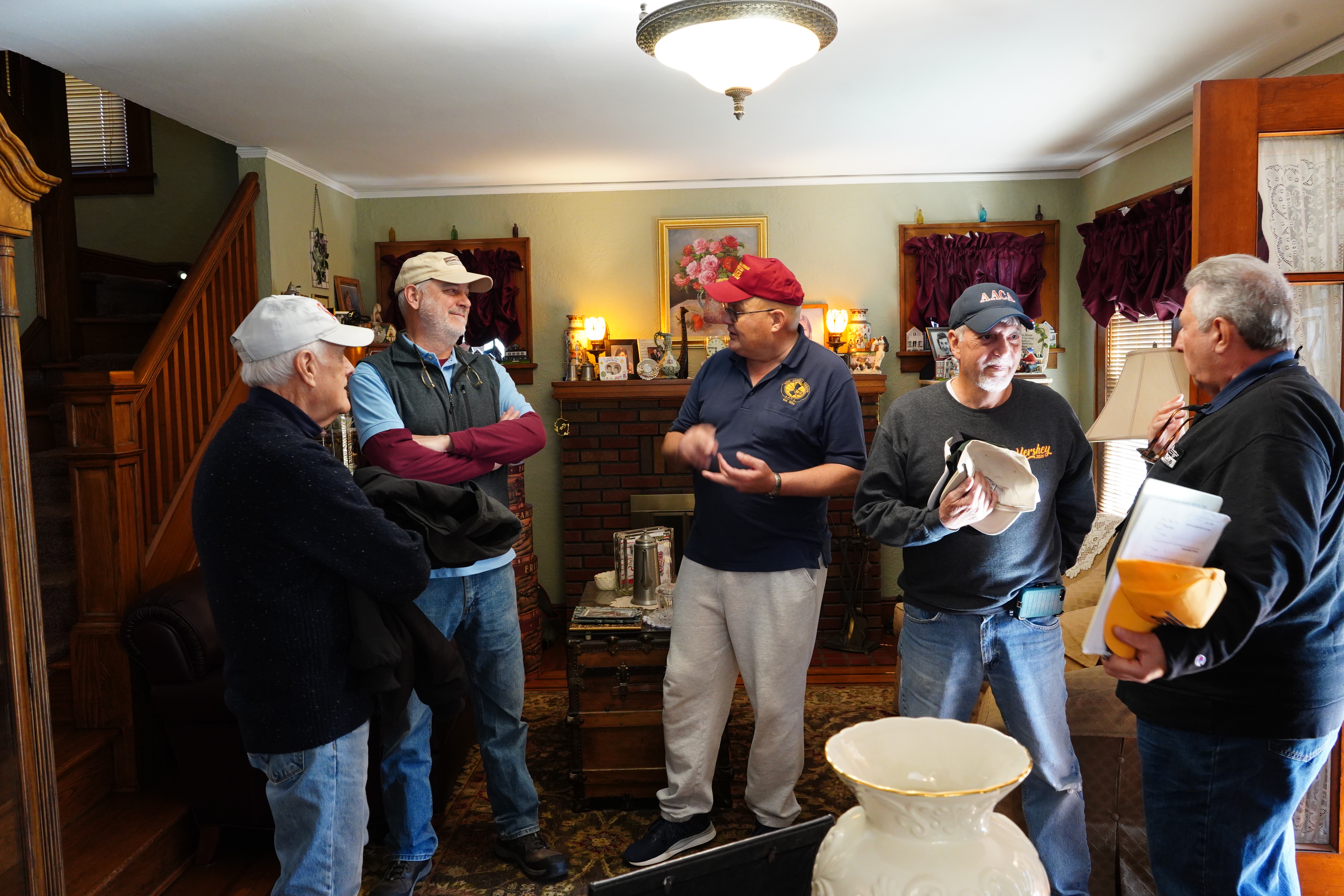
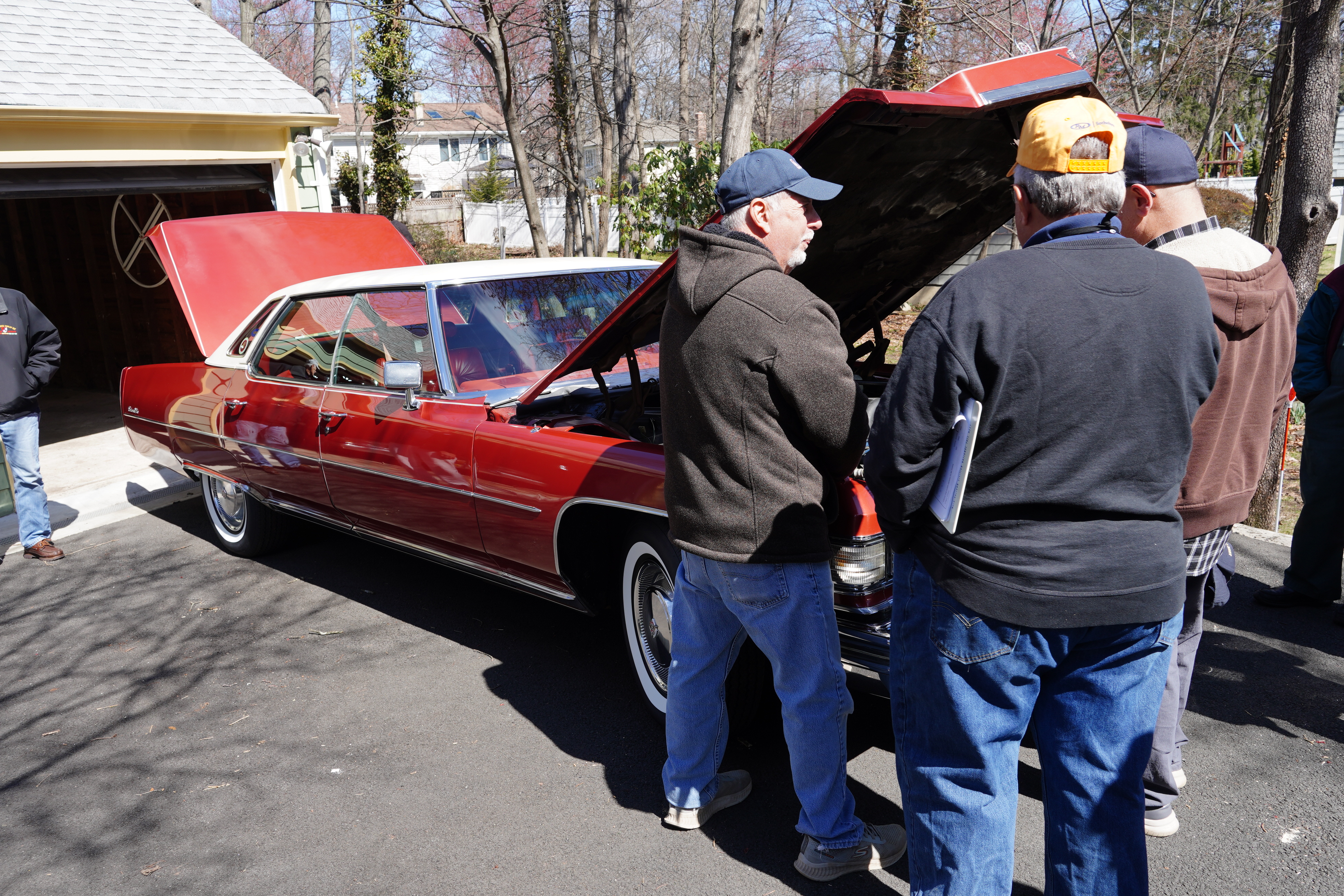
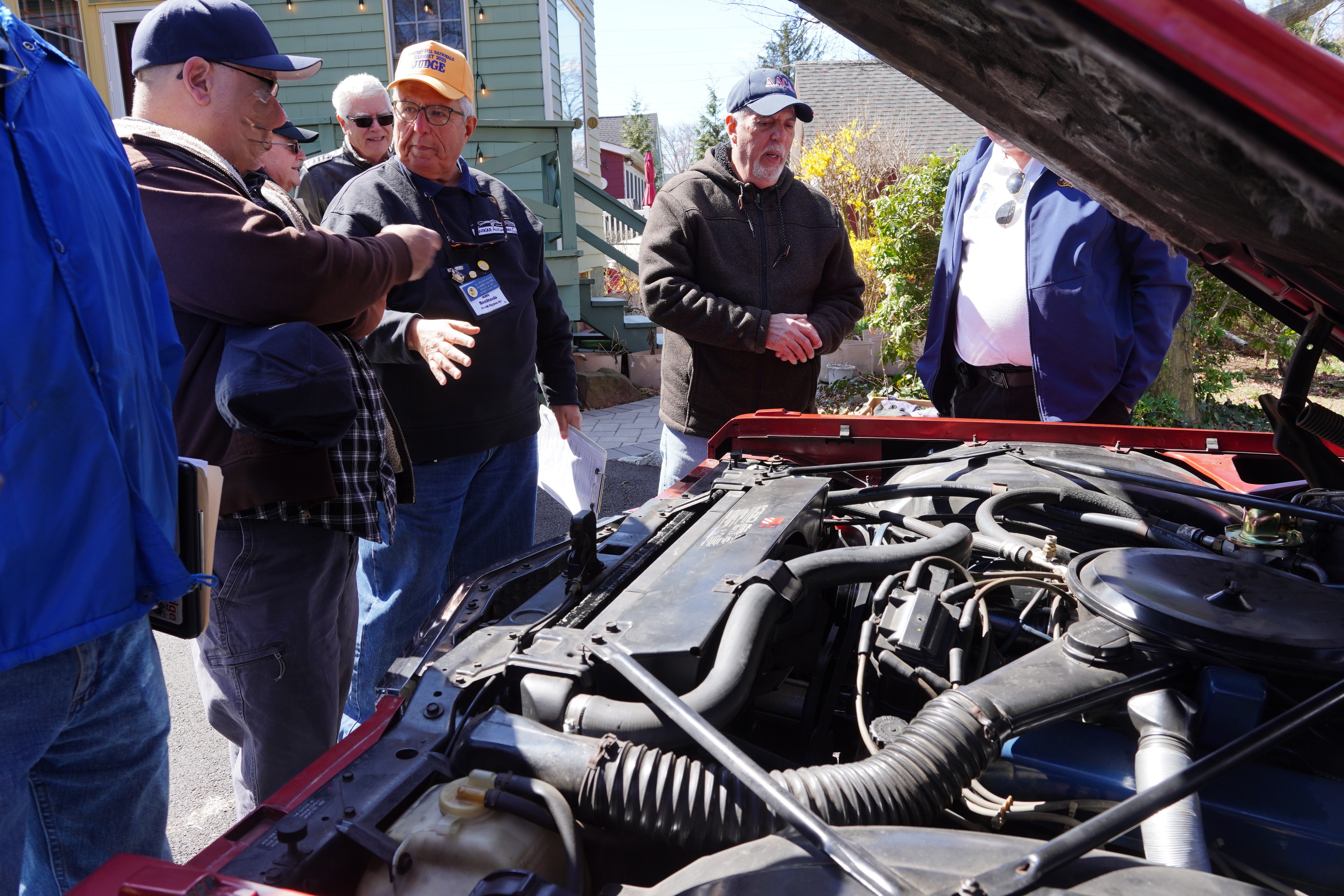
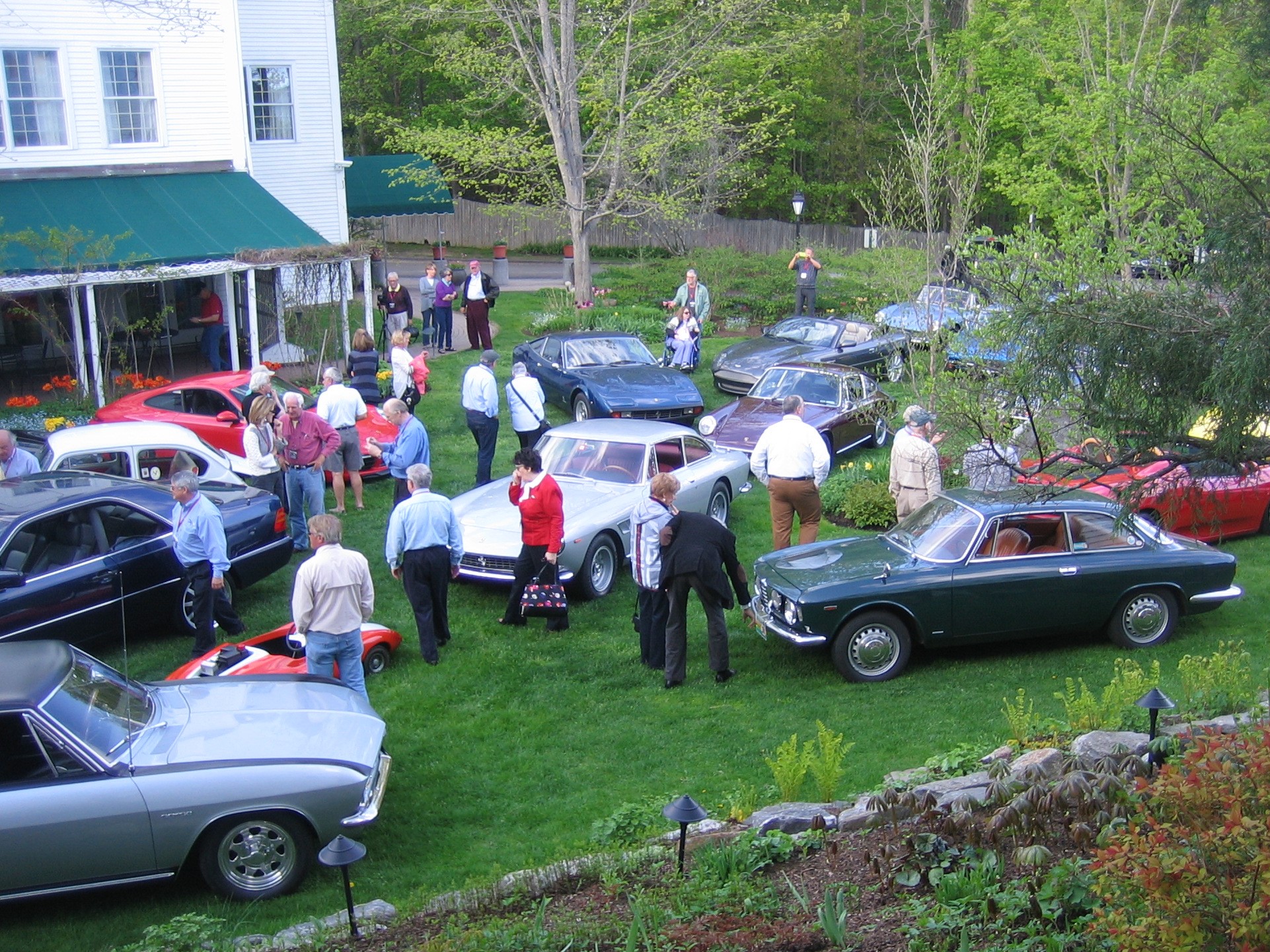
I thought about this again when in March, my wife and I hosted an AACA judging seminar at our home. My Alfa, standing in as a subject car for training purposes, was actually lauded for its “clean” engine bay. I know from attending numerous judging schools that AACA has high standards for engine compartments. Entering an AACA-eligible car in a national meet will ensure that several sets of trained eyes will focus on everything under your hood from firewall to radiator. While the average citizen defines “car detailing” as vacuuming the interior, waxing the paint, and cleaning the windows, AACA members know that in addition to those needs, the engine compartment must look like the day the car was driven off the new car dealer’s lot.

But I have accepted for too long that the Alfa’s engine and the bay within which it resides are “original, and therefore, not to be touched.” That has been changing, and most recently, my critical gaze fell up the quite unsightly air cleaner canister. It sits on the driver’s side of the car, over the exhaust manifold, and connects to the intake plenum via a rubber-and-cloth hose that passes over the valve cover. Mine is black, and it has been obvious to me since the day I took possession of the car that the canister had been repainted, possibly more than once, by a previous owner, most likely Pete, who owned the car from 1968 to 2013. To put it bluntly, the repaint was poor quality, with visible drips and runs. The black had also chipped off in several places. Frankly, it was one of the least attractive components under the hood. It was time to rectify that. Given that the canister had already been repainted at least once, I felt no qualms about stripping it down to the metal. There was nothing original to be saved.

Before I even removed the canister, I went to the national website of the Alfa Romeo Owners Club (AROC), where, as a member, I could access technical assistance. I emailed a Club volunteer who specializes in Alfas of the 1960s, and asked him what the air cleaner canister’s original finish looked like. He responded within twenty-four hours to say that the factory finished the canisters in semi-gloss black. (This was the first time I used this online technical service, and it’s a great perk of club membership.) Off to Lowe’s I went.

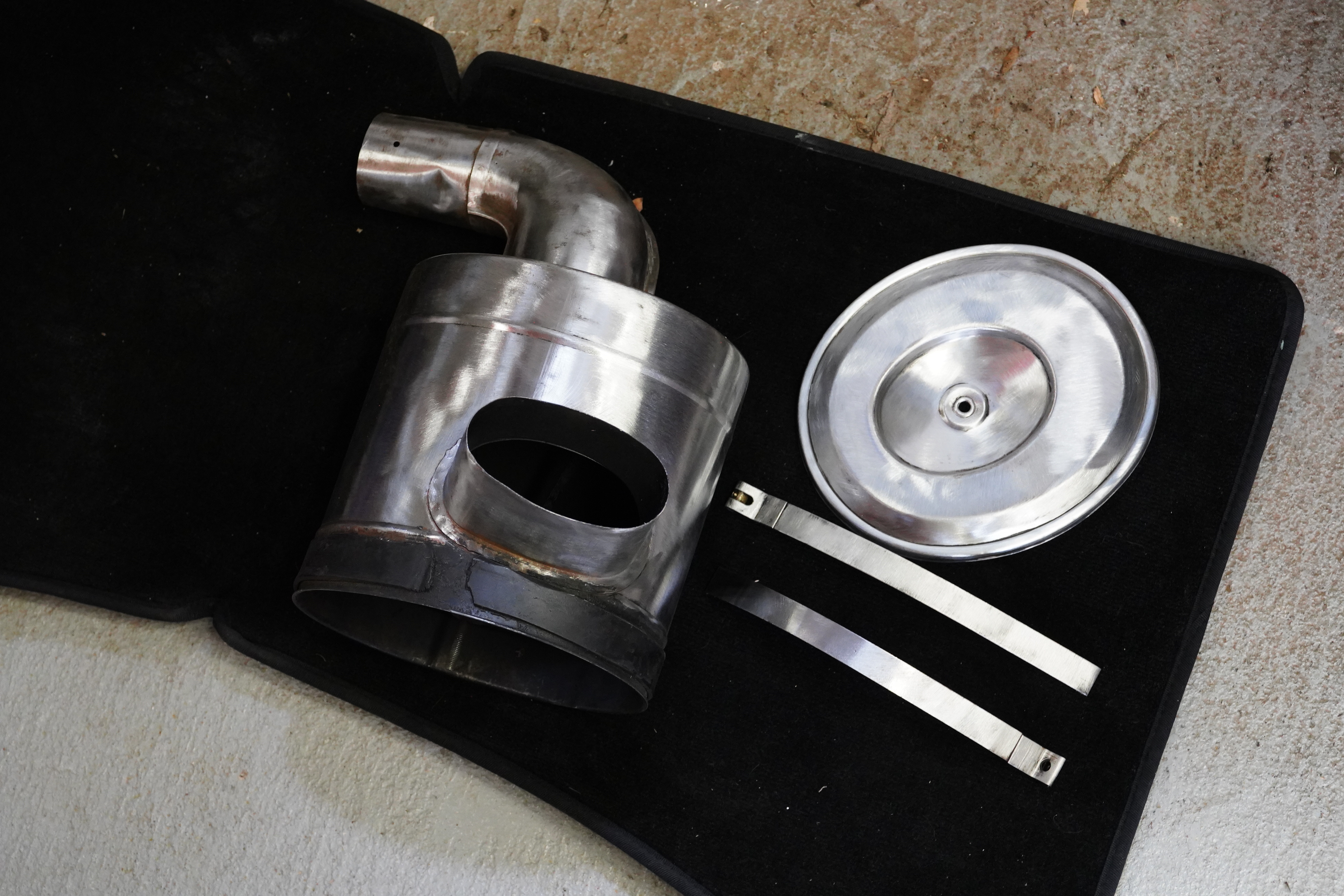
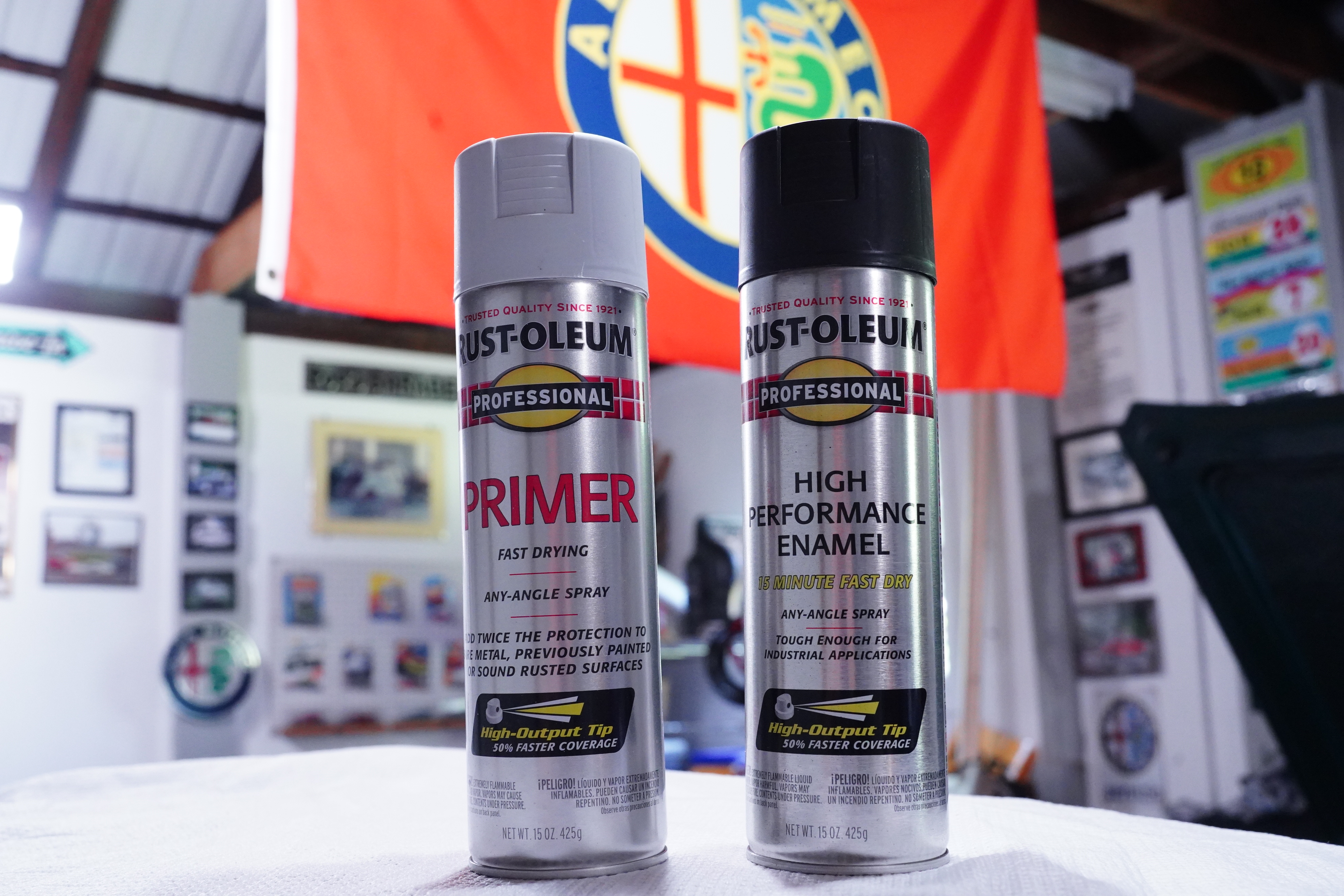
This was going to be a rattle-can job, which does not automatically mean “sub-standard.” I’ve had great success with the Professional line of Rust-Oleum spray paints, so I picked up a can of primer and a can of semi-gloss black. Out came the canister, which I doused with chemical stripper. Given the multiple coats of paint on the thing, this required several applications. Once I removed as much paint as possible with that method, I resorted to mechanical stripping with a 3M plastic abrasive wheel. The canister was down to bare metal, so I wiped everything with paint prep, and waited for a windless day to spray outside.

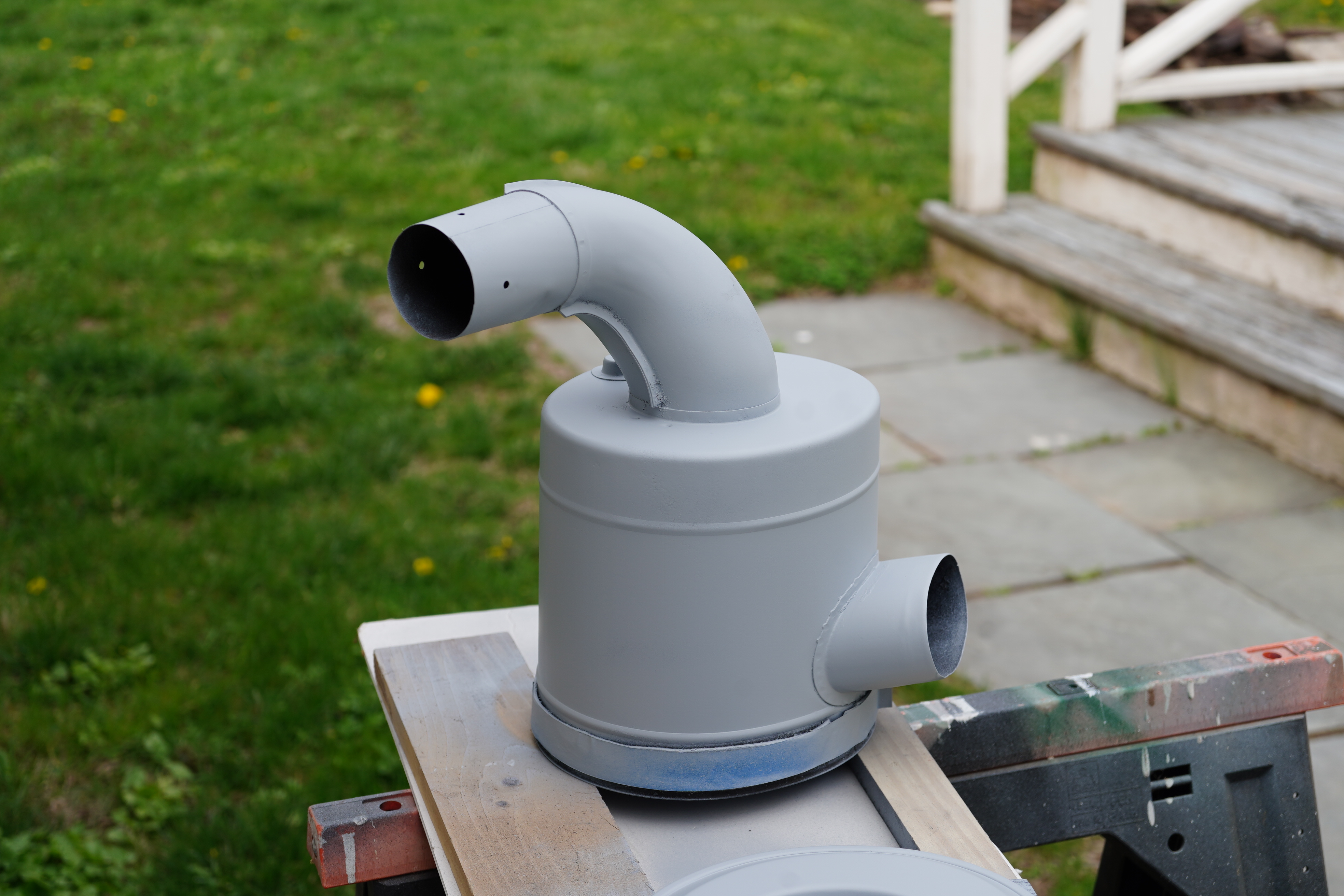
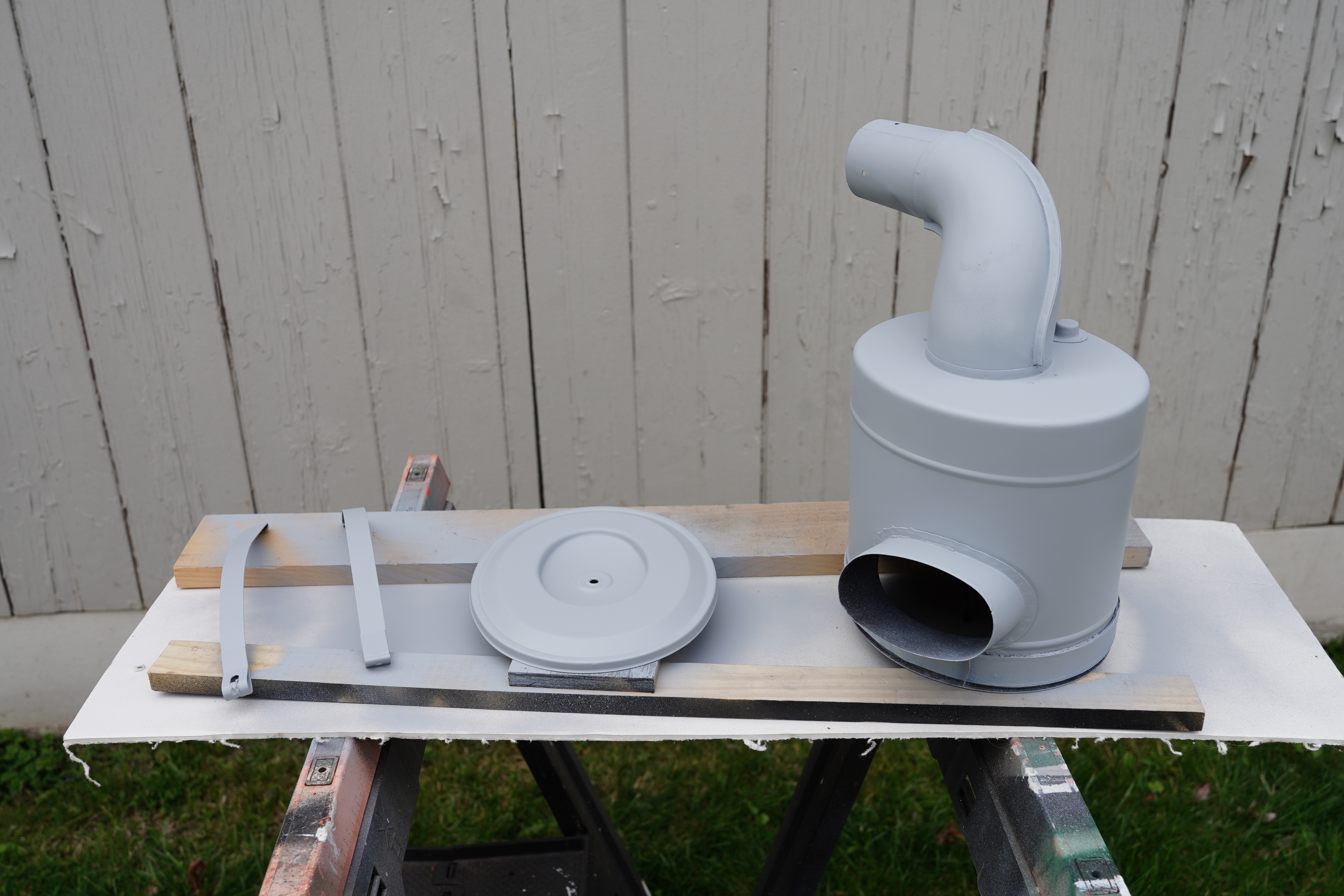
The primer went on smoothly and thoroughly, and it appeared that one coat would be enough. Next was the semi-gloss black, which had to be sprayed in stages as I rotated the canister for complete coverage. Two coats looked like plenty, and I saw no evidence of drips or runs. I gave the parts twenty-four hours to dry, and reinstalled the canister.

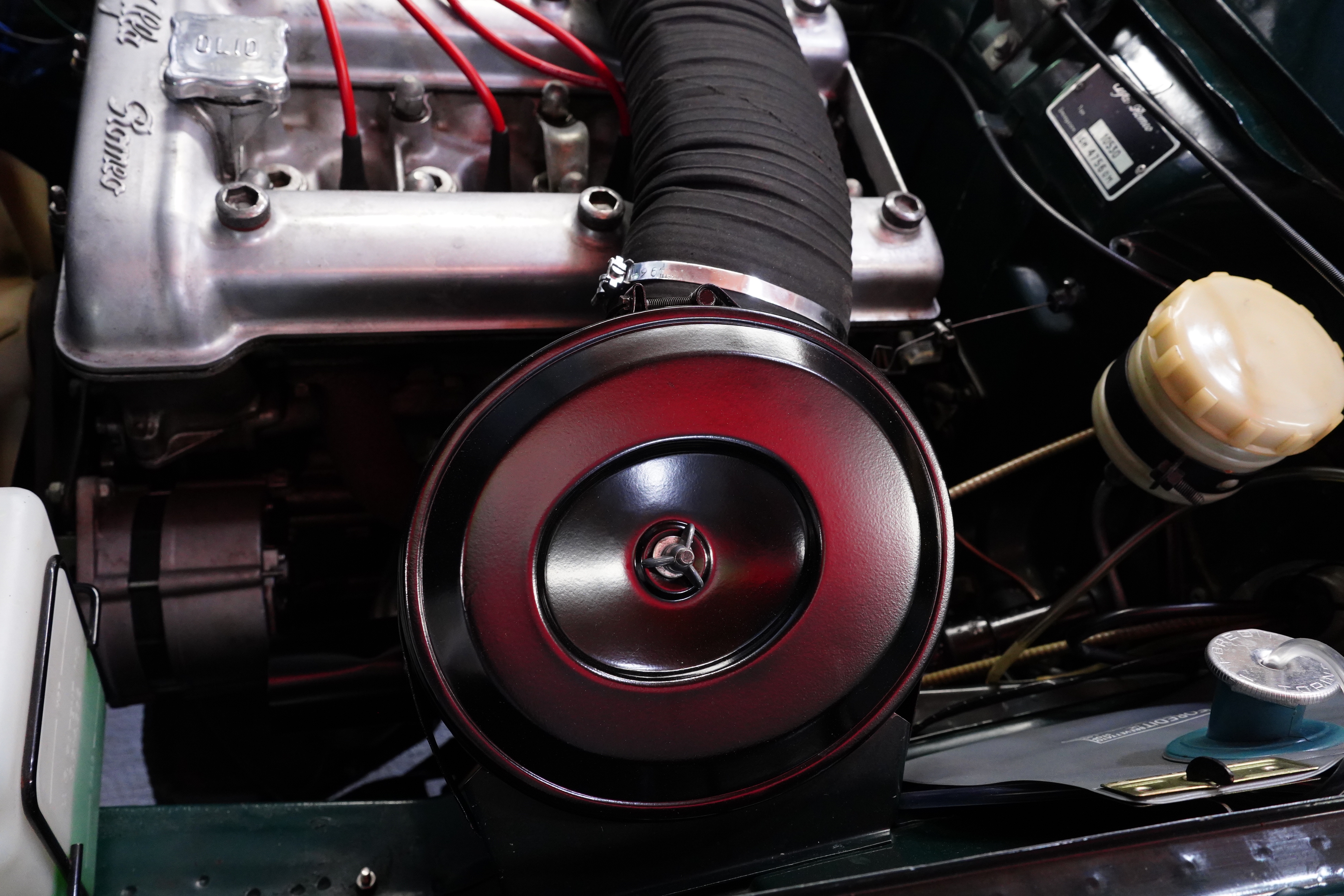
The improvement in the engine bay’s appearance was immediately obvious. If you look closely enough, you can probably tell that it was spray-painted, but to my eye, it looks sharp. My only concern, and it’s not a substantial one at the moment, is that exhaust manifold heat may cause the paint to flake. If it does, it will be the canister’s bottom, well out of sight of show-goers (and judges). If and when that happens, I’ll deal with it. In the meantime, a few hours of simple work, and $20 worth of hardware store paint, has yielded a nice upgrade to the Alfa’s engine compartment.

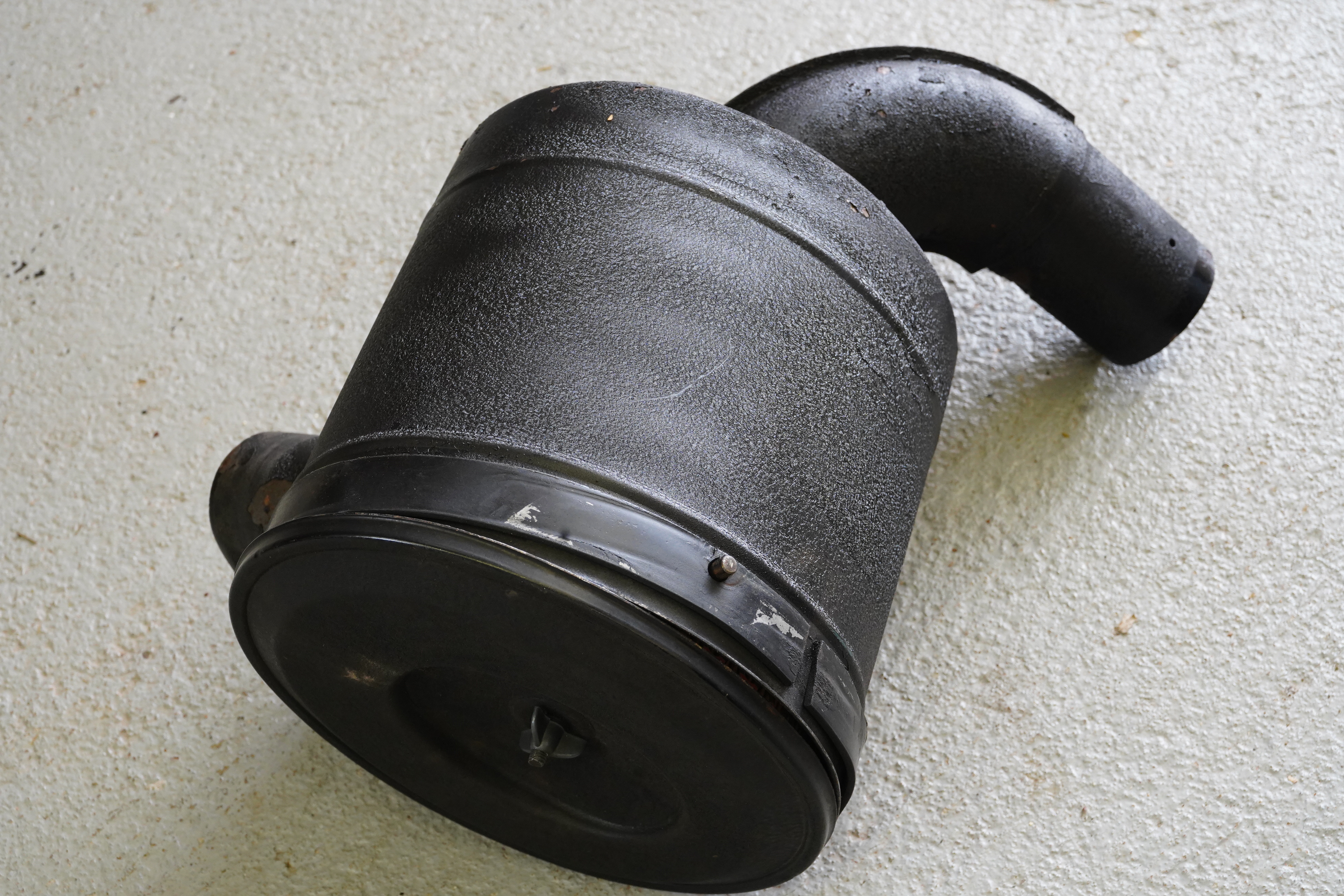
BEFORE

You can see the rough surface, runs, and paint chips throughout the component.


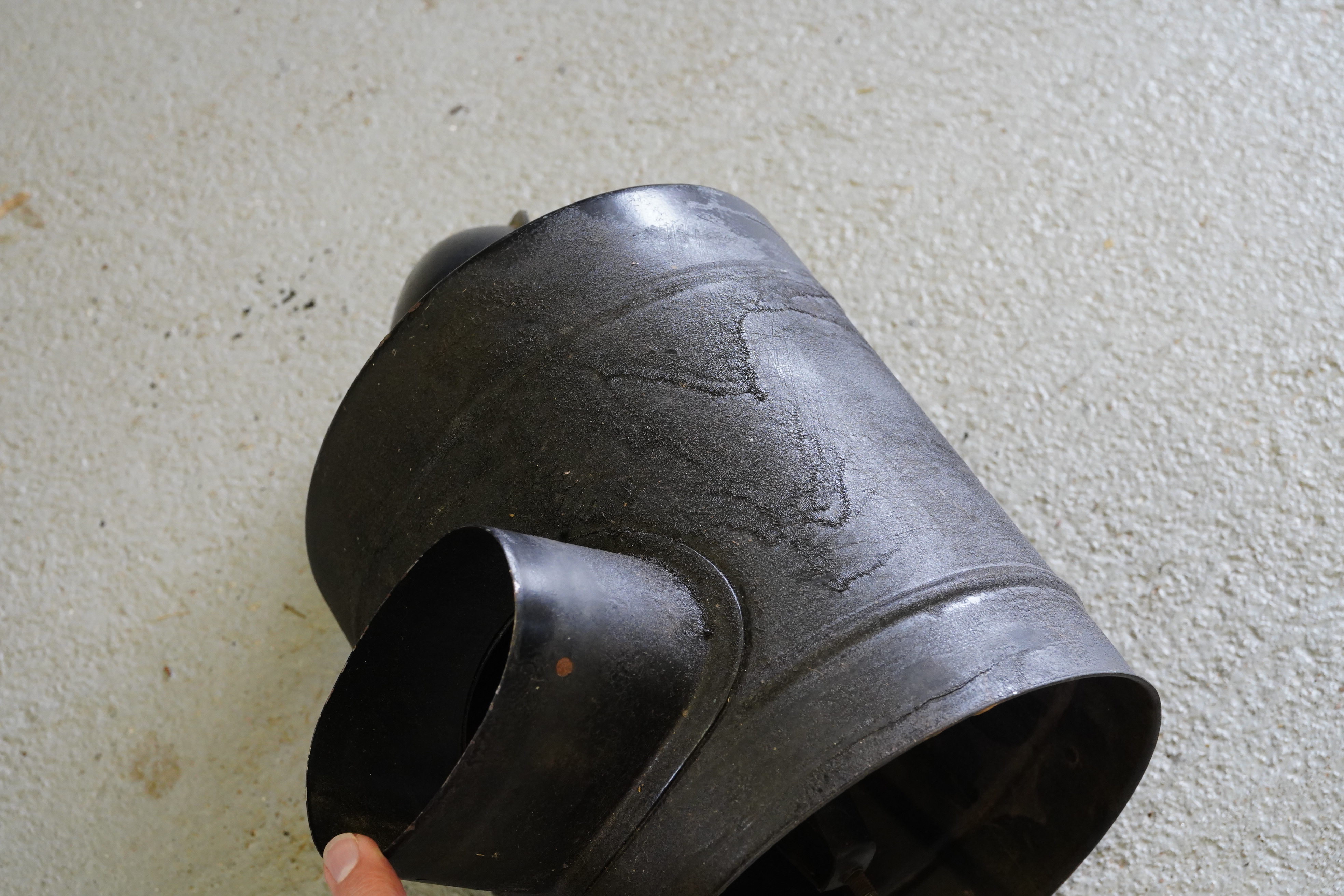
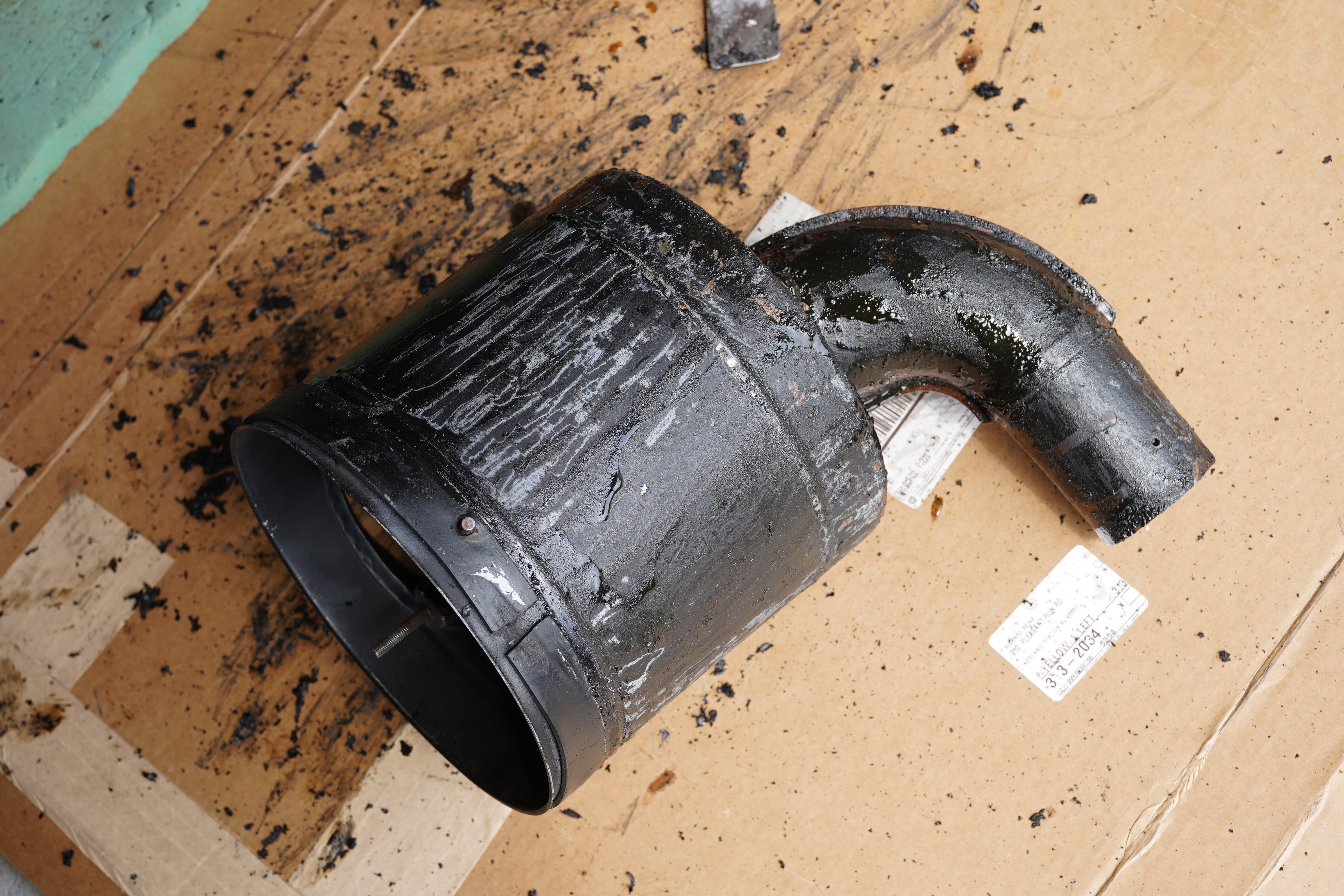
DURING

First, the chemical stripping.


The remainder of the paint was removed with the 3M plastic abrasive wheel.

The primer coat.


The top coat of semi-gloss black.


AFTER

Once reinstalled, the canister looks much improved. For the most part, only the top lid is visible.


Entire blog post content copyright © 2025 Richard A. Reina. Text and photos may not be copied or reproduced without express written permission.


Moving Away From Strict Originality

As I wrote about in June of last year, my 1967 Alfa Romeo 1300 Junior has been certified by the Antique Automobile Club of America (AACA) as an HPOF winning car, the awkward acronym standing for “Historical Preservation of Original Features.” Full recognition for that achievement must go to its previous owner, my late, great friend Pete, from whom I bought the car. During my thirteen years of ownership, I have endeavored to maintain the car’s originality while continuing to keep it safe, reliable, and roadworthy. After all, I bought it to drive it, and have put over 14,000 miles on it since taking possession in 2013.

Recently, though, I have had some issues related to my efforts to stay with original style parts. Last year, after a cooling system refresh which included new replacement hoses and clamps, I had a few antifreeze leaks, traced back to a very simple fix: retightening the “Romablok” hose clamps, the same design as was used by the Milanese factory workers in 1967. A few weeks ago, while visiting my good friend Terry and his ’64 Malibu project, he let me know of a company called BelMetric. To my surprise, I had not heard of them before, and to my happy surprise, their website is chockablock (yes, it’s in Merriam-Webster’s, spelled this way) full of all kinds of neat metric hardware.

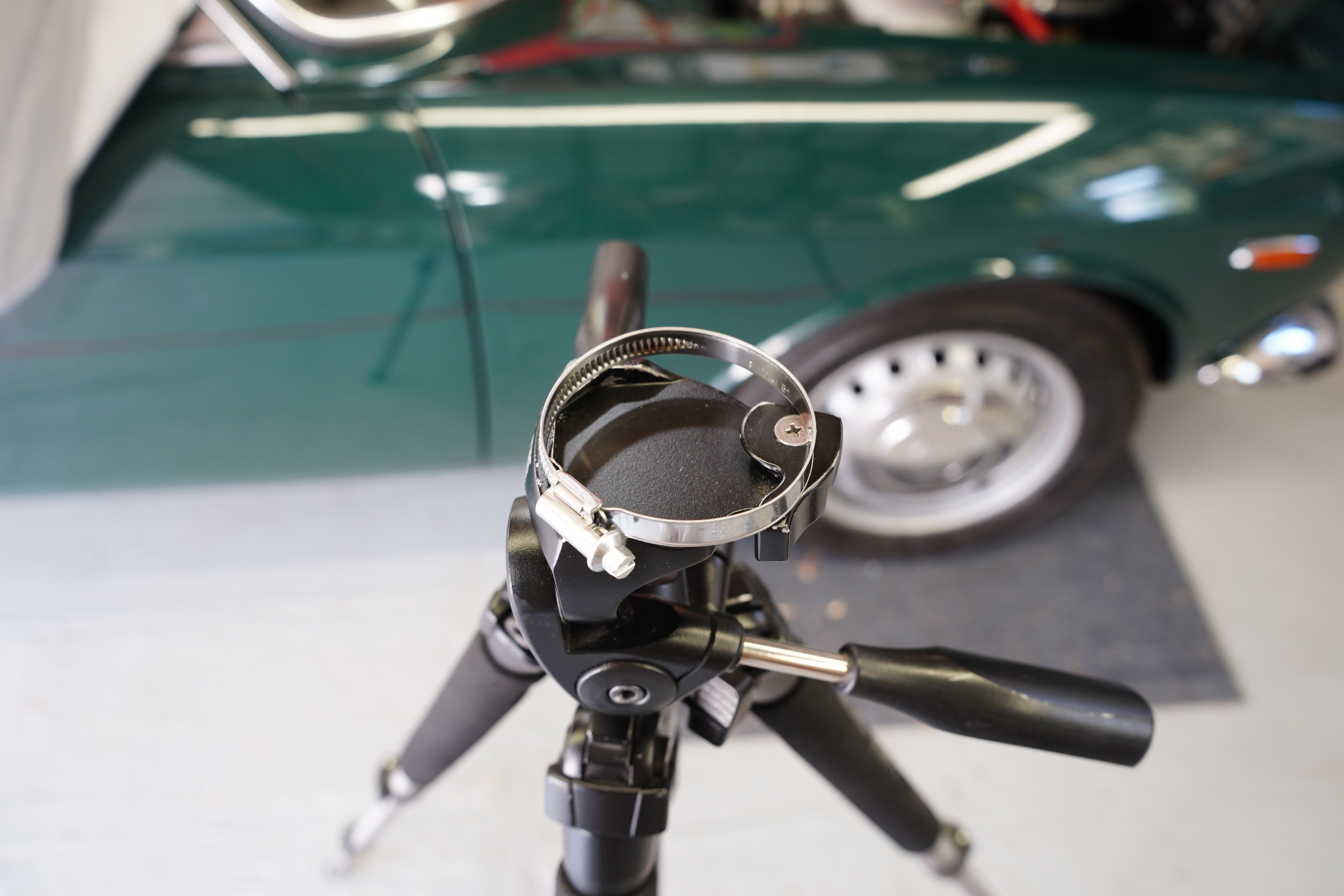
They carry a variety of metric radiator hose clamps, and I selected the ones listed “for European OEM auto brands: Porsche, Mercedes, Audi, VW, etc.” I ordered them and they are presently sitting on my work bench. I intend to install them before the AACA NJ Region Spring Meet on Sunday, May 4. Am I making my car slightly less original? Yes. Do I think the HPOF judges will notice? Probably not, but since I know that they focus on hose clamps as part of Class Judging, they may ask. In any event, I need to have peace of mind when driving my Alfa. Once this dreary weather goes away, you will find me in the garage with my head under the hood, getting this necessary task done.

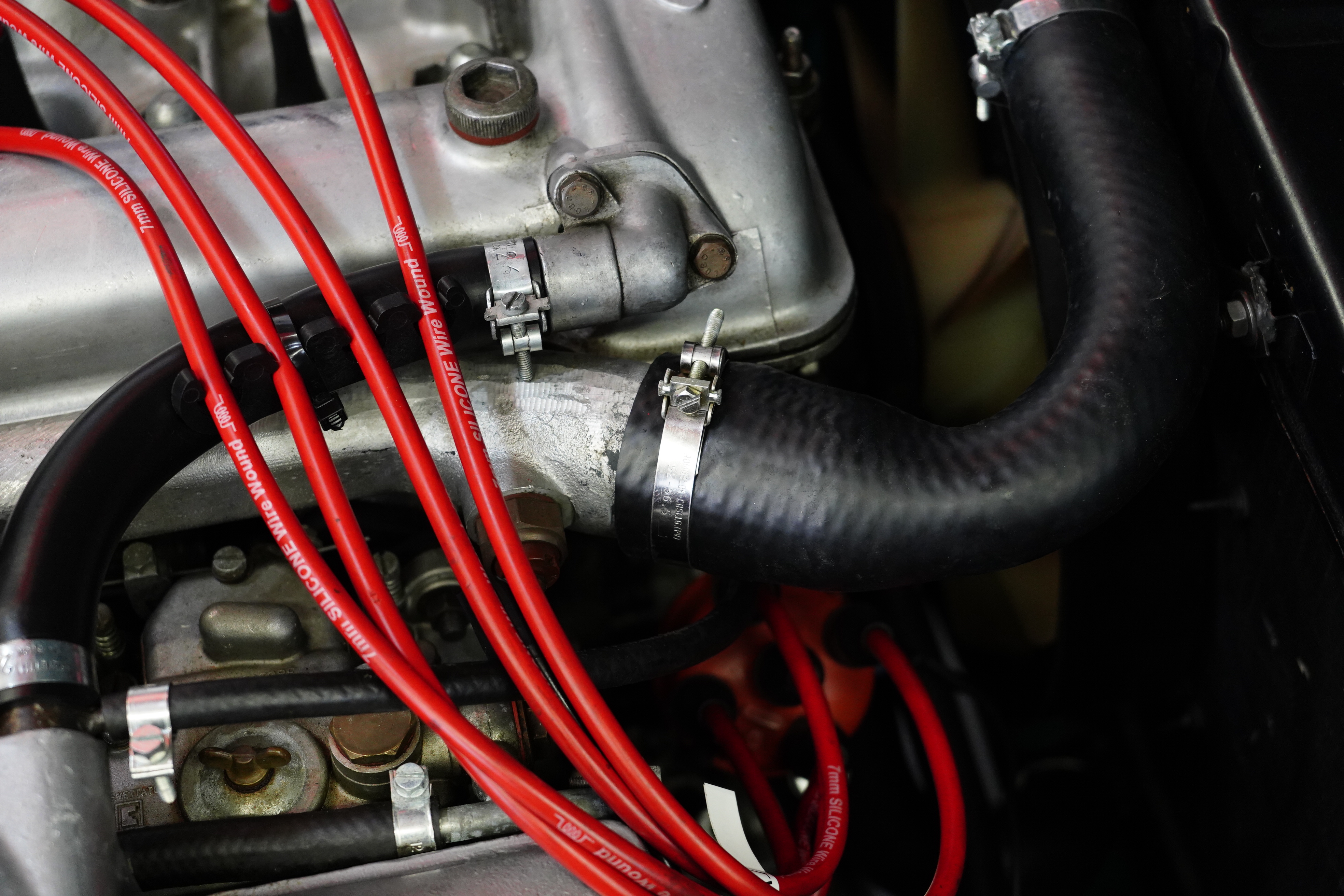
The Romablok clamp on the upper radiator hose


The BelMetric-sourced clamp, yet to be installed (camera tripod being put to good use)

Entire blog post content copyright © 2025 Richard A. Reina. Text and photos may not be copied or reproduced without express written permission.


Hotter Spark Plugs for the Alfa

There is a well-known adage that says, “If it ain’t broke, don’t fix it.” It is something that should be heeded by us car guys and gals. Among Alfa Romeo owners, there is a corollary adage which applies to Weber carburetors: “If the car runs well, don’t mess with the carbs.” Webers are unlike most other carburetors such as those found on American vehicles. After an initial set-up as found in a service manual, the choice of needle and jet sizes for Webers is made on a basis of trial and error. I believe that it was Pat Braden, the late, great Alfa guru, who advised against trying to “tune” your Weber carburetors without checking other engine basics first.

I bring this up because for the thirteen years I’ve had my GT 1300 Junior, during which I’ve driven it over 14,000 miles, the engine has always run strongly. One issue, though, has been that the spark plugs quickly turn black, apparently from an overly rich fuel mixture. (The engine uses almost no oil; at most, a half-quart in between oil changes.) Rather than try to “adjust” my dual Weber carburetors, I replace the plugs. Spark plugs are less than five dollars each, and the set of four takes about twenty minutes to replace. As a rule, I have been swapping out spark plugs once a year at the start of the driving season.

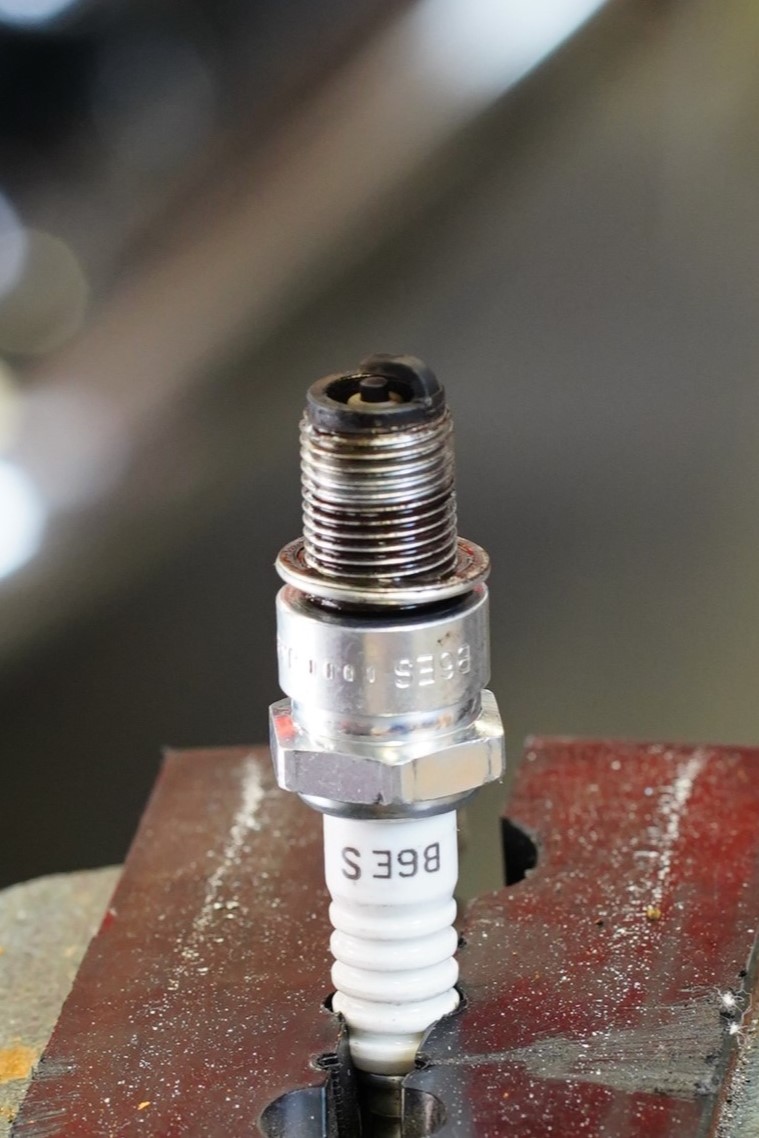
Last year, when I changed the plugs (which have exclusively been NGK B7ES), I moved up to the next hottest heat range plug, the B6ES. In 2024 I put about 1,100 miles on the Alfa, and there was no perceptible performance difference with the hotter plug. However, when I pulled the plugs a few weeks ago to check them, I was impressed. To my eye, there was less build-up on the plug tips, to the point where I decided to leave the plugs in place. The one-step-hotter plugs did a better job of burning off deposits, without affecting drivability.

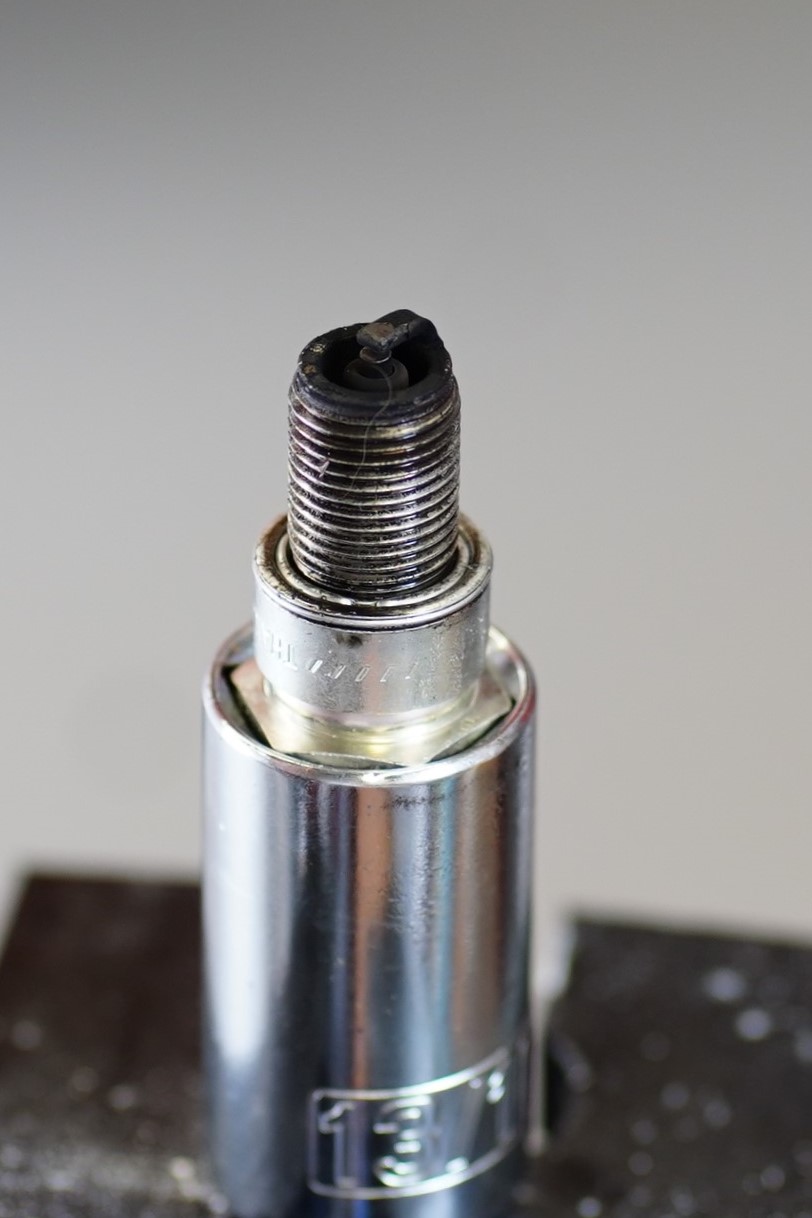
This was not easy to capture in photographs, but take a look at the two pictures and see if you can tell that the B6ES plug looks cleaner than the B7ES plug. I have two spare sets of the B6ES plugs, so if need be, I can quickly replace the set. But for now, I will leave them in the car and see how it goes. I’m expecting to possibly get a complete second driving season from them.

The “colder” plug, the NGK B7ES, shows some heavy deposits.


The “hotter” plug, the NGK B6ES, looks serviceable still after one driving season.


Entire blog post content copyright © 2025 Richard A. Reina. Text and photos may not be copied or reproduced without express written permission.


A Dremel and Some Wenol Work Wonders

A few weeks ago, I pulled the cover off the ’67 Alfa Romeo and began the springtime ritual of prepping the car for the driving season. There are always two components to this: the mechanical, and the cosmetic. Mechanically, I have already gotten my order from Classic Alfa, consisting mainly of tune-up items like plugs and points. Cosmetically, the car was clean when it went into storage last fall, so at first glance, there didn’t seem to be much need in that department.

However, I have decided on a change of tack for the car. A quick refresher: when I purchased the car from Pete in 2013, it had already been awarded its HPOF (Historical Preservation of Original Features) status by the AACA. This means that the car was verified to essentially be in original condition. Future HPOF awards at AACA events would require maintaining its originality. I have only shown this car at one AACA National event, in Saratoga Springs, NY in 2024, where it won its repeat HPOF.

I’ve done my best to maintain the car without changing anything. But now I’ve decided that, given the decreased likelihood of participating in AACA Nationals, I might consider some minor upgrades for reliability, safety, and appearance. (Mind you, I’m not a trophy-hunter, and while I appreciate the recognition from my peers, it is far from the main reason I own a collector car.)

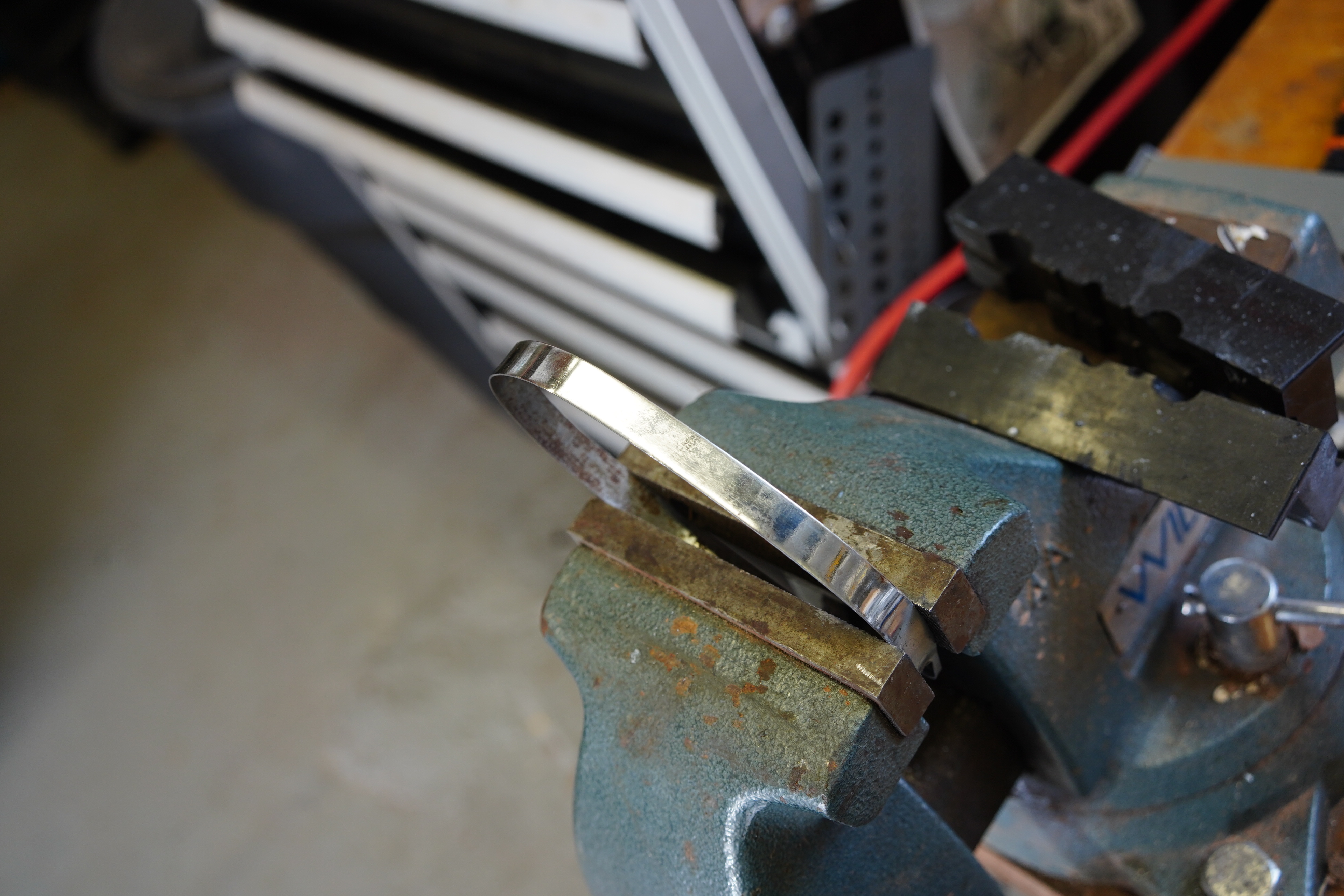
For example, I have continued using the original factory-style Roma-Block radiator hose clamps. But several loosened up and caused a minor coolant leak. I now plan to replace those clamps with an updated design. And speaking of clamps, I was always bothered by the tarnished and dull appearance of the air intake hose clamps. They are original to the car and in thirteen years of ownership, I have ignored them, until now. I thought I would try a buffing method I had never used before.

One of the air intake tube clamps, before treatment

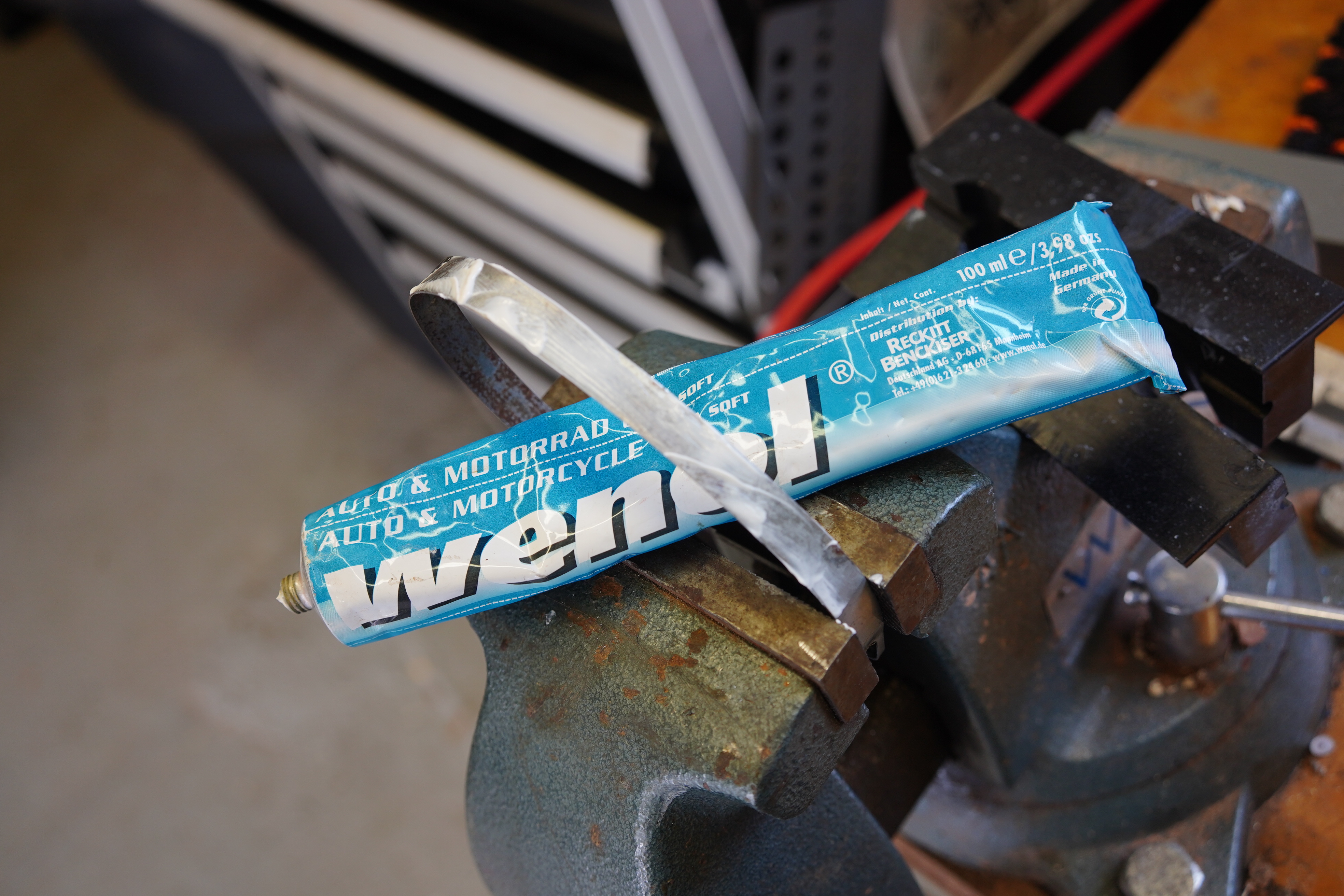
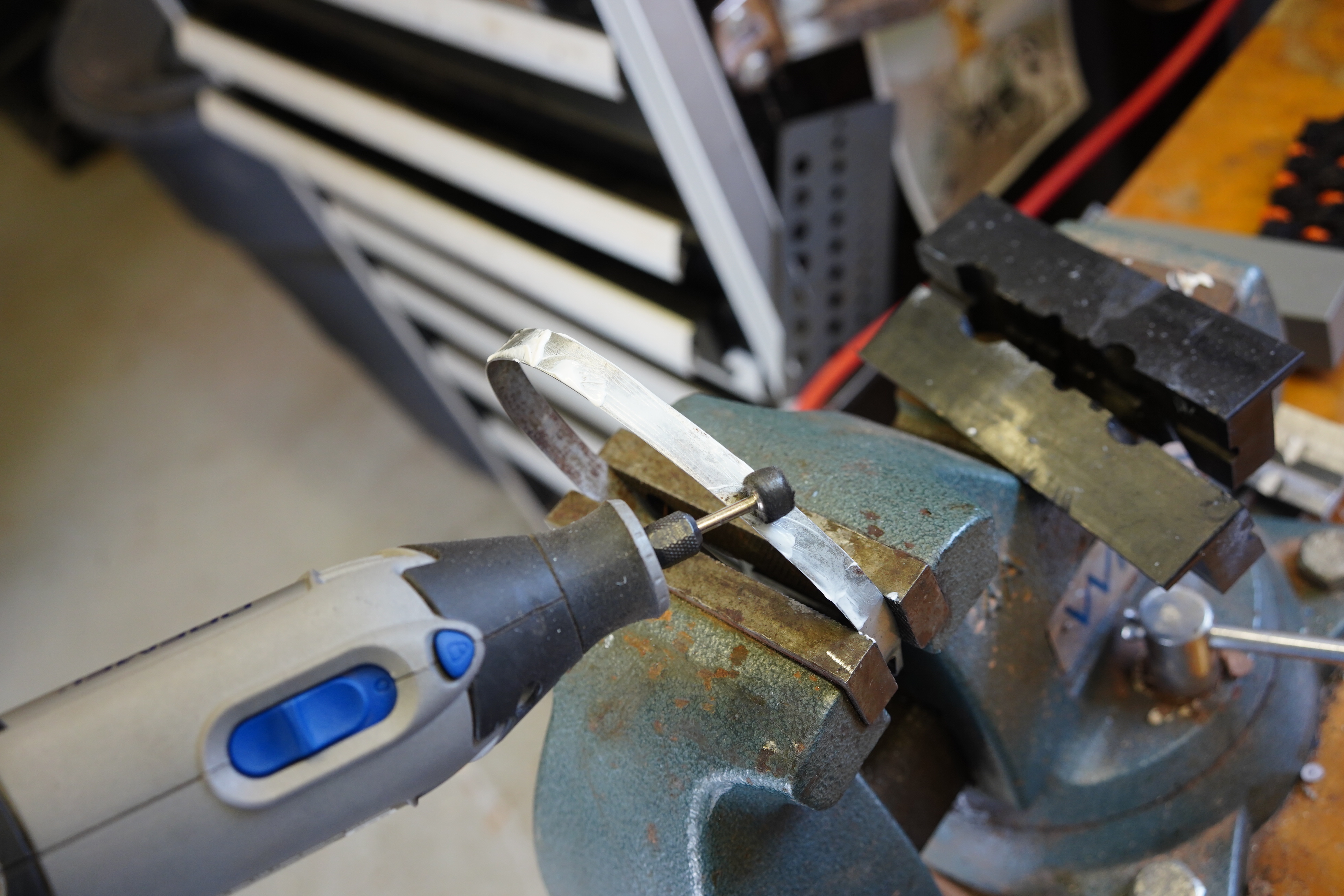
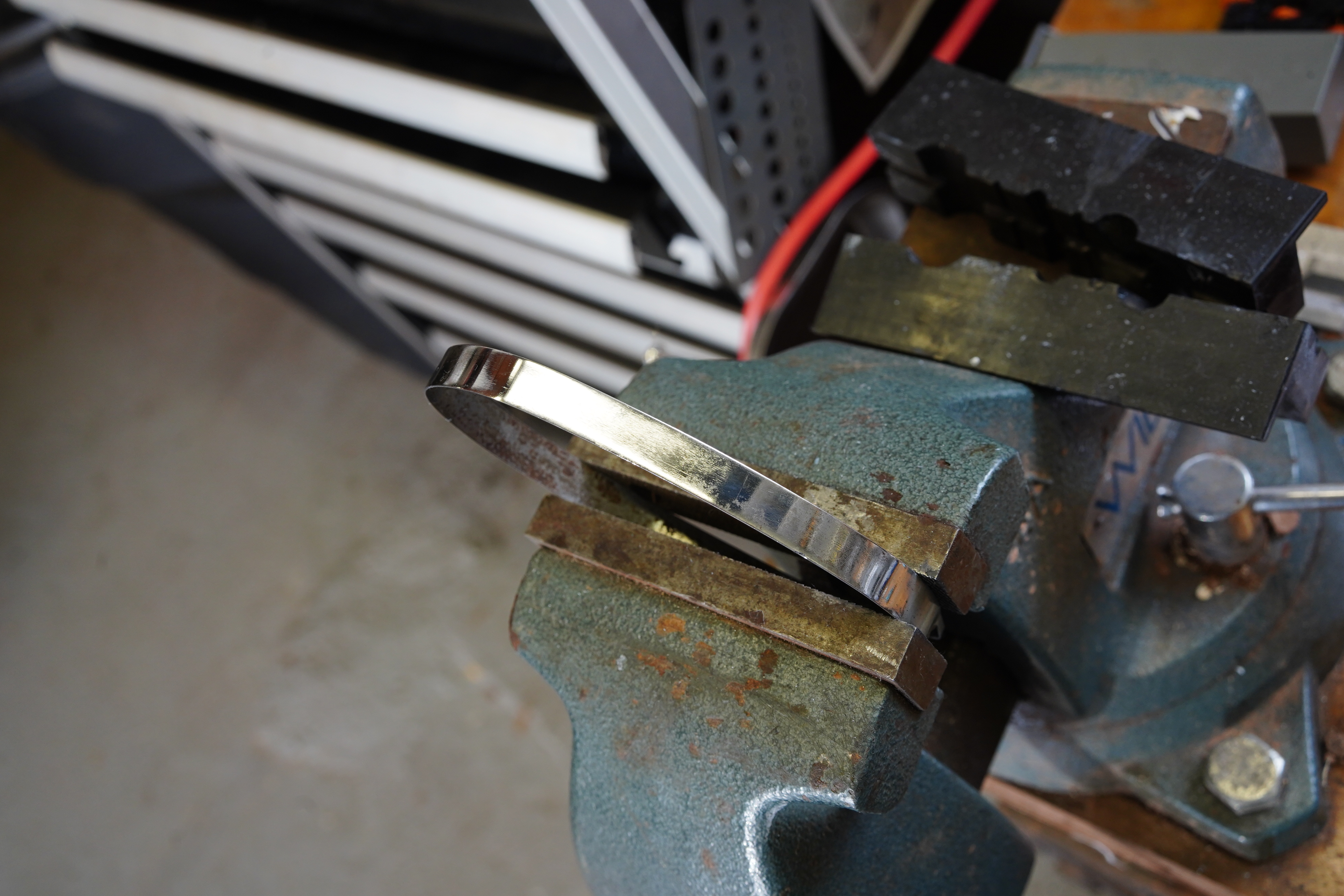
I grabbed my tube of Wenol “automotive” metal polish, labeled as a finer compound than the regular Wenol. I also broke out my Dremel tool and mounted a small cotton buffing wheel on it. Securing the hose clamp in my bench vise, I put a schmear (yes, the word is in my Merriam-Webster’s Collegiate Dictionary) of Wenol on the clamp, cranked the speed dial on the Dremel up to 15k (range is 5k-30k) and had at it.

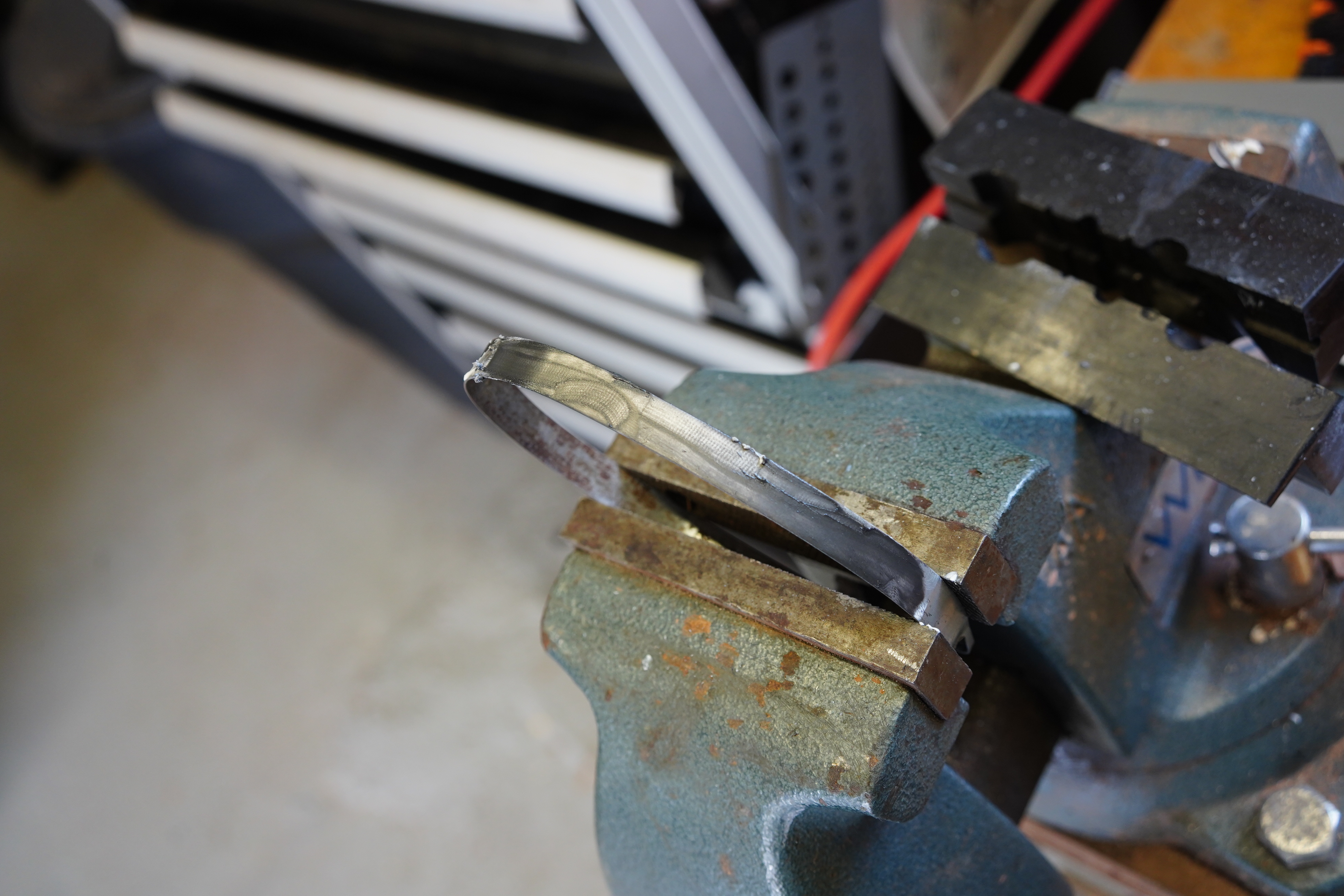
At first I became alarmed when the clamp turned black! But I kept at it, and within moments, the matte gray metal glistened like chrome. I continued the treatment, buffing a small section at a time, and wiping each section down with a microfiber cloth to remove the remaining remnants of polish. After finishing one clamp, the buffing wheel seemed saturated, so I switched to a new cotton wheel for the second clamp. I also polished the clamps’ bolts and nuts for the complete look.

At first, the clamp turned black

Wow! What a difference an investment of thirty minutes of garage time made, and it was fun to do! The clamps now look almost new, and are nice and contrasty against the black air hose. The next challenge will be to attack other engine compartment clamps which will look shabby compared to these two refurbished ones. And if the car does enter another round of HPOF judging, I’ll simply tell the judges the truth: yes, these clamps are original to the car.

Starting to shine
Shinier still
One done, one to go
The two finished clamps look great

Entire blog post content copyright © 2025 Richard A. Reina. Text and photos may not be copied or reproduced without express written permission.
 

The Alfa Gets a New Exhaust System

The gearbox and rear axle fluids in my Alfa Romeo had not been replaced in a few years, and with this car, I try to adhere to a “mileage and/or time” type of maintenance schedule, so I decided to tackle the job. It’s not difficult other than getting the car high enough off the ground for me to slide under. In typical Italian fashion, though, the fill plugs require Allen wrenches (also known as hex wrenches), and somehow, I no longer had the correct sizes in my arsenal (12 & 14 mm, not available in Home Depot). Had I loaned them to a fellow Alfa owner and forgot? Perhaps, but no matter. An online order was placed with Grainger (great tools and sometimes high prices, but the quality is worth it) and I was ready to get this maintenance task done.

All the Alfa service manuals issue the same warning: remove the FILL plug before removing the DRAIN plug, because if you drain the component and then find that you are unable to remove the fill plug, you are in a jam. (Or is it pickle? Where did these food references come from?) The fill plugs loosened without extraordinary effort, and the gearbox and differential were treated to fresh fills of 75W-90.

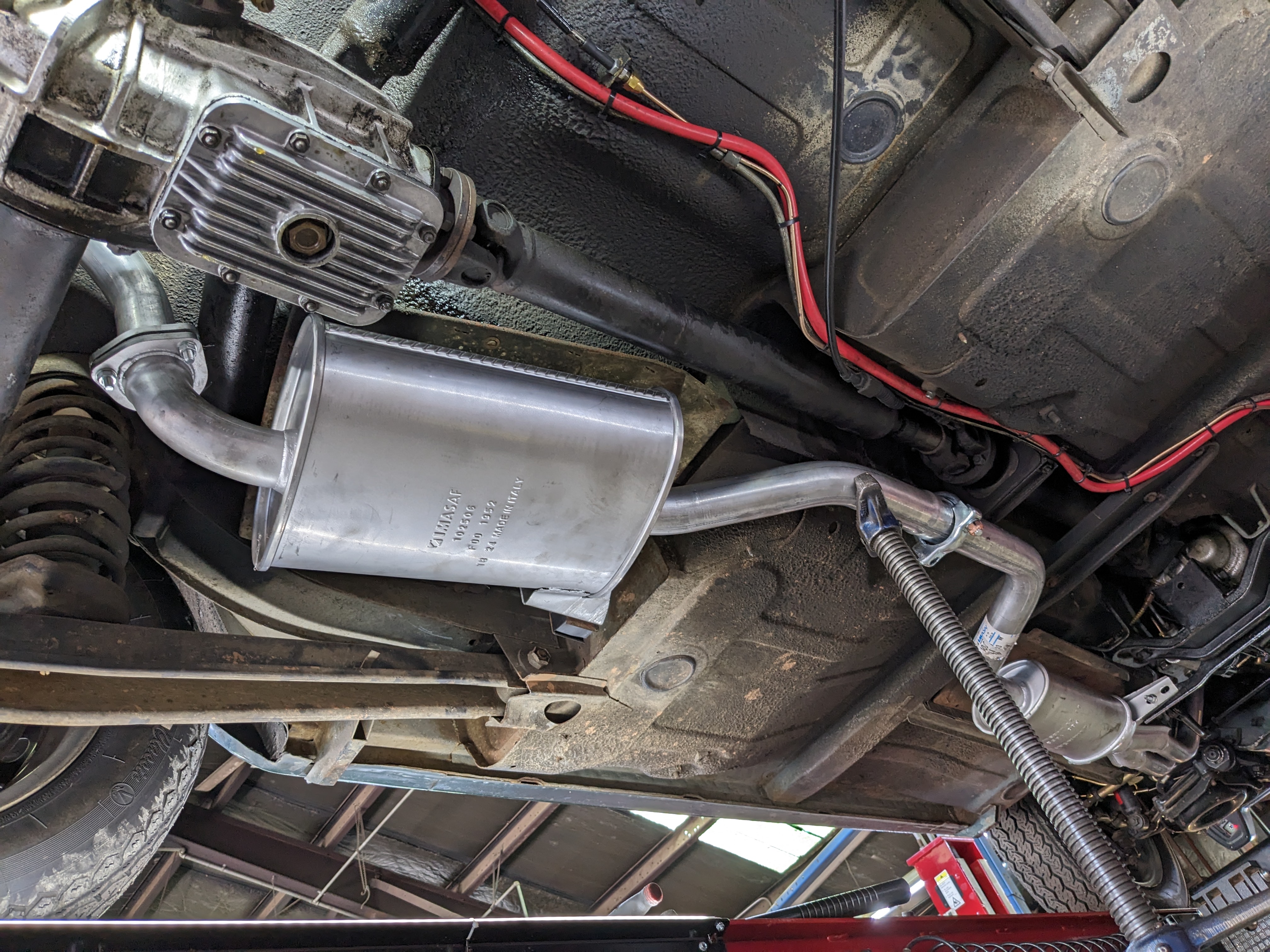
But I digress (if two paragraphs count as a digression). While on my back staring at objects inches from my nose, I noticed that several exhaust components showed serious signs of rust-through. The corrosion was mainly confined to the mufflers; I saw no damage at any pipes or hangers that might indicate a potential loss of the system while driving. I have no idea how old the system was. Pete had never indicated that he had replaced it, and I’ve put 14,000 miles on this exhaust through 11 years of ownership, so I had been contemplating its replacement anyway. An order was placed with my #1 parts supplier, Classic Alfa, which had a complete exhaust system (including an installation kit with gaskets, hangers, and clamps) in stock for under $300 (and made in Italy to boot). The shipping, however, was an additional $150, but I decided it was worthwhile. As is typical for Classic Alfa, I had the parts within days.

Exhaust work is not difficult provided that you have working room under the car, which I didn’t, so I spoke to the owner of the Shell station a quarter mile from my home. His shop has worked on my Alfa and my other cars before, and he told me to drop it off any day during the week. I delivered the parts the night before, and Brian, his most experienced tech, did the job at my request. When I picked up the car, Brian assured me that everything fit very well, and a quick test drive confirmed that, as there were no untoward noises from under the car. I paid $350 in labor, worth every cent to me to get it done expeditiously and locally. All in, the exhaust system replacement cost me a little under $800, a not-unreasonable sum for a 57-year-old Italian sports car. I’m expecting that it should last for as long as I own the car.


ADDENDA

The Mercedes-Benz 1968 Model & Price Chart

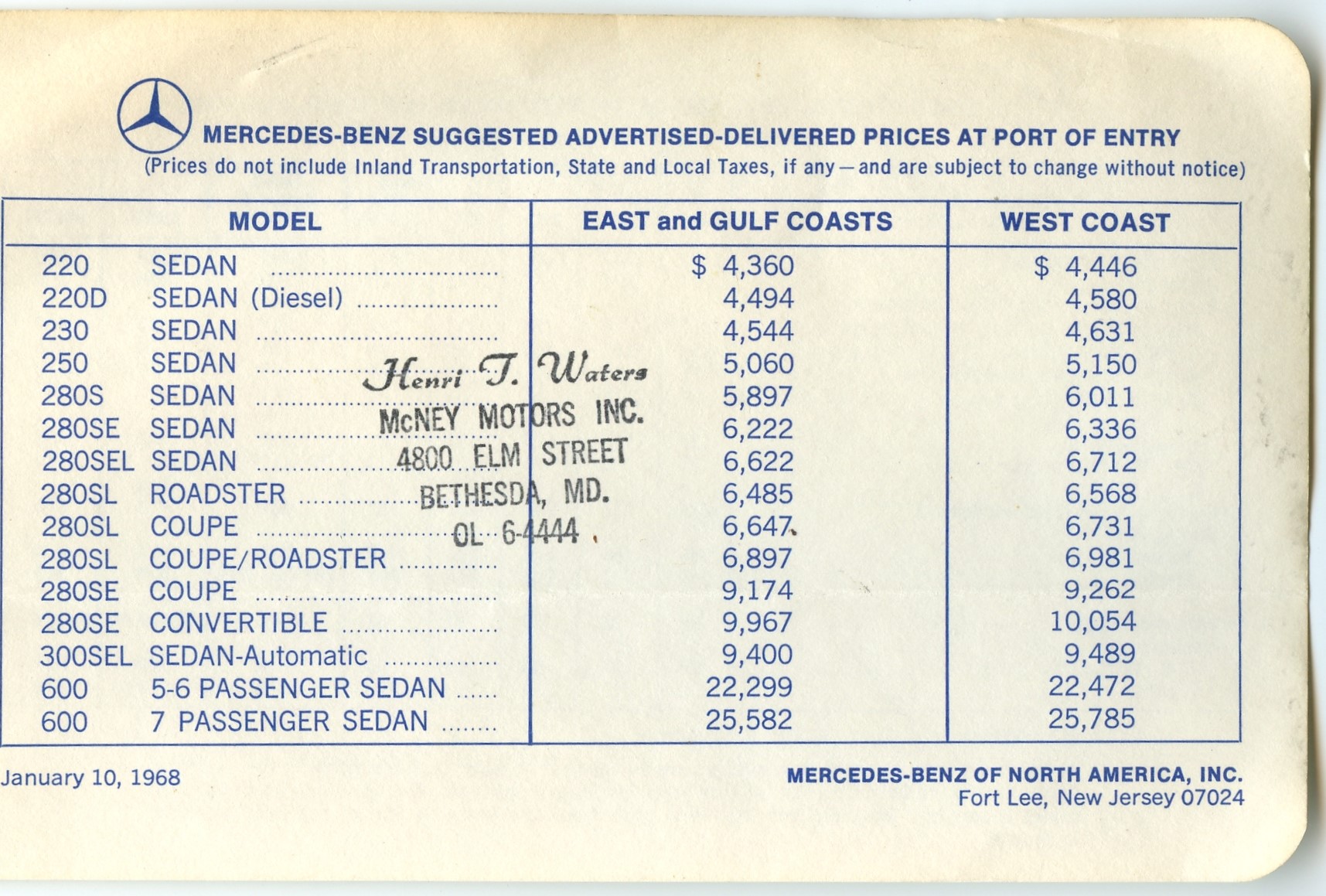
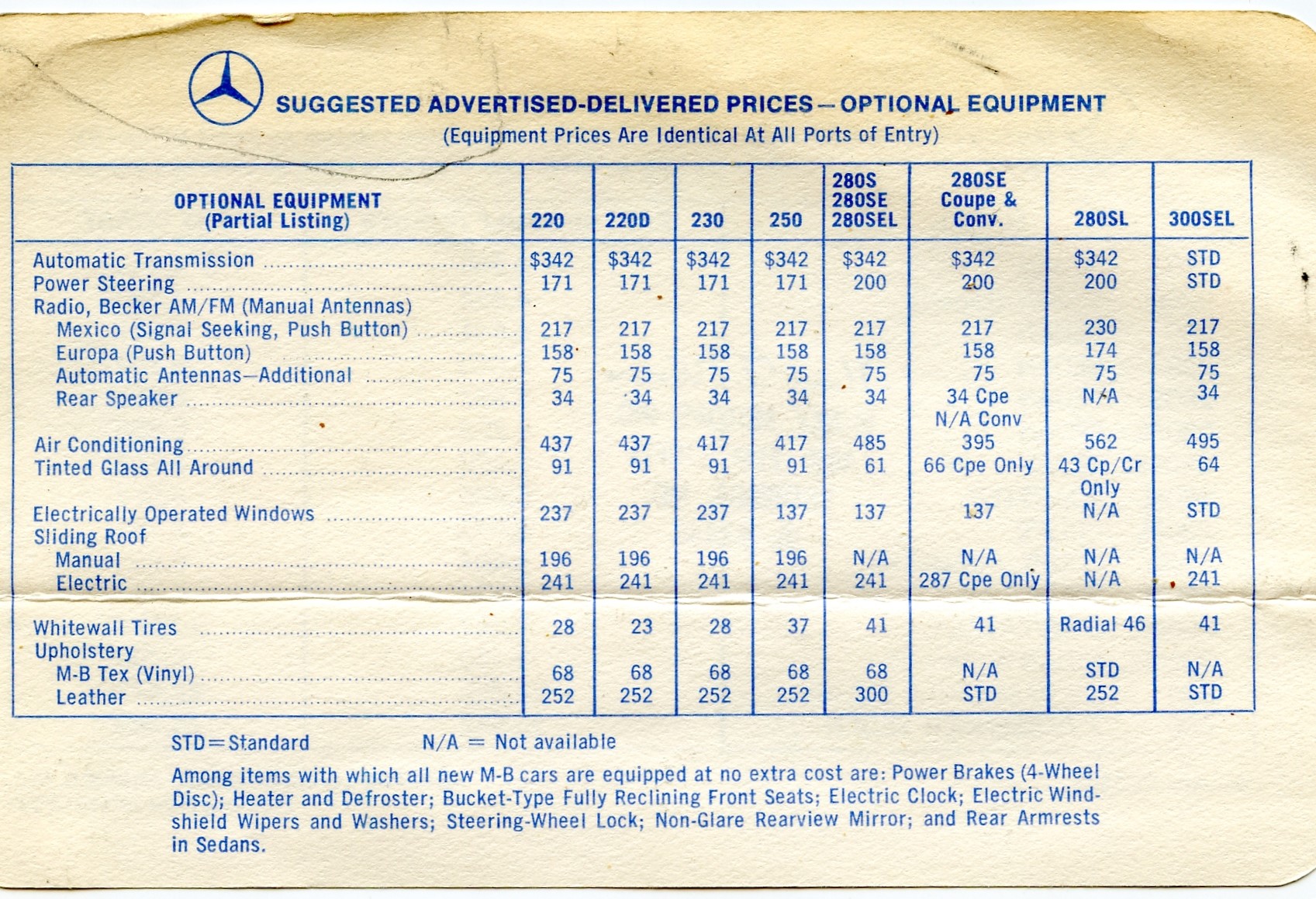
While rummaging through some older file folders containing printed into about my Alfa, I stumbled across this postcard-sized 1968 model and price chart from Mercedes-Benz of North America, Inc. (headquartered in Fort Lee, NJ, at that time). This had to have come from Pete, and I don’t recall seeing it before. When I bought the Alfa from him in 2013, he had emailed me to provide the briefest of backgrounds about his purchase of the car in 1968. He admitted that among other choices, he was considering the least-expensive of the new Mercedes-Benz models. In that case, it would have been the 220 sedan, with an MSRP of $4,360. The optional equipment list highlights that even at that somewhat lofty price, an automatic transmission and power steering were extra. (For one comparison, a 1968 Oldsmobile 98 4-door Holiday sedan started at $4,422, which included an automatic transmission and power steering.) Also note the dealer stamp, complete with salesperson’s name and phone number sans area code.

Entire blog post content copyright © 2024 Richard A. Reina. Text and photos may not be copied or reproduced without express written permission.
 

Replacing the Miata’s Clutch Hydraulics

It is somewhat well-known among Miata owners that one of the few mechanical weaknesses of the car is its clutch hydraulic system. Typically, the secondary cylinder1 fails and needs replacement, and indeed, that component was already replaced once on my car, back in 2010. The good news is that the failures tend to happen gradually, and the driver gets significant advance notice as the clutch pedal gradually sinks while gear engagement becomes progressively more difficult.

I hopped into the Miata last week for the first time since winterizing it last autumn and in my case, the pedal was “gone”. Popping the hood, I saw that the clutch hydraulic reservoir was empty, although the dirty fluid left enough of a stain that one could be fooled into thinking there was still some fluid in there. I watched a few YouTube videos, several of which contradicted themselves (more about that coming up) and ordered a new primary cylinder, secondary cylinder, and flexible hose. All are Dorman products; one reason for the choice is that Dorman offers a lifetime warranty on the parts, when most competitors offer one year. The three parts cost me around $65 with shipping.

ABOVE: There are many cars where a single reservoir is shared by the brake and clutch systems, but the Miata is not one of them. The larger reservoir on the left is for the brakes. Note how clean that fluid looks, almost clear in fact. On the right is the clutch primary cylinder, and despite appearances, that reservoir is empty.

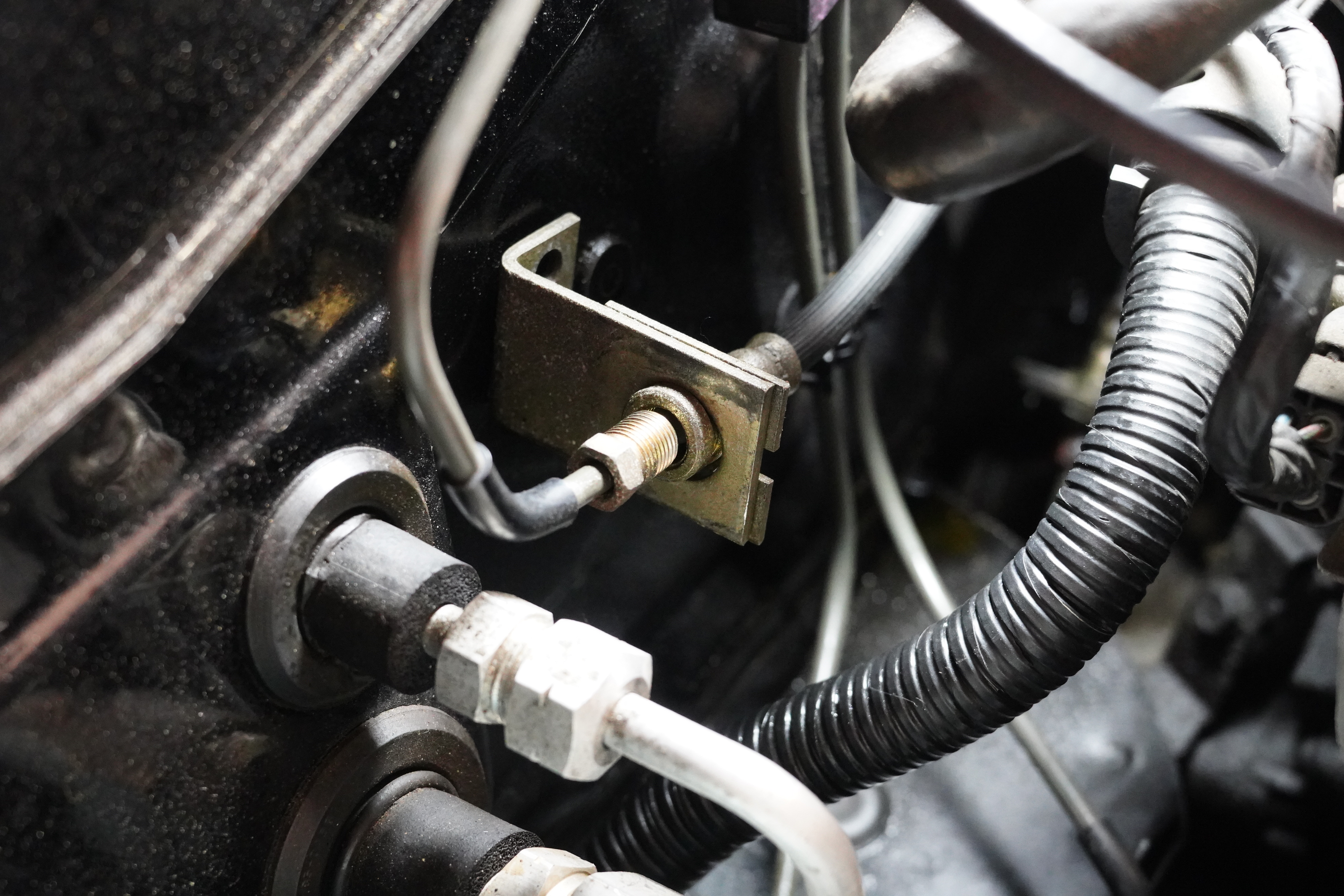
All exposed threads got a spray shot of rust-buster the day before, but none of the threads gave me a fight the following day when I put a wrench to them. The primary cylinder came off first: the fluid pipe fitting and two nuts were all easily accessible. Moving downstream, I tackled the clutch hose next. I had never really noticed this part before. In fact, it’s tightly tucked directly between the back of the cylinder head and the firewall. The pipe/hose routing is as follows: a metal pipe is routed from the primary, along the firewall, where it makes a 180-degree turn on the passenger side and connects to the hose. The hose runs back toward the driver’s side, held in place by two firewall-mounted brackets. From there, another metal pipe snakes downward to the secondary cylinder mounted low on the passenger side. (I suspect that much of this back-and-forth routing is due to the JDM (Japanese Domestic Market) Miata being RHD, and this lengthier routing was necessary to adapt to LHD.)

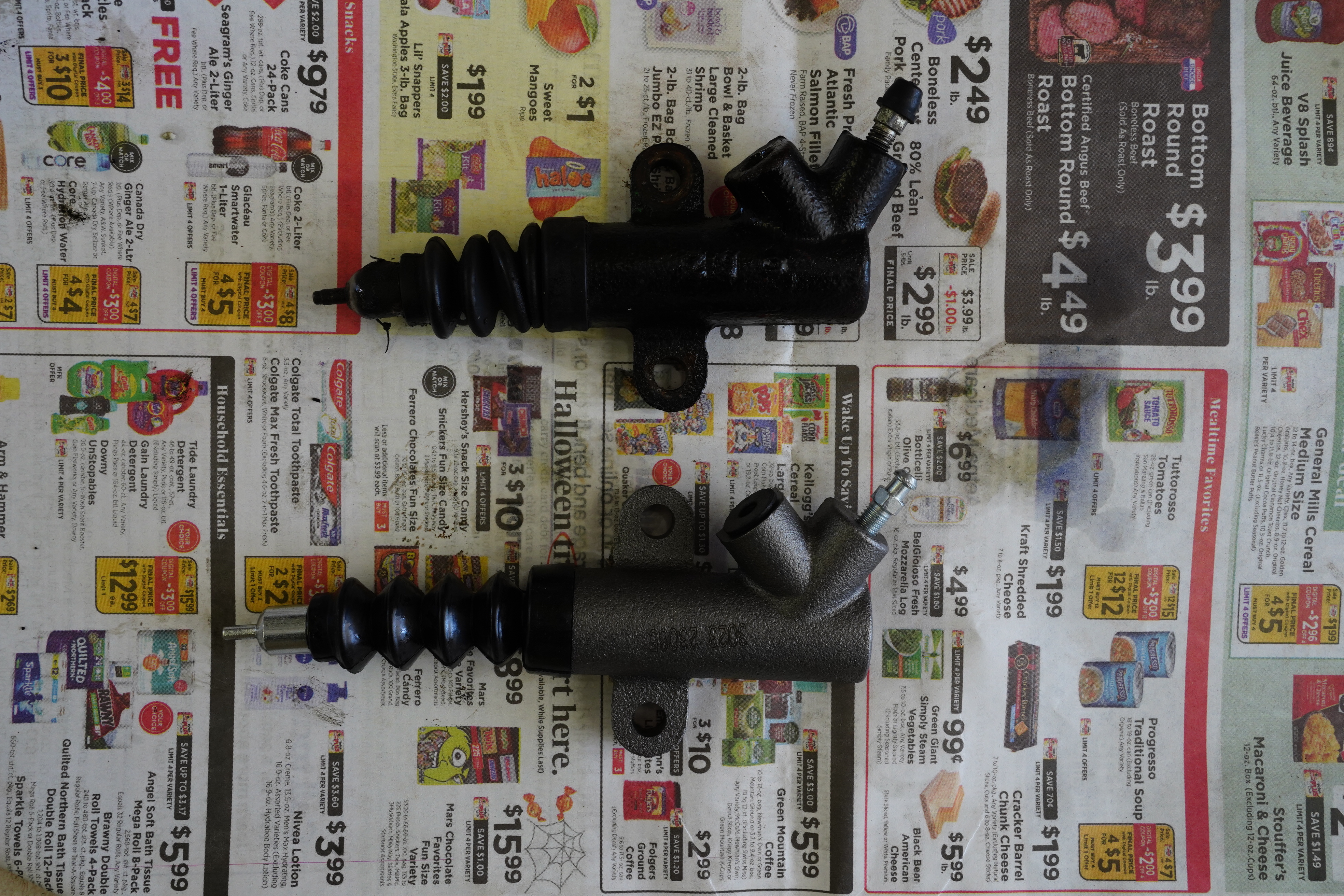
ABOVE: Primary cylinders laying side-by-side, old on left and new on right.


ABOVE: Old secondary cylinder on top, new one on bottom.


Why am I describing all this? Because these hose connections were a B – I – T – C – H to reach, something completely left unsaid in all the videos I watched. The video voiceovers cheerfully exclaimed “And then we replaced the clutch hose before moving to the secondary cylinder” or similar. I ended up disconnecting two wiring harness brackets to provide myself enough room to get a flare nut wrench on the hose ends. Several bloody knuckles later, it was done.

ABOVE: New hose on bottom appeared to be slightly longer, but that did not affect installation.

The secondary cylinder was the third and final piece of the puzzle. Without a lift, access required removing the right front wheel and squeezing my torso into the wheel well to reach the connections. As with the primary, there was only the threaded pipe and two bolts holding the cylinder to the block. After several hours of contorting myself, the R&R portion was done.

ABOVE: This was the easier of the two pipe-to-hose connections to access. Even here, A/C hoses and wiring harness run interference.

Next, it was time to call my able assistant who is well-versed in the “press – hold – release” mantra. My only regret is that I didn’t get a snapshot of Mrs. Reina as she sat in the driver’s seat and multi-tasked: left leg mindlessly going up and down on the pedal while she nursed a hot cup of tea and scrolled through her phone as it sat perched on the center console. And one more comment about the videos: one video insisted that bench-bleeding the primary cylinder was a necessity, while a second video declared it a waste of time. I chose to bypass the bench bleed, but before my wife came out to the car, I filled the reservoir, filled a small jar with brake fluid into which I inserted a hose from the bleeder screw, and left the screw loose. I then pumped the clutch pedal at least 50 times, refilling the reservoir once. This seemed to get a goodly amount of air out and shortened the length of time my wife was on the job. Thank you honey!

I took the car for a short spin and the clutch pedal felt marvelous. Let’s hope the hydraulics last another 10 years.

1Traditional automotive terminology has referred to brake and clutch cylinders as “master” and “slave”, terms which frankly have always caused me to wince. Here, because it’s my blog and I can describe things as I please, I have opted to refer to these parts as “primary cylinder” and “secondary cylinder”. I doubt it will catch on, but I would be eternally pleased if it did.


All photographs copyright © 2024 Richard A. Reina. Photos may not be copied or reproduced without express written permission.
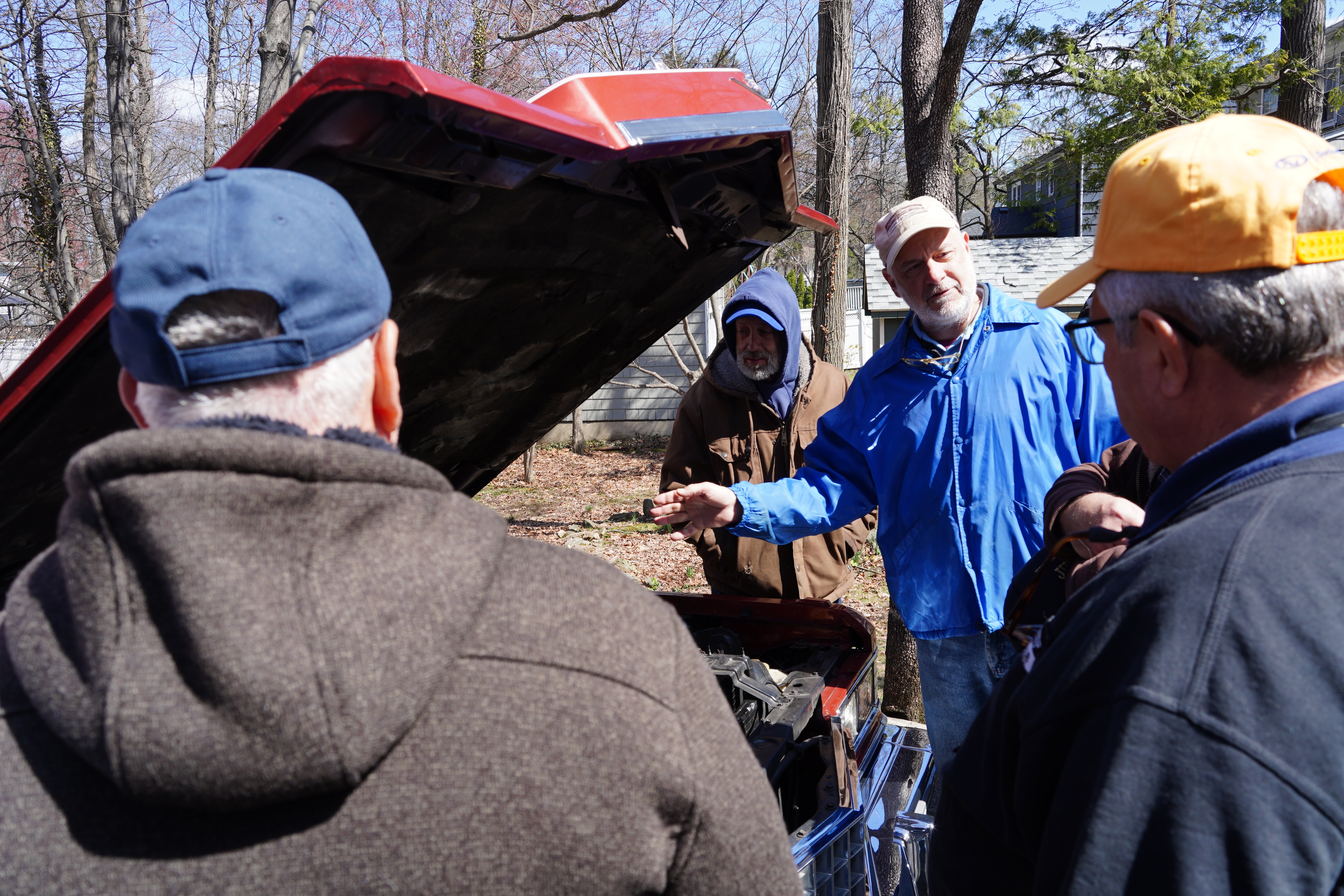
AACA NJ Region Judging Seminar, Mar. 9, 2024

The NJ Region of the AACA holds its biggest event of the year, the Spring Meet, every year on the first Sunday in May. This is a judged car show which at times has seen up to 250 vehicles in attendance. The cars are put into classes, and volunteer members of the Region perform the judging. Judges are arranged in teams of two, and with a dozen and a half classes to judge, the Region would ideally have 30 or more volunteers. As someone who has judged our Spring Meet for the last few years, I’ve seen how woefully short of that number we usually are.

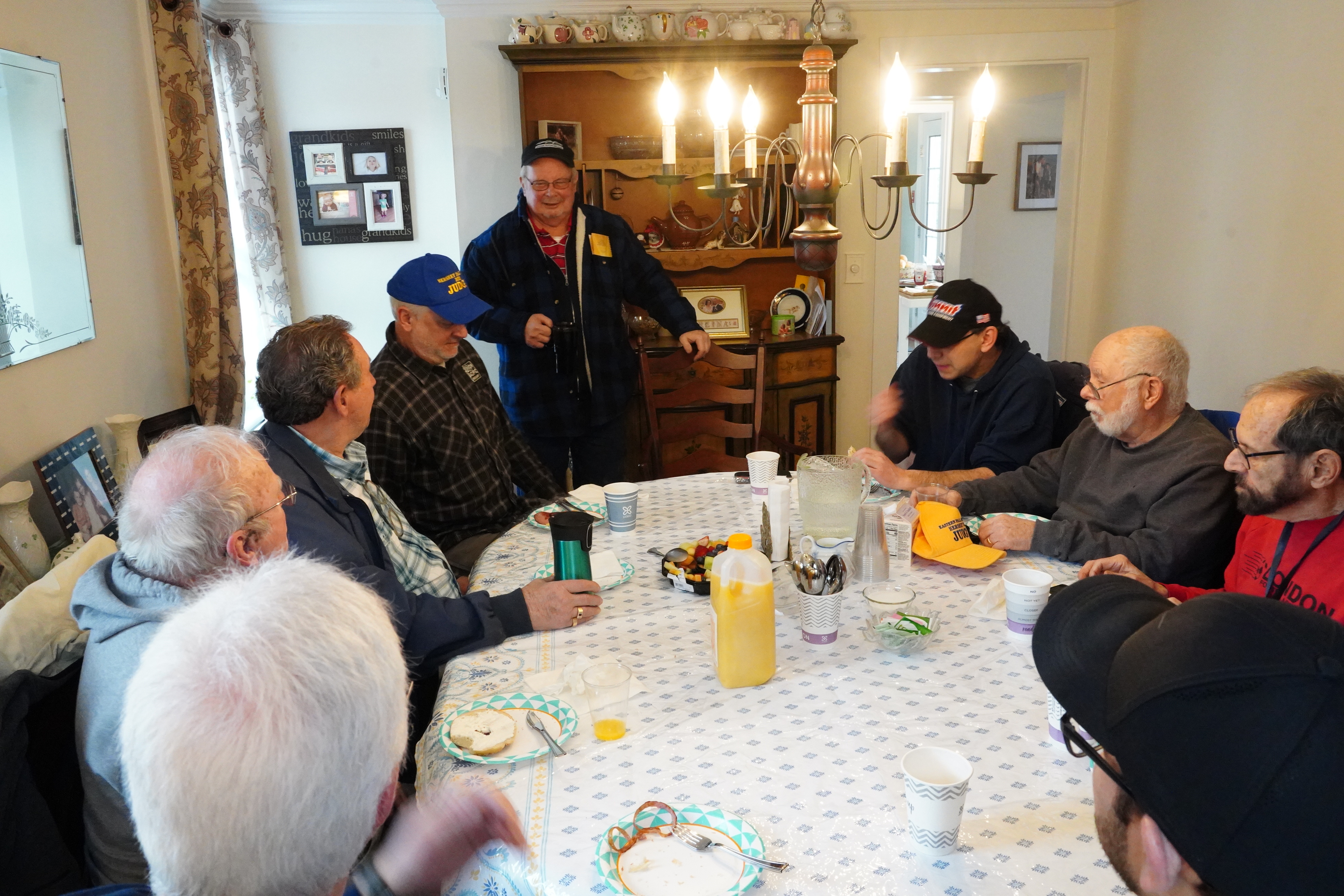
In years past, our chief judge, Ed G., would hold a judging seminar a week or two before the Spring Meet. While well attended, the club still lacked the requisite number of volunteers. Several club members, including our new chief judge Anthony C., decided last year to expand the number of judging seminars. As covered in this recent blog post, the first such seminar was held at Dick B.’s house in late January. This month, your humble blogger agreed to play host. We started with a 9 a.m. breakfast (assembled by my most gracious wife, who allowed a dozen NJ Region members into her dining room), followed by a 10 a.m. start in the garage.

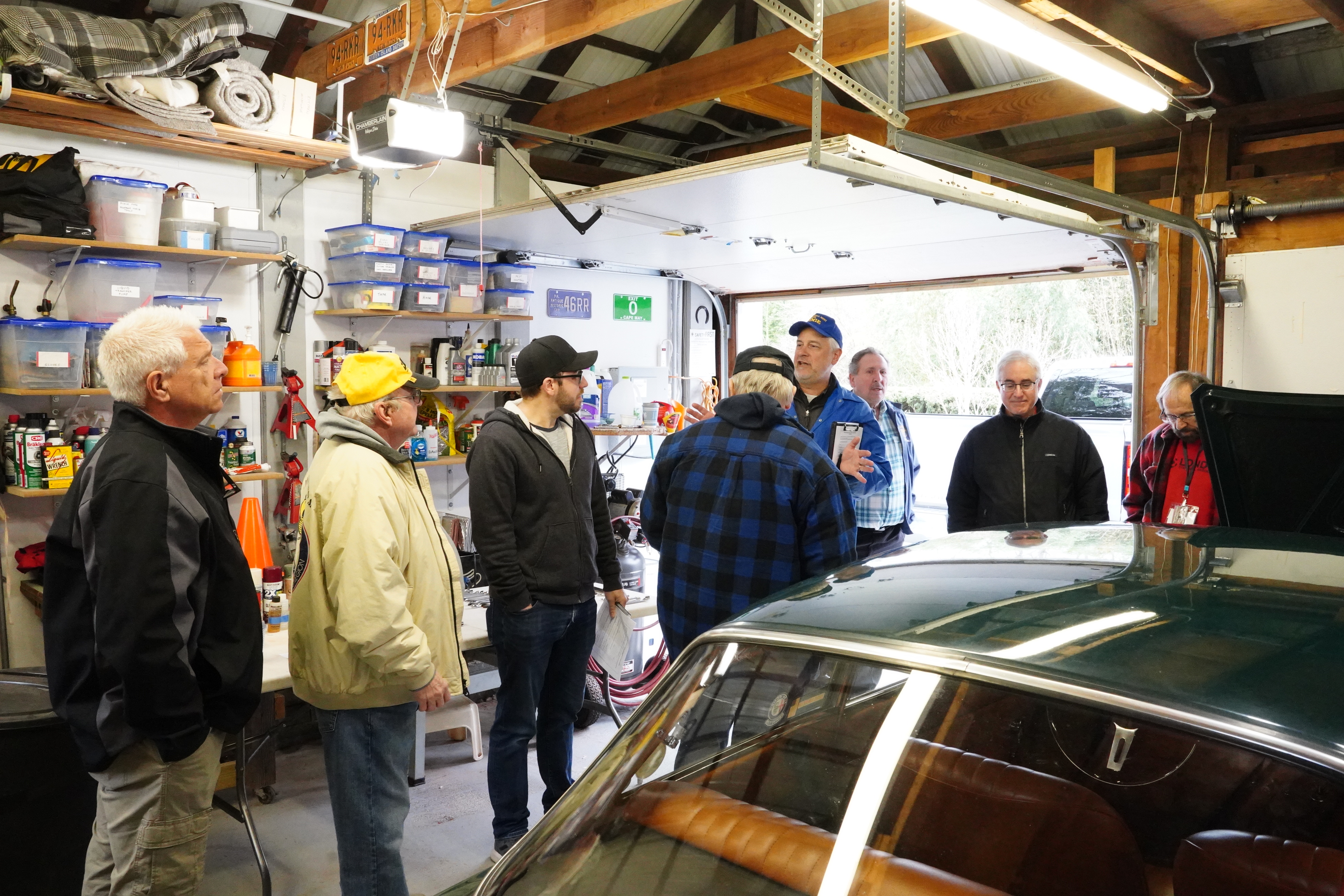
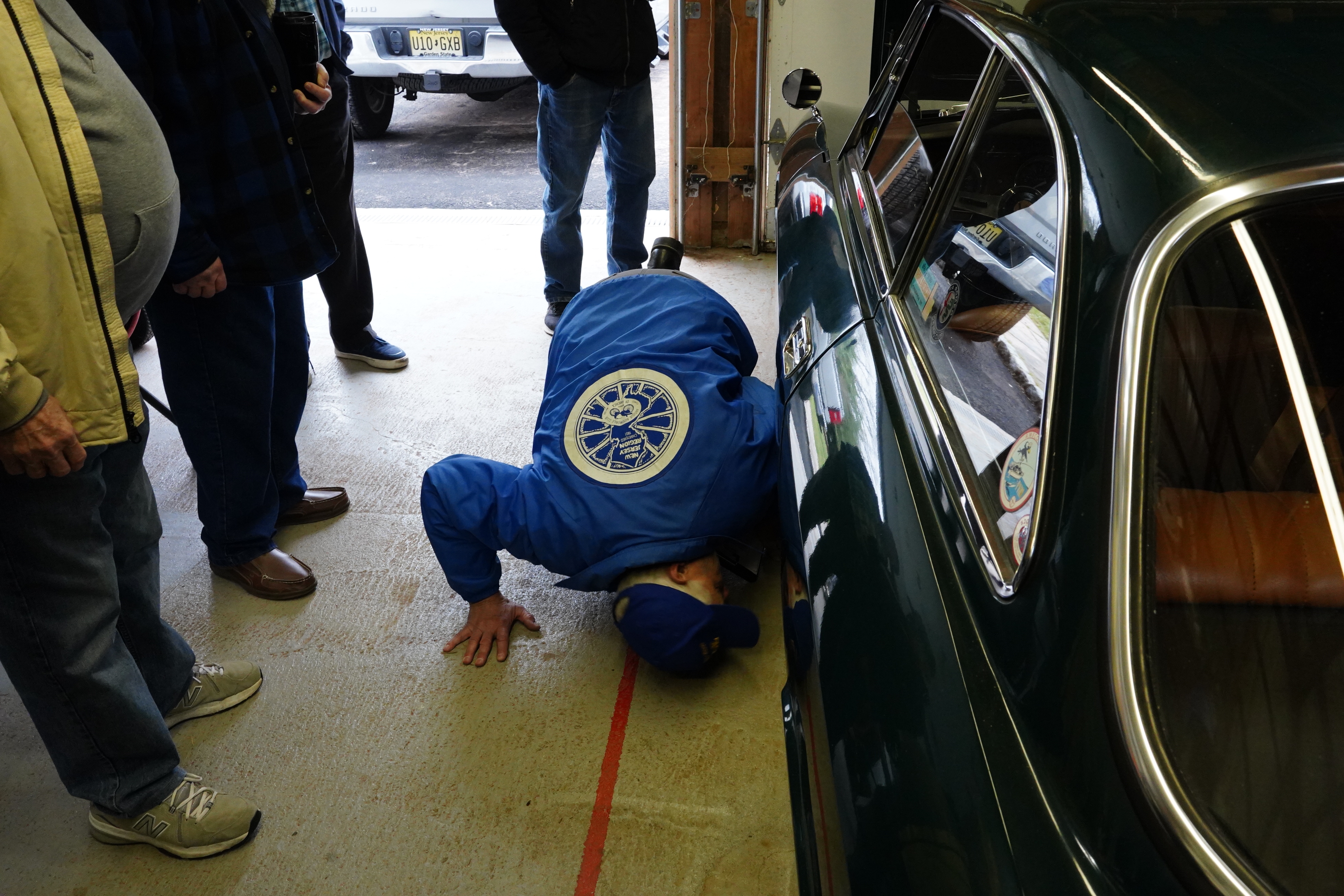
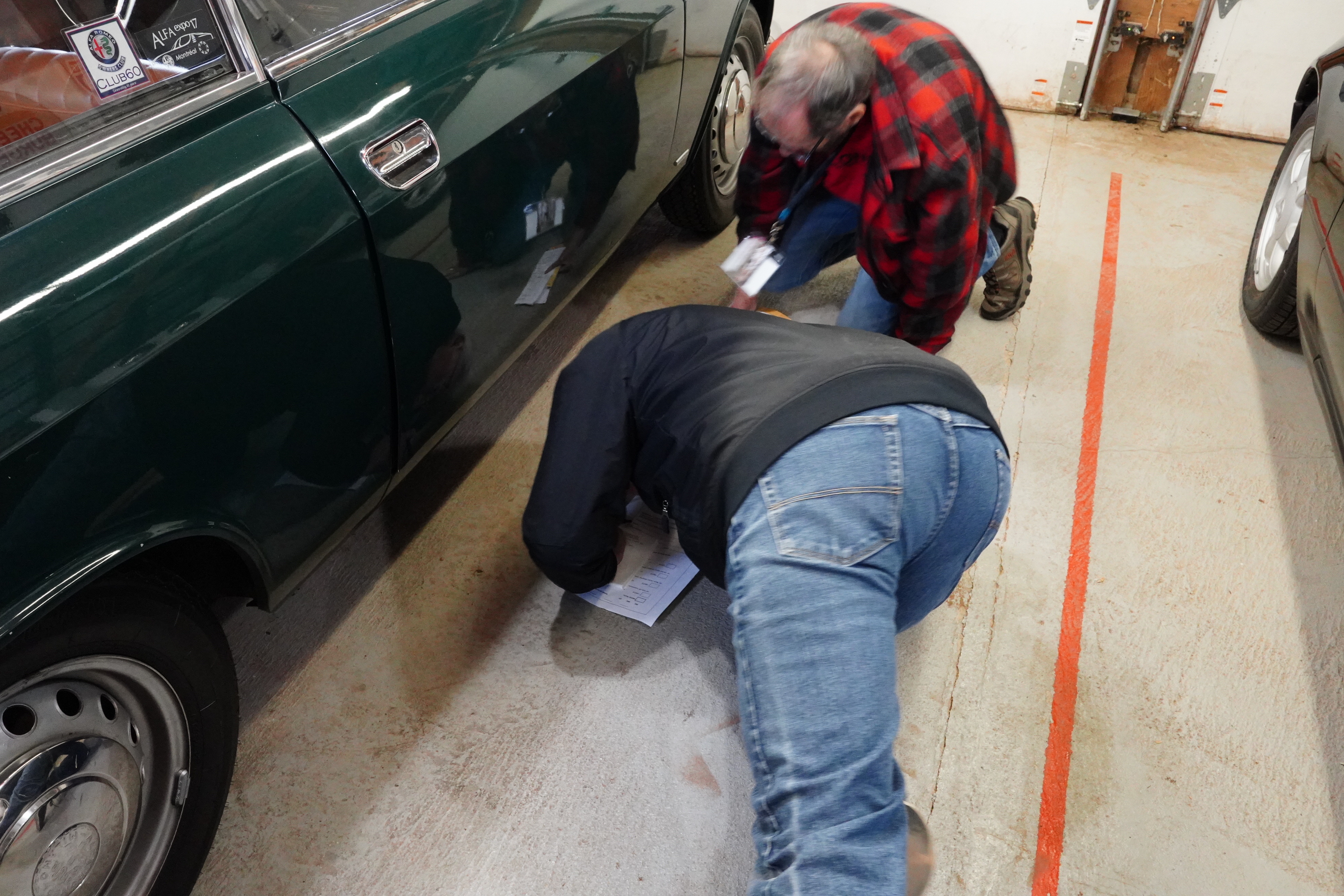
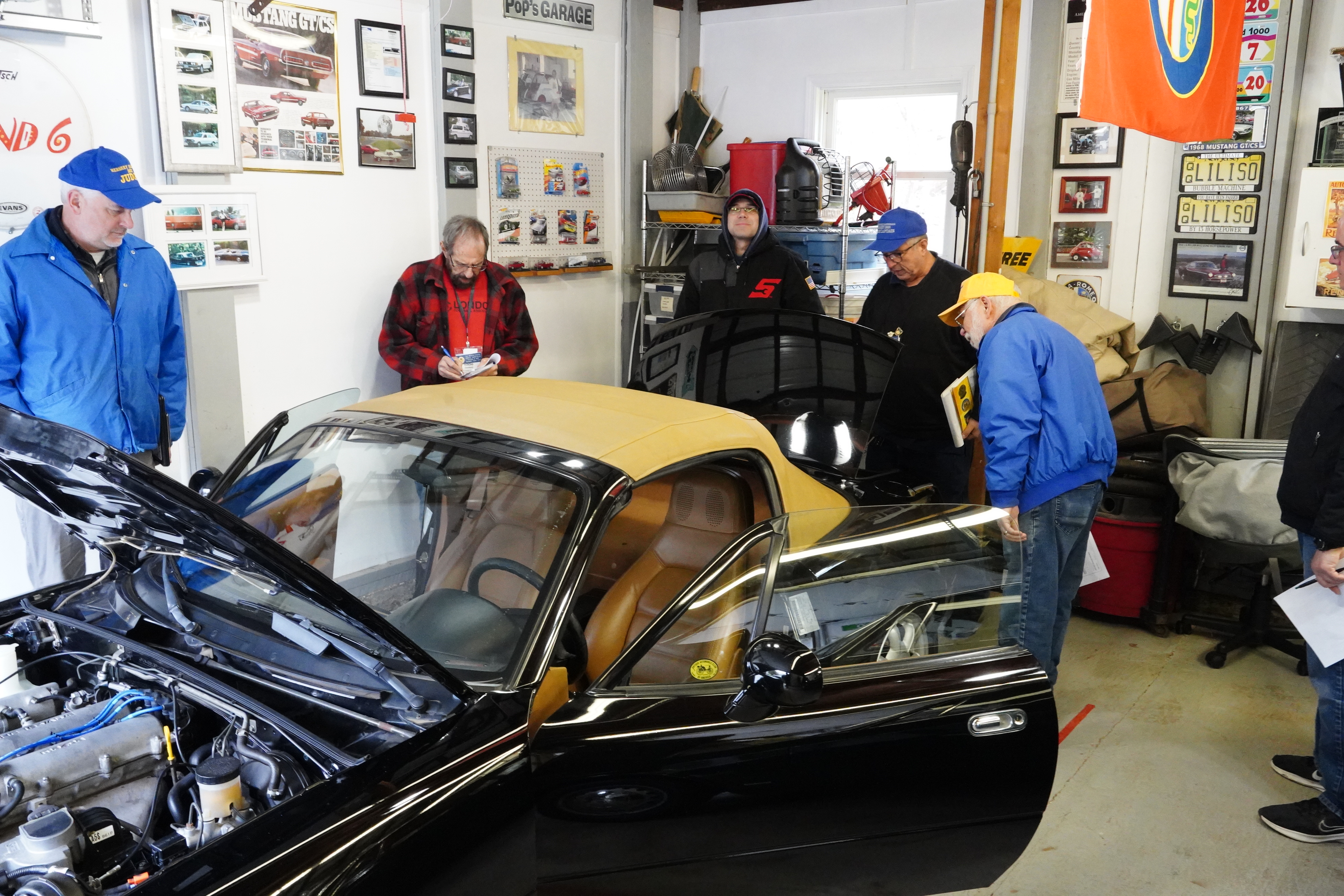
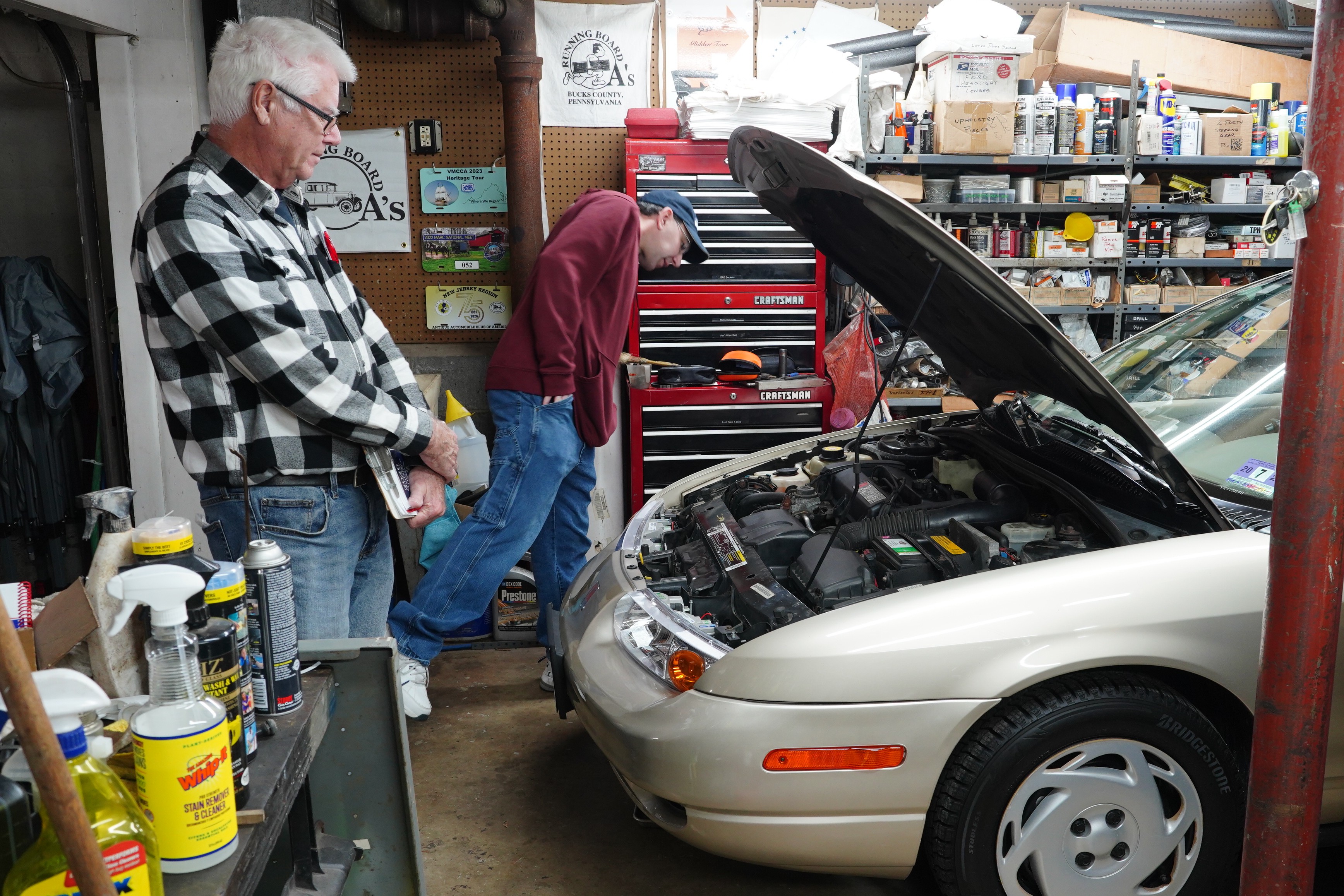
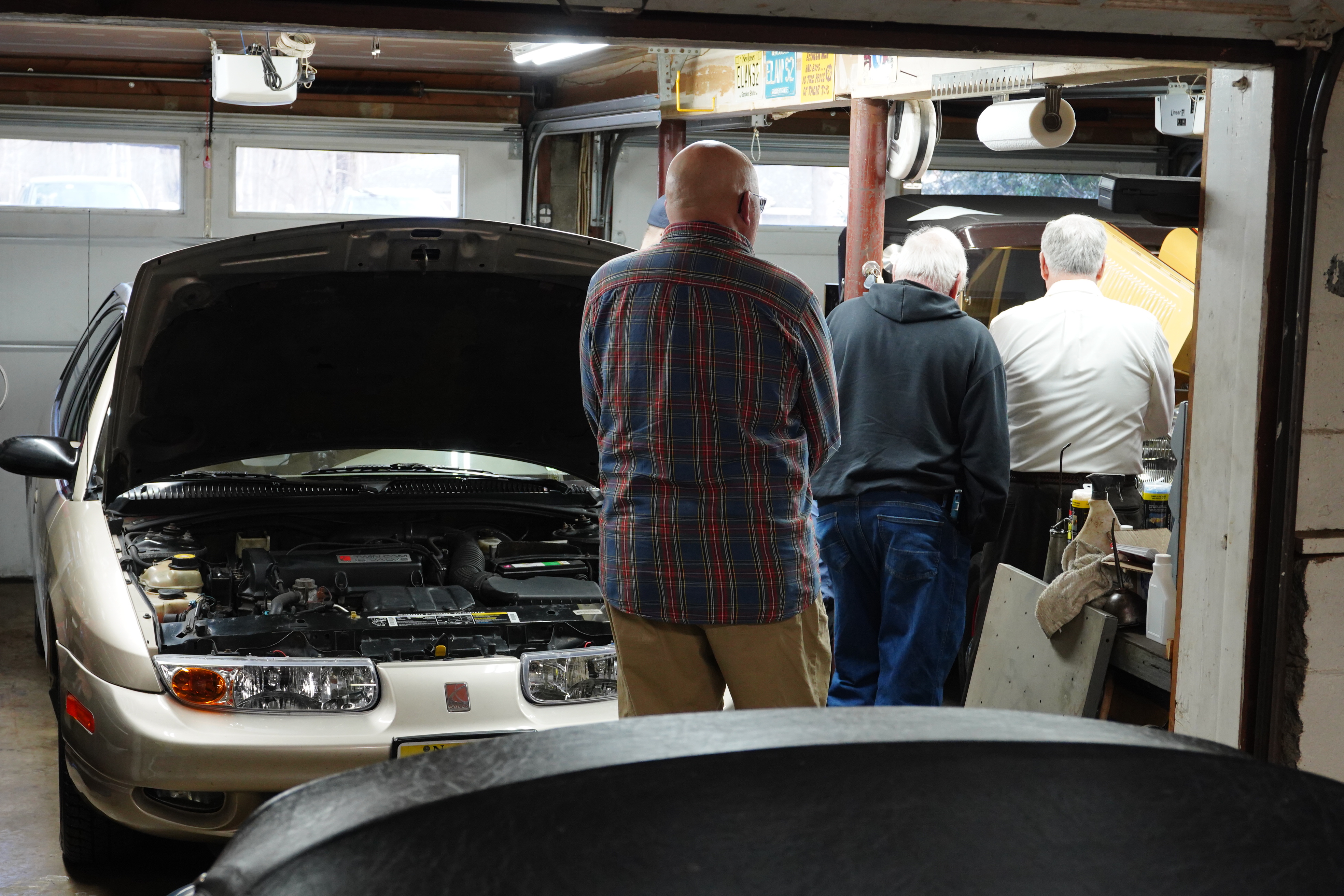
The seminar was again ably led by our “pro tem” chief judge Craig K, with my two cars, the ’67 Alfa Romeo and the ’93 Mazda Miata, as the objects of our collective scrutiny. The focus of the training exercise was “class judging”, with cars evaluated for correctness and condition in 4 areas (exterior, interior, engine compartment, and chassis). However, both of my cars are HPOF, “Historical Preservation of Original Features” and would not normally be subject to a point-by-point evaluation. Still, it was good practice for the Region members to analyze the cars on a 40-point scale (10 points for each of the 4 areas). I kept my lips zipped as horrors such as faded paint, door dings, a dirty bellhousing, a semi-opaque convertible window, worn upholstery, window decals (!) and other atrocities were critiqued. Still, on a 40-point scale, the group reached a consensus that each car earned a total point score in the low-to-mid 30s. Similar to what we learned last time, each “defect” would result in only a ½ or 1 point deduction out of 10 available points. The goal should not be to deduct as many points as possible, but to treat each deduction relative to the 10 available points. A car would need to be in very poor condition for it to earn a loss of 7 or 8 points out of 10.

We finished up around 12 noon, and Craig and I were pleased to see a number of new faces in the crowd. Attendance at a judging seminar is not a commitment to judge, but it certainly is our hope that with 2 training sessions done and a third one scheduled for April, we should see an uptick in volunteers at our May Spring Meet.

Craig (in blue jacket) begins the session


The Alfa was judged first


Each participant was invited to judge each section of the car


Craig reminds the crowd to not touch the car without the owner’s permission!


Chassis judging requires someone willing to get down on all fours


Points were lost for “non original” window decals seen here in upper left


Trainees correctly noted that in some areas, newer Miata lost more points than older Alfa


Correct judging position requires that convertible top be up


All photographs copyright © 2024 Richard A. Reina. Photos may not be copied or reproduced without express written permission.
 

Fix It (Again) Tony!

If you think my subject line implies a blog post about some downtrodden Fiat owner whose Italian marvel needs ever-repetitive mechanical repair (an undeserved reputation which gave birth to the cliché that F.I.A.T. is an acronym “Fix It Again Tony”), you would be mistaken. Today’s story is about my friend Tony, a fellow member of the NJ Chapter of AROC (Alfa Romeo Owners Club) who asked me to assist him in getting his 1967 Alfa Giulia 1300 TI sedan started. It seems that while Tony did have the car out for a short spin around the block in early January, subsequent attempts at starting have proven futile. It took me a while to land on the right combination of a free afternoon and semi-decent winter weather, but that combination rang the bell on Sunday Feb. 25. Tony’s house is a quick 20-minute jaunt for me, so I threw a few tools into a small toolbox and headed his way.

Like many older Alfas, Tony’s car is no longer 100% original. A while back, under his ownership, he had a shop swap out the factory 1.3L engine for a 2-liter job. If that engine was yanked from a U.S. spec car, the fuel system would have been Alfa’s unique Spica mechanical fuel injection. However, Tony’s engine wears a pair of the familiar Weber 40DCOE carbs, basically similar to what is on my GT Junior. Good thing, because I have not applied a wrench to anything Spica-related since 1980 (44 years for those of you who had a glass of vino rosso before opening my blog).

When I got to Tony’s house, I started by performing a quick visual check under the hood. Tony kept saying that he thought that the engine was not getting fuel. That well may have been so, but we still needed to start with the basics. He showed me an aftermarket (Bosch) electric fuel pump mounted on the right inner fender. The wiring and hoses associated with that pump looked ok. I then popped off the distributor cap, and because it was a bit dusty under there, wiped it with a clean cloth. The cap and rotor looked fine, and again, a modification was in place: instead of points and condenser, the ignition system used aftermarket electronics to collapse the primary circuit and energize the coil. There wasn’t too much I could do to verify that at this moment.

Initial underhood checks completed, I asked Tony to try to start the engine. The battery was strong enough to provide good cranking power, but after 3 attempts, each lasting about 10 seconds, the engine didn’t even cough. Tony told me that usually, the engine “tries” to start on the first or second crank attempt. I suggested that to check for fuel delivery, we could pull a hose and watch for fuel flow, but a simpler and safer method might be to pull a plug and smell it. With that, the #1 plug was removed, and the fuel smell was strong enough to convince me that fuel was making it that far. However, the plug was completely black from carbon, almost to the point of closing the gap. Using a nylon brush, I cleaned that plug, then did numbers 2, 3, and 4, returning each plug to its original home. “Try it again” I instructed, and he did. This time, the engine sound changed: on the 2nd and 3rd crank attempts, the engine sputtered and almost started. Tony quickly exclaimed ‘THAT’S what it normally does”. I point-blank told him: “you need spark plugs”. He didn’t have any spares, so into his Honda we jumped, and headed for the local Auto Zone.

The Auto Zone counter guy could not have been more helpful. We gave him part numbers for NGK, Champion, and Bosch spark plugs (we were prepared!) but he had none in stock. Back to the car, and off to an Advance Auto Parts store in the opposite direction. I told Tony that the primo choice would be the NGKs, and bingo, AAP had the NGKs on the counter pronto.

Twenty-five bucks lighter, Tony had us back to his house in a flash. Out for the second time came the old plugs, and in went the new NGKs. (NGK plugs from my experience never need gapping, and these plugs were no exception, although I still checked them). Fingers crossed, Tony hopped in, and the engine started on the second try. Good thing I guessed right!

We took it for a short spin around the neighborhood, me riding shotgun. The car ran a little rough, possibly from dirty fuel or a carb imbalance, but on the whole, Tony was pleased. On my way out, I told Tony that I think these engines eat plugs for breakfast, so no matter how many or how few miles I put on my Alfa, I change mine once a year. He said he would start doing the same.

The new NGKs about to be unboxed and threaded into place


With new plugs in place, Tony gets behind the wheel for another starting attempt


Fantastico!  With engine idling, Tony gives it two thumbs up


The uncatalyzed exhaust was quickly filling the garage, so Tony opened the door

Giulia TI (Tourist International) dash is completely different than my Bertone GT, and this one is a work of art in its own right

I tried it on for size; nice car!

Flying along on Route 22 at 50+ MPH (but the speedo reads in KPH, so more arithmetic)

All photographs copyright © 2024 Richard A. Reina. Photos may not be copied or reproduced without express written permission.
NJ AACA Judging School, Jan. 27, 2024

The NJ Region of the AACA has held its annual Spring Meet (car show) on the first Sunday in May for as long as I can remember, and probably much further back than that. Traditionally, the Chief Judge for the Meet holds a judging seminar a week or two before the show. Last year, our long-serving Chief Judge retired from the position, and with a new Chief Judge comes a fresh look at the way we do things. Our new Chief Judge Anthony decided to make two rather simple changes: one, conduct more than one judging seminar, and two, conduct the first one a few months before the show. The overall intent is to increase the number of volunteer judges.

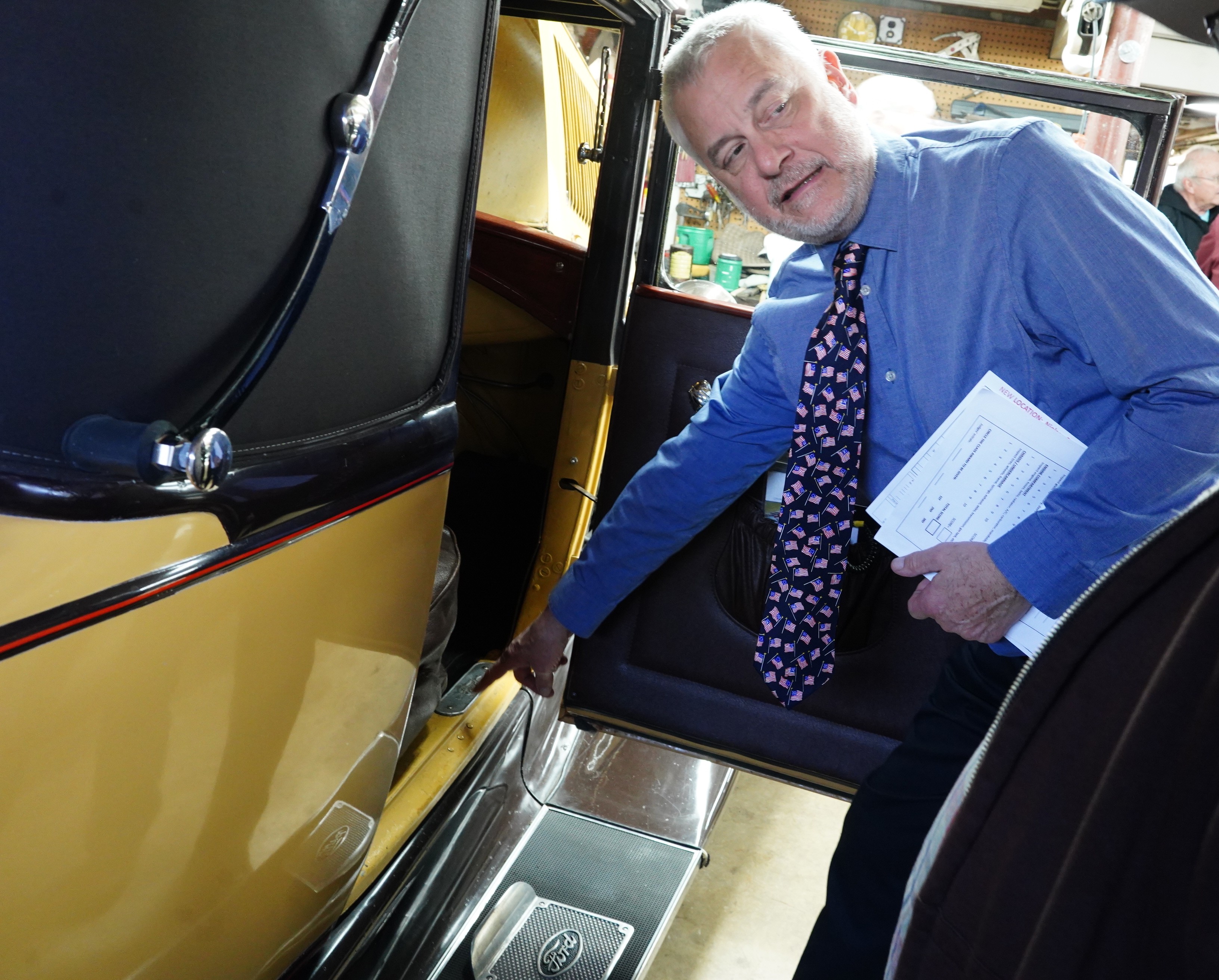
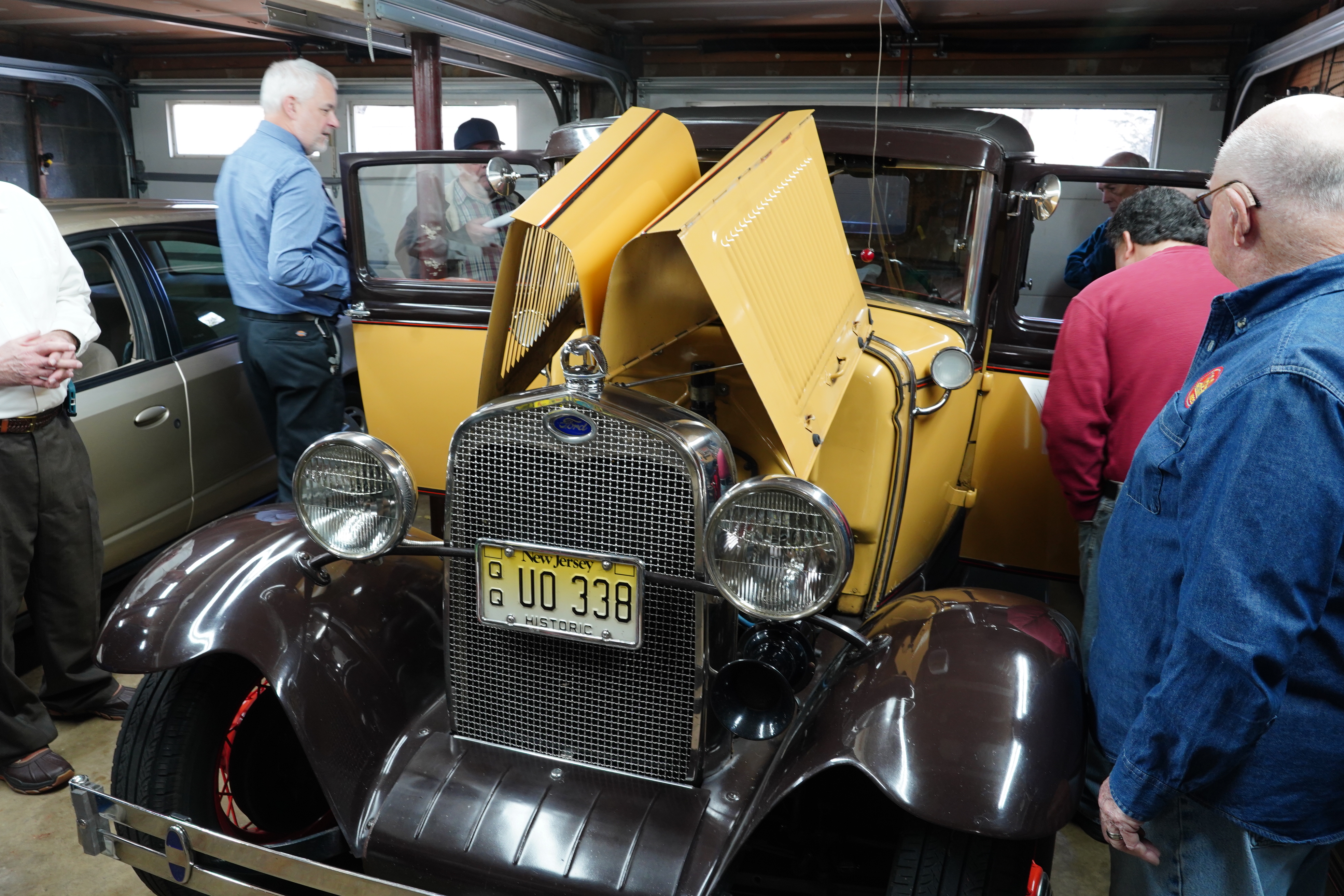
Our newsletter editor-in-chief, Dick Bettle, graciously agreed to make his garage available for the first of these seminars, which was held on a ‘balmy’ (40-ish) January Saturday. Including our host, 17 members of the club turned out, which I felt was an impressive showing. Craig Kunz, our Regional VP, agreed to stand in for Anthony, who is dealing with some medical issues. We surrounded Dick’s 1930 Ford Model A Coupe which was our vehicle exemplar for the day.

Several attendees are experienced National AACA judges, having judged at Hershey and other National shows around the country, and their input is valuable at these kinds of seminars. At the same time, AACA uses a 400-point judging system and drills down to a microscopic level which our Region does not. The NJ Region’s judging sheet uses a 40-point system, with 10 points each assigned to exterior, interior, engine compartment, and chassis. One of the major learnings which Craig successfully delivered was understanding the difference between the National 400-point judging sheet and our 40-point one.

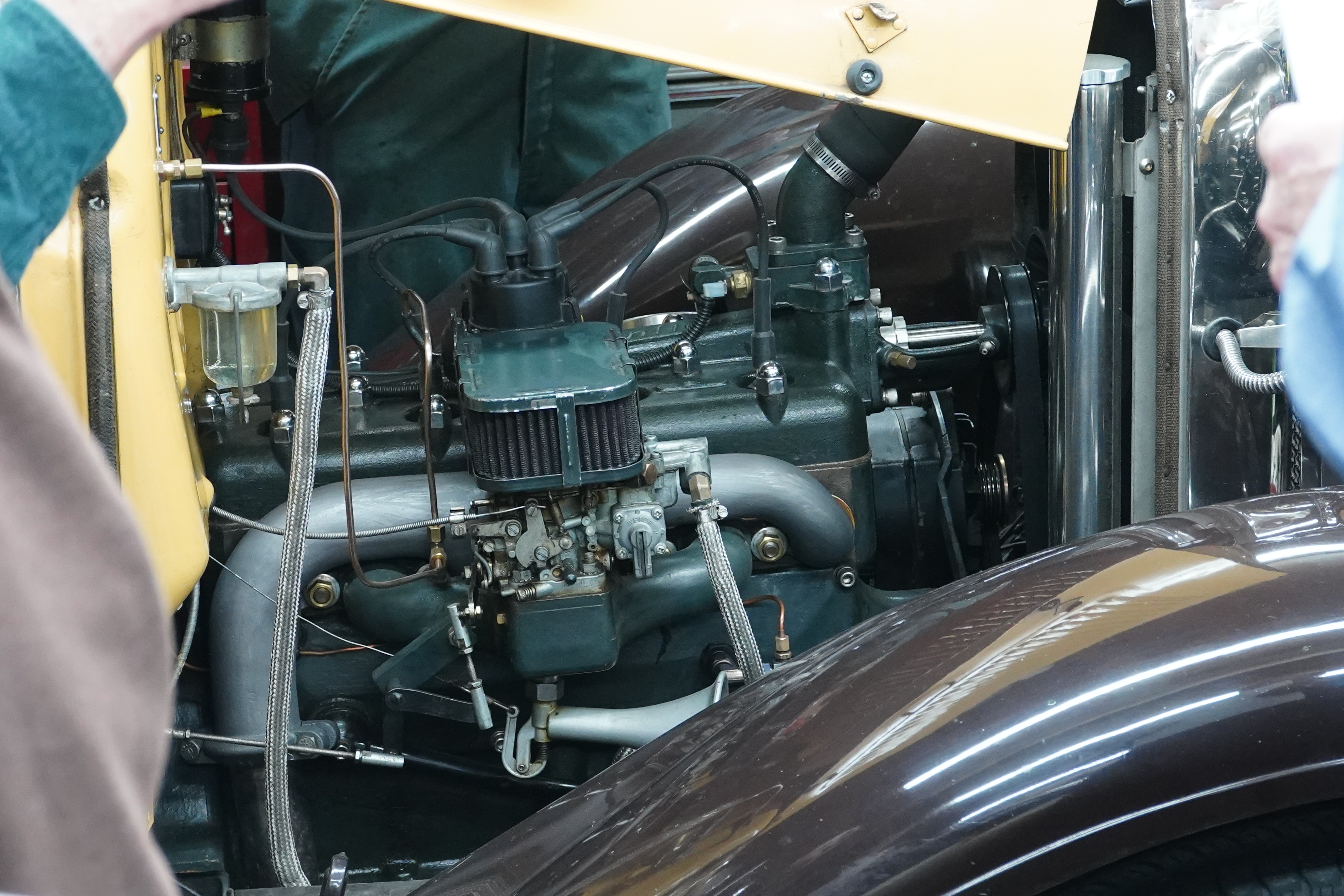
It was a fun exercise with Dick’s Model A. Most club members are all too familiar with this car, as Dick and his wife Bobbi routinely put 4,000-5,000 miles a year on it (that is not a typo: four THOUSAND to five THOUSAND miles a year). To the casual observer, this is a bone-stock 1930 Ford. However, Dick, a life-long car fanatic whom I consider to be one of the most technically savvy people I’ve met, has executed dozens of modifications to this A. Among other upgrades: radial tires on smaller-diameter wheels, an alternator, a Honda distributor, a performance cylinder head, and upgraded electrics including a navigation system (yet he has retained cable brakes). On a 40-point scale, we ended up deducting 13 points for a final score of 27. The radials and the engine mods were major deductions. While some attendees wanted to score a “0” for the engine compartment, Craig and other judges noted that the car retains its original engine block, so only 5 points were deducted.

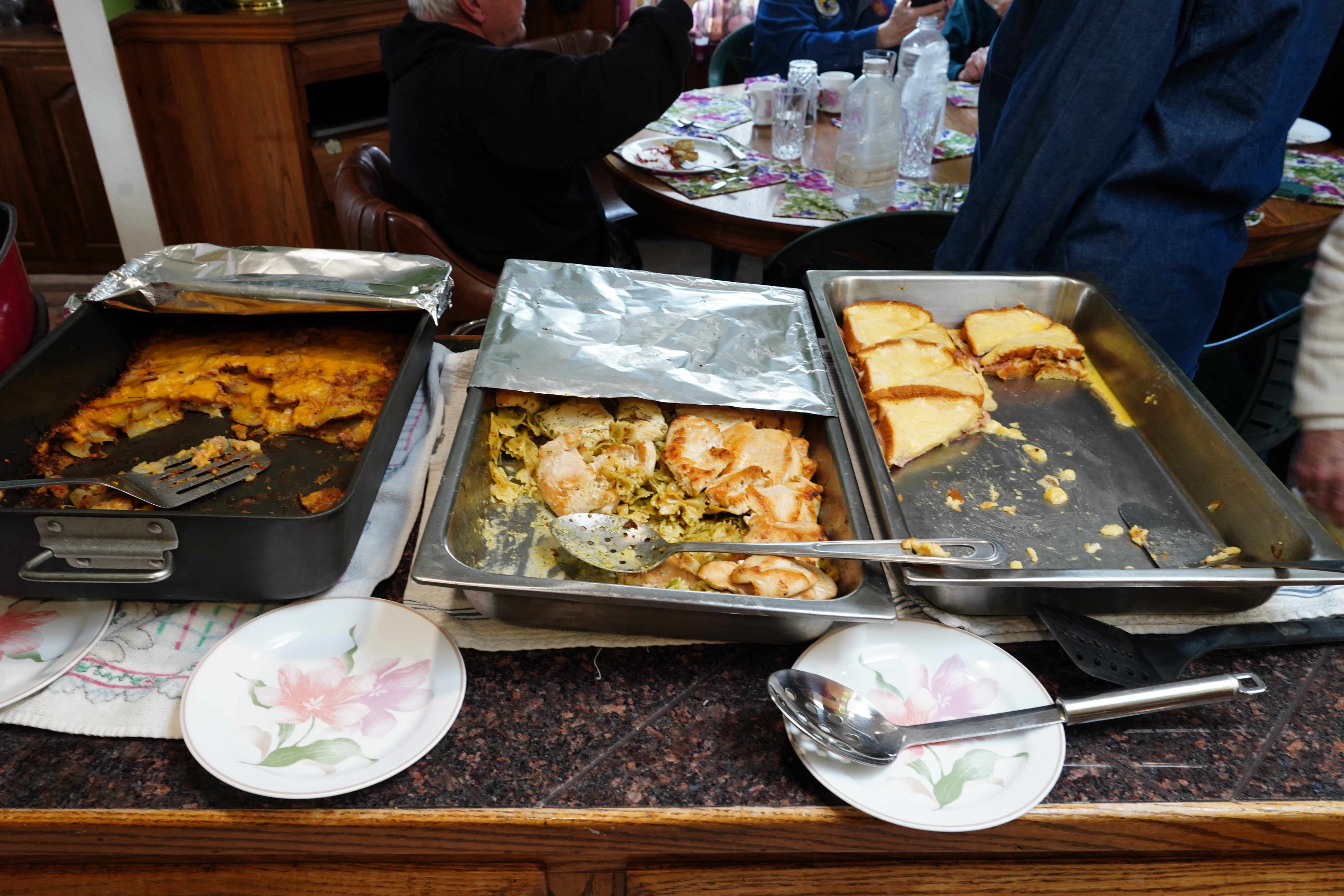
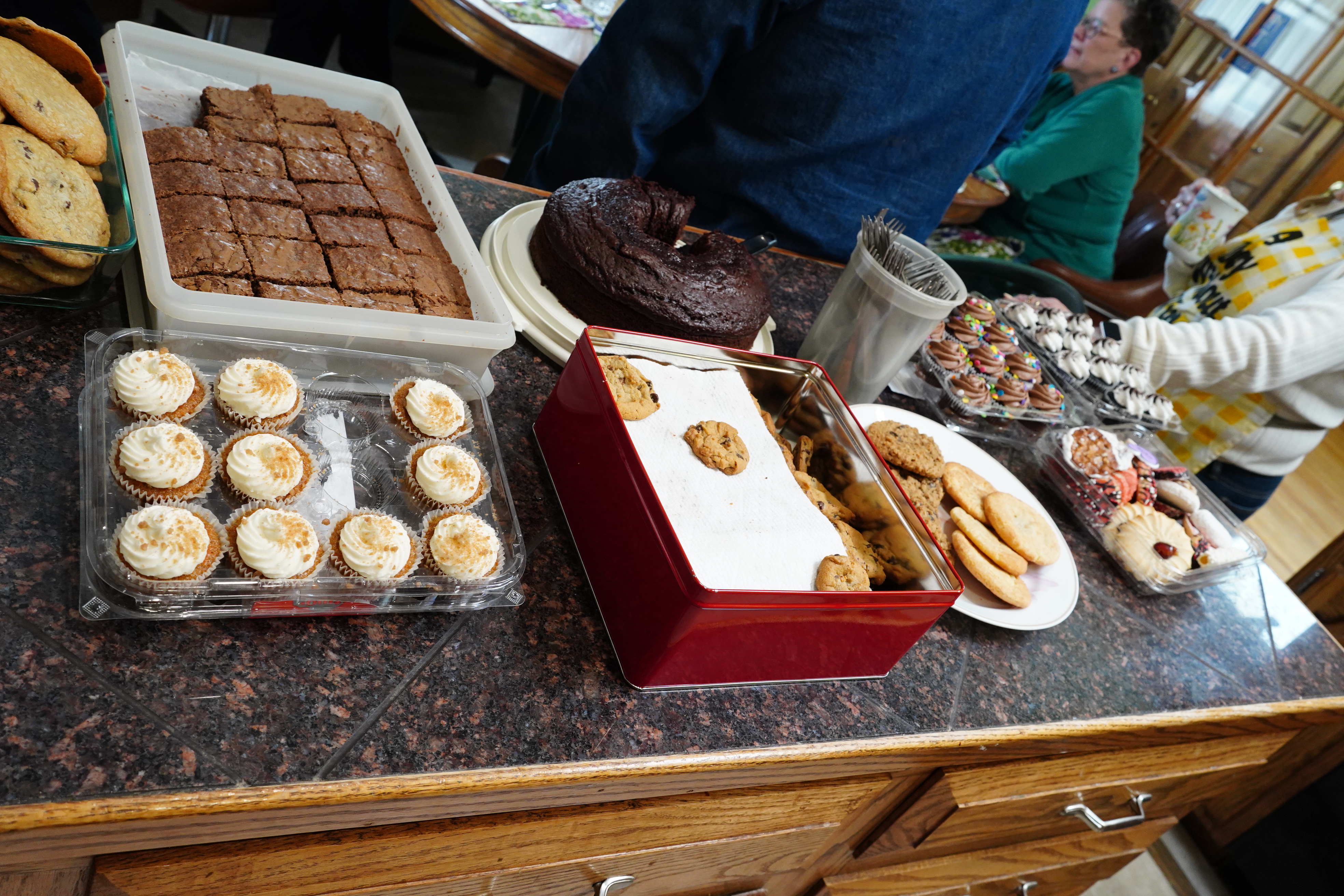
After two hours in the garage, Bobbi entered the room to announce that lunch was being served upstairs, where we found homemade lasagna, meatballs, water, coffee, and various cupcakes (some club members admitted that they were really here for the lasagna). Dick and Bobbi were generous to a fault by hosting and feeding this crowd of hungry car guys. Oh, and the next judging seminar is in March at my house. I need to go clean the garage.


Car owner Dick (hand on pole) and other attendees listen to Pete (Spring Meet Chair)


Craig (in white hat) makes a point or two


John P asks attendees to evaluate the interior


The rumble seat must be judged as well


“Don’t EVER touch an owner’s car!”


Bobbi takes photos while the lasagna is in the oven


What car guys REALLY love to do: eat, and talk:


All photographs copyright © 2024 Richard A. Reina. Photos may not be copied or reproduced without express written permission.


Terry’s 1964 Malibu SS restoration project

My friend Terry invited me to his home last weekend to check out the progress on his project car. Quick background stories on both: I met Terry close to 25 years ago when we both worked for VCNA (Volvo Cars North America). Our professional relationship was peripheral until I joined him in the Technical Engineering Department in 2006. We labored together until my retirement in 2009 and have remained close. Terry became owner of this 1964 Chevy Malibu SS in 1971 when he was still a teenager! It remained garaged at his parents’ home in Madison, Wisconsin until 1999, when he trailered the car back to his residence in NY. Only since his own retirement has he been able to devote time to it, and his progress has been noteworthy.

The Chevrolet/Volvo/Madison coincidence runs deeper than this, though. Terry told me that he (in reality his father) bought this ’64 from Smart Motors in Madison, which at that time was an authorized Volvo dealer (also selling other import makes, as most did). The car, not running because the manual gearbox was stuck in gear, cost $225. Terry said he seems to remember using a hammer on it, which successfully freed the mechanism, allowing him to drive it home. (He wanted a ’65 because an uncle had one, but settled on this ’64 instead.)

This past Friday, as soon as Larry and I arrived at Terry’s house, he invited us into his garage to view a complete engine/transmission assembly on a home-built stand. With 12V battery and gas can on the ground, Terry stepped up to a “dashboard”, flicked a few controls, and the engine instantly fired to life. In order to ensure that his engine rebuild was done to his satisfaction, and to fine-tune all the settings, Terry constructed an elaborate set-up allowing him to start and run the engine in his garage.

Larry (L) and Terry (R) inspect the details


Here you can see the complete drivetrain, with “dashboard” on right


Carburetor closeup


Some specifics on the drivetrain: the car’s original engine block became lost over time, so Terry located a 283 SS engine which he had bored 0.030” over, yielding a displacement of 355 c.i. The block wears aluminum heads with larger valves. Atop the aluminum intake manifold is a Holley 4-barrel “street” carb, rated at 600 CFM. Terry noted that it’s a common mistake to “over carburate” a rebuilt engine, and this arrangement was chosen for its street-worthiness. (“I’m not going racing with it!” he exclaimed.) Backing up this engine is a Tremec 5-speed TKO model tranny. Fifth gear is a 0.64-to-1 overdrive, which will allow for relaxed highway cruising. The transmission also features an electronic pickup for the speedometer, as well as neutral safety and reverse light switches.

The man is on a mission


This is a technician’s delight


With the drivetrain so near completion, Terry has begun to make plans for the body shell’s restoration. To my amateur eye, the body looked good. (As I told Terry, I grew up in NYC where copious amounts of salt were strewn on the roads every winter. In the ‘60s and ‘70s of my youth, we saw many cars rust away after only 5 or 6 years of driving.) Over the last several years, he has been collecting NOS and replacement sheetmetal, and Terry has lined up a restoration shop which will take the shell sometime in 2024 to restore and paint it. At that point, all that will be left is final assembly!
The 1964 Malibu body shell wears a very old coat of black paint


Firewall is solid


Missing trunk floor allows view of rear axle

Terry and I have spoken at length about auto restoration in general, and my own 5-year journey with the Isetta, well-documented throughout this blog. Somehow I found time to do that work when I was in my 30s and 40s. Thirty years older than I was then, after relocating from WI to Sweden to NY, and raising a family, this is now Terry’s time. I’m personally thrilled for him, and his own excitement is palpable. I plan to make future visits to document his progress on these digital pages.


All photographs copyright © 2023 Richard A. Reina. Photos may not be copied or reproduced without express written permission.