AACA NJ Region Judging Seminar, Mar. 9, 2024

The NJ Region of the AACA holds its biggest event of the year, the Spring Meet, every year on the first Sunday in May. This is a judged car show which at times has seen up to 250 vehicles in attendance. The cars are put into classes, and volunteer members of the Region perform the judging. Judges are arranged in teams of two, and with a dozen and a half classes to judge, the Region would ideally have 30 or more volunteers. As someone who has judged our Spring Meet for the last few years, I’ve seen how woefully short of that number we usually are.

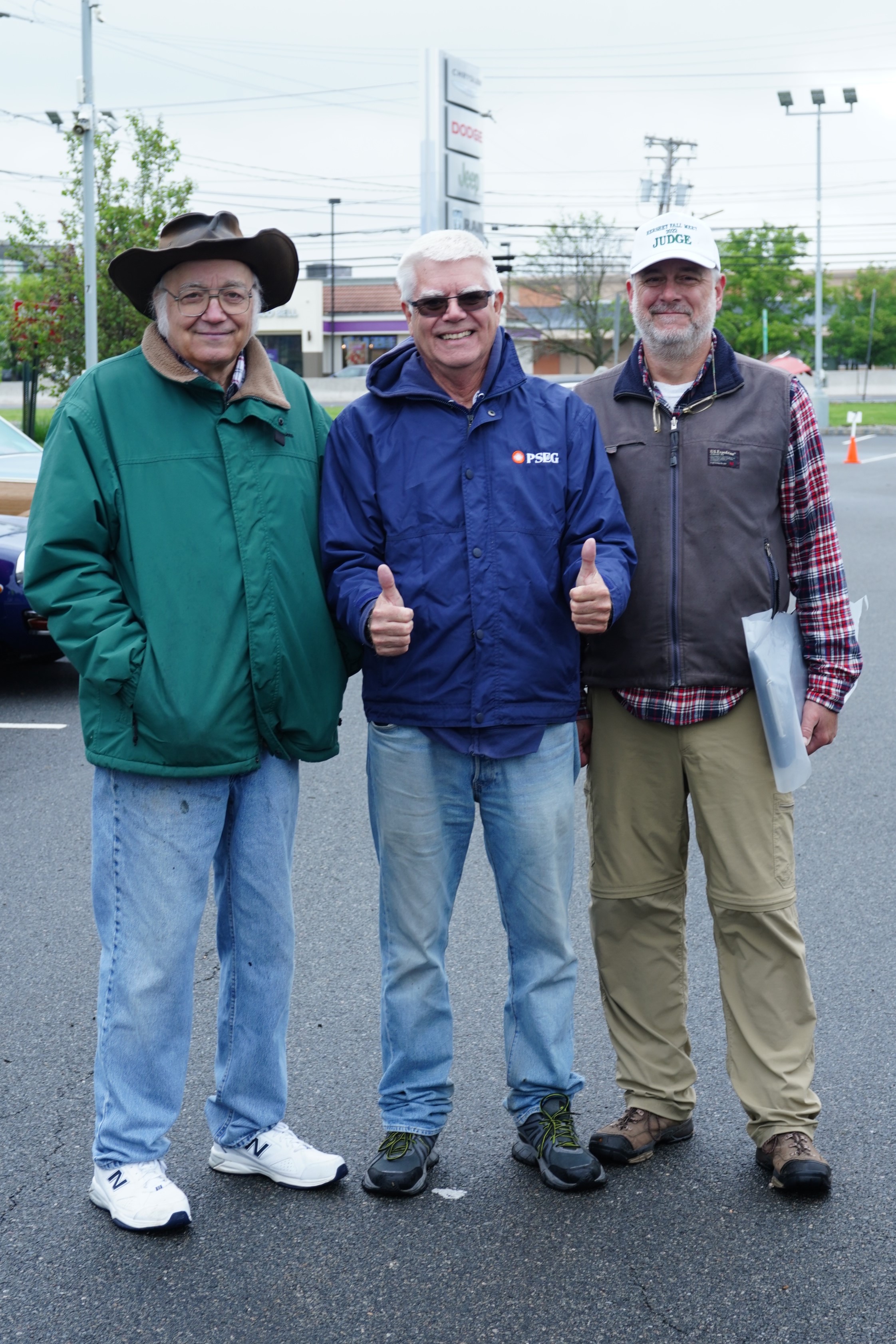
In years past, our chief judge, Ed G., would hold a judging seminar a week or two before the Spring Meet. While well attended, the club still lacked the requisite number of volunteers. Several club members, including our new chief judge Anthony C., decided last year to expand the number of judging seminars. As covered in this recent blog post, the first such seminar was held at Dick B.’s house in late January. This month, your humble blogger agreed to play host. We started with a 9 a.m. breakfast (assembled by my most gracious wife, who allowed a dozen NJ Region members into her dining room), followed by a 10 a.m. start in the garage.

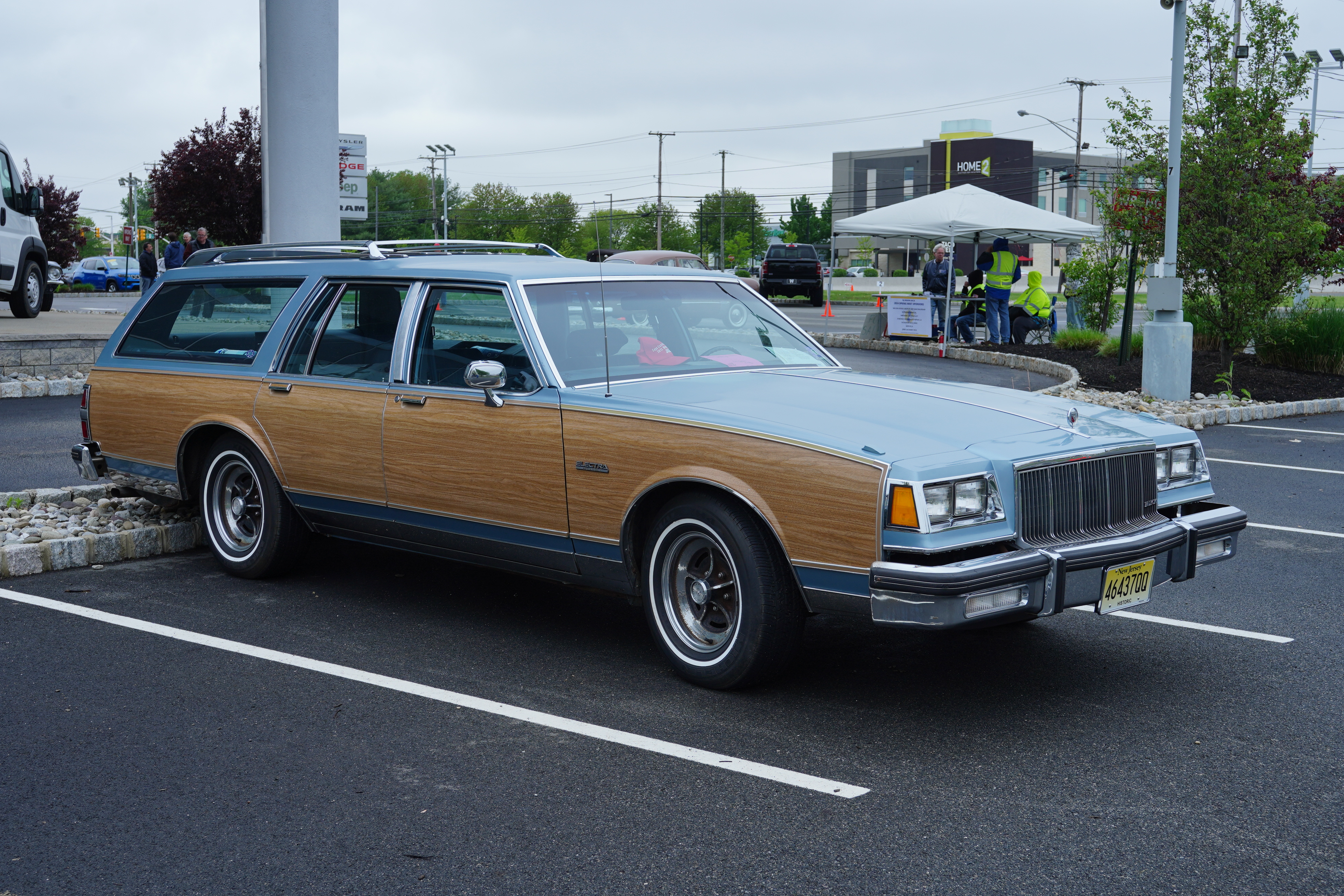
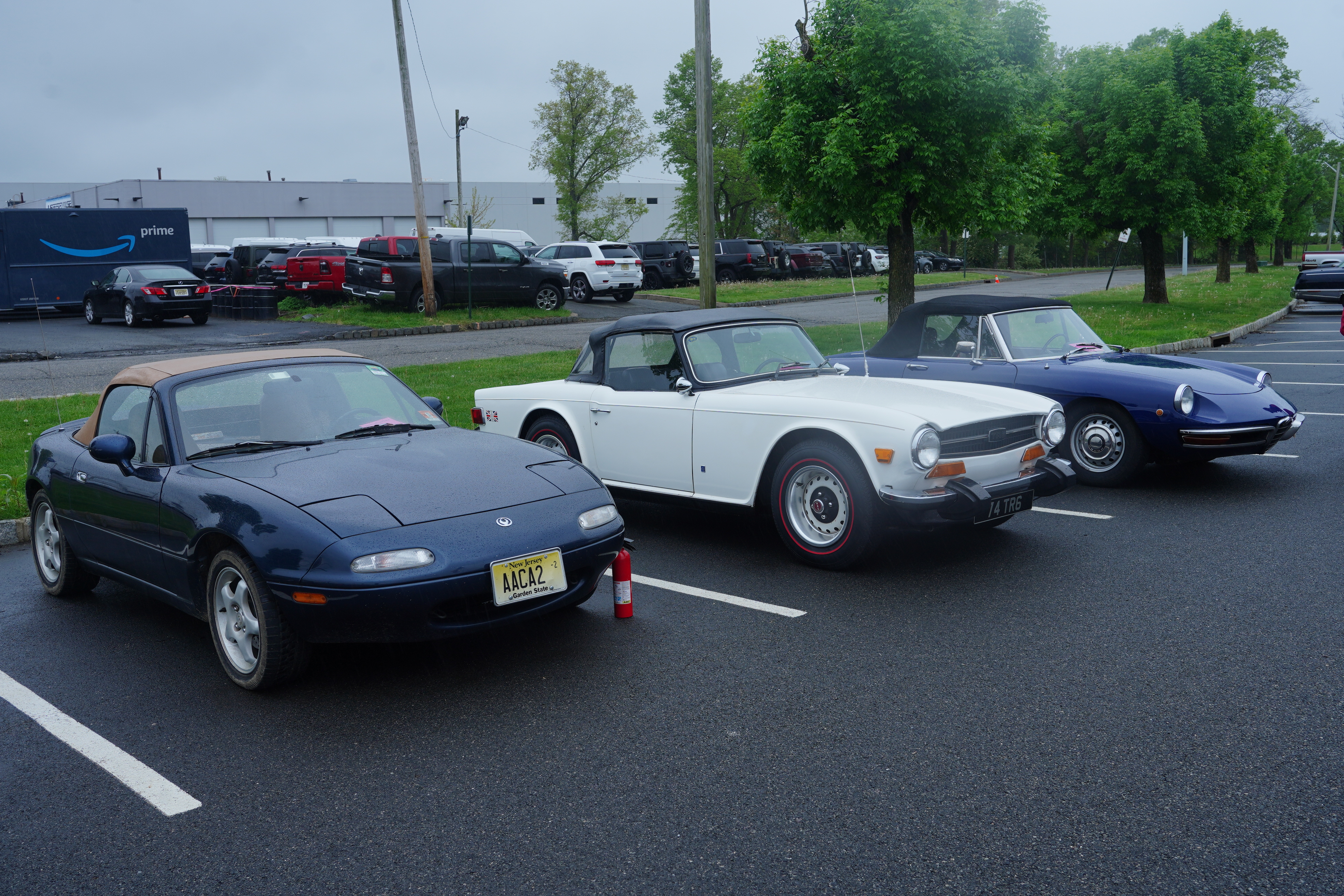
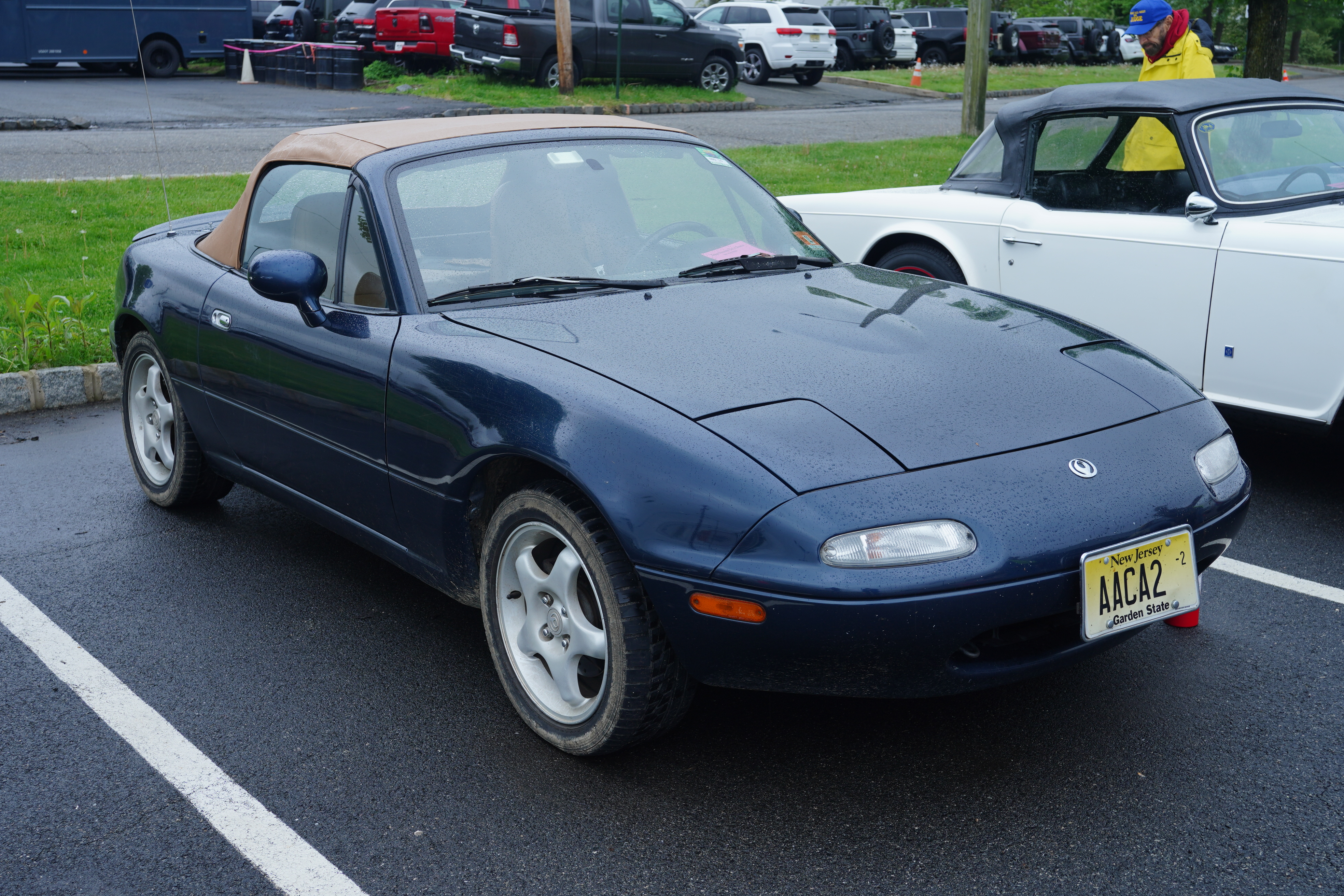
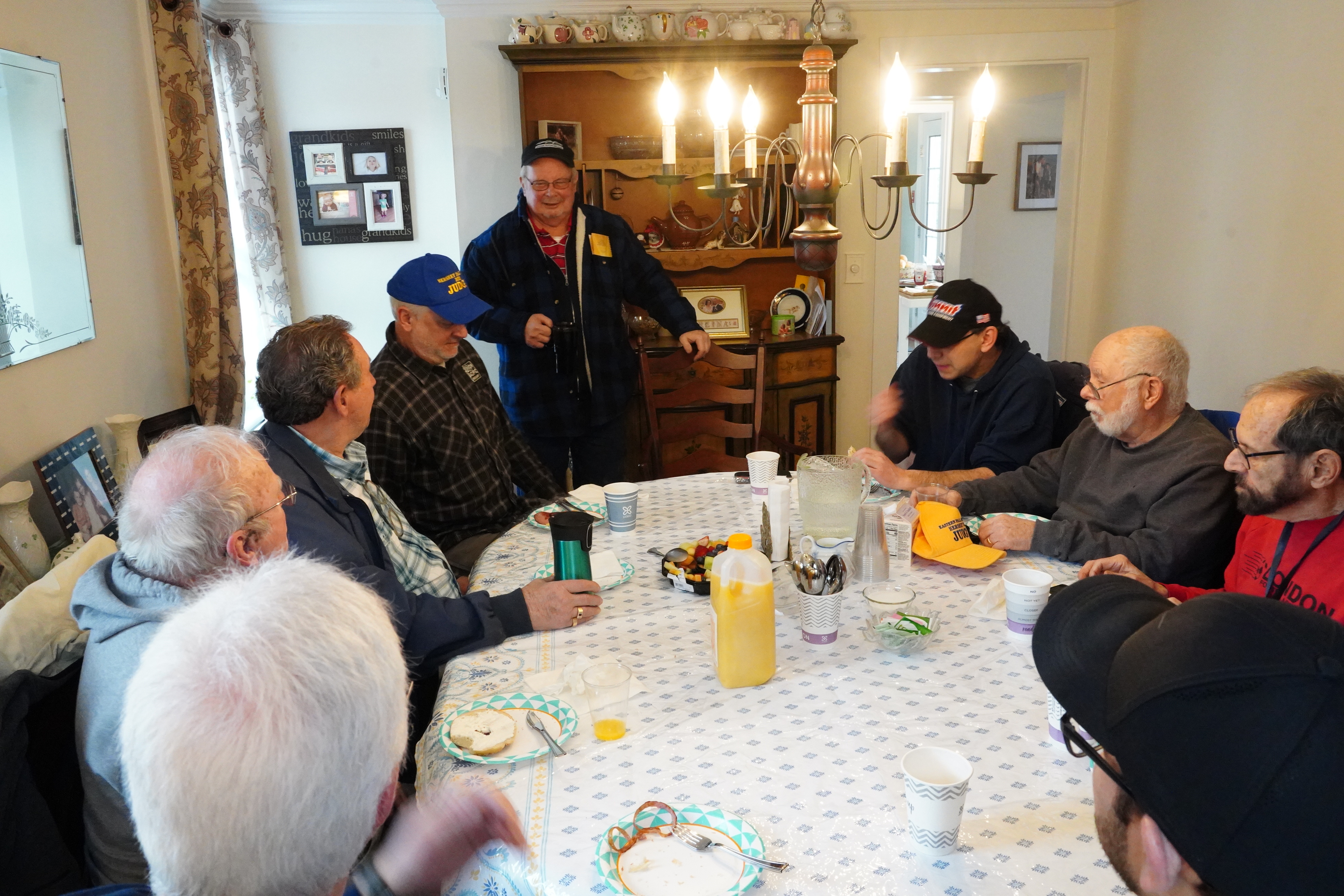
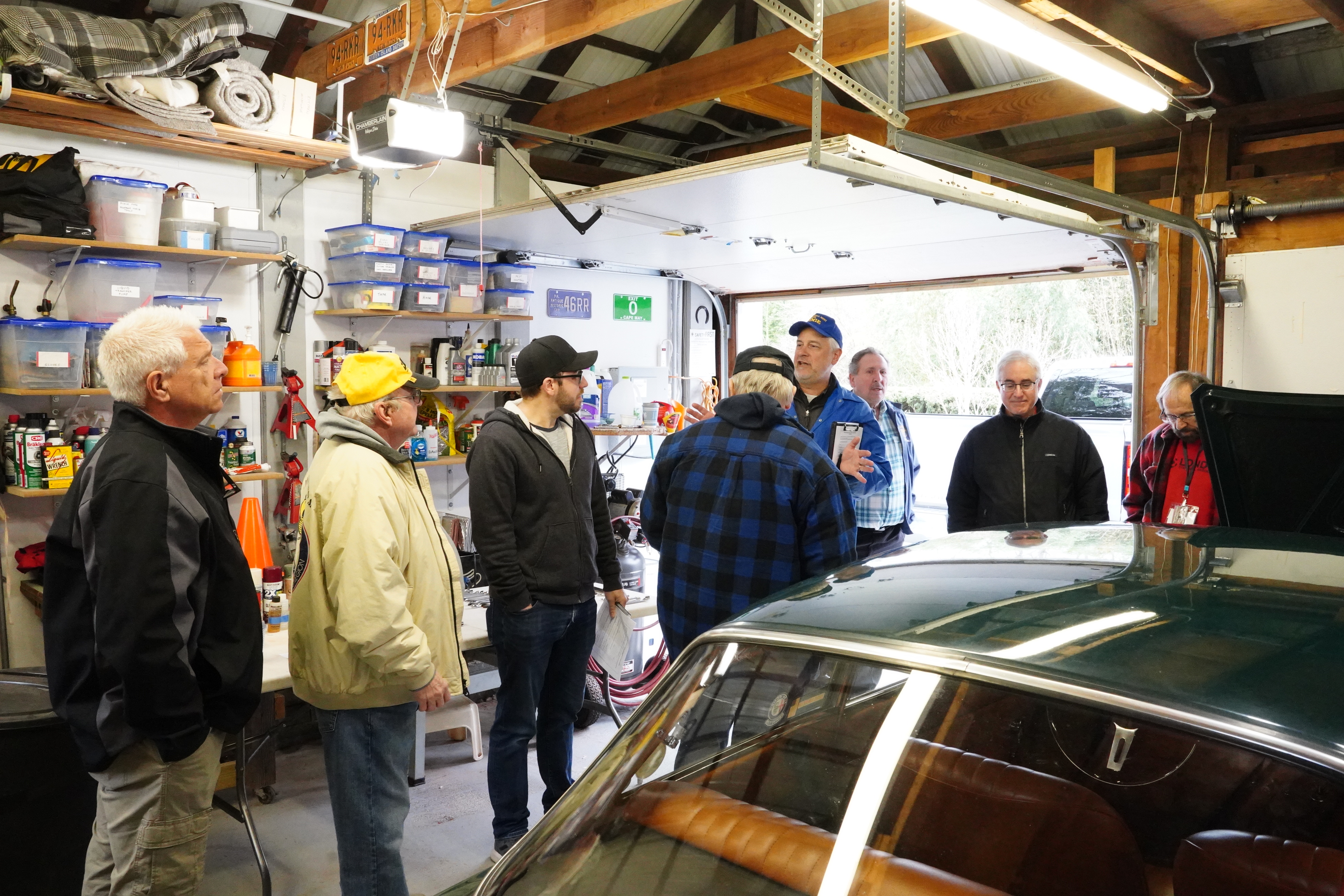
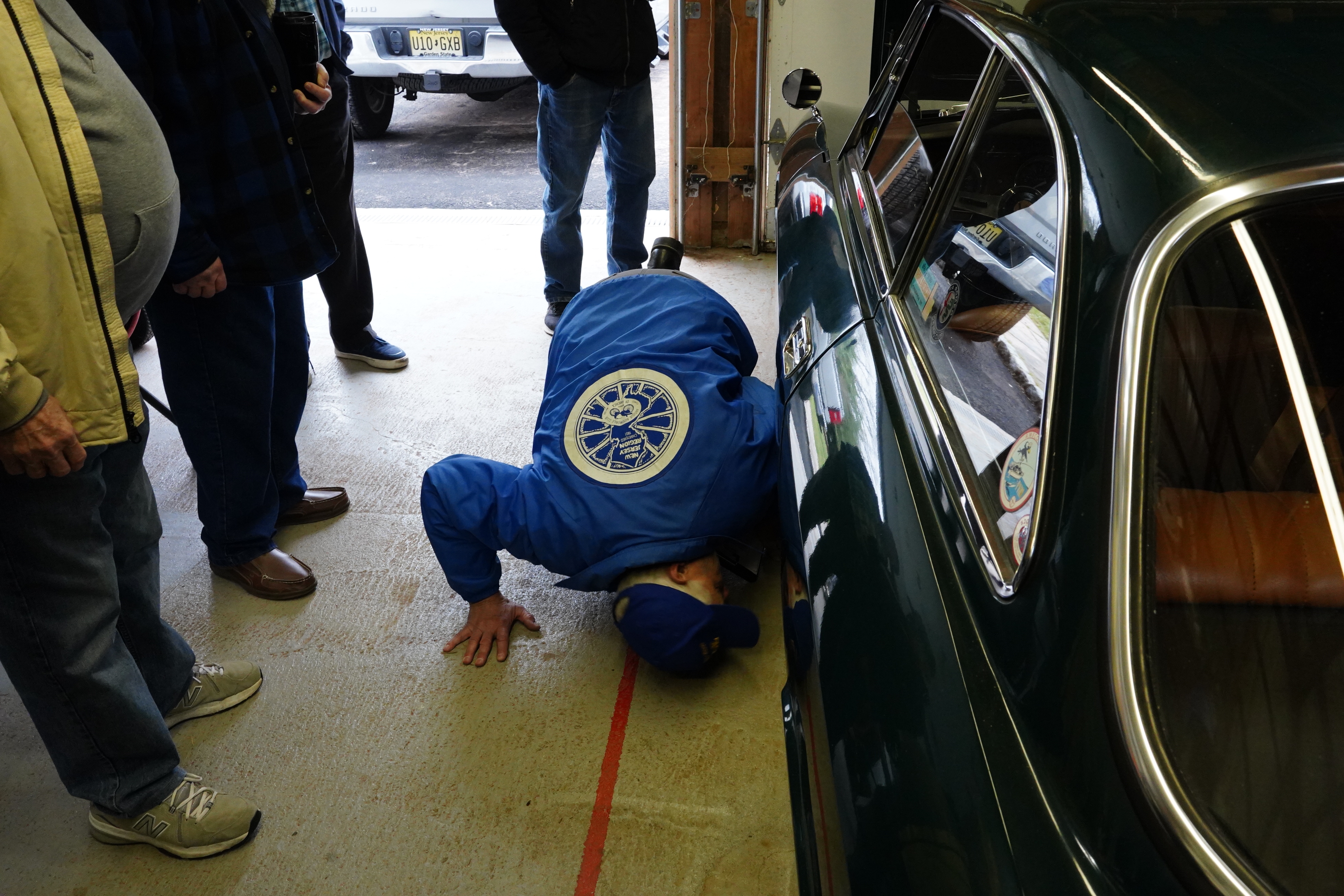
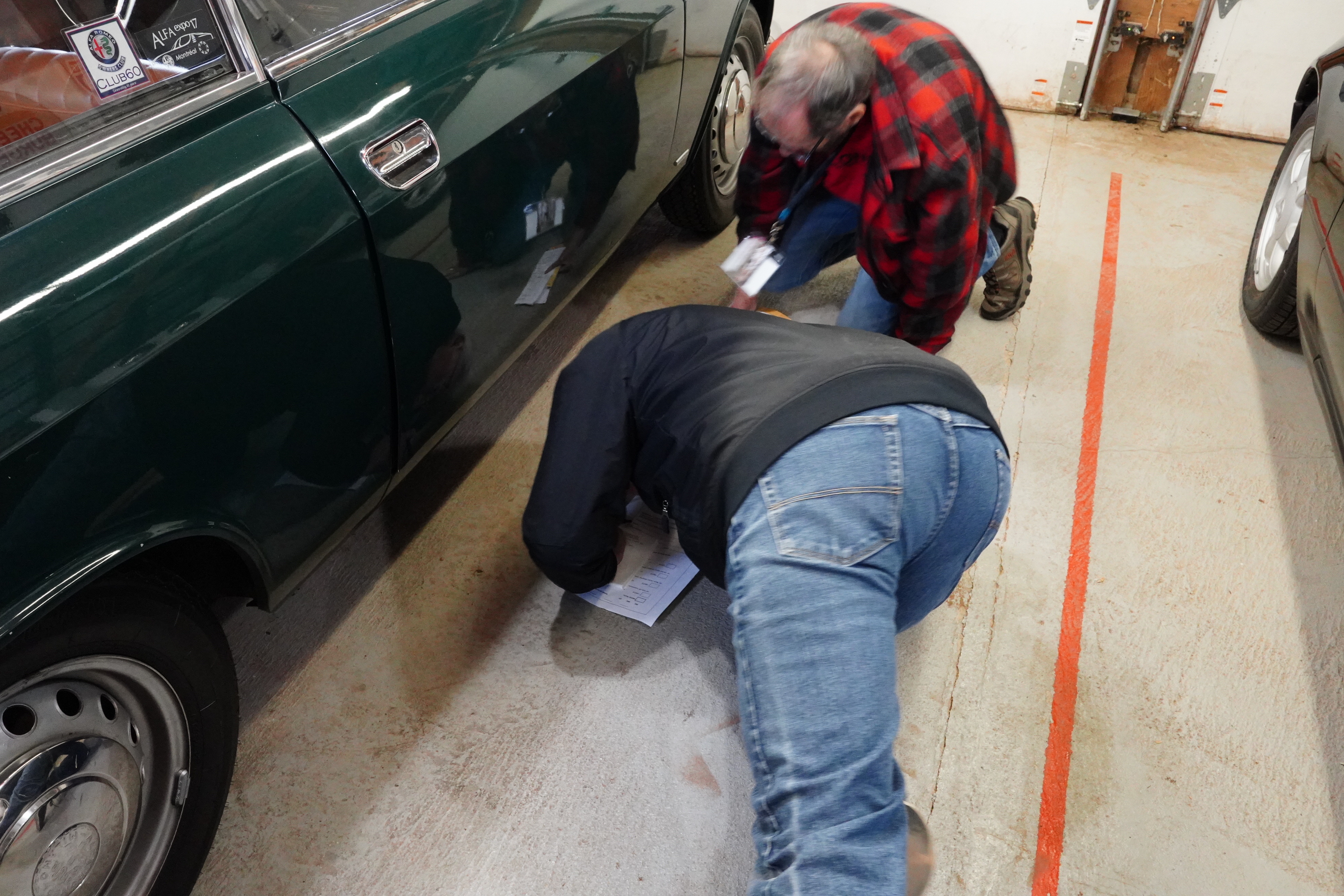
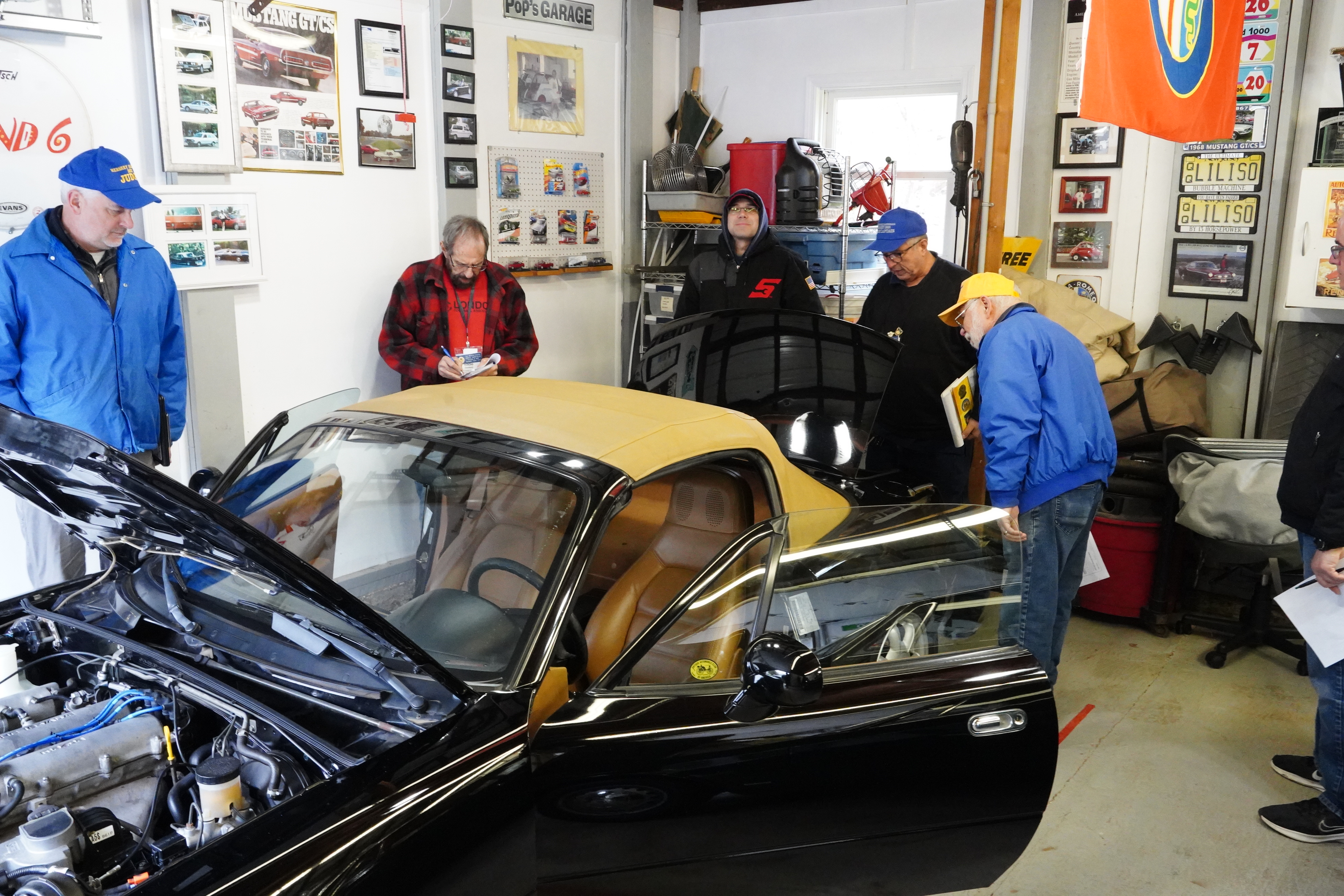
The seminar was again ably led by our “pro tem” chief judge Craig K, with my two cars, the ’67 Alfa Romeo and the ’93 Mazda Miata, as the objects of our collective scrutiny. The focus of the training exercise was “class judging”, with cars evaluated for correctness and condition in 4 areas (exterior, interior, engine compartment, and chassis). However, both of my cars are HPOF, “Historical Preservation of Original Features” and would not normally be subject to a point-by-point evaluation. Still, it was good practice for the Region members to analyze the cars on a 40-point scale (10 points for each of the 4 areas). I kept my lips zipped as horrors such as faded paint, door dings, a dirty bellhousing, a semi-opaque convertible window, worn upholstery, window decals (!) and other atrocities were critiqued. Still, on a 40-point scale, the group reached a consensus that each car earned a total point score in the low-to-mid 30s. Similar to what we learned last time, each “defect” would result in only a ½ or 1 point deduction out of 10 available points. The goal should not be to deduct as many points as possible, but to treat each deduction relative to the 10 available points. A car would need to be in very poor condition for it to earn a loss of 7 or 8 points out of 10.

We finished up around 12 noon, and Craig and I were pleased to see a number of new faces in the crowd. Attendance at a judging seminar is not a commitment to judge, but it certainly is our hope that with 2 training sessions done and a third one scheduled for April, we should see an uptick in volunteers at our May Spring Meet.

Craig (in blue jacket) begins the session


The Alfa was judged first


Each participant was invited to judge each section of the car


Craig reminds the crowd to not touch the car without the owner’s permission!


Chassis judging requires someone willing to get down on all fours


Points were lost for “non original” window decals seen here in upper left


Trainees correctly noted that in some areas, newer Miata lost more points than older Alfa


Correct judging position requires that convertible top be up


All photographs copyright © 2024 Richard A. Reina. Photos may not be copied or reproduced without express written permission.

 

“Ferrari”: The Movie AND The Book

The movie “Ferrari”, a biopic about Enzo Ferrari who founded and ruled over the famous car company that bears his name, was released to movie theaters late last year. I saw it during its opening week, and despite my initial misgivings, I enjoyed it. Much of my doubt centered around two concerns: one, I knew that the movie covered only one year of Enzo’s life (1957), and I could not imagine how a 2+ hour-long movie could do his story justice; and two, with an American (Adam Driver) in the lead role, and a Latino (Penelope Cruz) playing his wife Laura, I had trouble believing that these non-Italian actors could carry their parts. However, Director Michael Mann, who I’m told is famous for many of his previous movies about which I know nothing, brilliantly brought it together. By focusing primarily on the races, race cars and drivers of that year, and all but ignoring the production cars, the plot moved along nicely.

I had read complaints about the crash scenes, which were very realistic, including the depiction of gore. The harsh reality is that in racing, cars crash, and drivers die. The real tragedy in the races of this time, though, is that they were held on public roads, and too often, fatalities included innocent bystanders of all ages. The gore in “Ferrari” wasn’t there for its own sake. Rather, it was a real-world depiction of what happened during this era in racing.

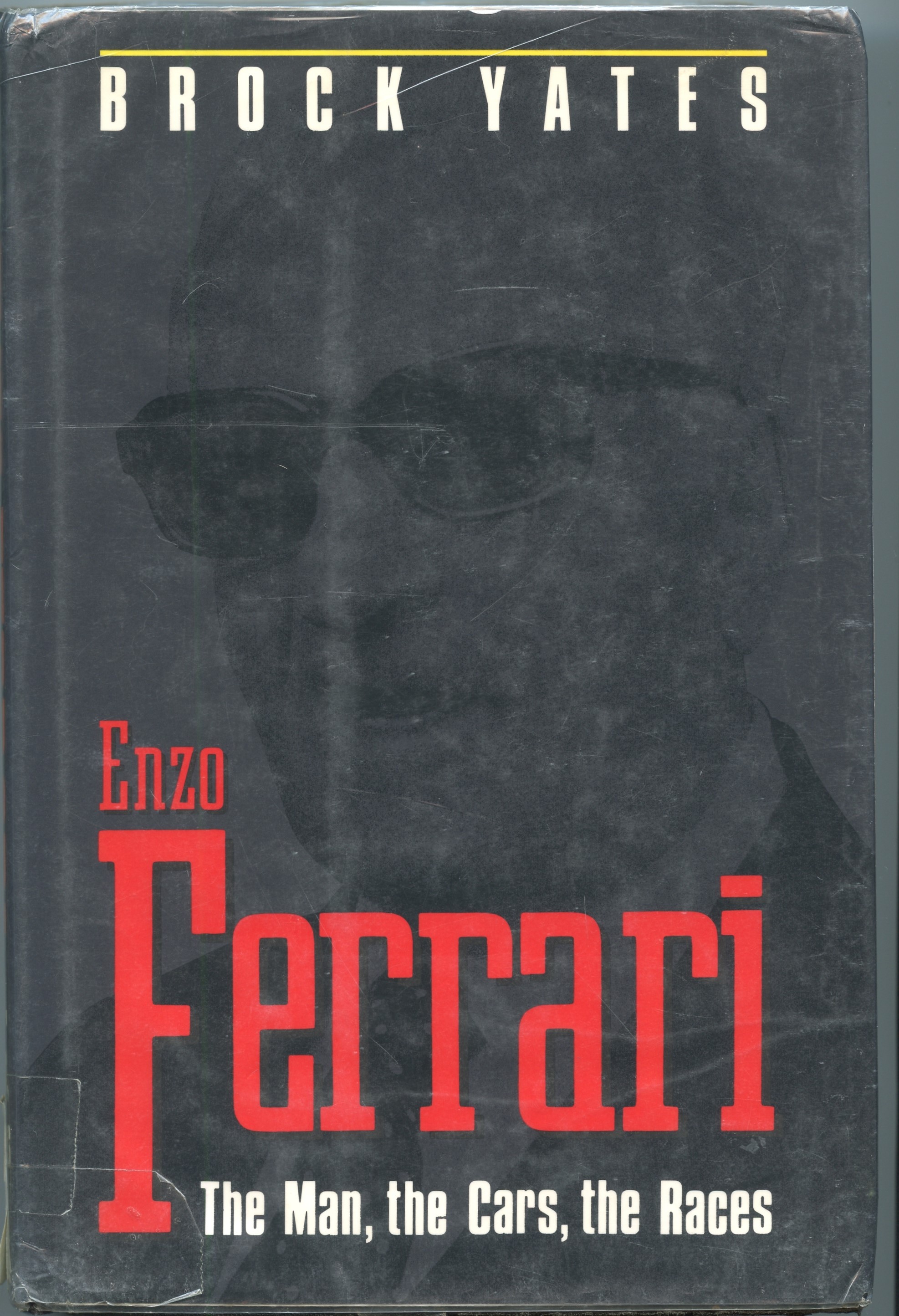
The single most fascinating aspect of “Ferrari” the movie, though, wasn’t what was shown on screen; rather, it was the screenwriters’ source material which piqued my interest. The movie is based on but one chapter from the Brock Yates-penned biography “Enzo Ferrari: The Man, the Cars, the Races”, first published in 1991, a year after Enzo’s death. I have known of this book since it was released, and had always intended to read it. Watching the movie finally provided the impetus (it was available at my local public library).

At 453 pages including endnotes, it will take you a while to dig in. Brock had a certain writing style, one that I am well accustomed to from reading his columns and articles in Car & Driver magazine (see my blog post honoring him shortly after his passing here). He loved sentences that could snake across the page with a litany of adjectives or nouns, like “a lusty man who embodied the image of the wild-living, extroverted, hard-driving international racing star”. He delighted in describing this race scene with as much excess as he could pour out: “They sailed through the twisting downhill of The Hatzenbach with the tires smoking, then hammered, eyeballs bulging and palms dripping sweat, through the terrible, blind humps of the Flugplatz. Two Rip Van Winkles hounded by the Headless Horseman, they skidded and bounced around the ghostly place, the shriek of their Jano V8s slowly being battered away by the baleful yowl of Colombo’s venerable straight-6.” Okay, Brock!

But when Yates wanted to, he could craft a narrative to bring you to the edge of your seat, feeling like you were a first-hand witness to the drama and excitement. From the Ferrari book, here is Yates’s description of how Tazio Nuvolari, driving for the Scuderia Ferrari, blasted past the favored Germans to win the 1935 German Grand Prix. (This excerpt has been edited for brevity.)

There was one final, monumental triumph for the Scuderia Ferrari before the capitulation to the German onslaught was completed. It was only proper that the greatest living race driver – and perhaps the greatest of all time – Tazio Nuvolari, should be the key to that astounding moment in motorsports.

The rise of the Germans had produced a national craze for motorsports, and by July it seemed like the entire population of Germany was descending on the Nürburgring for an event that was sure to fall to either Auto Union or Mercedes-Benz.

The front row consisted of the two Mercedes-Benzes of Caracciola and Fagioli bracketing the Nuvolari Alfa – a mechanical sandwich with a red Italian morsel pinched between a pair of sure winners. But this was Tazio’s day, and he launched the old Alfa off the line as if amphetamines had been mainlined into its fuel tank. On the eleventh lap of the huge circuit Nuvolari made a routine stop for fuel and was delayed when a pump failed and the tank had to be hand-filled from cans sloshing with gasoline. By the time he jumped back aboard the Alfa, apoplectic over the delay, he had fallen far behind into sixth place.

At this point began what many believe to be one of the greatest feats of driving in the history of the sport – a titanic driver on a magnificent racetrack facing overwhelming odds. Nuvolari seemed at this moment to ascend into another sphere of skill entirely. Even the multitudes could sense that a master was at work. He was hardly braking for the corners, those stomach-turning twists and hollows. He was charging into the bends flat out, then yanking the Alfa into a series of lurid slides, elbows akimbo, flailing madly to maintain control.

Manfred von Brauchitsch (in a Mercedes Benz) had assumed the lead in the later stages, as the other German aces had either faltered or stopped. There was little doubt that he could hold off the mad thrusts of Nuvolari – who had now, amazingly, preposterously, surged into second place. Three laps remained and Nuvolari had cut Brauchitsch’s lead to sixty-three seconds. Observers on the circuit were reporting that Nuvolari was gobbling up the distance like a berserk hare. The pressure was becoming unbearable. Could Nuvolari pull it off? One mad fourteen-mile lap remained.

The squad of NSKK troopers in black motorcycle helmets were standing by to hoist an immense swastika on a flagpole that towered over the grandstand. Meanwhile, out on the circuit, Nuvolari continued his banzai drive. The masses in the pit-row tribunes and the assembled teams heard the shocking news from the loudspeaker: “Brauchitsch has burst a tire! Nuvolari has passed him! Brauchitsch is trying to catch up on a flat tire!”

Despair. Humiliation. Defeat. Nuvolari crossed the finish line a clear winner. In the midst of his mad game of catch-up, Nuvolari had also spotted a wind-frazzled Italian flag hanging over the main press tribune. It stood in stark, shoddy contrast to the pristine red, black and white Nazi bunting surrounding it. The first words the sweating, exhausted Nuvolari spoke as he crawled from behind the Alfa’s wheel were: “Tell the Germans to get a new flag!”

Brock Yates apparently spent years researching Ferrari’s life, including multiple trips to The Old Man’s homeland, to produce an impeachable bio. He does not hold back. Many of the Ferrari faithful on both sides of the Atlantic though Enzo was a saint in life and a deity in death. The book, much like the movie, tells a very different story. But in fairness, Brock Yates devotes equal time to the great successes along with the great failings of someone who, by any measure, launched one of the most successful car companies of all time.

I enjoyed the book most of all for what it taught me about Enzo the man. Here are the major points which I either learned from the book, or I thought I knew and were confirmed by it:

Enzo Ferrari did indeed begin his automotive career by racing Alfa Romeo race cars during the 1920s and 1930s (Scuderia Ferrari). However, he was fired by Alfa Romeo in the late 1930s, and held a grudge against the Milanese company for most of the rest of his life.

Ferrari didn’t produce the first automobile (really a prototype) bearing his name until 1947, when he was already 49 years old.

For the first few decades of the company’s racing experience, Ferrari stubbornly clung to the idea that “horsepower is everything”, and all other vehicular components had little impact on the success of a race car. To quote Yates: “ A myth has grown up around the cars relating to their advanced designs, but actually Enzo Ferrari was extremely conservative and was often left at the starting gate by more creative builders (his reluctance to adopt such obviously superior components as mid-engine layouts, coil spring suspensions, disc brakes, monocoque chassis, magnesium wheels and fuel injection exemplifies his crude approach to design).”

The above ties in very neatly with what I have heard from those who have owned Ferrari road cars from the 1950s and ‘60s. One fellow hobbyist described his Ferrari thusly: “It’s an engine on a tractor chassis”.

Contrary to almost everything I’ve read over the last 50 years, Enzo’s son Dino had just about nothing to do with the development of the Ferrari V6 engine which the father named after the son. Simply put, at his young age (25), Dino lacked the education and experience to delve deeply into engine design. The book notes that Jano and Lampredi, world-famous engineers in their own right, had both been working on V6 designs shortly before the Ferrari Dino debuted, and they are given credit for its design.

Ferrari traveled very little. Once his car company started, he rarely ventured more than a few kilometers from his home base. He almost never attended any Formula 1 races; he preferred to hear about results via long-distance phone calls. His trips outside of Italy could probably be counted on one hand.

Racing was everything to him. It is certainly true that the only reason he manufactured street cars at all was to fund the racing business. He grew to detest the wealthy people who gobbled up his cars as if they were precious diamonds, even though it was their funds which fed the hungry racing machine.

It was Fiat’s takeover in the late 1960s which finally propelled the road cars into the modern era. Mid-engine placements, modern manufacturing methods, and up-to-date comfort and convenience features were first found in the mid-‘70s’ 308/328 Berlinettas and Spiders. According to Yates, Ferrari cared even less about the road cars at this point and simply rubber-stamped whatever Fiat churned out for him.

Whether you’re passionate about the Ferrari mystique or simply want to learn more about the man behind the name, I recommend both the movie and the book.


Fix It (Again) Tony!

If you think my subject line implies a blog post about some downtrodden Fiat owner whose Italian marvel needs ever-repetitive mechanical repair (an undeserved reputation which gave birth to the cliché that F.I.A.T. is an acronym “Fix It Again Tony”), you would be mistaken. Today’s story is about my friend Tony, a fellow member of the NJ Chapter of AROC (Alfa Romeo Owners Club) who asked me to assist him in getting his 1967 Alfa Giulia 1300 TI sedan started. It seems that while Tony did have the car out for a short spin around the block in early January, subsequent attempts at starting have proven futile. It took me a while to land on the right combination of a free afternoon and semi-decent winter weather, but that combination rang the bell on Sunday Feb. 25. Tony’s house is a quick 20-minute jaunt for me, so I threw a few tools into a small toolbox and headed his way.

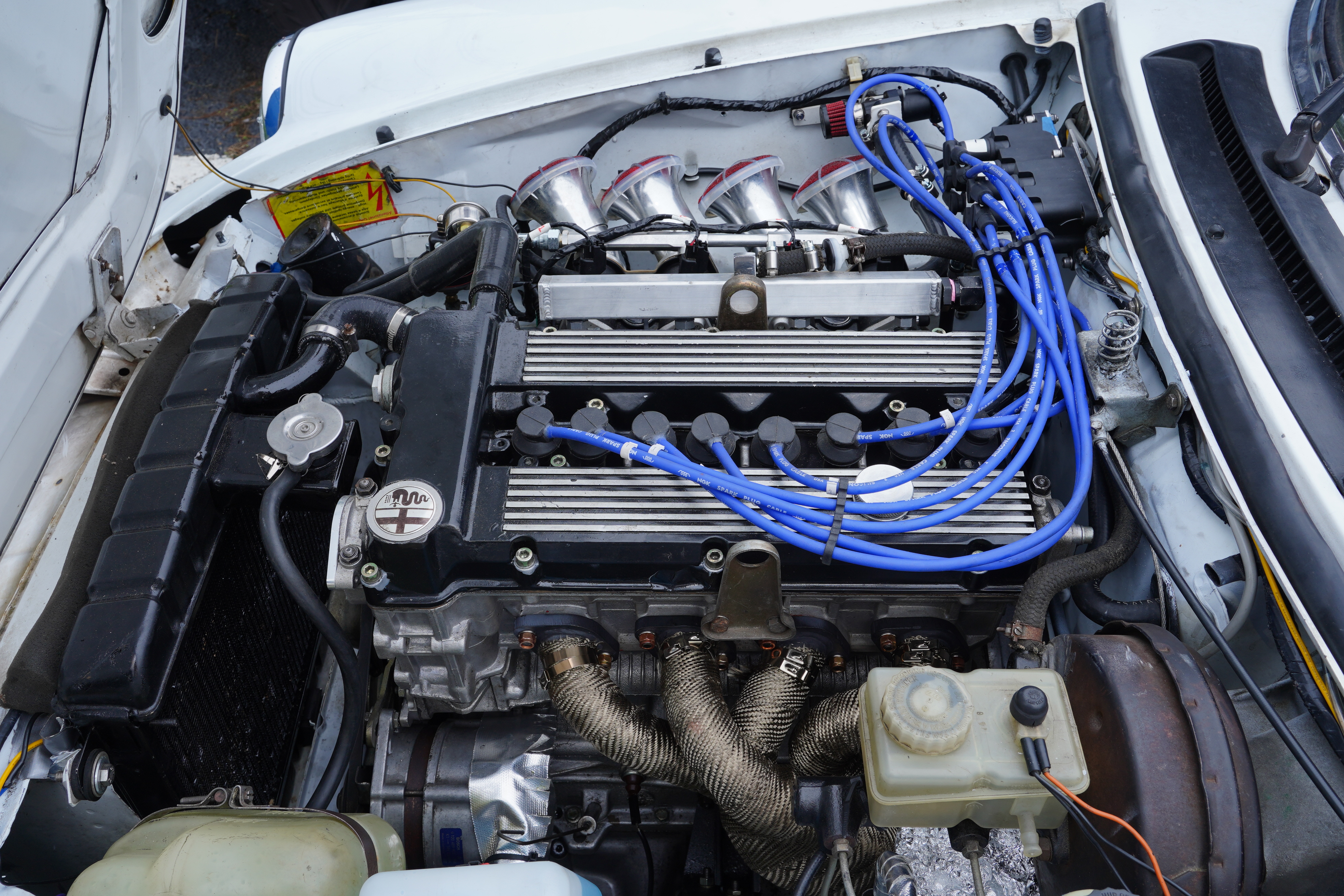
Like many older Alfas, Tony’s car is no longer 100% original. A while back, under his ownership, he had a shop swap out the factory 1.3L engine for a 2-liter job. If that engine was yanked from a U.S. spec car, the fuel system would have been Alfa’s unique Spica mechanical fuel injection. However, Tony’s engine wears a pair of the familiar Weber 40DCOE carbs, basically similar to what is on my GT Junior. Good thing, because I have not applied a wrench to anything Spica-related since 1980 (44 years for those of you who had a glass of vino rosso before opening my blog).

When I got to Tony’s house, I started by performing a quick visual check under the hood. Tony kept saying that he thought that the engine was not getting fuel. That well may have been so, but we still needed to start with the basics. He showed me an aftermarket (Bosch) electric fuel pump mounted on the right inner fender. The wiring and hoses associated with that pump looked ok. I then popped off the distributor cap, and because it was a bit dusty under there, wiped it with a clean cloth. The cap and rotor looked fine, and again, a modification was in place: instead of points and condenser, the ignition system used aftermarket electronics to collapse the primary circuit and energize the coil. There wasn’t too much I could do to verify that at this moment.

Initial underhood checks completed, I asked Tony to try to start the engine. The battery was strong enough to provide good cranking power, but after 3 attempts, each lasting about 10 seconds, the engine didn’t even cough. Tony told me that usually, the engine “tries” to start on the first or second crank attempt. I suggested that to check for fuel delivery, we could pull a hose and watch for fuel flow, but a simpler and safer method might be to pull a plug and smell it. With that, the #1 plug was removed, and the fuel smell was strong enough to convince me that fuel was making it that far. However, the plug was completely black from carbon, almost to the point of closing the gap. Using a nylon brush, I cleaned that plug, then did numbers 2, 3, and 4, returning each plug to its original home. “Try it again” I instructed, and he did. This time, the engine sound changed: on the 2nd and 3rd crank attempts, the engine sputtered and almost started. Tony quickly exclaimed ‘THAT’S what it normally does”. I point-blank told him: “you need spark plugs”. He didn’t have any spares, so into his Honda we jumped, and headed for the local Auto Zone.

The Auto Zone counter guy could not have been more helpful. We gave him part numbers for NGK, Champion, and Bosch spark plugs (we were prepared!) but he had none in stock. Back to the car, and off to an Advance Auto Parts store in the opposite direction. I told Tony that the primo choice would be the NGKs, and bingo, AAP had the NGKs on the counter pronto.

Twenty-five bucks lighter, Tony had us back to his house in a flash. Out for the second time came the old plugs, and in went the new NGKs. (NGK plugs from my experience never need gapping, and these plugs were no exception, although I still checked them). Fingers crossed, Tony hopped in, and the engine started on the second try. Good thing I guessed right!

We took it for a short spin around the neighborhood, me riding shotgun. The car ran a little rough, possibly from dirty fuel or a carb imbalance, but on the whole, Tony was pleased. On my way out, I told Tony that I think these engines eat plugs for breakfast, so no matter how many or how few miles I put on my Alfa, I change mine once a year. He said he would start doing the same.

The new NGKs about to be unboxed and threaded into place


With new plugs in place, Tony gets behind the wheel for another starting attempt


Fantastico!  With engine idling, Tony gives it two thumbs up


The uncatalyzed exhaust was quickly filling the garage, so Tony opened the door

Giulia TI (Tourist International) dash is completely different than my Bertone GT, and this one is a work of art in its own right

I tried it on for size; nice car!

Flying along on Route 22 at 50+ MPH (but the speedo reads in KPH, so more arithmetic)

All photographs copyright © 2024 Richard A. Reina. Photos may not be copied or reproduced without express written permission.

NJ Alfa Club Breakfast Meet, Feb. 18, 2024

The NJ Chapter of the Alfa Romeo Owners Club (AROC) held their 2nd monthly breakfast meet-up of the year on Sunday February 18. The chosen locale was the Americana Diner in Shrewsbury, NJ. Nine Alfisti braved a.m. temps in the teens to make the trek. Our Chapter V.P. Vic had made the arrangements with the diner, which was all too obvious when I, the first one to arrive, walked in, whereupon the diner manager blurted “You with Vic? Just hang on a sec.”

The rest of the crowd poured in within minutes, and we were given a large table in the rear, where we could eat and chat in peace and comfort. With spring just over a month away, much of the conversation pivoted around plans for warm weather events, such as a visit to the Simeone Museum and participation in the New Hope car show. Alex, our Chapter Secretary, entertained us with the Show & Tell portion of the morning by passing around the gears and synchros from his Duetto transmission, which he is in the midst of rebuilding.

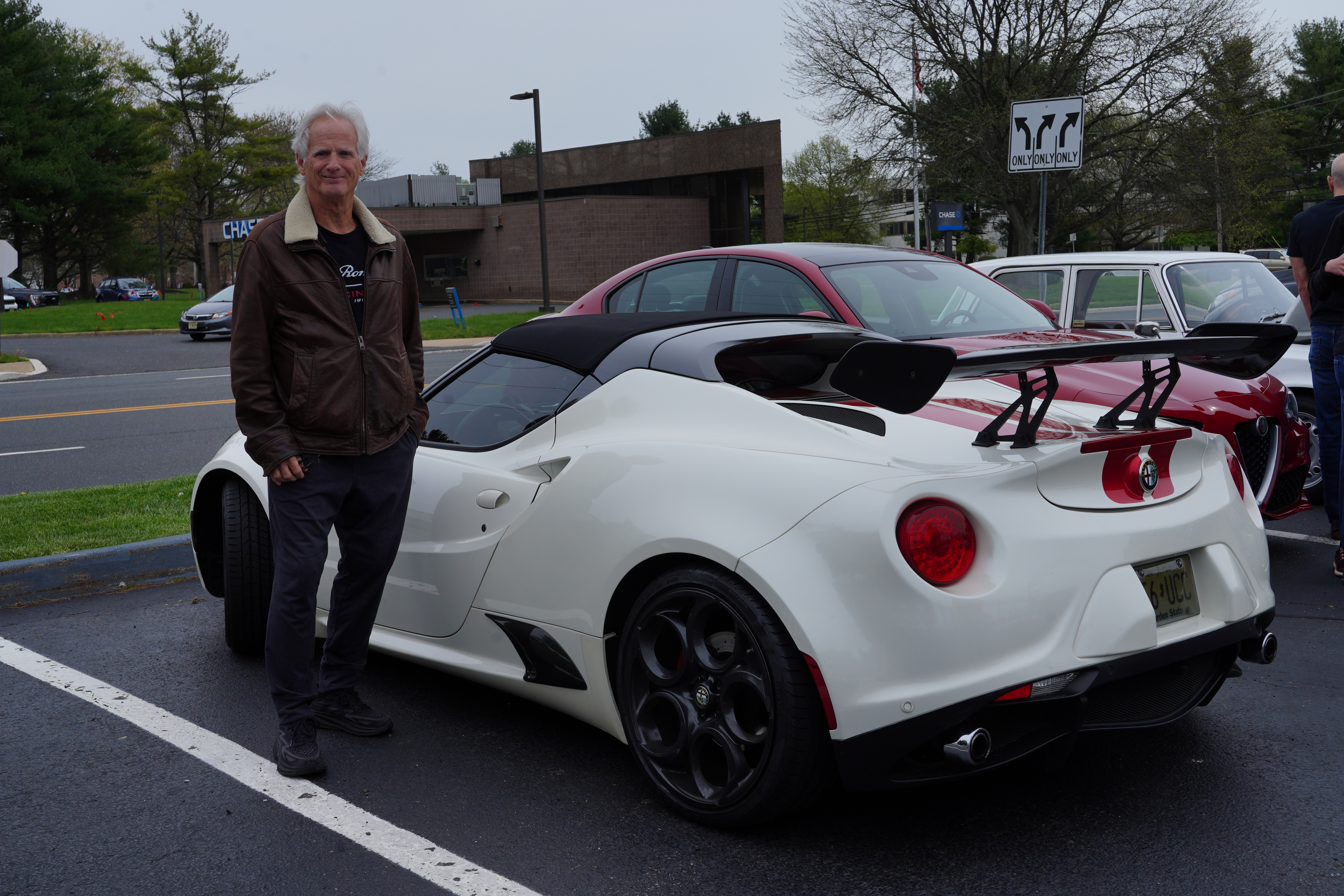
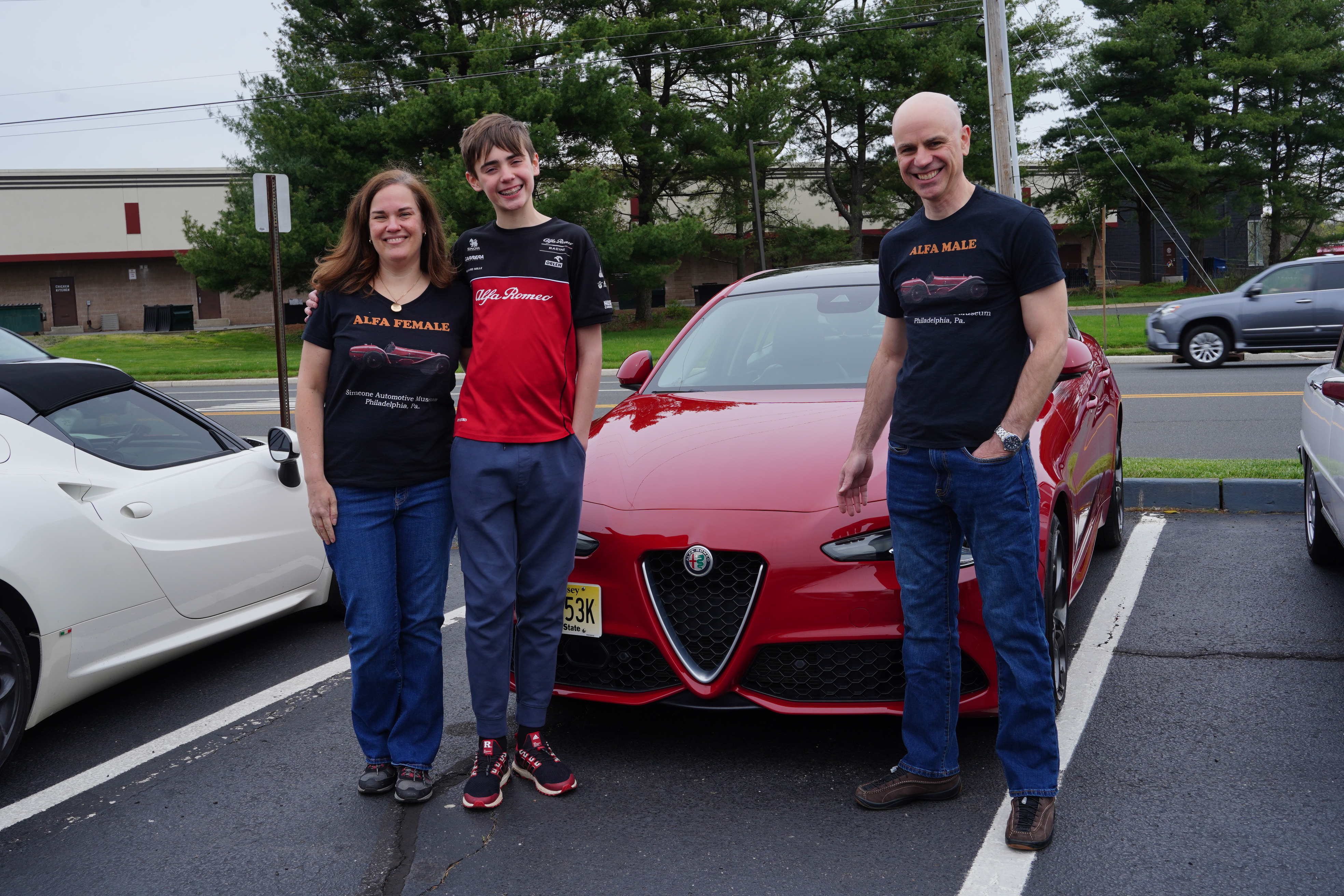
Breakfast was served and consumed, coffee was poured and drunk, and as car guys tend to do, we hung out and gabbed well past the time when plates were cleared. Before departing for the day, I made sure to capture photos of those who drove their modern Alfas. The classics are still stored, waiting for salt-free roads and milder temperatures.

The next breakfast outing for the Jersey Chapter is Sunday March 10, which means there will be just 10 days remaining before Ol’ Man Winter departs (we hope) for the season.


Steve and son John with their Giulia


John with his Tonale


Vic with his wife’s Giulia


All photographs copyright © 2024 Richard A. Reina. Photos may not be copied or reproduced without express written permission.


NJ AACA Judging School, Jan. 27, 2024

The NJ Region of the AACA has held its annual Spring Meet (car show) on the first Sunday in May for as long as I can remember, and probably much further back than that. Traditionally, the Chief Judge for the Meet holds a judging seminar a week or two before the show. Last year, our long-serving Chief Judge retired from the position, and with a new Chief Judge comes a fresh look at the way we do things. Our new Chief Judge Anthony decided to make two rather simple changes: one, conduct more than one judging seminar, and two, conduct the first one a few months before the show. The overall intent is to increase the number of volunteer judges.

Our newsletter editor-in-chief, Dick Bettle, graciously agreed to make his garage available for the first of these seminars, which was held on a ‘balmy’ (40-ish) January Saturday. Including our host, 17 members of the club turned out, which I felt was an impressive showing. Craig Kunz, our Regional VP, agreed to stand in for Anthony, who is dealing with some medical issues. We surrounded Dick’s 1930 Ford Model A Coupe which was our vehicle exemplar for the day.

Several attendees are experienced National AACA judges, having judged at Hershey and other National shows around the country, and their input is valuable at these kinds of seminars. At the same time, AACA uses a 400-point judging system and drills down to a microscopic level which our Region does not. The NJ Region’s judging sheet uses a 40-point system, with 10 points each assigned to exterior, interior, engine compartment, and chassis. One of the major learnings which Craig successfully delivered was understanding the difference between the National 400-point judging sheet and our 40-point one.

It was a fun exercise with Dick’s Model A. Most club members are all too familiar with this car, as Dick and his wife Bobbi routinely put 4,000-5,000 miles a year on it (that is not a typo: four THOUSAND to five THOUSAND miles a year). To the casual observer, this is a bone-stock 1930 Ford. However, Dick, a life-long car fanatic whom I consider to be one of the most technically savvy people I’ve met, has executed dozens of modifications to this A. Among other upgrades: radial tires on smaller-diameter wheels, an alternator, a Honda distributor, a performance cylinder head, and upgraded electrics including a navigation system (yet he has retained cable brakes). On a 40-point scale, we ended up deducting 13 points for a final score of 27. The radials and the engine mods were major deductions. While some attendees wanted to score a “0” for the engine compartment, Craig and other judges noted that the car retains its original engine block, so only 5 points were deducted.

After two hours in the garage, Bobbi entered the room to announce that lunch was being served upstairs, where we found homemade lasagna, meatballs, water, coffee, and various cupcakes (some club members admitted that they were really here for the lasagna). Dick and Bobbi were generous to a fault by hosting and feeding this crowd of hungry car guys. Oh, and the next judging seminar is in March at my house. I need to go clean the garage.


Car owner Dick (hand on pole) and other attendees listen to Pete (Spring Meet Chair)


Craig (in white hat) makes a point or two


John P asks attendees to evaluate the interior


The rumble seat must be judged as well


“Don’t EVER touch an owner’s car!”


Bobbi takes photos while the lasagna is in the oven


What car guys REALLY love to do: eat, and talk:


All photographs copyright © 2024 Richard A. Reina. Photos may not be copied or reproduced without express written permission.


NJ Alfa Club Sunday Breakfast Meet, Jan. 21 2024

The reinvigoration of the NJ Chapter of the Alfa Romeo Owners Club (AROC) has been ongoing since the middle of 2023. While progress has been slow and steady, the Chapter agreed a while back to institute something we have observed done by other Chapters, which is a regularly scheduled monthly meet-up at a restaurant or diner. The intention is to have an informal gathering where members can simply get to know each other better. There is no pre-set agenda.

The club officers decided to schedule breakfast at a diner on a monthly basis, with the dates and locations already set through April. January’s gathering took place on the 21st at the Spinning Wheel Diner in Lebanon NJ. Seven intrepid Alfisti braved the 20 degree F temperature to arrive at the diner at 8 a.m.

While spring and summer meets will likely see a significant quantity of Alfas old and new in the parking lot, those of us (including your author) with “classic” Alfas are not about to drive them on our heavily salted roads. Two current-generation cars, a Giulia and a Tonale, made the trek, with the rest of us in our non-Italian daily drivers. (Tony quipped that he drove his “Alfa Ridgeline”!) It was a special treat to have John, the 13-year-old son of Steve, join us, and I learned that this young man is a fanatico of all automobiles from the great country of Italy. (When he told me “well, I do like one French car, the Bugatti”, I was delighted to inform him that Ettore Bugatti was an Italian who just happened to move to France.)

The food and coffee were great, the service was better, and as seems to happen at every gathering of this type, we managed to linger and chat well past the time when our bellies were full and the plates were cleared. I didn’t think that 7 was a bad turnout for A) a bitter cold January morning and B) our first event of this type, so I have high hopes that attendance will improve for the next few breakfast meets.

Above, L to R: Richard, John, Steve, Bill, John, Fran, Tony

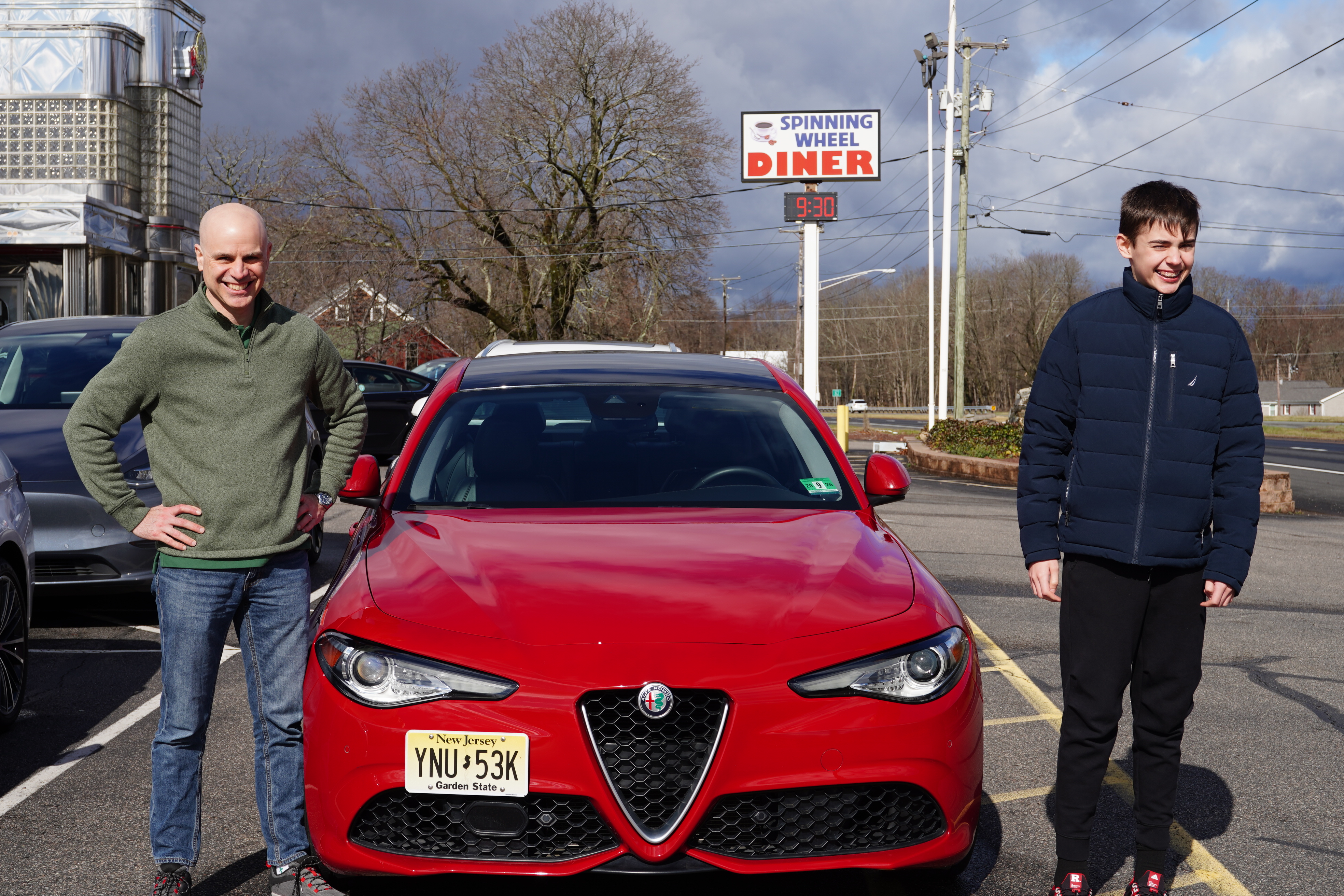
Above: Steve with son John with Steve’s 2018 Giulia

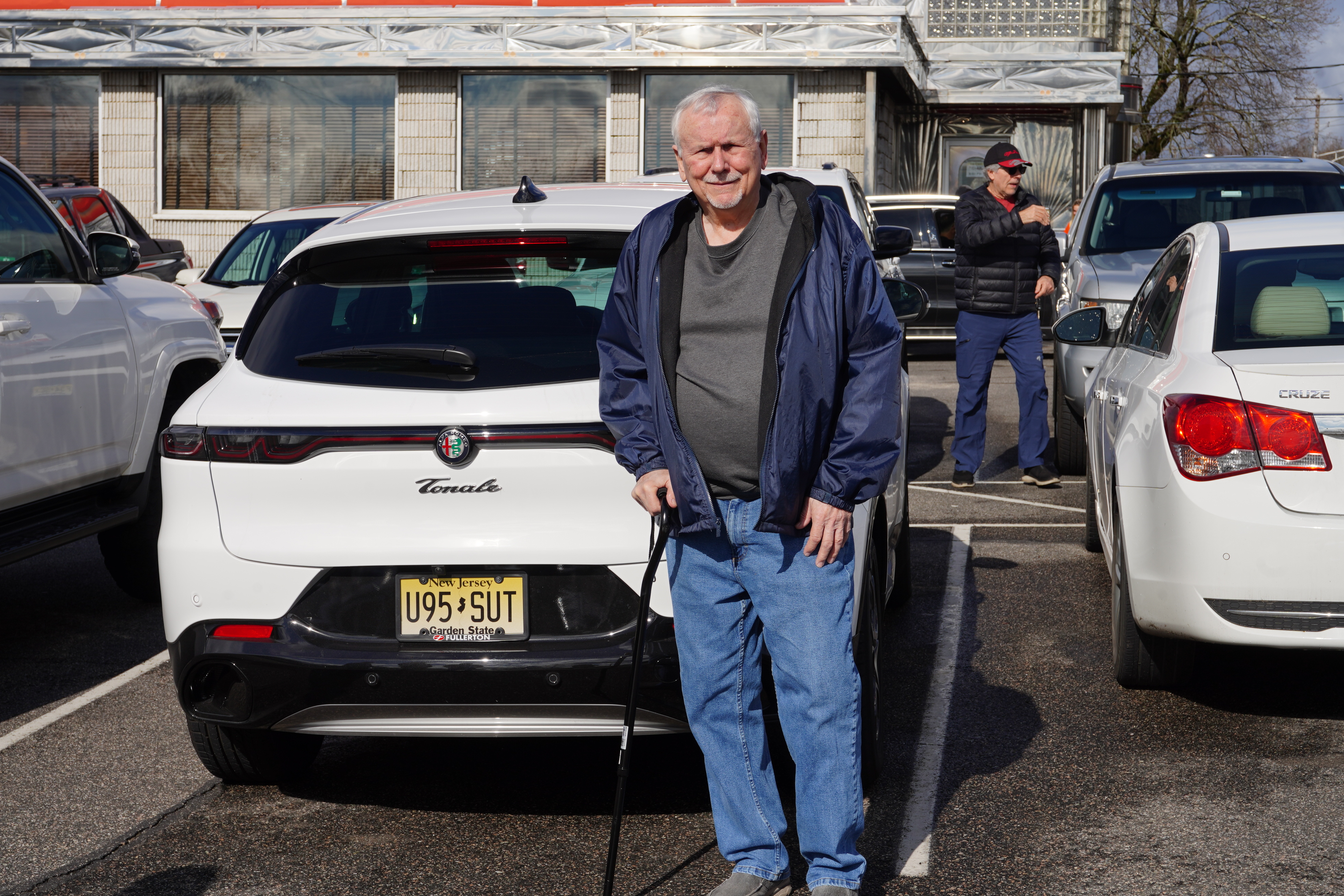
Above: John with his Tonale


All photographs copyright © 2024 Richard A. Reina. Photos may not be copied or reproduced without express written permission.


The 2011 Lime Rock Vintage Car Show

Continuing with my winter photo cleanup, I came across these film photos which I’ve never published, taken at the 2011 Lime Rock vintage car show. I have no specific recollection of attending, and I mention that only because the pictures show a light turnout of show vehicles, which I cannot explain. My photo quantity is also light, likely because I started the day with a partially consumed roll in my camera and did not have more film with me. Still, the vehicles on the field were attractive and varied, bearing out my long-held opinion of Lime Rock as one of the few places in the Northeast to spot rare and unusual machinery.

Ownership of my first Alfa was still 2 years away, yet my long fascination with the marque is borne out by this photo.


This gorgeous Fiat 850 Spider is an early car, as evidenced by its glass-covered headlights, a treatment that would soon be replaced by exposed sealed beams.


I was attracted to the color combination of this big-bumper Fiat 124 Spider.


A couple of old and rare Fiat station wagons. Note the suicide driver’s door on the blue car.


Ferrari Daytona


I never pass up an opportunity to photograph the eternally beautiful Jaguar XKE.


The bump in the hood (and the license plate) inform us that this is an MGC, with an inline 6 under that hood.


Spotted in the paddock: a Ford/Lotus Cortina in the middle of an engine swap.


An NSU Wankel Spider, with a rear-mounted rotary engine.


A very clean and nicely restored Volvo 1800S.

All photographs copyright © 2024 Richard A. Reina. Photos may not be copied or reproduced without express written permission.


The Challenges of Public EV Charging Stations

If you have been paying any attention to electric vehicle (EV) sales in this country, you are aware that EVs have not exactly been flying off dealers’ lots. There are myriad reasons for this, and one of the principal reasons continues to be range anxiety, fed in part by the lack of sufficient access to public EV charging infrastructure. (The preceding does not in general apply to Tesla owners, as that company has built its own charging network.)

I bring this up as a preamble to a recent observation. I do most of my food shopping at the local (Flemington NJ) Shop-Rite, a 15-minute drive from my home. It shares its lot with several department stores, but most times of the year, parking at the Shop-Rite is not an issue. It’s during the big holidays when finding a spot can get dicey. Several months ago, I took notice of some construction in the lot; said construction chewed up about 6 or 8 parking spots, and I wondered what was going on. A few weeks ago, I found out: the fences and boards were removed to reveal 4 new EV charging stations, with another 4 spots permanently occupied by some large electrical box, presumably needed to feed the chargers. To my knowledge, this is only the second multi-unit public charging station within a 10-mile radius of my home.

Google Map’s view of my Shop-Rite. Charger location within green box.

I caught myself off-guard by my own mixed emotions to this “intrusion” at my local food store. On the one hand, this is exactly what the country needs if the public is to be weaned off ICE cars and into EVs. Many articles I’ve read through the last few years have bemoaned the idea of stopping on the highway, plugging the EV into a charger, then finding a way to kill the 45 minutes while the car reaches full charge. But if you’re going to be in the supermarket for 45 minutes, then this is maximum time utilization at its finest! What could be bad about this?

Aside from the loss of 8 “regular” parking spots, which I will ignore, my mind cycled through various combinations of charging misdeeds, some innocent, and perhaps some not so innocent. If you own an EV that’s half-juiced and needs only 30 minutes to fully recharge, but you’re in the store for an hour, is that a problem? It’s not so long as one of the other three slots is available for the next EV owner who wants juice. What if an ICE car owner parks there? Unintentionally? Intentionally? (The intentional taking of an EV charging spot by an internal combustion vehicle happens, and it’s known as “ICEING”.) What happens the day before Thanksgiving when there is not another parking spot available, you have a screaming toddler in the car with you, you’re due home in an hour, and an EV charging spot is the only one available for you and your Acura MDX? My money says you’re going to park THERE no matter what you’re driving.

A further complication revealed by a closer examination of my own photograph: ONE of the 4 spots is marked “handicapped parking only”. So you’re driving an EV, the other 3 spots are legitimately occupied, and you, without a handicap permit, need to charge the car. What do you do??

Note signage and pavement markings. Will it matter?

Who will be policing this? No one. We as a society are expected to self-police our own behavior. As of last week, orange cones still blocked access to the chargers. Maybe the big switch hasn’t been turned on yet. However, I am 100% certain that every future visit to my Flemington Shop-Rite will include a drive past the chargers, so I can observe how the EV parking spots are being used. Stay tuned for an update. Meanwhile, your observations and comments are welcomed.


All photographs copyright © 2024 Richard A. Reina. Photos may not be copied or reproduced without express written permission.

The 2014 AACA NJ Region Annual Car Show

How is it that I keep coming across photographs that I had forgotten I have? I was looking through my photo album from 2014 the other day, searching for something which has now completely escaped me. But while doing so, I noticed car show photos which did not look familiar to me. Researching my blog, I found that I’ve documented the AACA NJ Region Car Shows for 2012, 2013, 2015, 2016, 2017, 2018, and 2019… but not 2014. Well, here they are, in all their Kodak glory (ALL photos below were taken with my trusty Nikon EM which I’ve owned since 1982).

We didn’t know it then, but 2014 would be the second-to-last time that the NJ Spring Meet would be held at the Automatic Switch Company’s parking lot in Florham Park NJ. After our 2015 show, the company announced to us that the lot would no longer be available due to planned long-term renovations. It was a shame for several reasons: the location had become well-known to show-goers, the lot itself was immense, and the location was ideal for Region members who resided anywhere in northern and central Jersey.

The 2014 show was also the 2nd time I had entered my Alfa Romeo. Glancing through the images reminds me of how delighted I was to finally own a show-worthy car which could be driven to and from the venue. Another highlight I note in my images is the greater number of import cars on display, a count which seems to have dwindled within the club in recent times. (I know I’ve called out that my Alfa has been the only non-American vehicle in some recent AACA events.)

To my followers: thank you for reading my blog! February will mark 9 years since my inaugural post. Wishing you a Merry Christmas and Happy New Year!

My friend Bob with his shoebox Ford


My friend Sean with his Pontiac Grand Ville convertible


ABOVE: This Alfa GTV was tastefully modified, but (obviously) not AACA-eligible, so it was not judged.


Ed’s Alfa Montreal


Triumph TR-4


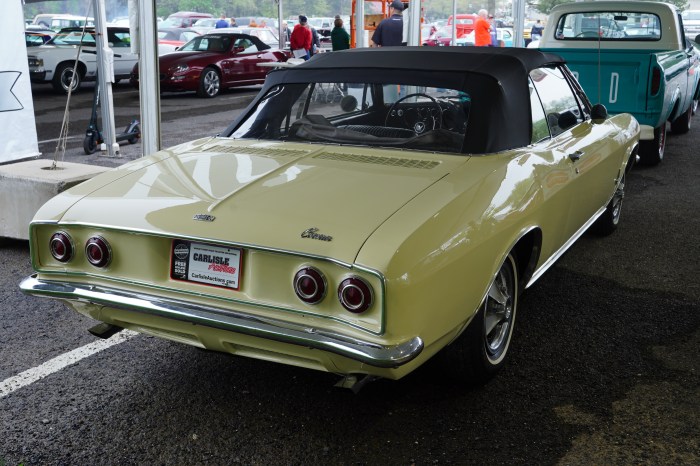
2nd generation Corvair coupe


Jaguar E-Type Series III


Porsche 928


Lancia Beta Zagato


1963 Corvette split-window coupe


2nd gen (’66-’67) Buick Riviera


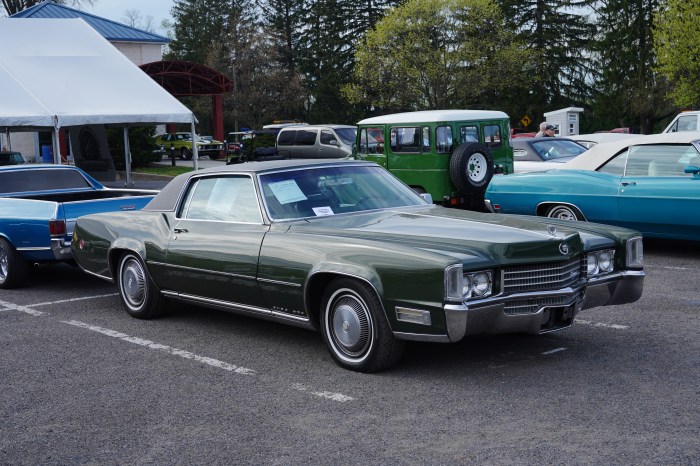
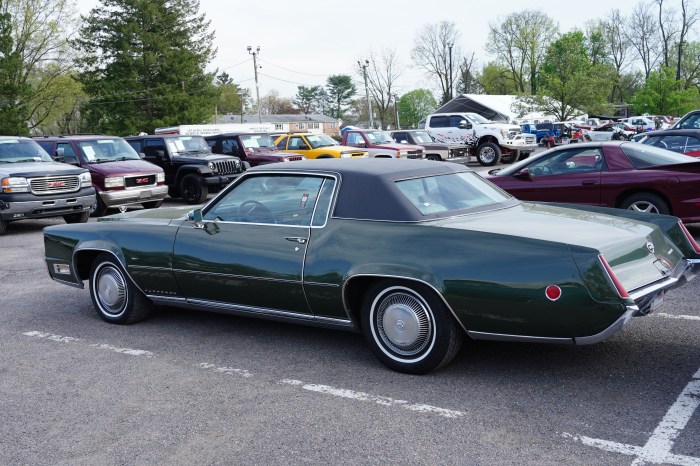
A BIG Cadillac


Jeep pickup


Trophies are awarded by class. At the end of the show, the 1st, 2nd, and 3rd place winners in each class line up to receive their just rewards:


All photographs copyright © 2023 Richard A. Reina. Photos may not be copied or reproduced without express written permission.


The 1961 Cadillac Coupe DeVille

Last Thursday, the monthly AACA meeting ended around 9 p.m., its usual time. I was tired, and anxious to begin the one-hour drive home. After wishing Happy Holidays to those around me, I grabbed my coat and headed out the door of the American Legion Hall. And there it was. Suddenly tired no more, I froze, perhaps because its appearance was so unexpected, or perhaps because its enormity stood out in a parking lot full of smaller, modern vehicles. In this setting, there was nothing similar to distract from its visual impact. This 1961 Cadillac Coupe DeVille was a grand automobile when new, and is still grand today, in every sense of the word.
The car belongs to one of our club members, an infrequent meeting participant, but someone who is known for his exquisite taste in classic automobiles. I had not seen this car of his before. What first struck me were its proportions. For a two-door, its greenhouse is enormous, with the backlight (rear window) possibly larger than the windshield. The rear deck appeared to be as long as the hood, a trend that would soon disappear with the introduction of the Mustang just 3 years away. If you know your Cadillac history, then you know that the decade of the 1950s featured ever-larger fins through 1959, after which the tailfins began to shrink. Compared to what came before, these ’61 versions looked miniature.

According to my copy of The Standard Catalog of American Cars, all 1961 Cadillacs were powered by a 390 cubic-inch engine producing 325 HP. The Coupe DeVille rode on a 129.5” wheelbase, with an overall length of 222”. The two-door car was priced starting at $5,252 (compared to $5,498 for the Sedan DeVille), and weighed in at 4,595 lb. Cadillac churned out 20,156 Coupes DeVille (the 3 Sedan DeVille models totaled 35,018 units). While power steering, brakes, seats and windows were standard, one paid extra for options such as air conditioning, power door locks, a radio, and my personal favorite, “permanent antifreeze” ($9 for protection down to -40 degrees).

If the styling of the Coupe DeVille didn’t more the spirit within you, you could consider the ’61 Imperial Crown Southhampton coupe, still retaining massive fins, for $5,403. But FoMoCo fans were left high and dry in 1961: the dramatically restyled Lincoln, as gorgeous as it was, could be had only as a 4-door sedan or 4-door convertible. Two-door Lincolns were out for the time being.

This ’61 Cadillac epitomizes the luxury leadership that the brand would maintain throughout the decade of the 60s. I hope that this car’s owner considers bringing this car to an upcoming show so that I may gaze upon it in good light, and in more detail!

All photographs copyright © 2023 Richard A. Reina. Photos may not be copied or reproduced without express written permission.