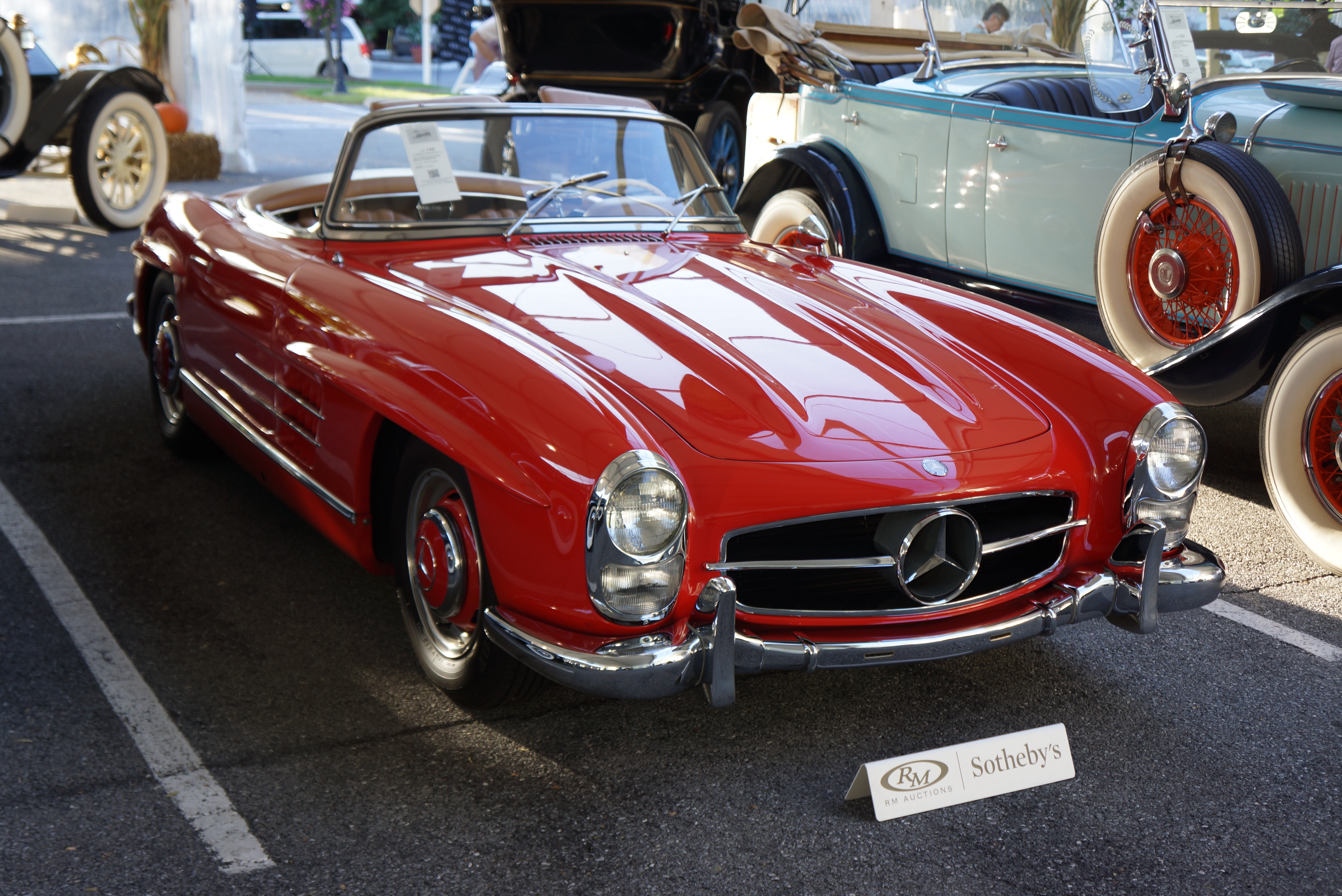
Hershey 2025 Part 3: the RM-Sotheby’s Auction

Attending collector car auctions is one of my favorite ways to enjoy the hobby. Compared to classified ads or car corrals, where sellers can shoot for as high an asking price as they dare, an auction result is a concrete data point: on that day, a seller was willing to sell a vehicle at a price that a buyer was willing to pay. This year, as I have done so many times in the past, I attended the RM-Sotheby’s auction at the Hershey Lodge, held on October 8 and 9 during Hershey week.

RM-Sotheby’s conducts auctions around the world, but at Hershey, they specialize in pre-war and early post-war American iron. There was a large collection of convertibles from the late ‘40s/early ‘50s, apparently from a single collection (another growing trend as older enthusiasts age out of the hobby). As you read the results below, you can presume that, at least cosmetically, most of these cars were in Number 2 or Number 1 condition, which is to say, they looked great. Mechanically, the best one can do is to observe the RM staff as they start and drive these cars up to and across the auction block.

A word about pre-sale estimates: every vehicle is given a price range, clearly displayed on the windshield placard. Savvy bidders know that this is just an estimate, and that the auction company, in an attempt to encourage bidding, might push the estimates a bit over expectations. I documented the sale of twenty cars, and the spread is interesting: of these twenty, eight sold below the low estimate; seven sold within the estimate range; and five sold over the high estimate. Were there deals? Possibly, provided that there weren’t too many hidden surprises once the new toy arrived home. I still maintain that buying a car at auction, while slightly risky, has the potential to reward the educated buyer who can bid with a level head.

As always on Richard’s Car Blog, results are arranged in sale price order from low to high, a detail that you will not find anywhere else. Sale prices shown are “hammer” prices, and do NOT include the 10% buyer’s premium owed to the auction house.


LOT 123, 1951 Pontiac Chieftain 4-door sedan, estimate range $15-20,000

SOLD for $15,500

Sold for only $500 above the low estimate. A rather ordinary car in drab colors, but in very nice condition. For the Pontiac collector who doesn’t have one.


LOT 124, 1952 Studebaker Commander convertible, estimate range $25-35,000

SOLD for $17,500
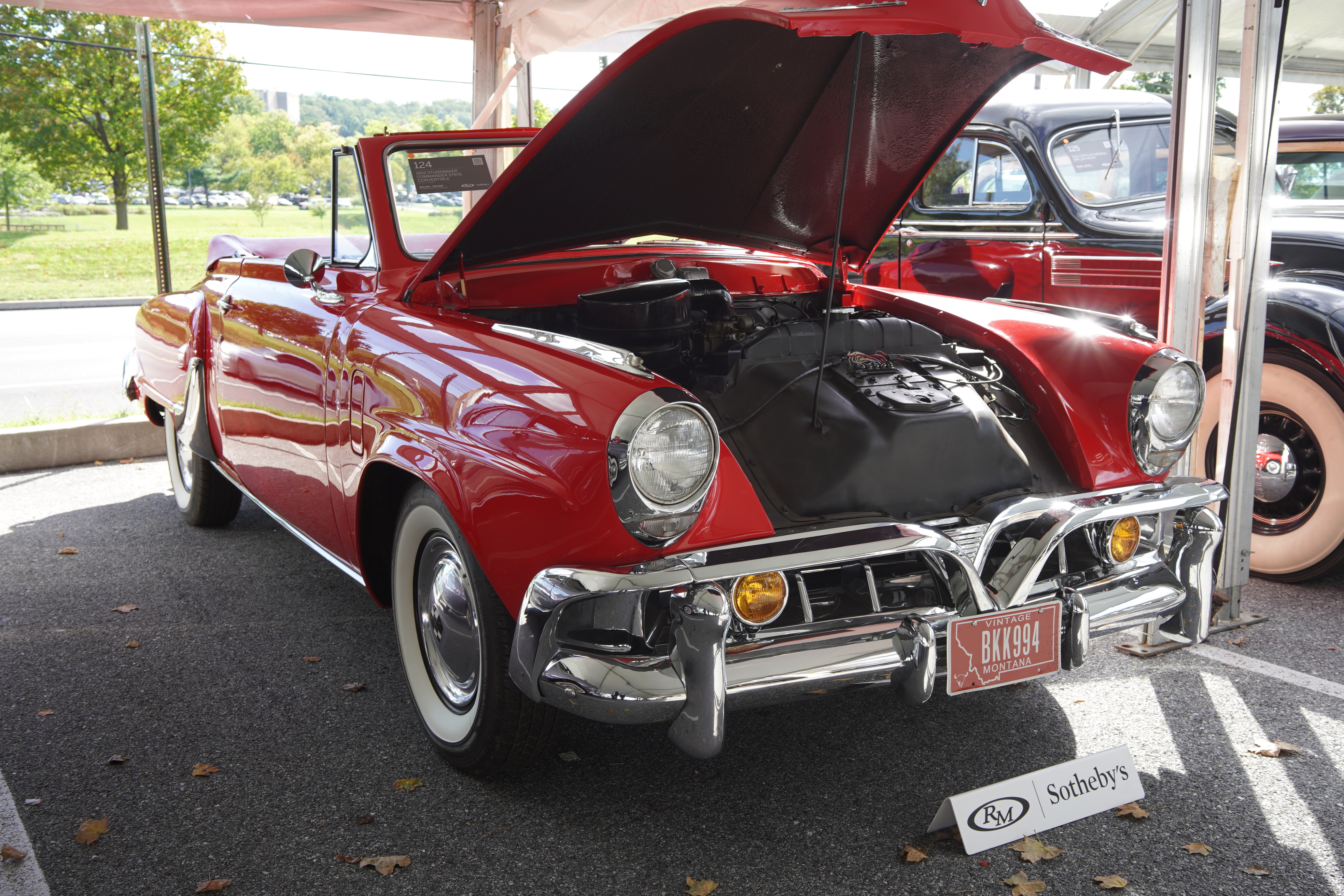
The red over red looked dashing. The top color was not noted. This car hammered for $7,500 under its low estimate, and was only $2,000 more than the Pontiac. I know which one of the two I would prefer.


LOT 136, 1930 DeSoto CF Eight roadster, estimate range $25-35,000

SOLD for $25,000
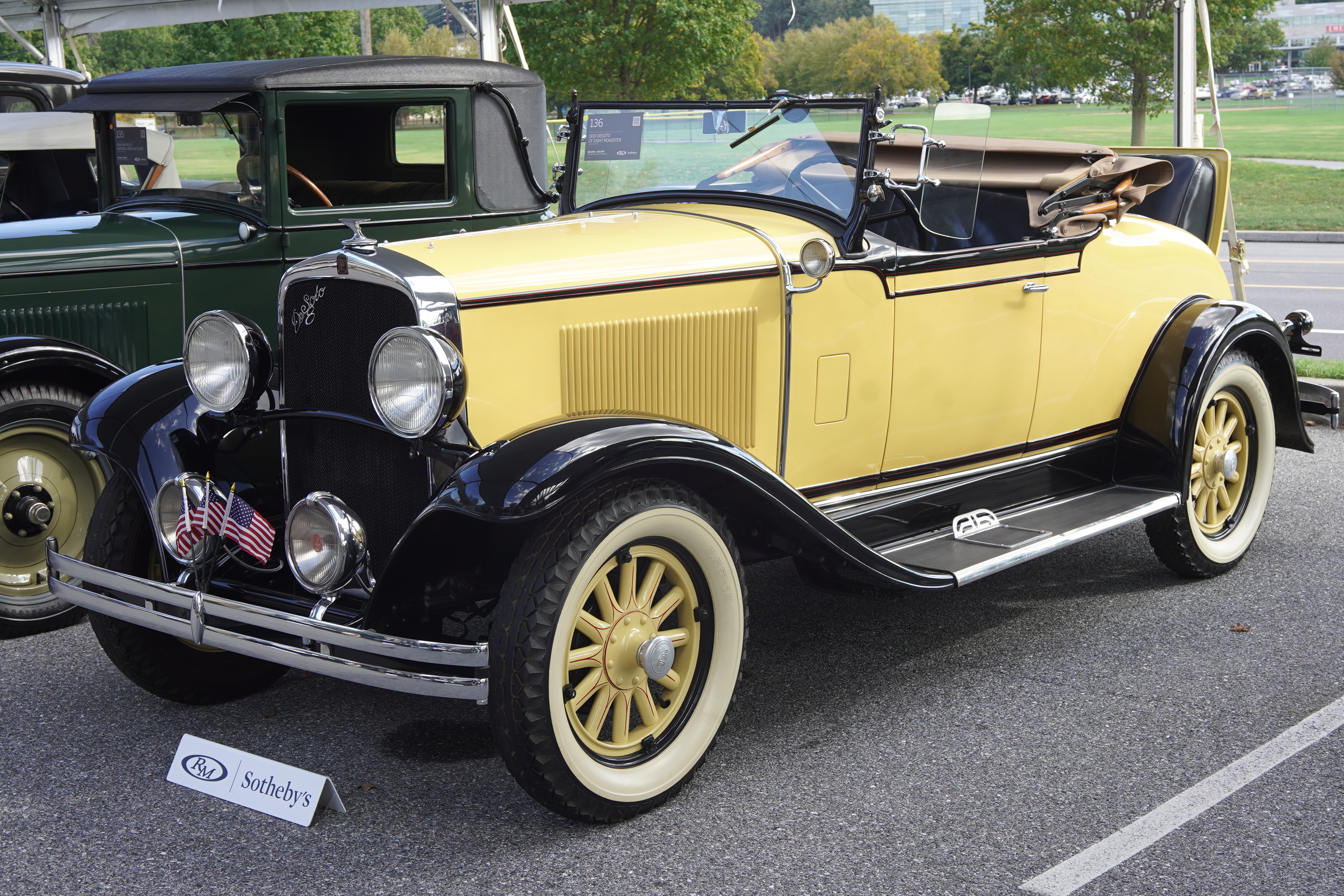
Sold right at low estimate, car looked ready to drive in the next local parade. A nice and somewhat unique alternative to a Model A Ford.


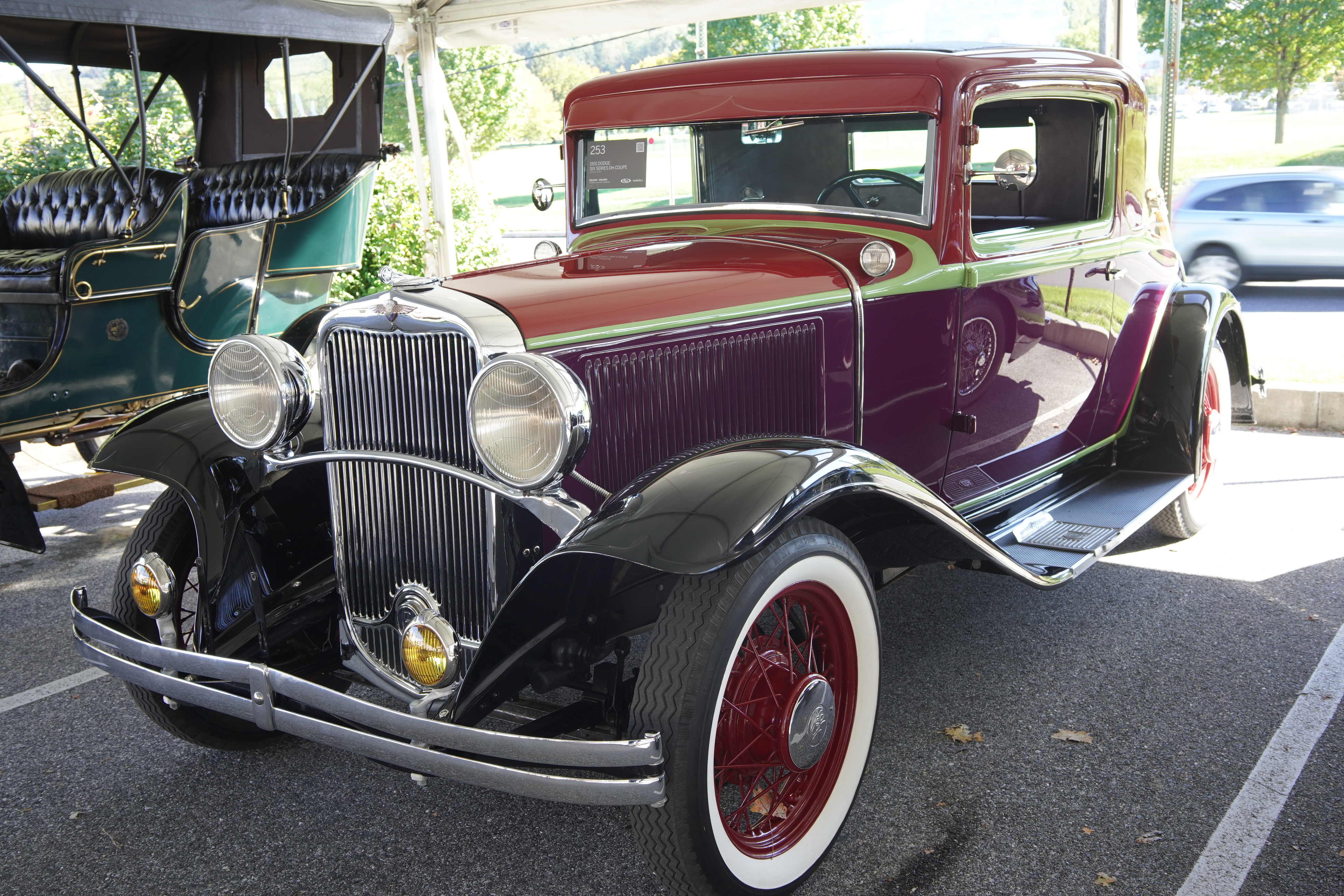
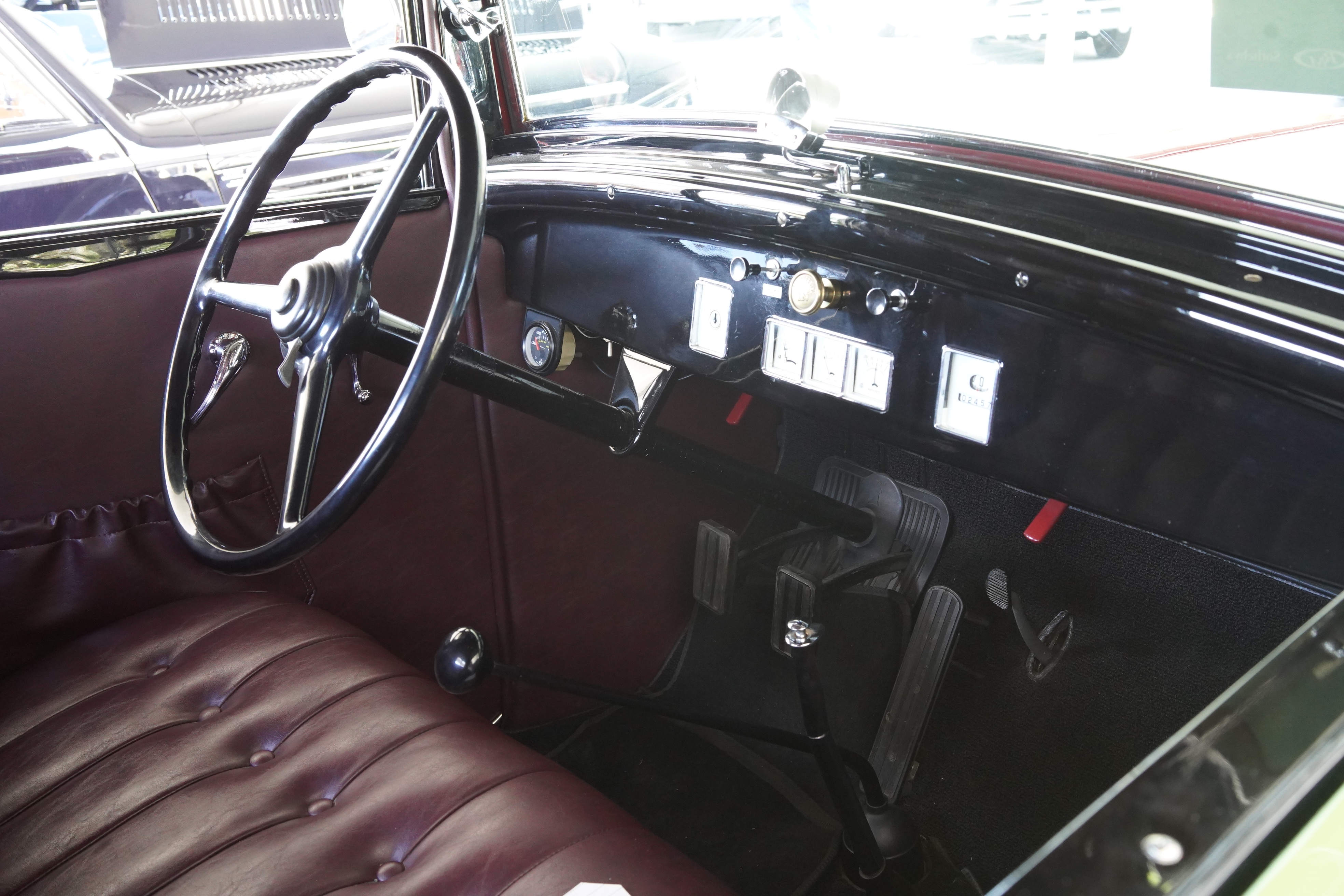
LOT 253, 1931 Dodge Six Series DH Coupe, estimate range $25-35,000

SOLD for $26,000

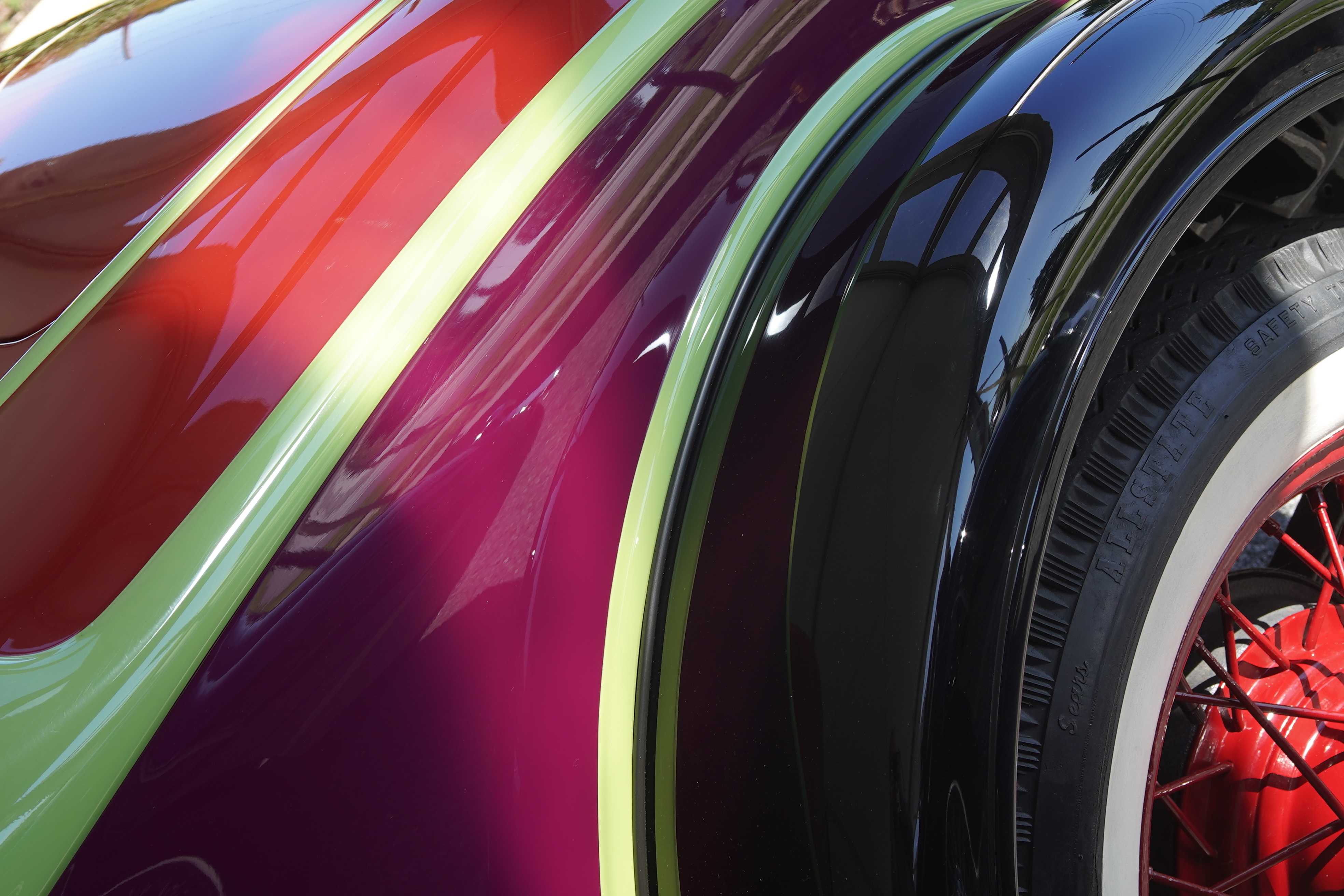
Sold a grand above low estimate. Car appeared to be in excellent condition, but: I could not get past the FIVE different exterior paint colors (including the wheels). The body was a lighter red over a darker red, the two colors separated by green. The fenders were black, and the red wheels, to my eye, appeared to be a shade of red different than the body. Someone liked it enough to bring it home.


LOT 131, 1950 Frazer Manhattan convertible sedan, estimate range $40-60,000

SOLD for $30,000
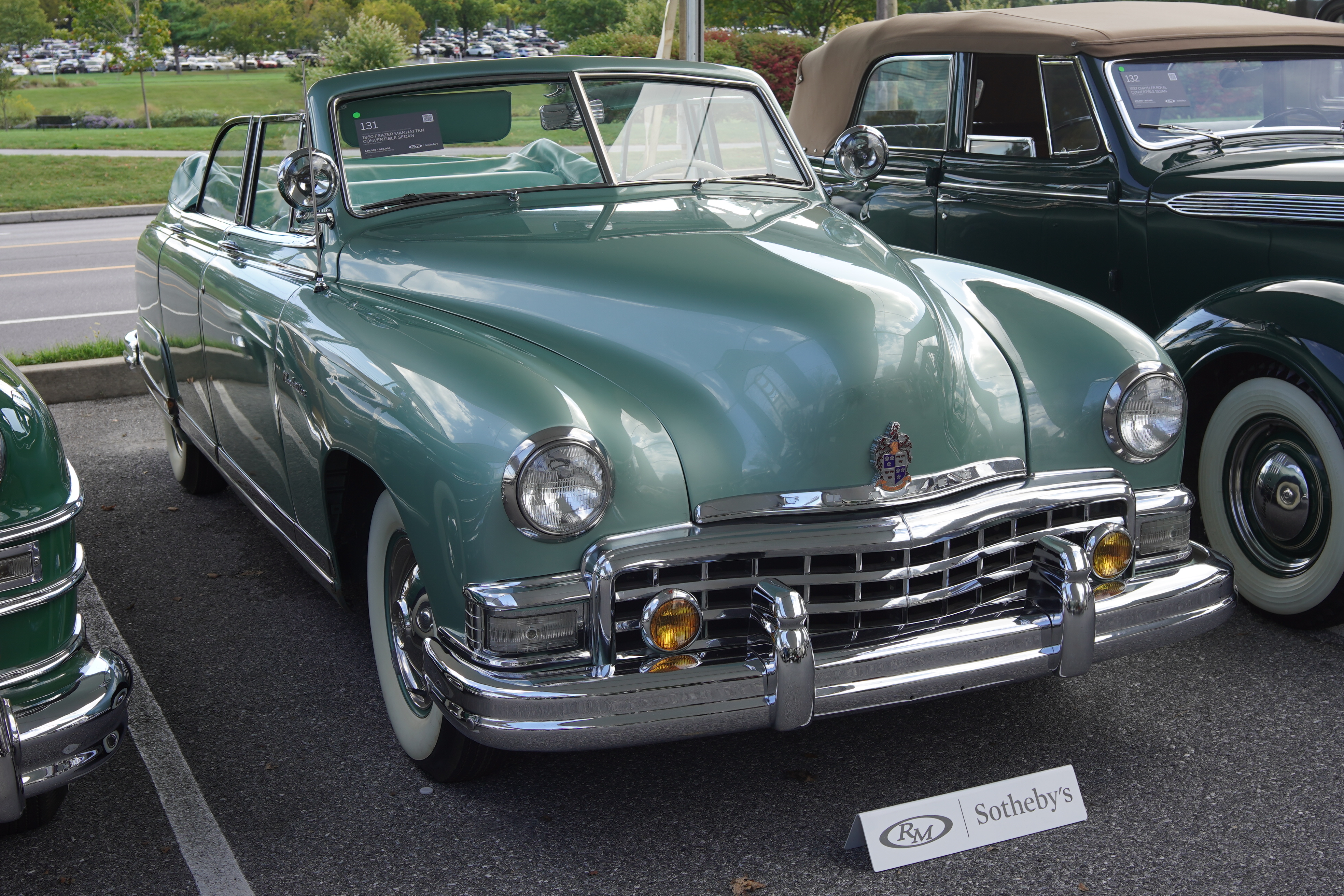
I can only guess that Frazers play to a very narrow audience. Still, this was a rare car in a rare body style. Winning bid was a full $10,000 below the low estimate.


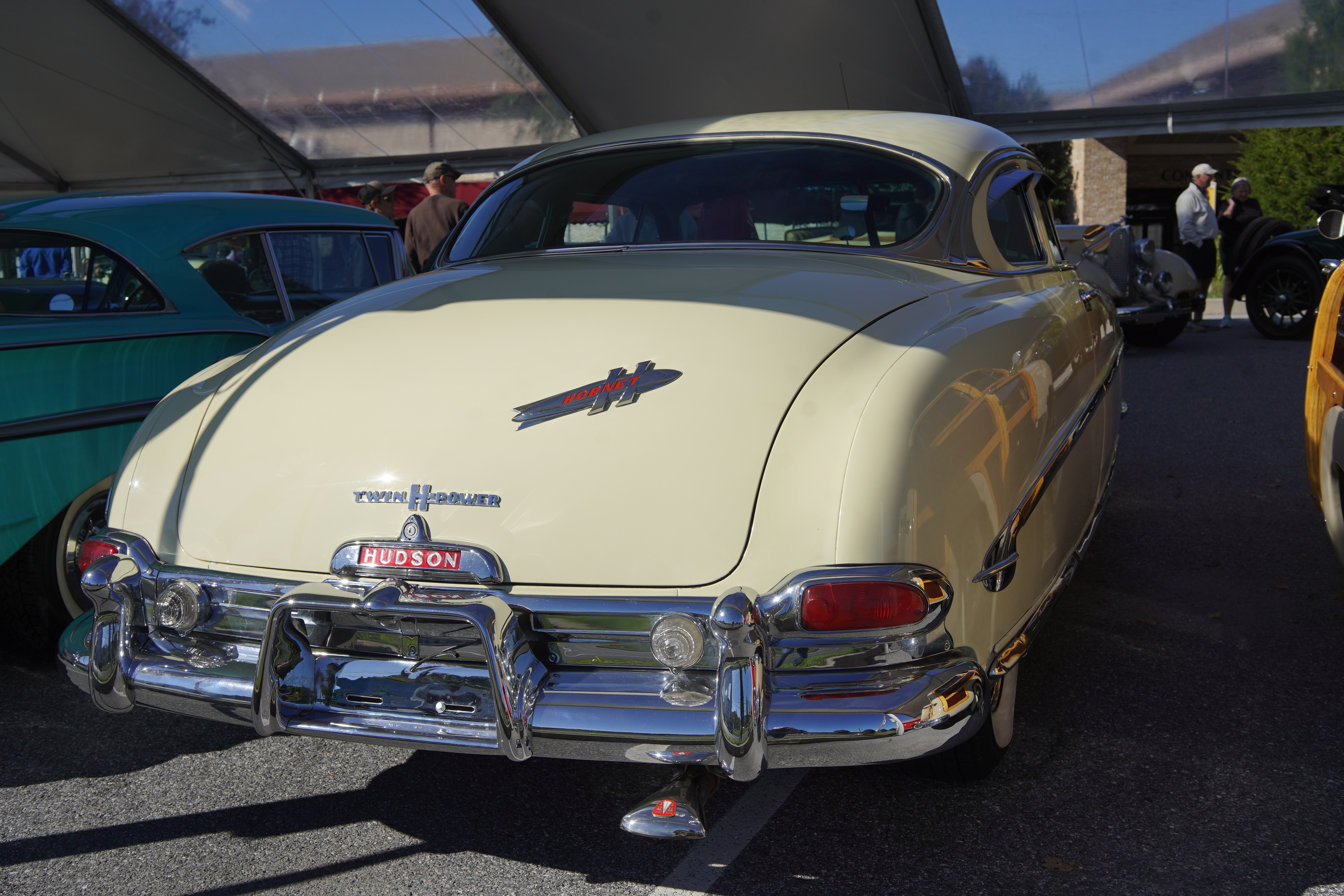
LOT 262, 1953 Hudson Hornet Twin-H Club Coupe, estimate range $40-50,000

SOLD for $35,000

One of three Hudsons covered here, and the one which sold for the least, five grand below low estimate. The two-door body style looked sporty, and the yellow fog lights and windshield visor added to that sportiness.


LOT 129, 1950 Hudson Commodore convertible, estimate range $60-70,000

SOLD for $40,000

At a full $20,000 below low estimate, and only $5,000 more than the Hudson hardtop above, someone got a very nice immediate post-war droptop at a fair price.


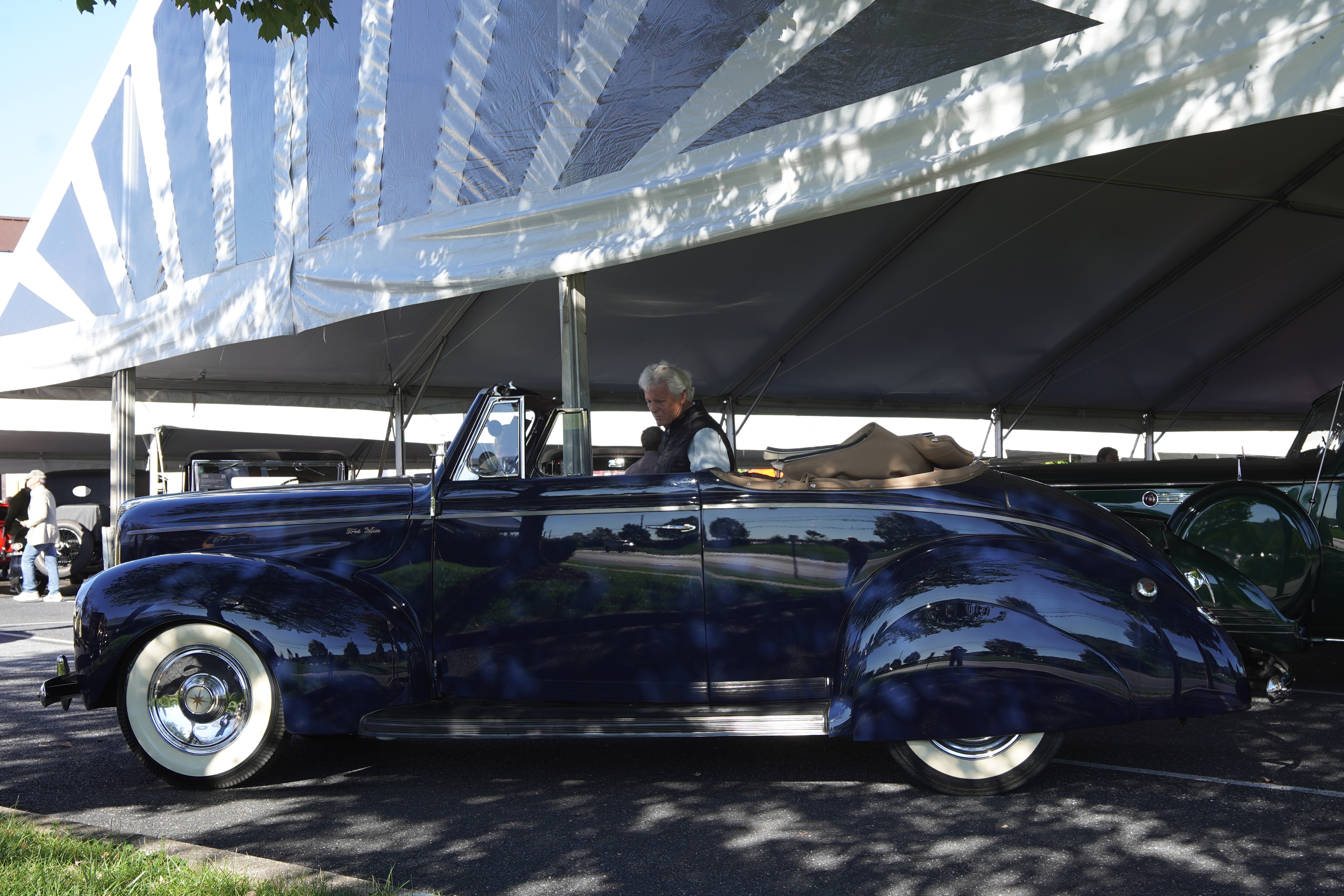
LOT 301, 1940 Ford Deluxe convertible, estimate range $50-60,000

SOLD for $42,000

I follow these pre-war Ford V8s a little bit, and prices are certainly off their highs of several years ago. I would guess that five or six years ago, this car could have fetched $60,000. Someone took advantage to grab this car at $8,000 below low estimate.


LOT 258, 1939 Ford Deluxe convertible, estimate range $35-45,000

SOLD for $42,500

Just one year older than lot 301 above, and look at the difference in the estimate range. While the ’39s will never be as desirable as the ’40s, this was still a good-looking automobile. and actually sold for $500 more than the ’40.


LOT 151, 1931 Chrysler CD Deluxe Eight coupe, estimate range $40-50,000

SOLD for $45,000
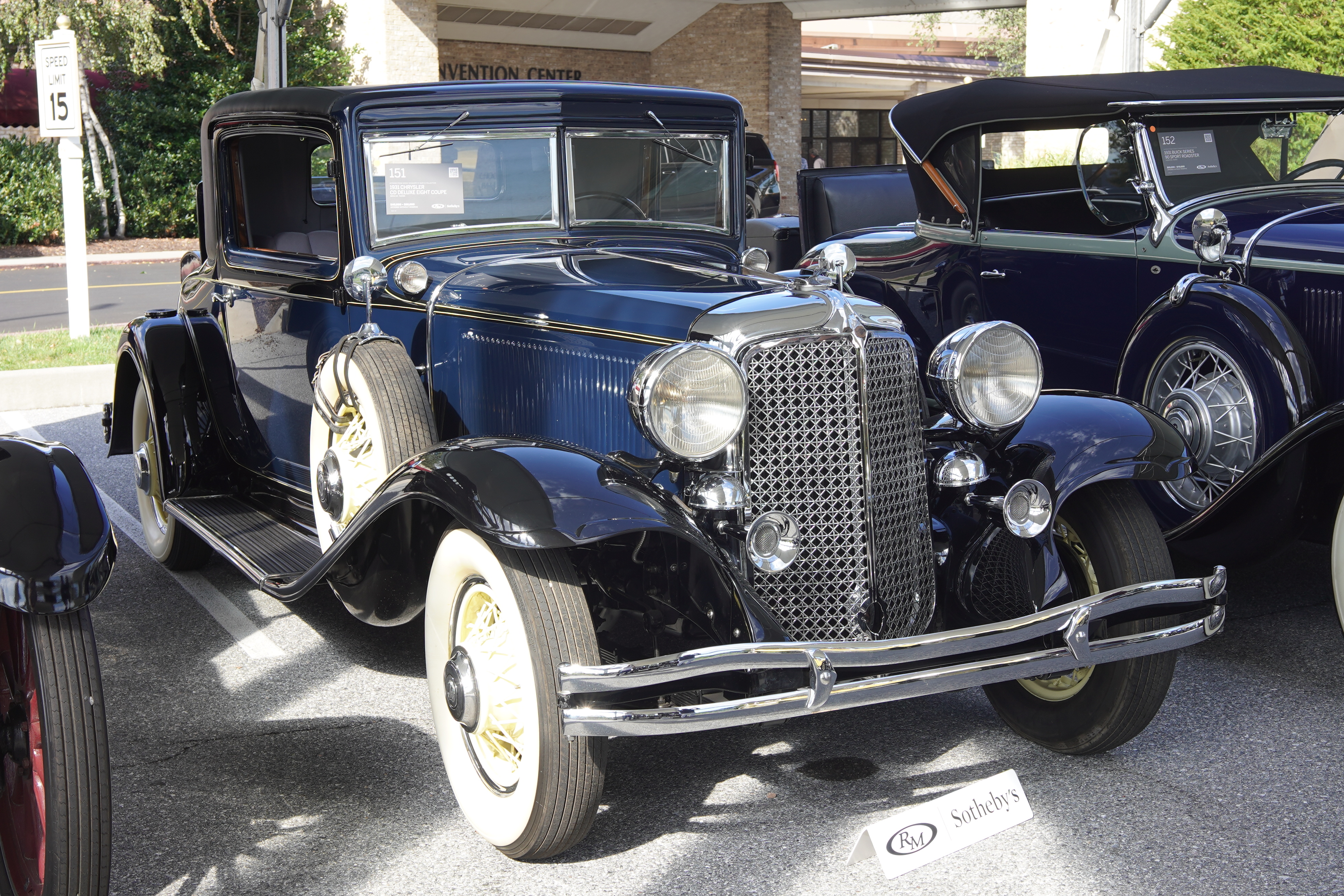
Sold right in the middle of the estimate range, these early Chryslers are handsome and stately cars. This would be a nice ride for a Glidden tour.


LOT 134, 1932 Plymouth Model PB Sport roadster, estimate range $35-45,000

SOLD for $50,000
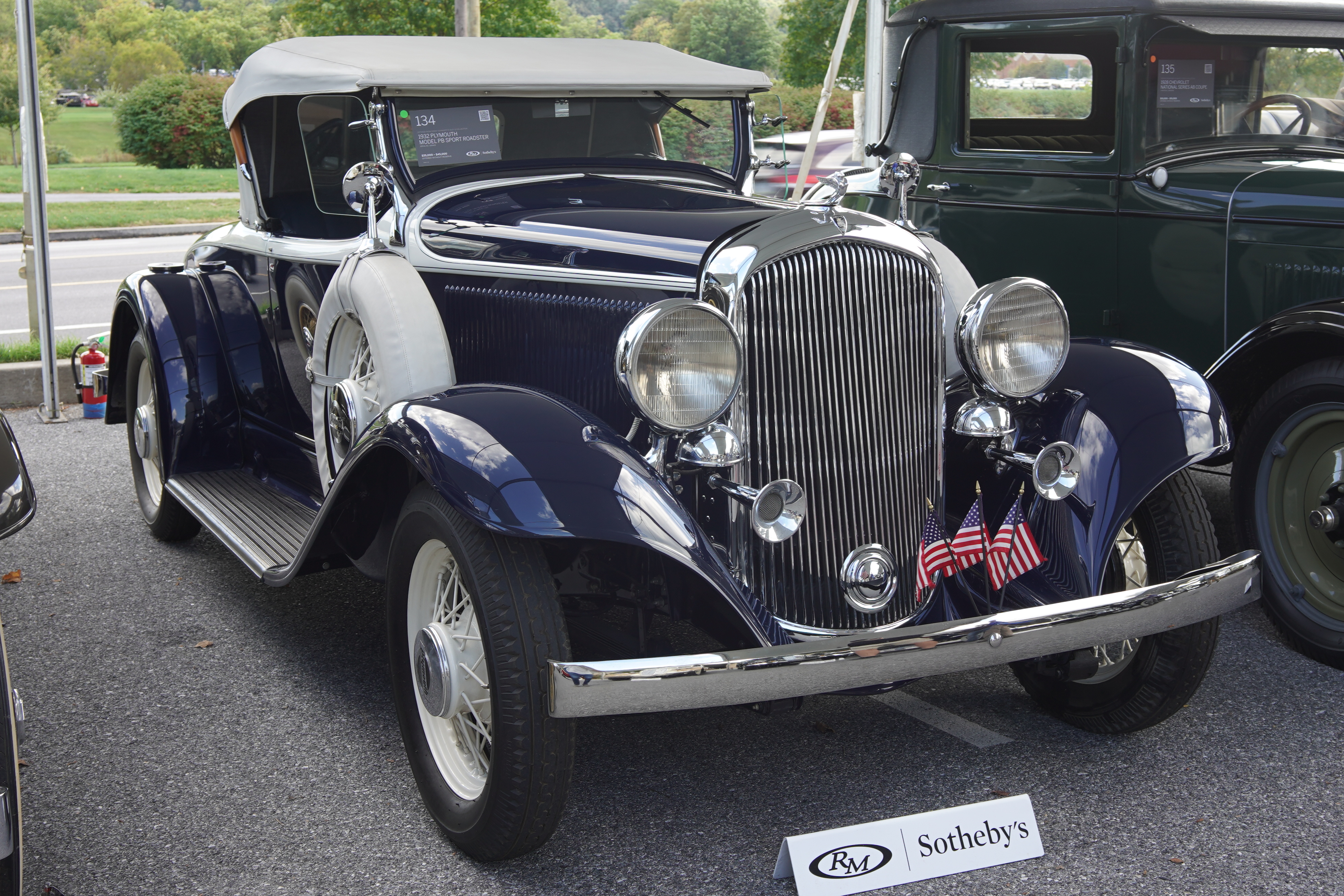
The first of our cars to have hammered above the high estimate (by $5,000), this droptop was striking in its two-tone blue and white. Even the wire wheels were white, lending a jaunty look to the car. This early Plymouth sold for more than both the ’39 and the ’40 Ford convertibles.


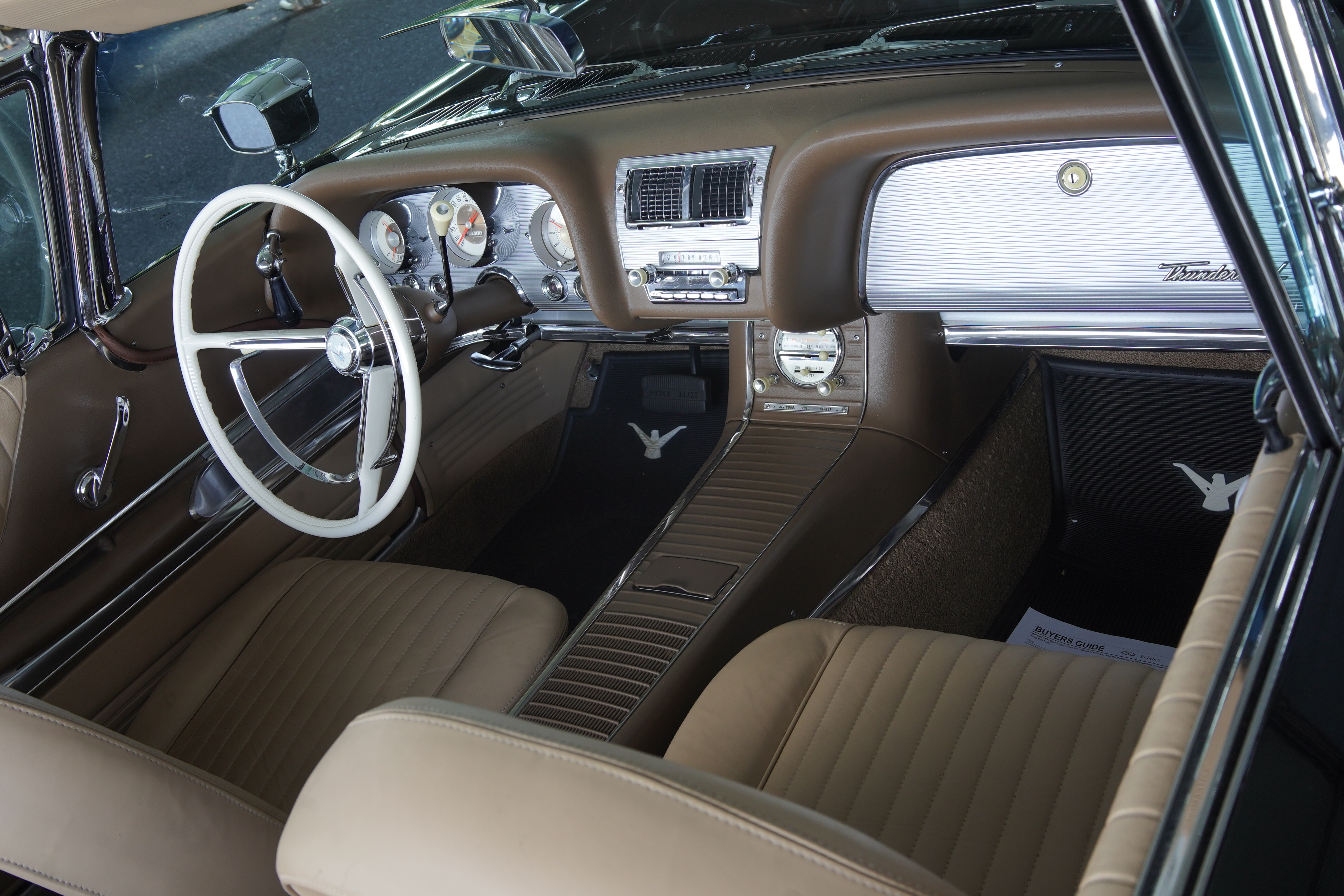
LOT 160, 1960 Ford Thunderbird convertible, estimate range $40-60,000

SOLD for $52,000

The optional Continental kit did nothing to improve the looks of this final-year Squarebird. I follow sales of the ’61 through ’66 T-Birds a bit, and I thought that the pre-sale estimates here were high, making it a surprise to me that this car hammered mid-estimate.


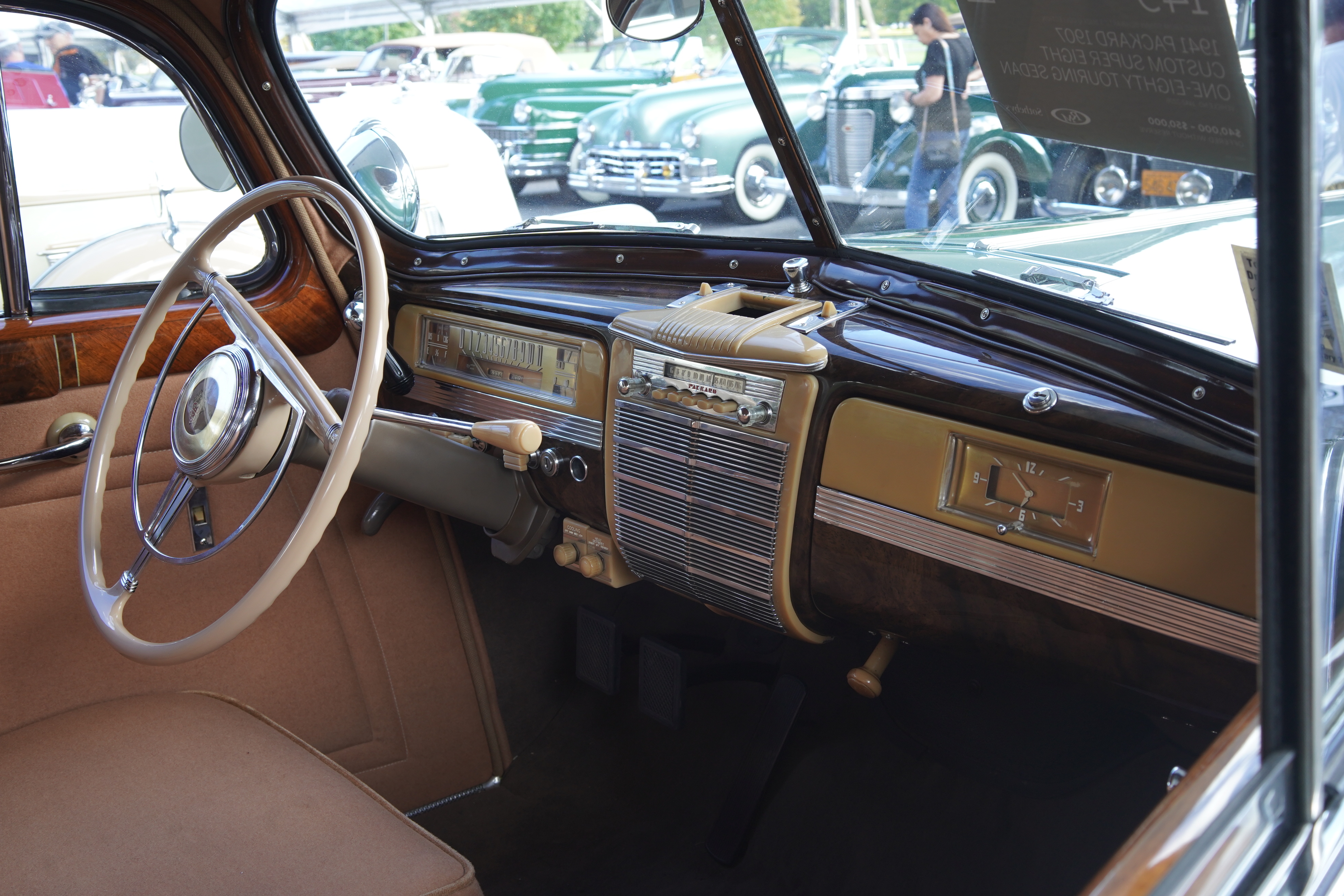
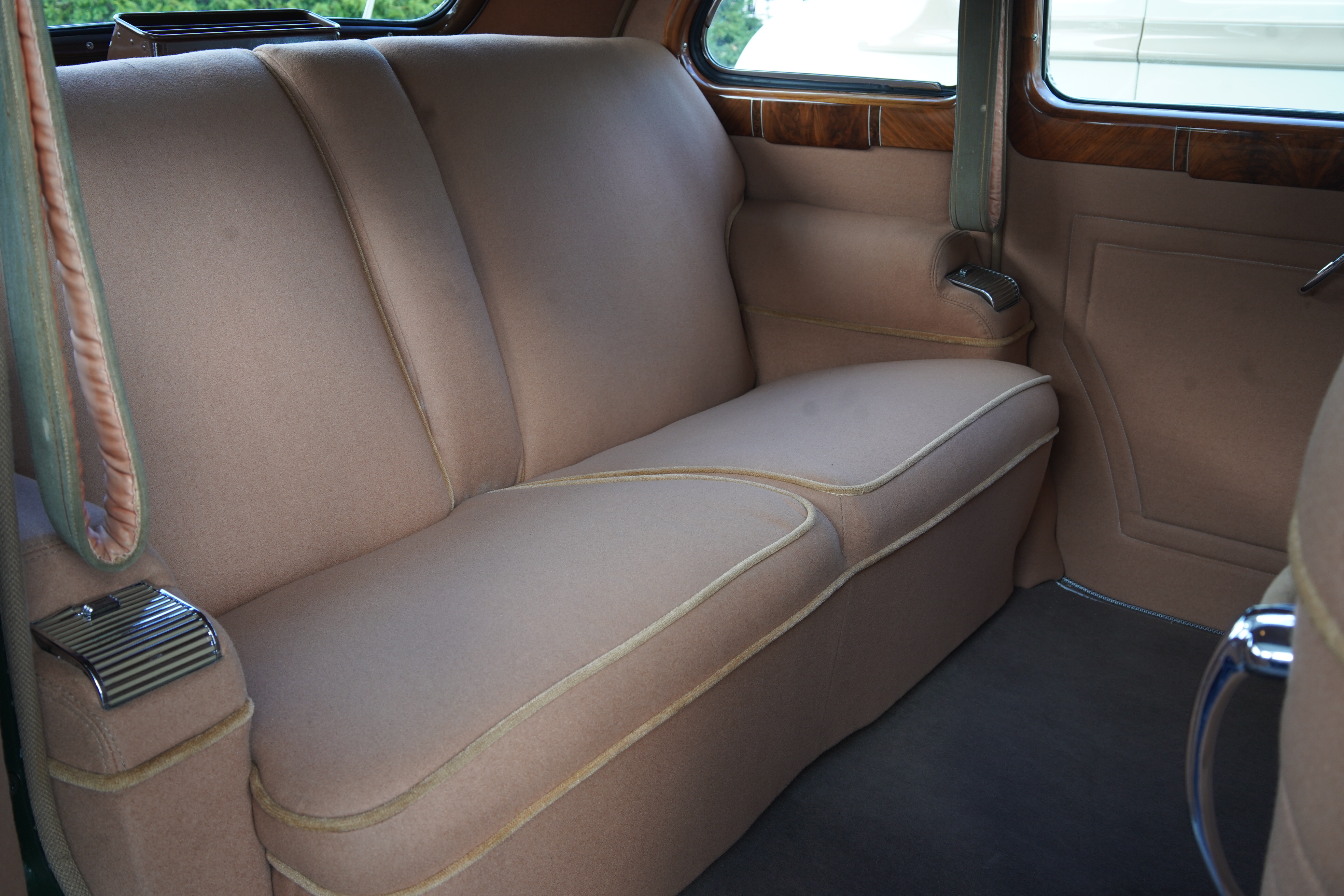
LOT 149, 1941 Packard Super Eighty 180 Touring sedan, estimate range $40-50,000

SOLD for $52,500
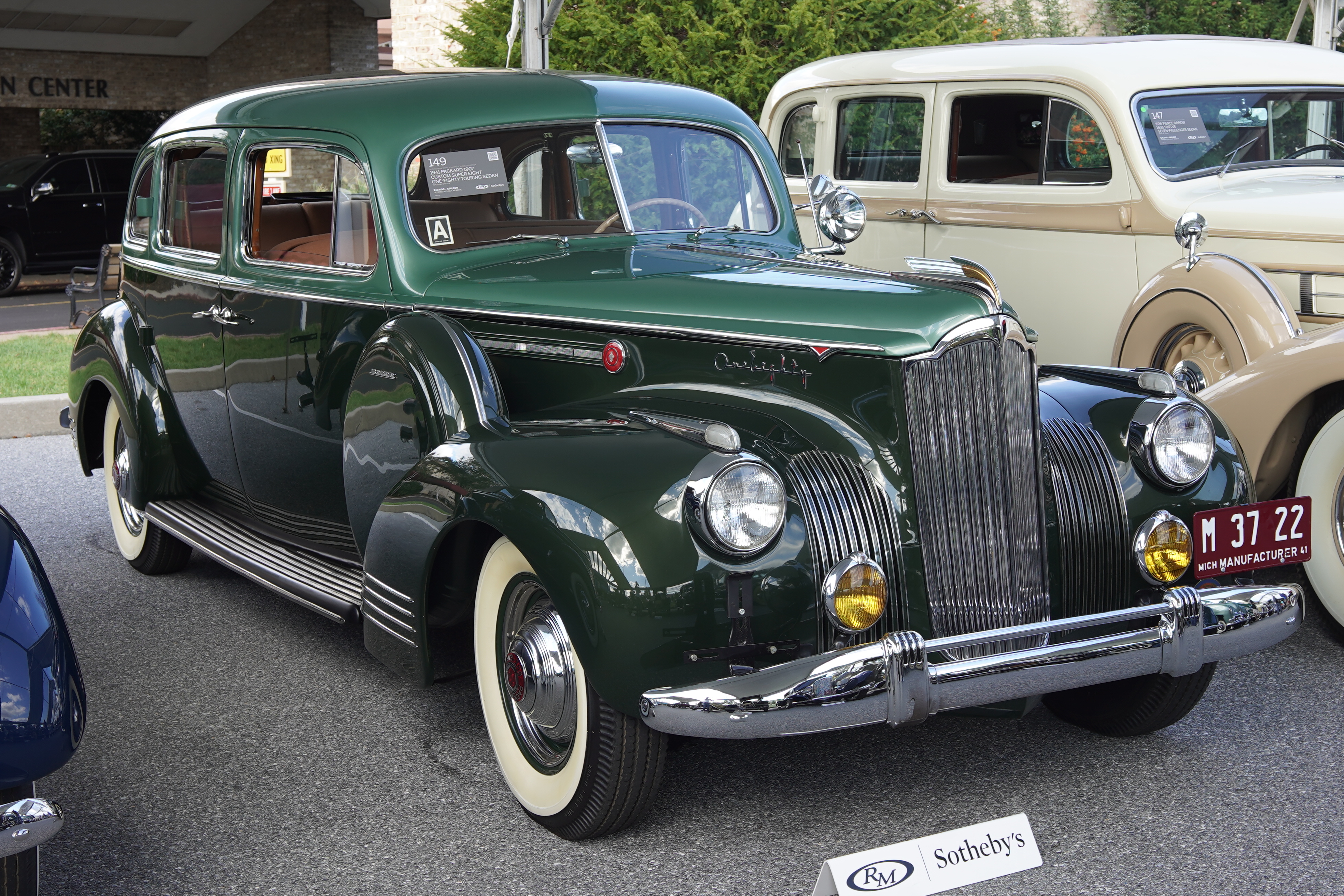
Packards of all ages remain very collectible, but values vary wildly based on year, powertrain, and body style. I found this car to have a certain appeal, but I’m not certain if the two-tone green was a factory choice. Interior was especially nice. The car sold for $2,500 above high estimate, which was still a fair price.


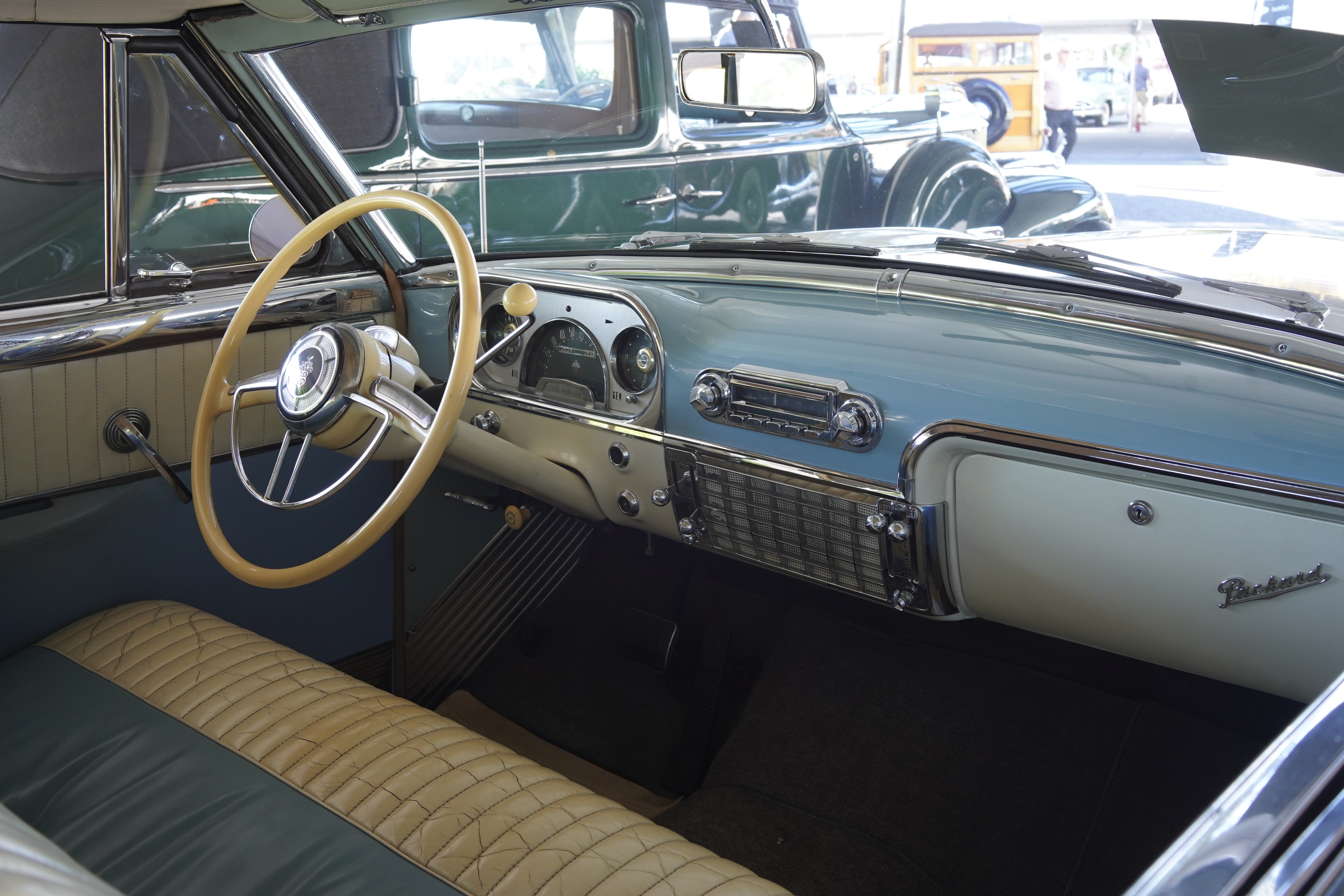
LOT 303, 1954 Packard Caribbean convertible, estimate range $60-75,000

SOLD for $55,000
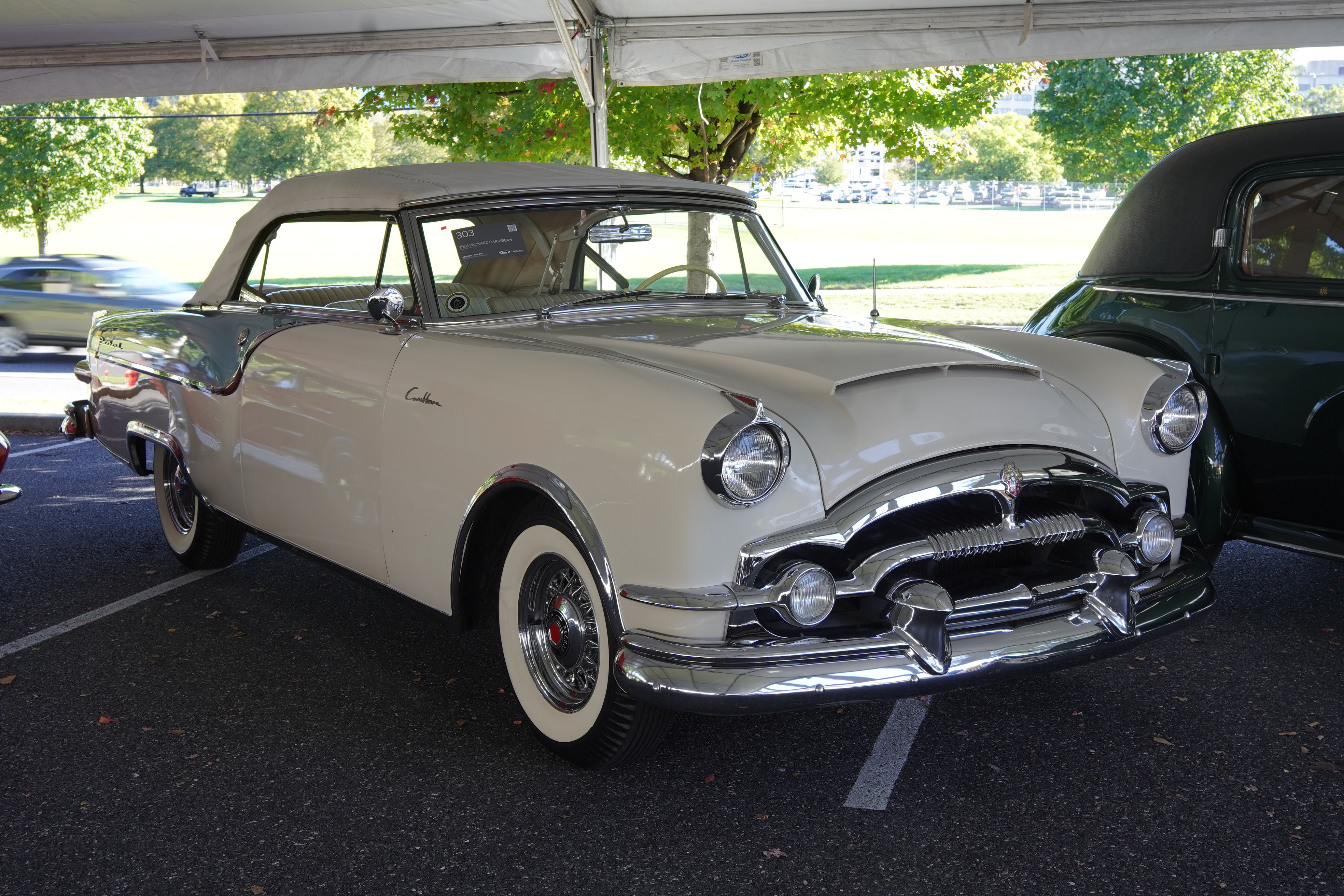
There is usually one Caribbean at every high-end auction, and this one stood out for its rather plain colors (in two-tone rather than the more frequently-seen tri-tone). Values have dropped; that estimate range would have been more accurate several years ago. Sold for $5,000 below low estimate, and interestingly, only $2,500 more than lot 149 above.


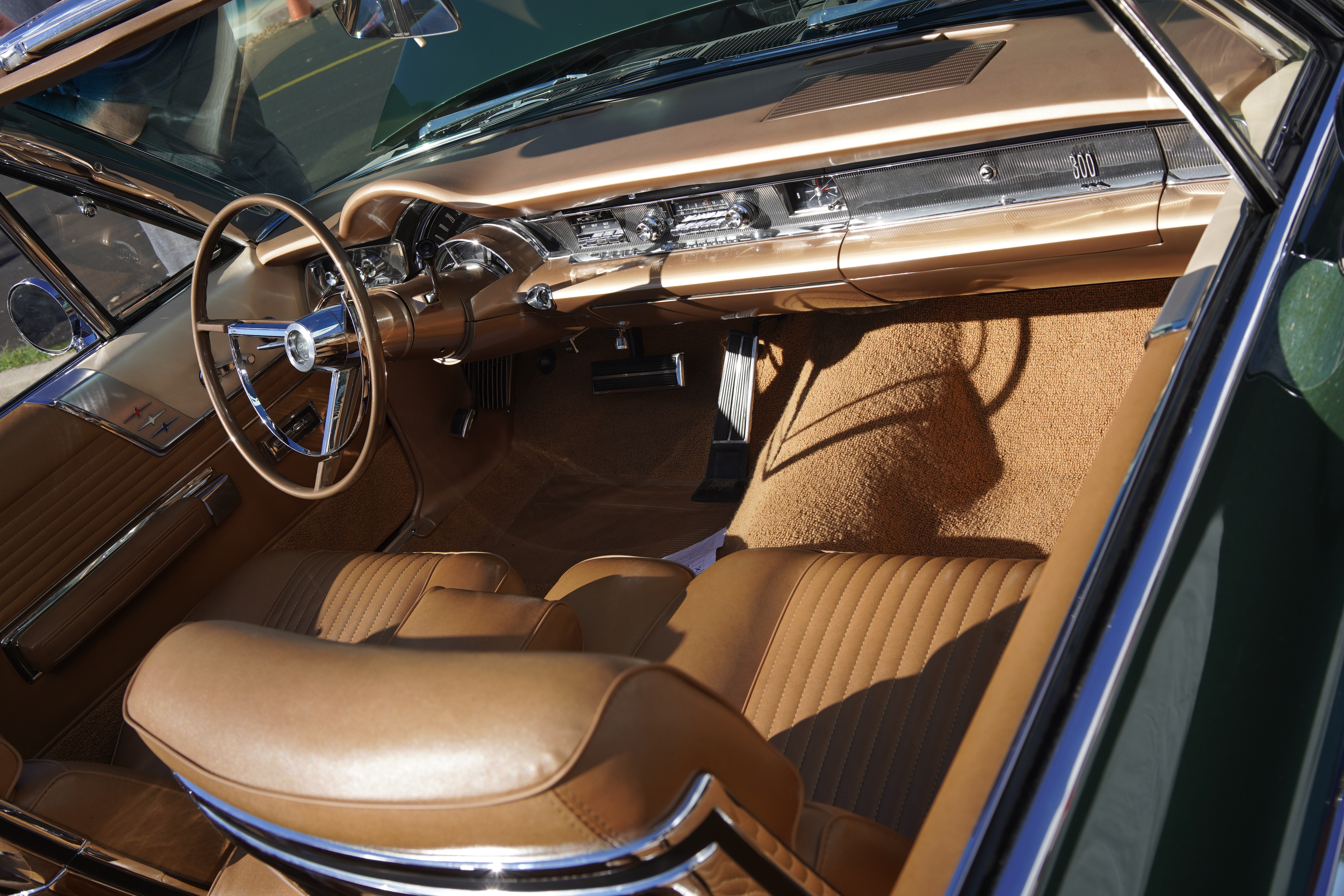
LOT 269, 1966 Chrysler 300 convertible, estimate range $30-40,000

SOLD for $57,500
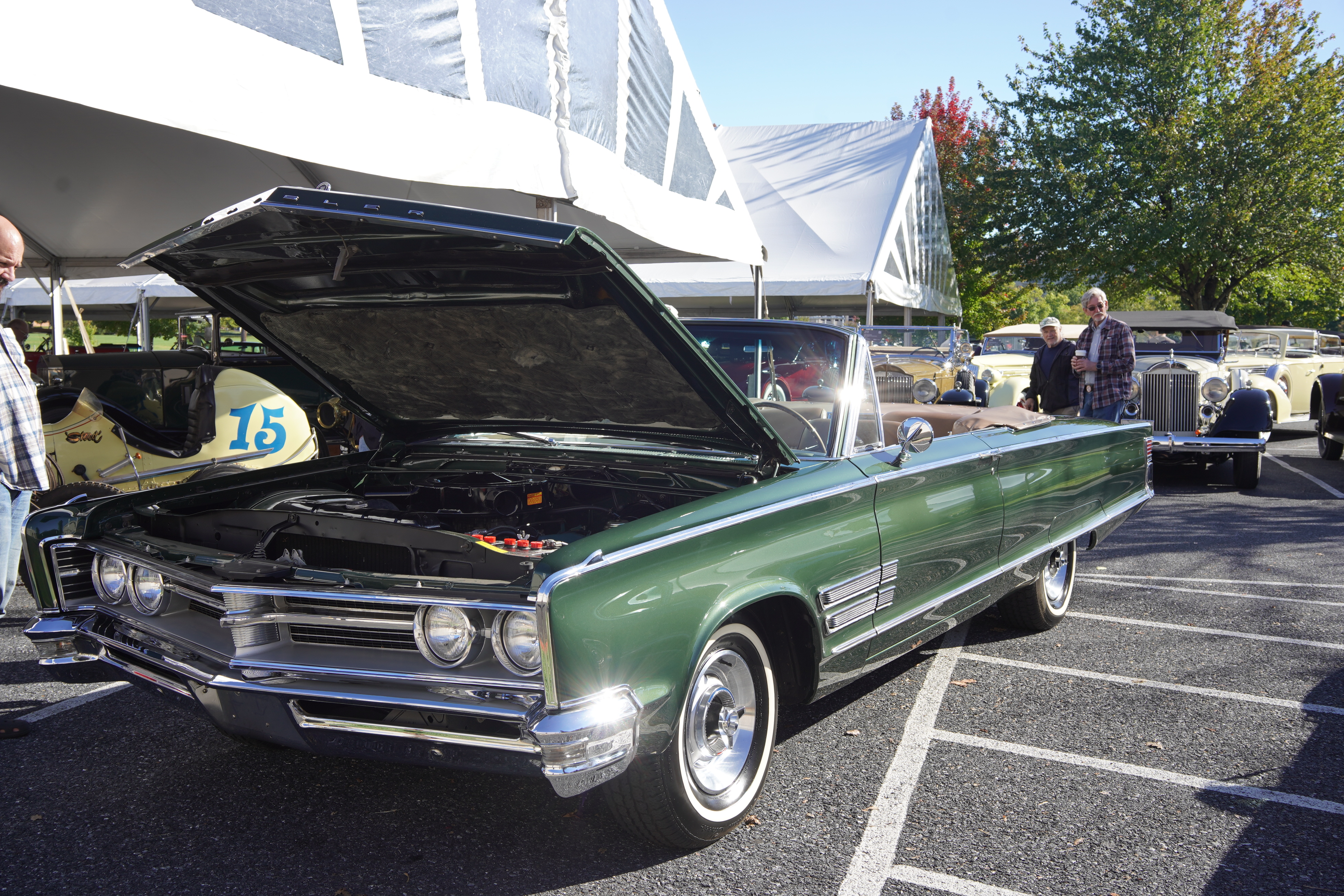
A non-letter 300, but still impressive in every way: size, power, comfort, image. I wasn’t in the room for the bidding, but I can only wonder if there was a bidding war, as this car hammered for an impressive $17,500 above its high estimate.


LOT 130, 1948 Chrysler Town and Country convertible, estimate range $70-80,000

SOLD for $70,000

A lot of Mopars at this auction! These woodie convertibles have always had a following. Like some other cars from this time, values are down. I remember when these were easily six-figure cars. Hammer price just reached low estimate, which looks fair to buyer and seller.


LOT 246, 1952 Hudson Wasp Twin-H two-door Brougham, estimate range $40-60,000

SOLD for $100,000

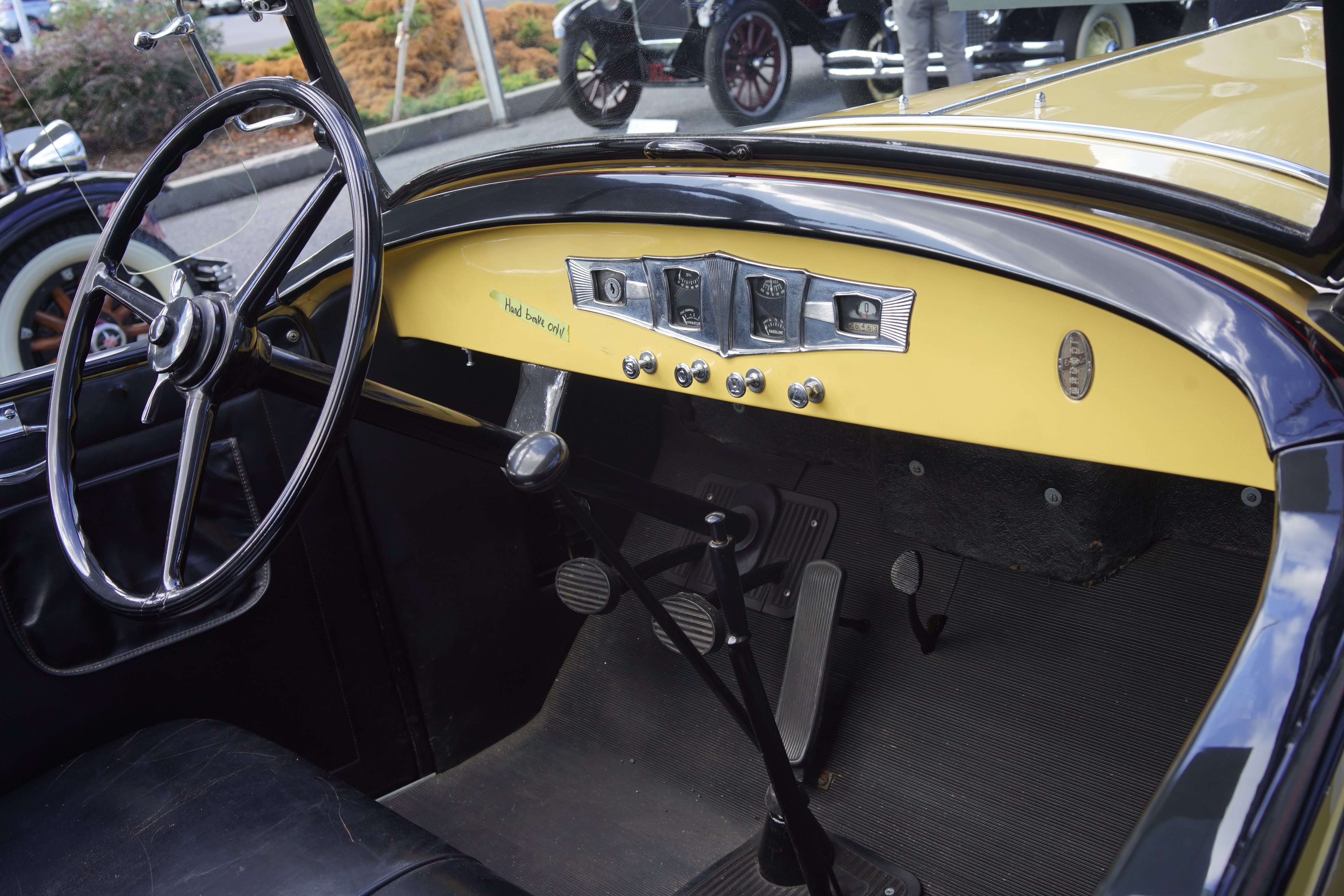
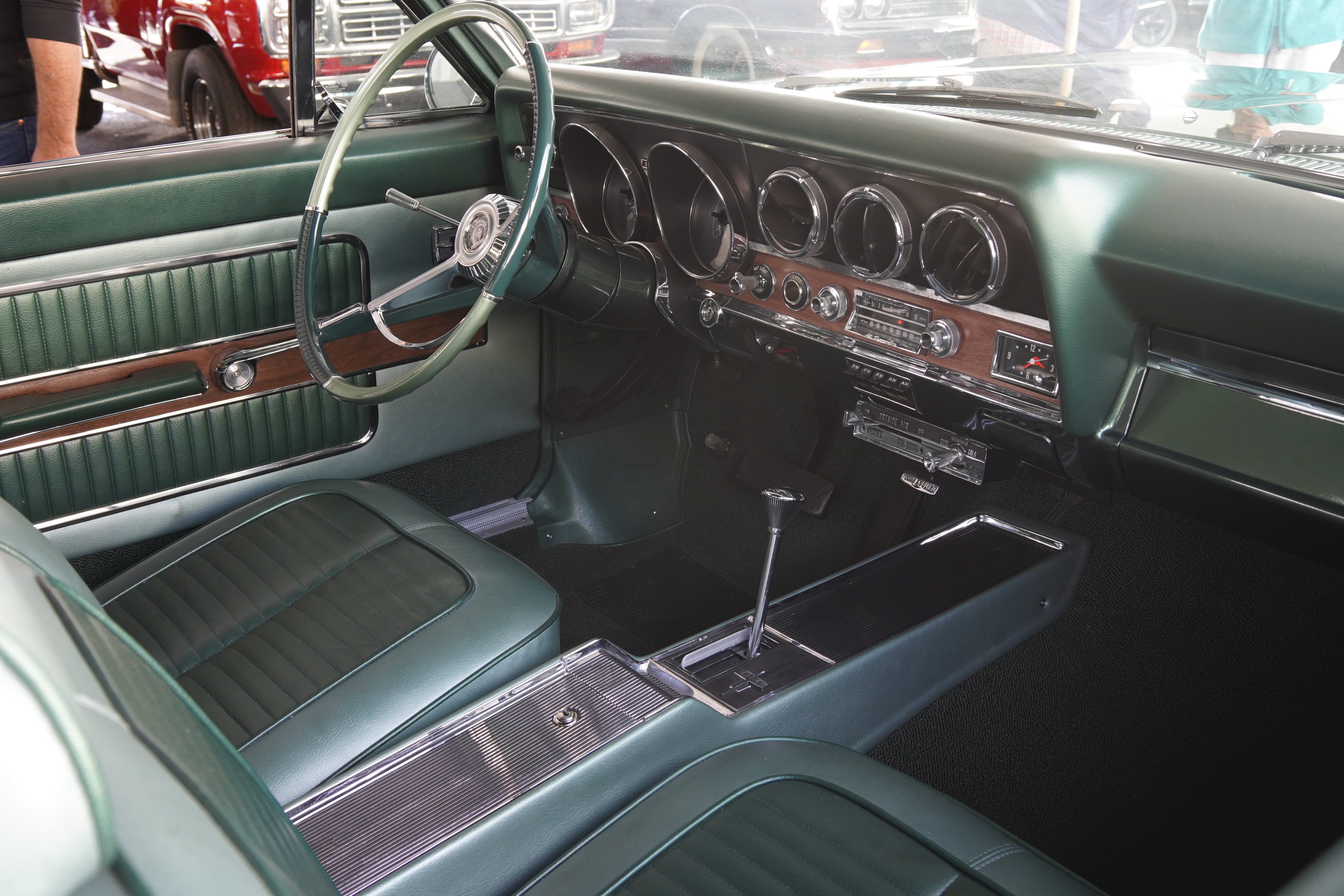
This was the only car of the several dozen I inspected which showed some serious paint and sheet metal defects (see lead photo), which made the hammer price a head-scratcher, until I read that this car was once owned by Steve McQueen (a fact surprisingly omitted from the windshield placard). In that light, I’m surprised that it didn’t bring more.


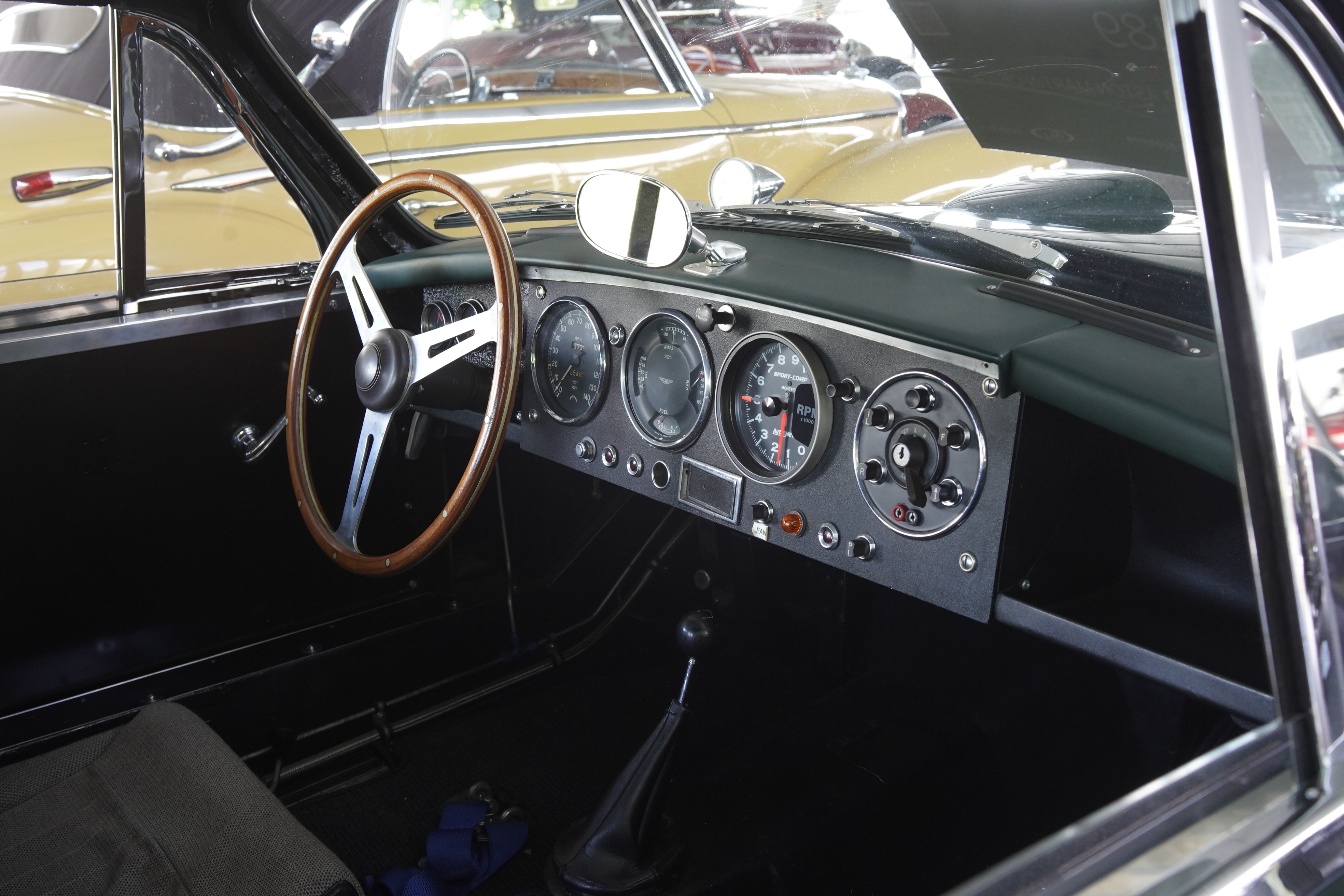
LOT 189, 1954 Aston Martin DB2/4 hardtop, estimate range $125-200,000

SOLD for $100,000

I used to turn my nose up at these early Aston Martins, especially compared to the DB4, 5, and 6 cars, but over time my opinion of them has softened. Last October, RM sold a similar car for $160,000, making this one look like the bargain of the day at $100,000, twenty-five grand below low estimate. Let’s see, if I sold my Alfa….


LOT 162, 1965 AMC (Rambler) Ambassador 990 convertible, estimate range $40-60,000

SOLD for $102,500
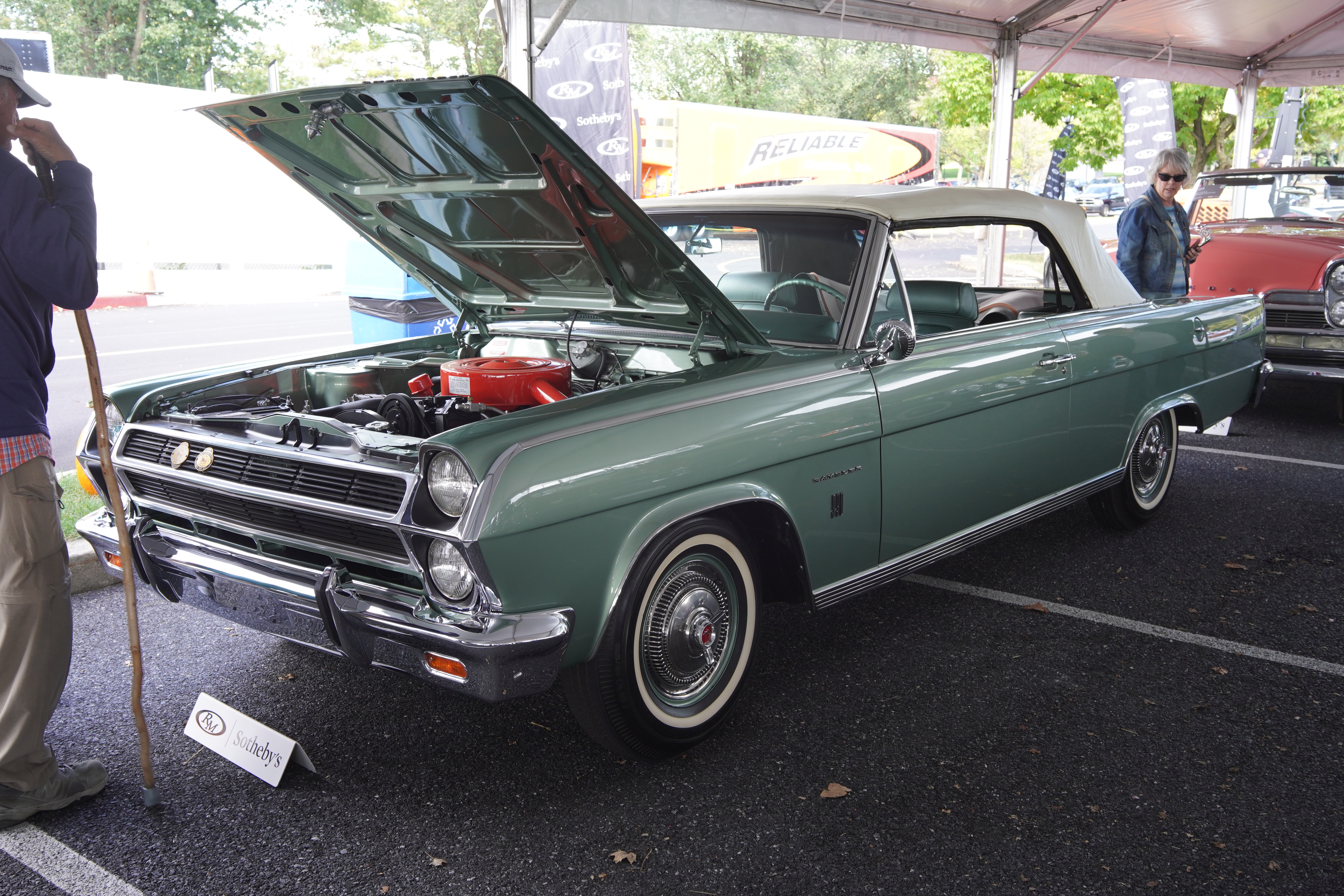
The shock of the show! Yes, it had factory A/C, and was in excellent condition, and would be impossible to duplicate, but still …. This sale price, $42,500 above high estimate, handily beat most every other American ’50s-’60s convertible in this auction. Wow.

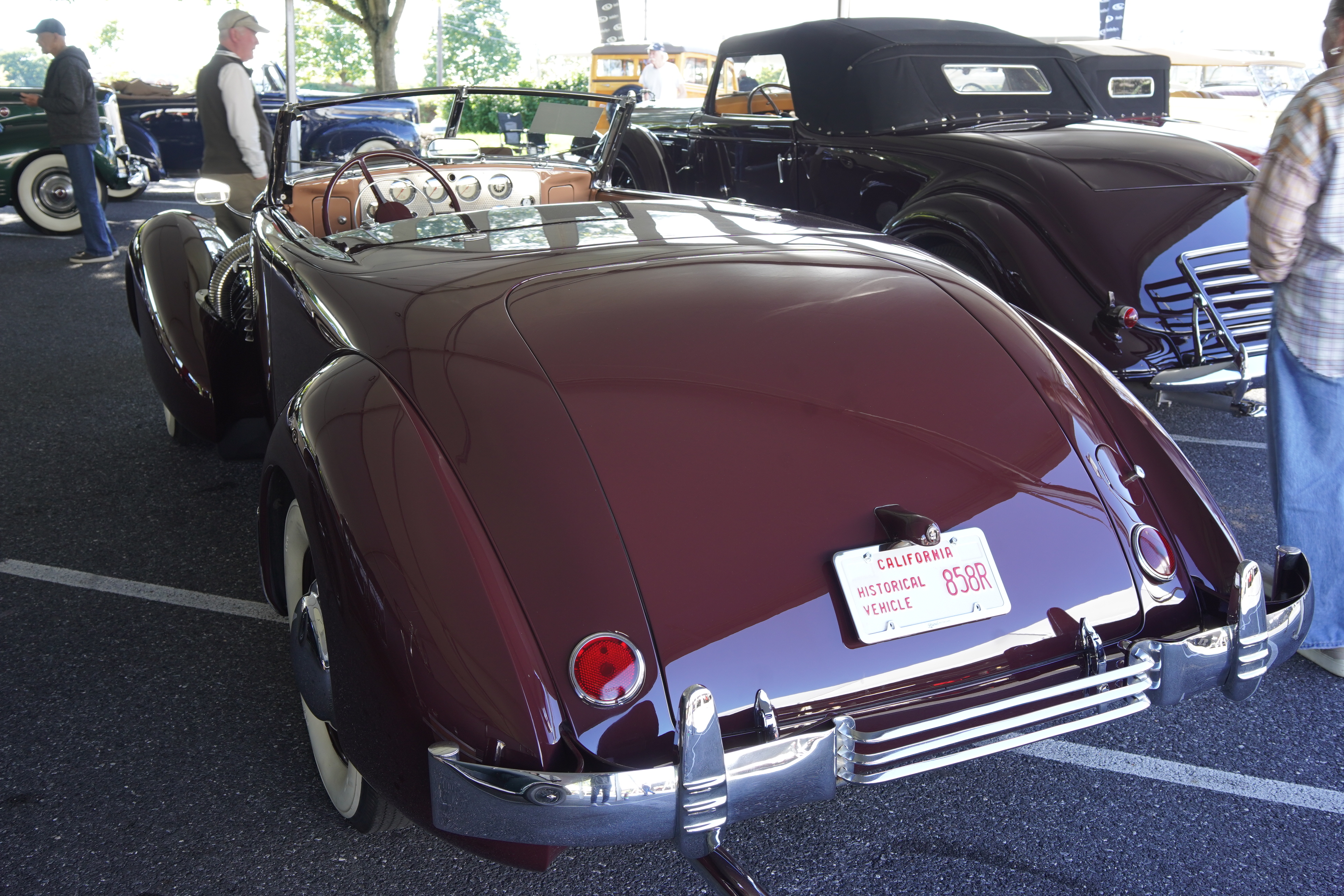
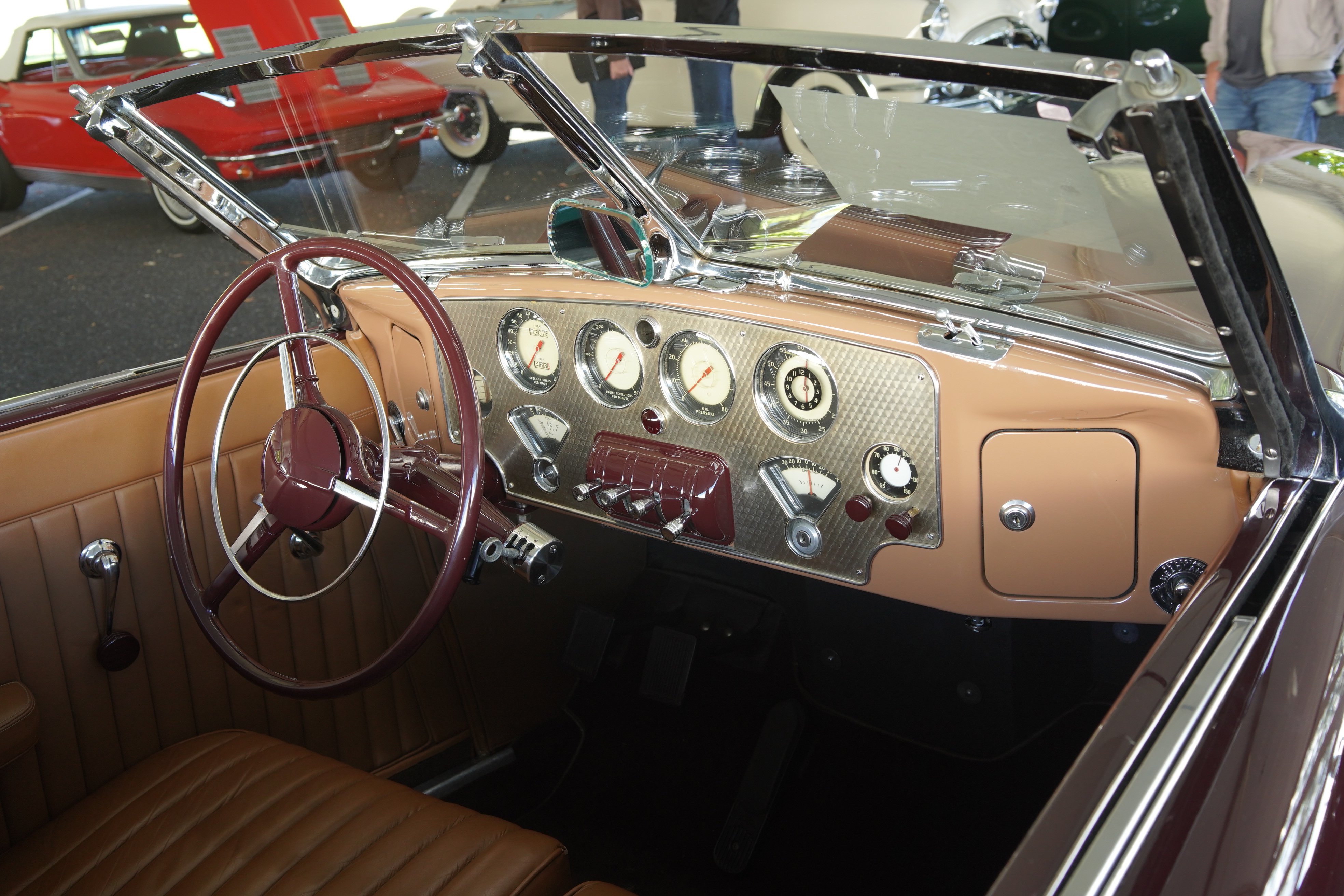
LOT 297, 1937 Cord 812 Supercharged Cabriolet, estimate range $250-300,000

SOLD for $190,000

The 810 and 812 Cords of 1936 and 1937 will always be collectible. This one, in supercharged form, was in a stunning color combination. But here was a case where I think RM went overboard in its pre-sale estimates. Historically, the roadsters and cabriolets have sold between $150,000 and $200,000, making this hammer price market-correct.


This concludes the Hershey reports for 2025. I hope you enjoyed the articles and photographs. 


Entire blog post content copyright © 2025 Richard A. Reina. Text and photos may not be copied or reproduced without express written permission.

 

RM Sotheby’s Auction, Hershey, PA, Oct. 2022

A fixture for many years as an element of the AACA Fall Hershey, PA car show, RM Sotheby’s Hershey auction is conducted at the Hershey Lodge, a few miles away from Hersheypark. There, they have ample room to erect several tents, and the vehicles can relatively easily be driven (or pushed) in and out of the building as each one’s turn comes up to cross the block.

In recent years, RM has specialized in offering American cars at Hershey, and a large percentage of those have been pre-war (before World War 2). Since concluding my week with the Glidden tour last month, I can’t seem to shake this exciting notion of pre-war machinery being used for touring purposes. I’ve also been keenly interested in taking some measure of the supply and demand (that is, selling prices) of these older vehicles.

Some in the hobby continue to cling to the notion that collectors’ interest in any particular era of cars directly correlates to the age of the collector. Put another way, there are those who believe that there is greatly diminished collector interest in vehicles over 70 years old, as those who would remember them as new vehicles from their youth are all but gone from this earth. (This is also why some believe that automobiles from the ‘50s and ‘60s have diminished in value, as the oldest of the Baby Boomers who remember them from their own youth have begun to pass.)

My own observations discount this theory. I’ve rambled on before about the possibility that collectors are starting to view cars from the earliest days of the automobile as similar to paintings and furniture, meaning that they are being collected as much for their intrinsic and historic value as they are for their value as driving machines.

This year’s RM auction was a two-day affair, as has been the custom. As I was in town for only one day, I was witness only to Day Two at the Hershey Lodge. The vehicles on the ground were all due to be auctioned that evening; it appeared that the Day One auction cars had already been moved elsewhere. Of the ten cars mentioned below which caught my attention, six are pre-war, and five of those six sold, some for hefty amounts. (Vehicles which were offered at No Reserve are noted below.) Full results from Hershey can be found at www.rmsothebys.com. Prices shown below include buyer’s premium of 10%. I have sorted the lots this time in model year order (except for the Fiat which did not sell, covered at the end).


Lot 340, 1902 Oldsmobile Model R curved dash runabout

Black with red trim, black upholstery, wire wheels, blackwall tires. Website claims half-century with current owner’s family. Car was pushed into and out of the building for the auction.

SOLD for $38,500

I had incorrectly presumed that this was a re-creation, as every “curved dash” Olds I’ve ever come across has been such. If this is truly a 1902 automobile, then it’s 120 years old, and that alone is remarkable. Given its historical significance, I’d say that under $40,000 sounds like a bargain.

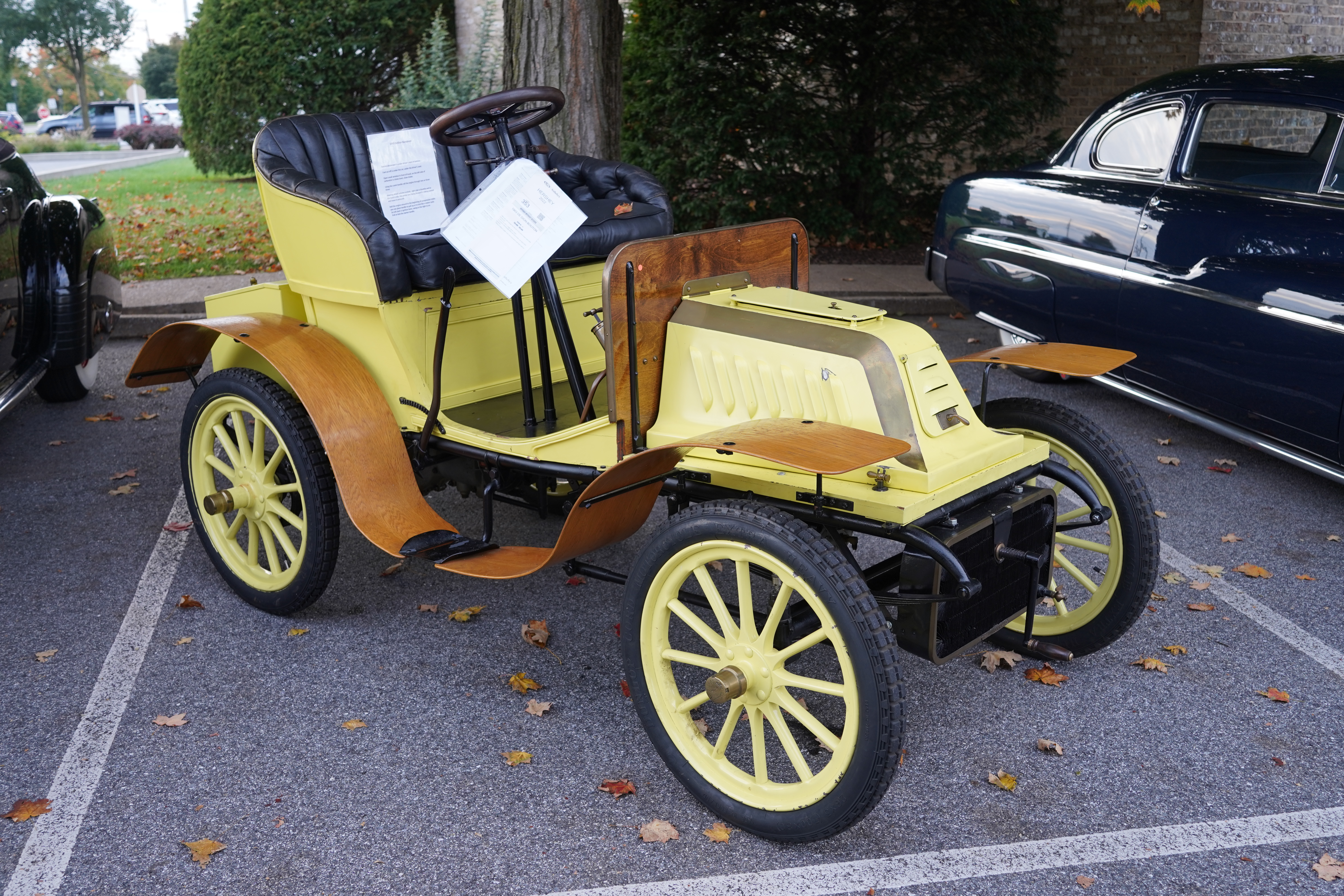
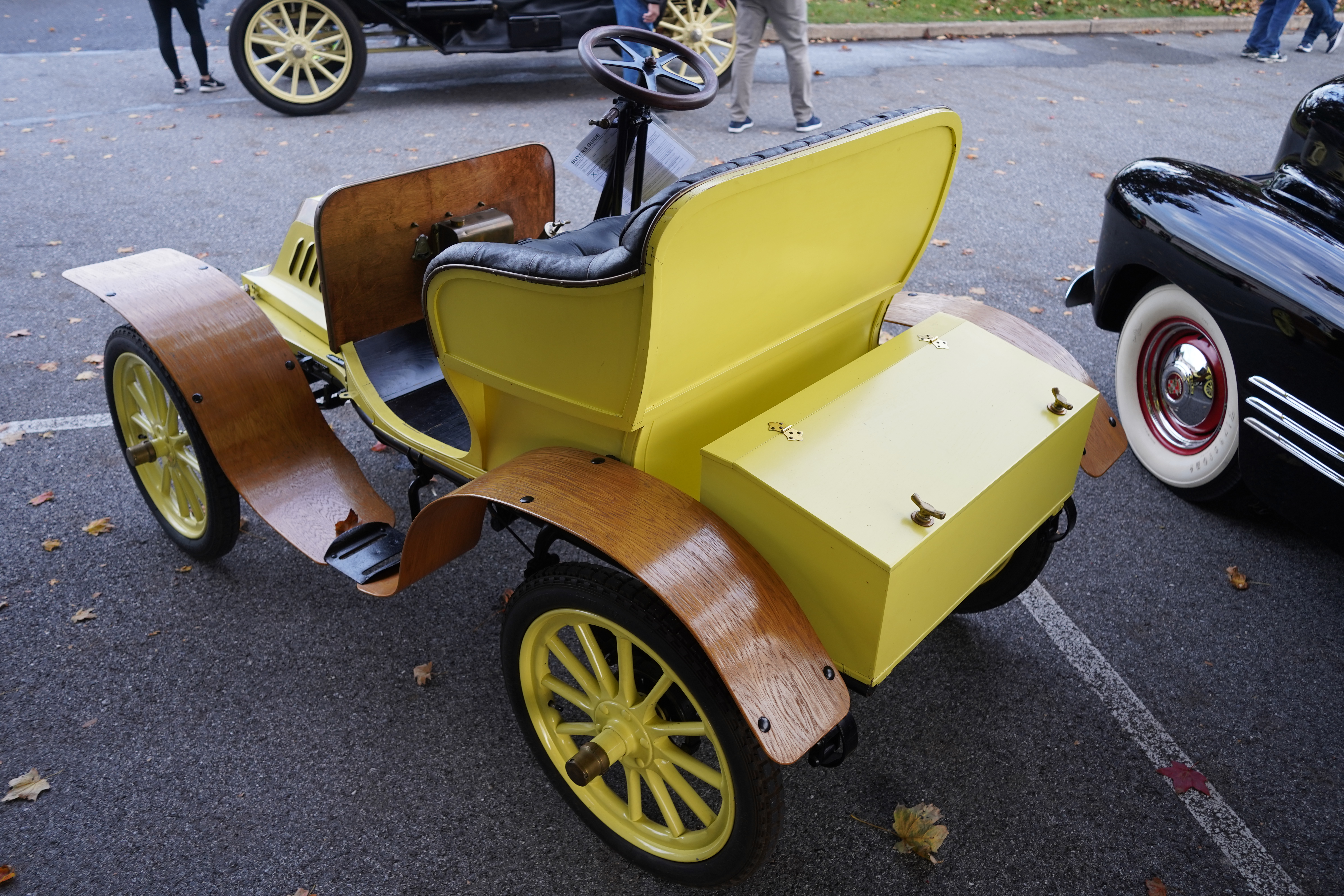
Lot 353, 1903 DeDion-Bouton

Yellow body and wheels, wood fenders, black upholstery. One year newer than the Olds, yet has a steering wheel as opposed to the Olds’ tiller. Car is smaller than it might appear in photos. Website claims that DeDion-Bouton was the world’s largest car manufacturer in 1900.

SOLD for $46,750 (no reserve sale)

“Only” 119 years old, but looks to be in great shape. What is it worth? On this day, it was worth just under $50,000. I’d fathom a guess that it would fetch more at a European auction.


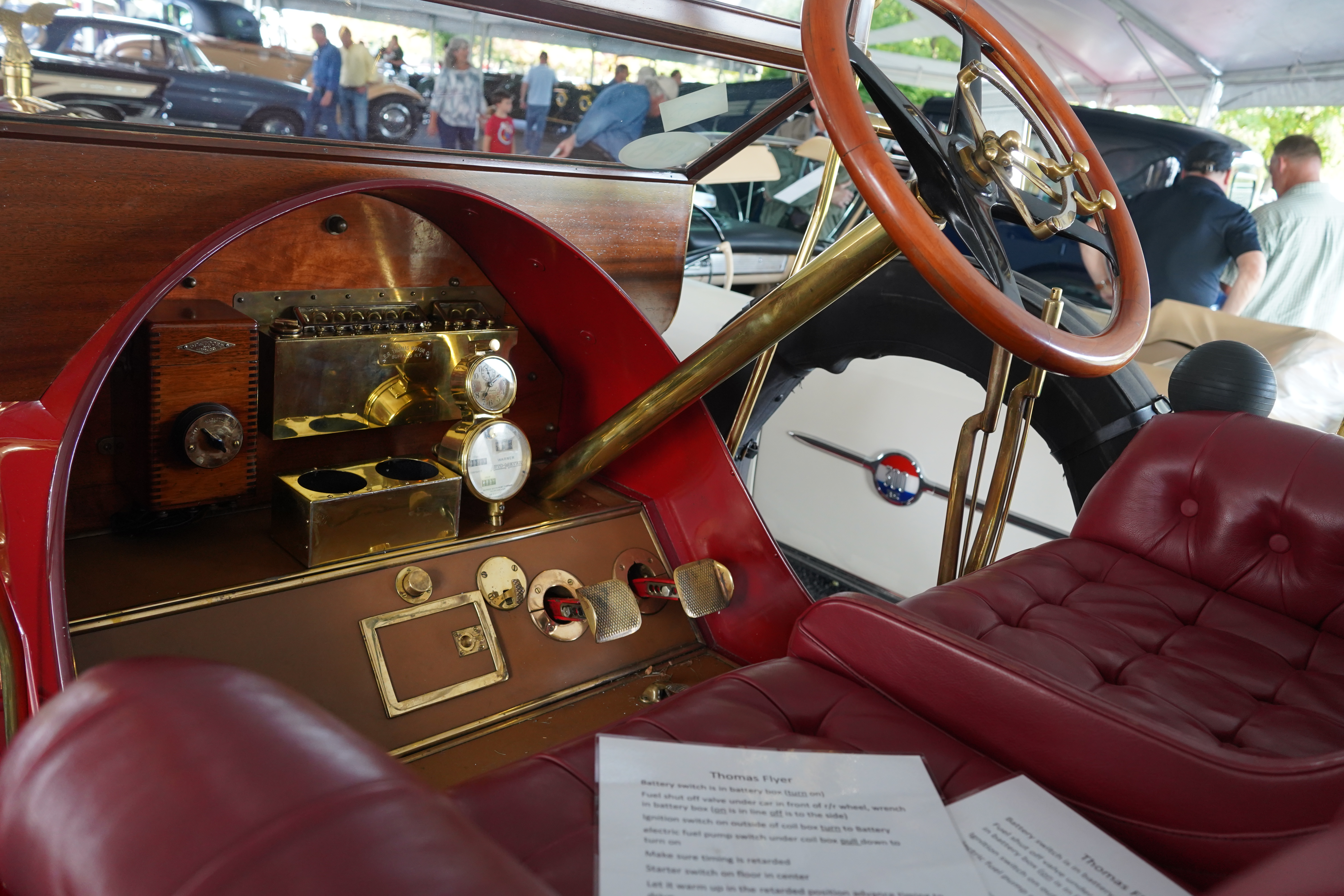
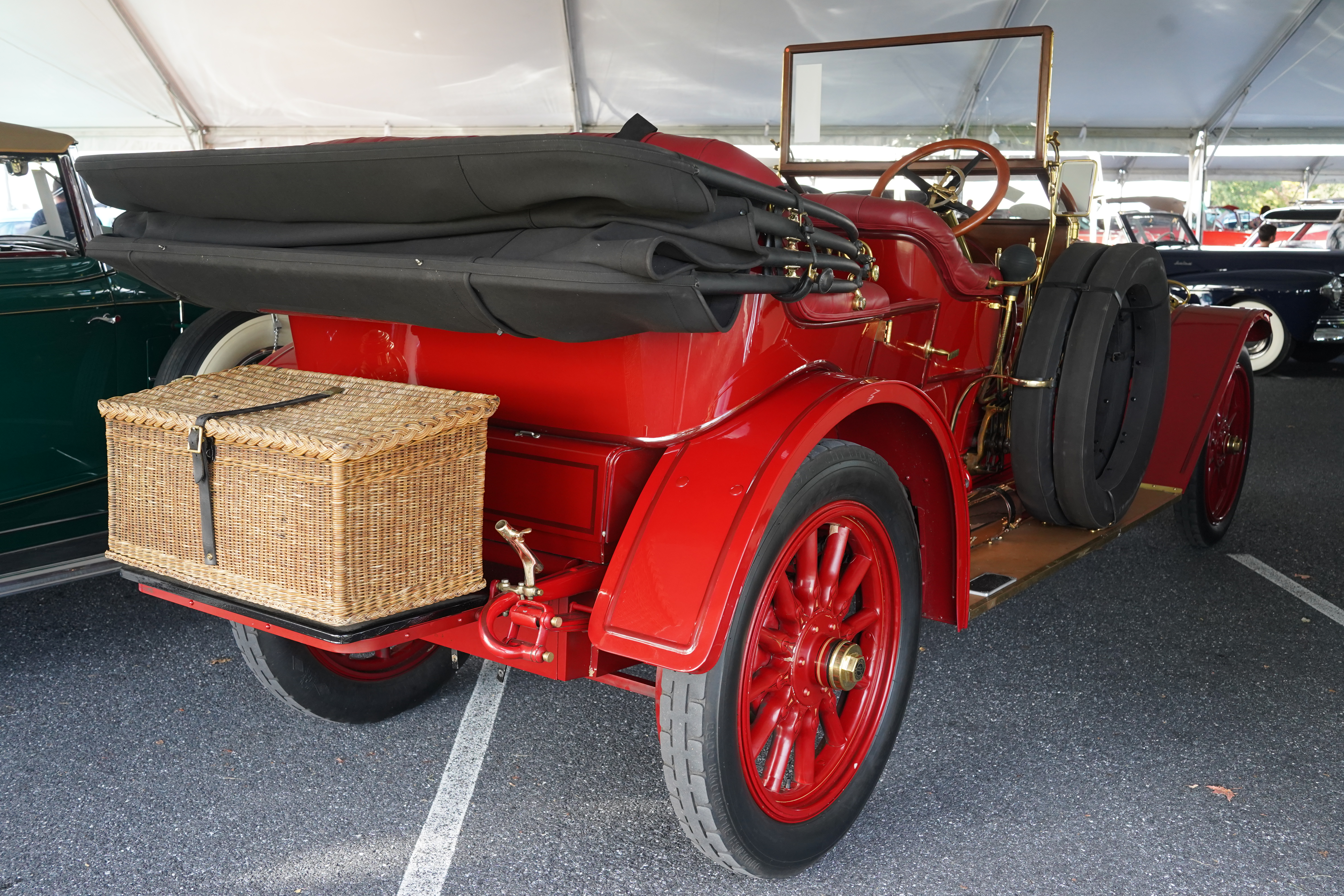
Lot 385, 1914 Thomas K-6-90 Flyabout

Red paint, wheels, and upholstery, black folding top. Brass trim in and out, wicker basket out back. Dual unmounted tires on right side. Big car on 140-inch wheelbase. Website states that “6-90” in model name indicates 6-cylinder, 90 horsepower engine, also claims that car was rebuilt with custom coachwork in the 1980s.

SOLD for $594,000

Who says no one will pony up for a 1914 Whatever? Not I. Of course, Thomas is a brand with a significant early history. Six-hundred large bought this one, which, compared to modern supercars which sell in the 7-figure range, might make this one understandable. Everything’s relative.

Lot 352, 1921 Napier T75 Speedster

Green paint, yellow wire wheels, black upholstery. Swoopy open body with two rows of seats. Website states that this is one of only 120 cars built between 1919 and 1924.

SOLD for $52,250

I can’t say that I’ve ever heard of this brand before. In researching the car, it should come as no surprise that I have not. It’s a British marque which only built cars for six years, and only churned out 120 units at that. Like the DeDion-Bouton, I would imagine that the Brits would have paid more had it been auctioned across the pond.


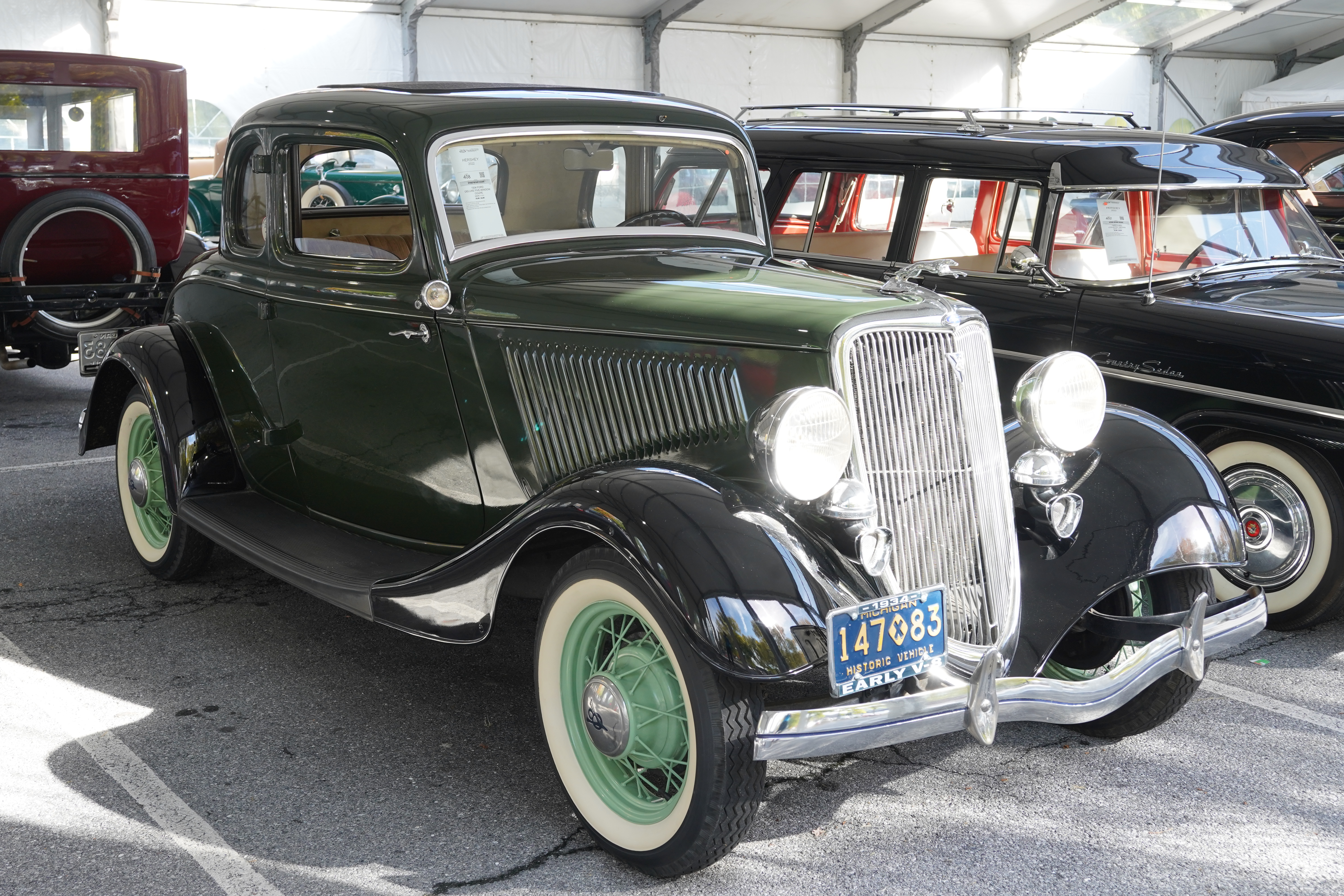
Lot 408, 1934 Ford

Dark green body, black fenders, light green wire wheels, wide whitewall tires, tan interior. Rear-mounted spare tire. Website claims upgraded to 12V electrics, and same owner since 1984.

SOLD for $36,500 (no reserve sale)

A very attractive closed-body Ford which appears to have been restored close to its original appearance. This was the second-to-last car to cross the block on Thursday, which may have depressed the price a little.


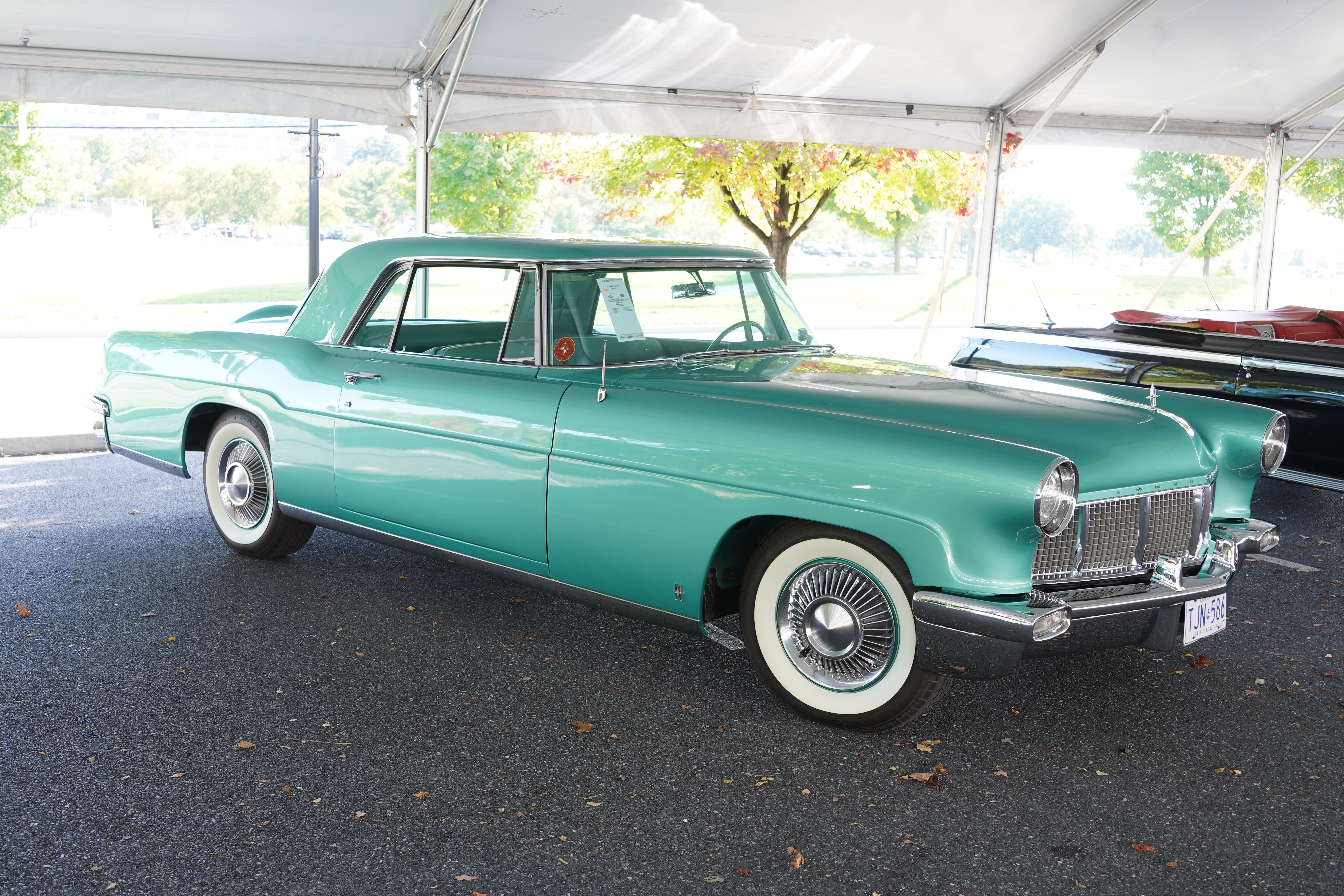
Lot 364, 1956 Continental Mark II

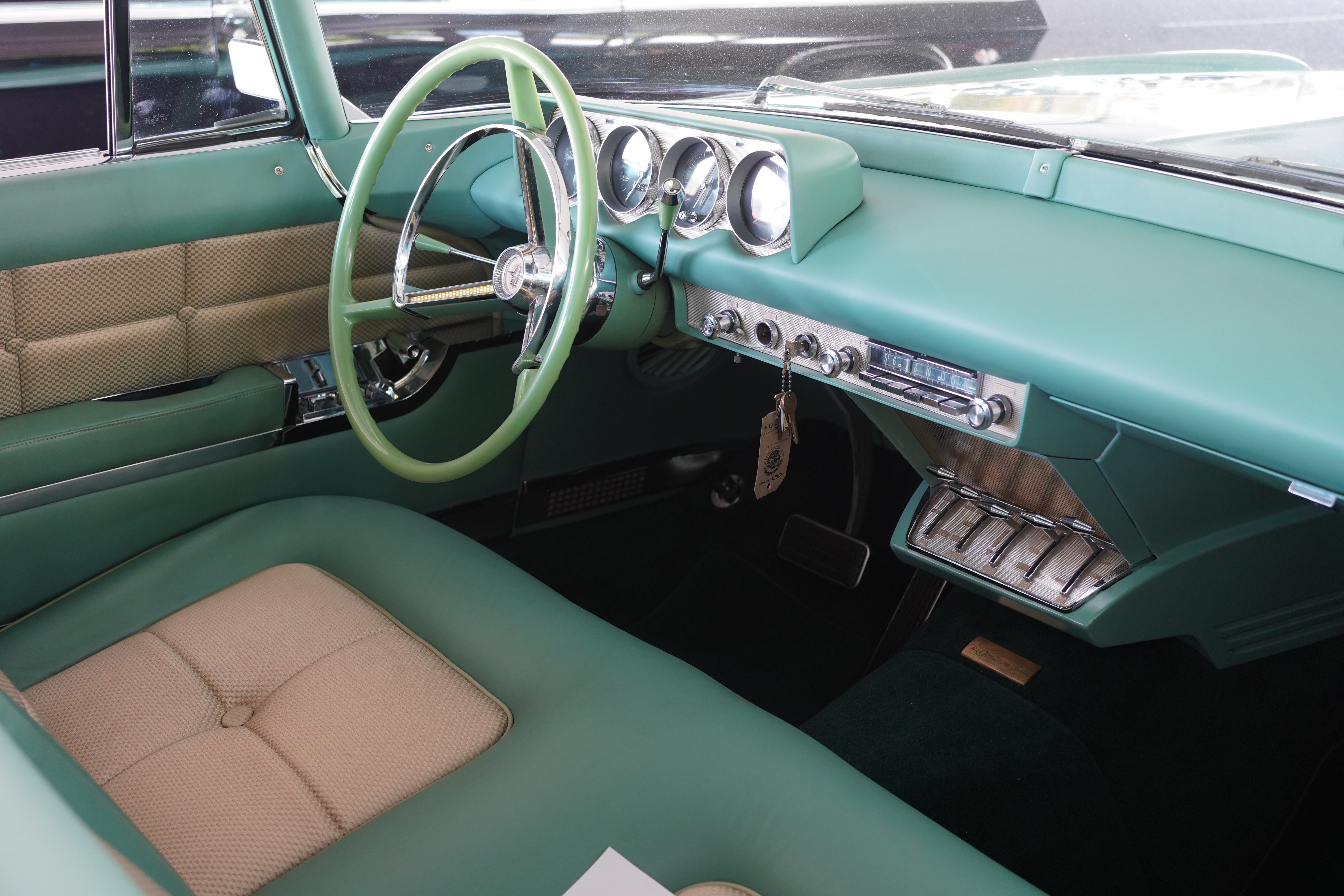
Green metallic paint, full wheel covers, wide whitewall tires, green and white interior. Green steering wheel is a shade which clashes with the rest of the interior. Immaculate engine compartment. Difficult to find fault.

SOLD for $96,250

Compare this to the Mark II I spotted in the Hershey Car Corral just a few short miles away, and you begin to understand the difference in value based on the costs associated with doing a complete and correct restoration on one of these. Price paid was fair for the condition, but driving it will devalue it.

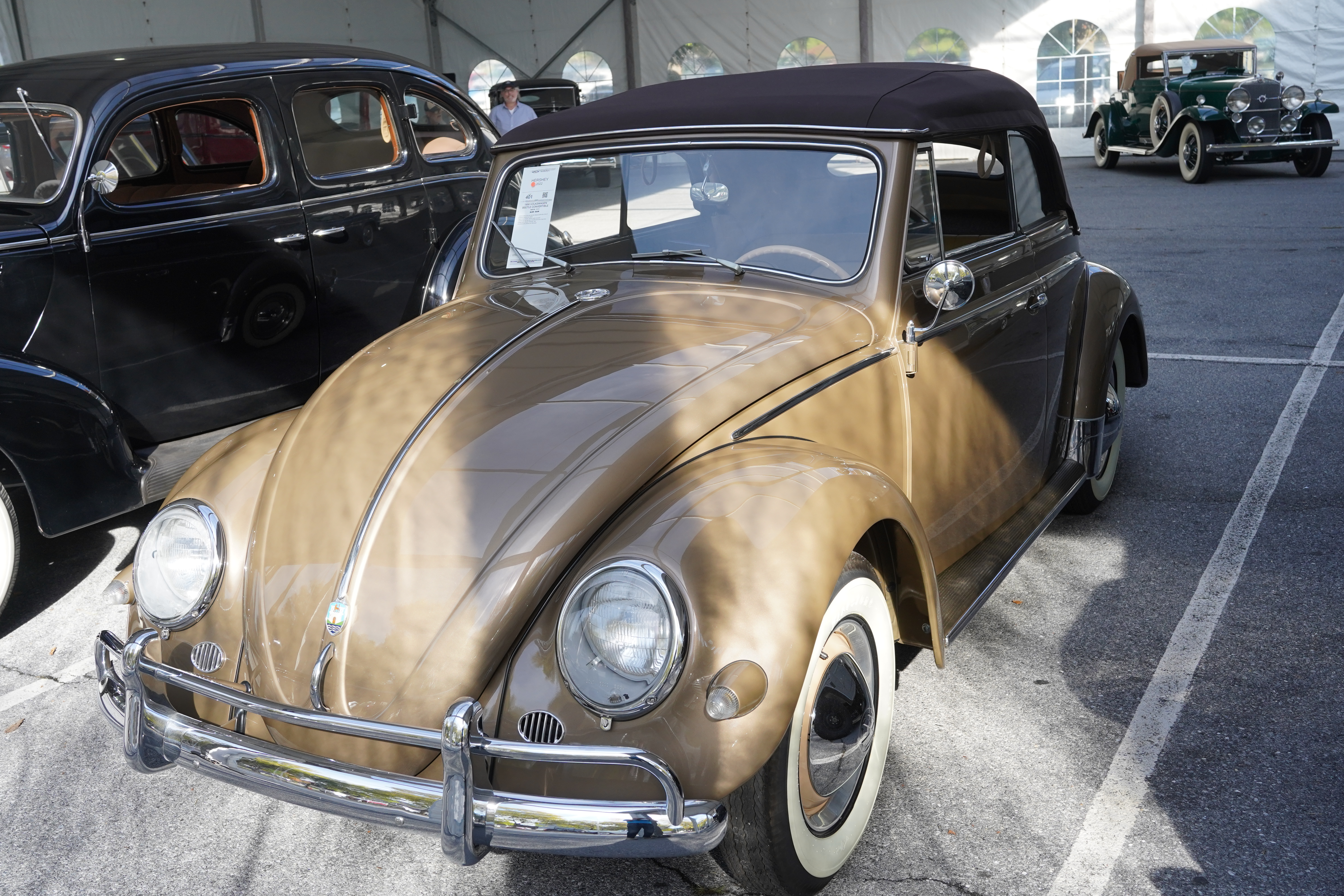
Lot 401, 1956 VW Beetle convertible

Brown paint (sign on car calls it “Sepia Silver”), VW wheel covers, whitewall tires, dark brown top, tan interior. An old Bug, as distinguished by the low-mounted front signal lights and small rear window. Website claims 23,666 miles shown are original.

SOLD for $71,500

This was one of those over-the-top restorations that looked better than new. I was around plenty of new Beetles in the ‘60s and ‘70s and none of them ever looked this sharp. In today’s market, there are plenty of deep-pocketed individuals willing to spend this kind of money for an example of the People’s Car.


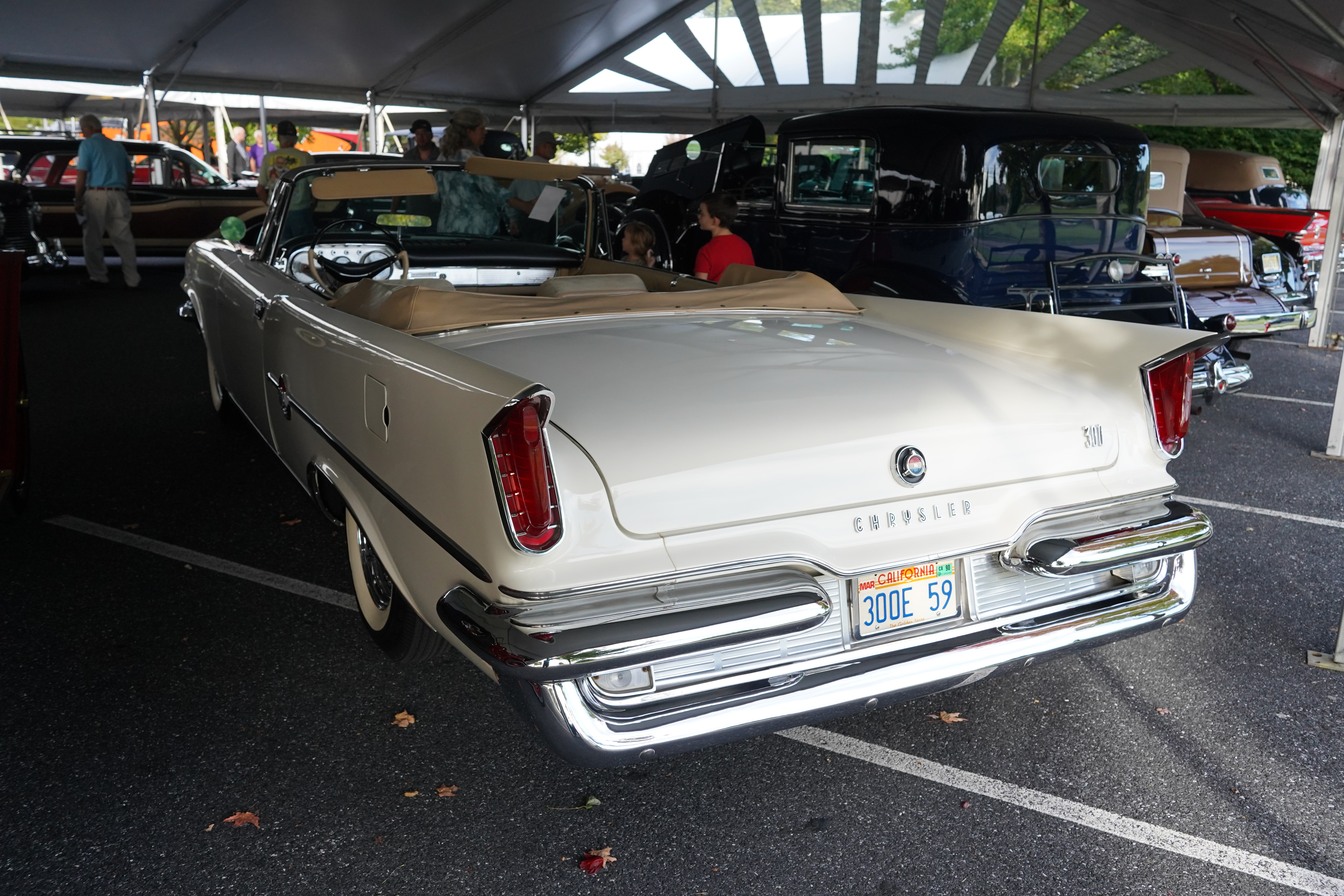
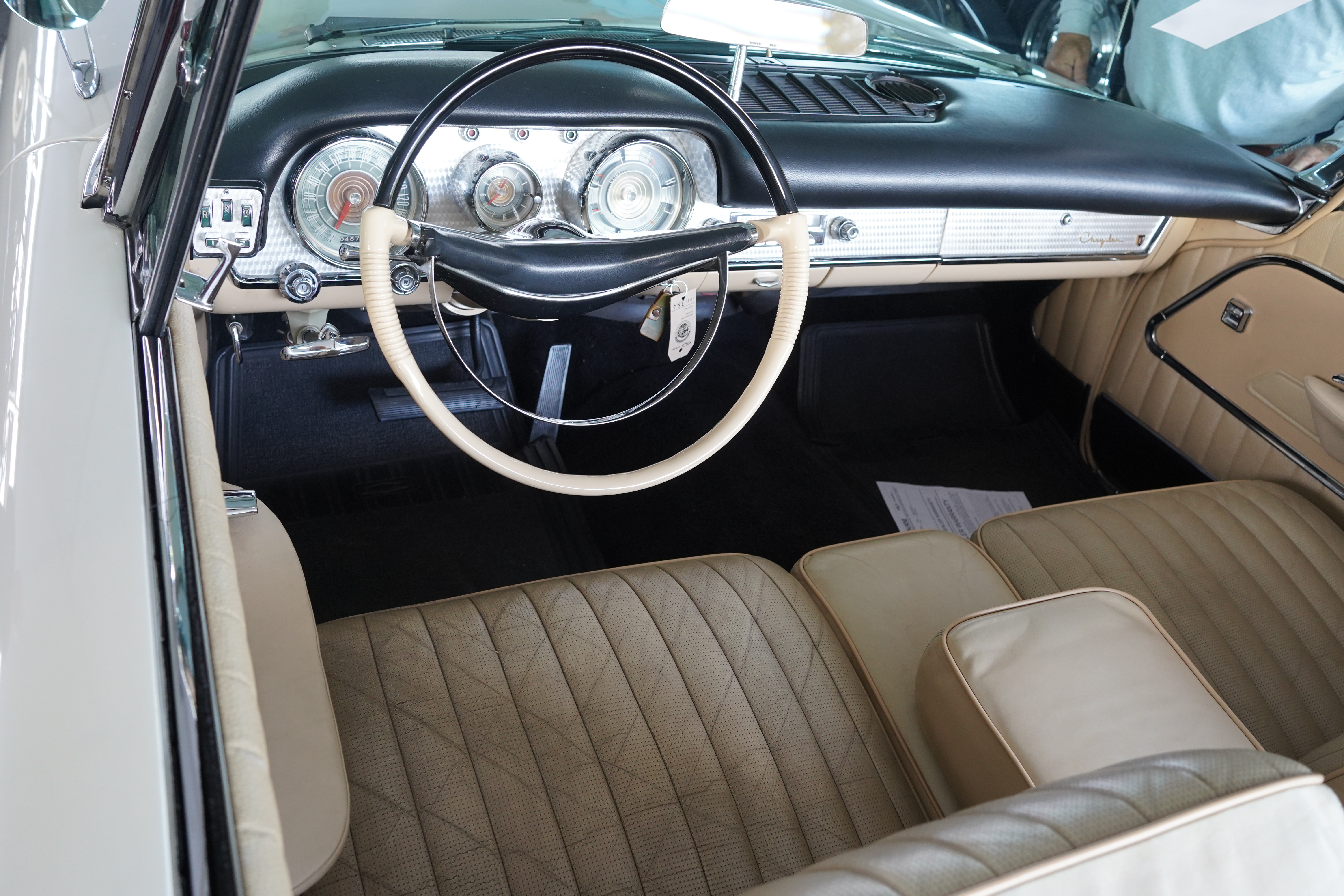
Lot 384, 1959 Chrysler 300E convertible

White paint, wire wheels, wide whitewall tires, tan top, tan leather interior. Sign on car claims that of 140 built, this is 1 of only 27 which survive.

SOLD for $75,000

Some call the 300 Letter cars the original muscle cars. I disagree, because I think the definition of “muscle car” encompasses a smaller (intermediate) body with a big engine. Rather, these 300s are often called big brutes. By 1959, the Chrysler styling had gotten a little fussy, but there was a lot to like here. It’s difficult to refer to 75 grand as a good deal, but for the Mopar enthusiast, this was.


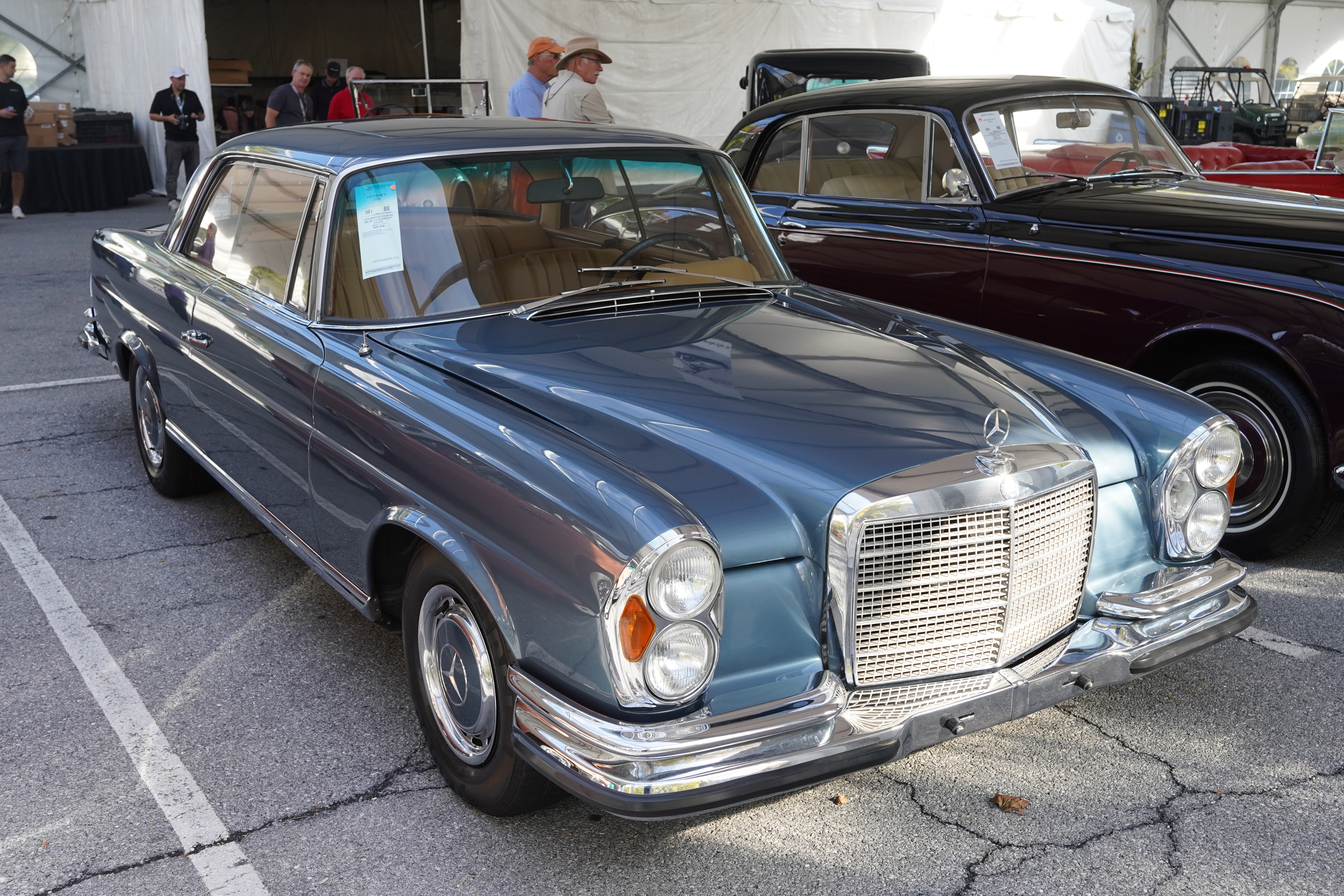
Lot 391, 1970 Mercedes-Benz 280 SE 3.5 Coupe

Blue metallic, M-B wheel covers, blackwall tires, light brown interior. 3.5L V8, automatic, factory sunroof. Sharp looking Benz with prominent grille, wraparound rear glass, vestigial fins.

SOLD for $88,000

A beautiful and rare Mercedes, for about the same amount of money as a mid-sized Mercedes-Benz SUV would cost new today. The difference is that this one will hold its value.


Lot 377, 1912 Fiat Type 56 Touring

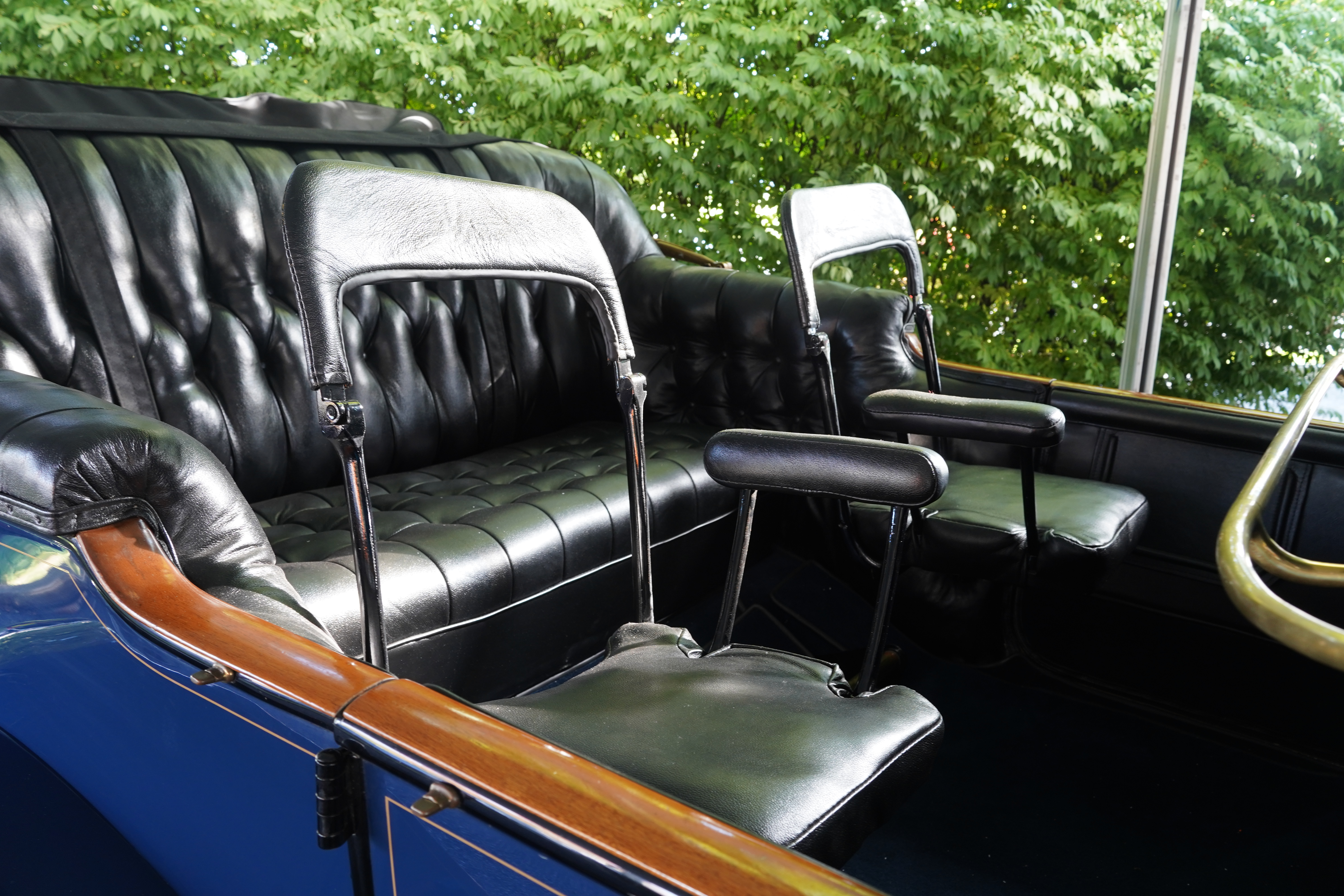
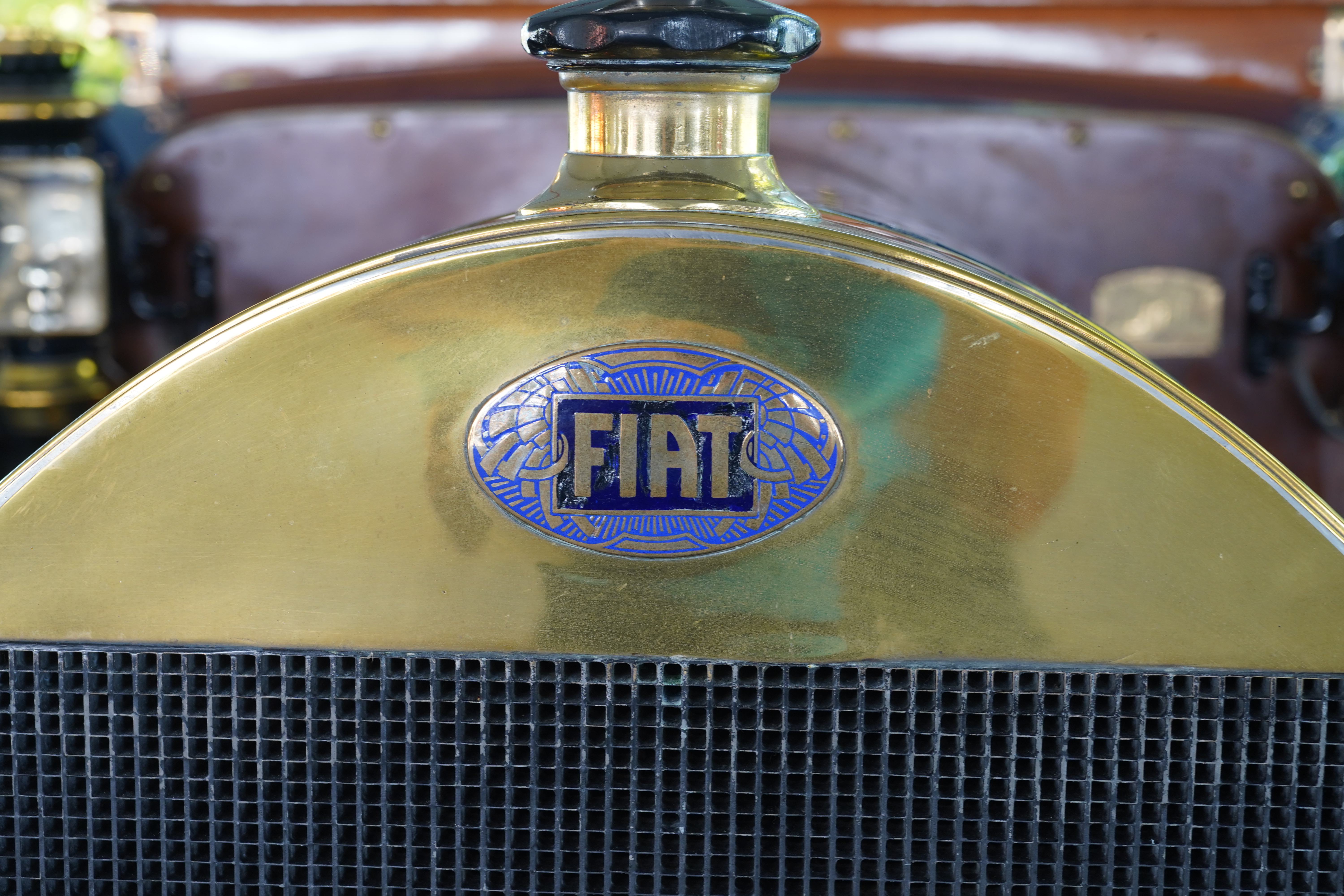
Dark blue, blue wooden wheels, brass radiator and headlights, wood windshield surround, black leather interior. Website claims this car was built by American Fiat, a subsidiary of the Italian parent company, and was actually manufactured in Poughkeepsie, NY! The website further claims that the car was restored in the 1990s, including an upgrade to hydraulic brakes.

NOT SOLD (high bid not recorded; pre-sale estimate was $700,000 to $900,000)

Photographs cannot convey the impression that this vehicle had on me. It’s huge, and so full of small details that one could spend an hour just constantly circling it, taking it all in. I was smitten with it, maybe because it’s a Fiat, maybe because I’ve never seen such a large Fiat! Whatever one’s interest is in collector cars, this one could easily serve as a centerpiece, whether the collection’s focus is pre-war, American-built, or European-branded. I loved it, but even if I could afford it, it wouldn’t fit in my garage!

All photographs copyright © 2022 Richard A. Reina. Photos may not be copied or reproduced without express written permission.


Are These the Auction Cars That Got Away?

It can be entertaining to reminisce about “the one that got away”. Whether it’s the big fish that broke loose from your hook, or the college flame you think you should have married (and admit it, it wouldn’t have worked out), we occasionally think about the “almost” events from our past.

Those of us in the collector car hobby are particularly expert at this game. I haven’t met a single classic car fan who hasn’t cried on my shoulder about the one that should never have left the garage. A variation of that theme are the cars we could have purchased at auction and didn’t.

The recent release of Hagerty’s Bull Market List for 2022 provided something of a prompt for this post. I have no beef with their choices and have no plans to rebut them or offer my own. However, the list implies if not outright claims that certain cars will increase in value, some more quickly than others. We therefore swing back to the question of whether one can buy cars, especially at an auction, enjoy them for a while, and then sell them for a profit.

I decided to revisit my blog posts of five years ago, 2016, a year in which I attended auctions in Atlantic City, Carlisle, Harrisburg, and Hershey. Scanning the results, I spotted a few cars which seemed to sell on the low end of pricing compared to what they might bring today. (Let’s temper all this talk about “making a profit” by pointing out that the buyer must cover overhead such as auction fees, taxes, registration, shipping, insurance, maintenance, repair, and storage. Ownership of a car is not “free”.)

Below is my one pick from each of the five auctions I attended that year. The text and photo are carried over from my initial post, and I’ve added comments along with book values and an example of a recent sale.

FROM THE G. POTTER KING AUCTION IN ATLANTIC CITY NJ FEB 2016:

Here’s what I posted:

Lot #1542, 1995 Jaguar XJS convertible, champagne, brown cloth top, glass rear window, tan interior, 86,900 miles. Car looks very nice from the outside. Some driver’s seat bolster wear, otherwise clean interior. 6 cylinder, automatic, nice alloy wheels, paint looks great except for repainted passenger door (but it’s hardly noticeable). Sign on the dash said “not sold on Friday, but for sale at asking price of $9,500”. Online, the car was reported sold for $8,000. CPI values the car between $10,250 (#3) and $17,425 (#2). We would rate is at 3+ and call it very well bought.

Feb. 2016, G. Potter King Auction: 1995 Jaguar XJS
Here are my thoughts in 2021:

I remember this car well, thought it was very attractive, and thought it was a steal in 2016. That steal looks even better in 2021. CPI values the car in Dec. ’21 between $12,400 (#3) and $22,800 (#2). Bring a Trailer (BaT) sold a very similar one in October ’21 for $23,050. That eight grand sale is looking good.


FROM THE CARLISLE SPRING AUCTION IN APR 2016:

Here’s what I posted:

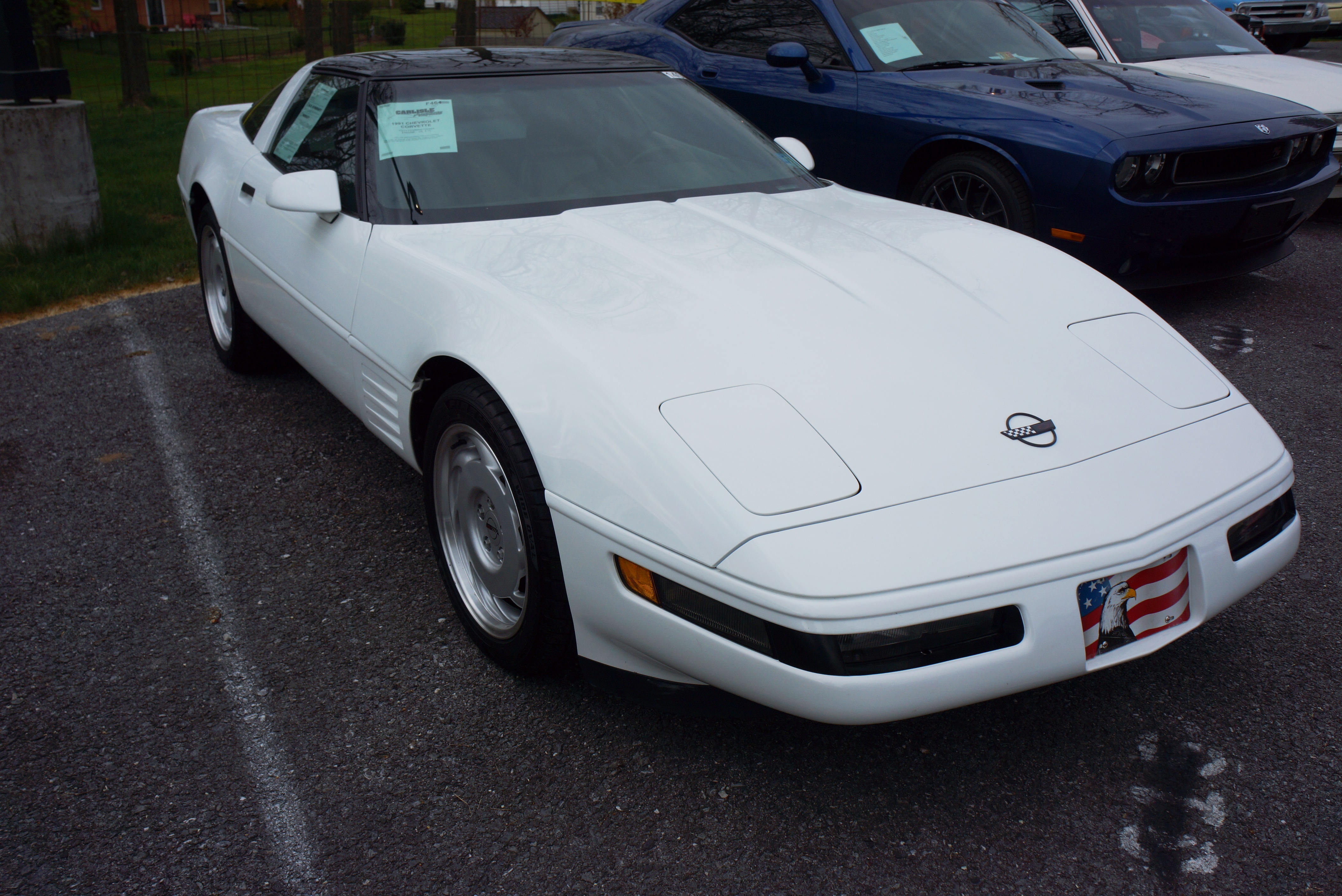
F464 1991 Chevy Corvette coupe, VIN 1G1YY2386M5104468, white, smoke glass top, 5.7L V8, automatic, 24,000 original miles, just serviced. Corvette alloy wheels are unmarked. Nose shows no paint chips or scrapes. Door seals in good shape. Interior is blue/gray, automatic, with slight carpet wear. Interior supports mileage claim. Paint looks original, all looks presentable. Glass OK. This car was very late in crossing the block, but bidder interest was high, possibly because of the low miles. Car was still sold within the CPI “good” range, so we’ll call this one well-bought.

CONDITION: 2-

HIGH BID: $9,200 SOLD!

CPI: $9,000-15,000

Apr. 2016, Spring Carlisle Auction: 1991 Corvette
Here are my thoughts in 2021:

This was when I started noticing how inexpensive C4 Corvettes were. To me, this car was a trade-off between the low miles and the auto gearbox. Since then, I’ve noticed that C4 values have been flat, as evidenced by the CPI numbers in the Dec. ’21 book: good-to-excellent values are between $7,000 and $13,500, meaning they’ve actually dropped in the last five years. On BaT, almost all the C4s are either ZR-1s or convertibles, and all have low mileage. The closest comp is this ’91 with 16k on it which sold for $15,000. The buyer of this white car would only be ahead if the car remained parked, and what’s the point of that?

FROM THE MECUM HARRISBURG AUCTION, JUL 2016:

Here’s what I posted:

LOT T41, 1977 MERCEDES BENZ 450-SL

Condition estimate: 2+

SOLD for $15,500

This generation SL is hot right now, especially the 450-SLs from the late ‘70s like this one, and the final 560-SLs. Many of the ones we see at auction are dogs; this one was decidedly not. Price was not a bargain, but fair for a very presentable Benz. This car can likely be enjoyed and then sold in several years for the same or a little more.

Jul. 2016, Mecum Harrisburg auction: 1977 MB 450SL
Here are my thoughts in 2021:

Awfully cheeky of me to write that, eh? Actually, R107 (platform name) Benzes have stayed hot, but particularly the final iteration, the 560SL models which were offered through 1989. Values of older ones like this 450SL are highly dependent on condition. I rated this car as a 2+. The current CPI values these between $12,800 and $28,000 for a good-to-excellent car. So I’ll stand behind my words from April 2016 and state that you could sell this car in this condition today for “a little more” than you paid for it in 2016. Here’s a recent sale of a ’78 450SL for $20,500 on BaT which supports the value range.


FROM THE CARLISLE FALL AUCTION IN SEP 2016:

Here’s what I posted:

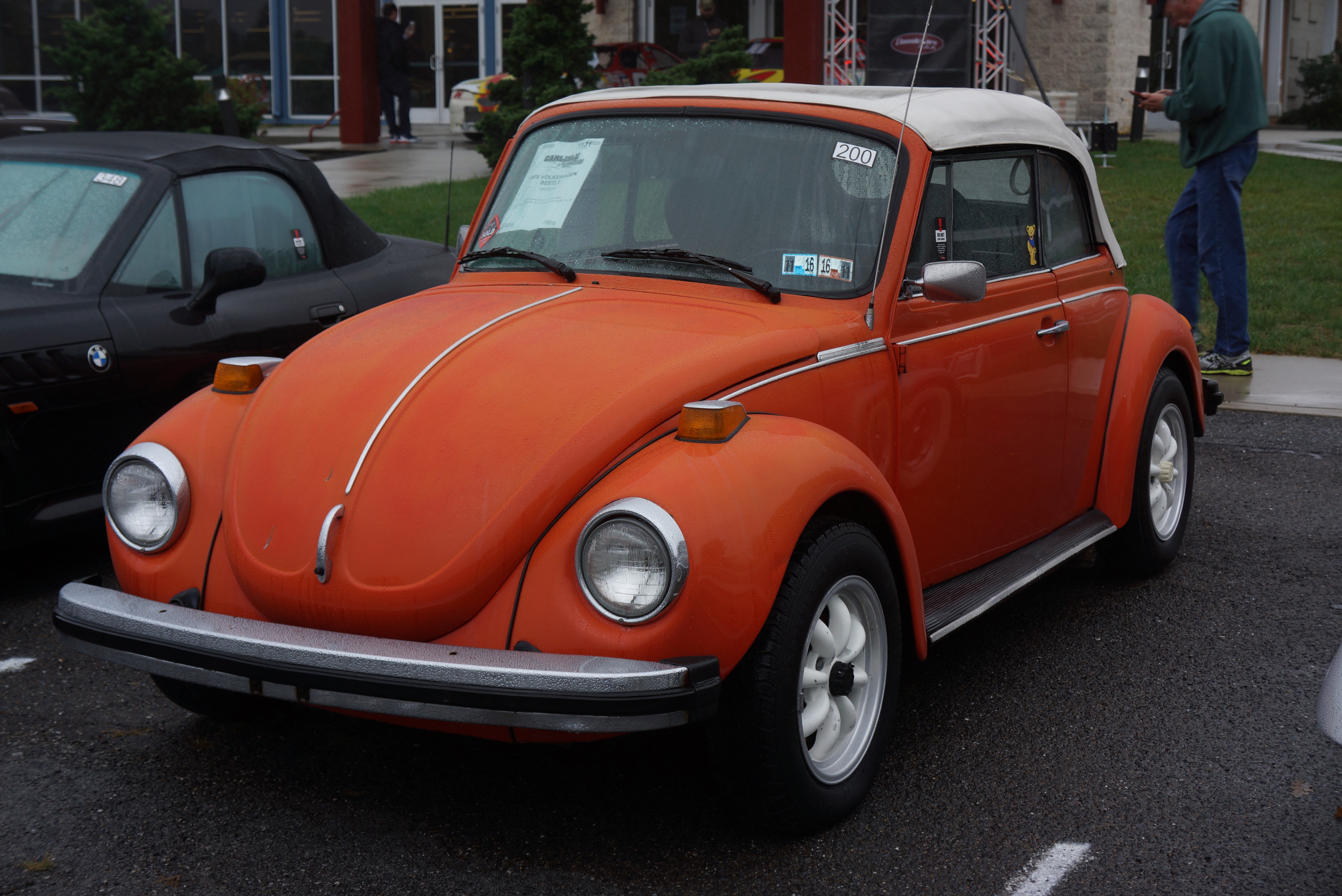
Lot #T131, 1978 VW Beetle convertible, orange, white top, white painted alloy wheels, black vinyl seats. Sold for $5,750. While I did not examine this car closely, it appeared to be solid, with good paint and a good top. The white painted wheels must go, but that’s an easy fix. Sold for about half book price, perhaps because this audience wants muscle cars.

Oct. 2016, Fall Carlisle Auction: 1977 VW Beetle convertible
Here are my thoughts in 2021:

Of all the cars from my youth, I confess that air-cooled VW Bugs were my guess for cars to least likely appreciate and become collector-car-worthy. Of course, I was wrong. Exhibit A as represented here are the final run of Beetle convertibles, especially the 1979 final-year ones. This ’78 is close enough to that. I did note that at $5,750, this car sold “for about half book price” making book price back then about $12,000. The Dec. ’21 CPI puts these drop-tops between $15,000 for “good” to $32,000 for “excellent”. Earlier this month, BaT sold a black-on-black ’79 for $15,000, so our orange Beetle owner would do ok if they sold it today.


FROM THE RM HERSHEY AUCTION, OCT 2016:

Here’s what I posted:

Lot #142, 1957 Mercedes-Benz 300SL roadster, red with tan interior, pre-sale estimate of $900,000 – $1,100,000

SOLD for $750,000

This was another cosmetic stunner, even if its red-over-tan was a change from its factory blue-over-cream. Claimed to come from long-term ownership, I had every reason to expect the car to break into seven figures. These 300SL roadsters long ago achieved price parity with their Gullwing brothers. Therefore, it came as a total shock to watch the hammer fall at a number so far below the low estimate. Was it the color change, did the audience see something I didn’t, or is the market that soft?

Oct. 2016, RM Hershey Auction: 1957 Mercedes-Benz 300SL roadster
Here are my thoughts in 2021:

Mercedes-Benz 300SLs, both Gullwing and Roadster, are true blue-chip collectibles, meaning that their values are better than money in the bank. While there may be the occasional backslide, the law of supply and demand (few cars exist, moneyed buyers are a-plenty) means that waiting out any blip is simply a matter of patience. Yet as I asked above, did this one slip through the cracks? The only fault was the color change, and as long as factory colors are chosen, there is no real knock to value. Today’s CPI puts this car between $1.2 and $1.5 million (if you have to ask….). If it was flipped for a profit, let’s hope the owner at least got to enjoy driving it a bit. As you might imagine, online sales are few and far between. BaT did sell a Roadster in July of this year for $1.4 million.


It’s easy to be the armchair quarterback and say “you shoulda bought that one, you coulda doubled your money!”. Sure, like I had three quarters of a mil hanging around. Even the least expensive car of these five, the VW, would have likely cost closer to $7,000 when one was done with the initial outlays, including replacing those ugly wheels. My close friends and I agree: the Number One rule is buy what you like because you like it. The speculation game is a gamble and relies on good luck as well as a good eye. It can and does happen, but my experience is that turning a profit on a resale can mean holding onto a car for a while.

All photographs copyright © 2021 Richard A. Reina. Photos may not be copied or reproduced without express written permission.