Sunday Morning Breakfast Runs – The Early Years, Pt. I

Our Sunday Morning Breakfast Runs, about which I’ve blogged so much, started well before I joined the fray. I believe I had been told that the initial trio who launched these events began back in 1999 or 2000.

Earlier this year, someone in our group who had joined around the same time as I did asked me, “when did all this start?” Great question, I responded to myself as much to anyone else, and decided to pore through my photos to see how far back I could trace my involvement.

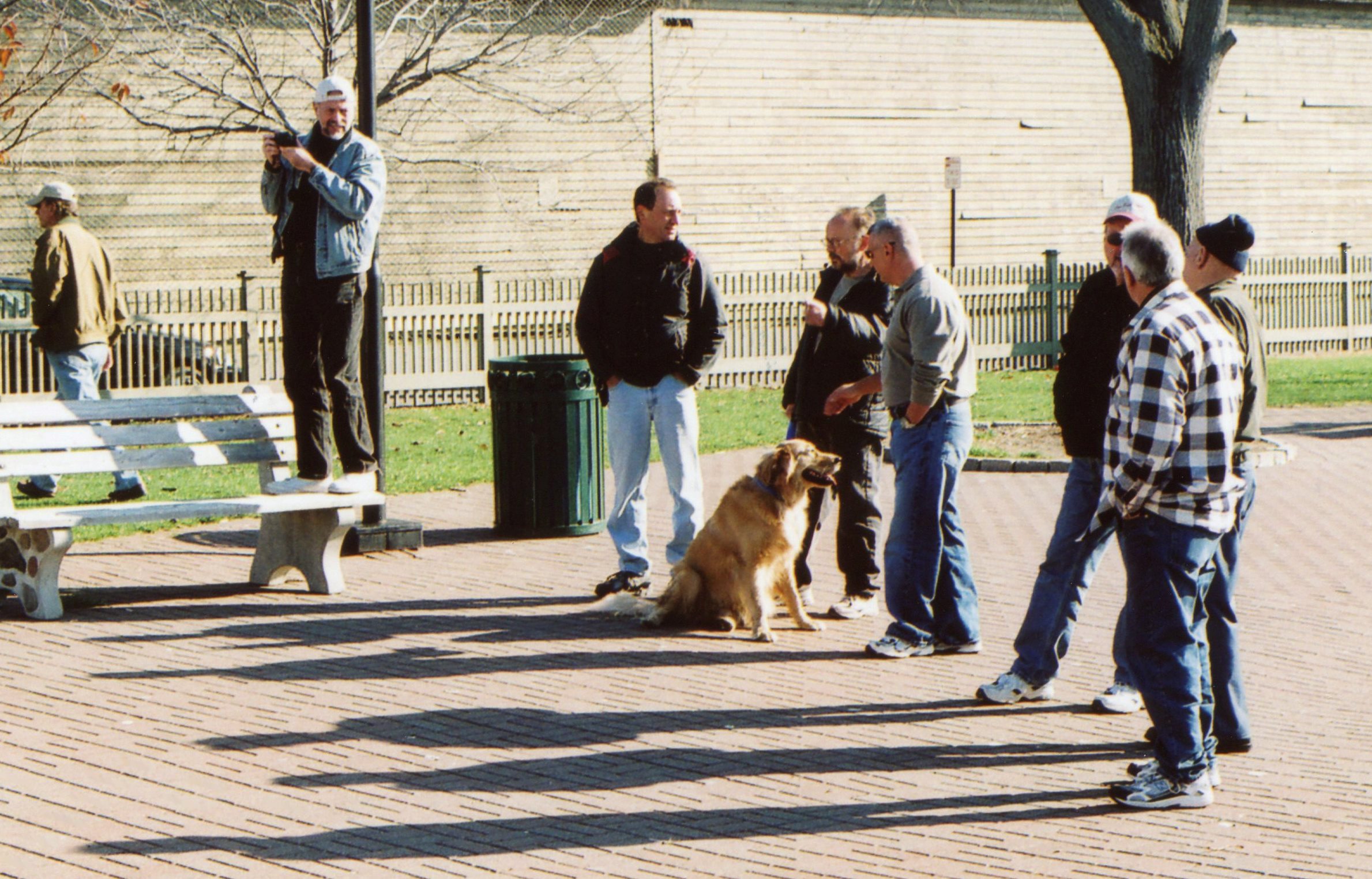
The earliest photographic evidence of my participation takes me to early spring of 2006. Since the trees in the photos have yet to bloom, I would pin the timeframe as late March/early April. The photos were taken in Cold Spring NY, which was a frequent destination for many of the early runs. We parked our cars around a little cul-de-sac, with the Hudson River in the background, and this served as a wonderful photo op (that’s Burton standing on the bench, primed for some excellent shots). Note that there are SEVEN cars, a typical number for our group at that time.

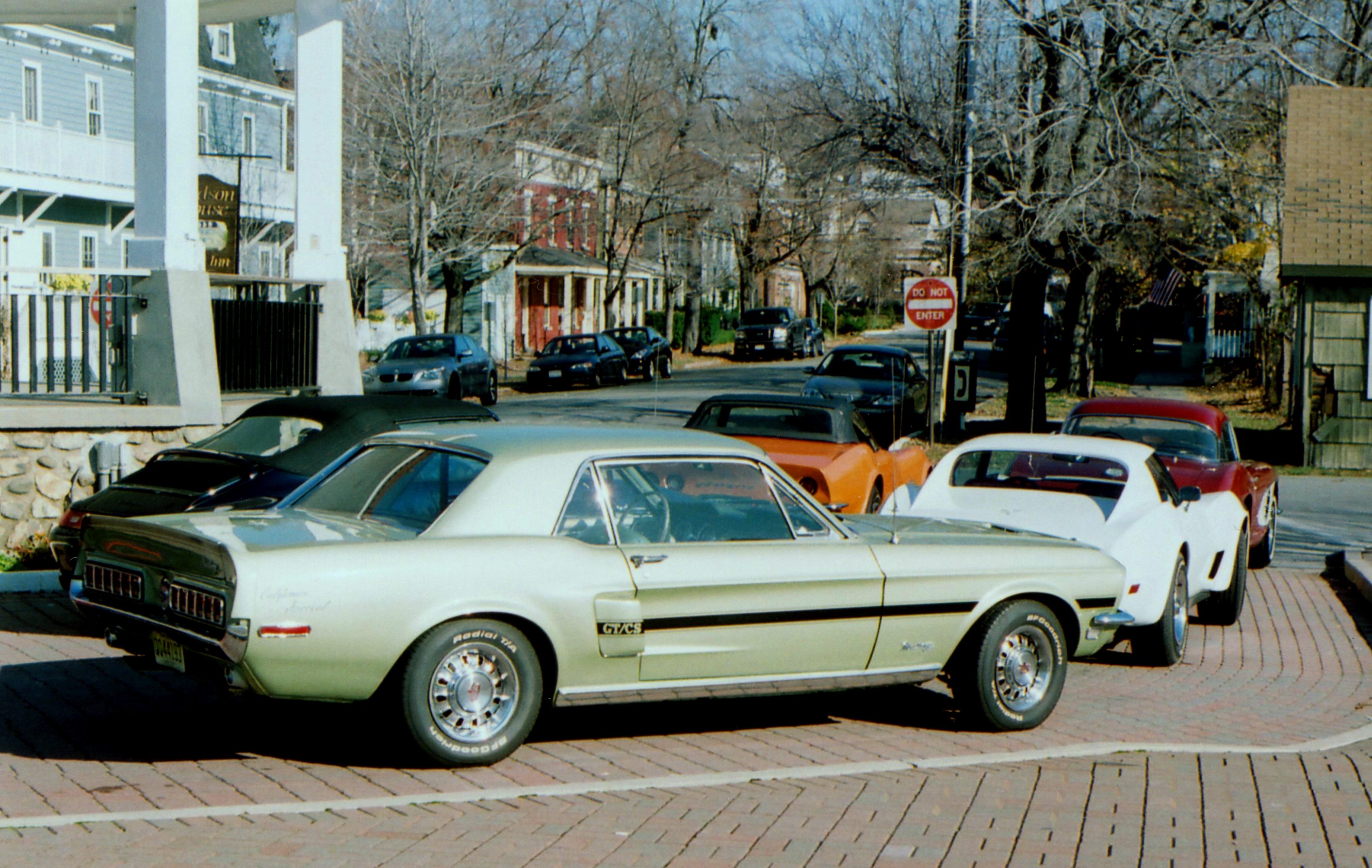
My ’68 Mustang California Special (GT/CS) had been in my possession for only 2 ½ years. The year 2006 would be the year in between driving that car in the ’05 and ’07 New England 1000 rallies.

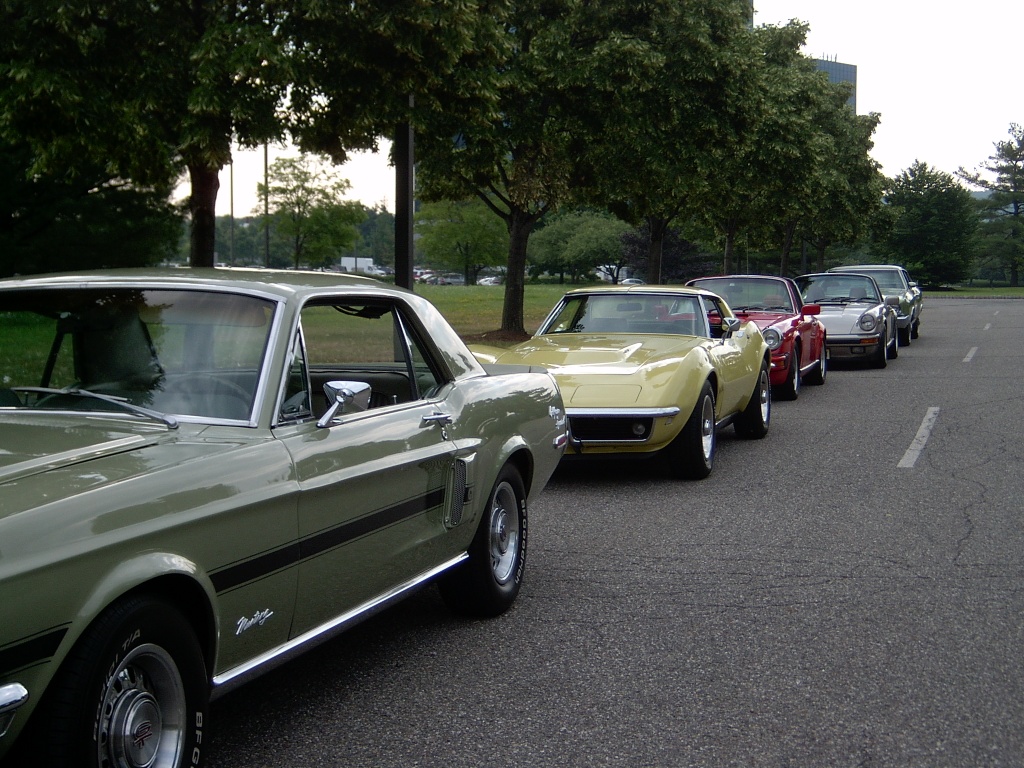
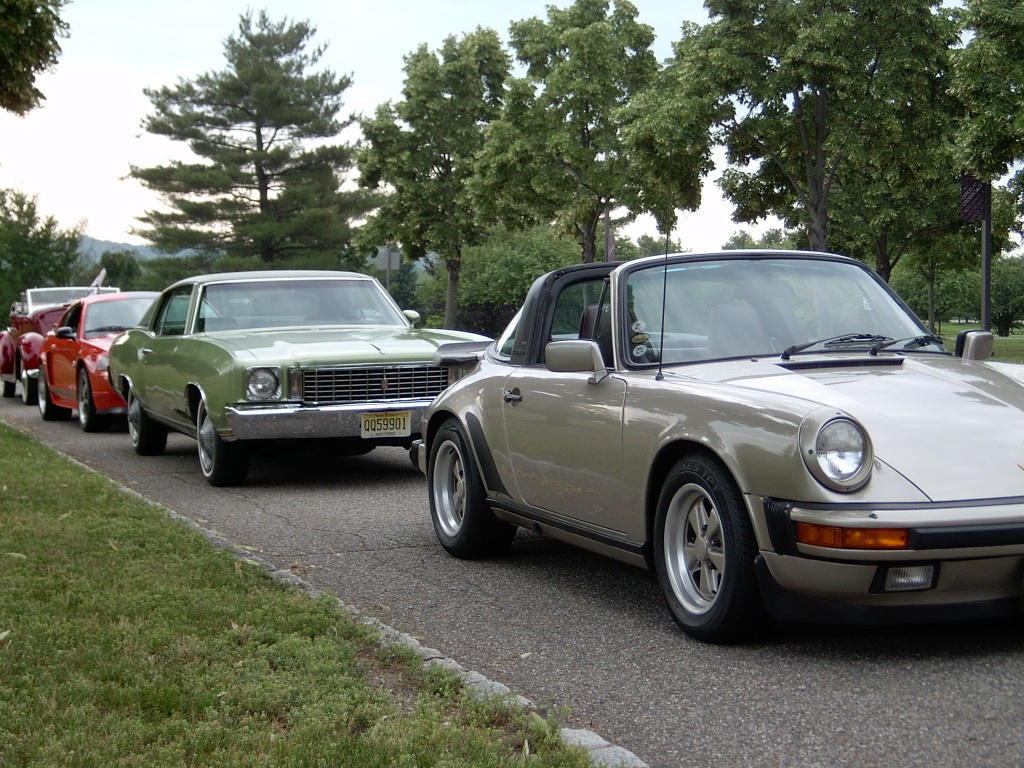
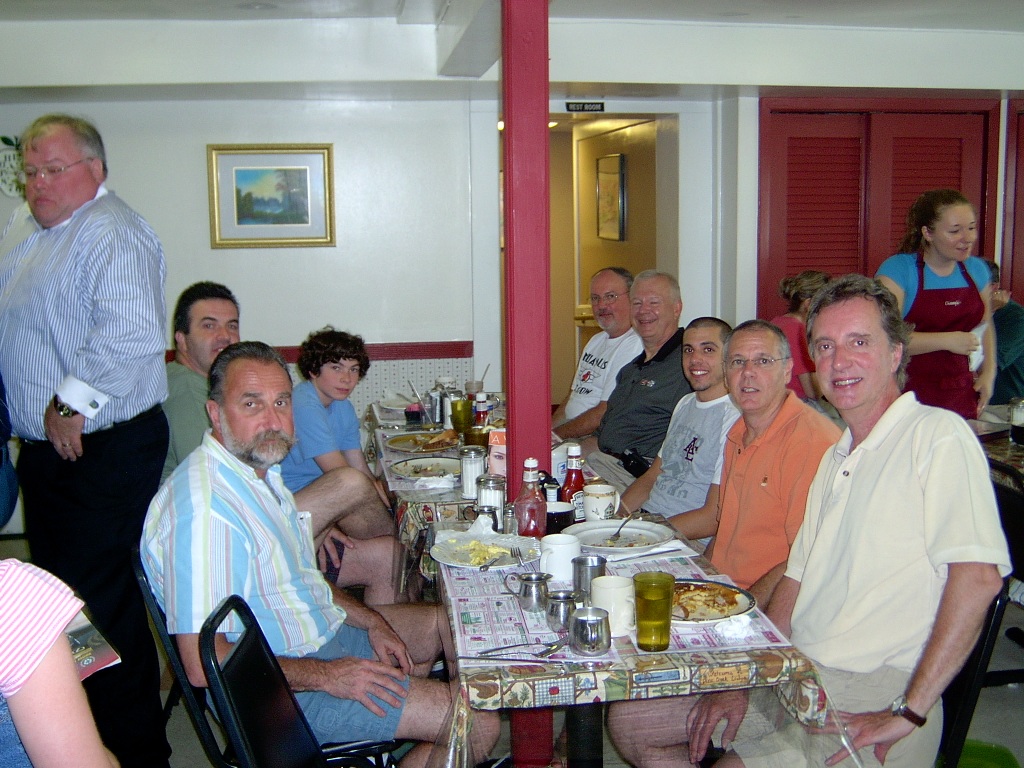
The next time I photographed a Breakfast Run was June of 2008, and since the pictures reveal that our destination was Granny’s Pancake House in Hamburg NJ, I know that this was one of the, if not THE first time that Larry and I “hosted” the run. Granny’s had been recommended to me by a colleague at Volvo, and it proved to be a tasty breakfast place.

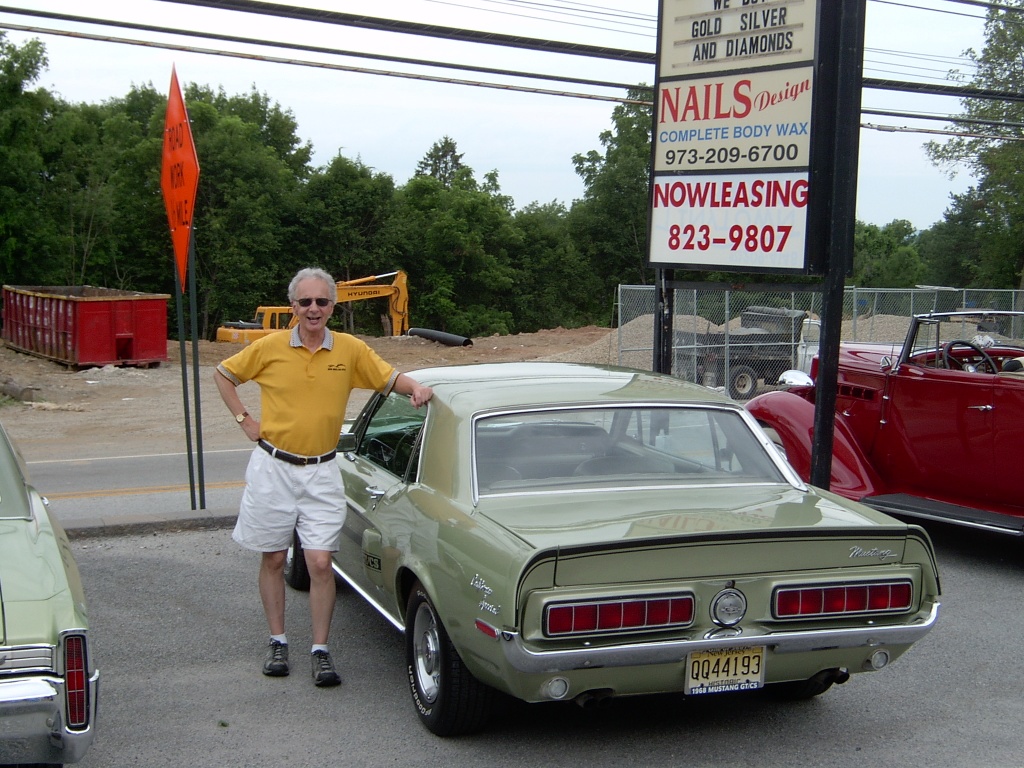
The GT/CS at the start of the run

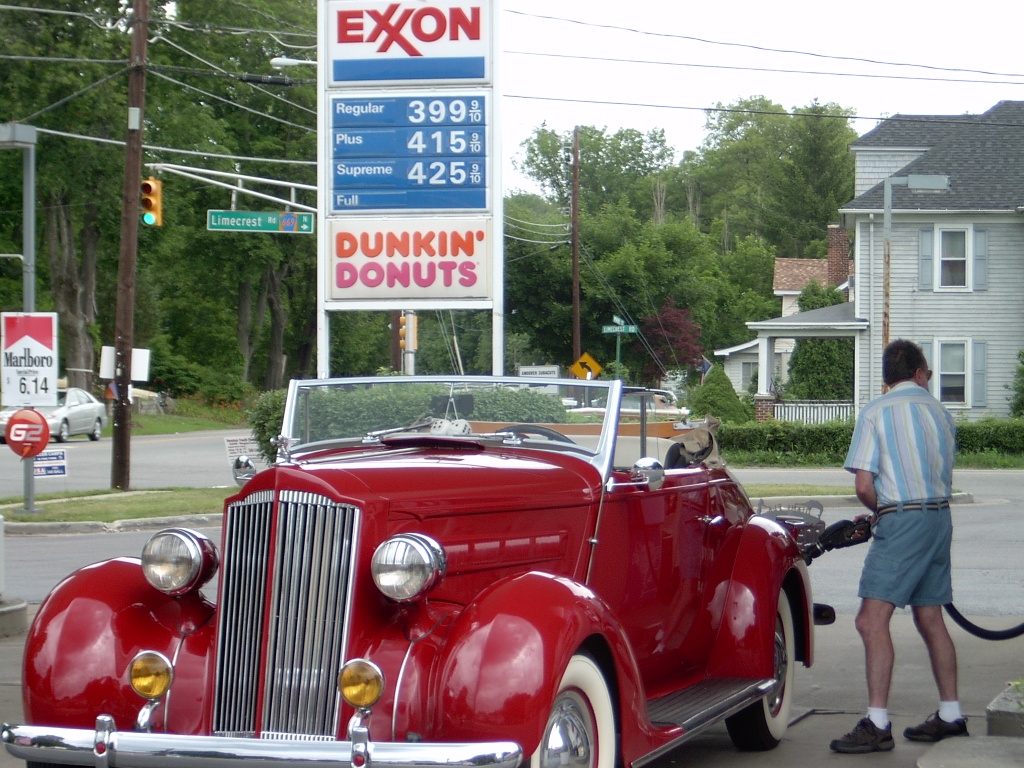
As we exited the restaurant, I asked each driver (and passenger, if there was one) to pose next to their automobiles. As is always the case, the eclectic mix of vehicles is a big part of the draw. Our NE1000 buddy Ron dared to show up in his 1937 Packard convertible. I can report that he doesn’t baby the car on the road, as I had to keep my foot into my 390 to keep up with him!

Again, there were seven cars, which made it easy to keep everyone together in a caravan. Little could we imagine the size to which our outfit would expand.

In a future post, we’ll continue to look back at some of our older Sunday Breakfast Runs.

Our June 2008 participants (NOT the dude standing up at the left)


Ken and son with Porsche 911


Peter with Porsche 911


Larry with Chevy Monte Carlo


Richard with Mustang GT/CS


Ron with Packard


Rich and son with Mustang


Bill with Corvette


Spotting the Packard over the Mustang’s hood


Summer of ’08: check out those high fuel prices!


All photographs copyright © 2017 Richard A. Reina. Photos may not be copied or reproduced without express written permission.


FUN FACT OF THE WEEK

A 1937 Packard Super Eight convertible coupe, with a 135 hp, 320 c.i. inline-8, cost $2,680 new. Or, one could purchase a 1937 Ford DeLuxe cabriolet, with an 85 hp, 221 c.i. V8, and pay $719 (27% of the Packard’s cost).


The AACA Mileage Award Program (MAP)

It’s been over ten years since I first joined the Antique Automobile Club of America (AACA), even though I have been attending the club’s Hershey events since the late 1970s.

In my opinion, the club sometimes gets undeserved criticism for being set in its ways, an organization whose membership is only focused on perfect show cars. As evidence to the contrary, I cite the introduction of the HPOF (Historical Preservation of Original Features) award, which recognizes vehicles which are in essentially original unrestored condition. Another recent addition was the creation of the Driver’s Participation Class (DPC), which has brought many previously-excluded vehicles onto the showfields. And to battle the image of “old guys and their old cars”, great strides have been made to get our youth into the club and involved in this hobby.

Along these lines, I accidentally stumbled across something called the Mileage Award Program (MAP) on the AACA website. Seemingly started in 2012, its purpose is to reward those who actually drive their antiques. I had not heard of it before discovering it online about a year ago.

Busy front end, what with personalized plate, HPOF award, and Mileage award

I sent in my application, and received an emblem and a mileage-tracking form. Once I pulled my Alfa Romeo out of the AACA Museum earlier this year, I noted the odometer reading, and began driving the car. The year 2017 saw plenty of use for the Alfa, the highlight of which was the almost-900 mile round trip to Montreal for the AROC (Alfa Romeo Owners’ Club) annual convention.

As I was putting the car away for the winter in mid-November, I recorded that the car had been driven just over 2,000 miles. I noted that fact on the MAP form, and mailed it in. Several weeks later, my “2” pin arrived, and today, I fastened it to the MAP plaque above the front license plate.

“2” is for two thousand. Additional holes are for future mileage pins.

The MAP recognition awards are given out at 2,000 and 5,000 mile intervals. (It is not clear to me if the mileage segments are cumulative or not; in other words, when I drive another 3,000 miles, am I then eligible for my 5,000-mile pin? Or must I now drive an additional 5,000 miles? I need to reach out to the club and ask.)

If you’re an AACA member (and if you’re not, please consider joining this wonderful club; old-car ownership is NOT required!), check out this relatively new feature. If you regularly drive your AACA-eligible car, it’s a great badge of honor, as well as a conversation starter if your car has the Mileage Award Program recognition on it.


All photographs copyright © 2017 Richard A. Reina. Photos may not be copied or reproduced without express written permission.


FUN FACT OF THE WEEK

In 2012, the AACA published its first-ever “Membership Album and Roster”. The hardcover book is in two sections: the bulk of the book contains color photos of hundreds of members’ cars. The final third is a phone directory-like alphabetical list of every AACA member. The book runs 919 pages.


The Personalized Plate

(NOTE: The following is a work of historical fiction.)

Bill Farrell was not a car guy, and he knew it. He was painfully aware of it because his father, Thomas P. (Tommy) Farrell II, had been a car guy, and never let Bill, his only child, forget it.

Tommy came of age in the early days of hotrodding: shoehorning worked-over flatheads into chopped Deuce coupes was all he and his Army buddies wanted to do once the war ended. Laying rubber and chasing girls (not necessarily in that order) helped them forget the horrors of World War Two. They were just happy they survived.

Tommy wasn’t really one for much chasing. His high school squeeze, Helen, was waiting for him at the end of the war. But Helen was done waiting; she told Tommy in no uncertain terms that if he wanted her, he needed to get down on one knee “and be a man about it”. And so he did, and so they did: by the summer of ’46, the knot was tied, and it wasn’t long after that Helen was “with child”.

Tommy secretly hoped for a boy. Helen claimed she didn’t care, but growing up as the only girl in a family of five children, she dreamed of a daughter. On the 7th of July 1947, a son was born to Thomas and Helen Farrell. Tommy knew all along that if he had a son, he’d be named “Thomas P. Farrell III”. (The P stood for Patrick, and his Irish grandparents told him the name came from St. Patrick, even if he didn’t himself believe it.)

Helen had a secret she never told her husband: before Helen’s mother passed away, while Tommy was at war, Helen promised her mother that if she ever had a son, he would be named William, after Helen’s father, who succumbed to cancer when Helen was just 12.

In a way that only wives can do, Helen gently but firmly informed her husband that she wanted their son named after her dad. Tommy actually fought it for a day, then gave in, knowing he would never win. As something of a consolation prize, their son was given his dad’s name as a middle name.

For reasons which remained unspoken, and which were eventually taken to their graves, Tommy and Helen stopped trying to have another offspring. Bill was an only child.

He was a typical boy, playing with the typical toys of the time. Yet any attempt by Bill’s dad to coerce the youngster into joining him in the garage fell on deaf ears. Bill (“William” in school, and never “Billy” at home) would rather watch that new-fangled TV, for which Tommy had no use. So Tommy continued to fiddle with his Deuce in the garage, while Bill played with Lincoln Logs and watched Saturday morning cartoons.

Fast-forward to 1963: Bill, at the age of 16, was eligible for his driver’s license, and succeeded in passing his driver’s test on the first try. His mom’s car, a ’62 Dodge Dart 440 station wagon with automatic, was what he preferred to drive. His dad’s daily driver, a ’59 Chevy Biscayne 2-door post with 3-on-the-tree, would have been first choice for most teenage boys, but Bill didn’t know how to shift with a clutch, and showed zero interest in learning.

Always meticulous, the boy did enjoy the wash-and-wax ritual, and treated his mother’s wagon to a fresh coat of Simonize at least twice a year. He may not have been the consummate car guy, but he wanted his ride to be clean while he was behind the wheel.

There was one way he was very much like his dad: Bill met a girl, Sally, in high school, and it wasn’t long before they were going steady. By the time each of them was 20, they knew they wanted to spend their lives together. In the autumn of 1967, Bill and Sally married.

The newlyweds stayed in town, and took advantage of both sets of parents living nearby, very handy when Andrew (1969) and Eileen (1971) were born. Their house, at 7 Hemlock Court, in their leafy New Jersey suburb, had a two-car garage, of which Bill’s dad was unendingly jealous. Although Tommy could always afford to provide a vehicle for both Helen and him, he never managed to own property with more than a one-car garage. He burned up a bit more when he saw his son and daughter-in-law use the garage for bicycles and lawn furniture rather than automobiles.

Bill’s automotive choices were always practical. He liked full-size Fords as family cars, and had a series of them throughout the decade of the ‘70s, usually in brown or green. But between two gas crises and diminishing vehicular quality, Bill began to sour on cars from the Blue Oval. One day a new dealership opened in town, selling these nice-looking Japanese front-wheel-drive sedans. By 1978, Bill bought one of the first Honda Accords in his neighborhood, and he never looked back.

Before the decade of the ‘80s arrived, both of Bill’s parents passed away from natural causes.

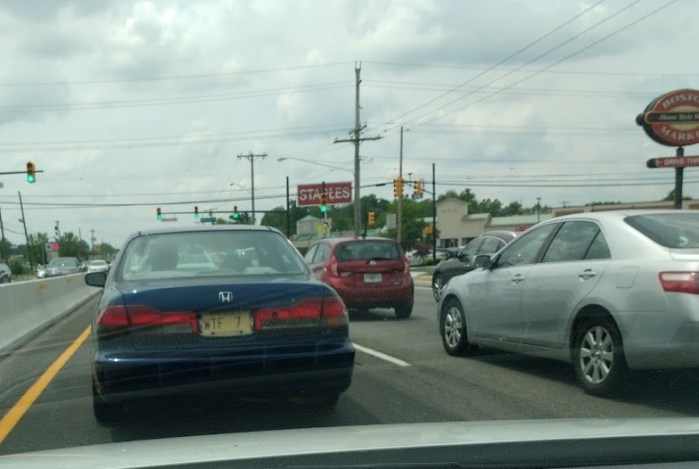
Bill never so much as changed his own oil (“that’s what dealer service departments are for”), but it still haunted him that he never lived up to his dad’s image as a “car guy”. One day, he noticed a car in the parking lot at work with 3 letters, followed by a number. That’s it! He told himself that he’d honor his father in his own way by getting a personalized plate, featuring his initials and his lucky number “7” (he was born on 7/7/47, and his house number was 7).

In New Jersey, car owners are allowed to transfer plates from one vehicle to the next, and that’s just what Bill did. His home state eventually redesigned their license plates, moving from the non-reflectorized “straw & black” to reflectorized plates in different shades. Still, Bill held onto his cherished tag, moving it from Accord to Accord. (He occasionally selected a different exterior color, but stayed with the same model.)

Both Andrew and Eileen grew up to be polite young adults, and like their parents and grandparents before them, each of them married young. Andrew and his bride Sandy moved to Indiana for her job. They also decided, for reasons kept to themselves, to remain childless. Eileen married Robb, and they moved two towns away from her folks. Bill and Sally became convinced they would never become grandparents, but Robb and Eileen were only postponing things until they got settled in their careers. They had two boys in quick succession, Tyler (2002) and Jordan (2005).

By the second decade of the 21st century, Bill Farrell wasn’t old by any stretch of the imagination, but he did feel himself slowing down. He drove less, mainly because he realized his eyesight wasn’t what it used to be. One day, approaching his car in the mall parking lot, he thought his eyes deceived him. A group of young boys was running away from his car, giggling. He thought he might have been imagining it. Then a few months later, some high school girls were using their phones (“how does a phone have a camera in it anyway?”) to take their pictures next to his car. “What could be interesting about an old Honda?” he asked himself.

Because his car was more than a few years old, and because Sally drove a newer Acura, they tended to use her car whenever they visited Eileen, Robb, and the boys. One day, since the Accord had just come back from the car wash and was blocking her car, they decided to hop into his car for the ride to visit their grandkids.

As soon as they arrived, Bill was heard to exclaim “gosh darned if these kids can’t get their noses unglued from their phones!” His daughter just shrugged her shoulders as he implored the boys to join him for a game of catch. Finally, Jordan, who had just turned 10, said, “sure Grandpa, let’s go outside”. Gramps replied, “OK, but no fastballs! And don’t hit my car with any wild pitches!”

Everyone else stayed in the air conditioning. Bill and his grandson got no further than 10 feet from the driveway when Jordan, catching his first-ever glimpse of his grandfather’s car, could not stop the hysterical laughing. Bill was equally stunned and annoyed. What in hell could be so funny? When the belly laughs finally subsided enough for Jordan to speak, he felt that he had to whisper the truth to his grandfather.

All that Bill could manage to muster in response was “texting?? Is that like email on the phone?” Beyond that, Jordan’s grandfather was speechless. And so it came to pass that William Thomas Farrell, who was so proud of the manner in which he honored his father’s memory, learned the irony of his personalized plate from his own young grandson.


This is a real photo, taken of a real car, with a real license plate (no Photoshop usage here). While driving in Flemington NJ during July of 2017, I saw this plate and fired off a shot with my phone before the car was out of my sight. The story almost wrote itself around this obviously-old NJ plate on the Accord.
All photographs copyright © 2017 Richard A. Reina. Photos may not be copied or reproduced without express written permission.


Winter Storage, and the Start of the Miata’s Next To-Do List

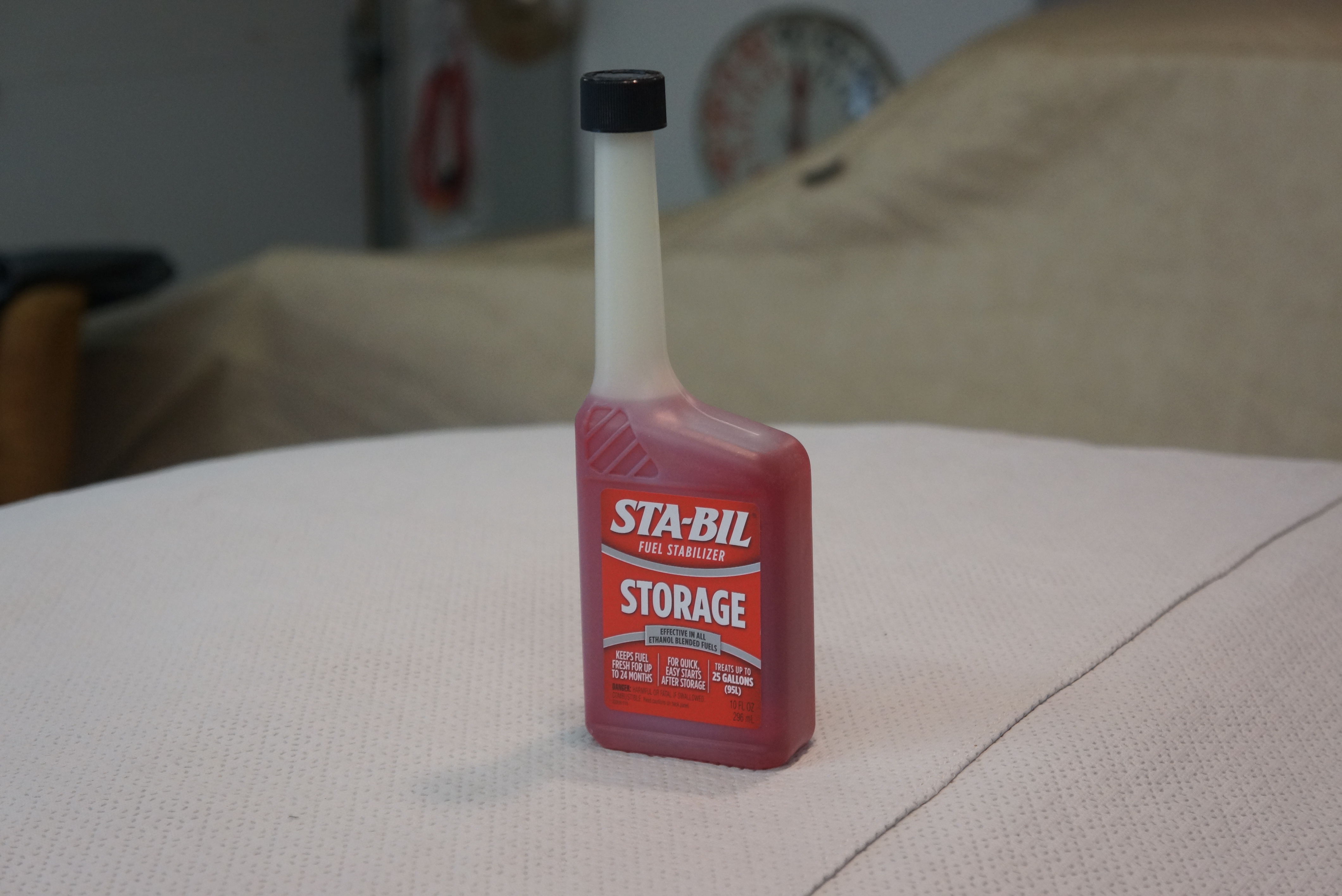
As happens every winter, the collector cars (loosely defined as the cars that don’t get driven in snow) are put away for the winter. The ritual is one that has evolved over the years and is now consistent: fill the tanks with fresh fuel, add Sta-Bil, pump up the tires at least 10 p.s.i. over normal to avoid flat-spotting, put a trickle charger on the batteries, and cover the cars with a dedicated car cover. It’s easy, takes little time, and doesn’t cost very much.

Before going further, let’s take a moment to say a few words about the brands I use, and have continued to use. (I’m a firm believer in finding good products and sticking with them, even if they cost a trifle more. As the cliché goes, ‘you get what you pay for’.)

The Sta-Bil brand of fuel stabilizer, made by Gold Eagle, has been in use in my garage since I’ve owned powered lawn and garden equipment. Many moons ago, I heard stories about lawn mowers and snow throwers, two examples of gas-engine devices which see seasonal use, failing to run because the old gummed-up gas gummed up the works. As soon as I got my first lawn mower, Sta-Bil went into its tank.  The gumming has never happened to me, and I’ve stuck with the brand ever since.

Sta-Bil STORAGE is your basic fuel additive if fuel is going to sit

Yes, I had my doubts about their ethanol treatment after it seemingly made the Alfa run worse (a conclusion which I now doubt since discovering my carbs are running rich and fouling the plugs a bit), but your basic ‘storage’ version of Sta-Bil is the way to go for any fuel tank in which fuel may sit more than 6 weeks or so.

It’s a similar story with battery chargers. I still have my dad’s Sears charger, which looks like it was made in the 1960s. It works great to jump-start a dead battery, but it ain’t no trickle charger. Long-term battery storage requires both a slow charge (the “trickle”) and a volt-sensing cut-out that won’t overcharge the thing and boil it to death.

You know it’s an old charger when there’s a switch for “6V” and “12V”

The Deltran Battery Tender brand came onto the market several decades ago, and they found their niche for the car collectors whose vehicles are stored in the off-season. While many competing brands have since been introduced, I’ve stayed with what I know works. I think I’m up to 3 of these Battery Tenders in the garage.

Green is good! Battery Tender keeps battery charged without overcharging

Car covers are a relatively new accessory to my winter arsenal. Up until a few years ago, frankly, I didn’t believe in them. It was a combination of fear of paint damage from moisture trapped beneath the cover, and frustration with my inability to find a custom-fit cover for the BMW Isetta (my expectations were a bit high with that one).

Since working at CARiD, I’ve learned a lot about the usefulness of good quality car covers, and one thing I learned is that the Covercraft brand is my favorite. The fit is perfect, and the variety of material choices will satisfy any indoor or outdoor cover needs at any price point.

The indoor-rated Dustop from Covercraft fits the Alfa perfectly

The Alfa has a Covercraft Block-It Dustop (yes, they had the ’67 Alfa pattern in stock), and the Miata wears the Covercraft Evolution indoor-outdoor cover. In the garage, both covers do more than keep dust off the paint; they also protect the interiors from sunlight, and provide some protection from wayward nuts and bolts spinning out of control off my workbench. I would never again think of storing a car without a cover. Even in the nice weather, if it’s going to be more than a week or two before one of the cars gets driven again, the cover goes on.

The Covercraft Evolution cover on the Miata is rated for indoor and outdoor use

All this is a prelude to an announcement about my Mazda Miata: after giving some thought to selling it, I’ve now decided to keep the car. What’s more, next year, in 2018, this 1993 automobile will be 25 years old, making it eligible for AACA events. So I’m going to turn it into a show car.

The plan is to spend the winter tending to some mechanical maintenance, but also attending to some detail work in order to display the car at shows next year as a 25-year-old original unrestored car.

The mechanical list includes new rear brake calipers (one of the parking brake adjusters is stuck), new tires (tread is good, but they’re 10 years old), and a continuation of the LED bulb upgrade. The detail work involves a new convertible top (worn and dirty), an engine compartment detail, Paintless Dent Removal work on some small dings, and a complete polish and wax.

Here’s hoping for a mild winter, which will encourage me to get out to the garage! As long as the temperature is above freezing, I can spend a few hours out there. Watch this blog for updates on my progress with the Miata.


Is it spring yet?


All photographs copyright © 2017 Richard A. Reina. Photos may not be copied or reproduced without express written permission.