The Isetta Saga, Chapter 24: The 2000 Lime Rock Fall Vintage Festival

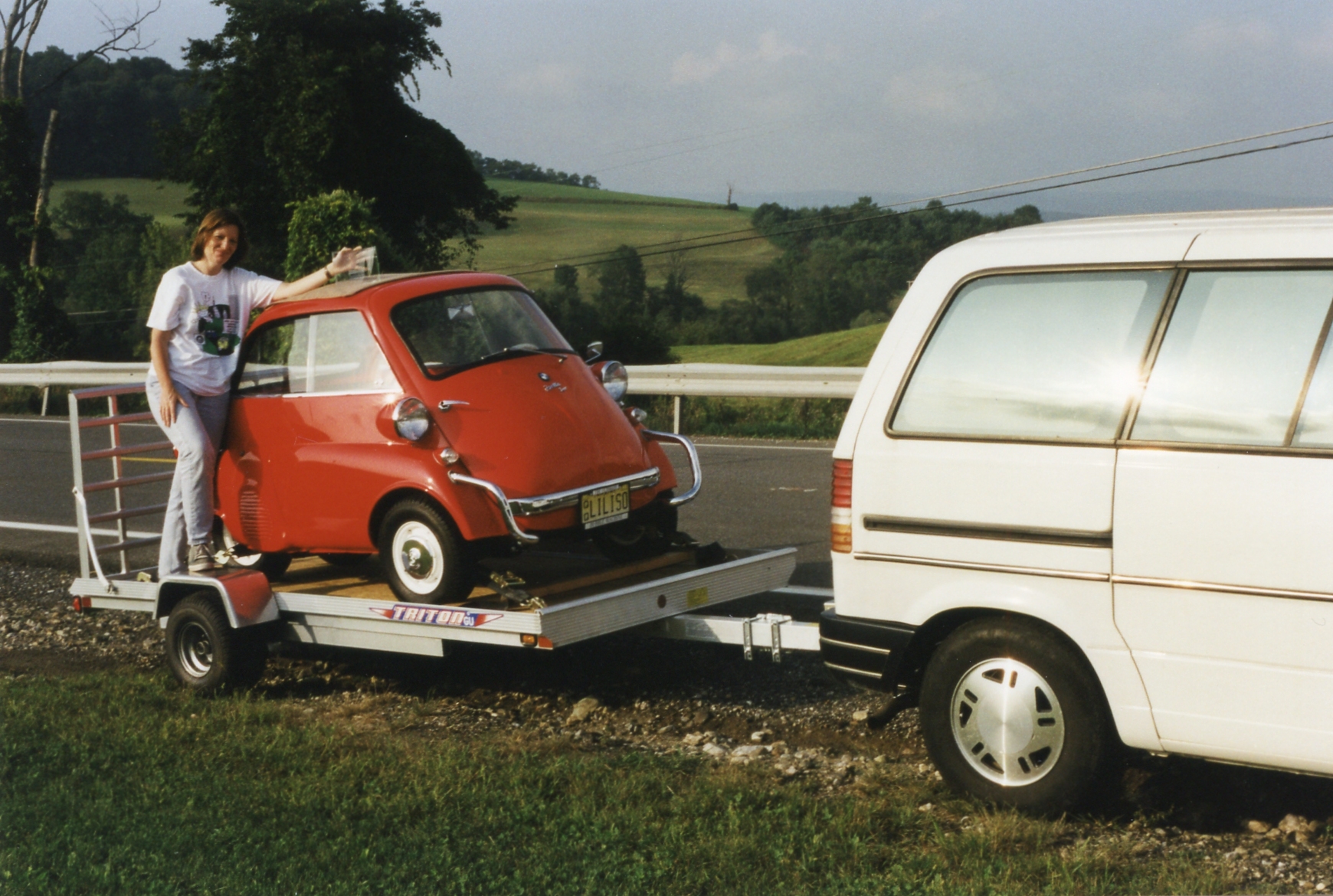
Feeling optimistic after successfully trailering the Isetta in August of 2000 to its first public show, I was ready to repeat the process. Labor Day weekend at Lime Rock Park in Connecticut has long been known to me for its Fall Vintage Festival (the event itself has gone through several name changes while staying true to its mission). Saturday and Monday of the weekend are devoted to vintage car racing, and on Sunday, when local ordinances prohibit racing, the track is given over to a static car show.

I’ve attended Lime Rock on Labor Day weekend at least as far back as 1991, when I purchased my ’67 Dodge Dart after spotting it on the field with a For Sale sign on it. During the summer of 2000, I made use of this new-fangled thing called the Internet, and found an online application form to register the Isetta for the show. It was only a matter of days when I received an email response in the affirmative.

Lime Rock CT, nestled in the Berkshires, is a little further from home than Park Ridge NJ. In a modern car, sans trailer, the trip from central Jersey is 2.5–3 hours. In an Aerostar van, pulling a trailer loaded with precious cargo, it’s a bit longer. Margaretanne and I left the house before sunrise; the communique from the Lime Rock officials requested that the car be on the field by 9 a.m.

Posing with the car. Lime Rock’s lush greenery is on full display in the background.

On arrival, we were greeted by a trio of track workers who were in a tizzy. Apparently, they did not know into which class they should place this microcar. Eventually, I was told “you’re in Class 18 – postwar European two-doors”. Instead of protesting the incorrect door count (what was I going to say? “Oh no, you want to place me in the postwar European ONE-door class”), I motored on, found the class, unloaded the car, and drove it into its display position. As had happened in Park Ridge, a small crowd gathered in amazement to watch this egg move under its own power.

The Isetta among its (class) peers

We set up the folding lawn chairs, and I got to work with the detail bucket. It was hot and humid, and while morning clouds threatened, they were gone by midday, and took some of the humidity with them. Cleaning my car gave me the opportunity to take in my competition. On one side of me was a large Jaguar drophead coupe; on the other side, an Austin/Morris Mini (the original one; the successor had not been born yet). Other vehicles in my class included a VW Bug and a Mercedes-Benz 280SE cabriolet. This was as eclectic a group of vehicles as I could have imagined.

There wasn’t much detailing to do and soon after I settled into my folding chair, the judging team arrived. This was my first exposure to “show judging”, and my slight nervousness caused me at one point to yell out to the judges “what’s taking you so long? It’s a pretty small car!”. This verbal jab resulted in an elbow jab from Margaretanne, admonishing me to behave. One of the judges asked “where’s the spare?” and with that, I folded the seat back forward (the spare is in a recess behind the seat). The judge made a comment about dust on the spare wheel/tire assembly, and this time I kept my mouth shut, making a mental note to clean the spare when I got home.
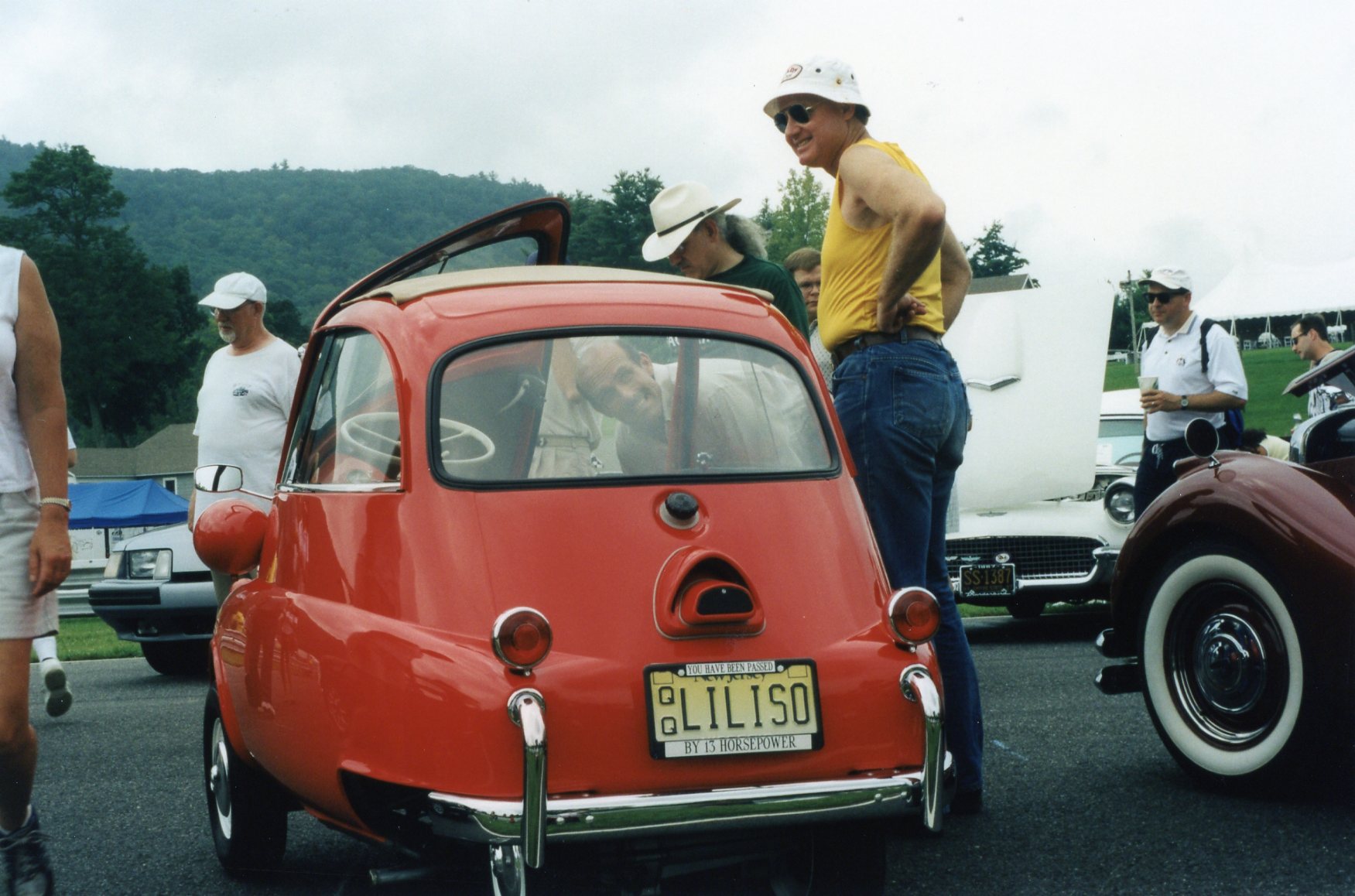
A spectator ponders if he could fit (probably could)

The judges moved on, and I tried to relax while the show attendees stopped to inspect my Isetta and ask the occasional question. I heard a female voice from a few yards away say “oh, I know that car! I helped procure a bunch of parts for it!” It was Linda Gronlund, whom I knew from her days at Volvo Corporate. She had left Volvo to work at BMW USA, and was still employed there. She had indeed played a role in helping me obtain some genuine BMW parts as long as I was able to provide her with genuine BMW part numbers. It was nice to see her, and most tragically, it was the last time I ever saw Linda. Almost exactly one year later, she was a passenger on United flight #93 which crashed in PA on 9/11/2001.

Sometime later in the day at Lime Rock, another voice, this time a male one, called my name out loud after reading it from the windshield entry card. It was Bruce Wennerstrom, who chaired the prestigious Greenwich (CT) Concours d’Elegance. I knew Bruce because Volvo had been a corporate sponsor of his event, and part of my job responsibilities included chauffeuring new Volvos to be put on display at Greenwich. Bruce and I exchanged pleasantries, and then he utterly shocked me by asking “would you like to display your Isetta at the Greenwich show next year?” I was flattered, and flabbergasted. I stammered a “yes” and told Bruce that I was honored.

By 3 p.m., Margaretanne and I were talking about getting an early start to our long trip back home. The award ceremony had just begun, and I didn’t feel it necessary to stick around for it, that is, until I heard “Isetta” over the PA system. I walked up to the awards table and, in a day full of surprises, had my biggest surprise when I learned that my car had won 1st in its class (dusty spare and all). While I am not in this hobby for trophy-collecting, it is nice to be recognized.
Margaretanne is quite proud of the award


As is the car’s owner


The Isetta was done with car shows for the year 2000. There was already something to look forward to in 2001, and that would be Greenwich in June. I had all winter to detail that spare.

All photographs copyright © 2020 Richard A. Reina. Photos may not be copied or reproduced without express written permission.

The Isetta Saga, Chapter 23: The Isetta Enters Its First Public Car Show

As mentioned in the Isetta Saga Chapter 6, it was at a car show in Ohio in 1992 when I was introduced to the national Microcar & Minicar Club. I became a member, and greatly enjoyed their club newsletter, “Minutia”. The club held an annual convention every year, and the summer of 2000 was the first time since I had joined the club that the convention would be convenient to home.


Official show poster. It’s melancholic to see Twin Towers.

The show was planned for Sunday August 12, 2000, at a hotel in Park Ridge NJ, just an hour’s drive from my home in Morristown. I registered for the event, and on the appointed day, got the car on the trailer and the trailer attached to the tow vehicle. During the car’s restoration, I trailered the bare body to and from the body shop; I had also trailered the chassis to several different locales. But I had never trailered the completed car, or any car for that matter! At the Carlisle flea market several years prior, I purchased trailer tie-downs, each rated for 3,000 pounds (a complete Isetta weighs about 770 pounds). I wanted triple assurance that this car wasn’t going anywhere. The straps were wrapped around the chassis both front and rear, and secured to D-rings I had bolted to the trailer floor. With the trailer hooked to the Aerostar, and a final check of functioning trailer lights, we were off.

Newly acquired tow vehicle and trailer

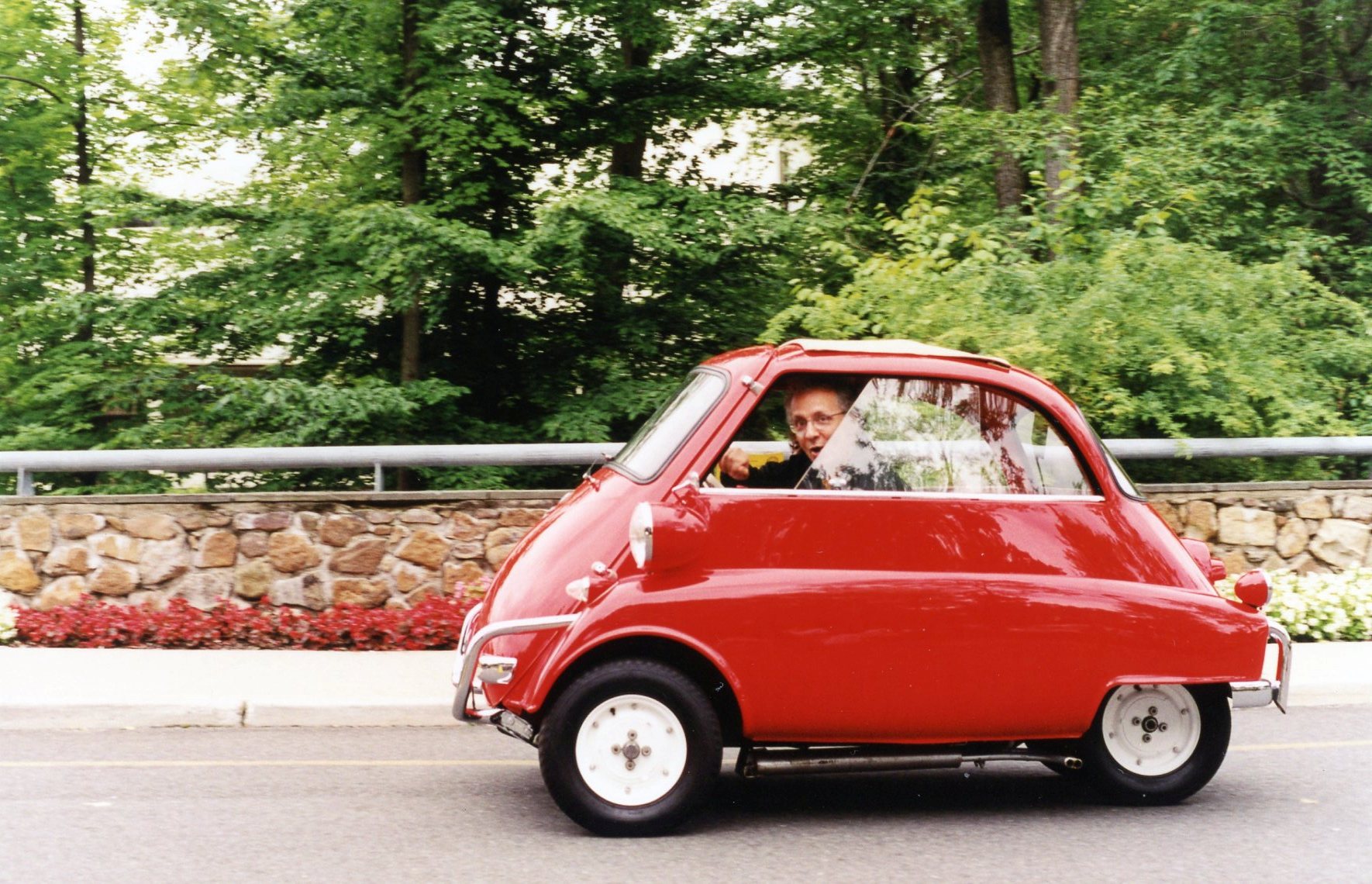
Shades of 1978! As I motored north on Route 287, staying in the right lane, cars and trucks approaching me in the center and left lanes would slow down and match my speed as they caught up to me. The passengers in these other cars would point, wave, smile, laugh, and in some cases, act completely bewildered. The worst was when a driver would become so distracted by the shiny red object that the driver’s vehicle would begin to drift into my lane. I stayed calm, and would acknowledge their attention with a slight smile or wave, but I felt so nervous about my cargo that it was the two-hand death grip and eyes straight ahead almost without exception during the drive.

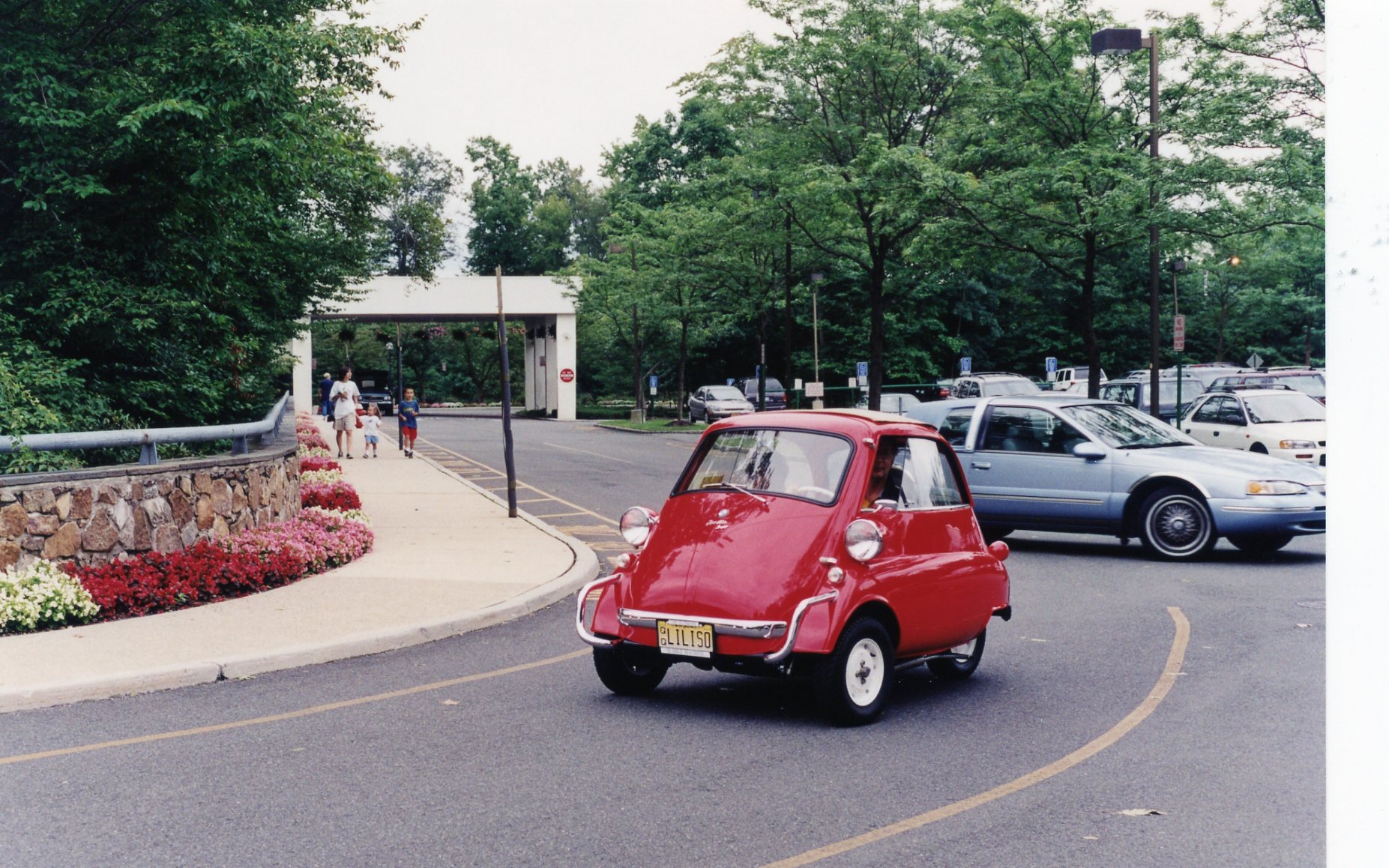
Looking for a parking spot (photo courtesy of Carol Ladd Hansen)


Piloting the machine (photo courtesy of Carol Ladd Hansen)


I arrived at the hotel parking lot and got the car off the trailer. It seemed that I was a little late. Almost every spot dedicated to show cars was filled. The organizers put my car in an aisle along with a few others. I decided to walk the show and see what else was on the ground.

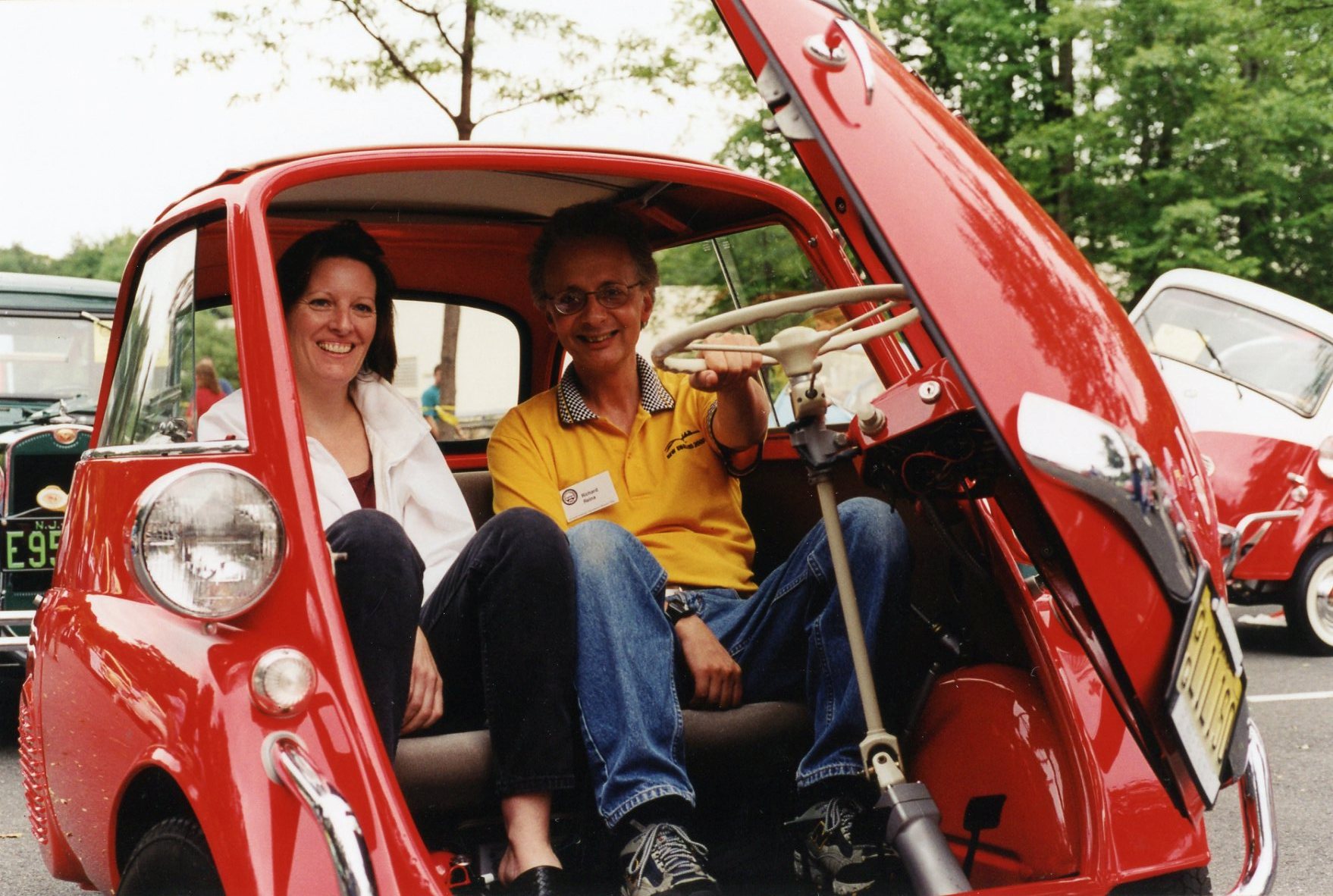
Margaretanne and I demonstrate the ample interior room for the crowd

It had been a while since I last attended a microcar show, and I was overwhelmed at the large number of Isettas in attendance. Actually, Isettas looked like the normal cars there compared to the much more unusual microcars on display. There were Messerschmitts, Lloyds, Heinkels, and a couple of miniature woodie wagons. Everyone was very complimentary about my car, and perhaps I was a bit too apologetic about it, exclaiming that it was its first public outing. (A photo of my car made it to the club’s website with the caption “newly restored”.) We stayed for the banquet dinner, made some new friends, and headed home.


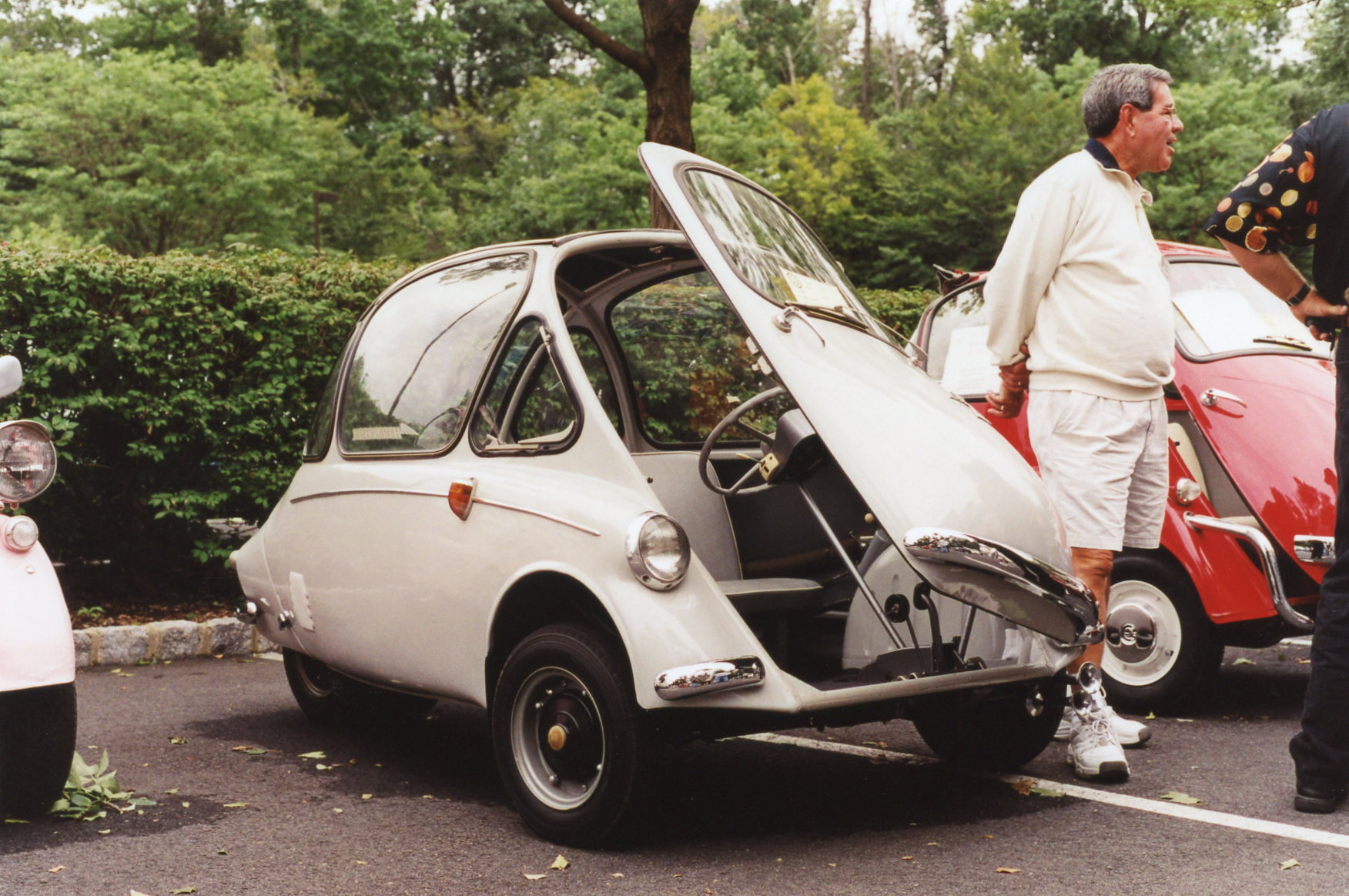
It’s not an Isetta; it’s a Heinkel Trojan


Velorex (fabric covered body)


Lloyd Alexander


Morris woody wagon


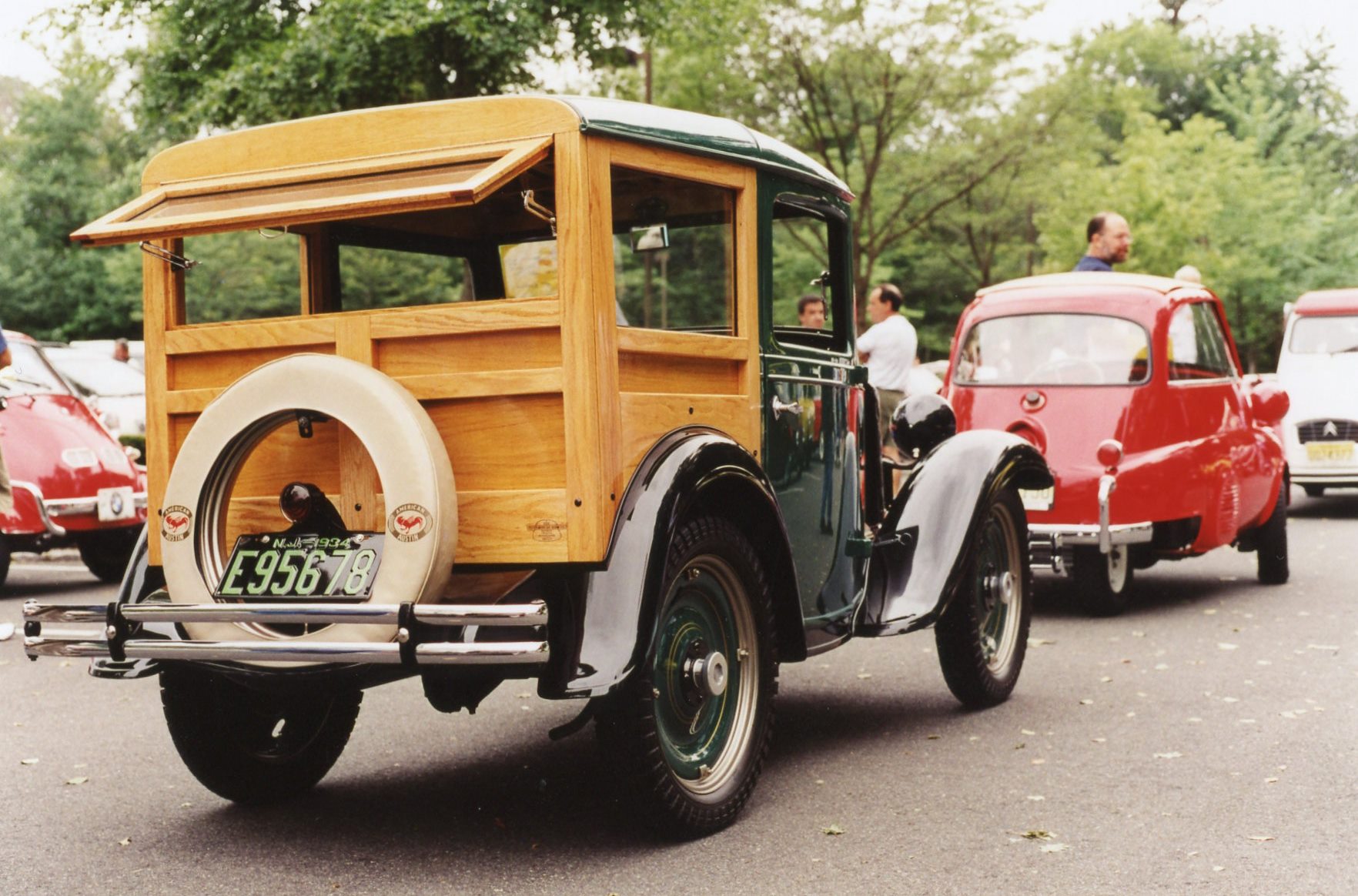
Austin 7 woody wagon (my car directly in front of it)


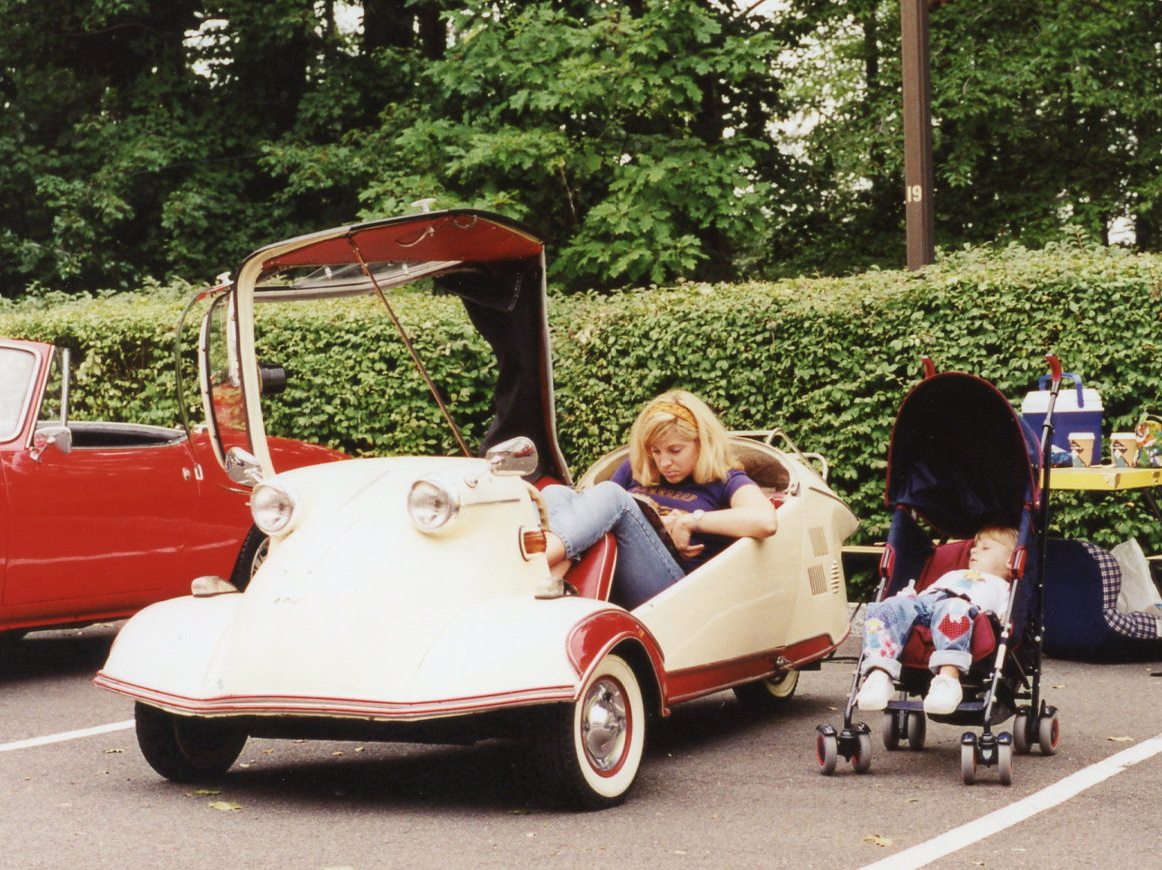
Messerschmitt (when your car is barely bigger than your baby stroller)


It was a rush to finally show my car in a public setting. It was the kind of event that made the efforts of the previous ten years worthwhile. I was interested in more, and had already taken care of that. Labor Day Weekend was approaching, and that meant the annual Lime Rock Vintage Fall Festival. My car was registered for the Sunday show, and I couldn’t wait.

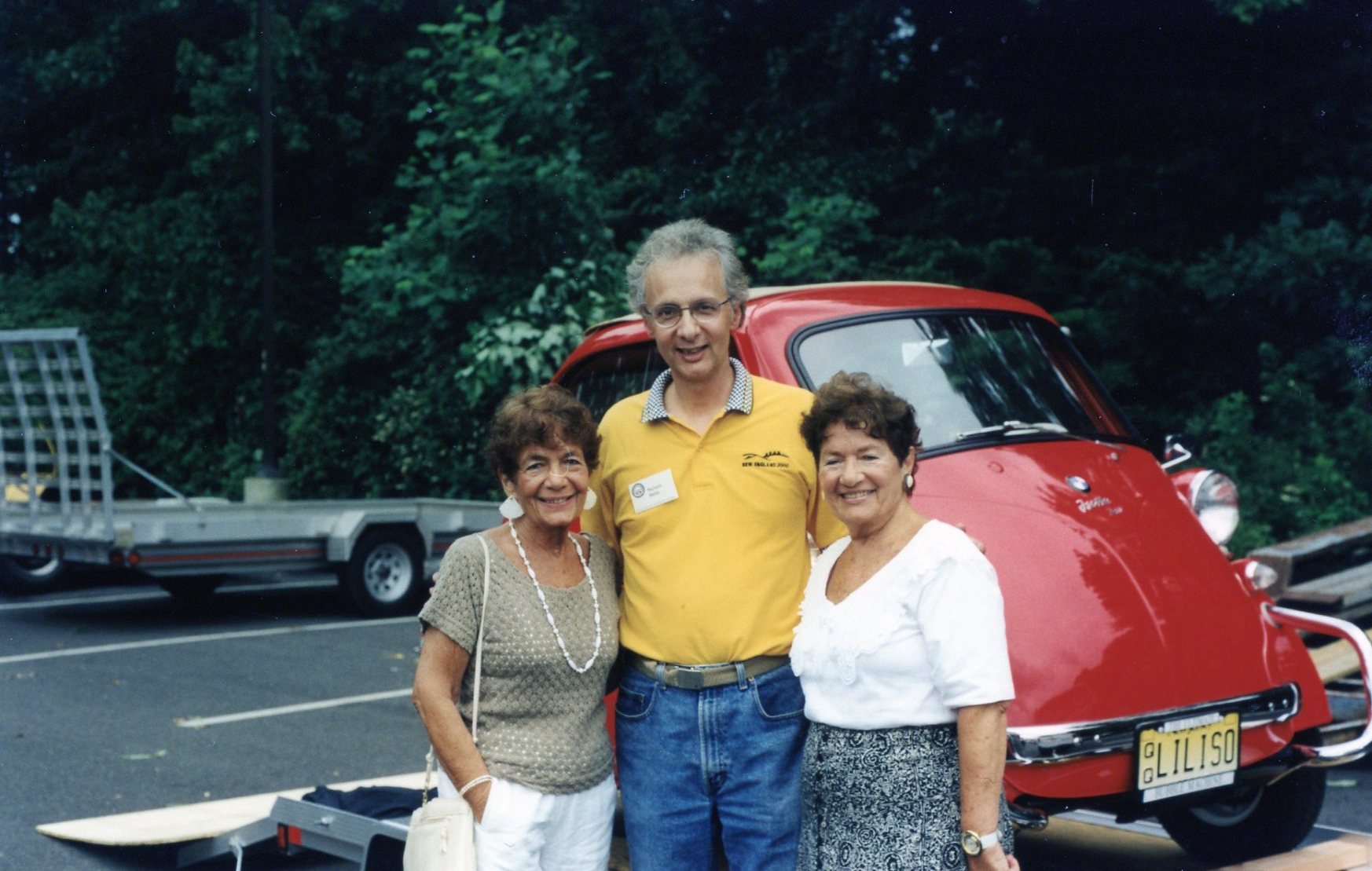
Flanked by my mom (L) and Aunt Rita (R). Yes, we’re all standing on the same level ground.


All photographs copyright © 2020 Richard A. Reina. Photos may not be copied or reproduced without express written permission.
The Isetta Saga, Chapter 22: It’s Almost Showtime

The Isetta Saga is back! You didn’t think it was done, did you? In honor of chassis number 509090 returning to the auction stage later this year, the story picks up where it left off. The new owner (and there will be a new owner, as this car is being sold at No Reserve) deserves to have the complete story at hand, so here we go!

With the over-the-top Bubble Party behind me in October of 1995, I was exhausted. It’s not an exaggeration to state that the majority of my free time during the five preceding years was spent on this car’s restoration. Having achieved the mission (“The Isetta Will Drive in ‘95”), I needed to step back for a while. Little did I realize that a while would be A WHILE.

My personal life suffered a momentous setback: I got divorced. This blog is not about sharing those details, but I must acknowledge that it happened. My wife and I separated, we both moved elsewhere, the house we shared was sold, and the Isetta was put into storage. I had no physical or emotional energy to resume work on it, which is a shame because there was so little left to do!

During this time, I continued my membership in the Microcar & Minicar Club, the national organization which supported all small cars with engines of less than 1,000cc (one could fuse together 3 Isetta engines and still be a member). The Club published a great newsletter, full of technical articles and other interesting features, and there still was an annual National Meet, each year held in a different part of the country, but never in the Northeast.

Until 2000.

Sometime in 1999, the M&M Club announced that the “2000 North American International Microcar Rally” would be held in August 2000 in Park Ridge NJ. The town of Park Ridge was less than an hour’s ride from my then-domicile in Morristown NJ. This was the kick in the pants I needed. I would finish the Isetta’s restoration and bring it to its first public show.

Front & rear glass installed, waiting on side glass, sunroof, & bumpers

What was left to do? The Bubble Party video shows a car missing all its glass, its fabric sunroof, and the front bumper horns. With about nine months’ time before the August show, the remaining work didn’t seem overwhelming. The first items to tackle were the front bumpers. One bumper had a tiny dent in an inconspicuous spot, but both bumpers had weak chrome. I dropped them off at a replating service facility in Hillside NJ, which charged $130 to rechrome the pair. They looked great.

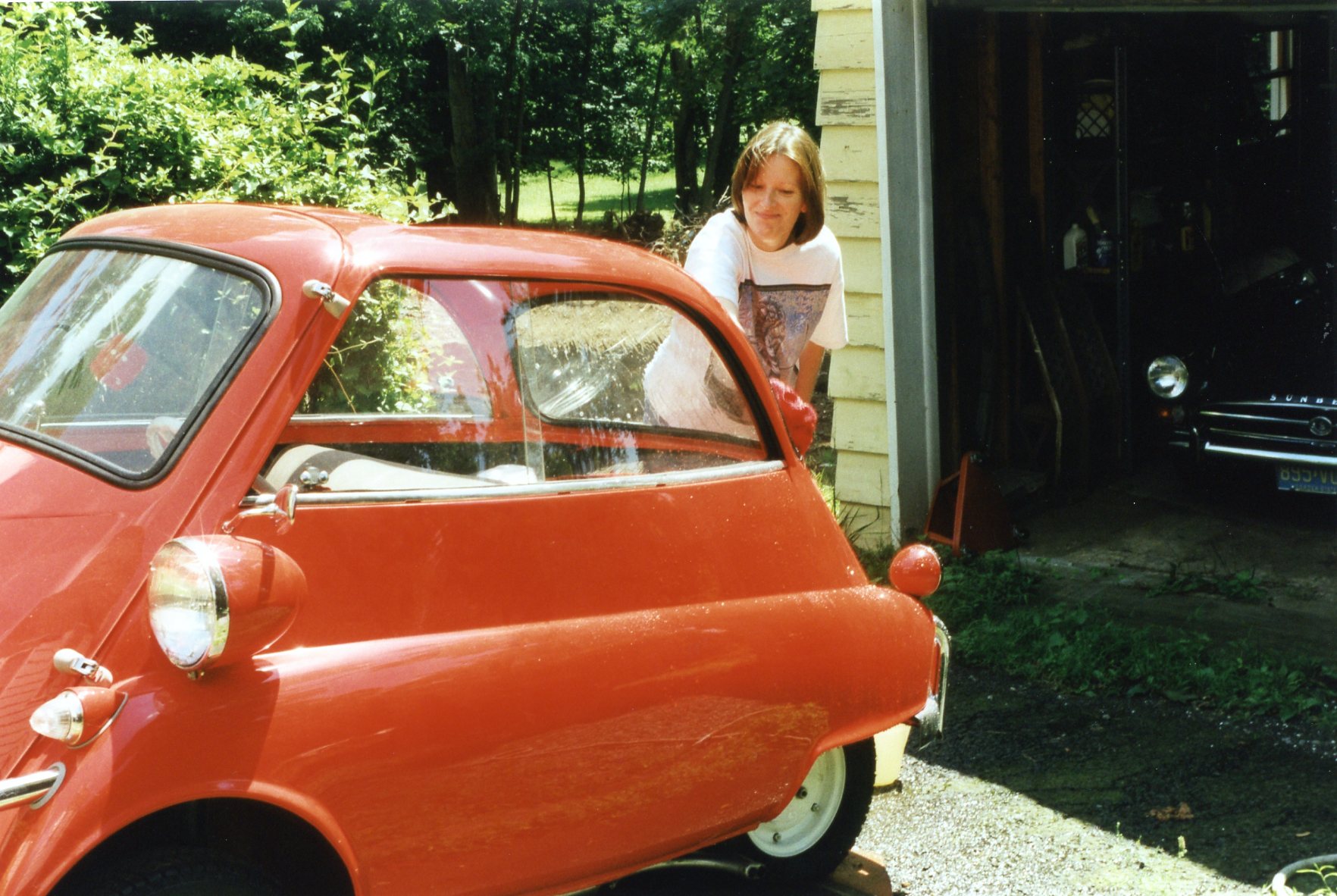
Margaretanne washes the egg. Still no sunroof, so be careful with that hose! Note peeking Sunbeam Tiger.

The windshield and rear glass were designed to fit into the rubber seals the old-fashioned way: the glass sat in a groove in the rubber, and the ‘rope trick’ was employed to get them back into place. Using lots of detergent as a lubricant, a rope was placed inside the rubber seal. With the glass placed against the outside of the seal and a second person pushing in on the glass, the rope was gently pulled outward, which lifted the seal’s outer lip up and over the edge of the glass. It was tricky, and it took time and effort, but both glass pieces were reinstalled without breakage.

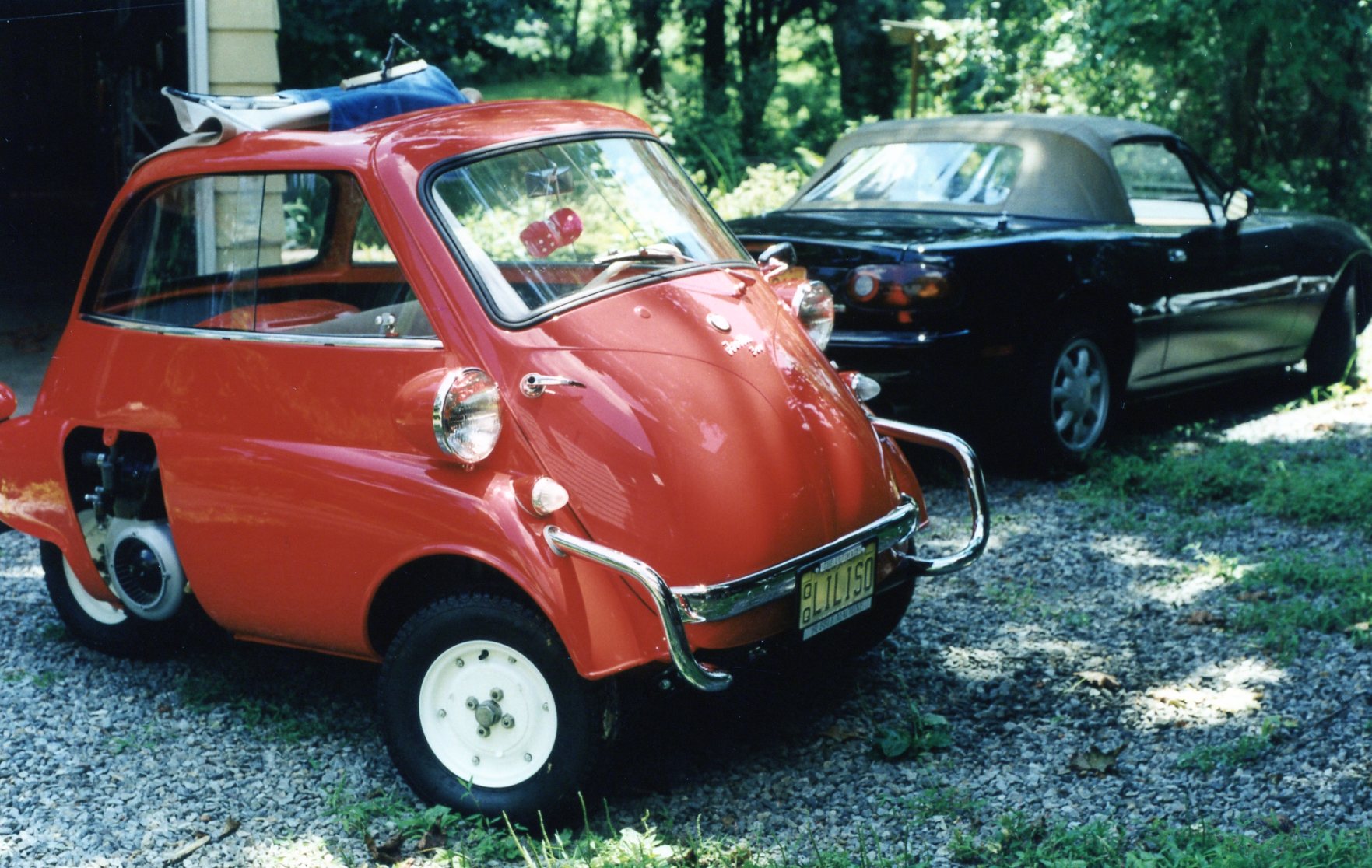
Proudly I pose as we prep the car for showtime

The side glass was another matter altogether. My Isetta body style is called the sliding-window model specifically because of the way the side windows operate. There are two pieces of glass on each side: the rearmost piece is fixed in place; the front piece slides horizontally. When pushed fully rearward, the front and rear pieces overlap by about 50%. It’s crude in practice, but on a hot day, you need all the ventilation you can get. The entire assembly is held in place by a metal trim piece along the bottom, riveted to the body. The trick, like the front and rear glass, is to enlist another set of hands or two, as the glass, the rubber weatherstripping, the metal trim, and the rivets all need to be aligned and held in place before the first rivet is driven home.

For the sunroof, professional help was again sought. A local convertible top installer was given the original but very worn black vinyl sunroof to use as a pattern. In one of the few deviations from stock, I requested beige Haartz cloth material. They returned the completed sunroof assembly to me, and I installed it on the car, again using the rivet gun to fasten to rear edge to the existing holes in the roof.

The sunroof in the process of being reinstalled

The hubcaps I owned were problematic. They were dented, dull, and I only had three! A set of new reproduction hubcaps was purchased from a domestic Isetta parts supplier, but they didn’t fit my rims. While a set of hubcaps would finish the exterior look, the lack of them wasn’t going to be a dealbreaker for the show.

Finally, I needed a tow vehicle and a trailer. (I had sold the previous trailer when I moved in 1996.)  An Isetta weighs about 770 lbs. if its 3-gallon fuel tank is full, and a 10-ft. open landscape trailer comes in around 300 lbs., so I didn’t need or want a full-size body-on-frame truck for towing duty. At the time, the only other car I owned was the Miata; my daily driver was a Volvo company car, and I usually had little choice of body style. I reasoned that something with some carrying capacity would be handy to have, even when I wasn’t towing anything. An ad in the classified section of the Newark Star-Ledger caught my eye (online ads weren’t a big thing yet): “For sale: 1992 Ford Aerostar van. Original owner. 92,000 miles. $3,900.” I saw it, I test drove it, and I bought it, rationalizing that its RWD powertrain would make it more capable of pulling a trailer (which also made it impossible to drive in the snow). Next, a 5×10 open deck landscape trailer was purchased. A local repair shop installed a hitch on the Aerostar, and I was ready. The Isetta would soon be in attendance at its first car show.

OMG! Someone parked an Isetta on top of a gargantuan statue of one!


All photographs copyright © 2020 Richard A. Reina. Photos may not be copied or reproduced without express written permission.
Abarth Obsessed

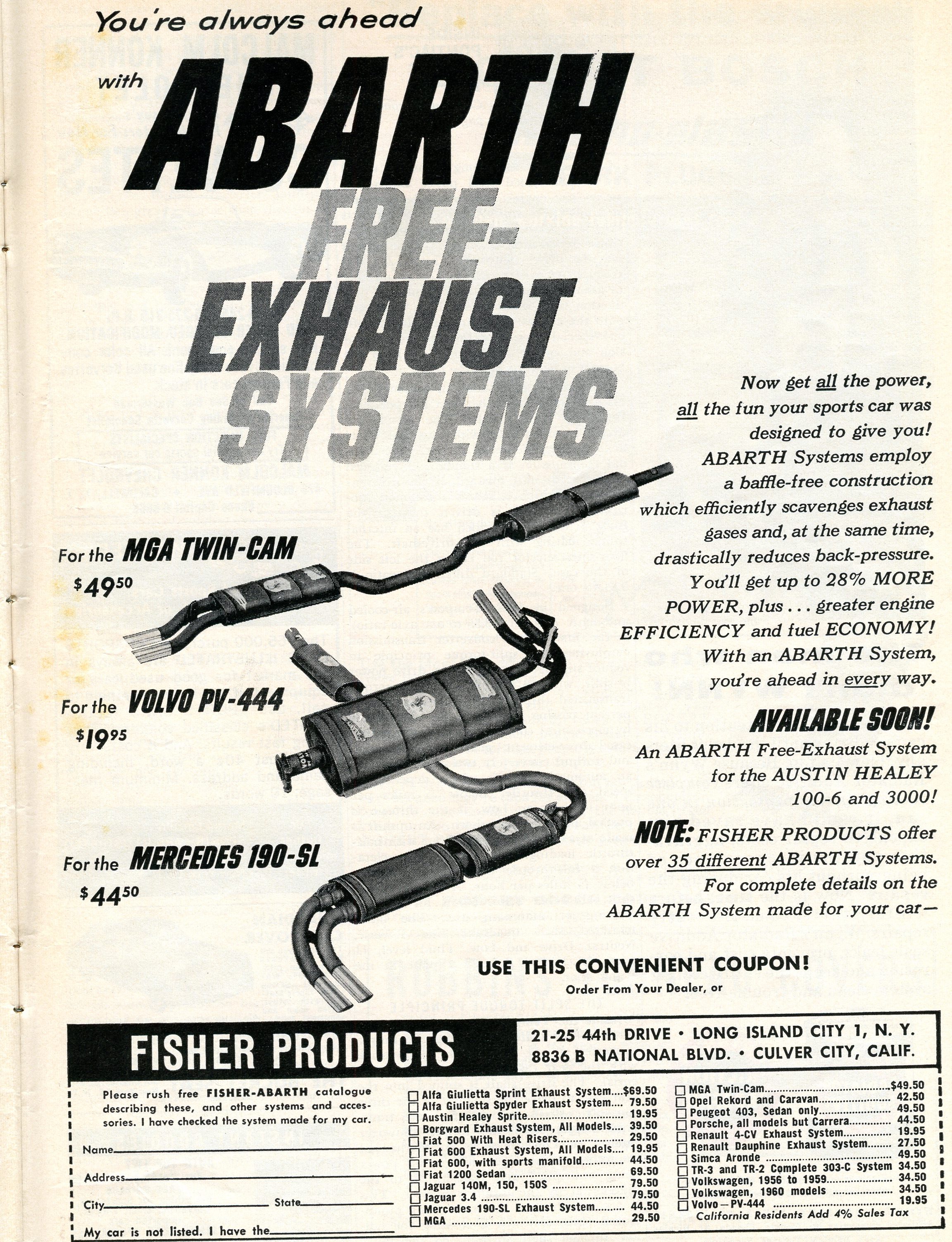
Does the name Abarth ring a bell? If you’ve been around automobiles a while, you may recall a line of performance mufflers and exhaust systems sold under the Abarth name. For much of the ‘50s through ‘70s, it was one of the hot setups. Relatively affordable compared to more extensive modifications, an Abarth exhaust system bolted on easily, provided at least a few additional ponies, and sounded like you added more than just a few.


This Abarth exhaust ad is from the Oct. 1960 issue of Sports Cars Illustrated magazine

Fast forward a bunch of decades, 2012 to be exact, and remind yourself that this was the year Fiat reentered the U.S. market, offering new Fiat automobiles to Americans for the first time in about 30 years. To start, there was one model, the 500, available in several trim levels. Top of the heap was the Abarth, utilizing a turbocharged engine which gave it a 59-horsepower advantage over its lesser brethren. A few years after that, when the 124 convertible was reintroduced, there was an Abarth version too.

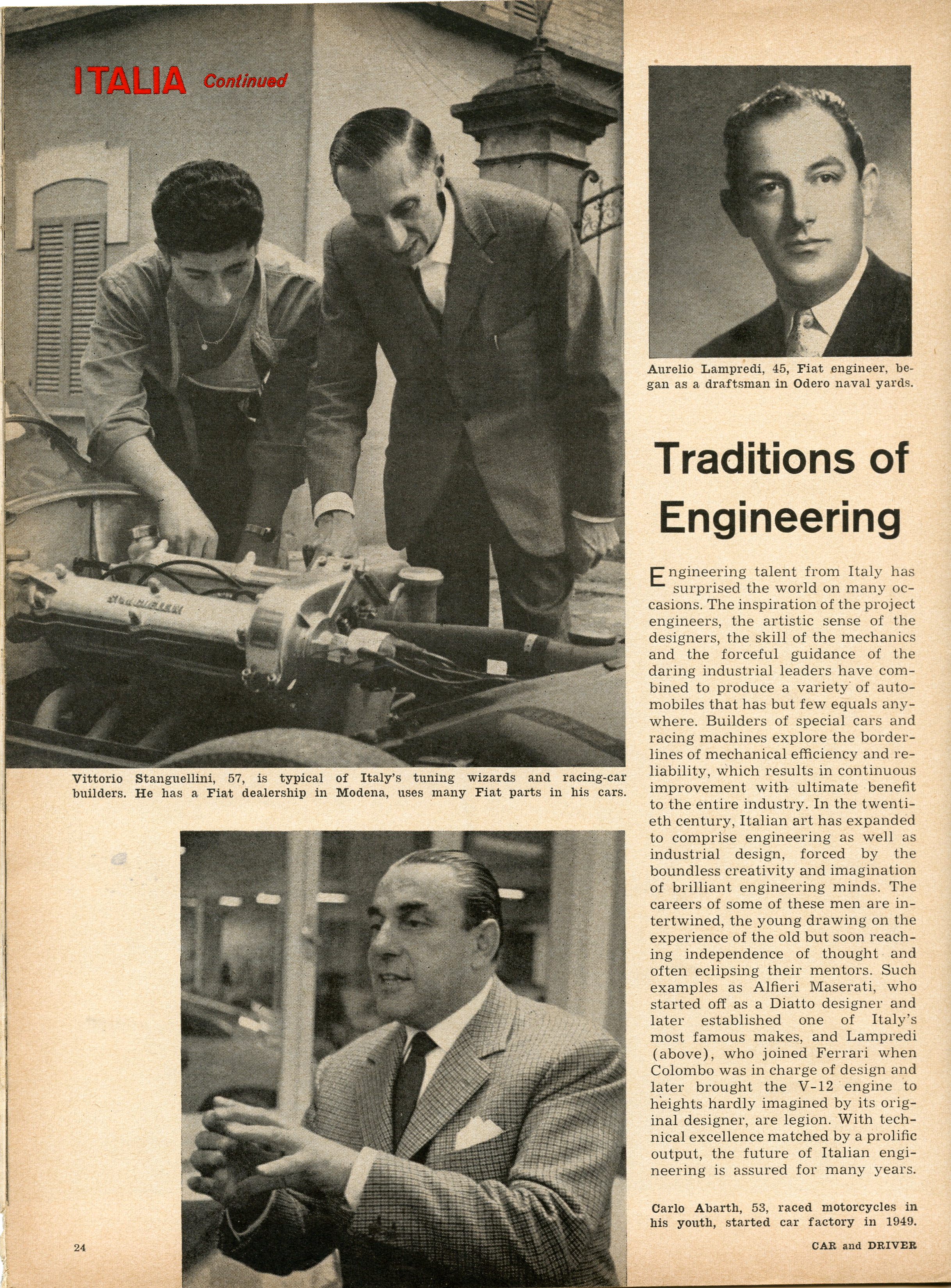
Of course, there’s more to the story. The Abarth company was started by and named after its founder, Carlo Abarth (born Karl Abarth in Austria), who moved to Italy, amended his first name to sound Italian, and began to build performance engines. From there he progressed to modifying Fiats, and eventually manufactured his own cars. The Abarth company was at its peak during a 15-year run from about 1956 to 1971, at which time the company was purchased outright by Fiat. His Astrological sign, Scorpio, inspired the Scorpion image which adorns the Abarth badge.

The March 1962 issue of Car & Driver magazine included this blurb on Carol Abarth

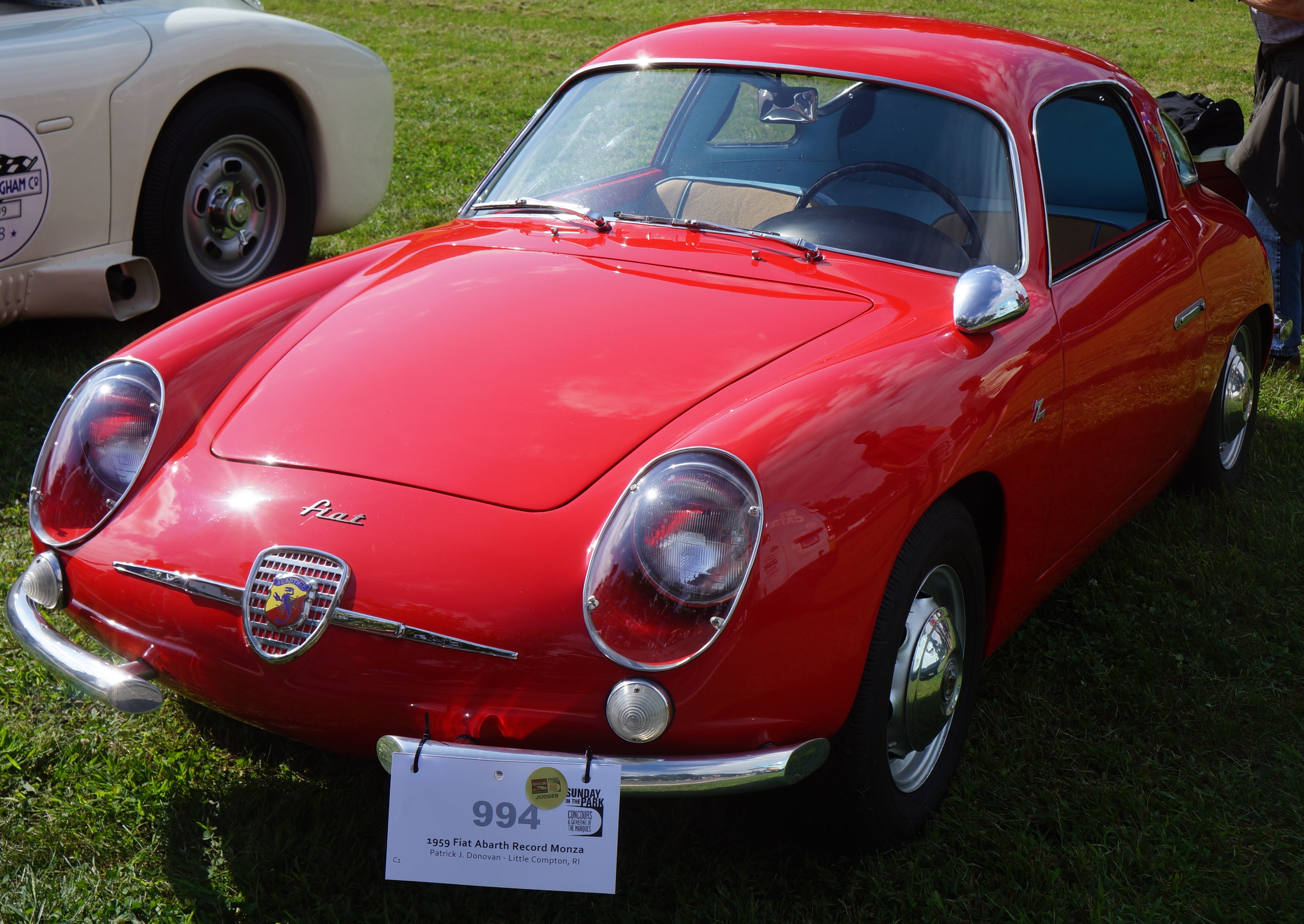
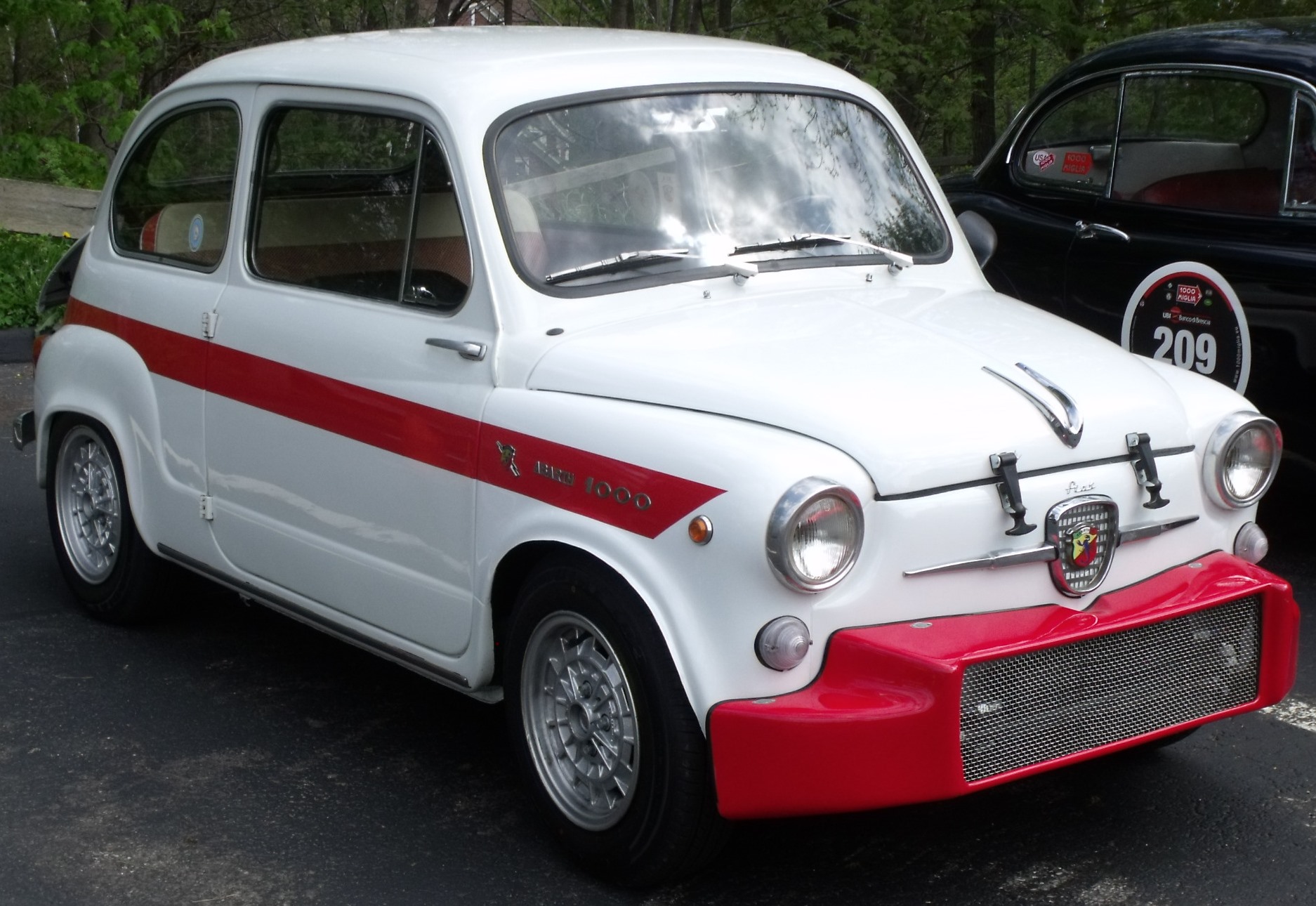
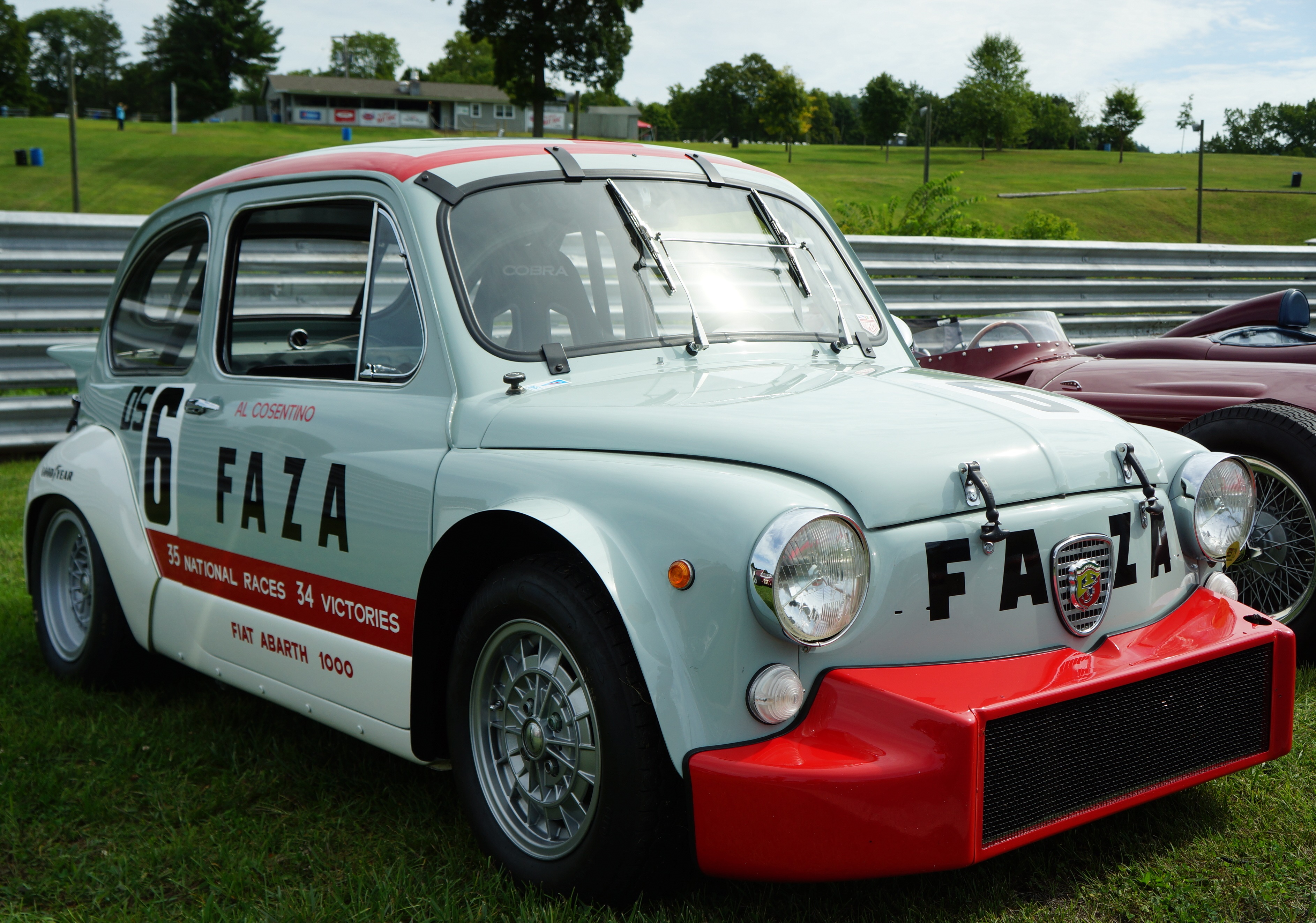
I’ve long been obsessed by Abarth cars. First, they’re Italian. Second, their diminutive size is something I’ve always found attractive (this coming from a former Isetta owner). Third, their status as the “David” versus the “Goliaths” of the day always had me rooting for them. Amazingly, in spite of a sometimes tremendous horsepower disadvantage, they racked up a series of impressive racing wins. Not a lot of Abarth cars were built, more than a few were wrecked, and even fewer were preserved, so spotting one today is a treat.

I’ve photographed Abarths at Hershey, at Lime Rock, and at the New England 1000 rallies, yet I realized that I knew very little about the cars. Poring through my automotive library in search of historical information on the brand, I was surprised how little I found. Most of my general-interest books on European cars do not mention Abarth, and I would venture to guess that they were thought to be similar to a ‘tuner’ like Dinan for BMW or AMG for Mercedes-Benz. The Standard Catalog of Imported Cars 1946-1990 has the most extensive Abarth coverage of any of my books, with good technical specs yet few photos.


This page is from Tad Burness’ scrapbook-like Imported Car Spotter’s Guide


This Abarth was seen at Hershey in 2015


This Abarth joined us during the 2014 New England 1000


Found on display at Lime Rock in 2014


Searching online, I discovered a book by Peter Vack: Abarth Buyer’s Guide, published in 2003 by Veloce Press. I bought it and have begun reading it. It’s not easy keeping track of models with such similar names as Fiat Abarth 750 Berlina, Fiat Abarth 750 GT Zagato, and Fiat Abarth 750 Allemano. Then we move to Fiat Abarth OT 850 Series, Fiat Abarth OT Coupes, and Fiat Abarth OT Sports Racers. Some have stock Fiat sheetmetal, some are externally modified, and some have bespoke bodies. All of them have rear-mounted Fiat-based engines, modified modestly or aggressively. For some models, the book notes that “no two cars were alike”.

There will be more to say about Abarth cars in the coming weeks.  Actually, this post will be tied into another recent post, and will become an ongoing storyline through the summer and fall. In the meantime, if you come across an Abarth on the street, please snap a pic and send it to me. Thanks.


All photographs copyright © 2020 Richard A. Reina. Photos may not be copied or reproduced without express written permission.
My Old Isetta is Going Back on the Block

In the almost seven years since I sold my Isetta at an RM auction in October of 2013, I occasionally scan the automotive classifieds, both in print and online, wondering if I will come across my former car for sale. Up until a few weeks ago, that search had turned up blank.

My Isetta at the Oct. ’13 RM auction in Hershey PA. Note suitcase on package shelf.

Checking out an email I received for an upcoming RM Sotheby’s auction, I was drawn to what appeared to be an outstanding collection of Italian cars: the expected Ferraris and Alfas but also Autobianchis, Isos, and some rarely-seen Fiats. That’s when I saw it.

An all-red BMW Isetta was part of the sale. Clicking on the photos, I looked for tell-tale signs, the kinds of things that I, having owned the beast for 35 years, would recognize. (I’m fond of an expression picked up from a hobbyist friend, who says of his own car: “I know where the bodies are buried”.) Checking the chassis number was the final proof. I called my wife into the room and showed her the photos.

Wife: “How do you know it’s yours?”

Me: “509090.”

Wife: “Huh?”

Me: “It’s the chassis number. I have it memorized.” (Oh, and still on the package shelf is the ‘50s-era suitcase covered in travel decals which I picked up in an antique store for $10.)

The auction, billed by RM Sotheby’s as “The Elkhart Collection”, is scheduled to take place on October 23 & 24 of 2020. Those are the rescheduled dates; initially the auction was supposed to run in May, and it’s presumed that the coronavirus was the proximate cause of the postponement. At this writing, it’s listed as a “live” auction, however, all RM Sotheby auctions since the global shutdown have been online only. While I’m long out of the business of predicting the future, I would venture to guess without too much risk that this one will revert to the online-only format soon enough.

Here’s how the RM Sotheby’s website describes the collection:

OVER 240 CARS AND WIDE SELECTION OF COLLECTIBLES OFFERED ALMOST ENTIRELY WITHOUT RESERVE

The result of decades of judicious and targeted collecting, The Elkhart Collection – Offered Almost Entirely Without Reserve comprises the most exceptional marques and models in automotive history. The focus is at once broad but highly selective from sporting British and Italian cars to microcars, classics, supercars, modern sports cars, ‘50s convertibles and coachbuilt icons. Stay tuned for the digital catalogue coming soon. To view lot listing, click here

It didn’t take much snooping to get the rest of the story. This is from AutoWeek:

Damn, This Accused Fraudster Has Excellent Taste in Cars

There’s something for everyone in the RM Sotheby’s Elkhart Collection catalog—and with the sale moved to October, you’ve got plenty of time to browse it.

The gist of the AutoWeek story is that this 240+ car collection was amassed by one person, an Indiana businessman named Najeeb Khan, who has now been accused of fraud, although the author is also quick to note that he has not been charged with a crime. But his collection is being liquidated so that he can pay back his creditors.

Personally, I don’t really care about this guy’s personal problems. He has excellent taste in cars, especially of the Italian variety, although the remainder of the collection is also worth a gander. I’ve asked myself if Mr. Khan is the person who purchased my car at the 2013 Hershey auction. While it’s impossible to make that determination from the auction company’s website, I checked the mileage on my car on the date that I sold it, and the mileage shown in the current listing. The Isetta has been driven exactly one mile in the previous 6.5 years. Which is a shame, really, because the car runs well and it’s a blast to drive!

To the new owner, whoever you are: get some new tires. I bought those Michelins in the early ‘90s.

There’s more to discuss about the Elkart Collection Auction in future posts. The discovery of my old car will also spur me to resume the Isetta Saga. There’s lots more to share, and I want all those bidders to have the entire story!

All photographs copyright © 2020 Richard A. Reina. Photos may not be copied or reproduced without express written permission.