An unplanned visit to the America on Wheels Museum in Allentown PA

Although I knew in the back of my mind that this could be a bad idea, I decided to head out to Hershey PA on Wednesday of last week for a “twofer”: I intended to visit the AACA Museum and also swing by the AACA Library to drop off some books I wanted to donate. Yes, it was raining when I left, with the forecast predicting “rain all day”. I’ve tried more and more to not let the weather forecast dictate my plans, and so I departed around 7 a.m. as intended. However, the weather forecast I had consulted was the one for my hometown. Neglectfully, I had not checked the weather predictions for central Pennsylvania.

The first hour and a half of the drive, though, was uneventful. At about the halfway point, I pulled into a favorite Dunkin’ Donuts which I frequent, treated myself to a hot brew, and sat down for a while. That’s when I heard the sheets of rain begin to whip against the building, riled up by the increasing winds. Hmmm. If I got to the Museum by 10, rushed through it, skipped the book dropoff, and skipped lunch, I’d still be driving back home in what now looked like the brunt of the storm. Time to reconsider….

I remembered that there was a car museum in Allentown PA, although I knew nothing about it. I looked it up: “America on Wheels”. I called to ensure that they were open, but the best I could glean from the voice recording was that they were open “Wednesday through Sunday, 9 a.m. to 5 p.m.”. Since today was Wednesday, I reckoned that they were indeed open. This meant heading back the way I had just traveled, but maybe I could salvage the day. Allentown would be only an hour home, so reverse direction I did.

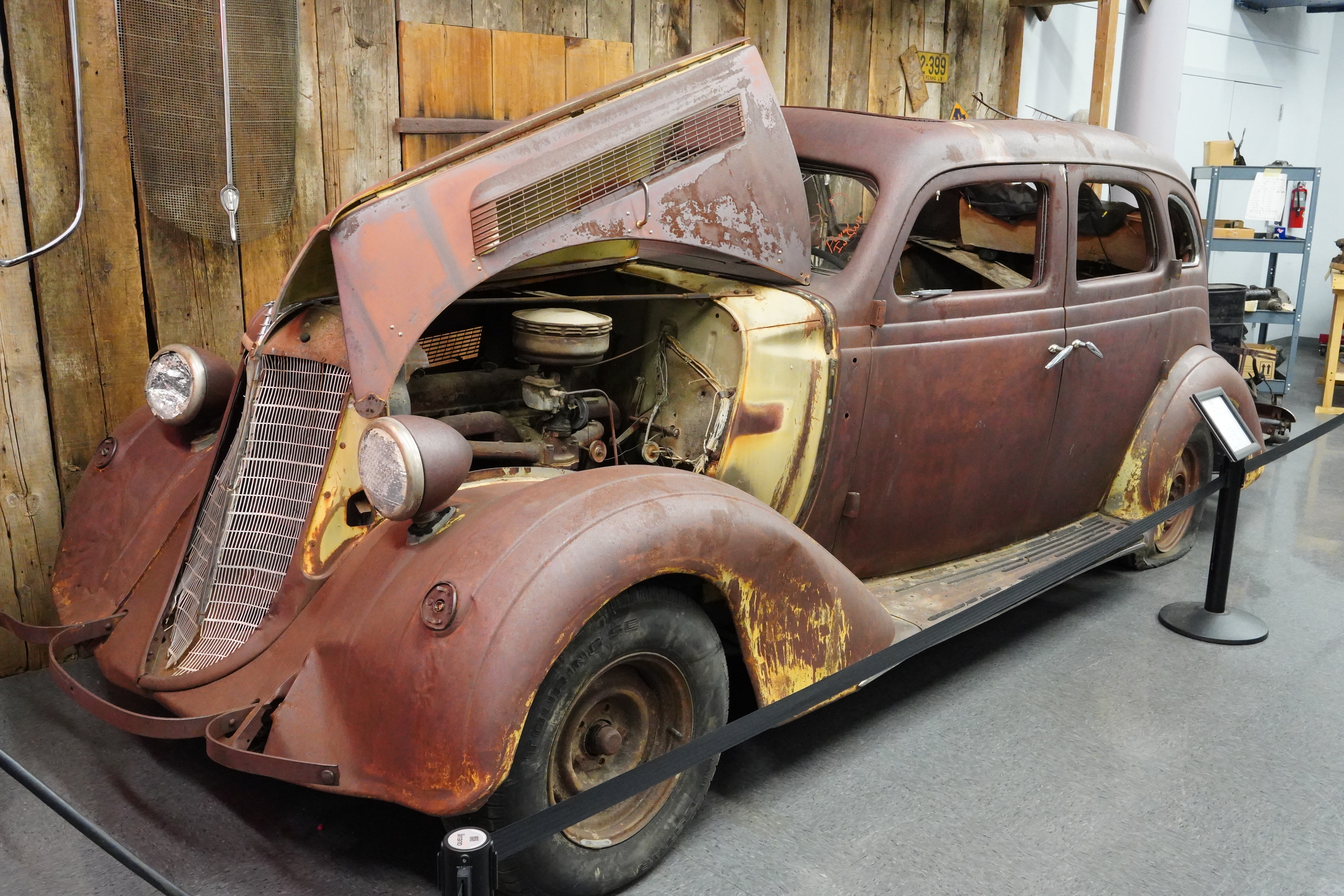
The Google Machine took me directly there, which was a few miles off the highway. I was not alone in visiting the museum on this soggy day. Paying my $13 Senior rate, I walked in and was immediately impressed. The displays were well done, and each car had a descriptive plaque. There were also “side exhibits” more geared toward school-age children, which were nevertheless nice to see. A standout feature was the continuous focus on local Pennsylvania history, such as several antique automobiles which had been sold new in the Allentown area.
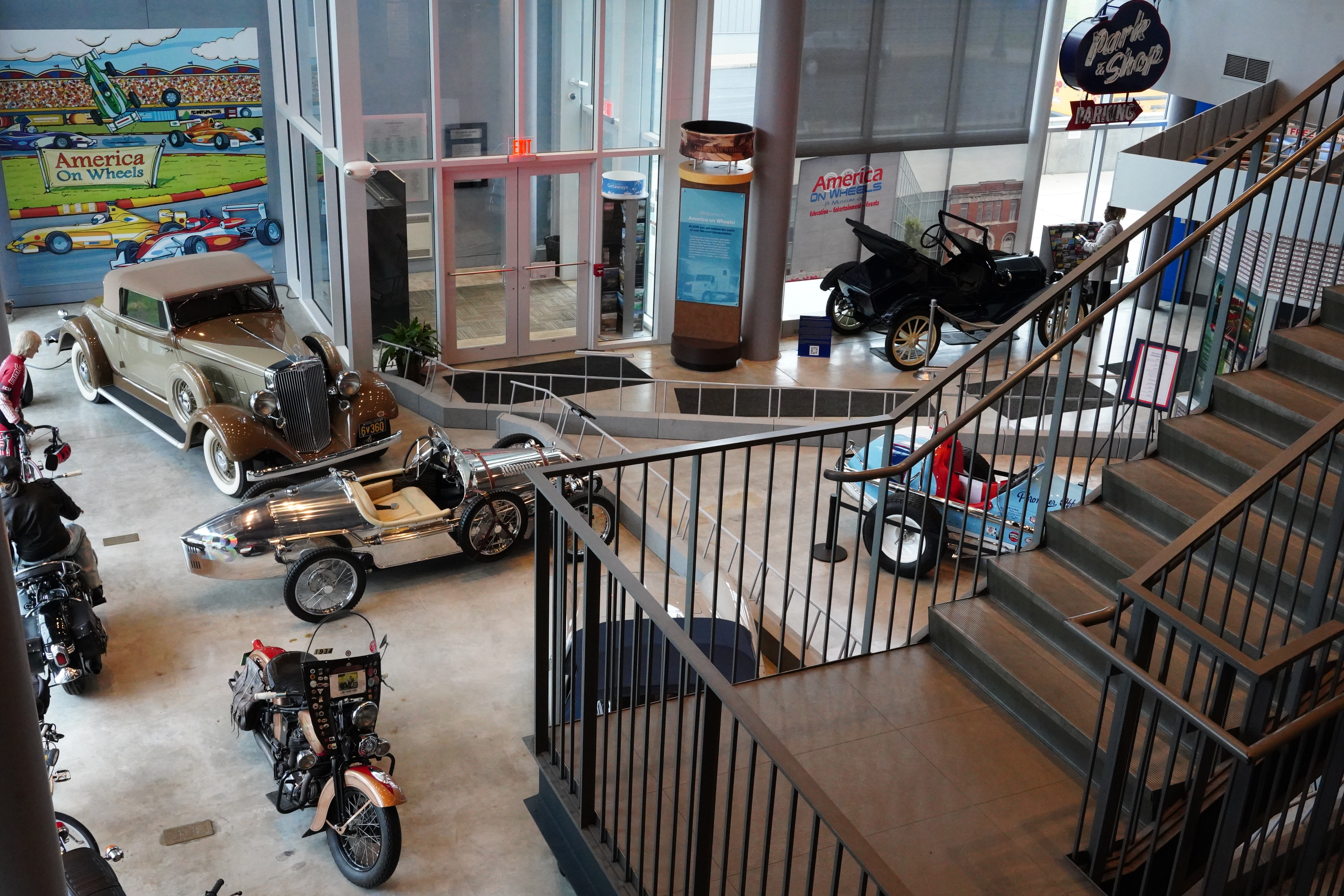
A view from above of the lobby

The day’s highlight was the special exhibit of air-cooled cars. As I entered it, my low expectations were quickly exceeded when I spotted, of all things, a beautifully restored BMW Isetta. The remainder of the air-cooled cars did not disappoint either.
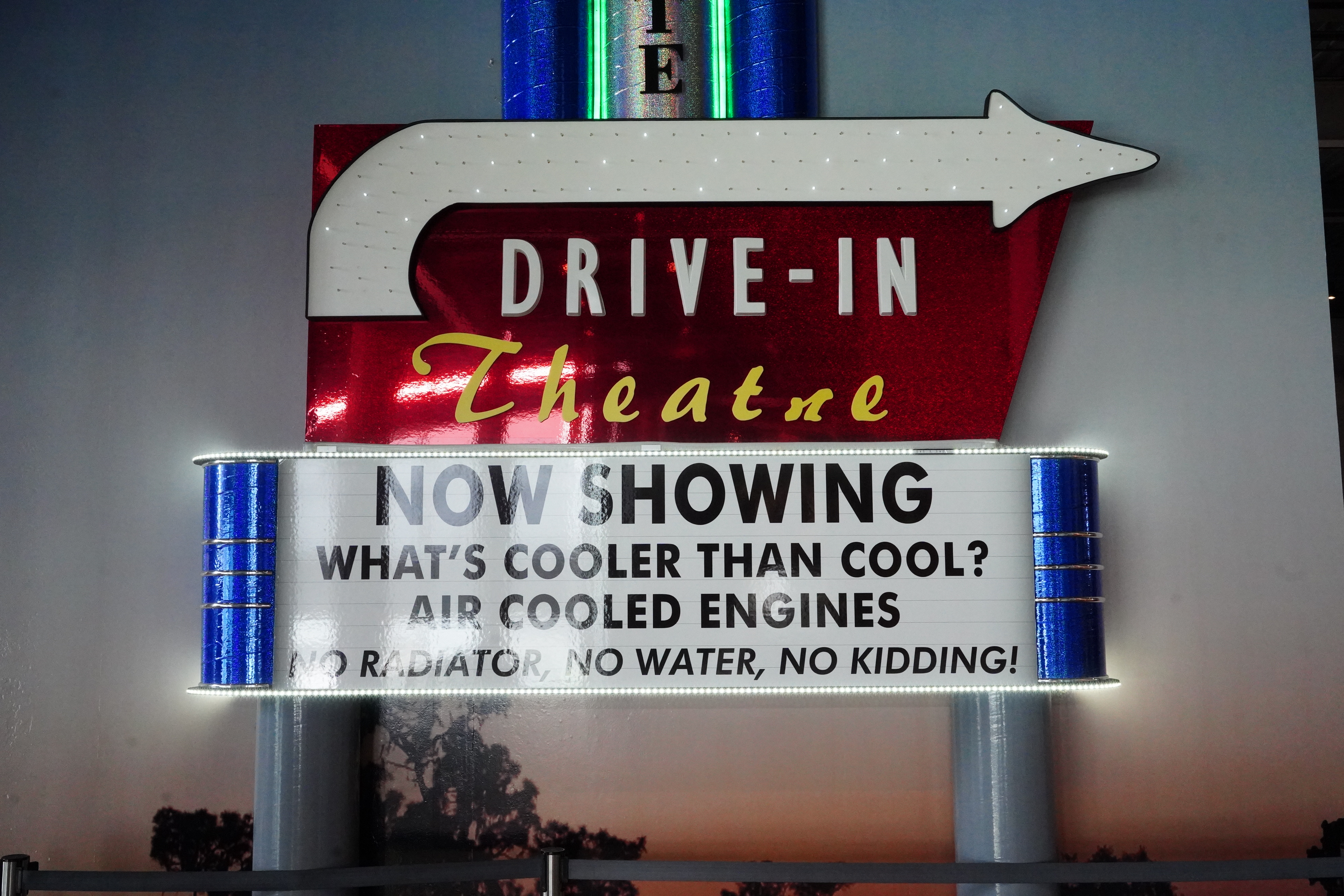
The use of the drive-in marquee was clever

It’s ironic and perhaps a bit sad that this museum does not do more marketing. As someone who has been regularly traveling for the last few decades in the greater Macungie/Carlisle/Hershey area for automotive events, I would suggest that the museum could (and should) do a better job of promoting itself. If you’re reading this and have not paid the America on Wheels Museum a visit, it is highly recommended.


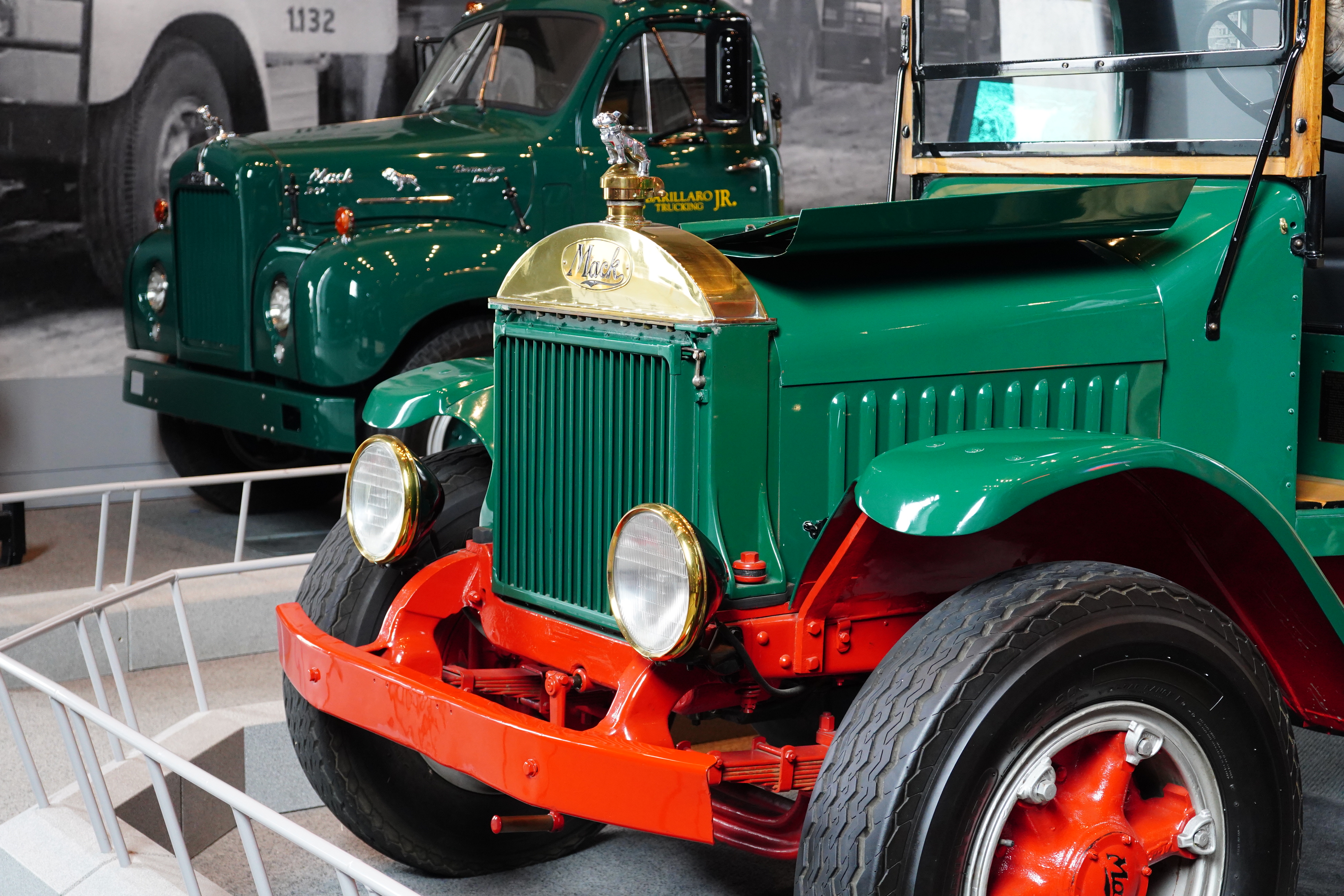
BELOW, MACK TRUCKS, AS A LOCALLY-MANUFACTURED BRAND, WAS WELL-REPRESENTED
 

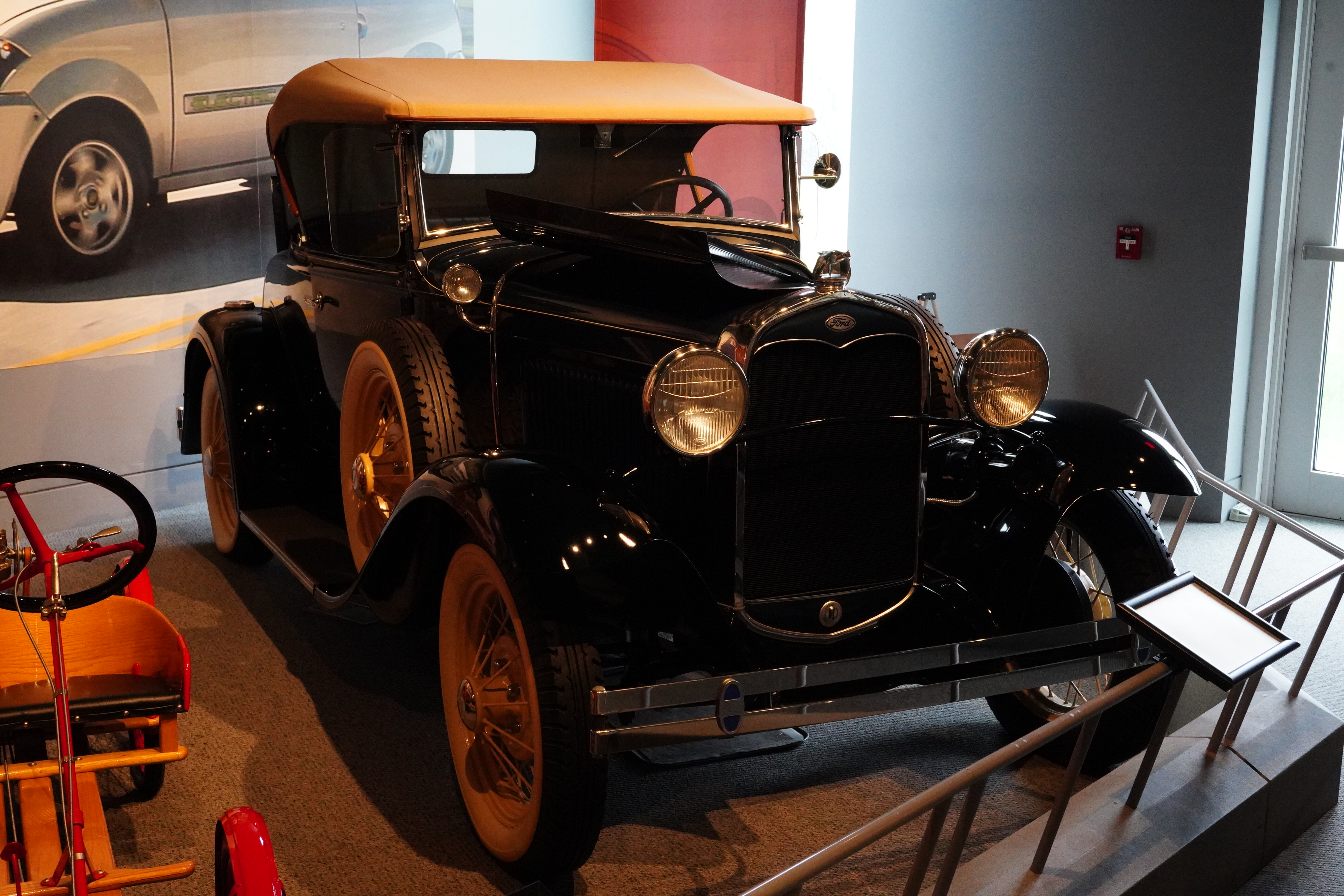
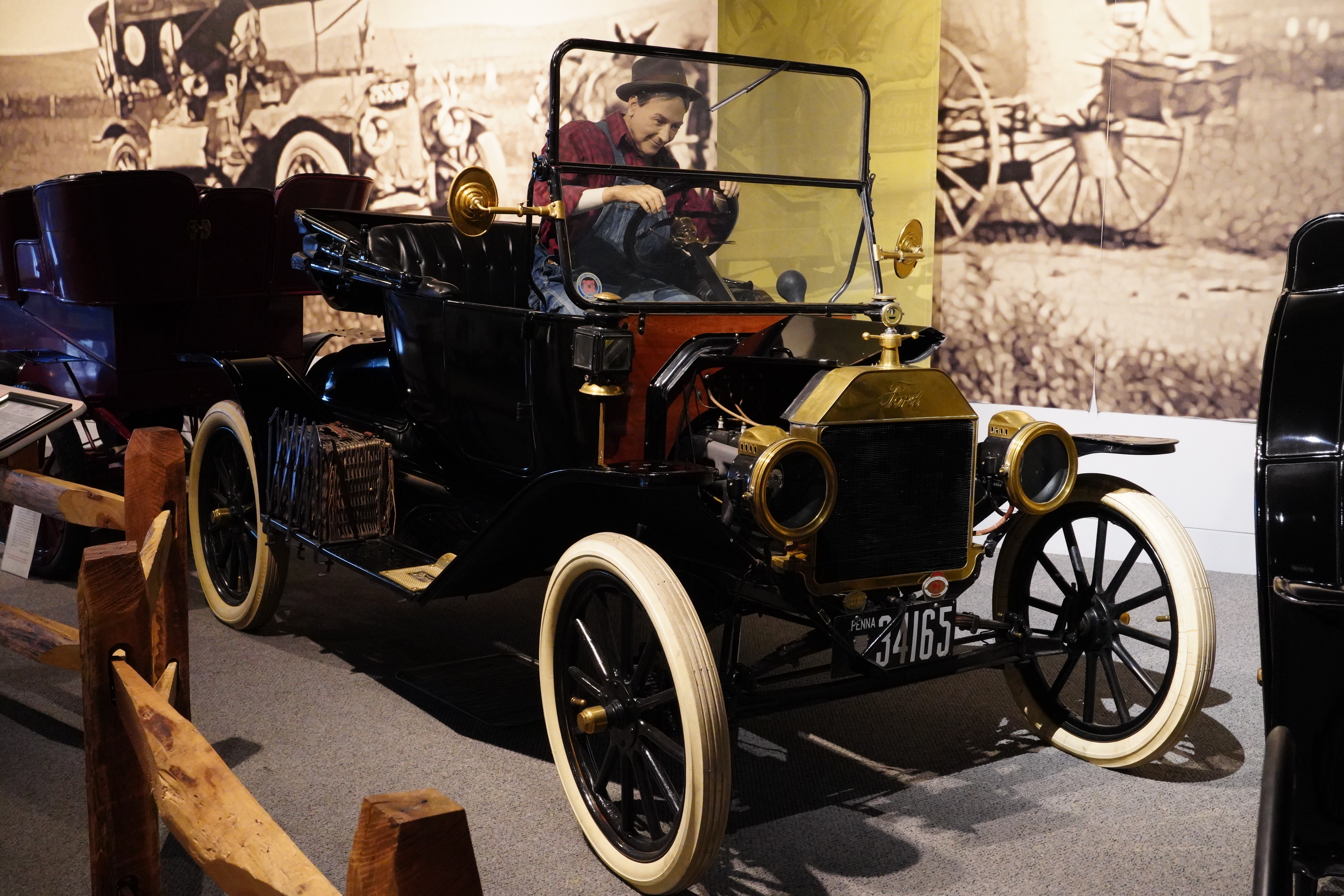
BELOW, A TRIO OF PRE-WAR FORDS
 

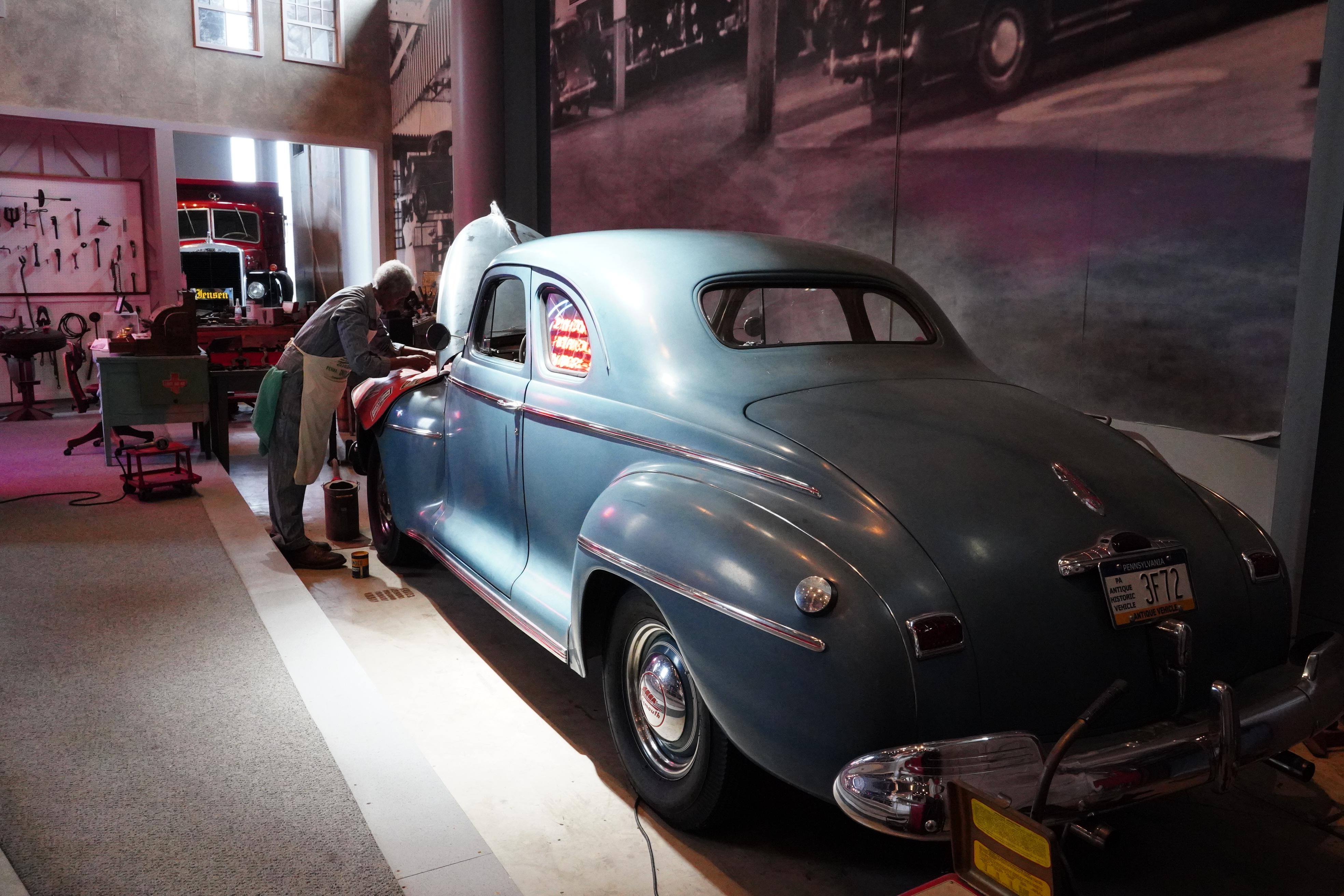
BELOW, AN ORIGINAL CONDITION 1942 PLYMOUTH (ANY ’42 CAR IS RARE)


BELOW, AIR COOLED CARS GALORE!
BMW Isetta sliding window coupe
The upholstery & sunroof were non-original material, otherwise, a nice restoration


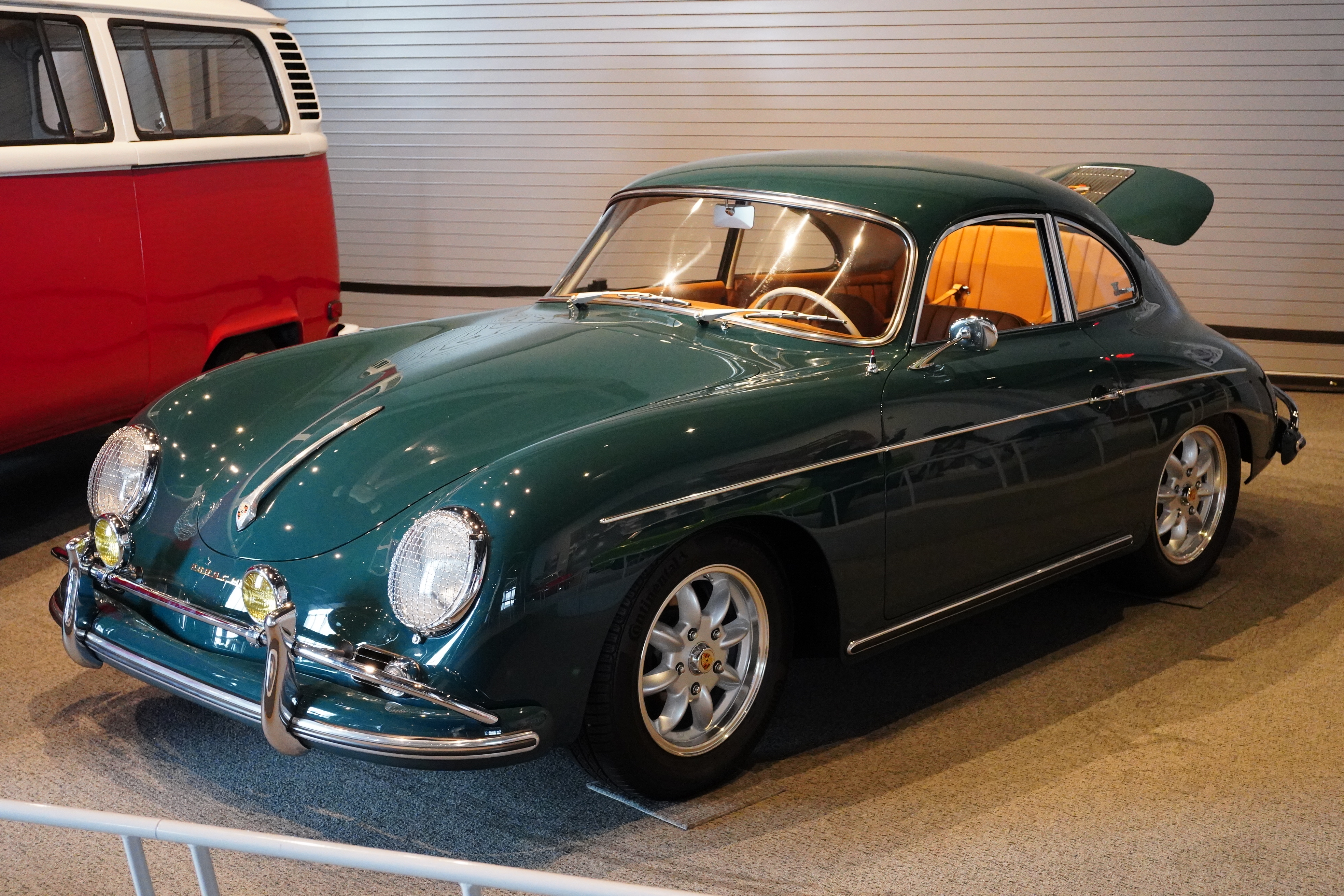
This Porsche 356 was cosmetically stunning


A rare Corvair Fitch Sprint


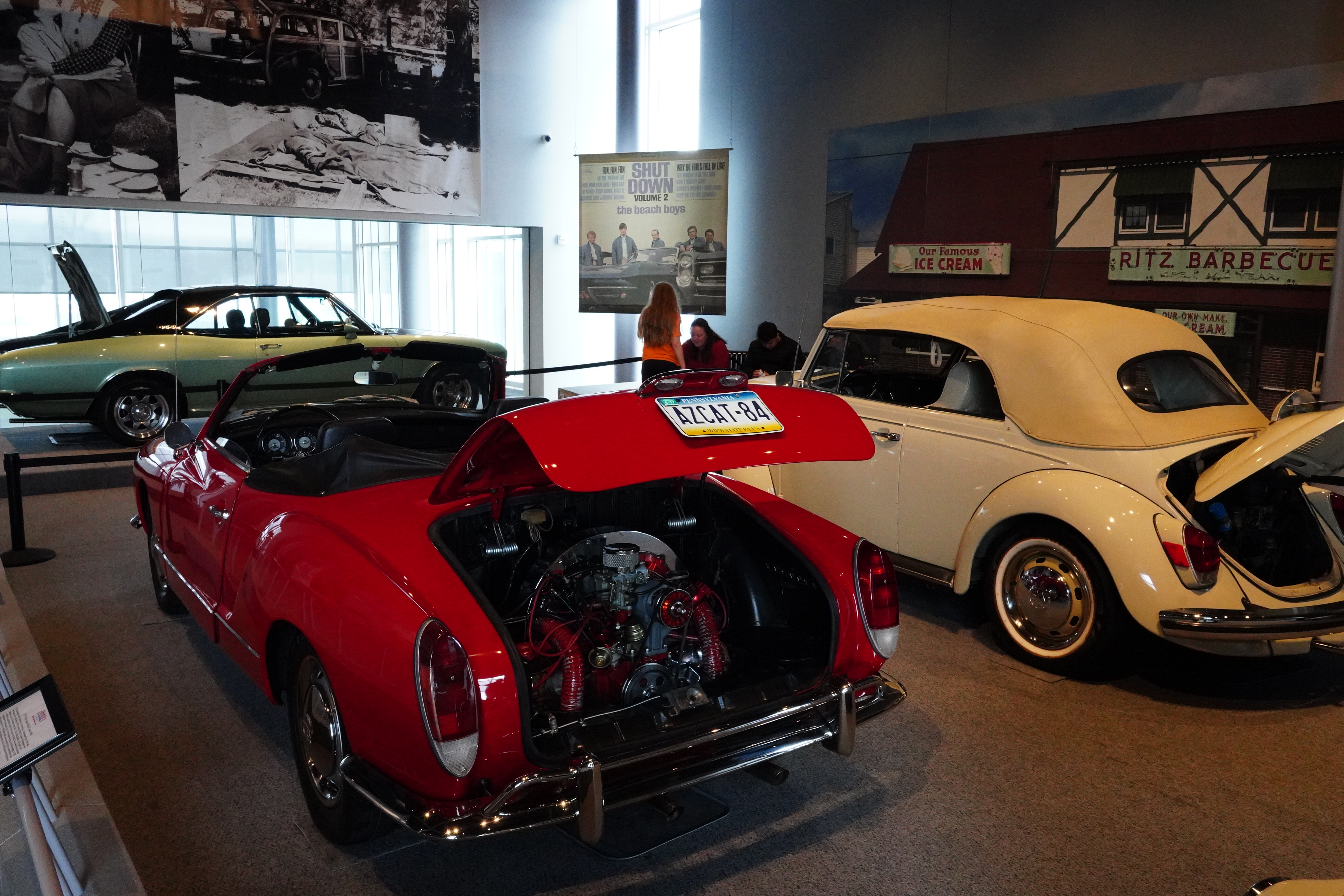
Plenty of air-cooled VWs


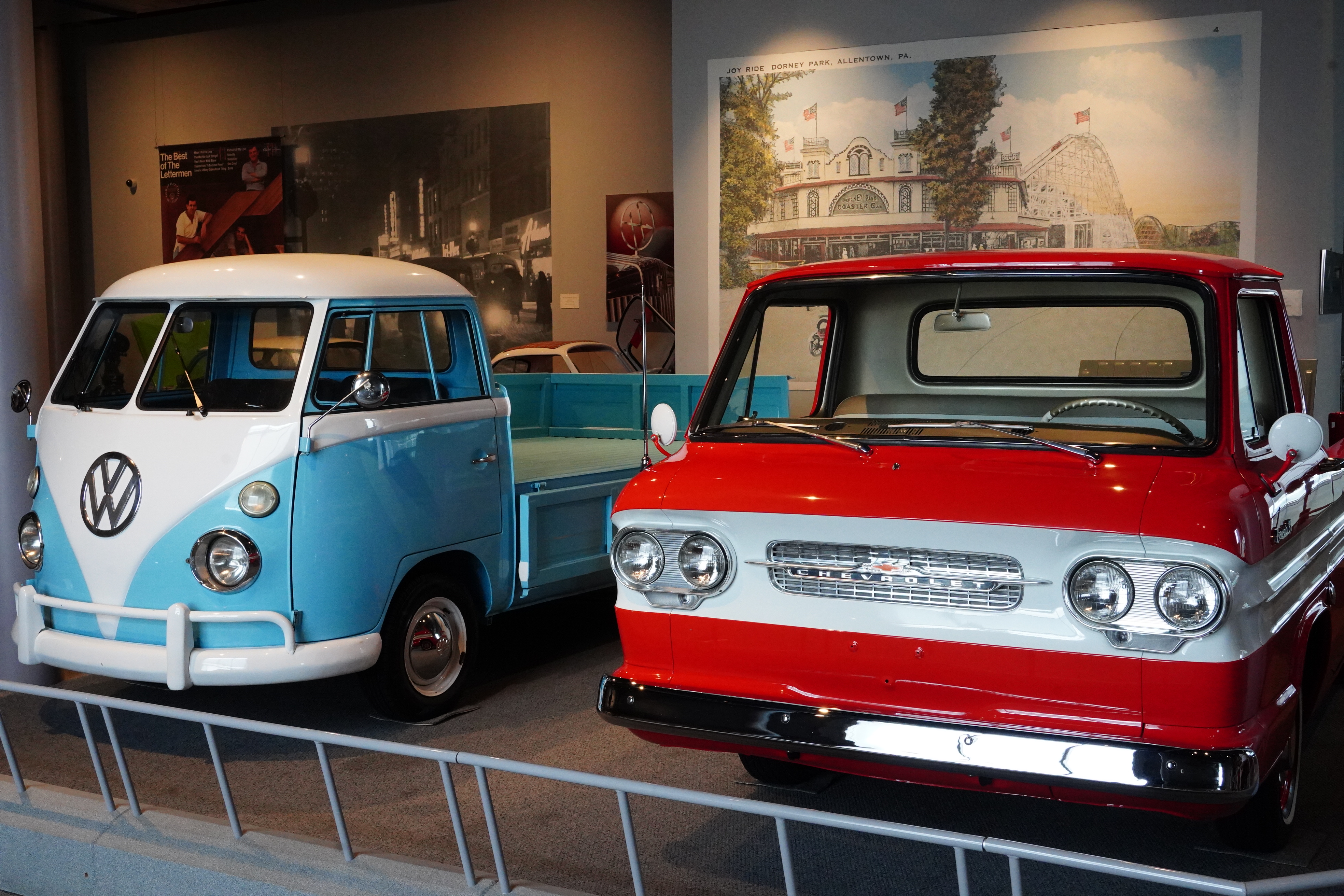
The VW Microbus pickup and its Corvair competition


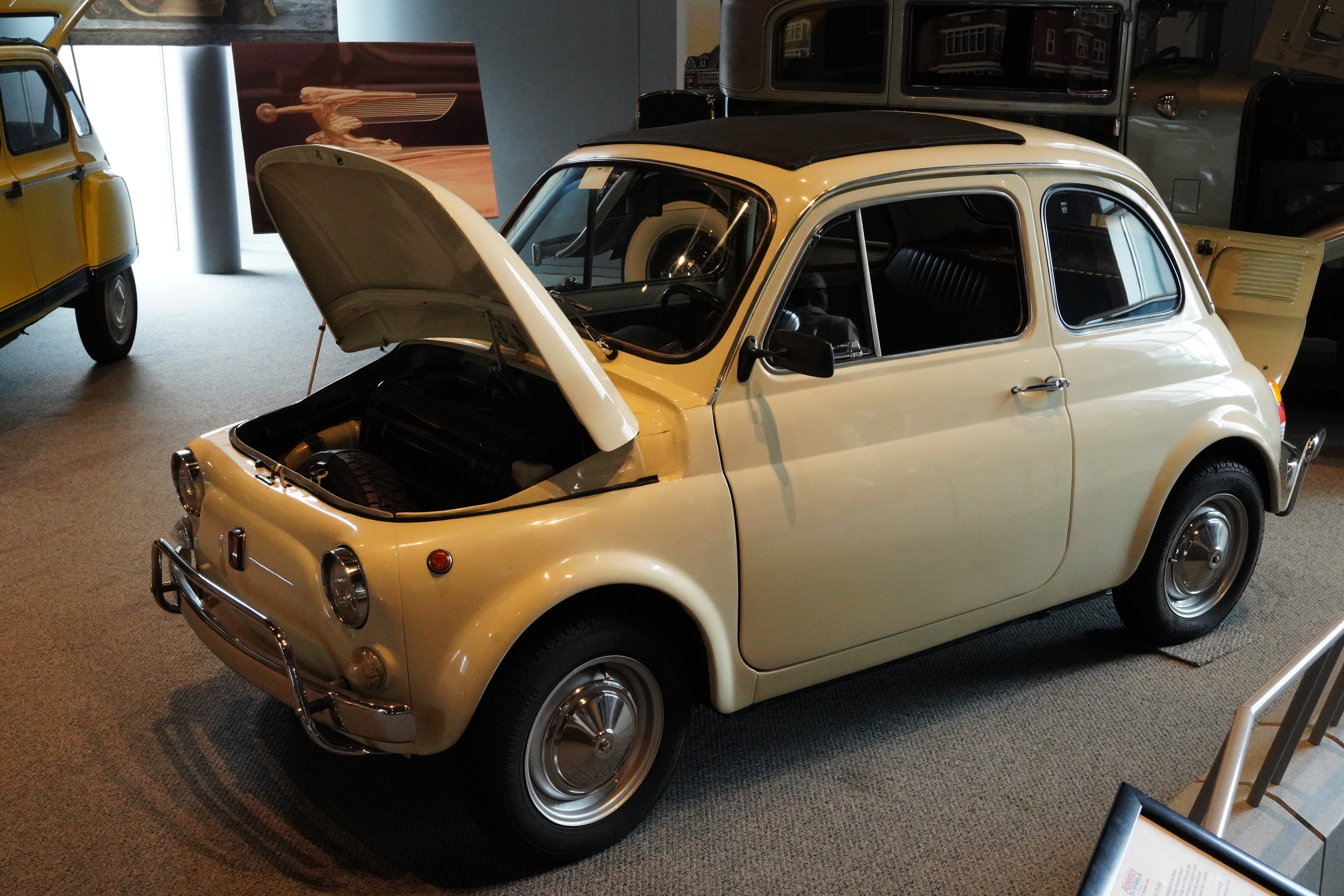
A Fiat 500 with an air-cooled 2-cylinder engine


BELOW, THE ‘RESTORATION SHOP’ FEATURED SOME BEFORE & AFTER EXAMPLES
 

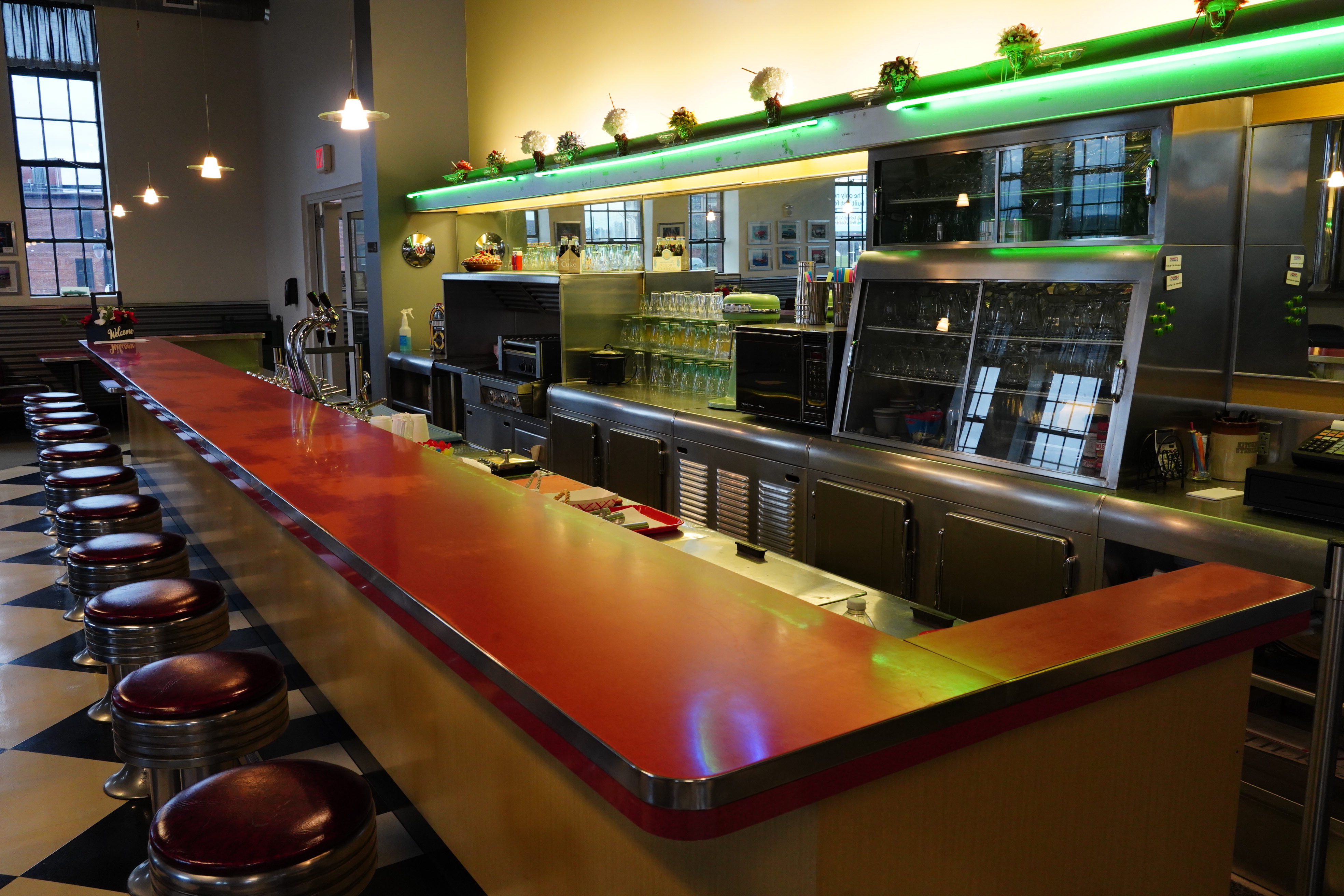
BELOW, THE INTERIOR OF A 1950S DINER HAD BEEN PURCHASED AND MOVED TO THE MUSEUM
All photographs copyright © 2024 Richard A. Reina. Photos may not be copied or reproduced without express written permission.


The 2024 New York International Auto Show

As has long been custom, the New York International Auto Show (NYIAS) is scheduled this year around Easter week. The show officially opened to the public last Friday March 29, and will be open through next Sunday April 7. Press days were Wednesday and Thursday March 27 & 28, and I was there on the 27th, again able to attend on a press pass representing Richard’s Car Blog.

For show-goers excited to see some well-known domestic brands such as Buick, Cadillac, Lincoln, Chrysler, Dodge, and Ram, as well as big import manufacturers like BMW, Mercedes-Benz, Volvo, Mini, Mazda, and Alfa Romeo, I have disappointing news: NONE of these manufacturers entered their wares in the 2024 edition of the NYIAS. This trend is not surprising, and has been ongoing for several years. In our internet-driven 21st century world, many automobile manufacturers are seeing diminishing returns for their not-inexpensive investment in global auto shows. One side effect of such decisions is that those who do show up to play (including Toyota/Lexus, Nissan/Infiniti, Honda/Acura, Hyundai/Genesis/Kia, and Subaru) take advantage of the physically larger footprint available to them.

Lots of room to play

Perhaps the oddest decision to me was the way that GM and FoMoCo “split the bill”. There were large displays from Chevrolet and GMC, but sister brands Buick and Cadillac stayed home. Similarly, there were plenty of Ford-branded cars and trucks while Lincoln sat it out. What does that say about how top-level executives view their portfolios? Note that I excluded Jeep from the “absent from class” list above. While no new Jeeps graced the carpeted main floor, Jeep did again have its simulated off-road track experience set up outside. Even on press day, there was a line of people wanting a ride.

Tallest mountain in the borough

The bottom level of the Javits Center was again mostly occupied by a large EV test track. Ironically, there were Cadillac EVs there, as well as EVs from Ford, Hyundai, and Kia. Also downstairs: a two-car Lucid display. (Hey! Get one while they’re still building them!) It is noteworthy that EVs are still being pushed while U.S. sales show a strong shift toward hybrids.

Not too much action at the Lucid booth

Below is my commentary by manufacturer, in no particular order.


THE HYUNDAI GROUP (HYUNDAI, KIA, GENESIS)

Quite possibly the stars of the show, these 3 brands offer style and features compatible with competitive vehicles, while usually undercutting them on price. Remember when car shows always included a good selection of concept vehicles? Hyundai remembers. Painting all 3 in bright orange and lining them up was traffic-stopping. I don’t think there were any other true concepts at Javits this year. Their production models are outstanding as well. The new Santa Fe looks like a Range Rover, which is not a bad thing, and the Genesis SUVs are, in my opinion, some of the best-looking of the genre available today.


SUBARU

We’ve seen this act before: a manufacturer takes a vehicle attribute which is readily available among other car makers, and markets it to make it its own. Granted, Subaru was an early pioneer of AWD, but even as the rest of the world added it, Subaru never stopped hawking it. Folded into the mix is the whole outdoorsy, paved/off-road, car-for-all-seasons seasoning, and voila! We get Subaru = Love.

Can’t say they haven’t been successful with it, though. The real shock to me is how Subaru now claims safety as another badge of honor. Have you seen any of their recent TV commercials? As someone who worked for the Volvo brand for 30 years, I stopped dead in my tracks when I spotted the wrecked Subaru. Who has the nerve to display such a thing? In the past, only Volvo would have. Of course, Volvo didn’t show up, so Subaru has the badge to itself. Perhaps just as shocking was seeing the 20-year-old Forester, another way for Subaru to brag about its heritage.


VOLKSWAGEN

Speaking of heritage, who doesn’t remember the Beetle? And if you do, then you certainly remember the bus. VW brought a 1949 Beetle to the show (quite rare) and then parked it alongside the ID.Buzz, the modern EV version of the beloved hippiemobile. They were both painted a similar shade of blue as well. Was the Beetle there to remind us of how inexpensive VW’s used to be? My very first new car was a 1977 VW Rabbit, which stickered at $3,599. Today’s GTi, sized and shaped not all that differently from my bunny, displayed a Monroney claiming that the GTi starts at $31,765, not bad with current average transaction prices hovering near 50 large. But note that the vehicle on display really costs $42,000.


TOYOTA

Four vehicles, four quick comments. The 2025 Camry has entered itself in the Ugliest Car Grille competition, giving some of its Lexus cousins a serious challenge. Who designed the Toyota Crown? Are its “distinctive” looks designed to make it easier to find in a parking lot?? If you think the GTi is expensive at $42k, check out this Corolla GR for $47k.  And finally, the new Land Cruiser is easily the best-looking of these 4, with its retro design that avoids current cliches.


FORD

April 1964: The Ford Motor Company unveils a new youth-oriented car, the Mustang, making its debut at that year’s New York World’s Fair in Flushing Meadow Park, Queens, NY.

April 2024: At this year’s NYIAS in the Javits Center, exactly 10.3 miles from Flushing Meadow Park (according to Google Maps), the Ford Motor Company celebrates the 60th anniversary of the Mustang. On display: plenty of new Mustangs. MIA: any previous generation Mustangs, any mention or memorabilia from the World’s Fair, and any historical records from the model’s long and successful history. I think Ford missed a significant opportunity.


CLASSIC CARS

Each year, the NYIAS seems to find a way to squeeze in one or two classic car displays. This year did not disappoint, and better yet, they were in easily accessed areas, compared to previous years when they were tucked into a basement corner.


FINAL COMMENTS

It’s been decades since I commuted via mass transit. On the Port Imperial ferry, I noticed how eerily quiet the cabin was. As this photo shows, it’s because almost no one actually speaks to any human beings anymore. Everyone has their nose in their phone.

Hyundai was so dominant, even their banners took over the front lobby.

This vehicle did not make it to the show this year.


All photographs copyright © 2024 Richard A. Reina. Photos may not be copied or reproduced without express written permission.


Replacing the Miata’s Clutch Hydraulics

It is somewhat well-known among Miata owners that one of the few mechanical weaknesses of the car is its clutch hydraulic system. Typically, the secondary cylinder1 fails and needs replacement, and indeed, that component was already replaced once on my car, back in 2010. The good news is that the failures tend to happen gradually, and the driver gets significant advance notice as the clutch pedal gradually sinks while gear engagement becomes progressively more difficult.

I hopped into the Miata last week for the first time since winterizing it last autumn and in my case, the pedal was “gone”. Popping the hood, I saw that the clutch hydraulic reservoir was empty, although the dirty fluid left enough of a stain that one could be fooled into thinking there was still some fluid in there. I watched a few YouTube videos, several of which contradicted themselves (more about that coming up) and ordered a new primary cylinder, secondary cylinder, and flexible hose. All are Dorman products; one reason for the choice is that Dorman offers a lifetime warranty on the parts, when most competitors offer one year. The three parts cost me around $65 with shipping.

ABOVE: There are many cars where a single reservoir is shared by the brake and clutch systems, but the Miata is not one of them. The larger reservoir on the left is for the brakes. Note how clean that fluid looks, almost clear in fact. On the right is the clutch primary cylinder, and despite appearances, that reservoir is empty.

All exposed threads got a spray shot of rust-buster the day before, but none of the threads gave me a fight the following day when I put a wrench to them. The primary cylinder came off first: the fluid pipe fitting and two nuts were all easily accessible. Moving downstream, I tackled the clutch hose next. I had never really noticed this part before. In fact, it’s tightly tucked directly between the back of the cylinder head and the firewall. The pipe/hose routing is as follows: a metal pipe is routed from the primary, along the firewall, where it makes a 180-degree turn on the passenger side and connects to the hose. The hose runs back toward the driver’s side, held in place by two firewall-mounted brackets. From there, another metal pipe snakes downward to the secondary cylinder mounted low on the passenger side. (I suspect that much of this back-and-forth routing is due to the JDM (Japanese Domestic Market) Miata being RHD, and this lengthier routing was necessary to adapt to LHD.)

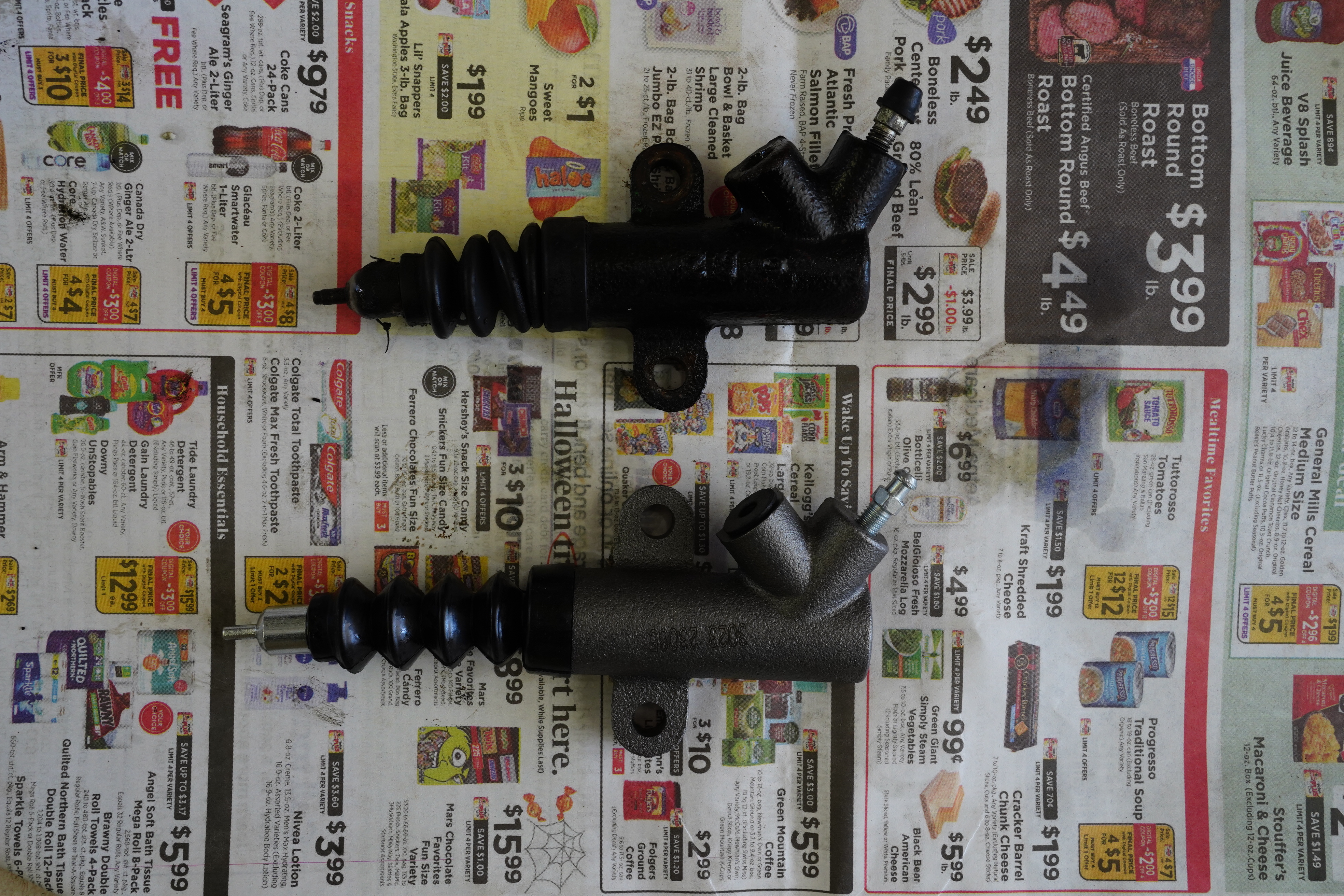
ABOVE: Primary cylinders laying side-by-side, old on left and new on right.


ABOVE: Old secondary cylinder on top, new one on bottom.


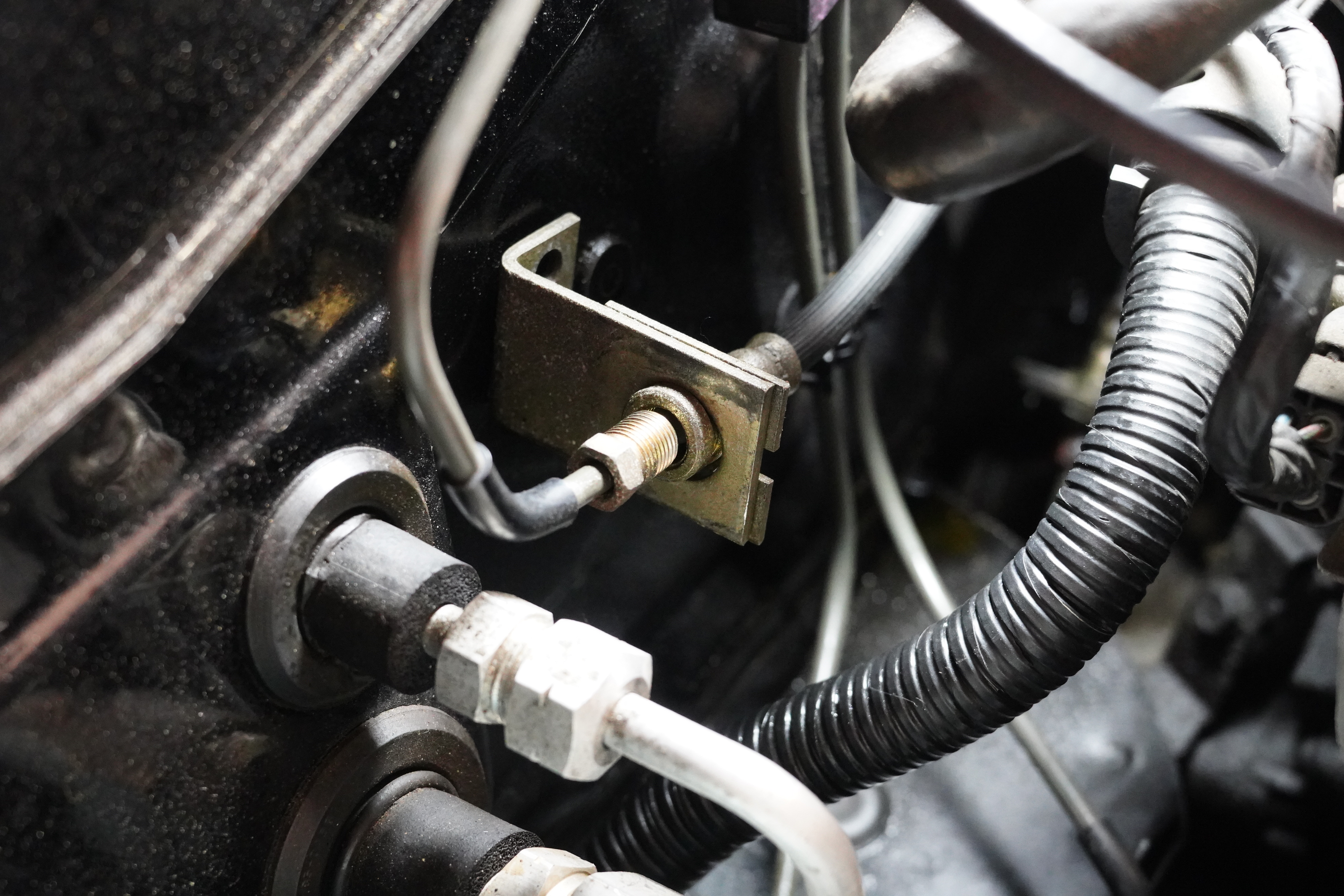
Why am I describing all this? Because these hose connections were a B – I – T – C – H to reach, something completely left unsaid in all the videos I watched. The video voiceovers cheerfully exclaimed “And then we replaced the clutch hose before moving to the secondary cylinder” or similar. I ended up disconnecting two wiring harness brackets to provide myself enough room to get a flare nut wrench on the hose ends. Several bloody knuckles later, it was done.

ABOVE: New hose on bottom appeared to be slightly longer, but that did not affect installation.

The secondary cylinder was the third and final piece of the puzzle. Without a lift, access required removing the right front wheel and squeezing my torso into the wheel well to reach the connections. As with the primary, there was only the threaded pipe and two bolts holding the cylinder to the block. After several hours of contorting myself, the R&R portion was done.

ABOVE: This was the easier of the two pipe-to-hose connections to access. Even here, A/C hoses and wiring harness run interference.

Next, it was time to call my able assistant who is well-versed in the “press – hold – release” mantra. My only regret is that I didn’t get a snapshot of Mrs. Reina as she sat in the driver’s seat and multi-tasked: left leg mindlessly going up and down on the pedal while she nursed a hot cup of tea and scrolled through her phone as it sat perched on the center console. And one more comment about the videos: one video insisted that bench-bleeding the primary cylinder was a necessity, while a second video declared it a waste of time. I chose to bypass the bench bleed, but before my wife came out to the car, I filled the reservoir, filled a small jar with brake fluid into which I inserted a hose from the bleeder screw, and left the screw loose. I then pumped the clutch pedal at least 50 times, refilling the reservoir once. This seemed to get a goodly amount of air out and shortened the length of time my wife was on the job. Thank you honey!

I took the car for a short spin and the clutch pedal felt marvelous. Let’s hope the hydraulics last another 10 years.

1Traditional automotive terminology has referred to brake and clutch cylinders as “master” and “slave”, terms which frankly have always caused me to wince. Here, because it’s my blog and I can describe things as I please, I have opted to refer to these parts as “primary cylinder” and “secondary cylinder”. I doubt it will catch on, but I would be eternally pleased if it did.


All photographs copyright © 2024 Richard A. Reina. Photos may not be copied or reproduced without express written permission.

NJ Alfa Club Breakfast Meet, March 10, 2024

The NJ Chapter of the Alfa Romeo Owners Club (AROC) proved that it can make a plan and stick with it. Having decided late last year to begin a tradition of monthly breakfast meetings, the Chapter successfully held its 3rd consecutive breakfast meeting on Sunday March 10, returning to the Spinning Wheel Diner in Lebanon NJ, the site of our January meet.

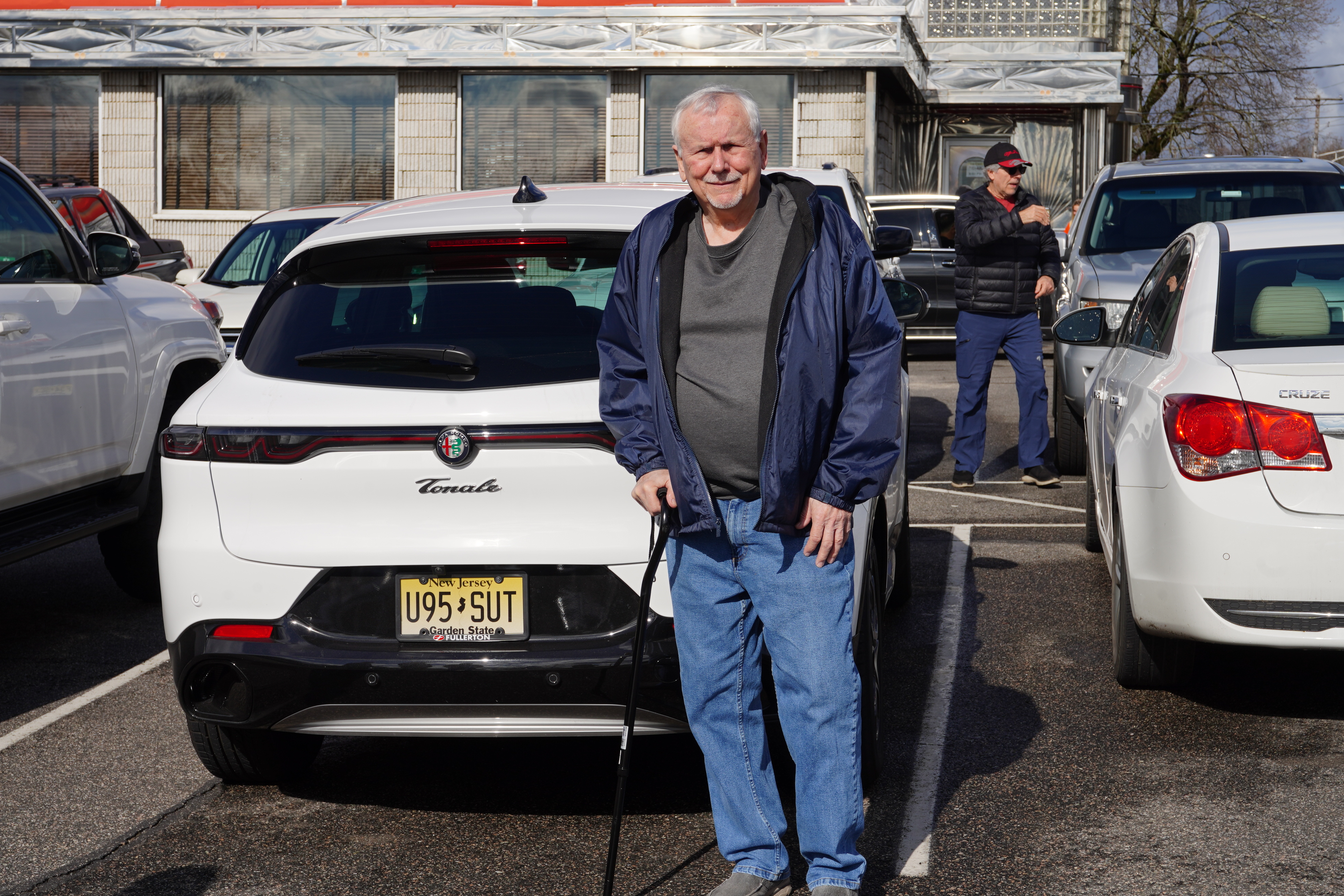
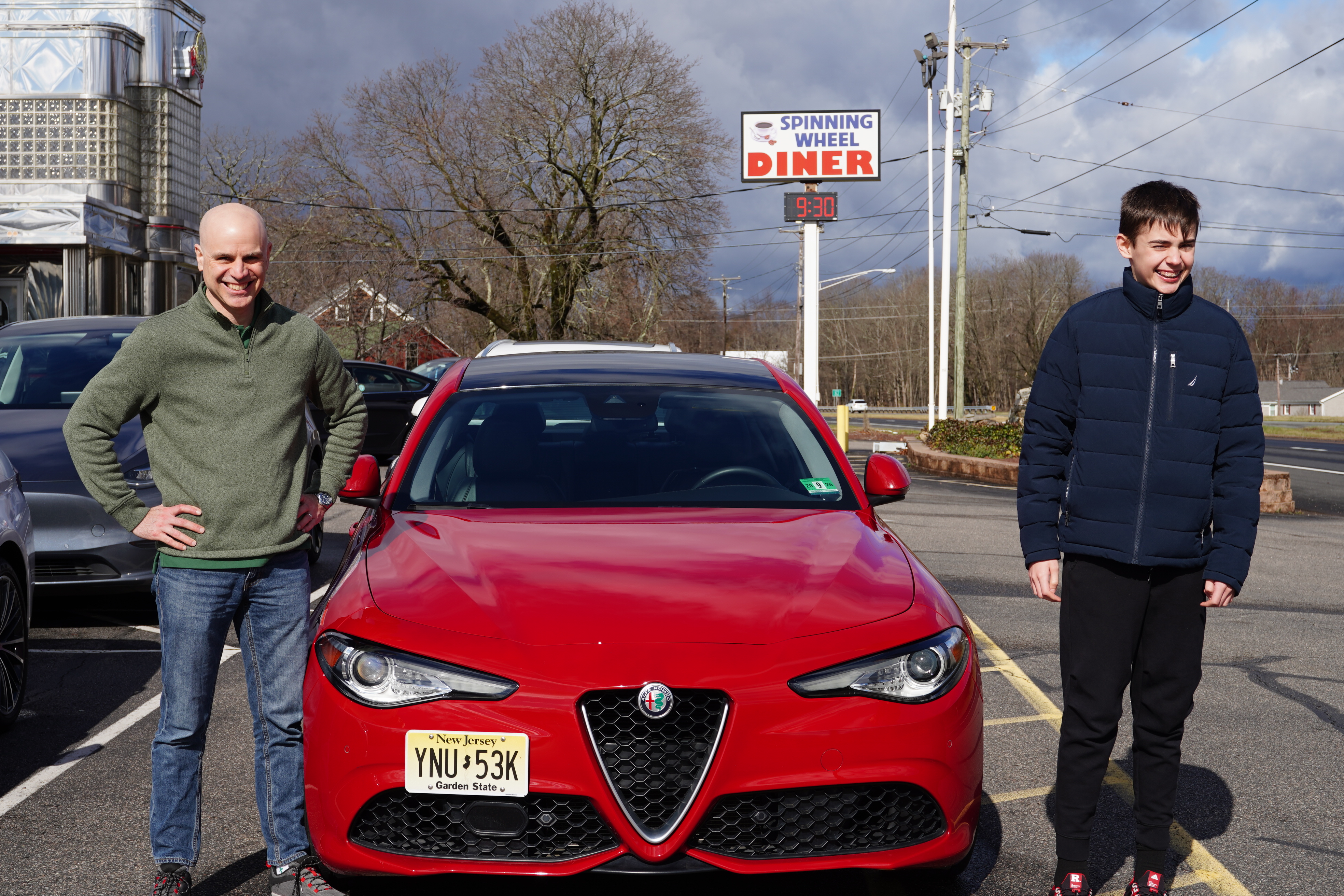
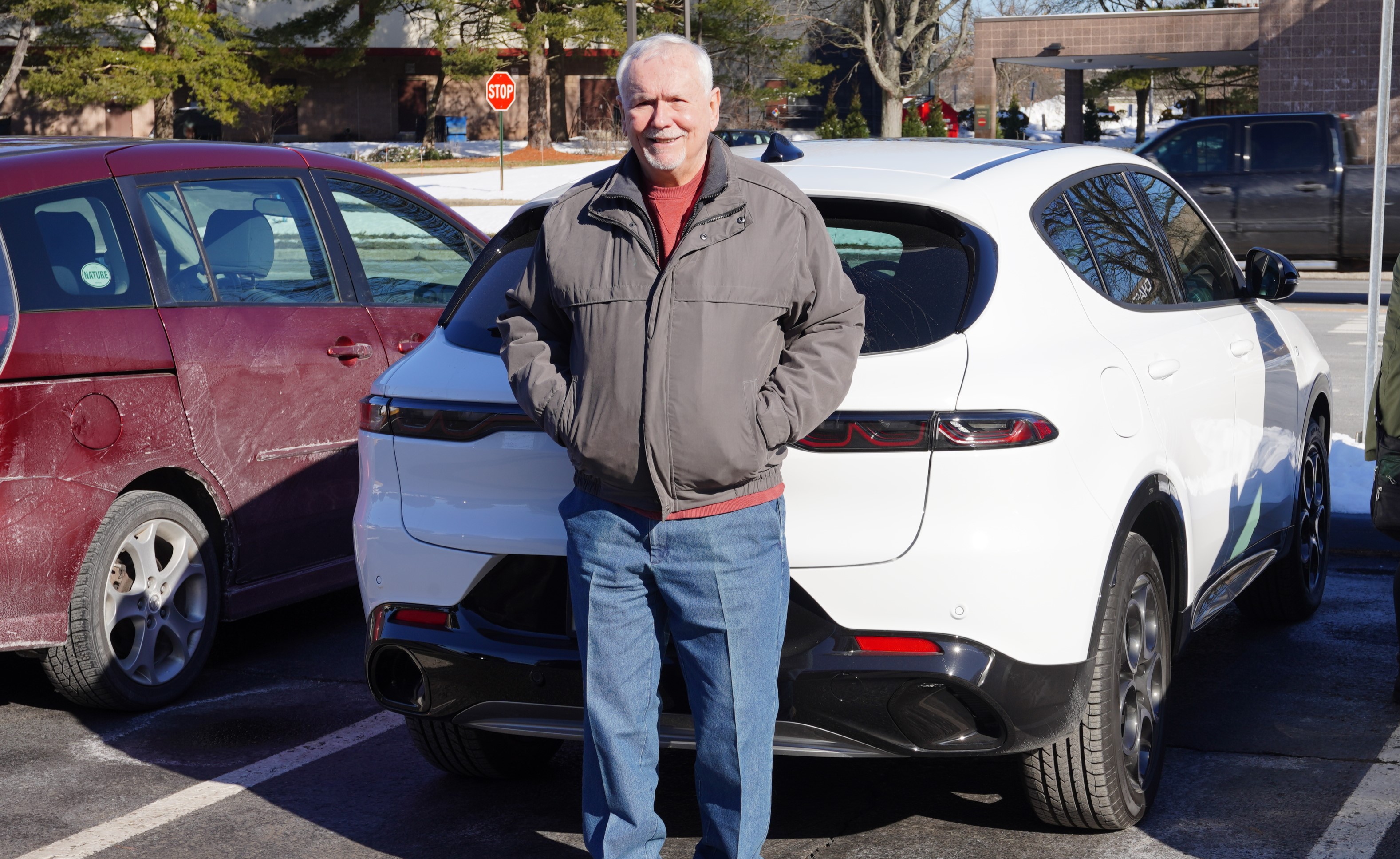
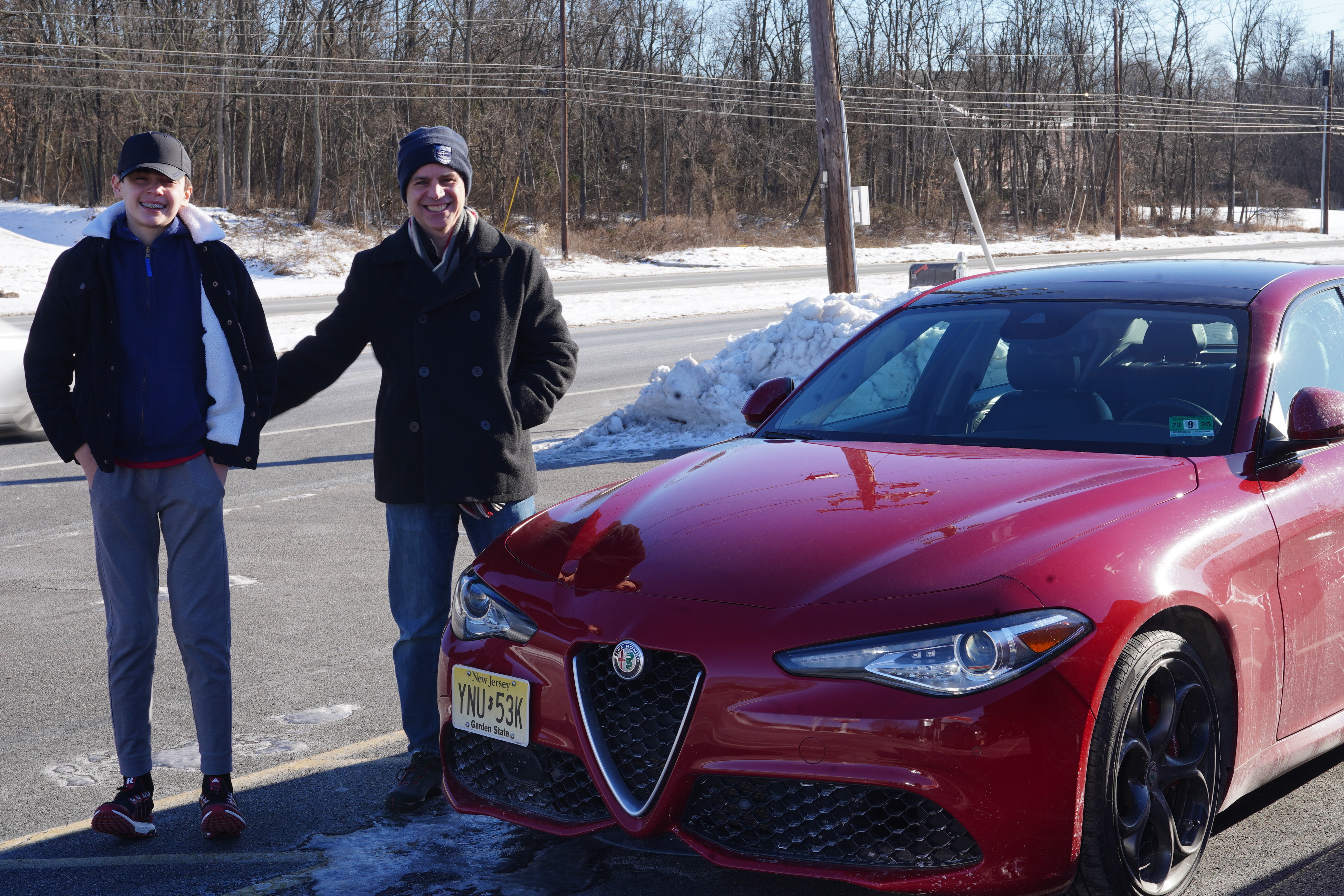
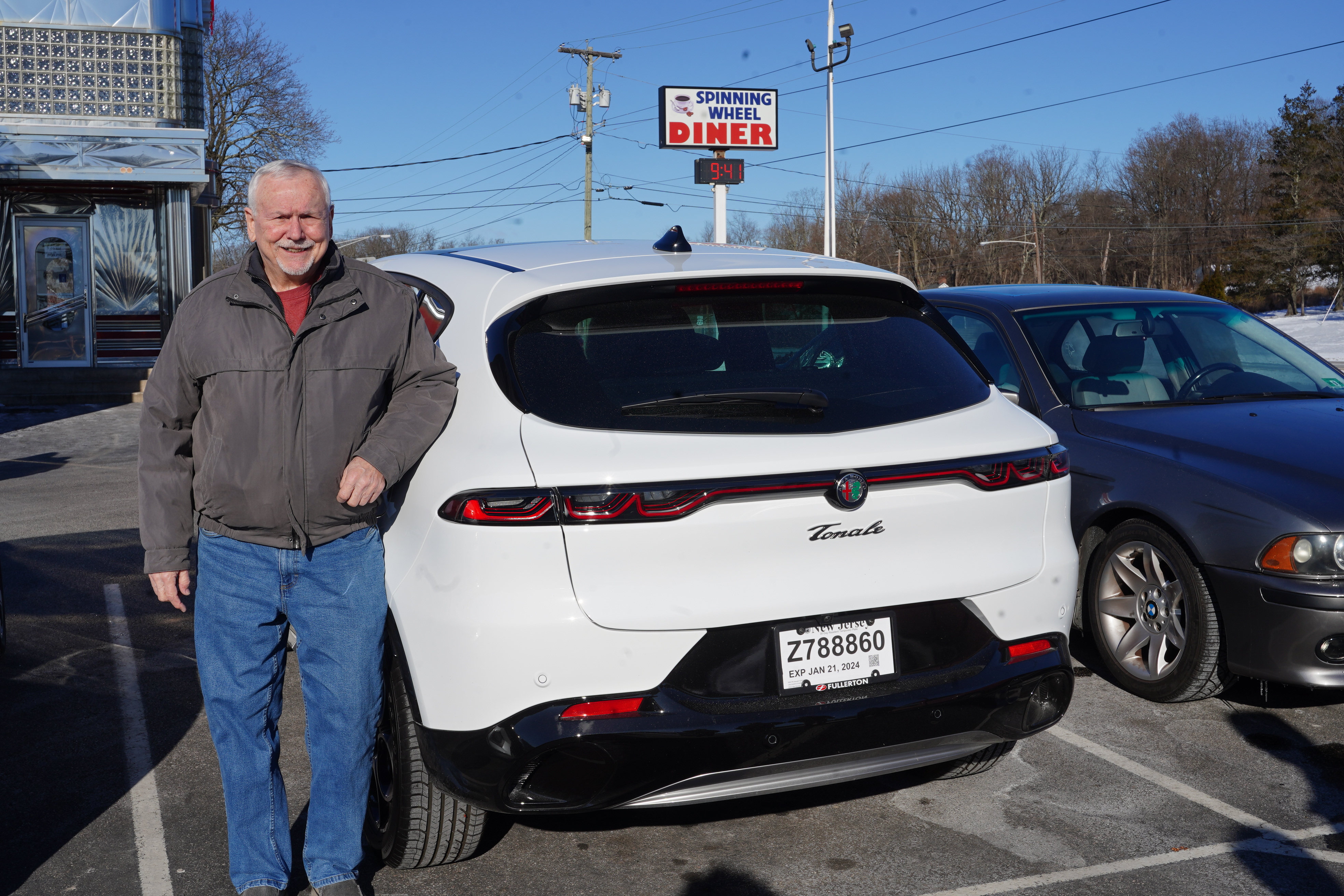
The participant count was a little light at 6, and since we need to generate an excuse, we’ll blame that morning’s switch to Daylight Savings Time which caused all of us to lose an hour’s sleep. Winter was still very much in the air, so no classic Alfas made an appearance at breakfast. Instead, we were again treated to John’s new Tonale and Steve’s current-generation Giulia sedan.

One of the great benefits of these breakfast meetings is the chance to chat with each other about our cars. Tony and I shared the news about getting his Giulia TI going again thanks to the spark plug replacement; I mentioned that I got to drive John’s modern Giulia sedan, which was quite possibly the best performance sedan I’ve ever piloted; and poor Gene “entertained” us with his sad tale of spinning 180 degrees after the rear axle locked up on his ’76 Spider. Thankfully there was no body damage. His car is at the shop awaiting diagnosis and repair.

With food and drink done, we headed out early enough to enjoy the remainder of a brisk late winter day. But we also got to enjoy an extra hour of sunshine! The April breakfast meet will find us back at the Americana Diner in Shrewsbury, and fingers crossed, I plan to drive my GT Junior there.


All photographs copyright © 2024 Richard A. Reina. Photos may not be copied or reproduced without express written permission.


AACA NJ Region Judging Seminar, Mar. 9, 2024

The NJ Region of the AACA holds its biggest event of the year, the Spring Meet, every year on the first Sunday in May. This is a judged car show which at times has seen up to 250 vehicles in attendance. The cars are put into classes, and volunteer members of the Region perform the judging. Judges are arranged in teams of two, and with a dozen and a half classes to judge, the Region would ideally have 30 or more volunteers. As someone who has judged our Spring Meet for the last few years, I’ve seen how woefully short of that number we usually are.

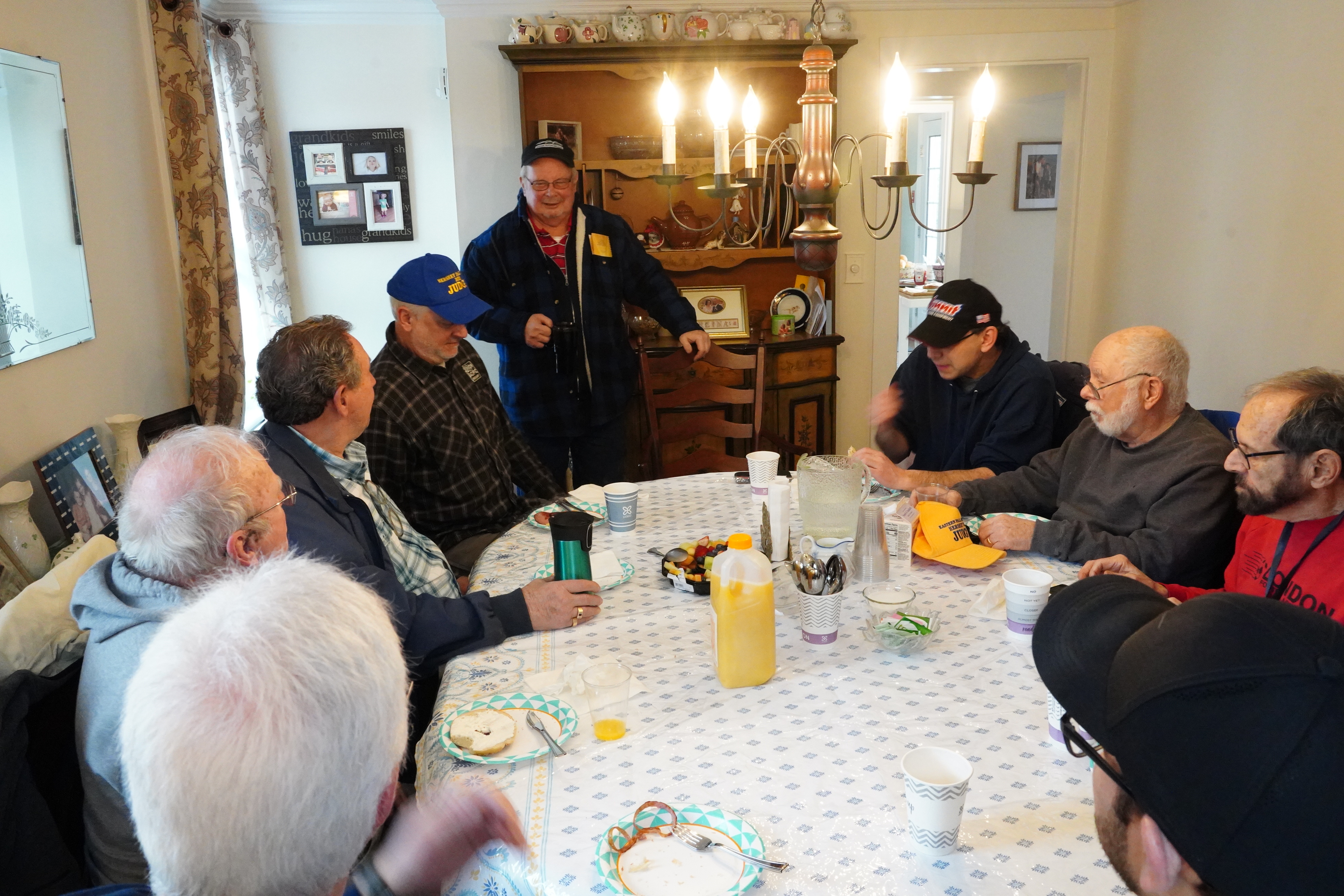
In years past, our chief judge, Ed G., would hold a judging seminar a week or two before the Spring Meet. While well attended, the club still lacked the requisite number of volunteers. Several club members, including our new chief judge Anthony C., decided last year to expand the number of judging seminars. As covered in this recent blog post, the first such seminar was held at Dick B.’s house in late January. This month, your humble blogger agreed to play host. We started with a 9 a.m. breakfast (assembled by my most gracious wife, who allowed a dozen NJ Region members into her dining room), followed by a 10 a.m. start in the garage.

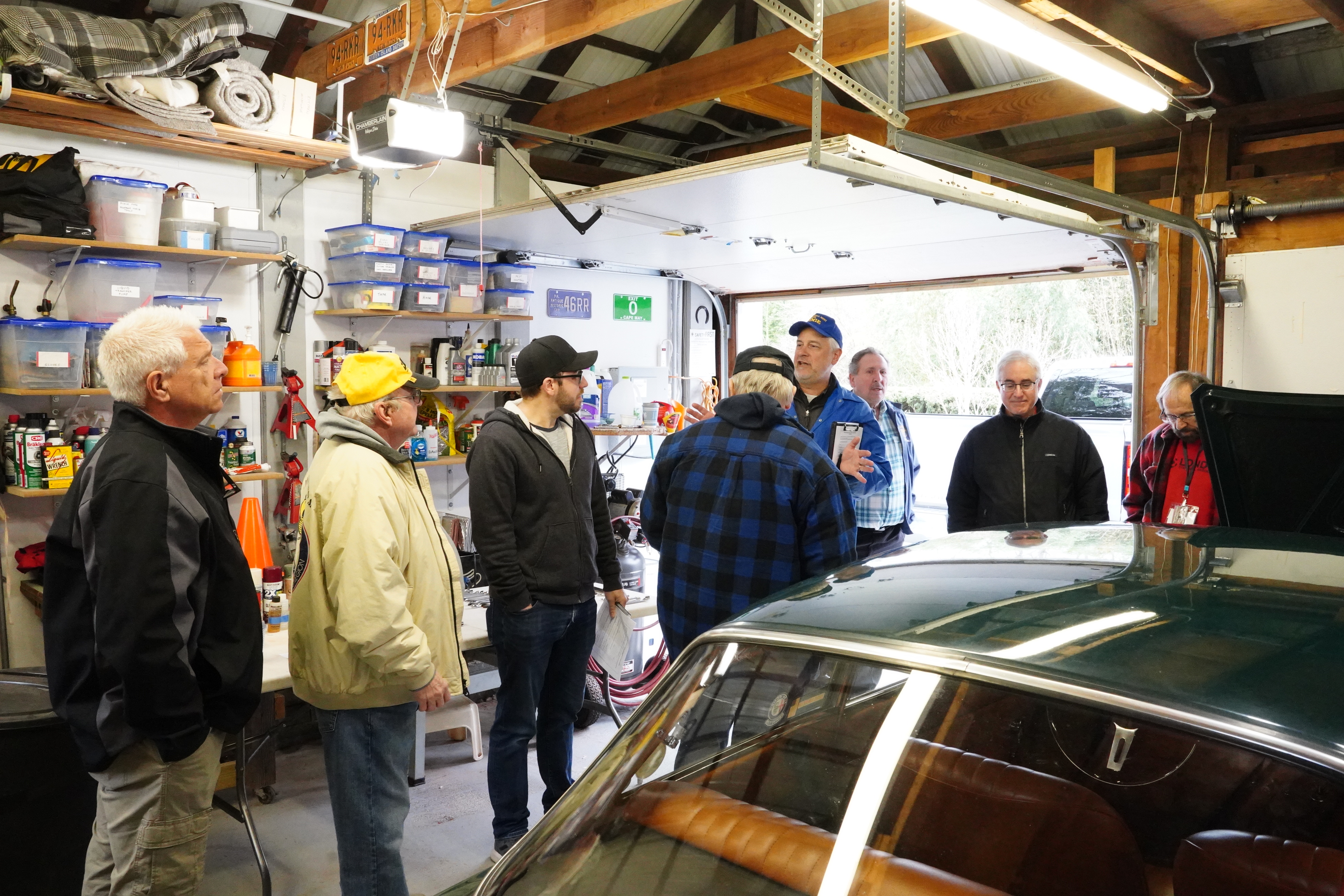
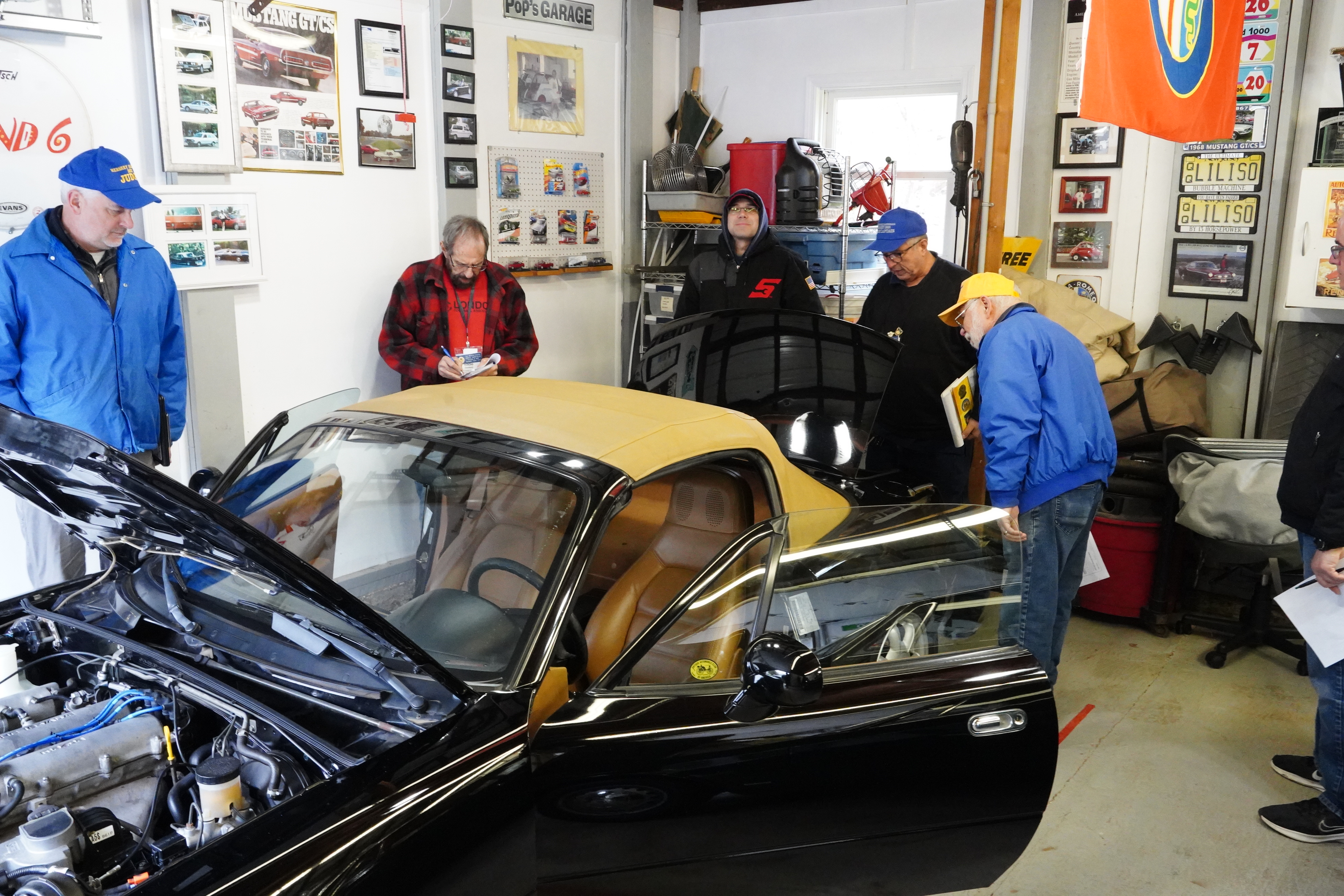
The seminar was again ably led by our “pro tem” chief judge Craig K, with my two cars, the ’67 Alfa Romeo and the ’93 Mazda Miata, as the objects of our collective scrutiny. The focus of the training exercise was “class judging”, with cars evaluated for correctness and condition in 4 areas (exterior, interior, engine compartment, and chassis). However, both of my cars are HPOF, “Historical Preservation of Original Features” and would not normally be subject to a point-by-point evaluation. Still, it was good practice for the Region members to analyze the cars on a 40-point scale (10 points for each of the 4 areas). I kept my lips zipped as horrors such as faded paint, door dings, a dirty bellhousing, a semi-opaque convertible window, worn upholstery, window decals (!) and other atrocities were critiqued. Still, on a 40-point scale, the group reached a consensus that each car earned a total point score in the low-to-mid 30s. Similar to what we learned last time, each “defect” would result in only a ½ or 1 point deduction out of 10 available points. The goal should not be to deduct as many points as possible, but to treat each deduction relative to the 10 available points. A car would need to be in very poor condition for it to earn a loss of 7 or 8 points out of 10.

We finished up around 12 noon, and Craig and I were pleased to see a number of new faces in the crowd. Attendance at a judging seminar is not a commitment to judge, but it certainly is our hope that with 2 training sessions done and a third one scheduled for April, we should see an uptick in volunteers at our May Spring Meet.

Craig (in blue jacket) begins the session


The Alfa was judged first


Each participant was invited to judge each section of the car


Craig reminds the crowd to not touch the car without the owner’s permission!


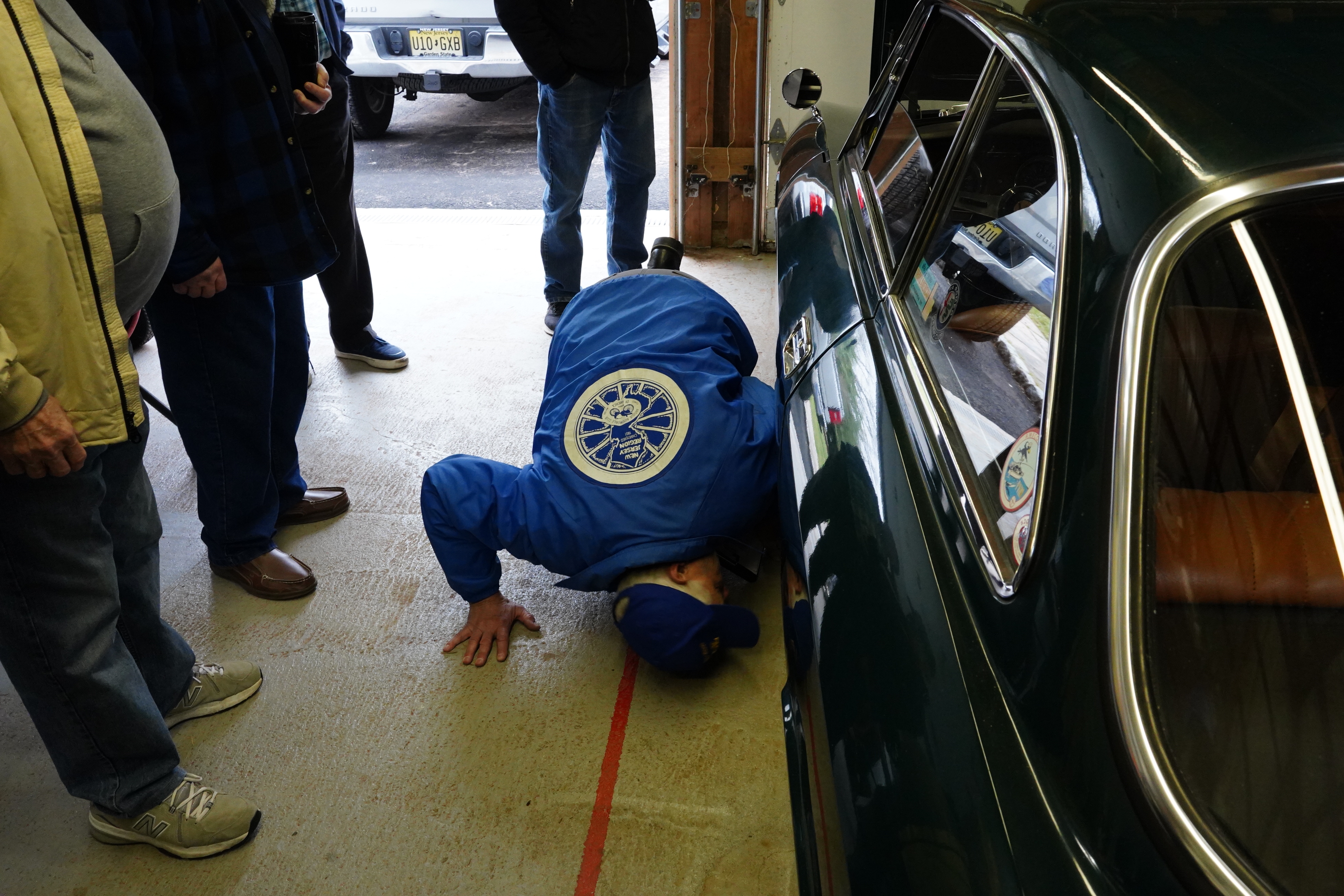
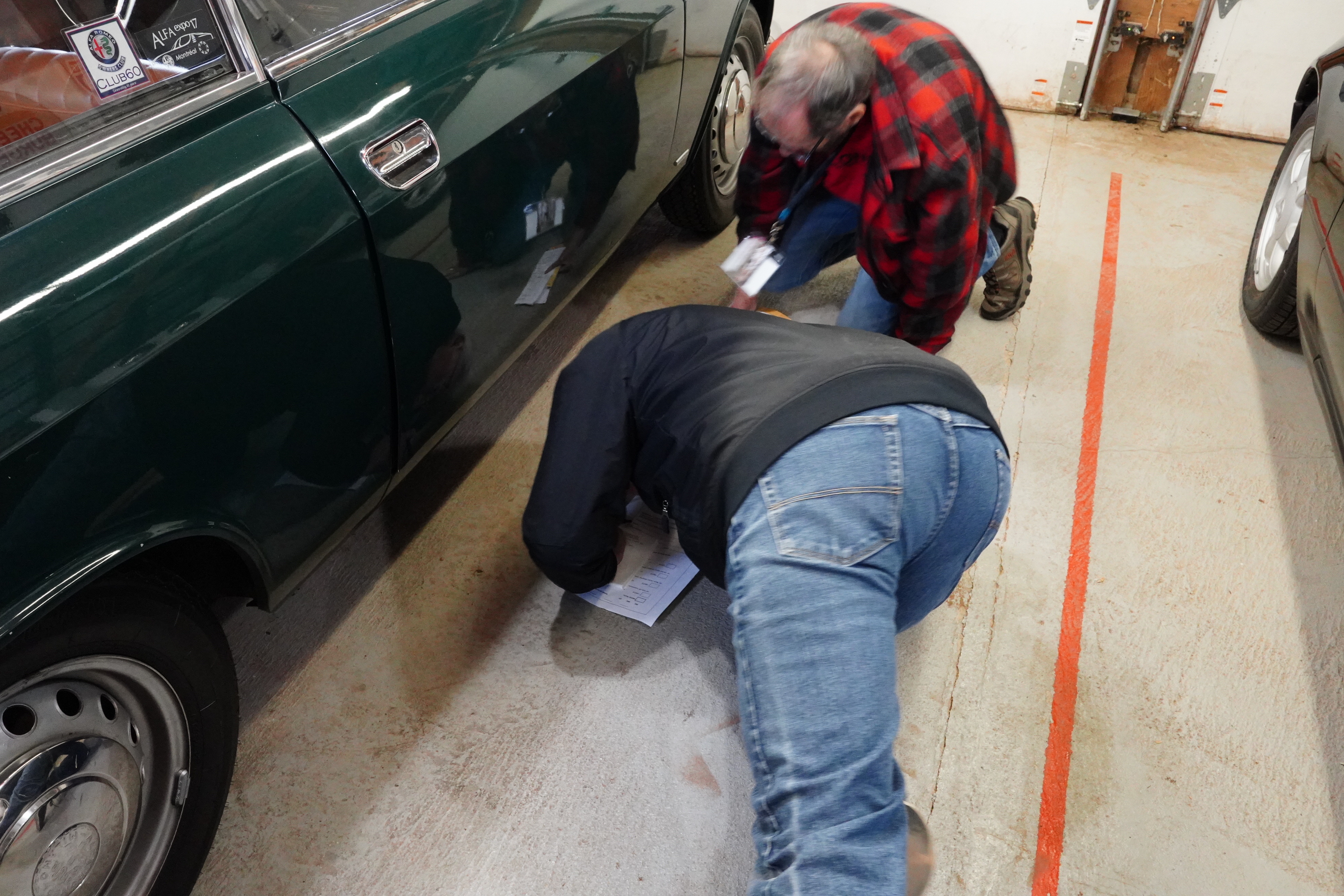
Chassis judging requires someone willing to get down on all fours


Points were lost for “non original” window decals seen here in upper left


Trainees correctly noted that in some areas, newer Miata lost more points than older Alfa


Correct judging position requires that convertible top be up


All photographs copyright © 2024 Richard A. Reina. Photos may not be copied or reproduced without express written permission.


Fix It (Again) Tony!

If you think my subject line implies a blog post about some downtrodden Fiat owner whose Italian marvel needs ever-repetitive mechanical repair (an undeserved reputation which gave birth to the cliché that F.I.A.T. is an acronym “Fix It Again Tony”), you would be mistaken. Today’s story is about my friend Tony, a fellow member of the NJ Chapter of AROC (Alfa Romeo Owners Club) who asked me to assist him in getting his 1967 Alfa Giulia 1300 TI sedan started. It seems that while Tony did have the car out for a short spin around the block in early January, subsequent attempts at starting have proven futile. It took me a while to land on the right combination of a free afternoon and semi-decent winter weather, but that combination rang the bell on Sunday Feb. 25. Tony’s house is a quick 20-minute jaunt for me, so I threw a few tools into a small toolbox and headed his way.

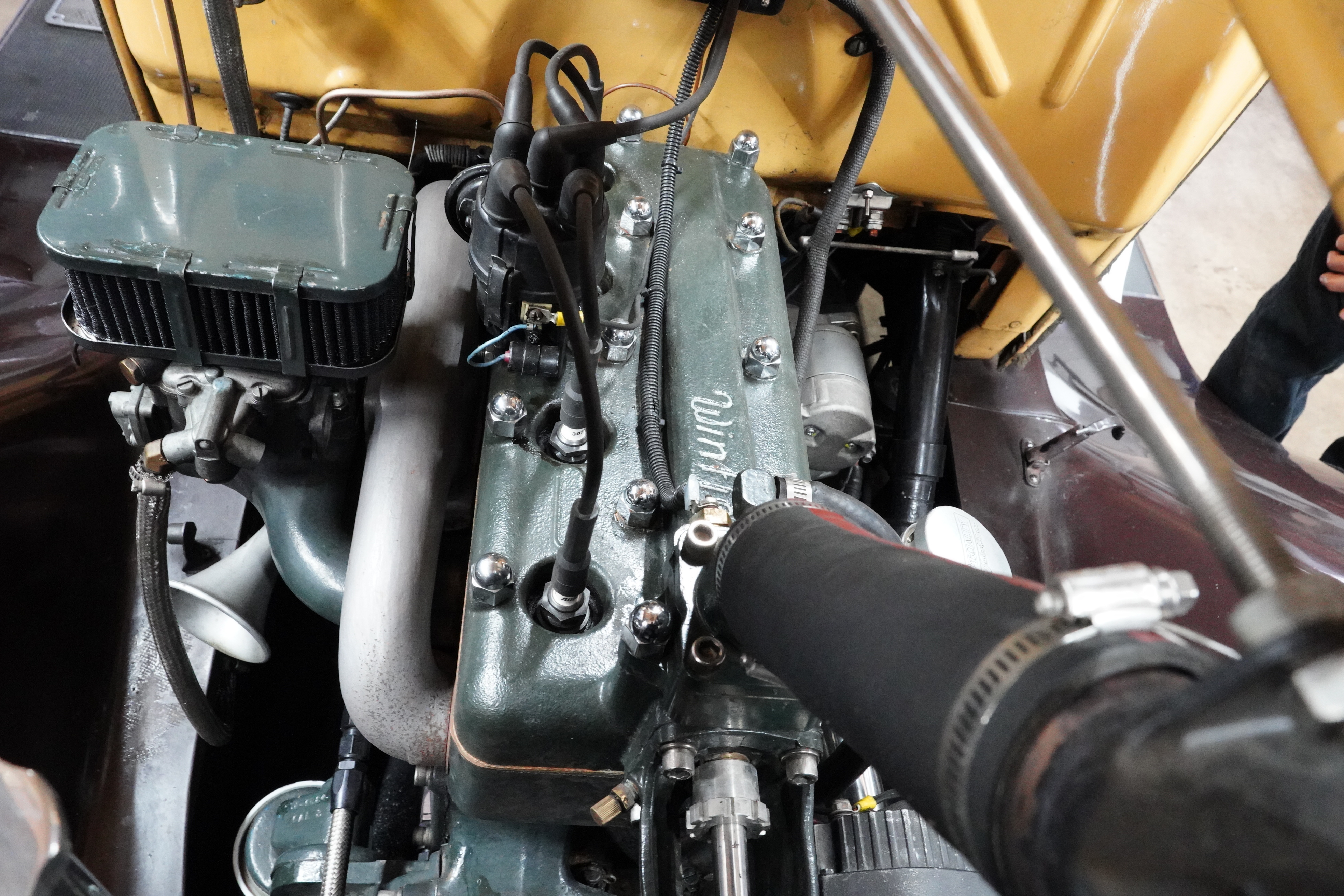
Like many older Alfas, Tony’s car is no longer 100% original. A while back, under his ownership, he had a shop swap out the factory 1.3L engine for a 2-liter job. If that engine was yanked from a U.S. spec car, the fuel system would have been Alfa’s unique Spica mechanical fuel injection. However, Tony’s engine wears a pair of the familiar Weber 40DCOE carbs, basically similar to what is on my GT Junior. Good thing, because I have not applied a wrench to anything Spica-related since 1980 (44 years for those of you who had a glass of vino rosso before opening my blog).

When I got to Tony’s house, I started by performing a quick visual check under the hood. Tony kept saying that he thought that the engine was not getting fuel. That well may have been so, but we still needed to start with the basics. He showed me an aftermarket (Bosch) electric fuel pump mounted on the right inner fender. The wiring and hoses associated with that pump looked ok. I then popped off the distributor cap, and because it was a bit dusty under there, wiped it with a clean cloth. The cap and rotor looked fine, and again, a modification was in place: instead of points and condenser, the ignition system used aftermarket electronics to collapse the primary circuit and energize the coil. There wasn’t too much I could do to verify that at this moment.

Initial underhood checks completed, I asked Tony to try to start the engine. The battery was strong enough to provide good cranking power, but after 3 attempts, each lasting about 10 seconds, the engine didn’t even cough. Tony told me that usually, the engine “tries” to start on the first or second crank attempt. I suggested that to check for fuel delivery, we could pull a hose and watch for fuel flow, but a simpler and safer method might be to pull a plug and smell it. With that, the #1 plug was removed, and the fuel smell was strong enough to convince me that fuel was making it that far. However, the plug was completely black from carbon, almost to the point of closing the gap. Using a nylon brush, I cleaned that plug, then did numbers 2, 3, and 4, returning each plug to its original home. “Try it again” I instructed, and he did. This time, the engine sound changed: on the 2nd and 3rd crank attempts, the engine sputtered and almost started. Tony quickly exclaimed ‘THAT’S what it normally does”. I point-blank told him: “you need spark plugs”. He didn’t have any spares, so into his Honda we jumped, and headed for the local Auto Zone.

The Auto Zone counter guy could not have been more helpful. We gave him part numbers for NGK, Champion, and Bosch spark plugs (we were prepared!) but he had none in stock. Back to the car, and off to an Advance Auto Parts store in the opposite direction. I told Tony that the primo choice would be the NGKs, and bingo, AAP had the NGKs on the counter pronto.

Twenty-five bucks lighter, Tony had us back to his house in a flash. Out for the second time came the old plugs, and in went the new NGKs. (NGK plugs from my experience never need gapping, and these plugs were no exception, although I still checked them). Fingers crossed, Tony hopped in, and the engine started on the second try. Good thing I guessed right!

We took it for a short spin around the neighborhood, me riding shotgun. The car ran a little rough, possibly from dirty fuel or a carb imbalance, but on the whole, Tony was pleased. On my way out, I told Tony that I think these engines eat plugs for breakfast, so no matter how many or how few miles I put on my Alfa, I change mine once a year. He said he would start doing the same.

The new NGKs about to be unboxed and threaded into place


With new plugs in place, Tony gets behind the wheel for another starting attempt


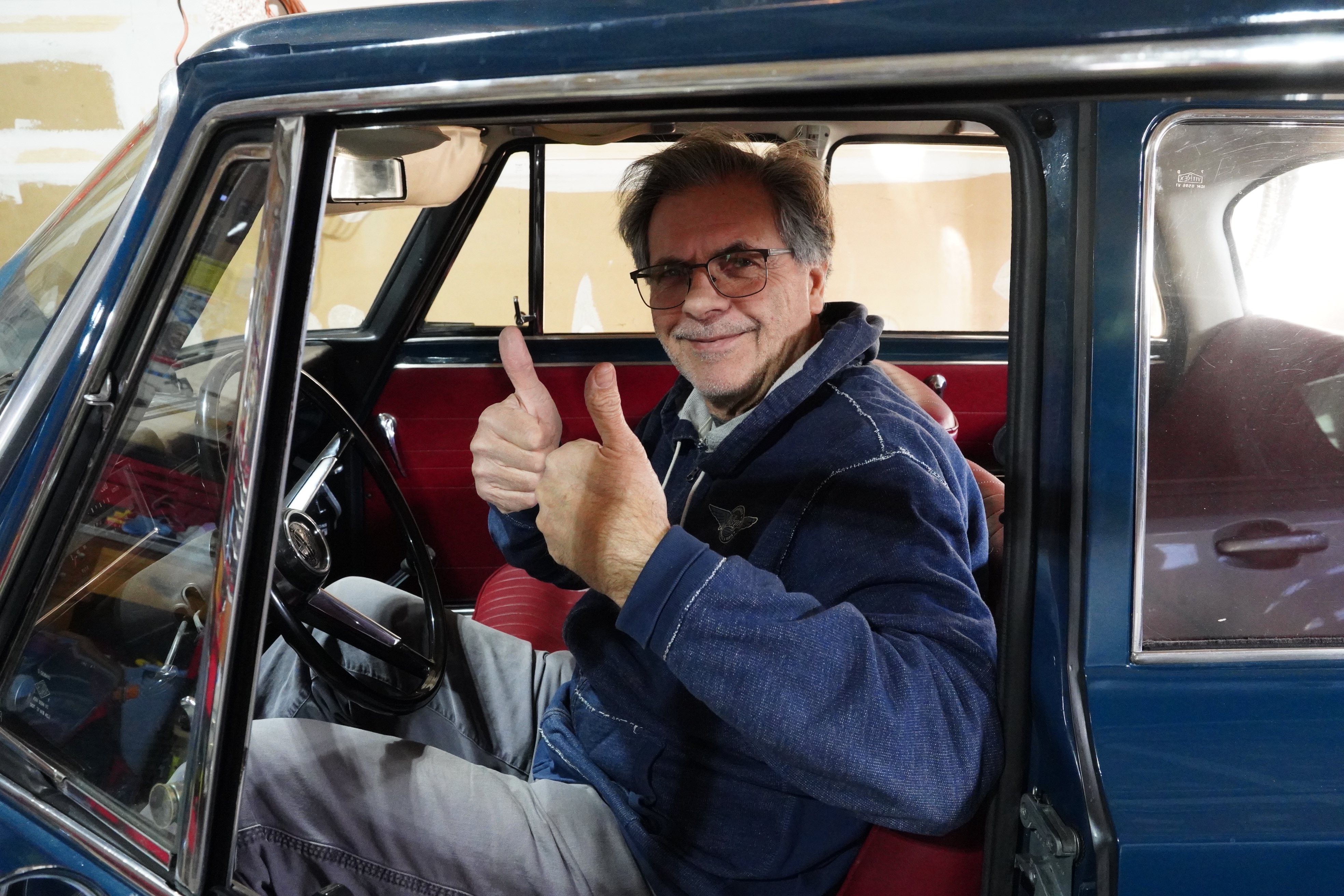
Fantastico!  With engine idling, Tony gives it two thumbs up


The uncatalyzed exhaust was quickly filling the garage, so Tony opened the door

Giulia TI (Tourist International) dash is completely different than my Bertone GT, and this one is a work of art in its own right

I tried it on for size; nice car!

Flying along on Route 22 at 50+ MPH (but the speedo reads in KPH, so more arithmetic)

All photographs copyright © 2024 Richard A. Reina. Photos may not be copied or reproduced without express written permission.

NJ Alfa Club Breakfast Meet, Feb. 18, 2024

The NJ Chapter of the Alfa Romeo Owners Club (AROC) held their 2nd monthly breakfast meet-up of the year on Sunday February 18. The chosen locale was the Americana Diner in Shrewsbury, NJ. Nine Alfisti braved a.m. temps in the teens to make the trek. Our Chapter V.P. Vic had made the arrangements with the diner, which was all too obvious when I, the first one to arrive, walked in, whereupon the diner manager blurted “You with Vic? Just hang on a sec.”

The rest of the crowd poured in within minutes, and we were given a large table in the rear, where we could eat and chat in peace and comfort. With spring just over a month away, much of the conversation pivoted around plans for warm weather events, such as a visit to the Simeone Museum and participation in the New Hope car show. Alex, our Chapter Secretary, entertained us with the Show & Tell portion of the morning by passing around the gears and synchros from his Duetto transmission, which he is in the midst of rebuilding.

Breakfast was served and consumed, coffee was poured and drunk, and as car guys tend to do, we hung out and gabbed well past the time when plates were cleared. Before departing for the day, I made sure to capture photos of those who drove their modern Alfas. The classics are still stored, waiting for salt-free roads and milder temperatures.

The next breakfast outing for the Jersey Chapter is Sunday March 10, which means there will be just 10 days remaining before Ol’ Man Winter departs (we hope) for the season.


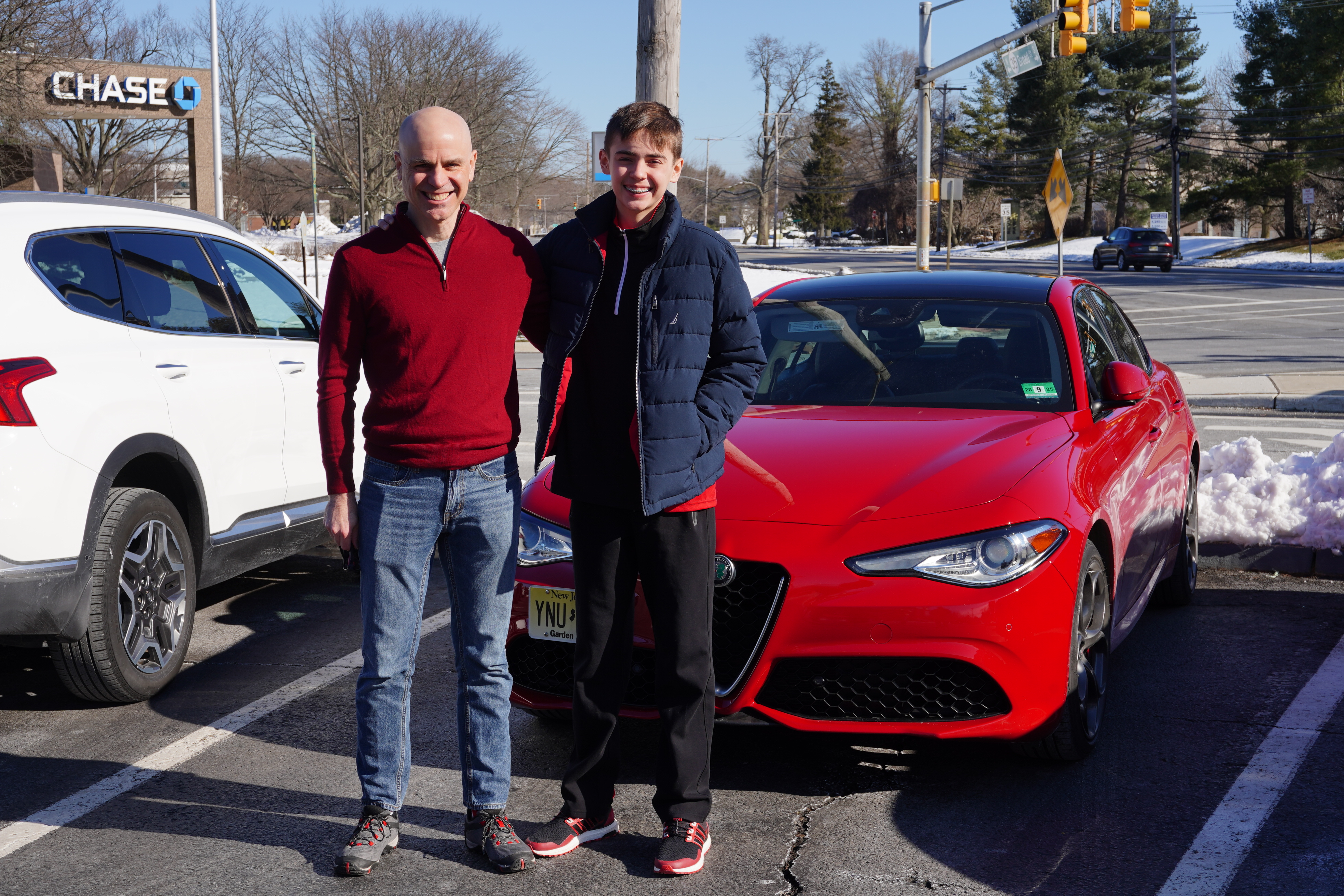
Steve and son John with their Giulia


John with his Tonale


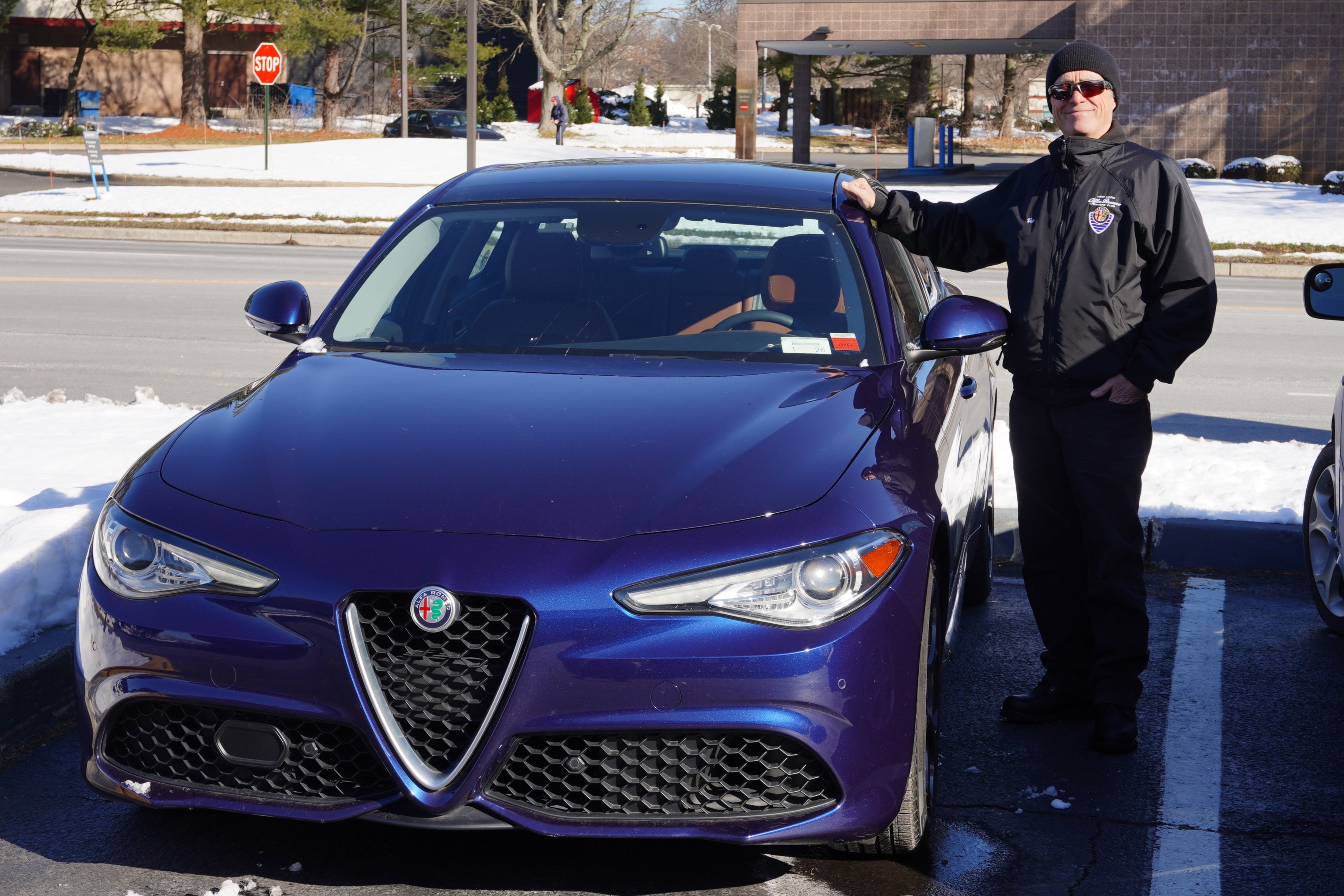
Vic with his wife’s Giulia


All photographs copyright © 2024 Richard A. Reina. Photos may not be copied or reproduced without express written permission.


NJ AACA Judging School, Jan. 27, 2024

The NJ Region of the AACA has held its annual Spring Meet (car show) on the first Sunday in May for as long as I can remember, and probably much further back than that. Traditionally, the Chief Judge for the Meet holds a judging seminar a week or two before the show. Last year, our long-serving Chief Judge retired from the position, and with a new Chief Judge comes a fresh look at the way we do things. Our new Chief Judge Anthony decided to make two rather simple changes: one, conduct more than one judging seminar, and two, conduct the first one a few months before the show. The overall intent is to increase the number of volunteer judges.

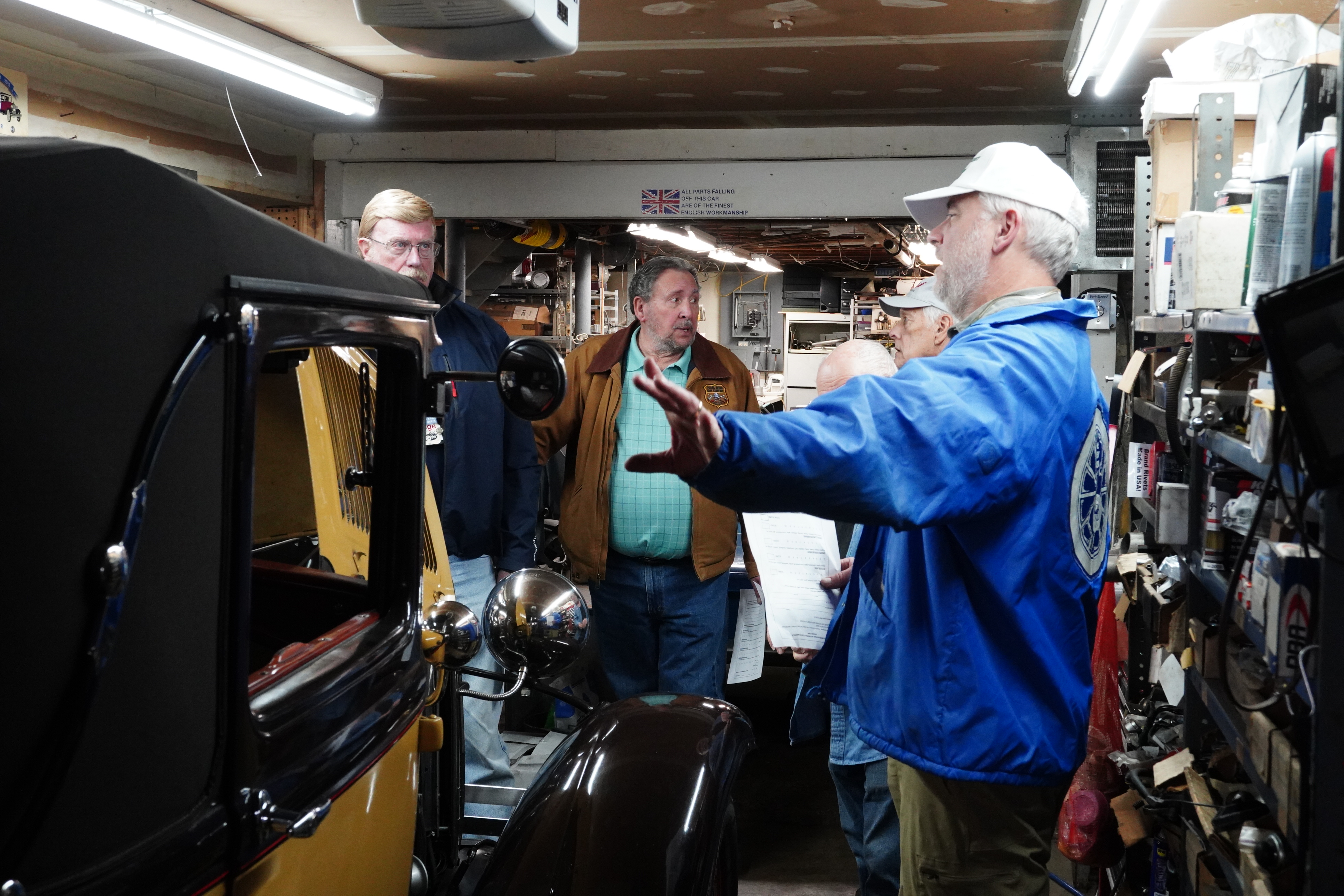
Our newsletter editor-in-chief, Dick Bettle, graciously agreed to make his garage available for the first of these seminars, which was held on a ‘balmy’ (40-ish) January Saturday. Including our host, 17 members of the club turned out, which I felt was an impressive showing. Craig Kunz, our Regional VP, agreed to stand in for Anthony, who is dealing with some medical issues. We surrounded Dick’s 1930 Ford Model A Coupe which was our vehicle exemplar for the day.

Several attendees are experienced National AACA judges, having judged at Hershey and other National shows around the country, and their input is valuable at these kinds of seminars. At the same time, AACA uses a 400-point judging system and drills down to a microscopic level which our Region does not. The NJ Region’s judging sheet uses a 40-point system, with 10 points each assigned to exterior, interior, engine compartment, and chassis. One of the major learnings which Craig successfully delivered was understanding the difference between the National 400-point judging sheet and our 40-point one.

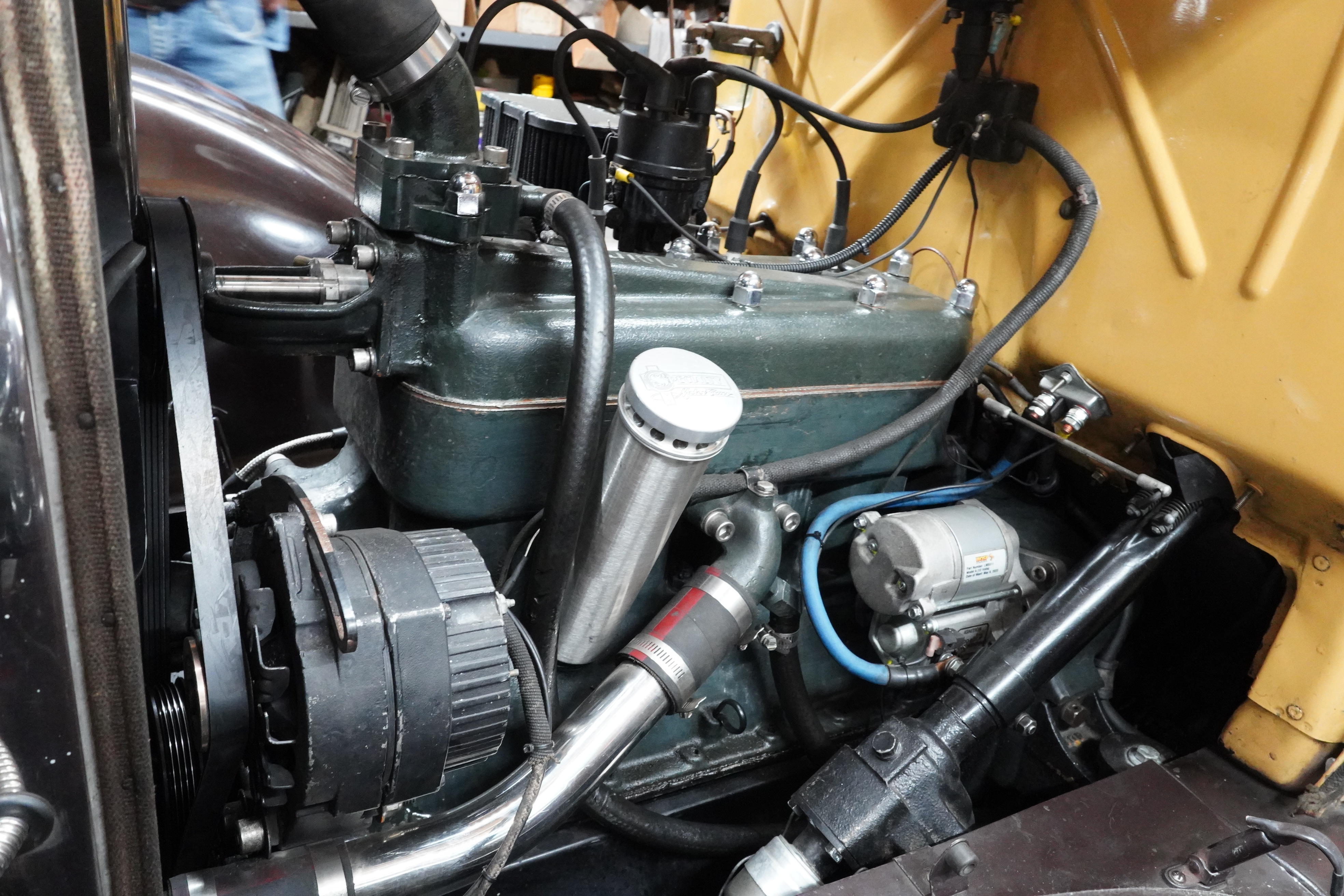
It was a fun exercise with Dick’s Model A. Most club members are all too familiar with this car, as Dick and his wife Bobbi routinely put 4,000-5,000 miles a year on it (that is not a typo: four THOUSAND to five THOUSAND miles a year). To the casual observer, this is a bone-stock 1930 Ford. However, Dick, a life-long car fanatic whom I consider to be one of the most technically savvy people I’ve met, has executed dozens of modifications to this A. Among other upgrades: radial tires on smaller-diameter wheels, an alternator, a Honda distributor, a performance cylinder head, and upgraded electrics including a navigation system (yet he has retained cable brakes). On a 40-point scale, we ended up deducting 13 points for a final score of 27. The radials and the engine mods were major deductions. While some attendees wanted to score a “0” for the engine compartment, Craig and other judges noted that the car retains its original engine block, so only 5 points were deducted.

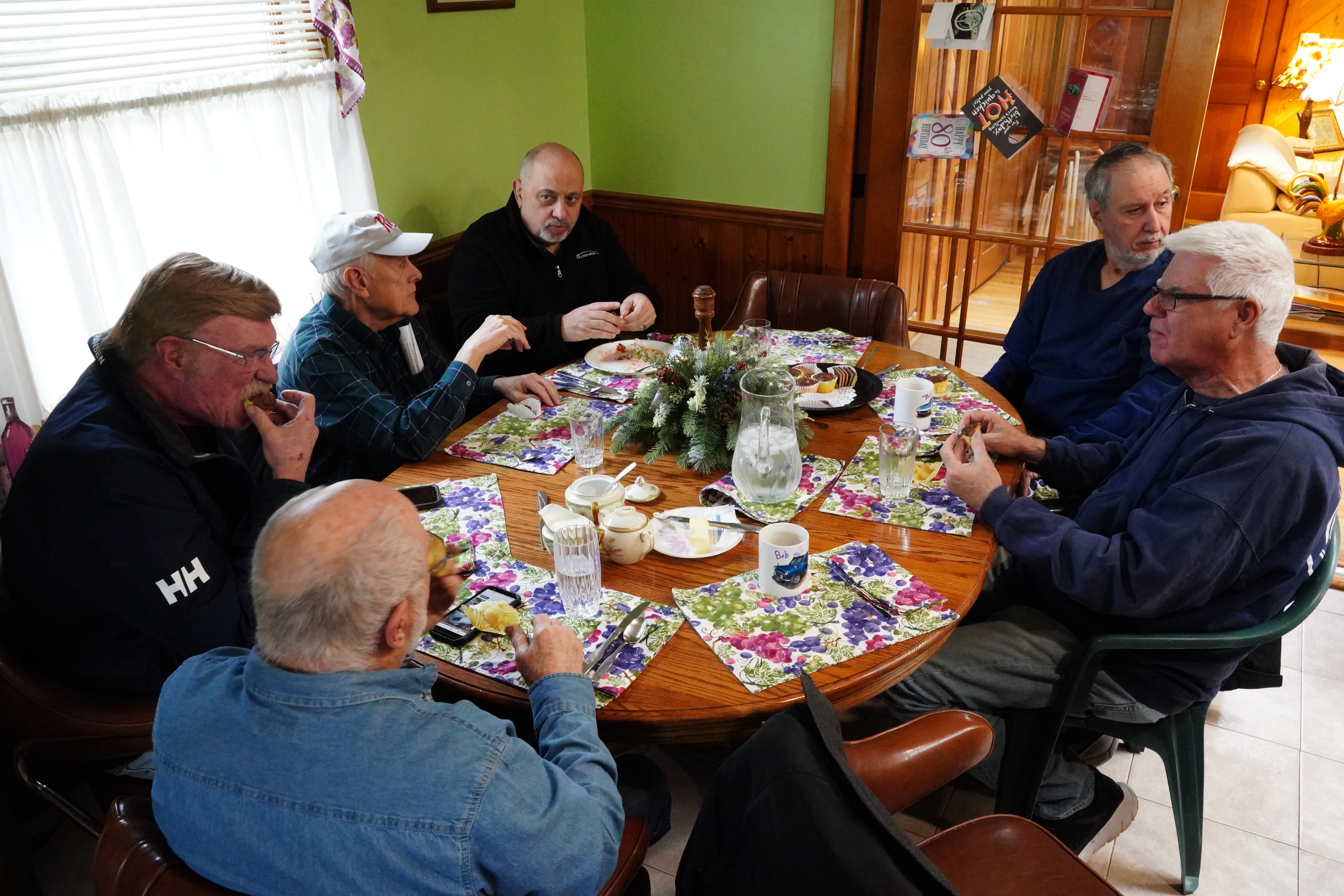
After two hours in the garage, Bobbi entered the room to announce that lunch was being served upstairs, where we found homemade lasagna, meatballs, water, coffee, and various cupcakes (some club members admitted that they were really here for the lasagna). Dick and Bobbi were generous to a fault by hosting and feeding this crowd of hungry car guys. Oh, and the next judging seminar is in March at my house. I need to go clean the garage.


Car owner Dick (hand on pole) and other attendees listen to Pete (Spring Meet Chair)


Craig (in white hat) makes a point or two


John P asks attendees to evaluate the interior


The rumble seat must be judged as well


“Don’t EVER touch an owner’s car!”


Bobbi takes photos while the lasagna is in the oven


What car guys REALLY love to do: eat, and talk:


All photographs copyright © 2024 Richard A. Reina. Photos may not be copied or reproduced without express written permission.


NJ Alfa Club Sunday Breakfast Meet, Jan. 21 2024

The reinvigoration of the NJ Chapter of the Alfa Romeo Owners Club (AROC) has been ongoing since the middle of 2023. While progress has been slow and steady, the Chapter agreed a while back to institute something we have observed done by other Chapters, which is a regularly scheduled monthly meet-up at a restaurant or diner. The intention is to have an informal gathering where members can simply get to know each other better. There is no pre-set agenda.

The club officers decided to schedule breakfast at a diner on a monthly basis, with the dates and locations already set through April. January’s gathering took place on the 21st at the Spinning Wheel Diner in Lebanon NJ. Seven intrepid Alfisti braved the 20 degree F temperature to arrive at the diner at 8 a.m.

While spring and summer meets will likely see a significant quantity of Alfas old and new in the parking lot, those of us (including your author) with “classic” Alfas are not about to drive them on our heavily salted roads. Two current-generation cars, a Giulia and a Tonale, made the trek, with the rest of us in our non-Italian daily drivers. (Tony quipped that he drove his “Alfa Ridgeline”!) It was a special treat to have John, the 13-year-old son of Steve, join us, and I learned that this young man is a fanatico of all automobiles from the great country of Italy. (When he told me “well, I do like one French car, the Bugatti”, I was delighted to inform him that Ettore Bugatti was an Italian who just happened to move to France.)

The food and coffee were great, the service was better, and as seems to happen at every gathering of this type, we managed to linger and chat well past the time when our bellies were full and the plates were cleared. I didn’t think that 7 was a bad turnout for A) a bitter cold January morning and B) our first event of this type, so I have high hopes that attendance will improve for the next few breakfast meets.

Above, L to R: Richard, John, Steve, Bill, John, Fran, Tony

Above: Steve with son John with Steve’s 2018 Giulia

Above: John with his Tonale


All photographs copyright © 2024 Richard A. Reina. Photos may not be copied or reproduced without express written permission.


The 2011 Lime Rock Vintage Car Show

Continuing with my winter photo cleanup, I came across these film photos which I’ve never published, taken at the 2011 Lime Rock vintage car show. I have no specific recollection of attending, and I mention that only because the pictures show a light turnout of show vehicles, which I cannot explain. My photo quantity is also light, likely because I started the day with a partially consumed roll in my camera and did not have more film with me. Still, the vehicles on the field were attractive and varied, bearing out my long-held opinion of Lime Rock as one of the few places in the Northeast to spot rare and unusual machinery.

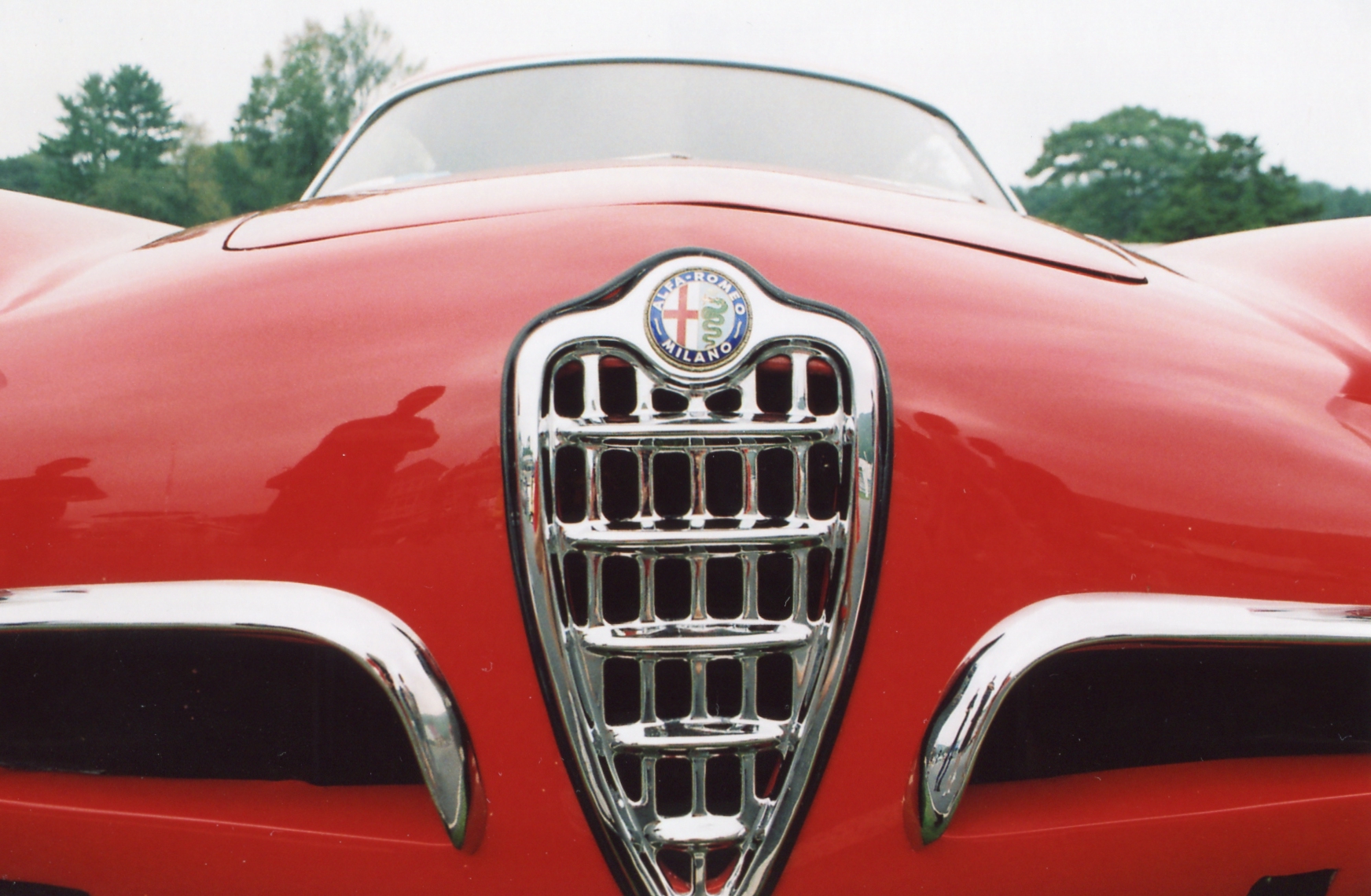
Ownership of my first Alfa was still 2 years away, yet my long fascination with the marque is borne out by this photo.


This gorgeous Fiat 850 Spider is an early car, as evidenced by its glass-covered headlights, a treatment that would soon be replaced by exposed sealed beams.


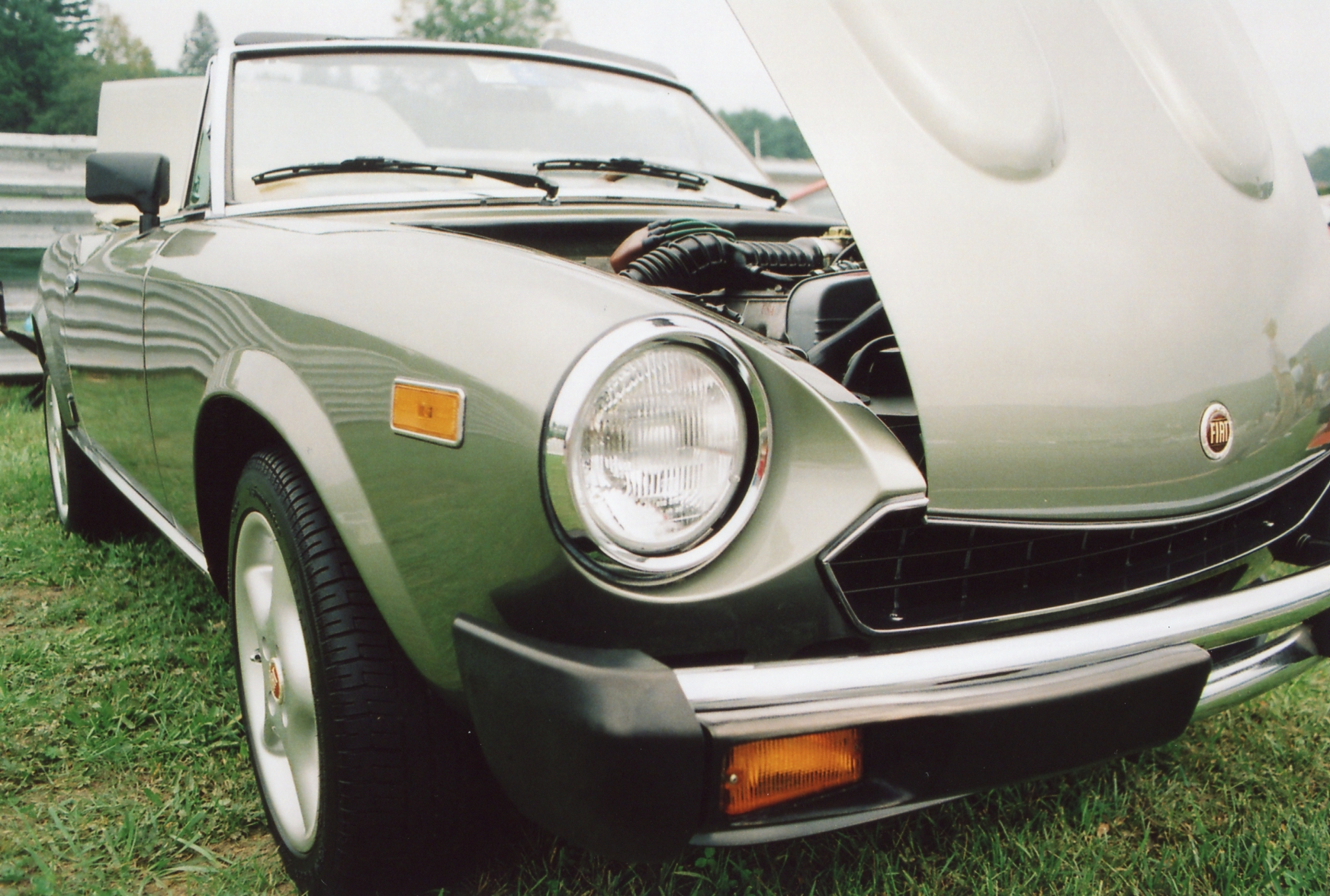
I was attracted to the color combination of this big-bumper Fiat 124 Spider.


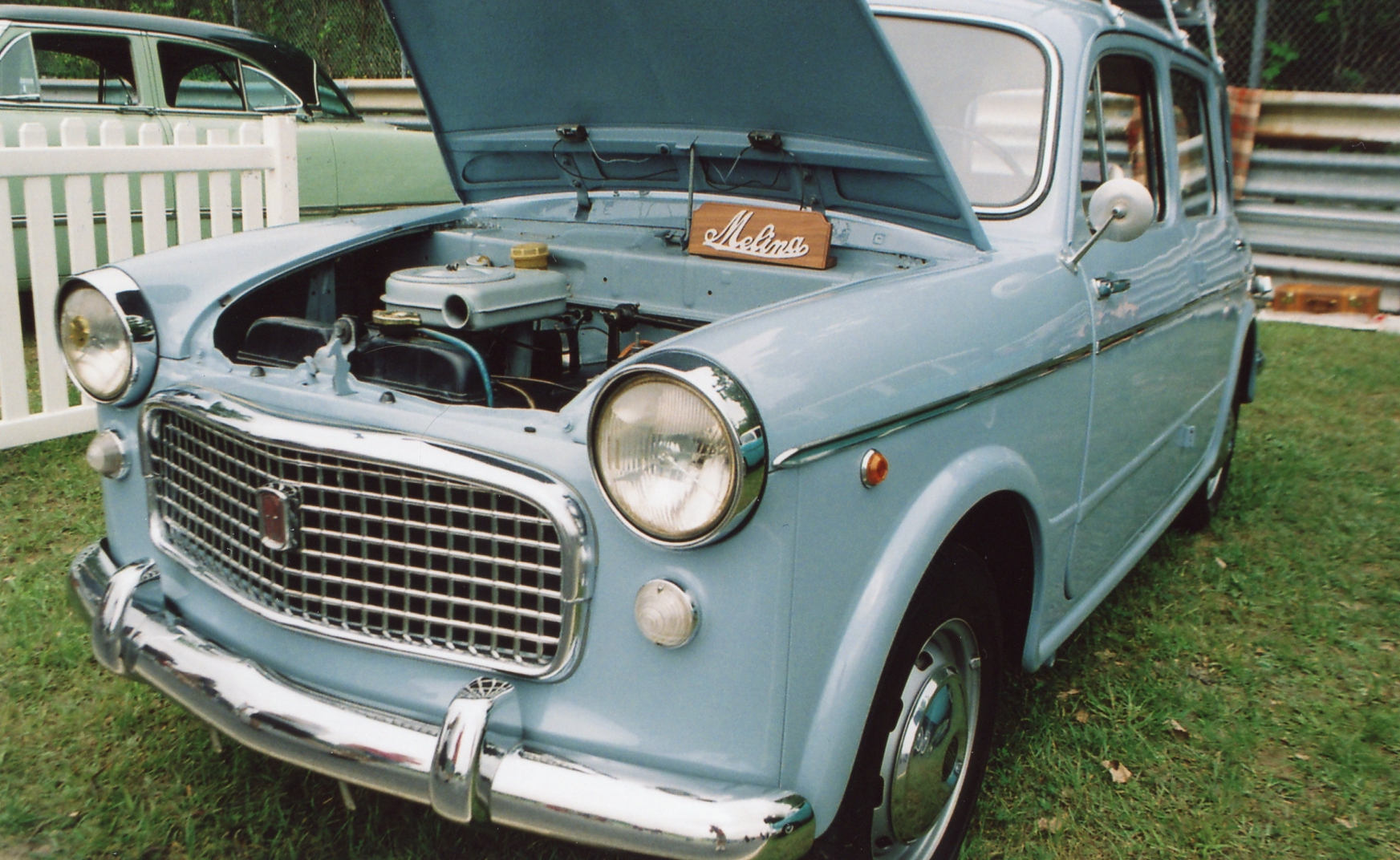
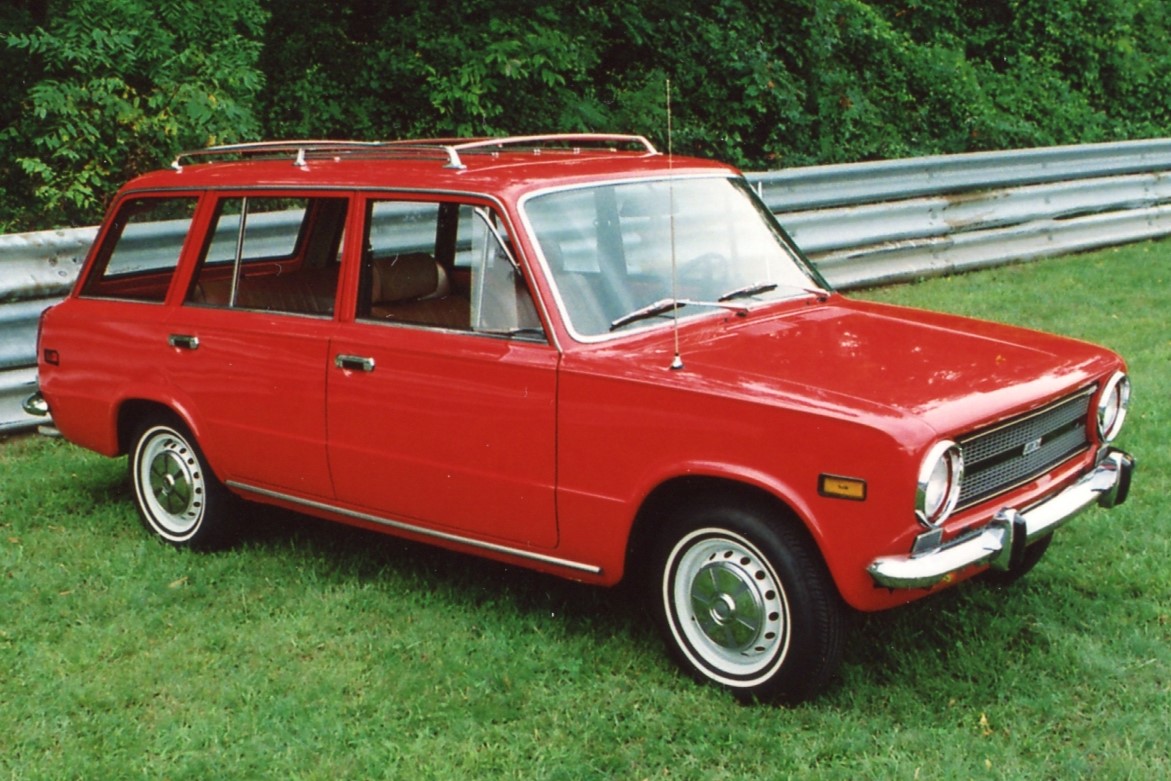
A couple of old and rare Fiat station wagons. Note the suicide driver’s door on the blue car.


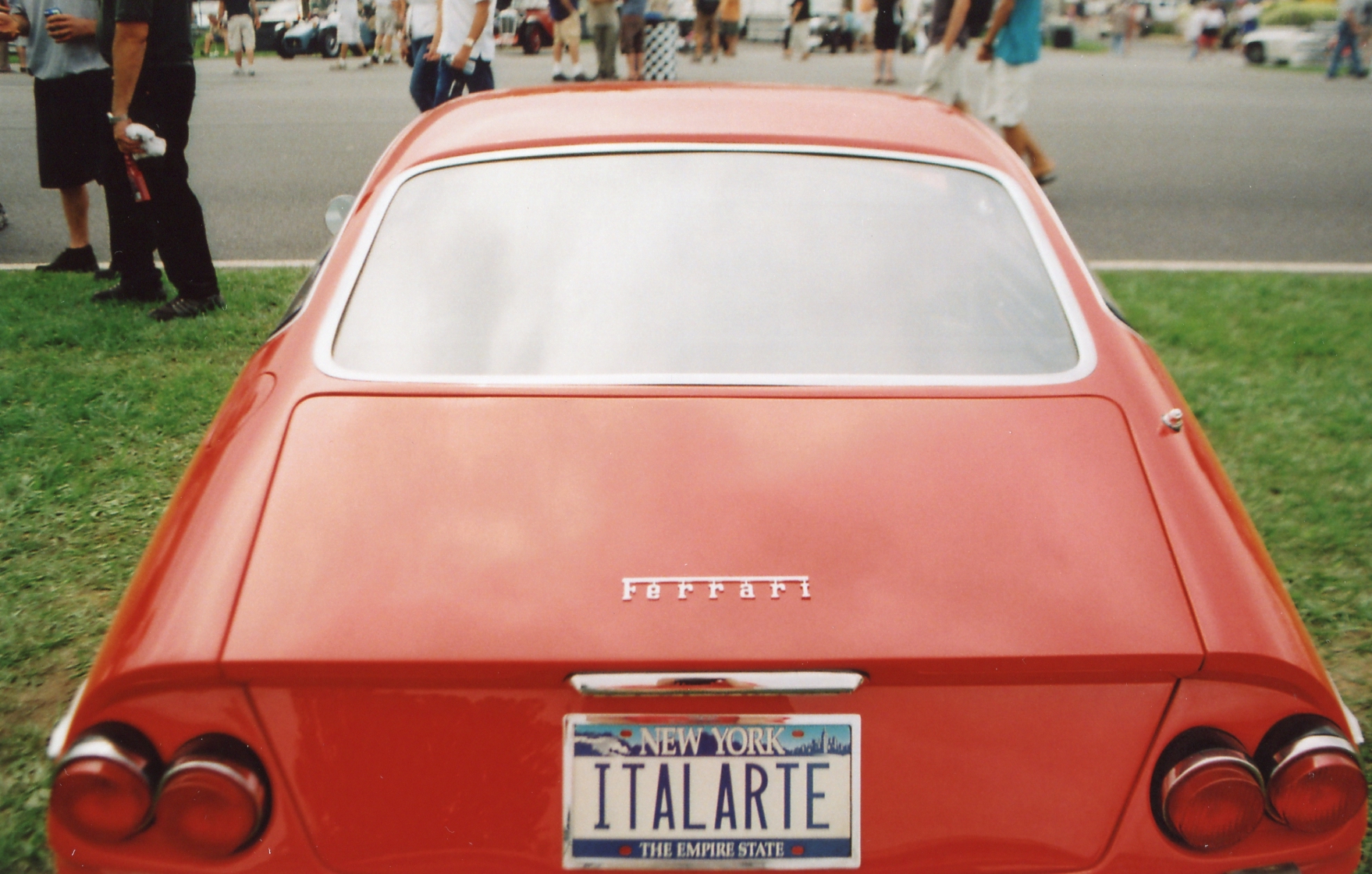
Ferrari Daytona


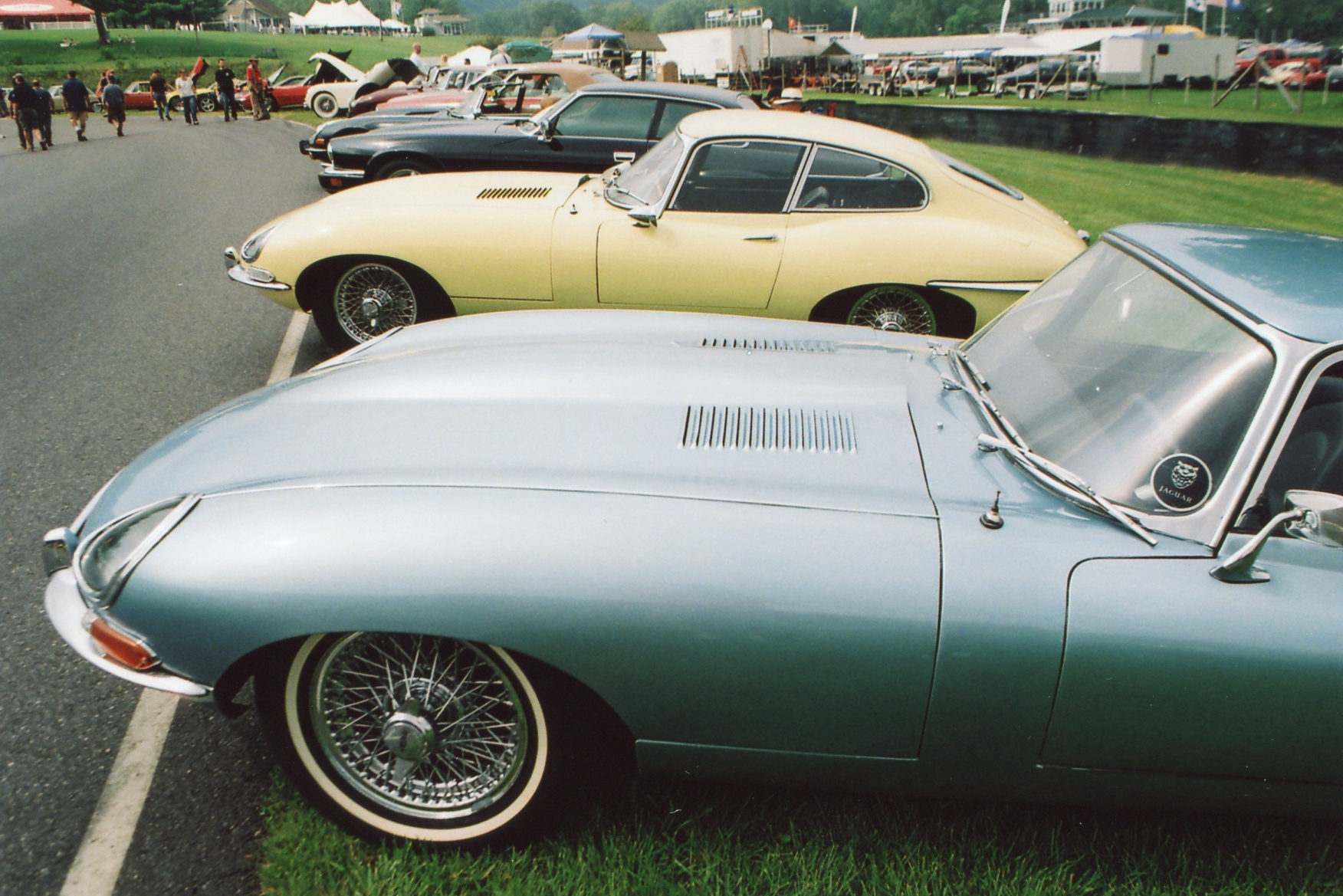
I never pass up an opportunity to photograph the eternally beautiful Jaguar XKE.


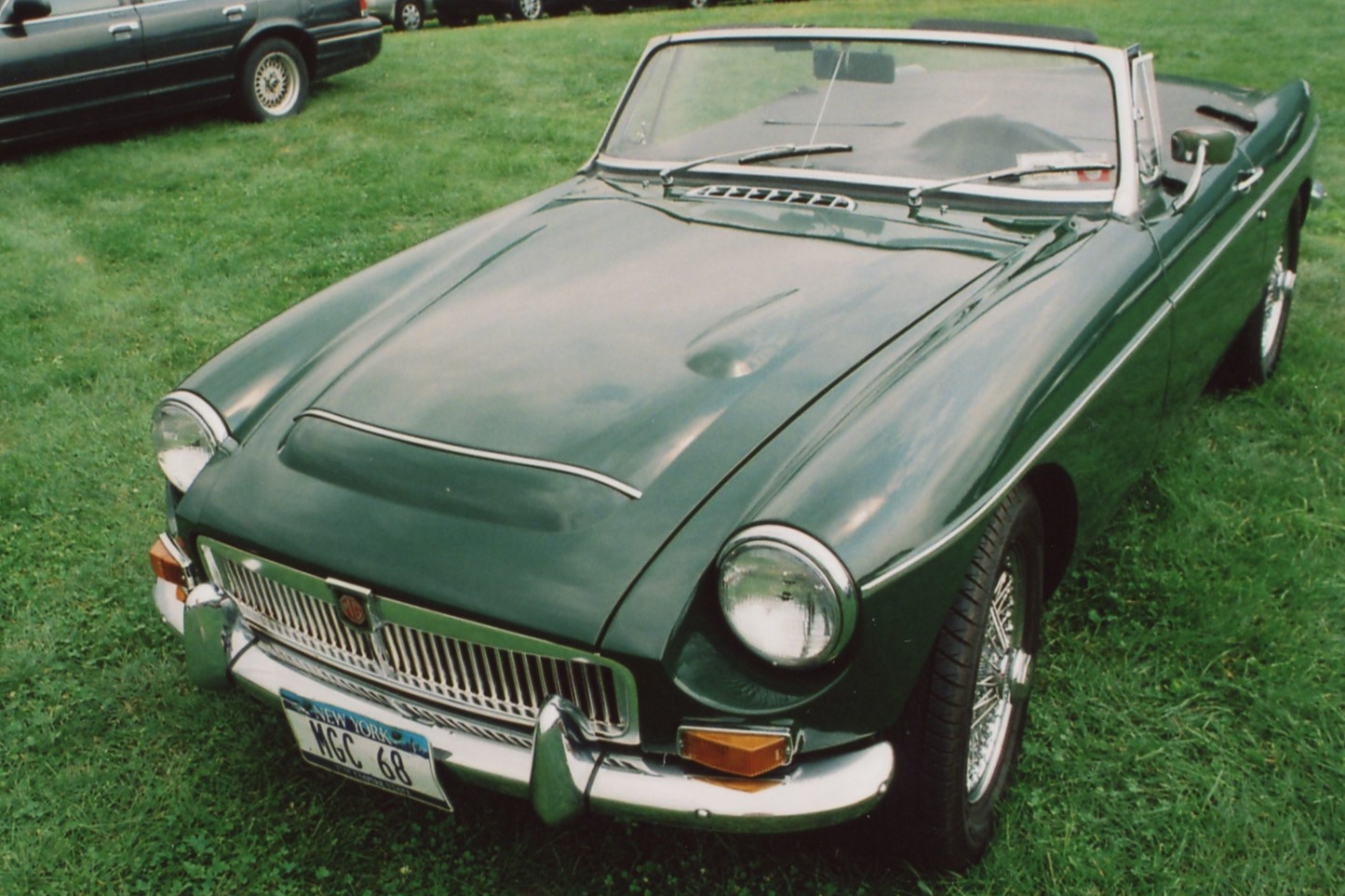
The bump in the hood (and the license plate) inform us that this is an MGC, with an inline 6 under that hood.


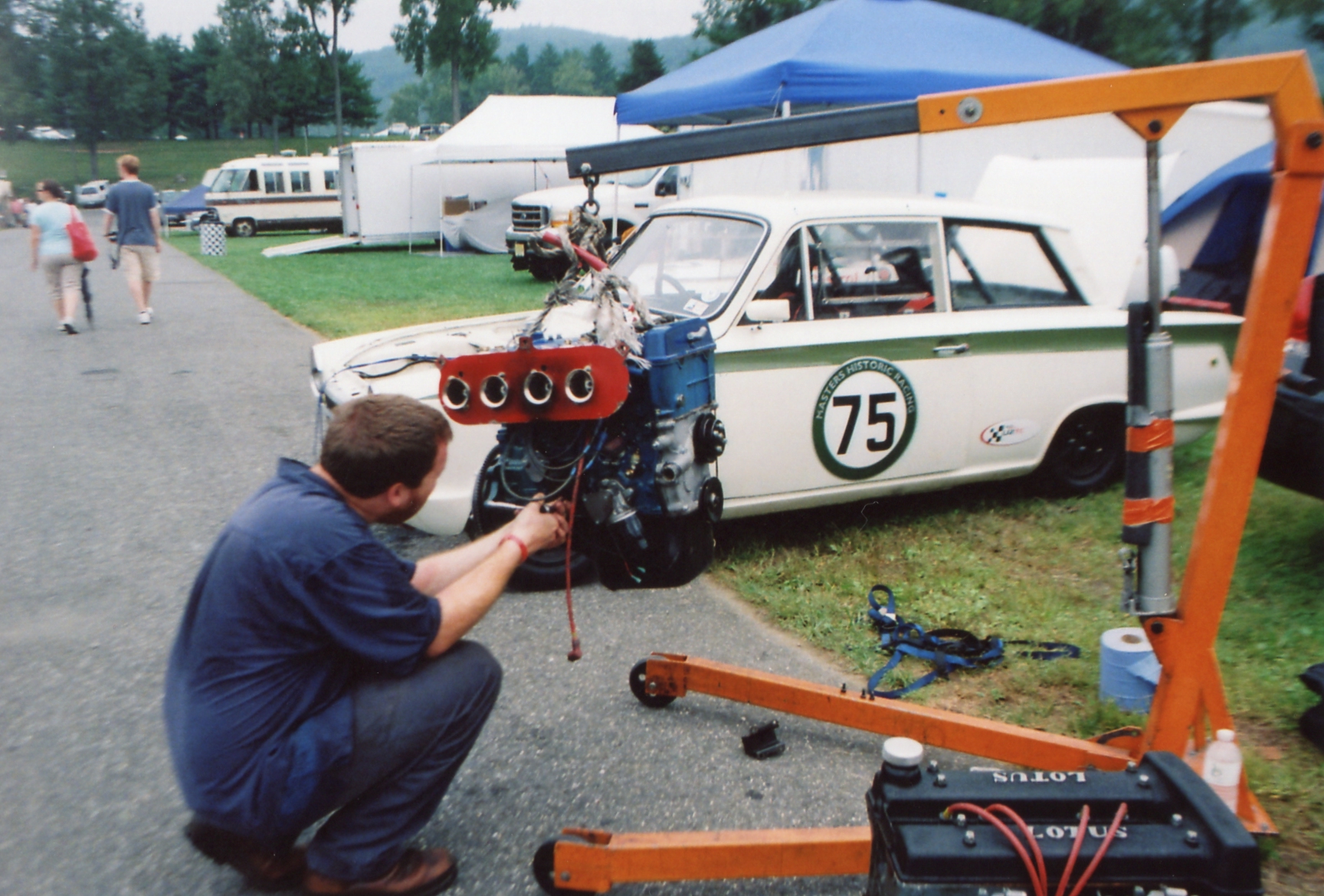
Spotted in the paddock: a Ford/Lotus Cortina in the middle of an engine swap.


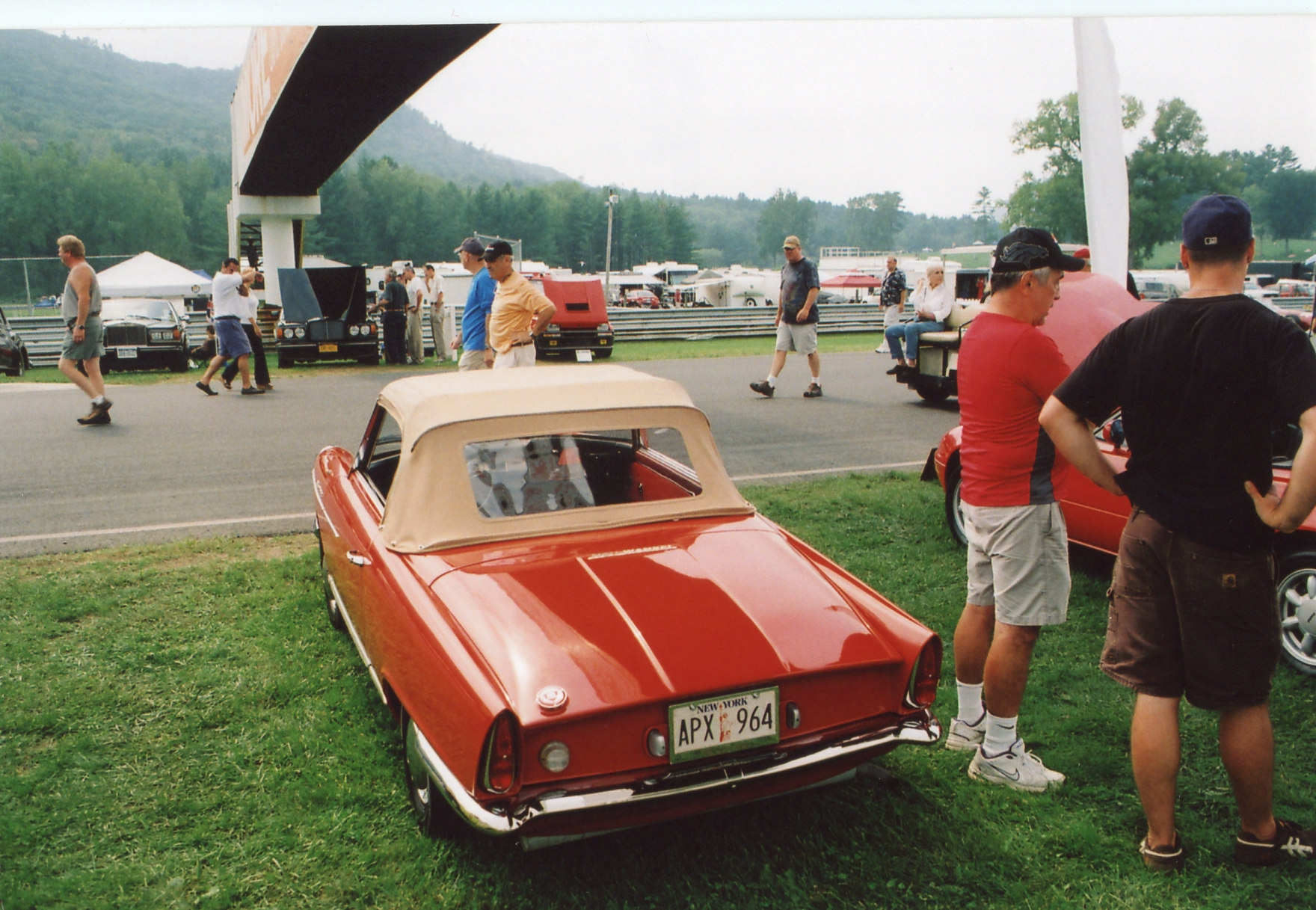
An NSU Wankel Spider, with a rear-mounted rotary engine.


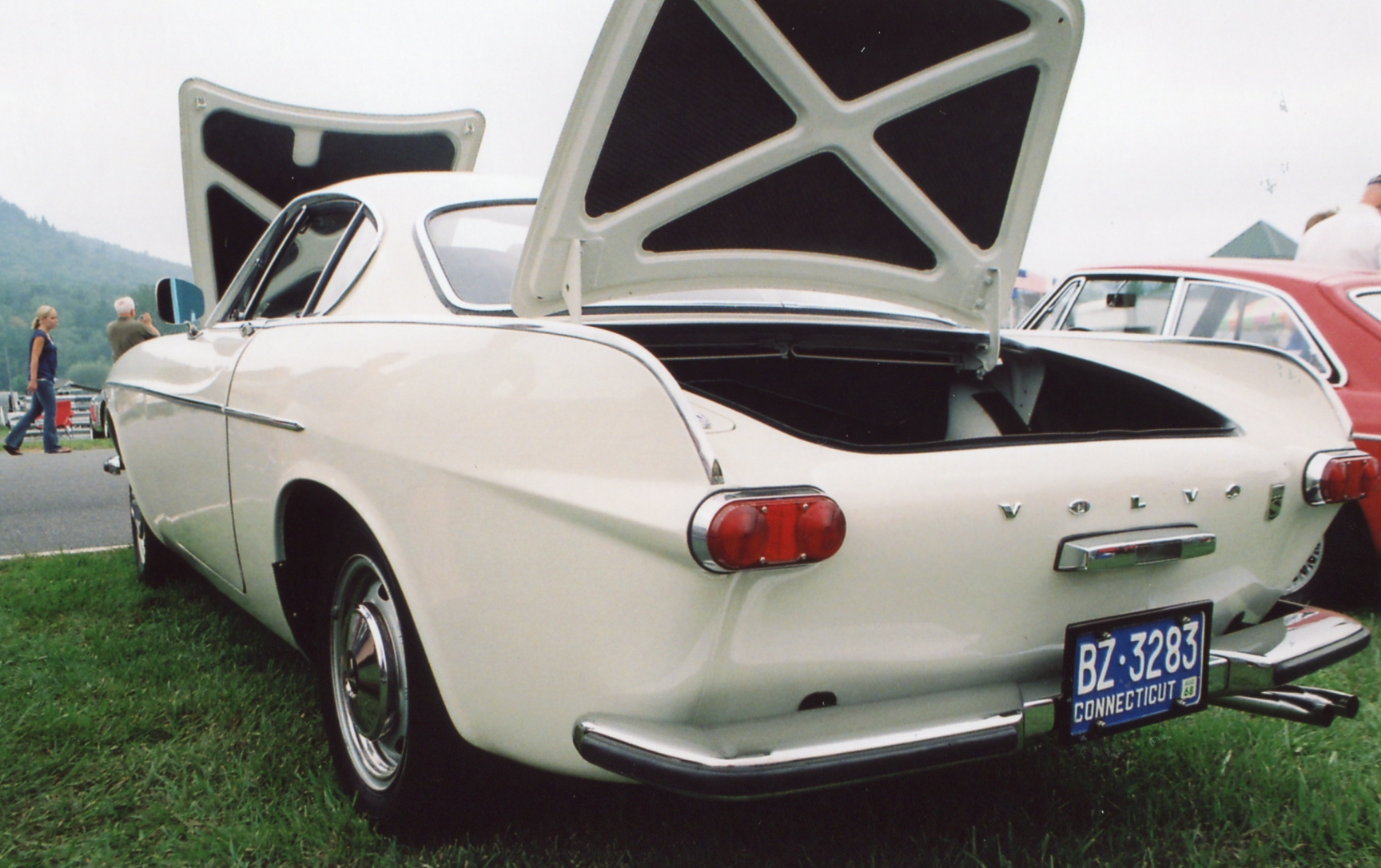
A very clean and nicely restored Volvo 1800S.

All photographs copyright © 2024 Richard A. Reina. Photos may not be copied or reproduced without express written permission.