One month ago, I was sitting in my kitchen, staring out the window at my backyard, which had twelve inches of snow, topped with an inch of ice. Daytime temperatures had been in the teens for weeks, with nighttime lows in the single digits, occasionally dropping below zero F. I gazed at the frozen tundra and said to myself, “this snow is never going away.” Even though I knew that was not true, I wondered exactly how long it would be before the grass was visible again.
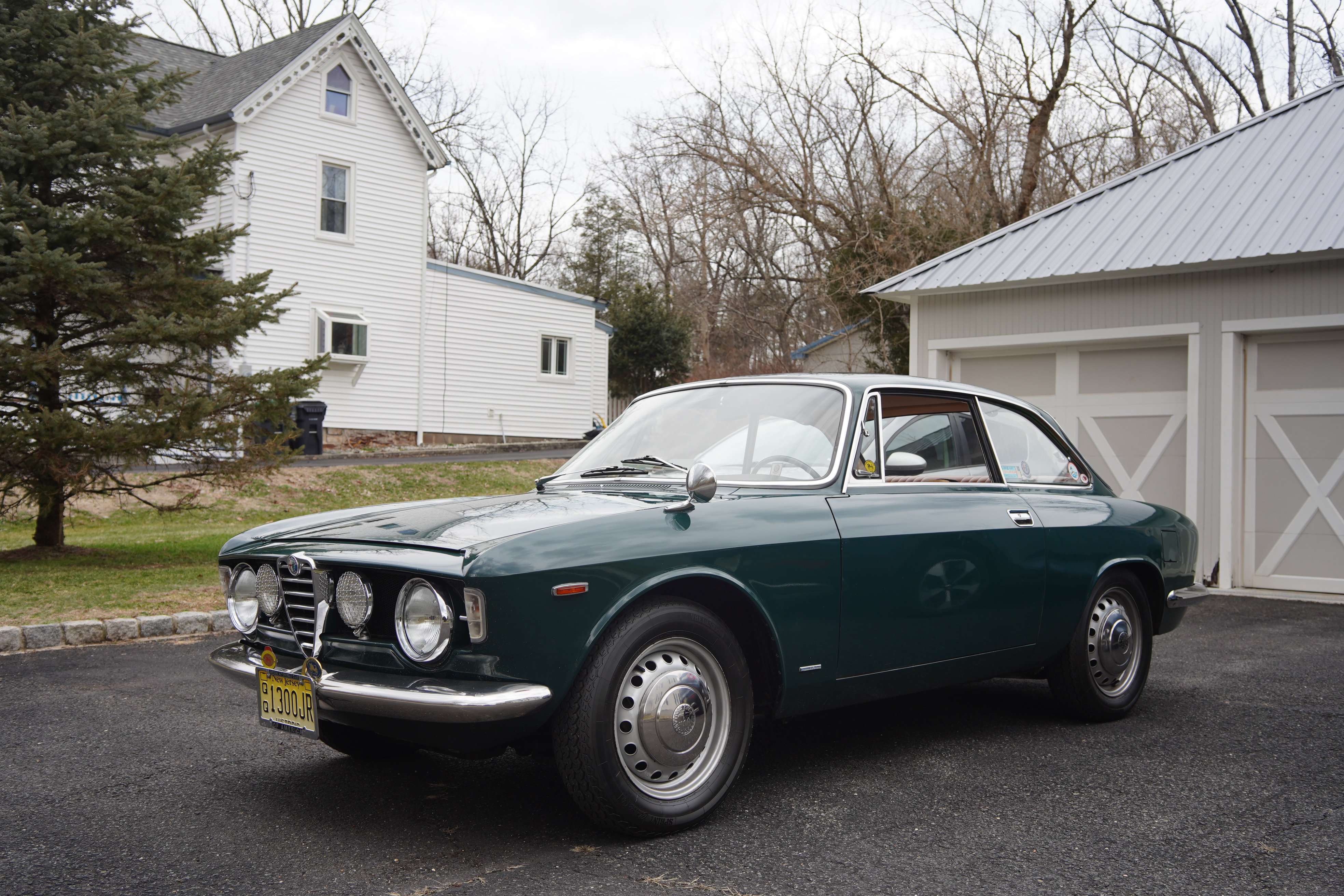
Today, with temperatures reaching 70 F, with recent rains having washed the pavement of salt, and with 95% of the snow gone, it truly felt like spring had arrived, twelve days ahead of schedule. I went out to the garage and reversed the winter bedding procedure I’ve always followed for the Alfa Romeo: the cover came off, engine oil level was checked and verified to be OK, tire pressures were reset from 45 psi to 30 psi, and the battery trickle charger was removed.
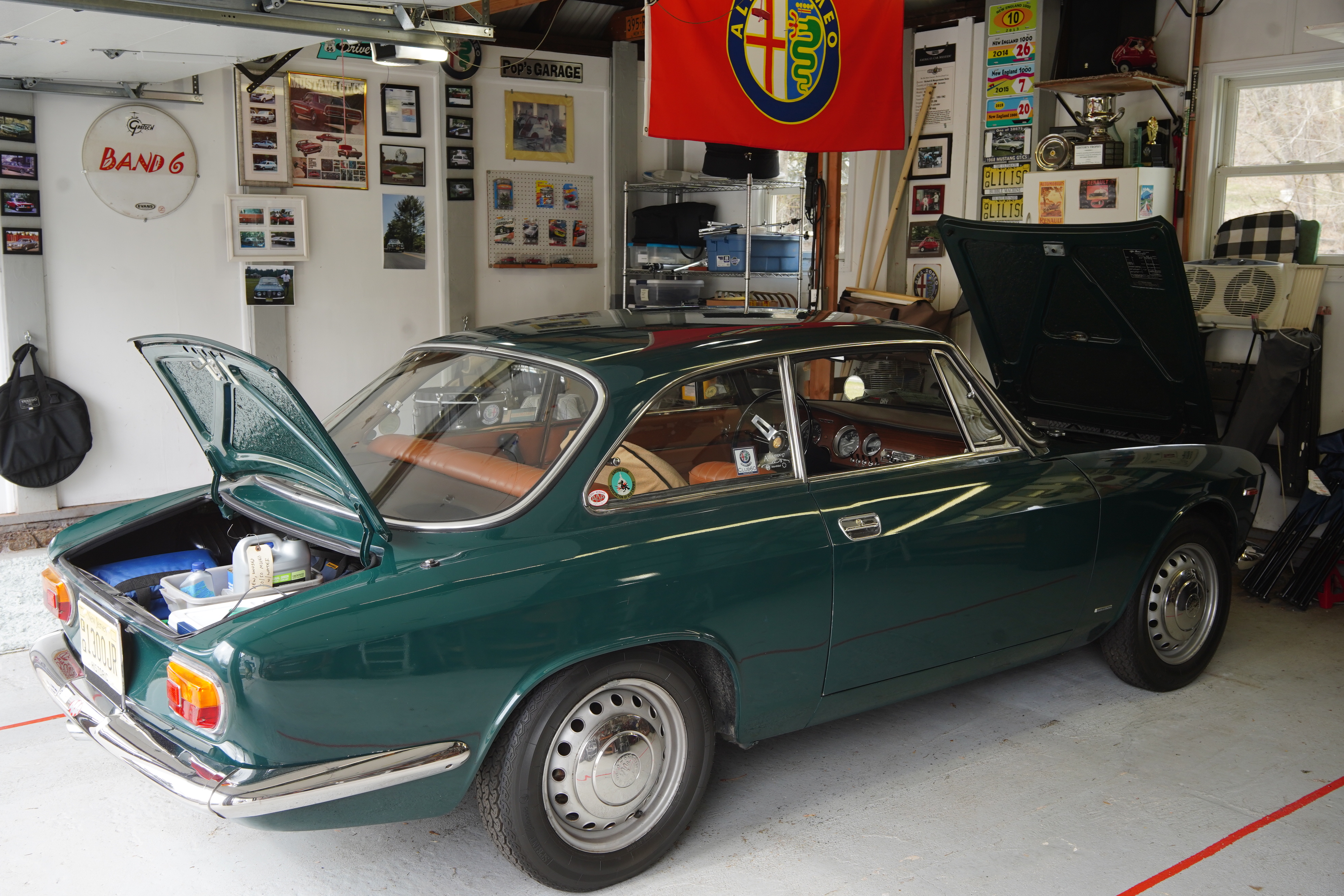
Cover off, at idle in the garage
A quick eyeball of the engine compartment, interior, and trunk showed no cause for alarm, so I inserted the ignition key, pumped the gas pedal a half dozen times, and cranked. The crank was strong, but then I remembered I had forgotten to pull out the choke knob. With choke on, it took only two more tries for the engine to bark to life. I let the car idle for a few minutes before backing it out of the garage, where I let it idle a bit more, waiting for the water temperature to reach normal. At that point, it was time to go for a spin.
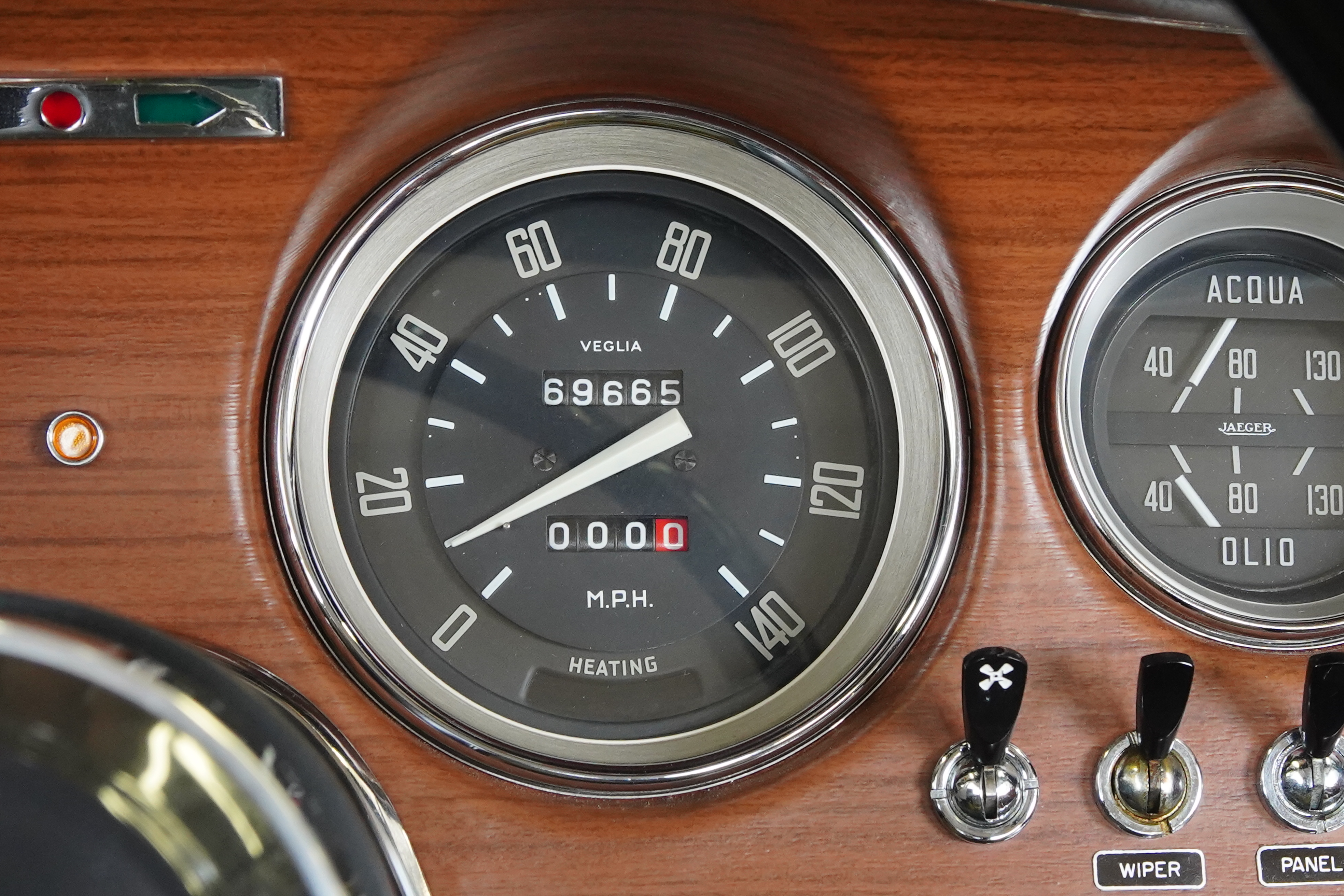
Starting mileage for 2026- Note water (acqua) and oil (olio) temperature gauges. Numbers are in Celsius
It was a quiet Sunday afternoon in my neighborhood, so I eased on down the road, taking my time with the shifting, keeping the revs below three grand for now. Watching the gauges, everything seemed fine. It always takes the oil temperature gauge a while longer to reach the mid-point, and once it did, I brought the tach up higher and higher, eventually getting it close to 5,000 (redline is 6,250). I put only seven miles on the car, but it felt great to be behind the wheel again, and it was just what the doctor ordered to chase the winter blues away. With an even better forecast for tomorrow and Tuesday, I will take the car out again. Can’t wait for car show season to start!
My New Jersey Alfa Romeo club is planning a trip to Carlisle, PA, in May, to attend the annual Import car show. At my urging, a number of us are heading out on Friday, staying over for one night, and making the return trip on Saturday. The “Imports at Carlisle” event runs for two days, and there will be plenty to see and do. Last year, over 50 Alfas were in attendance, and more are expected this year.
It’s a 300-mile round trip from my house, and for club members who live east of me, it’s a little longer. The drive is almost 100% highway, with wide, well-paved roads. There is a fair amount of tractor-trailer traffic, but we will be in a caravan staying in the right lane, so we should be very visible to all.
A club member wrote to me to ask if I was planning to drive my 1967 Alfa all the way to Carlisle. I wrote that I have no issue with the distance; the limiting factor for me is my eyesight, so dividing the trip over two days helps. He then asked, “what’s the trick to avoiding breakdowns?” I responded with my list of suggestions that will give drivers the confidence to ensure their classics can do the miles. It doesn’t matter if the car is new to you, or if it’s been in your possession for a decade or more. The overriding concept is to take care of the simple things first. Be proactive, and you’ll help ensure that you will get there and back without issue. Here is my list, culled from years of experience and reading.
Check all the basics first. Before even starting the car, check all fluid levels, tire age (via the four-digit date code), tire pressures including spare, rubber parts like hoses and belts, all lighting, battery age and voltage (you’ll need a voltmeter), and fuses. Correct everything that isn’t right.
Are there any fluid leaks? You may need to make a judgment call. Where are the leaks coming from, and how bad are they? Old cars tend to drip fluids. If it’s a leak that you can easily fix, like a drip from the engine oil drain plug, do that as part of your initial maintenance. If there is slight seepage from the rear axle, you might get away with checking the fluid level more regularly for now.
Start the car. How easily does it start? Was the cranking strong? Did the engine settle into a smooth idle? Eyeball the dash gauges for normal operation. When was the last time it got a full tune-up and an oil change? If it’s been a few years, or you don’t know, shut it down, and replace the plugs, wires, cap, rotor, points, condenser, fuel filter, air filter, and the oil and filter.
Start the car, let it warm up for a few minutes, and make sure the manual choke (if equipped) is pushed in. Take it for a ride around the block, and no further. How does it drive? Pay attention to the steering, braking, and acceleration. If this is your first time with a classic, be aware that a 1979 Buick is not going to steer, brake, or handle like a 2026 Buick. Do you hear any unusual noises? When do they occur? On acceleration, braking, or turning? If something doesn’t feel right, investigate it further. If that is beyond your skill set, you’ll need professional advice.
Go on increasingly longer drives. Start with a five-mile drive. Return home and give all the fluid levels a quick check. Open the hood to ensure that nothing obvious is amiss. Then go on a ten-mile drive and check everything again. Work your way up to 20-, 25-, and 50-mile round trip drives. Always give the car a thorough check after each ride.
Always carry tools, spare parts, a flashlight, and a blanket. The trunk of my Alfa always has a set of plugs, wires, a spare fuel pump, and a tool bag. Always have a cell phone with you, and if you’re not a member of AAA or similar, that’s a good idea too.
Travel with others. If you are in a caravan and you get stuck, others will be there to help you out. Many years ago, my wife and I were in my 1968 Mustang on our way to Nashville when the heater core let go, dumping hot coolant into the front passenger seat footwell. We were in a big caravan, and as soon as I pulled over, so did several other Mustang drivers. With their help, we rerouted the heater hoses to take the heater core out of the circuit. The remainder of the two-thousand-mile drive to Nashville and back was without incident.
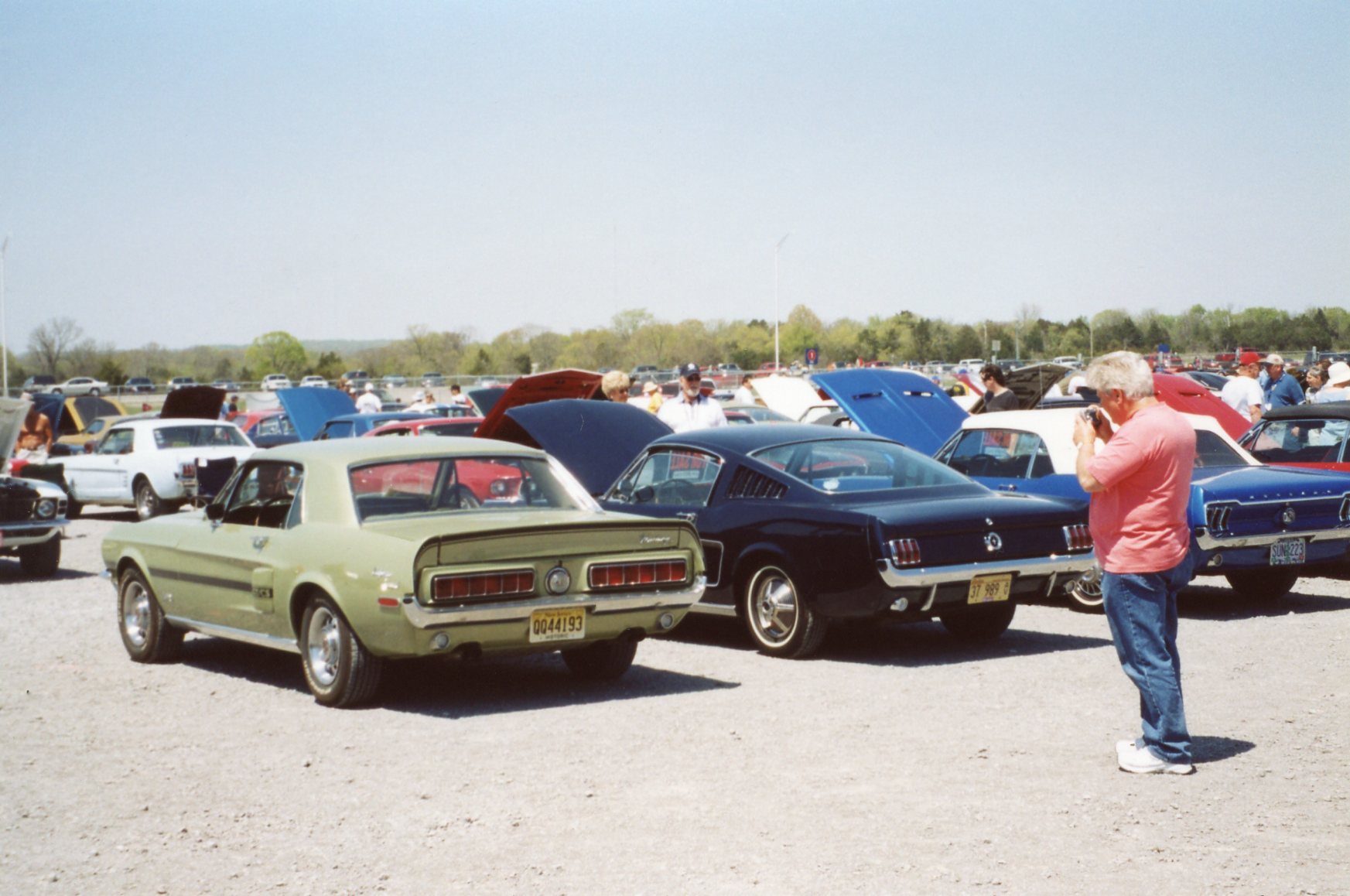
2004: My ’68 Mustang California Special at the 40th anniversary meet in Nashville, TN
2014: My Alfa and its fellow New England 1000 rally cars in Freeport, ME (photo courtesy of R. Appleton)
My farthest trip from home in the Alfa was to Freeport, ME, a one-way distance of 400 miles. It’s been on the weeklong New England 1000 rally three times, each rally totaling around 1,500 miles. Over thirteen years of ownership, I’ve put close to 15,000 miles on it. I’ve broken down three times. The first time, just weeks after getting the car, the ten-year-old battery died. I should have replaced it as soon as I purchased the car. The second time, we were in Newport, RI, and the alternator died, which also drained the battery. I bought a new battery, drove home without a working alternator, and replaced it as soon as I was home. The third time, a front brake caliper overheated and seized because the brake fluid was old. I rebuilt the caliper and flushed the brake fluid. Other than these incidents, it has been extremely reliable.
I believe in the old-car adage, “the more you drive it, the more reliable it is!”
The NJ Region of the Antique Automobile Club of America (AACA) holds an annual car show on the first Sunday of May. This tradition dates back to the Region’s founding in 1951 (and this year marks our 75th anniversary). Because the show is judged, we require judges to inspect each of the 150 to 250 vehicles that participate. It’s a big task, and since judging is done by volunteers, the Region is constantly seeking additional volunteers.
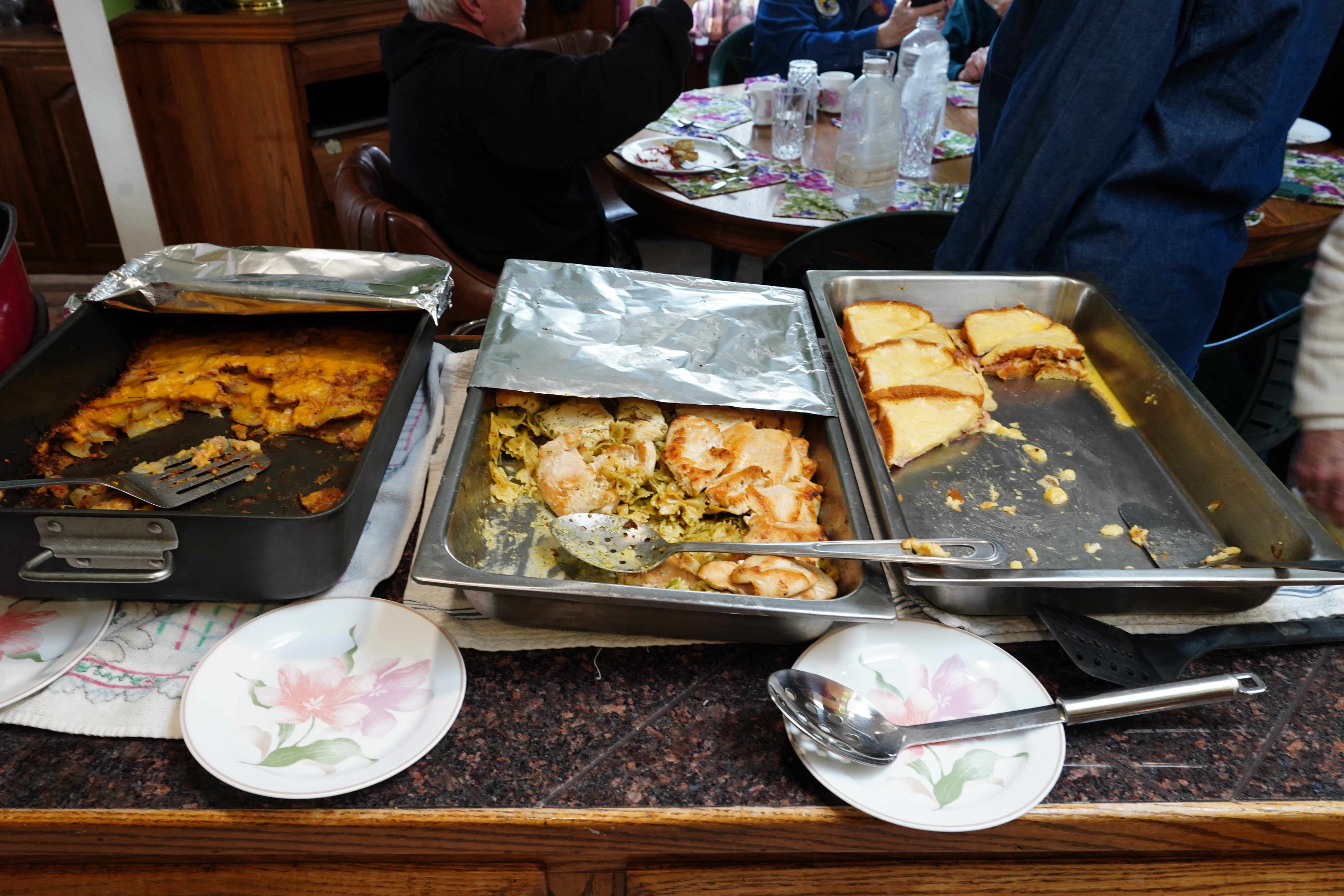
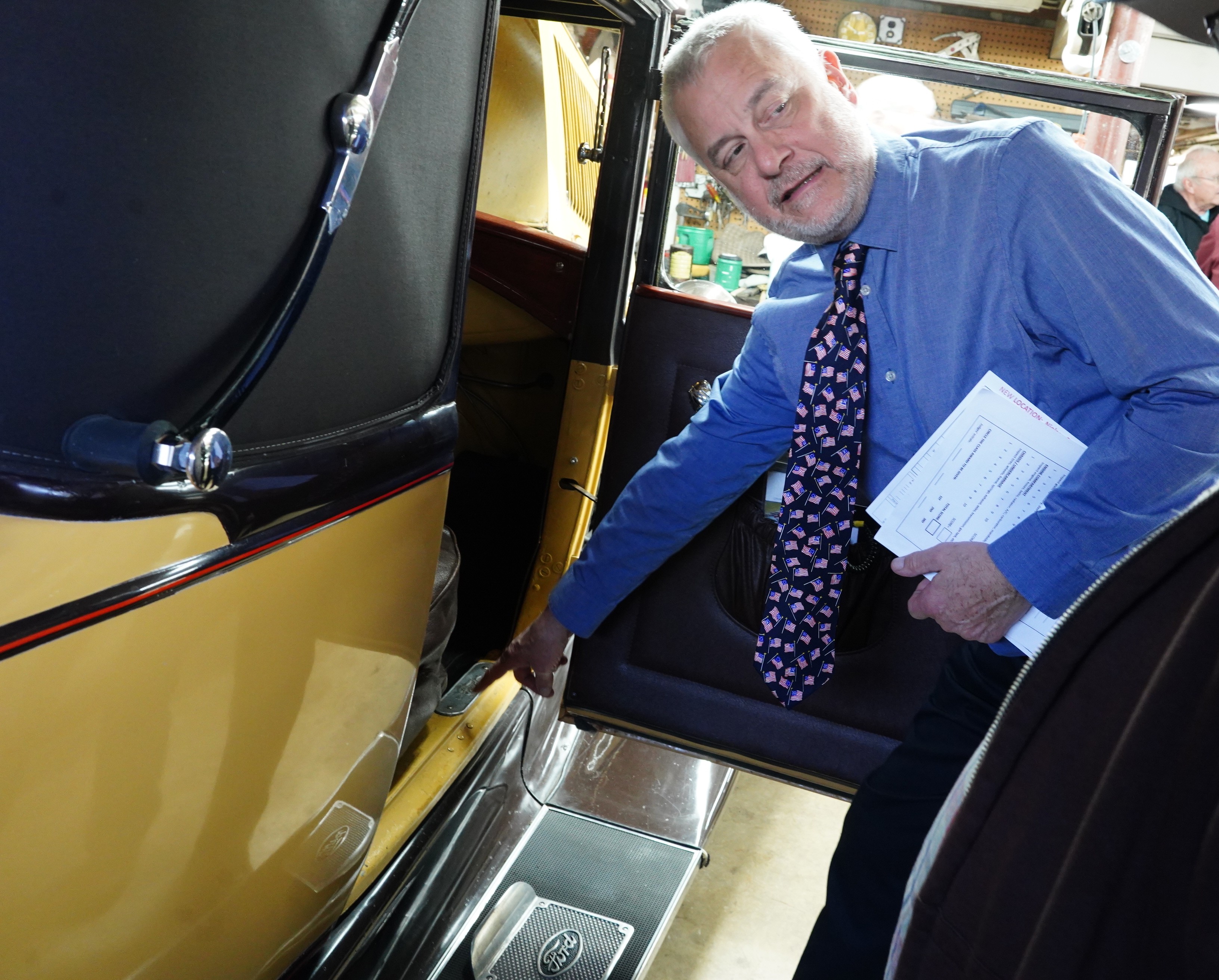
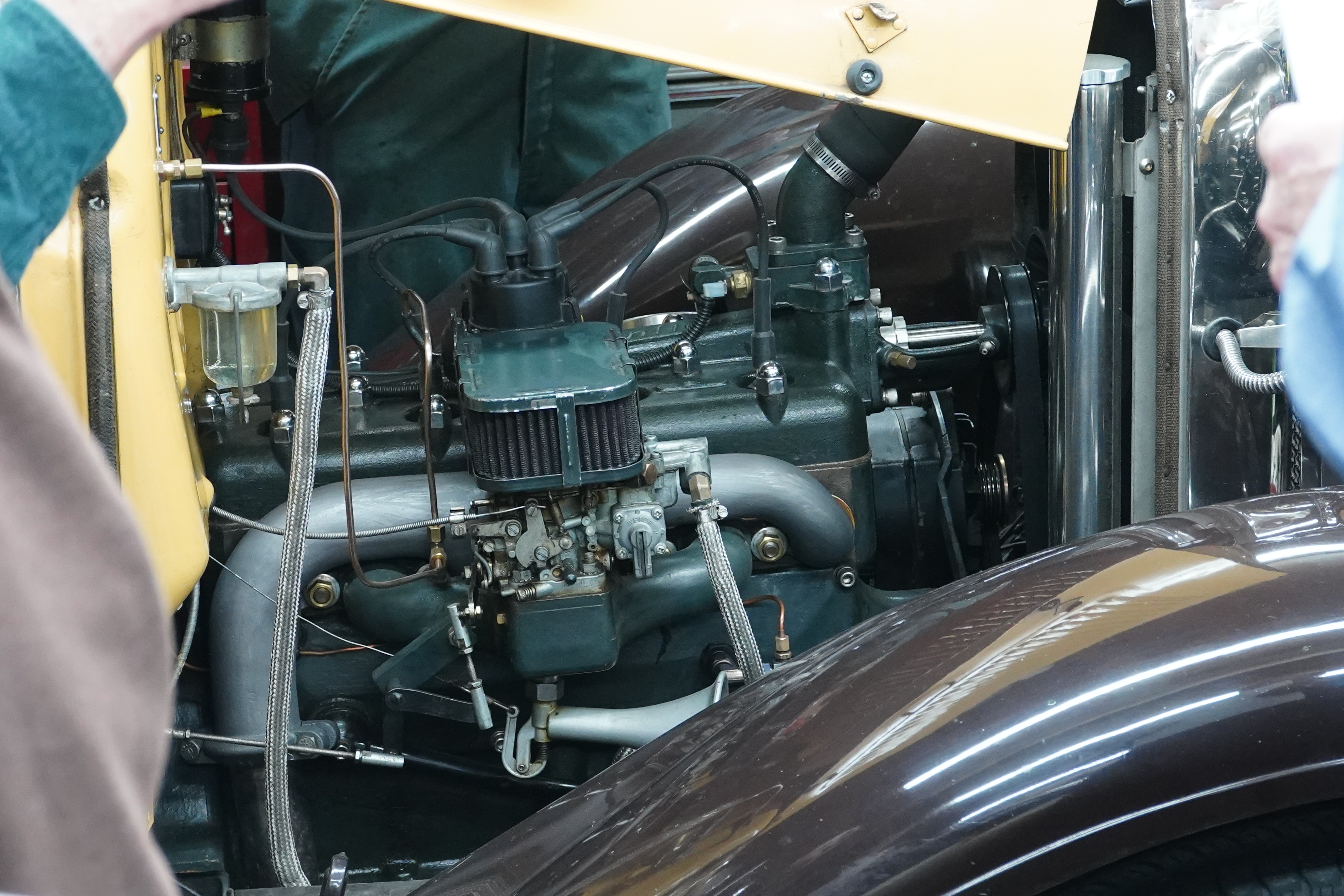
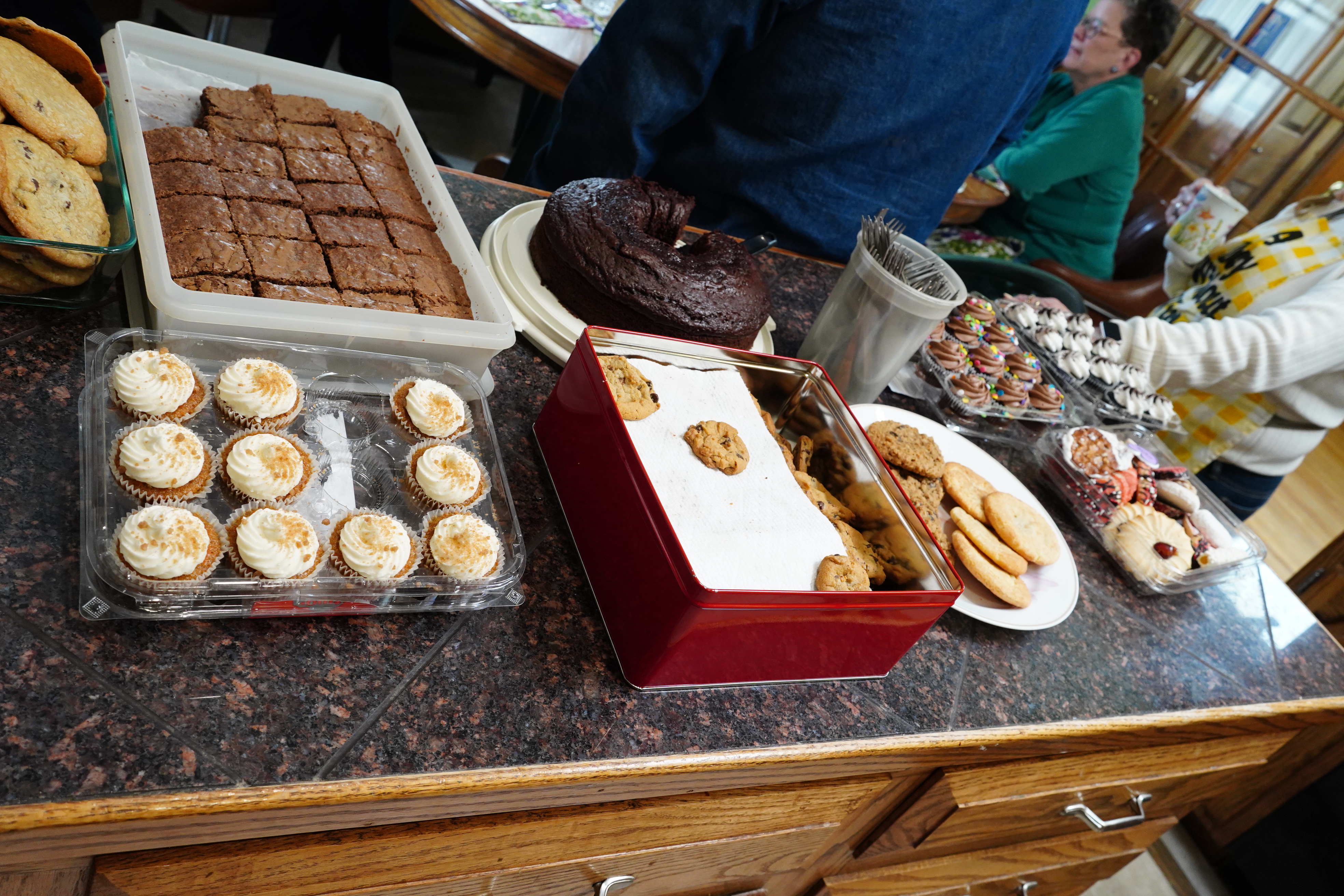
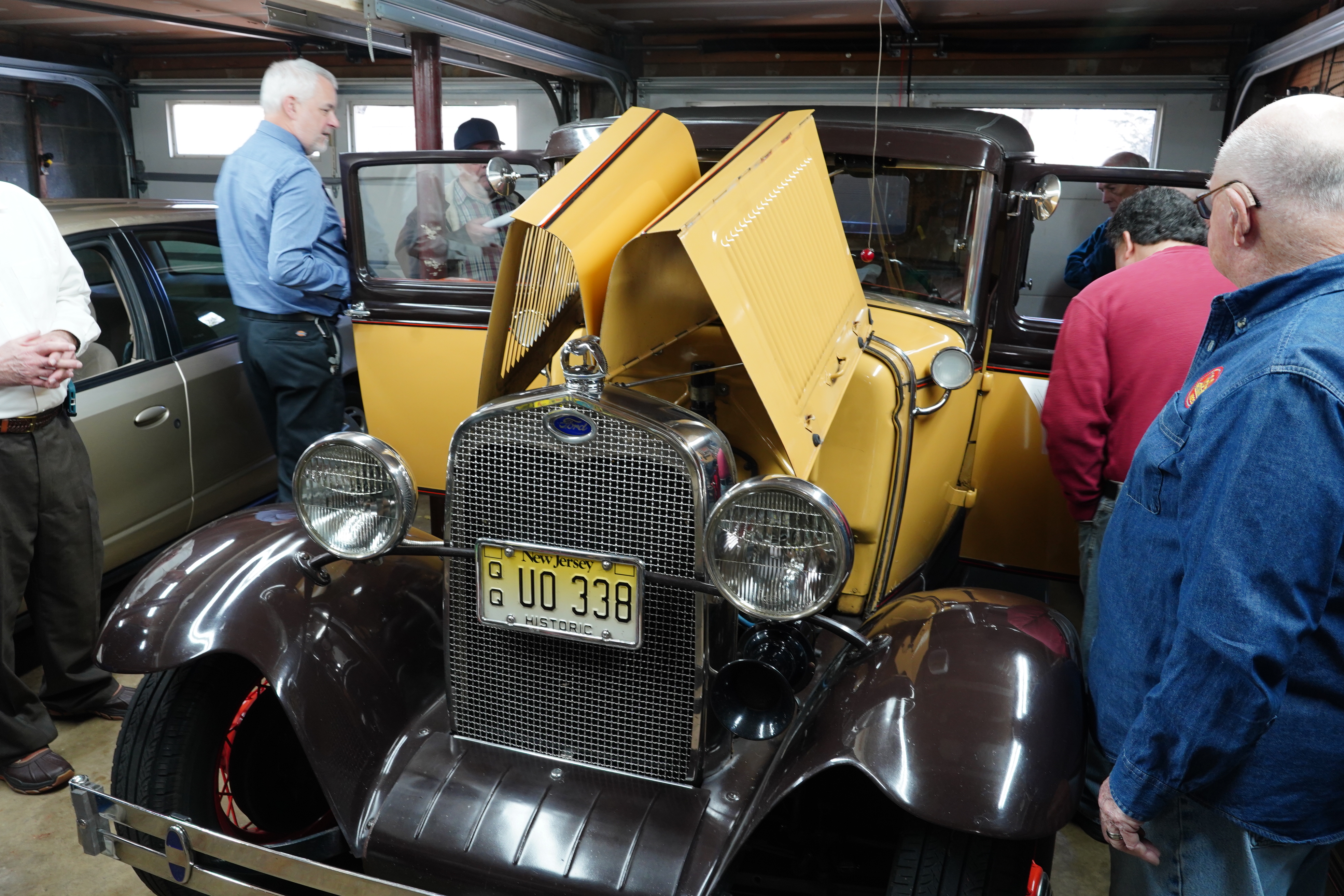
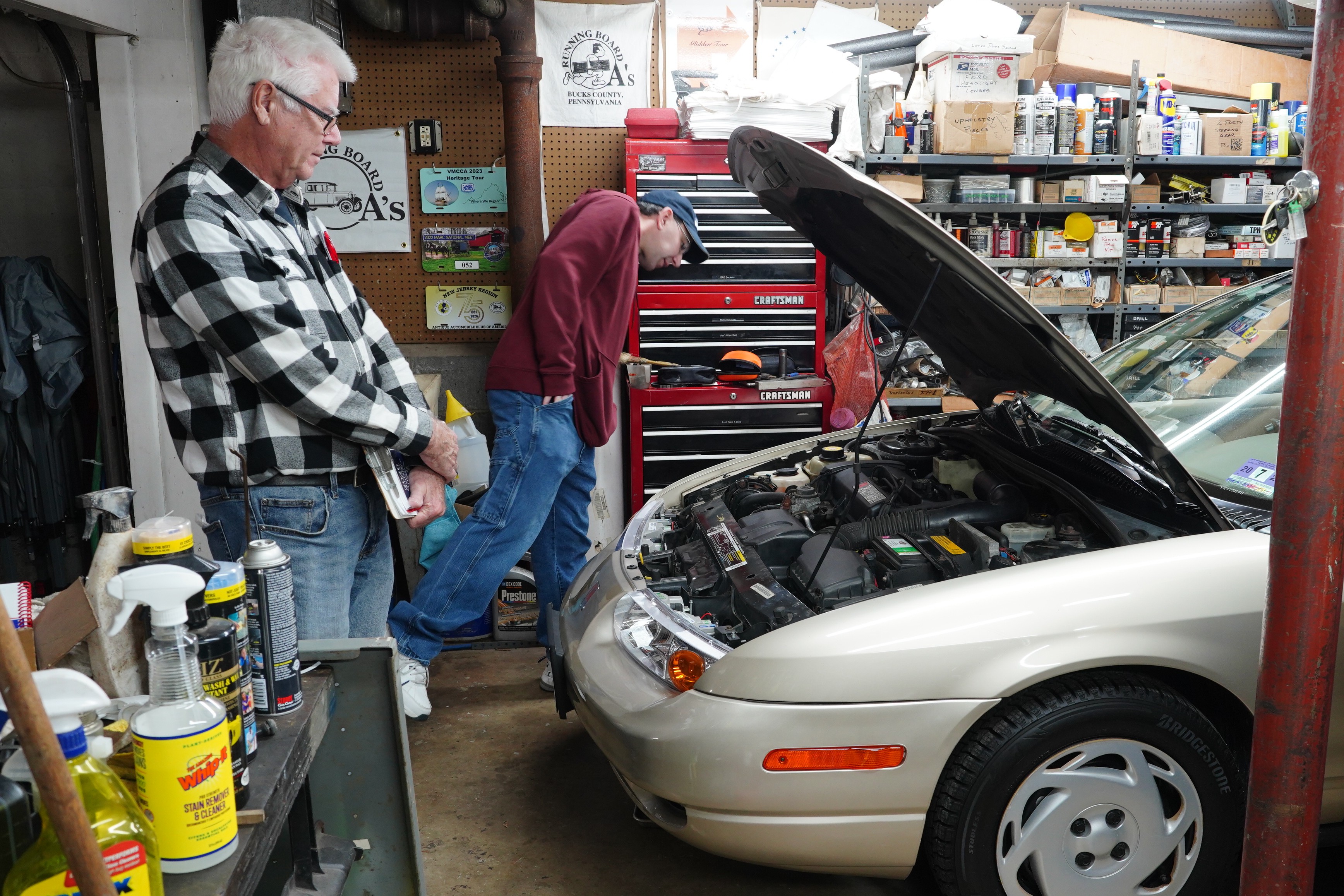
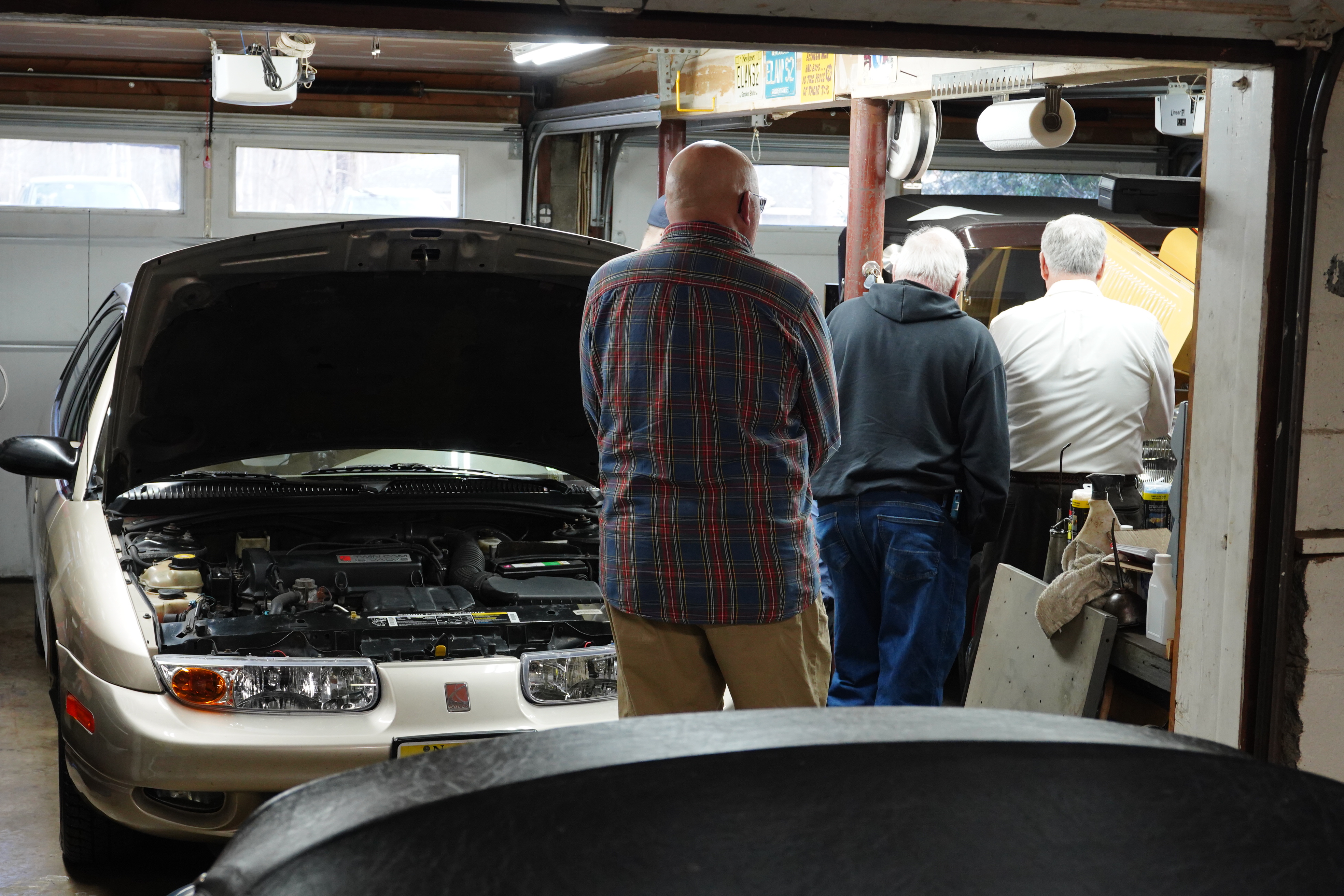
Two years ago, the Region decided to offer more extensive judges training in hopes of attracting a larger audience for the task, and so far, those efforts have been successful. For the third consecutive year, Dick and Bobbi Bettle invited us to use their home, garage, and automobiles for judging school. On Saturday, February 21, several dozen AACA members gathered there, and the proceedings opened with lunch! (What better way to entice a bunch of car guys and gals to give up part of their Saturday.) Once we had our fill, the tribe marched downstairs, where current Regional President Craig Kunz, who also continues to serve as Chief Judge, ran a judging seminar using Dick’s heavily modified Ford Model A along with his unmodified 2000 Saturn.
Lunch, before the hungry crowd returned for seconds.
As has been covered in previous posts, AACA judging evaluates automobiles on a point scale, deciding to what extent an automobile meets the criteria of “appearing as if it were a new car in a dealer’s showroom”. The two major qualities judges look for are “authenticity” and “condition”. While the National club uses a judging sheet based on a 400-point scale, the Region simplifies that with a 40-point scale, awarding a maximum of 10 points each in the categories of exterior, interior, engine, and chassis.
Craig makes a point.
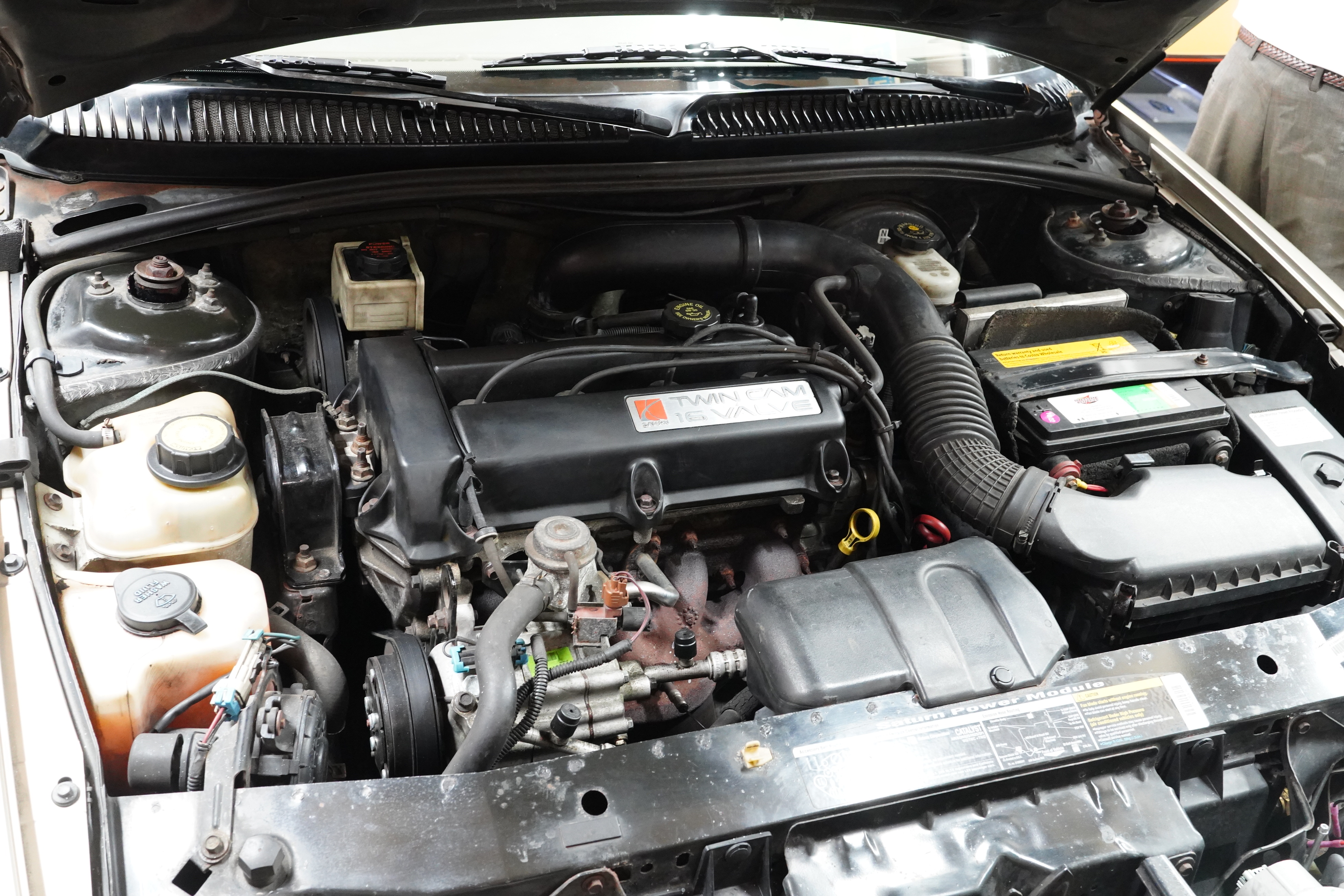
Having a 2000 model-year car was important for this session, because AACA eligibility is based on a twenty-five-year rolling basis. Once a car becomes twenty-five years old, it is eligible for an AACA show. This year, “the class of 2001” will be newly allowed to attend. Dick’s Saturn was an excellent car for training because most of the car nuts in attendance were not used to peering under the hood and seeing a transversely-mounted front wheel drive powertrain, and an engine compartment filled with lots of plastic covers and black boxes.
Not your traditional old car engine compartment.
Not your traditional old car engine compartment.
As soon as judges training was over, we marched back upstairs for dessert and coffee. This was another well-run judging school, and the Region hopes that the day’s efforts will be rewarded on Show Day, when we expect a sufficient number of judges to raise their hands when asked to volunteer!
I can hear the outcry from here: “Oh Richard, there’s a typo in your header. Certainly, you meant to write “The Volvo P1800 Sports Car!” No I didn’t.
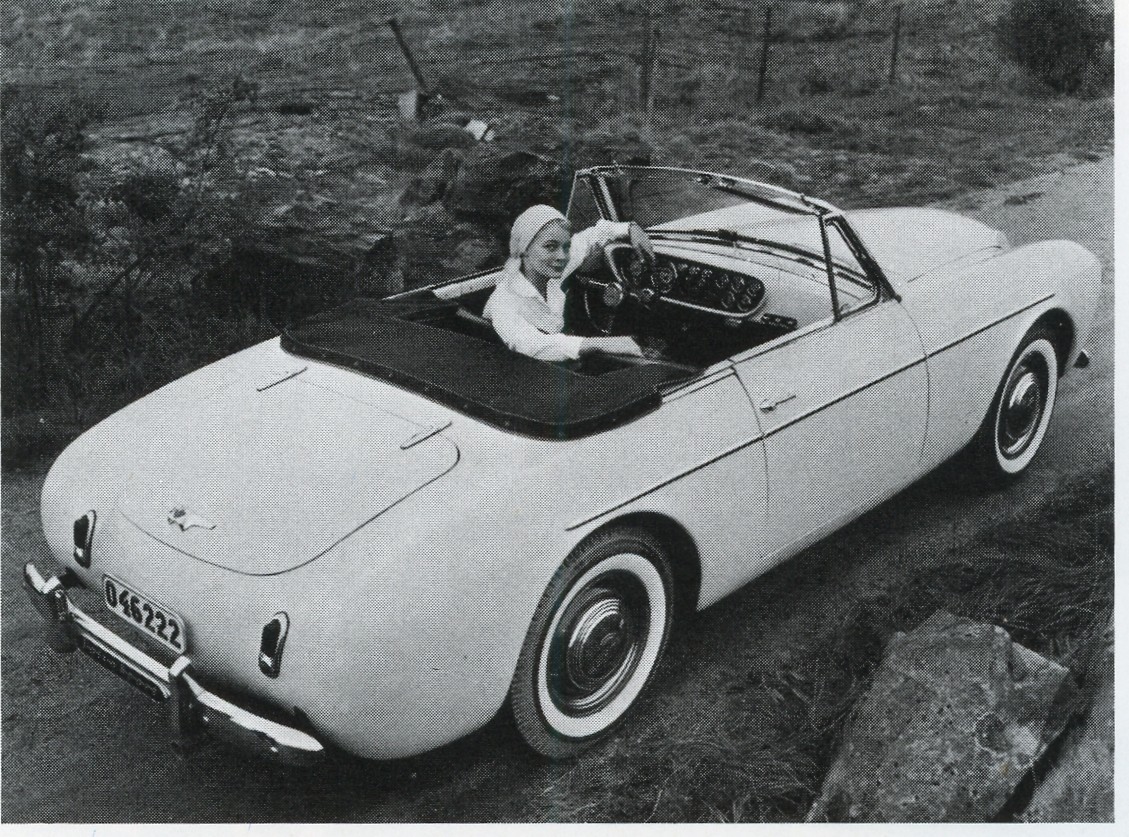
Indeed there was a Volvo P1800 model (progressively renamed the 1800S, 1800E, and 1800ES). Manufactured as both a coupe and three-door sport wagon, they were built from 1961 through 1973, and have become well known and sought after among enthusiasts. By comparison, Volvo’s P1900 is unknown to all but diehard Volvo fanatics. It is also a rare “failure” from Volvo, with upper management pulling the plug after a brief production run. As such, there is very little printed information available about the car.
My primary source of information about this model is “Volvo—The Cars—From the 20s to the 80s” by Bjorn-Eric Lindh. Within this hardcover book is a six-page chapter devoted to the P1900. The car was especially infamous for its fiberglass body, which to the best of my knowledge was the only time Volvo manufactured bodies with that material. Quoting Lindh:
“… Assar Gabrielsson (head of Volvo) had been in the habit of visiting the USA now and again to meet with suppliers and business contacts and to keep abreast of what was happening in the industry. During a visit in 1953, he quickly realized that there was a burgeoning interest in sports models, including … the new Corvette. The Corvette was made of polyester reinforced with glass fibre, and he was so taken with the new technique that he traveled to California to visit Glasspar, the company which had pioneered the use of glass fibre in boats and cars.”
A production P1900, photo from Lindh’s book
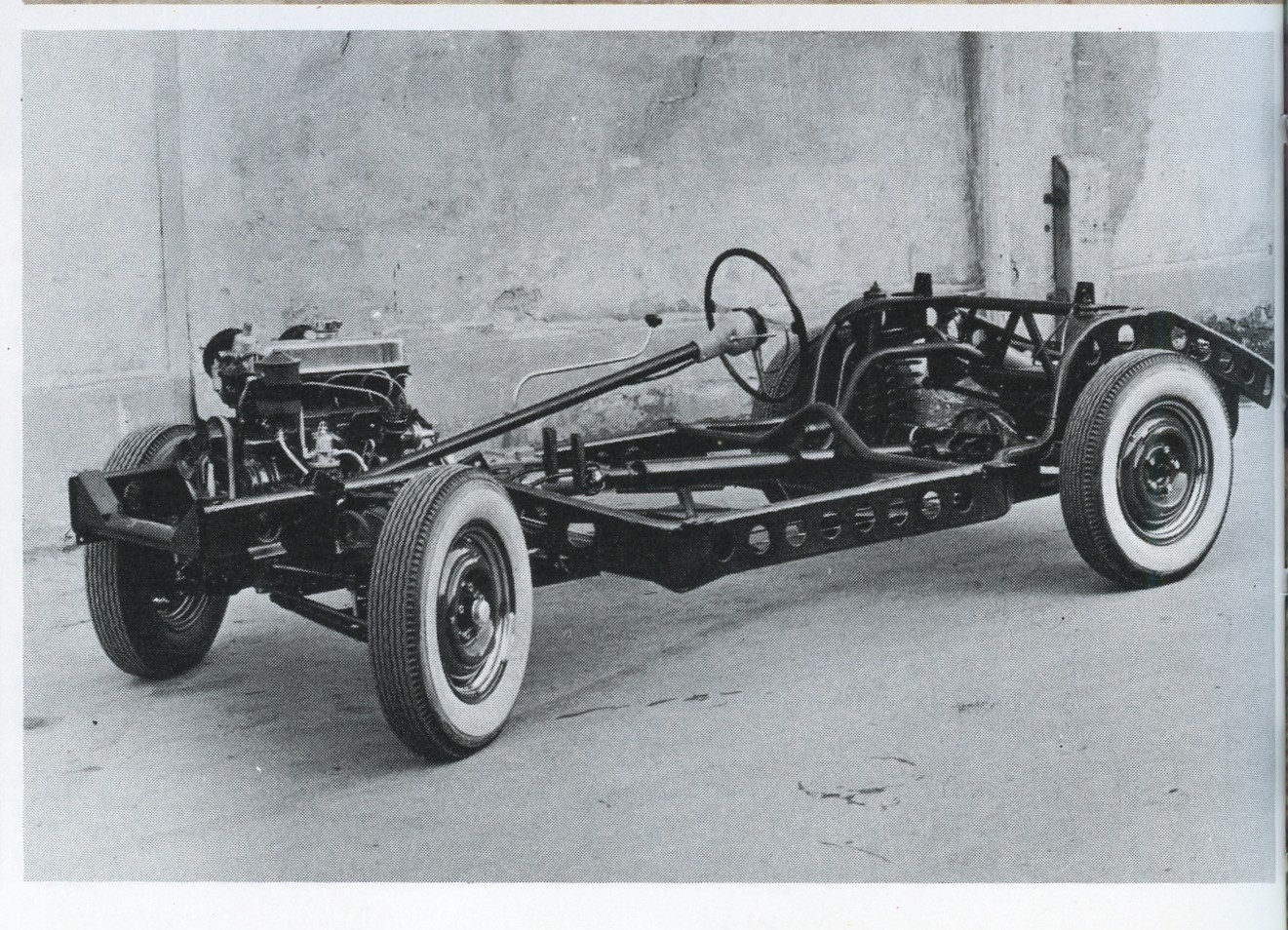
This claim that Chevy’s Corvette directly influenced the birth of the P1900 is not repeated in any of the official Volvo publications I own. Lindh goes on to imply that Glasspar also designed the car, which was completed so quickly that Gabrielsson was still in the States when the styling exercise was completed! The body drawings were sent to Sweden, and a chassis was needed. Since the then-current PV444 was unibody, an entirely new chassis was developed. Running gear was taken from the PV444, with a horsepower bump from 60 to 70. Prototypes were built and tested, and the car went into production for model year 1956.
The P1900 chassis, photo from Lindh’s book. No collapsible steering column here!
Several problems quickly emerged, mostly around quality. A long-distance test drive undertaken with one of the first production models included complaints of a flexible frame, weak body mounts, and poor door fitment. Despite a marketing campaign aimed at both Swedish and American customers, demand was low. Volvo’s new boss, Gunnar Engellau, took a P1900 home for a weekend, and he quickly concluded that the car was not up to Volvo’s standards, so he ordered that production be shut down.
Forty-four cars were built in 1956, and a further twenty-three in 1957, for a total production run of sixty-seven (plus, according to Lindh, “four, or possibly five, prototypes”). And that was the end of the P1900, although, it was not the end of Volvo’s desire to produce a sporting car. But the story of the P1800 is a story for another day.
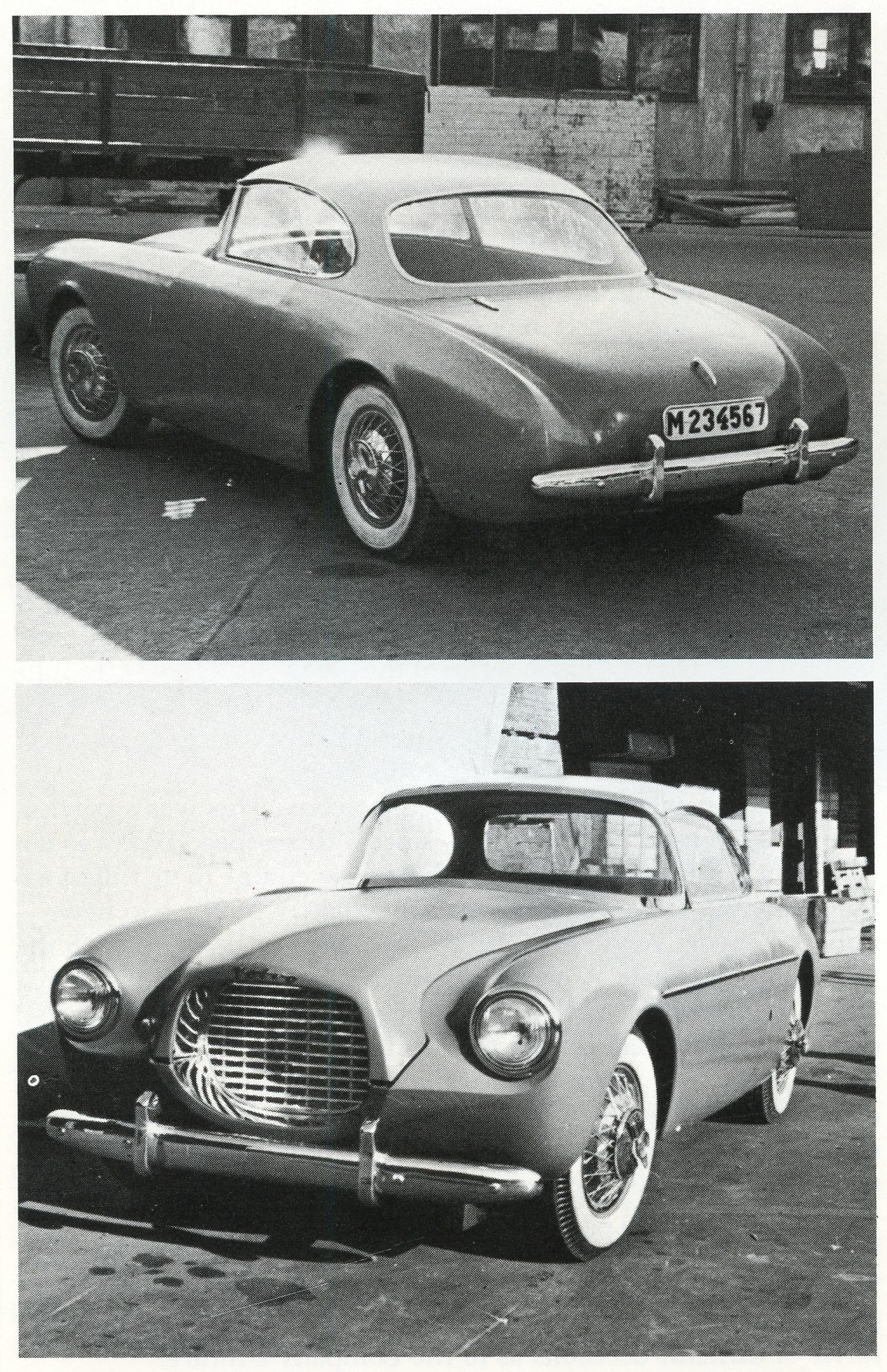
A P1900 prototype, photos from Lindh’s book. Note the wrap-around windshield and fixed roof. Based on side molding, these may be two different cars.
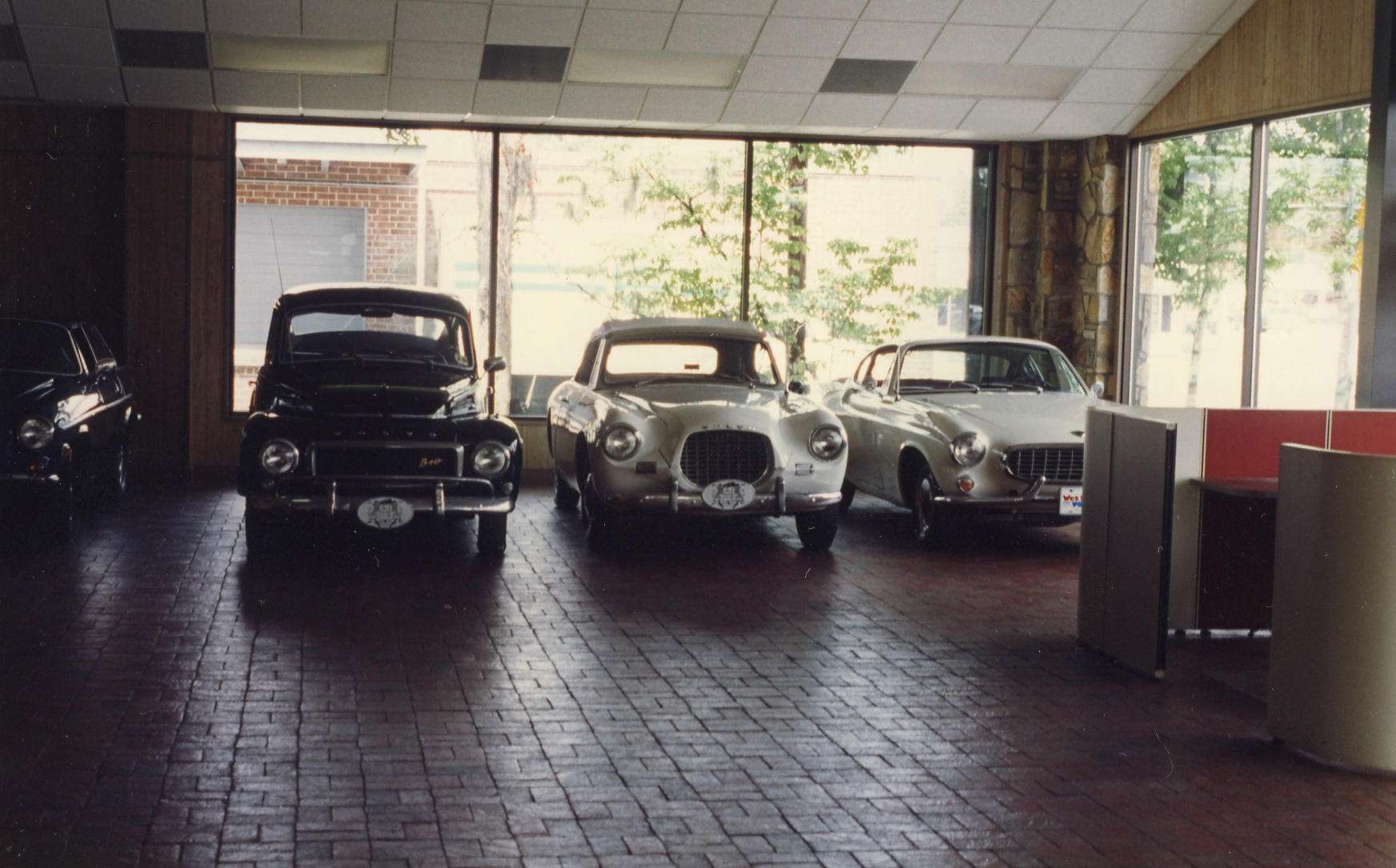
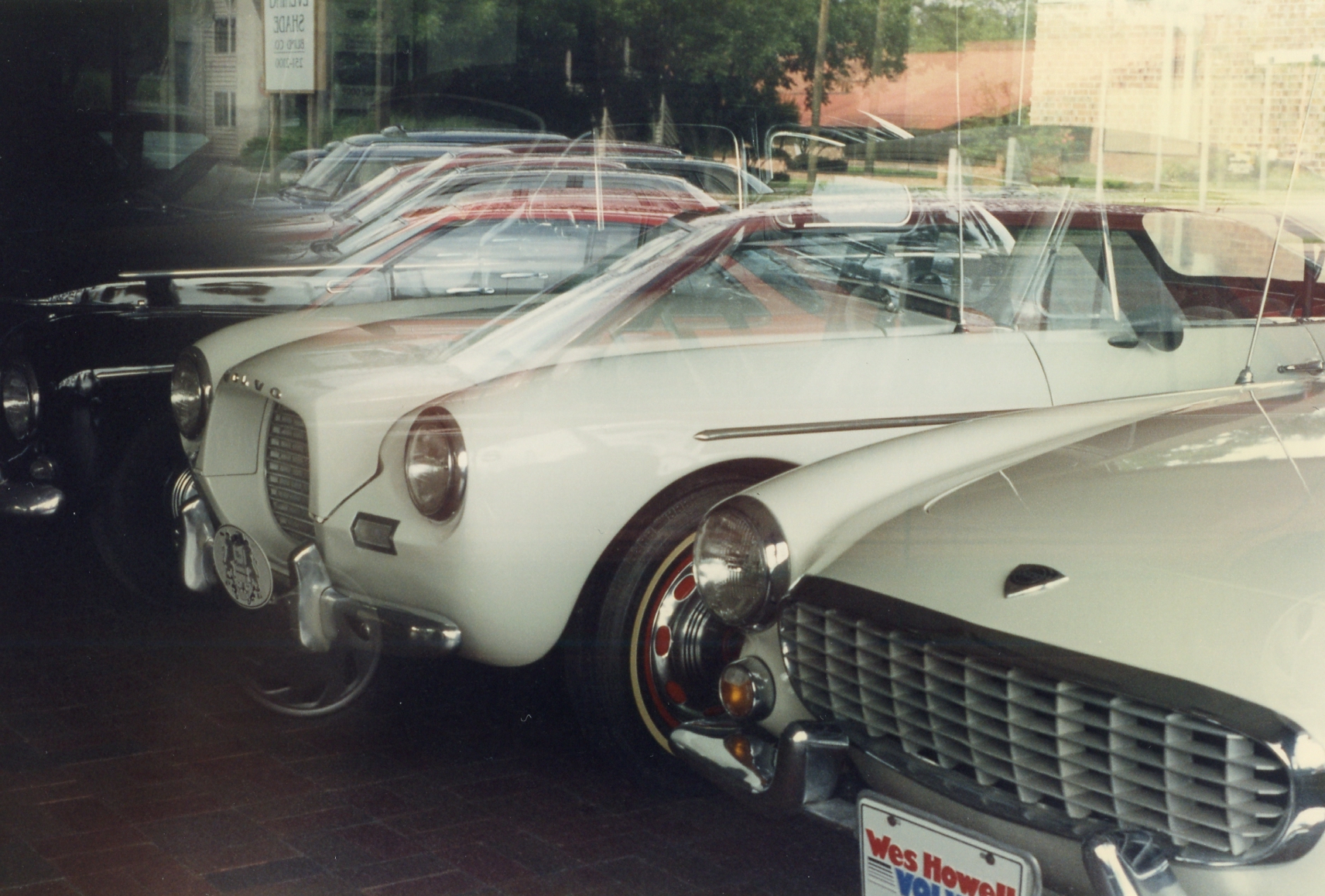
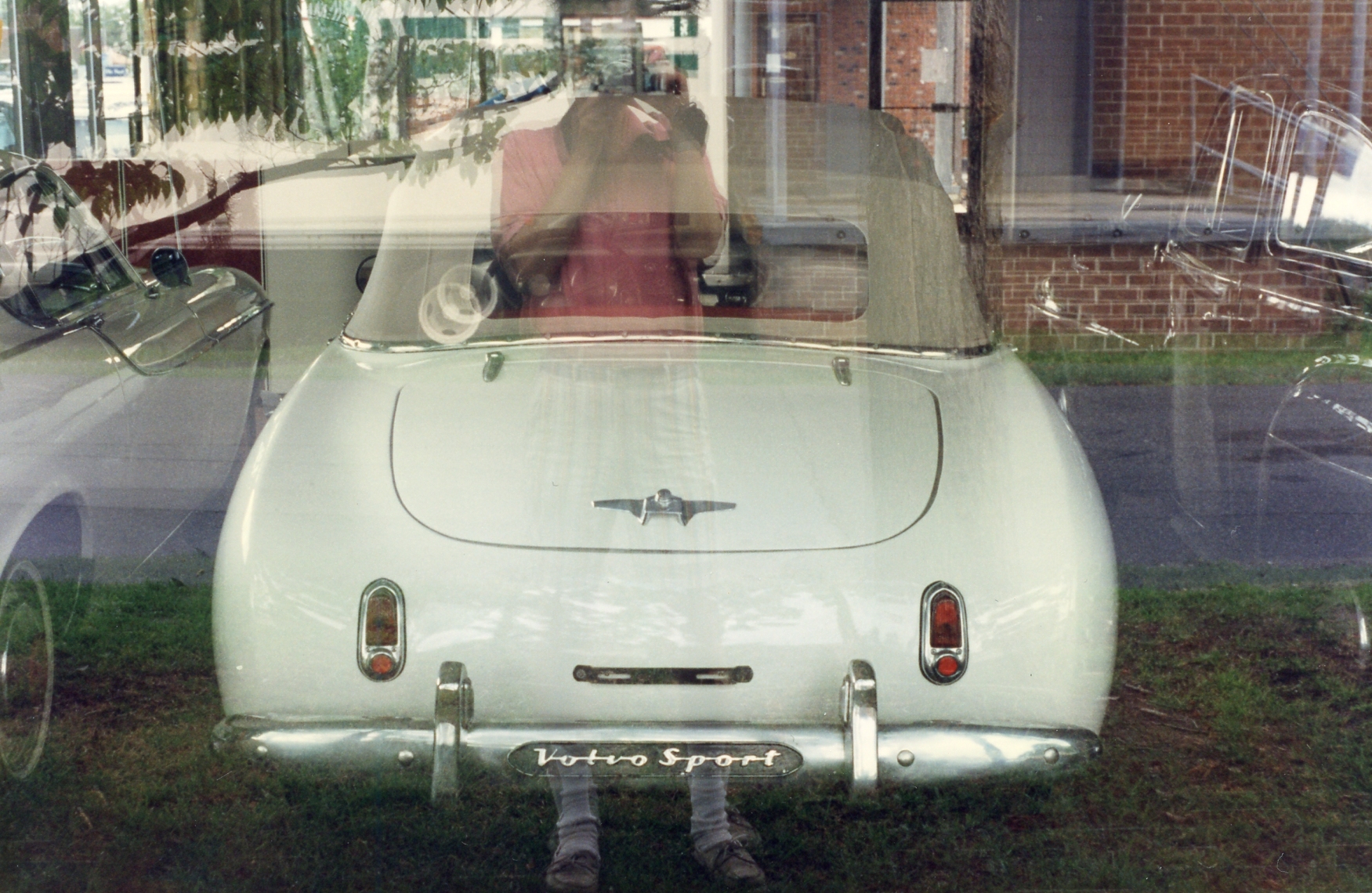
The P1900 came back to my attention when I found the photographs of the Volvo ECC which were the subject of last week’s blog post. I also found photos taken in 1994 during a family reunion trip to North Carolina. I had seen a For Sale ad, likely in Old Cars Weekly, for a Volvo P1900 for sale. The car was at a Volvo dealer, Wes Howell Volvo in Wilmington, NC, so we swung by on our way down. Unfortunately, the only day we could visit was a Sunday, when the dealer was closed, so my photos were taken through a showroom window. This was the first time I had seen a P1900 in the “fiberglass.” The asking price was somewhere in the mid-to-high teens, which I didn’t have, and besides, I was trying to finish the Isetta, and didn’t need another distraction!
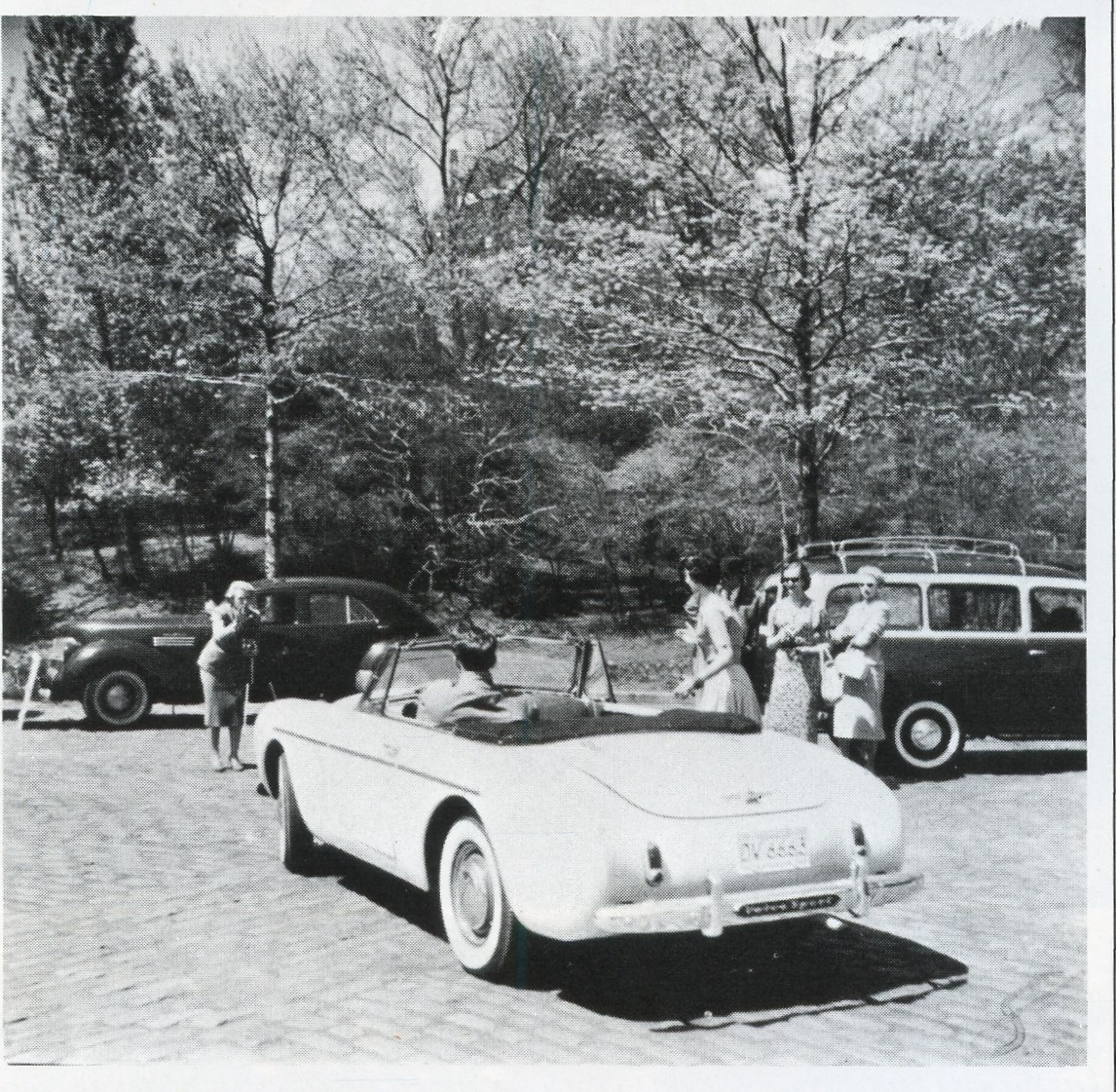
Photo from Lindh’s book: A P1900 staged with a Volvo Duett and a 1940 Graham Hollywood!
Sometime around 2006, I was part of a VCNA crew selected to drive Volvo’s classic car collection from Port Newark to Rockleigh. I was piloting a 445 wagon, and some other lucky devil got to drive the P1900, which had recently been restored. Do any current or former Volvo employees know if Volvo USA still owns it?
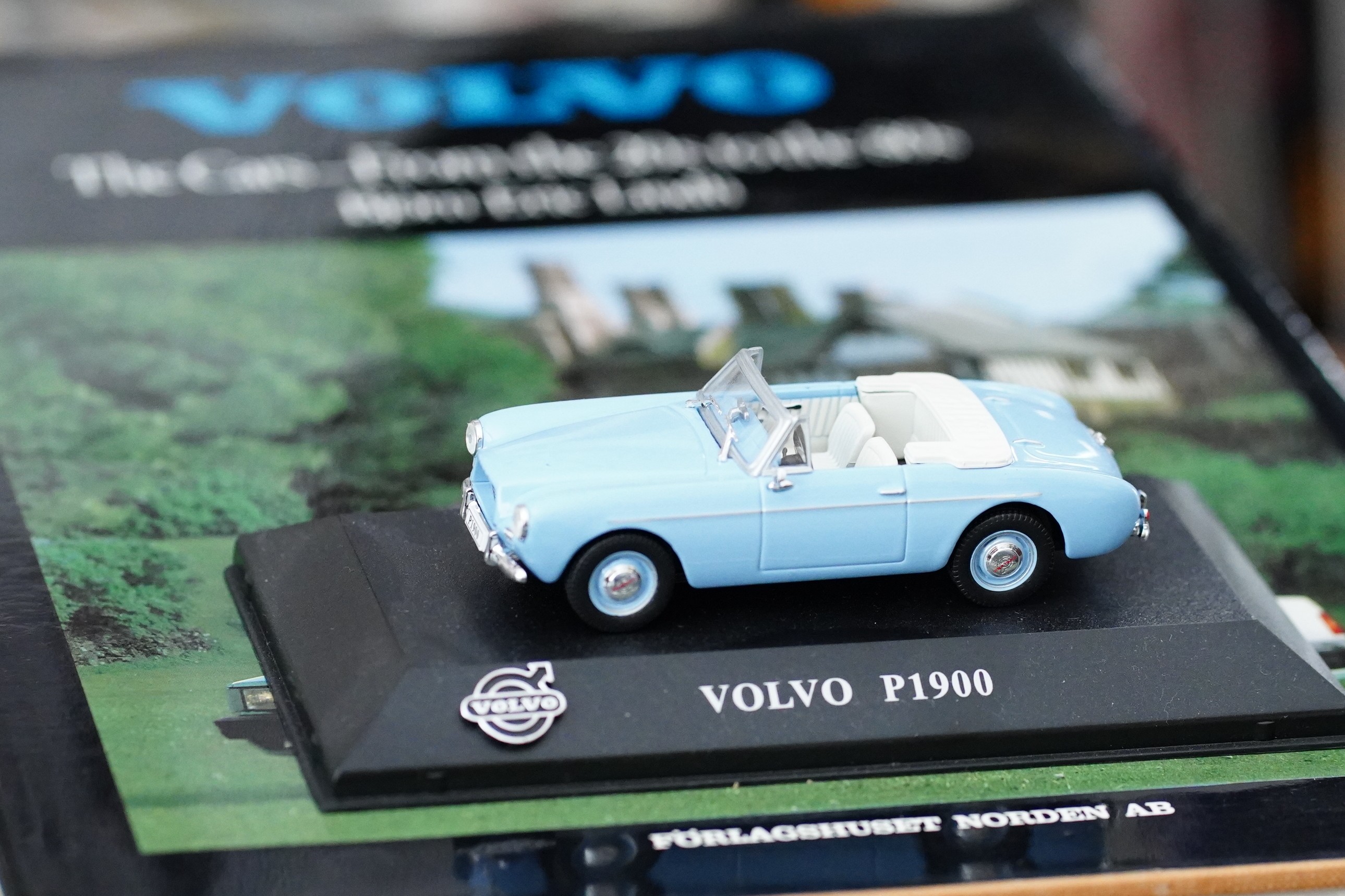
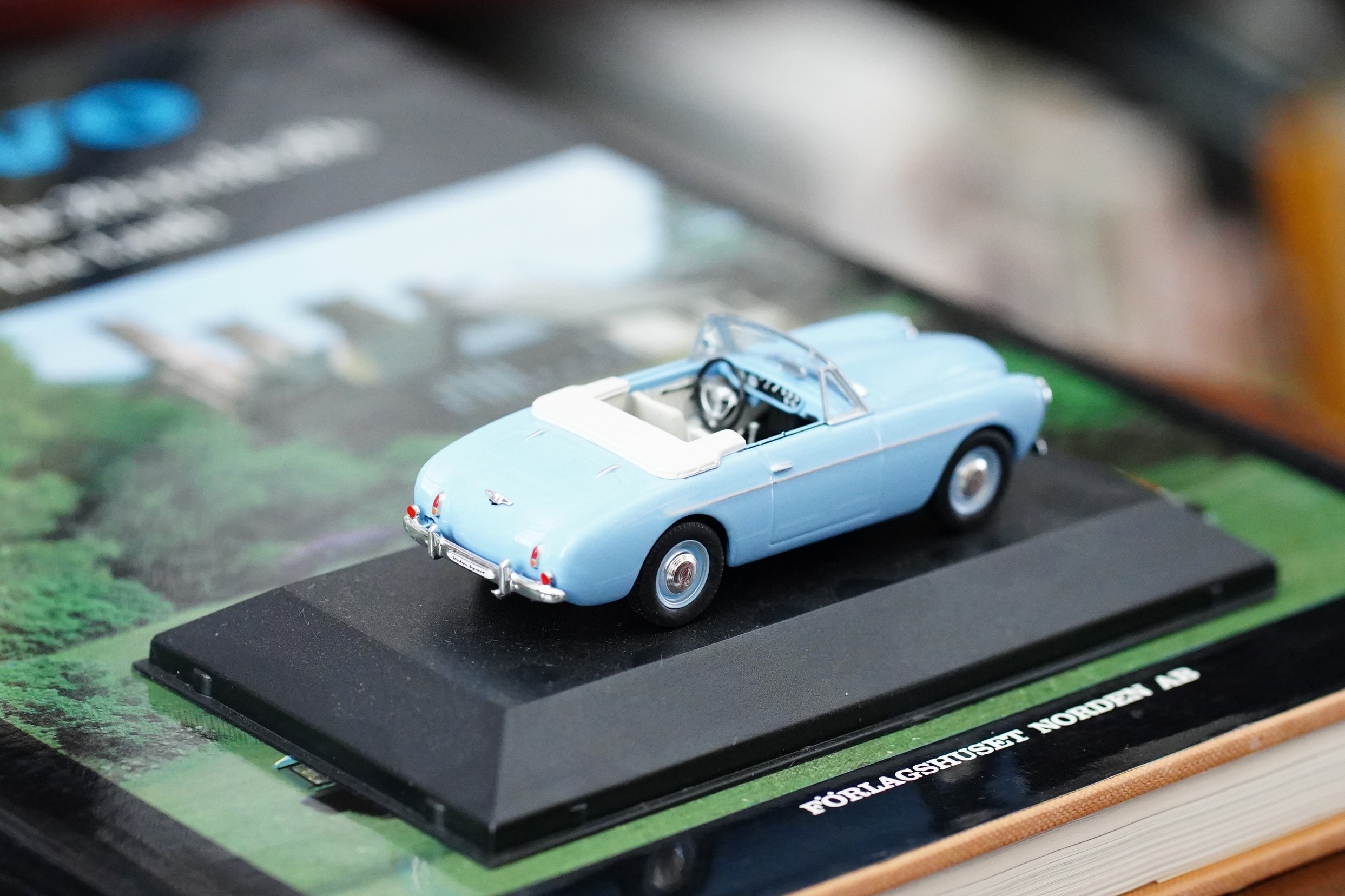
The P1900 in the dealer’s showroom, between a 544 and an 1800.A front end closeup of the P1900Note the “Volvo Sport” script; some sources state that this is the car’s official nameMy P1900 model, a gift from my Swedish pal Lenny, atop Lindh’s Volvo book.
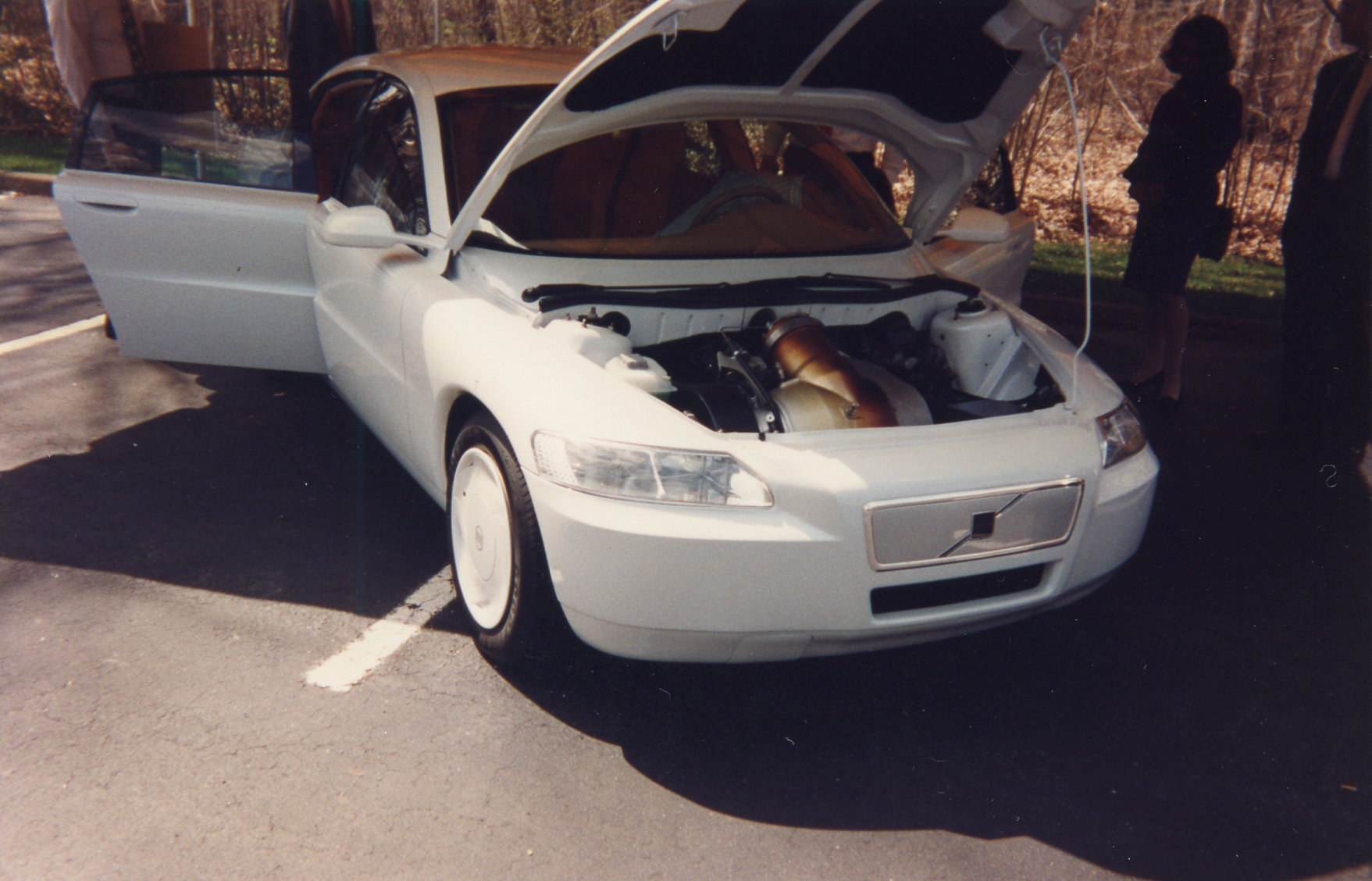
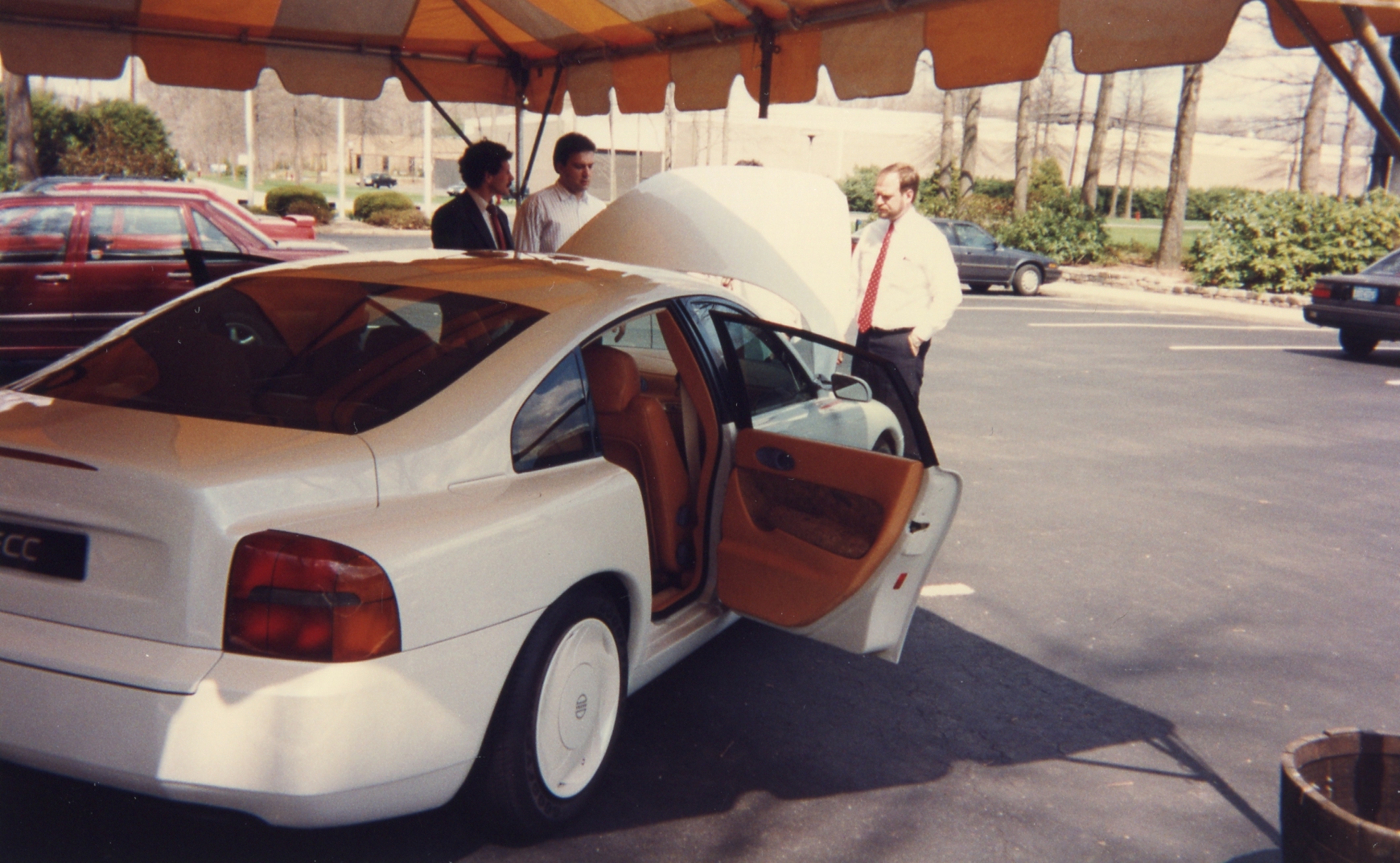
One of the best aspects of working for an automobile manufacturer as a car enthusiast was the occasional opportunity to peer into the brand’s crystal ball. This happened numerous times for me as a Volvo employee, usually during a business trip to Sweden, Volvo’s mother country. But sometimes they brought the excitement directly into our backyard, as happened in 1993 when a full-size concept car, in this case the Volvo ECC (Environmental Concept Car) was put on display in Rockleigh, NJ, Volvo’s American headquarters.
Similar to today’s EVs, the ECC sports a fake “grille”, unneeded with this powertrain
Interestingly, the ECC was built as a hybrid, long before our current market infatuation with that term. According to the Wikipedia article on the car:
… the Volvo ECC used a gas turbine engine to drive the generator for recharging. This type of engine has a higher thermodynamic efficiency than the conventional internal combustion engine with pistons. Also in Volvo’s design, the fuel is evaporated and mixed with air before ignition. This provides a very low NOx emission. The driver can also switch between gas turbine electric and hybrid by switches on the dashboard.
That particular hybrid setup never made it to market. What did come to market, in 1998, was a totally new sedan, the Volvo S80, and in retrospect, we saw that the styling of the ECC was very close to completely foretelling the S80’s design. The new design language of the S80 was a major breakthrough for Volvo, and spread throughout the rest of the range. The ECC was designed in 1992, and the S80 was launched in 1998, six years later. This gives you some idea of the long lead time that automobile manufacturers often need when bringing a totally new car to market
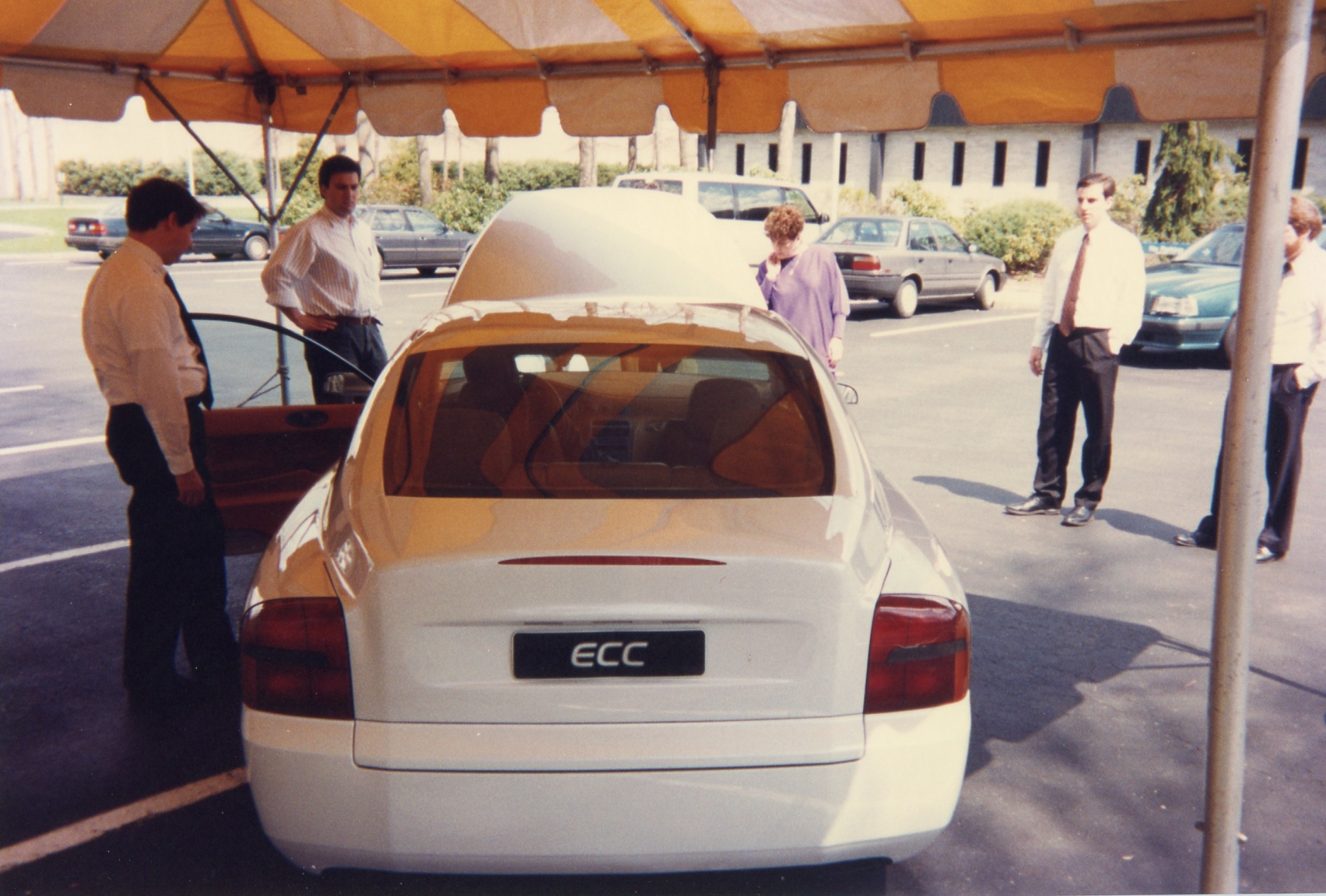
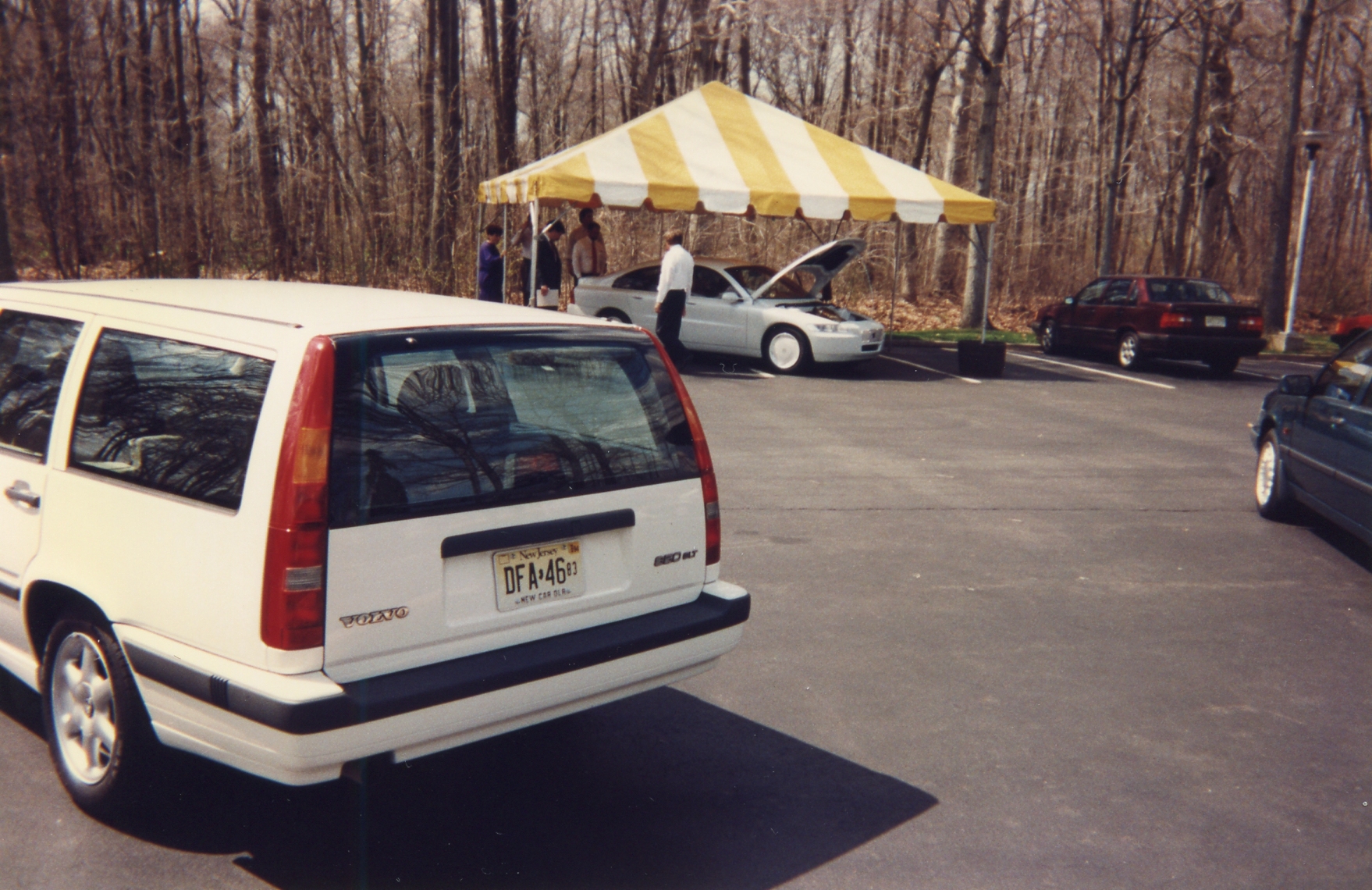
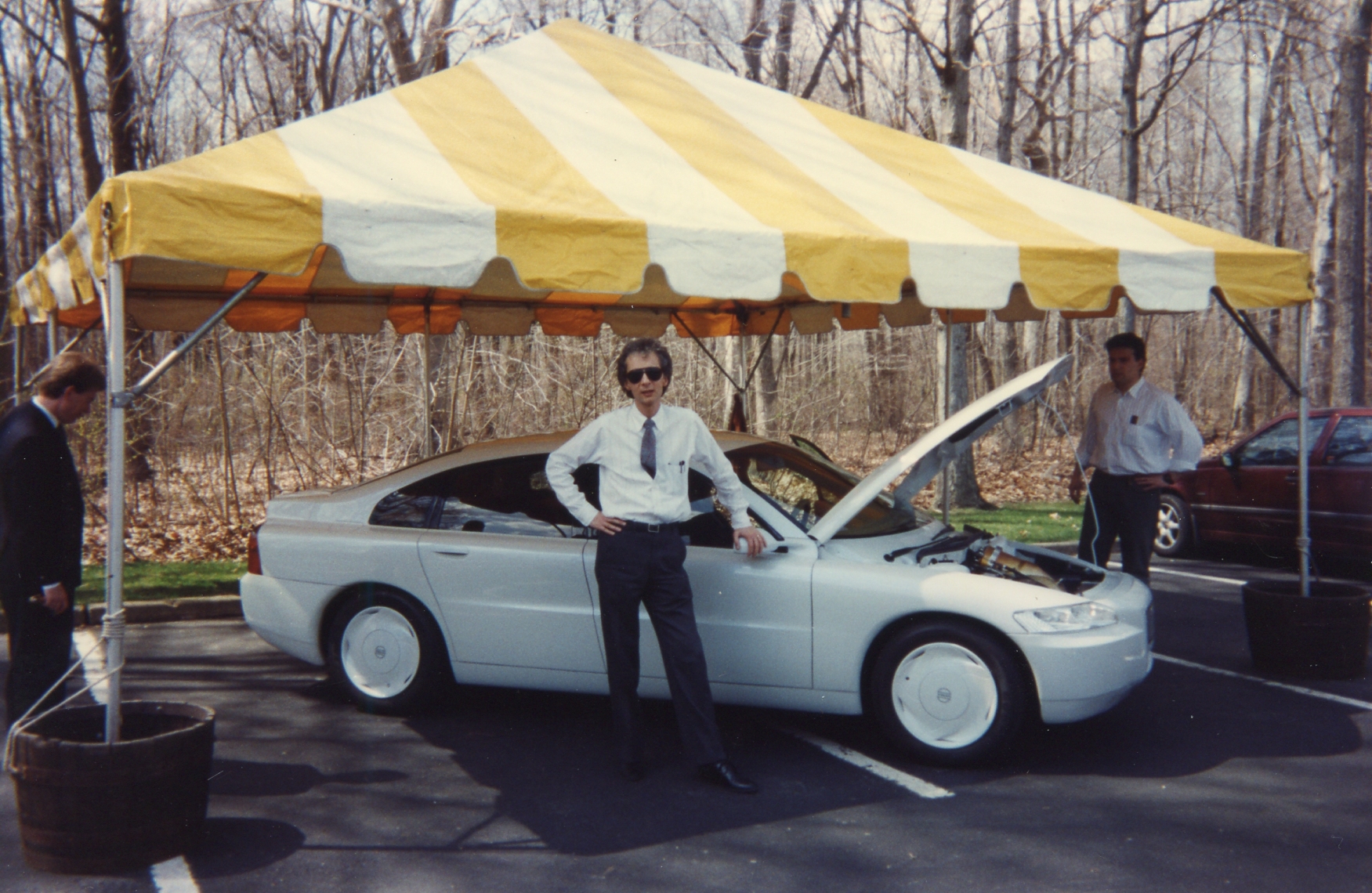
The ECC sat under a tent in the parking lot. It must have been hot that day.
I remember that day in 1993 well. The ECC was parked outside one of Volvo’s buildings in the industrial park, and employees were given permission to inspect it. I had my camera with me that day at work, so obviously, I was expecting to see it, and was excited at the opportunity to take a few snaps. Learning about the ECC made me proud to work for a company that was developing environmental solutions within our industry.
Several other new cars (like this 855) were staged in the lot as well.That tail light shape would become the symbol of the S80s new design language.Yes, that’s me. I have no explanation for the shades and the tucked-in tie. But in 1993, suits and ties were still the dress code at VCNA.
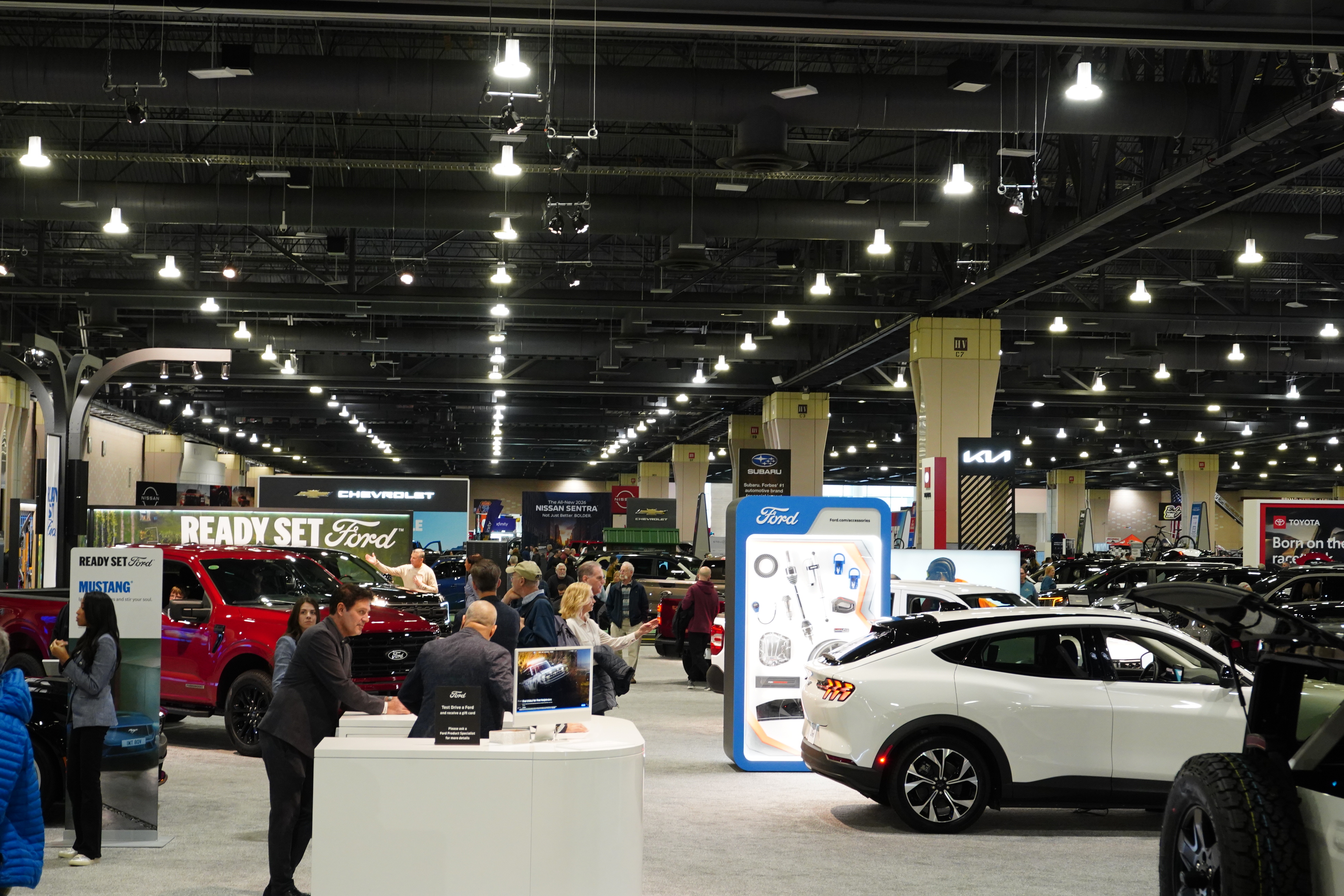
I made my way to Center City Philadelphia this week to attend the annual new car show, held as always in the Pennsylvania Convention Center. Fortunately, it’s only an hour’s drive (if traffic is behaving), and there are plenty of parking lots and garages in the immediate vicinity. The Philly show is on a much smaller scale than the NY show (which will be in April this year), and tends to be less crowded and more laid back than NY, and therefore more enjoyable. It’s been at least five or six years since I made my way to Philly for this one, and I’m glad I went. (I wrote a blog post about my 2012 visit to this show, which you can read here.)
There was a surprisingly good array of both domestic and import brands represented, but that observation deserves an asterisk. As I came to realize during my stroll, more than a few of these brands were supported not by the manufacturer, but by a local dealer. I cannot tell you with a high degree of certainly which were which, but if the size of the display were an indicator, I would conclude that Chevrolet, Ford, Toyota, Hyundai, Kia, Honda, and maybe Stellantis (Chrysler/Dodge/Jeep/Ram/Fiat/Alfa Romeo) were manufacturer-sponsored, and Subaru, Nissan, Volkswagen, Cadillac, Tesla, and maybe Lincoln were dealer-sponsored. The two brands which I am 100% certain were dealer-sponsored, both because of the signage and my engagement with a salesperson, were Volvo and Polestar, with vehicles on site courtesy of Volvo/Polestar of Princeton, owned by the Long family.
Despite the turmoil in the news about electric vehicles and the loss of government incentives, consumer reluctance, and factory pullbacks, every brand at the show included EVs, some more prominently than others. First, you had pure EV makes like Polestar, Tesla, Fiat, and Lucid. Cadillac shocked me (no pun intended) when I learned that except for the CT5 sedan, every other vehicle they had on display was a pure EV (NOT hybrid). Obviously, the EV push is not going away.
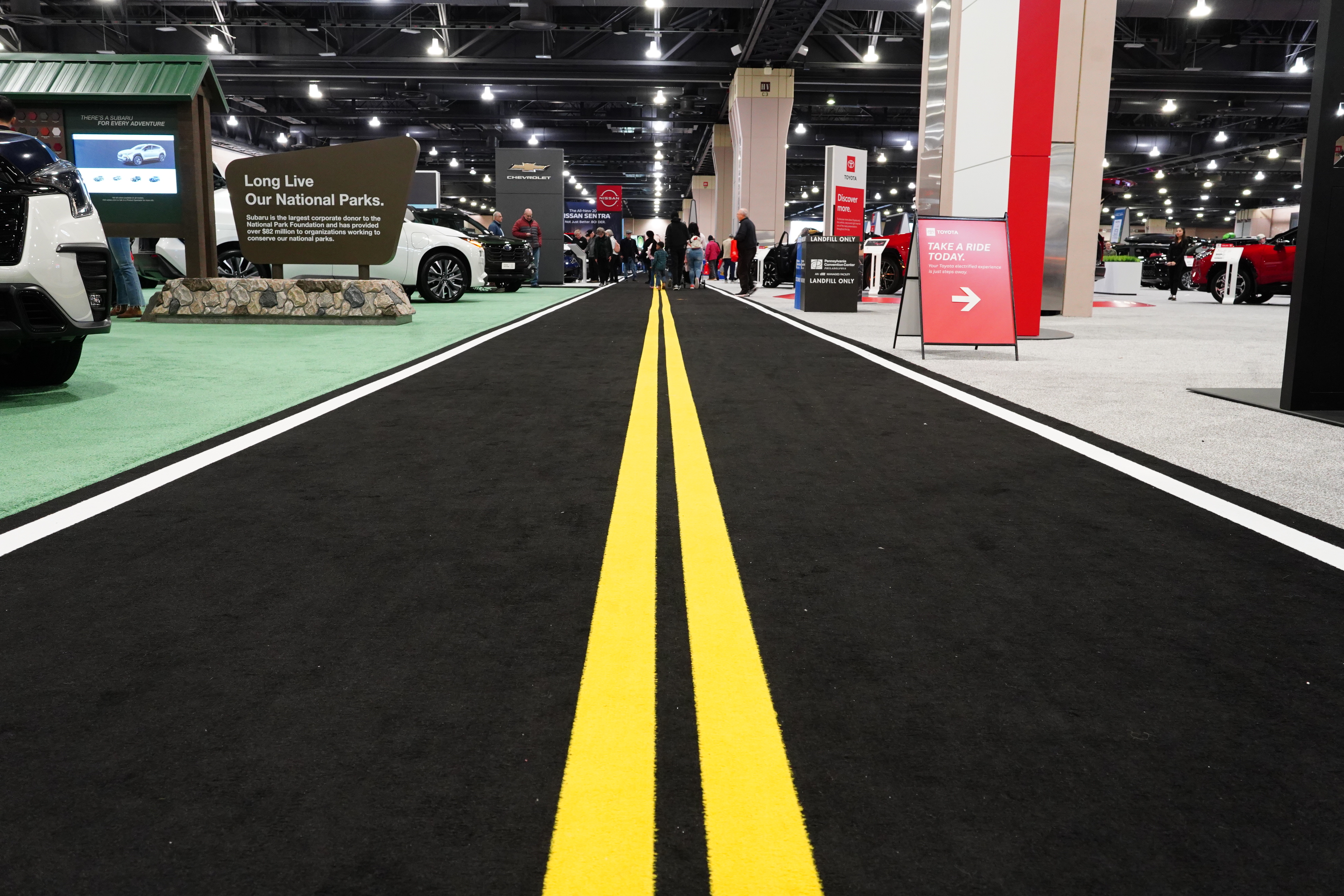
Just as NY has done for the past several years, the main floor in the Convention Center included an EV test track, and show-goers could ride in the EV of their choice. While I didn’t take advantage of the opportunity, whenever someone mentions to me that they would “never” own an EV, my first question in response is, “but have you driven one?” Almost always, the answer is “no,” and it becomes difficult to reconcile the “never” answer when one hasn’t at least tried it. Shows like NY and Philly give you a free, no pressure chance to have the experience.
General and specific observations continue below, accompanied by photographs.
For a Tuesday afternoon, the show was well-attended, but not so crowded as to impede access to the cars.
The main aisle was cleverly carpeted with this highway-like stripe.
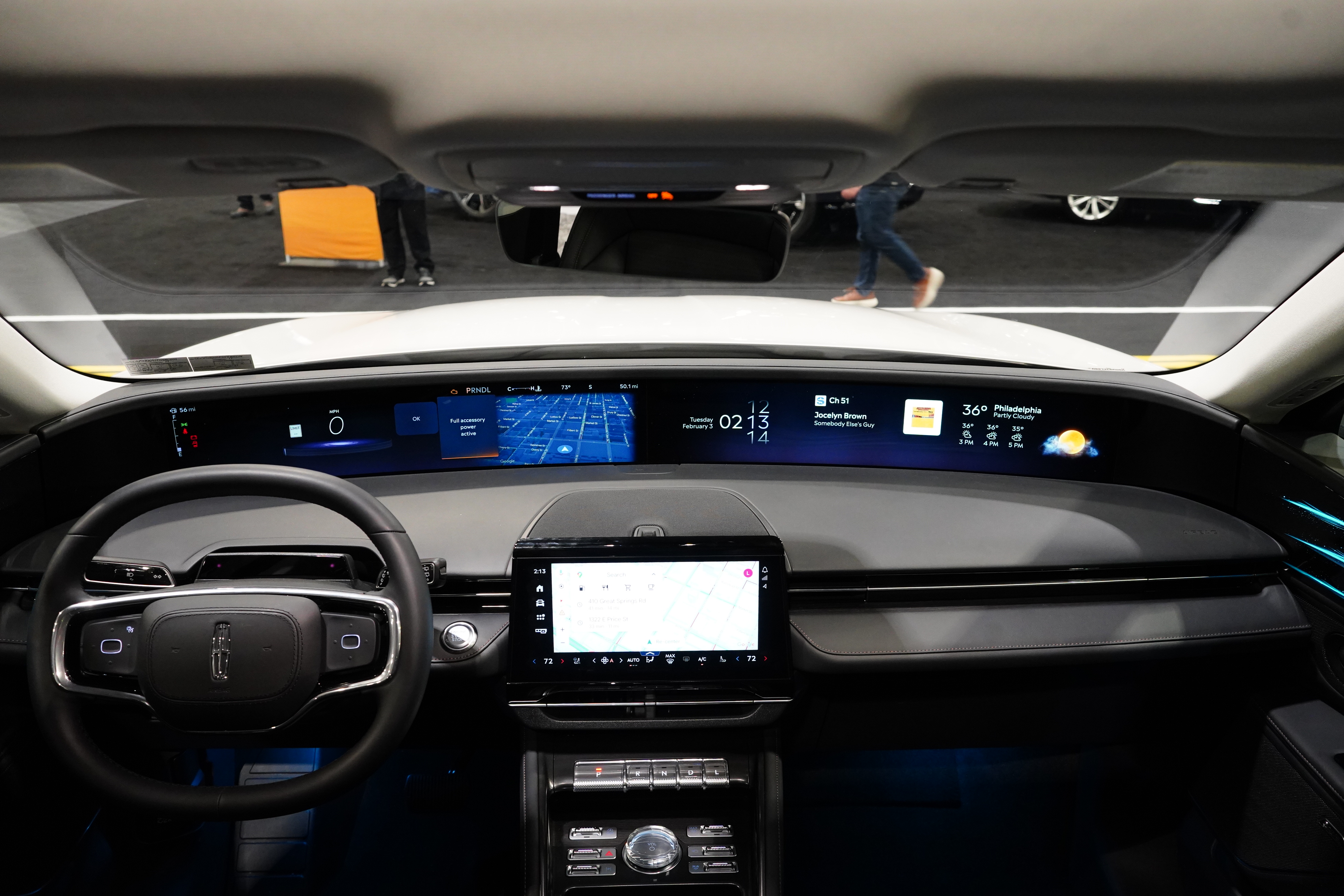
This was my first time seeing a pillar-to-pillar screen. It was so wide that I had to sit in the back seat to photograph it.
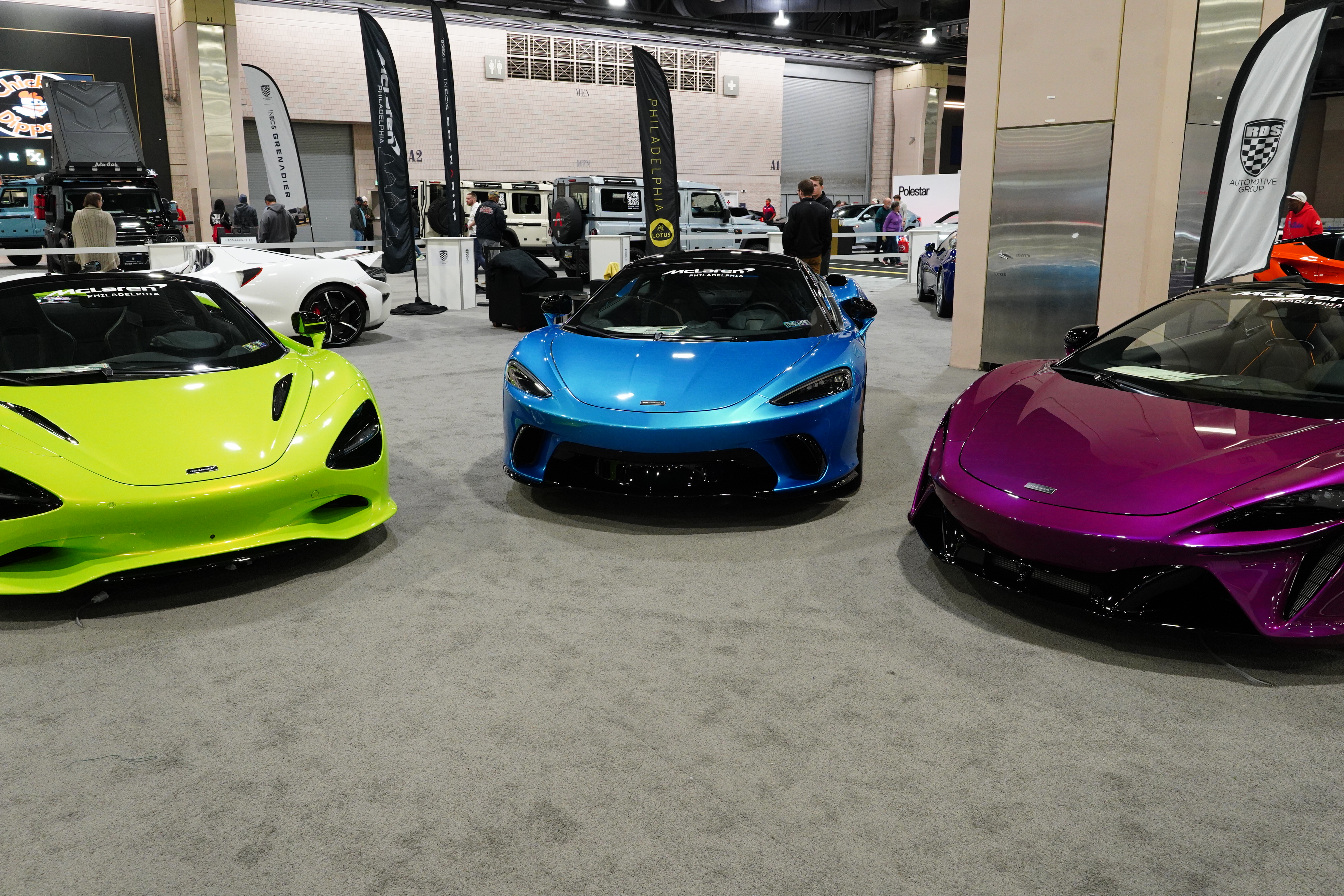
If a sea of silver, grey, and black bore you, McLaren offers these eye-searing shades.
SUBARU
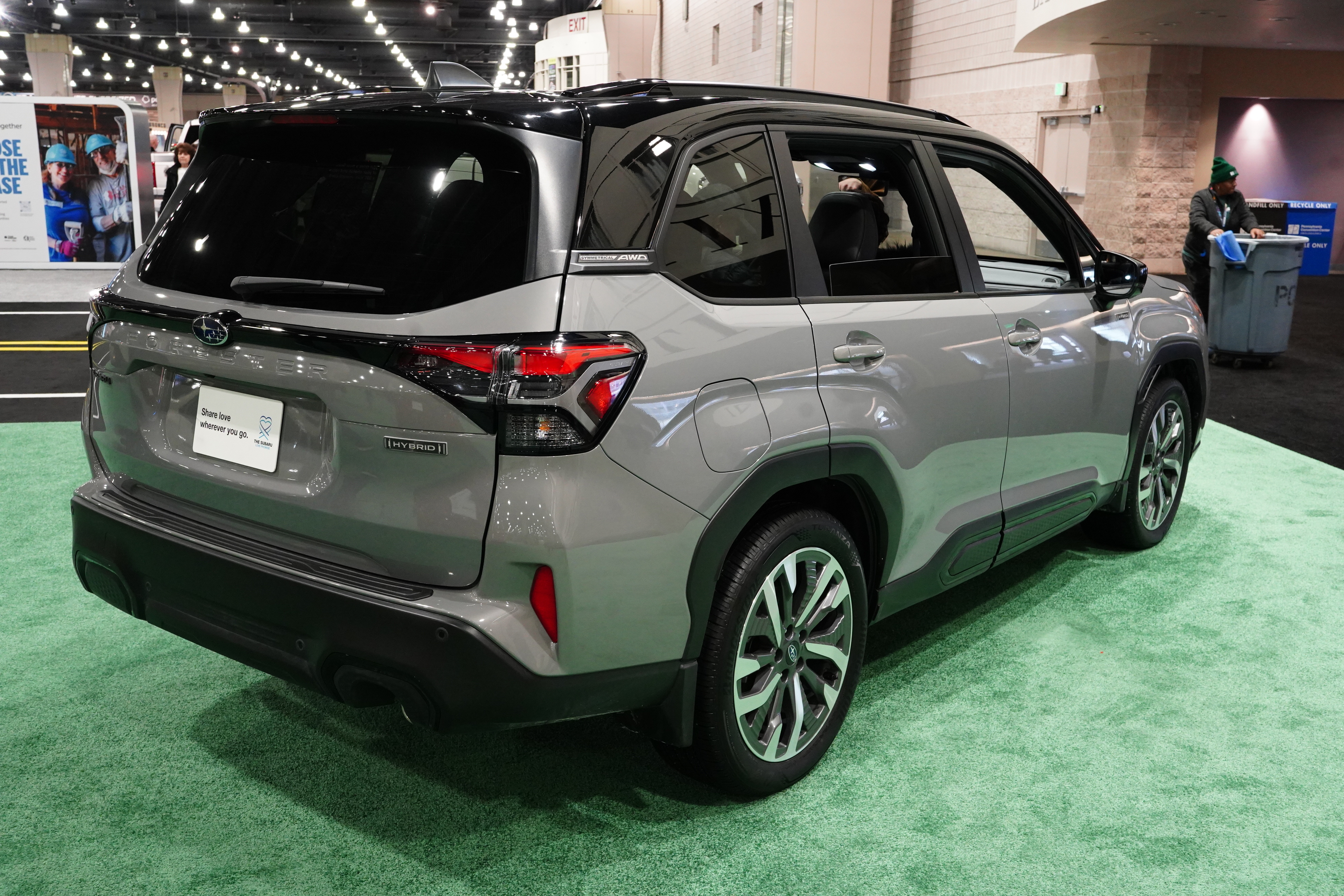
The new Forester has grown to the size of the previous Outback
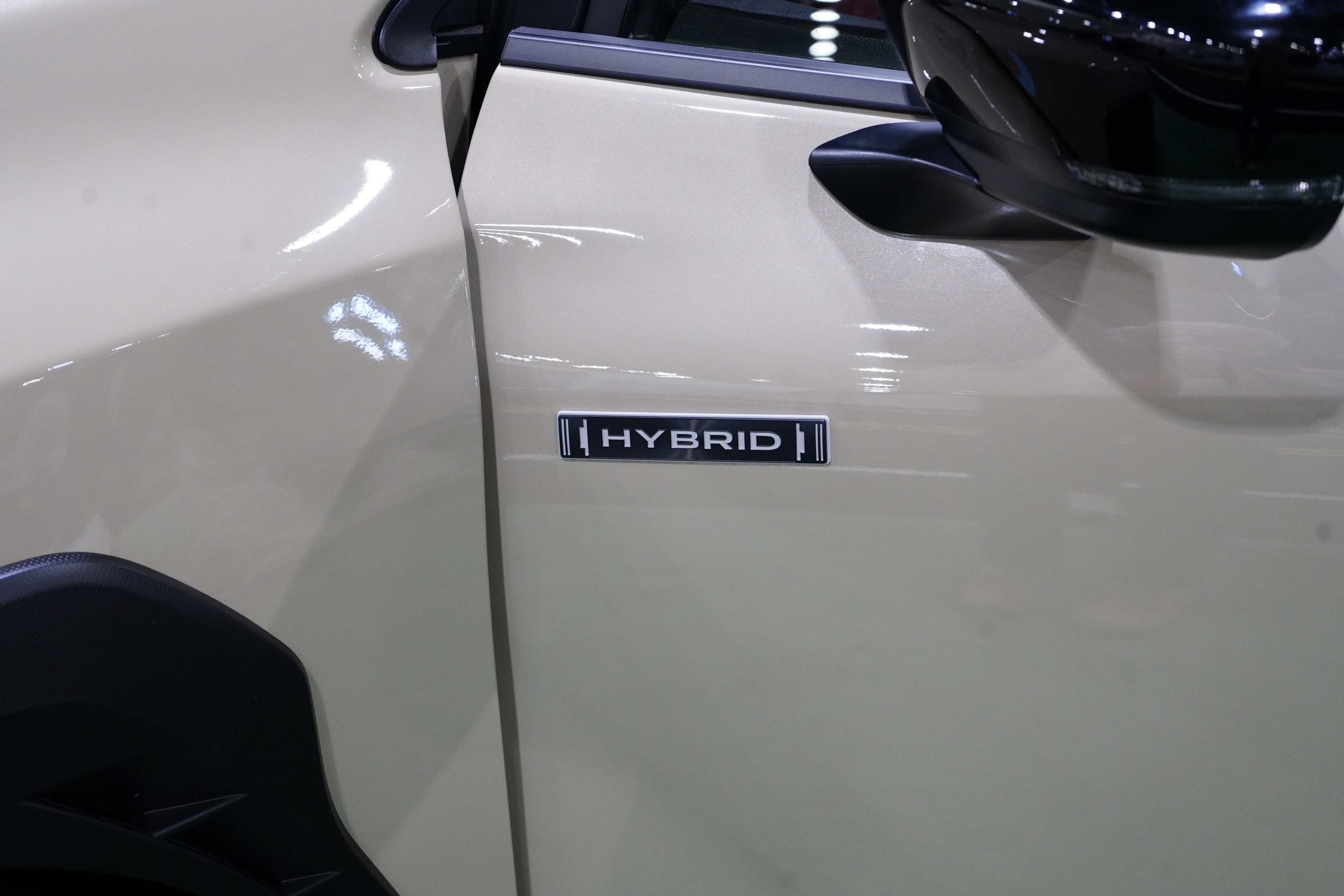
The “Hybrid” bade on the front door is laughingly large – it reminds me of the early ’70s Subarus which wore a “FWD” badge
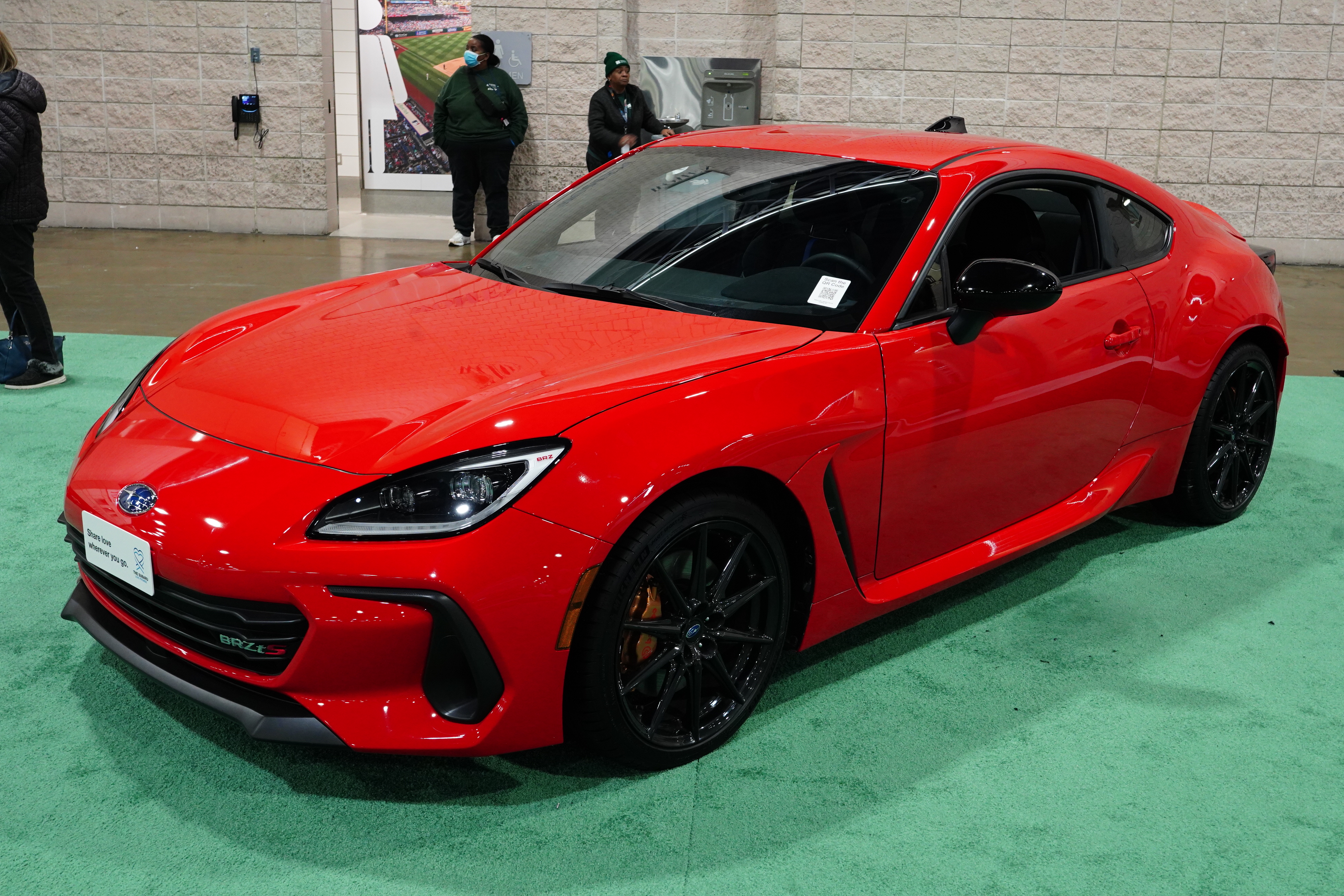
No one was near the RWD BRZ sports coupe which looks tiny next to its siblings
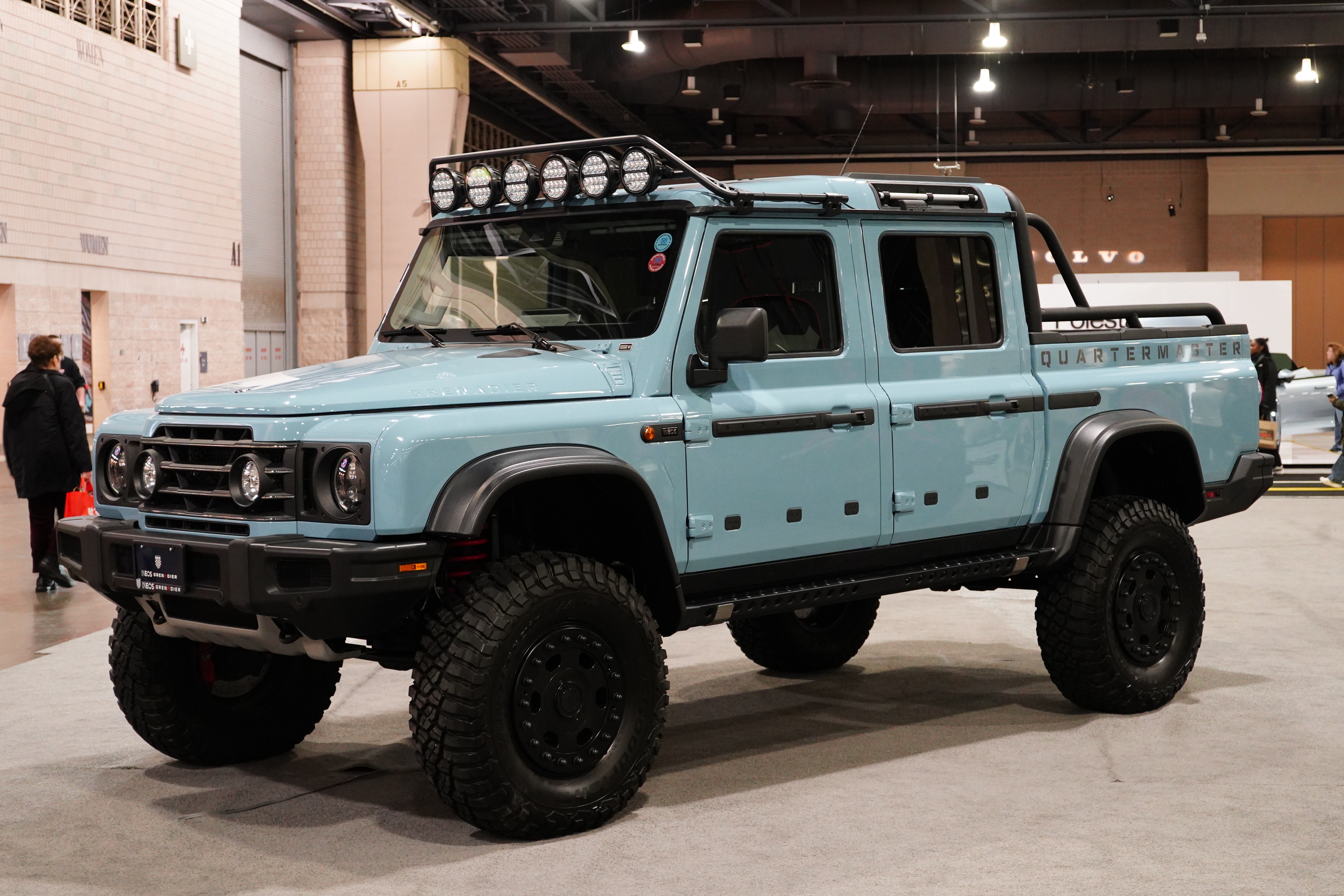
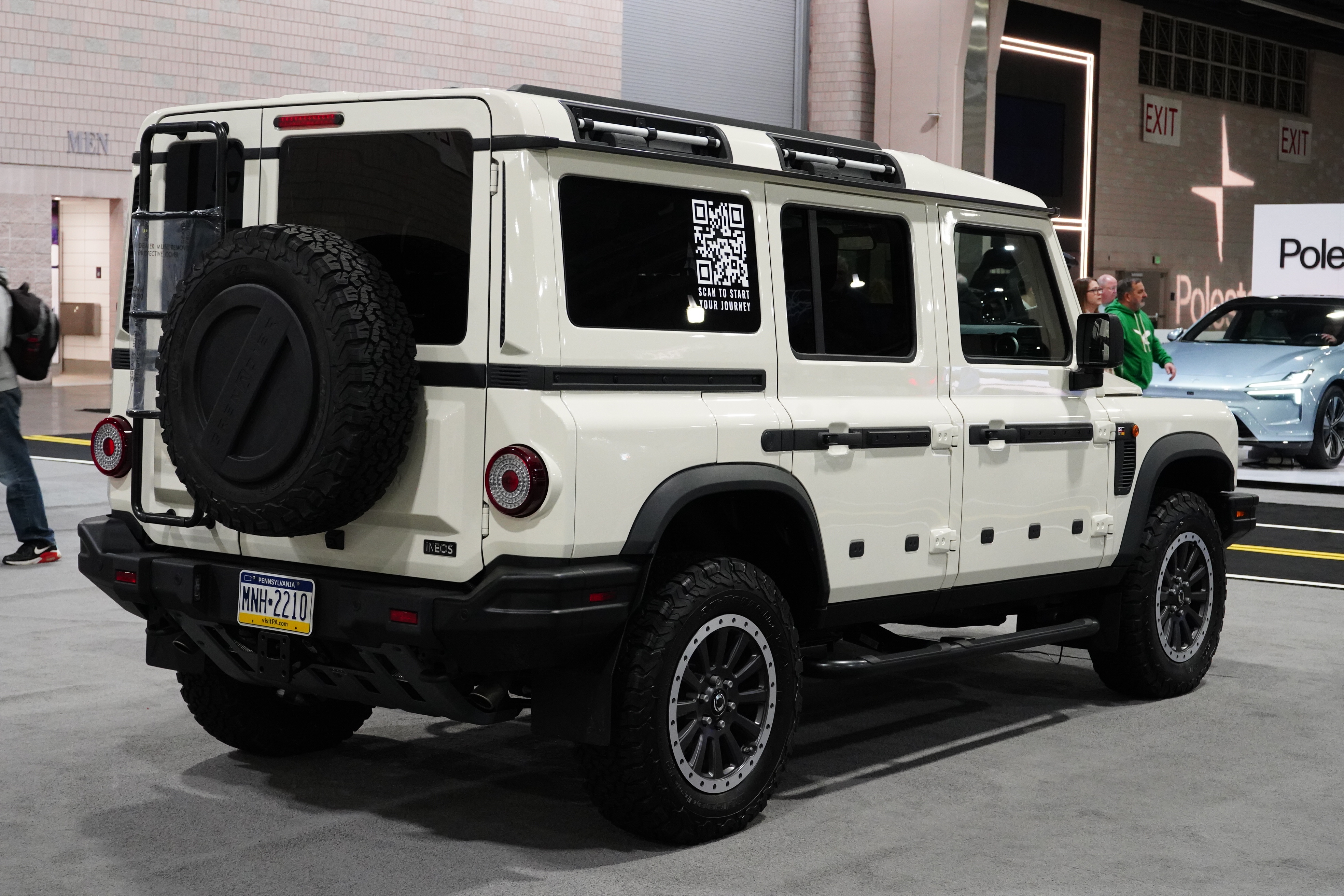
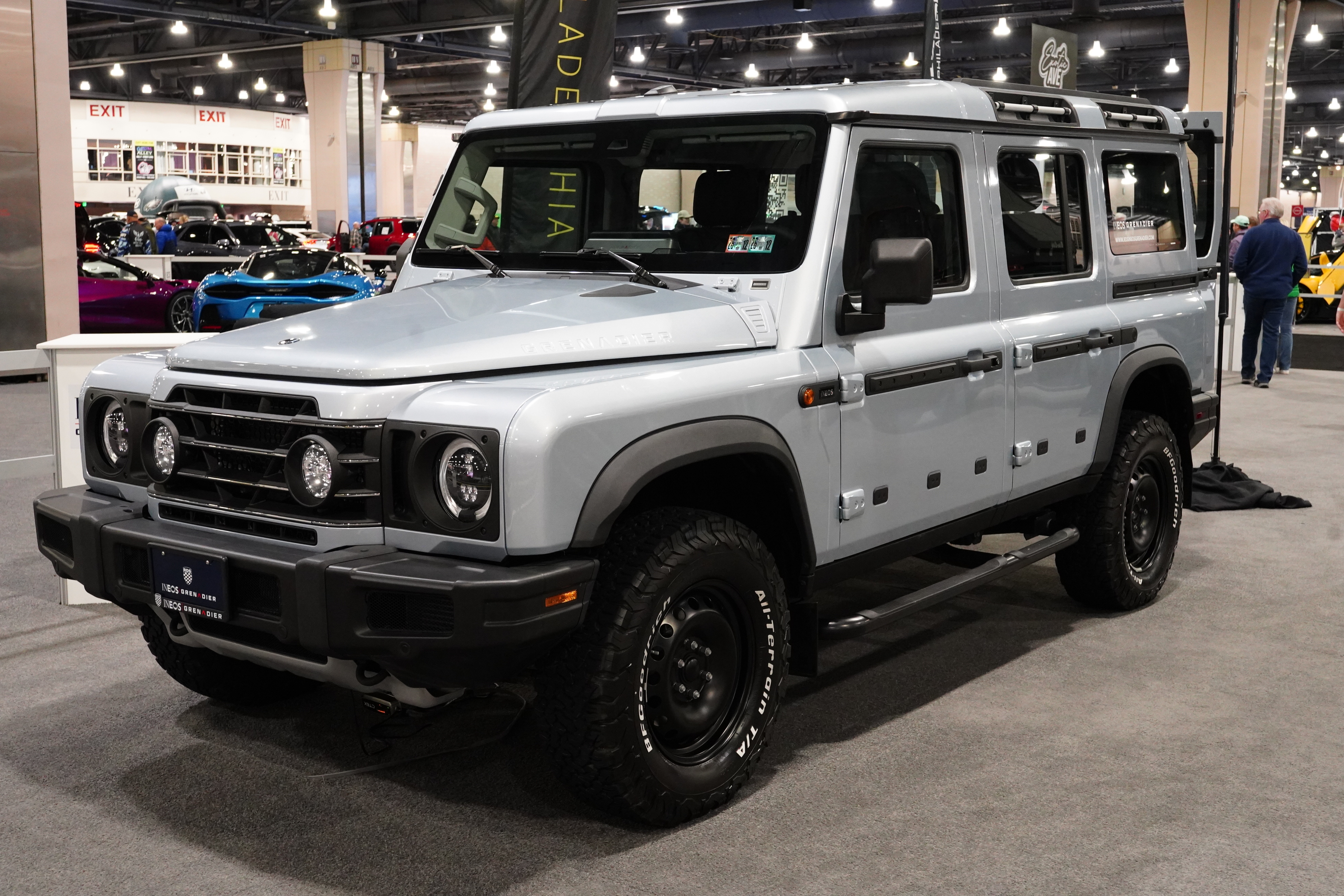
INEOS GRENADIER
These high-end SUVs and trucks have been advertised on TV, but aside from that, I know very little about them. This show was the first opportunity I’ve had to see them in person, and while I’m not a “truck guy” by any means, I could relate to their attractiveness for a certain clientele. Looking at the manufacturer’s website, the starting prices are lower than I expected, $62,995, which is competitive with many similar vehicles.
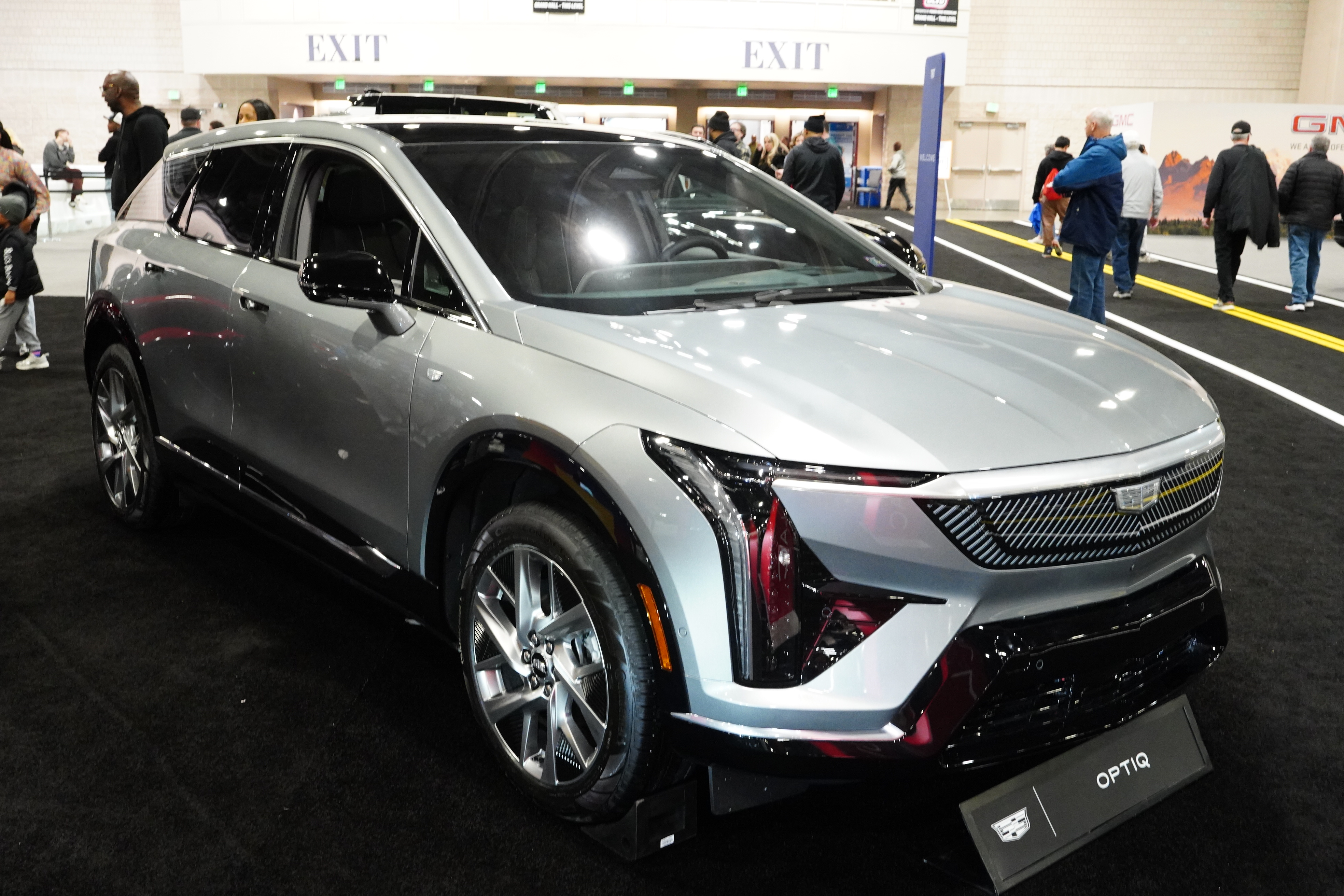
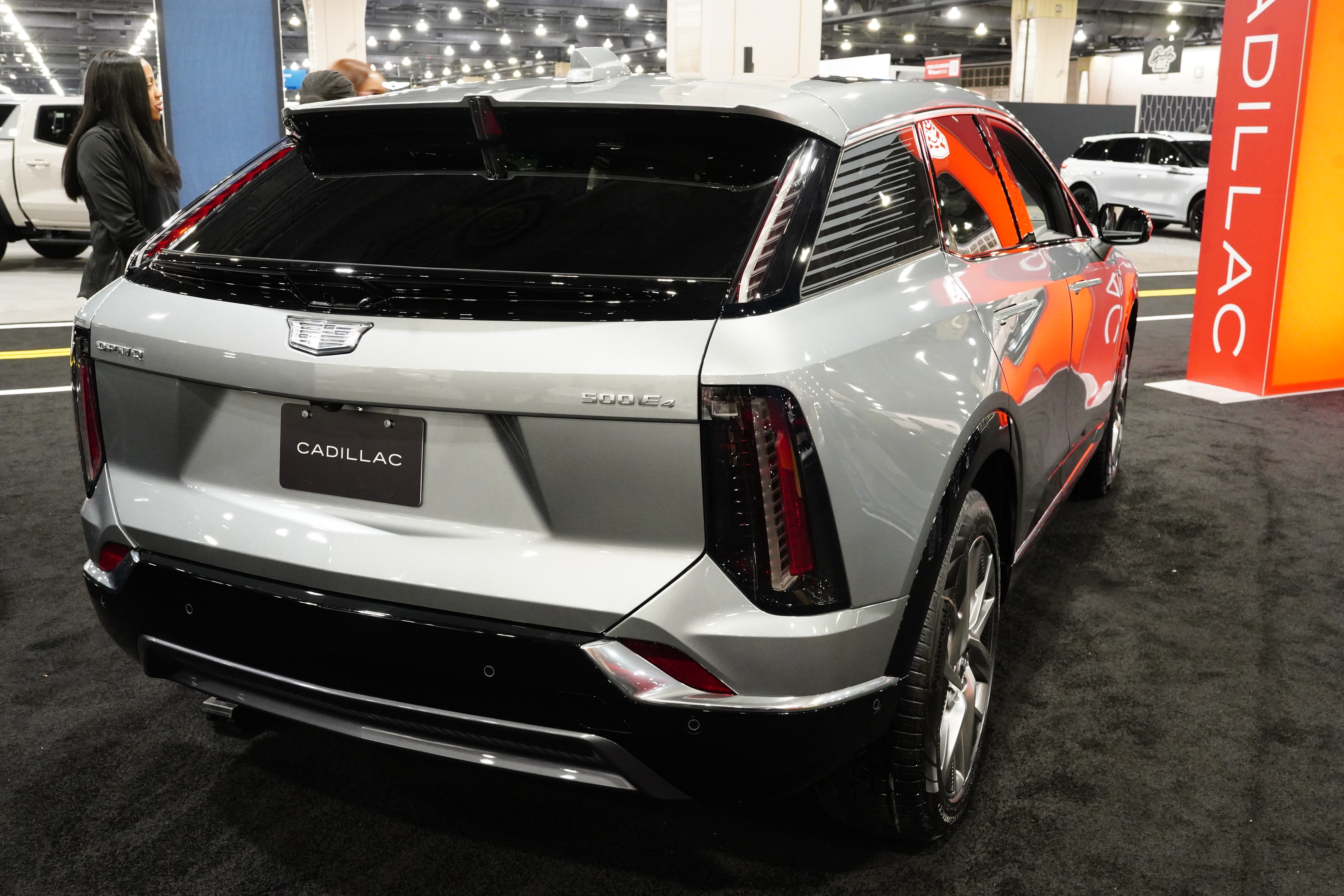
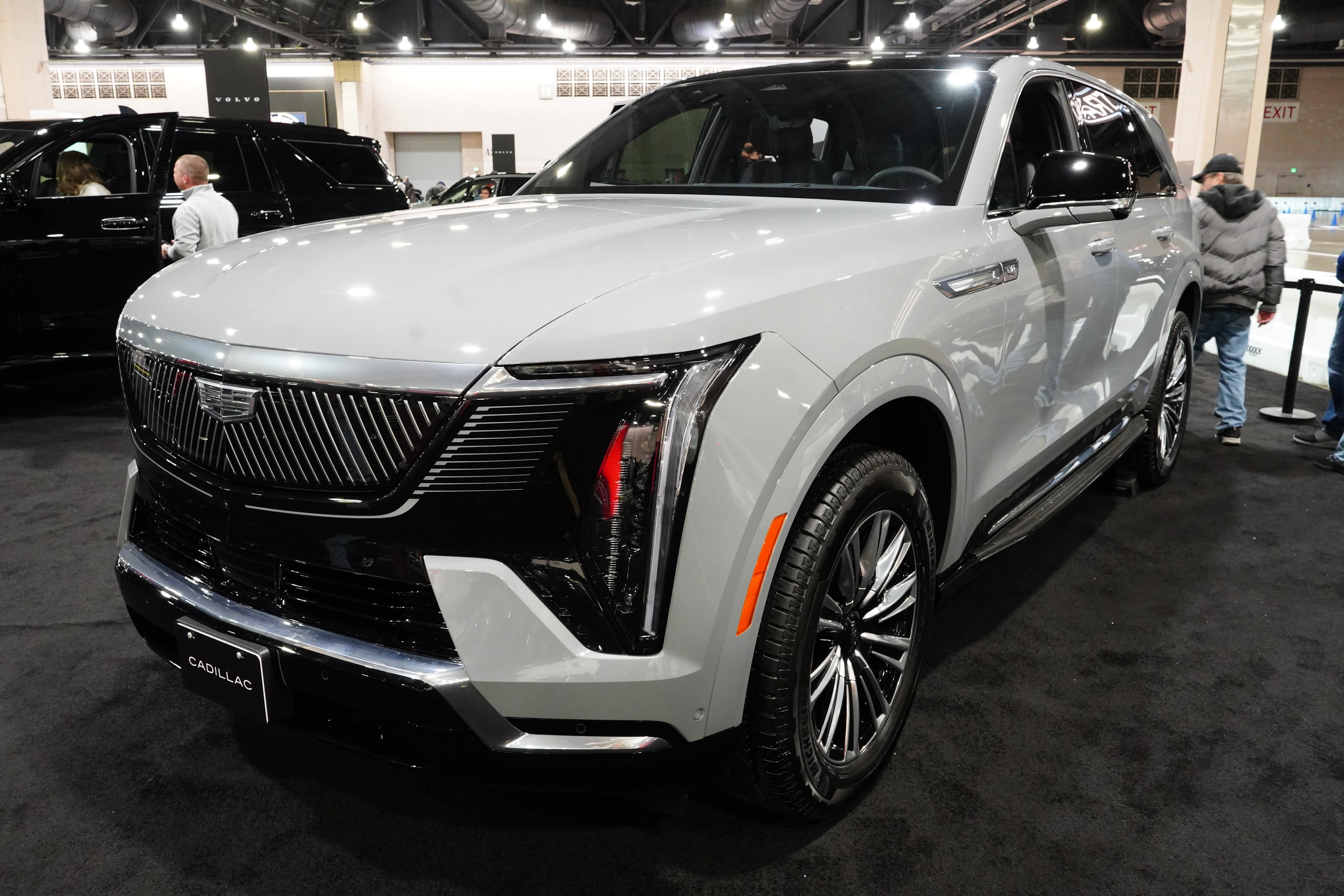
CADILLAC
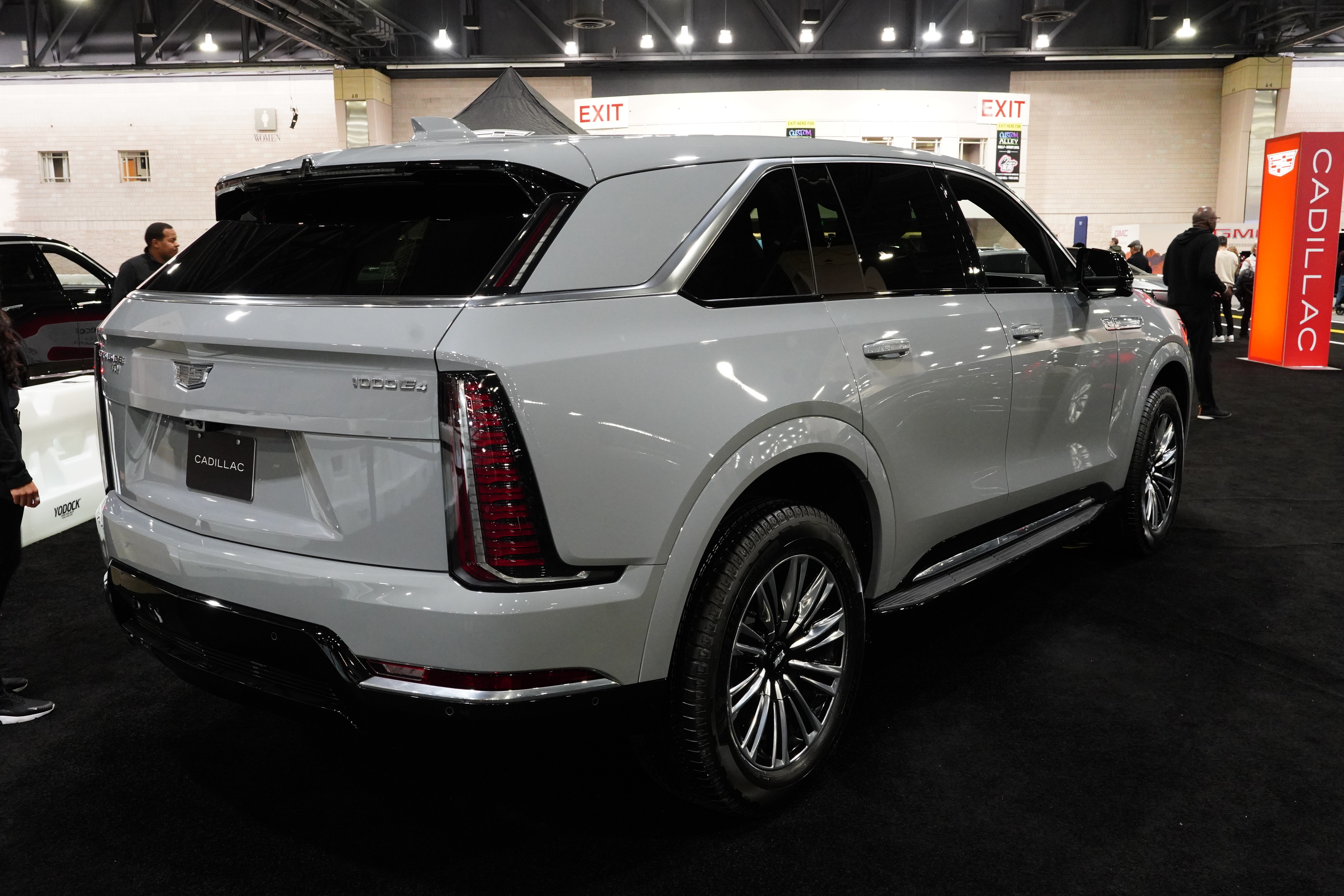
The Optiq is the smallest of Cadillac’s EV SUV lineup (followed by the Lyriq, Vistiq, and Escalade IQ), and I found the exterior to be quite attractive. I especially liked the low height, giving it more of a station wagon profile. The AWD model starts at $56,195.
The Escalade IQ, by comparison, is grotesquely obscene. Photos do not adequately portray the gargantuan, gluttonous proportions of its hideousness. The only purpose this vehicle has in the marketplace is to call attention to itself and its ostentatious owner about its ability to cast its dark shadow onto every other vehicle on the road.
BUICK
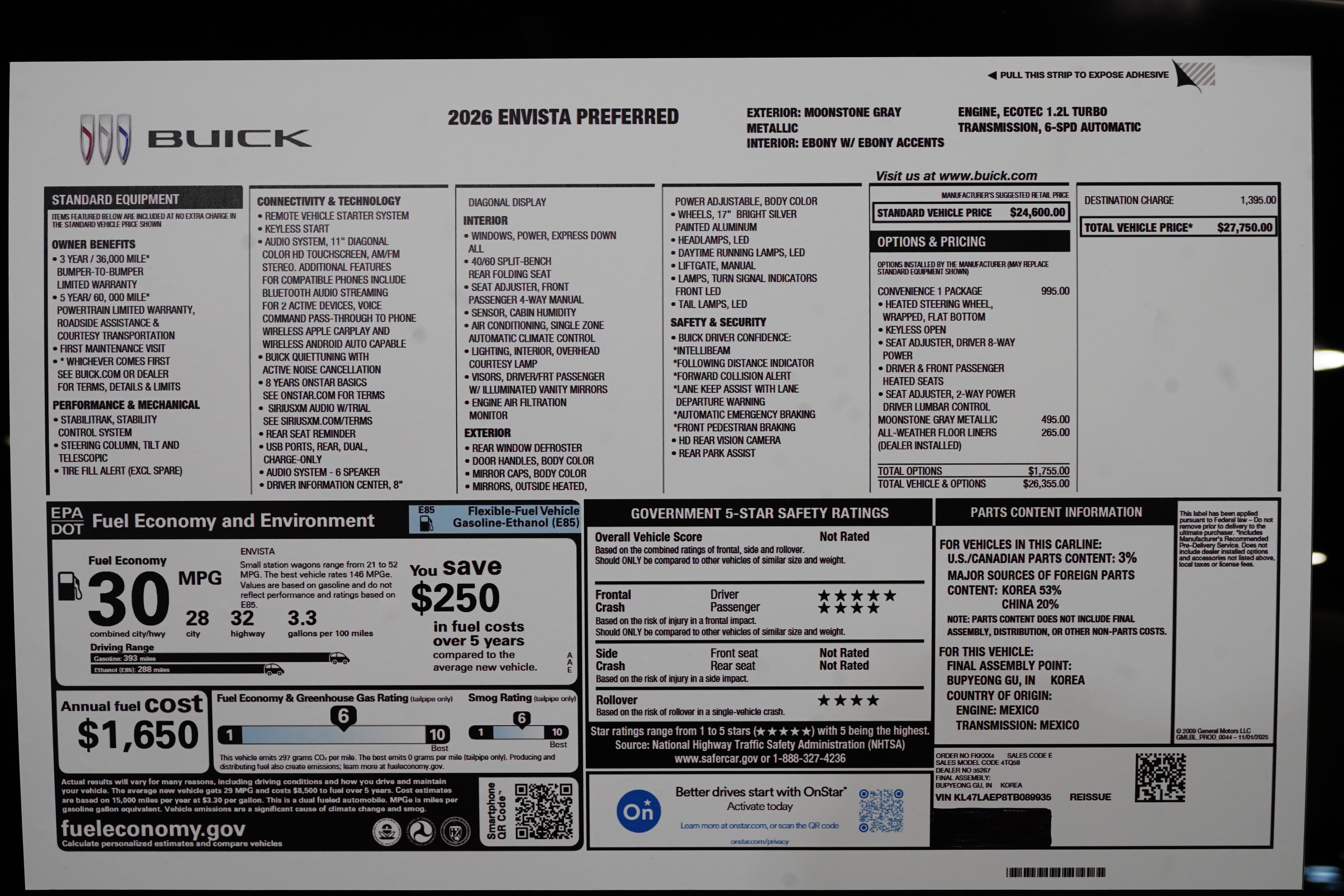
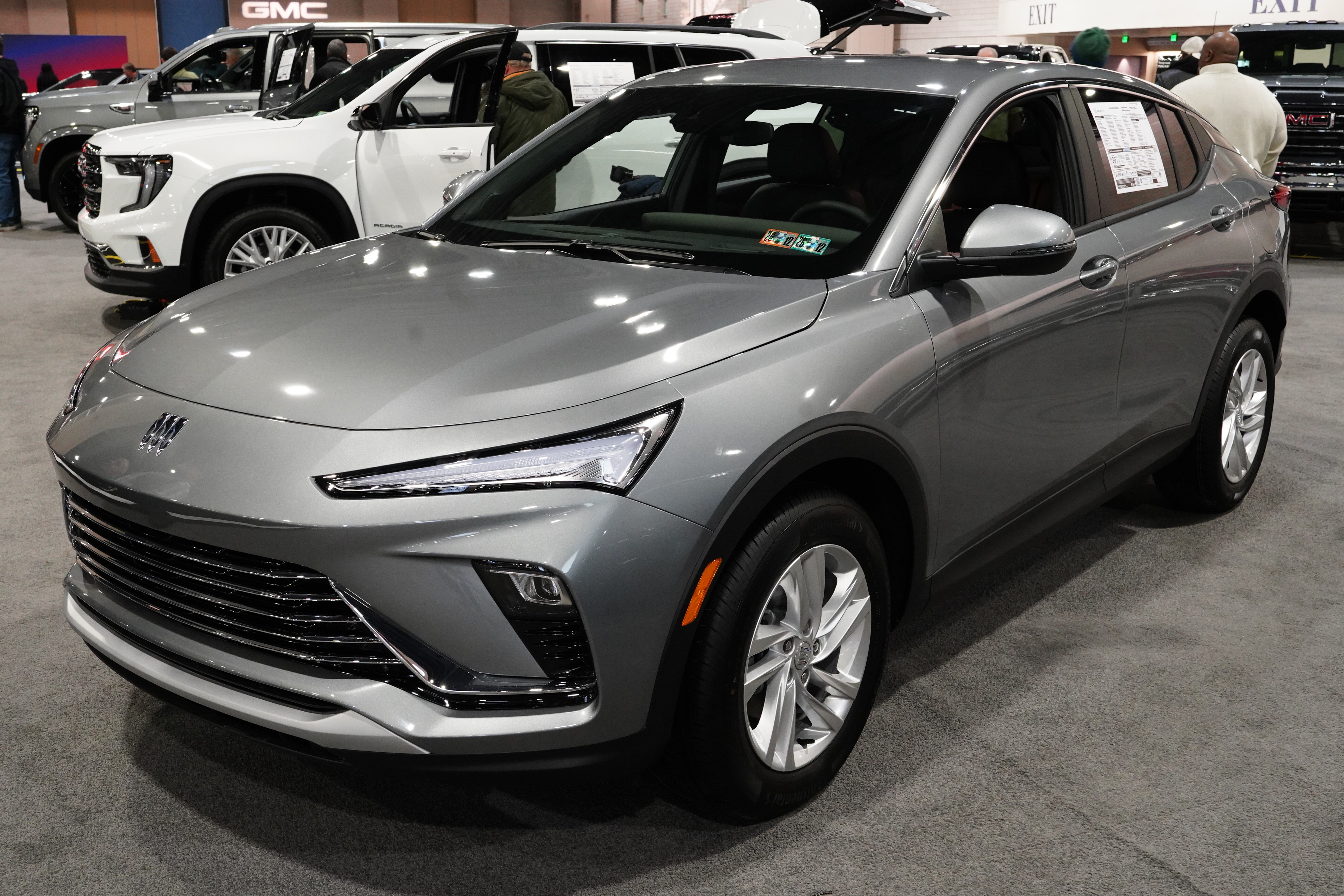
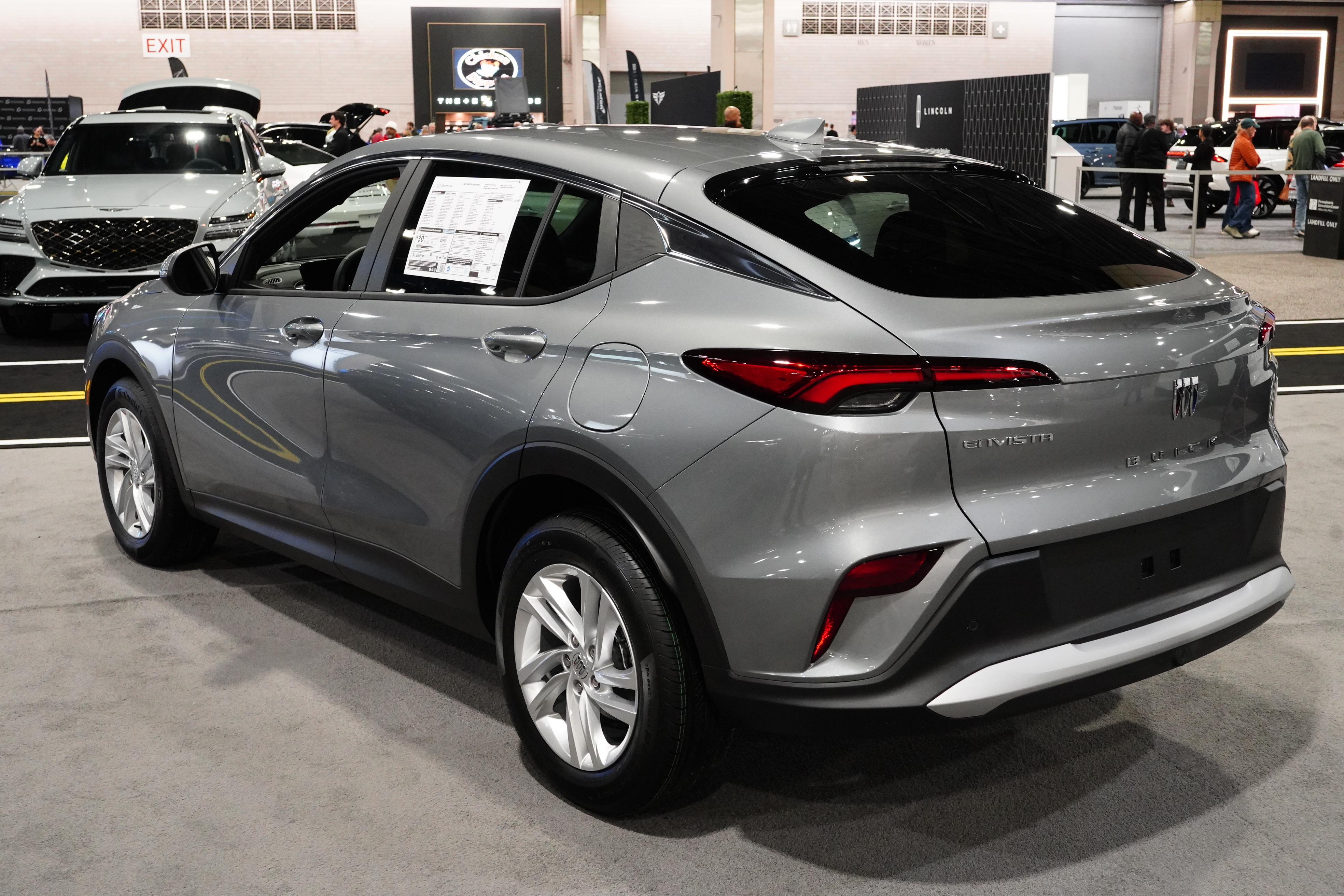
With an MSRP starting under $25,000, the appeal of this good-looking Envista is easily understood. It looks to me like a well-designed cross between a car and a crossover. Take a look at that Monroney label as well: the engine and transmission are sourced from Mexico, 73% of its foreign parts come from Korea and China, and its final assembly point is in Korea, which help hold down the price.
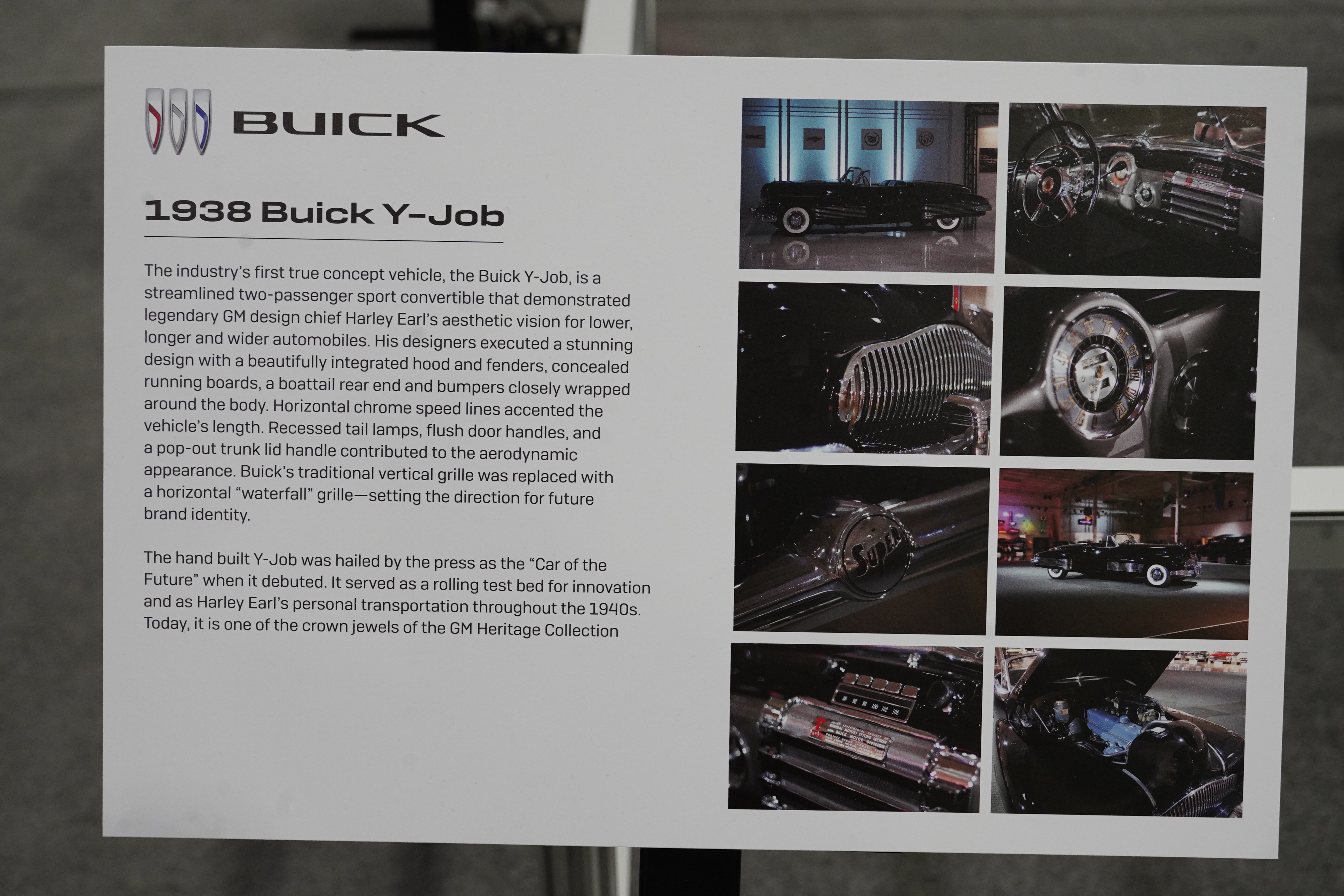
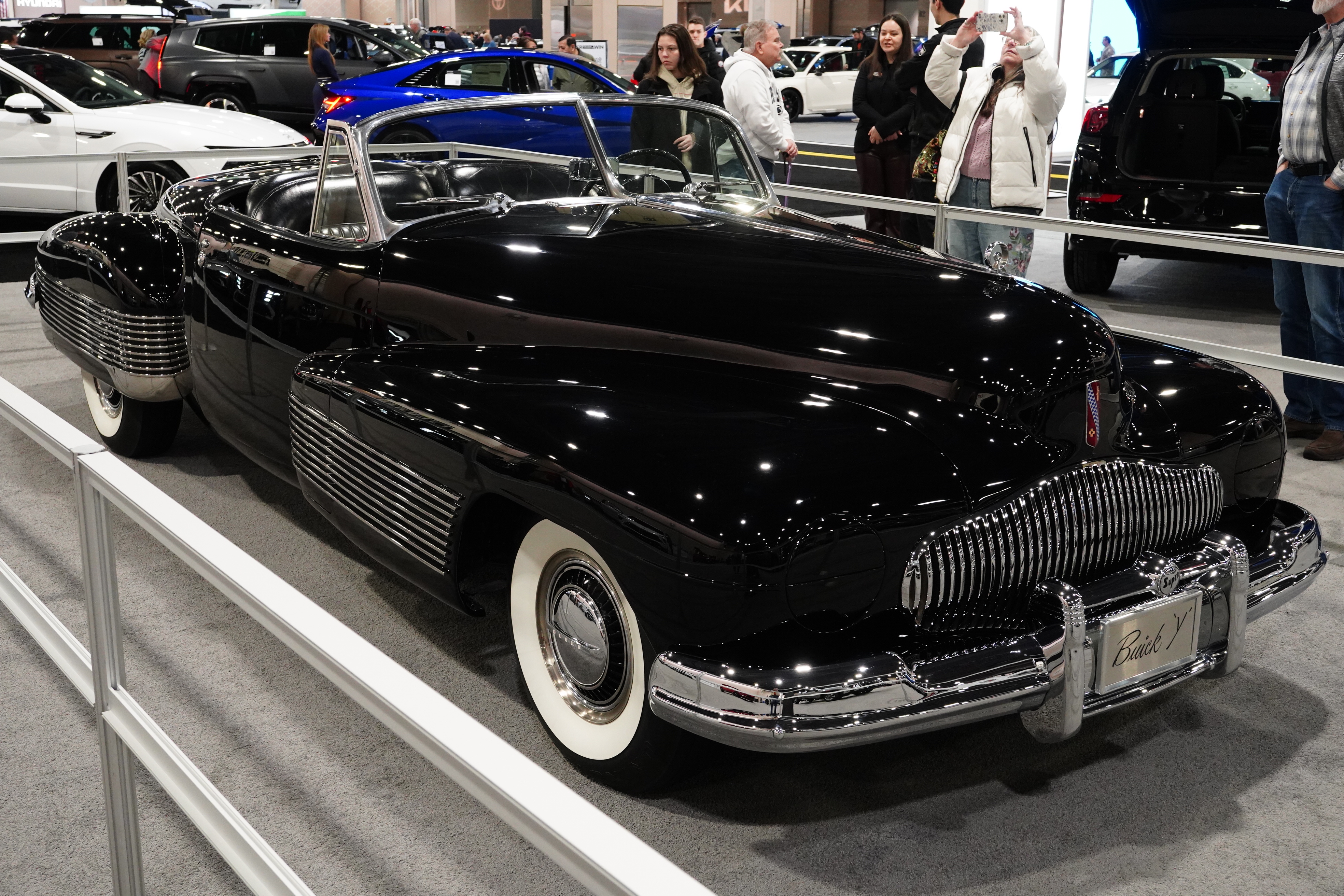
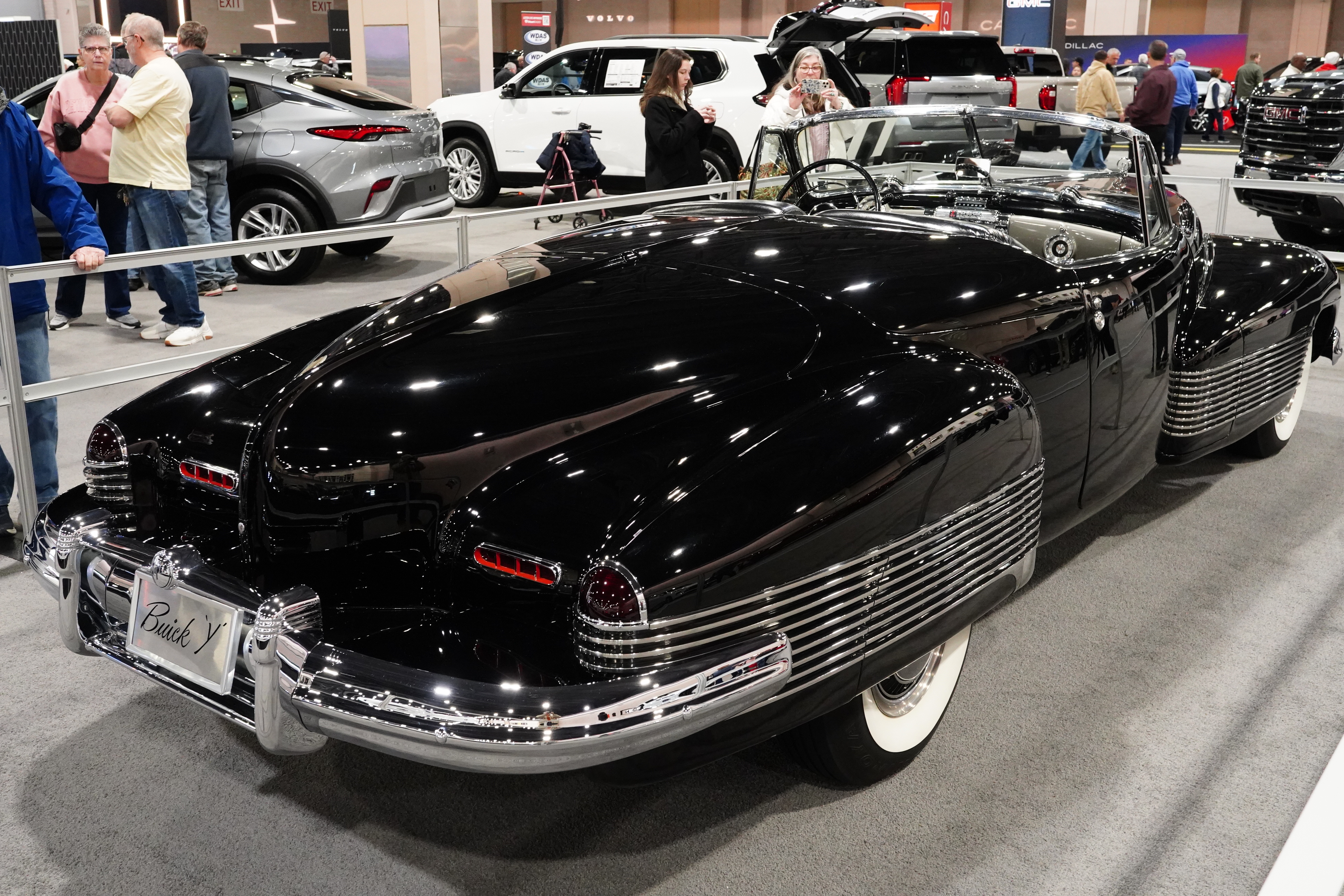
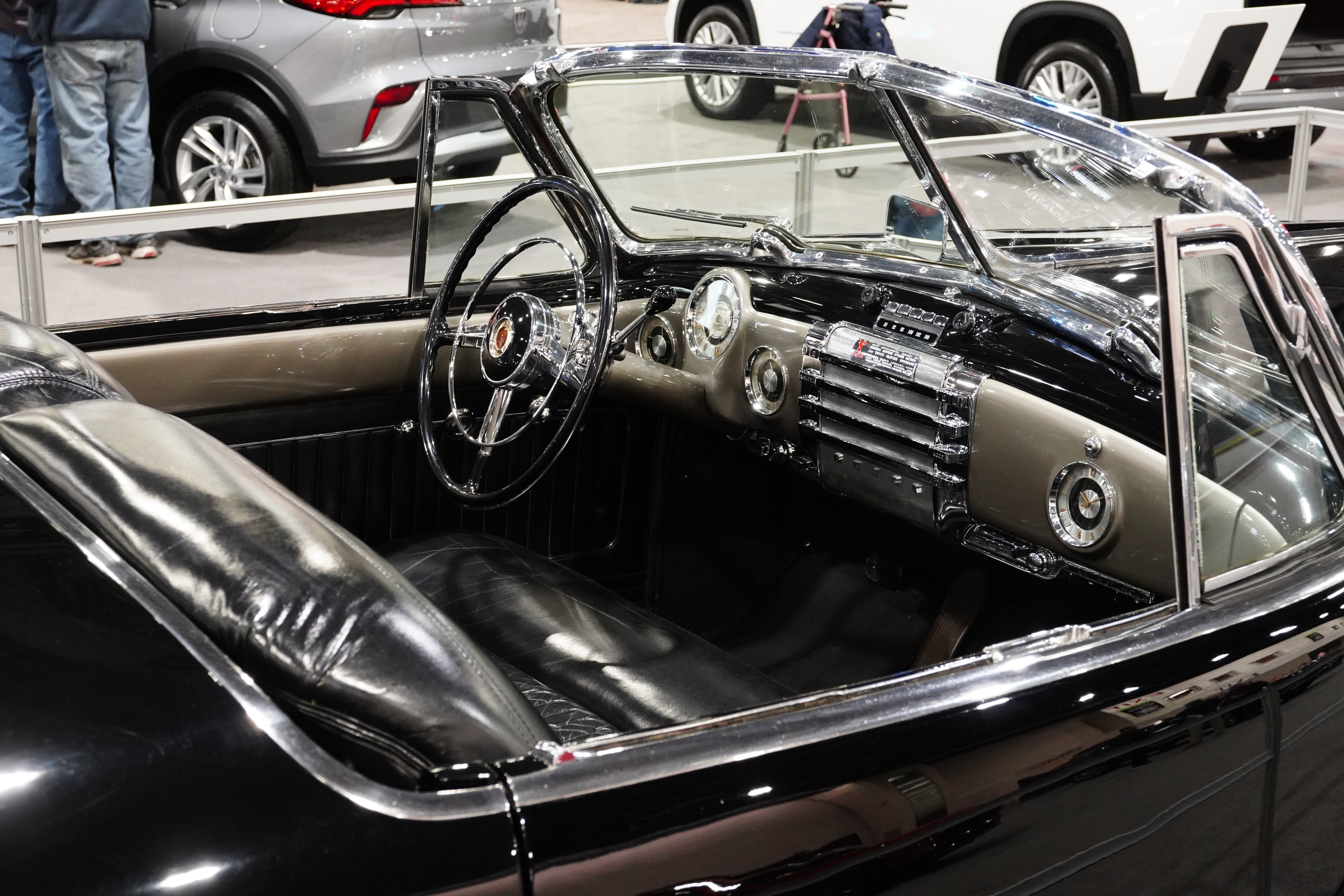
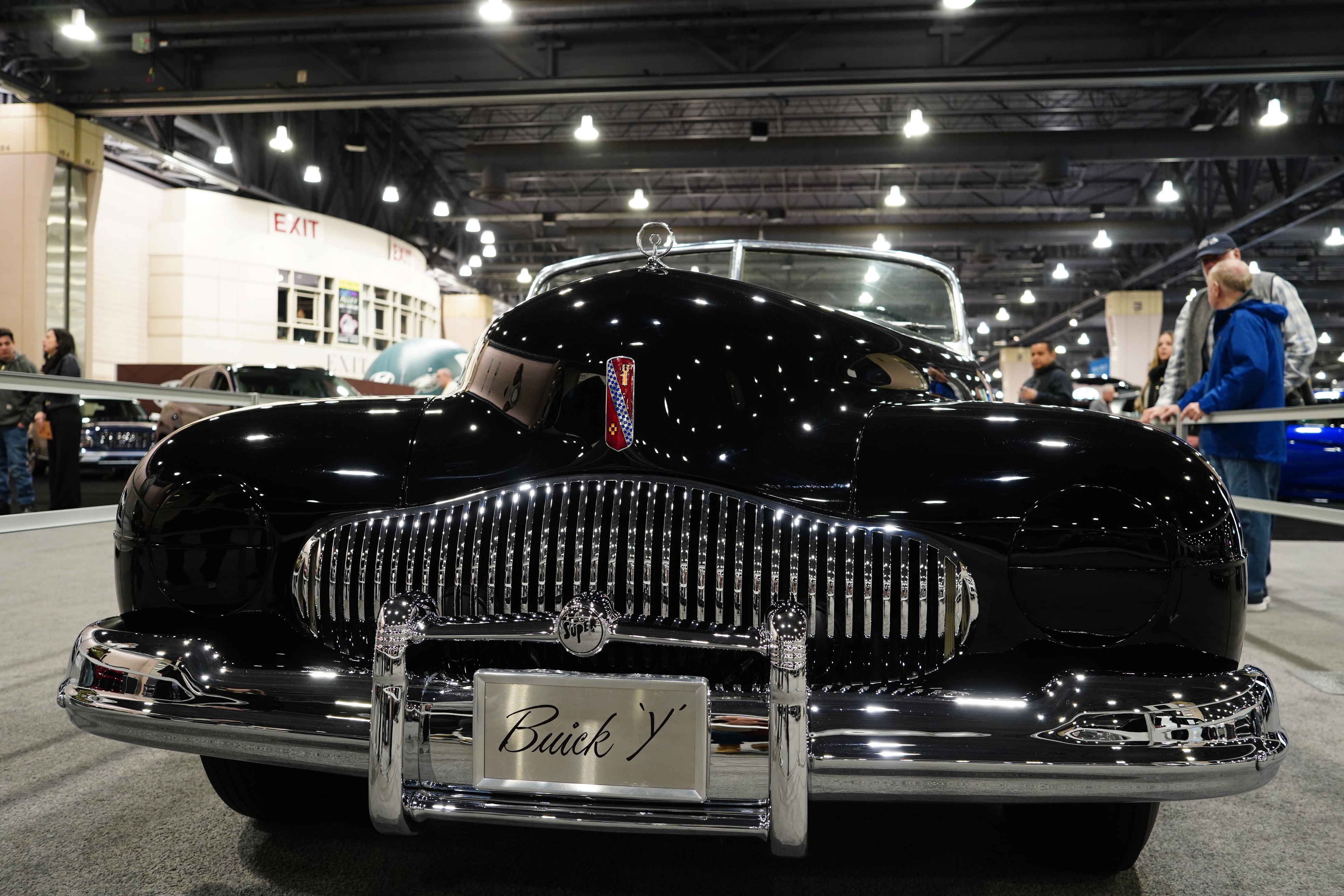
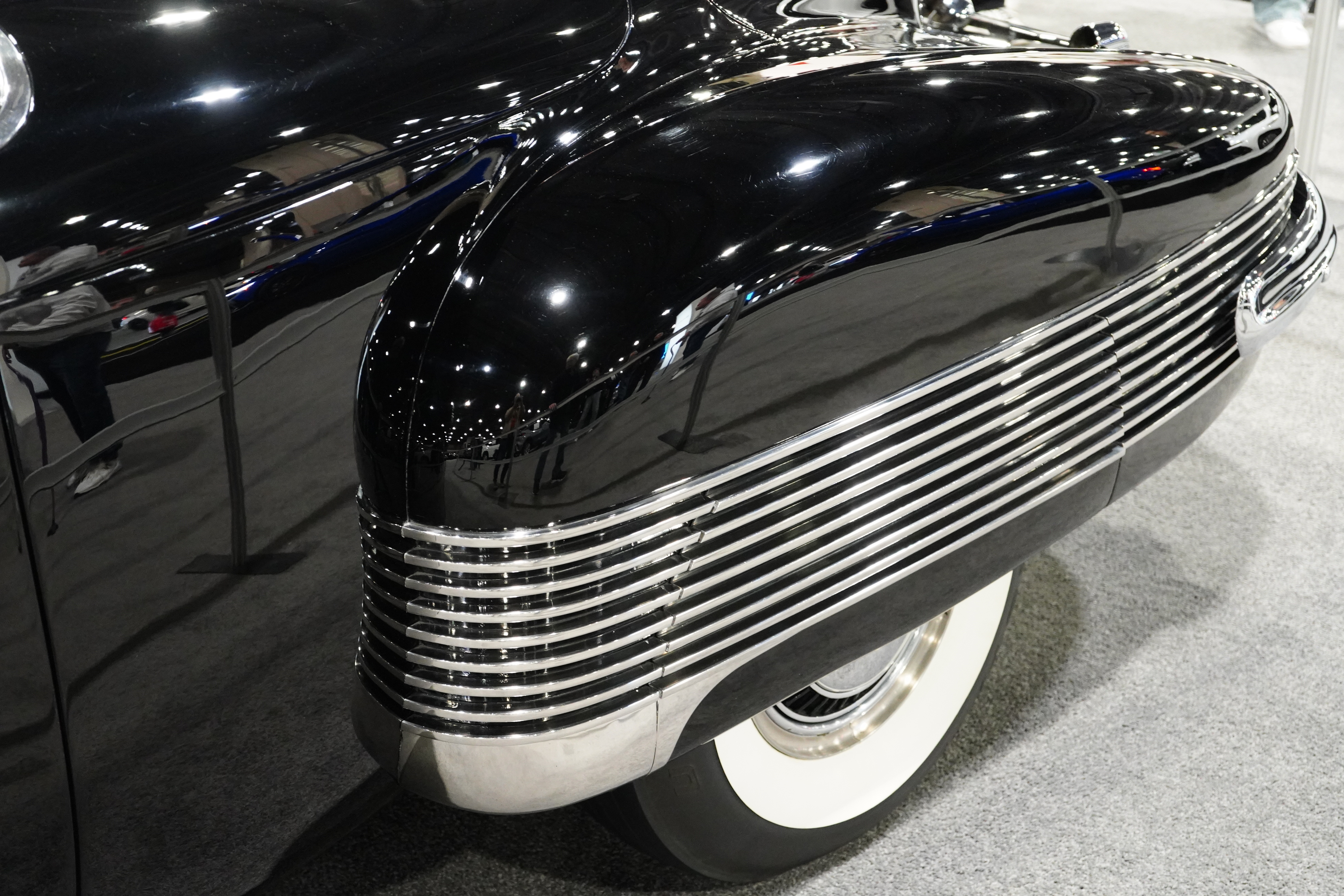
THE Y-JOB
What an incredible surprise to see Harley Earl’s Y-Job in the metal. He unveiled it in 1938, and the public must have thought they were looking at a space ship. It still looks revolutionary today. Yet, it was mostly ignored by the show attendees.
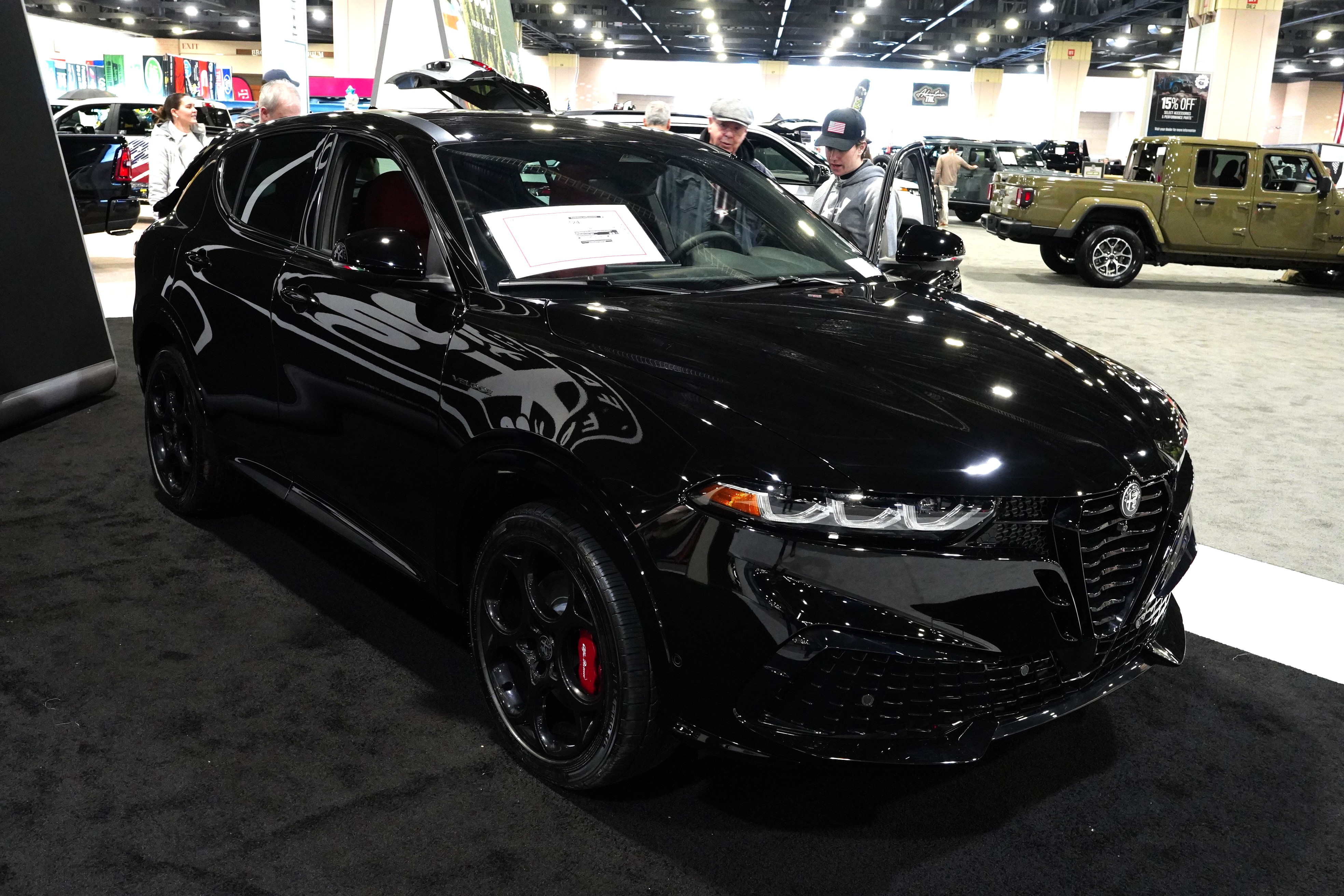
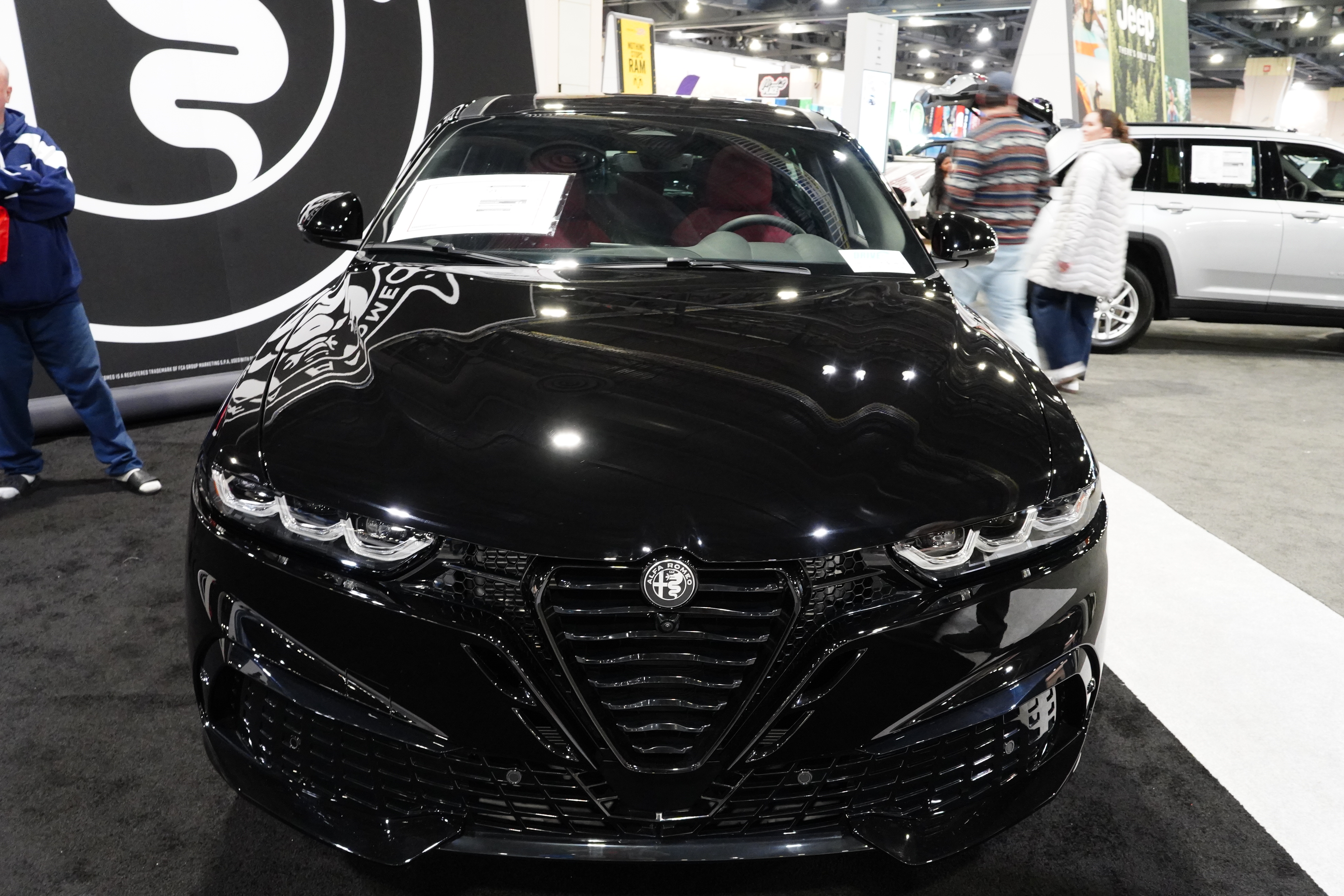
ALFA ROMEO
Situated among its Stellantis cousins was a Tonale SUV, the only Alfa at the show. (Alfa showrooms also include the Giulia sedan and the larger SUV, the Stelvio.) The black paint did it no favors, as I find black cars at indoor car shows to mute the styling (as well as being a challenge to photograph). Still, at least Alfa was here.
FORD
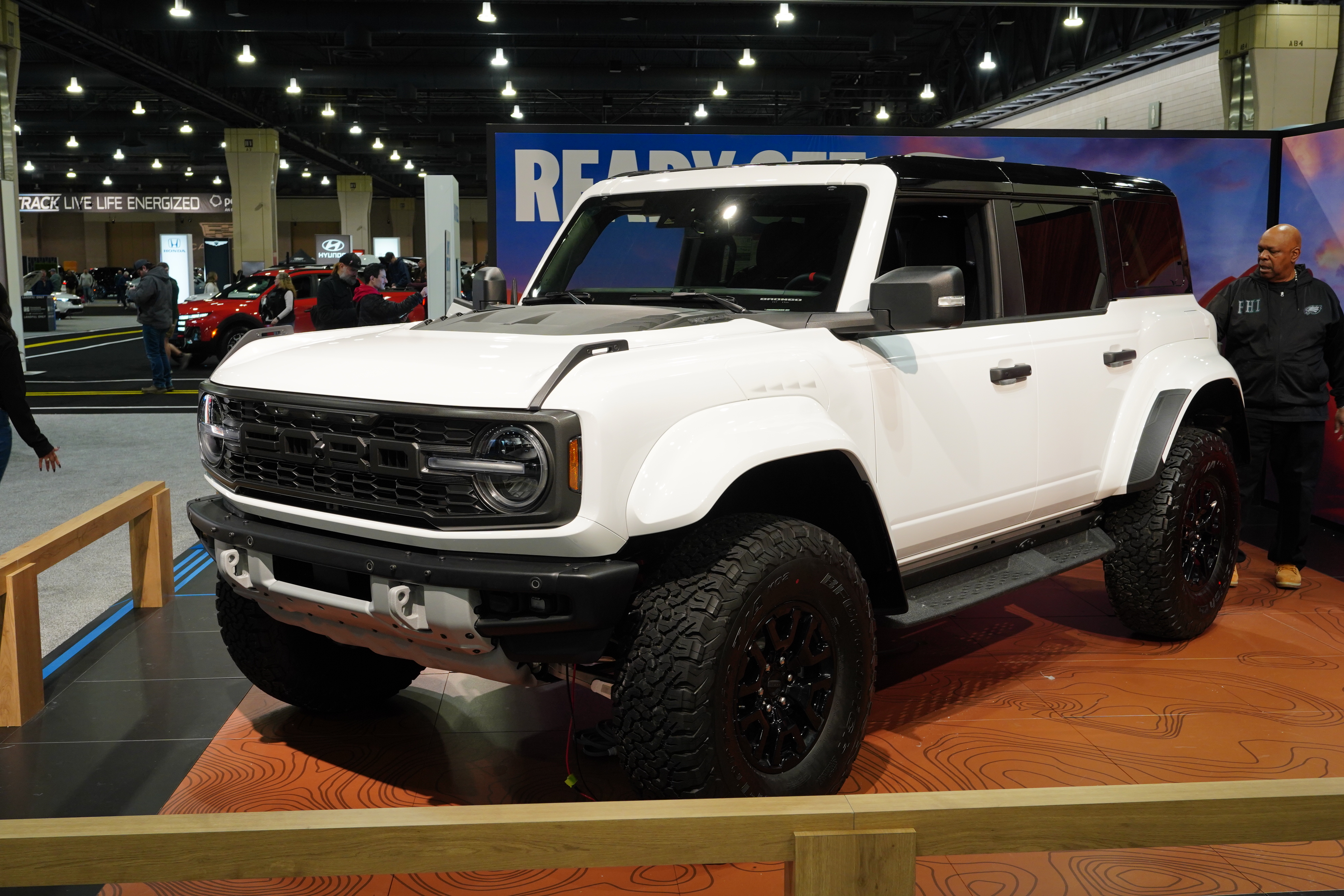
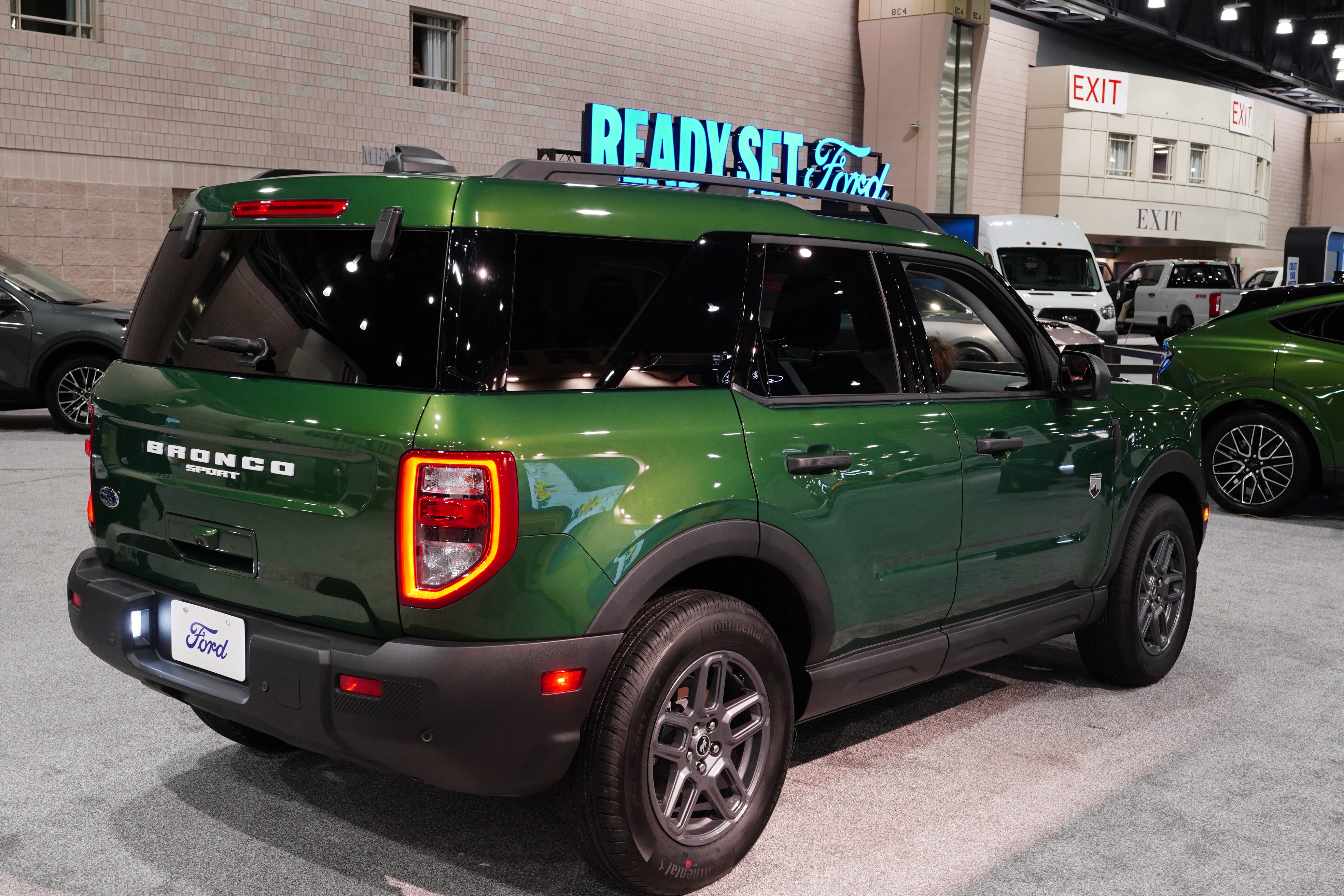
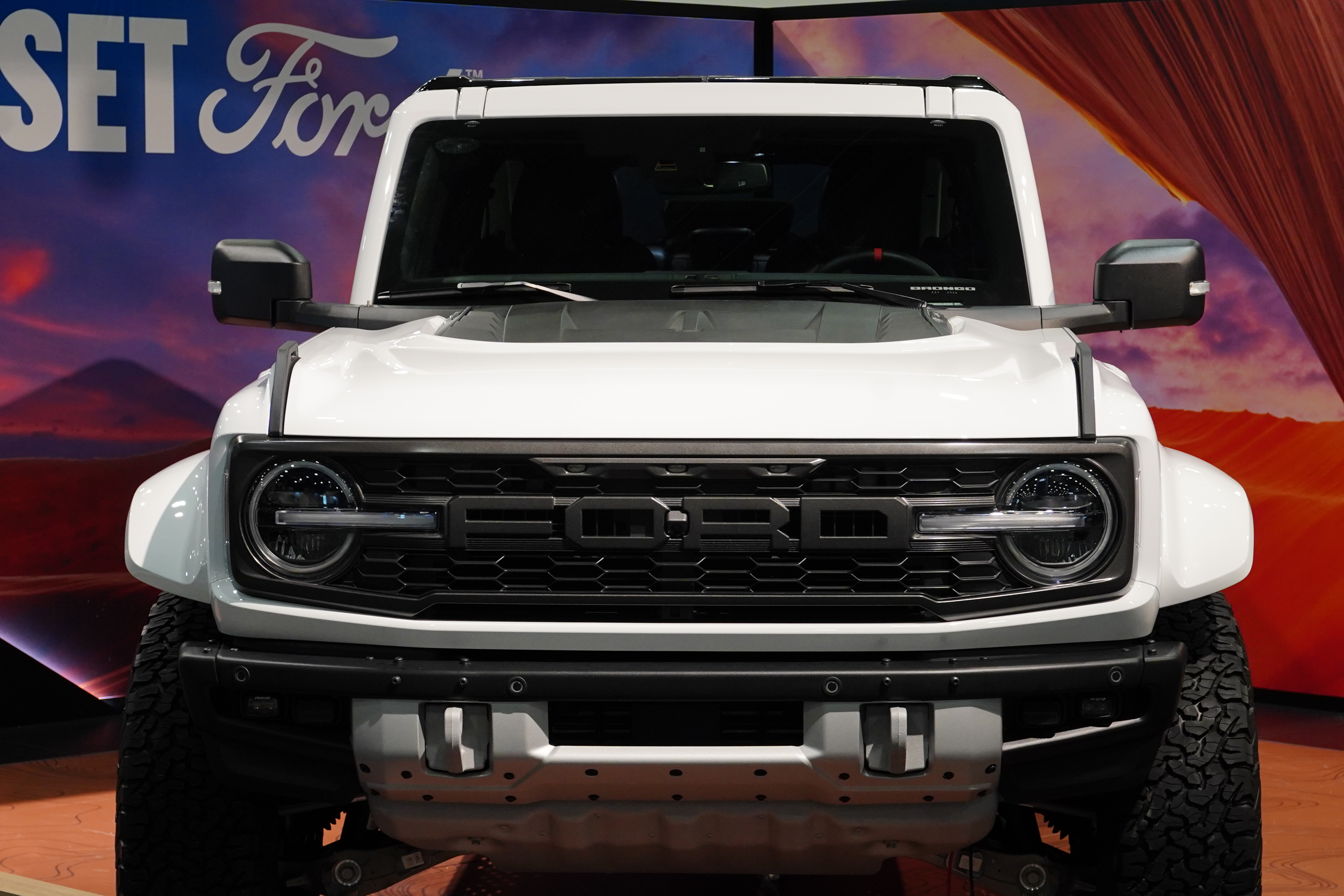
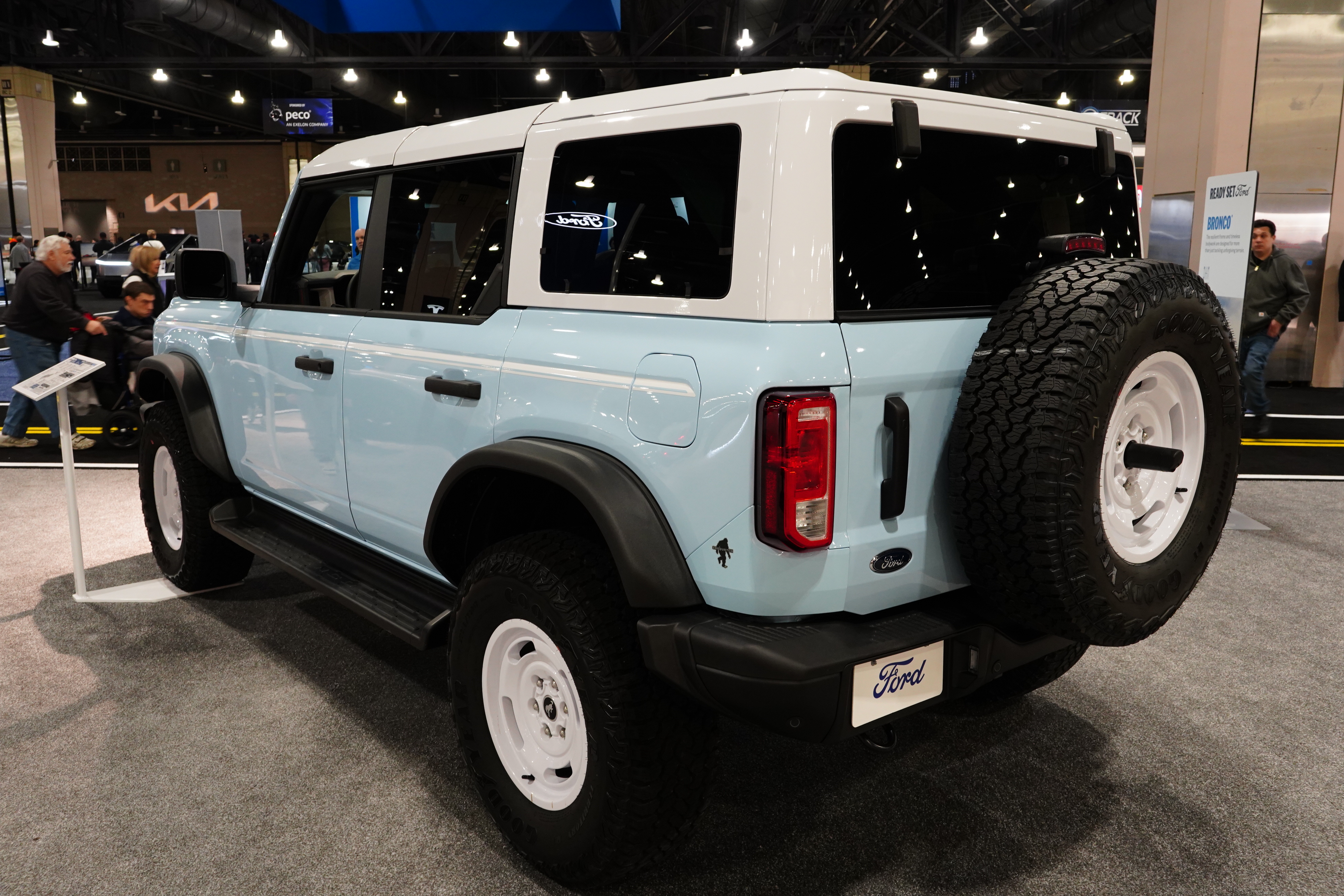
The Bronco and Bronco Sport were the big story, highlighting some different color choices too.
POLESTAR
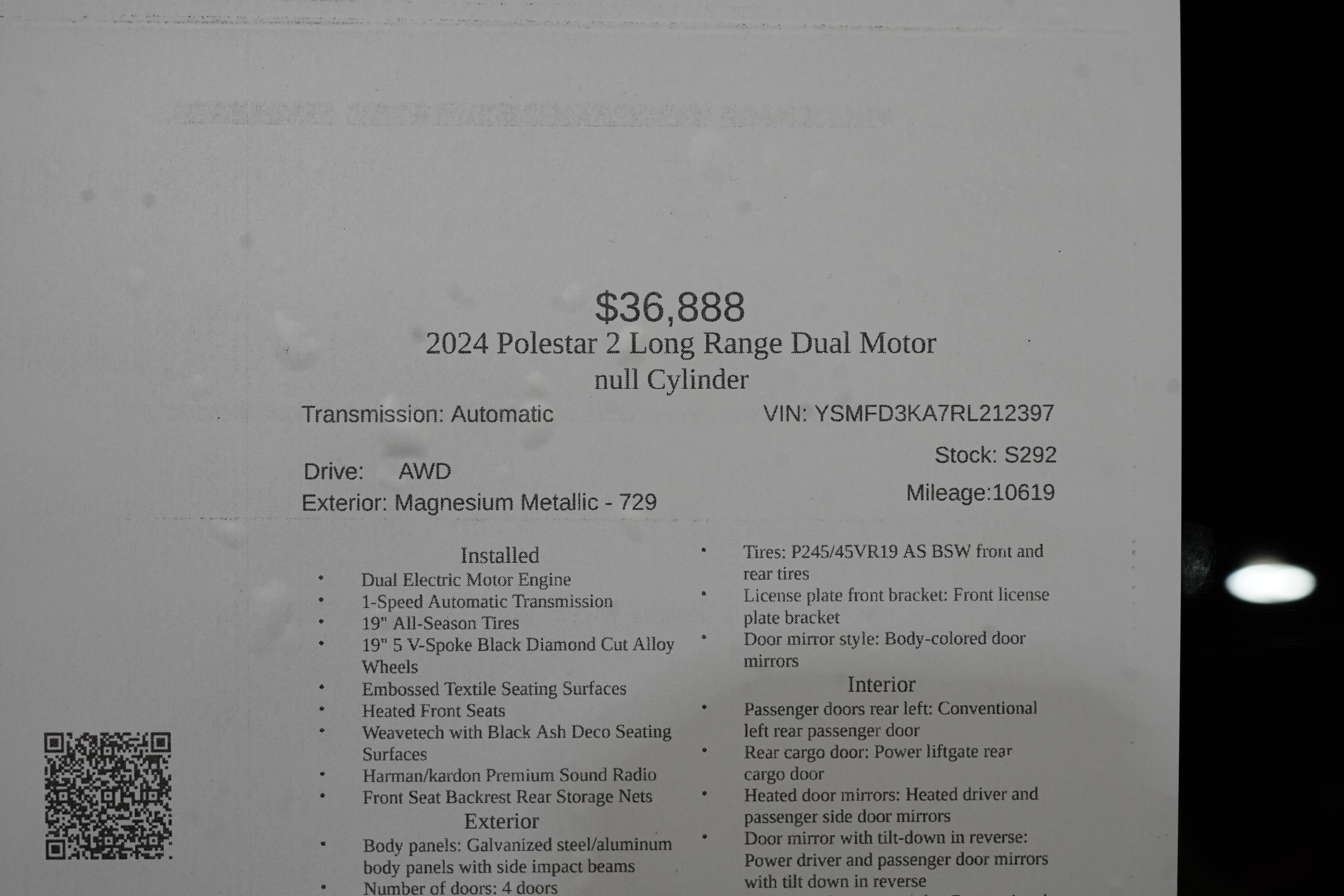
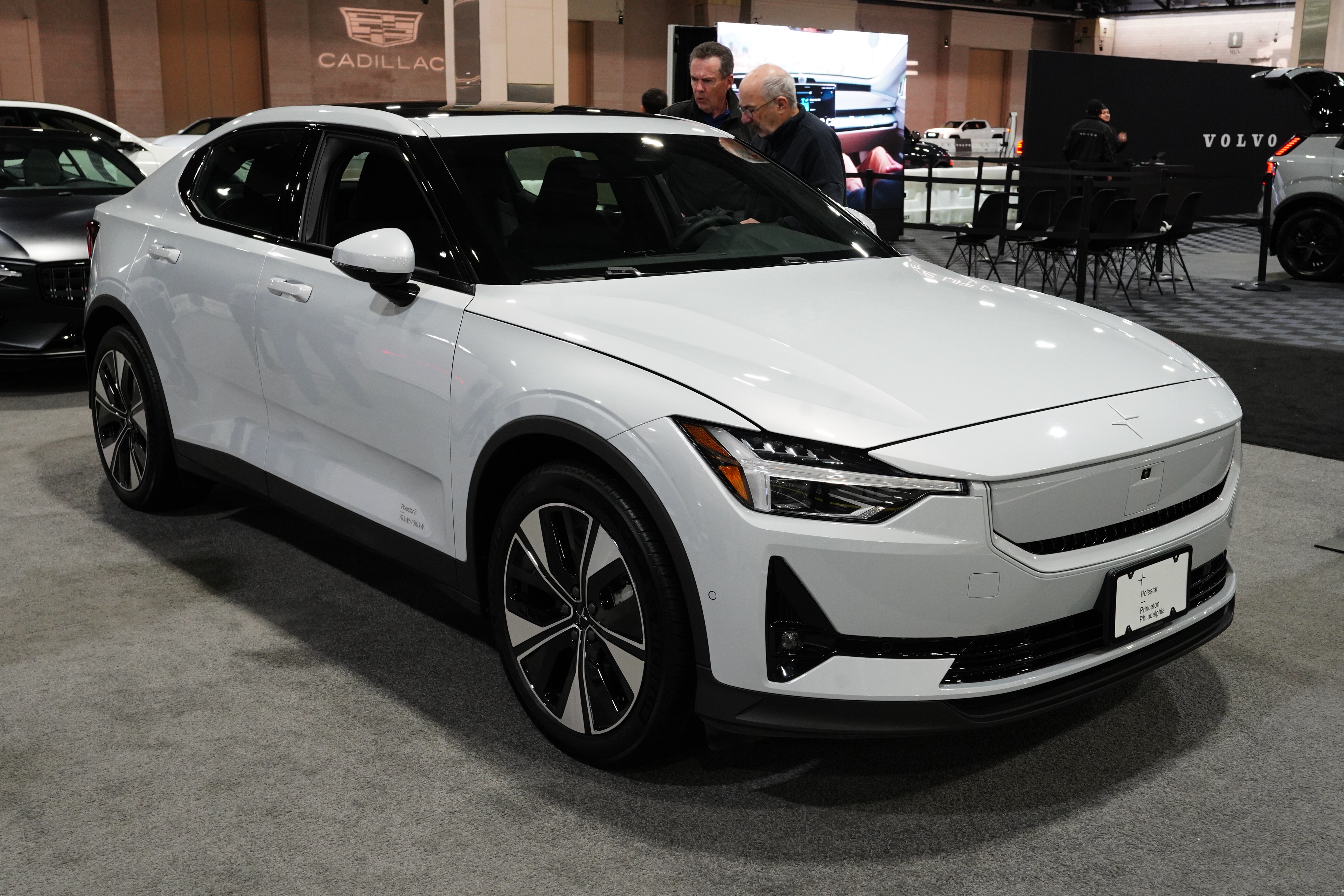
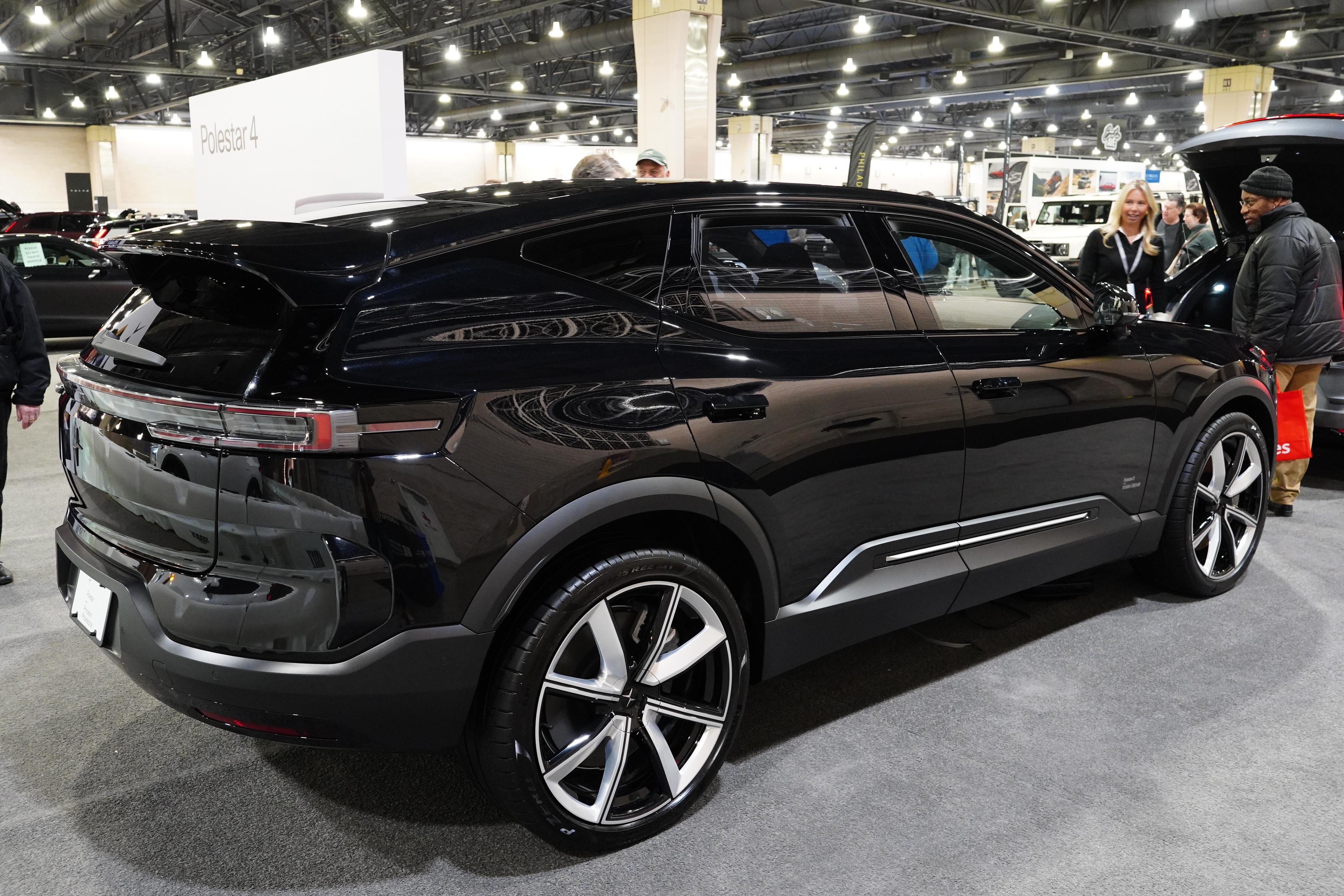
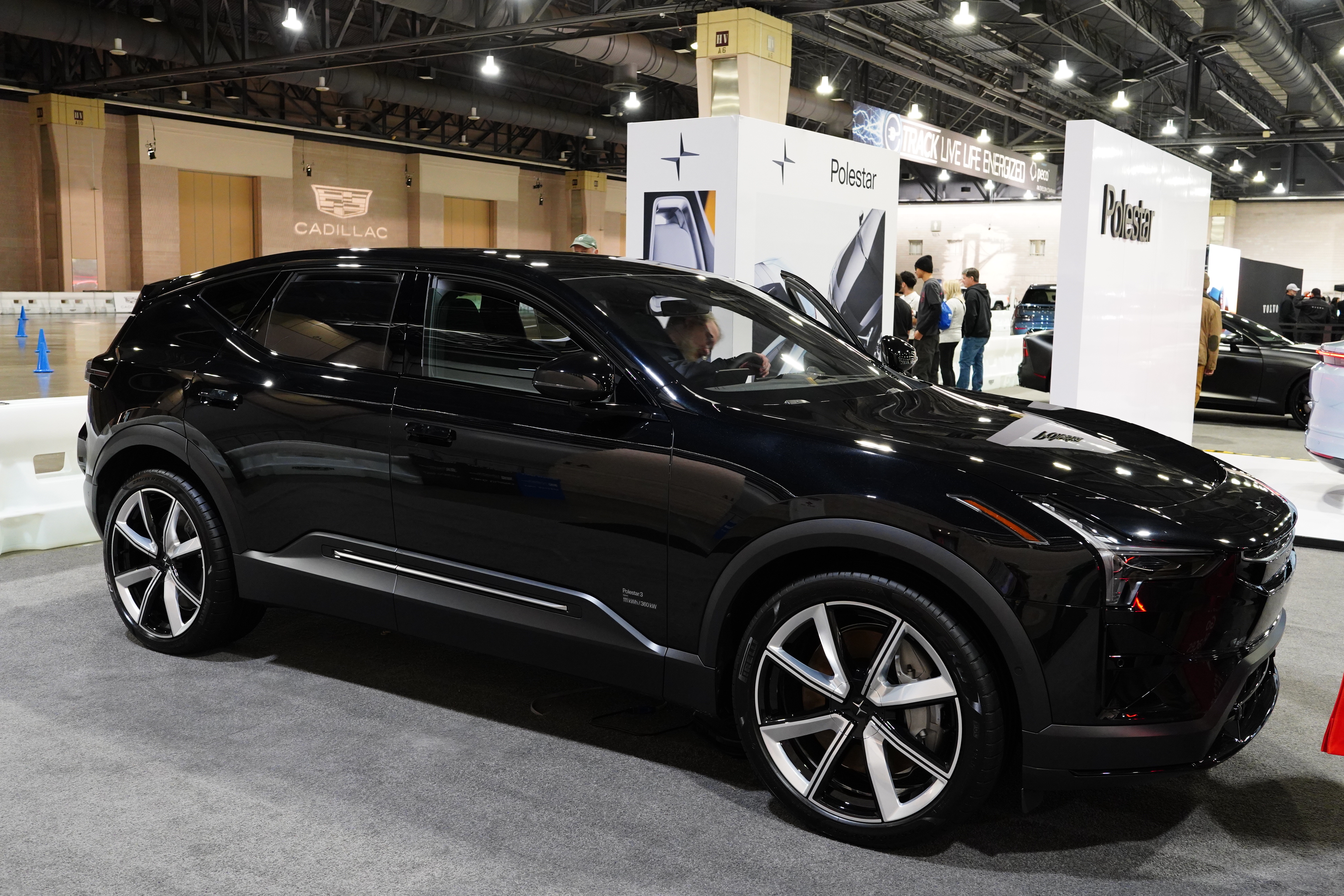
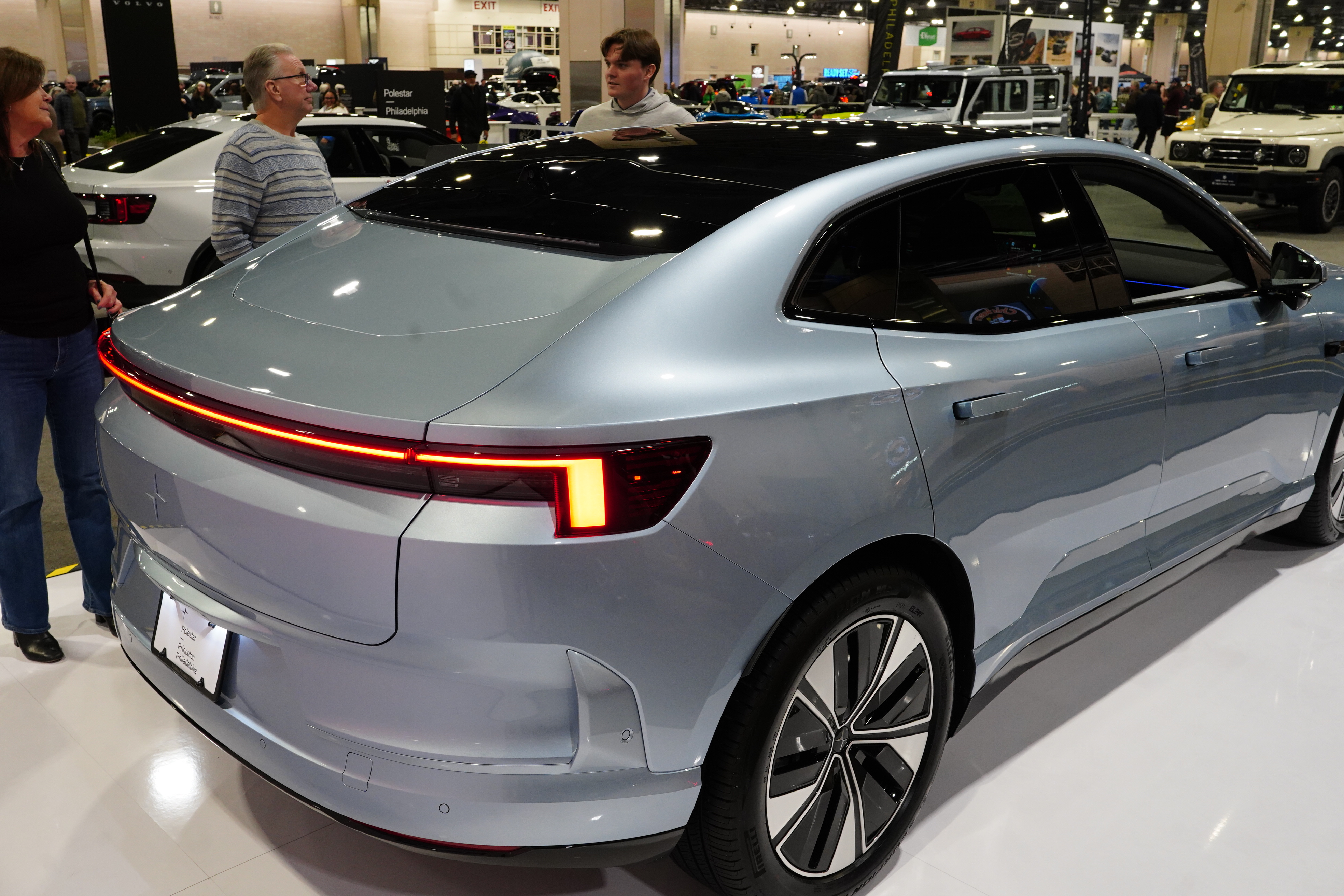
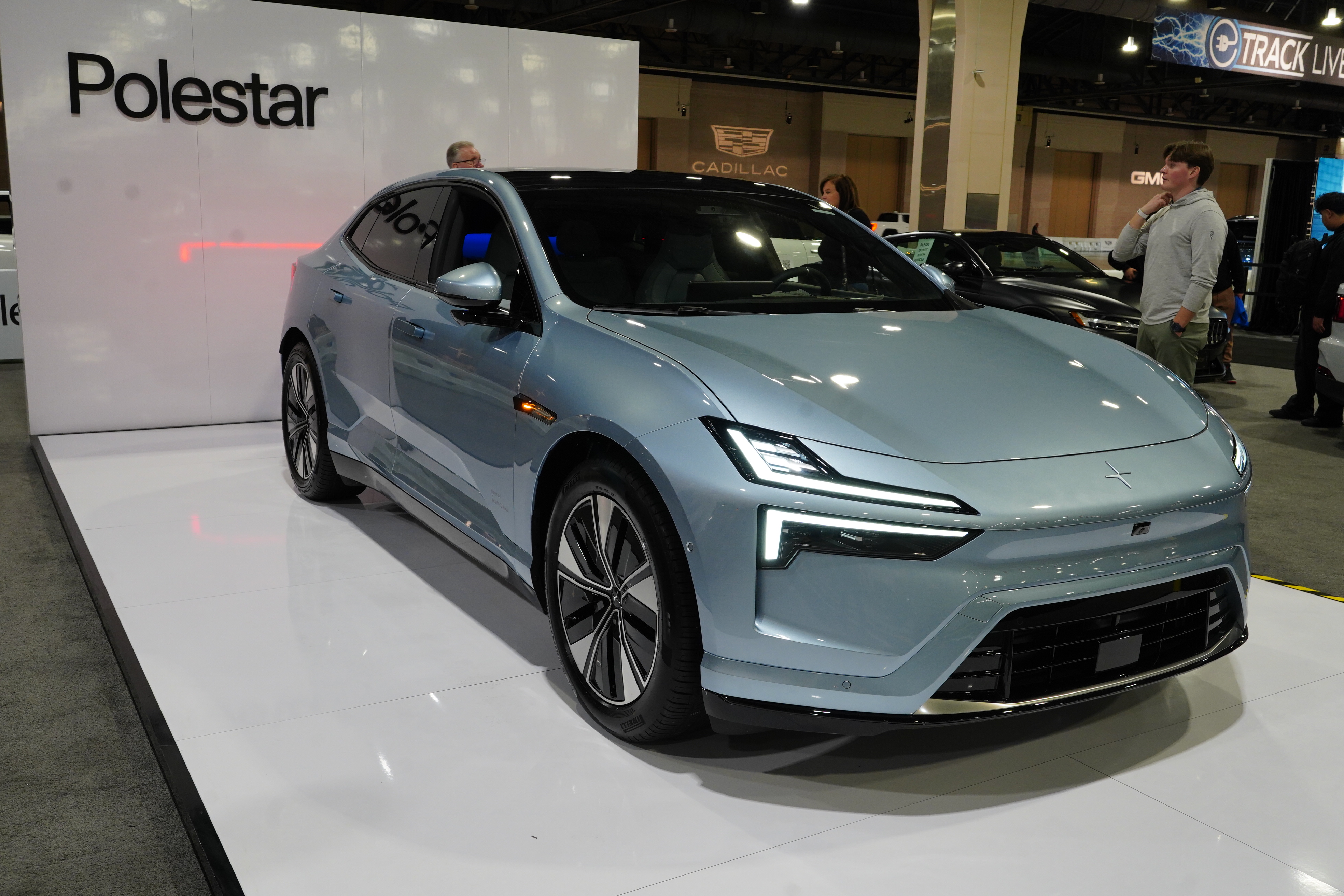
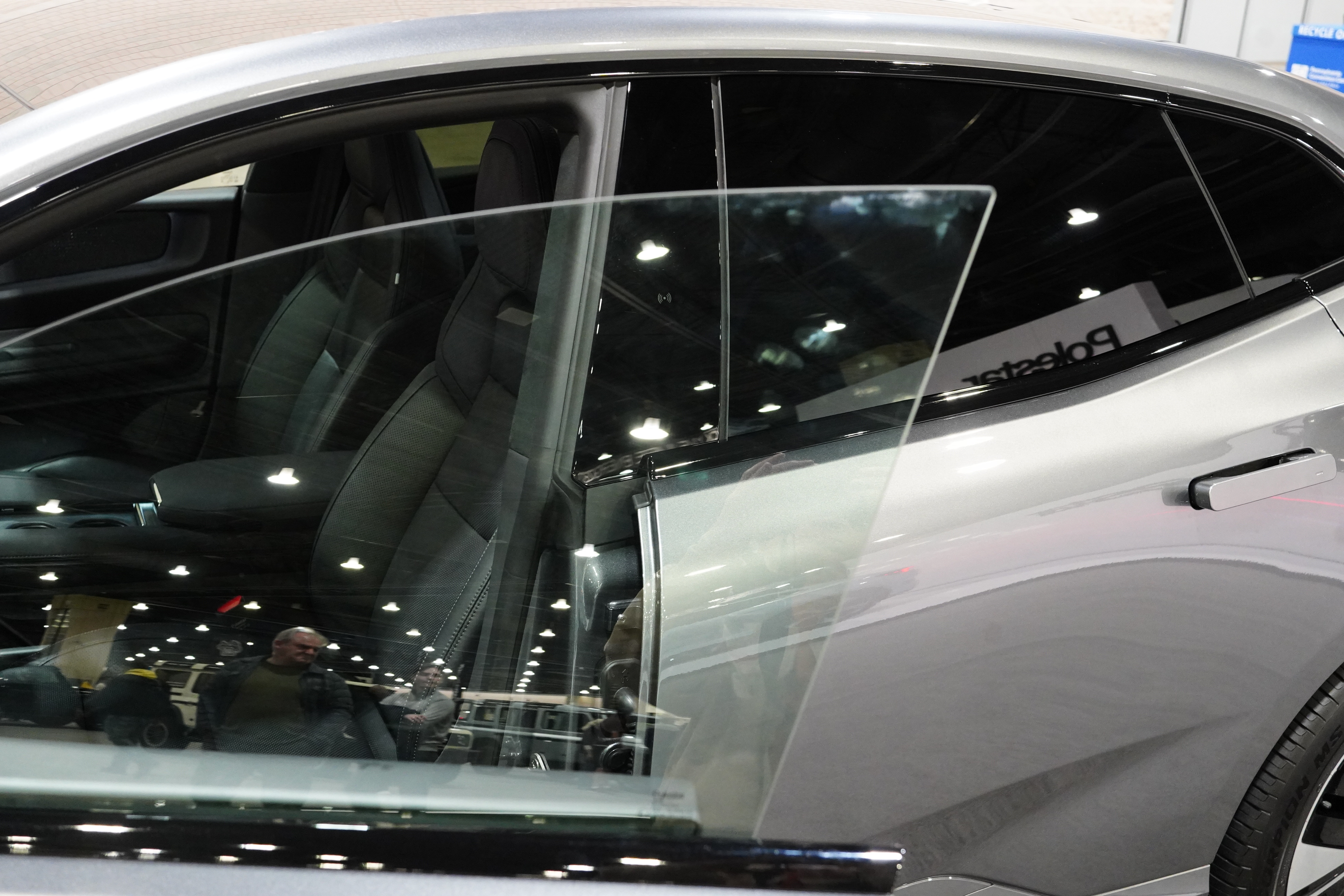
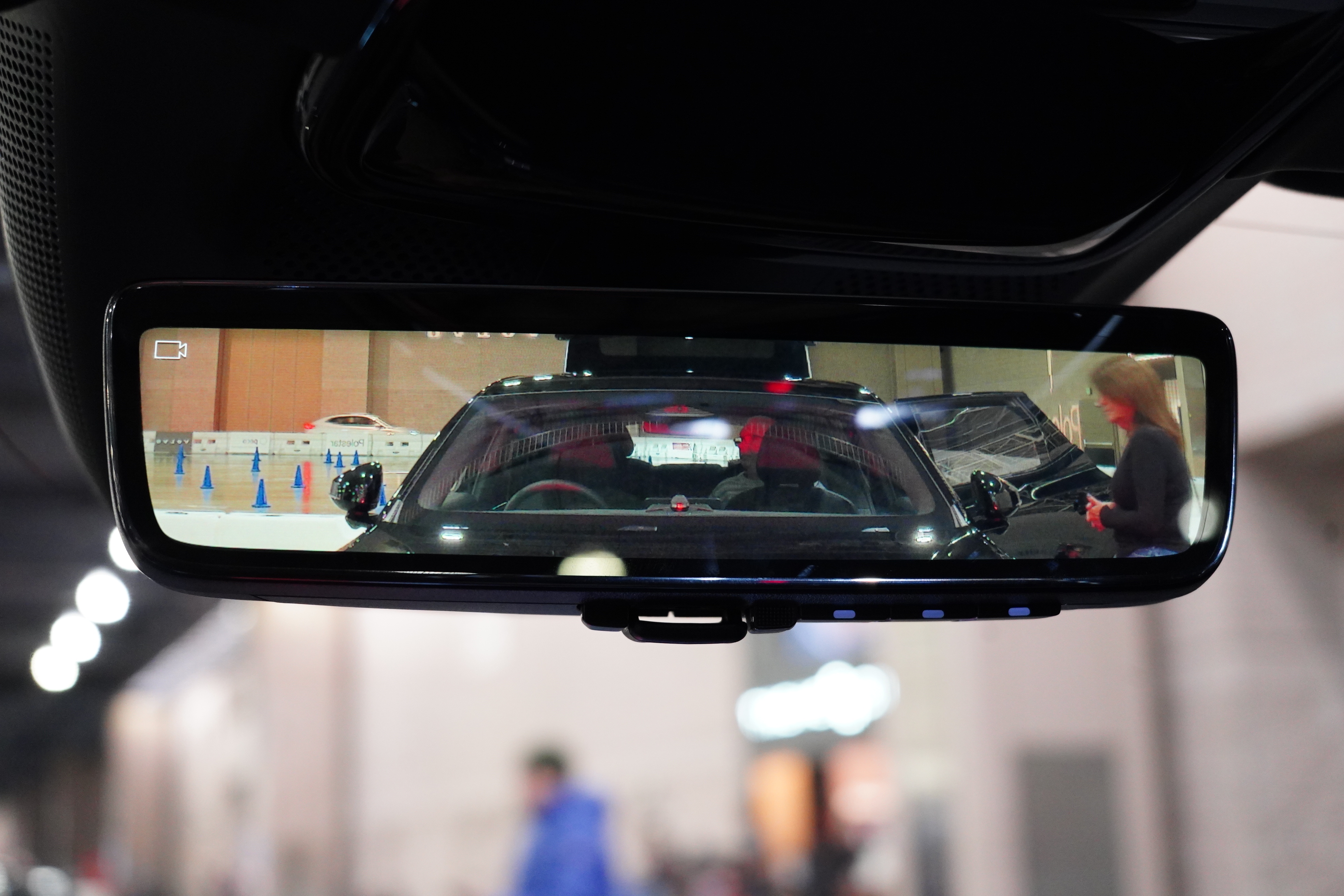
As mentioned above, it was the local dealer which populated the Polestar display, and it included the cleverly-named Polestar 1, 2, 3, and 4 models. All kidding aside, the 1 and 2 are out of production, and the cars on the floor were used cars for sale. (I thought the 2024 Polestar 2 with an asking price of $36,888 to be a bit of a bargain. I had one for a weekend, which you can read about here.) The new Polestars were the 3 and the 4. The 3 is the large SUV, but again, the black paint did nothing to accentuate its rather nice lines. The 4 is the controversial one, as it has no rear window, and the inside rear view mirror is a camera. From what I’ve read, drivers who wear glasses might struggle with a poorly defined depth of field. I must also ask: what happens when (sad to say, not “if,” but “when”) the mirror/camera goes on the blink and you no longer have any vision of what’s directly behind you?
Did AI write this? “Passenger doors rear left: Conventional left rear passenger door.”Pre-owned 2024 Polestar 2 with 10,000 milesPolestar 3 SUVPolestar 3 SUVThis Polestar 4 has no ‘backlight’ (rear window)The Polestar 4The frameless door glass surprised meThe inside rear view mirror is really a camera. Here’s what you see.
THE AACA EXHIBIT
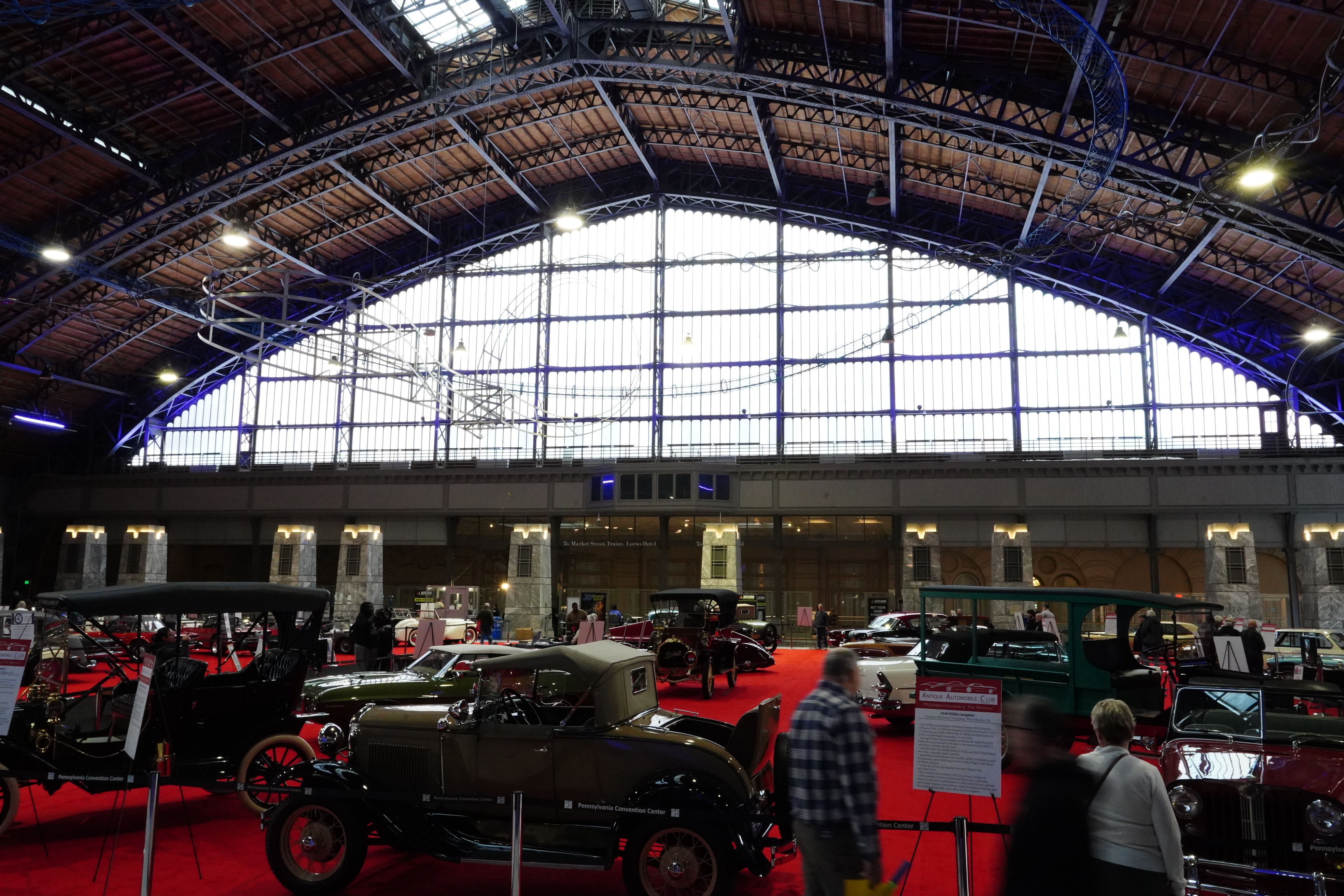
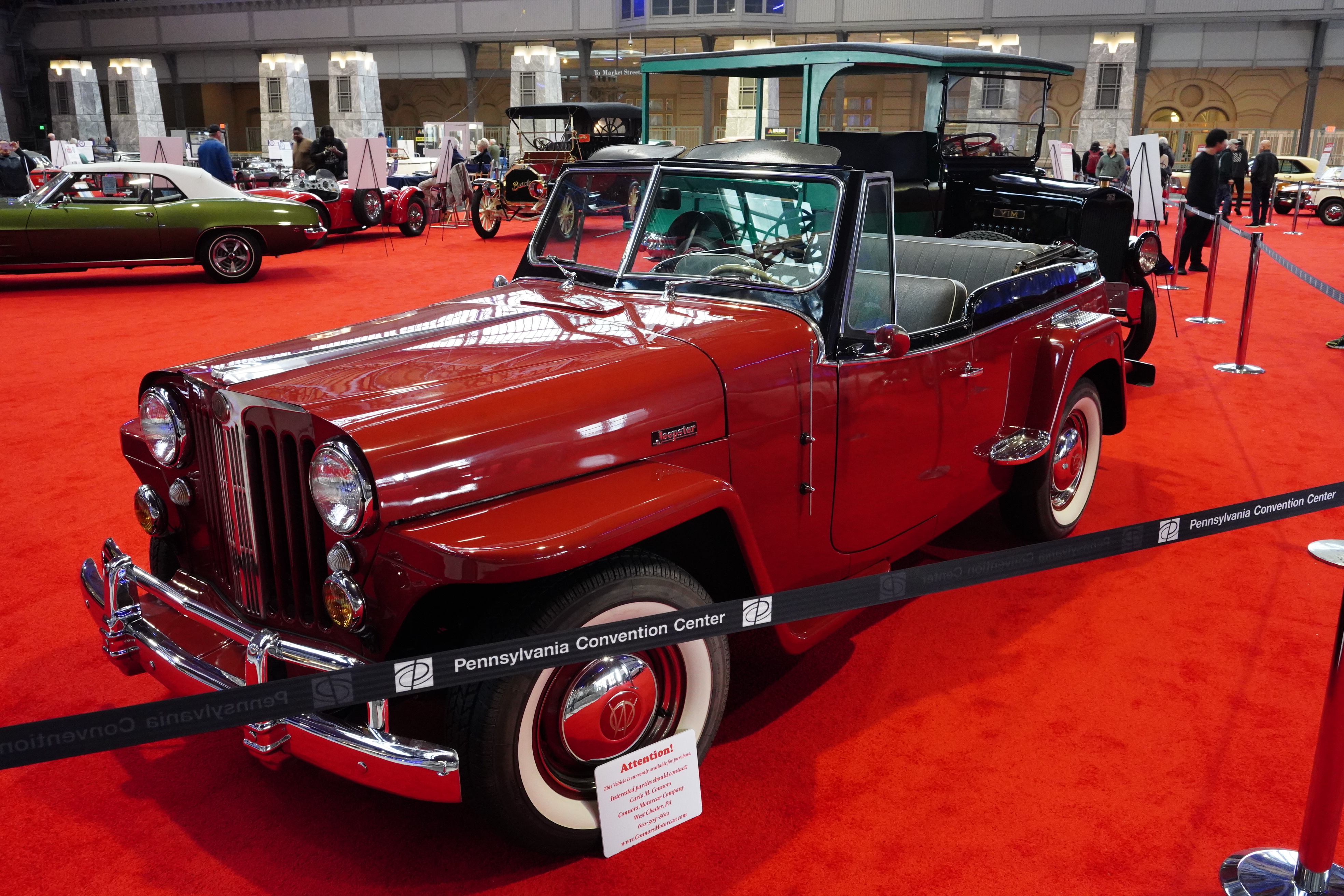
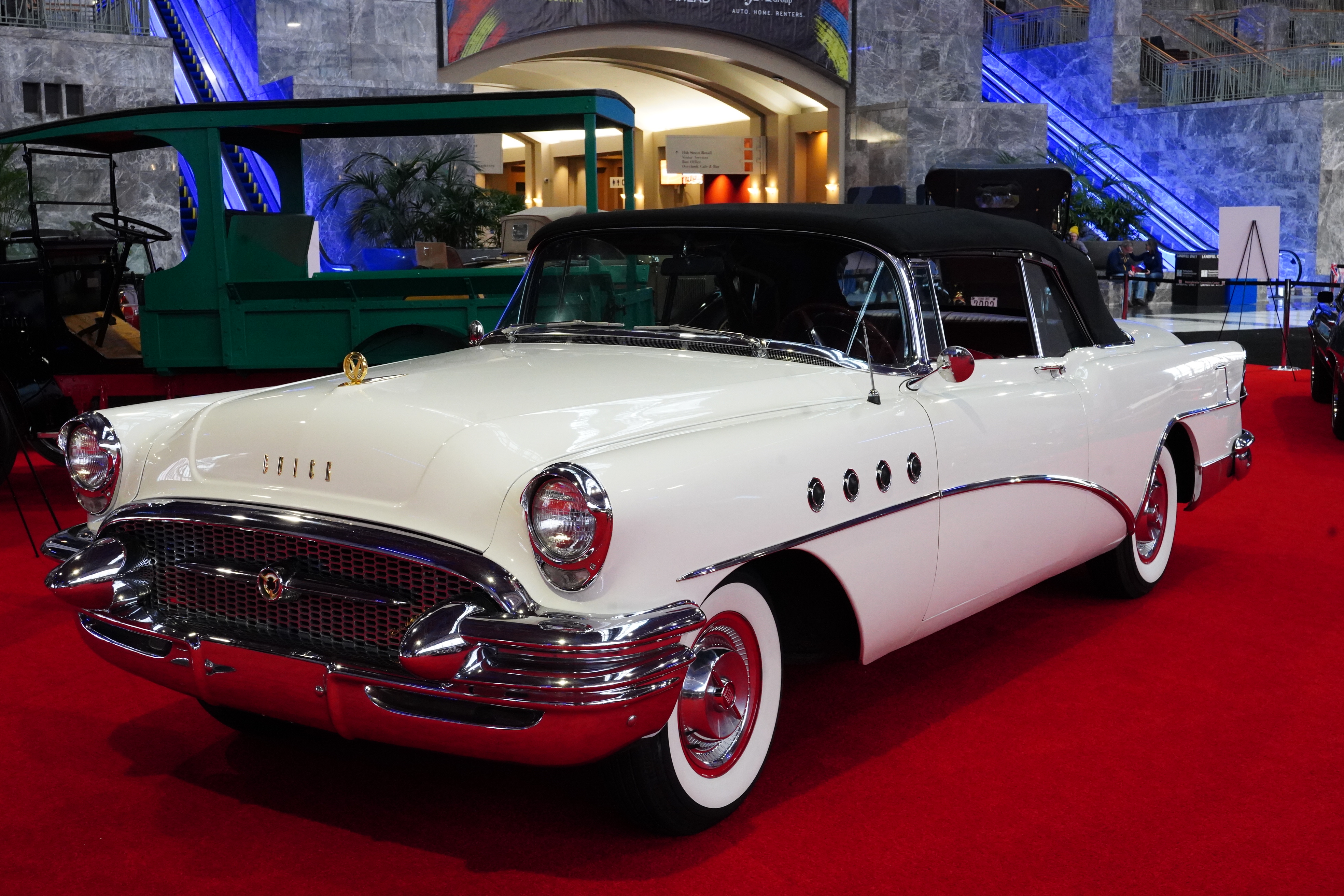
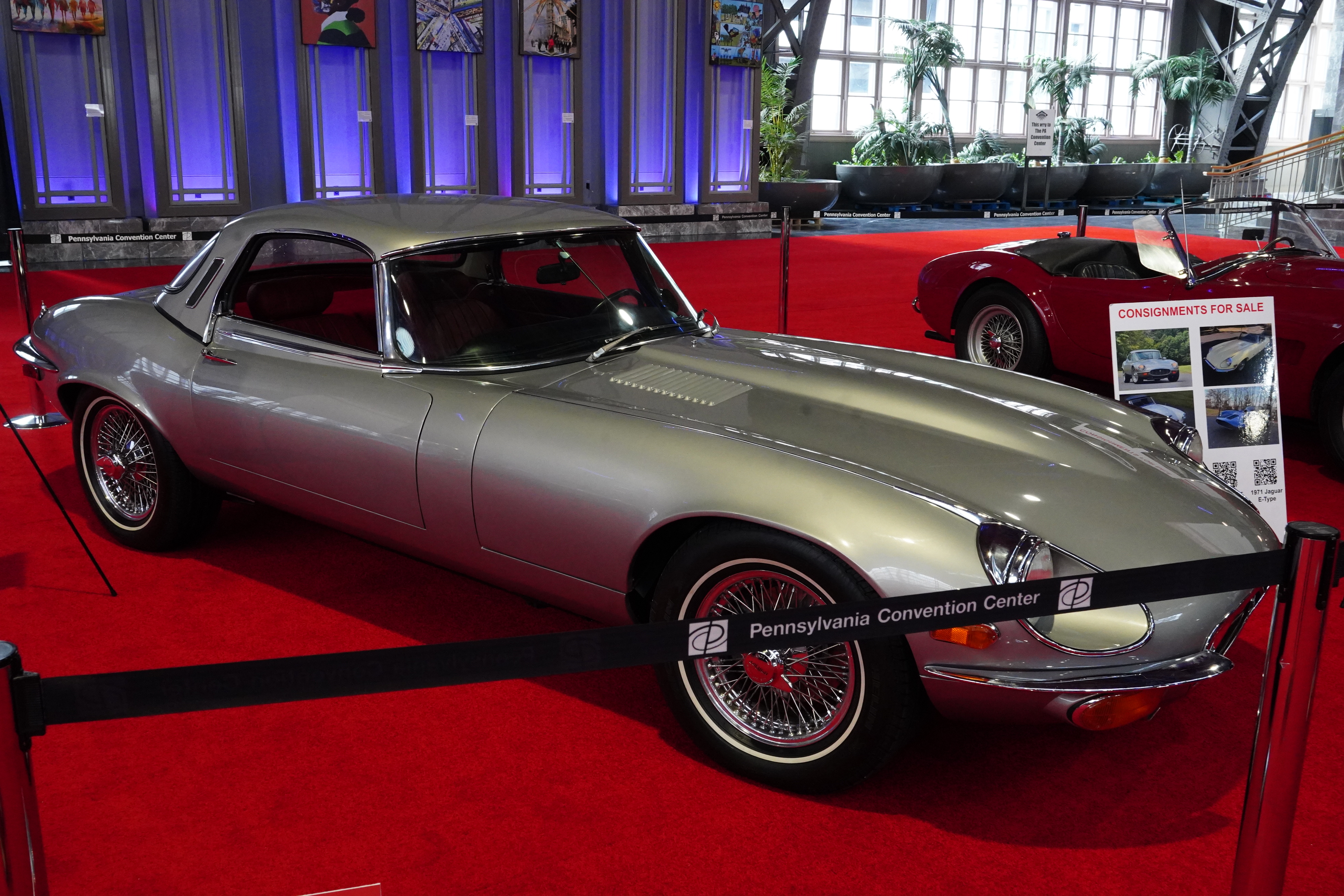
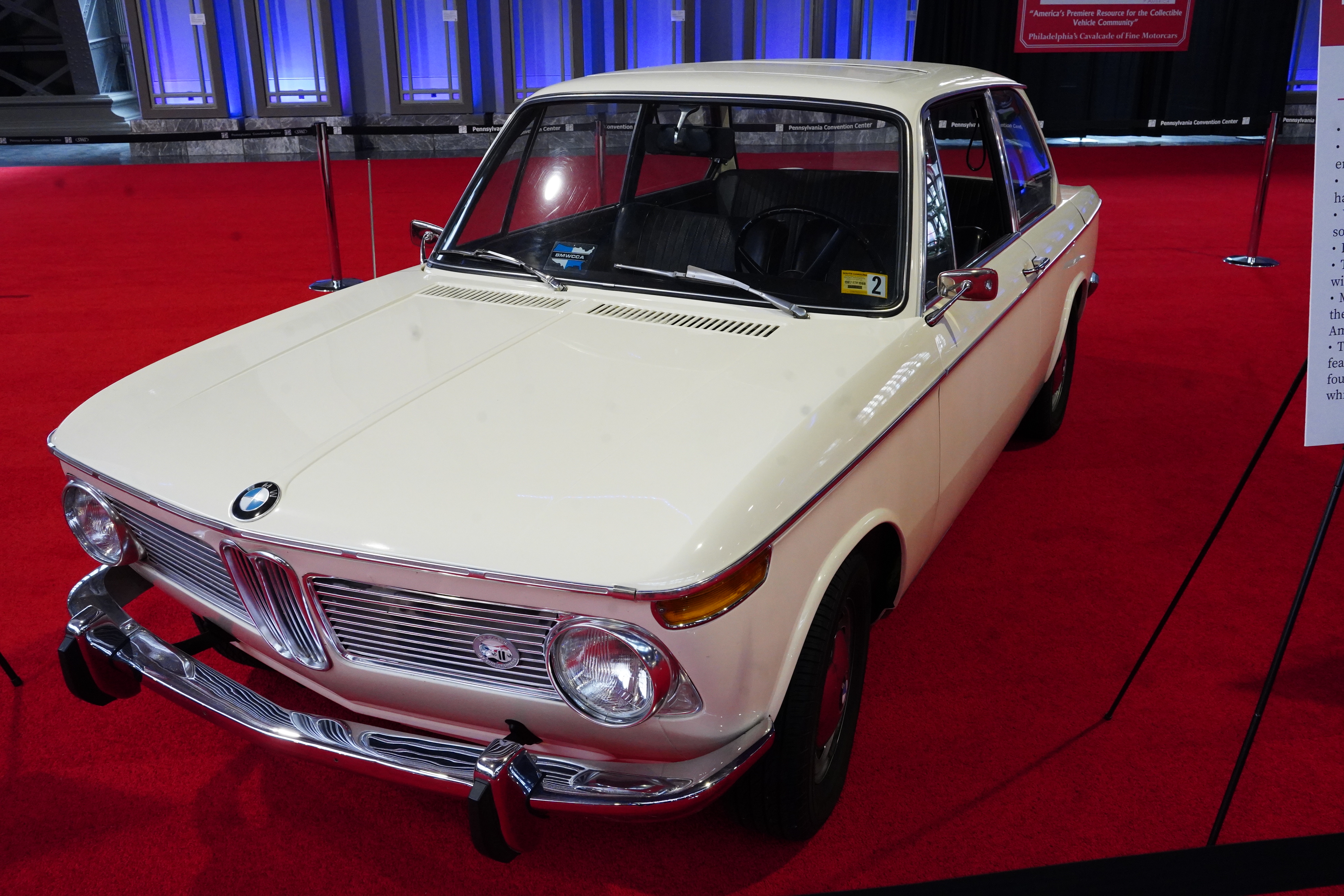
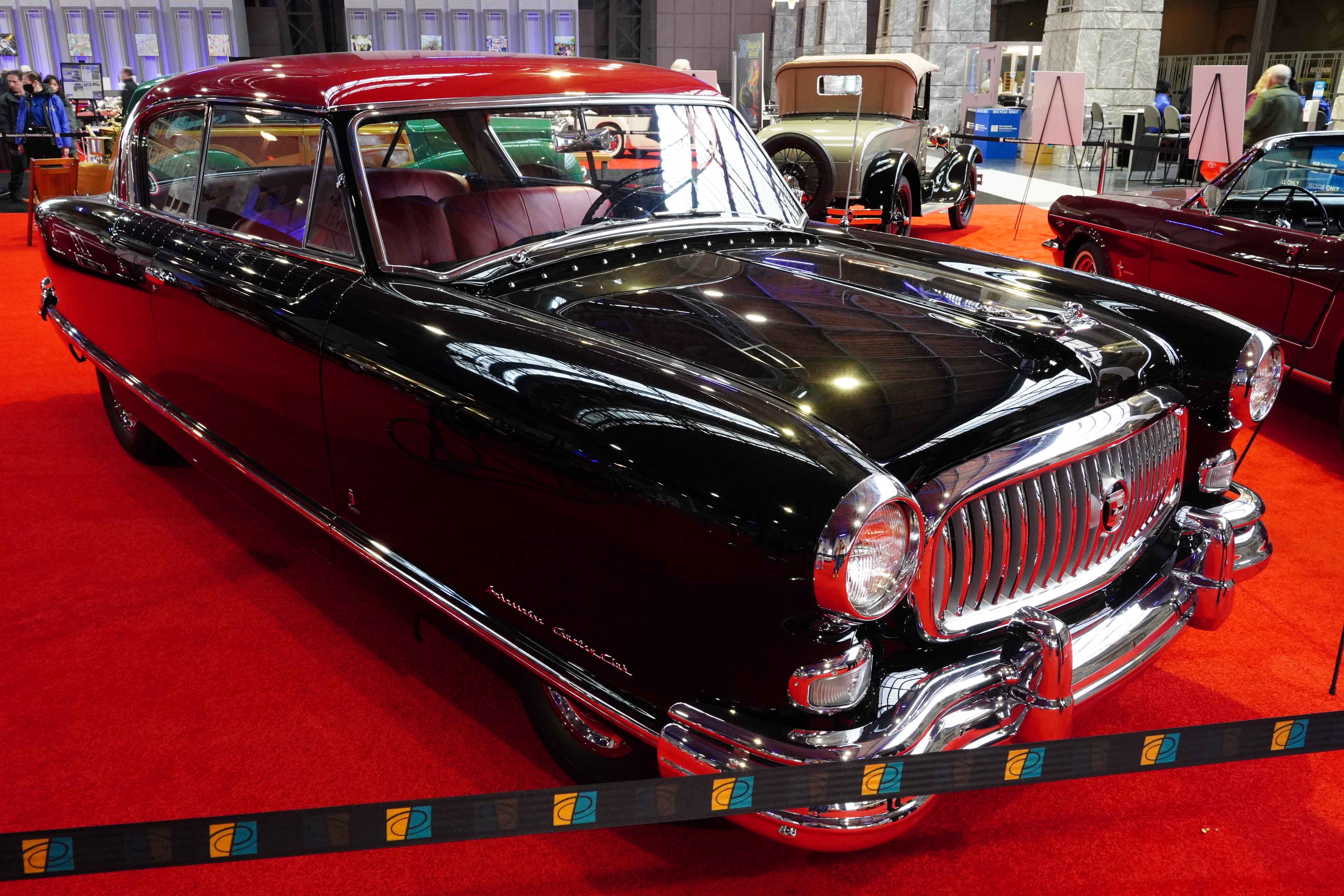
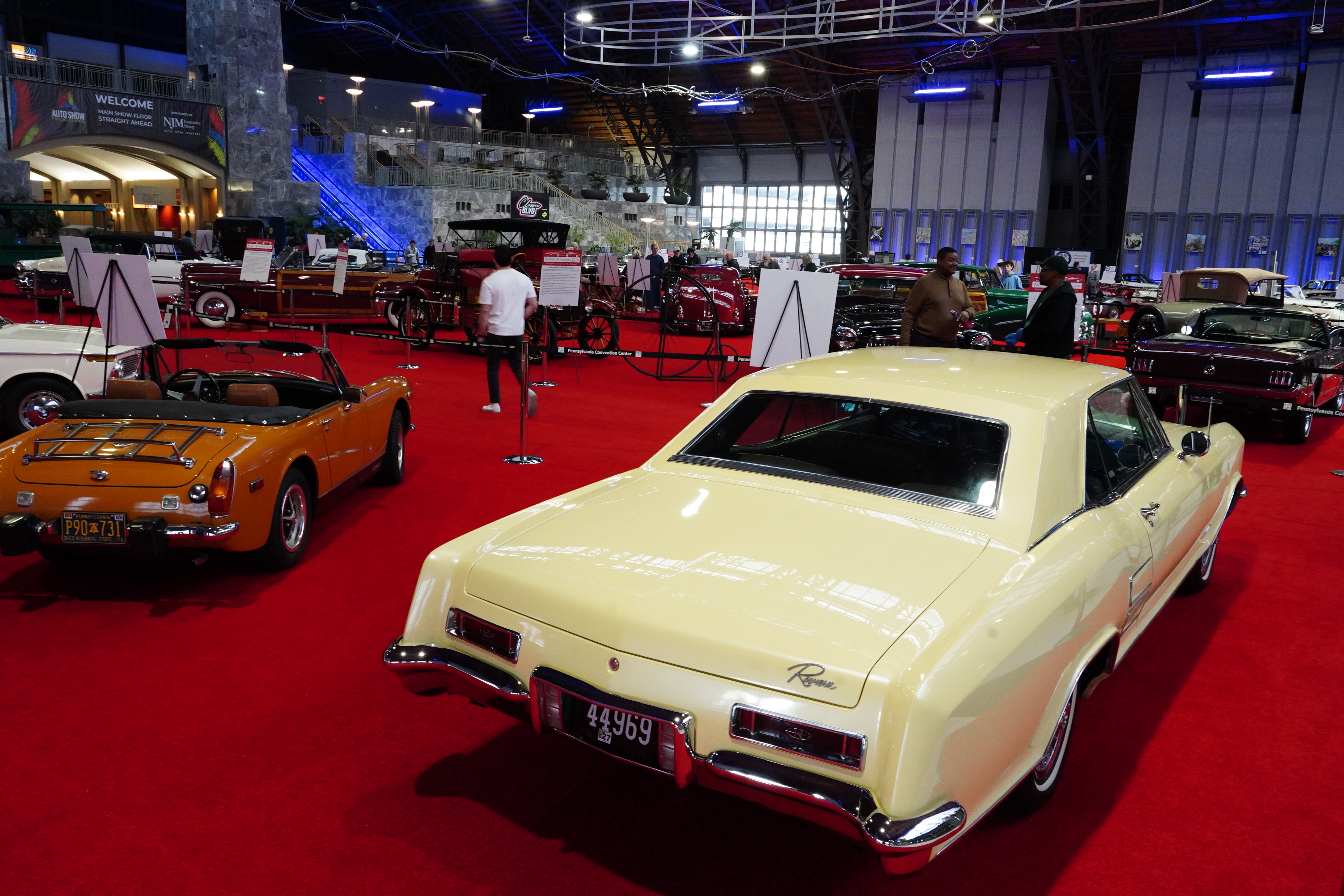
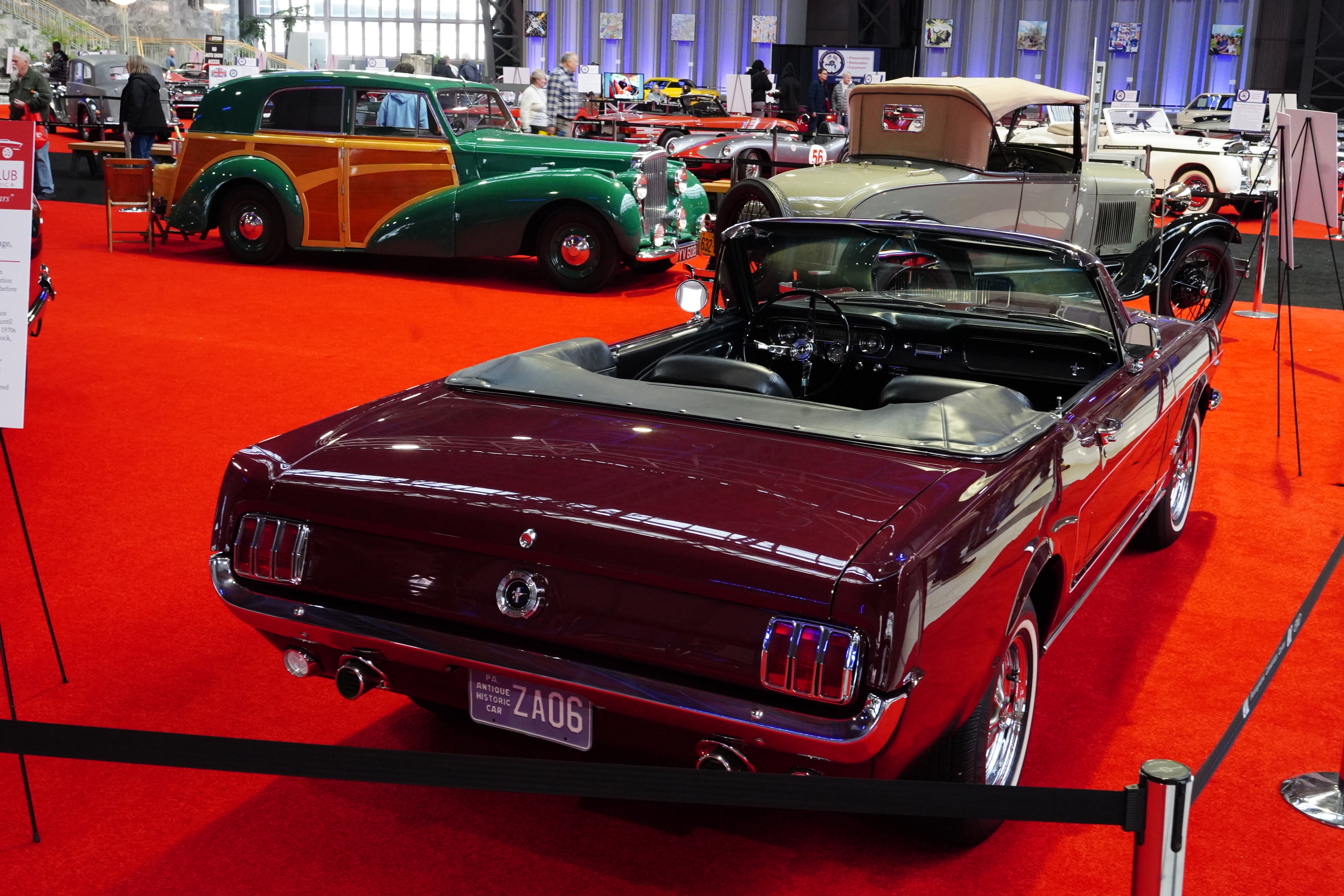
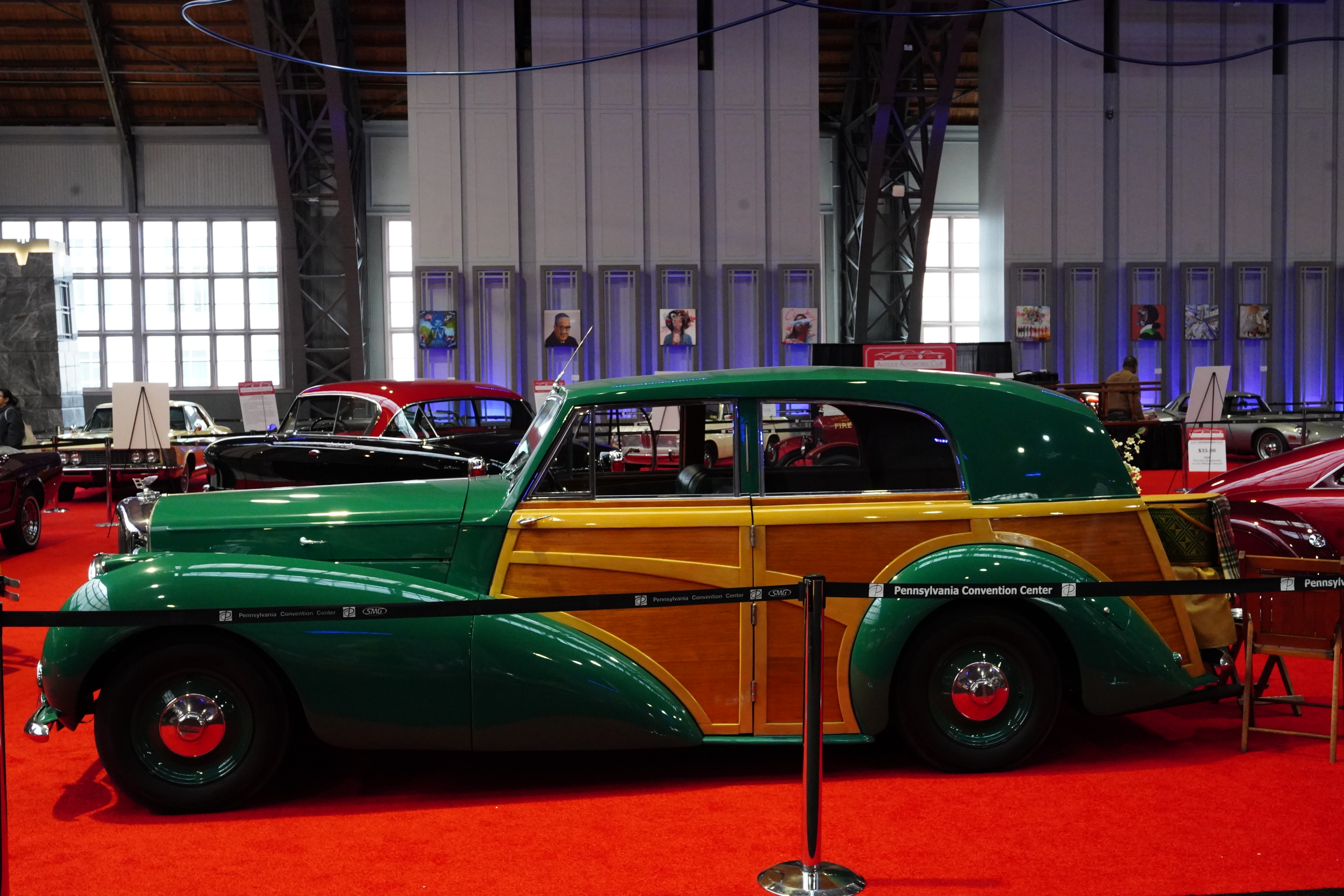
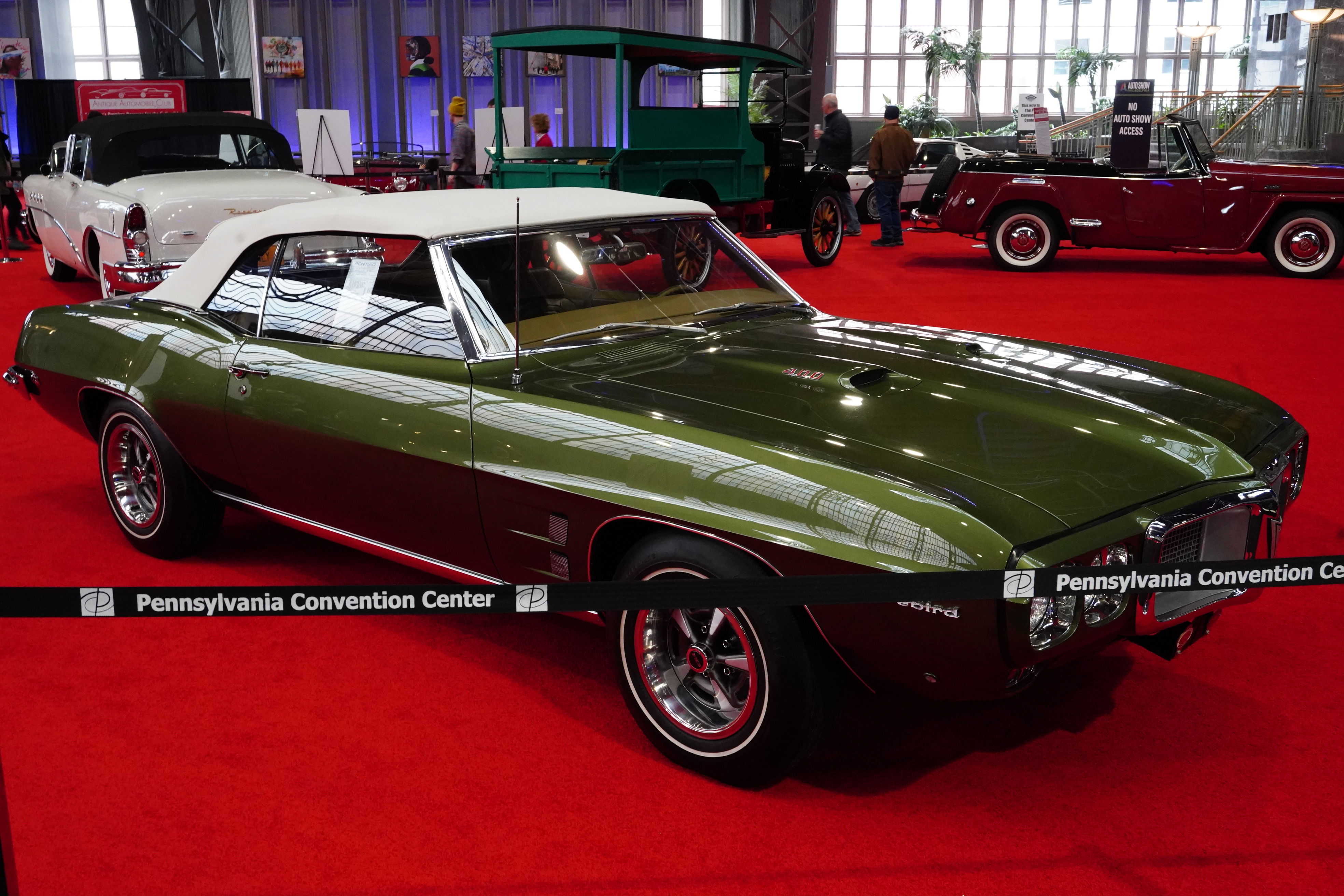
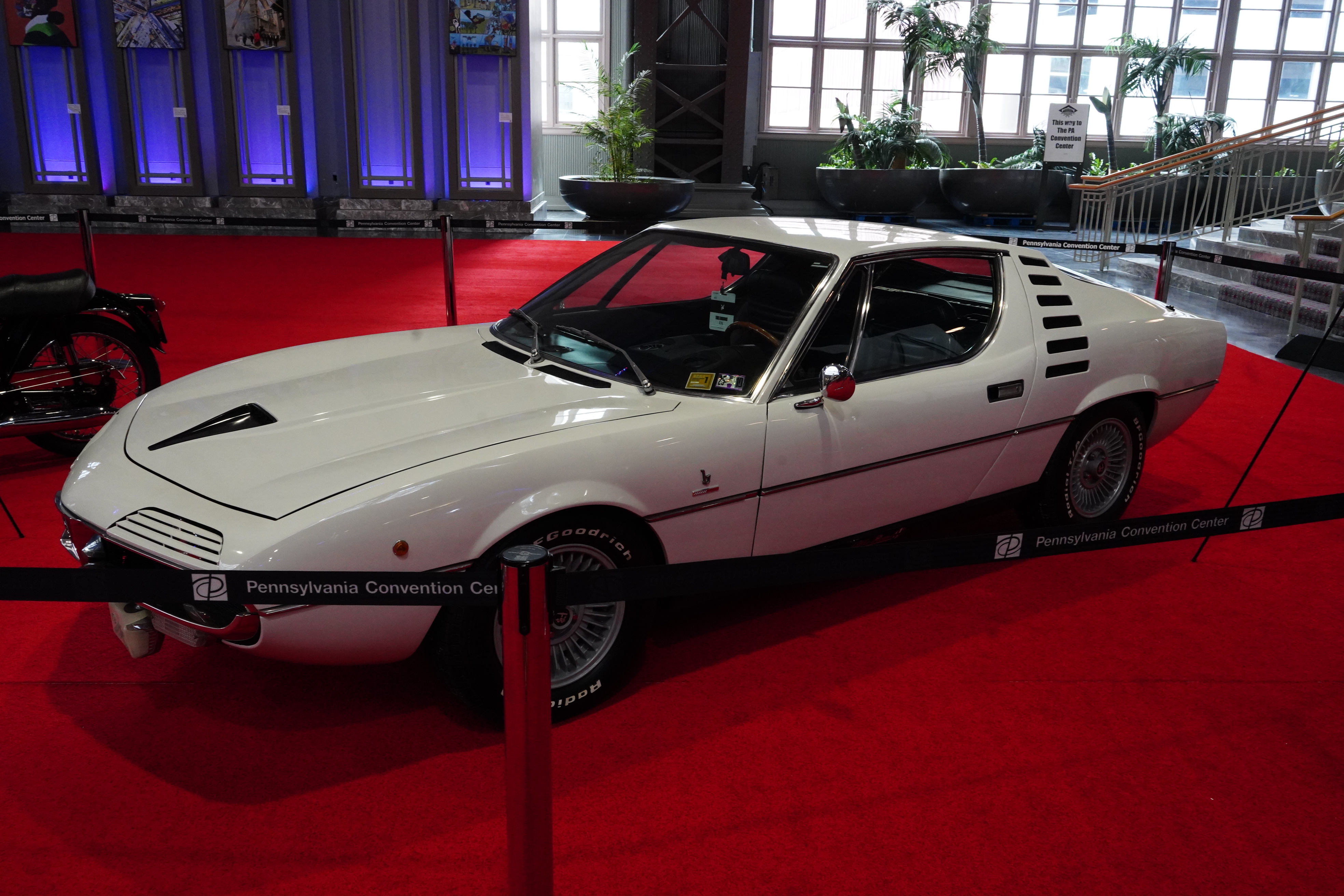
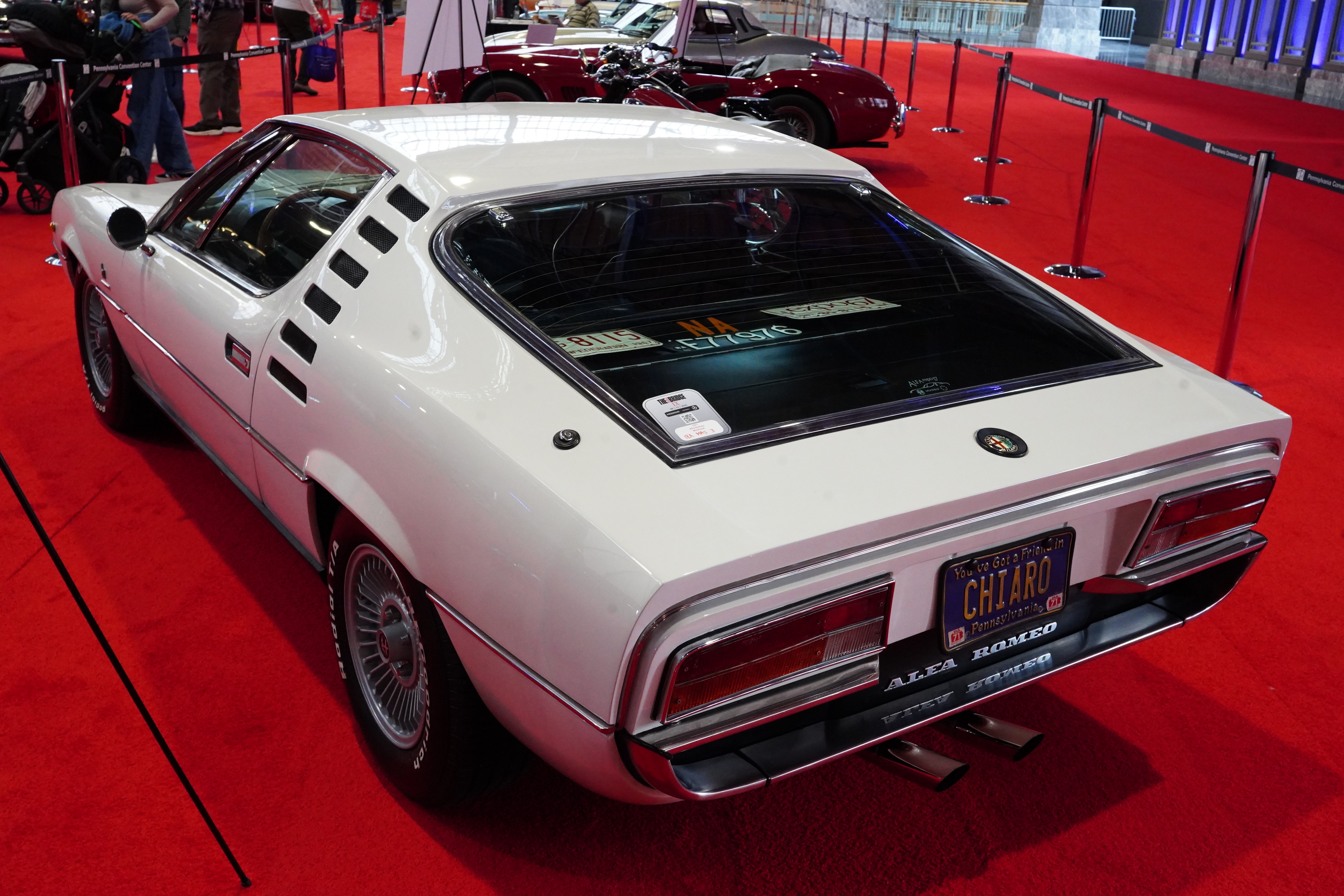
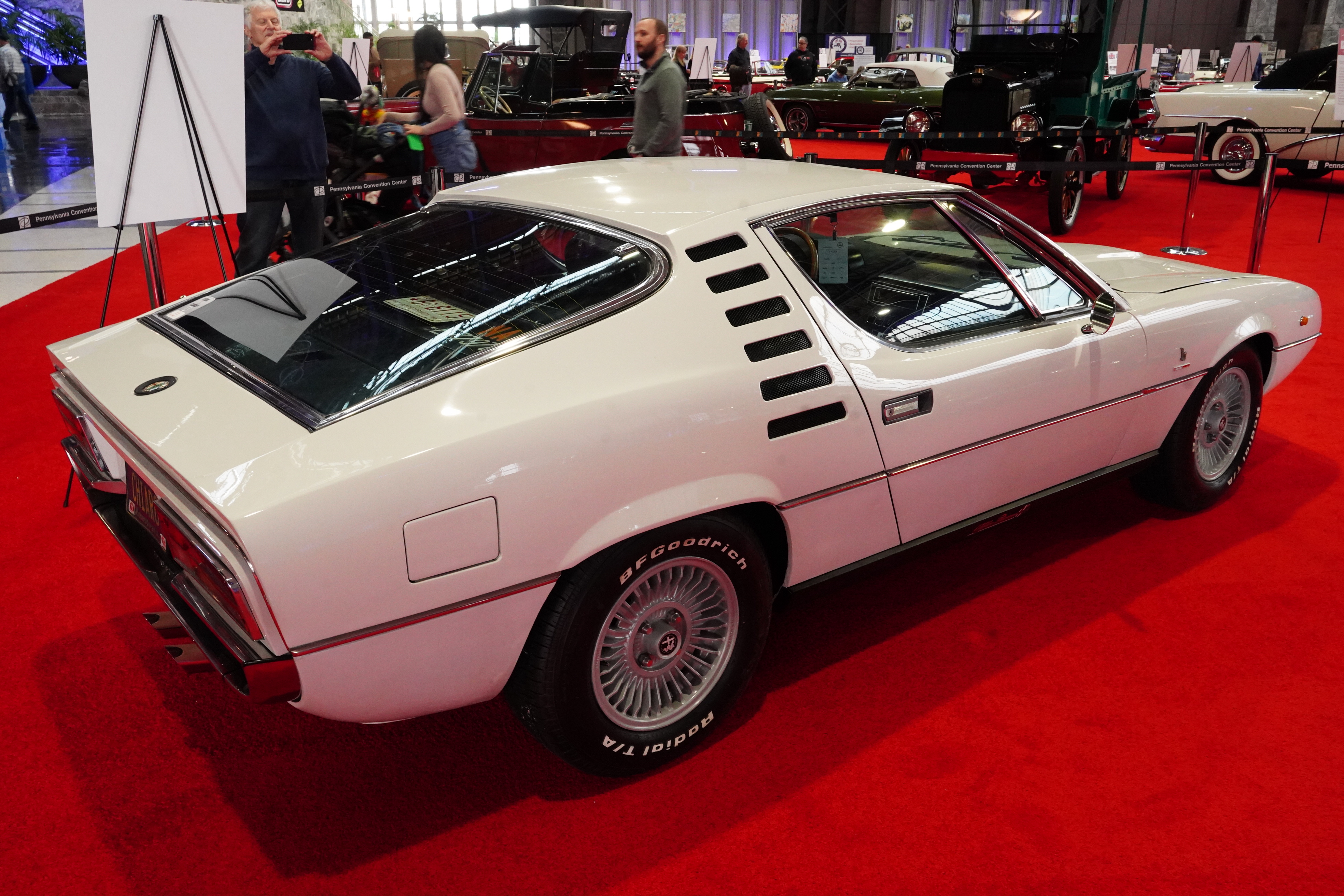
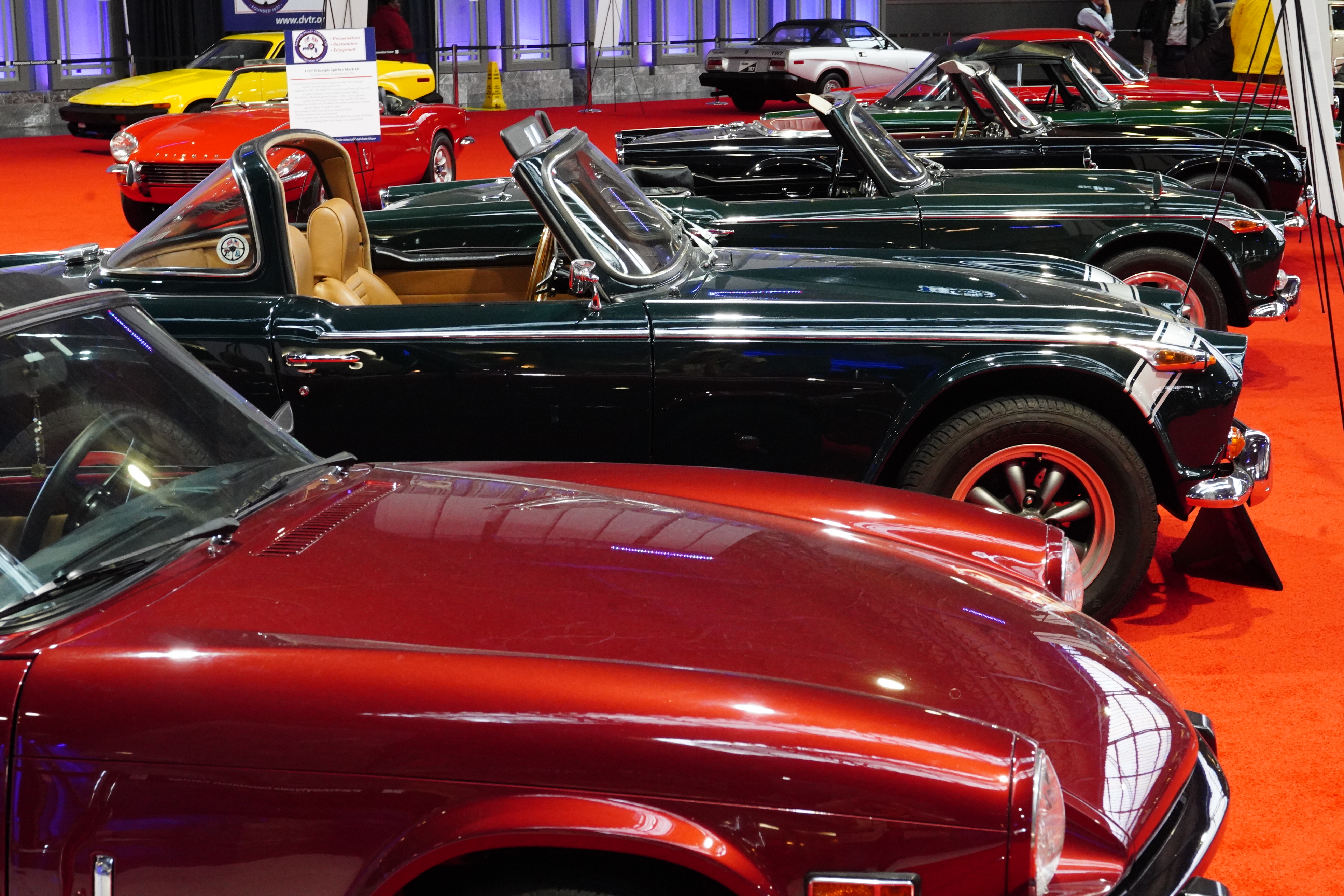
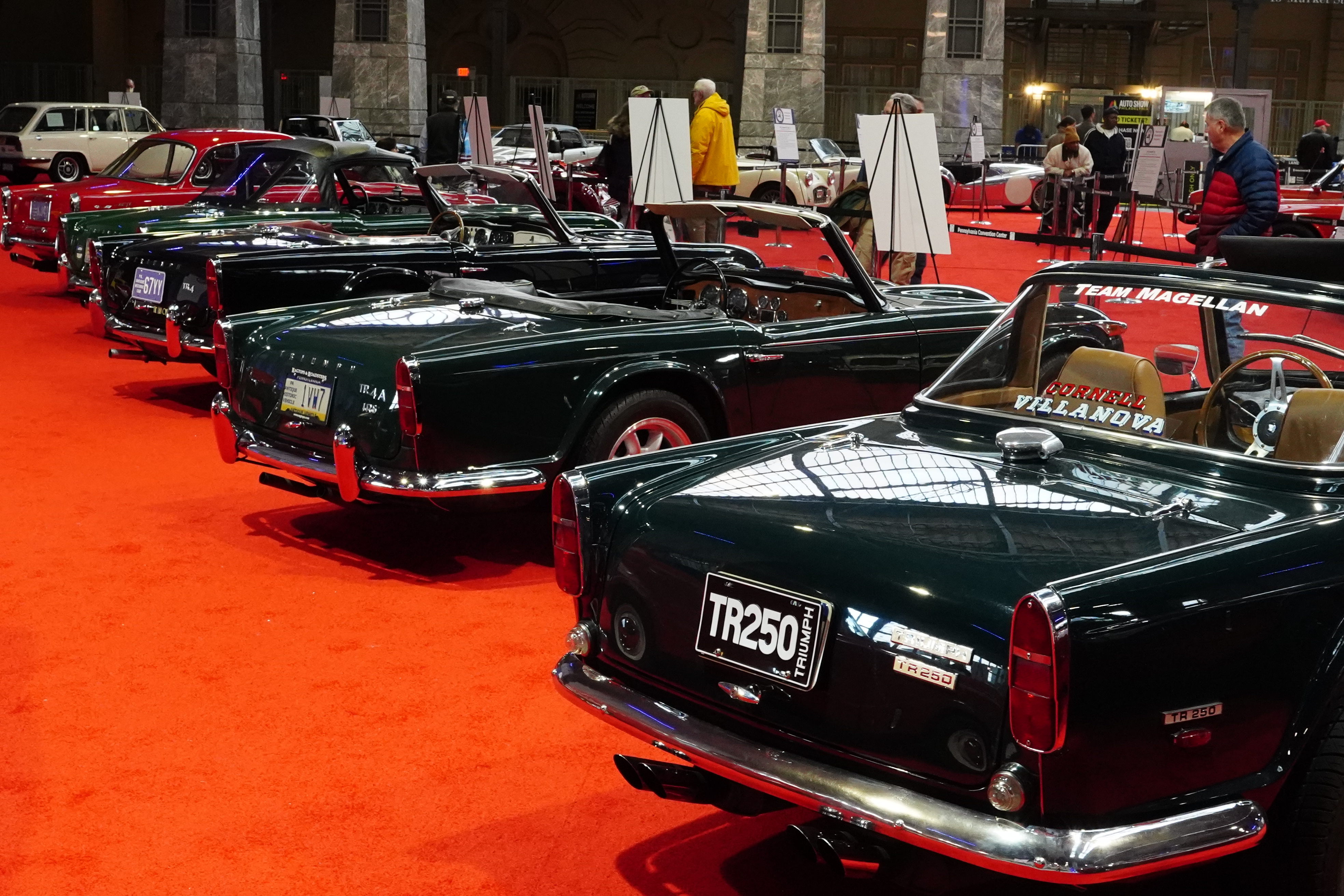
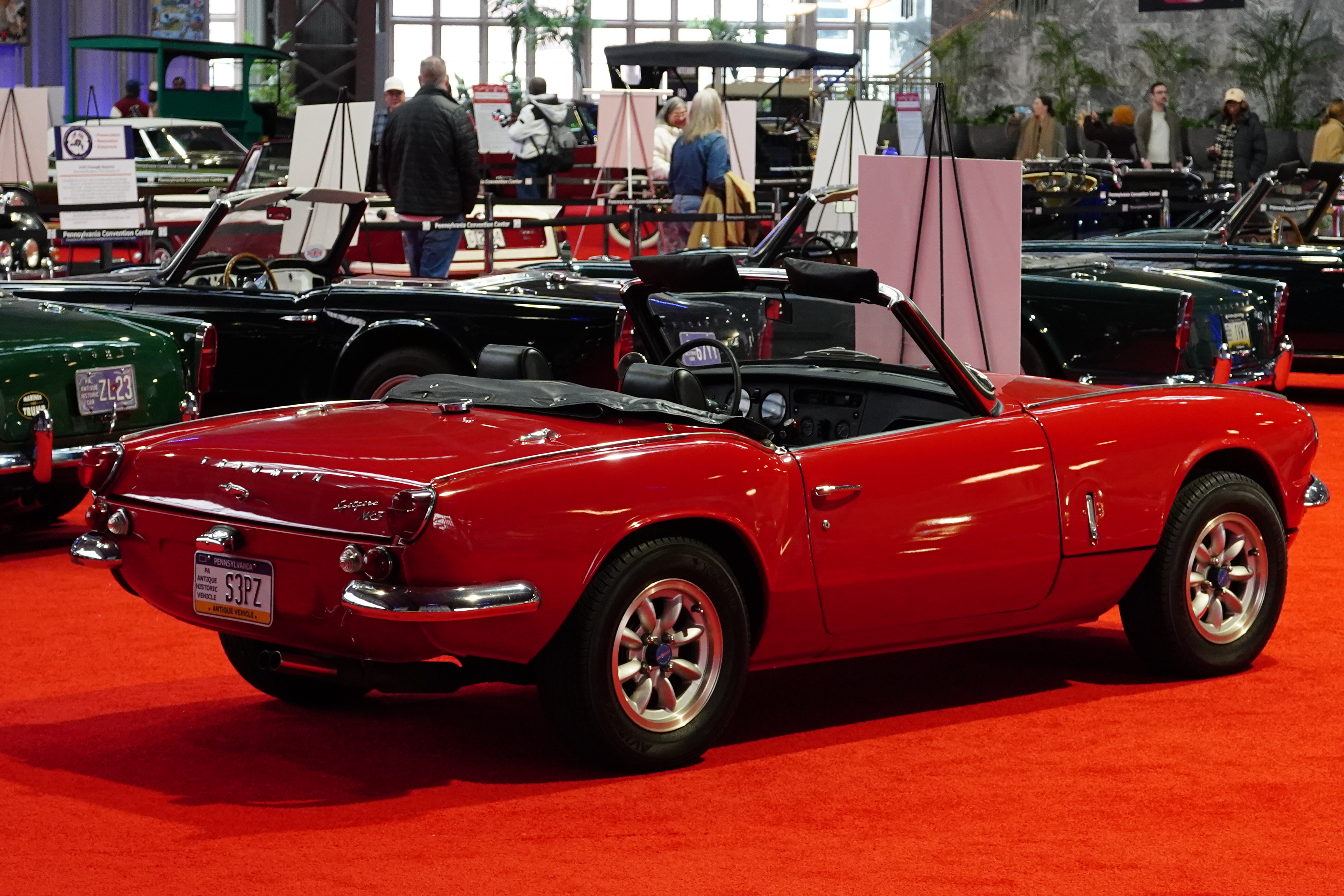
If tradition is any guide, I was expecting a display of classic cars at the Philly show, because they have been there during my previous visits. This year, with the AACA sponsoring what was billed as “Classic Blvd.,” it took over an entire hall separate from the new cars. I will guess that there were 40 to 50 classics on display, and about a third of those were Triumphs, sponsored by the Delaware Valley Triumph Club.
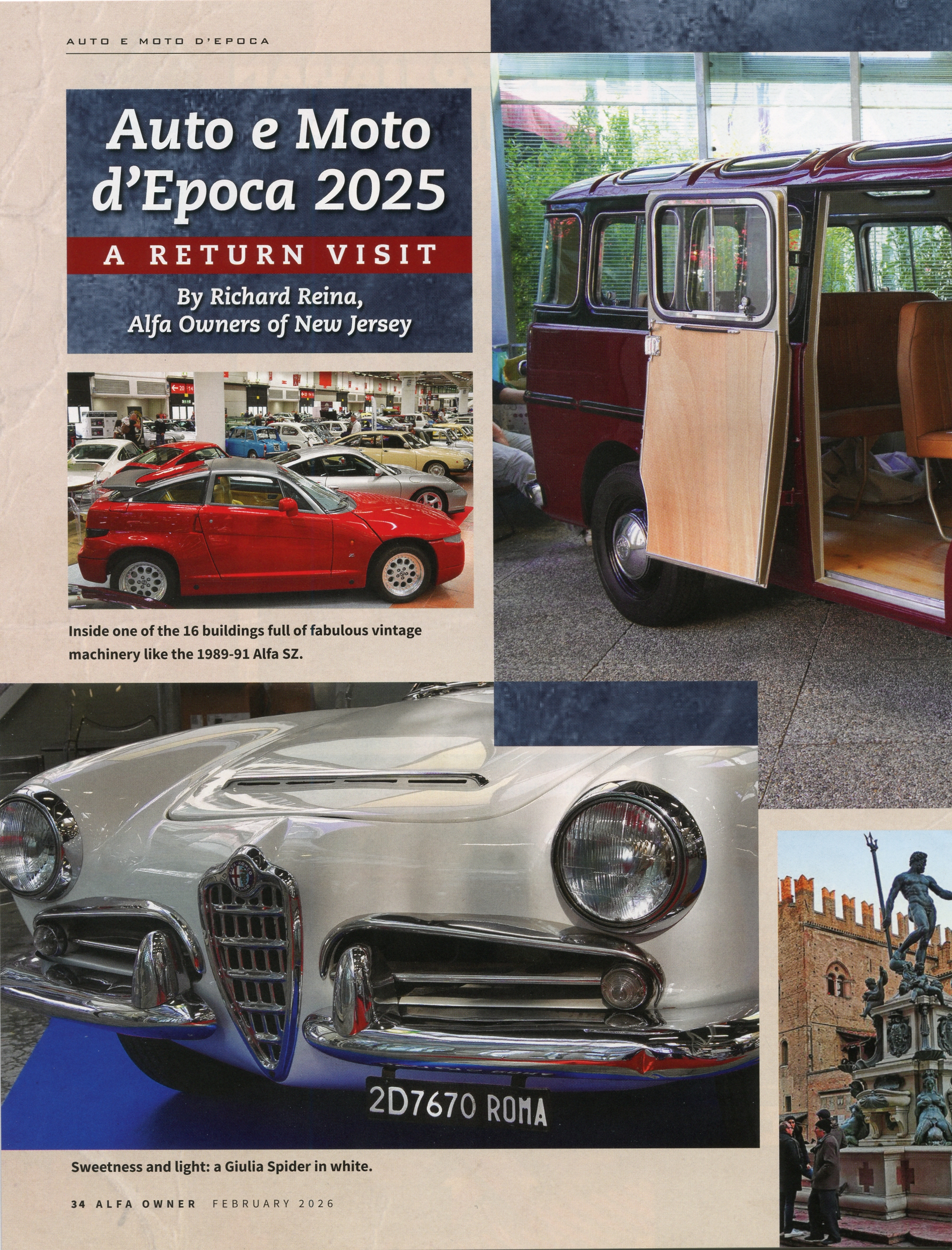
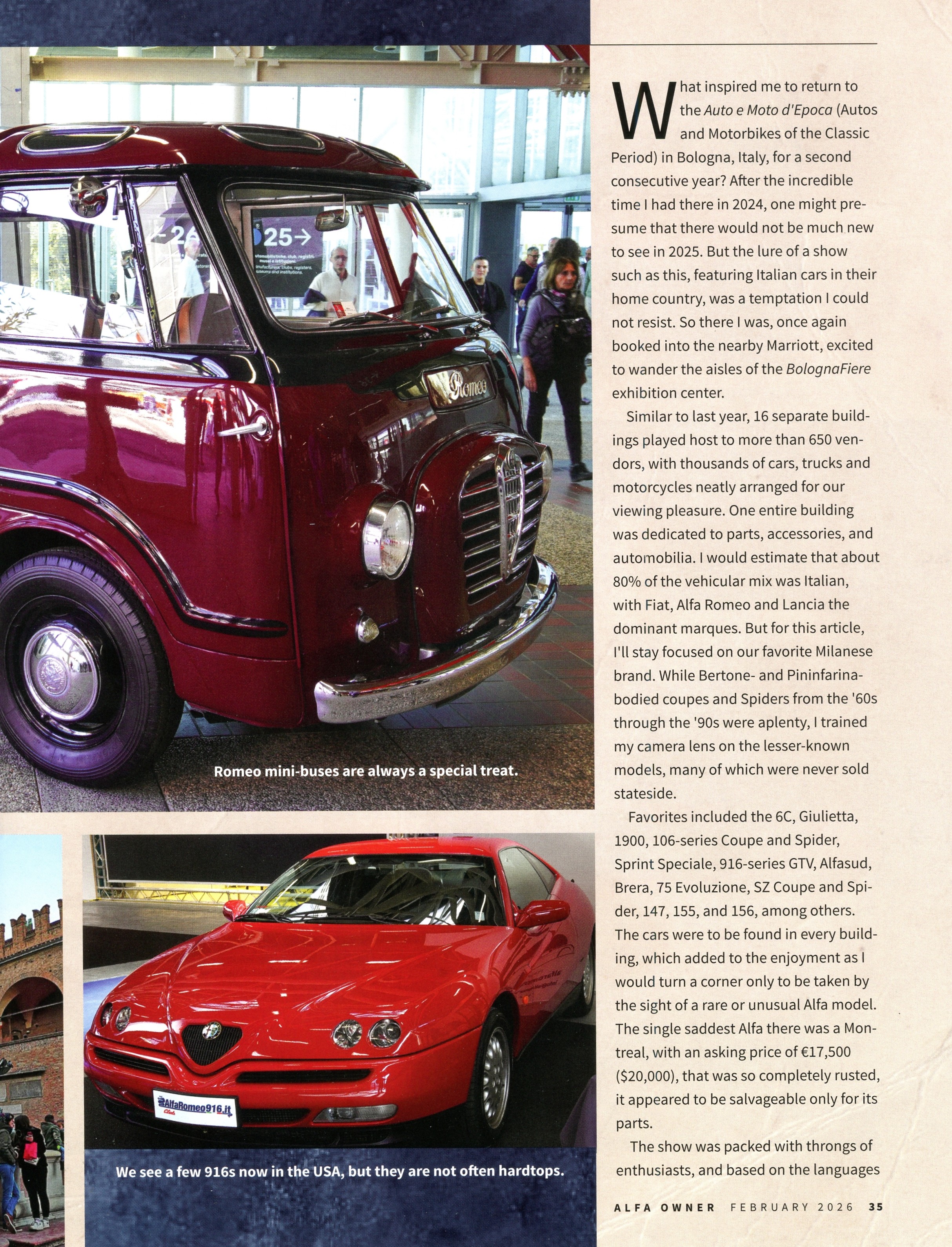
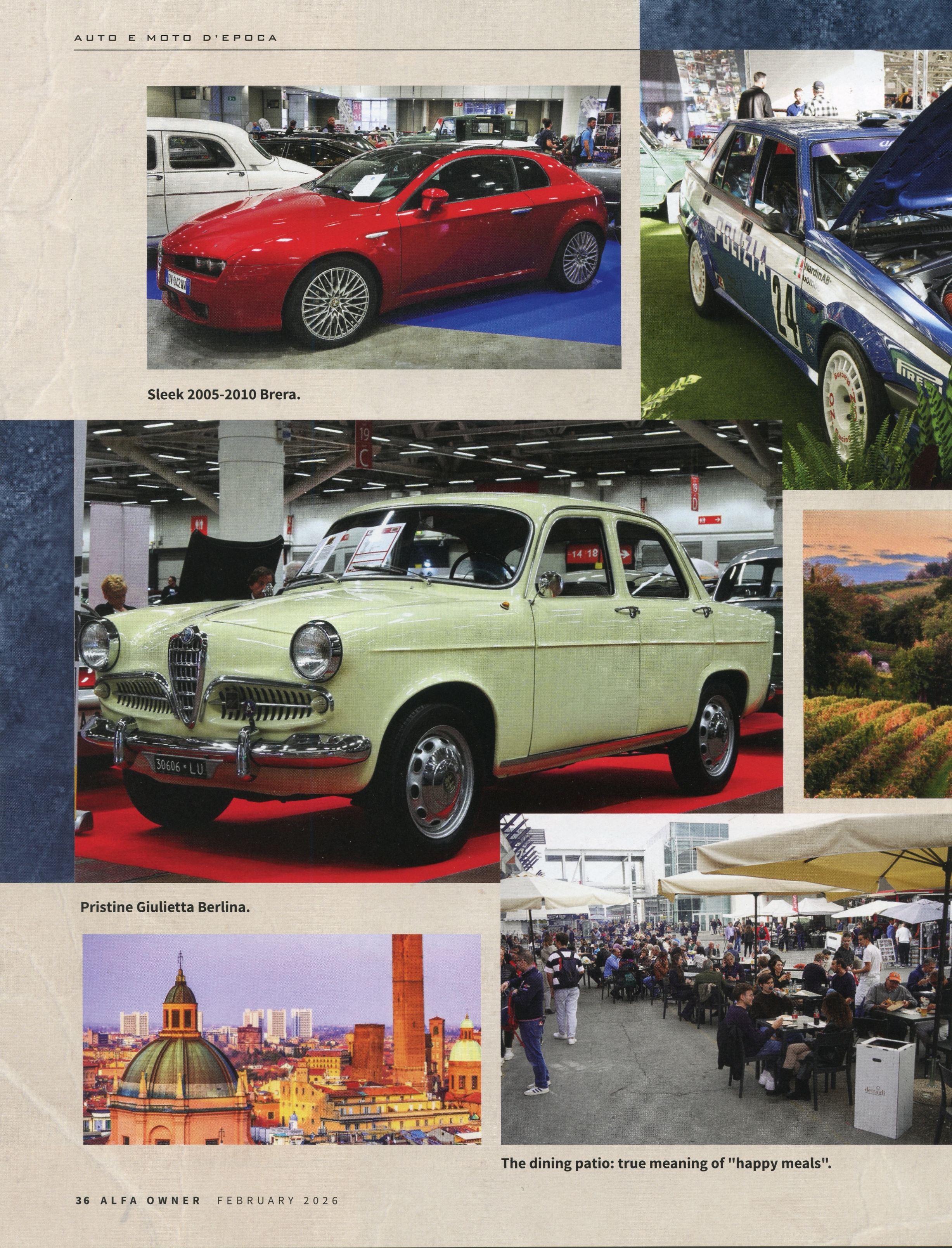
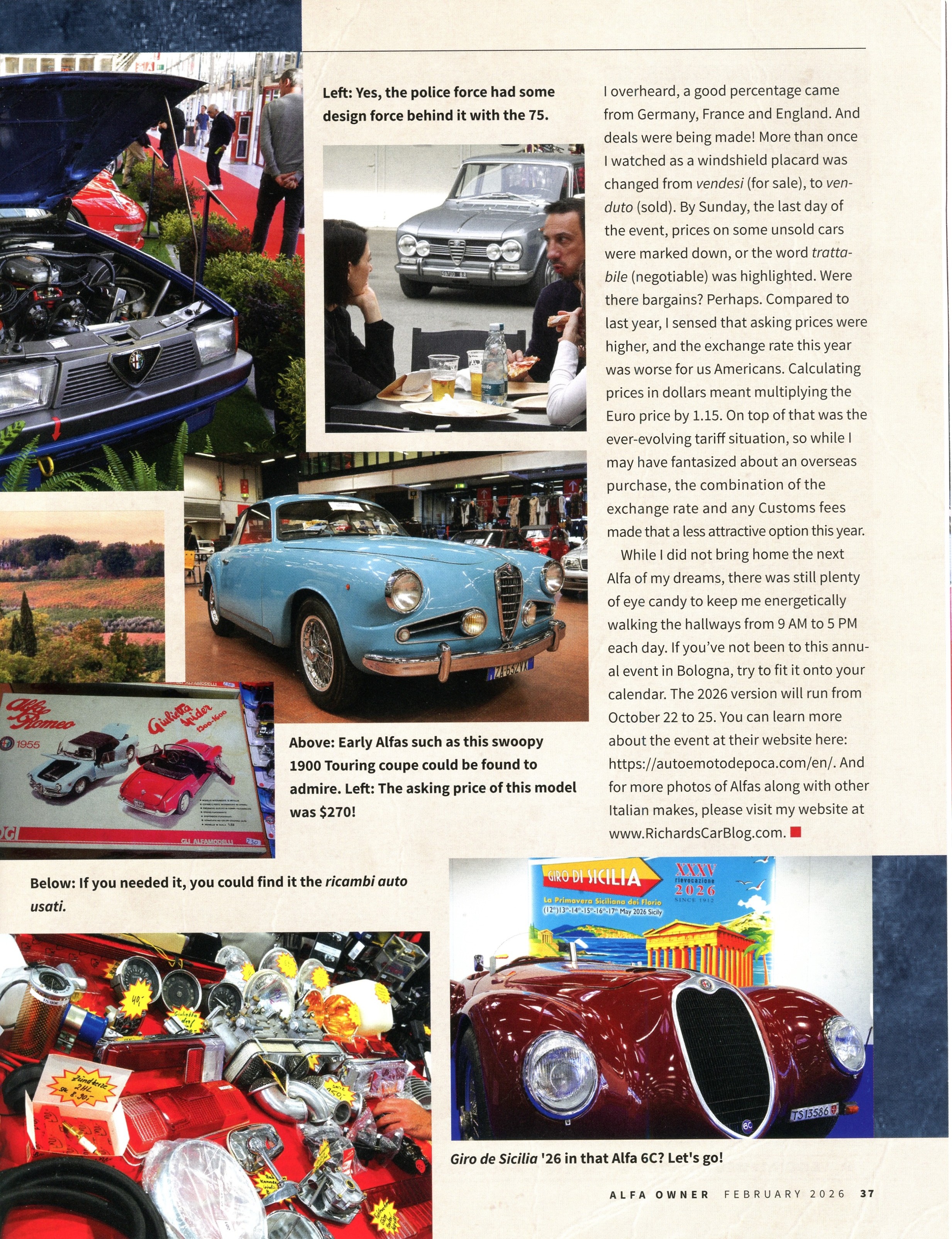
The esteemed editors of the monthly Alfa Owner magazine, the official publication of the Alfa Romeo Owners Club (AROC), selected my article submission for publication in the magazine’s February 2026 edition. Similar to my article from 2025, the story summarized my visit from October of last year at the Auto e Moto d’Epoca, the annual classic car show in Bologna, Italy.
Although my numerous blog posts from the show (found here, here, and here) covered all Italian makes, my AROC story included only the Alfas, understandably so. Thirteen of my photos were included, and I am again honored by this decision. A special thanks must go to Elyse Barrett, managing editor, who worked so closely with me and provided wonderful editorial guidance, as she has for my previous articles.
The four pages from the article are scanned below.
According to their website, Allentown, PA’s “Auto Mania” has been held since 1990. My earliest recollection of attending was in 1997, and I’ve gone back sporadically since then. As classic auto flea markets go, this may be the smallest one out there. (It is worth noting that a few years ago, Carlisle Events purchased Auto Mania, although to my eye, the only thing it changed was adding the Carlisle name to the signage.) Its primary function has been to serve as an excuse to get to a show during the winter. And that was the rationale for three of my besties and me to head there on Friday, January 16.
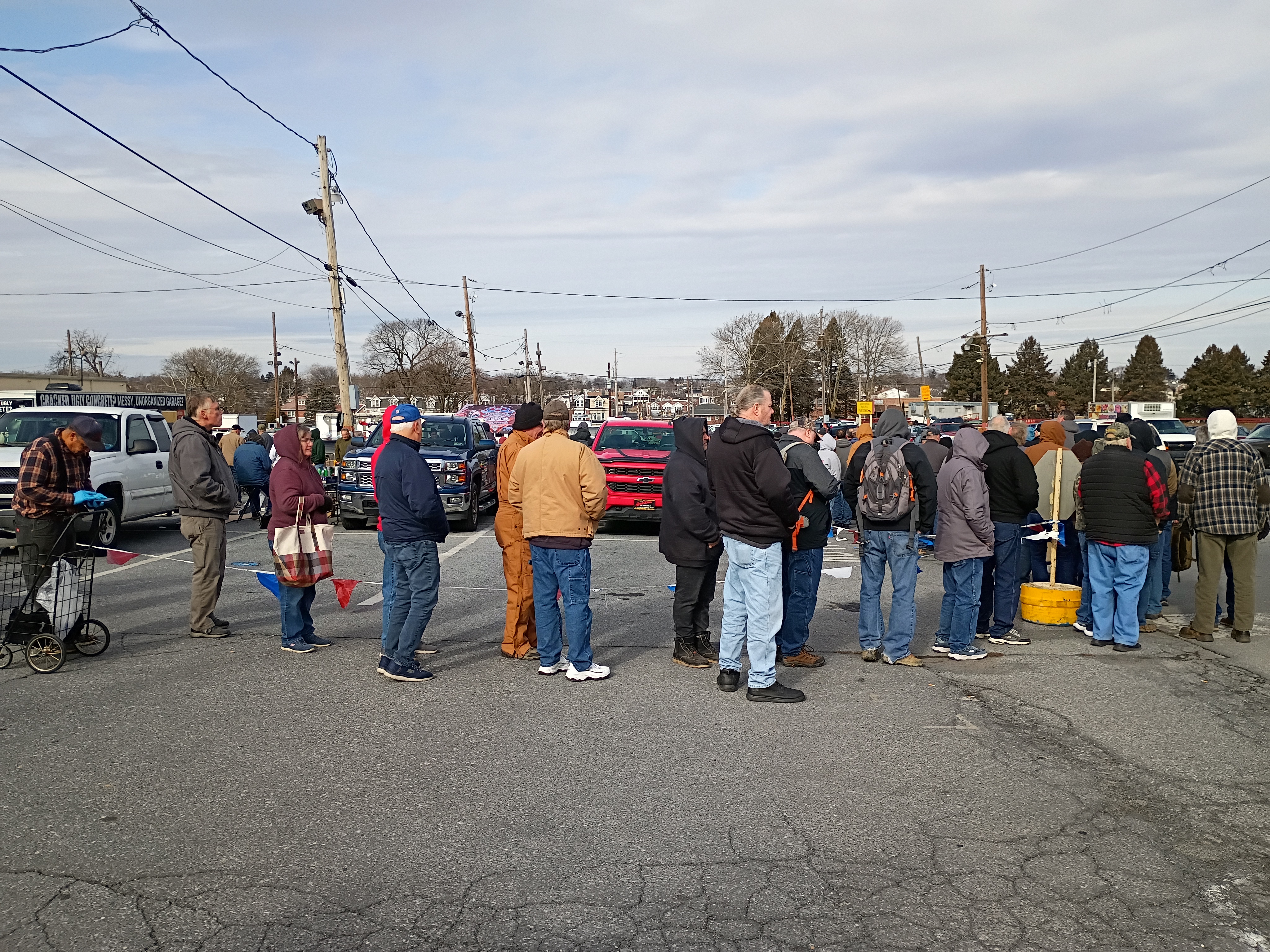
Thankfully, Larry noticed that the doors didn’t unlock until noon on Friday, so we met for a mid-morning breakfast, filled our bellies, and arrived at the Agri-Plex Expo Center around 12:15. We should not have been shocked at the sight, but we were: the line to get into the place snaked up and down in front of the building, so much so that we stood in the windy and chilly air for thirty minutes before setting foot inside. The place was packed with both vendors and spectators, and so our wandering along the aisles began.
This was only a small part of the entrance queue
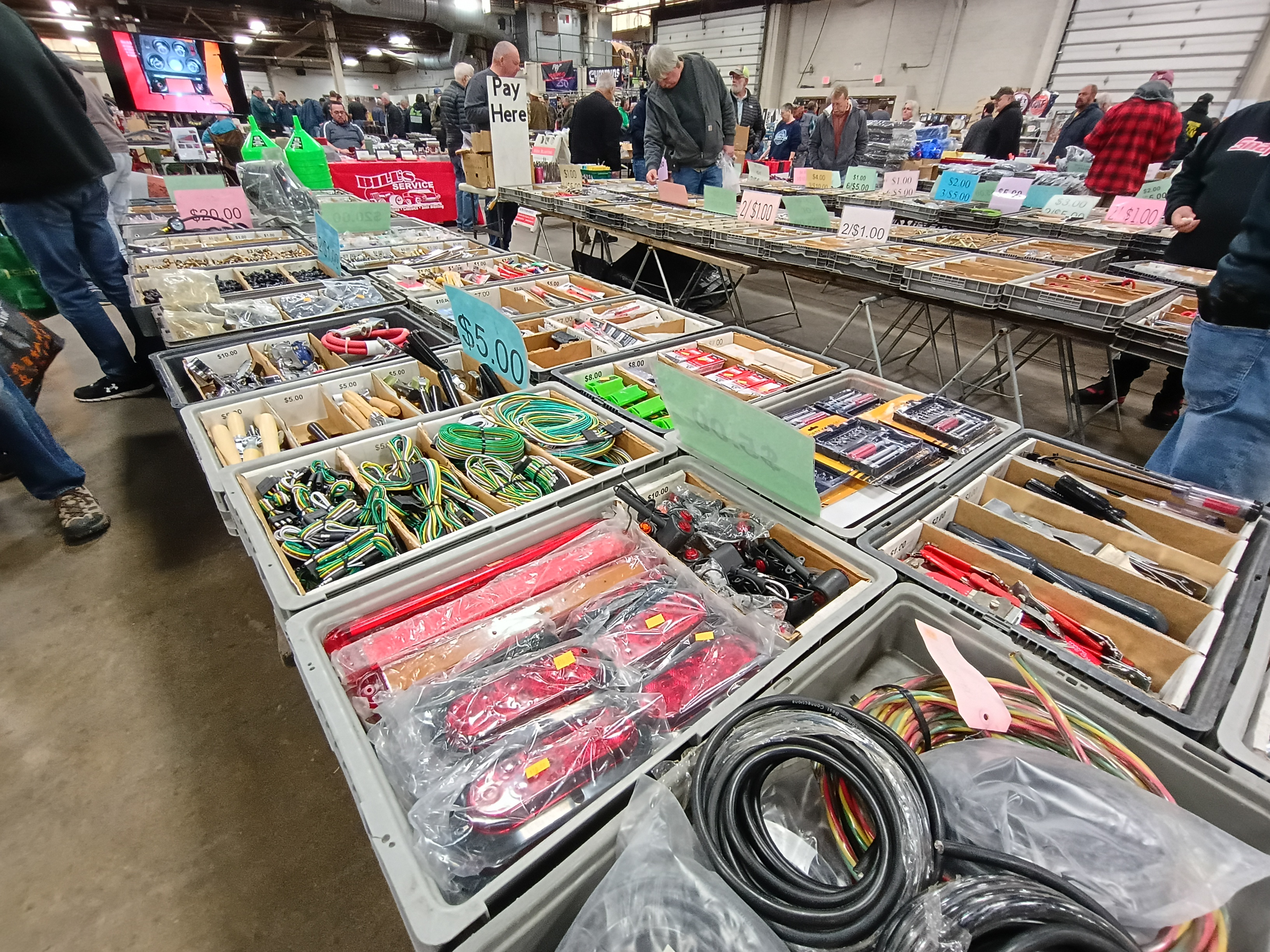
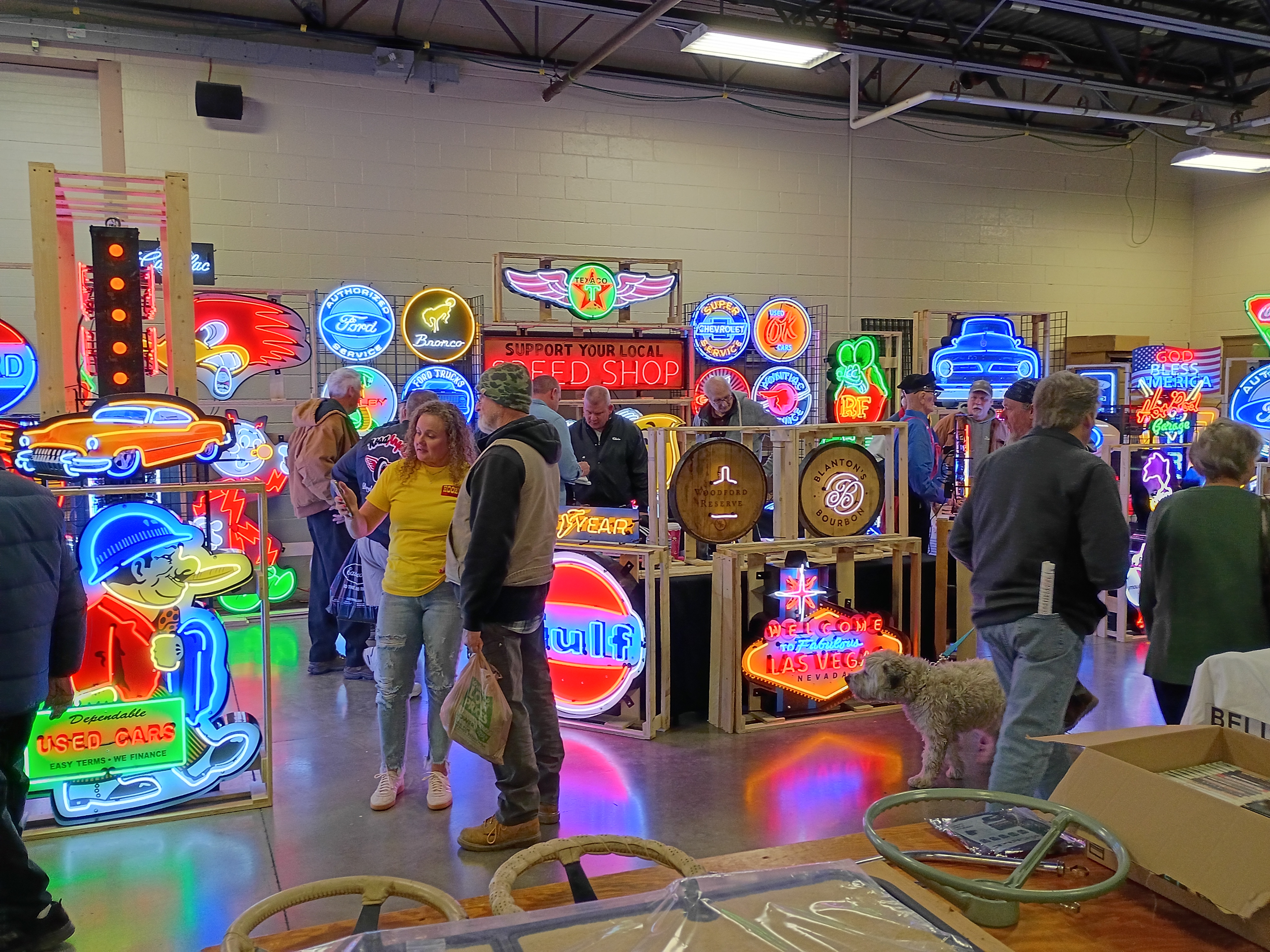
This is billed as an indoor-only, all weather event, and 99% of the vendors are selling parts, not cars. Anticipating that I would find the typical piles of stuff that would not interest me, I was pleasantly surprised at the variety. Old books and maps, two of my weaknesses, were easily found. Although I didn’t make any purchases in these categories, it wasn’t for lack of trying. A map vendor had some very interesting NYC maps dating back to the 1940s, and I spent more than a few minutes poring over the choices, ultimately deciding that there weren’t any maps I desperately needed. My favorite vendor was the one who had many tables meticulously arranged with various tools, supplies, and hardware, and he ended his day $15 richer thanks to me.
This vendor, from whom I bought a few things, was busy all day
My three compatriots wandered the building on their own, while I took to strolling solo. I ran into five fellow AACA members, all doing the same thing I was: getting out of the house for a chance to enjoy the hobby inside a heated building. My travel companions and I reconvened around 3 p.m., and headed next door to the Allentown Farmer’s Market, where we found an open counter at a country-style luncheonette, and enjoyed a late afternoon meal. Having driven my own car there, we bid our farewells, and I was home before dark.
The show was mainly populated by older white men with gray hair
It’s nice to know that there is a January car show within an hour’s drive. Would I go every year? Not necessarily. A lot would depend on the weather, and my own level of desire to make the effort. But I enjoyed the day, and now I am even more anxious for April to arrive, so that I can welcome the unofficial start of the car show season.
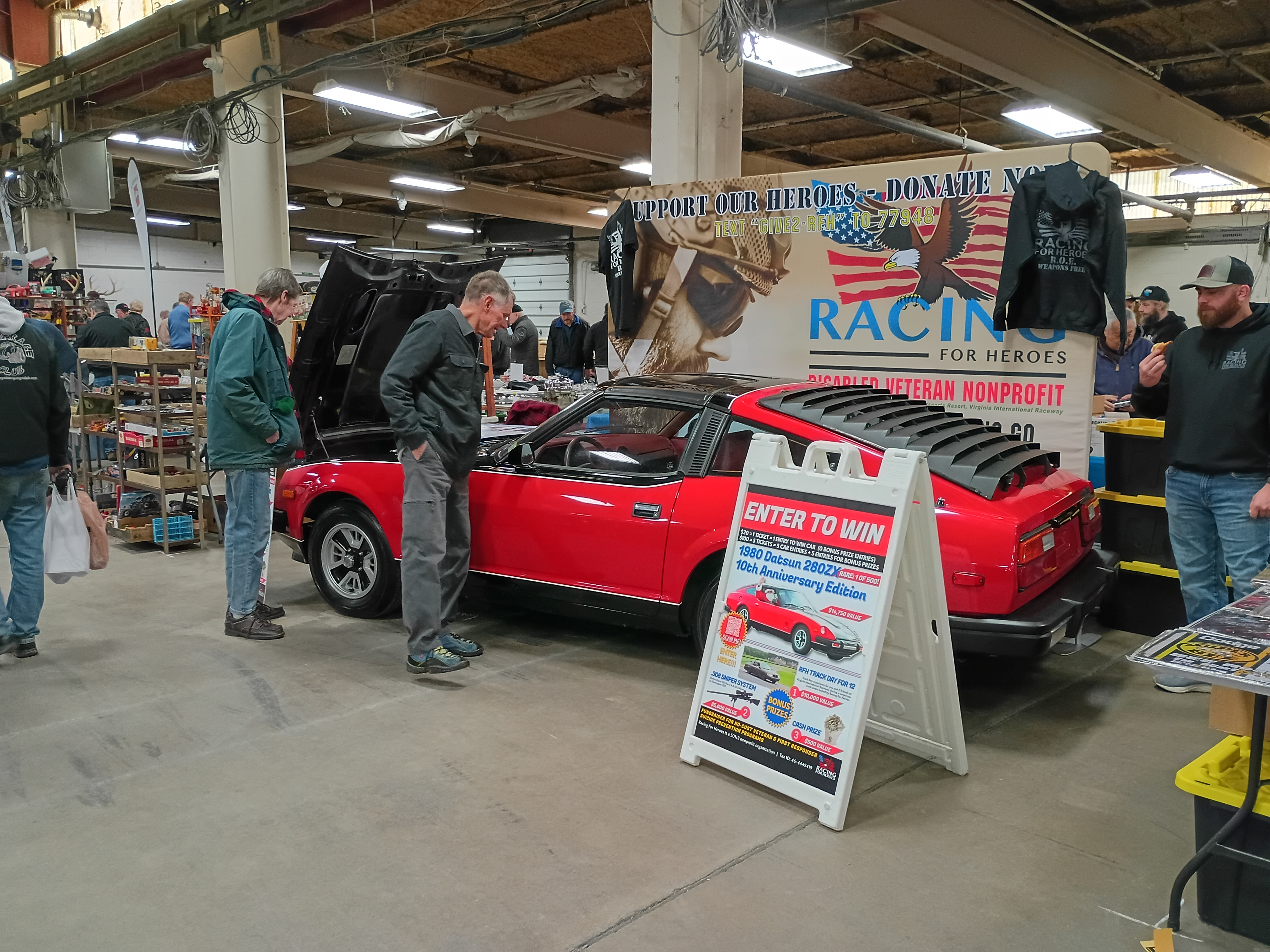
One of the few cars there was this Datsun 280ZX being raffled off
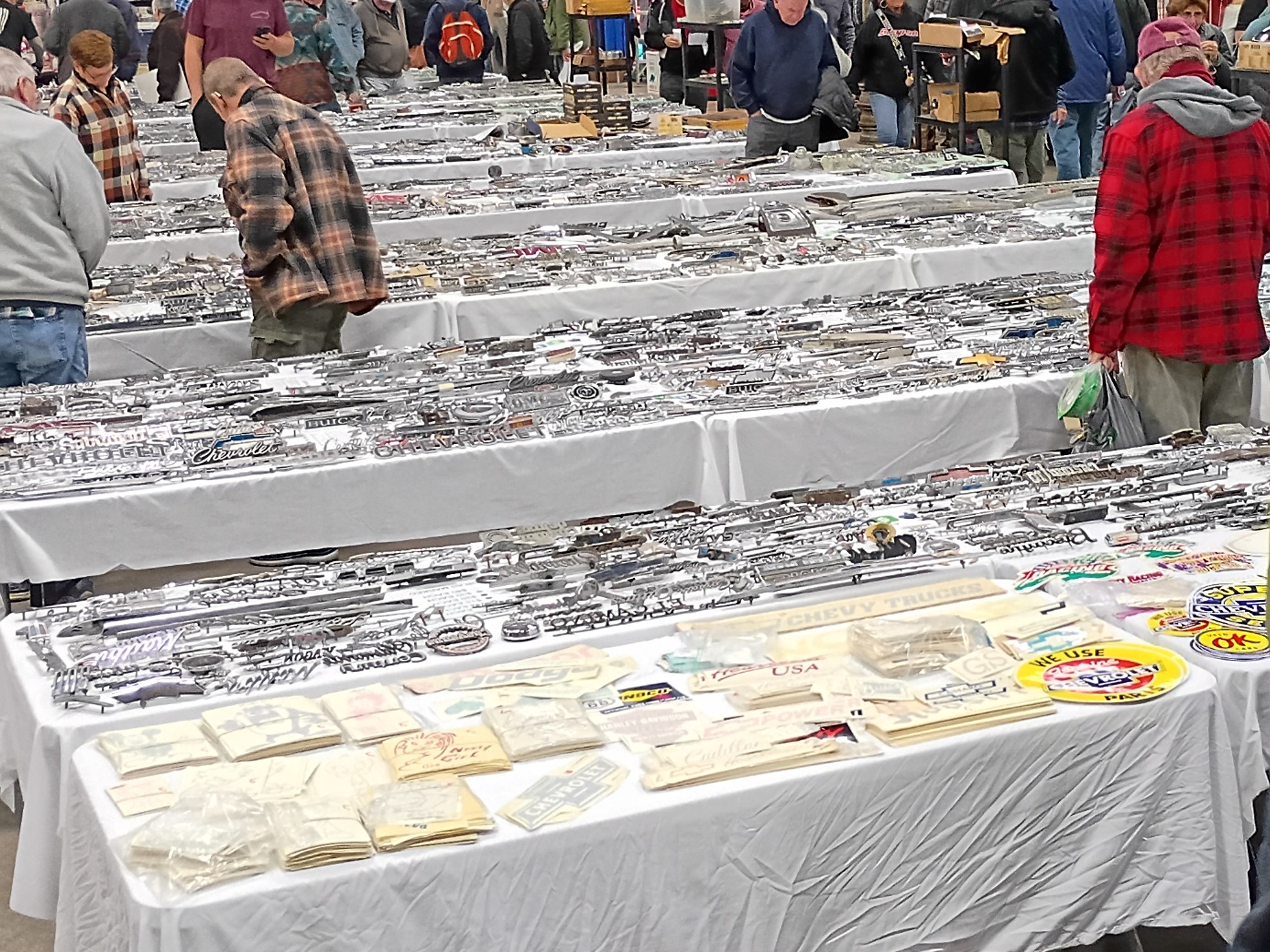
This vendor had a make or model nameplate for almost every domestic vehicle made
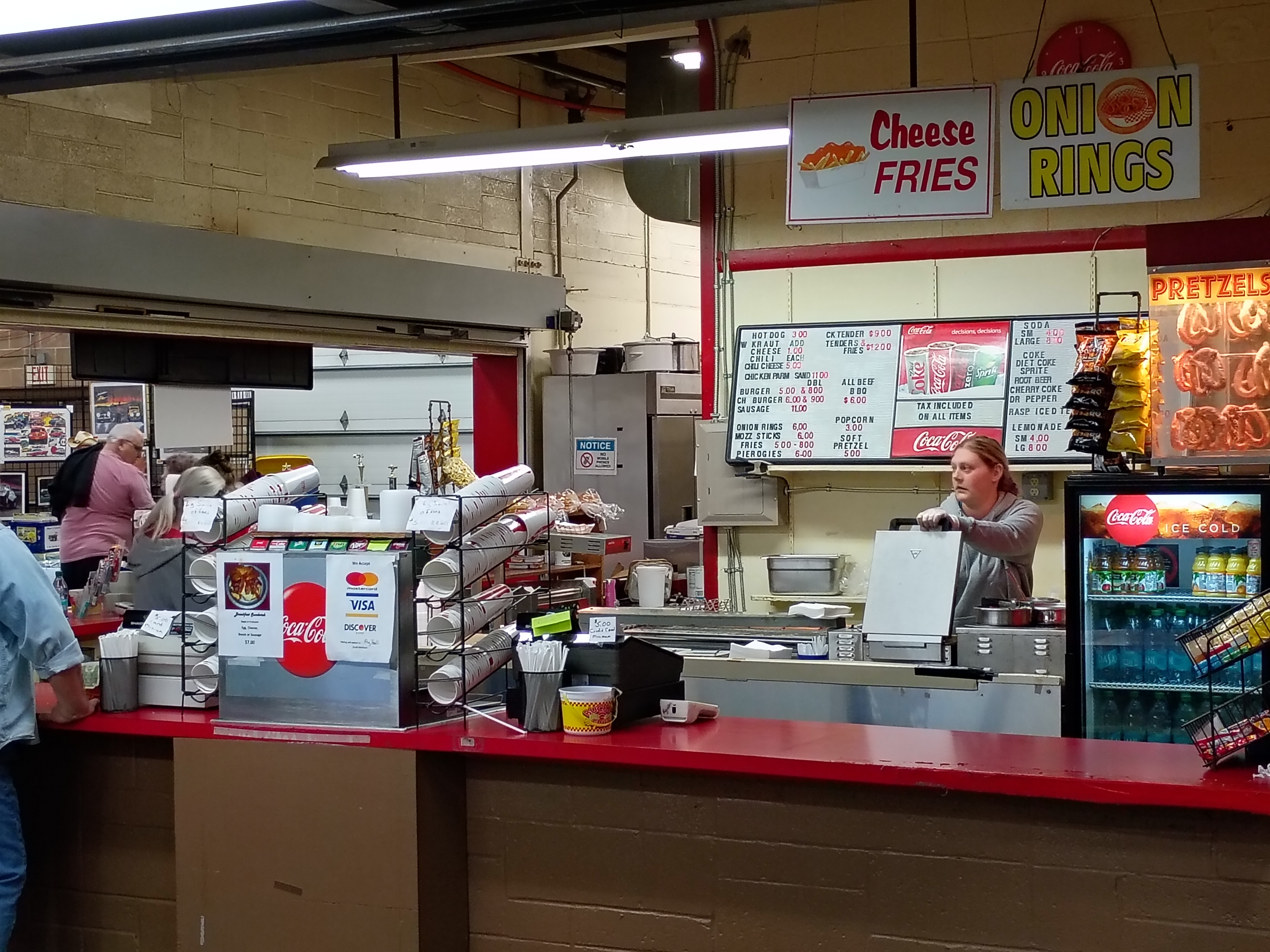
Typical car show food was available, but we waited for better choices at the farmer’s market
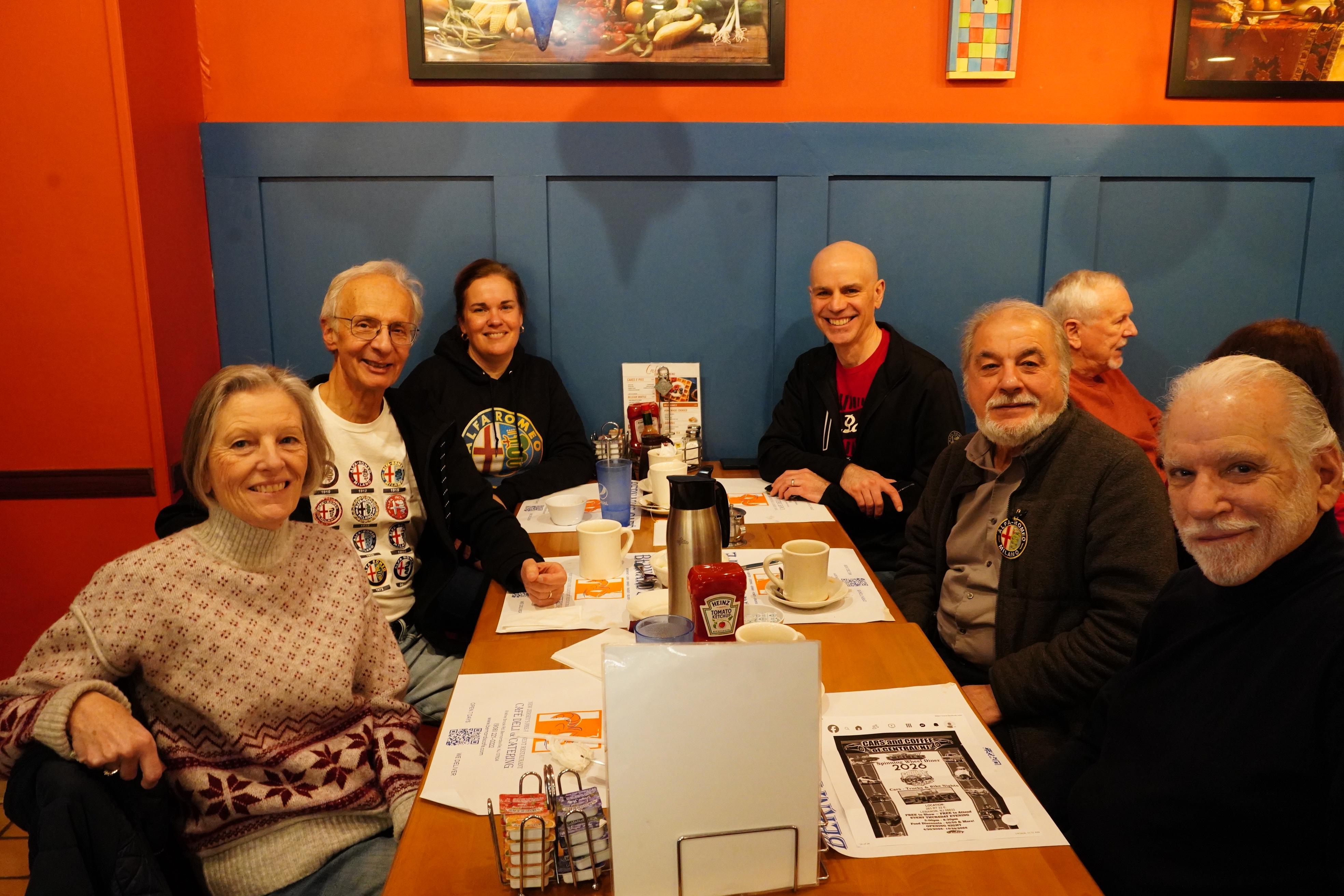
The cold January air did nothing to dissuade twelve Alfisti from meeting up at The Bernards Café in Bernardsville, NJ, for the New Jersey Alfa Club’s monthly breakfast meeting, held on Sunday, January 11, 2026. It was especially nice to see three spouses join the ranks, so a hearty Ciao to Denise, Margaretanne, and Suzanne. You are always welcome to join us!
I’ve always enjoyed this particular eatery, and the food and drink did not disappoint. In addition to the typical breakfast fare, there are interesting specials on the menu, and several of us took advantage of those choices. Because of the Café’s table arrangements, we were seated in two groups of six, and while we chitchatted about our favorite marque, my table also had an interesting and enlightening conversation about our numerous Italian ancestors.
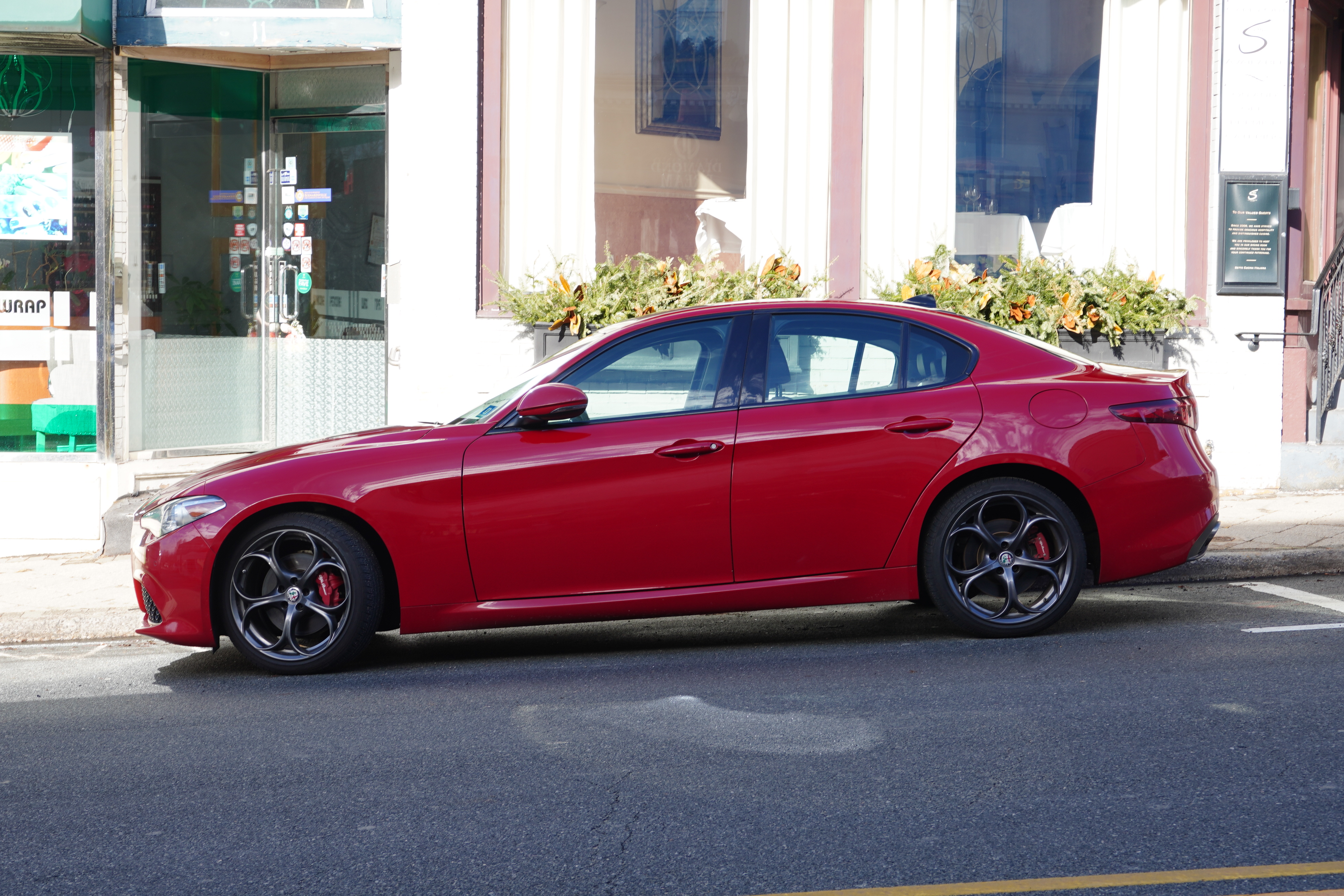
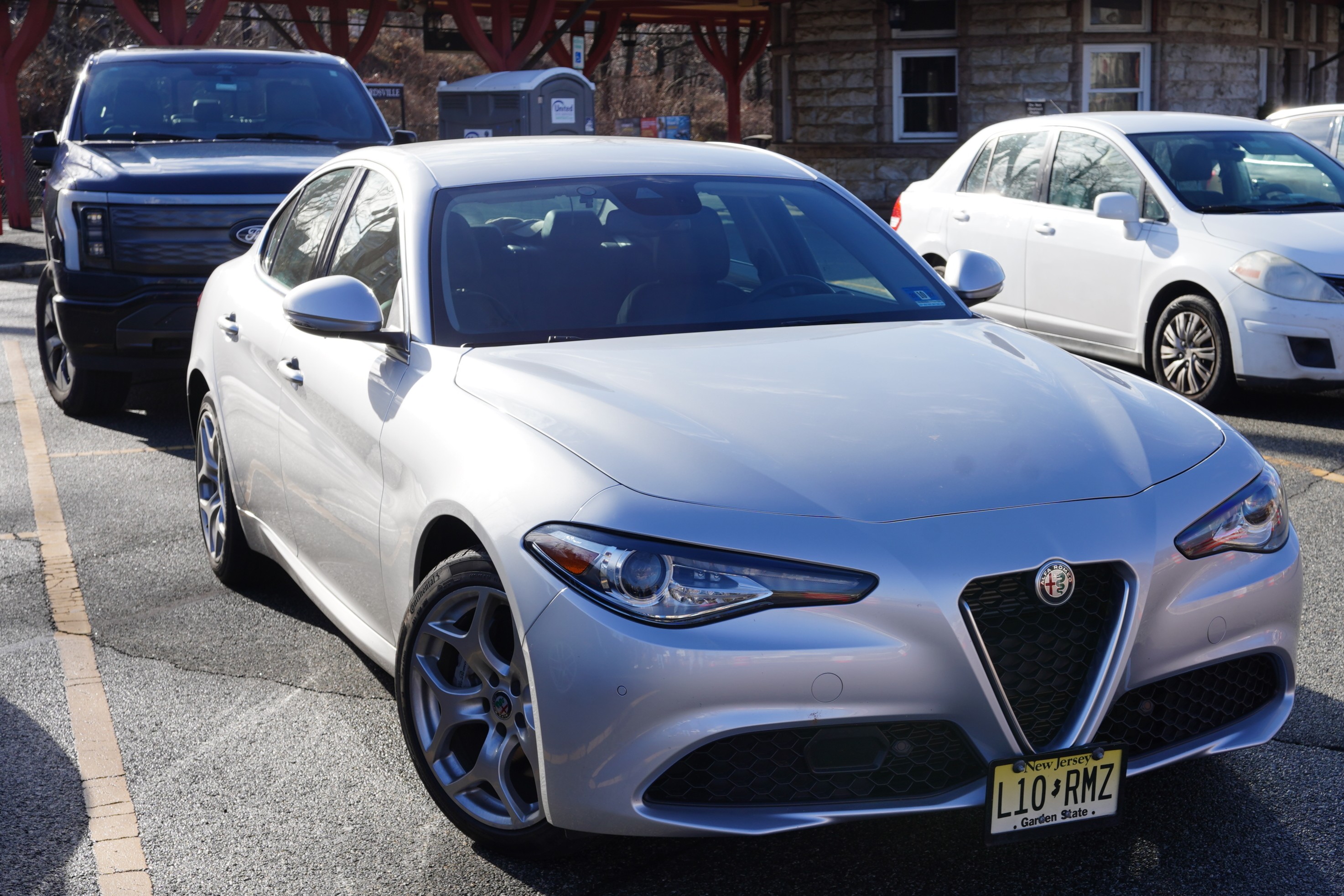
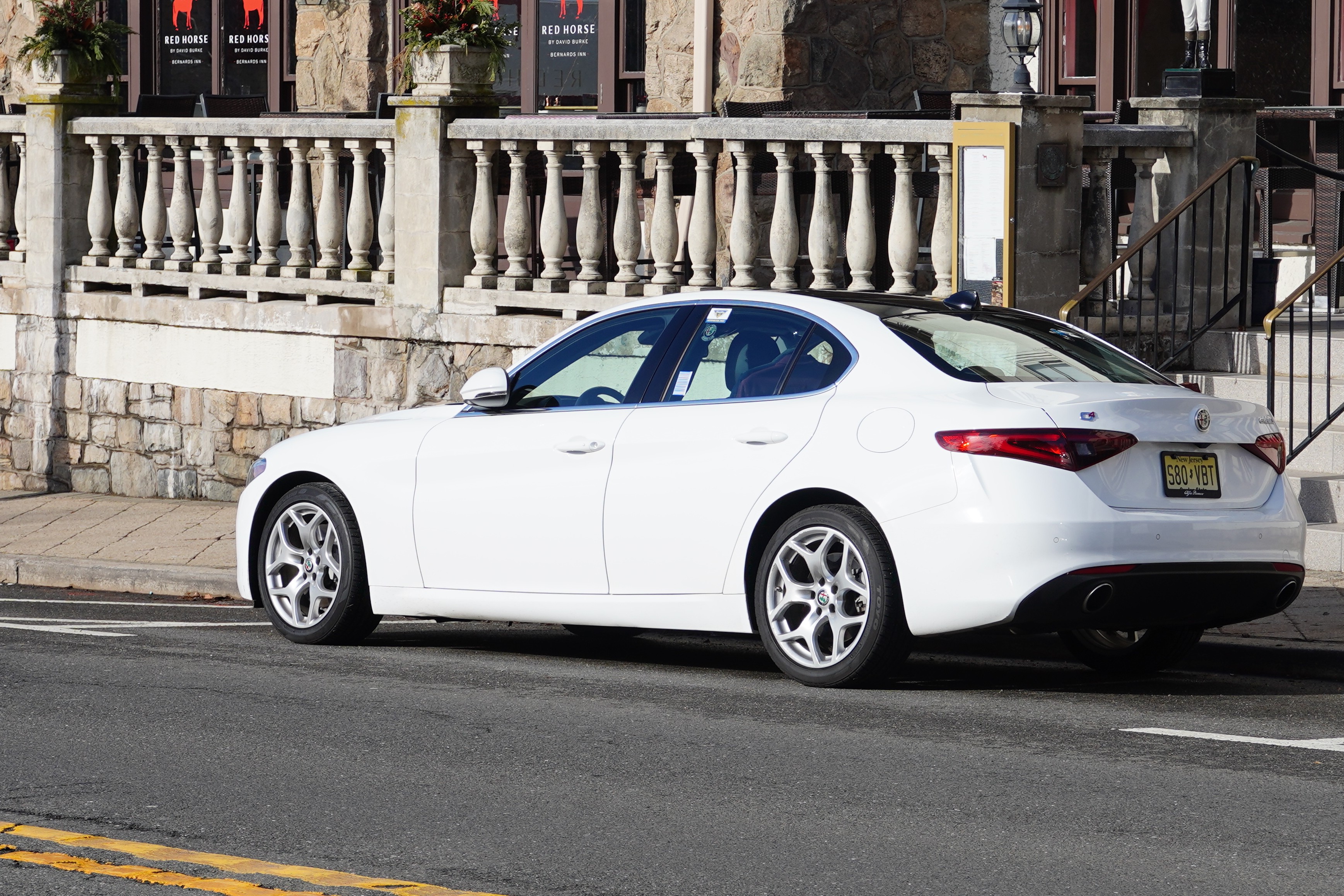
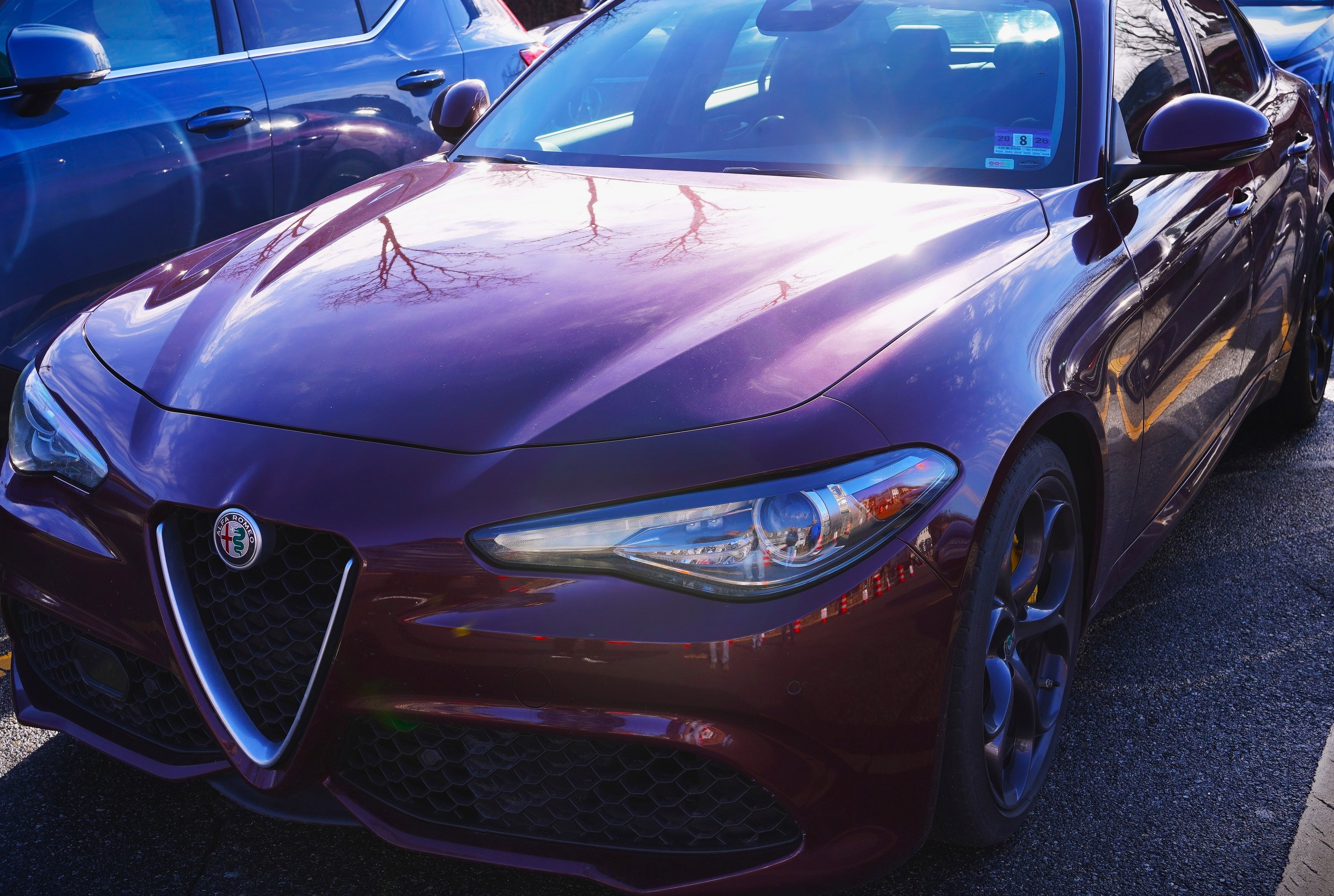
We had four Alfa Romeos parked outside, and all four were modern Giulias, each one in a different color. To my eye, the car’s styling which debuted in this market in 2017 has remained fresh. (I write this while we anxiously await the next generation Giulia, due perhaps as soon as later this year.) We parted company around 11 a.m., already looking forward to next month’s breakfast meet.
Why do I belong to a car club? (I actually belong to five at the moment.) It has its disadvantages. There are dues to pay. Meetings to attend. Activities for which one is “volunteered.” Internal squabbles to irritate one’s nerves. I admit that there are times when some of these rear their ugly heads and make me think twice about my commitment. However, like many relationships, the pros can, and do, outweigh the cons. There are the events spent with like-minded people. The camaraderie. The availability of technical help. The feelings of accomplishment. The NJ Region of the AACA (Antique Automobile Club of America) had been a regular part of my life for over fifteen years, and overall, it’s been a great ride.
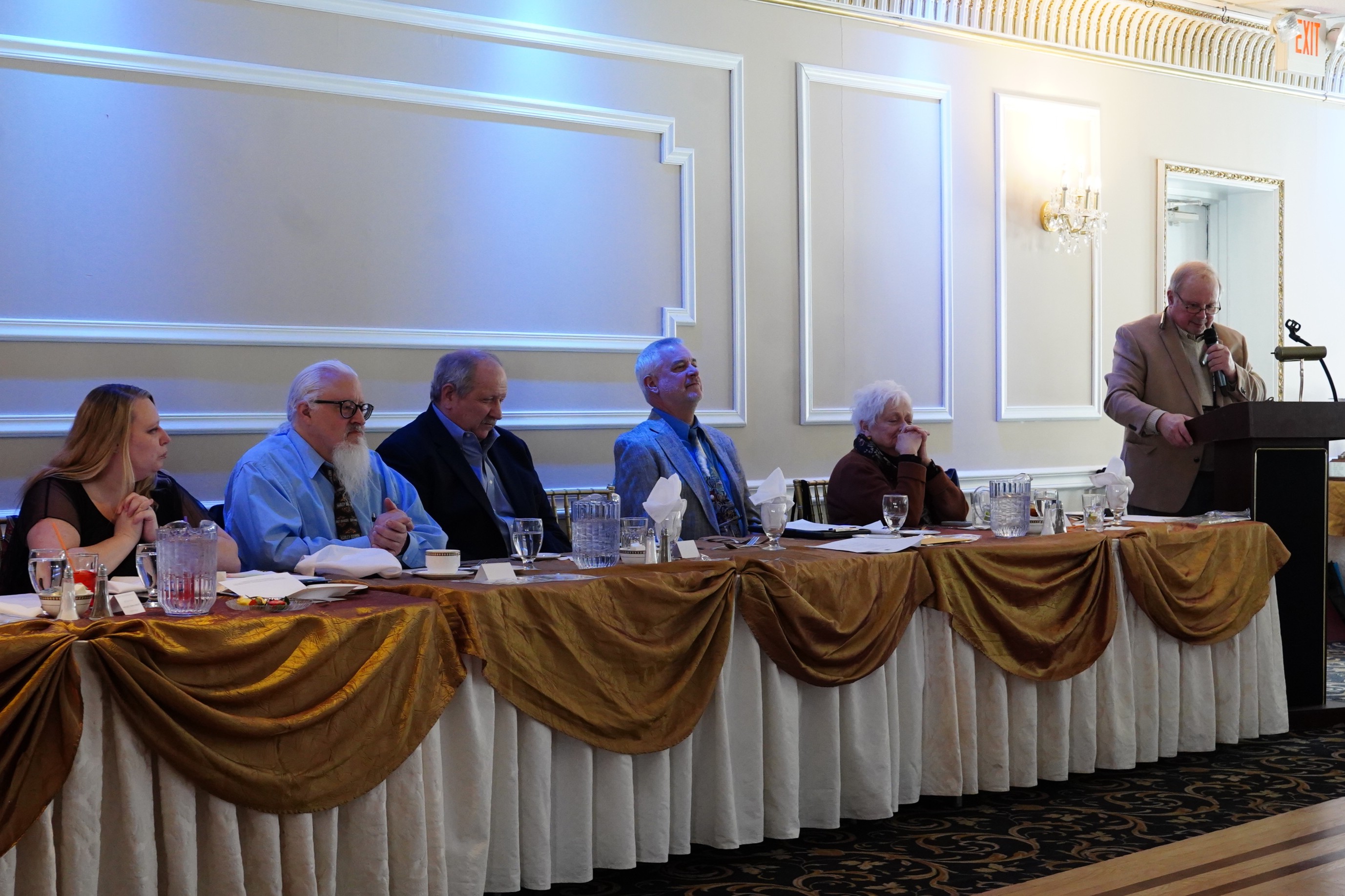
In addition to its monthly meetings, the Region has an annual banquet, held every January. Two major business items are on the agenda: the swearing in of our new officers (President, Vice President, Secretary, Treasurer, and Membership Secretary), and the awarding of various trophies, certificates, and similar awards. Our 2026 banquet was held this past Sunday, January 4, at The Chandelier at Flanders Valley, a restaurant/catering hall that has been hosting us on a regular basis. A crowd of perhaps 70-80 members and guests enjoyed cocktails, appetizers, dinner, and dessert for a reduced price (the Region covered a percentage of the cost). Awards were handed out based on a member’s level of participation. For example, attending an activity results in earning points, and the top twelve earners are given a brass plaque.
Our 2026 officers (seated) are sworn in by our President Emeritus
Other awards are up to the discretion of a Board member or committee chairperson. Dick Bettle, who is editor-in-chief of The Road Map, our Region’s monthly newsletter, selects a person each year that he feels has made the largest contribution to the newsletter. I’m proud to say that for 2025, Dick chose me, because of my monthly column, “Rich’s Ramblings,” which I’ve been submitting to him for the past five plus years. I was given a trophy, and I was truly honored.
More importantly: the conclusion of awards meant that we could enjoy dessert and coffee! Seriously, I do enjoy my time with this bunch, even if I am one of the only members without an American car. (My Alfa has won its share of AACA trophies as well.) I wasn’t sure how to end this post, so, for the first time, and maybe the last time, I asked AI to write me a summary, and here it is:
Joining a classic car club can significantly enhance your enjoyment and understanding of vintage automobiles, while providing access to a vibrant community and valuable resources. However, it’s important to weigh the associated costs, commitments, and potential drawbacks to ensure the club aligns with your interests and lifestyle.




 richardscarblog