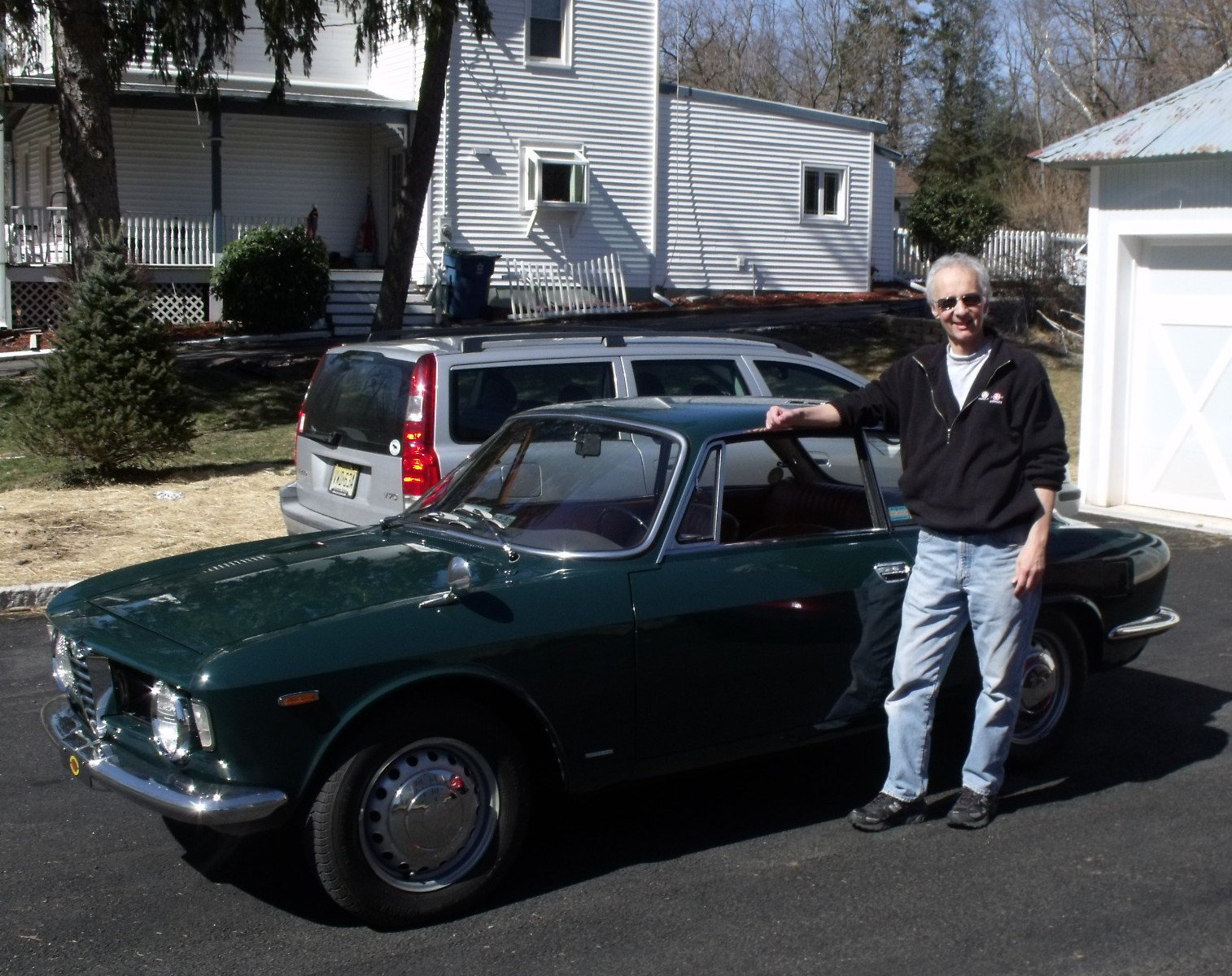
Today was a big day: the first Sunday of spring, with temps in the low 40s (almost balmy!), and two good friends willing to travel a distance to come to my garage and help with the front suspension work.
Mike G. and Larry M., veteran car guys with collector cars of their own, gave up a good chunk of their Sunday to help me turn wrenches. No progress had been made on the Alfa in over two weeks, and the unofficial start of the 2015 driving season is four weeks away. Time to kick it into high gear.
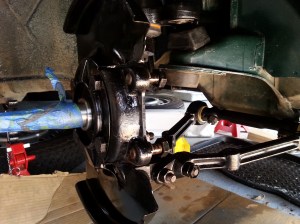
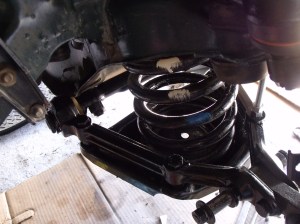
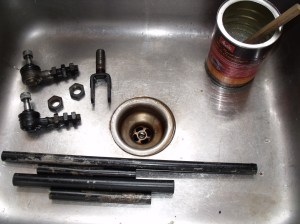
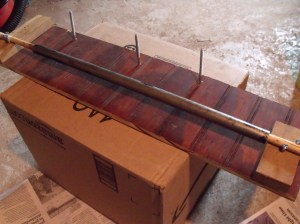
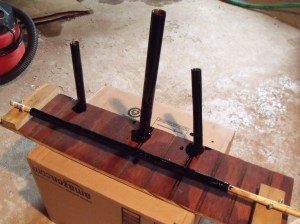
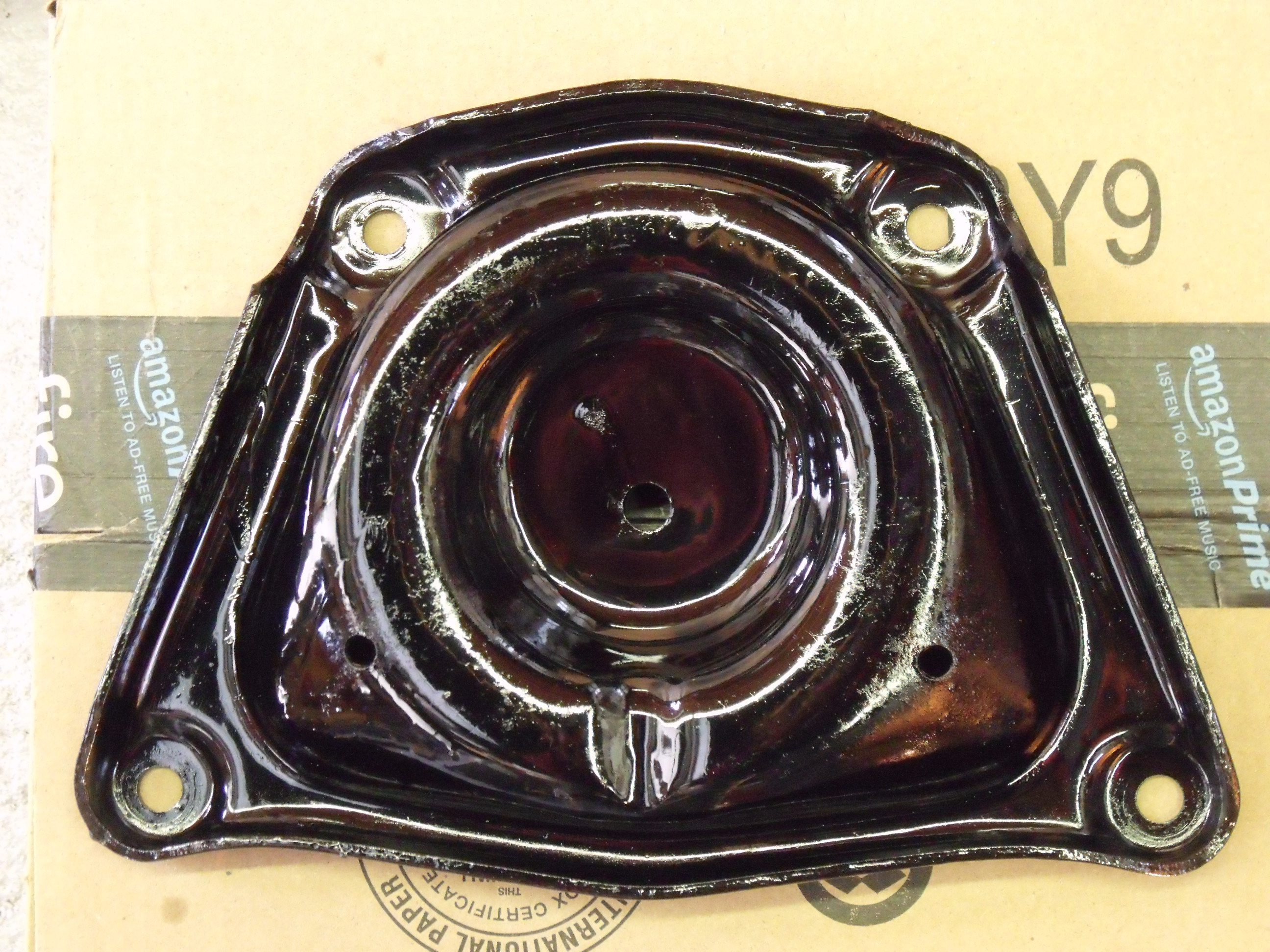
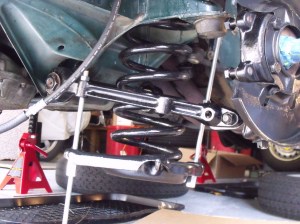
The first order of business was to install the coil spring on the left side of the front suspension. As you may have read in Part 1 of this project, the left side was rebuilt first. Except for the spring and shock, it is complete. Following along with a forum entry on the Alfa BB, I had purchased some threaded rod and nuts. The concept was to connect the lower control arm and spring seat via the rods, and with spring in place, slowly and alternately tighten the nuts, thereby compressing the spring. Once the spring seat met up with the control arm, the rods could be removed one at a time, and the factory bolts could be installed. It took some time, but it worked like a charm.
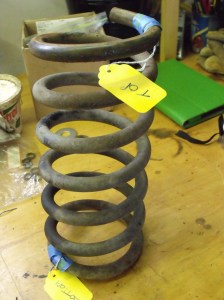
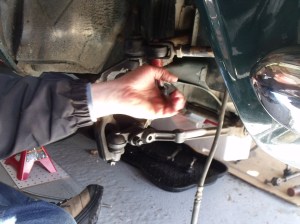
With that under our belts, we moved to the right side and reversed the process. The factory spring seat bolts were removed one at a time, the threaded rod was installed and tightened with nuts, then the nuts were alternately loosened, lowering the spring seat until there was no tension on the spring. This seemed to go twice as fast as the spring install. And to be efficient, while Mike and I (mostly Mike) worked on the spring, Larry tackled removal of the steering tie rod ends and drag link, as I had just purchased six new tie rod ends to install.
Alfa left front suspension: spring about to be reinstalled
Alfa right front suspension removal
Alfa right front suspension, spring removed
A word here about our sponsor. I have almost exclusively been purchasing my spare parts from a UK vendor, Classic Alfa. Their website is user-friendly, their prices are fair, their parts quality is very good, and their shipping speed is unbelievable. Most recent case in point: this past Wednesday night, at about 9pm EDT, I ordered the tie rod ends and wheel bearing kits from them online. Thursday morning, I received a confirmation email that my shipment was on its way to Heathrow Airport. Friday afternoon at 5:30pm, DHL had the package at my front door. That is less than 48 hours, from across the big pond! With service like that, they will continue to get my business.
Back to our front end. As Mike began removal of the first spring pan bolt, he said “Uh oh, Richard, we forgot to install the spacers on the other side”. I said “what spacers?” Mike then showed me that all 4 spring pan bolts had thick spacer washers between the pan and control arm. At first I thought I had made a mistake, but a check of my hardware bags showed that no spacers came off the left side. Mike and Larry almost didn’t believe me, and this is where photos are invaluable. A glance at the pictures I took late in 2014 confirmed that the left side did not use spacers while the right side did. Who can figure out those Italians?
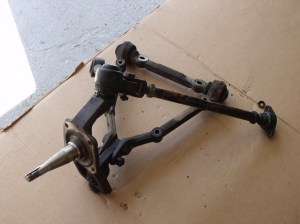
With the spring and spring seat out, we had only the upper and lower control arms, spindle, and caster arm in place. The approach would be to unbolt these from the unibody and remove them as one assembly. Two bolts at the lower arm (impact gun), one at the upper (with tricky access from inside the engine compartment), and two at the caster arm-to-body, and we gave birth to all the remaining pieces.
Alfa front suspension, upper control arm bolt removal
Alfa right front suspension completely removed
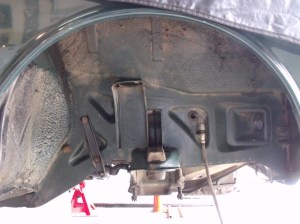
Alfa right front wheel housing
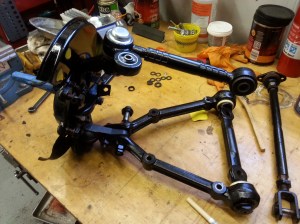
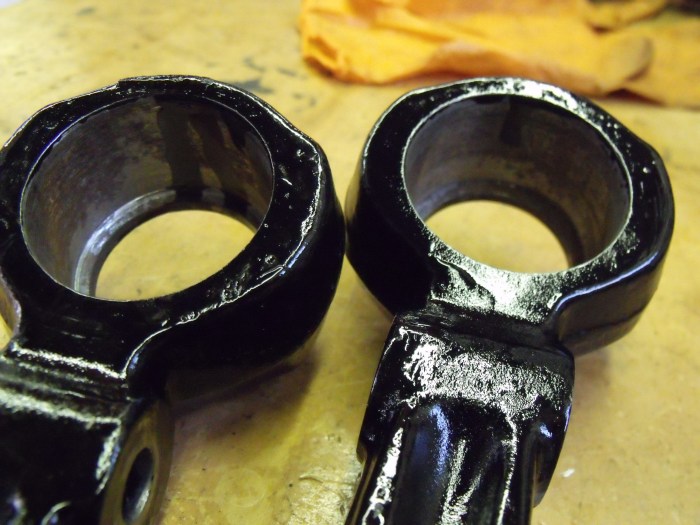
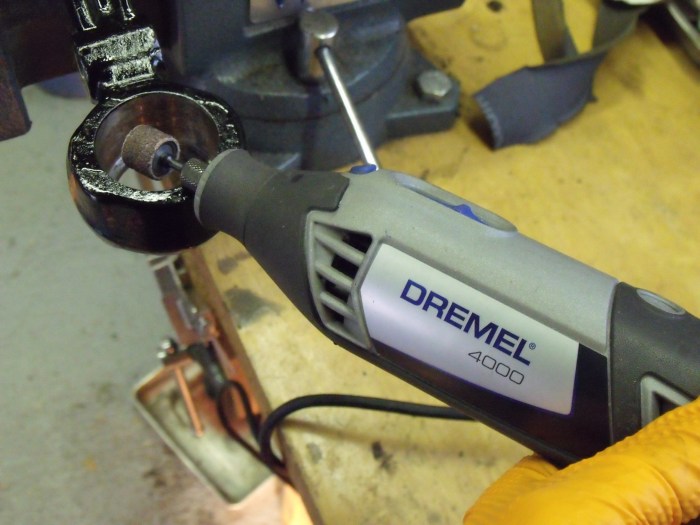
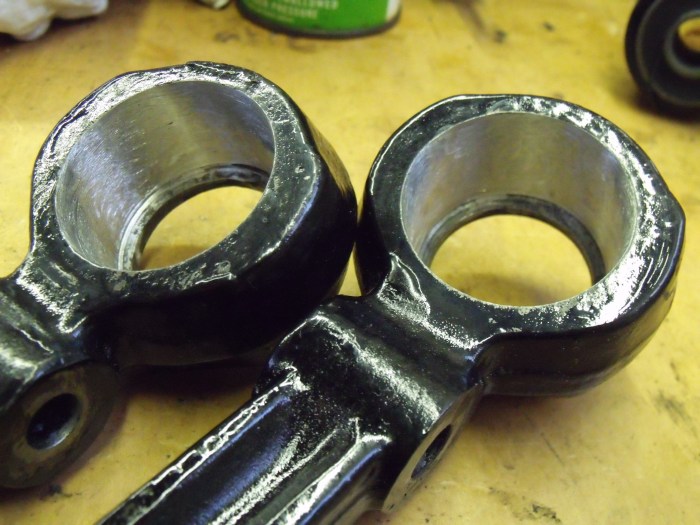
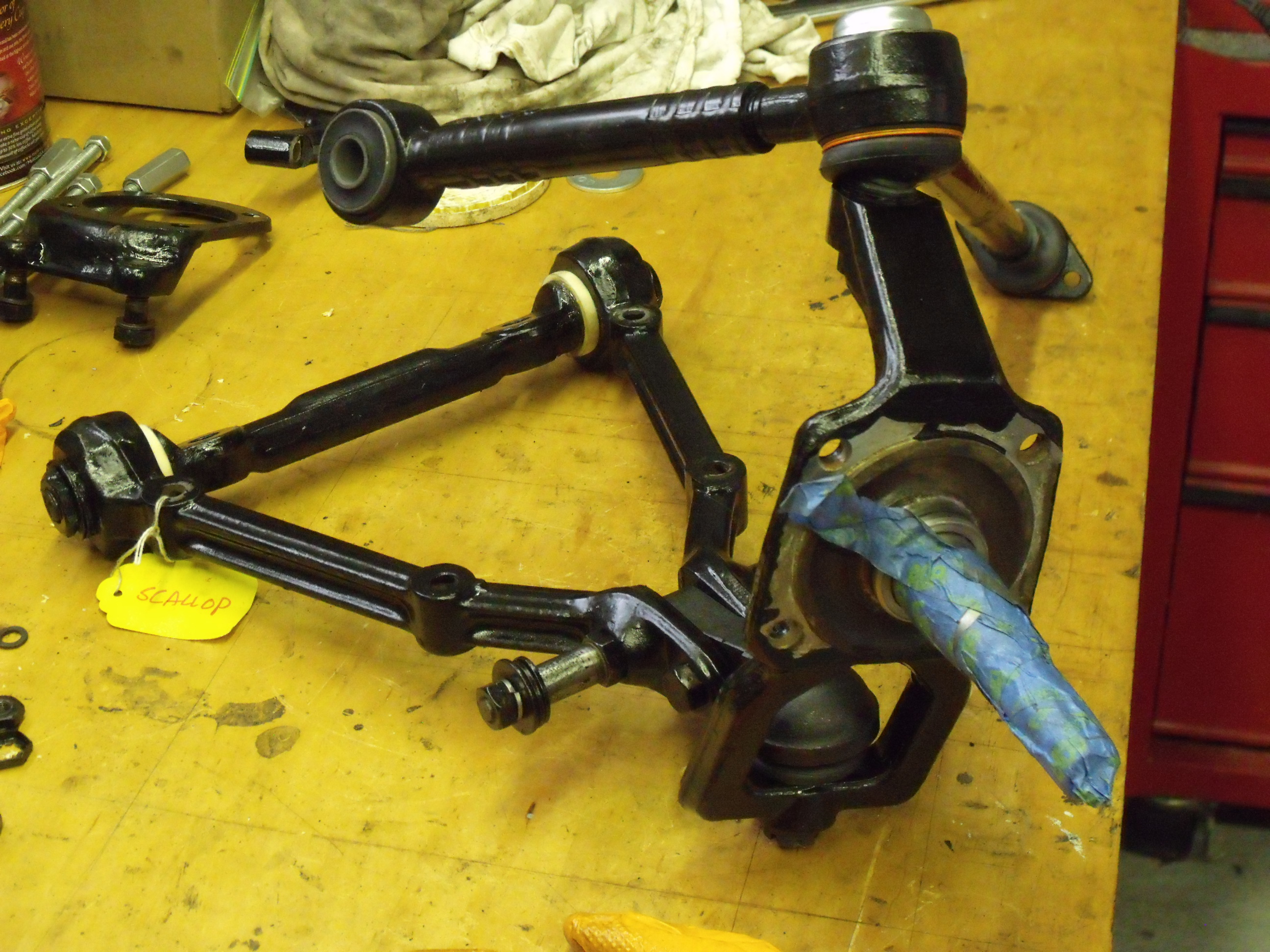
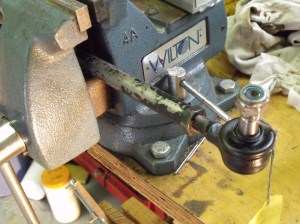
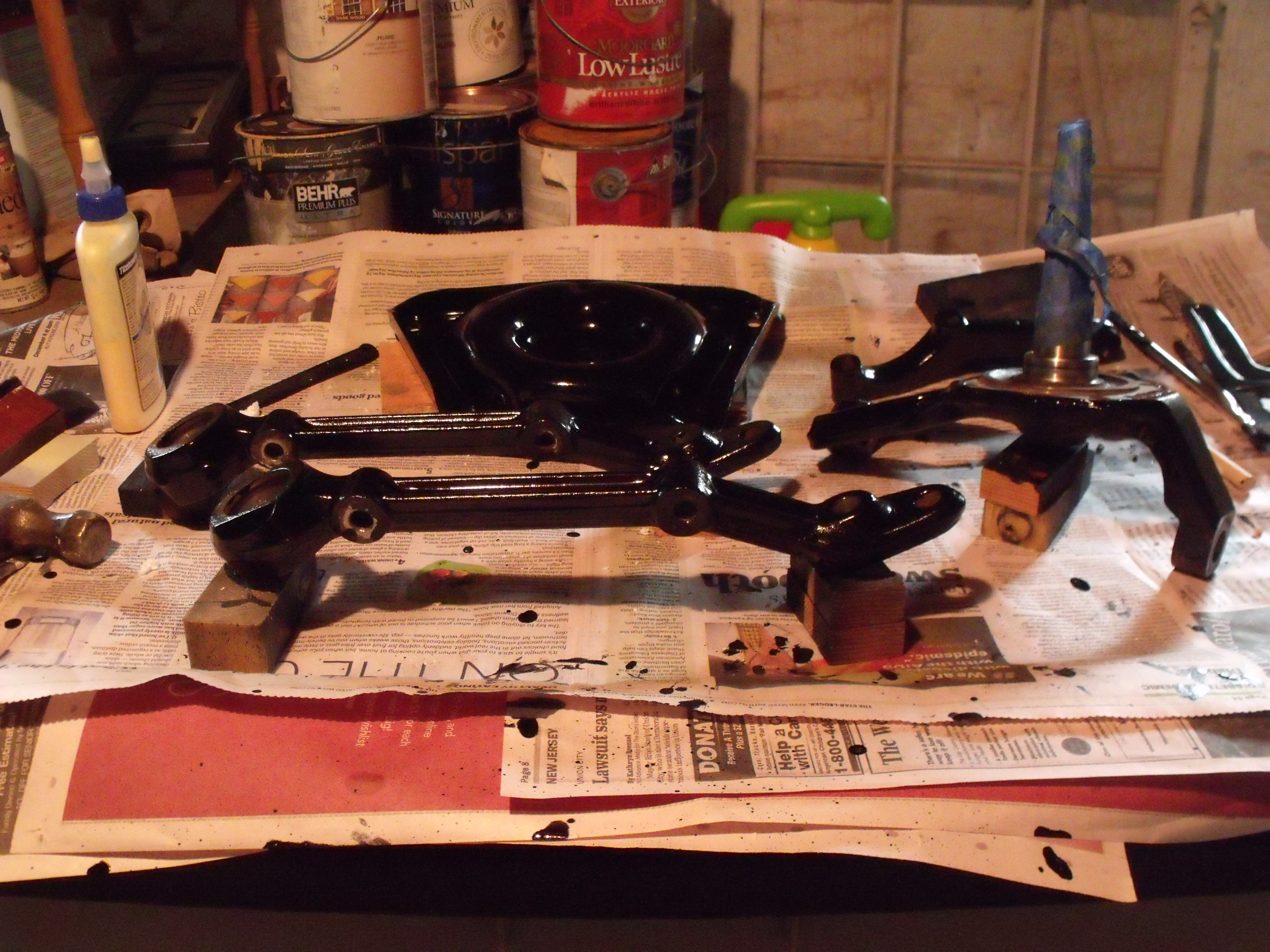
Mike and Larry needed to move on, and after profusely thanking them, I continued a bit on my own. The 3-piece lower control arm was separated, and the arms with bushings as well as the caster arm were left soaking in penetrating fluid, so that the next steps in the disassembly could be accomplished. From here, it enters the phase I call “grunt work”: simple, almost mindless tasks that need to be done, and can be tackled an hour at a time after work during the week. Bushings need to be pressed out, threaded connections broken, then all components will be washed, prepped, and painted. Once that is done, it’s on to reassembly.
When I took the Alfa off the road at the end of the 2014 driving season last November, I decided that this year’s winter project would be a complete rebuild of the front suspension. Although the car drove and handled remarkably well, there were clunks and squeaks from the front which left me uncomfortable. A quick check with Pete, the previous owner, confirmed that he had not rebuilt the front end during his stewardship. Convinced that all bushings and ball joints were original to the car, I decided it was time.
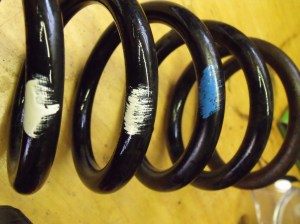
Having done this kind of work on previously-owned collector cars, most recently my 1968 Mustang, the same approach was used: disassemble only ONE side of the suspension, so that in the worst-case scenario of “how the #$&% does this go back together again?”, I would always have the assembled OTHER side to use for reference. With the Alfa, there was also the admittedly minor concern that since the shop manuals I owned did not describe the procedure in detail, some or most of the work might fall to “figuring it out as I go”.
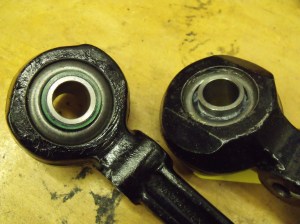
Some technical words about the 1967 Alfa Romeo Giulia Sprint front suspension: on the surface, this is a conventional suspension design, with upper and lower control arms, coil springs situated between the lower arm and crossmember, tube shocks, caster arms, and sway bar. The spindle rides on upper and lower ball joints connected to the respective control arms. In detail, there are some unique and fascinating design elements. The lower control “arm” is actually three pieces, joined by bushings and a ball joint. The bushings are not conventional rubber bushings, but are heim joints (like a ball and socket) enclosed in a steel casing and pressed into two of the arms. The lower spring seat bolts to the lower control arm and so can be removed and reinstalled separately. The caster arm serves as a fore-aft locating arm for the suspension, and is attached to the body of the car with a heim joint. The overall effect is a suspension which has an almost perfect combination of suppleness and control, with very little lean.
As I write this in March of 2015, let me explain that the first side I tackled (left side) is now almost completely done. That was the side to learn on – components were not always disassembled in the best order, I did not always give complete attention to the way things came apart, and so on. This is typical for old-car work that stretches out over a number of weeks. This blog entry, entitled “Part 1”, will pick up for the most part at the beginning of the second (right) side of the suspension. In this way I hope to better capture the logical order of performing the rebuild, now that I’m making my sophomore effort.
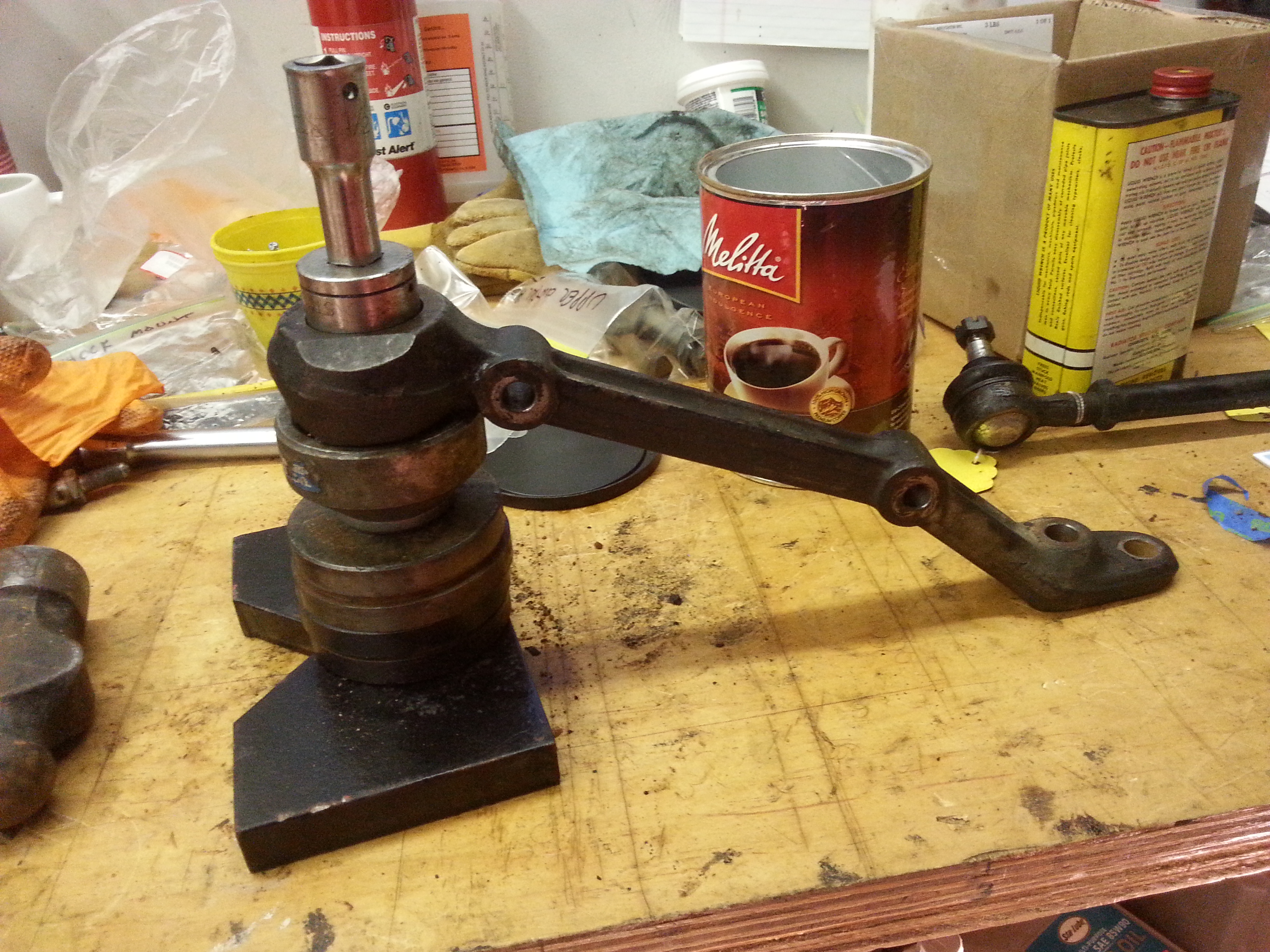
Early in the month of March, we finally had a winter day of temperatures reasonable enough to spend a few hours in the garage. One habit I’ve practiced with all my restorations is to take as many ‘before’, ‘during’, and ‘after’ photos as possible. In today’s digital world, it’s too easy to accomplish. So on Day One of this suspension rebuild, I dutifully took as many photos as I could of the pieces I was about to remove. I also decided it would be prudent to remove the brake caliper, disc, backing plate, and hub as a first step (I had left them in place when working on the first side, and they only got in the way).
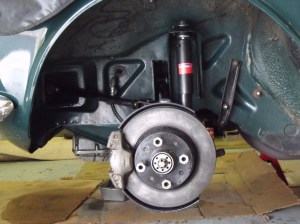
Alfa right front suspension before disassembly, from the side
Alfa right front suspension before disassembly, from the front
Alfa right front suspension before disassembly, from the rear
Alfa front shock, off the car
Alfa right front suspension, brake lines
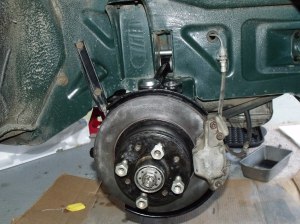
Alfa right front suspension, caliper, disc, hub, and backing plate removed.
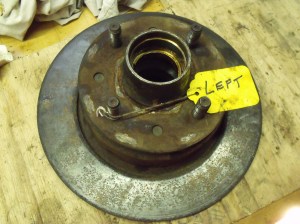
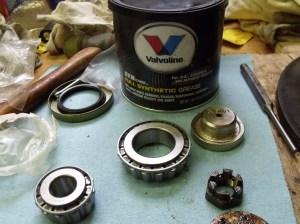
Alfa right front hub and wheel bearing
The impact gun made short work of this effort. Once those were off, the front shock was unbolted, and I photographically documented the markings on it, as I believe these shocks are original to the car. At this point I had some components which could be cleaned and prepped for painting. The next step would be the somewhat tricky removal of the front spring. This would wait until one or two friends could join the party and provide some needed assistance.
My wife and I just returned from a long weekend (5 day) trip to Los Angeles and its surrounding environs, primarily to visit her brother, whom we see all too infrequently. For me, it was another chance to immerse myself in southern California car culture. As a lifelong resident of the NY/NJ metro area, California has always been a car lover’s heaven. From my first visit here in 1977, through many subsequent business and personal trips, I have been in awe of “the land where cars don’t rust”. Walking down the street is analogous to attending an old car show back east. Car models which disappeared from my local streets eons ago have always seemed to be in plentiful supply in the Golden State.
Except this time, it was different. Perhaps because we stayed in a more concentrated and wealthy area (West Hollywood and Beverly Hills), the number of old daily drivers (informally defined by me as cars and trucks between 15 and 30 years old) was low. What stood out more was the incredible number of high-end cars. I’m not speaking of Mercedes Benzes, which were as common as Toyotas and Hondas are at home. I’m referring to Rolls Royces (3 while sitting in one restaurant), Ferraris (so common that people don’t turn their heads), Teslas (easily a dozen+ per day), BMW i8s, and Audi R8s. Topping this list was a Bugatti Veyron being driven down Sunset Blvd. Although I’ve seen the car at car shows, this was the first time I saw one moving under its own power on a public thoroughfare.
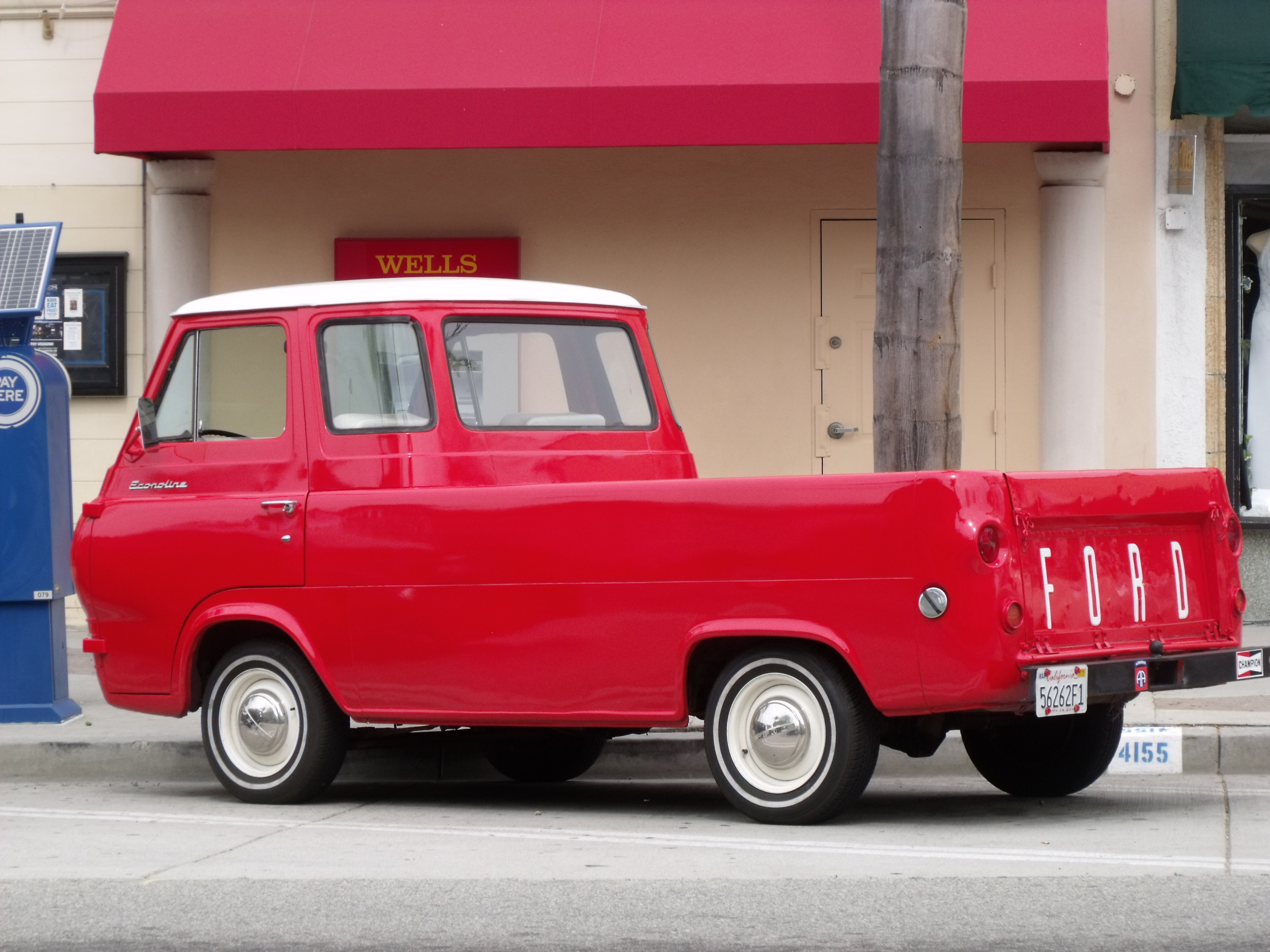
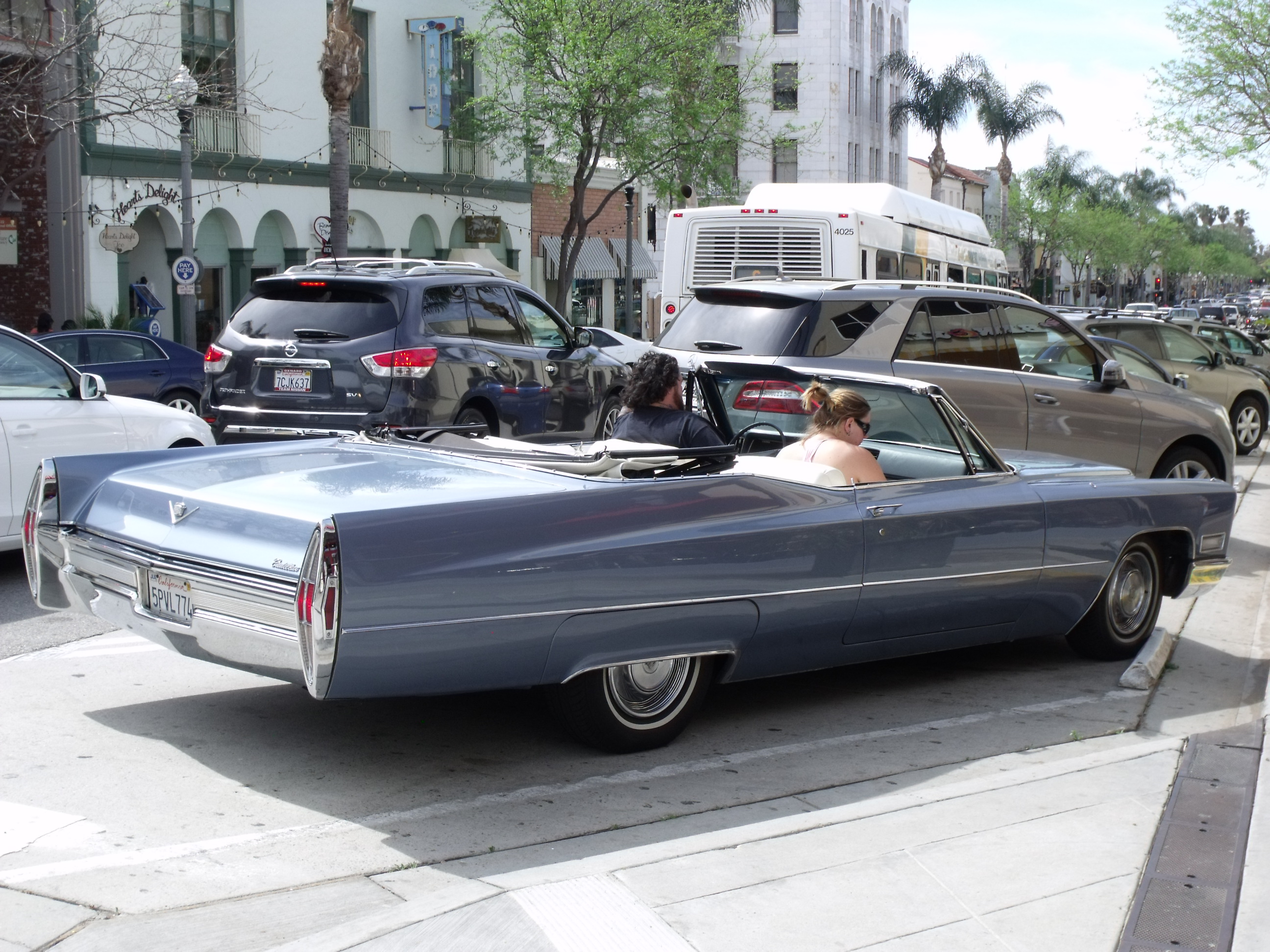
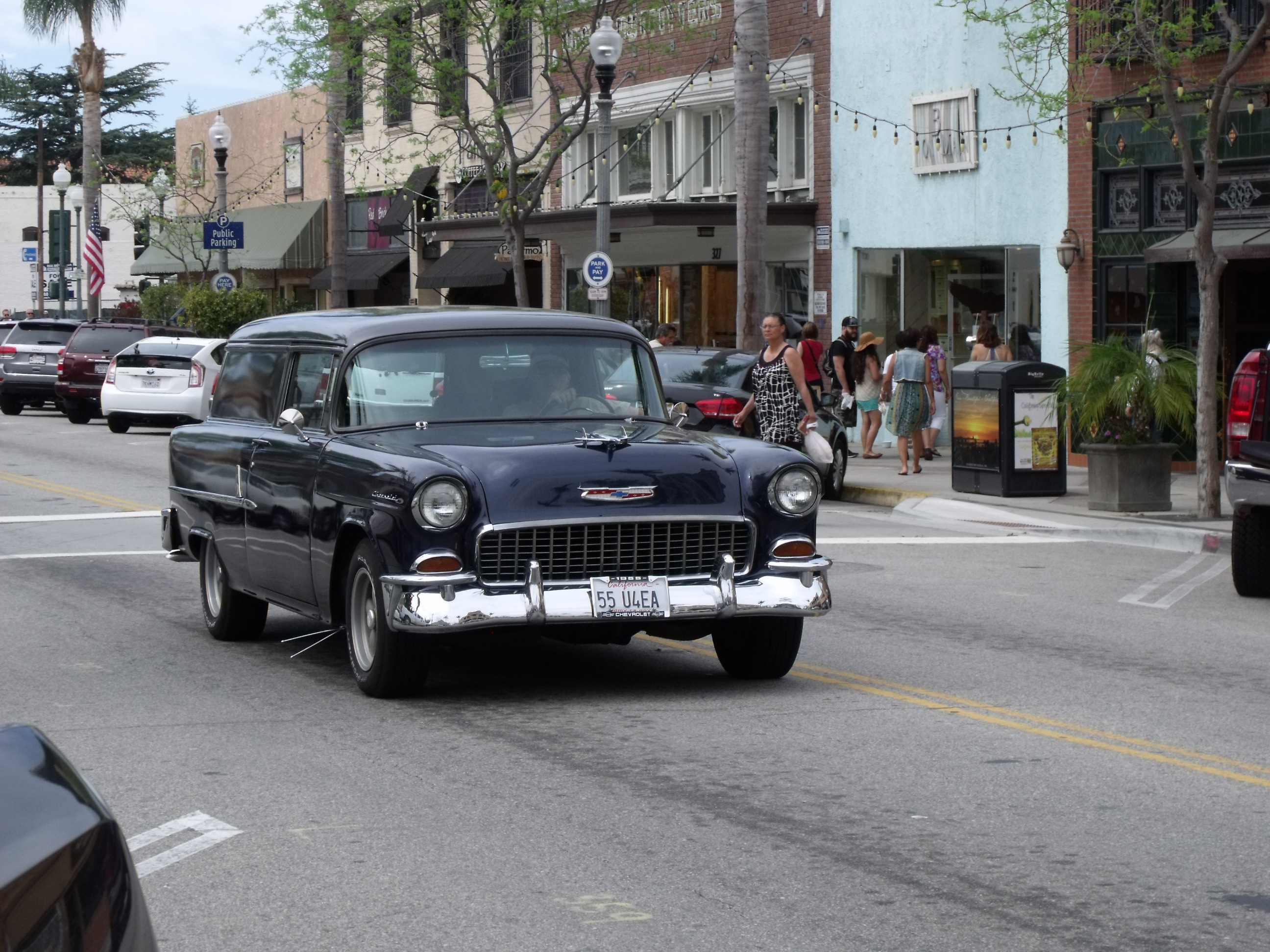
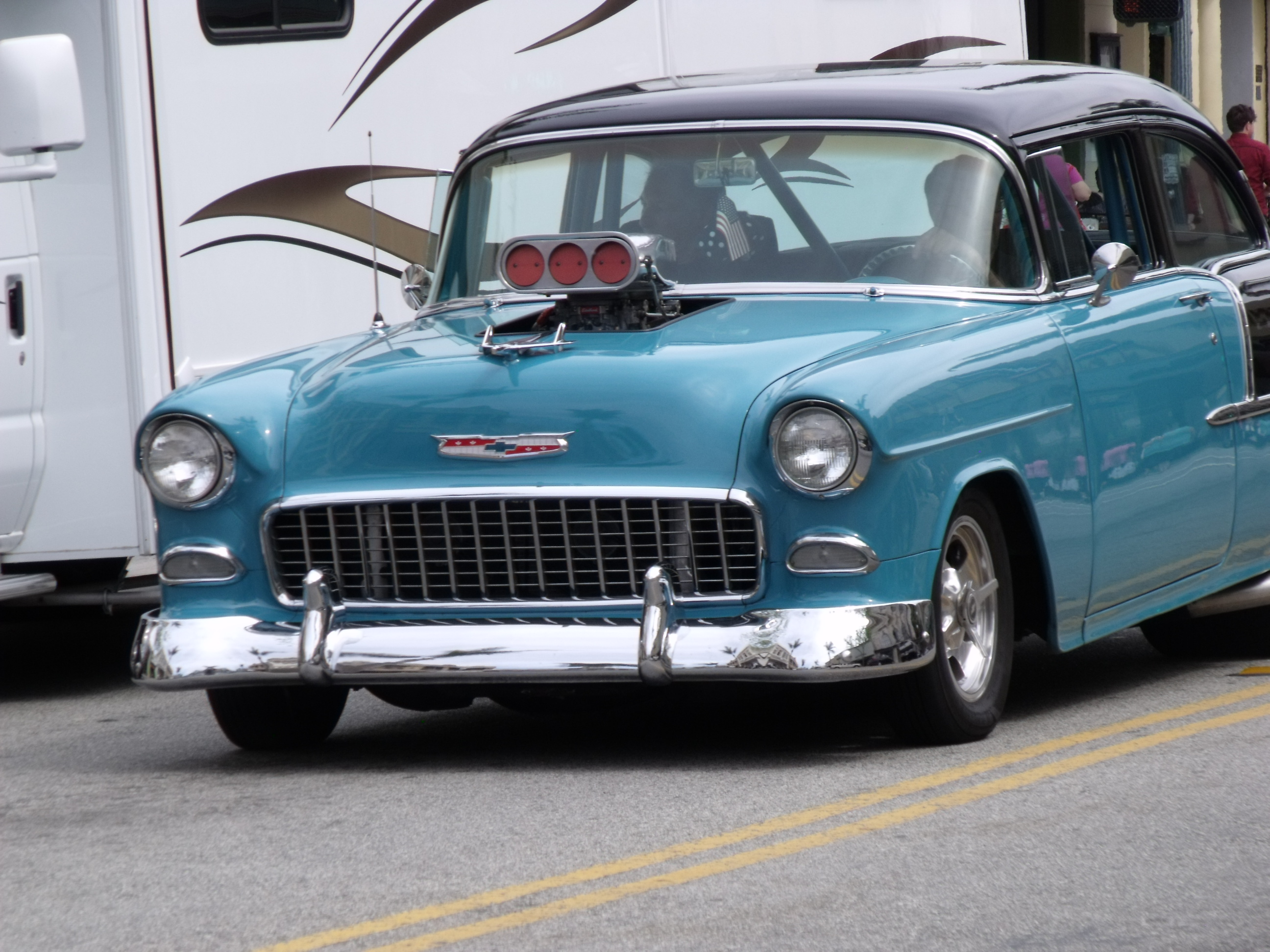
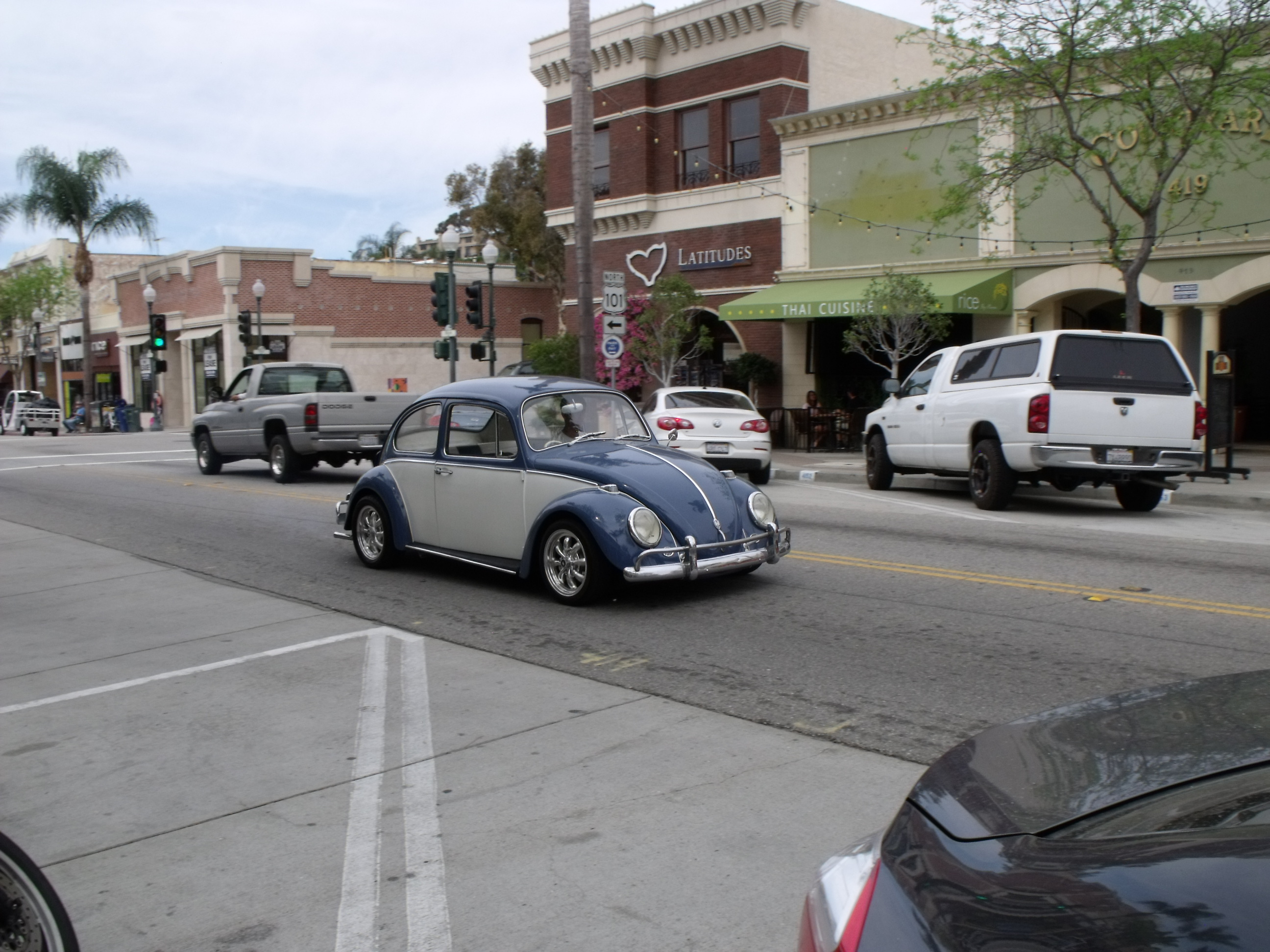
On Sunday, we drove to the charming shore town of Ventura (memorialized in the song “Ventura Highway” by America). As it was a weekend, I had the opportunity to see vehicles which likely were taken out for cruising. Parked on the street were a Ford Econoline COE (cab-over-engine) pickup, a Porsche 914, and a 1968 Cadillac convertible. Cruising the streets were two ’55 Chevrolets, several VW bugs (kids, these were the original Beetles with rear-mounted air-cooled engines), and a Toyota Land Cruiser which, in spite of its original-looking CA plate, disproved my idea that these things don’t suffer from the tin worm out here.
Ford Econoline pickup in Ventura CA
Porsche 914 in Ventura CA
1968 Cadillac convertible in Ventura CA
1955 Chevrolet wagon in Ventura CA
1955 Chevy hot rod in Ventura CA
’60s era VW Beetle in Ventura CA
’70s era VW Beetle in Ventura CA
A quite rusty Toyota Land Cruiser in Ventura CA
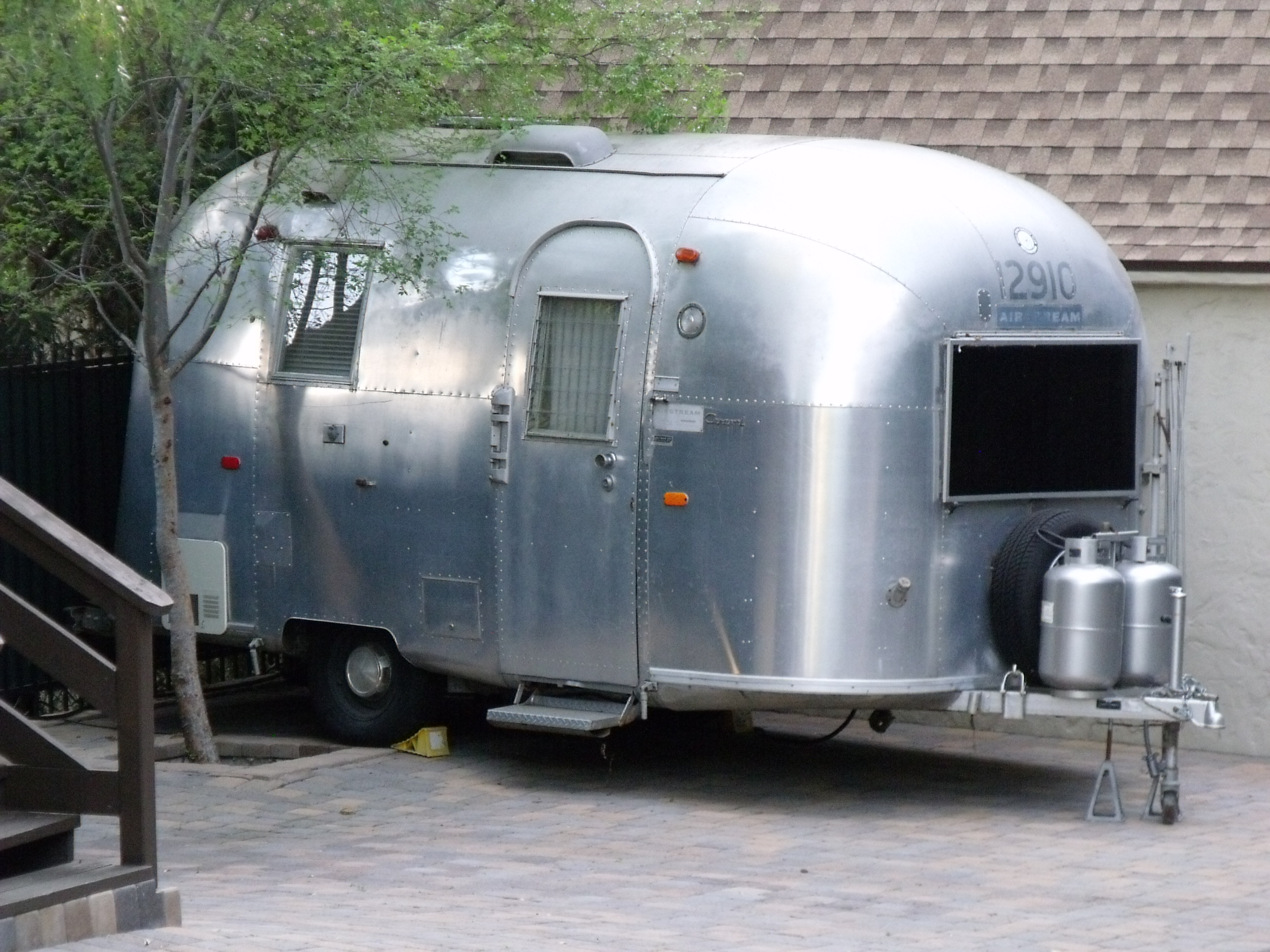
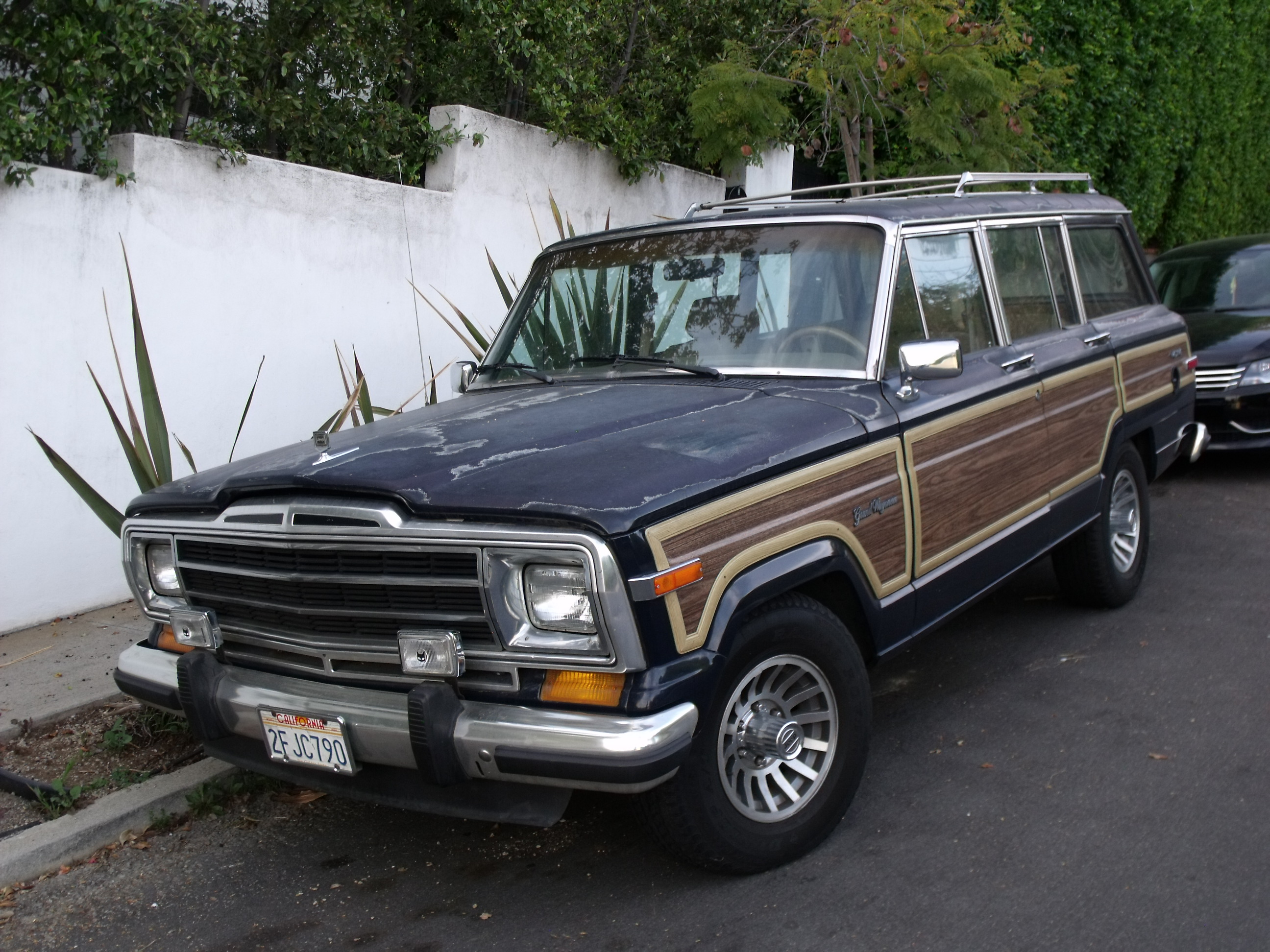
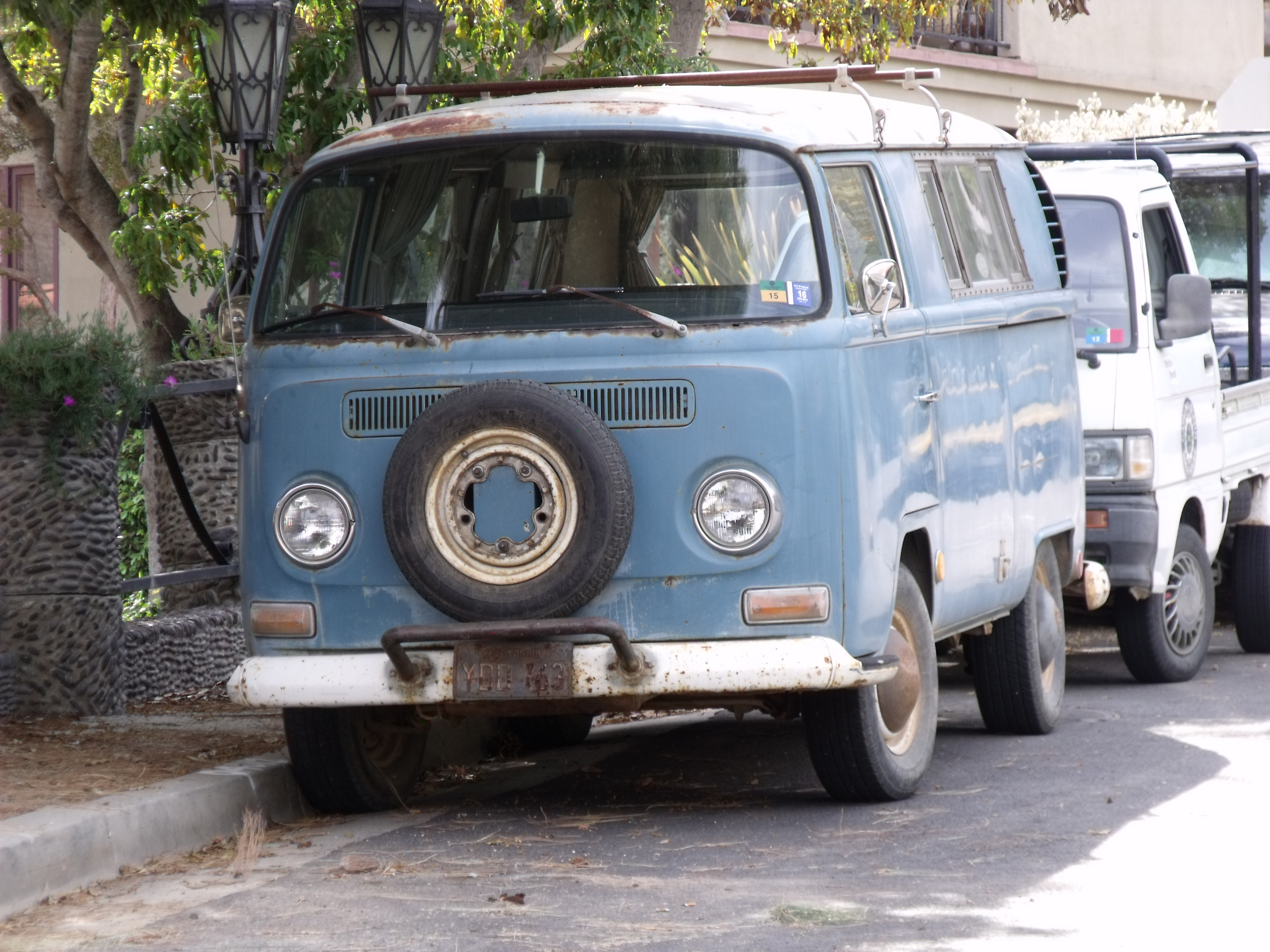
There were other cars to be found, although opportunities to photograph them were slim as we always seemed to be in a vehicle and on the go ourselves. Around the corner from my brother-in-law’s apartment was this gorgeous Airstream trailer, patiently waiting until it was time to hit the road again. One block from there was a Jeep Grand Wagoneer. Its paint was shot but its sheet metal looked solid. It caught my eye because I had just seen one sell in Atlantic City less than a month ago. And on Catalina Island was a VW Transporter, almost as rusty as the Toyota. I guess living near the ocean will eventually take its toll, even here.
While there were other vehicles of interest to be seen, there was no chance to photograph them all. Alas, the long weekend came to an end all too quickly. I’m back home in NJ, where the weatherman is predicting several inches of snow for the first day of spring! Hmm, need to plan that return visit to L.A.
Sometime during 2012, my friend “Pete”, the owner of the 1967 Alfa Romeo which I desired to purchase (read up about Pete and me in Part 1 and Part 2), had gotten more serious about his readiness to sell the car. Allow me to explain. Pete had started to tell me that “other people” who knew of the car were expressing interest in it. While Pete did not explicitly state that he would sell the Alfa out from under me, I did realize that if the moment I had been waiting for since 2005 were here, I was not ready! I had neither the garage space nor the spare coin to make the Alfa mine. Action was needed.
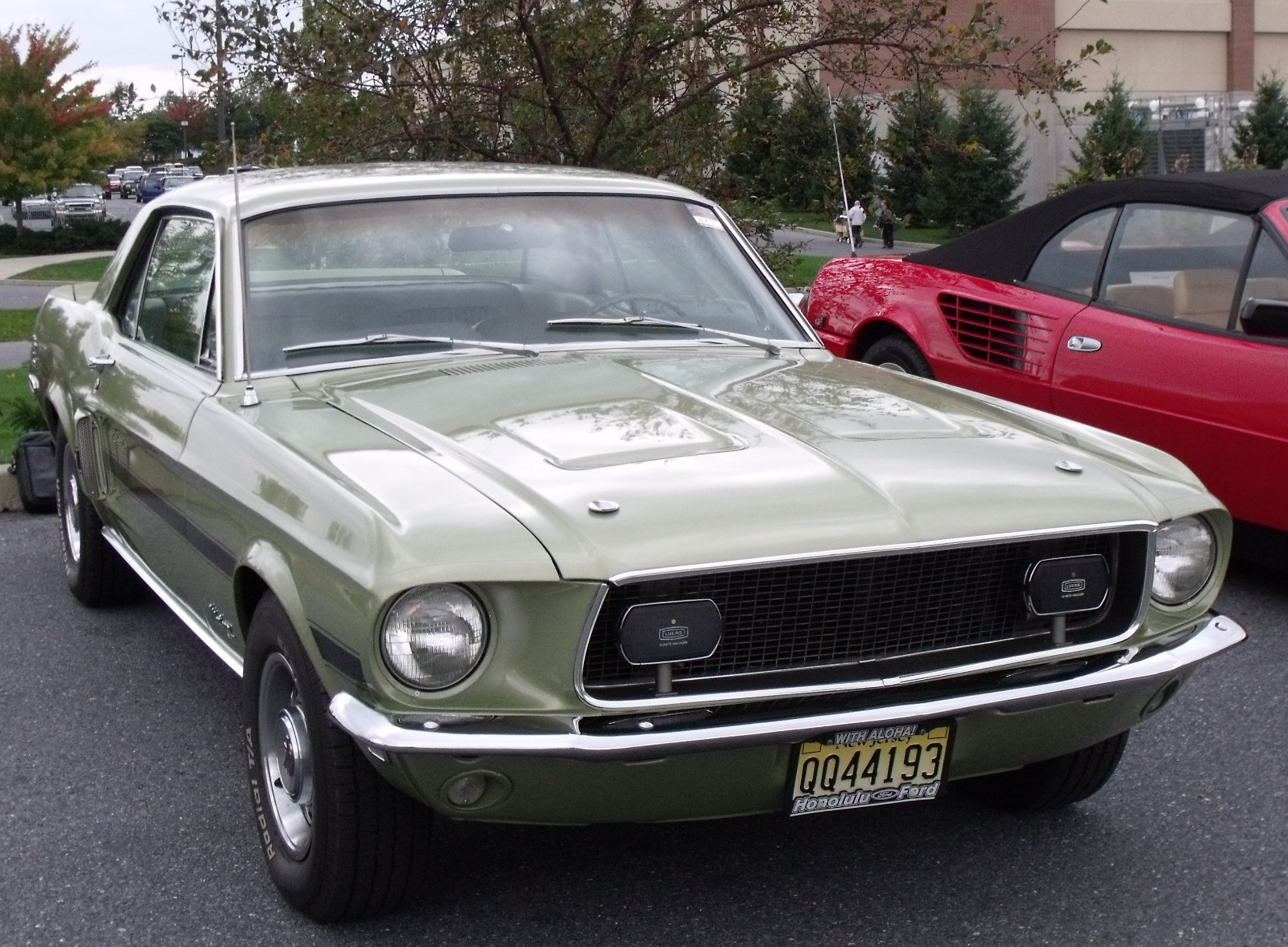
At that time, there were five motor vehicles in our household: my wife’s 2012 Ford Focus, my 2003 Volvo V70 (both daily drivers), and my three collector cars: the 1957 BMW Isetta, 1968 Ford Mustang California Special, and 1993 Mazda Miata. One of the collector cars would need to go. To be fair, I had made some half-hearted attempts to sell the Isetta. A few years prior, I ran ads in national collector car magazines offering the car for a price in the high teens. No takers. Instead of the Isetta, admittedly an acquired taste, it seemed that the Mustang would be easier to sell, as it would appeal to a broader audience. I had owned it for nine years and was ready to let someone else enjoy it. The details regarding preparing the Mustang for sale will be saved for another blog entry. The decision was made that I would drive the Mustang to Hershey in October of 2012 and put it up for sale in the car corral. That was done, and the sale completed.
The 1968 Ford Mustang California Special in the Hershey Car Corral, Oct. 2012
Two weeks after Hershey, Superstorm Sandy struck the East Coast of the U.S. Immediately after that storm, Pete and I began an email exchange that over a period of several months led to some incredible decisions. I will let the emails themselves tell the story.
Date: Mon, 5 Nov 2012 Subject: Rain rain go away
Hi Richard,
I am not sure how you fared in Sandy. I know Pam has talked to Margaretanne and she said you did get some water rise. Hope nothing was damaged.
We had minimal storm damage here although the wind was enough to uproot some trees in the woods behind us.
Alfa is protected! Still has your name on it.
Pete
Sent: Sunday, November 11, 2012 Subject: RE: Rain rain go away
Hi Pete,
Amazingly, and thankfully, we “survived” Sandy. We never got the expected flooding (thank goodness) with only one inch of rain. However, like in many other areas, the wind knocked down literally hundreds of trees. We were without power for 4 days; work was shut for 2; and even after power came back, we had no internet or cable for another week. So I’ve not been on the computer much.
All my cars did fine. Of course, I’d still like to get the Alfa. Here’s my request: I’d like to buy the car in the spring, if you are so willing to hold onto it for one more winter. Let me know, since winter is almost here, if we can arrange a purchase at first thaw next year.
Best wishes,
Richard
Date: Mon, 12 Nov 2012 Subject: Re: Rain rain go away
Richard,
Happy to hear you received minimal damage. I spent hours picking up limbs and tree debris. We were only out of power for about 6 hours.
There are several people who have expressed an interest in the Alfa…. I can think of no one who I would rather transfer title to the Alfa than you.
You need to give me a price that you are willing to pay for the Alfa. Money is not the reason for selling as you well know. The Alfa needs to go. Can I wait? I suppose so.
Take care, it was great seeing you at Hershey,
Pete
Sent: Sunday, November 18, 2012 Subject: RE: Rain rain go away
Hi Pete,
Thanks for the update on the Alfa; I went back and looked at my photos. We first visited you in 2005! I cannot believe that it was 7 years ago when I first drove that car. Of course, you would have others interested in it, and I deeply appreciate the fact that you understand that I would keep it and treasure it (and drive it!). Not totally certain of values myself, I did some research, and want to offer you a number which is fair to you and to me – $XX,XXX seems right for its condition and value. Can we make a gentlemen’s agreement (deposit is no problem) that I will finalize the deal by April 2013?
Best,
Richard
Sent: Sunday, November 18, 2012 Subject: RE: Rain rain go away
Greetings Richard,
If you are comfortable with that offer than it is acceptable to me. I would like to see you have it sooner, but let us say whenever you have the room or sold the Isetta or by end of March 2013, whichever comes first. There is no need for a deposit.
Next were several phone calls to verify details, as this series of emails starts in January 2013:
Sent: Tuesday, January 15, 2013 Subject: next steps
Hi Pete,
Happy New Year! I want to get the ball rolling on the Alfa business, as we’re having a mild winter so far. I am ready to send you a check for $XX,XXX. Once you get the check, I’d ask you to send me the title, properly endorsed, so that I can get license plates and insurance. At that point, once we have a clear dry weekend, we’ll come out for the car, and I’ll be able to drive it home legally.
Let me know if this all sounds good to you. Thanks.
Richard
Date: Tue, 15 Jan 2013 Subject: Re: next steps
Richard, Greetings and Salutations,
I would be happy to comply but I had been planning on bringing the car to you when you were ready. I have numerous extras that go with the car and if I can “borrow” my car carrier from the person to whom I sold it, I could transport it all to you at one time.
I would hate to see you drive away from here only to have the car break down before you get it home. Shit happens with antique autos as you are well aware!
Thanks,
Pete
Sent: Wednesday, January 23, 2013 Subject: RE: next steps
Hi Pete,
As they say, “the check is in the mail”. You may even have it by now. I also mailed 2 copies of a Bill of Sale; one for each of us. I’ll need a completed one to register the car.
Let’s stay in touch re: the weather and a free weekend, and we’ll see what comes up!!!
Thanks for everything,
Richard
Good evening Richard,
This weather is brutal, I will certainly need a decent day to load and transport it, providing I can borrow the trailer when I want it.
I know you say the check is on the way but do you want me to wait on the title transfer (and check cashing) and let me cover the car until it is in your hands? You had best make sure your insurance would cover me transporting the car. I am just being ultra cautious.
You friend,
Pete
Sent: Friday, January 25, 2013 Subject: RE: next steps
Hi Pete,
I have not thought this through as thoroughly as you have – perhaps it is better that you keep your insurance on the car during the transport – however, can you still go ahead and cash the check? In my opinion, you can, as the ownership does not transfer over to me until I have a signed title in my hands. I don’t want you to hold up your money.
Let’s hope things get milder weather-wise. I’ll write more in a few days.
Richard
Date: Sat, 26 Jan 2013 Subject: Re: next steps
Hello Richard,
Check arrived today, thanks. I can still borrow the car carrier but certainly now is not the time. I have asked my insurance Co. for coverage info and this is what they said – the car carrier is covered by the insurance policy for the tow vehicle. The car being transported is covered by the owner’s policy. Would you prefer to proceed with the title transfer now?
Call me if you want to discuss this further,
Pete
Sent: Saturday, February 2, 2013 Subject: RE: Your thoughts
Dear Pete,
I’m still very open to the option of coming out with Margaretanne and driving the Alfa back here! You’ve driven it round-trip to Hershey, which is about the same time and distance as a one-way trip for me. We just need a clear dry day with no salt on the roads. Is there anything about the car that you know of that would prevent it from making that trip?
If I were to do that, I’d want to be 100% legal. That would mean getting the title from you so that I could register the car, and come out with the correct plates. In a lot of ways, this solution is the “cleanest”. February has some open weekends for me, however, March weather may be more favorable. Let me know what you think.
Thanks so much!
Richard
Sent: Saturday, February 2, 2013 Subject: RE: Your thoughts
Dear Richard,
The Alfa has always been a fair weather car for me. The car was put in hibernation last November and I have had it out twice since then to exercise it when the temperature was a balmy 50-60 degrees. The Alfa has a respectable heater but I am concerned about starting and running it at extended highway speeds over 60/65 when it is very cold out.
My longest trip last year was to Reading PA for an AACA meet and that was in April/May and on Route 30 to Lancaster and North to Reading at speeds of 55/60 max with no problems. That was the weekend I had planned on borrowing “my” car carrier but at the last moment it was not available.
Regards,
Pete
Another phone call to iron out details, and we are in the final stretch of deciding how to move the car:
Date: Fri, 8 Feb 2013 Subject: your Alfa
Hi Richard,
Nice chat last night. Last weekend, anticipating your reply regarding the title and bill of sale, I did deposit your check. Hope that is O.K. with you. Do you want the title now or do you want me to keep the car covered under my insurance policy until you get it? A lot depends on whether you will actually drive it away or we transport the car either on an open carrier or enclosed.
If you want the car now, I would gladly split the cost for an enclosed transport.
Regards,
Pete
Sent: Monday, February 18, 2013 Subject: RE: your Alfa
Hi Pete,
Intercity said that they would work with us.
I’m ready to pull the trigger if you are. Questions:
• You said you had some extras to go with the car. Are these things you’d put in the car, or should I plan on making a trip out to you separately?
• Any tricks to starting the car?
• We still need to figure out title and insurance. Should we both have insurance on it during transport?
Let me know your thoughts on all this. Thanks!
Best,
Richard
We had agreed to let a known collector car carrier (Intercity) ship the car, with Pete and I splitting that cost 50/50. I then got this very nice and very unexpected email from Pete, summarizing what drove him to purchase the car in the first place:
Hello Richard,
I was enamored with Alfas back in the late 60’s when two of my close friends had Alfas. I was married with 3 children and they were both single. It took a lot of convincing before I made the purchase. I first drove a ’66 Alfa 1600 TI sedan. I put a deposit on it and subsequently the owner informed me that the Alfa had an engine fire. Not wanting to deal with that calamity, I pulled my offer and kept looking. I drove a Mercedes 200 sedan, new ($3000.) I took a BMW 2002 TI sedan home for the weekend and almost went with that. Then I answered a classified ad in the Washington Post for the GT Jr. One of my Alfa friends went with me and after a test drive he said if I don’t buy it he would! That was 45 years ago.
Take care,
Pete
On Saturday, March 9, 2013, an Intercity Lines transport truck pulled into the parking lot of the Wawa convenience store (yes) two miles from my home. The Alfa was unloaded, and I drove it back to my house. The grin on my face says it all.
March 9, 2013: The Alfa Romeo GT 1300 Jr. arrives in my driveway.
The process of purchasing a valuable collector car from a family friend was done at such a high comfort level that I wish it could be this way for all future transactions. This was a car that I had known about for eight years; I had numerous opportunities to drive it; the owner provided me with its full ownership history; he allowed me to select and pay the car’s “fair market value”; and he covered 50% of the transport cost.
I was the proud owner of my first Alfa Romeo, and the fun was truly about to begin.
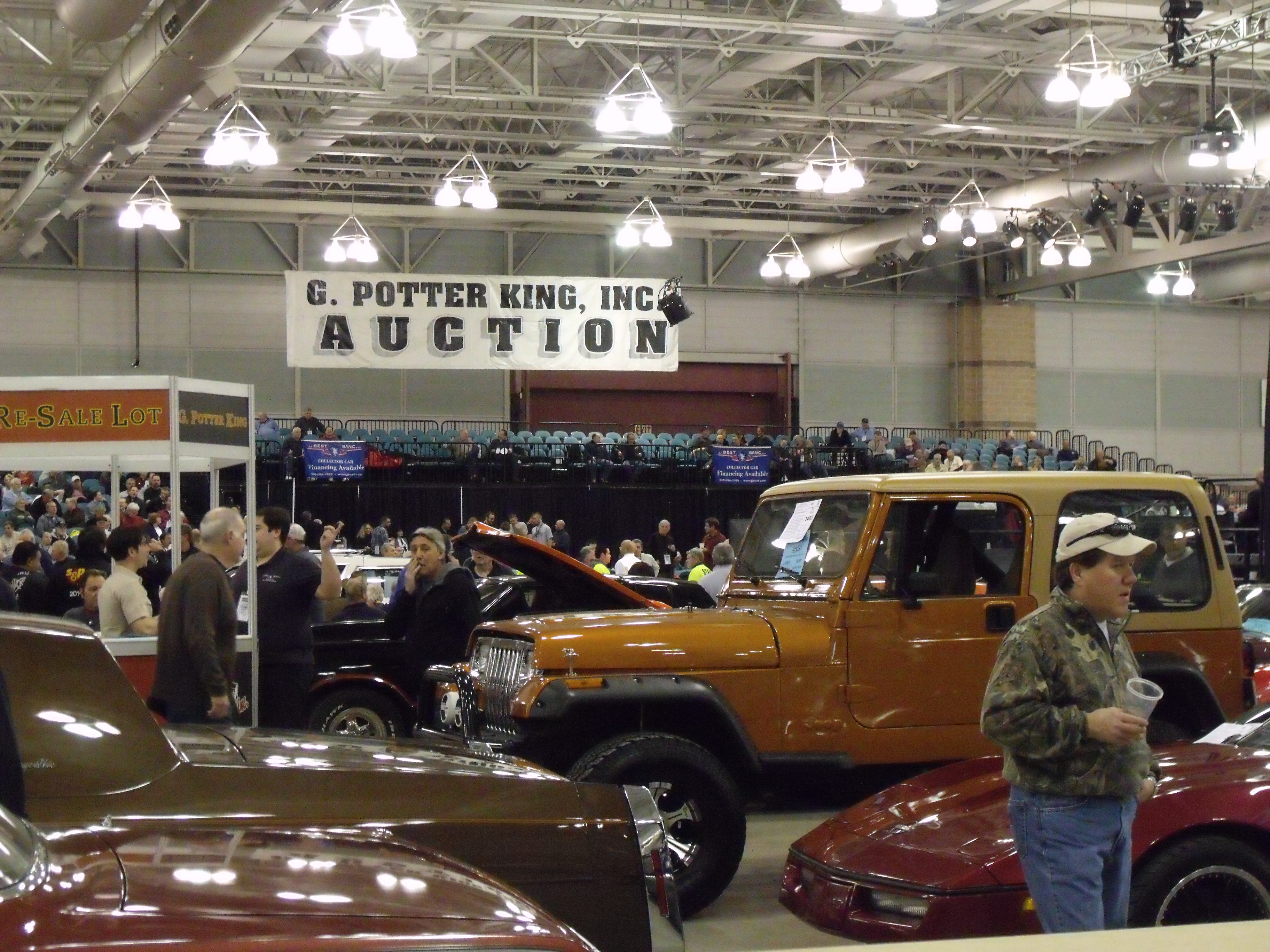
G. Potter King (GPK) Auctions returned to the Atlantic City NJ Convention Center for their annual auction, held this year from Friday February 27 through Sunday March 1. As usual, the 3-day auction included a car corral and flea market, all conveniently located adjacent to each other in the huge one-room building.
The GPK website states that they have been running the Atlantic City auction since 1985, which makes this year their 30th anniversary. Your scribe first attended in the early 1980s and has been back almost every year since. The event, first held in the old Boardwalk Hall and moved to the new Convention Center in 1998, has a number of positives. It has long stood as a mid-winter break for us East Coast car enthusiasts who put our collector cars away for the winter and have cabin fever by February. This auction house has relatively low fees, with buyers’ and sellers’ premiums at 7%. Entry fees vary, based on which day a car runs across the block. Friday is $450, Saturday is $550, and Sunday is $350. However, cars sold without a reserve are not charged an entry fee.
In spite of the positives, some less favorable trends were noticed this time. First, the vendors who usually occupy much of the (indoor) corridor space just outside the entrance doors were conspicuous by their absence. The automotive vendors who in the past have displayed their higher end vehicles at one end of the hall were also not present. It was this reporter’s casual observation that foot traffic and vehicle count were both down. These comments are balanced by noting that the quality of the consignments seemed to be better. There were fewer highly-modified cars and late-model “used cars”.
Any auction report can only highlight a small percentage of the cars on offer. As my personal taste runs to the European cars of the 1950s through 1970s, you’ll find most of the vehicles reviewed are within that category. The occasional American car is covered, especially if it is an orphan, or somewhat unusual. Given the recent rise in the collectability of the station wagon, several of them are highlighted below.
As this is my first auction report, I will point out that I have endeavored to show several photos of each vehicle (a minimum of two outside shots, and one shot of the interior and/or the engine compartment). A condition rating is assigned based on the familiar 1-to-5 scale. A price guide reference from either Cars of Particular Interest (CPI) or Sports Car Market (SCM) is shown next to the sale price or high bid. Sale prices are taken directly from GPK’s website, and it is refreshing to note that their published prices are the actual hammer prices, exclusive of premiums.
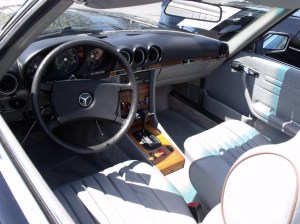
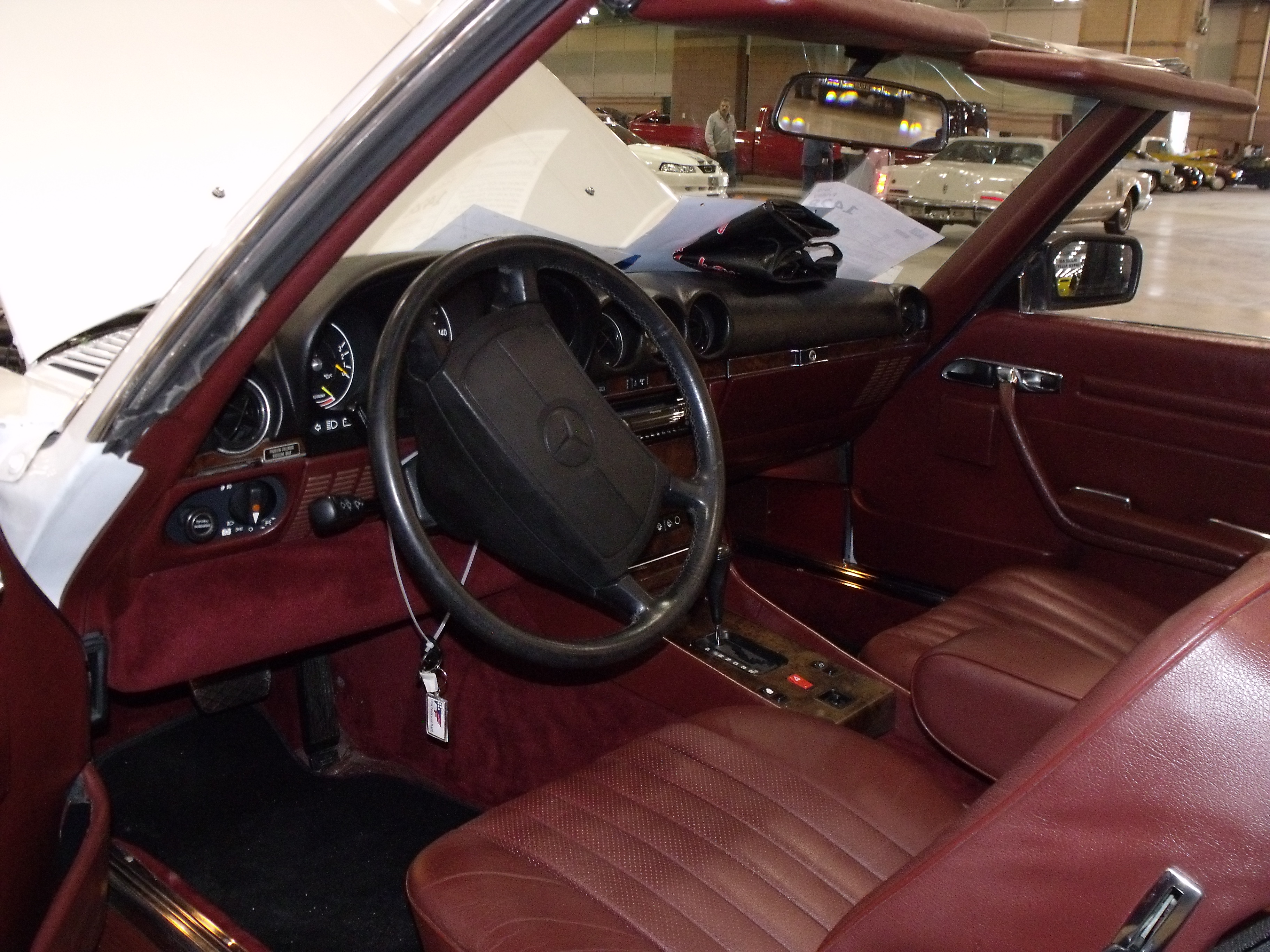
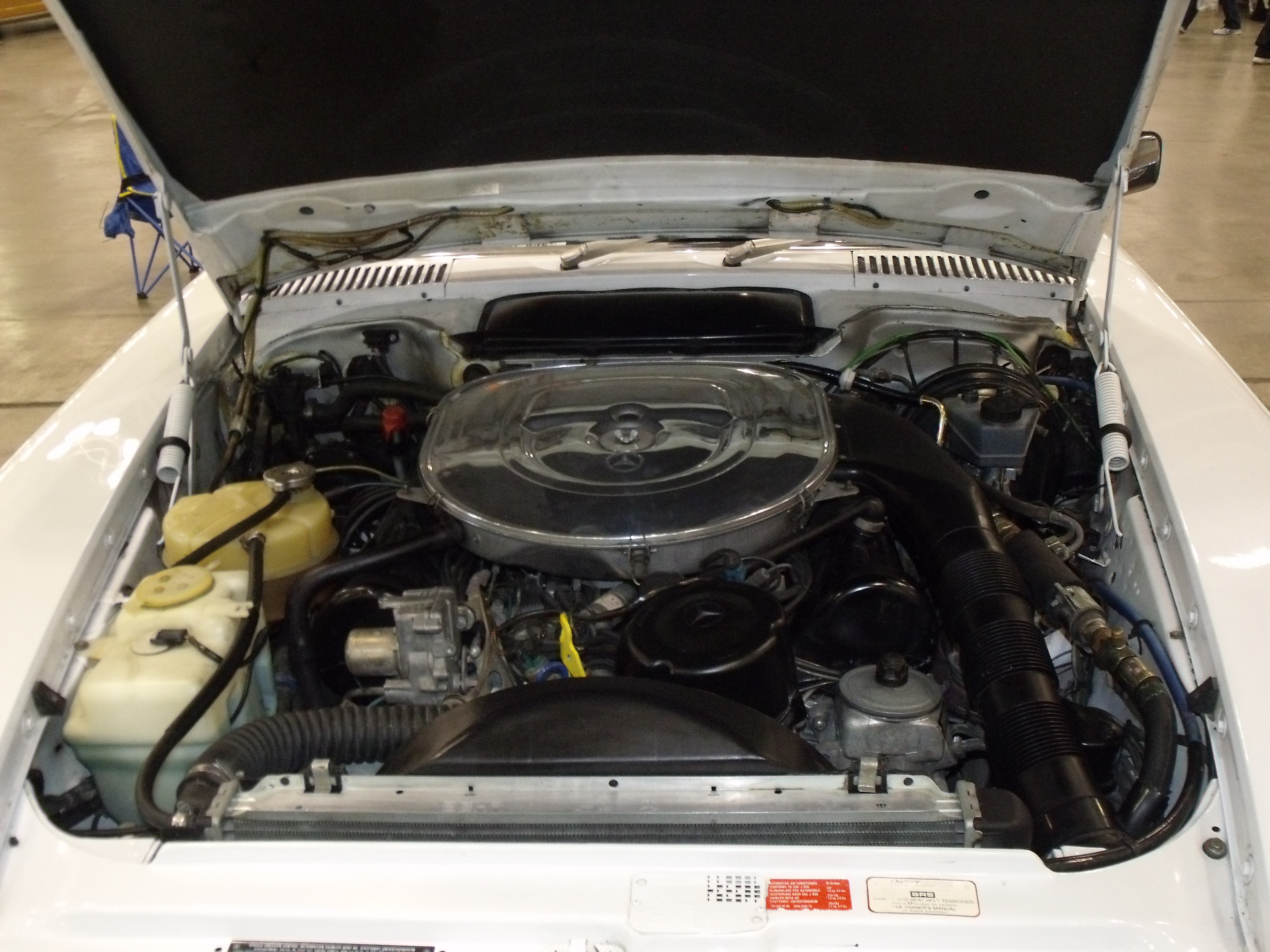
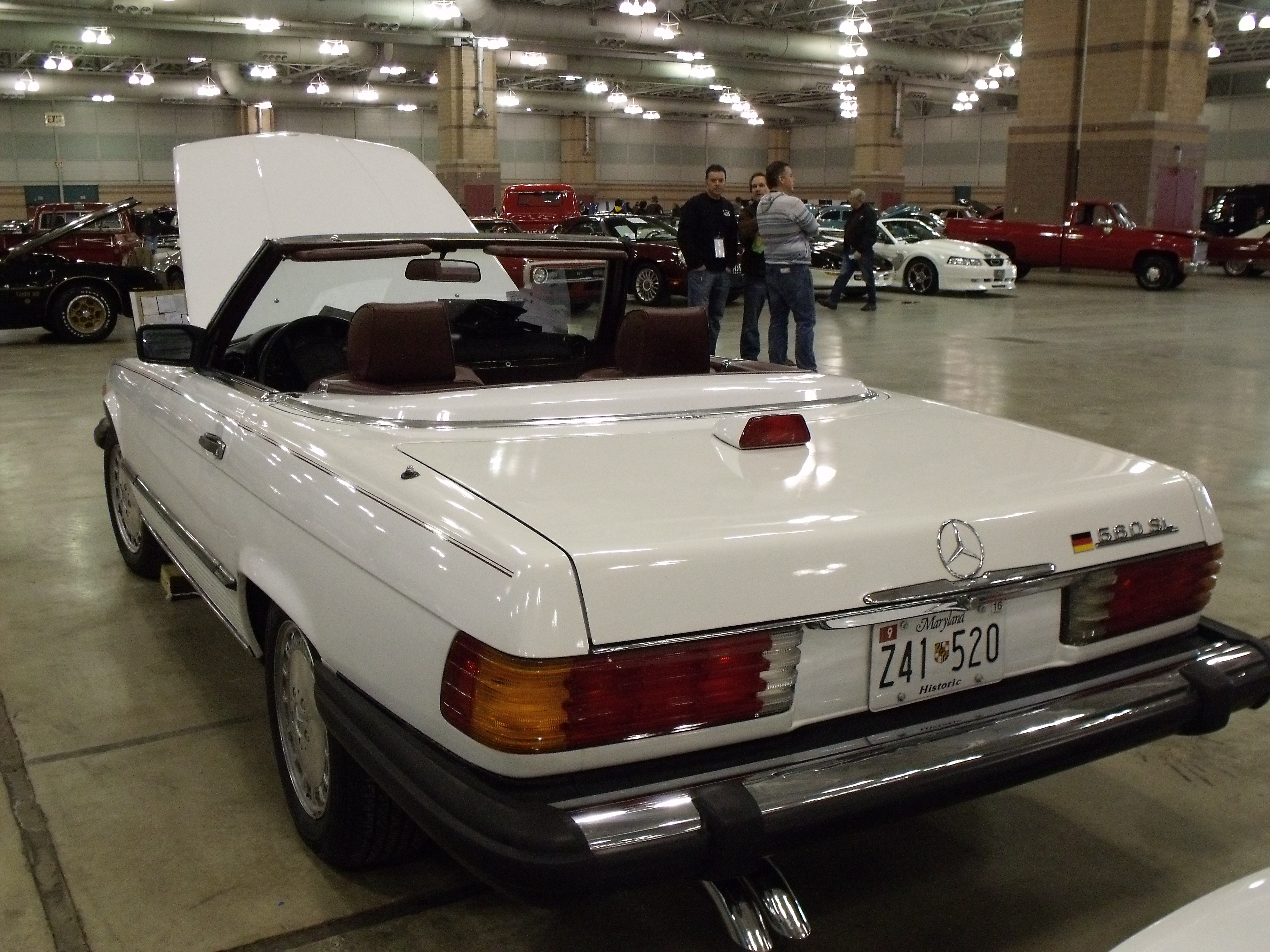
Lot #1428: 1987 Mercedes Benz 560 SL roadster. White with red interior, V8, automatic, 95,000 miles. Comes with 2 tops, white hard top and brand new black soft top, soft top not visible under boot. Front fog lights under front bumper. Paint might be original, in decent shape. Black wall tires on MB alloys. Interior very good, red leather with black dash and black steering wheel. No obvious defects inside or outside. Maryland plates. One of possibly 7 or 8 SL roadsters at the event, the color combo here helps this one to stand out.
• Condition: 2-.
• High bid: $9,500 (not sold)
• CPI range: $14,000-23,000
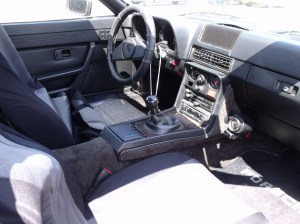
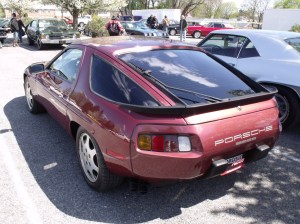
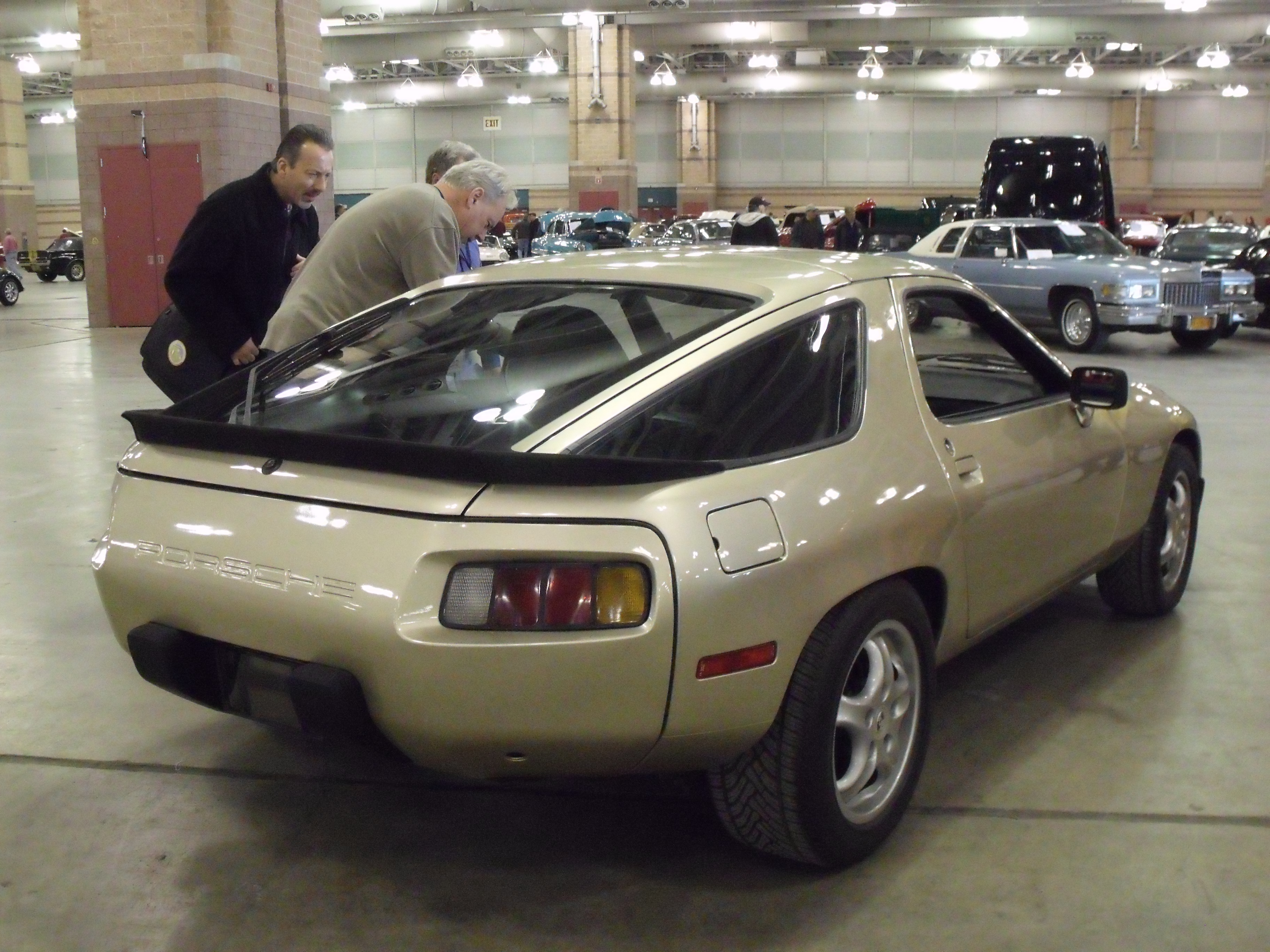
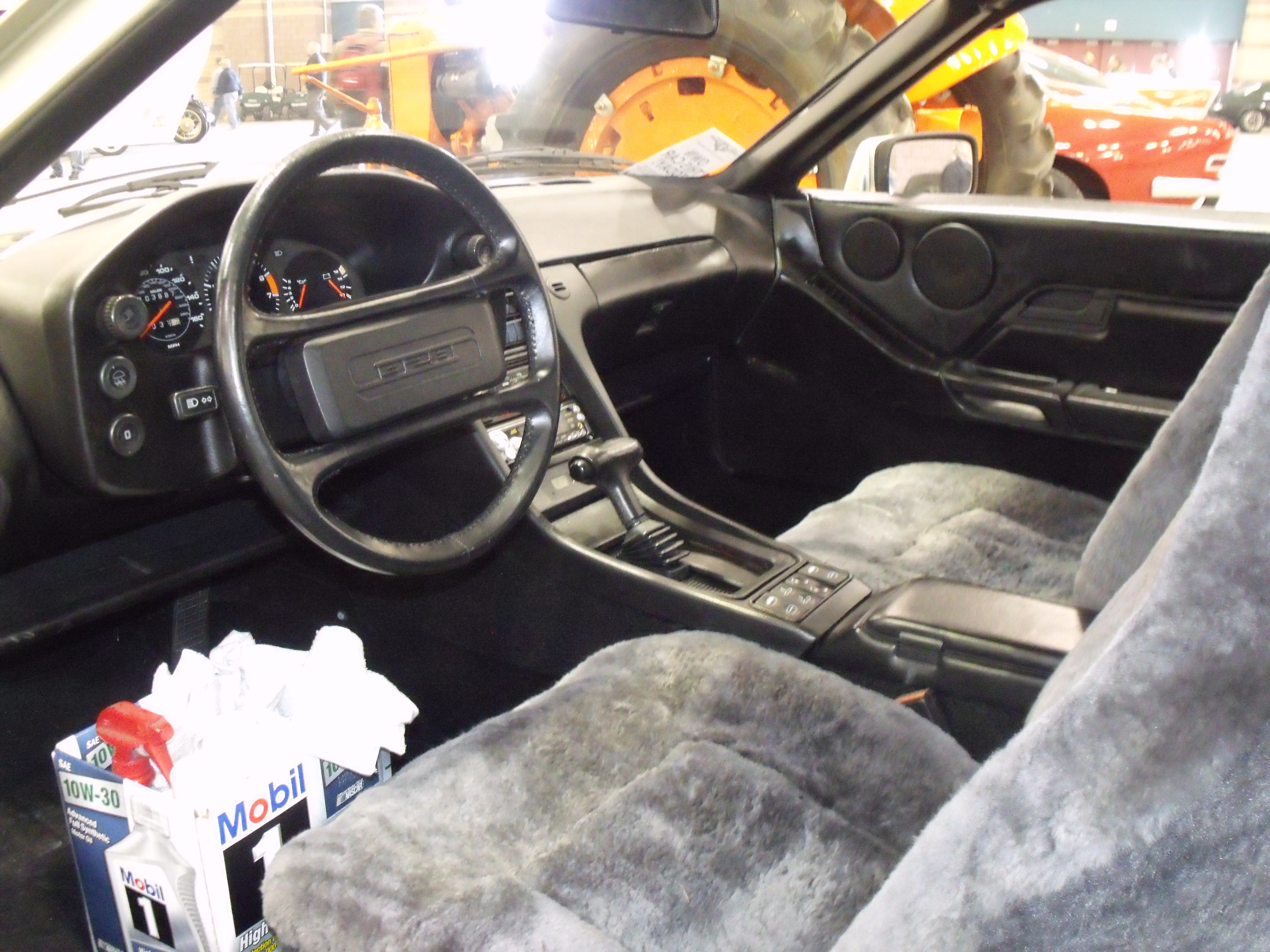
Lot #1440, 1984 Porsche 928. Champagne metallic, automatic, sunroof, black leather interior. Odometer reads 103,887. Car has been repainted, poor masking around windows detracts from what appears to be an otherwise quality job. This is the S model with small spoilers front and rear. Interior surprisingly good for a 928, with uncracked dash, little wear on steering wheel. Sheepskin seat covers on both front seats, however, a peek underneath shows intact black leather. FMVSS label confirms US spec car. Sign on car claims recent timing belt service. In spite of the miles, appears to have lots of life left.
• Condition: 3
• Sale price: $6,500
• SCM range: $9,000-12,000
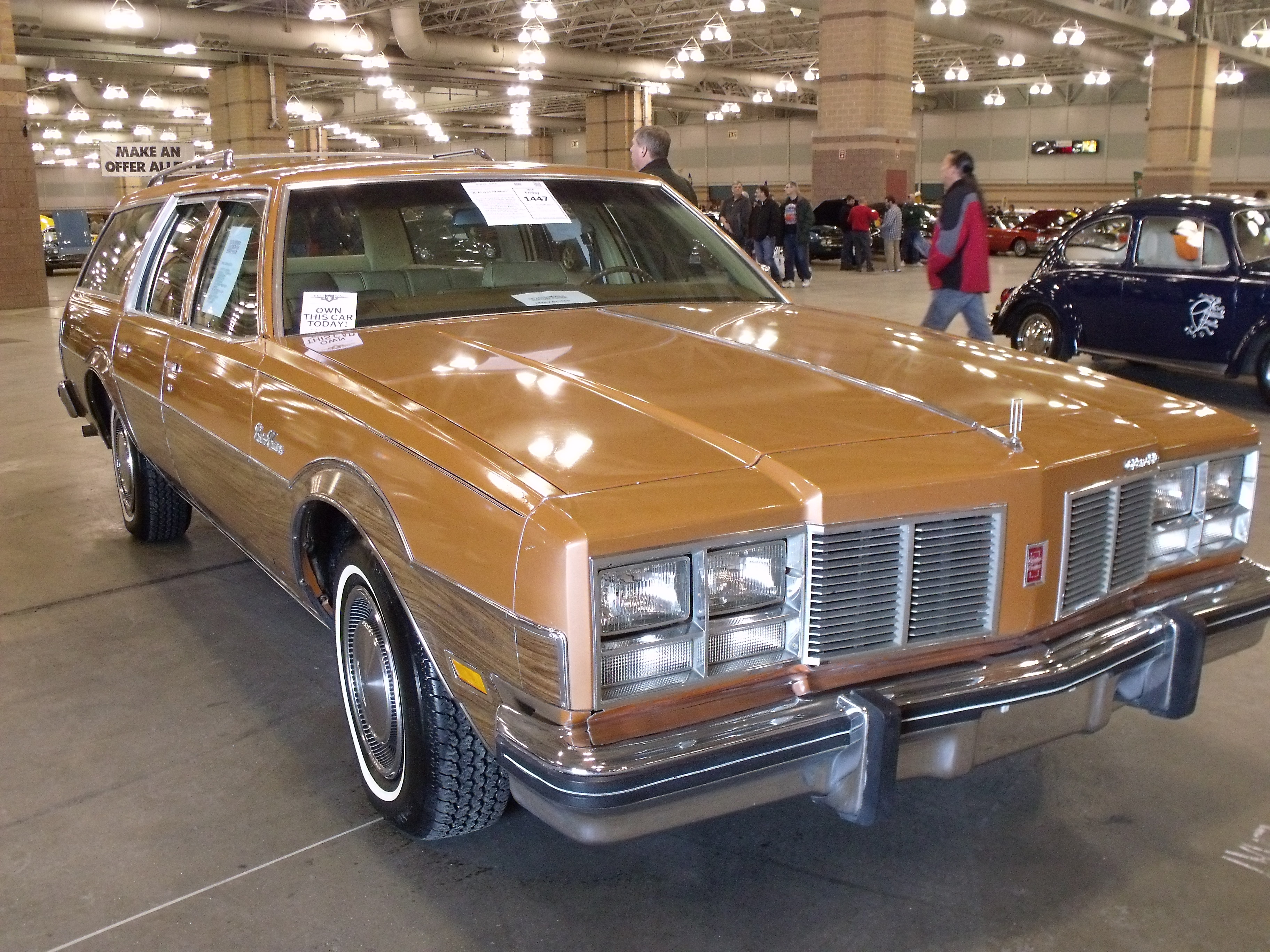
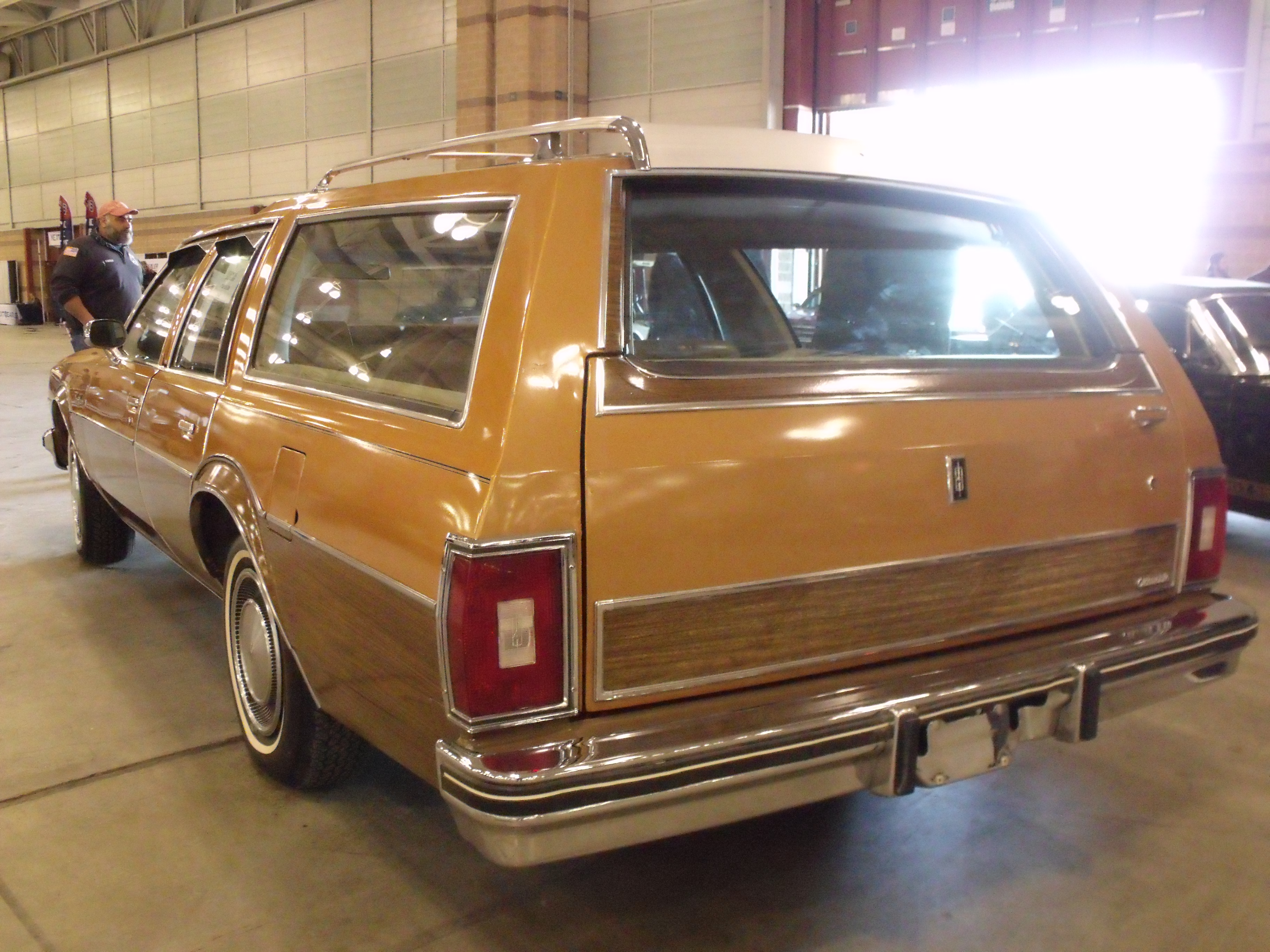
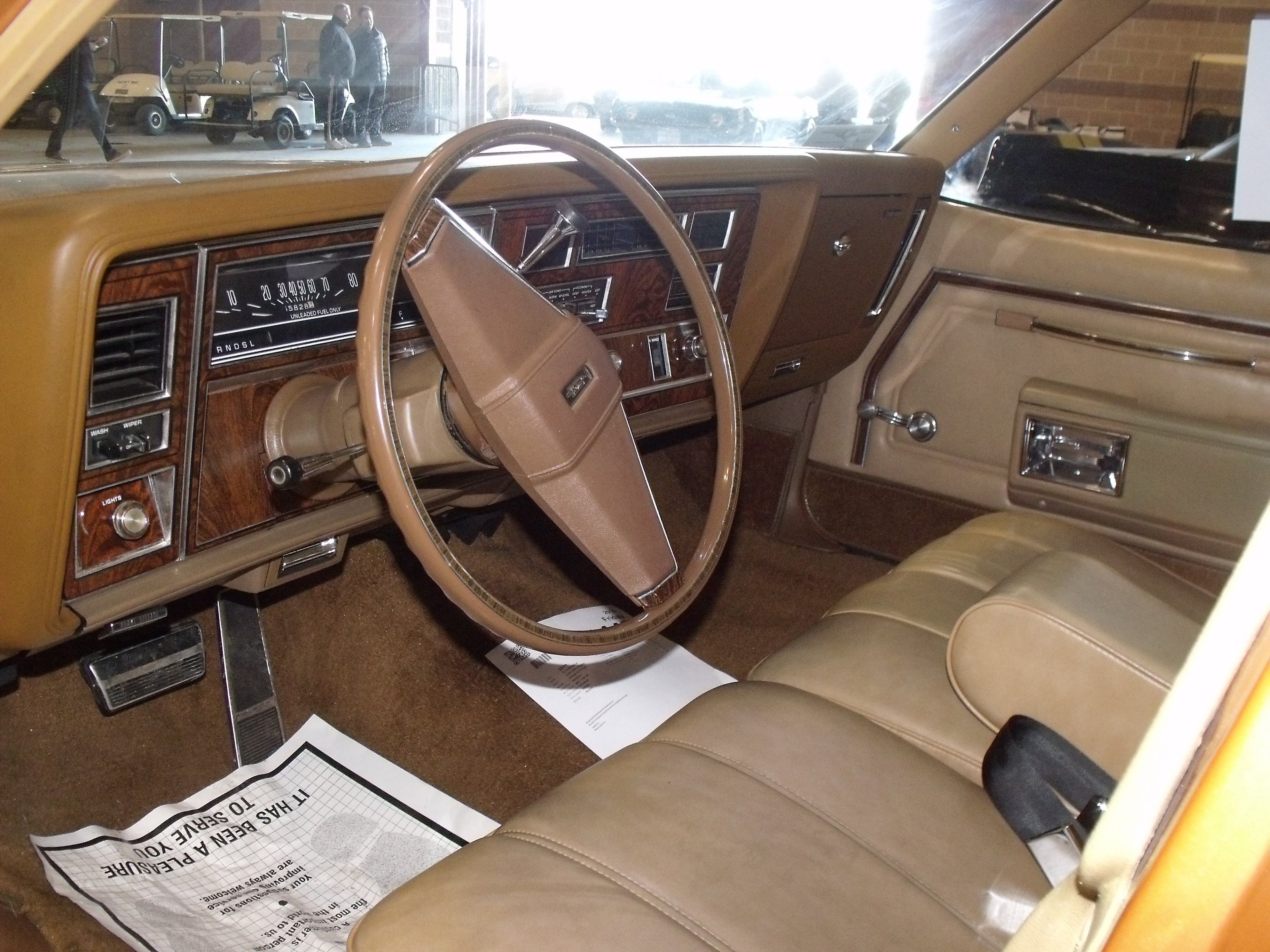
Lot # 1447, 1977 Oldsmobile Custom Cruiser woody wagon. Bronze metallic paint, brown vinyl interior. Odometer reads 55,828, sign on car claims original miles, sign also claims 2 owners. Outside, paint is faded but likely original, fake wood is good, full wheel covers with narrow whitewalls. Roof rack with “spoiler” over tailgate glass. All glass is good. Interior presents well, no rips or tears. An honest ’70s era wagon.
• Condition: 3
• High bid: $7,000 on Saturday, $6,500 on Sunday (not sold)
* Car was spotted in Car Corral with asking price of $9,800
• CPI range: $2,300-5,300
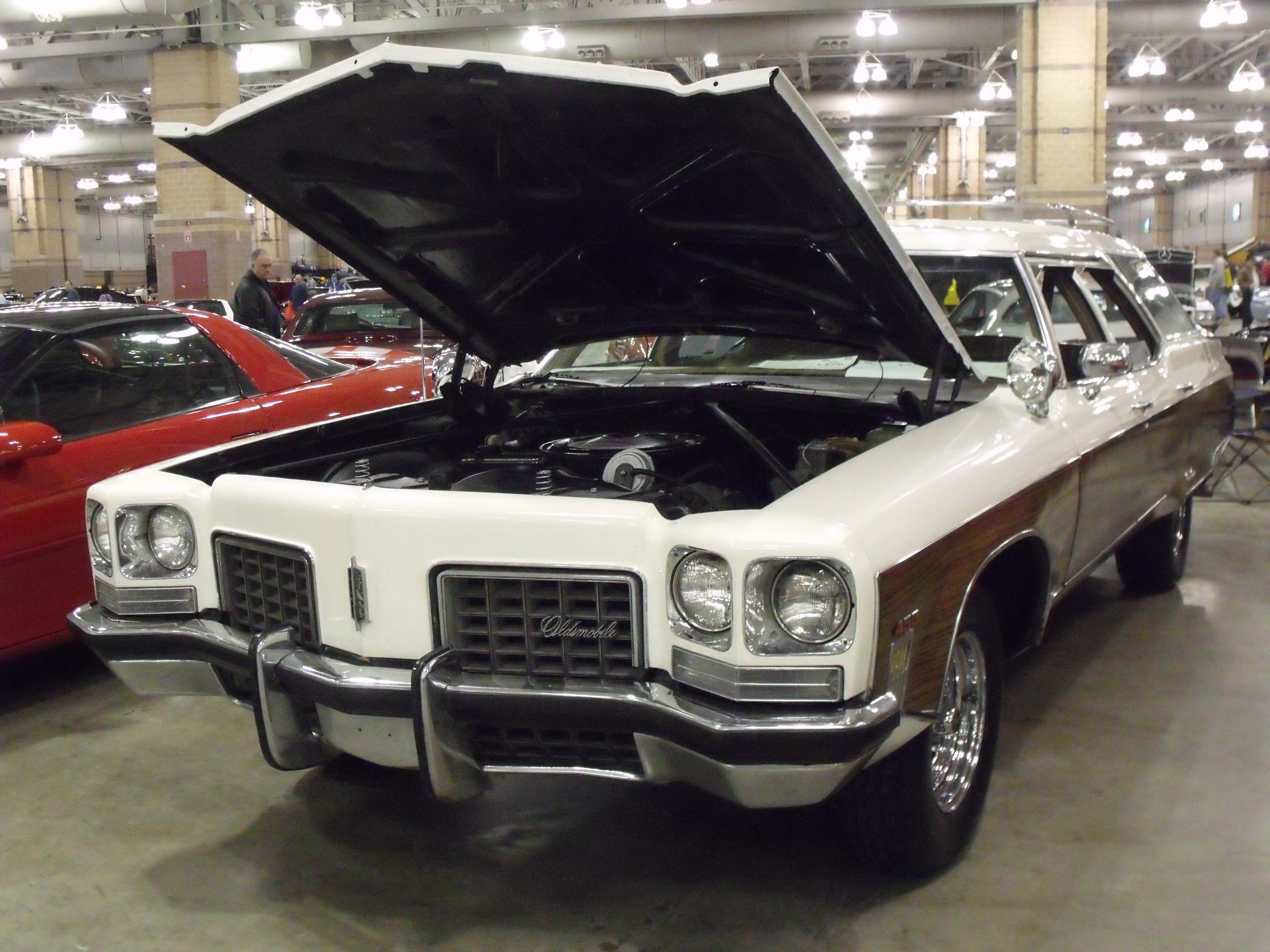
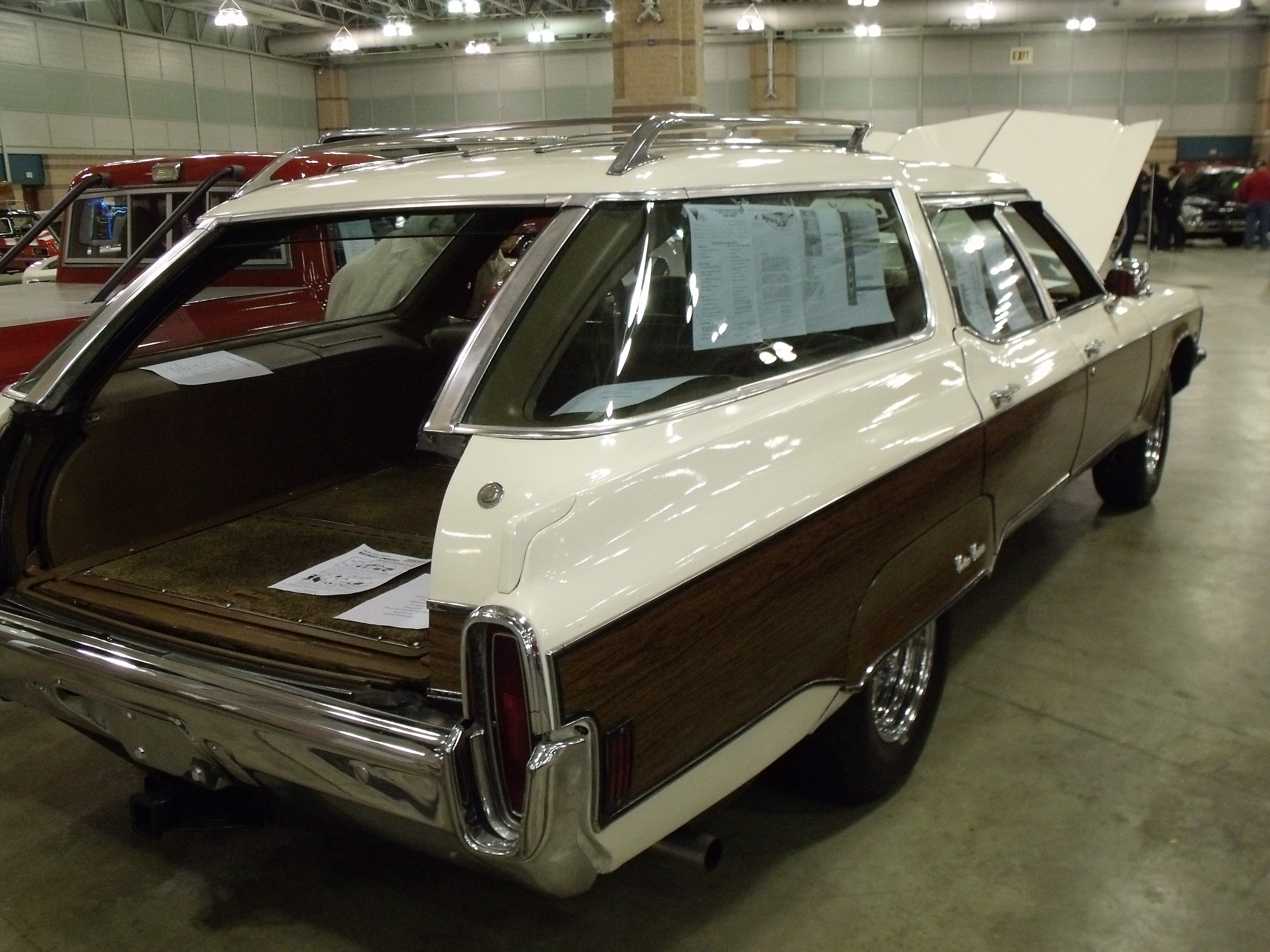
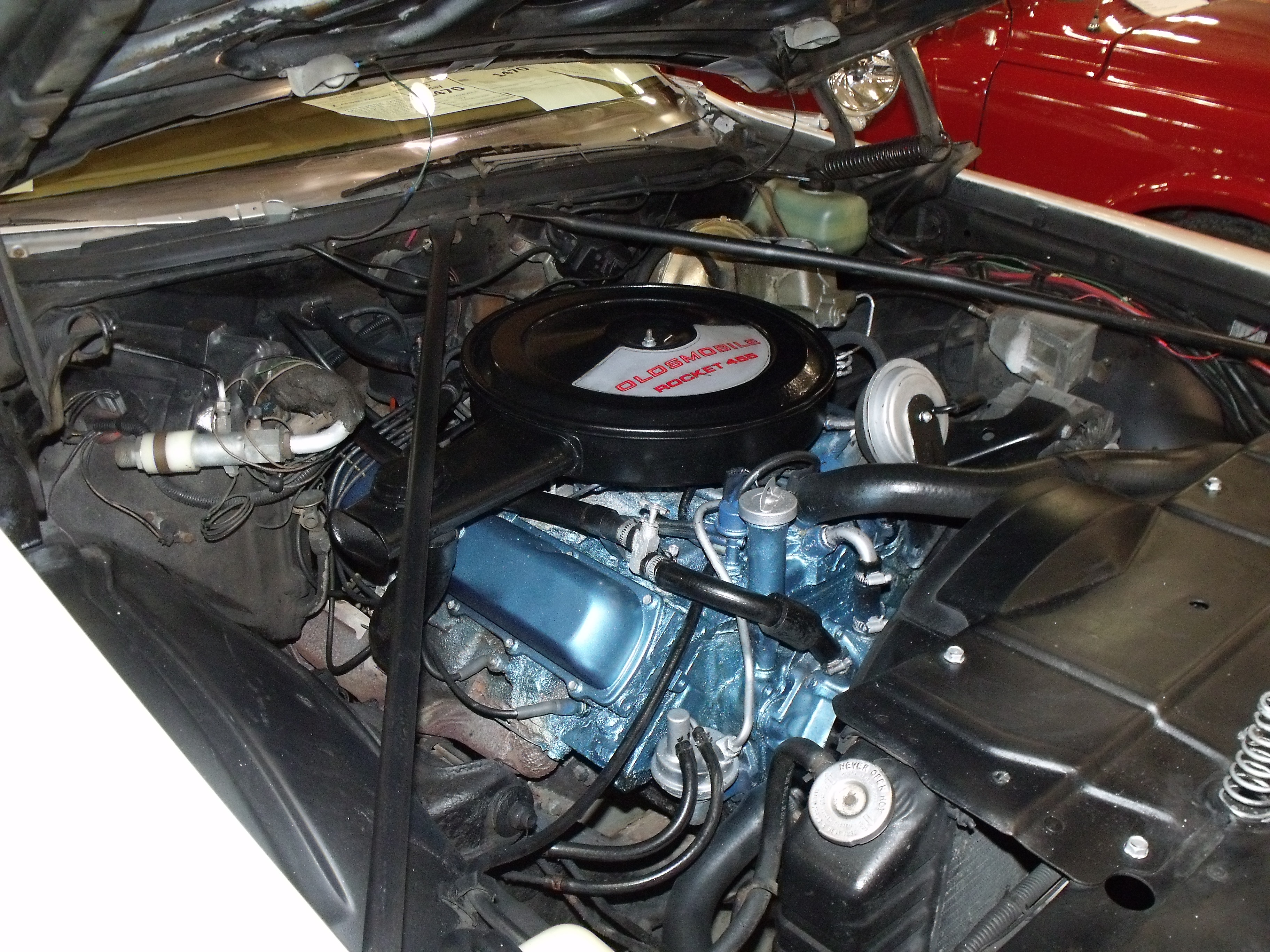
Lot #1470, 1972 Oldsmobile Custom Cruiser wagon. Odometer reads 78,611. White with fake wood, brown vinyl interior. Clamshell tailgate, roof rack, trailer hitch. Oversize blackwall tires on Cragar style mags look very out of place. Car sits high in front. Interior partially redone. Front seats have piping and different pattern than rear (likely original) seats. Two 1950s style spotlights on front fenders, with handles on either side of dash. Outside mucked up with aftermarket molding, “Custom Cruiser” script on fender skirts, painted side light bezels. “Rocket 455” decal on air cleaner, engine painted while in place with rattle can. A car with good bones that has become a tarted up thing.
• Condition: 3-
• Sale price: $6,500
• CPI range: $3,800-7,900
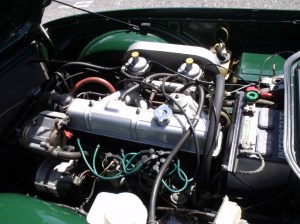
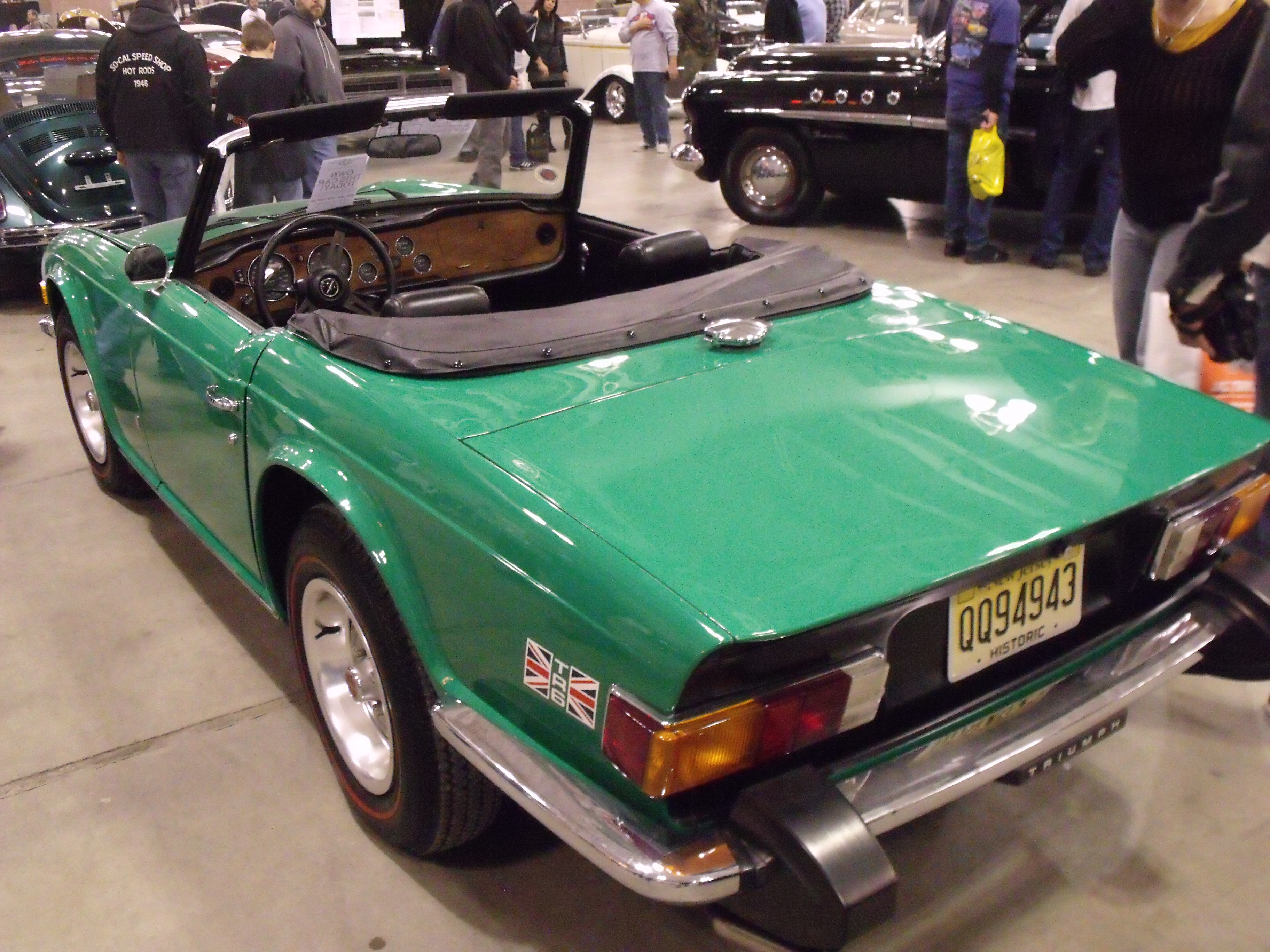
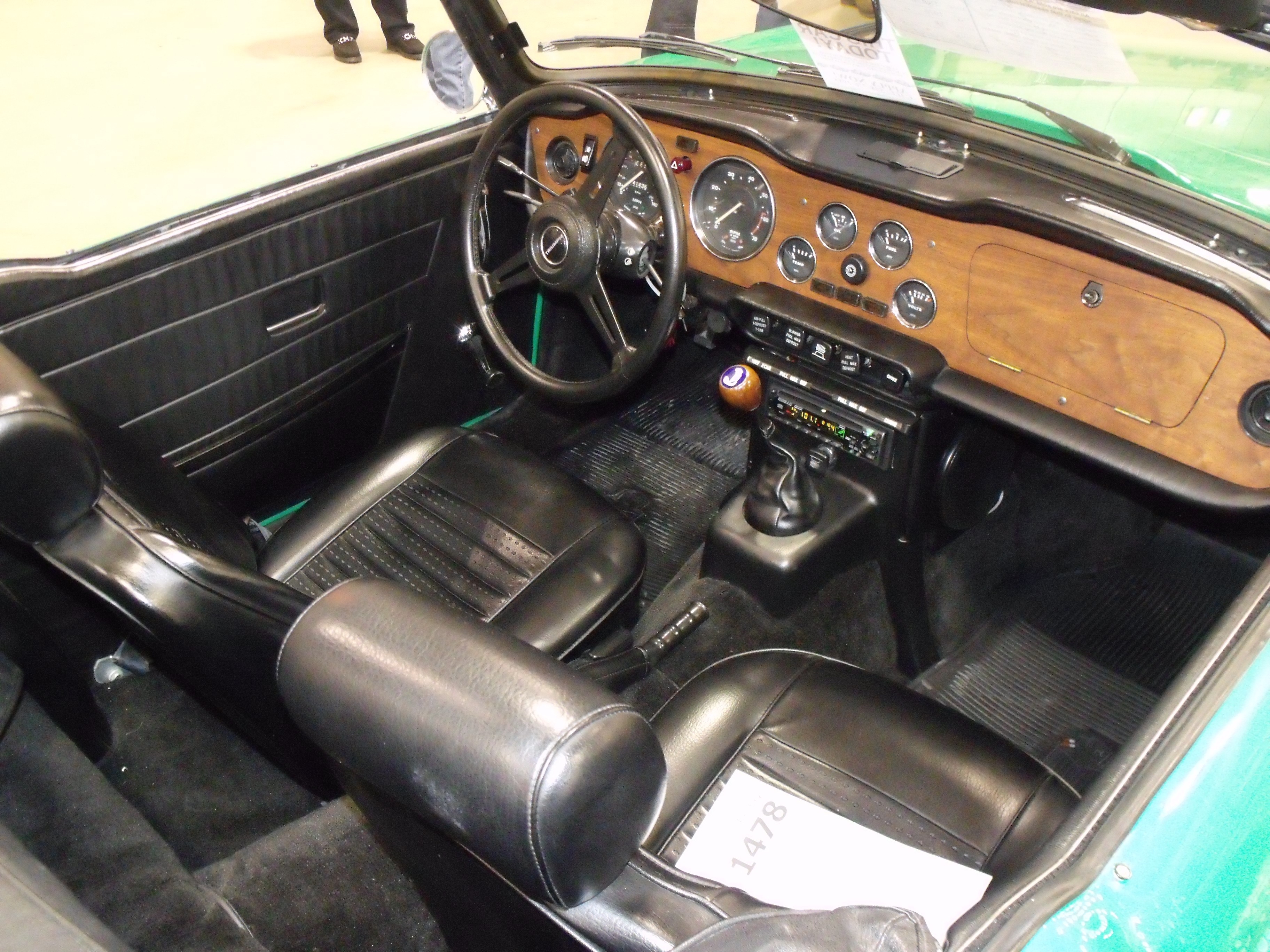
Lot #1478, 1976 Triumph TR6. Last year for this model. Mileage 40,000, looks like that could be original. Bright green with black interior. Redline tires on Triumph alloys. Repaint good with some dirt in paint, but shows well on broad surfaces of hood and trunk. Engine compartment near spotless. Interior clean, no obvious defects. Overall presents very well, can be driven with pride or taken to local cruise-ins.
• Condition: 2
• Sale price: result not posted
• SCM range: $12,000-20,000
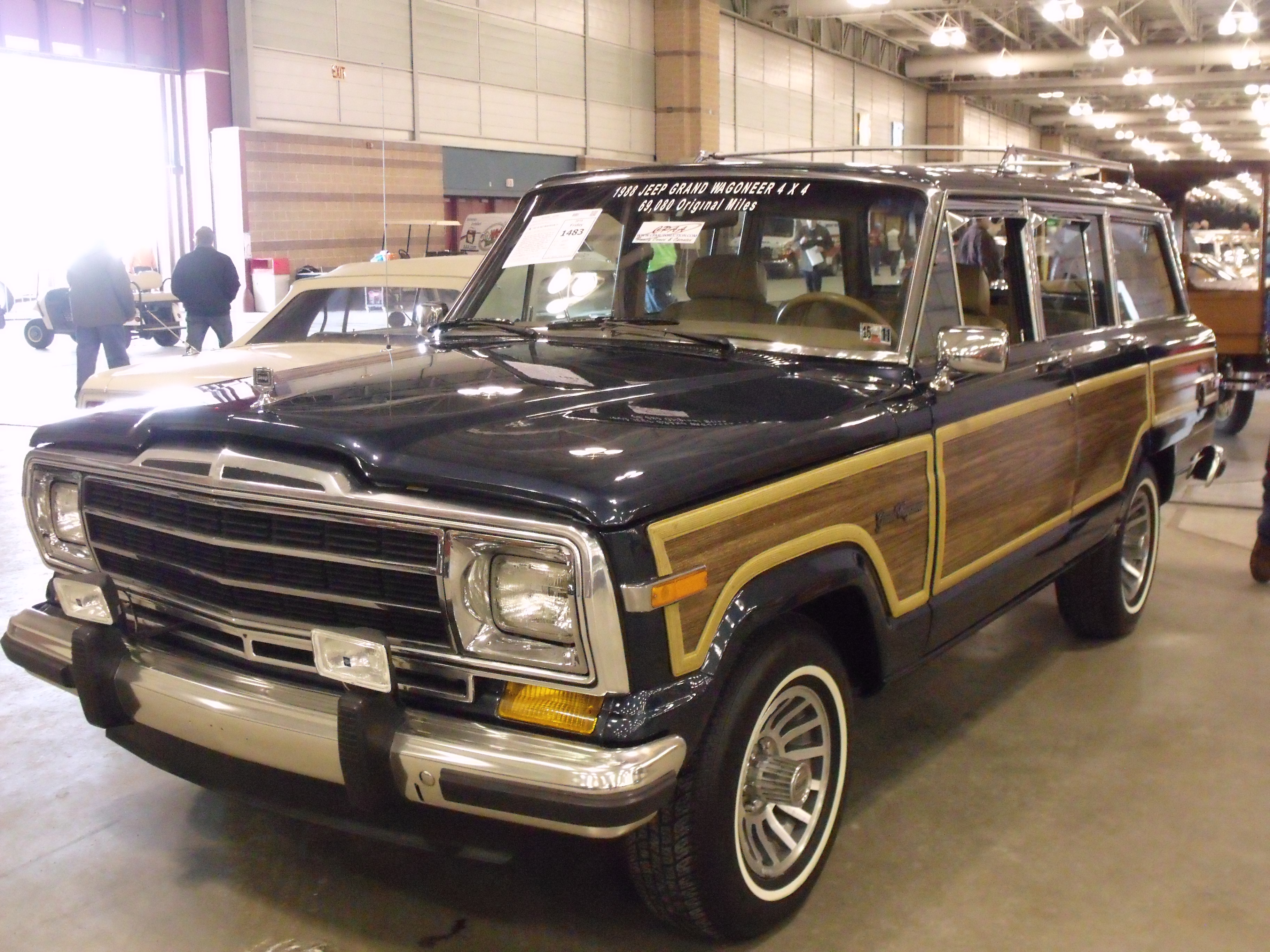
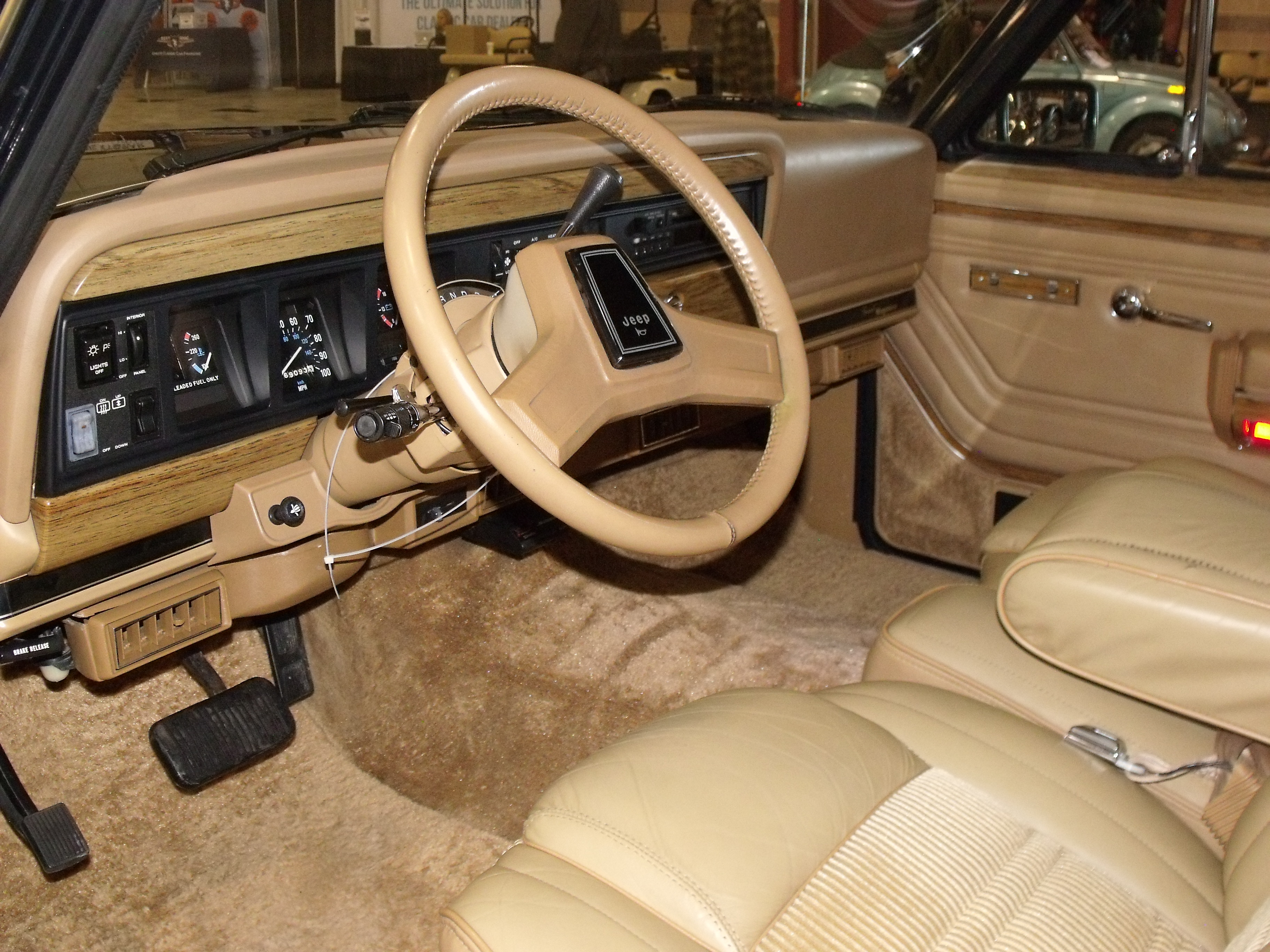
Lot #1483, 1988 Jeep Grand Wagoneer. Odometer is 69,093, sign on car claims mileage is original. Dark blue metallic paint, fake wood, beige interior in leather with cloth inserts. V8 engine, factory air, power windows, Jeep alloys with whitewalls. Overall, vehicle is striking. From 10 feet away, could pass for a 3 or 4-year-old used car. Repaint is excellent, possibly more metallic than original. Interior borders on spotless, only defect is very slight wear on center console. Doors shut well. Engine compartment not detailed. A model that is showing increased interest among collectors.
• Condition: 2+
• Sale price: $15,000
• CPI range: $8,000-28,000
Lot #1494, 1980 Triumph Spitfire roadster. Last year for the Spitfire. Sign on car claims 20,000 original miles. White with tan vinyl & houndstooth upholstery. Interior looks hardly worn. White hardtop included, no soft top visible for inspection. Paint probably original, not great, but may be what a British factory did in 1980. Triumph steel wheels and trim rings with whitewall tires. 3-tone stripes along sides of car, were red/white/blue, red is now faded. Car appears to really have 20,000 miles and looks unrestored. If you want a Spitfire, this could be the one to have. It’s a shame that someone owned this car for so long and drove it so little.
• Condition: 2-
• Sale price: $8,000
• CPI range: $5,000-11,000
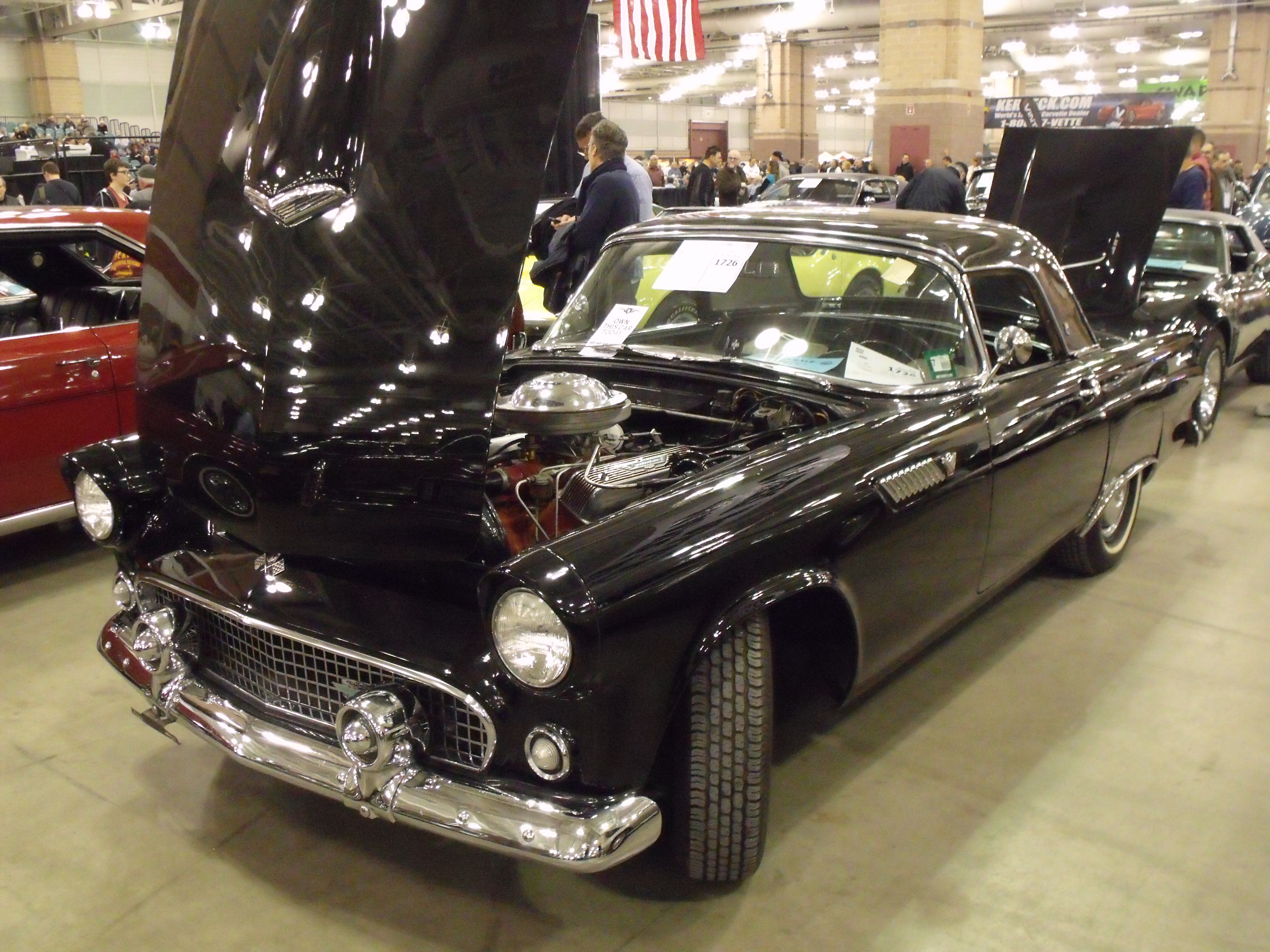
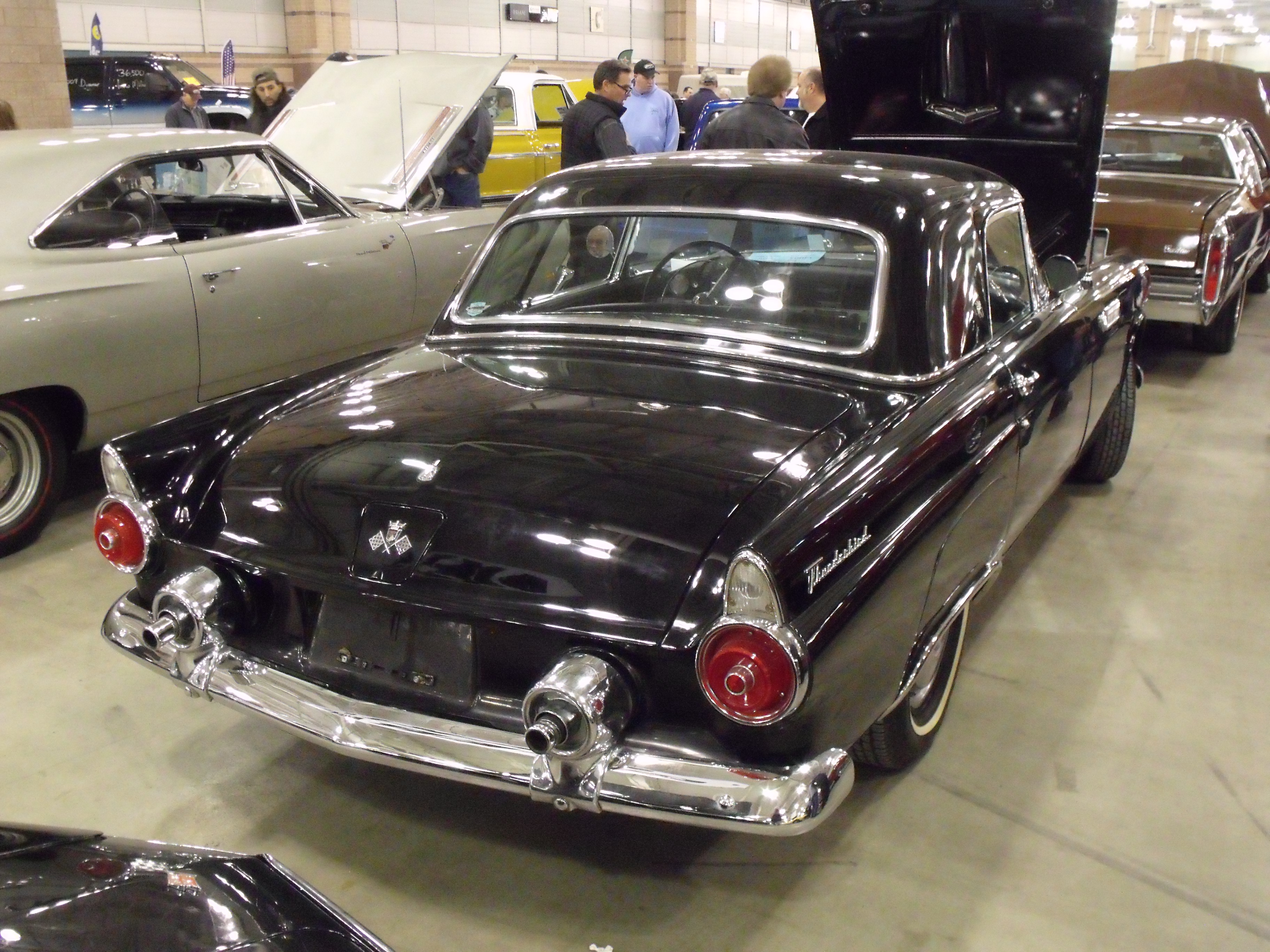
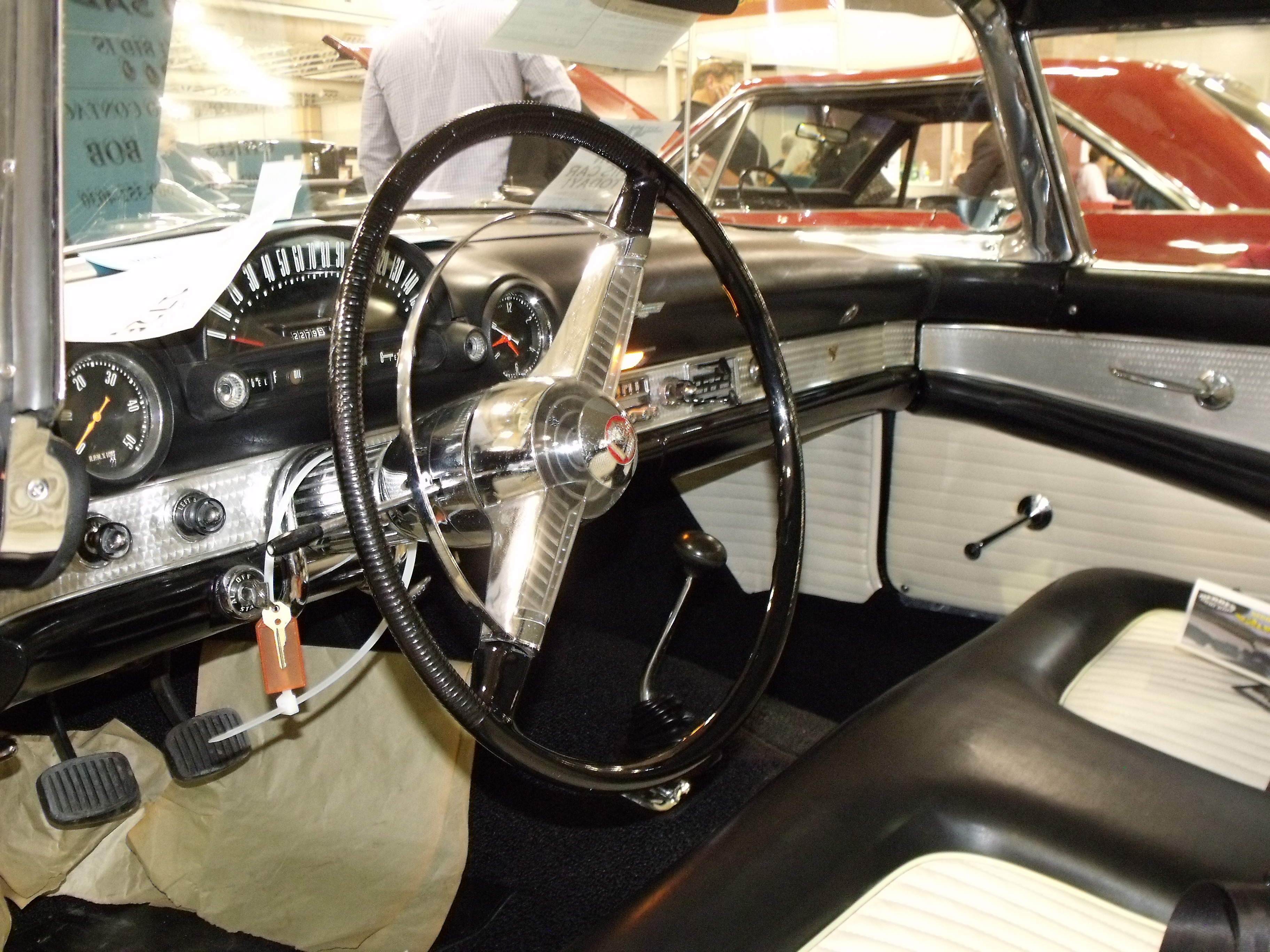
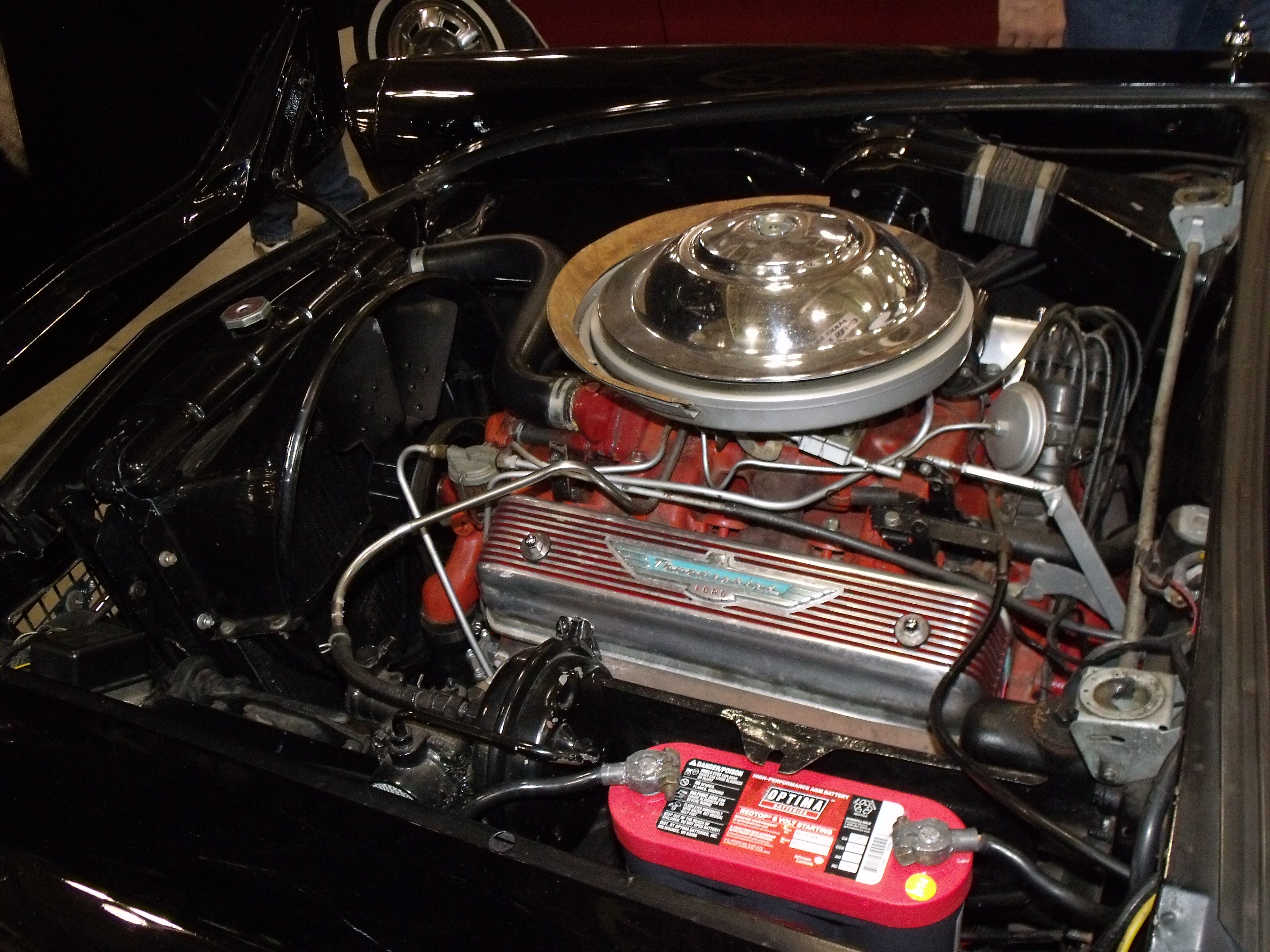
Lot #1726, 1955 Ford Thunderbird. Odometer reads 92,000. Black with black hardtop, black and white interior, no soft top visible. Full wheel covers and white wall tires. Engine dress up kit with finned valve covers and chrome air cleaner. Rare 3-speed stick car. Black repaint has decent shine, but far from perfect with some cracks and polishing marks. Interior OK, as is engine compartment. Six-volt Optima battery under hood. First year for the T-Bird. Car is decent, but has no ‘pop’, good detailing would help.
• Condition: 3
• High bid: $21,000 (not sold)
• SCM range: $27,000-42,000
Lot #1794, 1974 Jaguar E-type convertible. Odometer reads 43,953. Silver, red interior, V12, stick shift. Chrome wires with red stripe tires. Very striking in person, appears to be recent restoration. Little to fault. Both doors shut well. One minor quibble is that chrome strip missing from exterior of door tops. One of the better color combos for this car, especially given what some of the other choices were. An E-type to have if one wants (or can live with) the V12 engine.
• Condition: 2+
• Sale price: $63,000
• SCM range: $55,000-75,000
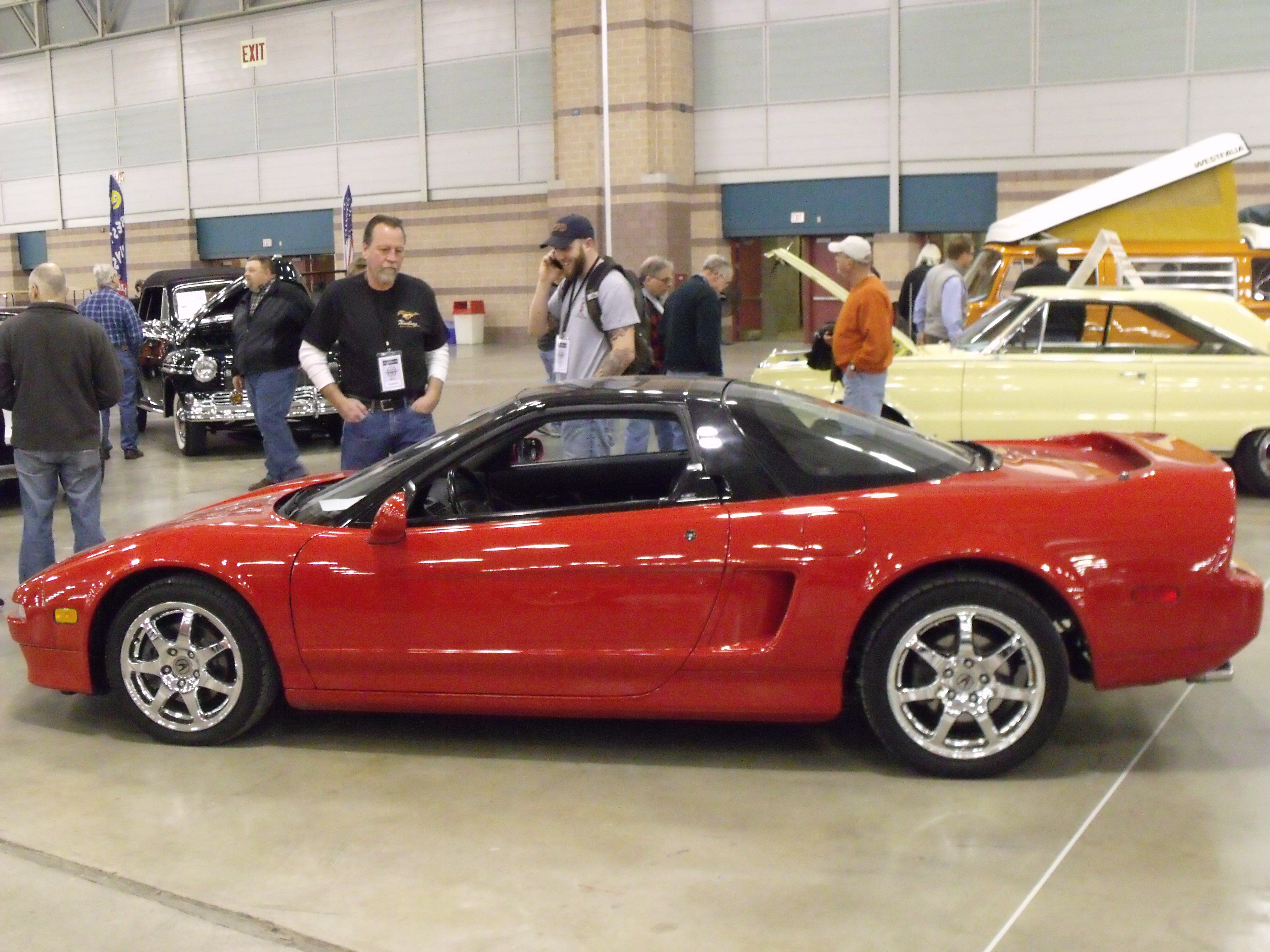
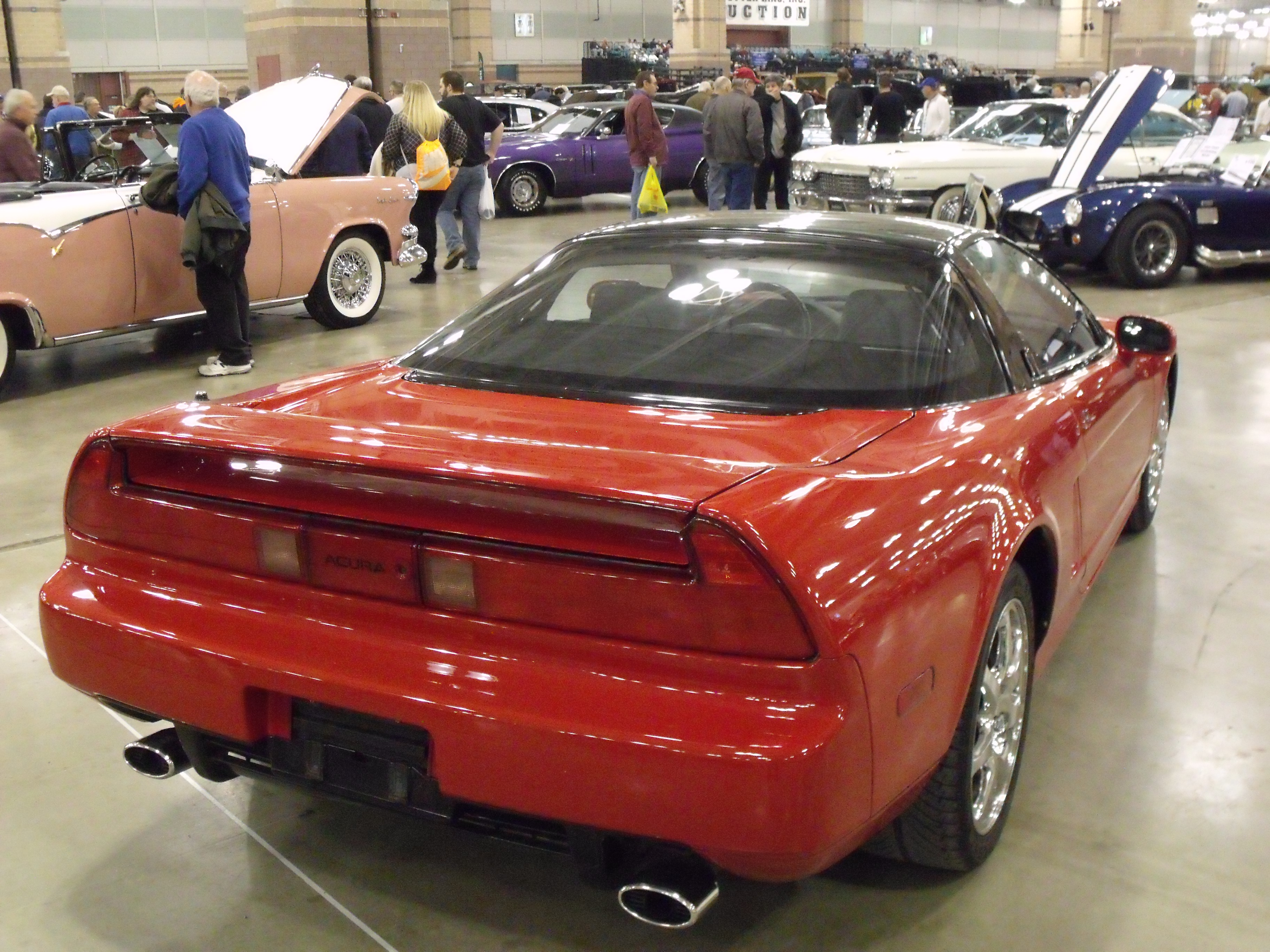
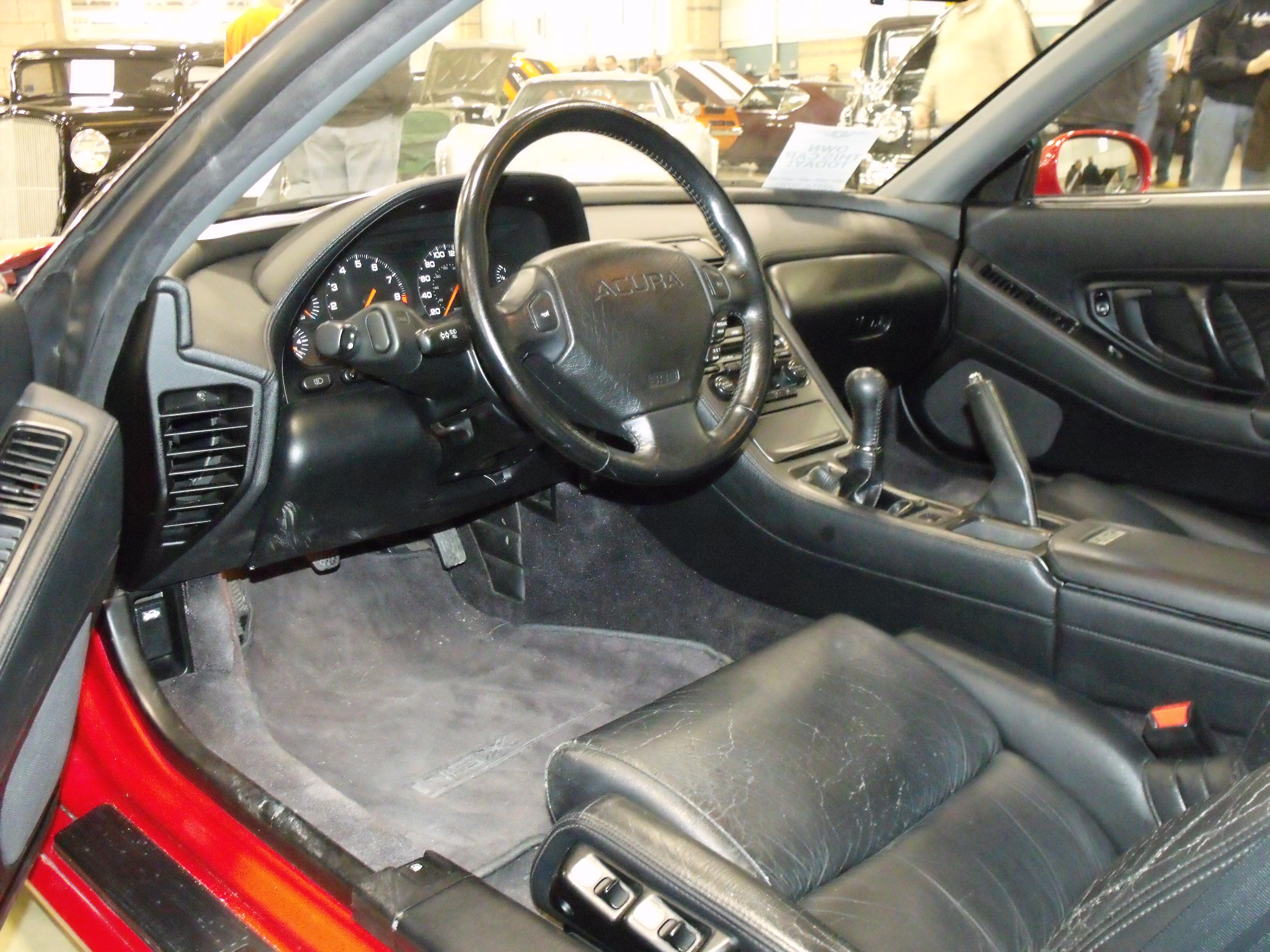
Lot #1810, 1992 Acura NSX. Odometer reads 91,000 miles. Red, black top, black leather interior. V6, stick shift. Chrome wheels. Interior good except for heavy wear on driver’s seat bolster. Lots of touch up marks on hood, otherwise, paint looks good for age and mileage. Car has obviously been enjoyed. Overall driver condition car, ready for someone else to continue to enjoy.
• Condition: 2-
• Sale price: $29,000
• CPI range: $23,000-36,000
Lot #1818, 1970 Jaguar E-type convertible. Odometer reads 70,000, sign on car claims mileage is original. Inline 6, stick shift, blue with beige interior. Series 2 car. Factory air. Sign says red line tires, but car has blackwalls. Nice paint, looks recent, as does interior re-do. Entire car let down by clash of beige seats contrasting with very different shade of beige on door panels, center console, and top boot. E-types are hot; this one desperately needs a can of leather dye.
• Condition: 2
• High bid: $61,000 (not sold)
• SCM range: $60,000-85,000
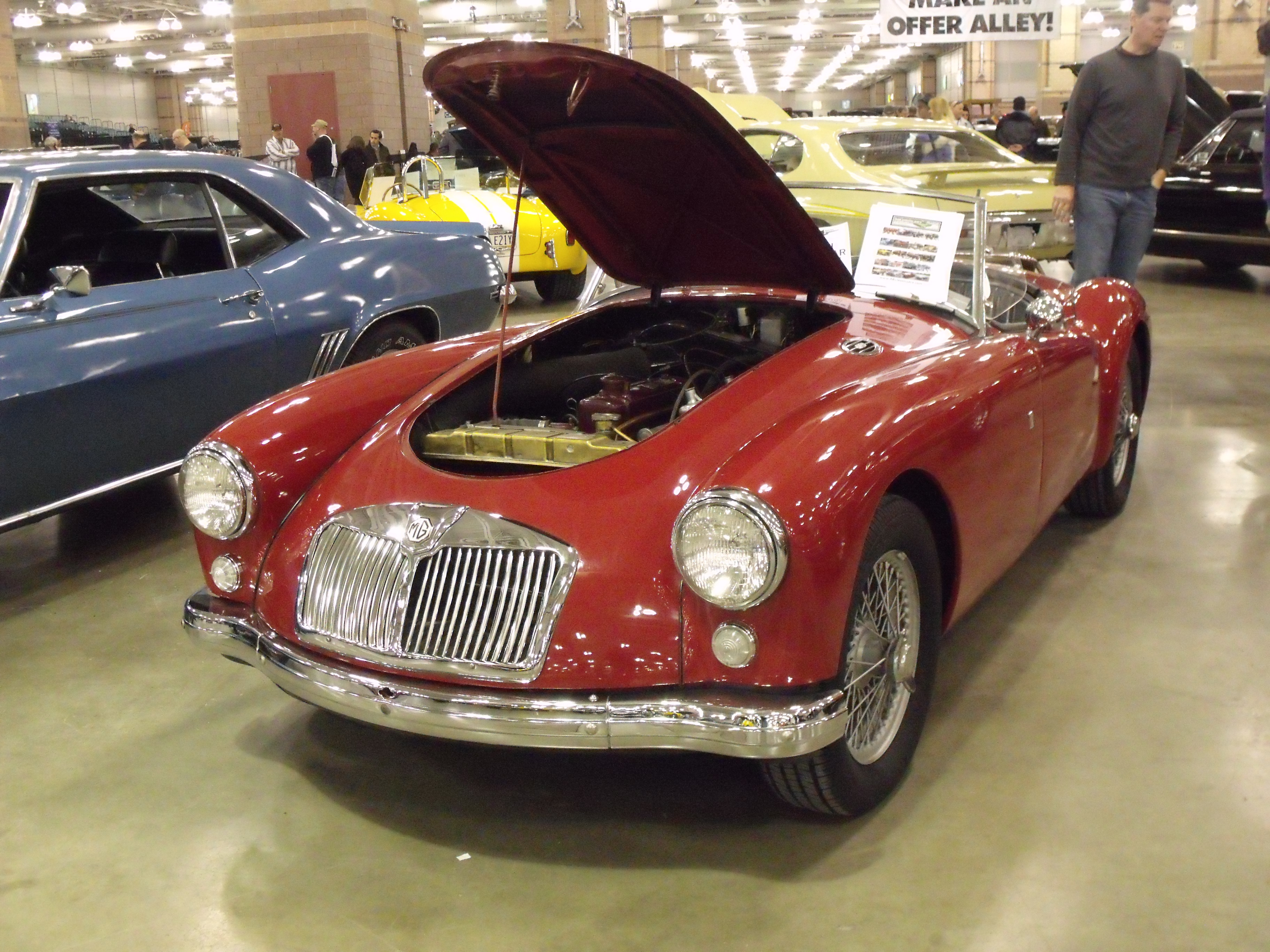
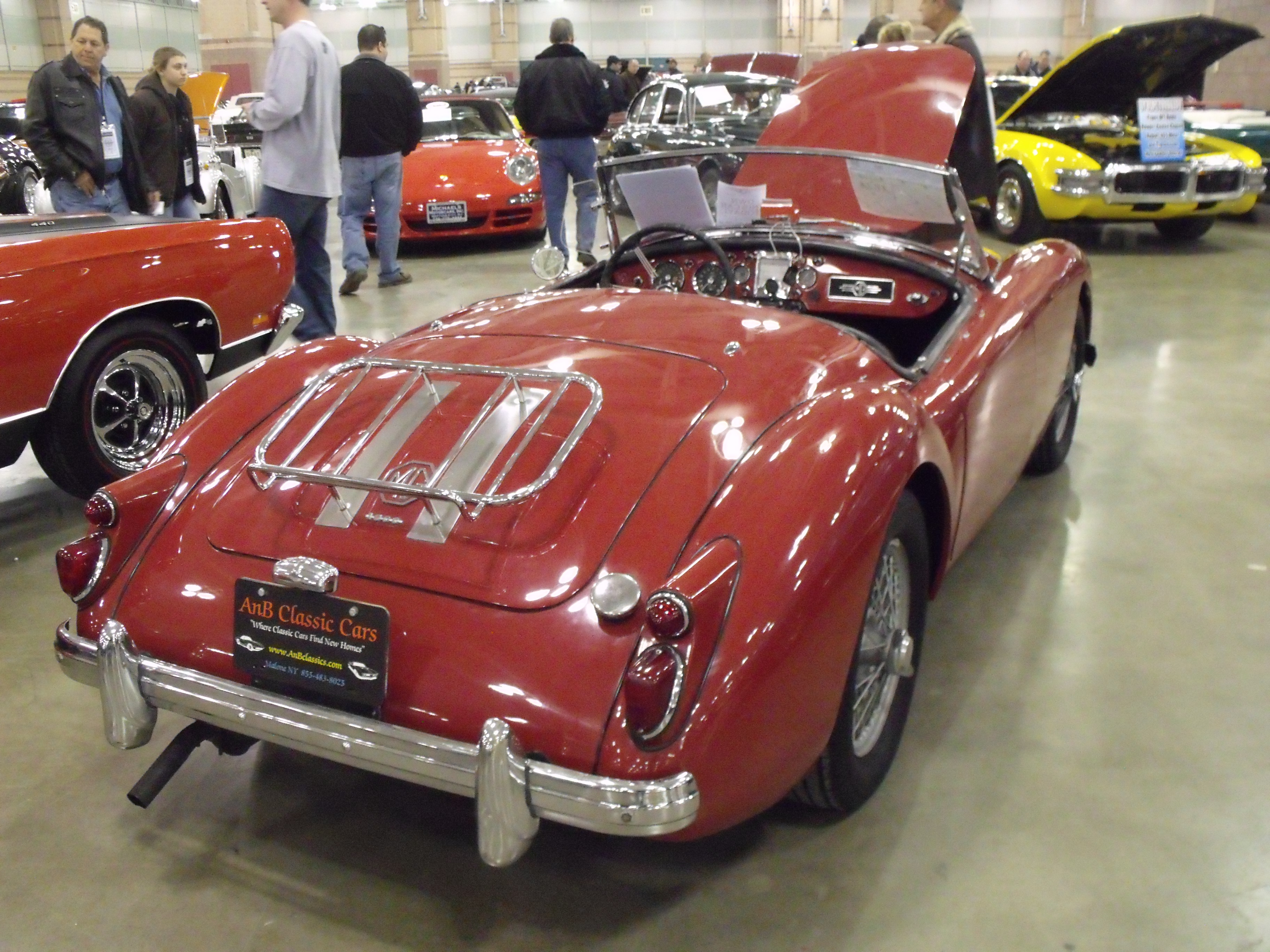
Lot #1824, 1959 MGA roadster. Odometer reads 28,494, nothing about car convinces me that it’s not 128,494. Red with black. Decent older paint and interior, but not outstanding. Luggage rack on rear deck. Painted wire wheels with blackwall tires. Four-cylinder engine painted dark red. No attempt to detail engine compartment. Blow-by hose missing from valve cover. Steering wheel wrapped. Would be helped by a good detailing. Until then it’s just a driver, at least a solid one that can be used.
• Condition: 3-
• High bid: $19,5000 (not sold)
• CPI range: $23,500-49,000
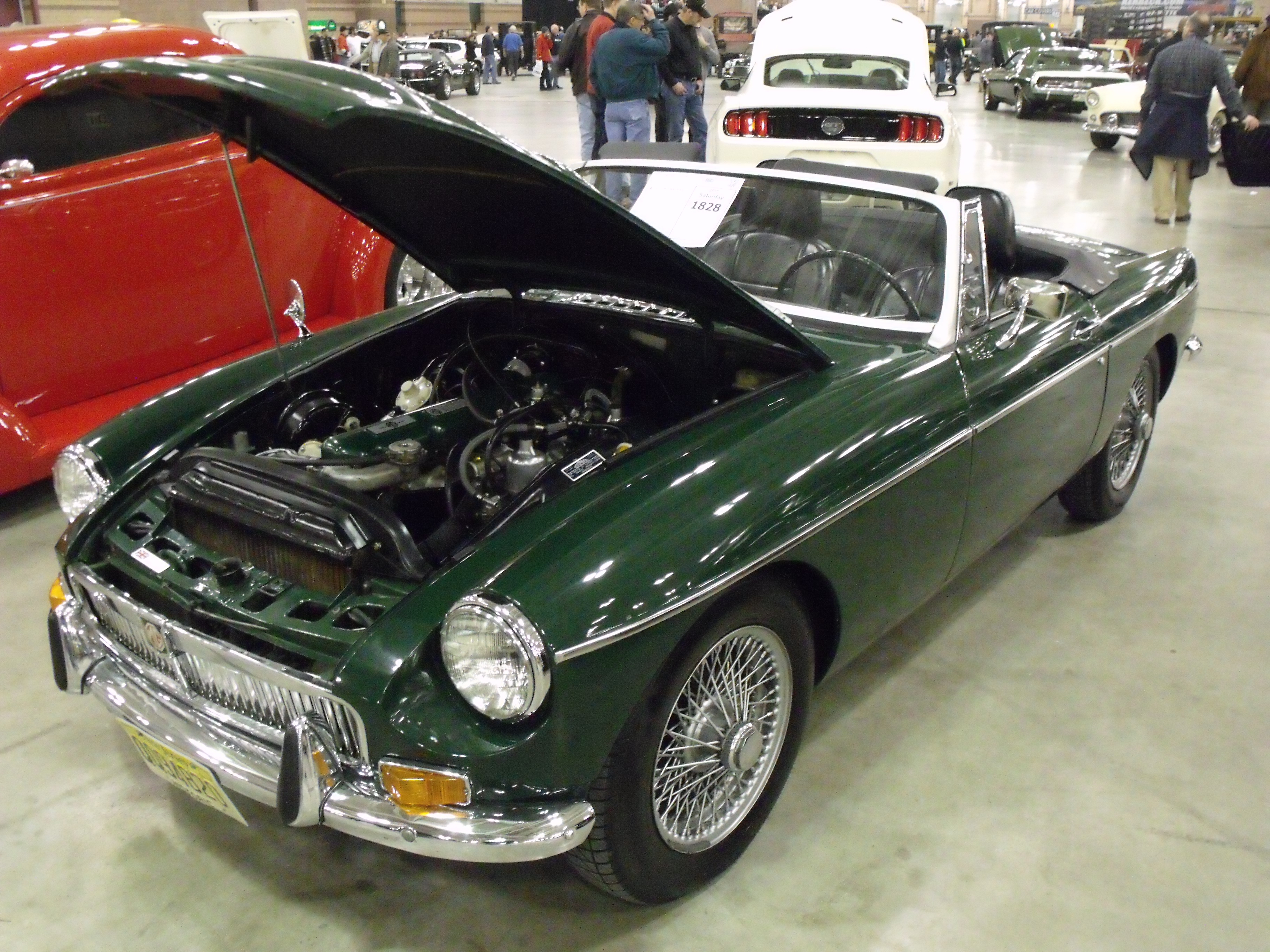
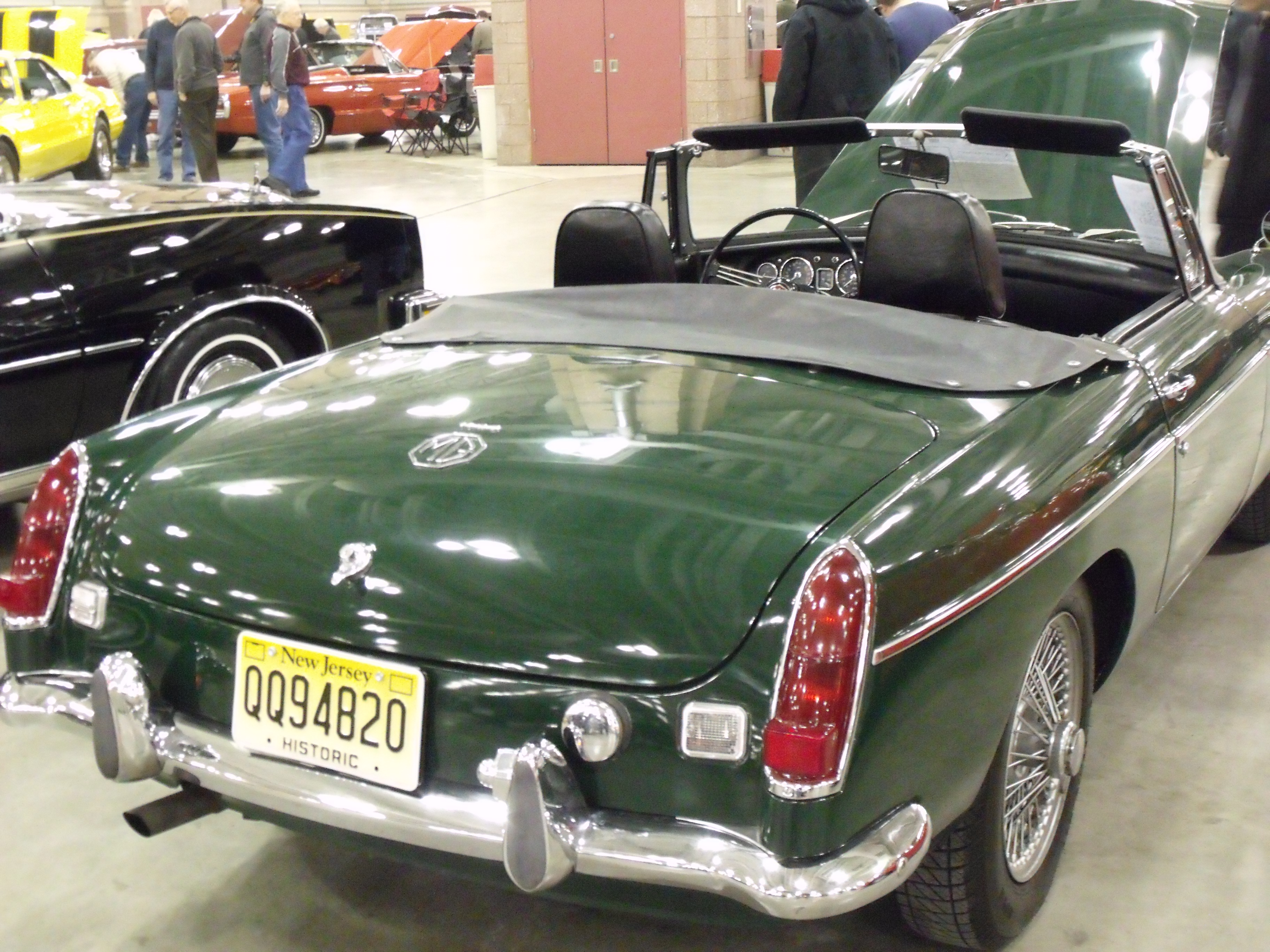
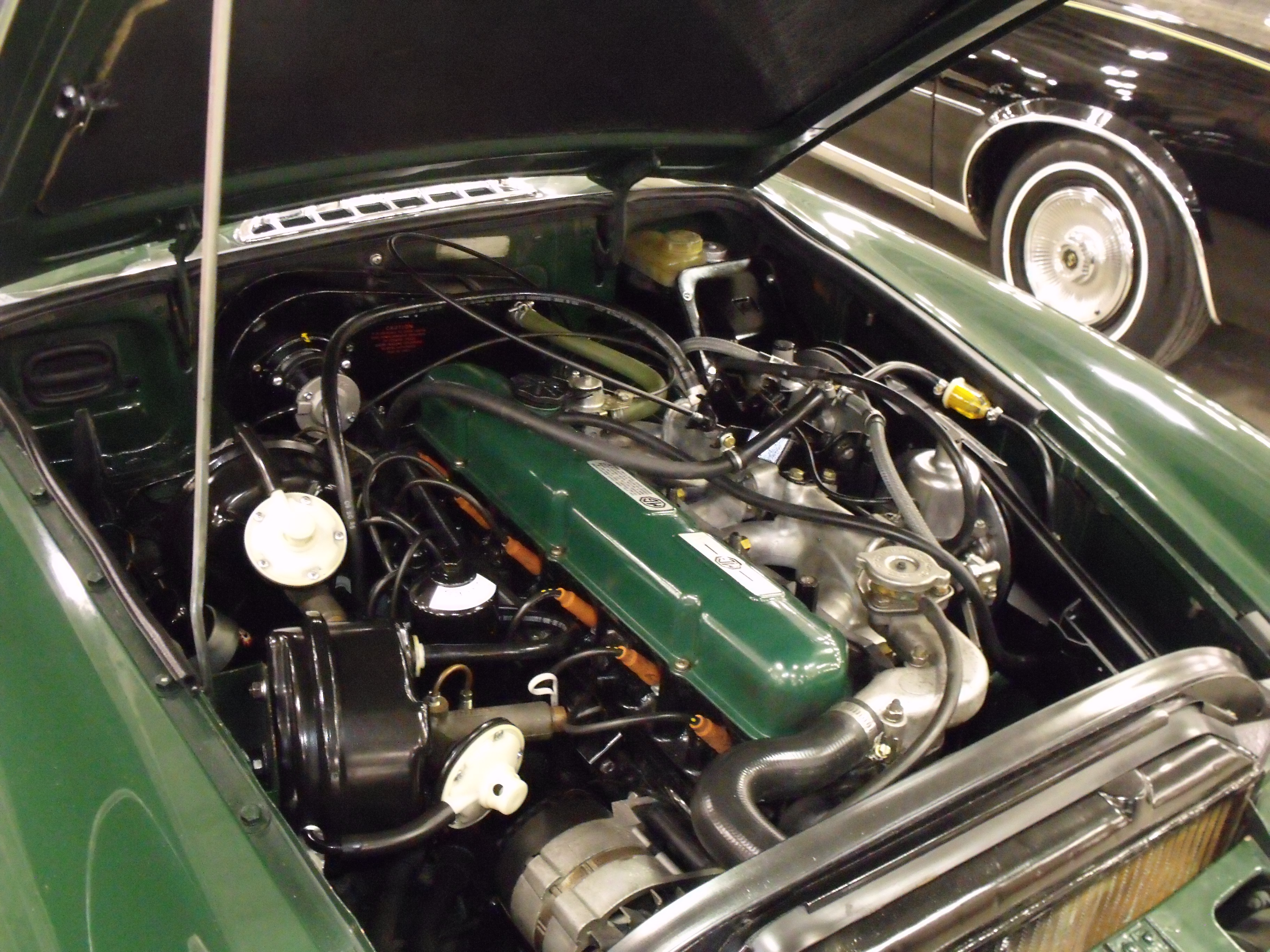
Lot #1828, 1969 MGC convertible. Sign on car claims 41,000 original miles. British racing green with black interior. Inline-6 with overdrive. Blackwall tires on painted wires. Older repaint looks OK. Interior is fine. Cannot inspect top, boot installed. A decent and somewhat rare MG.
• Condition: 3+
• High bid: $17,000 (not sold)
• CPI range: $14,000-32,000
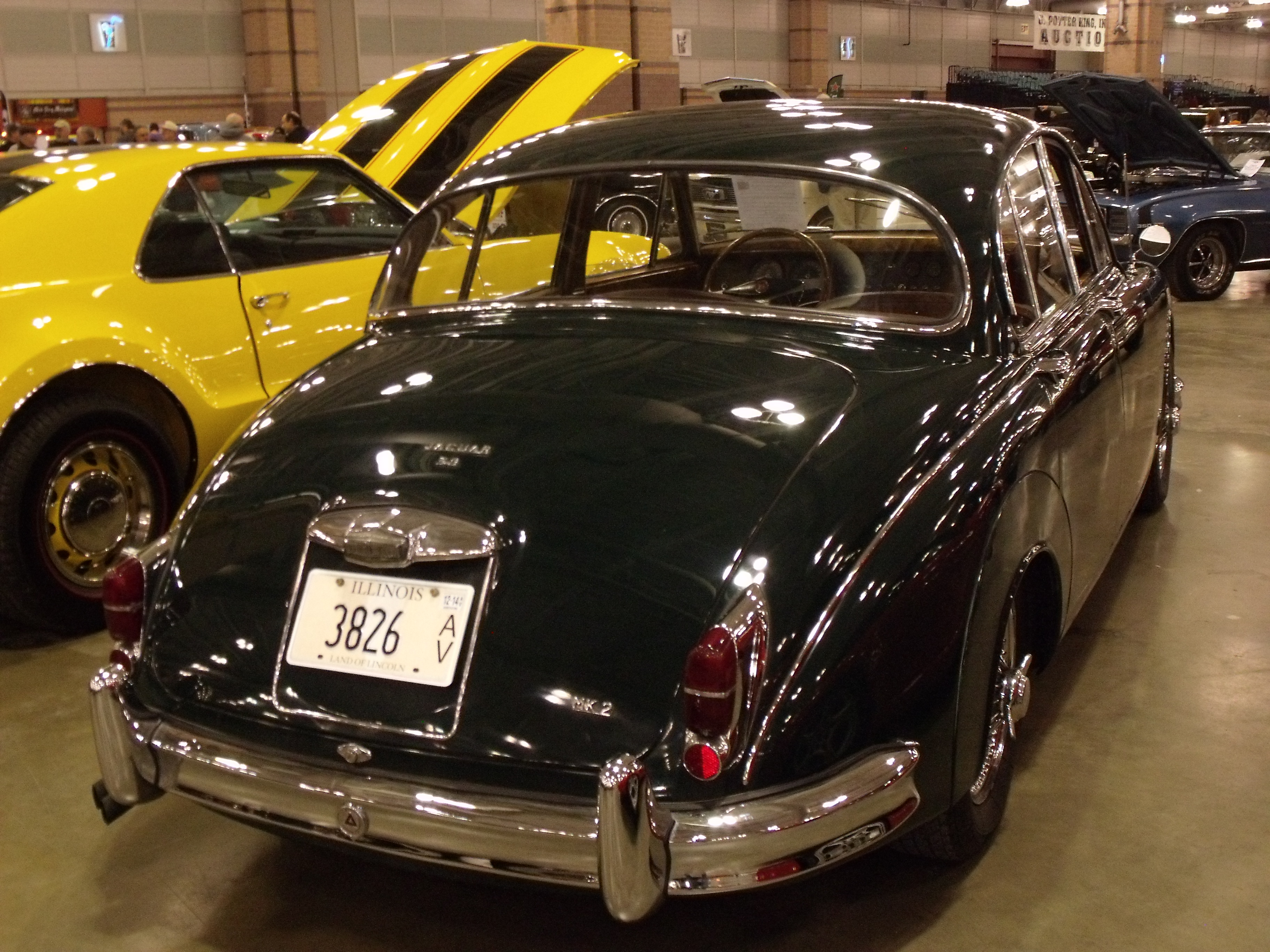
Lot #1847, 1960 Jaguar Mark II 4-door. British racing green, dark tan leather interior. Odometer reads 66,000 miles. Stick shift car with Jag’s famous inline six. Chrome wire wheels, blackwall tires. Paint is decent, but car is dusty (note that for this car, my photos do not do justice to either paint color or condition, both of which appeared better in person). Interior full of wood and leather and smells it. Driver’s seat worn with cracks almost but not quite to the point of needing replacement. Steering wheel appears to be aftermarket. Outside mirror on each front fender. “Mark II” and “3.8” badges on rear deck. One of my favorite cars at the auction, this thing oozed old world British charm.
• Condition: 3+
• Sale price: result not posted
• SCM range: $25,000-32,500
After seeing the Alfa during that initial visit to Pete’s home in 2005, we stayed in touch. Emails were exchanged, and we always made a point to get together at Hershey in October, an annual pilgrimage for both of us. Every time I (gently) asked about purchasing the Alfa, Pete would (gently) tell me that he was back to enjoying the car and it was not for sale.
My job had been keeping me quite busy, and a few years went by without a trip to visit him. In 2009, Pete asked me if I was available to do some work on one of his cars for him. I was only too happy to lend him a hand, and made plans to head out there (by myself this time) in September. Pete and his wife graciously offered to put me up in a spare bedroom.
Pete needed the heater control valve replaced on one of his older cars, a job I had done many times before, but had not done in years! He had the correct parts, and we got it done. While I glanced admiringly at the Alfa, I did not drive it this time.
New heater valve on its way into the car.
A few months later, in March 2010, Pete again invited me out, this time to work on the Alfa. Newly retired from Volvo corporate life, I had a bit more free time. Frankly, I also saw an opportunity to engage Pete in a more candid conversation about a sale. Like the previous job, it was the Alfa’s heating system which needed attention. Pete had plans to remove the heater core and replace some hoses. We did just that, and I got to drive it again. Doing that only reinforced how badly I wanted to own this very special vehicle.
Tearing into the Alfa’s heating system. Look at that beautifully original interior!
“Hi NAPA guy, I need some hoses for a ’67 Alfa.” We were in fact able to find what we needed at the local NAPA store.
We did talk about a sale, and it was on this trip that Pete first used words like “perhaps” and “some day” and “when I sell”. My understanding from that conversation was that he was not ready to let go of it just yet, but when he was ready, I could have first shot at it. Elation!
In October of that year, Pete drove the car to the AACA Hershey meet and entered it in the HPOF (Historical Preservation of Original Features) class, where it had earlier won an award. It was great to see the Alfa. It would be a long and eventful two and a half years before I would get to see it again.
Pete’s 1967 Alfa Romeo at Hershey in Oct. 2010. Note the HPOF award on the front.
Difficult as it may be to believe, but there was a time when most American families had only one car. In the years immediately after World War II, as America became prosperous again, plenty of new cars were being manufactured and sold, and roadways were being built to drive these cars to and from the expanding suburbs. Yet the “traditional” family model remained: dad worked, mom stayed home to take care of house and children, and one automobile sufficed. This was reality for many baby boomers growing up in the ‘50s and ‘60s. It was no different for me.
In my family, by the late 1960s, all three children were in school, which was close enough for us to walk. Mom had started to work part-time in the evenings, and Dad was steadily employed in Manhattan, commuting via bus, ferry, and subway. While the Corvair did the job as the family carry-all, my father decided that he could afford a second vehicle. Did we need another set of wheels? Not really. Certainly because he always liked small cars, and possibly because he had been born in Germany, he got a Volkswagen, a 1957 Beetle sedan.
The 1957 VW. Note the antenna, hub caps, and whitewalls.
As the resident car nut, I loved the idea of another car. There was also the pride I felt in an ability to distinguish one year VW from the next. At a time when we were still used to sweeping styling changes every year from the American car makers, Volkswagen actually bragged that they did not subscribe to annual redesigns. So for most drivers, all these Beetles looked alike. Yet I knew my father’s car was older. The one-piece oval rear window and tiny tail lights were all dead giveaways, and no prompting was needed for me to point these things out to anyone within earshot.
It was a treat to go for rides. I enjoyed watching my dad work the shifter and clutch, although I had no interest in trying to understand the mechanics behind such maneuvers. The VW had no heater, so winter rides were always accompanied by the warning to “bring a blanket”. It didn’t stop me from wanting to go.
The Beetle from the rear. Note the blue & gold NY plates. Both photos taken in our backyard on Staten Island.
Alas, after almost exactly a year, Dad sold the VW. He never said why. Perhaps his practical side woke up to the realization that we really did not need two cars, at least not yet. For years afterward, my father continued to brag about that Beetle, repeating the line that he “bought it for $275, and sold it for $275”.
When Margaretanne and I married and bought our house in 2001, we enjoyed having family and friends visit. As happens in any relationship, I would meet and get to know her friends, and she would do the same with mine. One such friend of my wife’s was Pam. Margaretanne and Pam knew each other from work, and although they no longer worked together, they remained (and still remain) good friends.
One warm summer day, a year or two after moving in, Pam came by to visit. I happened to be out in the garage, tinkering with the 1957 BMW Isetta. Pam noticed me and the old car through the open garage door, and in a most casual tone said, “you should meet my father, he likes old cars too”. Pam had no idea what that one comment started.
A year later, while attending a party at Pam’s house, I finally did meet her dad. “Pete” was a very soft-spoken and gentle sort, in his late 70’s and long retired. Upon meeting, we both wanted to learn what we could from each other about our passion and our collections. By this time I had acquired the 1968 Ford Mustang California Special, so with a new toy in the garage, I proudly told Pete about my most recent efforts with this rather rare car.
During the first half of that decade, Pete and I saw each other frequently enough. We met several times in New Jersey, both at Pam’s house and at my place, where Pete saw my two collector cars. We would also meet to exchange pleasantries if we were both at Hershey. The more I got to know Pete, the more I enjoyed his company, and the more I learned about his incredible knowledge on many topics.
Pete had several times extended an invitation to visit him and his wife. During the summer of 2005, we took him up on his offer and made a day trip to their place. The original plan was to drive the Mustang (with an inoperative air conditioning system), however, the day was so hot and humid that we took our Volvo – we needed that A/C! Arriving at Pete’s house, the first car to catch my eye was his Alfa Romeo. The dark green Giulia coupe, a Bertone styling masterpiece, was a model I had coveted for decades. Pete’s car was in stunning shape, not perfect, but an obviously well cared-for automobile.
My first-ever view of Pete’s 1967 Alfa Romeo, on his front lawn.
We exchanged hellos in the yard. The next words to pass my lips were to be frequently repeated during the following eight years:
Richard: “Pete, sell me this car.”
Pete: “No, it’s not for sale. I’m getting it back on the road after a long slumber.”
It was then that I first heard the story of how he acquired the Alfa. The car had been purchased new in Germany by an American working for the U. S. State Department. That individual brought the car back to his home in the U.S. when it was a year old, and soon sold it to Pete. Pete drove the car regularly as his “fun” car throughout the late ‘60s and most of the 1970s. The car was then mothballed for about 20 years, to be resurrected again starting in the late 1990s. Brakes, fluids, battery, and tires were some of the more obvious items needing attention. But by 2001, Pete had begun driving the car again, first to local shows, then to Hershey, where it won its HPOF (Historical Preservation of Original Features) award. The Alfa I was admiring had never been painted, disassembled, or restored. It was truly an original car.
Pete: “C’mon, let’s go for a ride. You can drive the Alfa.”
He didn’t need to ask twice. While the ladies stayed home, Pete and I took a spin in the Alfa (officially a European spec “GT 1300 Junior”), and it was sublime. With 100 horsepower pulling 2,000 lbs., it wasn’t fast, but was not slow. Light on its feet, the steering, brakes, shifter, and suspension all felt directly connected to each other and to the driver. In some ways, it reminded me of my 1993 Mazda Miata. Although I didn’t ask again that day, I knew I would keep working at Pete to someday sell me this car.
Pete got a chance to drive my 2005 Volvo S60, and as a Volvo owner himself, marveled at how different it was (mostly in good ways) compared to his older Volvo.
My wife and I had a long ride home in front of us, and Pete said that I was welcome back at any time.
Not mine, not yet anyway.
Made a mental note to myself: next time, bring checkbook.
The first new car that my mother and father purchased after their 1950 wedding was a 1953 Chevrolet 210 4-door sedan, 6 cylinder, 3-on-the-tree. Of course, I say “mother and father” to be polite. This was the early ’50’s. My mom neither worked outside the house nor drove. The ’53 was the car that brought me home from the hospital. (Although I would be lying if I claimed to remember it, I have no doubt that my mother sat in the front passenger seat and cradled me in her arms during that initial ride. Good thing that the hospital was less than a mile away.)
The author, age 2, with Dad’s ’53 Chevrolet. I had to touch the car.
My dad, ever practical with the 4-door Chevy, nevertheless enjoyed the idea of small, quirky cars. He told me when I was a boy that he liked the Nash Metropolitan, and I know he liked VW Beetles (had one later, but that’s another story). So when GM announced the Corvair in the fall of 1959, Dad was smitten. He waited a year, and by doing so, was able to consider the new-for-1961 Corvair station wagon.
By this time, I was 6, and had been obsessed with automobiles for four years already. The excuse given for my mother’s lack of a driver’s license was that she could not handle a clutch. So as my parents considered the replacement car, it had to be an automatic.
The closest Chevrolet dealership to our home on Staten Island was King Chevrolet, at 181 Bay St. (Years later, King would move about a mile down the street. Another car dealership took over King’s original spot, but today, there are no car dealerships along that stretch of road.) We went as a family to the dealer, and at that time, it seemed to me that my parents were there for hours, talking to salespeople. Perhaps they were. My mind can still picture the 1961 Impala convertible on the showroom floor, red, top down, with two life-size mannequins perched on deck above the rear seat, as if in a parade.
Finally, it was delivery day. Dad probably traded in the ’53. A new car to call our own! My first! This car was white with a red interior. Dad stepped up and got the “700” model over the available “500”, which meant more trim both outside and inside. We all rode home together from the dealership, with me in the way-back, above the engine. Dad had his quirky new car, mom had her license, and we had new-found freedom. Since dad worked in Manhattan and took public transit every day, the Corvair was de facto mom’s car during the week.
A publicity postcard for the 1961 Chevrolet Corvair station wagon. From the author’s collection.
That Lakewood wagon was essentially the only family car for about seven years, from when I was 6 until about 13, so I have strong memories of it. And what do I remember? How dad loved to fool his friends by offering to show them “the engine”, then opening the front trunk to near-universal amazement. How my mom was invincible in the New York snow every winter. How that red light would appear on the dash, and dad would swear under his breath as he removed all those Philips screws to access the engine and reinstall the fan belt which came off with regularity. How we would complain about the odor of gasoline whenever the heater was on. How one year, my parents used the front trunk as the hiding place for that year’s Christmas presents. How the transmission shift lever was this rod the diameter of a ball-point pen, jutting from the right side of the instrument cluster. And how reliable the car seemed to be, year after year. I have no recollection of the Corvair ever being out of service.
The family Corvair from the front.
The Corvair from the rear. My father added the stick-on reflectors. Both these photos taken Nov. 1966 in our driveway at 95 Highview Ave. on Staten Island.
Then Dad started to talk about a replacement car. He said something about the engine getting “tired”. I was soon to find out that the car was running on 4 or 5 of its 6 cylinders, and it likely had 80,000-90,000 miles on it. Although frugal, my father was not going to spend big bucks on an engine overhaul. He asked me if I wanted to ride with him to Reedman, the mega-dealer in Langhorne PA, as he saw a listing for a 1966 Buick station wagon. He was staying with GM, and moving up from Chevrolet by buying used. Shrewd man, my father. We traded in the Corvair.
The Chevrolet Corvair was made and sold by General Motors from model years 1960 through 1969. The station wagon was manufactured for only two years, 1961 and 1962, and so is quite rare. I have come across a wagon at car shows now and again, but quite infrequently. Seeing one always brings back a flood of memories.
Welcome to my blog. As someone who has spent his entire adult life both working in the car business and enjoying the collector car hobby, I’ve long looked for a better way to share my experiences with friends and colleagues.
With this blog, I intend to accomplish the following:
Share stories and photos from automotive events I attend, whether they be shows, rallies, cruise nights, and the like;
Provide updates on my automotive projects (at present, that would be repair work on my 1967 Alfa Romeo);
Add original content in the way of stories and photos from my past;
Create an entertaining and informative platform for visitors who share my passion for all things automotive.
On this first day, it may be equally important to state what this blog will NOT be:
A compendium of links to existing websites;
A rehashing of information which has been covered elsewhere;
A place for naysayers, haters, and flamers;
A blog which will wander any distance from its chosen topic (automobiles, both old and new).
This will be a place where people can sign up for email updates when new content is added, and can contribute comments. The immediate goal is to add fresh material approximately once a week, more frequently if I’m attending a multi-day event (like the New England 1000 rally). It’s exciting to start this venture, and will be a rewarding challenge to keep it going!