In the 1980s, when I began to attend the AACA Hershey events, Saturday was the day to go. First, as a full-time working guy, I didn’t always have the luxury of taking time off, so it was the only day available to make the trek. Second, the best part of Hershey, “the car show”, was on Saturday.
About 20 years ago, I decided that my Hershey visit deserved to encompass multiple days. So I headed out on Thursday, and spent several days roaming among the flea market stalls and vehicles for sale. Saturday morning, wanting an early start, I found myself at the entrance to the show field by 8 a.m., when a funny thing happened.
I discovered the Hershey parade.
AACA rules require that all show cars be driven onto the field under their own power. So, starting very early on Saturday, all the cars line up and serenely motor their way along a predetermined route. What a delight it was to realize that much better than the static show was to witness these glorious automobiles, from early-20th century brass cars to vehicles “just” 25 years old, making their way, and allowing us the joy to see and hear them.
Since then, the Saturday routine has been the same:
Spend Friday night in a hotel close to Hershey;
Arise by 6 a.m. Saturday morning;
Grab some coffee;
Park by 7:30 a.m., and find a good spot along the parade route;
Stand for the next two hours and take it all in.
I’m not the only one with this idea
This routine was followed again in 2017. The photos which follow were for the most part taken along the parade route. The early morning sun only helped further glamorize what are already impeccably restored automotive gems.
This third report concludes our posts covering the 2017 Hershey events. It bears repeating: if you have not visited this fall classic, held every October in Hersheypark PA, it is worth the trip.
Chevrolet Corvair station wagon
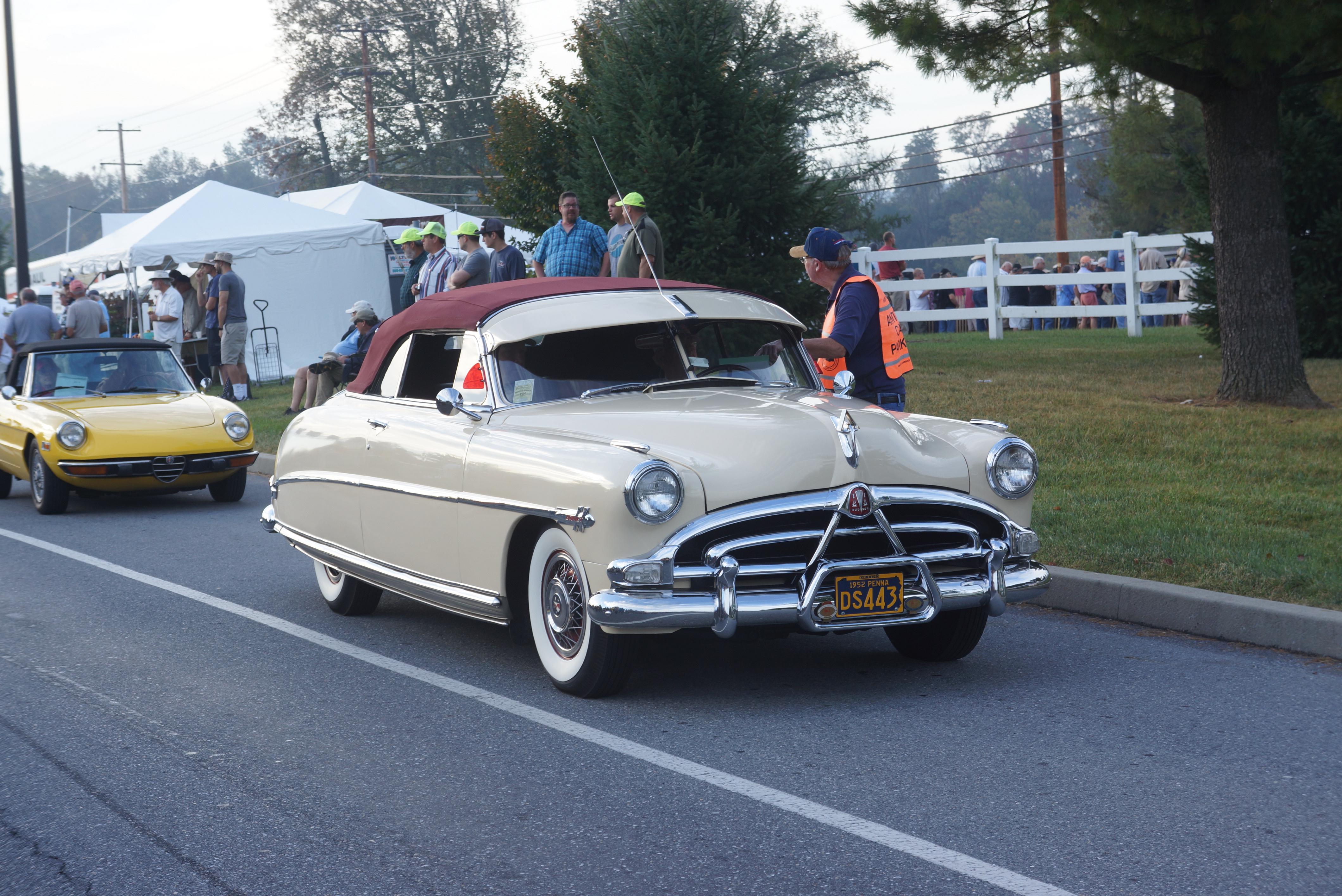
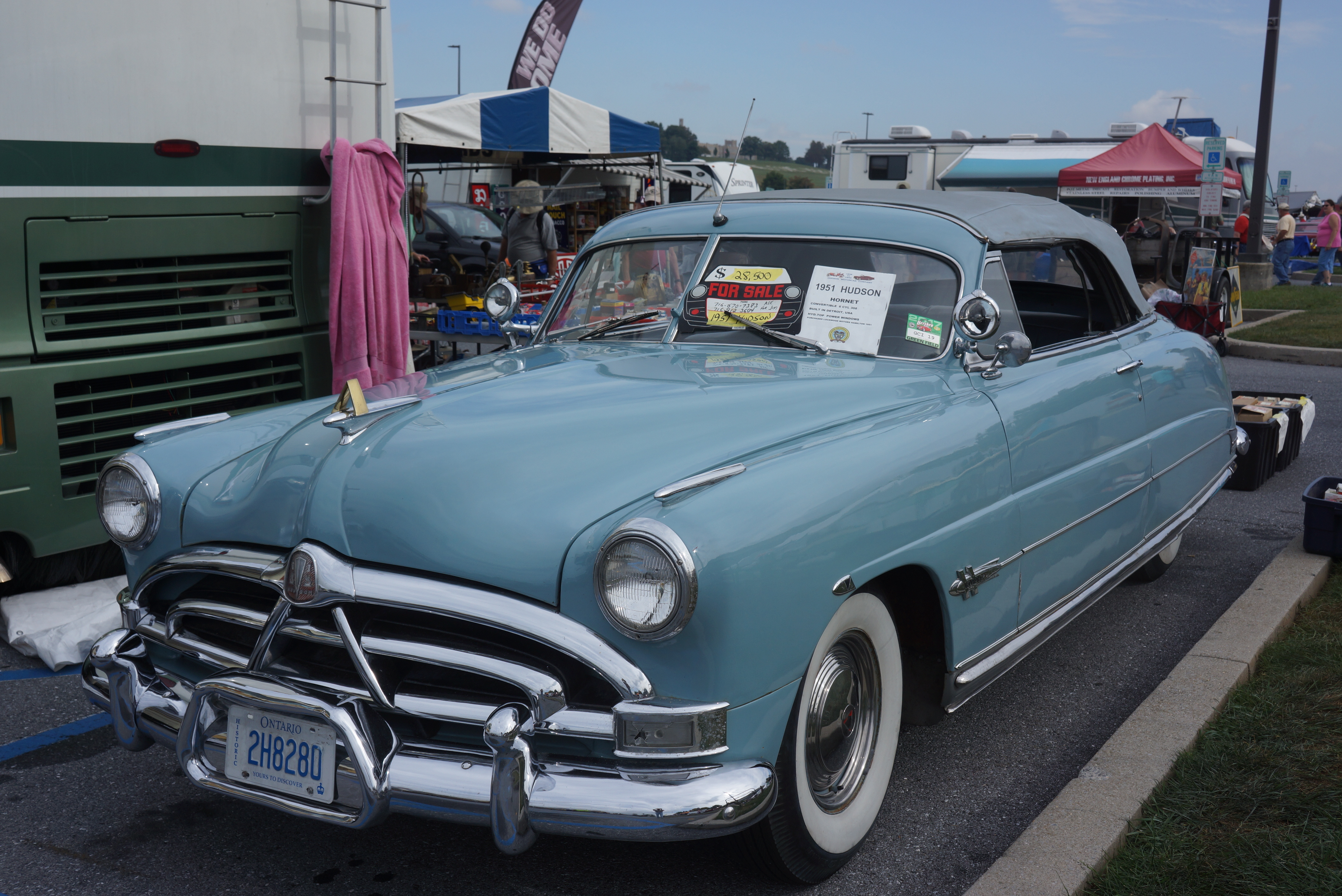
Hudson Hornet convertible
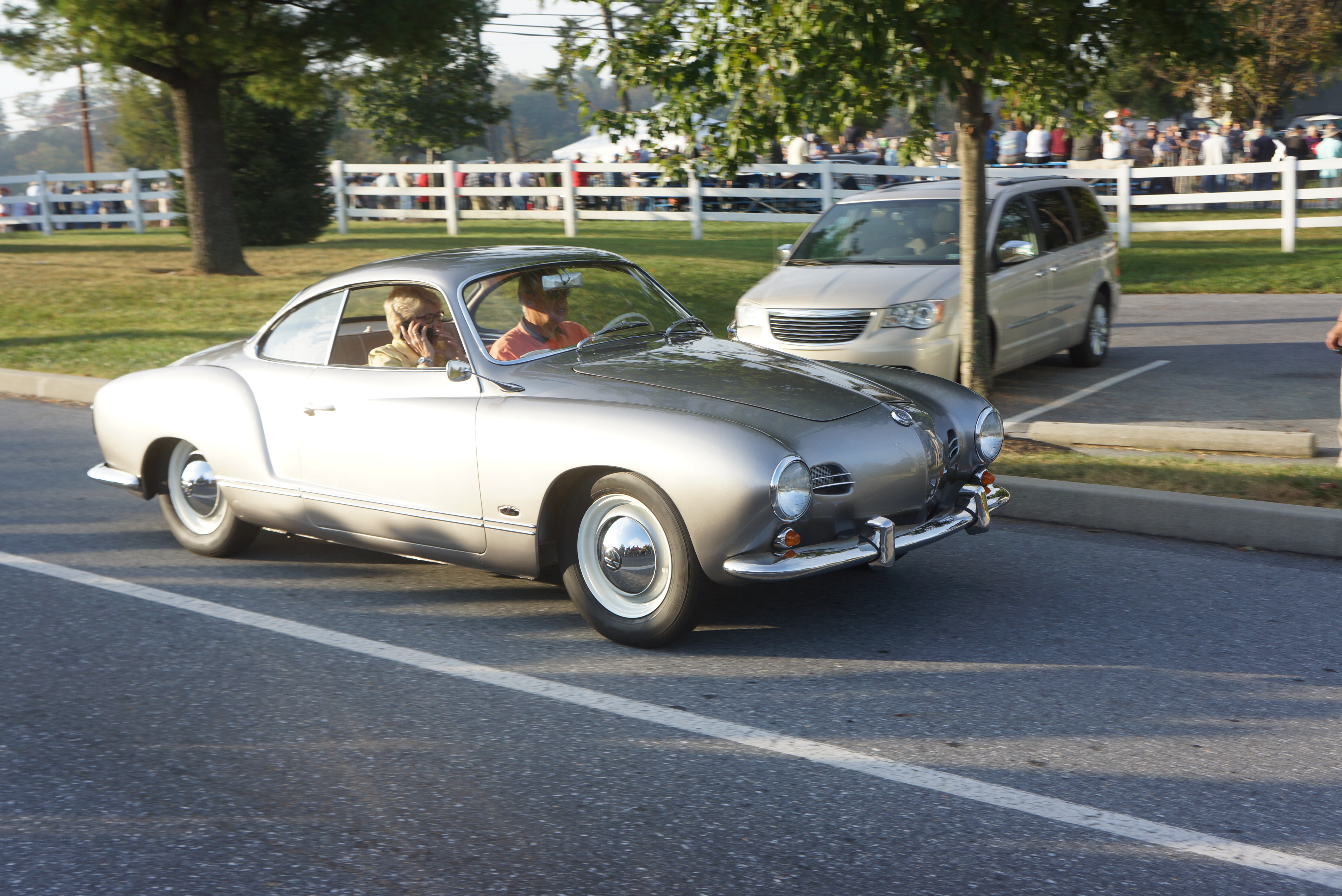
1950s-era VW Karmann Ghia
1957 Dodge
Jaguar XK-150
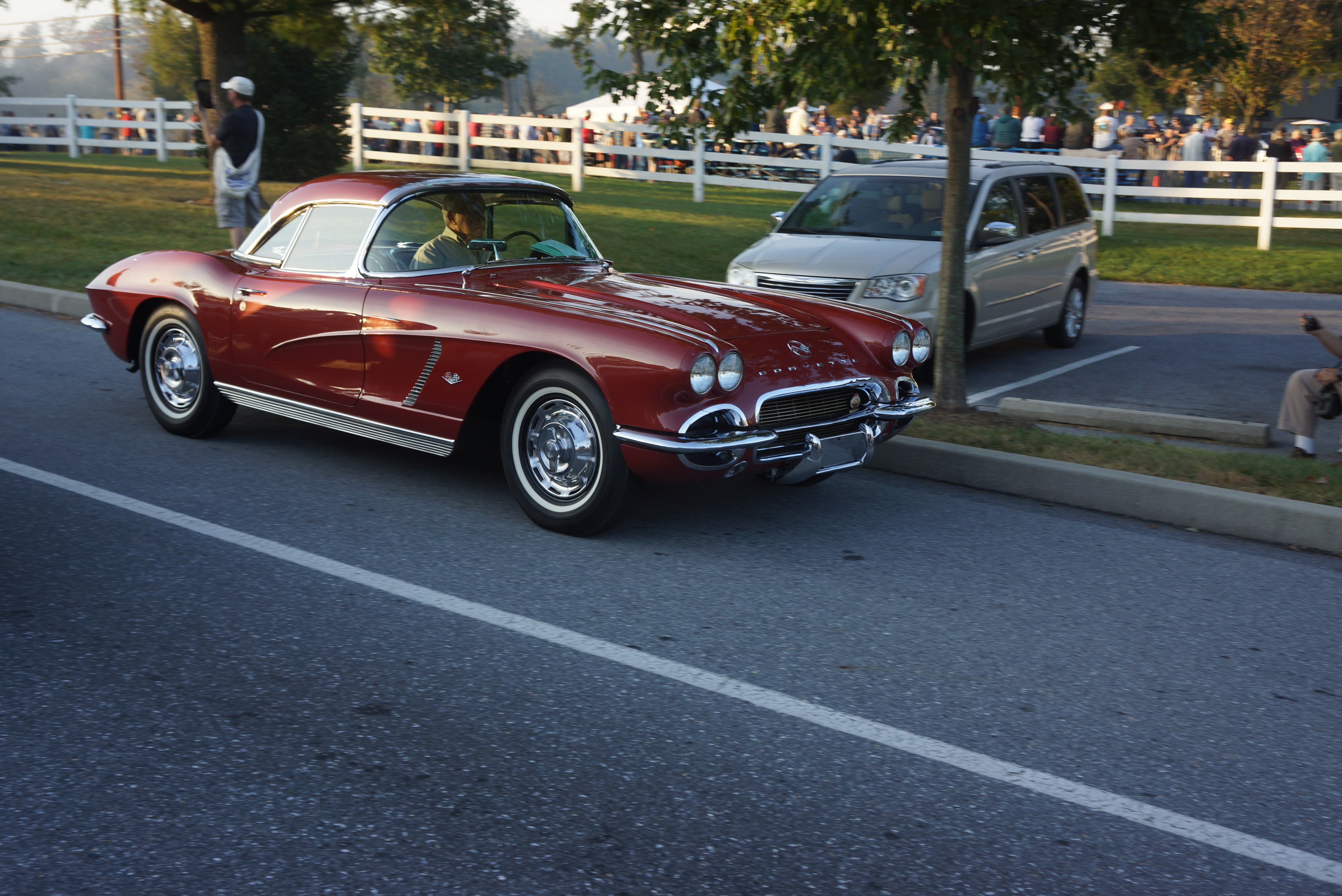
1962 Chevrolet Corvette
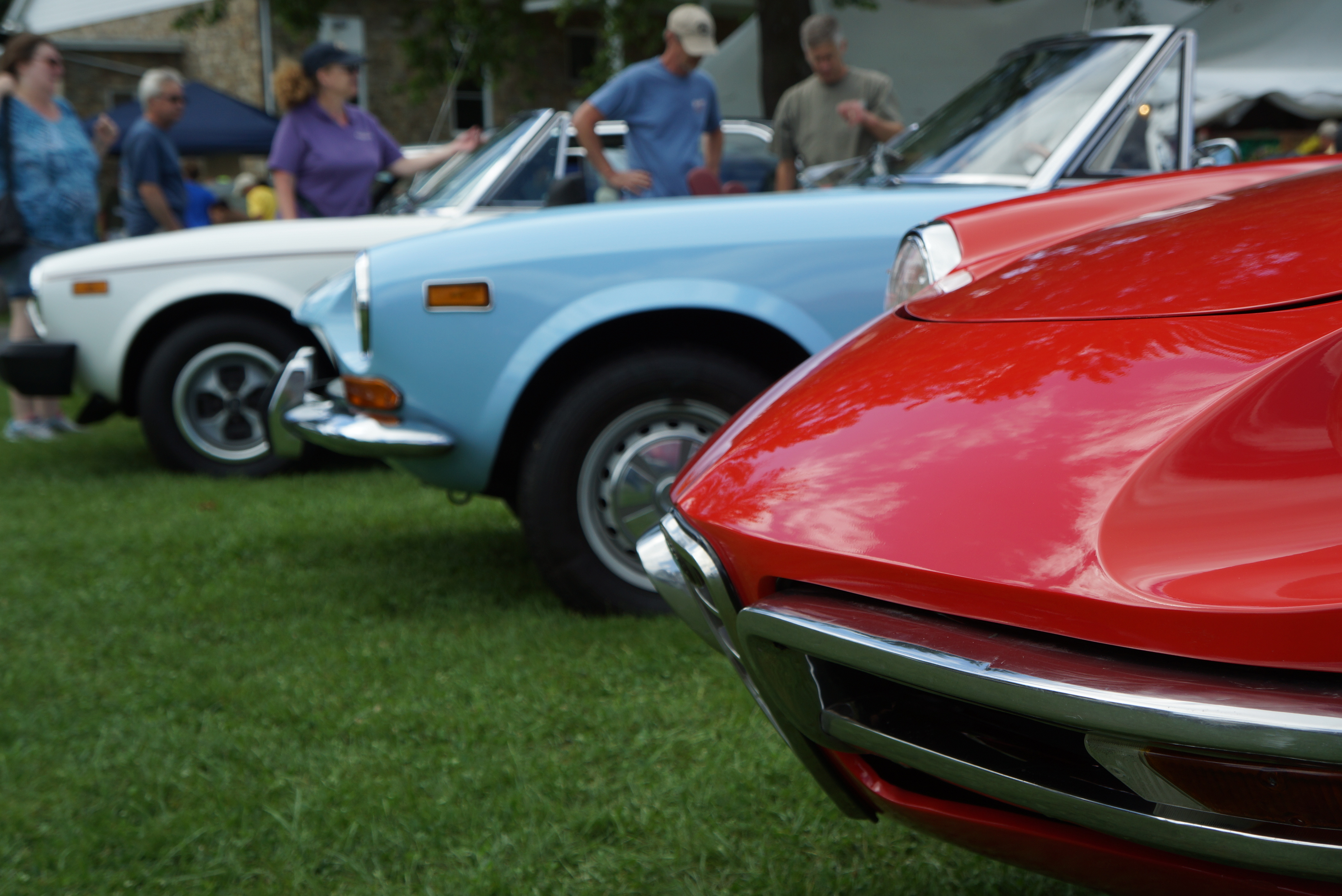
Two Triumphs and a Fiat ahead of some American muscle
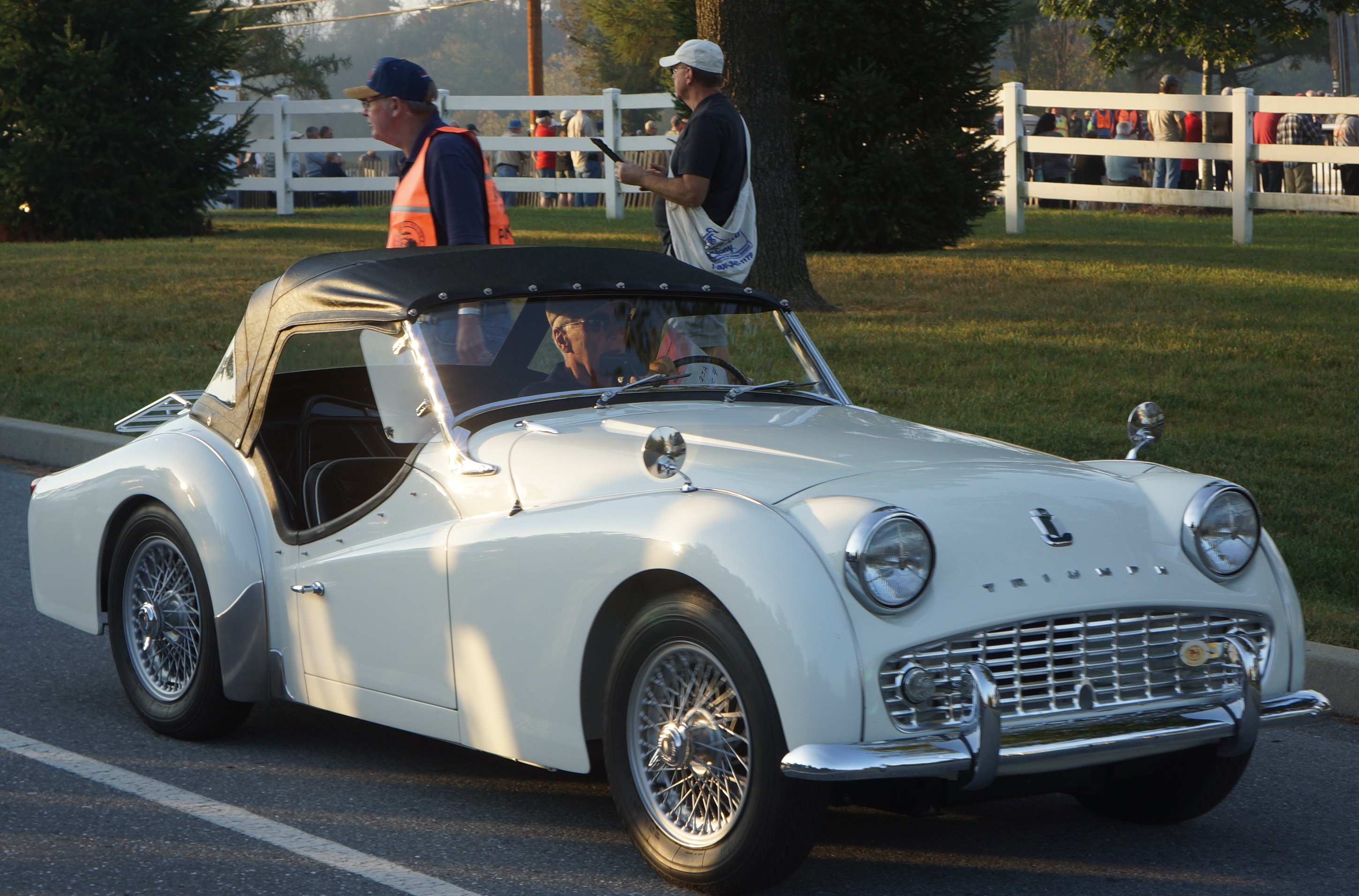
Triumph TR-3
Triumph GT-6
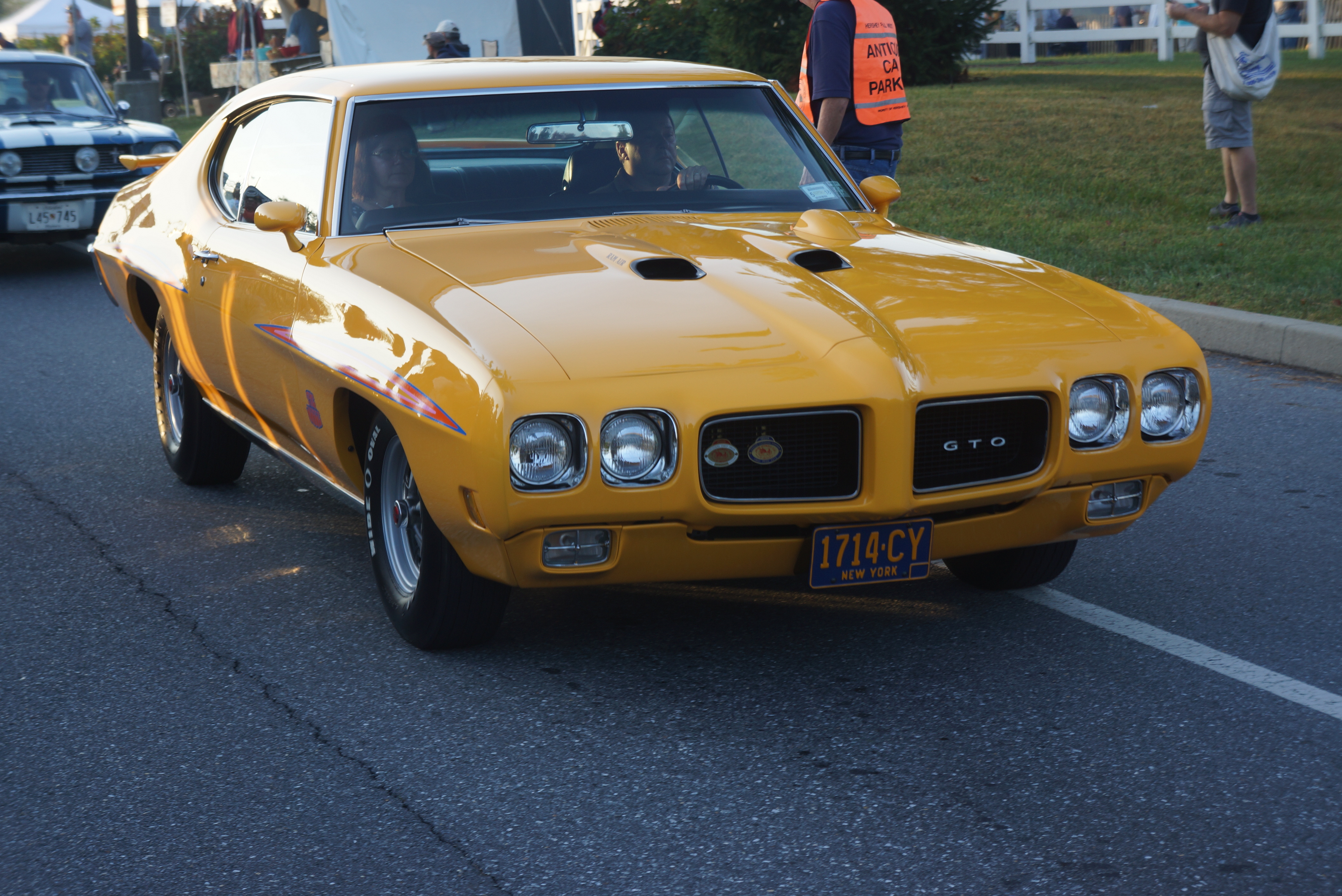
Pontiac GTO Judge
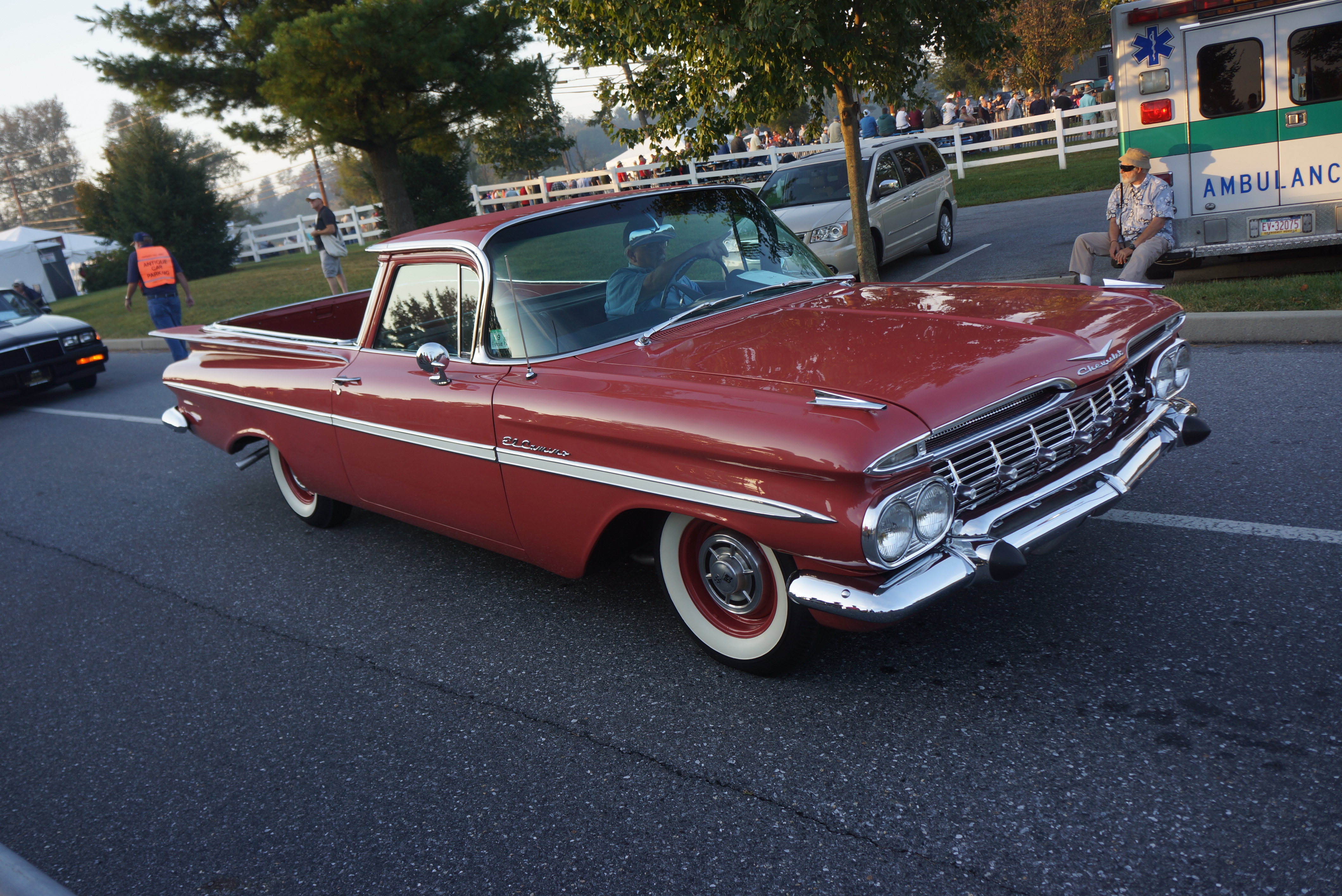
1959 Chevrolet El Camino
MGB roadster
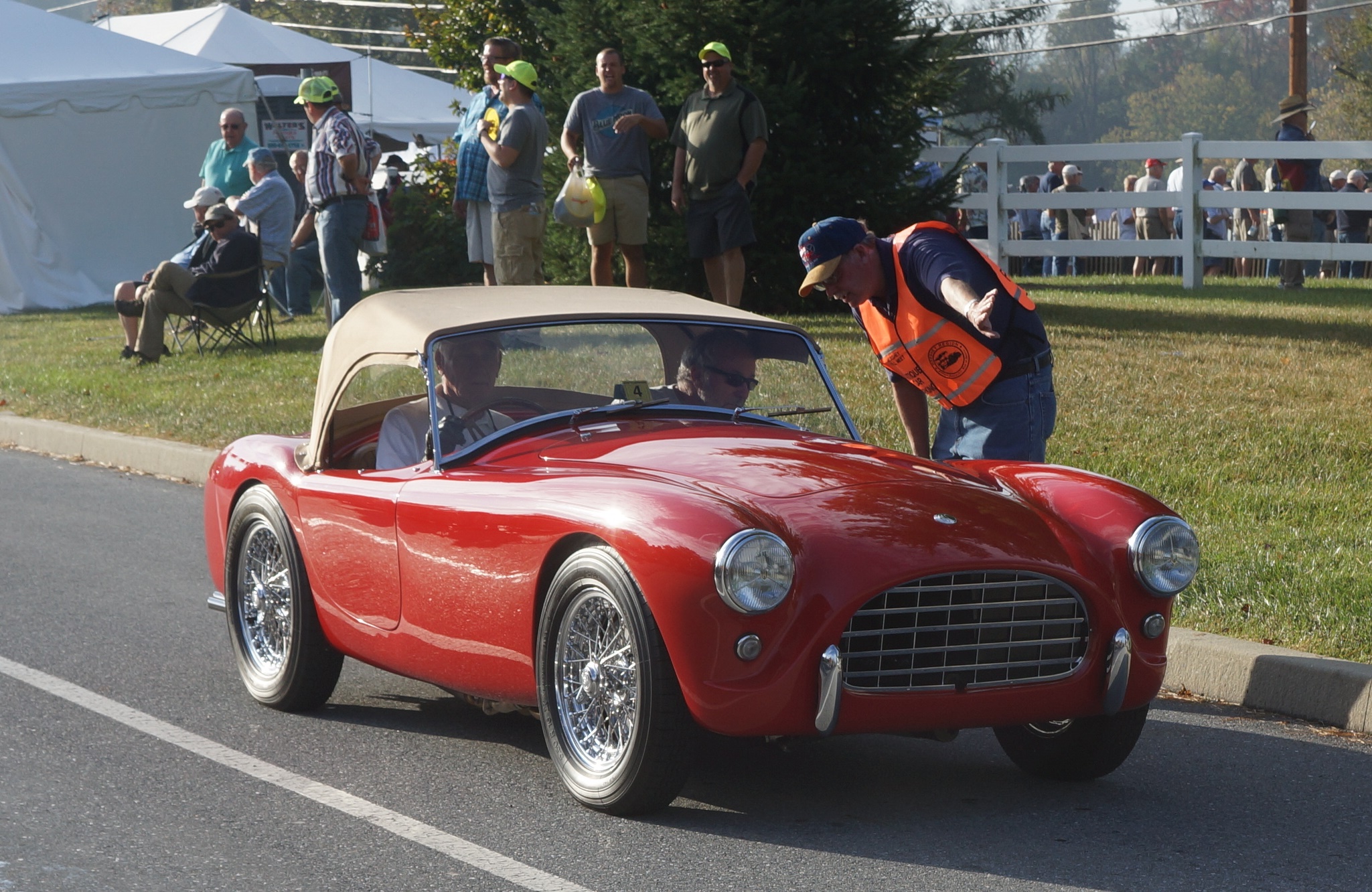
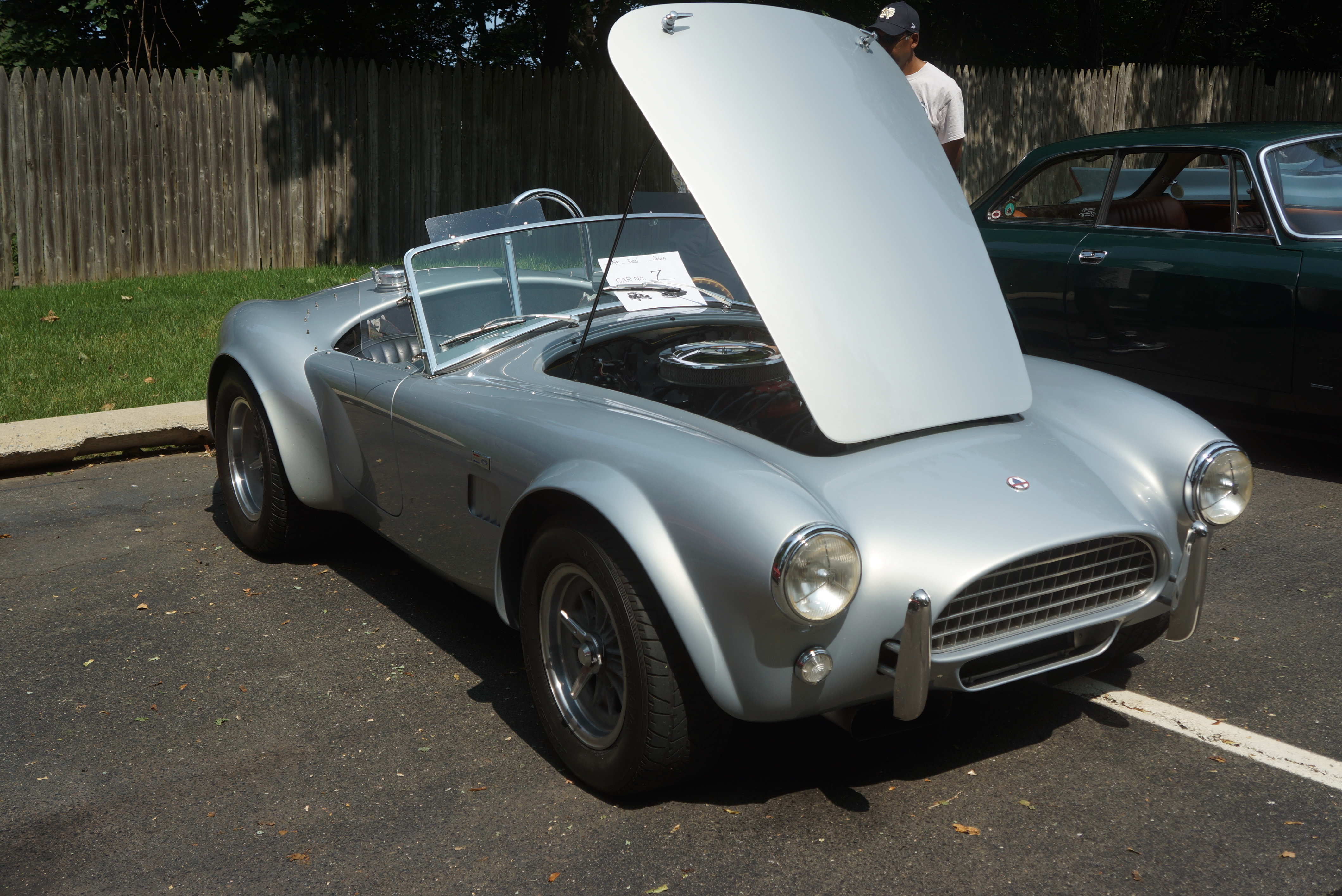
AC Ace Bristol
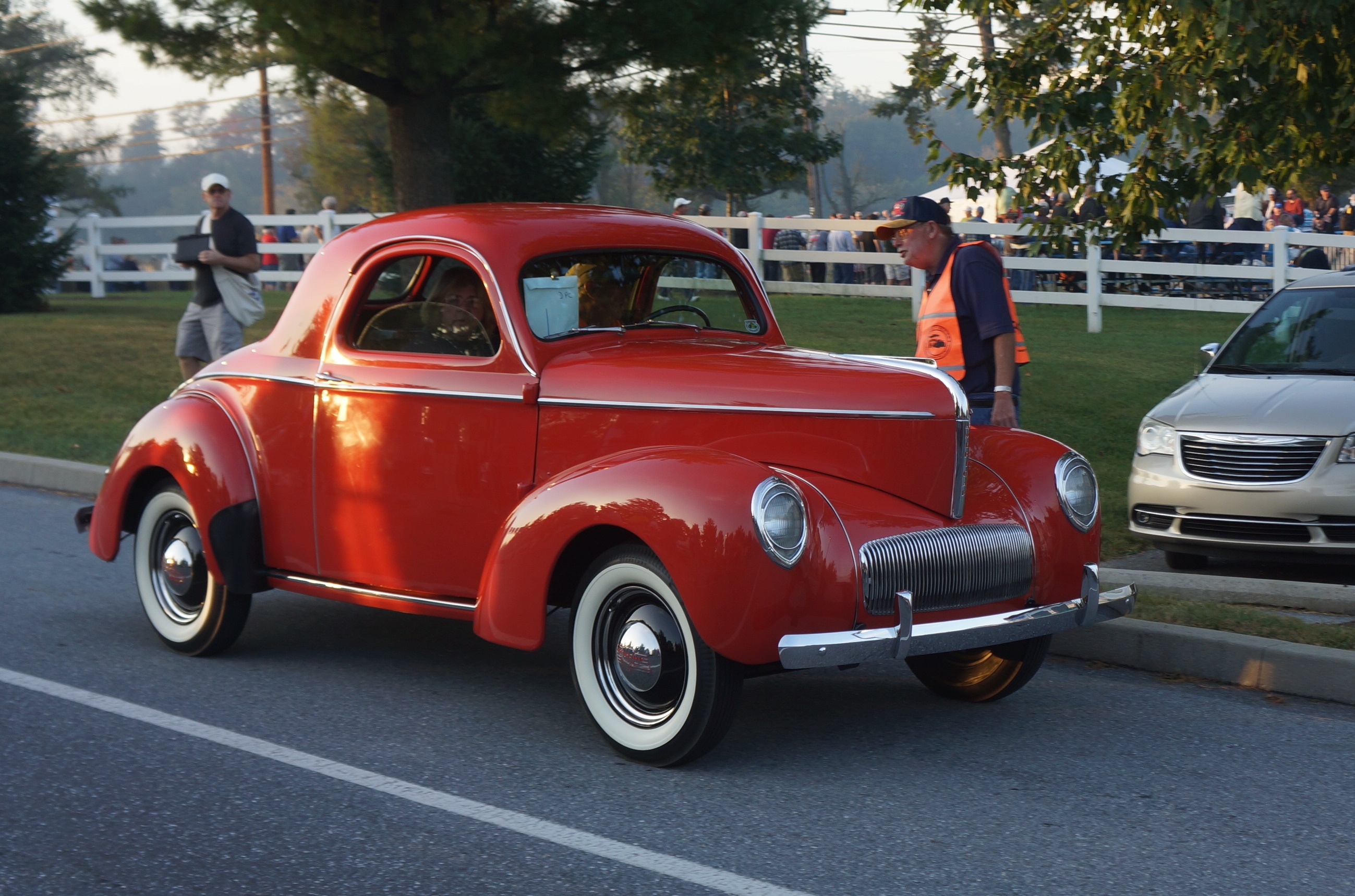
Willys coupe
Nash-Healey roadster
Porsche 356
Mazda Miata
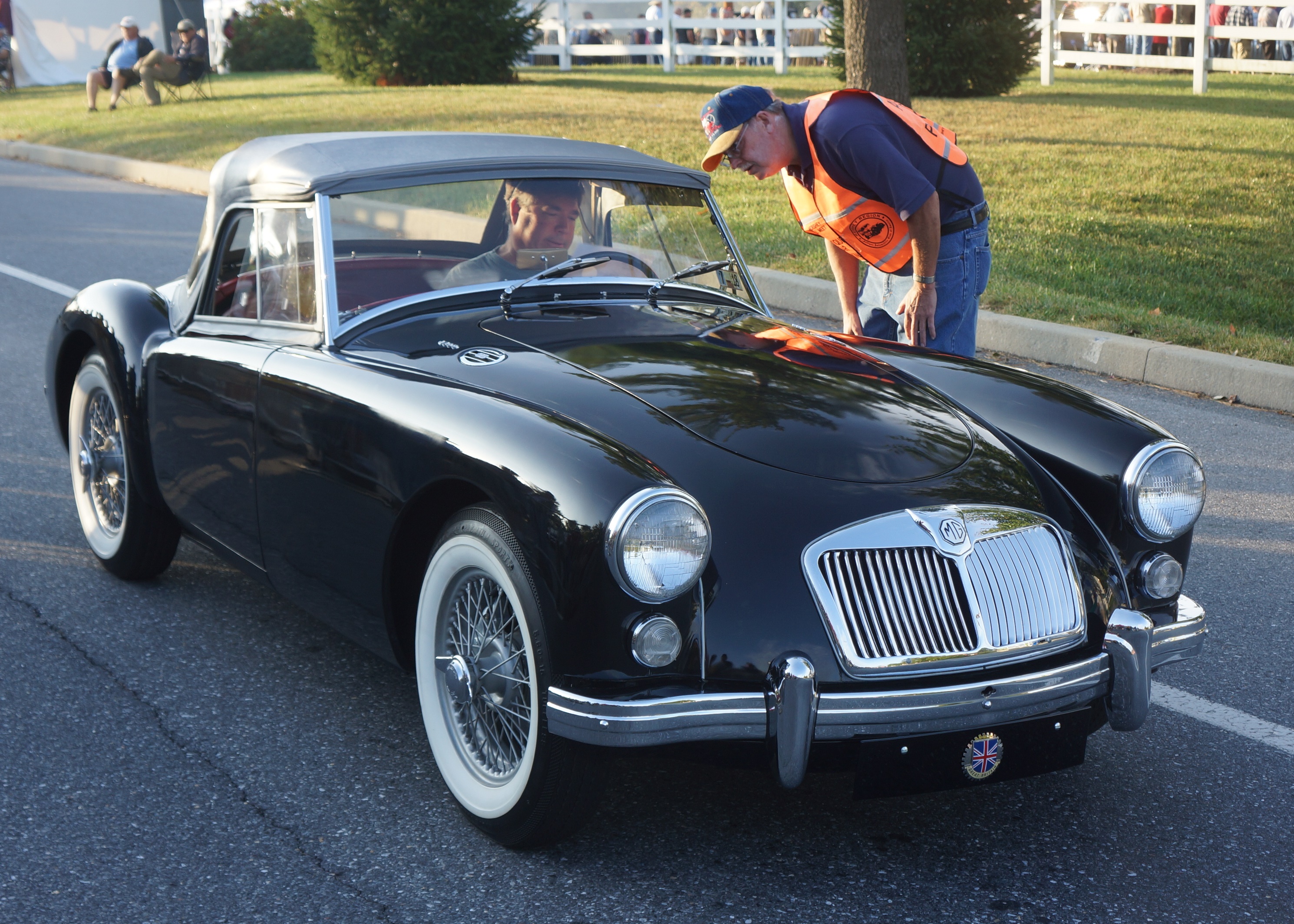
MGA
Stanley Steamer
Alfa Romeo Spider
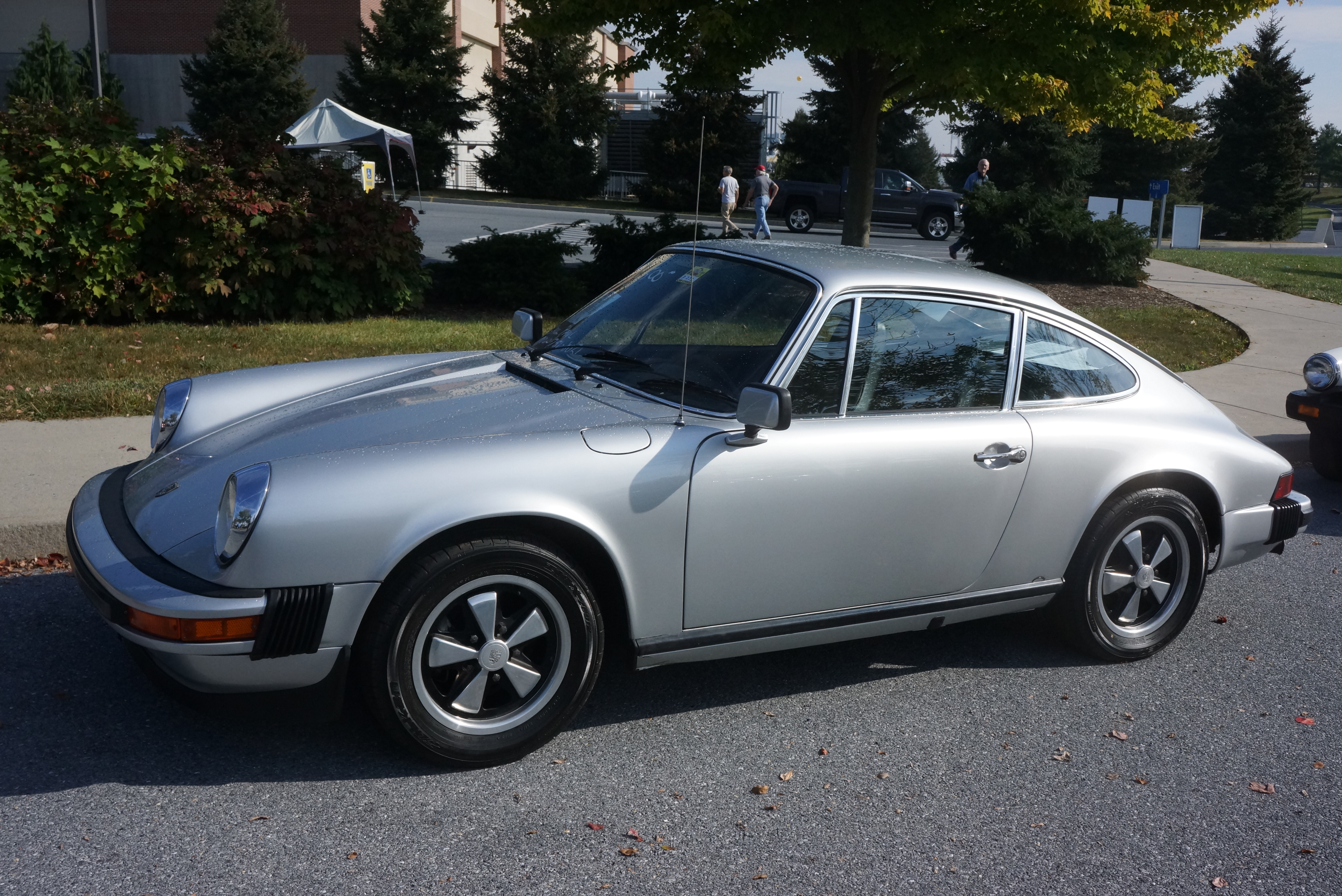
Porsche 911
VW Karmann Ghia Type 3 (not officially imported into U.S.)
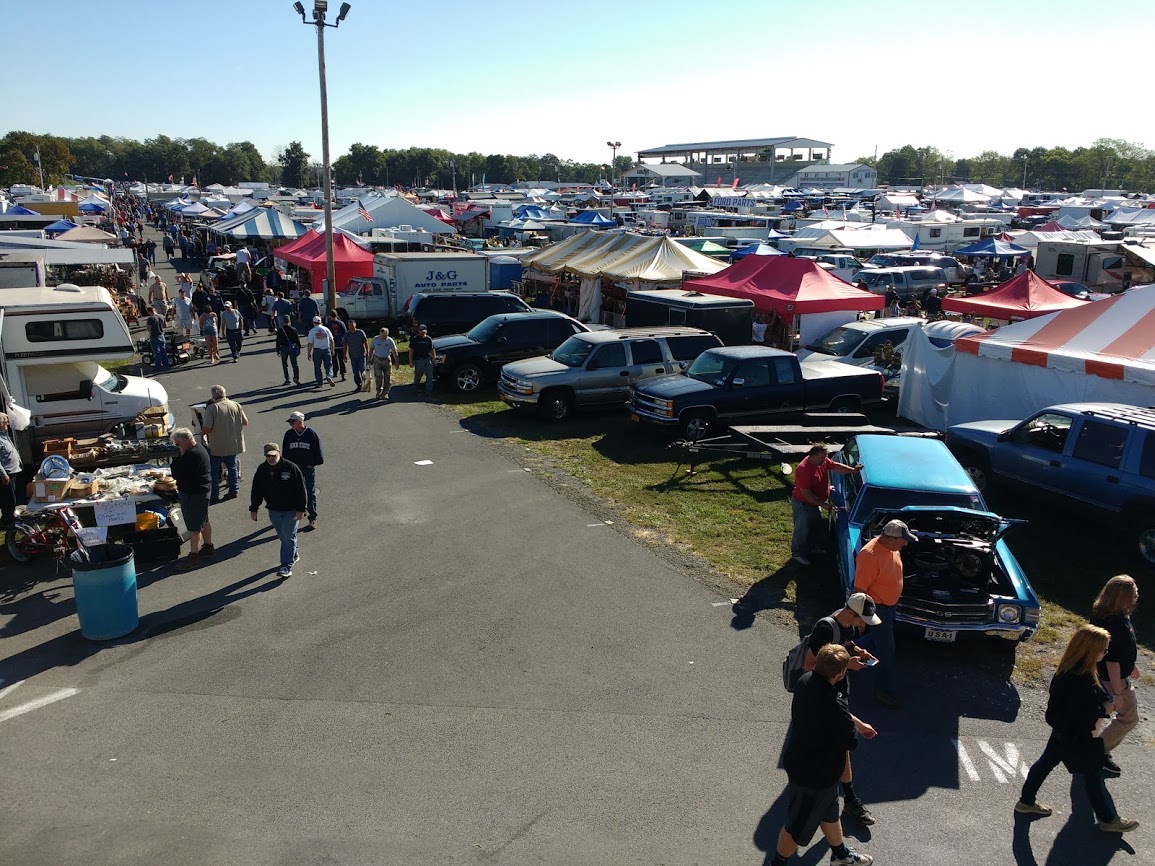
Fall Hershey (formally entitled the Antique Automobile Club of America Eastern Division National Fall Meet, which is why we call it Fall Hershey) is an automotive smörgåsbord: collector-car flea market, car corral, judged car show, and auction, encompassing such a voluminous spread of acreage that one needs at least three days to take it all in.
Corral in foreground, flea market behind it, and Giant Center in background
We’ve covered Fall Hershey on this blog in the past; this year, as a tie-in with the report on the previous week’s Carlisle visit, the focus shall be on the car corral. Unlike Carlisle, where one can offer for sale a fat-tired 2003 Toyota pickup truck if one desires, AACA’s rules apply. Vehicles placed in the car corral must be a minimum of 25 years old, and must essentially be in “stock” condition. Beyond that, asking prices are determined by the sellers, and negotiations are strictly between seller and buyer. A car corral office and public notary are on hand to facilitate exchanges.
Let’s not forget where we are
Overall, the quality and variety of cars were on par with previous years. Unlike the recent past, and eerily similar to Carlisle, were the long stretches of empty spots. It was not a ghost town, however, I’d estimate that 25% of available spots remained so.
Some empty spots in this section of the corral
The corral has changed in other ways. Way back in the 1980s and 1990s, most cars for sale were privately owned. Deals were often made among hobbyists who knew each other, or at least had a mutual friend. If buyer and seller were meeting for the first time, the sale would many times be the start of a new friendship.
Today, classic car dealers buy up an entire row in the corral, and place their half-dozen or dozen cars together. (You can always tell: the signage and lettering styles are identical.) Dealers are as likely to be buyers as they are sellers. Asking prices are set by picking numbers out of a hat (I kid, but you do sometimes wonder about the relationship between that number on the windshield and reality).
Cars of all sizes are for sale
Dealers spew the same lines: “it’s a good car, runs good, real solid, real nice condition, all restored, very rare with these options”. The lack of specificity is jarring. Not to disparage dealers, but if you do find an individual owner who is selling, you are more likely to learn more about a vehicle’s true recent history.
A private owner will talk specifics: “I bought it 10 years ago, put 5,000 miles on it, drove it in an AACA tour five years ago, re-did the brakes two winters ago, and drove it here from Maryland”. Comments like these were actually overheard this year.
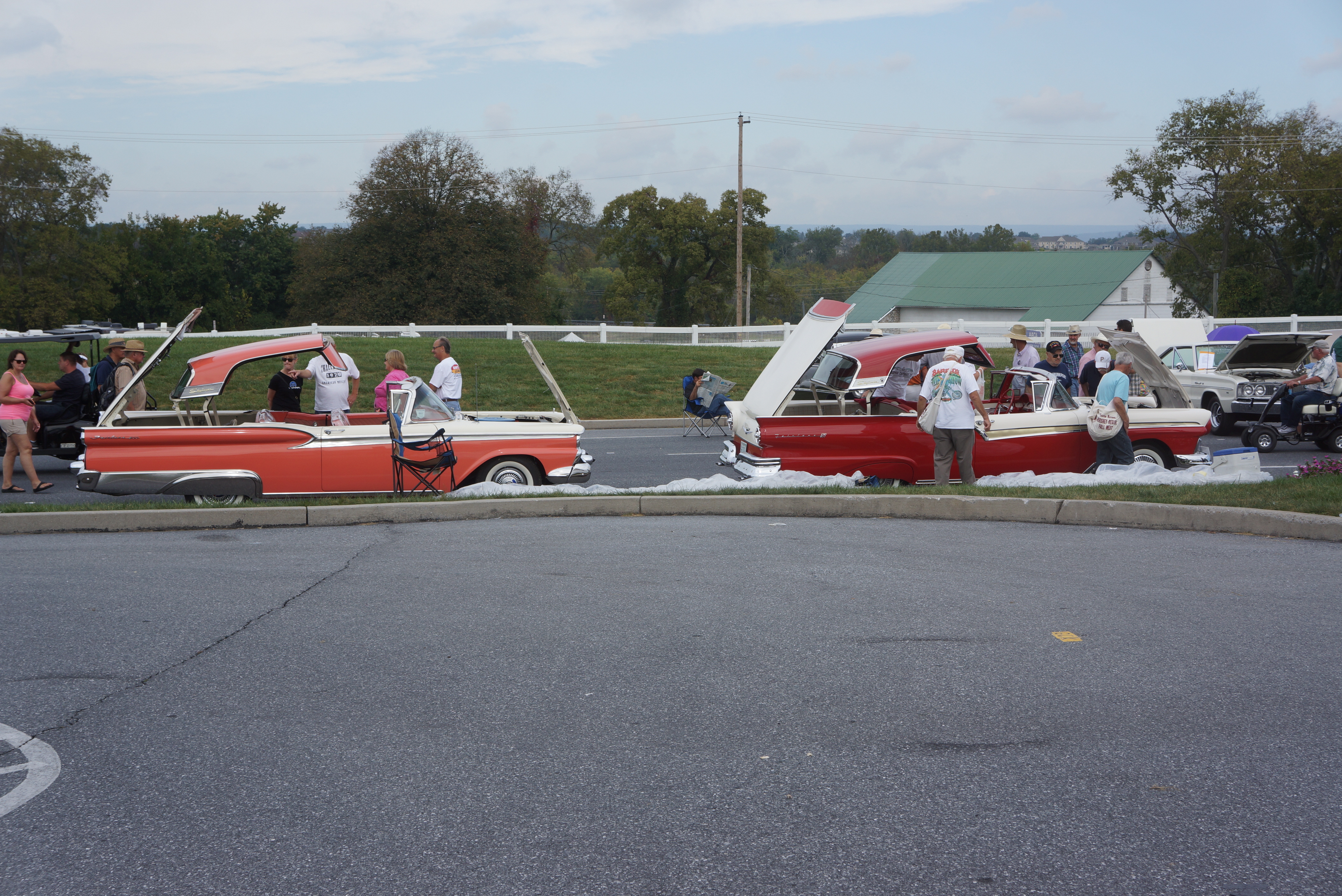
Ford Skyliners flip their lids for you
This lengthy preamble is to set the stage for my eclectic selection from the car corral. The thirty cars below are arranged in order of asking price. No attempt was made to ascertain if the seller was a private owner or dealer. While all these cars “looked good”, condition was not analyzed, and mileage was not recorded. You can presume that none was modified to be non-original. In the case of American cars, the level of optional equipment was not noted. The vast majority of signage indicated “or best offer”, so think of these prices as a negotiable starting point.
Not hard to imagine that the presidential window sticker is original to the car
Organizing them in price ranges allows the reader to make comparative estimates regarding what your collector-car piggy bank can get you. Have fun on your imaginary shopping trip.
Part 2 will be my report on the 2017 RM Sotheby’s Hershey Auction.
Car Corral, $4,900 to $9,500:
1990 Mazda Miata, asking $4,900
1989 VW Fox wagon, asking $5,500
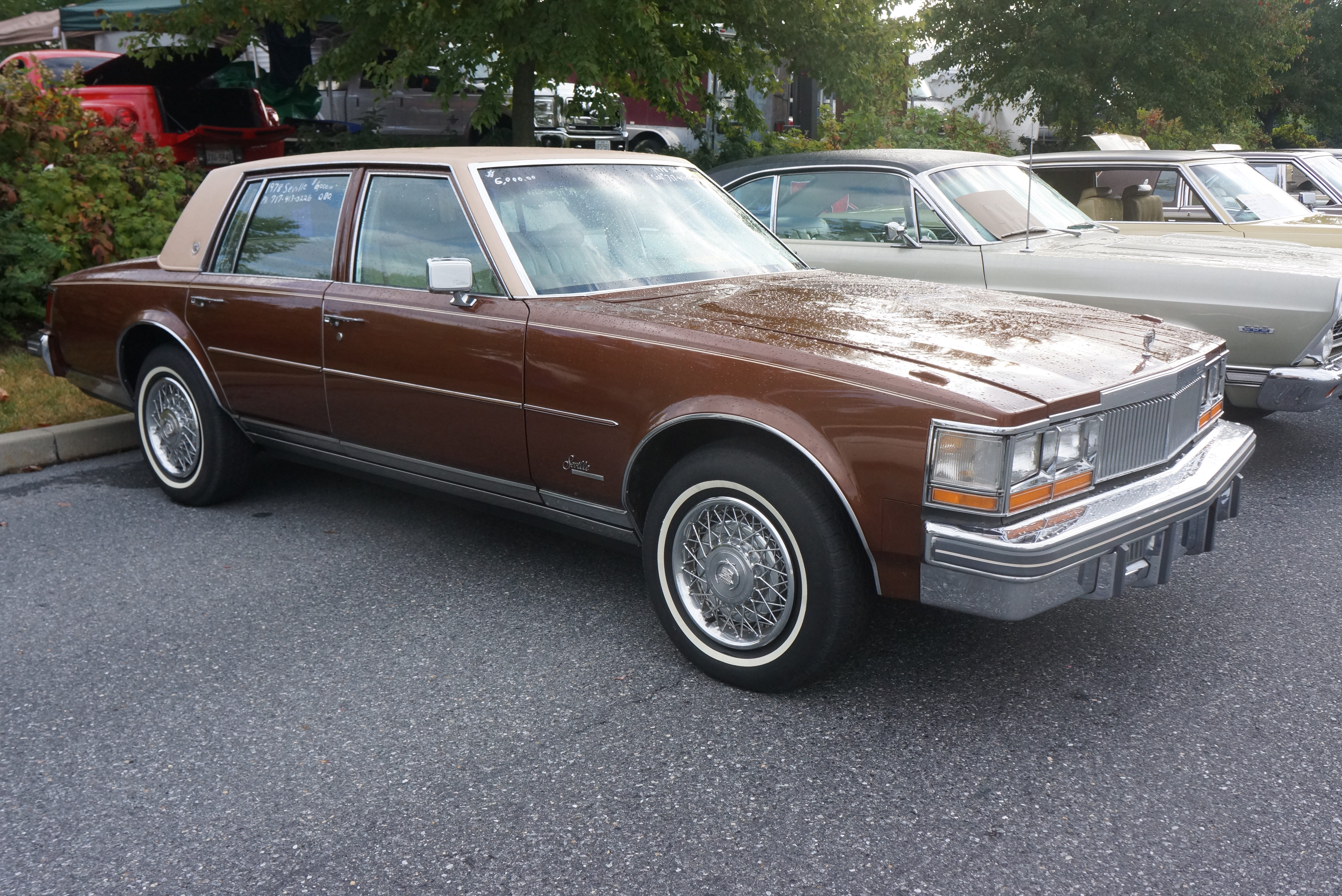
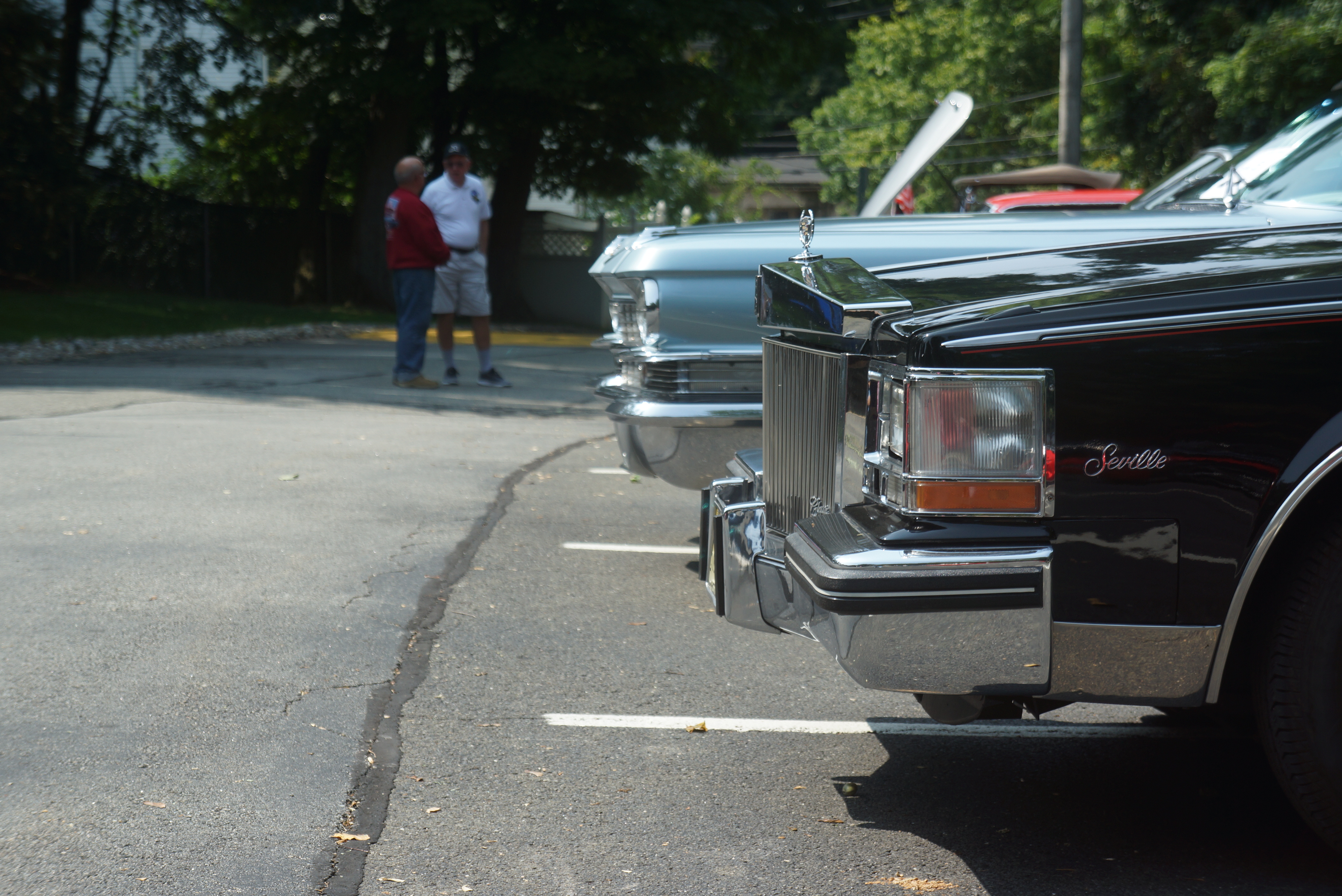
1978 Cadillac Seville, asking $6,000
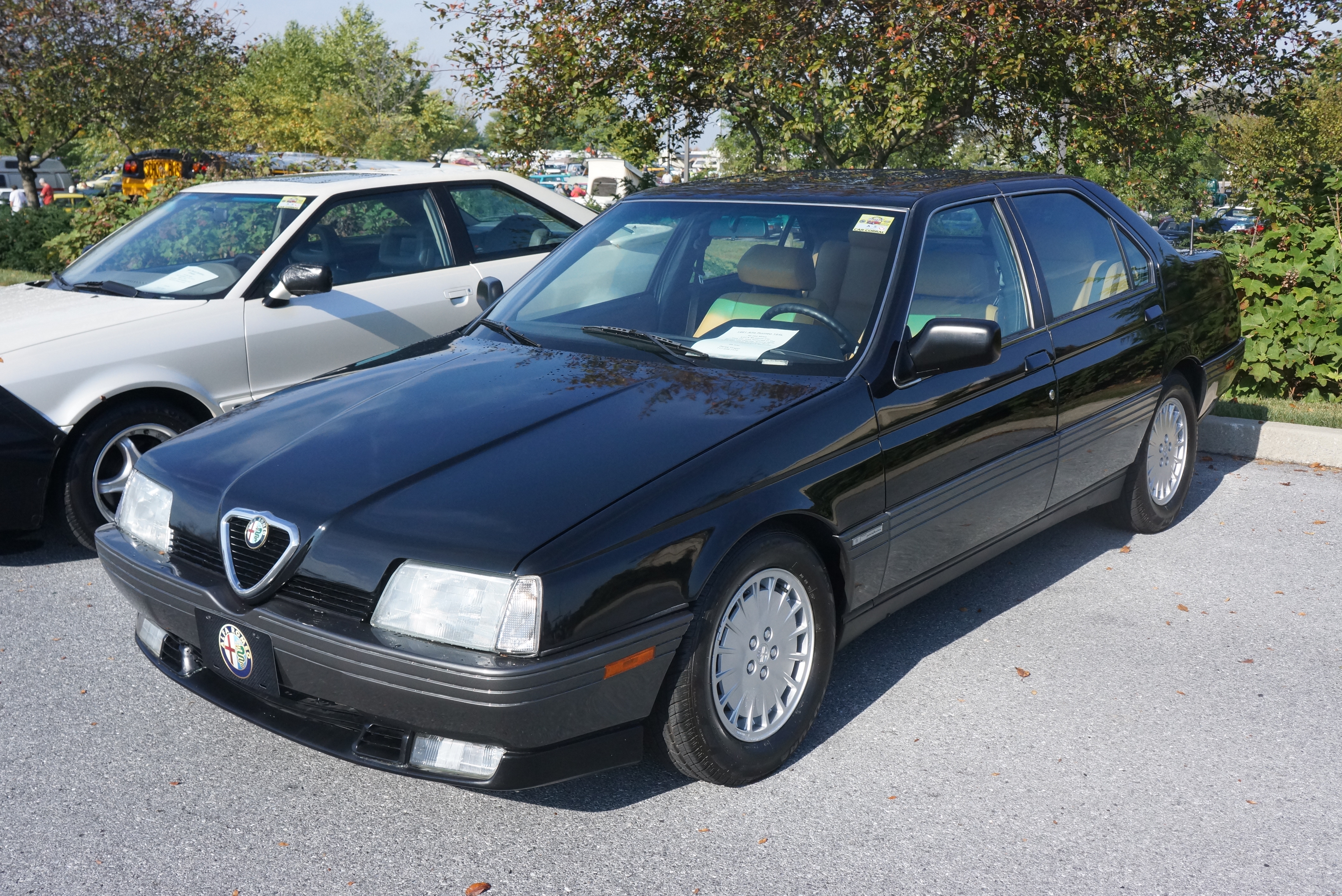
1991 Alfa Romeo 164, asking $6,500
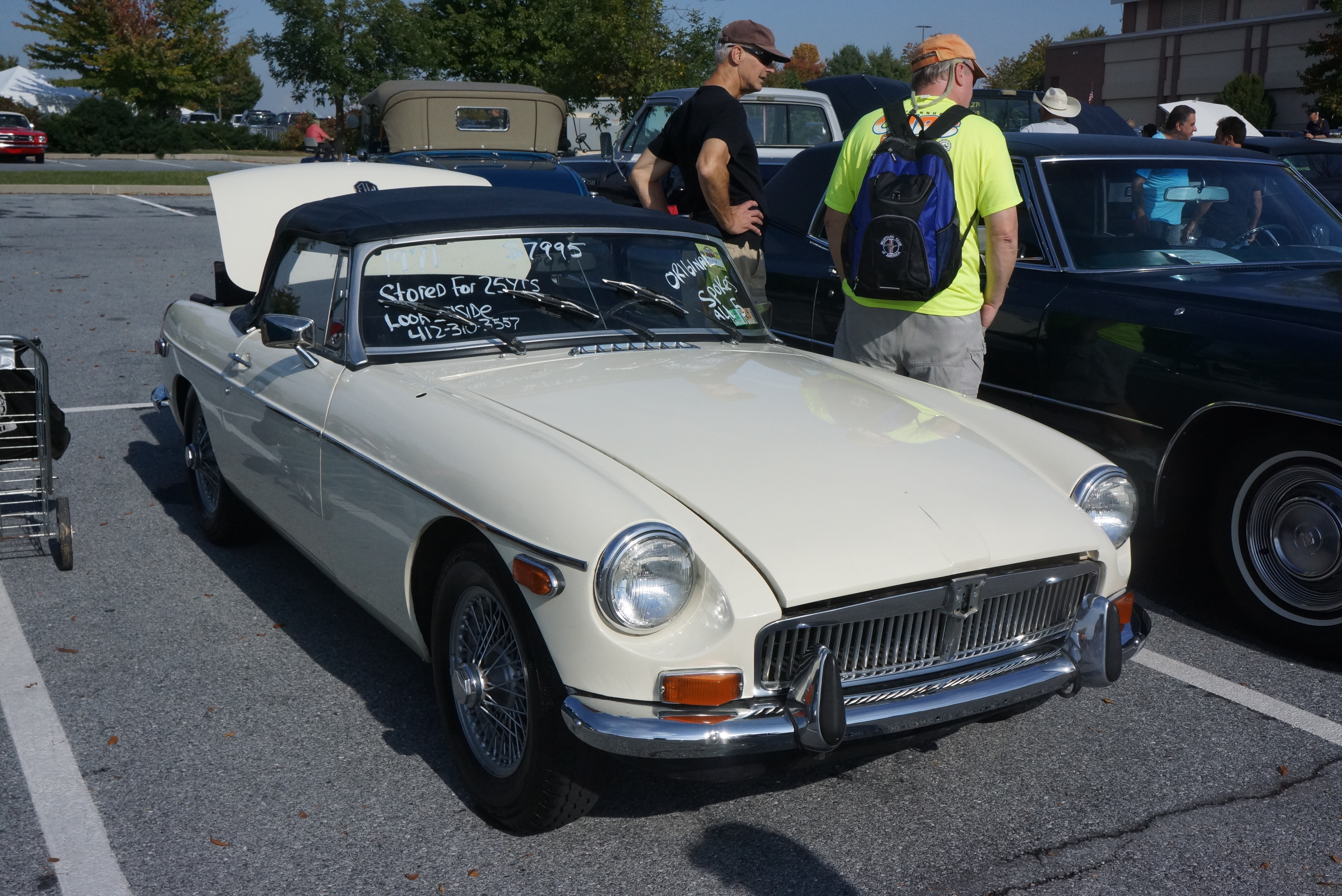
1971 MGB roadster, asking $7,995
1981 Chevy El Camino (6 cyl. 3-speed), asking $8,500
Fall Carlisle 2017, a combination automotive flea market, car corral, and auction, was held at the Carlisle Fairgrounds from September 27 through October 1.
From here, it looks like business as usual
As I strolled through the grounds, the same two questions repeated in my head: “Should someone get in while the getting is good?” Or, “Should we get out while there’s still a way out?”
These questions came up because many of us in the hobby are concerned about its future. It always comes back to “what will my old car be worth down the road?” The Carlisle events, principally Spring and Fall Carlisle, have been a wonderful barometer of the hobby for over 40 years. The car corral this year told a markedly different story: corral spaces were perhaps 60% taken (in the past, one usually had to wait for a car to sell for a spot to become available); yet among the cars on the premises, many seemed to have reasonable asking prices.
In 39 years of attending Carlisle, I’ve never seen the car corral look like this
The flea market, on the other hand, was filled to capacity, with nary an open space to be found. Vendors were out in force, even if the crowd on the picture-perfect Friday when I attended was a bit lighter than I would have expected.
We joke, but some of the lunch offerings aren’t bad
I began my morning in the car corral, then after a gourmet lunch under the grandstand, walked a few of the flea market aisles. By 3pm, I was headed across the street to the Expo Center where the Fall 2017 version of Carlisle Auctions was underway. Here we saw the hobby flexing its muscles. The auction has expanded to three days from its previous two; most of the bidders’ seats were taken; and the bidding, while not exceptional, seemed to hold to about a 60-70% sell-through rate. Perhaps, rather than deal with tire kickers in the corral, sellers are rolling the dice on the auction block.
The queue headed into the Expo Center
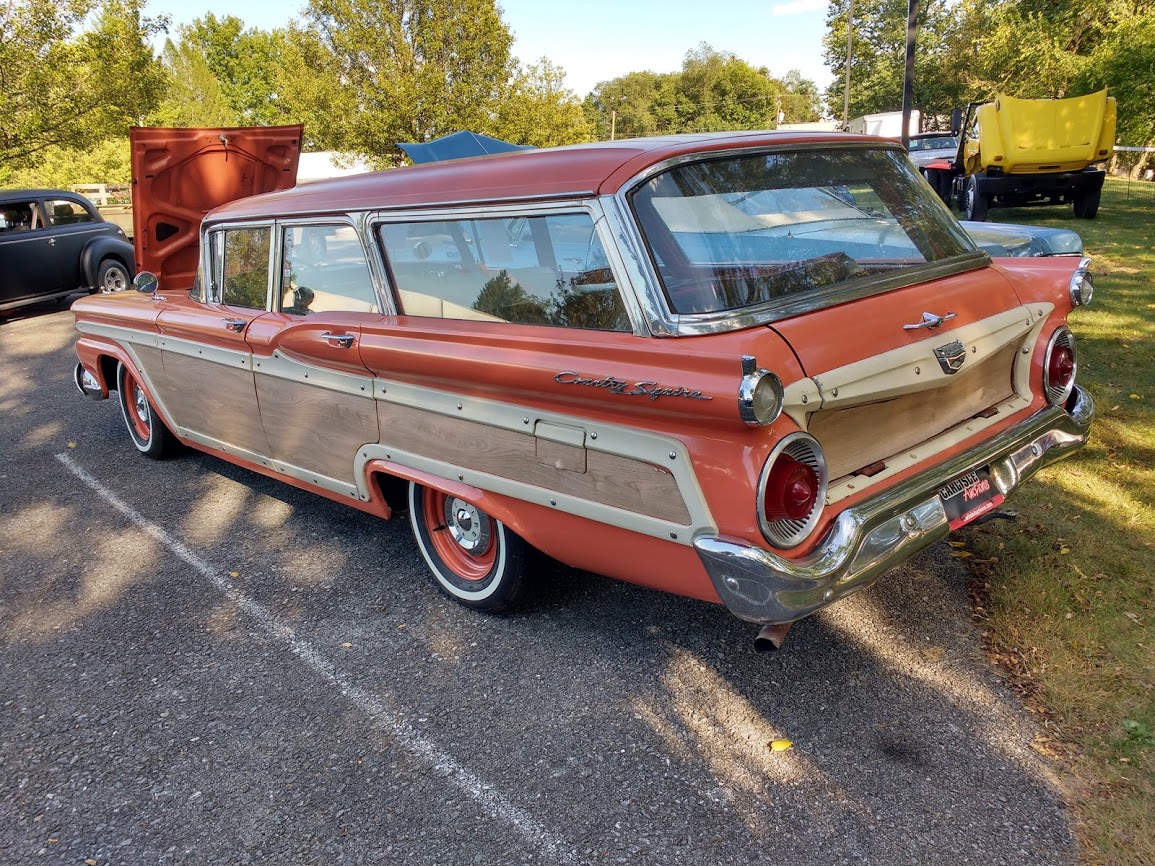
A couple of rare Fords: ’59 Country Squire,
and a very clean Maverick
The photo coverage below is divided into two sections. First, we feature car corral choices with asking prices below 10 grand. If you’ve got some bucks burning a hole in your pocket, or are open-minded enough to be flexible about a first (or additional) collector car, there were plenty to choose from.
Our second section is entitled “Carlisle Auction re-runs”. This is an arbitrary list of vehicles which did not meet reserve. To the credit of the folks who run the show, the high bids are posted on the windshields in plain sight. I sometimes think that going back and trying to negotiate a price AFTER the car has crossed the block might be a better strategy, as it removes the pressure of bidding while the auctioneer is yammering in your ear at 110 decibels.
In both cases, no editorial comment about vehicle condition or value relative to the asking/bid price is supplied. As always, caveat emptor(which is Latin for “collector cars may be worth more or less than what you pay for them”).
CAR CORRAL: UNDER $10,000 EDITION
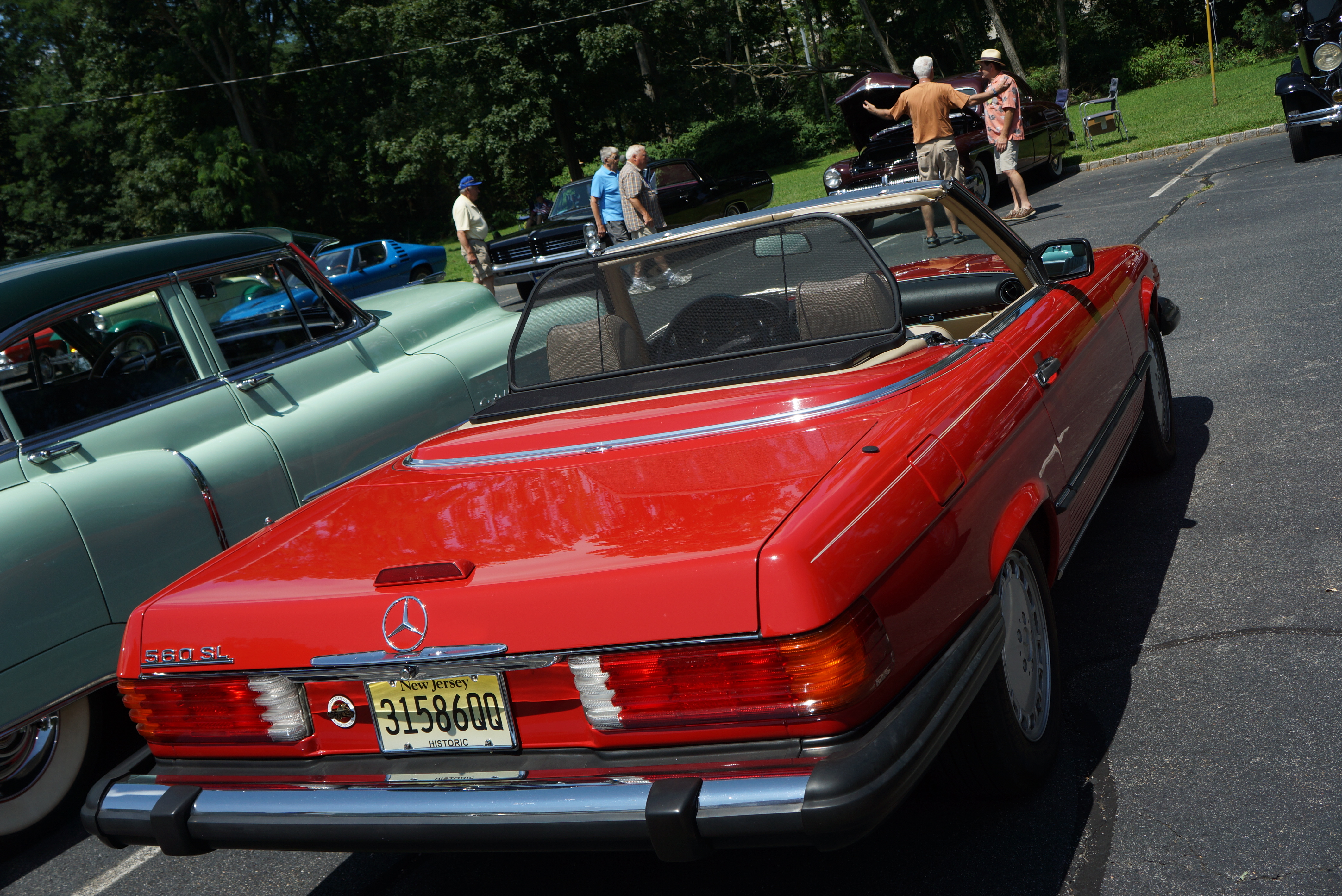
1988 Mercedes Benz 560 SL roadster, asking $7,000:
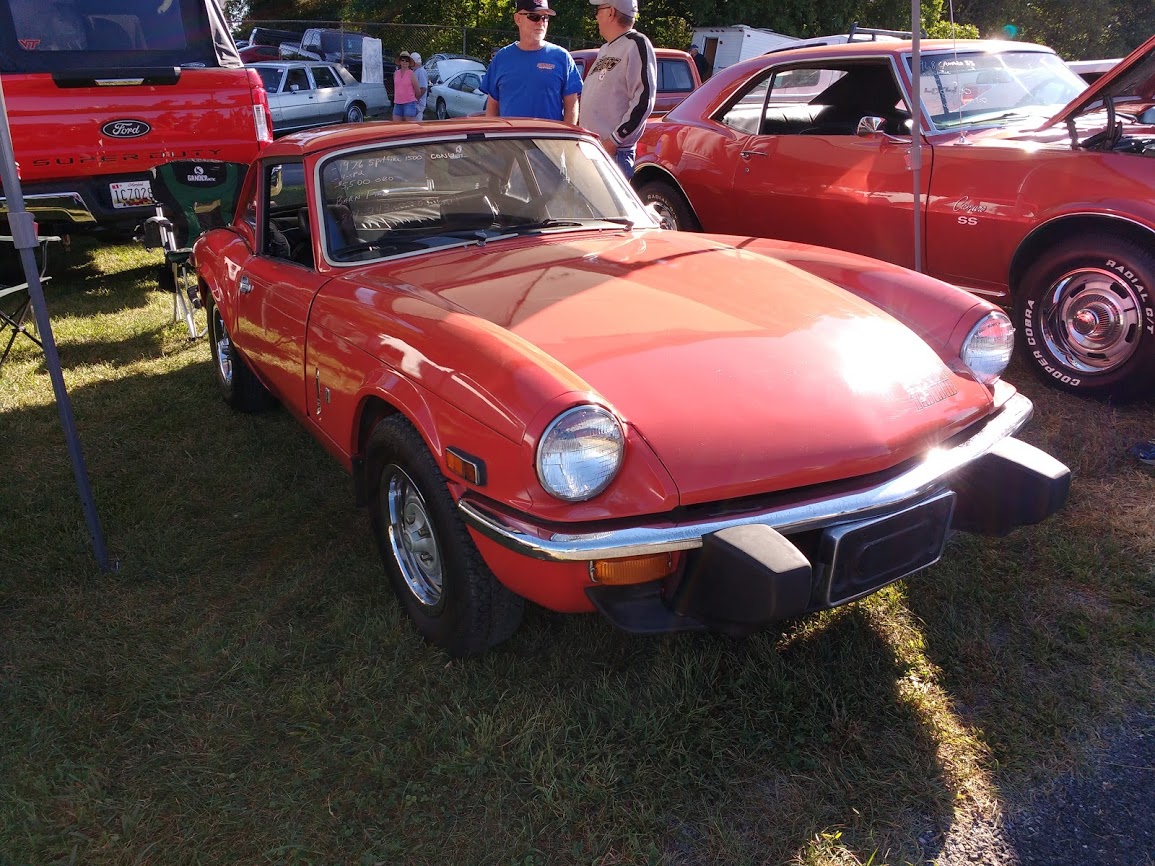
1976 Triumph Spitfire, asking $5,500:
1995 Pontiac Trans Am, asking $8,900:
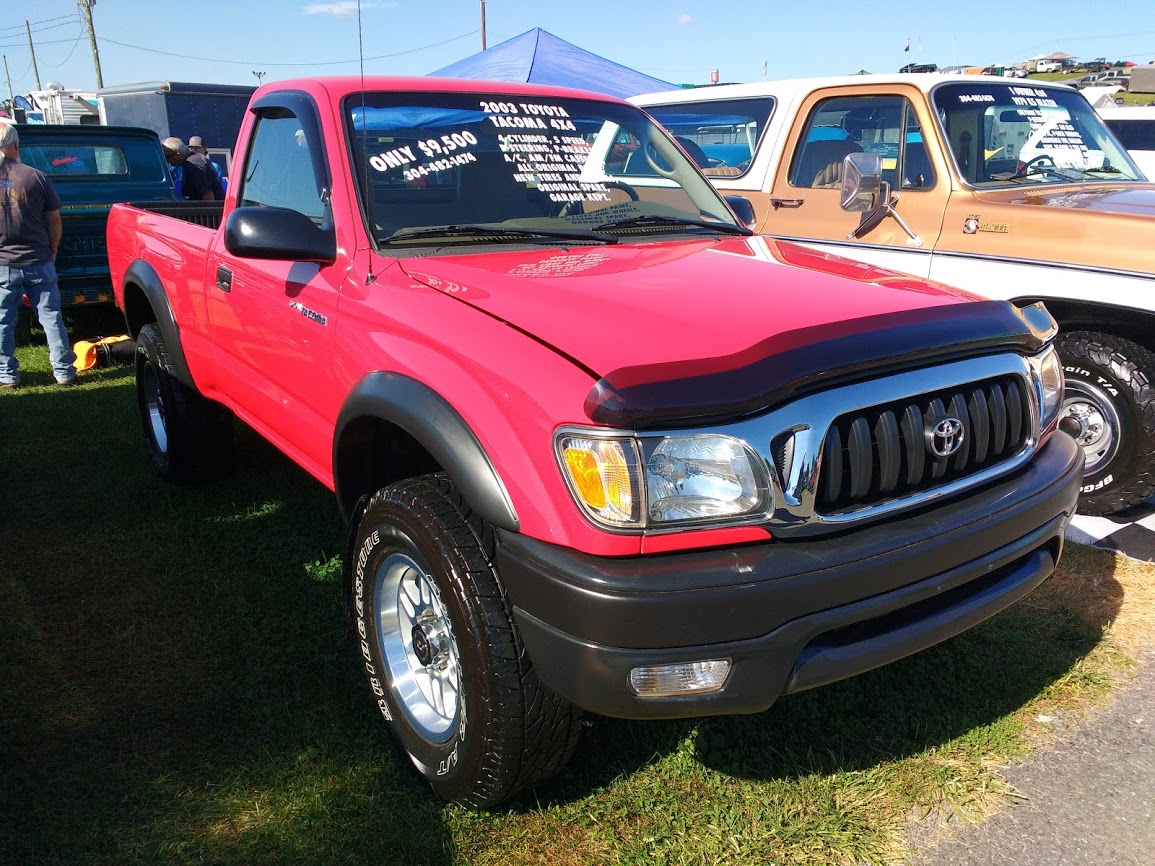
2003 Toyota Tacoma pickup, asking $9,500:
1987 Chevrolet Corvette coupe, asking $5,400:
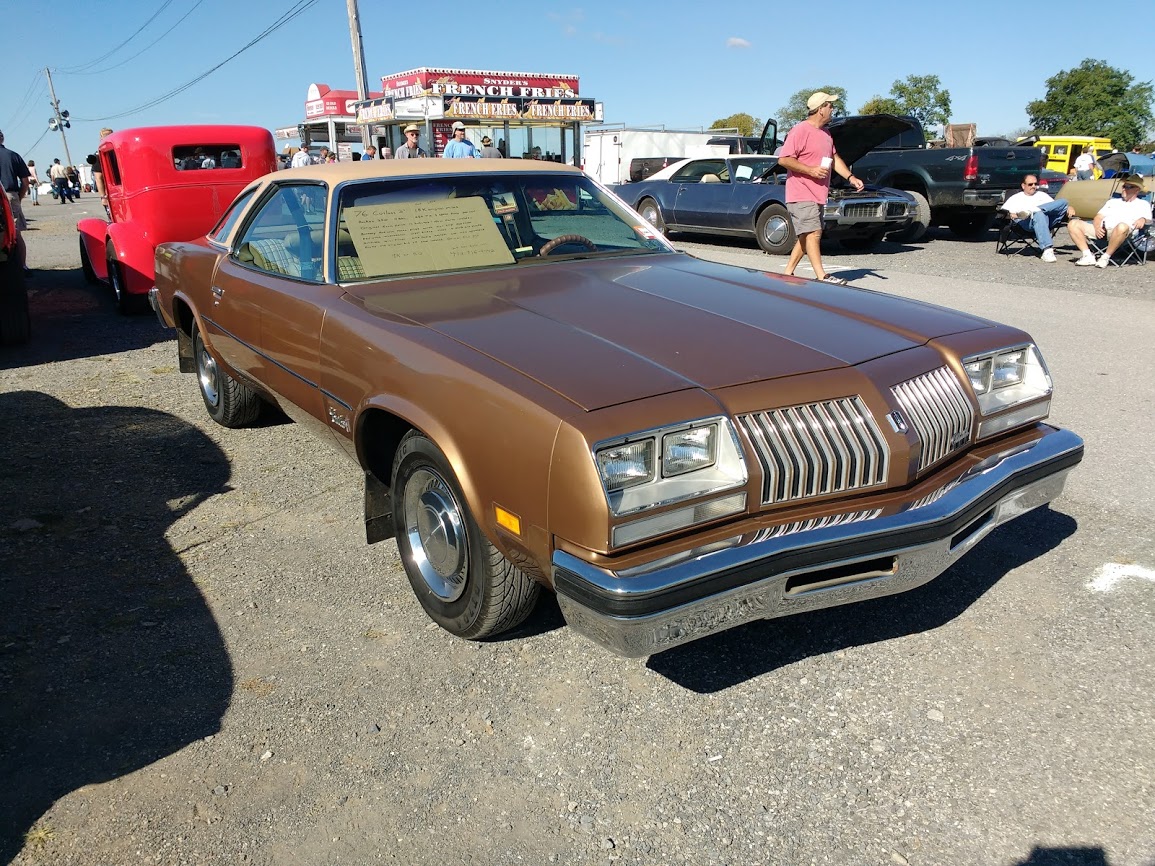
1976 Olds Cutlass coupe, asking $9,000:
1985 Nissan 300ZX 2+2 coupe, asking $7,950:
1977 MGB, asking $8,500:
1995 Pontiac Firebird convertible, asking $5,800:
1995 Chevrolet Camaro, asking $6,500:
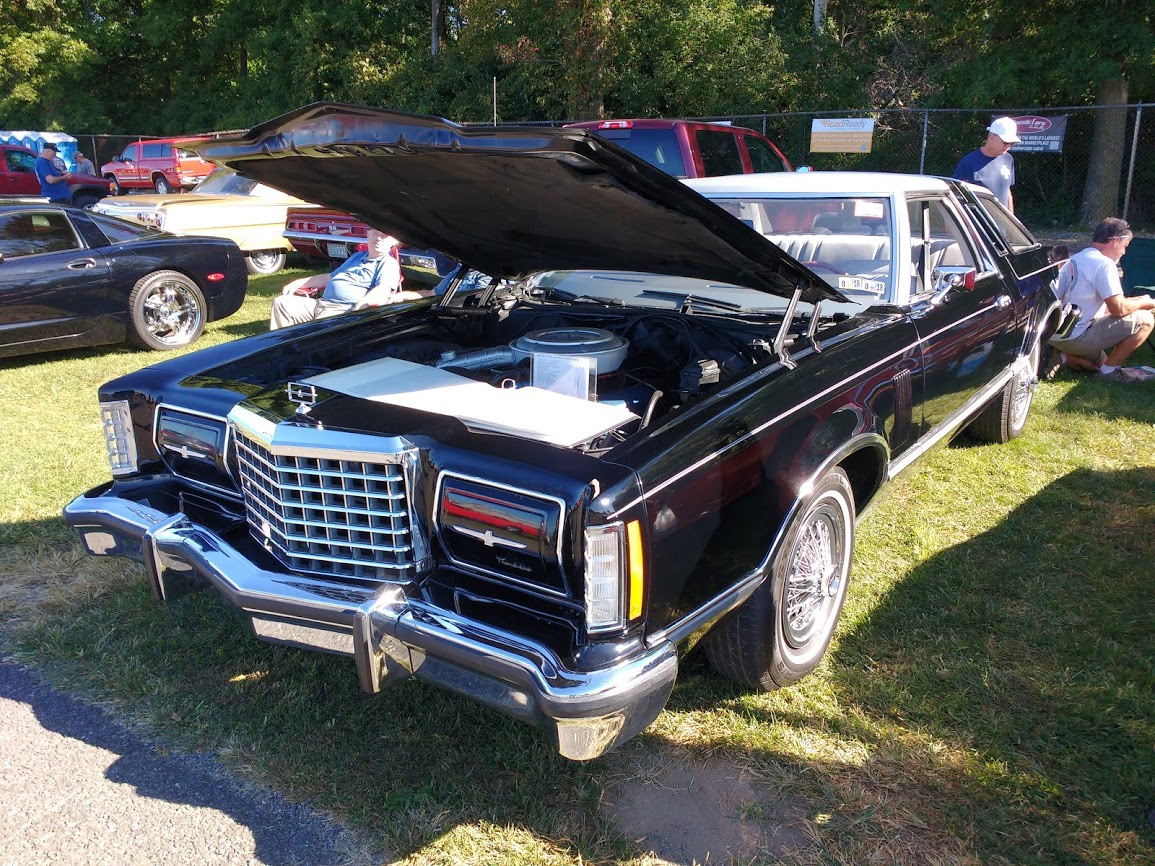
1978 Ford Thunderbird, asking $9,500:
2002 BMW 330Ci convertible, asking $5,995:
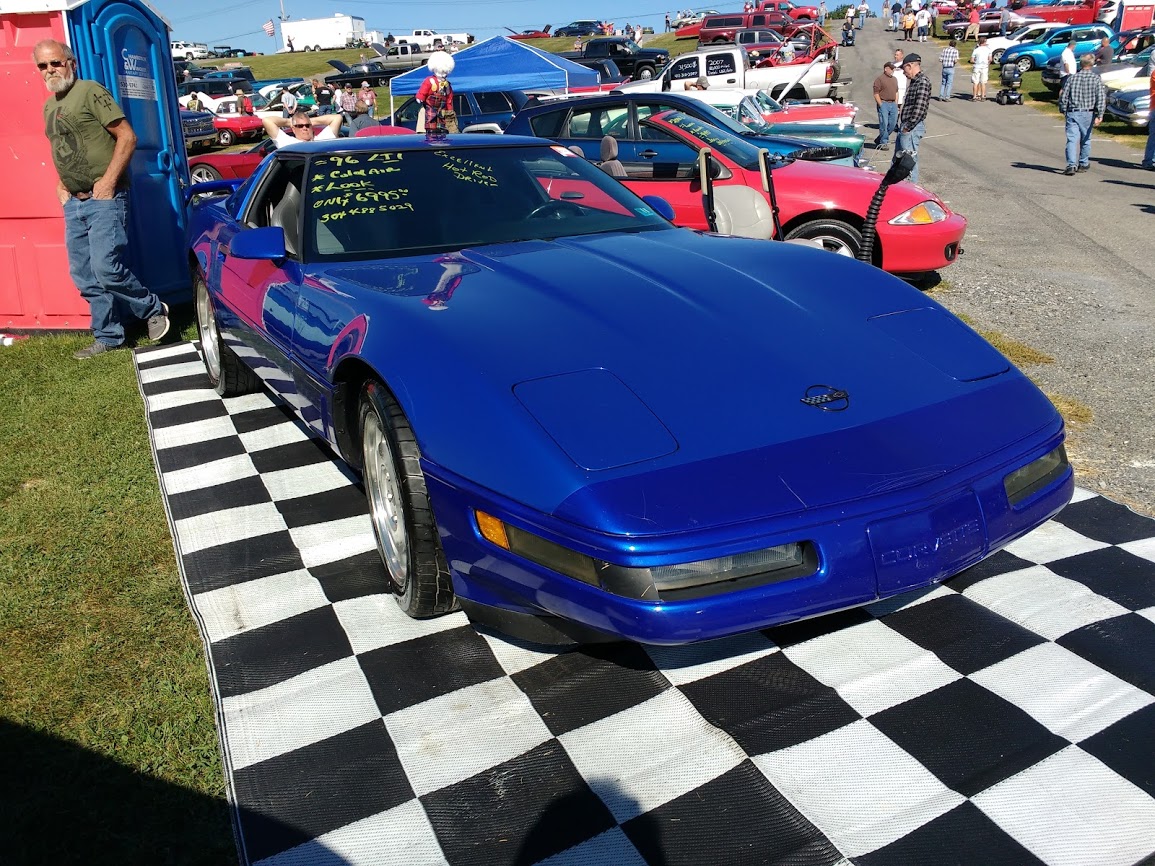
1996 Chevrolet Corvette coupe, asking $6,995:
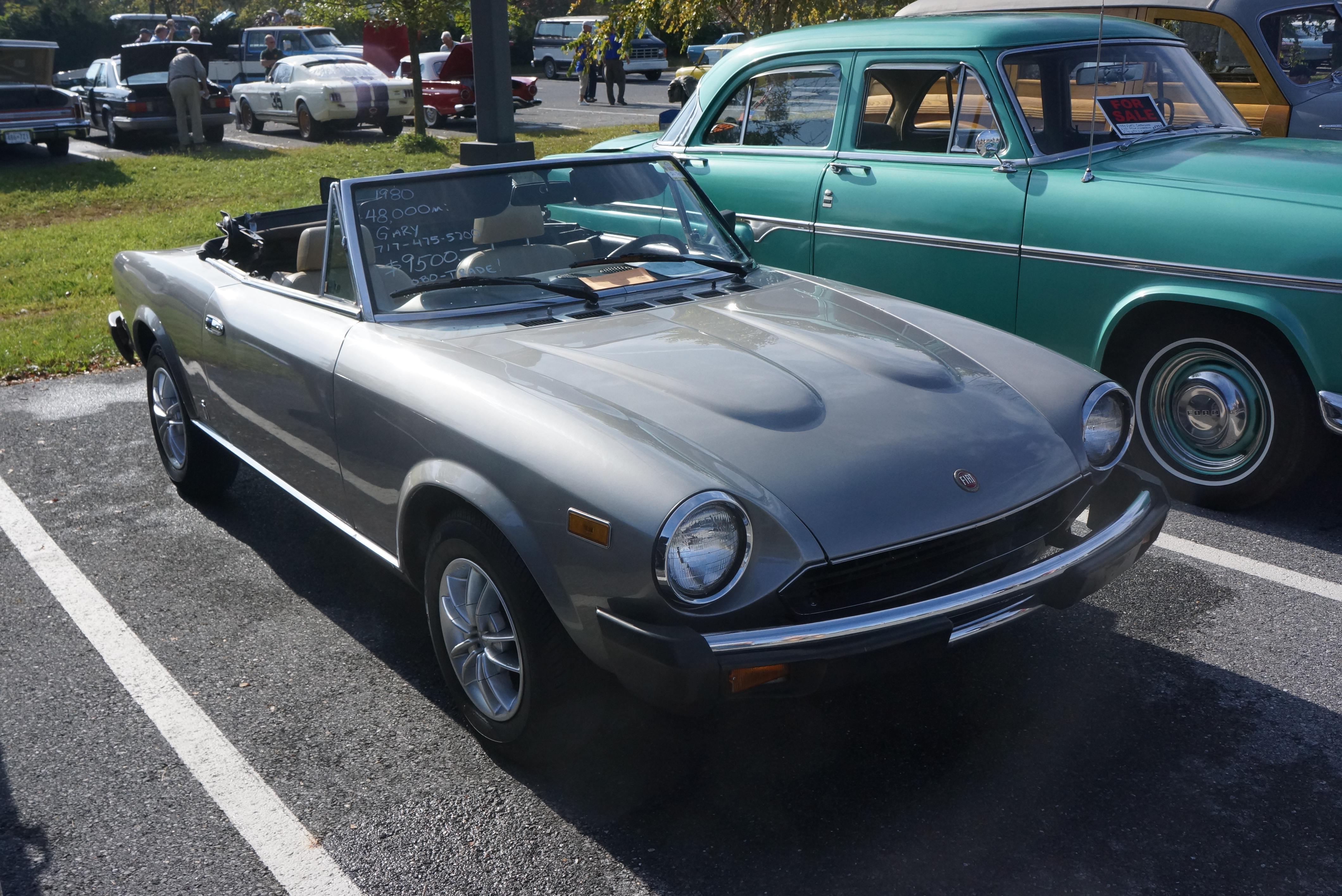
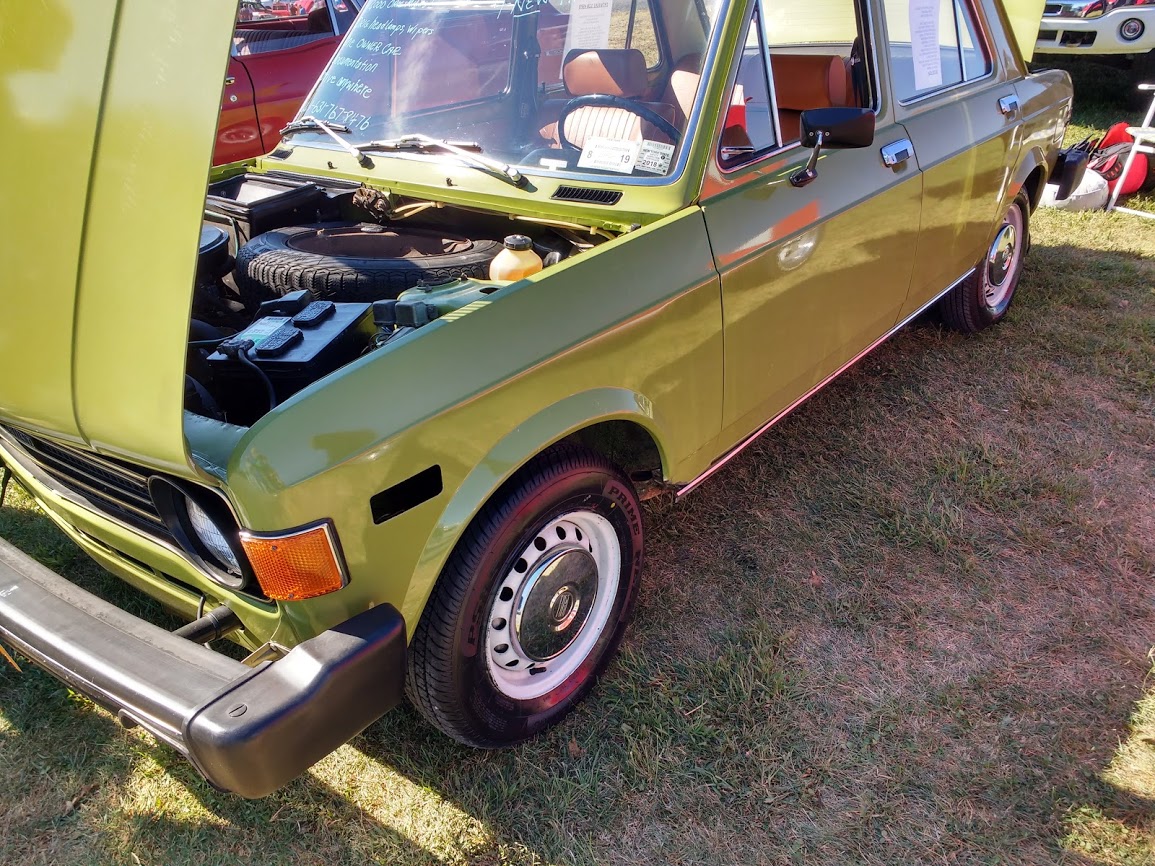
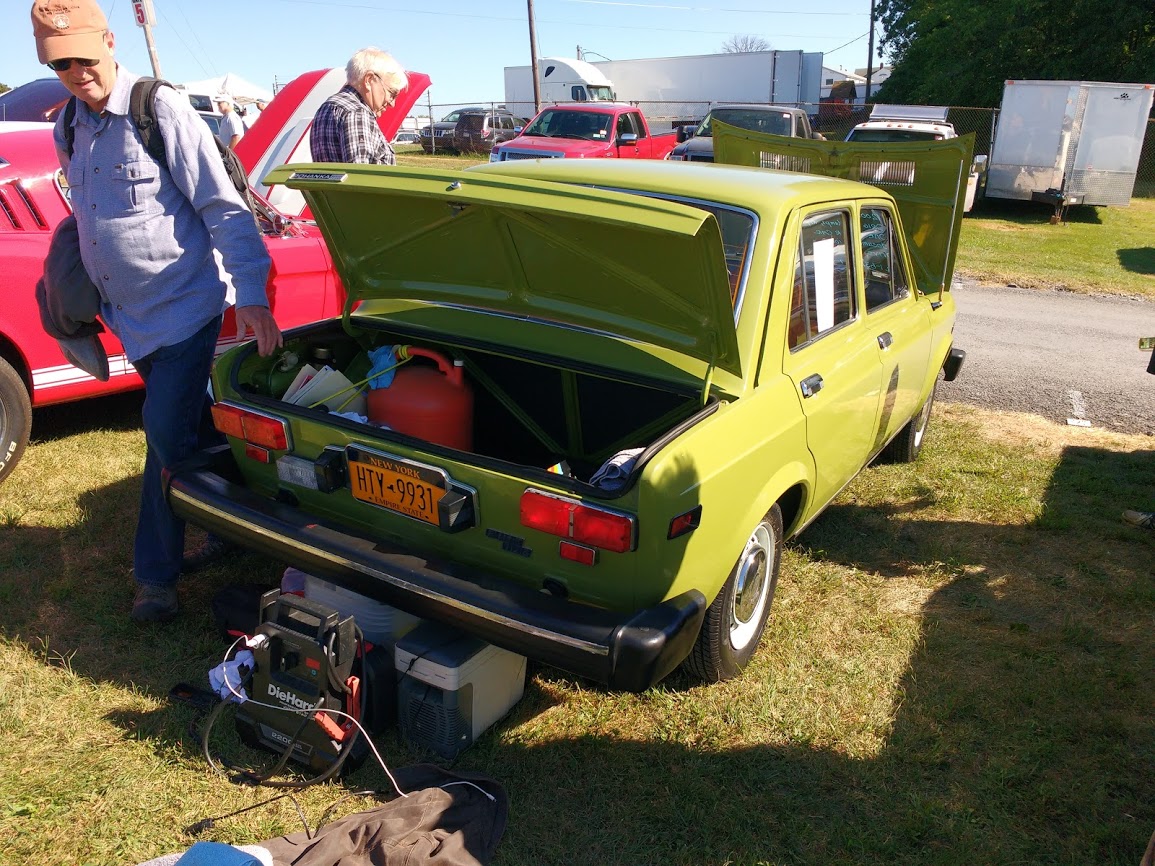
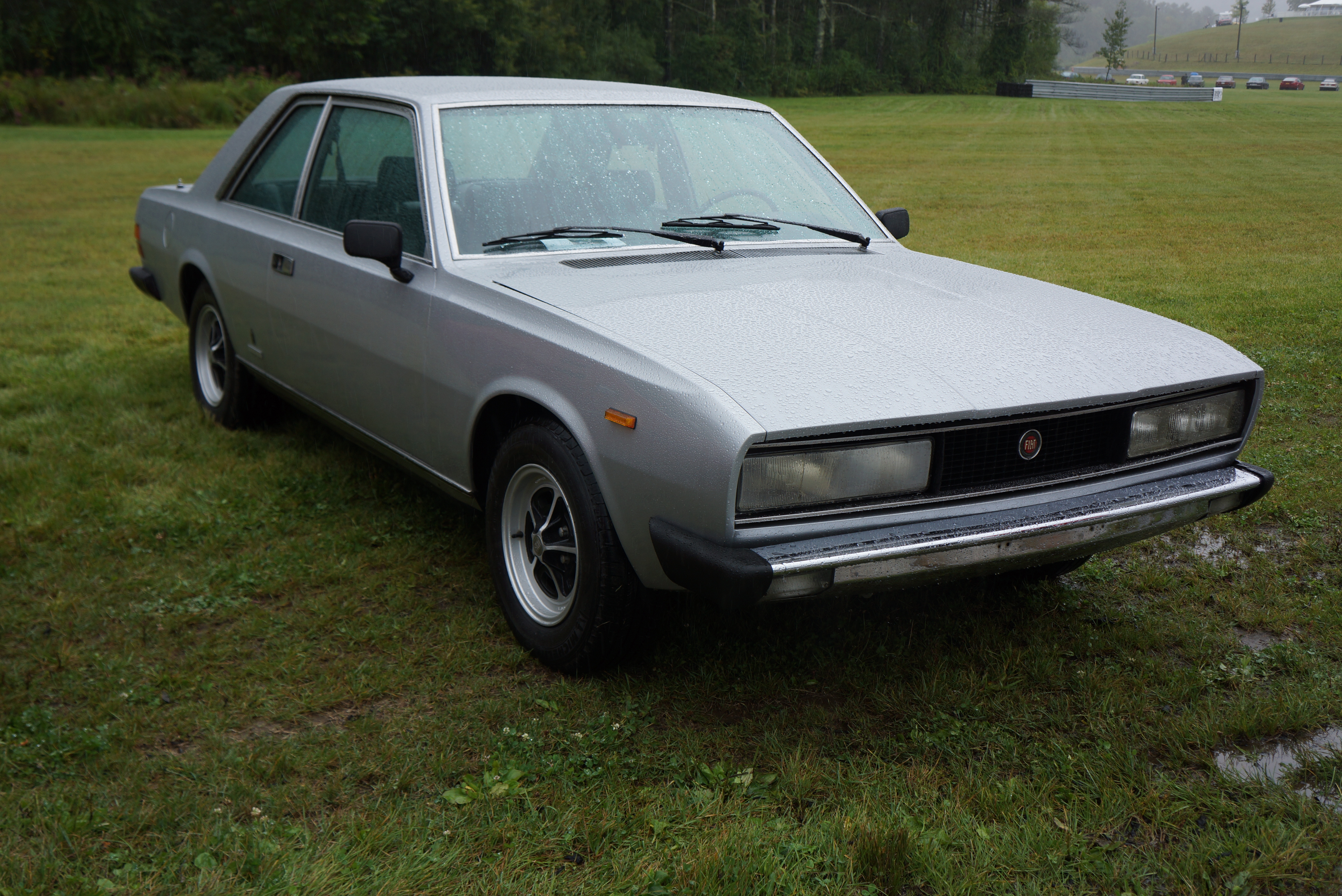
The most attractive and unusual car in the corral (to me) was this 1974 Fiat 128, claimed to have 12,000 original miles (and it looked it):
CARLISLE AUCTION RE-RUNS
1969 MGB-GT, no sale at high bid of $6,750:
1939 La Salle, no sale at high bid of $14,000:
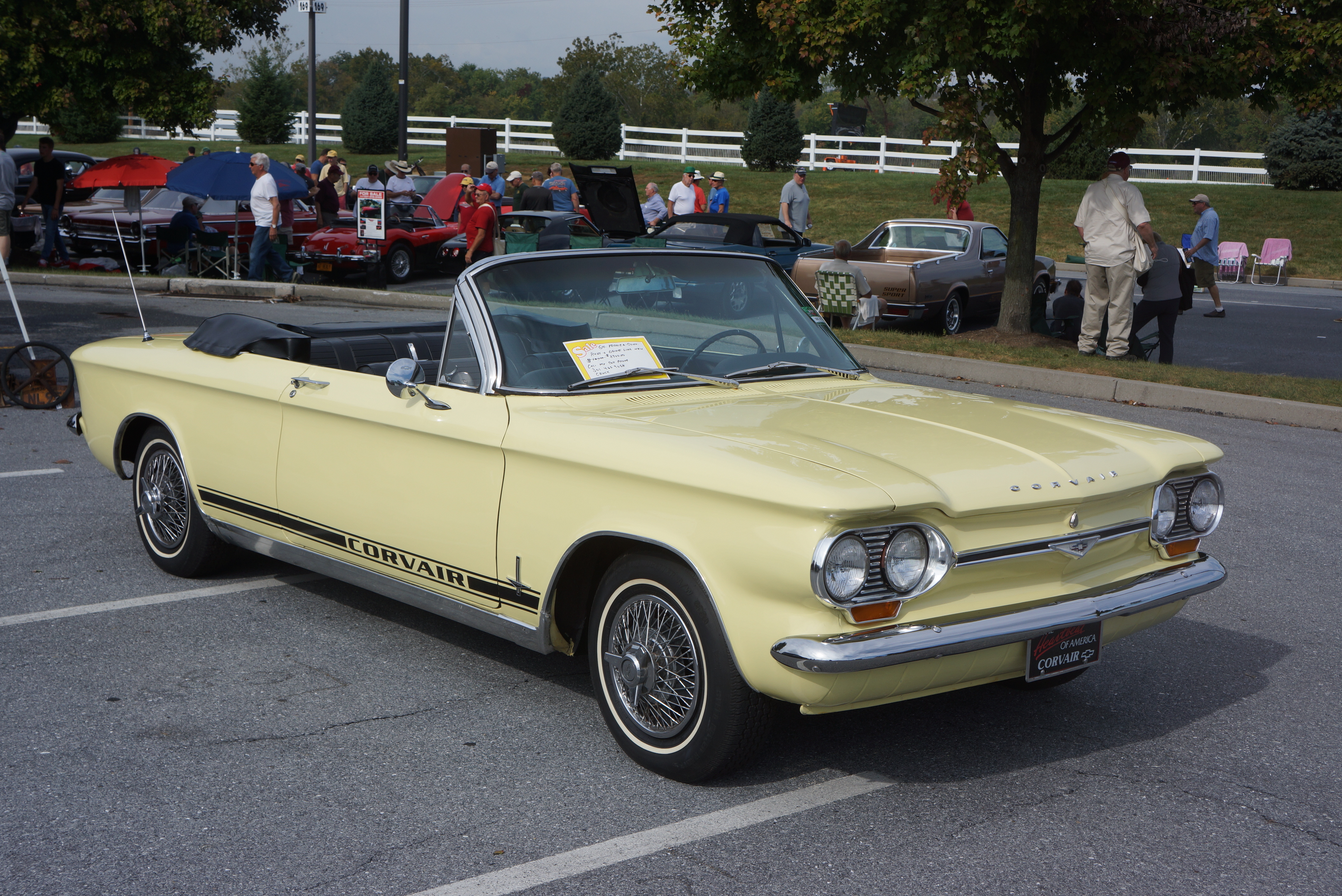
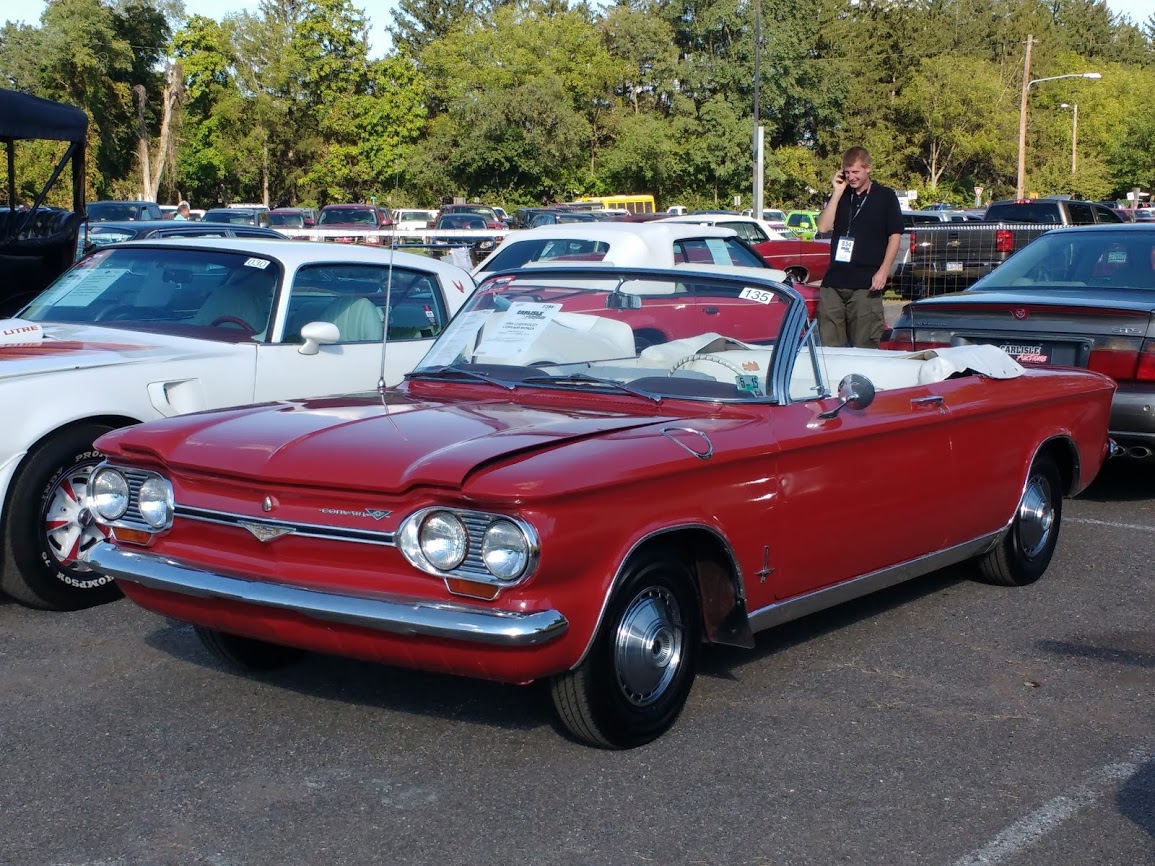
1964 Chevrolet Corvair convertible, no sale at high bid of $5,700:
1988 BMW M3, no sale at high bid of $41,000:
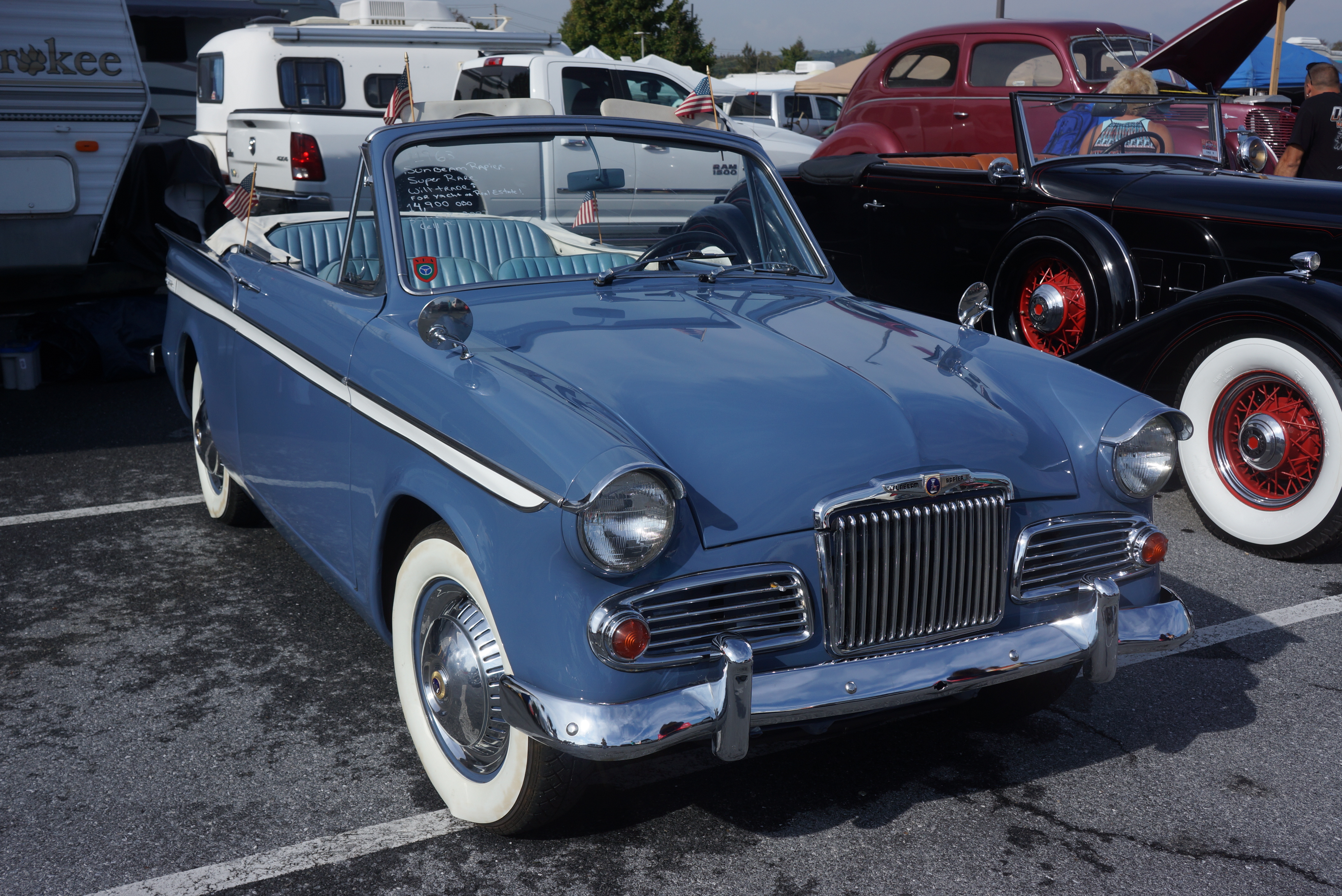
1961 Sunbeam Alpine (Tiger ‘conversion’), no sale at high bid of $4,500:
Who needs a cell phone to double as a key? Just carry a screwdriver…
1991 Ford Mustang convertible, no sale at high bid of $7,250:
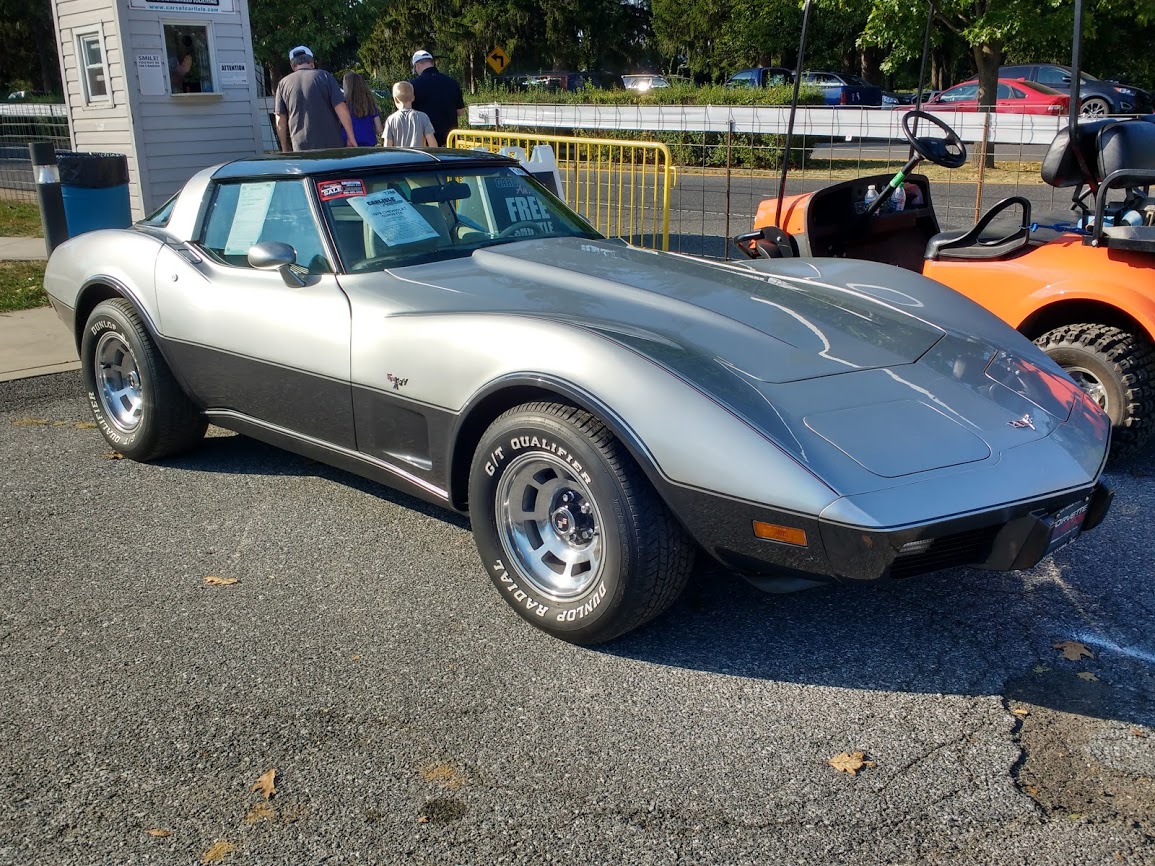
1979 Chevrolet Corvette, no sale at high bid of $10,000:
1969 Chevrolet El Camino, no sale at high bid of $12,000:
1966 Ford Mustang coupe, no sale at high bid of $11,000:
1964 Chevrolet El Camino, no sale at high bid of $16,000:
There is no new material to add to the blog this week. On Friday, I intend to make a one-day visit to Fall Carlisle, and next week is automotive Mecca: 3 days at Fall Hershey. Expect to see full reports here.
In the interim, here’s a blast from the past: one of my very first auction reports. It is interesting to look back at what has changed (and what hasn’t) in the hobby from just two and a half years ago.
Also, for those readers who are relatively new to the blog, this is something you may have missed.
The New Jersey Region of the Antique Automobile Club of America (AACA) hosted a casual car show at the Spring Hills Senior Community facility in Morristown, NJ, on Monday September 11, 2017. For a number of years, the NJ AACA has been welcomed at numerous assisted living operations throughout the state.
NJ AACA members’ cars lined up for review
The elderly residents are given the chance to peruse the classic cars, and club members are provided the opportunity to show off their four-wheeled beauties. The car owners and residents have lots of time to reminisce, and everyone wins. We saw that effect in full swing on this beautiful late summer day, with sunny skies, low humidity, and temperatures in the 70’s.
The Model T was the fave backdrop car for photos
Event chairperson Abe Platt was pleasantly surprised with a turnout of 11 cars, a copious number for a Monday. Vehicles ranged in age from a 1923 Ford Model T to a 2001 Chevrolet Corvette. The decade with the largest representation was the 1960s. Your author was thrilled to see how many Spring Hills residents could eloquently recall the cars they owned 40, 50, even 60 years ago.
The Alfa was occasionally used as a rest stop
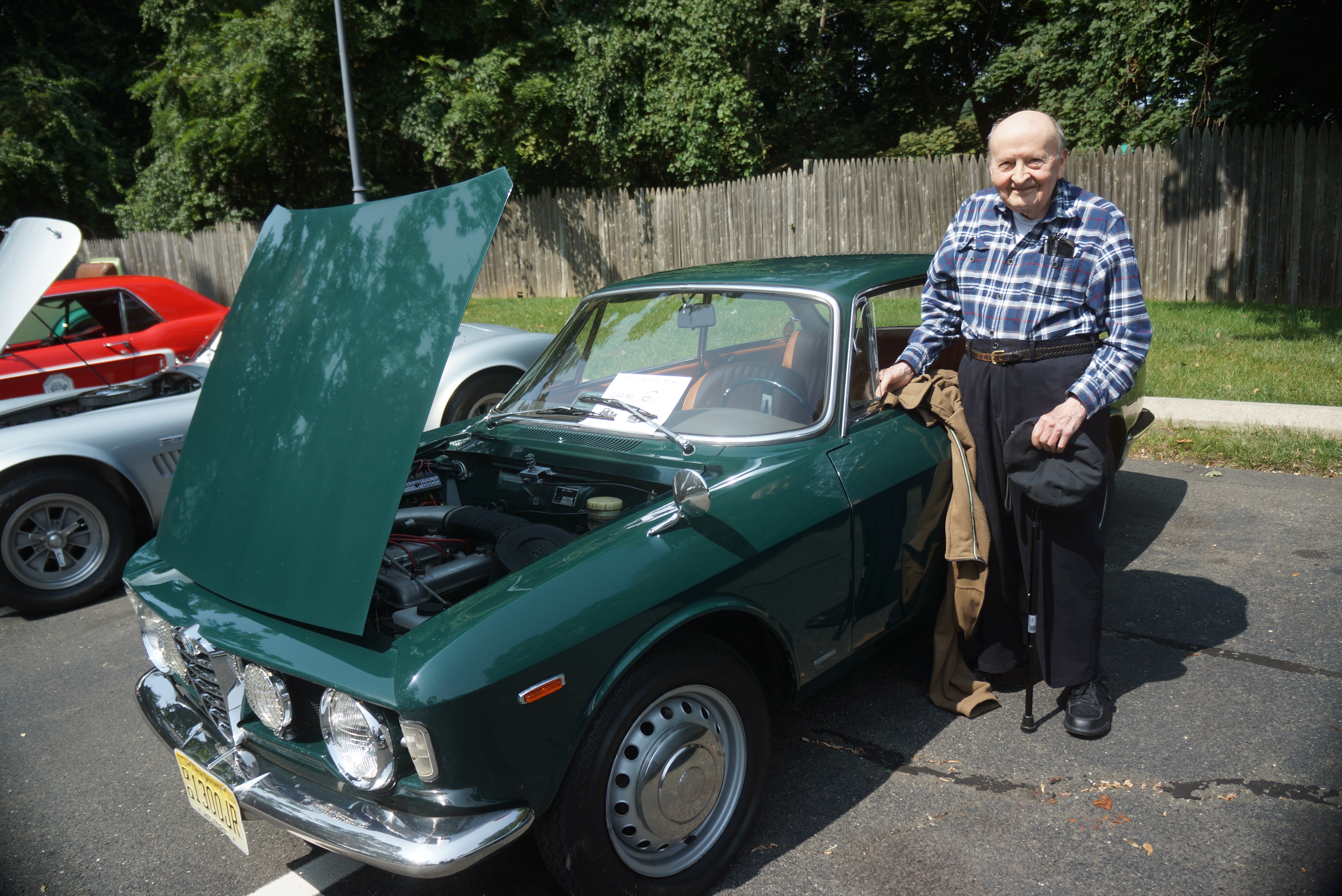
The first gentleman I met approached me as I stood by my Alfa. He told me that in the 1960s, his daily driver was an Austin Healey 3000. He related that the exhaust note on the Healey was so distinctive that his then-three-year-old daughter knew when daddy’s car was about a half block away, and she would get excited knowing her father was almost home. I asked him what his wife drove, and he said “always Volvo wagons. We had them all, from a 122 wagon, to the 140 wagon, then a succession of 240 wagons.” When I admitted that I had spent much of my career with the brand, he said “at Smythe?” In what was the coincidence of the week (nay, the month), it turned out that he knew the owners of the dealership where I was employed in the 1980s. He still regularly communicates with one of the senior partners.
My new friend Bob Detig, he of the Austin-Healey ownership
Another man eyeballed my Alfa and told me that he had purchased a new BMW 2002 tii in the seventies. The BMW replaced a Jaguar E-Type 2+2, which had replaced a Jag 3.8 sedan. With a wink, he said he loved his sports cars, but needed the back seats to carry the family. The last car he owned was a 1999 BMW 7-series, which he would pilot back and forth to Florida at “extra legal” speeds.
Ron was the Jag/BMW owner
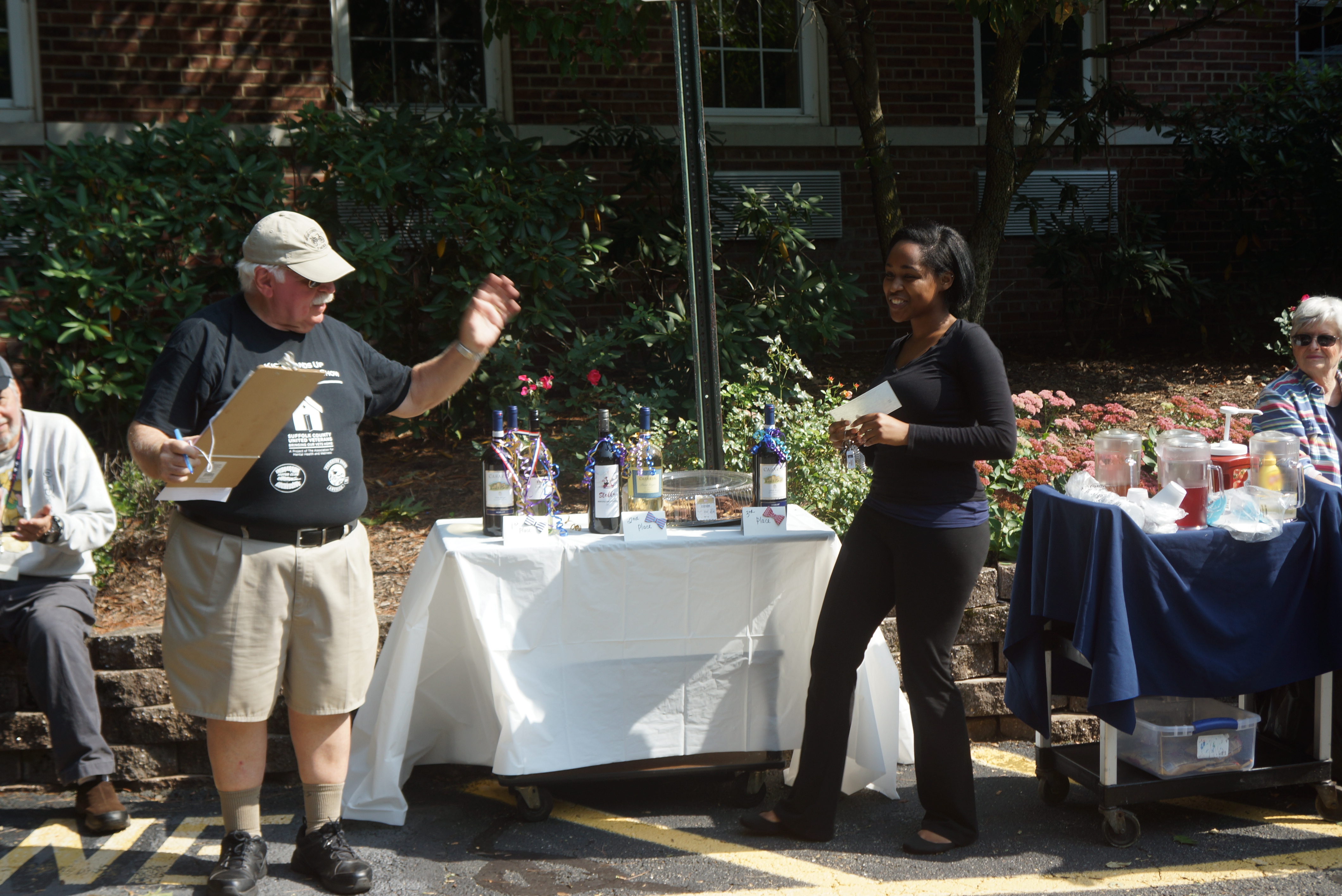
The facility generously provided lunch to the car owners, and bottles of wine were presented as 1st, 2nd, and 3rd place “People’s Choice” awards. The event started at 12:30pm, and was over by 3:15pm. This was the first time I had been able to join the NJ Region in a Senior Living facility visit. I was touched by the opportunity to share stories with the facility residents. Frankly, it was the best way I could have spent my Monday afternoon.
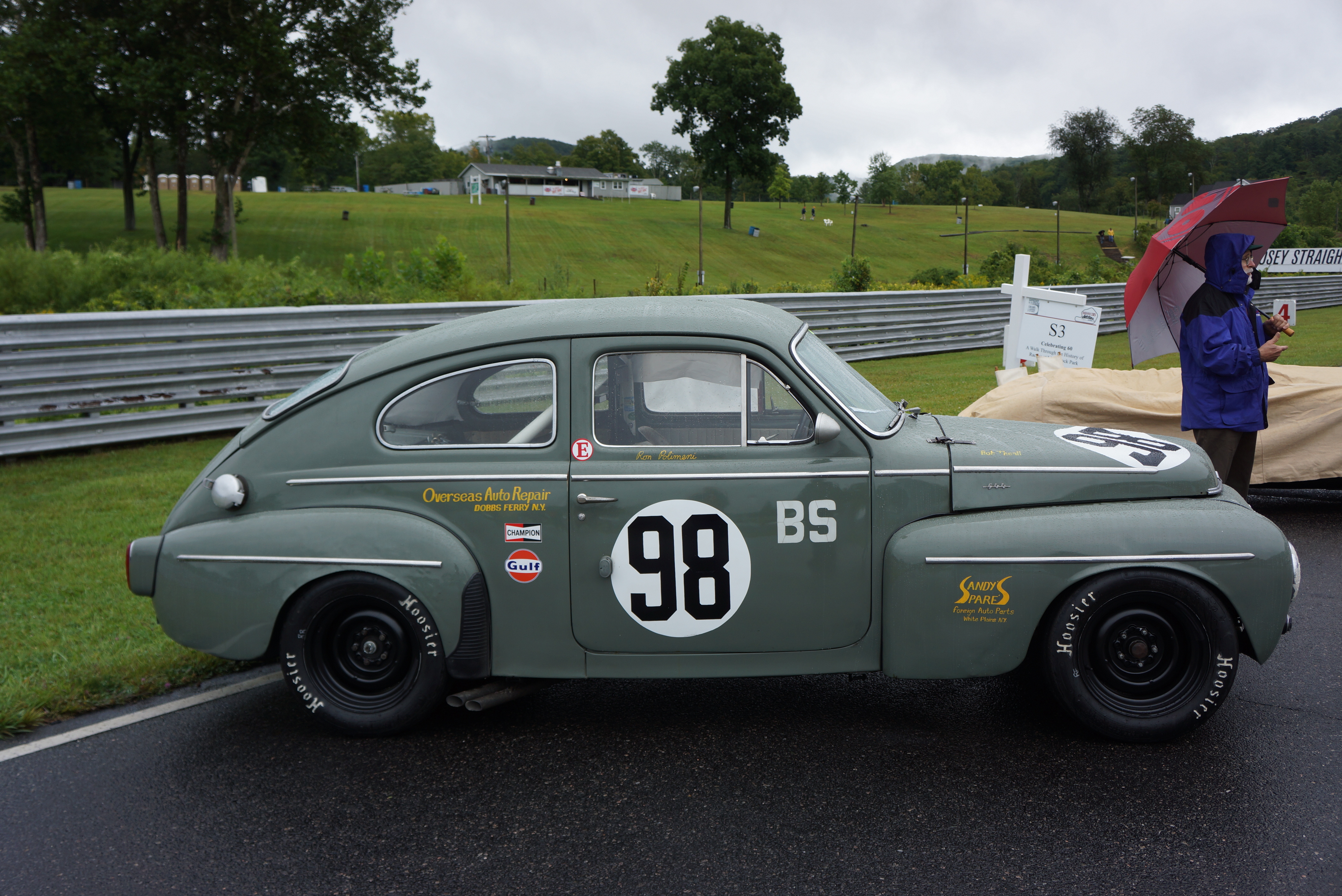
The wonderful people who host various racing events throughout the year at Lime Rock Park in Connecticut have featured vintage racing on Labor Day weekend for the past 35 years. Since, by local ordinance, racing is banned on Sundays, the Lime Rock staff has taken advantage of that restriction by turning Sunday into one of the largest and most enjoyable special-interest car shows in the Northeast.
According to their website, the 2017 edition of this event, Historic Festival 35, included a Friday parade, three days of racing, the Sunday in the Park Concours & Gathering of the Marques, plus their newest feature, an on-site classic car auction. In years past, my interest has centered on the Sunday Concours, and so it was again this year. To my detriment, in spite of near-perfect weather on Saturday and Monday (great for the racers), Sunday’s weather bordered on a wash-out (bad for the concours).
Looking down the straightaway at the bridge over the track
Nevertheless, the trek was made. The drive from my central New Jersey home includes some terrific scenery through parts of NY and CT, and the Lime Rock track itself is set in a valley in the Berkshire Mountains, making for a truly park-like setting.
My buddy Enzo tagged along, as he had not had the pleasure of visiting Lime Rock before. We arrived around 9:30 a.m., and at first, we were pleasantly surprised at how relatively crowded the parking lots were. Venturing down to the track, which is where the show cars are arrayed (walking the track itself is a treat), it looked like the assigned spots were about 50% filled.
The far end of the straightaway was devoid of show cars
The rain held off for about an hour, giving us a chance to take in as much of the field as possible. But as we circled around and came near our starting point, the skies opened up. The soaking was not helped by the temperature which stubbornly held at 52 degrees F. After about 2 ½ hours, we had had enough. We saw everything on the track, but were unable to take advantage of any viewing of the Dragone Auctions cars.
A number of spectators braved the elements to take in the show
The short, wet visit did not dampen my enthusiasm for the overall ambiance of the Sunday show. Here, in no particular order, are the reasons why I’m willing to drive six hours round-trip to Lime Rock almost every Labor Day weekend:
The caliber of the show cars is among the best of any show I’ve attended. In the past, I’ve seen pre-war Alfa Romeos and Bugattis, rare European-spec vehicles, famous race cars, and one-off show cars. The quality of the more traditional entries is always top-notch.
The parking lot is a show within a show. This year, even in the deluge, we saw a Triumph TR-6 and an Alfa GTV-6 coupe in the lot. In previous years, it has been typical to see late-model Ferraris and other high-end delights parked like they’re nothing more than daily transportation.
True superstars have been known to make guest appearances. Several years ago, I had the honor of shaking hands with Sir Stirling Moss.
The Concours “classes” are like nowhere else. Each year, the Lime Rock organization gets creative with class names. You will NOT see cars arranged based on such traditional fare as “Mustangs 1965-1973” or “Front-engine V12 Ferraris”. Here’s a sampling of this year’s classes:
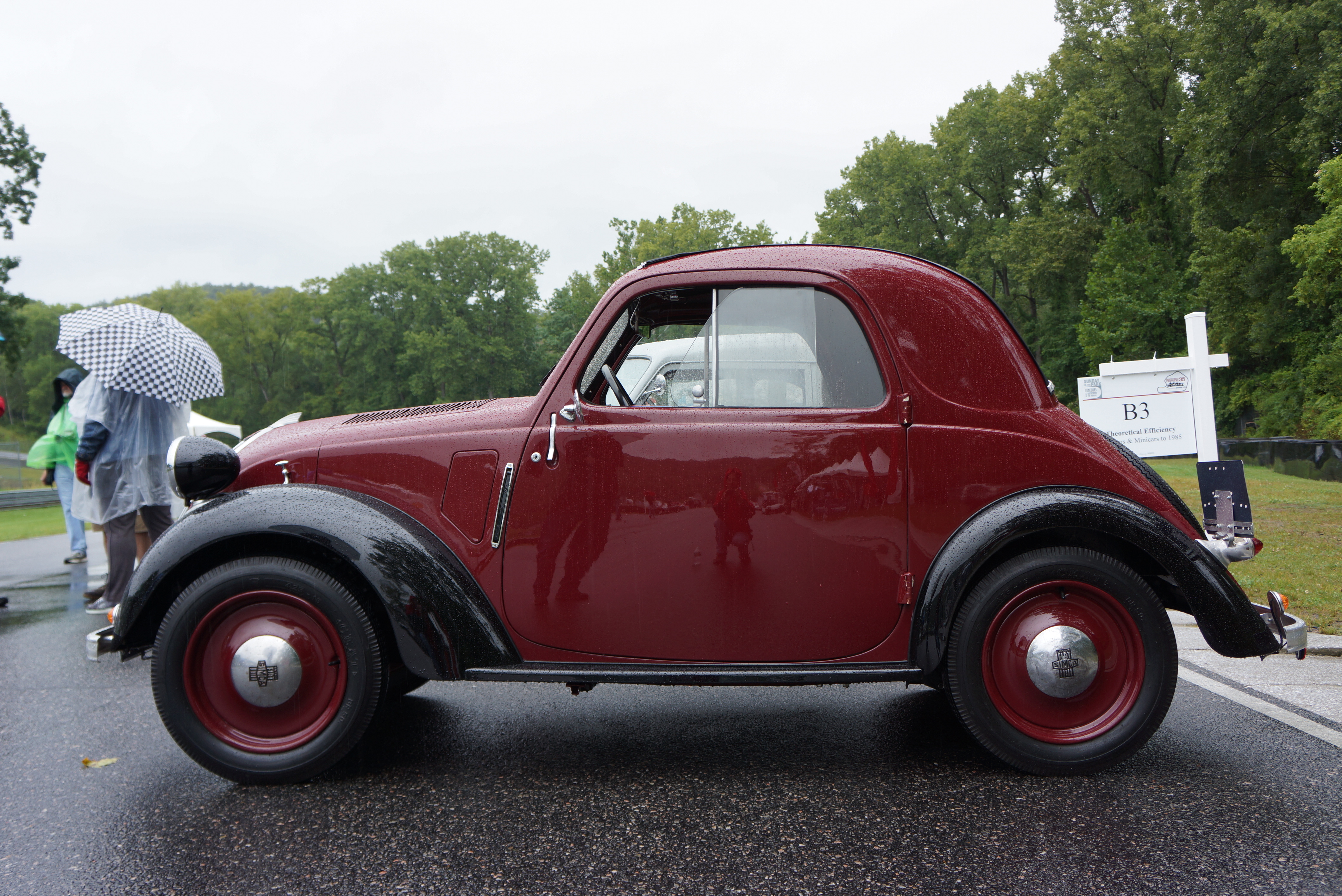
“Theoretical Efficiency: Microcars and Minicars”;
“Tifosi Fantasy: The Magic of Ferrari”;
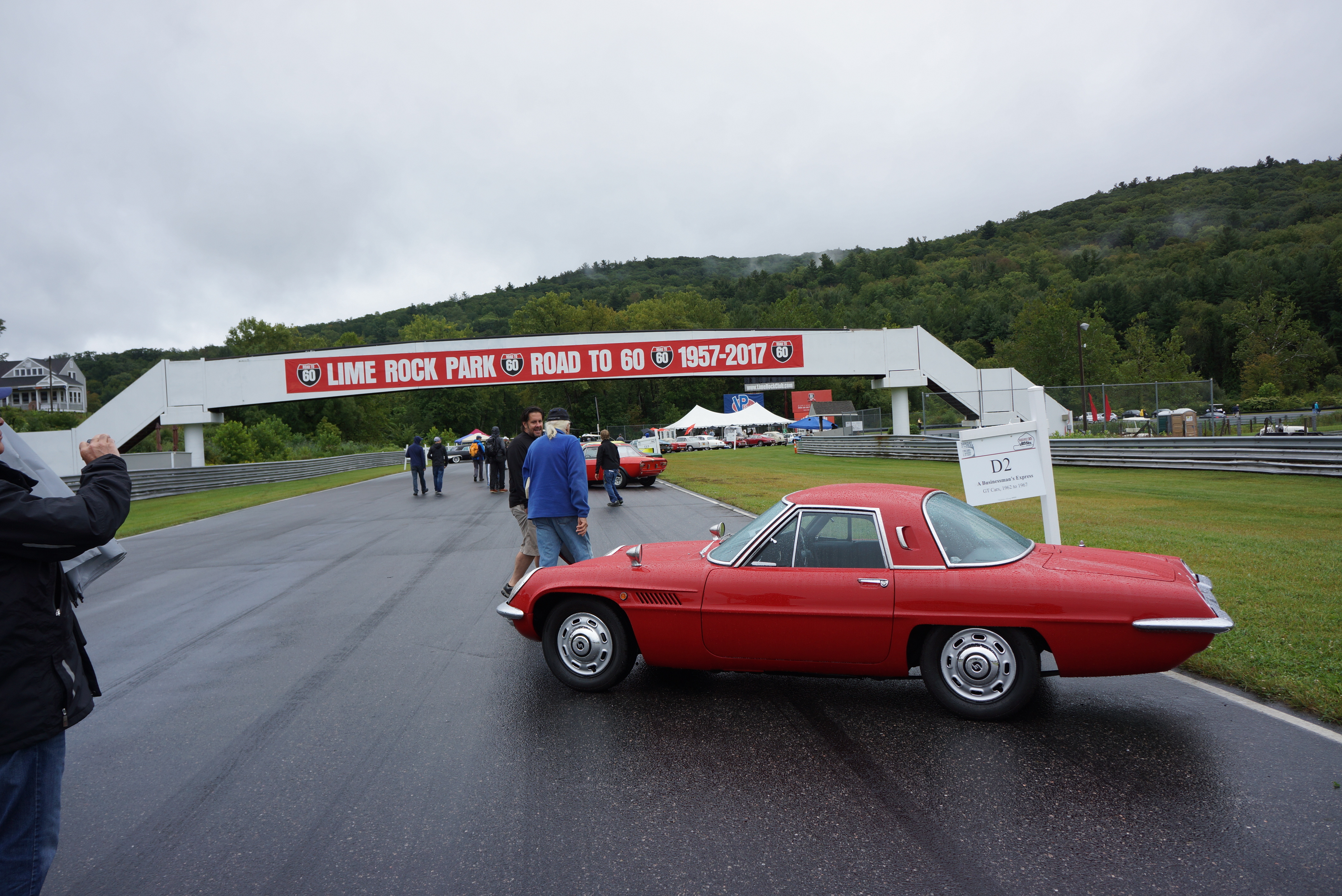
“A Businessman’s Express: GT cars, ’62-‘67”.
In my opinion, this provides greater potential variety of show cars, and also allows for some inventiveness and ingenuity regarding which vehicles may best fit into a particular class.
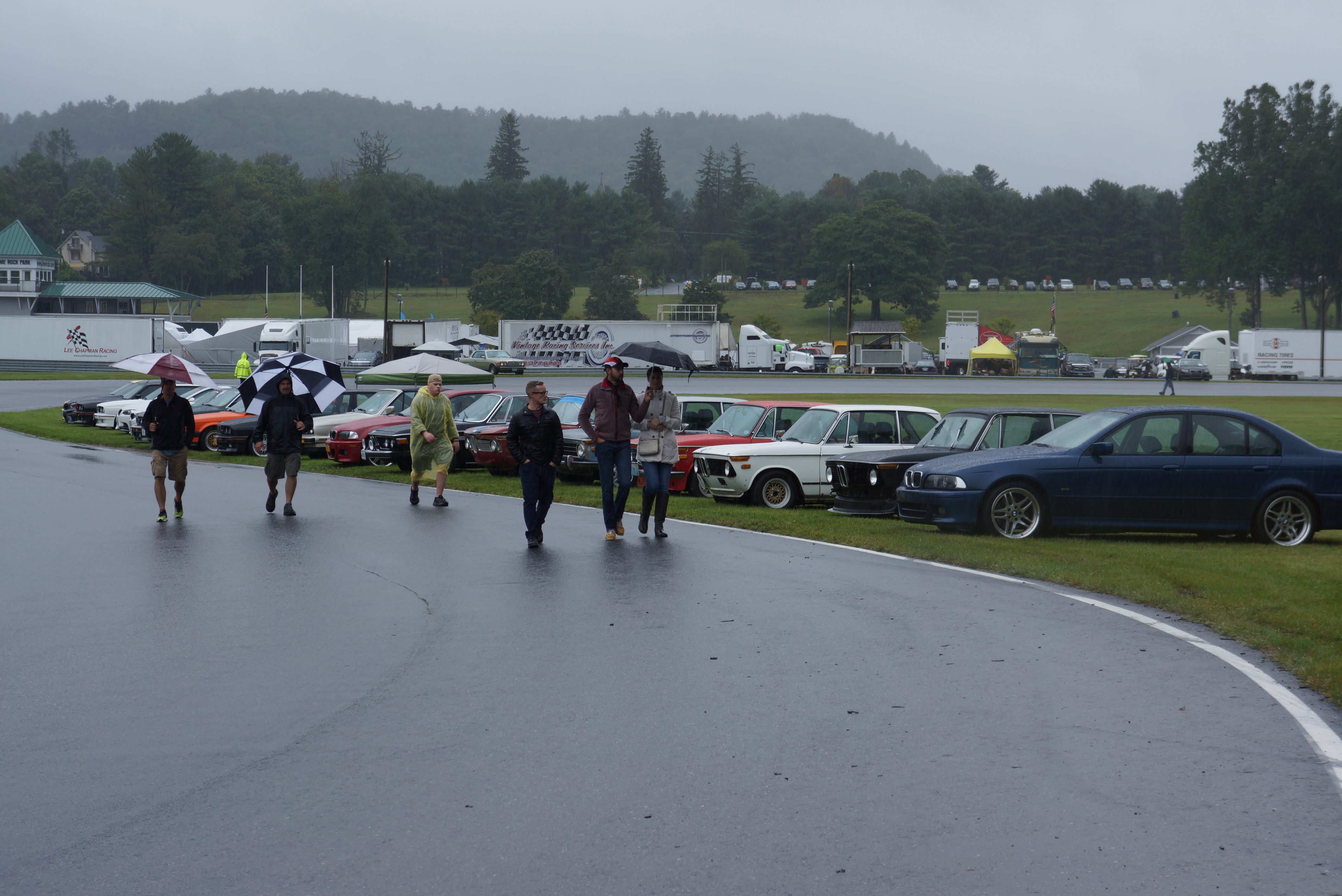
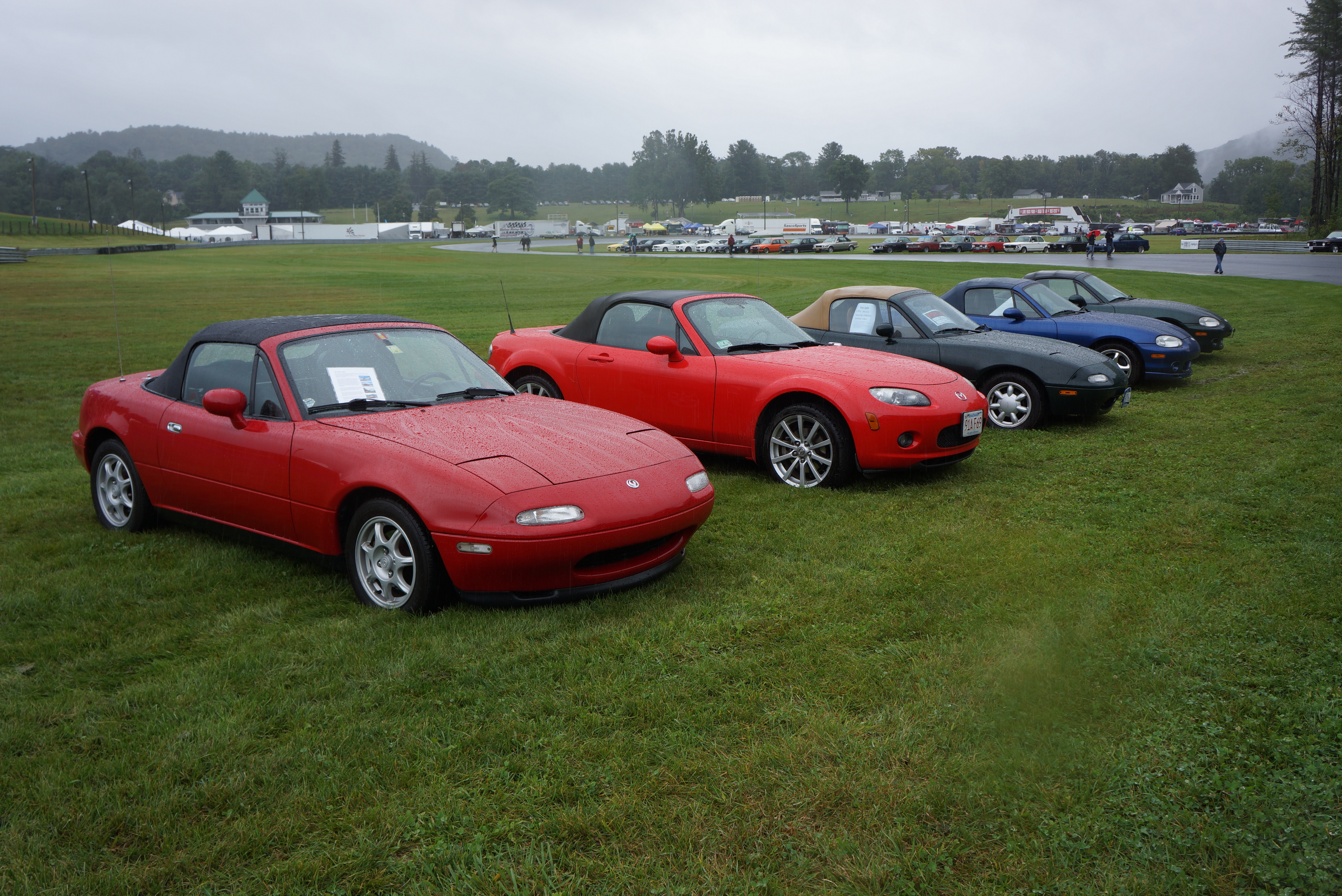
The Gathering of the Marques deserves explanation. While the judged Concours entries are situated along the straightaway, the remainder of the track is turned over to attendees, giving them the chance to park their (non-judged) vehicles in groups with similar marques or countries of origin. We saw turnout from owners of classic BMWs, Mazda Miatas, FoMoCo brands, and cars of Italy, Sweden, France, and Japan. A vehicle owner just needs to pay the standard entrance fee, and ask to be admitted onto the track. It’s neat that “regular car” owners can be made to feel like they’re part of the show (which they are!).
In addition to all this, there is an on-site flea market, various vendor booths, and the freedom to walk the paddocks, taking in the race car prep in all its bloody-knuckled glory. (One year, we watched a race team pull an engine; in another paddock, a head gasket was being replaced.)
My calendar is already marked for Labor Day weekend 2018. If you have not made the effort to attend Lime Rock’s Fall Vintage weekend, I highly encourage you to do so.
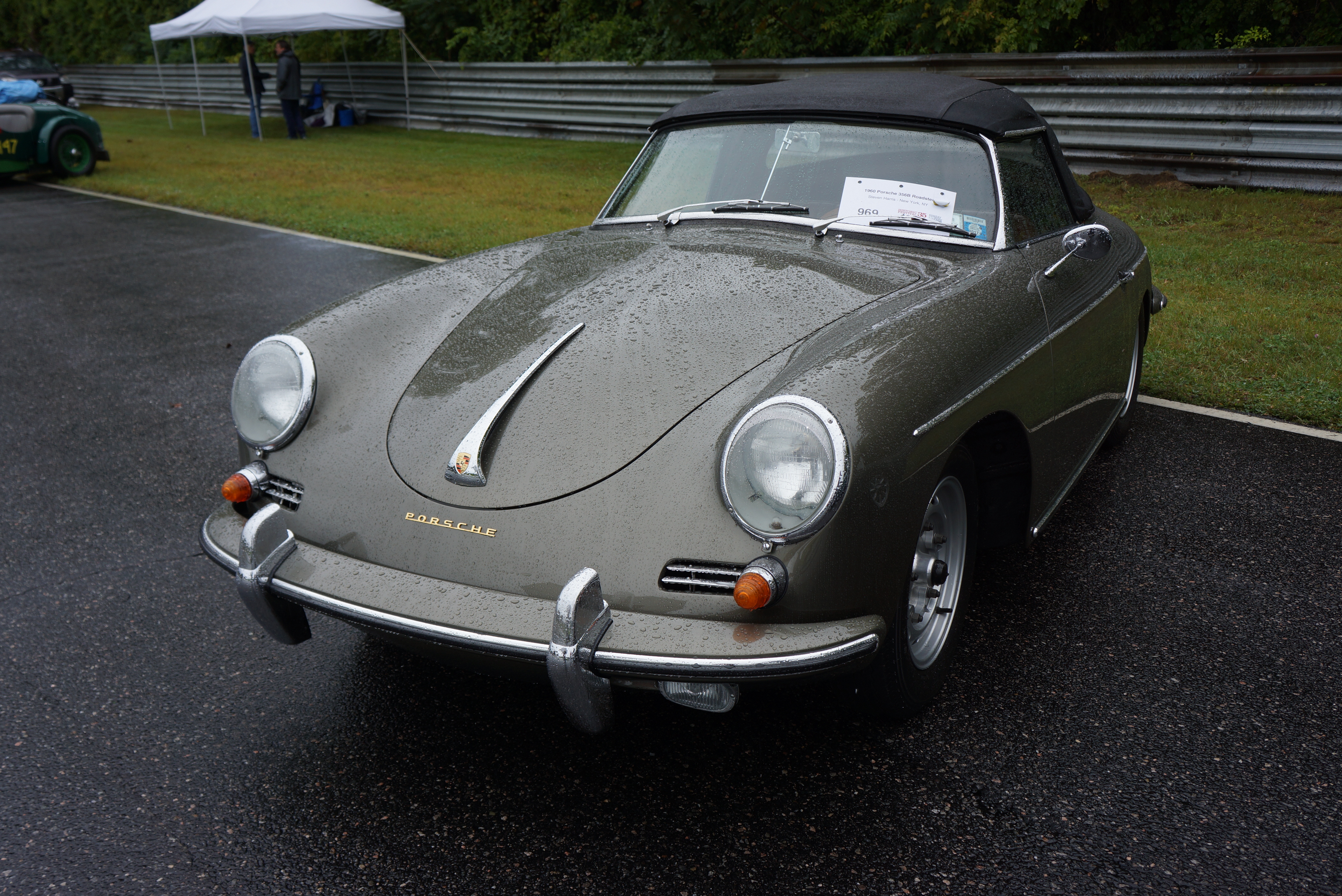
1960 Porsche 356B; the color was a stunning bronze (not shown well in my photo)
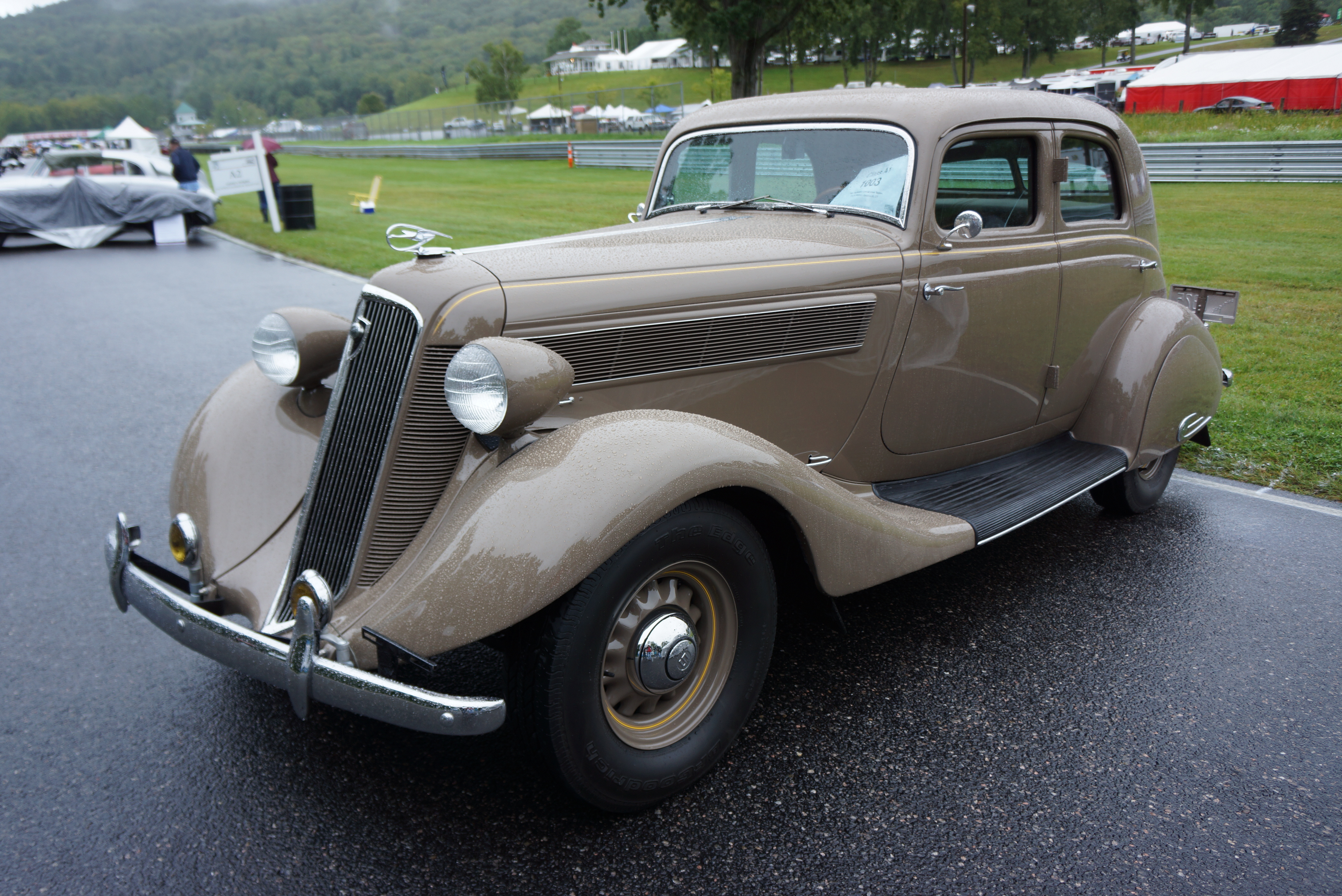
1935 Studebaker, displaying wonderful Art Deco lines
This Fiat Topolino (“Little Mouse”) was badged Simca-Fiat, built under license in France
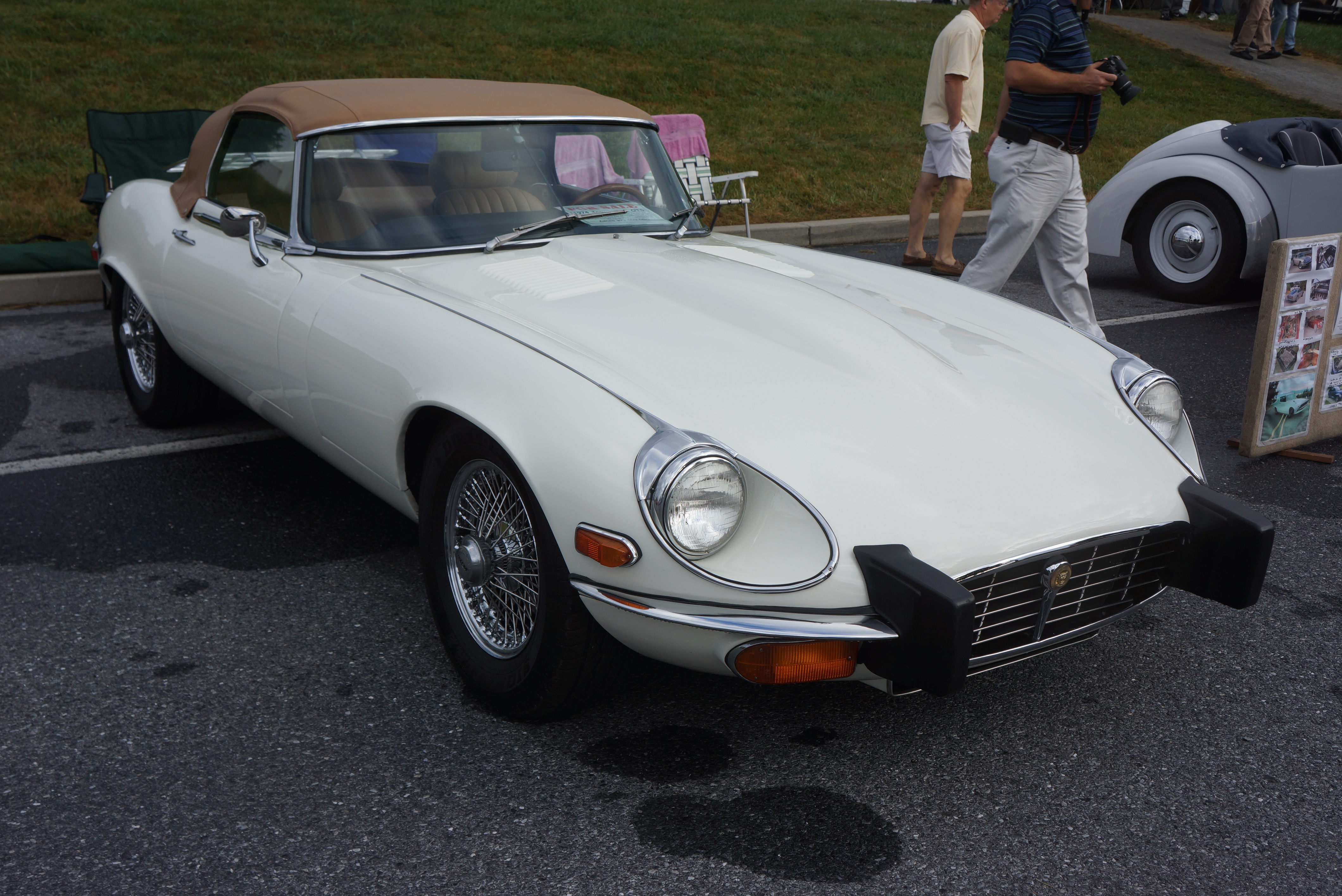
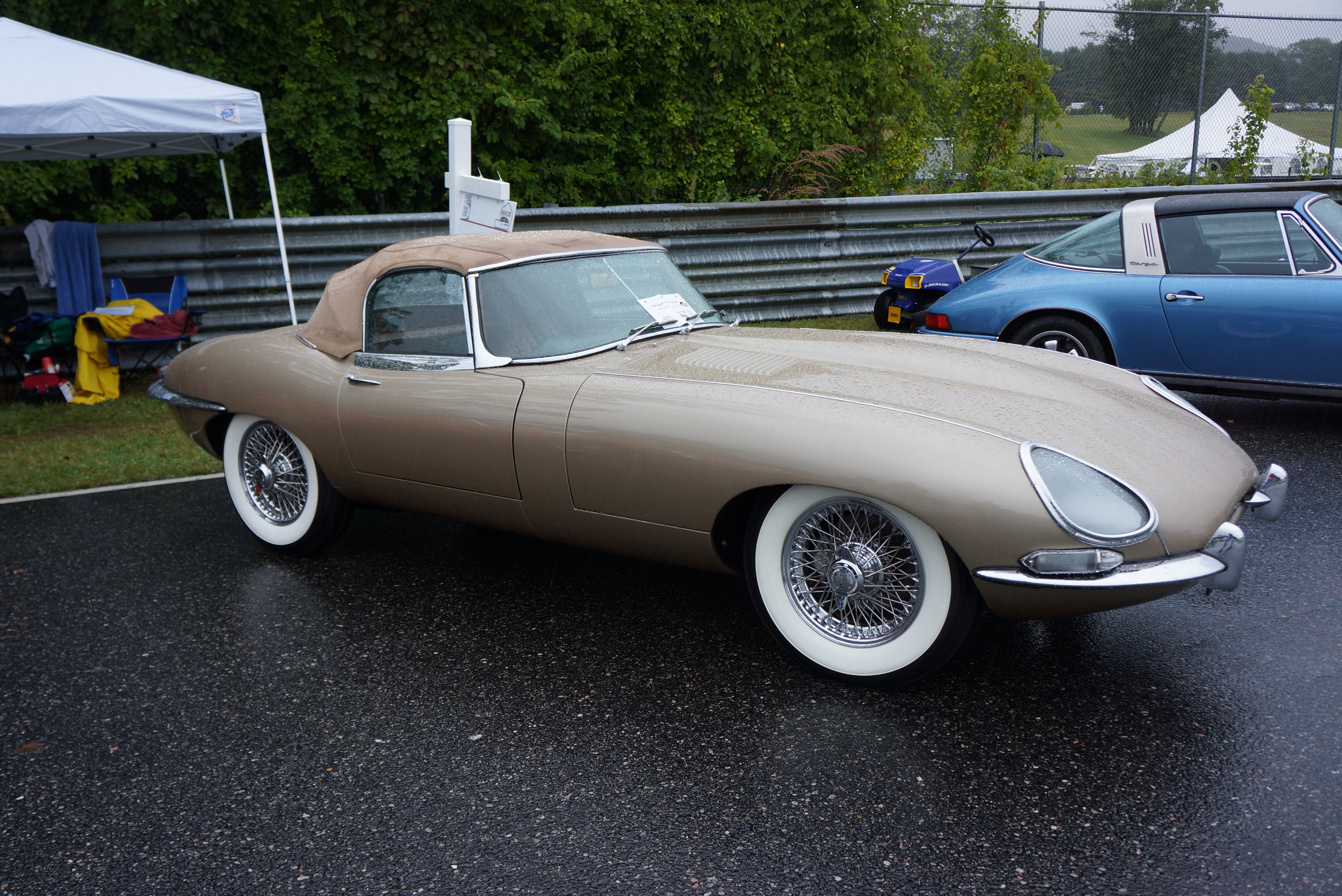
Any Jaguar E-Type is gorgeous; this ’64 in tan metallic was especially so
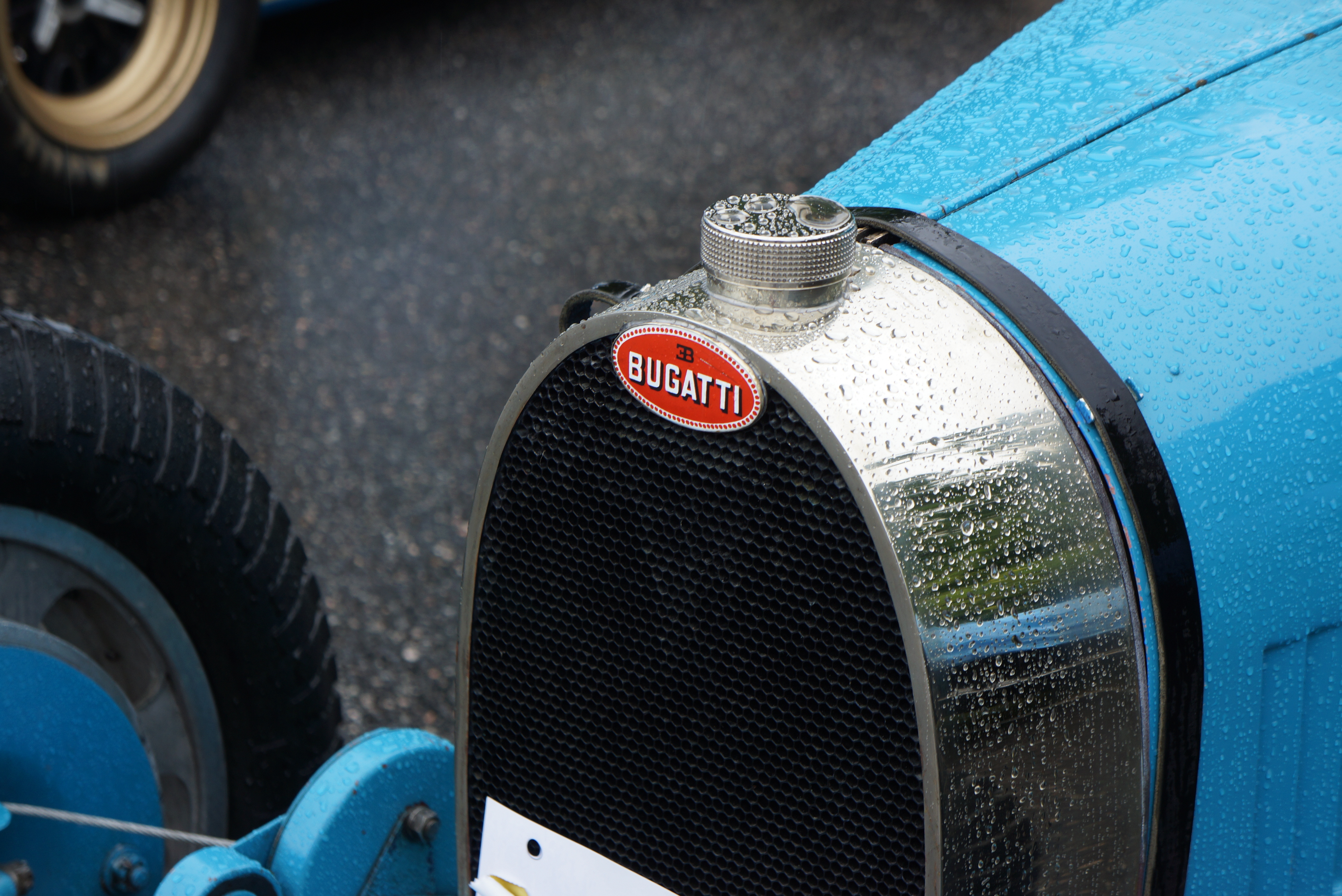
No matter the model, the Bugatti grille is photogenic
My kind of Italian fantasy
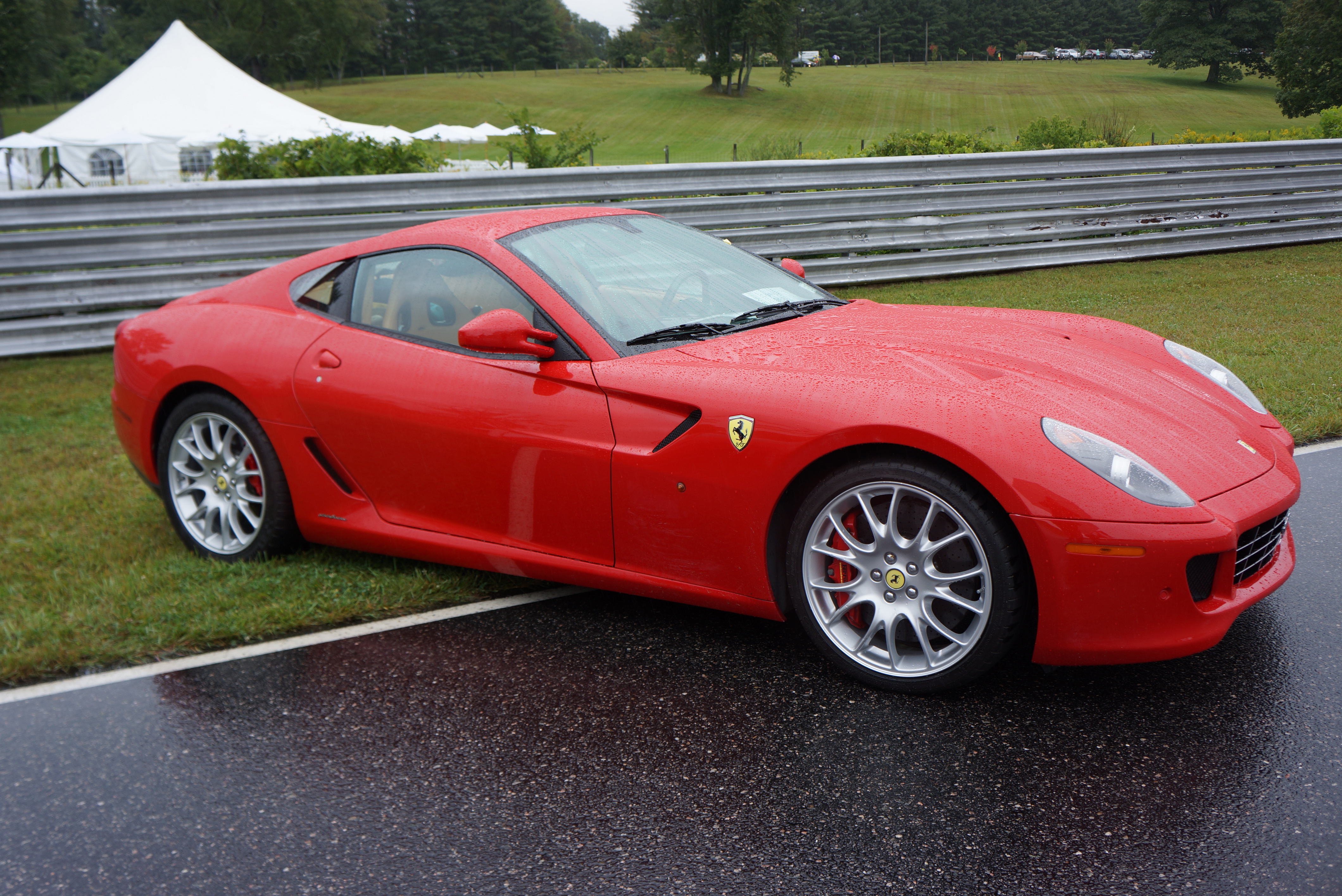
Ferrari 599GTB
246 GTB
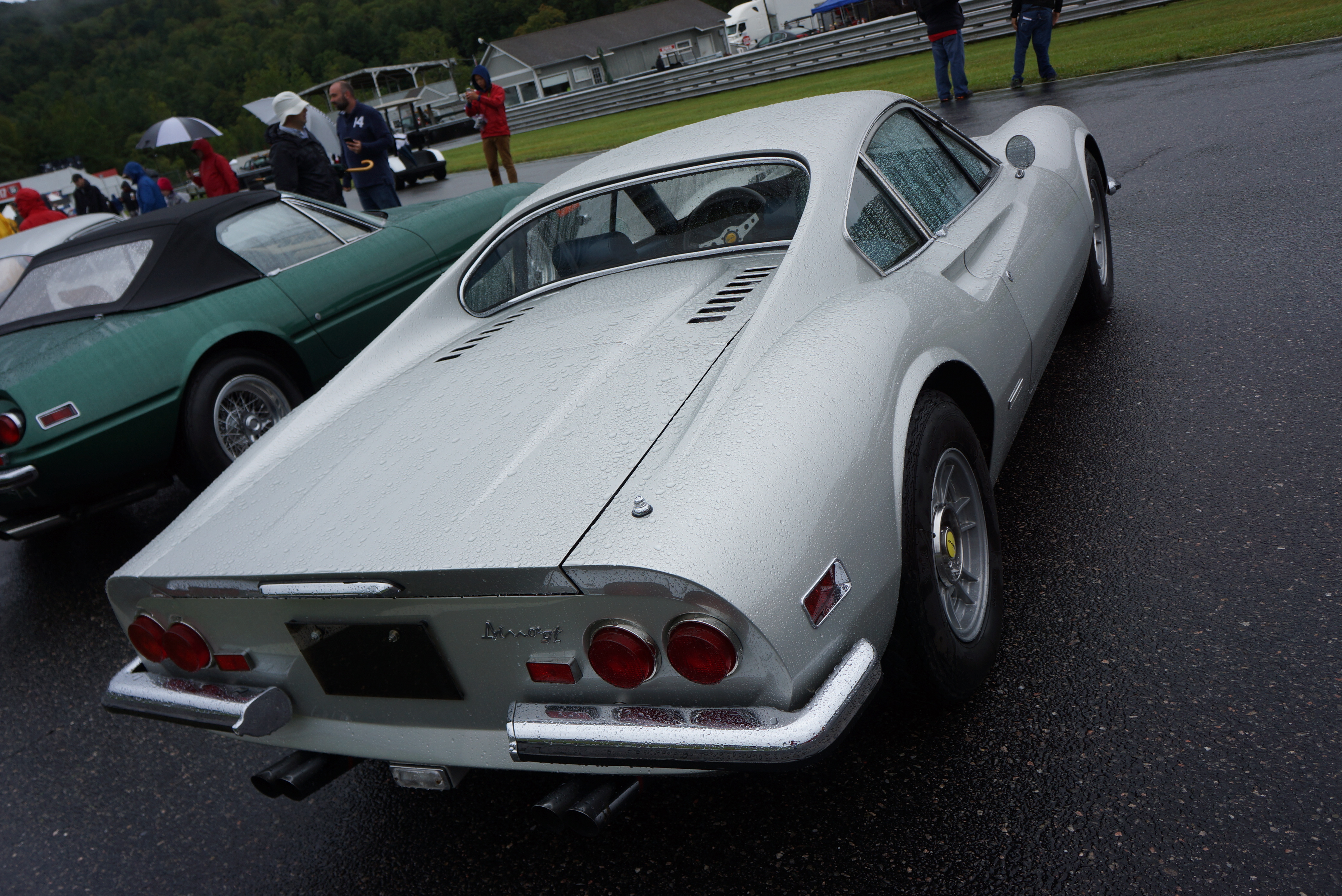
People forget these were badged “Dino”, NOT “Ferrari”
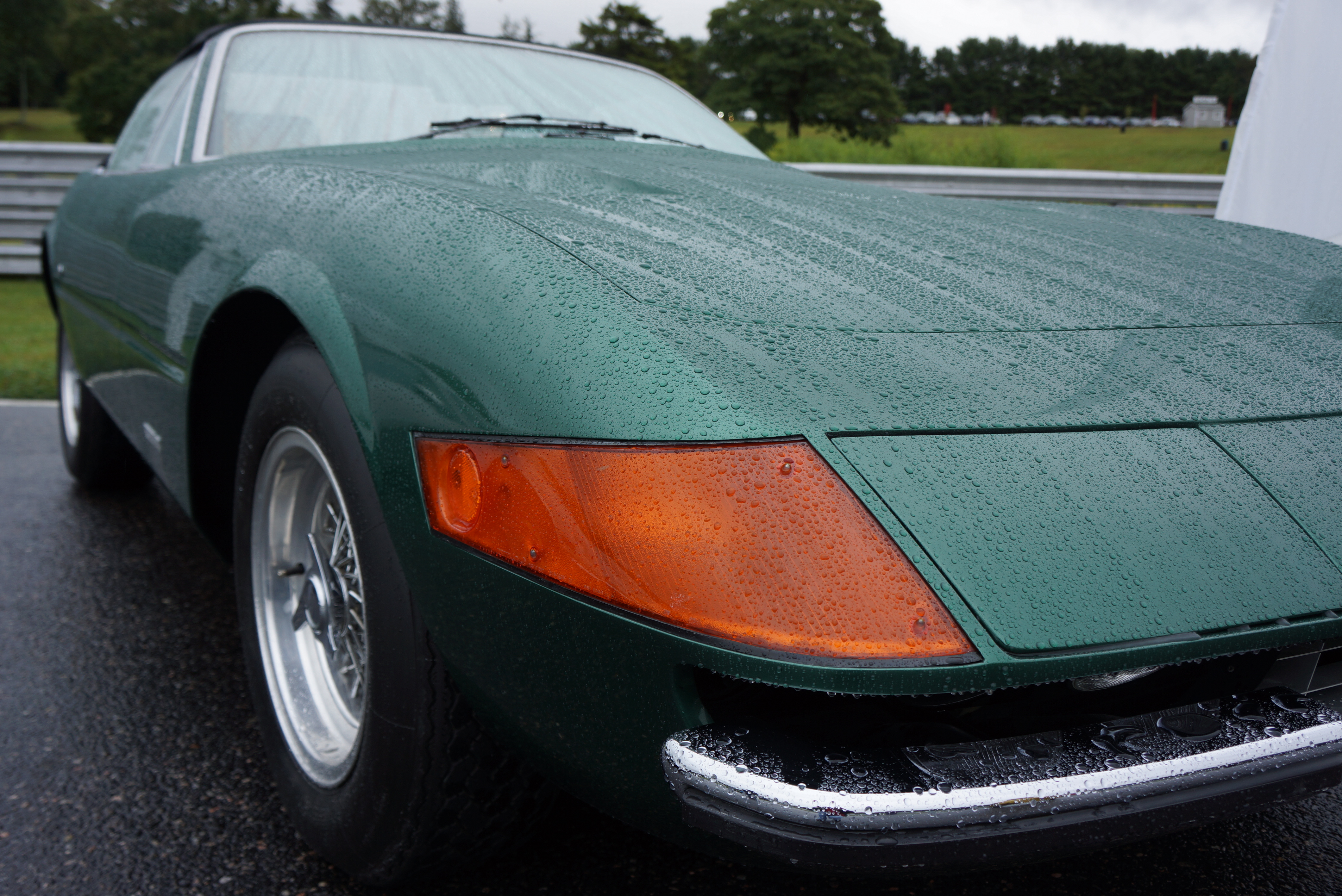
Ferrari 365GTB/4 (Daytona) spider
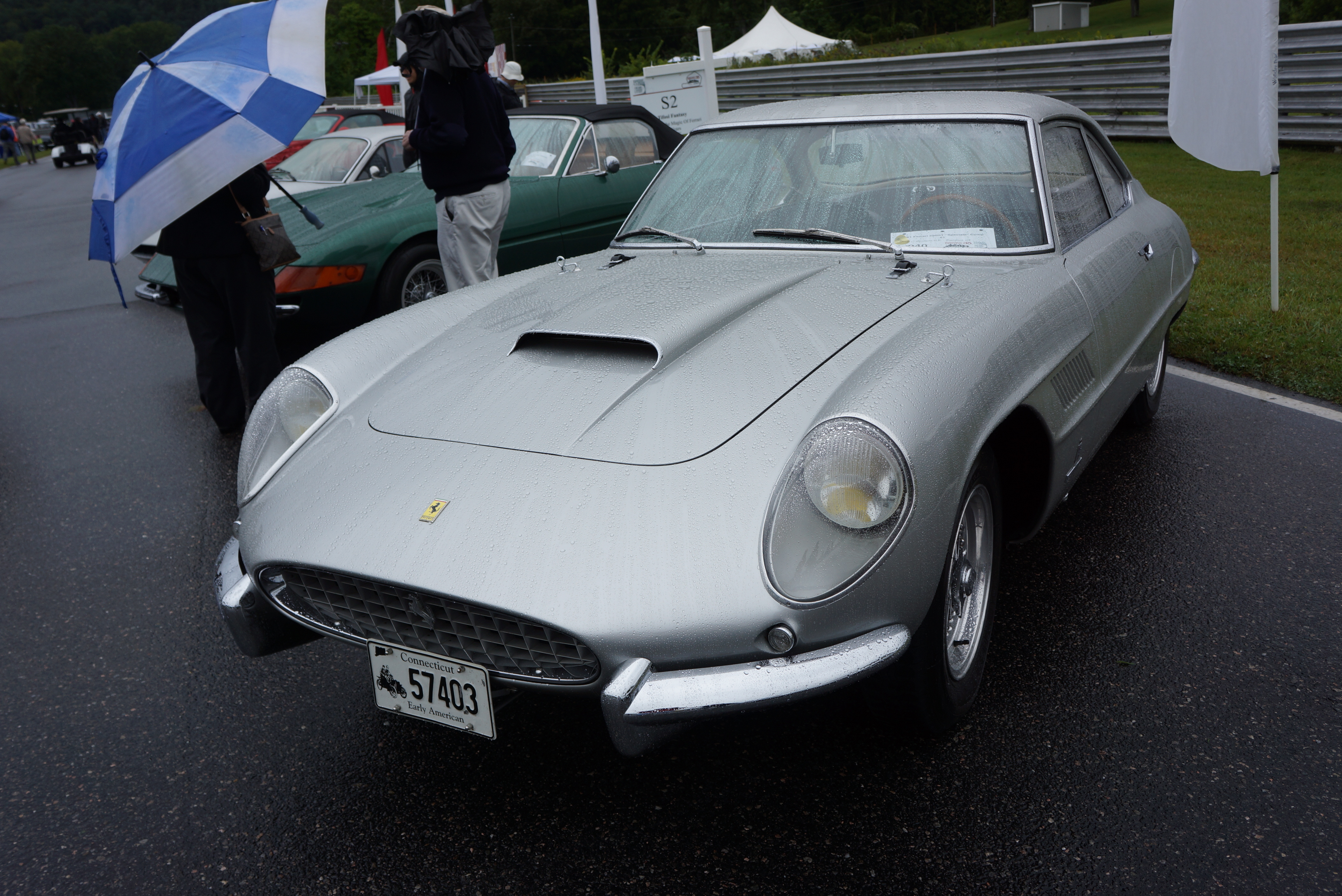
1961 Ferrari 250GT Speciale
1952 Chrysler Ghia show car
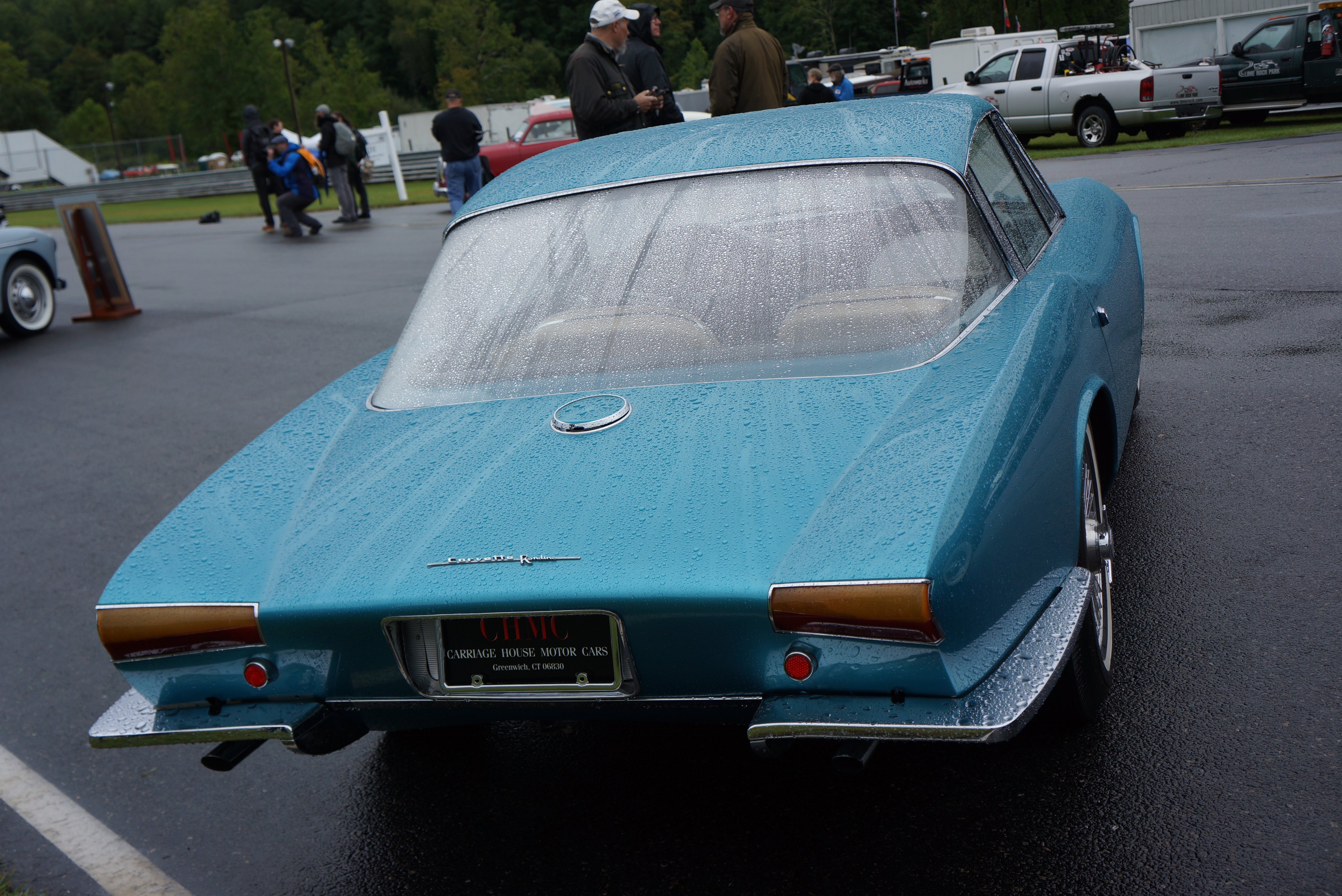
Here is a very famous concept car: the 1963 Corvette “Rondine”. Designed by Tom Tjaarda, the full custom body was assembled upon a mostly-stock Corvette chassis and interior. A Google search shows that this car, the only one of its kind in the world, was sold at auction by Barrett-Jackson in 2008 for $1.76 million. Enzo explained to me that “Rondine” (pronounced in Italian as RON-di-nay) is the Italian word for swallow (the bird). Some of the rear quarter and tail light treatment would show up later in Tjaarda’s Fiat 124 Spider design. It was a thrill to see this car in person.
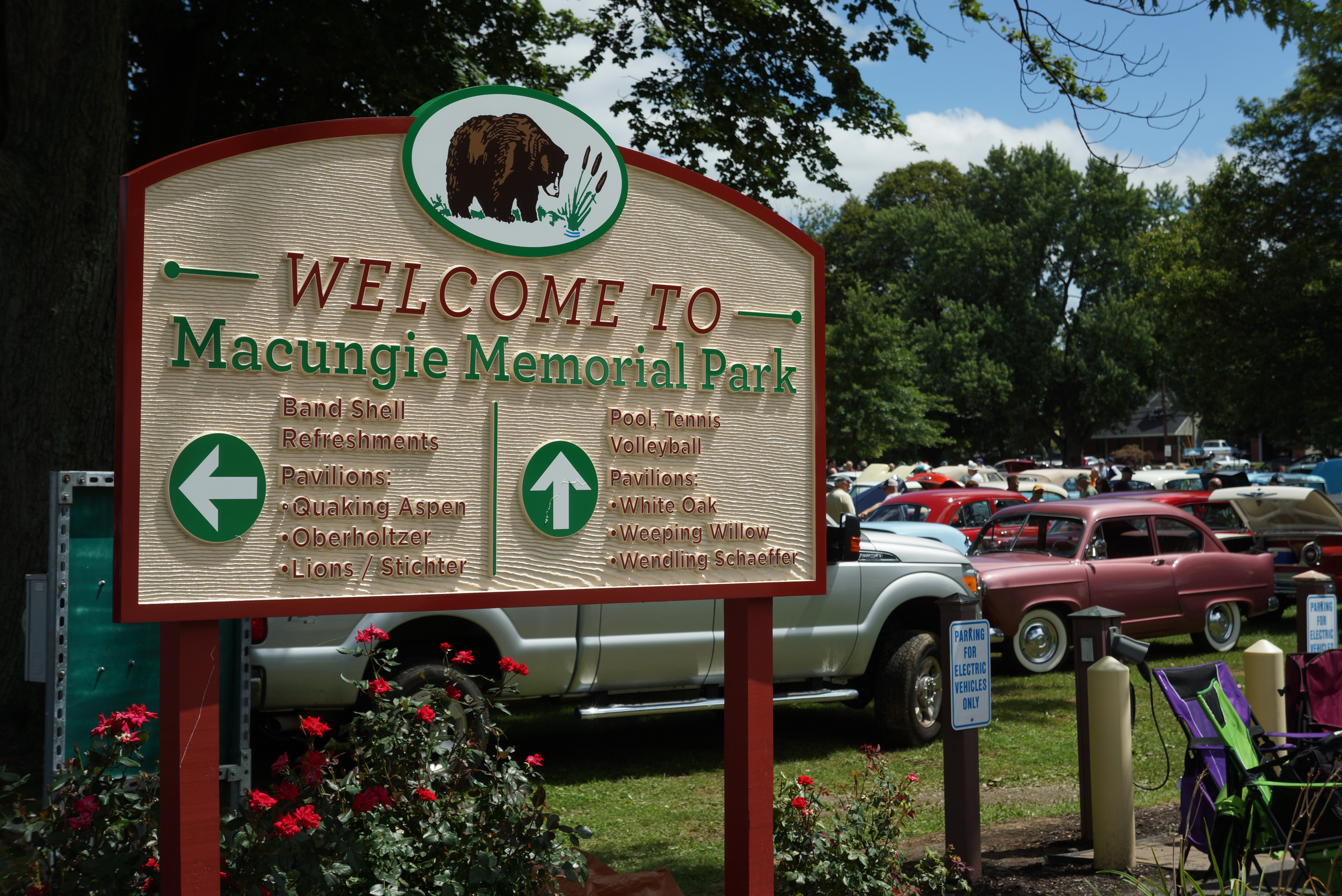
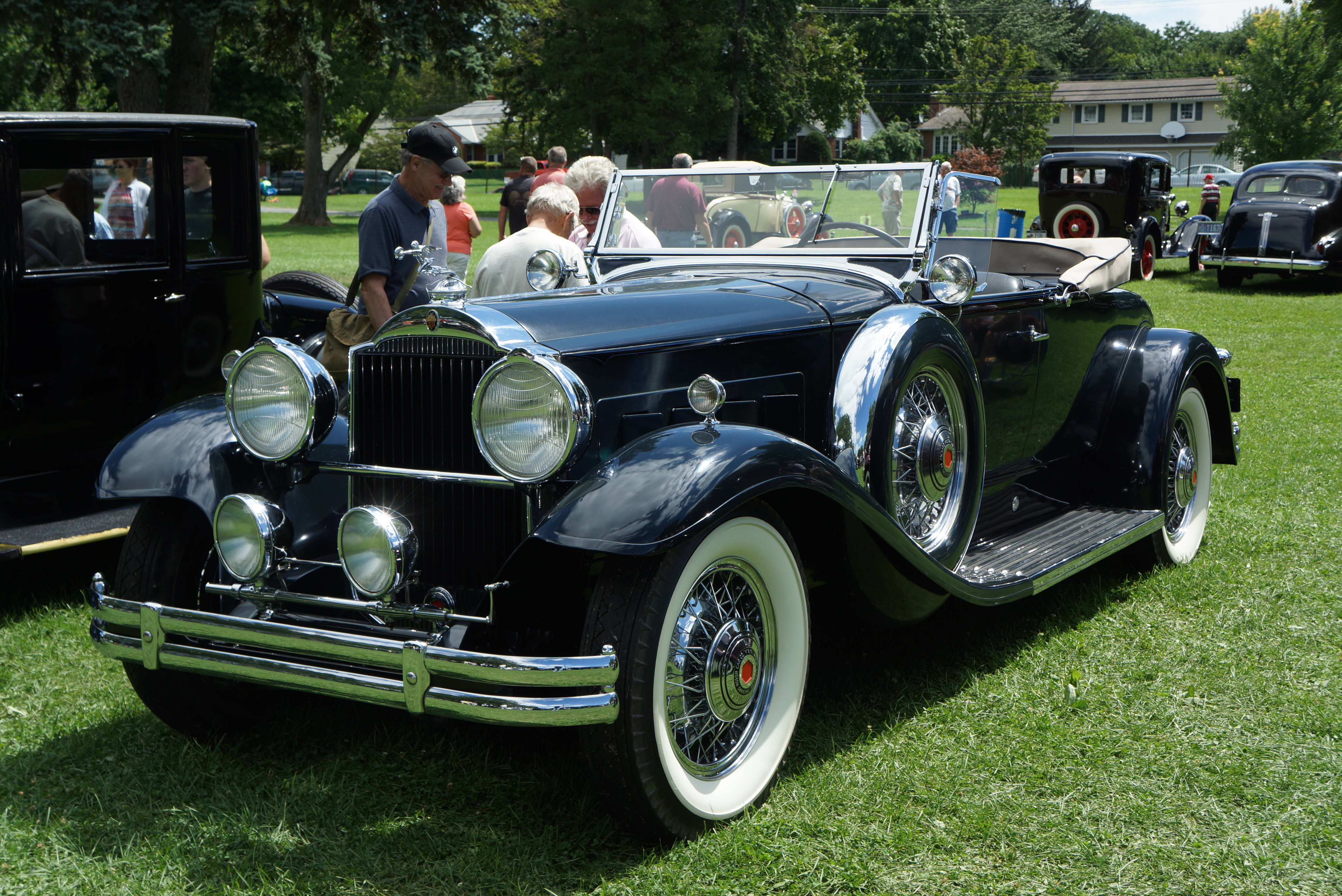
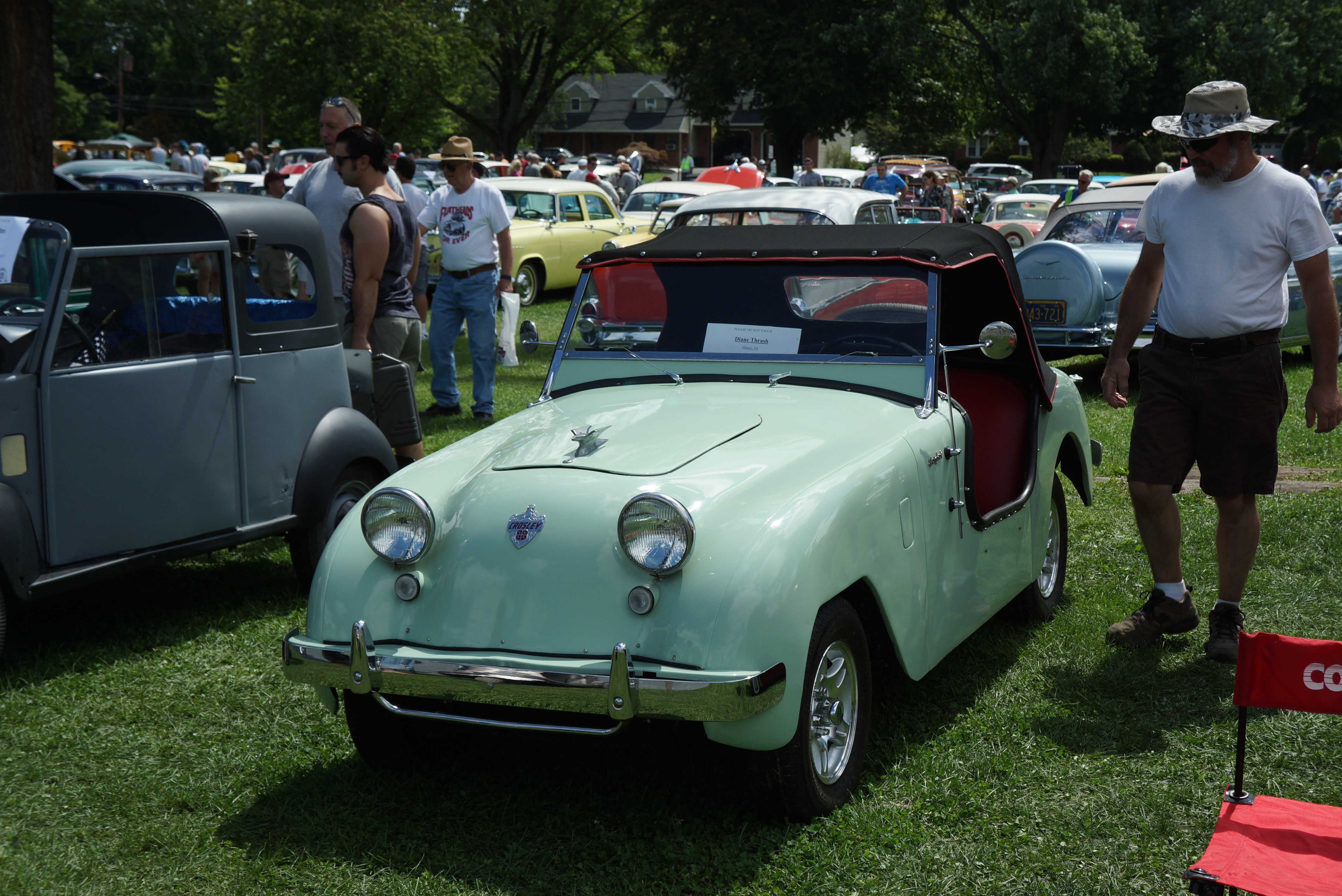
Memorial Park provides a wonderful setting for a car show
On the first weekend of August 2017, the town of Macungie PA hosted Das Awkscht Fescht (“The August Festival”) for the 54th consecutive year. This 3-day car show has grown into one of the largest collector car gatherings in the Northeast, and given what else is held in the area, that is quite the feat.
“Macungie” (most people call it this as it’s easier to say) is set in Memorial Park. As such, all the display vehicles are situated on grass in a park-like setting. The show further sets itself apart by featuring non-automotive attractions for family members who want to do more than hang around gramp’s 1959 Borgward all day. Arts & Crafts booths, kid’s games, and even a bandshell with live musical entertainment provide lots of distractions. Pennsylvania Dutch edibles are available, along with the usual car show fast food. Admission is a reasonable $8.
Field was crowded with both vehicles and spectators
Macungie was a quick stop for me on my way back from Mecum Harrisburg. There was just enough time to park, briskly walk the showfield, and head back to my car so I could be fashionably late for a friend’s BBQ.
The photos capture but a small slice of the wonderful display vehicles. For full effect, one really needs to attend all three days, as there are different cars on Friday, Saturday, and Sunday. A big part of Macungie’s success is the support from local car clubs, which have historically provided tremendous impetus in getting members’ cars out for the public’s enjoyment.
The New Jersey Region of the AACA (Antique Automobile Club of America) held its annual picnic on Sunday August 13, 2017. As is tradition each August, the monthly meeting normally scheduled for the first Thursday of the month is pushed back, and is held in conjunction with the picnic.
Pete Cullen, chairperson for the picnic, is fond of saying: “This is the second-largest car show for the club, after the annual spring meet”. Indeed, according to Pete, there were at least 40 members’ collector cars in the lot. The large turnout was encouraged by the ideal summer weather, warm and sunny, with no noticeable humidity, and no threat of rain.
The Club generously covers the cost of the grilled food, consisting of your American BBQ mainstays: burgers, dogs, and chicken. Members are encouraged to bring side dishes and desserts, and the generosity of the attendees ensured that no one went home hungry.
With lunch consumed, many of us took to the parking lots to survey the wide variety of vehicles on display, ALL of which were driven to and from the event. Plenty of pre-war cars made the trip, and there was the expected quantity of ‘50s and ‘60s American cars.
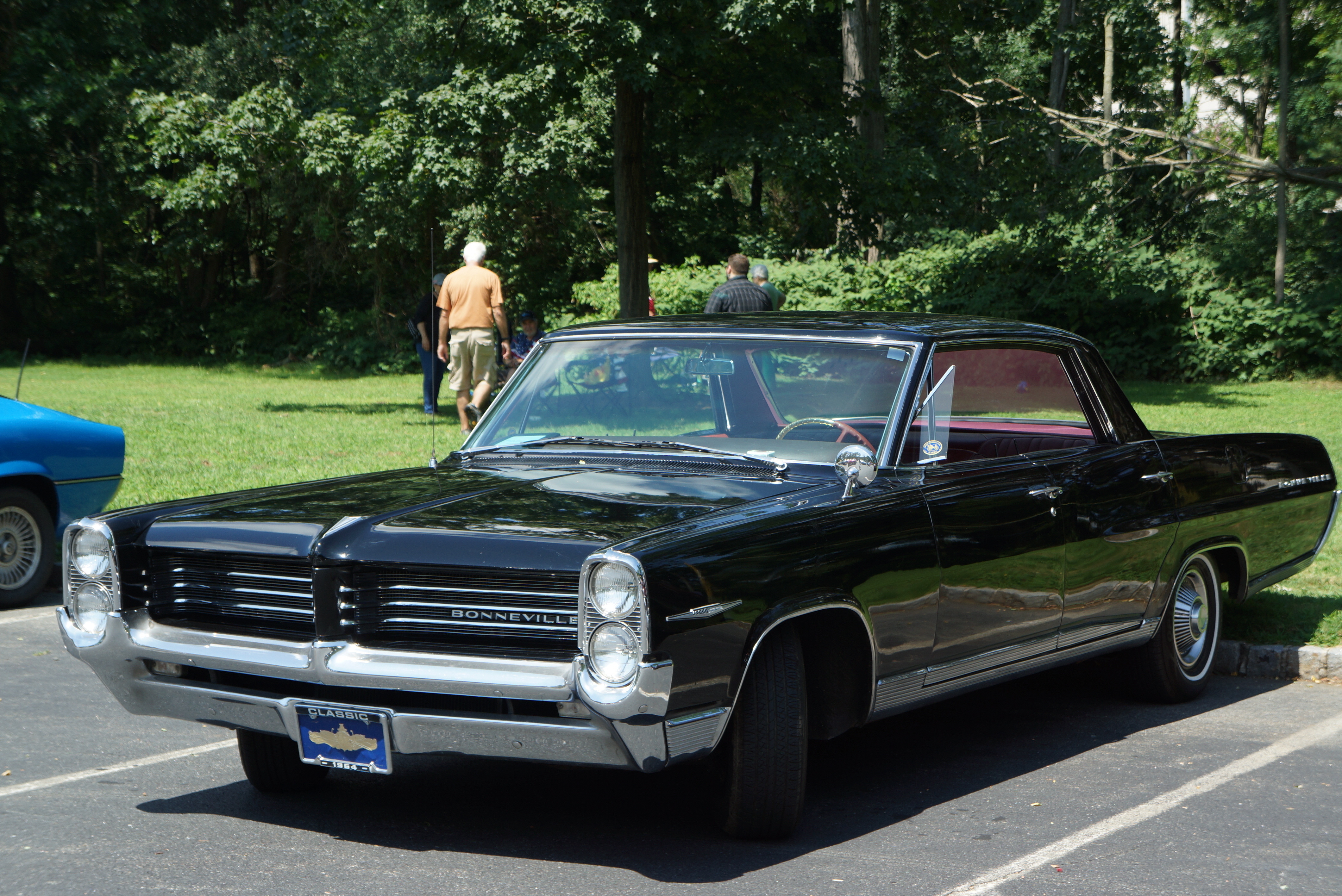
Fans of foreign marques were not disappointed, especially if you like Italian cars. For this club member, the parking lot contained several vehicles not seen before at any NJ AACA event. A standout was the stunning 1954 Chrysler Imperial 2-door hardtop, resplendent in black. According to my copy of “Cars of the 50s” by the Auto Editors of Consumer Guide, just 1,249 of this model and body style were produced, at a retail price of $4,560. (By comparison, a same-year Dodge Royal 2-door hardtop started at $2,503.)
’54 Imperial: note wire wheels
… and plate “54 HEMI”
By 2:30 p.m., most of the crowd had dispersed, and Pete and his crew were done with the cleaning and packing. The NJ Region, which has been in existence since 1951, has many members who have known each other almost as long. It’s a friendly, fun, low-key crowd, and everyone always appreciates each other’s cars and company. It was my first time at the club picnic, and based on today, I’ll be coming back.
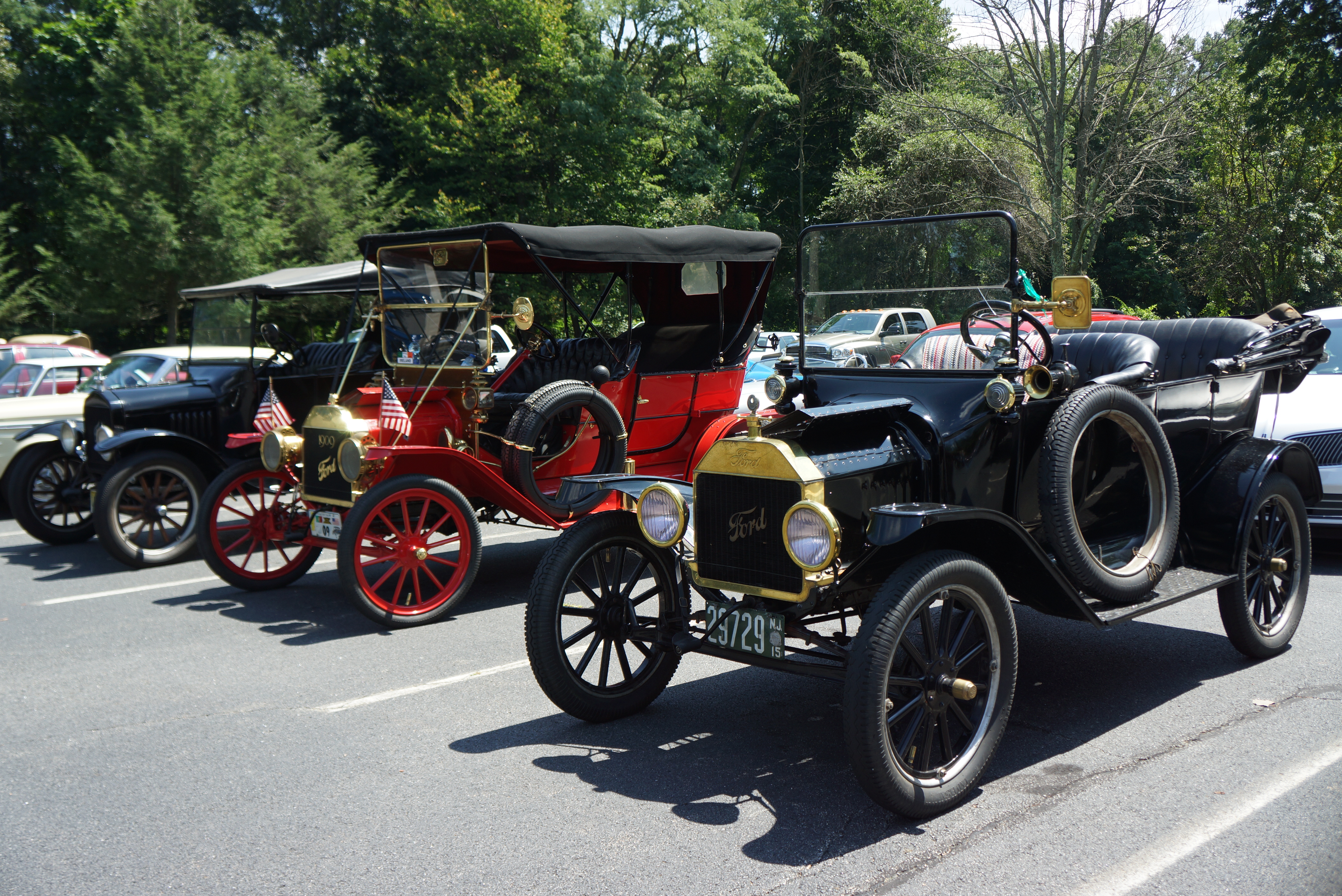
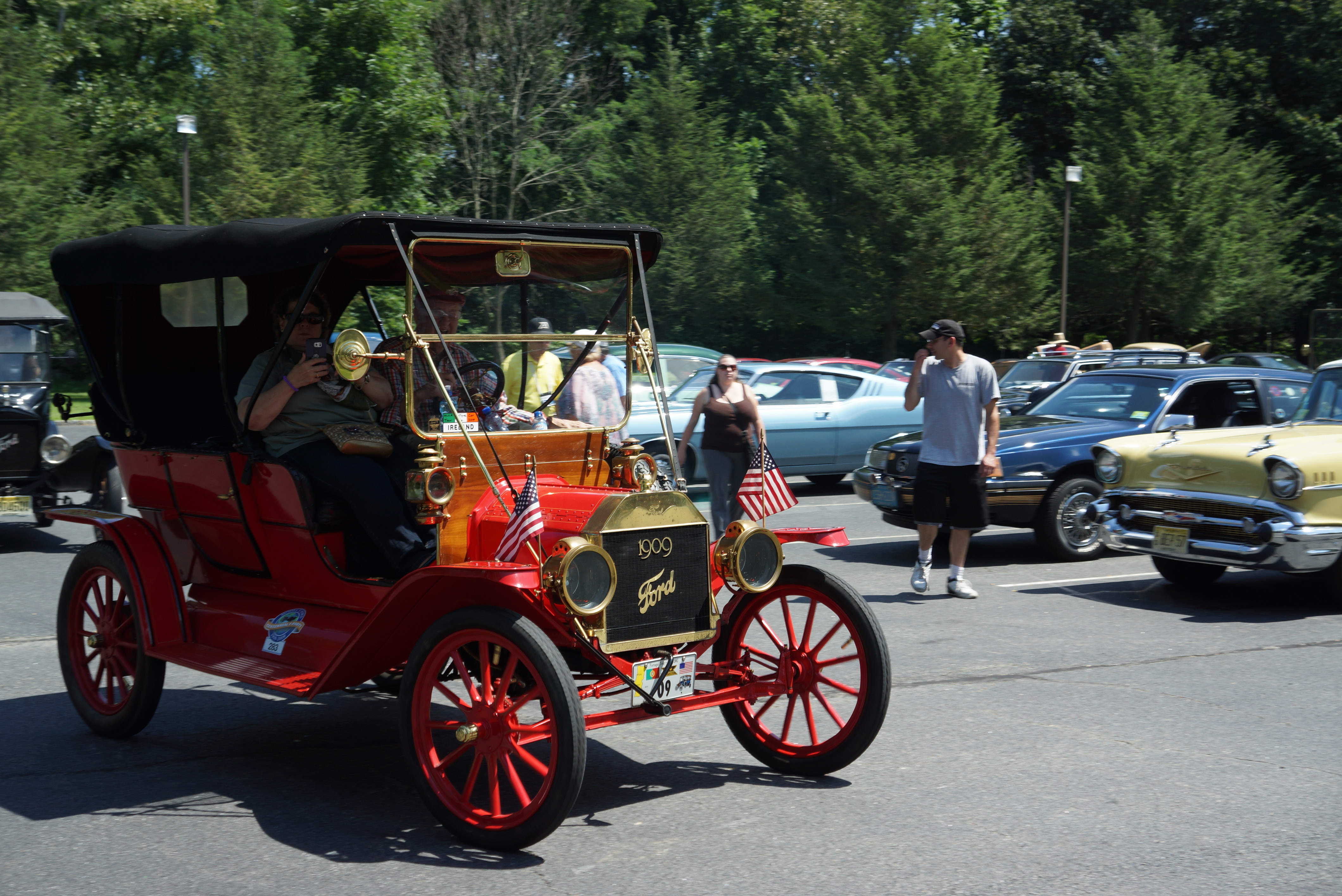
Brass-era Fords nicely lined up
Herb Singe, founding member of the club, headed home in his “T”
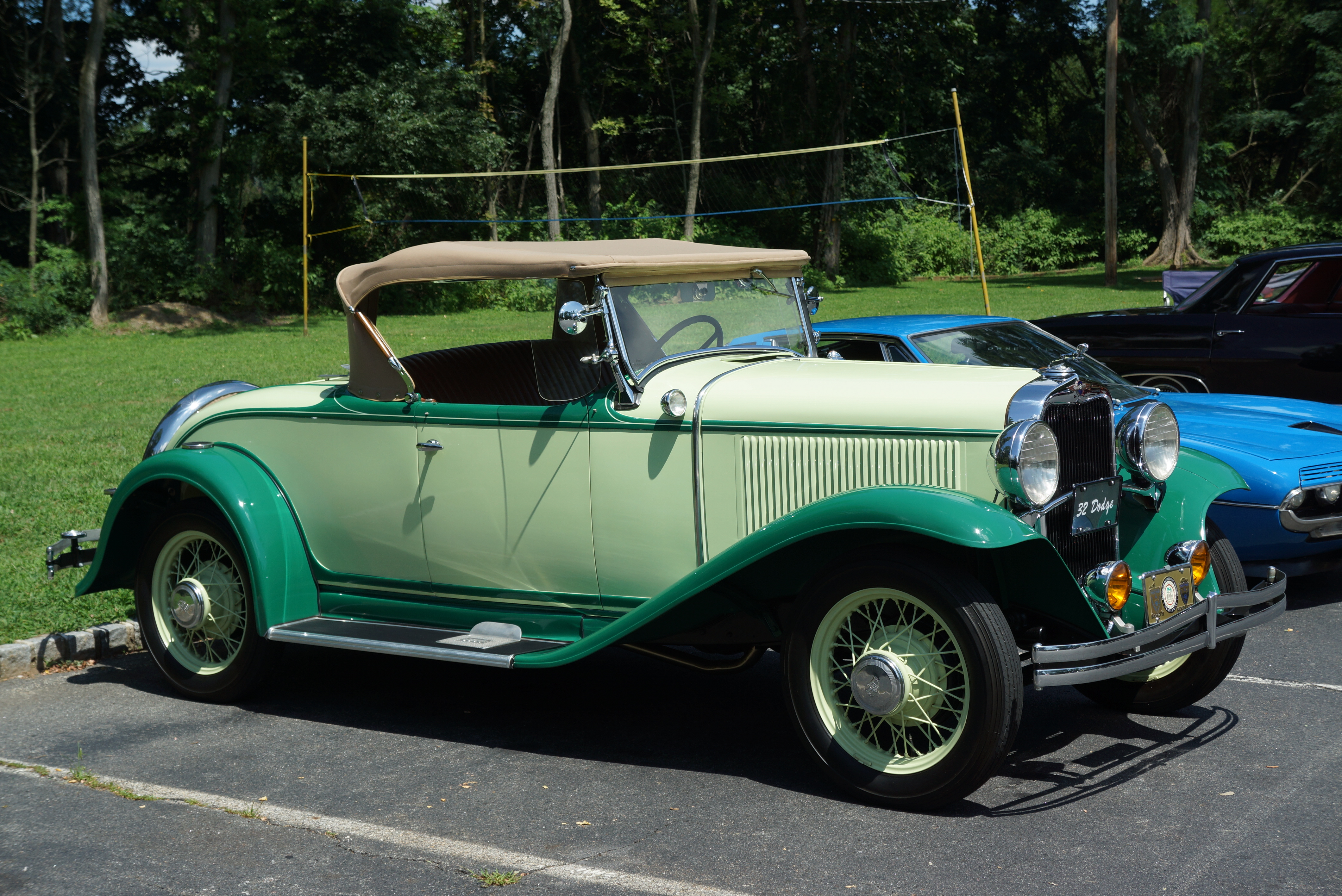
1932 Dodge roadster with rumble seat
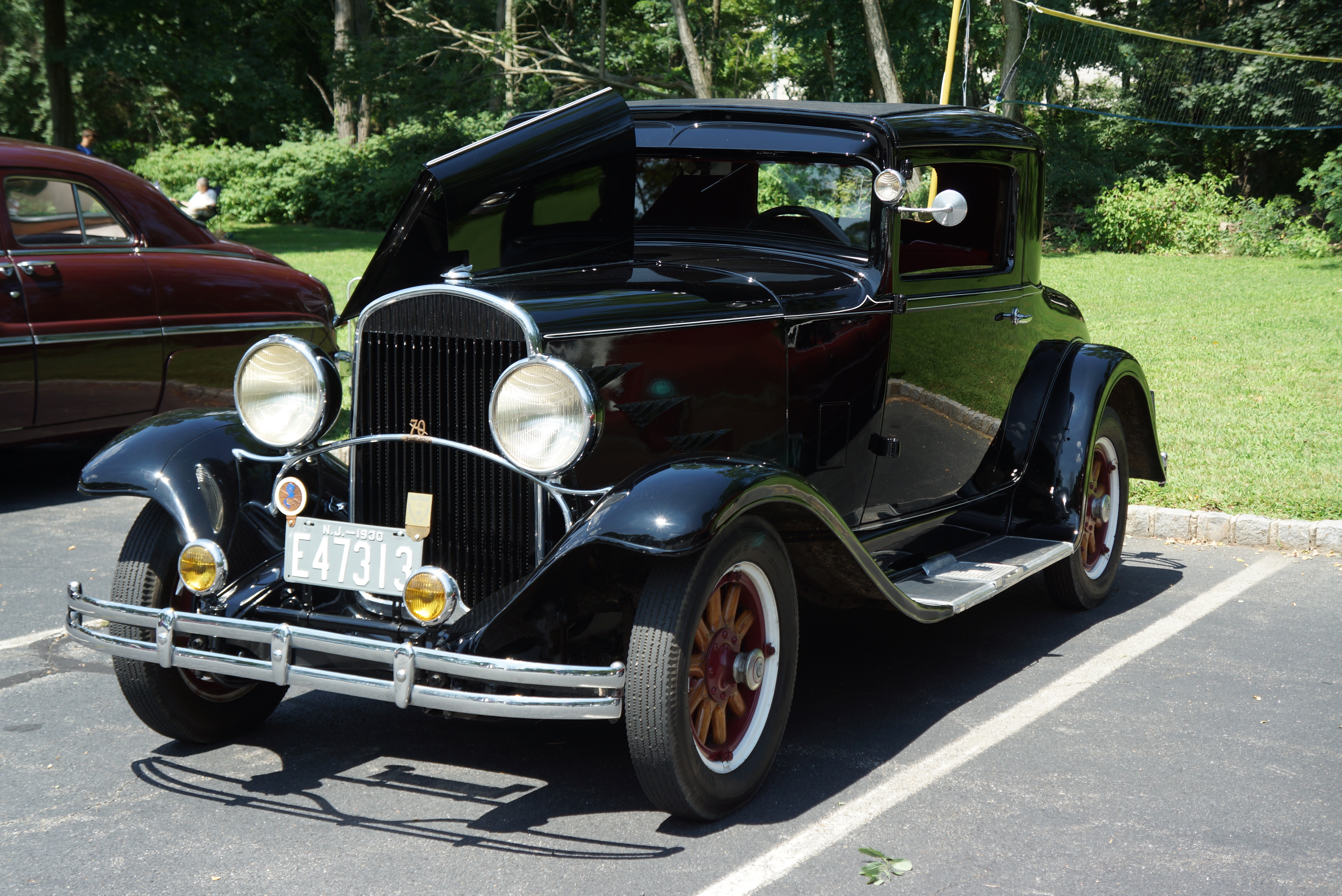
1930 Chrysler- note wood wheels
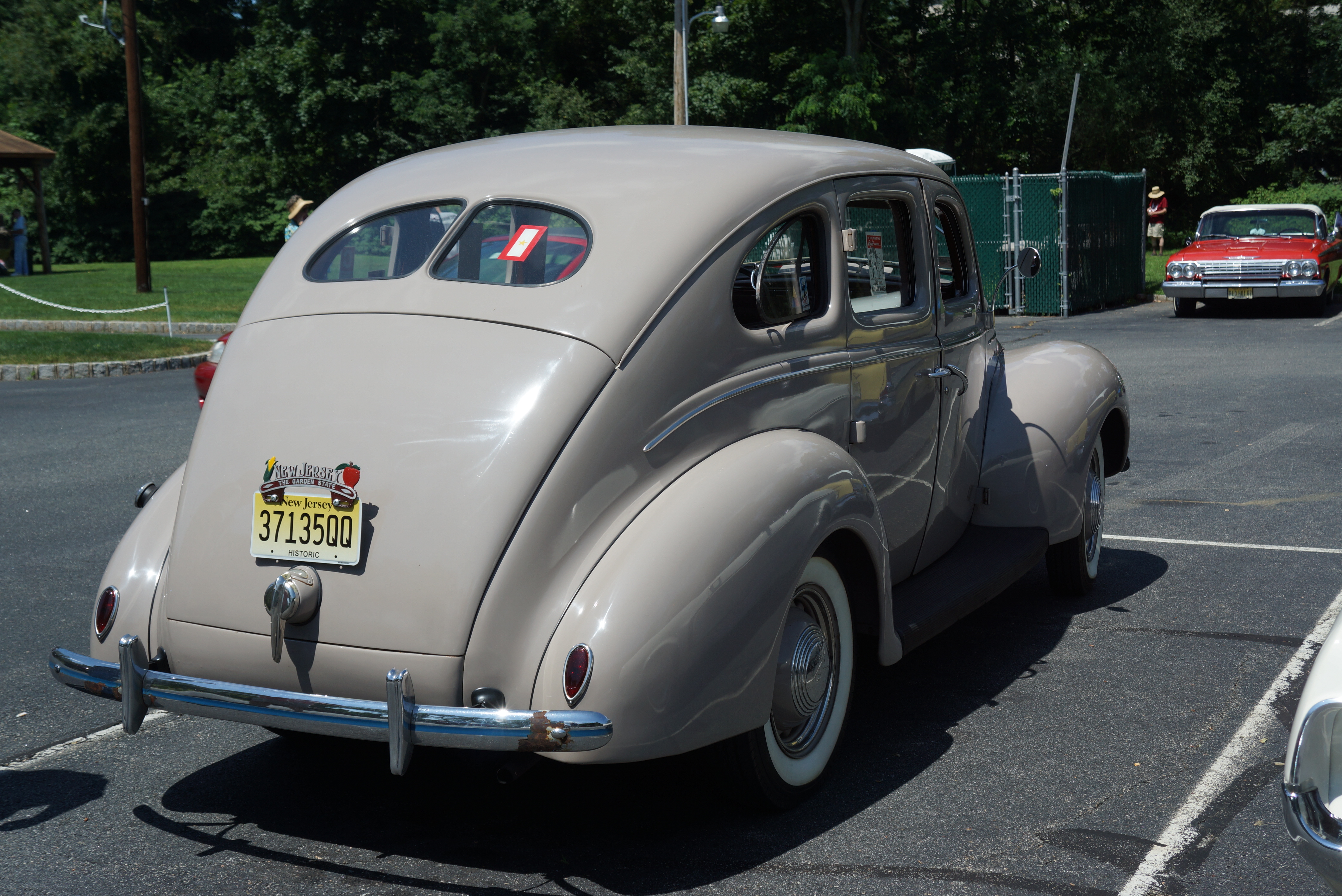
1939 Ford
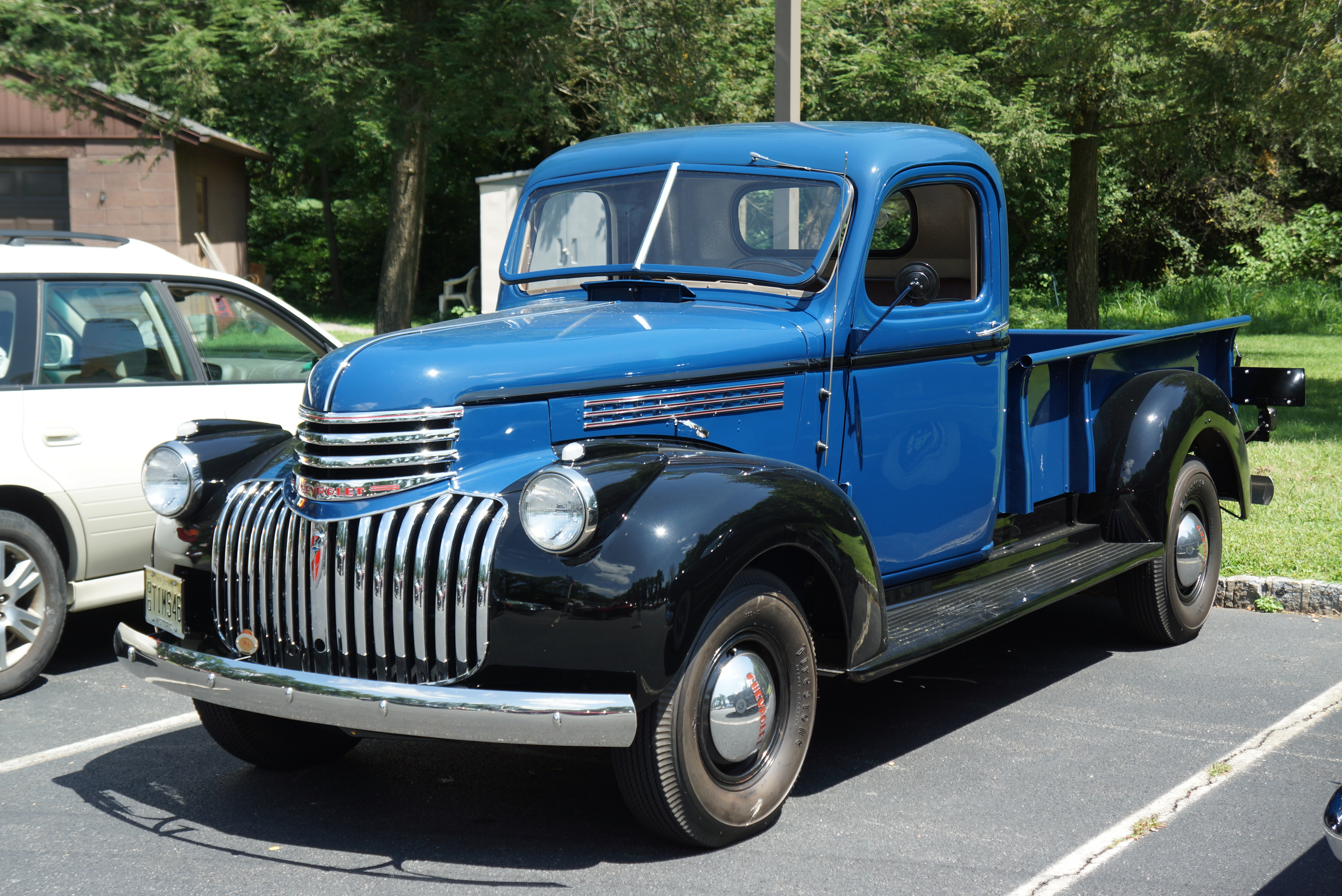
1946 Chevrolet pickup
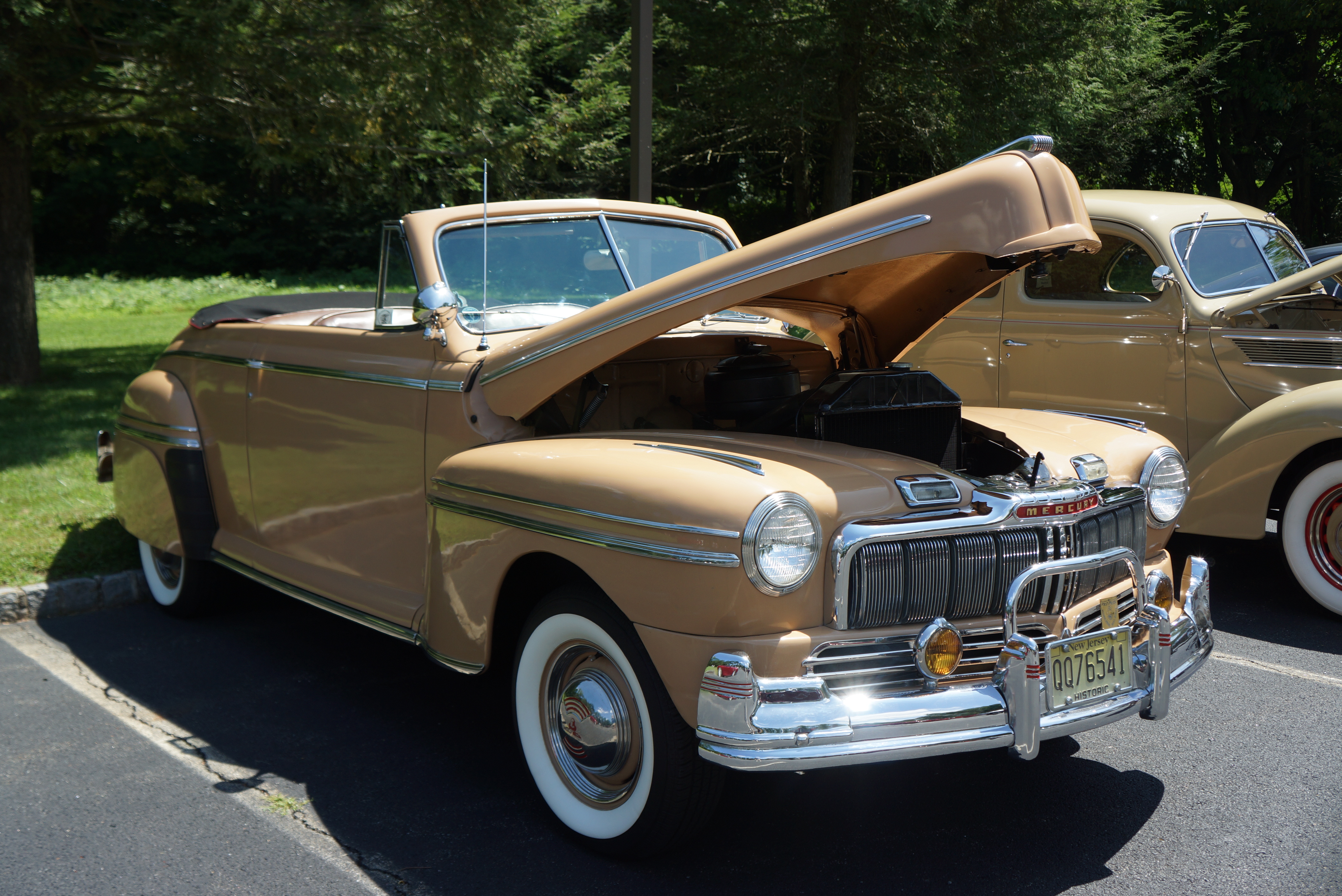
1948 Mercury droptop
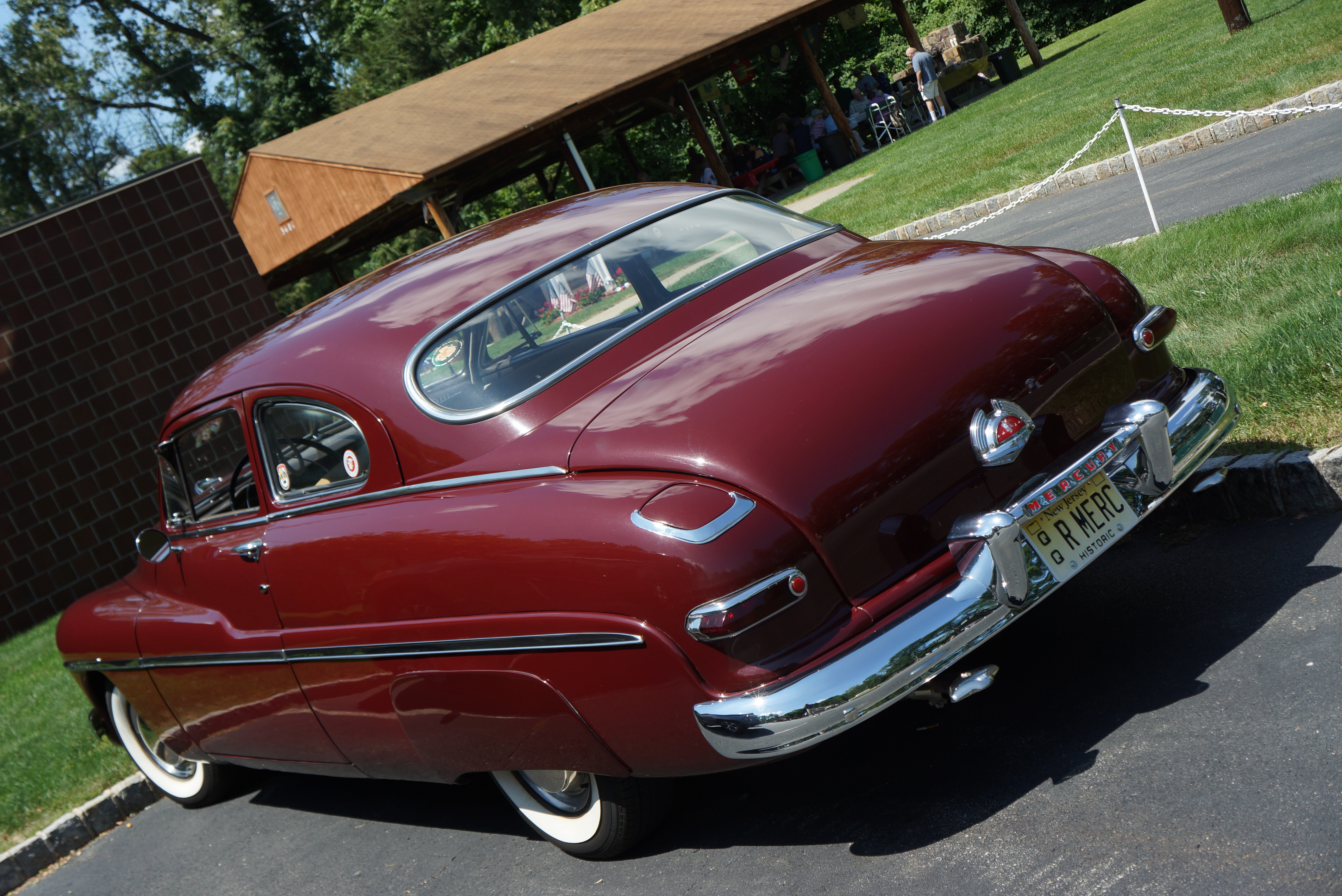
Compare this to the ’48 Merc- FoMoCo entered the modern age with its redesigned 1949 cars
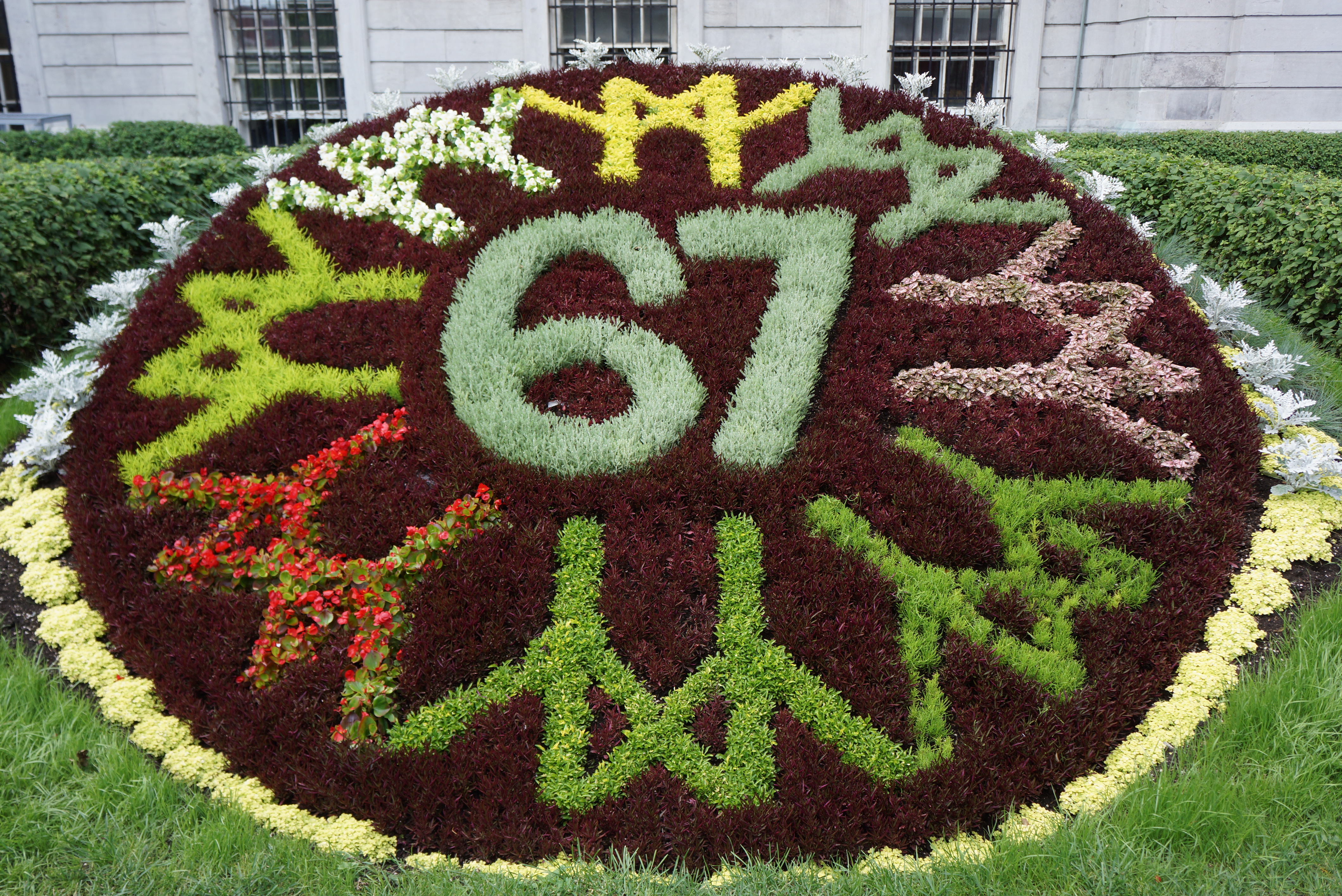
The Alfa Romeo Owners’ Club (AROC) held its 2017 annual convention in Montreal, Quebec, in conjunction with the Alfa Romeo Club of Canada. Billed as “Alfa Expo17”, the choice of this city was not arbitrary. This convention celebrated the 50th anniversary of the showing of the Alfa Romeo concept car at Expo ’67 in Montreal. When the car went into production a few years later, it was named after its debut city. Alfa Expo17 promised a significant showing of Alfa Romeo Montreals, as well as some special events planned around this very special vehicle.
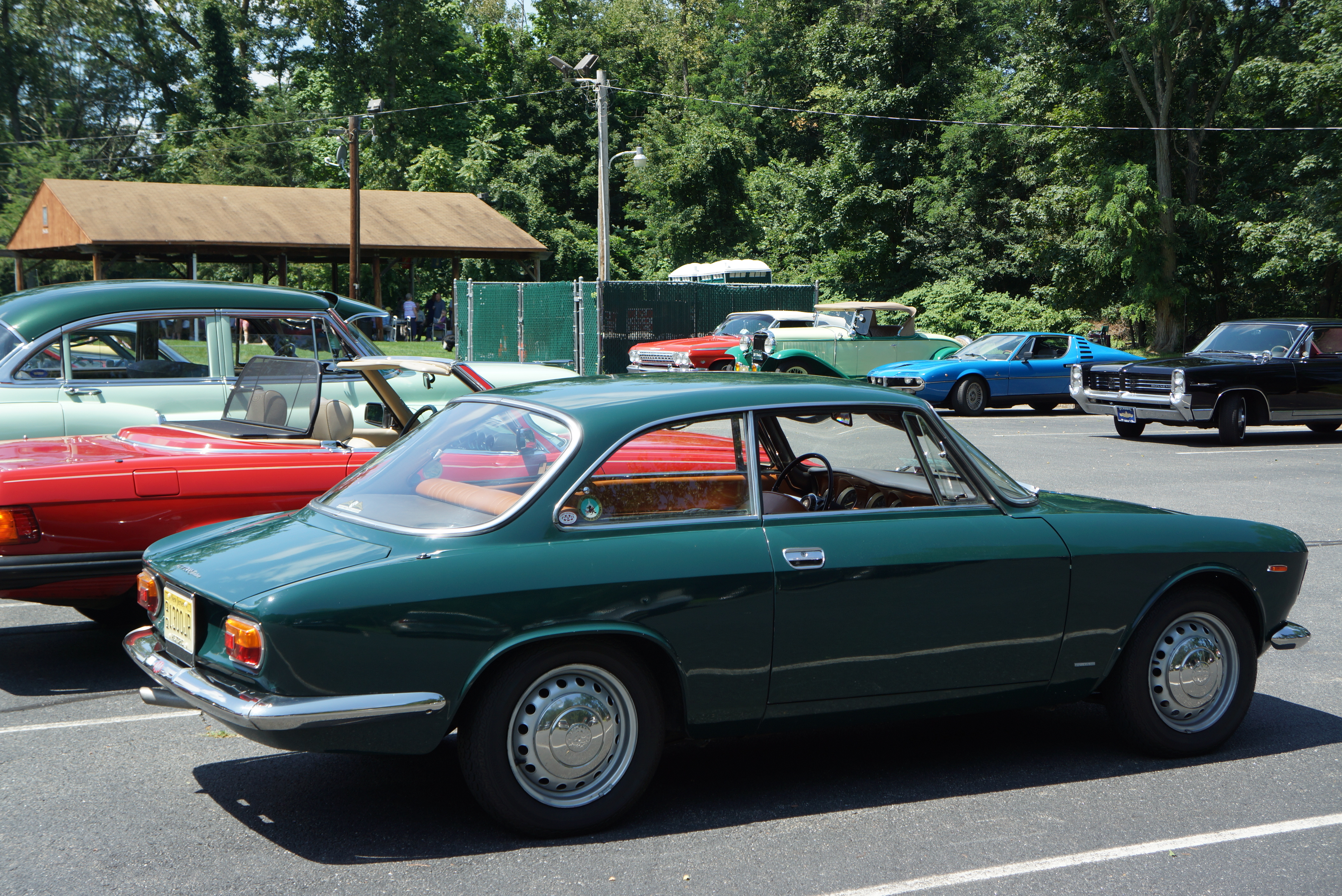
This was my first participation at an AROC event. My 1967 GT 1300 Junior turned 50 this year, so partly in honor of the car’s birthday, we drove the car there, the decision helped by Montreal’s relative proximity. My wife accompanied me, because she likes riding in the Alfa (claiming that it’s the most comfortable collector car I’ve owned) and because we’ve enjoyed our previous visits to our northern neighbor.
When the convention’s agenda was published in the club magazine, I was somewhat surprised to see that “activities” were scheduled to begin as early as the Monday before Sunday’s concorso. Taking that much time off was not practical for either of us, so we decided to arrive early on Friday July 14. To help with that plan, we departed from home on Thursday evening the 13th, and spent the night near Saratoga Springs NY, almost exactly half-way to our destination.
Friday’s convention agenda included lunch at the Orange Julep fast-food restaurant in downtown Montreal, followed by a gimmick rally for the afternoon. We decided to aim for lunch at the Orange Julep, and take a wait-and-see approach to the gimmick rally.
Our planned lunch arrival of 12 noon was missed by almost two hours, because the combination of rain, traffic, and road construction had us crawling at 10 mph for much of our time in the city. (Oh, and this driver, unable to read street signs in French, made a wrong turn and drove in circles through a residential area for 20 minutes.) As we finally pulled into the Orange Julep parking lot, the threatening skies opened up again.
There were perhaps four Alfas remaining in the lot. We ordered our food and said some quick hellos to a few Alfa owners. As soon as we had our food in hand, the rain picked up and the temperature dropped. The Orange Julep only had outdoor seating. My wife asked if we could eat in the car. THAT was not an option. I gave her my hooded jacket, we found seating in an outdoor shed, and wolfed down lunch as quickly as possible. The gimmick rally was not going to happen for us.
With the rains continuing, we dove back into the car, and began to plot our route to the hotel. Next issue: both of our phones lost internet coverage, so, no Google maps. The filling station across the street sold me a street map of Montreal, and we were back on the highway, again brought to a crawl by traffic and construction. What should have been a 20 minute ride took closer to an hour. We were happy to arrive and get into a warm and dry hotel room. It was not the best start to our holiday weekend.
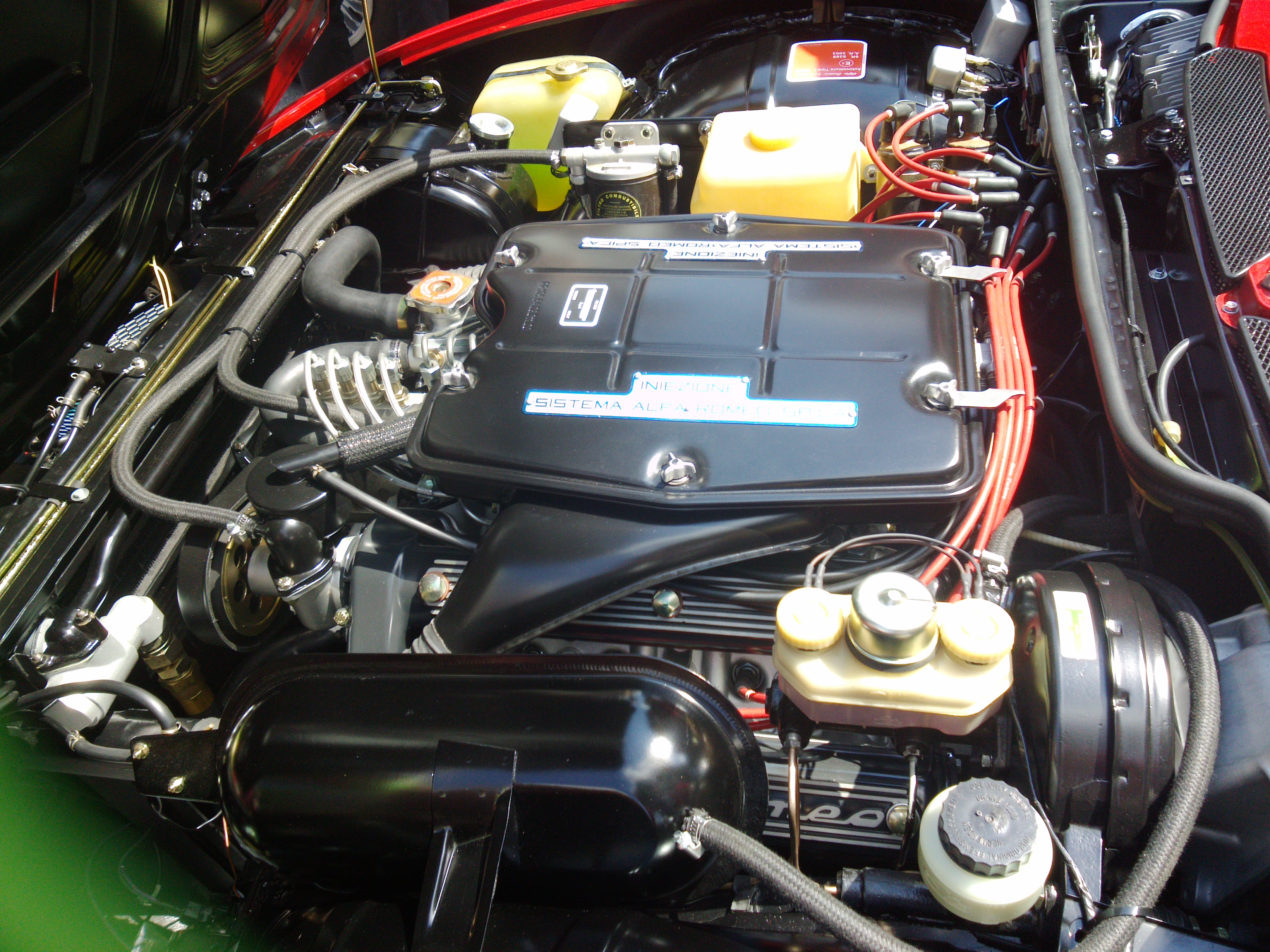
Friday night’s dinner was on site, so there was no need to get back into the car. We sat down and met all the other couples sharing our table. For the first time but not the last, we were treated to the warmth and openness of our fellow Alfa owners. Everyone was gracious, humble, and willing to make us feel included. My wife, who is not a car person, managed to gain the sympathetic ear of several of the other ladies who understood that she was not at the dinner to discuss double overhead cams, oil viscosity, or Spica fuel injection.
At the conclusion of the meal, about five Montreal owners lined up their cars along the back entrance of the hotel, and Wes Ingram, Spica guru, gave a technical presentation. All the cars had their engines started, and it was an incredible sound to hear these V8 engines roaring.
Five Montreals line up on Friday night
Saturday’s schedule included a number of optional events. For those who wanted to test their driving skills, autocross-type drives were conducted at a nearby raceway. That’s not my thing, especially when the car in question is also my transportation home, so we opted instead for a bus tour of Old Montreal.
With the rain holding off, the bus departed the hotel at 9 a.m. sharp, and our driver/tour guide, a pleasant local chap, was knowledgeable if a bit difficult to understand through the accent. The bus meandered through town, then parked for a 2-hour lunch break, which put us out on our own. The gloomy weather was changing over to sunshine, and it was nice to walk around. Back on the bus, we finished the tour and we returned to the hotel by 3 p.m. I didn’t mind being a passenger for the day.
Flower display celebrates Expo ’67
…as well as 375th anniversary of the city of Montreal
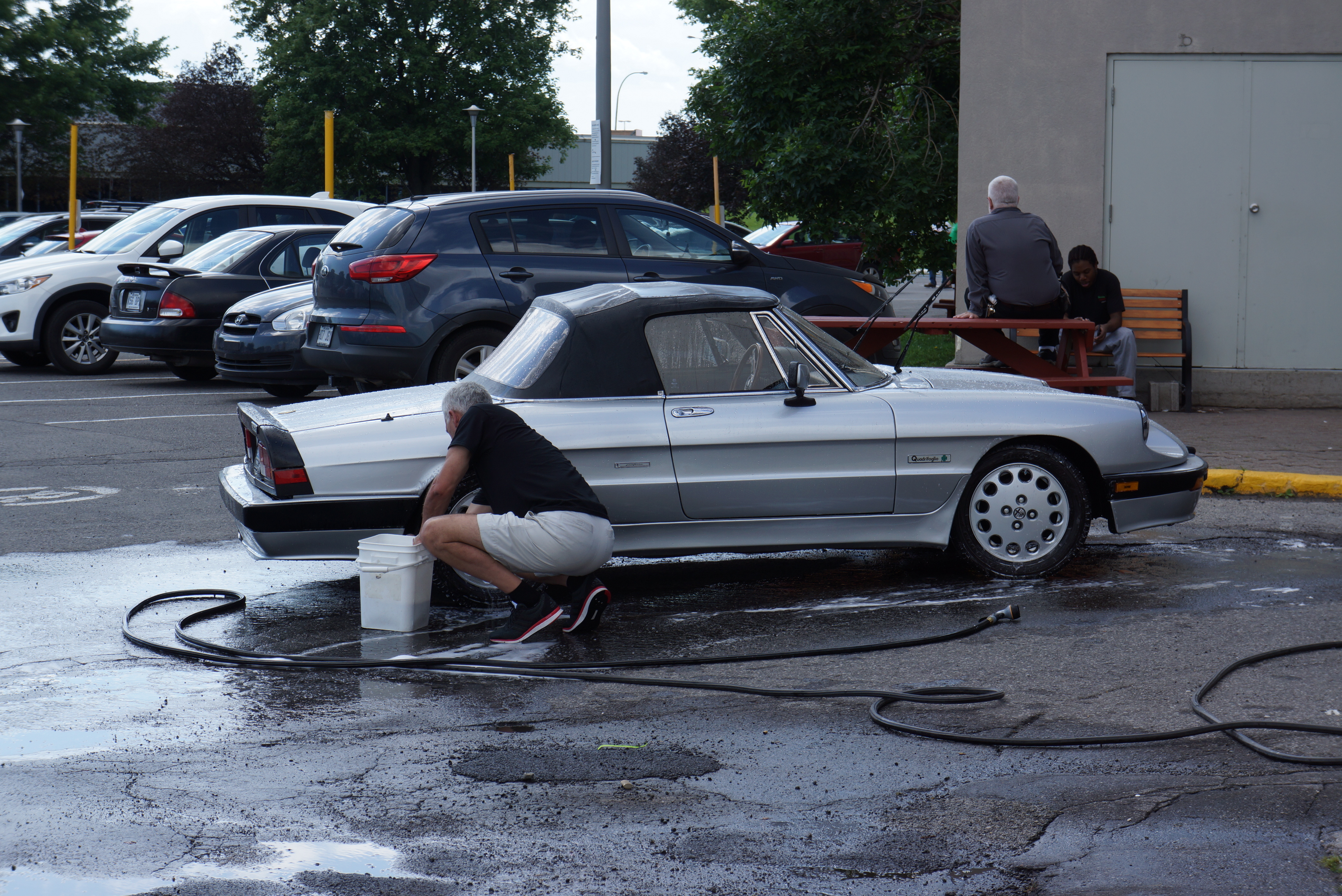
By this time my wife was ready to relax in our hotel room. The sunny skies meant that this was my window to prep my car for Sunday’s big show. The hotel provided a wash station, complete with hose, soap, bucket, and wash mitts. Of course, about 50 other owners had the same idea, so there we all were, having turned the back lot of this Holiday Inn into a major preen and primp area.
Waiting my turn before using the wash station
But Alfa owners never miss the opportunity to engage fellow Alfisti in banter. I made about a dozen new friends in our mutual admiration society as we compared notes regarding the history and authenticity of each other’s cars. Modestly, my car garnered some significant attention because of its originality, with owners of similar Giulia coupes interested in knowing, for example, if my 3-spoke steering wheel is original (it is).
Saturday evening was another arranged dinner at the hotel, this time with speeches and awards. The winners of the gimmick rally and the time trials were presented their due. Cindy Banzer, the president of AROC, gave the keynote speech in English AND French, impressing us with her bilingual skills. Things wrapped up by 11 p.m., and good thing they did, as we would all be rising early Sunday morning.
The Sunday Concorso, arguably the highlight of the weekend, was not at the hotel, but rather in “Petite Italie”, French for Little Italy, in the city center. Planning an 8 a.m. arrival, but dreading the traffic, we departed the hotel by 7:30 a.m. Of course, we breezed right in. The weather was perfect.
Sunday’s Big Show
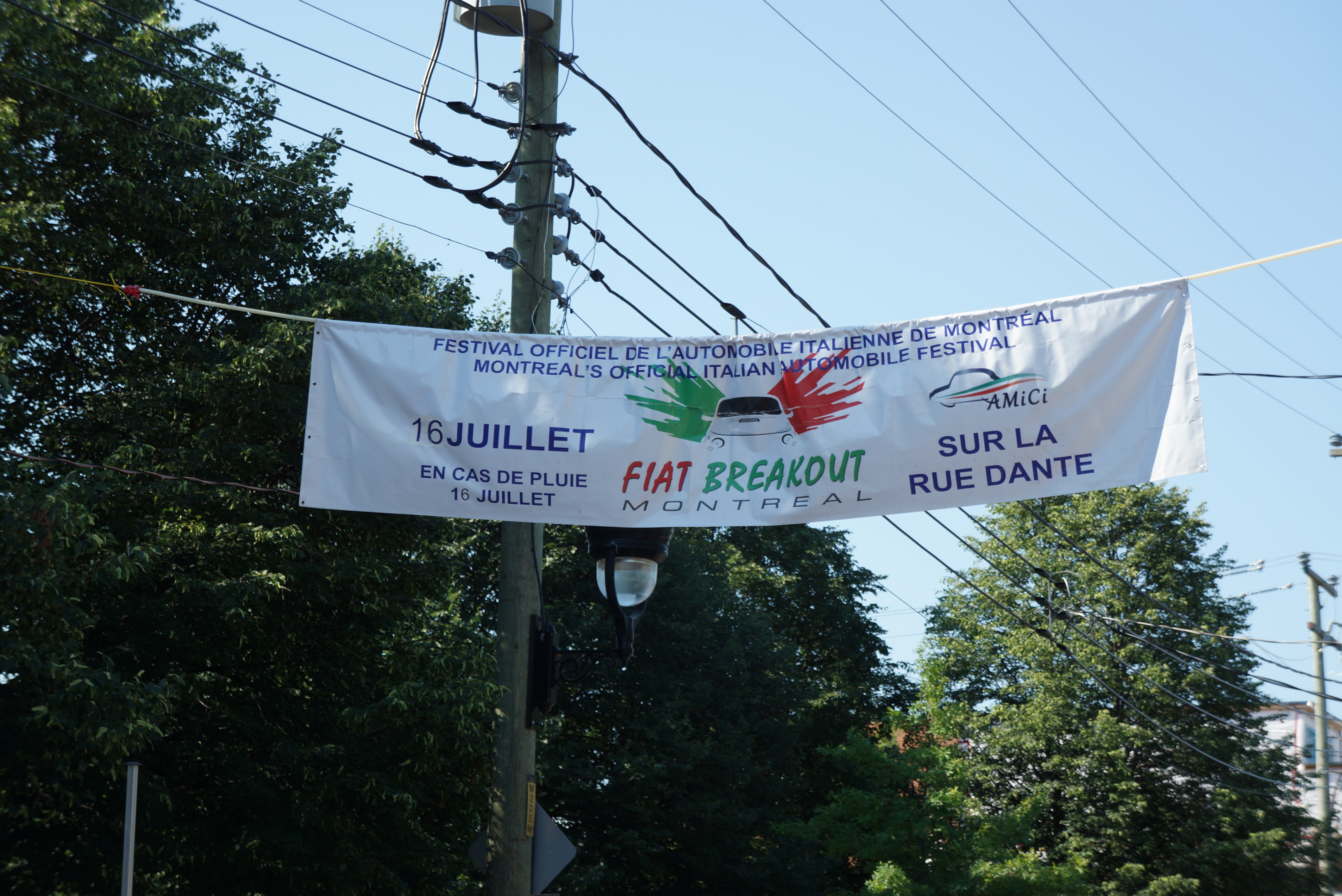
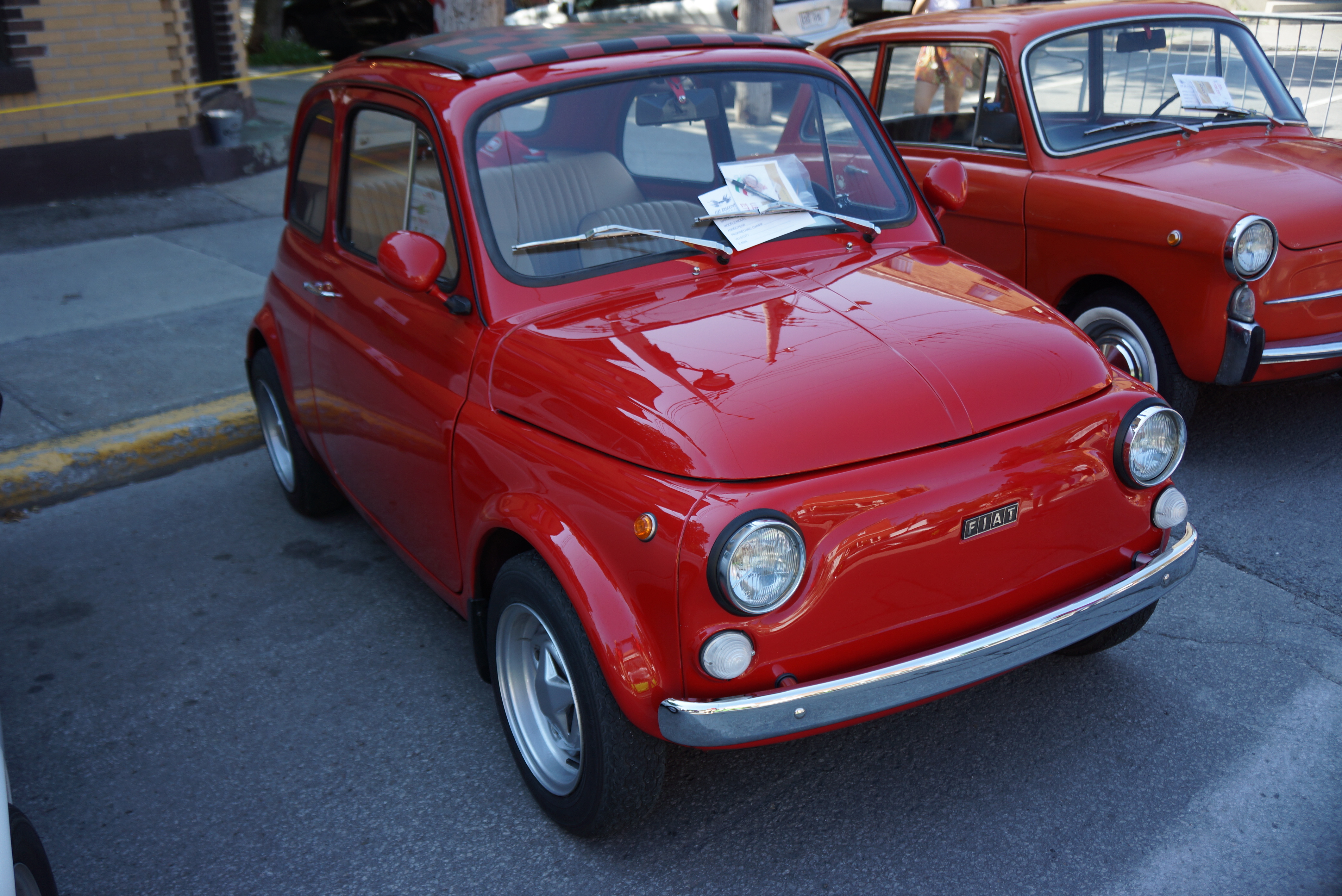
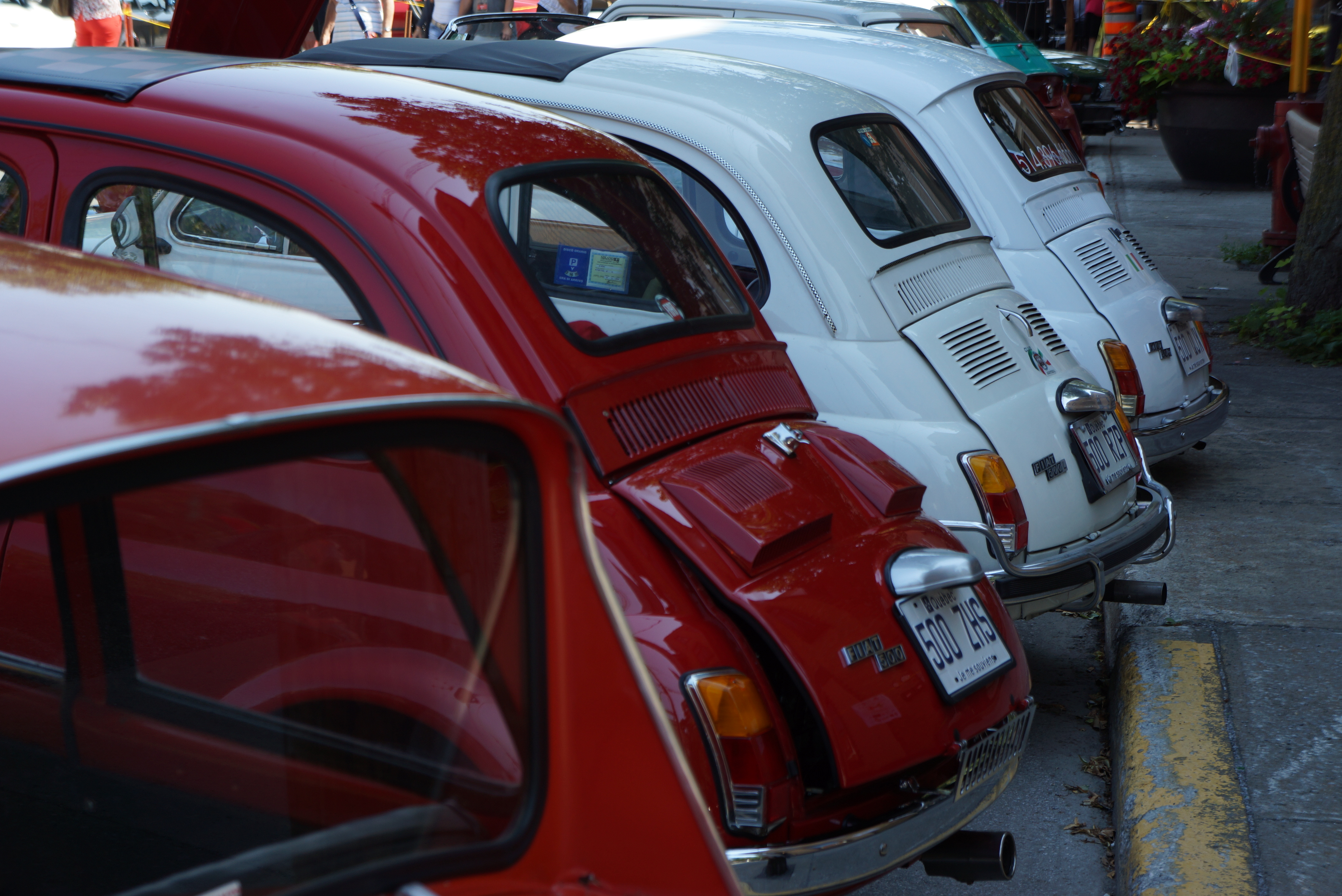
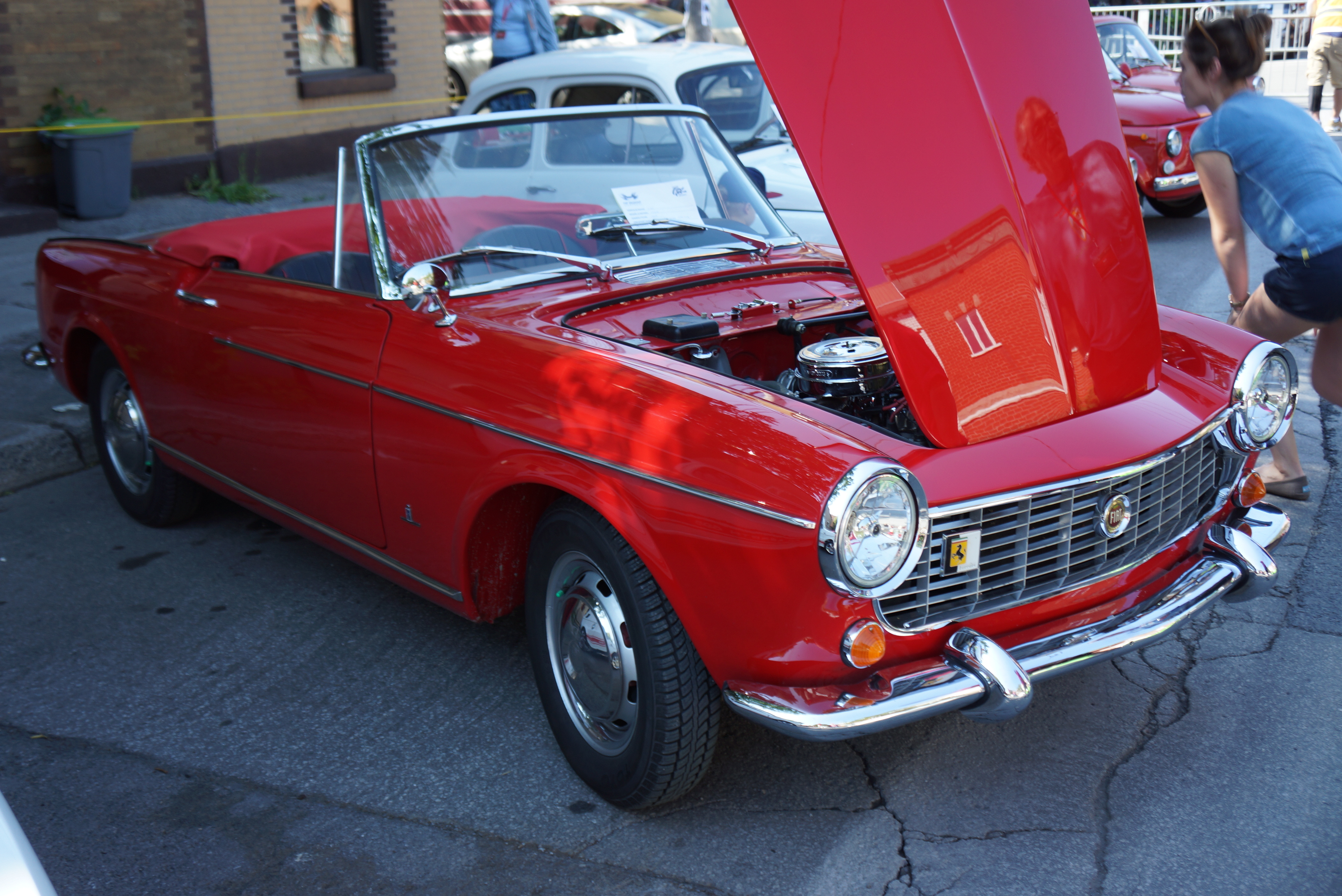
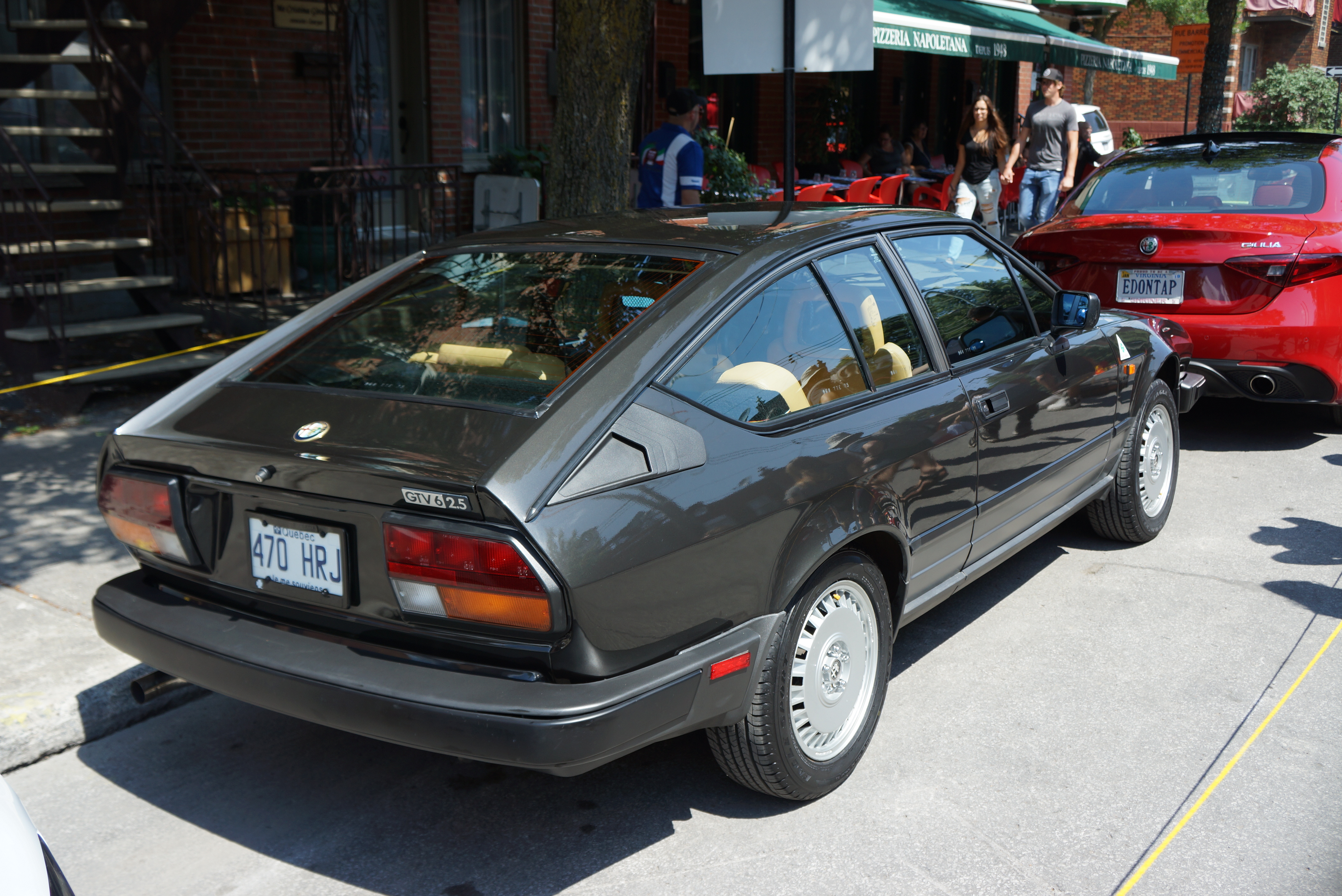
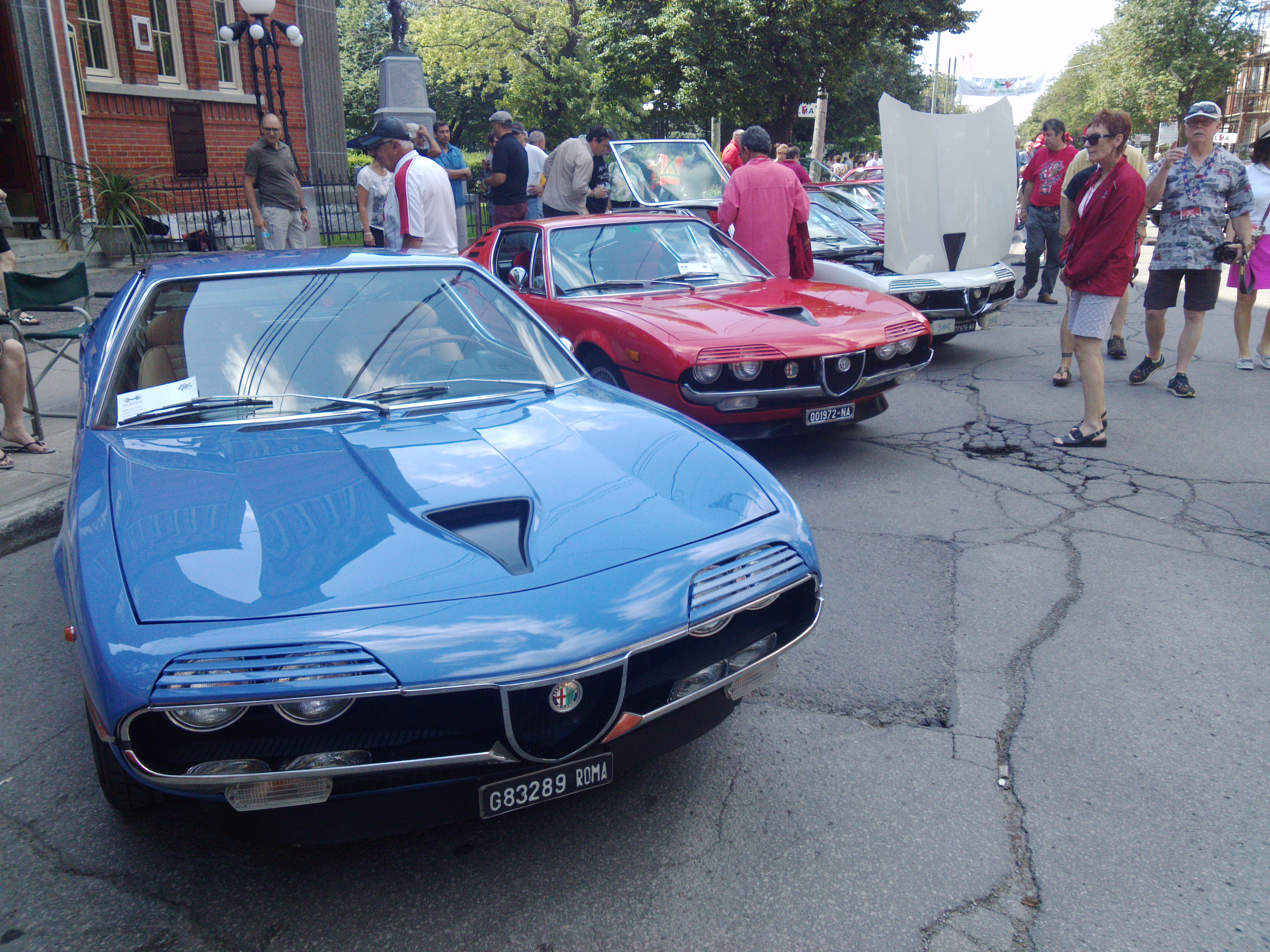
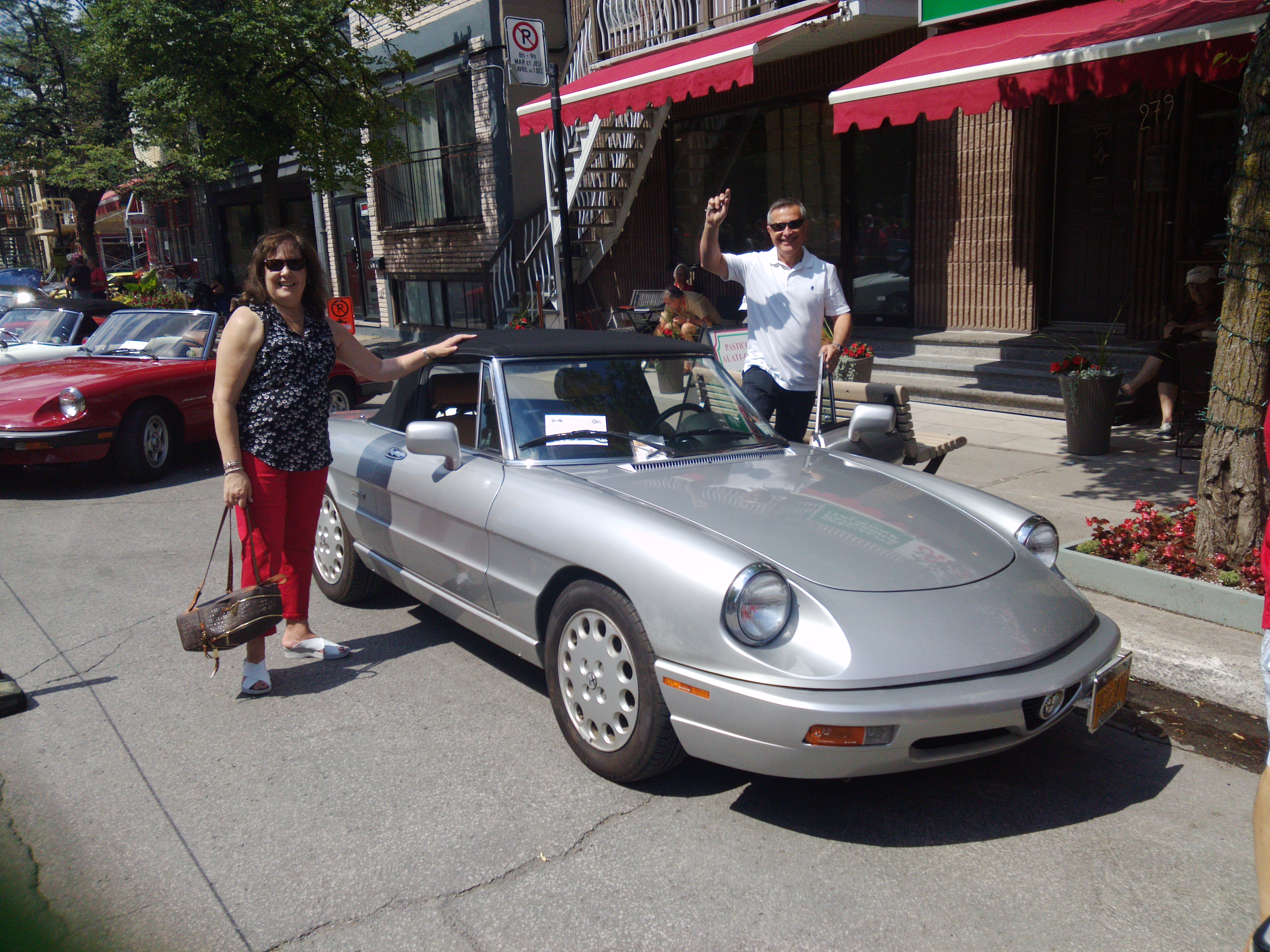
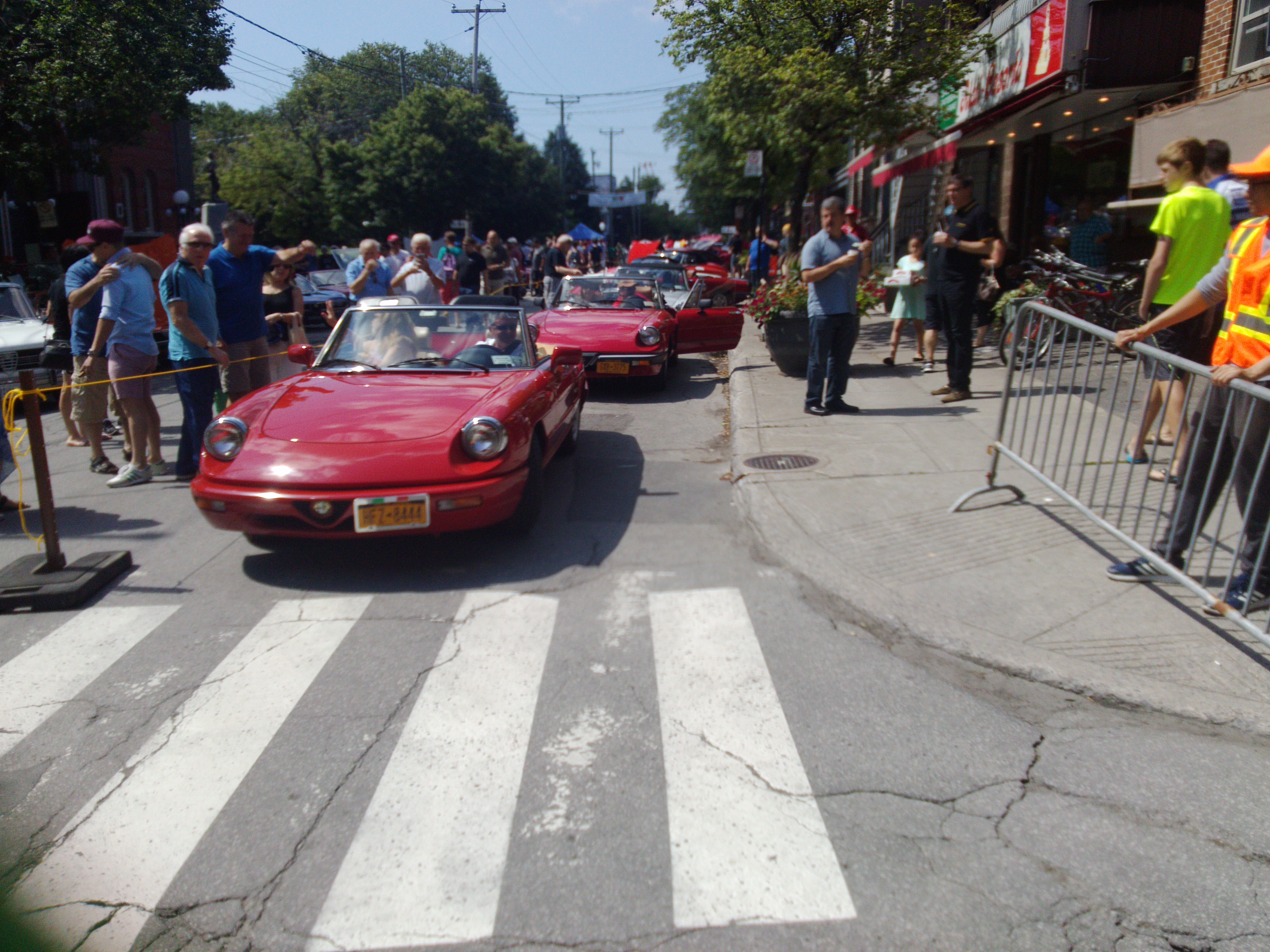
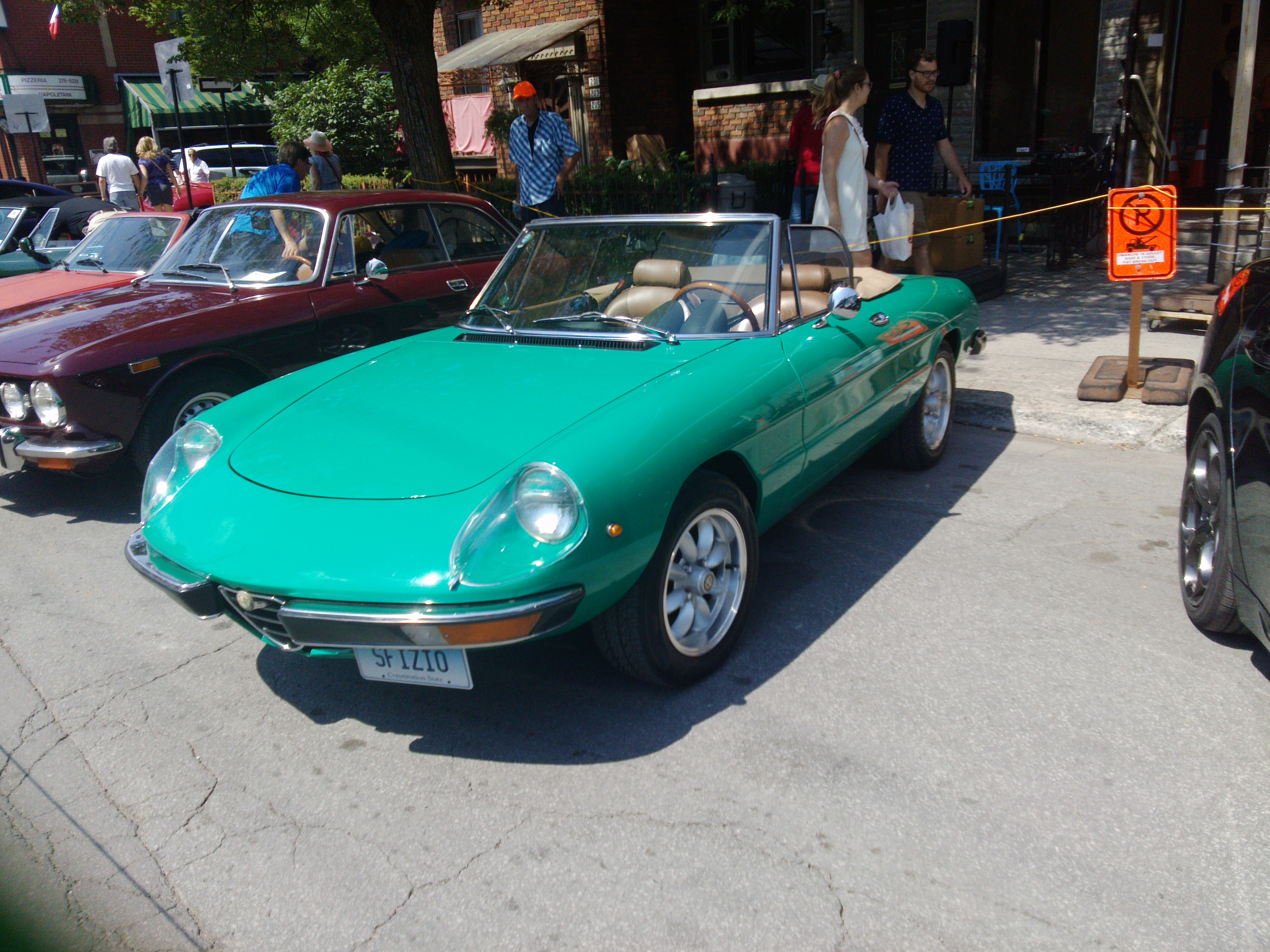
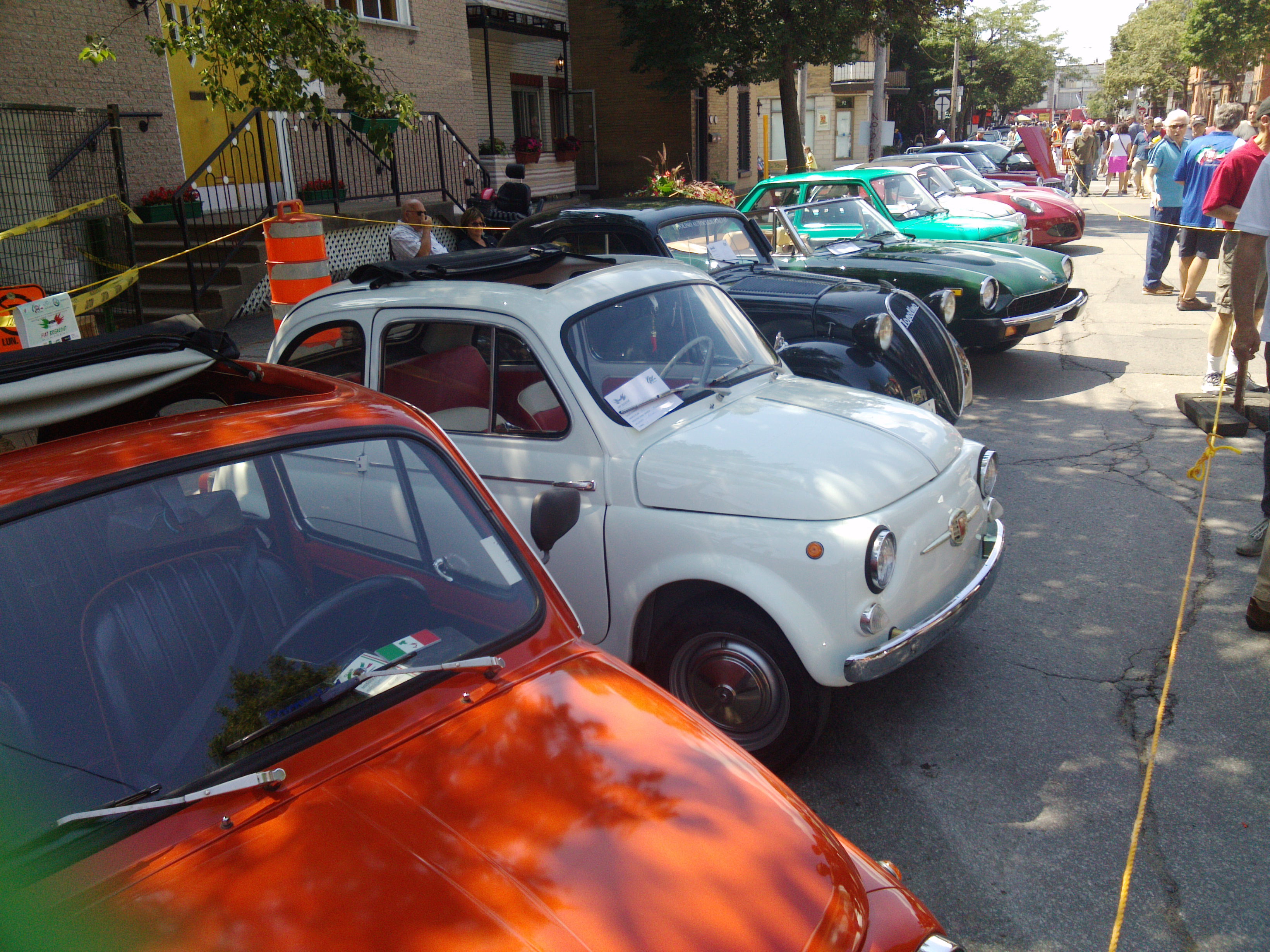
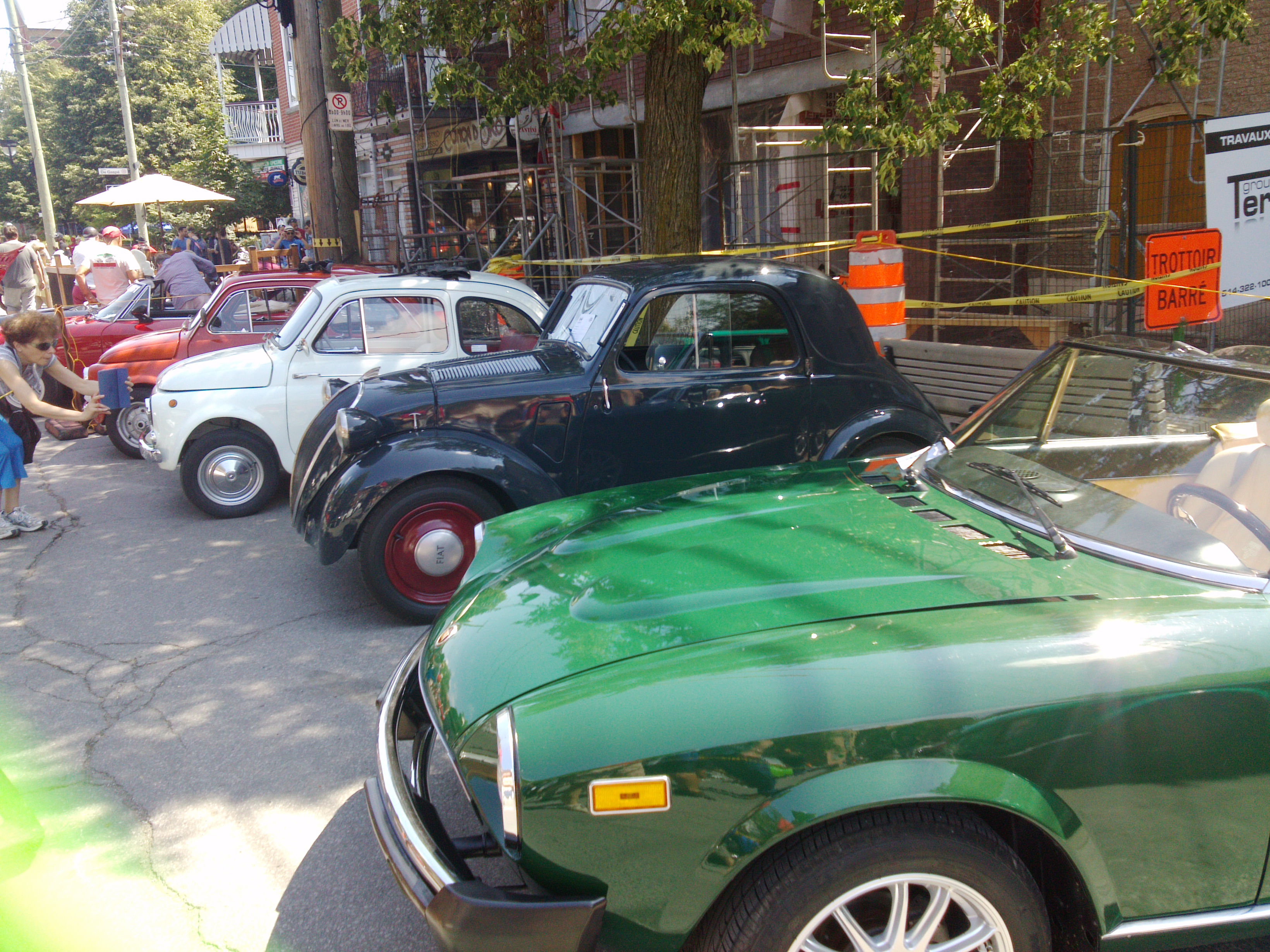
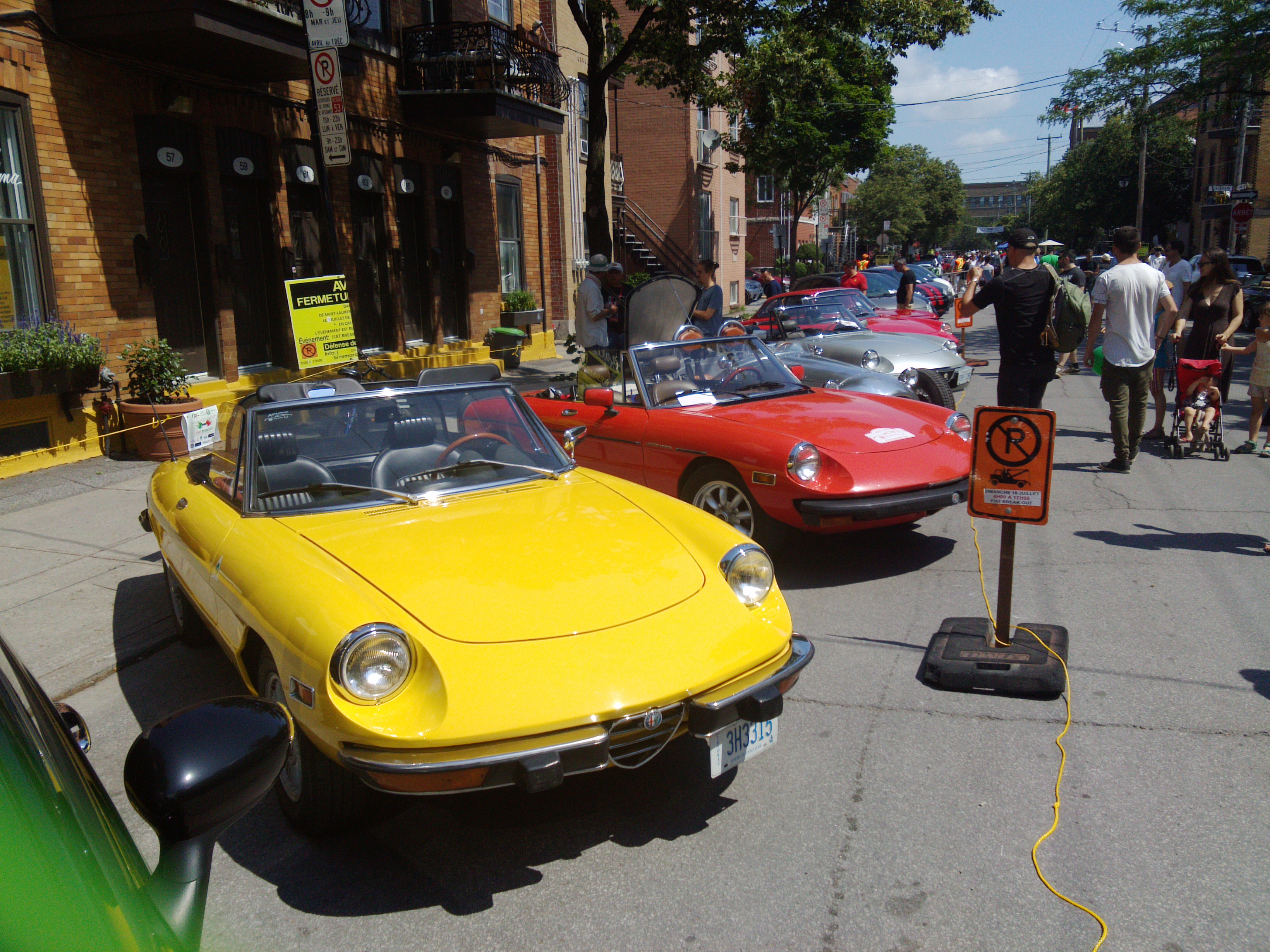
The show was held in conjunction with the Fiat Club of Montreal, and was billed as “Montreal’s Official Italian Automobile Festival”. In addition to the dozens of Alfas, there were Fiats, Lamborghinis, Ferraris, and DeTomasos. All the cars were parked on Rue Dante, a main drag through Little Italy, and the locals came out in force to take in the sights and sounds. The neighborhood featured Italian restaurants, bakeries, and shops, so breakfast and lunch were closer to what you’d find in Rome rather than Paris. Given star billing at the head of the street were eight Alfa Romeo Montreals parked in a row, a sight that I never thought I’d see.
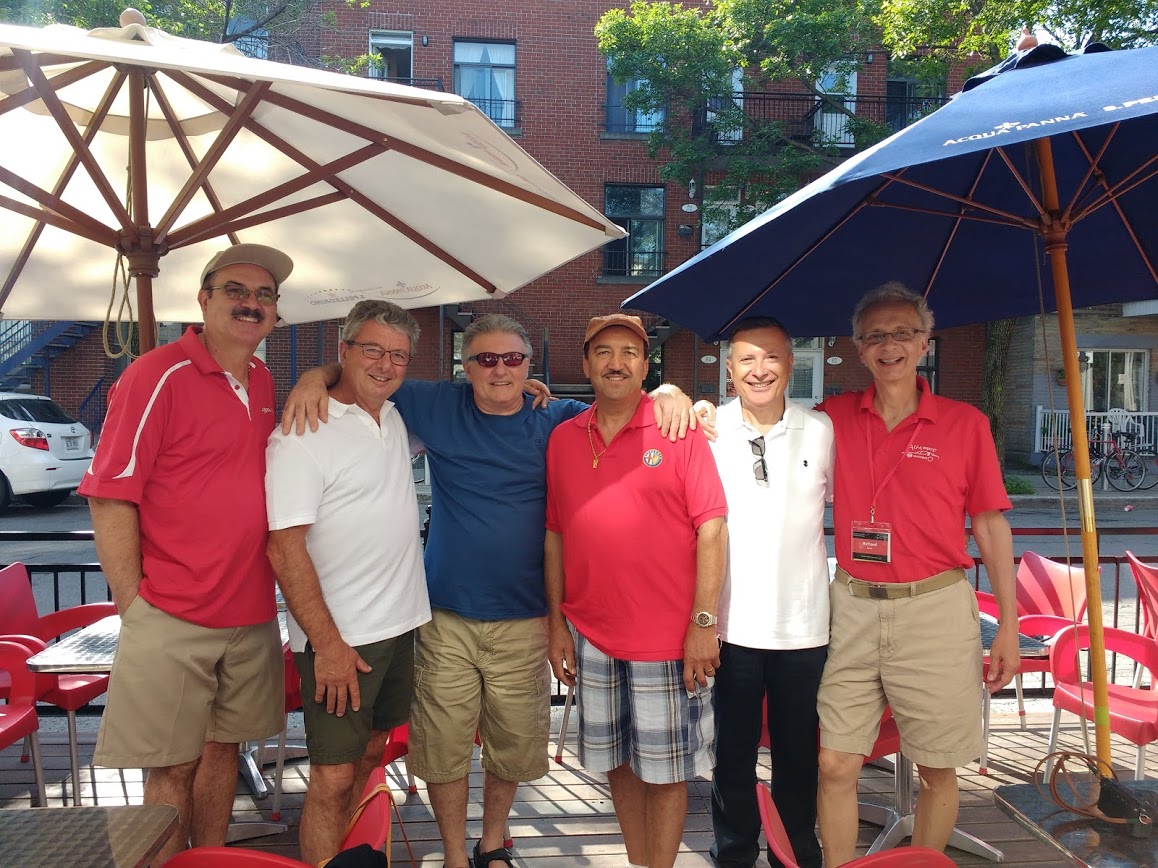
Amici at Sunday breakfast
Rue Alma was cleverly renamed for the day
AROC members had the option to choose “judge my car” or “don’t judge my car”. I chose the latter, if only because I didn’t want to spend Sunday morning on detail alert. My plan was to relax, take in the sights, and continue to chat up my fellow Alfa owners, which is exactly what I did. At 2 p.m., the AROC judges announced the winners. As an especially nice touch, cake and champagne were served at the awards ceremony.
With that, Alfa Expo ’17 was officially over. We had decided to stay in Montreal Sunday night, and take our time driving back on Monday. We left about 9 a.m. Monday, drove through some nasty but brief storms, and once on the other side of that weather, had bright hot sunshine for the rest of the trip. We arrived home by 6 p.m. Monday night, exhausted, but pleased with our active weekend.
These were my takeaways from my first AROC convention:
Unless the Alfa in question is a non-street-legal track car, almost every owner drives their Alfa to an Alfa convention.
Alfa Romeo owners, as a group, are the most friendly, knowledgeable, yet humble car folks I’ve ever met.
The AROC Organization, which has quite of few of these events under their collective belts, puts on a top-notch event.
The “pre-convention driving tours” (the reason for planned activities starting a week before) are a Big Deal to Alfisti, who love to drive their cars.
Alfa Romeo owners like ALL Italian cars.
Alfa owners love to drive their cars (did I say that already?).
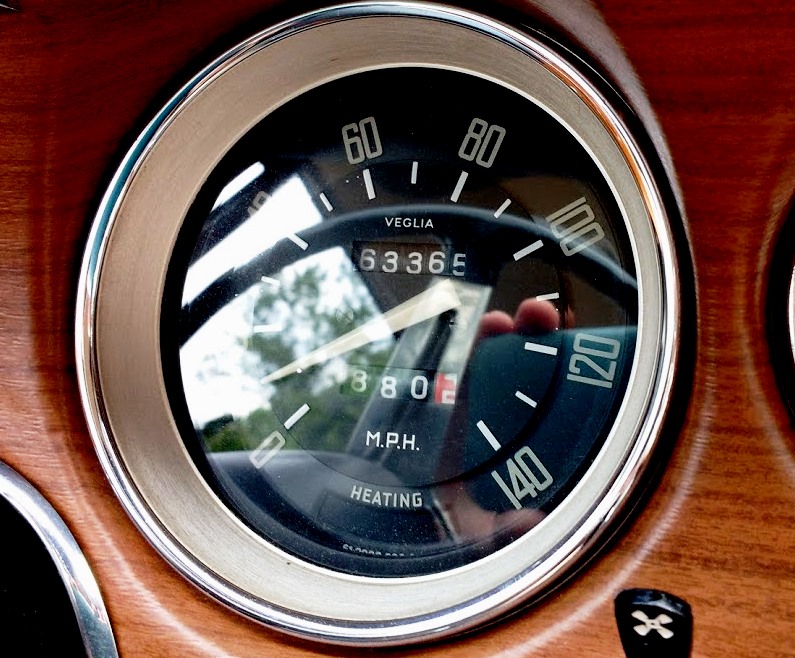
My GT 1300 Junior continues to amaze me. We drove 880 miles round trip. The car started, cold or hot, on the first turn of the key. We comfortably cruised on the highway between 70 and 80 mph. There were no unwanted noises or behaviors. With a trunk full of spare parts including plugs, wires, a coil, and a fuel pump, none was needed. (My theory is that the quantity of spare parts on board is inversely proportional to their need.) The car used no oil, and never missed a beat.
The AROC has announced that the 2018 convention will be in Olympia WA. I’m already plotting my trip out there.
Two GTVs side by side
Alfetta sedan, rare sight even at an AROC event
Giulietta spider
GT 1300 Jr sits comfortably among its cousins
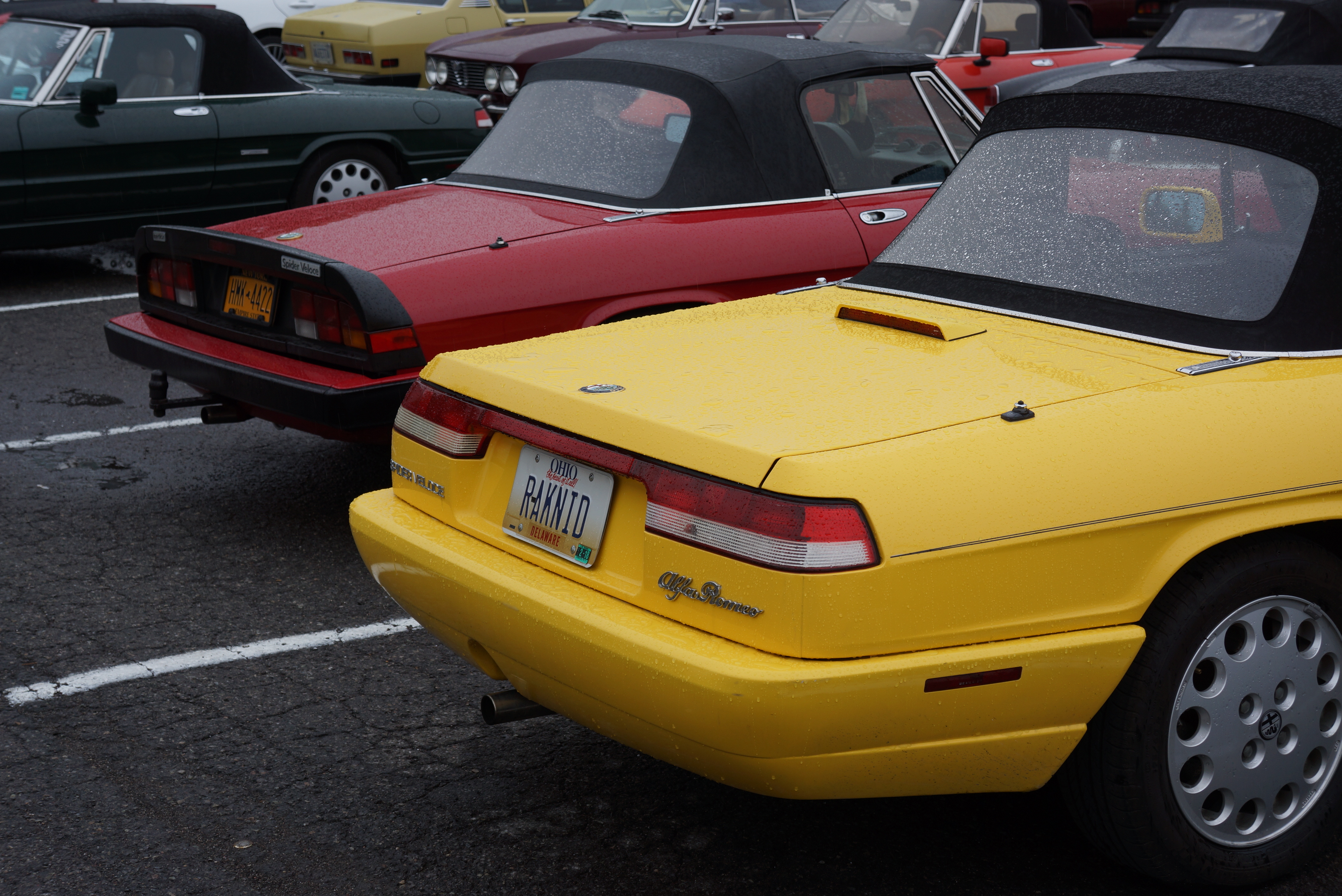
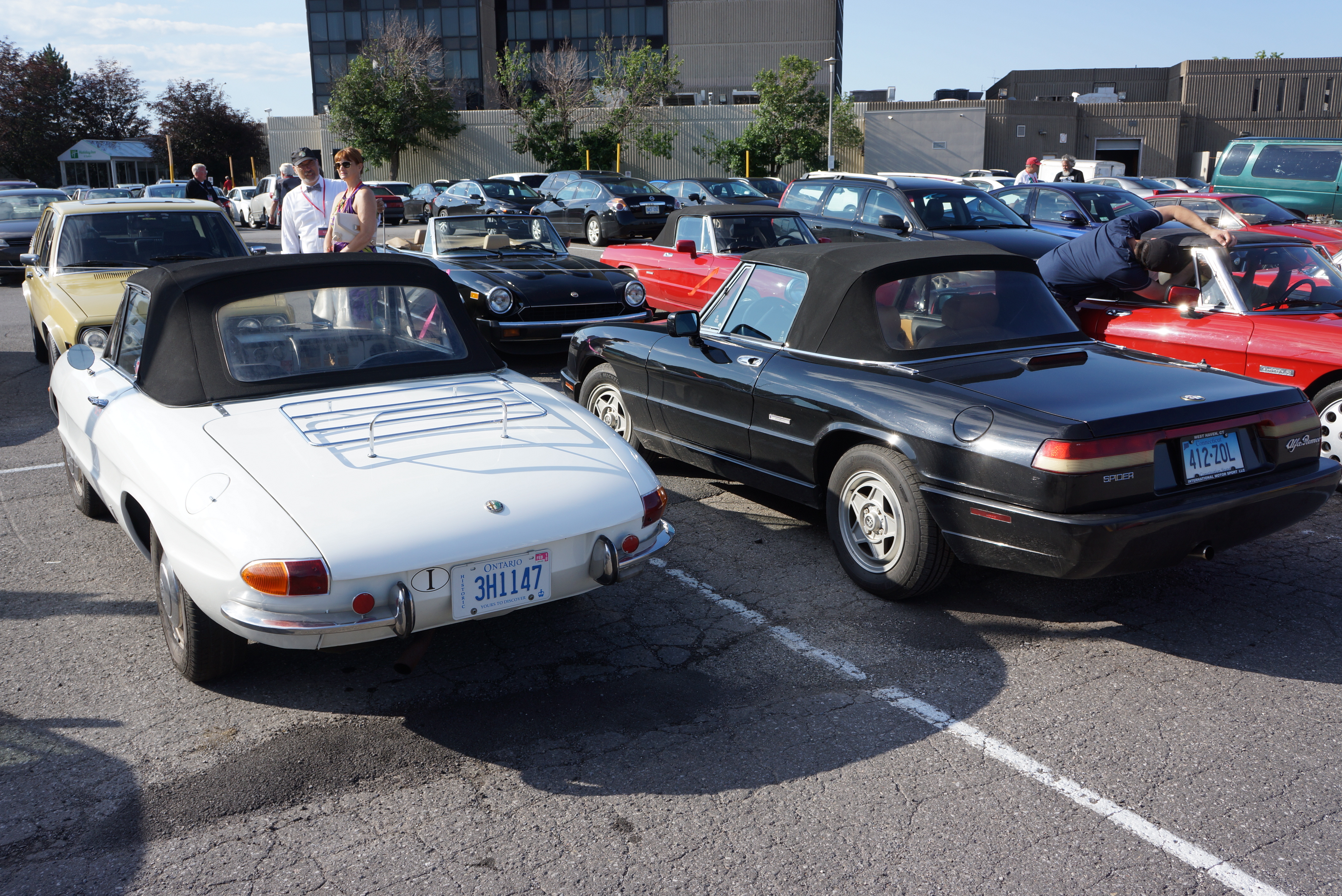
Series 3 and 4 spider tails
Montreals became an almost-common sight
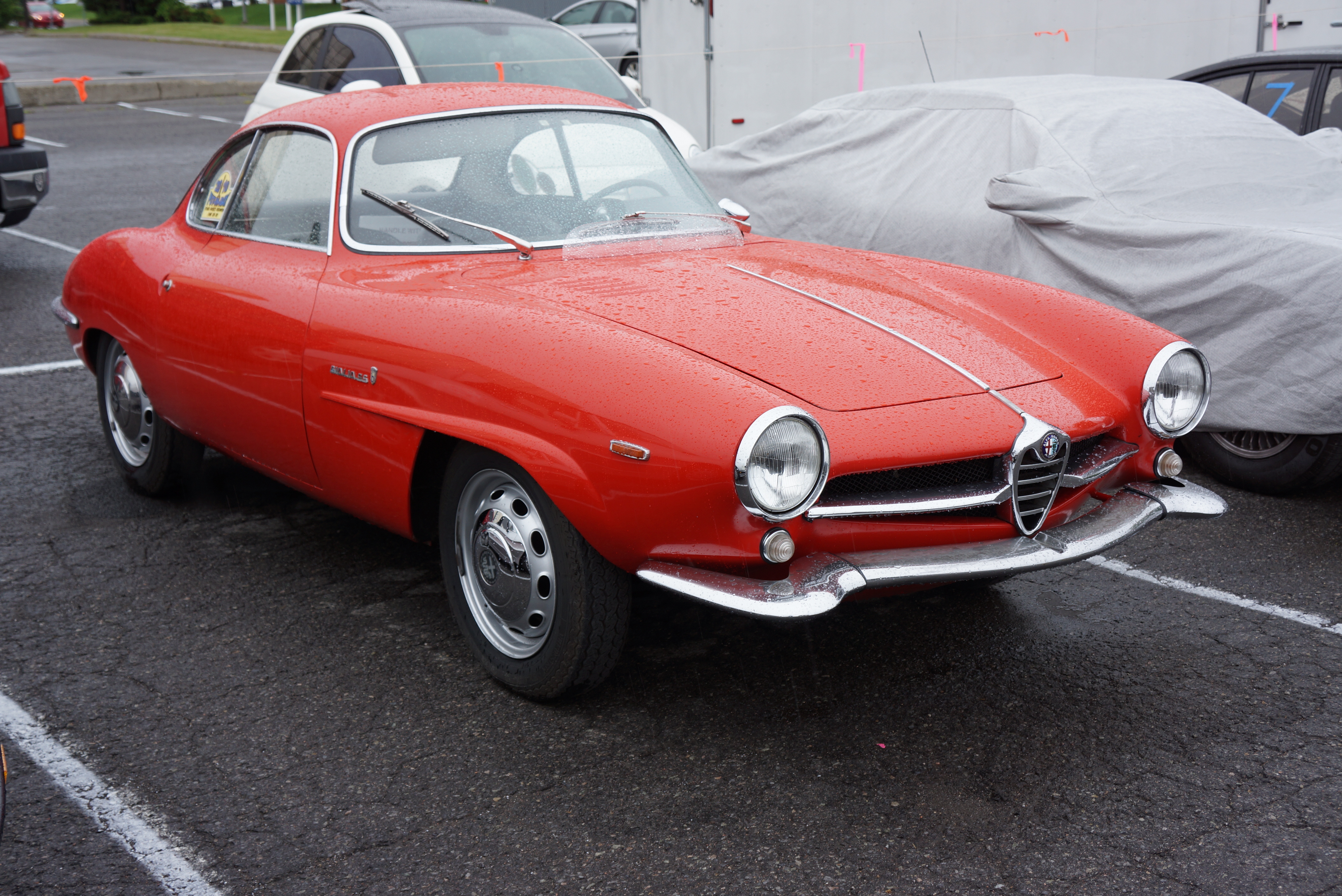
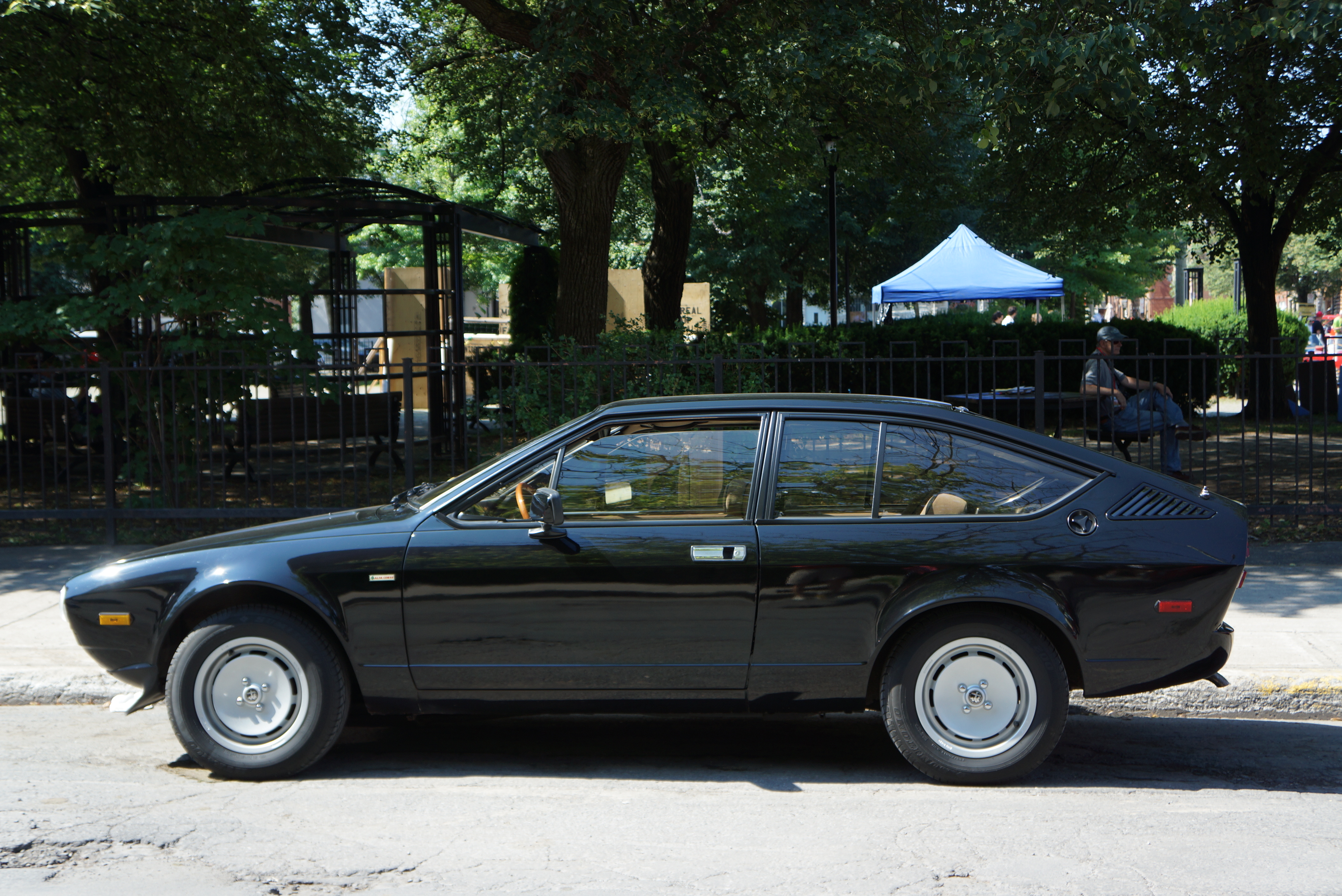
Giulia Sprint Speciale
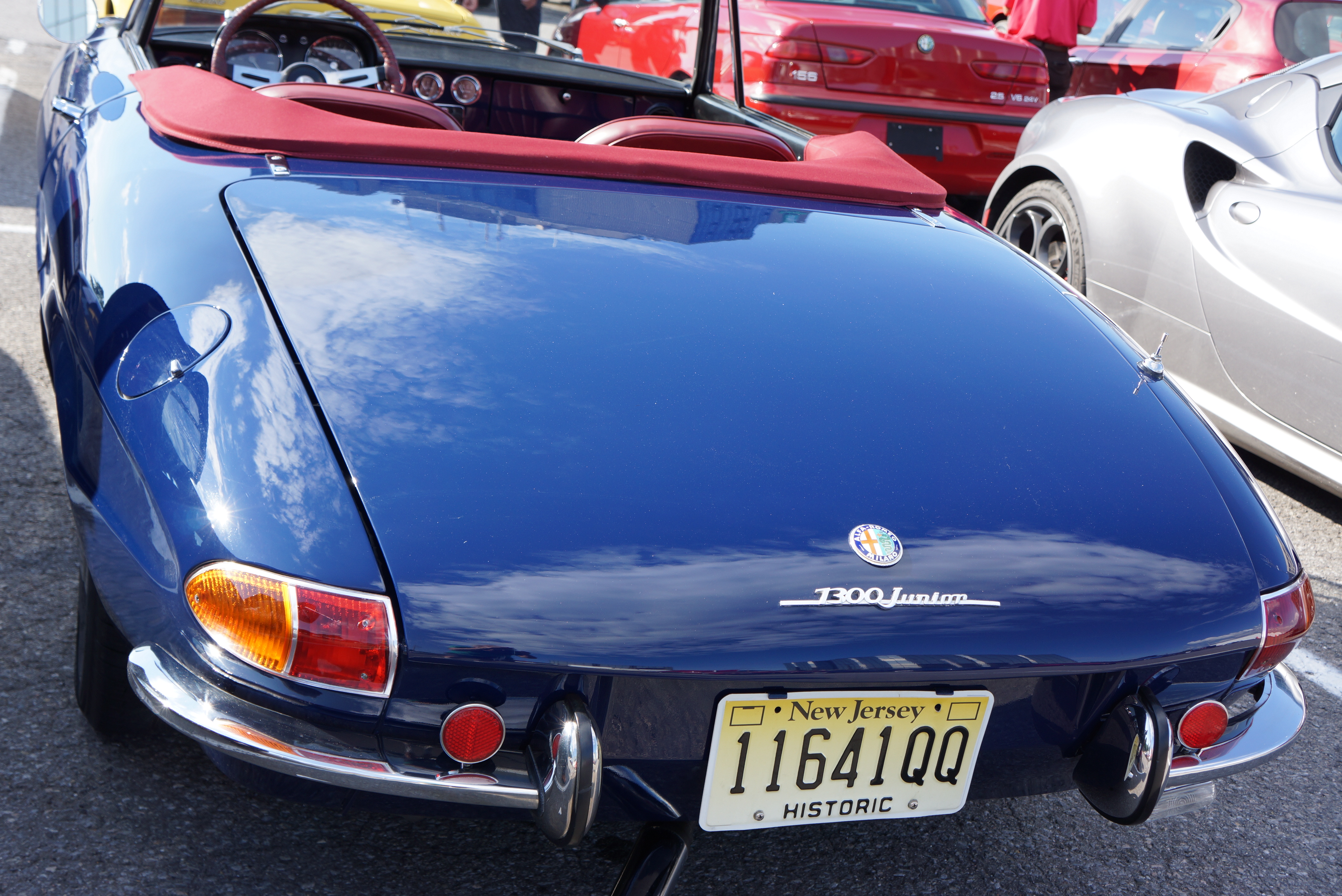
Gorgeous spider is also a 1300 Junior
This Montreal was the only one with non-black interior, which looked great in cream
Alfa 1900 eventually won Sunday’s Best In Show
After Saturday’s bath
Late ’90s spider not yet legal in U.S., but is in Canada
Series 1 and 4 spider tails
New Alfas, 4Cs and Giulias, make their way up Rue Dante for Sunday’s show
The final day of official events for the AROC (Alfa Romeo Owners Club) arrived. The Concorso was held in the Petite Italie (Little Italy) neighborhood in Montreal, populated with Italian restaurants, shops, and bakeries.
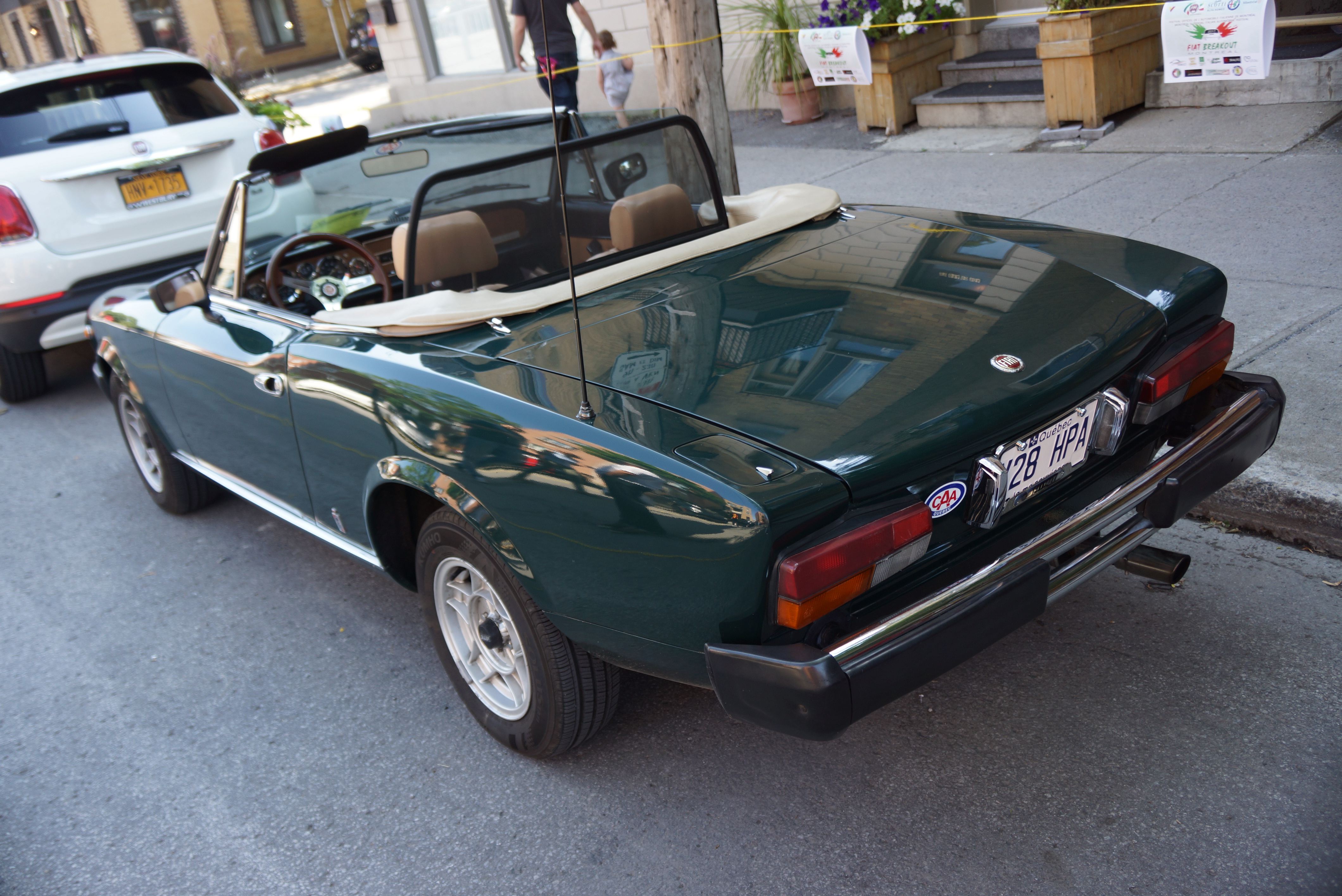
The AROC show was held in conjunction with the Fiat club of Montreal. Hence, many Fiats, Ferraris, and other Italian exotics joined.
The weather was perfect, and the crowds were large and enthusiastic.
A full event report covering all three days will follow.






















































































 richardscarblog