Refreshing the Alfa’s Exterior Lighting

During a routine check of my Alfa’s exterior lighting, I discovered an inoperative right rear turn signal. Easy enough to change the bulb, I told myself, and removed that side’s tail lamp lens (4 Philips head screws, easily accessed). I have had the rear lenses apart before, several years ago, at which time I gave them a thorough cleaning. Then it occurred to me: I have never removed the front turn signal lenses. Even though all the front parking and signal lights worked, I decided that after 10+ years of ownership, it would be prudent to peek at those as well.

Here’s the thing about owning an older car (my Alfa will be 57 years old next year!): the list of preventative maintenance items never ends. I consider myself a good steward of the car, staying on top of fluid changes, brakes, tires, and various rubber bits. But the front lamps? Why did something so simple and so obvious escape my grasp? I have no excuse other than to rationalize that there was always something else that was a priority. So now was the time.

The front signal lenses were even easier to remove than the rears: just one Philips head screw. I pulled all the bulbs and was not surprised to observe that although functional, several of them had dark spots. They have all been in the car since at least 2013, the year it became mine, and how many years before that is anyone’s guess. Now I was ready to shop for bulbs.

Walmart’s finest

They were all standard sizes: 1156, 1157, and 5007, front and rear. Ever so briefly did I consider going the LED route, but changed my mind, deciding that I didn’t want to tax the older wiring, or run into any overheating or physical interference issues. I checked online to explore my choices, and saw that Walmart had the best combination of brand, availability, and pricing. The front lenses are clear, and the 1156 bulbs for the turn signals were clear (white light), so the one upgrade I made was to swap in amber bulbs. The 4 packages of bulbs ran me around $12, and 48 hours after placing the order online, I drove to my local Walmart, pulled into one of their “online pickup” parking spots, called the phone number on the sign, and 5 minutes later, the bulbs were brought out to my car door.

Lens gasket (in white) perished a while back

Oh, the front signal lens gaskets: Without a doubt they were the ones that ‘Mario’ installed in March of ’67 as the car came down the Milano assembly line, as they crumbled in my hands. A plastic scraper removed the final traces of the old gaskets, and I placed an order with my #1 Alfa parts supplier, Classic Alfa in the UK, around 3 p.m. on Sunday afternoon. On Tuesday at 7 p.m. a DHL truck dropped the box on my front porch. This 48-hour turnaround is typical for them, and this, combined with the quality of their wares, is why they are my #1.

Thank you Classic Alfa! (and DHL)
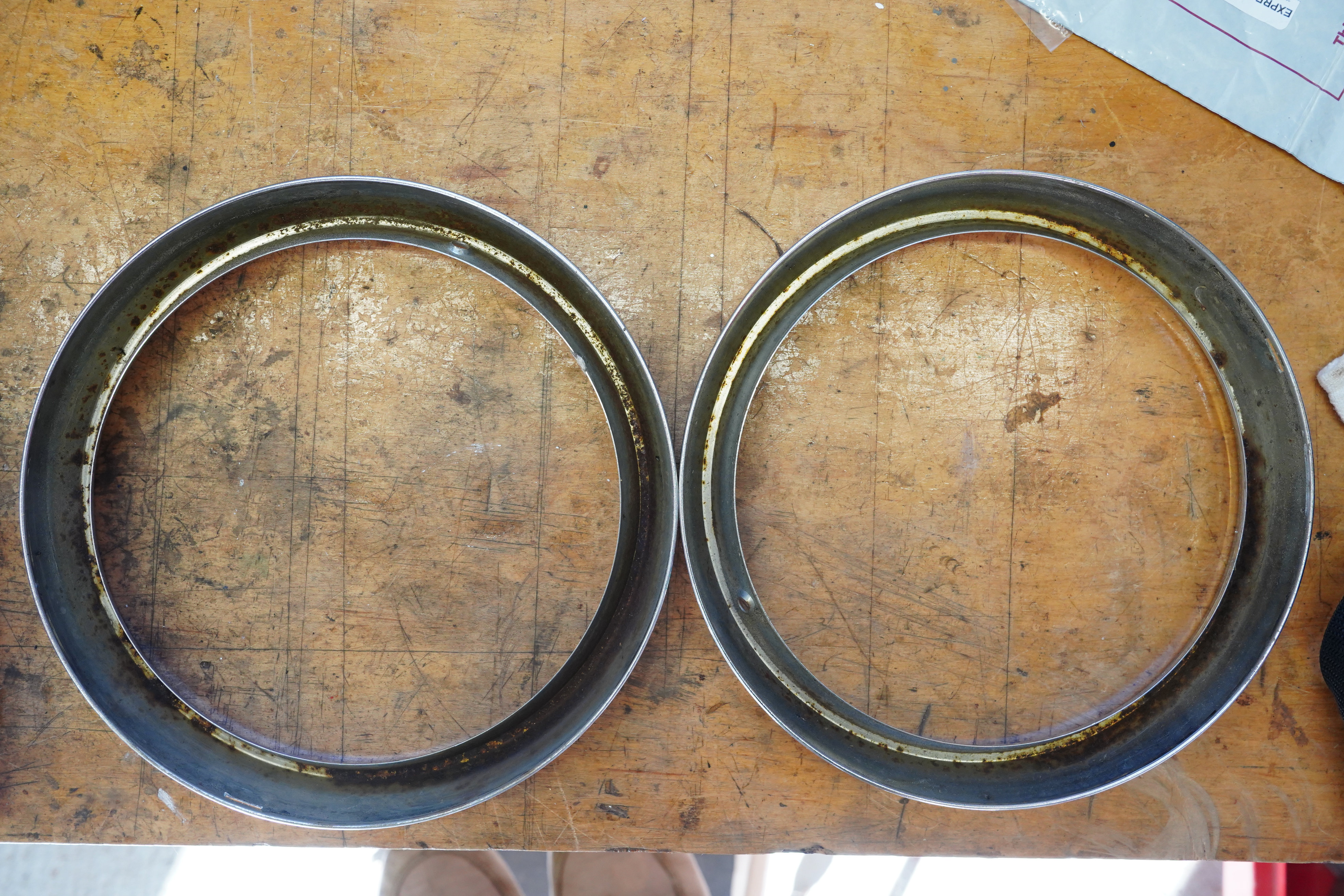
Bezels by Carello


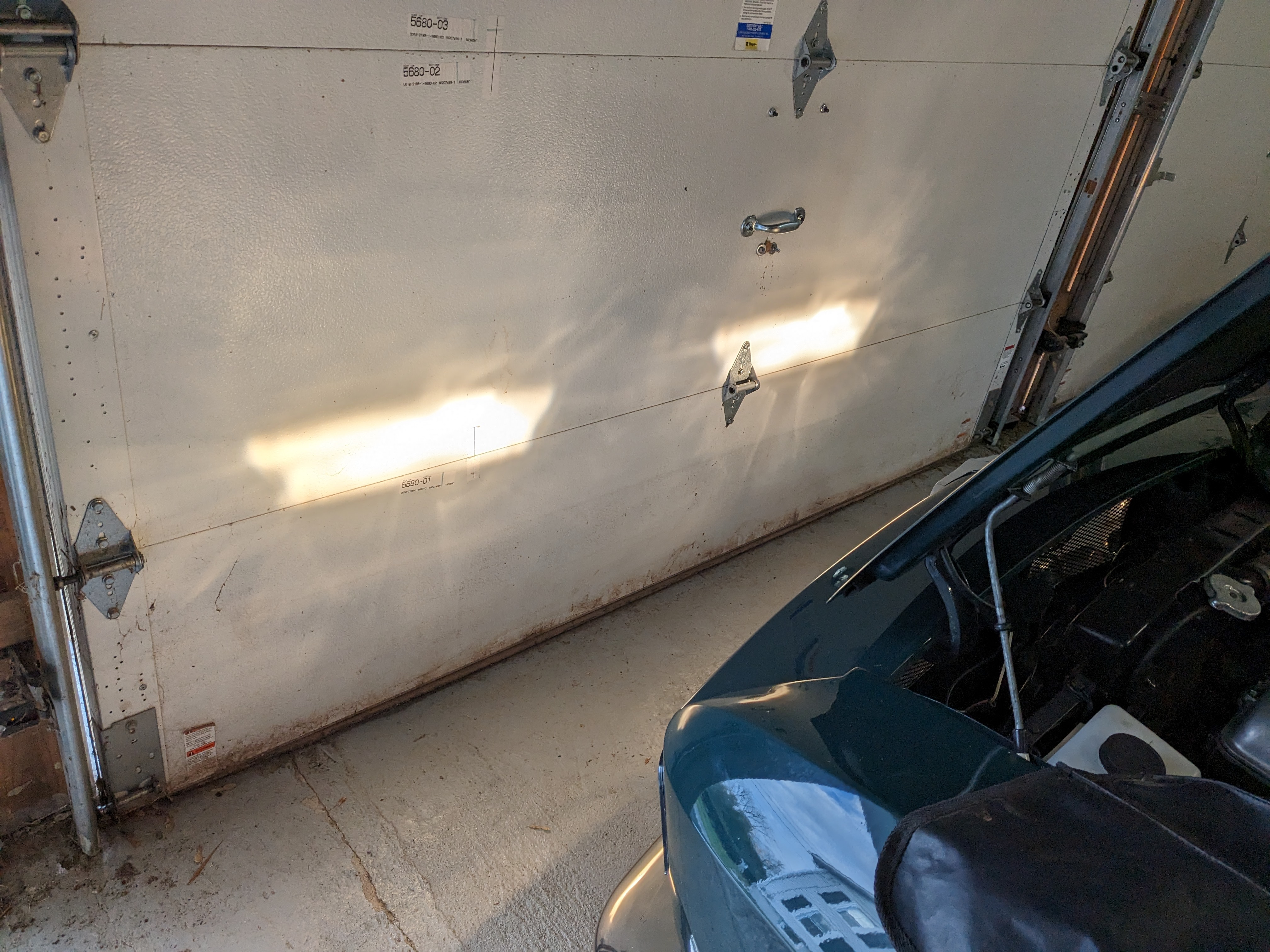
All the new Sylvania bulbs fit as expected and everything functioned on first try. I did not necessarily detect a substantial increase in brightness, but that was not the goal. I wanted new bulbs that would match left to right and would last for a few years. While working on the front end, I noticed (again, after 10 years of ownership) that the 2 headlight bulbs were from different manufacturers. I’ve never had the headlights out of the car, so back to the task of finding and ordering new bulbs. Amazon had Wagner sealed beam halogen bulbs and that’s what I bought. While the headlight bezels were off, I gave their undersides a quick coat of Rust-O-Leum paint to seal some minor rust, and polished the chrome which really spruced up the front of the car. Take a look at these before and after shots of the low beams and high beams:


Lesson learned! Modern cars spoil us with their state-of-the-art lighting (which in many cases require a complete assembly to be replaced if a lighting element fails). If you have a older car running incandescent bulbs, consider checking and replacing them with new, even if they are functional.


All photographs copyright © 2023 Richard A. Reina. Photos may not be copied or reproduced without express written permission.


Rich’s Repair Ramblings #9: Ten Steps to a Better Oil Change

Rich’s Repair Ramblings #9: Ten Steps to a Better Oil Change

Changing the engine oil and oil filter is one of the easiest and most straightforward maintenance jobs you can perform on your collector car. What’s easier than “pull the drain plug, swap out the filter, and add new oil”? Would it surprise you if I said that I might be able to offer up to 10 suggestions to improve the process? The following 10 Best Practices are from my own experiences. Read through the list and see if there isn’t at least one step which you can incorporate to make the next oil change a better one for your buggy.

#1. SAFETY FIRST!

It bears constant repetition: Never work under a car that isn’t properly supported. Do not use the vehicle jack (or worse, some cinder blocks) to support a car off the ground. Use quality jack stands or drive-up ramps with sufficient weight ratings when doing any work that involves sliding under something that weighs upwards of several tons. Make sure that the transmission is either in “Park” or for stick shift cars, in a forward gear. Always set the parking brake. Chocks on the rear wheels are a good idea too.

Ramps are great for oil changes, as there is no need to remove front tires
#2. DRAIN THE OIL WHEN THE ENGINE IS WARM.

Yes, “cold” (room temperature) oil will flow out the oil pan. But warm oil flows more quickly, and more importantly, takes more contaminants out with it. The engine doesn’t need to be hot – you increase the risk of burning yourself from scalding oil or a hot exhaust pipe. But if the car is cold, let it idle at least until the temperature gauge starts to move. If you don’t have a gauge, 5 minutes on a warm day should do it. If you’ve just driven the car and everything is too hot to touch, wait 20 to 30 minutes so that the oil is warm but not burning hot.

Let the temp gauge move off “C” before draining oil
#3. REMOVE THE FILLER CAP BEFORE YOU REMOVE THE DRAIN PLUG.

You’ll get faster flow (and again, remove more of the bad stuff) if you take off the oil filler cap and allow air into the engine during the drain. The cap needs to come off anyway! This is the same as punching a 2nd hole in a can when you’re trying to pour out liquid.

#4. REPLACE THE DRAIN PLUG WASHER.

The drain plug has a gasket or washer, typically made of copper or aluminum, which serves as a seal. The softer metal is designed to be crushed when you tighten the plug. But the washer can stand being crushed only so many times before it’s no longer effective at stopping leaks. The trick in replacing the drain plug washer is having a spare one on hand. (I buy them by the dozen.) And a tip to avoid a problem that even trips up the pros: make sure that the OLD washer is removed, and is not stuck to the drain plug or oil pan. If you put a new washer on the drain plug with the old one there, you’ll almost certainly have a leak.

Old washer on left shows crush marks; new washer on right
#5. ALWAYS REPLACE THE OIL FILTER.

I continue to be amazed at the number of times that someone has told me that they completed an oil change and left the old filter in place. What is the issue? Is the filter difficult to access? Is it too expensive? Do you think that the old filter has some service life left in it? If it’s hard to get to, watch some YouTube videos and figure it out. Others have. How much does a new filter cost? Stop being so cheap. Leaving the old filter in place recirculates about a quart of dirty oil directly into your fresh clean oil. It also runs the risk of the filter becoming so full of contaminants that it can no longer do its job. Always be sure to have a new filter on hand before you start the job.

#6. PRE-FILL THE OIL FILTER BEFORE INSTALLING IT.

This is one ‘best practice’ that isn’t always practical to do. I do this for one car, but not the other, simply because of the filter’s location. If the filter attaches from the bottom, I can add oil to it and keep it right-side-up, avoiding any spills when reinstalling it. However, if the filter attaches horizontally, it’s trickier. Sometimes I can add a little oil and get it on there without any spills. We’ll need to qualify this best practice with the caveat “it depends”. See Tip #9 below.

#7. TIGHTEN THE OIL FILTER CORRECTLY.

A while back, my neighbor had to return her car immediately after an oil change, and she was told that the tech had left the filter loose. (The person performing the job also needs to make sure that the rubber gasket from the old filter is not stuck to the engine block, for if it is, the new filter will never seal properly.) It’s just as bad, however, to overtighten the filter. I have personally witnessed technicians resort to hammering a long screwdriver through an old filter to act as a pry bar to remove an overtighened one. For most cars, oil filters should be tightened by hand, without the use of any tool. Tighten until the gasket contacts the engine, then turn the filter another 1/8 to ¼ of a turn. That’s it!

Rubber seal on old filter on left came loose; new filter on right. Box holds extra drain plug washers
#8. USE THE CORRECT VISCOSITY OIL.

Your owner’s manual will identify the specified viscosity. For most cars built in the last 50 years, vehicle manufacturers have recommended a multi-weight oil good for year-round use, with numbers like “10W-30”. The lower the number, the thinner the oil, necessary in cold weather. The higher the number, the thicker the oil, needed in hot climates. The “W” stands for winter. Using the incorrect viscosity oil can damage the engine in your old car. My Alfa Romeo calls for 20W-40 oil, but that was printed in 1967. It runs very happily (and uses no oil between changes) on 20W-50. At the other extreme, my modern iron specifies 0W-20. It would be a disaster if I were to switch these viscosities between the old and new cars! As a special note for much older AACA cars, the called-for viscosity may no longer be readily available. If your engine has been rebuilt, you may need to adjust the viscosity you use compared to what was recommended 70 or 80 years ago. Speak to other owners with similar cars to see what they use or recommend.

#9. CRANK, BUT DON’T START, THE ENGINE TO BUILD UP OIL PRESSURE.

Starting an engine immediately after an oil change runs the risk of starving critical components like bearings of needed oil. A best practice is to disable the ignition (easy on old cars by simply pulling the secondary coil wire) and cranking the engine until oil pressure builds, usually in about 5 to 8 seconds. Taking this small step helps ensure the longevity of internally lubricated engine parts.

#10. RECHECK THE OIL LEVEL 5 MINUTES LATER.

The manual states “five quarts with filter”, and that’s what you put in. But I don’t rely solely on the number of quart bottles I’ve poured. After running the engine for a few minutes, I shut it down, wait 5, then pull the dipstick (with the car on level ground). If it needs a smidgen more, now’s the time to do it.  I want the peace of mind of knowing that, after an oil change, the level is exactly at the ‘full’ mark on the stick.

All photographs copyright © 2023 Richard A. Reina. Photos may not be copied or reproduced without express written permission.

Rich’s Repair Ramblings #8: Repairing a ground wire

Rich’s Repair Ramblings #8, Repairing a ground wire

In our most recent previous Ramblings, we stated that “the number one cause of automotive electrical problems is loose, dirty, or corroded connections”. In this installment we’ll show you how to fix a loose or broken terminal connection. On our AACA cars, many electrical terminals are universal, or a standardized size; they have self-described names like ring, spade, blade, and bullet. Making a repair typically involves replacing a short piece of wire, or attaching a new connector to a wire, or both.

The best way to make such a repair is by soldering. However, soldering requires dedicated tools and equipment, and some practice. An alternate method is using solderless terminals, aka crimp terminals, which are quicker and easier than soldering. I’ve been successfully using them for years. They get a bad rap as unreliable, but like most repairs, there’s a correct way, and an incorrect way, to complete the job. Let’s dive in.

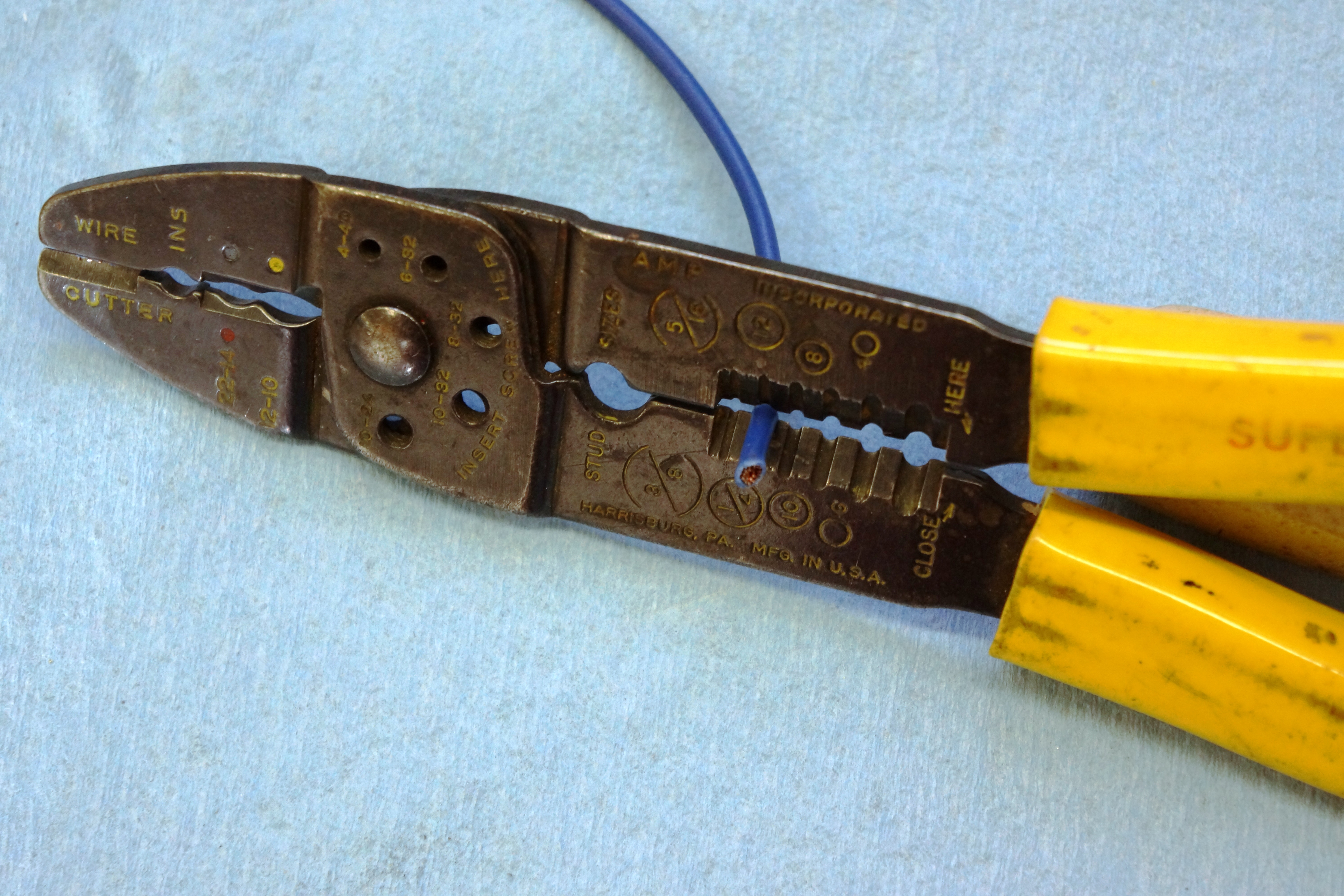
First, you’ll need these tools and supplies: wire stripper, terminal crimper, wire, appropriate terminal, and electric tape or shrink wrap. There are some very fancy stripping and crimping tools on the market, but I’ve had the same pair of yellow-handled combo cutters/strippers/crimpers forever, and they still get the job done. For wire, you’ll want the same gauge as the existing wire (gauge number DECREASES as wire thickness INCREASES- if in doubt, bring a sample to the store). For most of my car repairs, 16- or 14-gauge suffices.

L to R: stripping/crimping tool, terminal assortment, homemade test wire

Crimp terminals are color-coded for size: the smallest are red (18-22 gauge wire), then blue (14-16 gauge), and the largest, yellow (10-12 gauge). Again, for cars, blue connectors cover almost all my needs. When buying electrical tape, stick to name brands; I like 3M, which costs a bit more, but makes better repairs. In the example below, I use shrink wrap, which comes in different diameters. You want a diameter which will fit OVER the end of the terminal.

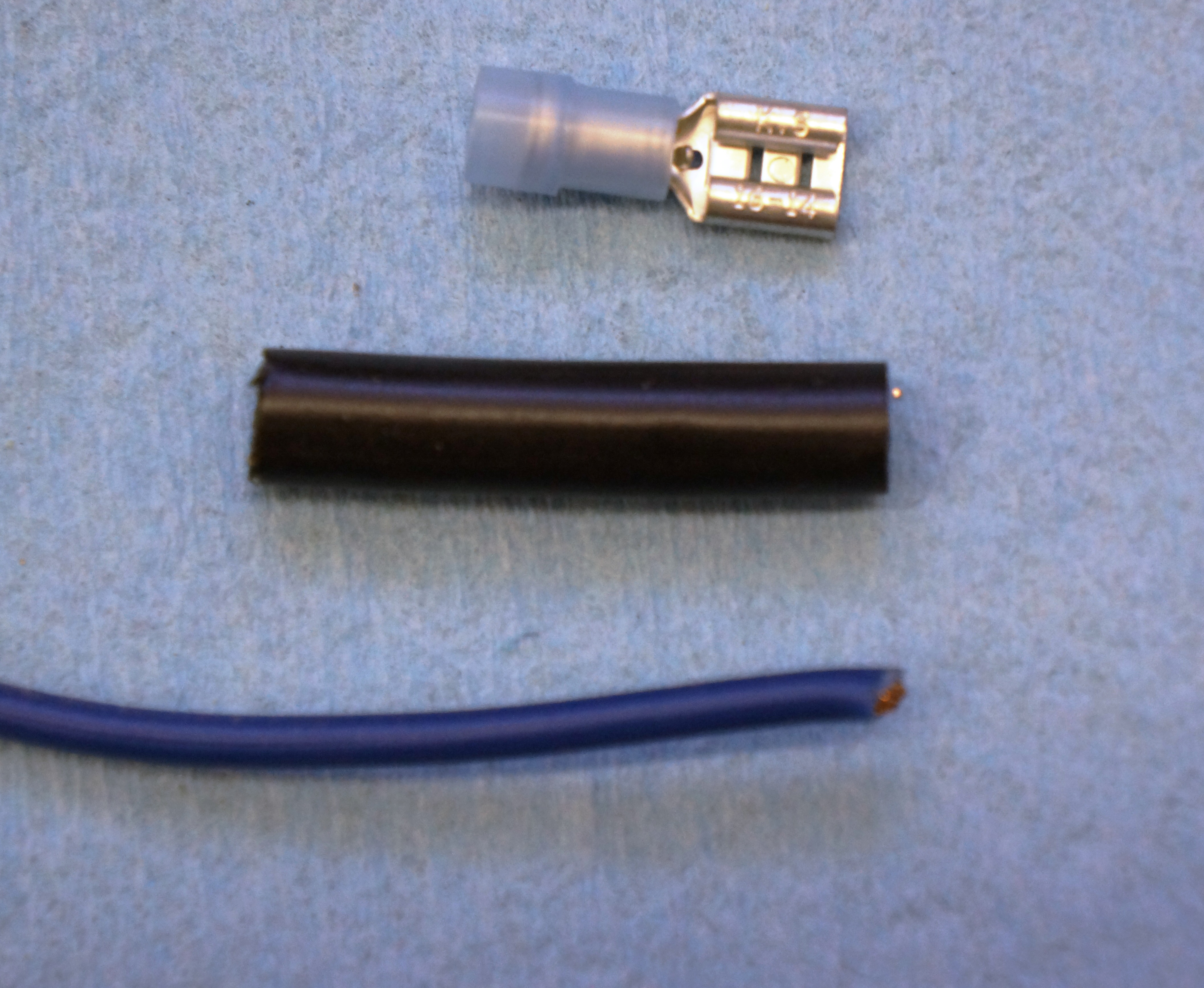
Top to bottom: female spade connector, shrink wrap, 14-gauge wire

For my sample repair, I need a 2-ft length of 14-gauge wire, and need to crimp a (blue) female spade terminal to one end of the wire. Note that I’ve correctly matched the 14-gauge wire to a blue-coded terminal. THE FIRST MOST COMMON MISTAKE IS INCORRECTLY MATCHING THE WIRE AND TERMINAL SIZES. I’ve verified that the shrink wrap fits over the barrel end of my terminal. I will strip about 3/8” of insulation from the wire – enough so that when the stripped end is inserted into the terminal, a tiny bit peeks out, and bare copper is under the barrel where I will be crimping. THE SECOND MOST COMMON MISTAKE IS STRIPPING TOO LITTLE INSULATION SO THAT BARE COPPER IS NOT UNDER THE TERMINAL BARREL.

Stripping the wire

When using the stripping tool, select the opening which is just slightly smaller than the wire diameter. Your goal is to cut the insulation so that you can pull it off without also removing any copper strands. I took the photo using the 2nd-smallest size, but then ended up moving the wire to the next larger size. This takes some practice – try it out on several different wire gauge sizes.

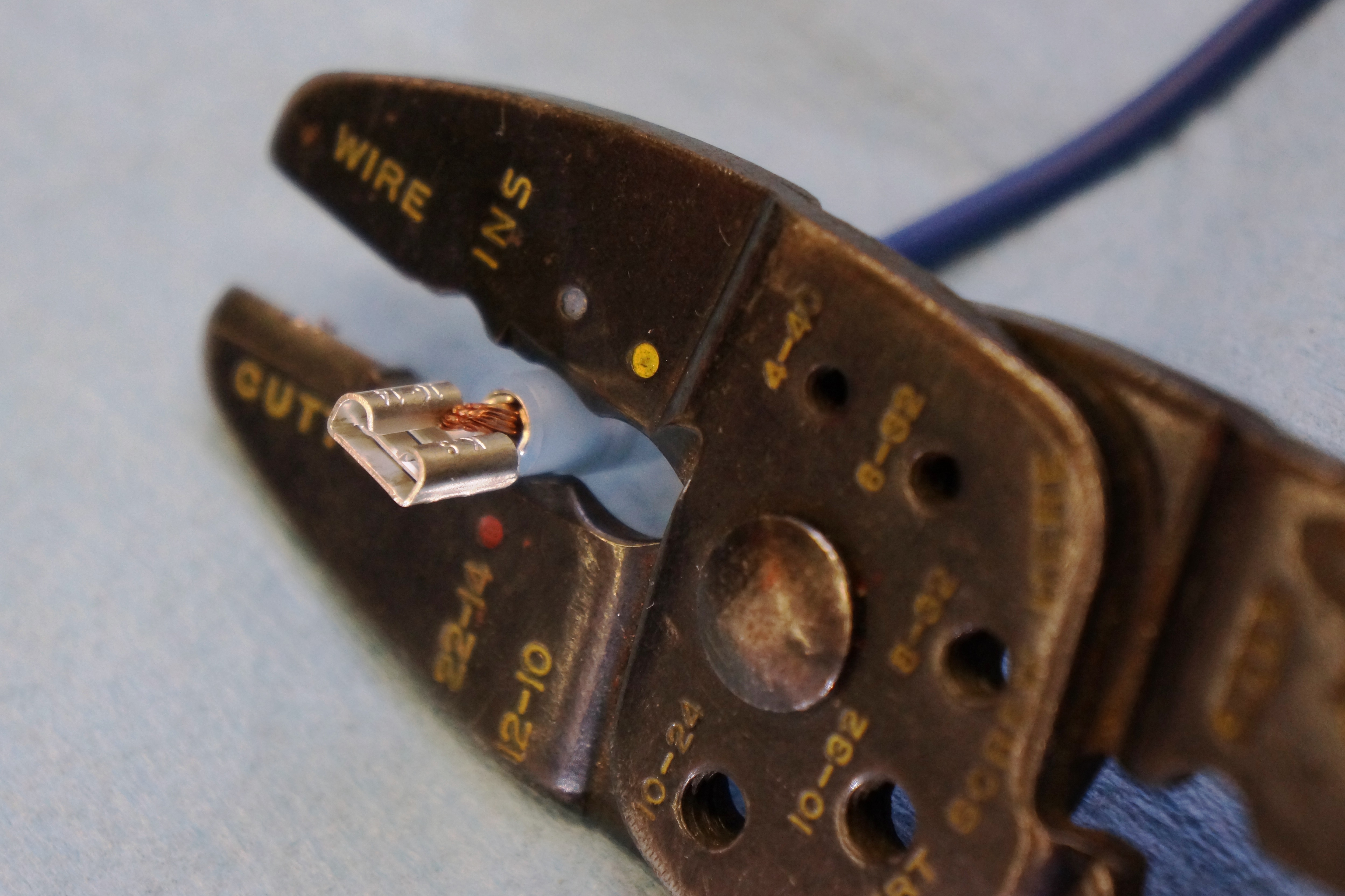
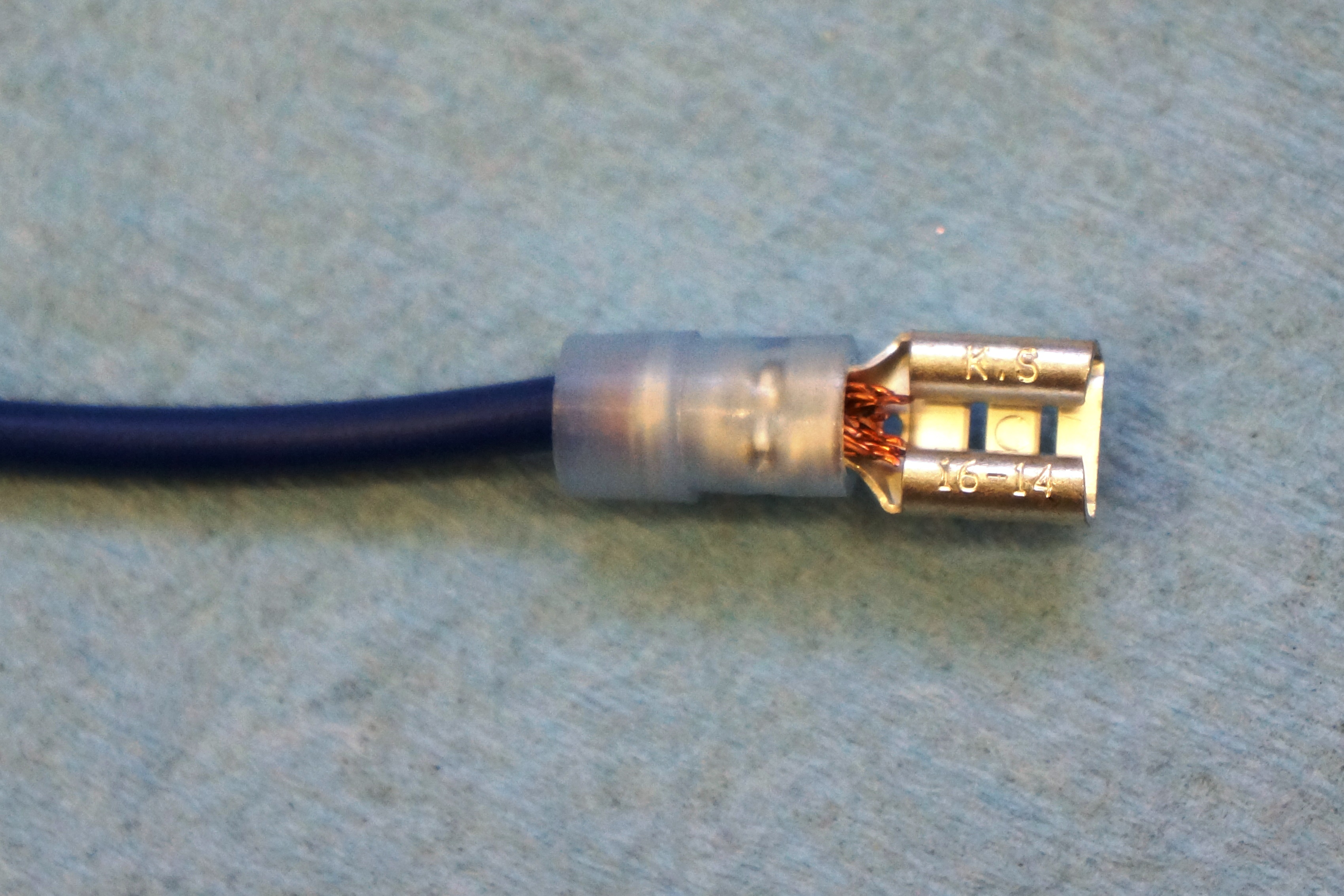
Before crimping the terminal, slide the shrink wrap onto the wire; if you’re repairing an existing wire on the car, this may be your only chance to get it into position! With the terminal placed over the bare copper strands, verify that copper is under the barrel, Use the crimping part of the tool to firmly crush the barrel onto the wire. THE THIRD MOST COMMON MISTAKE IS CRIMPING THE TERMINAL NEAR ONE OF ITS ENDS SO THAT THE CRIMP DOESN’T FIRMLY GRASP THE WIRE. A COROLLARY MISTAKE IS USING A HAMMER & CHISEL, OR PLIERS TO MAKE THE CRIMP. USE A CRIMPING TOOL, PLEASE. In the photo, note that the barrel is crushed almost directly in the middle. Using moderate force, pull on the terminal; it should feel securely attached and should not slide off. If it does, the crimp is inadequate, and you’ll need to repeat the process.

Crimping the terminal

Slide the shrink wrap over the terminal, and heat it with a heat gun. (A match or propane torch also works, but don’t let the flame touch the material!) Within seconds, the shrink wrap reduces to less than half its original diameter, and the final repair looks very professional. You can use electric tape here also. The point of the shrink wrap or tape is to insulate your repair. THE FOURTH MOST COMMON MISTAKE IS USING TAPE TO CONNECT THE TERMINAL TO THE WIRE. IT’S THE MECHANICAL CRUSH OF THE BARREL ON THE WIRE WHICH MAKES THE CONNECTION.

Note that crush is in center of barrel


Heat gun on shrink wrap

I’m not kidding about these common mistakes. I’ve seen everything from copper wire twisted around a crimp terminal to Scotch tape used as an attempt to hold the wire and terminal together. Installing crimp terminals takes some practice; buy some wire and a terminal assortment, and practice before you need to make a repair to your car. I’ve also used solderless terminals to make up my own test wires, whether it’s to run temporary grounds, or run 12V from the battery to the rear of the car. These test wires may have alligator clips or spade terminals or some other combination; I have several, and they come in handy!


All photographs copyright © 2023 Richard A. Reina. Photos may not be copied or reproduced without express written permission.

Replacing the Miata’s Cam Angle Sensor O-ring

My 1993 Mazda Miata has been one of the most reliable vehicles I have ever owned. Since purchasing it in 1996 with 34k on the clock, I have put 75,000 miles on it and it has never left me stranded. Aside from maintenance (which to me includes normal wear-and-tear items like brakes, shocks, tires, and batteries), the only “repairs” I’ve made to the car in 27 years have been a clutch secondary cylinder, a heater core, a power antenna, and one headlight bulb. So when I discovered a minor engine oil leak a while back, I ignored it until recently. I finally decided to tackle the leak last week, which involved replacing the rubber o-ring on what Mazda calls the CAS, or Camshaft Angle Sensor.

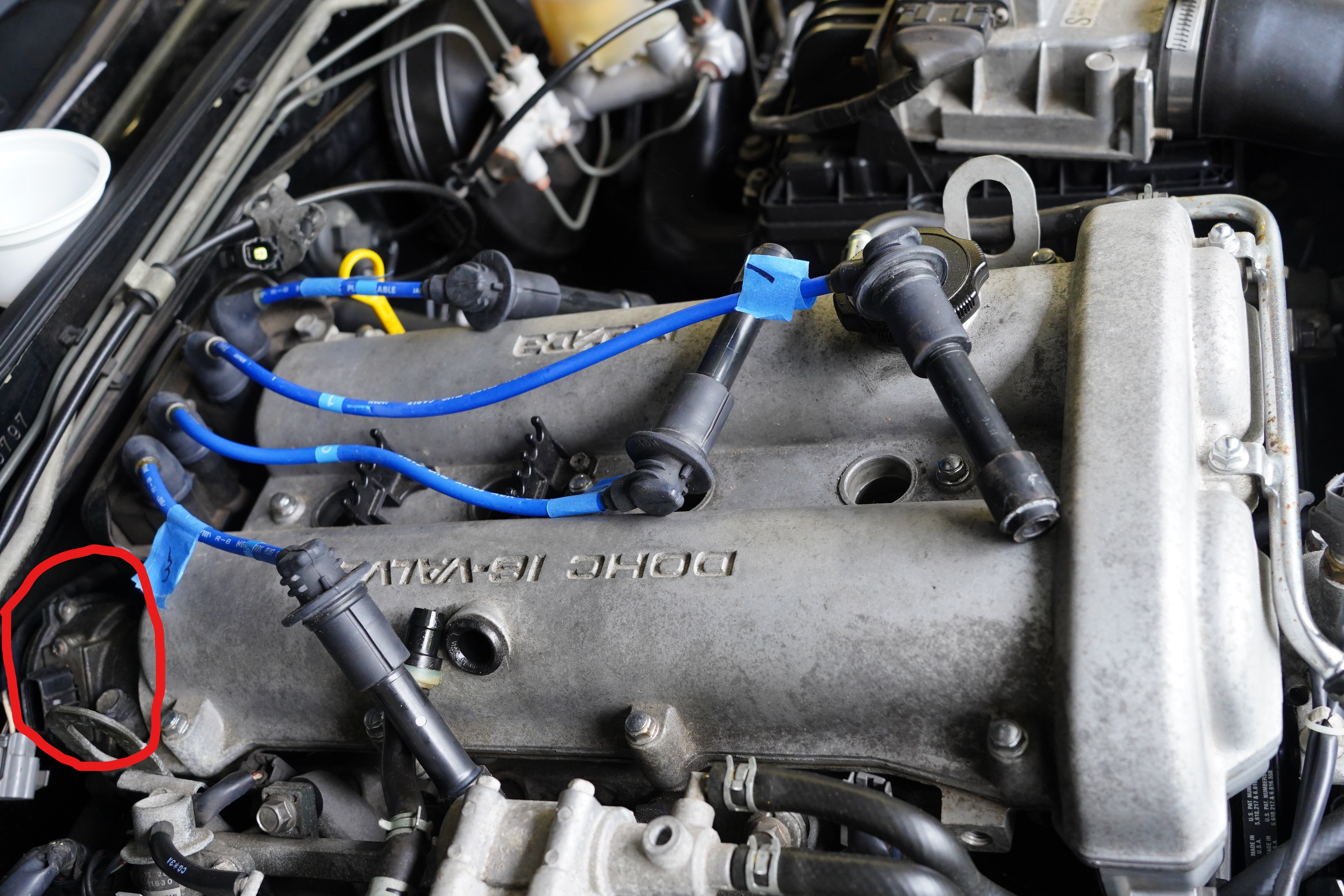
I always take a “before” photo in case I mess up; the circled plug is 1 of 3 to be unplugged.

The CAS sits at the back of the cylinder head, and engages with the intake camshaft. This is how the ignition timing is changed: the CAS is adjustable, and by slightly rotating it in one direction or another, the ignition timing (in relation to the cams) is changed. It’s a DOHC engine, but it is not variable valve timing. Doing some research on the Internet, I found multiple sources identifying the CAS o-ring as the #1 cause of Miata engine oil leaks. The oil drips down the back of the engine onto the transmission, and from below, it can be difficult to pinpoint the cause. A quick check with a flashlight directly under the CAS confirmed this as the leak’s source.

Chat forums and YouTube videos are great places to find repair information, but in this case, there were two distinctly different approaches to the job. On one hand, the “book” method is to remove the valve cover, remove the C-shaped cap over the CAS, and lift it from the car. The alternate, and supposedly less time-consuming approach, is to leave the valve cover in place and only remove the CAS adjustment hold-down bolt. One can then wiggle the CAS out of the engine compartment, with the acknowledgement that re-engaging the “dogs” or teeth which fit into the back of the cam is tricky because it’s a blind operation. At least one commenter admitted that getting the new and unworn o-ring past the CAS hold-down cap can require severe muscular exertion. In either case, viewers were strongly advised to mark the position of the CAS so that re-timing the car would not be necessary. I marked it with a black Sharpie.

Plug wires tagged and about to be removed; CAS is circled in red

After watching 3 or 4 videos and then examining my car, I was not convinced that the savings in time was worth it. Removing the valve cover is not at all difficult, but it takes about 20 minutes. I actually had a more difficult time removing the 3 electrical plugs (which needed unplugging whether I followed method #1 or #2) because these plugs had not been touched in 30 years. But I eventually got them, and followed that by removing the spark plug wire set, the PCV hose, and the 11 bolts holding down the valve cover. I had ordered the CAS o-ring (63 cents) and a new valve cover gasket from Rock Auto; with tax and $9 shipping, I was into the job for twenty bucks in parts.

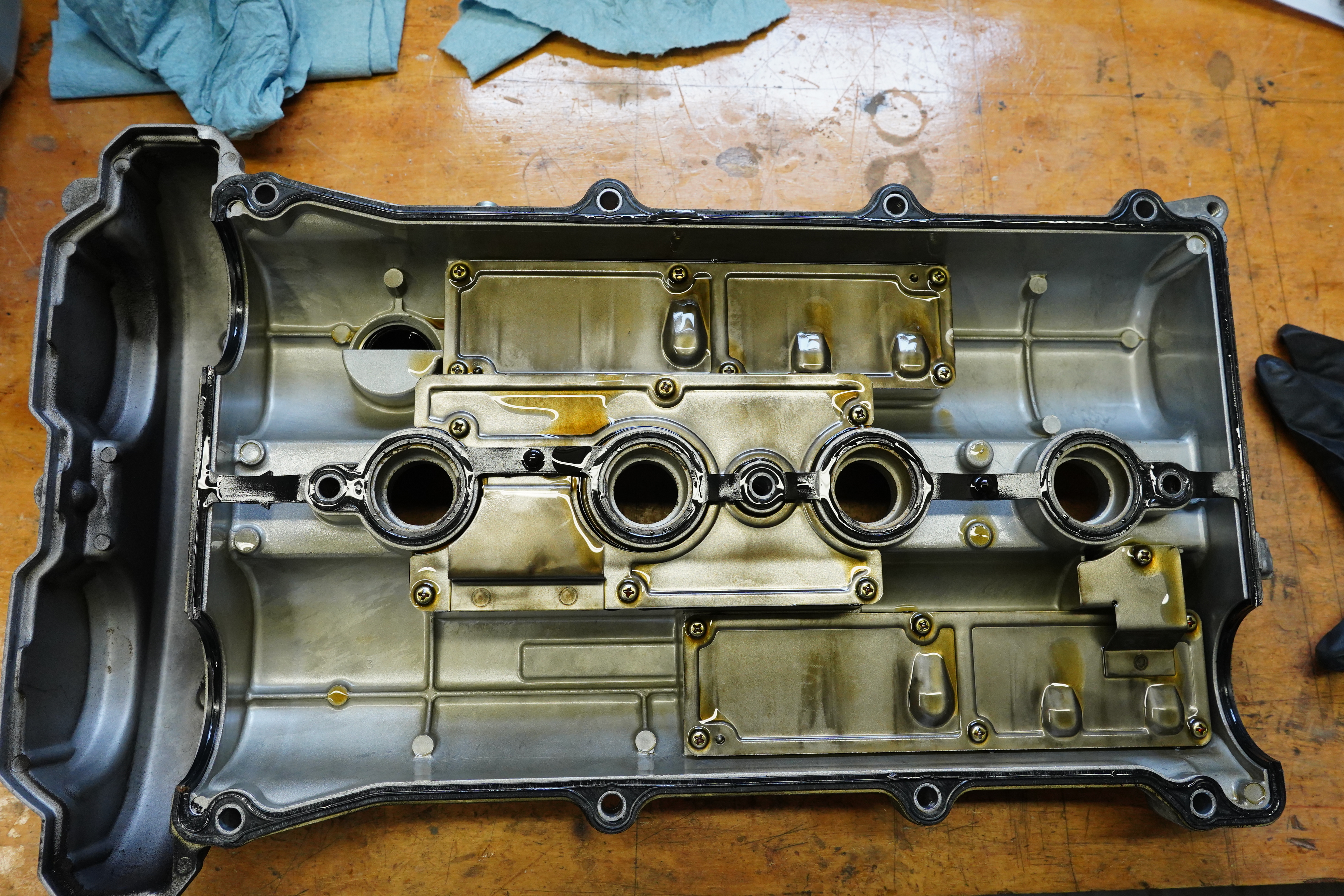
I had an ulterior motive for removing the valve cover: I had never done so, and I wanted to see how clean things were underneath, and they were clean indeed! Frequent oil changes, almost exclusively with Castrol oil, certainly has played a part. Going this route, the CAS was quickly free from the camshaft, but even with the valve cover out of the way, there was precious little clearance between it and the firewall, so I was doubly glad I went for the “longer” method.

Underside of valve cover, old gasket still in place.
Miata engine, 30 years old, 109,000 miles, looks clean to me


CAS on my workbench, the old o-ring was so dried out that it snapped like a piece of plastic. The new one slipped on very easily, helped by a little motor oil. Then the job was like it says in the repair manuals: reassembly is the reverse of disassembly.

CAS on my bench, old o-ring still in place

Again, I was glad to have the valve cover out of the way, as engaging the dogs into the cam was a cinch. I rotated the CAS to where I had marked it, locked it down, put the new valve cover gasket in place, and reinstalled everything which had been removed. The car started on first try, and while it was too wet today to go for a test drive, I plan to clean off the underside as best possible, then drive the car to confirm the leak is fixed.

Clear shot of CAS about to reengage with cam

I guess I need to add this repair to my list of “non-maintenance fixes” to my Miata!


All photographs copyright © 2023 Richard A. Reina. Photos may not be copied or reproduced without express written permission.


Servicing the Alfa’s Fuse Box

The calendar said that spring arrived almost 4 weeks ago, but here in central New Jersey, the weather had remained stubbornly cloudy and cool until a few days ago. This delayed me from uncovering the Miata and the Alfa so that I could begin enjoying the new driving season. I finally got both cars out of the garage and running under their own power last week. I have a list of maintenance tasks that I want to perform on the Alfa, as that car is my short-term focus because of all the events on the calendar.

First up is a show which is new to me: The Roebling Museum in Roebling NJ is hosting its 13th annual car show on Saturday April 29th. Registration is day-of-show only, and I’ve seen the grounds: it was a stop for the Glidden tour this past September, and it’s a lovely place for a car show. Next, the Alfa is already registered for the NJ Region AACA Spring Meet on Sunday May 7, at a new location: the Dodge dealer on Route 10 in East Hanover, NJ. Also on the calendar is the Carlisle Import Show on May 12 and 13; the Delaware Valley Alfa Club will be there and I plan to join them. I’m also honored that I have been personally invited to show the Alfa at this year’s Greenwich Concours d’Elegance. It’s a two-day show as always, and this year it’s on Saturday and Sunday June 3 and 4. Alfa Romeo is a featured marque on Sunday, and Rich Taylor, he of the infamous New England 1000 rallies, reached out to me with the invitation, so we (the Alfa and I) will be there. That’s a busy start to the car show season!

The fuse box cover: descriptions in Italian and English

Last week, I tackled a simple maintenance task: the servicing of the fuse box. You won’t find this procedure in many shop manuals. But I know from experience that fuse boxes, especially ones located in the engine compartment as it is for my Alfa, are subject to dirt, grime, vibration, and other external forces that can mess with the simplest electrical connections. I also know that the ceramic fuses that the Alfa uses (which are identical to the fuses in a Volvo 240) can weaken over time. Given that each fuse is less than 50 cents, it is a no-brainer to occasionally replace the fuses, and clean and tighten the contacts while I’m there. The simple fact is, the failure of any one fuse can bring the car to a stop, so I want to minimize that possibility.

Pre-servicing: you can see some dirt on the fuses and tabs

I bought the fuses from my reliable supplier, Classic Alfa in the UK, and again, they did not disappoint. An online order placed with them late Tuesday night was on my front porch at 3 p.m. Thursday. That’s less than 48 hours. Did I mention that they are in the UK? Anyway, I started the process by removing all 10 fuses, then spraying down the entire fuse box using a spray can of electronics cleaner. I used a brass bristle brush on all the tabs, then installed 10 new fuses, gently bending the tabs inward for a tight fit. As a final test, I got out my digital multimeter (DMM) and tested continuity across both tabs. I had good continuity at all the fuses. The entire job took less than 30 minutes.

The brass tabs after cleaning: the metal looks bright, which will provide the best contact

With that out of the way, I also plan to refresh the cooling system by replacing all hoses and flushing the system (the hoses are now 10 years old!) and also plan to replace the rear shocks, which are likely original to the car (making them 56 years old). I keep telling myself, I’ve got time! Tempus fugit.

All new fuses in place (note that Alfa provides places to carry spares; clever!)


All photographs copyright © 2023 Richard A. Reina. Photos may not be copied or reproduced without express written permission.
Alfa Romeo Interior Mirror Repair

It had been happening for a while. Every time I touched the Alfa’s inside rear-view mirror to adjust it, the next road disturbance would knock it back out of adjustment. It had gotten to the point where it didn’t take a bump in the road – I’d fix the position, and the weight of the mirror itself would cause it to slump like a wilted flower stem. Given that my car has only a driver’s side outside mirror, and poorly located at that (it’s halfway up the fender, out of my reach from the driver’s seat), I rely on the inside mirror a lot. It was time to perform a proper repair.

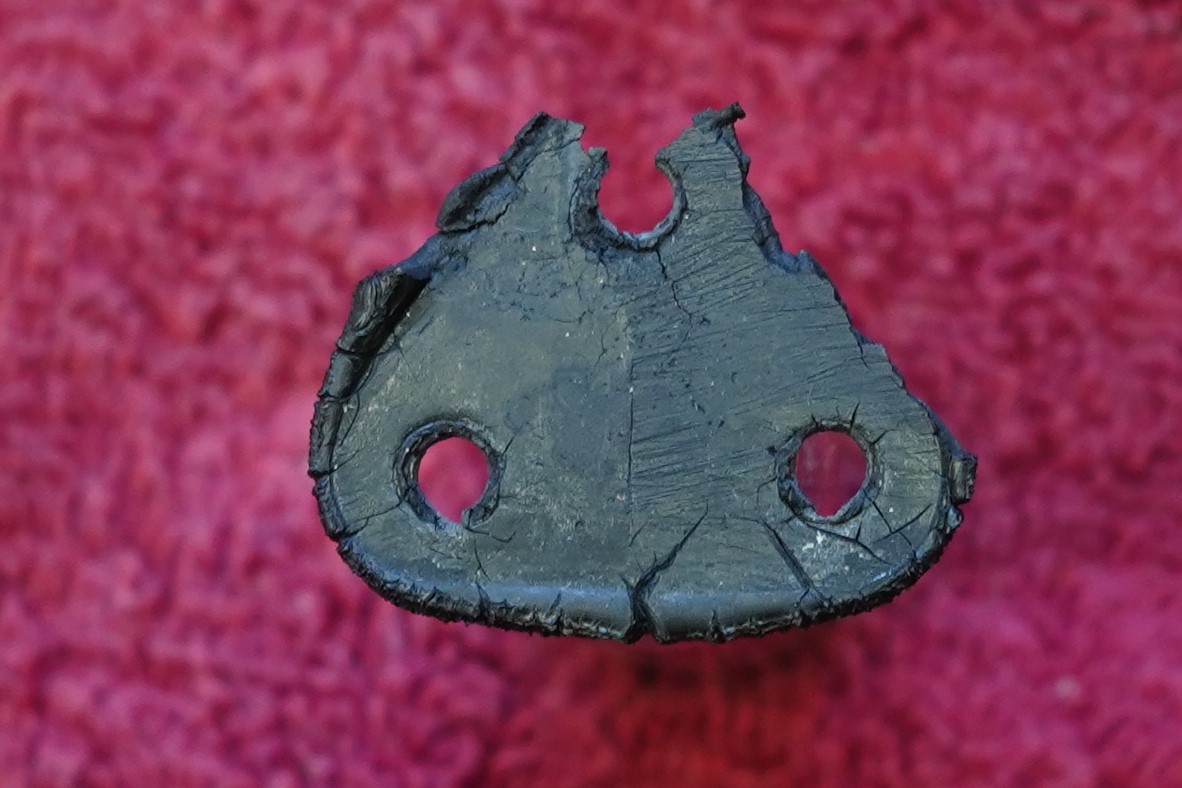
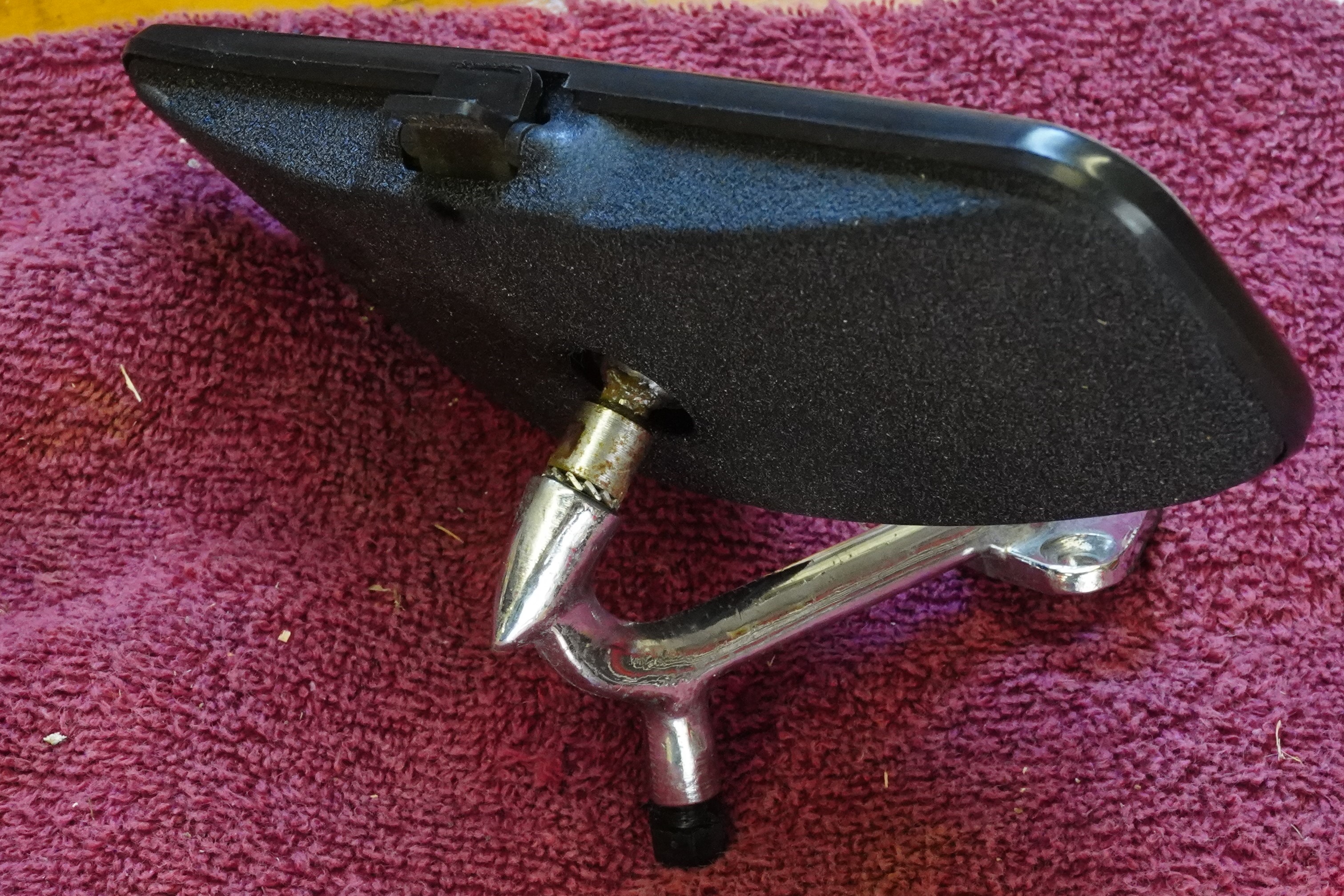
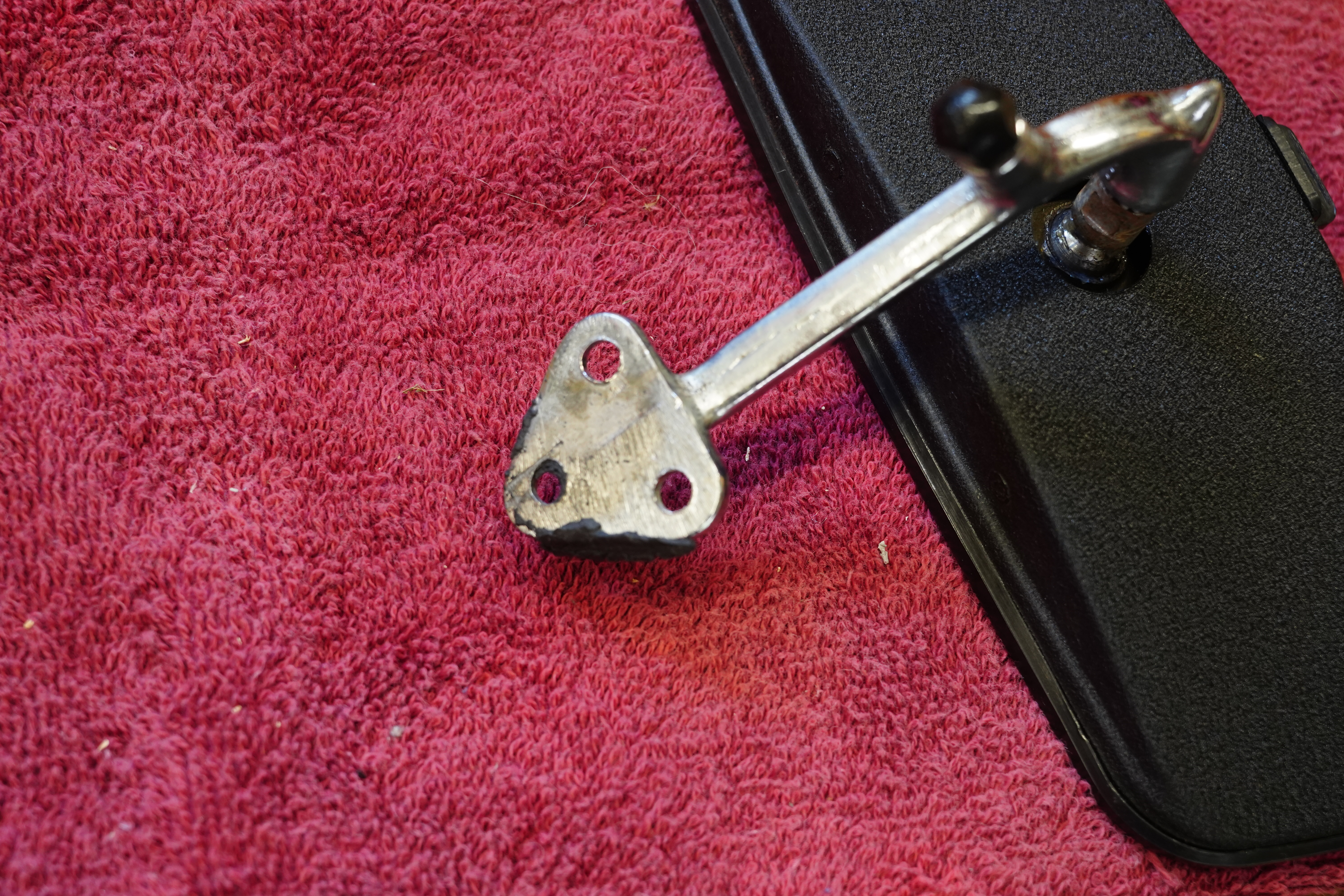
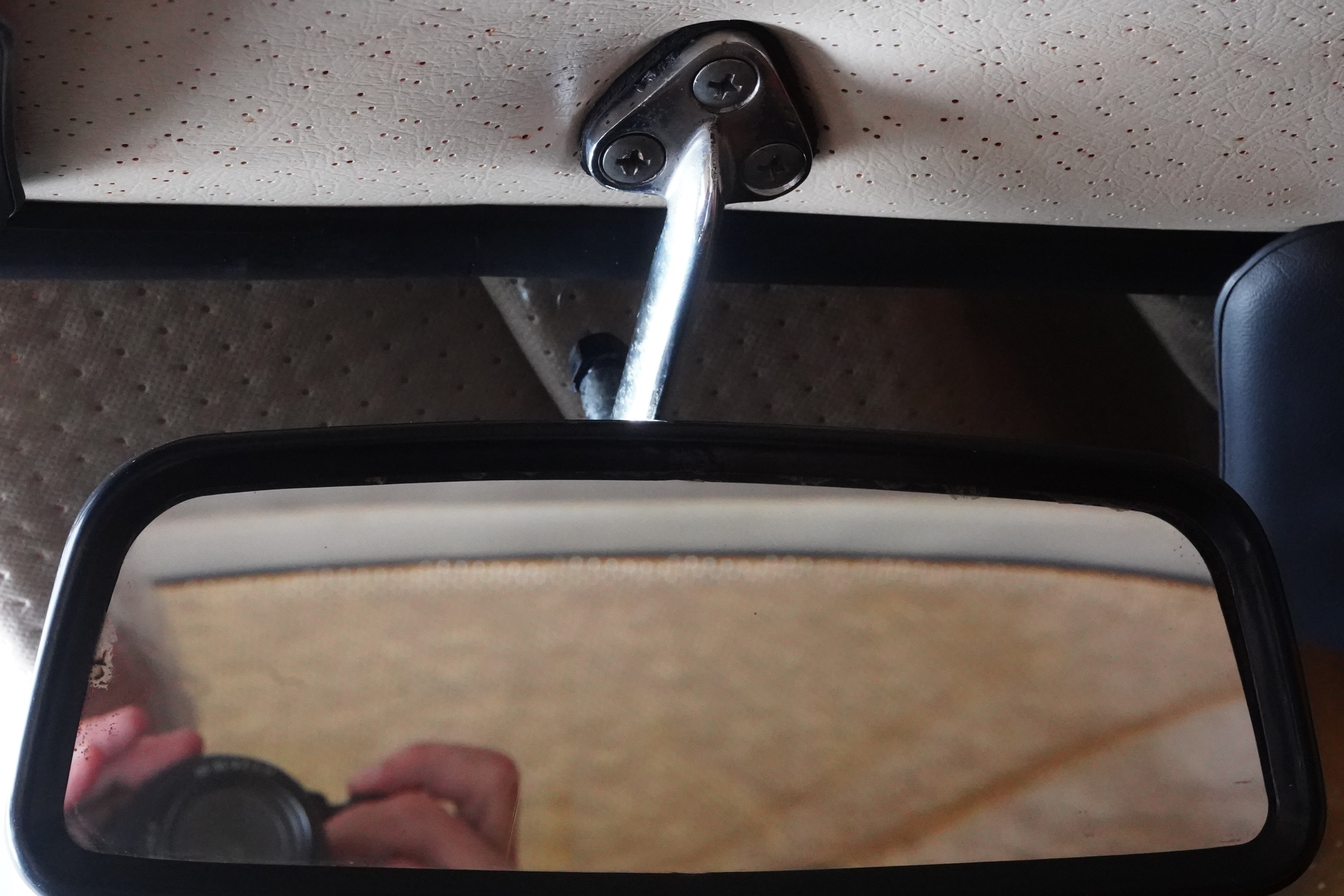
Peering behind the mirror, I could see a threaded shaft, but putting a wrench on it would have been a blind operation. There were only 3 Philips head screws holding the assembly above the windshield, so down it came. As soon as I pulled it away, the rubber gasket revealed itself to be completely deteriorated, so I was already in the well-known “might as well” mode, aka Mission Creep.

Putting the mirror on my workbench gave me much better access to the shaft and nut. This sub-assembly served two purposes: it allowed some adjustment of the total length of the shaft between the mirror and the glass, and it also allowed some adjustment in the amount of effort needed to move the mirror.

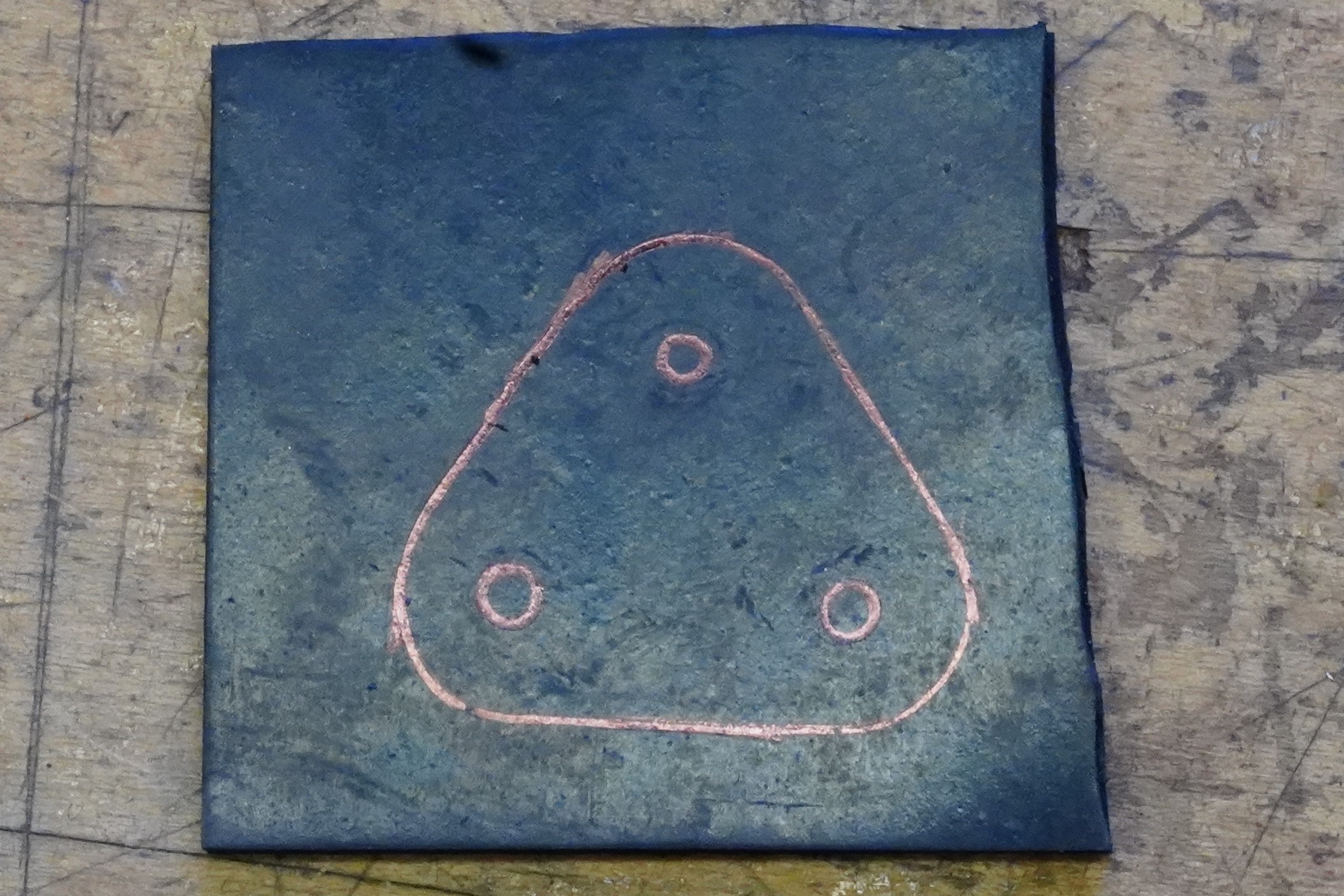
I played with the adjustment a bit, alternately tightening and loosening it to get to the right “feel”. While doing this, I seem to have noticed for the first time (after 9 years of ownership!) that the interior mirror has “day” and “night” settings, only of course in my case they read “giorno” and “notte”. With the work on the actual mirror quickly accomplished, it was time to turn my attention to the gasket. The original gasket measured about ¼” thick. I found nothing similar in any of my local hardware or auto parts stores, so to Amazon I turned to order up some ¼” thick black rubber sheeting. Tracing and cutting the gasket was simple enough. To make the screw holes, I first considered punching them with an awl. However, I experimented on an extra piece of rubber and tried drilling the holes. To my happy surprise, the material was thick and strong enough to allow clean holes to be drilled.

As they say in the repair manuals, “reassembly is the reverse of disassembly”. Everything went back together smoothly, and I used my newly-secured mirror as an excuse to take a 12-mile shakedown run. It held! Now I’ll have a crystal-clear view of that F-250 Super Duty six inches from my rear bumper while I’m cruising at 50 in a 45.

Newly exposed headliner looks good


Old gasket at 55 years of age


Shaft and threaded nut now accessible


Mounting plate needed nothing more than a cleaning


Tracing on new black rubber sheet


Holes drilled at low speed; material held steady


Back home; mirror catches photo guy in action


All photographs copyright © 2022 Richard A. Reina. Photos may not be copied or reproduced without express written permission.


The Alfa’s Weber Carb Overhaul, Part 2

In all the years I’ve been turning wrenches on cars as both a professional and a hobbyist, I’ve had plenty of successes and more than a few botched repairs, probably about the same as anyone else with my experience. While I’m reluctant to refer to myself as a skilled technician, I will acknowledge that I enjoy being the student, and the desire to learn has only grown stronger as I’ve gotten older. Before diving into a project, I’ll research it as much as possible in order to approach the task in a more educated way.

This willingness to go ‘back to school’ as it were paid off when working on the Weber carburetors on my Alfa. In my first blog post on this topic back in early October of this year I said the Webers seemed “unnecessarily complex”. In fact, they really aren’t. The perceived complexity exists in the myriad combinations of different sized jets and deciding whether to replace them. Changing jet sizes up or down can be a trial-and-error process, involving test drives, spark plug examinations, and yet more jet swaps. In my case, there was no need to replace jets, as I was having no related driveability issues. That kind of experimentation becomes necessary when installing Webers on a modified engine, or on a vehicle not originally fitted with them. (One of the best online articles I found re: Weber side draft operation was on a Datsun 240Z website, as these side drafts are a very popular upgrade on that sports car.)

The sole reason for the ‘rebuild’ was to replace leaky seals and gaskets, after which I would need to reset the basic settings. I was using no fewer than four different Alfa Romeo / Weber service manuals, and while there were some slightly different approaches among the four, they all agreed on the basics. Those basics were: Remove the top, side, and bottom covers (note that the float is attached to the top cover). Do NOT remove the jets, throttle plates, or throttle shaft. Clean out the carburetors. Set the float height. Reassemble the carbs with new seals and gaskets. Reset the idle air/fuel mix, the carb synchronization, and the engine idle.

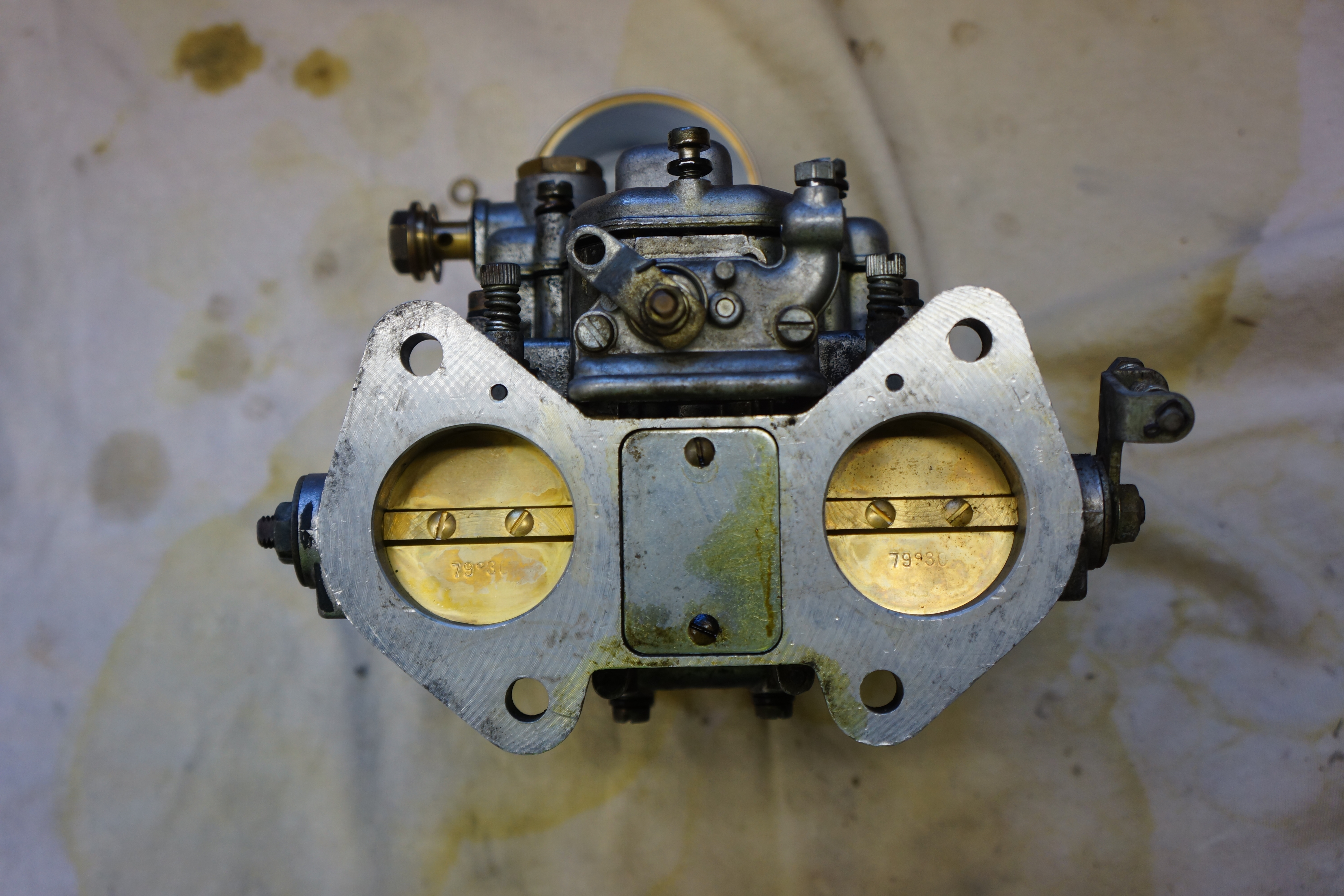
Throttle plates (butterflies) and shaft were sprayed clean but left in place

One service tip I learned is that good access to the carbs is available without unbolting them from the engine. The float, the internal mesh filter and all the jets are all accessible once the top cover is removed, held on with 5 screws plus the fuel line banjo bolts. On my car, one does not even need to touch the plenum cover. However, I wanted to get to the bottom cover, and also wanted to perform a thorough ‘off the car’ cleaning.

All screws are slotted; this right-angle bit on a ratchet provided good leverage and avoided stripping screw heads

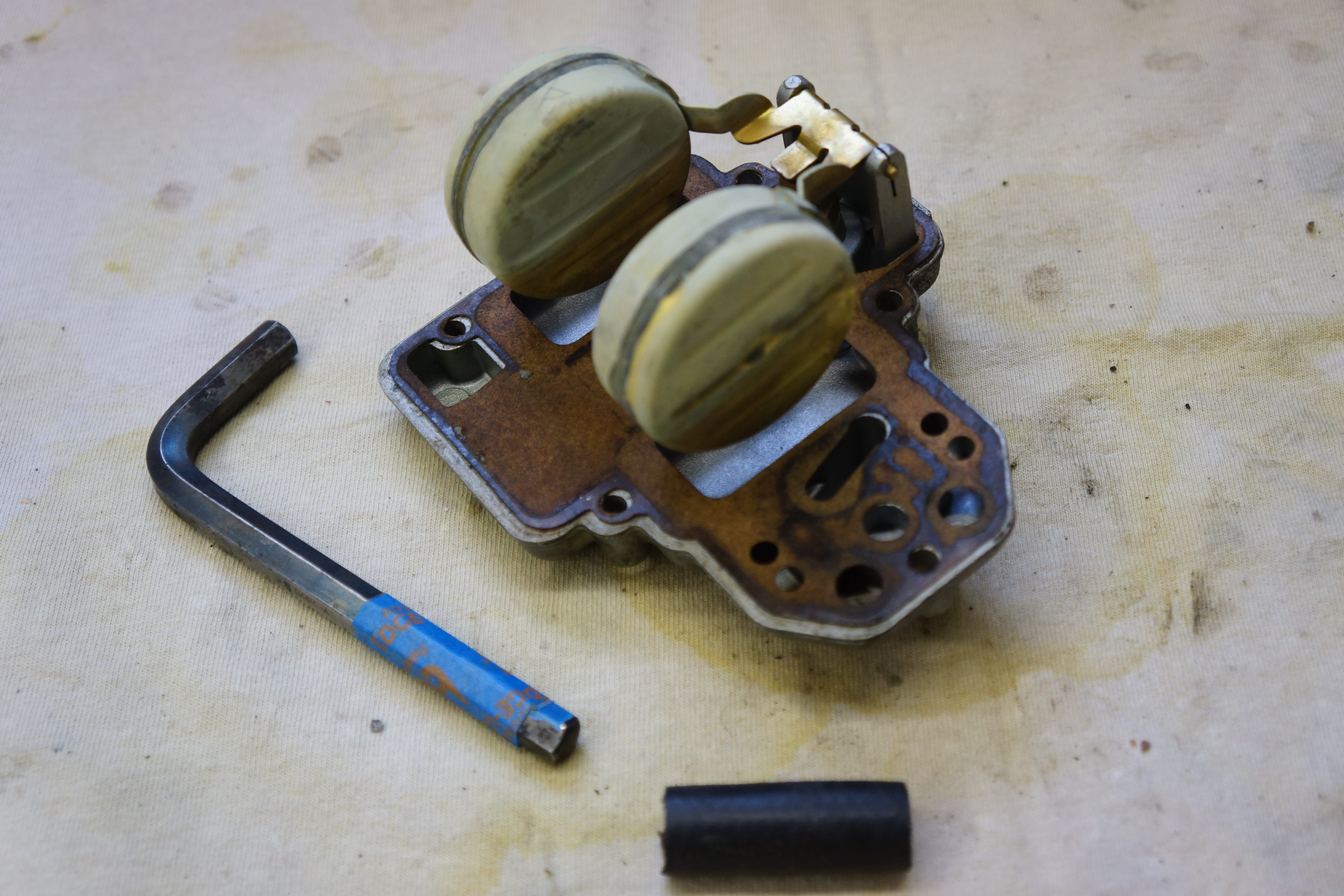
The float setting is a bit fussy. There are actually two settings: the top and the bottom. The top cover gasket must be in place. The two setting measurements are 8mm and 14.5mm, and the books claim that a deviation over 0.5mm can be troublesome. I fashioned my own measuring tools, one using a hex key wrapped with masking tape, and the other made from a piece of rubber hose. Both floats were off enough that they needed both their top and bottom settings adjusted.

Float is attached to top cover. Two homemade measuring tools are shown.

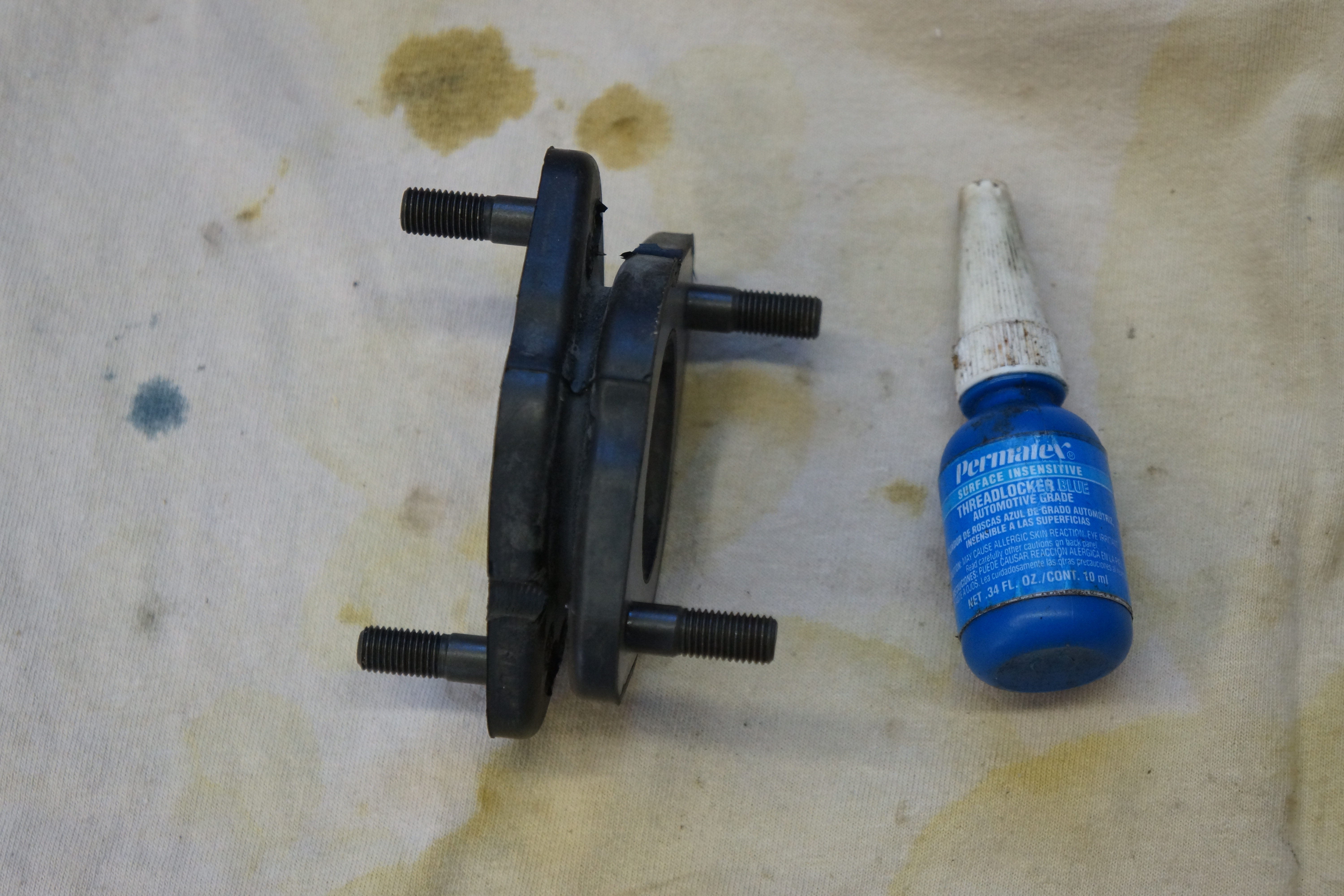
The new rubber carb mounts arrived from Classic Alfa, and I was a little disappointed that the studs were not anchored in place. It’s a good thing I discovered this before putting it all together, and the problem was easily resolved with some threadlocker. While I can’t prove that my old rubber mounts were part of any problem, the rubber was clearly past its prime.

Loose studs fixed with threadlocking liquid


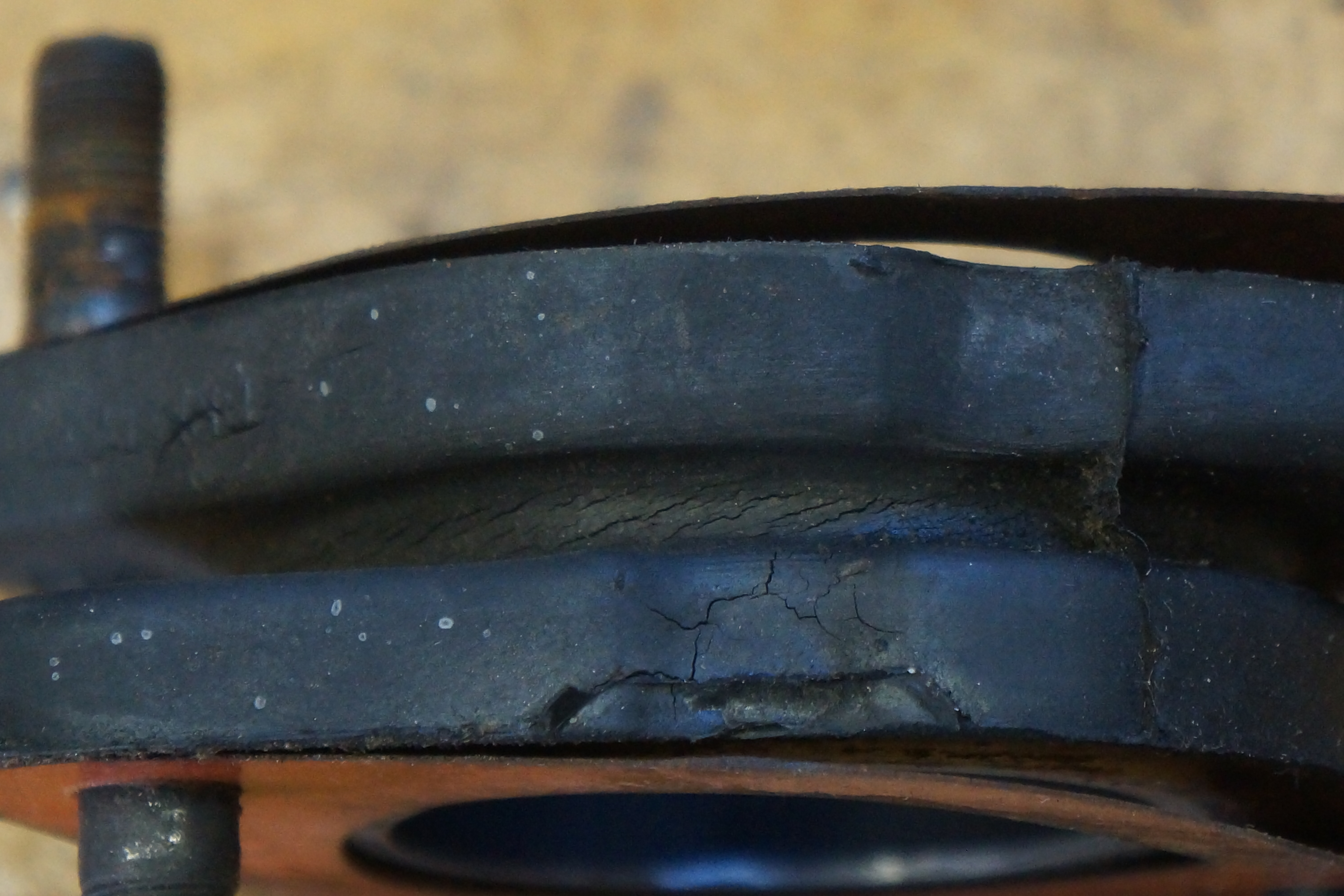
Old rubber mounts are probably 20 years old. One cannot see this while mount is on car.

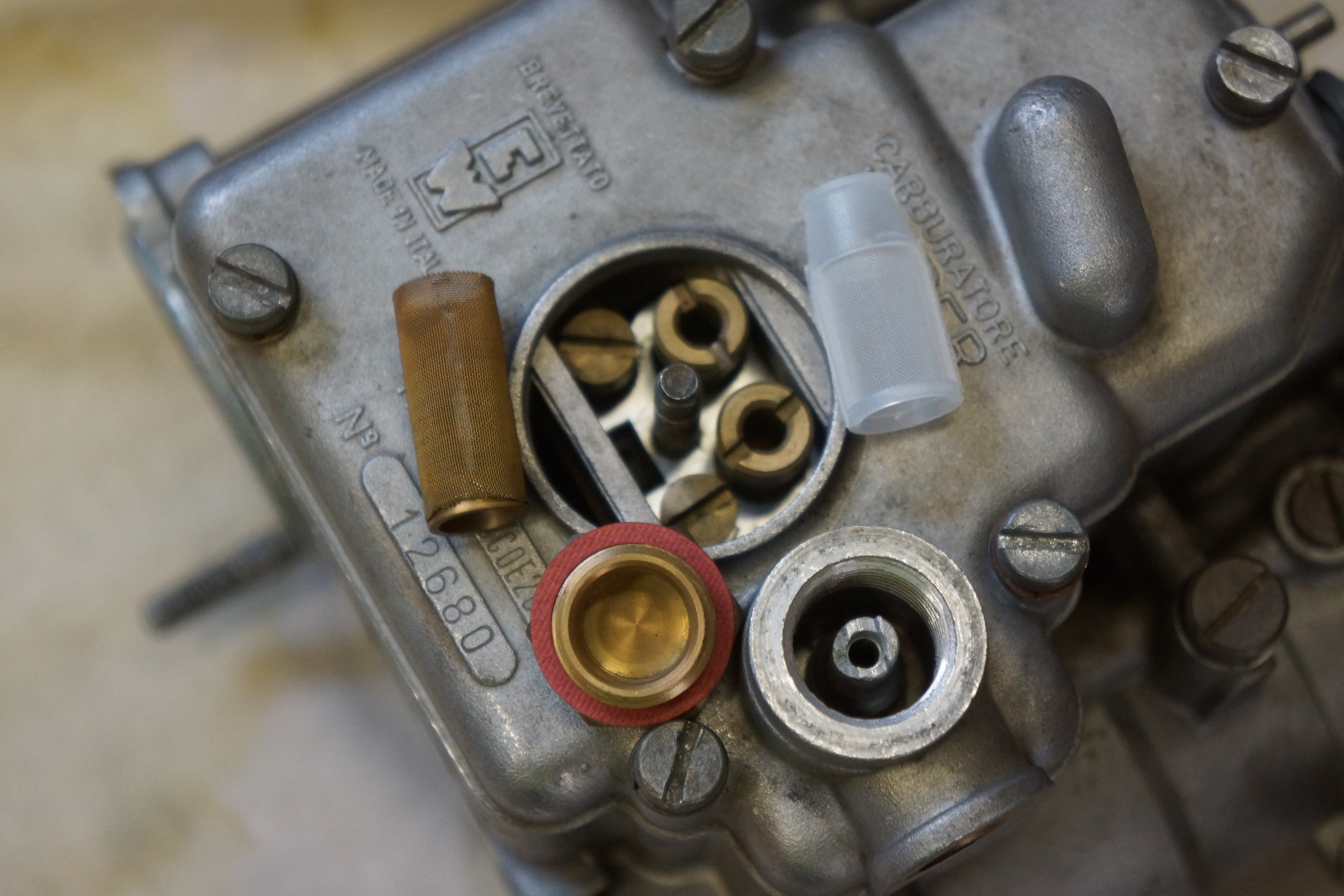
It was news to me that there was a mesh screen filter inside each of the carbs. Thankfully, a replacement was part of the carb gasket kit. I went through about 5 cans of Gumout before I was reasonably satisfied with the cleanliness, and even then, there was some dirt on the outside (but none on the inside).

Mesh screen filter at top. Old metal screen on L, new plastic one on R.

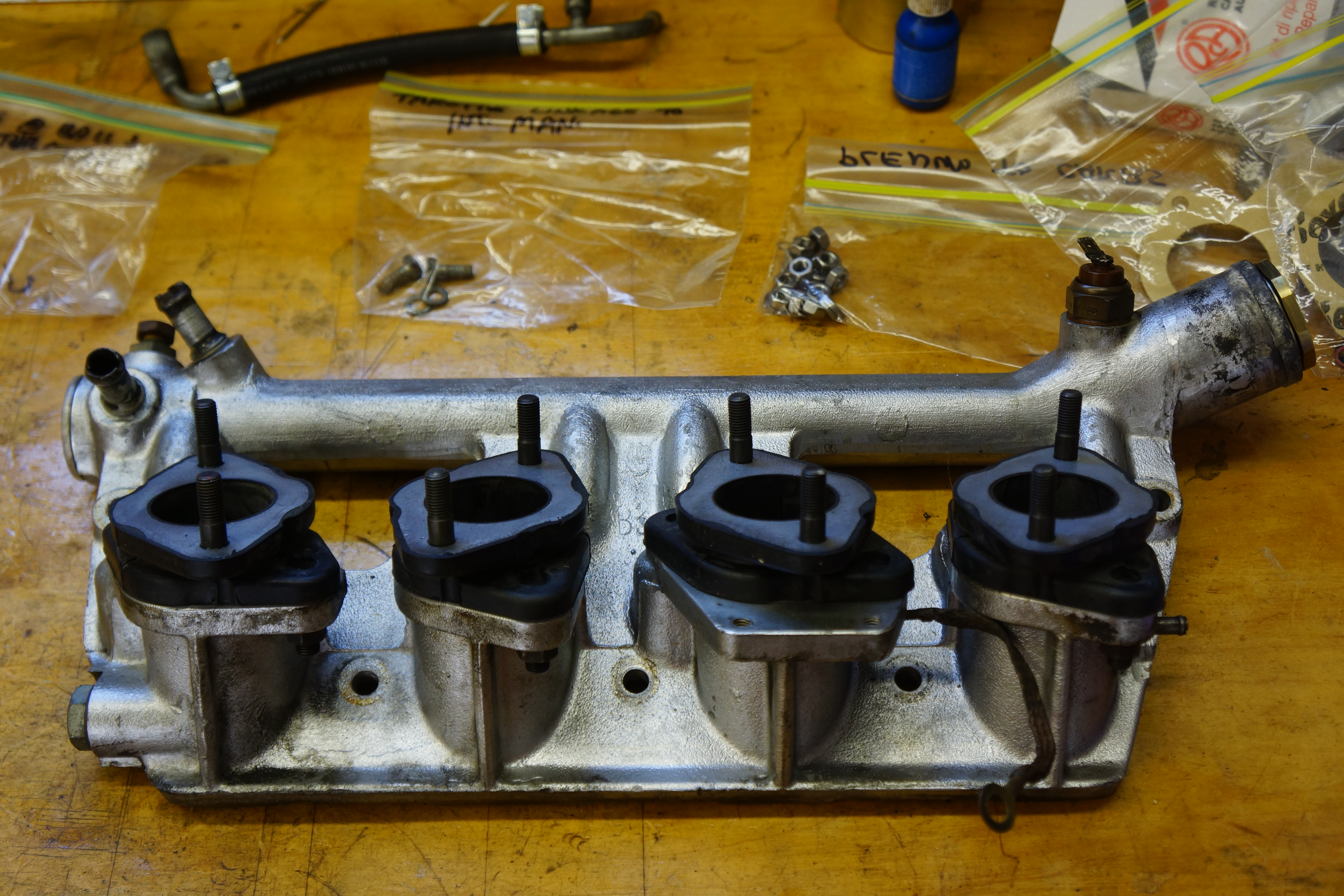
The corner had been turned, and it was time for reassembly. First, the rubber mounts were bolted to the intake manifold (remember that half the bolts are hidden on the cylinder head side of the manifold). Adding yet another step to this litany of work, I decided at the last minute to replace the coolant, which was more than several years old. This meant hunting down some old-fashioned green antifreeze and distilled water (Walmart was down to its last 5 gallon bottles of distilled, but I only needed 2). The manifold was bolted back to the cylinder head, the coolant hoses were reattached (it’s a wet manifold), and the radiator was filled.


The cleaned carbs were bolted to the rubber mounts, and the choke and throttle linkages were reattached. I decided for now to leave the intake plenum off the car. The engine would run without it, and I didn’t want to do any more work than necessary in the very unlikely event that the carbs needed to be removed again.

Cleaned and resealed carbs back home (for now)

It was time to try to start the car.

Many minutes were spent pumping the throttle and cranking the engine in short bursts so as not to overheat the starter motor. The engine wasn’t even trying to start. After about five minutes of this, I knew that something else needed to change. Each two-barrel carb has two idle mixture screws, so there are four, one for each barrel (obviously). My repair books differ in describing the basic setting of these idle mixture screws. While all the service literature agrees that each screw should be turned down to ‘bottom’, then turned ‘out’ (counterclockwise), the exact number of recommended turns differs. I had settled on one full turn out, while some books recommended two, and others didn’t even give an exact number. When the car wouldn’t start, I turned each idle air mix screw one full turn further out. Climbing back into the car, the engine started on the next try.

Next, the books advised on how to continue with the basic settings, including carb synchronizing and idle setting. Before either of these can be set, however, the engine needs to reach full operating temperature. I watched both the temperature gauge and the coolant level, and both were fine. But as the engine warmed up, the idle kept increasing. Nothing I did at the carbs seemed to have any effect on my ability to lower the idle. After a few minutes, the car was ‘idling’ at 2500 rpm, and it should be between 800-1000 rpm. While I was happy that the car was running, and running well to my ears, something else was up with the idle control. It was time to shut it down and hit the books again.


All photographs copyright © 2020 Richard A. Reina. Photos may not be copied or reproduced without express written permission.
Alfa Carb Leak Lands Them on My Workbench

It’s long been a tenet in the old car hobby that cars like to be driven; they don’t do well when they sit; and as long as you’re on top of maintenance, there’s no reason not to expect some reliability from an older car.

I’ve been lucky with the Alfa Romeo (although frankly, luck has little to do with it): having purchased the car in March of 2013 with 54,000 miles on the odometer, by July of 2019, the car had just shy of sixty-six thousand on the clock. In a little over six years, I managed to drive a 1967 Italian car almost 12,000 miles, which neatly works out to 2,000 miles a year. That changed, though, when the brakes seized, resulting in a complete teardown and rebuild of the braking system that took a year to complete. The car had not sat silent under my ownership for that long before, and when I did restart it, it ran poorly. Suspecting the fuel had gone sour, I drained the tank, added fresh premium, and swapped out the plugs. Success! Except … now I had a fuel leak under one of the carbs.

So, much of September was spent reading up on Weber carburetors. At first blush, they seem unnecessarily complex. Add to that complexity the words of the late Pat Braden, as he wrote in The Alfa Romeo Owner’s Bible, a copy of which I own (and I’m paraphrasing here): “if your car is running fine, don’t touch the carbs. Everyone wants to fiddle with the carbs. If it’s running ok, leave the carbs alone”.

Well, Pat, the car does ‘run’ fine, but liquid fuel dripping onto my starter motor does not get me very excited, at least not in a good way. I did some more research, including reading some very helpful posts on the Alfa BB (Bulletin Board), and concluded that the gaskets and seals were probably old, and the float height should be measured and adjusted, but other than that, I am going to leave the carbs alone!

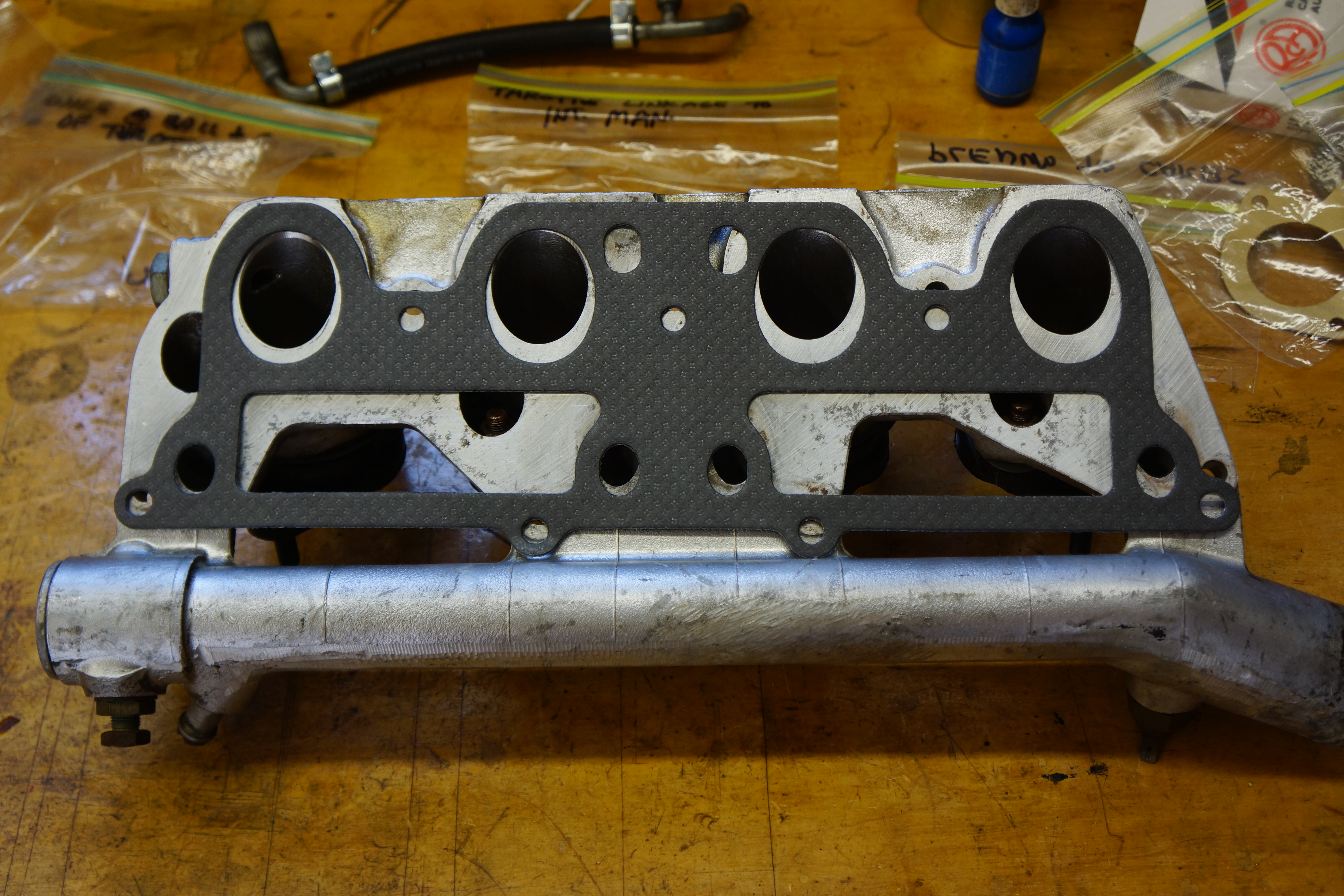
From bottom: plenum; carbs; intake manifold

I’ve never removed the Webers from my car before. Removal didn’t look complicated, but would certainly prove to be time-consuming. First, the upper plenum is removed (two hose clamps, one bolt, and two nuts, all easily accessible). Next, the lower plenum comes off (ten nuts and washers, four of which are totally blind). Now one has access to the carbs themselves (eight nuts, four of them blind). Once the banjo bolts for the fuel connections are undone, the carbs can be removed from the car. The carburetors bolt to 4 rubberized mounts, each of which has 4 studs. To remove the mounts, one first must remove the intake manifold, as 8 of the nuts for the mounts are only accessed if the intake manifold is unbolted from the cylinder head (7 nuts, some of them only reachable with an open-ended wrench, which only allows 1/6 of a turn at a time).

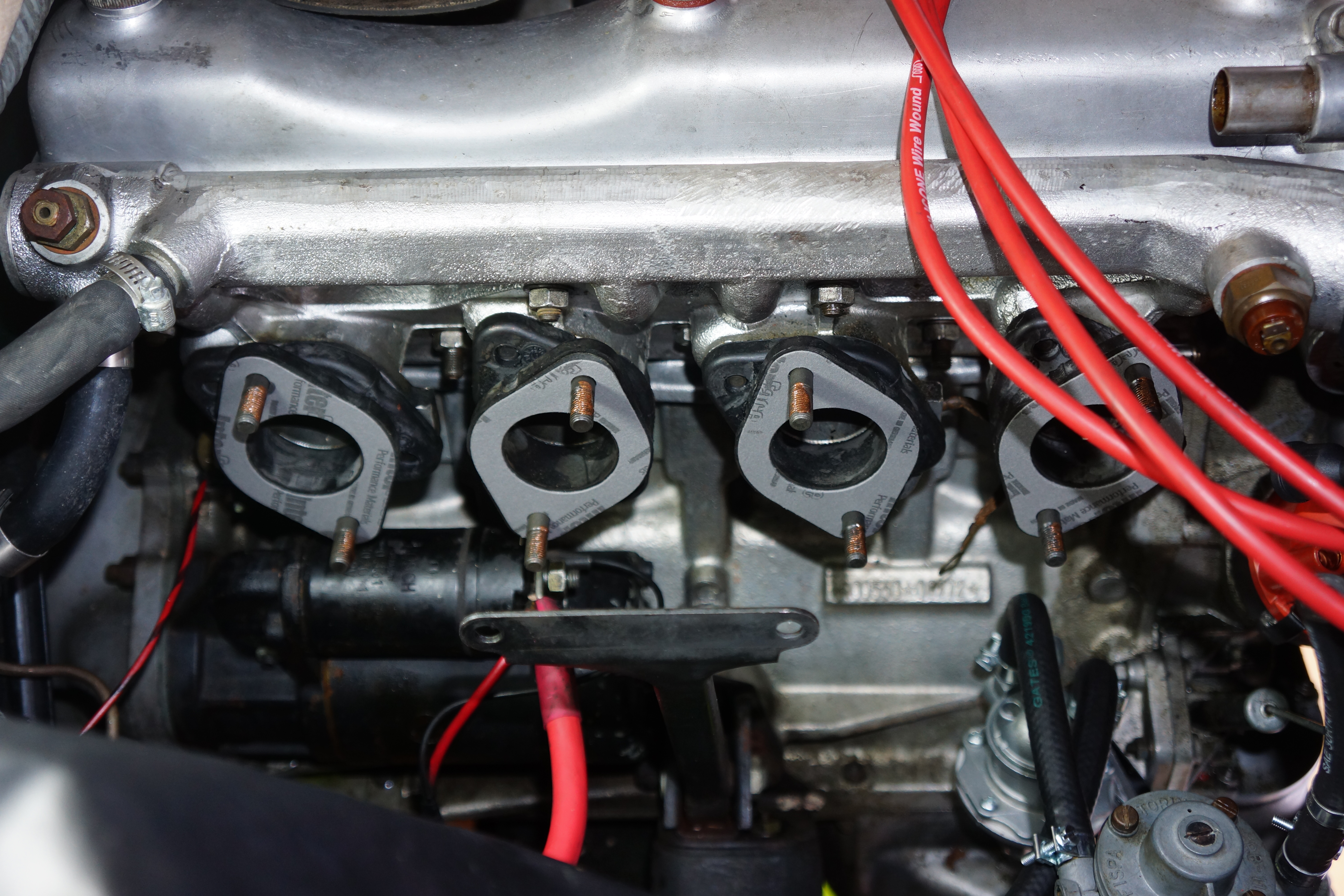
With carbs gone, rubber mounts are obvious. Note starter motor.


Intake manifold half off cylinder head

Back to these rubberized carb mounts: it was eye-opening to learn from the Alfa BB that side draft carbs, hanging off the right side of the cylinder head, are prone to enough vibration to cause fuel delivery issues. To combat that, Alfa employed a bracket extending upward from the right motor mount to the lower plenum, and mounted the carbs on rubber mounts which absorb vibration. But a number of the Alfa owners on the BB stated that these mounts should be considered service items: eventually, the rubber hardens and develops hairline cracks which allow air to enter the intake stream, throwing off the fuel-air mixture.

Manifold on bench, giving better view of carb mounts


Former owner Pete must have replaced them at one point, because I had an old set among the spares he had given me. Checking the website of my favorite (really only) parts supplier Classic Alfa, I saw that they had a carburetor gasket kit for $35, and new carb mounts for $25 each. That all seemed reasonable enough, and as usual, my order arrived from the UK 48 hours after I placed it. I was ready to get to work.

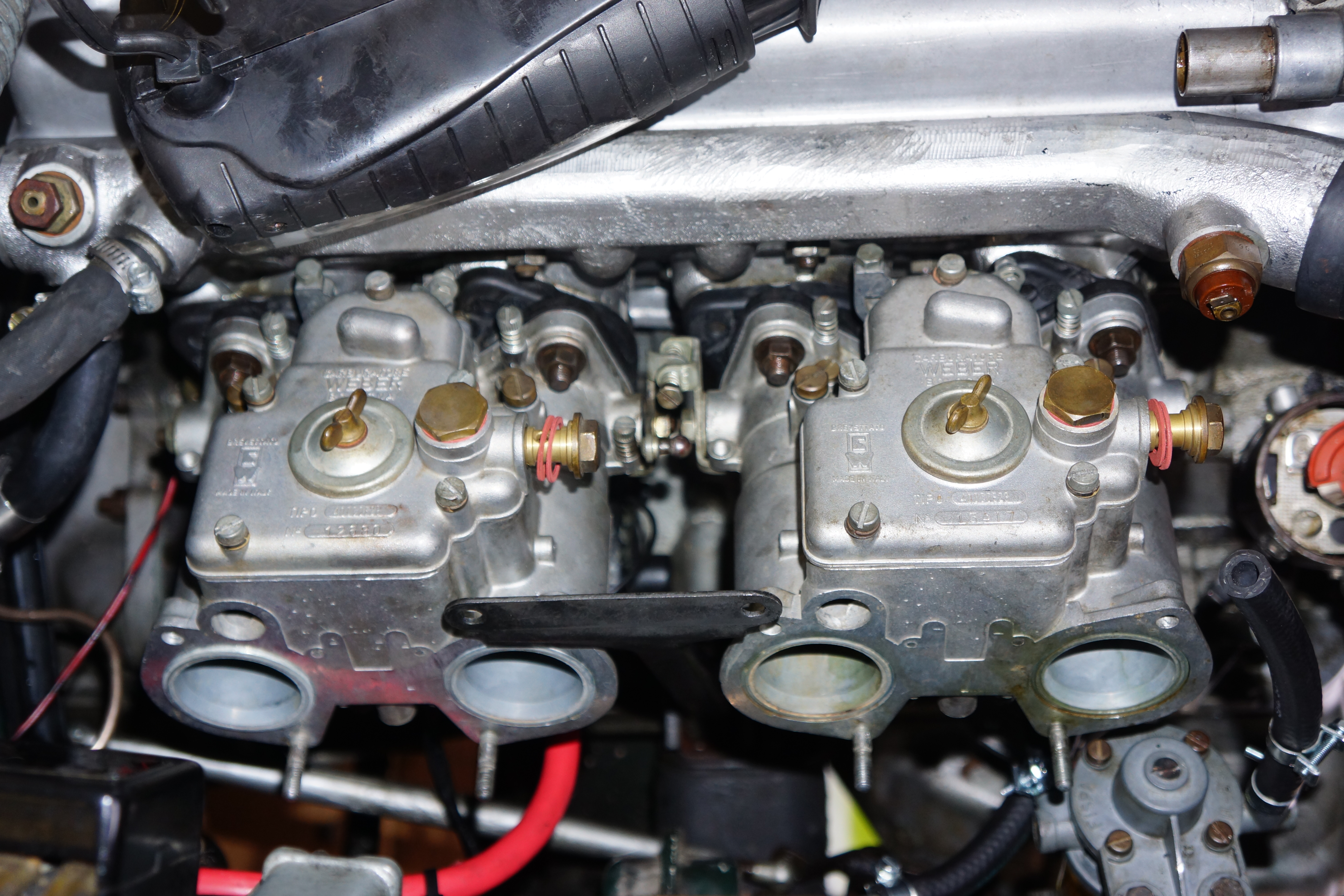
Both carbs on the bench


Removal of top cover exposes all jets


Service books clearly state to leave throttle plates and shaft in place unless obviously defective


It was important for me to stay focused on the goal: I wanted to clean out the carburetors, inspect them for any obvious faults, then reassemble them using all new gaskets. Perhaps it’s from a lifetime of dealing with old cars, but I do have the habit of over-repairing my vehicles. The issue with Webers is that other than setting the idle mixture, idle speed, and float height, any other adjustments involve a lengthy trial-and-error game of swapping jets. One more time: aside from the fuel leak, the car ran fine. I selected the rear-most carb (the leaker) and removed all the covers.

Screens under choke control were black


They cleaned up nicely with Gumout


Having several service manuals with exploded diagrams at my side, things didn’t look too bad. There was clearly some dirt built up, but no obvious faults or defects as far as I could see. Numerous cans of Gumout were emptied to clean things up, and I’ve been pleased with the progress. The float needs to be carefully measured and adjusted, and once that’s done, reassembly will commence, which is where I will pick up next time.

Float is attached to top cover, adjusted by bending brass tabs


All photographs copyright © 2020 Richard A. Reina. Photos may not be copied or reproduced without express written permission.

Alfa Romeo brake system overhaul, Part 8

With the Alfa’s hydraulic brake replacement essentially finished, there was one more related task to complete. As the previous owner had suggested to me, the battery B+ cable could stand to be replaced. Not only had he indicated that it was undersized, he also wasn’t sure that its attachment points had stood up over time. (My car was born with its battery in the engine compartment, but Pete had relocated it to the trunk, where it still is.)

Conveniently, the cable almost completely followed the routing of the brake line from rear to front. There was no extra work to dropping the battery cable when removing the brake lines. The old cable looked to be possibly 2 gauge; I had purchased a “Battery Relocation Kit” which included 20 feet of zero gauge cable (the smaller the number, the larger the cross-section). I only needed about 16 feet.

The old cable had been secured in place with metal hose clamps; thankfully, there were no signs of potential incendiary damage. The new cable followed the same routing as the old, and instead of clamps, I used about two dozen high-temp plastic cable ties. (Cable, or “zip” ties, are available in different quality levels. In the past, I had some which snapped upon tightening. For this job, I researched and purchased higher quality cables.) I was quite happy with the appearance of the end result; the new cable is tucked far enough up into the underside that at no point is it the lowest object under the car.

New battery cable securely in place under the car

To gain access to the starter solenoid, I had removed the intake plenum. (Alfas and some other Italian cars do not have a traditional intake manifold. Instead, the air filter feeds air to the plenum, mounted to the outside of the side-draft carburetors. The carbs in turn are mounted to small tubes which themselves are bolted directly to the cylinder head.) I gave the plenum a cleaning, ran a 6mm x 1.0 tap on all the studs, used new washers and nuts, and with new gaskets at the ready between plenum and carbs, bolted it all back together. The thread chasing and new nuts helped immensely given that 4 of these attachments are completely blind and are in tight quarters.

Dirty plenum, old gaskets

Clean plenum, new gaskets

Saturday was going to be the big day; there always are the dozen final details (spark plug wires and various other small connections underhood), and I triple checked all around the car, which was still on jackstands, still with tires off. The battery had been on trickle charge. Nervously, I completed the final connections at the battery. Nothing caught fire. Climbing up into the driver’s seat, I turned the key on, pumped the pedal about a half-dozen times, and cranked. The crank was strong, but the engine made no attempt to run on its own. Key off, pump the pedal some more, try again. And again. I smelled fuel, got out, and peered underneath. Raw fuel was pouring out from under the front right corner. Key off, battery safety switch turned to off. Time to stop, take a breath, and think.

Was this related to what I had been working on the last 11 months, or was this complete coincidence? Grabbing a flashlight, I looked into the right front corner, where the mechanical fuel pump and fuel filter are. Feeling with my hands, the wettest area was the rubber fuel line for the pump’s outlet. It took about 2 minutes to loosen the clamps and remove the hose.

Old hose looks quite bad

The hose was completely dry-rotted. First, I breathed a sigh of relief that it was ‘just’ a hose. I also immediately realized that, like the brake system I had just overhauled, I really didn’t know how old these hoses were. A quick car ride (with mask) to Advance Auto Parts, and I was back with 3 feet of 5/16” fuel hose.

Old hose looks worse close up

Sunday morning, all 4 fuel hoses, each only about 8-10 inches long, came off and were replaced with fresh rubber. Time to try again. This time, after about 7 to 8 pumps of the pedal (and no leaks), the engine started. Hooray! I bolted the tires back into place, removed the jackstands, and my Alfa was back on the ground for the first time since July of last year.

New fuel hose is CARB-compliant

Gingerly, I moved the car outside under its own power. The brakes worked well, even if the pedal still felt a little soft. One more round of bleeding is in order. I’m also going to try to adjust the ‘throw’ at the master cylinder, as the brake pedal is not quite lined up with the clutch pedal. These are mere details, and I will get to them in the coming days. For now, I’m happy, satisfied, and truly pleased to be able to say that this project is done.

My Alfa sees sunshine for the first time in 11 months


Here, nicely framed by garage door; can’t wait to put some miles on it.


All photographs copyright © 2020 Richard A. Reina. Photos may not be copied or reproduced without express written permission.


Alfa Romeo brake system overhaul, Part 7

I’ve always likened working on an old car, when there’s little or nothing in the way of published instruction, to dancing the tango. It’s two steps forward, and one step back. Two forward, one back. And repeat….

In the last post about the Alfa’s brakes, two weeks ago, I wrote about the awkward position of the brake master cylinder. Like so many cars with pedals coming up from the floor (what Alfisti call “standing pedals”), the master is underneath, bolted to the pedal box. When I removed the master cylinder last fall, there were no written instructions to follow. I loosened the pedal box just enough to lower it and access the two bolts holding the master in place. The removal was such a chore that frankly I had been dreading the reinstallation.
Re-reading my words in that last post, I see that I was unintentionally vague. The sentence that now bothers me reads “Once the lines to the master cylinder are done, I need to reinstall the pedal box in the driver’s footwell, as all three pedals had to be loosened/removed to gain access to the master.” My sentence leaves it completely unclear whether I had removed the entire pedal box, or had merely loosened it, when in fact it was the latter.
Why am I harping on this? Because I found myself doing the tango. In the process of attempting to reinstall the new master, I ended up completely removing the pedal box from the car. If only I had done this during the initial disassembly! The hang-up was a bracket which I had mistakenly identified as part of the transmission cross member, but is a bracket for the front exhaust pipe. Laying on my back, on the garage floor, holding a flashlight, and trying to focus through my progressive lenses made its correct identification difficult. Once I realized that it could be safely removed, I undid 5 bolts and it was off. Suddenly, the entire pedal box was in my hands. Eureka!

Pedal box on my workbench. New master is in front.

Since the exhaust bracket was off, I replaced the two rubber bushings inside it, cleaned it up, and repainted it with Eastwood Chassis Black. When friends ask why this brake job isn’t finished yet, it’s these “might as well as” side jobs which eat up time, but are important to complete.


With paint open, I dipped the bolt heads and nuts in it. Drilled wood holds them while they dry.

With the new master cylinder bolted in place, I reinstalled the pedal box, sealing it against the unibody with fresh dum-dum (I have a box of 3M dum-dum that’s probably 25 years old, and that stuff stays pliable!). The two final brake lines were bent to line up with the threaded inserts on the master, and I was happily surprised that I got the threads to “bite” after just a few minutes of trying.

Brake lines at master, ready to be bent to shape

The time had come to add fresh brake fluid to the system. I filled the reservoir, attached the little magnetic one-man bleeder bottle from Eastwood to the right rear caliper bleed screw (always start with the brake furthest from the master), and began to pump the brake pedal by hand. Forum posts on the Alfa Bulletin Board (AlfaBB) recited tales of horror about the difficulties in bleeding Alfa hydraulic brakes. I believe that later cars with dual circuits AND dual servos can be a challenge to bleed. I was happily shocked that I had fresh fluid coming through the hose on the bleeder screw on the second or third try.

This item, under $10, makes one-person bleeding a breeze

I was less happily shocked to also see that I had some leaks. There were two leaks at flare fittings that still weren’t tight enough. An eighth of a turn with the 7/16” flare nut wrench solved that. I continued to add fluid and pump the pedal, moving from right rear to left rear to right front to left front. But then a larger fluid leak sprung, from a lousy location: the master cylinder. I got under the car, but both lines at the master were as tight as I dared to make them. My heart sank. Could the new master cylinder be defective?

When you’re doing the tango, and your feet start to go in a direction that could make you trip and fall, it’s sometimes best to get off the dance floor. I put down all the tools, exited the garage, went for a walk, and came back to have lunch. (I learned during the Isetta restoration that before anxiety drives you to act hastily and BREAK something, walk away, think about it, then go back to it.)

An hour later, I believed I had diagnosed the problem, without even touching the car. The leaking line ran from the exit port on the master up to the brass four-way junction block on the firewall. I remembered that when I had formed that line, I told myself that it was “symmetrical”, that is, the same flares and the same flare nuts on each end. While the flare NUTS were the same, the flare at the master needed to be an ISO bubble flare, and I had formed a 45 degree double flare. It took about two minutes to pop that line out of the master to confirm my diagnosis. Yup – I formed the wrong flare fitting.

Oops. Old line at left is bubble flare; new line with double flare doesn’t match.

Back to the two steps forward and one back routine. It was a complete pain to remove that line, cut off the wrong flare, make a new flare, and fit the line back in place. However, the rapid diagnosis made up for it. The fixed line was back on the car, bleeding resumed, and there were no leaks. In a short while, I had a pedal! I’ll bleed the entire system one more time, then the hydraulic work will be done.


This is better.


All photographs copyright © 2020 Richard A. Reina. Photos may not be copied or reproduced without express written permission.