Let’s get this bit of disappointing news out of the way: while this Alfista was in attendance, his ’67 Alfa GT Junior was not. Four days before the scheduled departure, the car’s right front brake caliper locked up, and although repair parts were obtained, there wasn’t enough time to effect a safe and sufficient repair. So the green stepnose stayed home. Every cloud, though, has its silver lining, and in this case, I drove a modern car with fully functioning climate control in the 99 degree weather. (The brake failure and its ongoing repairs will be the subject of future blog posts.)
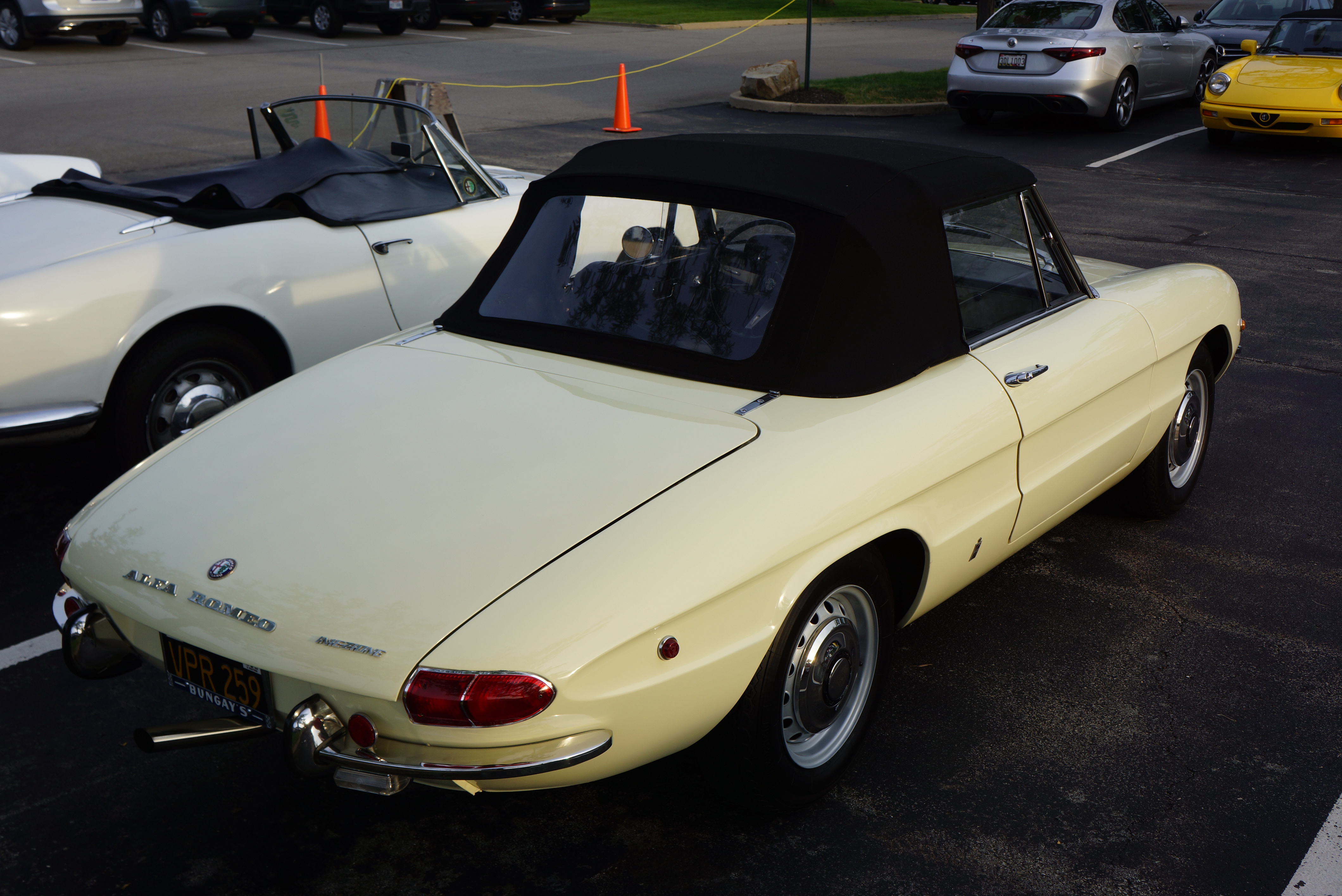
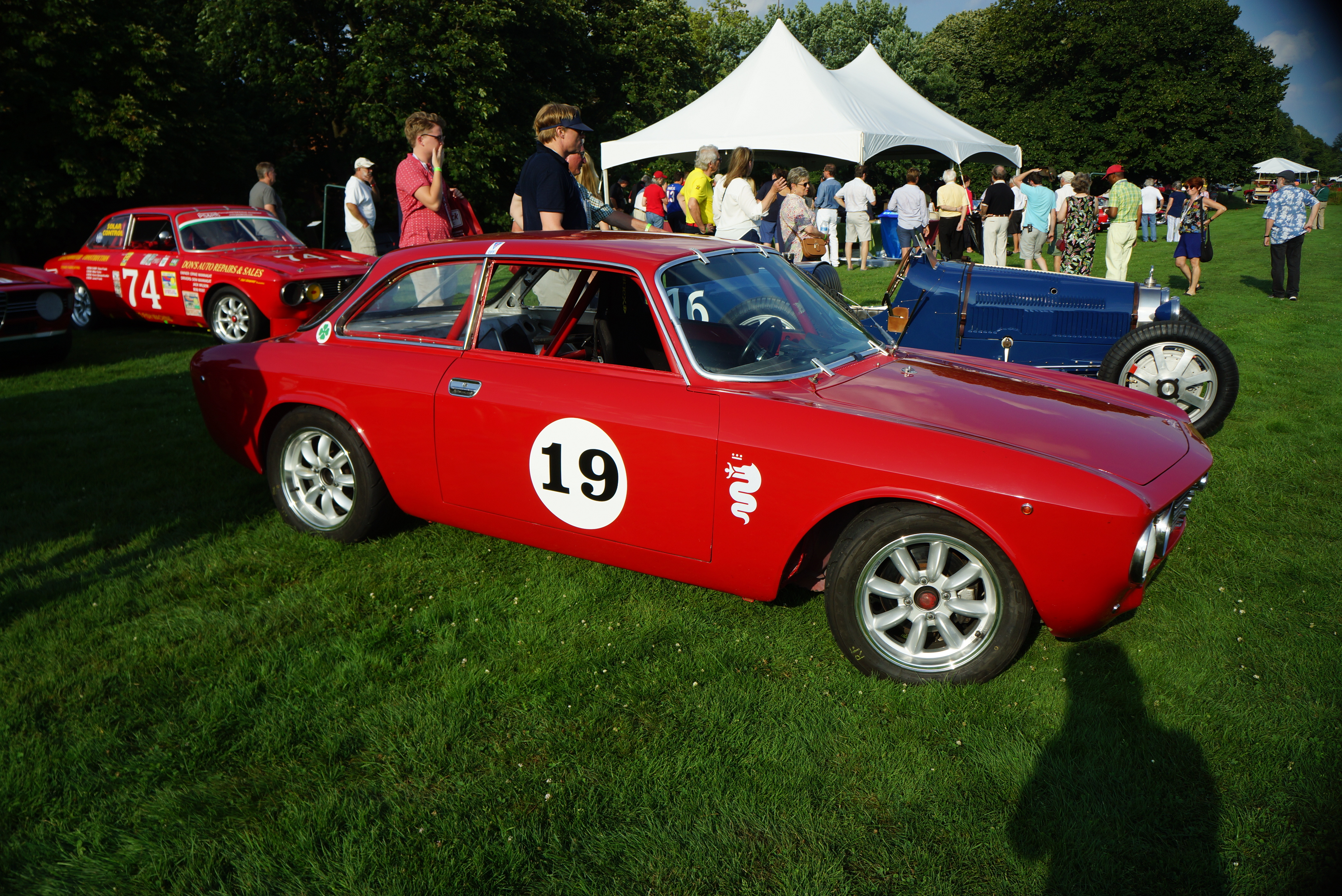
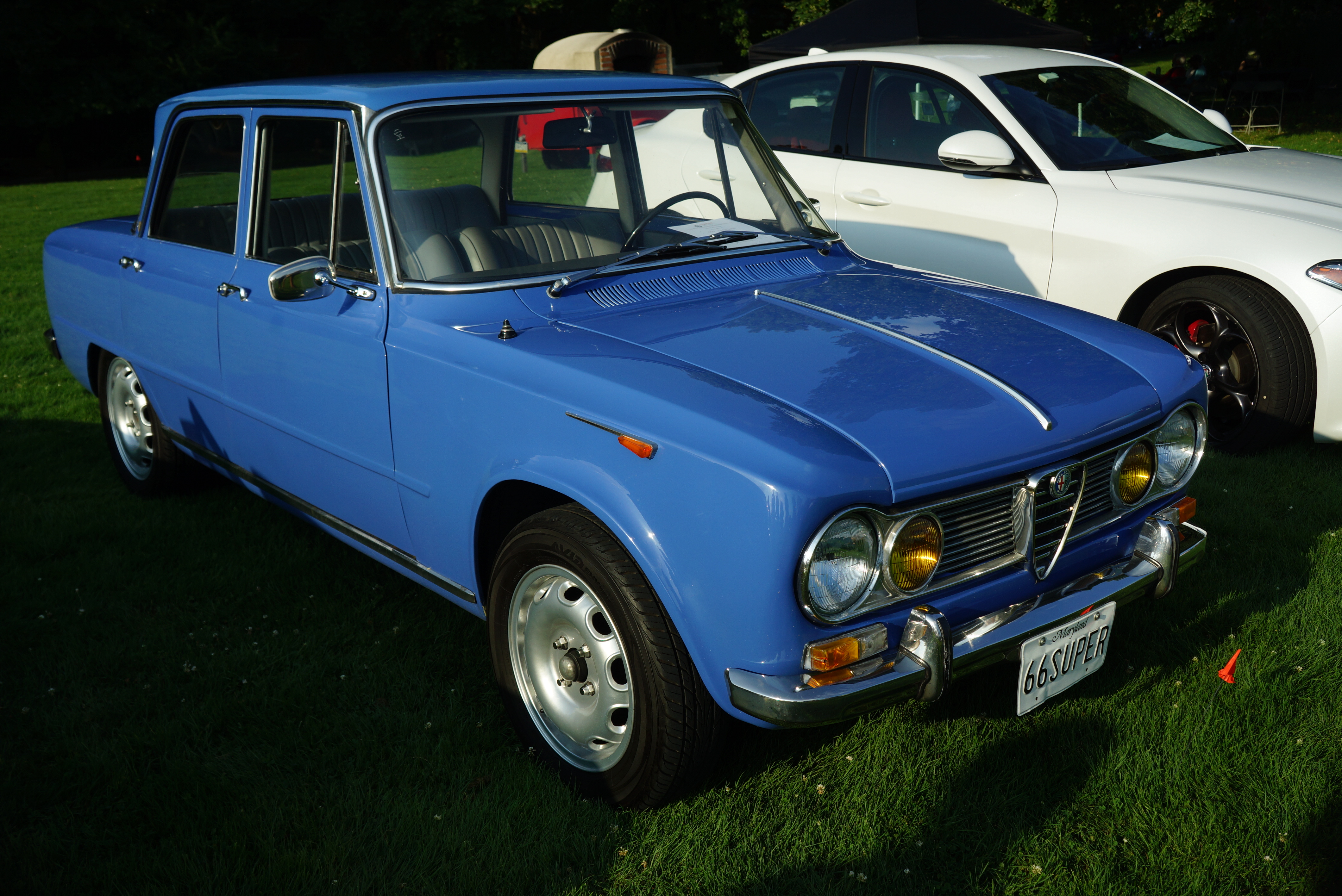
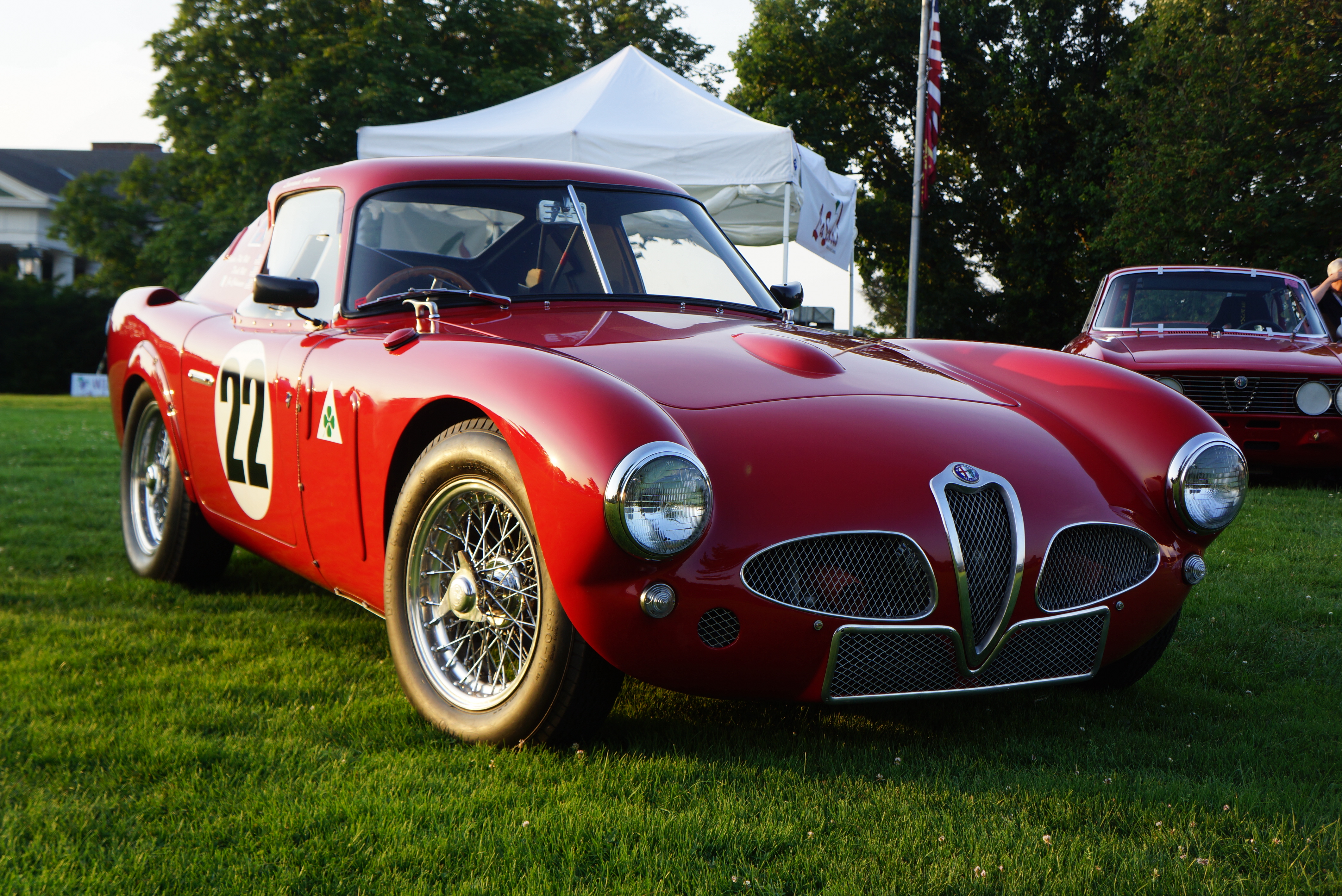
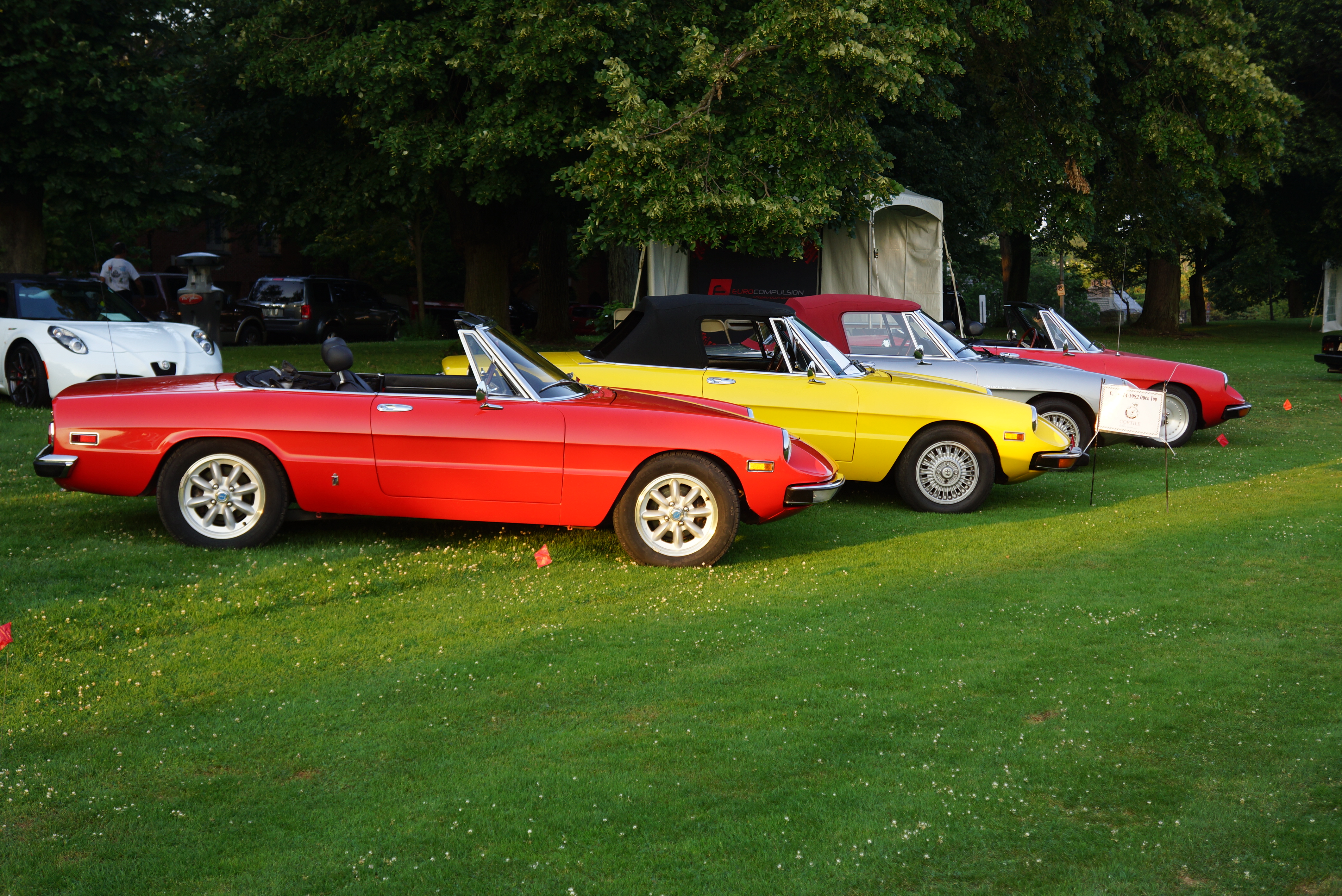
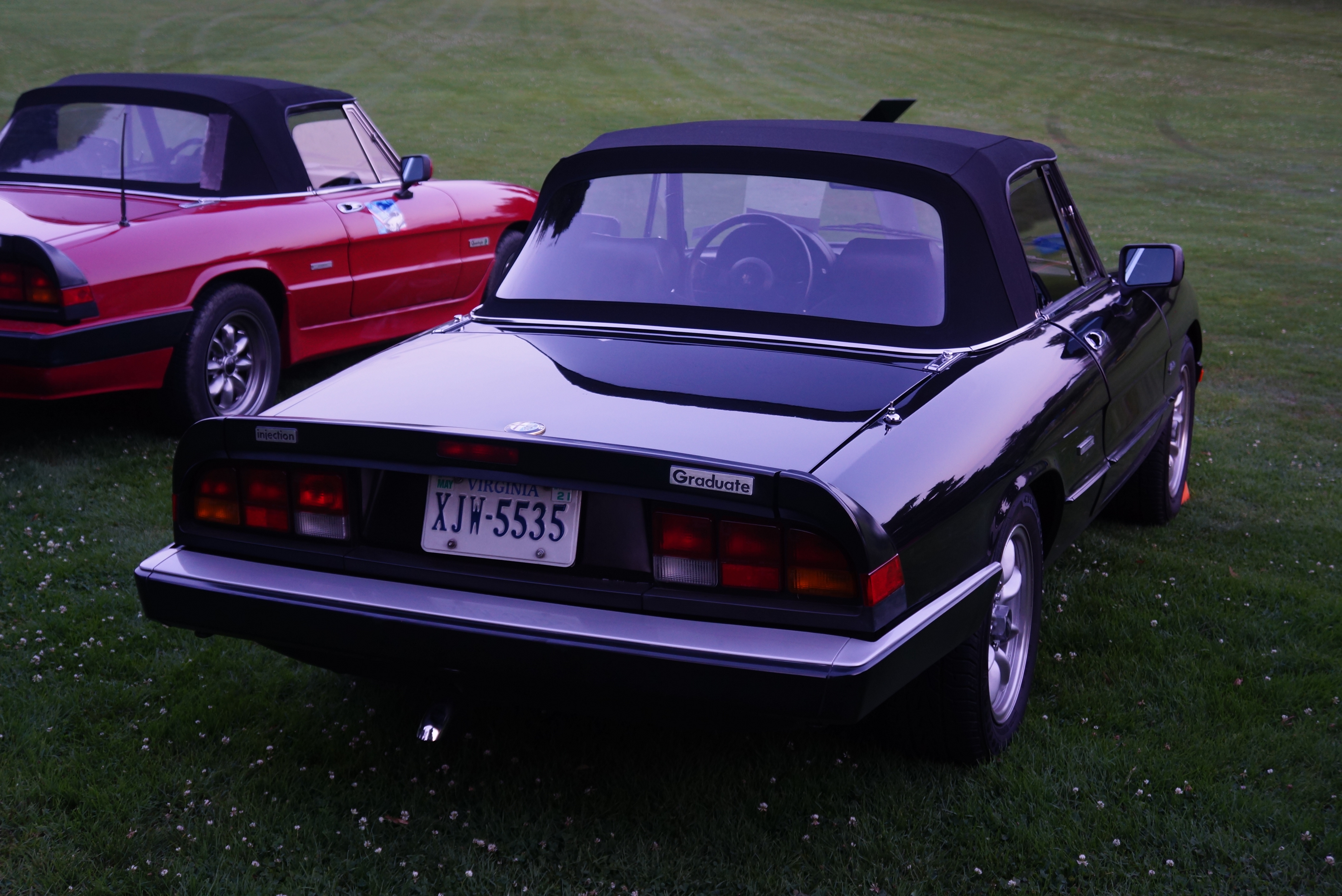
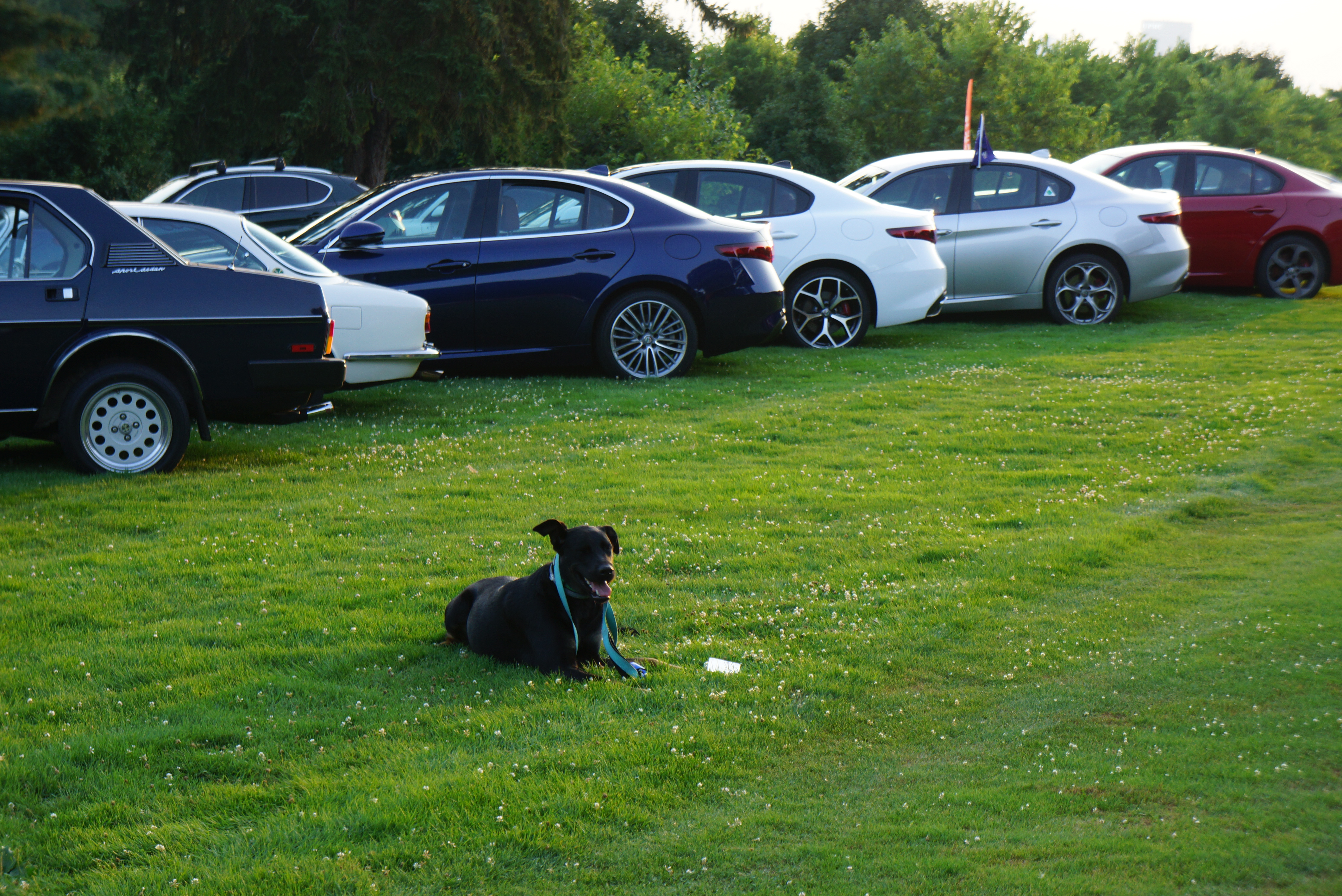
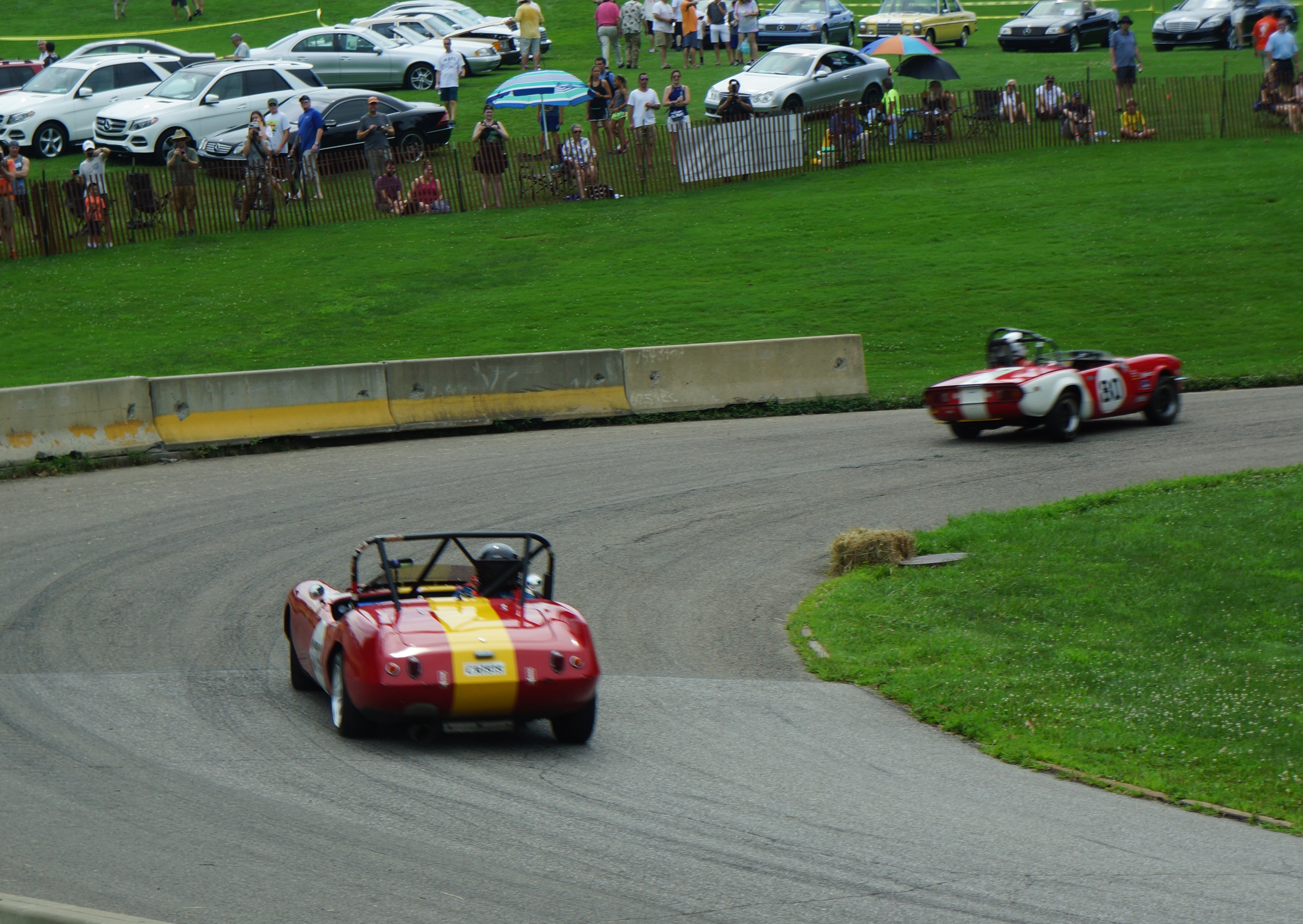
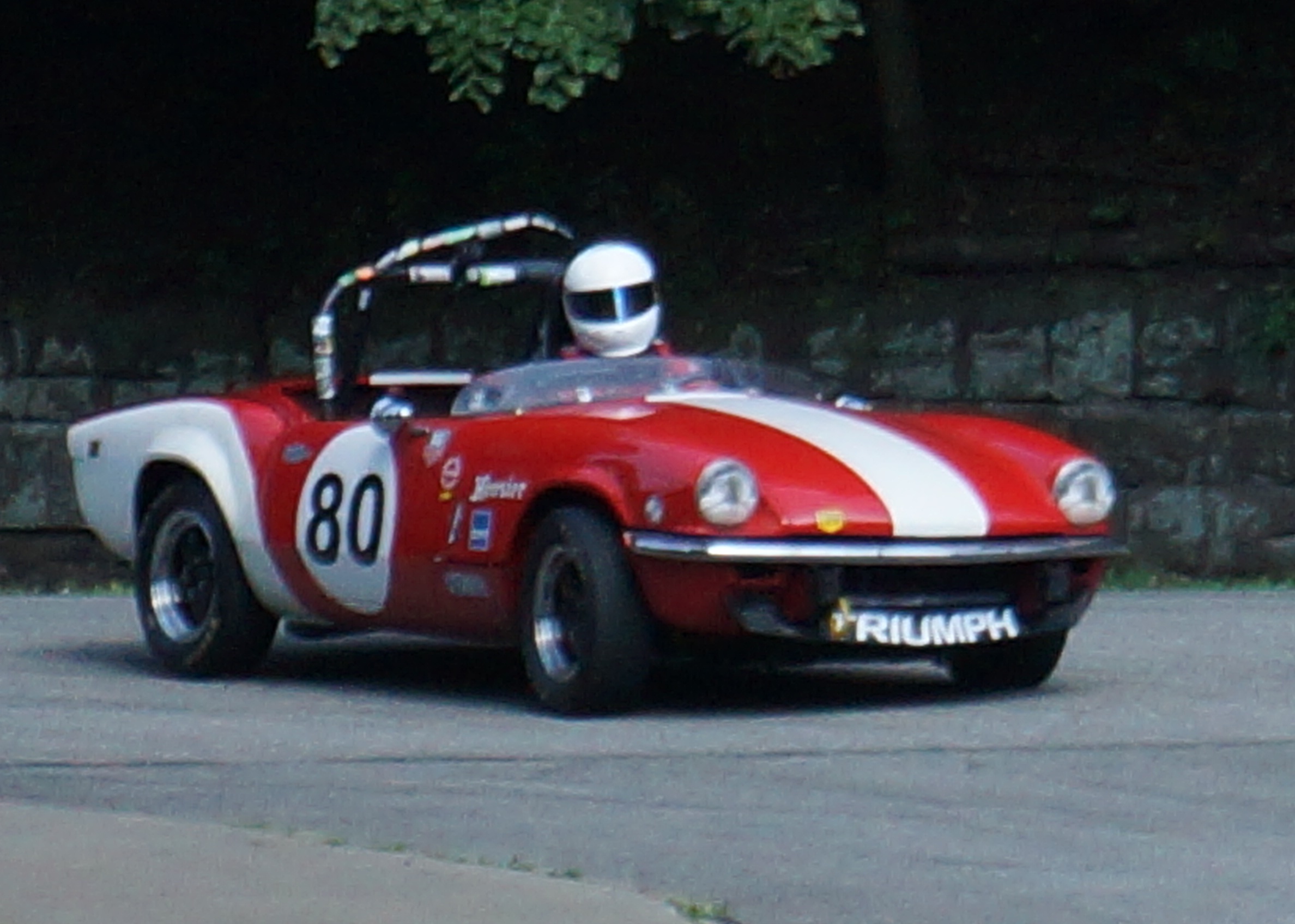
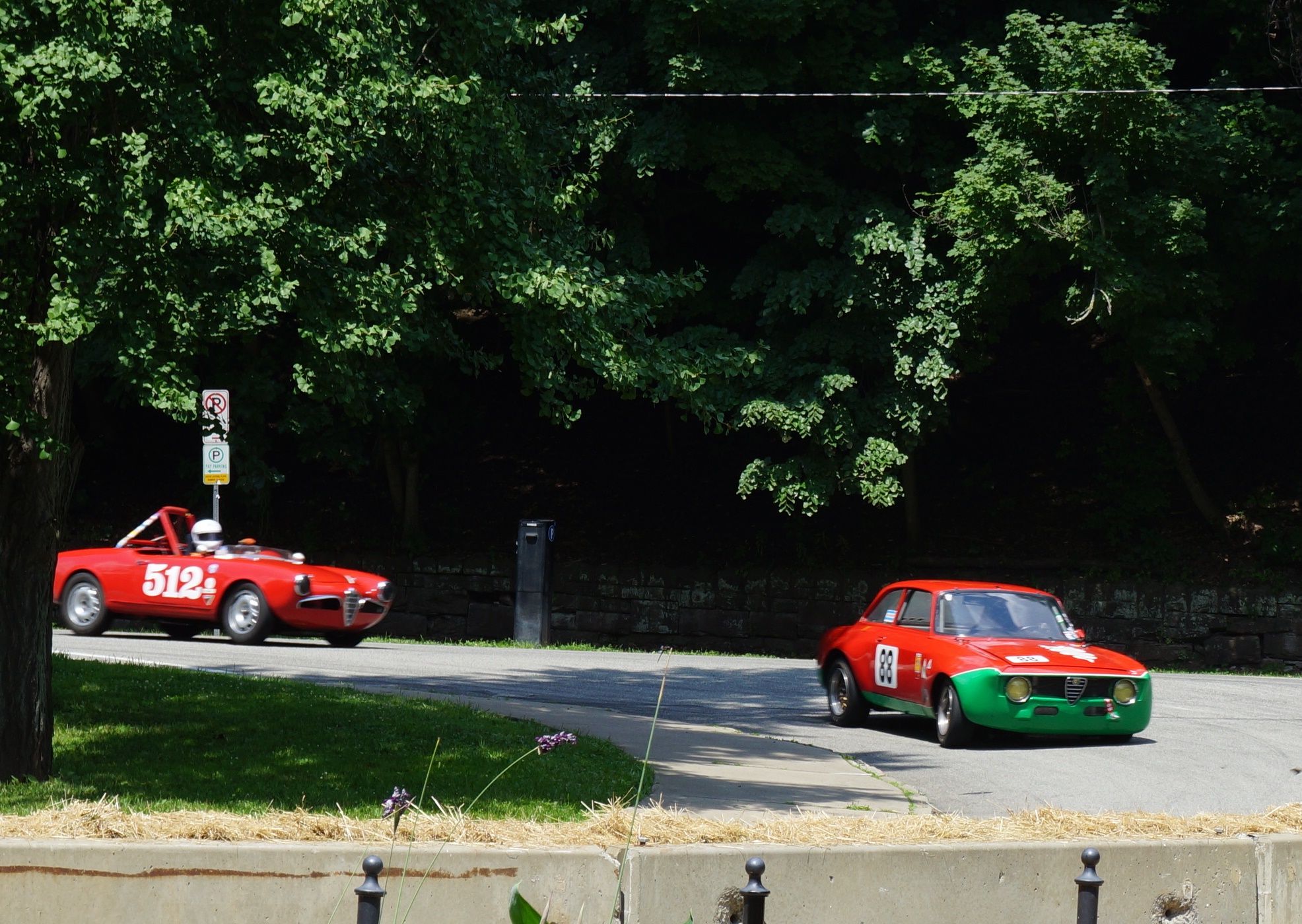
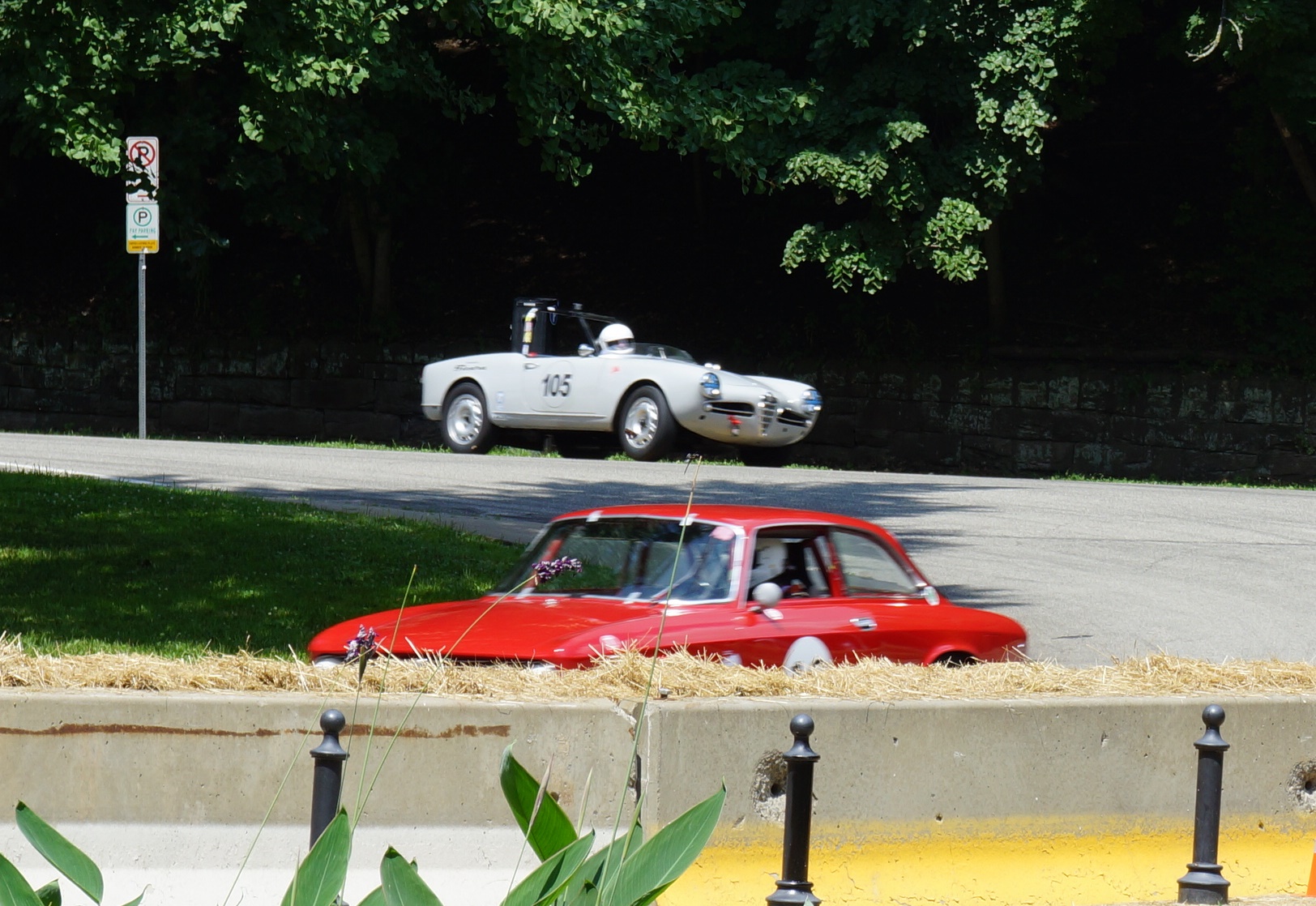
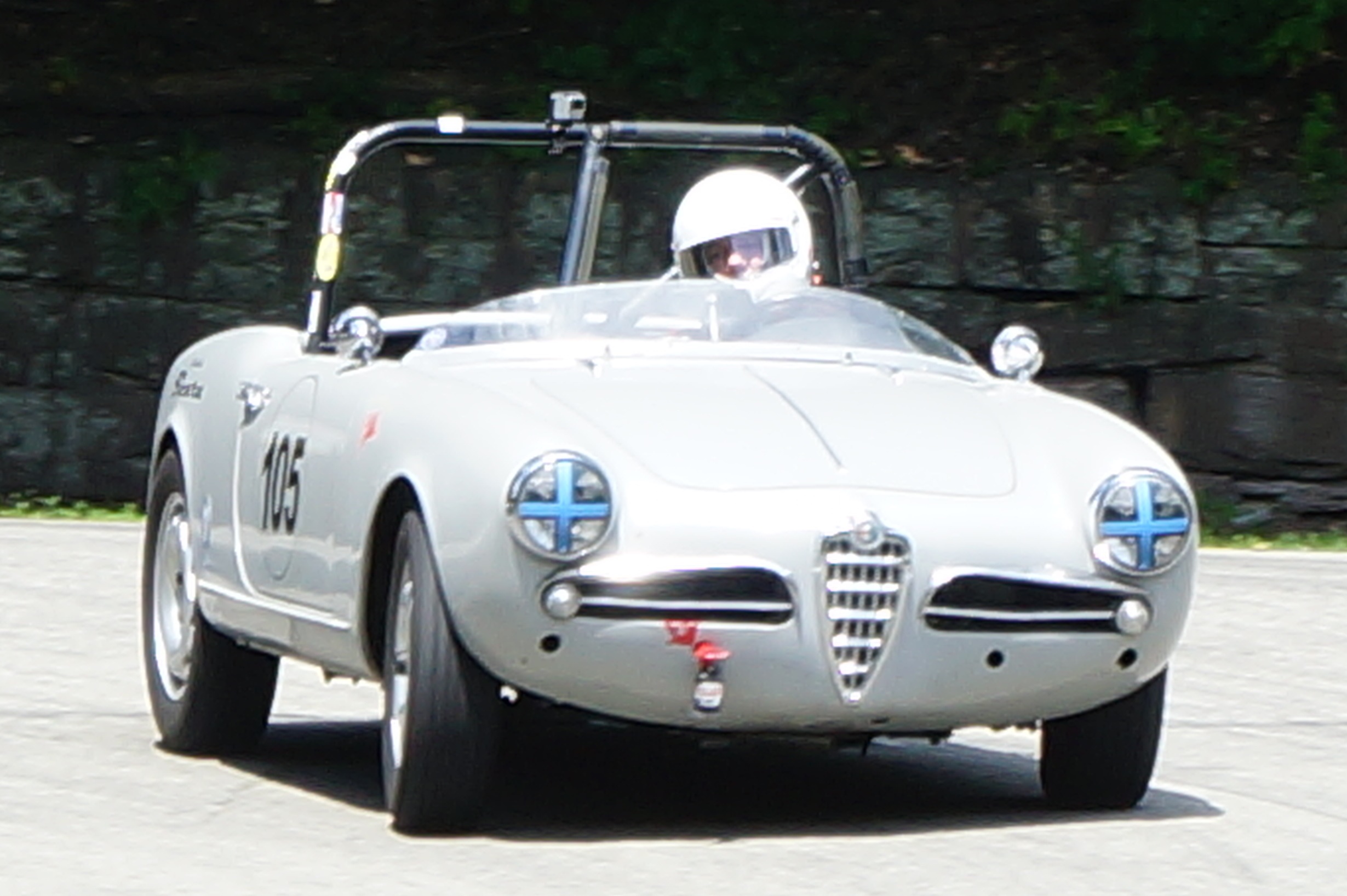
I can assure you that the rest of this post will be short on words and long on photos. On Friday evening there was an AROC club dinner at the Pittsburgh Golf Club, with dozens of striking Alfa Romeos looking resplendent on the lawn in the setting sunlight. Saturday was the all-makes show, with literally thousands of domestic, Italian, German, Swedish, and Japanese vehicles on display. Saturday night was the AROC banquet dinner. And on Sunday, club members were treated to a reserved spot along the track to watch some spirited vintage racing. (We also saw race cars driven in anger on Saturday.)
The volume of photos means that I’ve divided this blog post into Parts 1 and 2: Part 1 features photos of Alfas from various vantages during the weekend, plus an assortment of racing car pictures. Part 2 will follow and will include photos of cars other than Alfas.
As always, click on the photos to enjoy full-screen resolutions of them.
ALFAS IN THE HOTEL PARKING LOT
ALFAS AT THE FRIDAY EVE PITTSBURGH GOLF CLUB DISPLAY
For varying reasons, we (the “we” being my buddy George) and I are departing Friday morning. It’s about a 350-mile one-way trip, and while my 51-year-old Italian car is more than up for it, there’s still all that last-minute stuff to attend to. Since it got a full tune, valve adjustment, and oil change earlier this year, most of what I’ve put effort into these last few weeks has been cosmetic. After all, it will be on a show field with many of its siblings and cousins, and it needs to look it best!
Here are some of those recent efforts:
Floor mats
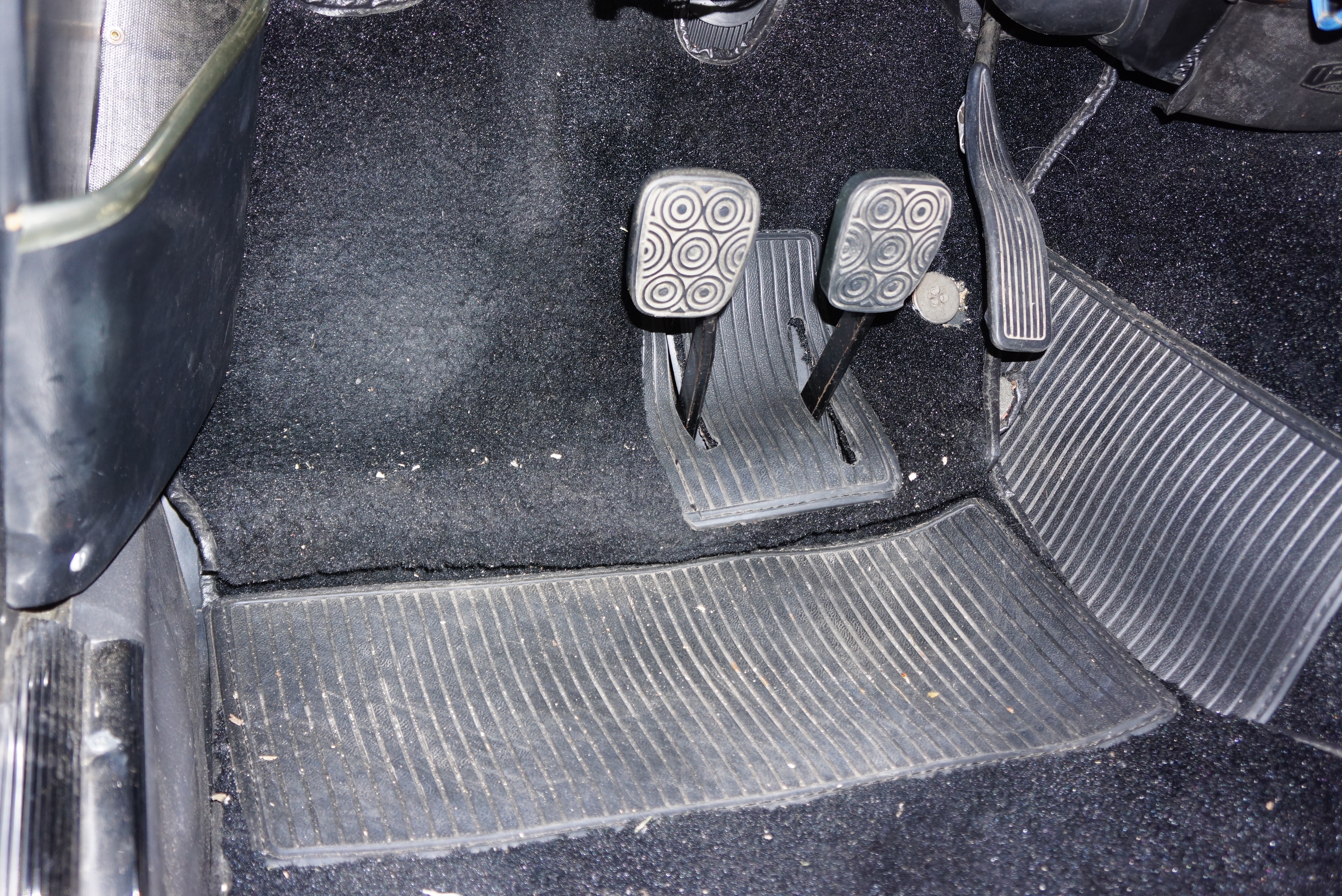
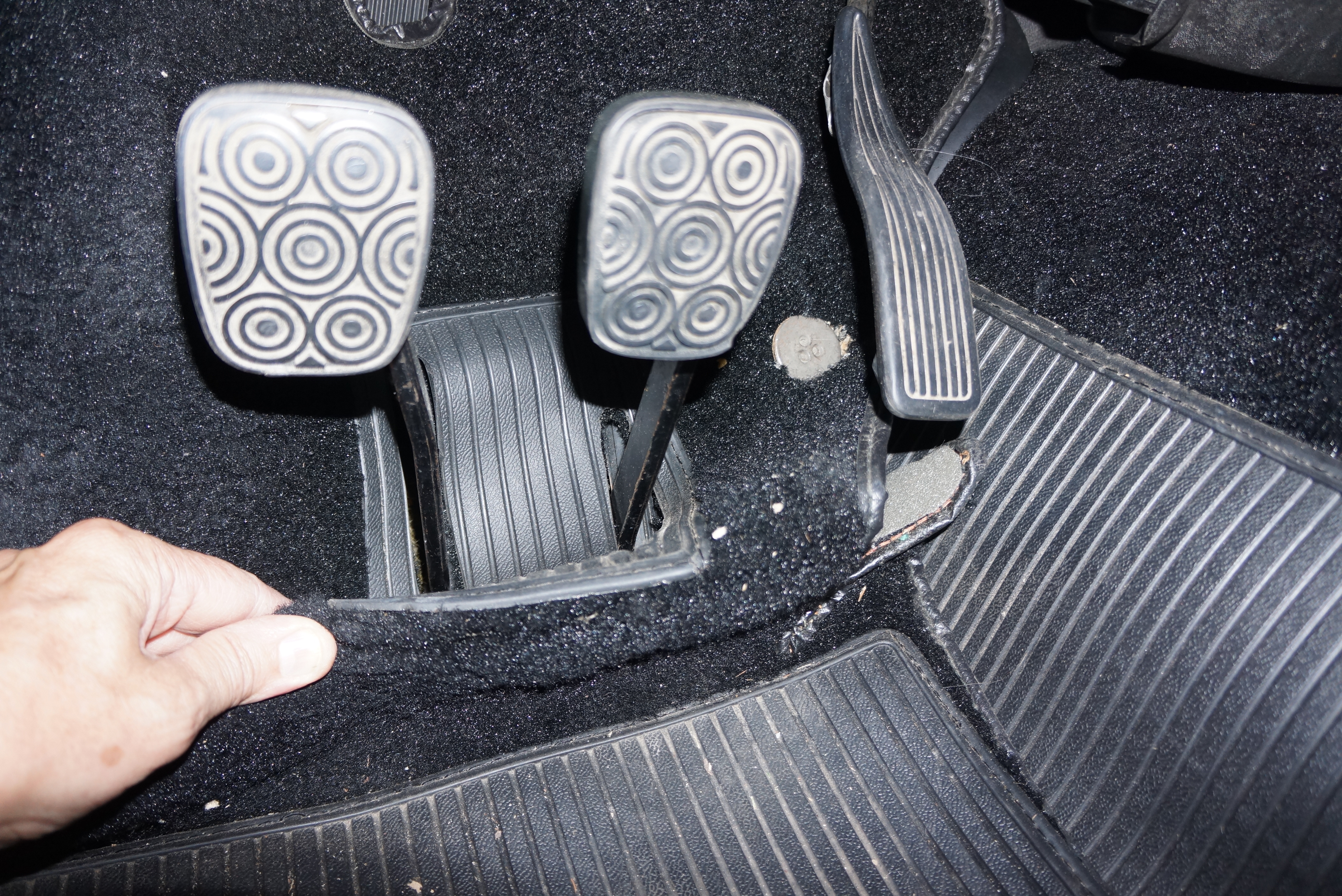
When I got the car in 2013, there were custom-fitted carpet floor mats in place. Pete, the previous owner, had had them made, and they fit well and looked good. But during my time with the car, the driver’s side mat had started to bunch up near the pedals. Looking at replacement mats online, the biggest challenge was finding a set that could properly deal with the “standing pedals” (hinged through the floor) on my Alfa. The set in the car had a rubber panel, cut to allow the clutch and brake pedals to pass through. I was looking for similar, and was not satisfied with what I was finding.
Existing mat handled standing pedals
but bunched up near them
The good folks at Coco Mats (www.cocomats.com) offered to make a custom set for me, and went so far as to send me a template for a hanging pedal car, which I could customize. But during my email exchanges with them, they seemed reluctant to deal with a mat that would be slotted for the standing pedals. While I liked the idea of coco mats, I continued to search.
My usual UK supplier, Classic Alfa, didn’t carry floor mats at all, but Alfaholics did (www.alfaholics.com). While the mats appeared able to adapt to the pedals, the image on the screen was less assuring. The Alfa logo AND script were rendered in bright red, and took up a large chuck of real estate on the mat; perfect perhaps for a car with some red on the outside or inside, but my GT Junior has neither. I decided to keep looking.
Centerline, based in the states, possibly had a good-looking mat, as the screen shot showed the Alfa logo done up in proper colors. The issue for me was the entire mat wasn’t shown, and I wanted to see how they handled the pedals. So I called and asked if someone could perhaps take a photo or two and send that to me. The nice chap I spoke to said, “well, it’s Friday, but we could do that for you next week”, to which I replied, “great!”. When “next week” came and went, I called again, and got a different, somewhat less-nice chap. His first question was “who did you speak to?” and I replied “I have no idea”. When I again asked for pictures, he said “well, we’re kind of busy filling orders”. Hmm. Guess I’ll just look somewhere else then, shall I? (I never did receive photographs from them.)
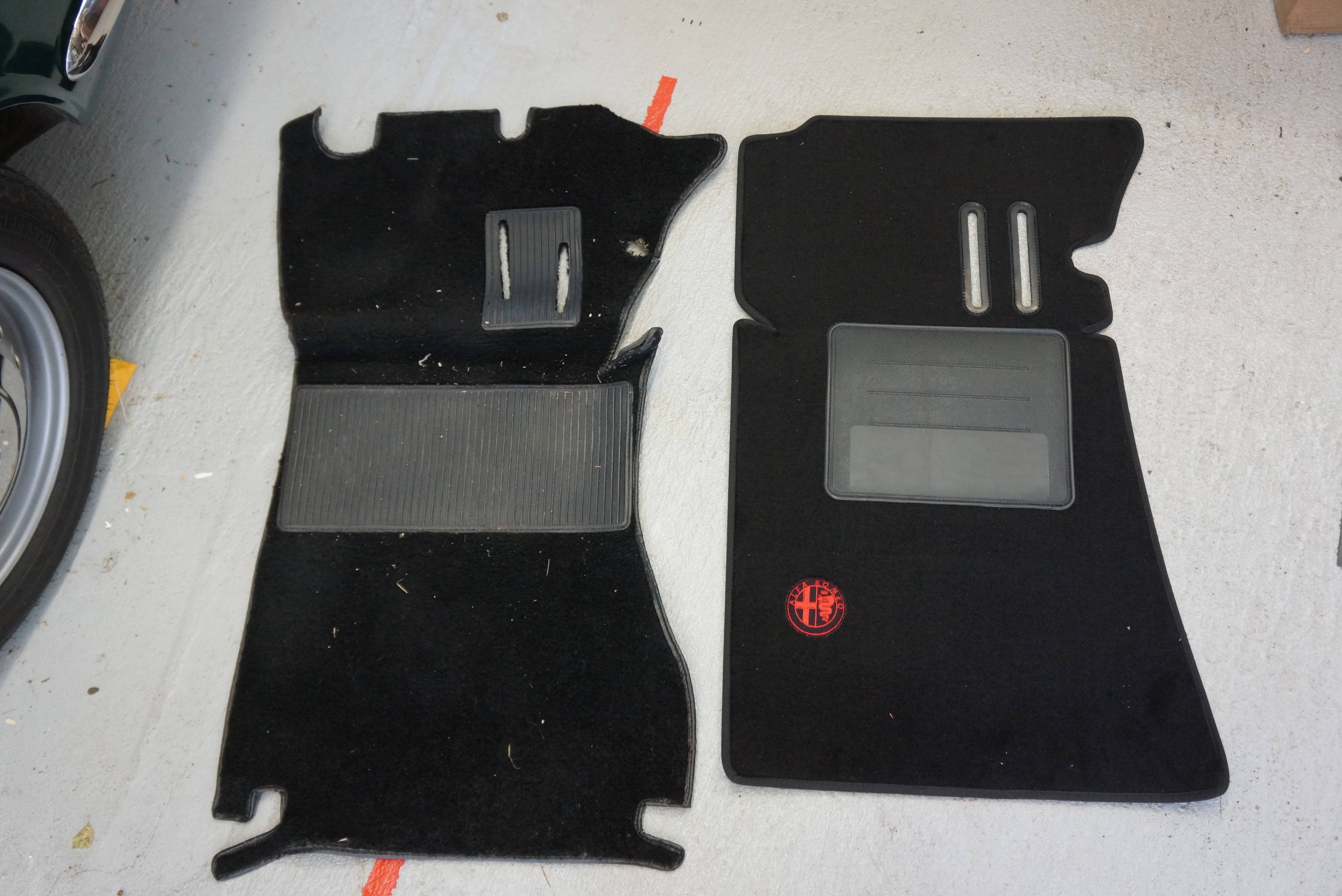
Driver’s mats: old mat on left, Mr Fiat mat on right
Out of frustration, I Googled “Alfa Romeo mats made in Italy” (U.S.-made mats were for hanging pedal cars only). This brought me to the website of Mr. Fiat, where I saw good-looking mats for standing pedal cars. The Alfa logo was in all-red, but it was small and subtle. I called. Mrs. Fiat answered the phone, and verified that they had my mats in stock (the company is in Atlanta GA). She transferred me to Mr. Fiat, who took my order over the phone. I had the mats in 3 days.
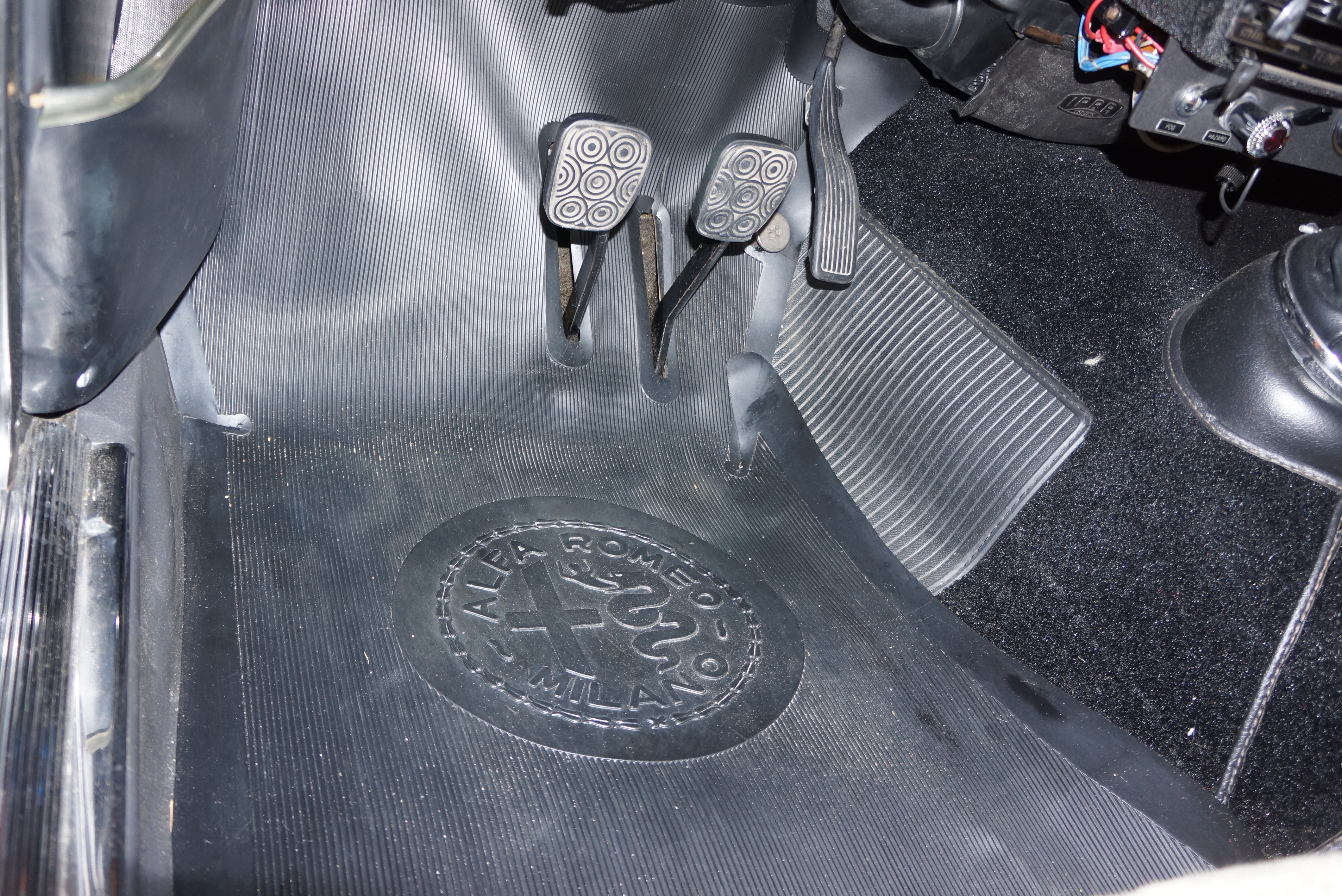
Juniors left factory with rubber mats, but you got the cross & snake logo!
The look is good; the fit is just so-so, but about what I would expect for aftermarket mats. Their main purpose, after all, is to protect the original rubber mat flooring, so these will get the job done!
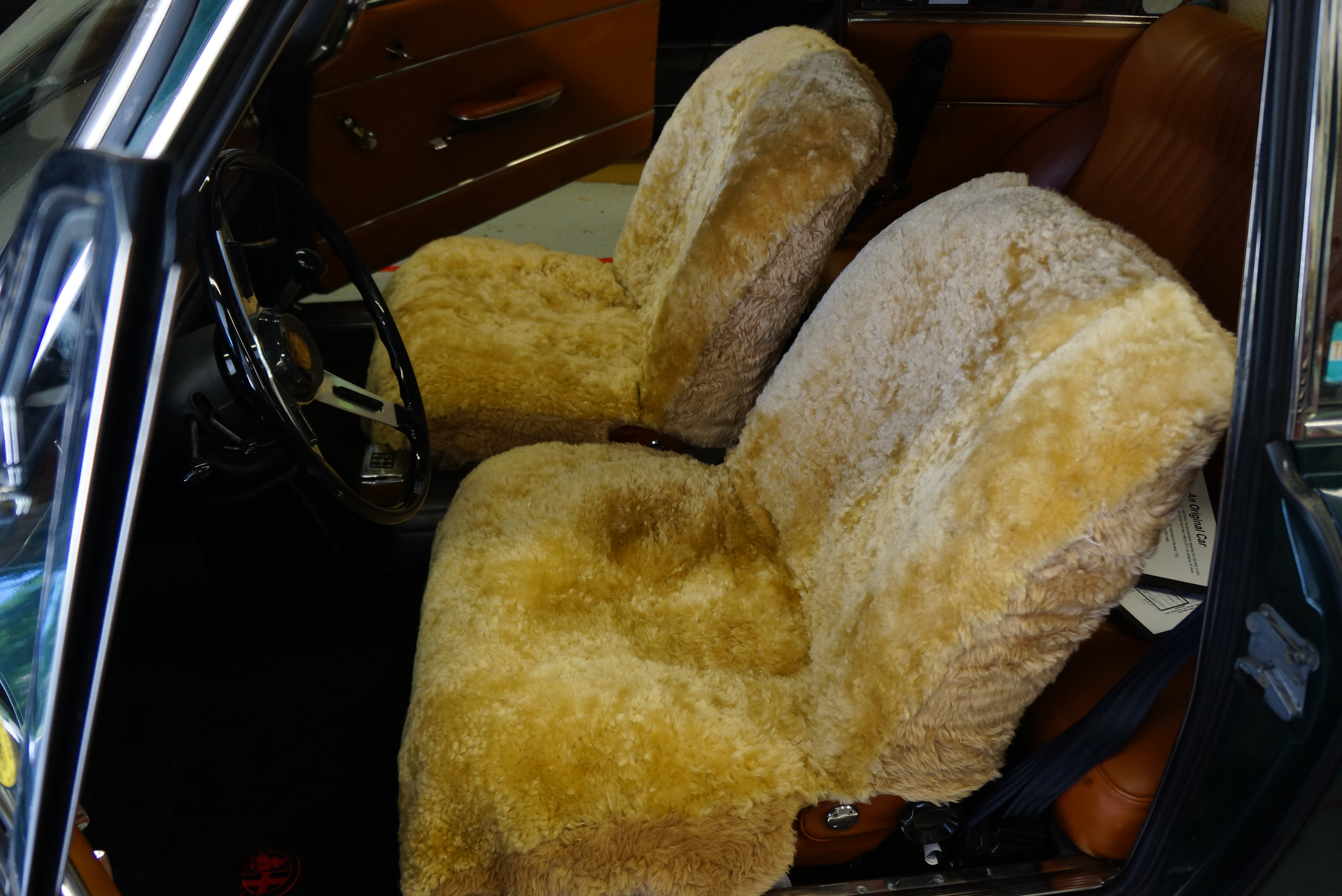
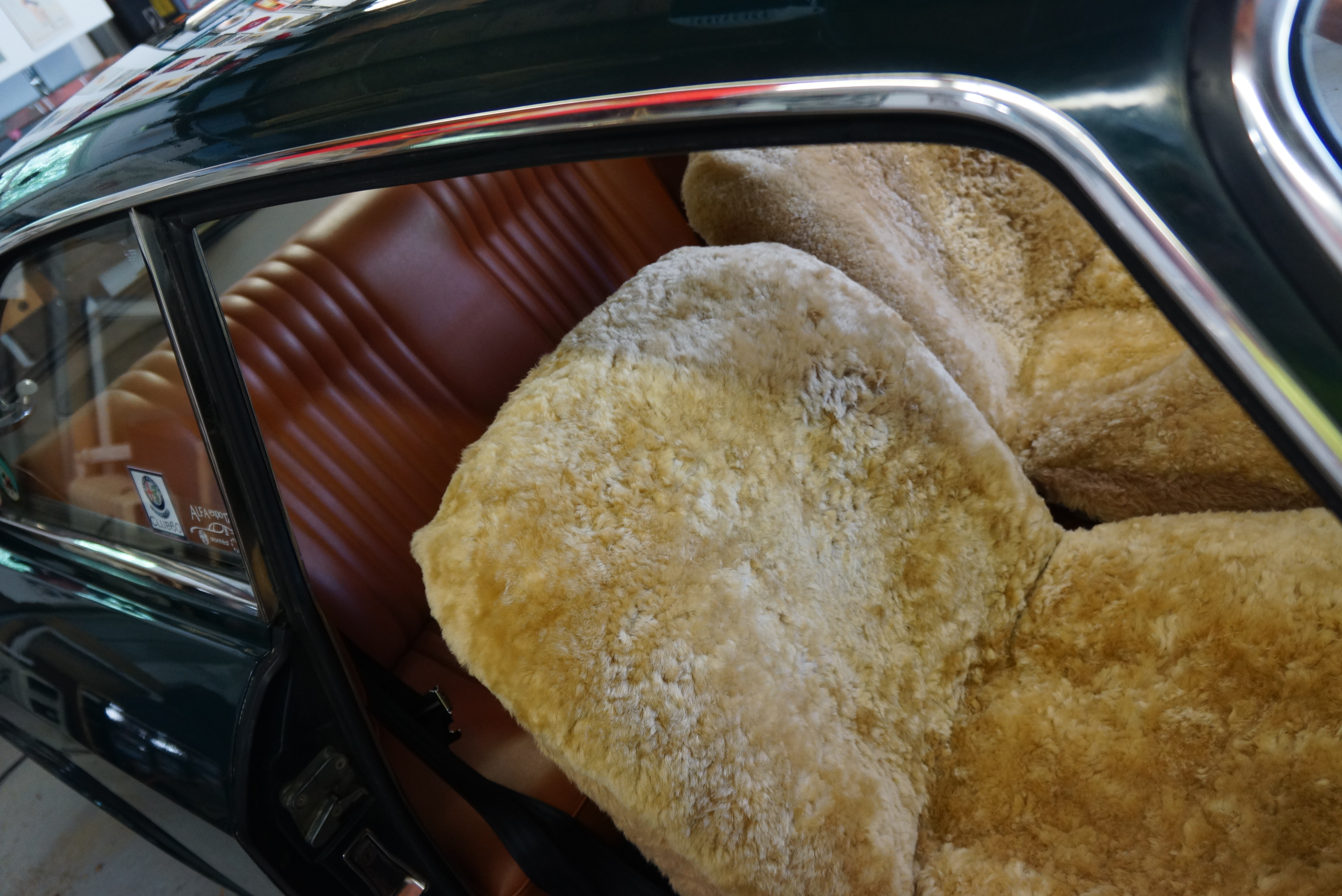
I will admit that on 90-degree summer days, the vinyl upholstery in my car becomes a bit unbearable. So the idea of sheepskin covers, with their “cool in the summer, warm in the winter” advantages, appealed. I’m also lucky to work for a company which sells aftermarket car parts and accessories, and I bought my covers, through www.carid.com, from U.S. Sheepskin.
Sheepskin covers are for travel only; big help on hot days
They are universal fit, and while the fit on the seat back is excellent, they are quite big on the seat cushions. The color is complementary at best, but that’s OK, because these are for travel only. Once I get to a show, the covers are coming off to expose the original upholstery. I’ve made some short local trips with the seat covers in place, and so far, pretty comfy.
US Sheepskin doesn’t carry pigskin brown; tan was closest match
Polish and wax
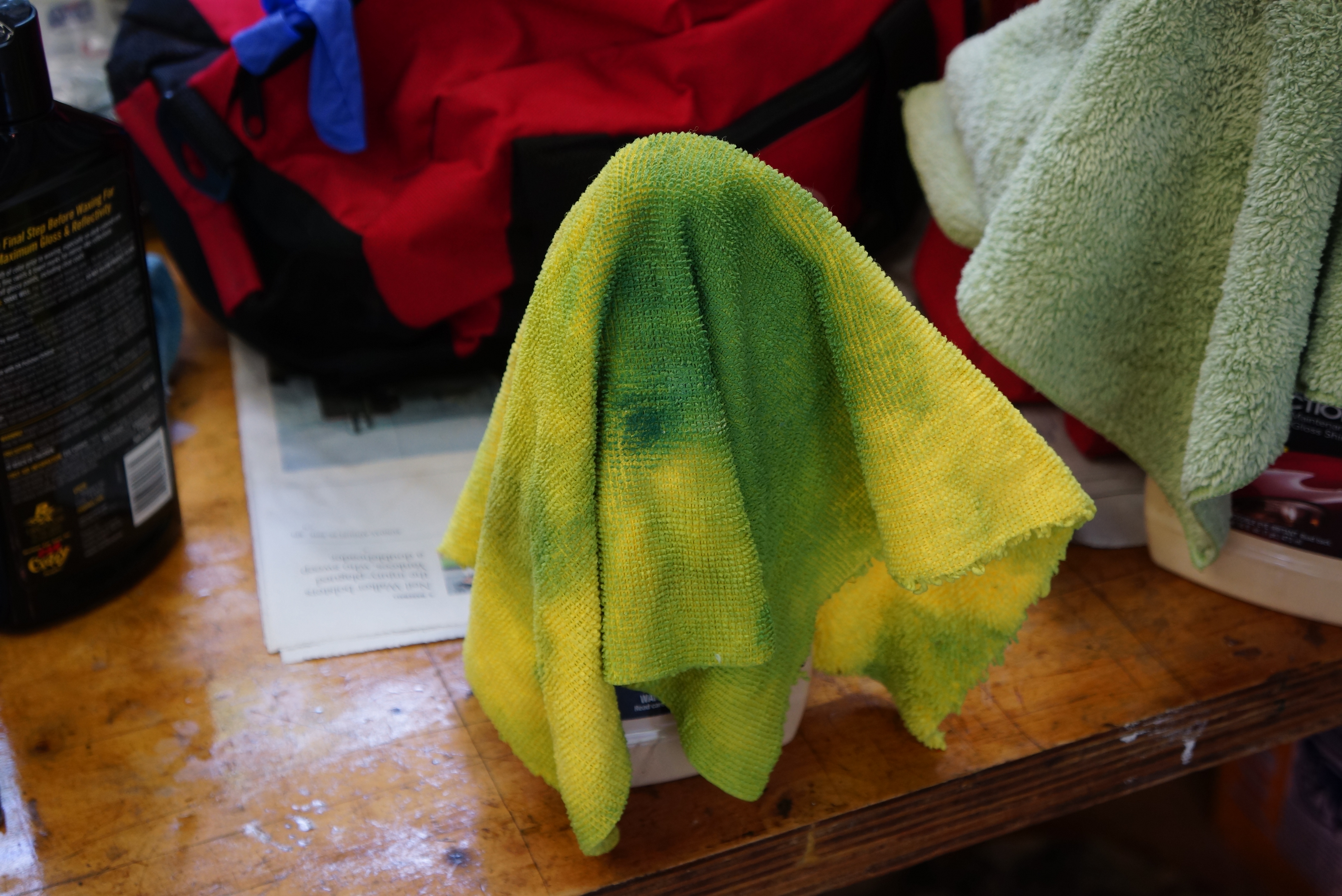
The Alfa has single-stage paint, meaning, no clear coat on top. Not sure that any 1967 cars had two-stage paint, probably not. I’m also guessing that its paint is lacquer, as it has that “soft” feel to it. Whenever I apply any kind of wax, the cloth quickly turns green, so I know I’m removing paint.
Since buying the car in 2013, I’ve put over 10,000 miles on it. When it goes on one of the New England 1000 rallies, it spends a full week outside, and that quickly takes its toll on the paint. In my garage, the car stays covered, but the paint still needs frequent attention.
Meguiars products have been my favorites for over 10 years now, and I’m 99% exclusive with them. For the Alfa, having tried several different combinations of products, I’ve settled on two: Show Car Glaze #7, and Liquid Yellow Wax #26.
#7 and #7 available in the Mirror Glaze Professional line
The Show Car Glaze is a polish, designed to rejuvenate the paint by nourishing it and adding essential oils back into it. It has some compounding effect, but very little. I’ve read articles which refer to Meguiars #7 as “Queen For A Day”, meaning that it may be short-lived, but it will quickly bring back a deep shine.
Yellow Wax #26 is a blend of carnauba and other waxes. It’s easy to apply; there’s no rush to remove it; and it doesn’t dry white, so if you get a little in some nooks and crannies, it’s no big deal. It also seems to sit nicely on top of the #7 Glaze.
Microfiber cloth shows results from polishing entire car
I started with the horizontal surfaces, which had the most hazing on them, and they cleaned up nicely. I was able to go lighter on the sides, and finished up with the front and rear. By the way, the #26 wax works beautifully on my stainless bumpers, frankly, better than the metal polishes I have. We’ll see how well the car does when it’s judged on Saturday!
The Alfa Convention in Montreal in 2017 was my first visit to an AROC event, and I was knocked out. I missed 2018 in Washington state, and am thrilled that the 2019 Convention is so close. Watch this space for updates and a full report!
As I said in my post about the recent AACA Spring National, it’s really about the people and their stories behind their automotive treasures, more than is it about the cars themselves. This has been true at so many recent car shows, and it was evident again last weekend.
Below are three stories about three individuals whose paths crossed mine on Saturday: one whom I met for the first time that day; one whom I thought I was meeting for the first time when in fact we had met six years prior; and one whom I had gotten to know but had not seen in almost 20 years.
RIDING IN RON’S E-TYPE
Saturday morning; in a golf cart with Leif Mangulson, the Chief Judge, who wants to show me the spot to locate the club’s PA system. While we’re stopped, a gentleman approaches the cart. “Hi Leif, I’m Ron, and we spoke numerous times. I have the Jag”. Hmm, I ponder, a Jag. This gets my attention, and I find it impossible to not speak. “Excuse me, Ron, my name is Richard. What kind of Jaguar do you have?” “Oh, a ’66 E-Type”. “Fixed Head Coupe or Open Two Seater?” I ask, trying to impress him with my use of the preferred Britishisms for the hardtop and roadster. “Mine’s the OTS”. “Oh, and as a ’66, it’s got the 4.2 liter engine, all-synchro gearbox, and better seats, yes?” “Yes, and my, sounds like you like these cars. Why don’t you make a point of stopping by to see it on the show field?”
Not only did I “stop by” to see the car – it was one of the cars for my Judging Team to evaluate! I was happy to see Ron again, and I assured him, AND my Team Captain, that I could fairly and objectively perform my duties within the engine compartment. When we were done, Ron again invited me to seek him out before the car was loaded back onto his trailer.
It was late in the afternoon by the time I worked my way back to Ron’s gorgeous opalescent silver-blue roadster. Ron and his son were packing up their chairs and other paraphernalia when Ron turned to me and asked “Would you like to ride with me back to the trailer?” The look on my face provided the answer. But I did ask “do I need to remove my shoes?” Ron laughed and said not to worry about it.
Ron entered the driver’s side while I squeezed in the passenger seat. With a little choke, ignition key turned to “on” and a push of the starter button, the big 6 immediately came to life. At 5’ 10”, I was surprised that my head grazed the erect convertible top, but at the same time, the seat cushion felt either overstuffed or not broken in, which could explain the lack of headroom.
The passenger’s view from within an E-Type
With the shift lever in 1st, Ron eased out the clutch and we were moving. The view out the front over the L-O-N-G hood was gorgeous. We were in a parking lot with dozens of other valuable cars, so he kept to a reasonable speed, perhaps 20mph tops. But the ride was sublime. My first ride even in an E-Type was worth it, and I certainly hope it’s not the last.
Watch out for that DeLorean!
When I got out, I couldn’t thank Ron enough for his kindness and generosity. Turns out that he lives about 45 minutes south of me, and he invited me to keep in touch. I certainly shall.
OWEN AND THE ISETTA
As I alluded to in my previous post, judging a class of cars was a rewarding, if very time consuming, undertaking. One of the most rewarding aspects of it was the sharing from the vast pool of knowledge among the five of us. We were judging Class 24, two-seat sports cars, so each of us had some level of familiarity with these vehicles, and the stories started to pour out.
Somehow, I let it be known that I had owned a BMW Isetta for the better part of 30 years. A while later, when judging was over, Owen, our Team Captain, came up to me. He asked me “do you still have the Isetta?” “No, Owen, I sold it.” “What year was that?” “I sold it at the RM Auction in Hershey in 2013”. With that, Owen removed his wallet from his back pocket, reached in, and pulled out a black and white photo. It was a snapshot of an Isetta with two boys standing next to it. One boy, a teenager, was quite tall, and the younger fellow was pre-school age.
“Wait!” I exclaimed. “I’ve seen this photo before, but I’m not sure where.” Owen asked “do you read Auto Restorer magazine? The photo was in there”. “Nope, that’s not where I saw it”. “What color was your car?” “Red, solid red”. Owen said “I now know where you saw it”, and related this story to me.
He was able to recite in some detail the location of my car within the RM Hershey tent, and remembered that he had approached me in 2013 to tell me how his parents bought a new Isetta which they kept for many years. He had shown me that photo in Hershey, explaining that the tall fellow was his older brother, and the little guy was he at 5 years old. A few days later, Owen kindly mailed me a photocopy of that photo, along with the letter he had written to the magazine.
The Isetta with young Owen, as printed in Car Restorer magazine
The coincidence of again meeting someone who had shown me a photo of the family’s Isetta 6 years ago was uncanny. That we would end up on the same Judging Team goes to show how small this automotive hobby can be. But Owen would not be the ONLY person on the Team with whom I had a connection.
YES, THATIAIN TUGWELL
Day-of-show judging at an AACA event always starts with the judges’ breakfast. There, you meet your team, get an overview from the Team Captain, and preview the list of vehicles to be judged. I was a bit late for breakfast, so while the others talked, I was still getting up several times to fetch my eggs and coffee.
When I got back to the table, I finally saw the list of cars, and noted that the printout also included the names of all my fellow judges. A quick eyeball scan revealed that I knew no one at my table, except….. How often do you come across a first name like “Iain?”
I looked up from my coffee. He was sitting directly across from me. The din in the room forced me to raise my voice almost to a yell. “Hey Iain! I KNOW YOU.”
His expression told me he didn’t quite know what to make of that comment. I continued. “I don’t expect you to remember, but the first time was 1998. A buddy of mine and I were on the New England 1000, in a British Racing Green Sunbeam Tiger”. Slowly, his puzzled frown changed to the slightest of smiles. Once I heard the accent, there was no mistake. “Oh yes, the Tiger, yes, I do remember it. How are you?”
Well, other than shocked to hell, I was fine. I grabbed my phone and texted Steve, the Tiger owner.
“You are NOT going to believe this. I’m at the judges table at the NJ AACA show in Parsippany. On my team is a guy named Iain Tugwell. Yes, THAT Iain Tugwell.”
Iain smiles for the camera
As if I needed to prove it, I snapped a shot with the cell and sent that to Steve too. To the two of us rookie rally drivers, Iain Tugwell was a legend. He ran the Sunday night “Famous Navigators School”, teaching us the finer points of scoring zero in our rally stages. There was probably some ex-military in him, as he was so set in his ways we nicknamed him “The Carmudgeon”. He was probably on the NE1000 with us until about 2001 or so, making it 18 years since we last connected.
Iain named as one of the Wranglers
“Famous Navigators School”
Judging with him was fun; he was the old Iain, short, brusque, to the point, but ultimately big-hearted and good-natured. Later on, I got to meet his wife Jane, and then bade them farewell, as they departed the hotel immediately after judging ended, to get home to Buffalo before midnight. I promised Iain that we would again see each other at an AACA event. I certainly hope to make that true.
What a show! Over 400 of the country’s finest classic and collector cars gathered in Parsippany NJ to participate in what was officially known as “The 2019 AACA Eastern Spring National”, but what was simply referred to by the NJ Region members who put it all together as “the National”.
Saturday morning’s last-minute detailing
Here’s the background: sometime last year, after a visit from an AACA Director encouraging us to take the leap, the NJ Region of the AACA (Antique Automobile Club of America) decided to host a National event (static car show, as opposed to a driving tour). This would be the first time since 1968 that a National meet would be held in the Garden State. It was “all hands on deck”, and dozens of Regional members (including yours truly) volunteered for duty.
The dates were picked: June 28 through June 30, 2019. The location/host hotel was found: the Hilton Hotel in Parsippany NJ, conveniently located a mile from Interstate 287 in the northern part of the state. As with any National, the several days prior to the actual car show would include a chance for car owners and club members to join optional tours to points of interest in the area. For me, Thursday and Friday were consumed with staying at the hotel to assist with behind-the-scenes work on merchandise and raffle ticket sales, as well as transporting the club’s PA system.
NJ Region staff in the merchandise/raffle room
Saturday, the big day, arrived, and many Regional members were already scurrying around the hotel’s hallways at 6am. After I got the PA moved into position, I put my 1993 Mazda Miata on the show field in the HPOF category (Historical Preservation of Original Features), and rushed to judges’ breakfast.
Last year, as part of my contribution to making this show happen, I decided to offer my services as a judge for The National. Serving as an AACA Judge is a major time commitment. First, one is obligated to attend at least one judging school a year (I managed two, one in Gettysburg PA in August 2018, and again in Philadelphia in February 2019). Then, the day of the show, judges’ breakfast is mandatory. This is your opportunity to sit with your Judging Team, including Team Captain, review the list of vehicles to be judged, and make preliminary plans to tackle the task.
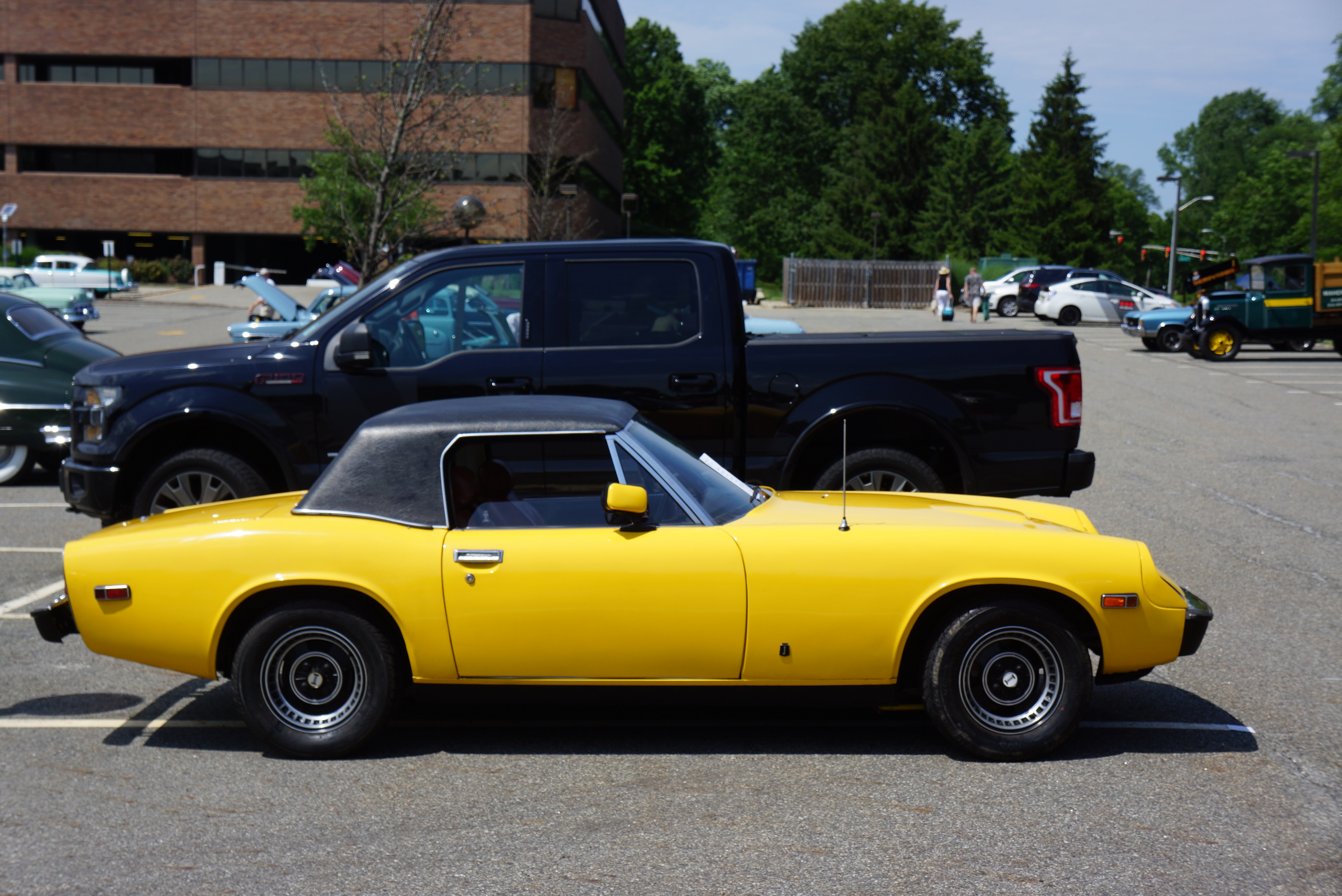
We judged the Jensen-Healey. We did not judge the truck.
We were assigned Classes 25 A/B/D, which were two-seat sports cars of a variety of model years. We began our duties at 11am, and judged 10 cars, mostly European sports cars (MGs, Triumphs, Porsches, Jaguars, a Jensen-Healey) plus a Cadillac Allante. When one includes the review and tallying of the score cards, the actual judging took over 3 hours. (Besides the Team Captain, the team includes one judge each for exterior, interior, chassis, and engine compartment. I had engine compartments, and spent my time scrutinizing valve cover finishes, hose clamps, and wiring connections, among other things.)
Fueled by water and chips, judges check and double check the score cards
Finally, released by my Team Captain, I grabbed my camera and dashed back to the show field to snap as many shots as possible. We were blessed with a sunny and dry day, if a bit warm (93 degrees and humid). Staying hydrated was paramount, as was protecting one’s skin from the relentless rays. The 400 or so cars were mostly in the points-judged classes, but we had ample turnout in both HPOF and DPC (Drivers Participation Class) too.
Looking at the placards, while most vehicles were from the metro NY/NJ area, I did note many vehicles from PA and CT, and cars from as far as NC and WI. In my haste, I forgot to photograph my Miata, which was vying for its “Original HPOF” award. I’m pleased and humbled to state that it did achieve that milestone.
Cars 25 years old and older are AACA eligible
The caliber and quality of the show cars amazed me. I’ve been attending Hershey since the late ‘70s; I’ve been to various Concours all along the East Coast, including Greenwich, Misselwood, and New Hope. Subjectively, I thought that the vehicles in attendance in Parsippany were collectively the most stunning group of AACA-eligible cars I’ve ever had the pleasure to gaze upon. Brief conversations with some fellow Regional members revealed that they felt the same way.
Saturday evening’s banquet was the icing on the cake. We finally had a chance to relax, have a drink or three, and chat with friends old and new. I’ll happily repeat myself: the older I get, the more I enjoy the PEOPLE and the STORIES more than the cars. And I’ve got stories, and they will follow as separate posts in the coming days.
1951 Willys station wagon
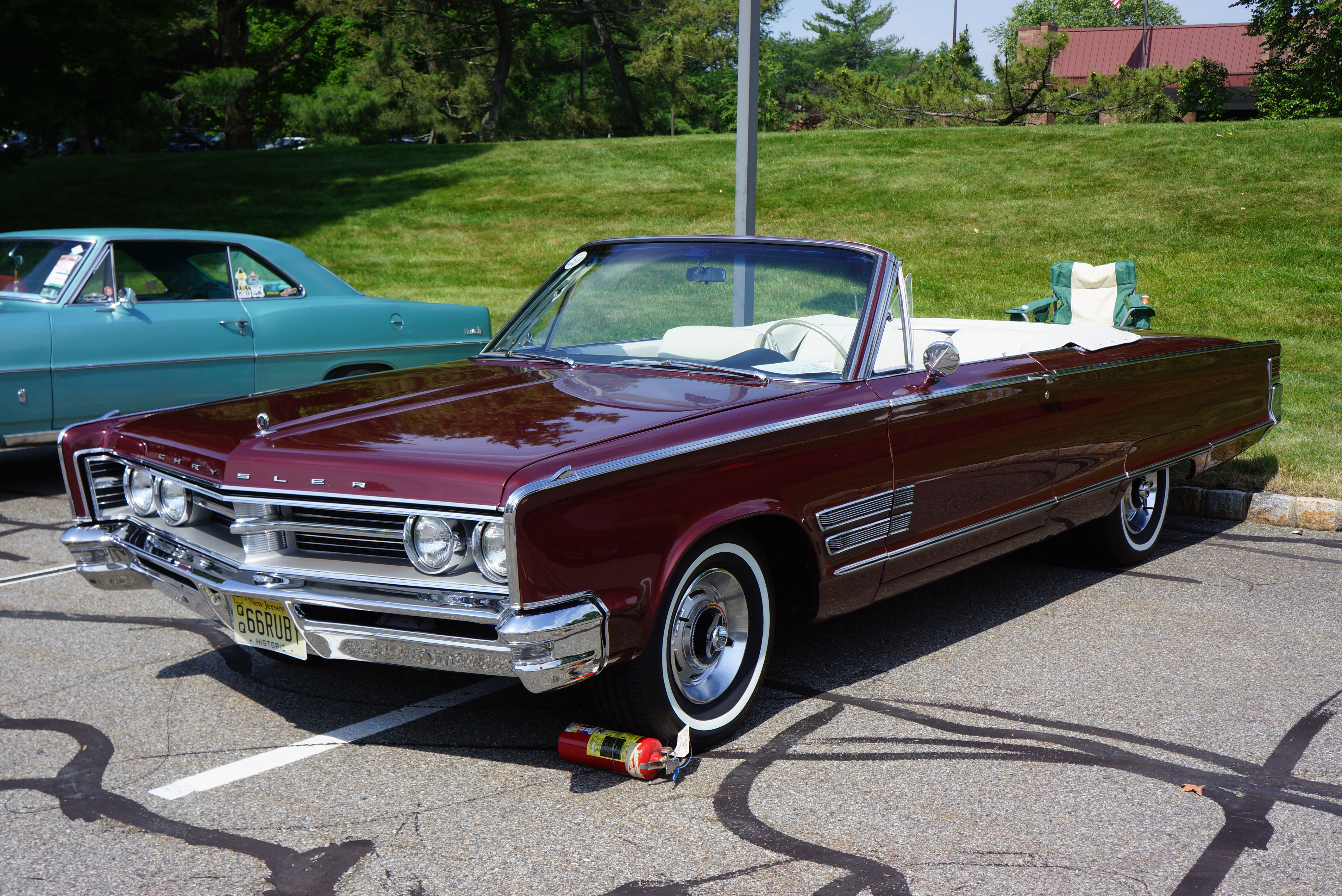
1966 Chrysler 300 convertible
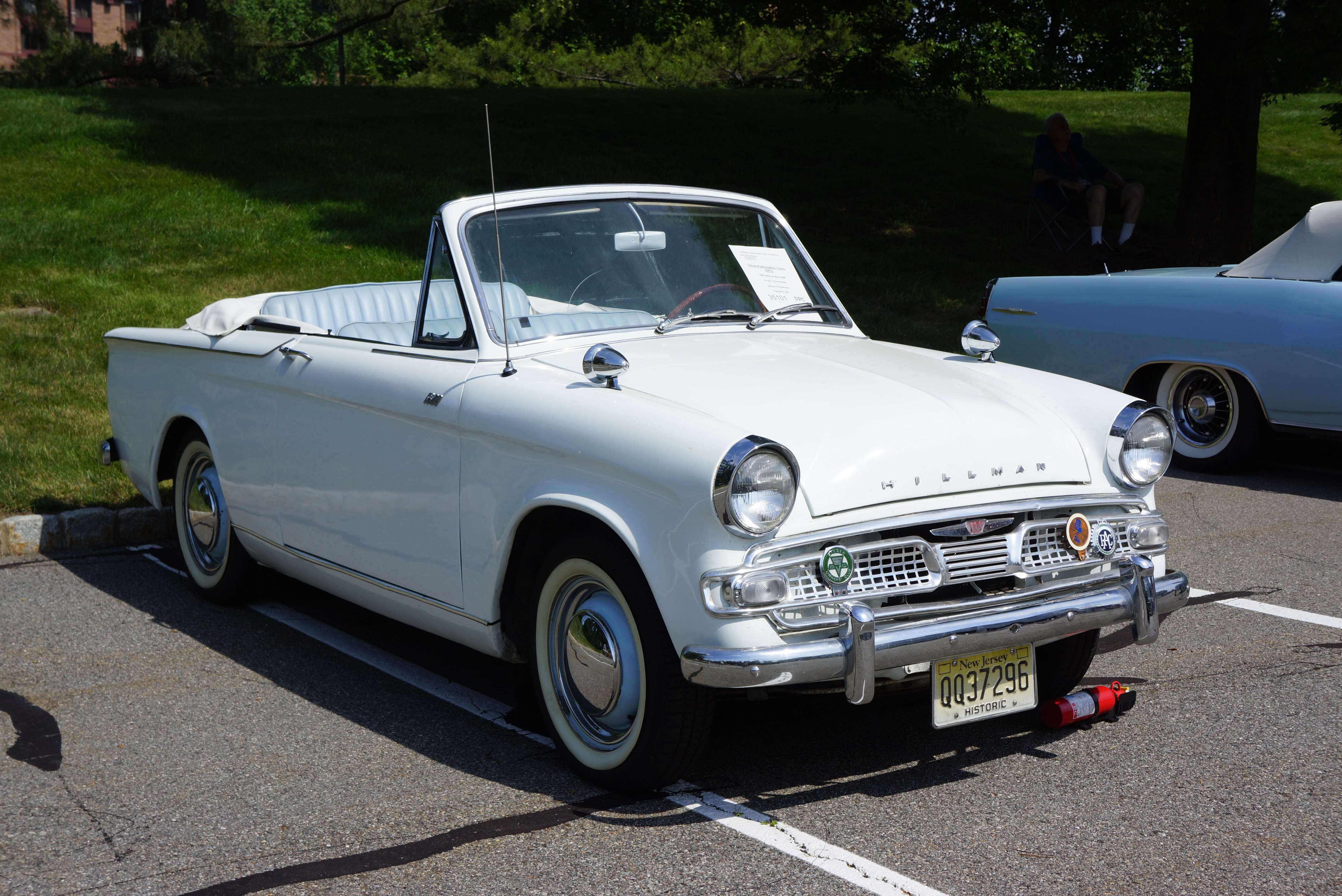
1962 Hillman Minx convertible
1957 Studebaker Golden Hawk
1982 Plymouth Horizon
1966 Cadillac
1963 Chevrolet Corvair
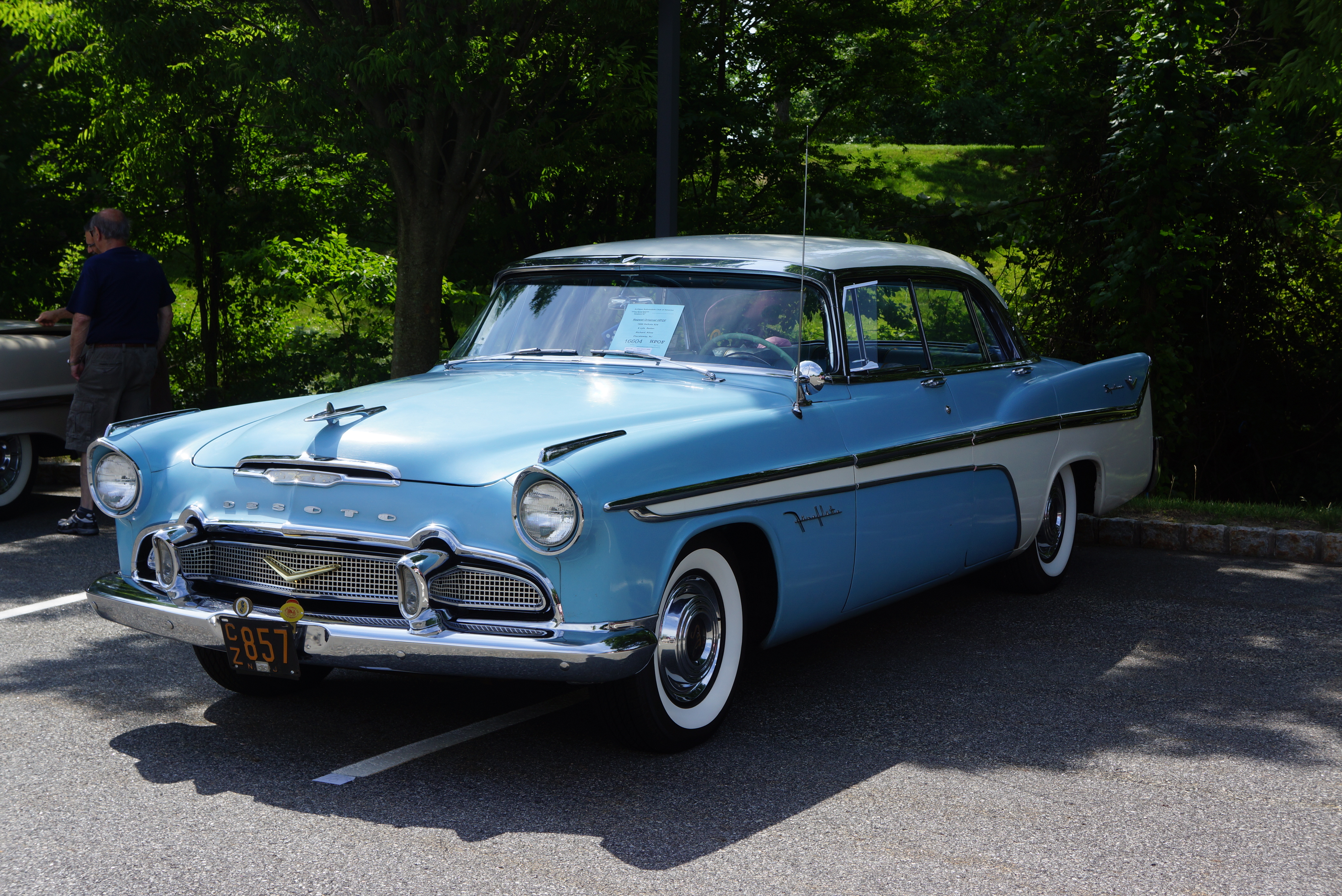
1956 DeSoto
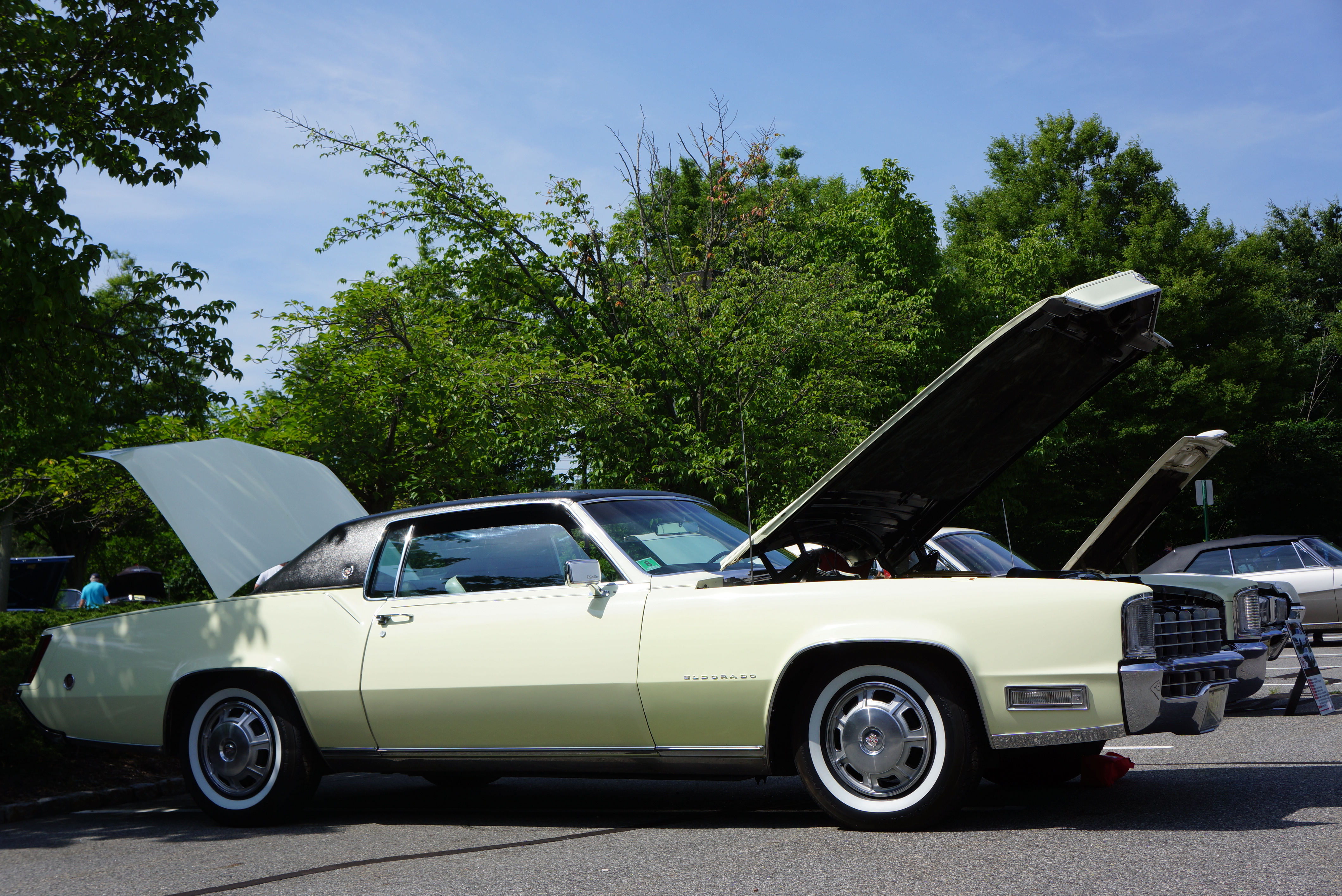
1968 Cadillac Eldorado
1973 Ford Mustang convertible
1970 Plymouth Barracuda
1970 Plymouth Barracuda
1961 Pontiac Catalina bubble top
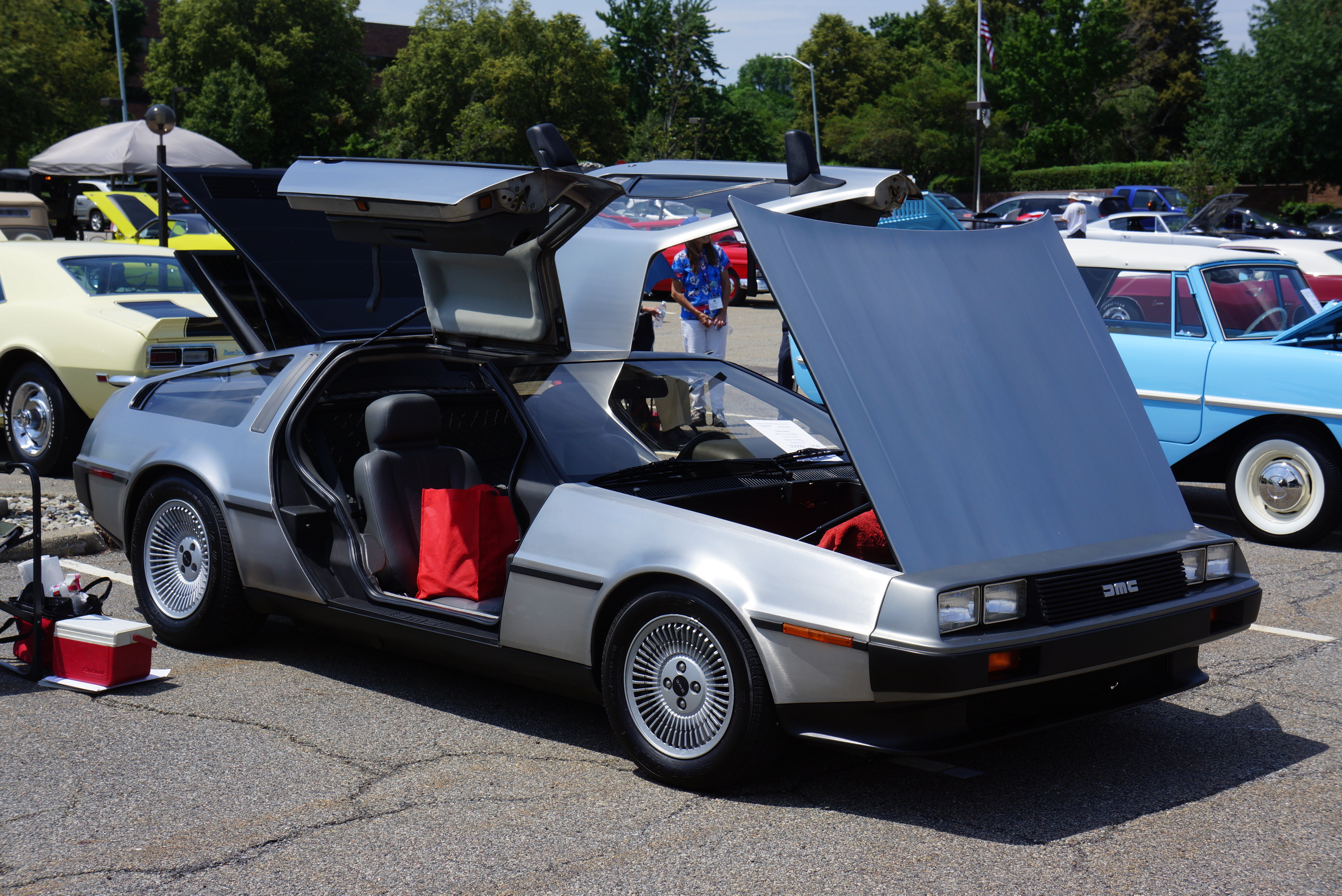
1981 DeLorean DMC12
1966 Ford Mustang GT fastback
1964 Amphicar (note fire extinguisher)
1953 Nash Healey convertible
1967 Ford Mustang
Baby ‘birds line up for their photo op
1956 Ford Thunderbird, one-of-one in “Lincoln cinnamon” factory paint
1957 Ford Thunderbird
1968 Chrysler 300 convertible
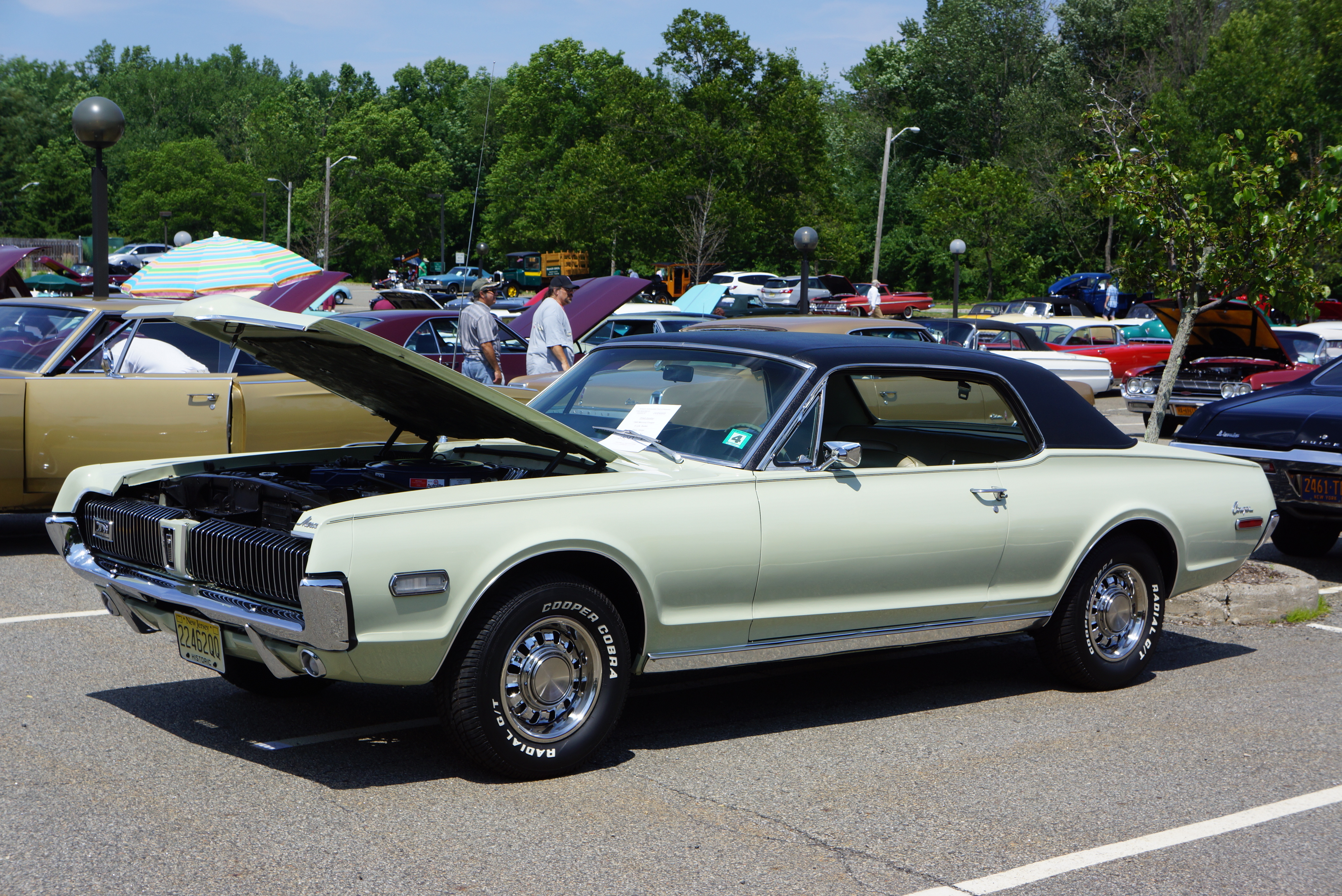
1968 Mercury Cougar
1968 Pontiac Grand Prix
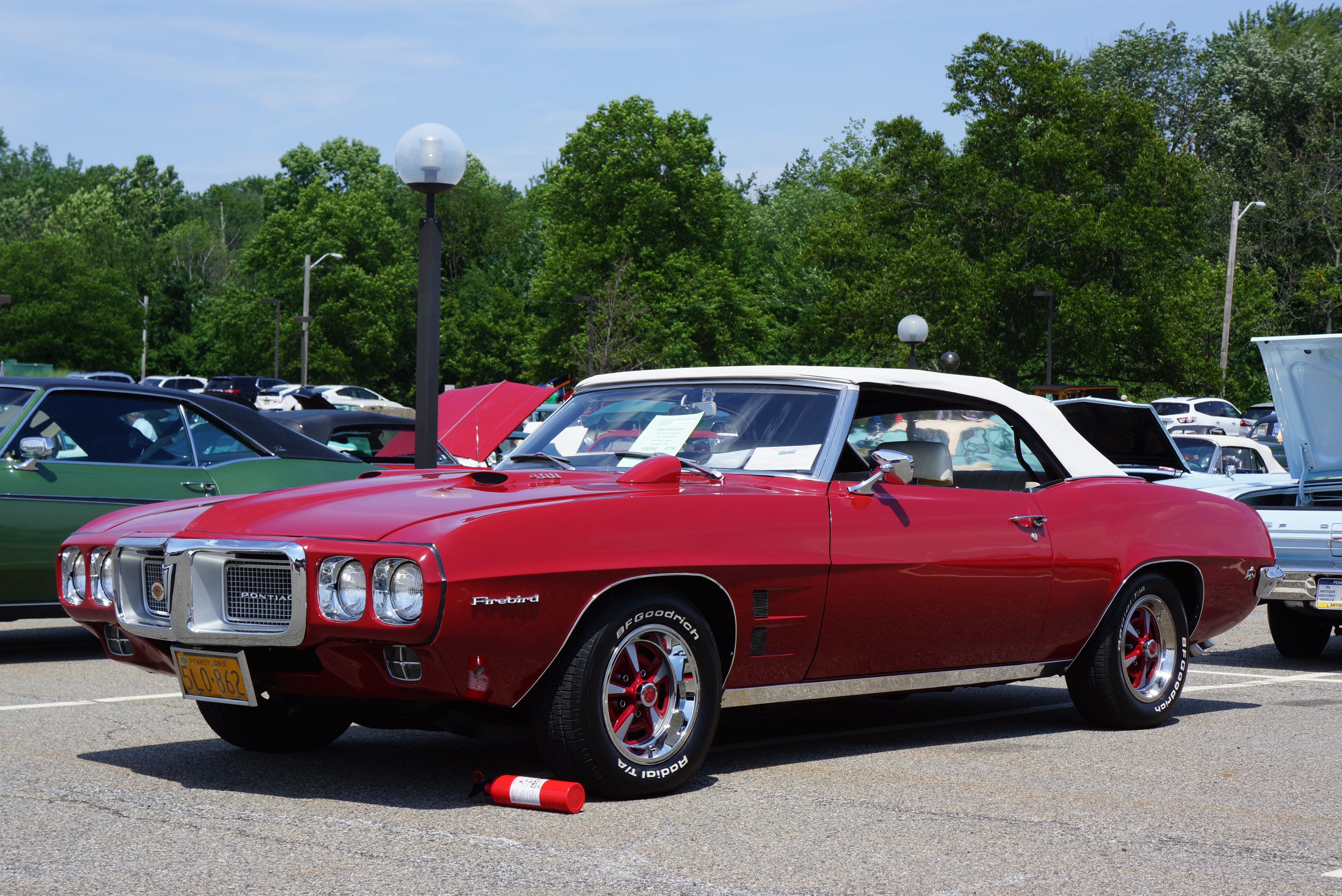
1969 Pontiac Firebird
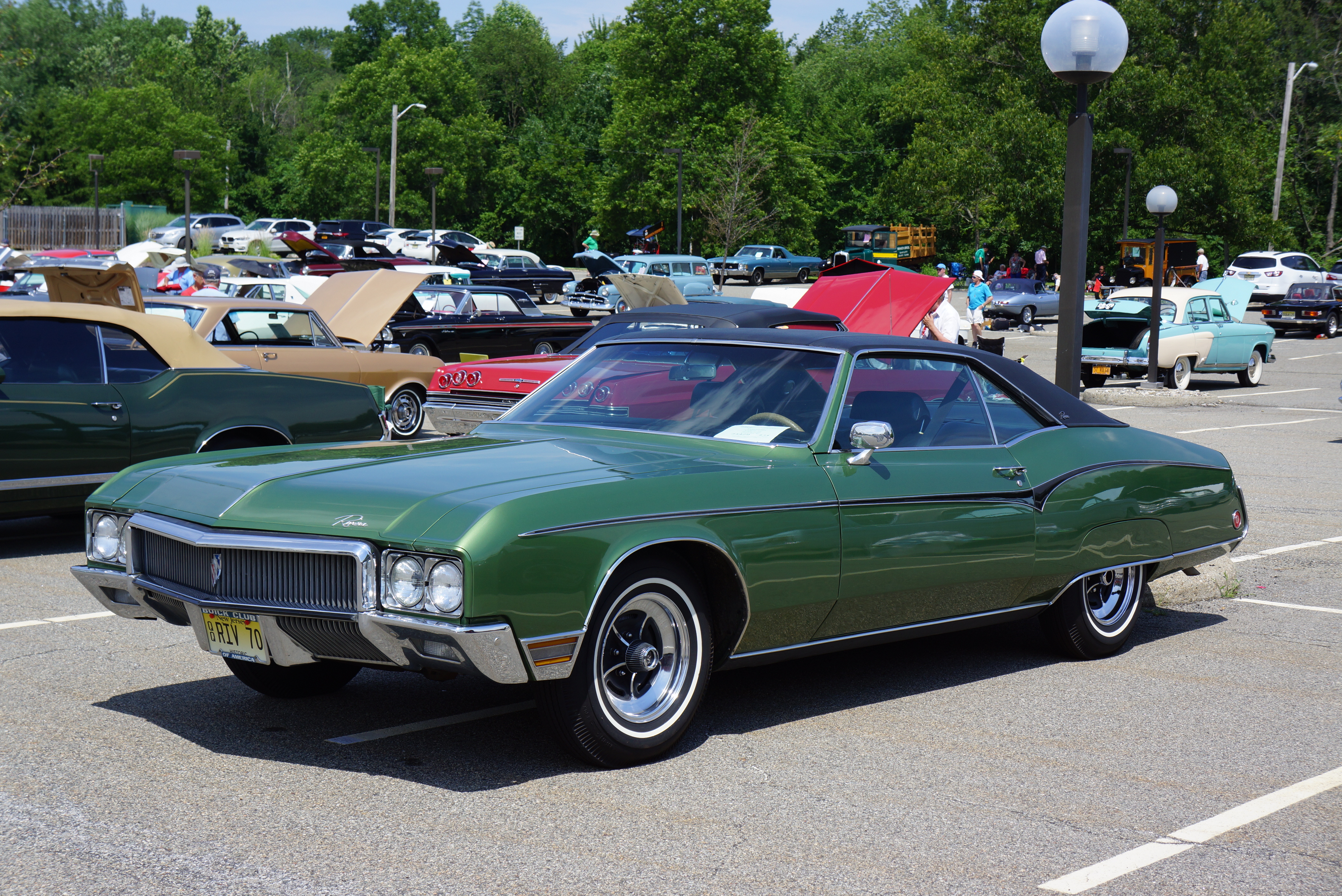
1970 Buick Riviera
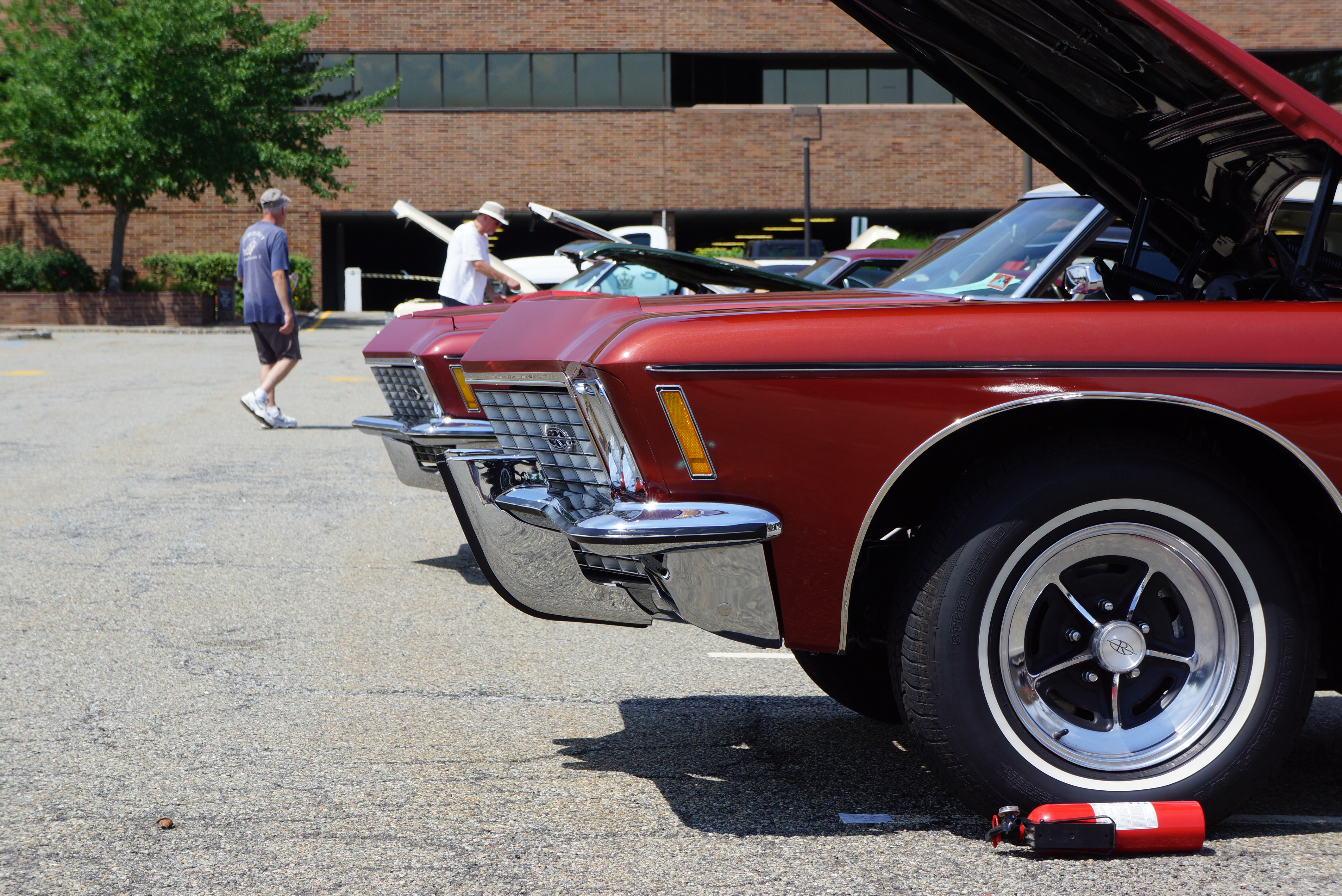
Boattail Riv’s extend their shark noses
1976 Pontiac Grand Prix
1964 Buick Riviera1966 Oldsmobile Toronado
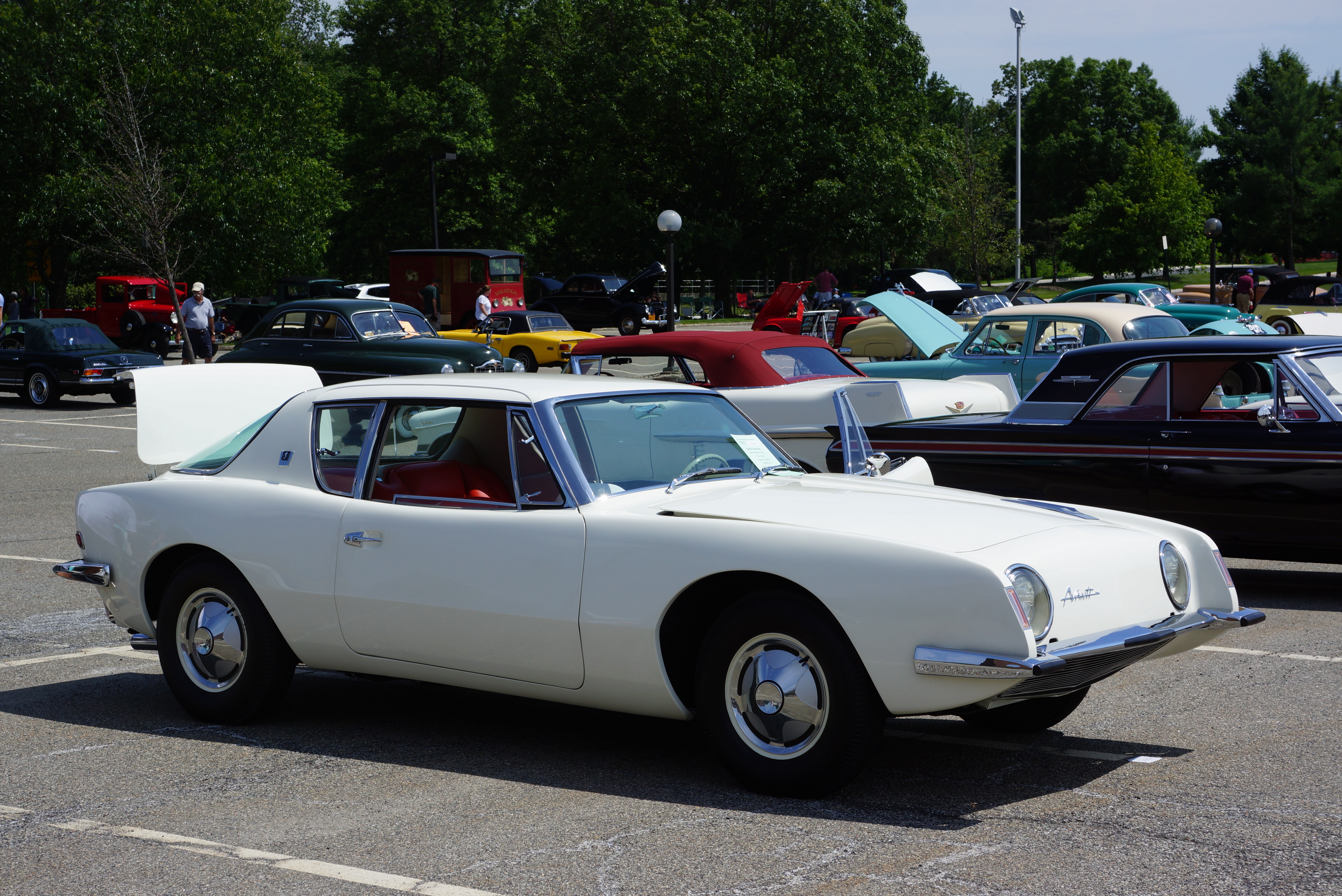
1963 Studebaker Avanti
1948 Willys Overland Jeepster
1959 Chevrolet El Camino
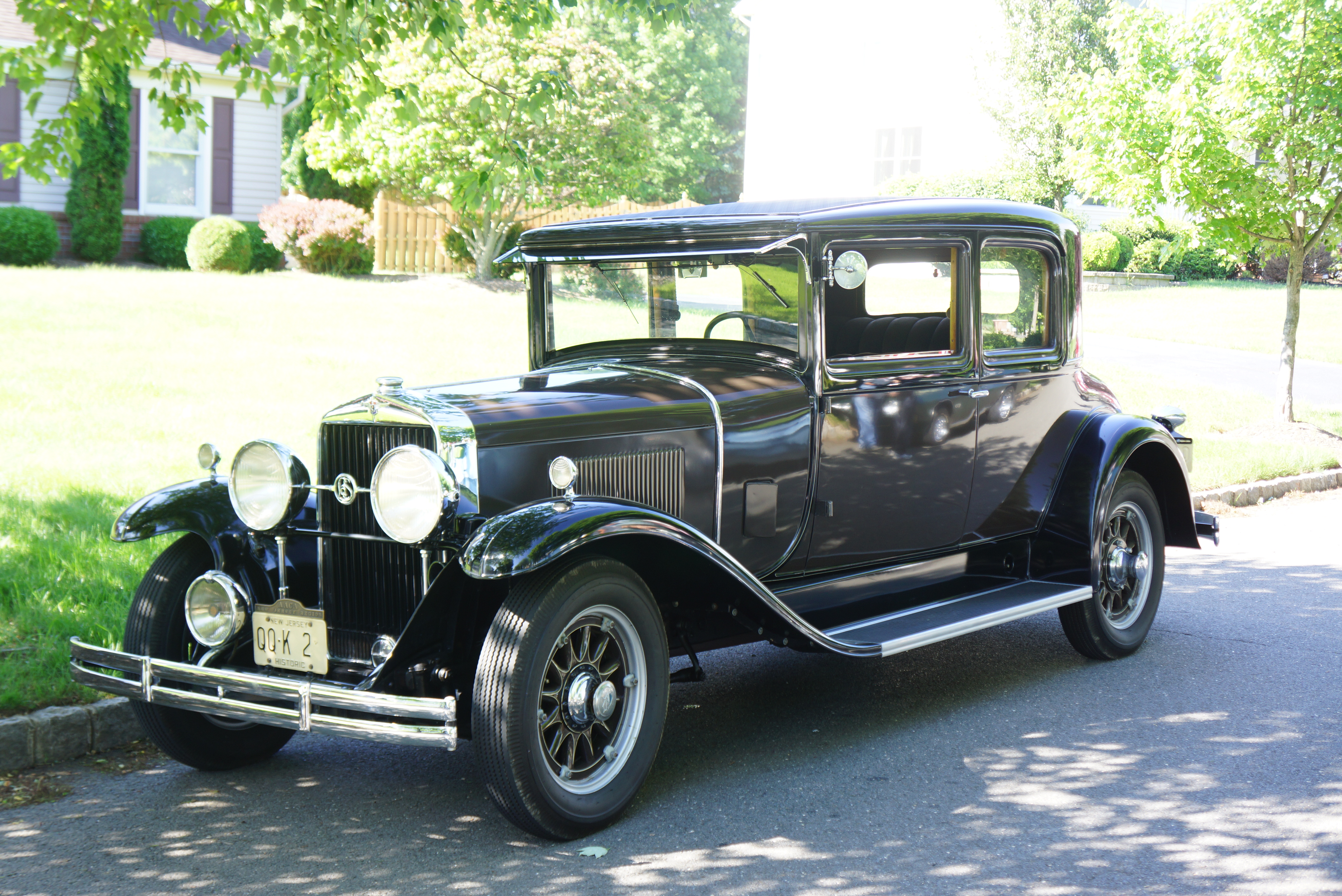
1931 Packard
Event shirt? Check. Name badge? Check. Car ID card? Check. Judge’s sticker? Check. Can I go out now?
Saturday was an almost-perfect weather day in NJ, sunny, warm, with low humidity. The sun was perhaps a bit too warm, as I pulled my ’67 GT 1300 Junior out of its stall so that we could work on the Spider in the cool shade of the garage.
The flag indicates that the middle bay is reserved for Alfas only
Enzo had the correct oil with him, 75W-90 GL-5 gear oil, so we decided to start with the gearbox. Jacking up the front of the car under the front spring perches, sturdy jack stands were placed under the jacking points just behind each front wheel. For some reason only known to Alfa engineers, the transmission case drain and fill plugs are on the same side as the exhaust (the driver’s side), so I found it easier to slide under the car from the passenger side and avoid contact with the still-hot exhaust pipes.
Enzo read the printout he had with him from his electronic service manual: “Remove the drain plug; allow the oil to drain out until you see just a drip. Reinstall the drain plug. Remove the fill plug, and add the appropriate oil until it reaches the top of the fill plug; reinstall the fill plug”. It sounded too easy.
Front is raised, drain pan is empty and ready
On my ’67, I knew that the fill and/or drain plugs required Allen wrenches, as I had done this job on my own car a few years back. I also knew that I had a rather good assortment of metric Allen sockets. I grabbed my drain bucket and positioned it under the tranny. At this point, I related a lesson I had learned a long time ago, and possibly had witnessed during my own repair travels.
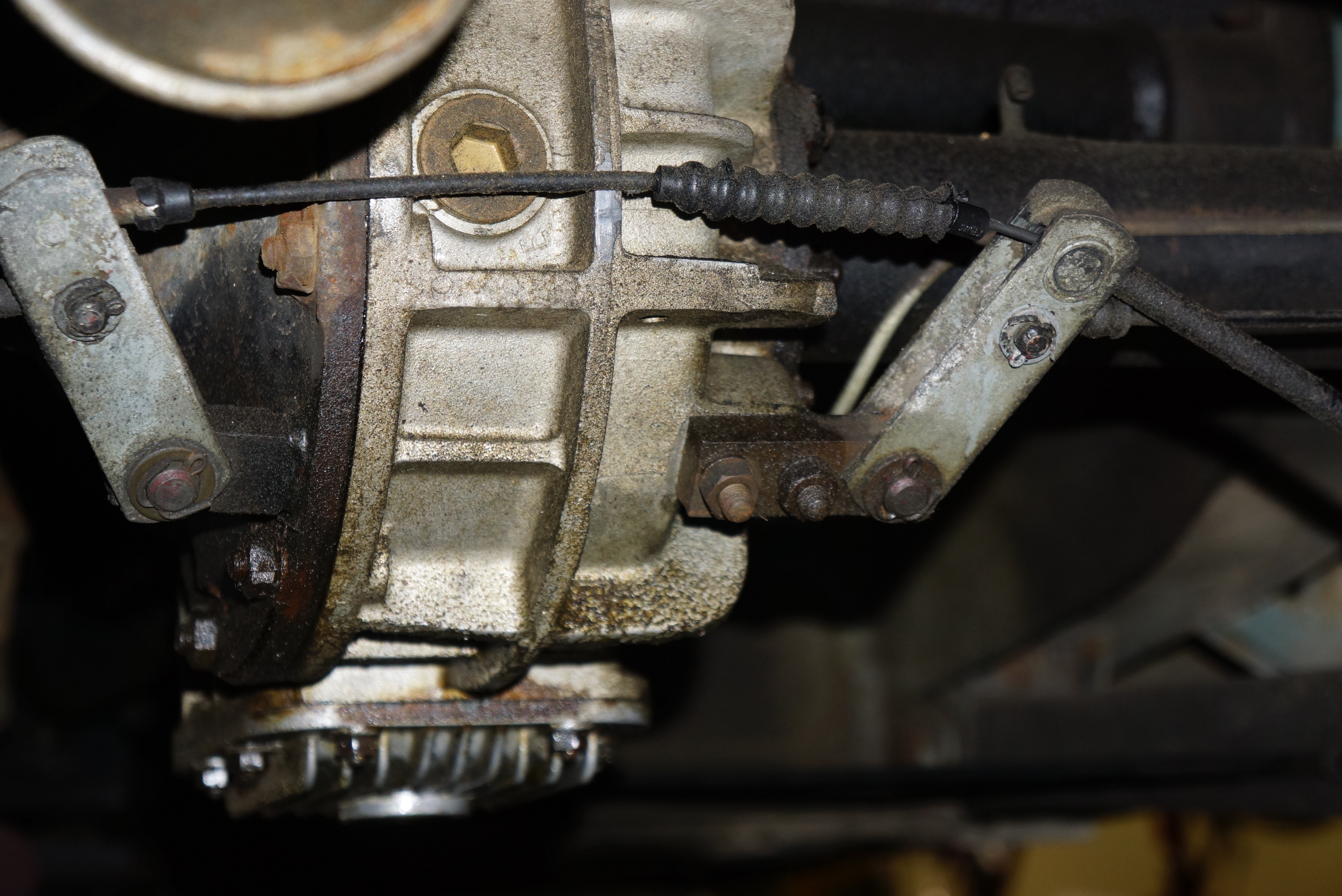
This is my ’67, showing the rear axle fill plug, requiring an Allen wrench
While the instructions were clear enough, I said, they should not be taken so literally. What if the car owner removed the drain plug, drained all the oil, reinstalled it, and then found out that s/he could not remove the fill plug? ROOKIE MISTAKE!
An experienced mechanic would always remove the fill plug first, just to ensure that it could be unscrewed and reinstalled. Having done that, the repair person would have the assurance that fresh oil could be added after the old oil had been drained. So that is what we planned to do.
Peering at the side of the case, flashlight in hand, I saw that the drain (lower) plug required a regular socket, perhaps 19mm or 22mm. But the fill (upper plug) would need an Allen (hex) wrench. I asked Enzo to hand me an assortment of metric Allen sockets from my toolbox.
None of them fit. Most were too small; one was too large. (This too-large one was 14mm, and I’m certain that I purchased it specifically for my car.) So much for my presumption that my ’67 and his ’91 would use the same size tools. I slid out from under the car, and opened a drawer which consisted mainly of Allen keys, in both SAE and metric sizes. I grabbed a bunch, got back under the car, and tried them one by one. None fit. That’s it, I said. We are finished before we even begin.
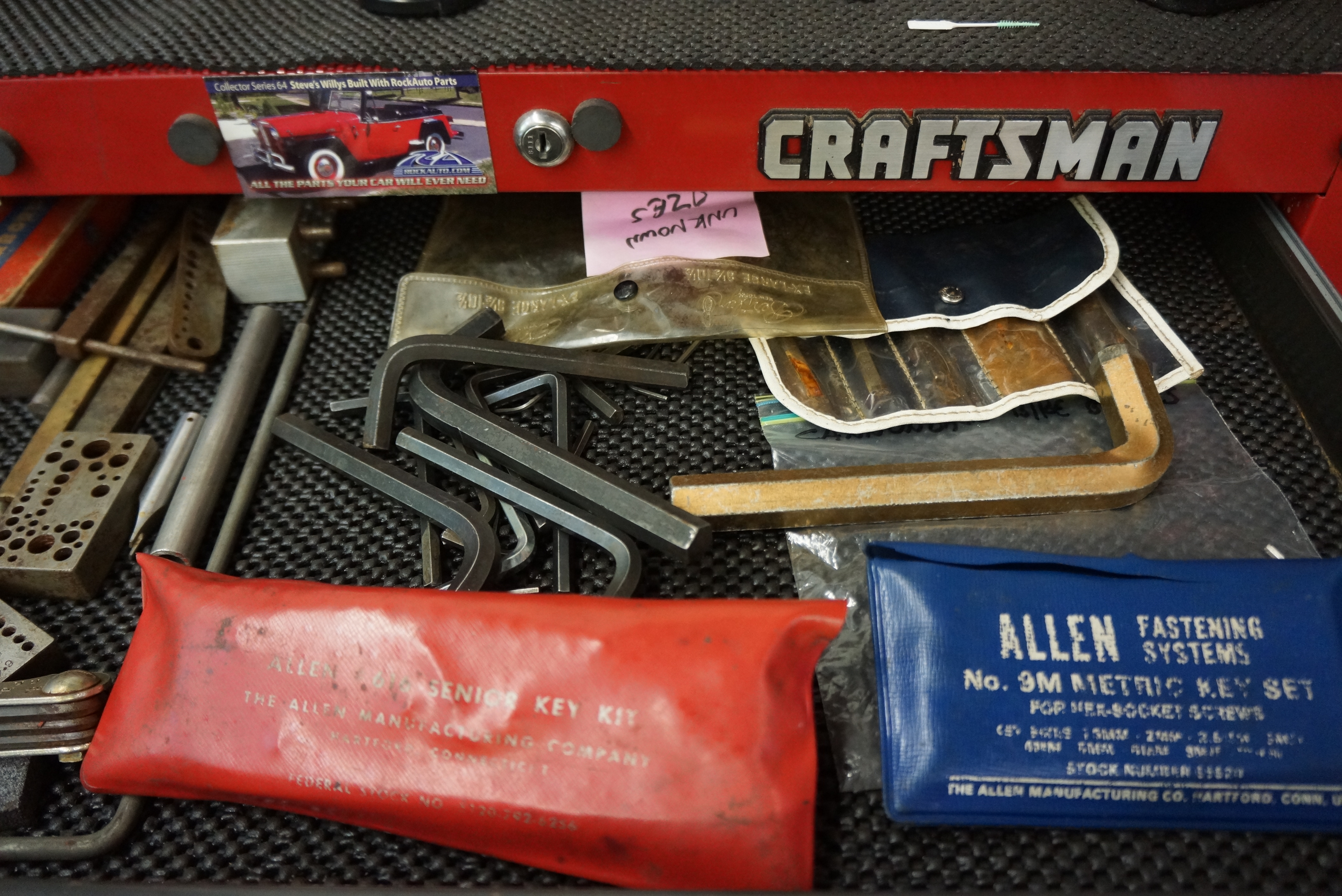
My hex key drawer
All metric, none correct
With that, Enzo opened his car’s trunk and rummaged through the tool kit that came with the Alfa. He pulled out a hex wrench. “Try this one” he said. I did. It worked. Voila! His Craftsman 12mm Allen wrench he just happened to have with him was the “key”.
“There’s an Allen wrench in here somewhere”
This wrench was about 5 inches long, and working on my back, I didn’t have a lot of leverage to crank counter-clockwise on this thing. “Get me a breaker bar” I shouted. “There are some black iron pipes in the same drawer as my hammers”. Enzo gave me a pipe about a foot long. STILL could not budge the upper plug. I’m not the strongest guy to have turned wrenches, which is why I keep an assortment of breaker bars on hand. But this fill plug was F.T.
Enzo works the breaker bar for a better fit
Enzo said “I have an idea – you hold the wrench and the breaker bar, and I’m going to extend my foot under the car”. Before I could ask him exactly what he had in mind, Enzo pushed hard with his leg against the pipe, and we both heard that satisfying “crack” sound when something that’s uber-tight breaks free. We did it. With the upper plug out, the lower plug was quickly removed with a 22mm socket and ½” drive wrench, and the old, possibly original, gearbox oil was flowing out and into my catch can.
I had forgotten to mention to Enzo the need for fresh copper washers, but I just happened to have a few new ones on hand. I think that every drain plug on every ‘60s/’70s Alfa uses the same size copper washer! The magnetic drain plug had a bit of sludge on it, but it didn’t look like anything to worry about to me. I cleaned off the sludge, and gave the threads a quick gentle scrub with a brass brush.
The drain plug was reinstalled, and Enzo snaked a rubber hose from the engine compartment, down toward the transmission. I held the hose in place at the fill plug, while Enzo poured in about 2 quarts of the gear oil. Once it started flowing out of the top hole, indicating a full tranny, I reinstalled the fill plug. This transmission drain-and-fill, with the jacking, prying, and filling, took us over an hour and a half.
Pan, hose, and rag, after the job
The rear axle, by comparison, was relatively easy. Besides, we were now experts. The jack stands were removed from the front. The floor jack was placed directly under the differential drain plug, and both sides of the car were lifted at the same time. With the jack stands in place at the rear, I noted that we needed the same two tools: a 12mm Allen for the upper fill plug, and a 22mm socket for the lower drain plug. We again needed Enzo’s muscular right leg (probably built up from years of playing soccer) to loosen both the fill plug AND the drain plug, but with that. the rear axle oil was flowing.
This magnetic drain plug had the same amount of sludge, and it too was cleaned and fitted with a fresh copper washer. With the drain plug back in, we were ready to add new gear oil.
To route the fill hose, Enzo pulled the spare tire from its well, and unbolted a drain cap, which then provided excellent access to the fill hole. About 1.5 quarts of oil were added. We buttoned up, cleaned up, and started it up. A short test drive confirmed no untoward noises, and with that Enzo was safely on his way. Let’s hope there isn’t too much more to do between now and our mid-July departure for Pittsburgh.
SIDEBAR: THE ALLEN MANUFACTURING COMPANY
Most technicians are familiar with a tool that’s commonly called a “hex key” or “Allen key” or “Allen wrench”: it’s a six-sided hexagonal shape that’s inserted INTO a screw head or bolt head, as opposed to the more-common socket or wrench, also 6- (or 12-) sided that’s placed OVER the outside of a bolt head. The hex/Allen design offers the advantage of a smaller head that can fit in tighter places, and can even be designed to thread down and into a threaded hole or shaft.
A vinyl pouch from the Allen Manufacturing Co. Note use of the word “key”.
“Hex” of course means “six”. But why is this tool also called an “Allen wrench/key”? You can thank Mr. William G. Allen, who, in 1909-1910, patented the design, and began manufacturing both the screws and the tools via the Allen Manufacturing Company of Hartford, CT.
My father worked around production machinery for much of his professional life, and set screws which required Allen wrenches were very common. My father’s extensive collection of Allen wrenches in both SAE and metric sizes are now in my possession, and even include some plastic carrying cases bearing the company’s name.
I’ve known Ron for over 20 years now – unlike the majority of my friends, whom I know either from school or work, I met Ron during my very first New England 1000 rally in 1998. He and his wife Carol drove an MGA that year, while Steve and I were in Steve’s Tiger. We hit it off because we liked similar cars, plus we were all from NJ.
Ron loves all kinds of cars and motorcycles, preferably those from merry ol’ England. He currently has a Triumph Spitfire, an Austin-Healey, and about a half-dozen British two-wheelers. Still, I would describe his tastes in motor vehicles as “varied”, as the fleet also includes a Ford Model A pickup, a pre-war Packard convertible, a ’56 T-Bird, and a Porsche 356.
About 10 years ago, Ron picked up a derelict Porsche 914, and after doing body repairs (he’s proficient at metal work), he finally peeked inside the engine to discover a disaster: water had sat inside the crankcase for so long that all the internals were frozen. Somehow, he found another 914 engine for sale for $200 and dragged that home. That’s when he called me.
Ron explained that he had rebuilt the engine in his MG Midget race car (numerous times) but was unfamiliar with this VW Type 4 air-cooled flat four. I told him in turn that I rebuilt the one-lunger in my BMW Isetta, and felt equally unfamiliar with the V-Dub motor. Somehow, he convinced me that I knew more than he did, and I agreed to give him a hand one day for a few hours.
I’ve turned wrenches for much of my adult life, and can even try to convince you that I earned a living at it for a year or two. My experience, though, does not extend to a lot of in-depth engine work. Perhaps my biggest contribution to Ron’s project would be as a disassociated 3rd party who could oversee the proceedings, maintain a slow and steady pace, and assist in keeping things organized.
BEFORE DISASSEMBLY:
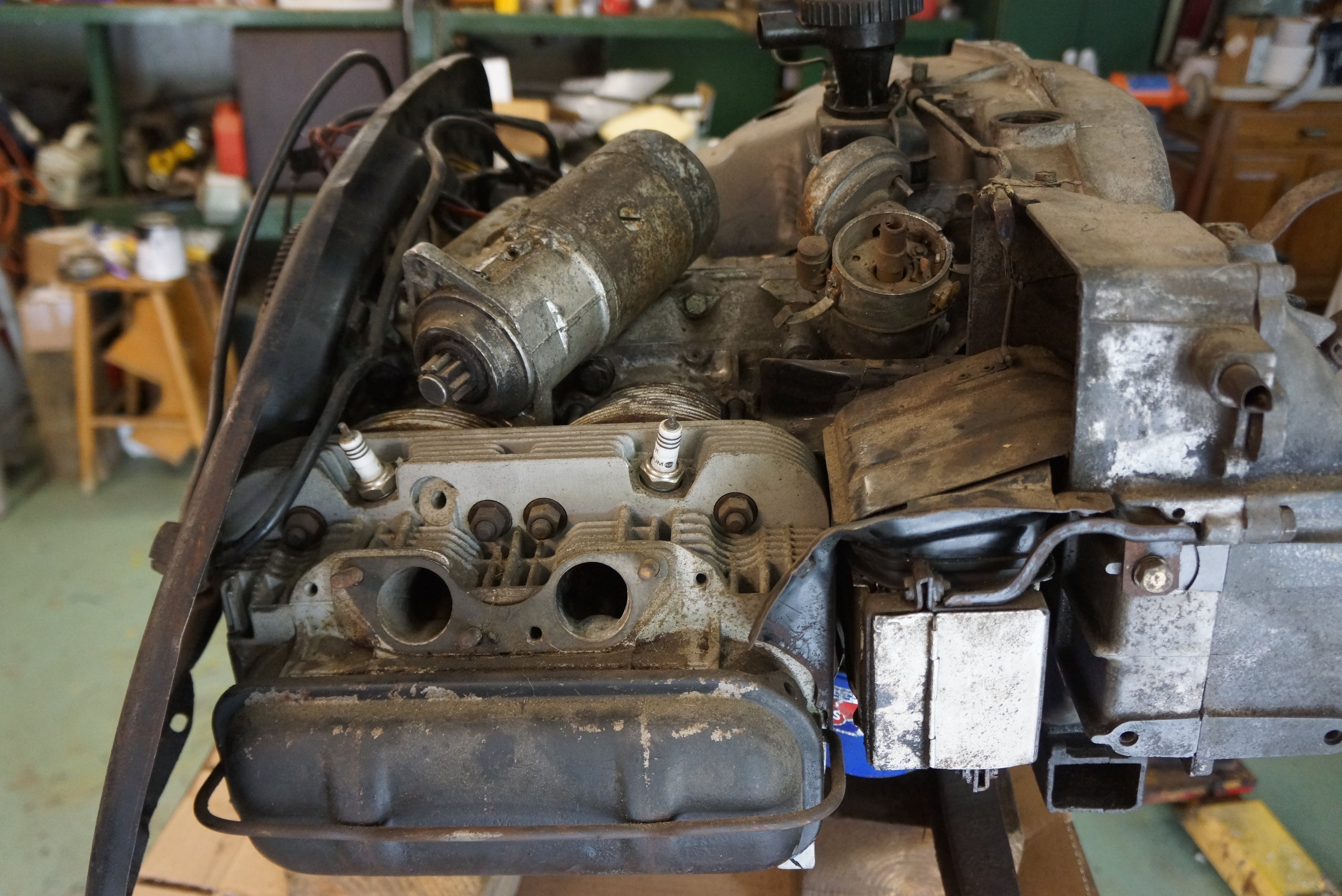
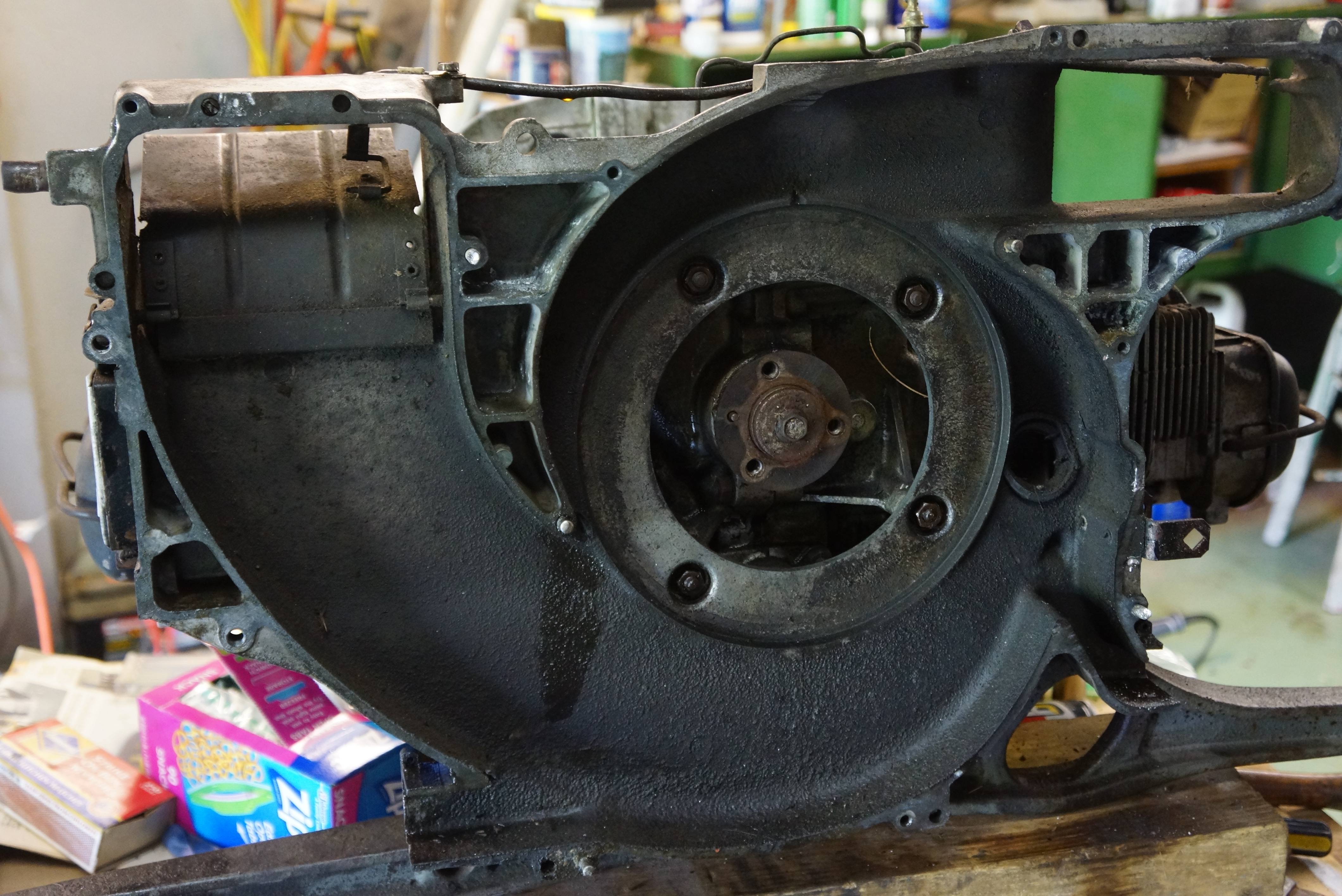
Right side, w/starter on top
At rear, clutch & flywheel
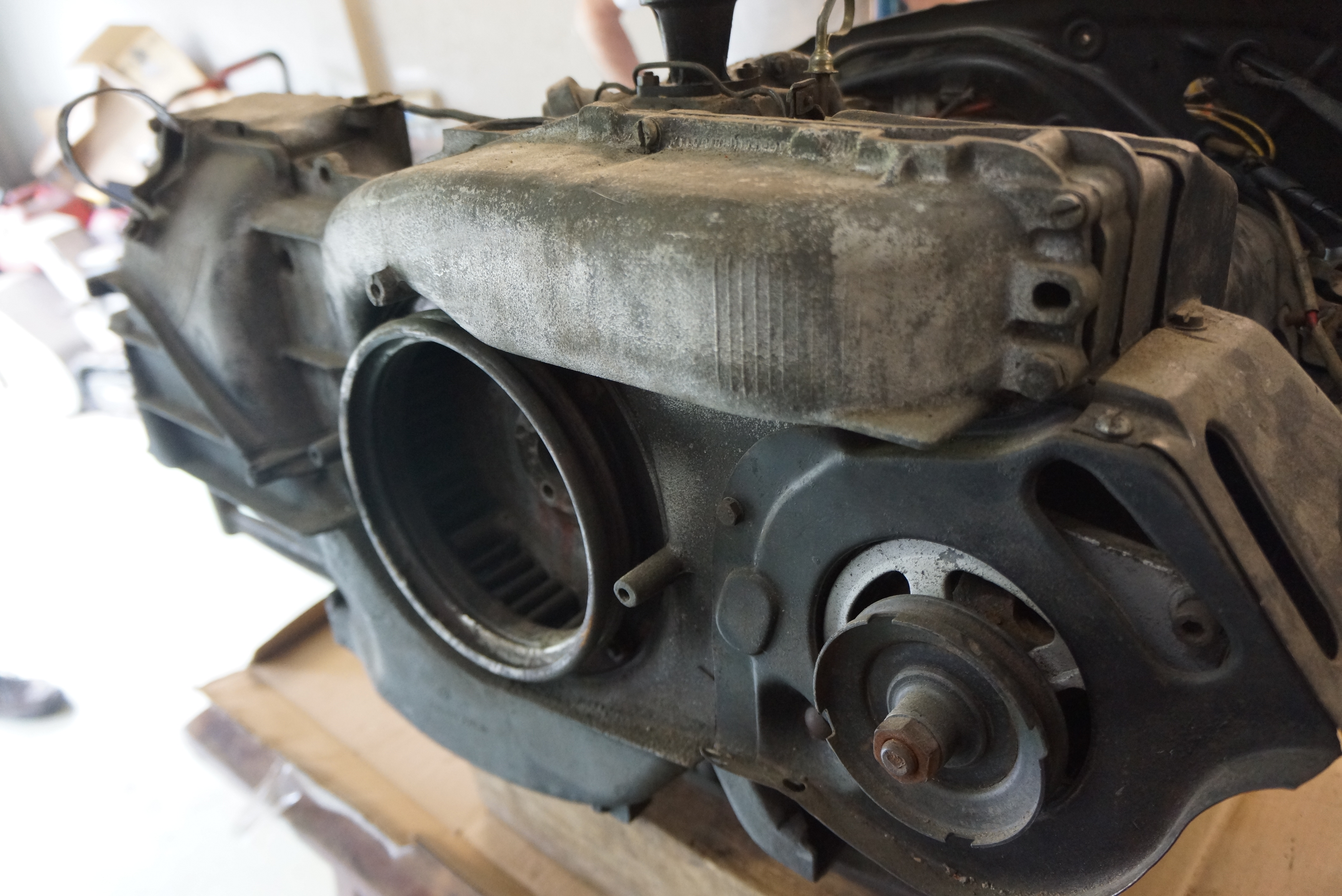
fan, housing, & alternator
Arriving at his house one day last week, Ron had the engine on top of a sturdy work table, and had cleaned off much of the grime. Even removed from the car, it’s difficult to look at this hulk and envision an engine in there. Frankly, I’ve never understood the appeal of these VW/Porsche boxers. If you popped the hood on my ’68 Mustang, you were greeted with 390 cubic inches of cast iron painted Ford blue. In a different vein, but equally impressive in my opinion, opening the hood on my ’67 Alfa reveals a 1.3 liter aluminum jewel, with the valve cover proudly perched above the dual overhead cams. Lift the engine cover on a Beetle, early 911, or 914 and you’ll see…. sheet metal shrouding.
Everything is shrouded: the top of the cylinders; the cooling fan; the bottom of the cylinders; and the alternator too. I get it: no radiator, no antifreeze, no hoses or hose clamps. It does simplify things. But you still need to control airflow over the crankcase, cylinders, and heads to dissipate heat.
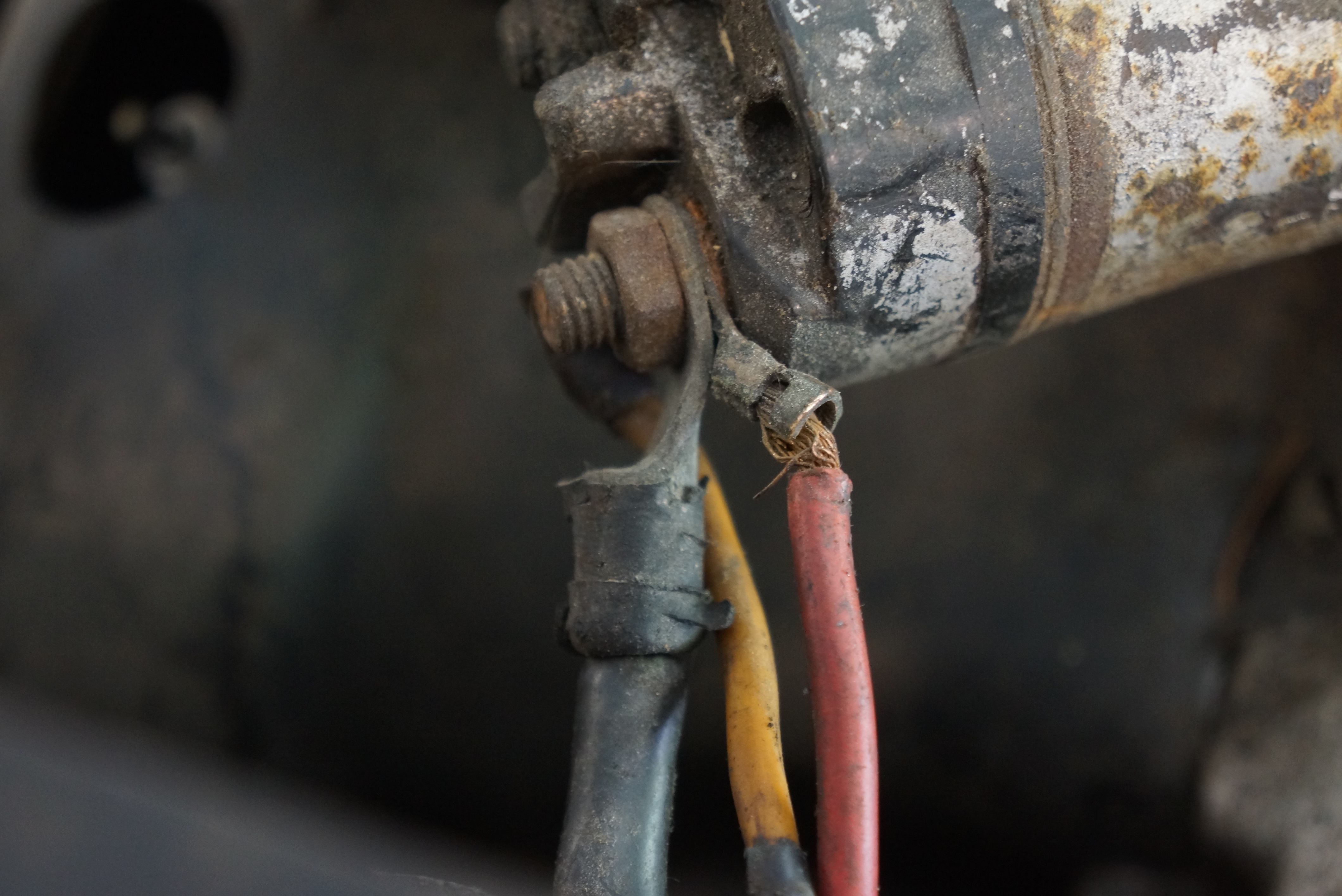
Capturing this detail at the starter will help during reassembly
So the first order of business was to remove all the shrouding, and just as importantly, photograph and label each piece as it was removed, for reassembly sometime in the hopefully not-too-distant future. (Actually, the first task was to remove the starter and its attendant wiring harness on top of the engine, so this we did.)
I had not seen a shrouded alternator before this
This engine had already been apart at some point in its past. We knew that because A) the shroud screws were a mixed bag of slotted screws and cap screws; B) blue Permatex sealer was evident in various spots; and C) a few shroud screws had broken off in the case, something for us to work on later.
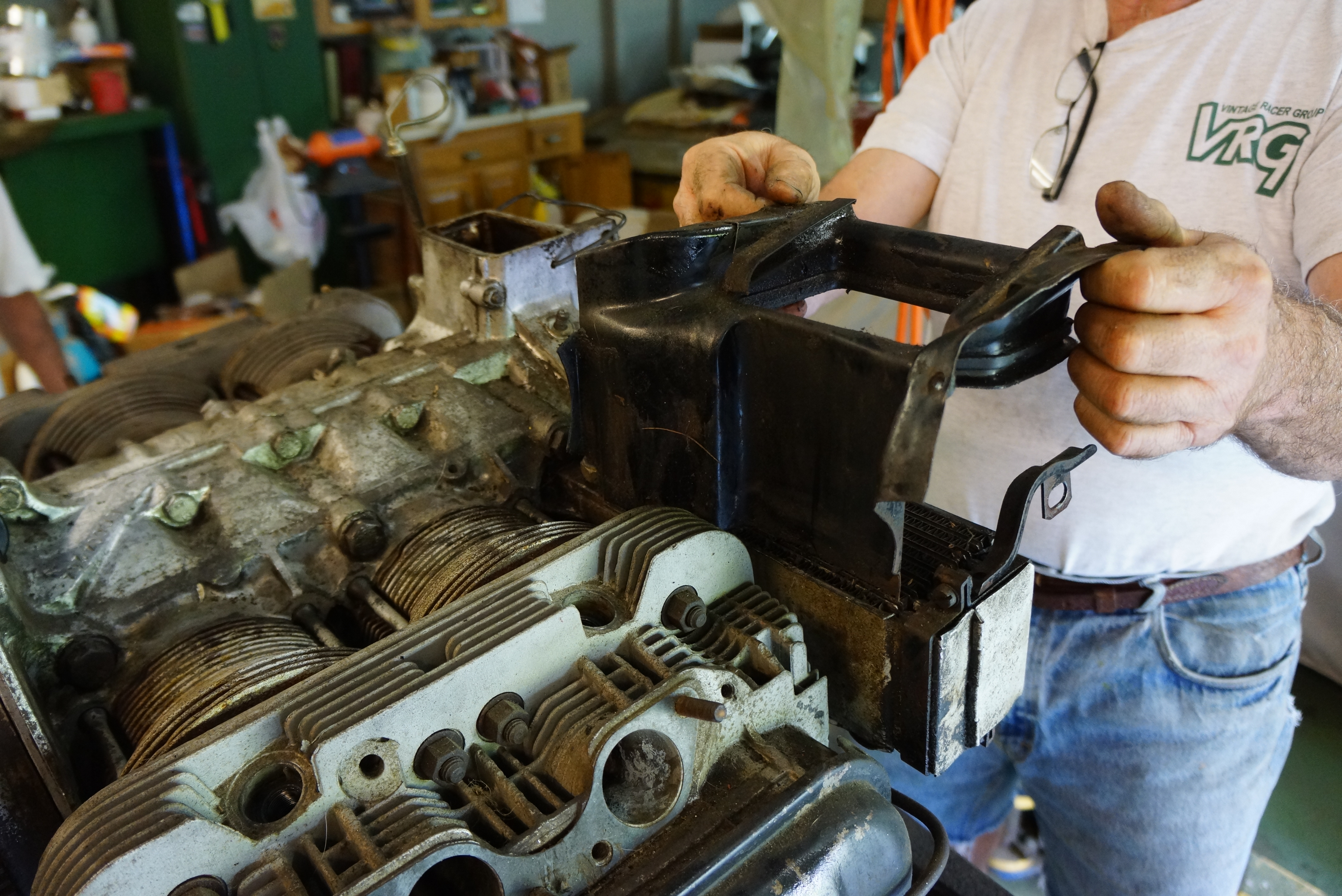
RON POSES WITH SHROUDING FOR THE CAMERA:
Gloved hand, then…
ungloved hands hold shrouds
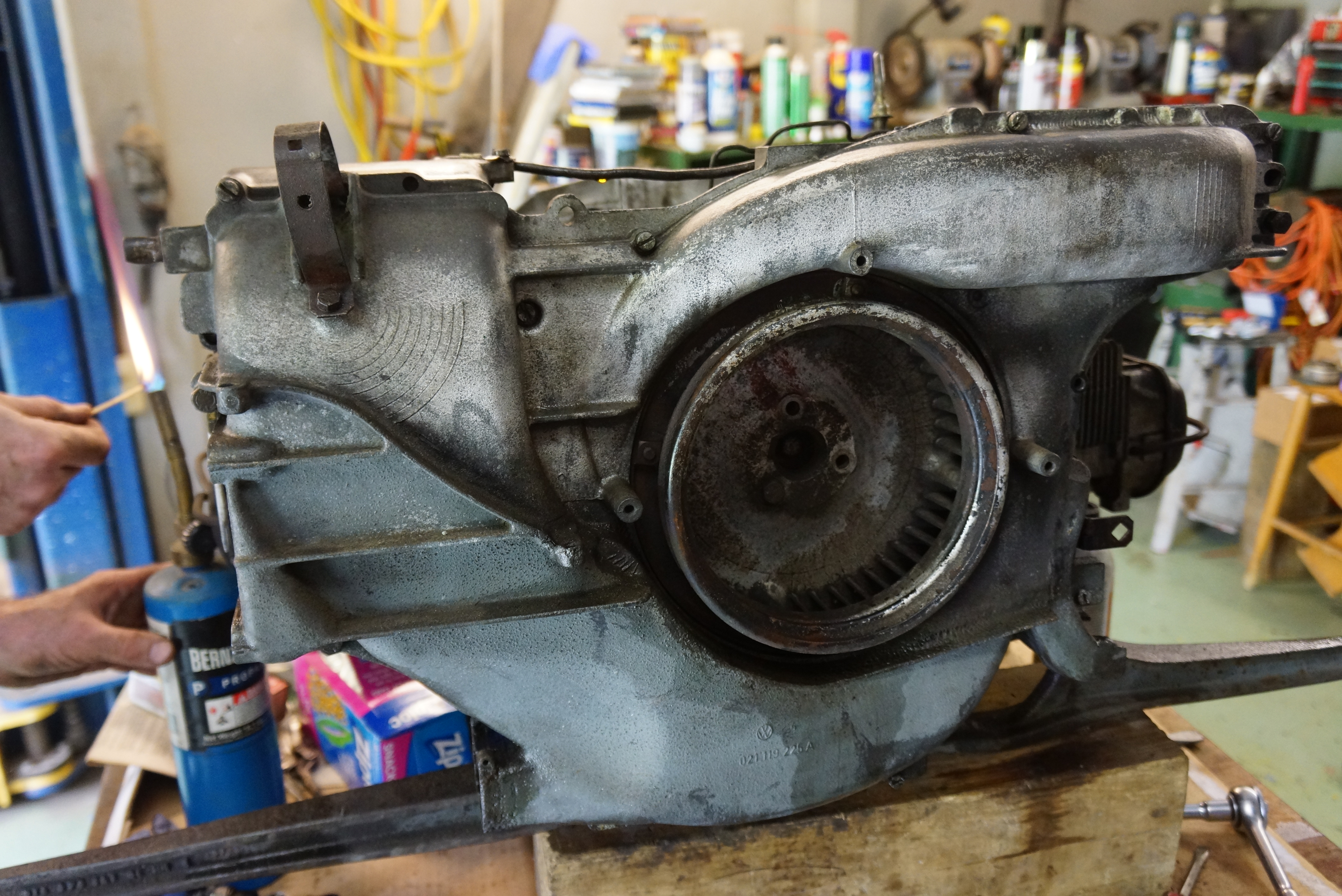
With the thin sheet metal shrouding off, we tackled the fan housing, a large aluminum casing at the front of the engine, almost as large as the crankcase itself. Here we ran into a few screws that would not budge. Ron first tried the blue wrench, aka the torch. When THAT didn’t work, he resorted to a drill to remove the screw heads. This finally allowed the housing to be separated from the case.
The blue wrench is ON. Ron’s friend John wisely stands several yards away.
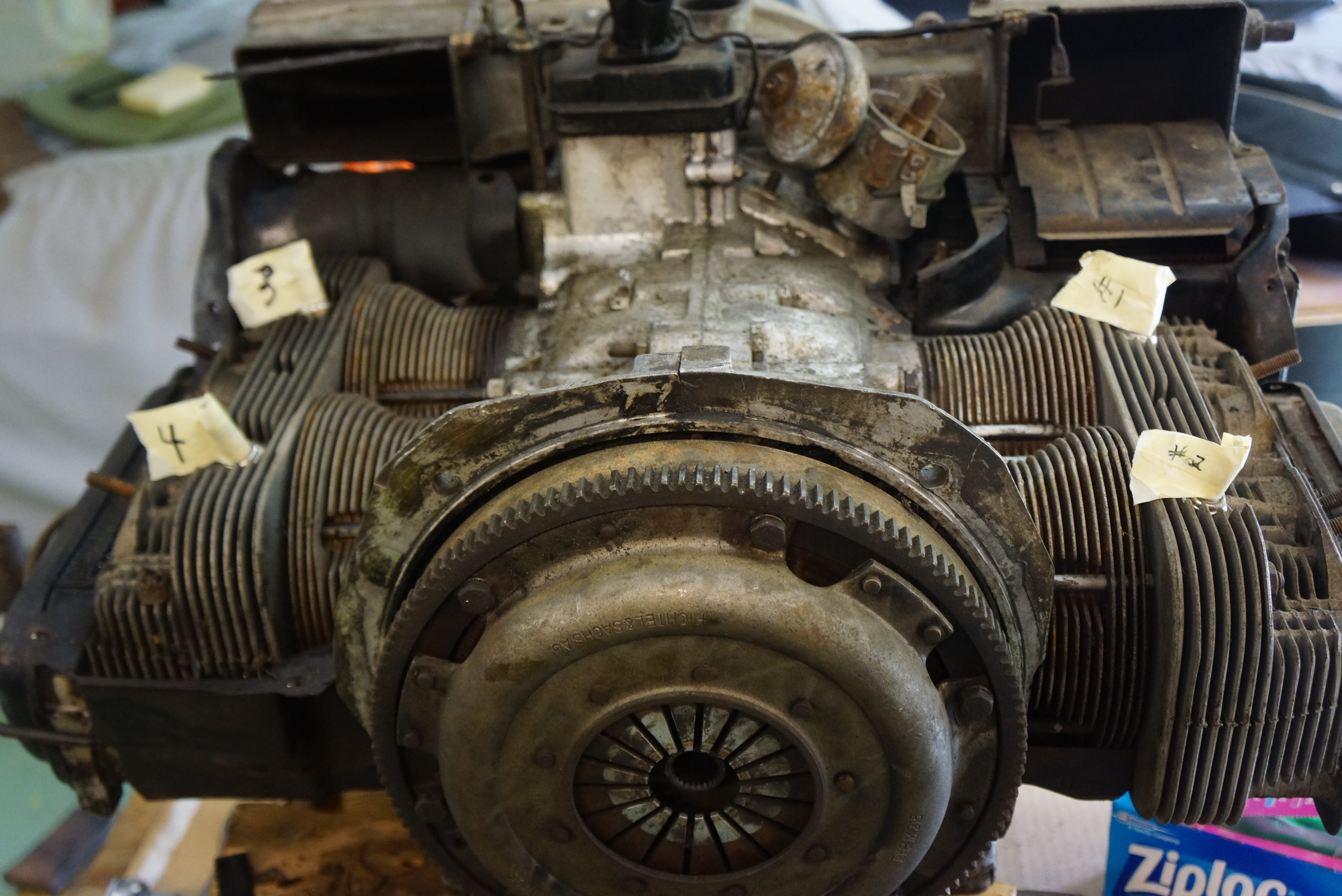
We marked the spark plugs 1 through 4, and took a snapshot to keep track of cylinder numbers. Removing the spark plugs, we found that the engine easily turned by hand, with no untoward noises. This was a good sign, and maybe just maybe, things are OK at the crank.
Cylinders 1 through 4 are so marked
The clutch came off without drama once the pressure plate bolts were out. The flywheel was rusty, but we saw no obvious score marks.
Fan housing outer half…
removed to show inner half
This was enough work for one day. Ron’s plan is to use new/reman cylinders, pistons, and heads, all of which he already owns. I reminded him that he needed to order a clutch, and I suggested that he look for a shroud fastener kit, so we could avoid dealing with chewed-up bolt heads.
Ron pointed out there was no blood, no broken bones, and no one’s clothes caught fire, so he declared the day a success. He managed to convince me to return, and I managed to croak out a “sure”. But we’re going to need to get this thing on an engine stand soon – AFTER that flywheel comes off.
Our second Sunday morning breakfast run of the year was held on June 9, 2019, starting as always at the Crossroads Sheraton Hotel in Mahwah NJ. The assembled group consisted of 12 people in 10 cars. Our eclectic collection included Chevys, Porsches, Miatas, a BMW, an Alfa, a VW, and a Buick. This time, we headed south, with the Readington Diner in Whitehouse Station NJ as our destination. We pushed off at 8:35 am, but not every vehicle was destined to make it to the diner…..
The morning queue awaits the starting flag
The Buick, a ’67 Skylark convertible driven by our friend Ralph, had engine trouble on the way. This was unbeknownst to me in the lead car, but I learned later that billows of smoke were wafting from the engine compartment. Ralph quickly got to the shoulder of the highway, and just as quickly, 3 of our other drivers stopped with offers of assistance. A peek into the engine compartment revealed a connecting rod (connects the crankshaft to the piston) extending itself through an aperture in the side of the engine block where previously there had not been an aperture. This is colloquially known as a “blown engine”, and cannot be fixed with Gorilla Glue. Sadly, Ralph missed breakfast.
Everyone is smiling, so this is obviously after we’ve been served
While Ralph waited for the flat bed tow truck, one driver who stopped needed to return home, and the other two, having long lost our caravan, found their own way to the diner. In the meantime, a dawdler who had missed our departure came rushing down the same highway, saw the blown Buick, stopped for a brief chat, then continued to the eatery. Yet another driver, residing well south of our destination, came up on his own and met us there. So we still ended up with 12 at the breakfast table!
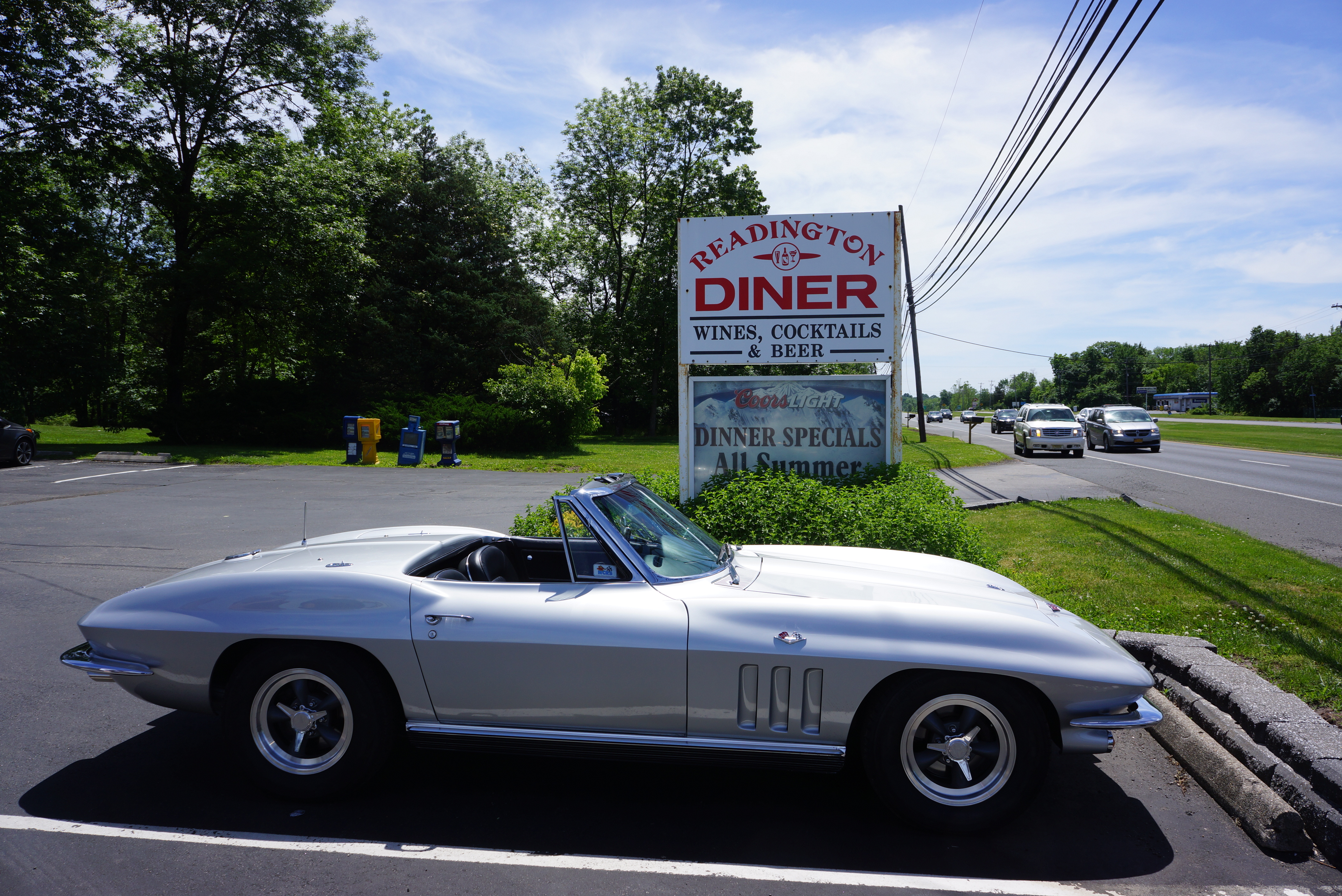
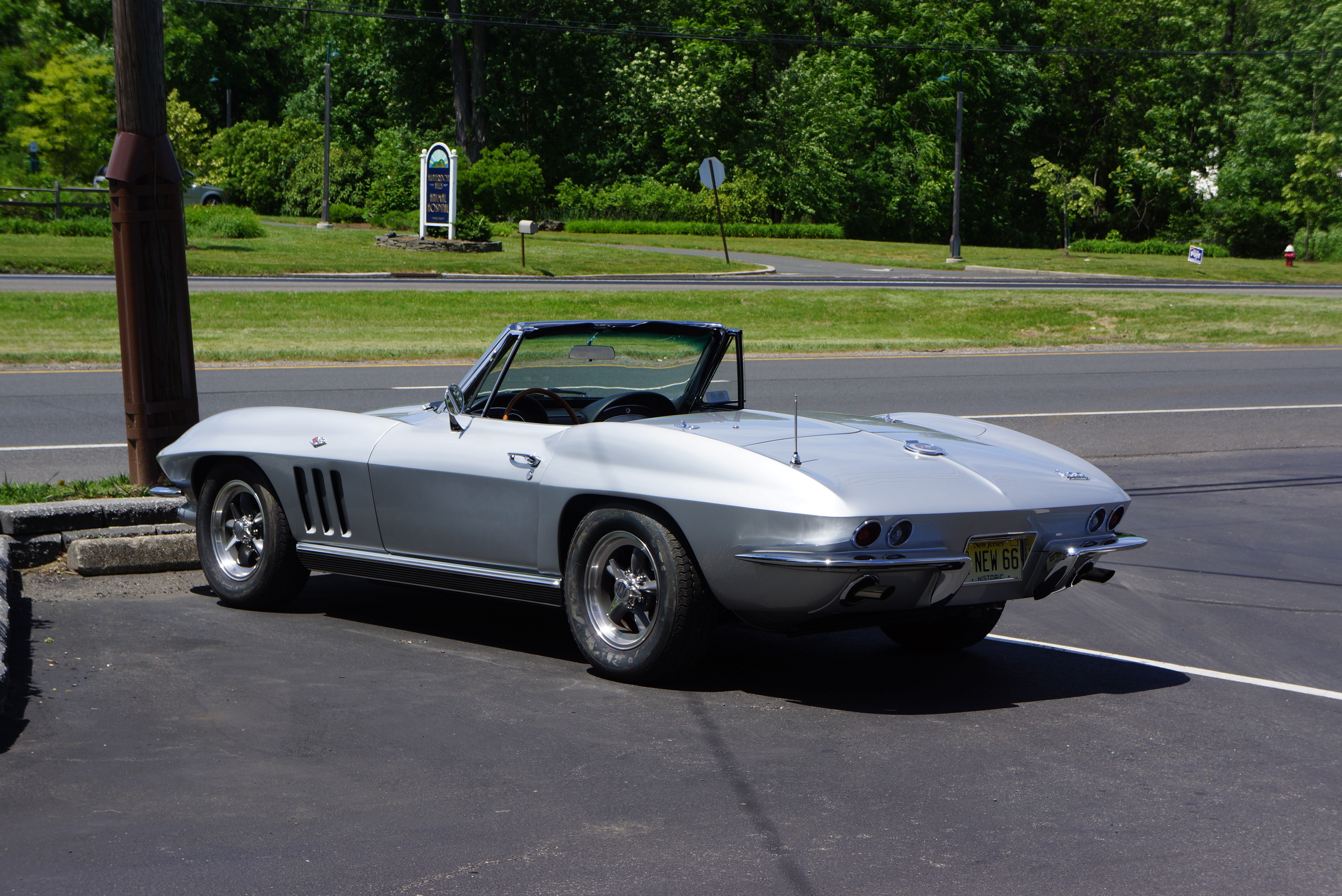
1966 Corvette adds glamor to diner sign
The wait staff at the Readington Diner was outstanding as always; those of us who require morning caffeine were never without hot java. With bellies full of food and beverage, we meandered back into the parking lot, admired each others’ cars, then headed home to enjoy the remainder of what was certainly one of the most weather-perfect Sundays we’ve seen in the Northeast this year.
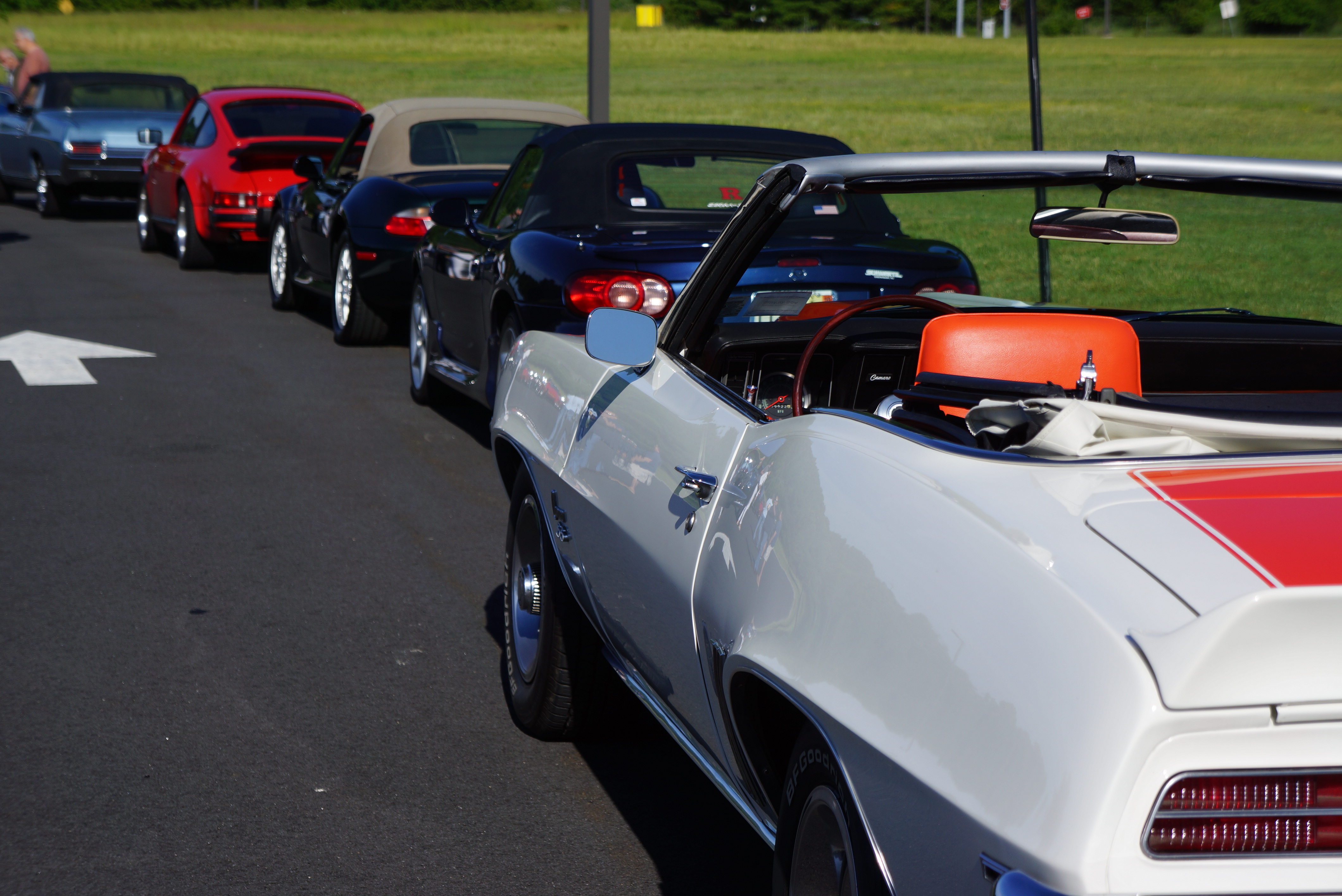
Our own impromptu parking lot car show
We plan to do this again soon. We also hope that Ralph can get his car fixed, because we like Ralph, and want him to be able to enjoy breakfast with us next time.
The New Jersey Region of the Antique Automobile Club of America (AACA) was invited to arrange a display of classic collector cars as part of the 21st annual “Buffalo Watch”, held at the Readington River Farm in Flemington NJ on Saturday June 1, 2019.
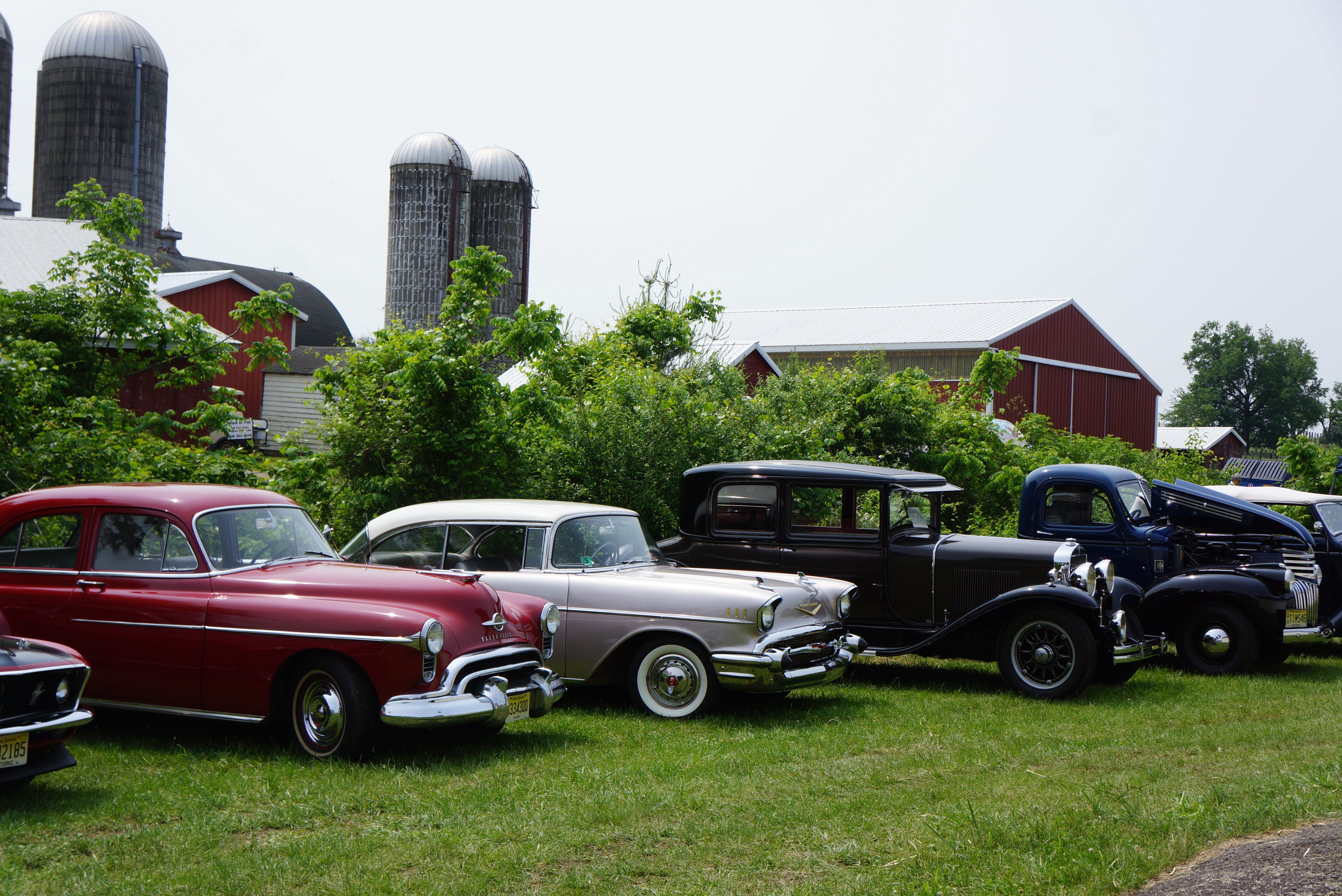
Part of the lineup
It may come as a surprise to you to learn that there is a real honest-to-goodness buffalo farm east of the Mississippi River, and may be an even bigger surprise that one exists in the most densely populated state in the nation, but it’s true. Better still, the farm is about a 15 minute car ride from your humble blogger’s home, so it was a no-brainer to buzz over there in the Alfa and join up with some of my fellow club members.
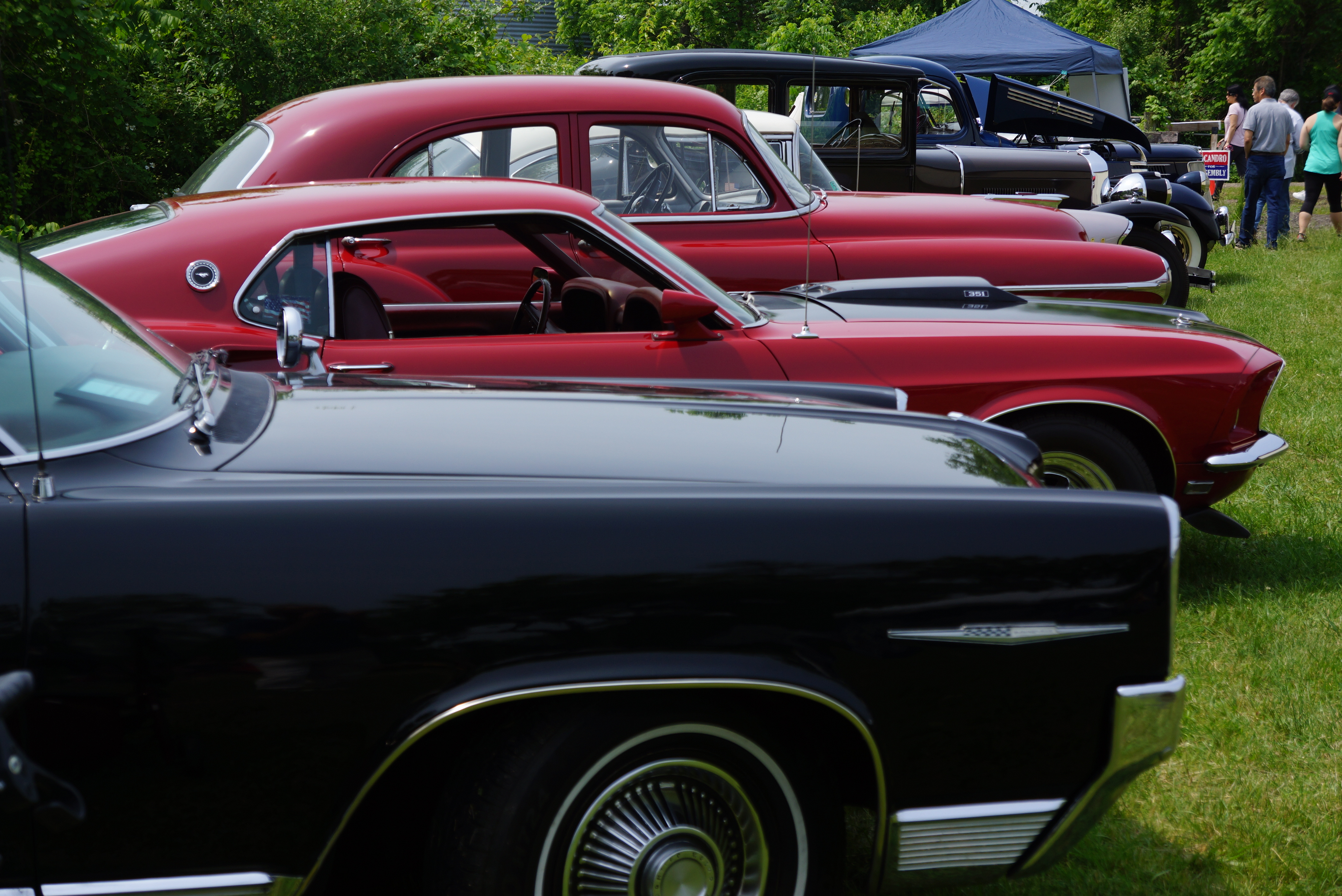
Another view
The Buffalo Watch officially opened at 9 a.m.; I arrived just before 9:30 and there were already 8 or 9 cars in their assigned spots. The Alfa was parked in line with the rest, and before the morning was out, another 4 or 5 cars made the event, for a total of about 14 classic cars. As is the Region’s tradition, a tent was erected, under which were displayed magazines, brochures, and handouts, all to encourage club membership. We were popular enough that two new members joined the Jersey Region that day. Our classics provided plenty of competition for the pigs, goats, and rabbits in the pens across from us, and I dare say we smelled better too!
The 4H Club competed with us for attention
The day stayed dry, if a touch warm and humid, and as the afternoon crowd began to peter out, the cars started their departures. I was off the grounds by 2 pm and home before 2:30. The Buffalo Watch was something of a different event for the club, and to me, it proved once again that no matter what the venue, interesting old cars will always grab the public’s attention.
The members of the New Jersey Region of the Antique Automobile Club of America (AACA) again provided a number of antique and classic cars to participate in the Hillsborough NJ Memorial Day parade, held this year on Saturday May 25, 2019. This was my third consecutive year in the parade, as it’s local to me. (You can read about the 2017 and 2018 events at the underlined links.)
Brian Pritchett and event chair Bob Hudak
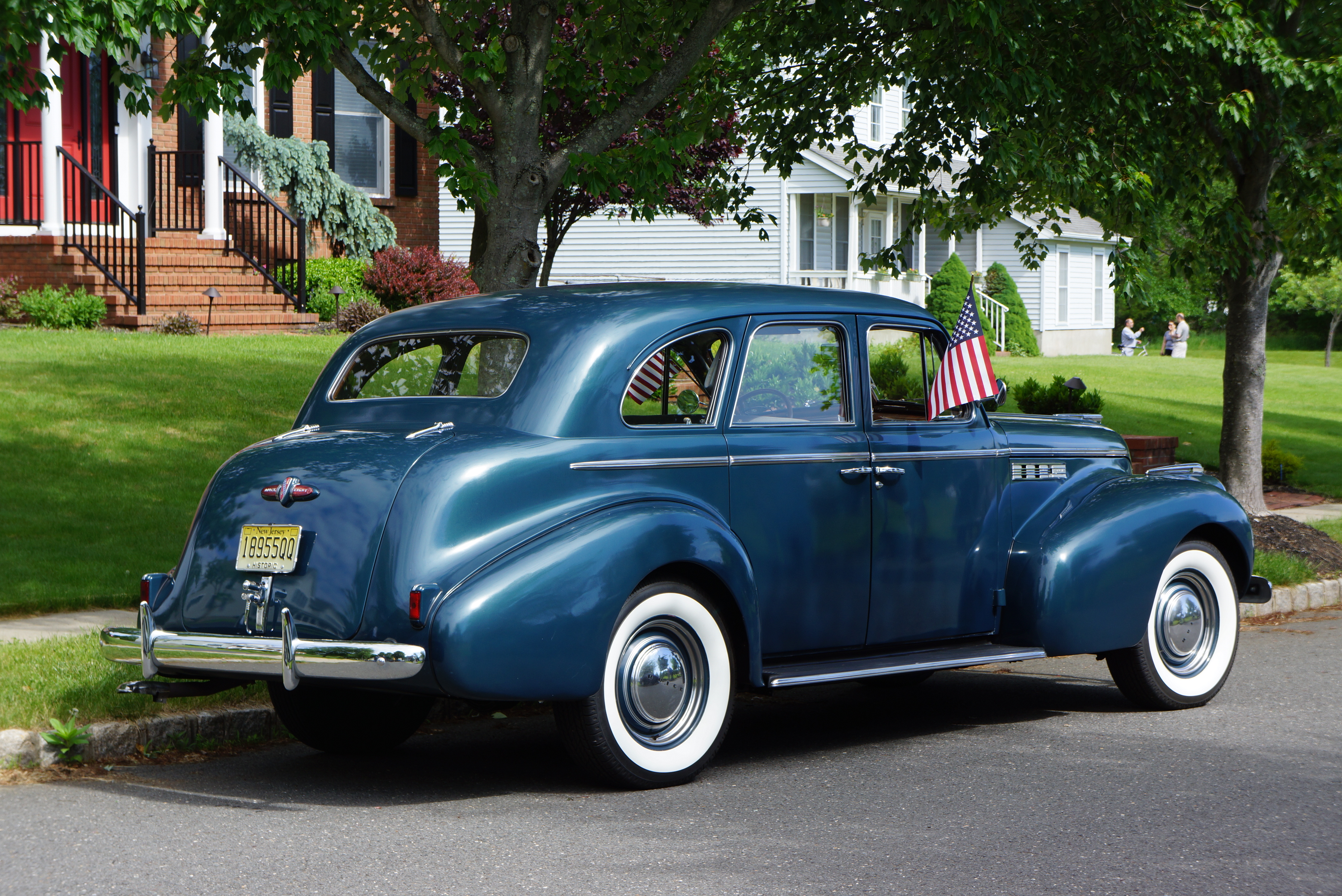
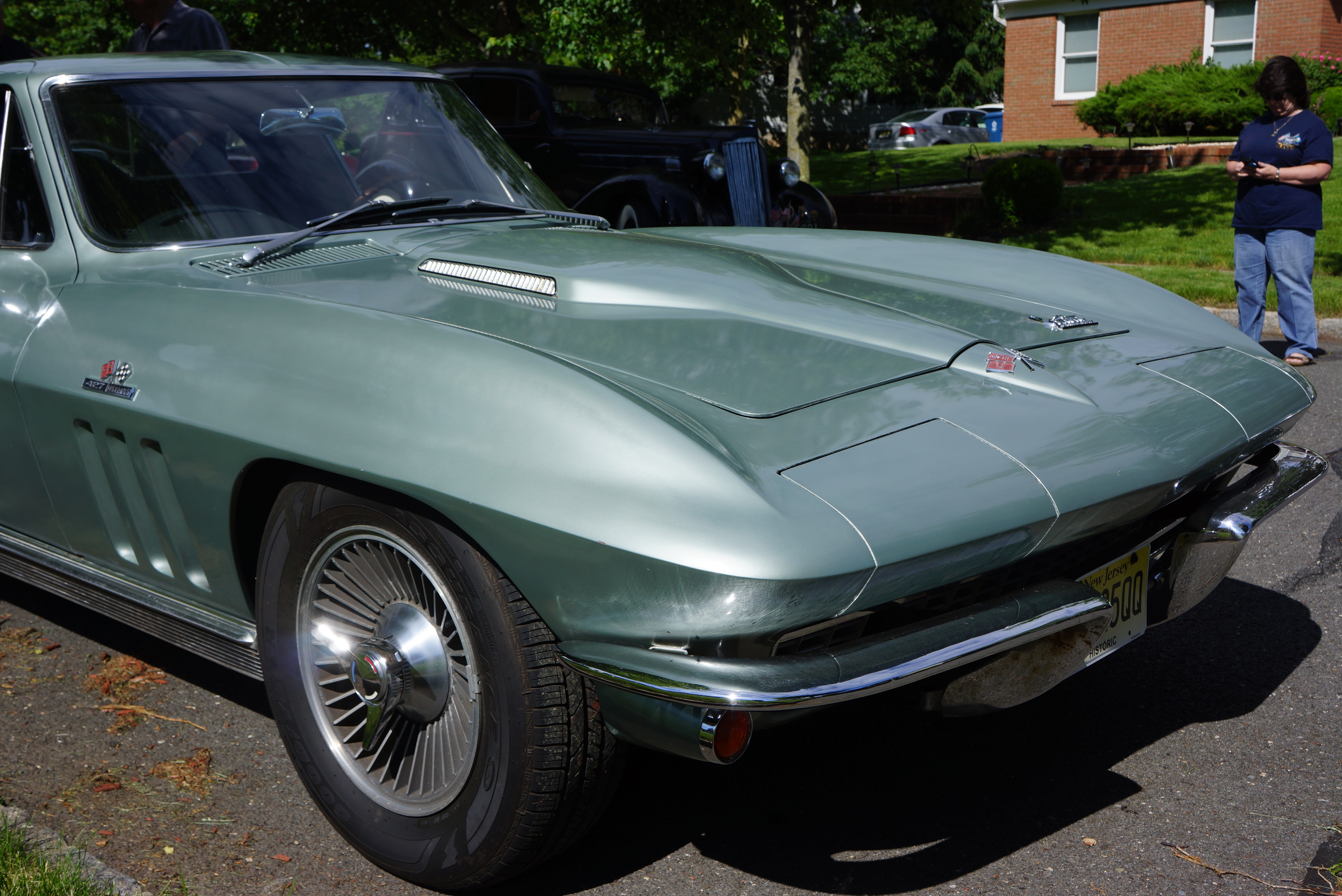
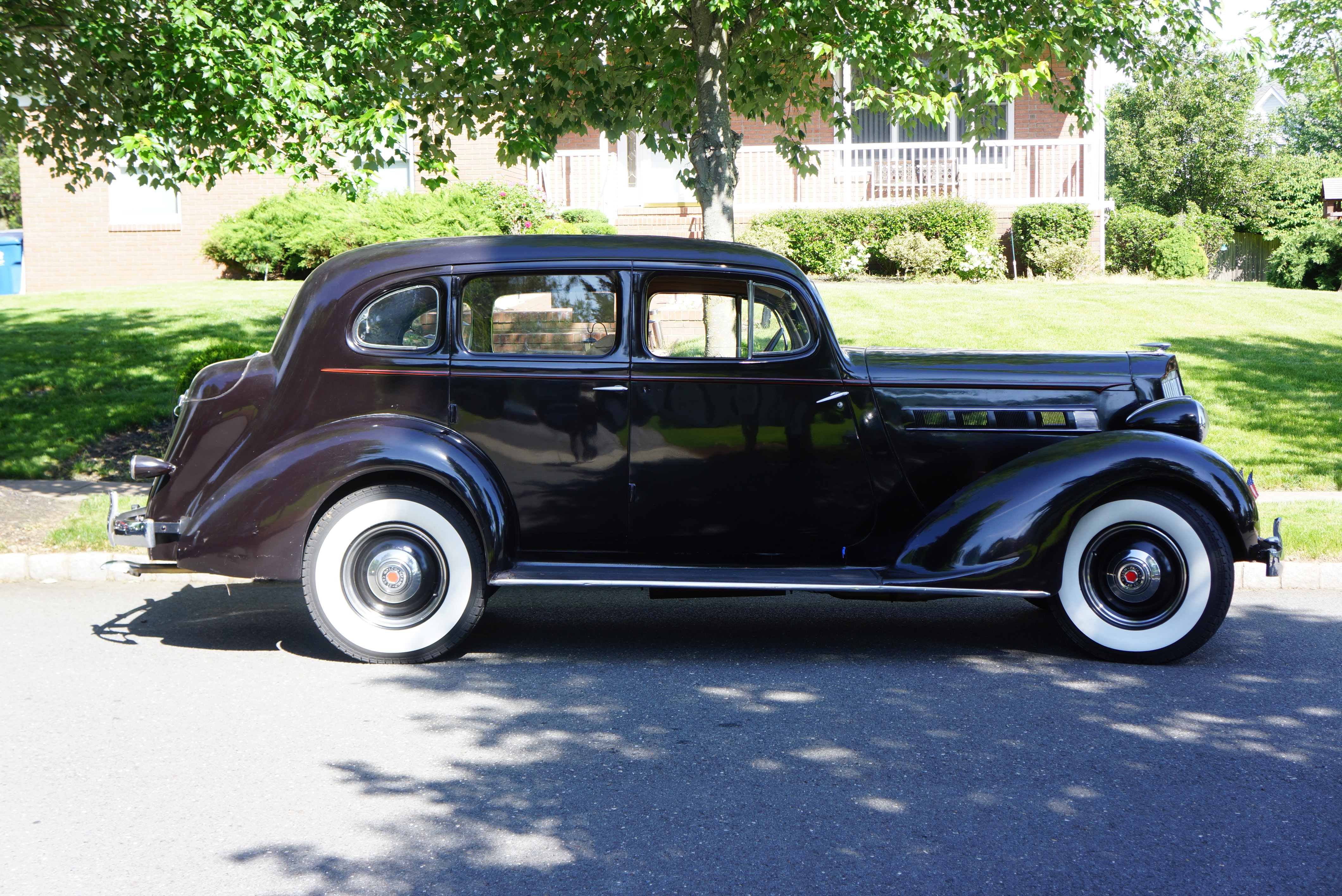
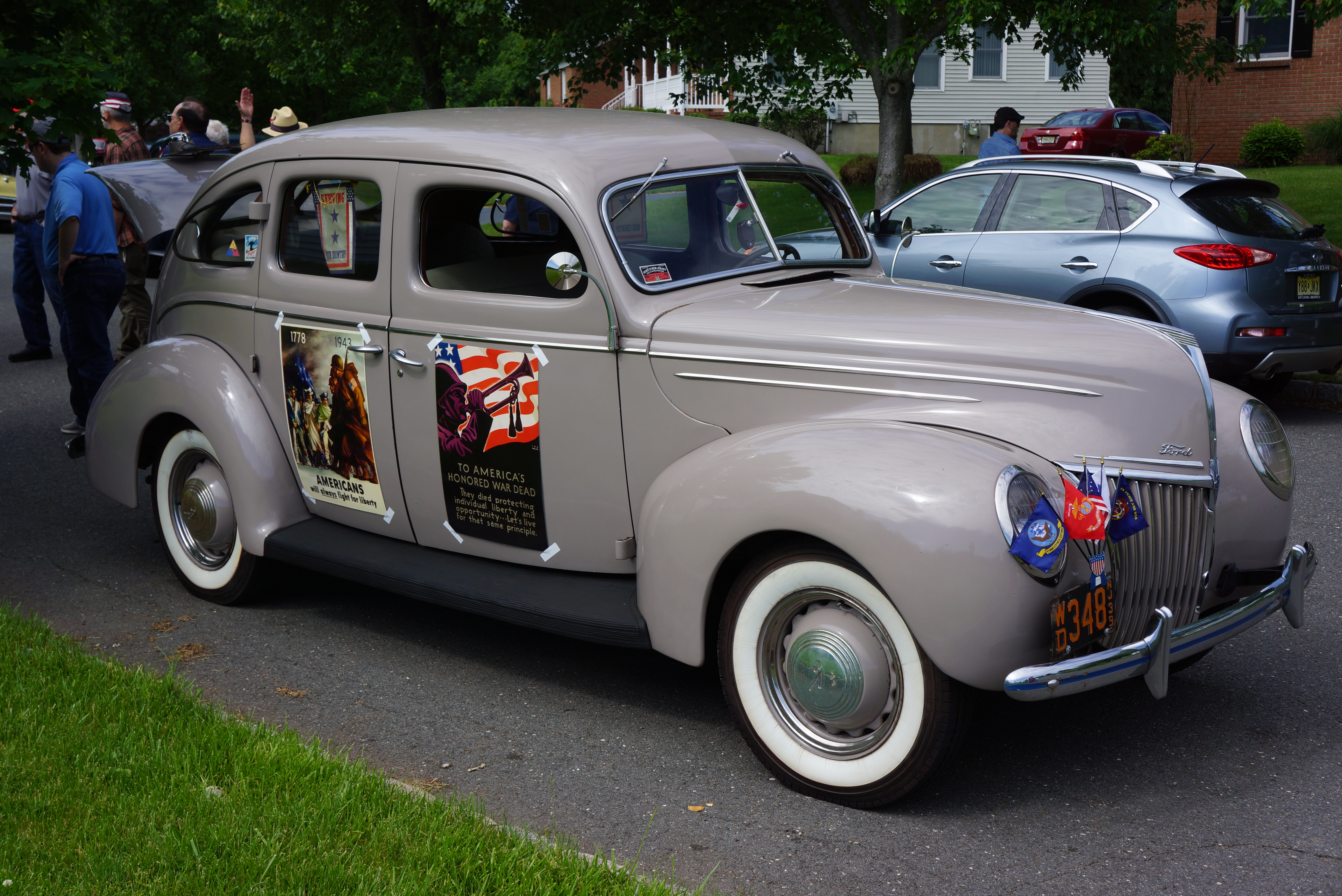
The splendid late May weather helped produce an excellent turnout for the club, with over 20 vehicles participating. The event chairperson, Bob Hudak, encouraged non-AACA members to also drive with us, as long as the vehicles were 25 years old or older. Several pre-war cars, including a 1929 LaSalle, a 1935 Packard, a 1939 Ford, and a 1940 Buick showed up. Orphan marques Hudson and DeSoto were there, as was good ol’ American muscle, amply represented by a 1966 Corvette 427 (still with its original owner). A new club member brought his pristine 1959 Ford 2-door sedan. And like last year, I was again the only driver with a non-domestic vehicle.
The lineup waits for the green light
The Alfa driver’s view of the parade
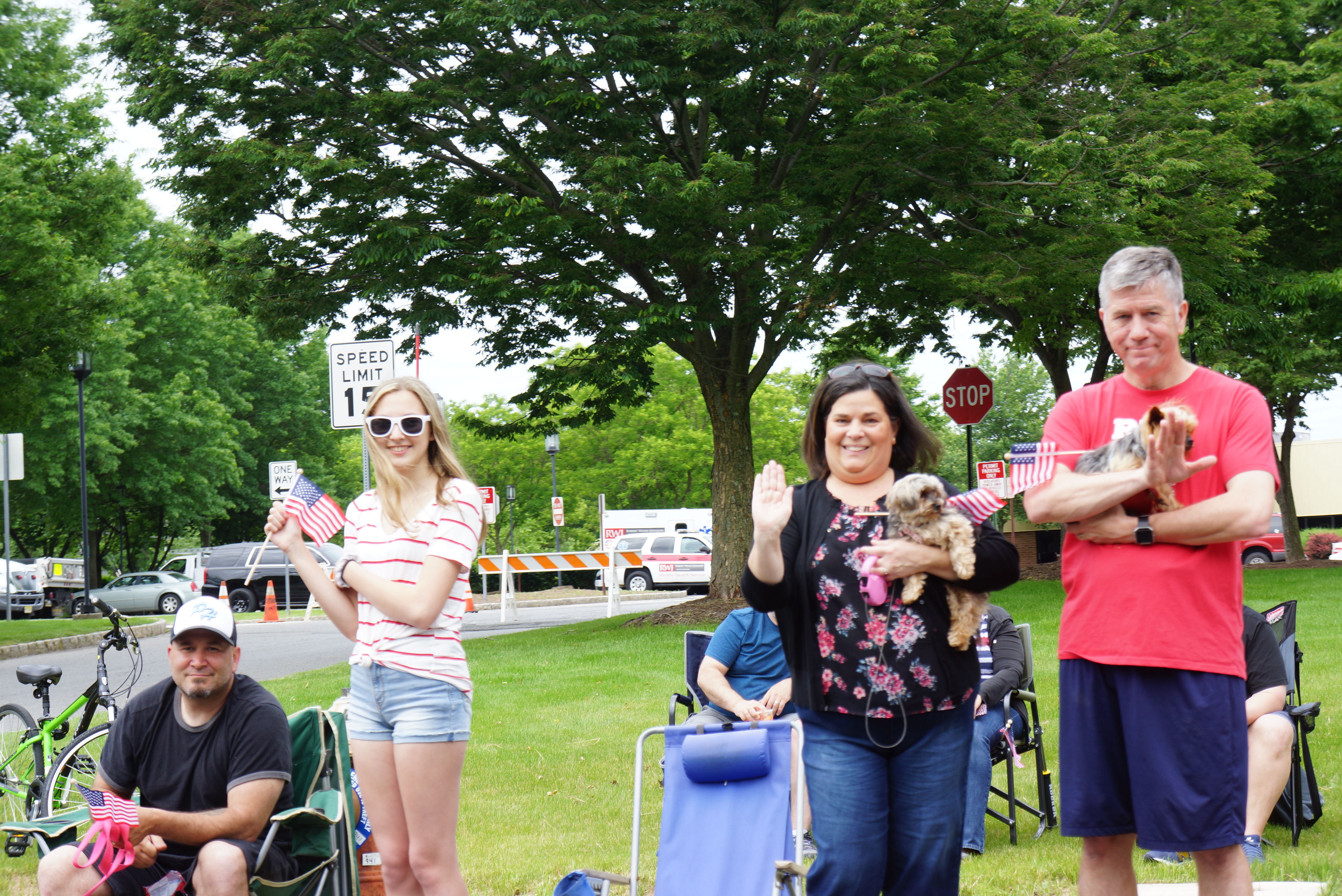
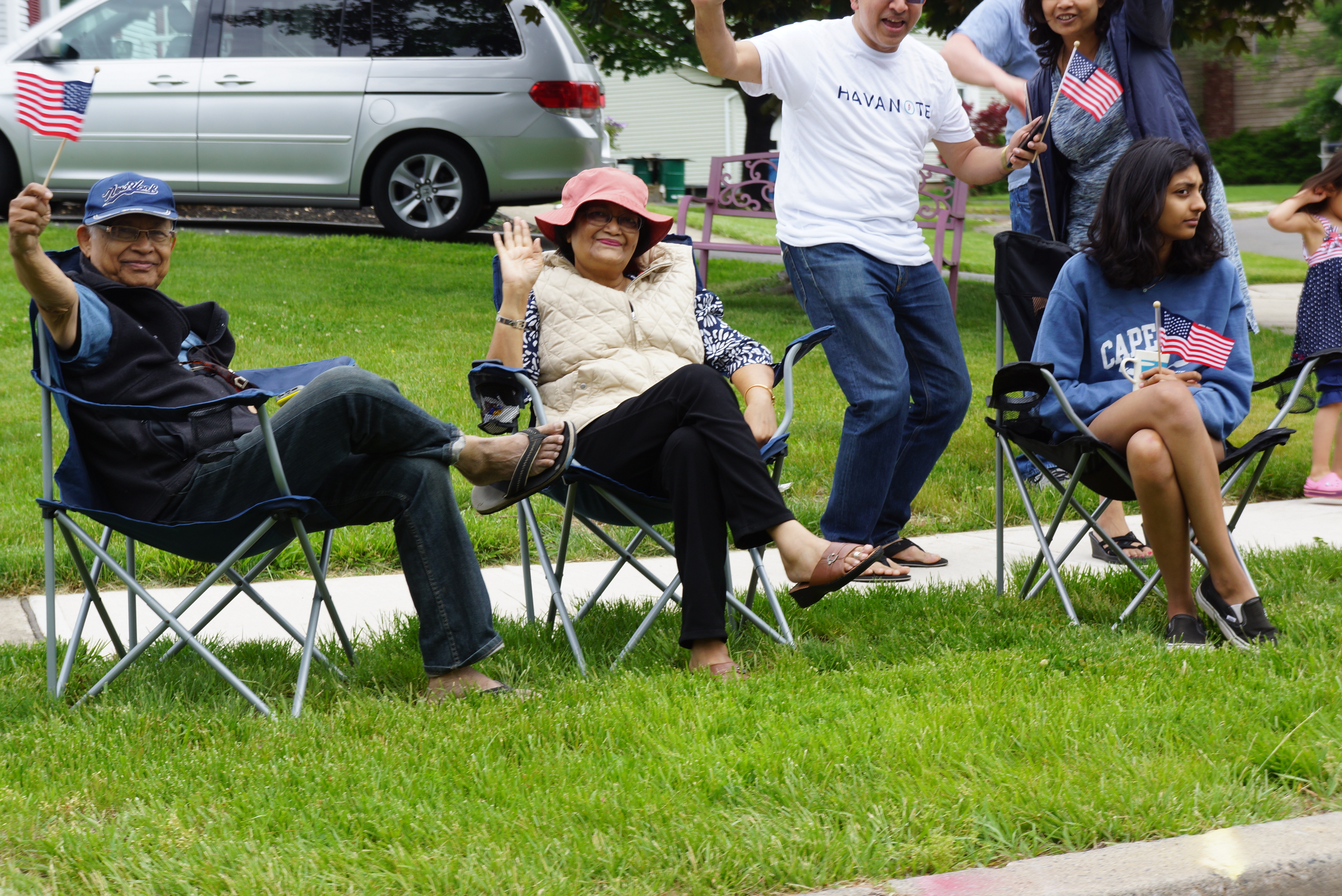
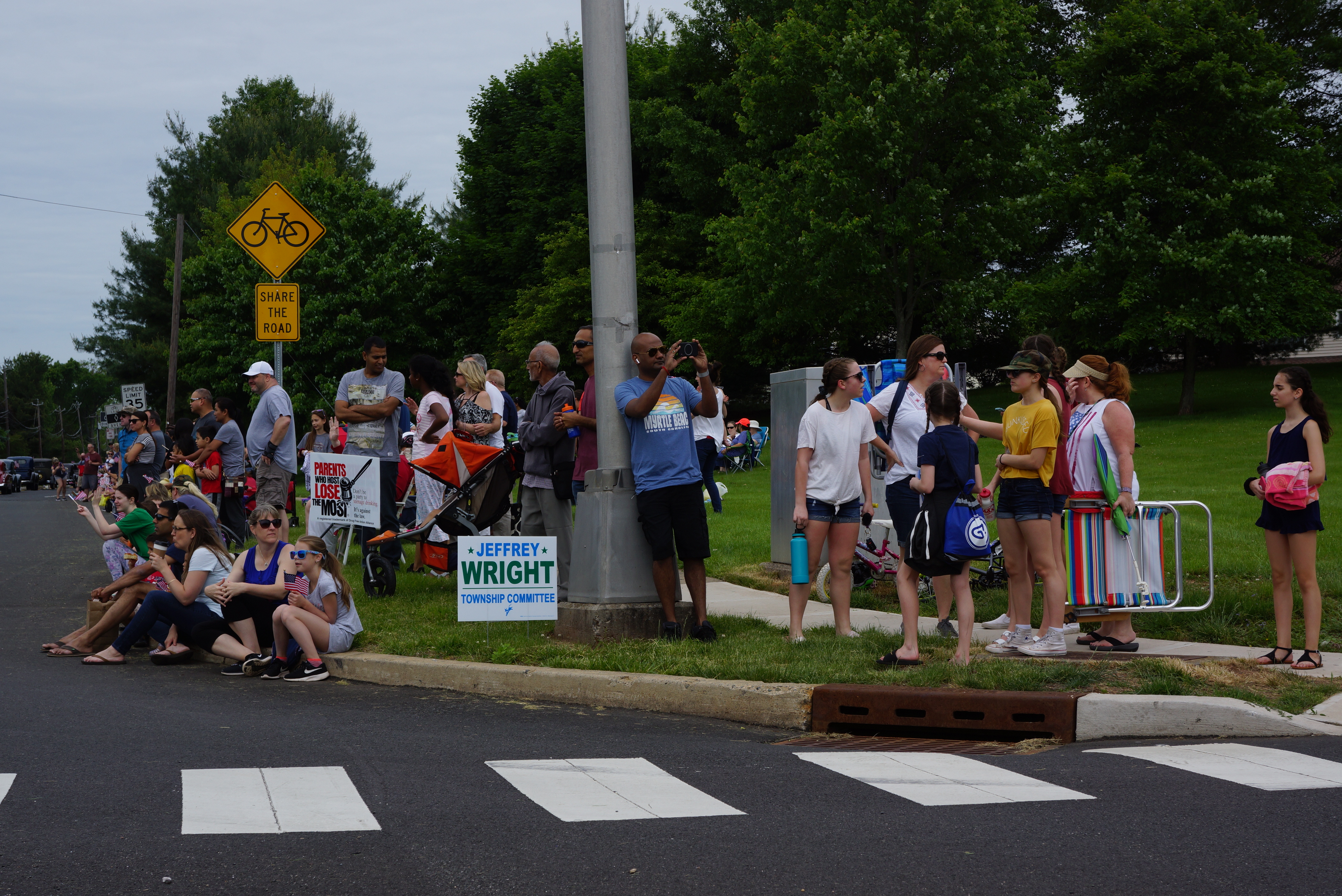
The parade started moving precisely at 10:30 a.m., and seemed to snake along more slowly than in previous years. Hillsborough is a diverse town, and I have always enjoyed taking in this true slice of modern America: people of all ages, races, and genders wearing and waving the red white & blue, cheering us on as we slowly inched past. I’ve also noticed, as you can see in the photos, that once a camera is pointed at them, most people love to smile and wave!
It’s a short parade; we cruised past the viewing stand and were on our way back home before 11 a.m. The Alfa performed flawlessly. It had better behave, as it’s taking me to Pittsburgh and the Alfa Romeo Owner’s Club (AROC) annual convention in July. We’ll have more to say about that in the coming weeks.
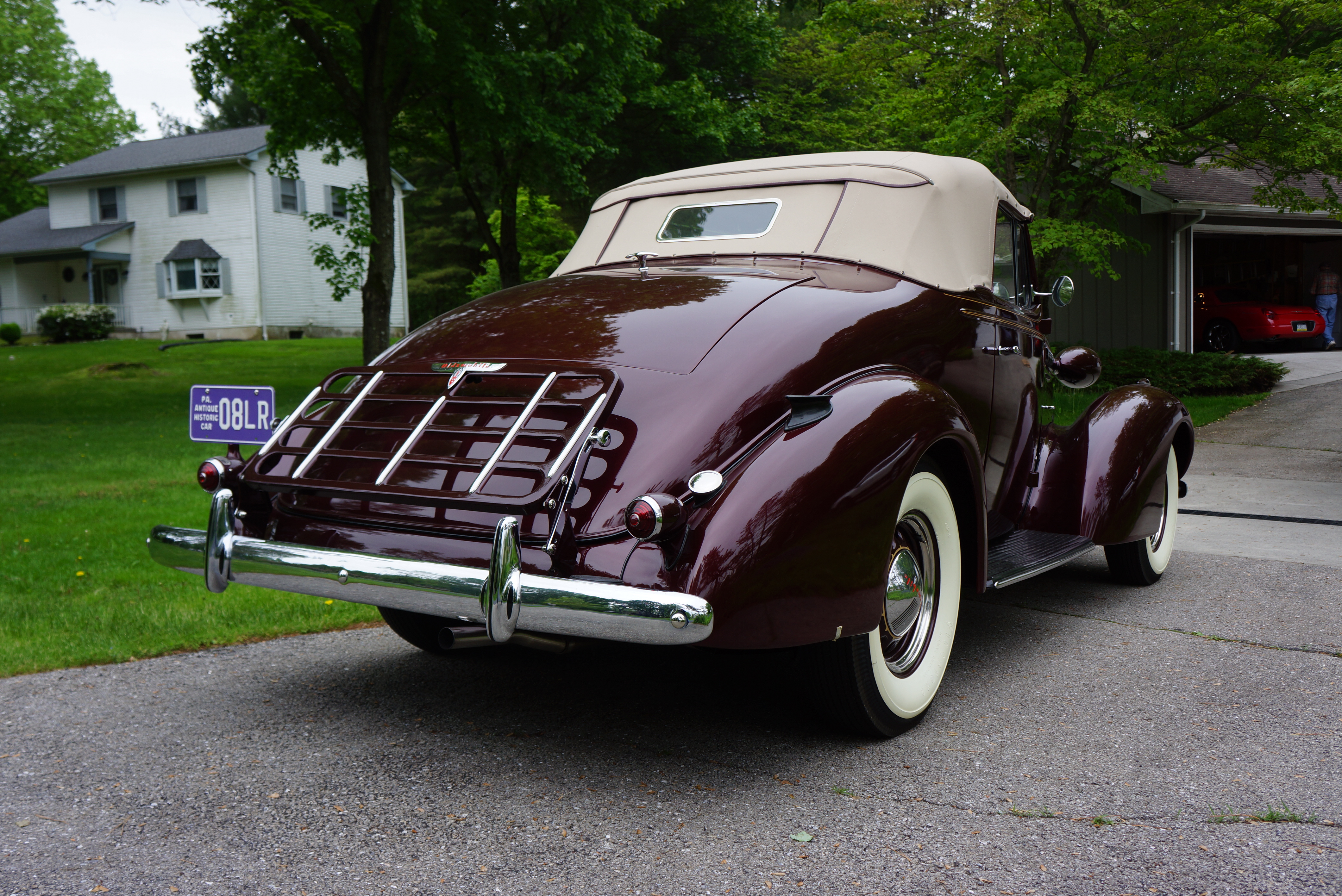
This past weekend I had the opportunity to spend a day with my good friend “Pete”, the fellow who sold me my Alfa Romeo after his 45-year stint with it. Pete has always had an eclectic collection of older and newer special-interest cars, and one of the oldest in his ever-changing fleet is his 1936 Oldsmobile L-36 convertible, with an inline eight-cylinder engine. During this most recent visit, I finally got the chance to drive it.
First, a history lesson: in the 1930s, General Motors’ car marques consisted of more than just the five that may come to mind. Besides Chevrolet, Pontiac, Oldsmobile, Buick, and Cadillac, there were Marquette, Oakland, and LaSalle. Marquette, Buick’s junior division, was dead and gone after 1930, and Oakland survived only one year longer than that. LaSalle, Cadillac’s sister division, produced its last car in 1940. Even in the 1930s, GM priced its cars in a very careful step-by-step fashion.
Omitting the low and high outliers Chevrolet and Cadillac, if you were shopping for a mid-priced GM convertible in 1936, you had no fewer than these 8 different models from which to choose:
YEAR
MAKE
MODEL
WHEELBASE
ENGINE
PRICE
1936
Pontiac
Master Silver Streak cabriolet
112″
inline-6, 80 hp
$760
1936
Oldsmobile
F-36 convertible
115″
inline-6, 90 hp
$805
1936
Pontiac
DeLuxe Silver Streak cabriolet
112″
inline-6, 80 hp
$810
1936
Pontiac
DeLuxe 8 Silver Streak cabriolet
116″
inline-8, 87 hp
$855
1936
Buick
Series 40 Special convertible
118″
inline-8, 93 hp
$905
1936
Oldsmobile
L-36 convertible
121″
inline-8, 100 hp
$935
1936
Buick
Series 60 Century convertible
122″
inline-8, 120 hp
$1,135
1936
LaSalle
Series 50 convertible
120″
inline-8, 105 hp
$1,255
The chart is arranged in price order, low to high. First note, not surprisingly, that the six-cylinder models all fall to the bottom of the range. The least-expensive 8-cylinder is the most expensive of the three Pontiacs. Don’t downplay the inclusion of “wheelbase” in this data: a vehicle’s wheelbase, and hence overall length, contributed mightily to its visual statement as a luxury item. The 4 straight-eight GM convertibles pricier than the Pontiac 8 have wheelbases 2-to-6 inches longer than Pontiac’s 116”, and engine output figures which are 5-to-33 horsepower above Pontiac’s meager 87.
The savvy buyer who might have compared the two Buicks, the Olds, and the LaSalle eights may have realized that for just $30 more than the “junior Buick”, s/he could get an Olds with a 3-inch longer wheelbase, and 7 more ponies to pull that extra length. The next choice in this price hierarchy, the “senior” Buick (admittedly with a big power jump) cost over 20% more. In this light, the Olds L-36 appears to be a smart choice.
Actual sales figures bear this out. According to my copy of the “Encyclopedia of American Cars”, Buick sold only 766 Series 60 Century convertibles, while Oldsmobile sold 931 L-36 convertibles. What does this prove? Only that the original purchaser of Pete’s ’36 did their homework, and would likely be shocked to know that the car was still around 83 years later.
The owner takes the wheel first during our drive
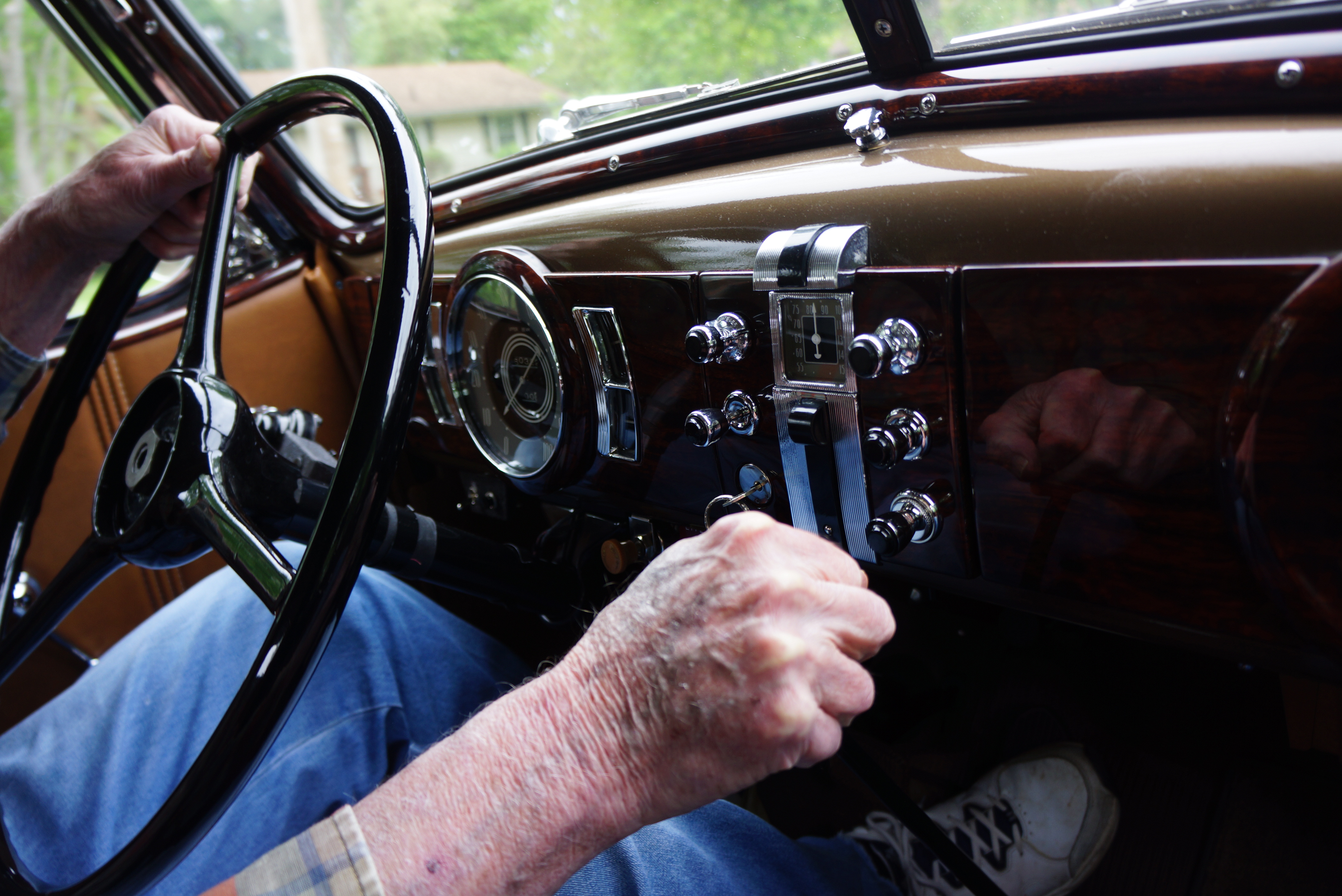
Regarding my time behind the wheel, the driving experience was sublime. That straight-8 has torque to spare, so shifting the 3-speed gearbox (with lever on the floor) could be conducted at a leisurely pace. First gear is almost a granny gear. At one stop sign, facing downhill, I started in 2nd, with no complaints from engine or clutch. I found that I could comfortably put it into top gear by the time I reached 20 mph, and acceleration was always smooth and velvety, if a bit unhurried compared to modern metal.
Typical ’30s dash with painted woodgrain effect
But when you’re cruising in a ’36 Olds convertible, what’s the rush? The heavy steering requires that you take your time in turns anyway. Actually, after a few lefts and rights, I got the hang of it. Just think about the turn 100 feet or so before reaching it, begin to dial in some lock, and point that long nose in the general direction you’d like to head. It’s easy, really.
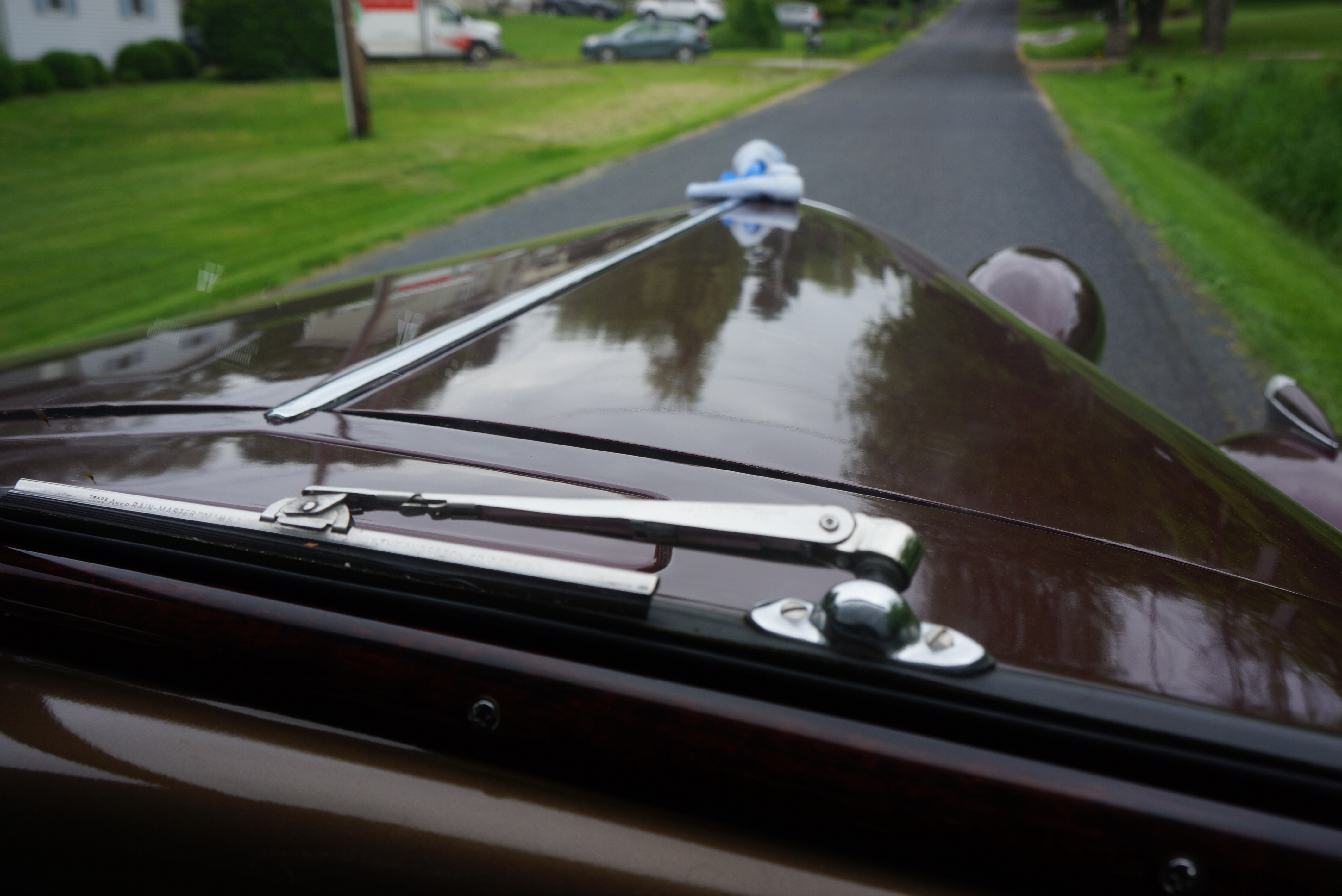
The view down the LONG hood
All the pedals, extending through the floor just like the Alfa, had good feel. The brakes brought the car to stop without drama, at least from 30 mph (my max speed for the day). The clutch exhibited no signs of chatter or slipping, and shifting was smooth on the all-synchromesh box. (Pete caught me double-clutching my first shift and said “you don’t need to do that!”) Visibility out the front was very good, but out the rear was inhibited by the small opera window in the erect cloth top.
The odometer on this car reads 60,000 miles, which is nothing for a car this age, but perhaps a significant number for a car of this configuration. And back to that production total of 931: how many have survived? First, these are convertibles, which reduces their lifespan (theft, water damage, rust). Second, by the time this car was 20 years old, the modern V-8 engined car, with its attendant power steering, brakes, windows, etc., would have made this ’36 look like the dinosaur it was. And last, as sad as it is to acknowledge this, those in the collector car hobby have been eyeing Fords, Chevrolets, and “true luxury” nameplates like Packard and Auburn. Oldsmobiles were not on most hobbyists’ radar. Taken together, all of these factors make this one rare bird. I’d guesstimate that there might be a few dozen 1936 L-36 convertibles out there, and many fewer that look and drive as good as this one.
This particular jewel of the motor car deserves to be kept in the loving condition it’s in, with occasional maintenance use to keep it fresh. I’ve already volunteered to be available for future test drives in order to accomplish just that.
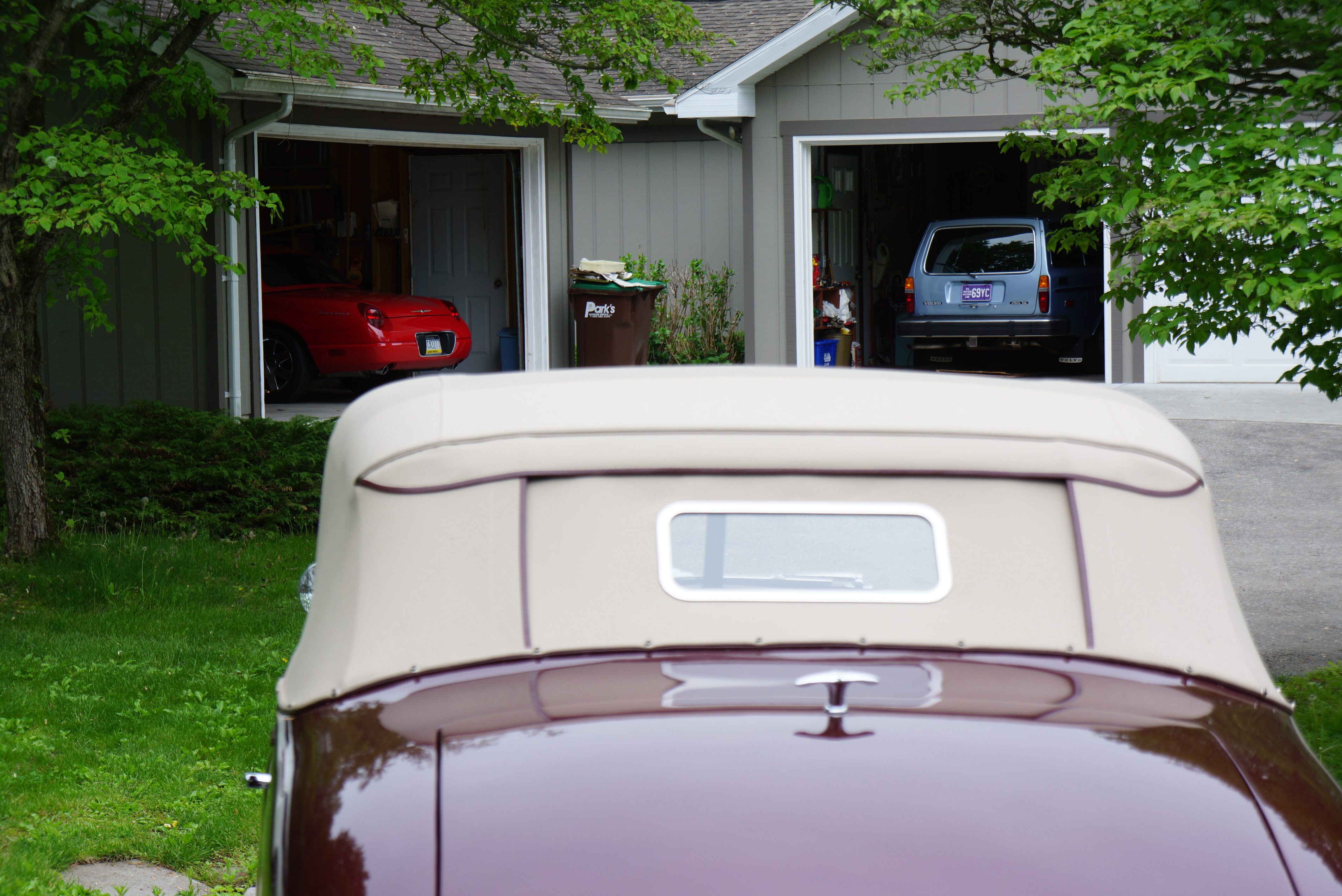
The ’03 T-Bird and ’79 Volvo 265 peek out above the Olds’ top
POSTSCRIPT:
This particular vehicle is for sale by its owner. Please contact me directly if you are interested, or might know of someone who is.










































































 richardscarblog