Hershey 2024 Part 1: The RM Sotheby’s Auction

The RM Sotheby’s auction is an integral component of the Hershey experience, and RM’s own website lists it as “The Official Auction of the Eastern Division AACA National Fall Meet”. It’s always held at the Hershey Lodge, which is where I stayed this year, making my access to the cars super convenient.

The two-day auction was conducted on Wednesday and Thursday, October 9 and 10, and 100% of the vehicles were arranged on the hotel’s grounds, allowing free access to the public during the preview. By my estimation, at least half of the lots were pre-war American classics, a category in which RM specializes. Perusing the information labels on each lot also showed that many of the cars were to be offered without reserve, guaranteeing an exciting auction.
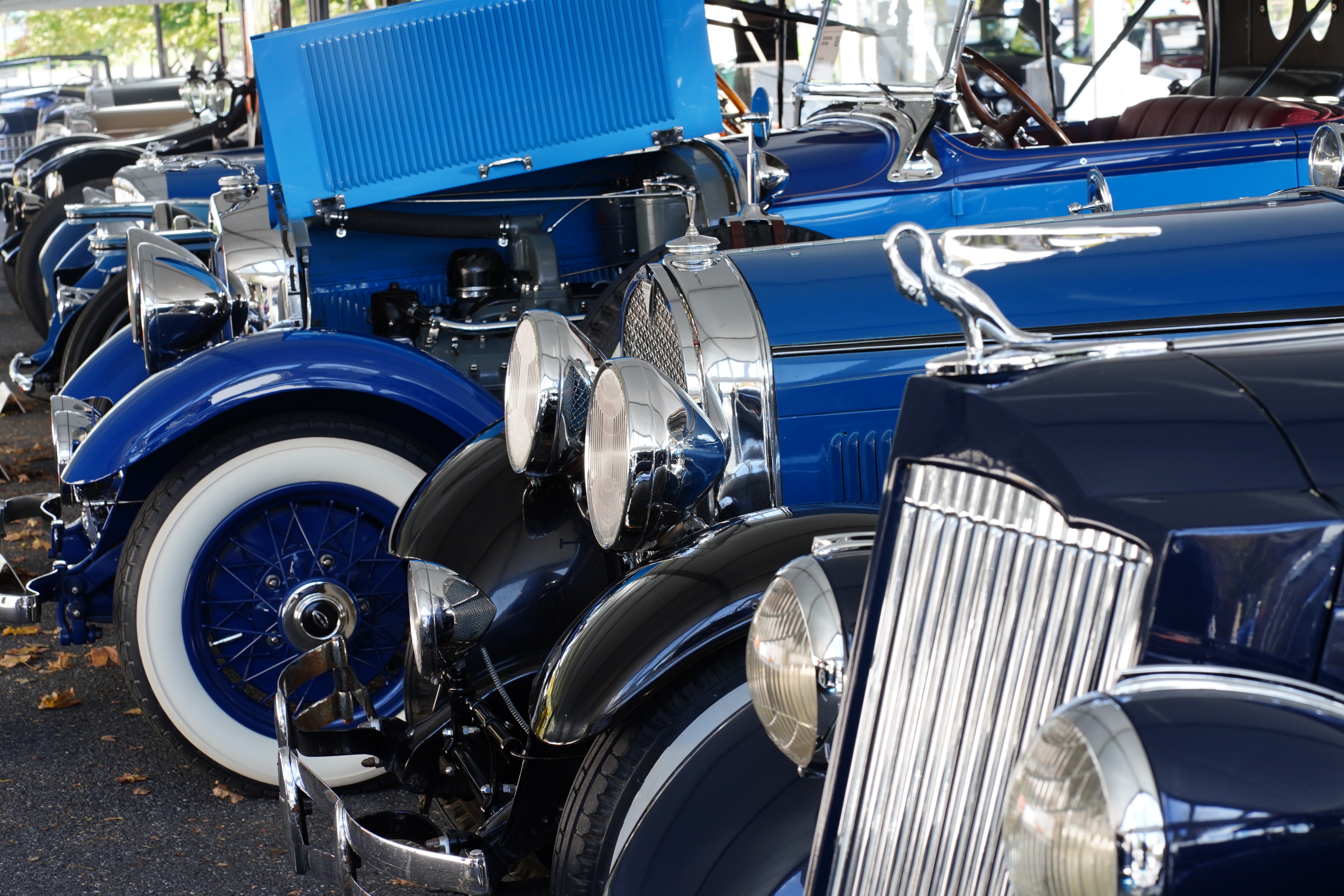
Two collections were of special interest to me. A fellow AACA member informed me that his brother-in-law was selling his collection of FoMoCo woodies, all at no reserve. (It was from this friend that I was able to procure passes to attend the auction.) There were 10 vehicles, 9 Fords and 1 Mercury, ranging in model years from 1933 through 1951. In this post I’m covering 8 of the 10, omitting the 2 resto-modded models.

The second, more modest collection was the final 3 vehicles from the estate of Dennis Nash. Dennis and his wife Ann Marie were long-term colleagues of mine from Volvo Cars of North America, and because of their deep interest in the hobby, were also dear friends. (It was Dennis who recommended me to the body shop which restored my Isetta.) Both Dennis and Ann Marie have passed on, and their 3 daughters were in attendance to watch their dad’s Jaguar, Morgan, and Volvo cross the block at no reserve. (The Jag and Volvo are discussed in more detail below.)

I sometimes forget how civilized and “professional” a so-called catalog auction as run by RM can be, compared to the 3-ring circus which is Mecum or Carlisle. The auctioneer enunciates every word, and there is never any doubt where the current bid is and what bid he seeks to acquire next. I recorded results for 86 cars on Wednesday and 50 on Thursday. Each day’s event took about two and a half hours to complete, and the time flew by. By contrast, at Mecum I’ve sometimes waited over 3 hours just to see a car of interest to me reach the block. Of course, Mecum is pushing quantity while one could argue that RM is pushing quality. Each has its place in the hobby.

As stated earlier, most of the lots sold at no reserve. Of the cars I watched, only two failed to sell, which speaks highly to the talents of the team at RM Sotheby’s to bring together the vehicles, owners, and prospective bidders to make this happen. Below are some details of the cars which I found interesting. The 8 woodies (in model year order) are listed first, followed by the remaining cars, again in model year order. All sold prices shown are hammer prices, which exclude the 10% buyer’s premium.


Lot 315, 1933 Ford V8 station wagon

SOLD at $33k, below pre-sale estimate of $40-60k

It’s interesting to look at this ’33, with its wire wheels and side curtains, and take in how quickly vehicles continued to evolve through the decade of the ‘30s.


Lot 308, 1937 Ford Deluxe station wagon

SOLD for $38k, within pre-sale estimate of $30-40k

The auction write-up claimed that this was a well-preserved original vehicle.


Lot 316, 1939 Ford Deluxe station wagon

SOLD for $65k, below pre-sale estimate of $120-140k

I liked this wagon a lot, with its front-end styling “almost” as nice as the 1940 models. Was this a steal? If the pre-sale estimates were anywhere near accurately based on recent sales, then yes.


Lot 314, 1940 Ford Deluxe station wagon

SOLD for $45k, within pre-sale estimate of $45-55k

Many hobbyists, myself included, consider the front-end styling of the 1940 Fords to be a highlight of the entire pre-war era. This wagon looked sharp yet just squeaked up to its low estimate.


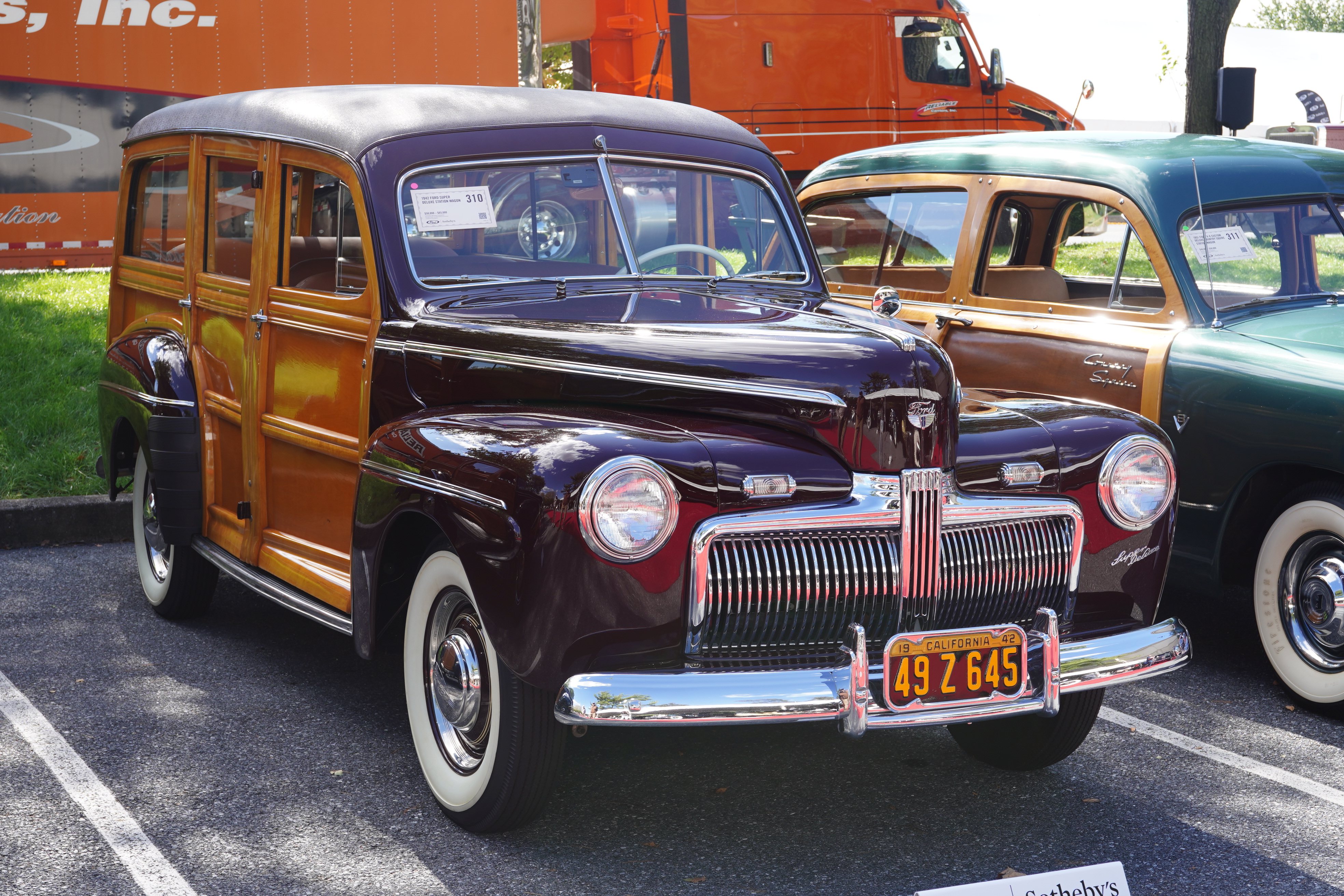
Lot 310, 1942 Ford Super Deluxe station wagon

SOLD for $77k, above pre-sale estimate of $50-65k

A 1942 anything is a rare car. This was the only woody to exceed its pre-sale estimate.
 

Lot 313, 1946 Mercury station wagon

SOLD for $$33k, below pre-sale estimate of $40-60k

The only non-Ford in the collection, and undoubtedly a rare car. I’d surmise that a hard-core woody collector would be thrilled to have this in their collection.


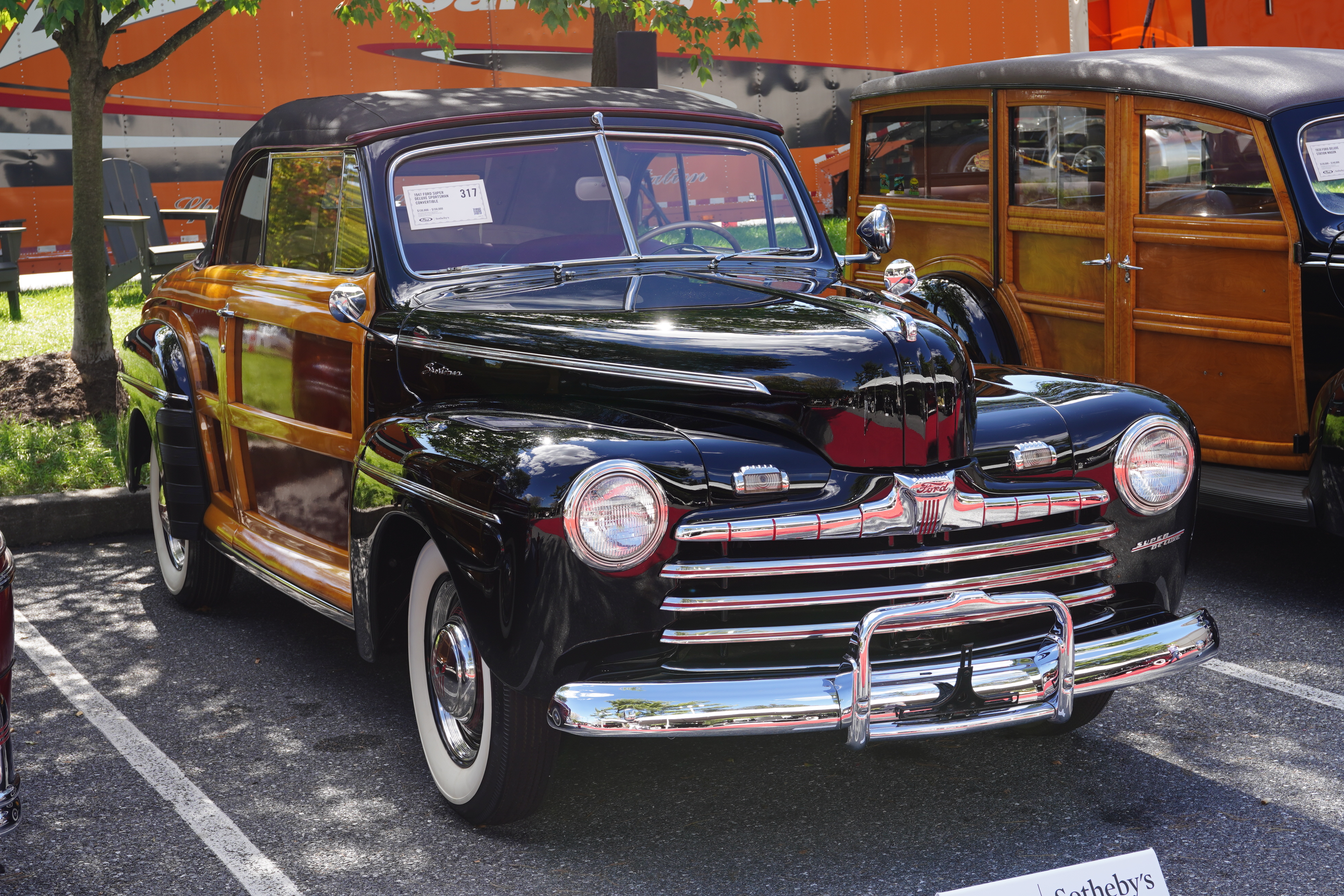
Lot 317, 1947 Ford Super Deluxe Sportsman convertible

SOLD for $92.5k, below the pre-sale estimate of $130-150k

The highest-priced sale of this collection still missed the lower mark by almost forty grand.
 

Lot 311, 1951 Ford V8 Custom Deluxe Country Squire station wagon

SOLD for $32k, below pre-sale estimate of $40-50k

It was announced that this was Ford’s last year for woody wagons, and this was the first Ford to wear the “Country Squire” model name. I’d say that the combination of the two makes this a bargain at $32k.


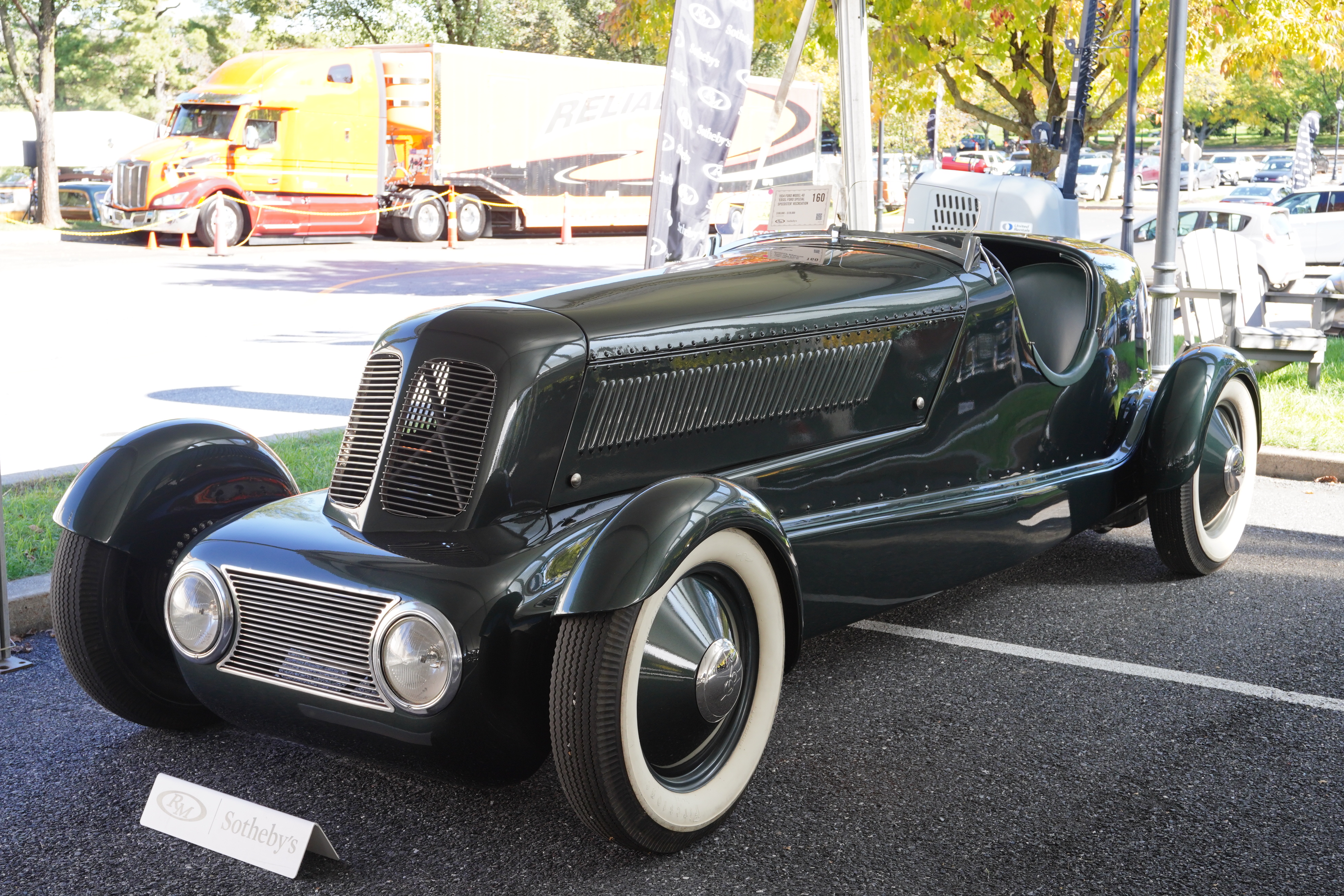
Lot 160, 1934 Ford “Edsel Ford Speedster Recreation”, copy of one-off styling study done by Henry Ford’s son Edsel. Mechanicals are from a 1934 Ford.

SOLD for $80k, below pre-sale estimate of $100-120k.

I overheard comments along the lines of “this is a lot of money for a kit car”, but it wasn’t a kit car. Someone put significant effort into recreating this iconic vehicle (although I did not perform a side-by-side photographic comparison to verify its accuracy). It’s an interesting piece of history, and owning it means that you’ll never be able to stop explaining what it is (and isn’t).
 

Lot 335, 1936 Cord 810 Phaeton.

SOLD for $112.5k, below pre-sale estimate of $150-200k.

This Cord, a non-supercharged model, was a Phaeton, with a small rear seat. This one hammered quite a bit below its pre-sale estimate, and in my opinion, was a bargain deal for someone looking for a Cord drop-top.


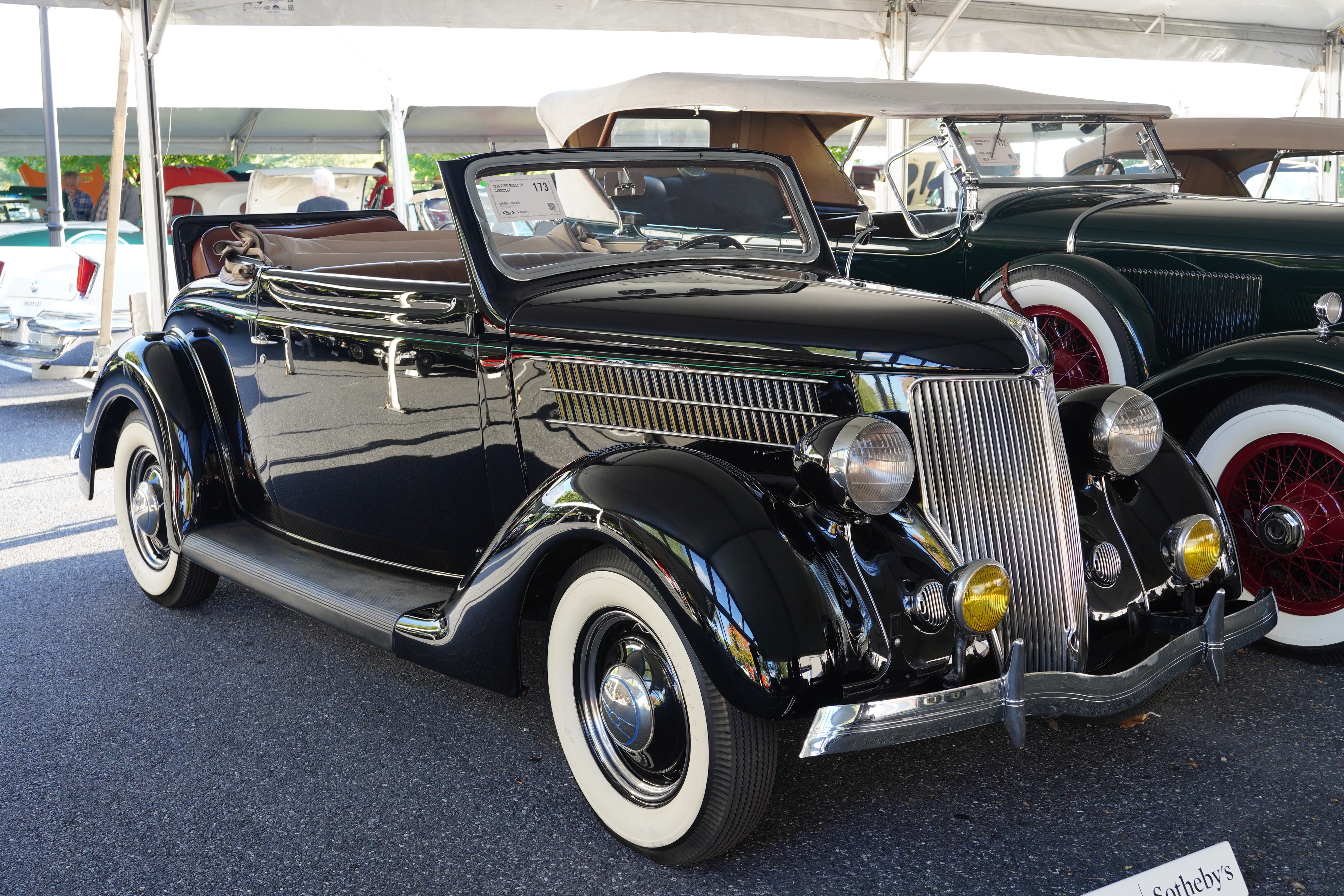
Lot 173, 1936 Ford Model 68 Cabriolet, with rumble seat.

SOLD for $39k, within pre-sale estimate of $30-40k.

This one almost reached the top estimate, and I thought it was a good buy; however, checking recent sales on Bring a Trailer, these ‘30s flat head Ford convertibles do sell in this range, so the price here was fair to both buyer and seller.
 

Lot 129, 1937 Cord 812 Supercharged Phaeton.

SOLD for $145k, within pre-sale estimate of $100-175k.

Compared to Lot 335 above, this car was supercharged, which attributes somewhat to its higher price.


Lot 131, 1937 Cord 812 Supercharged Cabriolet RECREATION

SOLD for $56k, within pre-sale estimate of $50-70k.

Typically, RM Sotheby’s is 100% forthcoming in its lot descriptions. However, in this case, I give them 2 demerits by failing to make it obvious that this car was a recreation, done in South Africa by a builder who formed a new body to fit over Cord mechanicals. The less-than-authentic nature of the car was not lost on the bidders, yet the sale price still reached within the pre-sale estimates.


Lot 378, 1940 Lincoln Continental Cabriolet

SOLD for $52.5k, over pre-sale estimate of $30-40k.

The car looked stunning in black, and its V12 sounded smooth and quiet, at least at auction block speeds. This was one of the few cars in the two-day auction to exceed its estimates.


Lot 180, 1949 Allard L Type, car appeared to be original, unrestored, and complete

SOLD for $45k, over pre-sale estimate of $30-40k.

This one charmed me with its original patina bursting out at every seam. Allard is a relatively unknown marque here in the States. They were built in Britain with locally-sourced parts for the chassis, but the engines were always American-sourced. I know that they were raced in period. Given that there are new Allards being built again today, starting around $200k, I think that this one would be a blast to have at $45k.



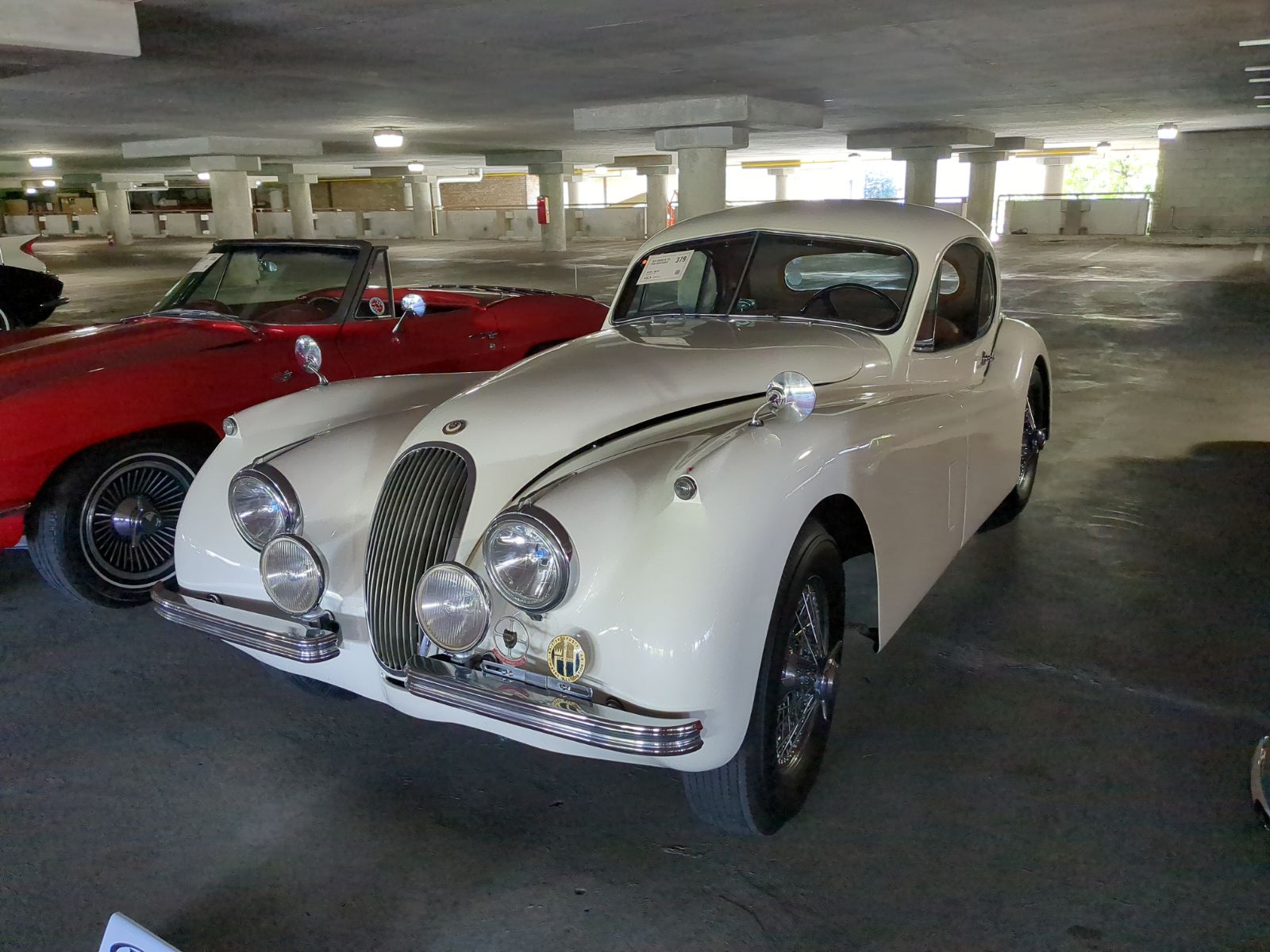
Lot 379, 1953 Jaguar XK-120 Fixed Head Coupe.

SOLD for $65k, within pre-sale estimate of $60-80k.

This was one of three cars being sold from the estate of the late Dennis Nash. Dennis was a long-term colleague of mine from Volvo Cars of North America, and I’m proud to say, was also a very dear friend. His wife Ann Marie, who predeceased him, also worked for the company and they were known to many of us Volvo employees. Dennis was a true Car Guy, and his taste in cars ran toward British makes, although I knew him to have a few American cars (as well as the Volvo which is covered a little later here). I was not aware that he owned this XK120, which looked very clean and straight (with the possible funny exception of its dash-mounted Volvo radio). I thought the car might hammer closer to $80k, but I think the final price was fair.
 

Lot 178, 1954 BMW 501-6 four-door sedan

SOLD for $25k, below pre-sale estimate of $30-40k.

These are so rare in the States that I can recall only ever seeing one other of these rather unattractive cars. The short history that after the Allies had bombed BMW’s factories in WW2, the company struggled to get back to its feet. This overweight and underpowered design was their unsuccessful attempt to compete with Mercedes-Benz’s luxury sedans. In 1955, the Isetta brought in the revenue to fund the engineering of modern cars (the “Neue Klasse”), while these “Baroque Angels” as they were called languished in the showrooms. This car would be desirable only to a fanatical BMW collector.


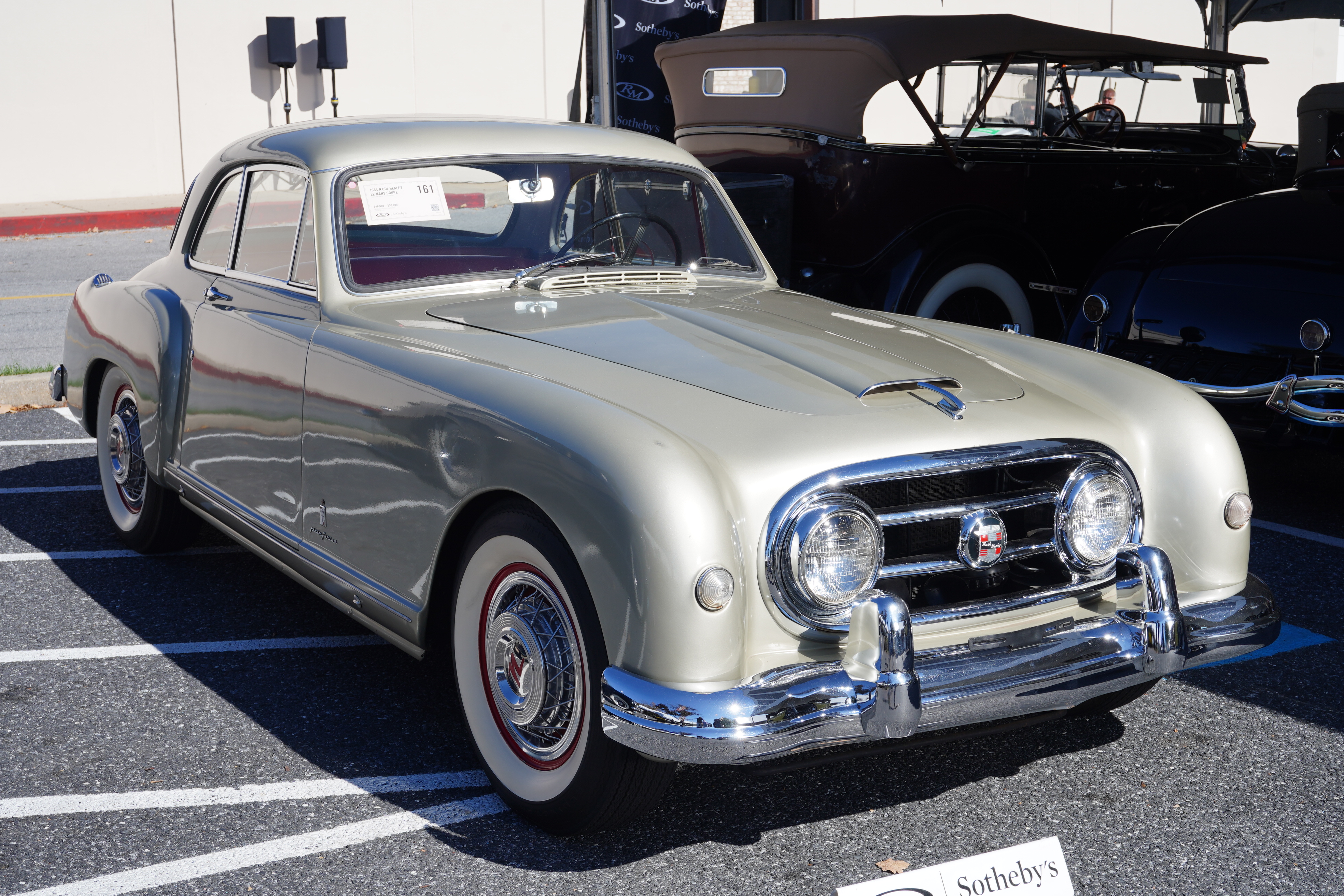
Lot 161, 1954 Nash-Healey LeMans Coupe

SOLD for $40k, within pre-sale estimate of $40-50k.

The convertible version of this model is seen regularly enough (there was one at this auction), but the coupe is rarely spotted. Perhaps surprisingly, I find the coupe slightly more attractive than the drop-top. This one sold right at the bottom of its estimate, and it’s a handsome, usable, and unusual car for $40k.
 

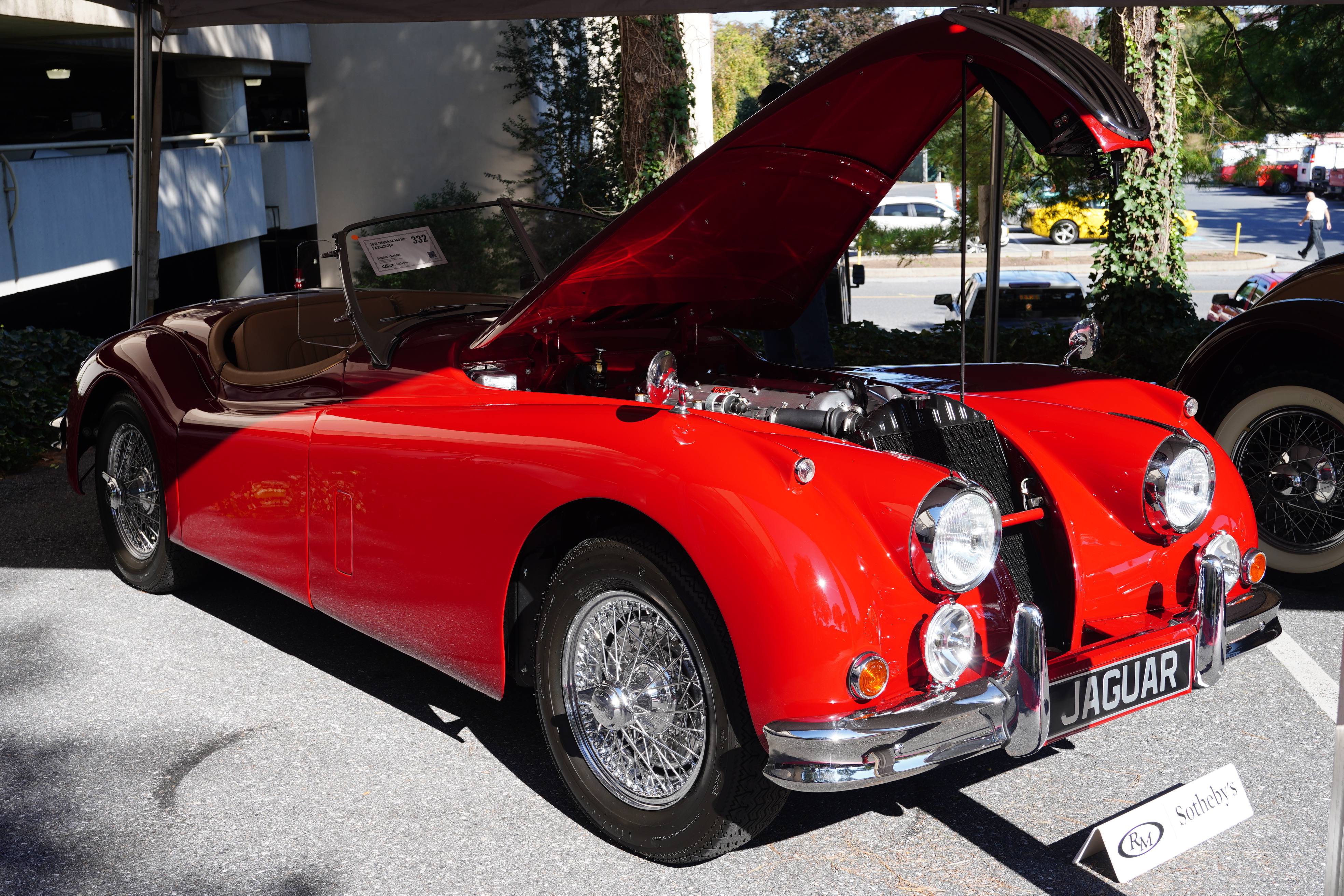
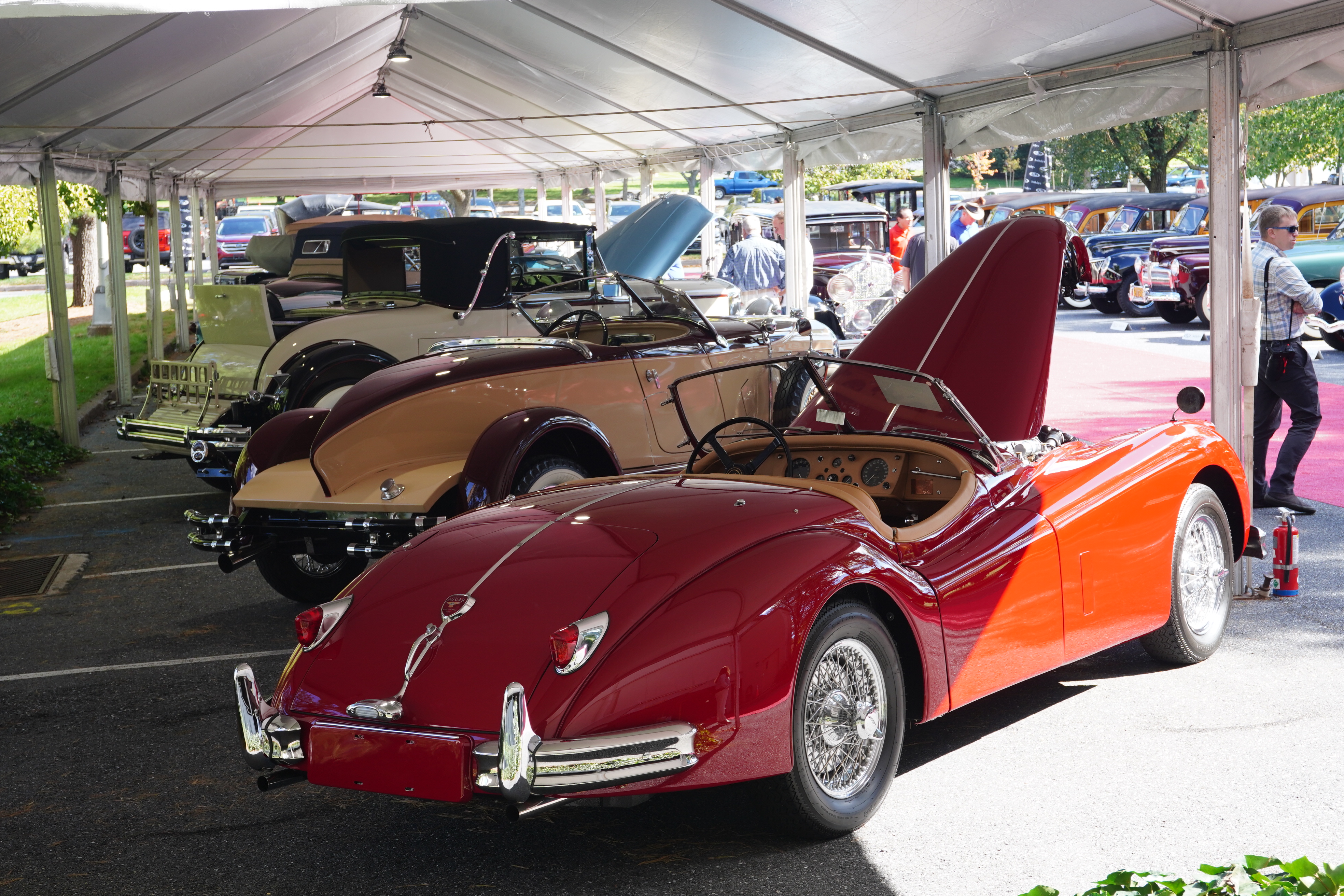
Lot 332, 1956 Jaguar XK140 roadster

SOLD for $135, within pre-sale estimate of $130-160k.

My photos do not do justice to the quality of this restoration, which struck me as one of the stars of the auction. It’s a beautiful design in any color, but the red over beige was particularly appealing. Another $20-30k added to its hammer price would not have surprised me, so I’ll call this one well-bought.
 

Lot 181, 1957 BMW Isetta 300 Sliding Window Coupe

SOLD for $25k, within its pre-sale estimate of $15-25k.

Let’s face it: ALL BMW Isettas are “cute”, and that’s been a big factor in their enduring appeal. But prices are way off their highs of a dozen years ago, as more Isettas came onto the market. This one must have looked great to the casual observer, but wow, there were so many incorrect details. Look at those ridiculous hub caps! The front turn signals were incorrect, the interior was ghastly (the biggest boo-boo was covering the VIN plate with carpeting), and the colors were not the best choices. Frankly, I’m surprised at the sales result; I expected it to struggle to get out of the teens.


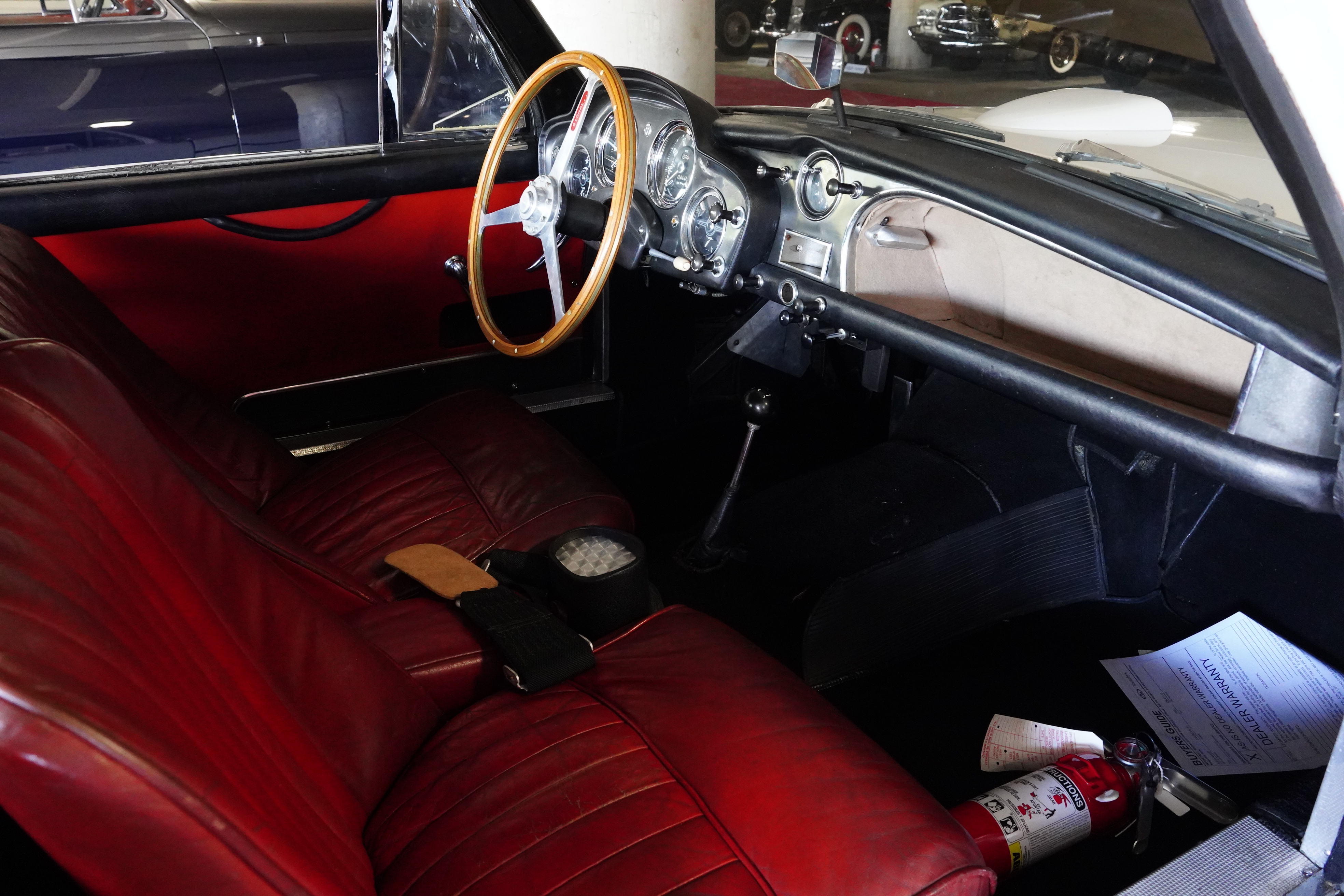
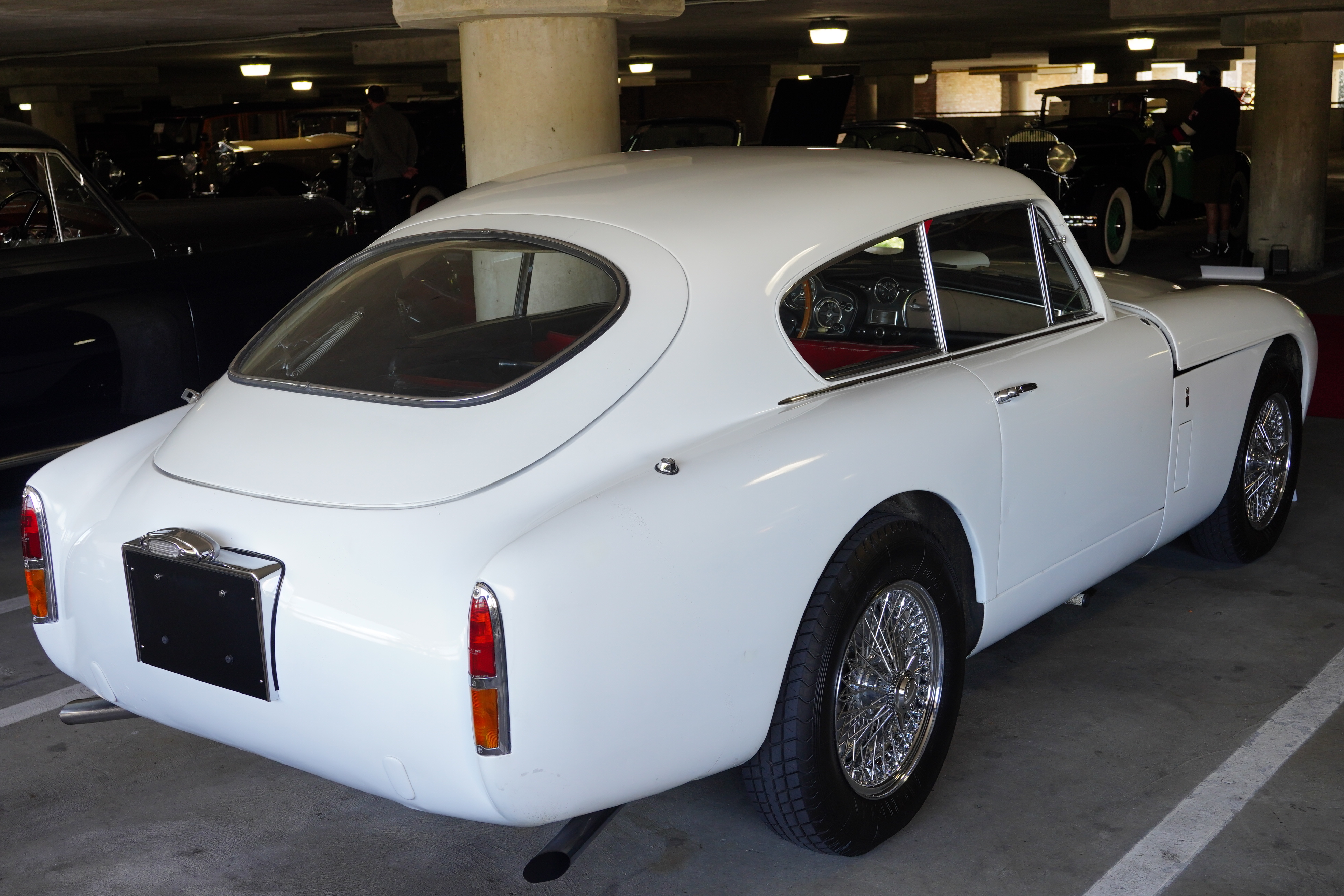
Lot 374, 1958 Aston-Martin DB2/4 Mk III

SOLD for $160, withing pre-sale estimate of $100-175k.

While the DB2’s and DB2/4’s never did much for me, I really liked this one in white over red. It also sounded incredible when driven across the block. You can’t touch a running, driving DB4 or DB5 for much under half a million, so getting a 6-cylinder DB for well under 2 looked like robbery to me. In fact, checking recent BaT sales, other DB2/4 Mk IIIs have sold in the $200k range, making this sale all the sweeter.



Lot 184, 1963 Lincoln Continental sedan

SOLD for $30k, below its pre-sale estimate of $45-60k

That pre-sale range looks more appropriate for the 4-door convertible, not the fixed-roof sedan. This was a smart-looking car, and for $30k, one got a “Kennedy-era Lincoln” while avoiding the complexity of that convertible top.


Lot 152, 1963 Alfa Romeo Giulia Spider

SOLD for $37.5k, below its pre-sale estimate of $50-70k.

Even I, a card-carrying Alfa owner, get confused about the switch from the Giulietta to the Giulia, as it occurred on a rolling basis in the early sixties. This convertible body style was introduced around 1955 as the Giulietta. When the completely redesigned Giulia sedans and coupes came out, the mechanicals were upgraded. But the new Spider (the Duetto) was still a few years away, so the Giulietta Spider was renamed the Giulia Spider. It was announced on the block that this car was born a “Normale” (Normal, or low-spec engine) but had been upgraded to Veloce (“fast”) mechanicals. This is what is known in Alfa circles as an “Abnormale”. In spite of the faster engine bits, this was a sloppy presentation, with the car looking worn and unkempt. Its cosmetic appearance did not inspire at all, so someone bought a ‘60s Giulia Spider at a bargain price, presuming that it will respond to some elbow grease.


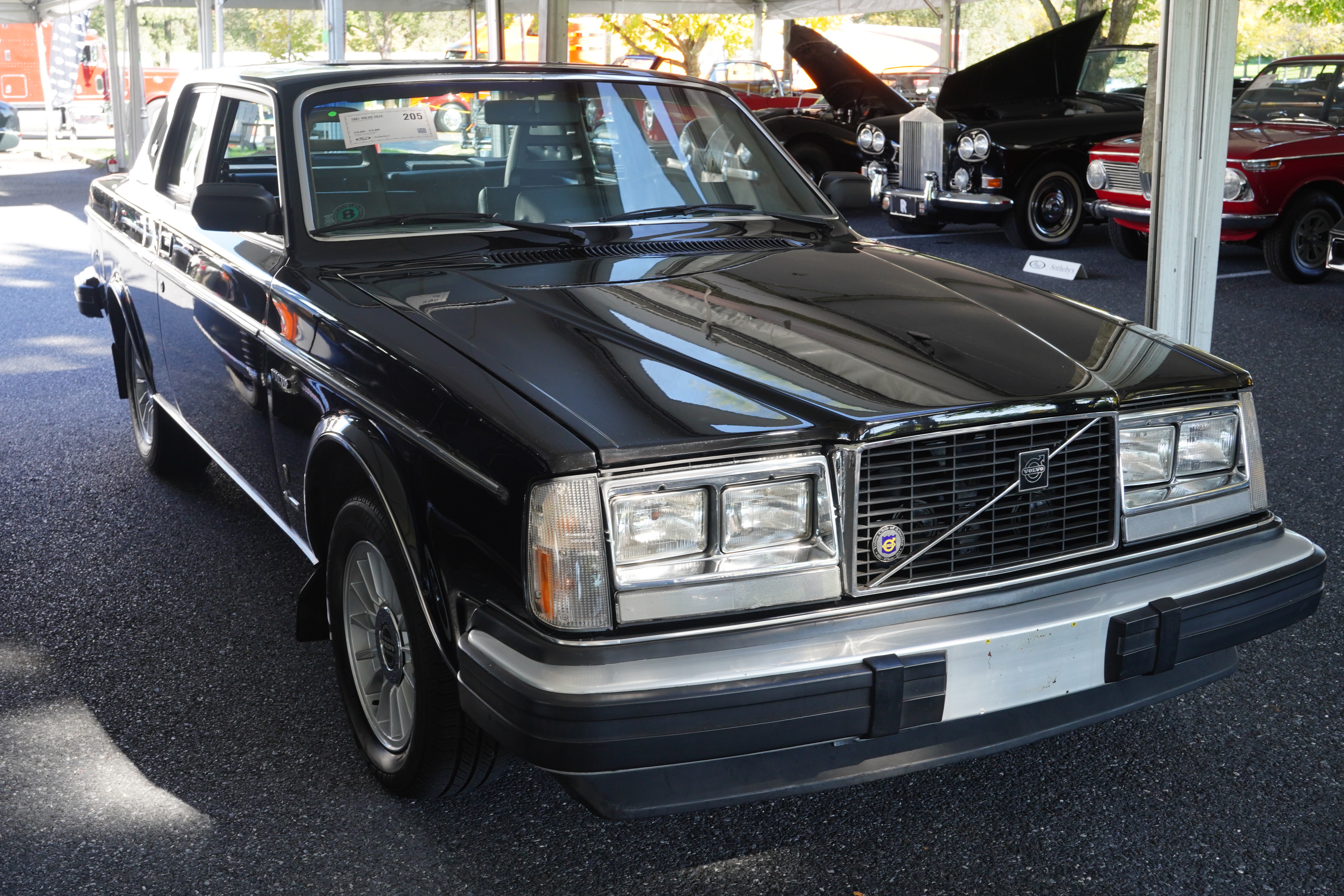
Lot 205, 1981 Volvo 262C

SOLD for $11k, within pre-sale estimate of $10-15k

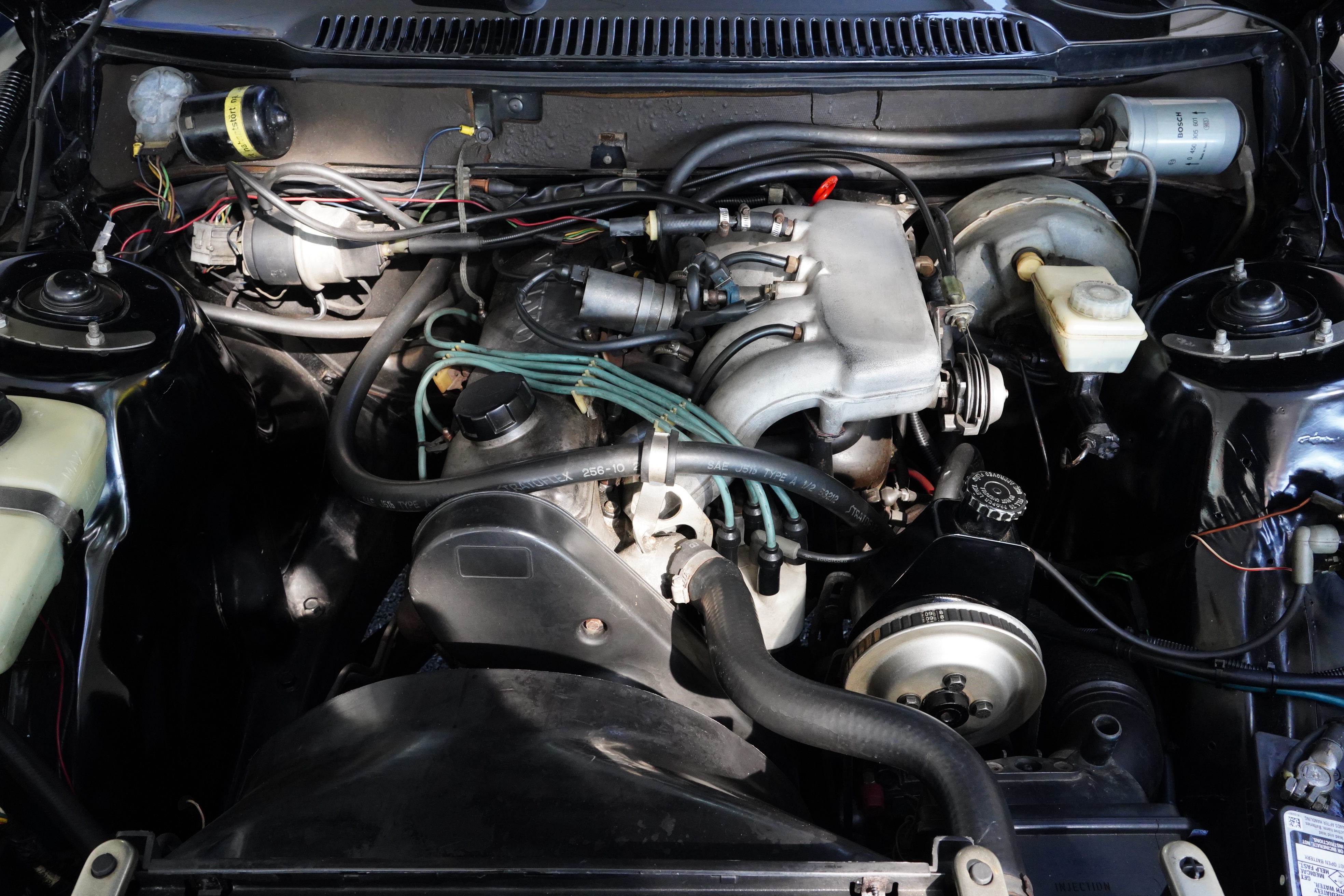
This is the second of the two Dennis Nash cars included in my report. (The third car, a Morgan, was not covered by me.) About 20 years ago, Dennis called me about this car, and asked me, as a favor to him, to check it out, so I did. The owner, a widow, told me it had been her husband’s car, but she didn’t drive it. It was stored indoors and had seen very little recent use. Aside from some dust, the cosmetics appeared ok. I was not crazy about the aftermarket sunroof, but once one of those is installed, removing it is a big job. The big news was the replacement of its PRV (Peugeot/Renault/Volvo) aluminum V6 engine with a Volvo B21F 4-cylinder job. This can be construed as either this car’s biggest positive, or biggest negative. I reported my findings back to Dennis, and he bought the car. It seemed to get a lot of attention in the tent outside, and I think the final price was fair to both parties.


ADDENDA: The Cord 810/812 cars

Three of the seven Cords which sold at Hershey this year are covered above. To many, the most desirable Cords are the final models, which were produced only for two model years: 1936 and 1937. There were four body styles: the Winchester 5-seat sedan; the Beverly 4-seat sedan; the 2-seat Cabriolet; and the 4-seat Phaeton convertible. All ’36s were model 810, and all ‘37s were model 812. In 1937, a supercharged engine was available as an option. From the outside, these are clearly identified by the stainless-steel exhaust pipes exiting through the hood on either side.

I’ve followed the Cord market in a peripheral way through the years, and at least up until recently, I’ve noted that the four-door cars have tended to sell in the $60-80k range, while the convertibles fetched much higher prices, closer to $125-175k.

In 2002, I attended the annual Auburn/Cord/Duesenberg reunion in Auburn IN, and posted about it here.

Entire blog post content copyright © 2024 Richard A. Reina. Text and photos may not be copied or reproduced without express written permission.


Hershey 2023 Part 1: The RM Sotheby’s Auction

The auction company RM Sotheby’s continued their October tradition by hosting a collector car auction at the Hershey Lodge in Hershey PA during the AACA Fall Eastern Nationals. RM (for Rob Myers, company founder), based in Canada, is one of the premier automotive auction houses, hosting events around the world; their appearance here is one of the few times they’re on the East Coast. Hershey Lodge is less than 2 miles from Hersheypark, where the AACA was holding its flea market/car corral/judged show (more about that in Parts 2 and 3). When Hersheypark decided to extend its open weekends into October, they forced the AACA to move its agenda back by a day (so the judged show, which for 50+ years had been on Saturday, is now held on Friday). RM similarly adjusted its two-day schedule to coincide, so their auction is now on Wednesday and Thursday.

RM Sotheby’s continues to attract consignments which are what I describe as pre-war and immediate post-war American classics, with a smattering of European cars. Despite pundits’ predictions that the ageing of the hobby would eliminate all interest in the classic cars of the 1910s – 1930s, that has not occurred: interest in well-restored examples of fine cars remains strong, even if prices have leveled off or dipped somewhat. By my casual observation, RM’s strength in filling their lots with high quality machinery at reasonable reserves results in a very strong sell-through rate. Of the dozen cars that I report on below, all sold. This is helped of course by the no reserve status of most of them, so high bid takes the car home. At the same time, RM’s published pre-sale estimates tell an interesting story: most of these cars sold below their estimates, at numbers which in some cases strike me as relative bargains.

My report covers only cars listed on the RM Sotheby’s website as “sold”. As I was not in attendance during the auction, sale prices are taken from their website; they include the 10% buyer’s premium which is backed out by me, so my numbers are “hammer” prices. Cars are listed in sold price order from low to high.


Lot 453, 1962 Volvo PV 544, grey paint, two-tone blue interior, dual outside mirrors. Appears well-restored on the outside, interior shows some wear. No reserve.

Pre-sale estimate: $12,000 – 16,000

Sold: $19,000; one of the few cars reported on here which sold above its high-end estimate. Seemed a bit pricey for an old Volvo.

Lot 456, 1957 BMW Isetta, two-tone light blue & white, off-white interior. Relatively rare European-spec version of the Isetta: no front bumper overriders, small headlights, large amber “repeater” lights, original style tail lights. No reserve.

 Pre-sale estimate: $30,000 – 40,000

Sold: $20,000; This is under other recent sales by $5,000-10,000, and the keen Isetta observer will enjoy its uniqueness compared to the much more common U.S. versions.


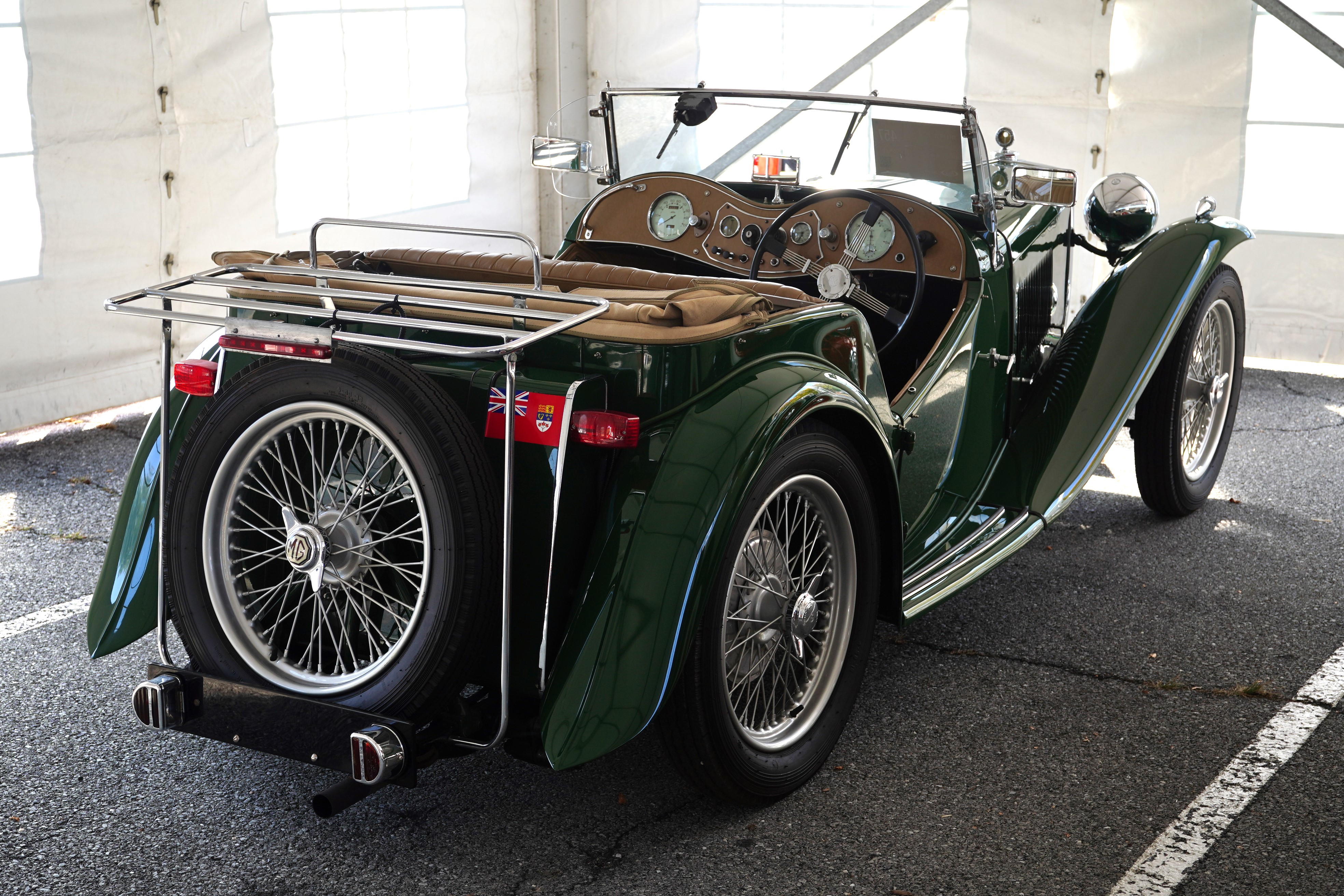
Lot 457, 1949 MG-TC, green, tan interior, tan top, silver-painted wire wheels. RHD as all TC’s are. This is the model vehicle credited with igniting the sports car craze in the U.S. when WW2 vets returning from the UK brought some of these back with them. No reserve.

Pre-sale estimate: $30,000 – 40,000

Sold: $25,000; a slight bargain compared to what some TC’s sell for on sites like Bring a Trailer, and possibly sold for less than what it cost to restore.  


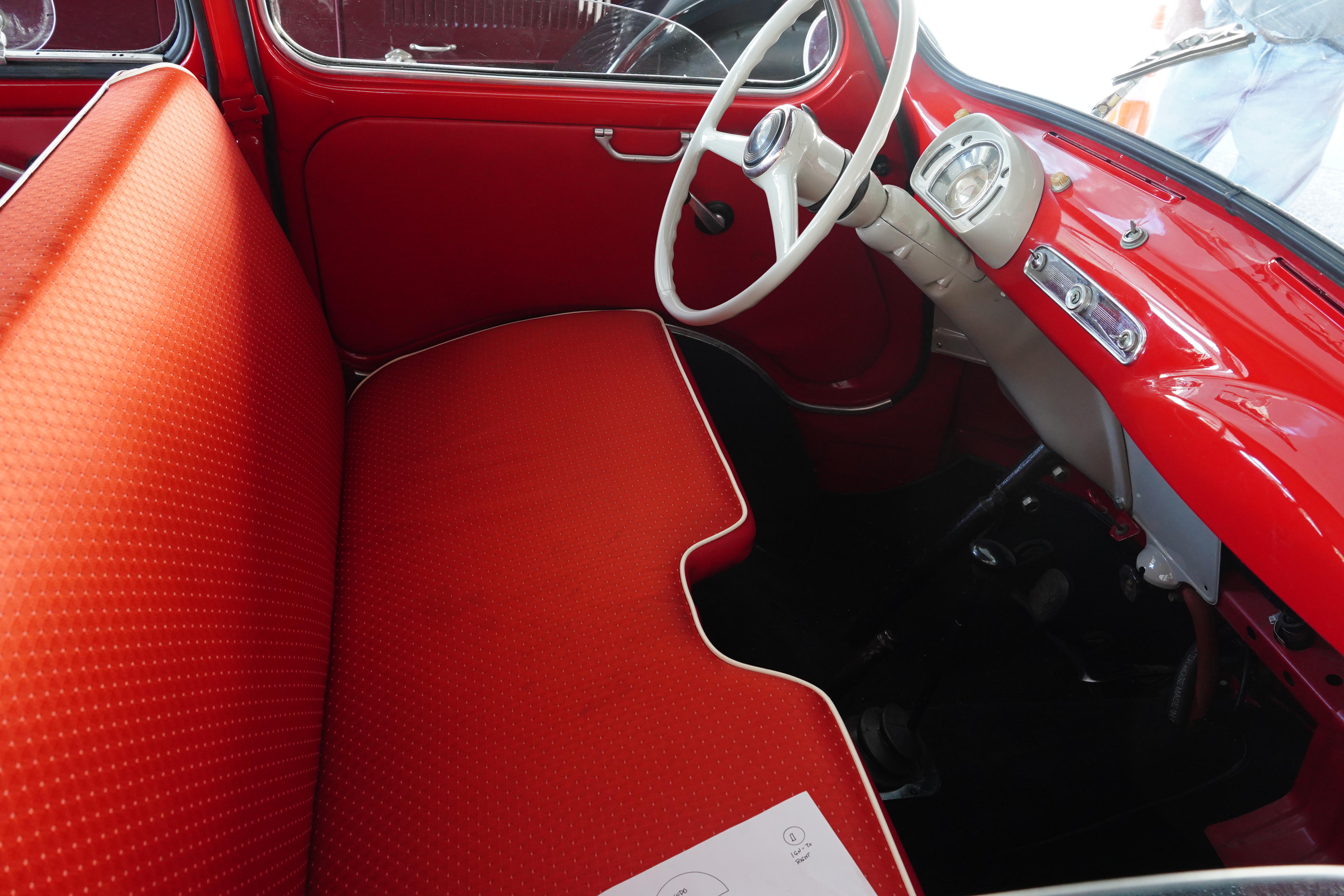
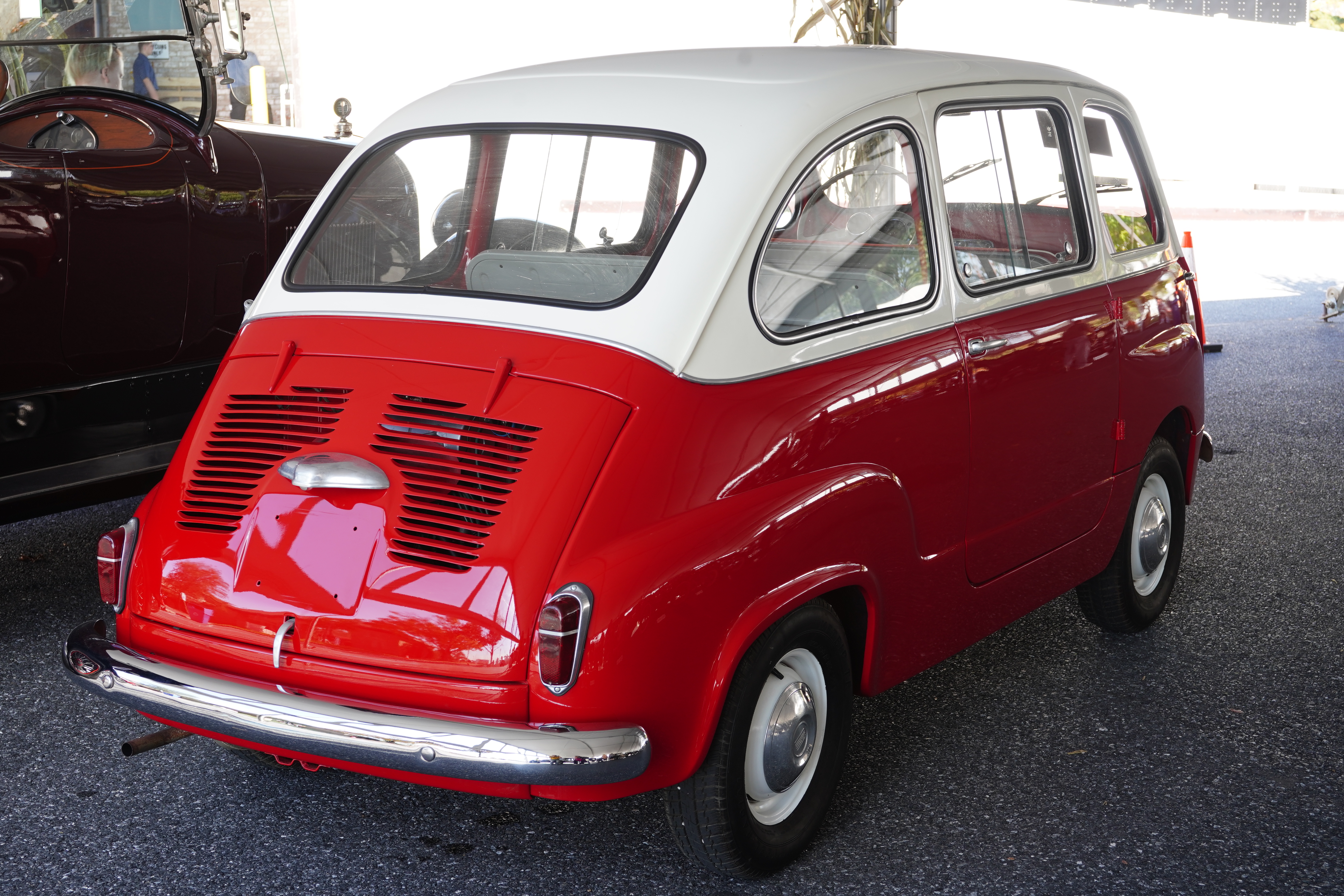
Lot 196, 1959 Fiat 600 Multipla, two-tone red & white, red interior, very rare in the U.S. This was Fiat’s successful attempt at building a really (really) small 6-passenger vehicle. No reserve.

Pre-sale estimate: $30,000 – 40,000

Sold: $27,000; some recent examples have sold on Bring a Trailer for $50,000+, so buyer did well here.

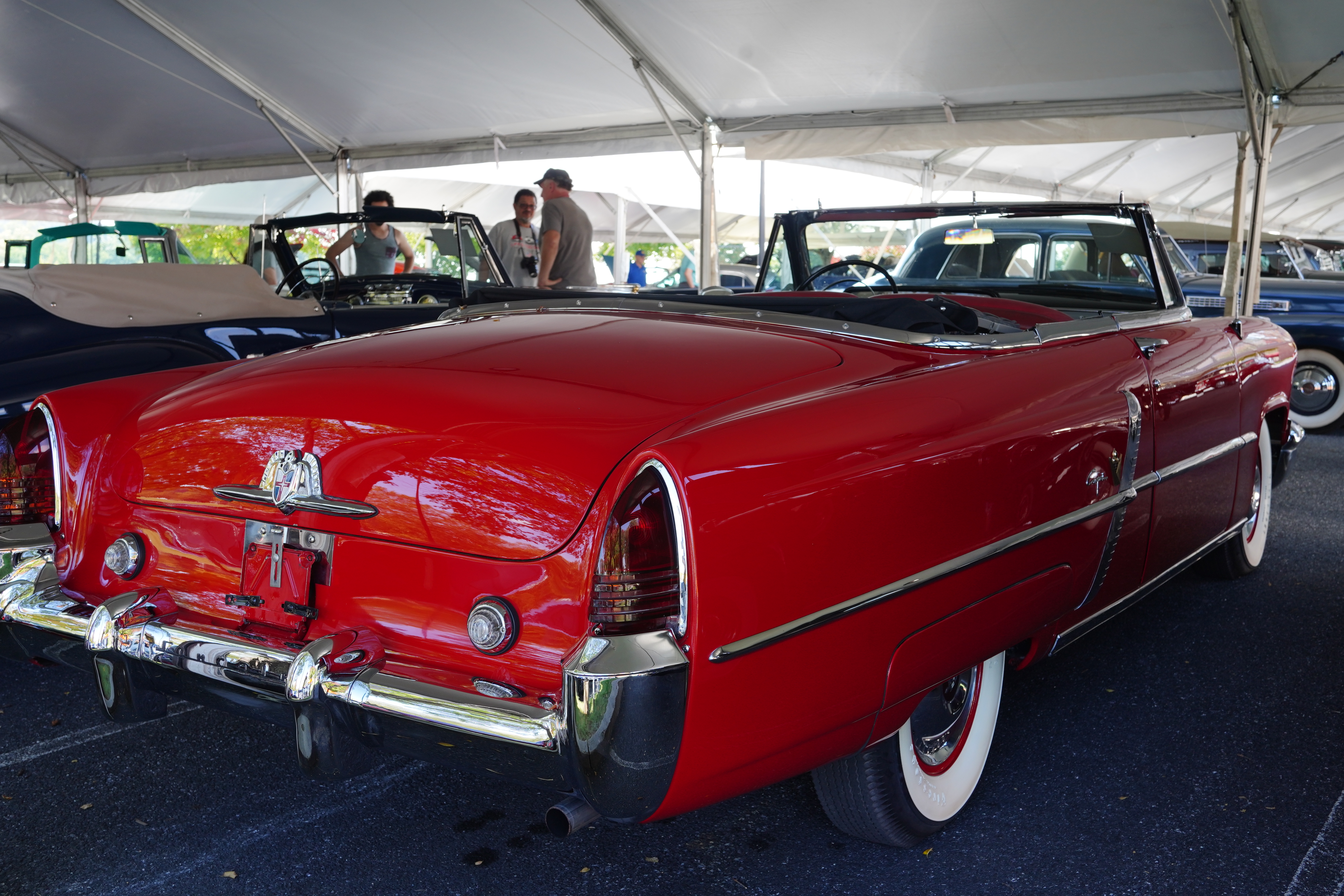
Lot 213, 1953 Lincoln Capri convertible, red, grey/black/red interior, black top, wide whitewall tires. Lincoln styling was beginning to enter the modern age; note the futuristic dash design. No reserve.

 Pre-sale estimate: $30,000 – 40,000

Sold: $27,000; CPI has a #3 car at $35,000, so advantage to the buyer here.

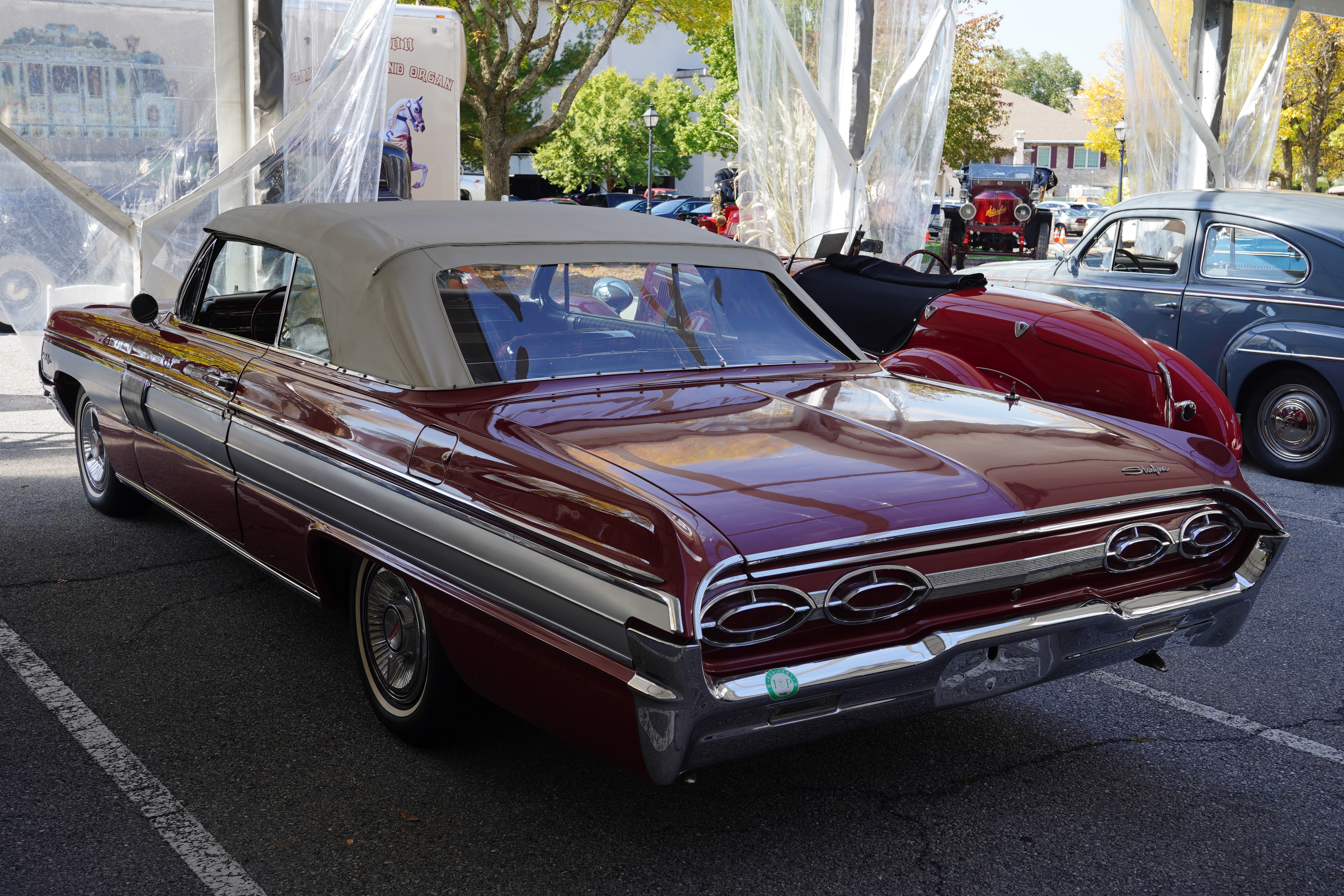
Lot 452, 1962 Oldsmobile Starfire convertible, red, white top, two-tone red interior, buckets & console like all Starfires. Second year for the model. No reserve.

Pre-sale estimate: $35,000 – 45,000

Sold: $28,000; Only a grand more than the ’53 Lincoln, and with much more “modern” driveability compared to that car.

Lot 228, 1968 Olds 442 convertible, dark blue paint (looks almost black), light blue interior, white top, white stripes on front fenders, 4-speed stick shift, buckets, console, RWL tires. First year for this generation Cutlass body style. This car stood out for its less-than-stellar presentation. Paint looked slightly dull, some chrome pitted, interior looked unkempt, driver’s seat showing wear. No reserve.  

Pre-sale estimate: $35,000 – 45,000

Sold: $32,000; bidders ignored condition and bid based on model and equipment.

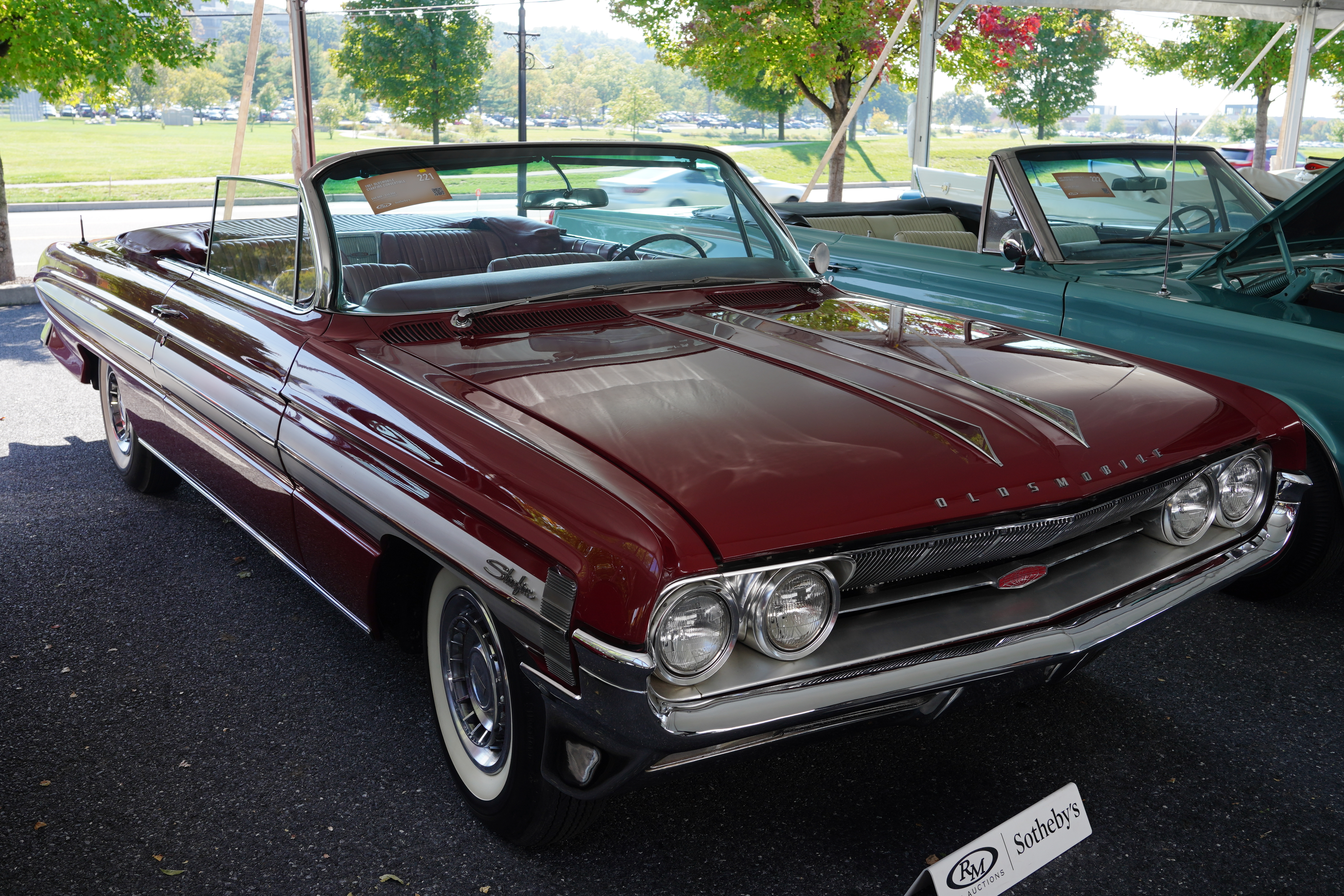
Lot 221, 1961 Olds Starfire convertible, triple red: red paint, red interior, red top. First year for Starfire, and all were convertibles. No reserve.

 Pre-sale estimate: $40,000 – 50,000

Sold: $33,000; five grand more than the ’62, and there are those who prefer this year’s styling.

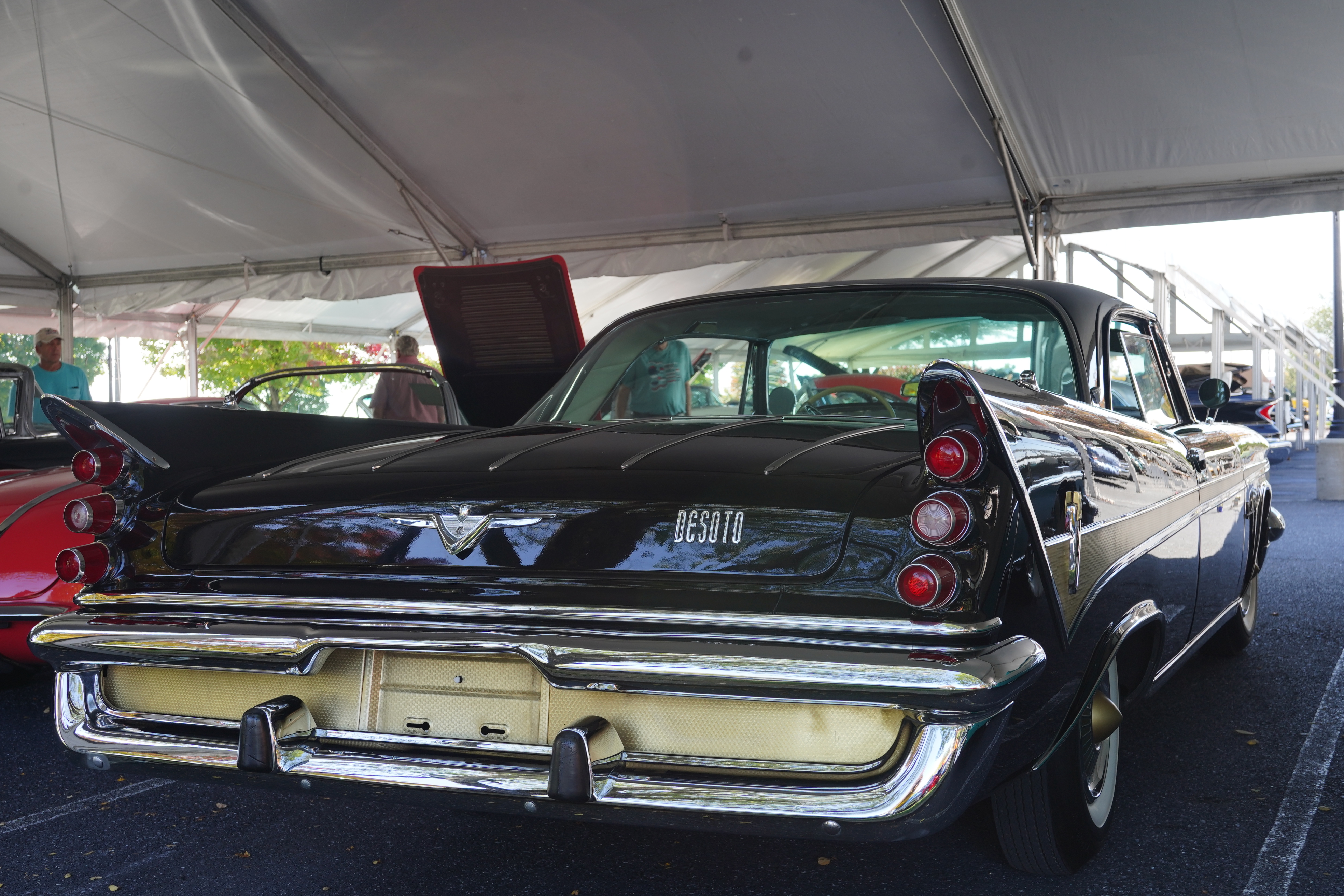
Lot 216, 1959 DeSoto Adventurer Sportsman Coupe, black paint, black/white/gold interior, Chrysler’s Forward Look styling still holding up despite some additional fussiness; certainly compares well next to some GM offerings of that year. Getting near the end for DeSoto. No reserve.

Pre-sale estimate: $45,000 – 55,000

Sold: $45,000, right at low end of estimate. DeSotos of this decade continue to be strong sellers.  


Lot 419, 1937 Cord 812 Custom Beverly 4-door sedan, black paint, red interior, FWD & V8 engine like all Cord 810/812 models. According to RM’s website, the “Custom” models were built on a 7-inch-longer wheelbase for increased rear seat room. No reserve.

Pre-sale estimate: $50,000 – 60,000

Sold: $67,500, above high estimate, and deservedly so, for condition and rarity.

Lot 442, 1956 Imperial Southampton two-door hardtop, black paint, white/grey interior, chrome wire wheels, wide whitewalls, “gun sight” tail lights, optional record player mounted under dash. At this time, “Imperial” was its own make, separate from Chrysler. Offered with unrevealed reserve.

Pre-sale estimate: $75,000 – 90,000

Sold: $69,000, 6 grand below estimate; only 2,094 two-door hardtops built for ’56, this one was for the true Imperial enthusiast.   

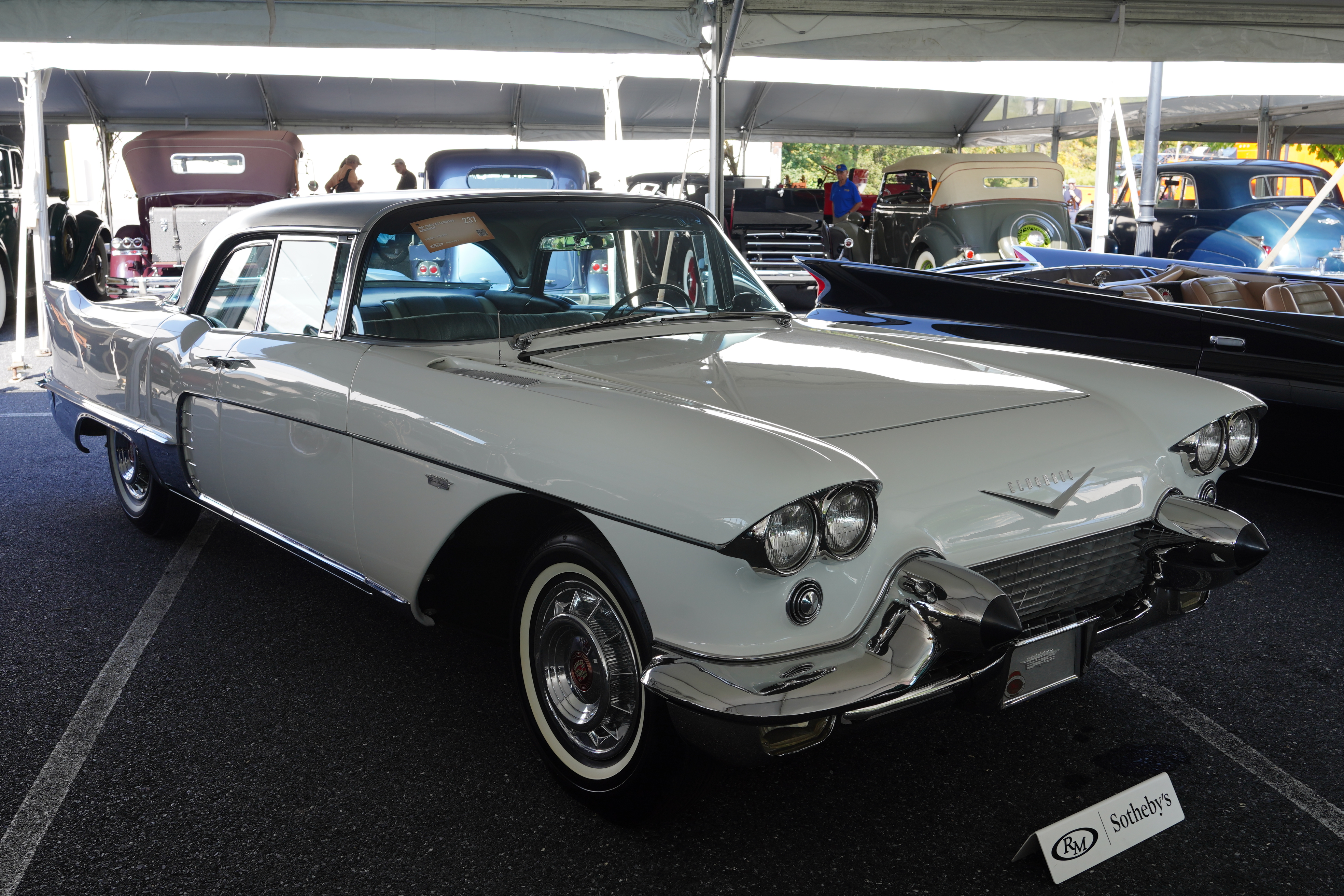
Lot 237, 1957 Cadillac Eldorado Brougham, white paint, stainless steel roof, suicide rear doors, grey & white interior. The Eldorado sub-brand featured exclusive styling in 3 different body styles: the 2-door hardtop Seville, the 2-door convertible Biarritz, and the 4-door hardtop Brougham. This was one of America’s most expensive cars when new, costing over $13,000 when a ’57 DeVille 4-door hardtop could be had for $5,188. Offered with unrevealed reserve.

Pre-sale estimate: $90,000 – 120,000

Sold: $92,500, just clearing its low-end reserve. This distinguished car will always have value, and will always have a following.


All photographs copyright © 2023 Richard A. Reina. Photos may not be copied or reproduced without express written permission.


The RM Sotheby’s Hershey Auction, 2021

A personal highlight of the annual October sojourn to Hershey is the RM Sotheby’s auction, held just a few miles away from the showfield at the Hershey Lodge. I’ve reported extensively about previous RM Hershey auctions on this blog, and even though my 2021 visit was a one day in-and-out, I still found time to scoot over to The Lodge to take in the cars and some of the auction action.

RM Sotheby’s, at least at this location, prides itself on mainly featuring American iron, much of it pre-war (that would be World War II, which serves as a handy demarcation line, since no vehicles were produced in this country from 1942 to 1945). There continues to be much discussion about the relative value of these older pieces of machinery. For the most part, those who drove them when new have departed; and those who bought them as old used cars right after the war are also quickly vacating the premises.

Showcase cars are displayed inside pre-auction


The standard argument goes: “If those who had them in their younger years are no longer here, then their value has plummeted”. The reality is a bit more nuanced than that. Car collectors, at least many that I know (and I put myself in this category) have an appreciation for ALL vehicles. One respected observer of this scene whose acquaintance I’ve made told me that the cars of the nineteen teens, twenties, and thirties are gaining a new audience as collectors have learned to appreciate their styling, engineering, and standing in automotive history. As my pictures below will show, some of these cars have an undeniable stately presence that would be an appropriate fit in any collection, no matter how narrow or diverse. Values for pre-war cars may be off their highs of the early aughts, but they’re not selling for twenty cents on the dollar either. As further evidence, nine of the top ten sales at this auction were pre-war, with prices ranging between $170,000 and $1.5 million.

According to RM’s website, the two-day auction achieved a phenomenal 98% sell-through rate. Granted, many of them were no reserve, but many had reserves (for the cars I’ve reported on, the reserve status is stated). The tremendous sell-through can be chalked up to a combination of quality wares, reasonable reserves, and a continued hot collector car market.

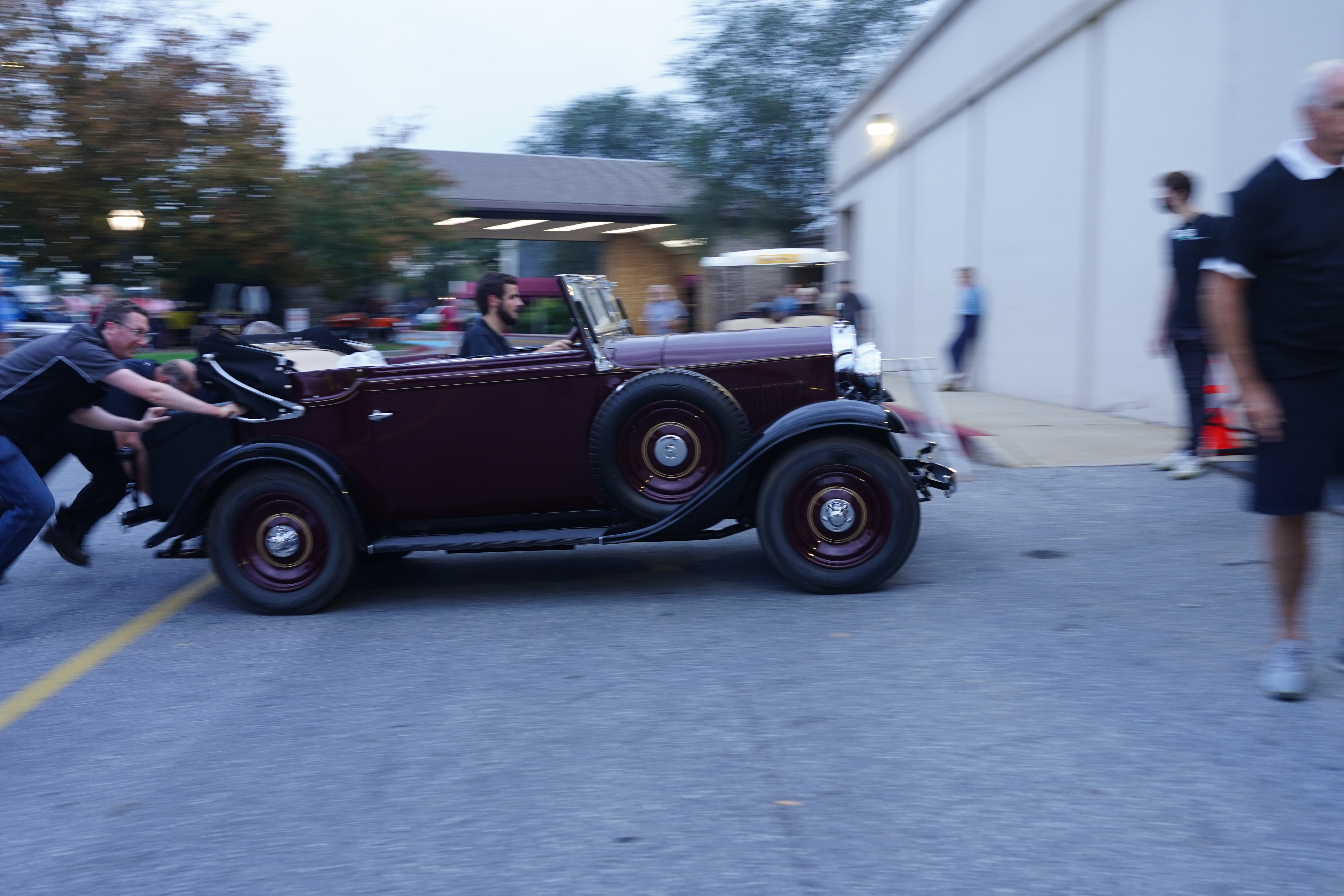
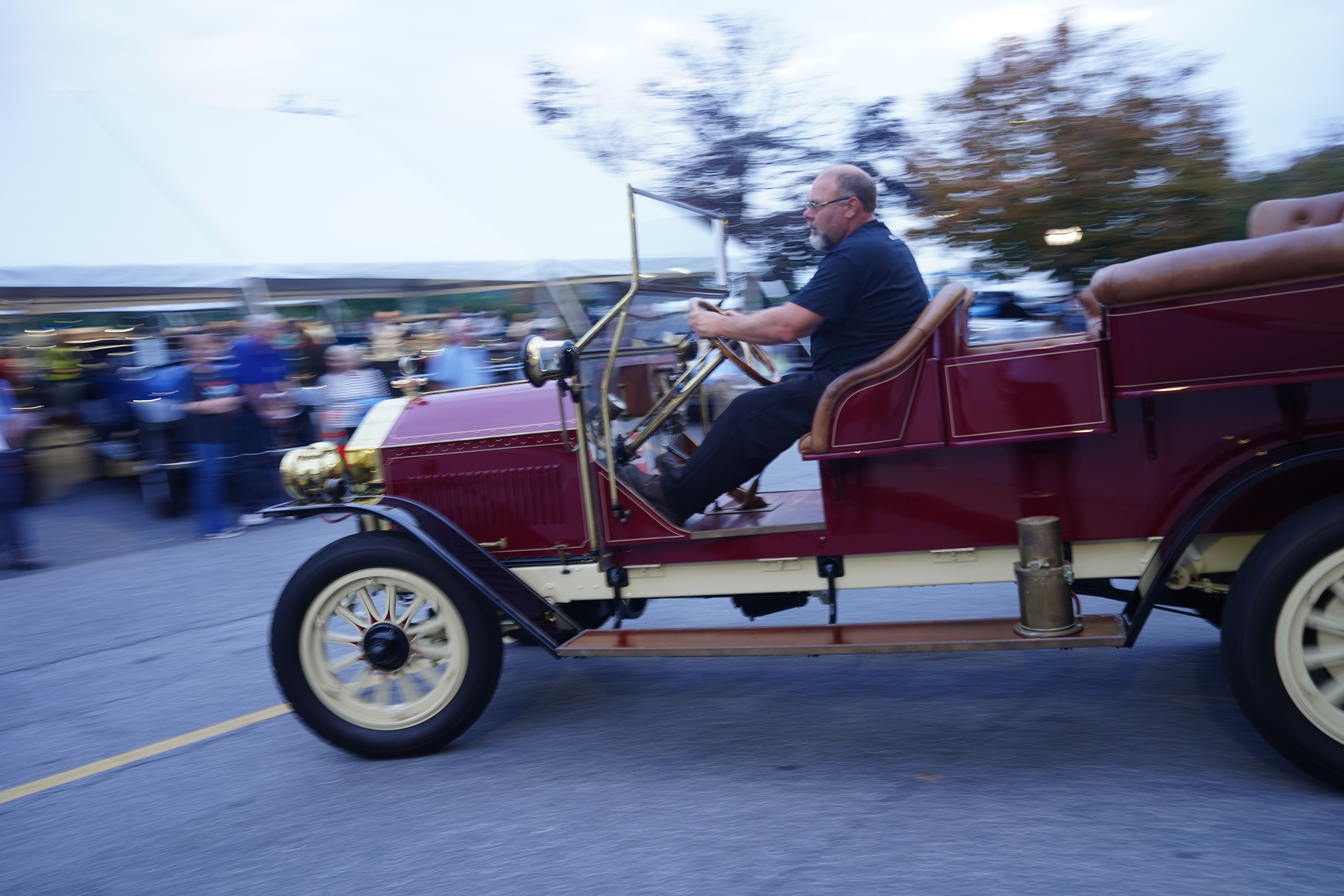
A big part of the fun is sitting outside the entrance / exit door and watching these cars run under their own power. The crew handling that job was working non-stop to get some of these old jalopies started and keep them running (and hope that the brakes worked). By the time darkness fell, I was on my way, but it was a glorious way to end my 2021 Hershey visit.

The cars below are listed in ascending sale price order; sale prices were taken from the RM Sotheby’s website, and the 10% buyer’s premium was backed out, so the “sold” price shown is the hammer price.


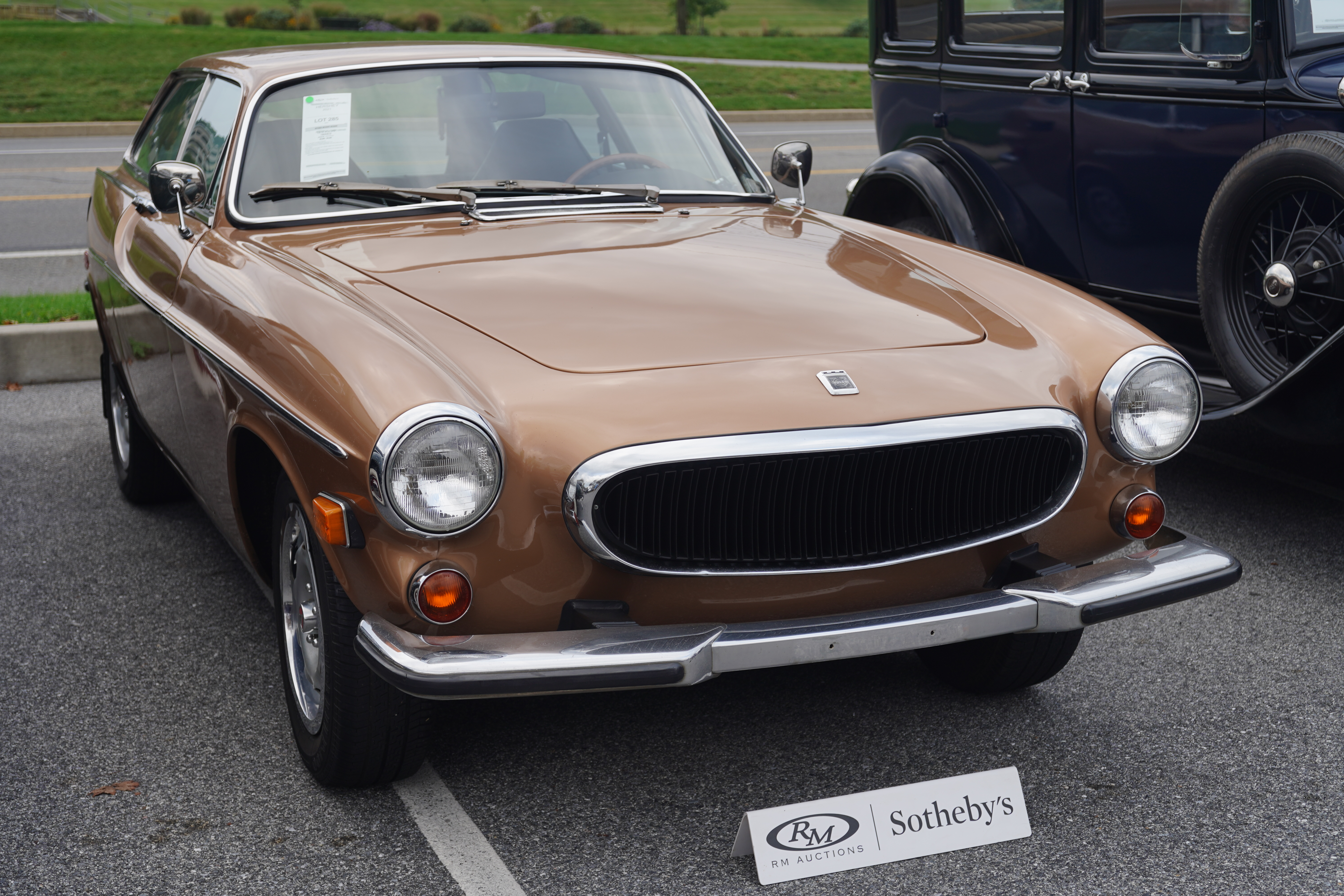
Lot #285, 1973 Volvo 1800ES, 4-speed manual. Pre-sale estimate $25-30,000. No reserve. Sold for $30,000.

This was the final year for the 1800, and only the ES (station wagon) model was offered. Sold right at the high end of the estimate. CPI values a #2 car at $44,000, which this wasn’t, but 1800s continue to be popular at the moment. Fair price.


Lot #152, 1948 Alvis drophead coupe, 4-cylinder, 4-speed manual. Pre-sale estimate $45-70,000. No reserve. Sold for $34,000.

Alvis was never a big seller on this side of the pond, but I’ve seen a greater number of them come up for sale recently. The two-tone brown and tan wasn’t the most attractive, and the RHD is either a fun factor or a pain. Sold well below estimate. I hope it runs well, because I know nothing about parts availability.


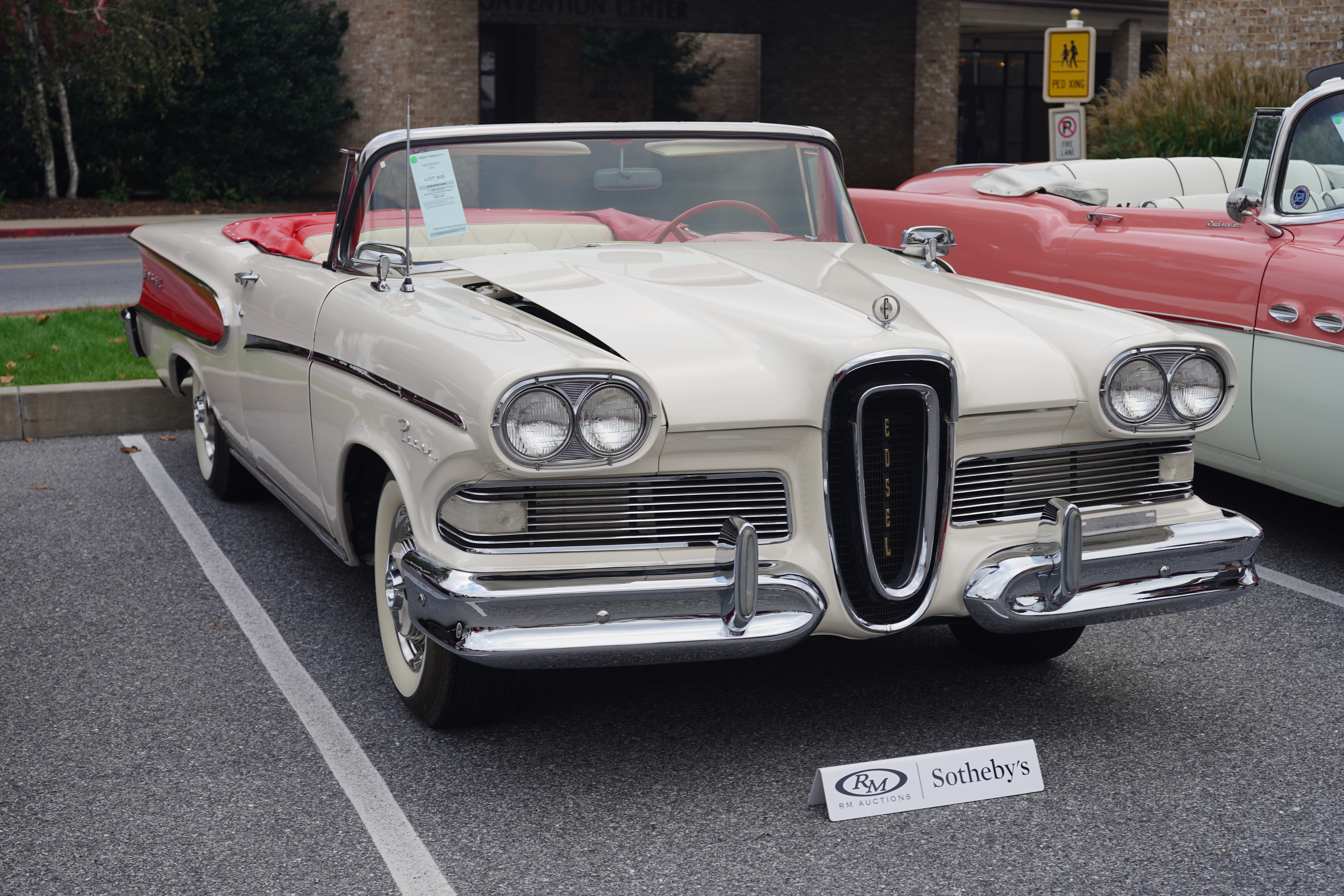
Lot #305, 1958 Edsel Pacer convertible. First model year of Ford’s Fifties flop. Attractive two-tone white and red. Pre-sale estimate $40-50,000. No reserve. Sold for $34,000.

The risk of no reserve is just that, there is NO reserve. This car missed its low pre-sale estimate by eight grand. CPI values these between $44,000 and $84,000, which sounds generous. Still, this is a unique and historic fifties car that should be easily serviced and maintained. It could be a challenge to find another decent ‘50s American convertible at this price. I hope the new owner drives it.


Lot #291, 1957 Chevrolet Corvette, fuel-injected 250-horse 283, 4-speed manual. Pre-sale estimate $70-90,000. With reserve. Sold for $65,000.

Apparently there were two different f.i. horsepower engines, and this was the lower of the two. This sounded too cheap to me, but CPI shows a value range between $53,000 and $100,000. I still think it was well-bought.


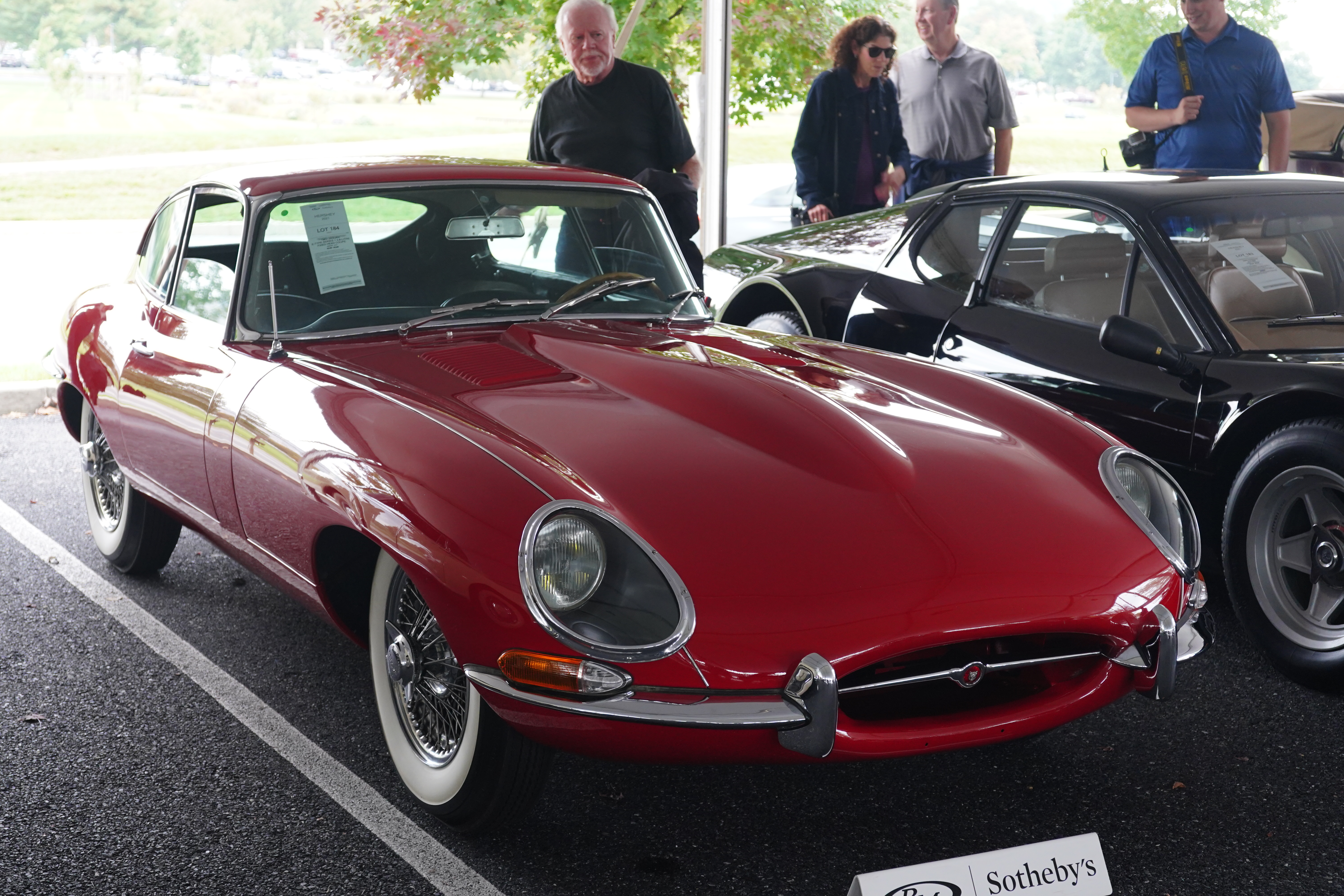
Lot #184, 1963 Jaguar E-Type FHC (fixed-head coupe). Red over black, looked great from afar, but a closer inspection revealed rough areas. Pre-sale estimate $90-110,000. With reserve. Sold for $65,000.

This is an early Series 1 car, with the 3.8 six-cylinder, 4-speed with non-synchro first, and low-back bucket seats. Many refinements were added to the ’65 and newer Series 1 cars with the 4.2 engine. See the photo of the rear window: the glass seal was completely hardened, there was paint overspray on it, and the window trim was missing. CPI has these at $88,000 for a #4 (fair) car; $130,000 for #3 (good), and $195,000 for #2 (excellent). Even with the defects, this was a bargain for a Series 1 XKE.


Lot #193, 1956 Jaguar XK140 roadster. 3.4 six, 4-speed. Pre-sale estimate $100-120,000. With reserve. Sold for $77,500.

Another possible Jaguar bargain which sold well below estimate, as CPI has a #3 car at $112,000. This car may have been a little better than that. Try it before you buy it though: the one time I sat in one required lower body contortions to get in and out.


Lot #150, 1939 Alvis pillarless two-door saloon. A unique and never-seen-before body style (and the 2nd Alvis at this auction). Pre-sale estimate $90-130,000. No reserve. Sold for $102,500.

This was one of the more striking pre-war designs at this auction, and certainly rare in the States. The bidders recognized this, and knowing it was a no-reserve sale, they stepped up to a final sale price which was mid-estimate. Guaranteed to be the star at the next all-British car show.


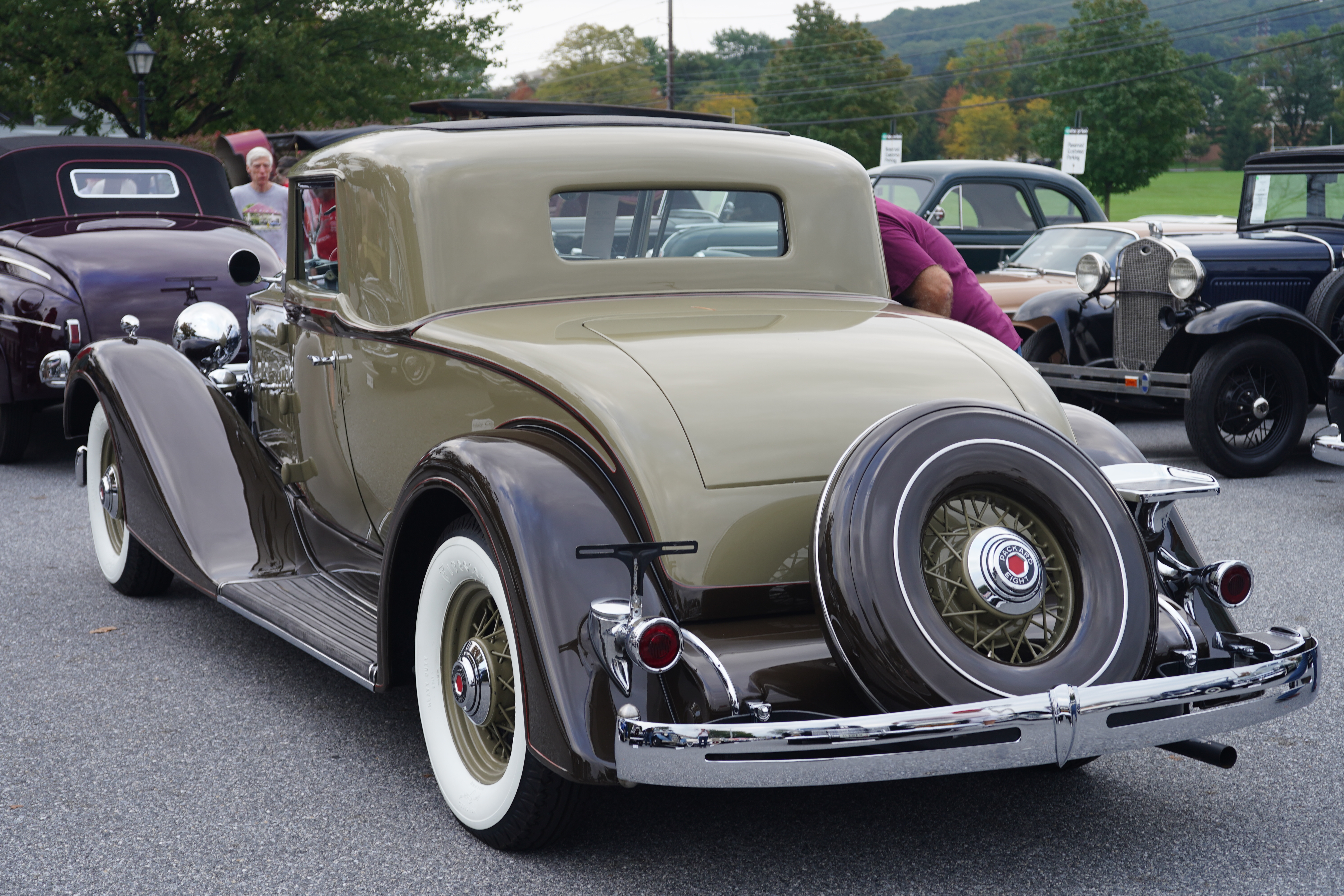
Lot #272, 1934 Packard Eight Coupe. Elegant two-tone light and dark brown. Pre-sale estimate $90-120,000. With reserve. Sold for $105,000.

I’ve been infatuated with almost all Packards I see these last few years, and this one stopped me dead in my tracks. It was stunning, and in close to perfect condition. While it sold mid-estimate, a higher number would have still been reasonable. That’s a lot of Packard for just over six figures.


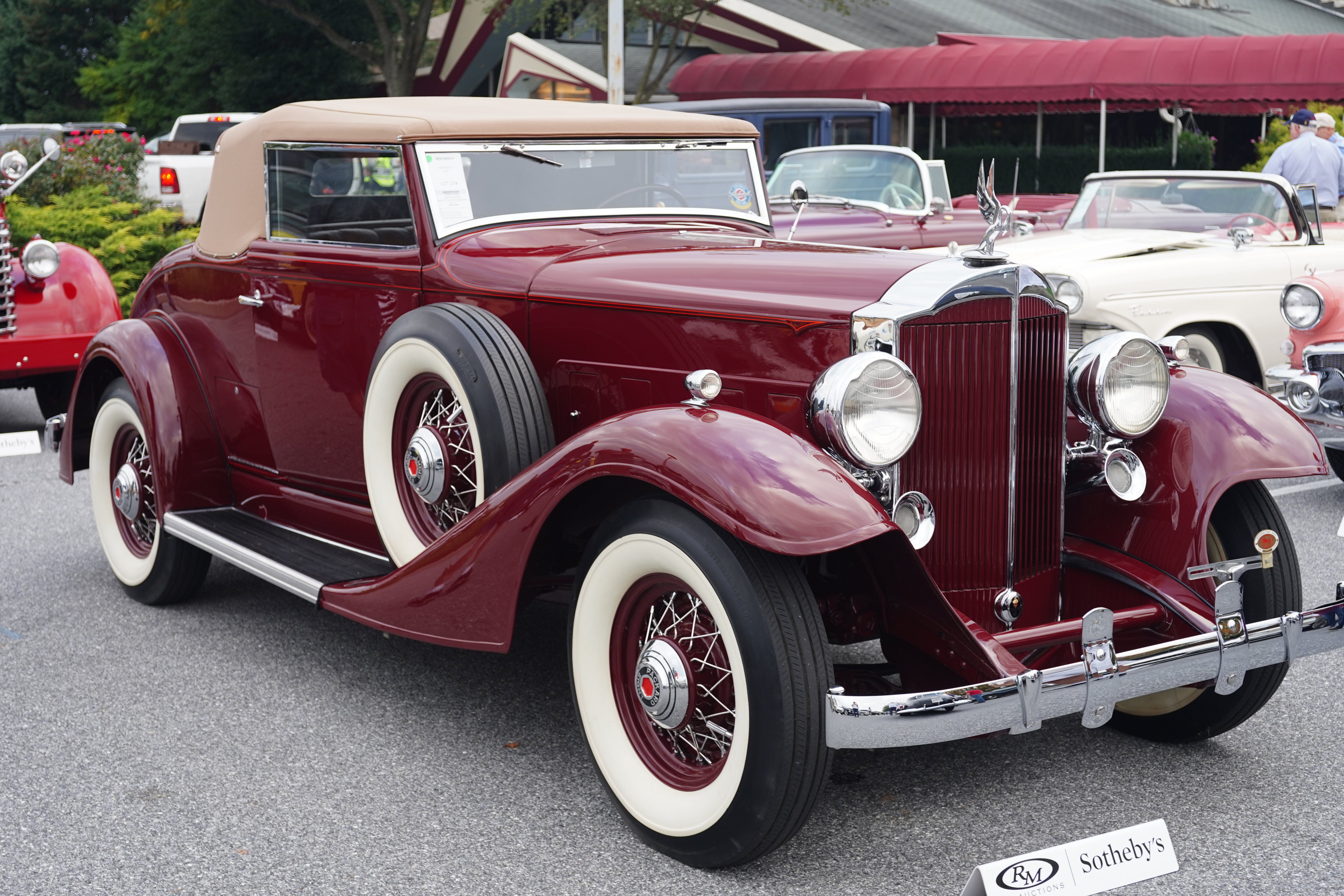
Lot #274, 1933 Packard Eight Roadster. Dark red, tan convertible top. Looks like the sister car to Lot #272. Pre-sale estimate $120-140,000. No reserve. Sold for $105,000.

I have no explanation for this result. This car, a convertible, sold for the exact same price as the Packard coupe which was just one year newer. Honestly, I did not look at these two cars that closely to discern any condition differences. Maybe the same person bought both cars and now has twin Packards in the collection.


FUN TIMES WATCHING THE CARS DRIVE IN AND OUT OF THE HERSHEY LODGE

All photographs copyright © 2021 Richard A. Reina. Photos may not be copied or reproduced without express written permission.


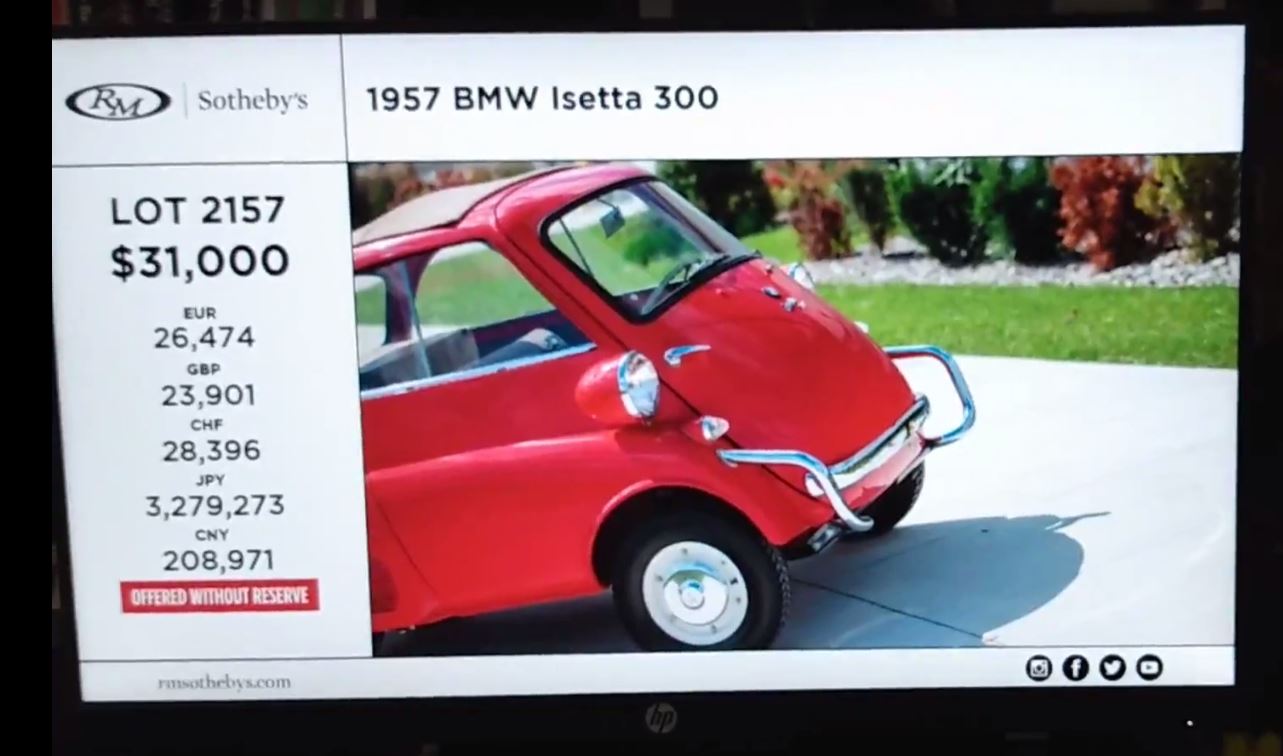
RM Sotheby’s Sells My Former Isetta for $31,000

On Saturday, October 24, at the RM Sotheby’s Elkhart Collection Auction, the 1957 BMW Isetta, chassis number 509090, formerly owned by me, sold at a hammer price of $31,000. When RM does post the result on their website, the published number will show as $34,720, as they will include the 12% buyer’s commission in the total shown. (This is a tactic that all auction companies engage in, as a way to display an even higher sale number than the hammer price. As they would argue, this is the more accurate representation of the dollars coming out of the purchaser’s pocket. But it’s still not the same as the hammer price.)

While it was no surprise that the car sold (after all, the auction was No Reserve), and even though I had previously estimated a hammer price of $30,000, I had begun to underestimate myself after watching Friday’s live stream, where the majority of cars met, or more typically exceeded, their pre-sale auction estimates. There was a sell-out in-person crowd in Elkhart, plus phone and internet bidding. With few exceptions, cars stayed on the block only for one to two minutes, and the bidding was aggressive and quick-paced. In the Isetta’s case, the pre-sale estimate of $35-45,000 was a tad optimistic.

I’m very happy for the new owner, whoever s/he may be. I hope that the car gets driven and shown a bit more than the previous owner managed to (not) do!

I’ve purposely held back the final few chapters of the Isetta Saga, pending this sale. Watch for the Saga’s conclusion to appear on this site in the very near future. (Then what am I going to write about?)


My Old Isetta is About to Cross the Auction Block Again!

The time has come: the auction of the “Elkhart Collection” by RM Sotheby’s has commenced as I type these words. The auction began at 10 a.m. on Friday October 23, and will run through tomorrow. As most of these auctions do, the lots start with what is loosely referred to as automobilia (defined as automotive-related stuff other than vehicles), which here includes tools, shop supplies, books, and sundry collectibles. Once done with the automobilia, the cars will start to cross the block.

Seven years later, car looks quite nice

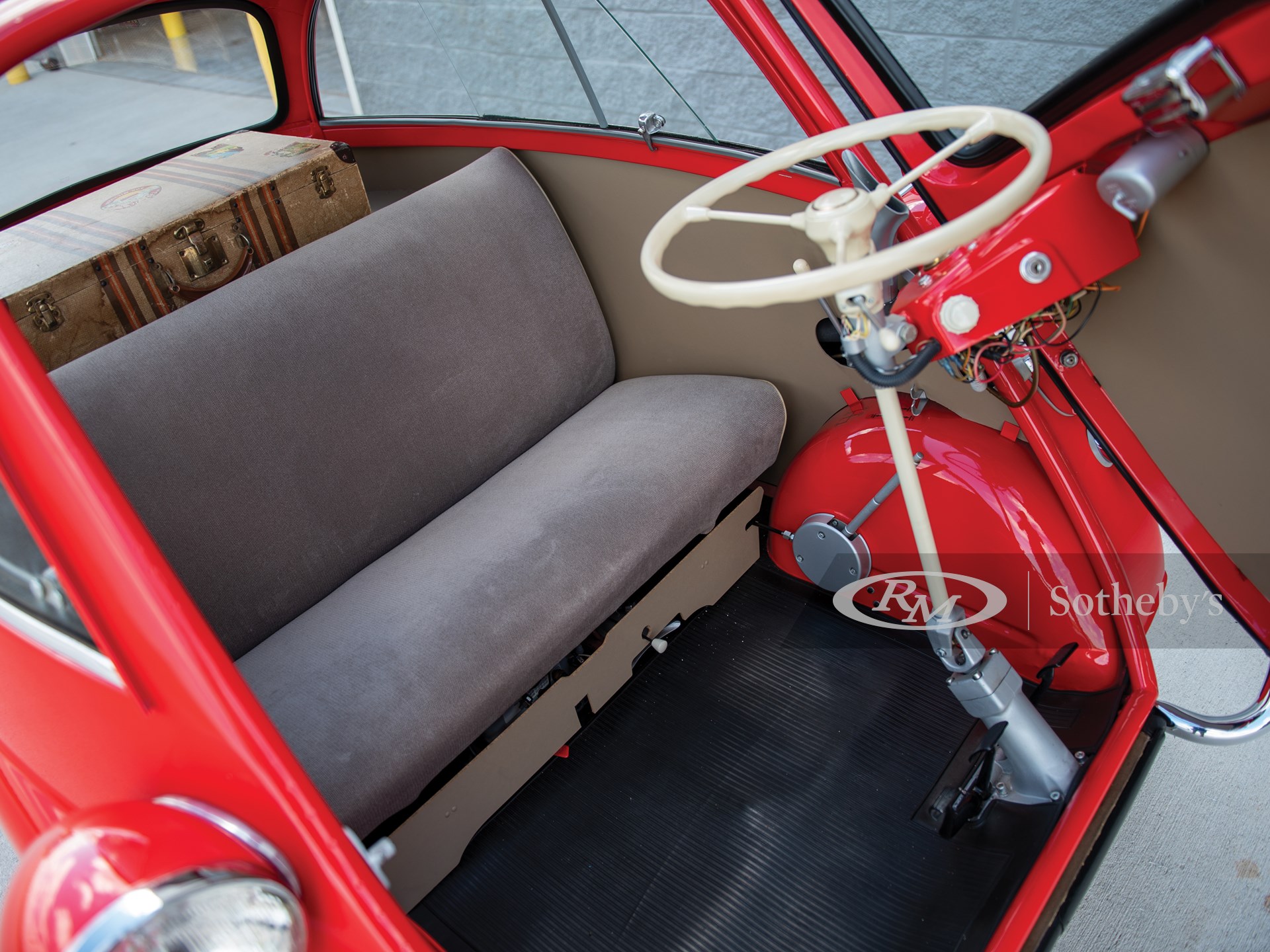
While I’m keen to watch what some of the more interesting Fiats and Ferraris will hammer for, the car of most interest to me is my former Isetta, about which I’ve spilled so much digital ink. It is Lot #2157, scheduled to cross the block on Saturday. (I’ve been asked by more than one person “how do you know it’s the same car?” The easiest way is via its chassis number, 509090. But there are also some tell-tale signs about the restoration that mark is as uniquely mine. Oh, then there’s that suitcase on the parcel shelf.)

See that suitcase? Bought it in an antique store for $10

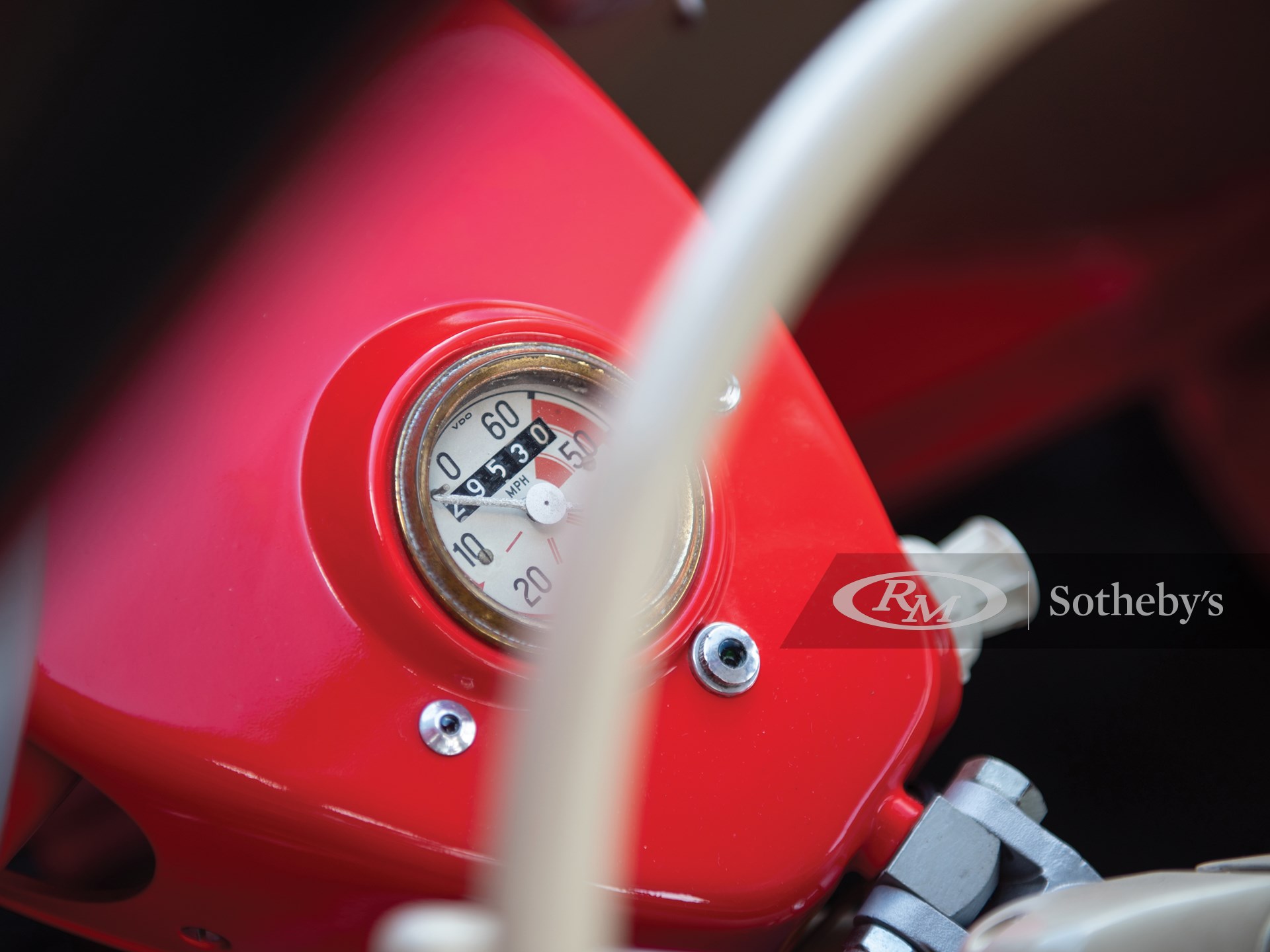
I’ve also been asked if I knew who bought my car back in 2013 (no), if I knew the car had stayed in the U.S. (no), and if I knew how much the car has been used (yes). Checking photos of the odometer, I can attest that the mileage when I sold it was 29,529. Based on a photo on the RM Sotheby’s website, the current odometer reading is 29,530. One. Mile. Difference. The car probably gained that “mile” while being driven on and off transport trucks, which is a shame, because it IS fun to drive.

The Elkhart bidders can take comfort in knowing “only 29k original miles”

This also caused me to go back and verify how much I drove the car while it was in my possession. I found a photo of the odometer from 1995 showing 29,437 miles. So I drove it 92 miles, seemingly not a lot, but I also never ventured more than about four miles from home base either.

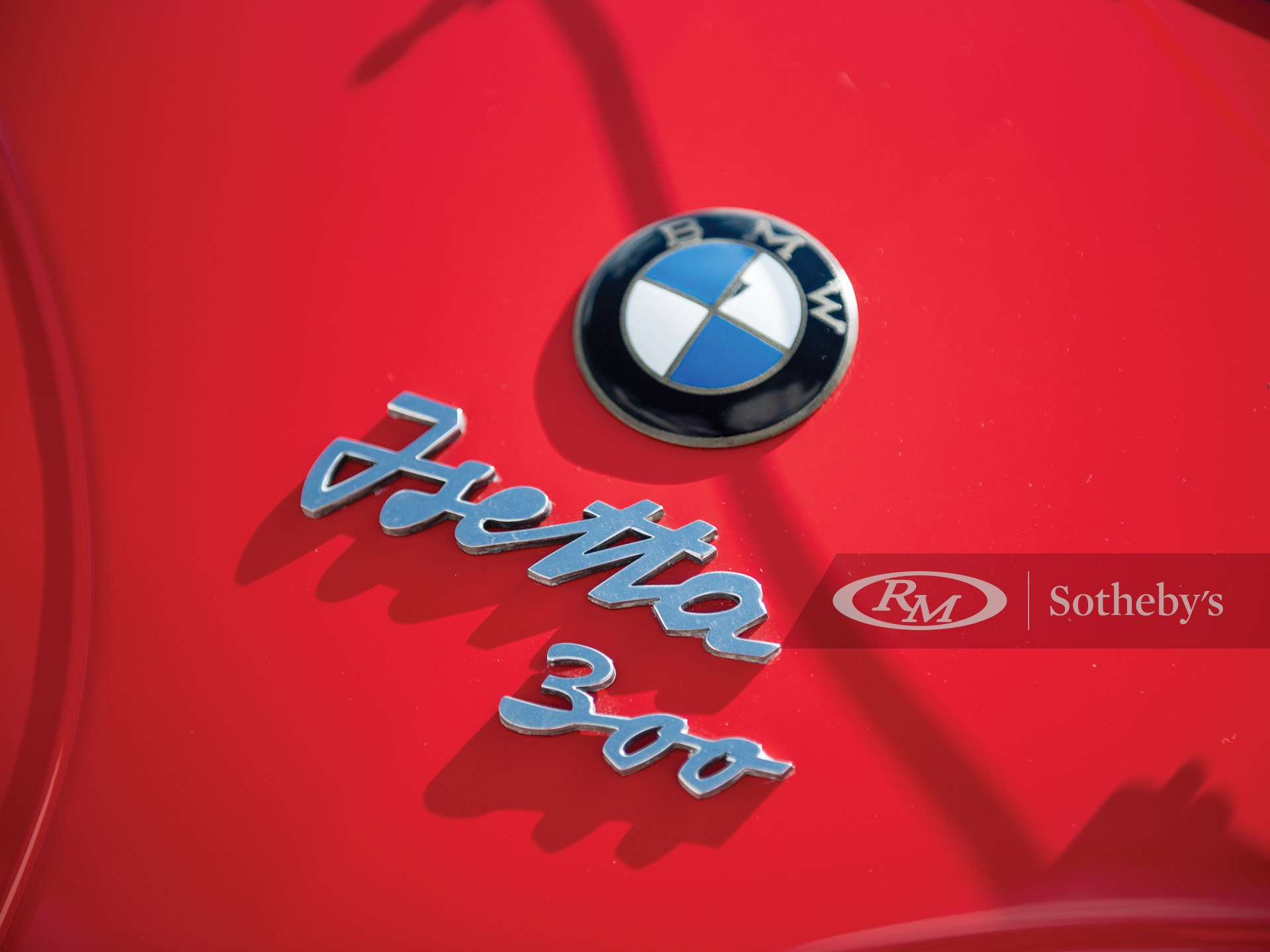
Cloisonne emblem is chipped; repros available, but I wanted to keep original one

Most of the lots for this auction are no reserve (as this one is), meaning that they will sell to the highest bidder. And all of them have been assigned pre-sale estimates. For this Isetta, that range is published as $35,000 – $45,000. Nicely restored Isettas sold at auction within the last few years are off their high values of five-to-eight years ago; the more recent sales have hovered around $25-30,000. My best guess for #509090 is that it will hammer close to $30,000 (plus 12% buyer’s commission, which will be folded into the number that RM Sotheby’s eventually publishes).

New owner, take note: I bought those Michelins in 1993! Get new tires!

I wish nothing but the best for the new owner, whoever that may be. And I know where you can read a long drawn-out saga about that car online.


All photographs courtesy of the RM Sotheby’s website.

RM Sotheby’s 2020 Auburn Auction: Six Great Collector Cars for Under Ten Grand

RM Sothebys, the automotive auction company, recently concluded its Auburn Fall auction which was held September 3-5, 2020. Unlike many of RM’s recent previous auctions conducted online due to the coronavirus, RM allowed this one to be an in-person gathering at Auburn Auction Park in Indiana. However, being onsite was not a requirement for bidding, as telephone and web-based bids were still accepted.

Over 500 motor cars crossed the block, and while most sales were under the six-figure mark, several notable high sales included a 1935 Auburn Speedster which sold for $700,000, and a 1936 Duesenberg Tourster which hammered for $575,000. (Both these number are without the auction company’s 10% buyer’s premium added, so they reflect actual final bid when the gavel fell.)

Scanning through the results, I was amazed to see that over 60 of the automotive lots sold for under $10,000. True, many of these cars were projects, or unpopular pre-war vehicles in pedestrian body styles. But much of my amazement is simply finding so many cars available for an initial outlay of ten grand (or less). Frankly, I still hear the cries of “the hobby has gotten too expensive for me”, and again, those cries are originating from those who lament passing on that chance in the early 1970s to score a Shelby Mustang for $1,500. While those days are over, there are still plenty of affordable ways to enter the hobby.

A mantra of mine, which I chant to those looking for that first collector car, is “be open-minded”. If one is willing to consider brands, models, and body styles outside the typical collector’s purview, there are lots of choices, and there’s also lots of fun to be had.

Among the low-priced sales at RM Auburn, I selected six which struck me as interesting cars at fair prices. I’d be happy to have any one of these cars in my garage; some of them I might hold onto just for a few months so I could say “yeah, I had one of those once”; others might be worth hanging onto a little longer. While the selected six are personal favorites, I also made an attempt to select from a variety of body styles. You’ll find sedans, convertibles, trucks, and station wagons on my list. Undoubtedly, your six choices would be different. That’s the fun of collecting.

Let me know your thoughts: do you have a favorite among these? Is there one car which you think represents a best value? I’m more than happy to entertain a little back-and-forth about my picks. The results are arranged in ascending hammer price order (when you click on the link, please note that RM Sotheby’s shows a higher price because they always include the 10% buyer’s premium).


  1. 1988 Toyota Celica GT convertible hammered sold for $3250

https://rmsothebys.com/en/auctions/af20/auburn-fall/lots/r0271-1988-toyota-celica-gt-convertible/941717

The cheapest car on my list, it might also qualify as the most reliable. The bulletproof qualities of most Toyotas include this rare convertible variant. While not much to look at stylistically, this would be a fun car to take to cars-and-coffee events and cruise nights. I’d guarantee that you would have the only one there.

From a value perspective, Bring a Trailer (BaT) sold one in 2019 for $7,650. My Cars of Particular Interest (CPI) retail price guide puts this car in the range of $2000 to $5000 for a good-to-excellent value, so $3,250, while perhaps not a steal, seems a fair price.

  1. 1952 Kaiser Manhattan sedan hammered sold for $4750

https://rmsothebys.com/en/auctions/af20/auburn-fall/lots/r0439-1952-kaiser-manhattan-sedan/977039

Kaiser is a brand which I see at car shows so infrequently. It’s usually takes a National AACA show like Hershey for me to come across one. Kaiser production ended in 1955, so there aren’t many around, and therein lies the charm here. For under five large, you can have an almost “one of a kind”. One downside might be parts availability, but hey, the hobby is all about the adventure of scrounging for rare parts.

This price looks especially good when checking CPI, which publishes a range of $8,500 to $20,000 for cars in the good-to-excellent condition categories. And BaT sold  one earlier this year for $8,800 , so buy this one and flip it if that’s your thing.

  1. 1988 Buick LeSabre Estate wagon hammered sold for $5750

https://rmsothebys.com/en/auctions/af20/auburn-fall/lots/r0272-1988-buick-lesabre-estate-wagon/941719

Station wagons, known as long-roofs among collectors, have really taken off in just the last few years. While much of the interest seems focused on ‘60s and ‘70s American cars, this Buick wagon from 1988 is a little more modern, and a little more ready to be pressed into daily driver duty if necessary. The subject car even has the de rigueur reverse-facing rear seat (for when a minivan is just too ordinary).

The CPI values, at $1,500 to $3,600, surprise me, and frankly I think they’re low. Again, while older wagons have risen in value, snagging this ’88 puts you ahead of the curve. Compare this car to the one I found on Hemmings which is on offer for $9,000, and I think the RM car looks pretty pretty good.

  1. 1978 Ford F-150 hammered sold for $6000

https://rmsothebys.com/en/auctions/af20/auburn-fall/lots/r0569-1978-ford-f-150-pickup/989378

Pickup trucks are hot: they’re hot as new vehicles (last I checked, which was earlier this year, average transaction price for a new pickup truck out the door was $51,000), and they’re hot as collectibles. Of my six choices, this one shocks me the most. Maybe I’m missing something; yes, it’s a long bed, and yes, it’s RWD. But still….

CPI, to my complete lack of surprise, pins this generation F-150 at $12,000 for a “good” truck and $26,000 for an “excellent” truck. BaT sold a similar one earlier this year for $11,750.  Forget flipping the Kaiser. Flip this.

  1. 1956 Lincoln Premiere convertible hammered sold for $7250

https://rmsothebys.com/en/auctions/af20/auburn-fall/lots/r0044-1956-lincoln-premiere-convertible/870051

Of these six selections, this one is the project car, and for that reason, I hesitated in choosing it (I got over my hesitation). The aura exuded by this automobile is so overwhelmingly impressive that no matter its condition, it remains an object of desire. Now, even at a smidgen over seven grand, you’d need to pour in multiples of that to turn this into a reliable road car, never mind something show-worthy. And RM sold two other ‘56s, one of which, while over our arbitrary price break at $17,000 , was certainly the better deal.

Check out these numbers from CPI: $42,000 for “fair”, $68,000 for “good”, and $123,000 for “excellent”. Your choices are: park this one on your lawn as an ornament, or put $100k into a restoration, sell it for $120k, and net $3,000. I’m going to mull that one over and get back to you.

  1. 1976 Pontiac Bonneville Brougham coupe hammered sold for $7250

https://rmsothebys.com/en/auctions/af20/auburn-fall/lots/r0257-1976-pontiac-bonneville-brougham/941689

Tied for most expensive car on my under-ten-grand list, I think this might be the best choice in many ways: GM parts availability, orphan brand with huge hobby support, final year of the big GM full-size cars, roadworthiness as a touring car, and lots of creature comforts including air and cruise.

It’s difficult to find comparables, although Mecum did sell a ’76 Bonneville four-door for $10,500 way back in 2017. The CPI range is $6,000 to $14,000, which means this sale price is not a steal but not a rip-off. I’d need to blow a hole in the garage wall to fit it, but it might be worth it.


Bidding at RM/Sotheby’s “Shift/Monterey” Online Auction

Enough digital “ink” has been spilled regarding our current global pandemic’s effect on the collector car hobby that I don’t need to rehash it here. (The more serious human toll certainly puts our hobby into some perspective.) So why am I mentioning it at all? I bring it up only because there have been some rays of hope for those of us still looking for ways to enjoy it. Classic car auction companies, at least some of them, have found a path forward by switching from live events to online formats.

One cannot discuss web-based car auctions without first acknowledging the success of Bring a Trailer (www.bringatrailer.com, aka BaT). The website, which started as nothing more than a place to repost links for interesting cars found elsewhere online, began to auction vehicles several years ago. Fed by a mostly-positive and very enthusiastic comments section, they have changed the rules of engagement. One element of their business which is now blatantly copied is their two-minute anti-sniping provision. A classic complaint about eBay has been bidders with sharp reflexes (or clever computer programs) placing bids with one second remaining on the clock. Bidding would close, the so-called “sniper” would win the item, and anyone who had been willing to bid higher was shut out.

BaT, wanting to level the playing field, was I believe the first online auction company to change the game: any bid placed with two minutes or less on the clock resets the countdown clock to two minutes, giving others a chance to still bid.

Another surprise element was BaT’s move into the premium segment of the hobby. When their auctions started, naysayers claimed that “this is fine for $12,000 Alfa Spiders and $20,000 BMW 3-series sedans, but the big money buying 6-figure exotics will only do that at a live auction”. Wrong. Just this year, BaT sold a 1960 Ferrari 250GT for $585,000; a 1913 Rolls Royce for $657,913; and a 1968 Lamborghini Miura for $990,000. If you think that Bonhams, Gooding, and RM haven’t noticed, I’d think you’re mistaken.

Of course, when the year started, none of the major auction houses were expecting the shutdown. The pandemic’s message was: either find a new way forward, or spin your wheels while waiting out the crisis. As 2020 unfolded, with news only getting worse, one auction company in particular led the pack in switching from in-person to online, and that was RM Sotheby’s.

I’ve attended many live auctions. Whether it’s the boisterous volume of Mecum, or the understated elegance of Bonhams, there’s excitement in the air. You can touch the cars, watch them drive across the block, and feel the tension in the room as the auctioneer implores the audience to bid higher. The crowd may be milling around the block (Mecum) or may be patiently parked in their seats ready to raise paddles (Bonhams). Emotions are running high, causing some bidders to bid with their hearts and not their heads. Consigners are counting on that! Yet all that is lost in the online setting. Still, RM Sotheby’s knew they had to try, and motivated in part I would guess by BaT, they embraced this new business model by doing things they’ve never done before.

On RM’s website, the number of photographs of each vehicle has expanded, with photographers emphasizing flaws (paint chips, upholstery tears, oil stains) to avoid any post-sale surprises. Any available repair or restoration receipts are scanned and posted as PDF files. Finally, for almost every car, RM provides a condition report which lists the condition of the paint, engine, upholstery, and undercarriage using the traditional 1-to-5 scale. I’ve read a few of them, and while they’re brief, they’re also refreshingly honest. RM’s online auctions also use the two-minute extension a la BaT.

August has always been Monterey’s month: the Pebble Beach Concours d’Elegance, the multiple car auctions, and myriad number of special car shows. This week-long event in northern California is one of the biggest car-centric extravaganzas in the world, and like almost everything else this year, it’s been cancelled. RM Sotheby’s, though, is holding its “Shift/Monterey” online auction this week. Bidding opened on Monday August 10, with lots scheduled to close either on Friday the 14th or Saturday the 15th. I’ve been anxious to test the waters with RM, as I have my sights set on a future auction, so I took the plunge: I registered to bid at “Monterey”, and actually placed a bid!

The registration process was too easy: I scanned my driver’s license and a recent bank statement, provided a credit card to be used for a hold, and submitted those docs. About 15 minutes later I got an email message: “Congratulations! You’re registered to bid.” Unlike some previous auctions I’ve watched, there was no bidder’s registration fee.

RM website clearly indicates if lot is no reserve

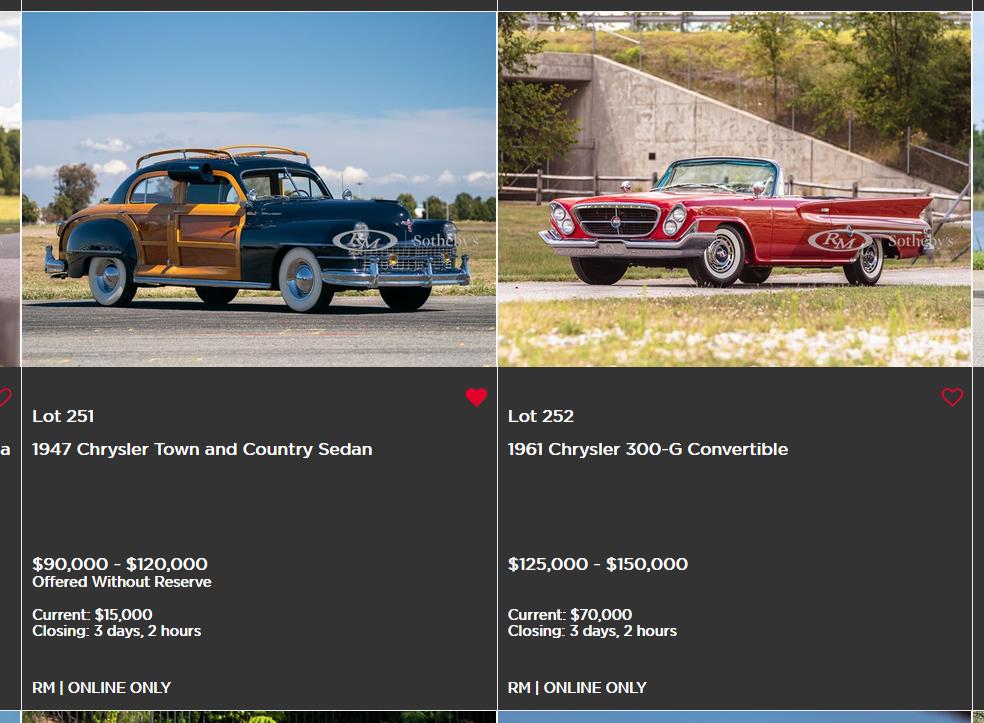
There are 109 vehicles (107 cars, 2 motorcycles) and some automobilia online at Shift/Monterey. (Note that despite its name, vehicles are physically scattered around the country, an advantage for sellers who avoid transport costs; the website indicates the vehicle’s location by city and state). By RM standards, it’s not a big auction. Since I don’t intend to actually purchase a car but want to experience the process, I sought out something with a high pre-sale estimate and with a very low current bid. I found a 1947 Chrysler Town & Country sedan, listed at no reserve, with a pre-sale estimate range of $90,000-$120,000. The current bid was $3,600.

I’m high bidder!

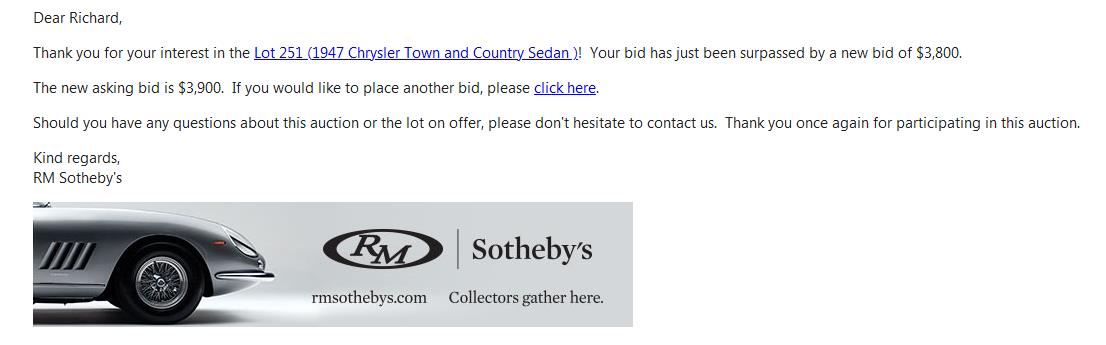
In spite of the numbers, I was still nervous. What if I won? (Sure, I’m going to get a woody Chrysler for under $5,000.) RM provides the minimum bidding increment, in this case, $100. I keyed in “$3,700”, clicked on the green “place bid” bar, and the screen changed: “Your high bid!” I got a confirmation email informing me that, for now, I was high bidder on the Chrysler. Did I mention this is a no-reserve auction? That means if NO ONE ELSE BIDS, THE CAR IS MINE. The euphoria lasted for four minutes. A new email popped in: “You Have Been Outbid”. I was further informed that the “new asking bid is $3,900”. At least I knew where I stood. As tempted as I was, I stopped.

I know where I stand

Everything considered, the RM online bidding experience is perhaps the best it can be when you can’t be there in person. I’m frequently asked “do people really buy cars sight unseen?” Yes they do. RM’s online closing ratio is around 60-65%, which is very respectable, if not as high as it’s been at live shows. Still, I think that RM has set a fine example for conducting honest and transparent business in an online format under particularly difficult circumstances. I’ll have more to say about RM Auctions in future posts.

All website screen shots courtesy of RM Sotheby’s


My Old Isetta is Going Back on the Block

In the almost seven years since I sold my Isetta at an RM auction in October of 2013, I occasionally scan the automotive classifieds, both in print and online, wondering if I will come across my former car for sale. Up until a few weeks ago, that search had turned up blank.

My Isetta at the Oct. ’13 RM auction in Hershey PA. Note suitcase on package shelf.

Checking out an email I received for an upcoming RM Sotheby’s auction, I was drawn to what appeared to be an outstanding collection of Italian cars: the expected Ferraris and Alfas but also Autobianchis, Isos, and some rarely-seen Fiats. That’s when I saw it.

An all-red BMW Isetta was part of the sale. Clicking on the photos, I looked for tell-tale signs, the kinds of things that I, having owned the beast for 35 years, would recognize. (I’m fond of an expression picked up from a hobbyist friend, who says of his own car: “I know where the bodies are buried”.) Checking the chassis number was the final proof. I called my wife into the room and showed her the photos.

Wife: “How do you know it’s yours?”

Me: “509090.”

Wife: “Huh?”

Me: “It’s the chassis number. I have it memorized.” (Oh, and still on the package shelf is the ‘50s-era suitcase covered in travel decals which I picked up in an antique store for $10.)

The auction, billed by RM Sotheby’s as “The Elkhart Collection”, is scheduled to take place on October 23 & 24 of 2020. Those are the rescheduled dates; initially the auction was supposed to run in May, and it’s presumed that the coronavirus was the proximate cause of the postponement. At this writing, it’s listed as a “live” auction, however, all RM Sotheby auctions since the global shutdown have been online only. While I’m long out of the business of predicting the future, I would venture to guess without too much risk that this one will revert to the online-only format soon enough.

Here’s how the RM Sotheby’s website describes the collection:

OVER 240 CARS AND WIDE SELECTION OF COLLECTIBLES OFFERED ALMOST ENTIRELY WITHOUT RESERVE

The result of decades of judicious and targeted collecting, The Elkhart Collection – Offered Almost Entirely Without Reserve comprises the most exceptional marques and models in automotive history. The focus is at once broad but highly selective from sporting British and Italian cars to microcars, classics, supercars, modern sports cars, ‘50s convertibles and coachbuilt icons. Stay tuned for the digital catalogue coming soon. To view lot listing, click here

It didn’t take much snooping to get the rest of the story. This is from AutoWeek:

Damn, This Accused Fraudster Has Excellent Taste in Cars

There’s something for everyone in the RM Sotheby’s Elkhart Collection catalog—and with the sale moved to October, you’ve got plenty of time to browse it.

The gist of the AutoWeek story is that this 240+ car collection was amassed by one person, an Indiana businessman named Najeeb Khan, who has now been accused of fraud, although the author is also quick to note that he has not been charged with a crime. But his collection is being liquidated so that he can pay back his creditors.

Personally, I don’t really care about this guy’s personal problems. He has excellent taste in cars, especially of the Italian variety, although the remainder of the collection is also worth a gander. I’ve asked myself if Mr. Khan is the person who purchased my car at the 2013 Hershey auction. While it’s impossible to make that determination from the auction company’s website, I checked the mileage on my car on the date that I sold it, and the mileage shown in the current listing. The Isetta has been driven exactly one mile in the previous 6.5 years. Which is a shame, really, because the car runs well and it’s a blast to drive!

To the new owner, whoever you are: get some new tires. I bought those Michelins in the early ‘90s.

There’s more to discuss about the Elkart Collection Auction in future posts. The discovery of my old car will also spur me to resume the Isetta Saga. There’s lots more to share, and I want all those bidders to have the entire story!

All photographs copyright © 2020 Richard A. Reina. Photos may not be copied or reproduced without express written permission.


An Addendum to the Kirk F. White / Auburn Speedster Post

This is an addendum to my own post re: Kirk F. White, which referenced the 12-cylinder Auburn Speedster he sold at auction in 1971 for $20,000. At that time, twenty grand was about five times the going price of a new Volvo sedan.

Part of my frustration in putting that blog post together was the lack of any hard information about Auburn Speedster values, either based on recent sales or on numbers published in price guides. So I was pleasantly surprised when I leafed through my copy of the 2020 edition of Keith Martin’s Sports Car Market Pocket Price Guide, and found figures for Auburn Speedsters!

First, there was an 8-cylinder Speedster made from ’31-’34, which I had neglected to mention. The SCM median price for that model is $245,000. The V12 Speedster from the same vintage is shown with a value of $410,000. The 1935-1936 Speedster (they are all boattails) with the supercharged straight 8 sits at the top of the heap: SCM claims a median price of $756,000.

These numbers baffled me, because I expected the V12 to be more highly valued than the 8, even if the 8 was supercharged. Googling some further images solved that puzzle. The ’31-’34 Speedsters, while attractive cars, carried over a linearity from the 1920’s in their styling. A vertical grille, standalone headlamps, dual sidemounts, and bulky running boards stood in stark contrast to its reclining windshield and new-fangled boat tail.

When I compared this model with the updated ’35-’36, I understood why market values are higher for the newer car. All its features are swept back, making it look like it’s going 90 standing still. The fenders have started to become integrated with the body. The entire exterior appears to be more of a single piece of sculpture. While each car would draw a crowd today (and certainly did in the 1930s), there’s no mistaking the supercharged model as the prettier ride.

By the way, supercharging, like turbocharging, provides a lot more grunt with fewer cubes. The Lycoming V12, with 392 cubic inches, produced 160 horsepower. The I-8 with 280  c.i. pushed out 150 boosted ponies, impressive for 1935.

I also found auction sale examples which fall close in line with the above numbers. Both sales are reported by RM Sotheby’s on their website: In January 2012, they sold a 1932 Auburn V-12 Speedster for $429,000. In January 2018, they sold a 1935 Supercharged Speedster for $769,500. The accompanying photos tell the rest of the story.

Too much scratch? Try one of these. Promise I won’t tell.

A Peek Ahead at the Upcoming 2020 Scottsdale Auctions

In the collector car world, there are two major auction “happenings” in the U.S., both named after their locales: the Monterey (CA) auctions every August, and the Scottsdale (AZ) ones in January. All the major auction companies attend, and spend most of the week in an attempt to outdo each other with number of lots, featured consignments, and dollar totals.

Both are watched carefully by hobbyists, media, and pundits, and each has been known to act as a bellwether for the health of the classic car hobby. (We myopic Americans also quickly forget that similar events in the rest of the world perform a similar function, but because they’re “over there” their significance is easily ignored.)

With the more upscale auction houses due to begin dropping the hammer in a few days, I thought it might be educational and entertaining to select one car from each of the “Big 3”, and predict its end result. As it turns out, I have chosen one British, one German, and one Italian car. They are all personal favorites of mine, and I’ve made a habit of following their recent sales trends.

All three are listed as “no reserve” sales, meaning they will sell to the highest bidder. Pre-sale estimates are provided, and auction houses tend to be notoriously optimistic with them, presuming it will encourage bidding. From my observations, many no-reserve cars sell below estimate.

In alphabetical order by auction company:

Bonhams: 1978 Porsche 928, Lot #11, selling Thursday

https://www.bonhams.com/auctions/25718/lot/11/?category=list&length=12&page=1

ESTIMATE: $45,000-55,000 (NO RESERVE)

The car has 21,000 original miles, it’s a stick shift, in beautiful condition, but would you look at those colors! Porsche 928s have long been derided among marque enthusiasts who disdain anything that isn’t air-cooled. Part of the contempt for the model may stem from Porsche’s initial claim that the 928 would “replace” the 911, which the company intended to drop. It didn’t work out that way.

After years of sales languishing in the $5,000-8,000 range for a driver-condition one, enthusiasts have rediscovered the car. That doesn’t make it valuable, though. This one is a first-year edition with the (in)famous Pasha interior, and if you’re not familiar, check out the photos! The only 928s selling for numbers close to this estimate are the final versions from the early 1990s. Still, this car will have its fans.

RICHARD’S PREDICTION: $30,000


Gooding & Co: 1969 Alfa Romeo 1750 Spider Veloce, Lot #010, selling Friday

https://www.goodingco.com/vehicle/1969-alfa-romeo-1750-spider-veloce/

Estimate: $80,000-100,000 (NO RESERVE)

This body style had its debut in 1966 as the Duetto. Its styling was initially considered controversial, coming after the achingly beautiful Giulietta spiders. But The Graduate movie helped put the car into the minds of mainstream America, at least as much as was possible for a semi-affordable Italian two-seater.

Because of its struggles in meeting U.S. emission standards, Alfa Romeo offered no 1968 models for sale here (ditto for 1970). This 1969 spider dropped the Duetto name in favor of “1750 Spider Veloce”. Displacement was up, fuel injection was added to keep the EPA bureaucrats happy, but the basic body shape would live on for a short while longer until the ram bumpers were bolted on.

Really fine Duettos have soared recently to $40,000. Most Alfisti prefer the carbureted Duettos over the Spica-injected later models. This car is gorgeous but the pre-sale estimate is out of whack, and is more appropriate to a perfect late ‘50s-early ‘60s Giulietta.

RICHARD’S PREDICTION: $50,000


RM Sotheby’s: 1970 Jaguar E-Type roadster (OTS), Lot #168, selling Thursday

https://rmsothebys.com/en/auctions/az20/arizona/lots/r0076-1970-jaguar-e-type-series-2-42-litre-roadster/838010

ESTIMATE: $110,000-140,000 (NO RESERVE)

The Jaguar E-Type (also known as the XKE in the USA) is often singled out as one of a small handful of collector cars considered a blue-chip investment. Stunningly beautiful and universally admired when new, E-Types were not just a pretty face, with power and speed to back up its feline curves.

The so-called Series I cars were sold from 1961-1968; the year 1969 brought the first significant styling changes to what became known as the Series II cars, mainly to the bumpers and exterior lights. The Series III cars, made from 1971 through 1974, were all built on an extended wheelbase; many had auto trannies. Under the hood was Jaguar’s V12 which added lots of torque and lots of complexity.

Time has firmly decided in favor of the Series I cars as the most pure and most valuable; the Series III cars have their fans for those who like power; and the Series II cars have become “the affordable E-Type”, with affordable a relative word in this context.

This RM car is a beautiful restoration, and an award winner, but it’s a Series II car. Those who want an XKE and have no price ceiling will seek a Series I. I personally am a fan of the pale primrose color here, but I’ve read that many are not. The pre-sale estimate is slightly optimistic.

RICHARD’S PREDICTION: $95,000


What do you think? Are the estimates accurate? How off-base am I? Send in a comment with your own sale price predictions.