The 1998 New England 1000 Rally

Early in 1998, a glossy brochure arrived in the mail. It almost immediately made its way into the recycling bin. “Rich and Jean Taylor present the 1998 New England 1000”. Recognizing the name ‘Rich Taylor’ from his stint on the staff of my favorite mag, Car & Driver, I decided to read on.

“Each of our events is a five-day rally over paved roads, plus flat-out Special Stages. Each day covers about 250 miles over some of the most beautiful and least-traveled roads in America. Events are restricted to 50 cars, driven by you and a small group of like-minded vintage sport car enthusiasts. The New England 1000 is held the week before Memorial Day, and is open to pre-1974 sports, racing, or GT cars.”

I was somewhat familiar with the Mille Miglia road rally in Italy, but the concept of an “antique car rally” held on U.S. soil was new to me. While I was intrigued, there was one small issue: I didn’t own a rally-eligible car (the BMW Isetta restoration was not quite finished in 1998). However, my good friend Steve had recently obtained a nice 1966 Sunbeam Tiger. I showed him the brochure. There was little need for discussion. “Let’s do it!”

Calling the 800-number in the pamphlet, a male voice answered the phone: “Vintage Rallies”. “Hi, is this Rich Taylor?” “Yes it is, what can I do for you?” Holy cow, Rich answers his own phone. A credit card deposit was made, and we were in.

The Tiger was in quite good condition; it had been given a rather thorough restoration by its previous owner, so it needed little prep for rallying. We noted the mention that helmets were required if one wanted to participate in the off-road timed events, so helmets were dutifully obtained.

The genesis of the Helmet Twins


Most of our time in the months leading up to our May push-off was spent mentally picturing the other participating vehicles. We imagined everything from hopped-up MoPars to modded Mustangs to big-block Chevys, with the occasional MG and Triumph thrown in. We could not have been more off-base.

Departure day arrived. The Tiger’s trunk proved plenty adequate to handle our suitcases and helmets. Our destination on this beautiful Sunday in May was the Harraseeket Inn in Freeport Maine. It was going to take us about seven hours, with stops, to get there.

We arrived in Freeport around 5pm, with no roadside dramas to report, and as we drove around to the rear of the building, the sight was unforgettable: the hotel’s entire lawn had been taken over by an impromptu car show, featuring the week’s rally cars. MoPars? No way, Mr. Iacocca. Instead, there were Jaguars, Alfas, Benzes, Aston Martins, more Jaguars; and in the center of it all, like a Queen Bee, a gleaming white 4-door Bugatti.  We were going to spend the week in exclusive company.


1965 Aston Martin DB-5
1965 Aston Martin DB-5 & 1963 Aston Martin DB-4GT Lightweight


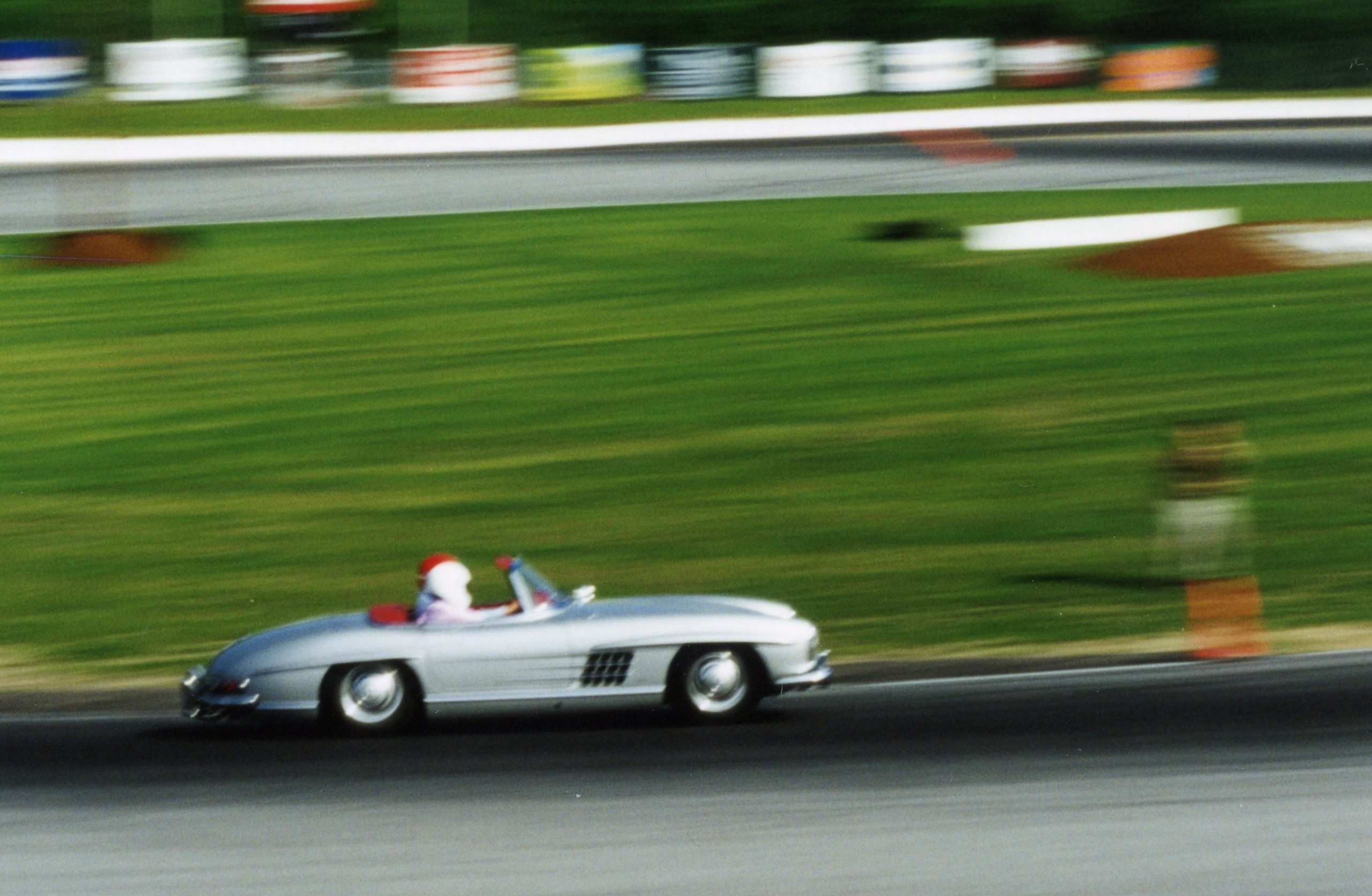
Ferrari Daytona surrounded by 3 Mercedes-Benz 300SLs


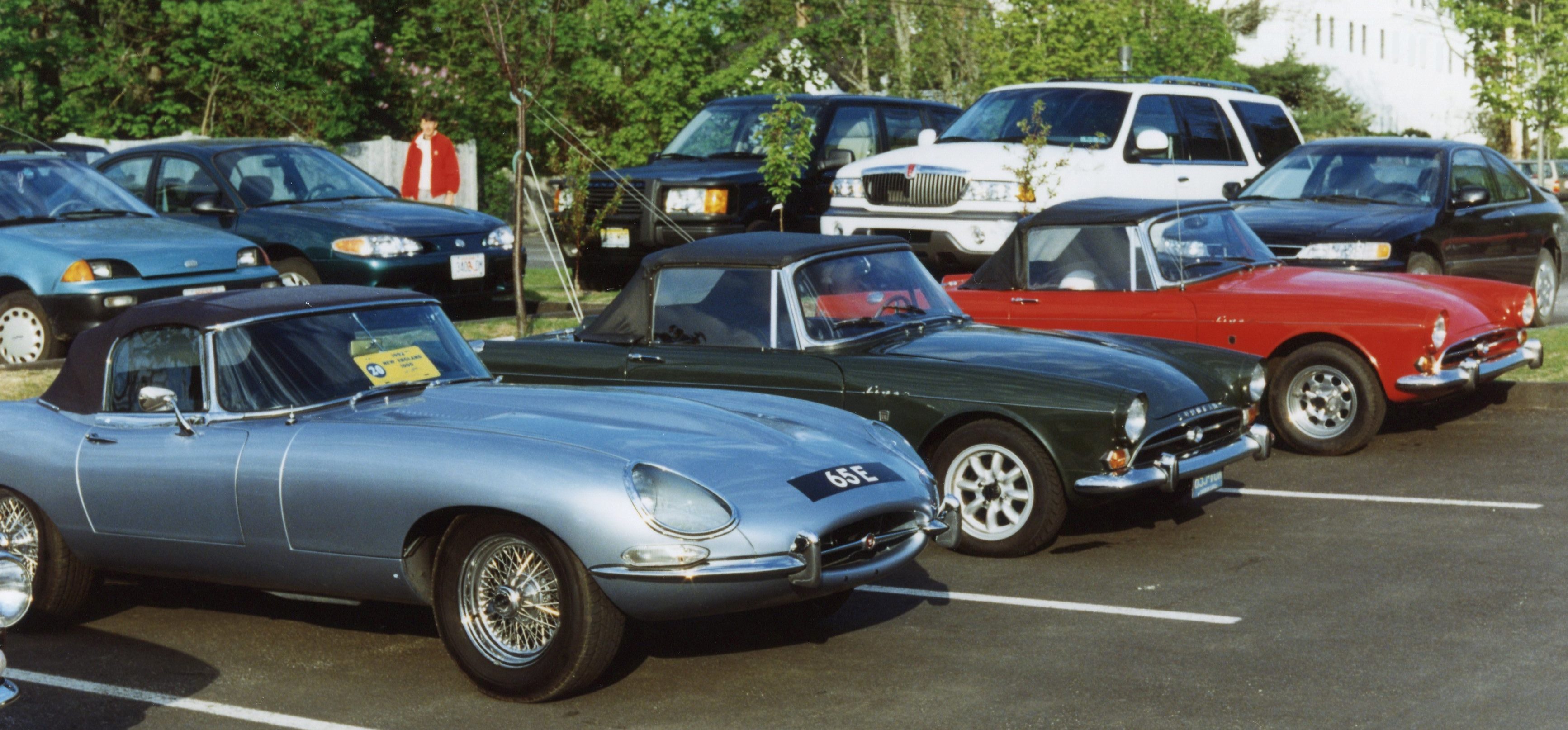
Our Tiger flanked by an E-Type and another Tiger


1963 Lotus Elite & 1958 Fiat-Abarth


We parked in a sectioned-off area of the hotel lot dedicated to the rally cars, had dinner with fellow rallyists, and learned that the Sunday Car Show was a planned part of the festivities. Now we knew better for next time. After dinner: Famous Navigator’s School, wherein we were taught all the intricacies regarding synchronization of stop watches, driving etiquette amongst ordinary civilians, and the importance of placing your car’s front bumper across the finish line at the exact required moment, lest you earn unwanted points, one point for each second early OR late. Oh, the pressure.


A page from the route book; a working, accurate odometer is presumed

Monday morning, we got up, had breakfast, and headed out to the Tiger with our route book. The parking lot was already abuzz with activity. Rally cars were staging themselves up to be flagged off at one-minute intervals beginning at 8:15AM. There were SIX timed stages that first day, plus two so-called transit stages (untimed). Steve was driving, and I was navigating. For the next stage, Steve graciously allowed me to drive, with him navigating. From that point onward, we had established a pattern that driver and navigator would alternate stages. It’s an agreement we’ve kept to this day.


Staging for checkout

Here’s a rally secret to share with you: navigating is SO much more difficult than driving. The navigator must be constantly be mindful of the printed directions, public landmarks, vehicle speed, and miles traversed, AND he must communicate driving directions to the driver in a clear manner. The driver? He needs to drive while heeding the navigator’s calls. Oh, and if the rally car in front of him turns right when his navigator tells him to go straight, then of course, he should go straight. Unless, of course, that’s incorrect…. (There is tremendous pressure to follow the rally car in front of you rather than refer to your navigation sheet.)

Tiger in queue, following Ferrari NART spyder and Ferrari 308

The concept of a TSD (Time, Speed, Distance) rally like this is to “zero out” each stage. A zero score is a perfect score; you’ve hit each finish line at the exact time you were due. As mentioned earlier, being early OR late is penalized, one point for each second you are off your mark. (The New England 1000 caps the maximum points you can earn per stage at 500.) It’s all in good fun, as we were learning.
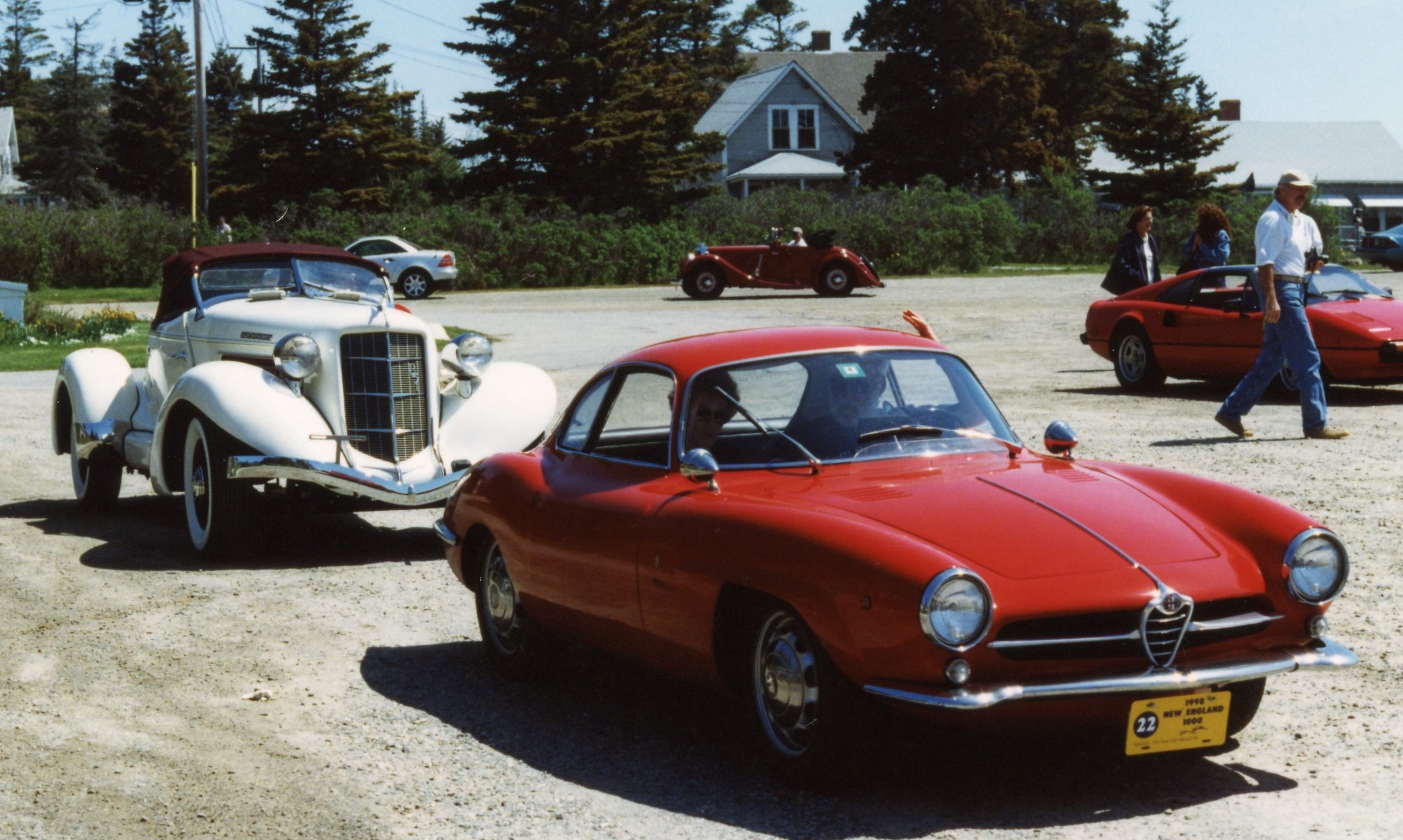
 

A 1936 Auburn Speedster following an Alfa Romeo Giulietta Sprint Speciale


The E-Type poses behind the Sprint Speciale


A Ferrari 308 GT4 screams past while the Elite watches


But nothing was more amazing than the sight of other rally cars on the road with you. To be motoring with a Mercedes Benz 300 SL roadster in view out your windshield, and a Jaguar E-Type in your mirrors, is not something to be taken for granted. Vehicles you’ve drooled over for years, meticulously primped and pampered for show, were now screaming along at 6,000 rpm.

It is not an exaggeration to state that my participation in this rally forever changed the way I felt about the old car hobby. I would never feel the same passion again about static car displays. Once I was exposed to owners who were willing to take their prized machinery and drive them at speed, in rain or shine, then I knew I wanted to be part of that as frequently as possible.
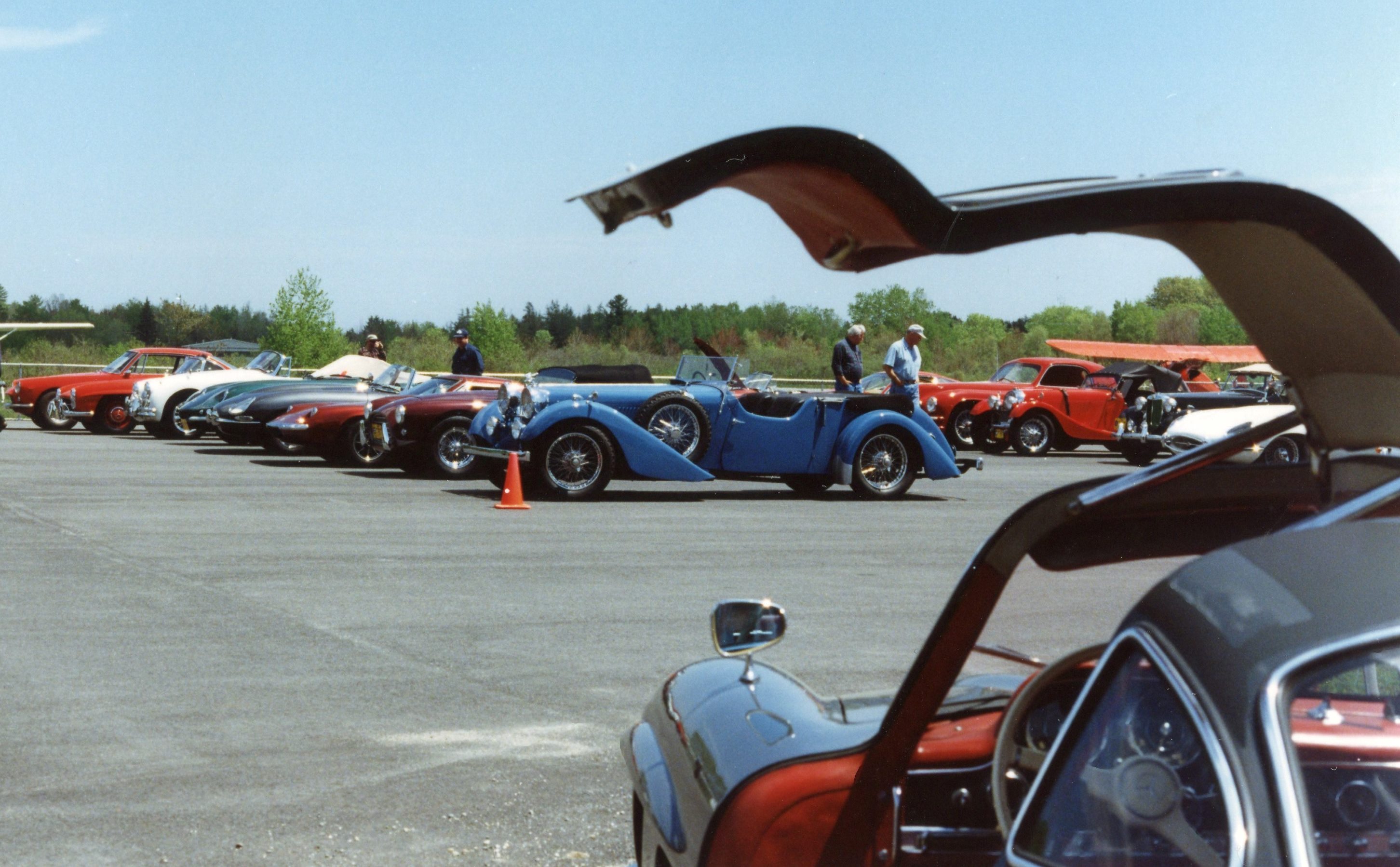
 

An open Gullwing door frames the parking lot


A parking lot respite from driving
A respite from driving


"I think the oxygen sensor is telling the Hall switch to send the wrong signal to the ECU"
“I think the oxygen sensor is telling the ECU to send the wrong signal to the fuel injectors”


To me, there is no more beautiful automotive form than a Series I E-Type coupe


The yellow Dino glows in the sunset


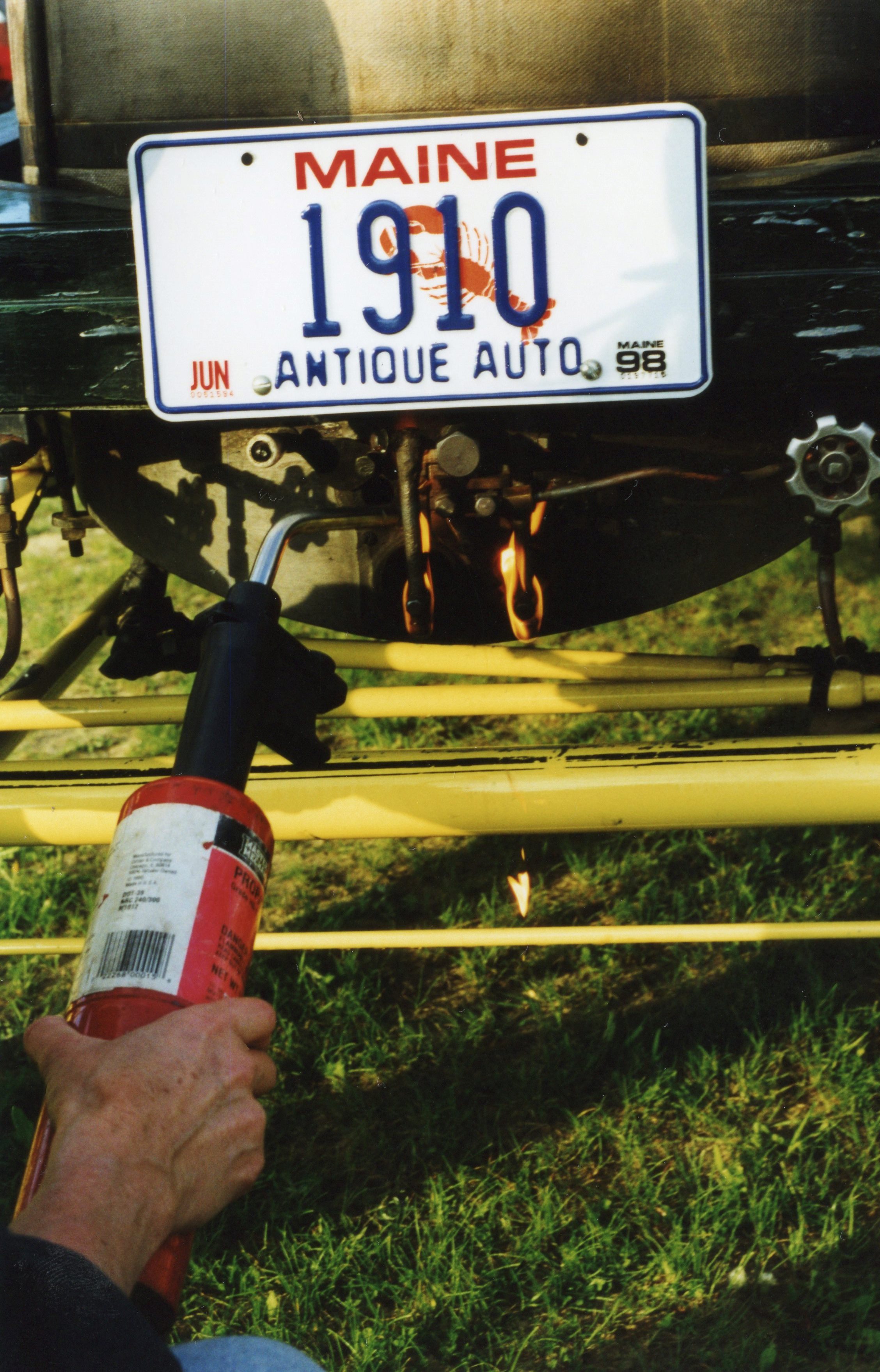
We had a chance to ride in a Stanley Steamer; this is part of the starting procedure


Monday flew by. So did the rest of the week. I saw that the days were quite full, what with early departures, driving, lunches, more driving, and dinners. There were few photographic opportunities during the rally stages, so I was glad to have taken the pictures I did on Sunday. Thursday’s banquet dinner was yet another highlight, with comical speeches, a charity auction, gag gifts, and a trophy for everyone, no matter what your score. You really felt like you were part of something.

If you want conclusive proof that we enjoyed ourselves, know that during Thursday’s festivities, my rally brother Steve wrote a deposit check for the 1999 New England 1000. We would be returning in the Tiger. That’s a story for another time.

We drove it tothe rally, ran the rally, and drove it home
We drove it to the rally, ran the rally, and drove it home, about 1,600 miles in 6 days


All photographs copyright © 2016 Richard A. Reina. Photos may not be copied or reproduced without express written permission.
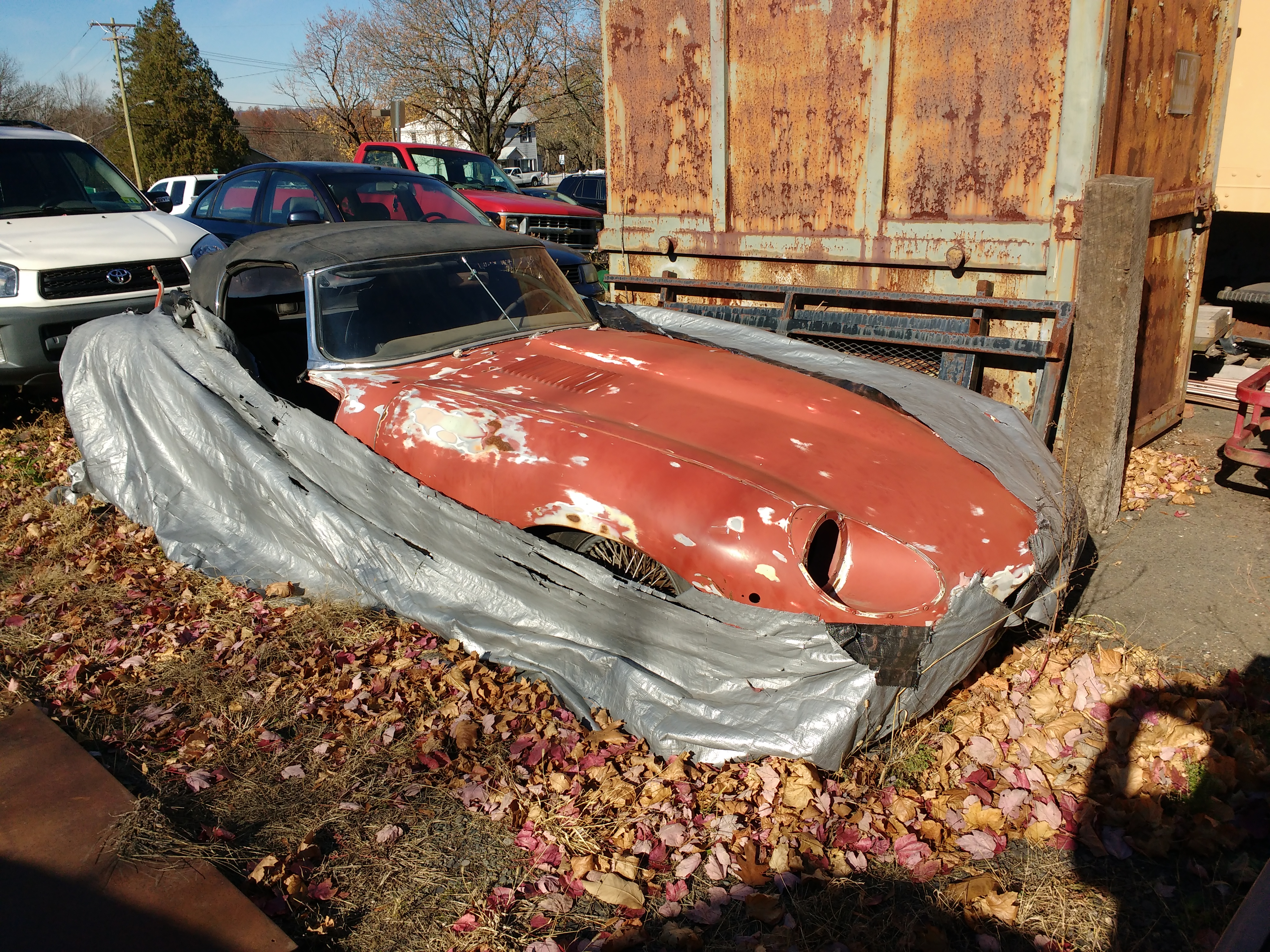
Forlorn Jaguar E-Type Roadster Discovered

A few weeks ago, my wife and I headed to lunch at a restaurant in Whitehouse Station (NJ) that we hadn’t tried before. It’s about five miles from our house, and it’s one of those places that we’ve driven past a thousand times, always saying “hey, let’s try that sometime”, and finally we did.

For 1pm on a Friday, the place was quite busy, and since their primary parking lot was already full, we had to park a half block further away. No big deal, as the day was sunny if a bit cool. Our parking spot ended up being closer to the back, not the front, of the restaurant.

Approaching the restaurant from the rear, my wife was already several steps ahead of me, when my eye caught a glimpse of an interesting shape in the yard next door. The adjacent business is an auto repair shop, and as is typical, there are always a number of semi-repaired cars strewn about. But this was no recent “we’re just waiting for that replacement oxygen sensor to come in” type of vehicle. No, this one had been there a while.

At first glance, it looked like it was covered by a tarp.  I walked closer, and as my vision began to focus on said tarp, I saw that it only partly covered the car. “What is it?” I asked myself. The shape was so familiar, yet I still didn’t know.

I didn’t want to get too close (I haven’t had my tetanus shot), but as I walked from its rear to its front, I recognized the unmistakable XKE shape. It’s as if it were wearing a disguise: vehicle partly covered, headlight removed, and both doors missing! By now, my wife was on the porch, wondering just where I had gone.


Tarp needs to be re-secured; good thing the top is up

Out came the cell phone to fire off two quick snaps. I rushed inside so as to not keep her waiting any longer. My attention was directed to the menu, but it was hard to stop wondering how this Jag ended up there, in that condition.  Was this a barn find? (There’s no barn.) And just when you think that all the Jag project cars have been found, this pops up 5 miles from me. Somehow, I avoided the temptation to make an inquiry.

It wasn’t until I got home to study the photos that I saw that it’s a Series II OTS (Open Two Seater). These 2nd-generation E-Types still used 6-cylinder engines, but had exposed headlights, a larger grille opening, and larger tail lights mounted below the bumper. While not as pretty or desirable as Series I cars, they still have a commanding presence, and are still coveted among collectors of European sports cars.

Door removal aids in photography of interior

My CPI (Cars of Particular Interest) price guide for Nov.-Dec. 2016 puts such a car at $97,000 in “excellent” condition. Keith Martin’s Sports Car Market Price Guide for 2016 assigns a median value very close to that, at $91,000. This example, as the pundits would say, needs everything, so even if the car were free, you’d spend more than you could earn on resale. Perhaps it’s best to let this one return to earth from whence it came.


All photographs copyright © 2016 Richard A. Reina. Photos may not be copied or reproduced without express written permission.
COLLECTOR’S CORNER: Bill Whited’s Corvettes

After almost two years of blogging about my automotive adventures past and present, it’s time to turn the blog in a different direction.

It’s been my good fortune to have participated in the collector car hobby by attending car shows, working on restorations, and driving in rallies. Throughout these adventures, I’ve met many similar-minded men and women. As I’ve gotten to know my fellow enthusiasts, their stories have come out. I’ve realized that this hobby is really about its participants. Old cars, by definition, have a history to them, and every owner knows at least some of the story behind their car, and is usually happy to share it.

A while back, while chatting with some friends at a show, it hit me: I was enjoying the conversations and camaraderie more than I was enjoying the sight of their 1960-something Sport-mobile. I asked myself “why isn’t someone capturing these tales, and putting them out for others?” In fact, there have been some attempts to do that; however, from my observation, these efforts have been scattered, and still put too much focus on the machinery and not the personality.

This is the first installment of a new blog series called “Collector’s Corner”. The plan is to make this a semi-regular feature on the blog. If you know of anyone who might be interested in participating, or if you yourself would like to be featured, please let me know.

About this week’s featured collector: I’ve known Bill Whited professionally and personally for over twenty years. He is a warm, engaging man, and passionate about the automotive business and hobby. One evening several weeks ago, he graciously invited me to his north Jersey home, and we sat and spoke about his lifelong involvement with cars. Below are excerpts from our conversation. We welcome your comments and questions.


  • What is your earliest memory related to cars?

My mom told me that my first word as a baby was “car”. I grew up without a dad, so I had no influences from anyone else except TV. I remember the TV show Bonanza with those Chevrolet commercials. I aspired to those cars, especially the Corvette, thinking that I could never afford one.

  • What do you remember about the family cars from your childhood?

I remember when I was about six years old, my mom and my uncle took me to the local Chevy dealer. My mom was going to buy a new Chevrolet. I gravitated to a beautiful black Bel Air. But my mom got the 210 model. That was the in-between model, not a 150, but it wasn’t a Bel Air either. It was pink, like a salmon color, with a white top. It was a 6 cylinder, with Powerglide, no power steering, and no power brakes. When I turned 17, I got my mom’s car, and that became my first car. By that time it was battleship grey, after I had convinced my mom to go to Earl Scheib for a paint job!

  • Which cars followed your first car, that ’57 Chevy 210?

My first job was in a local department store, and my grandmother had passed, so I had a little money from her. At 17, my mom and I went back to the local Chevy dealer. I picked out a used 1963 Impala SS, royal dark blue, with a 283 V8. I kept that for about a year. When I was a senior, I flipped that one for a ’65 Impala. The ‘65 was not an SS; it was yellow, with a bench seat! My mom would finance the cars for me.

After high school I went to Bergen Community College in Paramus, NJ, and was working after school at UPS. I traded in the ’65 for my first Corvette, a 1966 convertible. Again, my mom was along with me, co-signing for it. So at 19, I’m already on my 4th car. The Corvette was maroon with a saddle interior, with a 327/350 and a 4-speed. Of course, I blew the motor racing someone on 9W. At the time, GM had a parts warehouse in Englewood NJ. A friend ordered a replacement block, 327/375 solid lifter motor for $350!

During my second year of college, I was called up to the National Guard. Just before leaving for Louisiana, I was driving in the snow and had an accident. In those days, you put snows on and drove year-round; the Corvette was my everyday car. I limped the car home, and left it with my friend’s gas station to be fixed. I was away for 5 ½ months, and when I got back, it still wasn’t finished.

I got back from the Guard, finished college, and was introduced to the car business. I started with 25 others on the sales floor of this Ford dealership. At the same time, I had part-time job at a Buick dealer running parts, and from their used car lot I bought a 1966 Opel Kadett, with the fenders falling off. I had the Corvette AND the Kadett – two cars at this young age. I had no money, but I had cars!

  • Tell us about your start in the automotive industry.

In late 1972, at the age of 22, I had been at the Ford dealer for about 9-10 months. I was already the third-best salesperson by volume, so I got to pick out my first demo. The 1973 models were just coming out, and I picked a brand new Gran Torino Brougham. I was living at home, saving my money, and driving a dealer demonstrator.

But I didn’t like the Ford dealer, because they wanted you to lie to customers. I thought perhaps I’d try to sell foreign cars. So I interviewed at Bergen Volvo. During the interview, I asked about a demo, and was told “no company cars”. I told him, if there’s no demo, then I guess I’ll stick with Ford, but you’re missing out on the best salesman you could hire. By the time I got home, my mom said that the dealer had called back, and they said we’ll give you a demo, but you need to prove you can sell. And I did. That first demo was a Volvo 164E, powder blue, with a stick shift.

  • In the meantime, did you still have the ’66 Corvette?

Yes, I kept the Corvette for seven years, but as soon as I sold it, I regretted it. There was someone around the corner from me who had a 1962 Corvette, fawn exterior and interior, 327/340, 4-speed, 2 tops, all original. I bought that car for around $2,500. Because I had dealer demos, these Corvettes were just fun cars, weekend cars.

  • What’s in the garage right now?

Right now, I have three Corvettes in the garage; I love my Corvettes! It’s a small collection. I learned my lesson, because in the early ‘90s, I had up to 11 cars, which was too many! Some may love to have that many; after all, everyone is different. For me, less is more when it comes to multiple car ownership at one time, because I enjoy driving them, and it takes quite a bit of upkeep to keep the cars right.

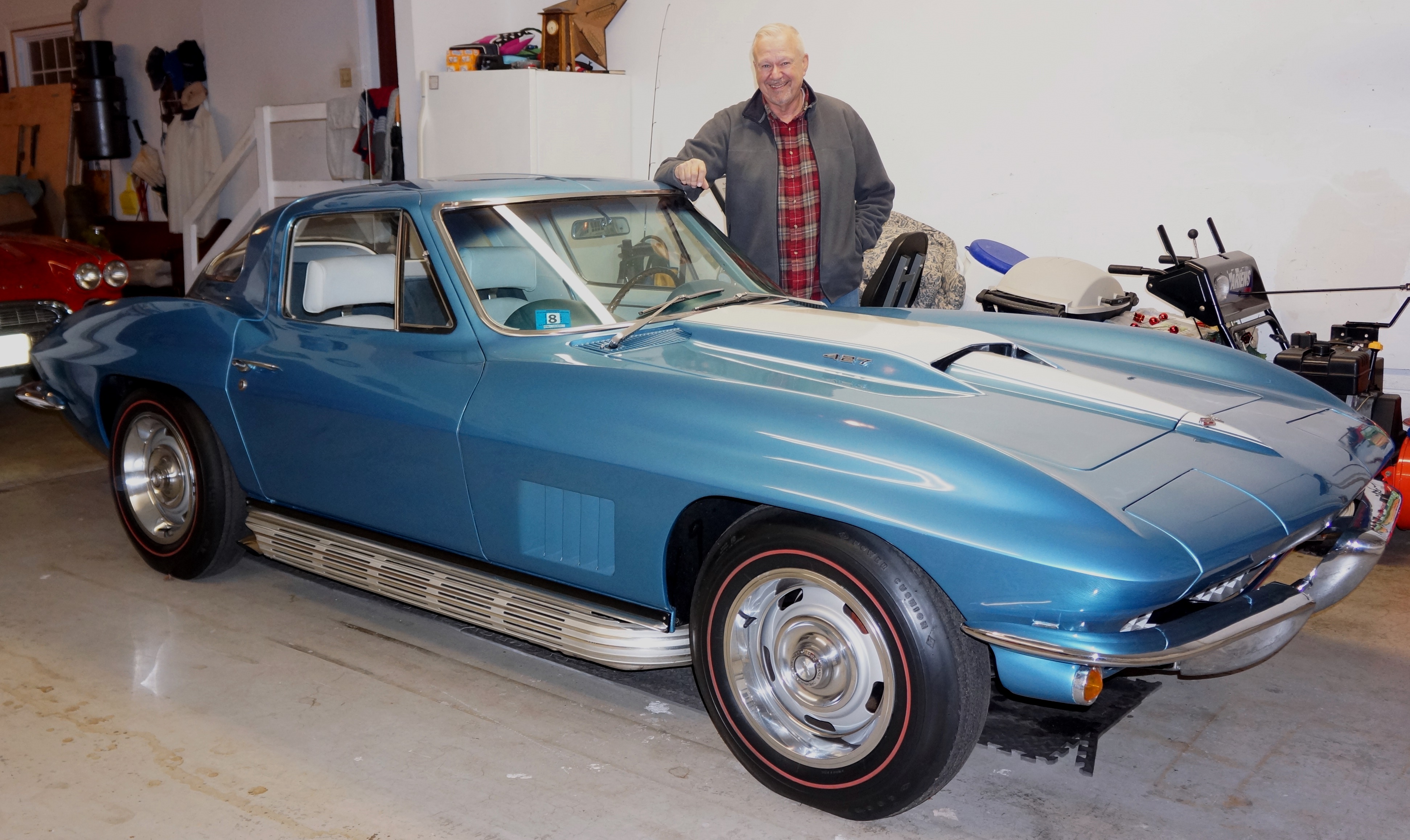
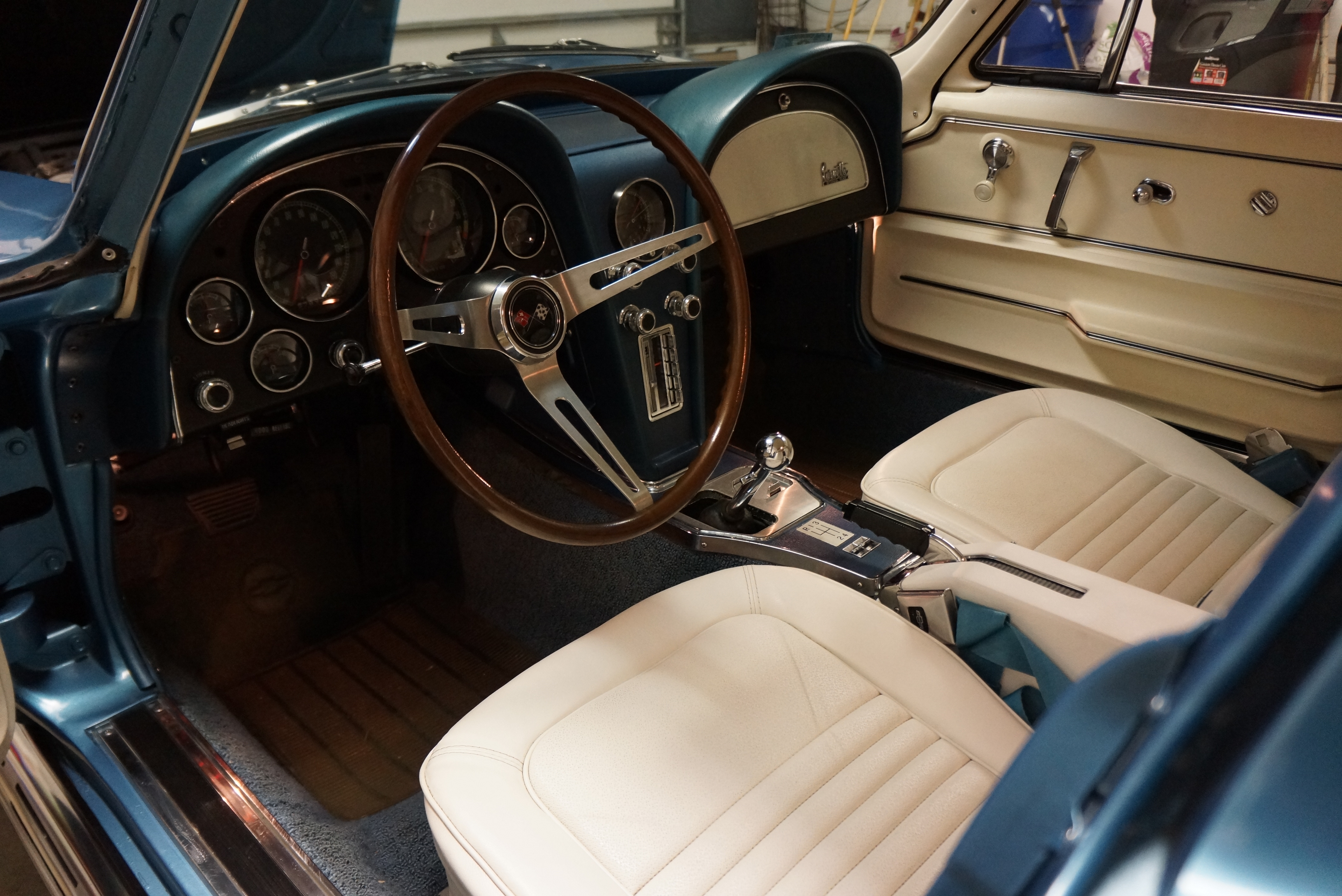
First: I have a 1967 Corvette coupe, in blue, with a 427/400 tri-power.

dsc05362ccc

I‘ve owned this car since 1993. It’s a matching numbers original car. I found this one in Hemmings; the car was in Massachusetts. The car was advertised for $36,500. The restoration was eight years old. The market had taken a downturn at that time. Two years earlier, an appraiser had appraised it for $65,000. I drove up, looked at every number on the car, and it was all legit, so I bought it.

In 2015, a friend suggested that I show this car at the AACA meet in Hershey. I’ve never been a ‘show car’ kind of guy. The outside looked pretty good, but I had never detailed the engine compartment, so I cleaned that up. I drove it out to Hershey, and lots of people were looking at the car. The class of cars was a tough one: all ’63-’67 (C2) cars. To my surprise, the car got a 3rd Junior its first time out.

The best part of the show was when someone questioned the color of the crossed-flag emblems. The question was “shouldn’t they be white, not black?” At that moment, a fellow came up to the car who happened to be the guy who restored the car. He verified that the emblems were never replaced, and that the originals were black, the way they were supposed to be!

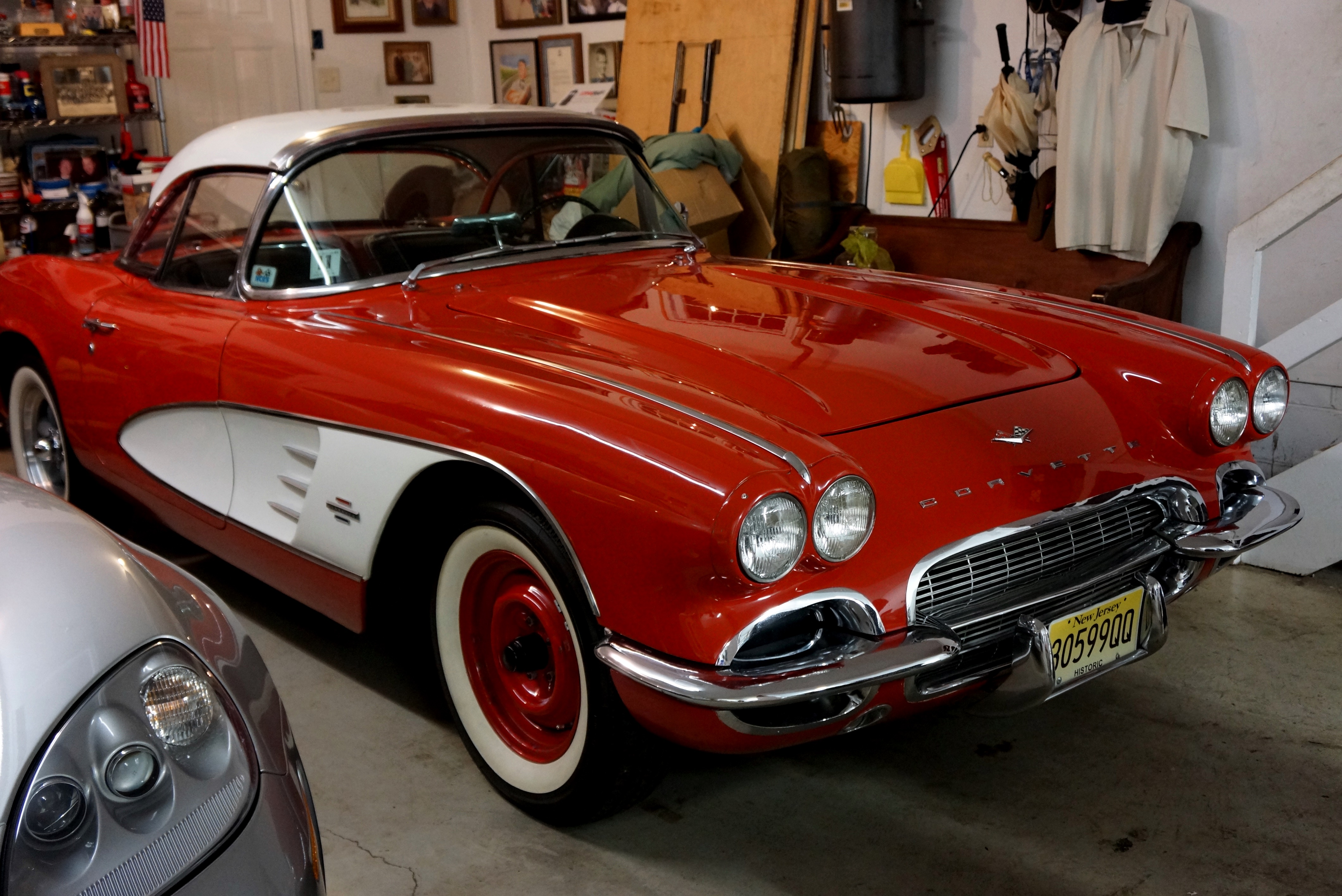
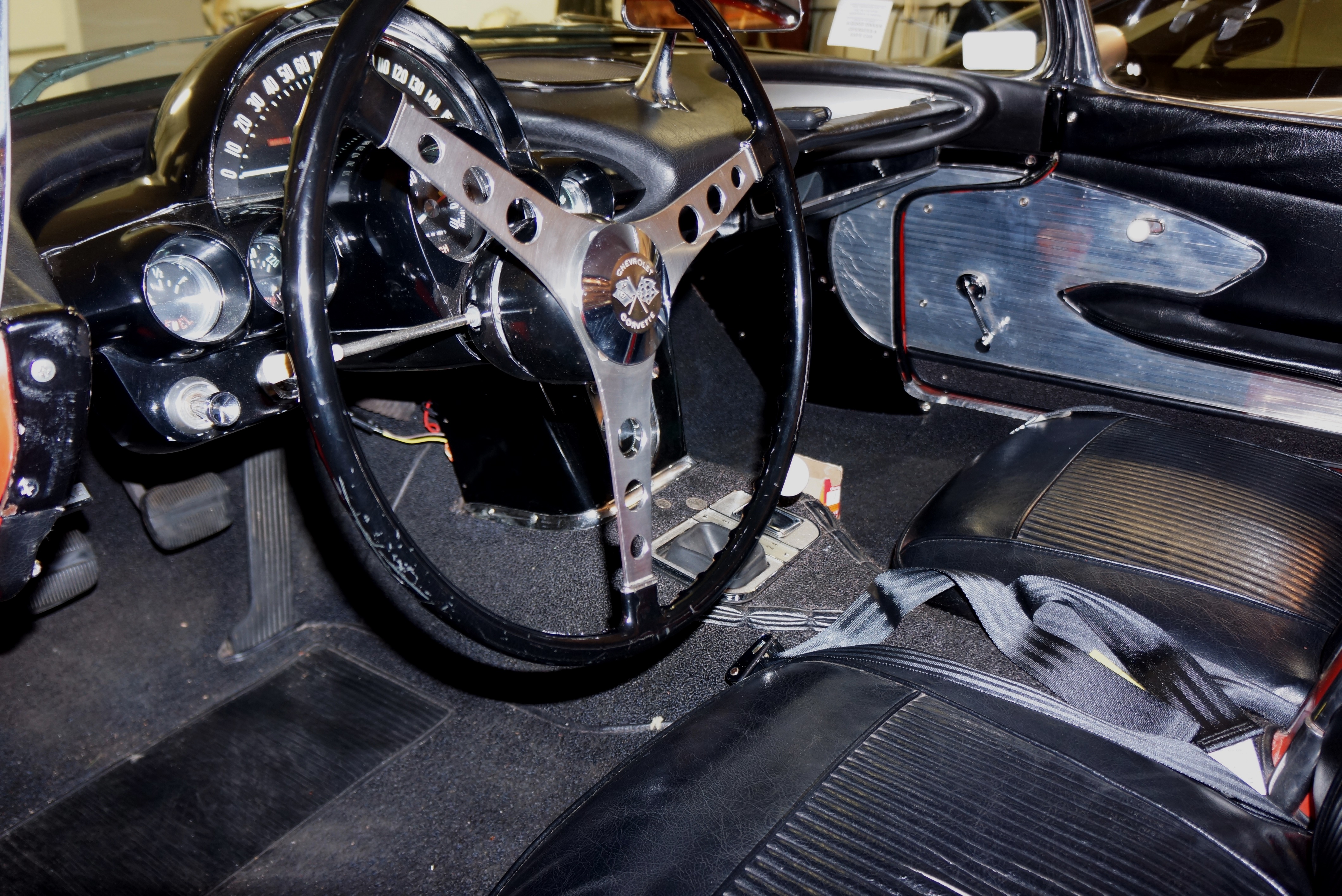
The second car in my current collection is my 1961 Corvette.

dsc05375ccc

It’s my 5th solid-axle (C1) car. When I had sold my business, I had a ’61 which I had owned for about 10 years. I sold it in 2012, but I missed having a C1, so I started looking for another. I like the ’60 to ’62 cars, those are the sweet spot for me.

I drove to Maryland to look at a car, but a lot of things weren’t right on it. I drove to Forked River NJ to see another, but it had the wrong motor, it was more like a drag strip car. Then I found one on eBay, slightly underpriced, a ’62 with a 327. This car was in Boston and I decided to take a look. I was halfway there when the seller called me to say that someone had given him his “Buy It Now” price.

By now, I was frustrated. Meanwhile, my wife was looking for a certain kind of sponge for a decorating project. I took her around to some stores, but she couldn’t find the sponge she needed. I decided to try an auto parts store near me in Wykoff. At the store, I noticed a sign in the store window: “1961 Corvette for sale, call Tony”, with no price.

I asked inside the store, and they knew Tony. He and the car were right around the corner. We went to look at the car, and within 20 minutes, I bought it. After all that time, I found my car right around the corner from me. I’ve had it for about a year and a half, two years.

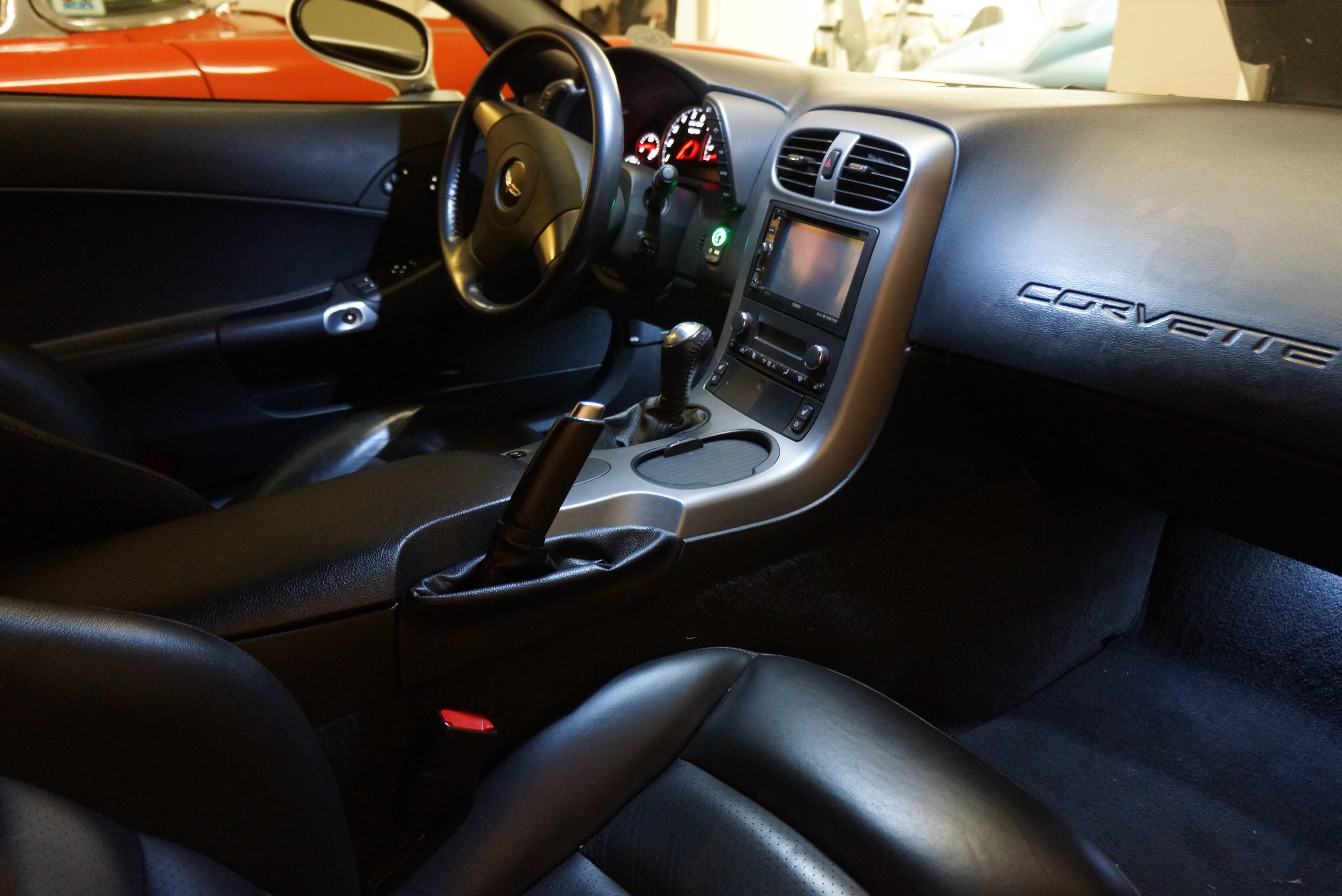
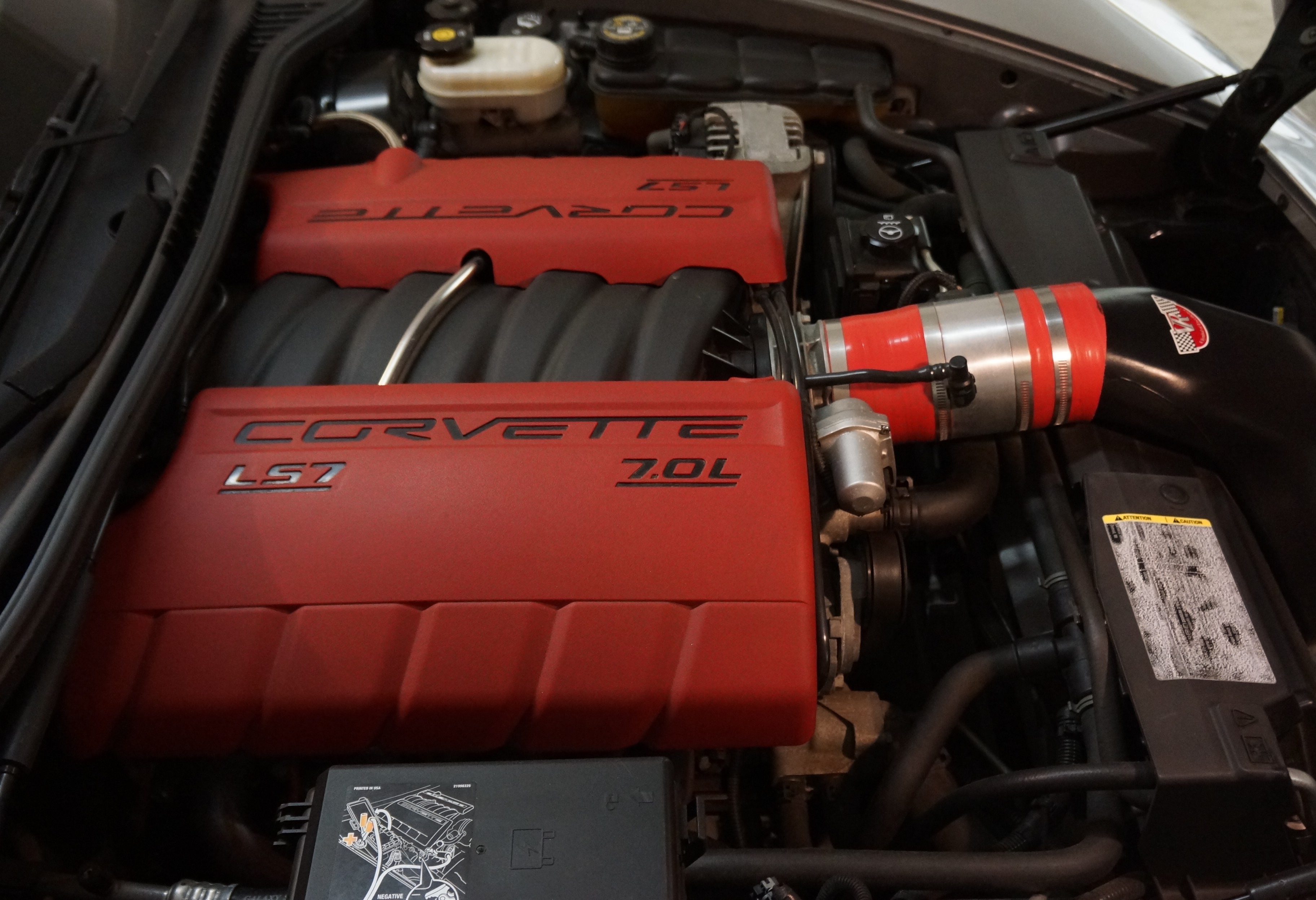
My third Corvette is a 2006 Z06, which I bought in 2014. It’s my fourth Z06.

dsc05366ccc

I missed my other ones, so I went on the hunt and found this one online on AutoTrader. It was in Westchester County NY. It was a two-owner car. The Carfax showed that a police report had been filed after someone backed into the car, which cracked the headlight and scraped the front bumper cover. The previous owner replaced both, and there was no obvious damage. I made him an offer, we negotiated a bit, and I got the car.

The car has its original paint in Machine Silver Metallic. I have a copy of the build sheet and the window sticker, showing a list price of $72,000. This was the first year of the C6 Z06; 2004 was the last year of the C5 version. That one had 405 horsepower, and this one is 505 horsepower. It’s only available with the six speed manual transmission. It’s a light car, with a full aluminum frame, carbon fiber front fenders, and floorboards of balsa wood sandwiched with carbon fiber.

GM had a recall on the 2006 roof panels; the glue that bonded the roof was bad, and roofs were actually flying off the cars. The previous owner had the recall done, and since the dealership had to remove the roof, he had it painted in dark grey metallic (along with the band behind it) to duplicate the ZR1 that came out in 2009. The full rear spoiler is also not stock; it’s in flat black, again, like the ZR1 model.

  • Bill, any final words for us?

I have been blessed by God to have been able to purchase all these cars over the years as He guided me in my automotive career. For 40+ years as an auto dealer I’ve had the luxury of being able to afford my dream cars. Thank you Lord for all your blessings, and thank you, Richard!

dsc05370ccc


All photographs copyright © 2016 Richard A. Reina. Photos may not be copied or reproduced without express written permission.
An Unplanned Visit to “Cadillac House”

A few weeks ago, my wife and I were in downtown Manhattan, where we spent a pleasant afternoon at the new Whitney Museum. Our trip into New York County was via the Staten Island Ferry, and while we had taken a taxi from the ferry terminal to the museum, the afternoon weather was pleasant enough for us to make the return trip to the terminal on foot.

Much of our walk took us south on Hudson St., through the West Village and SoHo. These areas are full of trendy bars, coffee shops, and galleries, and autumn’s Sunday warmth had lots of people out and about.


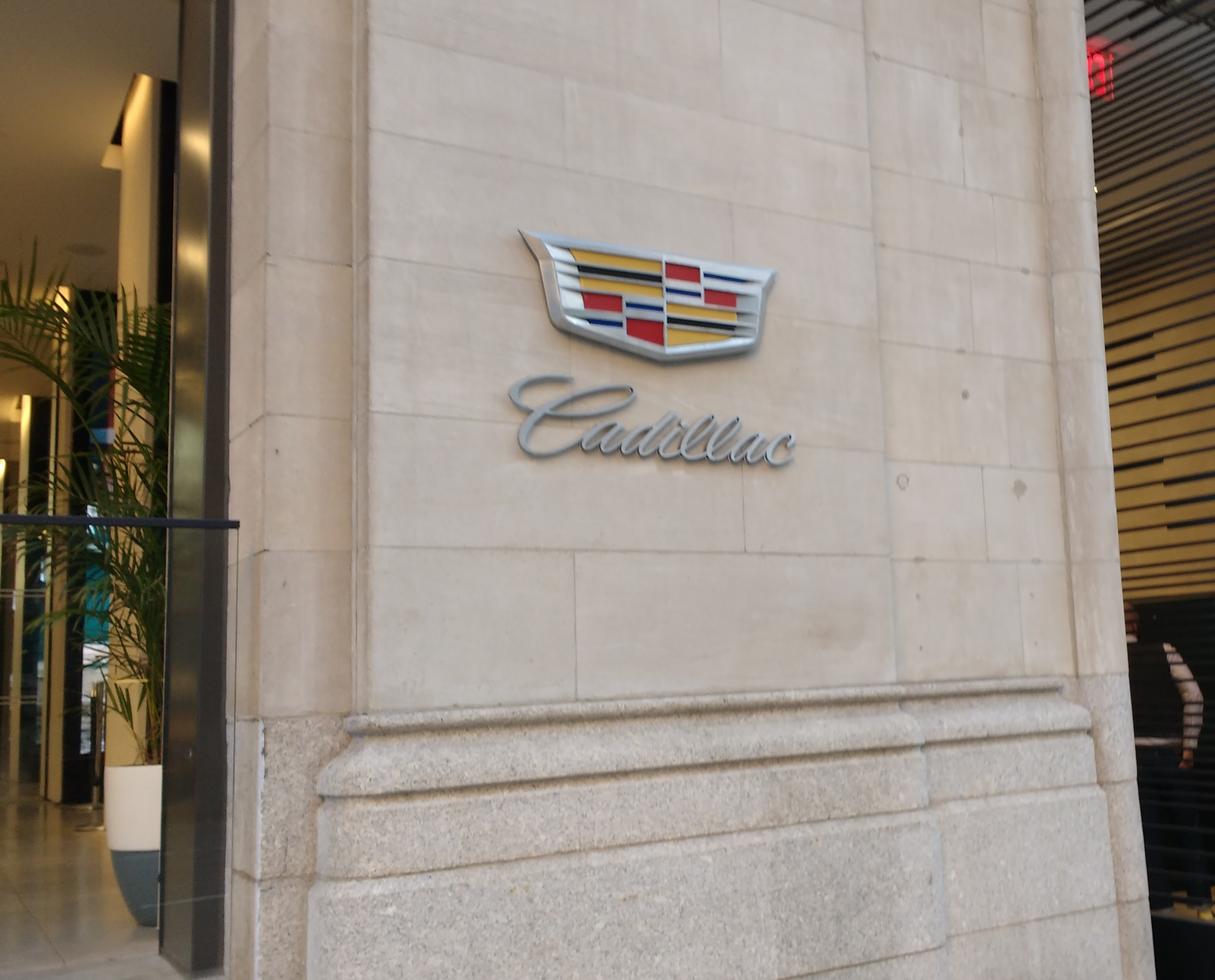
Just about the last brand name I expected to see in SoHo
Just about the last brand name I expected to see on a building in SoHo


I’ll be the first to tell you that my eyesight isn’t that great … except when it comes to spotting cars. A few blocks past Houston St., in the glass window of a building across the street from where I stood, was the unmistakable chrome face of a 1958 Cadillac. “Wait, wait”, I yelled to my wife, whom I knew would have no choice but to follow me. “What is this place? Wait, the Cadillac emblem is on the front of the building!”


The view that first caught my eye


My wife went in first; I wasn’t even sure they were open. But sure enough, they were. We scooted past two young adults who were building some kind of display, and entered the first floor ‘showroom’, all glass and mirrors and chrome. Oh, and several Caddies from the ‘50s and ‘60s.


Public area on first floor is all hard surfaces


We wandered around a bit. There was a hipster coffee bar, and a small clothing boutique in the rear. A large placard gave details about an upcoming Andy Warhol exhibit. The space is open seven days a week, and “hanging out” is encouraged.


Sit, stay a while, enjoy the views


Cadillac + Andy Warhol - who knew?
Cadillac + Andy Warhol = who knew?


We didn’t stay long, and on the way out, I asked the young woman at the desk if this was in fact Cadillac’s headquarters. “Oh yes” she exclaimed enthusiastically. “All the upper floors are where all the offices are. We like it here, because this is a great neighborhood.”


Fun with mirrors, part 1


Fun with mirrors, part 2


The Cadillac brand, in an attempt to establish independence from its General Motors parent, moved its national operation to New York in 2015. This is all part of brand chief Johan de Nysschen’s grand plan to take the luxury car maker upscale.


Say "tailfins", and most will conjure up an image of the '59 Cadillac
Say “tailfins”, and most will conjure up an image of the ’59 Cadillac


My presumption had been that their offices would be somewhere in Midtown: perhaps near Bloomingdale’s (and Trump Tower), or maybe around the corner from Rockefeller Center. So Johan wants to be where the young trendsetters are. Hasn’t this been tried before?


1963 Cadillac, in black, natch


I had one more question for our hostess: “Where are the new cars?” She said that they had all been moved out in preparation for the Warhol event. For now, these behemoths from Cadillac’s heyday had the floor to themselves. Here’s hoping that Cadillac finds its muse somewhere in lower Manhattan.


The organic coffee sign symbolizes the distance between this '58 and its trendy surrounds
The organic coffee sign symbolizes the distance between this ’58 and its trendy surrounds


All photographs copyright © 2016 Richard A. Reina. Photos may not be copied or reproduced without express written permission.


The AACA Museum Hosts “Amore della Strada” Opening Reception

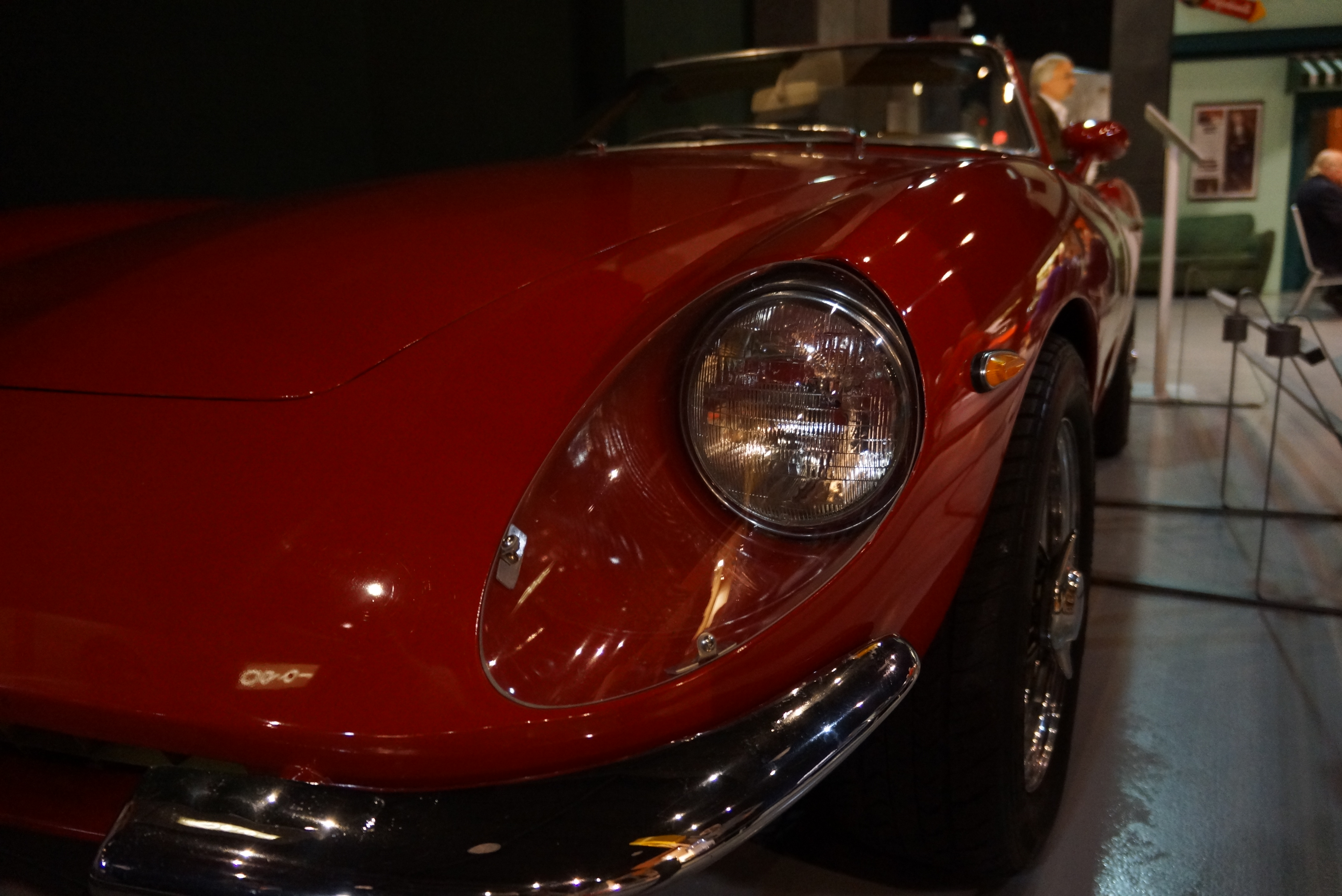
On the evening of November 18, 2016, the AACA Museum in Hershey PA officially opened its “Amore della Strada” Italian machinery exhibit with a reception at the museum. The public was invited to attend, and turnout was large, making for crowded aisles. The doors opened at 6pm, and your $20 admission included antipasti, beer, and wine. Those who owned cars on display were admitted “gratuito”.

Italian cars come in colors other that red!
Italian cars come in colors other than red!

There were approximately 20 Italian cars, and perhaps a dozen or so Italian motorcycles. The museum is arranged in such a way that there was no practical way for the curators to place all the special exhibits together. Therefore, they were arranged in smaller groups of 2, 3, 4, or more, and placards with each vehicle provided sufficient history regarding the make and model. Owners who were loaning their wares for the five-month duration of the show were dutifully acknowledged. (Last week’s blog entry covered this author’s drive to deliver his ’67 Alfa Romeo GT 1300 Junior to the exhibit.)

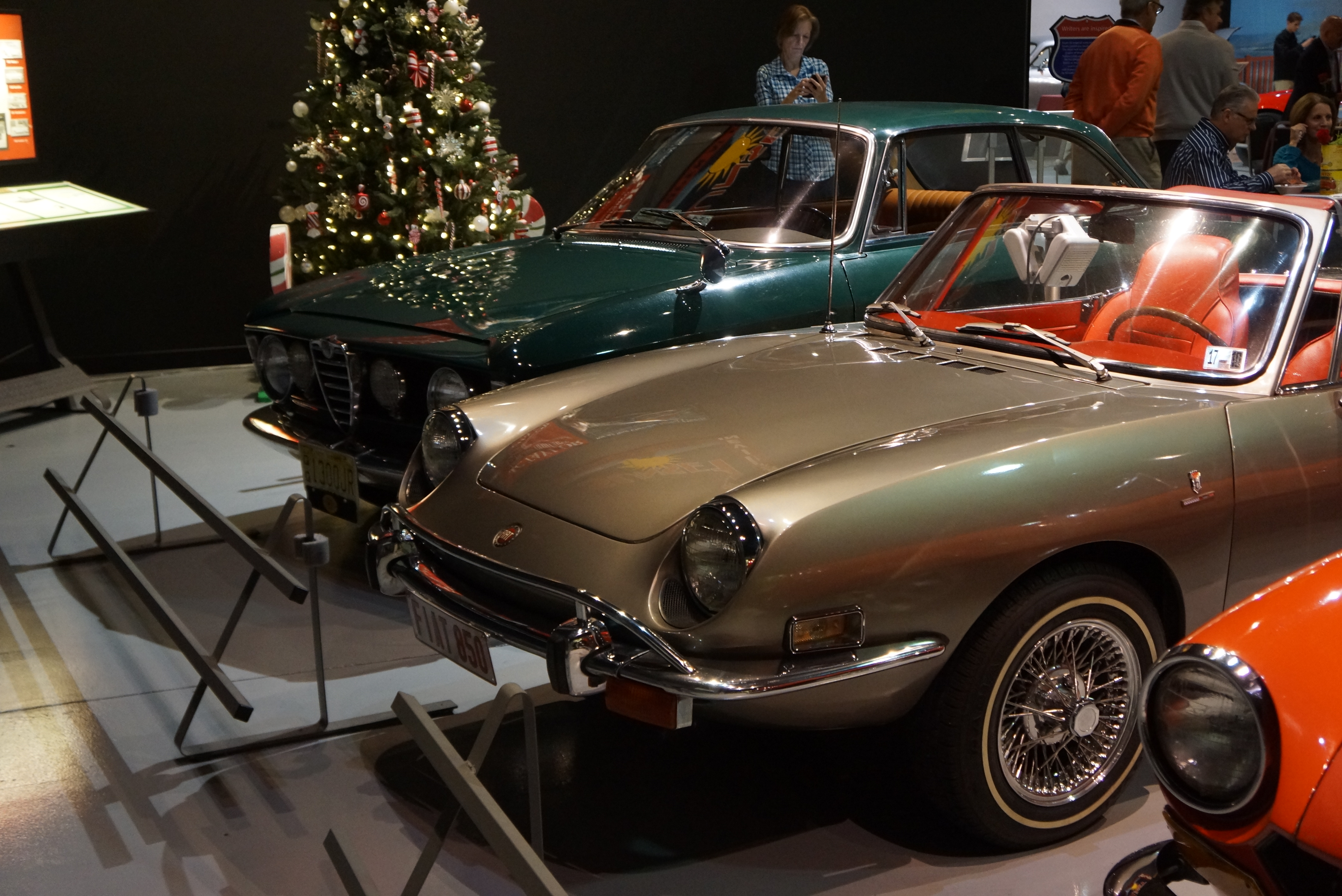
Fiat, Alfa, and Christmas tree

Fiats and Alfa Romeos seemed to comprise the bulk of the vehicle displays, and some might agree with me that it was a refreshing change of pace for an “Italian Car Show” to NOT be dominated by late-model supercars from the Big 3 of Ferrari, Lamborghini, and Maserati. (Of these three makes, I counted only two Ferraris.)


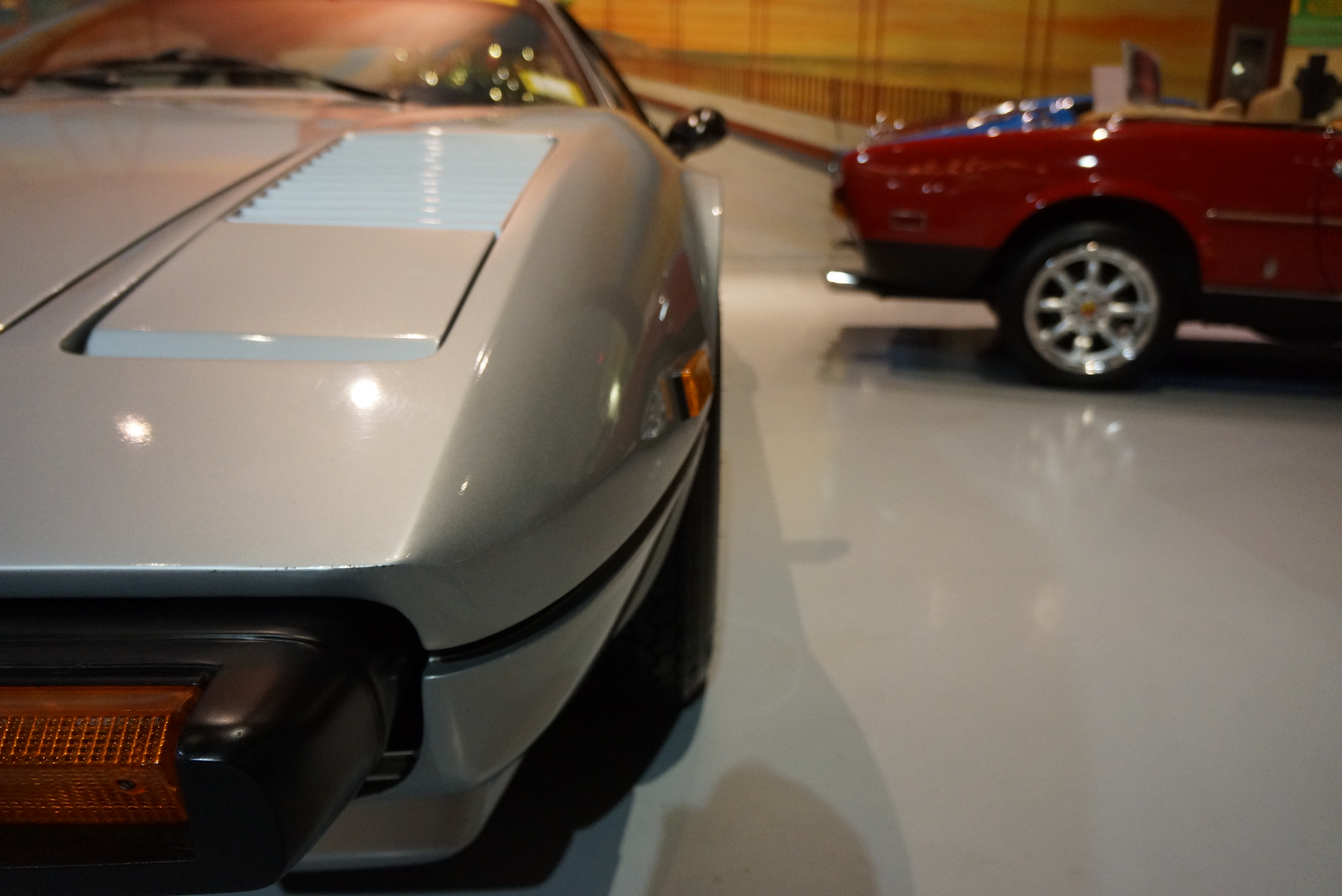
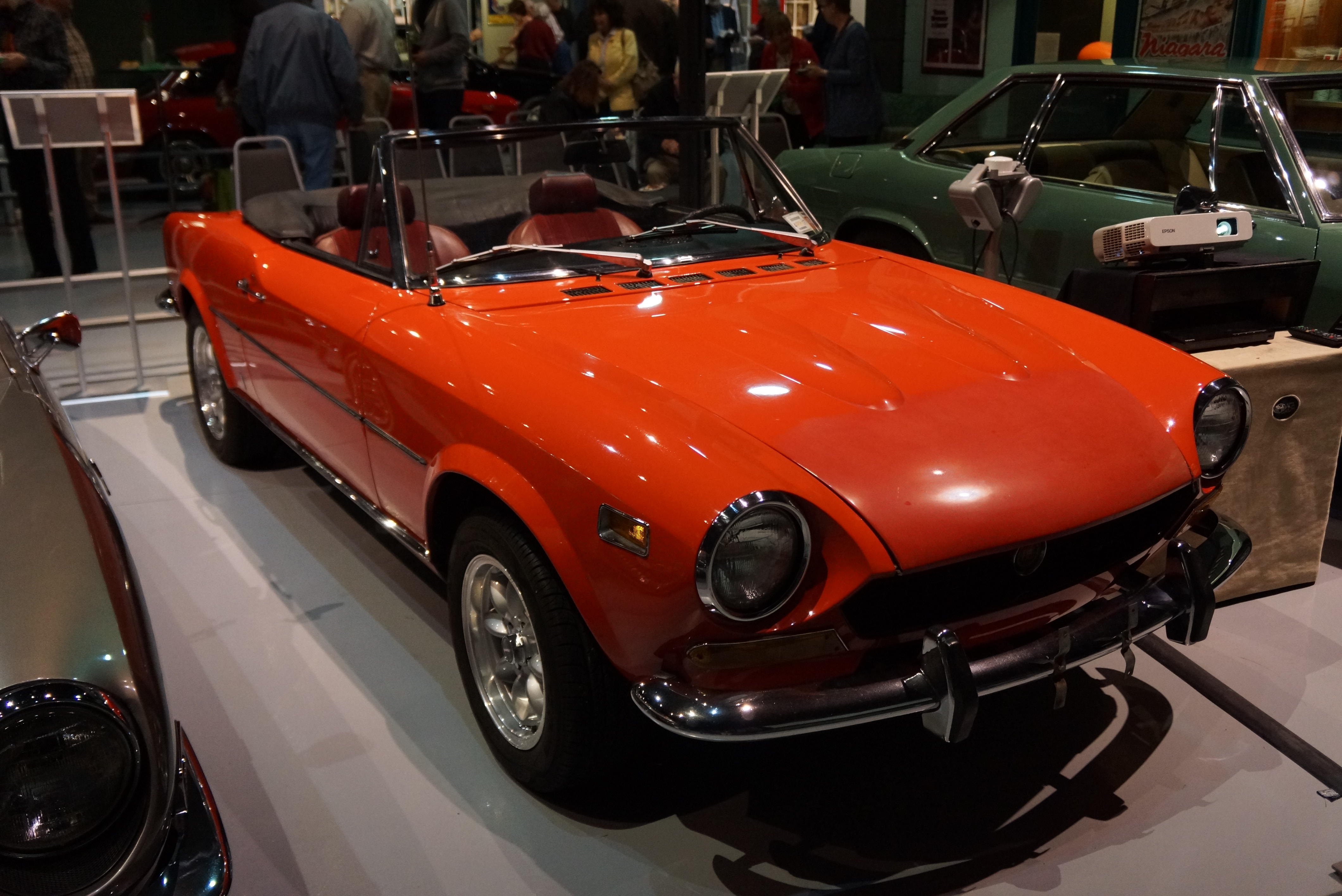
Ferrari 308GTB shares floor space with modified Fiat 124 Spider

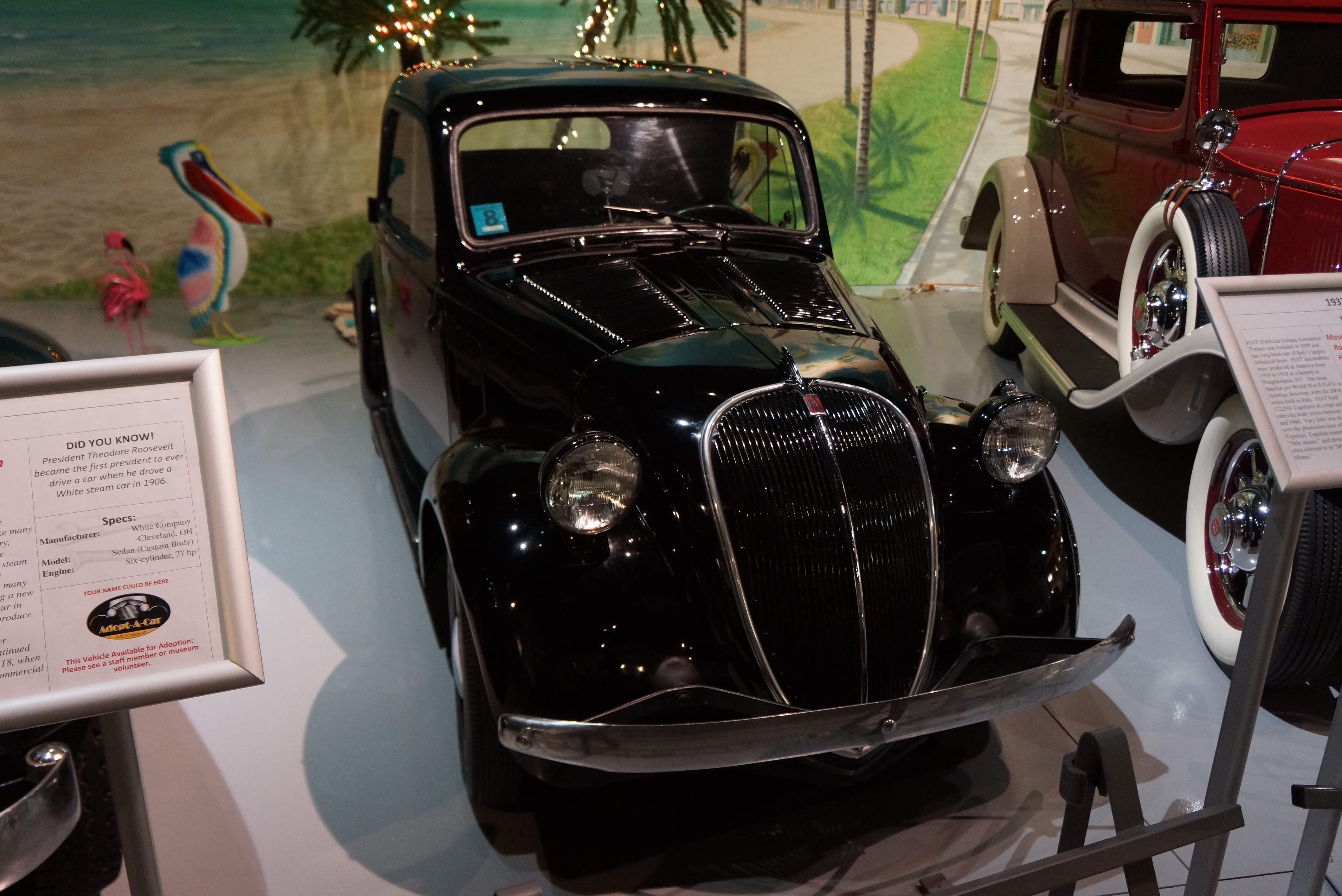
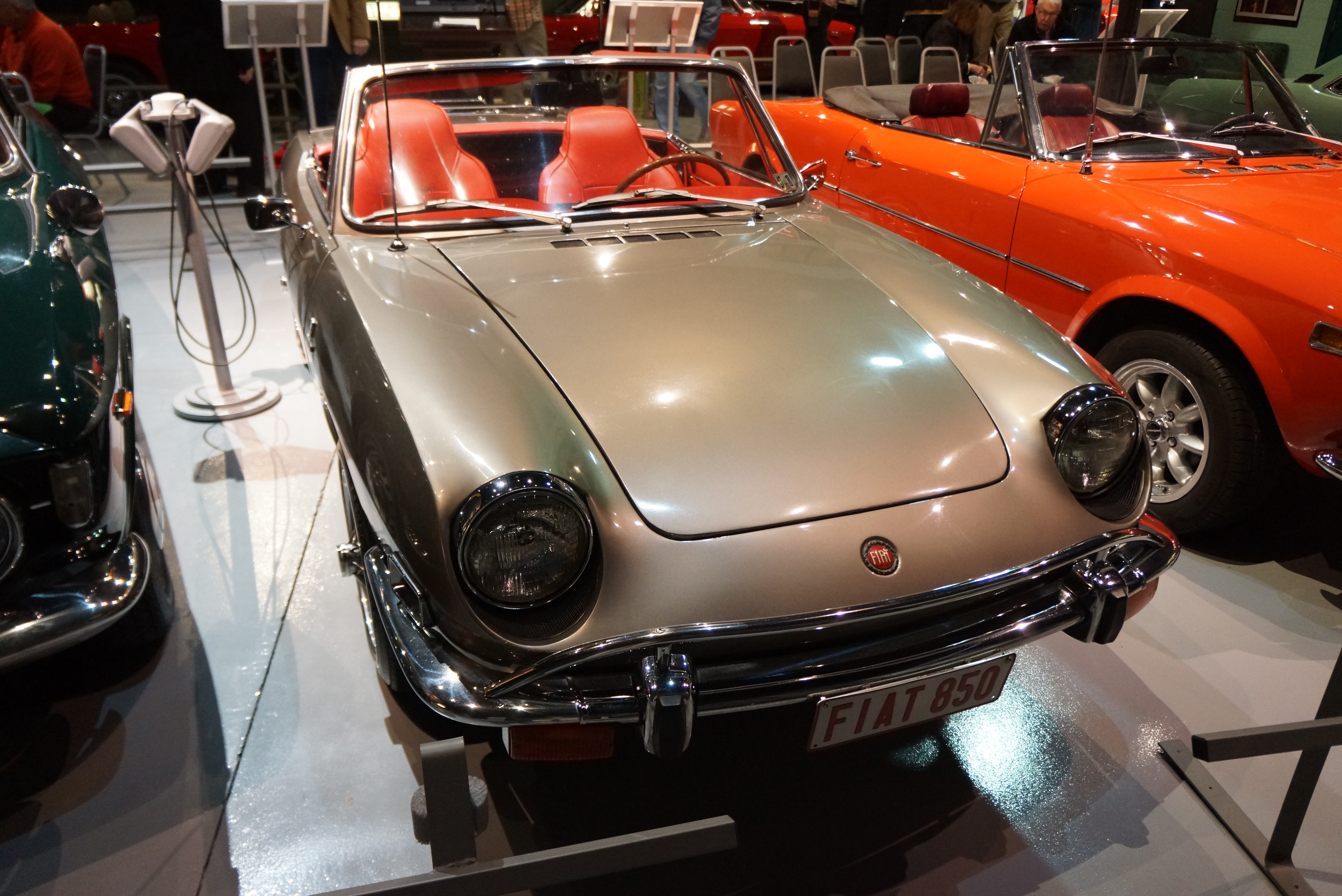
Among the Fiats, we saw three 124 Spiders, two X1/9s, and an 850 Spider. The X1/9s were a study in contrasts, as the bright green one was a first year example wearing the original bumper-less design, while the white one from 1987 wore no Fiat badges at all, as it was manufactured and sold by Bertone, and badged as such, since Fiat left the U.S. market after 1982. The only Italian prewar car on the floor was a delightful 1937 Fiat Topolino (Little Mouse).

Adorable 1937 Fiat Topolino (owned by AACA Museum)


1974 Fiat X1/9 - note lack of battering ram bumpers
1974 Fiat X1/9 – note lack of battering ram bumpers


1987 Bertone X1/9, one of the last of the breed


Nose of '87 X1/9 wears this in place of Fiat badge
Nose of ’87 X1/9 wears this in place of Fiat badge


Fiat 850 Spider
Fiat 850 Spider

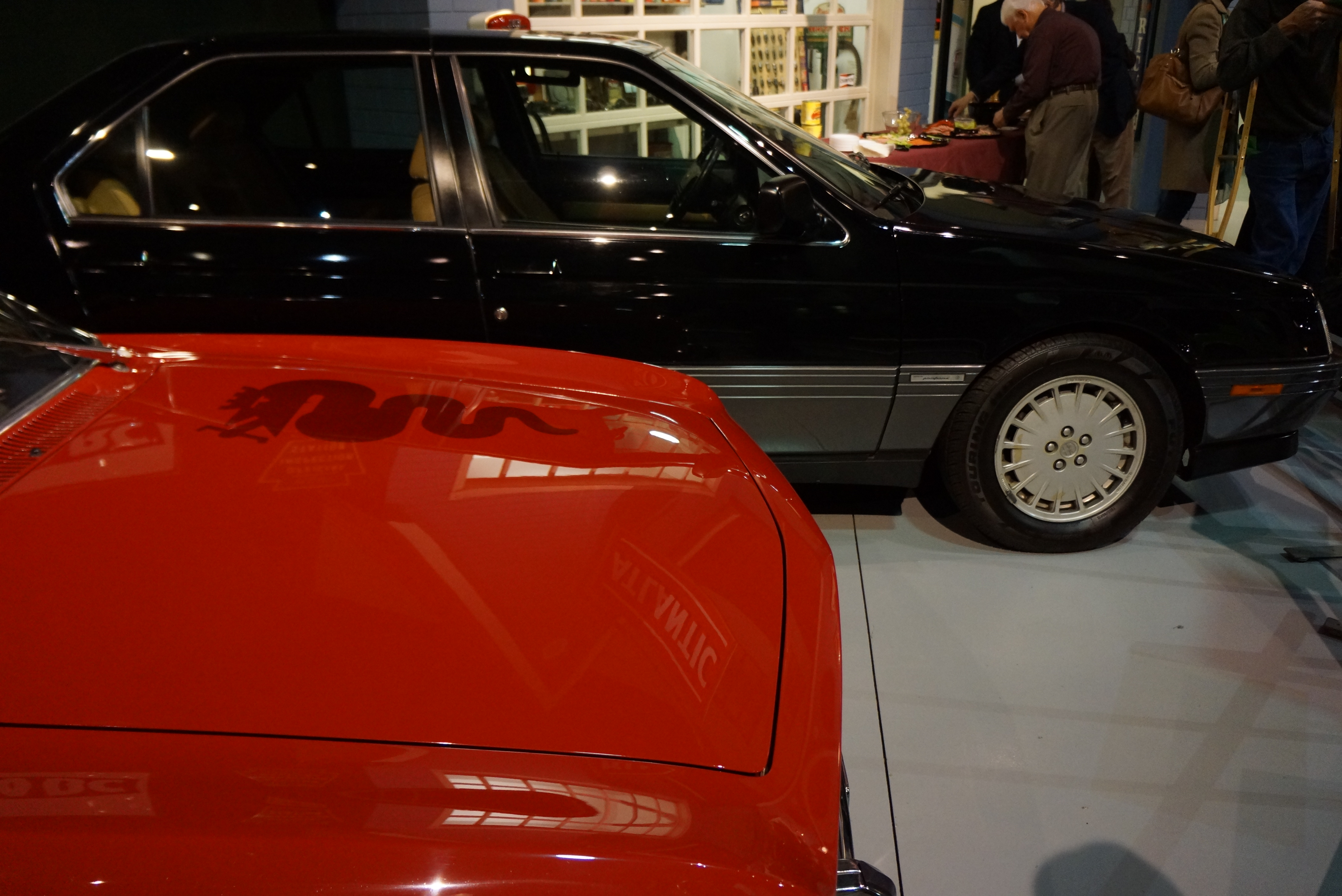
The four Alfa Romeos included two Giulia coupes, one early step-nose and one 2nd generation design, a rare Montreal Coupe (with a factory V8), and the last Alfa sold in the U.S. market (until Sergio’s recent resurgence), the large front-wheel-drive 164 sedan.


Owners Ed and Shayna Geller with their stunning Alfa Montreal


Alfa GTV in red, Alfa 164 in black
Alfa GTV in red, Alfa 164 in black. Snake eats man; it’s part of the Alfa legend.


Yes, there were speeches too

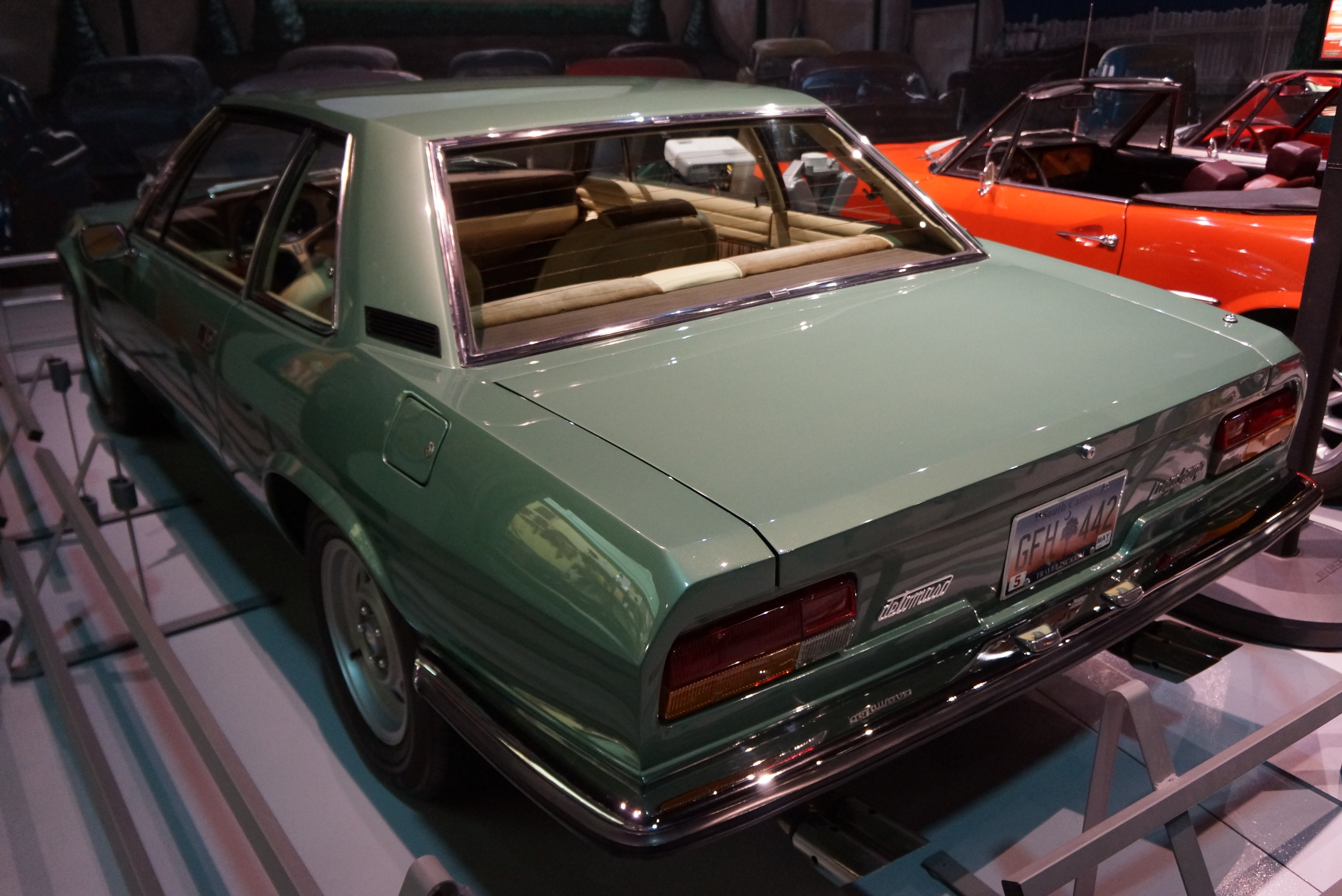
The show included vehicles that required an explanation how they passed the entrance exam, as two of them had big American V8 engines, and one had a British 4-cylinder lump. The DeTomaso Longchamp and Italia Omega are vehicles belonging to a class long known as ‘hybrids’ (decades before that term was used to describe a gas/electric vehicle).

Most car aficionados have heard of the DeTomaso Pantera, sold here by Lincoln-Mercury dealers in the early 1970s. The Longchamp is the squared-off, four-seat sister to the Pantera. The one on display featured a Ford 351 Cleveland engine mated to a 3-speed automatic. I’ve seen many a photo of Longchamps, and this was the first one I’ve ever seen in the metal.

The car labeled as a 1967 Italia Omega is more familiarly known to me as an Intermeccanica Italia. Based on my reading of the car’s placard, the history of this car company is convoluted at best. (Indeed, none of the several import-based compilation books in my library make any mention at all of this company.) The vehicle in the museum was an attractive convertible, using a front-mounted Ford 302 V8 paired with a 4-speed manual transmission.

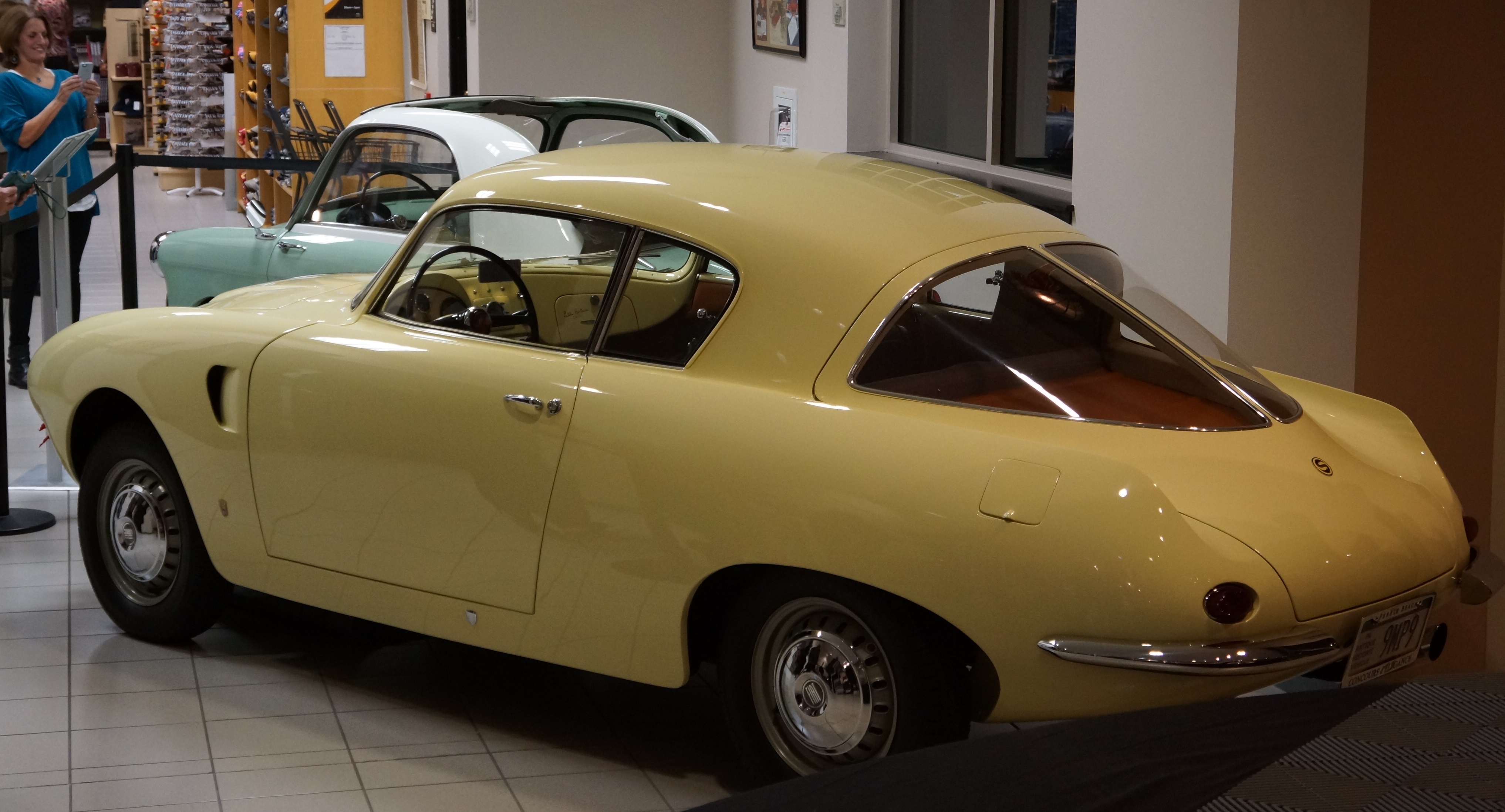
The 1961 Triumph Italia on display is one of 329 built. While the design is certainly in the Italian mold, the sheetmetal hides what is essentially the drivetrain and chassis of a stock Triumph TR-3.  One of the outstanding features of the Italia is that it is the handiwork of a young Giovanni Michelotti, who would later pen the restyle of the TR-4 into the TR-6.

1961 Triumph Italia, with TR-3 mechanicals

Scan through the photos below for shots of other vehicles which were on display. (And as always, click on any of the photos to enlarge them.)

Among the motorcycles, which are not my primary interest, I could not help but be drawn to the 1958 Iso Moto, built by the same company that originally designed the Iso Isetta. Like the Longchamp, it was a first for me to actually see one of these in person.

The “Amore della Strada” exhibit runs through April 22, 2017. There’s plenty to see at the Museum besides the Italian stuff. If you’ve never made the trip, this is a good excuse to do so. If you have, the Italian cars are a nice addition to what you may have seen before.


1960 Fiat Autobianchi


1954 S.I.A.T.A, with Fiat 8V engine


1957 Vespa 400, designed in Italy but built in France


1971 O.T.A.S. 820 Grand Prix, built on Fiat 850 chassis


This 1954 Fiat 1100 wears custom sheetmetal reminiscent of the Alfa BAT cars
This 1954 Fiat 1100 wears custom bodywork reminiscent of the Alfa B.A.T. cars


Unlike the cars, the bikes fit into one room


Yes, it's an ISO; same parent company as the Isetta and the Griffo
Yes, it’s an ISO; same parent company as the Isetta and the Griffo


All photographs copyright © 2016 Richard A. Reina. Photos may not be copied or reproduced without express written permission.
The Alfa is Loaned to the AACA Museum

The AACA (Antique Automobile Club of America) Museum in Hershey PA frequently presents special exhibits on a rotating basis, as a supplement to the vehicles on permanent display. One such exhibit, entitled “Amore Della Strada: Italian Cars” (translated as “Love of the Road”), is running from November 19, 2016, through April 22, 2017.

Earlier this year, the AACA invited its members to submit applications for their Italian cars to be considered. I completed said application, and was thrilled and humbled to learn that the ’67 Alfa Romeo which normally resides in my garage was accepted to be part of the show. (Of the approximately 20 Italian cars to be displayed, all but one are privately owned.)

On the crisp clear Friday morning of November 11, 2016, I started up the Alfa for its two-hour drive to Hershey (this car is no trailer queen). After putting 260 miles on it on last Sunday, this 120-mile ride would be simple. Aside from dicing it up with the tractor-trailers on Route 78 through Allentown PA, the trip was uneventful.

The Alfa arrives at the AACA Museum. The Hershey Kissmobile was also visiting.

Arriving at the museum a little past 10 a.m., I drove around to the load-in entrance at the rear. Glenn from the museum staff met me there, and we went through some of the small peculiarities that make Italian cars so lovable. Glenn seemed especially astounded to learn that the ONLY way to open the trunk is by opening the passenger door and pulling the cable release in the door jamb, something he needed to know in order to access the trunk-mounted battery.

In the basement. You can just make out a Fiat 124 in front of my car.
In the basement. You can see a Fiat 124 in front of my car.

My buddy Larry, who is a saint-among-saints as a friend, met me out there in his Silverado. We toured the museum (it was his first time visiting), and got a sneak preview of the upcoming show, as most of the Italian cars were already on display. After a local lunch at Red Robin, we were back on the road by 3-ish.

Sneak preview: DeTomaso Longchamp, Fiats 124, 850, and X1/9

My wife and I will be headed out there again this coming Friday for the exhibit’s opening reception – blog story to follow.  And now that I have an empty garage slot for the next five months, we’ll see if I can slip something else in there. (Honey, I know you’re reading this….)

Hamburger with arugula, spicy black beans; does it get any better?


All photographs copyright © 2016 Richard A. Reina. Photos may not be copied or reproduced without express written permission.

NJ Alfa Romeo Club Cruise, November 6, 2016

From the '60s through the '90s, the family resemblance is there
From the ’60s through the ’90s, the family resemblance is there

The New Jersey Chapter of the Alfa Romeo Owner’s Club held an informal Sunday cruise during the afternoon of November 6, 2016. Five club members, led by our chapter head Enrico Ciabattoni, gathered at our starting point at the PNC Bank Arts Center in Holmdel NJ. We pushed off around 2pm and cruised to various spots in Monmouth County, including Atlantic Highlands, Sandy Hook, and Colts Neck.

Alex and Carly's '66 Duetto
Alex and Carly’s ’66 Duetto


John's 164
John’s 164

The oldest car in today’s contingent was the 1966 Duetto driven by Alex and Carly. Richard’s 1967 GT 1300 Junior was just a year newer. The eighties were well-represented by two GTV6s, Enrico’s and Bill’s. The newest Alfa for today was John’s beautifully-kept 164. Alas, no new Giulia sedans showed up to surprise us. However, Enrico’s wife and daughter did a commendable job driving the sweep car in their Honda Odyssey. Thanks, ladies!

Richards' '67 GT 1300 Jr.
Richards’ ’67 GT 1300 Jr.

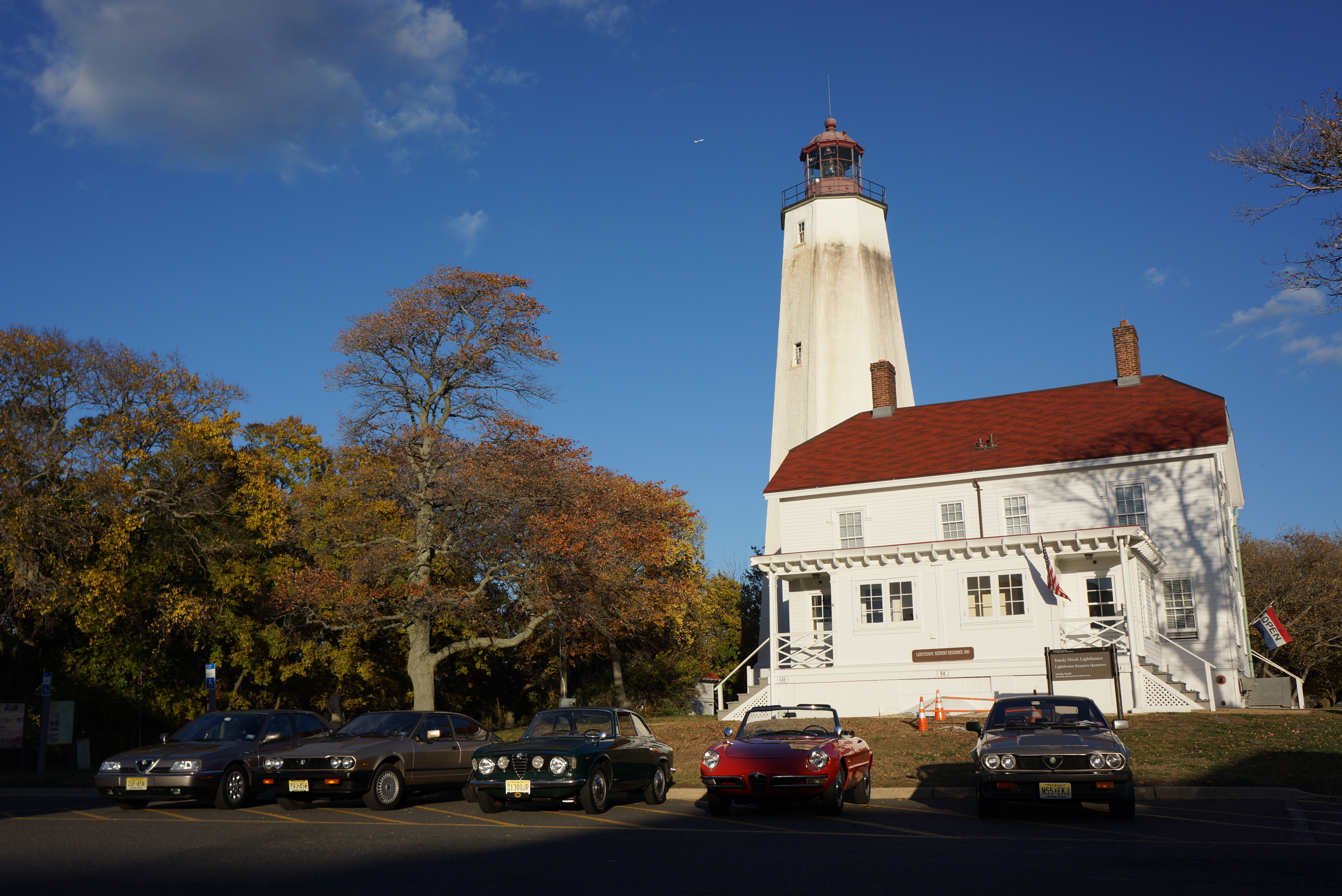
Plenty of time was allotted for photo ops (what with such gorgeous cars!), and a personal highlight was stopping for pictures at the Sandy Hook Lighthouse, the oldest operating lighthouse in the country. The cameras were not always aimed at cars; the vista from atop the Mount Mitchill Scenic Overlook in Atlantic Highlands provided glorious views of the New York skyline and lower bay.

The Alfas line up in front of the Sandy Hook Lighthouse


The tremendous view from the Mount Mitchill Overlook

Our day ended at Delicious Orchards in Colts Neck, which also gave us a chance to pick up some produce (Enrico was spotted heading for the Italian chestnuts). Since it was the first day back on Eastern Standard Time, the rapidly-diminishing daylight had this scribe heading for home before sunset.

The six-cylinder cars hang out together


And you thought Subaru Foresters were small cars....
And you thought Subaru Foresters were small cars….

For those who doubt the reliability of Italian machinery: combined with this morning’s breakfast run, Richard’s Alfa was driven a total of 260 miles today, much of it buzzing along the highways of New Jersey at 70 mph, fending off soccer moms in the SUVs. Not bad for a 49-year-old car.

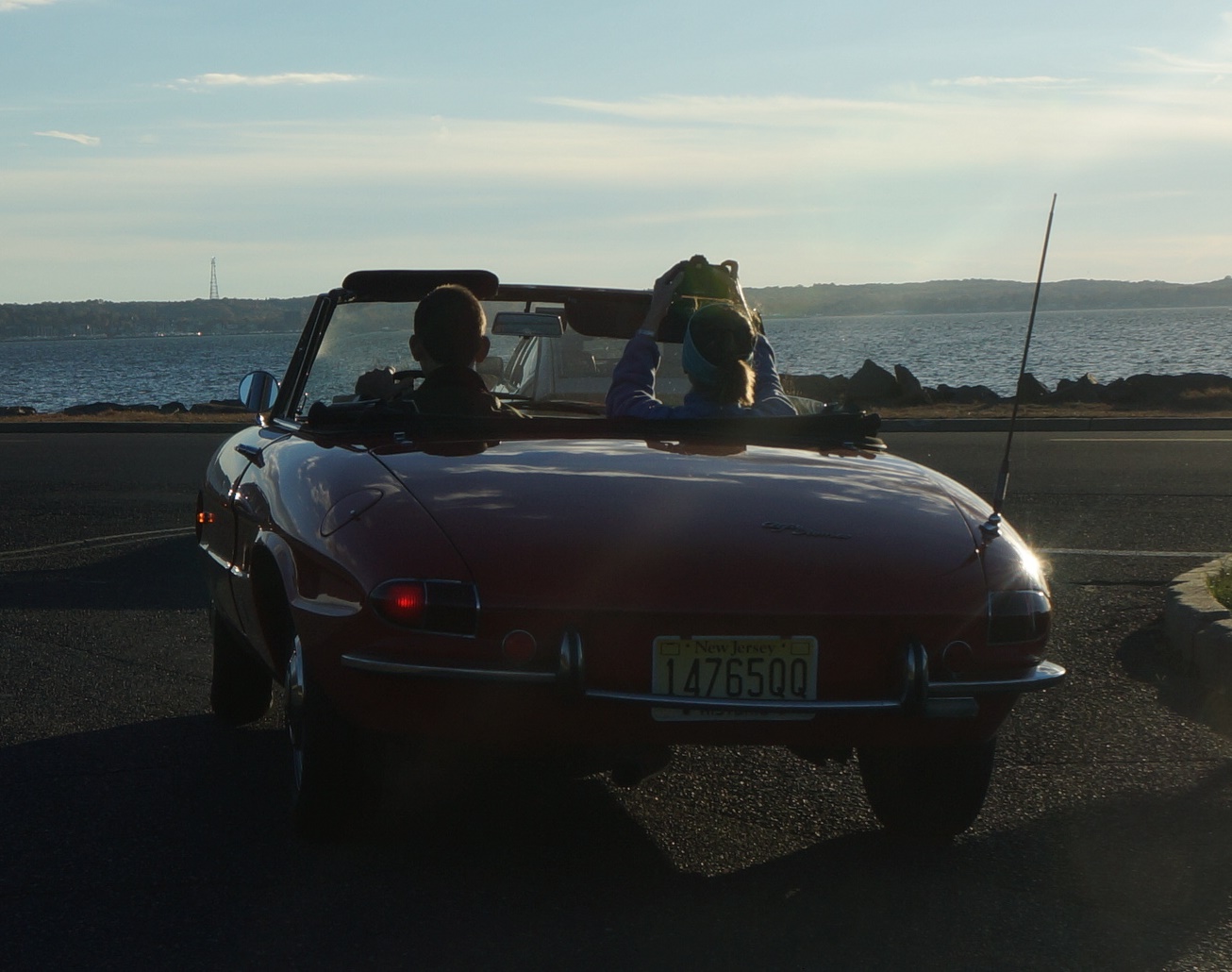
Carly snaps, and has a great line of sight with the top down

It was wonderful to be out with fellow Alfisti and to delight in the sounds of 4- and 6-cylinder engines in full song. We hope to get the group back on the road in early 2017.

Until next year....
Until next year….


All photographs copyright © 2016 Richard A. Reina. Photos may not be copied or reproduced without express written permission.
Sunday Morning Breakfast Run, November 6, 2016

The final Sunday morning breakfast run of the season was held on November 6, 2016. New Jersey weather in early November can be unpredictable; today, we were blessed with sunshine, high pressure, slight winds, and temps in the mid-50s. In other words, it was perfect weather to take our classics out for one more spin around the neighborhood.

Julio's Coronet in the foreground, with most (but not all) the remainder in front
Julio’s Coronet in the foreground, with most (but not all) the remainder in front

Today’s joke was that we’ve become victims of our own success; we had a record 20 cars (even if not all of them hung with us the entire morning), and 20 hungry mouths to feed at breakfast. Kicking off from our usual starting spot at the Sheraton Crossroads Hotel in Mahwah, a number of first-timers joined the usual crowd. We ventured north, eventually connecting with Route 513, which we followed south all the way to Route 80 and then Route 46 in NJ, ending at Paul’s Family Diner in Mountain Lakes.

The BS starts before the caffeine flows

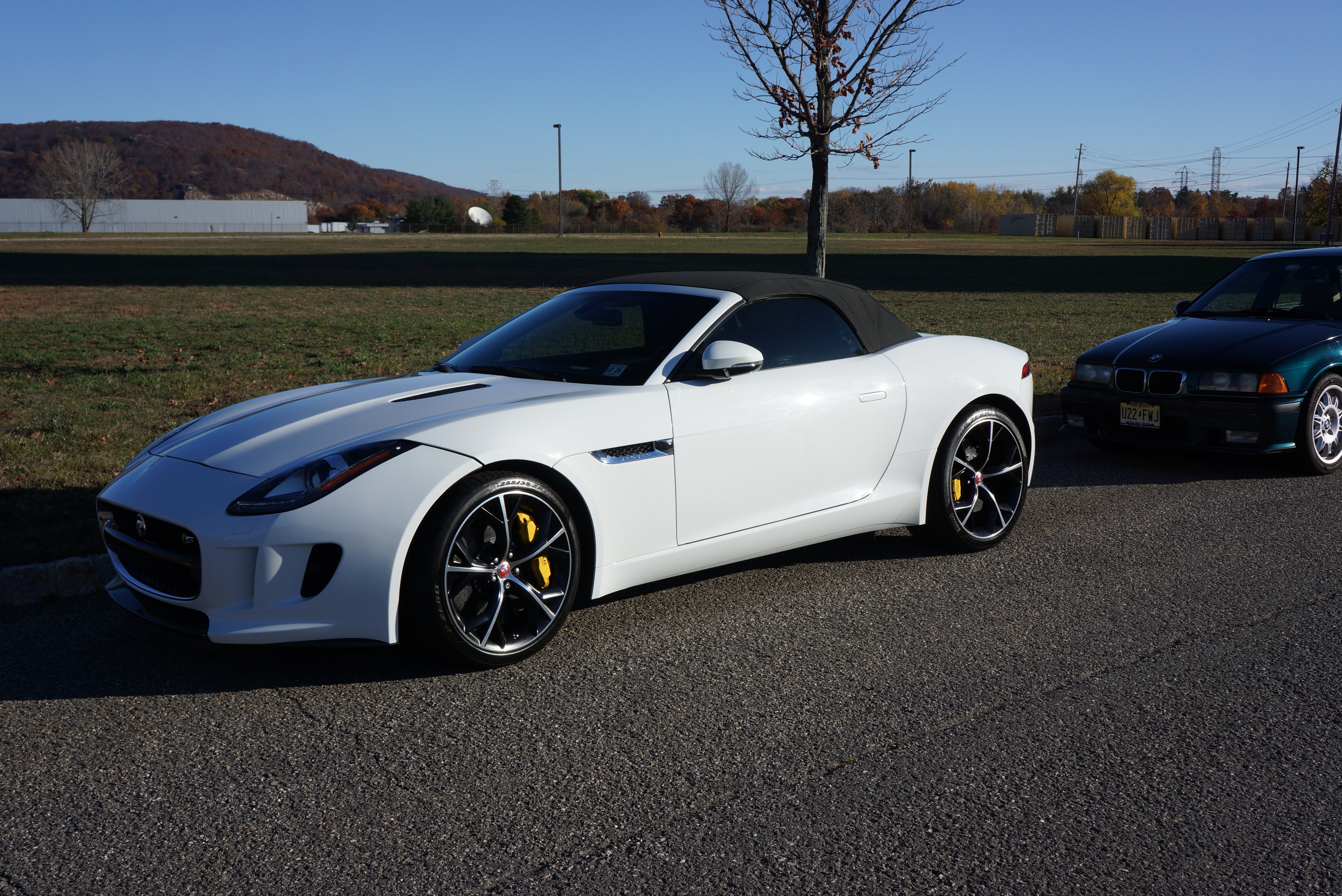
Several participants commented on the wide-ranging variety of machinery in today’s caravan. The British made a strong showing with Rich S’s MGB-GT V8, Rich L’s Jaguar F-Type, and Greg’s ’66 E-Type Coupe (RHD, no less).

American muscle was well represented by Julio’s Coronet, Ralph’s Skylark, Larry’s Nova, Paul’s Camaro, and Nick’s Mustang.

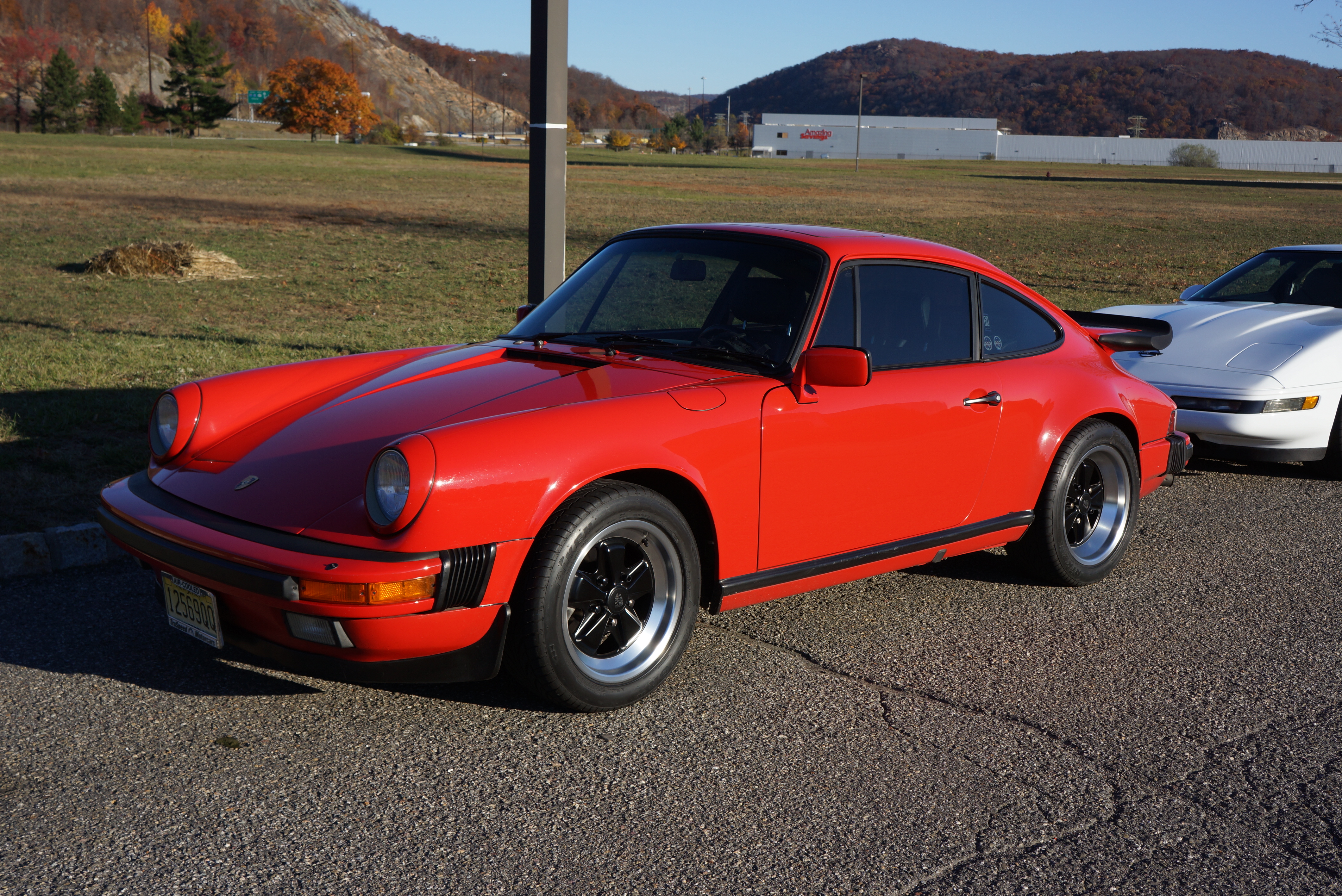
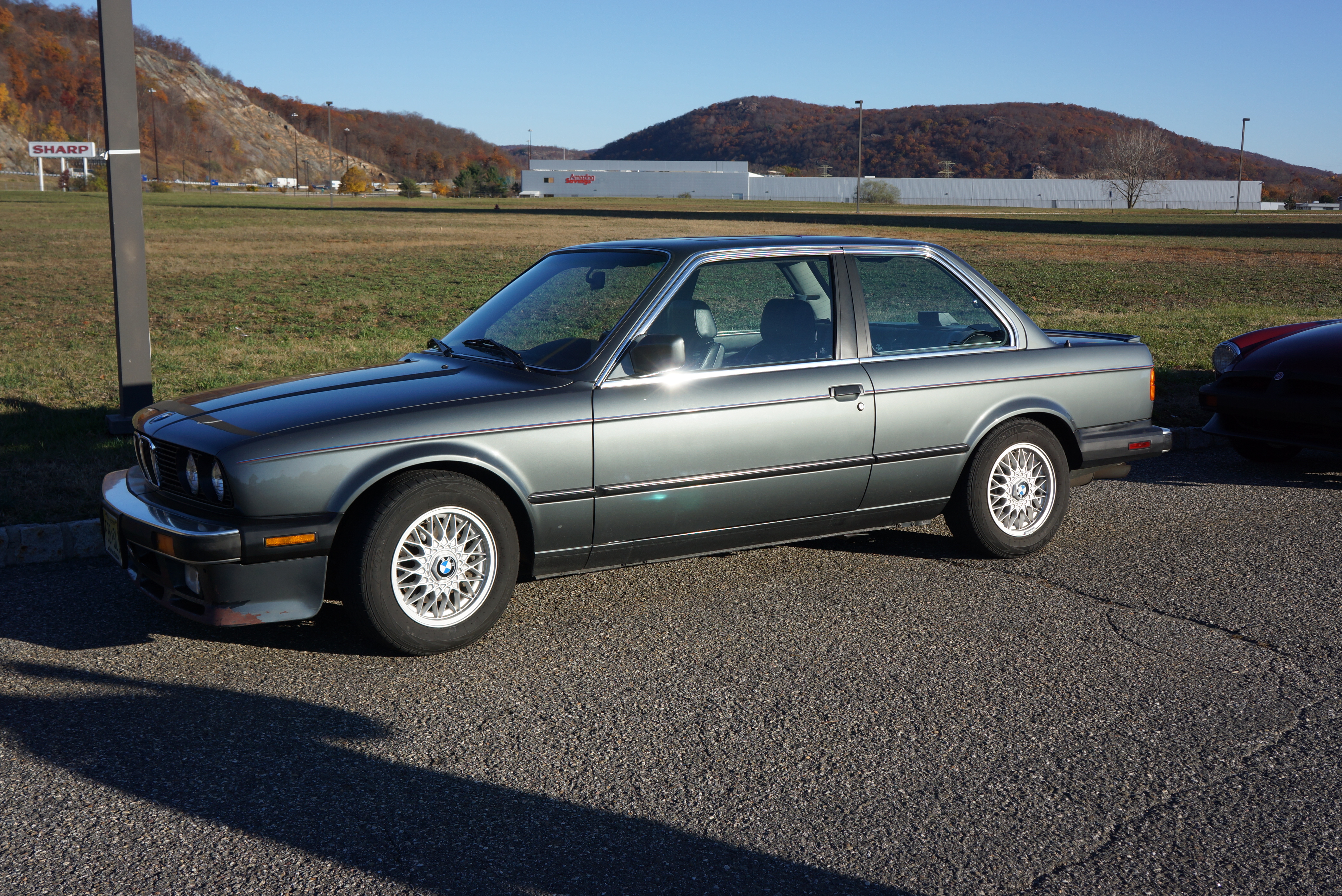
The Germans, as usual, had an army of 911s, including Peter’s, Dave’s, and Ted’s. BMWs were represented by Sal in his E30, and Julio’s’ son in a 3-series sedan.

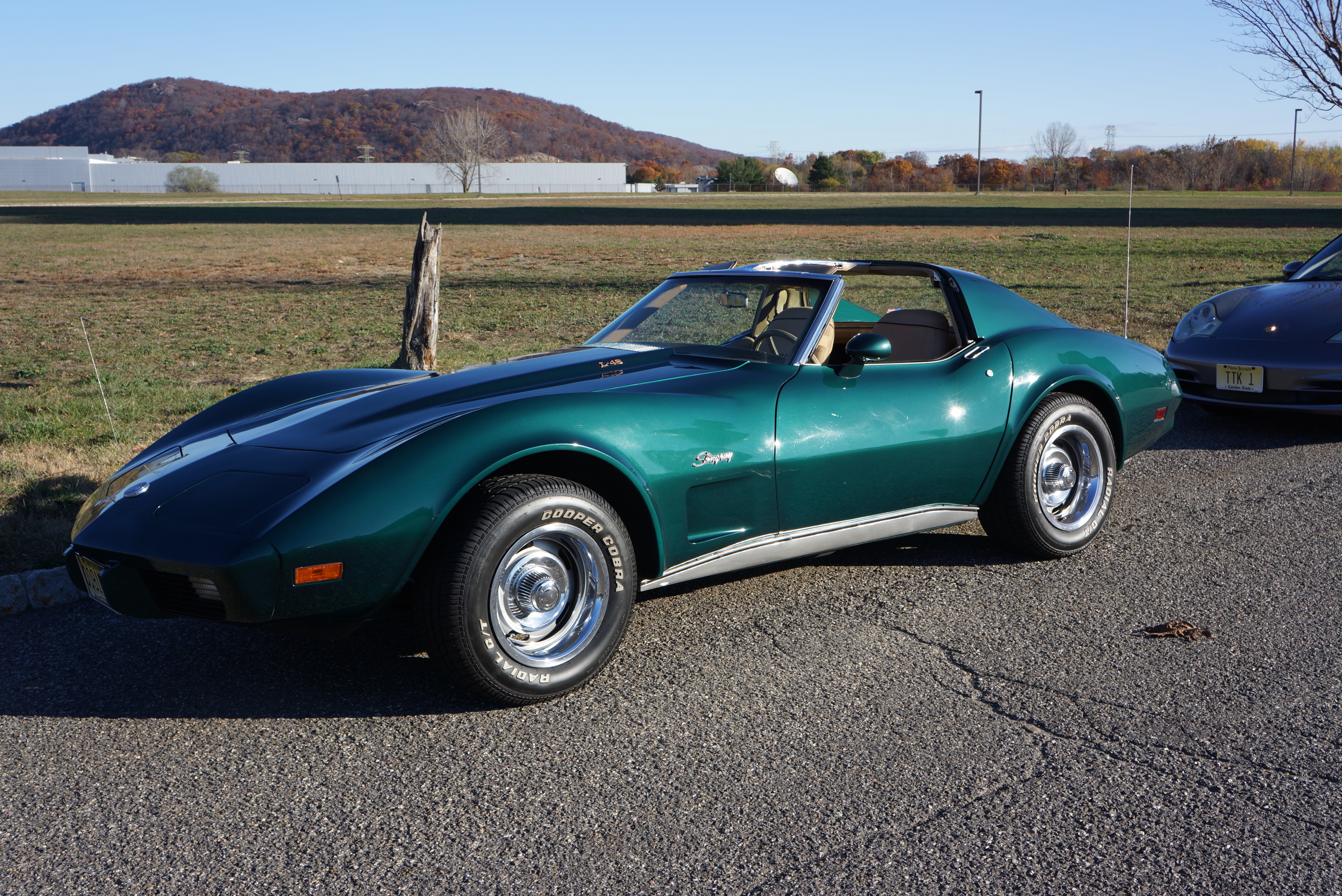
The class winner was the Corvette contingent. We had Burton’s C1, Bill’s C2 (with a 427 3×2), two C3’s (neither joined us at breakfast) and Ron’s C4.

Jim brought his Datsun Z but didn’t drive with us, and the lone Italian car (again) was your author’s very trusty Alfa.


American, German, and British machinery sweep through the curves


The cruise down Route 513 was scenic, if a bit hampered by locals driving modern cars. We arrived at the diner at 10 sharp, and although it was under construction, both the food and the service were exemplary. After the usual post-meal parking lot BS session, we were all on our way back by noon. And so ends a very successful 2016 driving season. The sooner that Old Man Winter gets here, does his thing, and gets out, the sooner we can dust ‘em off and start driving in 2017. We can’t wait.


BRITISH:

Greg's '66 E-Type FHC
Greg’s ’66 E-Type FHC


Rich S's MGB-GT V8
Rich S’s MGB-GT V8


Rich L's Jaguar F-Type
Rich L’s Jaguar F-Type


AMERICAN MUSCLE (NON-CORVETTE):

Ralph's Buick Skylark
Ralph’s Buick Skylark


Nick's Mustang
Nick’s Mustang


Paul's '69 Camaro
Paul’s ’69 Camaro


Larry's 1972 Nova
Larry’s 1972 Nova


CORVETTES

Burton's unrestored C1
Burton’s unrestored C1


Bill's '67 C2, with a 427 with 3x2 barrels
Bill’s ’67 C2, with a 427 with 3×2 barrels


Bob's (?) C3
Bob’s (?) C3


John D's C3
John D’s C3


Ron's C4
Ron’s C4


PORSCHE 911S

Peter's 911
Peter’s 911


Dave's 911
Dave’s 911


Ted's 911
Ted’s 911


BMWs


Sal's E30
Sal’s E30


Julio's son's 3-series sedan
Julio’s son’s 3-series sedan


JAPANESE:


Jim's Datsun Z-car
Jim’s Datsun 280-Z

All photographs copyright © 2016 Richard A. Reina. Photos may not be copied or reproduced without express written permission.

A Tribute to the Late Brock Yates

Brock Yates passed away a few weeks ago. If by chance the name is not familiar, he had a long career as a writer and editor for Car & Driver magazine, and wrote over a dozen books on cars, auto racing, and the automotive industry. His most infamous “accomplishment”, however, may be as the chief instigator of the Cannonball Baker Sea-to-Shining-Sea Memorial Trophy Dash, a recurring stunt which led him to write the screenplays for the movies Smokey and the Bandit II and The Cannonball Run.
 

When I was a senior in high school, the March 1972 copy of Car & Driver magazine arrived home. In it was the story of the running of the first Cannonball race, which was held in November 1971. As an impressionable young lad who was car-crazy and had traveled no farther from my Staten Island home than the Catskills of upstate NY, the idea of hopping into a car, any car, and racing from New York to California absolutely infatuated me. I brought the magazine to school, showed it to the few buddies whom I thought might be interested, and read and re-read the story on my bus-subway-and-ferry commute. To this day, it is perhaps my favorite article ever published in a magazine.


Yates, with co-driver Dan Gurney (talk about a ringer), won in a Ferrari Daytona, making the trip in under 36 hours at an average speed of 80 miles per hour. (Favorite quote: “Masterful driving by Gurney negotiates the extremely dangerous stretches of Route 89 through the Prescott National Forest and the Cliffside highway at Yarnell with relative ease. Yates proves ‘Ban don’t wear off’.”) The other entrants were almost as interesting, and included a Cadillac, an AMX, and several full-size vans. Reading the story again reminds one of both Yates’ determination to change the world, and his own naiveté in thinking that this was the way to do it. (In his C&D columns, he frequently argued that driving was a quicker way to cover long distances than flying.)


Five years later, I completed my first coast-to-coast drive, although it was no race, and it was in a Volvo. My fascination with Ferraris reaches back to this story, and a few short years ago, the very Daytona piloted by Yates and Gurney was on display at Carlisle. It was no small thrill to see it in the metal.


race-p1 race-p2 race-p3 race-p4 race-p5 race-p6 race-p7 race-p8


The entire article is scanned from my original copy, and is attached as 8 PDFs. Take a few moments to read it, then lift your glass to the memory of Brock Yates.

The Alfa Gets a Tune-Up

A tune-up? Who performs “tune-ups” anymore? Modern cars have spoiled us with their extended service intervals. My 2014 VW Jetta calls for an oil and filter change every 10,000 miles, and spark plug and air filter replacement every 60,000 miles. That’s about it. There are other new vehicles for which the manufacturer recommends spark plugs every 100,000 miles. You might forget they were in there if you wait that long.

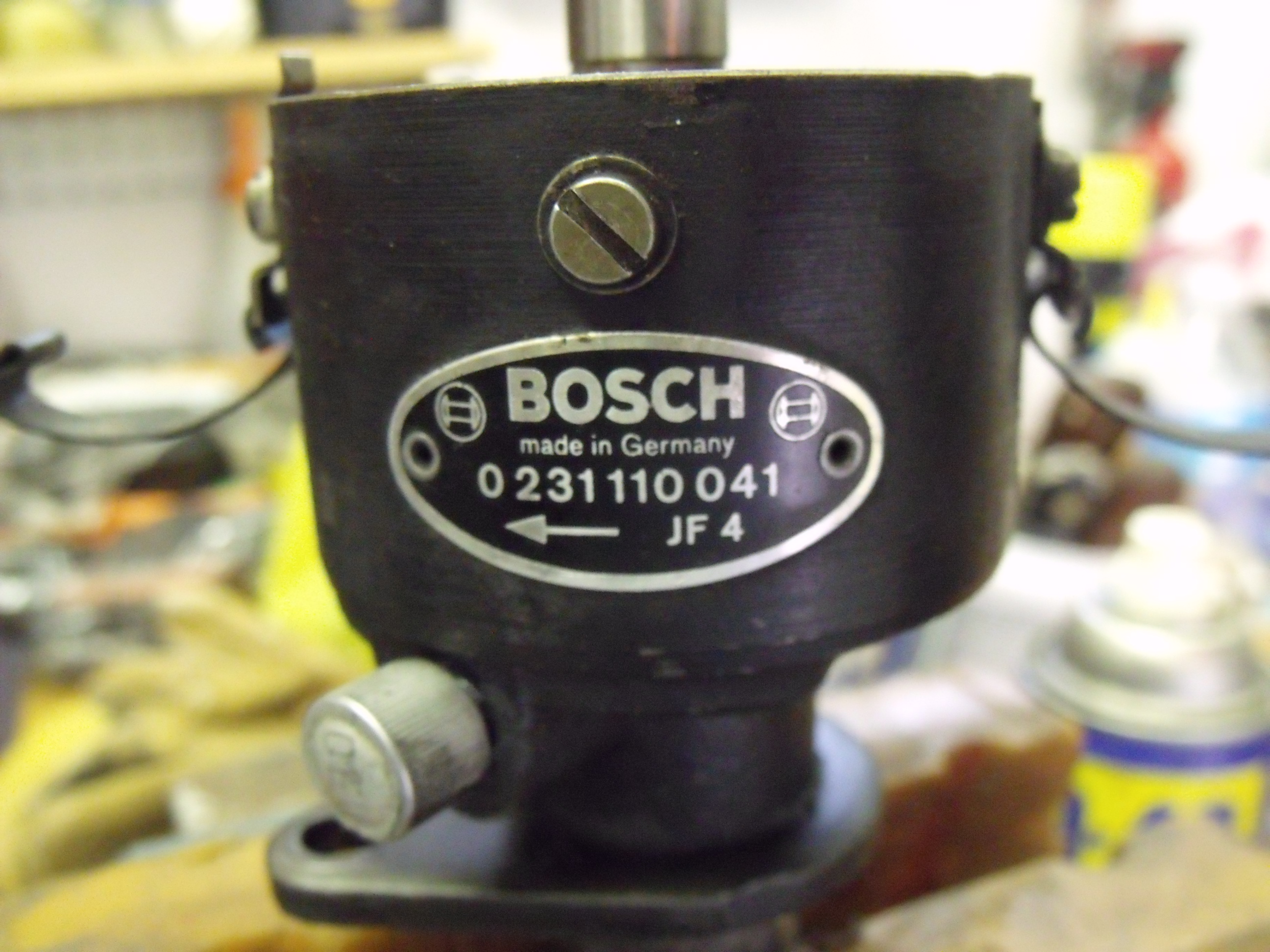
It’s different, of course, with an older car. The ’67 Alfa Romeo GT 1300 Junior taking residence in my garage still uses an ignition distributor with a cap, rotor, points, and condenser (ask any person under 30, even an auto buff, what are points and condenser, but be prepared to ‘splain).

GT 1300 Junior used Bosch electrics. Other Alfas used Marelli.

When I obtained the Alfa in March of 2013, with 54k on the clock, I did what I normally do with any used car that’s new to me – I attended to all the normal maintenance items as a proactive measure, no matter how meticulous the previous owner may have been. In my case, the Alfa’s 1.3L engine got new plugs, wires, cap, rotor, points, and condenser. There was peace of mind knowing the tune was good for a while.

Remove air hose (2 clamps) and all 4 plugs are readily accessible

Right now, the car barely has 62,000 miles on it, so it’s only been eight thousand miles, but it’s been three and a half years. Earlier this year, I ordered a full complement of tune-up items, just to have them on hand. My plan was to revisit the tune at the 10,000 interval, or at 64,000 miles.

For some reason, last weekend, I decided to pull the plugs. First of all, I can’t think of an engine on which it’s easier to change the four spark plugs. Yes, I need to remove the air filter hose to access the #4 plug, but that takes 30 seconds. Once that’s out of the way, the plugs are RIGHT THERE. So out they came.

The 4 old Bosch plugs

Plugs numbers one, two, and three looked almost identical. That’s not to say that they looked good. All three of them had significant carbon deposits on them. They were not wet from gas, nor oily, nor sooty with unburned fuel, which was some good news.

The shock was the fourth and final plug, which had so much material deposited on it that I seriously questioned how this thing was firing. (The engine mostly ran fine before I pulled the plugs, with the very infrequent high-speed miss. I was still attributing the miss to a fuel issue.)

I've been working on cars for 40 years. I can't believe this plug fired.
The #4 plug. I’ve been working on cars for 40 years. I can’t believe this plug fired.

Before proceeding further, I went into the house to pull my invoices on the car. When I bought the plugs, early in 2013, I had not yet settled on an Alfa supplier which I felt met my needs. The plugs were purchased from a U.S. supplier with whom I no longer conduct business. They were Bosch plugs, and from everything I’ve since researched, no one today recommends these plugs for Alfa engines. My principal supplier, Classic Alfa in the U.K. exclusively recommends NGK plugs, and that’s what went in as replacements.

Photo documents rotor direction, for correct orientation when reinstallling
Photo documents rotor direction, for correct orientation when reinstallling distributor

While I was under the hood, I removed the distributor (one 10mm hold-down bolt), and replaced the points and condenser. I lubed the distributor in three places, put on the new cap and rotor, and put it all back together. She fired right up, of course! – unlike three years ago, when I accidentally grounded the points….

Service book recommends distributor removal for points replacement
Service book recommends distributor removal for points and condenser replacement

Taking the car for a test drive, I was not expecting any significant power improvement. I mean, we’re starting with 100 hp, so, who’s going to feel a 5% increase? What was noticeable was the difference in throttle response. Touching the accelerator pedal gave an immediate jump in RPM. The car was such a joy to drive that I stayed out for about 30 minutes, taking it through the gears, and bringing that rev-happy Italian engine up to 6 grand on the tach. Oh, and no high-speed miss.

So, lesson learned. European sports cars which get driven infrequently need to have their state of tune checked more frequently. It’s easy enough to do, so there’s no excuse. This ain’t no 2014 VW. Thankfully.


All photographs copyright © 2016 Richard A. Reina. Photos may not be copied or reproduced without express written permission.