Heater Core Replacement in the ’93 Mazda Miata: Part 2

Last we left off, your intrepid garage hack was somewhere in the process of replacing the engine compartment coolant hoses, as part of a heater core replacement on his 1993 Mazda Miata. In this installment, we will provide an update on the progress of said hoses.

You may be saying to yourself, “the blog post is entitled ‘heater core replacement’, but there are nary few words so far about the actual core”. This would be an accurate observation, as in fact, the heater core has been removed from the vehicle, but I am not quite ready to begin the installation of the new part. Instead, I’m documenting the work that’s been done most recently (the hoses), and will soon be writing more about the core. At least I certainly hope I will be, as it’s almost June and I haven’t driven this car since last fall.
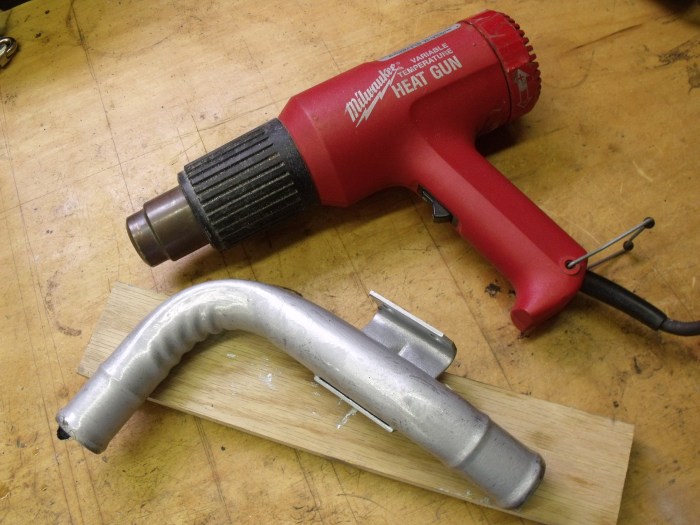
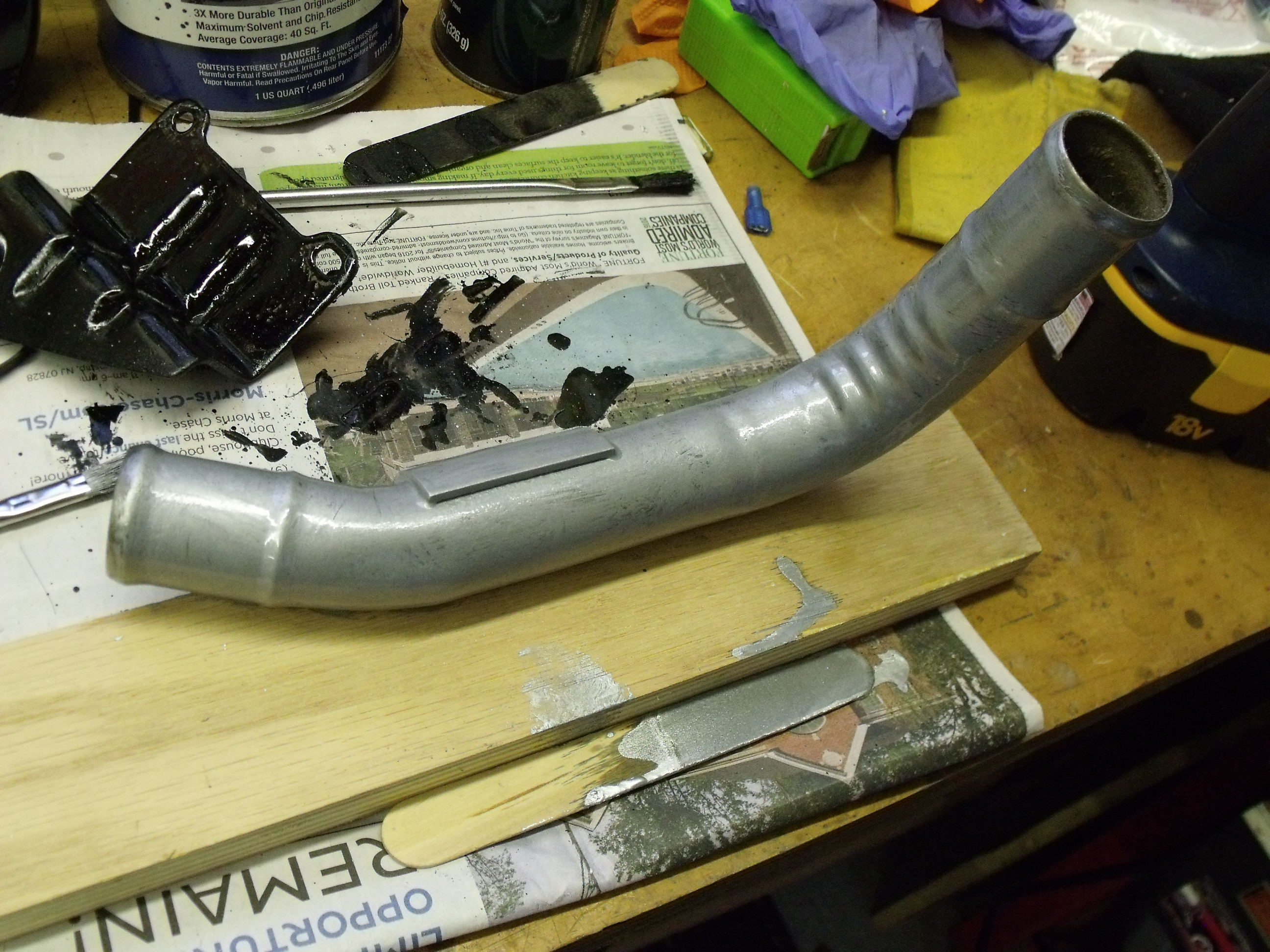
Intermediate pipe, painted with high-temp paint, was cured with heat gun

Back to the hoses. In Part 1, I gave mention to a “heater hose kit” from Moss Motors. The kit comprises of 7 hoses: 3 larger-diameter pieces, and 4 smaller-diameter ones. The larger hoses are your typical radiator-to-engine coolant hoses, excepting the fact that Mazda has a 3-part lower setup, with a rubber hose running to a metal intermediate pipe, followed by another rubber hose. But it was the 4 small ones which threw me the curve ball, as I had no idea that the car had these additional coolant hoses. As Moss did not provide a diagram, I also had no idea where in the engine compartment they were.

The two hoses, running parallel between intake and valve cover, are coolant hoses

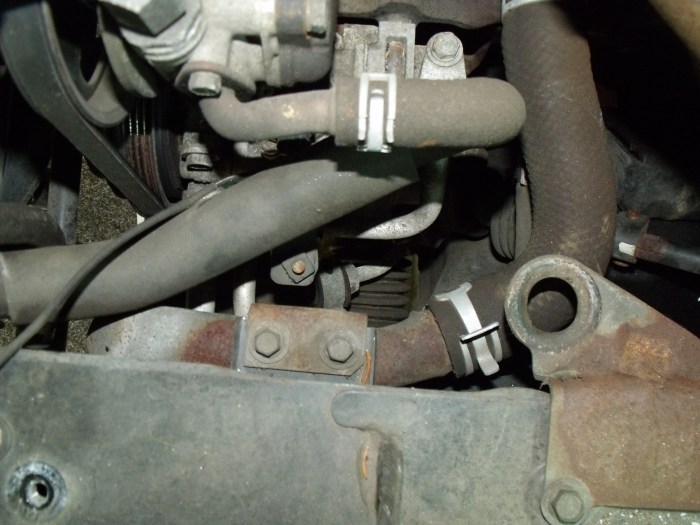
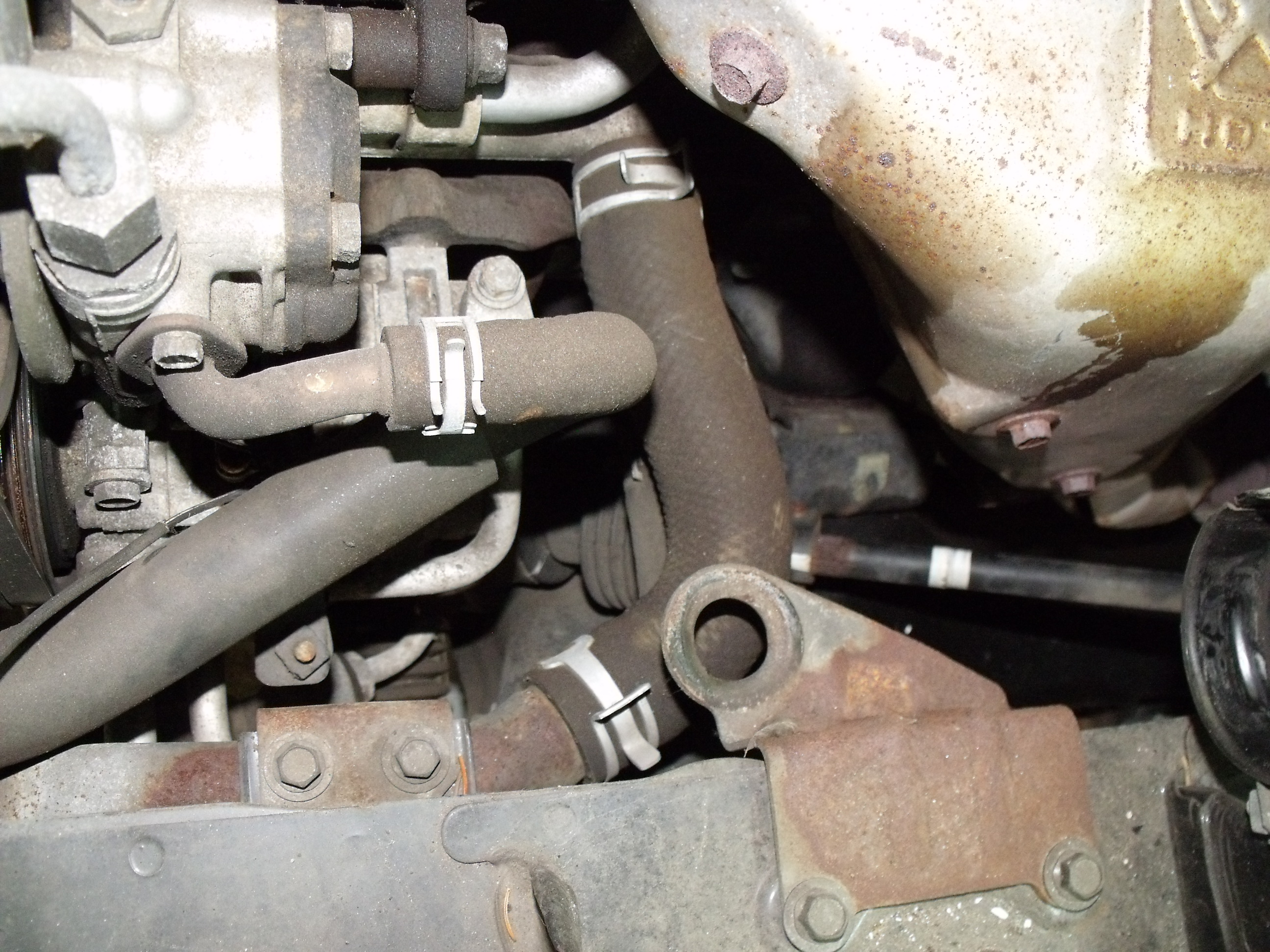
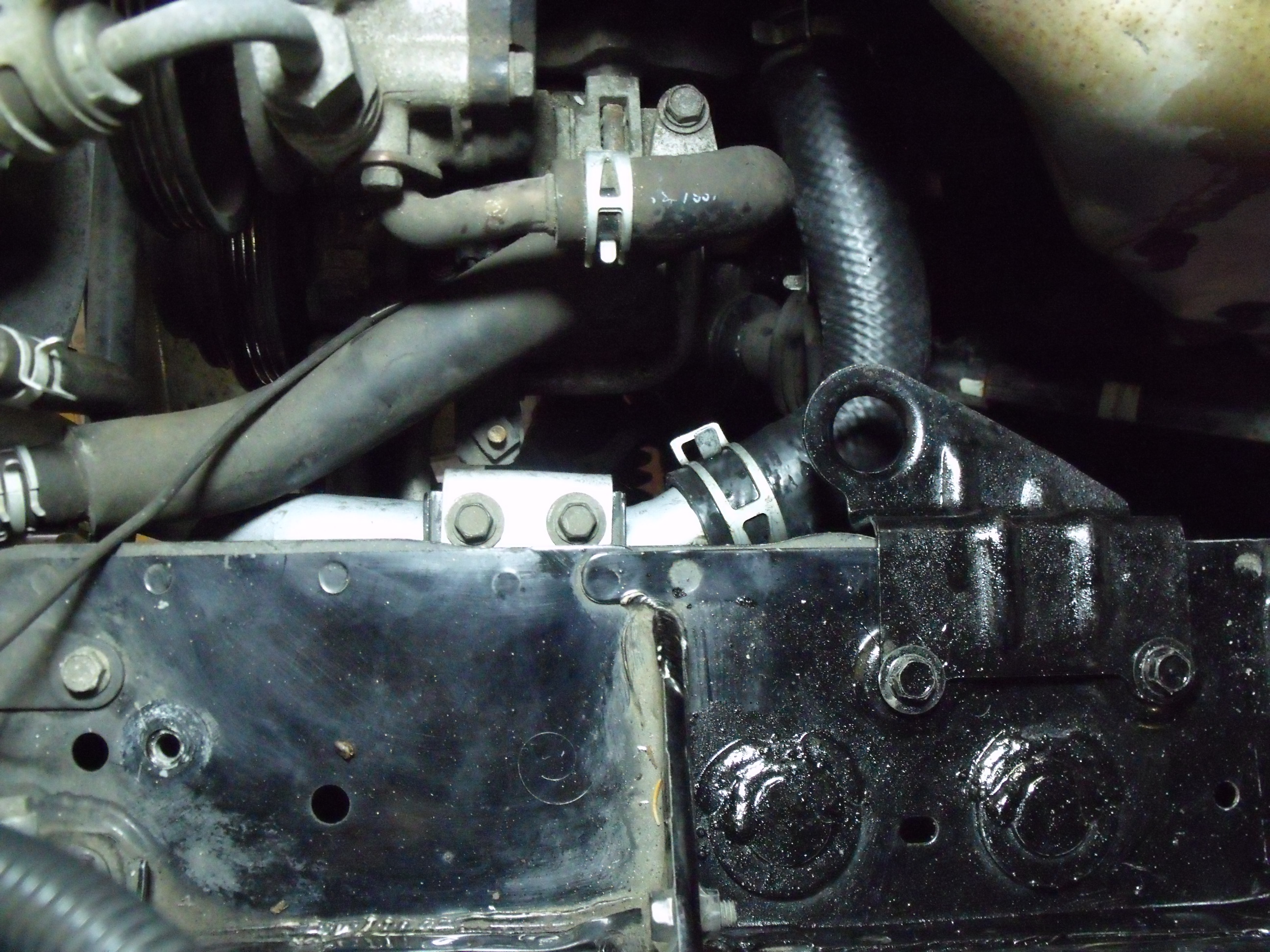
Poking around the area of the thermostat housing, I found two; the other two were over at the intake manifold. The function of these hoses seems to be to provide a “warm engine temperature” signal to the idle control and the radiator fan control. I didn’t research it further as I wanted to devote the time to getting the spring-loaded hose clamps off.
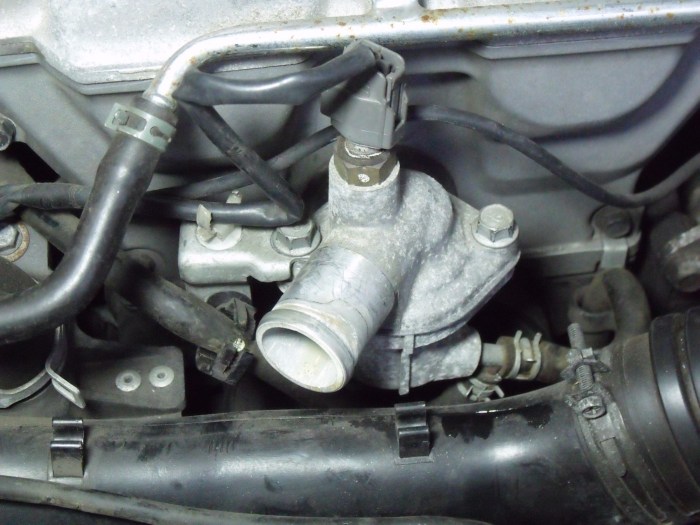
Note clamps under and to the right of thermostat housing

These clamps were not only difficult to reach; the clamps ears in some cases were rotated away from what might be the most accessible positions. It is possible that these were built up as subassemblies before the engine was dropped into the car. In any event, they had not been touched since the car was built, and I needed to get them off. Using various shaped pliers, including needle-nose, curved nose, and slip-joint, most of them eventually came loose. One clamp in particular, under the thermostat housing, was twisted back and forth until it broke off (I was very mad at it). Like many other underhood jobs, components which were in the way were removed for better access.
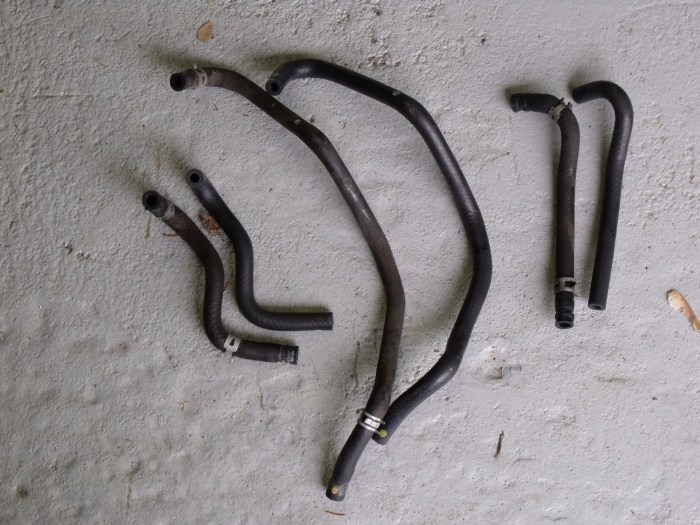
Old and new hoses side-by-side. Old ones were hard but not leaking (yet)

Besides the clamp which was twisted to death, there were two other casualties: the A/C-power steering belt was removed with a hacksaw, because I intend to replace it anyway; and the fan temperature sensor switch in the top of the thermostat housing fell victim to an errant wrench. New parts have been ordered and are on their way.
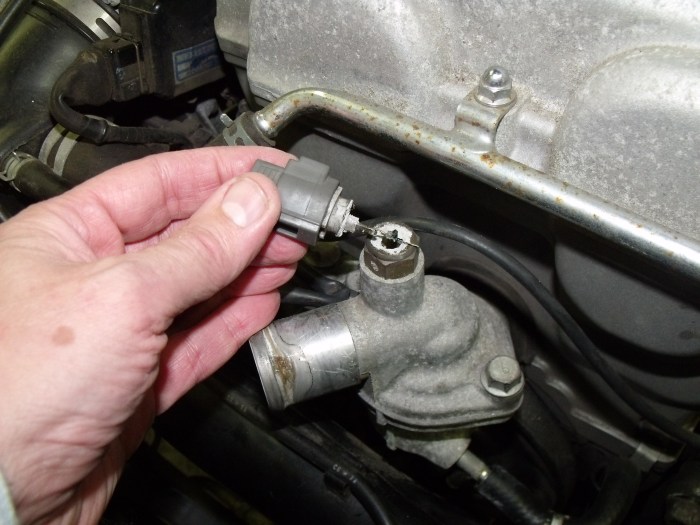
Switch is NOT designed to be removed in this fashion
Switch is NOT designed to be removed in several pieces

As of today, the upper radiator hose, lower rear hose, and all four smaller hoses have been replaced. On the smaller hoses, several spring clamps were replaced with screw clamps for easier installation. With this part of the job basically done, we’re soon moving back to the heater core.
 

All photographs copyright © 2016 Richard A. Reina. Photos may not be copied or reproduced without express written permission.
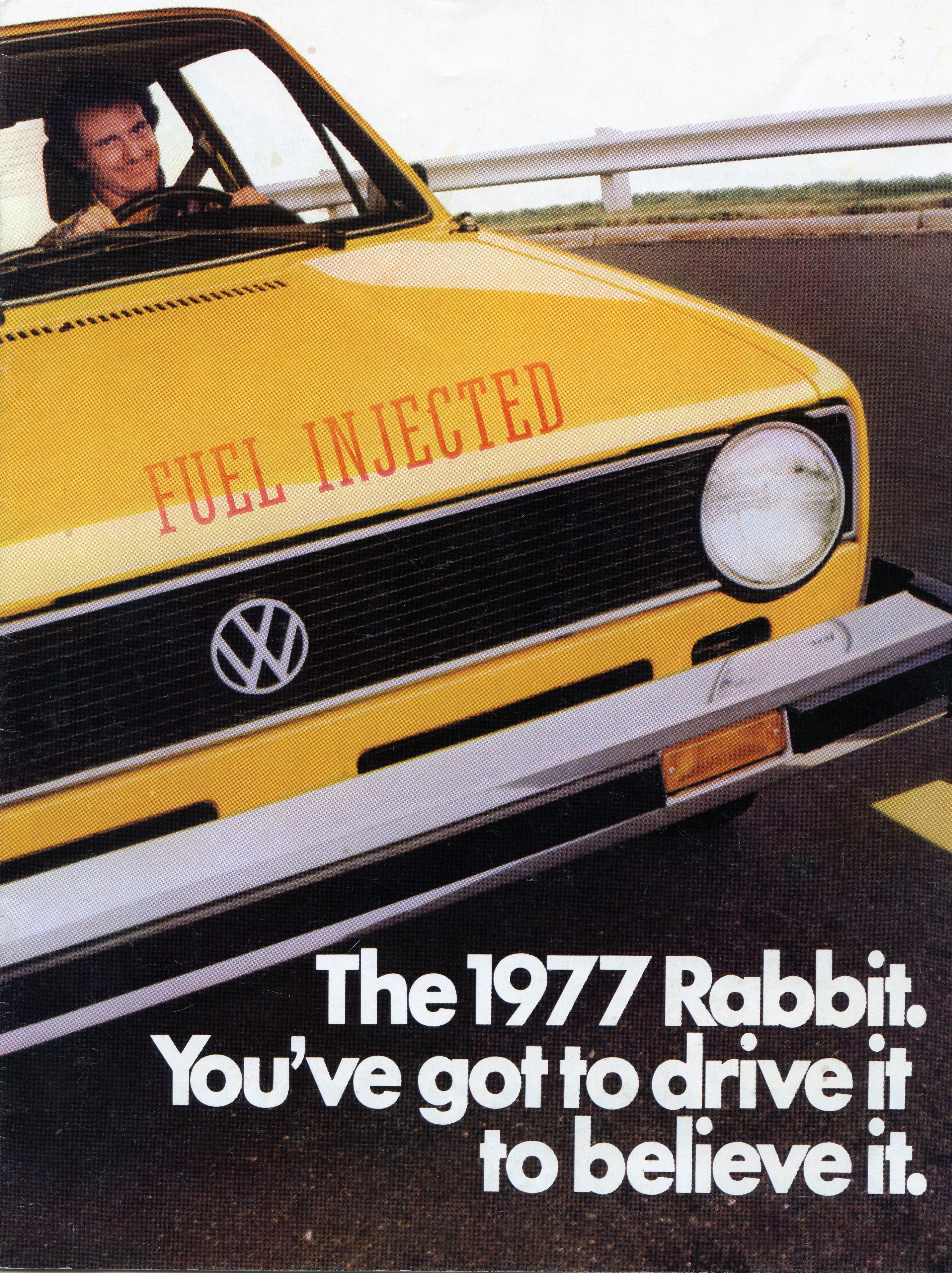
 

Finally, my first new car: the 1977 VW Rabbit

Upon my return home from the 3-week adventure which we nicknamed “Coast-to-coast in the Swedish car”, a letter was awaiting me. The U.S. Department of Labor was offering me an interview to be considered for employment in their Bureau of Labor Statistics. I interviewed, was accepted, and was told I could start in mid-September. Elated at the prospect of full-time employment, I especially looked forward to a full-time paycheck! Since I was still without wheels of my own, having sold my Vega to my brother several months prior, my thoughts turned to consideration of finally owning a new car.

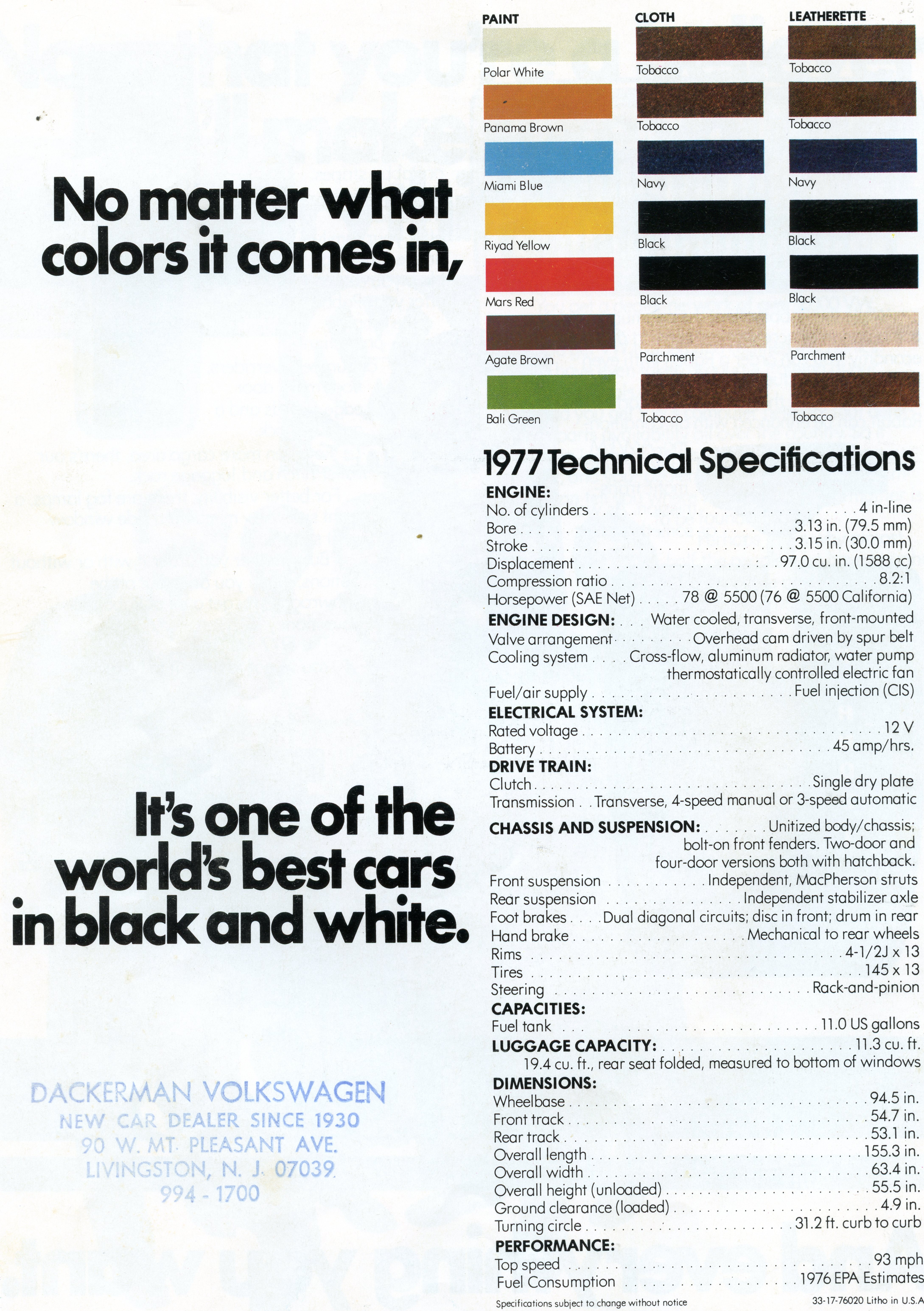
The car magazines which I voraciously devoured had said generally good things about Volkswagen’s newest economy car, the Rabbit. The vehicle (called the Golf in the rest of the world) was introduced in North America as a 1975 model. During its first two years on sale here, one of the few issues concerned its troublesome carburetor. In 1977, VW ditched the carb, switched to Bosch K-Jetronic fuel injection, and likewise jettisoned the catalytic converter in the process. There were other attractive features: front wheel drive, hatchback roominess, and great fuel economy. I test drove several models at my local dealer, Staten Island Small Cars. Frankly, I don’t believe I even considered anything else. At least there’s no recollection of test-driving anything but Rabbits.

It was now September of 1977, and the new ‘78s were on their way. The buff books had informed me that for 1978, VW was reducing the engine size from 1.6L to 1.5L, with a horsepower drop from 78 to 71. Determined to find the “best” ’77 I could, I bounced around VW dealers in Brooklyn, Queens, and NJ, but ended up back at the Staten Island store.

My salesman was Arthur McKeever, an interesting guy, and difficult to forget once you met him, as Mr. McKeever had no right arm. He shook hands with his left, and could shock you with his ability to drive a stick shift. As we climbed into his red demo, I reached for the seat belt. He said “oh, you don’t need to put that on”. I put on the belt, as I had been wearing one since the Mustang wreck six years prior. The Rabbit was quite peppy, and while the shift action didn’t have quite the precision of a RWD car, it wasn’t bad at all. My mom’s ’76 Honda Accord had tons of torque steer; by comparison, the Rabbit had almost none.

scan514ccc
Area code not required; Anyone care to guess what the “YU” exchange stood for?

He had three 1977 2-doors remaining (the 4-door model was not sporty enough for me, and so was a deal-breaker). One was his red demo, but I didn’t think the car looked good in red. The yellow car was attractive, but the priciest of the choices. The white car was an anomaly: a base model Rabbit, when every other car I looked at was the “Custom”. The base model had these features compared to the Custom: 145-13 bias-ply tires instead of radials; houndstooth cloth upholstery instead of leatherette; vinyl flooring instead of carpeting; non-opening vent windows instead of opening ones; and a manual rod for the hatch instead of a gas strut. But the sticker price of $3599 was very attractive.

The back of his card spells out my 3 options

A deal was struck for the white car, which looked good with its black-and-white interior. My dad had to co-sign the bank loan, but he knew I was good for it. Taking delivery of my first new automobile still ranks up there with one of the great car-related thrills of my life.

Yes, I kept the Monroney

Three weeks into the ownership, I ordered a set of Pirelli CN-36 radial tires in size 175/70-13. They truly transformed the car, and lasted 56,000 miles! I also was an early adapter of Cibie euro-style headlights with replaceable H4 bulbs, which did amazing things for night-time visibility. Both the tires and the lights were purchased from Euro-Tire, which advertised heavily in Car and Driver magazine. I put my own sound system in the car, and repainted the bumpers, but did little else other than maintain it and drive it.

The Rabbit served as my daily driver for over four years, from September of 1977 until December of 1981. I put about 112,000 miles on it, almost all of it trouble-free. The car started to use oil, a known issue with the valve stem seals, but oil was cheap enough that I just kept checking and adding it. There was also the start of some rust at the base of the A-pillars. My overall experience was so positive that I replaced this VW with another new VW. We’ll get to that story at another time.

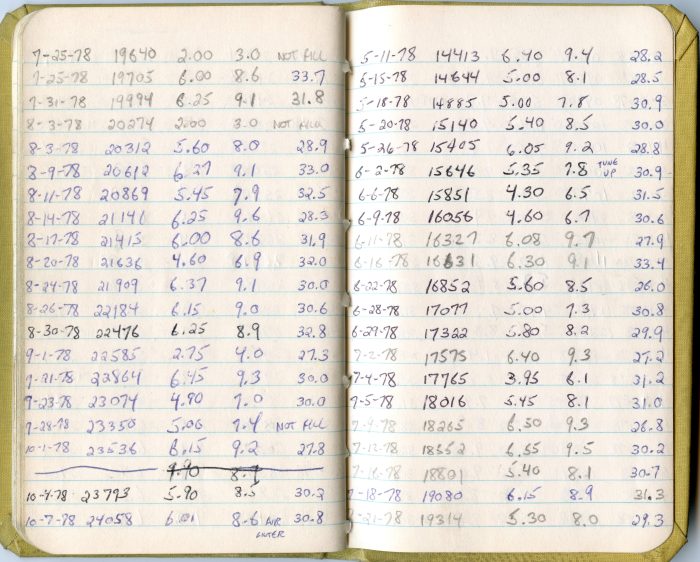
Fuel log: average price was 68 cents/gallon


All photographs copyright © 2016 Richard A. Reina. Photos may not be copied or reproduced without express written permission.

Heater Core Replacement in the ’93 Mazda Miata: Part 1

The '93 Miata as it looked in August of 2014
The ’93 Miata at the 2014 Lime Rock Vintage Fall Festival

August of 2016, three months from the time of this writing, will mark 20 years that I’ve owned my black Mazda Miata. Aside from its incredible driving characteristics, it has been a typical Japanese-car ownership experience, which is to say, the vehicle has needed almost no repairs during the 65,000 miles I’ve put on it.

Of course any car needs maintenance and consumables, so tires, brakes and batteries have been changed out. The engine oil is replaced once or twice a year regardless of mileage. The typical tune-up items such as plugs, wires, and filters are changed regularly. Light bulbs? One headlight bulb went out a few years ago. The convertible top was replaced around 2002.

The upholstery, stereo, exhaust, clutch, shocks, springs, and U-joints are all the pieces which the factory installed in 1993. The R-12 A/C still blows cold, but did need one top-up (I still have 12 oz. cans of Freon).  The one repair which almost put the car off the road was a leaky clutch slave cylinder. It’s a common Miata failure, and the new one took about 30 minutes to install.

However: last summer, I began to notice a slight film at the base of the inside of the windshield. At first, I chalked it up to a typical dirty window. Then I noticed that using the heater made the film cover a greater area of the glass. I swiped a finger through it, and it had an oily feel. Uh-oh, said I; could this be the dreaded heater core? Each time I thoroughly cleaned the inside of the windshield, the film came back. Even with the heat completely off, it appeared. At 98,000 miles and 23 years, I knew it was time.

Heater core replacement on ANY car is not easy. My 1968 Mustang (with factory air) got its core replaced by me, and it involved disassembling most of the dash and center console. During my brief time professionally wrenching on Volvos, I did my share of heater cores on 240s. (The Volvo 240 heater core is infamous: Click and Clack, the Tappet Brothers, had a running joke on their show, in which they said that Volvo would assemble a 240 by taking a heater core, putting it on the assembly line, and building up the rest of the car around it.)

The entire air filter box must be removed to gain access to the lower rear hose (at right)

Besides a new core, it seemed to be a good idea to also replace all the original coolant hoses. The hoses are available as a kit from Moss Motors, so with said kit in hand, I drained the system and began with the engine compartment hoses. They were all hard as rocks, and most needed to be cut off their metal pipes.

From L to R: lower radiator hose, intermediate pipe, lower rear hose

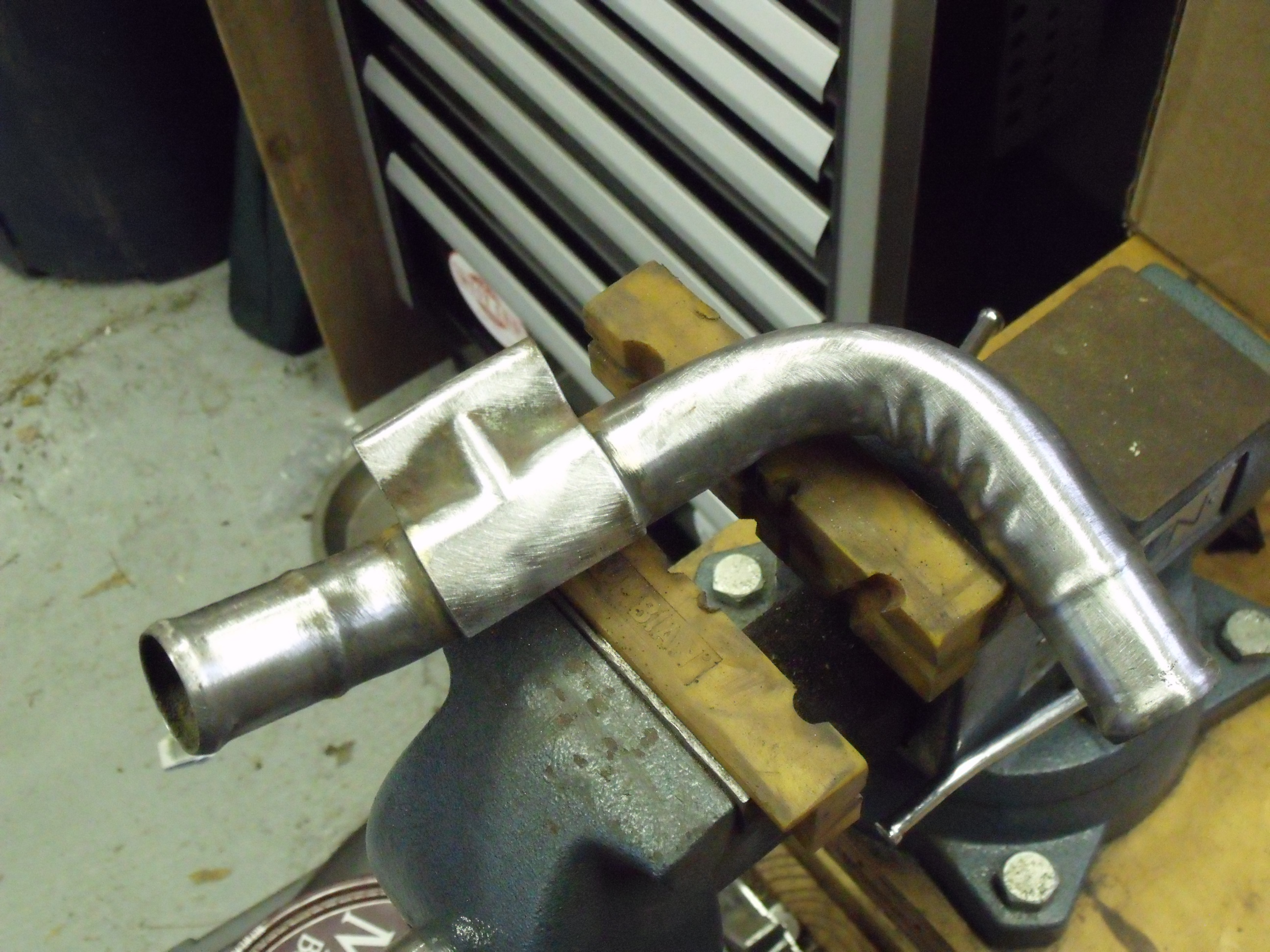
The Miata lower radiator hose does not connect to the front of the engine. Rather, it passes through a metal intermediate pipe, then another rubber hose, connecting to the engine at the rear. This pipe looked terrible, so I removed it to give it a closer look. The corrosion on it was superficial, but in the interest of longevity, it is getting cleaned and painted.

Happened to have this in the garage cabinet; my experience with Hirsch products has been excellent
Had this from a previous project; my experience with Hirsch products has been excellent

The main hoses are off; there are 5 smaller hoses which also need replacing, and these clamps look like some knuckles will bleed. More to follow.

All photographs copyright © 2016 Richard A. Reina. Photos may not be copied or reproduced without express written permission.

Sunday Morning Breakfast Drive, May 15, 2016

8 a.m.: sunny before departure
8:30 a.m.: sunny before departure

After a relatively mild winter, the spring of 2016 has been taking its sweet time arriving in the Northeast. Any fears of summer heat waves in early May have been unfounded, with daily temperatures often running 10 degrees below normal. Our little driving club tried to get an early start on the season by planning a mid-April event, which had to be cancelled due to the threat of snow! Our scheduled drive on Sunday May 15 did successfully occur, in spite of cool weather and surprise showers.

Hey guys, do you want to eat, or would you rather stand around and shoot the breeze?

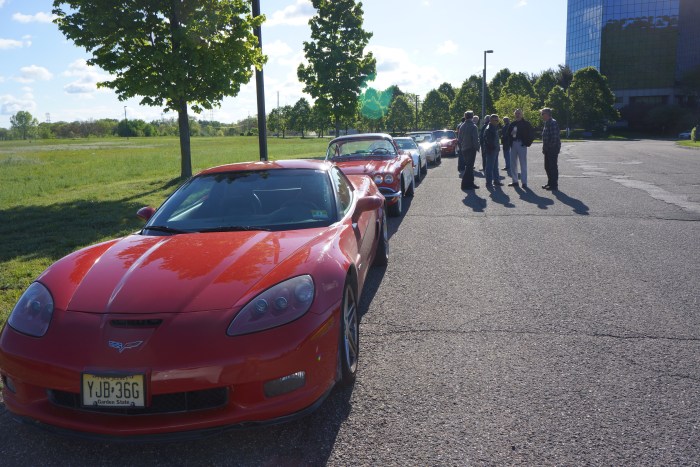
Checking back on last year’s blog entries, we never had more 15 participants on any one run (excepting Spousal Accompaniment Day). Today, we broke that record with 17 gentlemen occupying 12 cars. Obviously, we had 5 passengers, several of whom were joining us for the first time. Our destination was a crowd favorite, the Silver Spoon Café in Cold Spring NY.

We pull over to give those in back a chance to catch up

We pull over to give those in back a chance to catch up

The cars: we usually count up the Chevys, and then all the rest. Today, the Europeans won the day with a total of 7 cars: 3 Germans, 2 Brits, and 2 Italians. We had 4 U.S. brand cars, and one Japanese. There were old(ish) and new(ish) vehicles in all the subcategories with multiple vehicles.

The Mother Country was beautifully represented Rich S’s black MGB and Rich L’s white Jaguar F-Type.

The MGB of Rich S
The MGB of Rich S


The F-Type Jag of Rich L

The 2 Italians cars were both Alfas: EC was the proud papa bringing his ’91 spider out with us for the first time, while your humble scribe brought his trusty, un-rusty ’67 GT Junior.

Enzo's 1991 Alfa Spider
Enzo’s 1991 Alfa Spider


The author's '67 Alfa GT Junior
The author’s ’67 Alfa GT Junior

German marques ruled the roads today with 3 cars: Peter’s stunning red 911, Sal’s BMW 325is, and John M’s new Audi A3 cabrio.

Peter's Porsche 911
Peter’s Porsche 911


John's Audi A3
John’s Audi A3


Sal's BMW 325is
Sal’s BMW 325is

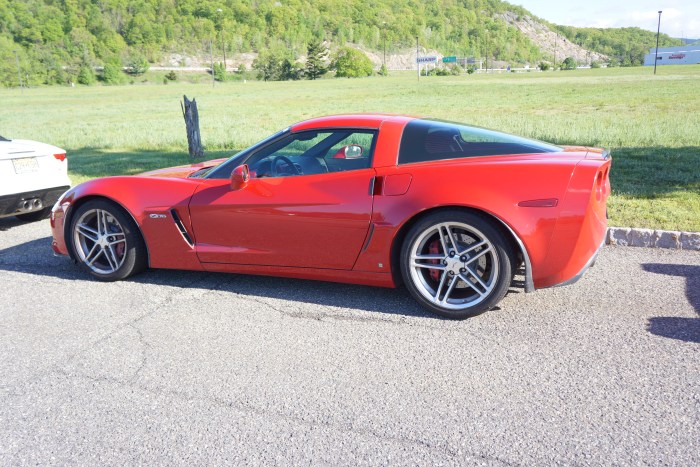
Among domestic product, it was all Chevrolet, including 3 Corvettes: Bill’s C1, Ron’s C4, and George’s C6. Larry ran his reliable Camaro.

Bill's C1
Bill’s C1


Ron's C4
Ron’s C4


George's C6
George’s C6


Larry's '94 Camaro
Larry’s ’94 Camaro

The sole Asian car was Jim N’s Datsun 280Z.

Jim's Datsun 280Z
Jim’s Datsun 280Z

We departed the Sheraton Crossroads parking lot (almost) right on time and headed north. As soon as we did, the skies darkened, and the clouds threatened. In spite of the weather, several drivers motored with convertible tops down. After a beautiful ride along Seven Lakes Drive and over the Bear Mountain Bridge, we were at our destination with 10 minutes to spare. The staff at the Silver Spoon had a table for 17 waiting. Coffee was almost immediately served, with hot breakfast plates soon following. As always, the camaraderie around the table made it difficult to leave.

The obligatory wave before breakfast

When we finally wrenched ourselves away from the food and endless caffeine, we stepped outside to some slight sprinkles. Those who had left their tops down scurried back to their cars. Several of us continued to linger and chat, not wanting the festivities to end. But end they eventually did. We’ve assured the group that we’ll do our best to get out at least once a month this driving season.

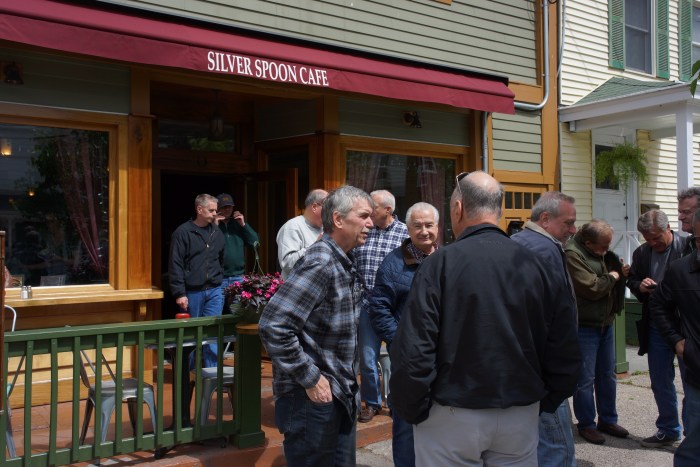
A crowd favorite is the Silver Spoon Cafe, on Main St. in Cold Spring NY
The Silver Spoon Cafe, on Main St. in Cold Spring NY, survived our visit

All photographs copyright © 2016 Richard A. Reina. Photos may not be copied or reproduced without express written permission.

THE SUMMER OF ’77: THE FIRST CROSS-COUNTRY ROAD TRIP

In the summer of 1977, I had just graduated college; I had sold my Chevy Vega to my brother Karl and was without my own car; and I had decided to postpone the post-grad job hunt, knowing full well that this could be the last time for a very long time that I’d have a few months of freedom.

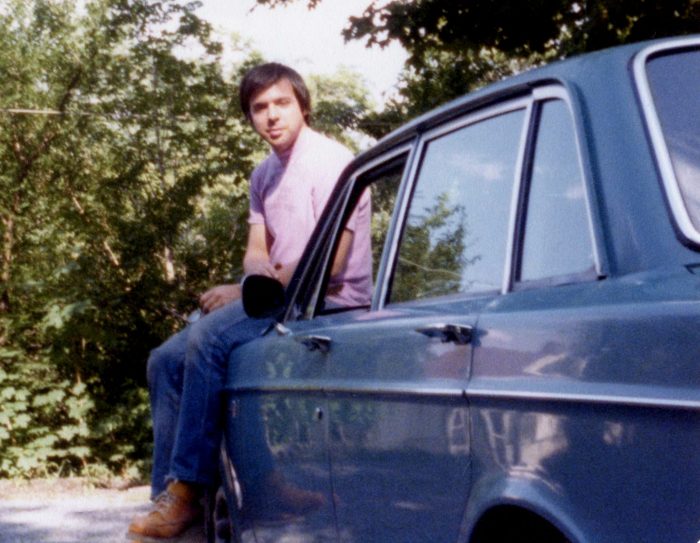
My friend Mike who was in graduate school also was free for the summer. He had recently purchased a 1971 Volvo 144 (his first choice, a Volvo 164, was a bit out of his financial reach), and together we hatched a plan to drive the Volvo to California and back, visiting friends and relatives along the way. Sometime in late July, we departed my parents’ house on Staten Island and pointed the car west.

scan483ccc
On the hood of his new (to him) 1971 Volvo 144

Growing up as an East Coast car enthusiast, I had tolerated the inevitable corrosion that beset our automobiles, brought on by winter’s road salt. California had always been a dream, not just for its beautiful weather, but for its supposed rust-free cars. At the age of 23, I was finally about to see the Golden State for the first time. Heck, this trip would be the first time that I would be traveling further west than Youngstown, Ohio.

The photographs I took during the 3-week long journey included some interesting finds in the Midwest, as well as plenty of neat cars in California, even by 1977 standards. My camera at that time was a cheap Kodak Instamatic, so please forgive the quality of these pictures.

To put some historical perspective on this trip:

  • A week before our trip began, on July 13, 1977, all of New York City was hit by a 2-day power outage.
  • During that summer, the city was gripped by the horrific Son of Sam killings. When we departed, he was still at large. As we traversed the country in our NY-plated car, more than one person asked if either of us was Son of Sam (macabre humor). On August 10, 1977, David Berkowitz was captured, and we both were relieved to hear this news on the Volvo’s AM radio.
  • Less than a week later, on August 16, while we were in Lexington KY, the news broke that Elvis Presley, the King of Rock and Roll, had passed away.
  • Three days later, on August 19, Groucho Marx died, and the country was so riveted by Elvis’ passing that the loss of Groucho barely made a dent in the news.


In Ohio, we stopped to visit Marianne, one of Mike’s college friends. I snapped this photo as we parted company, as she strolled toward her Volkswagen Fastback.

scan484ccc
Marianne and her VW Fastback

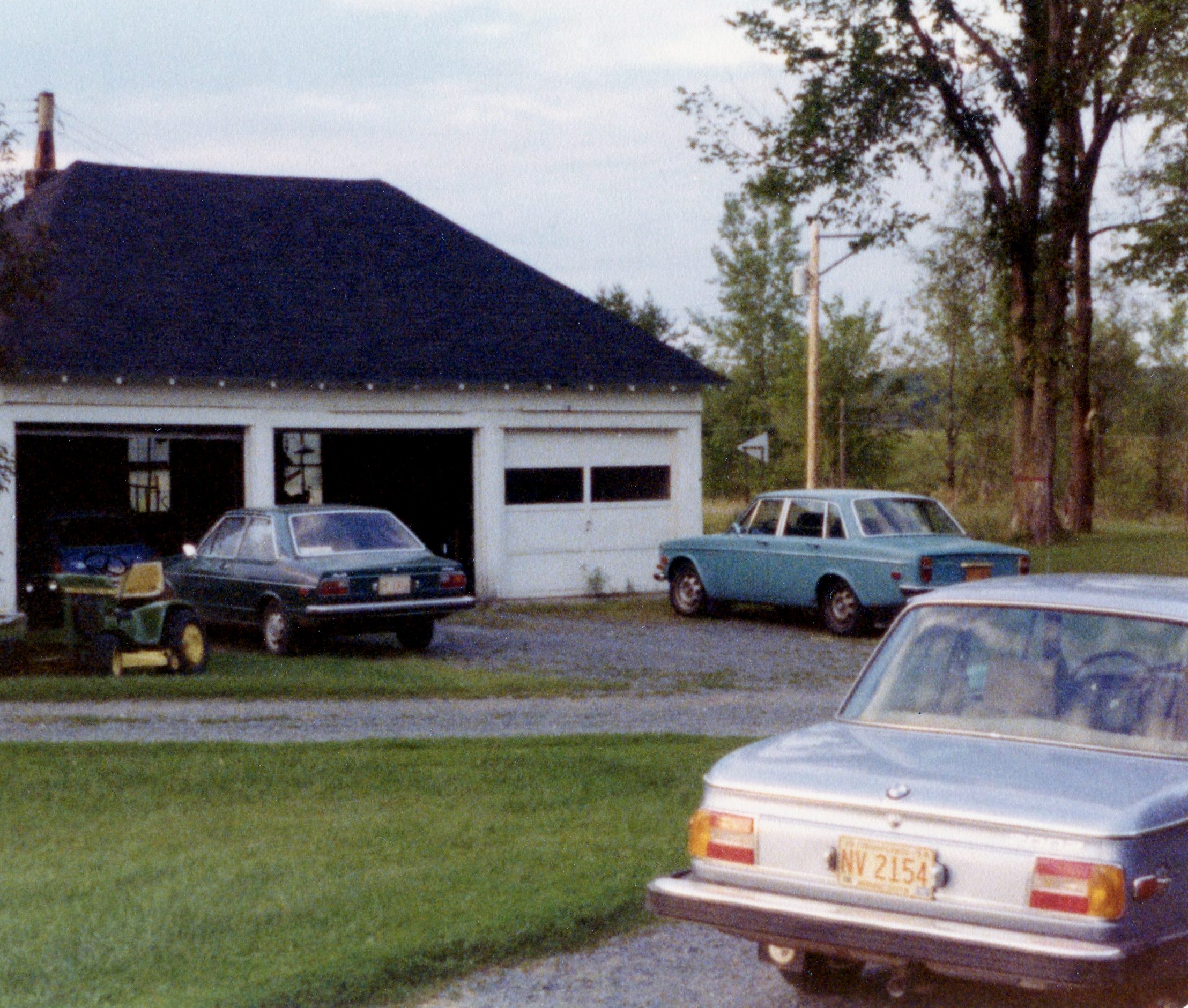
We visited another college friend at her mother’s home in Stillwater, Minnesota. Imagine my surprise to discover that her mom drove a BMW 2002, and her brother’s daily driver was an Audi Fox, with an MGB-GT project car in the garage. All 3 cars had manual transmissions. The bro’ let me drive the Fox, which had a direct influence on the new-car purchase I would be making in about two months.

Colorado was a revelation. While I have returned multiple times, this first visit stands out because we young men had no idea why, as our sturdy Swedish machinery climbed the Rocky Mountains, we lost power. It got to the point that the car would barely do 40 mph uphill. Those funny-looking SU carbs under the hood were a complete mystery to us. The Volvo’s automatic transmission wasn’t helping with the search for more speed.

scan487
Self-serve fill-up, Colorado style. Note the whitewall tires and missing hub caps.

When we arrived in Albuquerque, New Mexico, where Mike’s grandparents lived, he decided that he had enough driving for a while. Reaching California was my dream, not his. Content with spaghetti, beer, and A/C (which the Volvo lacked), my buddy handed me his car keys and said, “if you’d like to continue, you’re on your own. Just pick me up on your way back.”

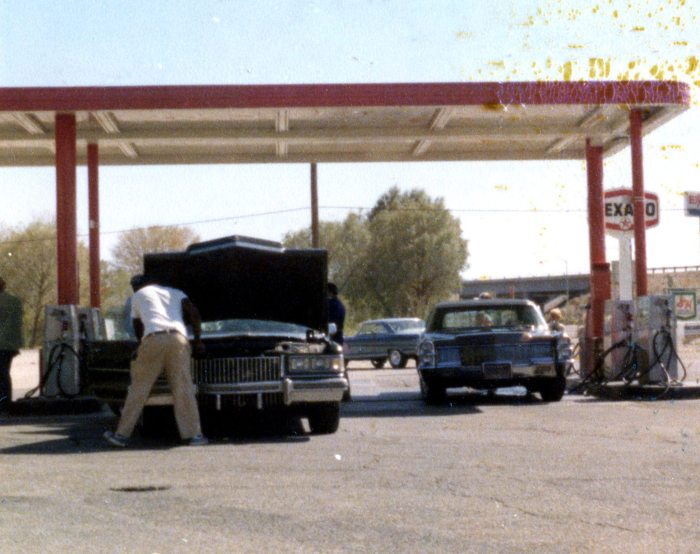
I took the car and left. The one-way trip to L.A. was 800 miles and about 12 hours of driving. Making the trip in one day, the only “difficult” part of the journey was the Mohave Desert. I bought a huge iced tea in Needles CA, crossed the 110-degree desert with all the windows open, and stopped to refuel in Barstow CA, where this photo was taken:

scan488ccc
Barstow CA, 1977: A newish Caddy has its hood open, while a ’65 Caddy manages to look cool.

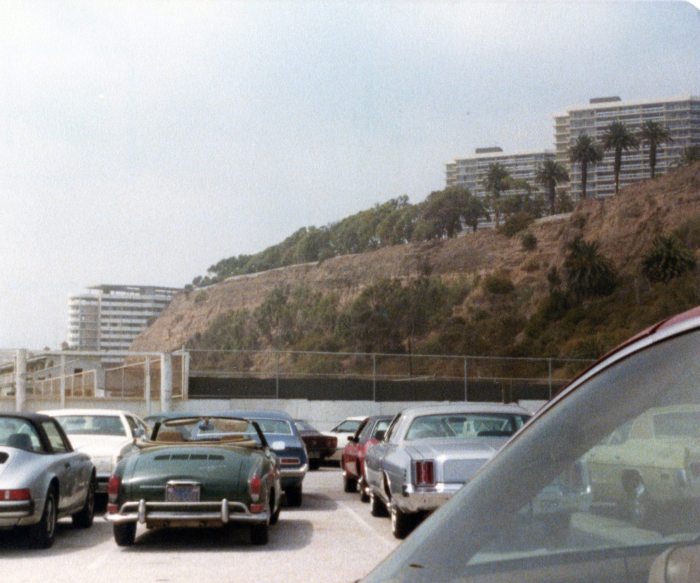
At last, San Bernadino, and the Pacific ocean. Finding a beach, I parked so that I could at least put my feet in water 3,000 miles from where I usually swam. This parking lot photo mainly features newer cars, but back home, Karmann-Ghias had already become rare sights.


scan489
A VW Karmann-Ghia sits between a Porsche 911 Targa and a Chrysler Cordoba.

Searching for Los Angeles, I was confused by the sprawl. There were no clear city boundaries. But I did find Sunset Blvd., and as I was about to turn onto it, two ’60s era Chevrolets were in front of me. This photo was taken while driving, mainly for my brother Karl who was in the midst of trying to resurrect a 1964 Impala back home. Karl’s car looked nothing like this one!

scan490ccc
The street sign says Sunset! A Nova SS followed by a ’64 Impala.

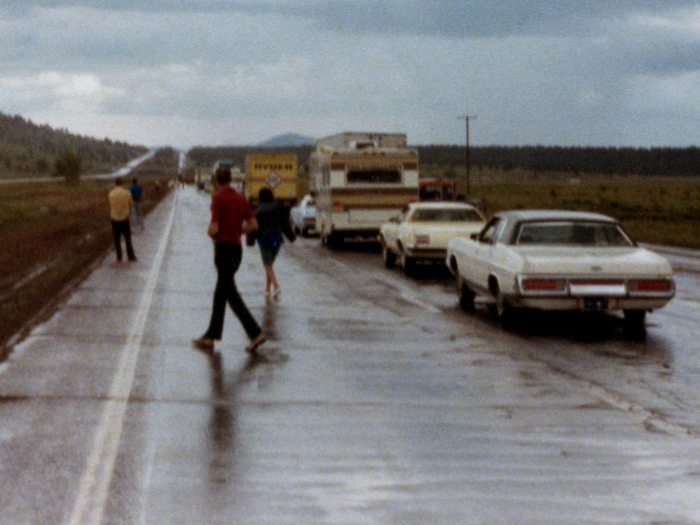
Heading back to NM, a summer storm may or may not have been a contributing factor to this massive traffic tie-up. We were stopped long enough that most folks turned off their cars and wandered around on the highway.


scan491ccc
A 1972 Ford sits behind a 1973 Pontiac Grand Prix

Except for the power loss in the Rockies (which could have been cured had we known to lean out the carbs), the Volvo performed quite well. Its seats were incredibly comfortable and supportive for what was probably 7,000 miles of driving over 3 weeks. The gas mileage was decent. A stick shift and an FM radio would have been my preferences, but it wasn’t my car. It was my first real experience with the brand, and the irony of driving a Volvo on this trip was not lost on me when 13 months later, I entered the car business by going to work for a Volvo dealership.

All photographs copyright © 2016 Richard A. Reina. Photos may not be copied or reproduced without express written permission.

The 2016 NJ AACA Car Show

The New Jersey Region of the Antique Automobile Club of America (NJ AACA) held its annual car show at the Mennen Arena in Morristown NJ on Sunday, May 1, 2016. Compared to previous events, this year’s affair was unique in several ways: this was the first time that this location was utilized, as the venue which had been used for the previous 40+ years in Florham Park NJ was unavailable; and the turnout this year was the smallest your author has ever observed.
Yes, this was the NJ Region's 65th show
Yes, this was the NJ Region’s 65th show

The reason why 30 vehicles instead of the expected 200+ vehicles were in attendance had nothing to do with the location, and everything to do with the weather. The NJ AACA maintains a strict “rain or shine” show policy, but a steady series of showers combined with temperatures parked in the mid-40s kept entrants and spectators away in droves.

This '30 Model A was one of the very few pre-war cars out to brave the elements
This ’30 Model A was one of the very few pre-war cars out to brave the elements

Nevertheless, vehicles did arrive, even if for the most part they were owned by club members. An advantage for those whose cars were to be judged is that no class had more than 4 vehicles in it (some had 2), and with 1st, 2nd, and 3rd place prizes to be awarded, your chance of winning went up exponentially.

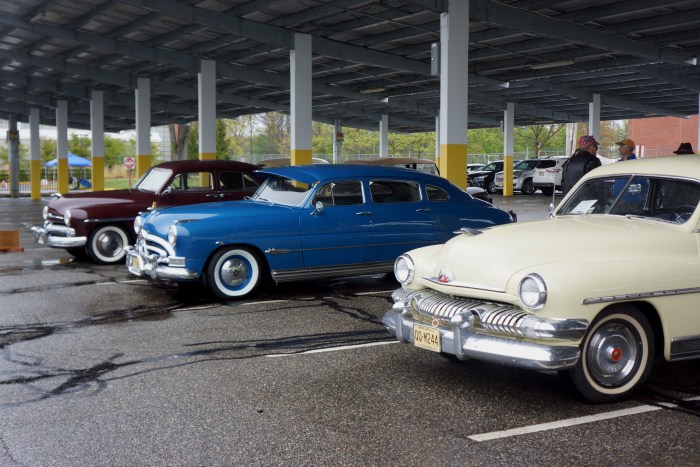
A trio immediate post-war iron: 2 Mercs and a Hudson
A trio of immediate post-war iron: 2 Mercurys and a Hudson

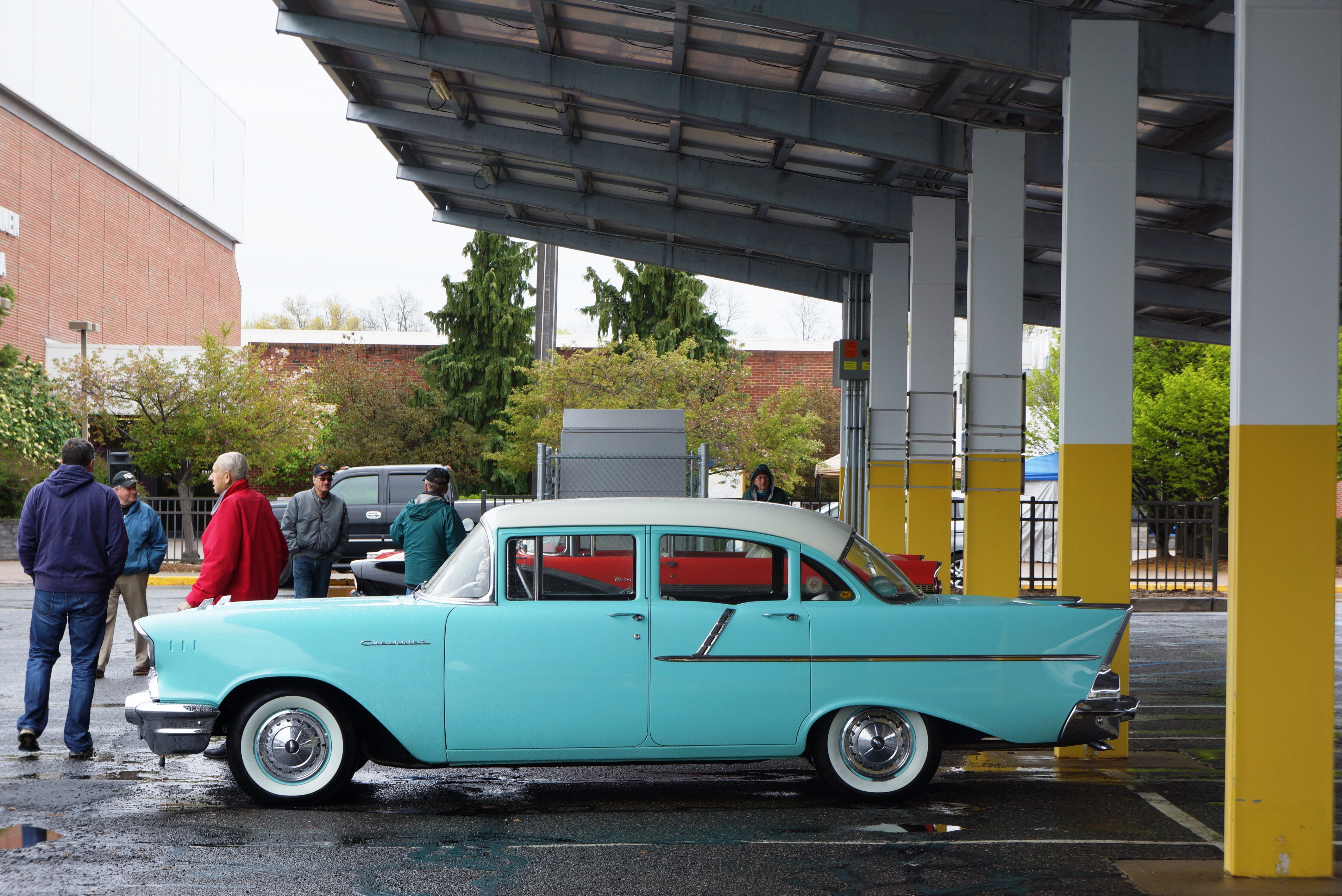
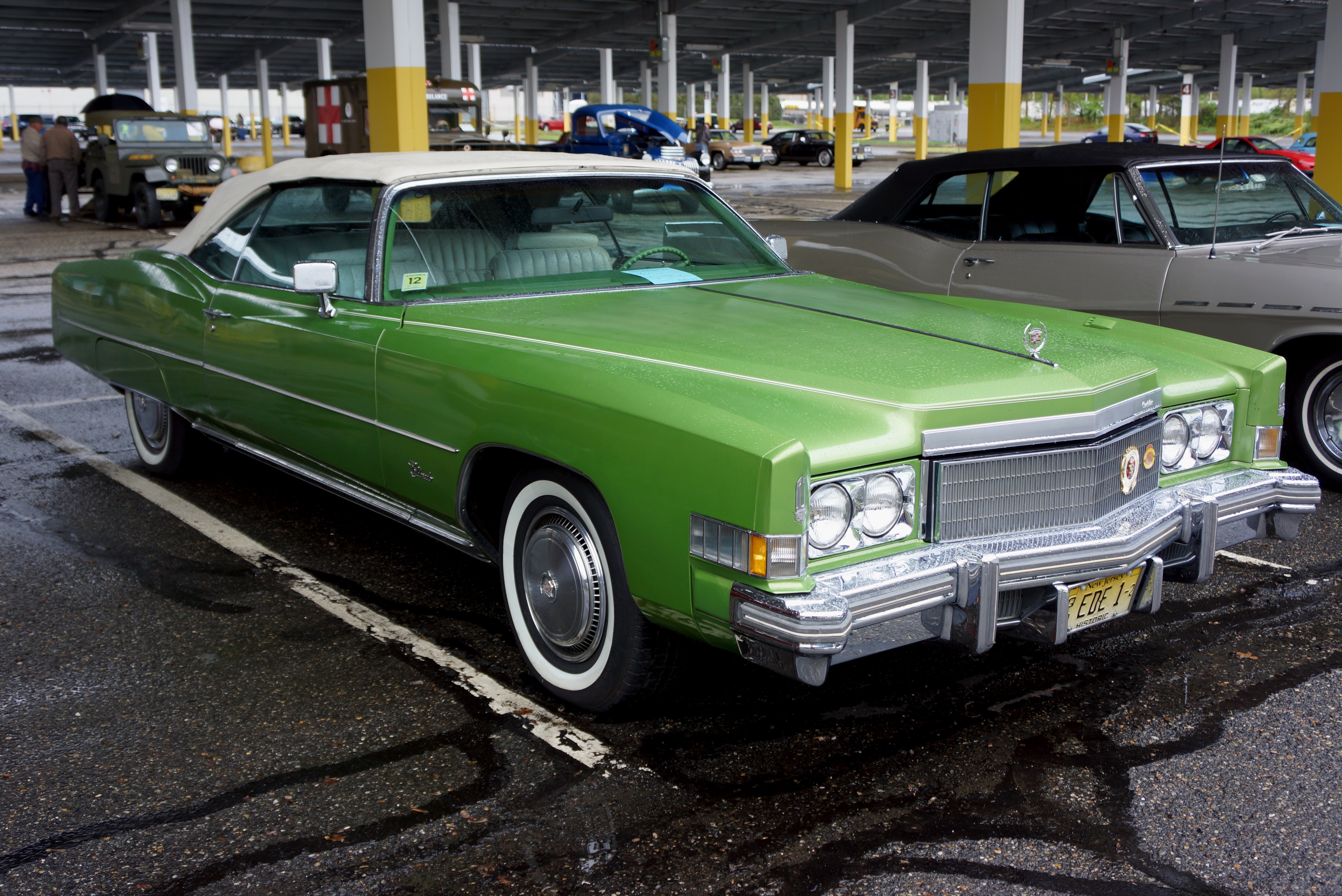
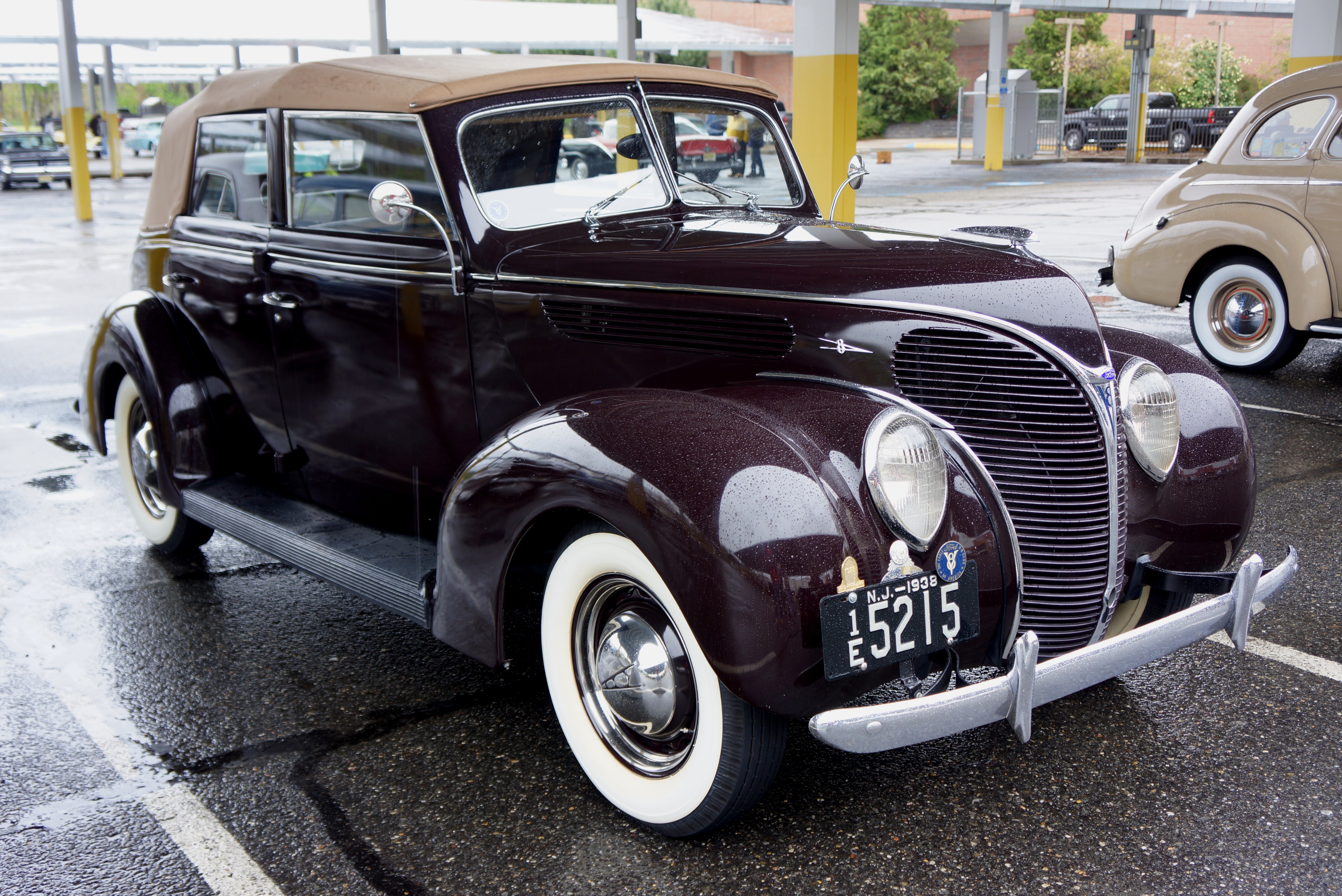
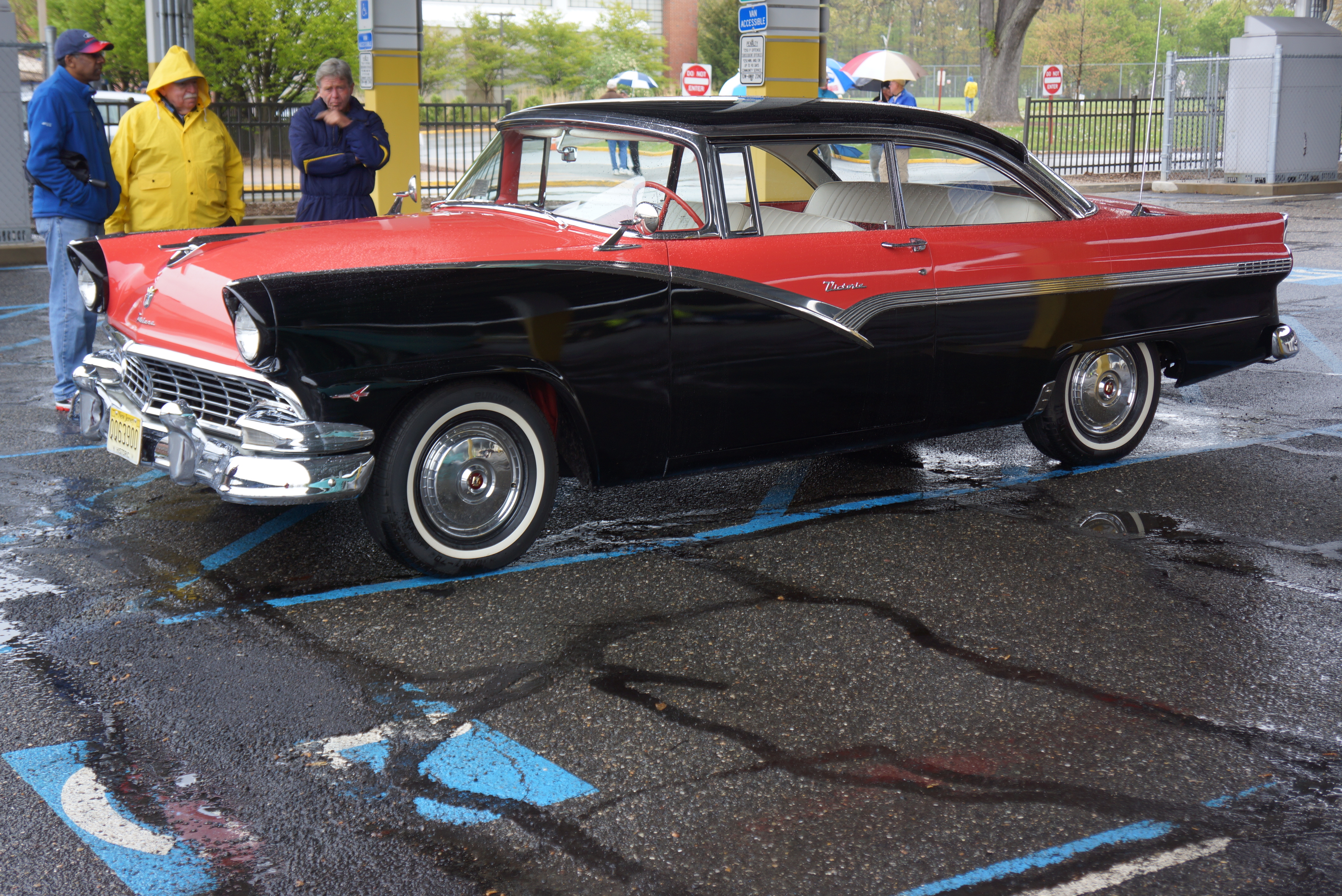
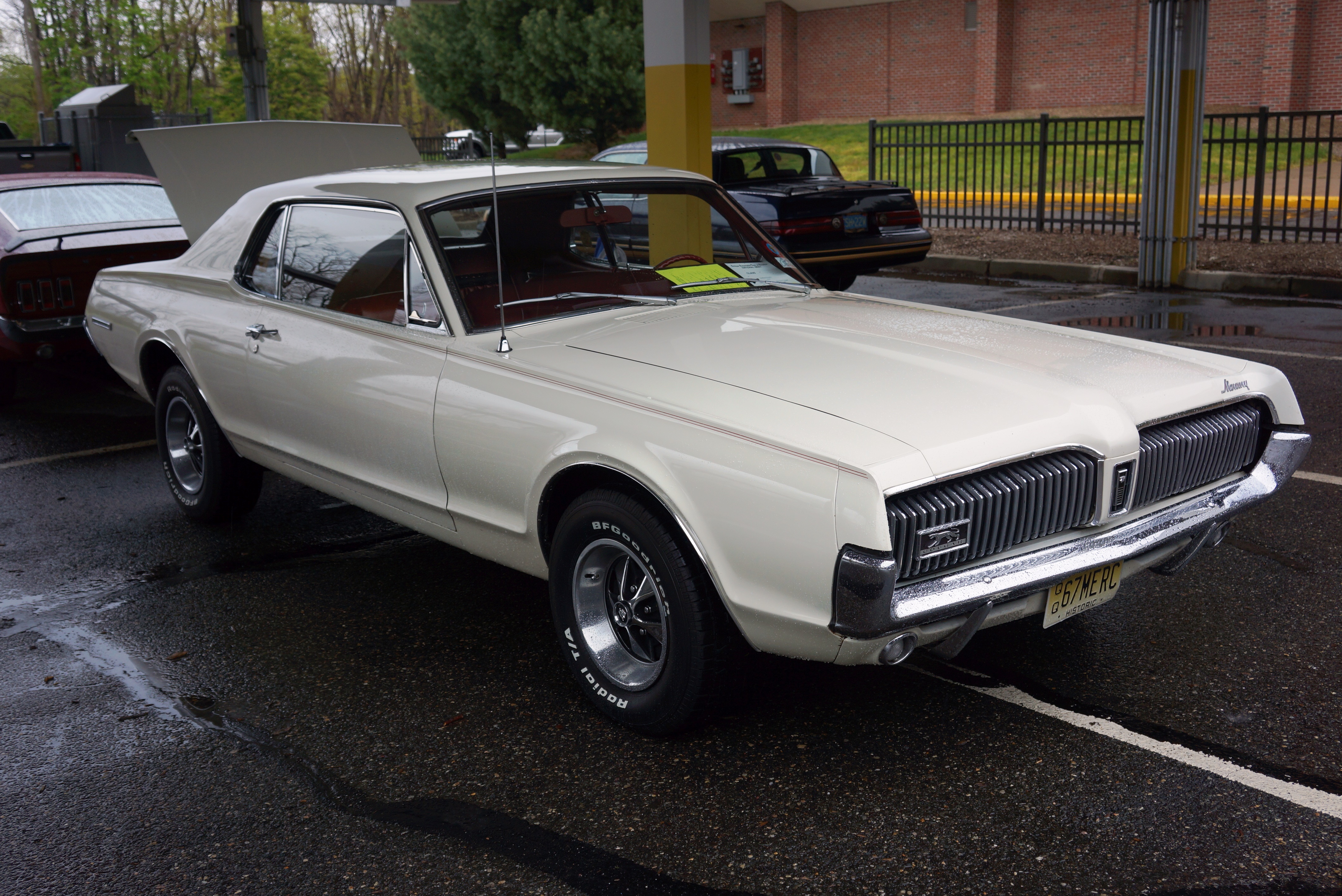
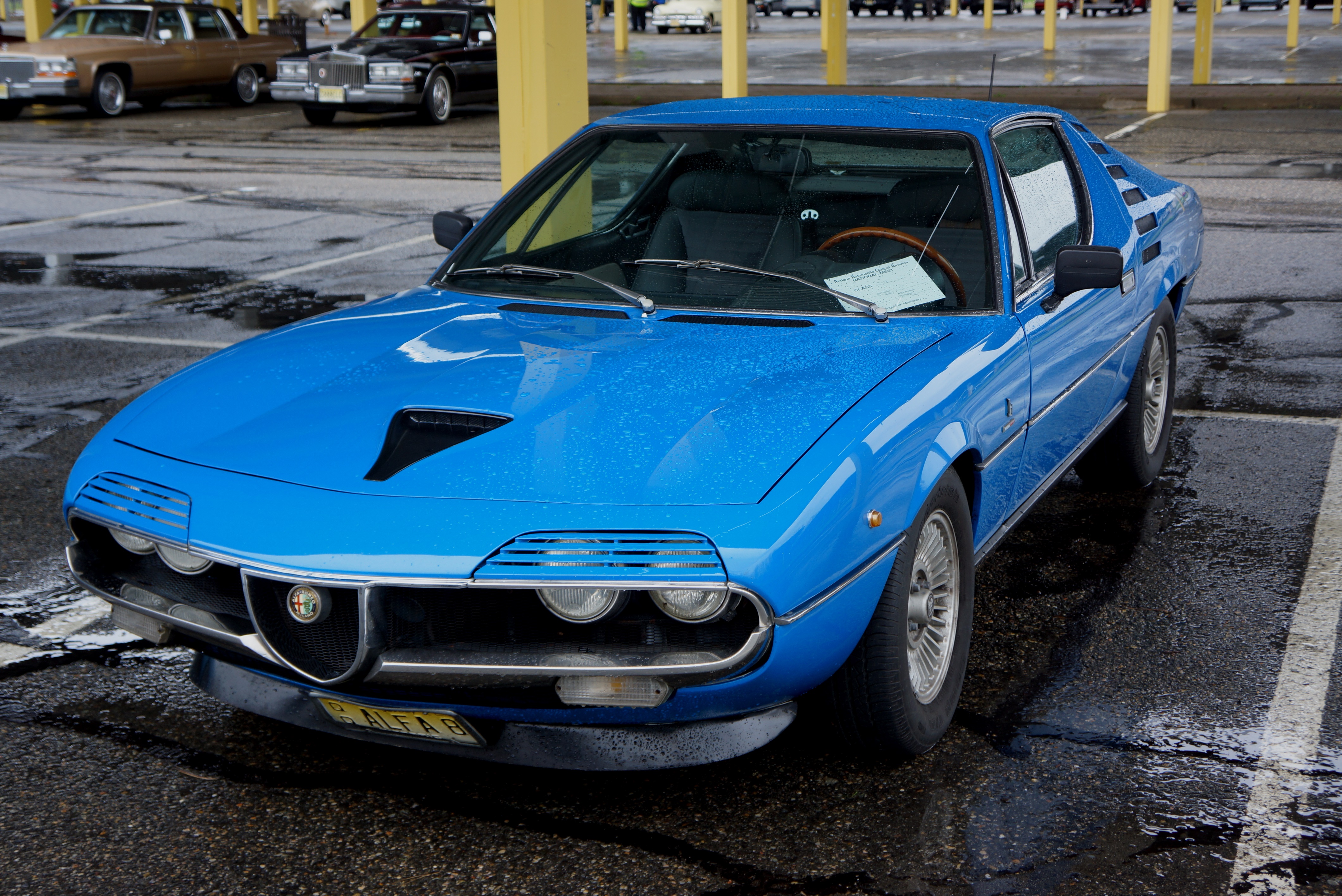
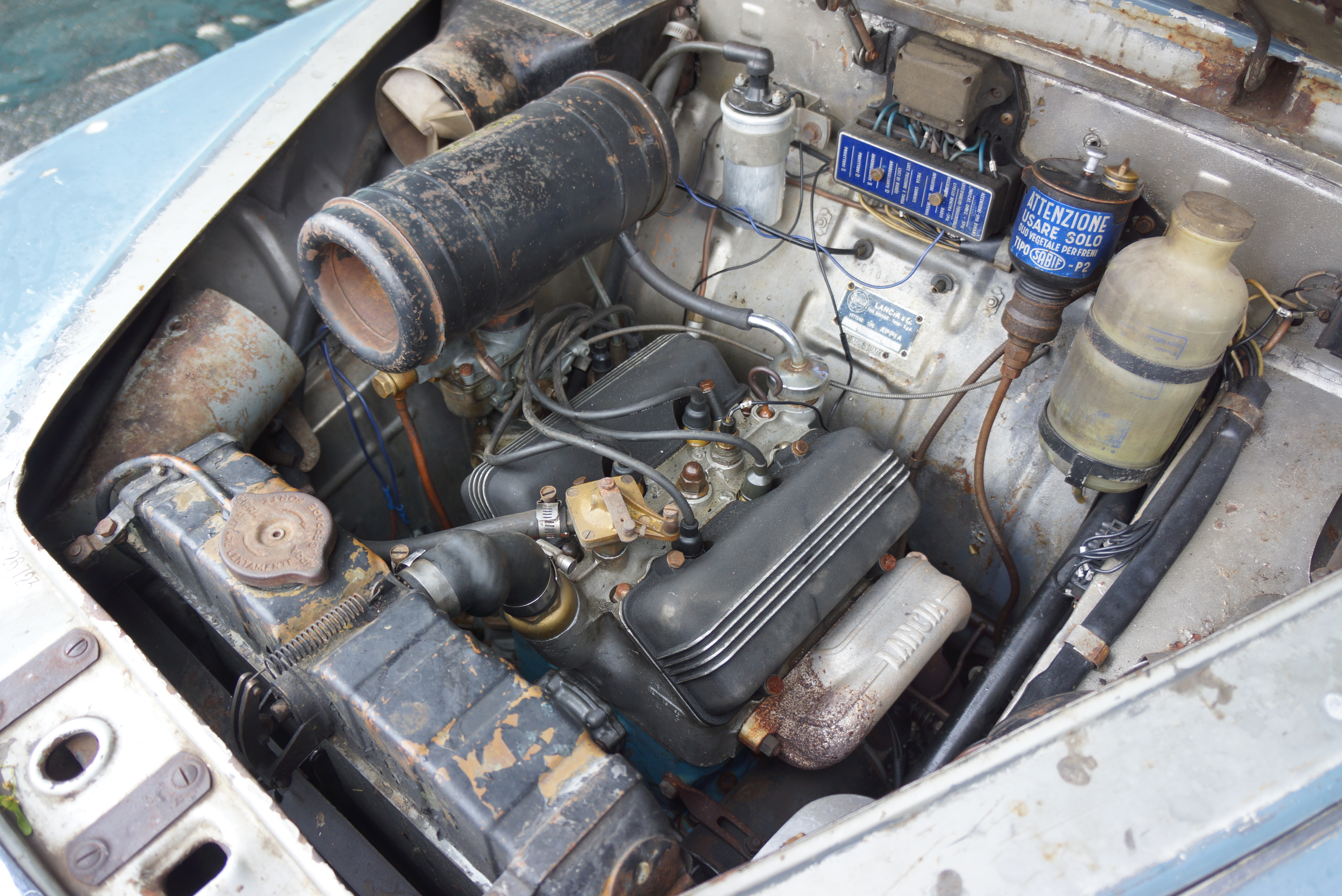
Below is a sample of the fine machinery, both domestic and imported, which graced the show field. A trend which has been noticed on the National level was also found at this event: as AACA’s “25-year” rule continues in effect, the inclusion of unrestored and/or original-owner cars is growing, reinforced by vehicles which were considered collectible when new and were salted away (think Eldorado, Fiero, Beetle convertible, and anything first-year, last-year, or commemorative edition).

General Motors


This Fiero was displayed in unrestored condition by its original owner


FoMoCo

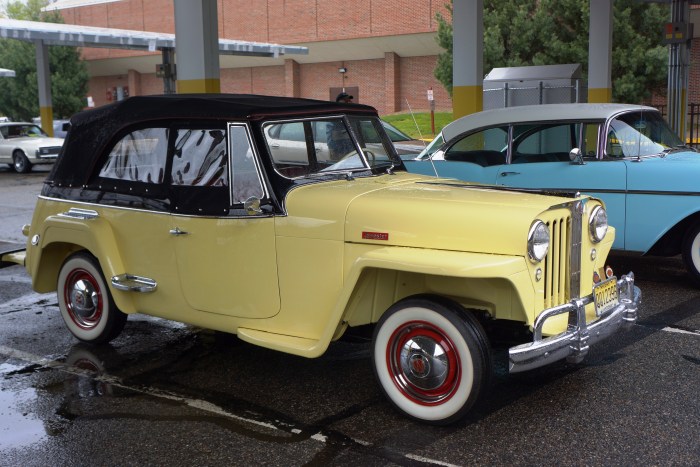
Jeep


This immaculate Jeepster was driven to and from the show

Italian

All photographs copyright © 2016 Richard A. Reina. Photos may not be copied or reproduced without express written permission.