I’m filling in the gaps in my Hershey coverage. For the most part, I’ve posted a story in my blog within days of returning from the Big Event. The blog started in 2015, and I’ve posted stories and pictures from visits in 2015, 2016, 2017, 2018, 2019, and 2021 – there was no Hershey in 2020. (“Hershey” is so massive that in some cases, I had created multiple posts for the same year, so be sure to look for that.)
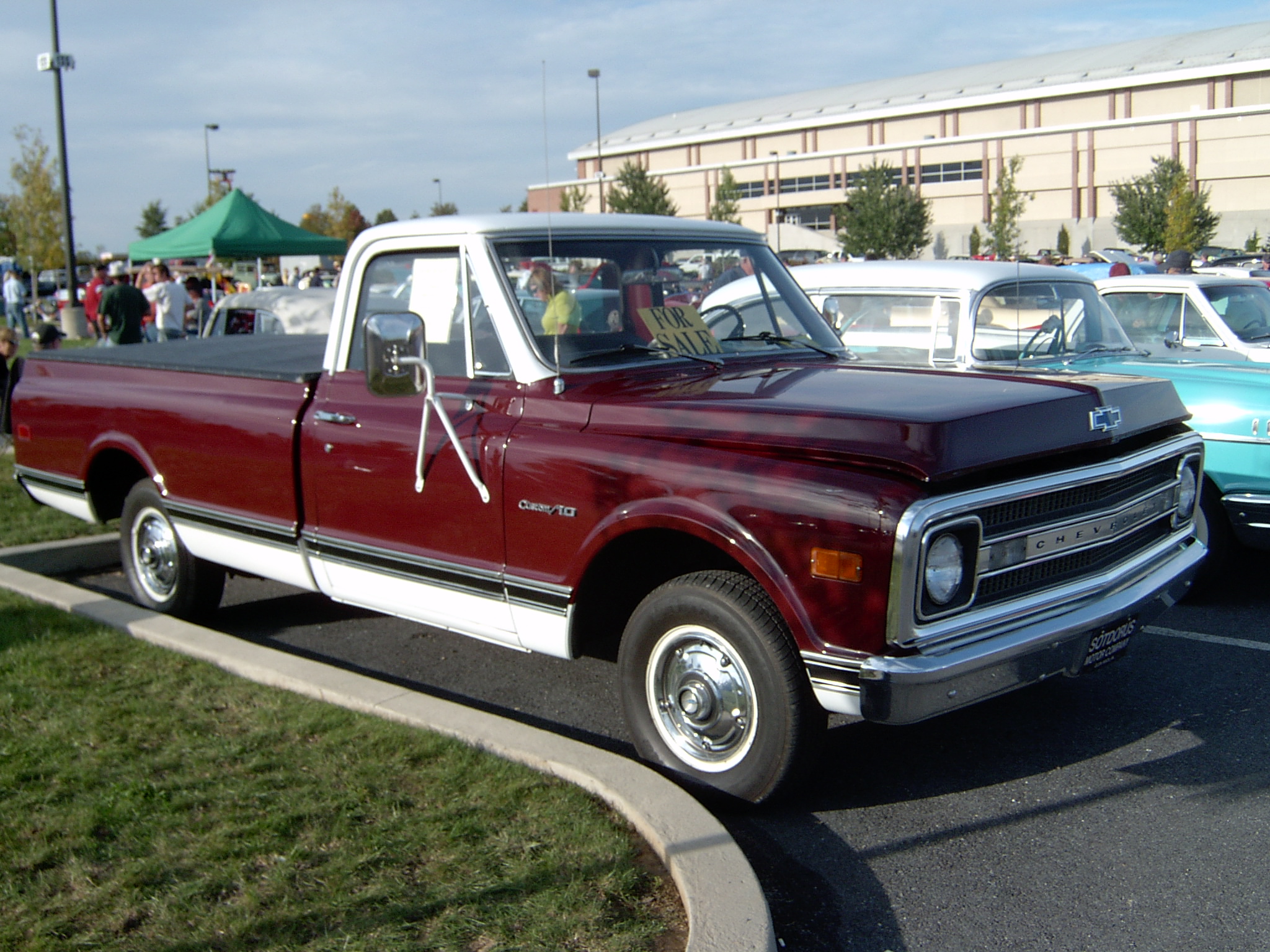
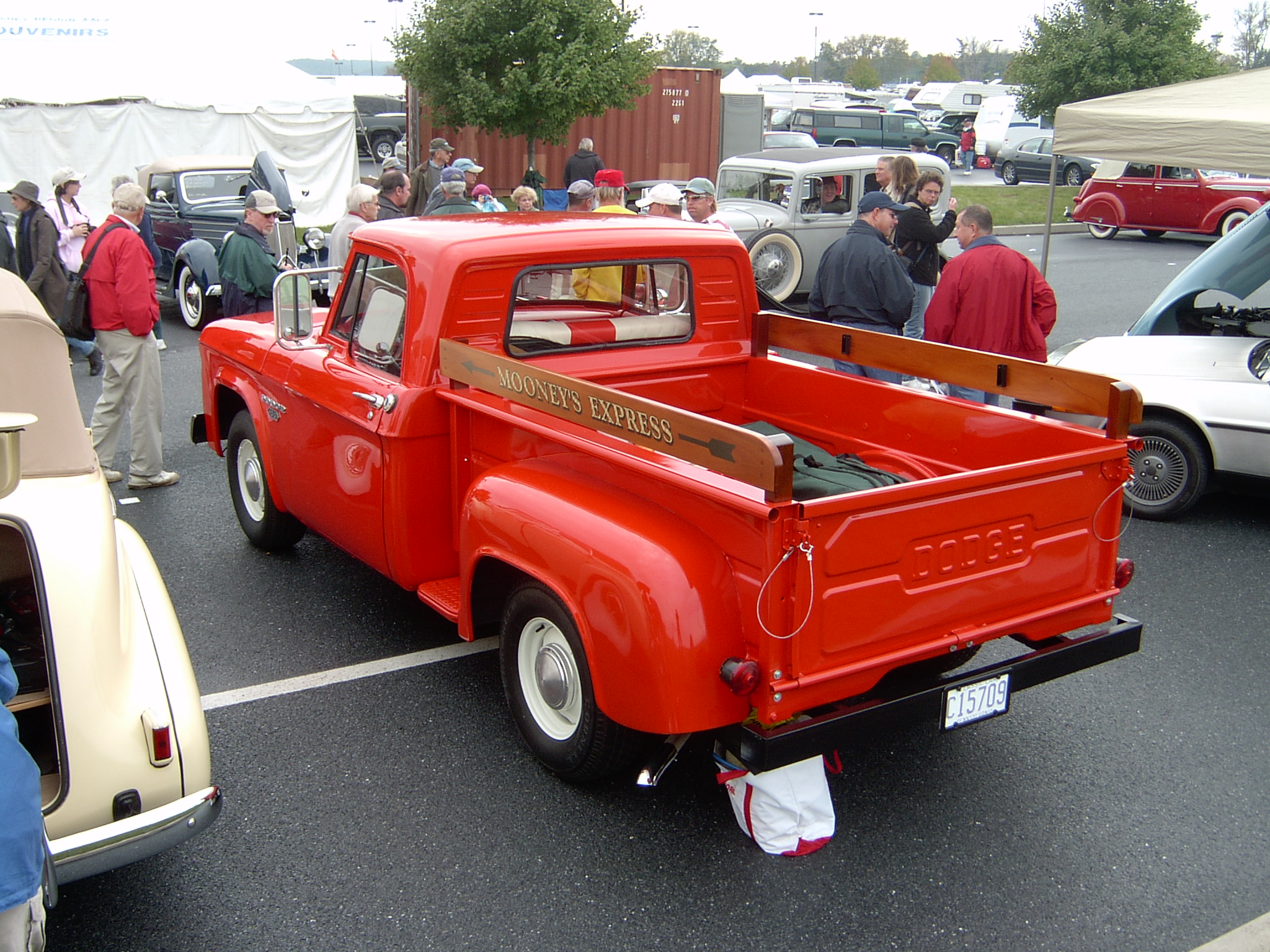
I’ve now gone back and found photos from visits which predated the beginning of my blog. My photographic coverage is not always as thorough as more recent visits – however, I’ll make the best of what I have. Here, we have jumped back 12 years to 2009. Most of the shots cover the Car Corral, and they leave me with the somewhat confusing impression that I was perhaps looking for a truck (I have never considered myself a truck guy). In retrospect, I believe that I had latched onto a suspicion that trucks were starting to gain traction as collector vehicles. Maybe I was right for once.
More older Hershey coverage will be posted in the upcoming weeks.
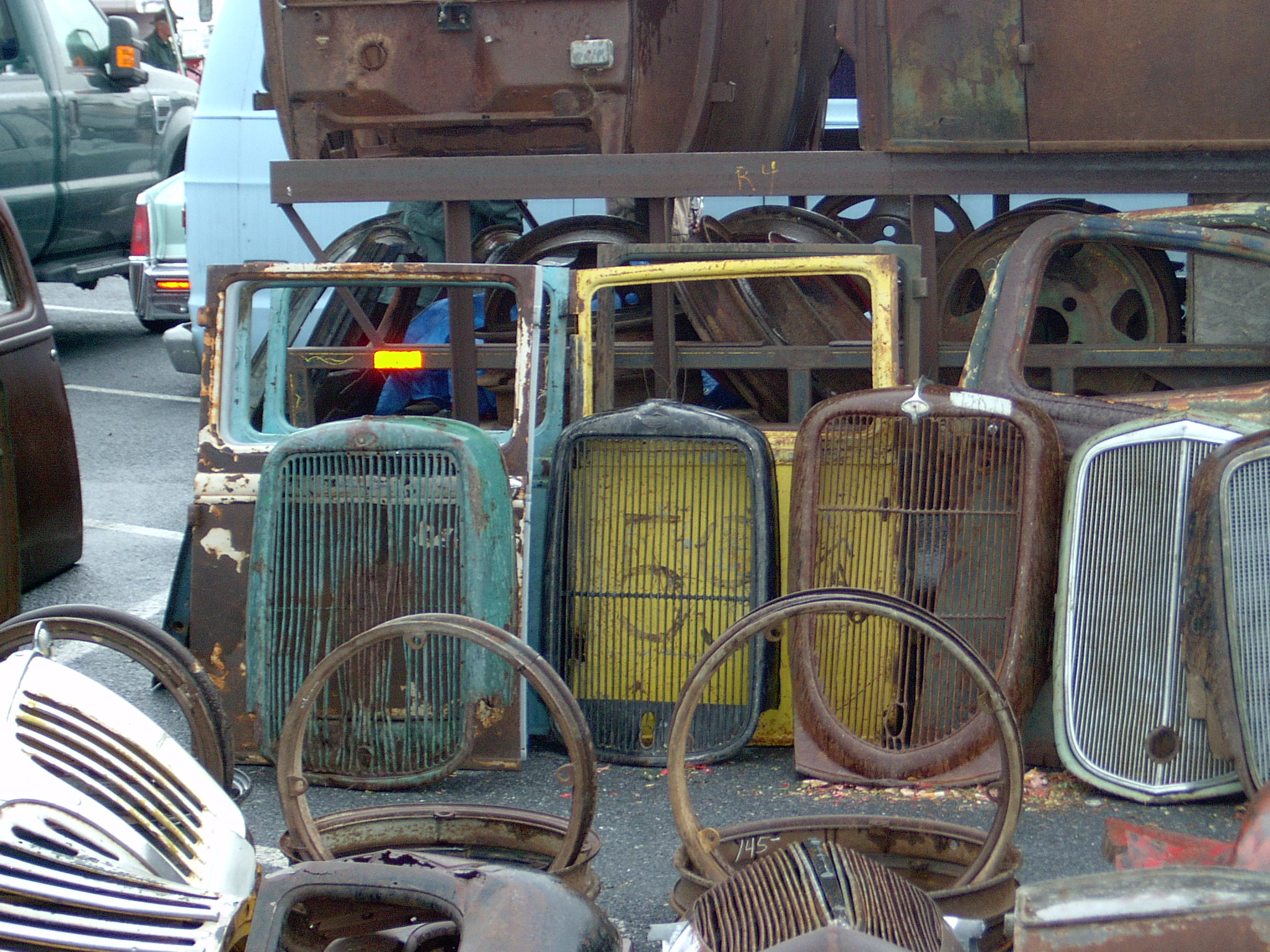
The Flea Market was still packed with plenty of original pre-war sheetmetal for your restoration needs
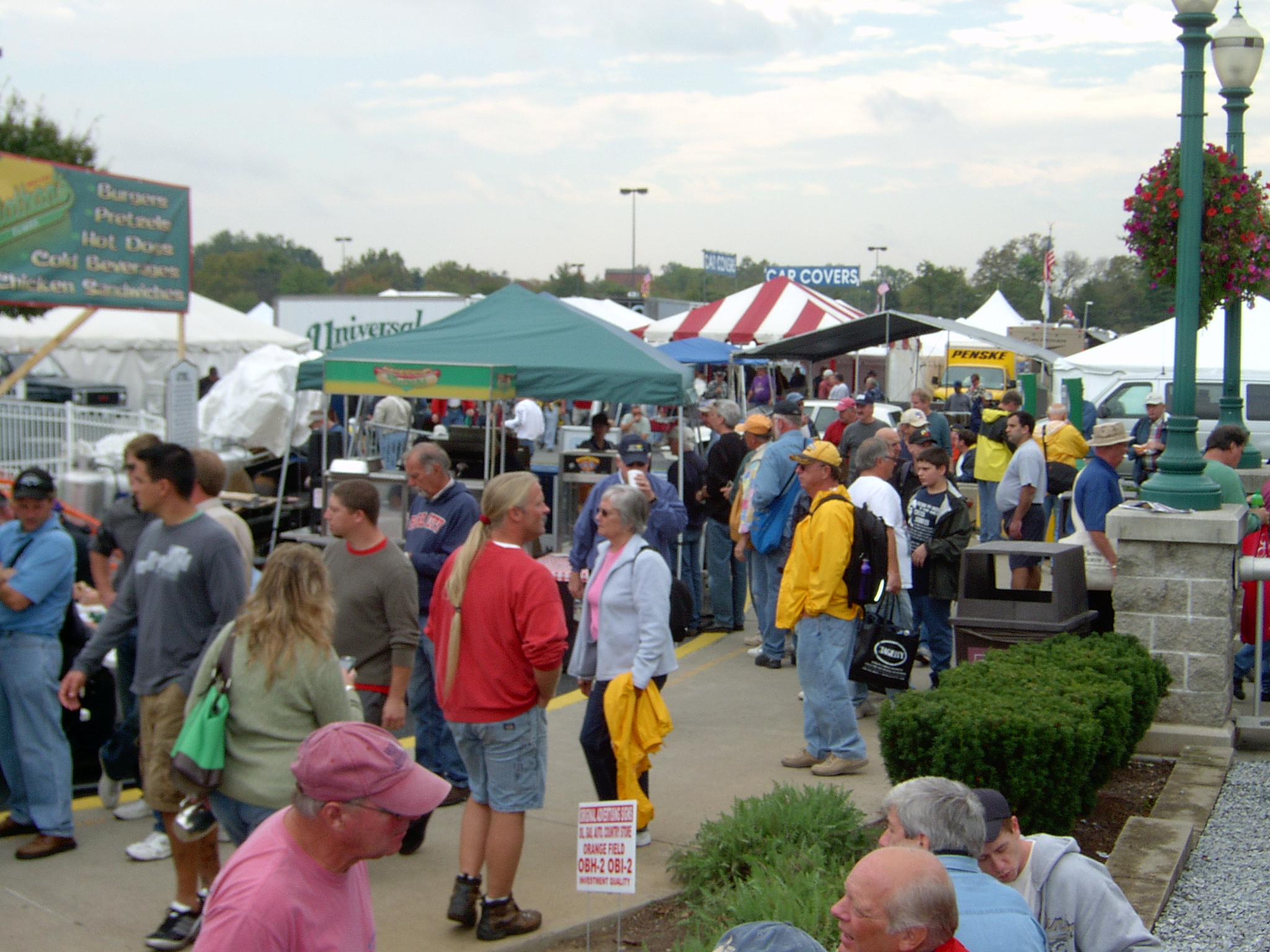
What, no masks? Oh wait, this was 2009. Attendance was still strong all week.
The owner of this 1940 Olds, on display in HPOF, claimed that it was one of the earliest Oldsmobiles factory fitted with an automatic transmission.
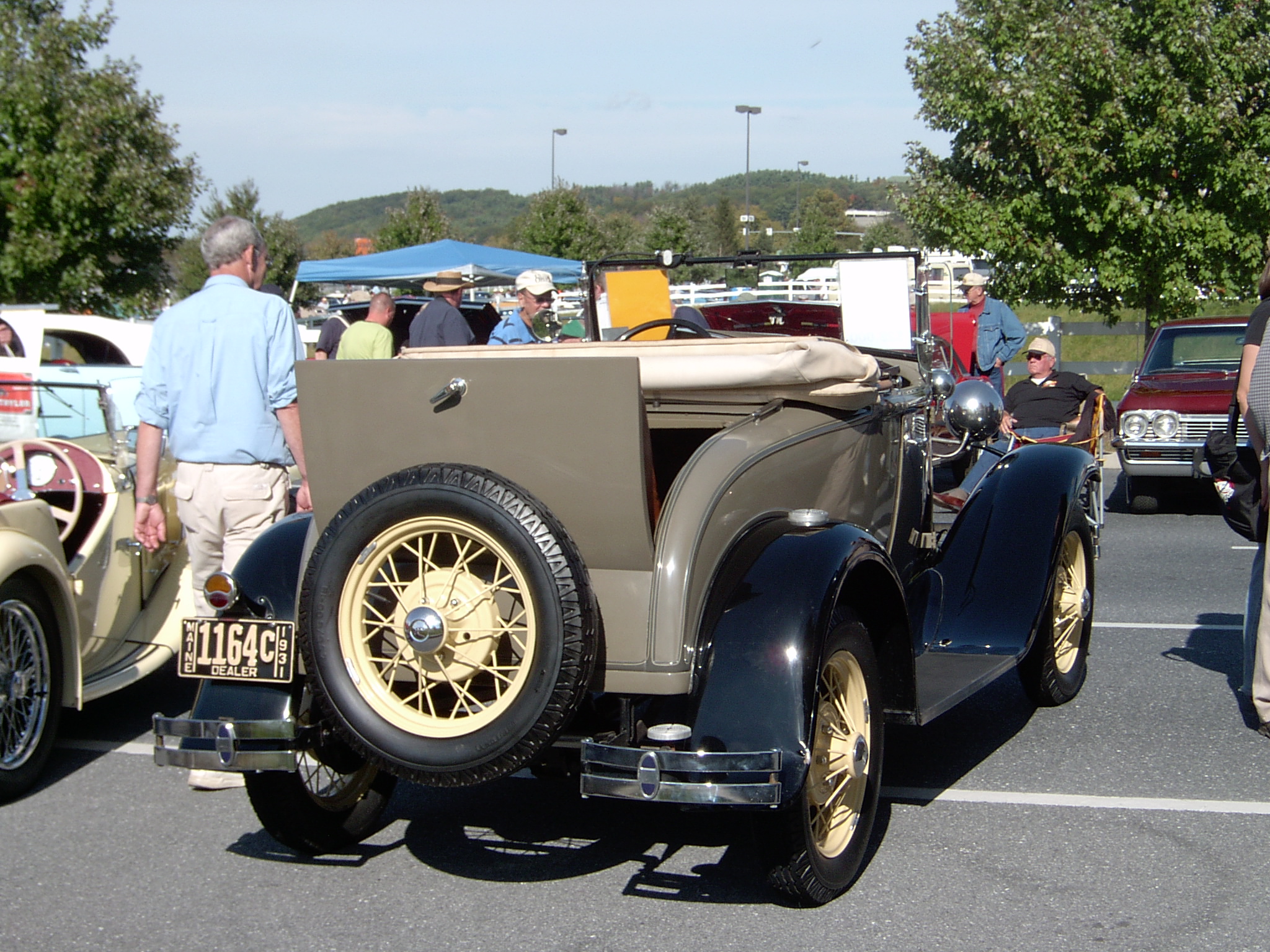
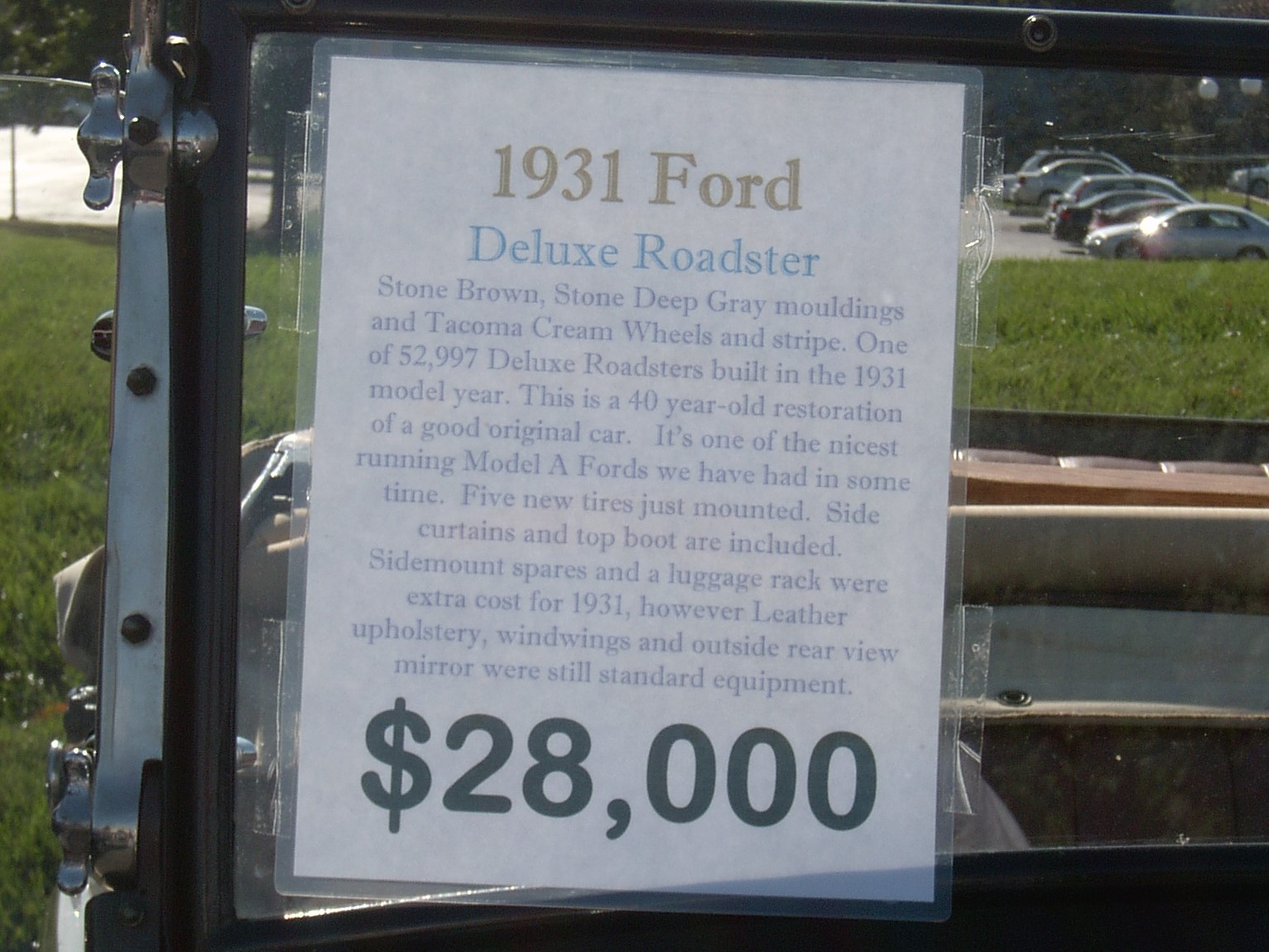
I took these photos for a friend who was looking for a Model A Roadster in the low $20s; this was the closest to that price I could find.
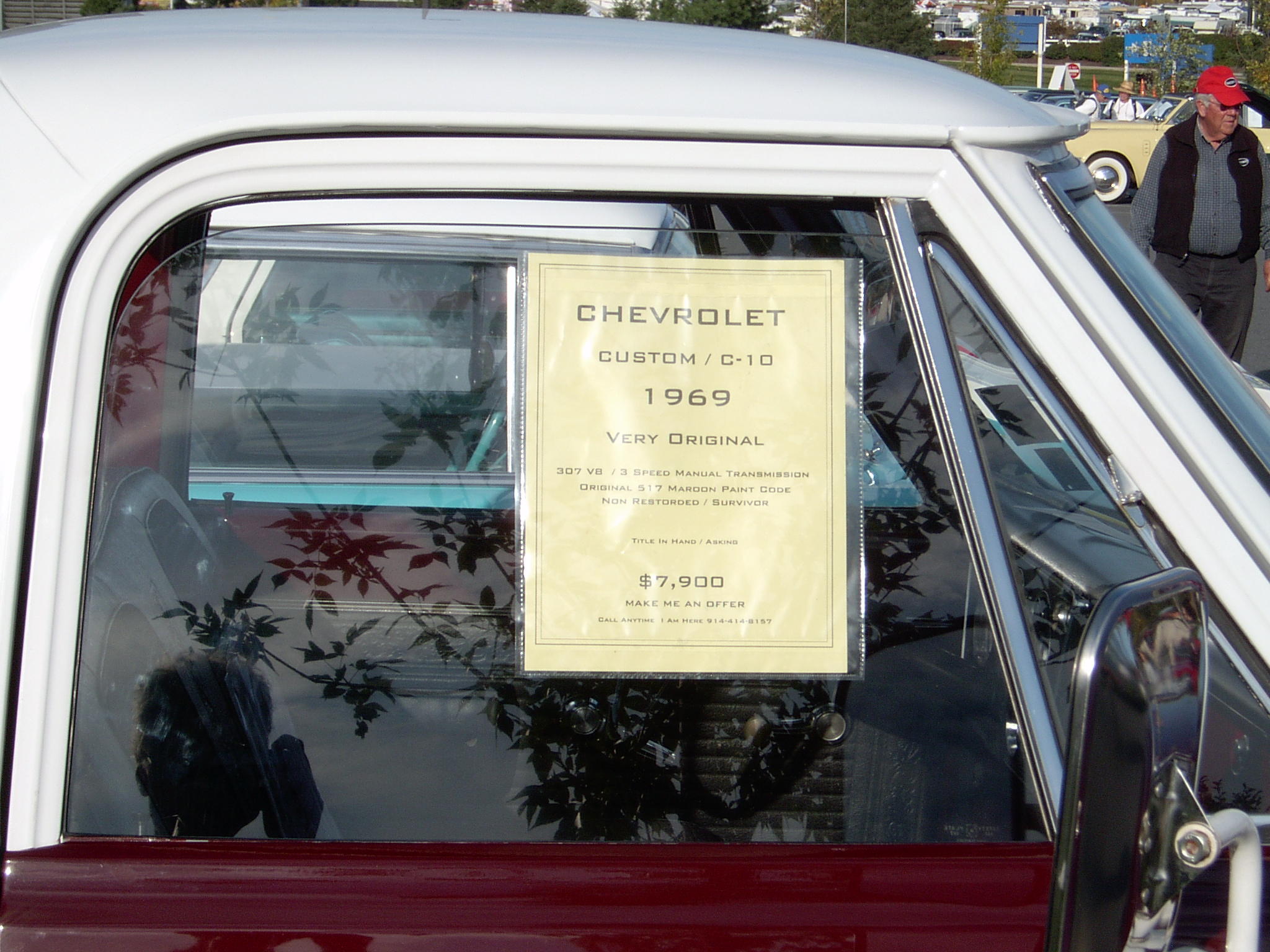
Even now I remember thinking this Chevy was a good deal in 2009; CPI values this truck in #3 condition at $17k and #2 condition at $47k.
Truck appears to be done similar to Lil Red Express; these were never as popular as Ford or Chevy pickups; CPI values this in #2 condition at $15k.
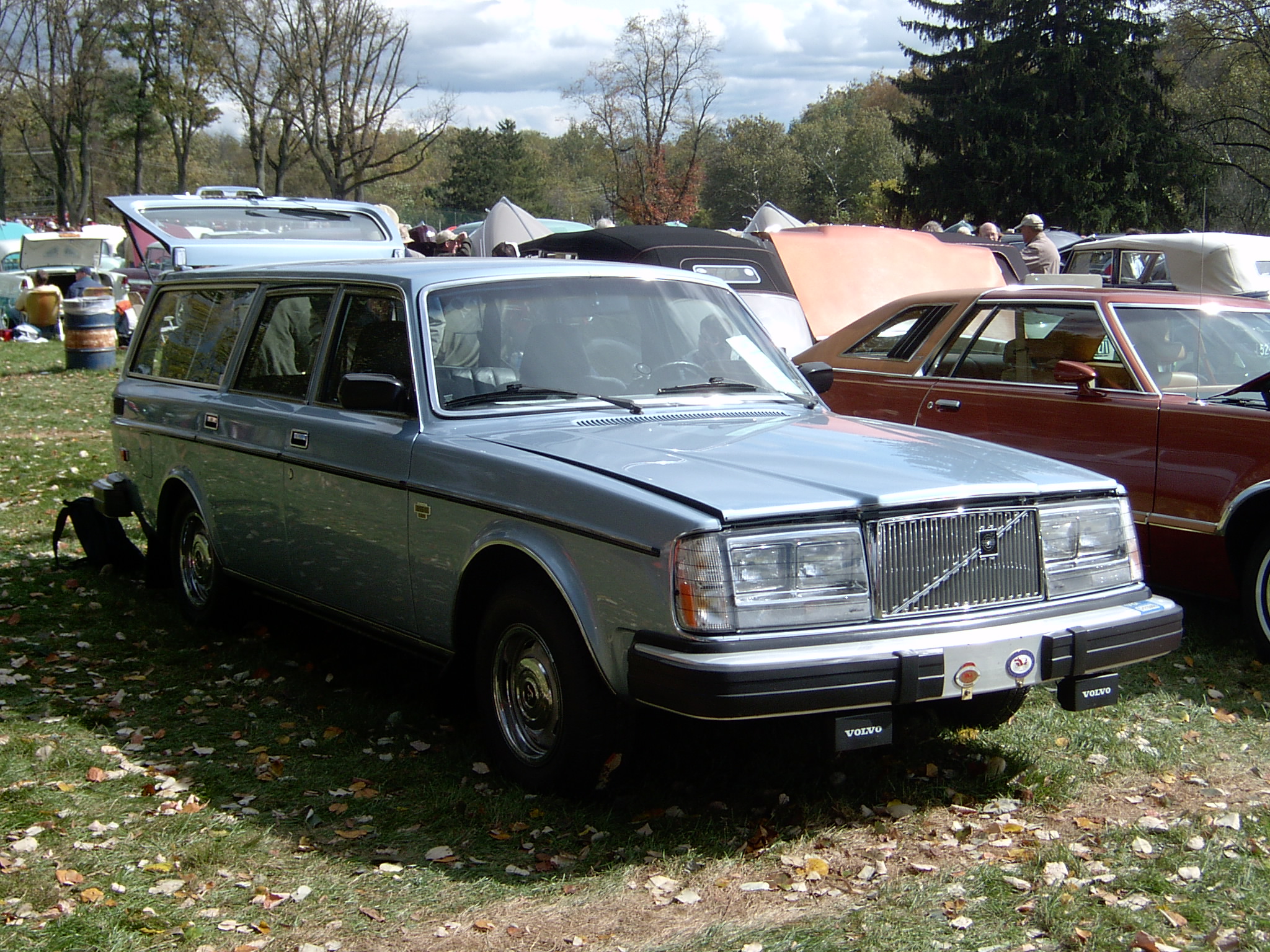
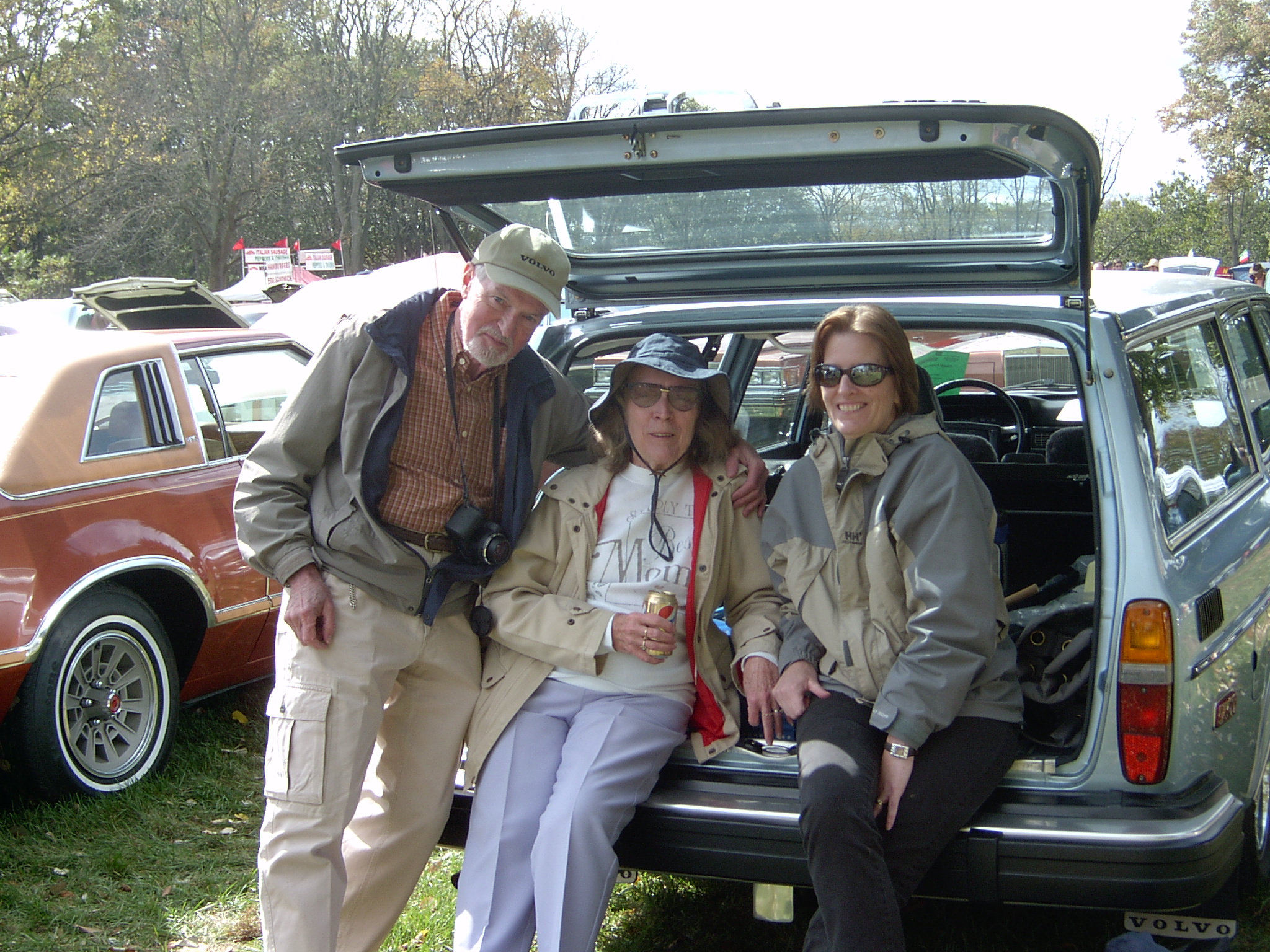
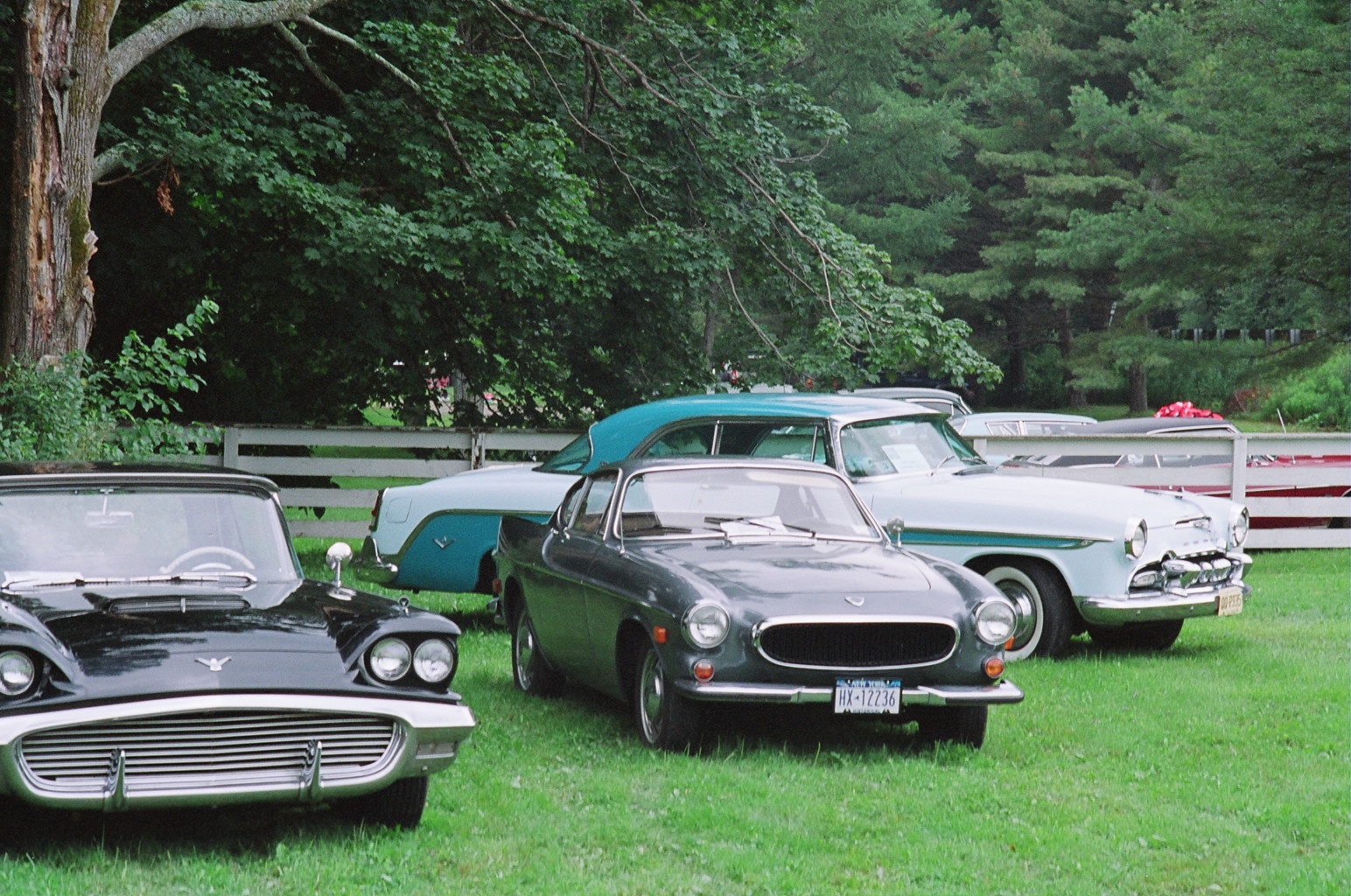
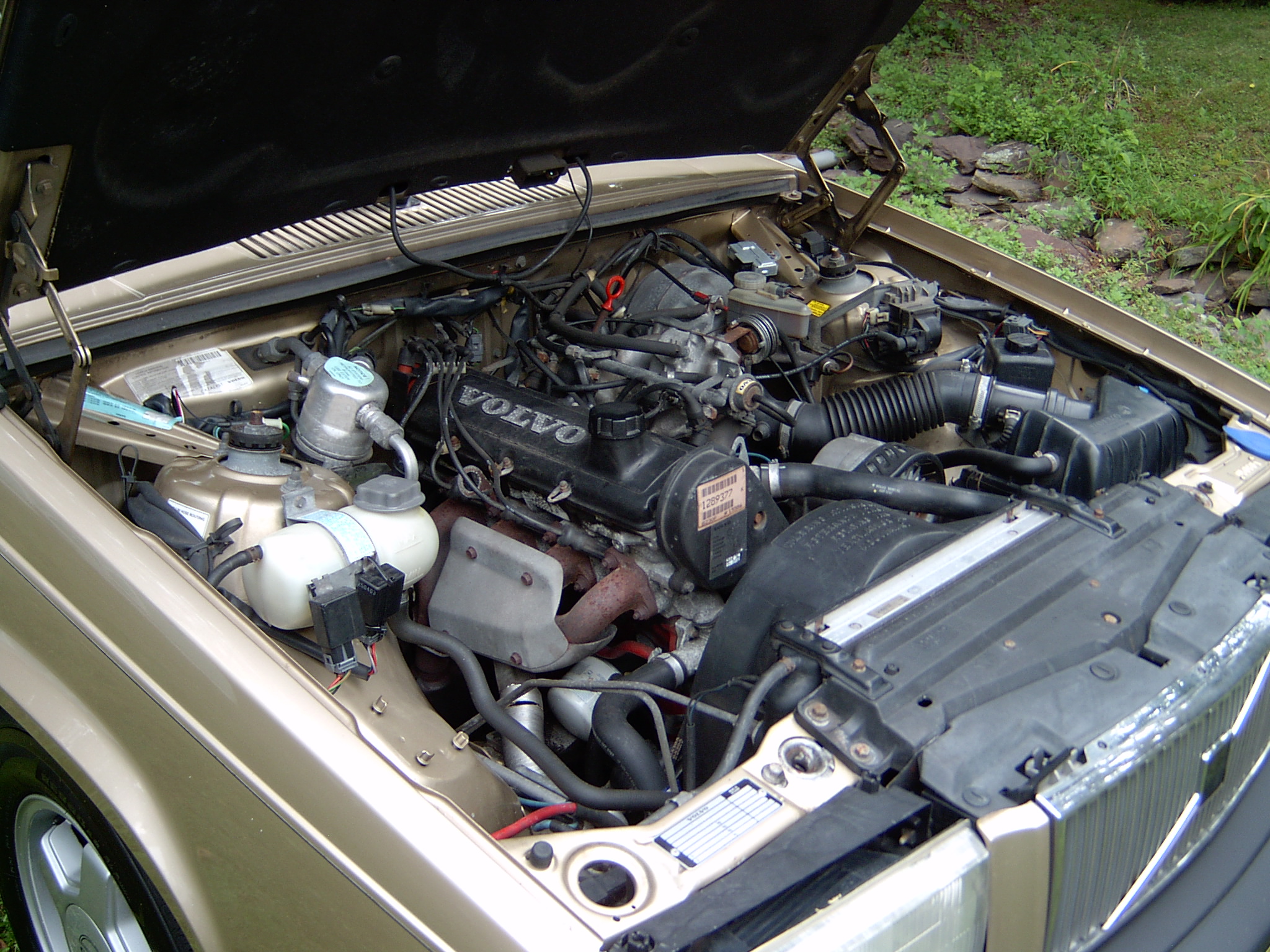
My dear friend Pete was there with his one-owner (him) ’79 Volvo 265; that’s Pete with his wife and my wife in the wayback. He has since sold this car.
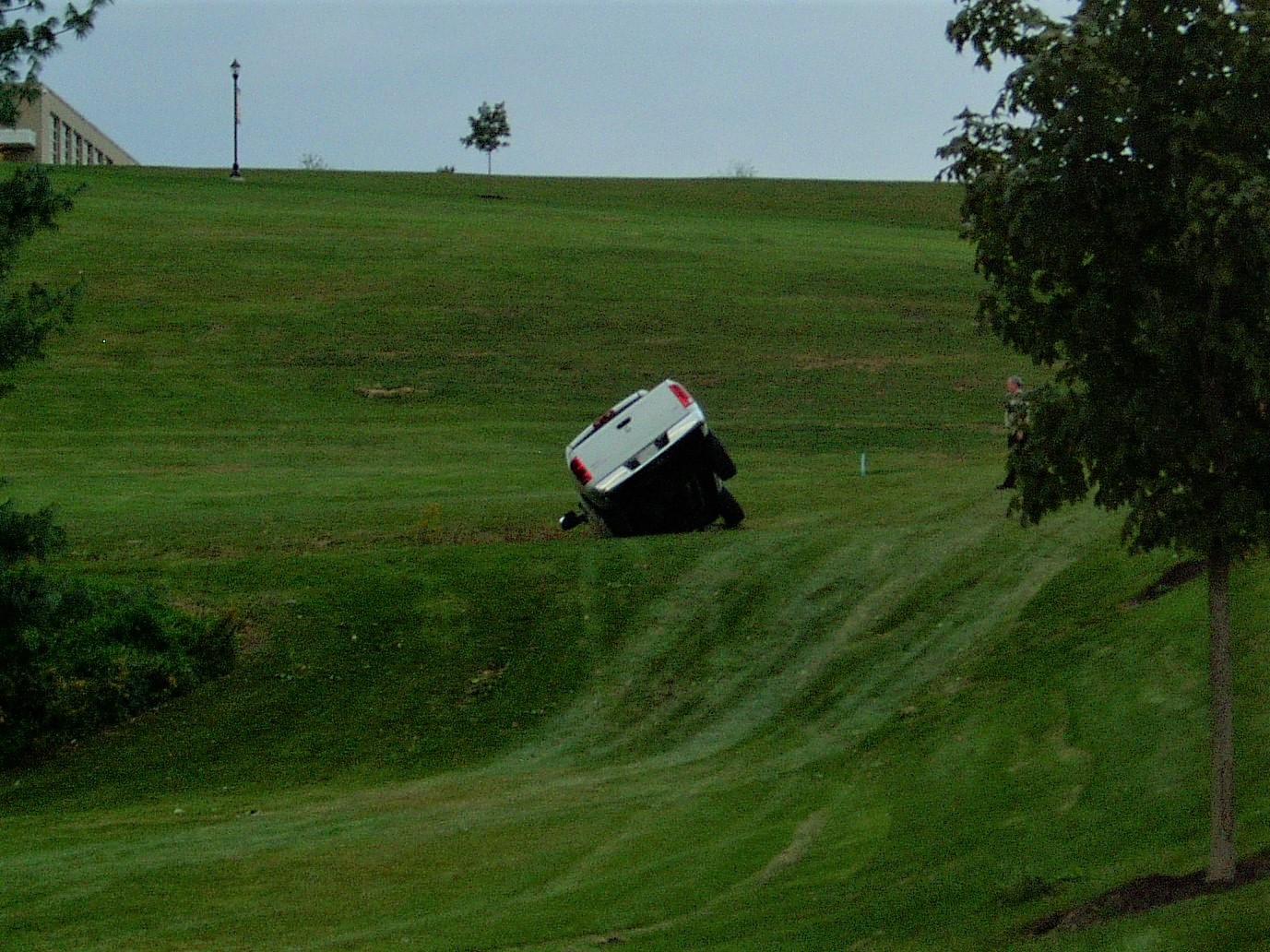
No, pickup trucks CANNOT go anywhere they want, at least not without getting into a little trouble.
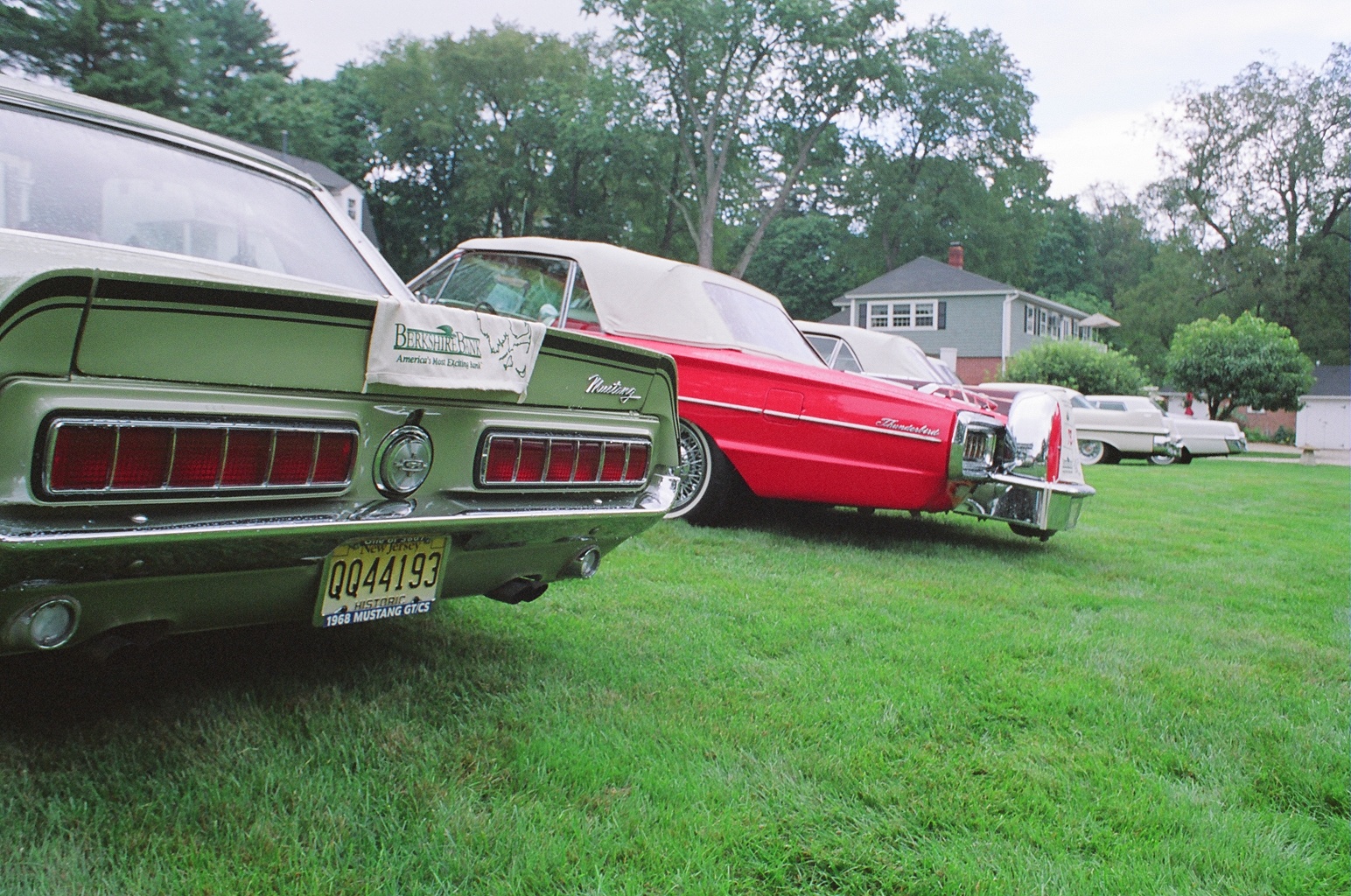
My wife came along on this one and enjoyed its more laid-back pace compared to the one NE1000 rally in which she participated, in 2001. We did this Berkshires/Springfield tour in my 1968 Mustang California Special, and she also appreciated the higher level of comfort than was offered in the MGB which was our ride in ’01.
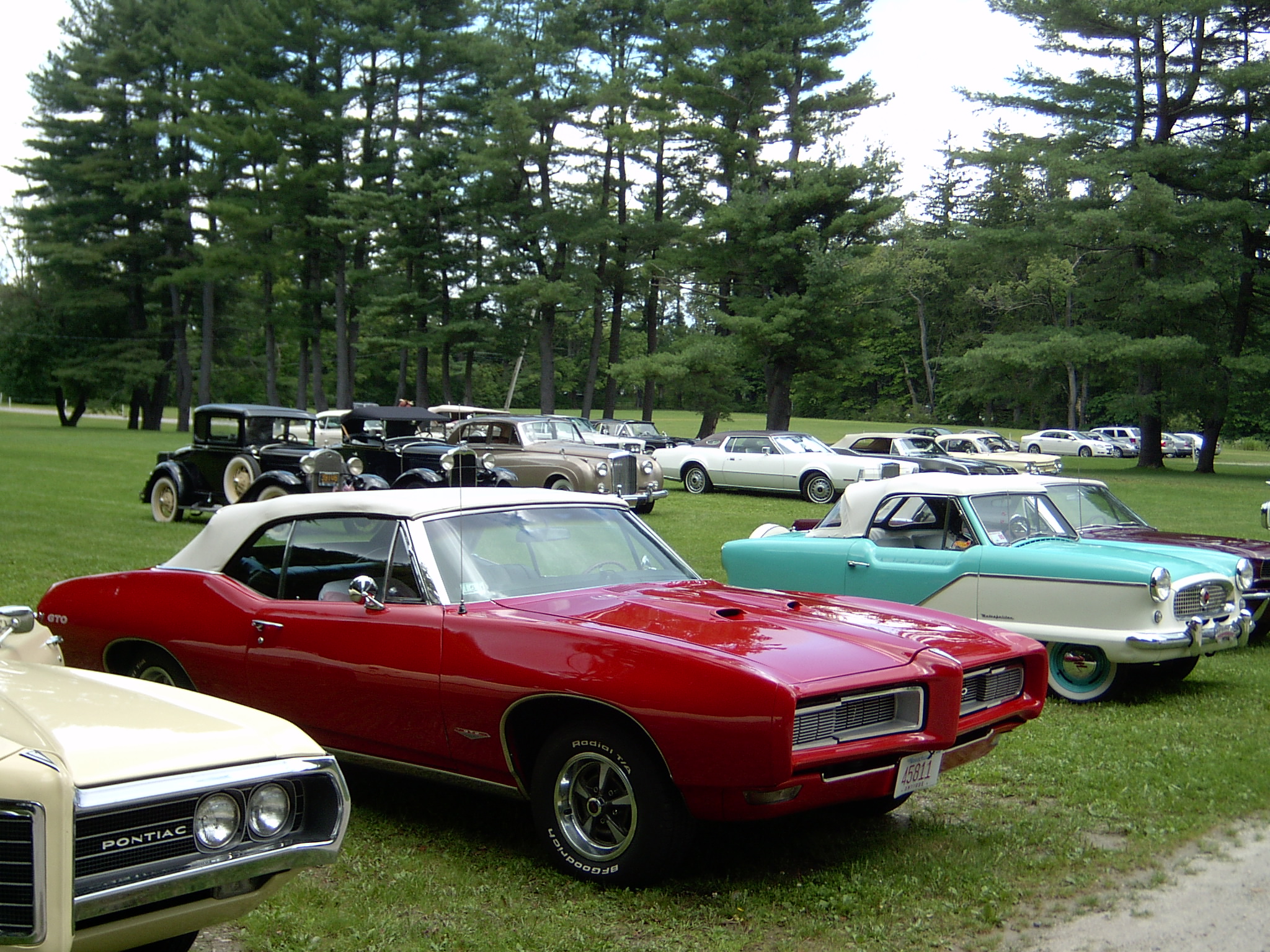
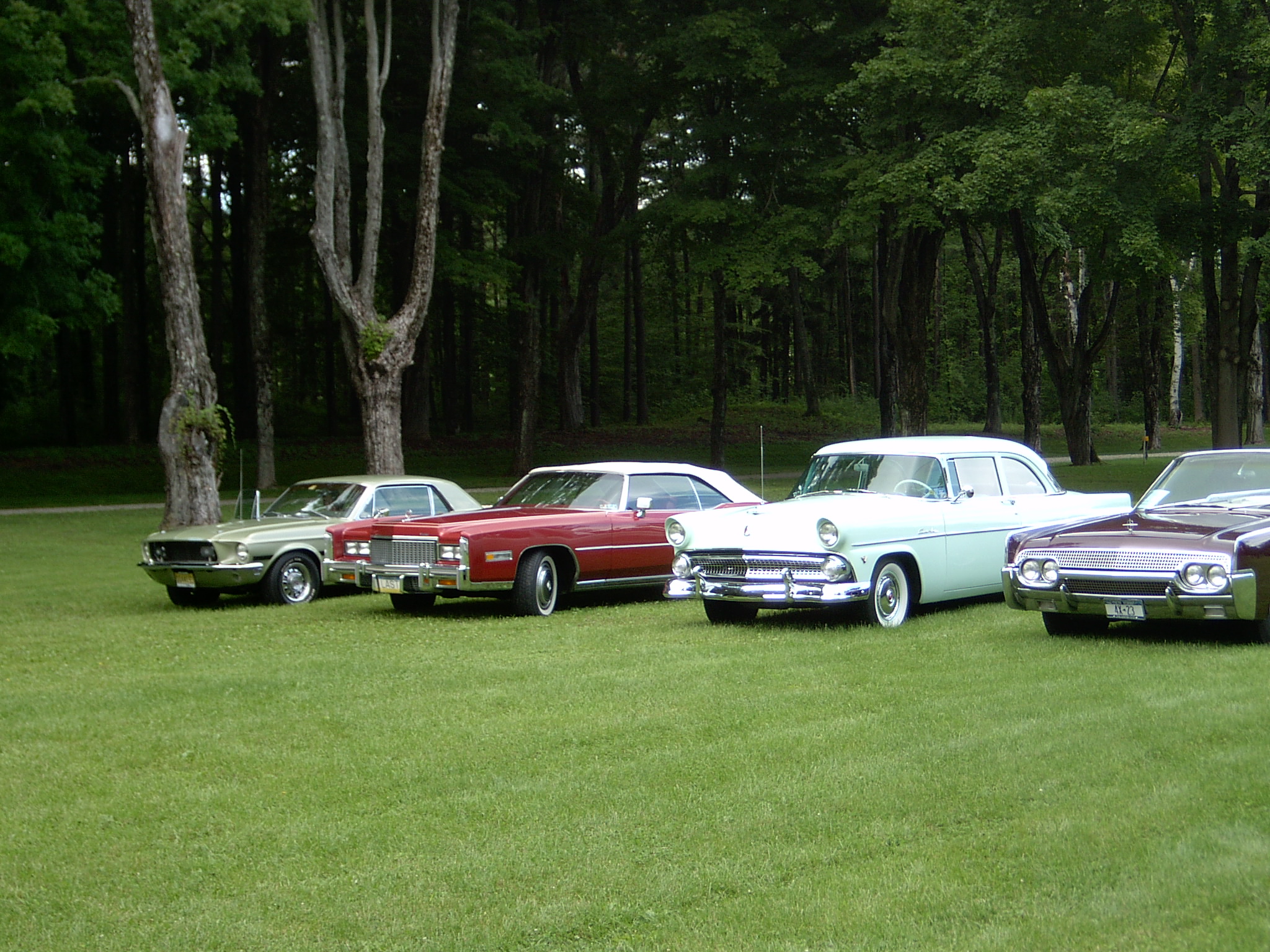
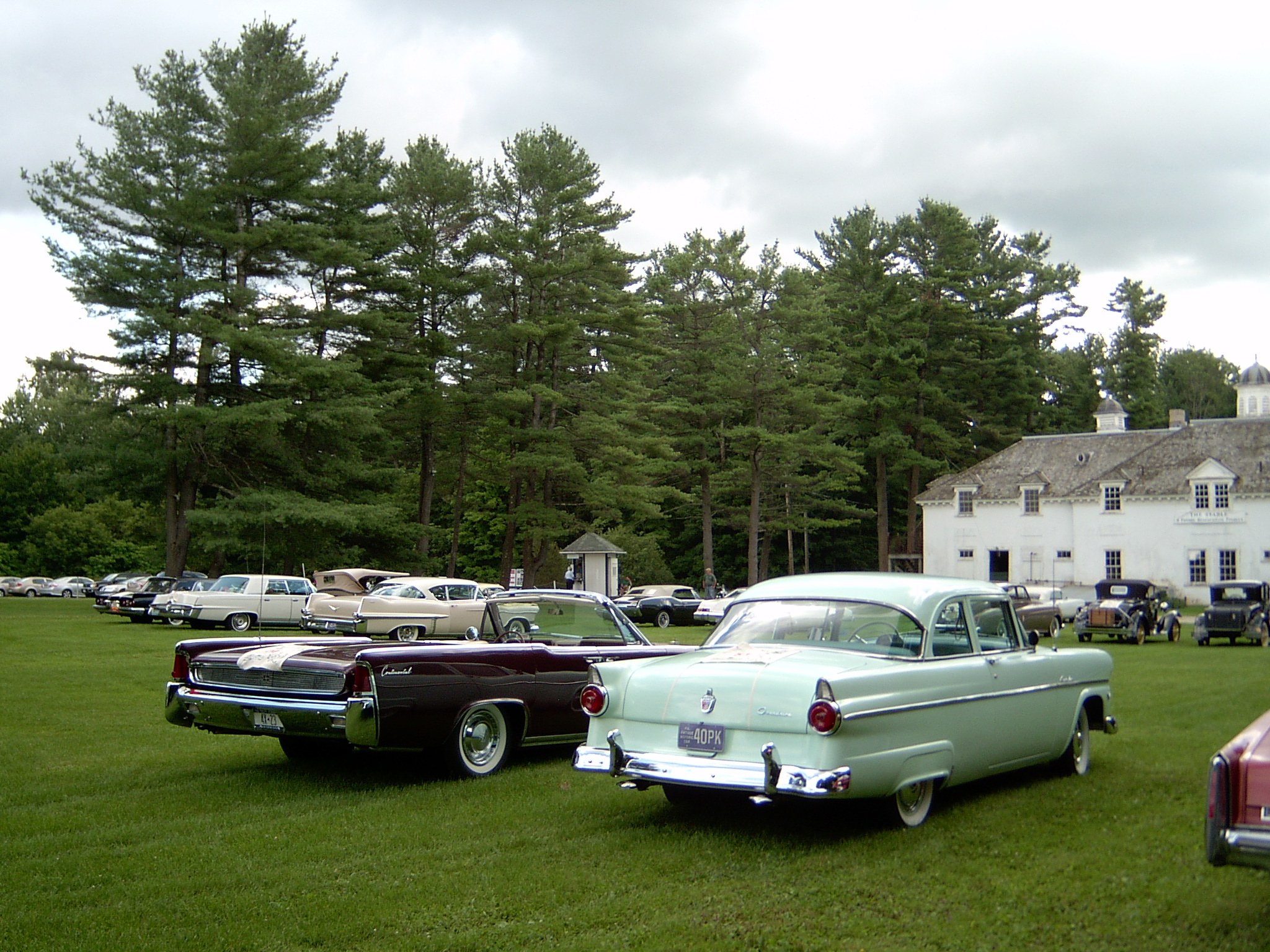
The accompanying photos reveal a change from 14 years ago compared to today’s tours: in 2008, most of the participating vehicles were truly “older cars”. You’ll see that vehicles from the ’40s, ‘50s, and ‘60s comprise the majority of the iron. Today’s tour vehicles are about 50% from the ‘80s and ‘90s (nothing wrong with that as they meet the AACA ‘twenty-five years or older’ rule), and about 50% modern iron, likely because the aging AACA membership is simply more comfortable driving their 3- or 4-year-old SUV with climate control, cruise control, and Bluetooth phone control.
A highlight of the week was our visit to Tanglewood. Tour participants were allowed to drive onto the grounds, and our cars became an ad hoc car show in the afternoon before the concert. While I was already a member of the National AACA when I signed up for this event, it was here where I met a small gang from Noo Joisy who corralled me into joining their Regional Chapter, where I’ve been a somewhat active member these past dozen years.
A note about the photos: these are a mix of digital and film photos, and could be one of the last times I depended on a film camera for documenting an event. Enjoy the shots!
I first heard of ADM (Additional Dealer Markups) around 1970, when the then-new Datsun 240Z was launched. The press reported that with demand so great for this Japanese sports car, dealers were asking, and getting, hundreds of dollars over its Monroney-label MSRP of $3,500. (There is some misunderstanding about the legally-required Manufacturer’s Suggested Retail Price. The law says that vehicle manufacturers must establish and publish the MSRP; however, dealers, as independent businesses, are free to ask any price, lower or higher, than the MSRP.)
Since that time there have been innumerable cases of car dealers applying ADM to high-demand vehicles. My initial exposure to it was in 1986 when I worked for the first Acura dealer in New Jersey. Dealer management thought that the new Legend, with an MSRP of $19,298, could easily command another $3,000, and “ADM” labels were affixed to the cars. However, as I was working both service and sales for that fledgling dealer, I don’t recall anyone actually paying over sticker for a Legend. The Mazda Miata, introduced in the summer of 1989 as a 1990 model, created enough demand that dealers were successfully getting their requested ADM. Most recently, the same has been happening with the popular Kia Telluride (my daughter-in-law’s brother admitted paying $2,000 over sticker for his, but saved face by still claiming he got a great deal because today’s pricing is supposedly $10,000 over sticker).
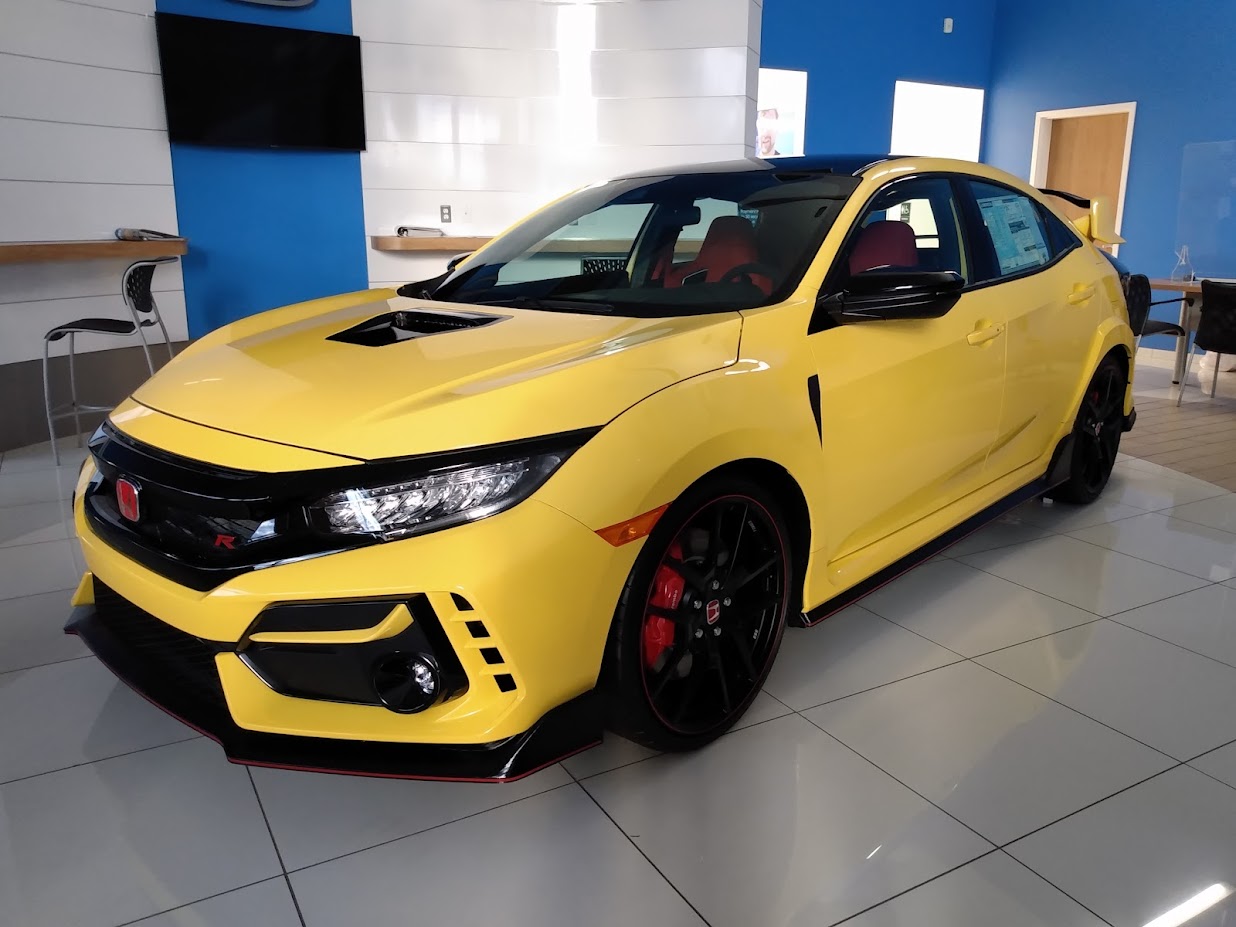
Over the weekend, I brought my wife’s Honda to our local dealer for routine service, and waited there while the work was done. Wandering through the showroom, it was impossible to ignore the bright-yellow Civic 4-door in the corner. It was a 2021 Civic Type R Limited Edition, and this one really is limited: only 1,000 copies worldwide, with 600 coming to the U.S. Compared to the “regular” Type R, the LE sheds 46 pounds, mounts track-ready Michelins on lighter forged aluminum wheels, and adds other performance goodies. Yellow is the only color choice. The Monroney grabs as much attention as the searing paint: MSRP is $44,990. But wait, there’s more: the “Limited Edition Market Adjustment” label tacks on another $50,000, for a final price of $94,990.
Yellow is the only color choice for this Limited Edition model
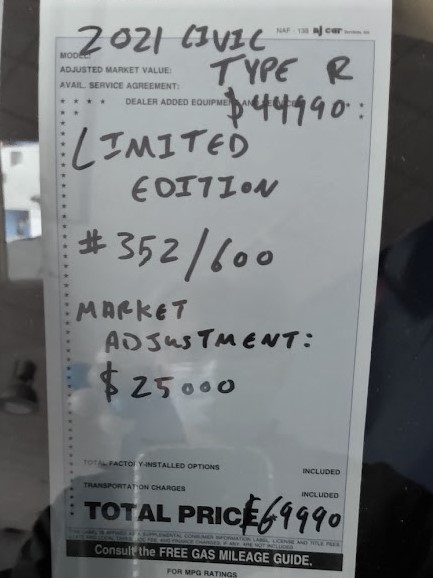
Something had a ring of familiarity to all of this, so I scanned through my photos from earlier this year and discovered that I had taken a snapshot of a similar label six months ago at this same dealer. At that time, the ADM for that car was “only” $25,000. Then I caught the “Limited Edition Number”: in both cases it’s #352 of 600 – it’s the same car!
May ’21: ADM of $25k for #352
Dec ’21: ADM of $50k for #352
This Honda dealer has had a 2021 Civic Type R Limited Edition in its showroom since at least May of 2021. In May, the ADM was $25,000. Six months later, still not sold, the ADM for this same car has doubled to $50,000. Is this a marketing strategy? We are less than a month away from calendar year 2022; this 2021 Civic Type R is growing old as it sits. Honda has announced that there will be a 2022 Type R, but it’s not out yet, and there’s no word about a Limited Edition.
From the dealer’s point of view, if you want the LE, they have one, and you’ll have to pay the price. From the consumer’s point of view, this car is already one model year old, and one might be inclined to wait for 2022 model to arrive, never mind giving consideration to what else the $95,000 burning a hole in your pocket could buy.
My take? Personally, the dealer can do whatever it pleases, however, this kind of approach can backfire if it’s perceived that the dealer is gouging, even if you’re not in the market for this model. I also don’t think they will get their ask; ten grand over is a maybe. Finally, I don’t picture the target audience for this car having the scratch, and if they did, the competition in this price range is formidable (my three examples just touch the surface of choices).
What do you think of Additional Dealer Markups in general, and of this dealer’s approach with this particular car?
(My Take is a new blog category which will publish on a non-regular basis. It is here where I will put forth ‘my take’ on some automotive trend of the past, present or future. These posts will be primarily text and will feature few or no photographs. Your comments are invited!)
I’m a fan of many different brands of automobiles. Volvo comes to my mind first, largely because I worked for the brand for 30 years. While I would not consider myself a Volvophile in the sense that I think every Volvo ever made is wonderful (I know better than to think that), there are certain standout models to me. Chief among them is the somewhat rare 1971 142E, a 2-door sedan only available in a limited choice of metallic paints, with a leather interior and most importantly, the first fuel-injected engine in a 140-series. I’ve driven a number of them and I would choose one of these over an 1800 sports coupe without hesitation. Similar to this 142E are the first batch of 242 Turbos from the early ‘80s, which drove unlike their more pedestrian non-turbo brethren. Those original turbos had good acceleration, fine handling, and were comfortable to boot. I was very smitten with the 2003 V70 I had for about eight years; it was a non-turbo stick shift car, which made it somewhat unusual. I bought it with around 50,000 miles on it and sold it with 200k on the clock. The moment the new owner drove it out of my driveway I had seller’s remorse. The 2016 V60 AWD I have now helps alleviate that remorse.
I like Ford Mustangs a lot, although now I’m commenting about a make AND model. Having owned both a ’67 and a ’68, those are the ones I prefer, and recently I have found the Fox-body cars from the 1980s to have strong appeal. I’ve never owned one, but I could see that changing during the next few years, especially if it’s the SVO model of ’84-’86 with its European-inspired styling and 4-cylinder turbo engine.
Hondas are great, and that opinion goes back to the 1977 Accord 3-door hatchback which my mom bought new. Although equipped with the somewhat dreadful 2-speed semi-automatic “Hondamatic” transmission, driving that car was my first large-scale exposure to Asian vehicles and it was a revelation. Looking back, it is no surprise that Americans, when faced with the choice of a malaise-era domestic product or this $3,995 wonder from Honda chose the latter in droves. About 20 years ago, my wife bought a new ’99 Civic stick shift which she had for years; aside from routine oil changes, that car went 80,000 miles with repairs limited to a set of tires and front brake pads. Nothing else broke. At present, she drives an Odyssey and while she despises the sheer bulk of it, it has been as dependable as her Civic was.
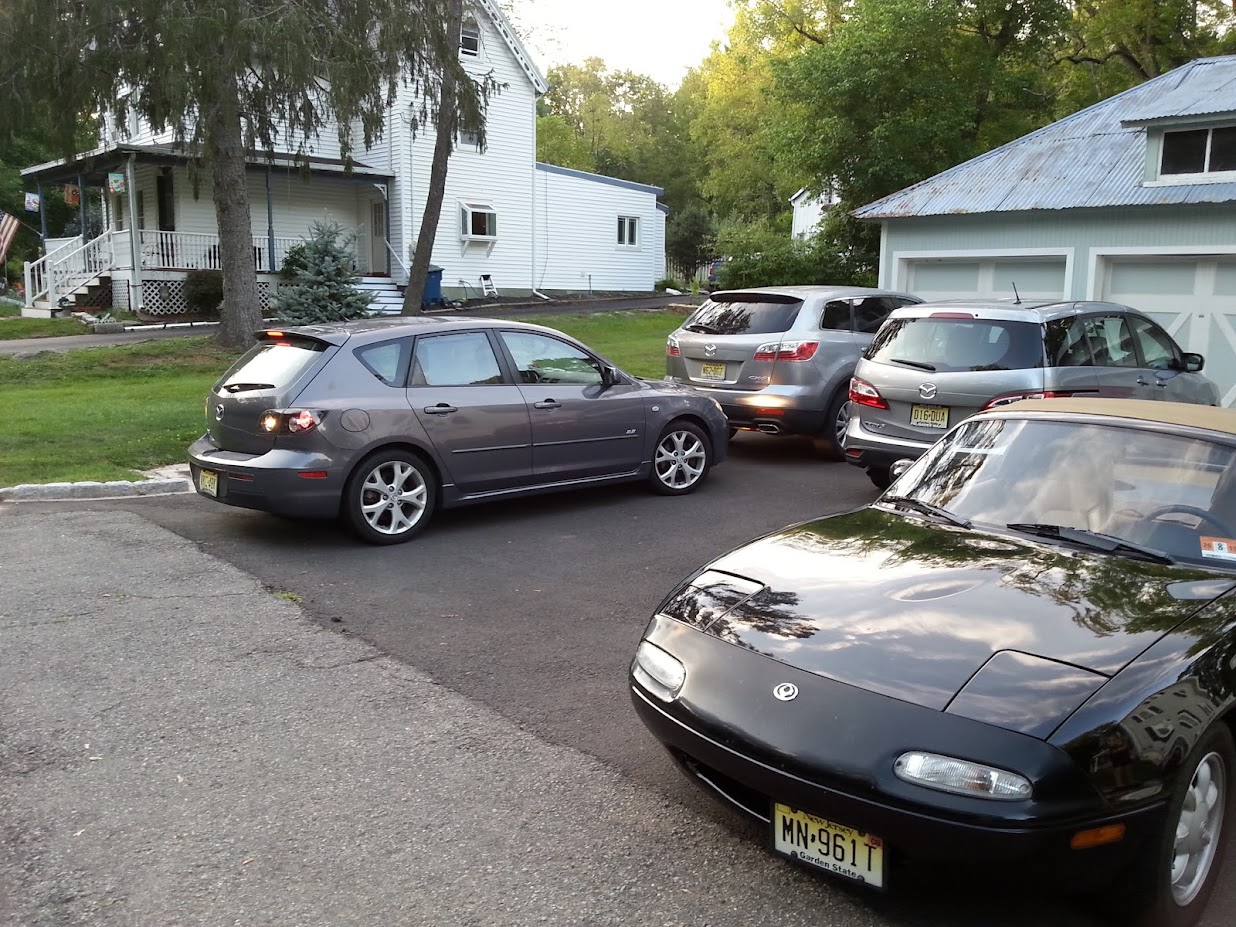
Mazda is yet another brand of which I’m very fond, and with which I’ve had a lot of seat time. Regular readers of my blog know that I’ve owned my 1993 Miata for over 25 years, plus there have been other Mazdas in the family. We have had both a Mazda3 and a Mazda5, and both were fun to drive. My stepson had a Mazda3 he bought new, and is still driving the CX-9 he bought over 10 years ago and which has served him well. Ages ago, a good friend bought a new first-generation RX-7 with its novel rotary engine, and as soon as I drove his, I understood what all the hoopla was about. Other Mazda models within my circle of infatuation include the second and third generations of the rotary RX-7, the RX-2, RX-3 and RX-4 rotary cars of my teenage years, and even the CX-7 SUV, which I thought was one of the better-looking crossovers of its time.
Four family Mazdas in my driveway
I want to explore Mazda as a brand a bit more, mainly because compared to Toyota, Nissan, and Honda, Mazda has not launched an upmarket luxury brand, although they have considered the concept. Most car enthusiasts know that Honda began this trend with their launch of the Acura nameplate in 1986. It took a few years, but in 1990, Toyota followed suit with the Lexus brand, and Nissan did likewise with Infiniti. There was a major engineering difference, though, between Acura and the two other luxury upstarts from Japan. The initial Acura models, the Integra and Legend, continued with FWD as had all recent Honda models. The Integra, built on a Civic platform, used only 4-cylinder engines, while the Legend debuted Honda’s first V6 for road cars. (The Accord would not get this V6 until 1995.) Infiniti and Lexus also introduced several models at launch, however, their largest models, the Lexus LS400 and the Infiniti Q45 were both built on RWD platforms and were powered by V8 engines, the better to compete with their targeted rivals from BMW and Mercedes-Benz. Both these German marques had based their entire success on big engine rear-wheel-drive cars to deliver power, comfort, and control. Acuras drove like, well, the FWD Hondas upon which they were based.
While this was going on, Mazda toyed with the idea of following a similar path, and went so far as to introduce a new nameplate, Amati, as their upscale brand. The plug was pulled on Amati for reasons too involved to relate here, but one vehicle originally intended for the Amati franchise was eventually sold in the U.S. as the Mazda Millenia. Like the Acura Legend, the Millenia had a V6 engine sending power to the front wheels, so it would not have been a direct competitor to the LS400 and Q45. With the exception of the sporty Miata, RX-7, and RX-8, all recent Mazda car models have been FWD with AWD an option on some.
News broke in 2020 that Mazda was developing a new platform for its aging Mazda6 mid-size car, and for the first time, this model would be switching to a RWD platform. Possibly even more shocking was the accompanying news that the new platform would include a longitudinally mounted inline-6 engine. On the whole, most cars and smaller SUVs use transversely-mounted engines both to save space and to make it easier to deliver power to the front wheels. Mazda’s new platform is certainly bucking the trend, and I would argue that the inline-6 is just as ground-breaking as the change to RWD. At present, very few engines in new vehicles are inline sixes. BMW never stopped building them, and Mercedes-Benz recently switched away from V6 engines and back to straight sixes.
Why the change? There are many good reasons. One is manufacturing logistics. Companies building inline-4 and inline-6, and in some cases inline-5 engines, can find economies of scale if these engines share cylinder displacement, bore spacing, pistons, con rods, and other parts. Inline engines use fewer parts than V-shaped engines, that is to say, fewer cylinder heads, camshafts, and exhaust manifolds to name some obvious examples. Another is the realization that an inline-six is inherently more balanced than a V6, and provides a smoother power delivery. Another factor, and a big reason why Benz switched, is adaptation of hybrid technology. An electric motor can more easily be accommodated, and that motor provides both a propulsive boost and acts as a combined starter/alternator. The upgraded electrics, at least in the Benz, also eliminate belt-driven power steering pumps, water pumps, and A/C compressors, which are therefore electrically operated.
One would easily presume that this new Mazda platform is a signal that they are finally entering the market with a new luxury marque, but the home office is indicating otherwise. Mazda, it seems, will be trying to straddle the line by moving some of its brand upmarket, while still selling “economy cars” like the Mazda3. By the way, although I mentioned the Mazda6 car, this new platform may see greater use under the next generation of Mazda SUVs, to be precise, the replacement for the CX-9, and possibly the return of the CX-7. Mazda hopes that these new RWD-based sport utilities will prove to be competitive with the ever-expanding field of near-luxury SUVs, meaning everything from the Subaru Ascent and VW Atlas to the Acura MDX and Volvo XC60, not to mention the plethora of German SUVs from Audi, BMW, and Mercedes.
Will it succeed? My built-in favoritism for Mazda makes it difficult for me to answer objectively. Of course I hope they succeed. One way in which this might happen is by establishing the uniqueness of this architecture within the competitive set. Doing so will require educating the average customer as to the advantages of a longitudinally-mounted inline engine driving the rear wheels. I know from owning FWD, RWD, and AWD cars that the rear-drive cars offer the best ride, as long as one doesn’t need the traction advantages of FWD. Customers should also be made aware that the inline-six-cylinder engine is one of the great underappreciated motor configurations. Finally, depending on pricing, which we obviously won’t know for a long time, the value-for-the-money equation should help drive home the advantages of a near-luxury Mazda which is still labeled a Mazda.
Mazda may be taking what seems like a cautious approach, but they know the costs and risks of investing in an entirely new brand. A new marque’s necessity for a ground-up dealer network is a financial trap of particular concern from which it may be difficult to recover. I am hopeful that future Mazda models which share engineering features with luxury makes but which are priced to the consumers’ advantage makes for a winning formula for them.
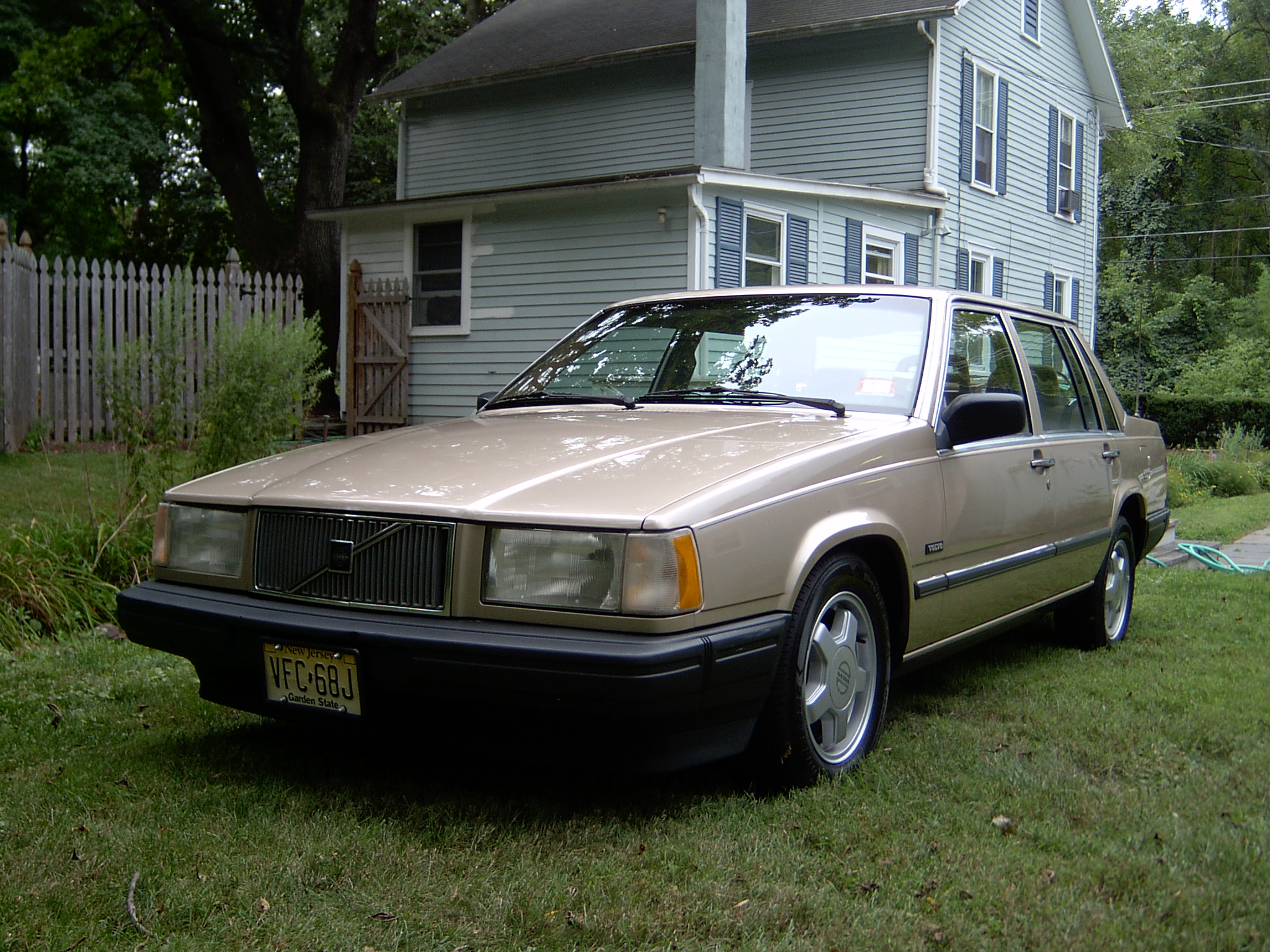
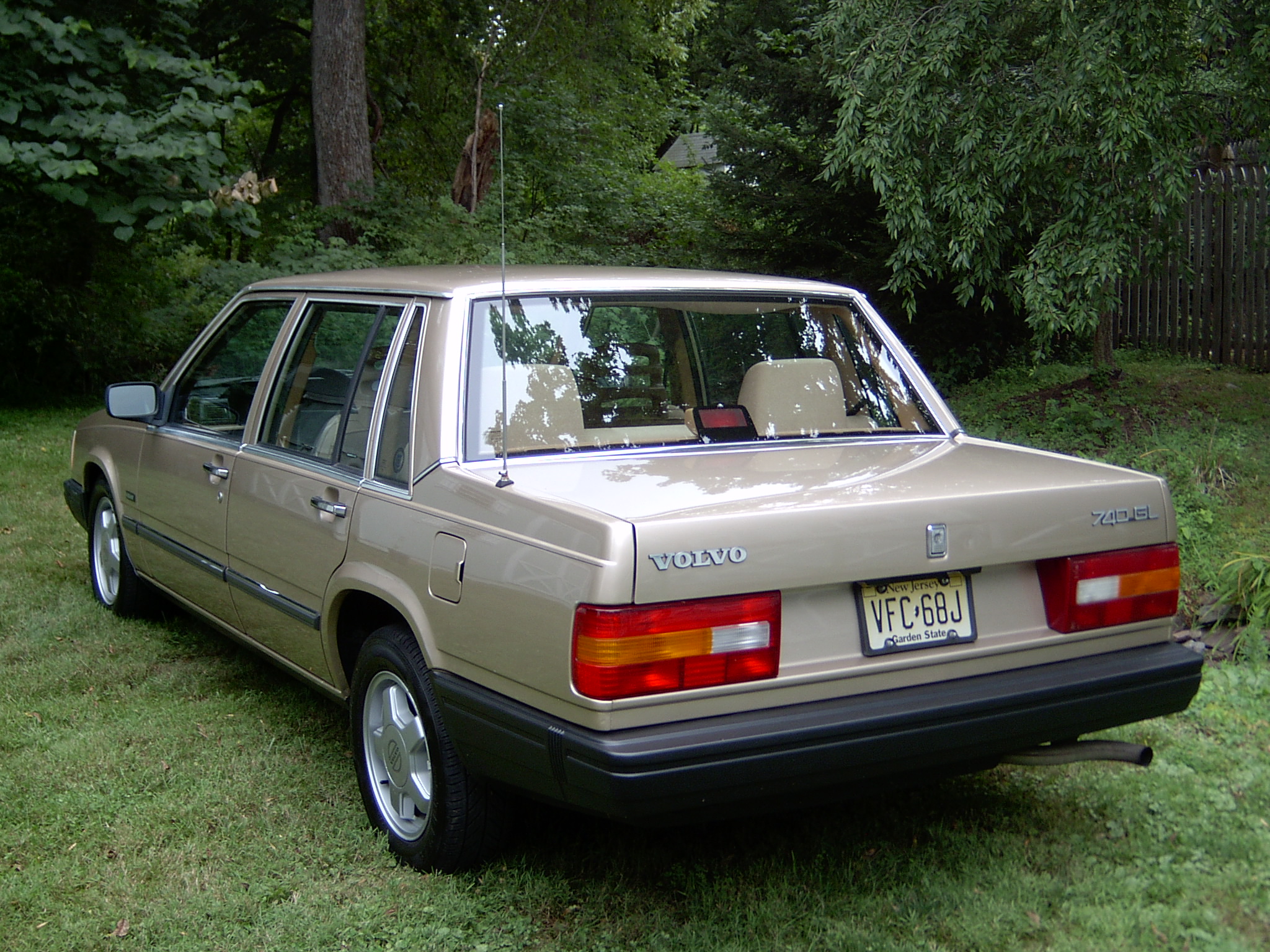
After ten dynamic years working as a field representative for VCNA (Volvo Cars North America), during which time a company car was a business necessity, in 2006 I was transferred back to headquarters. Part of the initial discussion with my new management team centered around transportation, and I was assured that engineers in Product Engineering such as myself would have a Volvo test car as a component of performing their job.
That lasted about six months. The mid-aughts were a tough time for Volvo: our owners, the Ford Motor Company, paid little attention to us, money was tight, Volvo’s sales had nosedived, and cutbacks were sought everywhere. Around this same time, my mother was considering new wheels for herself. Her 1990 Volvo 740 was in great shape, but she thought that one final new car would be a nice treat. She visited Volvo of Princeton, the dealer which had been regularly servicing her 740, and bought a brand new 2006 S60 sedan. (She surprised us all by picking a bright red one, and yes, it was her final car.)
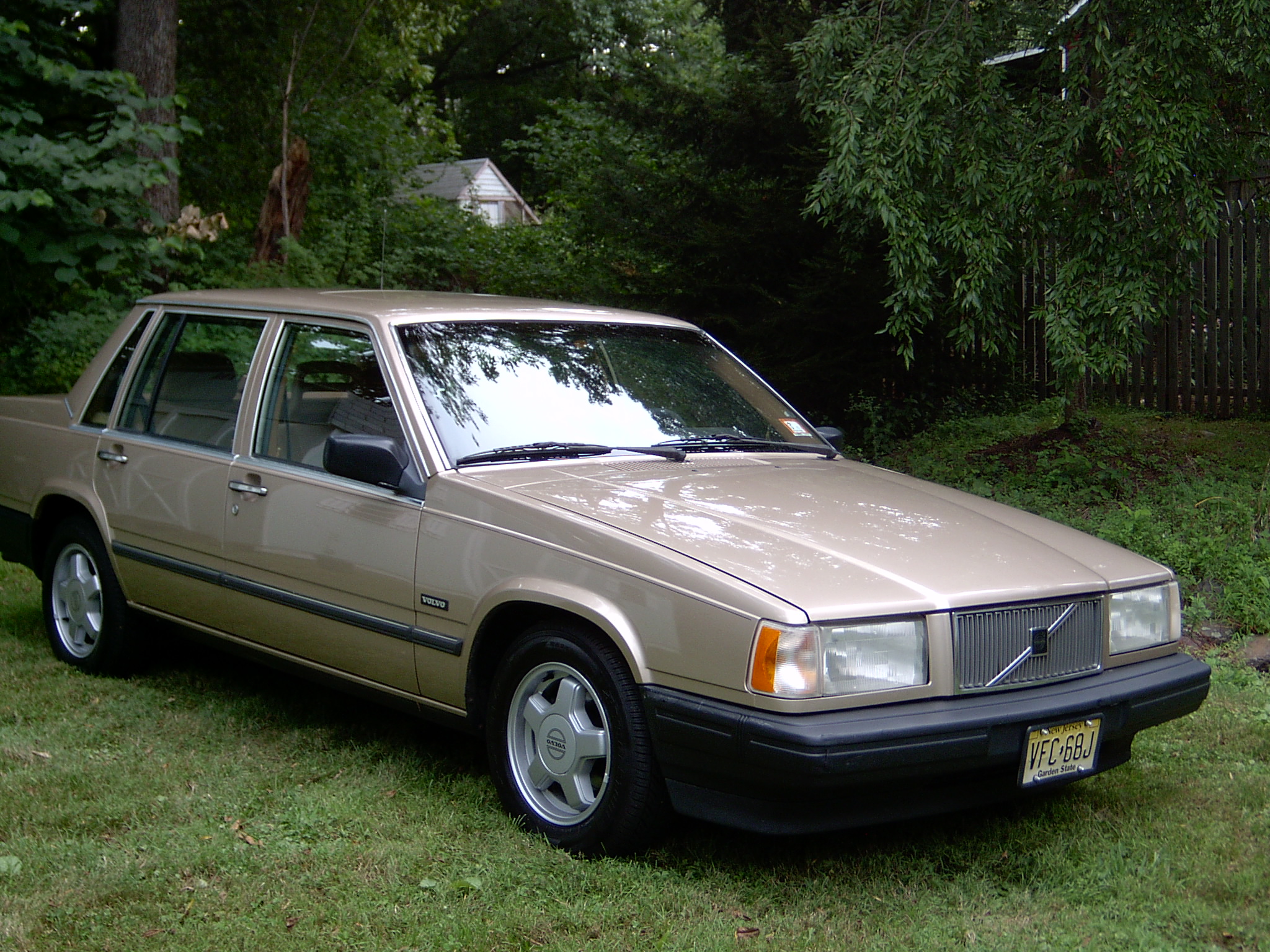
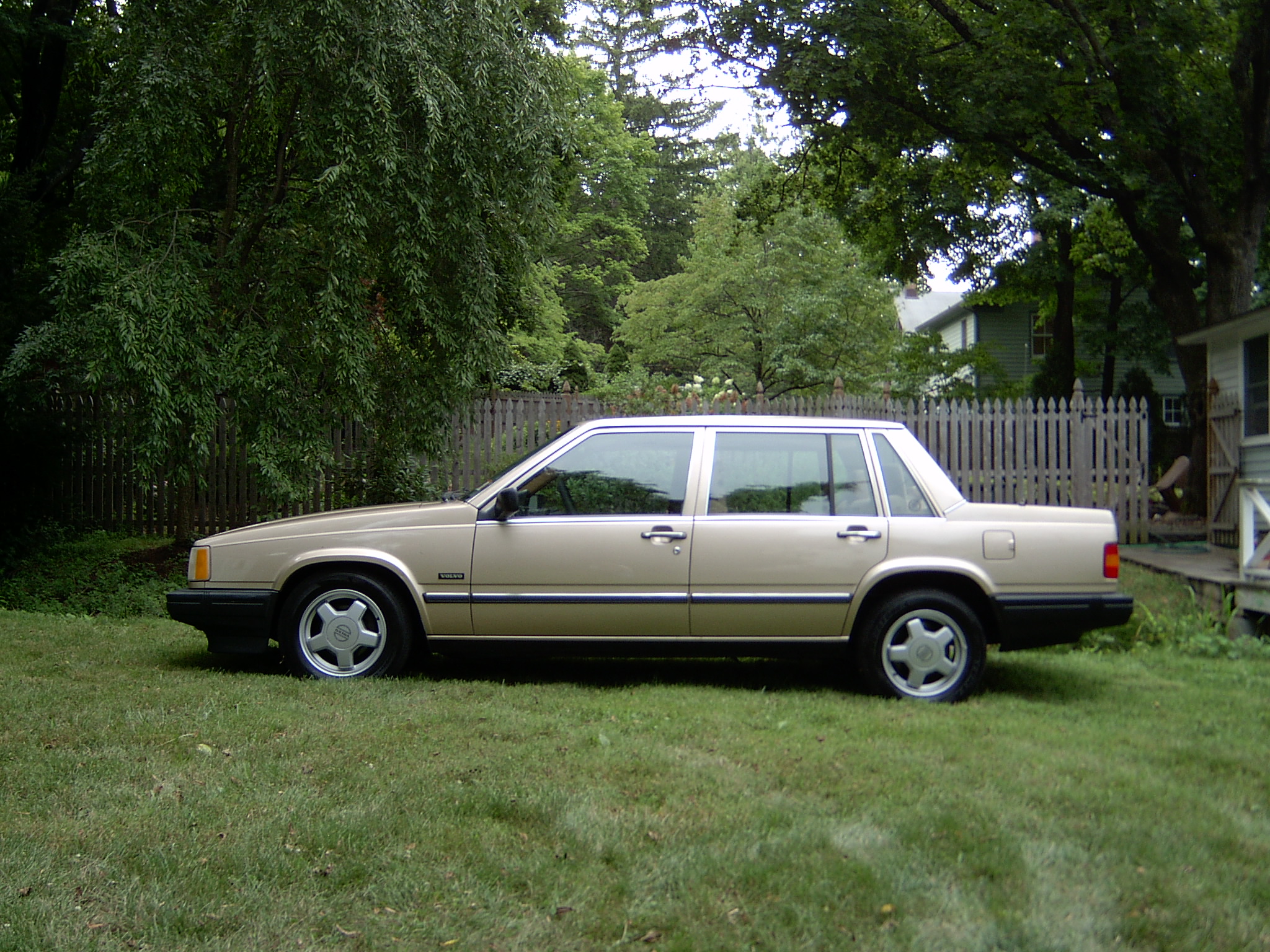
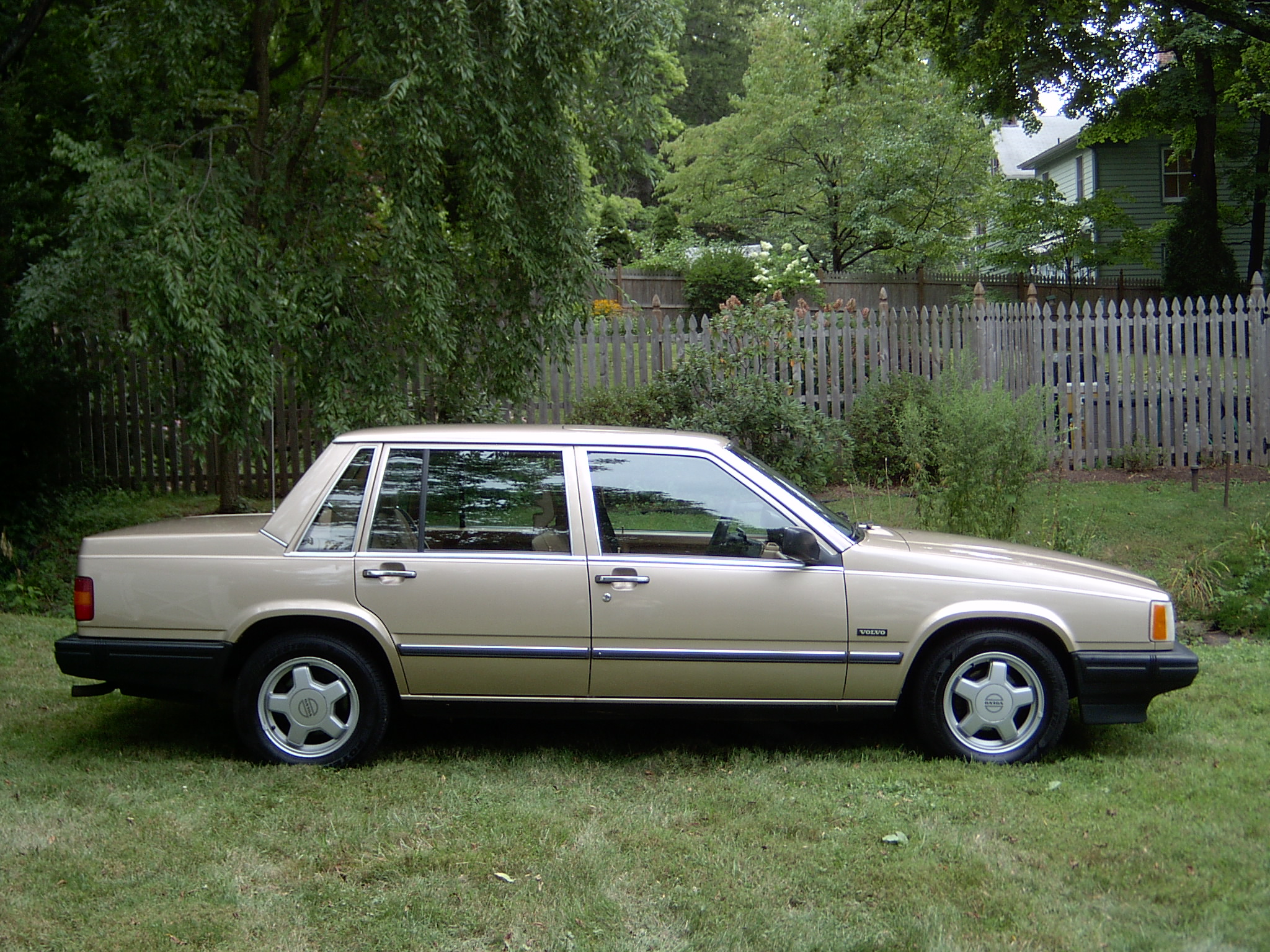
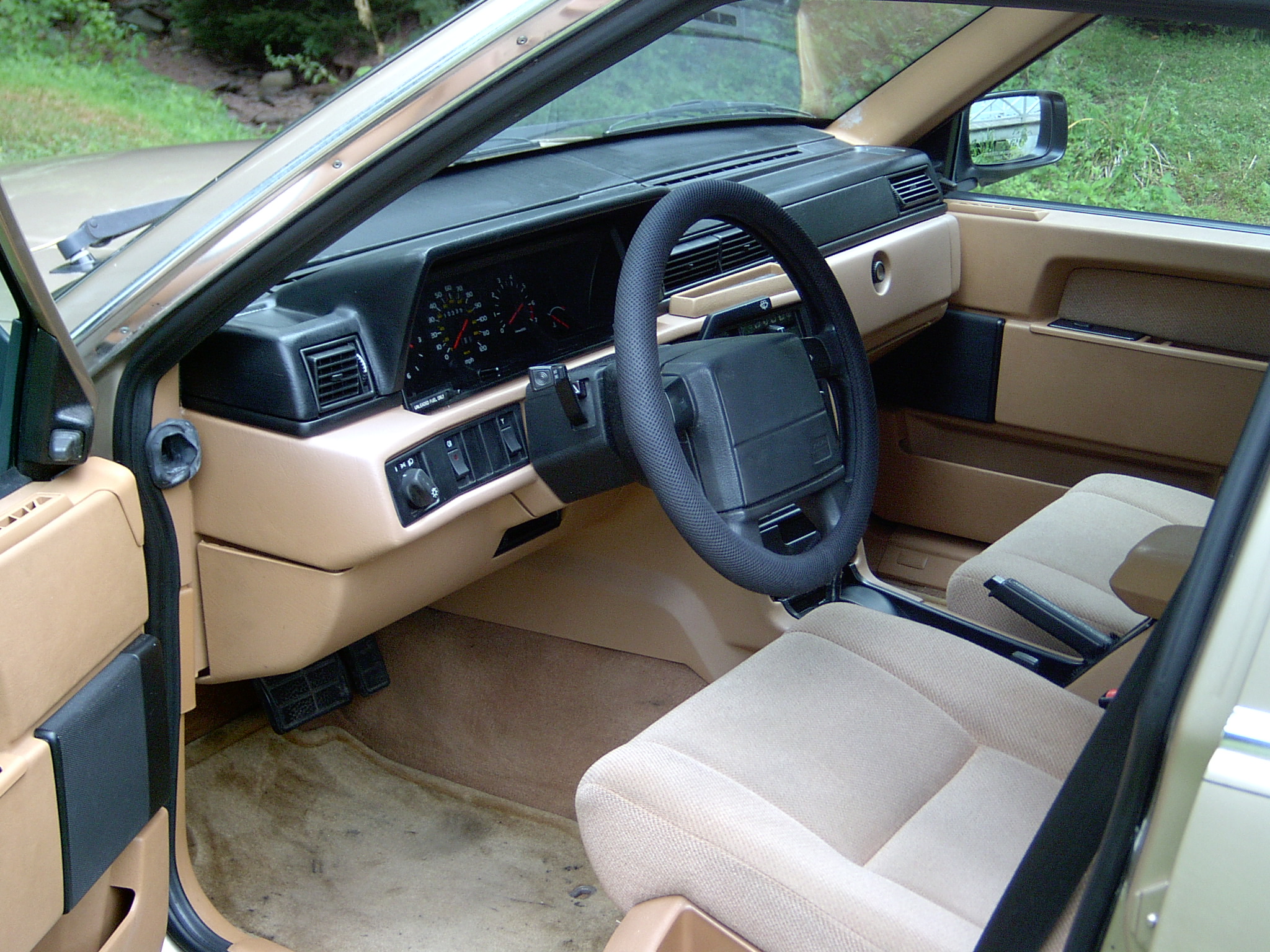
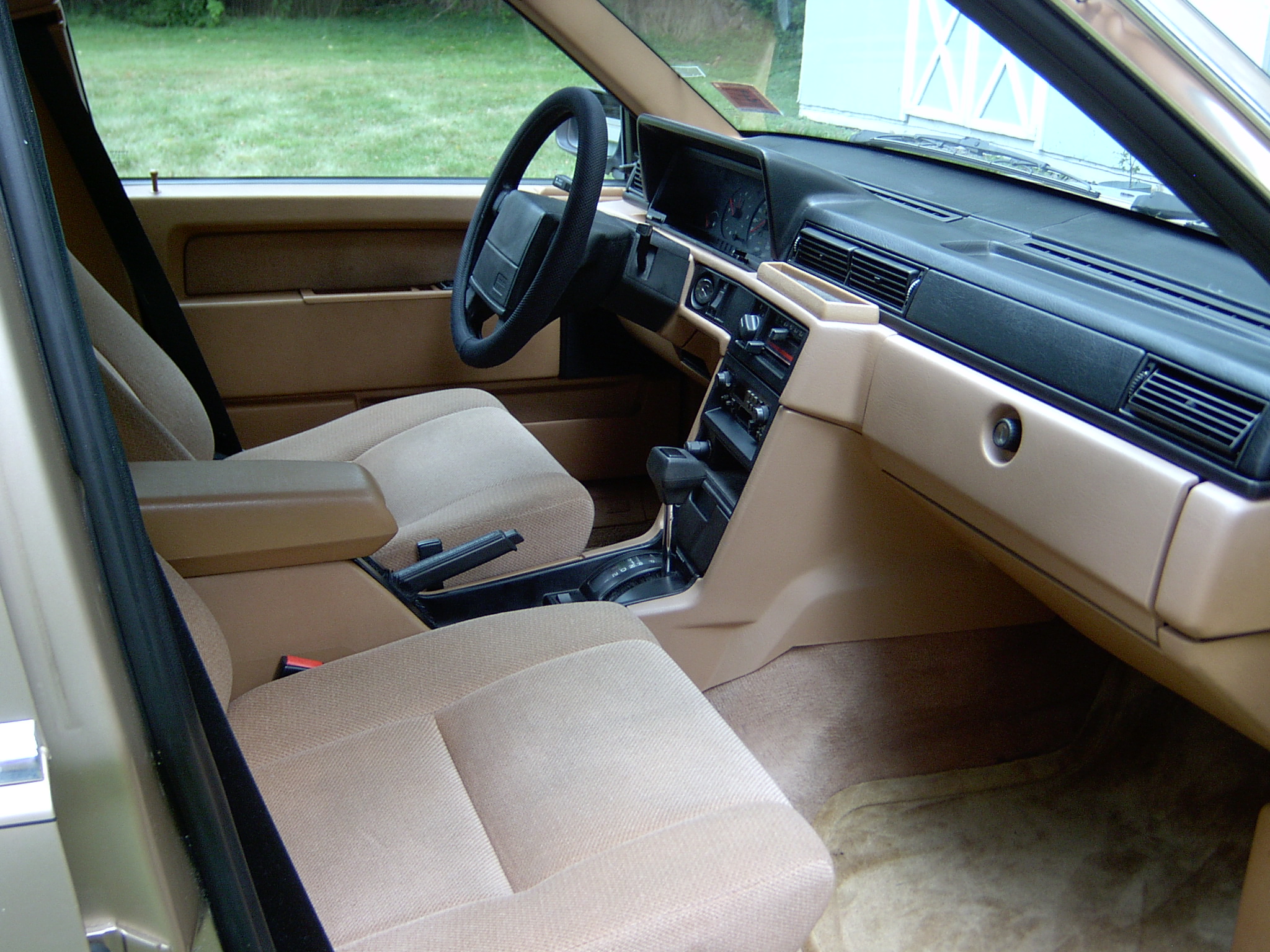
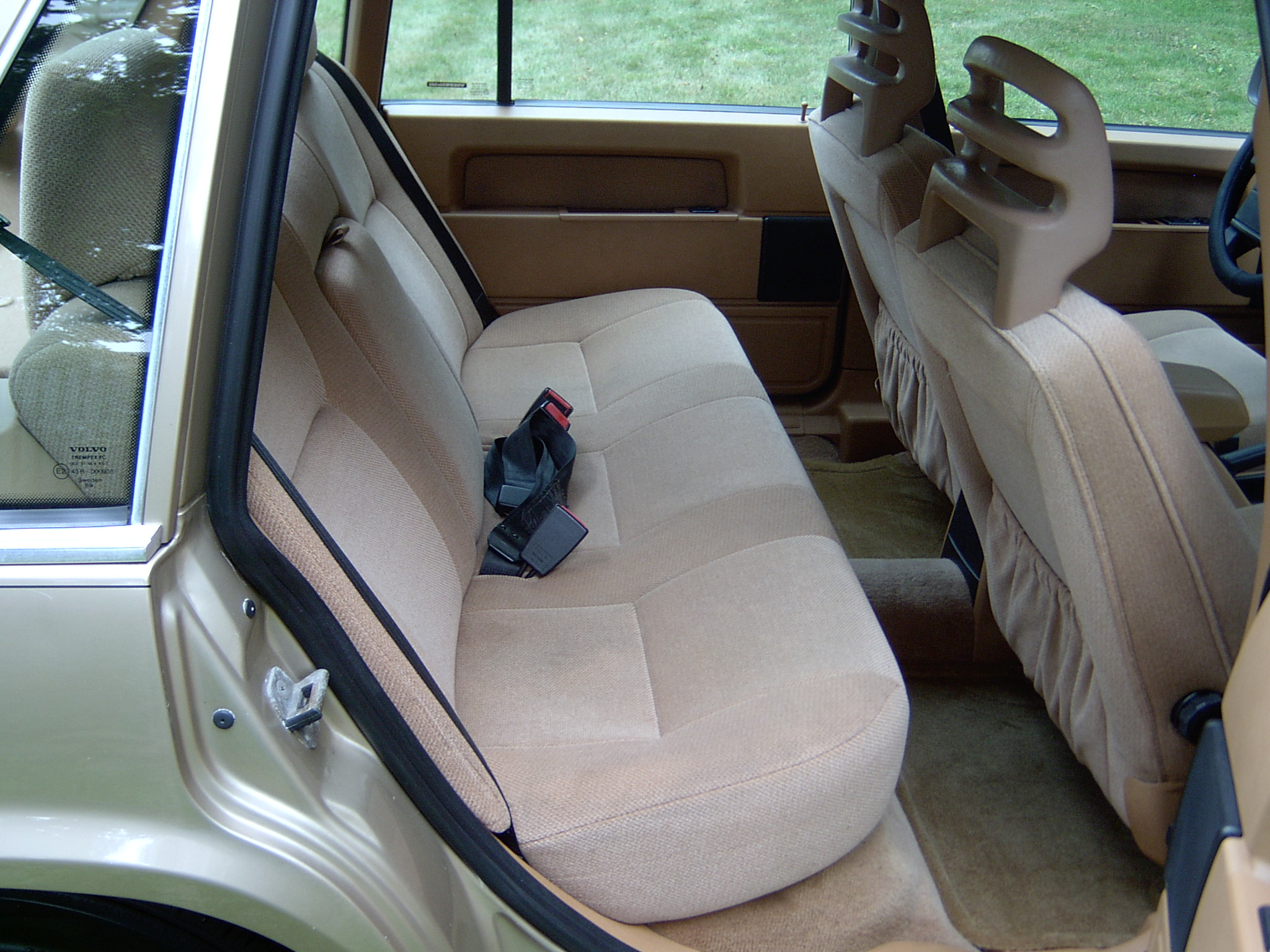
We didn’t even request a trade appraisal; instead, needing wheels once my company car was yanked, I bought the 740 from my mom and turned it into my daily driver. At that time it had around 190,000 miles and was in impeccable shape for its age, as my mother garaged it every night. Despite frequent dealer servicing, there were a few mechanical needs to which I attended. Cosmetically, the dark grey bumpers had faded to something approaching white. I bought SEM bumper paint, removed both bumpers from the car to avoid overspray, and repainted them. I was quite pleased with the result. I also found a nice set of Volvo alloys on Craigslist, and used the factory steelies for winter tires.
I drove it for about two years, and when I spotted an ad on a bulletin board in Rockleigh for a 2003 non-turbo V70 with a stick shift, I grabbed that and sold mom’s old 740.
Recently, while rummaging through some digital files, I came across the photos I had taken for the ad for the 1990. I had not seen these pics in a while, I was struck by how clean the car was. It had 210,000 miles on it when I sold it, yet had original paint which still gleamed. The ad I wrote noted that the only defects were a sagging headliner, an inoperative power antenna, and a non-functioning digital radio readout. I asked for, and got, $3,000 for the car.
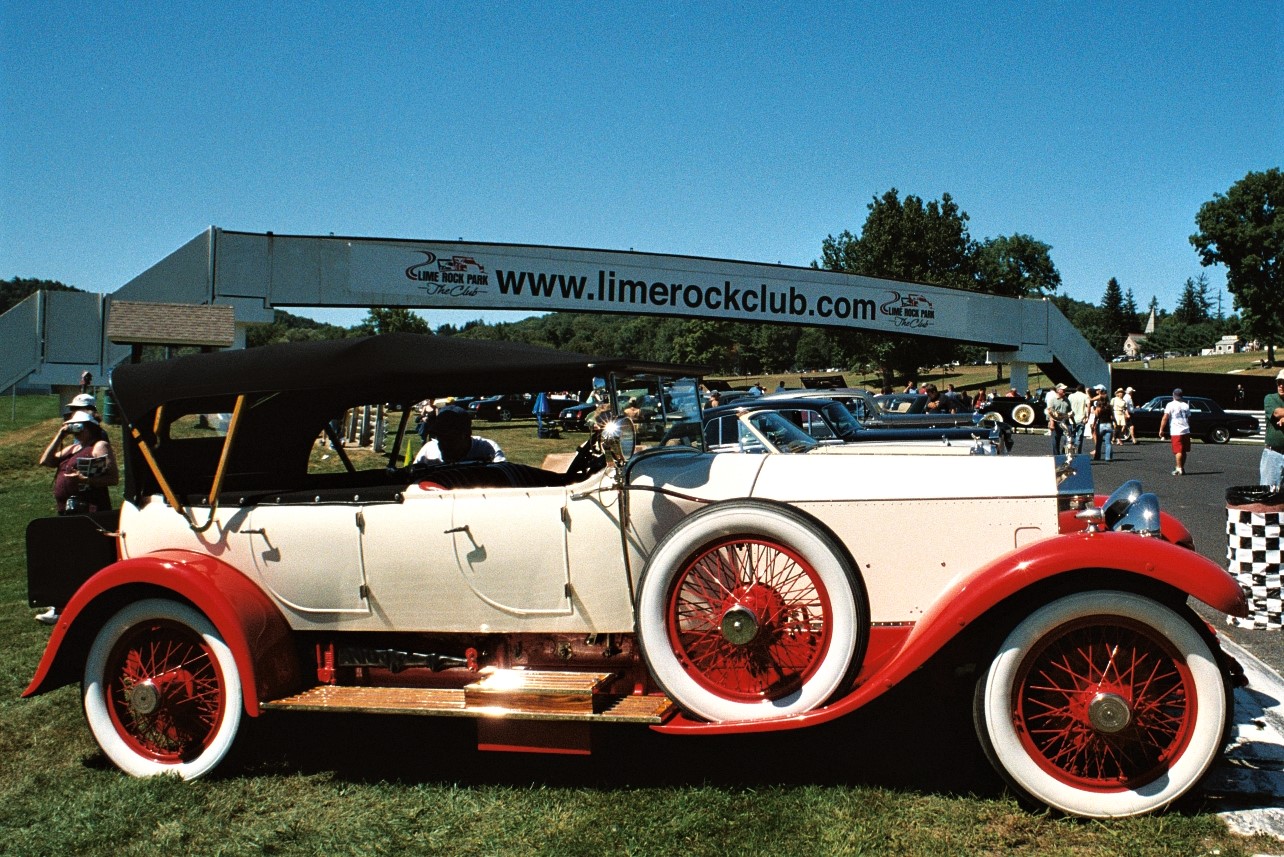
This pre-war beauty is perfectly framed under the overpass
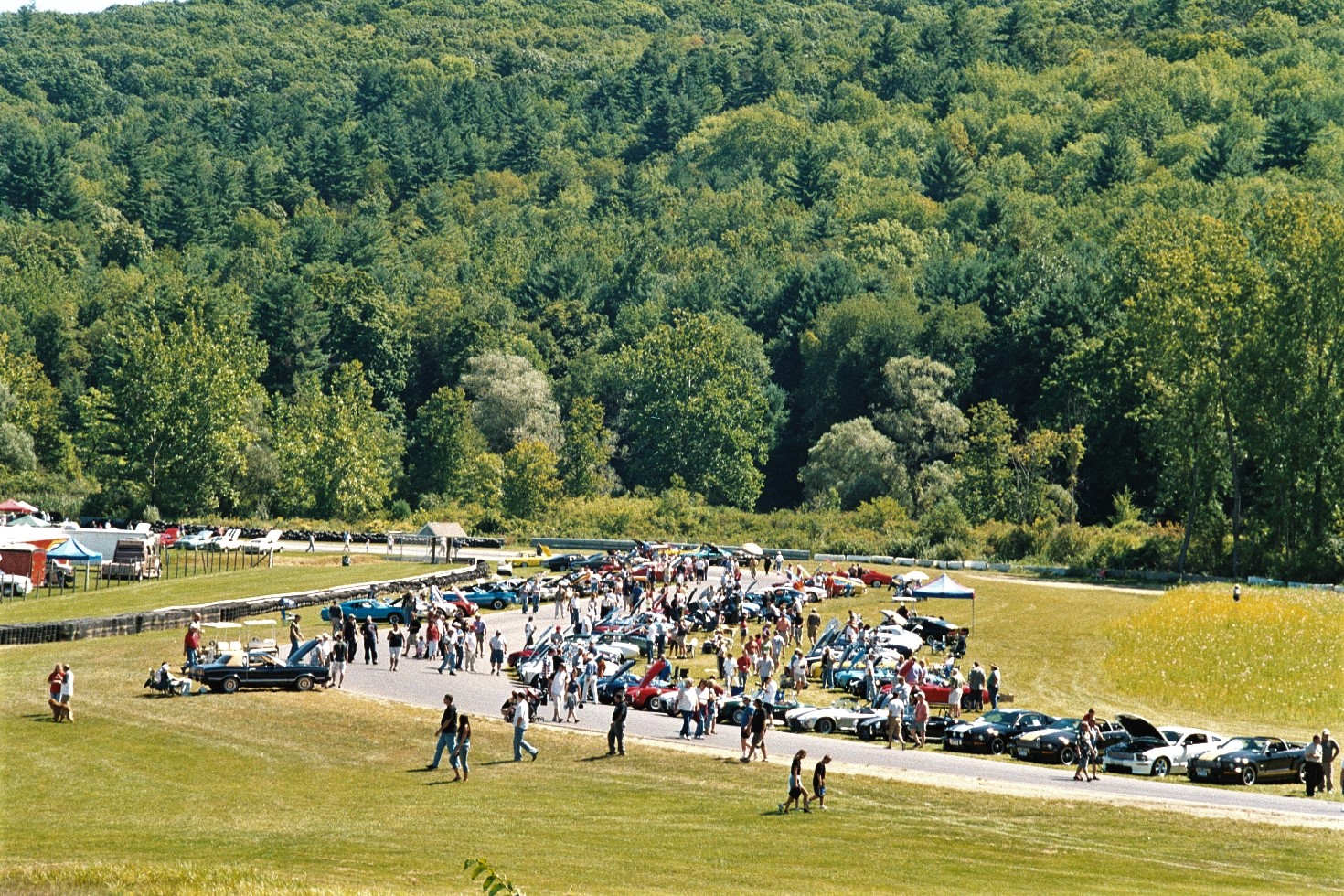
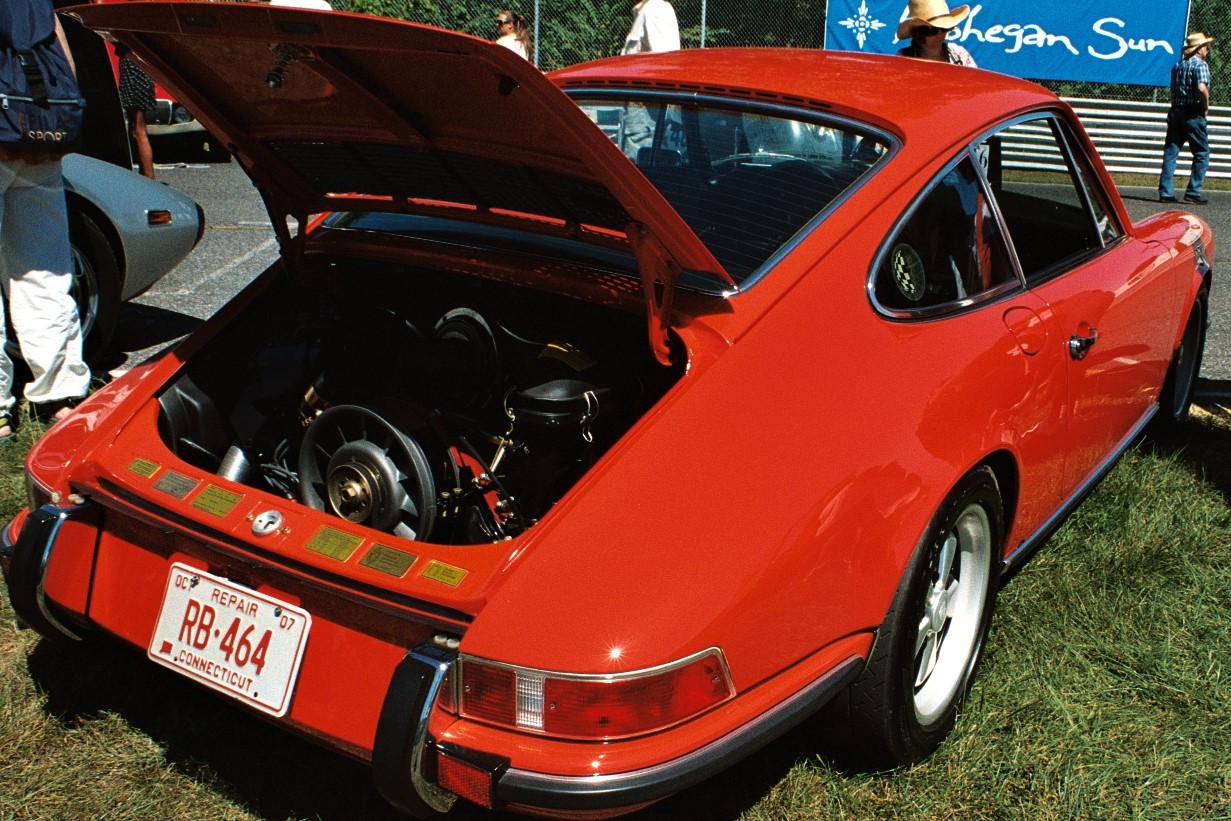
Perusing some old photos, I came across pictures that I snapped on my 2007 visit. That’s too long ago for me to have specific memories, however, the photos reveal that the day was bright and sunny, and when the weather cooperates, Lime Rock is one of the best vintage automotive events on the East Coast.
The track is truly in a park-like setting
There is actually one memory worth noting: these snaps were taken with a film camera, likely my Nikon EM, and likely with Kodak Gold ISO 100 or 200 film. I tweaked the brightness and contrast on a few of them, but other than that, their rich color stands out to me. Enjoy the shots!
A personal highlight of the annual October sojourn to Hershey is the RM Sotheby’s auction, held just a few miles away from the showfield at the Hershey Lodge. I’ve reported extensively about previous RM Hershey auctions on this blog, and even though my 2021 visit was a one day in-and-out, I still found time to scoot over to The Lodge to take in the cars and some of the auction action.
RM Sotheby’s, at least at this location, prides itself on mainly featuring American iron, much of it pre-war (that would be World War II, which serves as a handy demarcation line, since no vehicles were produced in this country from 1942 to 1945). There continues to be much discussion about the relative value of these older pieces of machinery. For the most part, those who drove them when new have departed; and those who bought them as old used cars right after the war are also quickly vacating the premises.
Showcase cars are displayed inside pre-auction
The standard argument goes: “If those who had them in their younger years are no longer here, then their value has plummeted”. The reality is a bit more nuanced than that. Car collectors, at least many that I know (and I put myself in this category) have an appreciation for ALL vehicles. One respected observer of this scene whose acquaintance I’ve made told me that the cars of the nineteen teens, twenties, and thirties are gaining a new audience as collectors have learned to appreciate their styling, engineering, and standing in automotive history. As my pictures below will show, some of these cars have an undeniable stately presence that would be an appropriate fit in any collection, no matter how narrow or diverse. Values for pre-war cars may be off their highs of the early aughts, but they’re not selling for twenty cents on the dollar either. As further evidence, nine of the top ten sales at this auction were pre-war, with prices ranging between $170,000 and $1.5 million.
According to RM’s website, the two-day auction achieved a phenomenal 98% sell-through rate. Granted, many of them were no reserve, but many had reserves (for the cars I’ve reported on, the reserve status is stated). The tremendous sell-through can be chalked up to a combination of quality wares, reasonable reserves, and a continued hot collector car market.
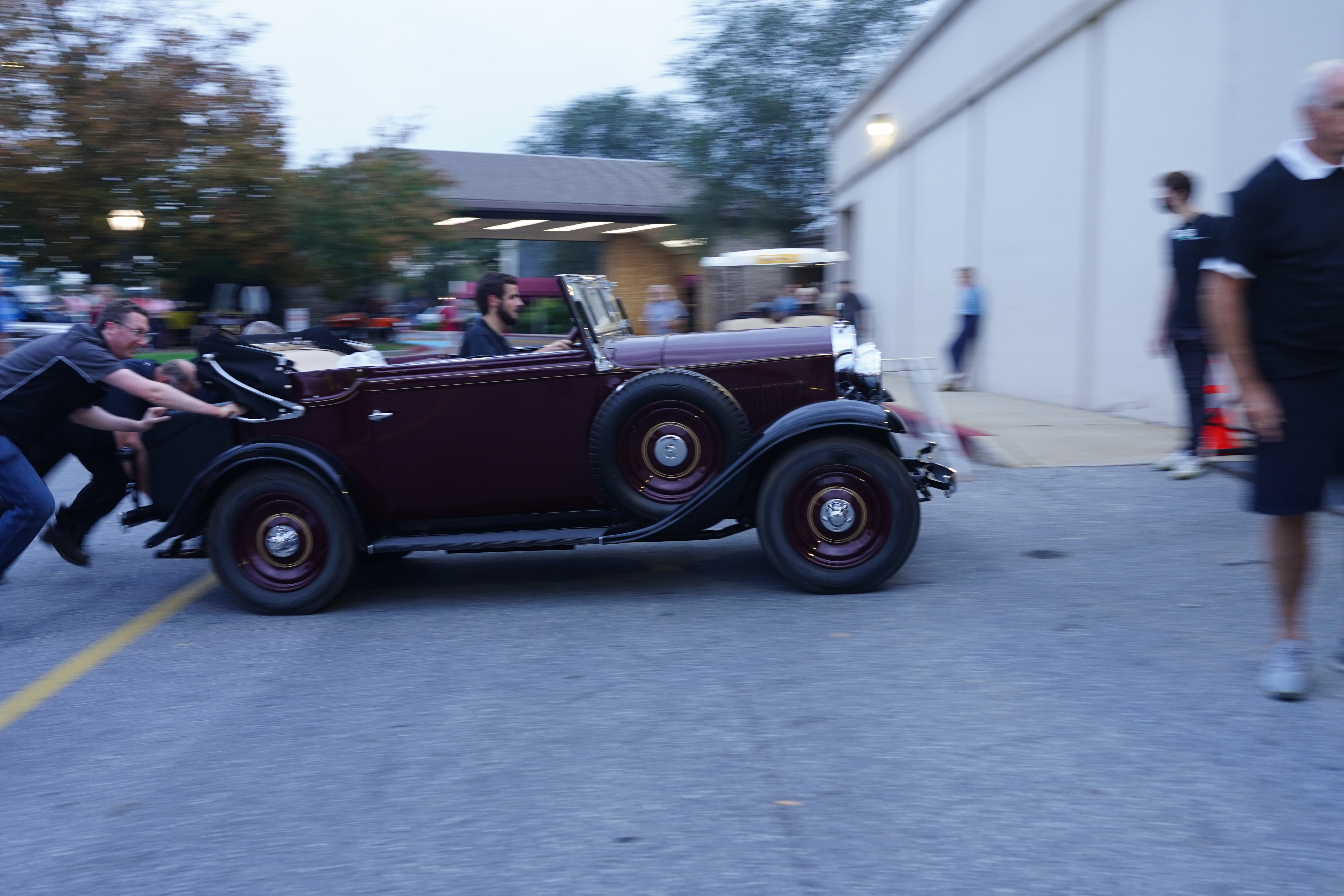
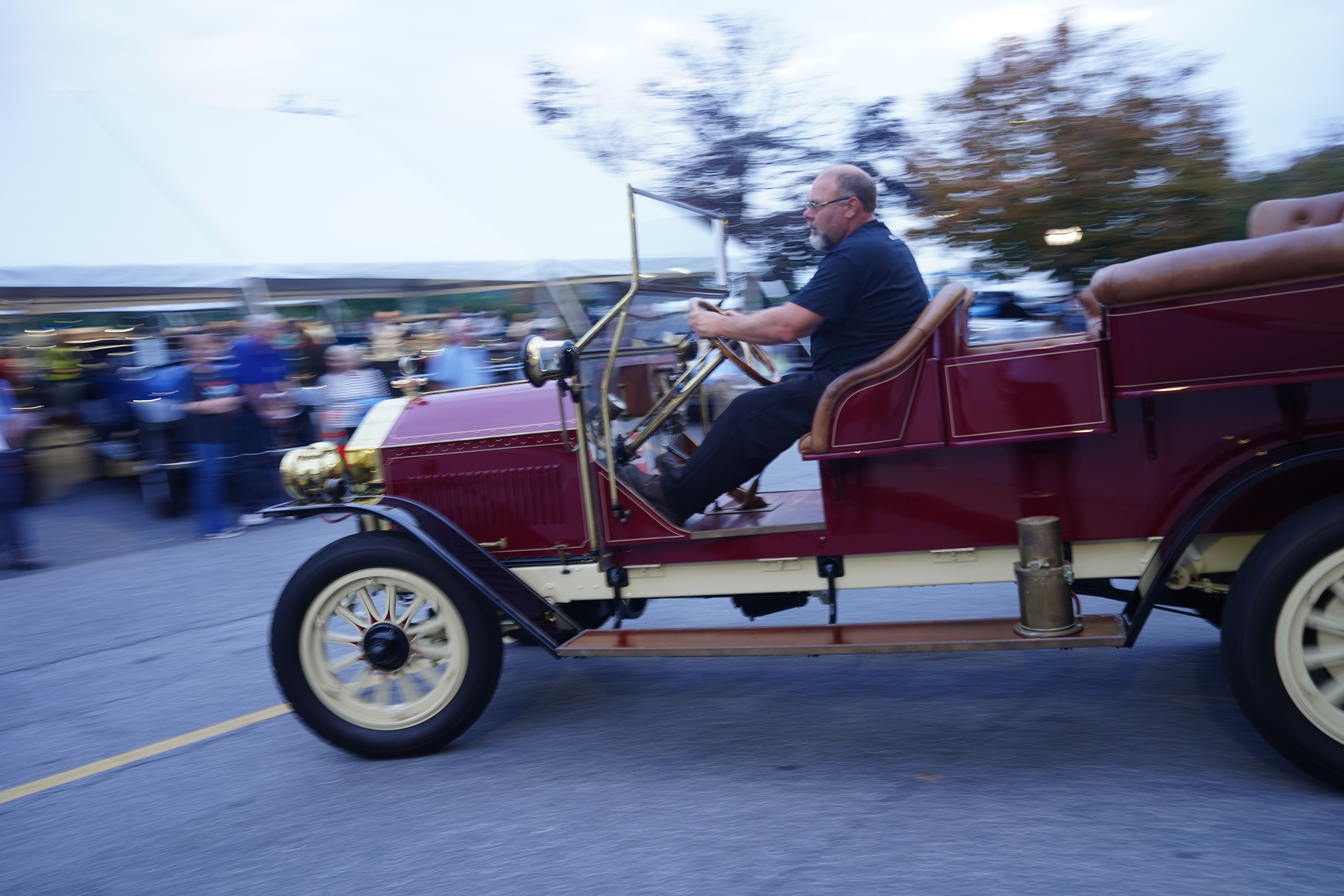
A big part of the fun is sitting outside the entrance / exit door and watching these cars run under their own power. The crew handling that job was working non-stop to get some of these old jalopies started and keep them running (and hope that the brakes worked). By the time darkness fell, I was on my way, but it was a glorious way to end my 2021 Hershey visit.
The cars below are listed in ascending sale price order; sale prices were taken from the RM Sotheby’s website, and the 10% buyer’s premium was backed out, so the “sold” price shown is the hammer price.
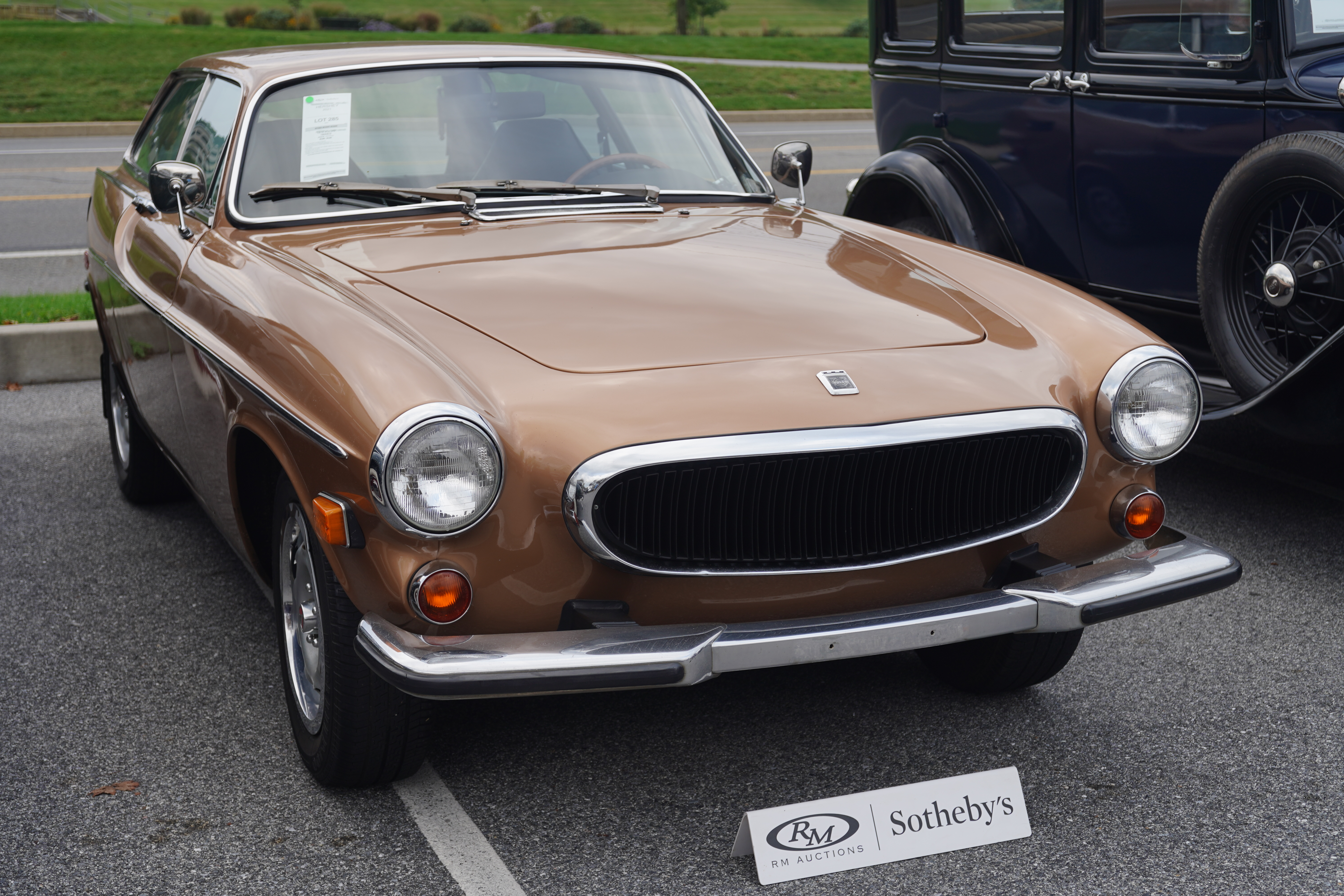
Lot #285, 1973 Volvo 1800ES, 4-speed manual. Pre-sale estimate $25-30,000. No reserve. Sold for $30,000.
This was the final year for the 1800, and only the ES (station wagon) model was offered. Sold right at the high end of the estimate. CPI values a #2 car at $44,000, which this wasn’t, but 1800s continue to be popular at the moment. Fair price.
Lot #152, 1948 Alvis drophead coupe, 4-cylinder, 4-speed manual. Pre-sale estimate $45-70,000. No reserve. Sold for $34,000.
Alvis was never a big seller on this side of the pond, but I’ve seen a greater number of them come up for sale recently. The two-tone brown and tan wasn’t the most attractive, and the RHD is either a fun factor or a pain. Sold well below estimate. I hope it runs well, because I know nothing about parts availability.
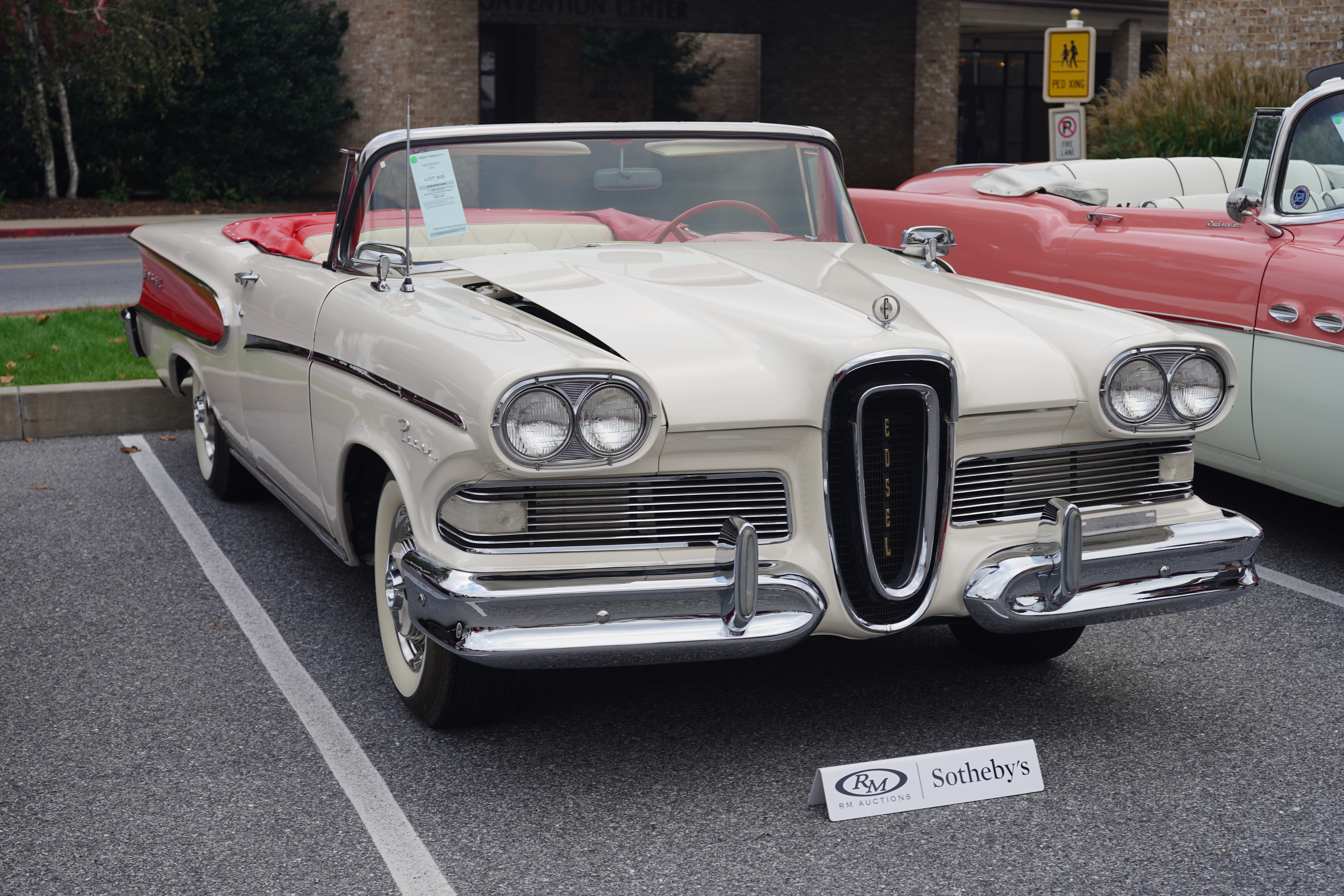
Lot #305, 1958 Edsel Pacer convertible. First model year of Ford’s Fifties flop. Attractive two-tone white and red. Pre-sale estimate $40-50,000. No reserve. Sold for $34,000.
The risk of no reserve is just that, there is NO reserve. This car missed its low pre-sale estimate by eight grand. CPI values these between $44,000 and $84,000, which sounds generous. Still, this is a unique and historic fifties car that should be easily serviced and maintained. It could be a challenge to find another decent ‘50s American convertible at this price. I hope the new owner drives it.
Lot #291, 1957 Chevrolet Corvette, fuel-injected 250-horse 283, 4-speed manual. Pre-sale estimate $70-90,000. With reserve. Sold for $65,000.
Apparently there were two different f.i. horsepower engines, and this was the lower of the two. This sounded too cheap to me, but CPI shows a value range between $53,000 and $100,000. I still think it was well-bought.
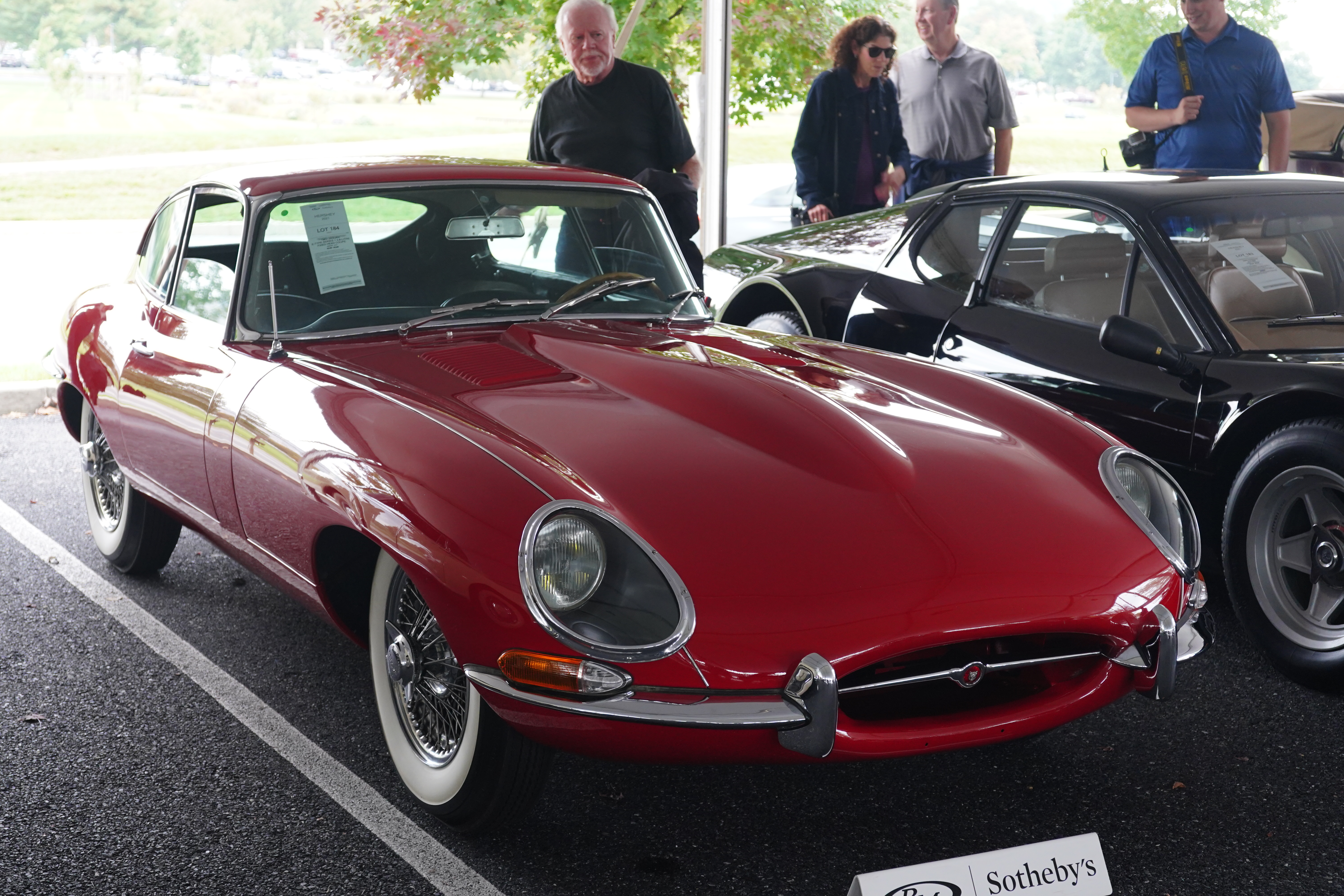
Lot #184, 1963 Jaguar E-Type FHC (fixed-head coupe). Red over black, looked great from afar, but a closer inspection revealed rough areas. Pre-sale estimate $90-110,000. With reserve. Sold for $65,000.
This is an early Series 1 car, with the 3.8 six-cylinder, 4-speed with non-synchro first, and low-back bucket seats. Many refinements were added to the ’65 and newer Series 1 cars with the 4.2 engine. See the photo of the rear window: the glass seal was completely hardened, there was paint overspray on it, and the window trim was missing. CPI has these at $88,000 for a #4 (fair) car; $130,000 for #3 (good), and $195,000 for #2 (excellent). Even with the defects, this was a bargain for a Series 1 XKE.
Lot #193, 1956 Jaguar XK140 roadster. 3.4 six, 4-speed. Pre-sale estimate $100-120,000. With reserve. Sold for $77,500.
Another possible Jaguar bargain which sold well below estimate, as CPI has a #3 car at $112,000. This car may have been a little better than that. Try it before you buy it though: the one time I sat in one required lower body contortions to get in and out.
Lot #150, 1939 Alvis pillarless two-door saloon. A unique and never-seen-before body style (and the 2nd Alvis at this auction). Pre-sale estimate $90-130,000. No reserve. Sold for $102,500.
This was one of the more striking pre-war designs at this auction, and certainly rare in the States. The bidders recognized this, and knowing it was a no-reserve sale, they stepped up to a final sale price which was mid-estimate. Guaranteed to be the star at the next all-British car show.
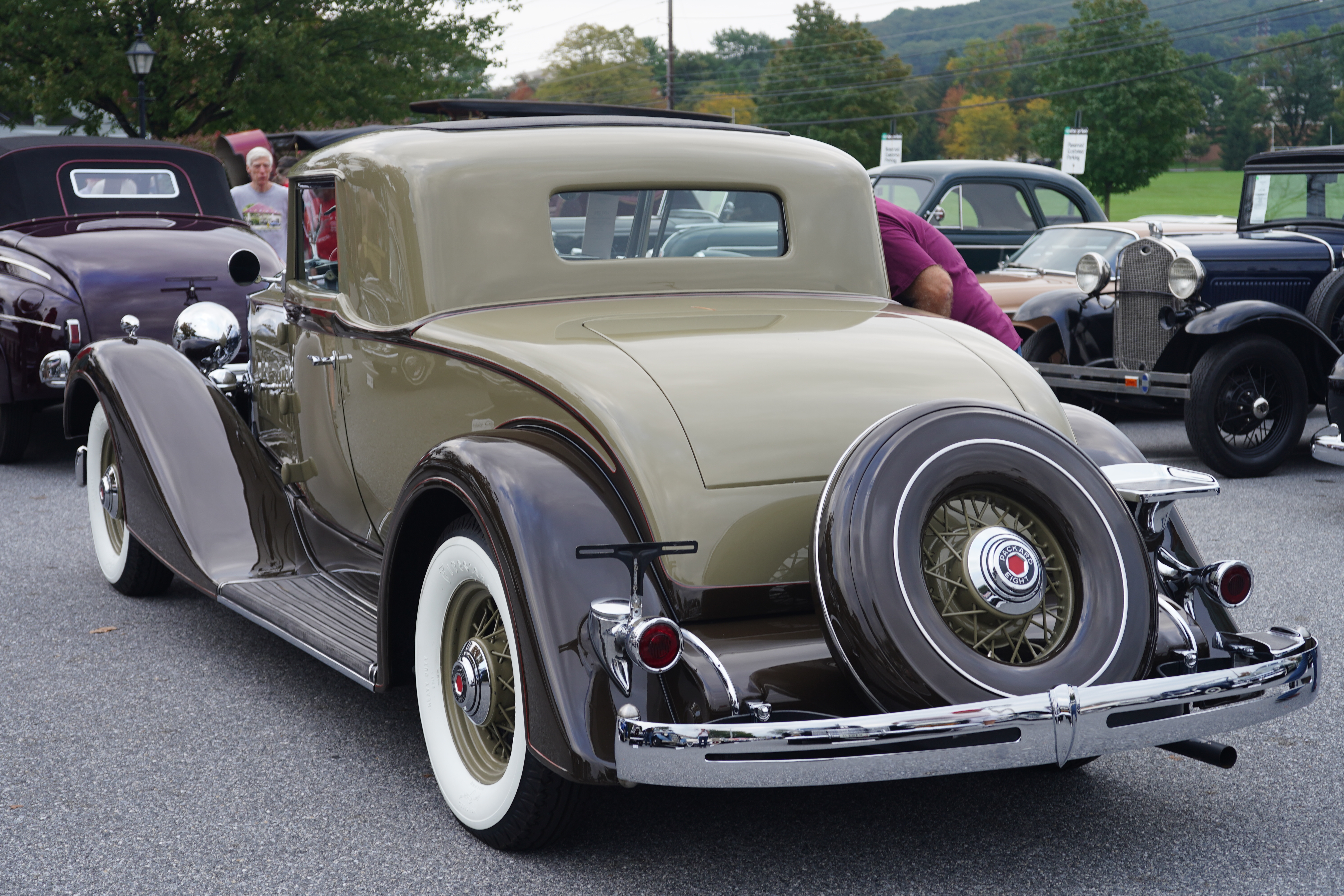
Lot #272, 1934 Packard Eight Coupe. Elegant two-tone light and dark brown. Pre-sale estimate $90-120,000. With reserve. Sold for $105,000.
I’ve been infatuated with almost all Packards I see these last few years, and this one stopped me dead in my tracks. It was stunning, and in close to perfect condition. While it sold mid-estimate, a higher number would have still been reasonable. That’s a lot of Packard for just over six figures.
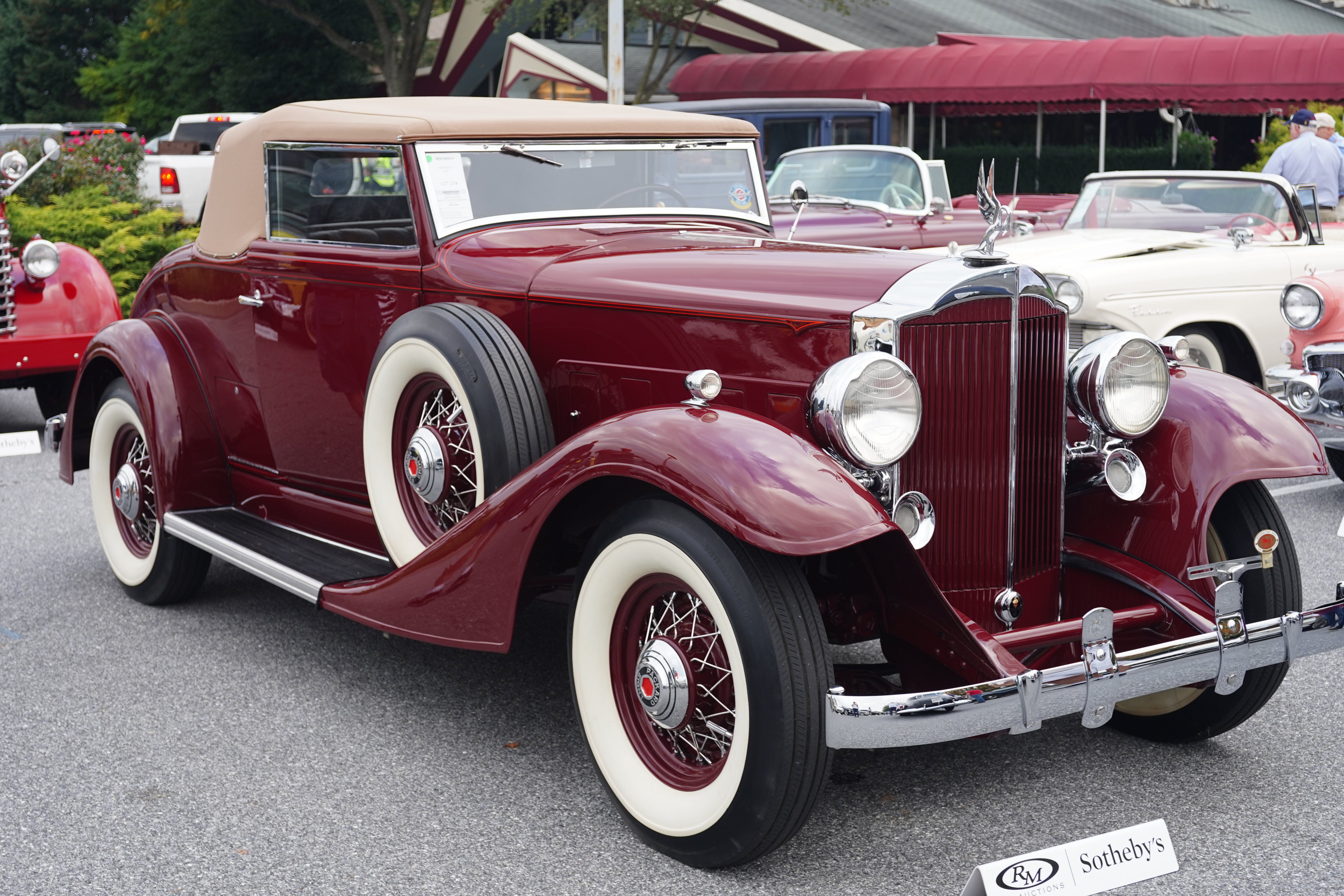
Lot #274, 1933 Packard Eight Roadster. Dark red, tan convertible top. Looks like the sister car to Lot #272. Pre-sale estimate $120-140,000. No reserve. Sold for $105,000.
I have no explanation for this result. This car, a convertible, sold for the exact same price as the Packard coupe which was just one year newer. Honestly, I did not look at these two cars that closely to discern any condition differences. Maybe the same person bought both cars and now has twin Packards in the collection.
FUN TIMES WATCHING THE CARS DRIVE IN AND OUT OF THE HERSHEY LODGE
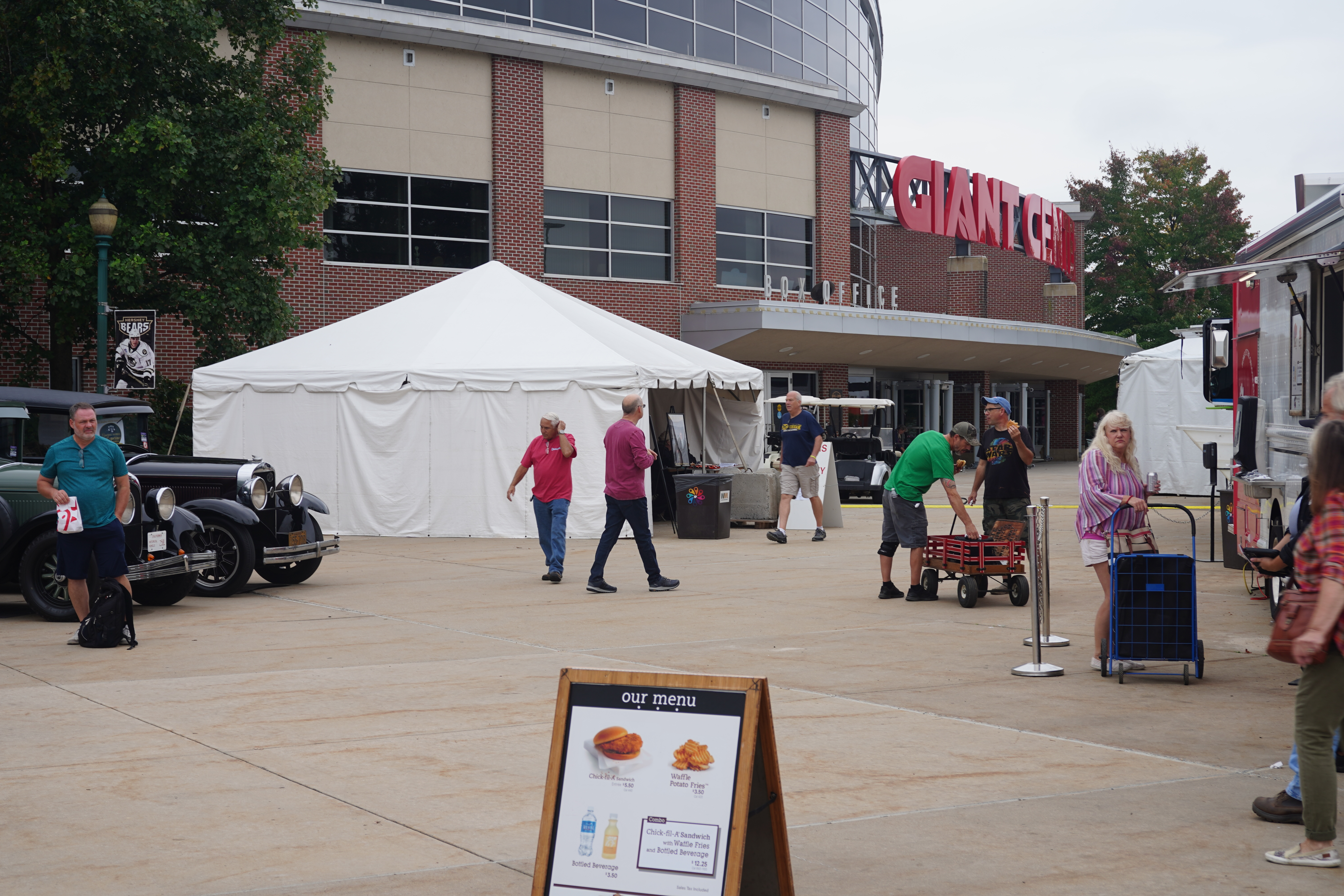
After a consecutive run which began in the early 1950s and then dealing with its first-ever cancellation in 2020, the AACA Eastern Fall Meet (colloquially known as “Hershey”) was back in place for 2021. For me, most of my visits here in the last 20 years have been multi-day affairs, but this year, personal obligations kept it to a one-day-only event, and that day was Thursday, October 7, 2021.
It was almost as if nothing had changed. The flea market vendors took up most of the Hersheypark parking lot, the car corral occupied the perimeter road around the lot, and the Giant Center stood in place at the center of it all. However, the crowd was a little thinner than in recent years; the car corral was only about 65-70% full; many of the usual food vendors were MIA; and even the flea market revealed either empty spots, or, what has been a growing trend, modern cars parked as a convenient alternative for those willing to spring for a flea market spot.
Because my time was limited, I spent most of the day walking the car corral. Cars did change hands: I witnessed a ’64 Falcon sell, and my friend Larry saw someone purchase a ’68 Olds 98. It was reassuring to know that some business was conducted.
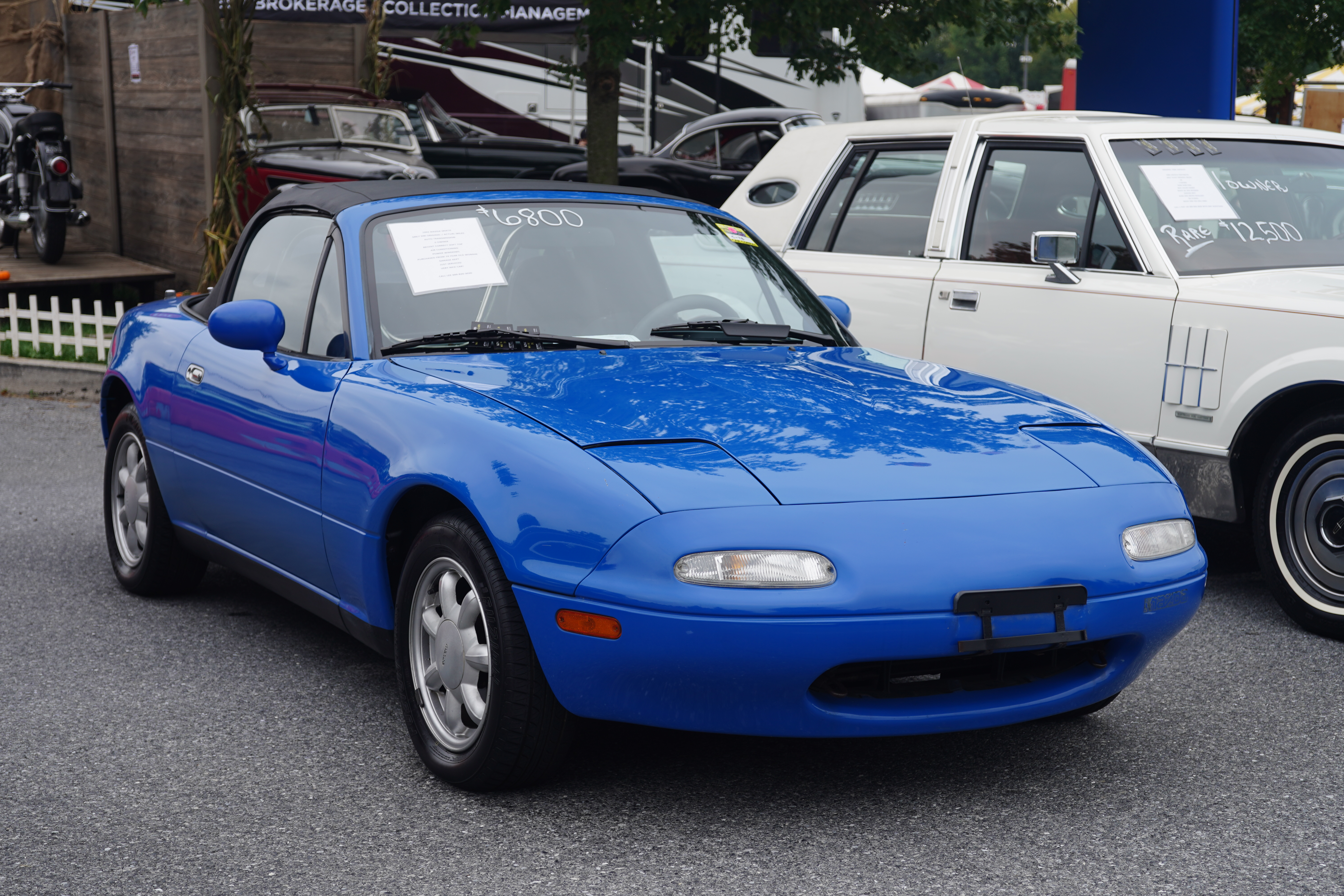
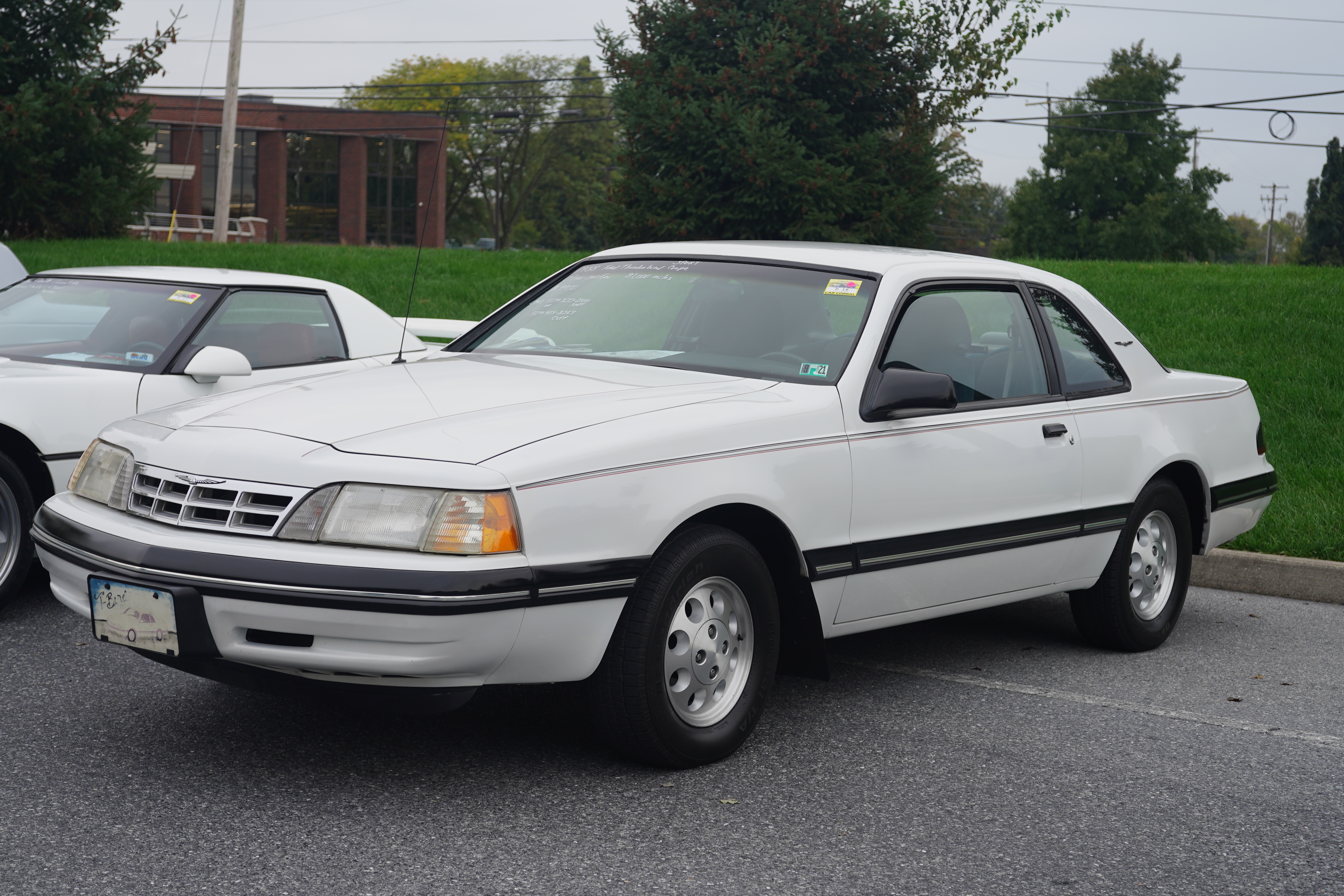
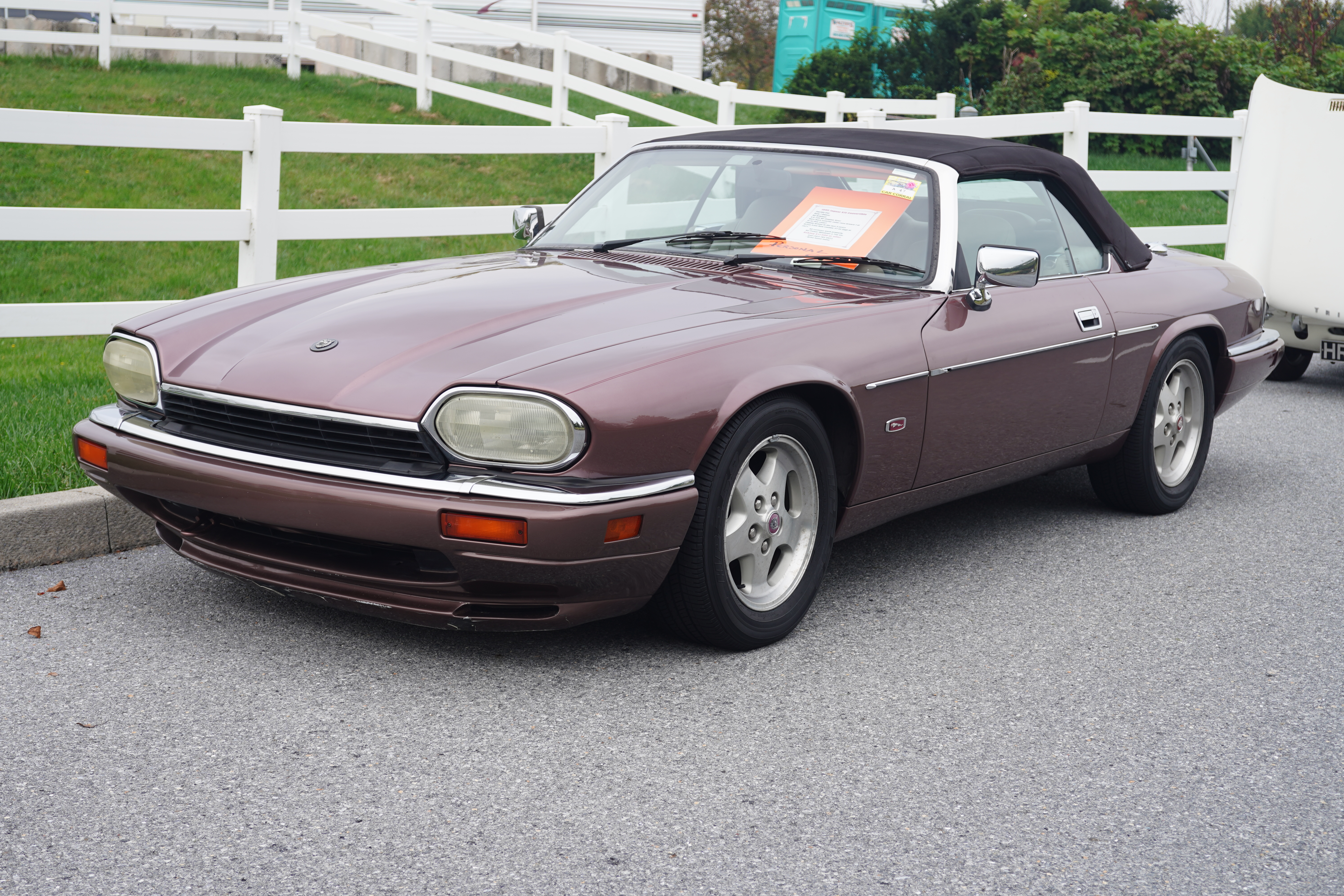
The cars below are the ones which I found interesting and affordable, and there weren’t too many of those this year. Cars are listed only with their asking prices; I did not record any other pertinent details about each vehicle. It is my hope that the photographs provide much of the info you might desire. I scooted out of the car corral and over to the RM Auction by about 4:30pm. The auction cars will be discussed in a separate blog post to be published later.
1992 Mazda Miata (auto), asking $6,800
1988 Ford Thunderbird, asking $9,900
1984 Porsche 944, asking $12,490
1995 Jaguar XJS (6-cyl), asking $17,500
1964 Morgan 4/4, asking $23,900
How Not to Sell a Car in the Car Corral
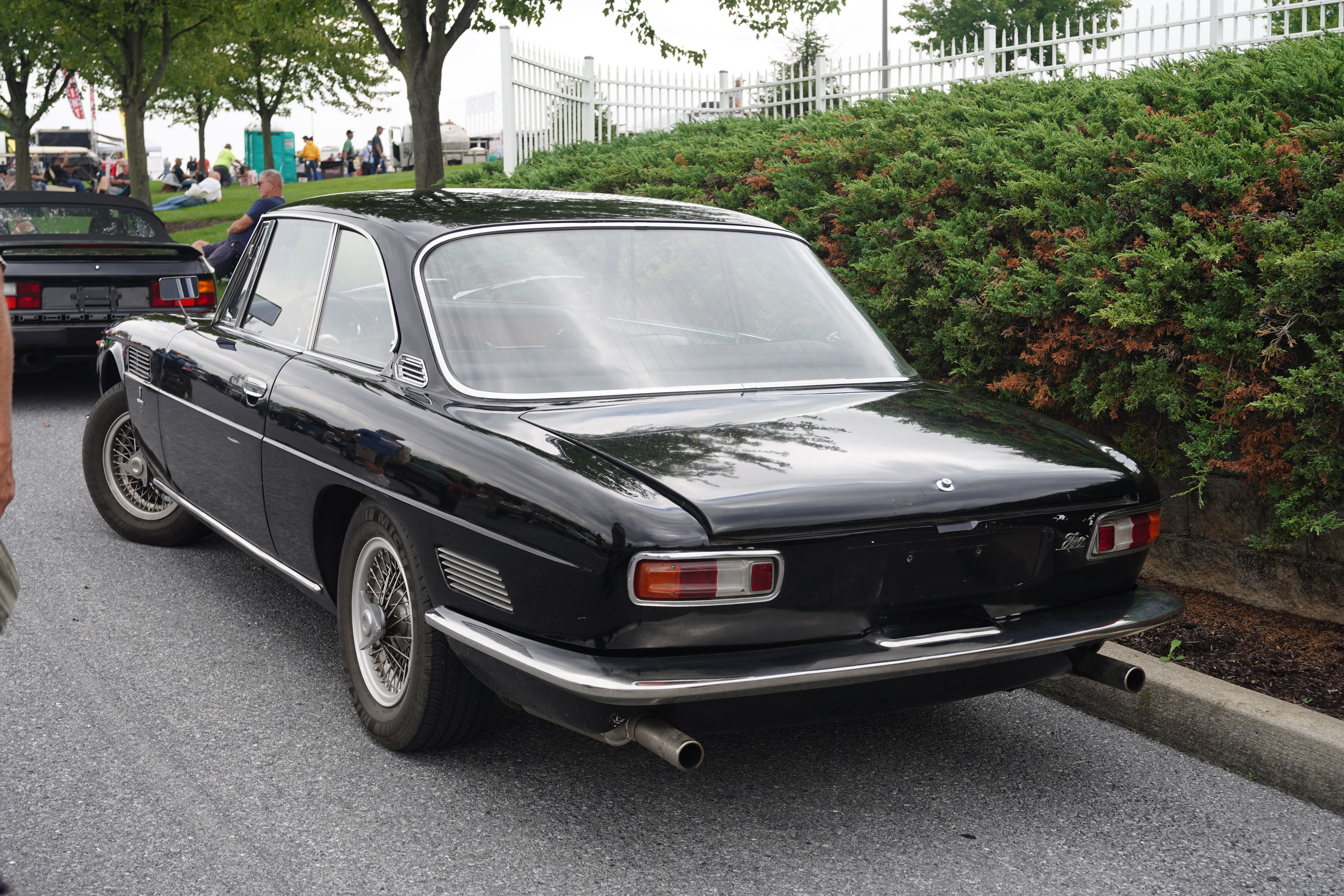
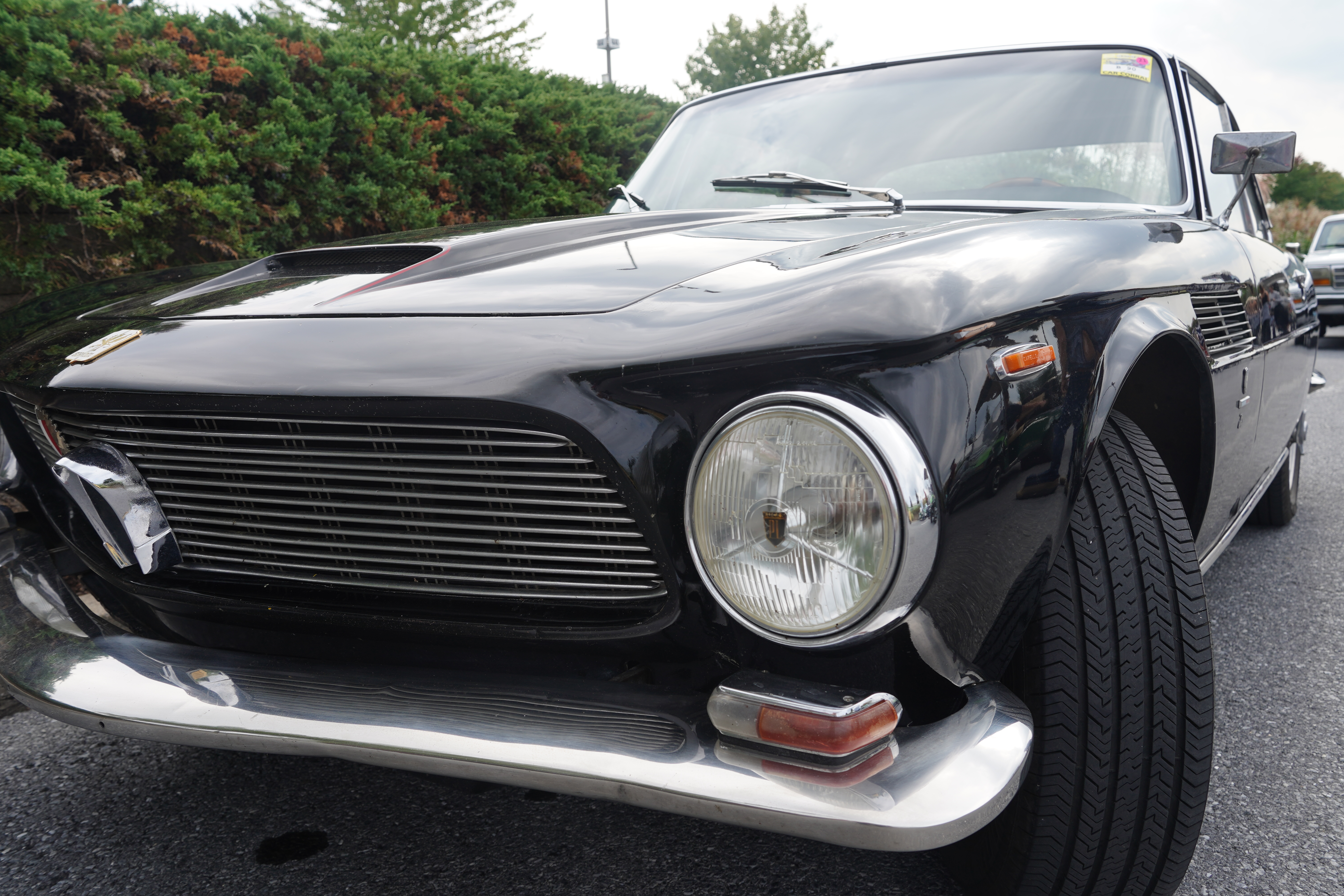
As soon as I opened the driver’s door on the Iso Rivolta, a voice from about 20 feet away barked at me. “You interested in the car?” “Maybe” I lied. “My boss wants $150,000 for it.” The only response to that was uttered to myself: this guy is crazy.
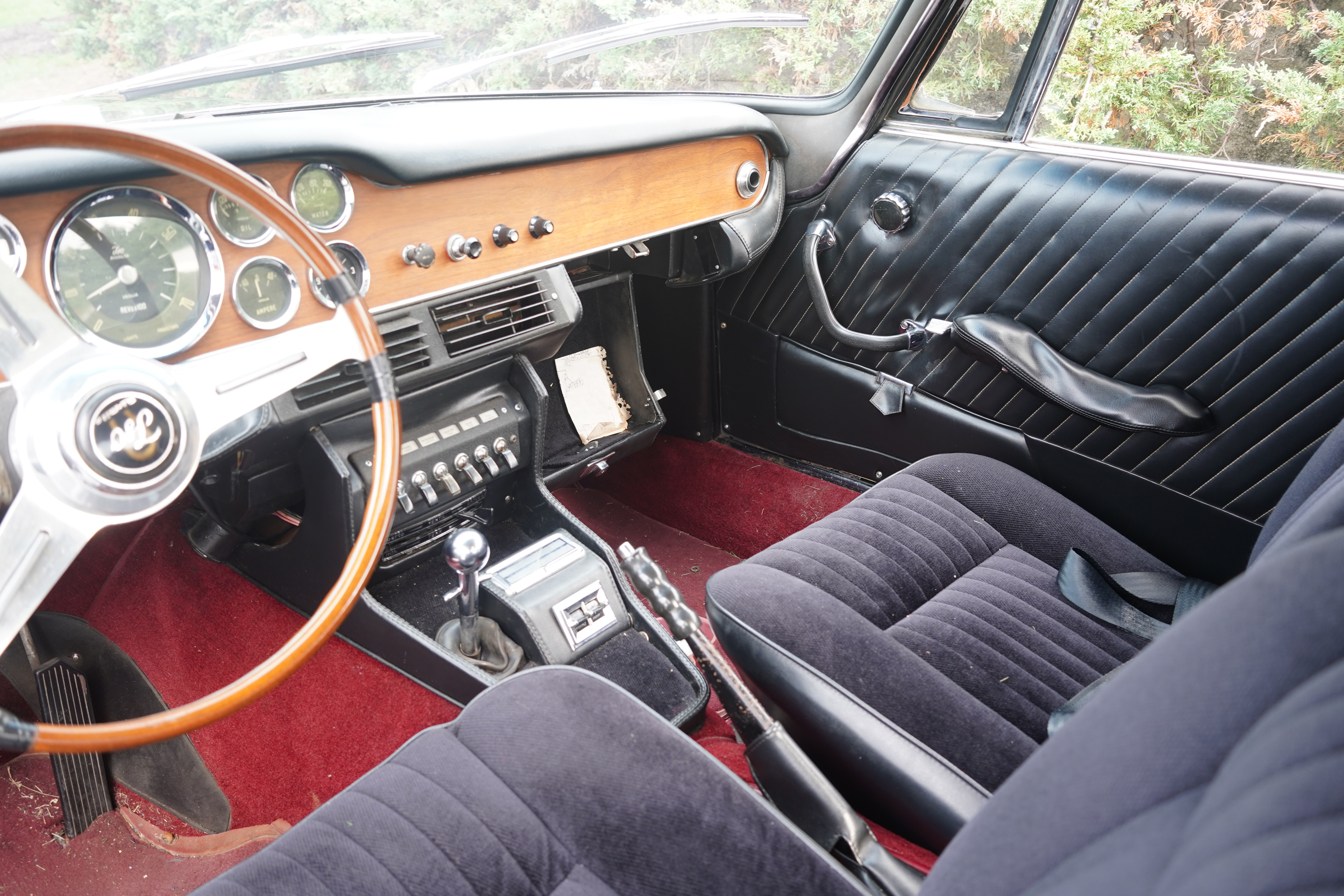
I wanted to show Larry the Chevy engine under the hood, but I couldn’t find the hood release. I asked the boss’ man “how do you open the hood?” “Dunno”. Oh boy, the boss sent the smart guy out with the car. While I continued to look over the exterior, someone else hopped into the driver’s seat and got the hood opened. “I owned one when I was a young man” he said by way of explanation.
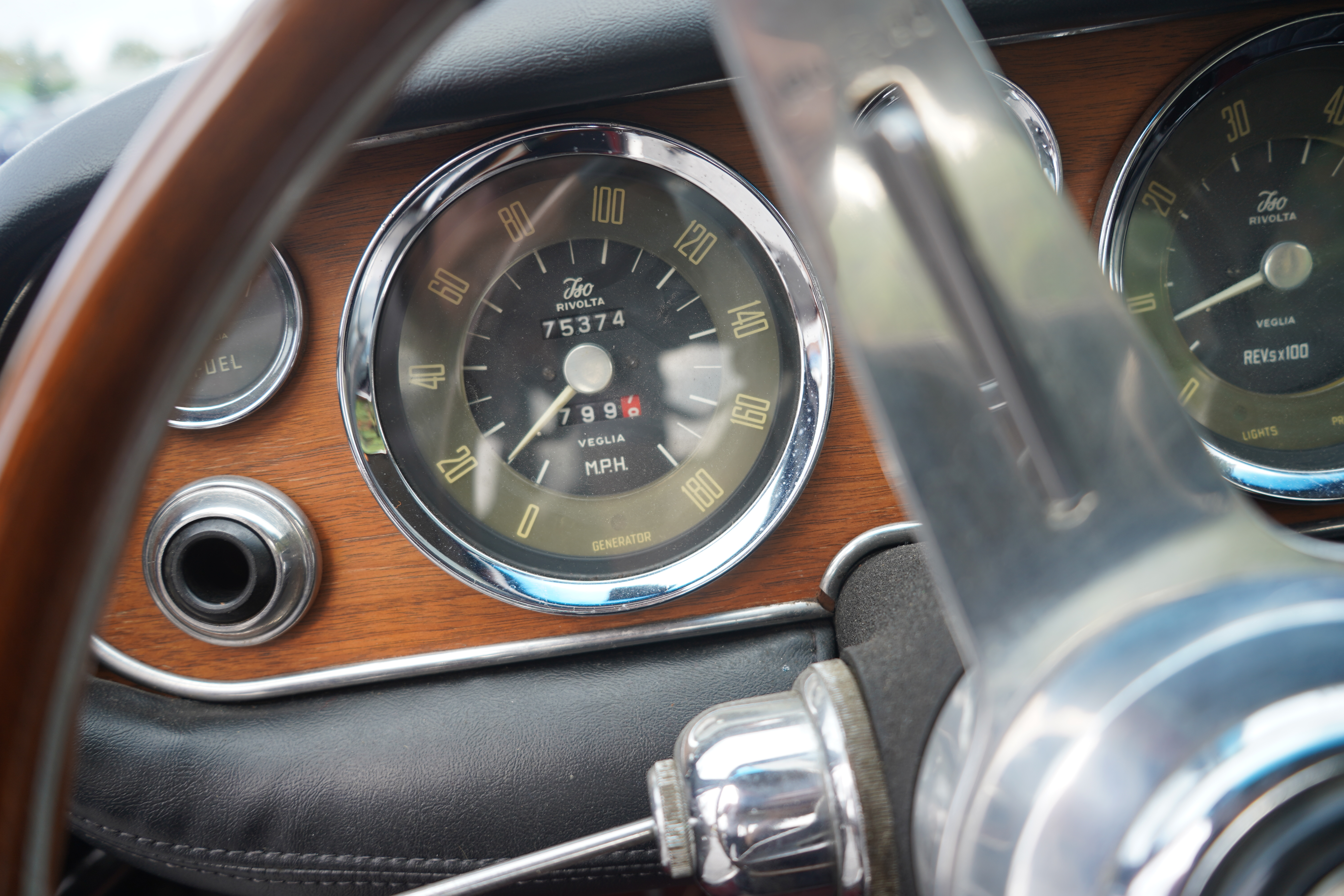
Underhood was as filthy and unkempt as the rest of the vehicle, although we did note that an A/C compressor was in place upon which someone had fastened a label: “recharged with R134a in 2020”. We were beginning to collect a crowd. The minion again spoke, this time to someone else. “Yeah, it’s an ICE-OH”. OMG. I quickly corrected him: “it’s pronounced ‘EES-SO’. One more time to the other interested observer: “my boss wants $150 grand for it, they’re very rare”. I pulled out my current copy (Sep-Oct 2021) of the CPI price guide. Iso Rivolta coupes, made between the years of 1963-1970, are in the book for $25,000 in #4 condition; $46,500 in #3 condition; and $85,000 in #2 condition. This car was clinging to its #4 condition like a rock climber clings to a cliff wall.
The exterior had not had a bath in months and the interior had not seen a vacuum in years. The front seat upholstery was obviously incorrect. The steering wheel was held together with electrical tape. Popping open the glove box, the door fell beyond its catch, dumping its contents of plastic cups, trash, and some aluminum foil (drugs??) onto the floor. I left it there, as the paraphernalia hid some of the dirt on the carpet.
So here’s the catch: these are neat cars. Renzo Rivolta, founder of Iso, took the oodles of Deutschmarks he earned when he licensed his Isetta to BMW, and invested that money into a hybrid GT car, hybrid in the original sense of “European sports car with an American engine”. They don’t exactly come up for sale with any regularity, and compared to the later and admittedly prettier Griffo ($350,000-500,000), Rivoltas are a relative bargain. (My Isetta license plate was LILISO, for “Lil’ ISO”. I wanted to buy a Rivolta, put a hitch on it, and use it to pull the Isetta to shows. If I had done that, the Rivolta plate would have read “BIGISO”.)
No Rivolta is worth 150 large. I was tempted to pull out a business card, write “$30k” on it, and give it to the mouthpiece to give to his boss. The danger of course would be the boss saying ‘yes’. Hey boss man, I hope you’re reading this, because I have some words of advice. Next time, spend 1/10 of 1% of that asking price on a detail job, and, give your representative something resembling working knowledge of the overpriced car you’re trying to peddle to the unsuspecting. I probably taught him more about your car than you ever did.
(Pardon the tardiness of this post while I attended to some other pressing matters.)
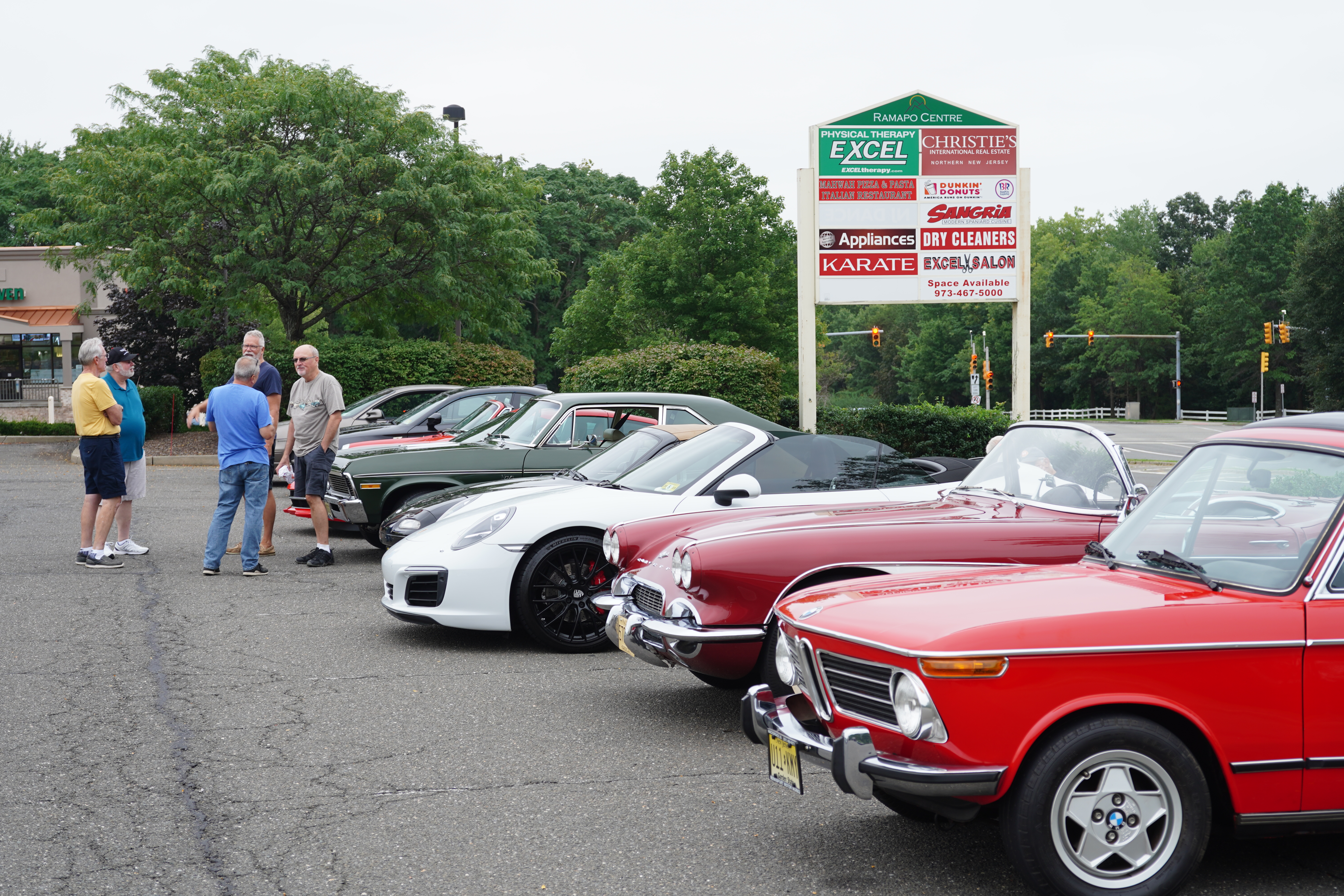
After the success of our first Cars & Coffee-type event of 2021, we decided to try it again; we even selected the same Dunkin’ Donuts location in Mahwah NJ. We had an enthusiastic turnout, and as much as this group has always enjoyed the morning cruise along country roads, there is something to be said for planting the car in one spot and devoting 100% of your time to chatting up the crowd.
We’re lined up
and shooting the breeze
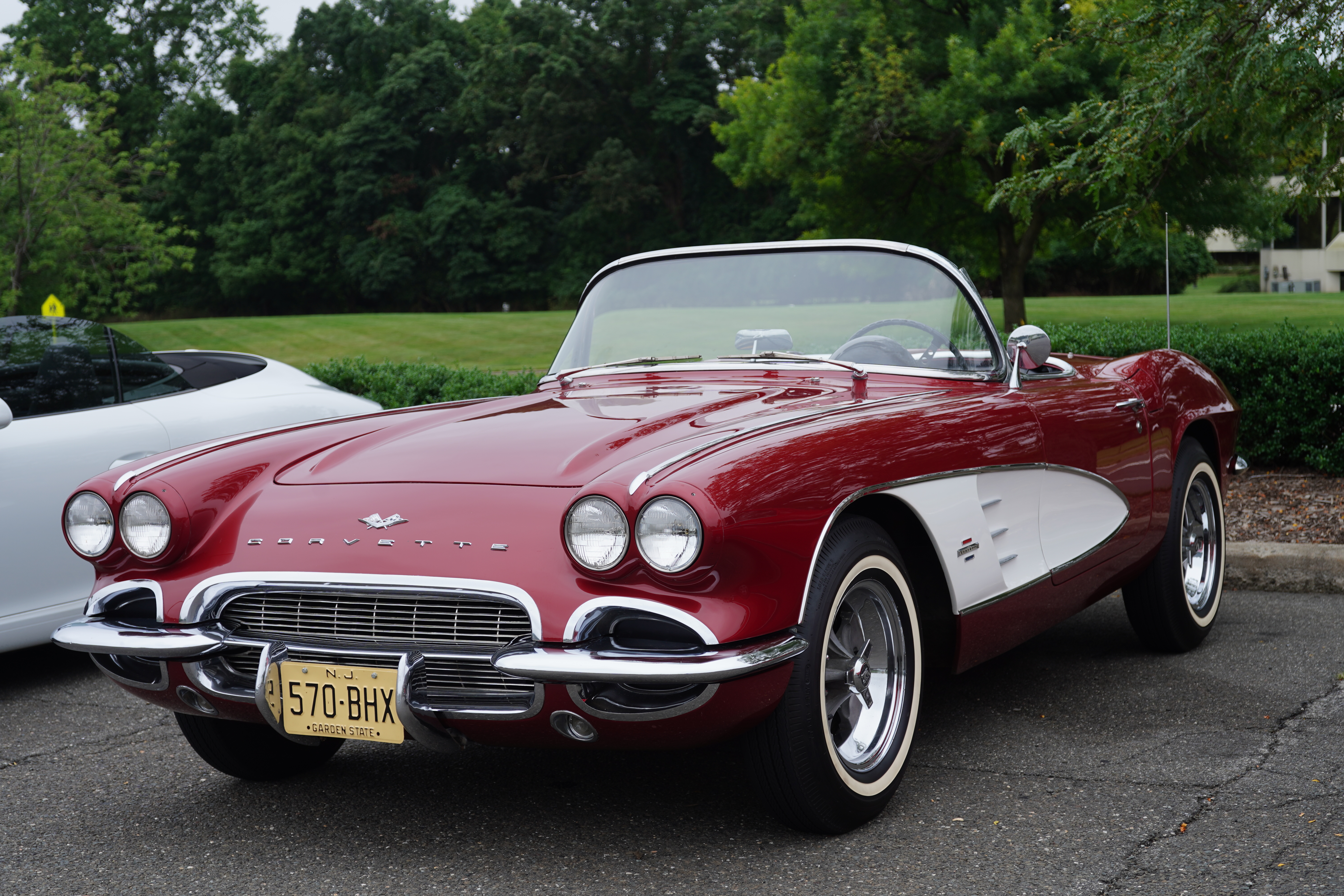
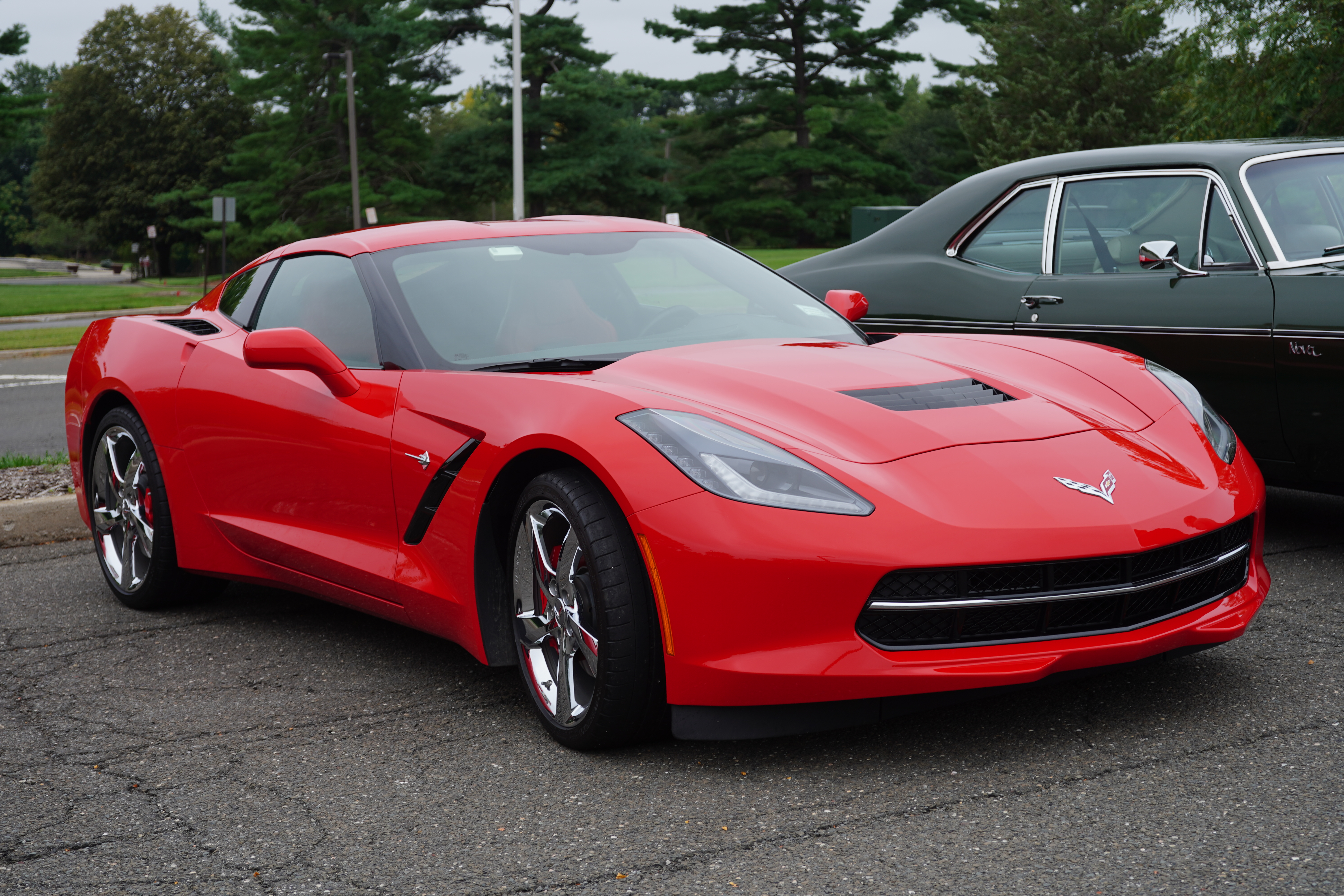
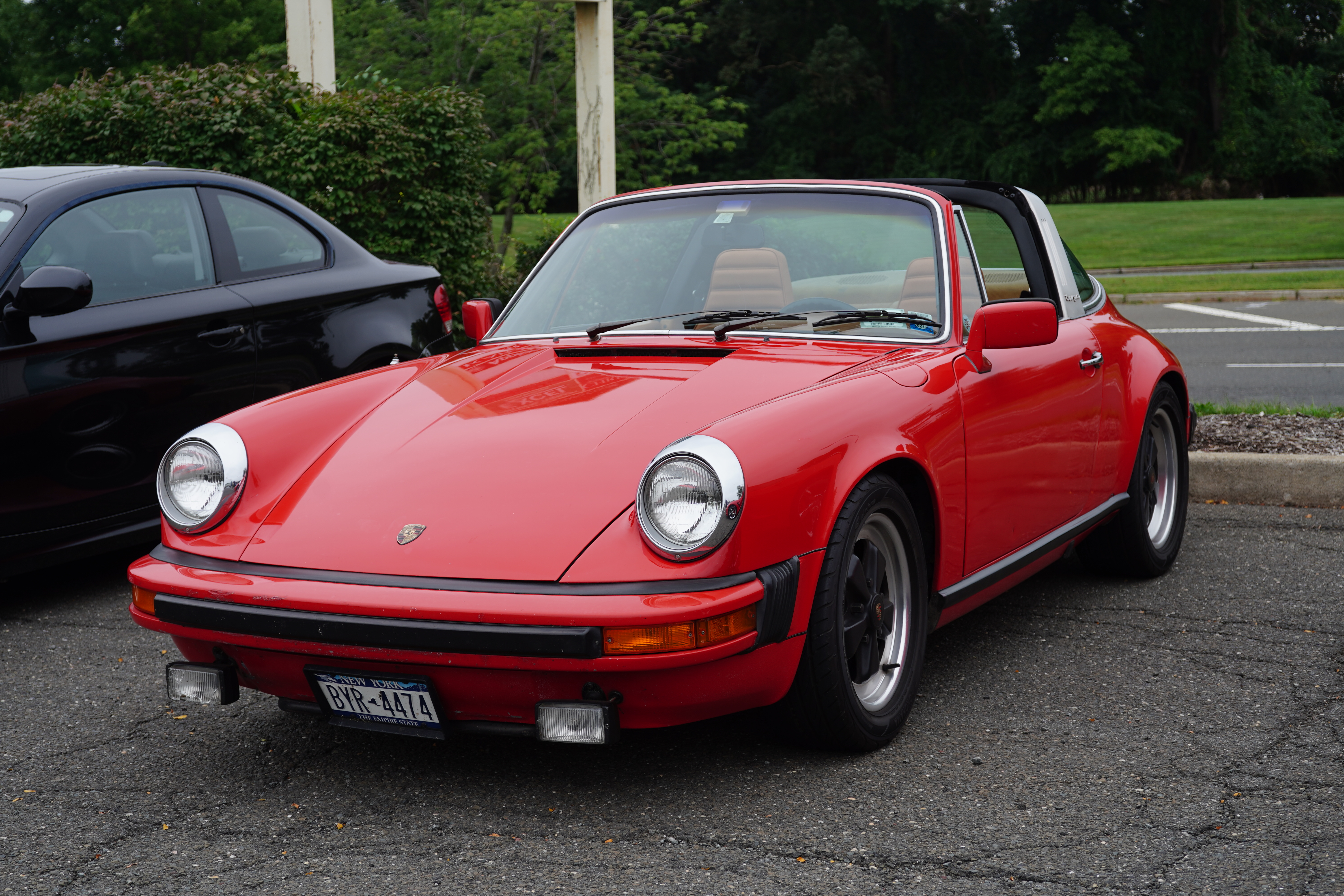
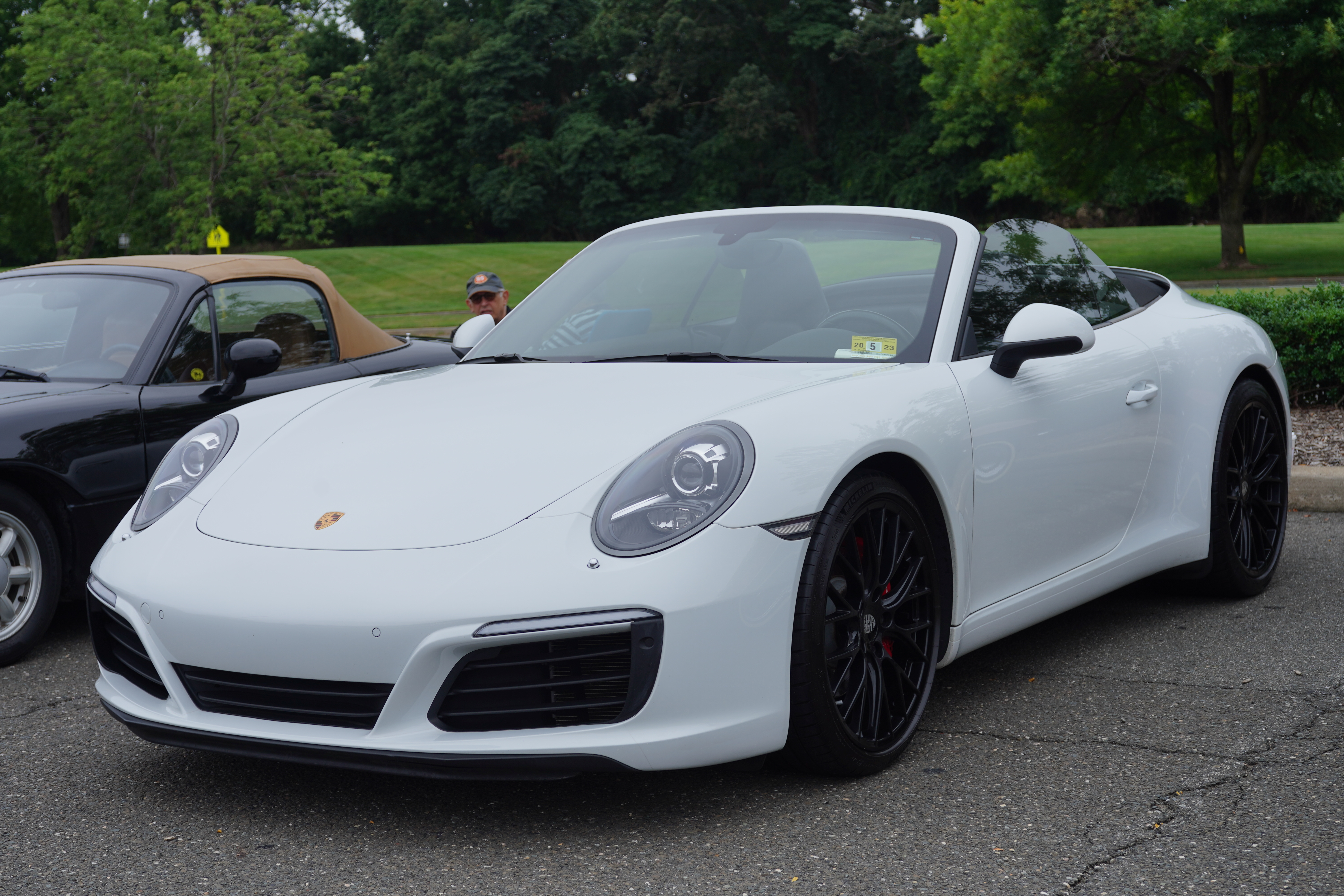
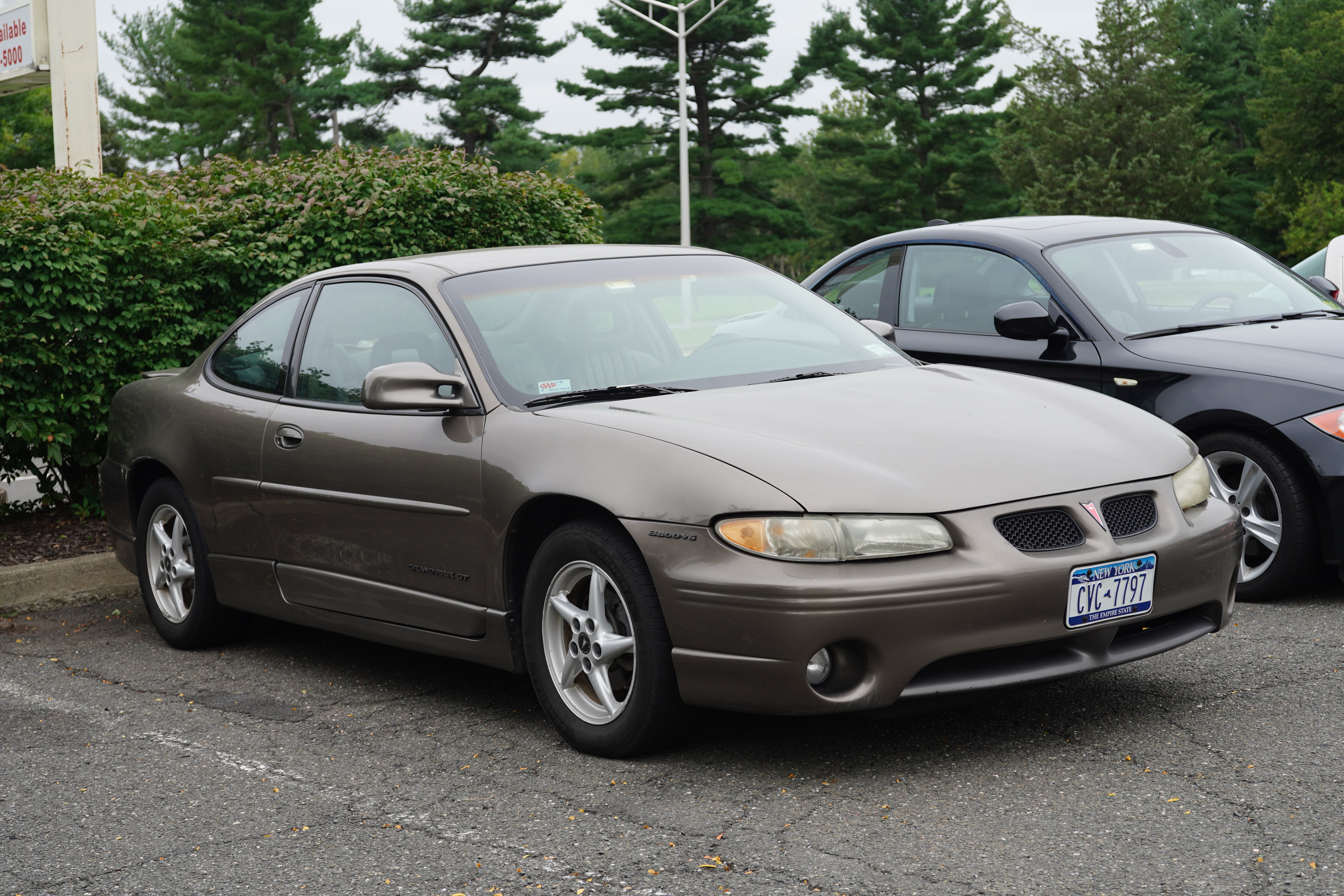
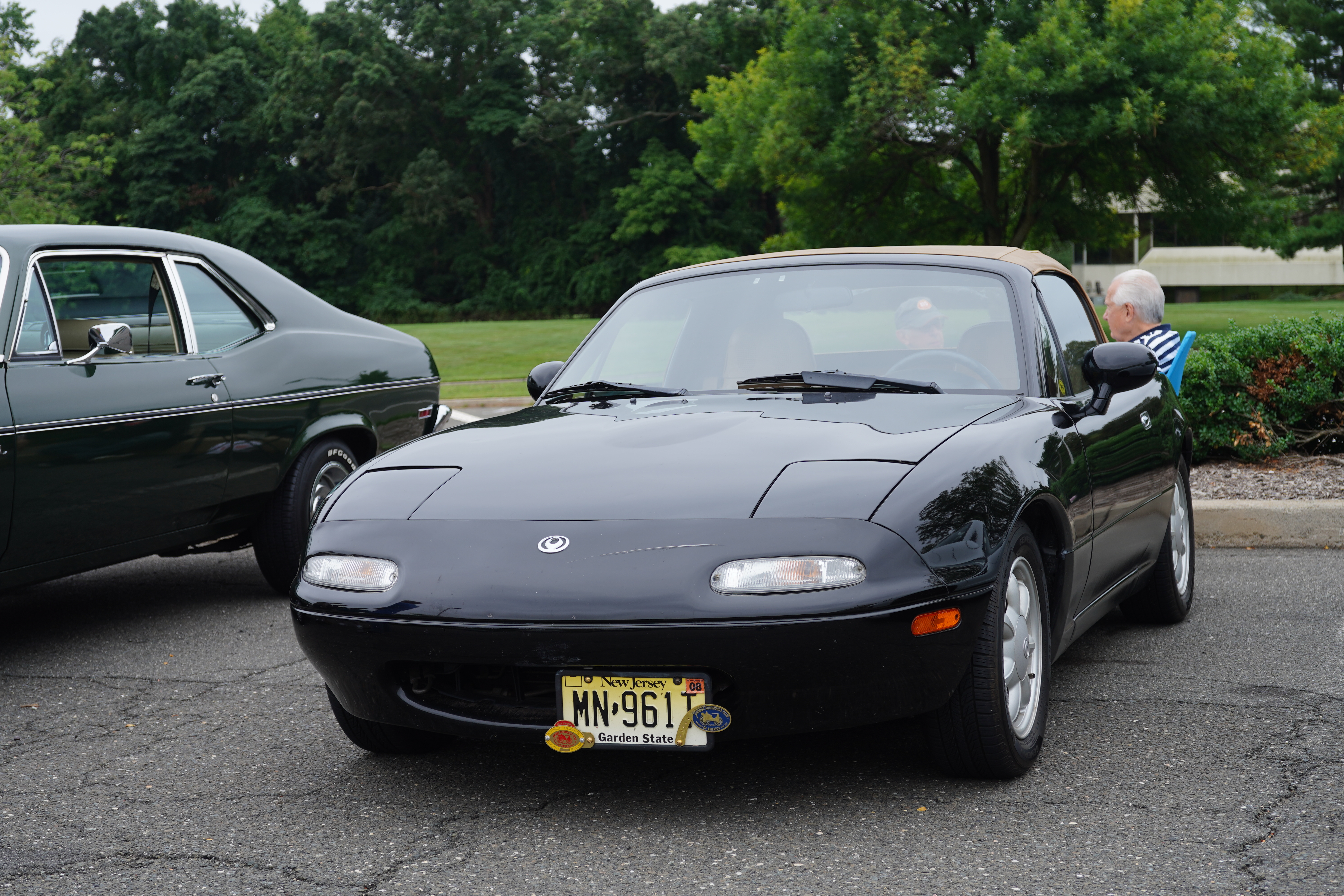
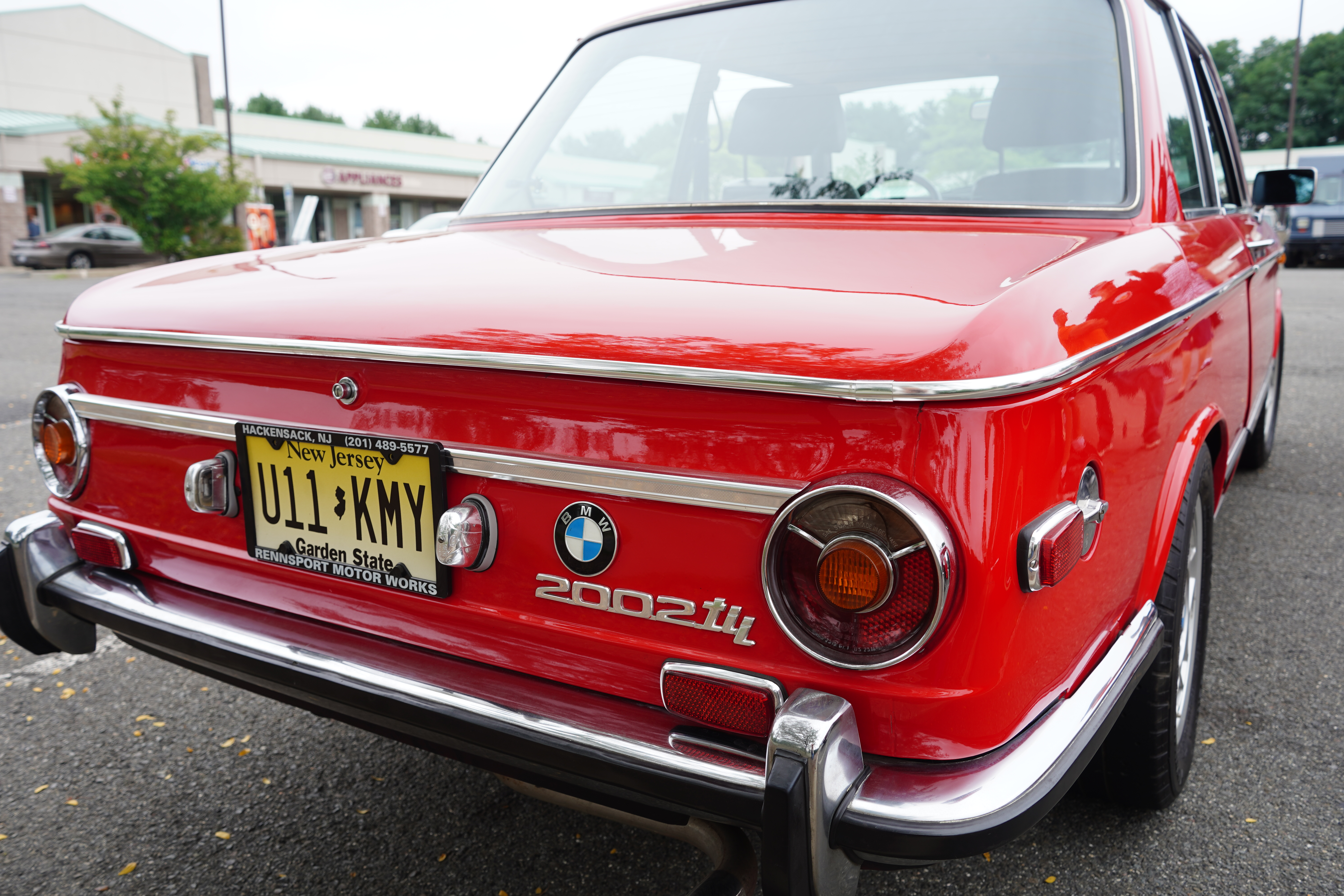
The cars ranged from Corvettes (a C1 and C7), BMWs (a 2002tii and a 135 coupe), Porsches, a Nova, a Grand Prix, and your blogger’s Miata. Having arrived at 8am, much of the crowd was still hanging out at 11. Breakfast was top-notch (as good as a bagel and a hot coffee can get), and the late August weather, never predictable, cooperated. We enjoyed ourselves and we will do it again!
Burton’s C1 Corvette
Robert’s C7 Corvette
Ken’s Porsche 911
Richard L’s Porsche 911
Fred’s Pontiac Grand Prix
Richard R’s Miata
A TALE OF TWO BMWs
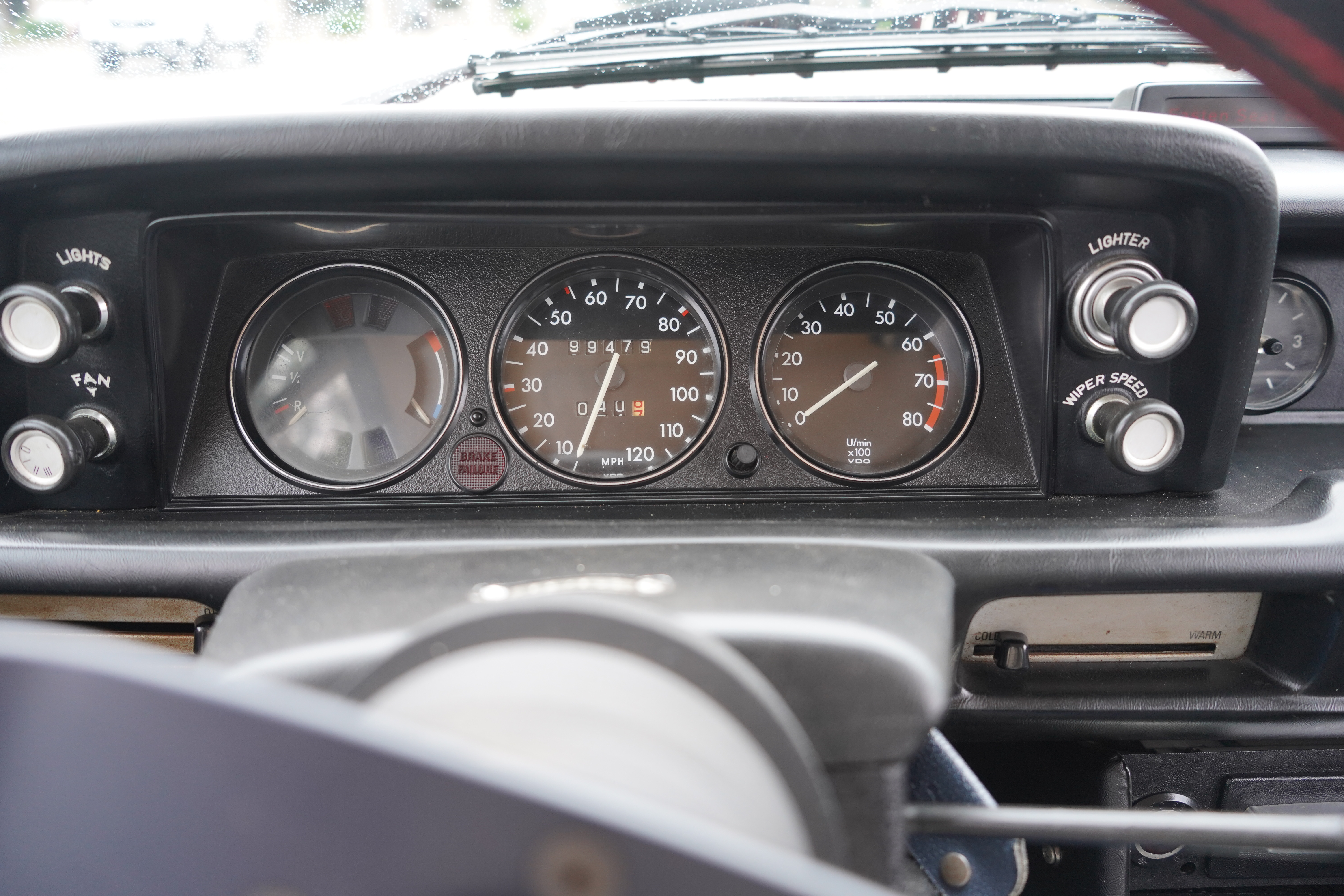
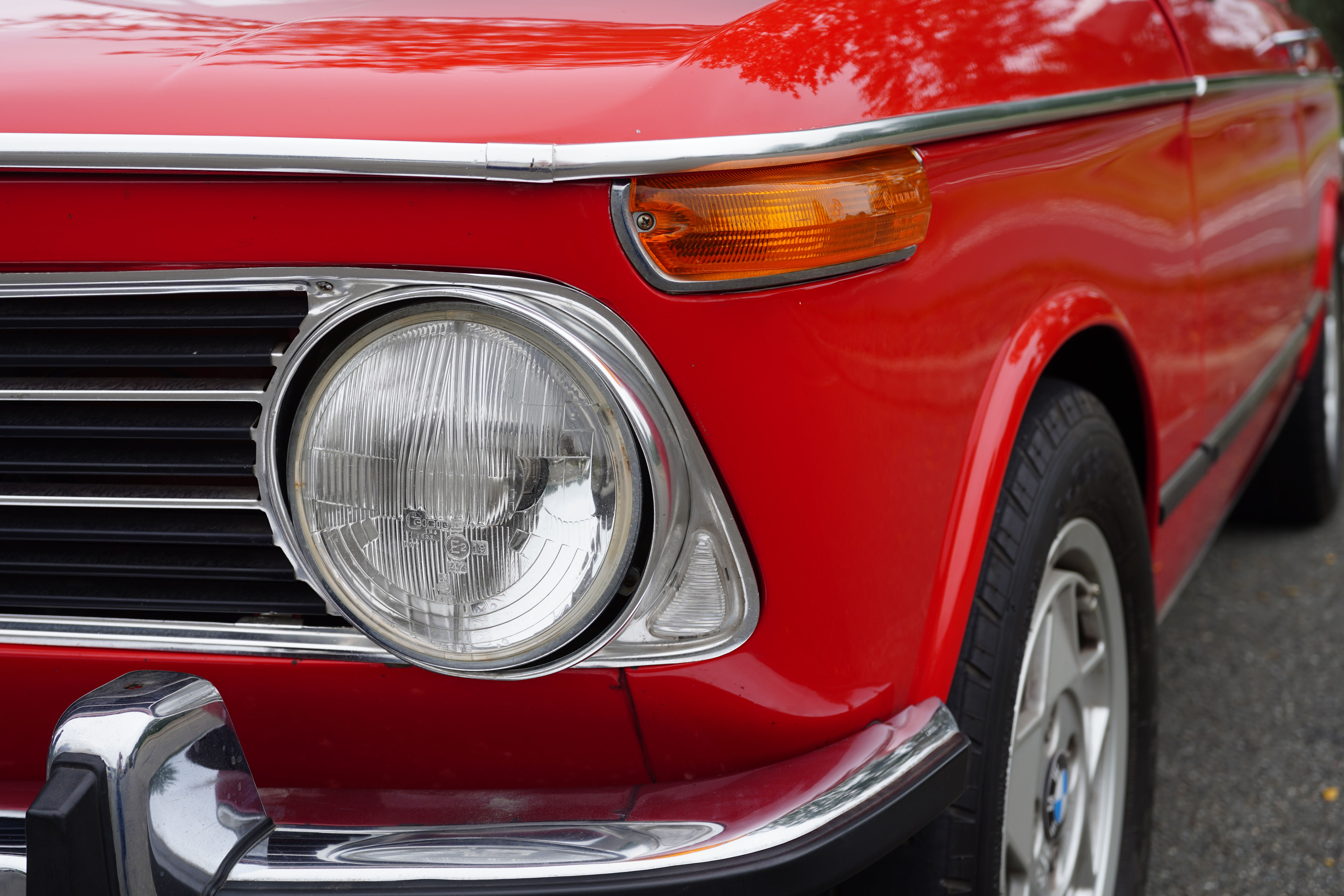
Both Sal with his 2002 and Art with his 135 were more than generous in offering me a chance to jump behind the wheel for a short spell. I haven’t driven a 2002 in who-knows-how-long, and I’ve never driven a Tii. Sal’s car is somewhat modified in the steering, suspension, and tire departments, although that’s not easy to detect by eye. He has ‘sport’ steering in it, with about a half-turn lock-to-lock (I’m kidding, but not by much). The car started right up, and the throttle response under the mechanical fuel injection was very linear. The 4-speed was easy to shift with a light clutch, and the sweet spot on the road was around 40mph in 3rd gear (not unlike my Alfa). Dashboard ergonomics were German-funky. After 10 minutes, I still never found the windshield wiper control. Visibility with that tall greenhouse is outstanding. Fifty years on, it’s quite easy to understand the revelation that BMW’s little sports sedan brought.
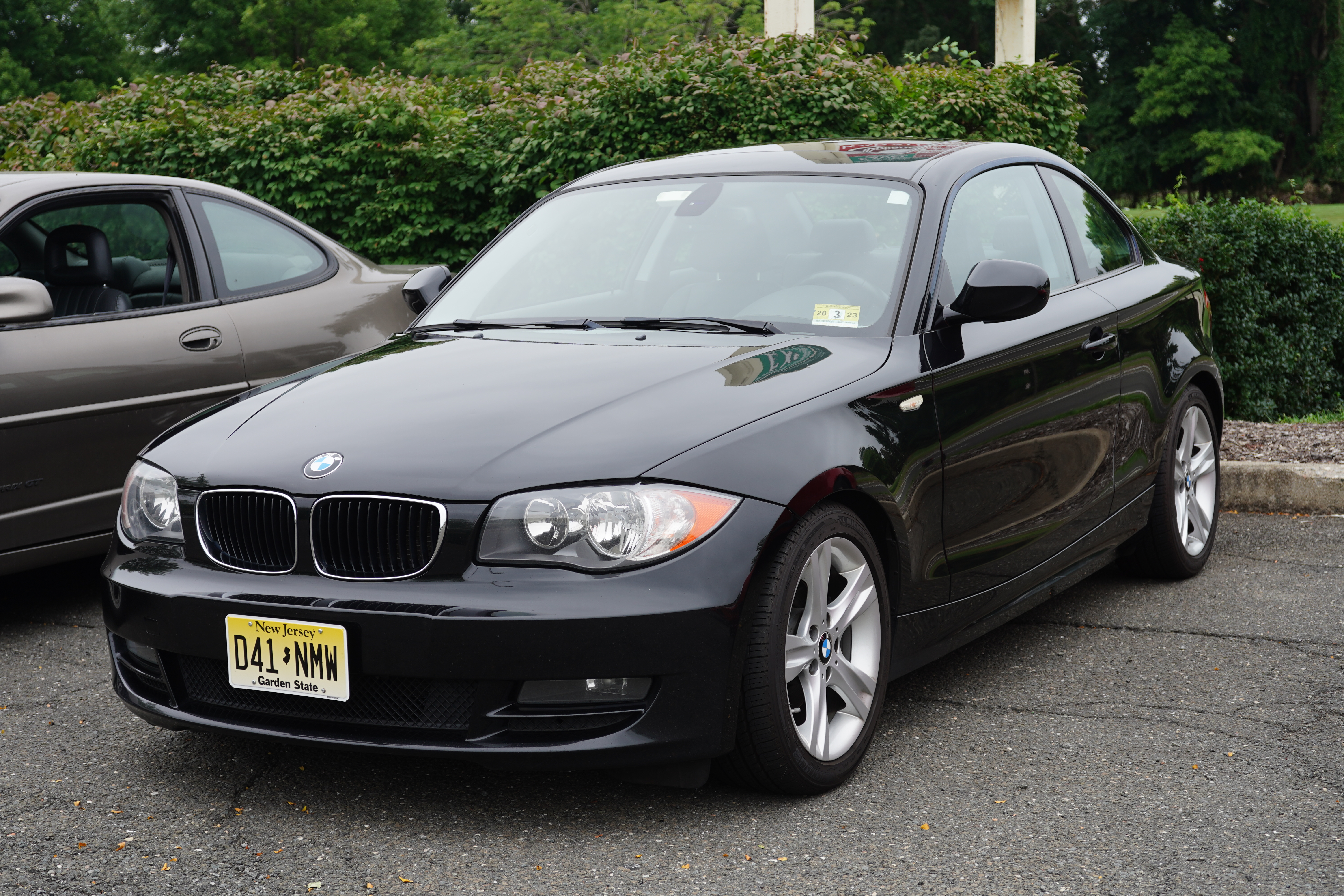
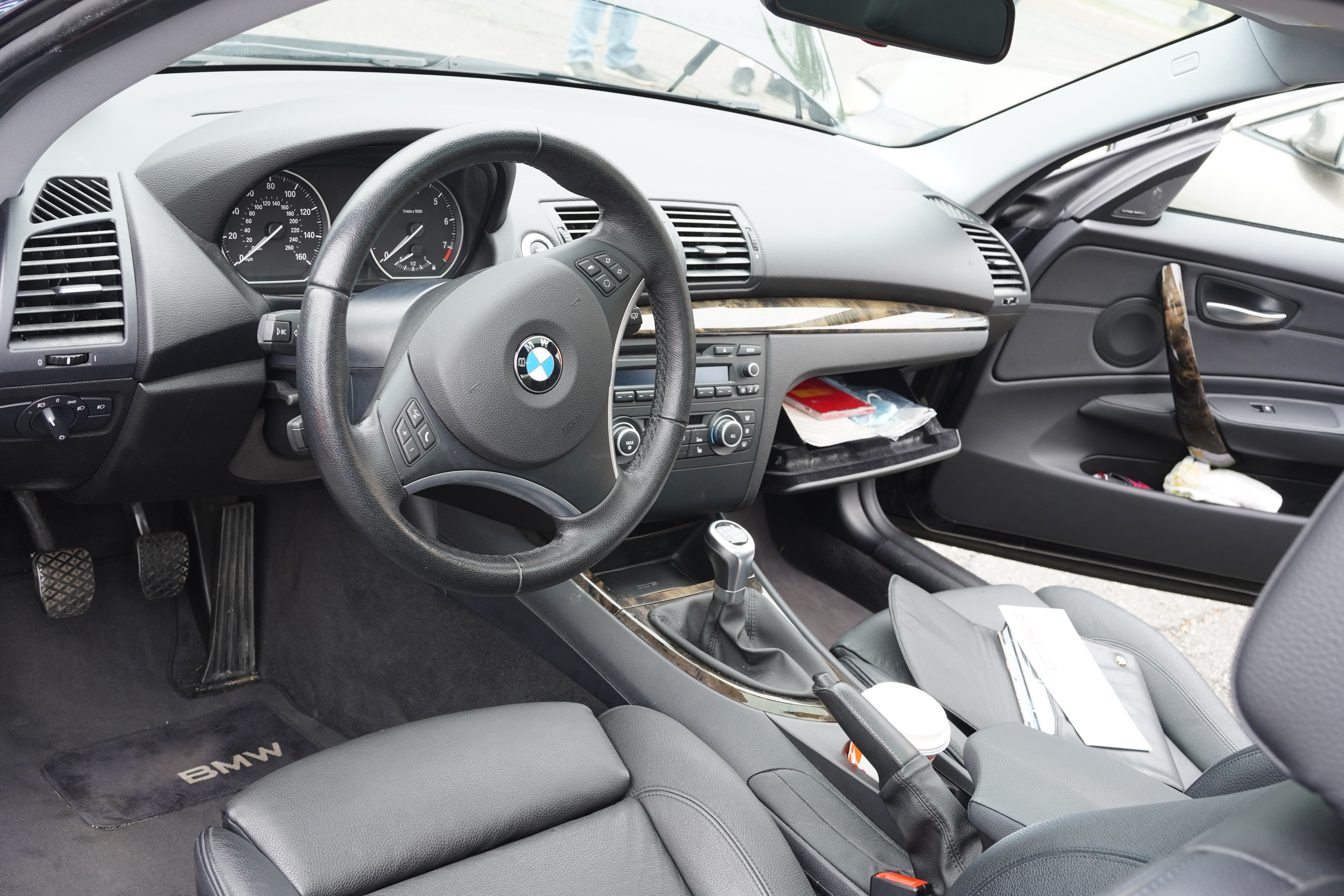
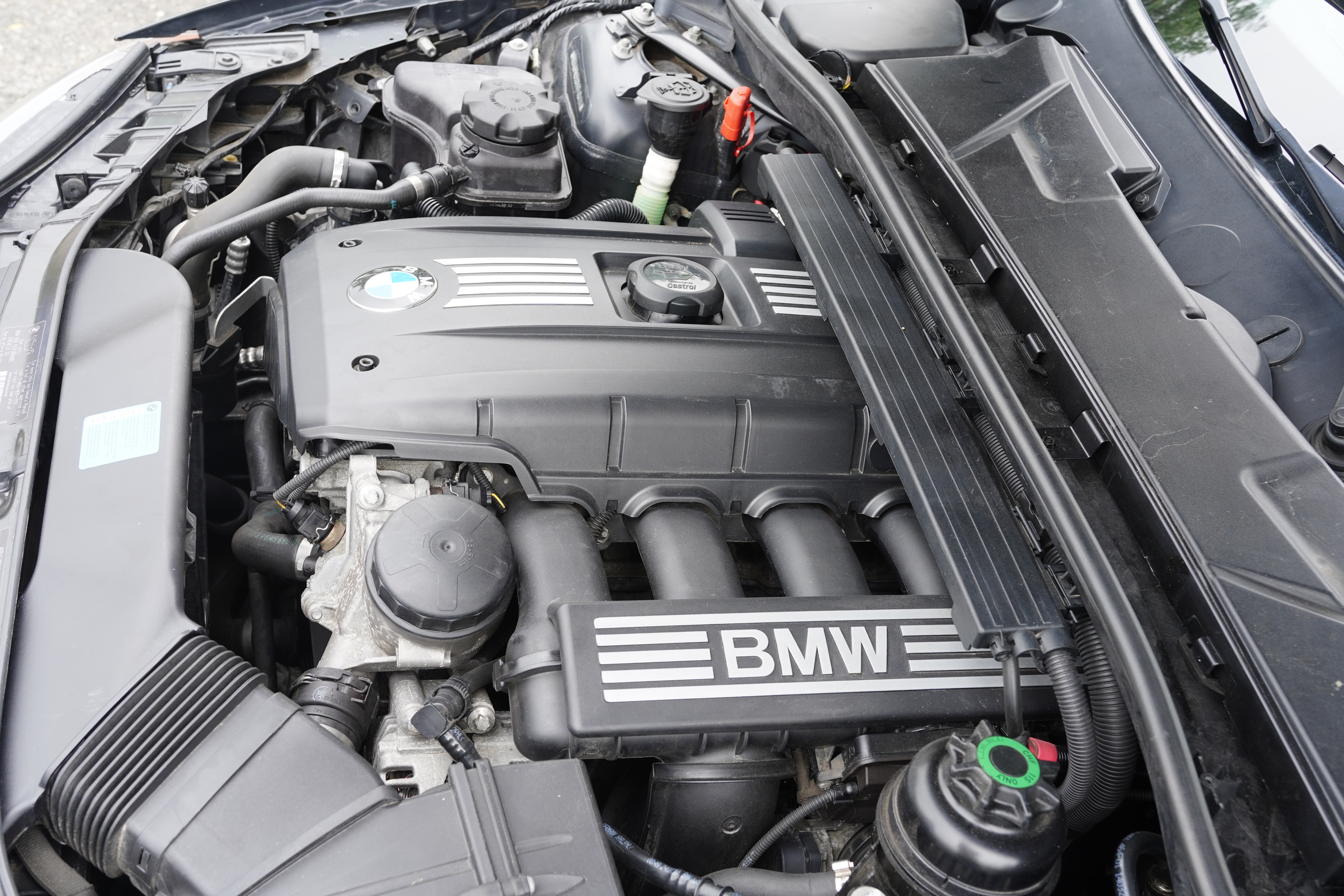
Art’s 2011 135 has just enough connection to the 2002 to see the familial resemblance, but of course, this is a 21st century automobile. All the controls are light, almost too much so, and the 6-speed is a delight to snick through the changes. There may be nothing quite as smooth as an inline-six (except an inline-eight), and BMW’s sixes are known for their sewing-machine precision in sound and performance. Funnily enough, I’m not sure that the dash ergonomics are much of an improvement over the 2002, but that is as much a function of electronics as it is design. For me, the size of this box is perfect, and many of the buff books at the time agreed, citing a 3-series car that had become too bloated. Art sought this out to have a RWD manual tranny ‘sports car’ and he’s got a jewel of one.
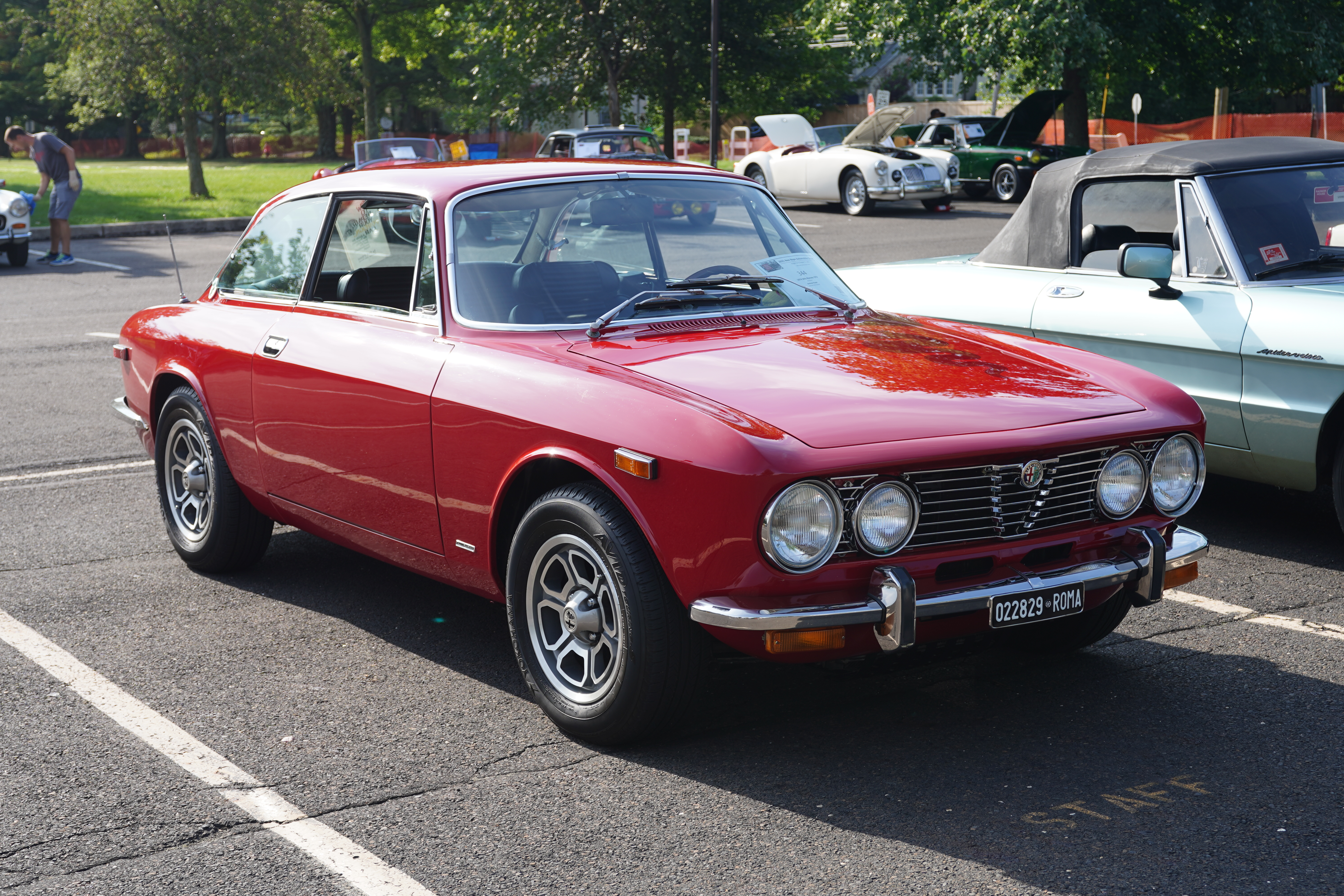
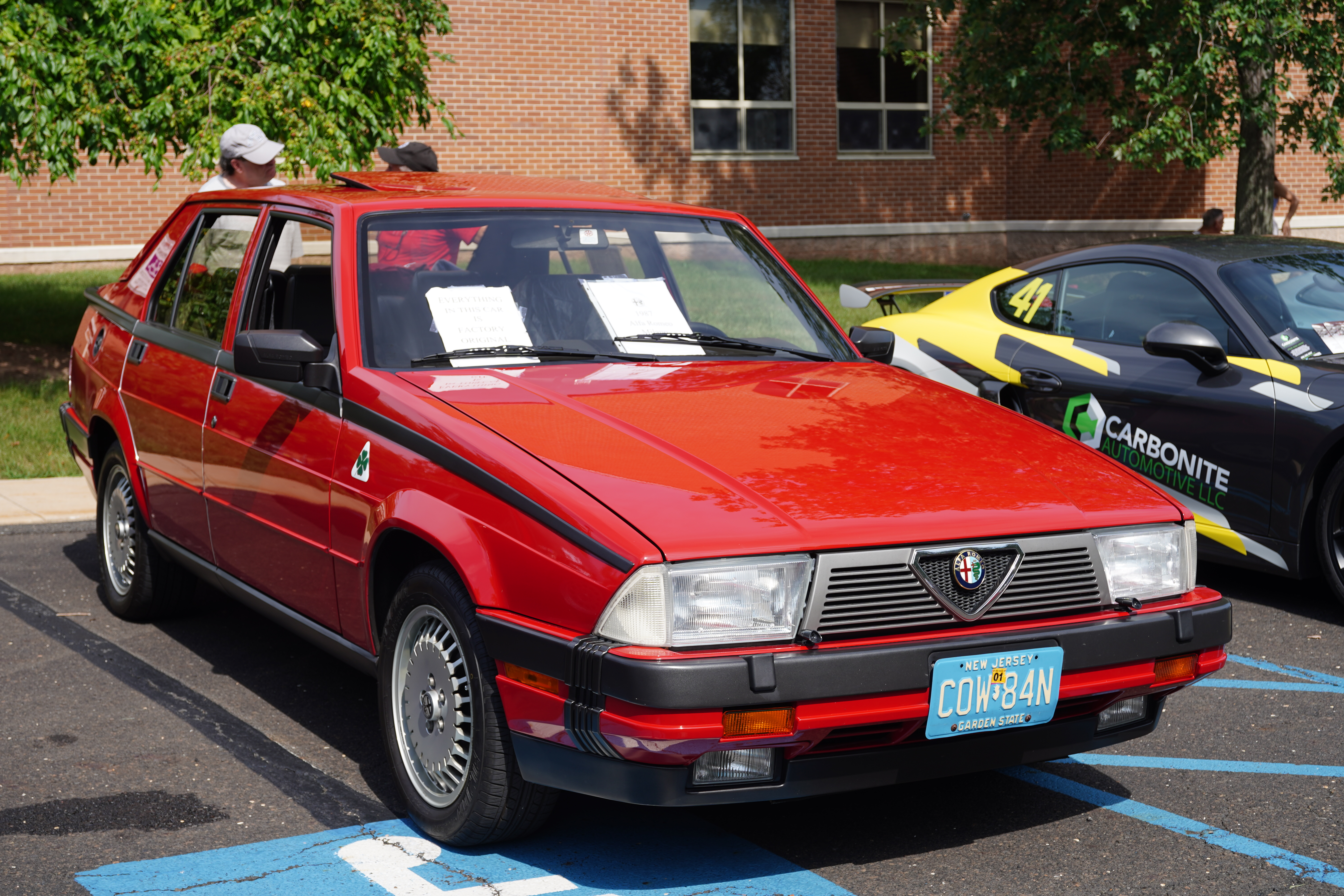
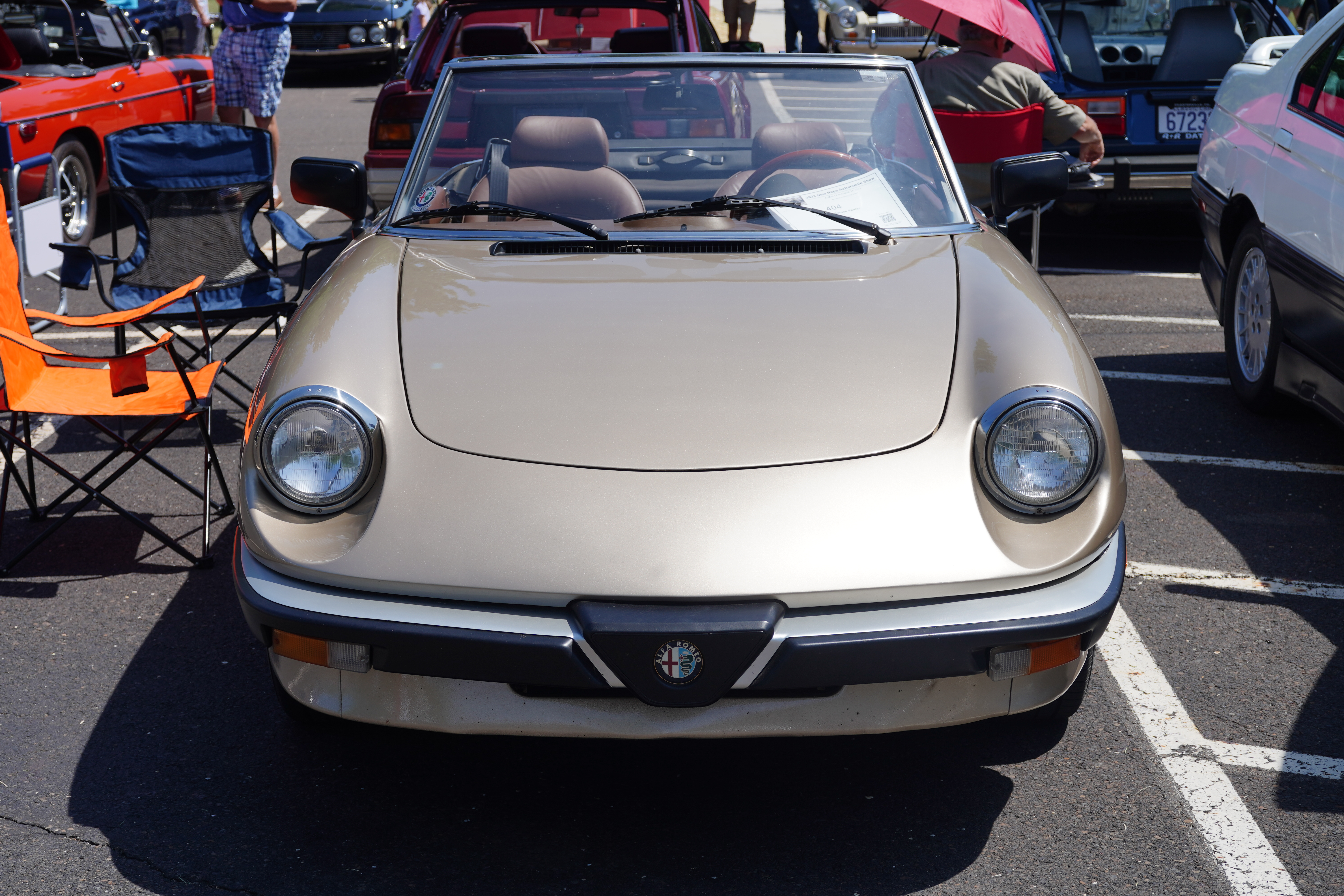
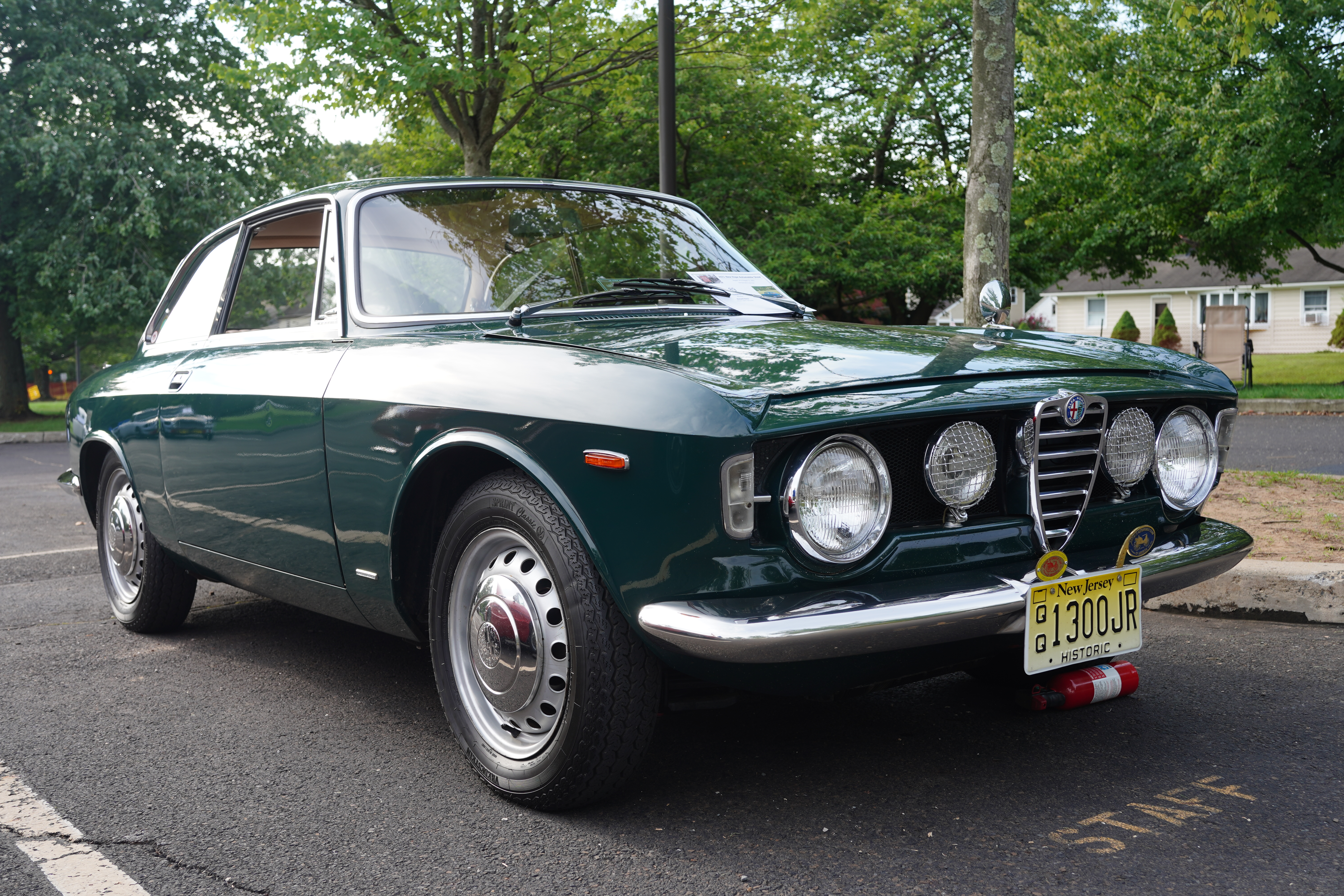
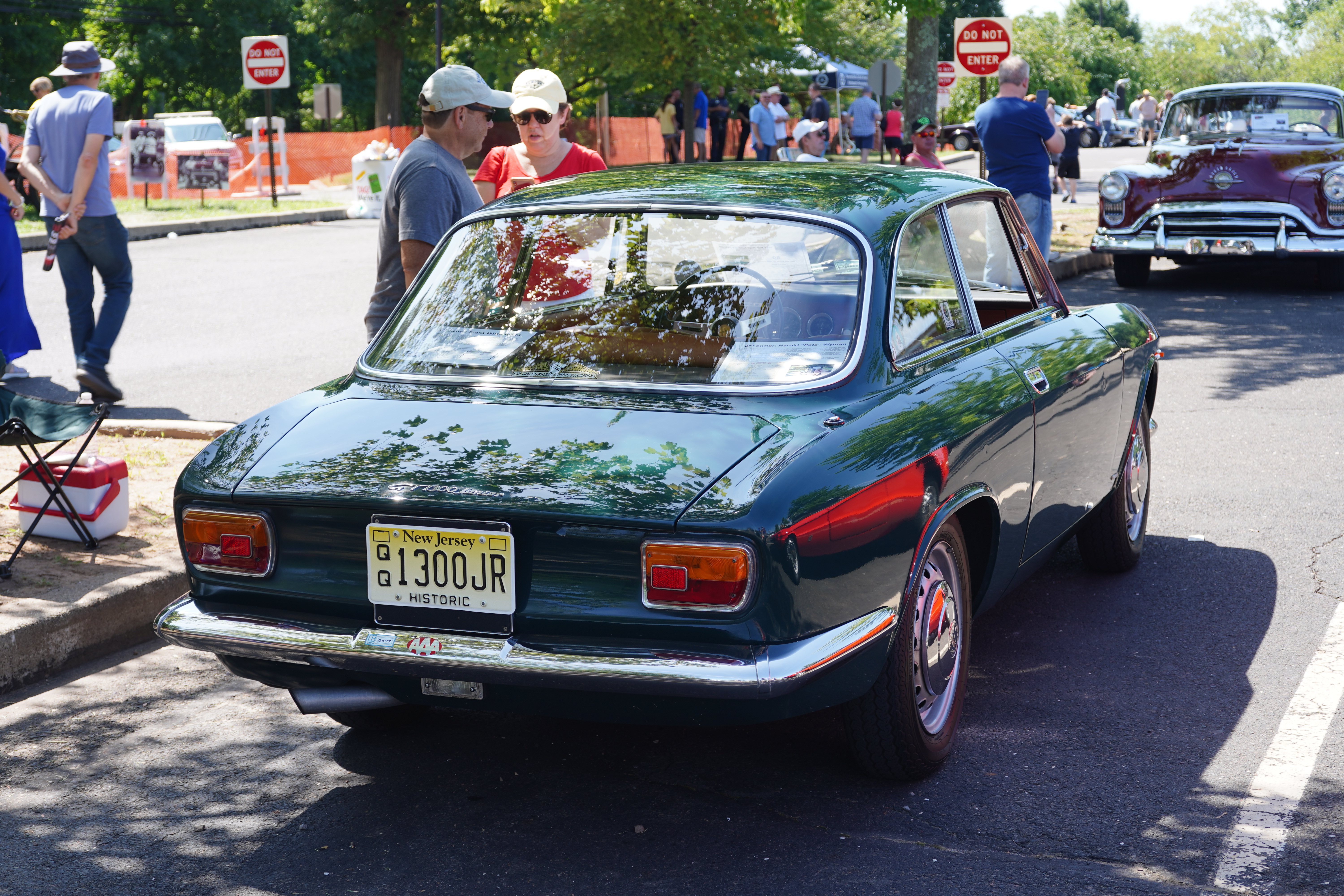
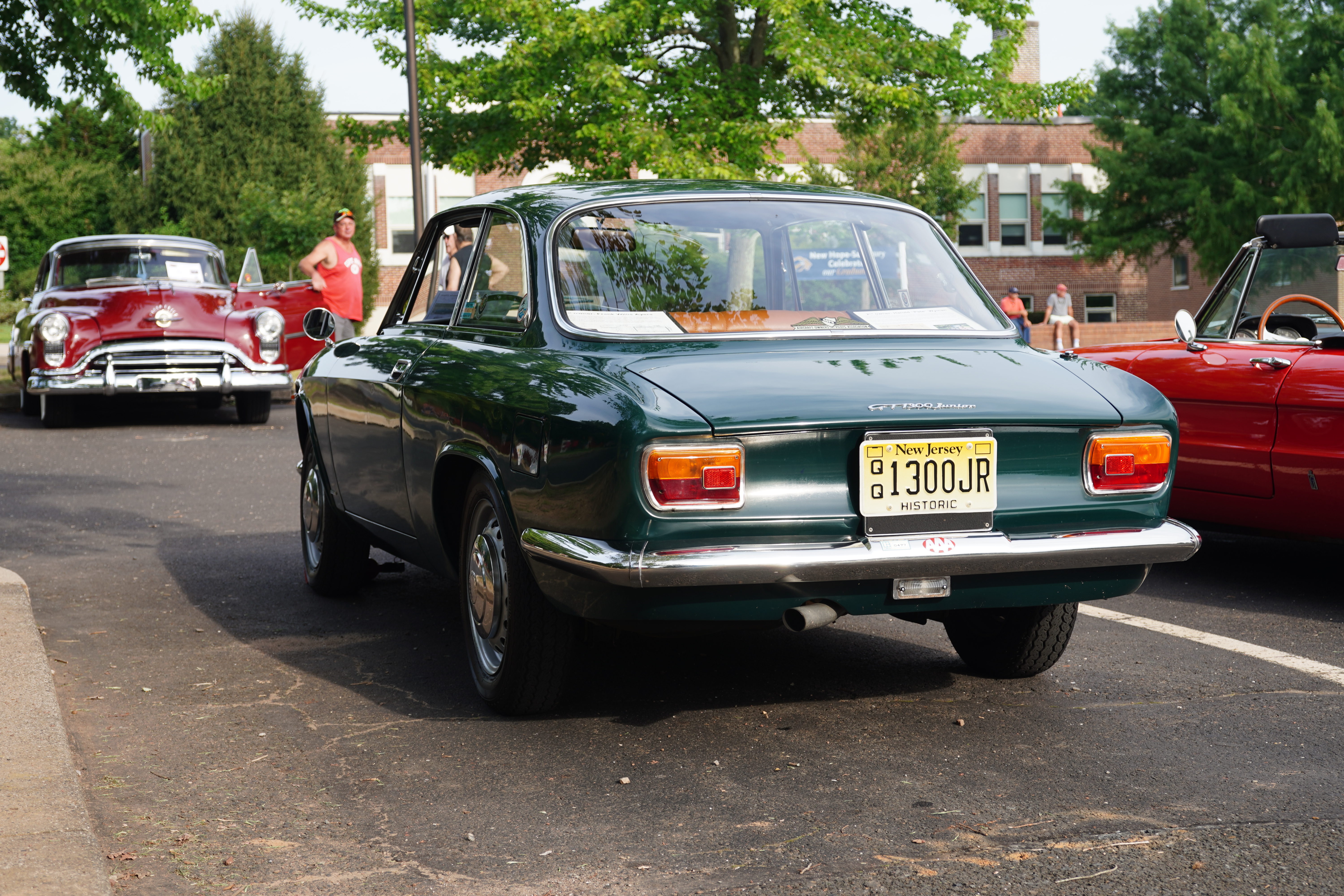
The 2021 New Hope (PA) Auto Show was held during the weekend of August 14-15. This is one of the longest-running car shows in the Northeast, and this year’s arrangement split participants into two groups: the domestic cars on Saturday, and the import vehicles on Sunday. My Alfa was registered for the Sunday event, and, expecting a significant turnout of Alfas buoyed by support from both the NJ and Delaware Valley Club Chapters, I was not disappointed.
The weather cooperated; Sunday was one of the nicer days we’ve had during what’s been a hot and humid season. Registrants were asked to arrive by 8am; I was five minutes early and gained a coveted shady spot at the start of the row dedicated to Alfa Romeos. Within a few minutes, another dozen or so Alfas arrived; I later counted over 20 of the cars from Milano.
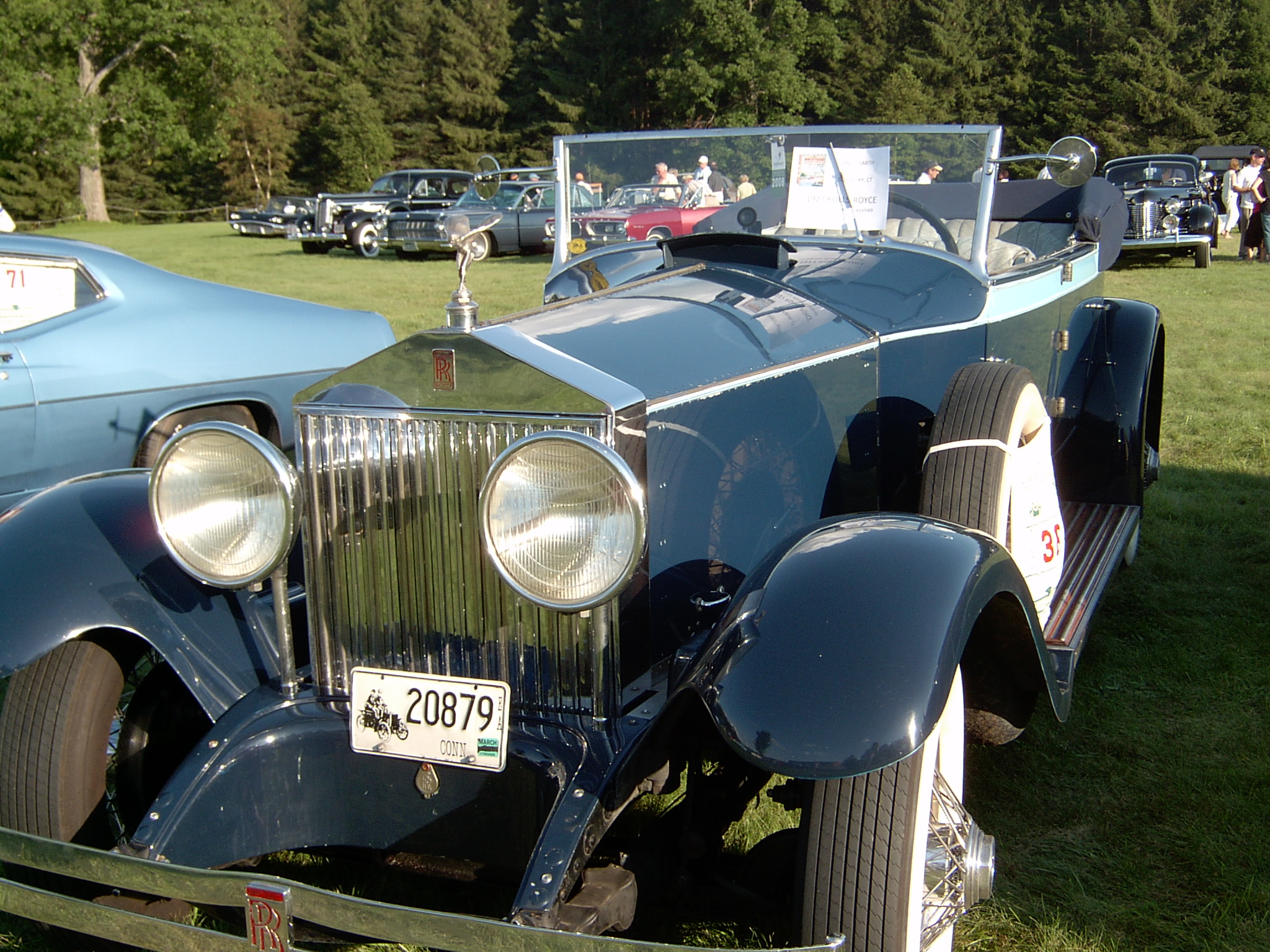
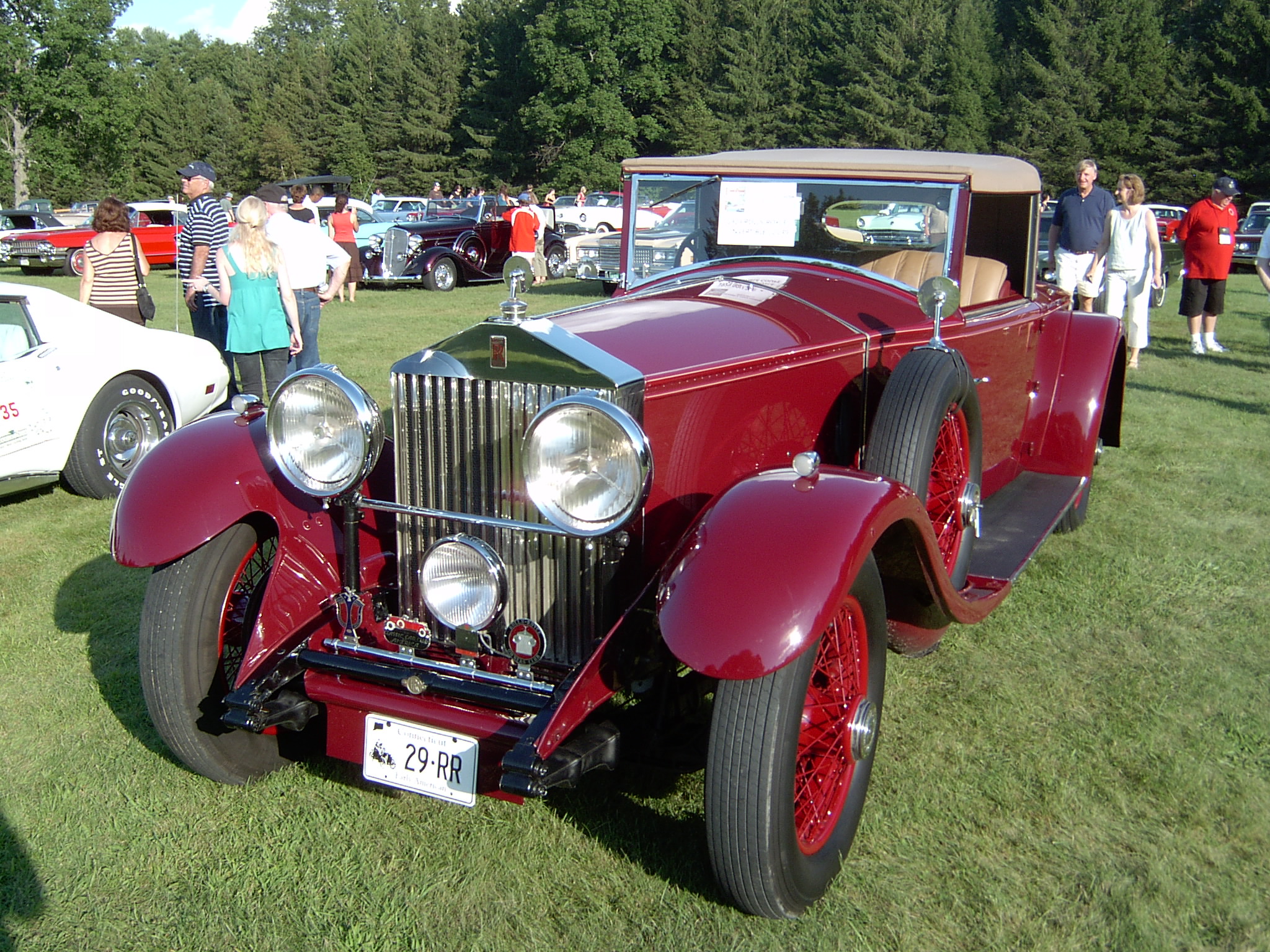
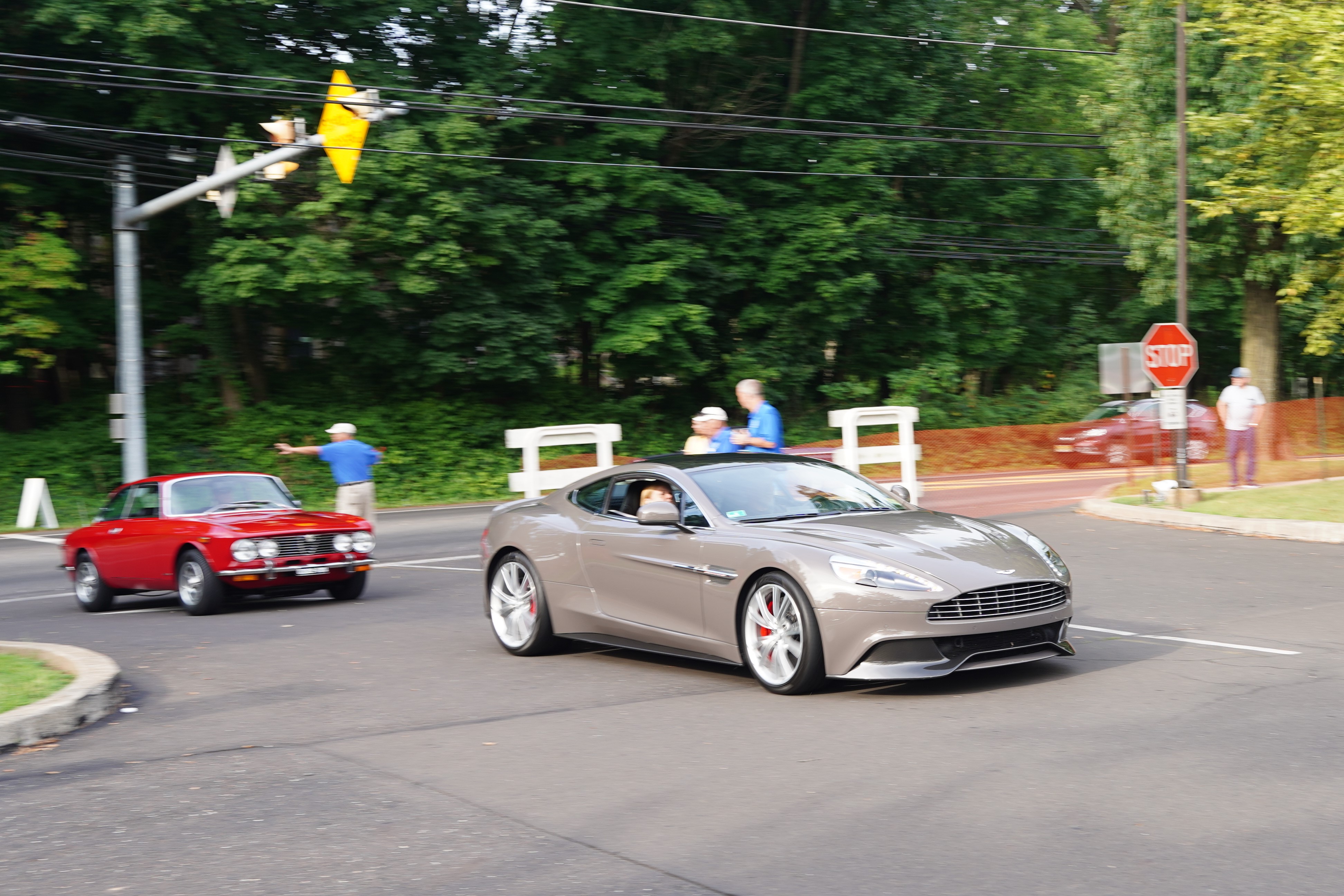
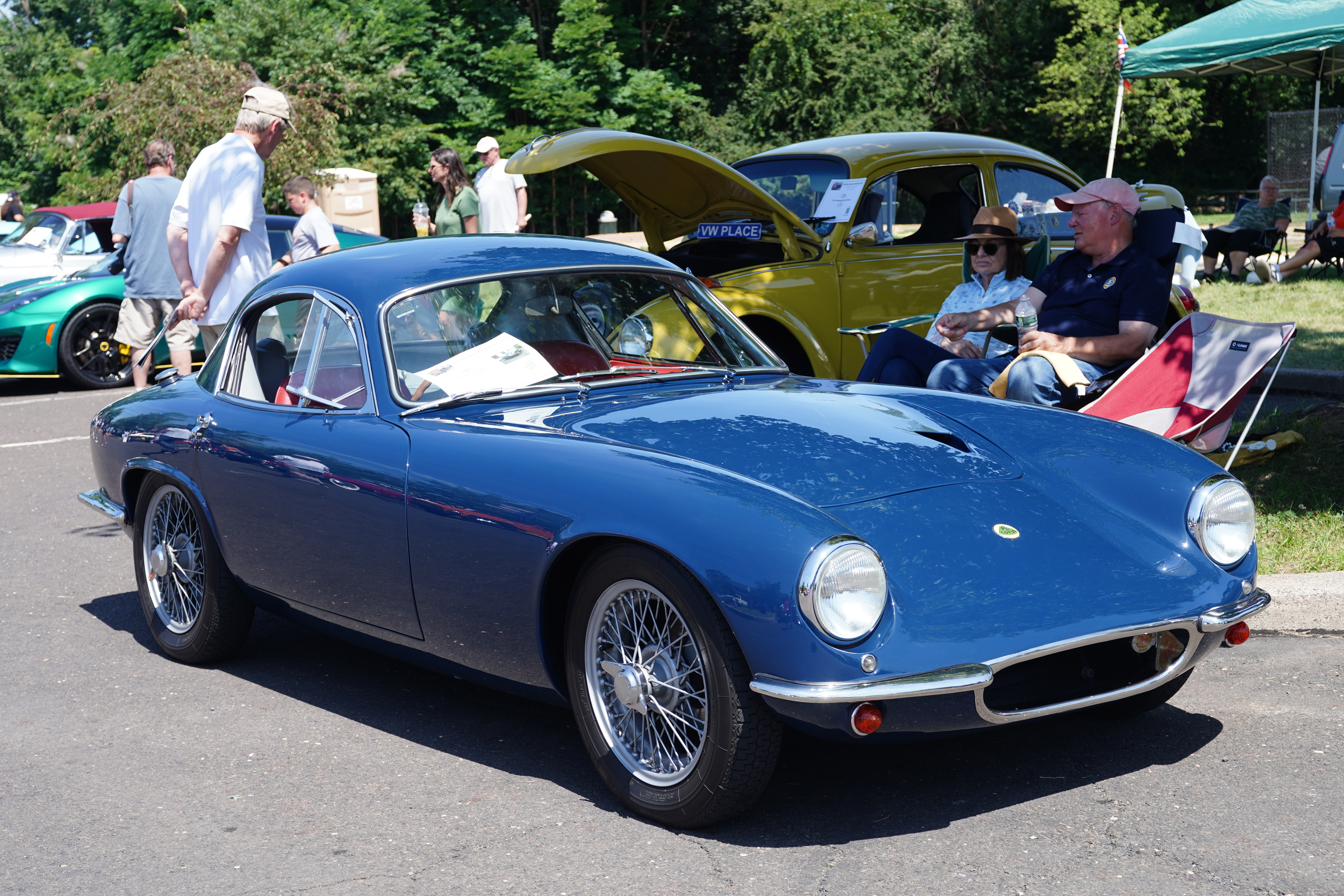
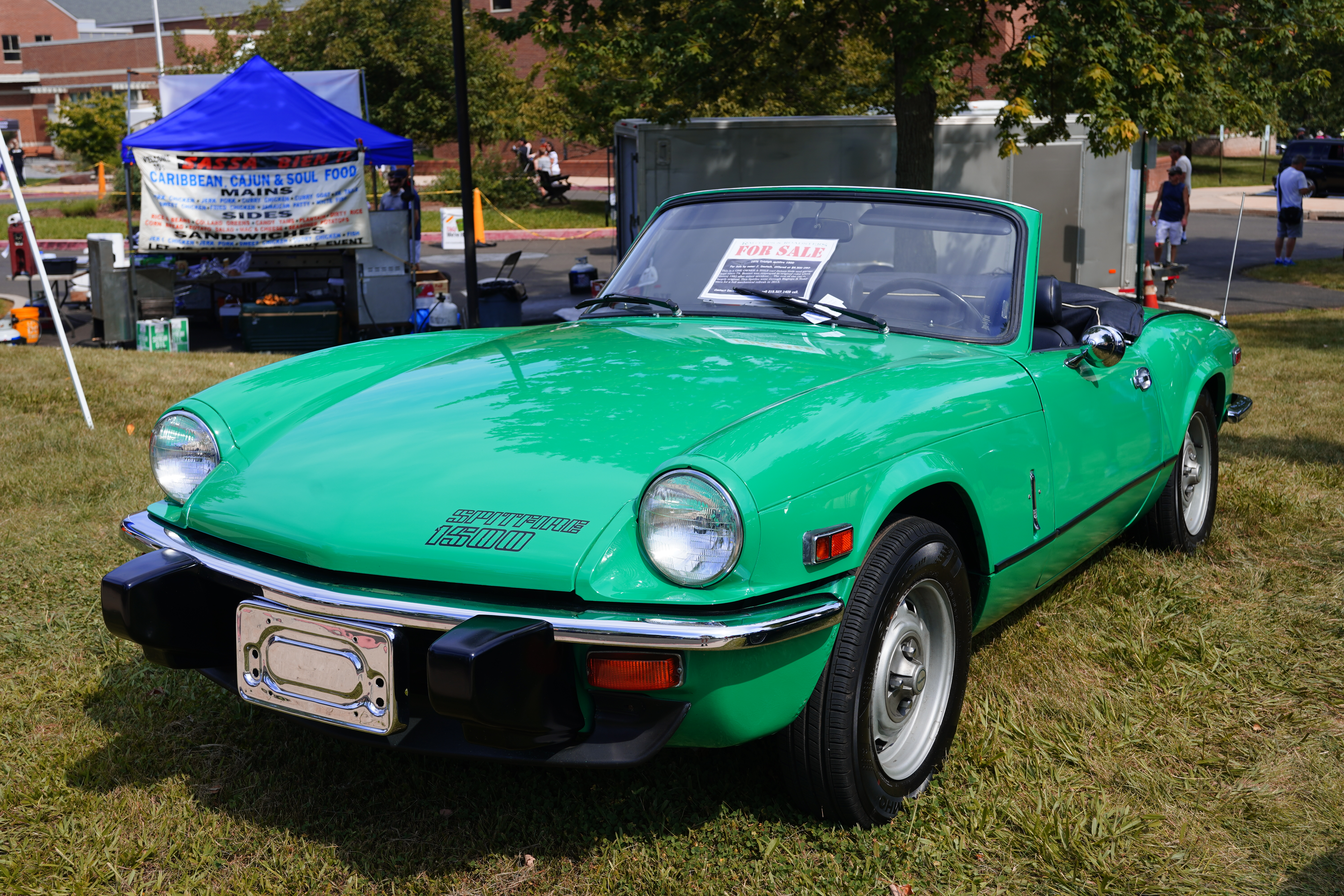
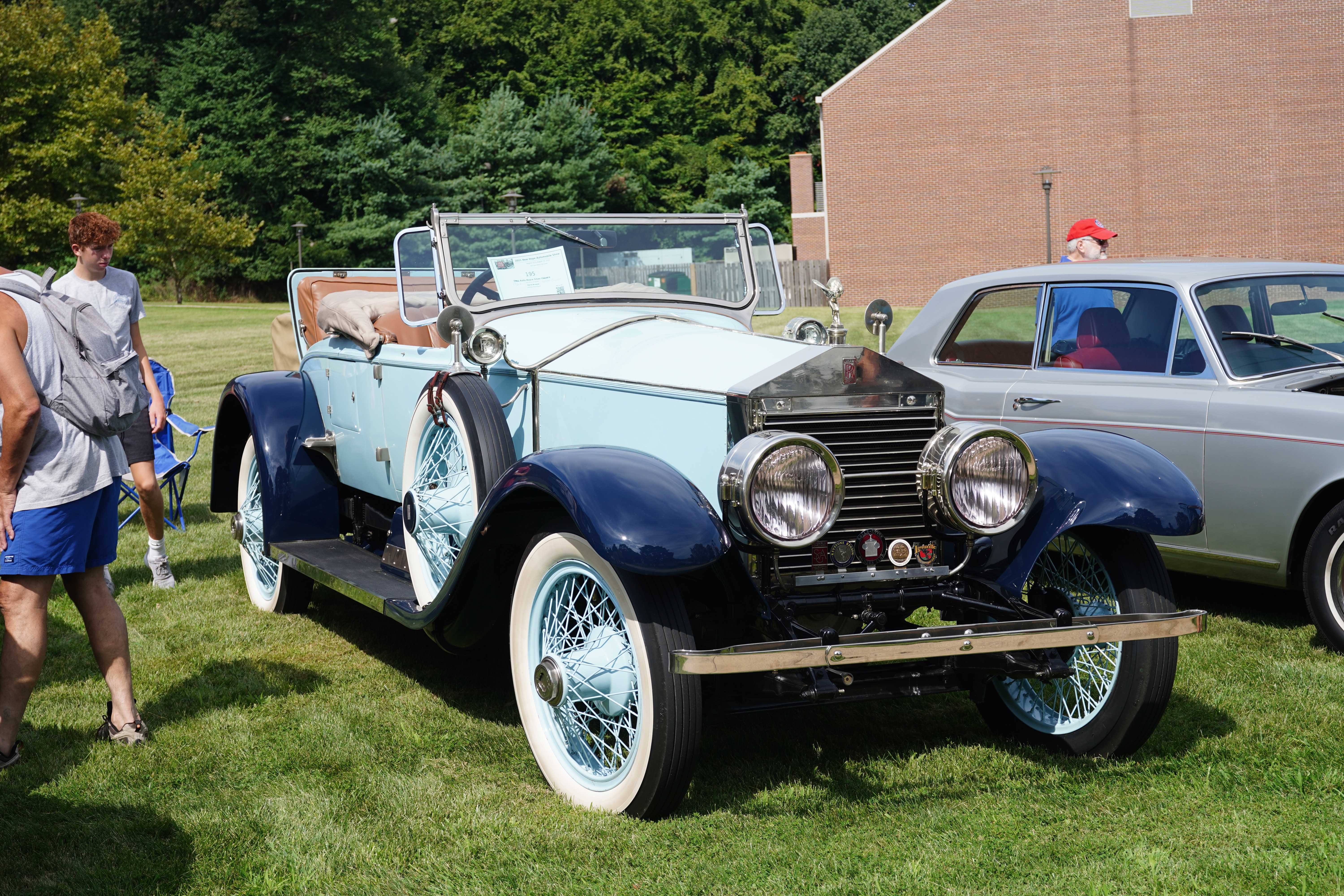
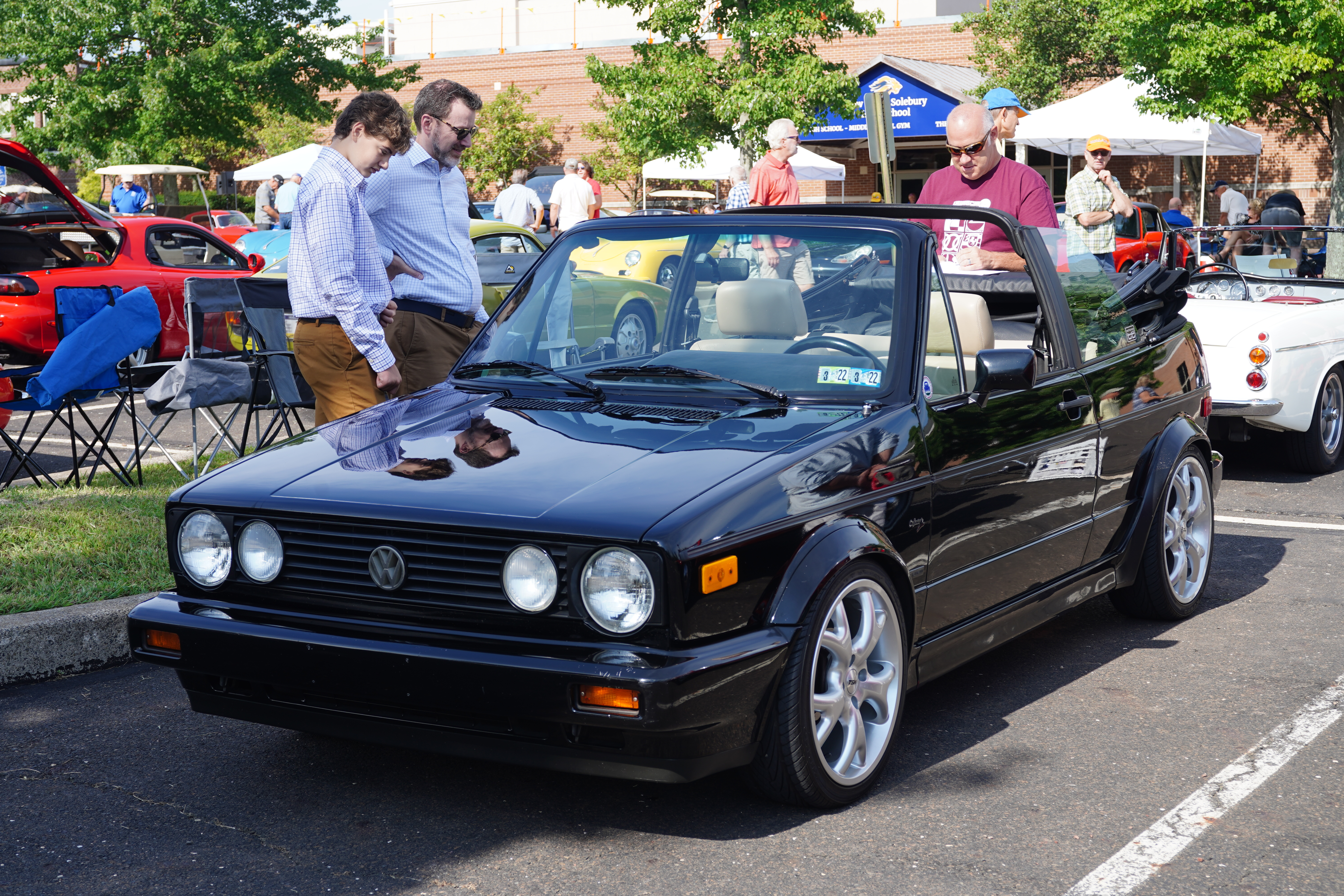
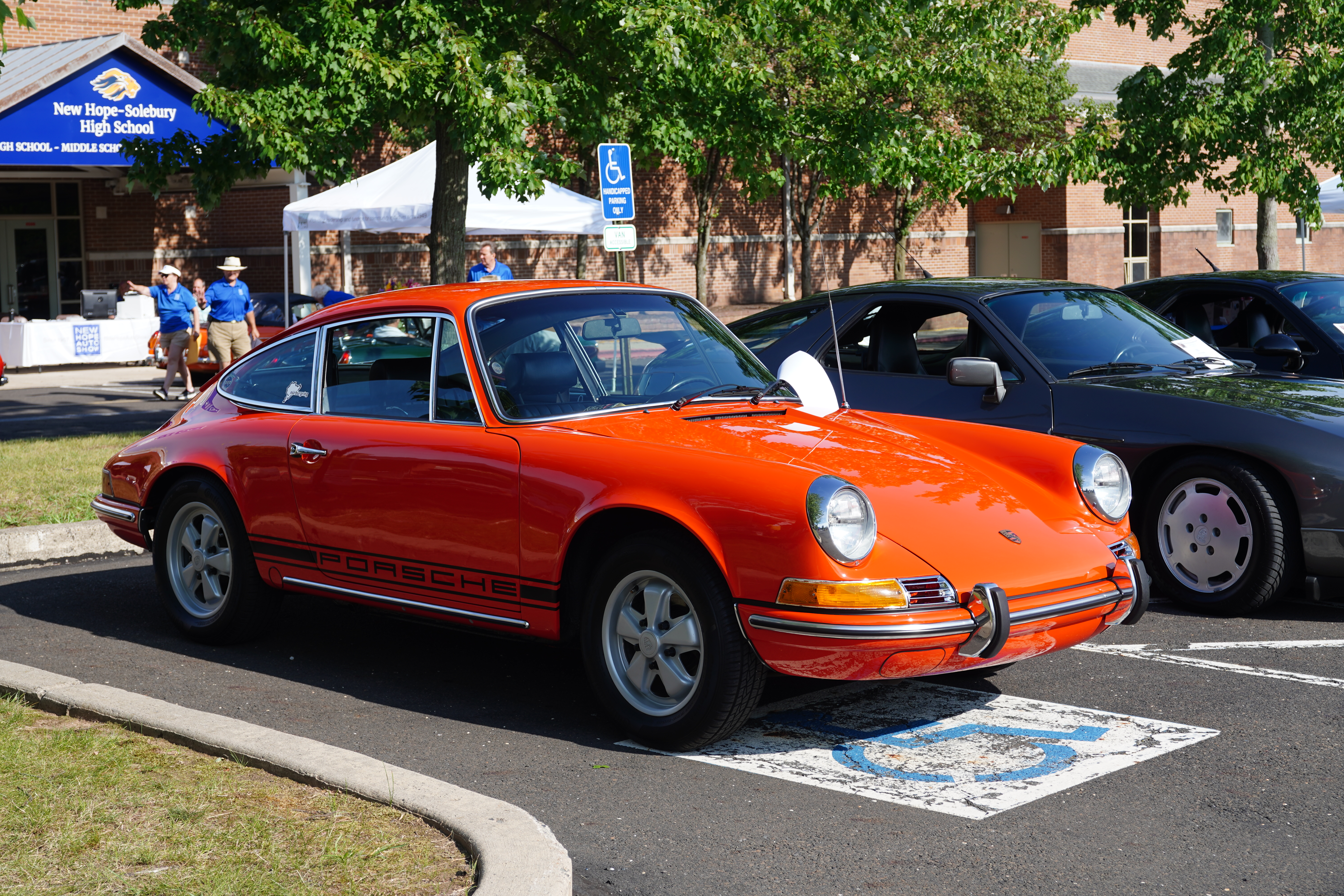
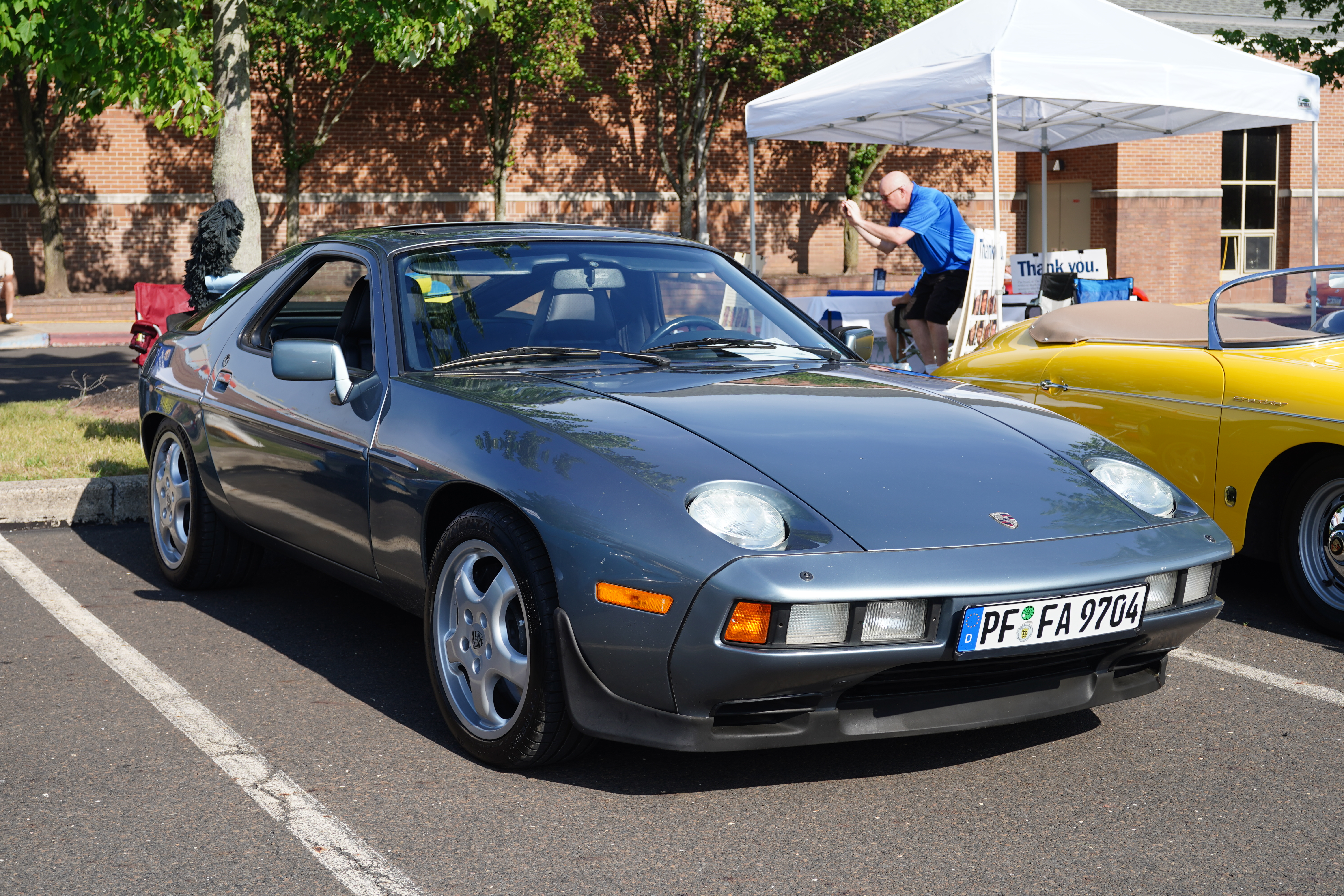
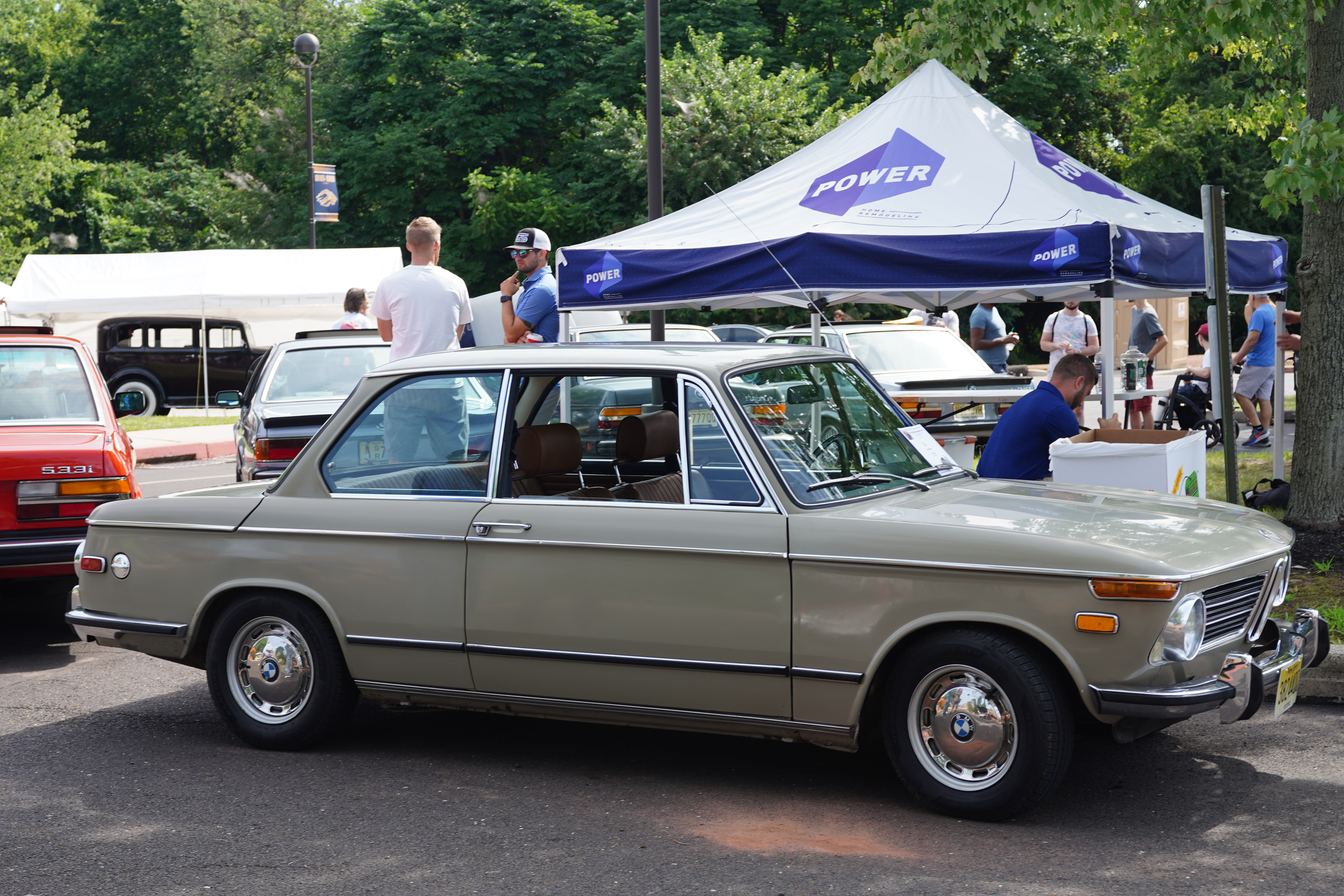
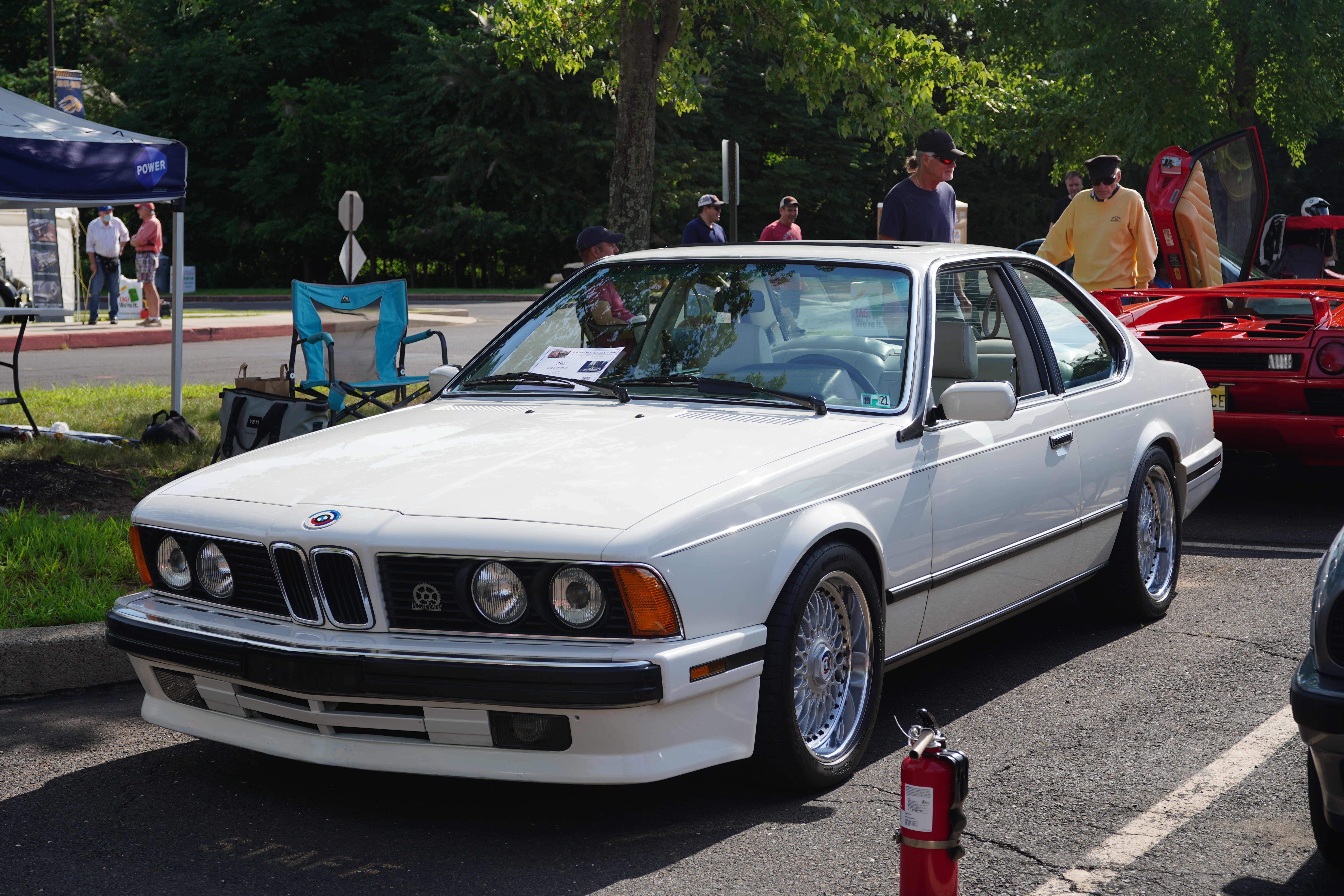
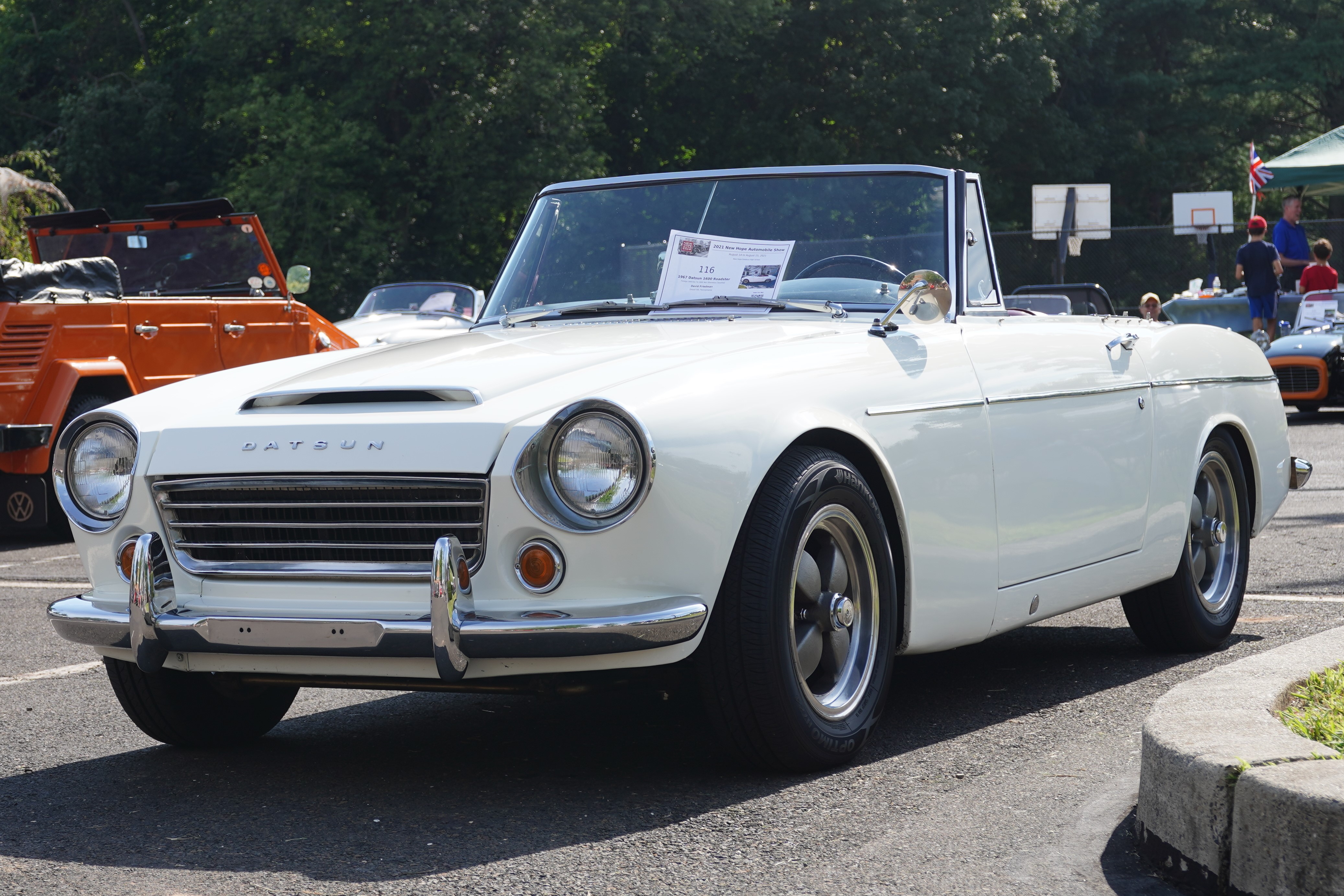
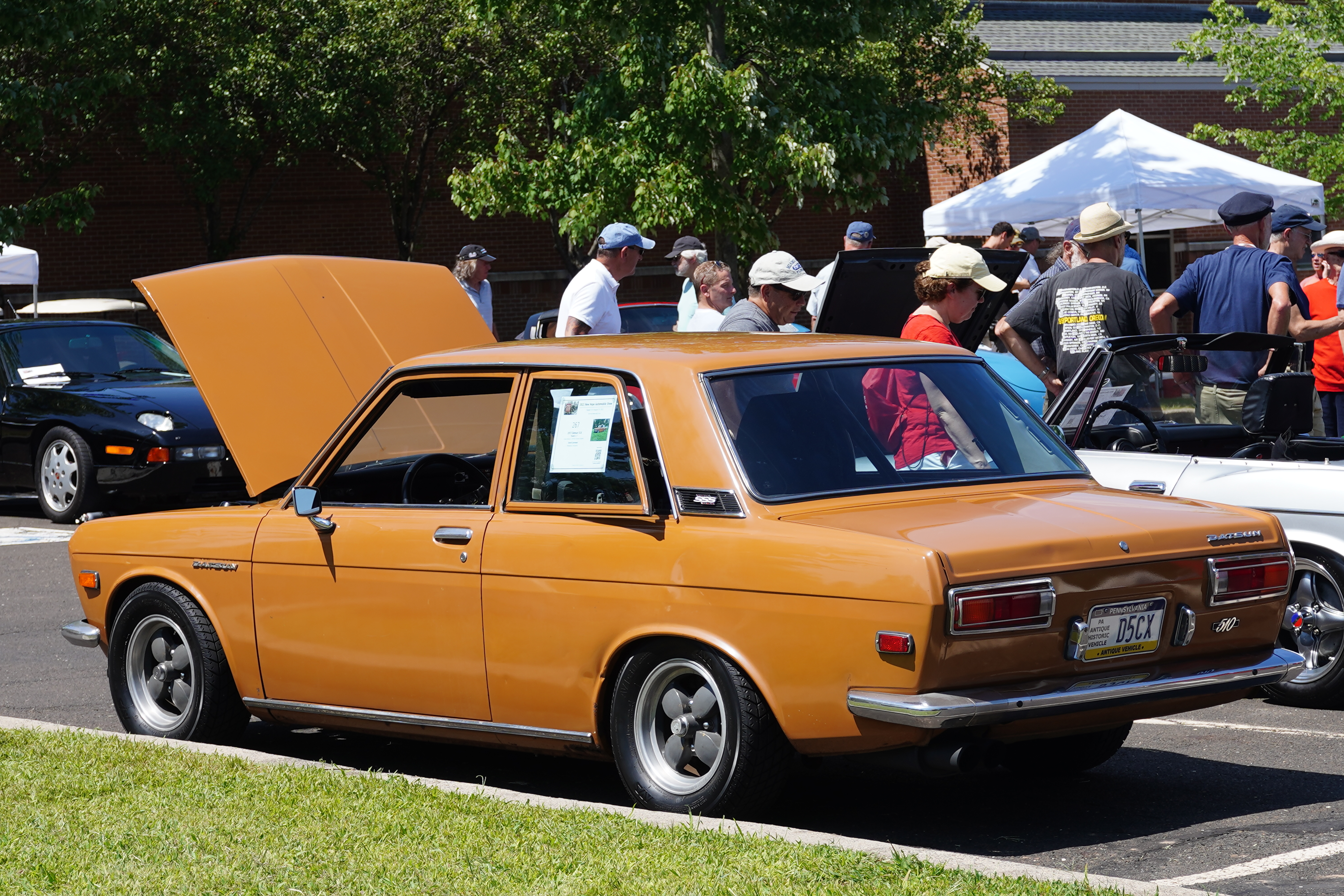
Of course, other marques were also amply represented: Porsches and BMWs from Germany; Jaguars and MGs from the UK; other Italian cars including Fiat, Lancia, and Ferrari; and Asian brands including Honda, Mazda, and Datsun/Nissan. It is worth mentioning that the Rolls Royce/Bentley Club had what was likely the largest turnout of vehicles of any particular make.
One change for 2021 was the lack of formal judging; the stated reason was that Covid concerns prevented the show organizers from gathering judges to perform their needed tasks. Instead, spectators were encouraged to vote for their favorites, and ribbons were presented around 2pm, after which the show cars were released from their spots.
This was the first time my Alfa had ventured out-of-state since I drove it to a NY diner during a Sunday breakfast run in April of 2019. While New Hope is barely 30 minutes from me, it still was a great feeling to venture that far from home in confidence after the significant brake and carburetor overhauls.
























































 richardscarblog