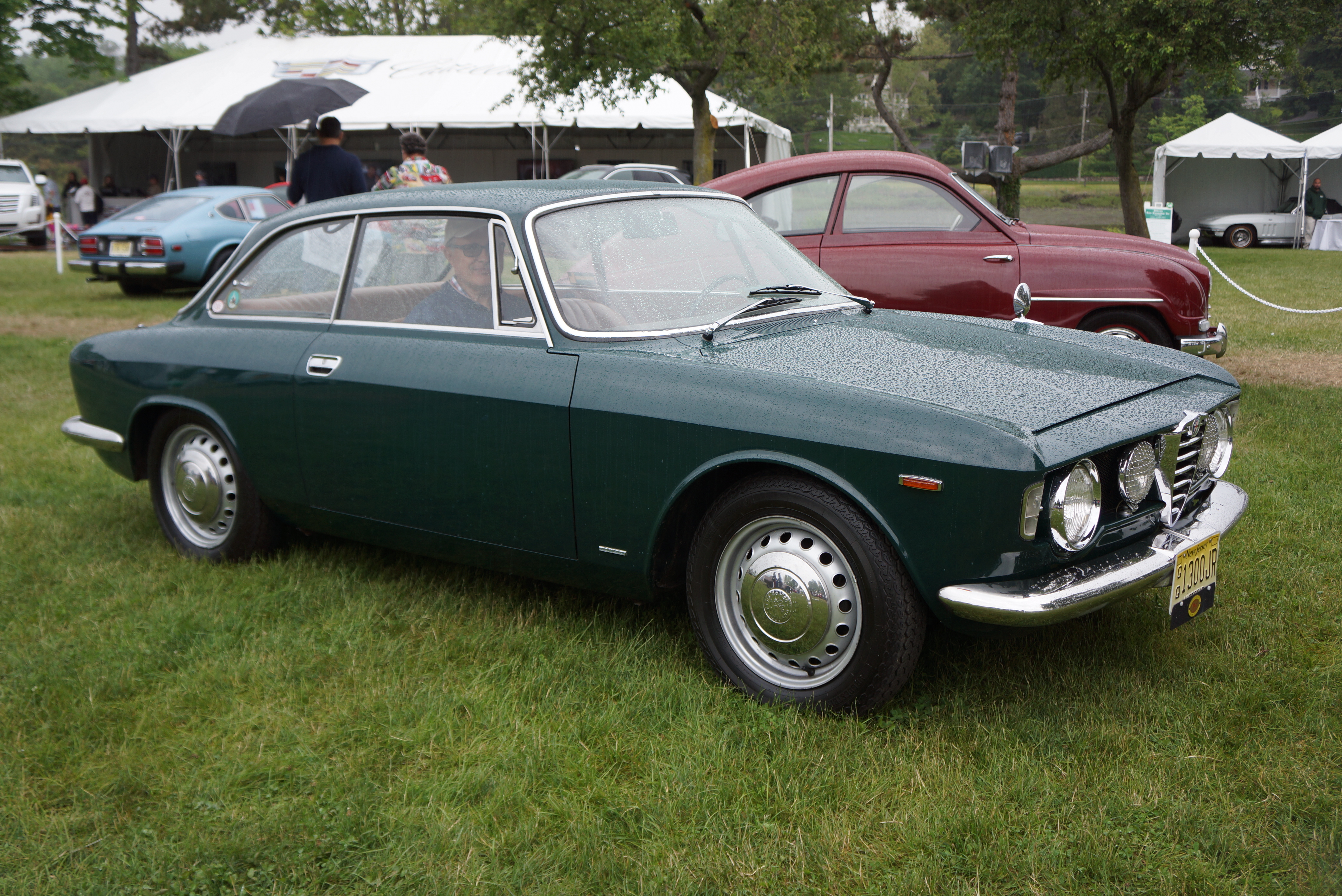
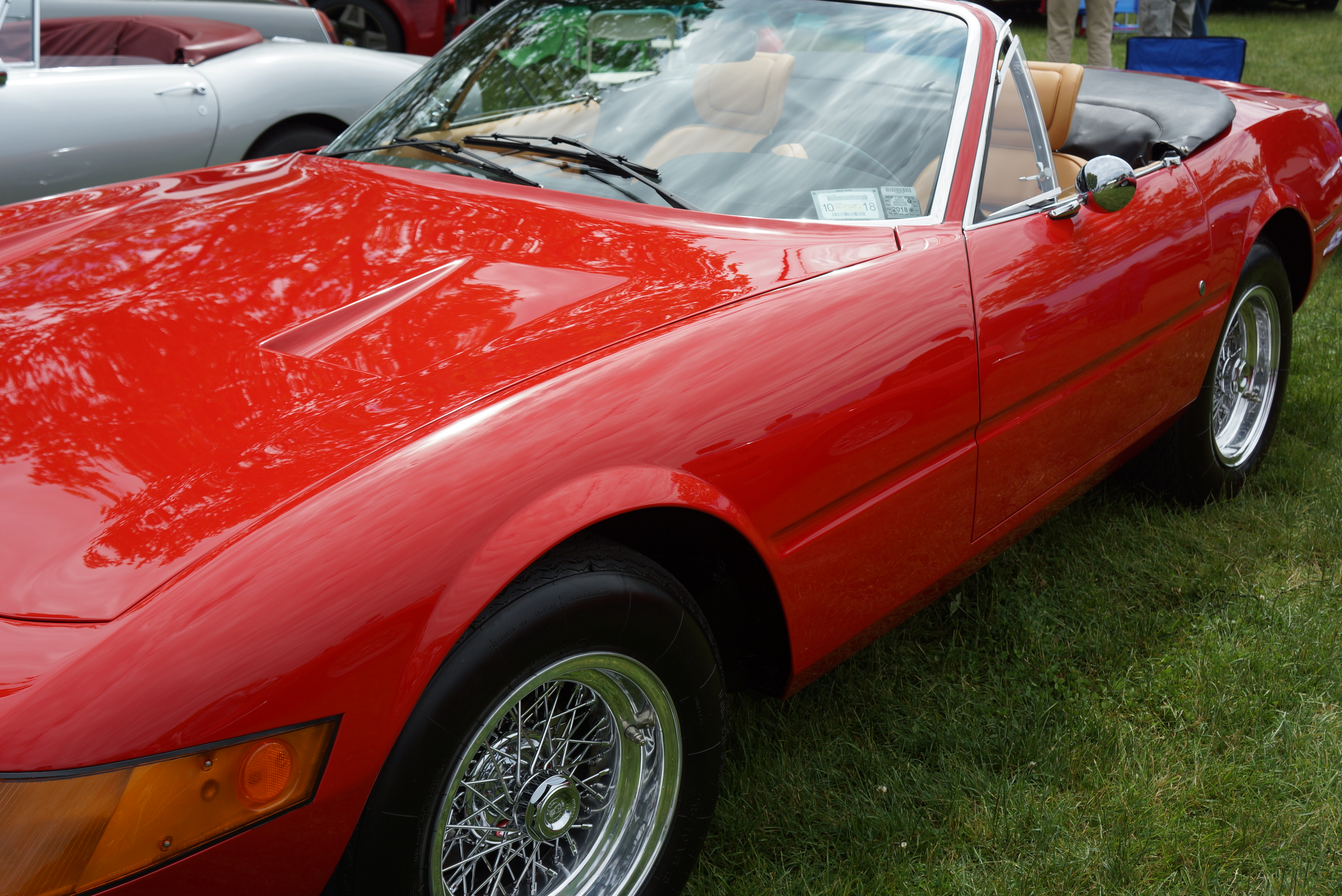
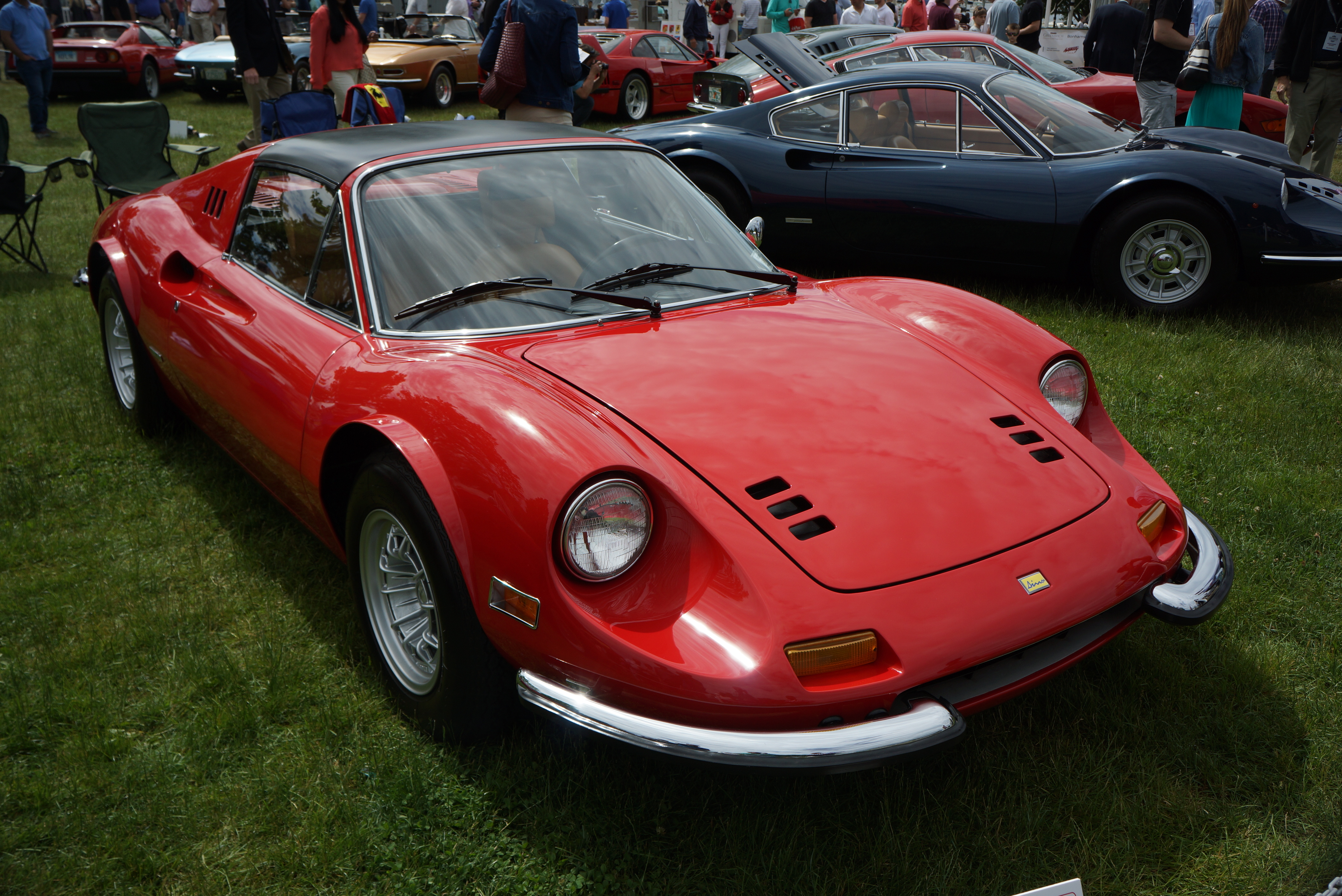
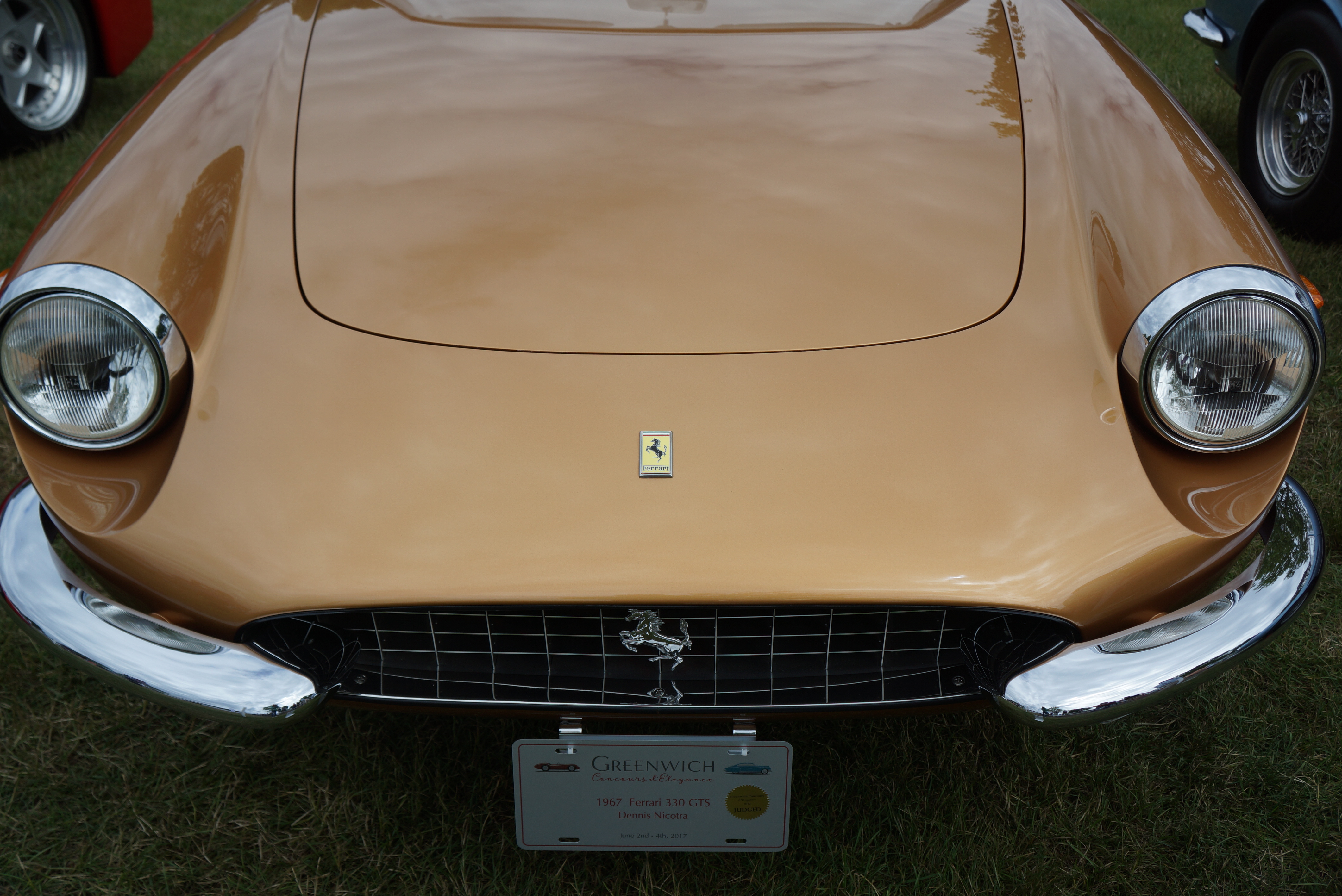
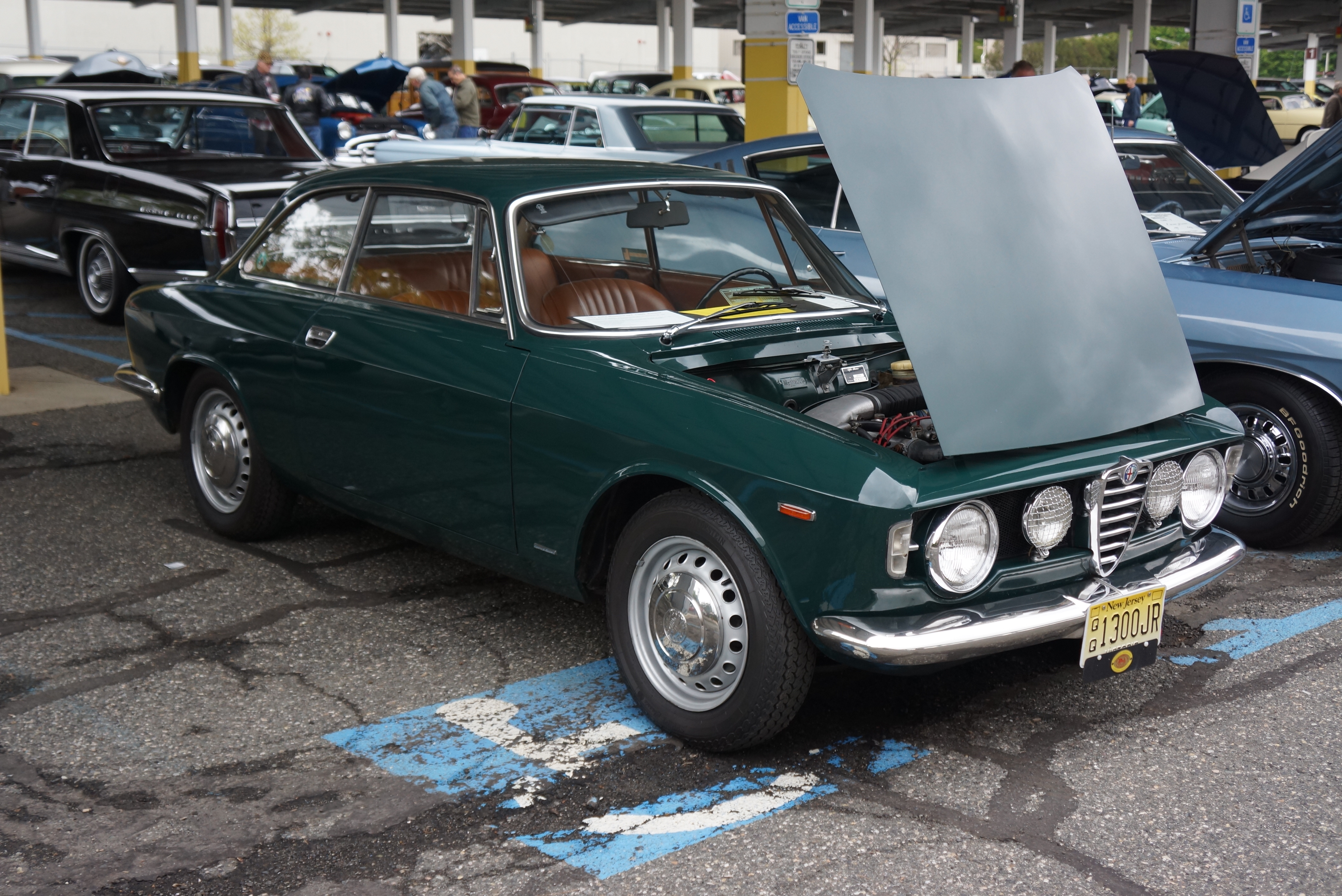
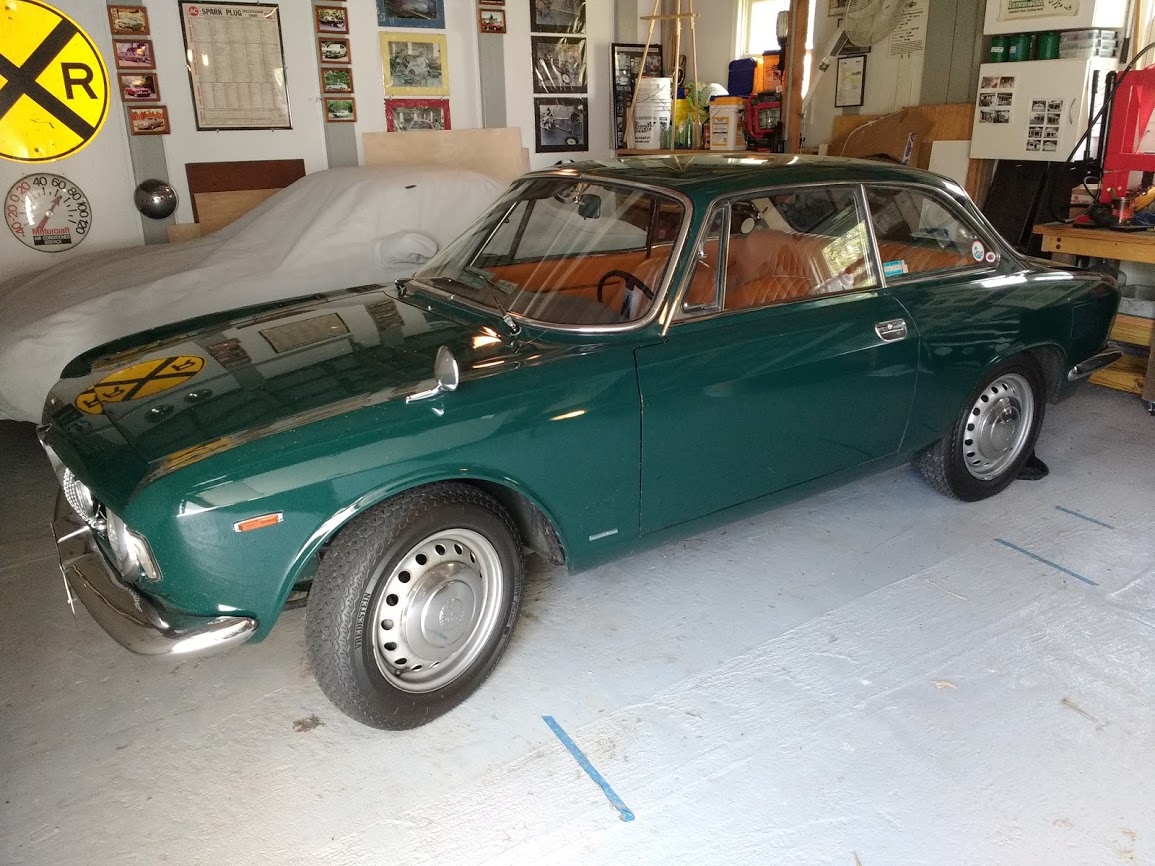
The AACA (Antique Automobile Club of America) Museum in Hershey PA has both permanent and temporary automotive exhibits. In November of 2016, a 5-month long show was launched there, entitled Amore della Strada (“Love of the Road”), a tribute to Italian machinery of both the 4-wheel and 2-wheel varieties.
Bringing the car to them was easy, because my wife and I decided to spend the weekend in Hershey. The Alfa made the trek without incident (with the driver thankful that there was no early snow). My wife followed in her modern iron, so getting home was simple.
I knew from the start that the museum exhibit was scheduled to end the same April weekend as Spring Carlisle. My good friend Larry and I made plans to attend the Carlisle show together, and he generously offered to pick me up at my house, drive me to Carlisle, then drive me to the Museum. There had been previous email exchanges with museum staff that I would show up sometime on Friday to get the car.
Larry’s such a good friend that he stuck around to make sure my departure was OK.
Upon arrival, there was one hitch: my car’s battery, which the museum had assured me would be charged up, was not. When I sat in the car to crank the engine, the revolutions were so slow that you could count them. A 12V powerpack was brought to the scene, and the Alfa started right up. Any concerns about re-starting were alleviated when I turned off the car, and it immediately cranked back to life.
Day #2 of the Carlisle Auction was in action on Friday, and I wanted to be there. I drove to the showfield, and parked in a private driveway (five bucks, thanks Rita!) arranged by another good friend, Rich S. Then, back to my hotel Friday night, with the Alfa safely tucked behind the building.
Saturday morning, up bright and early, and I was on the road again in the little Alfa. Traffic was surprisingly heavy along Routes 81 and 78, but I’ve learned to stick to the right lane and stay out of the way. At 155 inches and 2,000 pounds, my 1300 Junior would be flicked off the road like a pesky bug should an SUV or 18-wheeler make an errant maneuver.
I-78 eastbound, somewhere in PA. At 70 mph in 5th, engine is turning just under 4k.
The car ran beautifully the entire way home. One hundred and thirty-four miles later, it was back in the garage that the car hadn’t seen since November of last year. Once some basic maintenance is attended to, we can start with the first of a number of events which have been scheduled for the car this year.
My wife and I spent a long Easter weekend in Santa Monica and its immediate environs, primarily to visit her family. For me, it’s always an adventure to go to California. For this native New Yorker, a stroll down the street is its own car show. The climate has, for the most part, ensured that automobiles survive for a very long time.
My life-long home turf of metropolitan NY/NJ suffers from the ravages of snow most winters. To be more precise, we suffer from the road salt liberally applied as the result of the snow. All this salt is not kind to vehicular sheetmetal, causing it to rust. Since salt is not needed in most of the Southwest, it’s not unusual to see 30, 40, even 50 year old vehicles still being pushed into daily-driver service on the streets of California.
As the designated driver for much of the weekend, I was left with little time for strolling and picture-taking. Many cars from the ’60s and ’70s were spotted but not photographed. For the few instances when we were on foot, usually to or from a meal, my cell phone caught some neat old cars. Here are a few of the more interesting ones.
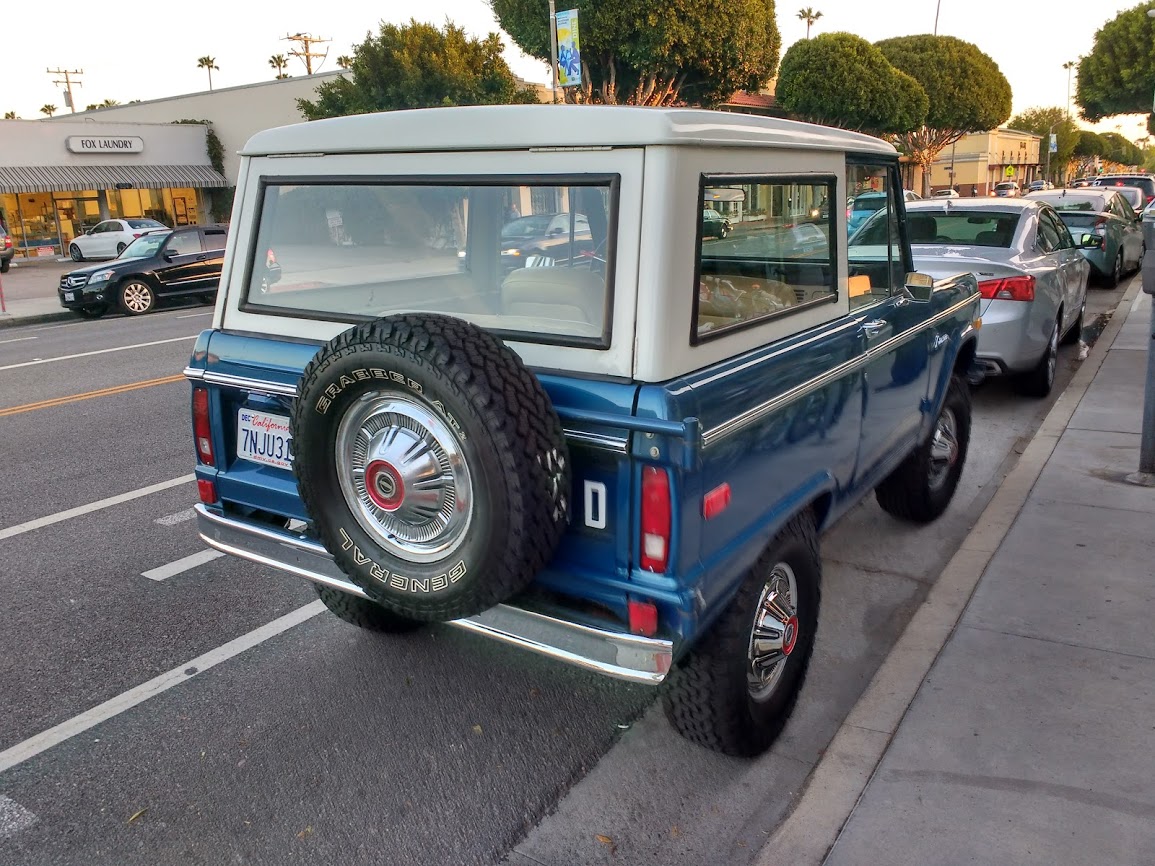
This first-generation Ford Bronco looked completely restored to stock condition. Given that the market currently values these things in the $30k-50k range, it was a surprise to see it unattended. However, it did have “The Club” on the steering wheel.
This 1969 Cadillac Coupe Deville didn’t need The Club. Paint was gone from most of its horizontal surfaces, several lenses were busted, and rust had eaten the hood’s leading edge, leading me to suspect that the car may not have been native to the state. Note the coveted ‘black plate’.
This early ’70s BMW 3.0 coupe looked too nice to not have been restored. The lucky owner drove it to church on Easter morning, as I found it in a church parking lot. It looks minuscule next to the Range Rover. Yes, the parking lot is carpeted.
The biggest surprise for me was this early ’70s Alfa Romeo GTV, parked on the street in a residential area of Santa Monica. The paint was weathered, the wheels rusty, the windows dirty, and the chrome lackluster. Yet, it didn’t give the impression that it had been sitting there long. With no visible rust, this is a $25k car back east. I was tempted to leave my phone number….
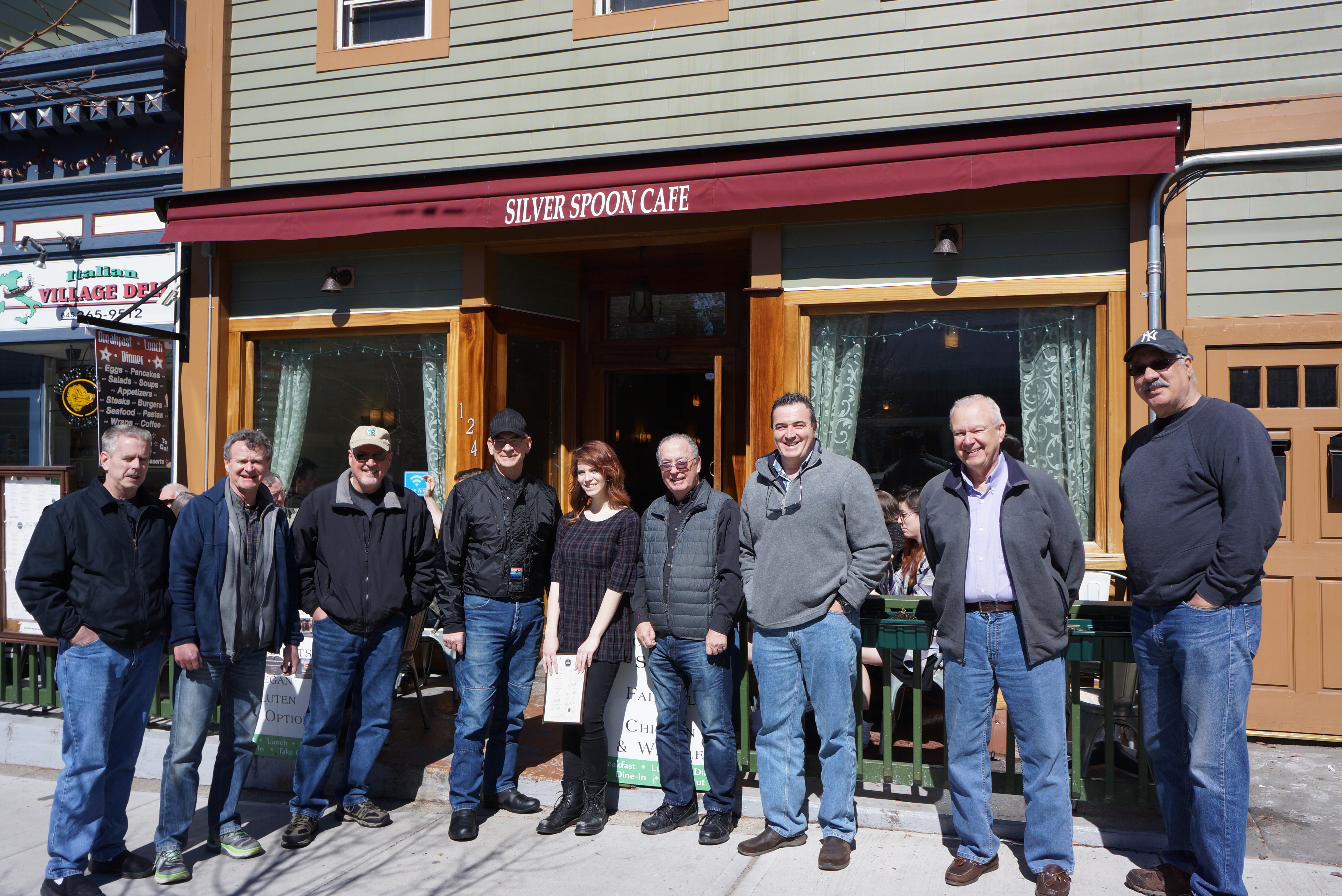
We eased into our first driving event of 2017, with 6 cars occupied by 8 hungry drivers and riders. After a cool but sunny dawn, we got the weatherman’s promised warmth. In all, it was an almost perfect early spring day for a drive, evidenced by the dropping of several convertible tops.
Our destination was the perennial favorite Silver Spoon Café in Cold Spring NY. They were expecting us, and we were seated by 9:45, and drinking coffee by 9:48. The food was good, the service was exemplary, and as is our habit, we exited the café only to spill out onto the sidewalk to continue our chatter.
We were happy to be able to drive so early in April, and while we’ve said it before, we’ll say again that our intent is to schedule one drive per month for the remainder of our Northeast driving season.
Larry’s 1972 Chevy Nova
Jim’s Datsun 280Z
Ralph’s Buick Skylark
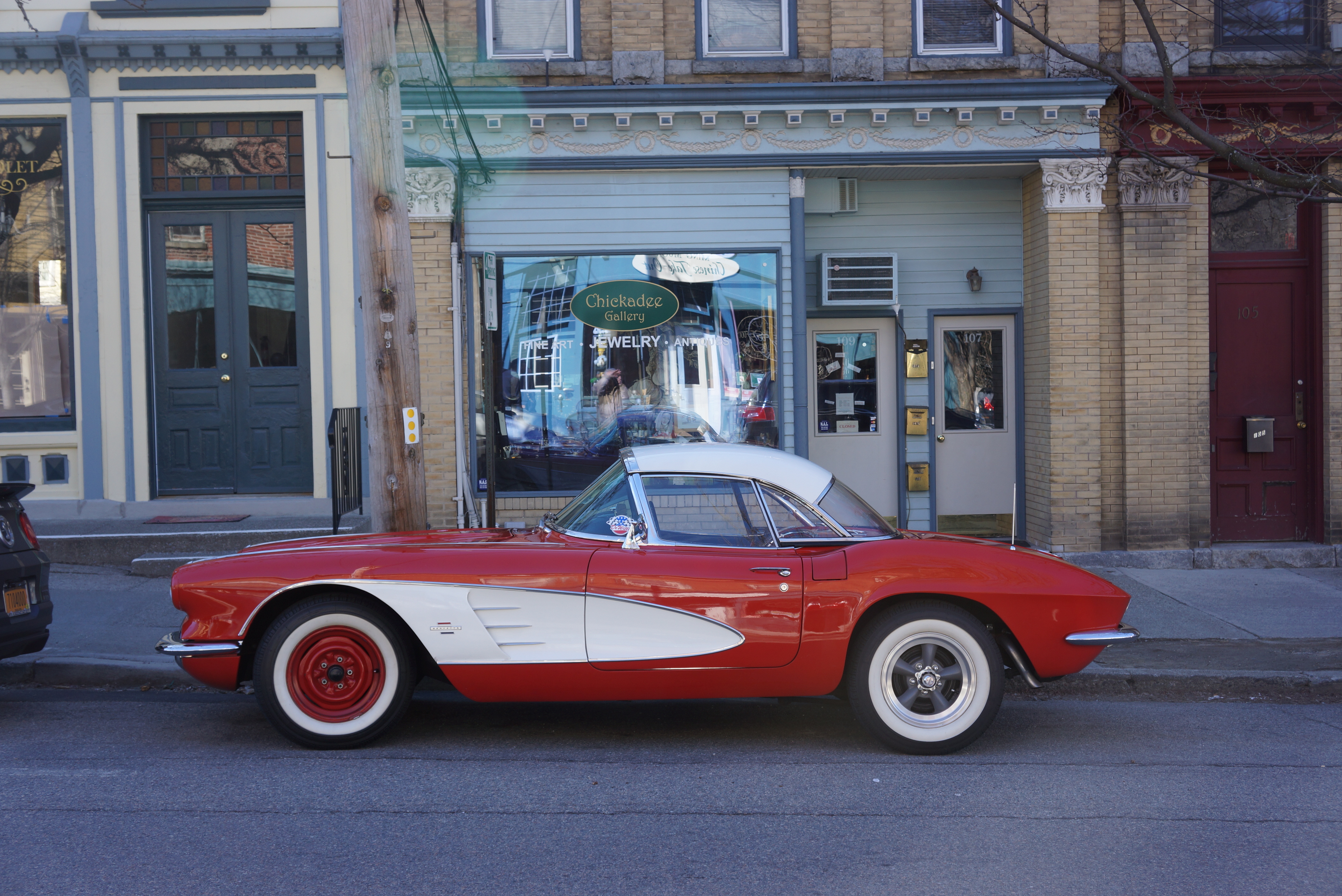
Bill’s 1961 C1 Corvette
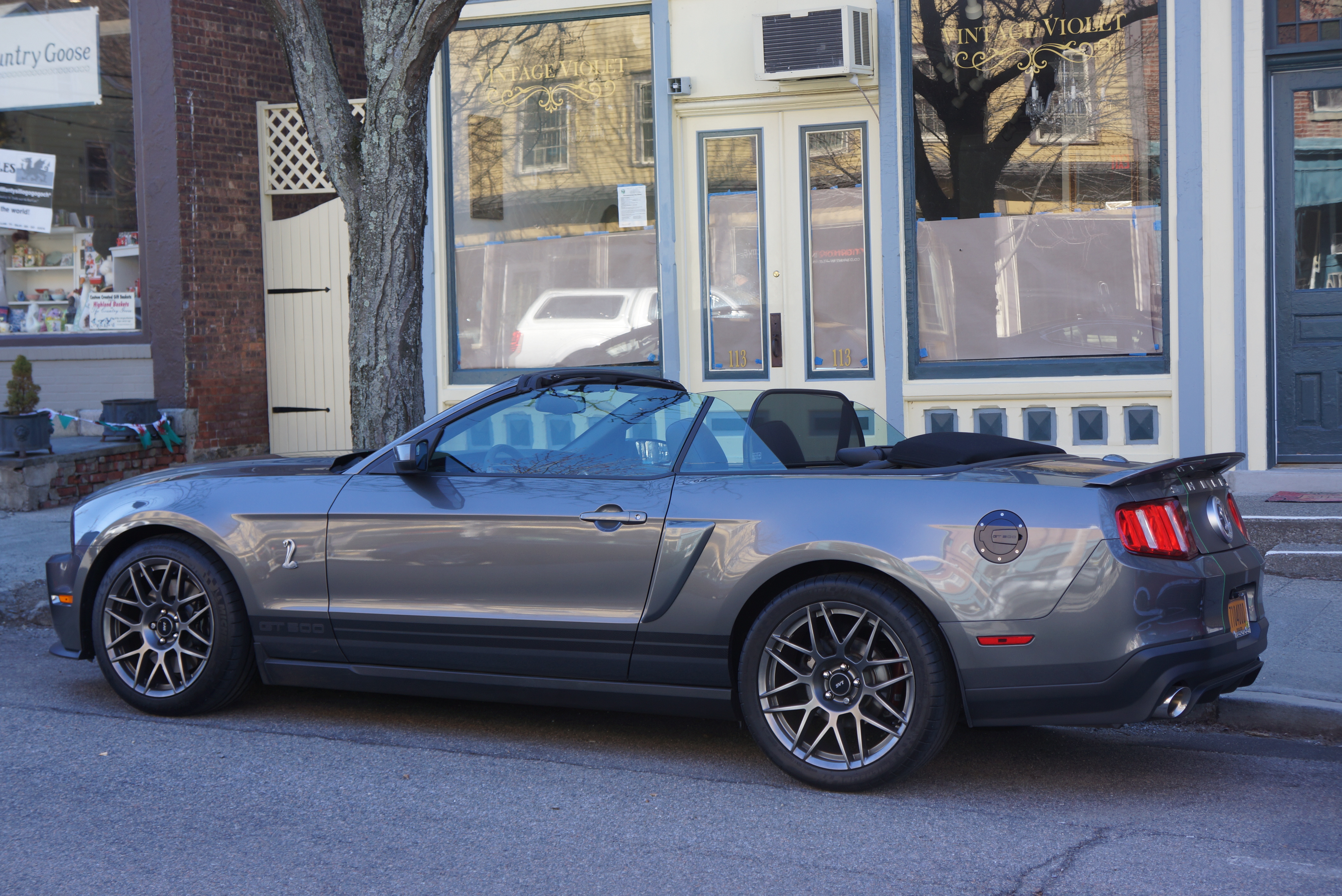
Rich S’s Shelby Mustang
Your author’s 1993 Mazda Miata
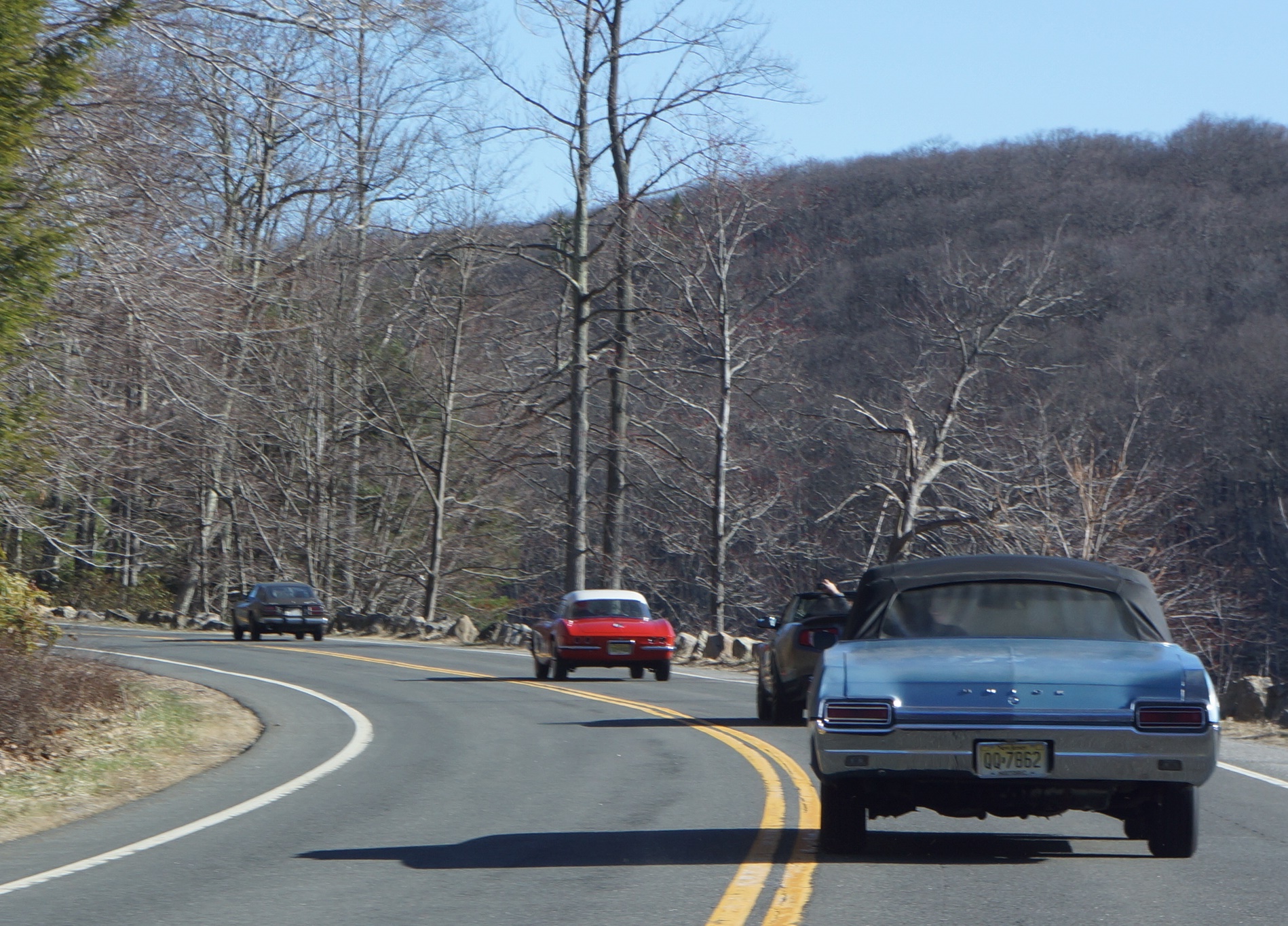
Along Seven Lakes Drive in Rockland County NY
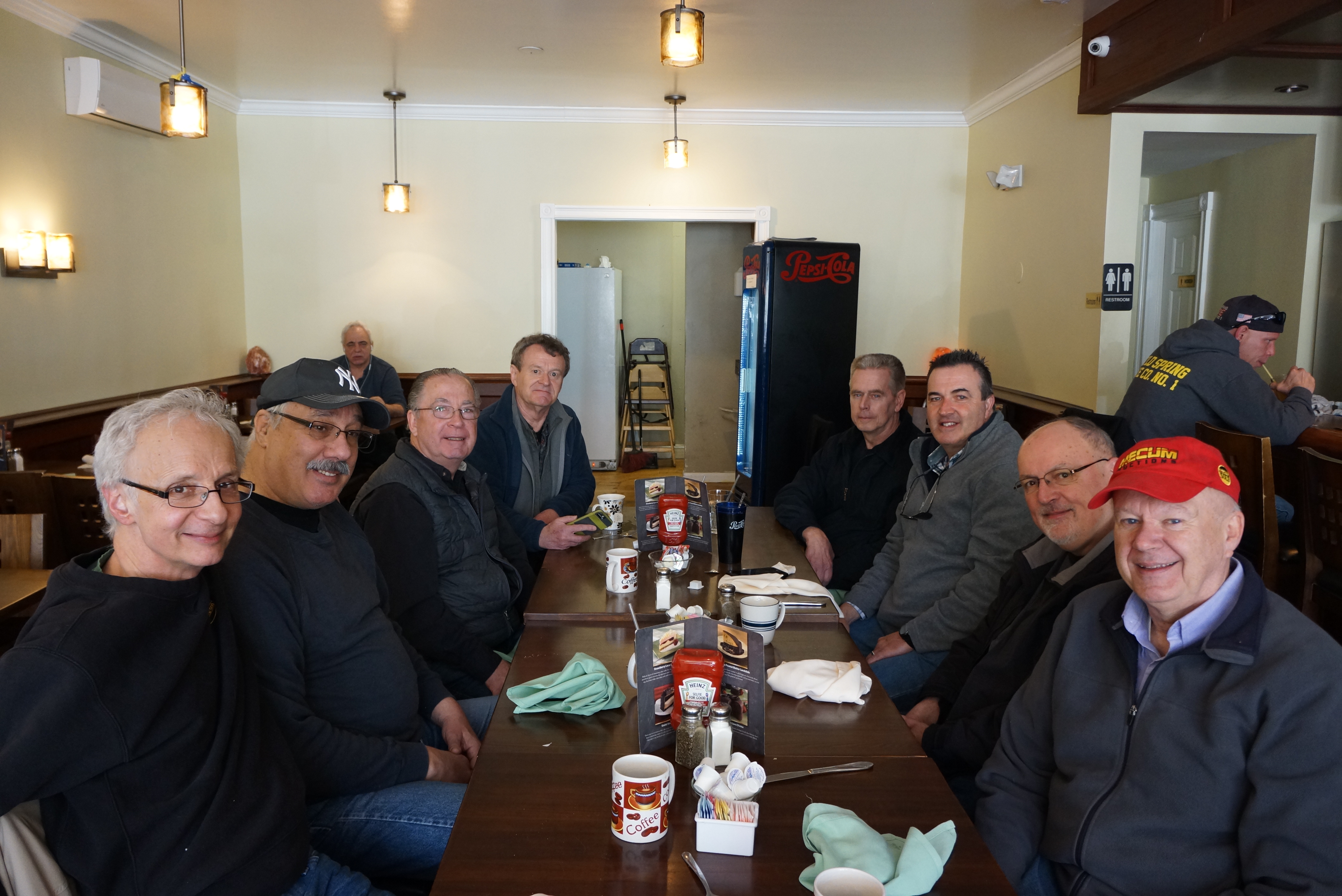
The Breakfast Club
In front of our host cafe (hostess graciously agreed to pose with us)
Yesterday, visited my friend Pete (from whom I bought the Alfa). Pete’s a family friend, and an all-around great guy. He had invited me out to give him some assistance with working on one (or more) of his cars.
A few weeks ago, Pete told me he could use my help with his ’79 Volvo 265, which was exhibiting an intermittent no-crank symptom. He had checked two of the more obvious things: battery health and battery terminal condition. I asked him if he had thoroughly checked the battery ground cable, as I had experienced instances with that cable hiding extensive corrosion under its sheathing.
When I arrived yesterday, he proudly told me that several days ago, he had removed the negative cable, found extensive corrosion at the engine block, cleaned all that up, and has not had a lick of a problem since. So on to the Olds….
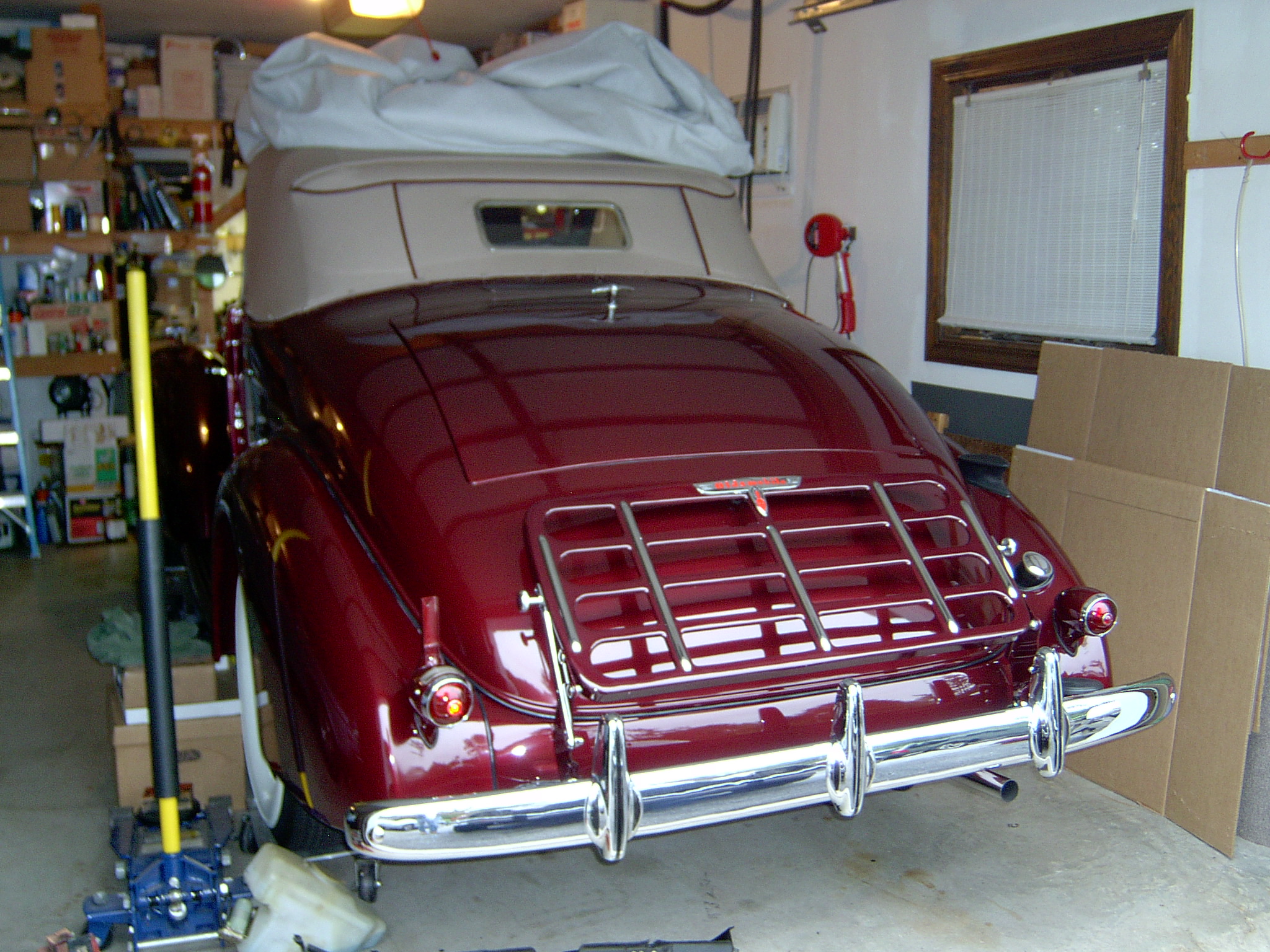
One of his prized possessions is his ’36 Oldsmobile L-36 convertible. Here is some background, provided by my copy of The Encyclopedia of American Cars, by the Auto Editors of Consumer Guide:
In 1936, there were two series of Oldsmobiles: the 6-cylinder F-36, riding a 115 inch wheelbase, and the L-36, with an inline-8 on a 121 inch wheelbase. The I-8 displaced 240 cubic inches, and put out 100 horsepower. Pete’s convertible coupe was the most expensive Olds in ’36, at $935. (The base Olds business coupe was $665.) Production numbers for the convertible totaled 931 (compare that to their volume leader 6-cylinder 4-door touring sedan, of which 66,714 were built). Survival rate of the convertibles is unknown, but certainly, Pete’s drop-top is one rare car.
A shot taken a few years ago of the ’36 Olds
Topside of engine. Restoration was done in ’90s, still looks great
When I visited last year, Pete was very concerned about the Olds exhibiting low oil pressure at idle. Yesterday, he reiterated those concerns, informing me that the most recent readings he’s seen showed 20-25 psi at cold start up with high idle, then descending to figures below 10 psi at warm idle. (These numbers are from a quality aftermarket oil pressure gauge screwed directly into a passage in the block.) There was straight-30 weight in the crankcase.
Pete had been conversing online with a self-designated pre-war Olds expert, who opined that the straight-8’s oil pan was NOT coming off until one first dropped the steering linkages. Pete wanted to try it without disconnecting the tie rods. I said that the worst that happens is, we bolt the pan back up and attack the linkages.
The oil was already drained, and drop light, creeper, and tools were waiting for me to get under the car and get to work.
There must have been 30 bolts along the perimeter of the pan. None of them were very tight, and most could be accessed with a ratchet and socket on a short extension. But six at the front were under the steering linkage, and required a box-end wrench, turning each about 1/6 of a turn at a time. It wasn’t difficult, just time-consuming.
I left one bolt in the front and one in the rear, both finger-tight, to prevent the oil pan from crashing down onto my chest. With a putty knife and a hammer, I gently tapped at the two back corners of the pan. At this point, my fight was with the copious amount of orange Permatex all along the edge.
A few taps later, the pan was free of the crankcase. By now, Pete was on the ground under the car with me. We removed the final two bolts. The pan wouldn’t drop further. At the front, the steering linkage was in the way, which we knew. At the rear, the clutch housing stopped us from sliding the pan rearward. We also had to get the pan low enough to clear the oil pump.
Pete suggested rotating it 90 degrees toward the passenger side. With two sets of hands on the pan, we did that. Success! In a matter of moments, the pan was on the garage floor.
The pan is where we want it: on the floor
The oil pump, now out in the open, was held in place by 2 nuts, needing only a 9/16” wrench to remove. The concern here was the possibility of loosening the studs onto which the nuts threaded. But as soon as I broke each nut free, I could see that studs remained stationary. The oil pump was in my hands.
Inline-8 Olds oil pump. Pump is driven by shaft (right) which extends up to camshaft
We both agreed that things looked very clean in there. There was the slightest bit of sludge on the pump’s pick-up screen, but it didn’t make us concerned. Pete’s next challenge is to find a reputable shop to check the pump, and if needed, rebuild it. However, after months of wondering what to do, he was both relieved and thrilled to have the oil pump out, ready to move onto the next steps.
Straight-8 crankshaft. Oil pump mounting boss at lower left. Permatex is not from 1936.
As a parting gift (!), Pete asked me to help him clean out his garage by giving me this front bucket seat from one of his Fiats. Does anyone need a black vinyl seat for a Fiat 124 sedan or wagon?
Steve again agreed to fly east from his California home to meet me at my New Jersey home, from where we headed to our host hotel, the Black Point Inn, just outside of Portland Maine. All systems were working well in the Mustang; the heater core replacement was holding up, and I had driven the car enough to give me faith in its ability to get us there, around, and back.
Steve was driving it for the first time, and the recirculating-ball power steering took some getting used to. The steering had about 30 degrees slop at the top of the wheel, and at first, the instinct is to ‘oversteer’ then correct – you feel like you’re on a sailboat when the car is driven that way. But it only takes 5-10 minutes to get accustomed to dialing in the correct amount of lock.
We arrived in ME with no issues, except that it was a cloudy and cool day. We paid no attention to the weather forecast. First, this was vacation; second, the rally is a rain-or-shine event; and third, in all our previous NE1000 outings, we had never had more than a day of wet weather, so why shouldn’t we expect the same this year?
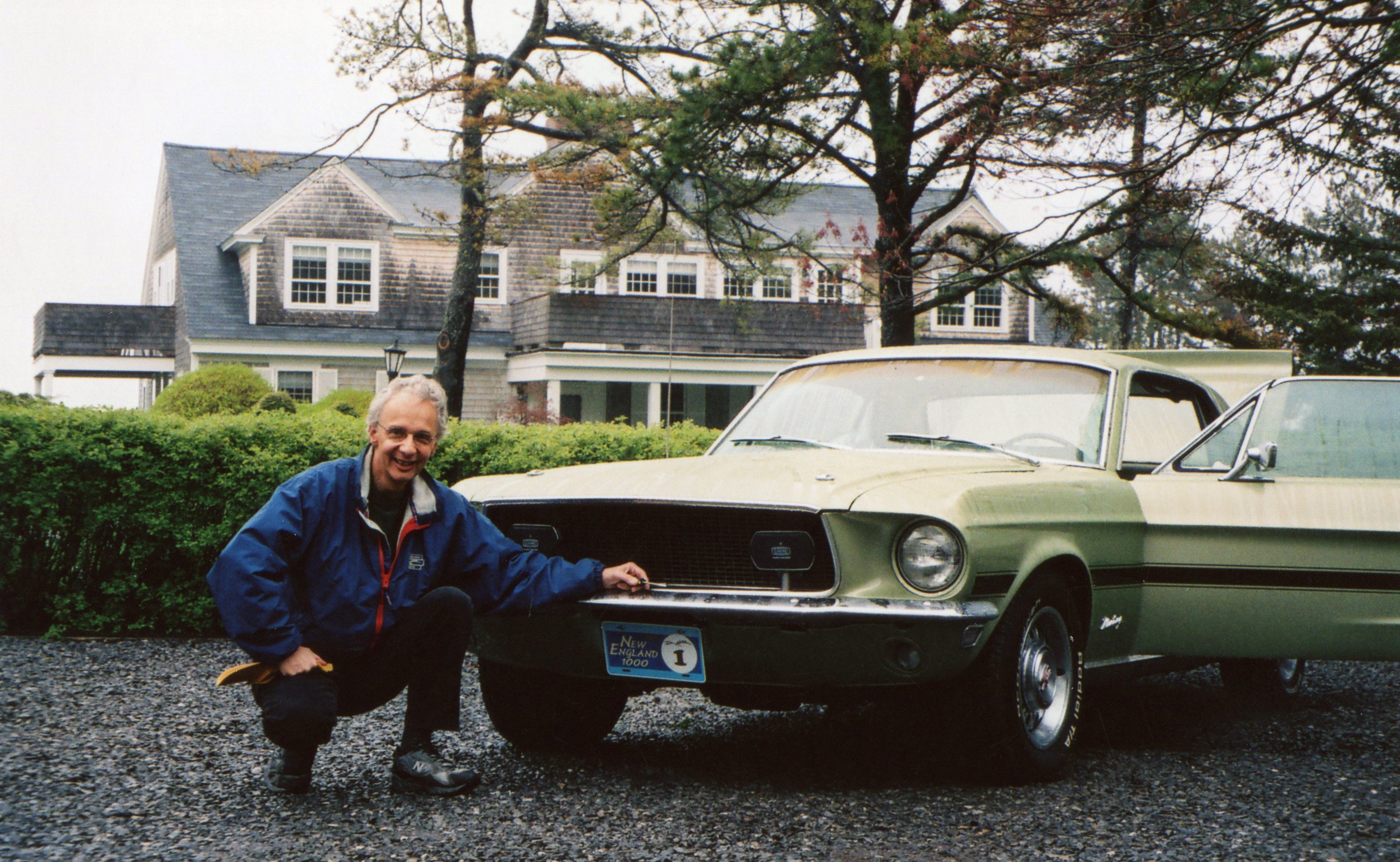
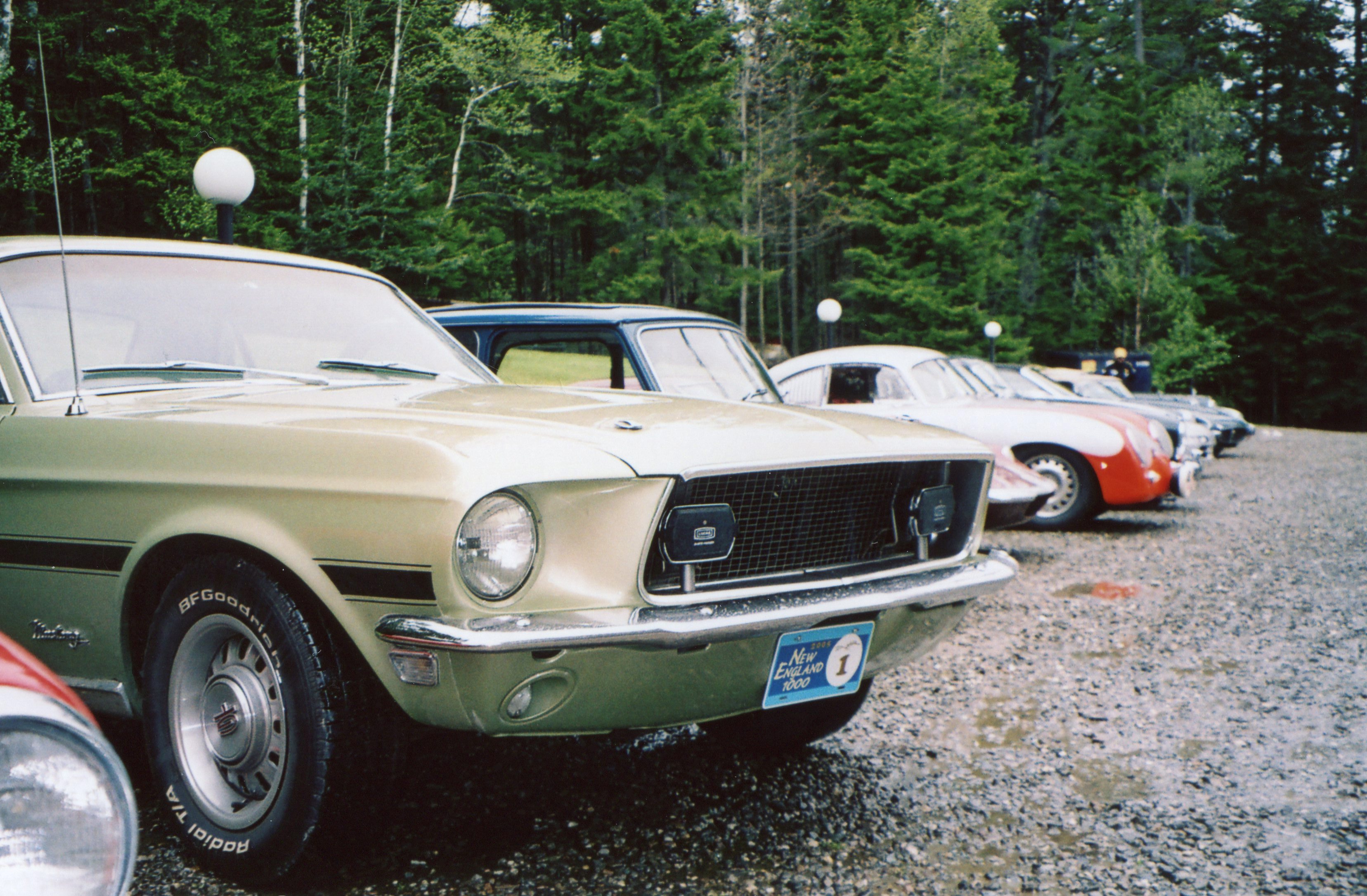
The ceremonial mounting of the plate (#1 again!)
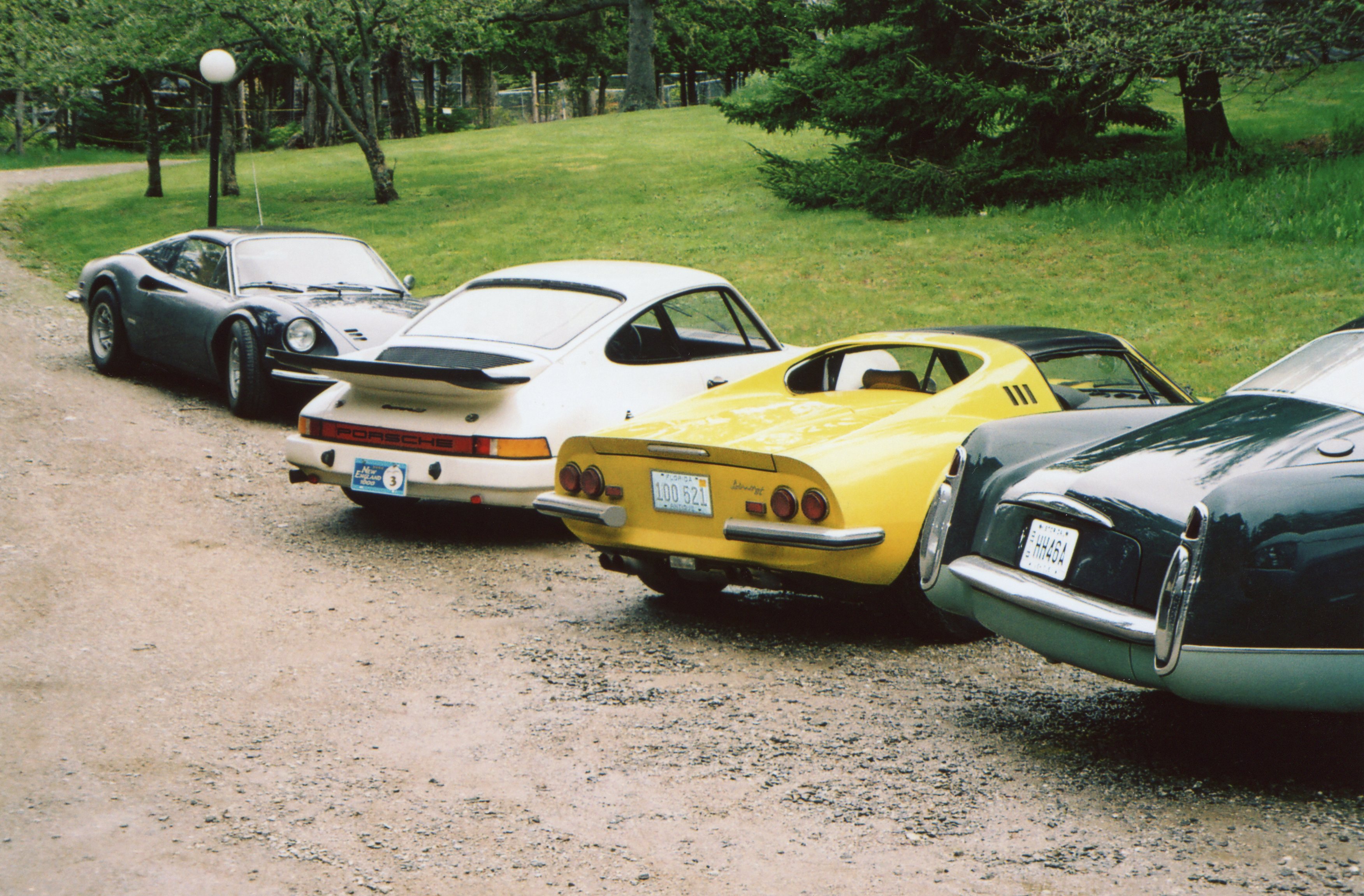
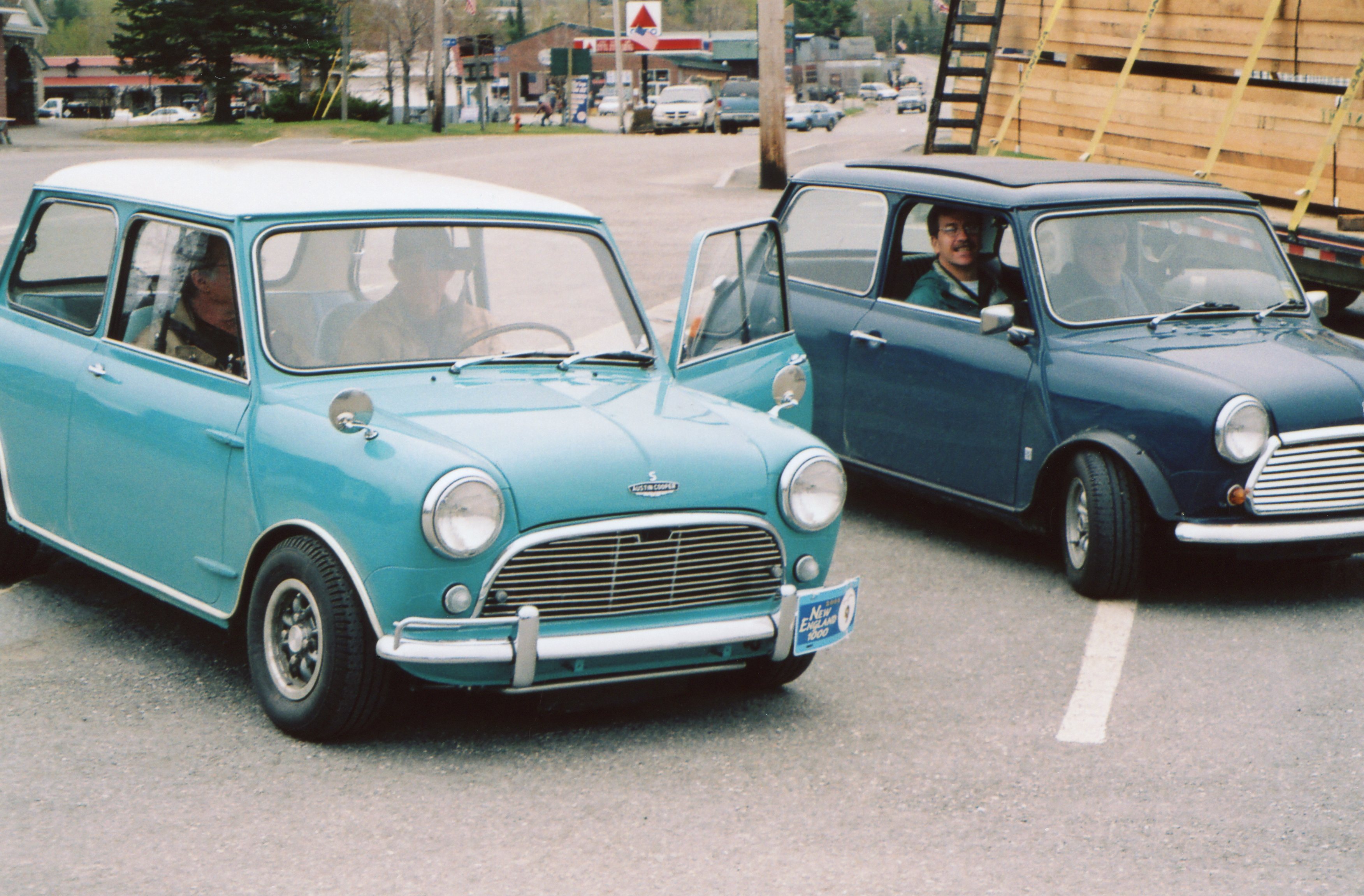
The selection of cars continued to amaze us. There were no fewer than 3 Ferrari 246 Dinos, 6 Porsche 911s, 2 Austin Mini Coopers, the usual assortment of Jag’s and Benz’s, and a one-off 1955 Chrysler Ghia show car. Our V8 Mustang was one of two cars grouped into the “Historic American V8” class, the other being a ’64 Sting Ray convertible driven by our friends Chuck and Beth.
It bears repeating: the folks who bring out their valuable classics for the New England 1000 do it to drive them. While all of the cars are road-worthy, many of them, especially cars of the ‘50s and ‘60s, are not what you’d call weather-proof compared to a modern car. The British vehicles, for some reason, seem especially suspect to the ingress of water onto their occupants.
Helmet on, ready for the gymkhana
Mustang squats on take-off
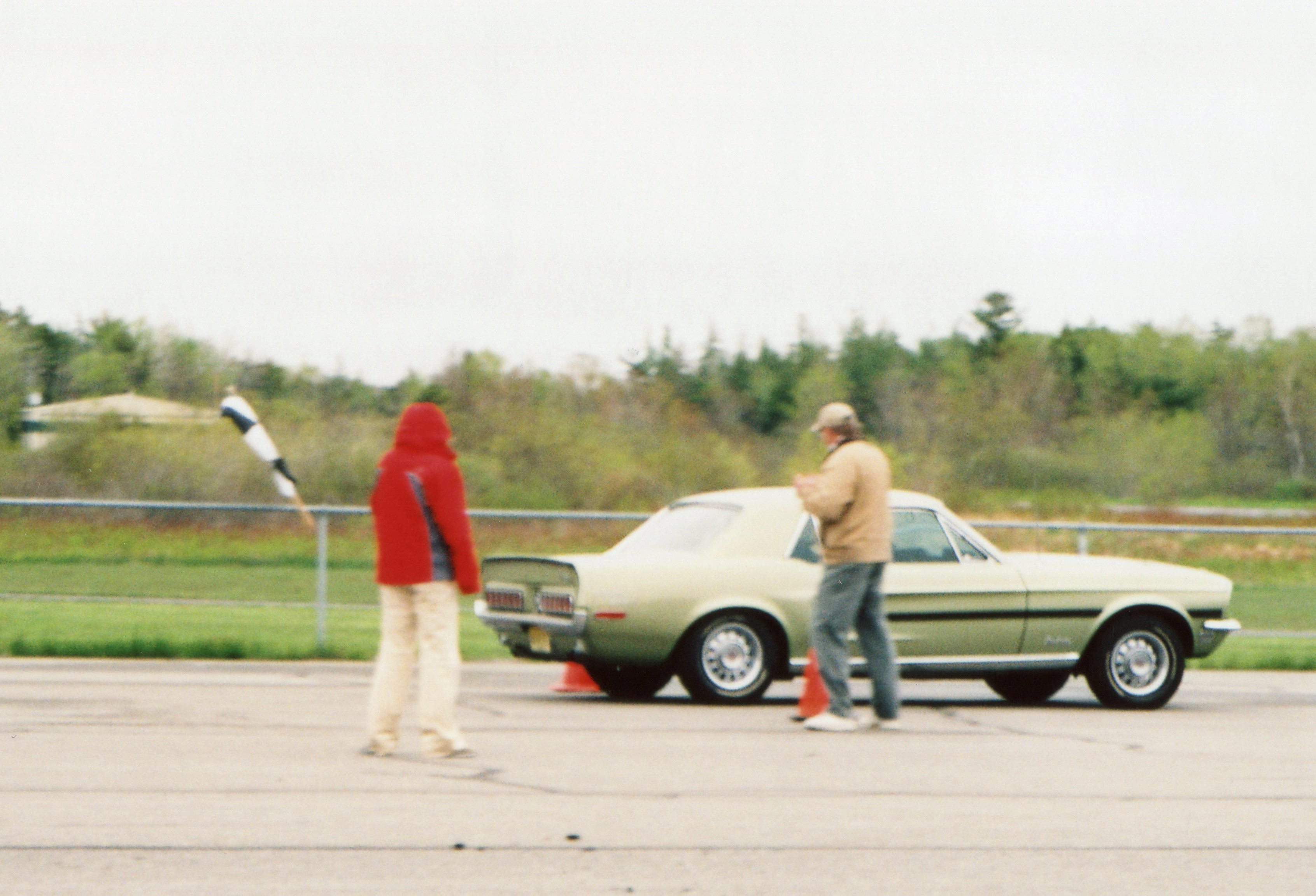
Veteran driver misses cone and flagman
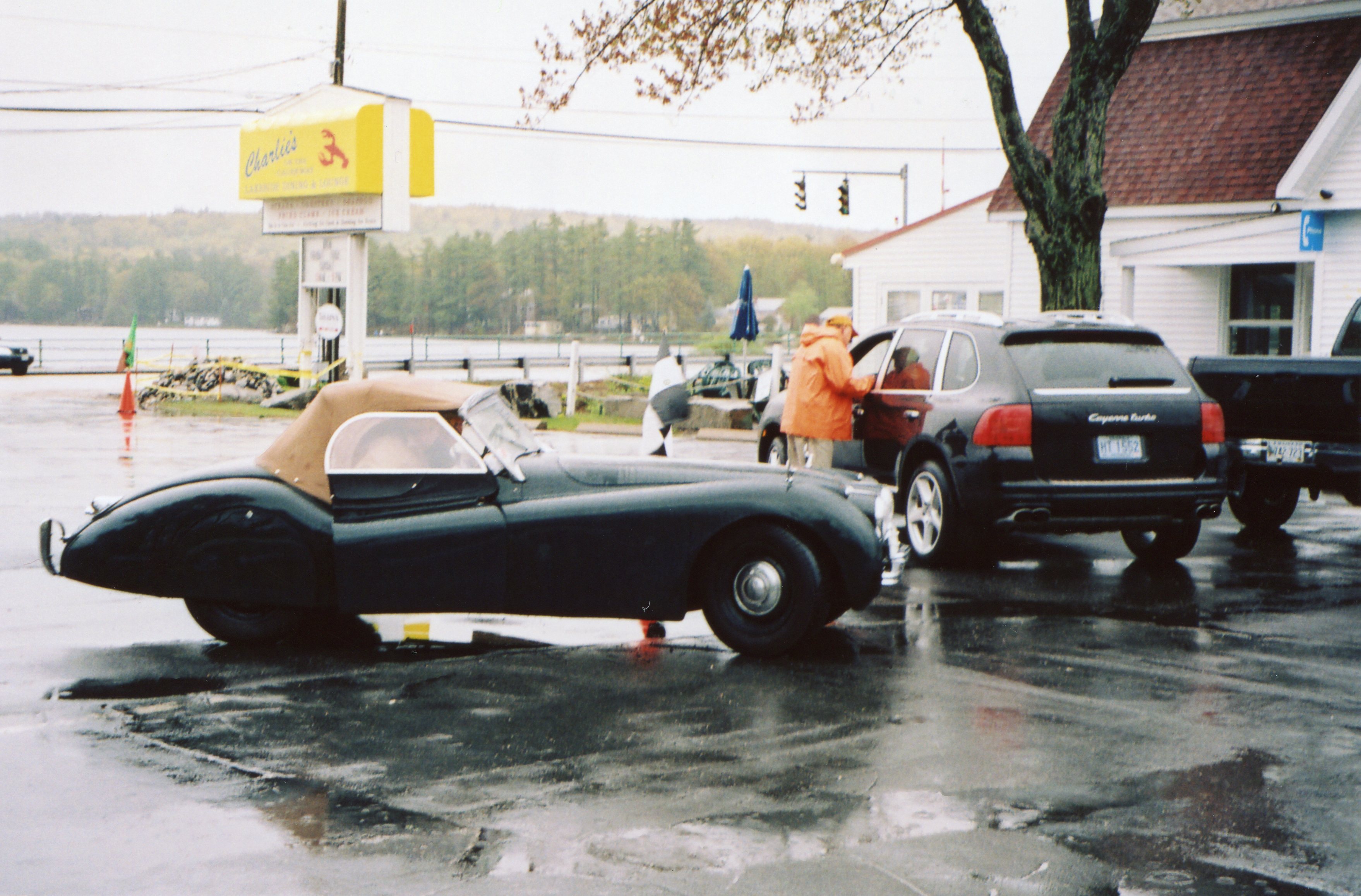
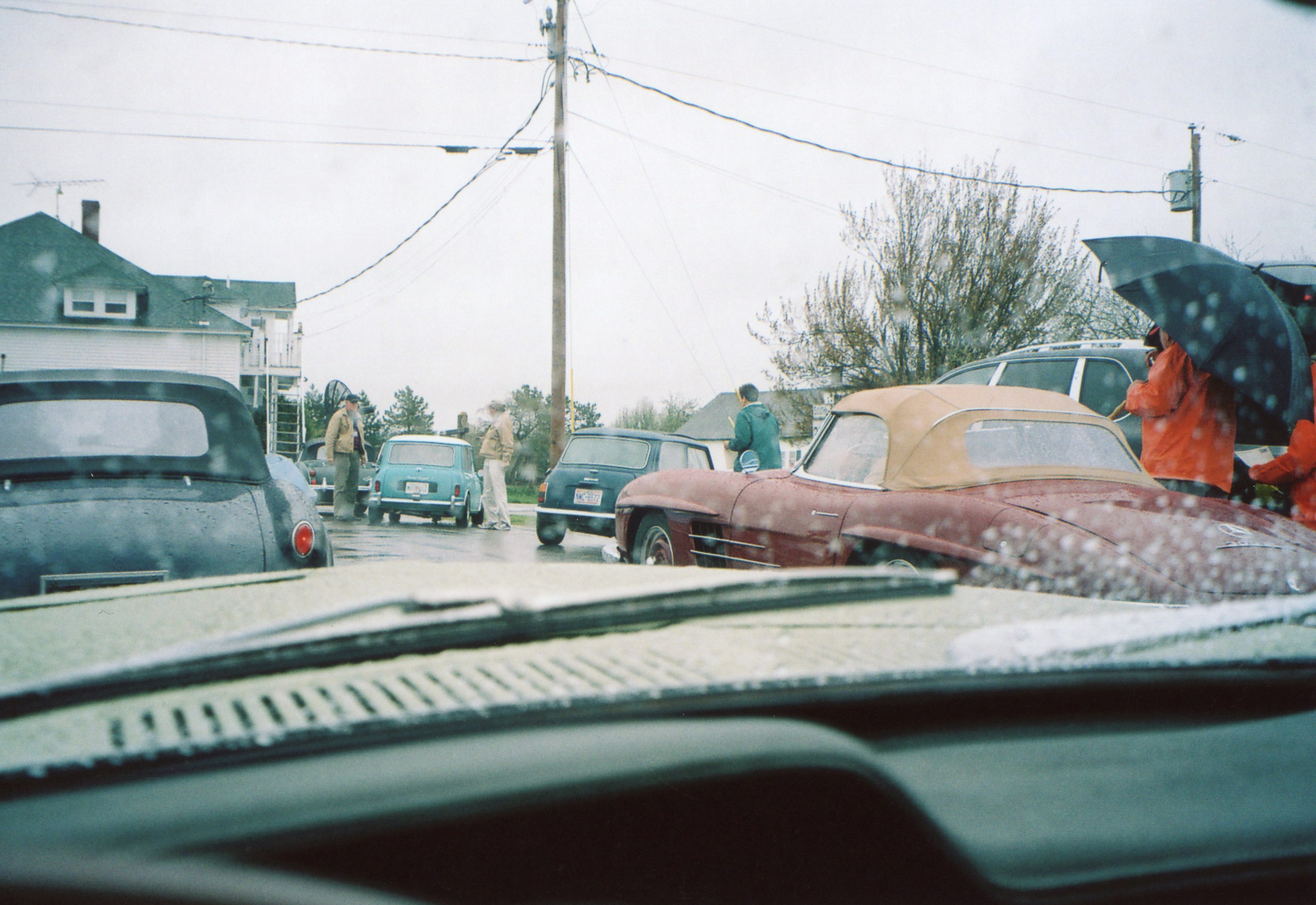
And this is how the week went: every driving day, from Monday through Thursday, saw rain. It didn’t rain every minute of the day, but, the threat was always there. The photos bear proof that we did not see the sun for the duration of the driving. Our friend Carol caught a local weather report, and informed us that a large storm system had parked itself over the entirety of New England for the week.
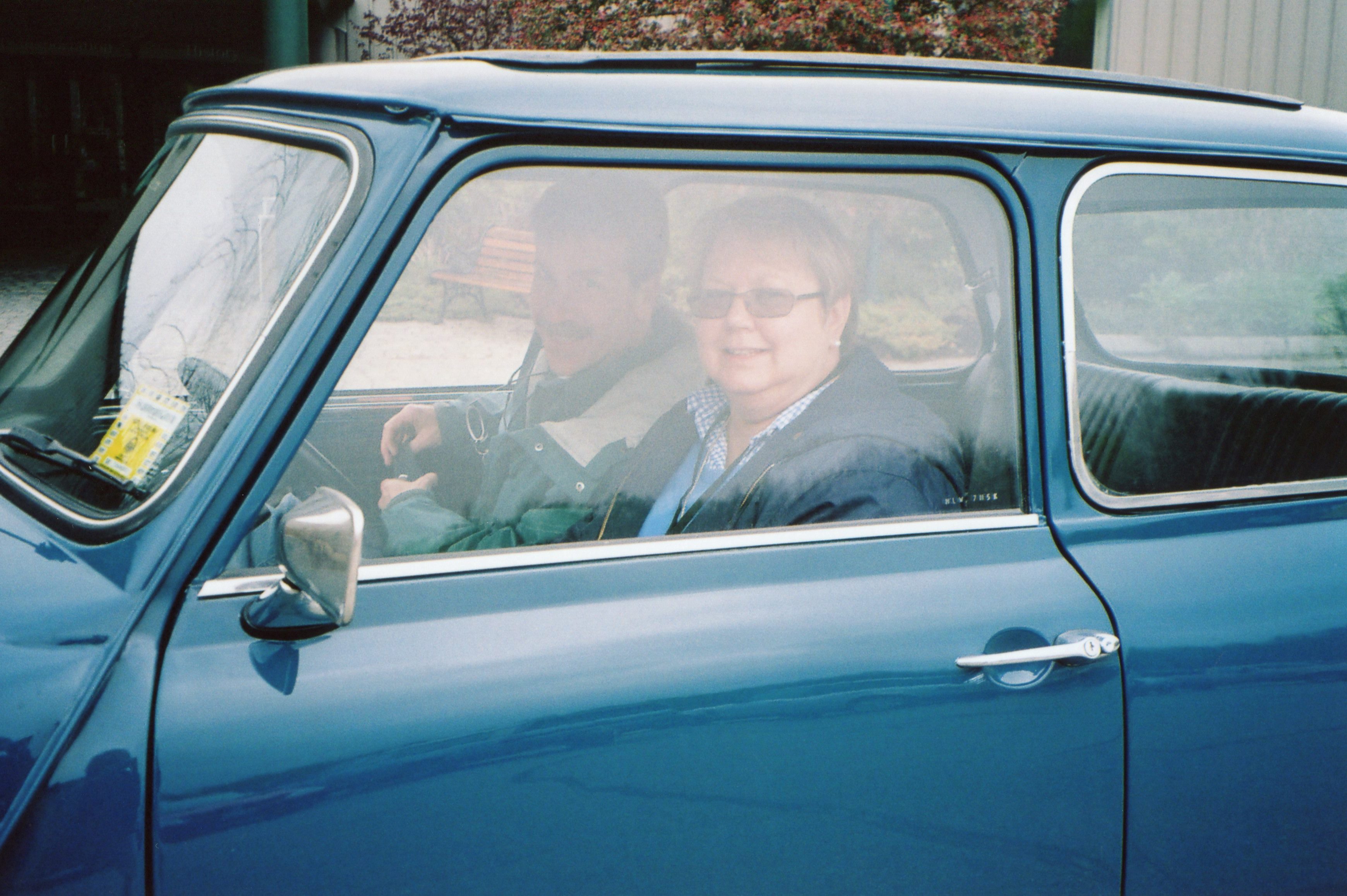
Remember that heater core? Well, the two young men in the Mustang hardtop, with roll-up windows, good weatherstripping, and a functioning heater/defrost system, stayed warm and dry. Observing some miserable fellow rallyists, I started to feel just a little bit guilty. To the credit of every participant, no one dropped out (not even the guys running side curtains).
Friday morning, just in time to load up and begin the trek home, the rain stopped, the sun popped out, and we had a rather dry ride back to NJ. Wet weather or not, we again proclaimed the 2005 edition to be a rousing success. Given the rain, we were secretly glad to have turned in the ragtops for a hardtop!
Entrants ranged from this MG-TD…
… to this M-B 300SL roadster
Jag XK’s top stayed up all week
Jag may be headed for drier climes
A respite from rain. Chrysler Ghia is at far right
Mini Coopers, LHD & RHD
Our good friends Dave and Deb (Deb is NOT driving)
Our friend Ron, in his Austin Healey, theorizes that shorts prevent his pants from getting wet
From inside the Drystang
At a lunch stop, with the GT/CS parked among its brethren
An additional benefit to a dry car: dry rally instructions
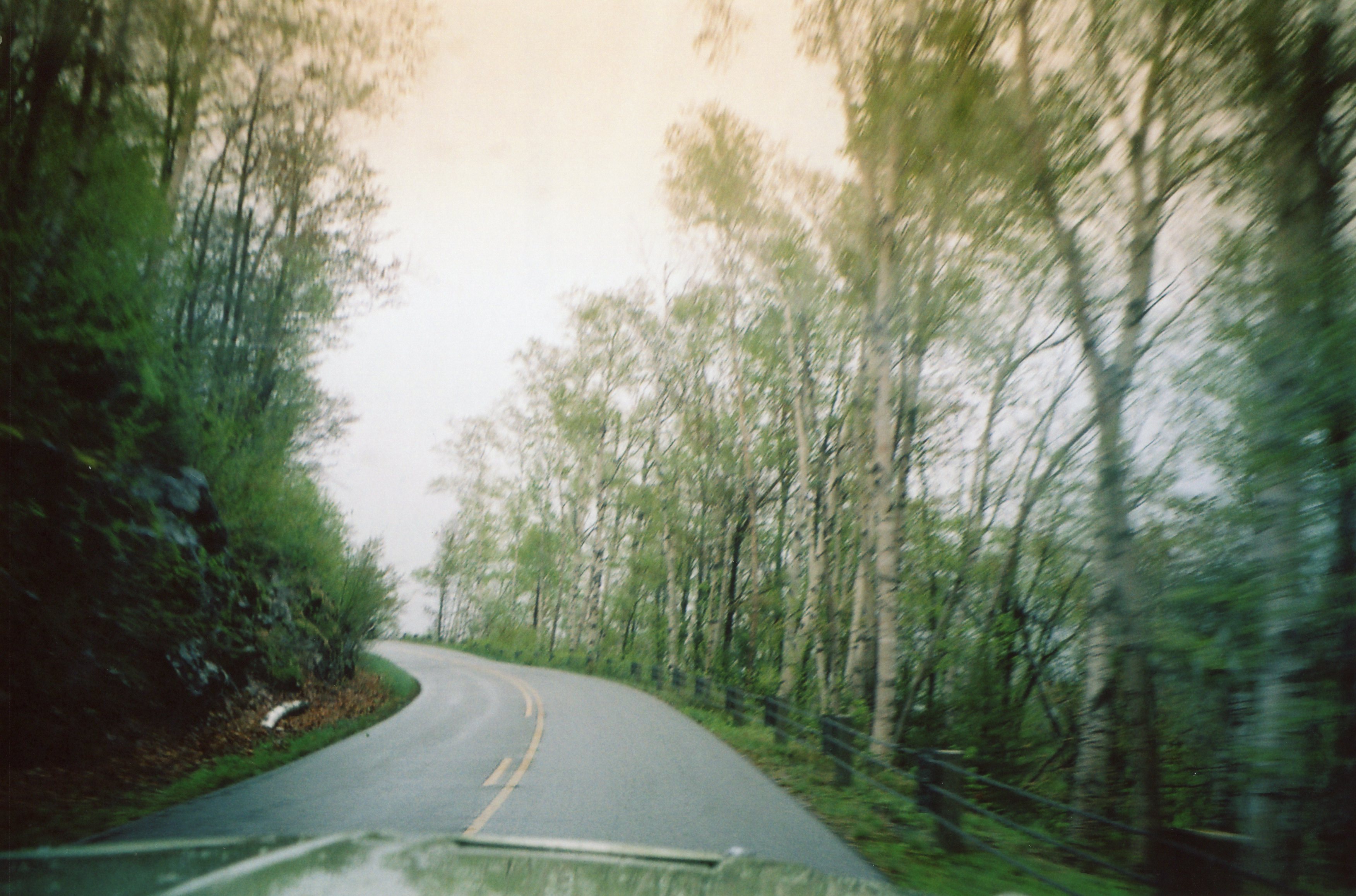
The New England scenery is always beautiful
This sums it up: what we had to do to keep our taillights visible
A 1958 Chevrolet Impala “on Route 66” inside the AACA Museum
On March 18, 2017, seven intrepid souls, expecting a delightful early spring day, ventured instead into the dreary dampness to visit the AACA (Antique Automobile Club of America) Museum in Hershey PA.
One of our rides for the day
The trip was planned weeks ago as a “rain or shine” event, and our travels were assuaged by riding in modern chariots, that is, two brand new Volvo XC90 SUVs. After an obligatory Dunkin’ Donuts stop, we were at the Museum by 11 a.m. Once there, Museum employees informed us that the basement had been emptied of many of its cars in preparation for an afternoon private event, so the daily admission fee was discounted. (AACA members are granted free entry.) But with the main floor fully stocked, there was plenty to see.
Hybrids are allowed to park up front, and recharge for free at the same time
In addition to the permanent exhibits, two temporary exhibits were in the house. “Amore della Strade” features cars and motorcycles of Italian heritage, and “Mopar Midsize Muscle” delivers big block excitement from the Chrysler Corporation.
A 1967 Plymouth GTX
Certainly, the most extraordinary permanent display is the “Cammack Collection”, a grand showing of Tucker automobiles, engines, artifacts, and history. The late David Cammack had begun collecting all things Tucker in the early 1970s. Before his passing in 2013, he willed his entire collection to the AACA Museum. The Museum in turn has done a marvelous job in setting up an interactive display to teach the public about this enigmatic automobile.
A Tucker in front of a reproduction Tucker dealership
Three hours or so after entering, we were on our way out. More importantly, we were hungry, and our stop at The Manor Restaurant & Bar up the street (thanks, Ted!) satisfied everyone’s hunger and thirst. To cap off a wonderful day, in spite of the cold, we made it (almost) all the way back without hitting any of the promised rain and snow. We each declared the day a success, and promised to make return visits.
Some of the oldest cars on display; the vehicles are arranged by decade
A 1932 Studebaker
The Italian motorcycles were in their own display room
Several of our group stand near the author’s ’67 Alfa, on loan as part of the Italian car display
The Tucker exhibit includes prototype engines against a photo of the engine manufacturing plant
Colleagues pose next to one of three Tuckers in the museum (out of 51 built)
First- and second-generation Dodge Chargers
1970 Dodge Charger
The basement includes buses and a reproduction 1950’s diner
A mid-60s Corvette is the centerpiece display of numerous Chevrolets
A wall mural pays tribute to Milton Hershey, whose businesses still dominate his namesake town
A month later, on Memorial Day Weekend, the Garden State Region Mustang Club (GSRMC) extended an invitation to attend a Ford Motor Company-sponsored event in Flushing Meadow Park in Queens, NY, site of the 1964-1965 World’s Fair, and site of the introduction of the first Mustang. The response from club members was enthusiastic, so early on Sunday morning of that weekend a large lineup of Mustangs caravanned through midtown Manhattan, arriving at the park by 10 a.m. Besides the GSRMC, the only other Mustang club invited was the Long Island club. Estimates of the total Mustang count was close to 100. My GT/CS was the only one of its kind there.
Waiting for the parade to start
For Ford, this was a marketing and PR stunt, as the all-new 2005 Mustang, which would not enter production until September, was represented by a pre-production prototype. Ford was looking for photo ops, so a ’64 ½ convertible was staged across from the 2005 ‘Stang. The stainless-steel Unisphere, one of the few remaining relics from the ’64-’65 fair, loomed in the background. A photographer, hired for the occasion, perched on a 10-ft. tall ladder.
One at a time, each owner was invited to drive his/her car across the cameraman’s field of view, stop between the two posed cars, lean out the window, smile, and move on. As you might imagine, this took some time. I used the downtime to take some of my own photos as we crawled in the queue. Eventually, I had my picture taken, and headed home.
From the right…
And then the left; the line is long
The official photo; cloudy all day, the rain held off until the drive home
Rally brother Steve and I had started to make some noise about possibly driving the Mustang in next year’s New England 1000 rally. With that on my mind, it seemed that the winter of 2004-2005 would be the ideal time to tackle the leaky heater core. My collector cars are usually off the road for the winter, so I would have the time I’d need to get this done.
On a Mustang with factory air such as mine, the heater core and A/C evaporator reside together in a fiberglass box under the passenger side dash. Following the factory-recommended procedure, I began the disassembly that would grant me access to said box. My A/C was inoperative, with zero pressure in the system, so no further harm was inflicted onto the ozone layer when I broke open the evaporator connections.
Dash pad & instruments out; wheel can stay
HVAC controls & center console out
Much of the dashboard and instrument cluster needed to be removed, so I used this as an opportunity to replace other worn parts (more about that in a bit). Most of the wrenching was straight-forward. If there was a tricky part, it was keeping track of the various color-coded vacuum lines that operate the blend doors. I knew that new vacuum line kits were available, so that was added to the shopping list.
Heater box birthed from car; dum-dum repair at corner was dumb
With the box out of the car, my heart sank to see that it was cracked; actually, a chunk was missing from one corner. I also knew that boxes were not available in the aftermarket, so the heater box was repaired with fiberglass matting and epoxy glue.
Fiberglass fix didn’t need to be pretty
Along with a new heater core, I was able to order a new foam heater box kit. All blend doors as well as the core itself got new foam seals. Having come this far, I thought better of reinstalling the dash pad, which was warped, and the woodgrain instrument cluster surround, which had lost most of its chrome. These parts were readily available from various suppliers, so new ones were ordered and installed.
Wood and clamps hold foam while glue dries
Near the end, I worked as long as my patience would allow to line up the new aftermarket dash pieces. Of course, they did not fit as well as the originals. Eventually, I got it to the point that only I would notice any misalignment.
Repaired box about to be reinstalled. A/C evaporator was also new
Did the new heater core work? You know the drill: Add fresh antifreeze; turn on the heat; pray that nothing leaks.
Nothing leaked. The car had tremendous heat output, and anyone riding in the front seats would have toasty dry toes. This would turn out to be a huge benefit during the running of the 2005 New England 1000.
With the recently-acquired Mustang in the garage for the winter of 2003-2004, I set out to do three things in preparation for the 2004 driving season: join the local Mustang club, subscribe to Mustang Monthly magazine, and obtain as many vendor parts catalogs as possible.
The N.J.-based club was the GSRMC (Garden State Region Mustang Club), and soon after joining, its President invited me to submit an article about my car, as we both surmised it was the only GT/CS in the club.
Cover car!
Prior exposure at events like Carlisle had shown that (especially compared to Isetta vendors) there were dozens of Mustang parts suppliers, so any needed part should be only a phone call or mouse click away. I was soon to learn otherwise.
As weather allowed, I would slip into the garage to perform some preventative maintenance: tune-up, oil change, coolant hoses & clamps, etc. Removing the air cleaner lead to the discovery, missed by me and unmentioned by previous owner Tony, that the heater hoses were disconnected from the heater core at the firewall. Against my better judgment, I reconnected them, filled the system, started it up, and ran the heater. All was dry, so I let it be.
As I placed orders for my Mustang-specific parts, I sampled various vendors, including Mustangs Unlimited, CJ Pony Parts, Virginia Classic Mustang, and NPD. Two truths became apparent: first, the quality of aftermarket parts varied widely, and was not always good, to the point that substandard parts were returned; and second, the idea that any part could be found at any vendor was hindered by my engine.
The “X code” 390 2-barrel FE-block was so rare that most Mustang suppliers did not carry parts for it. (Some catalogs, and some otherwise-well-written tomes on the Mustang did not even acknowledge that Ford used this engine in Mustangs!) Out of 317,000 1968 Mustangs, the X-code engine was put into 476 of them (2/10ths of 1%). Among California Specials, 75, or about 2%, used it. Either way, that makes for one rare engine.
The vast majority of its parts are shared with the S-code 390 “GT” 4-barrel engine. The differences are all on top: intake manifold, carb, air cleaner, emission controls, and various connecting parts. For my needs, I was stymied at obtaining vacuum hose connection parts, and a replacement for the missing air cleaner snorkel. (Much later, I found that the snorkel was not being reproduced, and was available used for about $900. I didn’t buy it.)
Early in 2004, the Mustang Club of America (MCA) announced that it would be hosting a 40th anniversary celebration for the Mustang in April, with the event to be held at Nashville Speedway in Tennessee. (The Ford Mustang debuted at the New York World’s Fair in April 1964.) Checking with the GSRMC, there seemed to be lukewarm interest in attending. However, the New England Mustang Club was organizing a caravan, stopping at various points to pick up participants, and they would be stopping at CJ Pony Parts in Harrisburg PA. My wife was willing, so we signed up.
Portfolio cover for 40th anniversary show
Caravan Day 1 was damp
Cars outside CJ Pony Parts
Our Cal Special queues up
On a rainy April day, we headed out to Harrisburg. The group, at this point about a dozen strong, showed up a short time later. The New England crowd was friendly, and warmly welcomed us. (They promised a “wicked good” journey.) It was nice to have some company on the trip south. The Mustangs consisted primarily of first-generation cars and Fox bodies. Most were driven; several were trailered. As we traveled, other Mustangs joined, and soon there were close to 20 cars. The group was informed that our destination for the night was Harrisonburg VA, and that we would be in Nashville by the afternoon of the second day. The weather remained cool and damp, but we were comforted by fairly good heat output in our car.
That is, until my wife said something about green fluid leaking from the dash near her feet.
We pulled over, and several other drivers also stopped in solidarity. Fortunately, the coolant loss was small enough that the temp gauge stayed in the Normal range. With assistance from several helping hands, we routed the heater hoses in a “U”, bypassing the core. The leak stopped, but we had no heat. Within a few hours, grey skies gave way to sunshine, and a significant jump in the thermometer. By the time we reached Nashville, temps were in the 80s.
MCA 40th anniversary show field, Nashville TN
Show revelers happily tailgate on the gravel
My GT/CS on the show field; Speedway grandstand in background
This was the first time I had attended a show of this magnitude. Memory tells me that there were about 3,000 Mustangs in attendance. Once we entered the parking lot, it was first-come first-served to find a spot; except for some pre-chosen cars parked under cover, there was no attempt to organize the field. We parked and walked around. The Ford Motor Company was an official sponsor, so it was a treat to see one of the first Ford GTs. Edsel Ford II (son of Henry Ford II) was in attendance, and had a friendly greeting for anyone who came by his way.
A proud pose in front of one of the first Ford GTs shown to the public
Mr. Edsel Ford II, son of Henry Ford II, grandson of Henry Ford
This was a 3-day show, and Day 2 was not that different from Day 1. Temperatures stayed in the 80s, and cars were kicking up a lot of dust in the gravel parking lot. The heat and the dust did not make walking an enjoyable endeavor. I did spot a number of other GT/CS cars, and when possible, introduced myself to the owners.
GT/CS red w/white stripes
Aqua w/white stripes
Aqua w/black stripes
Yellow w/black stripes
A photo of someone taking a photo
One evening, there was a caravan into downtown Nashville, where we saw a show at the Grand Ole Opry, and enjoyed some local BBQ. By Day 3, we were ready to head home. We drove sans caravan, stopping at a B&B on the way, and taking in the scenic views of the Blue Ridge Parkway and Skyline Drive through Virginia.
The California Special poses outside of our B&B
We got home without further incident. The Mustang did 2,200 miles, flawless except for the leaky heater core (for which I should have known better). Now I knew what I’d be working on during the upcoming winter!
My wife takes in the Virginia scenery, pleased that there is no more green fluid to deal with
After participating in the New England 1000 classic car rally for four years straight, I took a break. Admittedly, this “break” was dictated by circumstances; Steve had moved to California, and I had sold the MGB, so I was without a rally-eligible ride. It was fun to take the little BMW Isetta to car shows and cruise nights, but a 13 horsepower microcar was no long-distance rally contender.
Sure, you can buzz around the block, but you aren’t going to rally in that thing, are you?
By 2003, the itch to get a drivable classic car had returned full strength. And I knew what I wanted. Much of the spring and summer of that year was spent searching online for a Ford Mustang California Special.
Why this particular Mustang? The story really starts in the early 1990s, while attending a Carlisle (PA) antique car event. Rounding a corner in the flea market, I stopped dead in my tracks at the sight of a Mustang coupe, the likes of which I had never seen before. From some angles, especially the rear, it looked like a Shelby Mustang. But this car was a 2-door notchback, and all of Shelby’s cars were either fastbacks or convertibles. My next thought was that someone had created a one-off tribute car. Whatever it was, I needed to find out more.
After returning home and conducting some research, I was fascinated to find out, for the first time, about this very special Mustang model. Here is the capsule version of that story:
In mid-1968, the Ford Motor Company recognized that increased competition from GM (Camaro, Firebird), Chrysler (Barracuda), and AMC (Javelin) was hurting Mustang sales. Ford, encouraged by their strong Los Angeles dealer network, agreed to create a special model, to be sold only in the state of California. The California Special (also known as GT/CS) option was a $194 trim package, only for coupes, and available with any engine. Initially, the plan was to build 6,000 units. When sales results did not keep up with forecasts, dealers throughout the west were allowed to order and sell the GT/CS. No cars were ever sold east of the Mississippi. Final production total was 3,867 units out of 249,447 ’68 coupes, representing about 1.5% of total coupe production.
Steve owned a book dedicated to the GT/CS, which he generously loaned me. From this book I learned that all of its distinguishing features were external: blacked out grille, fog lamps, hood locks, side stripes and scoops, rear spoiler, pop-open gas cap, and Shelby taillamps. This was a “Shelby look” Mustang at a fraction of the price of a real Shelby.
My infatuation was growing, and was further fueled by discovery of the www.californiaspecial.com website. The search for a car began, complicated by (no surprise) seeing that most of these cars were 2,000-3,000 miles away from me! Not many California Specials wandered far from their birth place.
After about 6 months of constant searching, this ad popped up on the californiaspecial.com website:
Tony’s ad from July of 2003
Several factors were immediately attractive: the car was Lime Gold, the same as my ’67 Mustang (even though the ad incorrectly described the paint as Ivy Gold, which was the interior color), and it was in Maryland. Less attractive was the 390 (this is the cue for big block fans to boo and hiss, but I preferred the Ford 289-302 small block, one of the world’s best V8s), and the price, which was about 25% higher than my target. Before proceeding any further, I bought a Marti Report for the car.
Kevin Marti runs a business whereby customers supply him with a VIN from a classic Ford product, and he supplies a report detailing the production details for that specific car. He started his company by purchasing these records directly from the Ford Motor Company. There were many warnings about GT/CS clones, and knowledgeable online forum participants stressed that a Marti Report (only $17) was one sure way to guarantee that the California Special under consideration was not a fake (or as those who practice such shenanigans would call it, “a tribute car”).
The Marti Report for my GT/CS, X154014
The Marti Report for the car in Maryland not only confirmed that it was a real California Special; it showed the car to be highly optioned from the factory, with air conditioning, power steering, power disc brakes, GT package, deluxe interior, and center console. One further revelation from the report: the car was sold new in Hawaii! I rang up Tony, and one Sunday in August of 2003, took a ride to Germantown MD.
On my arrival at his home, Tony had the car parked outside. I spent at least two hours going through it, flashlight and screwdriver in hand. It was solid and complete, and drove well. There were some minor faults in the paint, and underhood looked like it needed a weekend’s worth of detail work, but there was a lot to like. Knowing there was no rush, I pitched a low-ball offer to him, convinced he’d never take it, and concluded with “think about it, and we can talk during the week”. As I took out my keys and walked toward my car, Tony yelled out from 20 feet “I’ll take it!” Oops. My gambit worked.
We did the whole money and paperwork part of the deal from our respective residences, and about two weeks later, plates in hand, my step-son John and I headed down in my Volvo. He drove the Volvo home, following me in the ’68. The car drove absolutely fine the entire way, until I pulled into my driveway, at which point the mechanical fuel pump sprung a leak! My timing could not have been luckier. It also gave me my first taste of the difficulty of working on that massive engine, as the A/C compressor needed to be swung out of the way to reach the pump. But the car was on the road again in short order.
I had big plans for the Mustang for 2004, 2005, and beyond. This car was going to be driven and enjoyed.
The “Alfa Bulletin Board” website at www.alfabb.com is a treasure trove of all things Alfa Romeo. I have frequented and contributed to the board in the past, and I’ve also gone months without checking in; such is life.
In January of 2017, having not visited the site in months, I was perusing the website’s classifieds. There was a post regarding an auction that had been held in November of 2016. Obviously, it was over, but I read in fascination about a former Alfa dealer in southern Jersey who liquidated his large collection of cars and parts. With deep regret that I had missed the auction, this was also my opportunity to reveal a secret I had kept for over a year.
It was the summer of 2015 when my good friend EC informed me that he had been given “permission” to visit a stash of Alfas. At that time, EC was on the hunt for an Alfa Romeo of his own, and he believed that he might find the car of his dreams at this location. He invited me along to help with the evaluation, on the strict condition that I tell NO ONE.
EC picked me up at my home, and did the driving to Vineland, a one-way trip of almost two hours. The lengthy ride gave him the chance to fill me in on the backstory.
Decades ago, through a job connection, EC had befriended someone who worked for Alfa’s corporate headquarters. He remained in contact with this person all these years, which led him to obtain the phone number for Peter D’Amico. Peter was the dealer principal of the Alfa Romeo dealership in Vineland NJ. In the early 1990s, Alfa pulled out of the U.S. market. There may have been no more new Alfas to sell, but Peter continued the business as an independent parts and service center.
EC had learned that Peter might be willing to sell one (or more) of his Alfas. We knew nothing of years, models, or most importantly, condition. It had also been indicated to EC that Peter was rather secretive about his possessions, and allowed few people into the building. At this point, the best news was that Peter was expecting us, and that we could at least have a conversation.
We arrived at the expected time, and Peter came out to greet us. Looking younger and more spry than I was expecting, I was also struck by something EC has warned me about: Peter was beginning to have health issues, specifically mental health, as in, possible early dementia. The situation was made even sadder because Peter was aware of his own condition. Yet he was chatty and gracious, and granted us immediate entry into the building.
Our host for the day, Peter D’Amico
It may sound like a cliché, but walking into this former dealership was like going through the time tunnel. THIS is what many car dealerships looked like in the 1960s and ‘70s: service bays in the front, taking up almost all the forward real estate, with a dark wood-paneled room off to the corner serving as a one- or two-car showroom. There was one desk, piled so high with catalogs, manuals, and other paper that it appeared ready to collapse. Behind this afterthought of a new car display area was a combination kitchen and special tool/service literature storage area.
The view of the main portion of the service area
Entering the main part of the service department required navigating a short flight of stairs. The bays, arranged side-by- side, were jammed full. Cars were parked in front of each other. Off to one side, on the floor, were dozens of Alfa engines and transmissions.
Engines and transmissions by the dozens took up floor space
From here, we headed down a full flight of stairs into the basement, which was the parts department. Shelves were crammed full of boxes and bags in the familiar orange and black Alfa colors. But nothing was organized. It was anybody’s guess onto which Alfas these new parts would fit. Even if you could figure that out, there was a good chance the parts were, as the euphemism goes, “shelf worn”.
A sample of the wares in the basement parts department
Back upstairs, we entered the rear part of the building. The ceiling had a hole in it large enough for an eagle, much less birds of smaller wingspans. More cars and parts were strewn everywhere, including a row of Spider convertible hardtops. A brand-new Alfa Romeo dealer neon sign was still secured in its wooden crate.
EC negotiates for a hardtop for the Spider he doesn’t own yet
Brand new dealer sign still in its crate
As we followed Peter on this tour, he walked and talked almost non-stop. If he stopped, it would be to write something down, so that, as he explained to us, he could remember by referring to his notes. (One of the first things he wrote down was our names and phone numbers.) He never let go of the clutch of paperwork in his hands. As EC and I attempted to engage him, we found dialogue difficult. Questions would simply be unanswered, or the answer did not make sense.
We left the main building and followed Peter to a second building about a half block away. This storage area, he said, was where he kept the better cars. In here was a silver Alfa Spider Quadrifoglio, mid-1980s, which EC found attractive. It was dusty, and had not moved in a while, but appeared otherwise whole. We pored over the car, all the while peppering Peter with questions about it. When EC tried to get Peter to indicate some kind of asking price, the question was never answered. We both were getting more and more frustrated.
The Alfa Spider, keeping company with a Lancia Scorpion and Fiat 124 Spider
Finally, it was time to go. We had seen everything there was to see. We gave profuse thanks to our host, and wished him all the best. EC and I stopped for lunch in town. We couldn’t stop talking about what we had just seen. Unsure of what to make of it all, our biggest wonder (worry?) was what would eventually happen to the building, its contents, and to Peter.
As the weeks and months went by, EC tried several times to follow up with Peter on the phone. He did speak to him, but again, there was no headway regarding a price for the silver Spider. Eventually, EC realized that this was not going to happen, and ended up buying a nice Alfa Spider elsewhere.
We don’t know what motivated Peter to auction off all the goods. Perhaps it was a family decision. Maybe, during a moment of clarity, he concluded that it was in everyone’s best interest to let it go. I hope some of the nicer cars found good homes. I’m glad I got to see all of it while it was there.
EC wonders if this is his future Spider
These must be worth something to someone
Another view of the service area
These Alfa 164s were in front
Alfa’s last ’90s U.S. model
The scene out back was most heartbreaking, as cars were exposed to the elements