Hershey 2025 Part 3: the RM-Sotheby’s Auction

Attending collector car auctions is one of my favorite ways to enjoy the hobby. Compared to classified ads or car corrals, where sellers can shoot for as high an asking price as they dare, an auction result is a concrete data point: on that day, a seller was willing to sell a vehicle at a price that a buyer was willing to pay. This year, as I have done so many times in the past, I attended the RM-Sotheby’s auction at the Hershey Lodge, held on October 8 and 9 during Hershey week.

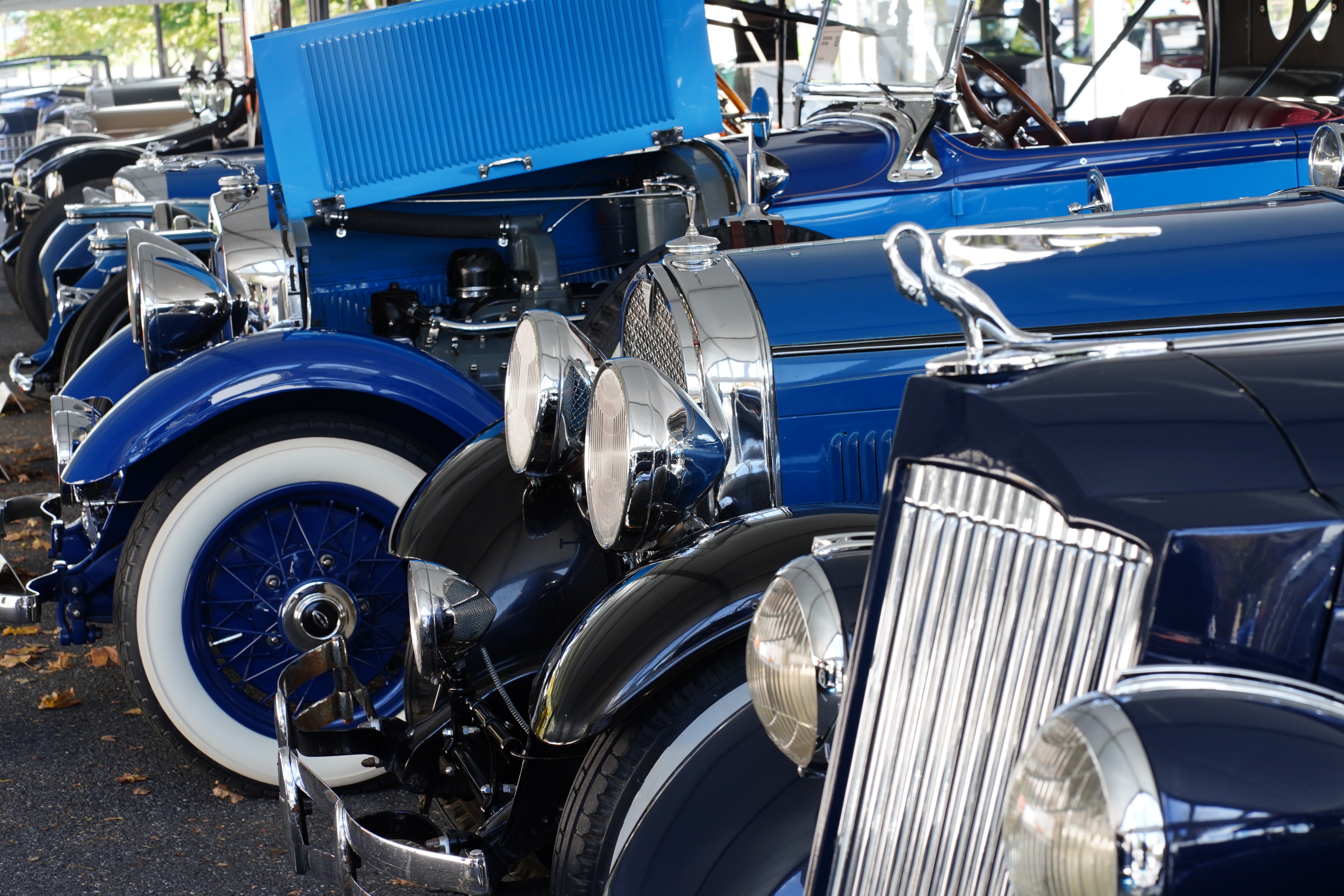
RM-Sotheby’s conducts auctions around the world, but at Hershey, they specialize in pre-war and early post-war American iron. There was a large collection of convertibles from the late ‘40s/early ‘50s, apparently from a single collection (another growing trend as older enthusiasts age out of the hobby). As you read the results below, you can presume that, at least cosmetically, most of these cars were in Number 2 or Number 1 condition, which is to say, they looked great. Mechanically, the best one can do is to observe the RM staff as they start and drive these cars up to and across the auction block.

A word about pre-sale estimates: every vehicle is given a price range, clearly displayed on the windshield placard. Savvy bidders know that this is just an estimate, and that the auction company, in an attempt to encourage bidding, might push the estimates a bit over expectations. I documented the sale of twenty cars, and the spread is interesting: of these twenty, eight sold below the low estimate; seven sold within the estimate range; and five sold over the high estimate. Were there deals? Possibly, provided that there weren’t too many hidden surprises once the new toy arrived home. I still maintain that buying a car at auction, while slightly risky, has the potential to reward the educated buyer who can bid with a level head.

As always on Richard’s Car Blog, results are arranged in sale price order from low to high, a detail that you will not find anywhere else. Sale prices shown are “hammer” prices, and do NOT include the 10% buyer’s premium owed to the auction house.


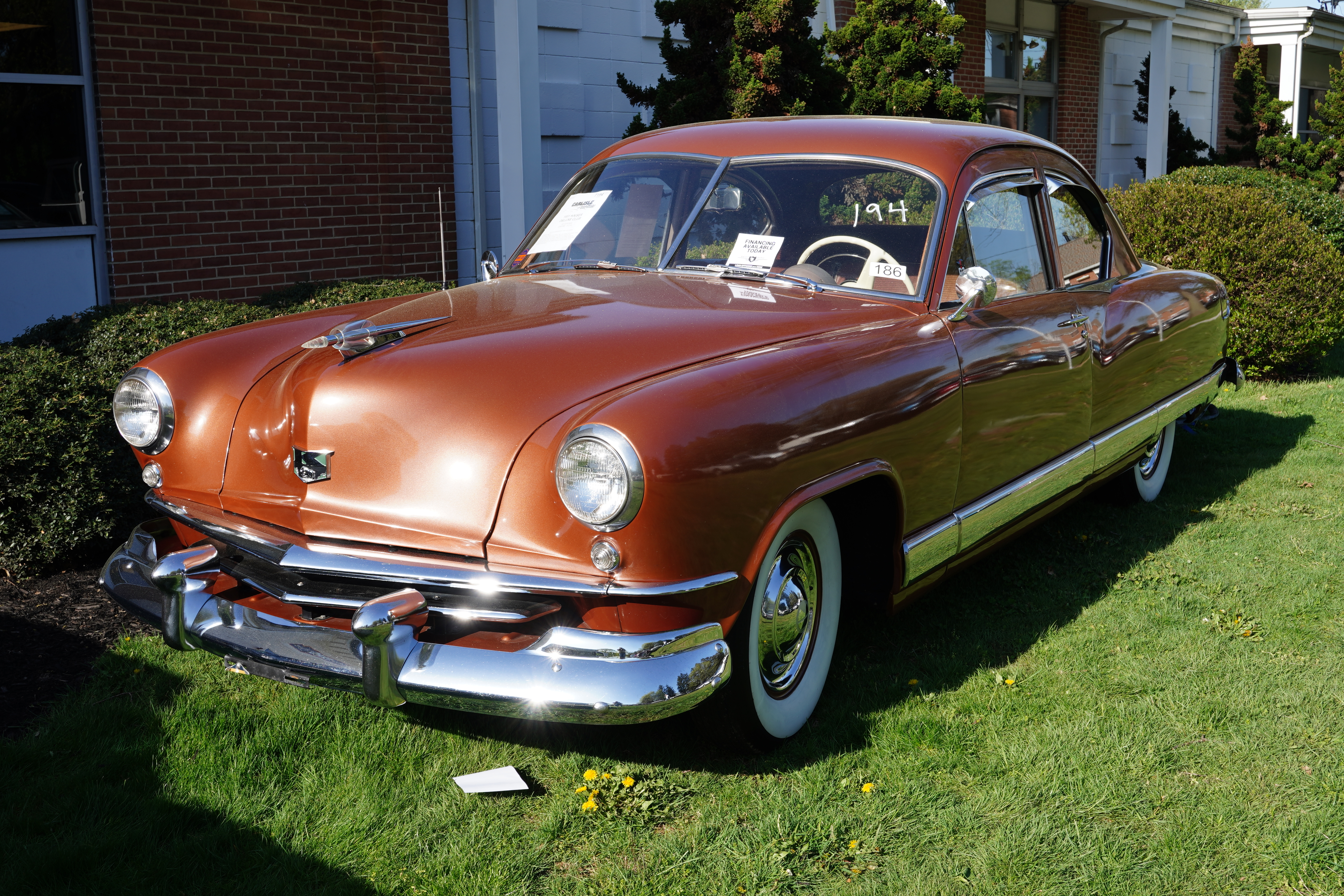
LOT 123, 1951 Pontiac Chieftain 4-door sedan, estimate range $15-20,000

SOLD for $15,500

Sold for only $500 above the low estimate. A rather ordinary car in drab colors, but in very nice condition. For the Pontiac collector who doesn’t have one.


LOT 124, 1952 Studebaker Commander convertible, estimate range $25-35,000

SOLD for $17,500
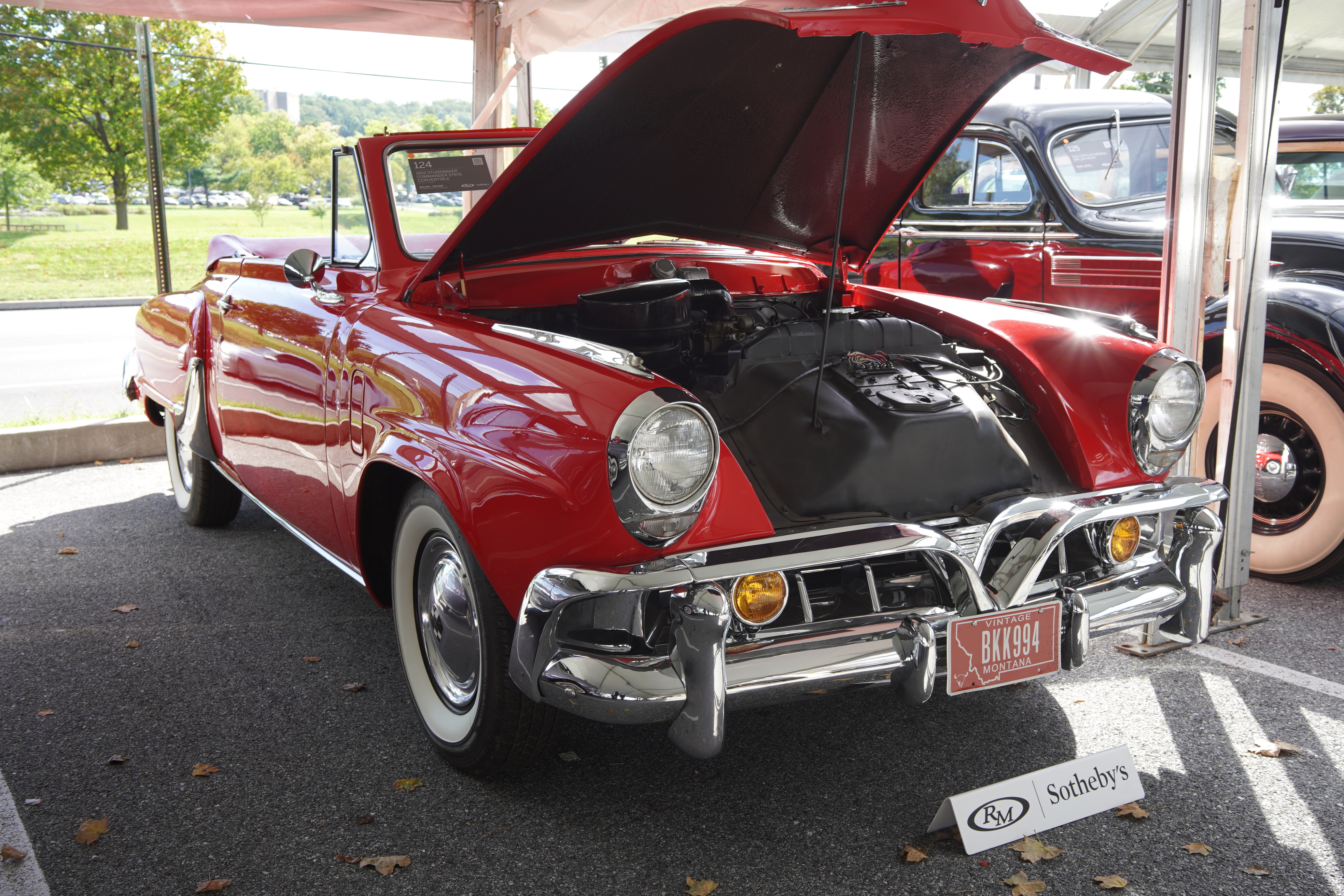
The red over red looked dashing. The top color was not noted. This car hammered for $7,500 under its low estimate, and was only $2,000 more than the Pontiac. I know which one of the two I would prefer.


LOT 136, 1930 DeSoto CF Eight roadster, estimate range $25-35,000

SOLD for $25,000
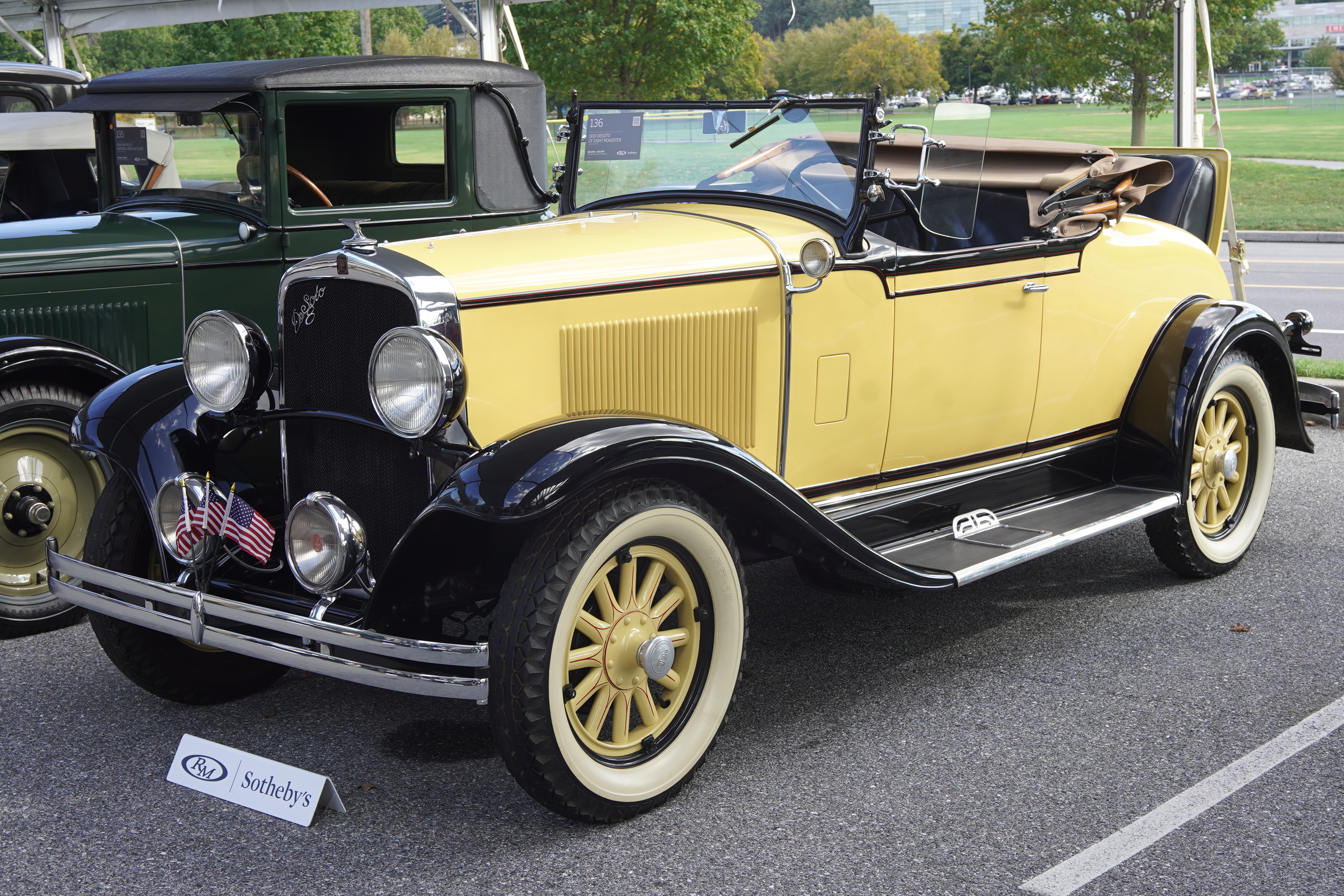
Sold right at low estimate, car looked ready to drive in the next local parade. A nice and somewhat unique alternative to a Model A Ford.


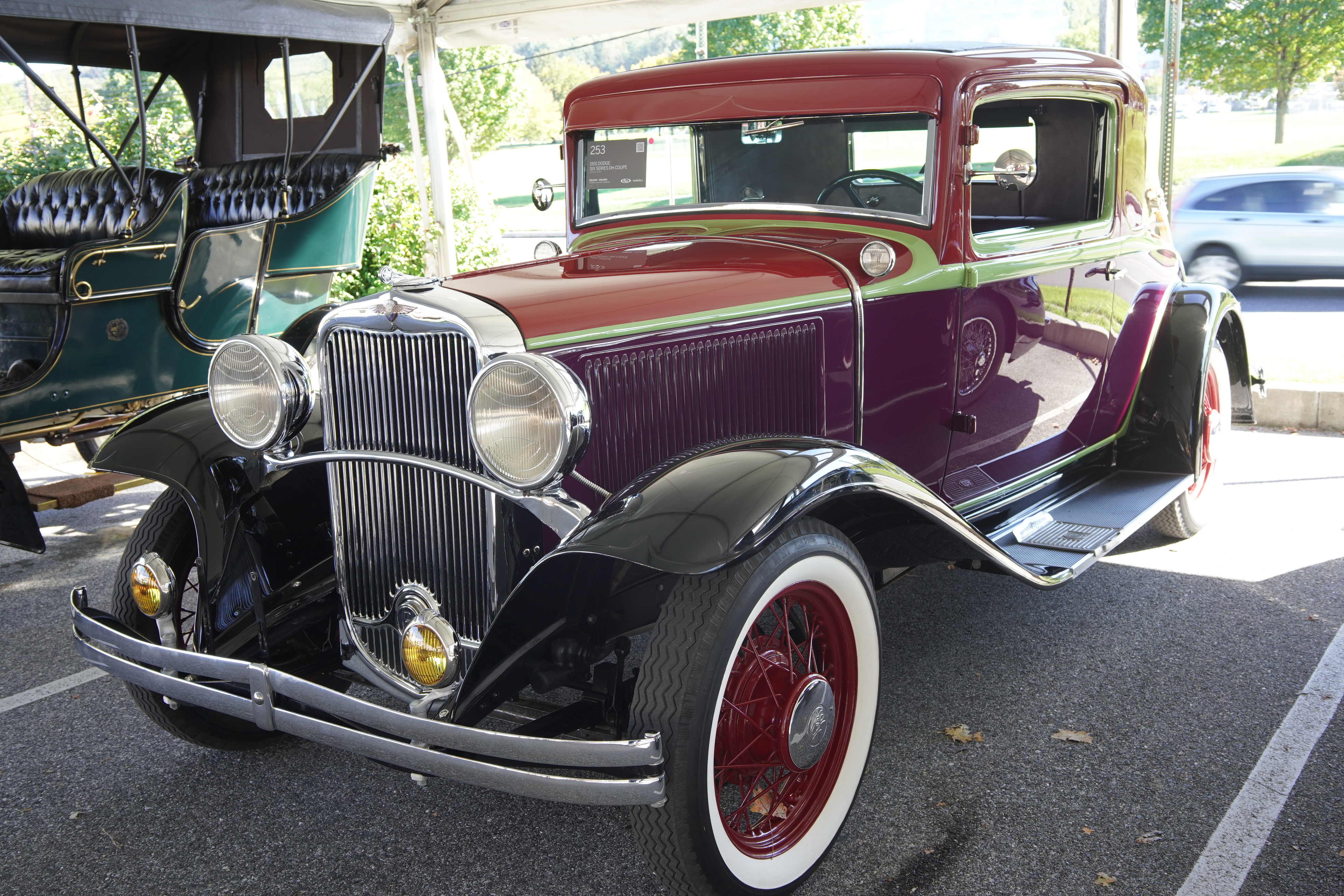
LOT 253, 1931 Dodge Six Series DH Coupe, estimate range $25-35,000

SOLD for $26,000

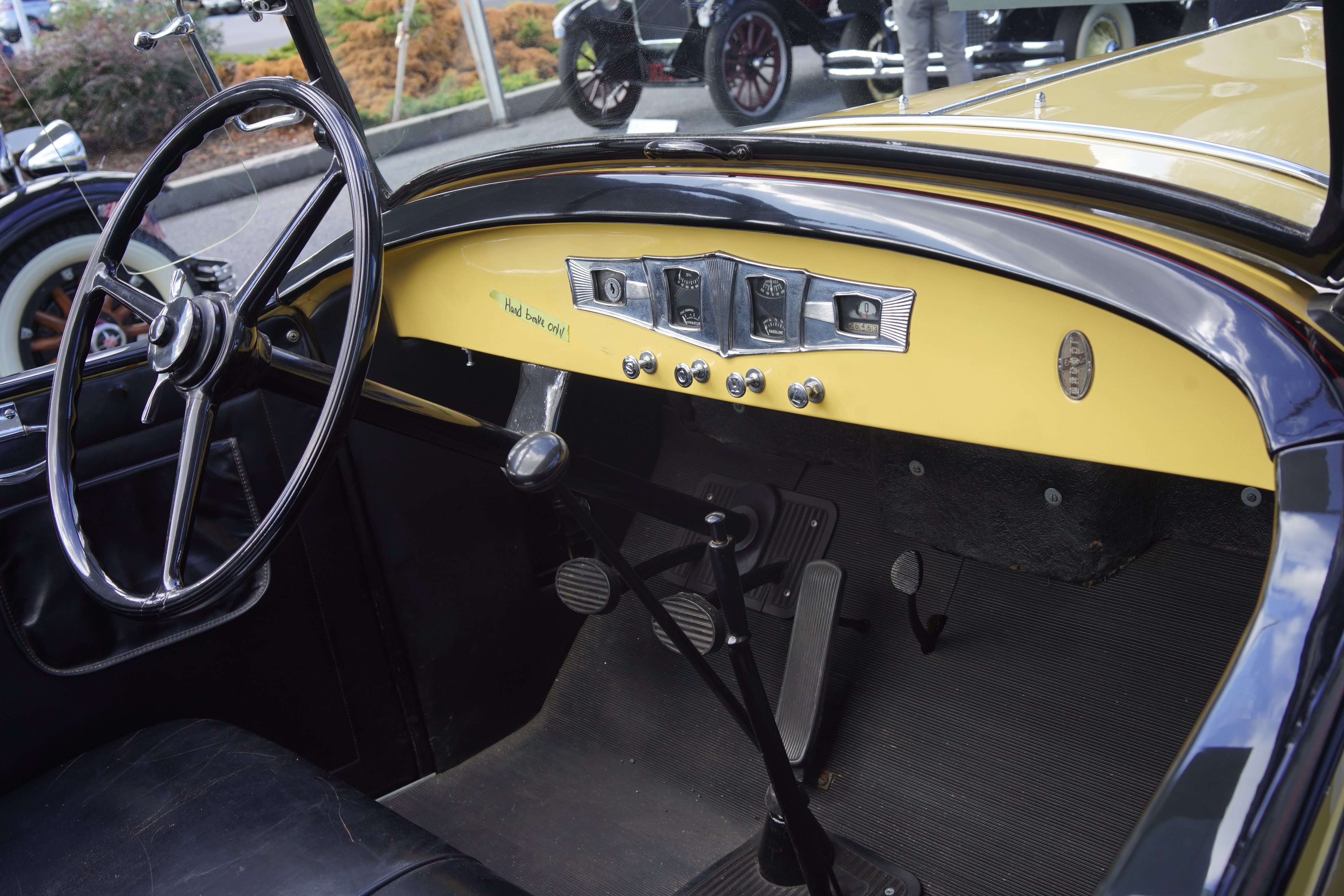
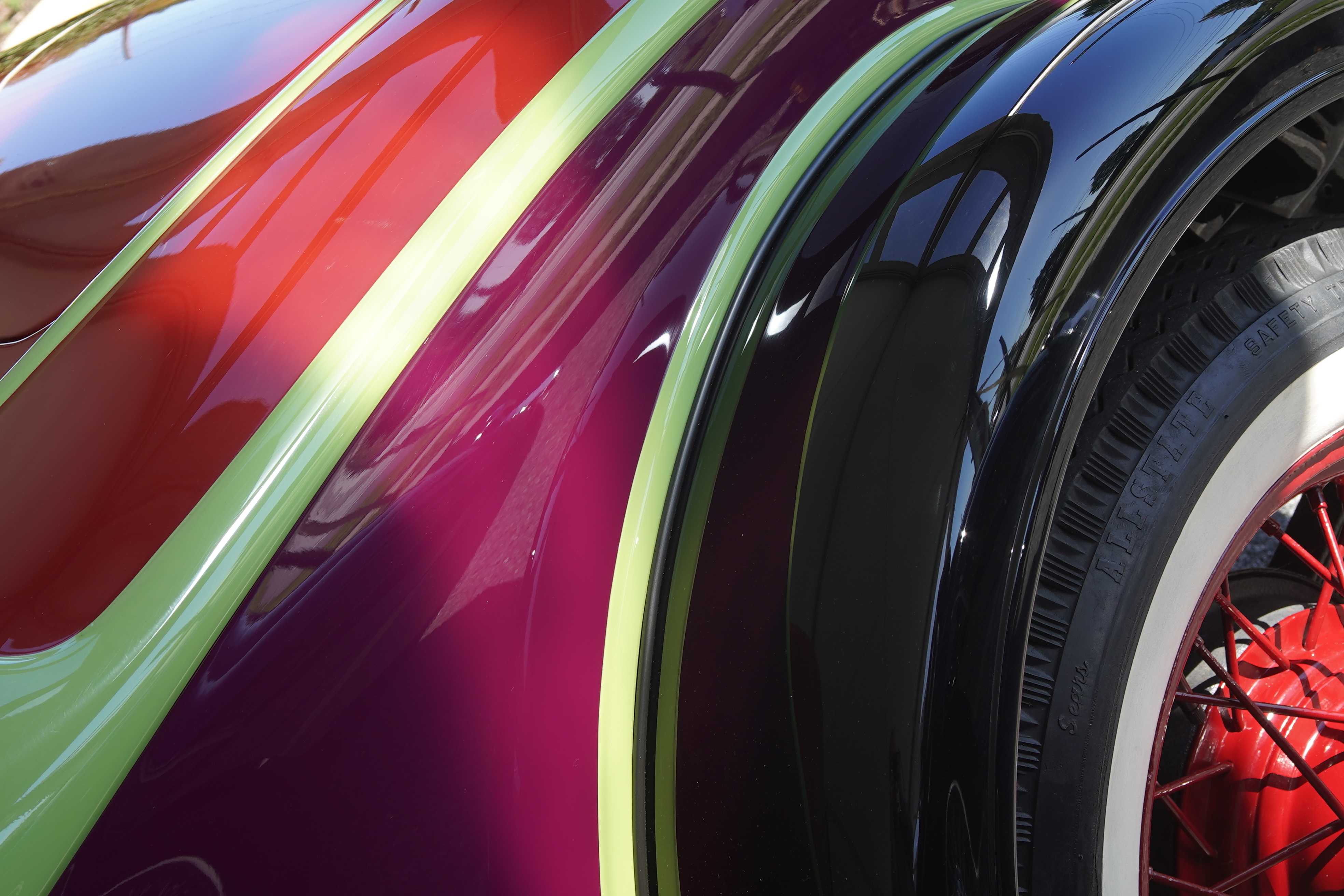
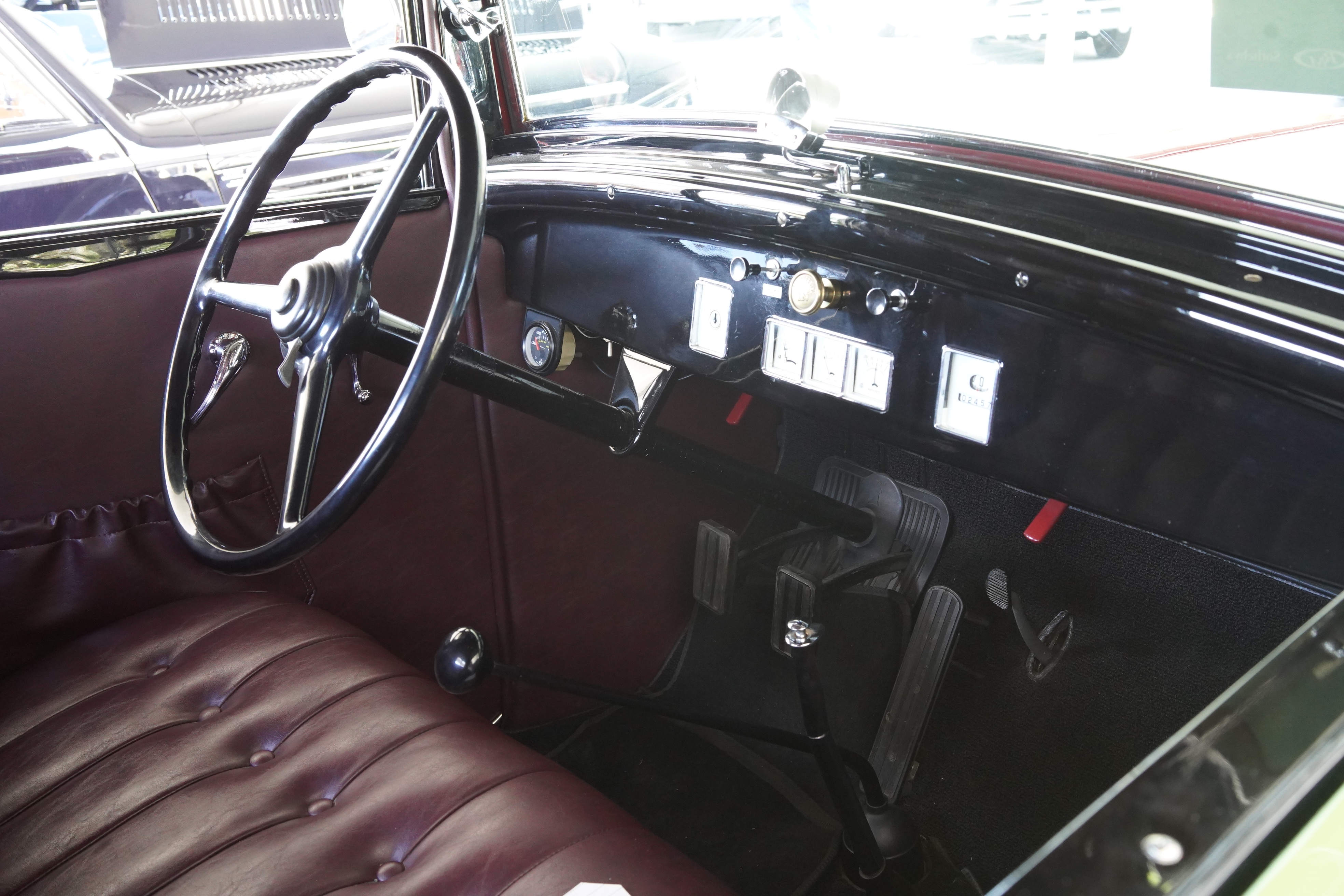
Sold a grand above low estimate. Car appeared to be in excellent condition, but: I could not get past the FIVE different exterior paint colors (including the wheels). The body was a lighter red over a darker red, the two colors separated by green. The fenders were black, and the red wheels, to my eye, appeared to be a shade of red different than the body. Someone liked it enough to bring it home.


LOT 131, 1950 Frazer Manhattan convertible sedan, estimate range $40-60,000

SOLD for $30,000
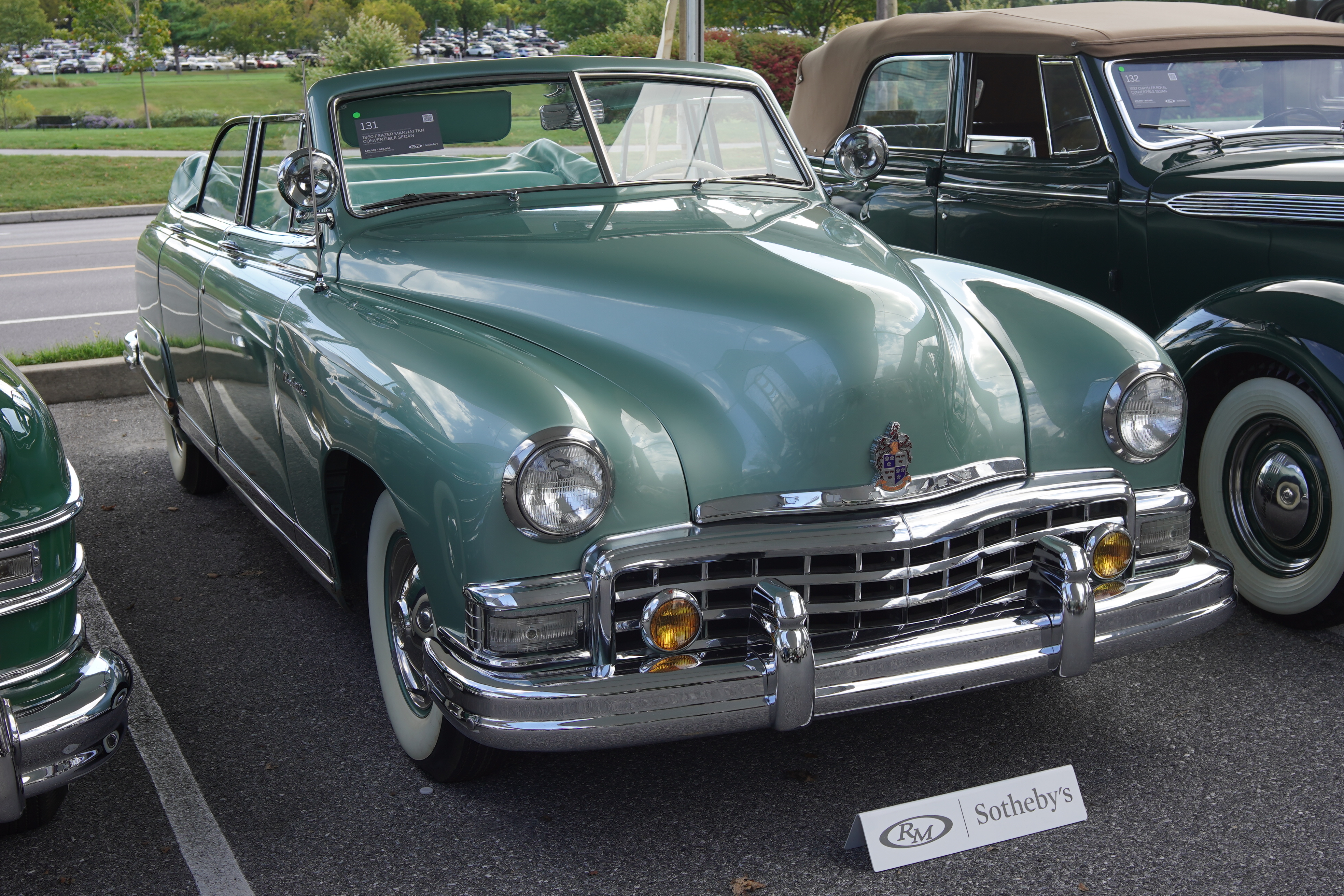
I can only guess that Frazers play to a very narrow audience. Still, this was a rare car in a rare body style. Winning bid was a full $10,000 below the low estimate.


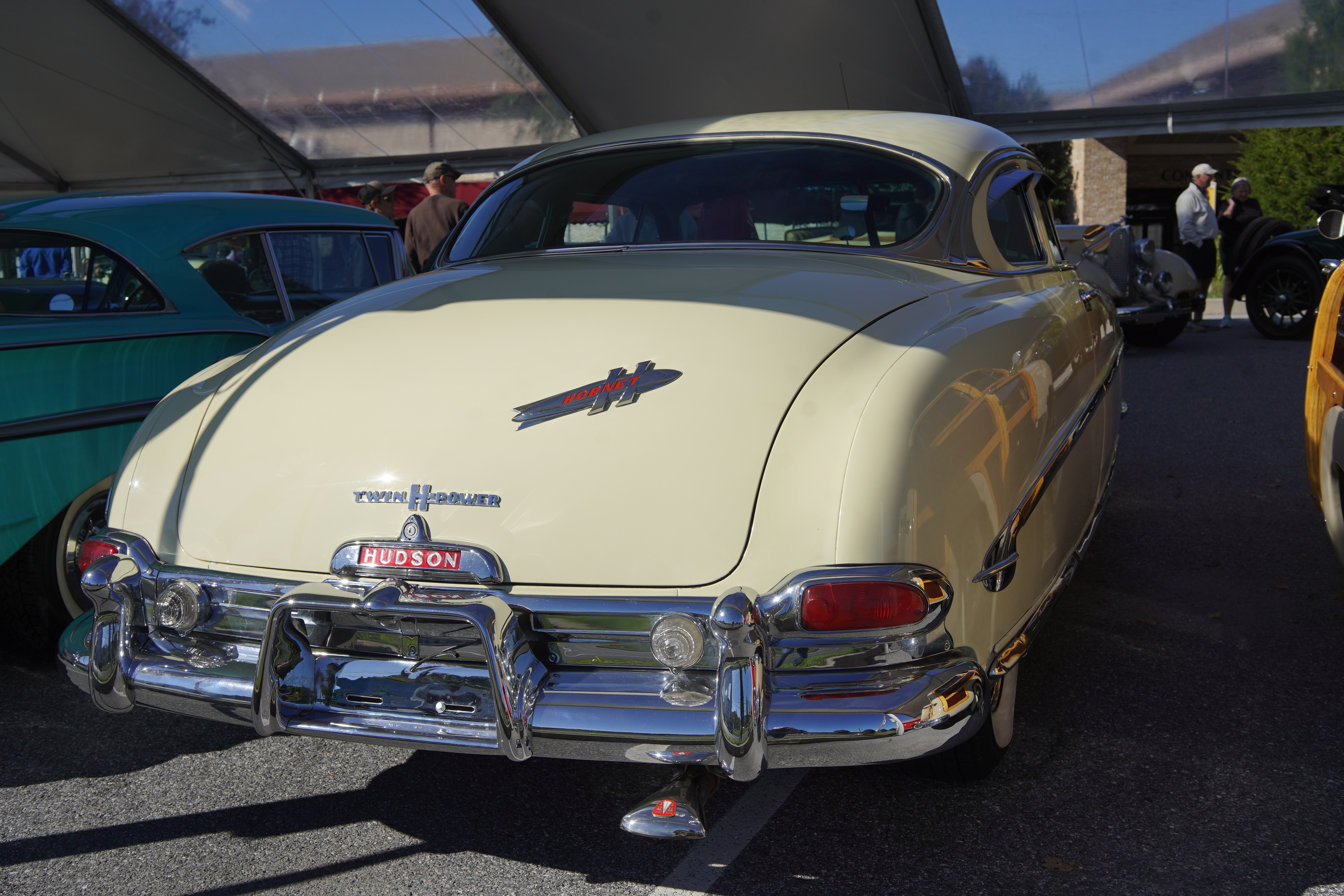
LOT 262, 1953 Hudson Hornet Twin-H Club Coupe, estimate range $40-50,000

SOLD for $35,000

One of three Hudsons covered here, and the one which sold for the least, five grand below low estimate. The two-door body style looked sporty, and the yellow fog lights and windshield visor added to that sportiness.


LOT 129, 1950 Hudson Commodore convertible, estimate range $60-70,000

SOLD for $40,000

At a full $20,000 below low estimate, and only $5,000 more than the Hudson hardtop above, someone got a very nice immediate post-war droptop at a fair price.


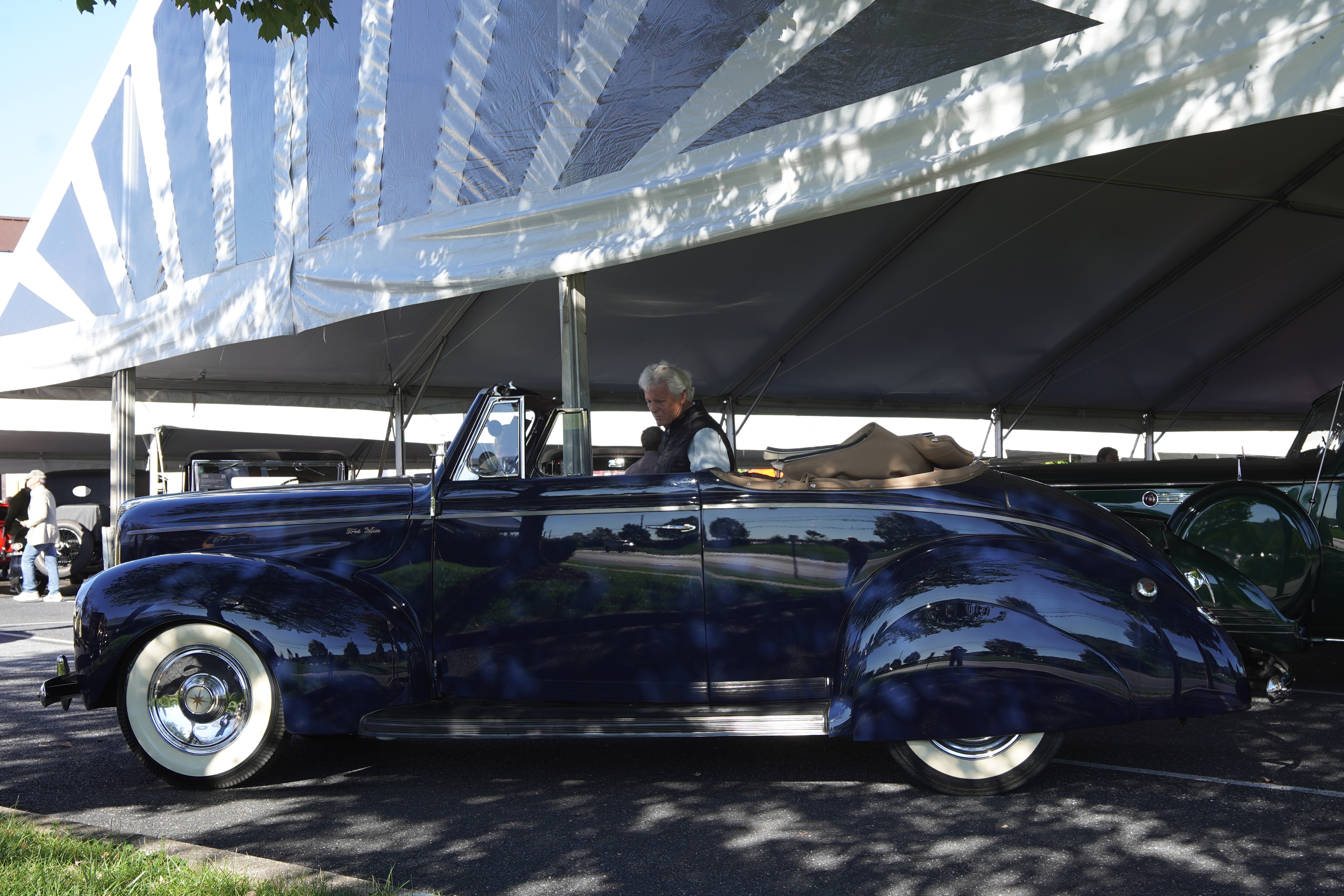
LOT 301, 1940 Ford Deluxe convertible, estimate range $50-60,000

SOLD for $42,000

I follow these pre-war Ford V8s a little bit, and prices are certainly off their highs of several years ago. I would guess that five or six years ago, this car could have fetched $60,000. Someone took advantage to grab this car at $8,000 below low estimate.


LOT 258, 1939 Ford Deluxe convertible, estimate range $35-45,000

SOLD for $42,500

Just one year older than lot 301 above, and look at the difference in the estimate range. While the ’39s will never be as desirable as the ’40s, this was still a good-looking automobile. and actually sold for $500 more than the ’40.


LOT 151, 1931 Chrysler CD Deluxe Eight coupe, estimate range $40-50,000

SOLD for $45,000
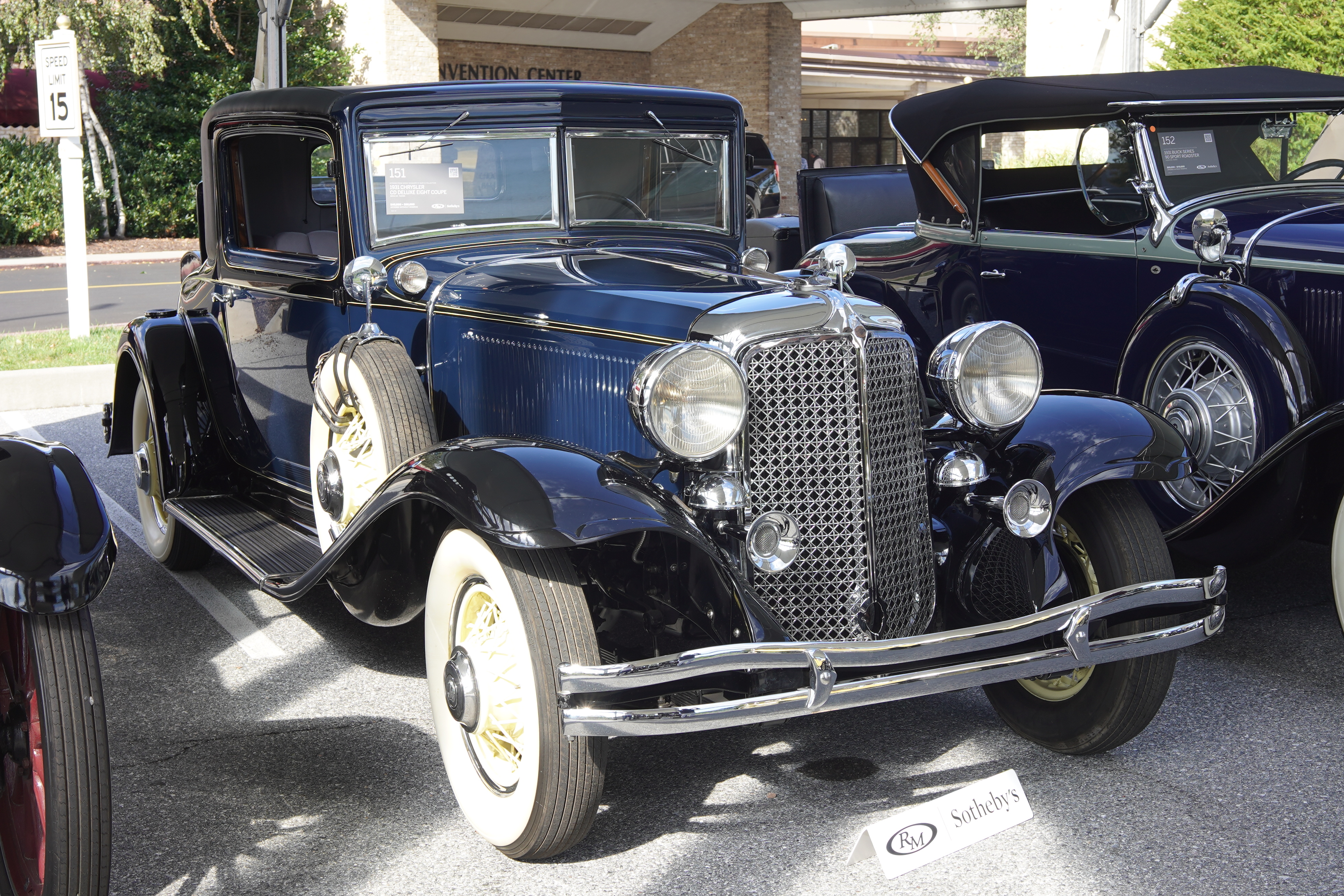
Sold right in the middle of the estimate range, these early Chryslers are handsome and stately cars. This would be a nice ride for a Glidden tour.


LOT 134, 1932 Plymouth Model PB Sport roadster, estimate range $35-45,000

SOLD for $50,000
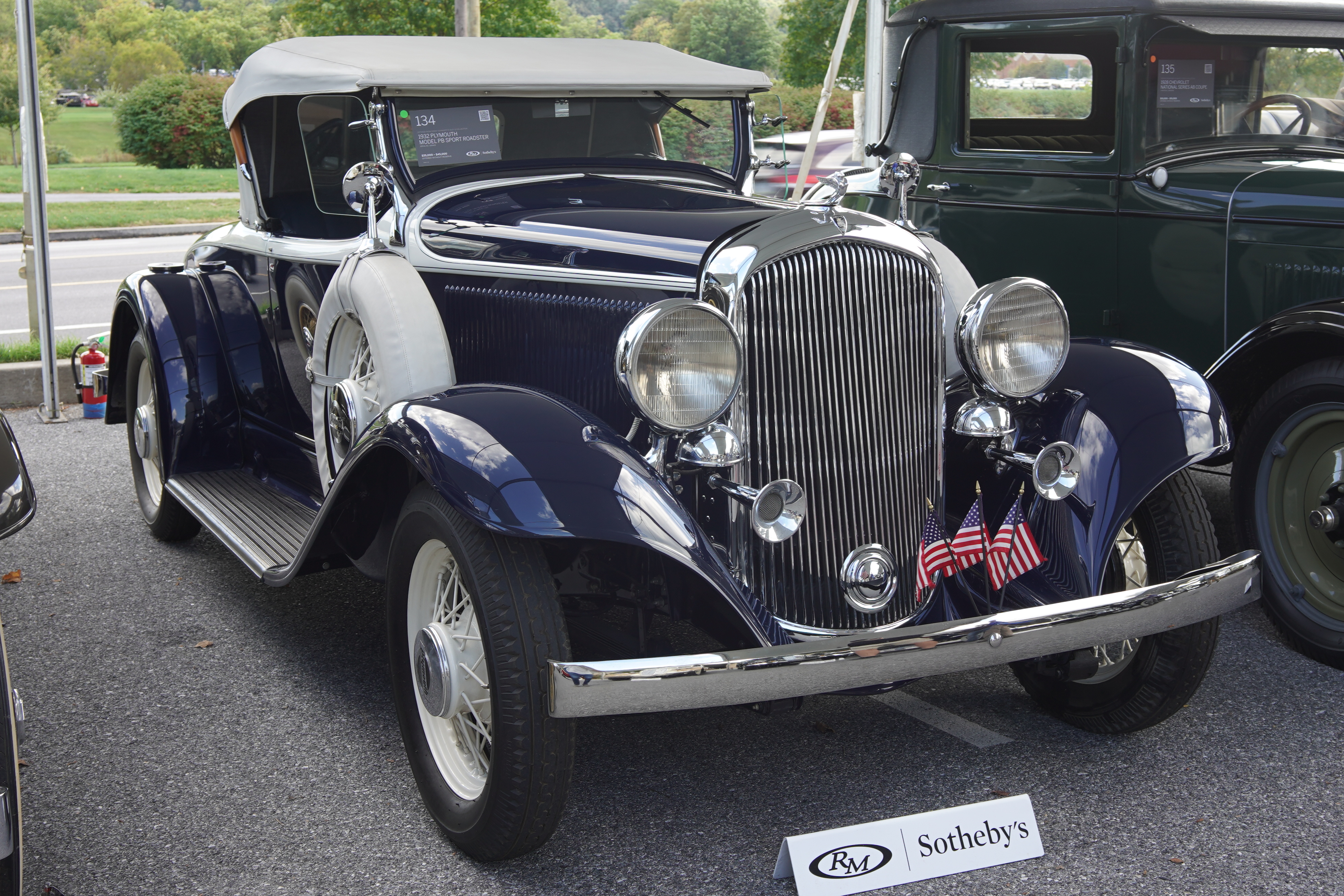
The first of our cars to have hammered above the high estimate (by $5,000), this droptop was striking in its two-tone blue and white. Even the wire wheels were white, lending a jaunty look to the car. This early Plymouth sold for more than both the ’39 and the ’40 Ford convertibles.


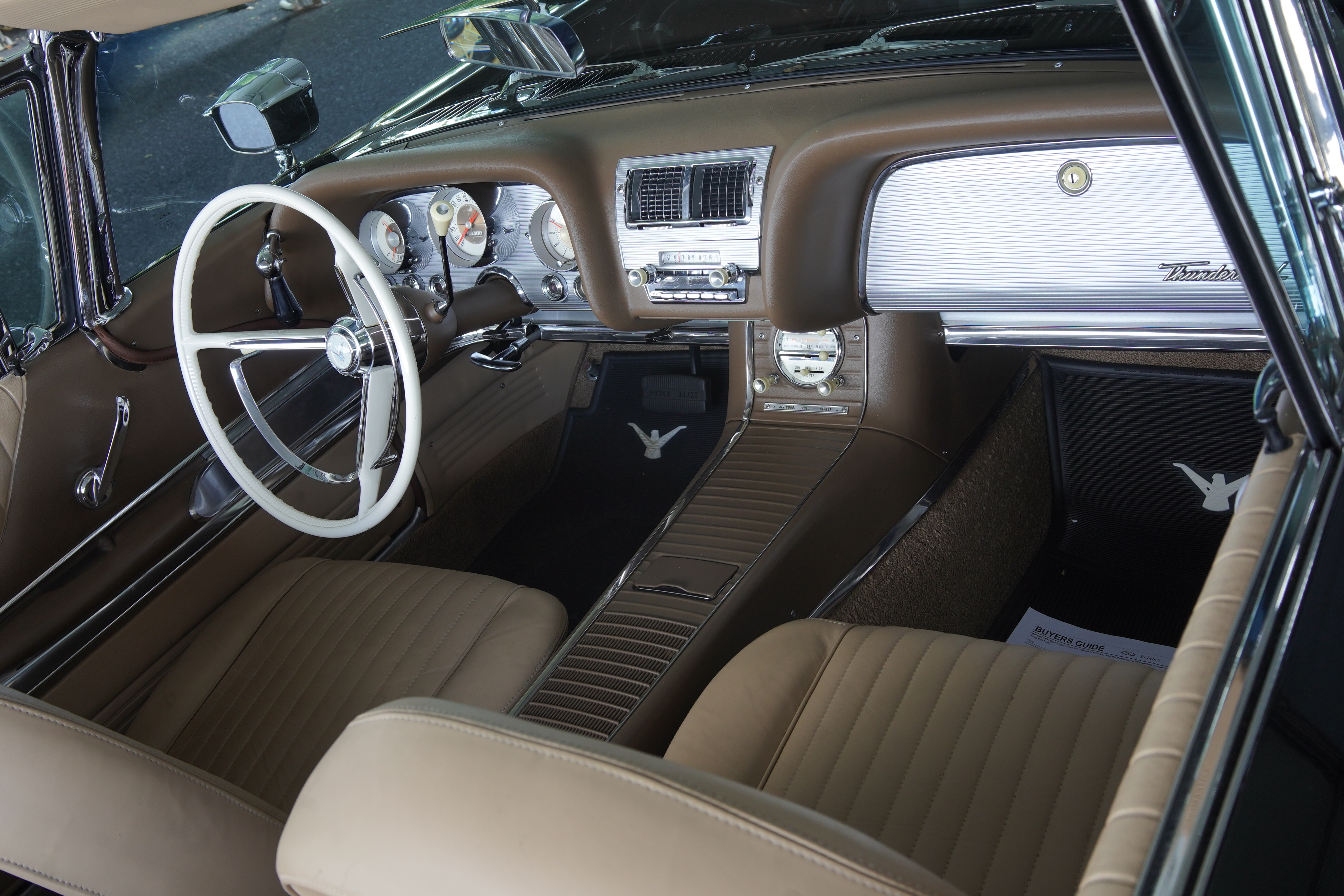
LOT 160, 1960 Ford Thunderbird convertible, estimate range $40-60,000

SOLD for $52,000

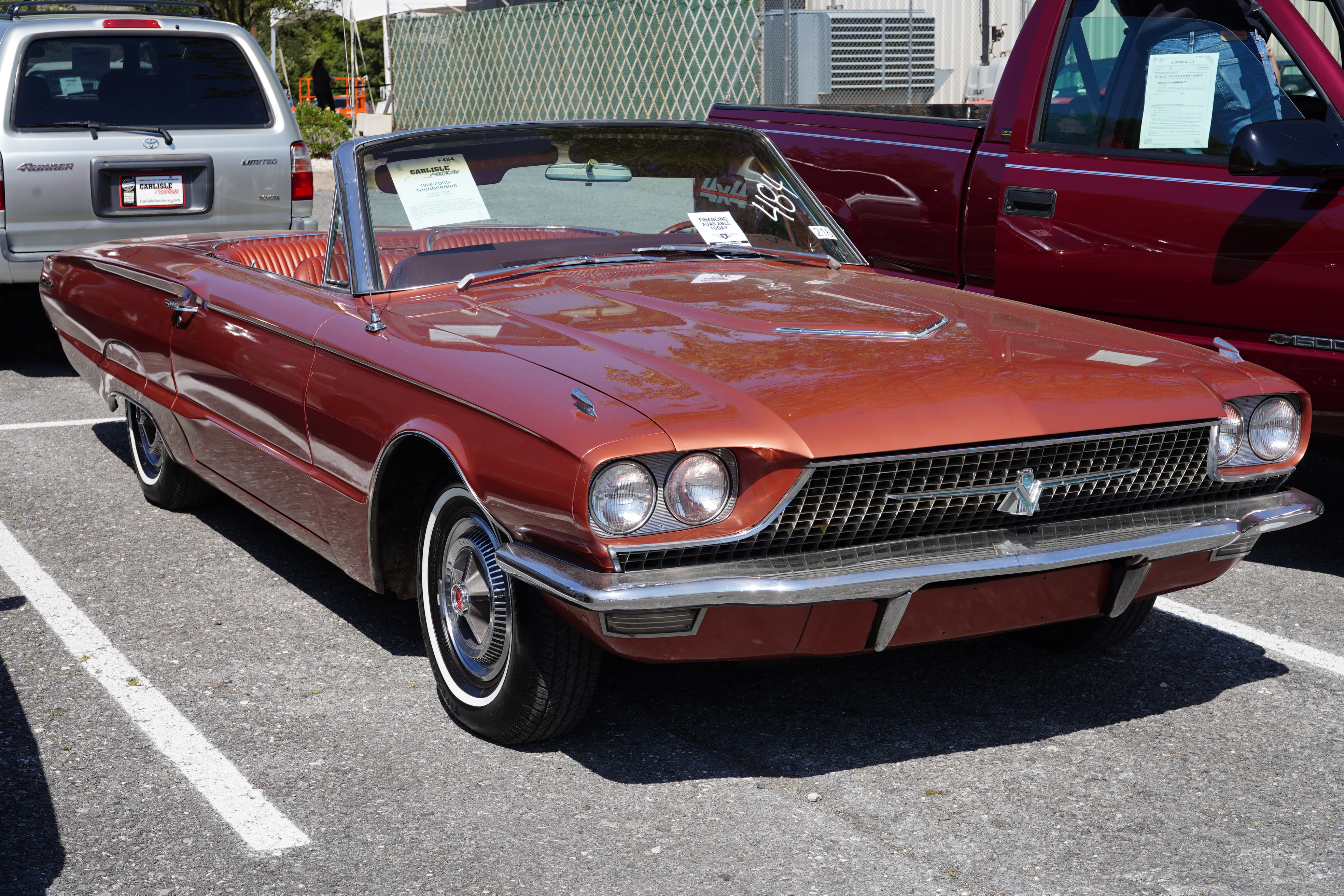
The optional Continental kit did nothing to improve the looks of this final-year Squarebird. I follow sales of the ’61 through ’66 T-Birds a bit, and I thought that the pre-sale estimates here were high, making it a surprise to me that this car hammered mid-estimate.


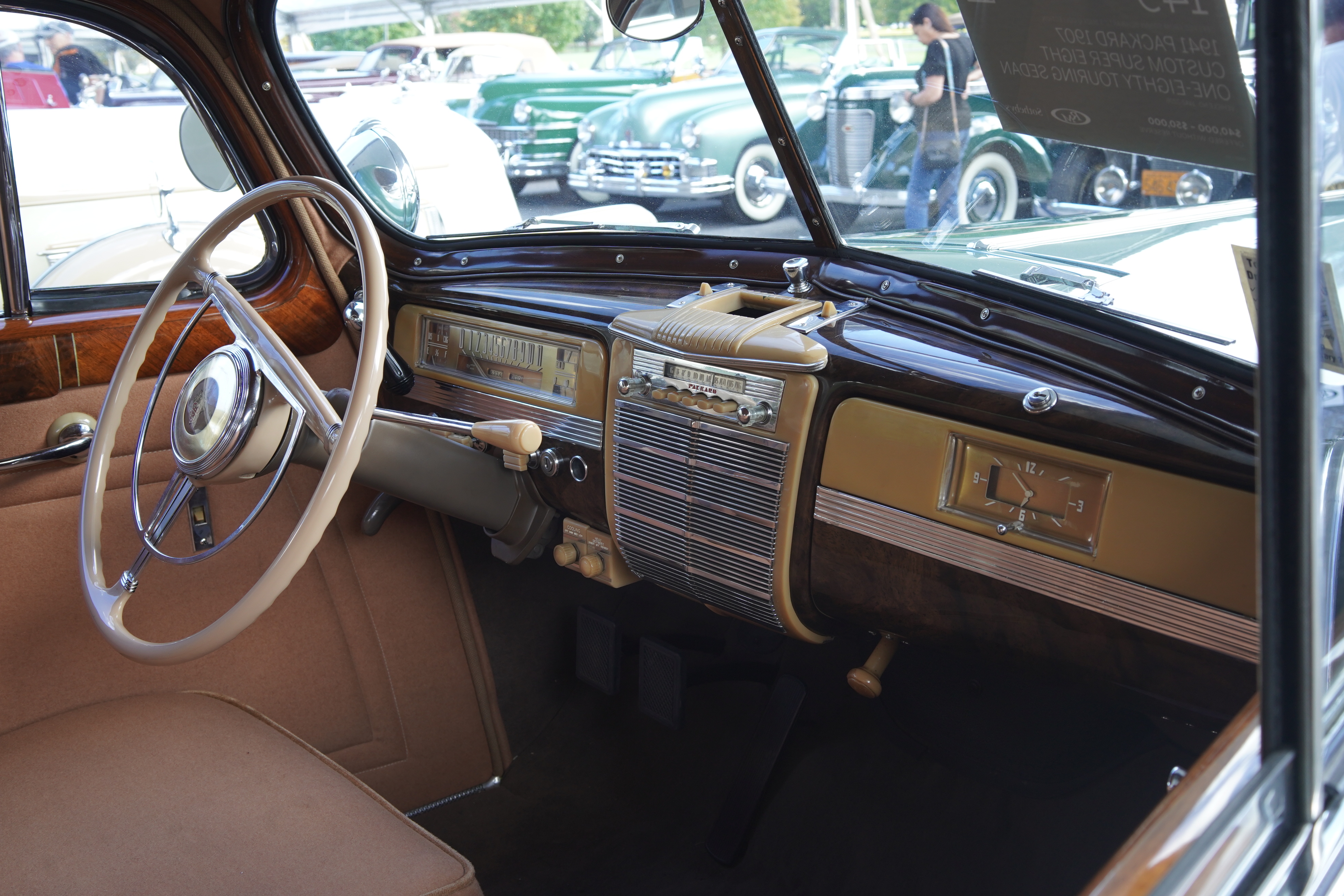
LOT 149, 1941 Packard Super Eighty 180 Touring sedan, estimate range $40-50,000

SOLD for $52,500
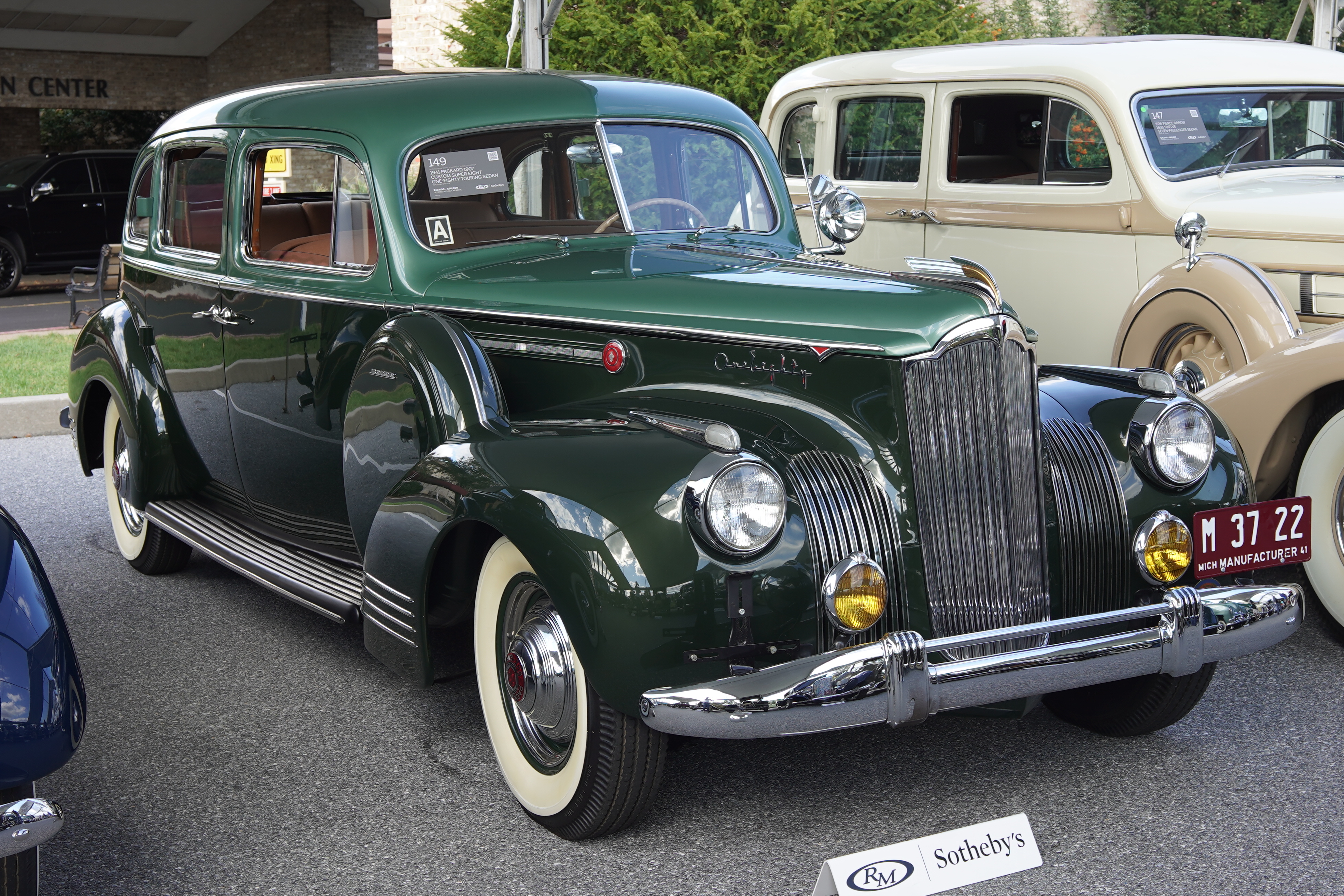
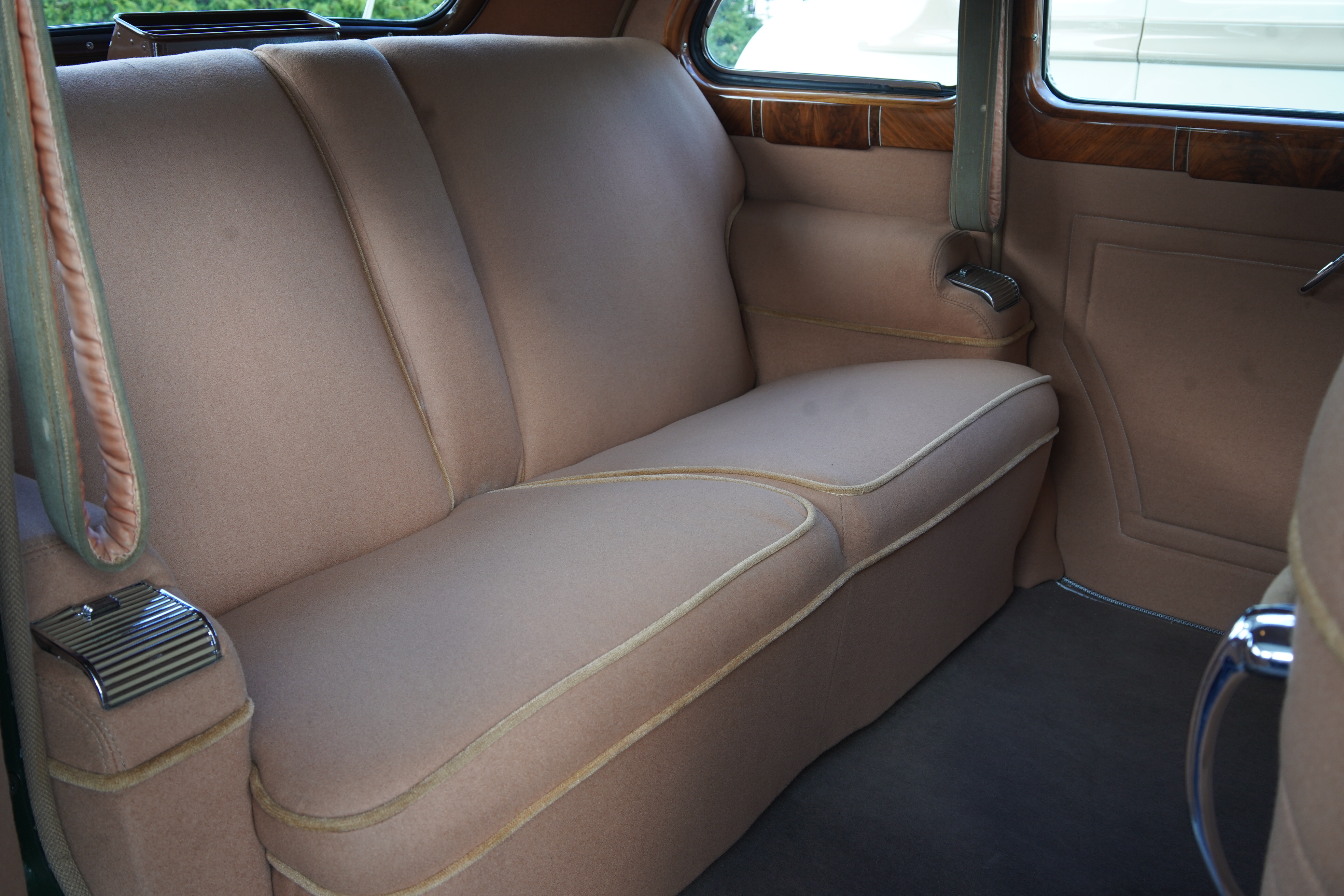
Packards of all ages remain very collectible, but values vary wildly based on year, powertrain, and body style. I found this car to have a certain appeal, but I’m not certain if the two-tone green was a factory choice. Interior was especially nice. The car sold for $2,500 above high estimate, which was still a fair price.


LOT 303, 1954 Packard Caribbean convertible, estimate range $60-75,000

SOLD for $55,000
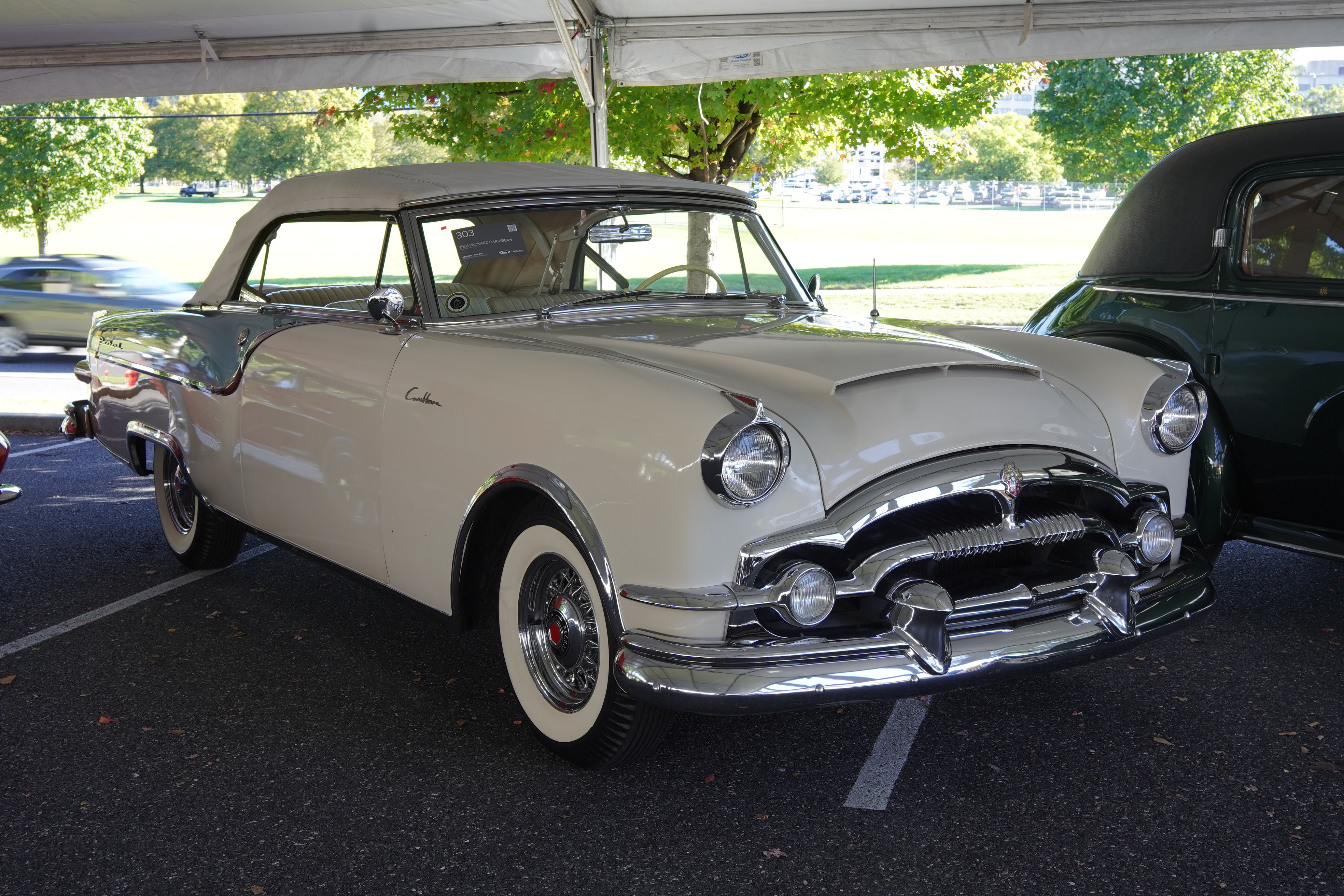
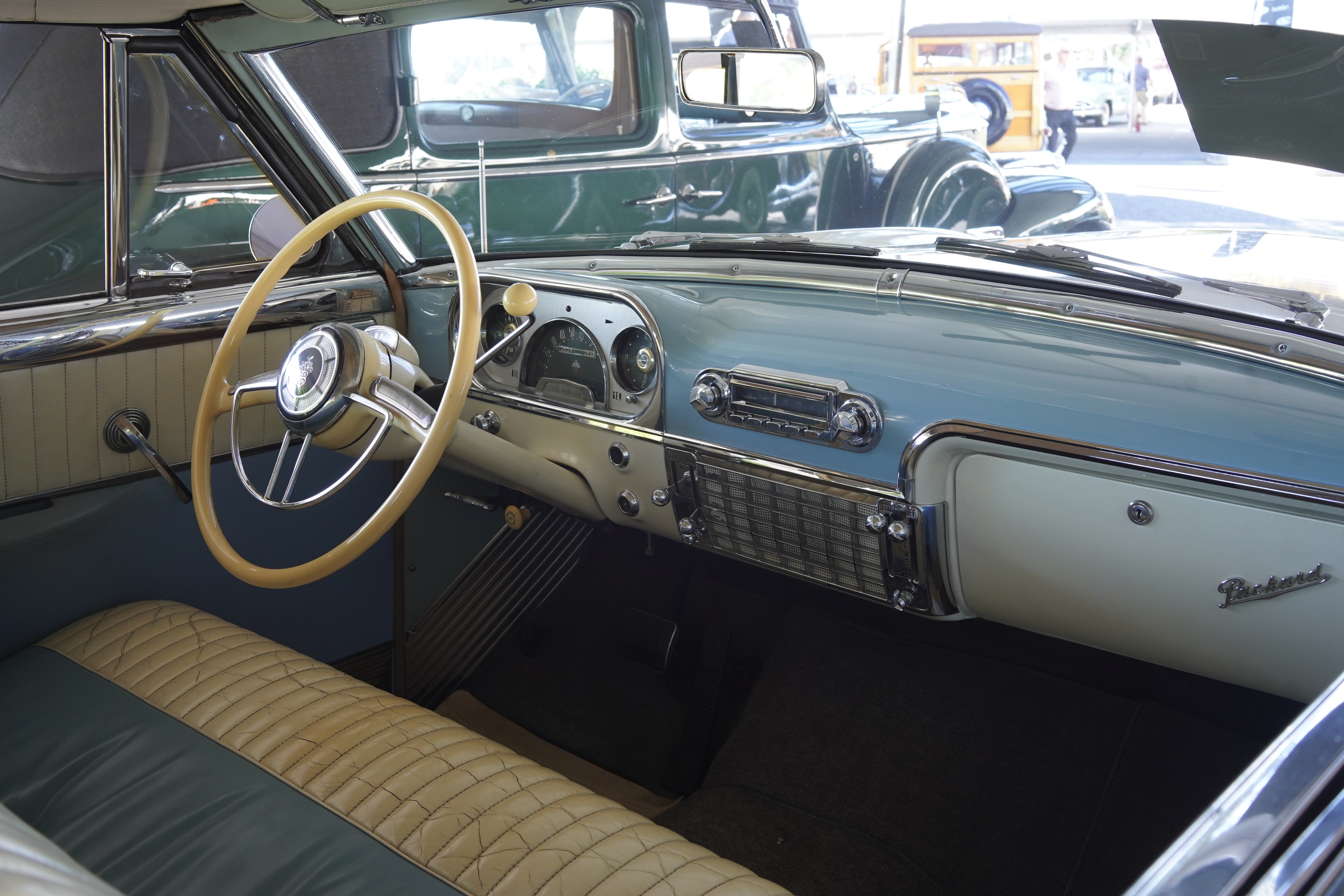
There is usually one Caribbean at every high-end auction, and this one stood out for its rather plain colors (in two-tone rather than the more frequently-seen tri-tone). Values have dropped; that estimate range would have been more accurate several years ago. Sold for $5,000 below low estimate, and interestingly, only $2,500 more than lot 149 above.


LOT 269, 1966 Chrysler 300 convertible, estimate range $30-40,000

SOLD for $57,500
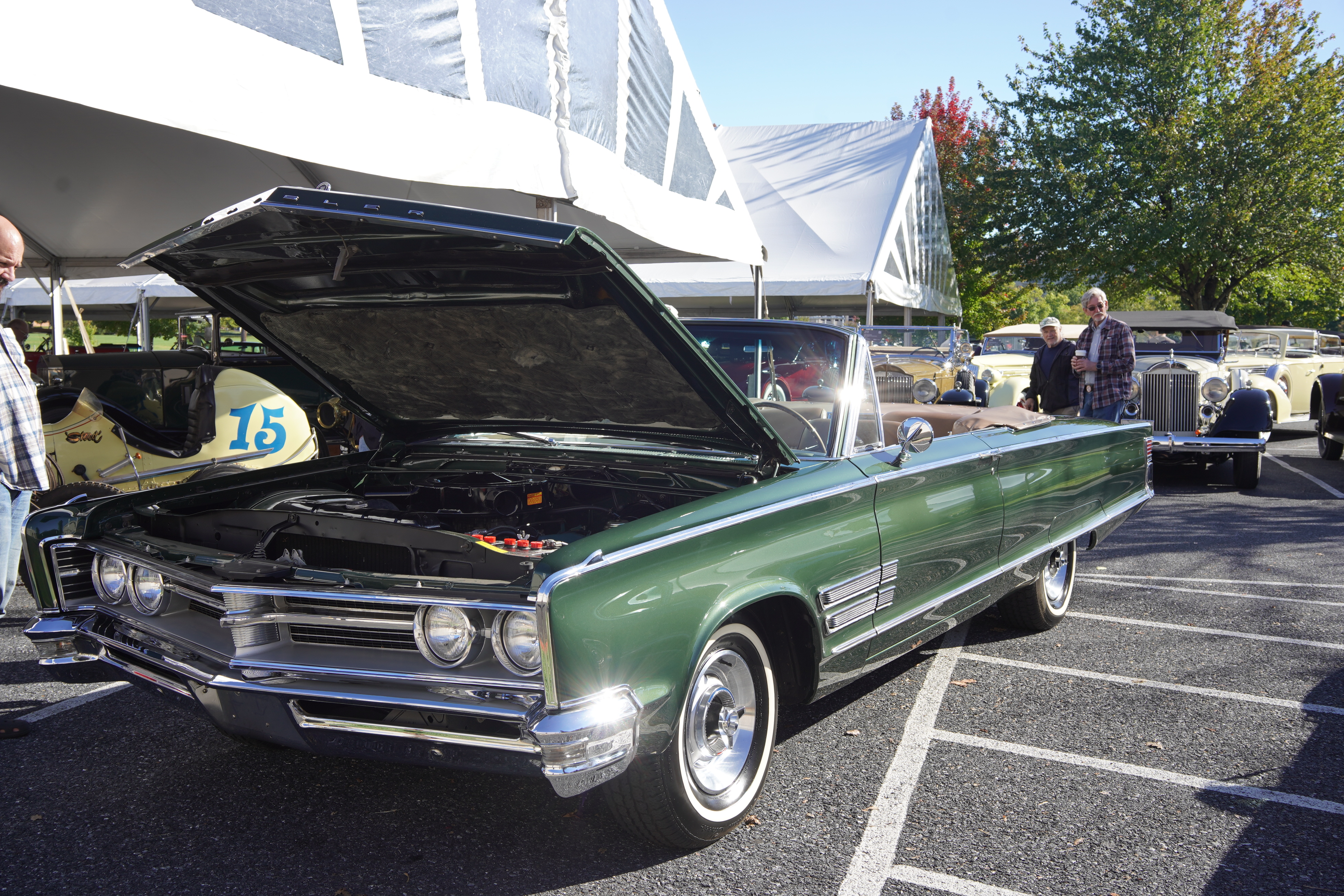
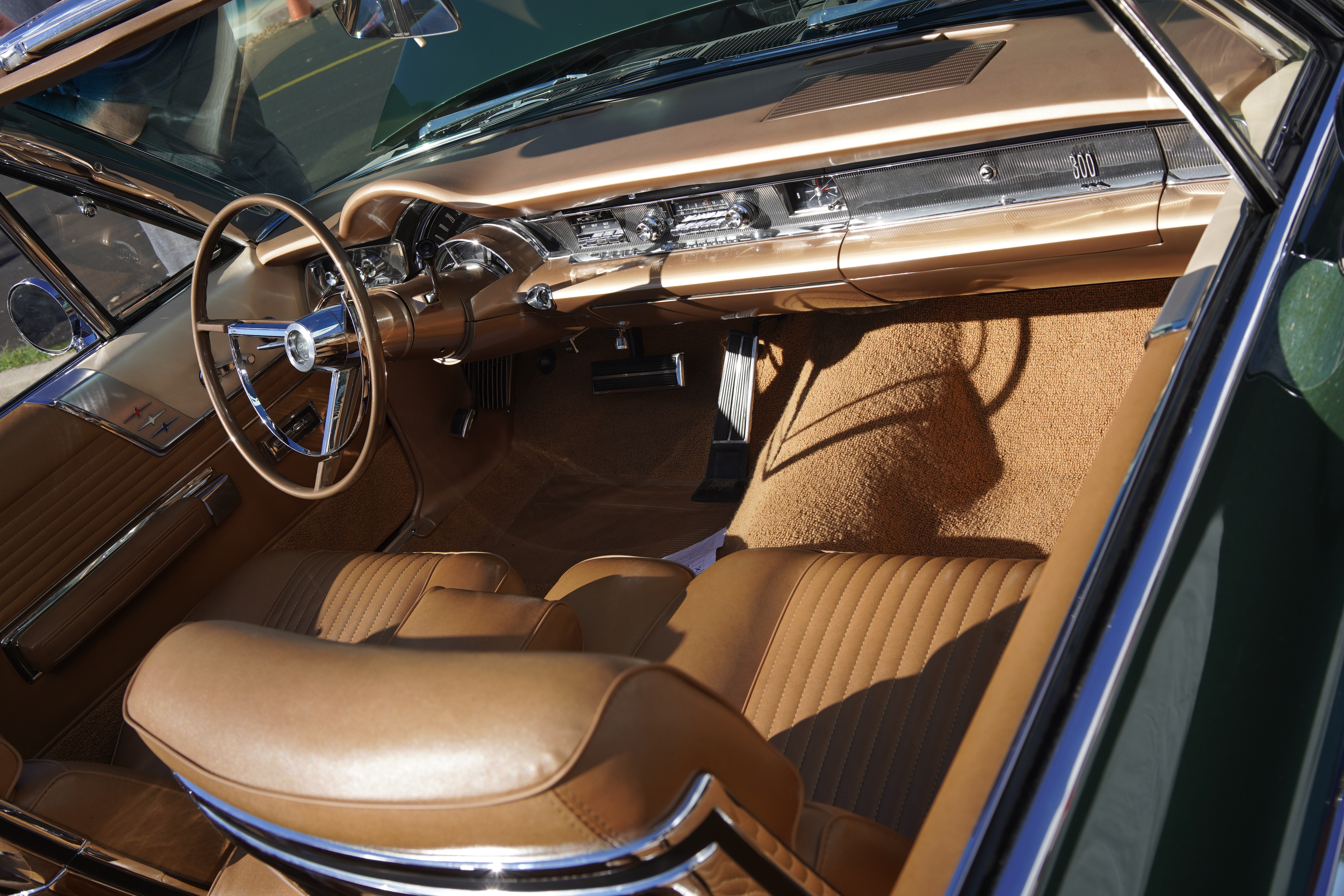
A non-letter 300, but still impressive in every way: size, power, comfort, image. I wasn’t in the room for the bidding, but I can only wonder if there was a bidding war, as this car hammered for an impressive $17,500 above its high estimate.


LOT 130, 1948 Chrysler Town and Country convertible, estimate range $70-80,000

SOLD for $70,000

A lot of Mopars at this auction! These woodie convertibles have always had a following. Like some other cars from this time, values are down. I remember when these were easily six-figure cars. Hammer price just reached low estimate, which looks fair to buyer and seller.


LOT 246, 1952 Hudson Wasp Twin-H two-door Brougham, estimate range $40-60,000

SOLD for $100,000

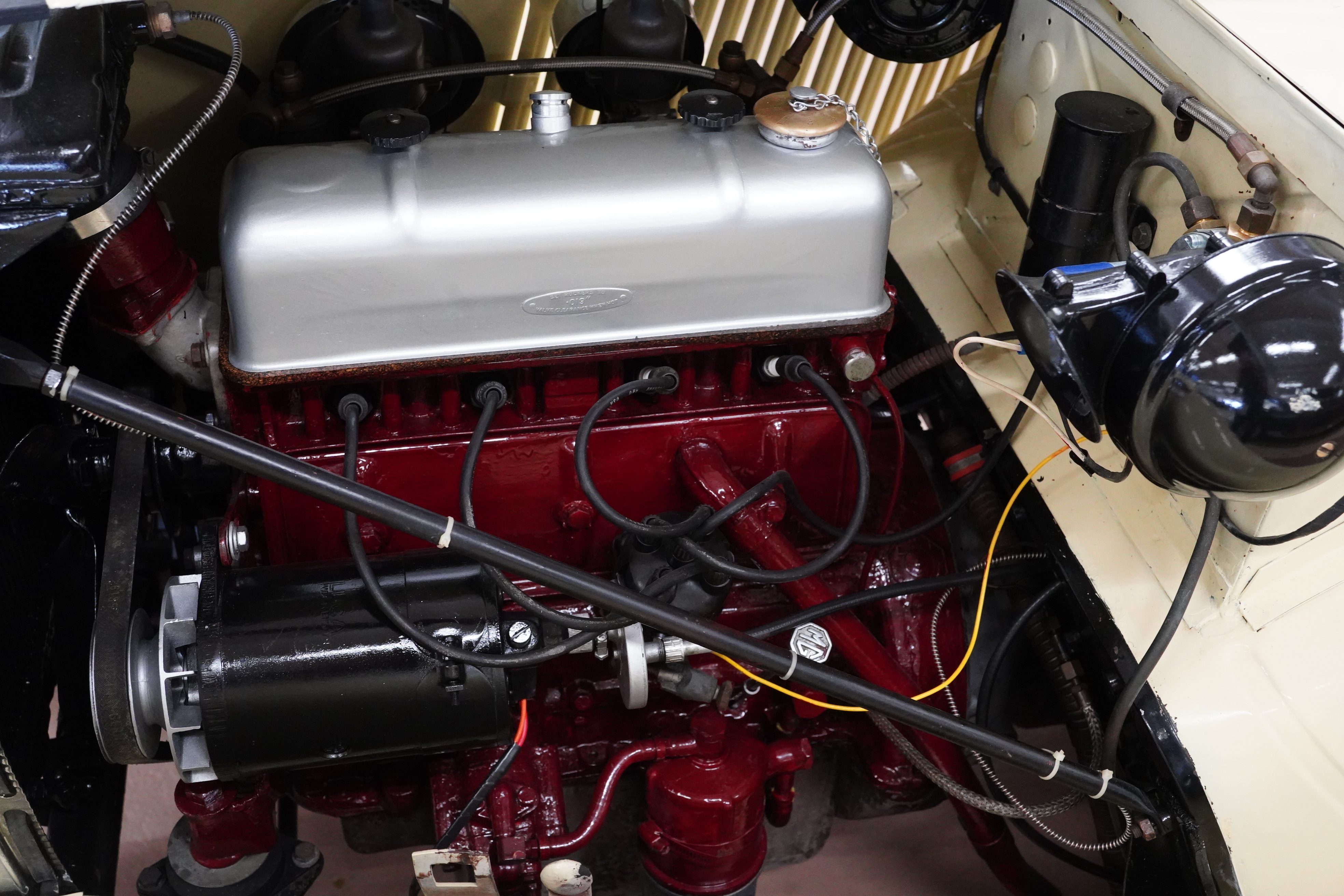
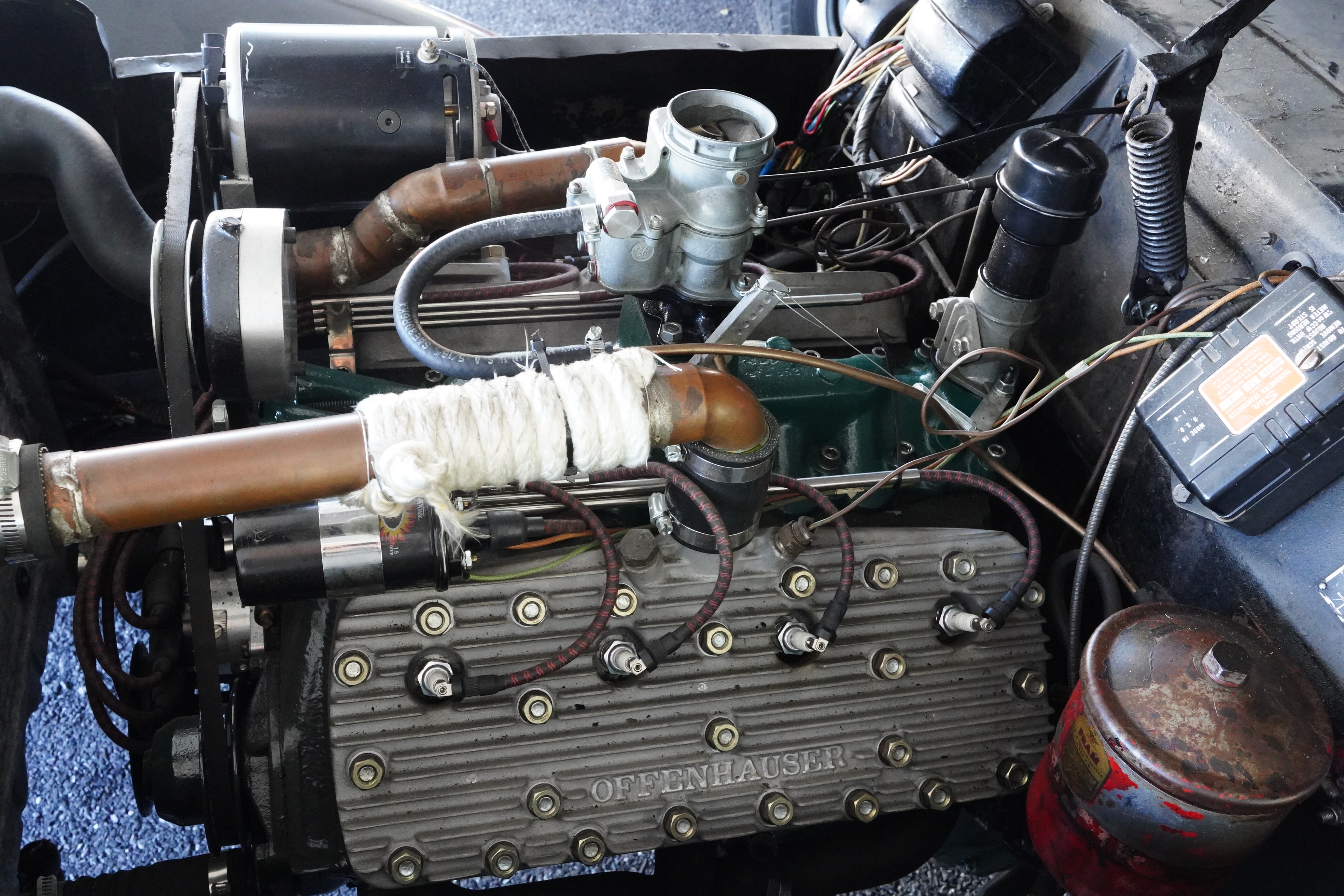
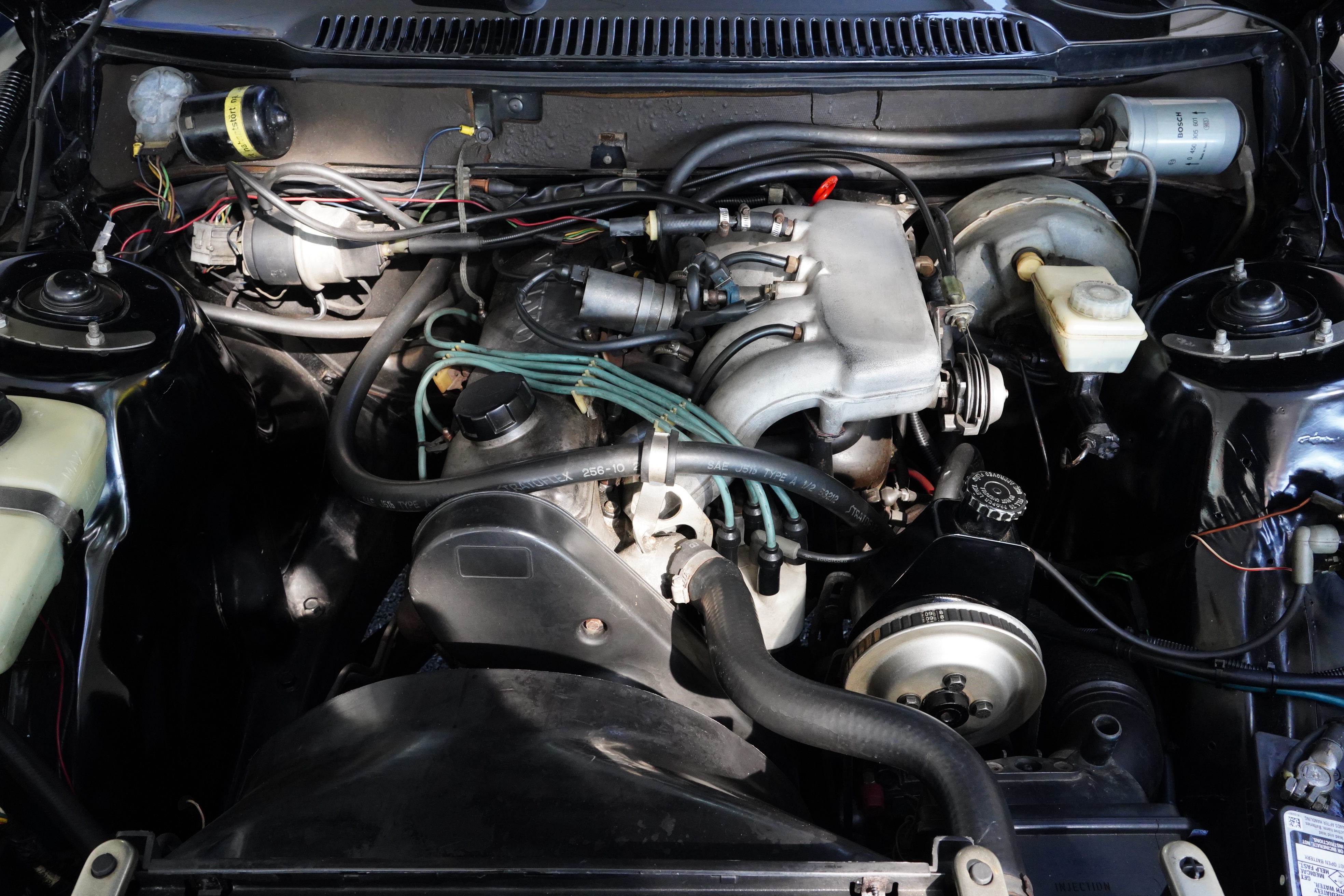
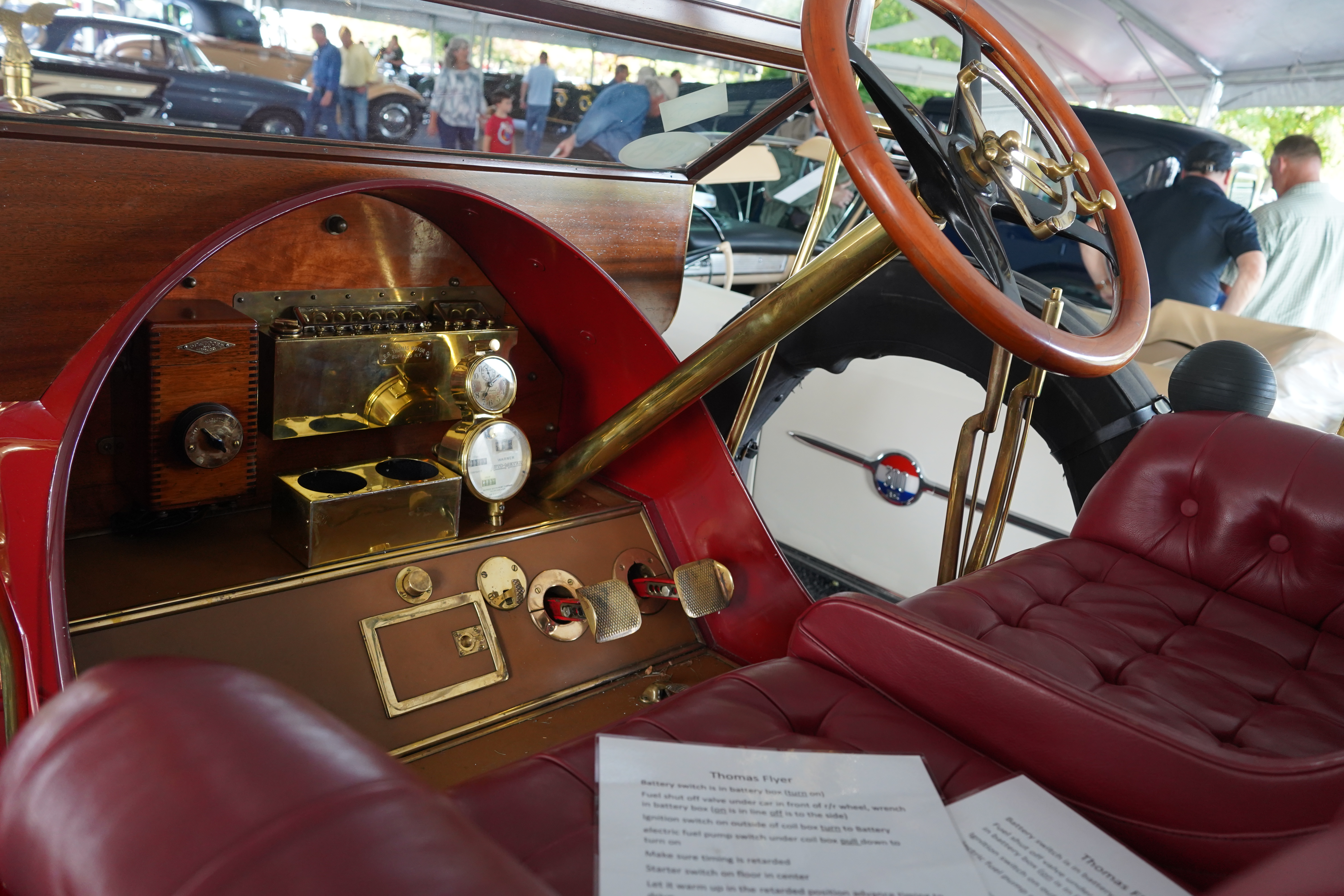
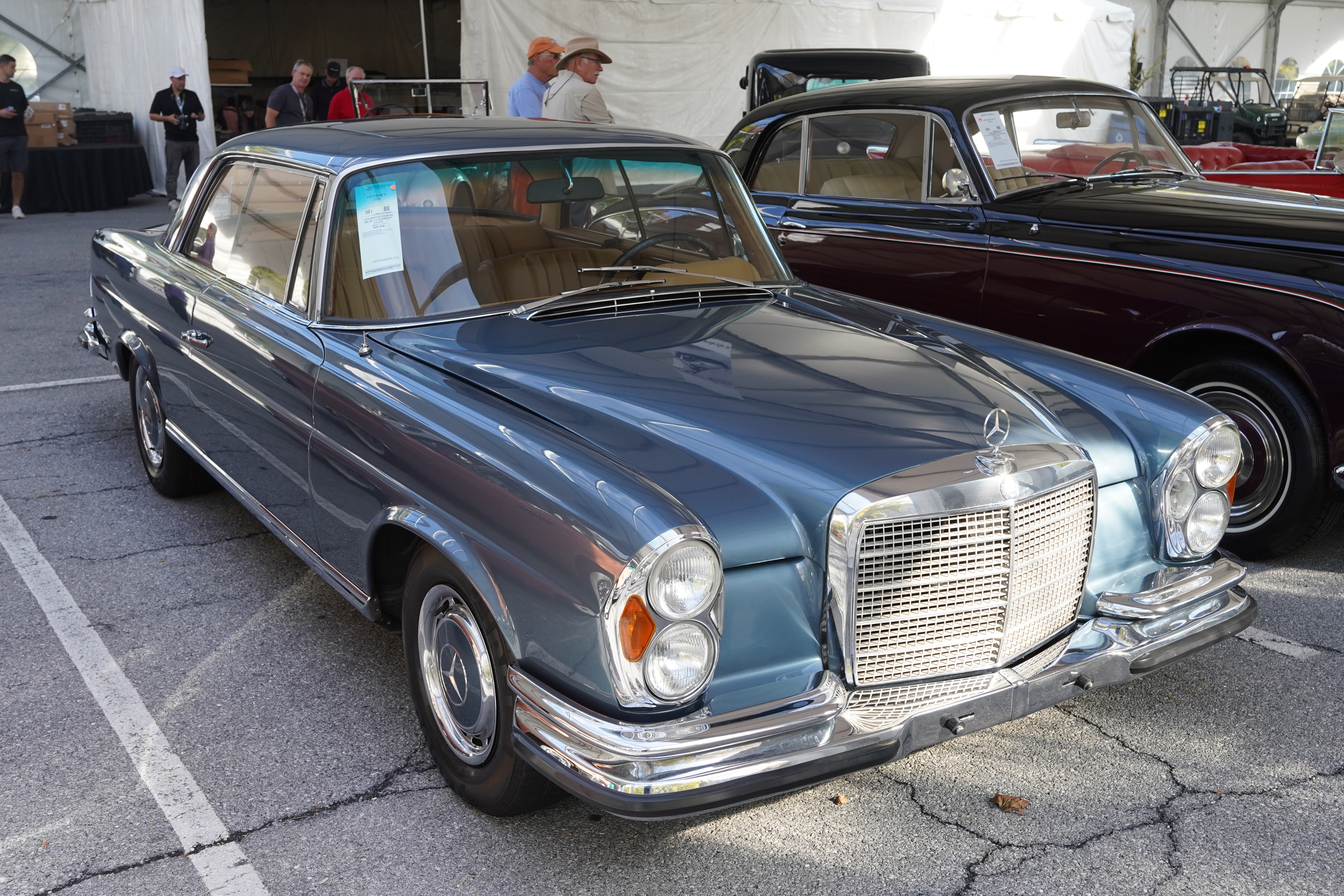
This was the only car of the several dozen I inspected which showed some serious paint and sheet metal defects (see lead photo), which made the hammer price a head-scratcher, until I read that this car was once owned by Steve McQueen (a fact surprisingly omitted from the windshield placard). In that light, I’m surprised that it didn’t bring more.


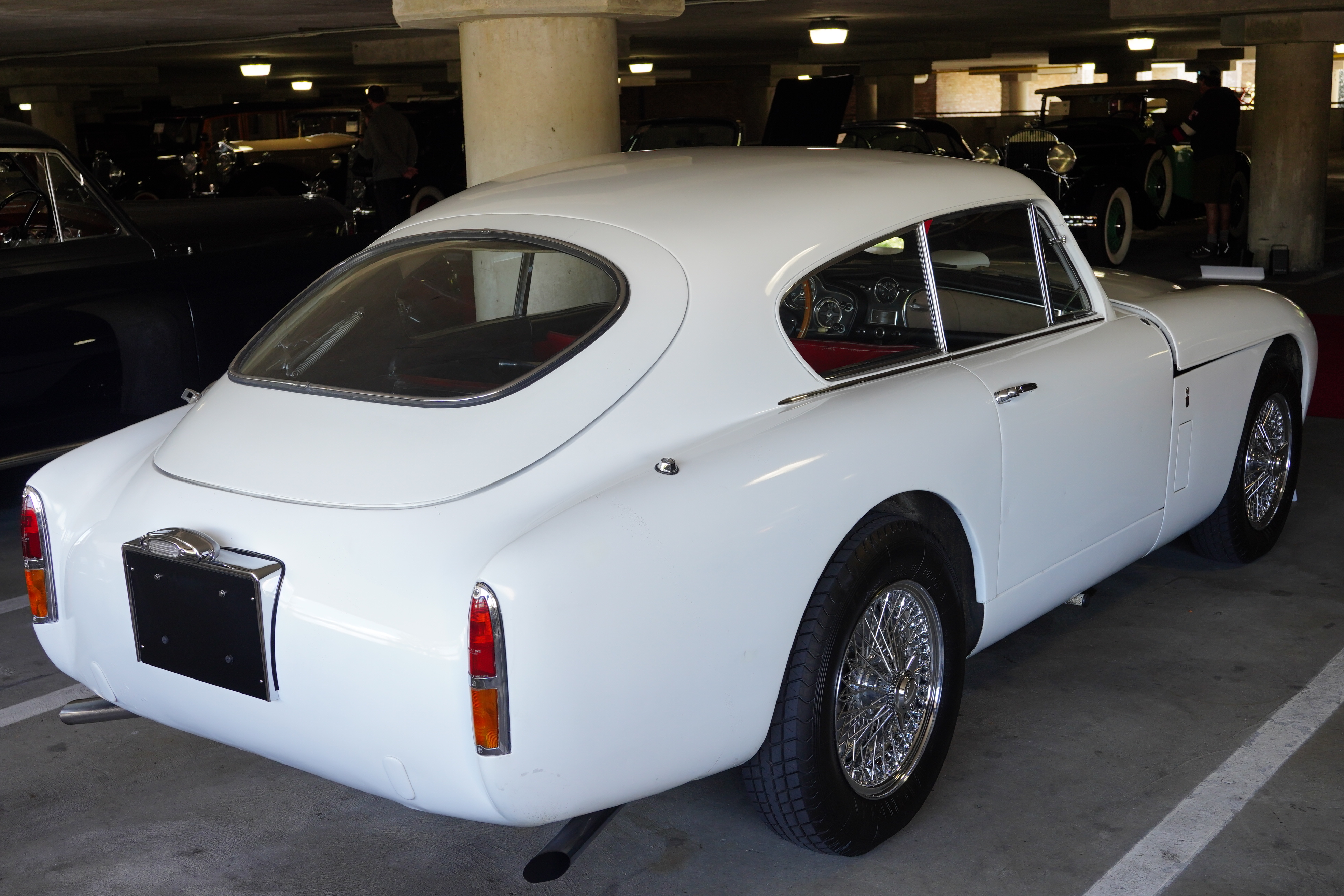
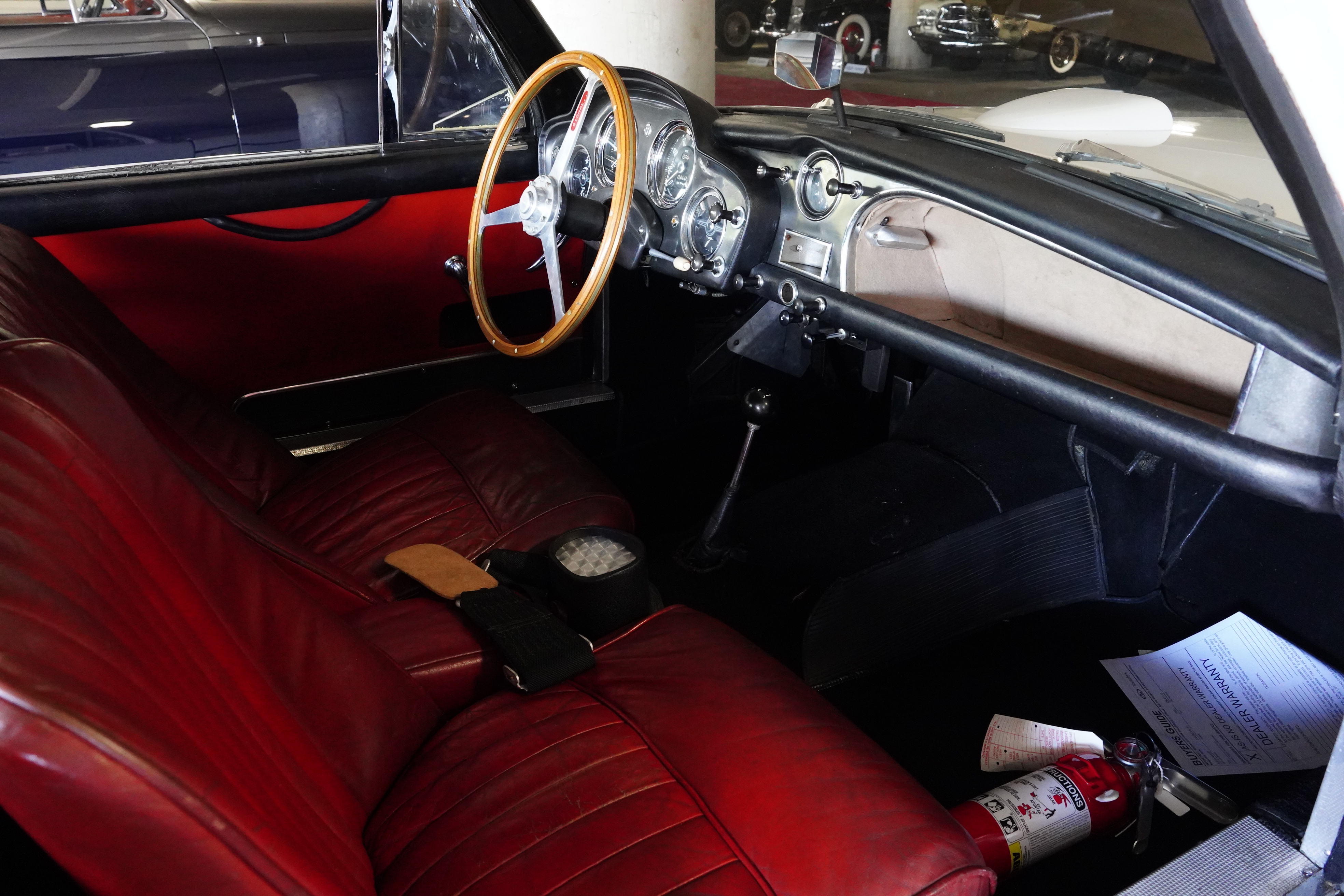
LOT 189, 1954 Aston Martin DB2/4 hardtop, estimate range $125-200,000

SOLD for $100,000

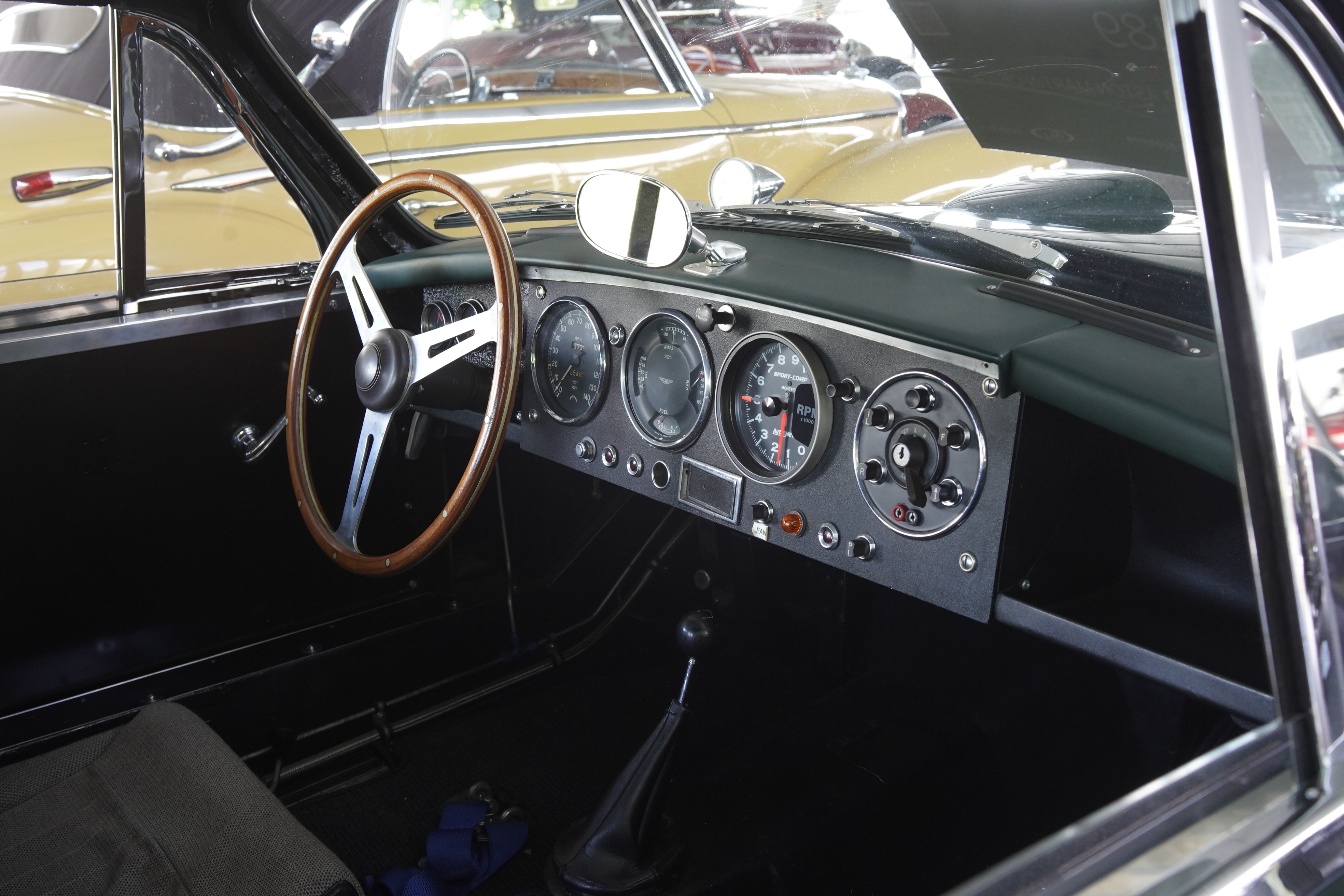
I used to turn my nose up at these early Aston Martins, especially compared to the DB4, 5, and 6 cars, but over time my opinion of them has softened. Last October, RM sold a similar car for $160,000, making this one look like the bargain of the day at $100,000, twenty-five grand below low estimate. Let’s see, if I sold my Alfa….


LOT 162, 1965 AMC (Rambler) Ambassador 990 convertible, estimate range $40-60,000

SOLD for $102,500
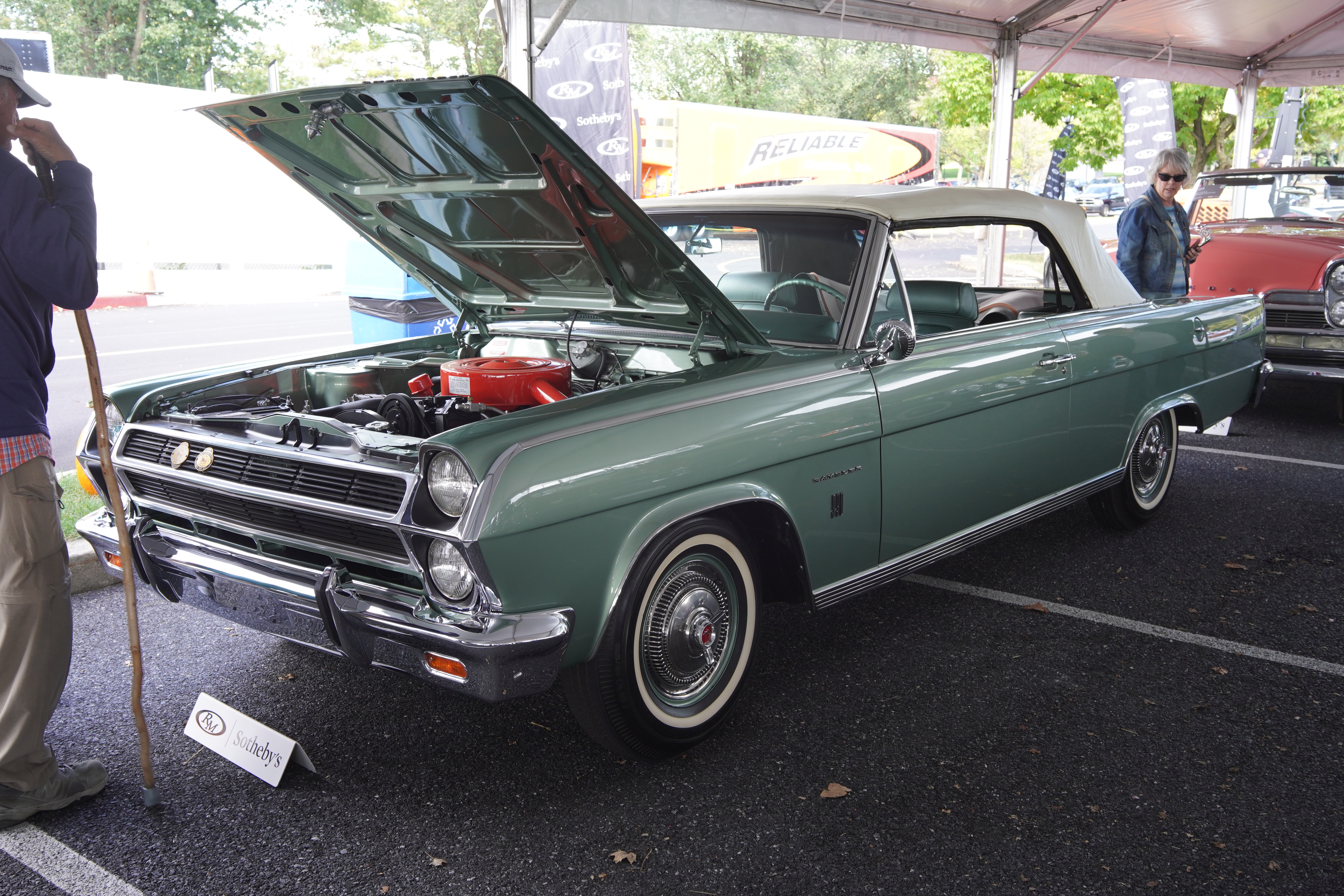
The shock of the show! Yes, it had factory A/C, and was in excellent condition, and would be impossible to duplicate, but still …. This sale price, $42,500 above high estimate, handily beat most every other American ’50s-’60s convertible in this auction. Wow.

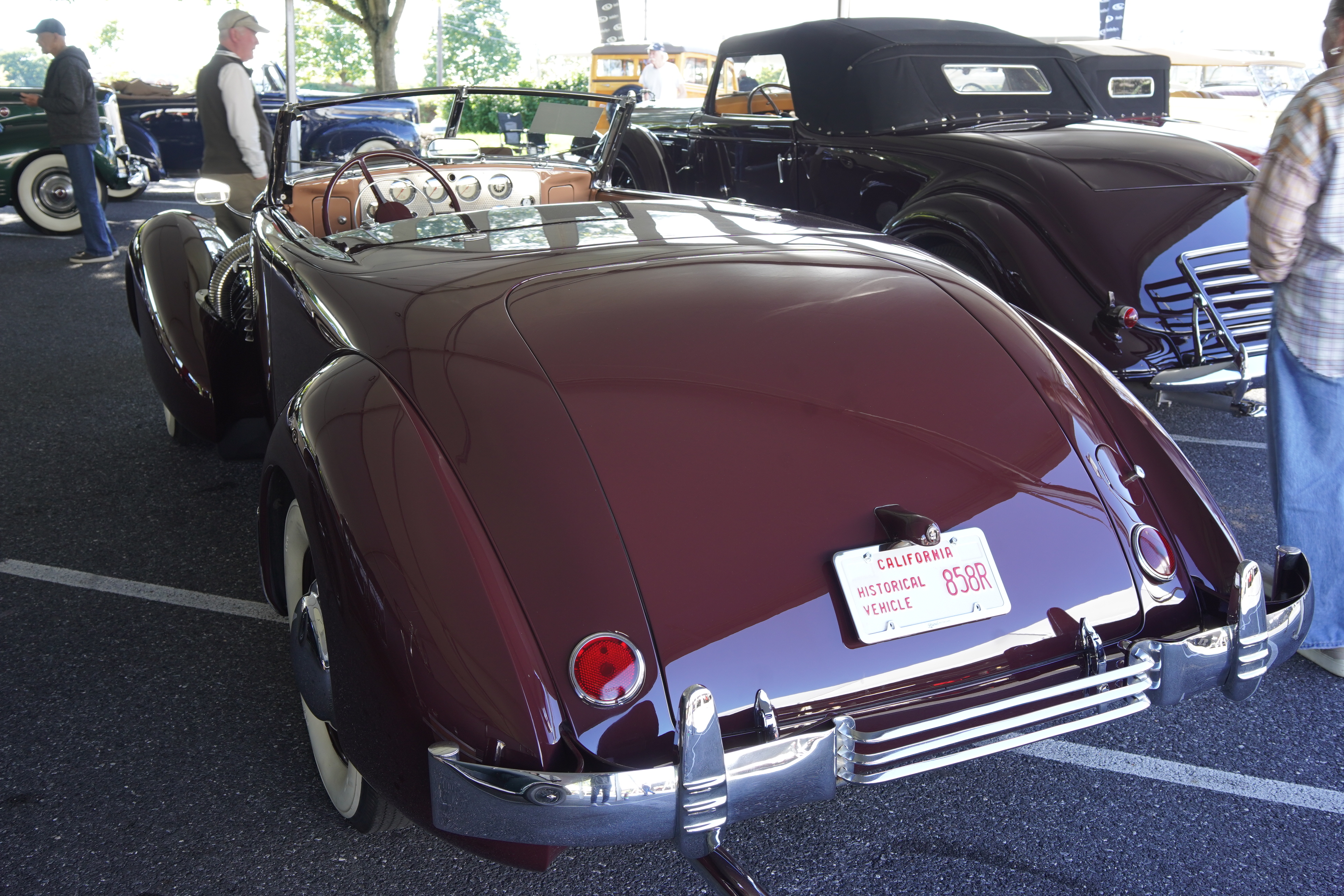
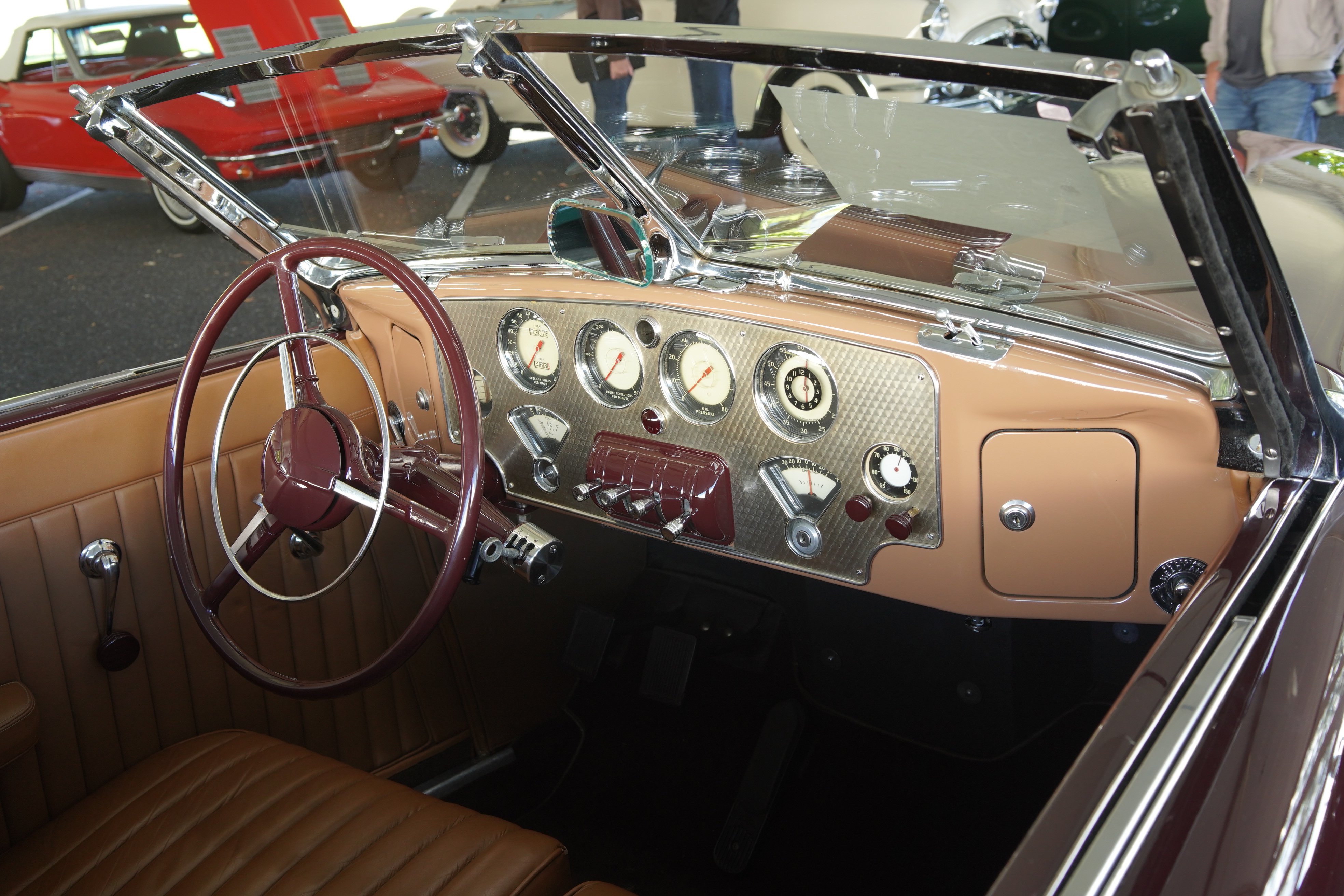
LOT 297, 1937 Cord 812 Supercharged Cabriolet, estimate range $250-300,000

SOLD for $190,000

The 810 and 812 Cords of 1936 and 1937 will always be collectible. This one, in supercharged form, was in a stunning color combination. But here was a case where I think RM went overboard in its pre-sale estimates. Historically, the roadsters and cabriolets have sold between $150,000 and $200,000, making this hammer price market-correct.


This concludes the Hershey reports for 2025. I hope you enjoyed the articles and photographs. 


Entire blog post content copyright © 2025 Richard A. Reina. Text and photos may not be copied or reproduced without express written permission.
 

Mecum Auctions, Harrisburg, PA, July 2025

Mecum Auctions returned to Harrisburg, PA, this year, scheduling their four-day auction to run from Wednesday, July 23 through Saturday, July 26, 2025. Mecum’s first Harrisburg outing was in 2014, and the event has only grown in size and stature since then. As is typical at most multi-day auctions, Day One is considered “bargain day,” while the final day (in this case, Saturday) is reserved for the vehicles predicted to bring the big bucks.

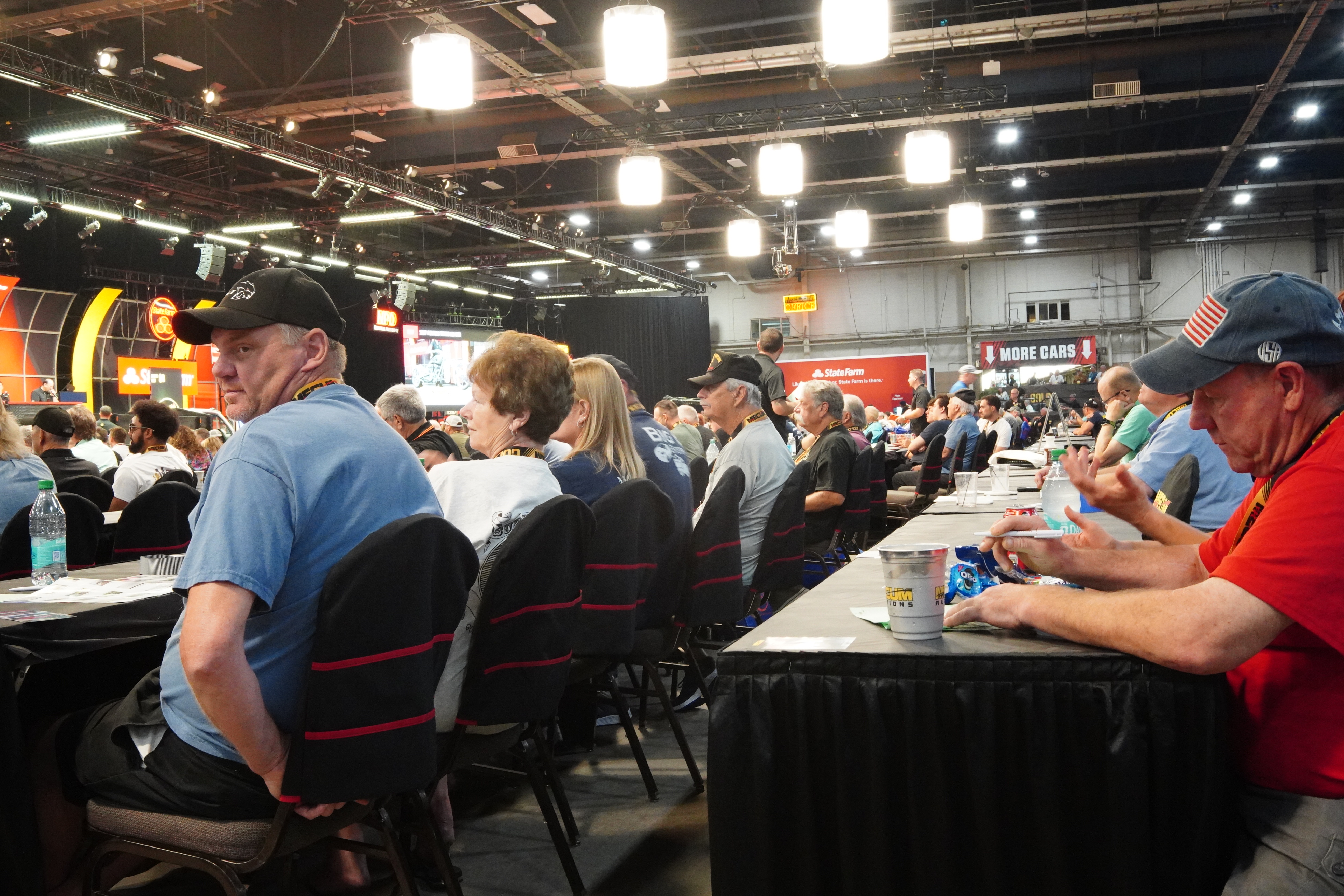
I’ve been in attendance most years since that inaugural event. The location is ideal for me: Harrisburg is halfway between Hershey and Carlisle, and is only a two-hour car ride. The location is ideal for Mecum as well, as this part of PA is chock full of classic car enthusiasts. I was in attendance both Wednesday and Thursday and sat through much of the live auction. One big improvement: there are now padded chairs and tables provided for registered bidders, and they’ve added this 21st century perk: the tables have a QR code which you can scan, allowing you to place a food and drink order to be delivered to your seat. I didn’t take advantage of the delivery service, but it was nice to know that it was there.

Tables and chairs!

During my two day visit, I watched 171 cars cross the block, and observed 106 of them declared “sold”, for a two-say sell-through rate of 62%, respectable, but not great. Breaking it down further, Wednesday’s performance was weak: 44 of 81 observed lots were declared sold, for a sell-through of 54%. Thursday’s number was better at 69% sold, and closer to what I typically see at Mecum. The relatively large number of no-reserve lots helped these results, but it is obvious that many sellers still set unrealistic reserves for their cars. As has been the trend, groups of no-reserve cars were announced to be “from so-and-so’s estate,” indicating that the ol’ collector has either departed or has decided to relinquish his horde, whereupon the family ships it off to be sold at auction for whatever they can get.

Whether the sell-through rate is 50% or 95%, someone needs to tackle the job of setting up, and it’s a huge job. As I entered the Farm Show Complex early on Wednesday, I was struck by how much effort and manpower it must take to run this show. The podiums, stage, TV screens, lights, cameras, and signs must all be carried in and precisely arranged. Hundreds of chairs and tables are placed in rows for bidders. A tent large enough to provide shade for hundreds of cars at a time is set up outside behind the main hall. A crew of drivers, pushers, detailers, and the like is on hand for the entire time that the event is open to the public. I’ve heard griping through the years about the amount of money Mecum rakes in with its 10% buyer’s commission, and of course this is a profitable undertaking. At the same time, their overhead costs must be considerable.

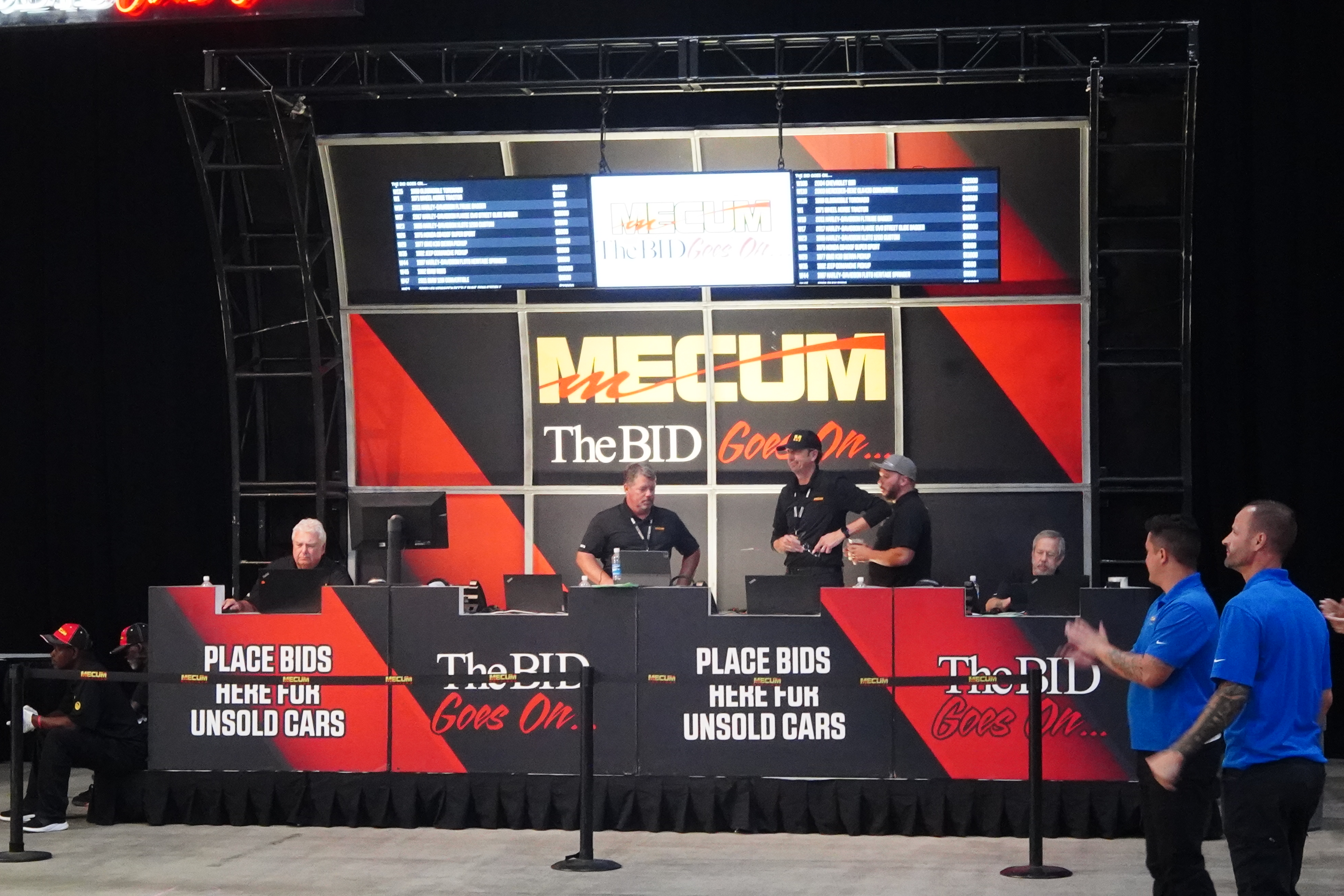
The “Bid Goes On” desk. As the sign says, “place bids here for unsold cars.”

The bread and butter at a Mecum auction consists of the most popular and collectible American-made cars and trucks of the last seventy years or so. Muscle cars, restomods, pickups, and everyone’s favorite models from the Big Three are in plentiful supply. However, my interests lean toward the orphans, oddballs, imports, and other rarely-seen automobiles. To my happy surprise, there was enough of that to keep me entertained, and I’ve reported on many of those lots below, whether they sold or not. I mentioned above that Day One is bargain day, and if you wanted to buy a car at auction and spend less than $5,000, you could do so here. To cite three examples: a 1995 Buick Roadmaster wagon with 175k on the clock hammered for $2,500; a 1999 Chevy Tahoe with 185k miles went for $3,500; and a 2007 Pontiac Solstice convertible (with an automatic) with 167k on it sold for $4,500. I did not personally inspect any of these, and make no promises that they were without issues. However, someone bought them and presumably, someone will find a way to make them useful.

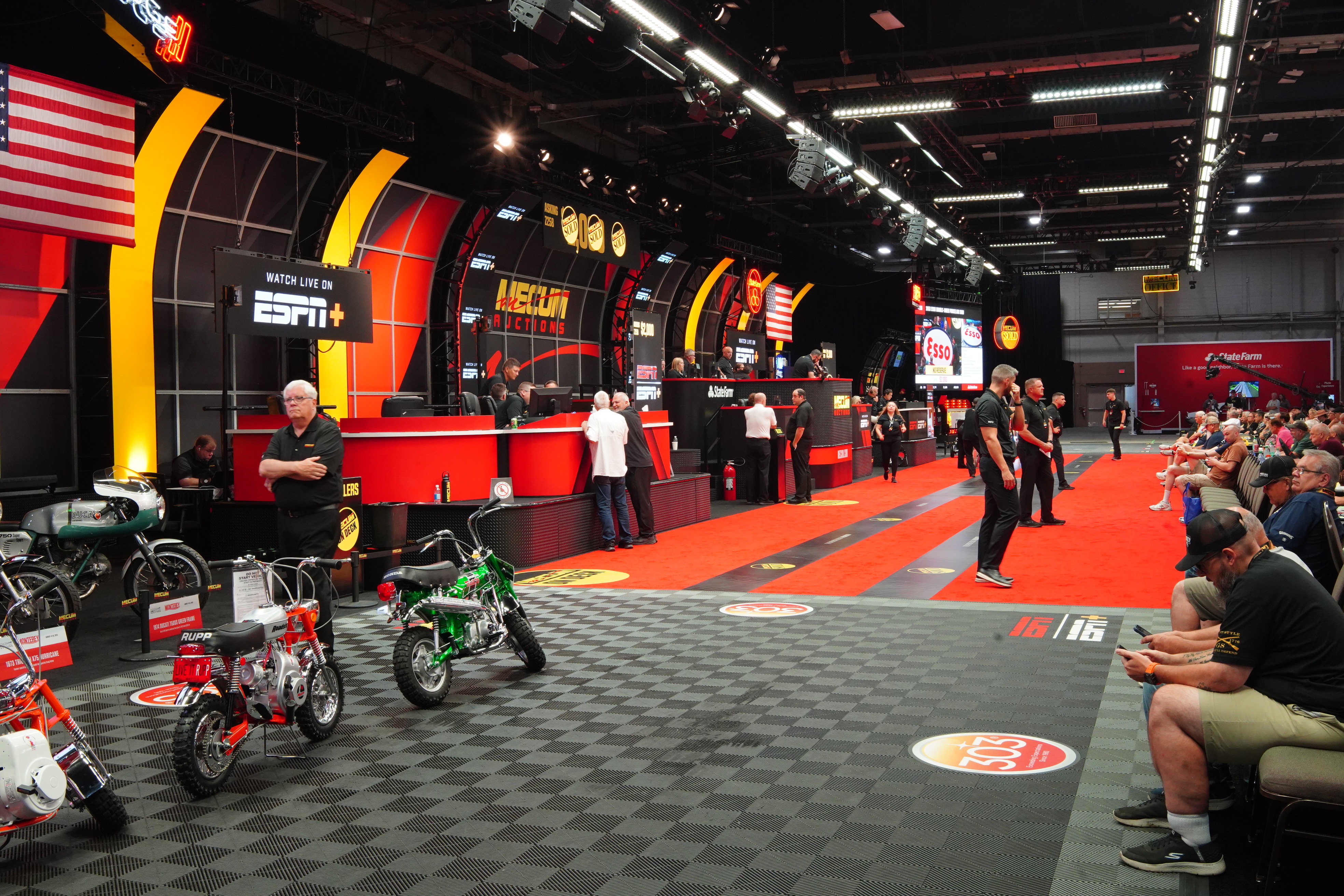
Saturday’s cars, aka the cream of the crop, are kept inside
Where the action is
Two huge screens, large enough to be seen from the back of the room, flank the auctioneer’s podium

Auction lots below are broken out into SOLD units first, then NOTABLE NO SALES. As always on Richard’s Car Blog, lots are listed in SOLD PRICE order, the better for you to gauge what your dollars will get you. All numbers below are the hammer prices, and do NOT include the 10% buyer’s premium owed to Mecum.


SOLD LOTS


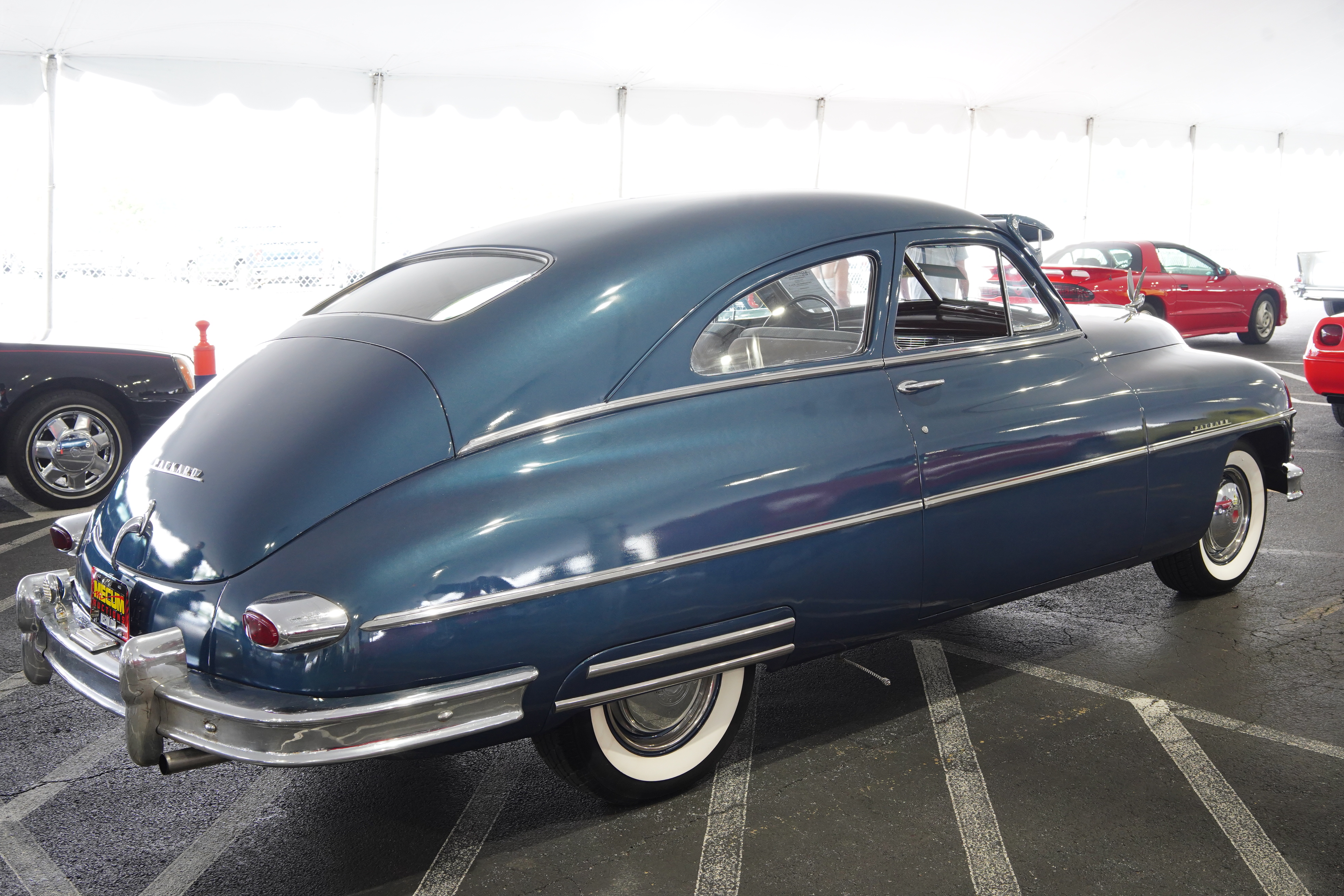
Lot T81, 1949 Packard Eight Club Sedan, two-door fastback, metallic blue paint, brown and grey interior, 327 straight-eight engine, three-speed manual transmission, large sunvisor on exterior above windshield. Paint looked just ok (not sure how correct the metallic was) but much of the chrome was pitted. A rarely-seen two-door bathtub Packard.

SOLD at no reserve for $6,500. In this condition, what do you do with it? It would need thousands to become any kind of show car. You could maintain it as is and drive it to cruise nights, where it might be the only Packard there. A car for the hardcore Packard enthusiast.

Lot T5, 1991 Alfa Romeo Spider Veloce, red paint, tan top and tan leather interior, 2.0L four-cylinder, five-speed manual, factory A/C, power steering, factory “phone dial” wheels. Paint looked ok, but strangely, much of the exterior chrome, such as the door handles, was very pitted. Underhood was not detailed. Spare tire well looked rusty from an undercar inspection.

SOLD at no reserve for $8,000. This Series 4 Alfa Spider was the model’s final iteration. To me, by this time, the car had gone soft. Items like the A/C and PS added weight and complexity, and detracted from performance. Of the four different series of Spiders, the styling on these is my least favorite. There were a few red flags on this one, but the price was fair if someone just wants a fair weather driver to use for a few thousand miles a year.


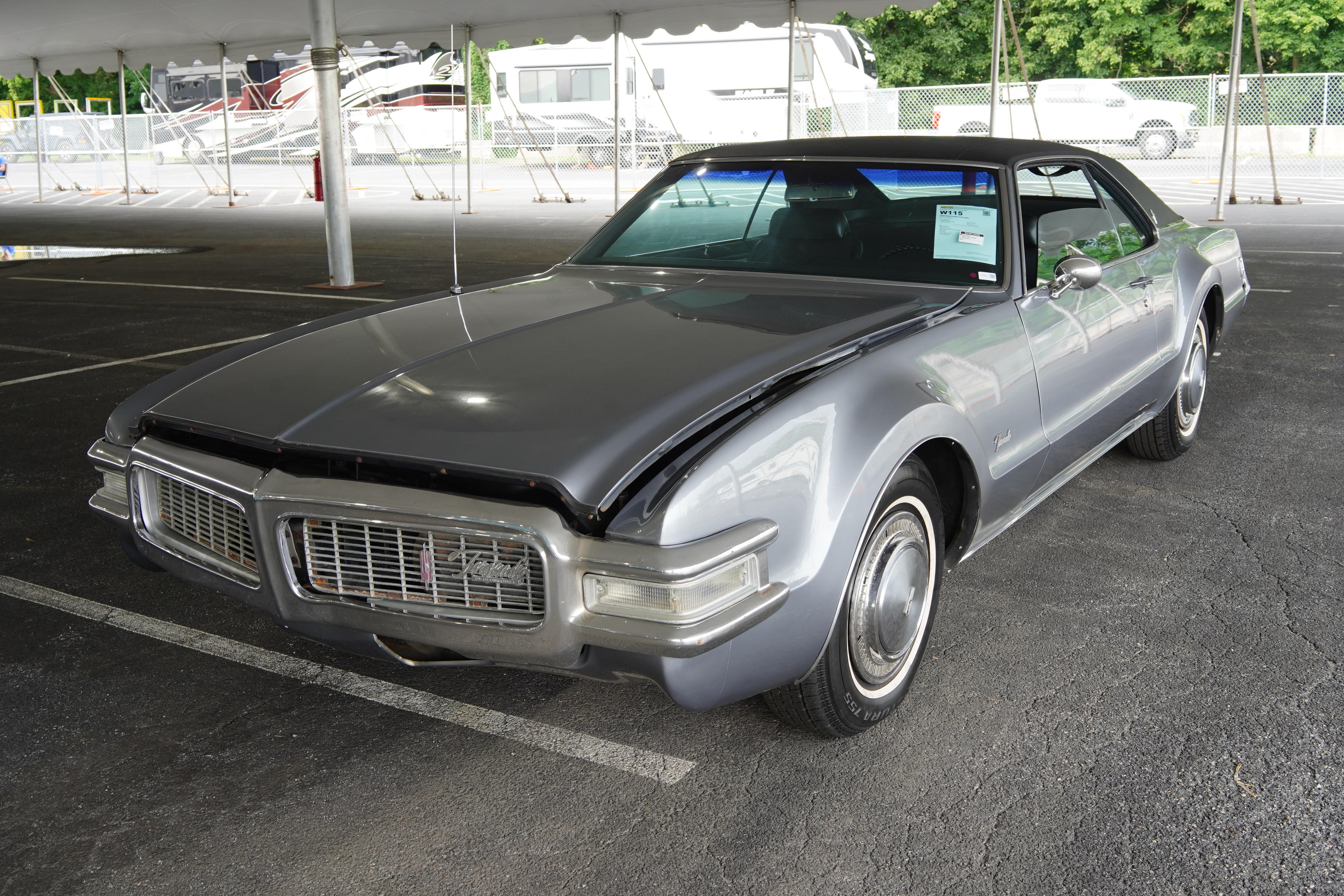
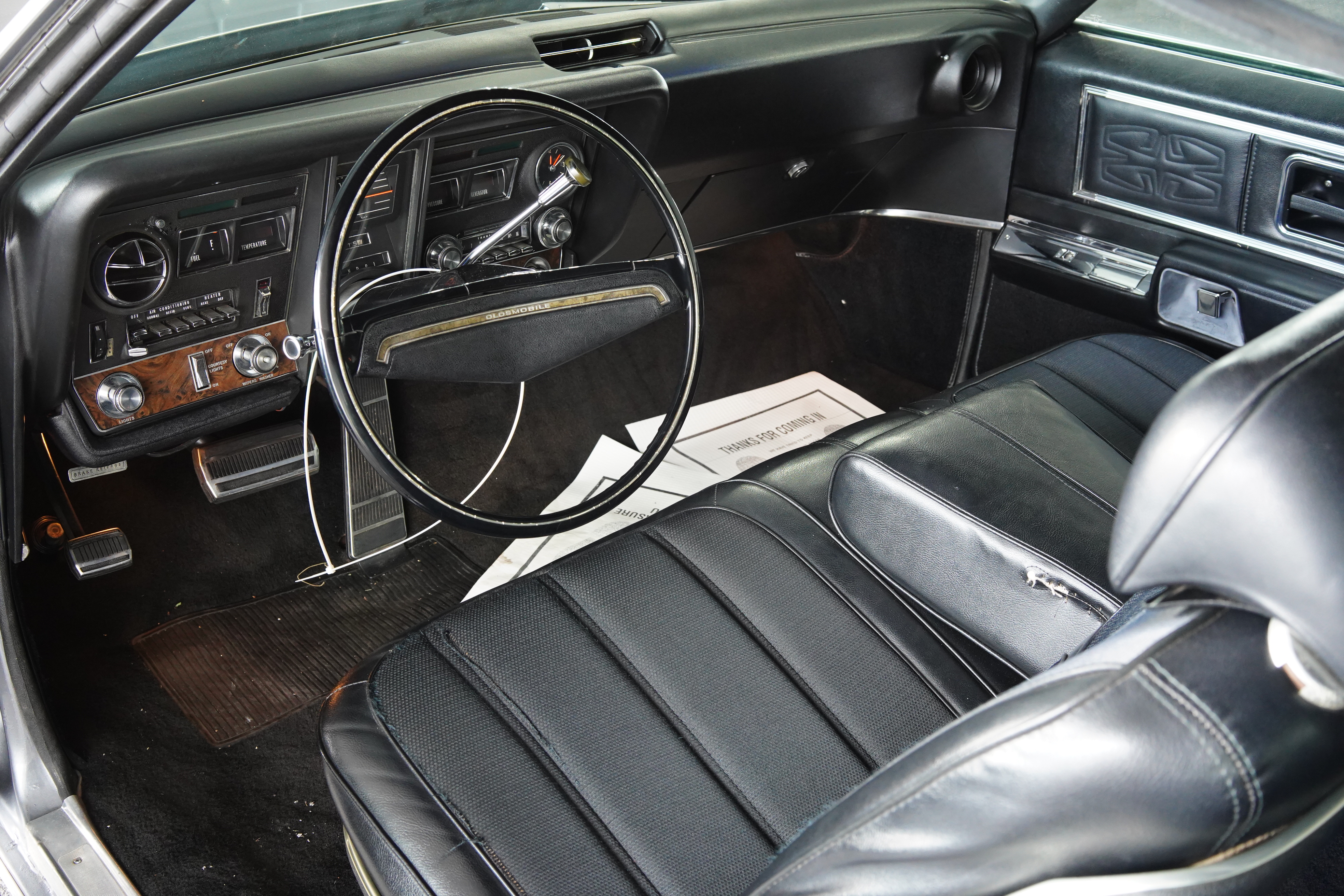
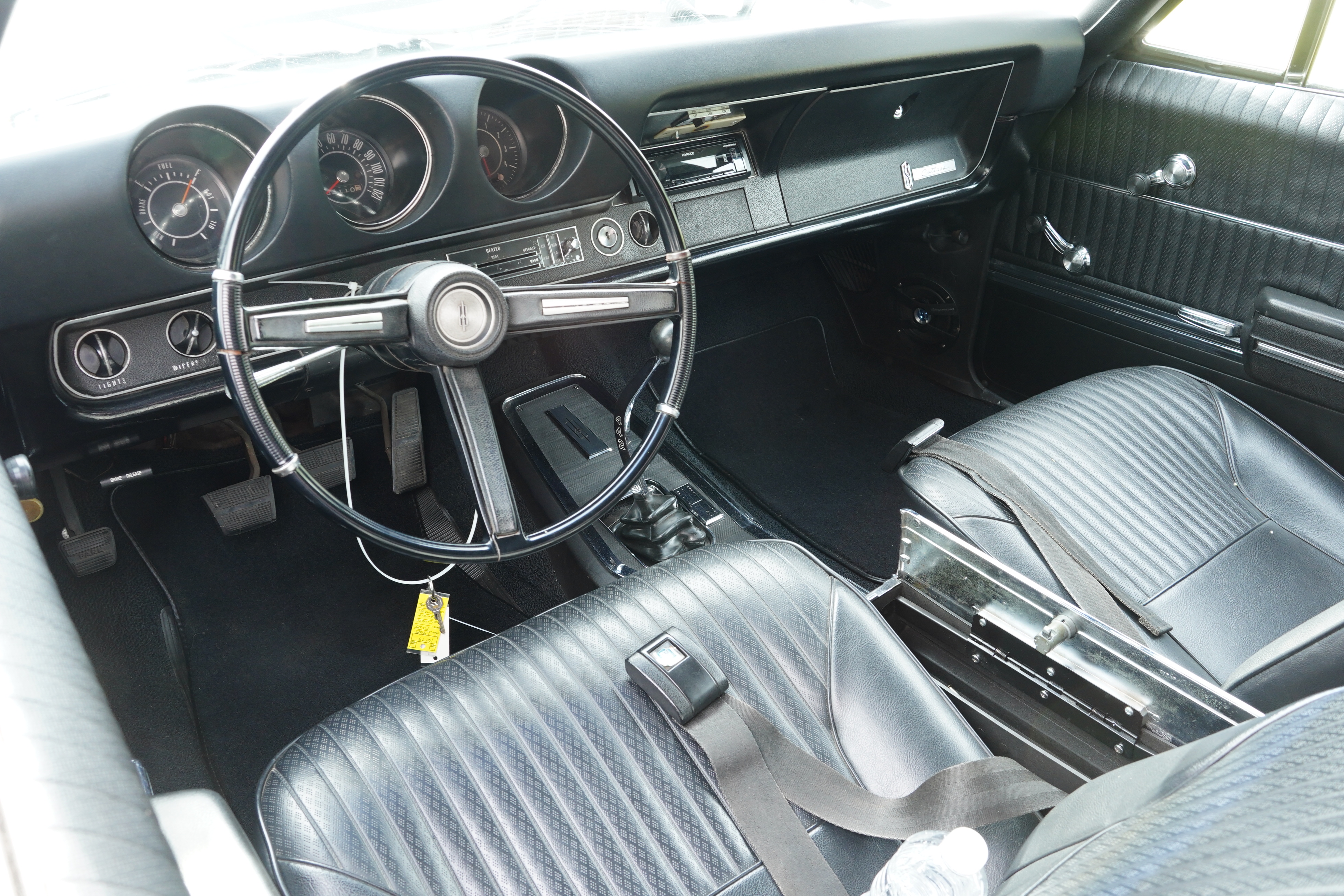
Lot W115, 1969 Oldsmobile Toronado, 455 V-8, automatic transmission, FWD (natch), silver paint, black vinyl roof, black interior. Odometer reads 11,000 miles, very likely on its second go-round. Front bumper dented, most of engine compartment has been sprayed flat black. A weekend detail would have done wonders for its presentation.

SOLD for $10,500. The ’69 Toro still used the original body shell from ’66, but with a massive front bumper replacing the initial design. Full-size American luxury for not a lot of money, and fingers crossed that the mechanicals are ok.


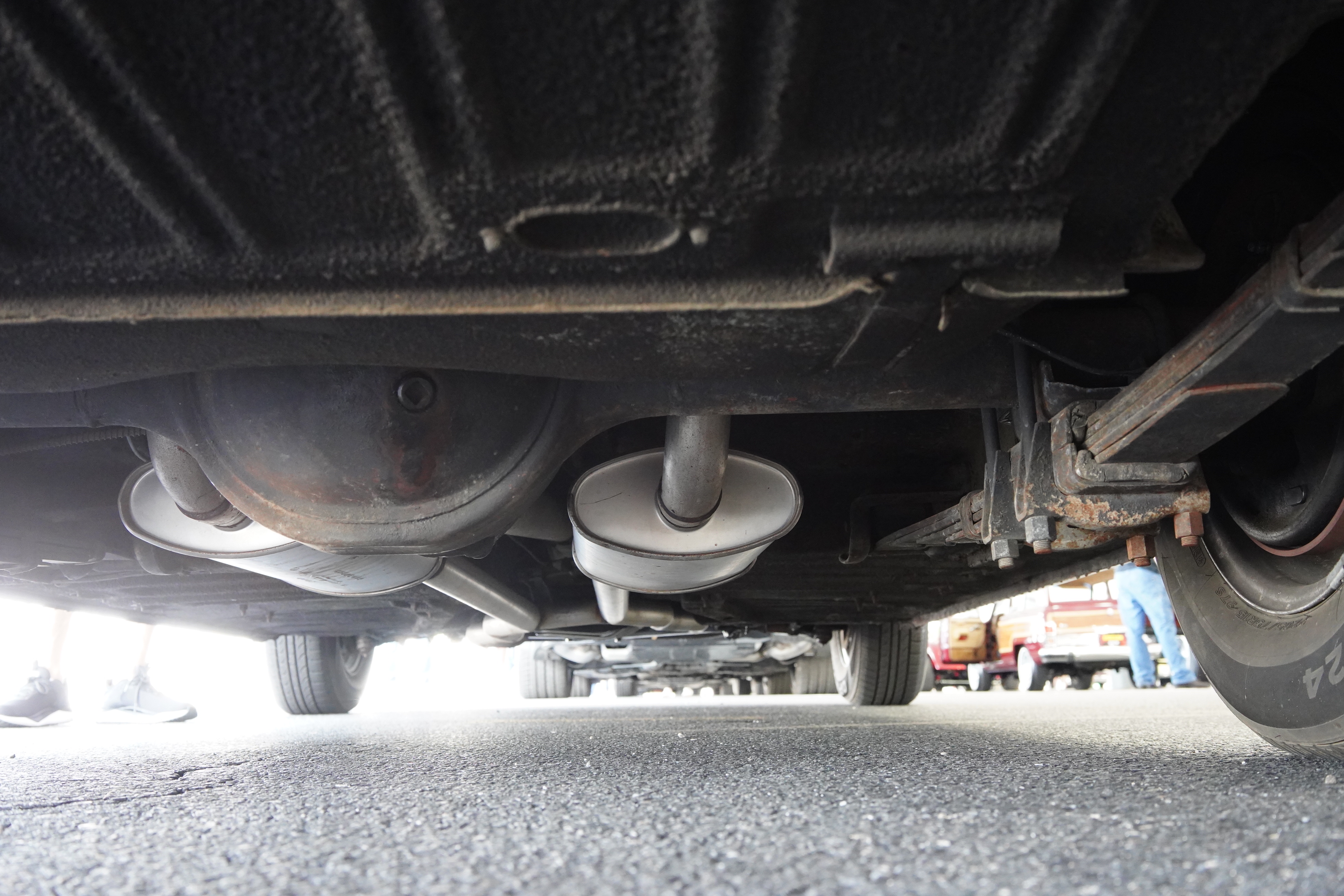
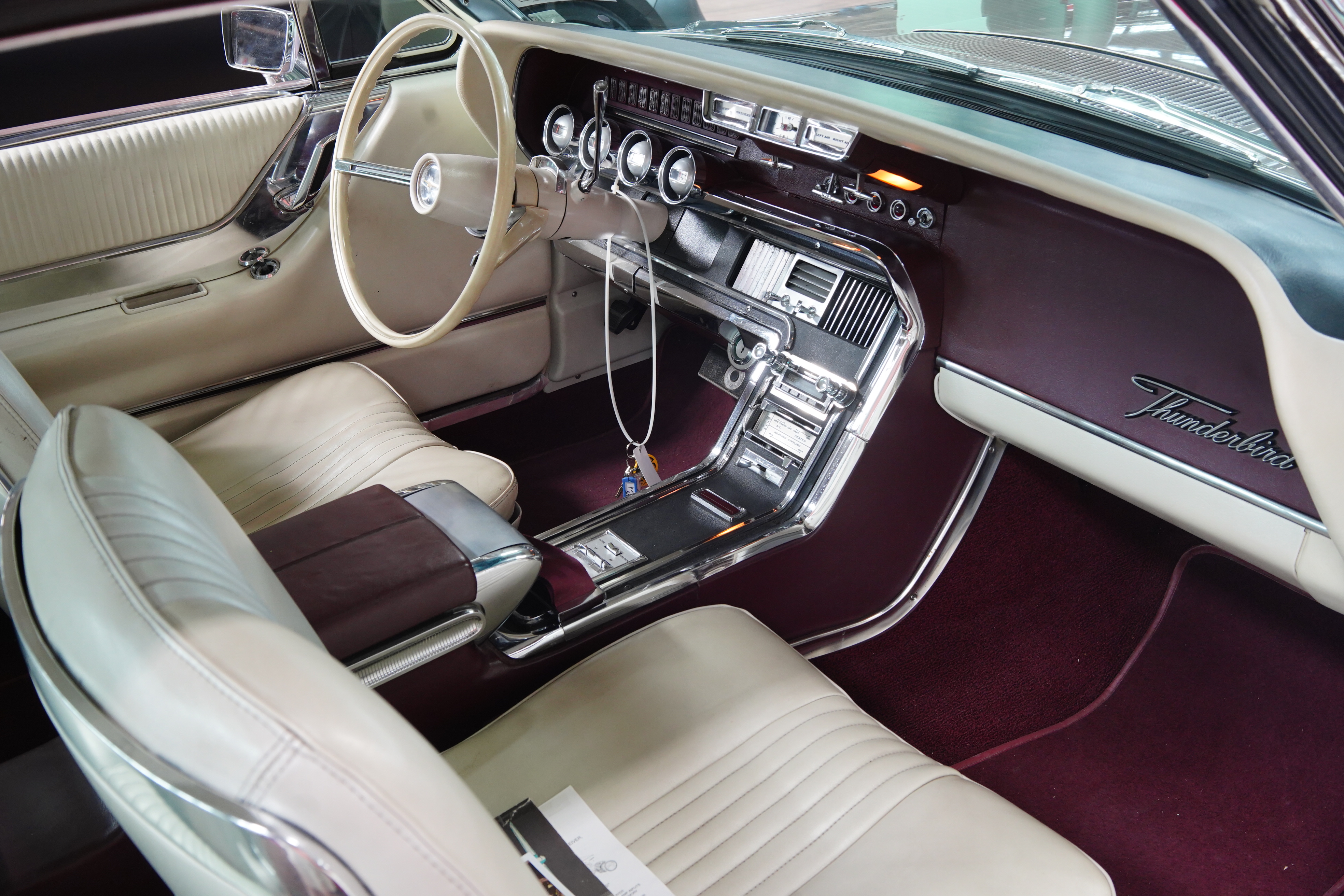
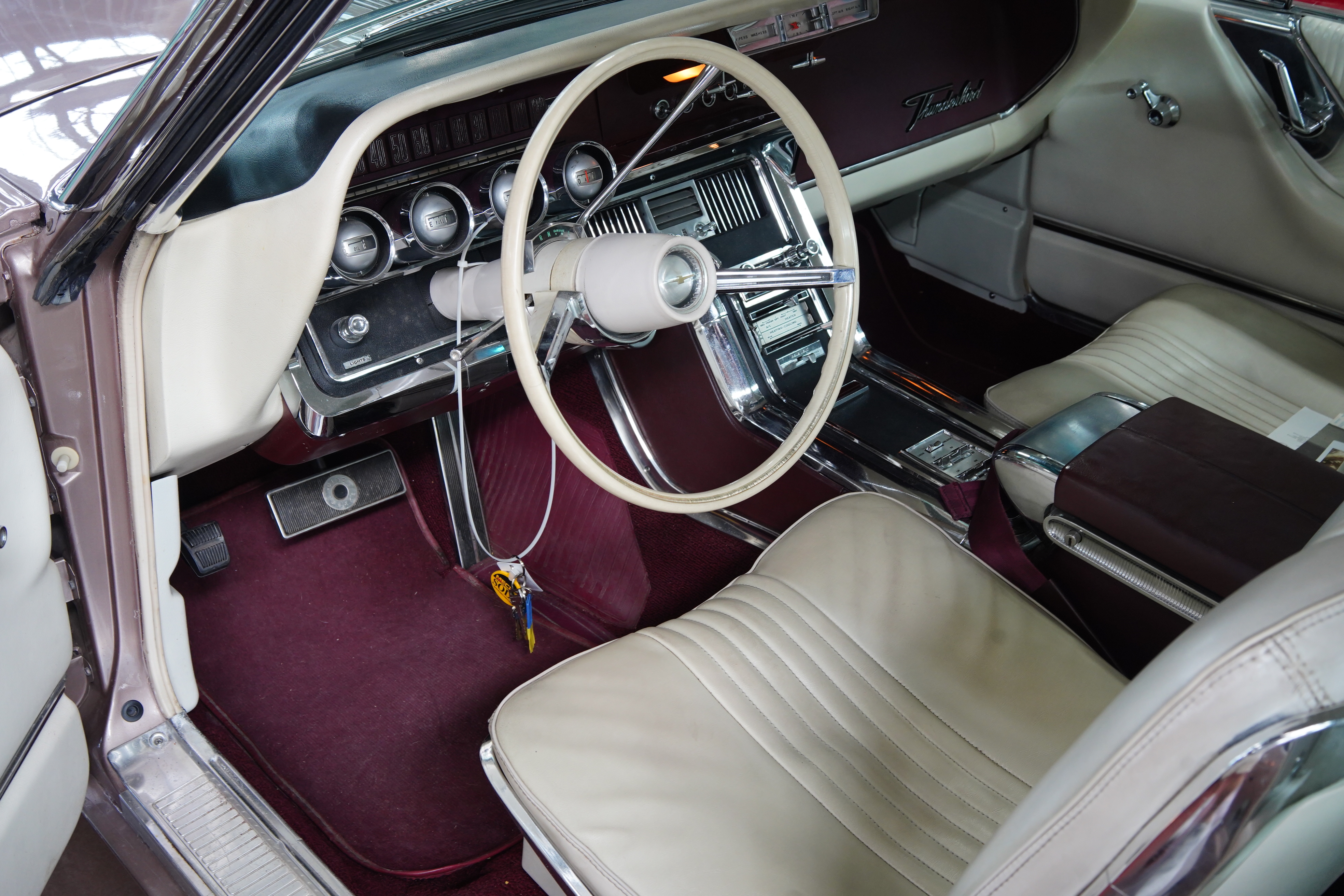
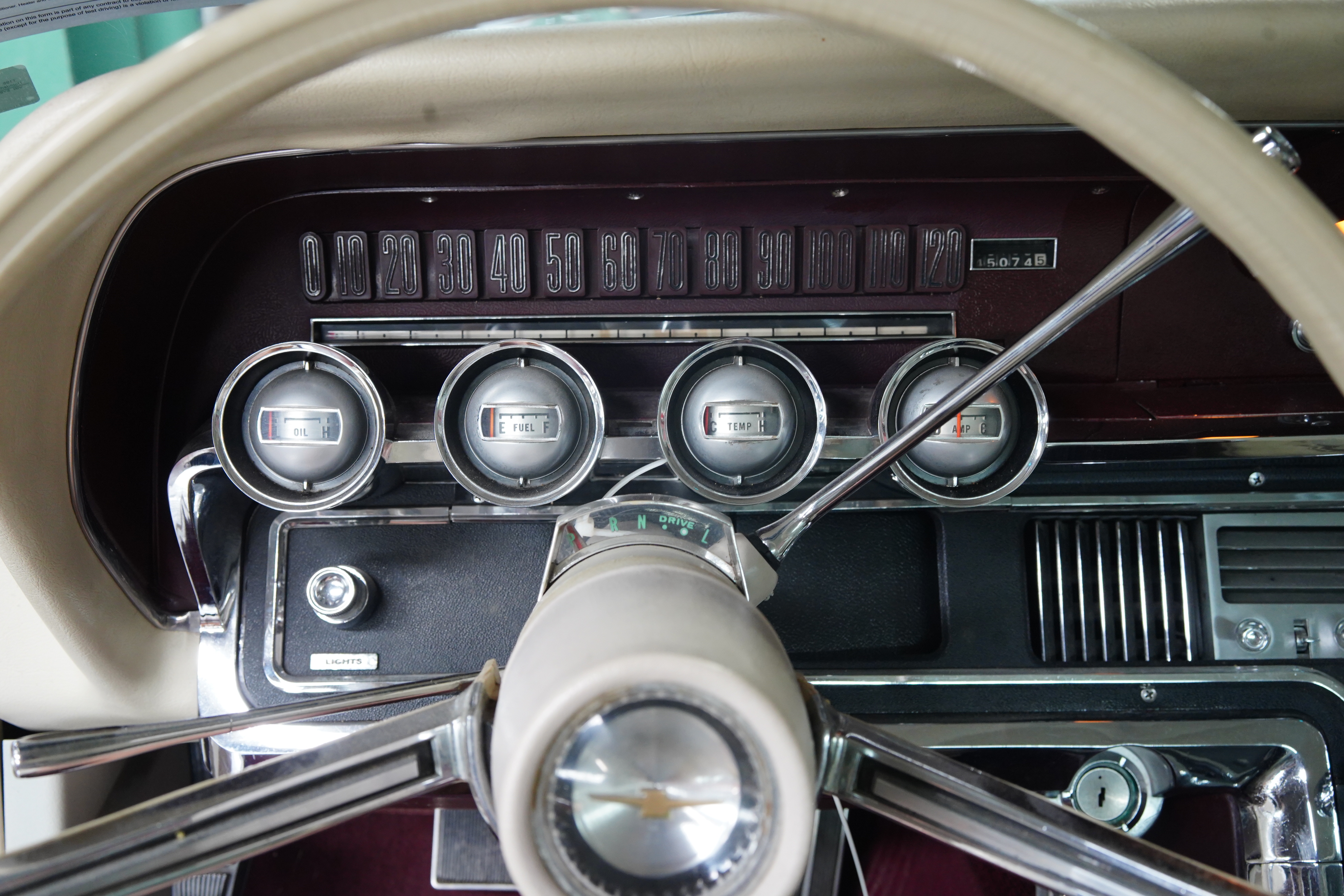
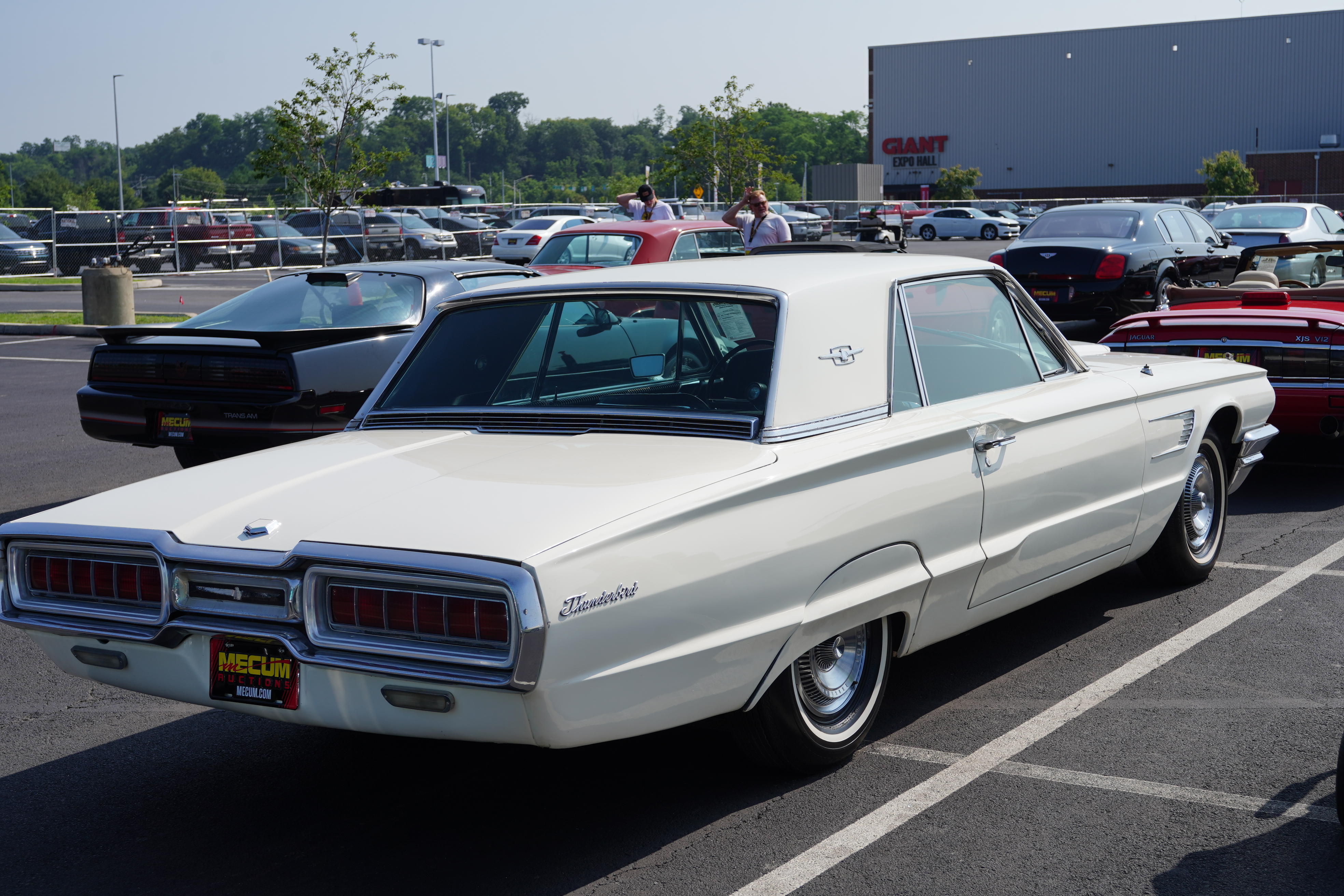
Lot T198, 1965 Ford Thunderbird two-door hardtop, rose beige paint, white vinyl upholstery with burgundy carpeting, 390 V-8, automatic transmission, factory A/C, power windows, power driver’s seat, wire wheels. Odometer reads 45,074. Aftermarket rub strips detract slightly from exterior styling. Body plugs imply that car received rustproofing at some point in its past.

SOLD for $13,000. A Polaroid found on the passenger sheet showed that the car received a complete repaint in 2004. According to my source books, “rose beige” was a T-Bird-only color for ’65, and was striking in person. The driver’s power seat would only move the seat about halfway back, and was very uncomfortable to sit in. Peering underneath, I saw the seat foam had turned to powder and would need replacement. This may have also been causing the restricted movement. Still, this was a very attractive car in person, and I don’t think my photos do complete justice to its appearance. At this price, I had some regrets about not bidding.

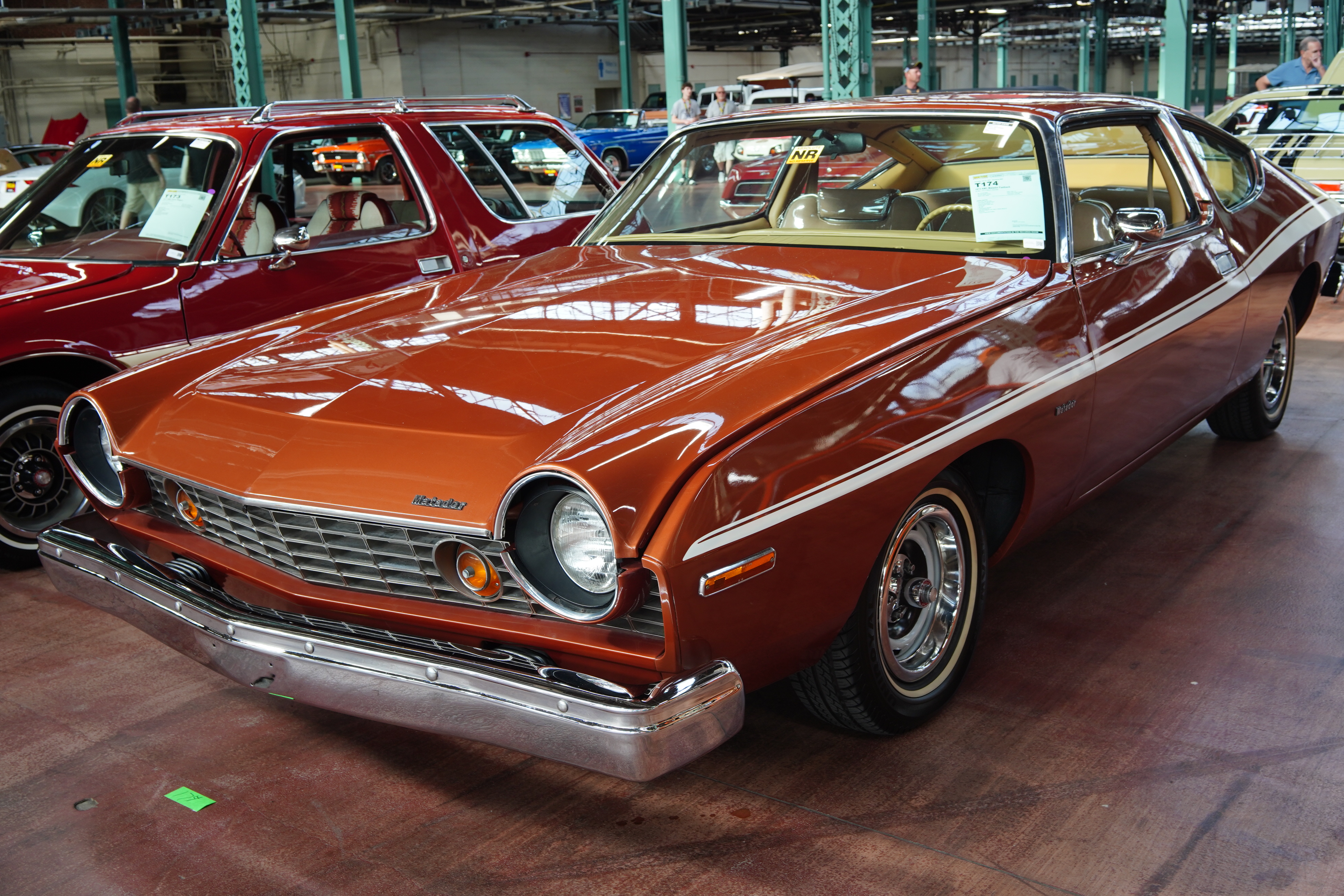
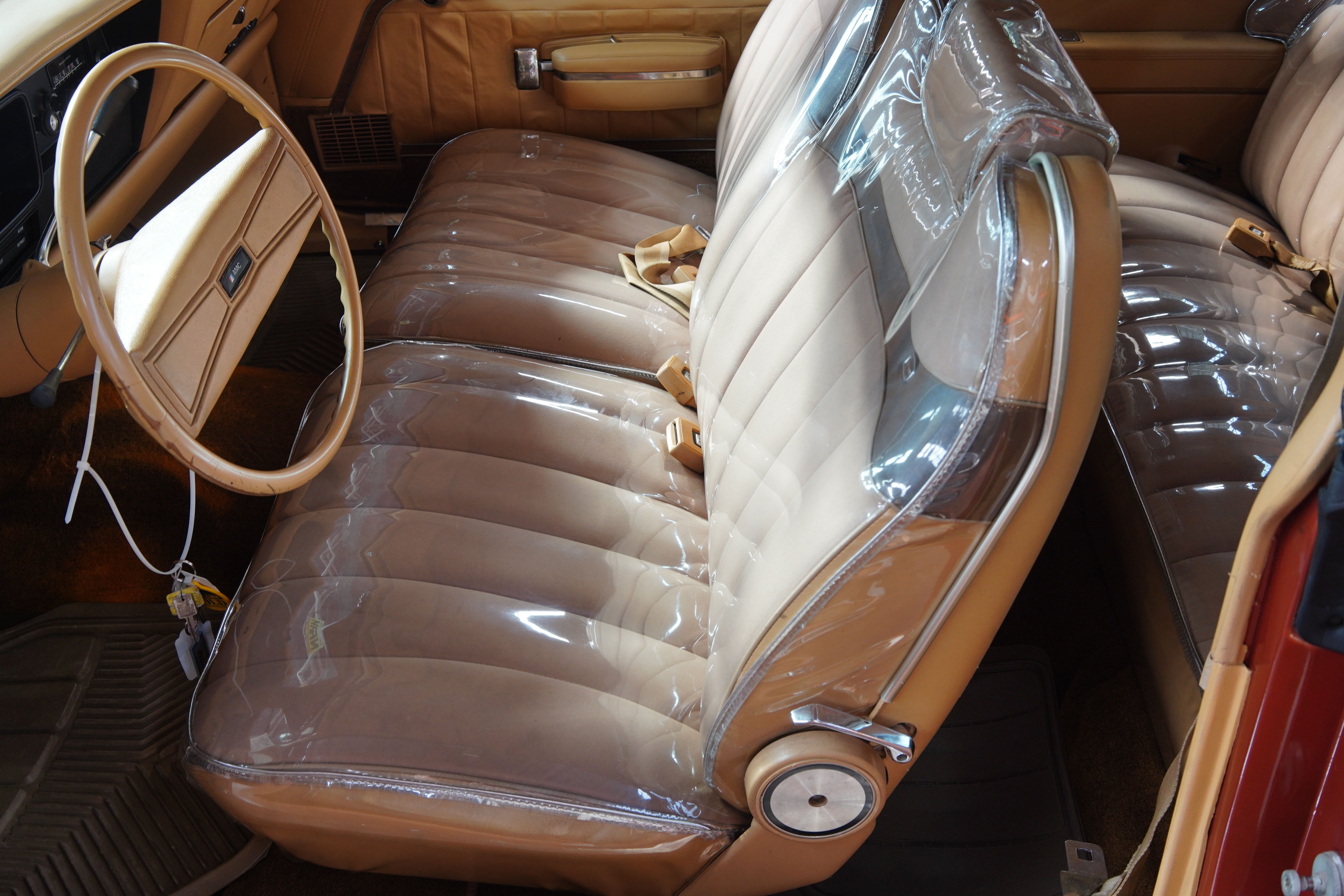
Lot T174, 1974 AMC Matador two-door fastback, copper paint, white stripe, tan interior (with seating areas covered by clear vinyl covers), 232 inline-six, automatic transmission. Windshield sign claims 68 miles, implying that is original, but … sign also states “mostly original copper paint.” Front bench seat is twisted and bent backwards on driver’s side, and driver’s door window rubber very deteriorated. Air cleaner looks to be repainted, and several radiator hose clamps are aftermarket.

SOLD at no reserve for $14,000. I clearly remember when these were new, Car and Driver magazine put one on the cover and declared, “the best-looking new car of the year.” I was twenty years old and thought they were nuts. In fact, the magazine later tried to take back the praise. I would need to see more documentation about the mileage to believe it. If this was truly a 68-mile car, it may have been poorly stored. I thought this was pricey with the six; the hammer price might have made more sense with a V-8.

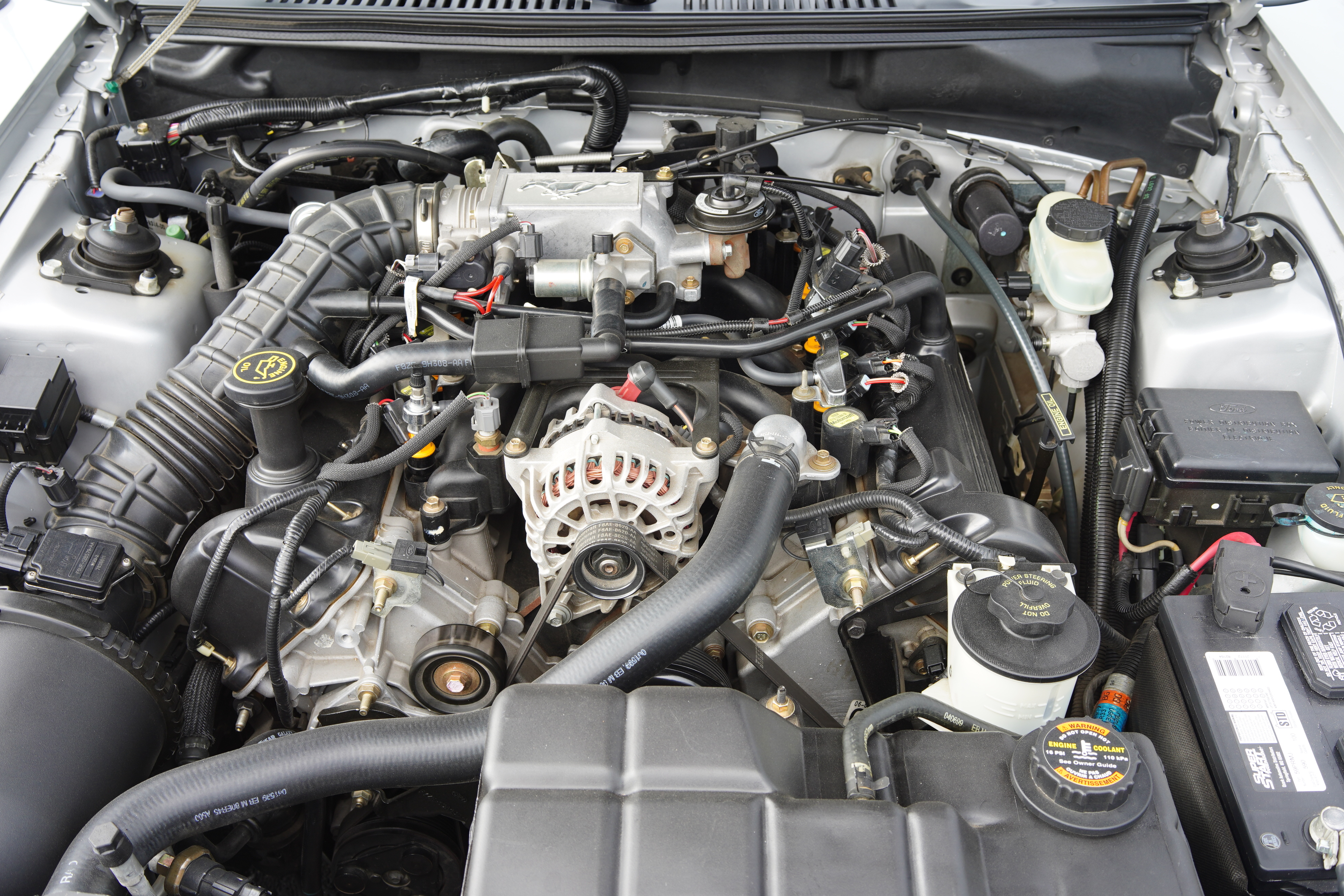
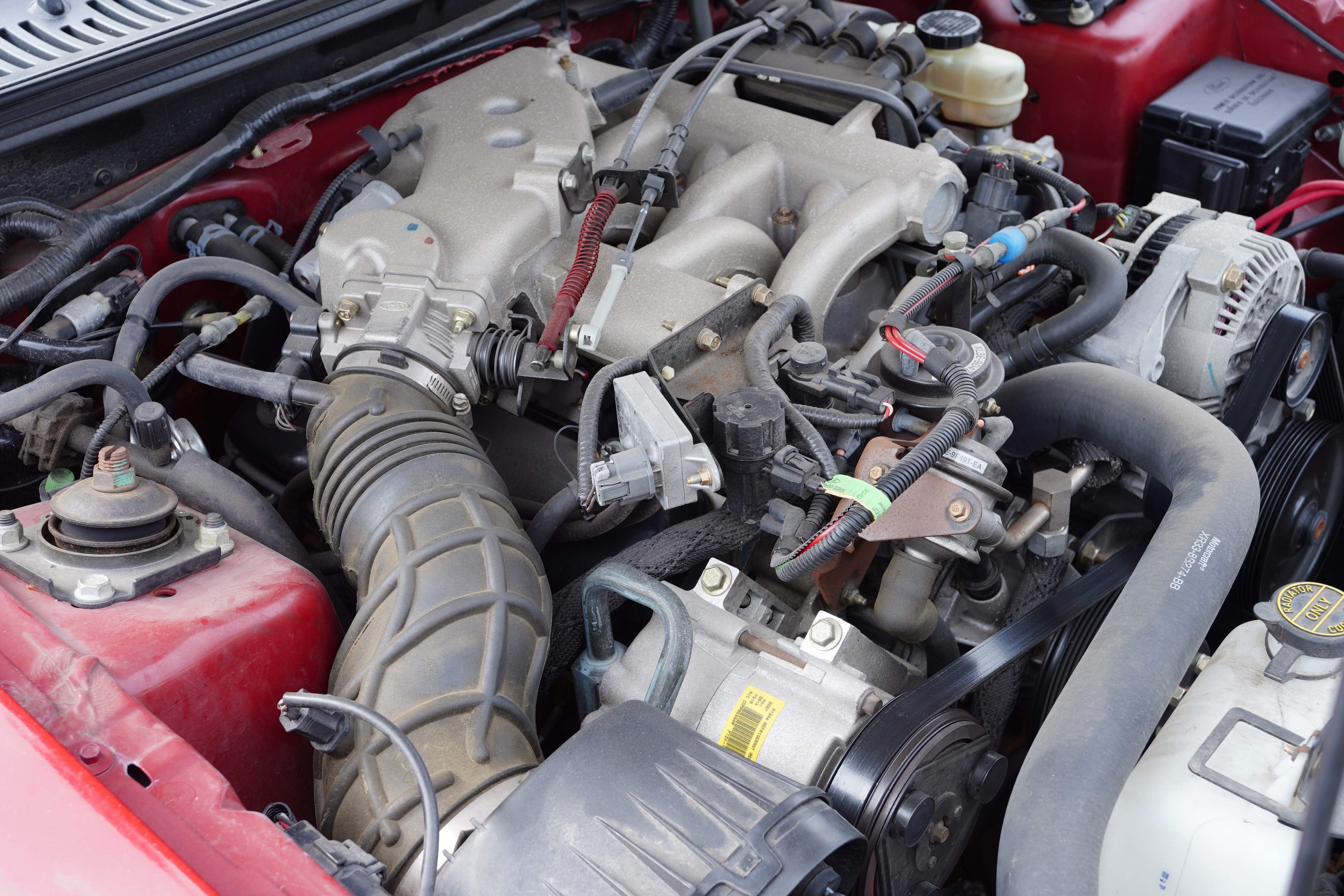
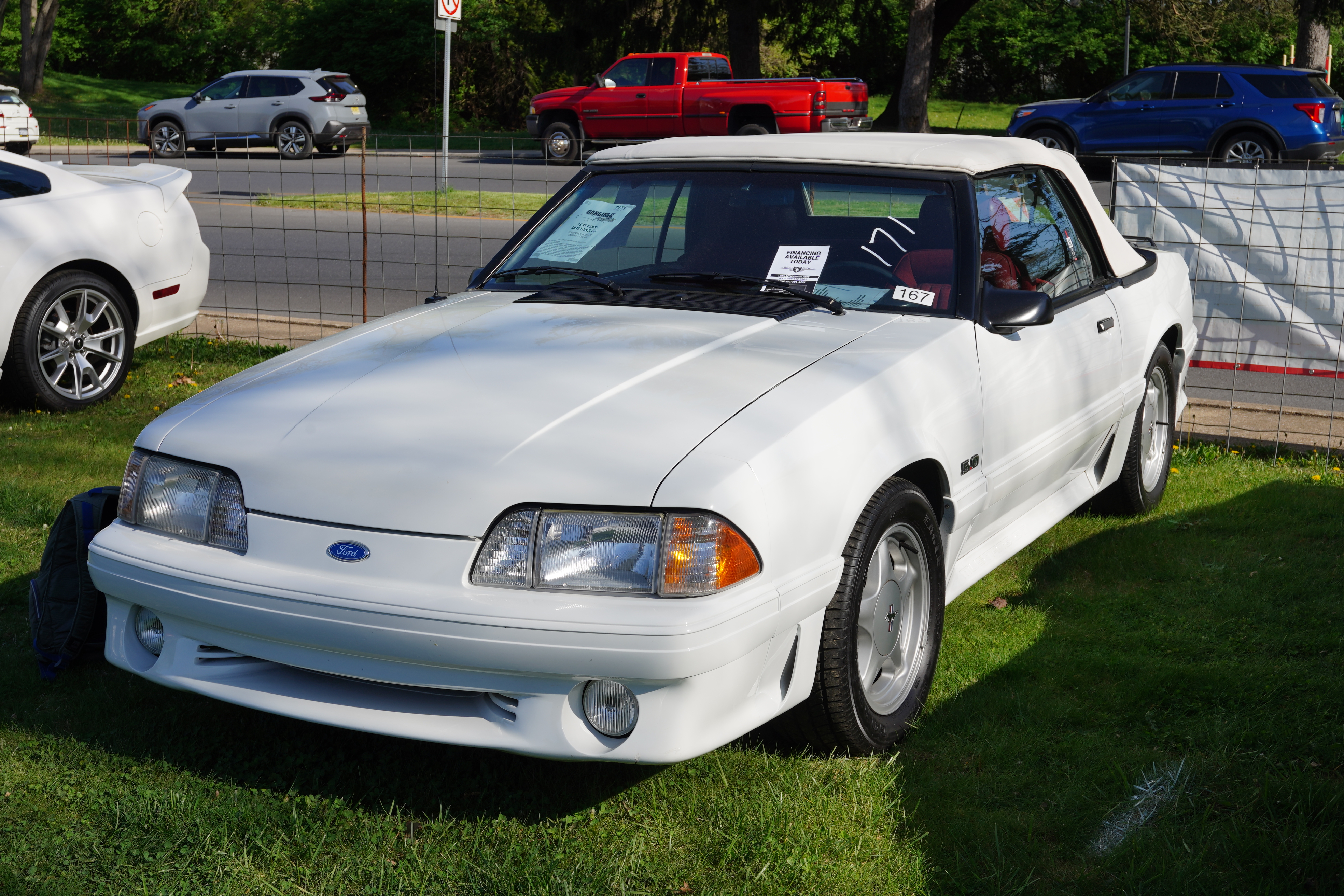
W257, 1999 Ford Mustang 35th Anniversary two-door coupe, 4.6L V-8, 5-speed manual, silver paint, silver and black interior, windshield sign claims 12,000 miles (unverified).

SOLD for $14,000. If the low miles are legit, this was a decent purchase that might retain some value as long as the owner isn’t adding another 10k a year.

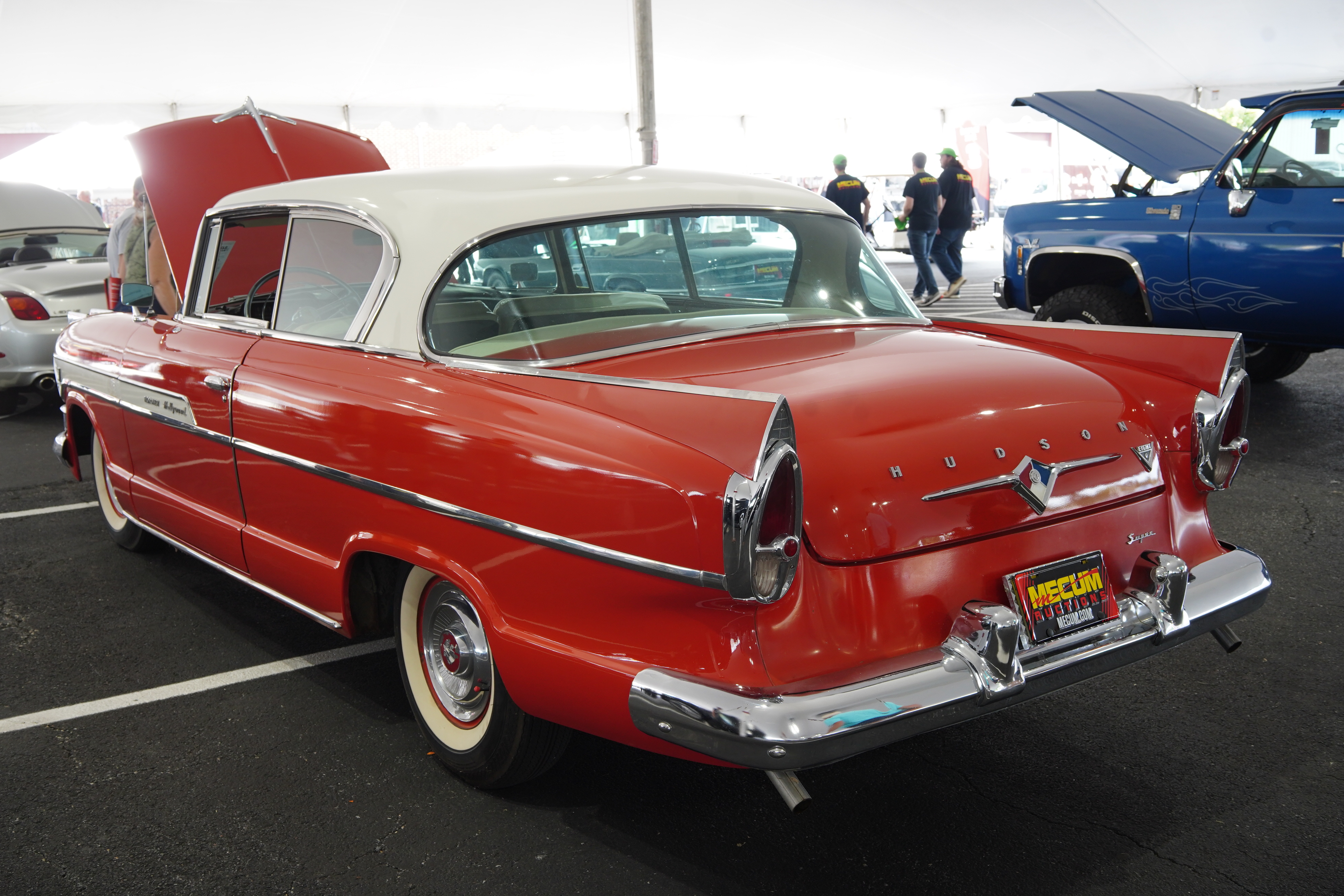
W73, 1957 Hudson Hornet two-door hardtop, 327 V-8, automatic transmission, two-tone orange and white paint, black and white interior (clear covers on front seats), full wheel covers, whitewall tires, factory air conditioning, power steering and brakes. Windshield sign claims 57,000 miles (unverified).

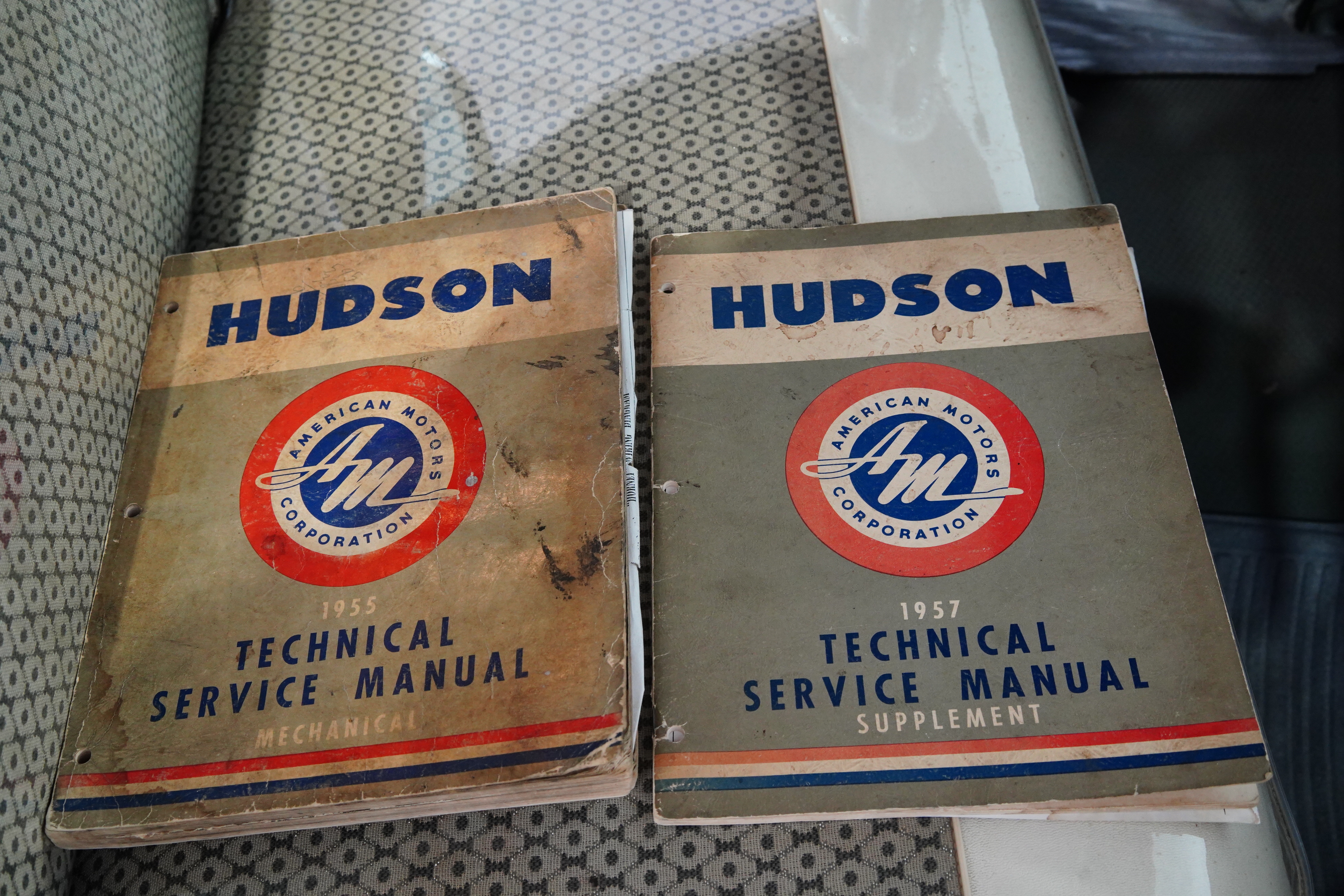
SOLD for $18,000. I go to a lot of car shows and auctions, and I’ve seen 1957 Hudsons before, but I don’t think I’ve ever seen a ’57 Hudson two-door hardtop. My source books agree that only 266 “Super” two-door hardtops were built (as were 483 “Custom” models with slightly higher trim). Factory price was $2,911, with the following options available: automatic transmission for $232; power steering for $100; power brakes for $40; and air conditioning for $415. Together, that totals $3,698. The auction car was a good “ten-footer.” There was a lot of orange peel in the paint, the tires looked ancient, and one could only guess at the operating condition of the A/C. In its favor, the chrome looked decent, the engine compartment appeared to have been given some recent attention, and the interior was in very good shape. Definitely not a car for everyone, and I have no idea what Hudson values are, but for under 20 large, someone got one of the most interesting cars at this auction.

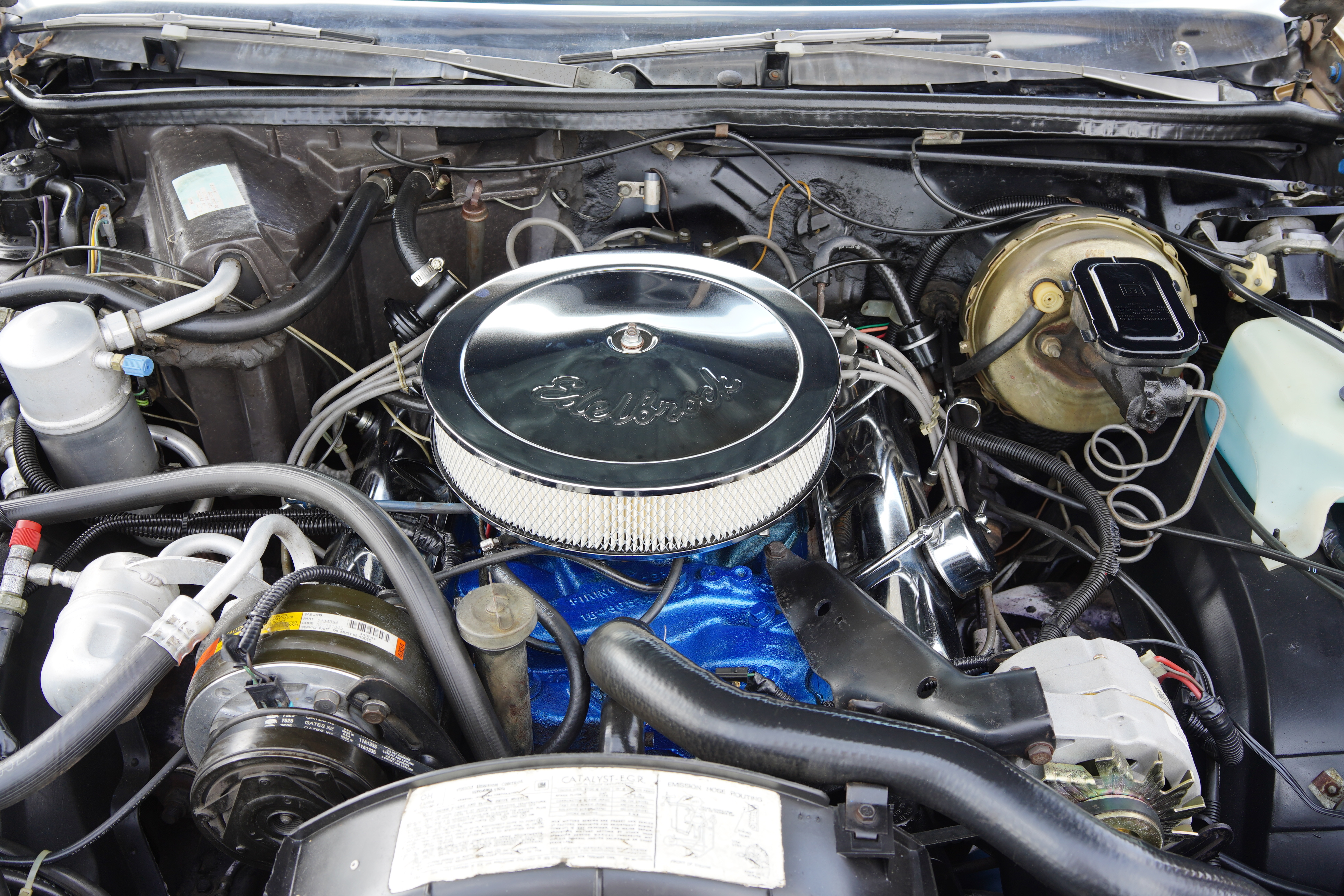
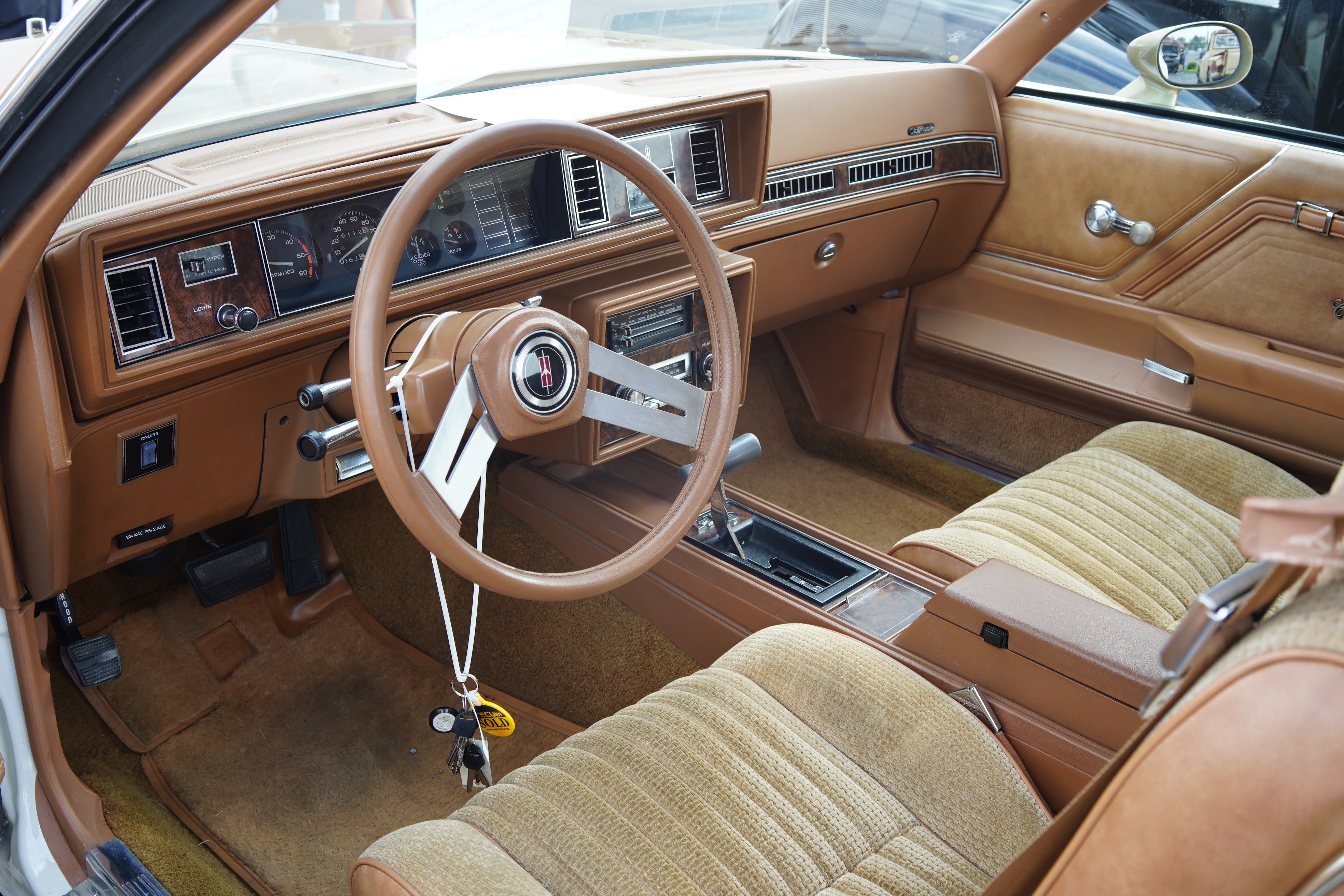
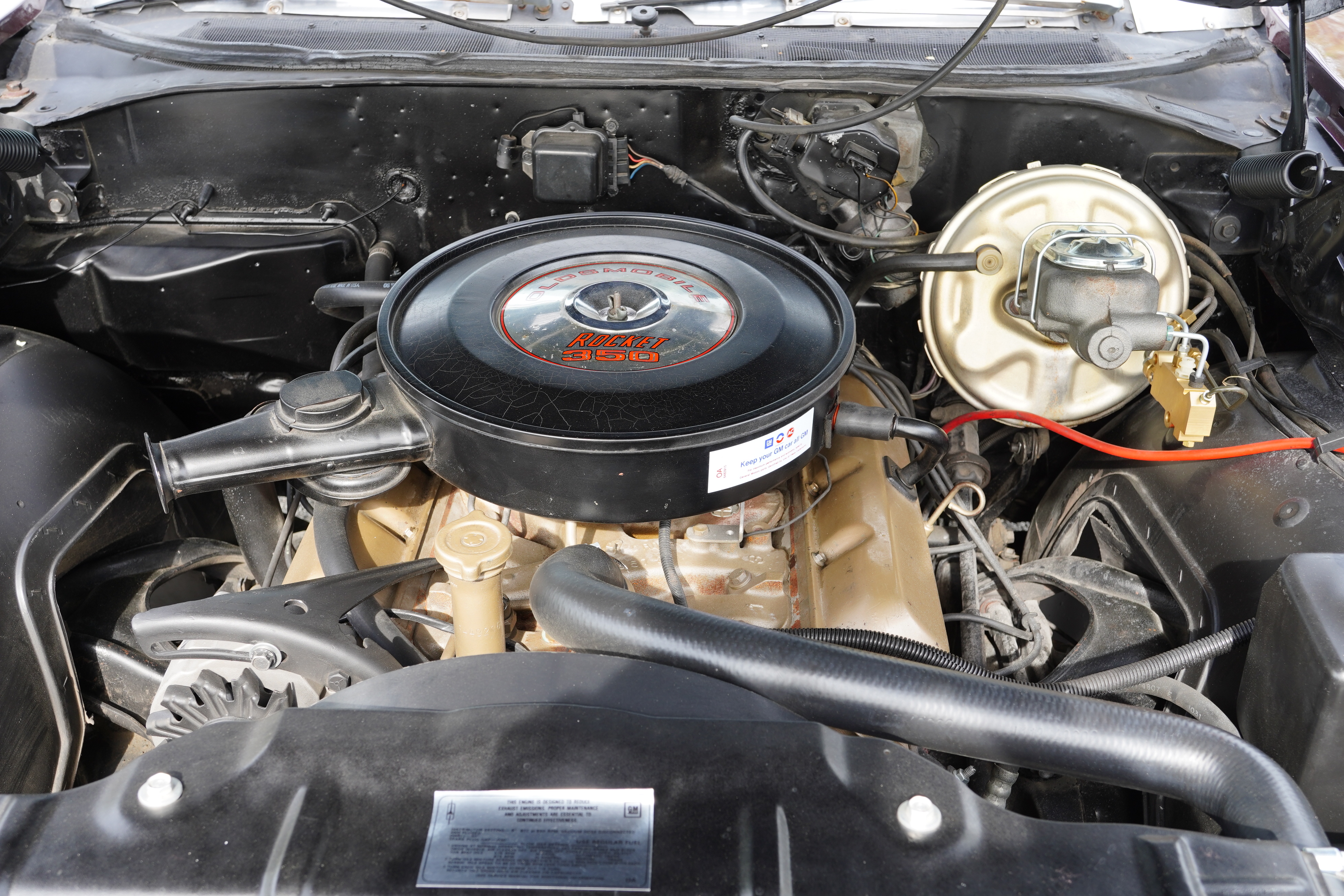
Lot W173, 1979 Oldsmobile Hurst/Olds W30 two-door coupe, 350 V-8, automatic transmission, white/gold paint, tan cloth interior, five-digit odometer reads 16,000 miles which looks believable, T-tops, factory A/C, bucket seats with center console. Stainless band on C-pillar I’m told is not factory.

SOLD for $21,000. I was attracted to this car because of its overall size: it’s one of the smaller domestic cars from this era, yet doesn’t feel small to sit in, and in fact feels very comfortable from the driver’s seat (dare I say like an imported car?). I watched it cross the block where it was bid to $25,000 and declared a No Sale. Most of the time, Mecum will not announce the reserve, but in this case, the auctioneer said, “it will take $30,000.” That was on Wednesday. On Friday, while composing this blog post, I saw on Mecum’s website that the car was listed as “sold” for $23,100. Backing out the 10% buyer’s premium leaves us with a hammer price of $21,000. What’s up with this? I’m very suspicious, because I personally recorded a high bid of $25k. Was that a chandelier bid, since the house knew they were still $5k below the seller’s reserve? And I didn’t know that one could approach the Bid Goes On desk and bid an amount BELOW the previous high bid (but now I do). Caveat emptor indeed.

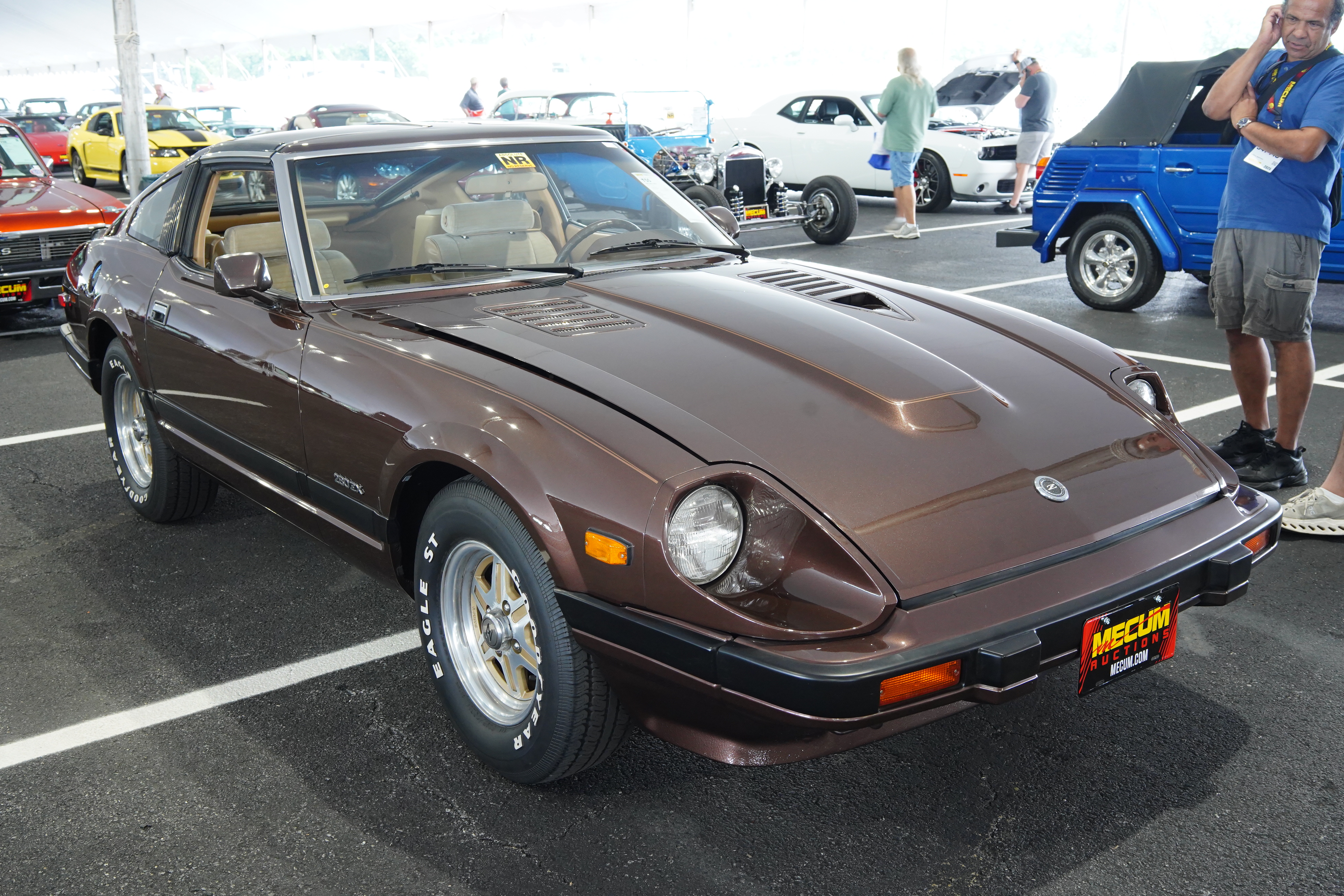
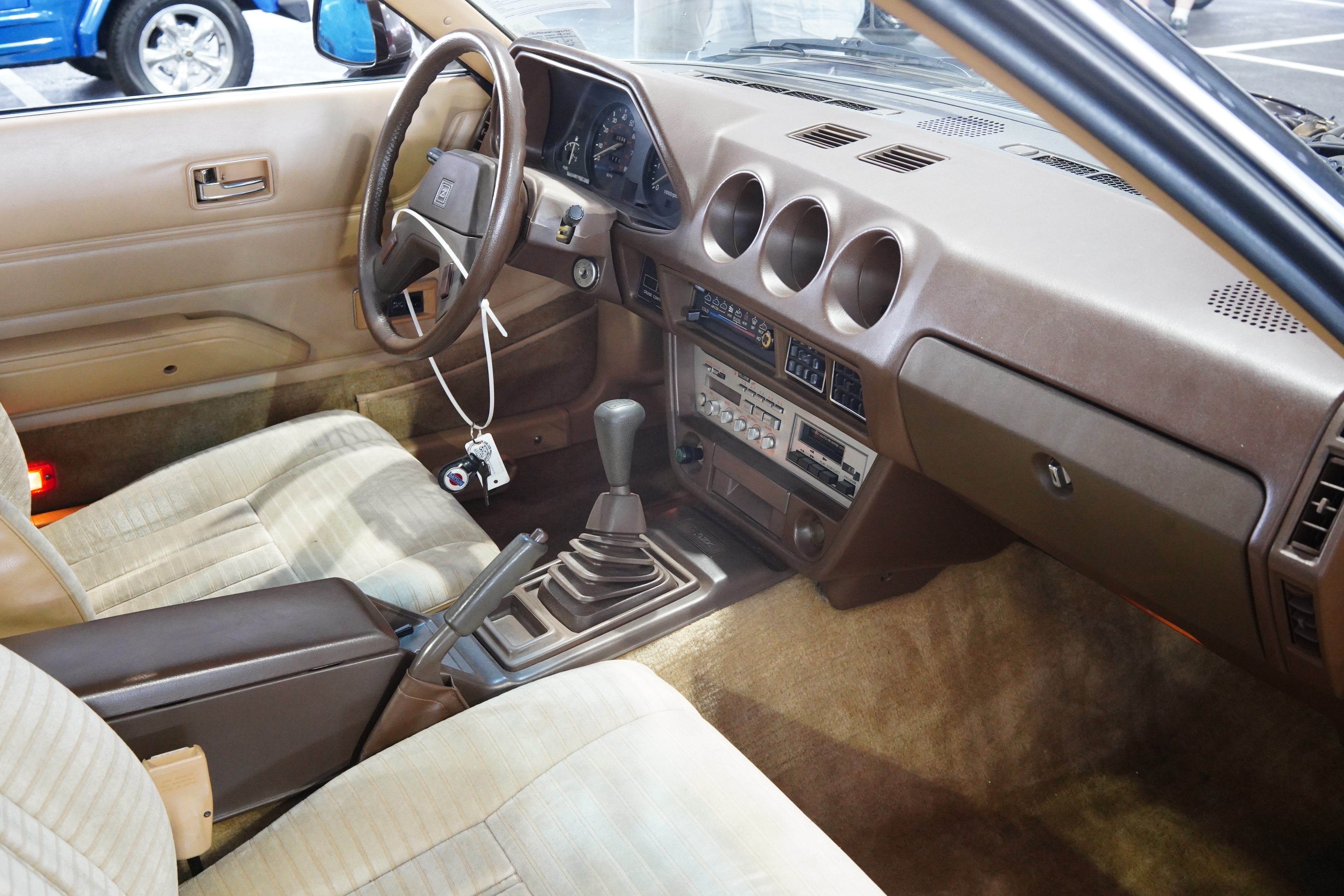
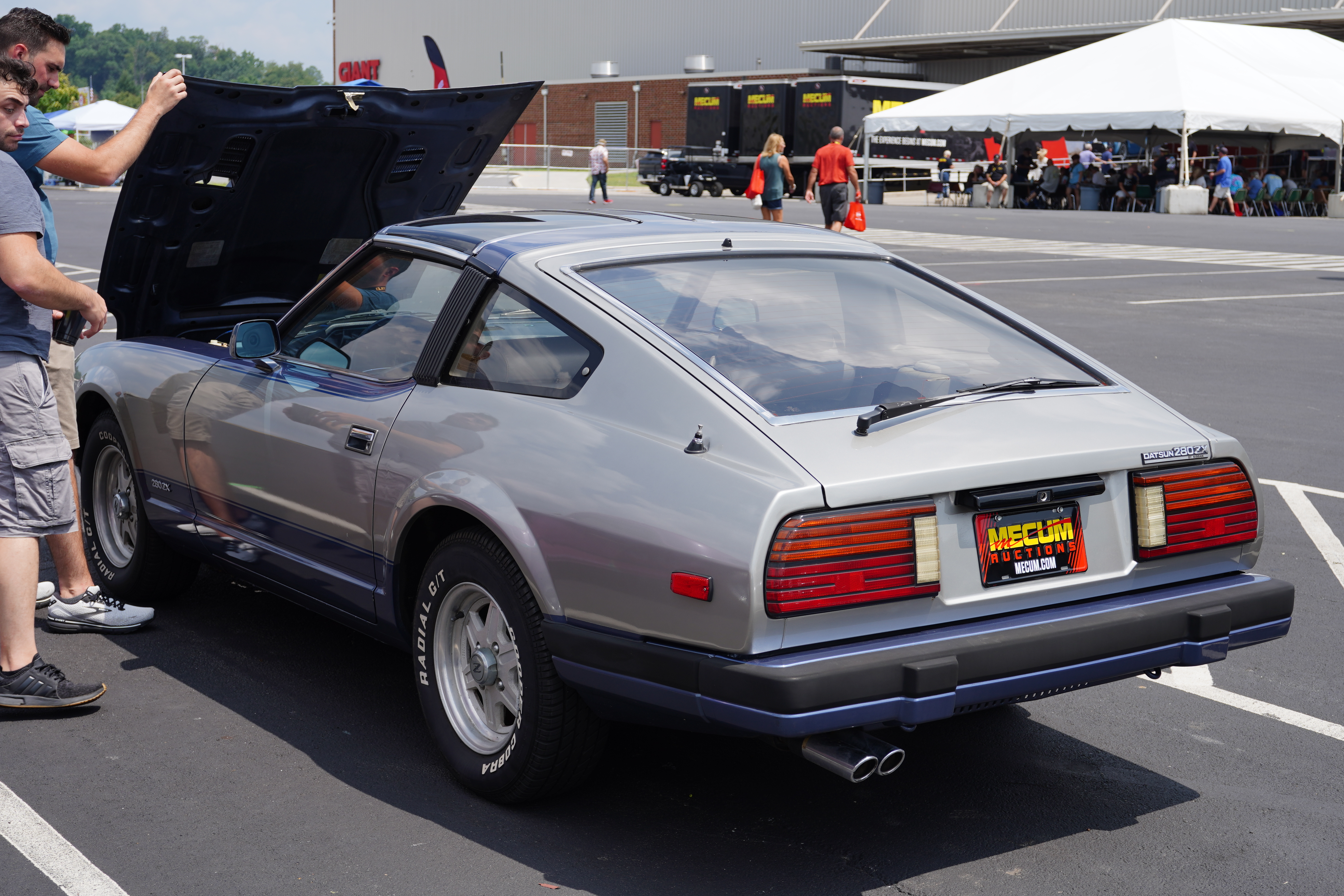
Lot T55, 1982 Datsun 280ZX two-door coupe, brown metallic, tan cloth interior, 2.8L inline-six engine, five-speed manual transmission, six-digit odometer shows 59,874 miles, T-tops, analog gauges, factory A/C, raised white-letter tires, factory sound system. Underhood shows “normal” accumulation of dirt; it’s the only area of the car, including underside, that does not present extremely well. A very attractive car overall, as long as one is ok with brown (which I am).

SOLD at no reserve for $22,000. Many prospective bidders were lingering around this car, including me. I happened to gain access to its Carfax report. The first entry is from 1982. Almost every entry cites either a registration renewal or a state inspection. There is almost no mention of any service or repair work. The car changed hands in 2006 at 57k miles (the owner from ’90 to ’06 added 36k miles in 16 years). This new owner sold it in 2024 with 59,600 miles on the clock, for a total of 2,374 miles over 19 years of ownership, working out to be 125 miles a year. As you know, that’s both good and bad; however, looking at the car, it was obvious that cosmetically, it was well-preserved. The hammer price was more than fair for condition, even if it might need come reconditioning of soft rubber parts.

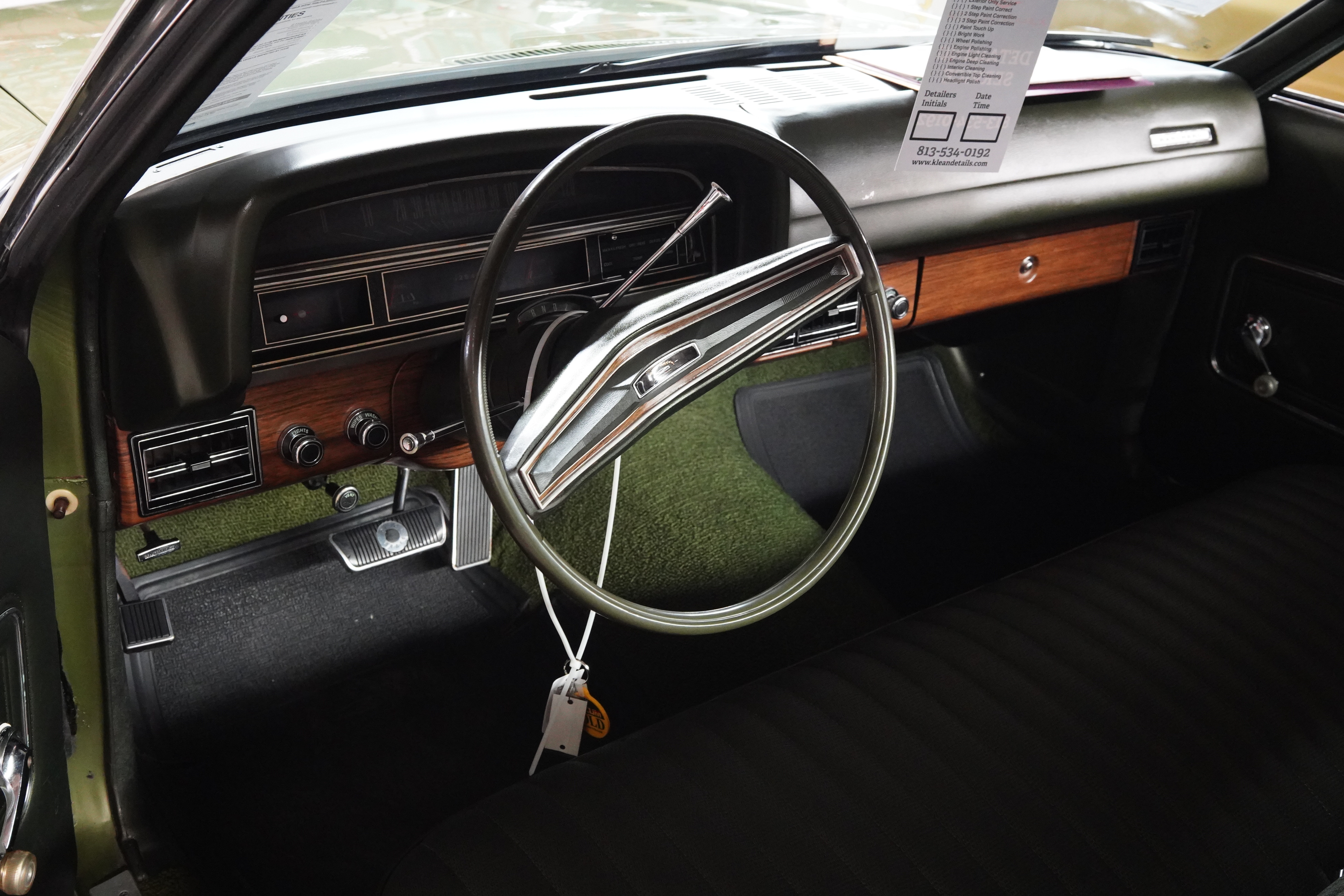
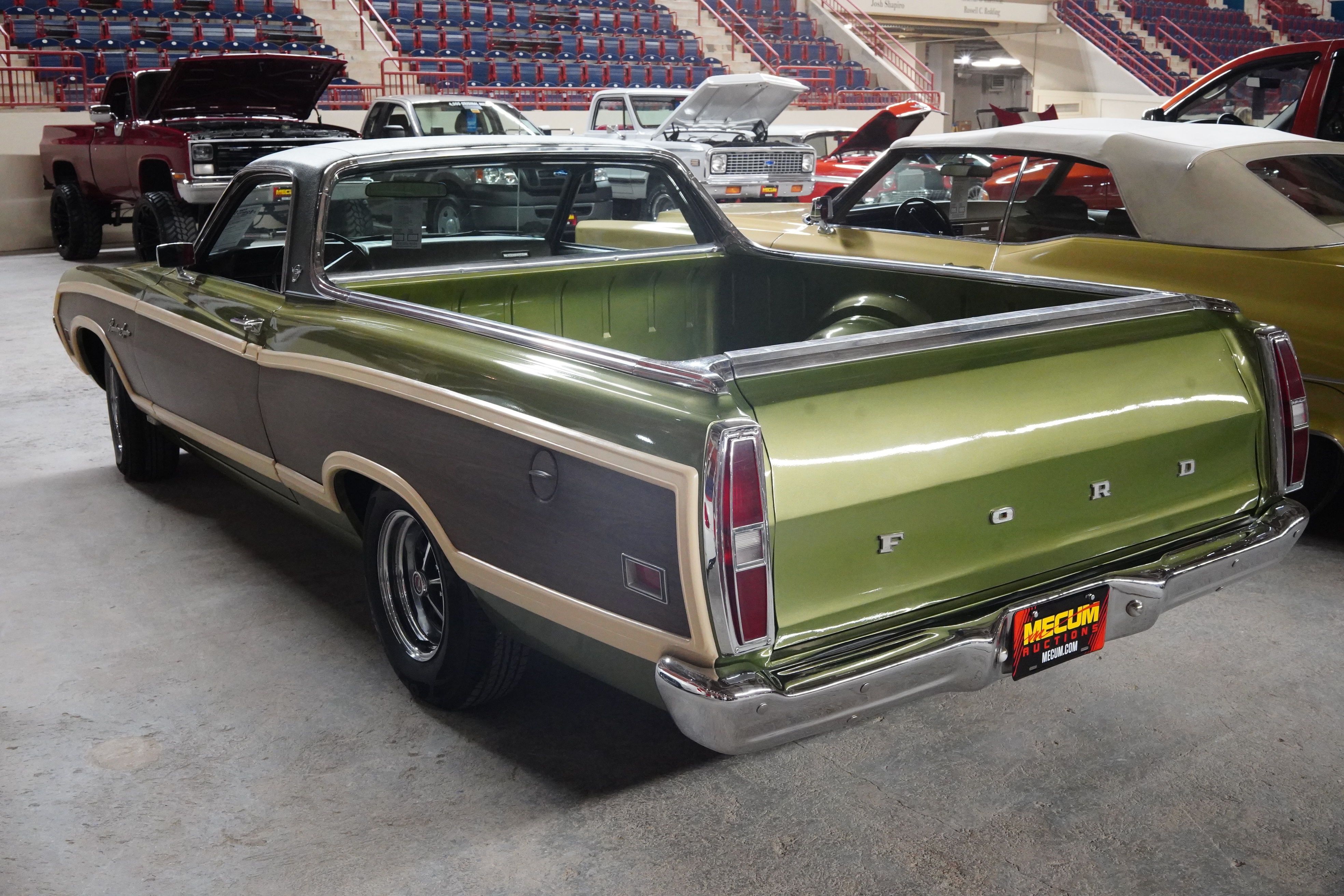
Lot F112, 1970 Ford Ranchero Squire, metallic green, green vinyl roof, green interior, faux wood trim on exterior, 351 V-8, automatic on column, reported 62,000 miles (unverified). There were a lot of El Caminos at this auction but this was the only Ranchero I saw, and while the Country Squire look wouldn’t be my first choice, it fit the overall presentation very well. Vehicle was in strong #2 condition.

SOLD at no reserve for $23,000. This car sold on Friday and I got the hammer price from Mecum’s website. Perhaps slightly pricey for a Ranchero, but I found the period-correct look very appealing. This Ranchero was ready to hit the show circuit, it was that nice.

Lot T168, 1972 AMC Gremlin X, two-door hatchback, green paint, black interior, 4.2L inline-six, automatic transmission, claimed to be 13,000 original miles and looks it. Gold exterior trim, roof-mounted luggage rack, factory alloy wheels, raised white-letter tires. Offered at No Reserve.

SOLD at no reserve for $37,000. And who said Gremlins weren’t valuable or collectible?? The windshield sign said that this car was previously owned by Jeff Dunham, and I never heard of him, so that would not have influenced my bid any…. However, the car was featured on Jay Leno’s garage, which could account for a hammer price approximately three times what I would have guessed.

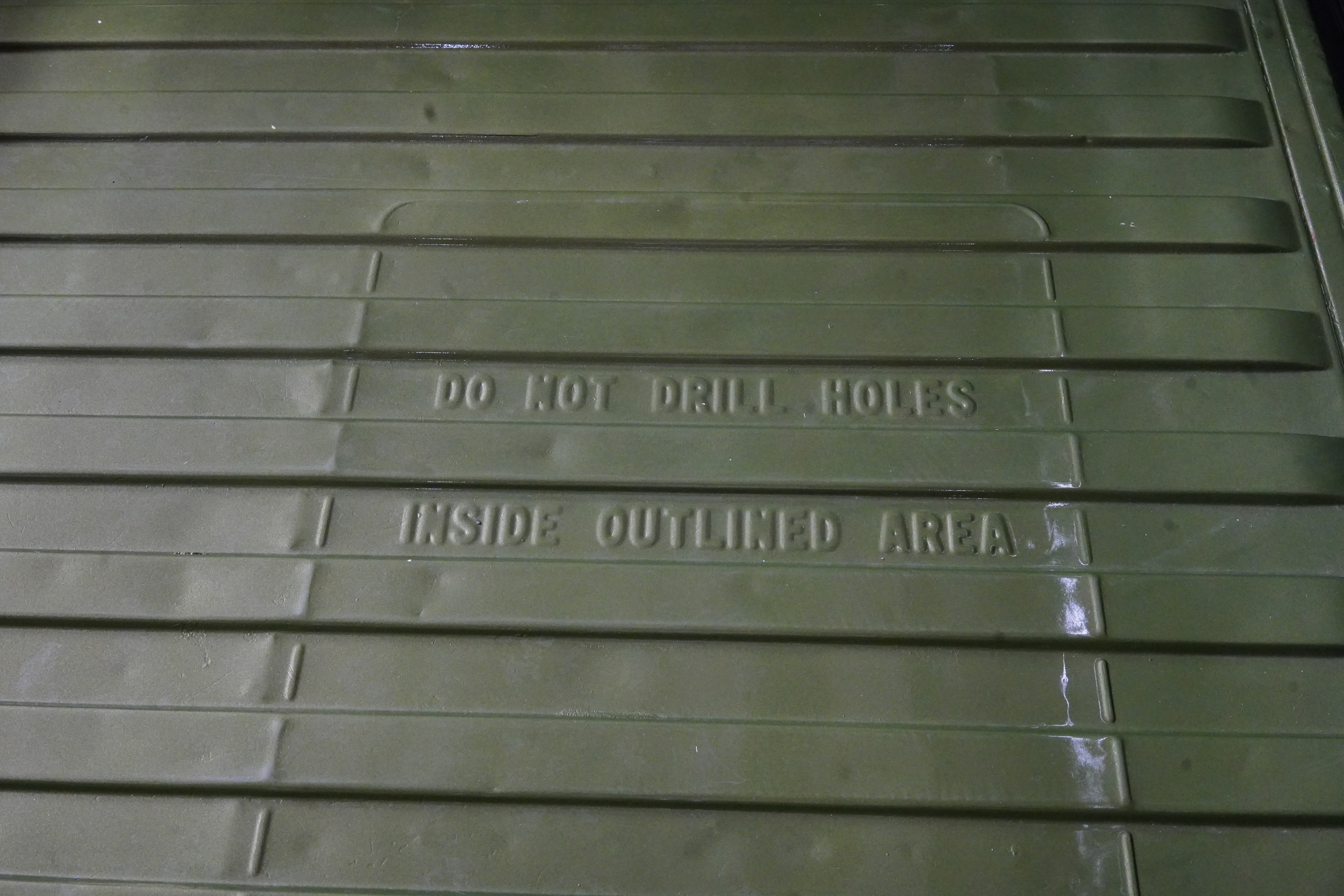
Door pocket held on with quarter-turn clips
Pocket easily removed from car for carrying purposes

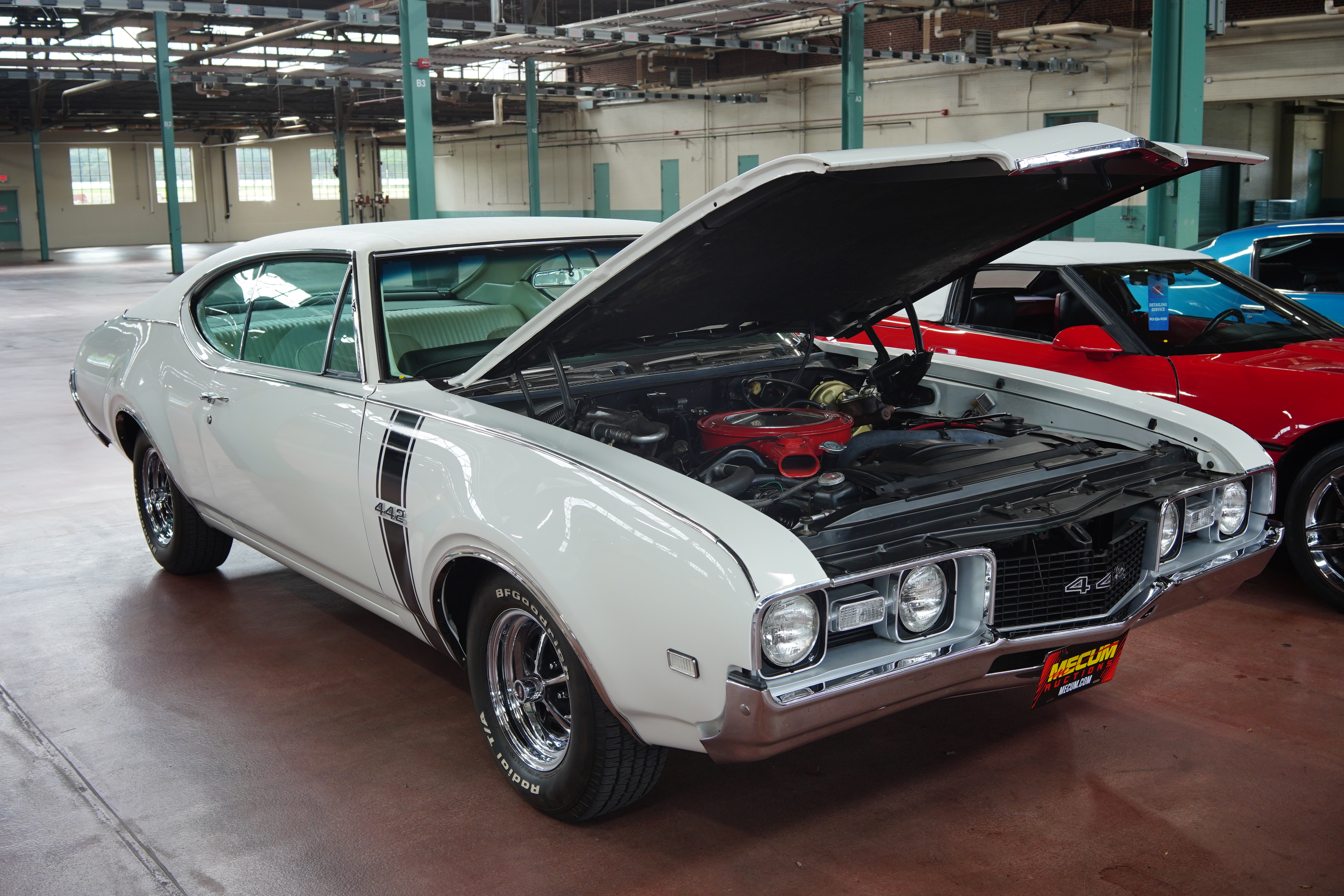
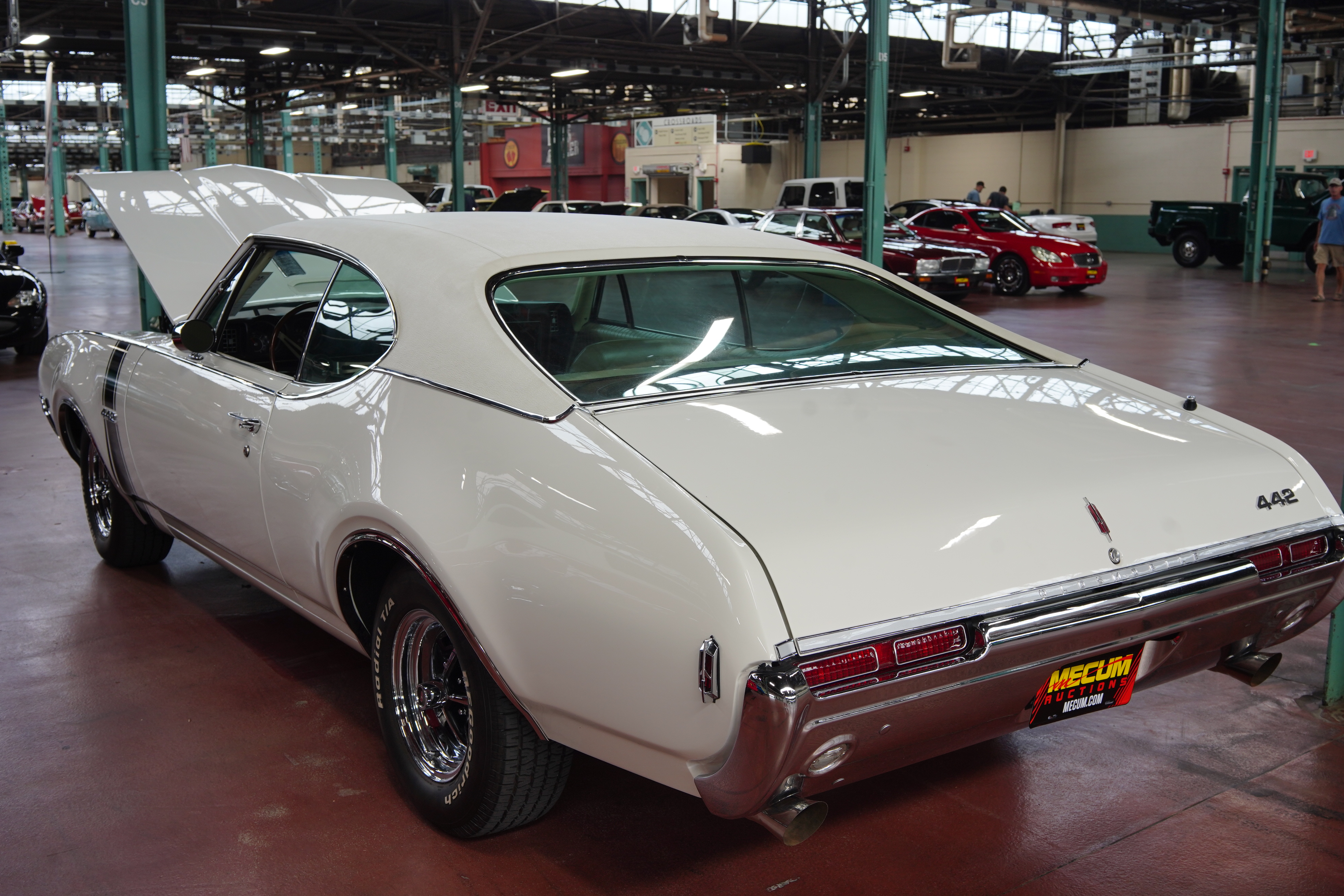
Lot T291, 1968 Olds 442 two-door hardtop, triple white, 400 V-8, automatic, windshield sign claims 10,000 miles (unverified), factory A/C, AM radio with 8-track player, sign states, “concours restoration,” yet hood hinges were so stiff that I was unable to lower the hood without fear of inflicting sheet metal damage.

SOLD for $43,000. All 1968 Cutlass models are special to me because of my Aunt Rita, who bought a new ’68 Cutlass S two-door hardtop, a car I loved. I don’t see too many ‘68s (but check my Spring Carlisle report from earlier this year where there were two). This one at Mecum was nice but not quite “concours”. The 442 model brought out the bidders.


NOTABLE NO-SALES


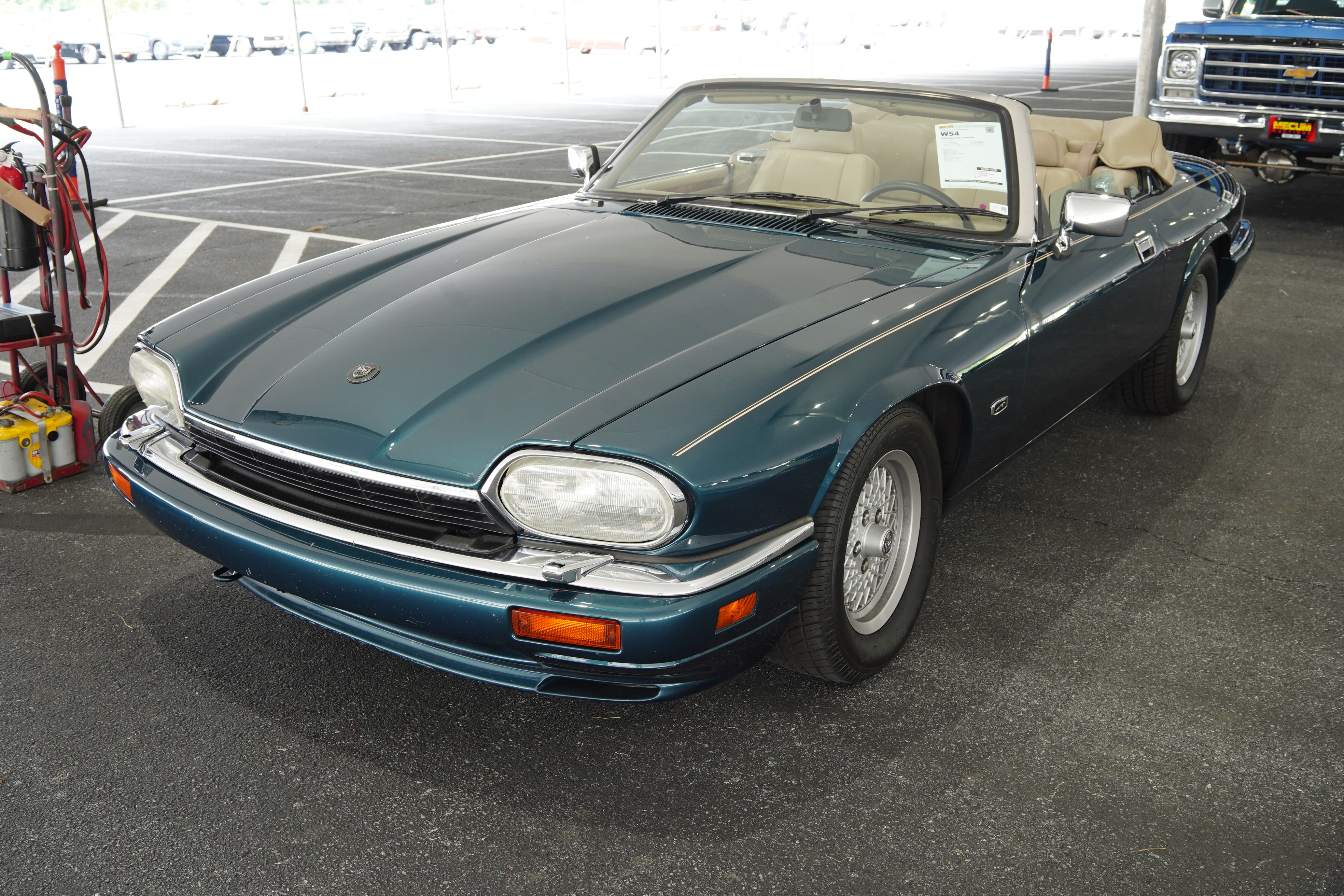
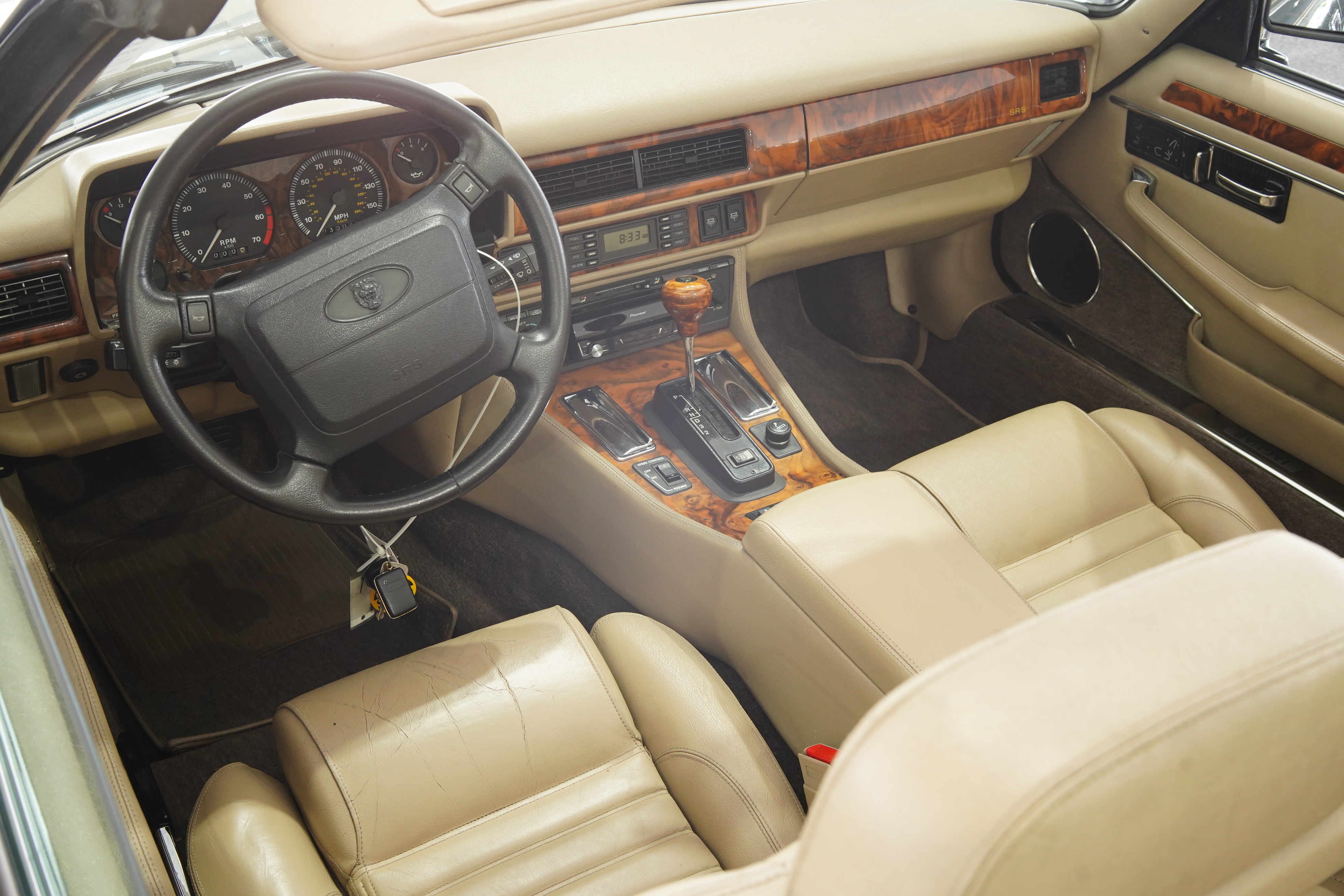
Lot W54, 1994 Jaguar XJS convertible, green paint, tan top and interior, 4.0L inline six cylinder, automatic. Six-digit odometer read 30,000 miles. Driver’s seat leather shows minor wear. An attractive car, especially with the six (as opposed to the V-12).

NOT SOLD at high bid of $8,000. I inquired at the “Bid Goes On” desk about the car, stating that I was unable to find it. The Mecum employee told me, “the guy checked out and took it home. I understand he’s not coming back.” I asked what his reserve was and was told, “$12,000.” Interesting marketing approach: Pay to enter the auction, and when the bidding doesn’t reach your reserve, take your ball and go home.

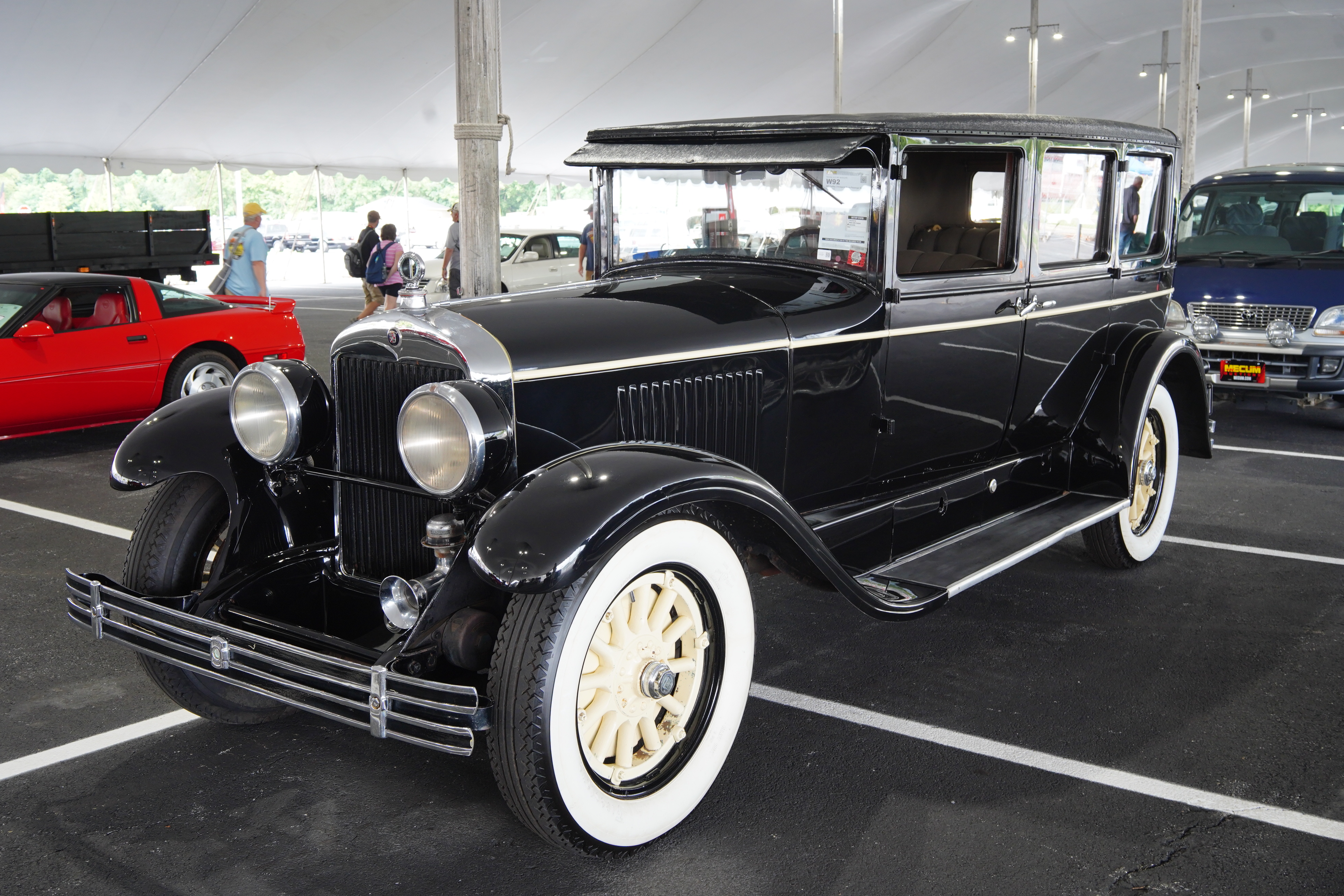
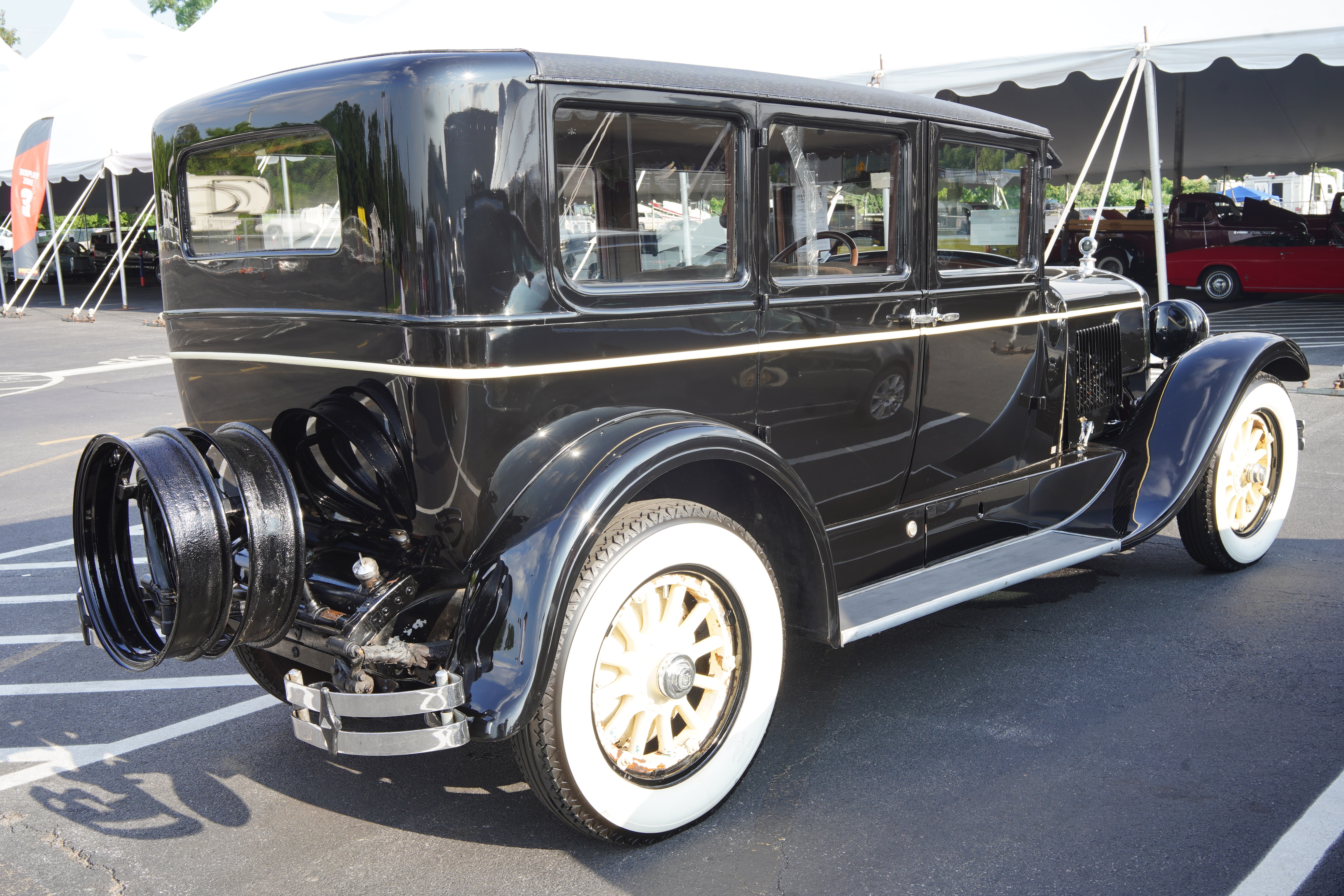
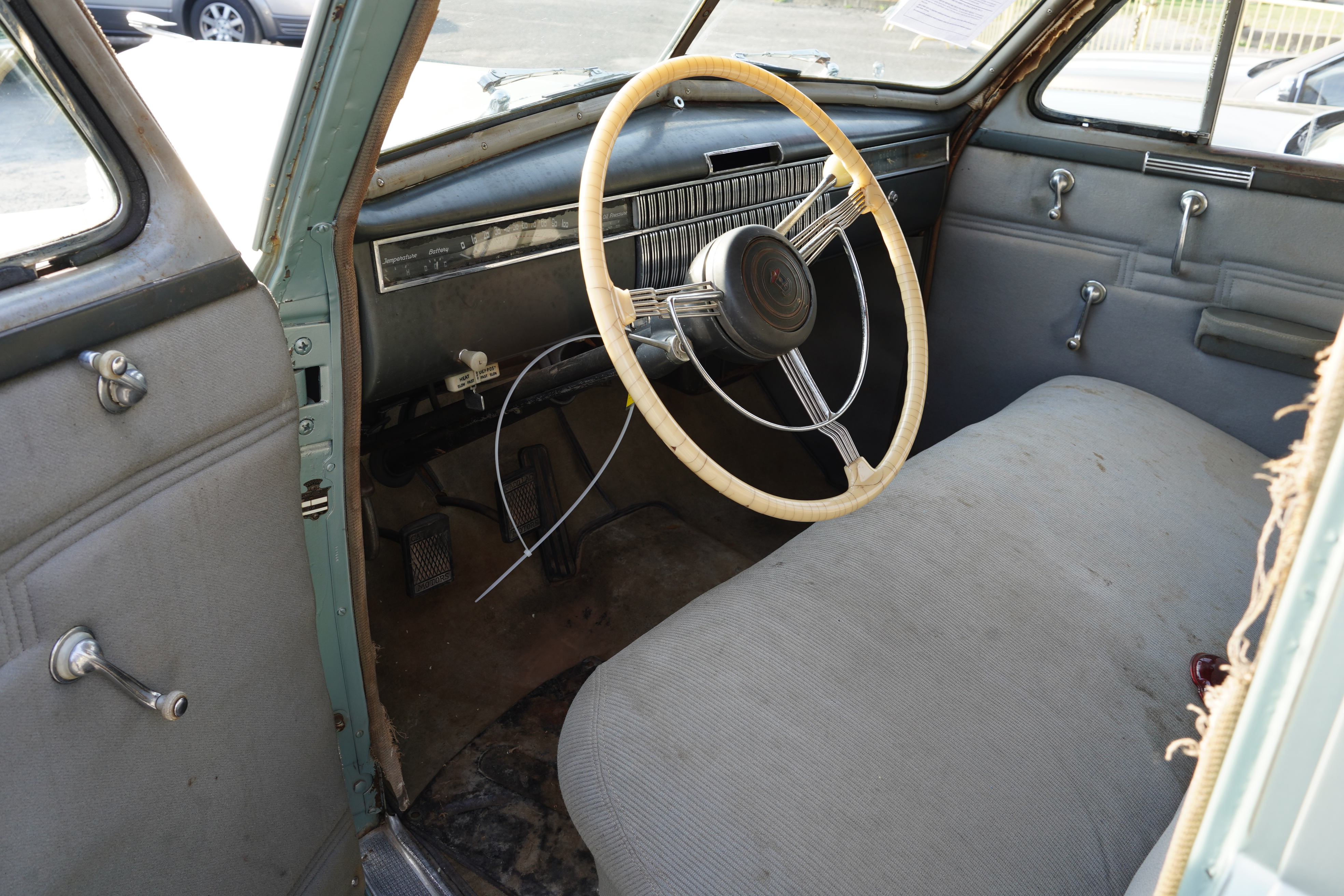
Lot W92, 1927 Cadillac 314 Imperial seven-passenger sedan, repainted black, yellow wood wheels with whitewall tires, interior is brown and allegedly original, 314 V-8, three-speed manual transmission. Three rows of seats: front bench seat, second row foldable jump seats, and third row bench with seat back against rear window. A stately-looking old thing with tons of presence.

NOT SOLD at high bid of $12,000. It’s very unusual to find any pre-war cars at a Mecum auction, and what a car this is! I did not get a chance to see or hear it run, so I can’t comment at all about that. From the outside, aside from two spare wheels without tires mounted at the rear, it appeared to be all there. The interior is a conundrum: it’s original enough that you might want to try to preserve it, but it’s deteriorated enough that it might deserve to be redone. The present owner left a notebook on the front seat, taking TWO pages to describe the procedure to start the engine and then drive the car. The auctioneer announced that at $12k, “it won’t take much more,” but I didn’t inquire. As of this writing, it’s still for sale on Mecum’s website.

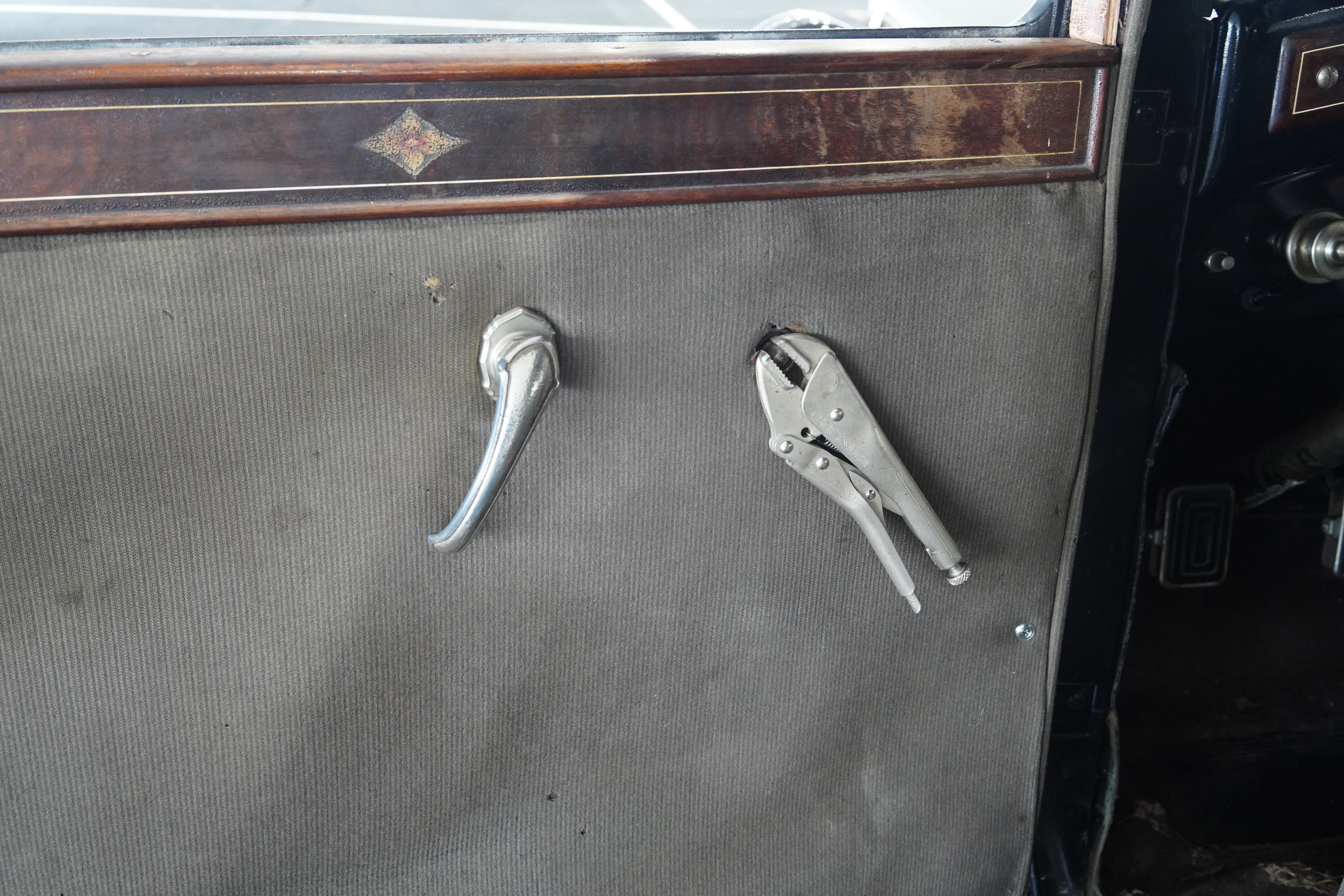
No word on whether the Craftsman locking pliers are included with the sale

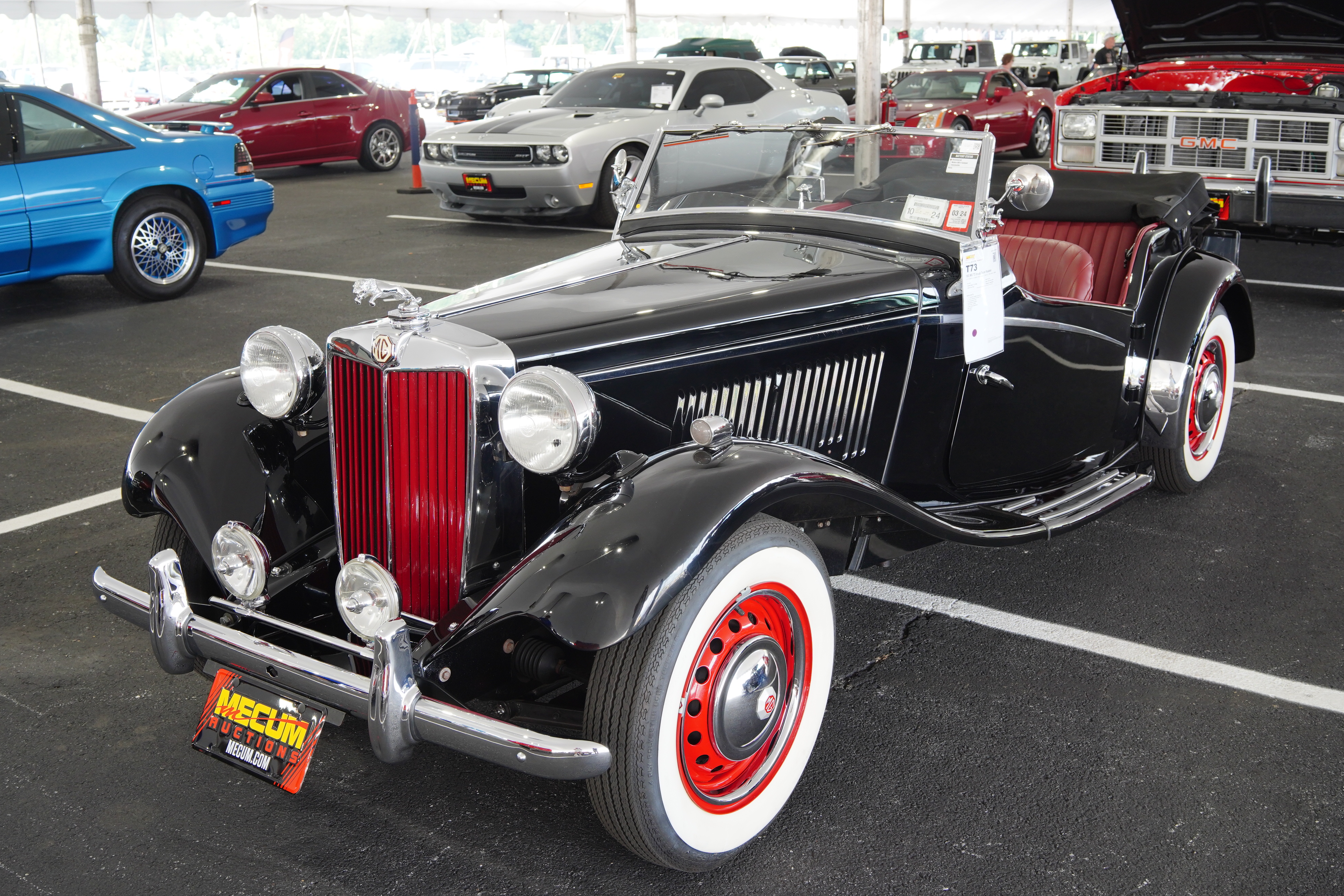
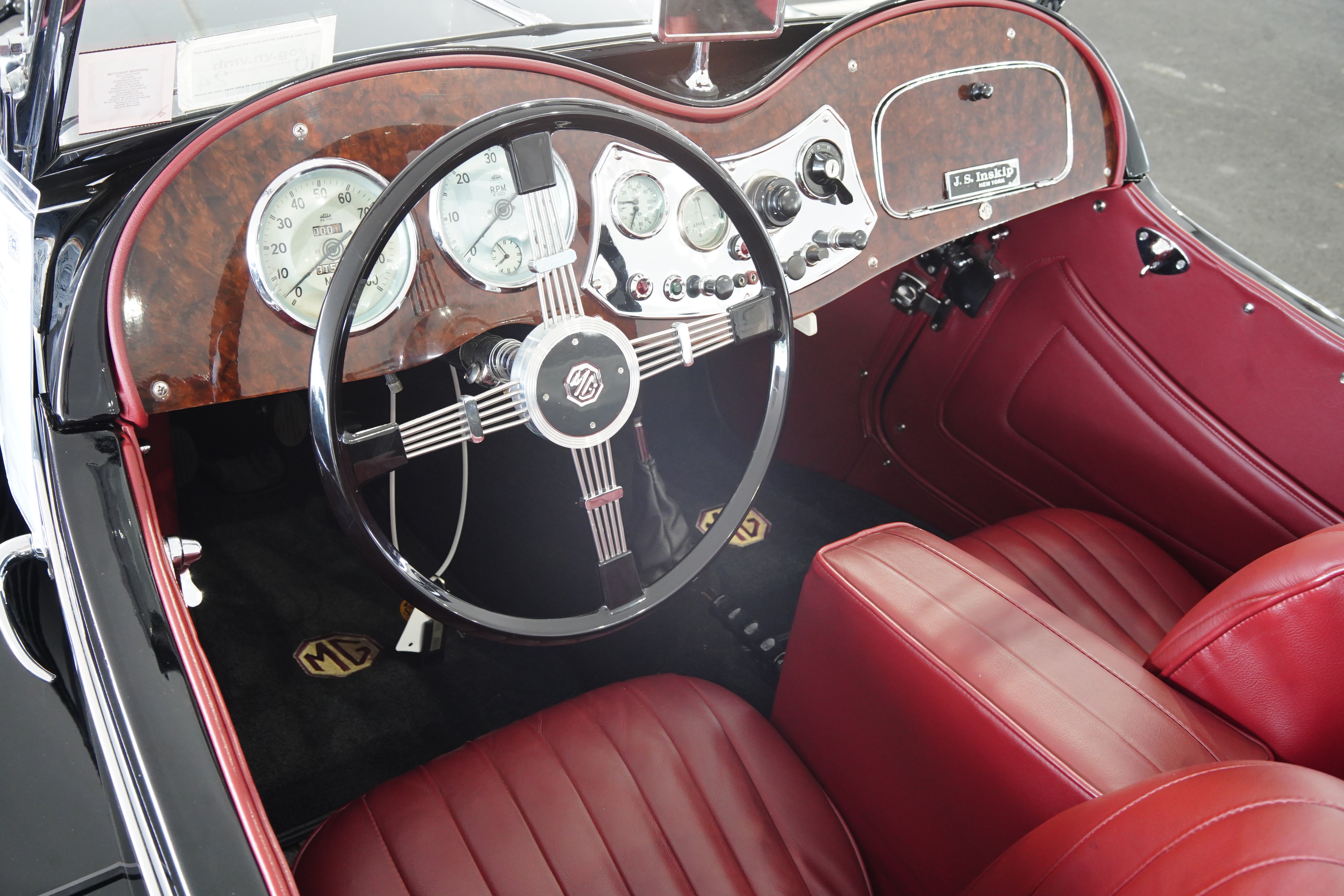
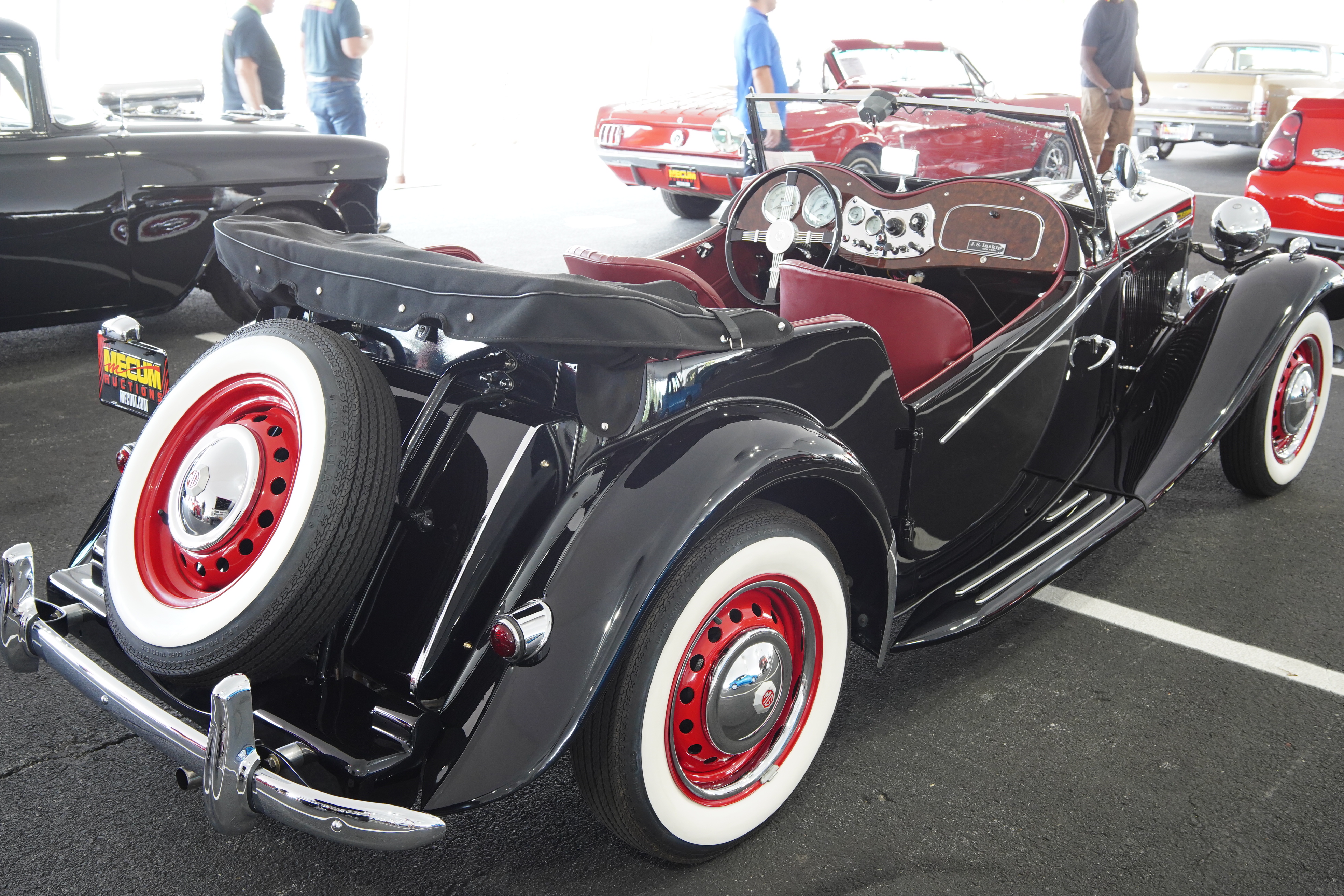
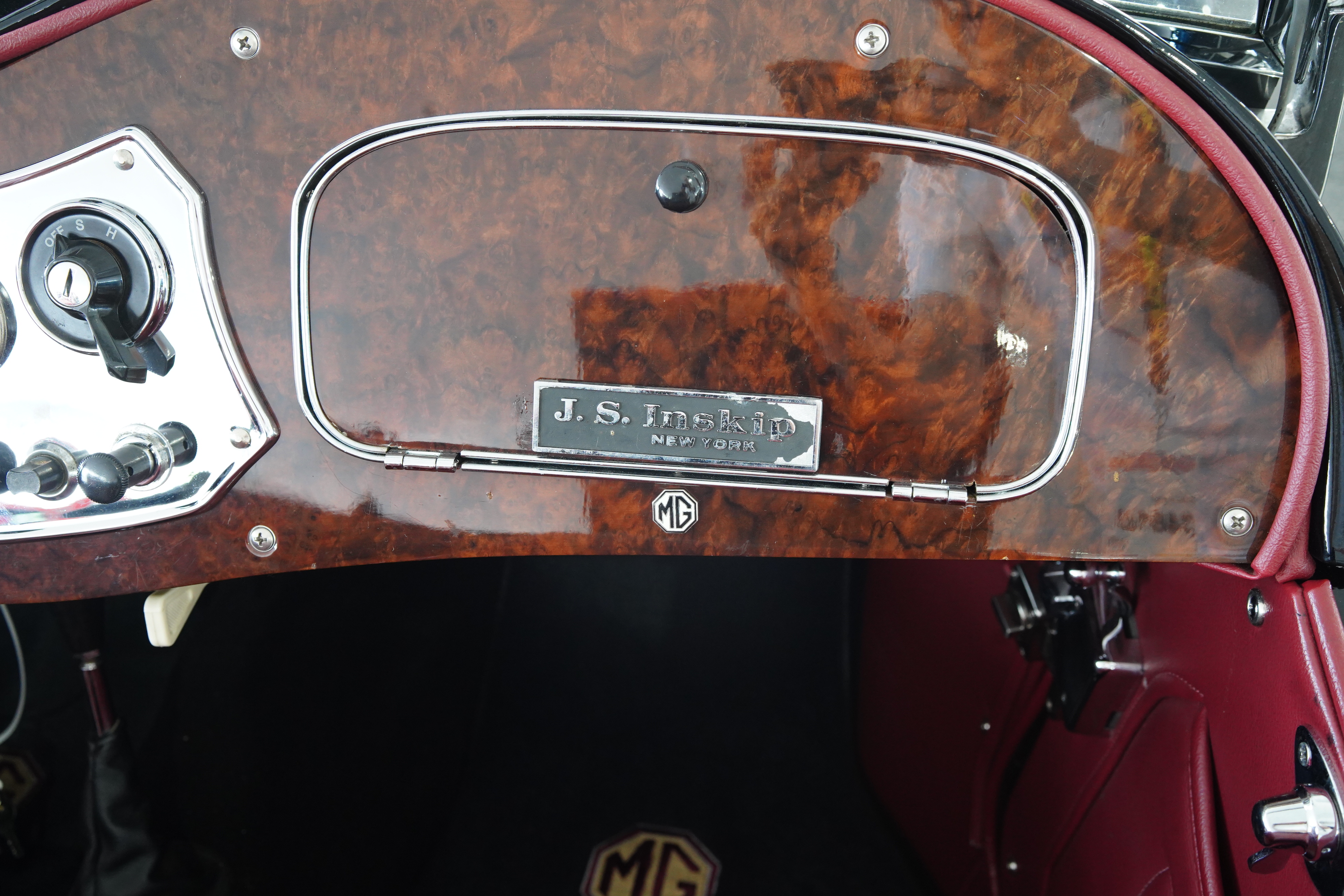
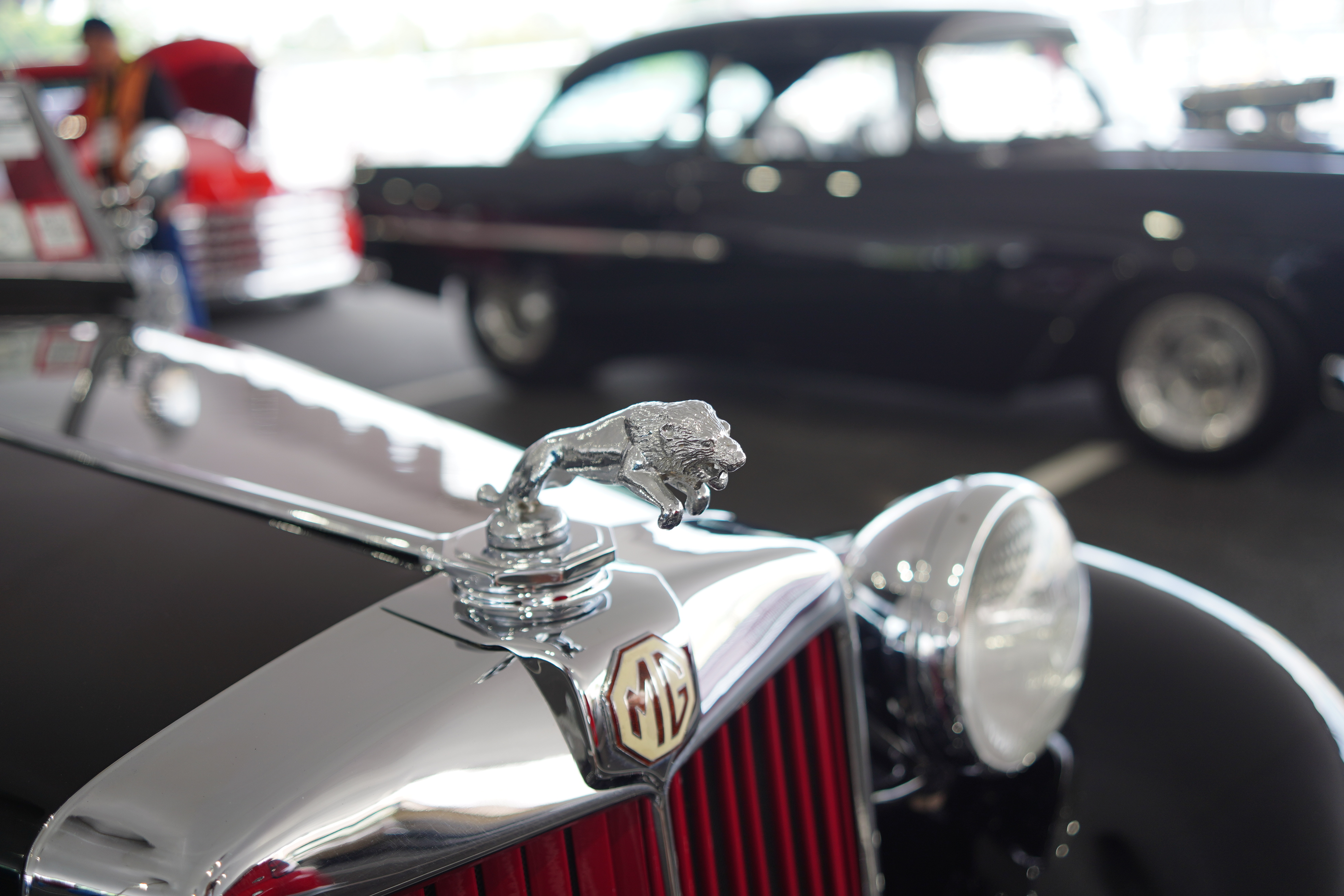
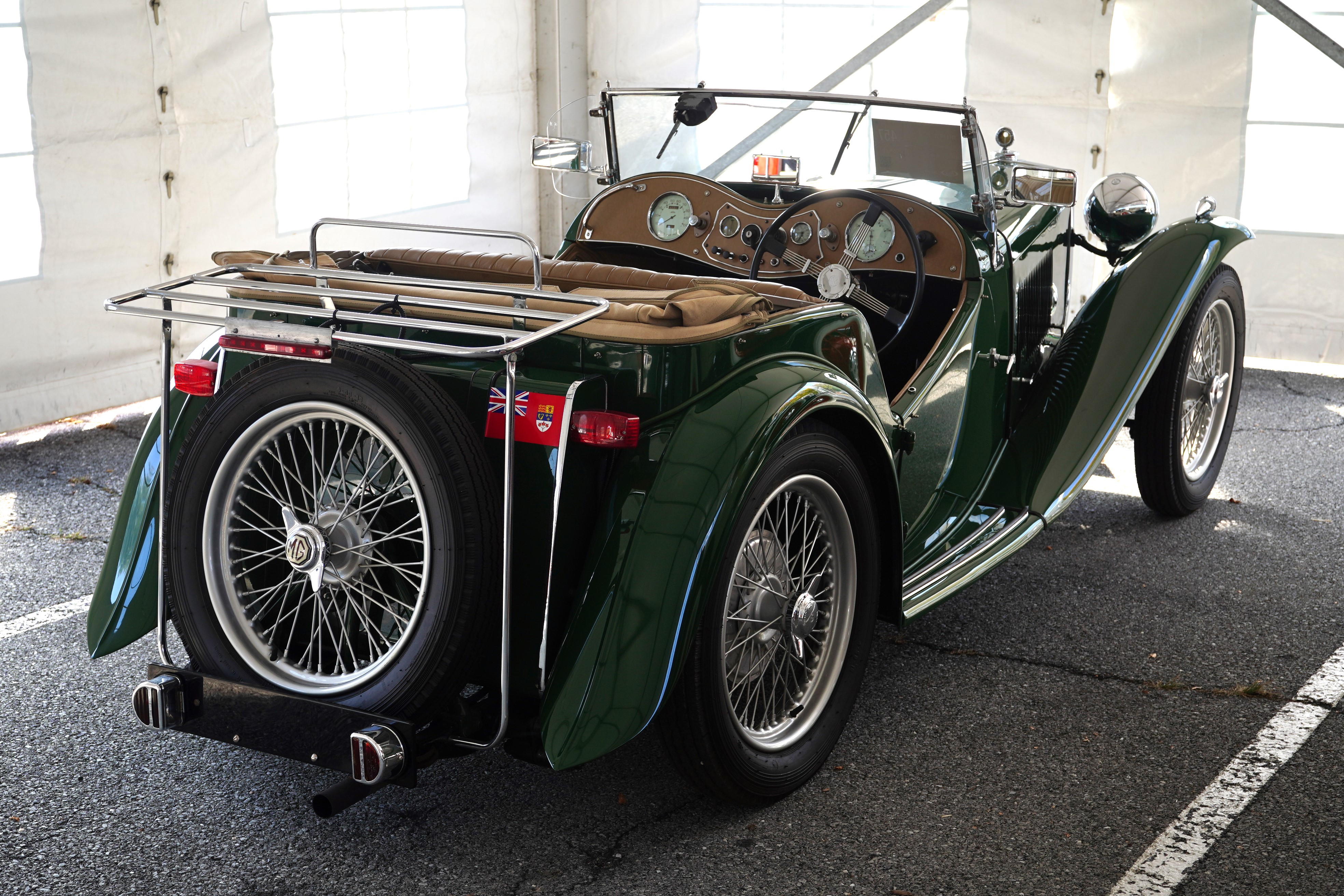
Lot T73, 1953 MG-TD Inskip Tourer Roadster, black paint, red interior, black top with side curtains, red wheels with small hub caps, whitewall tires, 1250cc inline-four, four-speed manual, odometer reads 31,535 (not verified). Supposedly one of twelve produced by J.S. Inskip, the NYC-based MG importer. They took an MG-TD, lengthened the chassis by ten inches, and added a rear seat. I never heard of this particular variant before, although I have heard of J.S. Inskip.

NOT SOLD at high bid of $22,000. I approached this car from the rear and had no idea what it was. Even from the front, which was not changed from the original TD, it looked quite different. To my eye, the extended wheelbase improved the car’s looks. With only twelve produced, there’s no easy way to assign a market value, but I can’t imagine that we weren’t far off at $22k.


FINAL THOUGHTS

Yes, kids, if you wanted a phone in your car in 1967, it still had a rotary dial


Difficult to believe now how much car styling used to change each year. Just three years separate the 1956 Chevrolet on the right from the 1959 Chevrolet on the left.


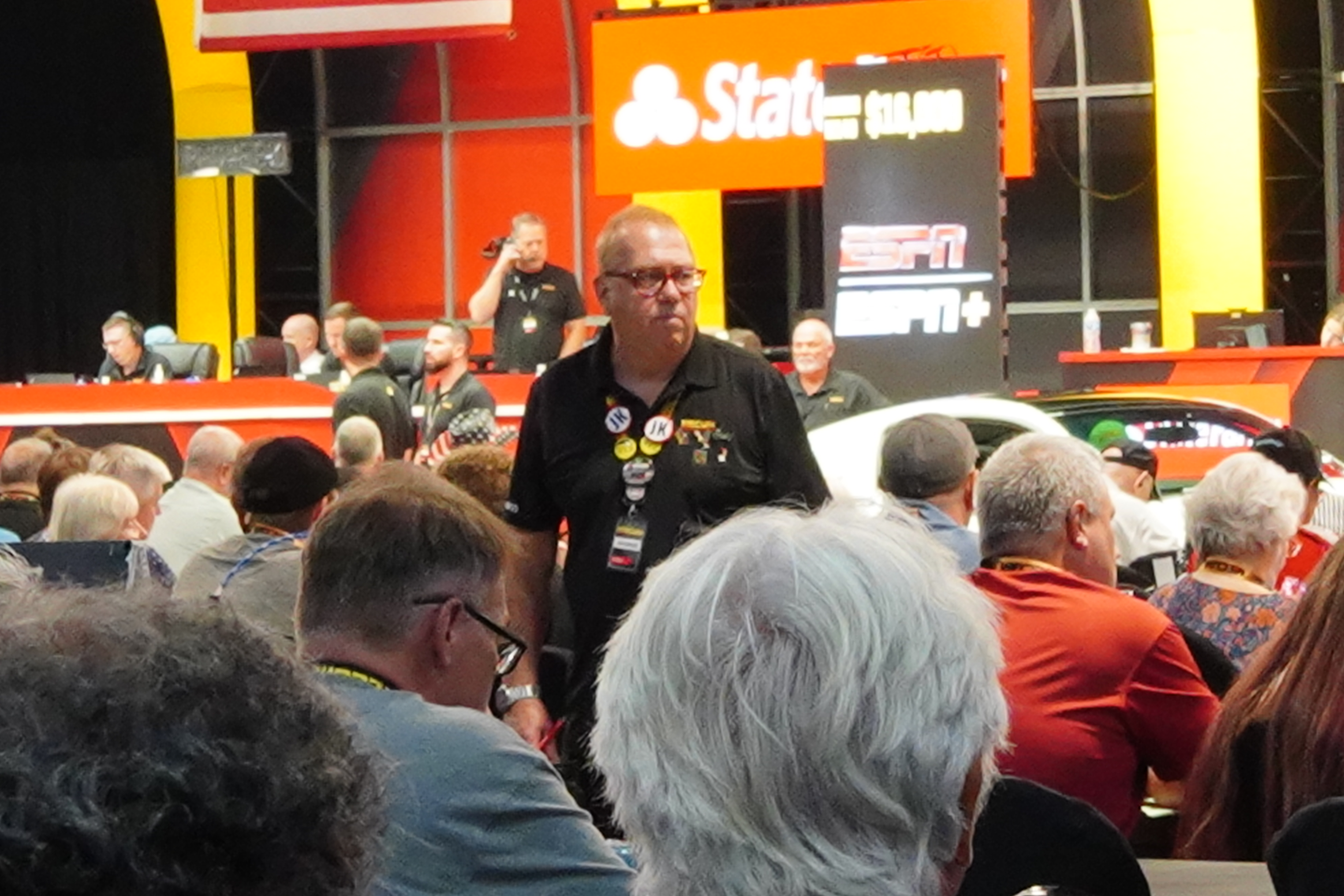
Chicken George himself, looking for bids

Entire blog post content copyright © 2025 Richard A. Reina. Text and photos may not be copied or reproduced without express written permission.


Carlisle Auctions, April 2025

I have been attending auctions at Carlisle for over ten years (my oldest post covered the April 2015 event), which makes for plenty of observations about the comings and goings. I’ve always found the smaller and somewhat friendlier structure to be inviting, as the event has a “mom & pop” feel to it. Sometimes that’s good, and sometimes it’s not, and I felt that in 2025, it didn’t go so well for Carlisle Productions.

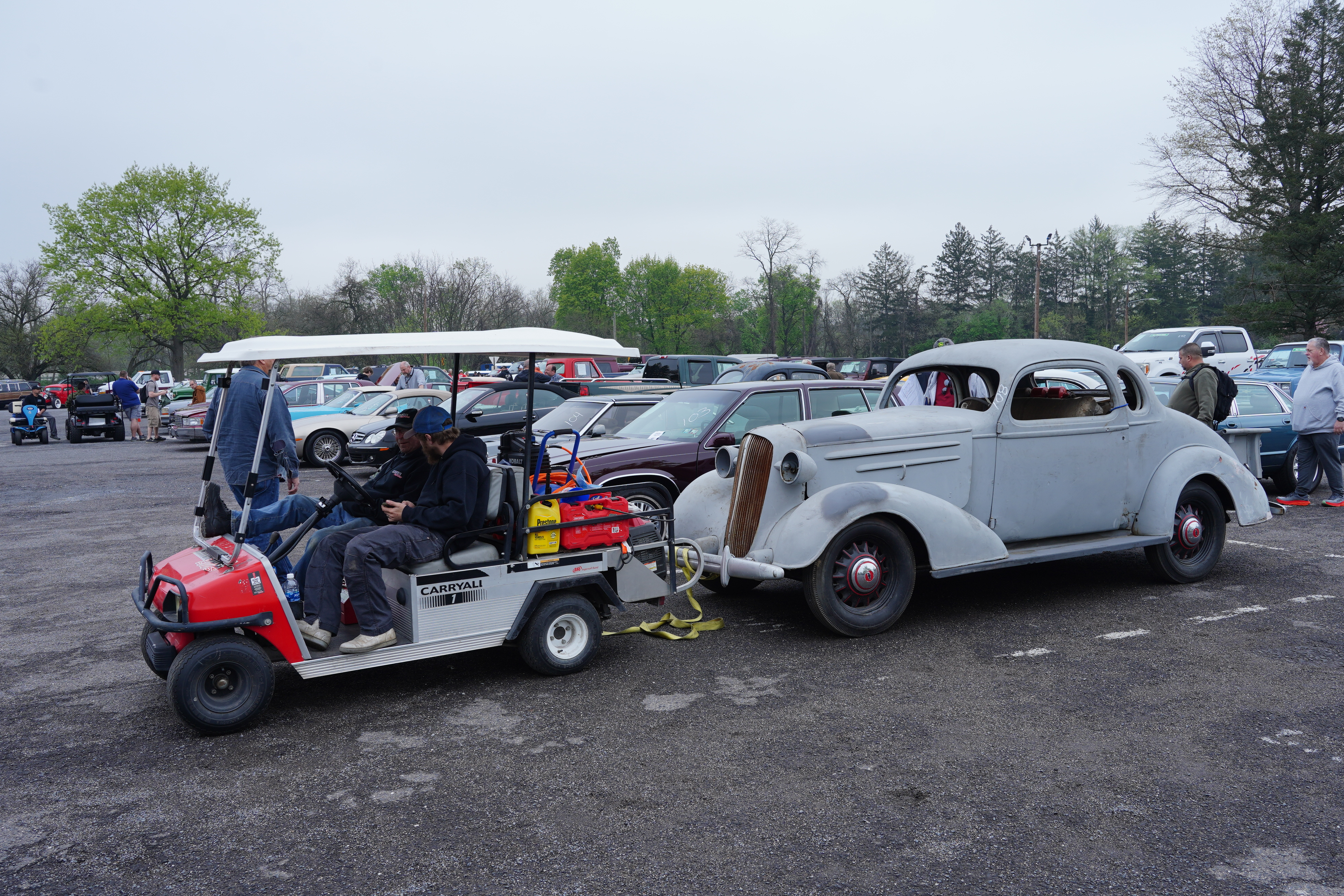
The calm before the storm

This year, the Spring Auction was held on Thursday and Friday, April 24 and 25. It was one of the more disappointing outings, especially based on the sell-through rate. I personally recorded 81 cars crossing the block on Thursday, and an additional 121 vehicles on Friday. On both days, the sell-through percentage was 45%, possibly the lowest I’ve seen anywhere. (By comparison, other auctions I’ve attended through the years have had sell-through rates between 60 and 90%.) A successful auction requires three elements: quality consignments, reasonable reserves, and a motivated room full of bidders. In general, I found the quality of the cars on the ground was poorer than in previous years. Very few cars were labeled “No Reserve,” and based on high bids, I felt that owners’ reserves were unreasonably high. Nevertheless, some cars did sell, and below I report on fourteen which did, plus another four cars of interest which did not meet reserve.

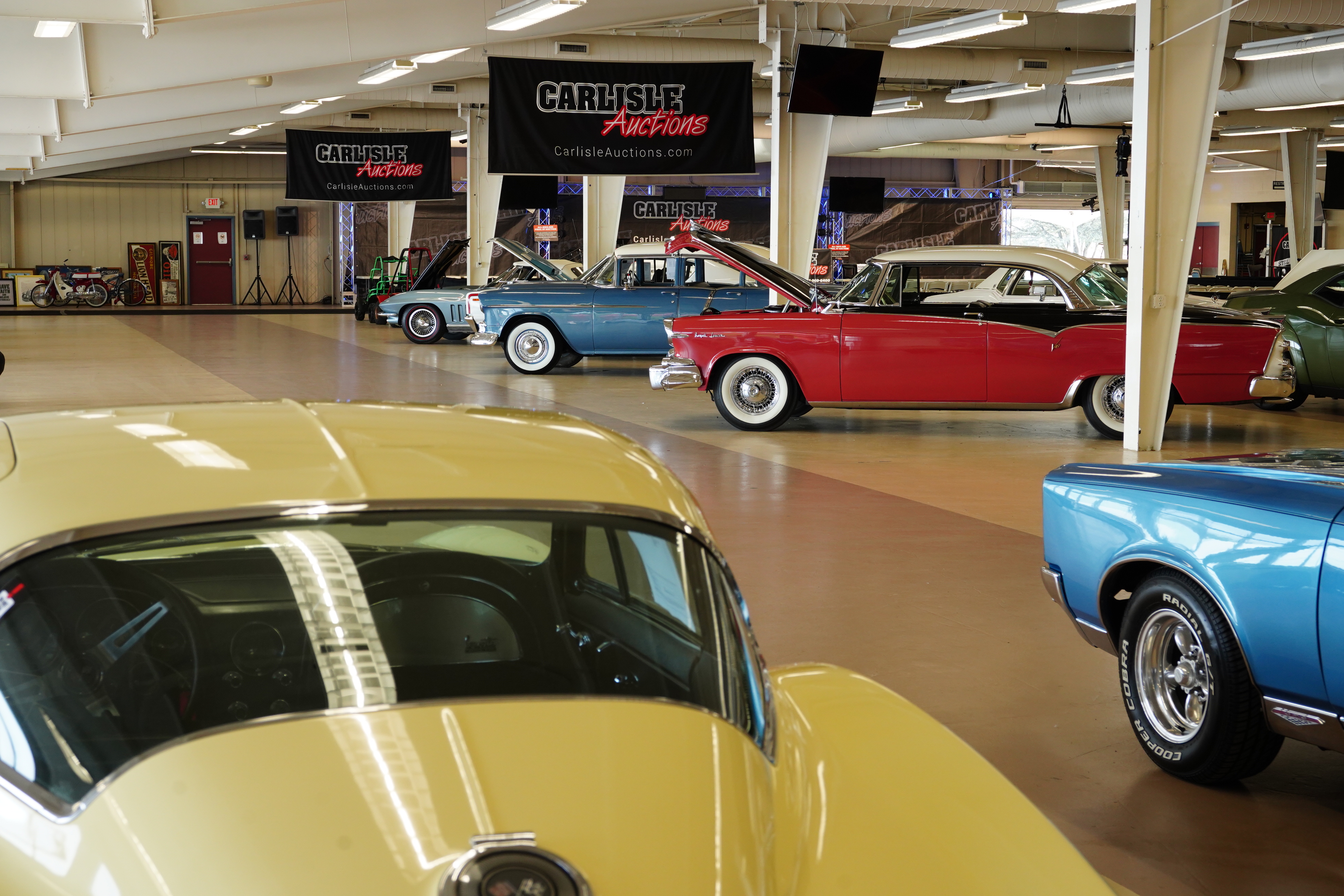
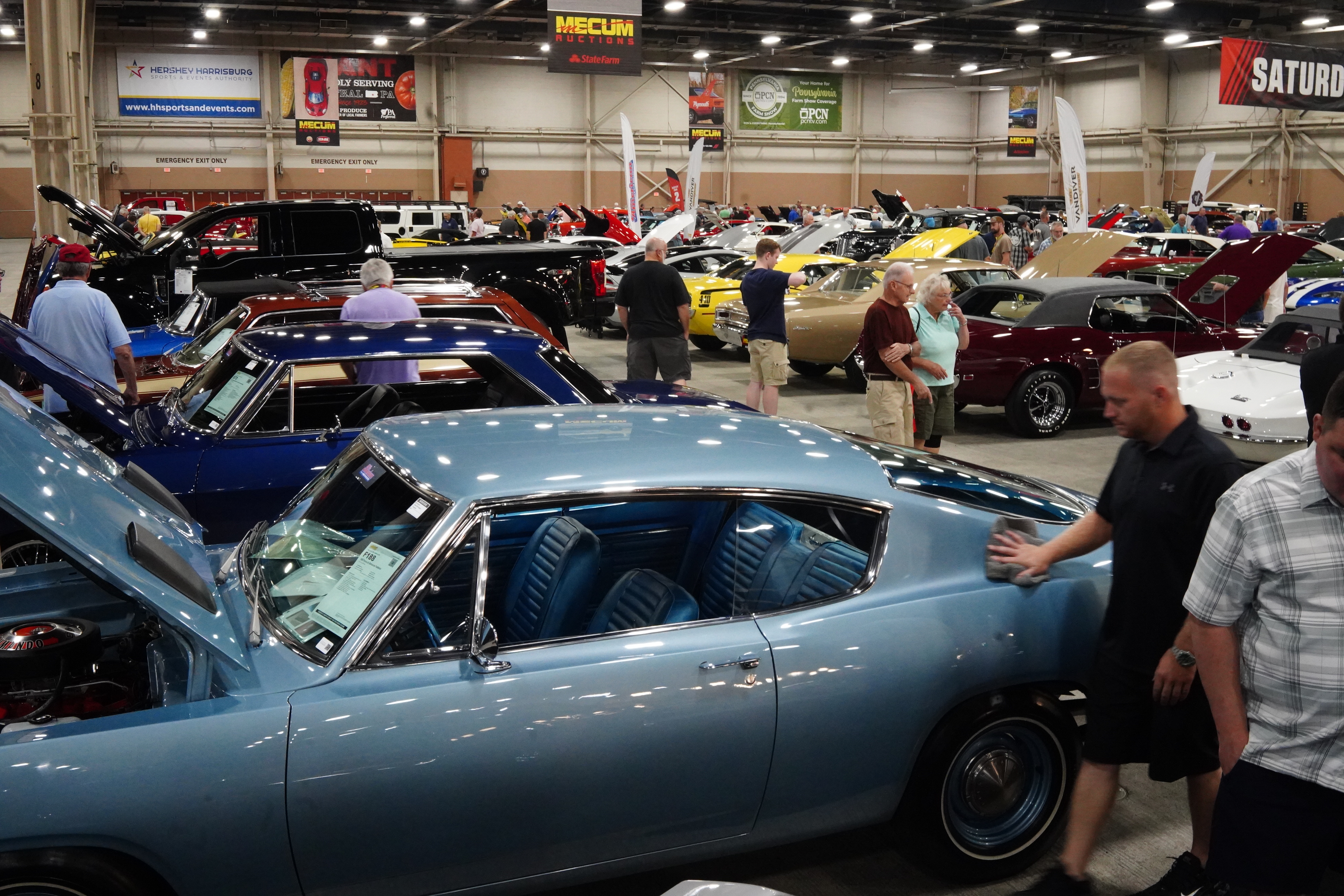
A few select cars are displayed inside

Carlisle allows the consigners to set their own reserves. I personally don’t think that is healthy, because almost always, the owner has an unreasonable expectation of their car’s value. At Carlisle, the auctioneer will sometimes announce the reserve if the car doesn’t meet it. Some examples: a BMW “Alpine” was bid to $20k, with a $30k reserve; a Ford Falcon restomod wagon was bid to $9k with a $20k reserve; a 2012 Mustang Shelby was bid to $37k with a $46k reserve; and a Dodge Super Bee was bid to $65k with a $80k reserve. The point I’m trying to make with these examples is the large gap between high bid and reserve. If the gap was within 10% perhaps, there would be room to negotiate a close. That is a much more challenging prospect with these large gaps.

Other observations: cars sometimes crossed the block out of lot number order; more than once, the auctioneer lost track of where the high bid was; on one occasion, the auctioneer misread the reserve price and mistakenly declared that the reserve had been met when in fact it had not; and too often, the car’s owner was not present so the auction team was unable to determine if the high bid would be accepted. If I had been an active bidder in any of these situations, I would have been frustrated. Let’s hope these were one-off issues which will not become the norm.

As we’ve done for years on Richard’s Car Blog, the sold cars are arranged in HAMMER PRICE ORDER, so that you can better gauge what your money could buy for you.

SOLD LOTS

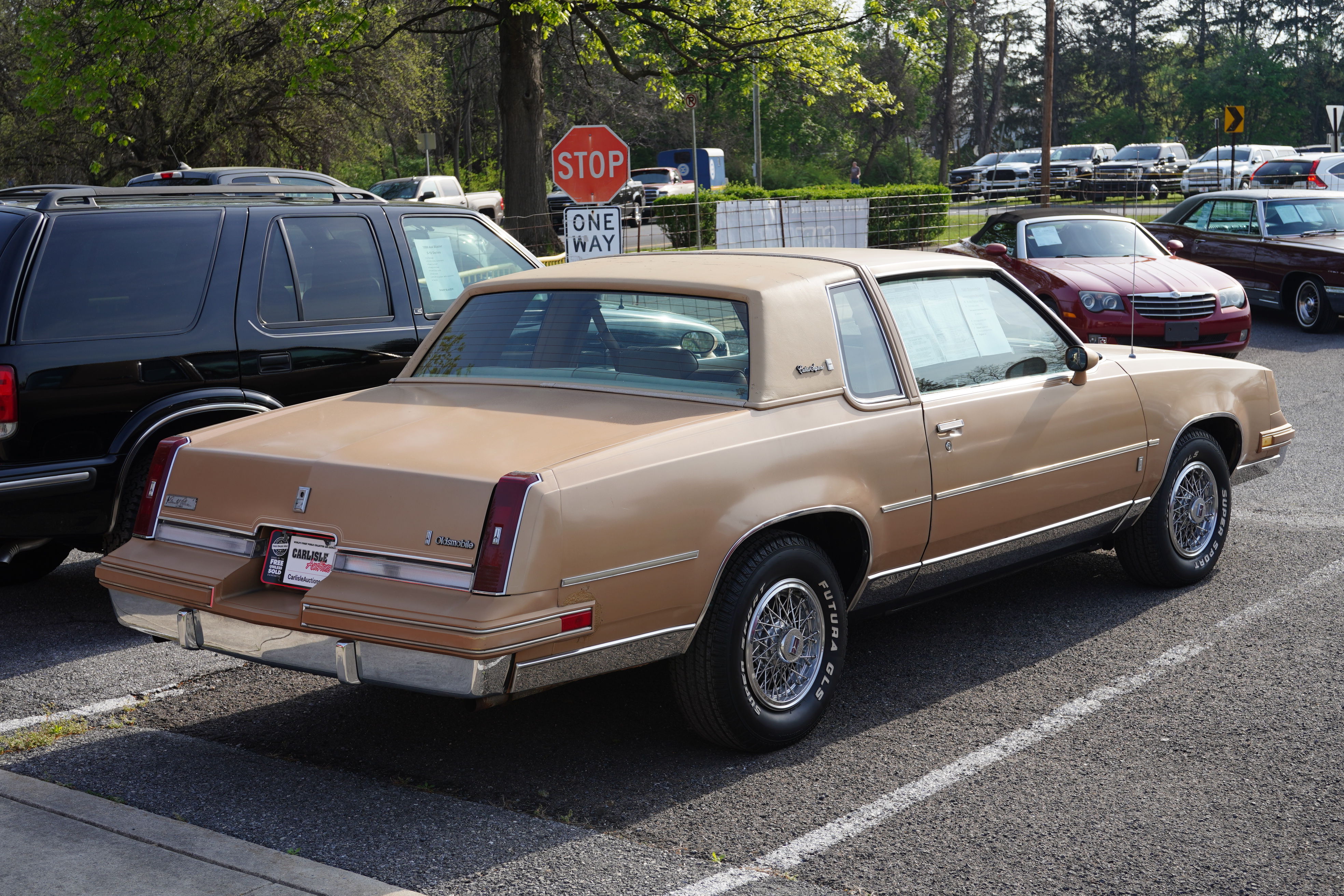
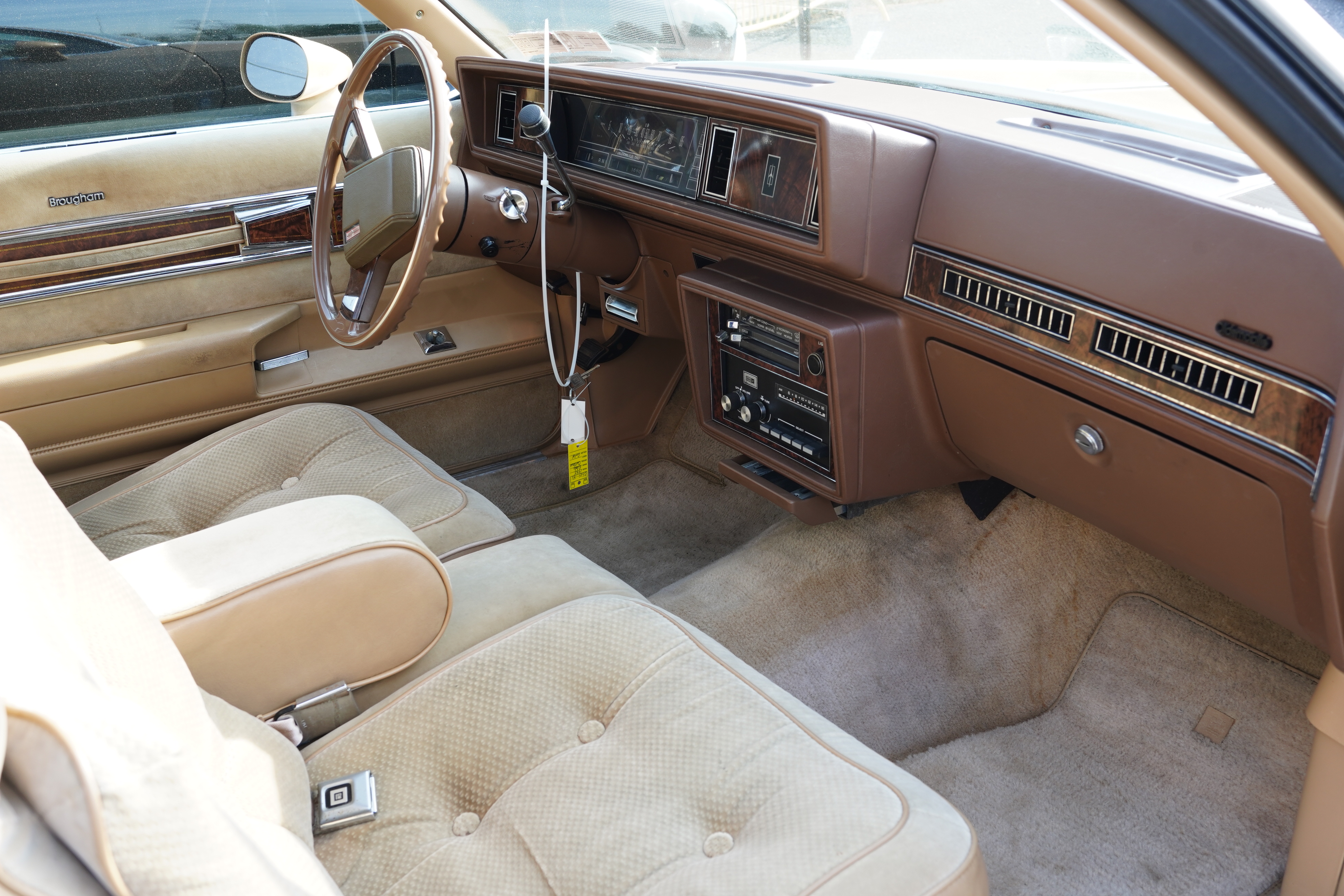
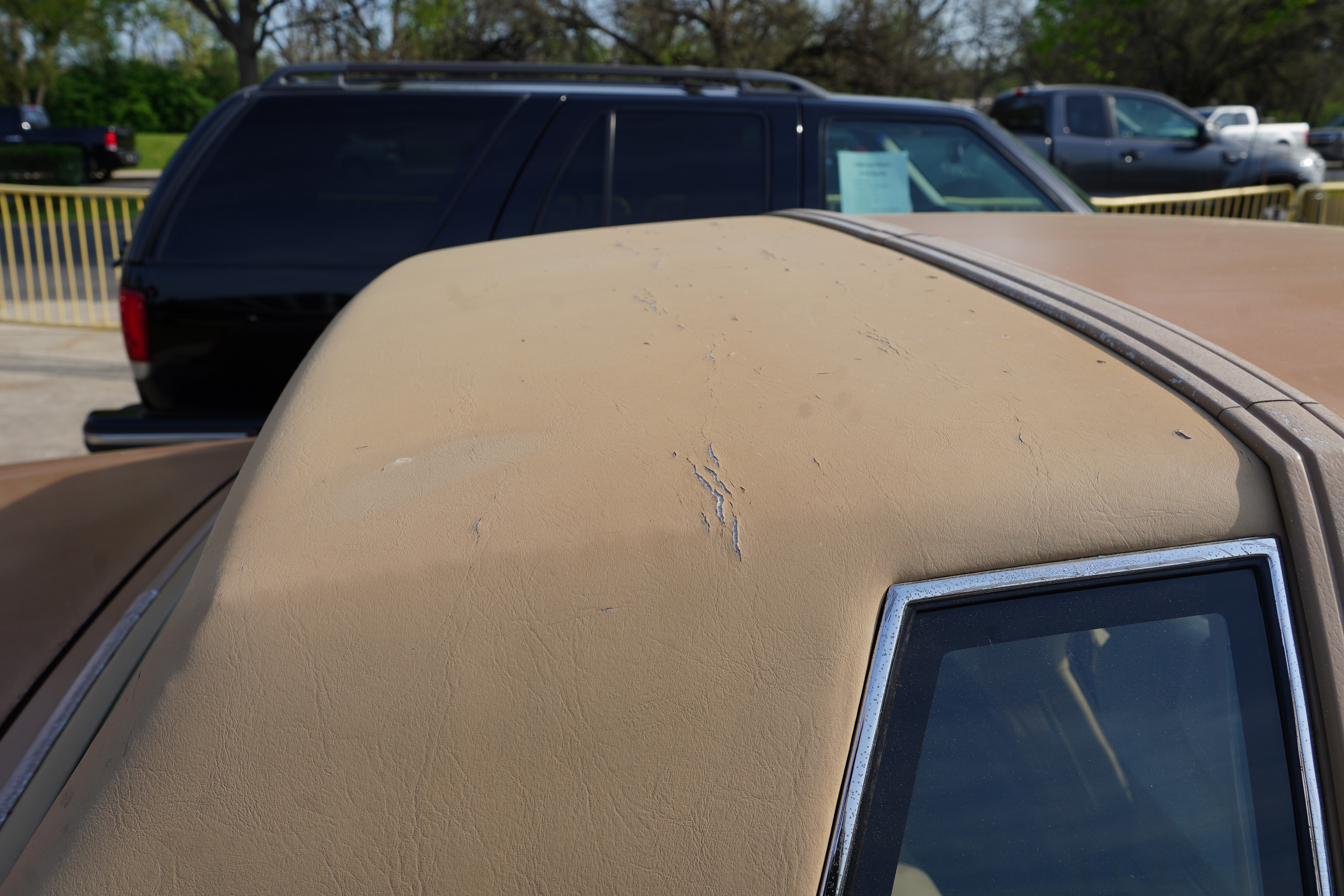
Lot 181, 1985 Olds Cutlass Supreme Brougham, 2-door sedan, sign claims 38,000 original miles, one family owned. Gold paint, gold vinyl half-roof is split and flaking, beige cloth upholstery. In storage and not driven since 2009, sign says “car needs some love.”

SOLD for $4,500. May need full reconditioning after 16 years of storage.


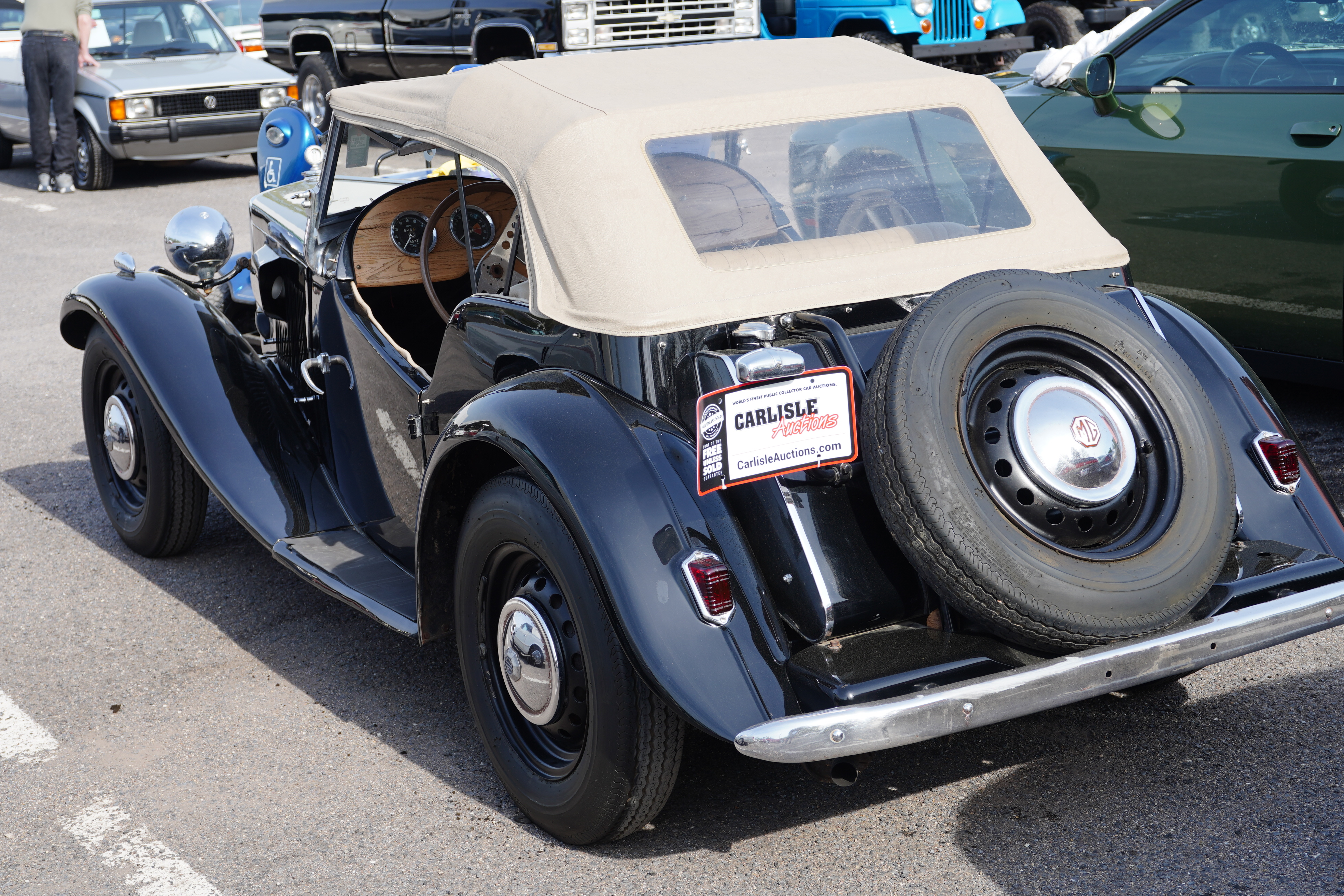
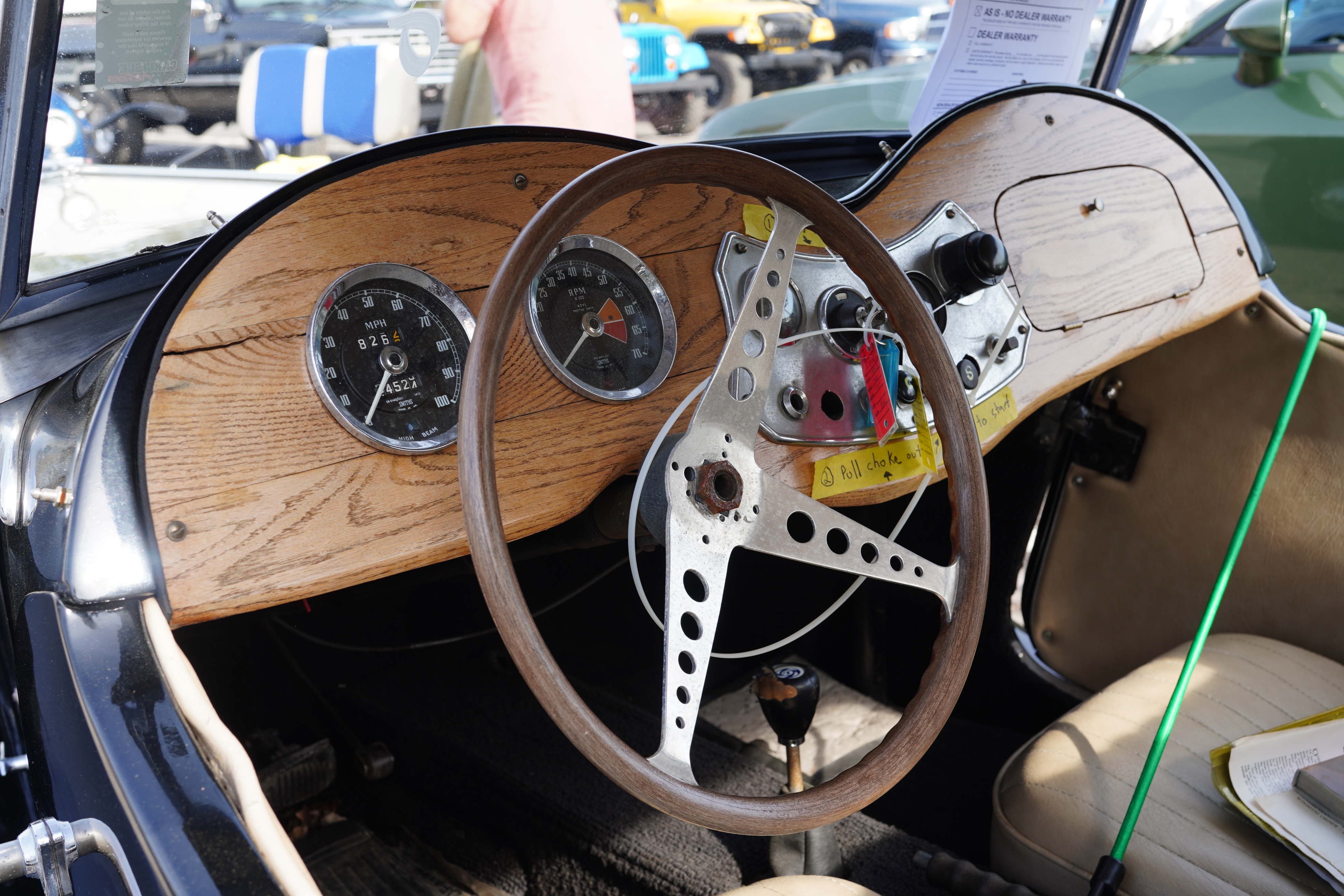
Lot 245, 1953 MG TD. Black, off-white roof and interior. Black painted wheels, small hub caps, blackwall tires. Wood dash is cracked, aftermarket passenger door safety strap does not inspire confidence. Nasty looking thing.

SOLD for $7,250. Don’t know if it runs, presume it will need everything.


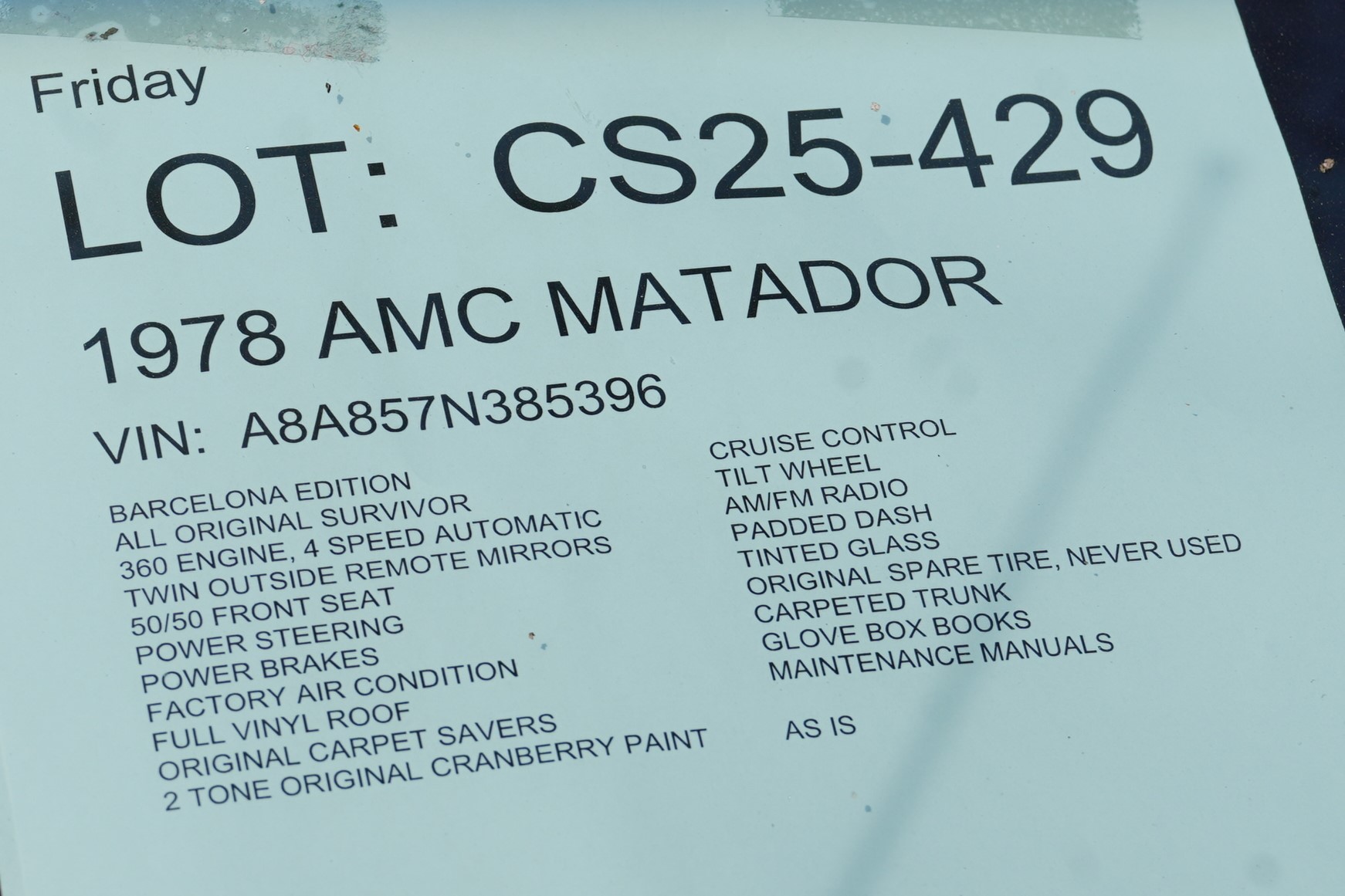
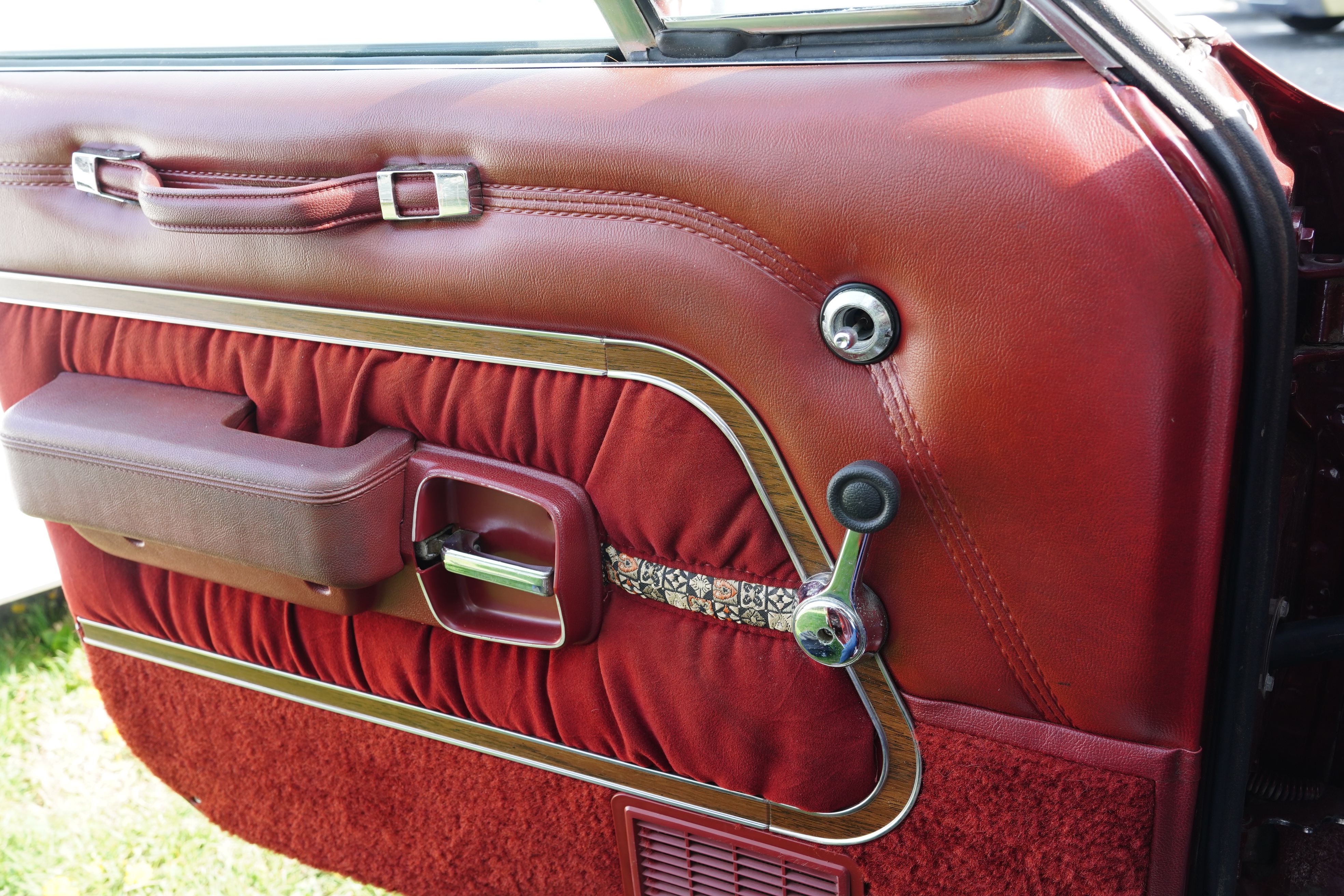
Lot 429, 1978 AMC Matador “Barcelona” 4-door sedan. Two-tone red, red vinyl roof, red plush interior. Odometer reads 32,798. Appears to be all-original and untampered with.

SOLD for $9,000. The car for the AMC fanatic.


Lot 128, 1987 VW Cabriolet, white paint, white convertible top, black and white interior, 5-speed. Sign on car claims California car with no rust, also lists much recent work done after storage period. Six-digit odometer reads 95,657.

SOLD for $10,000. While sitting in car, was unable to adjust seat height, mechanism seemed jammed. These VWs have their fans.


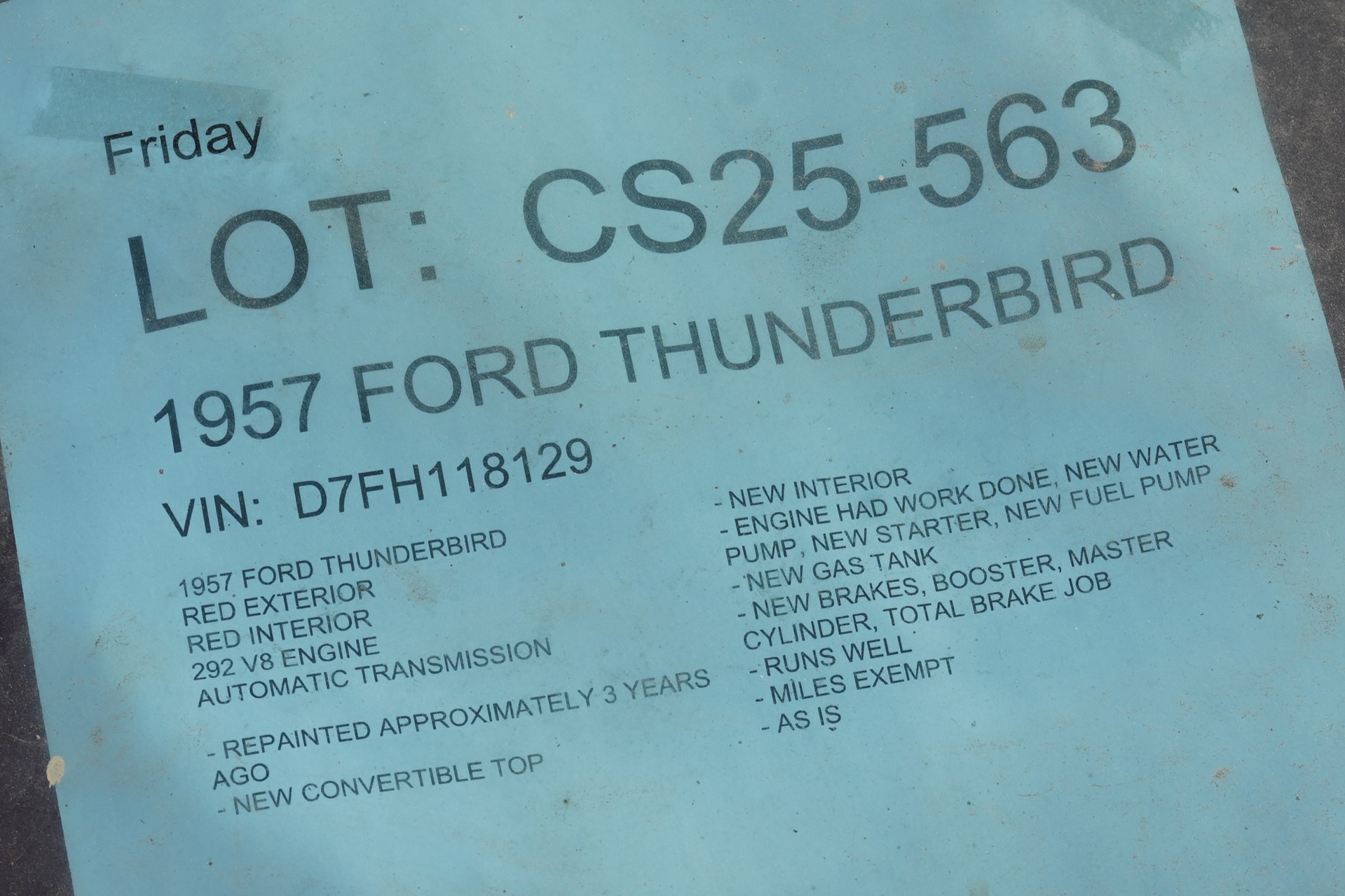
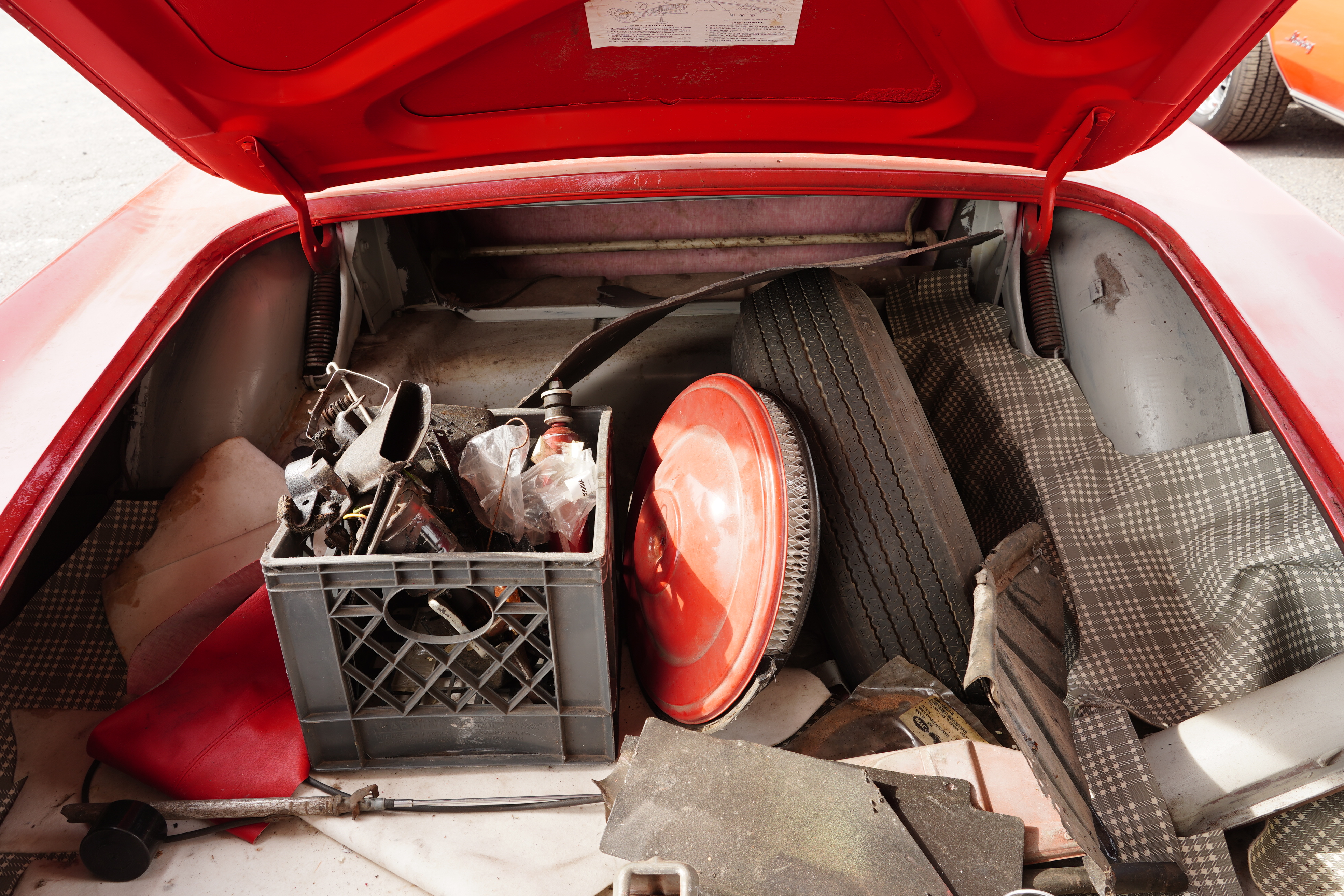
Lot 563, 1957 Ford Thunderbird, red paint, white soft top, red interior, no hard top included, automatic, power steering and brakes. Sign claims new paint three years ago. Car is in overall terrible condition, car is filthy inside and out, paint looks bad, possible signs of rodent infestation by driver’s seat. passenger door trim was removed and is lying inside car, trunk full of junk, underhood a mess. One of the biggest messes at the auction.

SOLD for $10,500. Someone very ambitious sees an upside to this that I do not.


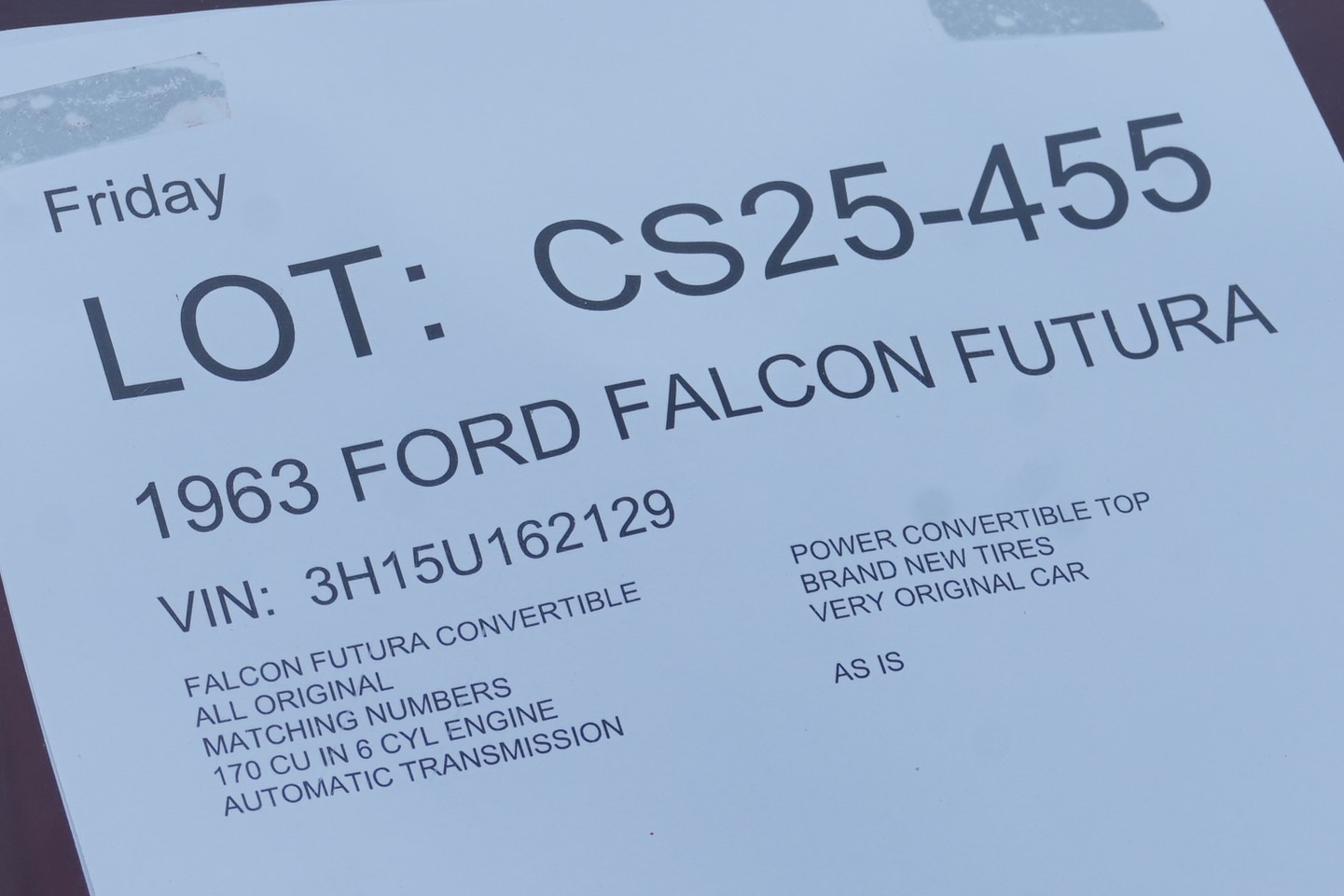
Lot 455, 1963 Ford Falcon convertible, black paint, white top, red interior, buckets and console. Six cylinder automatic. Cursory look-see shows and honest car with no glaring needs.

SOLD for $10,750. This is the next-best thing if you can’t afford that first-gen Mustang convertible.


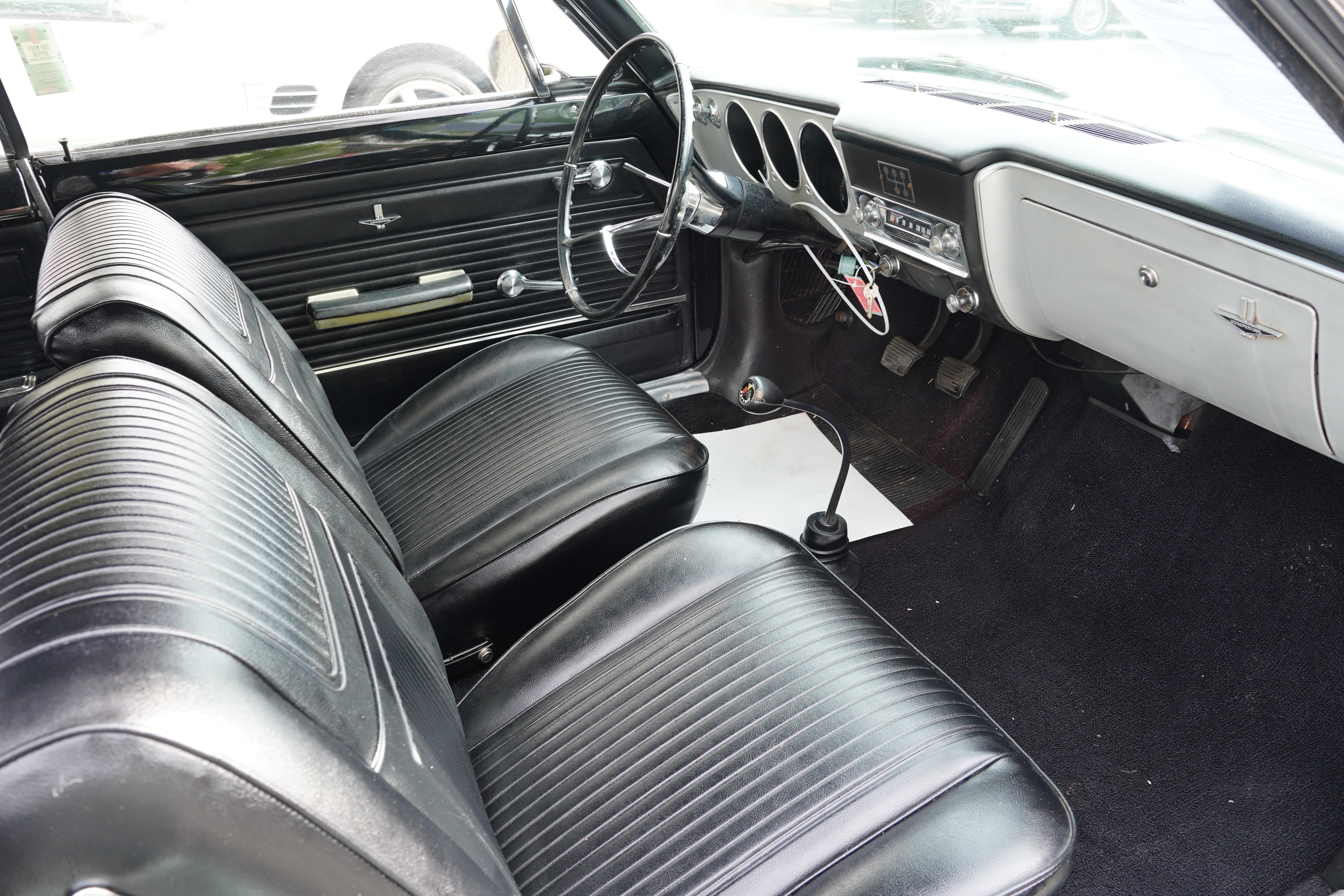
Lot 458, 1965 Chevy Corvair convertible, light green paint, black top and interior, 4-speed with 110-hp engine. Sign claims full restoration six years ago.

SOLD for $13,250. Fair price for both buyer and seller, remembering that buyer will need to pay 8% commission of $1,060.


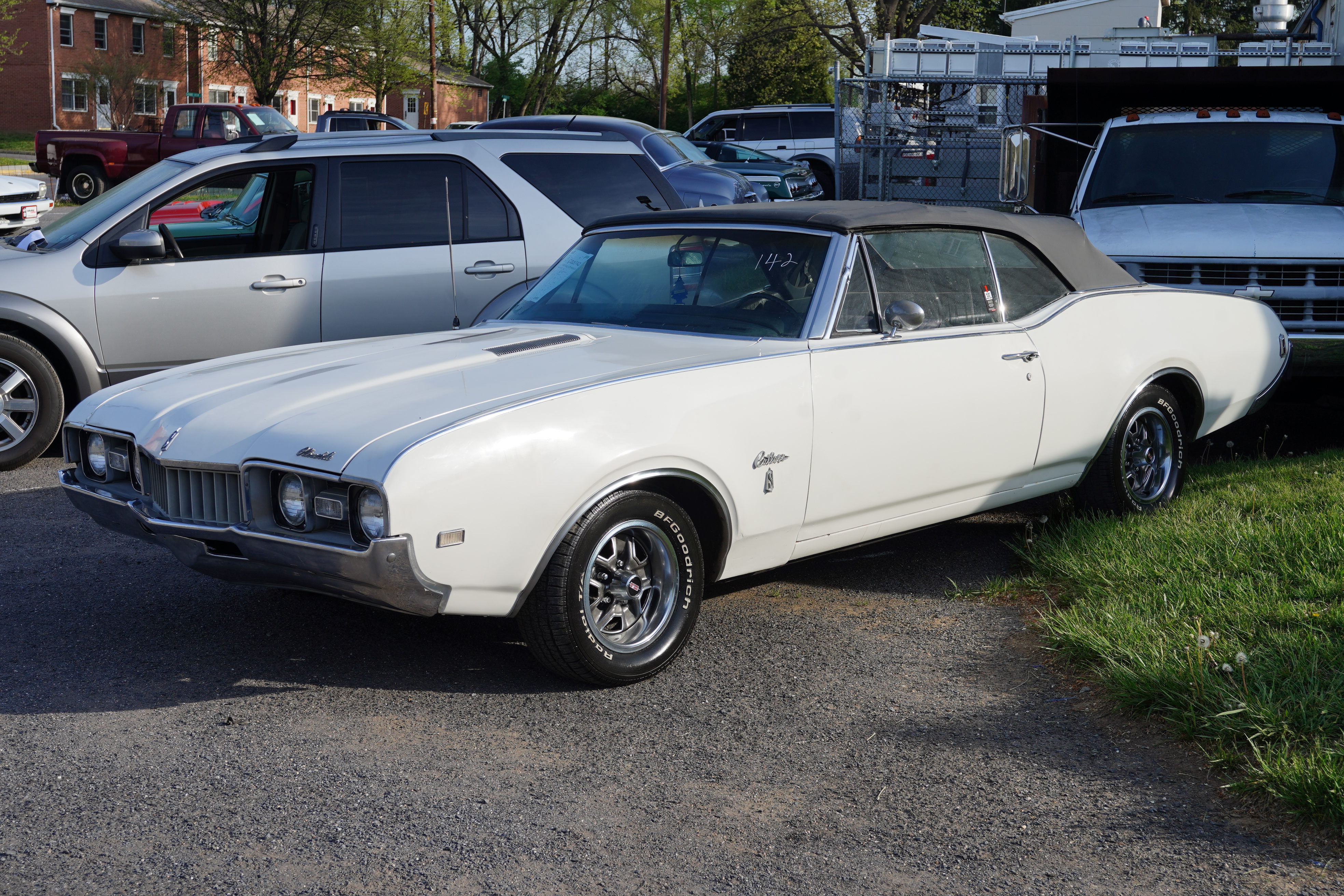
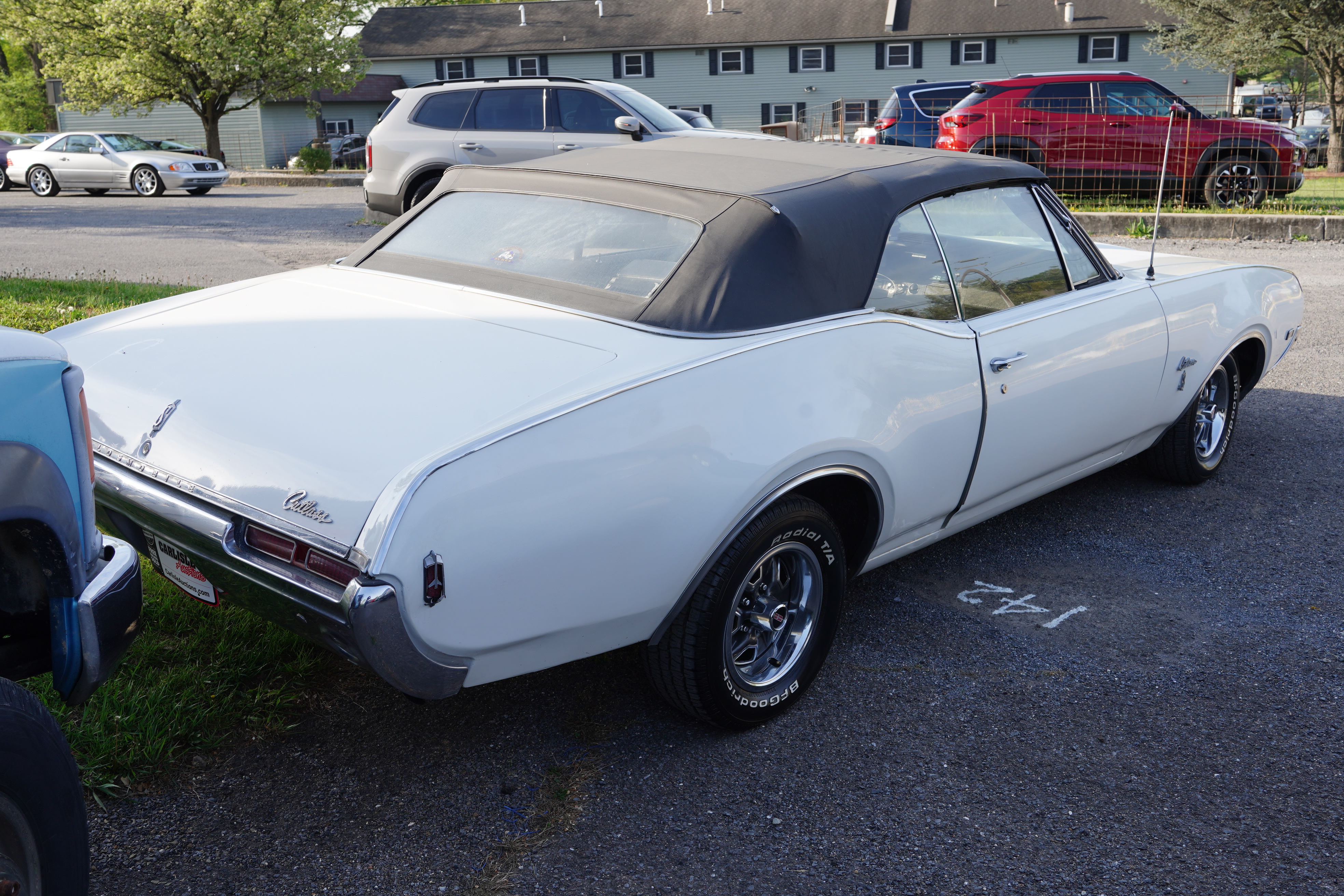
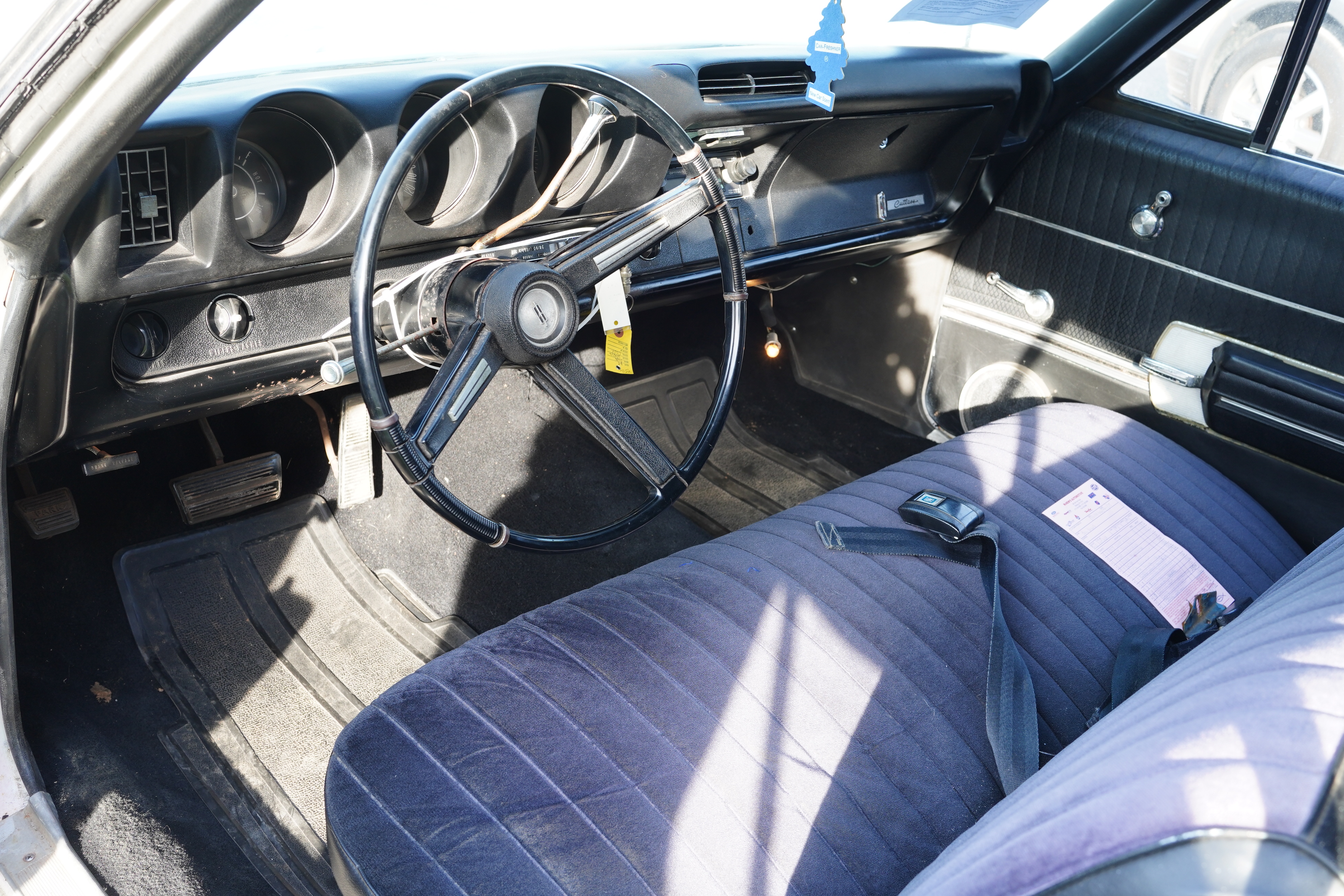
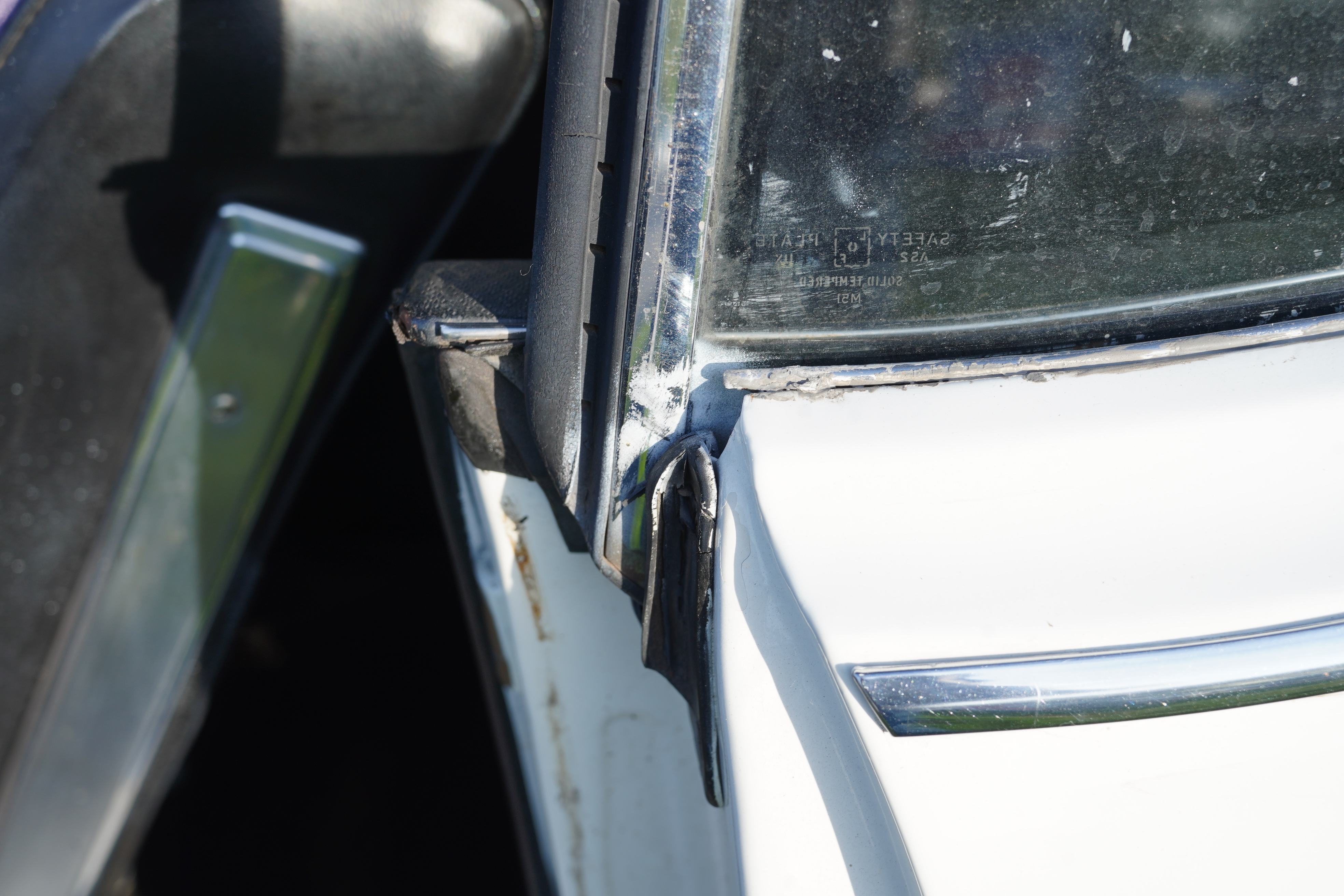
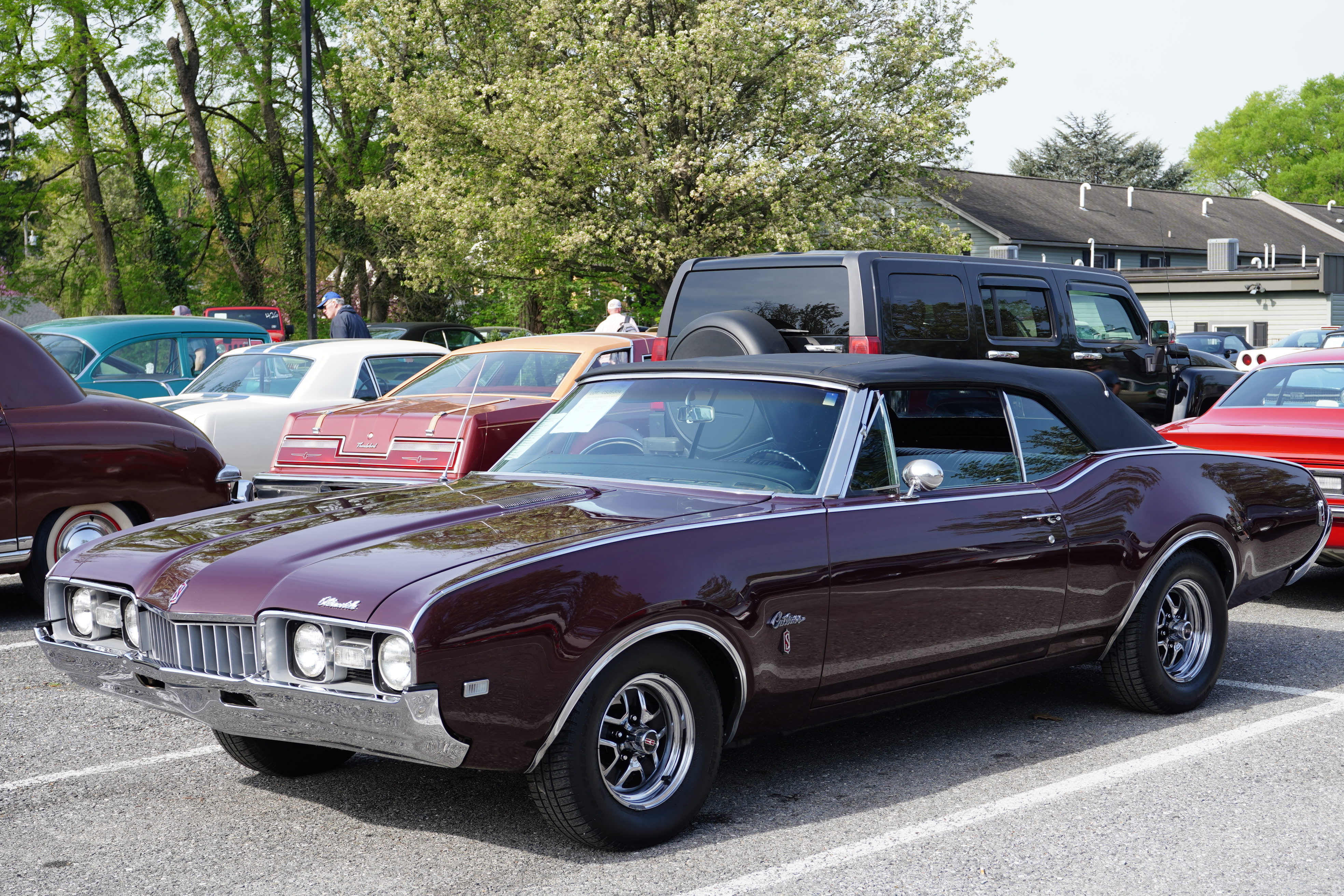
Lot 142, 1968 Olds Cutlass S convertible, white, black top and interior. Bench seat with column shift. Very poor repaint with lots of overspray, interior redone with non-original material, was unable to open passenger door with window up because of interference with convertible top. An overall poor example.

SOLD for $15,000. Nineteen-sixty-eight Olds Cutlasses are rare as-is, and this was one of two ’68 convertibles at this auction. I was surprised bidding got this high. No comparison with the other Cutlass S, covered below.


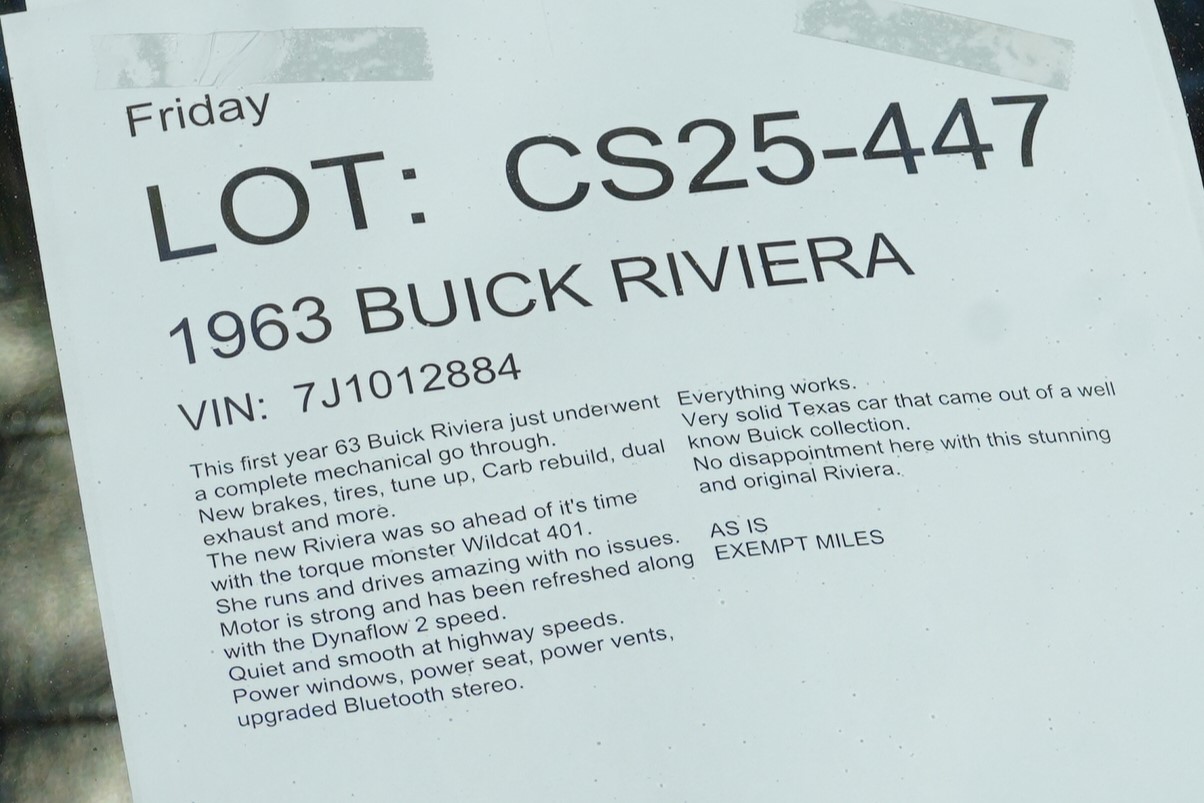
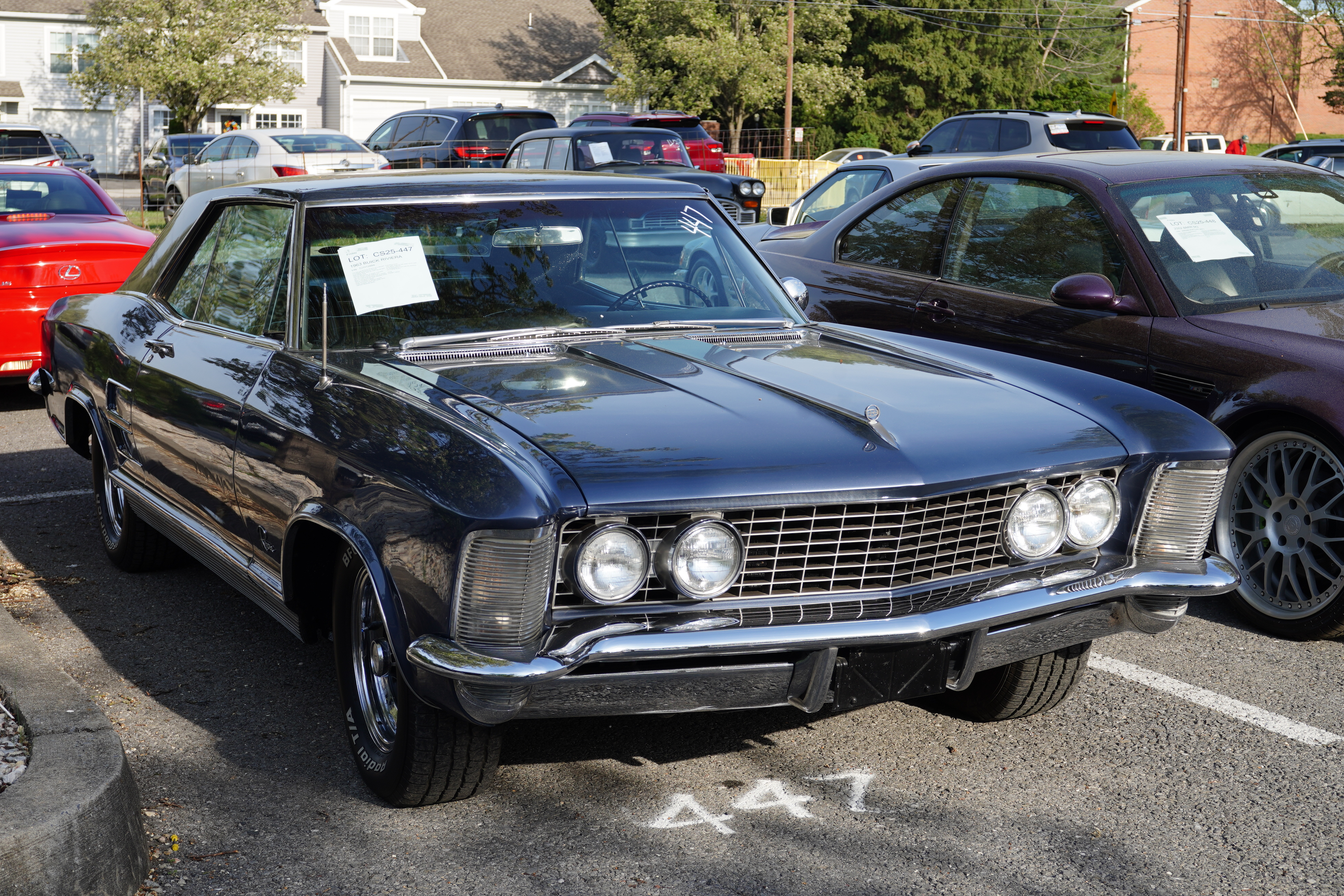
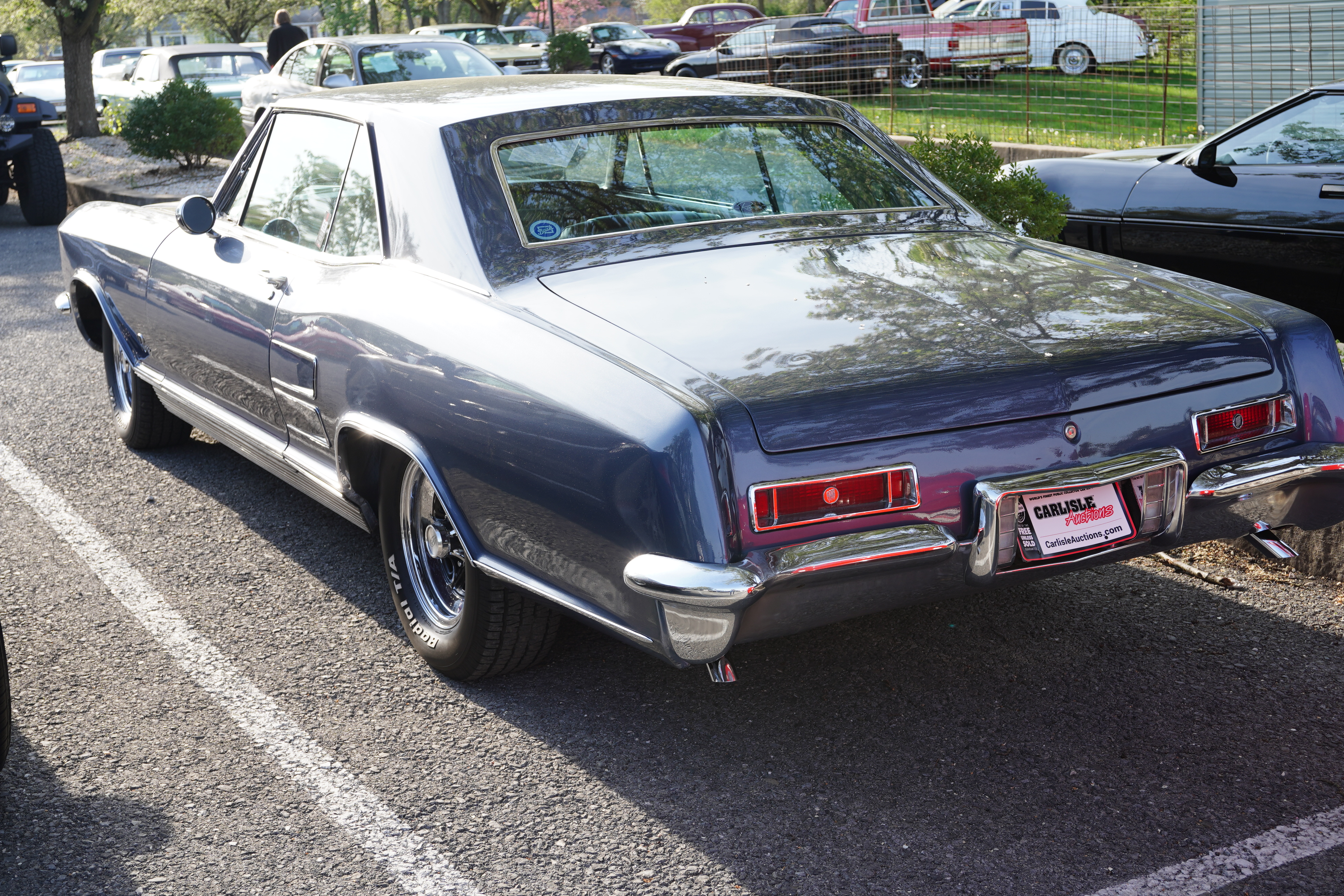
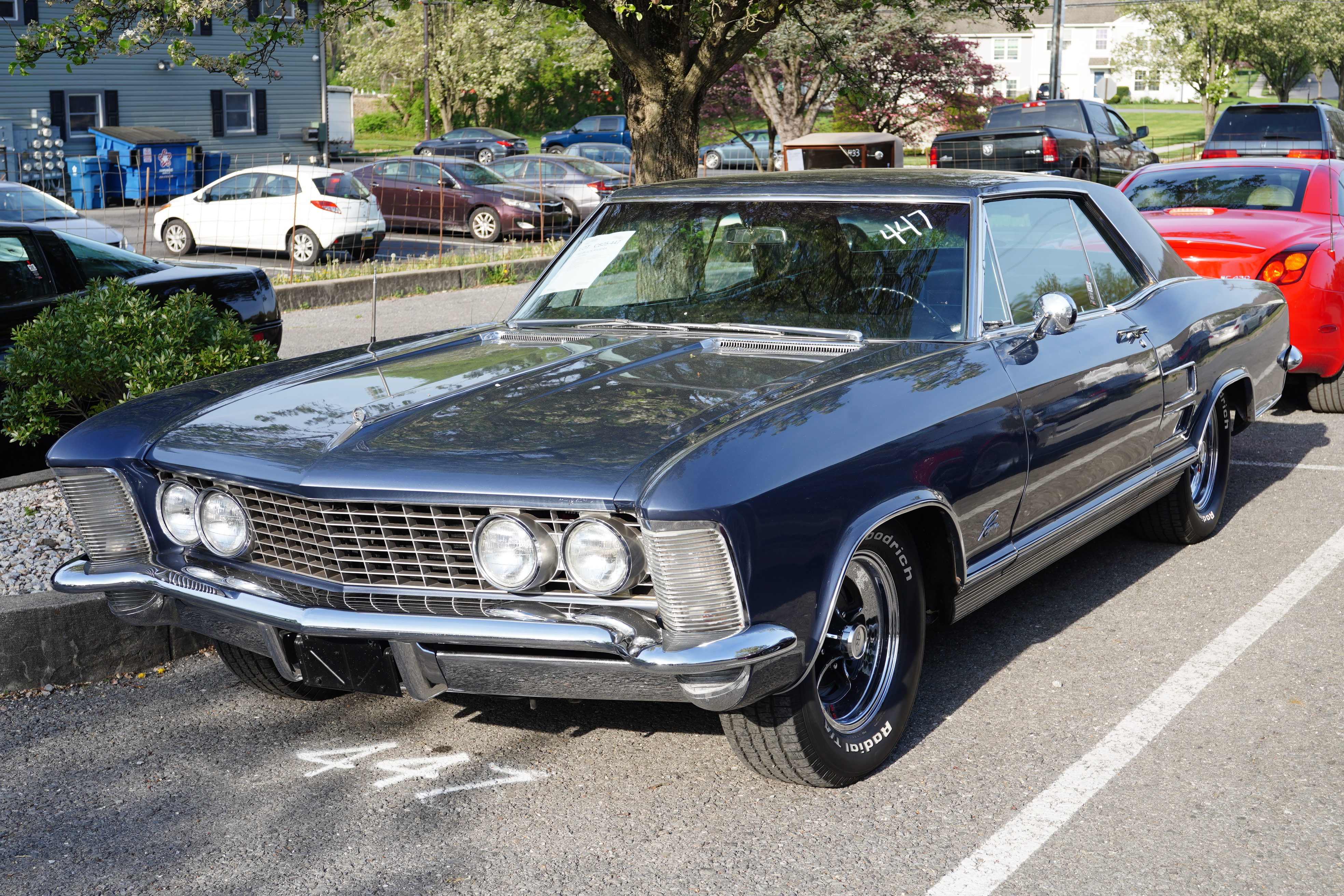
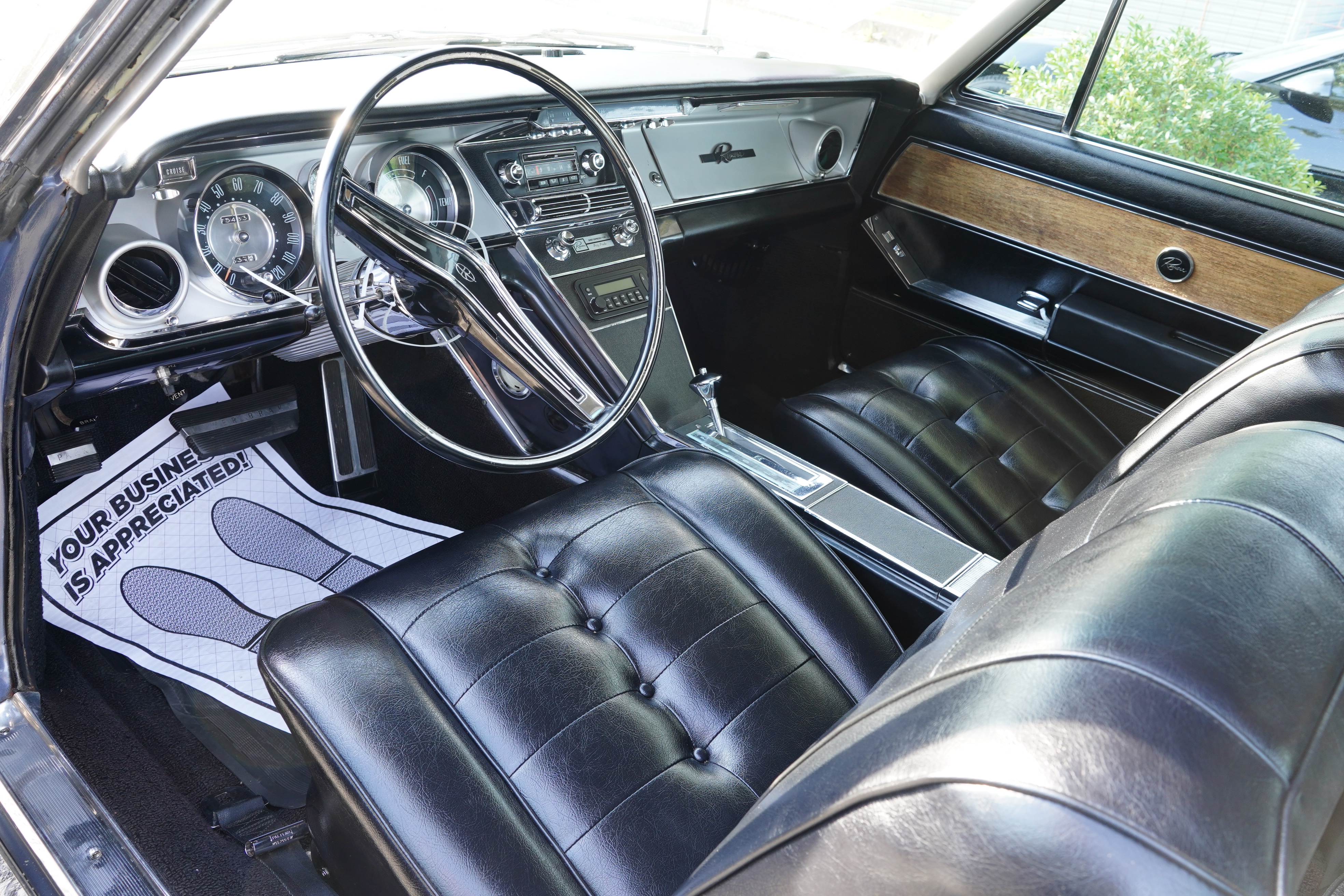
Lot 447, 1963 Buick Riviera, dark blue, black deluxe interior, factory A/C. Odometer reads 75,483. Raised white-letter tires look out of place. Power seat inop, glove box door came off in my hands. A solid-looking car that will need attention to detail.

SOLD for $19,500. It’s rare to see a first-gen Riv sell for under 20 large, so even with the needs, this may have been a little bit of a deal.


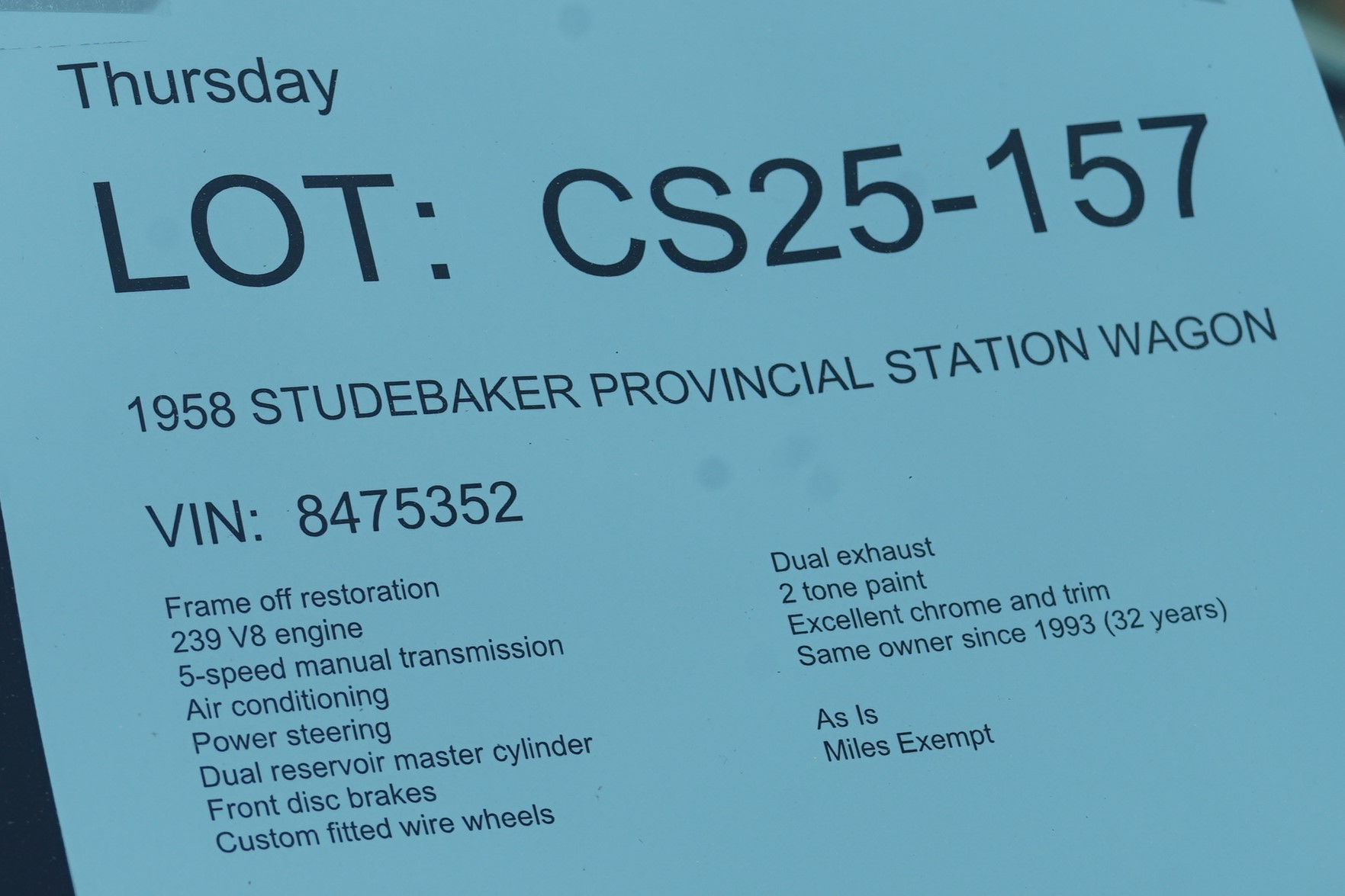
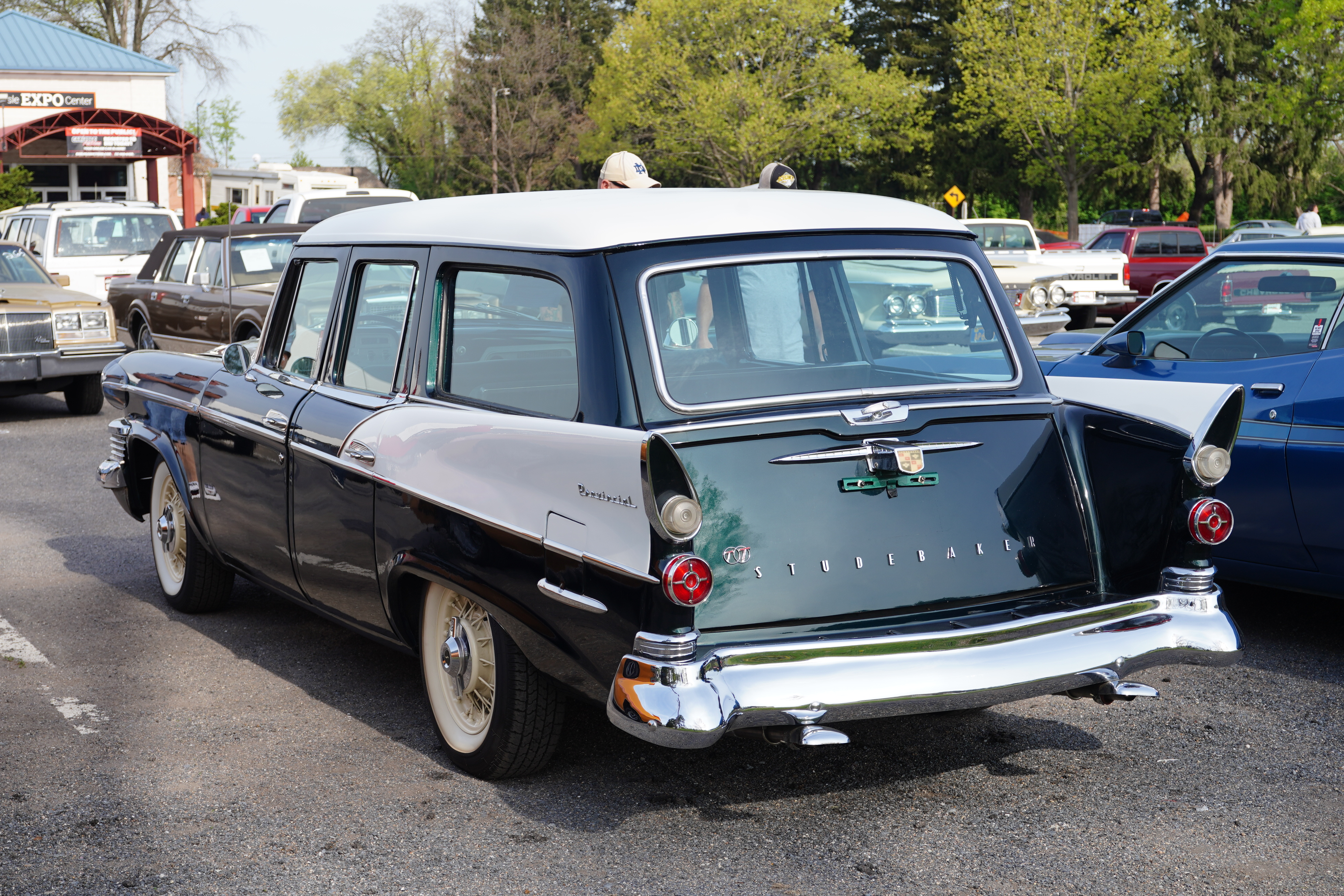
LOT 157, 1958 Studebaker station wagon, dark green and white paint, green and black interior, odometer reads 40,844, “bathroom scale” speedometer beat the Toronado to the market by eight years. Somewhat modified with 5-speed floor-shift manual, A/C, wire wheels, tachometer.

SOLD for $21,000. Impossible to complain about the price because you’ll never find another. Drive it to South Bend, IN and you’ll be an instant celebrity.


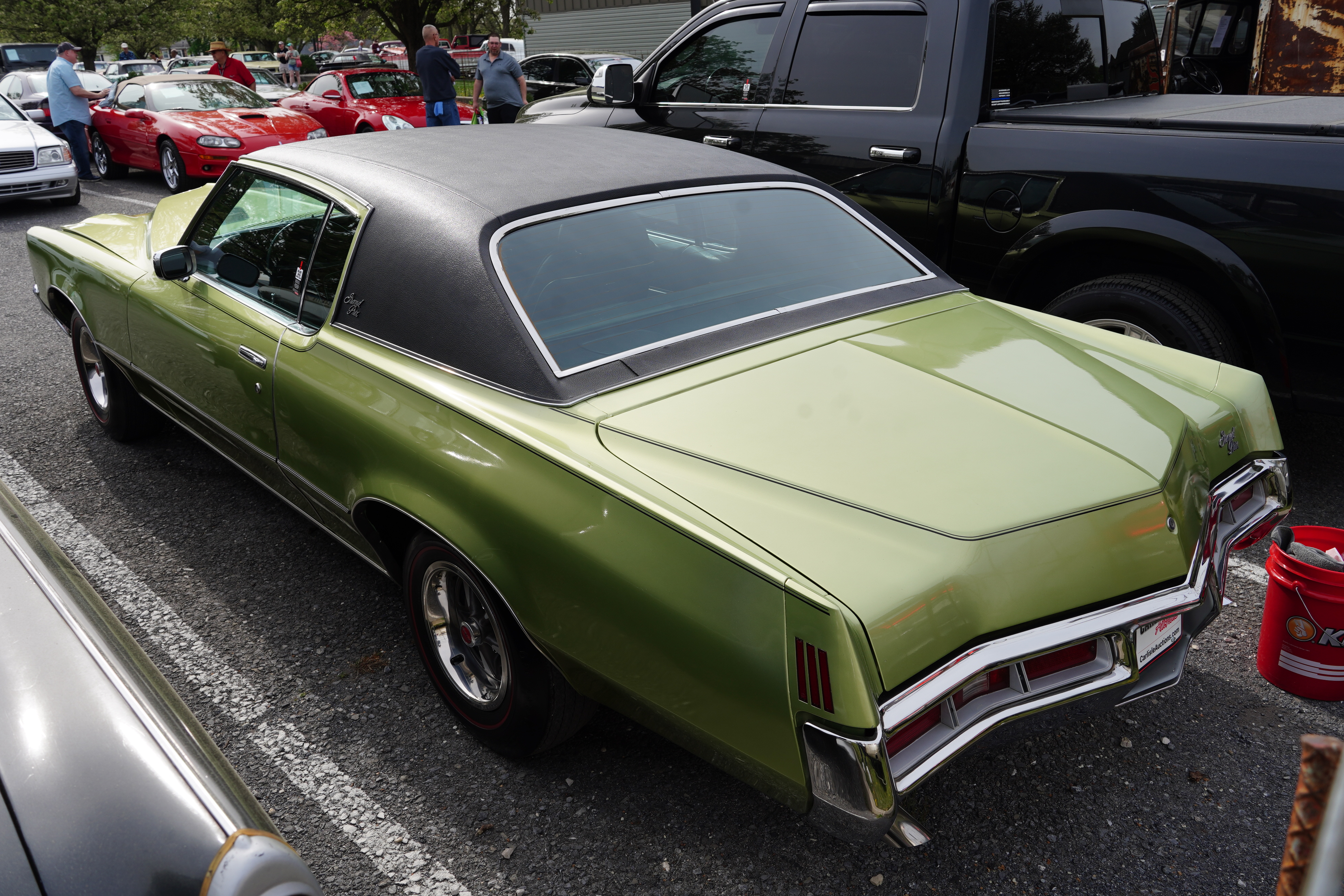
Lot 438, 1972 Pontiac Grand Prix Model J, green paint, black vinyl roof, green interior which SCREAMS 1970s. Hood-mounted tach, five-digit odometer reads 02188, with presumption that it has rolled over once. Cosmetically hard to fault.

SOLD for $23,500. Maybe one of the very few cars that I would have liked to take home at that price. Would need to measure the garage first.


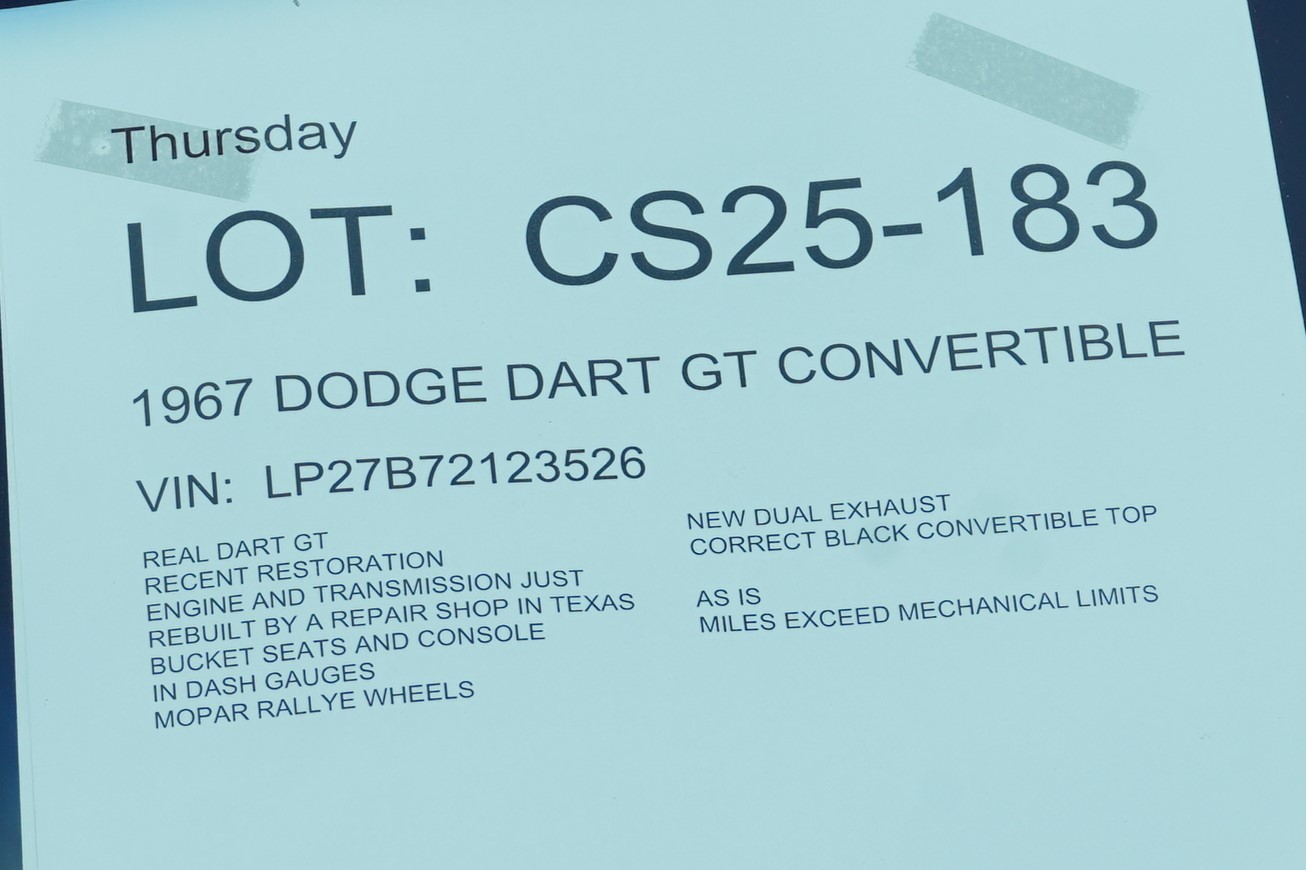
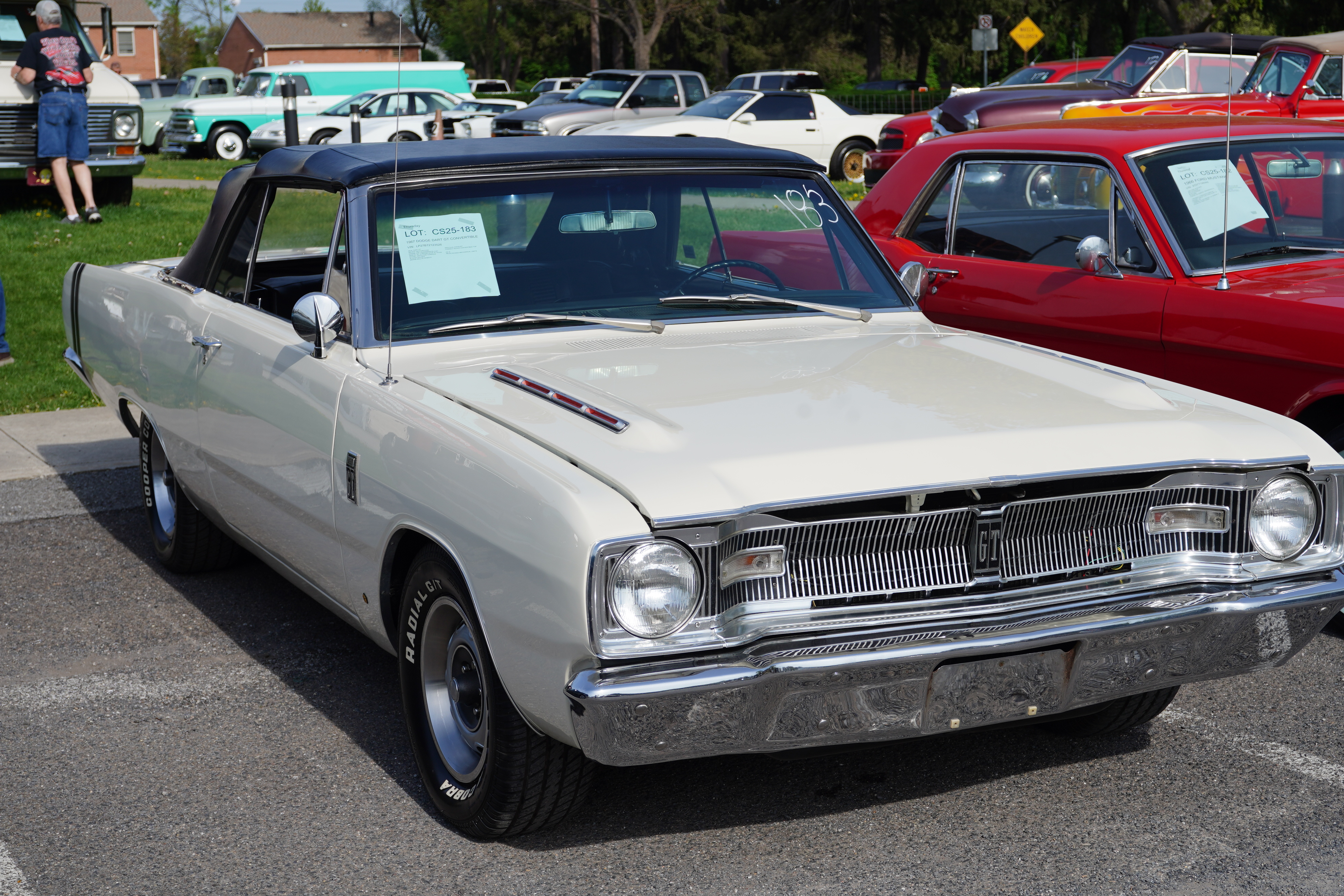
Lot 183, 1967 Dodge Dart GT convertible, white, black top and interior, bumble bee stripe at rear, buckets, console, automatic, engine size not indicated.

SOLD for $24,500. Almost identical to the one I owned 35 years ago, but mine was a factory 4-speed (and in much worse condition than this one). Lots to like here for the Mopar fan.


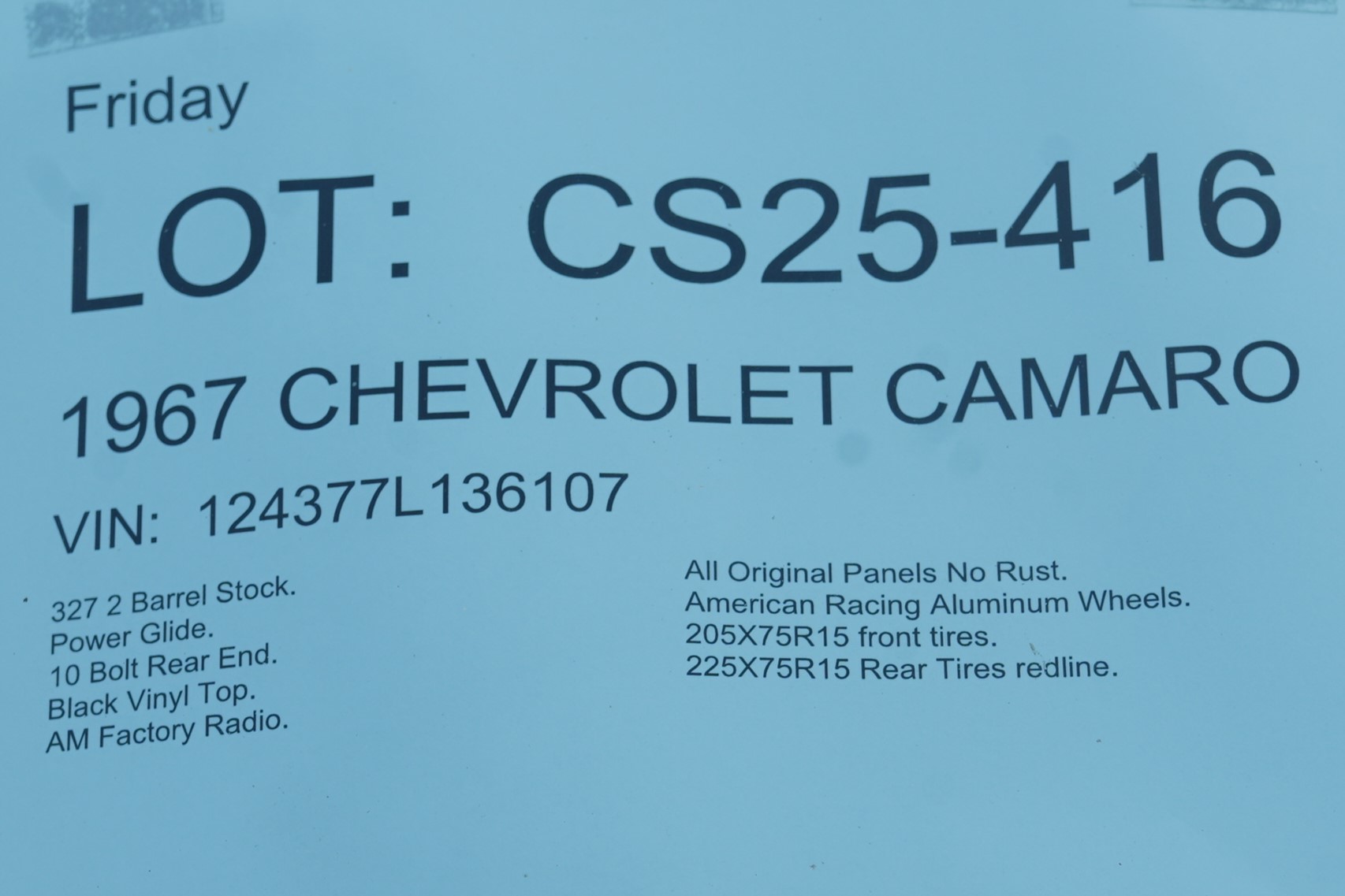
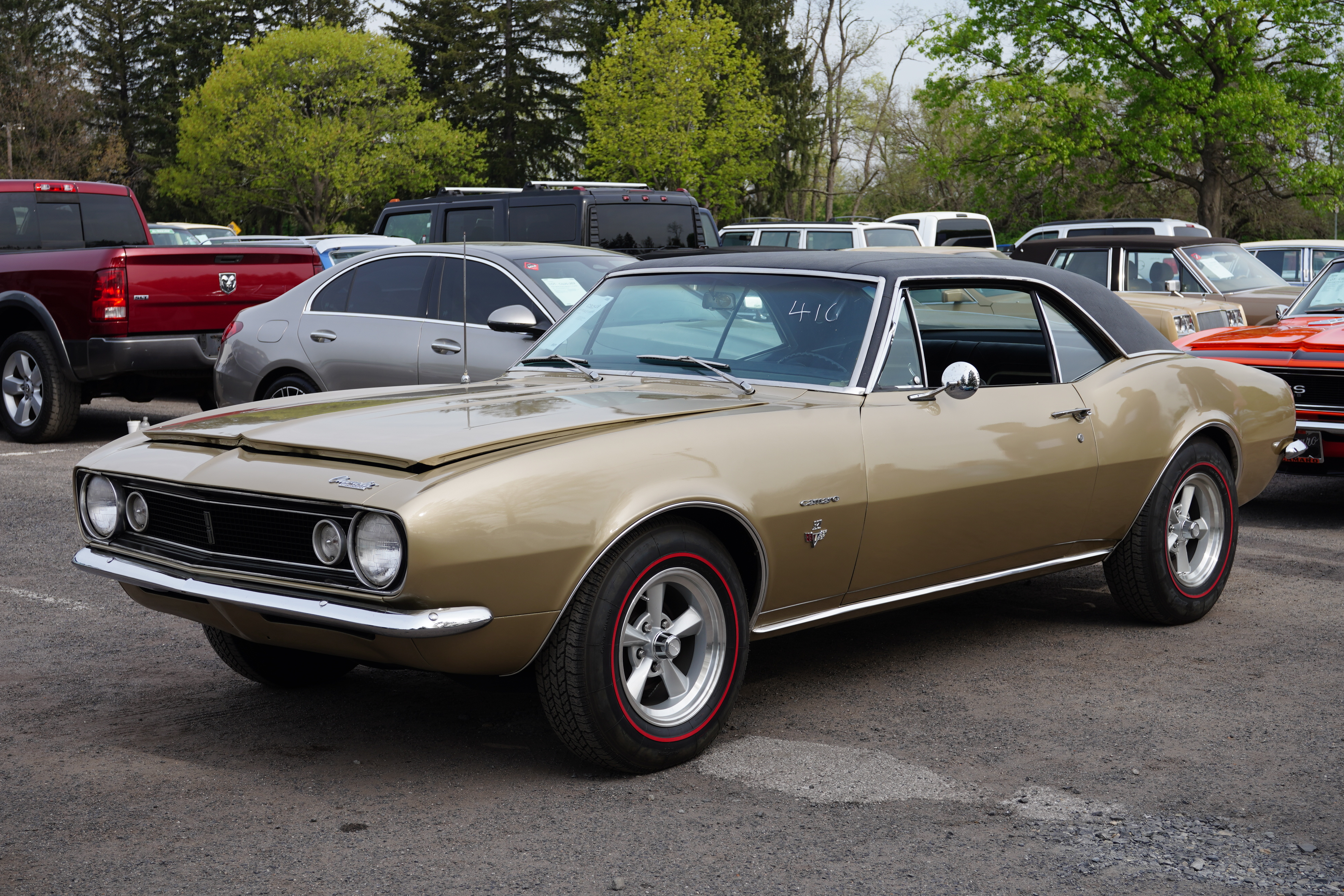
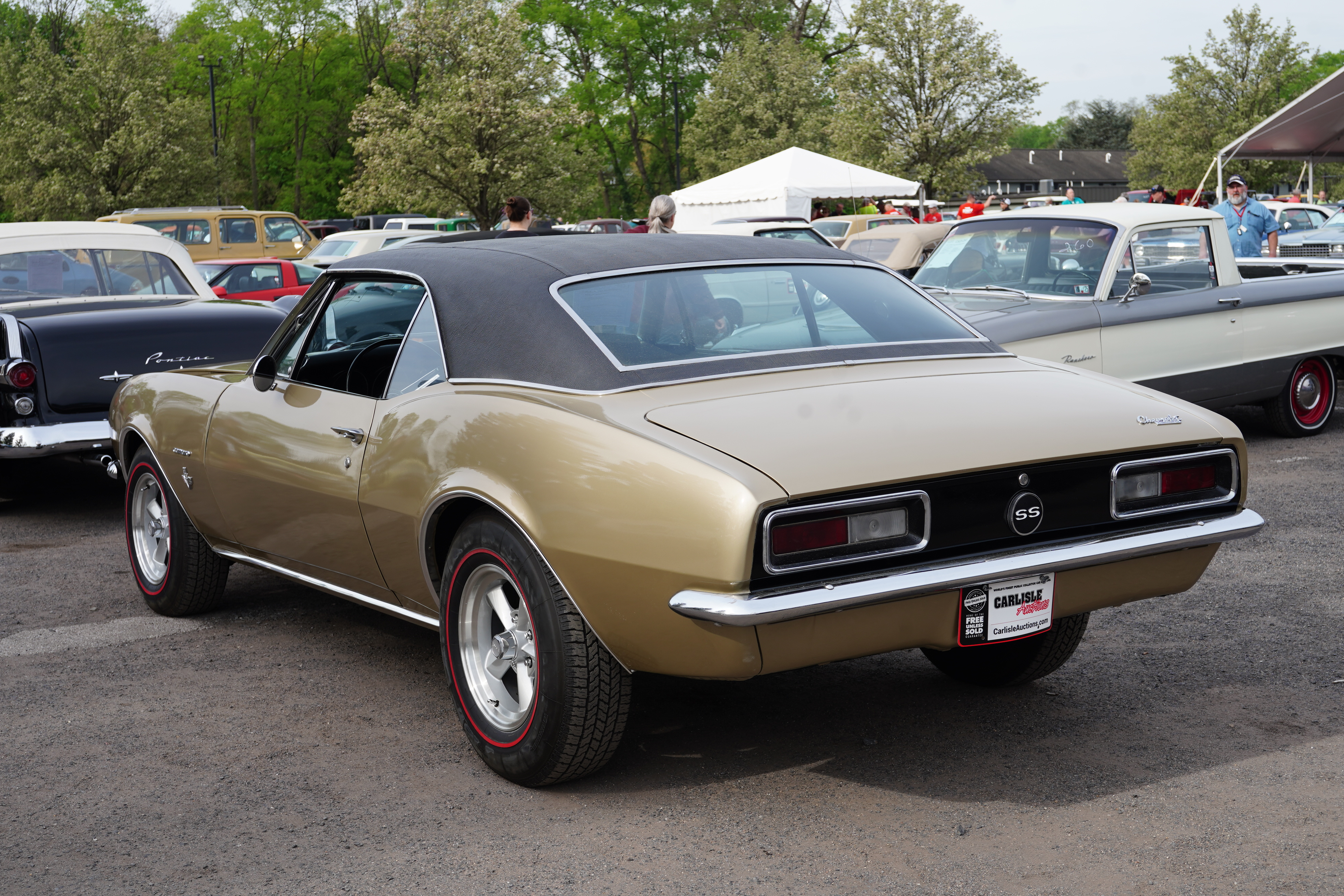
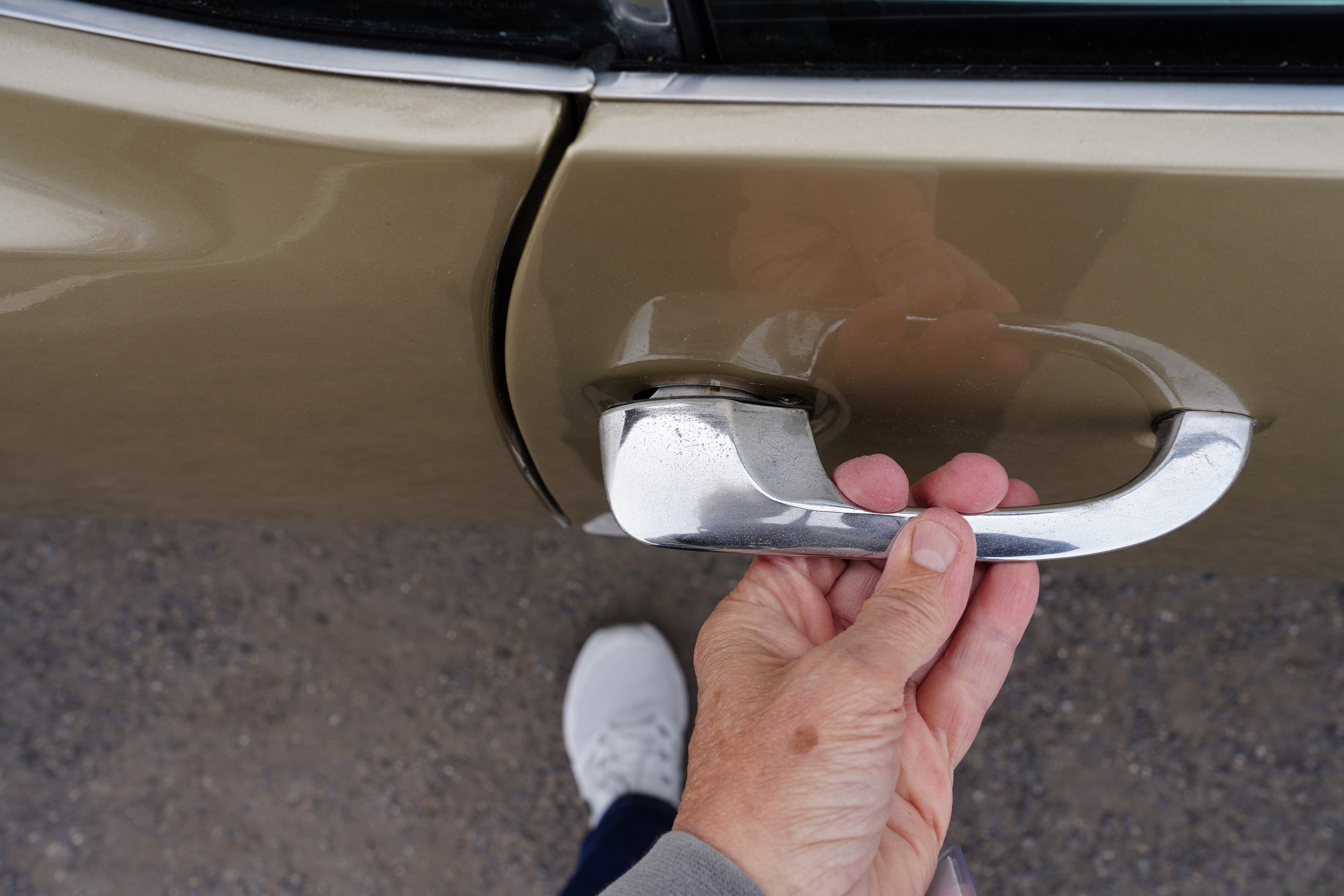
Lot 416, 1967 Chevy Camaro hardtop, first year for the model, gold paint, black vinyl top and interior, other than aftermarket wheels, car looks original and unmolested. Engine is 327 V8 with Powerglide. Odometer reads 84,581. Passenger door would not open for me, handle pulled loose from body.

SOLD for $32,000. Price seemed high to me, but I don’t follow the Camaro market. Readers: was this a fair price?


Lot 504, 1968 Olds Cutlass S convertible, dark red, black top and interior. Buckets and center console, manual tranny with floor shifter. No A/C.

SOLD for $41,000. May seem pricey, but based on rarity and condition, was worth it. No comparison with white Cutlass convertible.


NOTABLE NO-SALES

Lot 119, 1940  LaSalle four-door sedan. HIGH BID $4,500

Looked promising on website, but in person, obvious that car needs a total disassembly and restoration. What are the owner’s plan? Probably should have cut it loose.


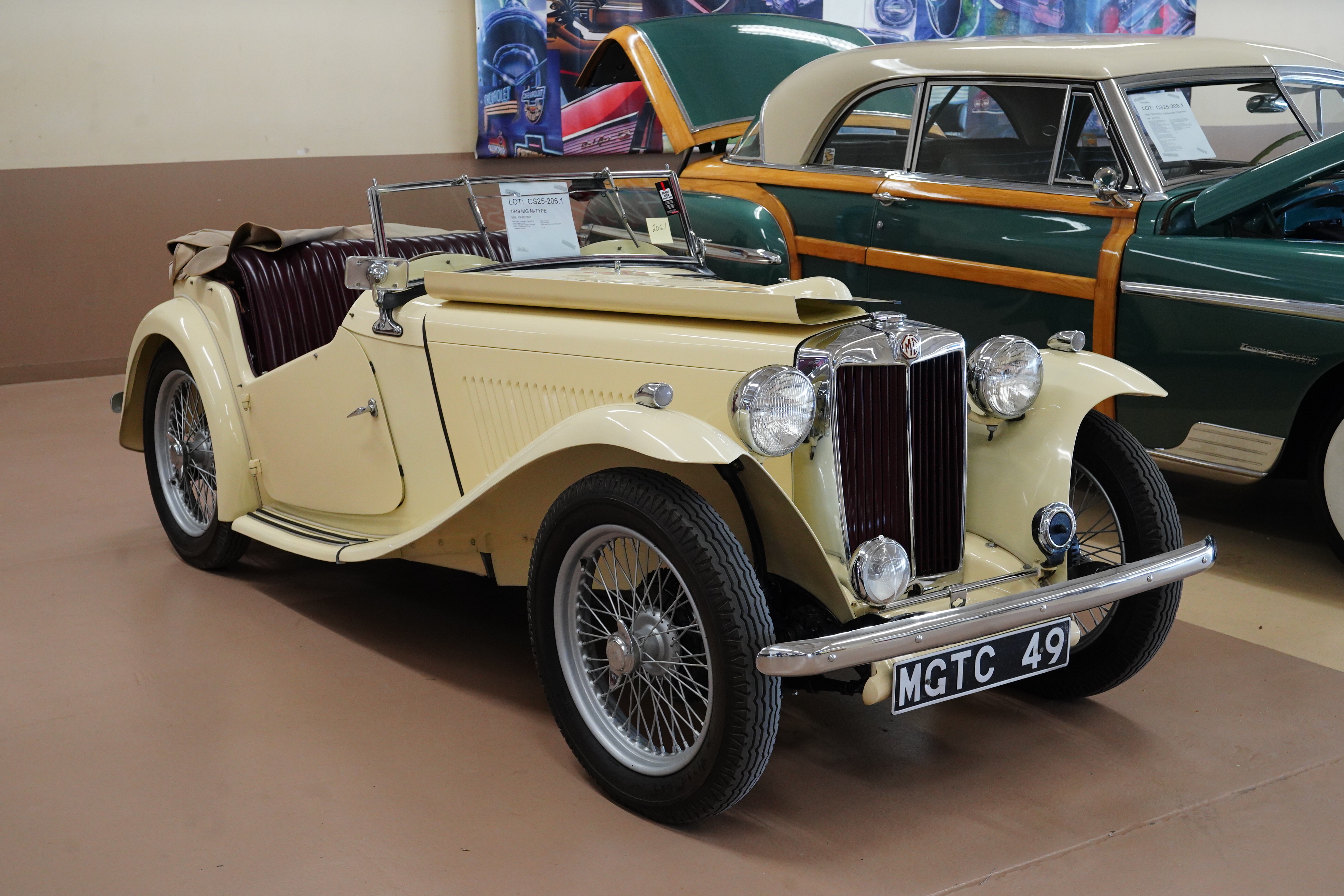
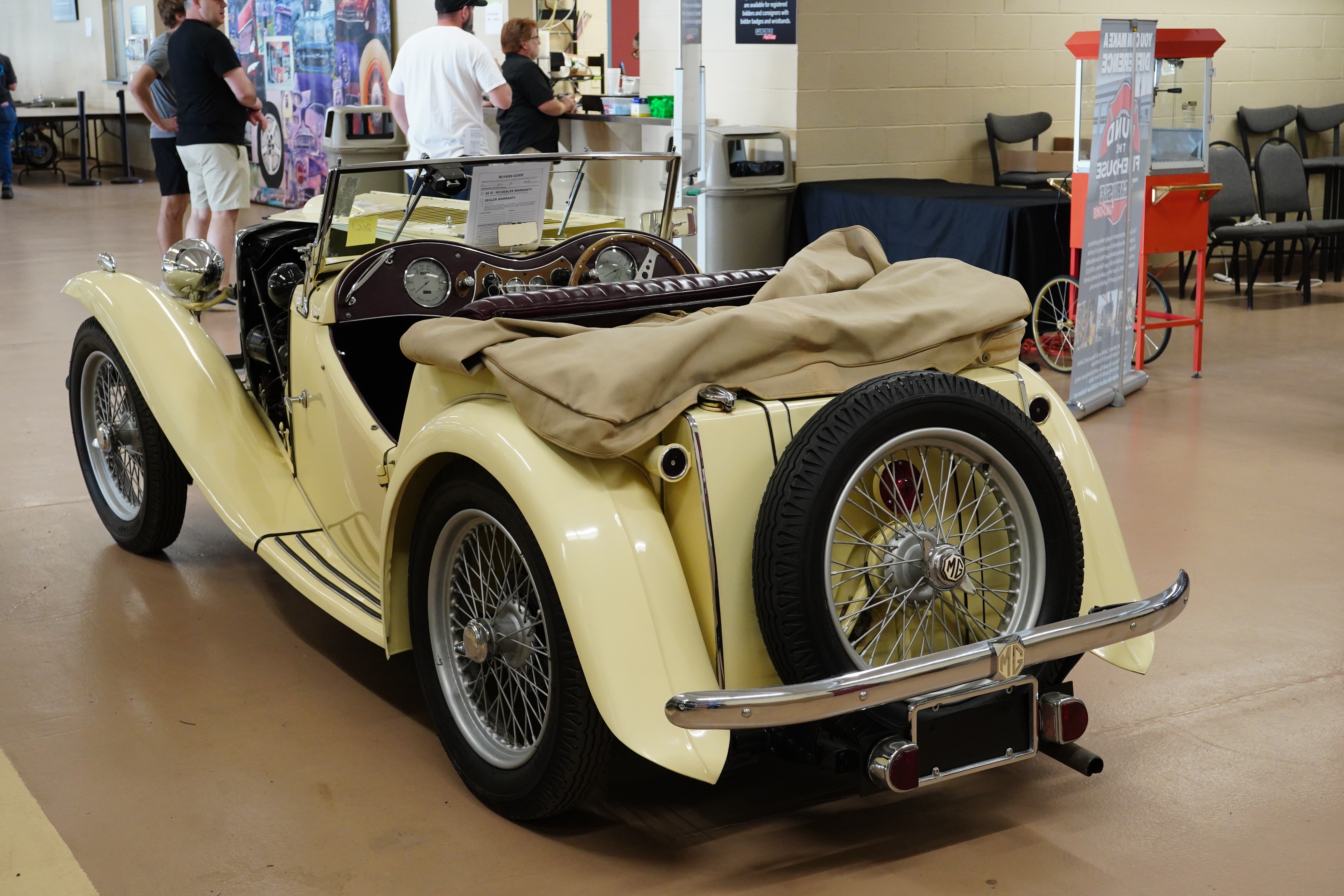
Lot 206.1, 1949 MG TC, HIGH BID $17,000

Stood out as one of the better restorations at the entire event. But has the audience for these gone away? A bid in the mid-twenties would not have surprised.


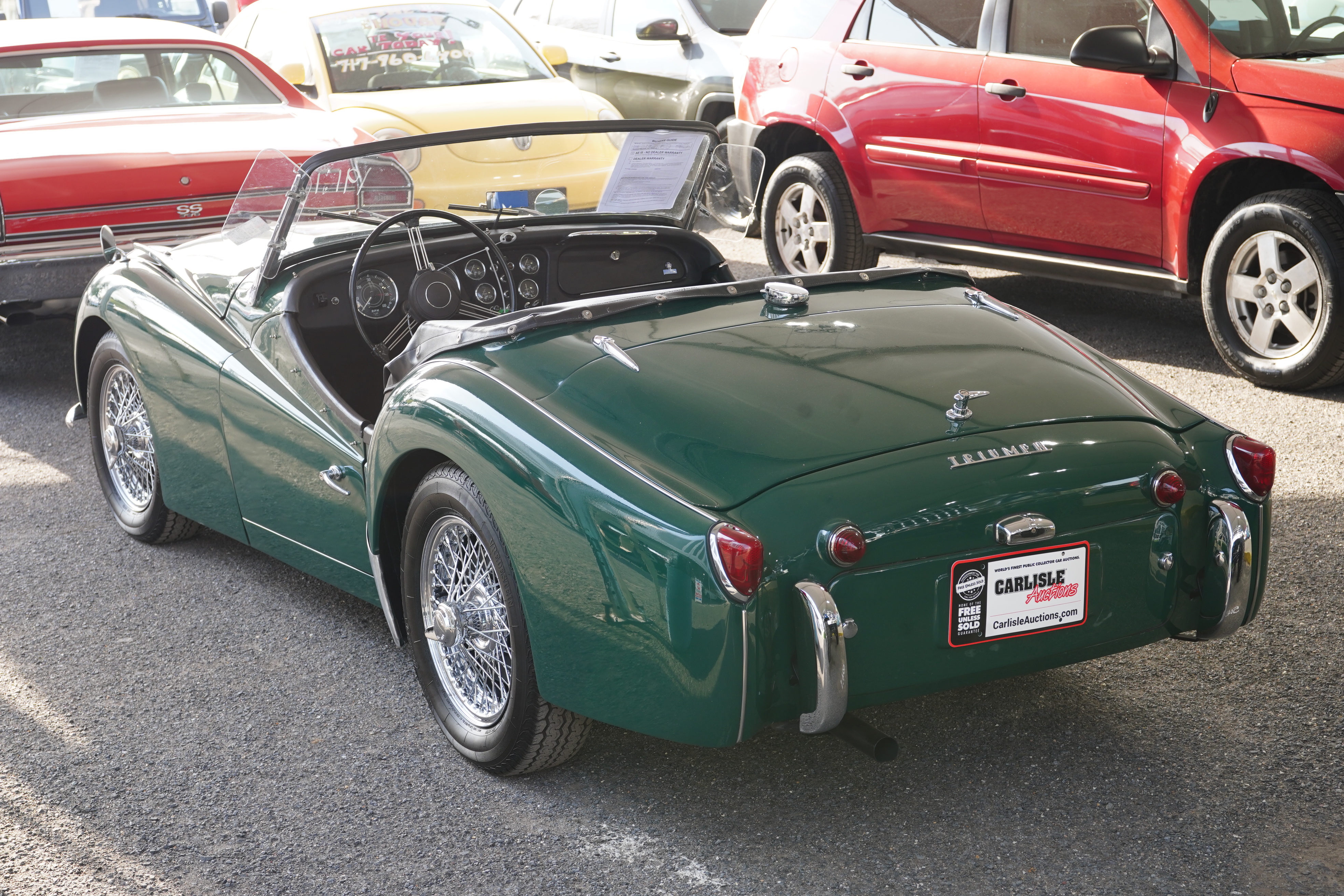
Lot 191.1, 1959 Triumph TR3 HIGH BID $17,500

Like the MG above, a very nice but not perfect restoration, something sorely lacking at this auction. A hammer price in the low twenties might have done the deal.


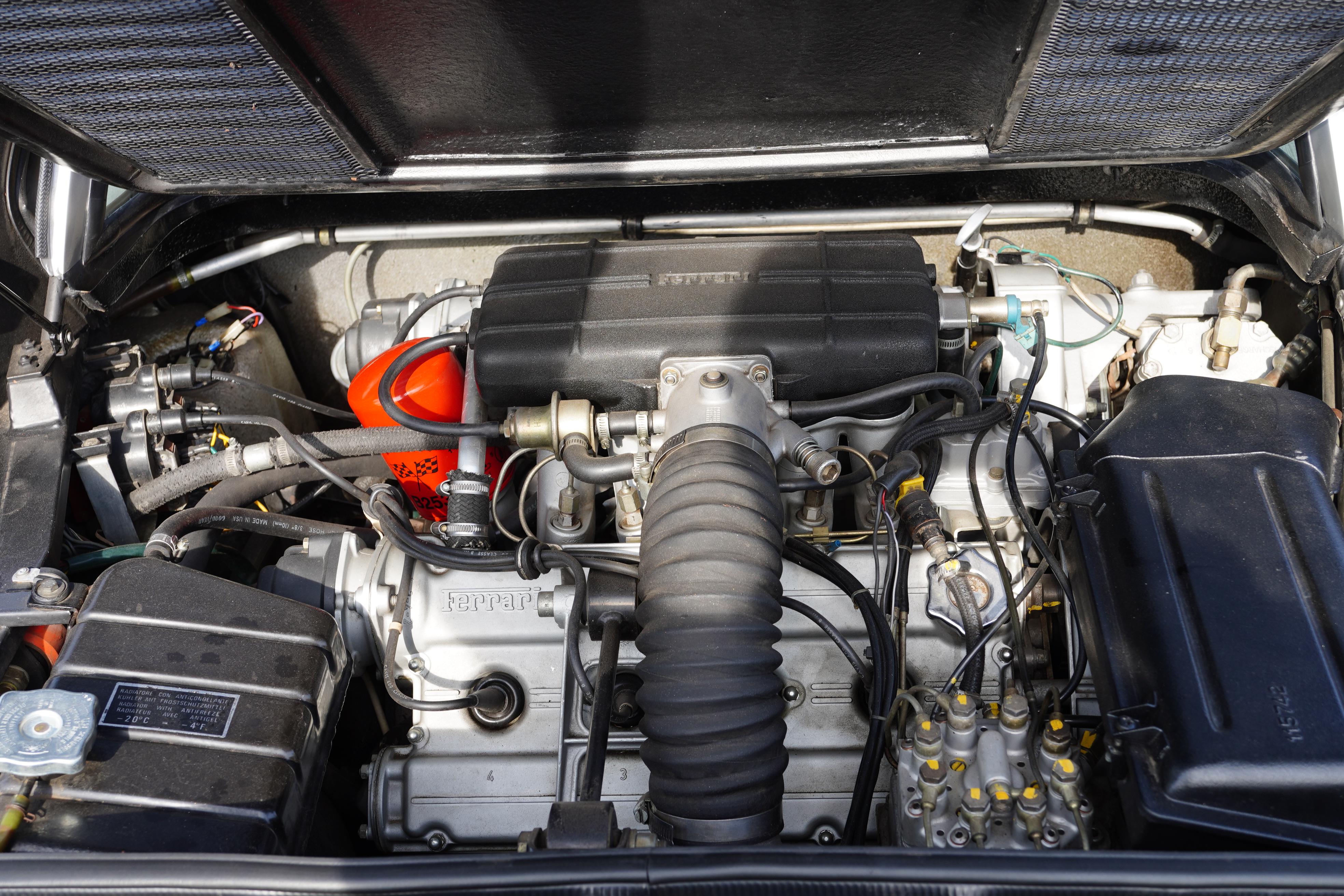
Lot 536, 1983 Ferrari  308GTBi HIGH BID $60,000

Carlisle is not the best place to sell a Ferrari; for European cars, this audience wants to see late-model German cars. This one stood out for me because of its Berlinetta (fixed roof) body style as opposed to the Spider (removable top) style which is more prevalent. Car probably worth twenty grand more than high bid.


Entire blog post content copyright © 2025 Richard A. Reina. Text and photos may not be copied or reproduced without express written permission.


Hershey 2024 Part 1: The RM Sotheby’s Auction

The RM Sotheby’s auction is an integral component of the Hershey experience, and RM’s own website lists it as “The Official Auction of the Eastern Division AACA National Fall Meet”. It’s always held at the Hershey Lodge, which is where I stayed this year, making my access to the cars super convenient.

The two-day auction was conducted on Wednesday and Thursday, October 9 and 10, and 100% of the vehicles were arranged on the hotel’s grounds, allowing free access to the public during the preview. By my estimation, at least half of the lots were pre-war American classics, a category in which RM specializes. Perusing the information labels on each lot also showed that many of the cars were to be offered without reserve, guaranteeing an exciting auction.

Two collections were of special interest to me. A fellow AACA member informed me that his brother-in-law was selling his collection of FoMoCo woodies, all at no reserve. (It was from this friend that I was able to procure passes to attend the auction.) There were 10 vehicles, 9 Fords and 1 Mercury, ranging in model years from 1933 through 1951. In this post I’m covering 8 of the 10, omitting the 2 resto-modded models.

The second, more modest collection was the final 3 vehicles from the estate of Dennis Nash. Dennis and his wife Ann Marie were long-term colleagues of mine from Volvo Cars of North America, and because of their deep interest in the hobby, were also dear friends. (It was Dennis who recommended me to the body shop which restored my Isetta.) Both Dennis and Ann Marie have passed on, and their 3 daughters were in attendance to watch their dad’s Jaguar, Morgan, and Volvo cross the block at no reserve. (The Jag and Volvo are discussed in more detail below.)

I sometimes forget how civilized and “professional” a so-called catalog auction as run by RM can be, compared to the 3-ring circus which is Mecum or Carlisle. The auctioneer enunciates every word, and there is never any doubt where the current bid is and what bid he seeks to acquire next. I recorded results for 86 cars on Wednesday and 50 on Thursday. Each day’s event took about two and a half hours to complete, and the time flew by. By contrast, at Mecum I’ve sometimes waited over 3 hours just to see a car of interest to me reach the block. Of course, Mecum is pushing quantity while one could argue that RM is pushing quality. Each has its place in the hobby.

As stated earlier, most of the lots sold at no reserve. Of the cars I watched, only two failed to sell, which speaks highly to the talents of the team at RM Sotheby’s to bring together the vehicles, owners, and prospective bidders to make this happen. Below are some details of the cars which I found interesting. The 8 woodies (in model year order) are listed first, followed by the remaining cars, again in model year order. All sold prices shown are hammer prices, which exclude the 10% buyer’s premium.


Lot 315, 1933 Ford V8 station wagon

SOLD at $33k, below pre-sale estimate of $40-60k

It’s interesting to look at this ’33, with its wire wheels and side curtains, and take in how quickly vehicles continued to evolve through the decade of the ‘30s.


Lot 308, 1937 Ford Deluxe station wagon

SOLD for $38k, within pre-sale estimate of $30-40k

The auction write-up claimed that this was a well-preserved original vehicle.


Lot 316, 1939 Ford Deluxe station wagon

SOLD for $65k, below pre-sale estimate of $120-140k

I liked this wagon a lot, with its front-end styling “almost” as nice as the 1940 models. Was this a steal? If the pre-sale estimates were anywhere near accurately based on recent sales, then yes.


Lot 314, 1940 Ford Deluxe station wagon

SOLD for $45k, within pre-sale estimate of $45-55k

Many hobbyists, myself included, consider the front-end styling of the 1940 Fords to be a highlight of the entire pre-war era. This wagon looked sharp yet just squeaked up to its low estimate.


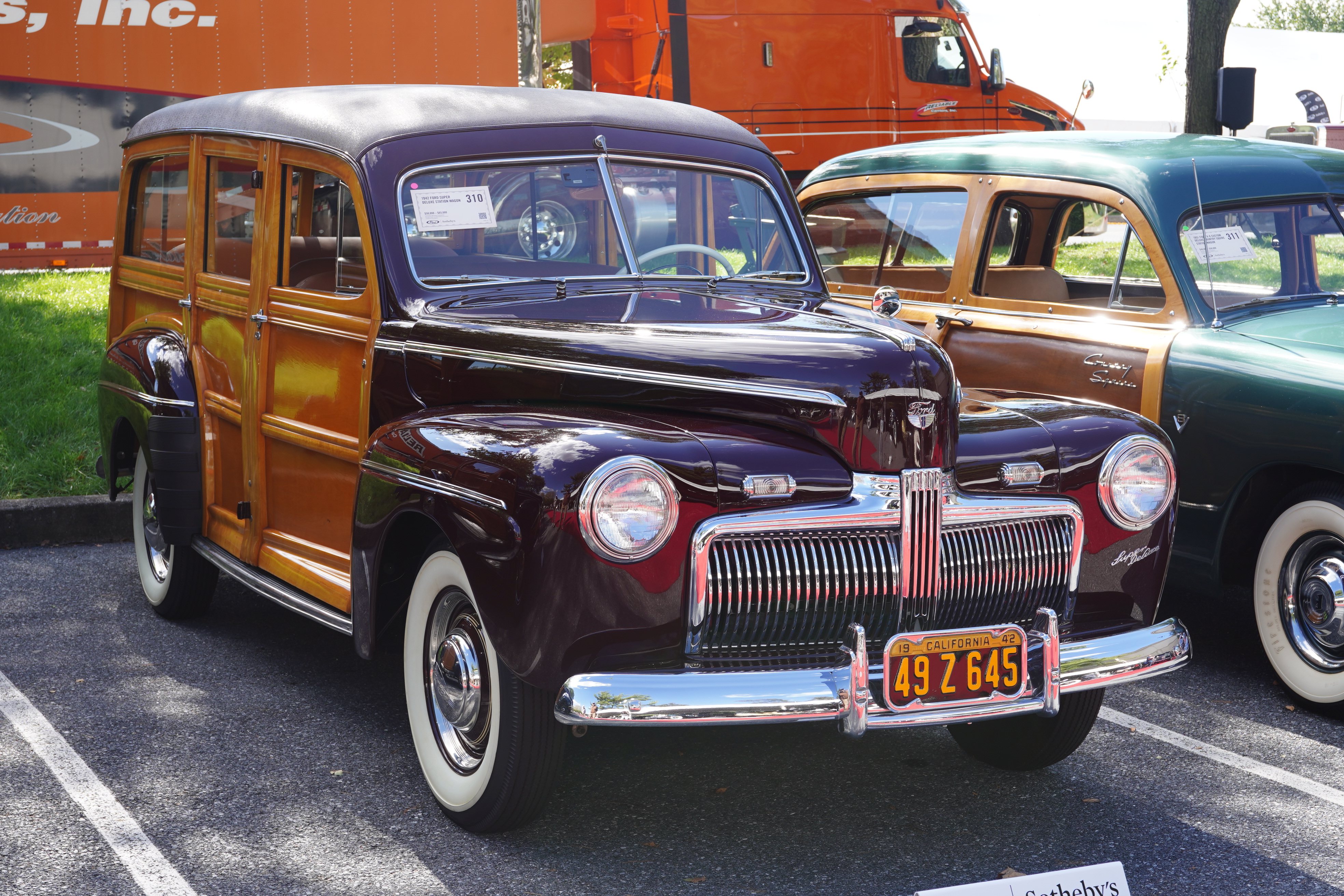
Lot 310, 1942 Ford Super Deluxe station wagon

SOLD for $77k, above pre-sale estimate of $50-65k

A 1942 anything is a rare car. This was the only woody to exceed its pre-sale estimate.


Lot 313, 1946 Mercury station wagon

SOLD for $$33k, below pre-sale estimate of $40-60k

The only non-Ford in the collection, and undoubtedly a rare car. I’d surmise that a hard-core woody collector would be thrilled to have this in their collection.


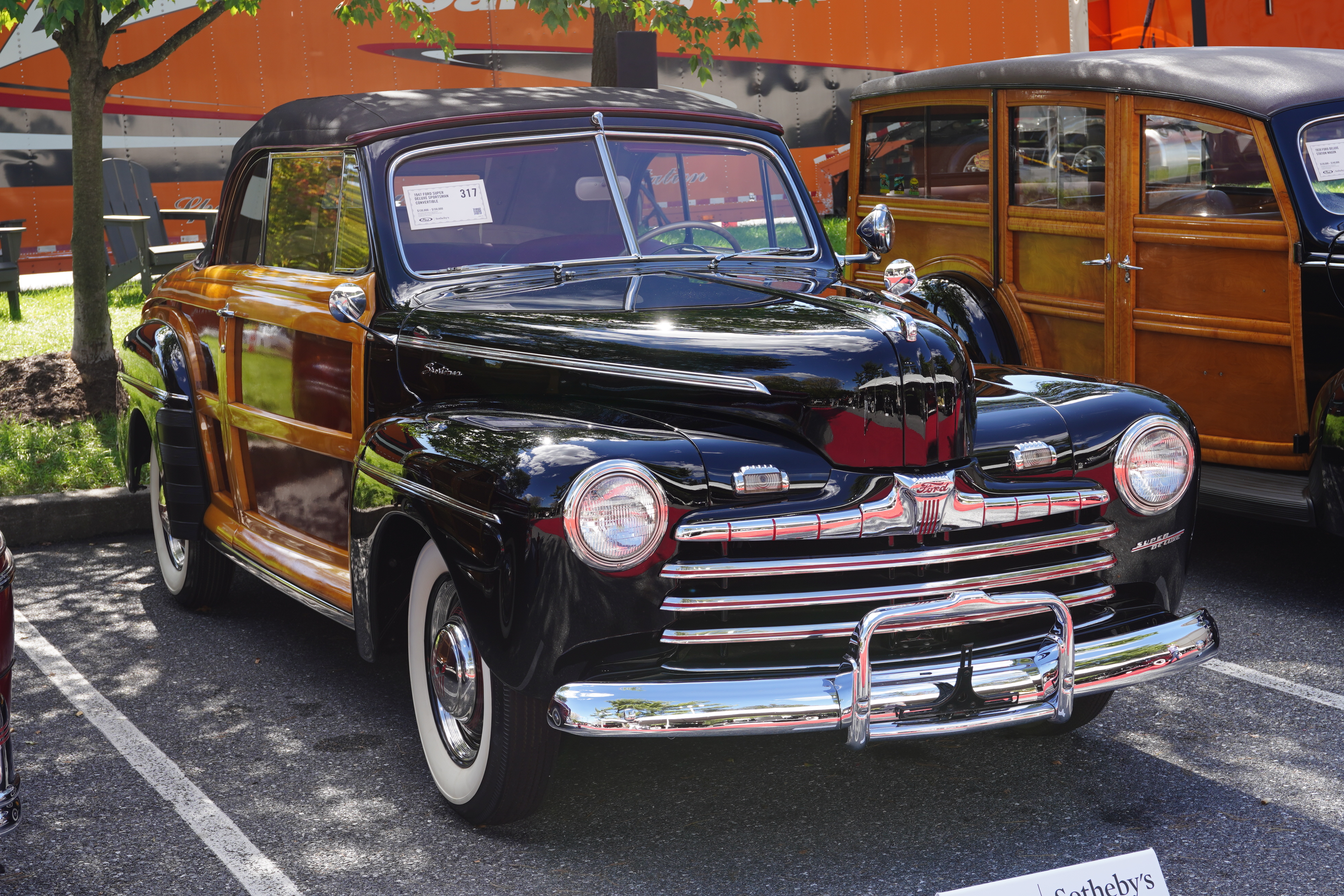
Lot 317, 1947 Ford Super Deluxe Sportsman convertible

SOLD for $92.5k, below the pre-sale estimate of $130-150k

The highest-priced sale of this collection still missed the lower mark by almost forty grand.


Lot 311, 1951 Ford V8 Custom Deluxe Country Squire station wagon

SOLD for $32k, below pre-sale estimate of $40-50k

It was announced that this was Ford’s last year for woody wagons, and this was the first Ford to wear the “Country Squire” model name. I’d say that the combination of the two makes this a bargain at $32k.


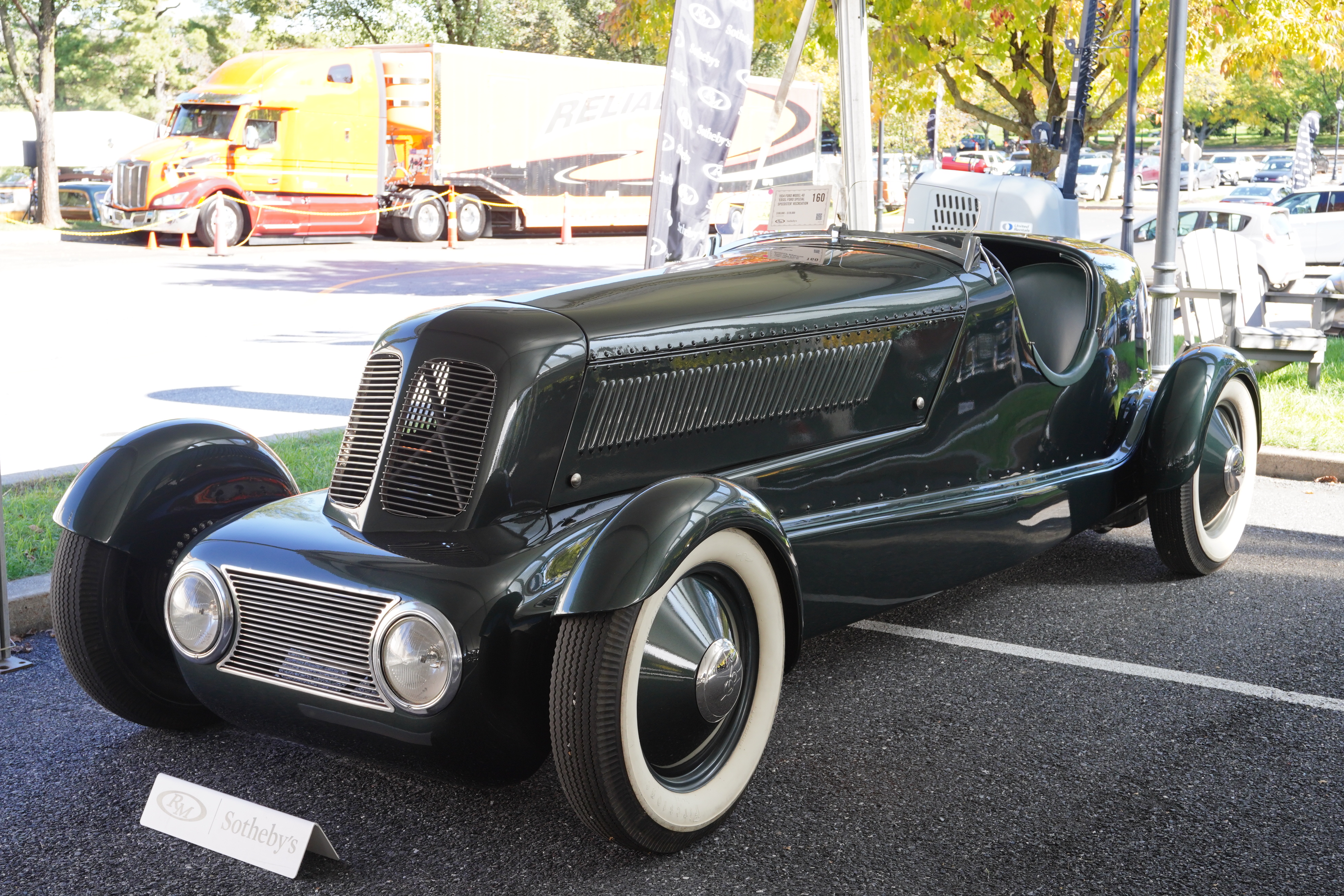
Lot 160, 1934 Ford “Edsel Ford Speedster Recreation”, copy of one-off styling study done by Henry Ford’s son Edsel. Mechanicals are from a 1934 Ford.

SOLD for $80k, below pre-sale estimate of $100-120k.

I overheard comments along the lines of “this is a lot of money for a kit car”, but it wasn’t a kit car. Someone put significant effort into recreating this iconic vehicle (although I did not perform a side-by-side photographic comparison to verify its accuracy). It’s an interesting piece of history, and owning it means that you’ll never be able to stop explaining what it is (and isn’t).


Lot 335, 1936 Cord 810 Phaeton.

SOLD for $112.5k, below pre-sale estimate of $150-200k.

This Cord, a non-supercharged model, was a Phaeton, with a small rear seat. This one hammered quite a bit below its pre-sale estimate, and in my opinion, was a bargain deal for someone looking for a Cord drop-top.


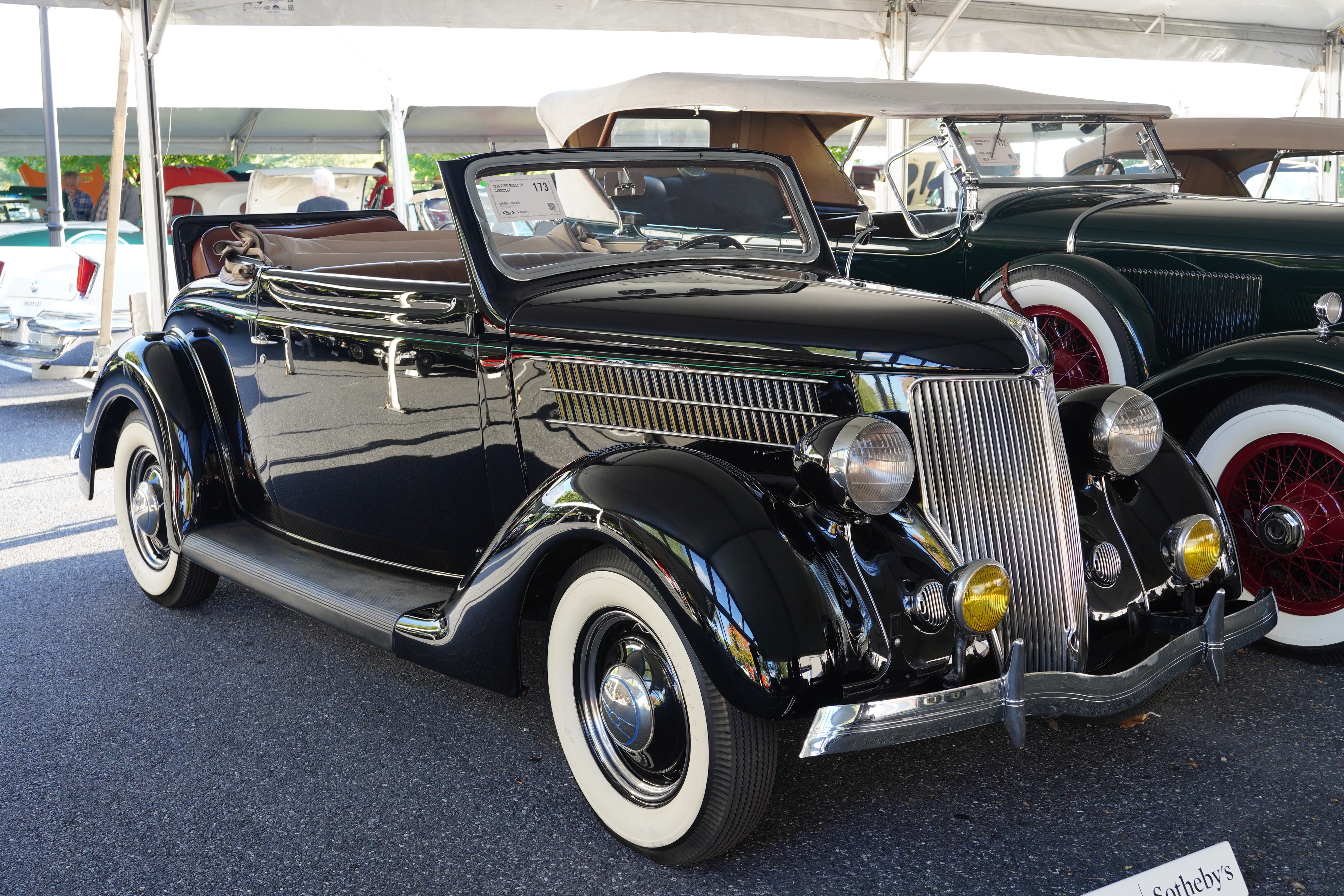
Lot 173, 1936 Ford Model 68 Cabriolet, with rumble seat.

SOLD for $39k, within pre-sale estimate of $30-40k.

This one almost reached the top estimate, and I thought it was a good buy; however, checking recent sales on Bring a Trailer, these ‘30s flat head Ford convertibles do sell in this range, so the price here was fair to both buyer and seller.


Lot 129, 1937 Cord 812 Supercharged Phaeton.

SOLD for $145k, within pre-sale estimate of $100-175k.

Compared to Lot 335 above, this car was supercharged, which attributes somewhat to its higher price.


Lot 131, 1937 Cord 812 Supercharged Cabriolet RECREATION

SOLD for $56k, within pre-sale estimate of $50-70k.

Typically, RM Sotheby’s is 100% forthcoming in its lot descriptions. However, in this case, I give them 2 demerits by failing to make it obvious that this car was a recreation, done in South Africa by a builder who formed a new body to fit over Cord mechanicals. The less-than-authentic nature of the car was not lost on the bidders, yet the sale price still reached within the pre-sale estimates.


Lot 378, 1940 Lincoln Continental Cabriolet

SOLD for $52.5k, over pre-sale estimate of $30-40k.

The car looked stunning in black, and its V12 sounded smooth and quiet, at least at auction block speeds. This was one of the few cars in the two-day auction to exceed its estimates.


Lot 180, 1949 Allard L Type, car appeared to be original, unrestored, and complete

SOLD for $45k, over pre-sale estimate of $30-40k.

This one charmed me with its original patina bursting out at every seam. Allard is a relatively unknown marque here in the States. They were built in Britain with locally-sourced parts for the chassis, but the engines were always American-sourced. I know that they were raced in period. Given that there are new Allards being built again today, starting around $200k, I think that this one would be a blast to have at $45k.


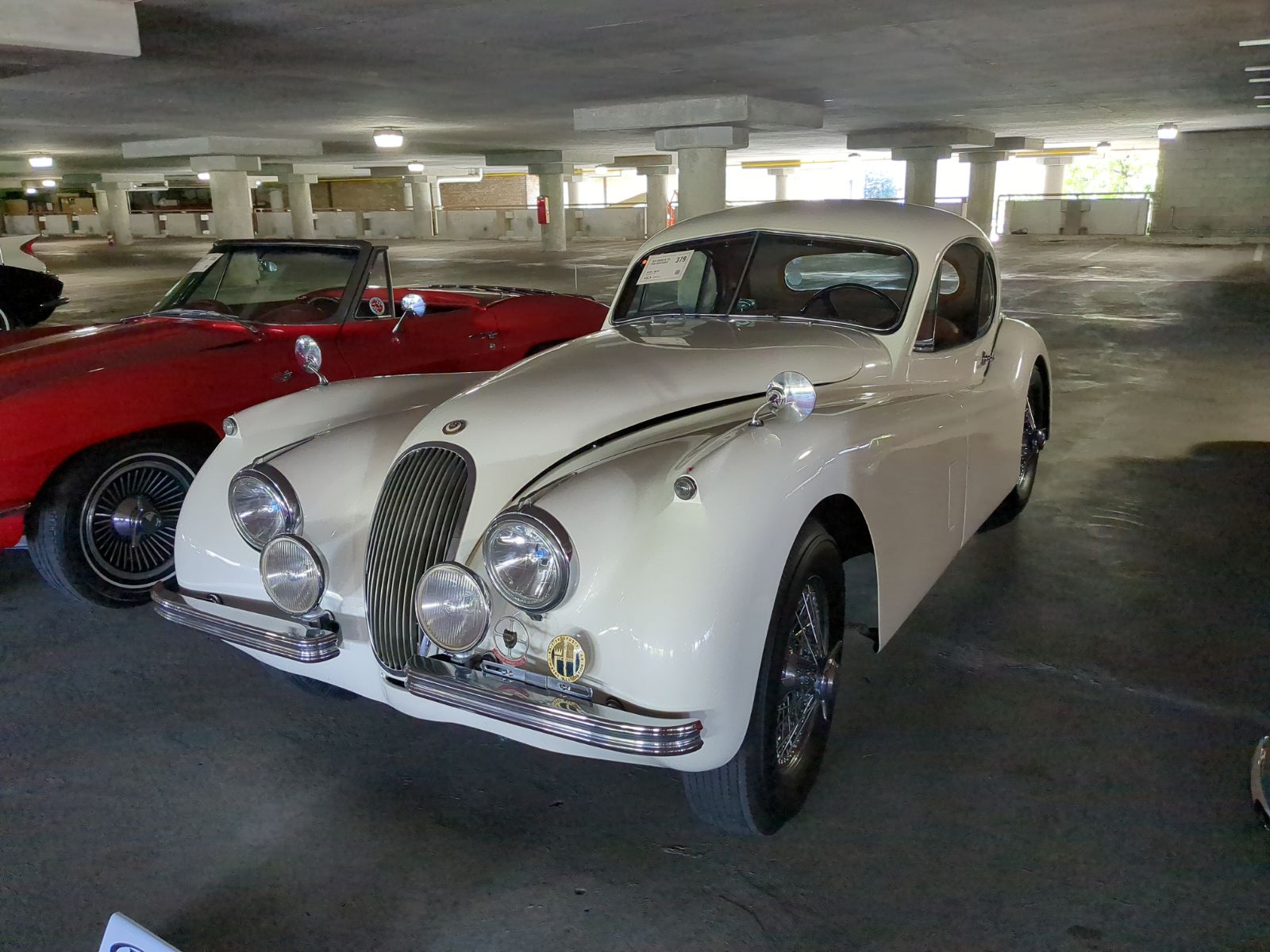
Lot 379, 1953 Jaguar XK-120 Fixed Head Coupe.

SOLD for $65k, within pre-sale estimate of $60-80k.

This was one of three cars being sold from the estate of the late Dennis Nash. Dennis was a long-term colleague of mine from Volvo Cars of North America, and I’m proud to say, was also a very dear friend. His wife Ann Marie, who predeceased him, also worked for the company and they were known to many of us Volvo employees. Dennis was a true Car Guy, and his taste in cars ran toward British makes, although I knew him to have a few American cars (as well as the Volvo which is covered a little later here). I was not aware that he owned this XK120, which looked very clean and straight (with the possible funny exception of its dash-mounted Volvo radio). I thought the car might hammer closer to $80k, but I think the final price was fair.


Lot 178, 1954 BMW 501-6 four-door sedan

SOLD for $25k, below pre-sale estimate of $30-40k.

These are so rare in the States that I can recall only ever seeing one other of these rather unattractive cars. The short history that after the Allies had bombed BMW’s factories in WW2, the company struggled to get back to its feet. This overweight and underpowered design was their unsuccessful attempt to compete with Mercedes-Benz’s luxury sedans. In 1955, the Isetta brought in the revenue to fund the engineering of modern cars (the “Neue Klasse”), while these “Baroque Angels” as they were called languished in the showrooms. This car would be desirable only to a fanatical BMW collector.


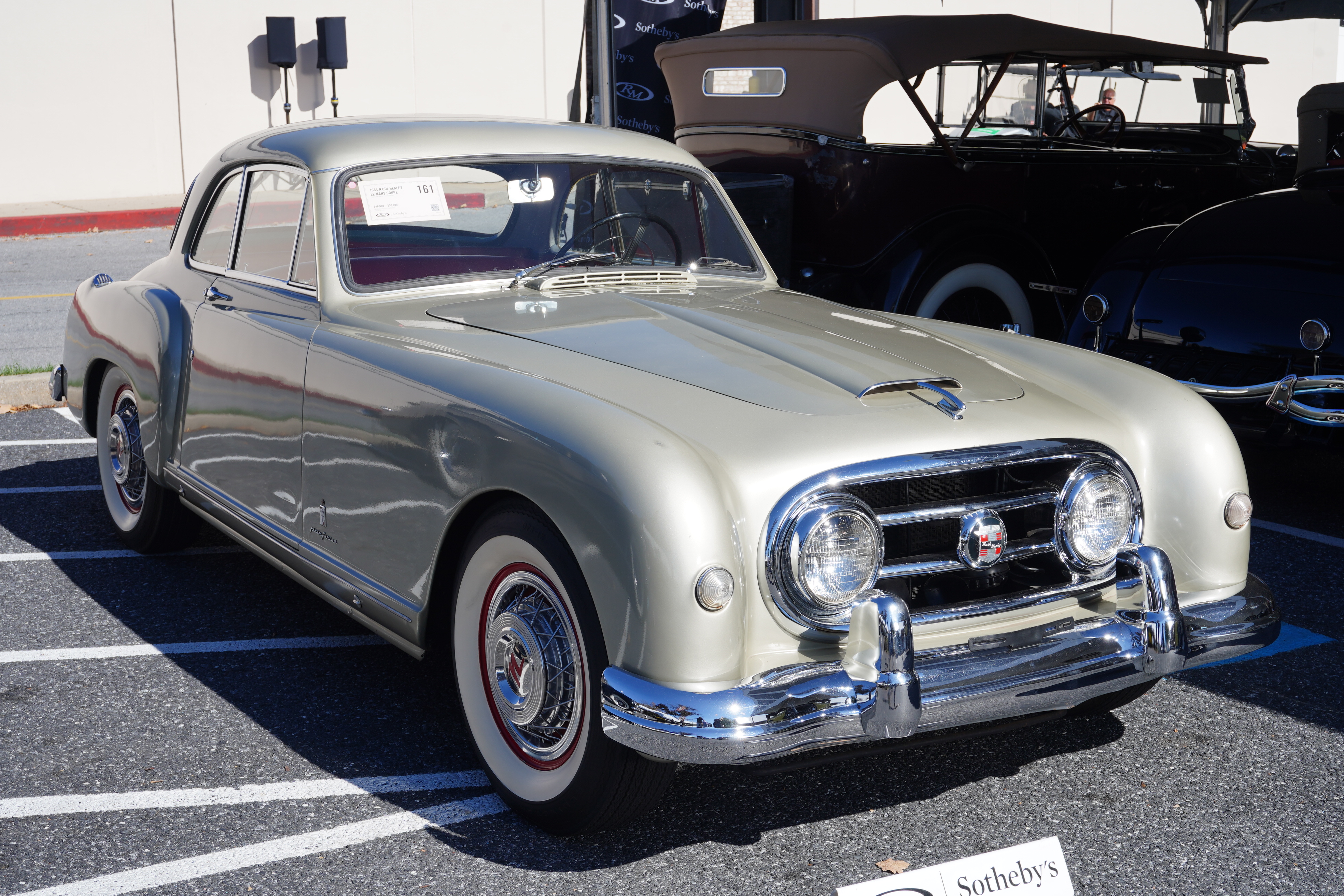
Lot 161, 1954 Nash-Healey LeMans Coupe

SOLD for $40k, within pre-sale estimate of $40-50k.

The convertible version of this model is seen regularly enough (there was one at this auction), but the coupe is rarely spotted. Perhaps surprisingly, I find the coupe slightly more attractive than the drop-top. This one sold right at the bottom of its estimate, and it’s a handsome, usable, and unusual car for $40k.


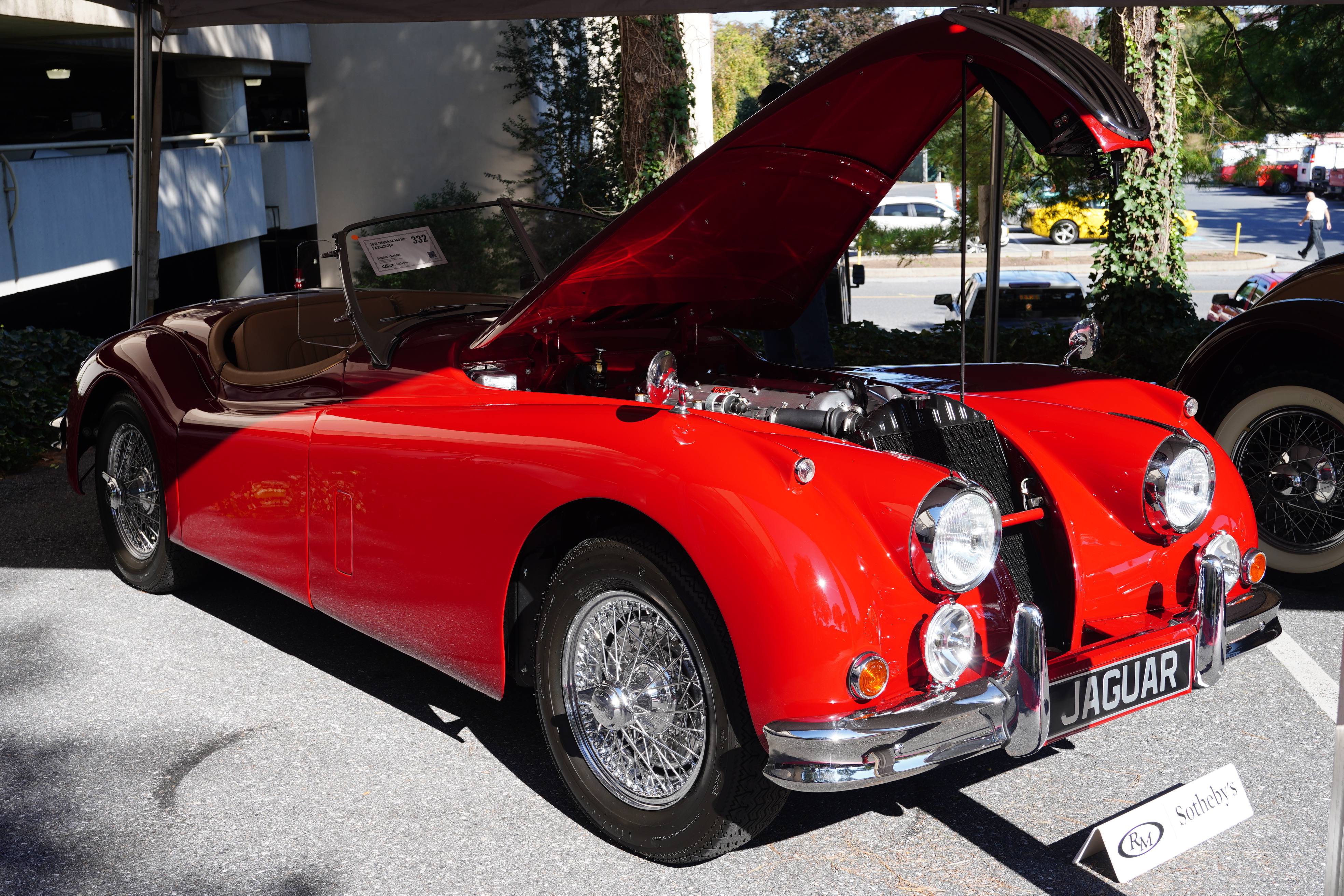
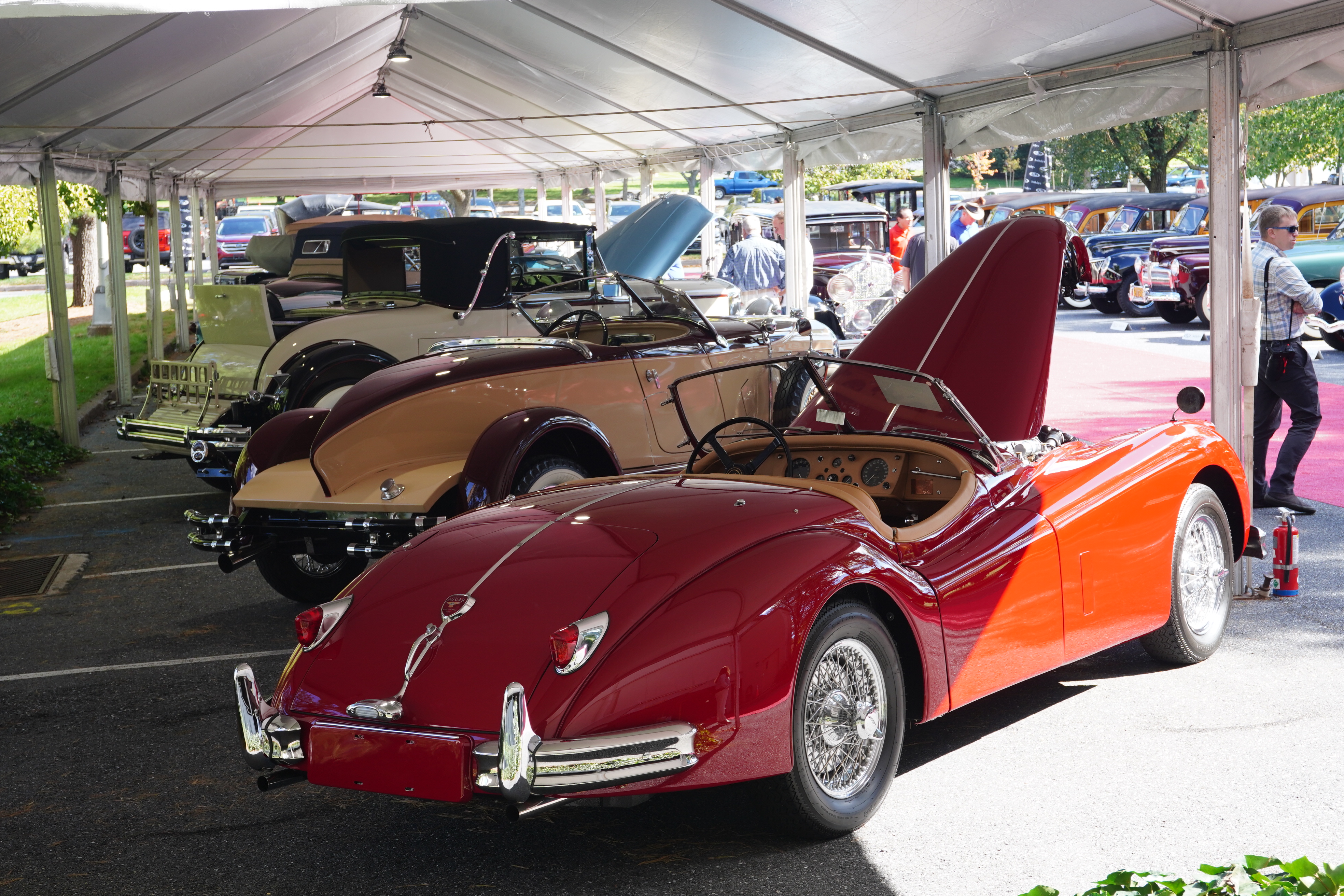
Lot 332, 1956 Jaguar XK140 roadster

SOLD for $135, within pre-sale estimate of $130-160k.

My photos do not do justice to the quality of this restoration, which struck me as one of the stars of the auction. It’s a beautiful design in any color, but the red over beige was particularly appealing. Another $20-30k added to its hammer price would not have surprised me, so I’ll call this one well-bought.


Lot 181, 1957 BMW Isetta 300 Sliding Window Coupe

SOLD for $25k, within its pre-sale estimate of $15-25k.

Let’s face it: ALL BMW Isettas are “cute”, and that’s been a big factor in their enduring appeal. But prices are way off their highs of a dozen years ago, as more Isettas came onto the market. This one must have looked great to the casual observer, but wow, there were so many incorrect details. Look at those ridiculous hub caps! The front turn signals were incorrect, the interior was ghastly (the biggest boo-boo was covering the VIN plate with carpeting), and the colors were not the best choices. Frankly, I’m surprised at the sales result; I expected it to struggle to get out of the teens.


Lot 374, 1958 Aston-Martin DB2/4 Mk III

SOLD for $160, withing pre-sale estimate of $100-175k.

While the DB2’s and DB2/4’s never did much for me, I really liked this one in white over red. It also sounded incredible when driven across the block. You can’t touch a running, driving DB4 or DB5 for much under half a million, so getting a 6-cylinder DB for well under 2 looked like robbery to me. In fact, checking recent BaT sales, other DB2/4 Mk IIIs have sold in the $200k range, making this sale all the sweeter.


Lot 184, 1963 Lincoln Continental sedan

SOLD for $30k, below its pre-sale estimate of $45-60k

That pre-sale range looks more appropriate for the 4-door convertible, not the fixed-roof sedan. This was a smart-looking car, and for $30k, one got a “Kennedy-era Lincoln” while avoiding the complexity of that convertible top.


Lot 152, 1963 Alfa Romeo Giulia Spider

SOLD for $37.5k, below its pre-sale estimate of $50-70k.

Even I, a card-carrying Alfa owner, get confused about the switch from the Giulietta to the Giulia, as it occurred on a rolling basis in the early sixties. This convertible body style was introduced around 1955 as the Giulietta. When the completely redesigned Giulia sedans and coupes came out, the mechanicals were upgraded. But the new Spider (the Duetto) was still a few years away, so the Giulietta Spider was renamed the Giulia Spider. It was announced on the block that this car was born a “Normale” (Normal, or low-spec engine) but had been upgraded to Veloce (“fast”) mechanicals. This is what is known in Alfa circles as an “Abnormale”. In spite of the faster engine bits, this was a sloppy presentation, with the car looking worn and unkempt. Its cosmetic appearance did not inspire at all, so someone bought a ‘60s Giulia Spider at a bargain price, presuming that it will respond to some elbow grease.


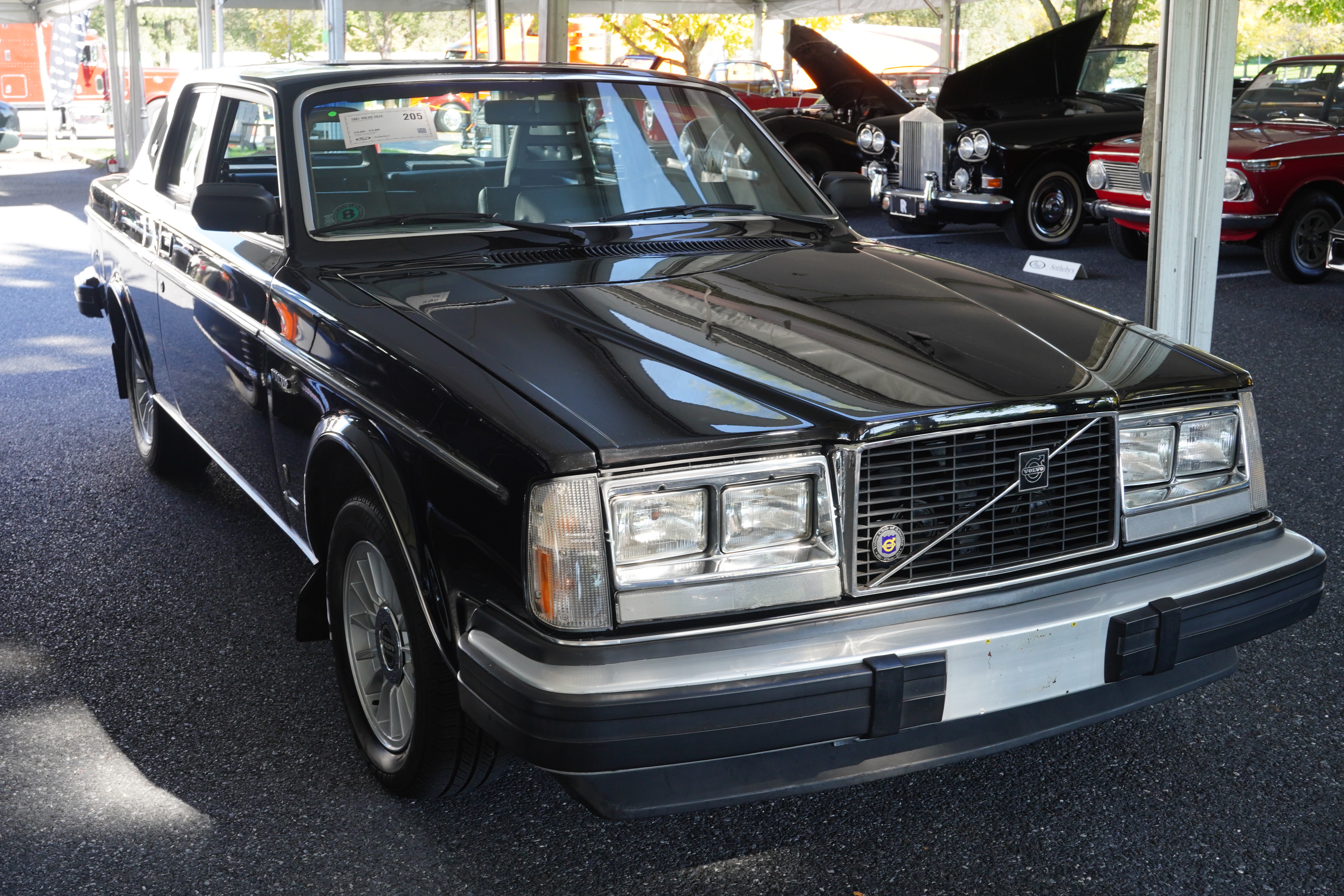
Lot 205, 1981 Volvo 262C

SOLD for $11k, within pre-sale estimate of $10-15k

This is the second of the two Dennis Nash cars included in my report. (The third car, a Morgan, was not covered by me.) About 20 years ago, Dennis called me about this car, and asked me, as a favor to him, to check it out, so I did. The owner, a widow, told me it had been her husband’s car, but she didn’t drive it. It was stored indoors and had seen very little recent use. Aside from some dust, the cosmetics appeared ok. I was not crazy about the aftermarket sunroof, but once one of those is installed, removing it is a big job. The big news was the replacement of its PRV (Peugeot/Renault/Volvo) aluminum V6 engine with a Volvo B21F 4-cylinder job. This can be construed as either this car’s biggest positive, or biggest negative. I reported my findings back to Dennis, and he bought the car. It seemed to get a lot of attention in the tent outside, and I think the final price was fair to both parties.


ADDENDA: The Cord 810/812 cars

Three of the seven Cords which sold at Hershey this year are covered above. To many, the most desirable Cords are the final models, which were produced only for two model years: 1936 and 1937. There were four body styles: the Winchester 5-seat sedan; the Beverly 4-seat sedan; the 2-seat Cabriolet; and the 4-seat Phaeton convertible. All ’36s were model 810, and all ‘37s were model 812. In 1937, a supercharged engine was available as an option. From the outside, these are clearly identified by the stainless-steel exhaust pipes exiting through the hood on either side.

I’ve followed the Cord market in a peripheral way through the years, and at least up until recently, I’ve noted that the four-door cars have tended to sell in the $60-80k range, while the convertibles fetched much higher prices, closer to $125-175k.

In 2002, I attended the annual Auburn/Cord/Duesenberg reunion in Auburn IN, and posted about it here.

Entire blog post content copyright © 2024 Richard A. Reina. Text and photos may not be copied or reproduced without express written permission.


My first-ever bid on Bring a Trailer

While I cannot recall the exact date that I was introduced to the Bring a Trailer website (www.bringatrailer, from hereon referred to as BaT), I can recall the person and the setting. I had been transferred back into HQ at Volvo Cars North America (VCNA), where I finished my career, working there from 2006 to 2009. My boss’s boss, Chris Dauerer, asked me if I had heard of BaT and when I replied in the negative, he suggested that I needed to visit their site immediately. At that time, BaT did nothing more than republish links to interesting cars found for sale on other sites, like eBay and Craigslist. Since then, BaT has grown into one of the largest online collector car auctions, with gross sales numbers placing it at or near the top among competing auctions.

Since that introduction by Mr. Dauerer, I’ve had a daily addiction to the site, and have used it as a barometer of car values. (Compared to “for sale” ads which only tell you asking prices, completed BaT sales give you up-to-date transaction prices.) But BaT has perhaps become too big: the website now closes between 100 and 150 auctions a day! So I’ve pulled back, and have chosen to follow only a handful of makes and models which interest me.

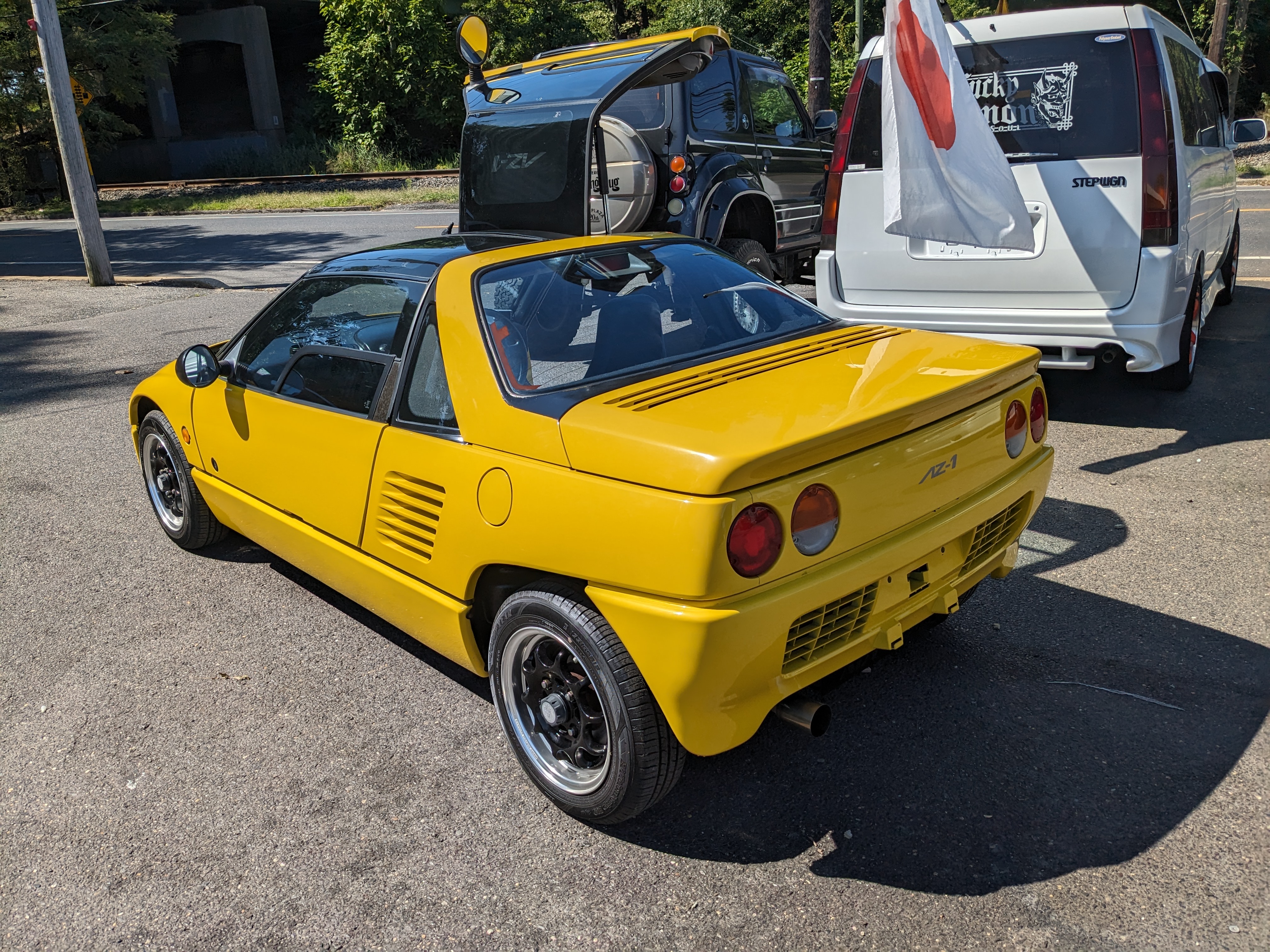
One of those cars I follow is quite unique: the Autozam AZ-1, a Japanese kei car (limited in size and engine displacement by national regulation). While there are other kei cars and trucks, the AZ-1 distinguishes itself further with its mid-engine placement and gullwing doors. These turbocharged 3-cylinder marvels show up on BaT several times a year, and when one appeared a few weeks ago located in NJ, I decided to join the fun. Previous auction results pinned these Autozams in the low-to-mid 20s, but the NJ car had been repainted a non-factory yellow, which I thought might hold the price back. With the current market a little soft, I fantasized that this one might sell in the mid-teens. So now it can be told: for the first time ever, I placed a bid on BaT, throwing my hat into the ring at $7,500. I was quickly outbid, and I raised my bid to $8,100. When that bid held for over 24 hours, a minor panic came over me, as I wondered if I’d remain the high bidder! It was time to see the car in person.

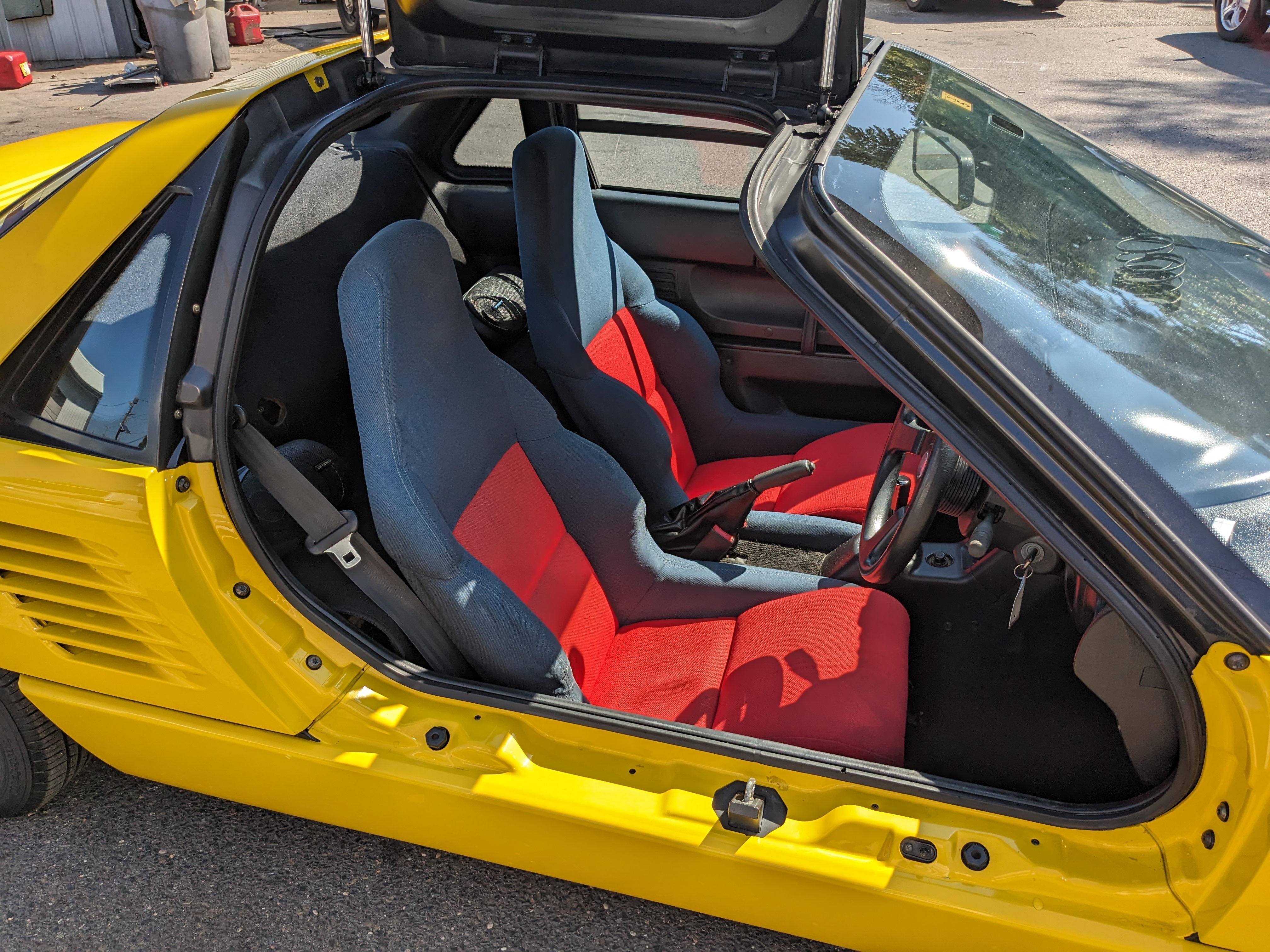
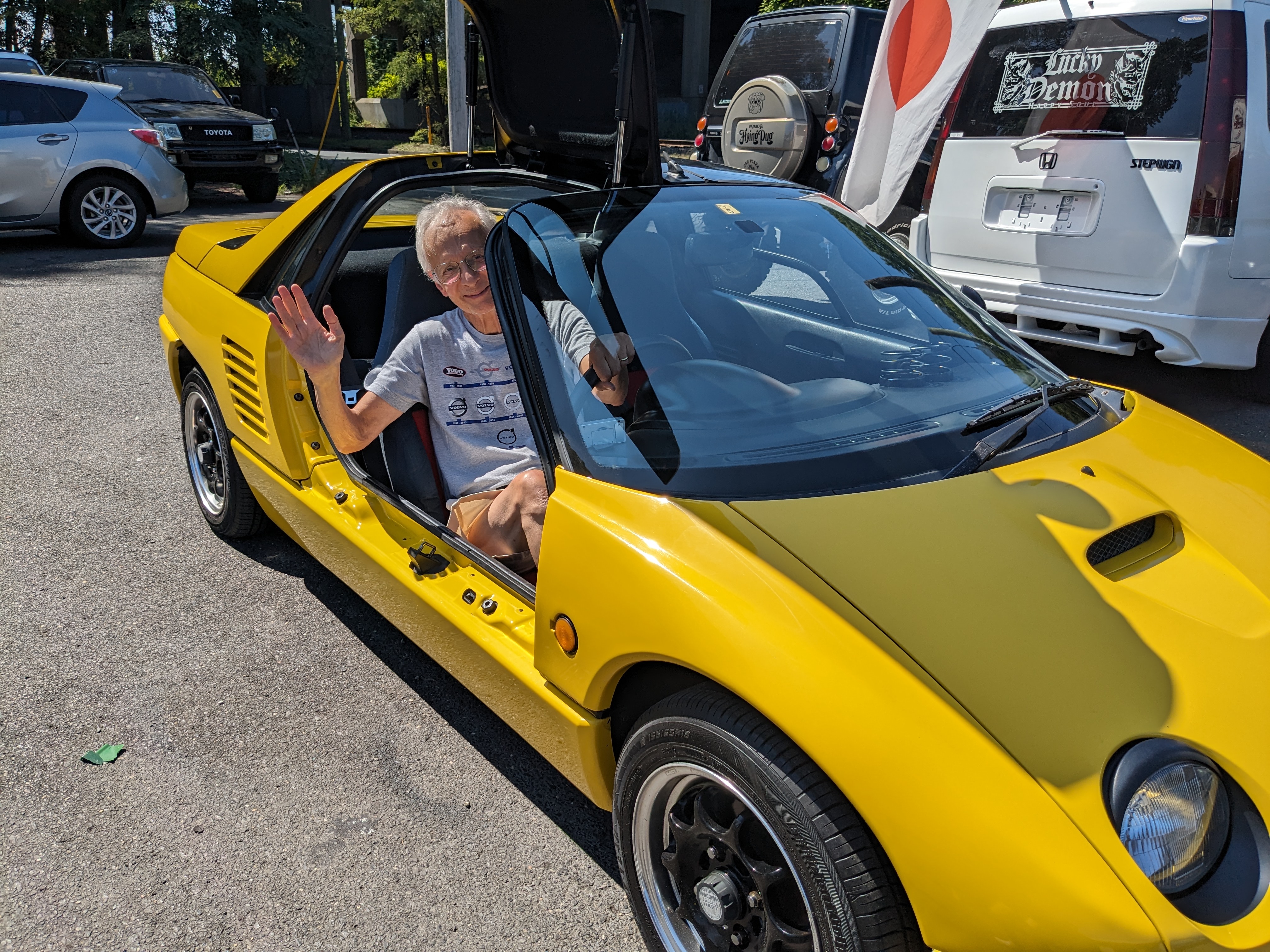
Luck was on my side here. The family was vacationing in Cape May, and I was headed home for several days just to check into things at home. The car was located near Cherry Hill, about halfway between Cape May and home. I made an appointment with the dealer, and arrived at his place about 11 a.m. on a Friday. There was the car, even smaller than I imagined. The dealer, a friendly and accommodating young man named Eli, invited me to look over the car. The size was not an issue (you’re looking at a guy who used to drive a BMW Isetta on the street), but the gullwing doors were something else. While incredible to look at, the high sills made ingress and egress most awkward. Once in the car, room was limited. From the driver’s seat (RHD), the non-adjustable steering wheel was offset to the left. The seats slid back and forth but the seat backs were fixed.

Eli offered to let me drive, but I demurred, and suggested that I would ride while he drove. He had many JDM (Japanese Domestic Market) vehicles on his lot and seemed completely at ease with the RHD. Off we sent, with the cold A/C cranking the entire time. We went onto the highway where I saw 120 kph (75 mph). The car ran well, but there was a loud clunk with every shift, possibly normal for a remote shifter. Aside from the interior access (my wife would never put up with it!), the biggest issue was the driver-quality paint job. I liked the yellow, but didn’t care for the application of it.

I thanked Eli for his time, and concluded that my automotive lust for an Autozam AZ-1 had now been satisfied. I had no reason to worry about the bidding as the car sold for $20,151, five grand higher than I predicted but five grand below other recent sales. It was fun to be a bidder on BaT, as they make the process almost too easy. For me, the real bottom line is that online auctions give you great exposure to a wide variety of vehicles, but I would still greatly hesitate to purchase any vehicle sight unseen.


ADDENDUM

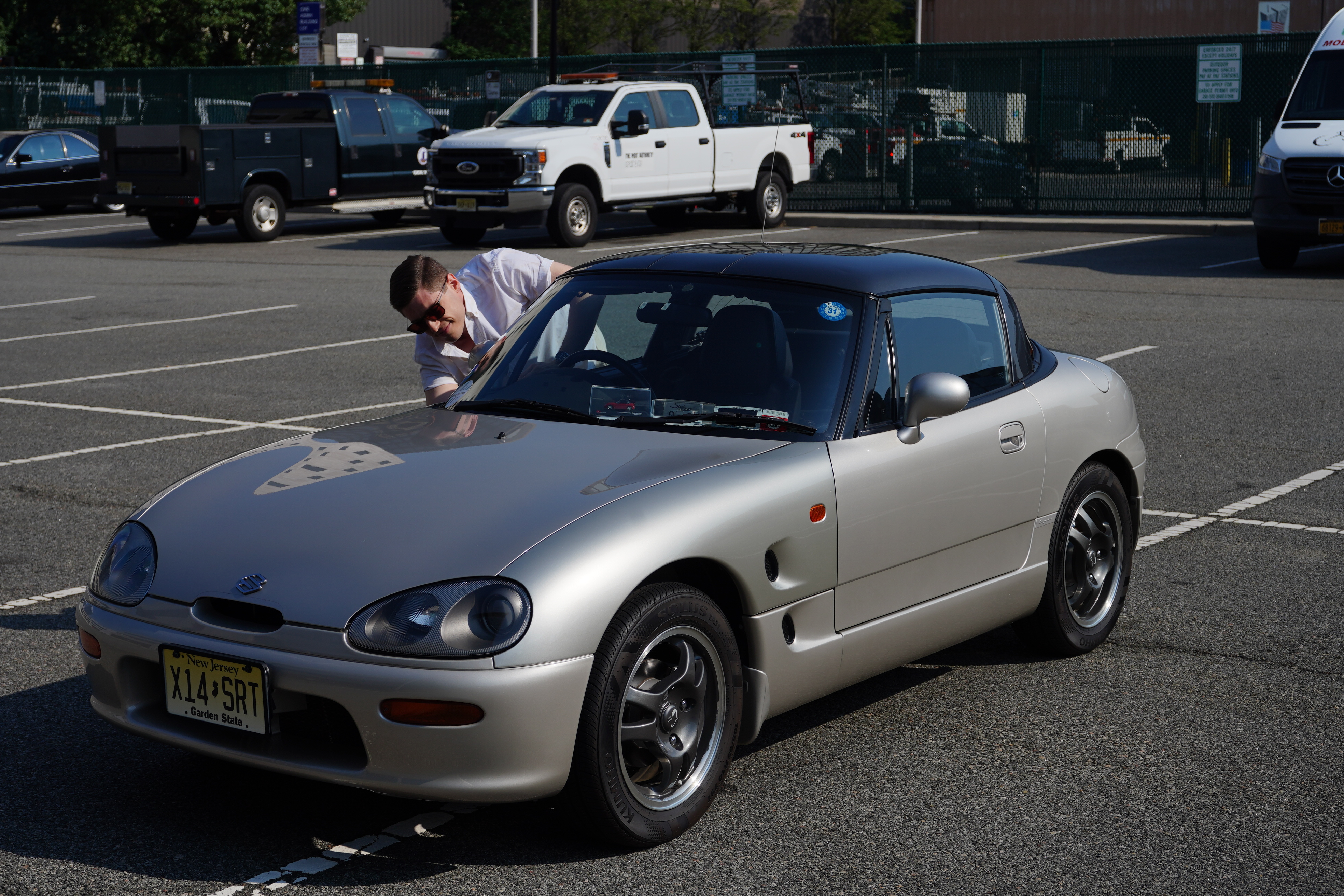
Although I didn’t identify it by make, model, or size class, I did include a different kei car in my blog post from July of this year about the Concours on the Palisades in Fort Lee, NJ. In the Japanese class was a Suzuki Cappuccino, a kei car which happens to use the same 3-cylinder engine as the Autozam.

Entire blog post content copyright © 2024 Richard A. Reina. Text and photos may not be copied or reproduced without express written permission.


Spring Carlisle Auction, April 2024

Carlisle Events held its annual Spring Auction this year on Thursday and Friday, April 18 and 19. For as long as I can remember, the Spring (and Fall) Carlisle Auctions have been held inside the Expo Center, across the street from the Carlisle Fairgrounds. I believe that the building was erected about 10-12 years ago specifically as an auction site. This year, the shelter was welcomed, thanks to the changeable weather (cool temps, occasional drizzle) I experienced on both days.

I eyeballed the lots on the Carlisle website in the days leading up to the event and found it disappointing that compared to previous years, nothing I saw on the screen got me very excited. For the most part, that remained true during my in-person inspections as well, although there were a few cars sold for what seemed like almost-bargain prices, which drove me to go inspect them post-sale. This year, I found the patience to sit through much more of the actual auction, and the big news here was the incredibly low sell-through rate.

On Thursday, I watched 71 cars cross the block and 31 sold, for a 43.7% selling percentage. Friday’s numbers were almost identical: I saw 139 cars in live-action bidding, and 62 found new homes, for a 44.6% sales rate. Combined, I witnessed 210 cars reach the block with 93 trading hands, for an abysmal two-day sell-through rate of 44.3%. (I have witnessed percentages at Mecum and RM Sotheby’s closer to 70%-90%.) Carlisle, unlike some other auction companies, makes no effort to negotiate reserves with sellers, which leads some consignors to slap unreasonably high reserves on the cars. Additionally, many bidders are dealers who are not going to pay above wholesale prices. This accounts for this end result.

This wasn’t for lack of effort on the part of the auction staff, all of whom kept themselves actively engaged with the audience (a bit thin on Thursday, and much more crowded on Friday). During introductions, I learned some new job titles. The men who stand out front and/or wander into the audience to make eye contact with bidders, barking at the auctioneer when they get a live one, are “Ringmen”. And when the vehicle owner is required to stand next to the auction block, an employee known as the “Grinder” is there to persuade him/her to lower their reserve. I presume the job title relates to their expertise at grinding the owners down until they relent.

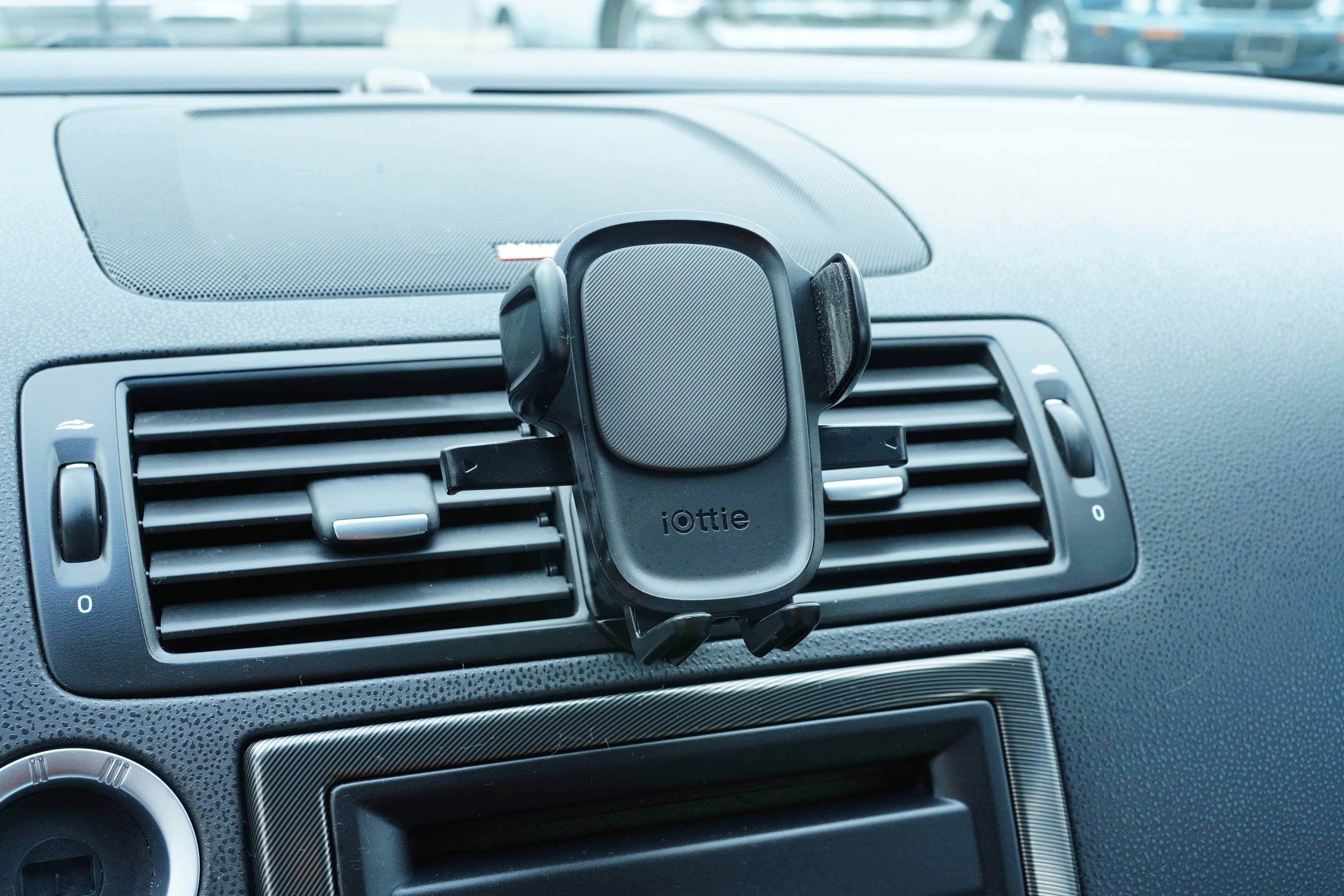
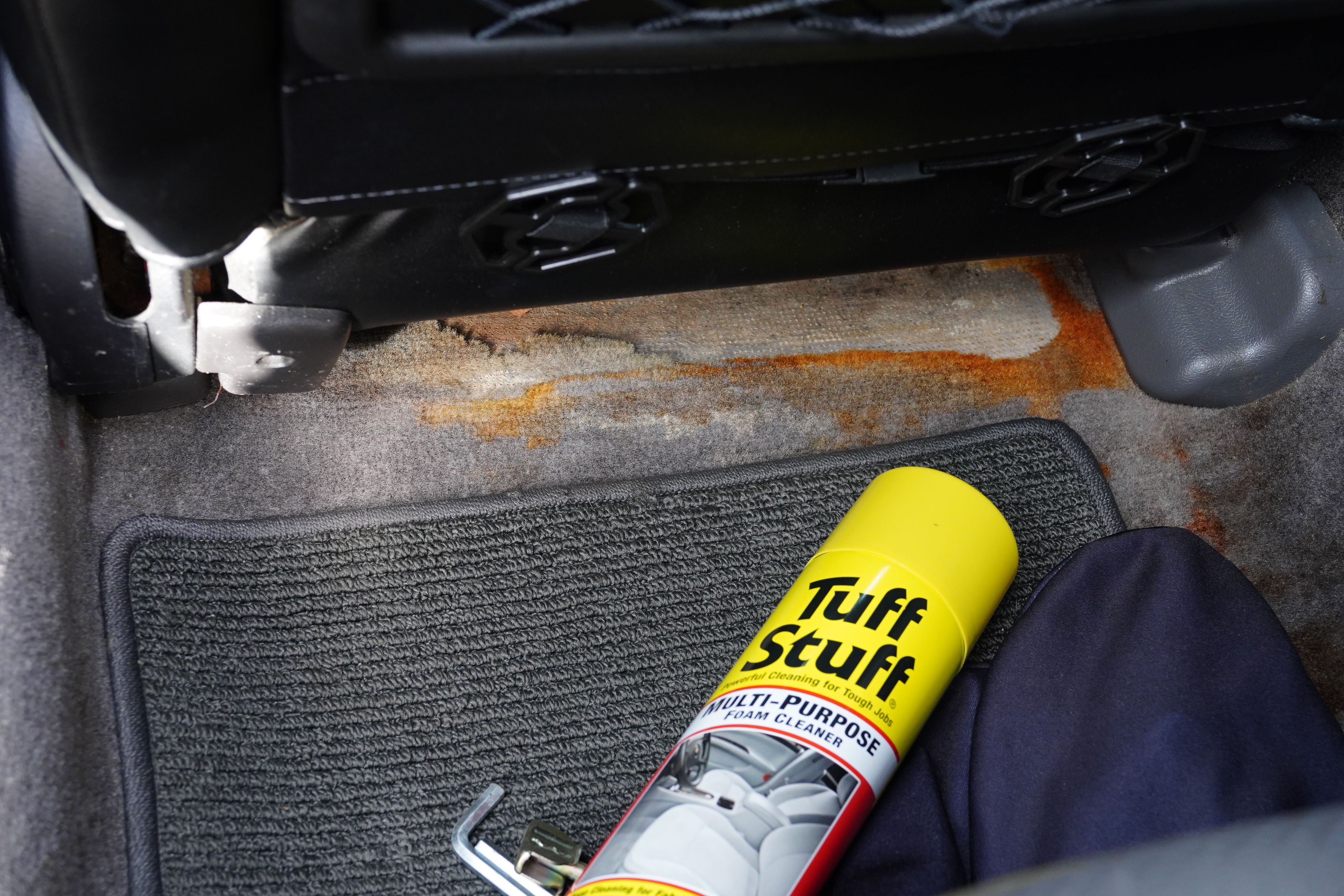
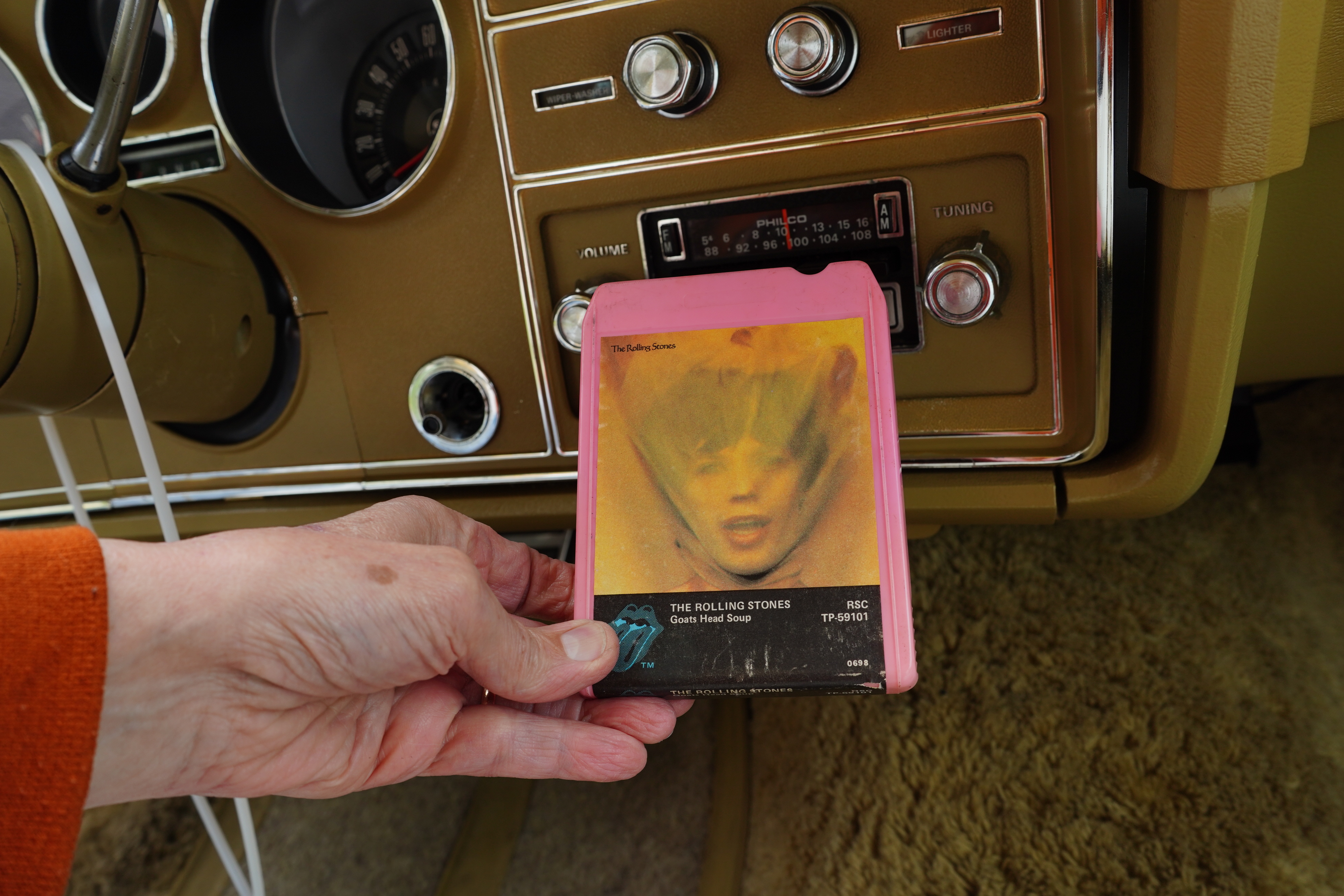
An amusing trend this year was the number of cars with personal items left inside which should have been removed during prep. Cell phone holders, garage door openers, music tapes, and spare parts were found in numerous cars. Had I pinched them, no one would have been the wiser (but I’ve long had no reason to own an 8-track copy of “Goat’s Head Soup” by the Rolling Stones).

Below are details on 9 cars which sold; a few other cars which failed to meet reserve are included as well. Prices are hammer prices and do not include buyer’s fees. As always on Richard’s Car Blog, entries are listed in ascending sale price order. While I personally found the overall selections lackluster, I still maintain, as I have for years, that an auction offers a possible opportunity for a collector who’s open-minded to score an interesting toy for not too much change. Let me know if you see anything below that you would have bought for the sale price had you been present.


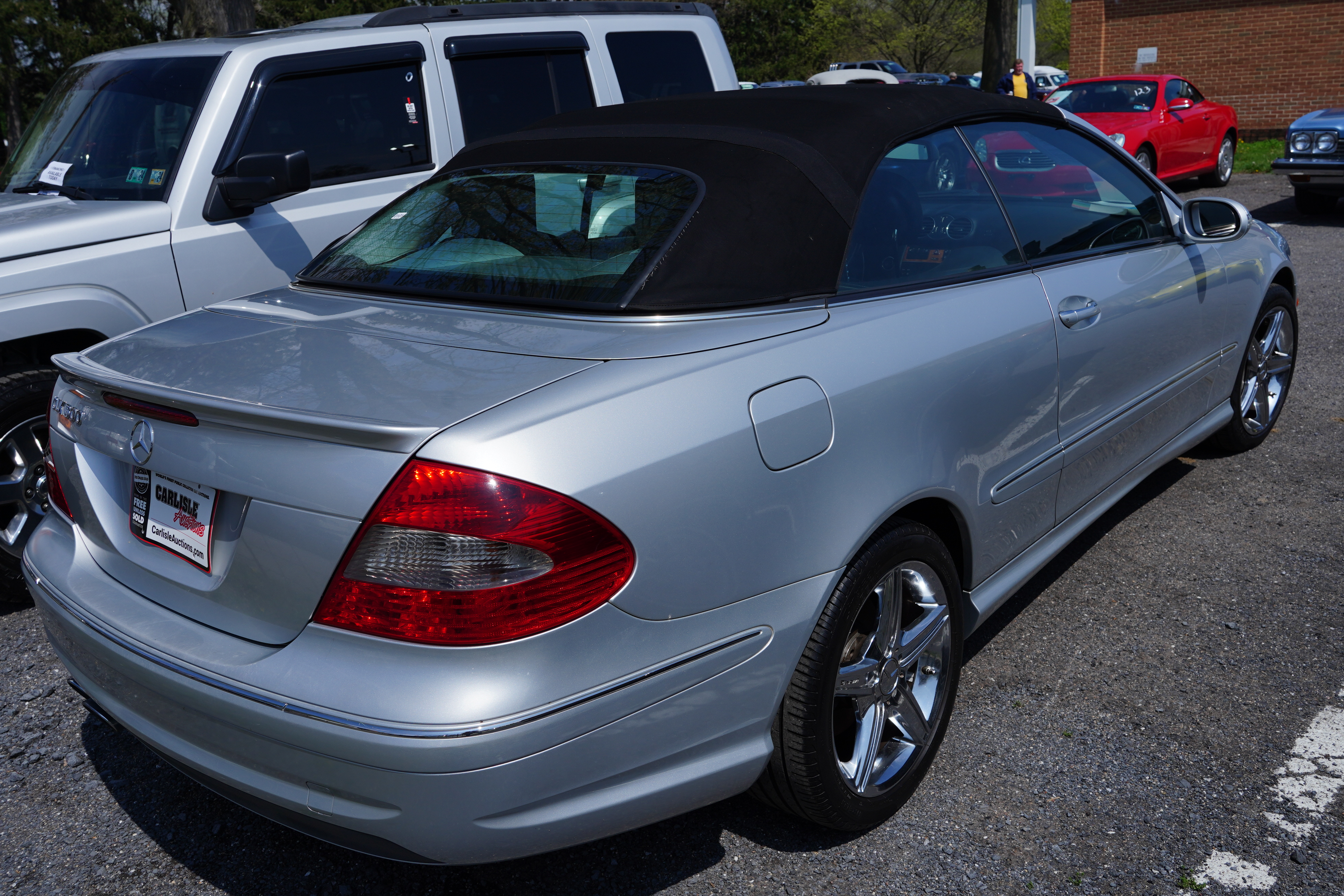
Lot 102, 2006 Mercedes-Benz C-Class convertible
SOLD FOR $3,250

Silver paint, black convertible top, black leather interior, chrome factory wheels, trunk lid lip spoiler. Digital odometer reads 134,257 miles, not outlandish for an 18-year-old German car. Biggest notable flaw: driver’s seat-mounted side air bag has deployed and has not been repaired. If this car runs and drives (it was driven across the block), the buyer will fix the seat and flip it for a profit.


Lot 105, 2001 Jaguar XJ8 sedan
SOLD FOR $4,500

This lot was declared unsold at a bid of $3,750 and was sold post-block. Medium blue metallic, light beige interior, 5-digit odometer reads 68,595 miles (could that be 168,595?). No obvious defects spotted during cursory look. Whether this is a good deal or not greatly depends on a Carfax or similar clarifying the car’s true mileage.


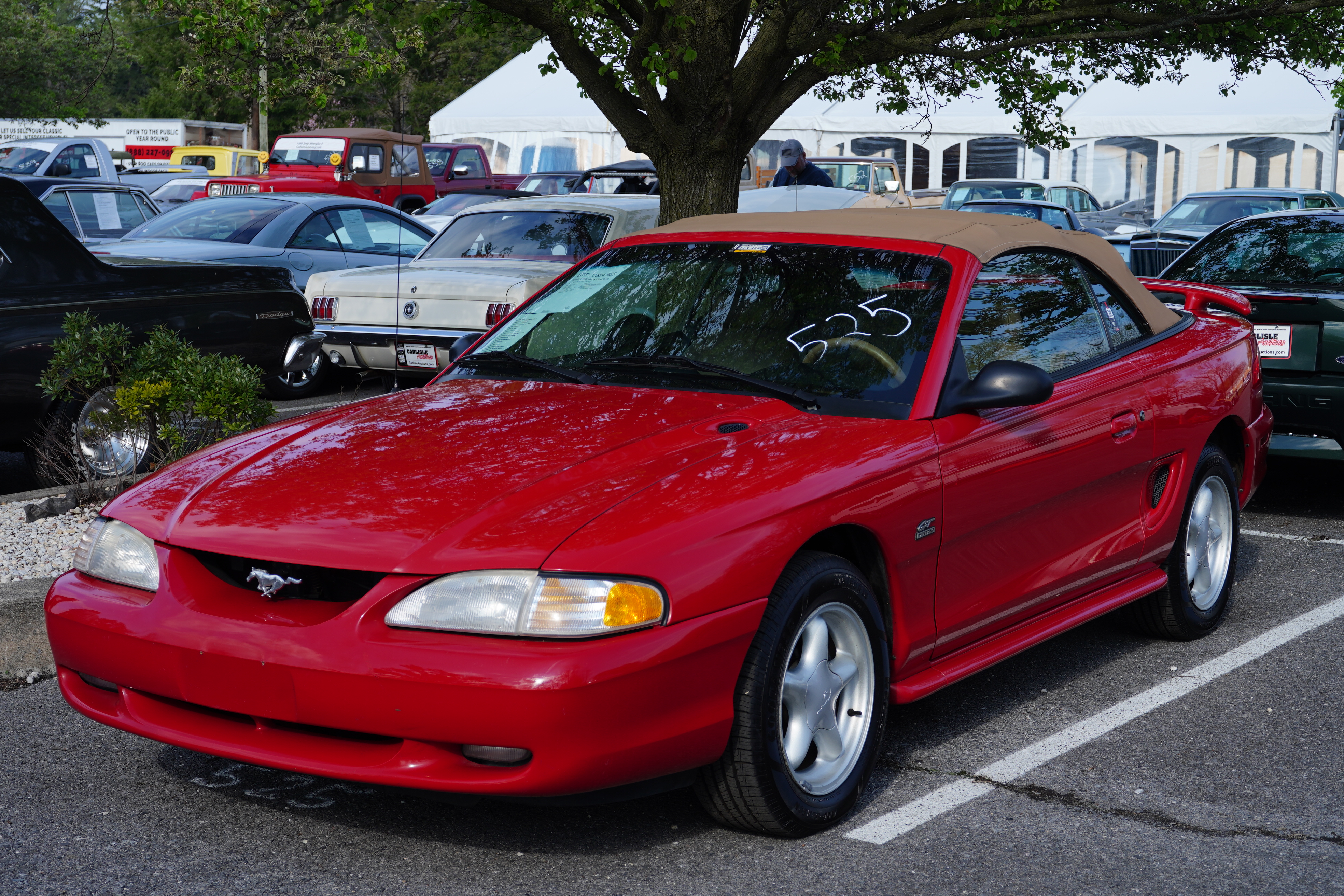
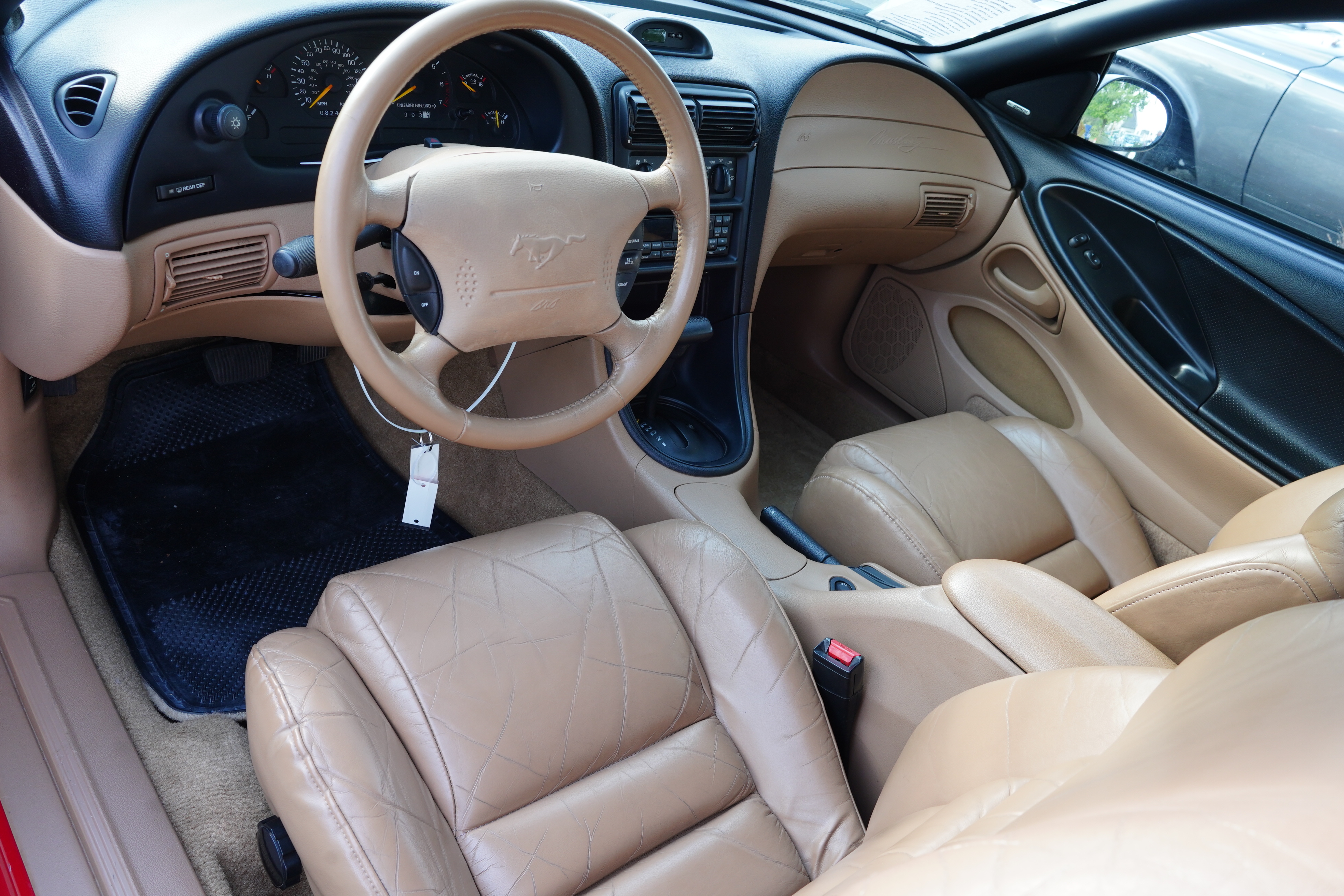
Lot 525, 1994 Ford Mustang convertible
SOLD FOR $8,250

Red paint, tan top and interior, factory alloys, 5.0 V8 with automatic, 6-digit odometer reads 082,496. Sign on car claims it was Texas car and that everything works. This new style Mustang which debuted after a very long run of the Fox-body was not a big favorite with the Mustang crowd. Nevertheless, the combination of eight cylinders and top-down motoring for under 10 grand puts this one in the Win column.


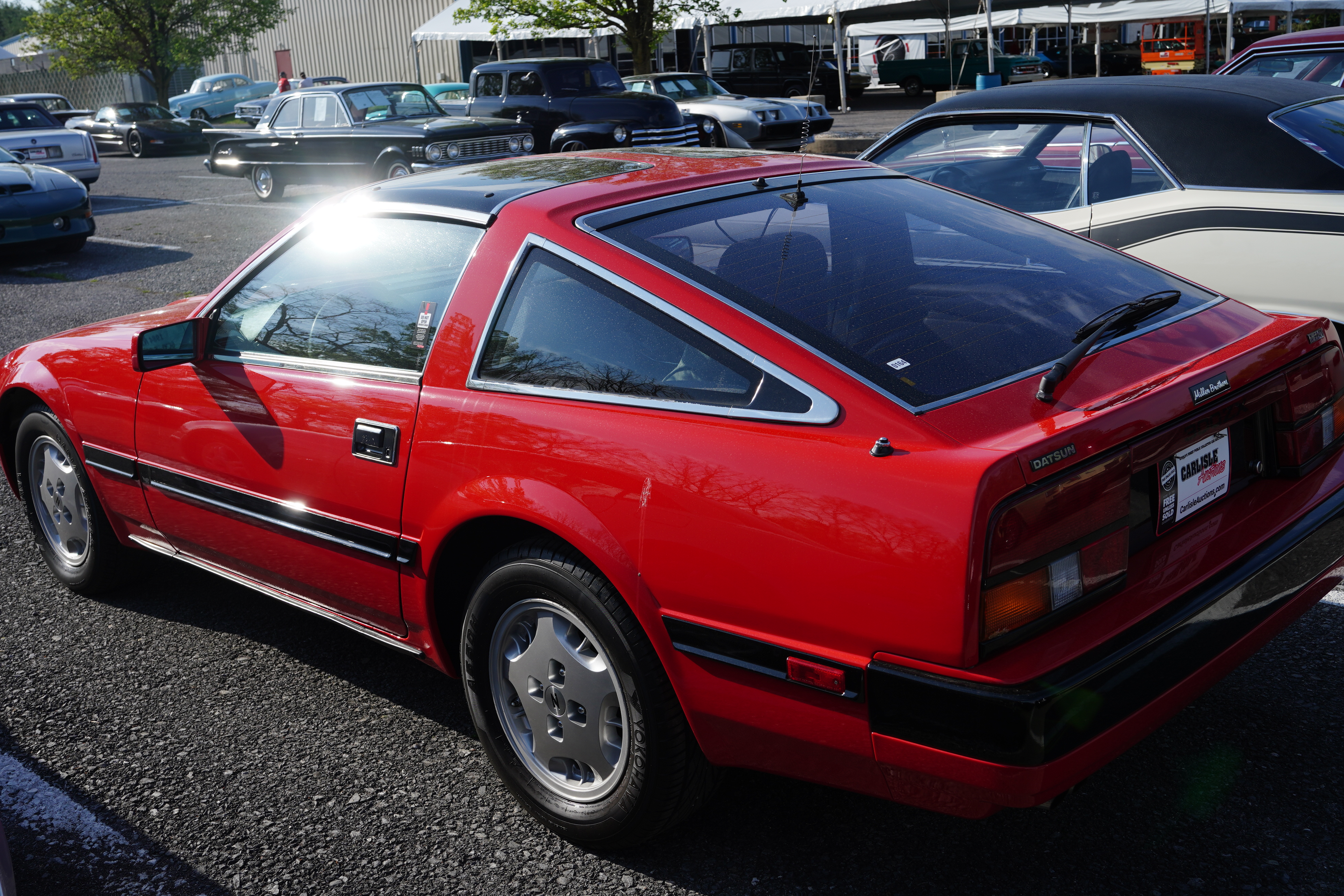
Lot 520, 1984 Nissan 300ZX
SOLD FOR $8,500

Red paint, grey cloth (velour) interior, T-tops, V6 with 5-speed, 6-digit odometer reads 112,849 miles. Sign on car claims one-family owned since new. I thought this may have been the deal of the day among the cars I watched cross the block. The car was very clean overall and very difficult to cosmetically fault in any way.


Lot 132, 1940 Buick sedan
SOLD FOR $8,750

Black paint, wide whitewall tires, beige mohair interior. Drivetrain not noted but presumably straight-8 with 3-speed manual. Rear-hinged rear doors. Paint looks decent, glass is all good, interior looks new, biggest glaring fault is a badly cracked steering wheel. This car proves that there is still interest in pre-war cars, and this vehicle would be an excellent entry in a Glidden Tour.


Lot 176.1, 1965 Chevrolet Corvair convertible
SOLD FOR $11,000

Yellow paint, black convertible top, full wheel covers, whitewall tires. black vinyl interior. Six-cylinder engine with four 1-barrel carbs, four-speed manual transmission. Based on what I have seen Corvairs sell for on Bring a Trailer, someone got a very nice 2nd gen Corvair convertible for a very good price.


Lot 512, 1961 Mercury Comet S22 2-door sedan
SOLD FOR $11,500

This car was a no-sale at a top bid of $7,500 and was sold post-block. Black paint, red vinyl interior, buckets, center console. Inline 6, 144 cubic inches, automatic. Sign on car claims 31,214 original miles, and appearance could support that. I loved this car for its rarity and its cheeky no-nonsense appearance. I have not seen one of these since my college roommate drove one in 1975! Despite its overall condition, I thought that the $7,500 bid I witnessed was “all the money”, but someone thought enough of it to step up to the owner’s reserve.


Lot 547, 1985 Nissan 300ZX 2+2
SOLD FOR $15,000

White paint, red velour interior, T-tops, rear window louvers, factory alloys, 6-digit odometer reads 067,553 miles. Very clean overall, but the extended wheelbase of the 2+2 severely detracts from the styling. Compare this to the ’84 300ZX Lot 520 described above, and 520 now looks like even more of a bargain.


Lot 519, 1972 Plymouth Barracuda
SOLD FOR $38,000

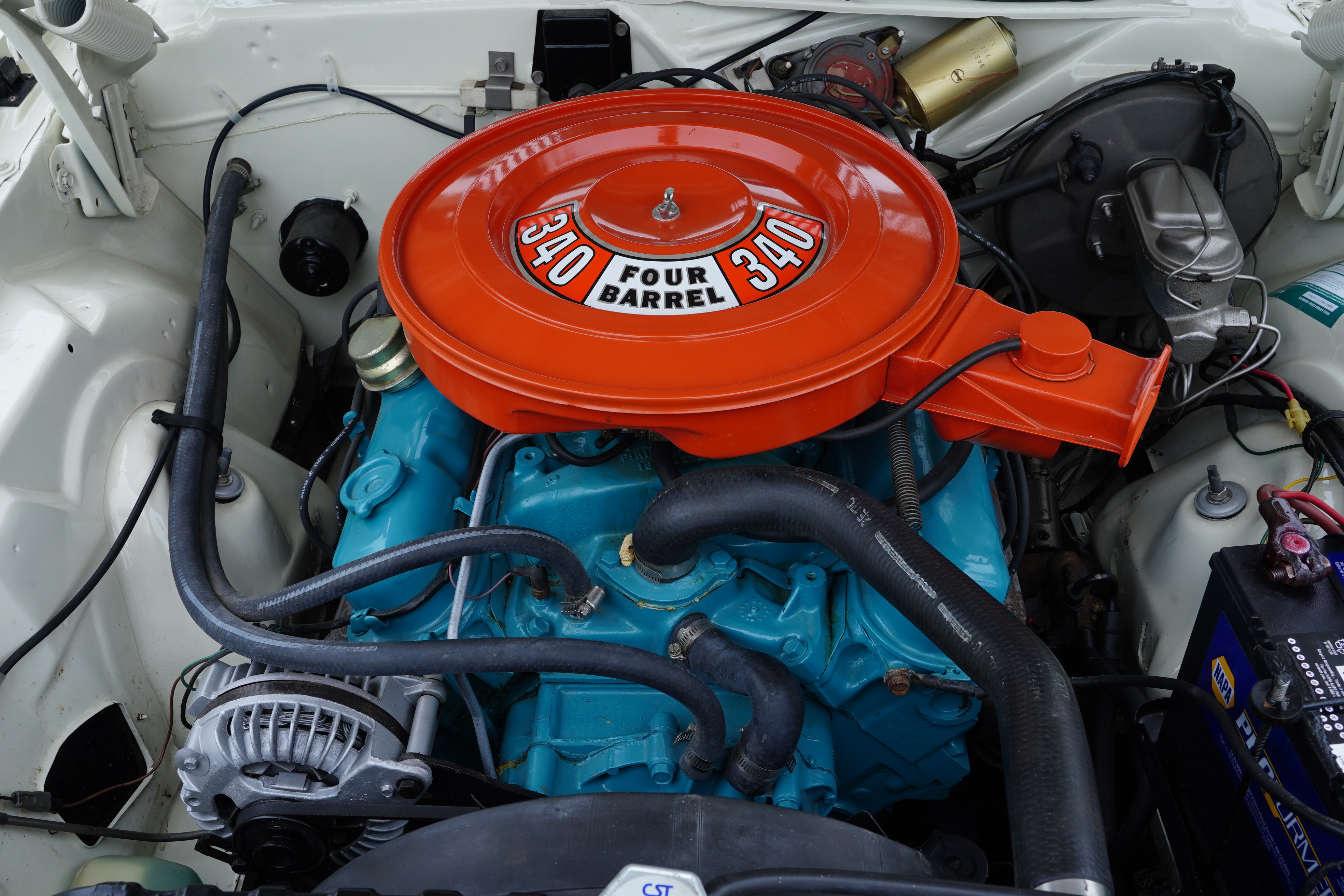
White, black side stripes, black vinyl top, black vinyl interior, trunk lid spoiler. Engine is 340 4-barrel backed by 4-speed manual. Five-digit odometer reads 65,609. This was the only E-body Mopar at this auction, and sold for more than I expected, although I am out of touch with these ‘70s muscle car prices.


NOTABLE NO-SALES

Lot 250, 2000 Ford Mustang convertible
BID TO $7,250, NOT SOLD

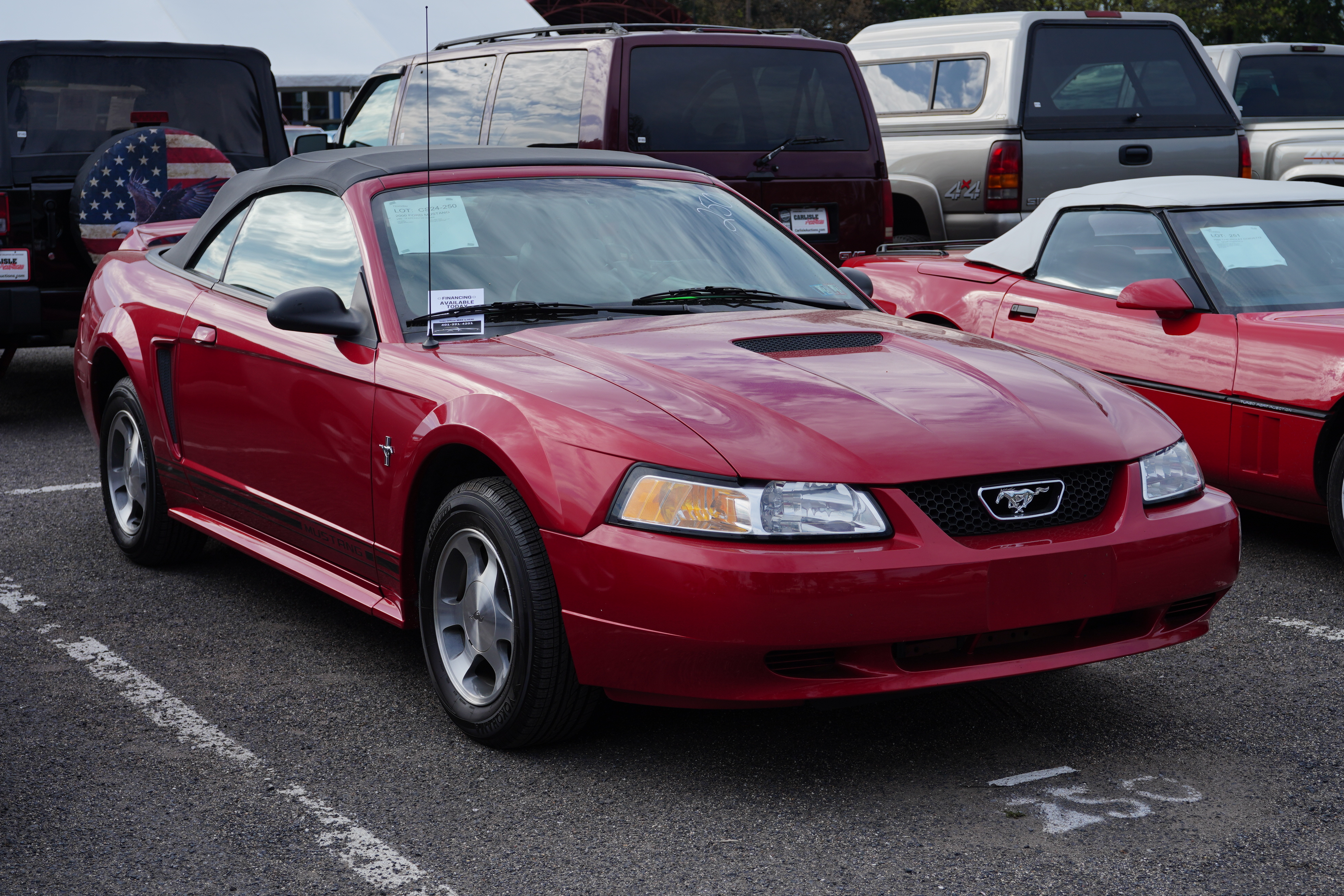
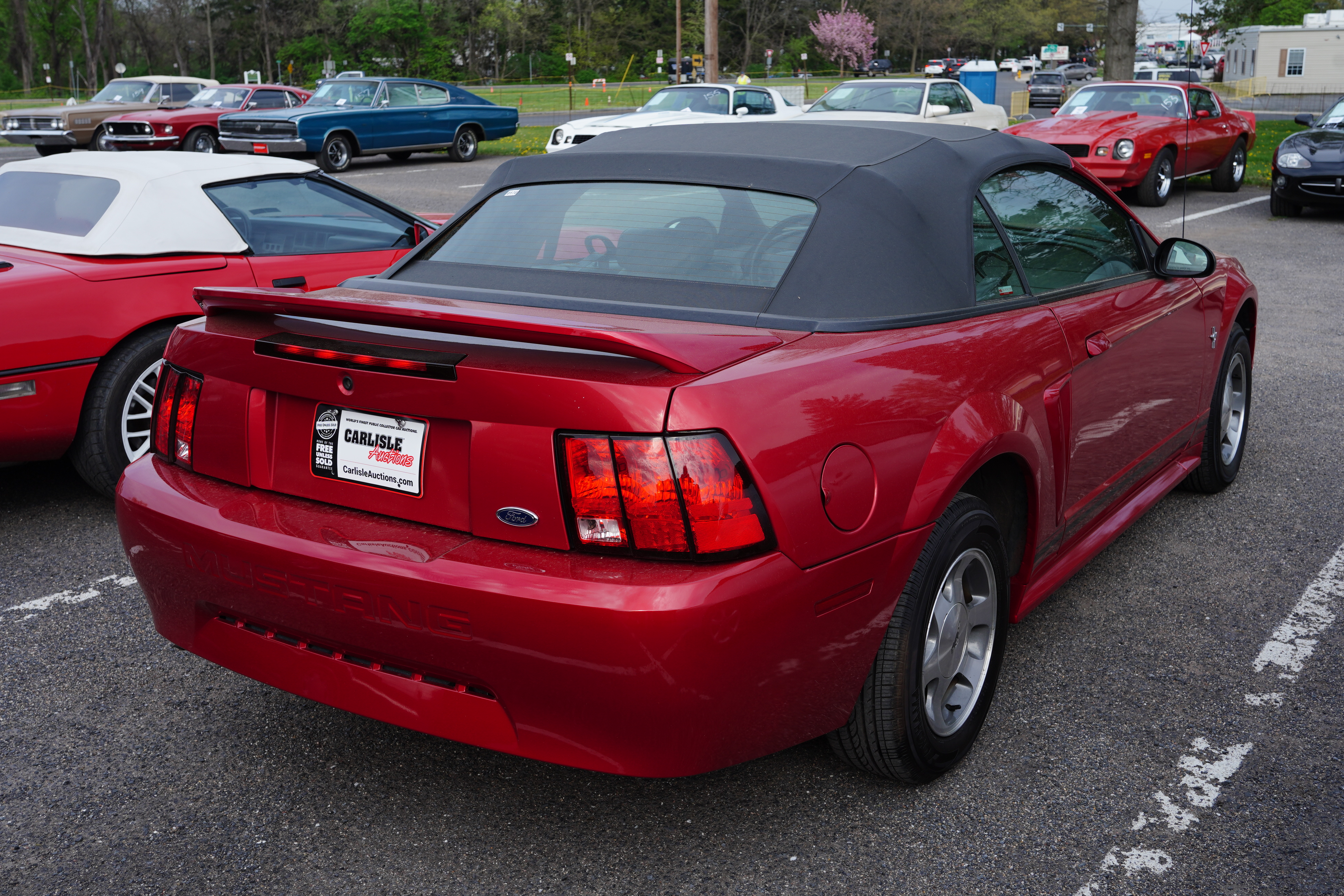
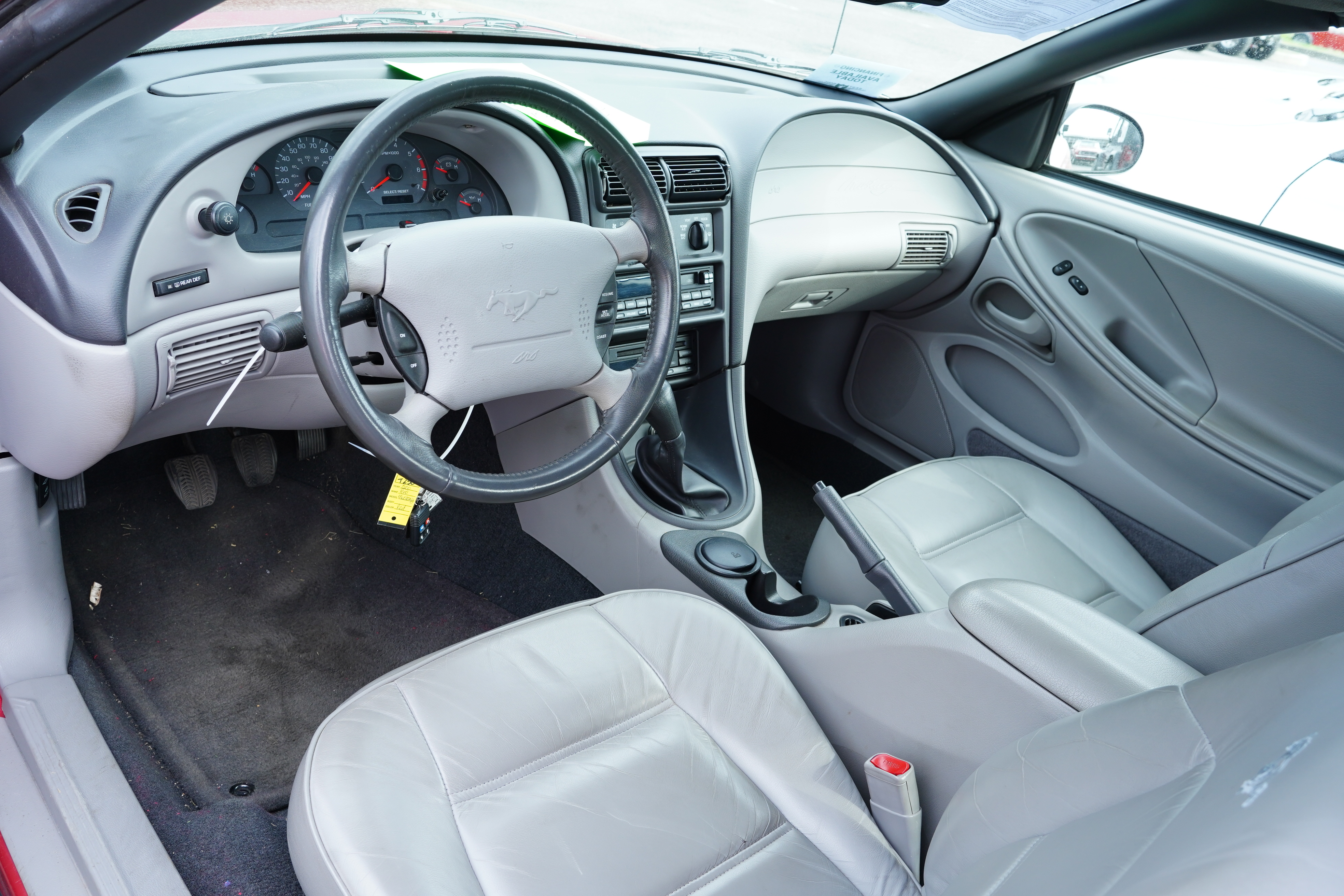
Dark red metallic paint, black convertible top, light grey interior. Engine is 3.8L V6, with 5-speed manual. Six-digit odometer reads 025,391, and Carfax report which I obtained backs that up. The car did not have a nick, scratch, or door ding on it. The front bumper remained undrilled for a plate. Driver’s seat bolster showed slight wear. I had a chance to speak with the consignor, who told me that the car had been owned by an elderly gentleman who never drove it in the rain and always garaged it. When he passed away the consignor bought it to bring here. The auctioneer announced that the reserve was $10,000 which, even in this condition, is a bit rich given that one can get V8 convertibles for that money. Still, I found this one of the most intriguing cars at the auction.


Lot 530.1, 1986 Mazda RX-7 coupe
BID TO $7,500, NOT SOLD

Blue metallic paint, grey cloth interior, factory alloys, front bra, six-digit odometer reads 105,542 miles. Sign on car claims original owner, “quality repaint” in 2008, and new tires. Aftermarket items include new stereo and exhaust. These 2nd gen RX-7s have taken off in recent months, and I agree that the high bid was a little light. My guess is that 10 grand would have taken it home.


Lot 215, 1970 Cadillac Eldorado
BID TO $16,000, NOT SOLD

Green paint, black vinyl top, green cloth interior, full wheel covers, whitewall tires, 5-digit odometer reads 91,251 miles, 500 cubic inch V8, 3-speed automatic, FWD. Some paint bubbling near vinyl roof, water stains on driver’s seat upholstery. The 1967 Eldorado was another smash hit for GM, and with the exception of the headlights now being fully exposed, this 1970 model was essentially unchanged. I don’t see this generation Eldo at auctions too often; I feel that the consignor could have accepted the high bid as a reasonable price considering its condition and moved on.


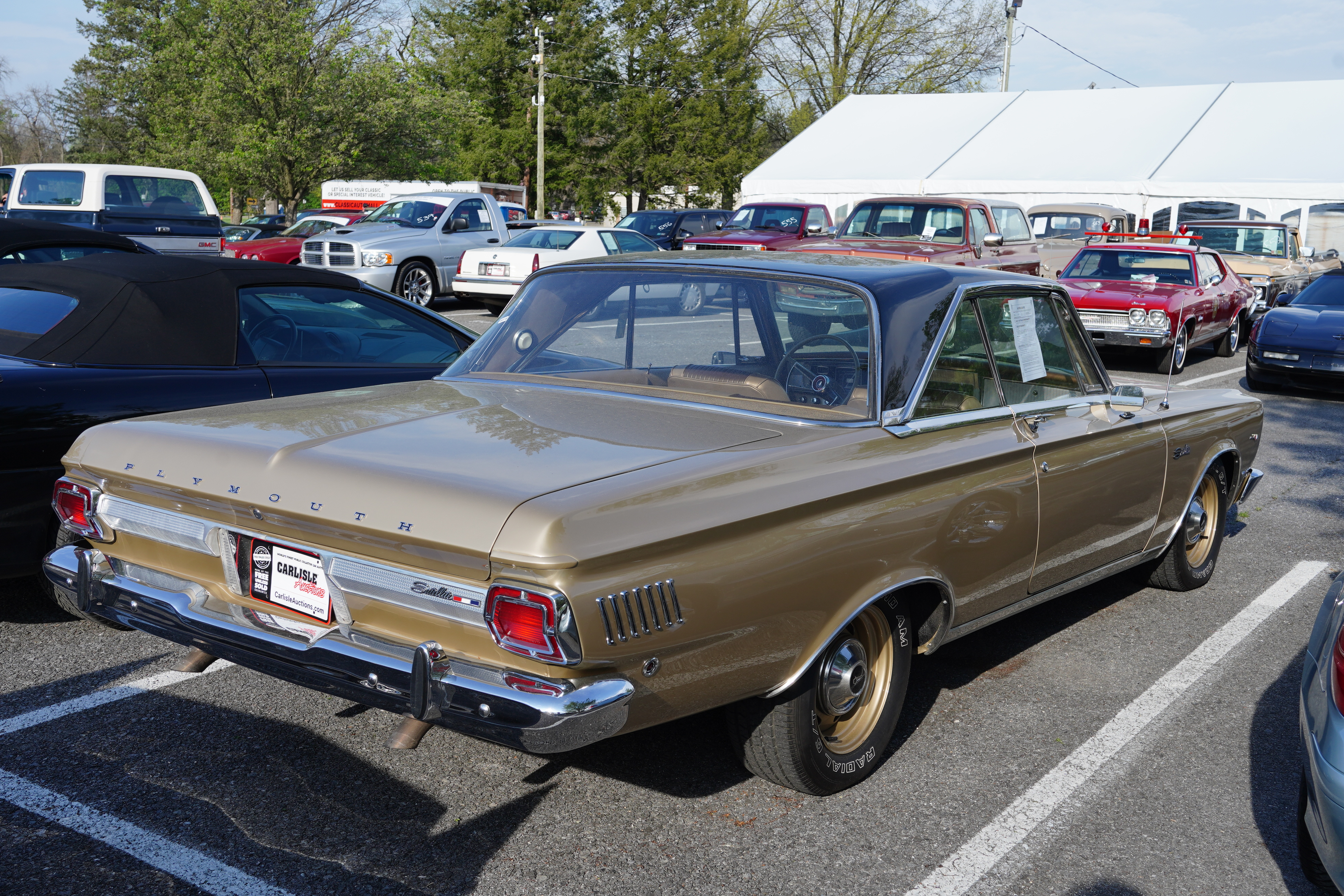
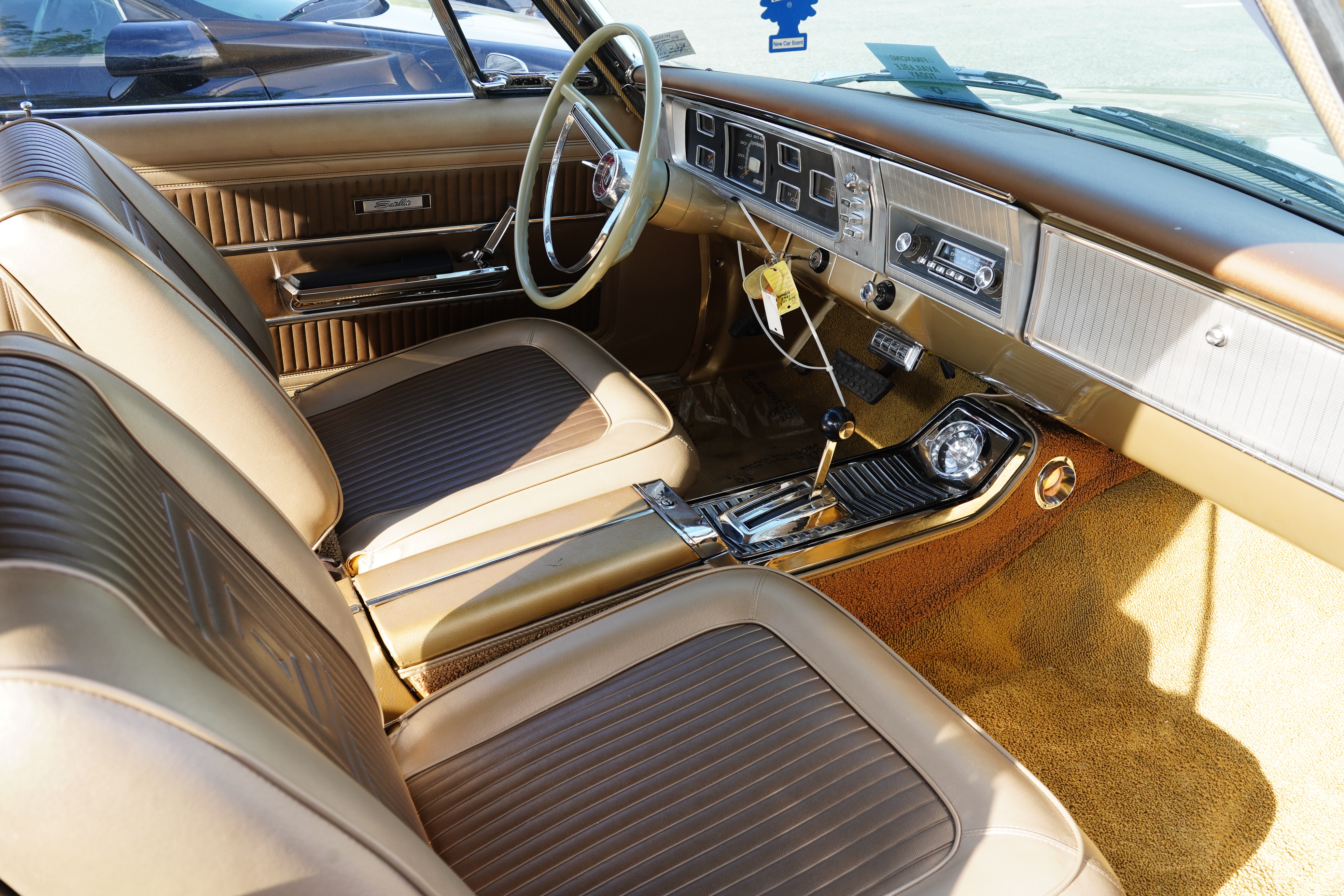
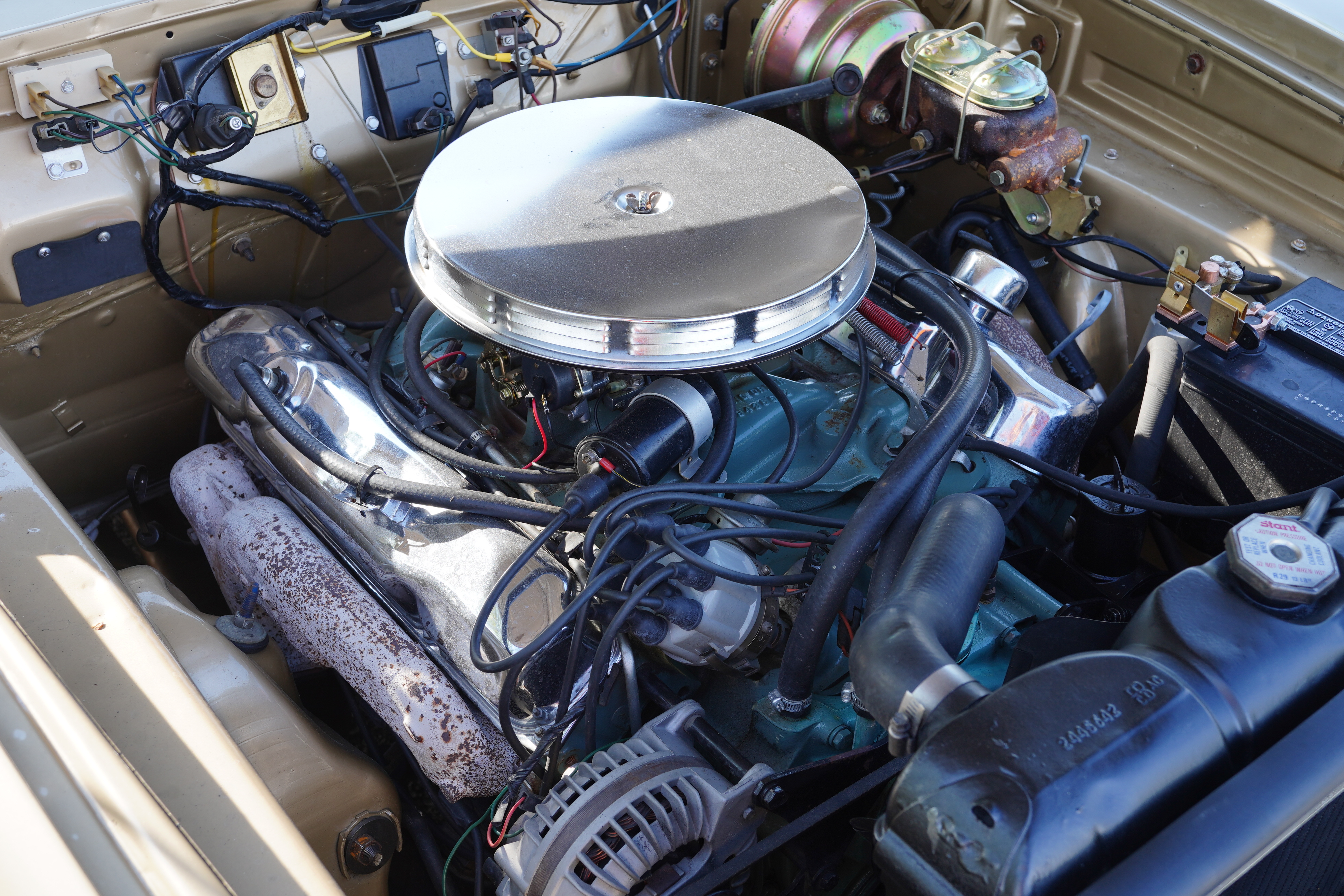
Lot 529, 1965 Plymouth Satellite 2-door hardtop
BID TO $28,000, NOT SOLD

Gold metallic paint, black painted roof, gold wheels with dog dish hubcaps, two-tone gold interior. Underhood is 426 wedge V8 with 3-speed 727 automatic. Sign on car claims power steering, power brakes, power windows, Plymouth AM radio. These cars are rare in any condition and this one looked very well sorted. The Mopar interiors of this time period are light, airy, and have an almost delicate appearance to them compared to their domestic competition. Given the high-quality look to the restoration combined with the high-horse powertrain, I agree that the bid was light; but what is it really worth?


END SHOTS


All photographs copyright © 2024 Richard A. Reina. Photos may not be copied or reproduced without express written permission.


Hershey 2023 Part 1: The RM Sotheby’s Auction

The auction company RM Sotheby’s continued their October tradition by hosting a collector car auction at the Hershey Lodge in Hershey PA during the AACA Fall Eastern Nationals. RM (for Rob Myers, company founder), based in Canada, is one of the premier automotive auction houses, hosting events around the world; their appearance here is one of the few times they’re on the East Coast. Hershey Lodge is less than 2 miles from Hersheypark, where the AACA was holding its flea market/car corral/judged show (more about that in Parts 2 and 3). When Hersheypark decided to extend its open weekends into October, they forced the AACA to move its agenda back by a day (so the judged show, which for 50+ years had been on Saturday, is now held on Friday). RM similarly adjusted its two-day schedule to coincide, so their auction is now on Wednesday and Thursday.

RM Sotheby’s continues to attract consignments which are what I describe as pre-war and immediate post-war American classics, with a smattering of European cars. Despite pundits’ predictions that the ageing of the hobby would eliminate all interest in the classic cars of the 1910s – 1930s, that has not occurred: interest in well-restored examples of fine cars remains strong, even if prices have leveled off or dipped somewhat. By my casual observation, RM’s strength in filling their lots with high quality machinery at reasonable reserves results in a very strong sell-through rate. Of the dozen cars that I report on below, all sold. This is helped of course by the no reserve status of most of them, so high bid takes the car home. At the same time, RM’s published pre-sale estimates tell an interesting story: most of these cars sold below their estimates, at numbers which in some cases strike me as relative bargains.

My report covers only cars listed on the RM Sotheby’s website as “sold”. As I was not in attendance during the auction, sale prices are taken from their website; they include the 10% buyer’s premium which is backed out by me, so my numbers are “hammer” prices. Cars are listed in sold price order from low to high.


Lot 453, 1962 Volvo PV 544, grey paint, two-tone blue interior, dual outside mirrors. Appears well-restored on the outside, interior shows some wear. No reserve.

Pre-sale estimate: $12,000 – 16,000

Sold: $19,000; one of the few cars reported on here which sold above its high-end estimate. Seemed a bit pricey for an old Volvo.

Lot 456, 1957 BMW Isetta, two-tone light blue & white, off-white interior. Relatively rare European-spec version of the Isetta: no front bumper overriders, small headlights, large amber “repeater” lights, original style tail lights. No reserve.

 Pre-sale estimate: $30,000 – 40,000

Sold: $20,000; This is under other recent sales by $5,000-10,000, and the keen Isetta observer will enjoy its uniqueness compared to the much more common U.S. versions.


Lot 457, 1949 MG-TC, green, tan interior, tan top, silver-painted wire wheels. RHD as all TC’s are. This is the model vehicle credited with igniting the sports car craze in the U.S. when WW2 vets returning from the UK brought some of these back with them. No reserve.

Pre-sale estimate: $30,000 – 40,000

Sold: $25,000; a slight bargain compared to what some TC’s sell for on sites like Bring a Trailer, and possibly sold for less than what it cost to restore.  


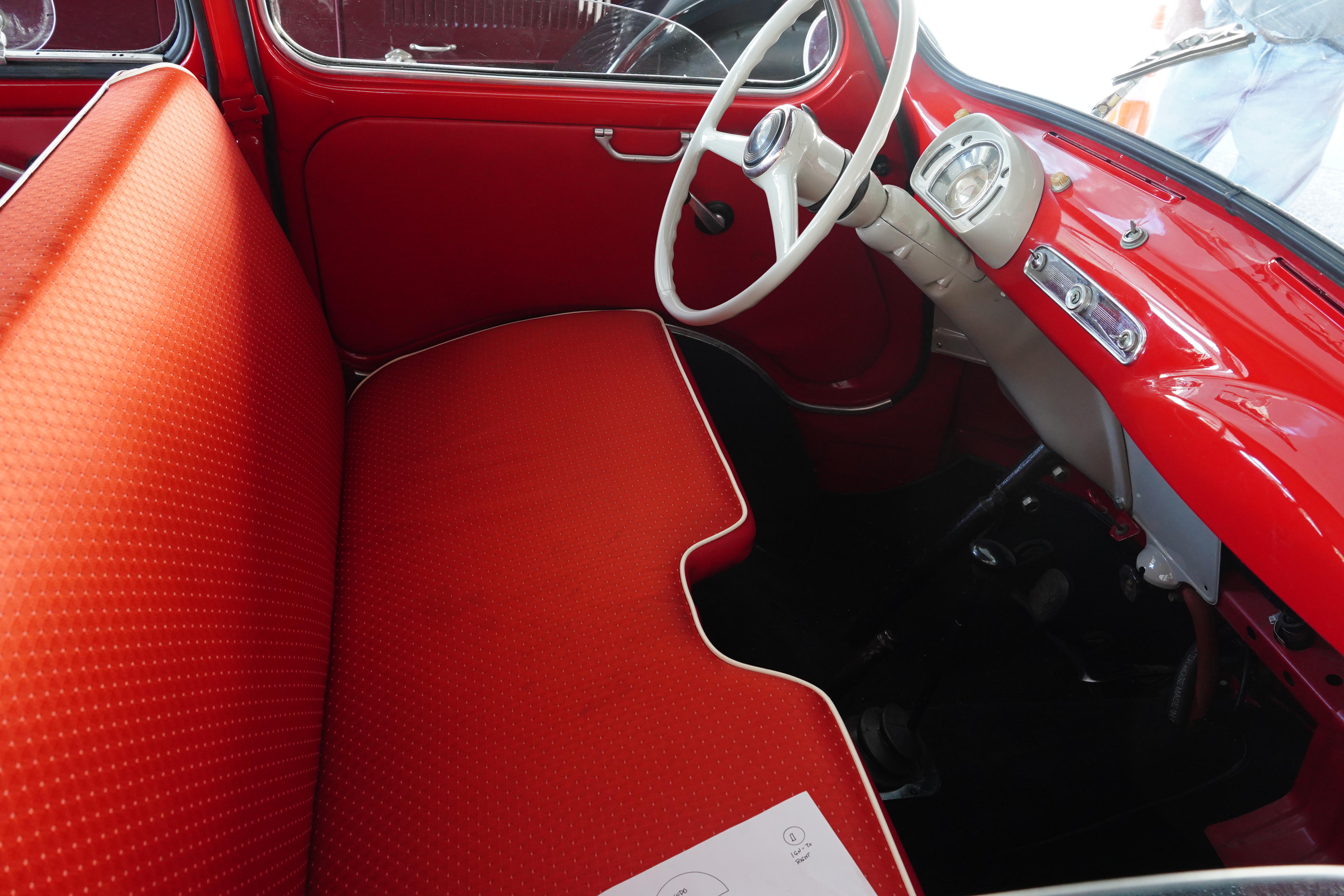
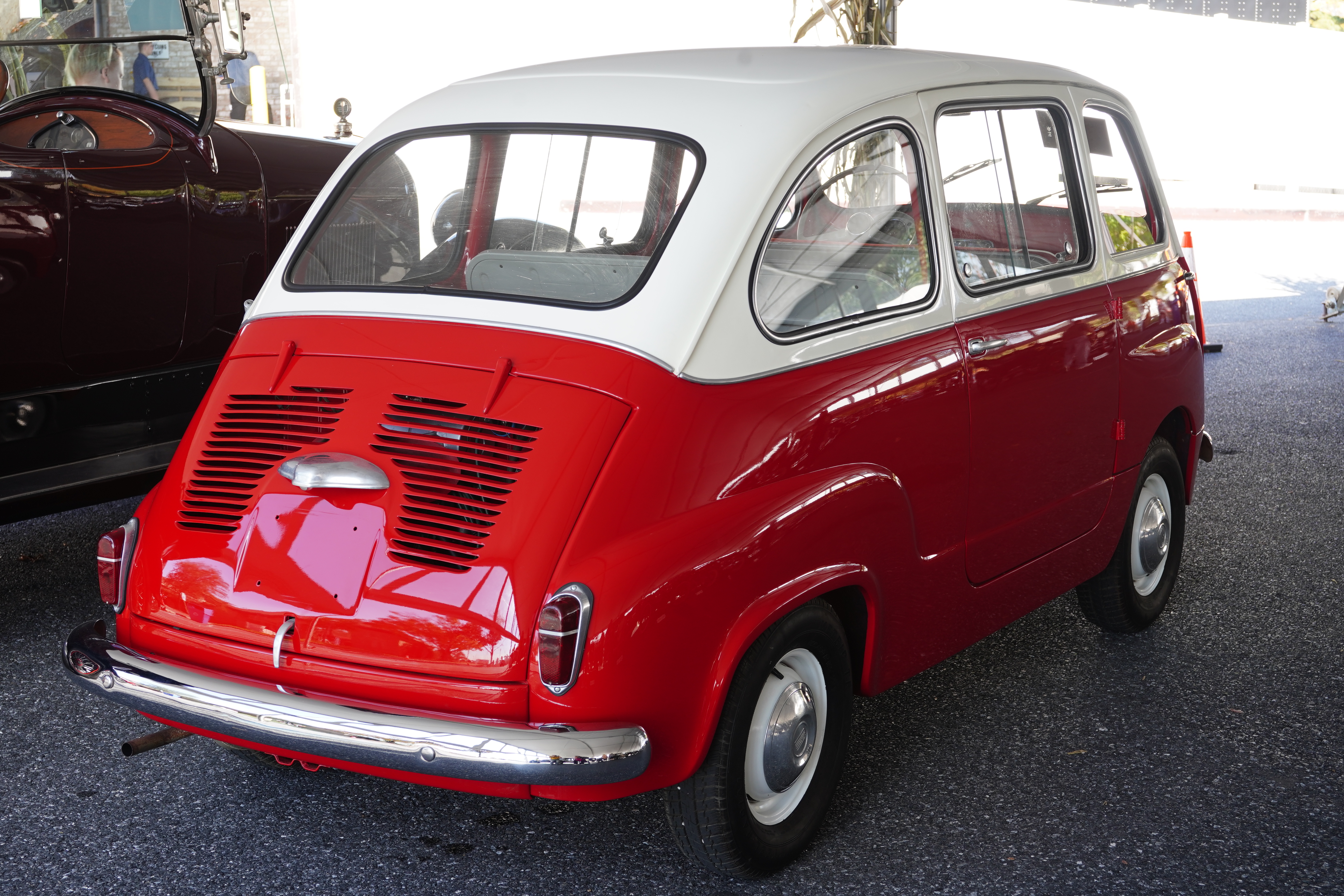
Lot 196, 1959 Fiat 600 Multipla, two-tone red & white, red interior, very rare in the U.S. This was Fiat’s successful attempt at building a really (really) small 6-passenger vehicle. No reserve.

Pre-sale estimate: $30,000 – 40,000

Sold: $27,000; some recent examples have sold on Bring a Trailer for $50,000+, so buyer did well here.

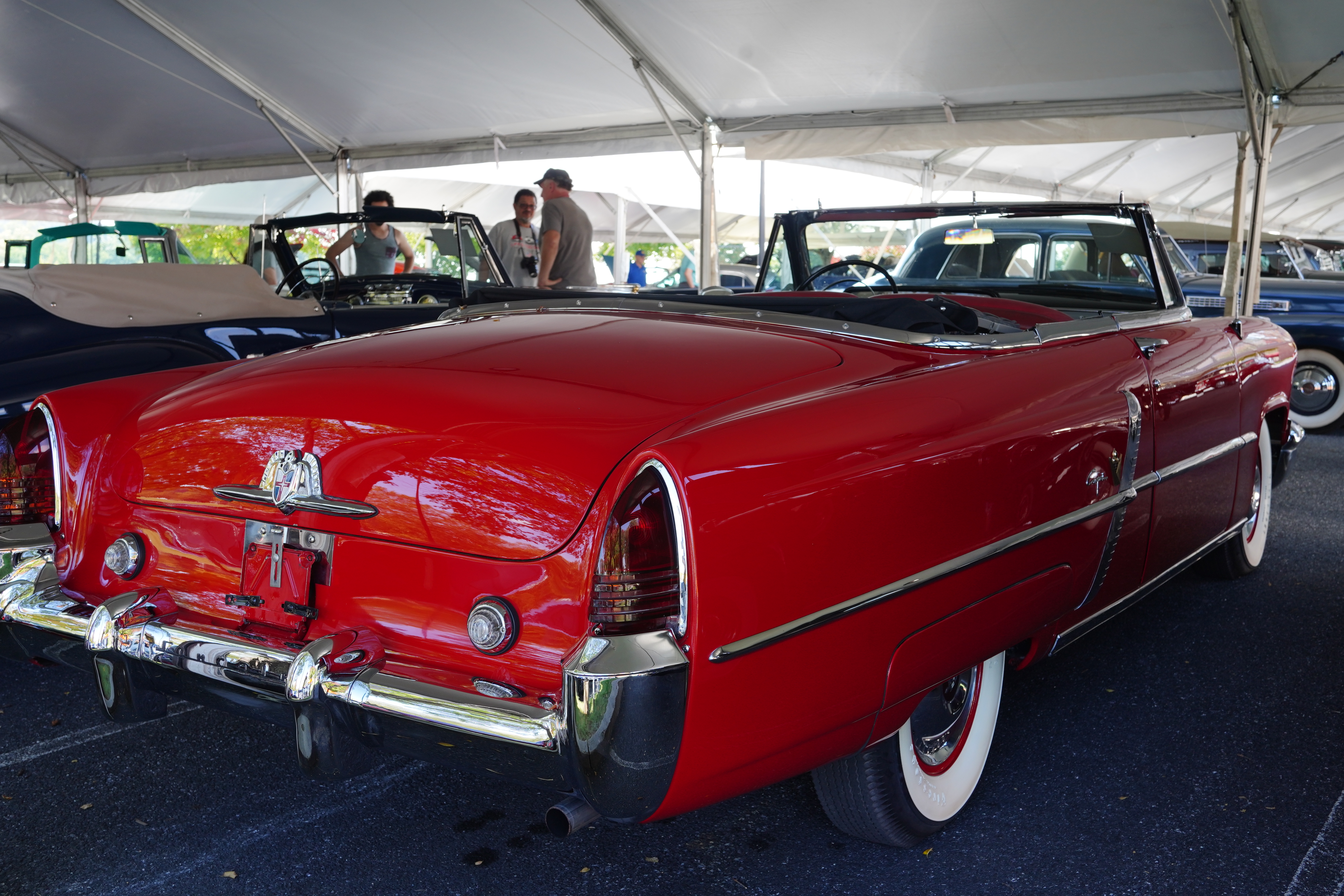
Lot 213, 1953 Lincoln Capri convertible, red, grey/black/red interior, black top, wide whitewall tires. Lincoln styling was beginning to enter the modern age; note the futuristic dash design. No reserve.

 Pre-sale estimate: $30,000 – 40,000

Sold: $27,000; CPI has a #3 car at $35,000, so advantage to the buyer here.

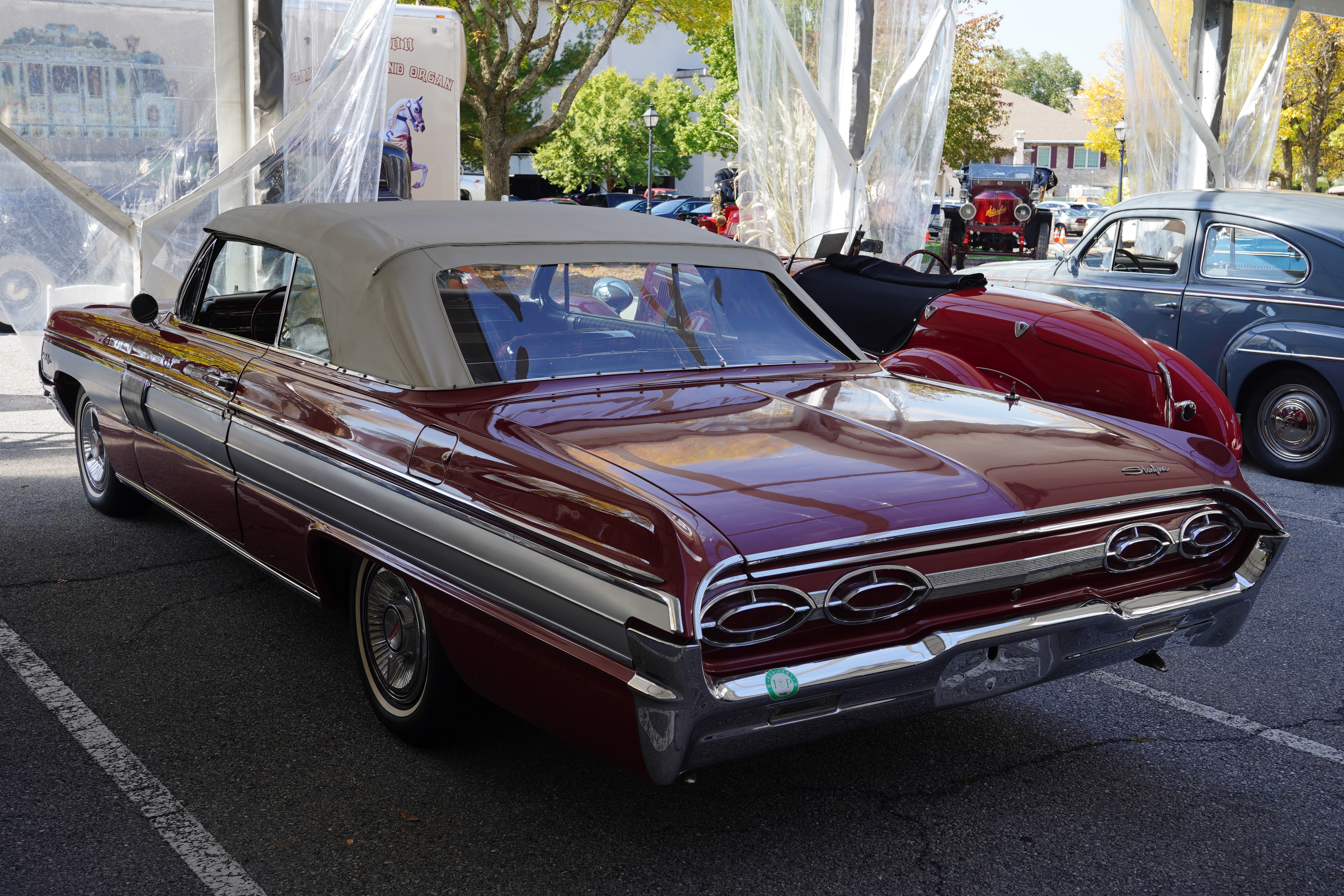
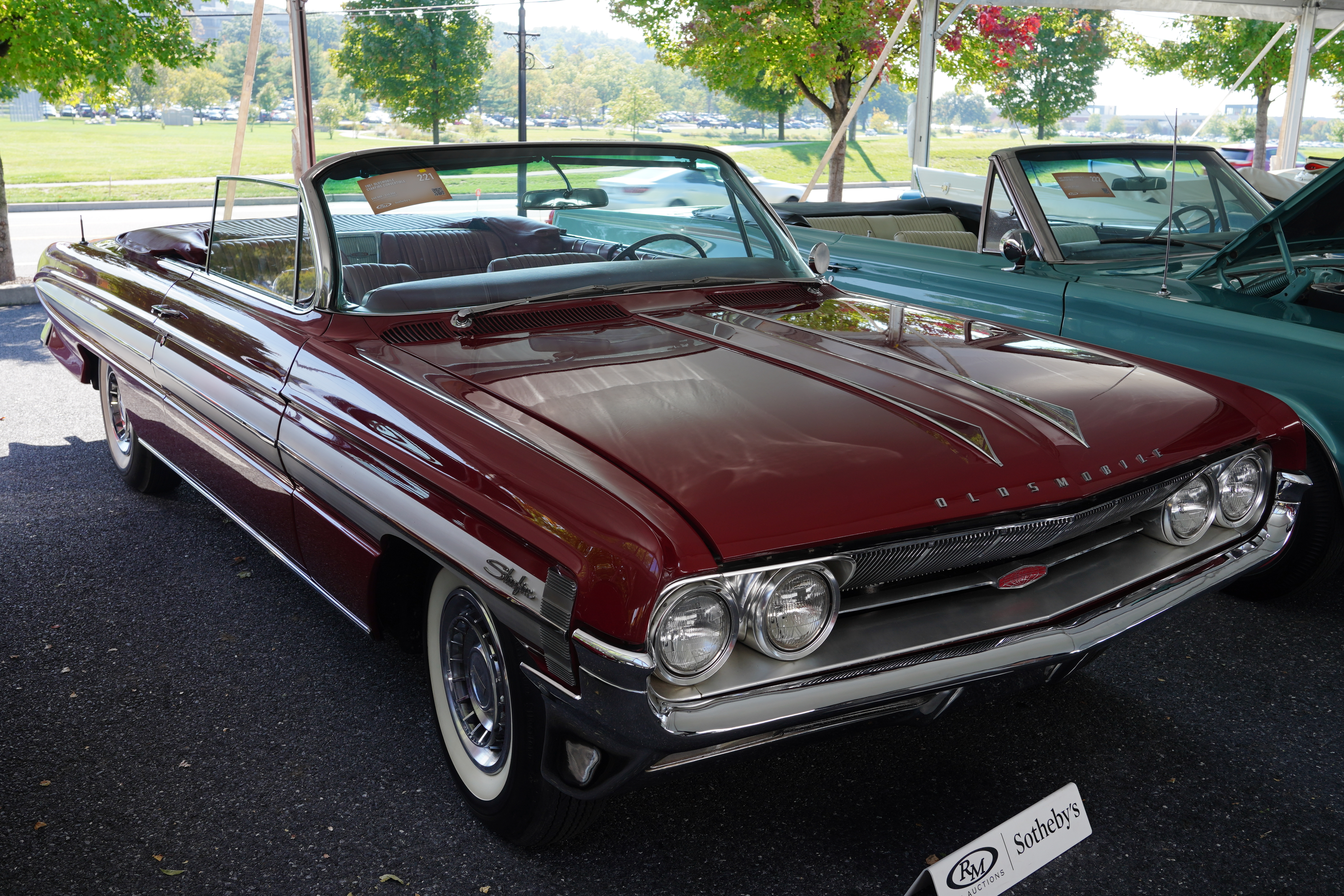
Lot 452, 1962 Oldsmobile Starfire convertible, red, white top, two-tone red interior, buckets & console like all Starfires. Second year for the model. No reserve.

Pre-sale estimate: $35,000 – 45,000

Sold: $28,000; Only a grand more than the ’53 Lincoln, and with much more “modern” driveability compared to that car.

Lot 228, 1968 Olds 442 convertible, dark blue paint (looks almost black), light blue interior, white top, white stripes on front fenders, 4-speed stick shift, buckets, console, RWL tires. First year for this generation Cutlass body style. This car stood out for its less-than-stellar presentation. Paint looked slightly dull, some chrome pitted, interior looked unkempt, driver’s seat showing wear. No reserve.  

Pre-sale estimate: $35,000 – 45,000

Sold: $32,000; bidders ignored condition and bid based on model and equipment.

Lot 221, 1961 Olds Starfire convertible, triple red: red paint, red interior, red top. First year for Starfire, and all were convertibles. No reserve.

 Pre-sale estimate: $40,000 – 50,000

Sold: $33,000; five grand more than the ’62, and there are those who prefer this year’s styling.

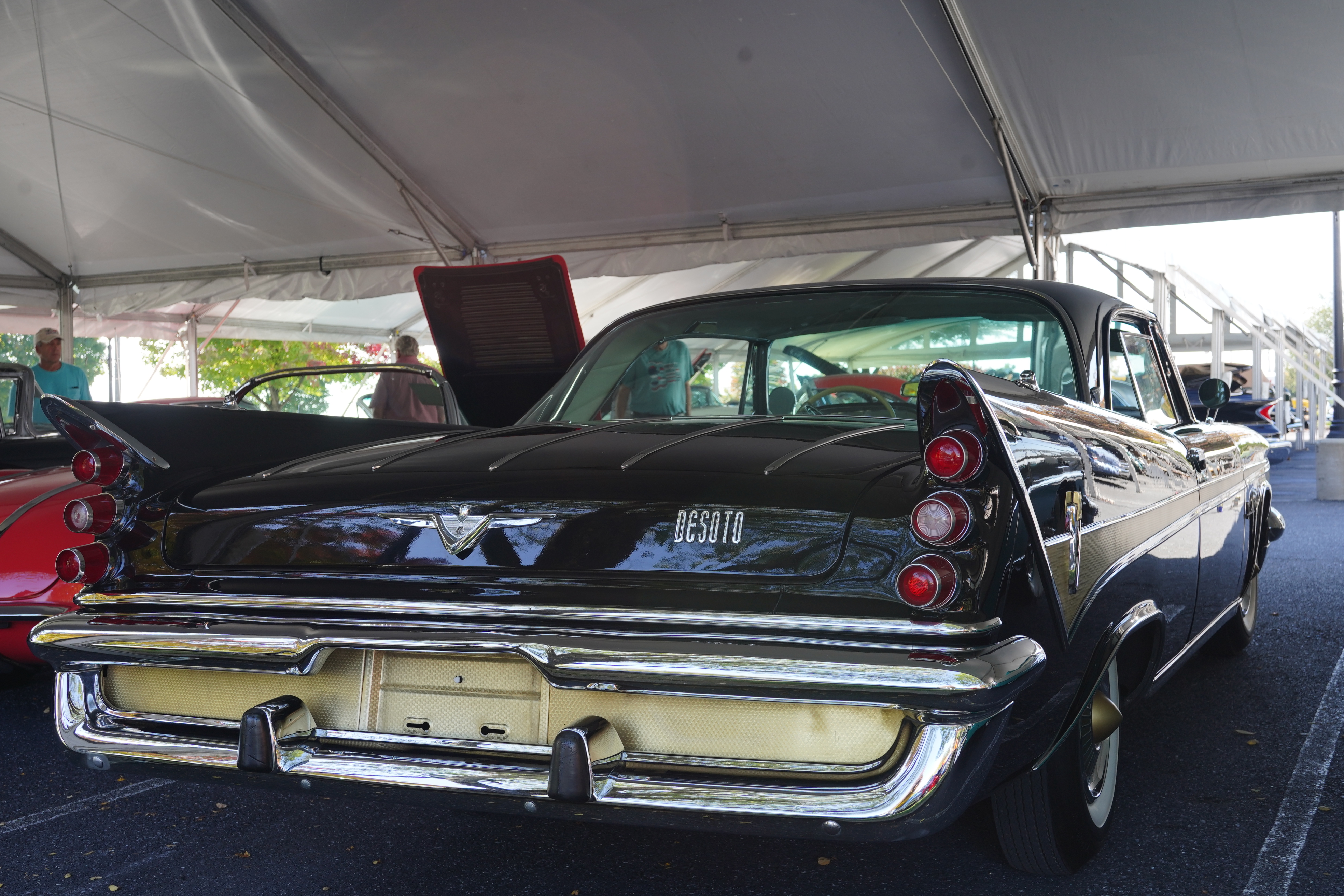
Lot 216, 1959 DeSoto Adventurer Sportsman Coupe, black paint, black/white/gold interior, Chrysler’s Forward Look styling still holding up despite some additional fussiness; certainly compares well next to some GM offerings of that year. Getting near the end for DeSoto. No reserve.

Pre-sale estimate: $45,000 – 55,000

Sold: $45,000, right at low end of estimate. DeSotos of this decade continue to be strong sellers.  


Lot 419, 1937 Cord 812 Custom Beverly 4-door sedan, black paint, red interior, FWD & V8 engine like all Cord 810/812 models. According to RM’s website, the “Custom” models were built on a 7-inch-longer wheelbase for increased rear seat room. No reserve.

Pre-sale estimate: $50,000 – 60,000

Sold: $67,500, above high estimate, and deservedly so, for condition and rarity.

Lot 442, 1956 Imperial Southampton two-door hardtop, black paint, white/grey interior, chrome wire wheels, wide whitewalls, “gun sight” tail lights, optional record player mounted under dash. At this time, “Imperial” was its own make, separate from Chrysler. Offered with unrevealed reserve.

Pre-sale estimate: $75,000 – 90,000

Sold: $69,000, 6 grand below estimate; only 2,094 two-door hardtops built for ’56, this one was for the true Imperial enthusiast.   

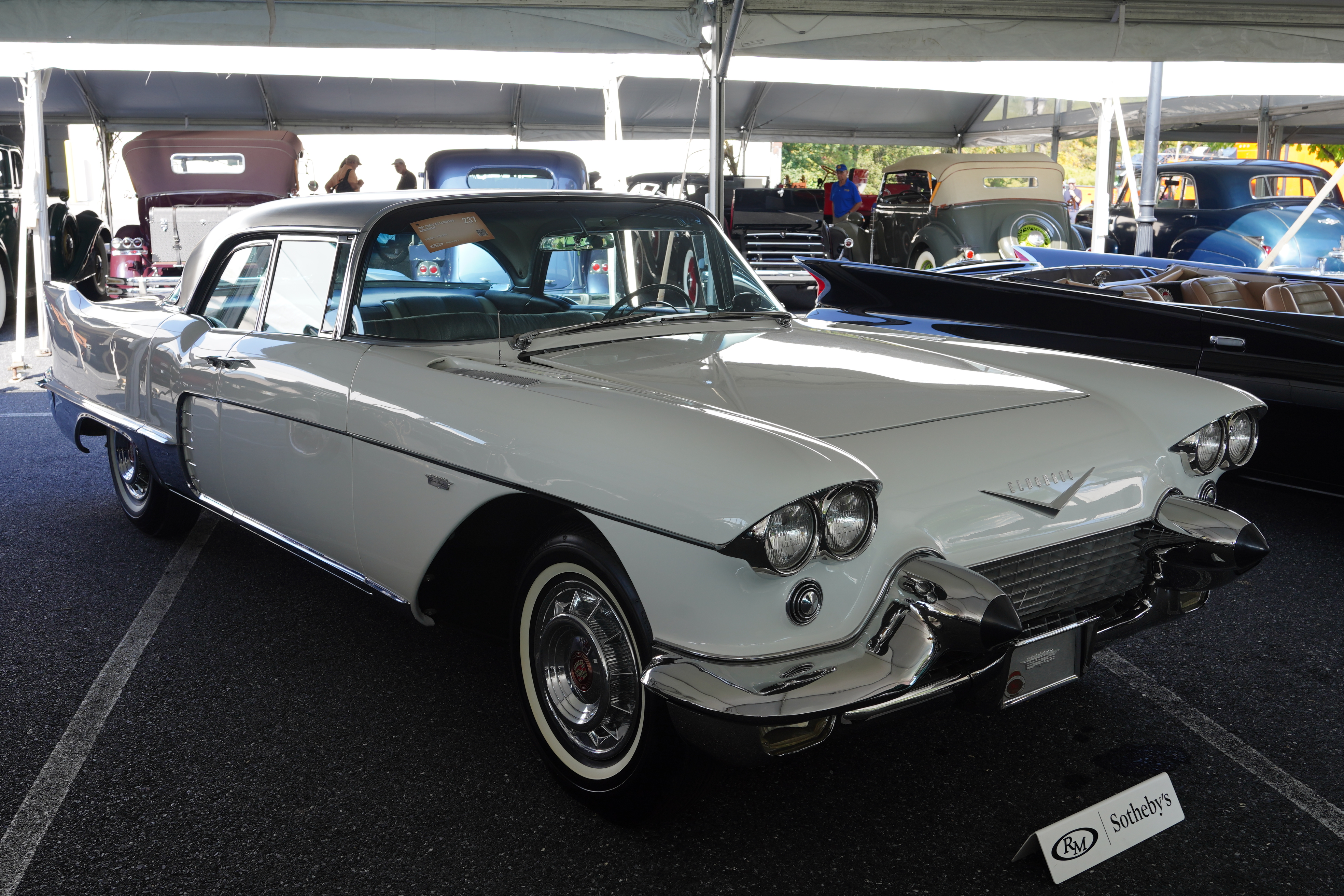
Lot 237, 1957 Cadillac Eldorado Brougham, white paint, stainless steel roof, suicide rear doors, grey & white interior. The Eldorado sub-brand featured exclusive styling in 3 different body styles: the 2-door hardtop Seville, the 2-door convertible Biarritz, and the 4-door hardtop Brougham. This was one of America’s most expensive cars when new, costing over $13,000 when a ’57 DeVille 4-door hardtop could be had for $5,188. Offered with unrevealed reserve.

Pre-sale estimate: $90,000 – 120,000

Sold: $92,500, just clearing its low-end reserve. This distinguished car will always have value, and will always have a following.


All photographs copyright © 2023 Richard A. Reina. Photos may not be copied or reproduced without express written permission.
 

Mecum Harrisburg Auction, July 2023

My appearance at the 2023 edition of the Mecum Harrisburg collector car auction marks the 6th time I have made the trek. Mecum’s reputation is up there with Barrett-Jackson as an auction company that sells comparatively affordable classics, compared to the “catalog” auction companies like RM Sotheby’s and Gooding. Nothing against those outfits, in fact, I’m a fanboy of RM especially after they sold my BMW Isetta for me. But Mecum at least dangles the possibility of a “good deal” for the hobbyist.

If you want to read my prior posts, which can be entertaining when you see what some cars have sold for, here are the links:

Mecum Harrisburg 2015

Mecum Harrisburg 2016

Mecum Harrisburg 2017

Mecum Harrisburg 2018

Mecum Harrisburg 2022

Harrisburg is only a 2+ hour drive from my home, and it’s smack in between Hershey and Carlisle, the two east coast locations with which every old car fanatic is familiar. In years past I’ve made the Mecum Harrisburg visit a multi-day affair, but I’ve observed that the most fun happens on Day One. Prices quickly escalate on subsequent days. To the credit of Mr. Dana Mecum and his staff, their Harrisburg event has grown substantially. In prior years it was a 3-day auction, Thursday through Saturday. This year, Day One was Wednesday, but still ended on Saturday, for a total of 4 days. They try to run about 250-275 cars a day, so in round numbers, figure that they auctioned around 1,000 cars.

Part of the growth is that this PA location is Mecum’s only event in the Northeast. The next closest locale for them is Indianapolis. Yet the Day One crowd looked smaller than in previous years. A lot has changed since their 2014 inaugural event in Harrisburg, still in the PA Farm Show Complex. One of the biggest changes is the eruption of successful online auctions, most notably Bring A Trailer. But there’s nothing like kicking the tires with real shoes. Several cars which looked great in photos on Mecum’s website showed serious battle scars when examined up close and personal.

Below are highlights of some of the cars which caught my attention, mostly cars which sold on Wednesday, the day we were there. Indicated prices are HAMMER prices. All sold lots incur a 10% buyer’s premium, included in the prices shown on Mecum’s website, which is why my listed prices are lower. (Auction companies love to do that, as it inflates the appearance of how much they raked in.)

Richard’s Car Blog is the only online auction reporting site which arranges sold cars in price order, to give the reader some sense of what a particular amount of money will buy. And may I point out yet again, for all those who continue to moan that “there’s nothing affordable in the hobby anymore!”: the first seven cars listed below hammered at $15,000 or under. That is NOT to say that all were good deals. Some were decidedly not; in some cases, spending $5,000 to $10,000 more would get you the better deal. But there are still some very good starter collector cars available to those willing to be open-minded about make and model.


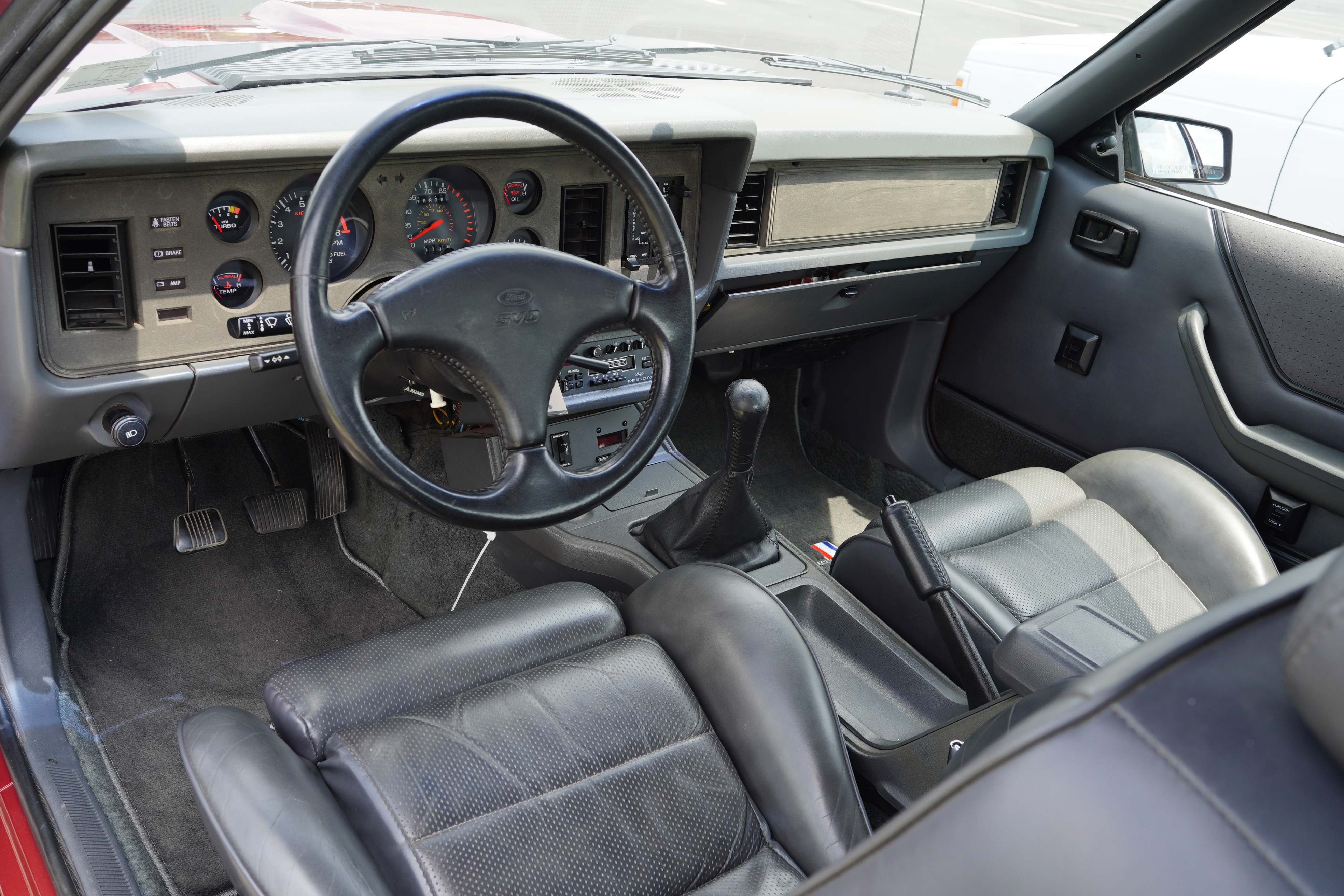
F190.1 1984 Ford Mustang SVO, 2.3L inline turbo 4, 5-speed manual, dark red, grey cloth interior. First year of the Mustang SVO, which was made only 3 years (’84-’86). Very worn paint, other exterior trim show excess wear. Interior relatively clean by comparison.

SOLD FOR $7,000. Condition is everything sometimes. Compare to W218 below, another SVO, which sold for almost 3 times this sale price and would be the smarter purchase.


W25, 1983 Buick Riviera convertible, white, burgundy top and interior, 5.0L V8, odo shows 59k, decent shape overall, few Riviera convertibles built (sign claims only 1,750 of them in 1983). Aftermarket wood steering wheel detracts.

SOLD FOR $8,500. I know a club member who has one and he loves his. This was one of the first cars across the block on Wednesday, which may have affected the price. I’ve also seen Riv coupes of this generation sell for near this number, so I’d mark this as well bought.


W133 1964 Ford Thunderbird hardtop, color possibly “rose beige”, matching interior, black vinyl roof with landau bars, 390 V8, automatic, Orange plug wires and aftermarket carb don’t “fit” the car.

SOLD FOR $10,000. This was one that looked decent on my home PC – until my in-person inspection quickly turned up a thick bead of silicone squeezed into the junction of the windshield and vinyl roof. Fixing that in a proper way will be pricey.


W136 1965 Ford Thunderbird, white, black interior, 390 V8, automatic, LF wheel cover is off the wheel and sitting behind the driver’s seat. Clean, straight looking car, but nothing extraordinary.

SOLD FOR $11,500. For an additional $1,500, this was the better deal compared to W133 above. This could be a good starter collector car.


W237 1983 Datsun 280ZX, 2.8L straight 6, 5-speed manual. Tacky two-tone silver and blue straight from the early ‘80s. Blue interior with shiny silver leather seats, ditto. Covered headlights and T-tops complete the look. Sign claims 78k miles.

SOLD FOR $11,500. If you can ignore the colors (or perhaps if you like them), this is actually a lot of car for the money. These 2nd gen Z-cars, while lacking the purity of the 1st gen, still are fun drivers and decent GT cars if not out-and-out sports cars. Given how earlier and later Z-car prices are climbing, I’m predicting that these will see a slow but steady appreciation.


W93 1955 Chrysler New Yorker, blue & white outside, blue & white inside. Sign on car claims 64k miles. Hemi V8 engine, 331 cubic inches, automatic, power steering, brakes, and windows.

SOLD FOR $12,000. This was an odd presentation. The outside looked mostly original, with what might have been a much older repaint. The inside was recently redone, but with non-original materials and patterns. Price seemed high based on body style and condition. Any attempt to fully restore it would have you upside-down.


W120.1 1966 Ford Mustang hardtop, inline 6, automatic, light blue with two-tone blue interior, dealer or aftermarket A/C, few options other than that.

SOLD FOR $14,000. The only reason this car drew me in was its very high quality cosmetic condition. It’s unusual to see this much love and money poured into a six-banger. It’s equally unusual to see the small engine kept, as often it gets pulled in favor of a non-original V8. If you were in the market for a good-looking first gen Mustang and were not concerned with the ponies, this was your car. I doubt you could find another well-restored Mustang of this generation for a price near this.


W147 1961 Pontiac Bonneville bubble-top coupe, red, tri-tone red interior, 389 V8, automatic, 8-lug wheels. Looks like it’s all there, but most paint is faded away, and rust is bursting out like teenage acne from all the lower sheetmetal.

SOLD FOR $15,000. When Bill Mitchell took the styling reins from Harley Earl at GM in 1959, the changes were dramatic and almost immediate. Gone were the excesses of the ‘50s, replaced by smooth, clean, downsized shapes. The ’61 Pontiacs have always stood out for me as Exhibit A of that change, especially the 2-door bubble tops like this one. This was expensive for a project, but will be amazing if restored correctly. However, will take bucks to make it right.


W82 1982 Toyota Supra, blue metallic, blue and grey cloth upholstery, 2.8L inline 6, 5-speed manual, sign claims 49k miles, believed to be “P” package car based on large fender flares and even larger rear wing.

SOLD FOR $17,000. The first-gen Supras looked very much like the Celica on which they were based. This car, a 2nd gen, was given a more unique styling treatment. I remember these well when they were new and we thought they were hot. Prices for 2nd (and 3rd) gen Supras were reasonable until very recently; check BaT to verify the escalation in sale prices. Based on what I’ve seen online, this was about right, maybe even a little light.


S34 1967 Buick Special, gold, black vinyl roof, black interior with bench seat, 340 V8, auto on column, factory A/C. Online photos look stunning, in person less so. However, overall cosmetic condition is strong.

SOLD FOR $17,500. I liked this car, spurred on no doubt by my ownership of a ’66 Buick Sportwagon in the same color combo. Note that this car is a ‘Special’ and is NOT a ‘Skylark’. I think finding a GM intermediate in this condition at this price makes this a good deal.


W218 1985 Ford Mustang SVO, claim to fame is the reported 10k original miles, but it looks it. Dark red, grey leather interior, 2.3L inline-4 turbo, 5-speed manual. “Late ’85” with the aerodynamic headlights and greater power output.

SOLD FOR $19,000. If I ever were to get a Fox body, the SVO would be my first choice. When new, these sold for more than the V8-powered GTs. Their lighter 4-cylinder engines made them better handling cars. My price guide puts SVOs between $10k and $20k, and very clean ones have sold on BaT for very high teens, so this one, as a 10k mile survivor, was worth the winning bid.


T19 1987 Ford Thunderbird Turbo Coupe, 2.3L inline 4, 5-speed manual, sign claims 32k original miles, dark red, grey cloth interior.

SOLD FOR $21,500. These are Fox body platform cars, but larger than their Mustang brethren. This one sold for a bit of a premium, probably because of condition and the rarity of the 5-speed. Nice car.


W232 1986 Porsche 928, metallic beige, beige leather interior, 5.0L V8, automatic, odo stated to read 80k miles. Sign on car claims original paint.

SOLD FOR $22,000. It doesn’t seem that long ago when nice 928s were sub-$10k cars, but no one wanted them. Prices took off around the start of Covid and may have cooled a bit since. This car was straight but nothing special other than being the only 928 here. Interior seemed better than many other 928s, which tend to show cracked dashes and seat upholstery. Mileage is on the low side; many 928s at auction show well over 100k on the clock. At this price I’d give slight advantage to the seller. Hope the new owner plans to drive it and not just stare at it.


W189.1 1967 Oldsmobile 98 convertible, gold, tan top, tan interior, 425 V8, automatic. A huge boat of a car, it was in gorgeous condition and looked great in these colors.

SOLD FOR $28,000. Expensive? Not for condition. I would bet that a Chevy from the same year would sell for more; this Olds is arguably the better-looking car.


S82.1 1983 Datsun 280ZX, dark grey metallic, silver leather, 2.8L inline 6, 5-speed manual, sign claims under 60k original miles. Factory A/C, T-tops, sign claims car kept in climate-controlled garage.

SOLD FOR $31,000. Condition was great; the car looked like a 5-year-old well-kept used car. Compare this selling price with W237, the other 280ZX in this report: colors and condition brought almost triple the money.


T109 1969 Volvo 1800S, blue with brown interior, 2.0L inline 4, 4-speed manual with electric overdrive.

SOLD FOR $32,500. While the car was spotless, something looked off to me, and that was the color, or perhaps the colors. I’m clearly not an 1800 expert, but I cannot recall seeing this exact shade of blue on a Volvo before. Same with the brown interior, at least not on a ’69. The trunk panels appeared non-original as well. Even some engine compartment detailing wasn’t what I’d call factory correct. Would love to hear comments from some of the Volvo faithful.


F175.1 1969 Jaguar E-type roadster, Series II car, red, tan top and interior, 4.2L inline-6, sign on car claims 5-speed manual. Clean, straight XKE.

SOLD FOR $82,000. These used to be the “affordable” E-Types, after the Series I cars. But “affordable” is a relative term here. Roadsters still bring much more than the coupes. Buyer’s premium brought the price to over $90k; sale price was about the going rate for a Series II roadster, possibly a bit of a steal for the buyer.


All photographs copyright © 2023 Richard A. Reina. Photos may not be copied or reproduced without express written permission.


Carlisle Auctions, Spring 2023

Carlisle Auctions’ Spring 2023 event took place over two days this year, with the auction running on Thursday and Friday, April 20 and 21. This was a particularly fun event for me because of the number of lots in which I had great personal interest. Before we get to the particulars, though, a few words (as always) about this auction and the state of the hobby as we begin the car show season in the Northeast.

There is no doubt that transaction prices, in general, are up. The high-quality cars continue to be in demand and continue to bring good money. At the same time, for beginners, or bottom feeders, or anyone for whom a bargain price is a deal, there are still choices. Case in point: Thursday’s auction, which actually began about 15 minutes early (and caught me off-guard, as I was still outside), got off to a roaring start by anyone’s measure. Of the first 31 cars to cross the block, 26 of them sold (the 5 that did not meet reserve were an eclectic lot, and included a ’29 Nash, a ’62 Bonneville, a 2005 BMW 3-series, and most bizarrely, a ’66 Fiberfab). Now, of the 26 that did sell, 23 of them hammered for less than $10,000 each (I stress “hammered”, as all referenced sale prices are exclusive of an 8% buyer’s premium). Many of these early cars were true projects, but some were vehicles for which there isn’t great demand, like an ’87 Corvette ($6500), a 1996 RHD MG-F ($4250), and a 2008 Saturn Sky ($9000). In other words, something for everyone.

Once past this initial surge, things slowed down a bit, though, with many cars not meeting reserve. A rough guess is that the remainder of Thursday’s auction had around a 50% sell-through rate, not a great performance. As Friday’s auction started, one of the announcers stated “we had a good day yesterday, but frankly we’re hoping for a better day today”. Based on my notes from the first 70 or so cars to cross the block, Friday’s sell-through rate was up significantly to decent 67%. I also found it interesting that to my eye, the room was less crowded on Friday than it was on Thursday.

Compared to Mecum, and certainly compared to the “catalog” auctions run by RM, Sotheby’s and the like, Carlisle is still a mom-and-pop operation, with a large number of dealers in the audience. They are there to buy and to sell, and they’re expecting to pay wholesale. So you do see bargains, but you also see cars that don’t meet reserve. Over these past few days, I began to realize that in a situation like this, a published book value is not very meaningful. The audience isn’t dumb, and they will buy the car if they feel the price is fair. However, some sellers still have inflated concepts of the values of their own vehicles, and that is outside the control of the bidders. For a sale to occur, the reserve must be reasonable, and the bidders must see the worth. That is all that matters, and that is what it takes for a successful auction transaction.


Sold lots are listed first, and as always on Richard’s Car Blog, are listed in hammer price order, from low to high. Following this is a selection of interesting lots which did not meet reserve.


Lot T121, 1996 MG-F, green paint, grey interior. RHD, mid-engine 1.8L 4-cylinder, 5-speed manual, A/C.

SOLD FOR $4250

I don’t think I’ve ever seen one in the metal before. Obviously is old enough to be legally imported under the “25-year-old” rule. Given how popular JDM RHD cars are, I would imagine that there are enough people out there willing to embrace the quirkiness of this one. You might have the only one at the next MG meet.


Lot T140, 1982 Buick Riviera, tan paint, vinyl roof, and leather upholstery. Five-digit odometer reads 53, 328. Engine is 307 V8, driving front wheels through an automatic transmission. Wire-wheel hub caps, whitewall tires. Buckets and center console, which I believe are rare in this generation Riviera. One of the cleanest cars at the auction. Only flaw of note is that plastic bumper filler pieces are warped, but they are not cracked.

SOLD FOR $8500.

While you may see this as a typical ‘80s-era GM luxo-barge, these have a following among Riviera fans. I’ve read some of the contemporary road tests where it has been claimed that they are actually nice driving and riding cars. This sale may have been one of the truly good deals of the auction.


Lot T171, 1987 Ford Mustang GT convertible, white paint, white top, red plaid cloth interior. Odometer (5-digit) reads 68,308, 5.0 V8, 5-speed manual. Looks great from afar as well as close up. No major flaws noted, could be original paint. Interior has held up well; obvious that car was not left outside with the top down. Biggest flaw noted was 2001 date codes on tires.

SOLD FOR $14,000

Fox-body Mustangs continue to be some of the best performance bargains out there. While a few bring bigger bucks, here is a great example of a very usaable driver with lots of life left in it. A friend texted me the day after this sale to report that the new owner had this car online for sale with an ask of $20k, and he was using the Carlisle auction photos!


Lot T194, 1951 Kaiser Club Coupe, 2-door sedan. Deluxe trim model, Continental flathead 6, 4-speed GM-sourced Hydramatic transmission, one high quality repaint in copper, copper colored interior is stated to be original to the car. Upholstery looks ok, but carpet in rear is worn. Headliner very deteriorated, especially where it meets the windshield and door tops. Five-digit odometer reads 44,021. Whitewall tires, full wheel covers, AM radio, clear vinyl cover on front bench seat.

SOLD FOR $14,500

I saw this online a week before the auction and was totally smitten. Seeing it in person did not disappoint. What a rare sight, and this “Club Coupe” is different from the 2-door sedan, as it features a shortened greenhouse and an extended deck lid. Styled by Howard “Dutch” Darrin, as all the ’51 Kaisers were, this must have stood out when new as much as it stands out today. I thought that this one might fly under the radar, but someone really wanted it and paid a price fair to both buyer and seller.


Lot F484, 1966 Ford Thunderbird convertible, emberglo paint, emberglo interior. Full wheel covers, whitewall tires, fender skirts. Sign says 390 V8 and 3-speed auto. I did not note if the car has A/C. Some flaws: paint damage on left side of convertible top cover, filler strip between rear bumper and body completely missing, upholstery damage on driver’s seat and driver’s door panel. Displayed with top down at all times. Online photos show a white convertible top.

SOLD FOR $15,000

The car was declared a “no sale” at $15,000, and 5 minutes after it left the block the auctioneer announced “we sold the Thunderbird”. Carlisle’s website confirms the $15,000 number. I am a sucker for emberglo, which was a one-year-only color for Ford. Even with the flaws, that wrap-around back seat is a killer look. Drive it and fix it as you go.


Lot F550, 1966 Ford Mustang hardtop, emberglo, emberglo/parchment pony interior. Mustang wheel covers, whitewall tires, dual exhaust. Odometer reads 51,753. Engine is “A code” 289 4-barrel, with 3-speed manual gearbox. Manual steering and brakes. Woodrim steering wheel missing a big chunk.

SOLD FOR $17,000

Was bid on the block to a $16,000 no-sale; website indicates sale price, so it sold after. One of the oddest combination of options I’ve seen on a Mustang. Basically, the A code engine is the only option. The interior trim code indicates “emberglo” but there is another trim code for “emberglo/parchment” so I suspect the pony interior was added after. Like the ’66 T-Bird, I really like this one-year-only color.


Lot T119, 1991 Mitsubishi 3000GT VR-4, 2-door coupe, turquoise, grey leather interior, 3.0L V6 mounted transversely, AWD, 5-speed manual, 6-digit odometer reads 034434, underhood shows aftermarket hoses and pipes, giving modded “boy racer” vibe, exterior undamaged but not clean, interior the same. Clutch pedal was one of the stiffest I have ever tried, my left leg would be worn out in 5 minutes of city driving.

SOLD FOR $23,250

This was the first big sale of the day, and the bidding action was frantic. I presume that some of the value was driven by the low mileage, but the entire car will need a serious detailing before it can be resold.


Lot 546.1, 1959 Cadillac Sedan de Ville, 4-door hardtop, dark blue, blue and grey interior. Full wheel covers, whitewall tires. Write-up claims California car, factory A/C, 57,000 miles.

SOLD FOR $38,000

Most cars which cross the block at Carlisle are up there for less than two minutes. The auctioneers are consistently able to run 30-35 cars an hour. Sometimes, though, they let the bidding linger, which is what happened with this Caddy. Bidding stalled at around $36,000, but they didn’t close the lot. Instead, I saw the owner up there, as he was pressured by a ringleader to lower his reserve. After about 4 minutes of this, he got a disgusted look on his face, and the auctioneer intoned “the reserve is off!” Two bids later, it hammered for $38k. The paint on this car was stunning. There is nothing more I can say about these fins that hasn’t already been said. Let’s hope the new owner has a large garage.


CARS WHICH DID NOT MEET RESERVE:


Lot T108, 1929 Nash Standard Six 4-door sedan, black, brown mohair interior, wooden wheels, blackwall tires, unmounted spare at rear, inline 6, manual gearbox. Body shows no obvious damage, black paint is ok, probably a repaint from many years ago. Interior might be original. Driver’s door shows both pot-metal handles for window winder and door release are broken. Like so many cars at the auction, car looks like no one bothered to clean or detail it for the auction.

HIGH BID: $8,000

This was one of several cars being sold on behalf of the AACA Museum, and as such, it is fair to presume that this car was donated to the Museum, but they decided to sell it rather than show it (a statement to the car’s condition). The other Museum donations sold. I am lacking an explanation as to why this high bid was not accepted.


Lot F402, 1982 Toyota Celica Supra, blue paint, blue interior, Toyota alloys with raised white letter tires. Inline six, 5-speed manual, 126,669 miles on odometer. Owner claims California car. Paint shows significant wear and fading on most horizontal surfaces.

HIGH BID $8500

The owner was really hawking this car, doing his best to distract viewers from the paint by pointing out the positives. It didn’t help its block performance. It’s a shame because the car looked decent other than the paint, which could only be remedied by a complete respray.


Lot F556, 1985 Ford Mustang GT hatchback, Canyon red, grey cloth interior. Carbureted 5.0L V8, 5-speed manual, Mustang alloy wheels with blackwall tires. Odometer reads 68,976. Sign claims one family-owned since new. Very clean car given age and mileage. Biggest drawback: no A/C.

HIGH BID: $14,000

I overheard the son of the owner as he was detailing the car talking about his dad’s thought process when ordering it: “He didn’t want A/C because it would have added weight and made the car slower”. Such was the thinking in 1985. I had my eye on this one as a potential purchase, but lack of A/C was a dealbreaker. I asked at the resale desk about the reserve: $18,000 which seems a bit high to me.


Lot T193, 1991 Mazda Miata, silver, black cloth interior, Mazda daisy alloys with blackwall tires, 1.6L inline 4, 5-speed manual, odometer reads just under 9,000 miles. Except for mileage, an otherwise unremarkable NA Miata.

HIGH BID: $16,000

It continues to amaze me how many early low-mileage Miatas were seemingly salted away, and are now coming out of the woodwork and in some cases, bringing the bucks. High bid had to have been close.


Lot T209.1, 1971 Jaguar E-Type 2+2 Coupe, silver, red interior, V12/automatic. Aftermarket Minilite-style wheels. Silver paint and red upholstery look decent, but entire looks of vehicle marred by Jaguar “leaper” hood ornament and completely unnecessary “V12” emblems behind quarter windows.

HIGH BID: $37,500

From a distance, this looked like a presentable Series III Coupe, even with the automatic, as many of them had. But the “custom touches” ruined the car for me, and likely for the bidders too. High bid was fair for equipment and condition (just imagine trying to repair those holes in the hood from that emblem!).


All photographs copyright © 2023 Richard A. Reina. Photos may not be copied or reproduced without express written permission.
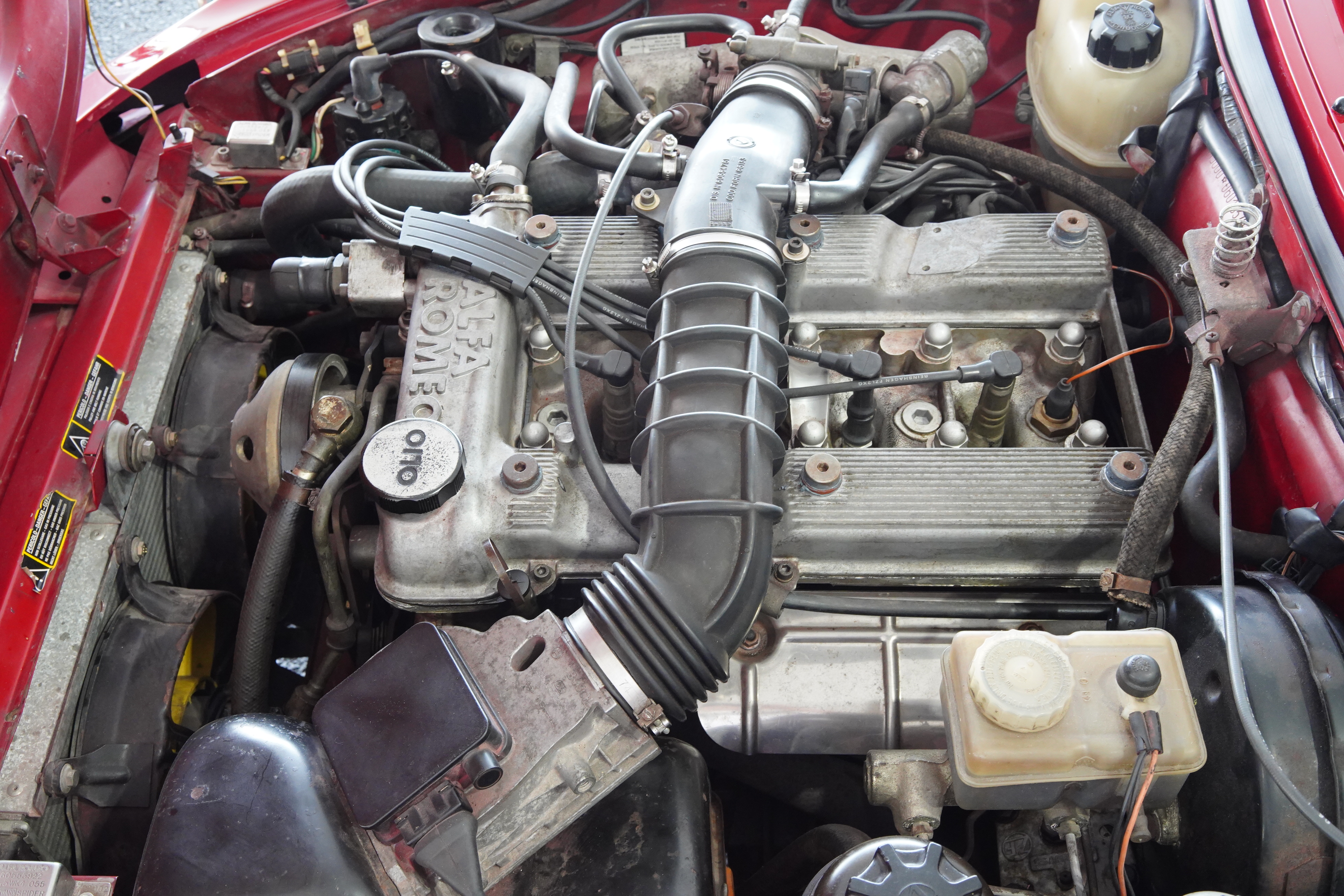
RM Sotheby’s Auction, Hershey, PA, Oct. 2022

A fixture for many years as an element of the AACA Fall Hershey, PA car show, RM Sotheby’s Hershey auction is conducted at the Hershey Lodge, a few miles away from Hersheypark. There, they have ample room to erect several tents, and the vehicles can relatively easily be driven (or pushed) in and out of the building as each one’s turn comes up to cross the block.

In recent years, RM has specialized in offering American cars at Hershey, and a large percentage of those have been pre-war (before World War 2). Since concluding my week with the Glidden tour last month, I can’t seem to shake this exciting notion of pre-war machinery being used for touring purposes. I’ve also been keenly interested in taking some measure of the supply and demand (that is, selling prices) of these older vehicles.

Some in the hobby continue to cling to the notion that collectors’ interest in any particular era of cars directly correlates to the age of the collector. Put another way, there are those who believe that there is greatly diminished collector interest in vehicles over 70 years old, as those who would remember them as new vehicles from their youth are all but gone from this earth. (This is also why some believe that automobiles from the ‘50s and ‘60s have diminished in value, as the oldest of the Baby Boomers who remember them from their own youth have begun to pass.)

My own observations discount this theory. I’ve rambled on before about the possibility that collectors are starting to view cars from the earliest days of the automobile as similar to paintings and furniture, meaning that they are being collected as much for their intrinsic and historic value as they are for their value as driving machines.

This year’s RM auction was a two-day affair, as has been the custom. As I was in town for only one day, I was witness only to Day Two at the Hershey Lodge. The vehicles on the ground were all due to be auctioned that evening; it appeared that the Day One auction cars had already been moved elsewhere. Of the ten cars mentioned below which caught my attention, six are pre-war, and five of those six sold, some for hefty amounts. (Vehicles which were offered at No Reserve are noted below.) Full results from Hershey can be found at www.rmsothebys.com. Prices shown below include buyer’s premium of 10%. I have sorted the lots this time in model year order (except for the Fiat which did not sell, covered at the end).


Lot 340, 1902 Oldsmobile Model R curved dash runabout

Black with red trim, black upholstery, wire wheels, blackwall tires. Website claims half-century with current owner’s family. Car was pushed into and out of the building for the auction.
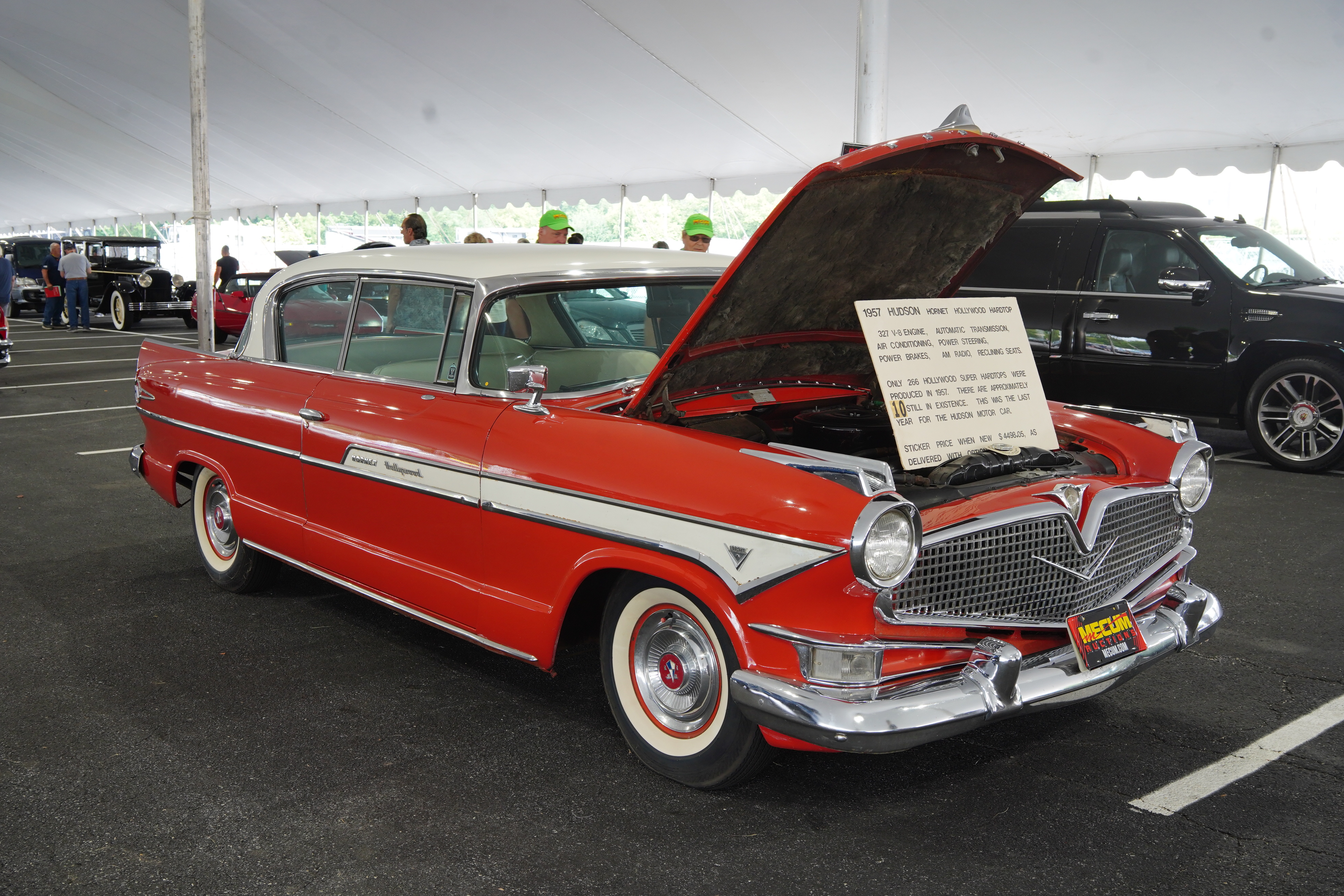
SOLD for $38,500

I had incorrectly presumed that this was a re-creation, as every “curved dash” Olds I’ve ever come across has been such. If this is truly a 1902 automobile, then it’s 120 years old, and that alone is remarkable. Given its historical significance, I’d say that under $40,000 sounds like a bargain.

Lot 353, 1903 DeDion-Bouton

Yellow body and wheels, wood fenders, black upholstery. One year newer than the Olds, yet has a steering wheel as opposed to the Olds’ tiller. Car is smaller than it might appear in photos. Website claims that DeDion-Bouton was the world’s largest car manufacturer in 1900.

SOLD for $46,750 (no reserve sale)

“Only” 119 years old, but looks to be in great shape. What is it worth? On this day, it was worth just under $50,000. I’d fathom a guess that it would fetch more at a European auction.
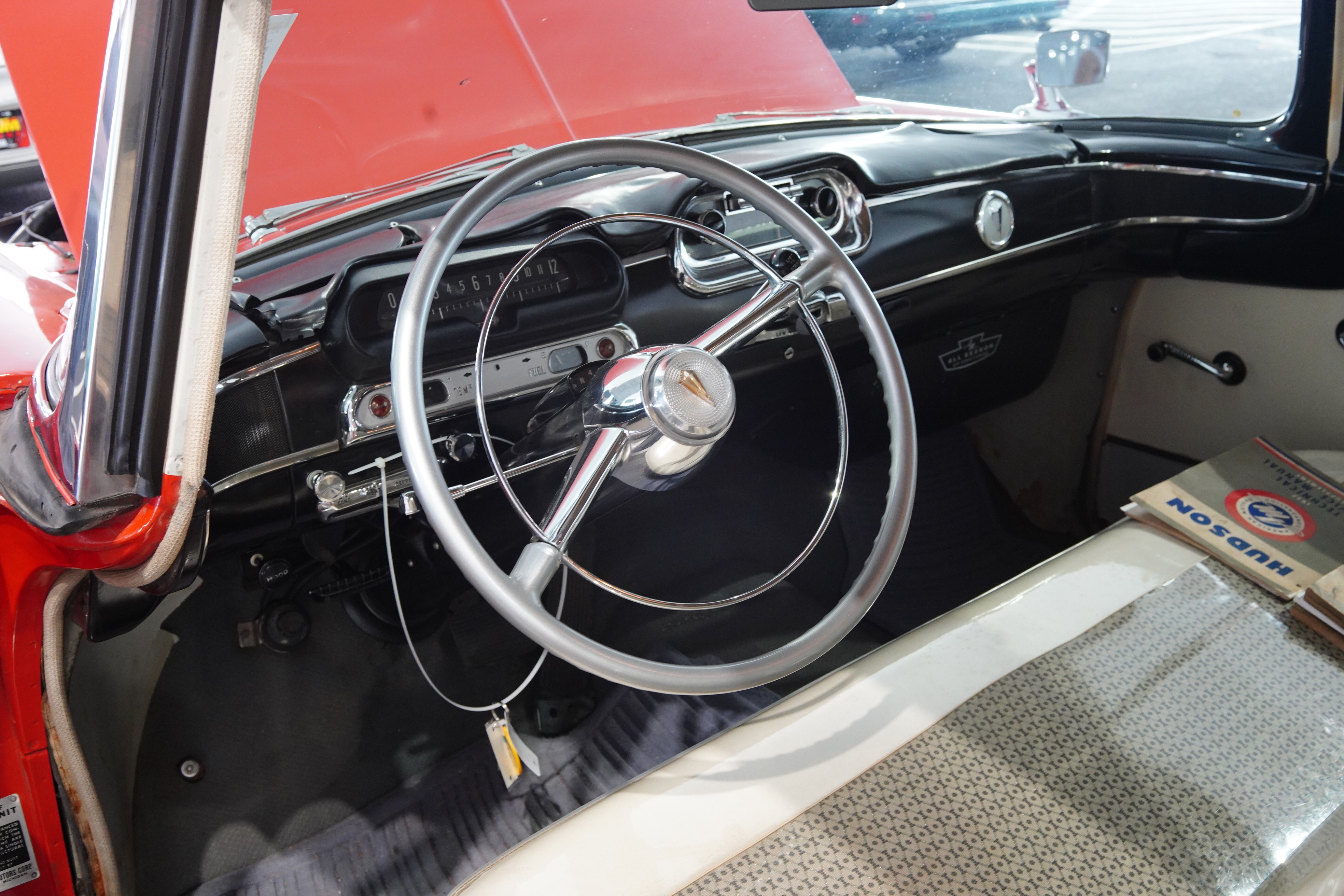
 

Lot 385, 1914 Thomas K-6-90 Flyabout

Red paint, wheels, and upholstery, black folding top. Brass trim in and out, wicker basket out back. Dual unmounted tires on right side. Big car on 140-inch wheelbase. Website states that “6-90” in model name indicates 6-cylinder, 90 horsepower engine, also claims that car was rebuilt with custom coachwork in the 1980s.

SOLD for $594,000

Who says no one will pony up for a 1914 Whatever? Not I. Of course, Thomas is a brand with a significant early history. Six-hundred large bought this one, which, compared to modern supercars which sell in the 7-figure range, might make this one understandable. Everything’s relative.

Lot 352, 1921 Napier T75 Speedster

Green paint, yellow wire wheels, black upholstery. Swoopy open body with two rows of seats. Website states that this is one of only 120 cars built between 1919 and 1924.

SOLD for $52,250

I can’t say that I’ve ever heard of this brand before. In researching the car, it should come as no surprise that I have not. It’s a British marque which only built cars for six years, and only churned out 120 units at that. Like the DeDion-Bouton, I would imagine that the Brits would have paid more had it been auctioned across the pond.


Lot 408, 1934 Ford

Dark green body, black fenders, light green wire wheels, wide whitewall tires, tan interior. Rear-mounted spare tire. Website claims upgraded to 12V electrics, and same owner since 1984.

SOLD for $36,500 (no reserve sale)

A very attractive closed-body Ford which appears to have been restored close to its original appearance. This was the second-to-last car to cross the block on Thursday, which may have depressed the price a little.


Lot 364, 1956 Continental Mark II

Green metallic paint, full wheel covers, wide whitewall tires, green and white interior. Green steering wheel is a shade which clashes with the rest of the interior. Immaculate engine compartment. Difficult to find fault.

SOLD for $96,250

Compare this to the Mark II I spotted in the Hershey Car Corral just a few short miles away, and you begin to understand the difference in value based on the costs associated with doing a complete and correct restoration on one of these. Price paid was fair for the condition, but driving it will devalue it.

Lot 401, 1956 VW Beetle convertible

Brown paint (sign on car calls it “Sepia Silver”), VW wheel covers, whitewall tires, dark brown top, tan interior. An old Bug, as distinguished by the low-mounted front signal lights and small rear window. Website claims 23,666 miles shown are original.

SOLD for $71,500

This was one of those over-the-top restorations that looked better than new. I was around plenty of new Beetles in the ‘60s and ‘70s and none of them ever looked this sharp. In today’s market, there are plenty of deep-pocketed individuals willing to spend this kind of money for an example of the People’s Car.


Lot 384, 1959 Chrysler 300E convertible

White paint, wire wheels, wide whitewall tires, tan top, tan leather interior. Sign on car claims that of 140 built, this is 1 of only 27 which survive.

SOLD for $75,000

Some call the 300 Letter cars the original muscle cars. I disagree, because I think the definition of “muscle car” encompasses a smaller (intermediate) body with a big engine. Rather, these 300s are often called big brutes. By 1959, the Chrysler styling had gotten a little fussy, but there was a lot to like here. It’s difficult to refer to 75 grand as a good deal, but for the Mopar enthusiast, this was.


Lot 391, 1970 Mercedes-Benz 280 SE 3.5 Coupe

Blue metallic, M-B wheel covers, blackwall tires, light brown interior. 3.5L V8, automatic, factory sunroof. Sharp looking Benz with prominent grille, wraparound rear glass, vestigial fins.

SOLD for $88,000

A beautiful and rare Mercedes, for about the same amount of money as a mid-sized Mercedes-Benz SUV would cost new today. The difference is that this one will hold its value.


Lot 377, 1912 Fiat Type 56 Touring

Dark blue, blue wooden wheels, brass radiator and headlights, wood windshield surround, black leather interior. Website claims this car was built by American Fiat, a subsidiary of the Italian parent company, and was actually manufactured in Poughkeepsie, NY! The website further claims that the car was restored in the 1990s, including an upgrade to hydraulic brakes.

NOT SOLD (high bid not recorded; pre-sale estimate was $700,000 to $900,000)

Photographs cannot convey the impression that this vehicle had on me. It’s huge, and so full of small details that one could spend an hour just constantly circling it, taking it all in. I was smitten with it, maybe because it’s a Fiat, maybe because I’ve never seen such a large Fiat! Whatever one’s interest is in collector cars, this one could easily serve as a centerpiece, whether the collection’s focus is pre-war, American-built, or European-branded. I loved it, but even if I could afford it, it wouldn’t fit in my garage!
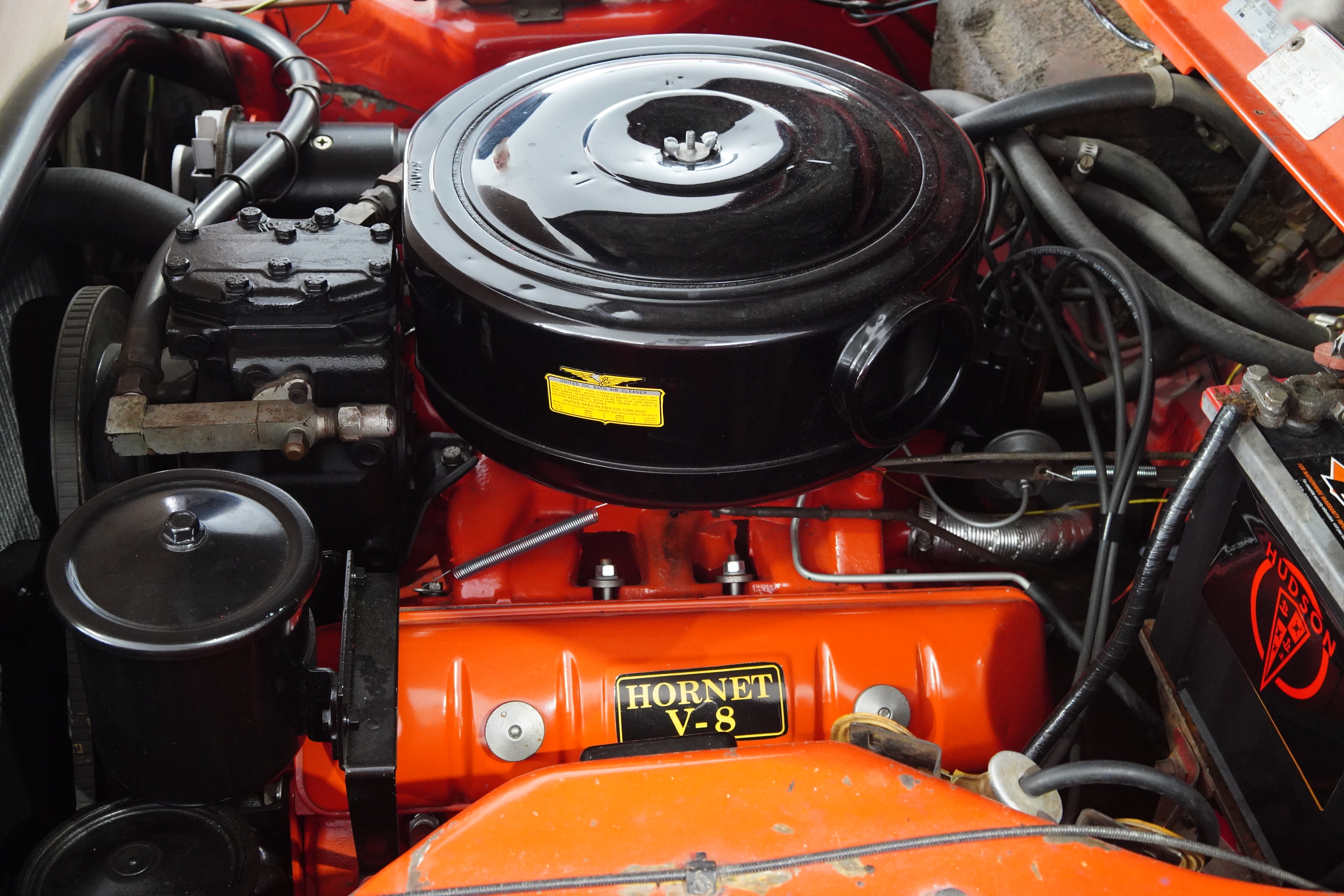
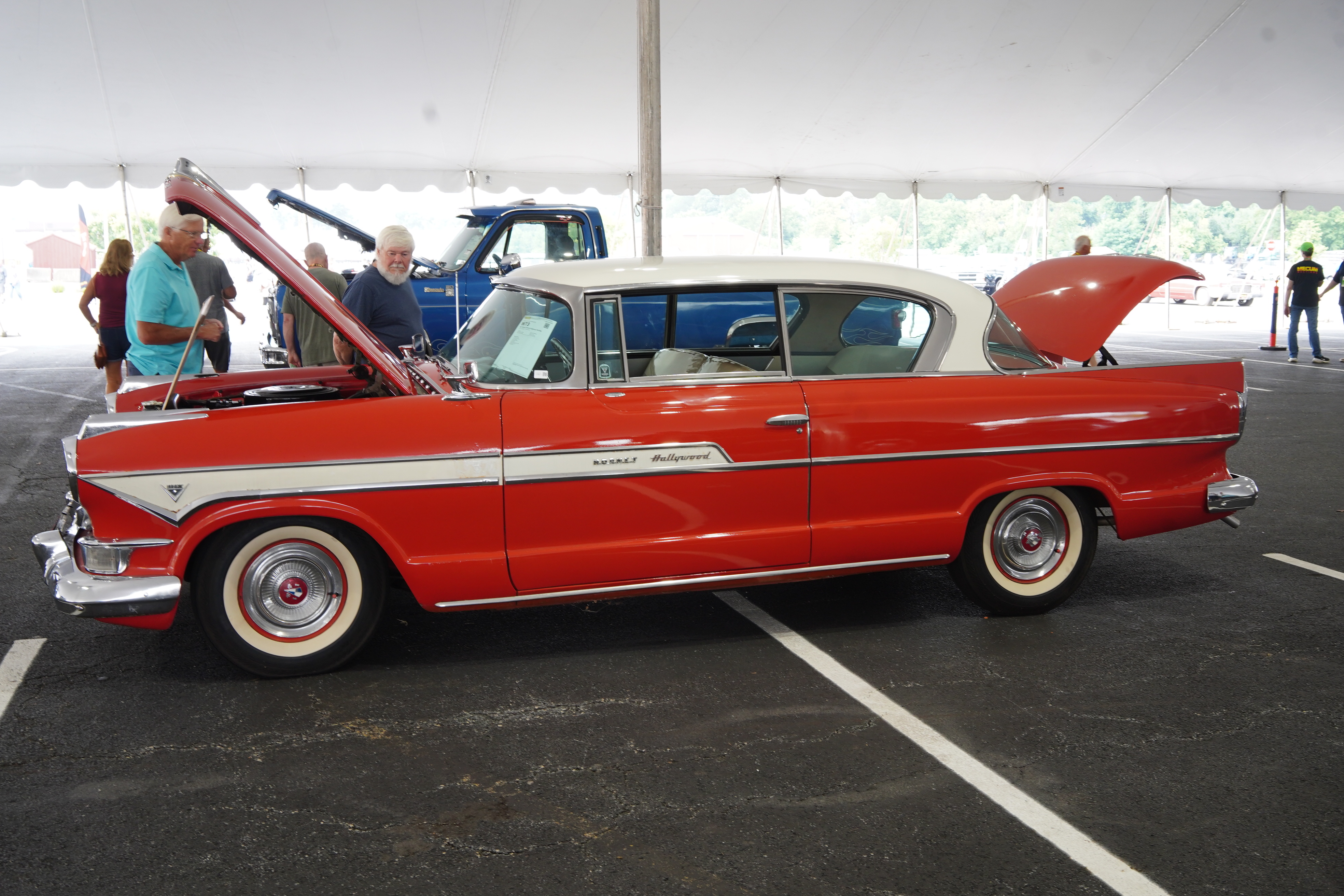
All photographs copyright © 2022 Richard A. Reina. Photos may not be copied or reproduced without express written permission.