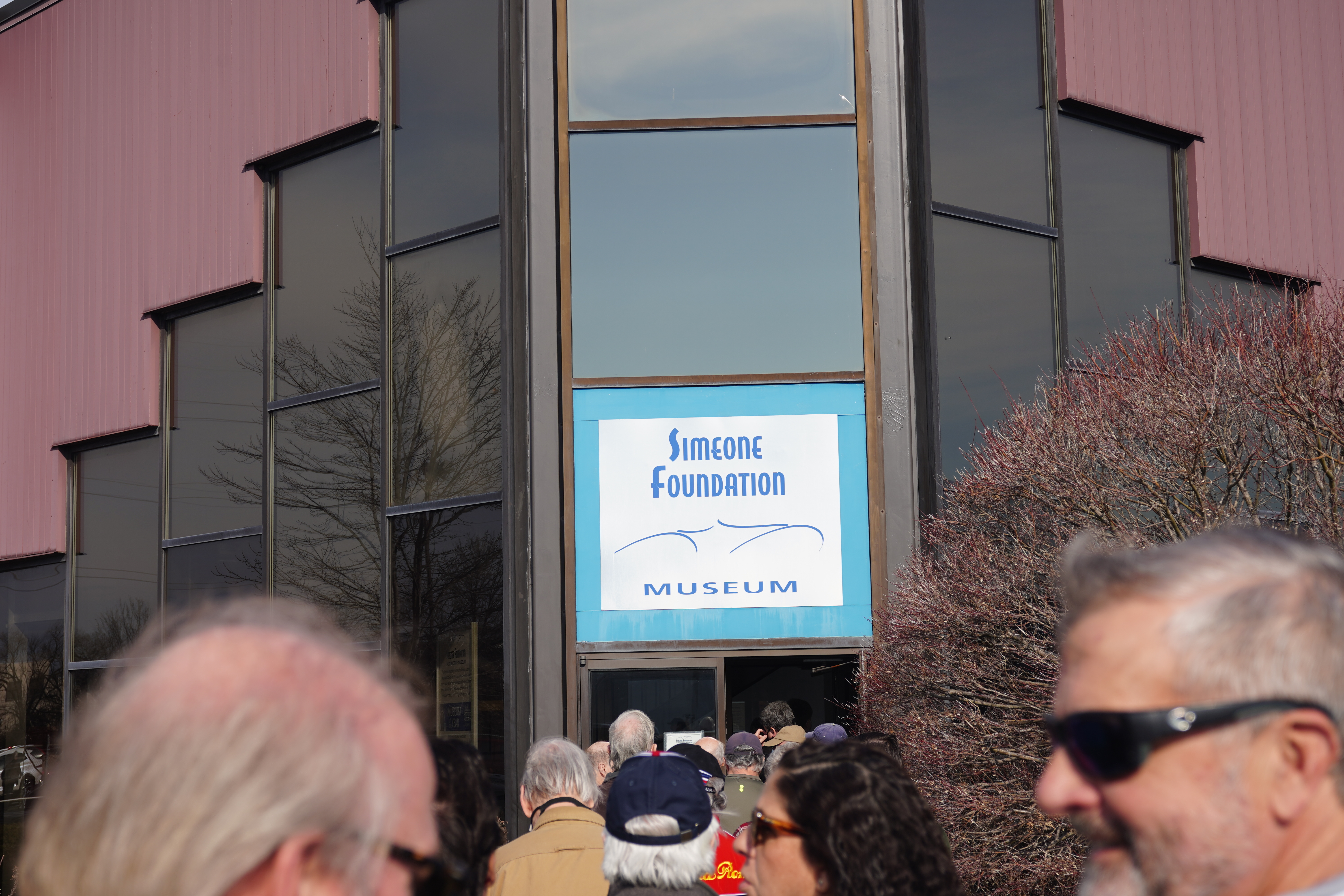
Each of us paid for our own admission, and once inside, Jim, a museum docent and our guide for the day, began the tour promptly at 10:30 as promised. He was extremely knowledgeable and more importantly, spoke enthusiastically about each vehicle, bringing the cars and their stories to life. Many of the cars in the Simeone Collection are singularly famous, having participated in or won racing events around the globe. As such, they are arranged by theme, typically displayed together based on the race track or racing event where they competed.
There were two other highlights for us: first, it was a Demo Day, and the museum had chosen four cars to take outside and buzz around the back lot. The weather was in our favor, as after a particularly long stretch of daytime temps barely breaking above the freezing mark, Saturday reached 60 F, albeit with a stiff breeze. I had every intention of including video of the Demo Day, however, all my attempts to capture the cars while in motion are unusable. While I am proud of some of my photographic efforts, my skills as a videographer are quite poor.
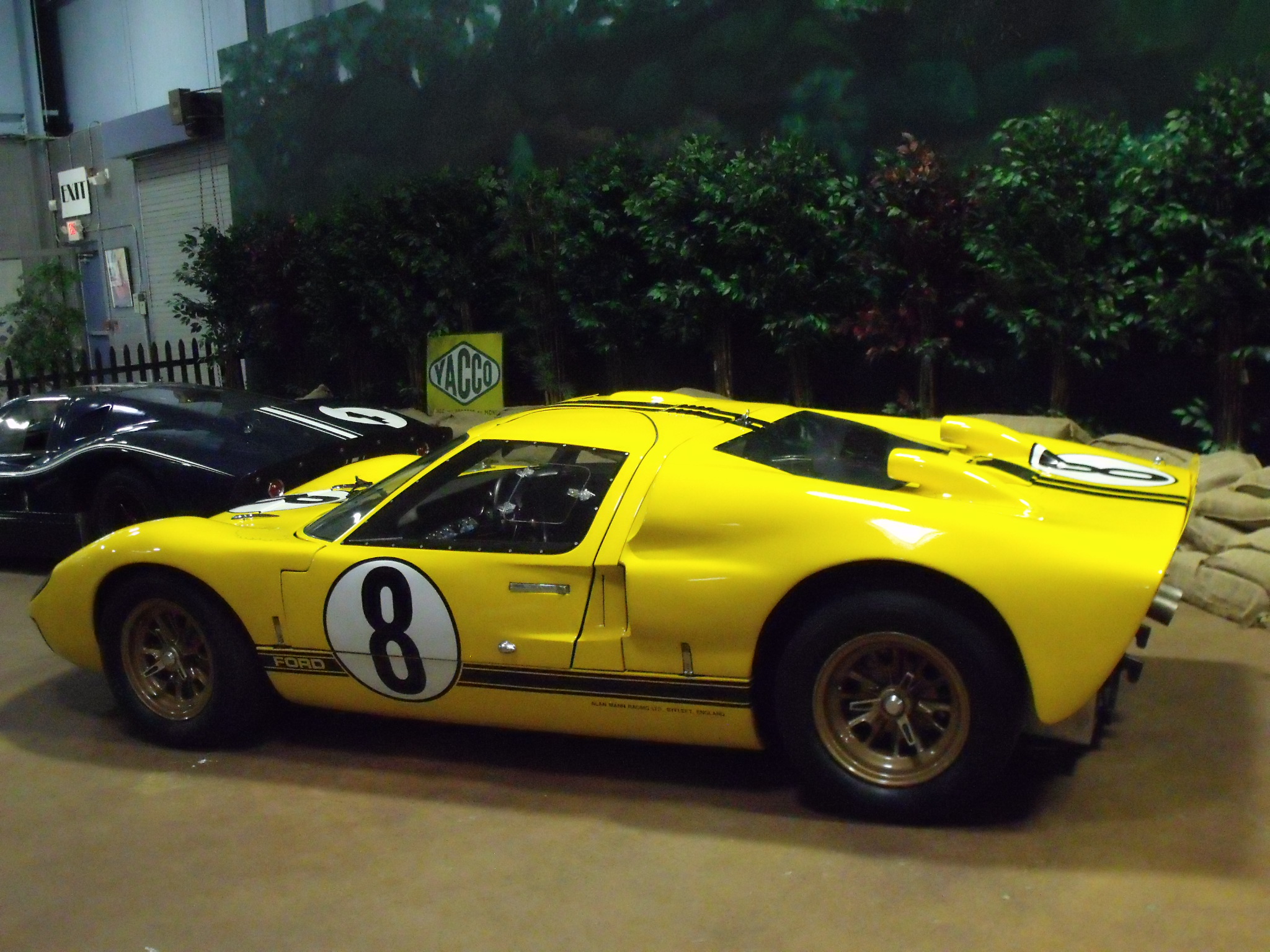
The cars that raced at LeMans
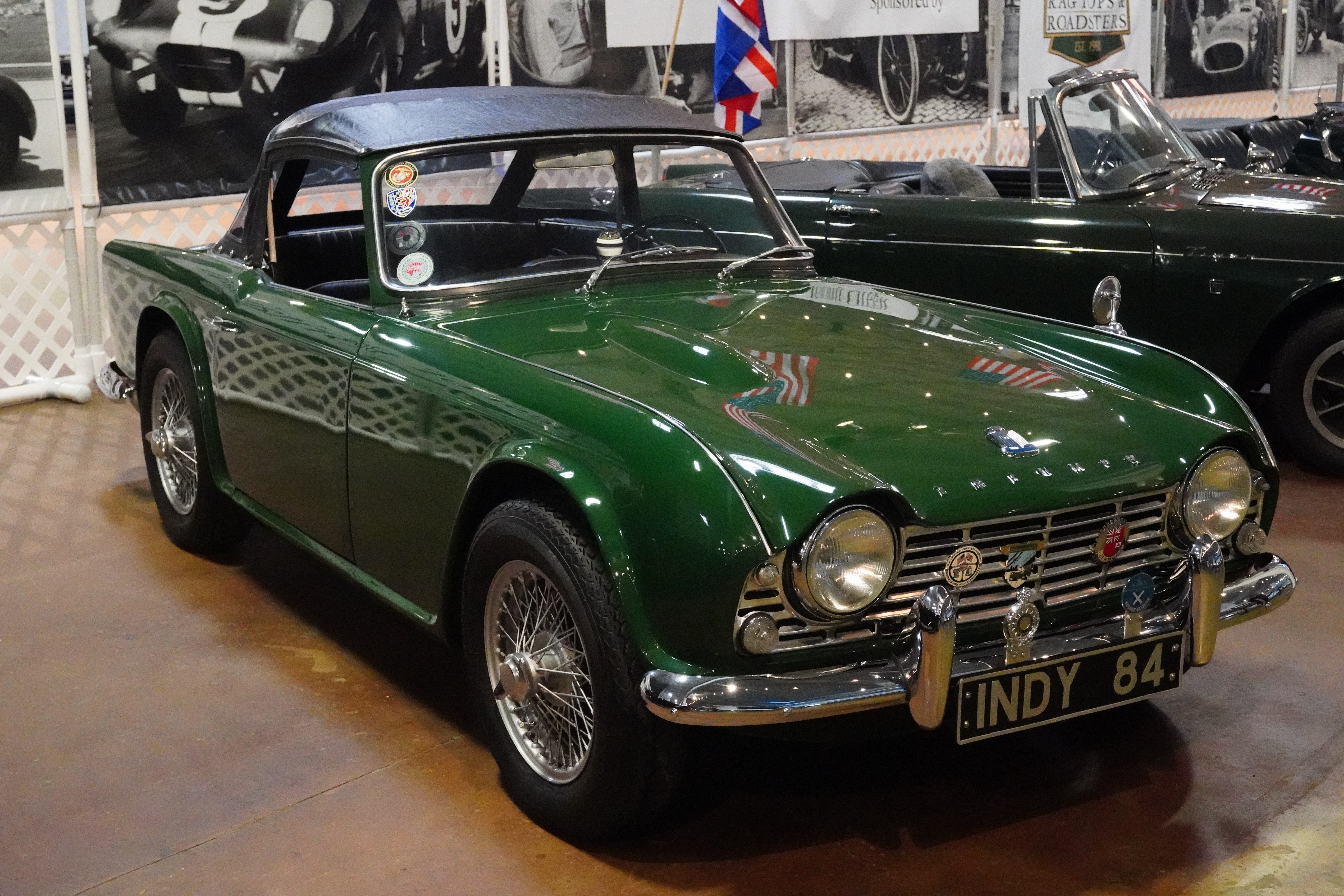
Secondly, a special exhibit of English sports cars, all of them in British Racing Green, graced the walkway just inside the entrance. One downside was the crowd: in addition to the 40+ Alfa Club members, a British car club was also on hand. This led our docent Jim to remark that in his 10 years with the museum, he had never seen it so crowded on a Saturday morning. The museum’s insistence on 100% compliance with mask wearing helped alleviate any fears one may have had regarding the close quarters.
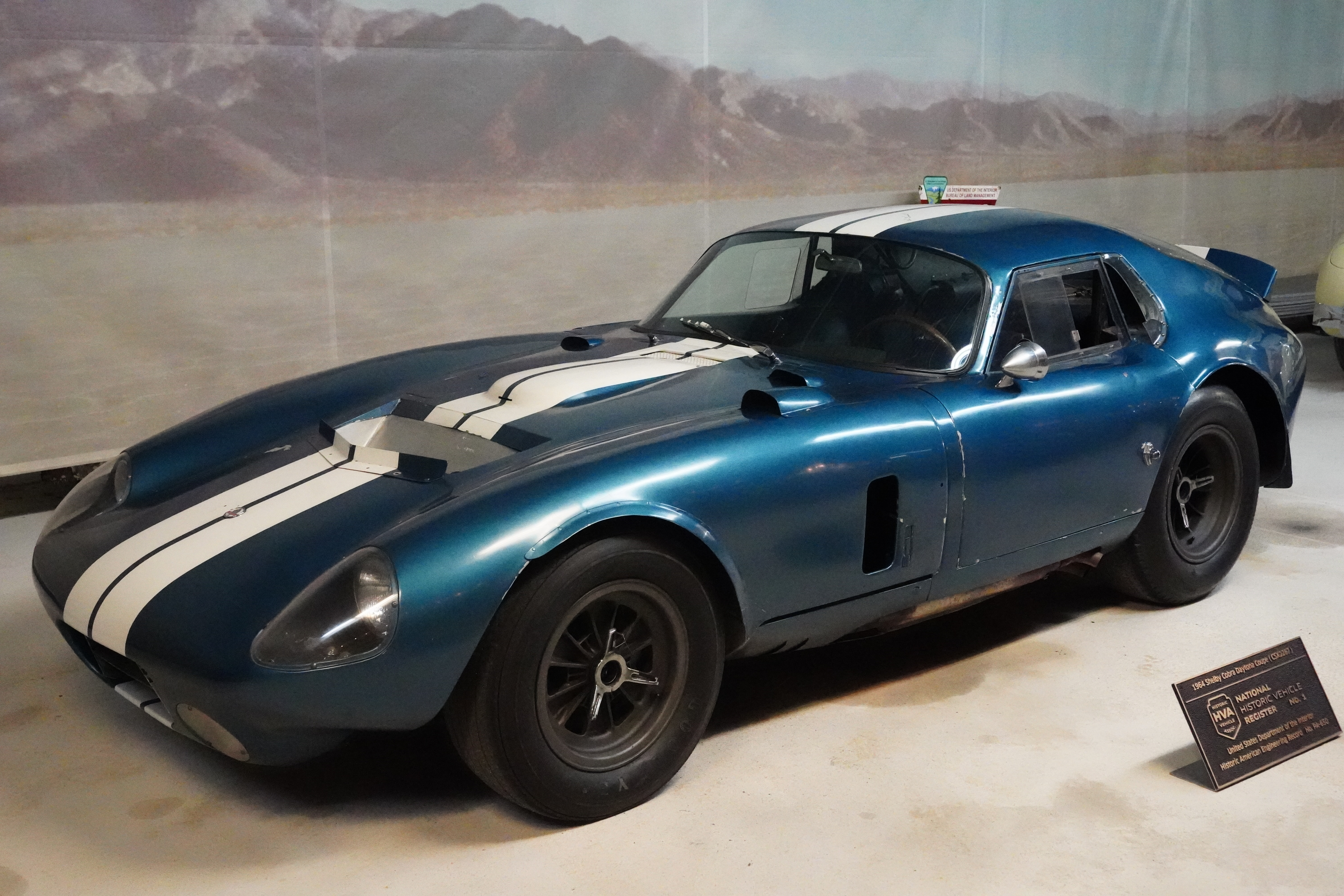
The photos below represent just some of the museum’s highlights. I’ve tried to avoid too much repetition with last week’s post. While about 90% of the museum’s collection is the same as it has been since it opened 12 years ago, some vehicles have been added to the mix. Another change worth noting is that the Shelby Daytona Coupe, known by its chassis number (CSX2287), is the very first car admitted to the National Historic Vehicle Register, quite an achievement over and above its performance accomplishments.
Formally known as the Simeone Foundation Automotive Museum, Dr. Fred Simeone founded it using the historically significant race cars that he and his father had been collecting for decades. Many of their purchases were made decades ago when old racing cars were seen as worn out and without value. The museum is further set apart from others by their “Demo Days”, during which a small selection of machines, tied together by some central theme, is taken outside and driven around the large paved lot behind the museum. While no top speed runs are attempted, the driving is as spirited as conditions allow. Dr. Simeone, the hands-on collector that he is, uses these Demo Days to grab a microphone and speak to the cars’ histories.
My first visit to The Simeone, located in an industrial area not far from Philadelphia Airport, was in 2011. It was a Demo Day, and while the exact years and makes of the vehicles driven that day were not noted, I clearly recall the thrill of seeing and hearing older cars used as intended, rather than staring at them while they silently sat. (At a subsequent visit, I chuckled and nodded my head in agreement when I heard Dr. Simeone state, “A car that is not driven is a statue!”)
Of course, during any particular visit, most cars are on display inside, as reflected in these photos from that initial visit. I’m not the biggest automobile racing fan in the world, but it is moving to read about the historic accomplishments of these cars. If you have not visited the Simeone Museum, I strongly recommend it. If it’s at all possible to get there on a Demo Day (always Saturdays), all the better.
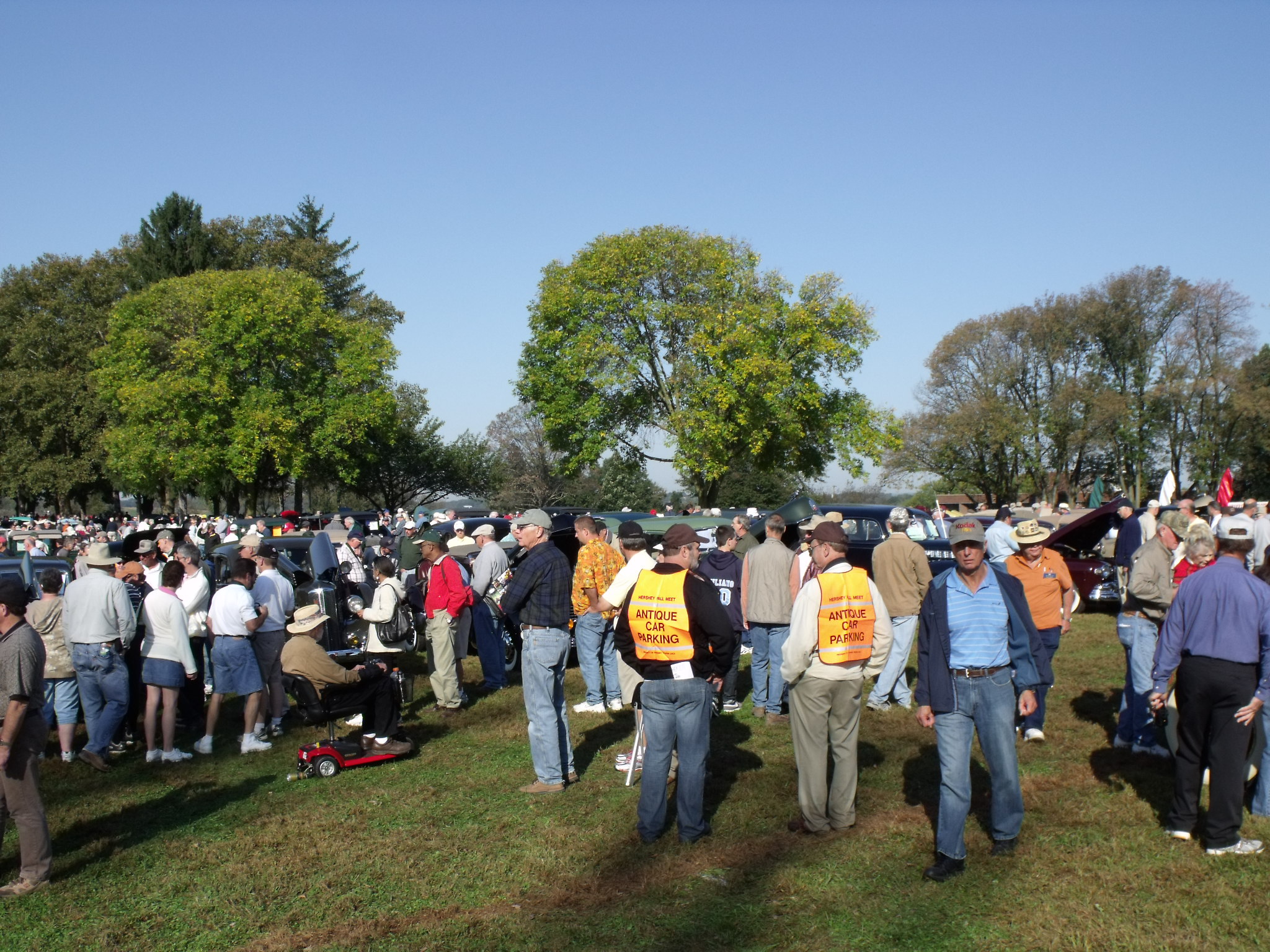
My photos tell the tale: the weather during Hershey week 2011 was as pleasant as October in Pennsylvania can be, as borne out by the abundant sunshine and the swarms of car enthusiasts dressed in light outerwear. By this point in time, I had been a regular attendee at what is formally known as the Antique Automobile Club of America’s Eastern Fall Nationals. My first visit to Hershey was around 1980, and I returned only sporadically over the next 20 years, as Carlisle was more to my interest. Starting around 2001, when I joined the National AACA club, Hershey became a mandatory entry on my calendar except for the one year when an out-of-town business trip forced me to miss it. The five-day event, culminating with the Saturday judged show, consists of three segments: in addition to the show are the vast flea market and the Car Corral. (The RM auction at the Hershey Lodge, while not an AACA-sanctioned event, is always timed to occur during Hershey week and is supported by AACA.)
THE CAR CORRAL
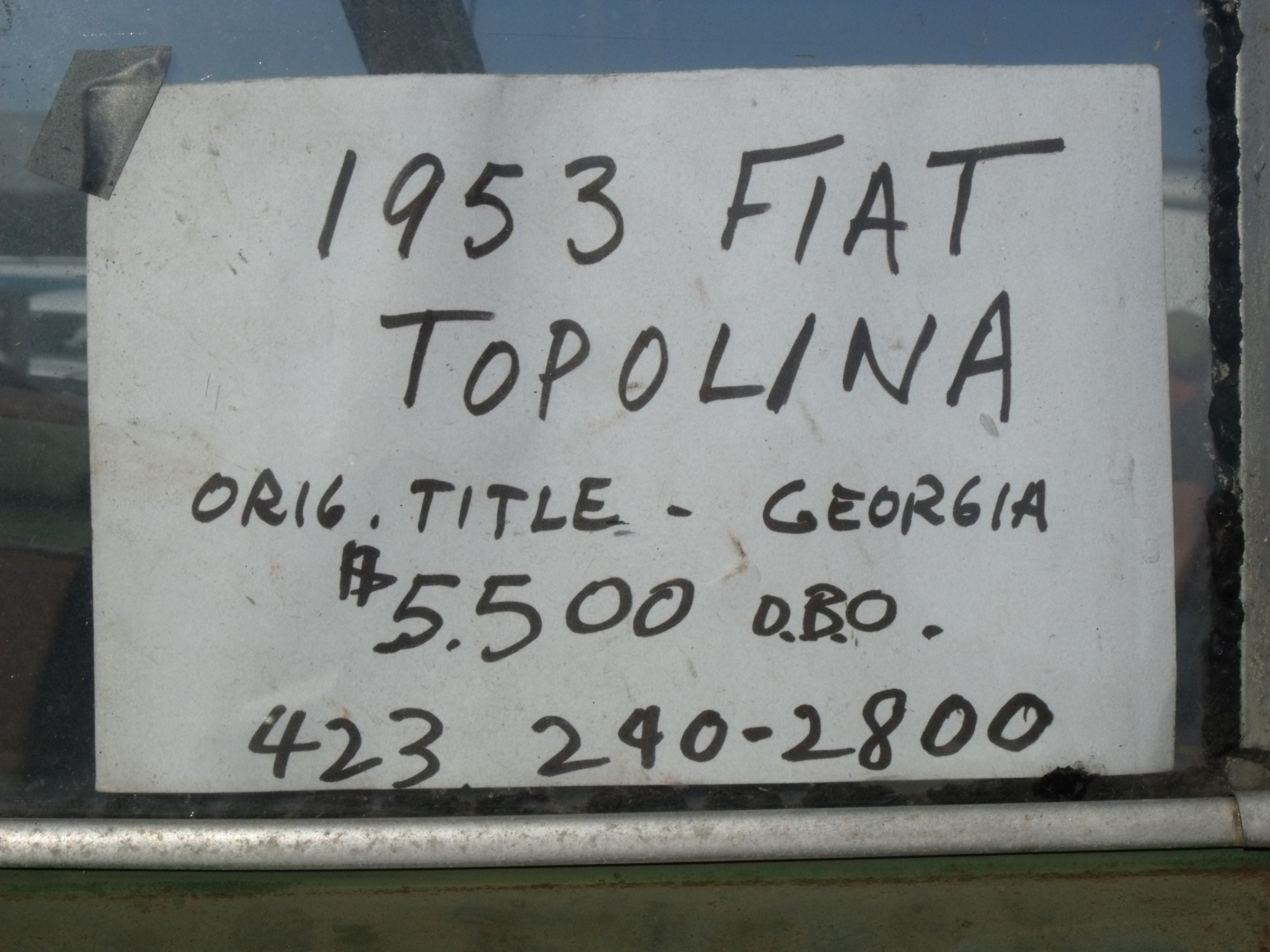
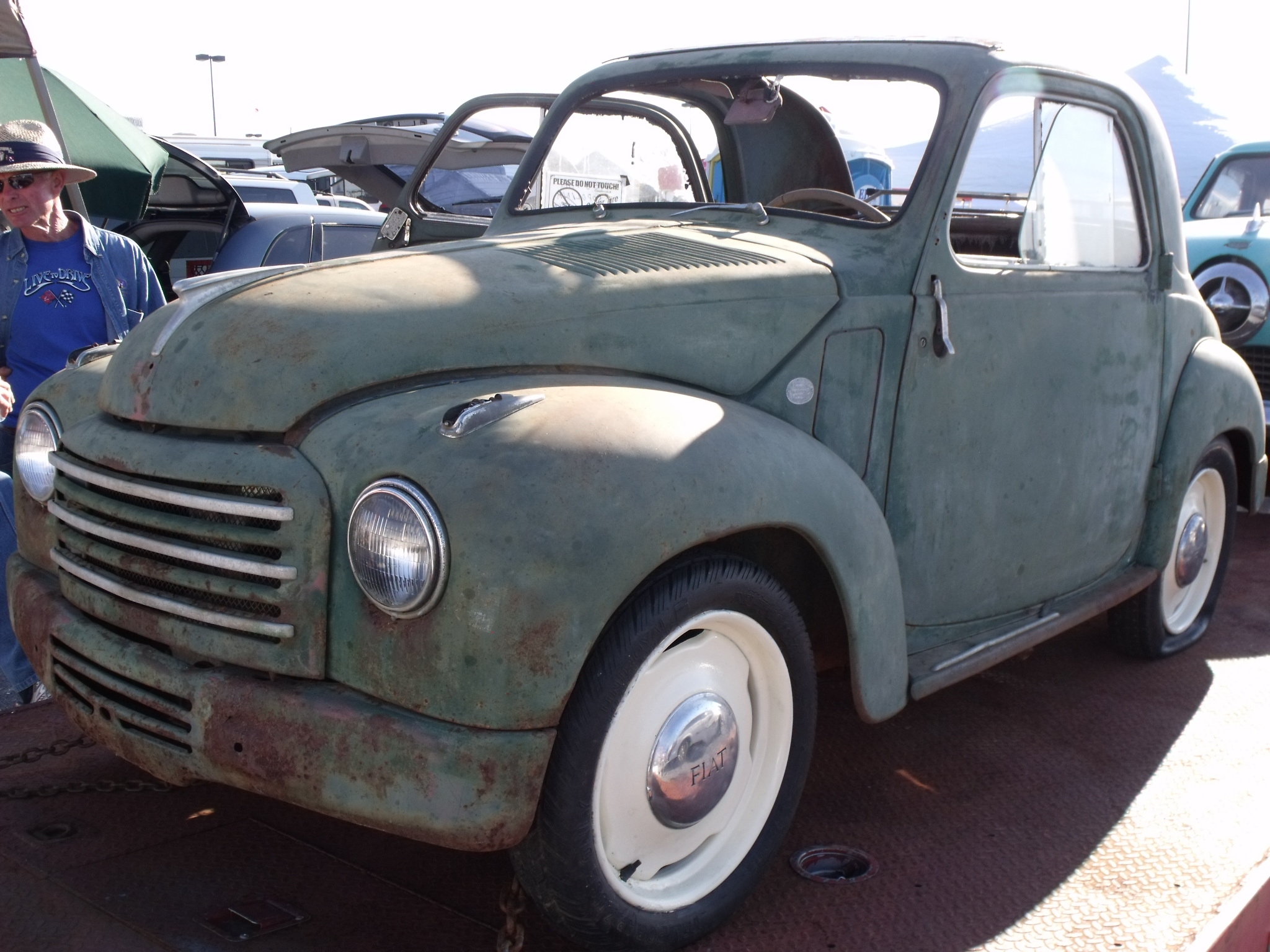
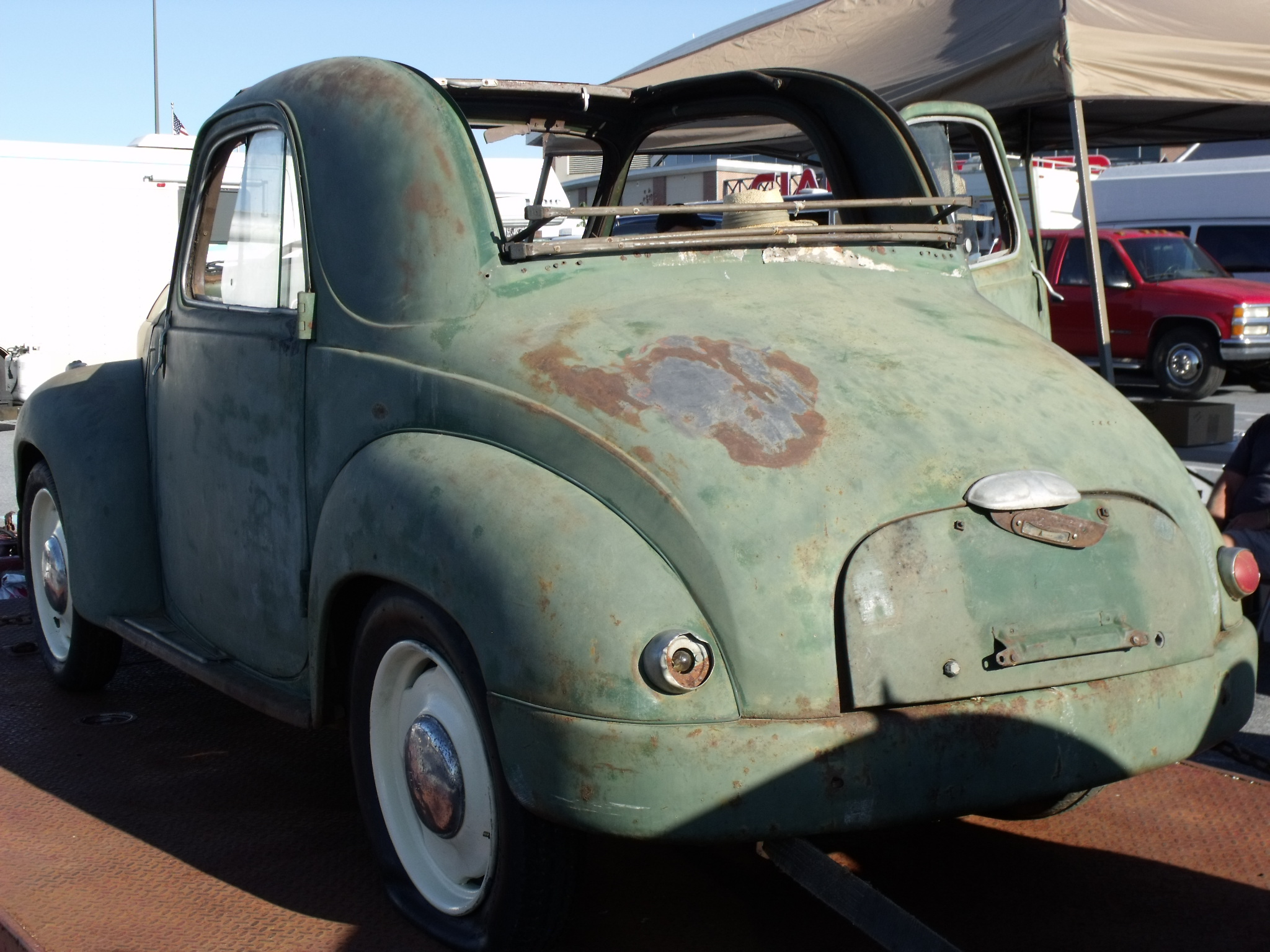
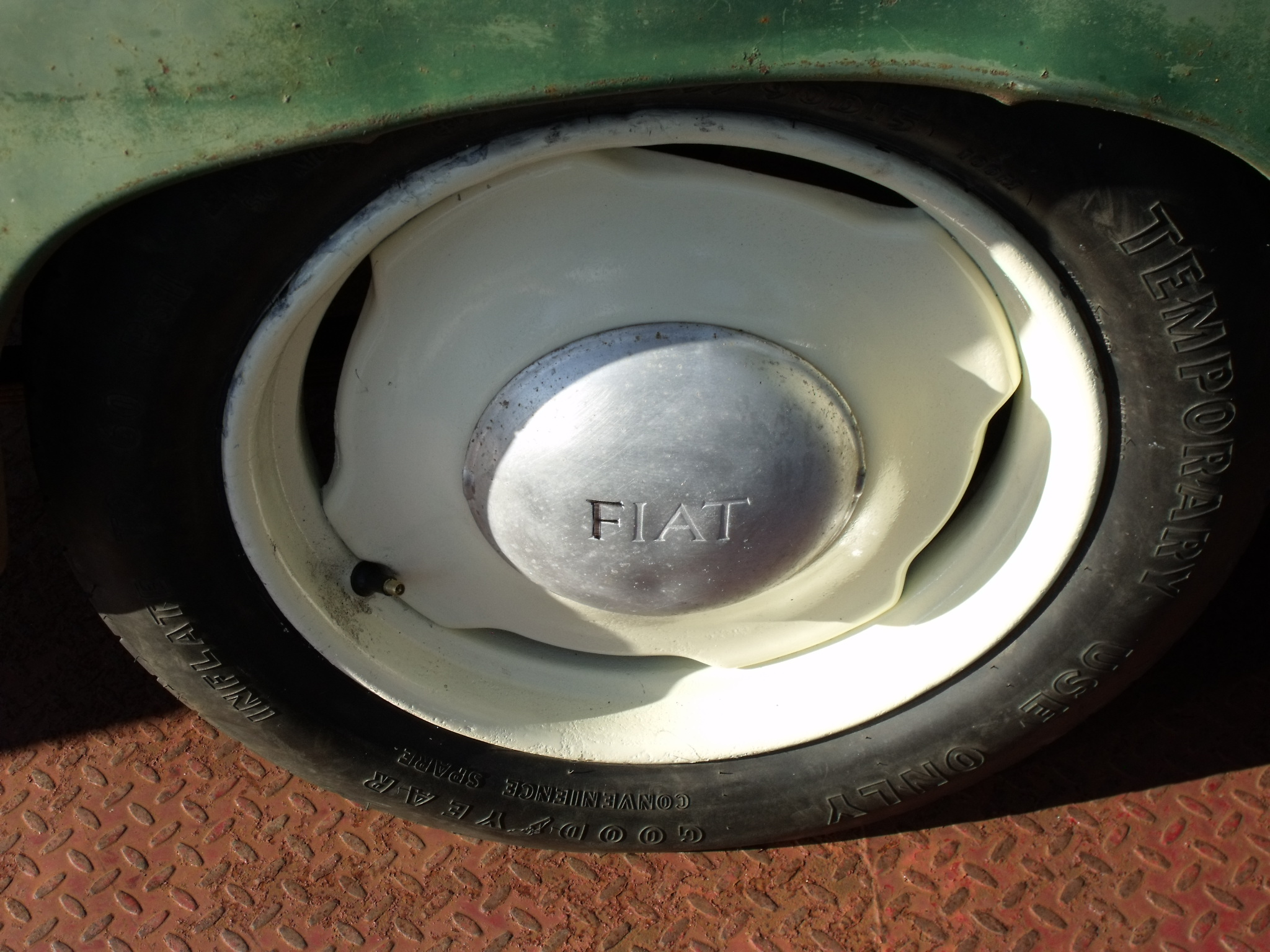
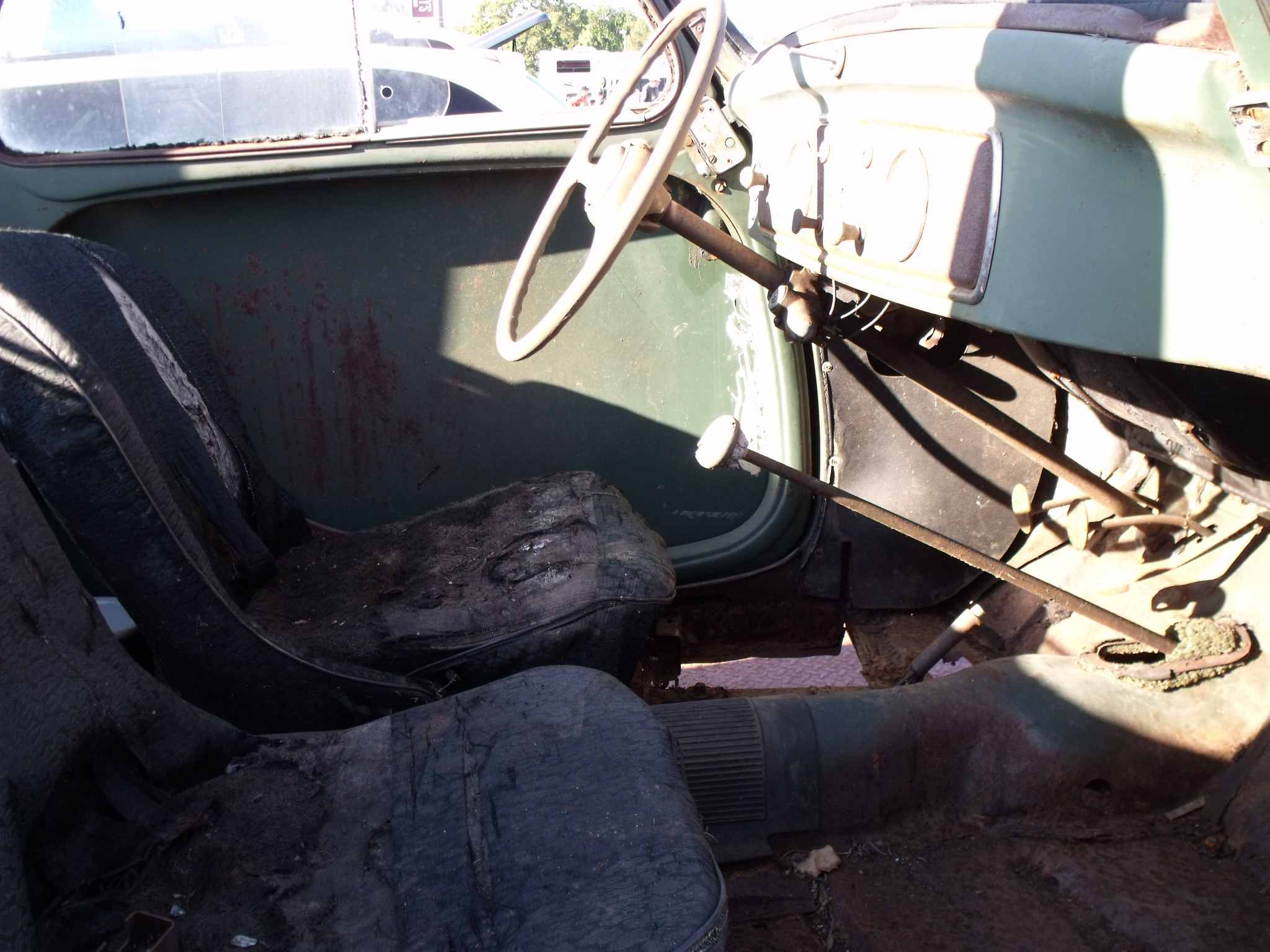
I tend to focus on the rare or unusual cars in the Car Corral, along with any which strike me as potentially good deals. This year, the most unusual of the lot was this 1953 Fiat Topolino (the owner can be forgiven for his misspelling of it as ‘Topolina’), obviously a #5 condition car, and offered at $5,500 OBO. Wikipedia reveals this to be a Model C, produced from 1949-1955, perhaps not as cute as the Models A and B, but still with enough il fascino (charm) to make it an attractive project. The “Fiat-Heuler, Frankfurt a. M.” is the German Fiat dealership in Frankfurt. Check out this beautiful restoration which sold last year on Bring a Trailer for $19,870.
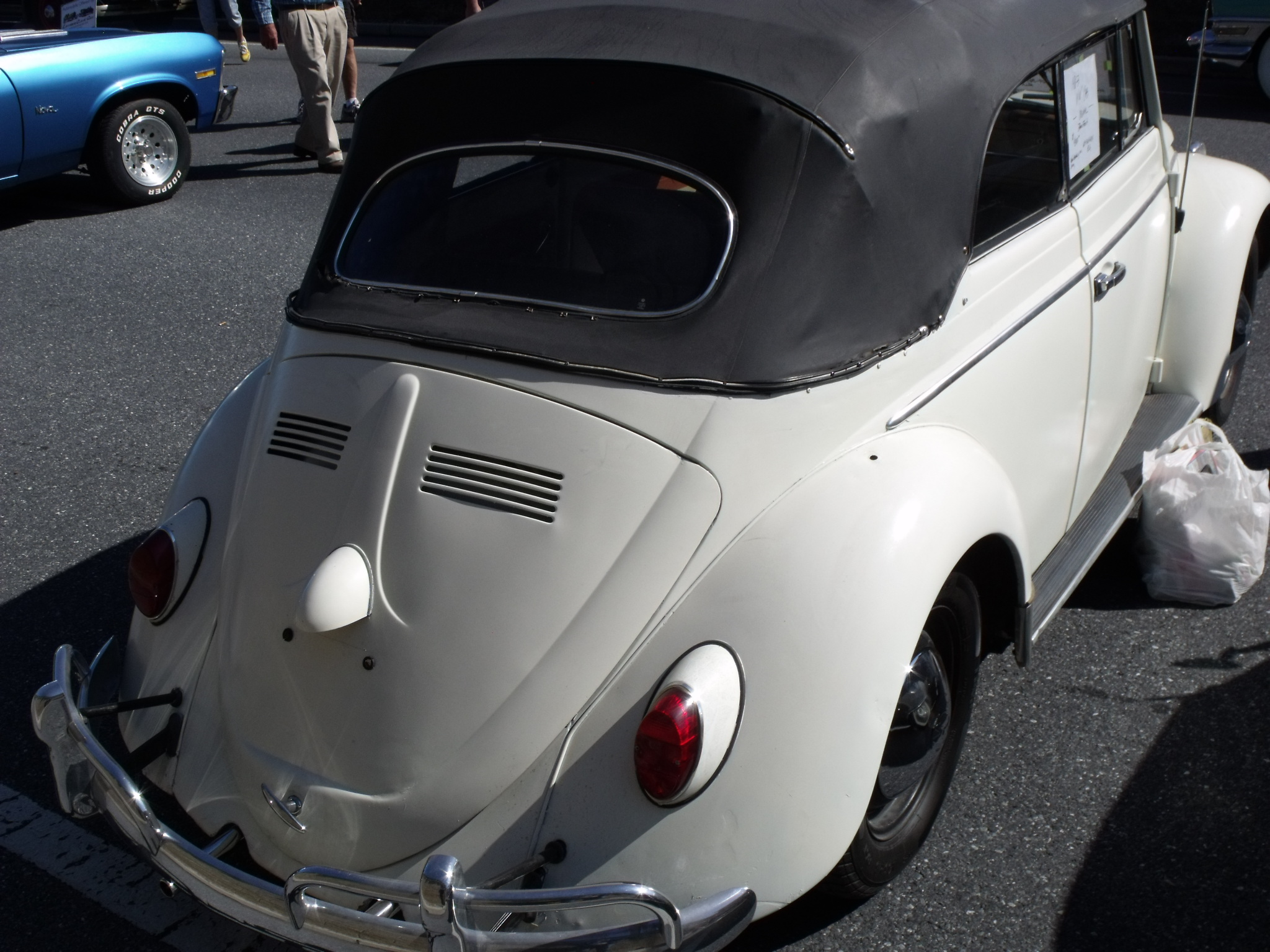
I’ve said this before: if someone had bet me money in 2011 that VW Beetles would see a steady rise in values and collector interest over the next 10 years, I would have lost that bet. So with 10 years hindsight, does this look like a deal? Here’s a 1963 Bug convertible, claimed to be ‘all original’ (whatever that means for a collector car), offered at $4,300. It’s difficult to gauge condition from my two photos, but as long as there wasn’t terminal rot underneath, this one could have been cheap fun. (The closest comp I could find on Bring a Trailer was this ’60 convertible, obviously in better condition, which sold for $20,000 in Dec. 2021.)
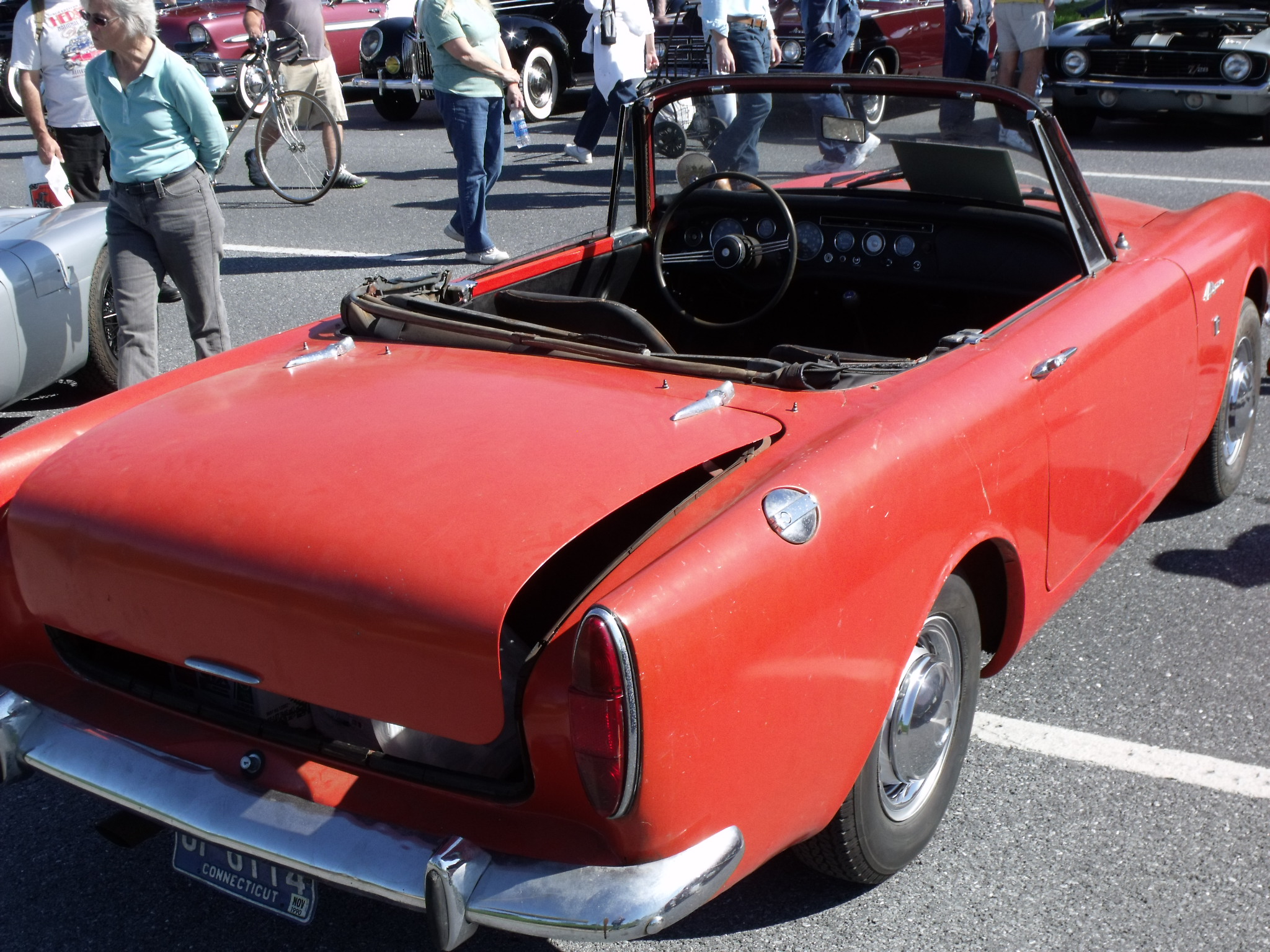
I have spilled considerable digital ink extolling my exploits in my rally buddy’s Sunbeam Tiger. The Tiger’s concept was similar to the better-known Cobra: take a British sports car, toss the smaller engine, and install an American lump of a V8. In the Tiger’s case, the ‘donor’ car was the Sunbeam Alpine, factory-powered by an inline four. The Car Corral had this 1964 version, with its asking price already lowered from $3,700 to $3,400. To me, that’s an instant indication that the owner is getting anxious and is ready to listen to offers. The red paint is oxidized, and the bumpers lack luster, but I bet it was driven into and out of the Corral under its own power. Bring a Trailer has had plenty on offer. Most appear to be fully restored, and many don’t reach their reserves. They did sell this ’64 project car in 2019 for $5,300.
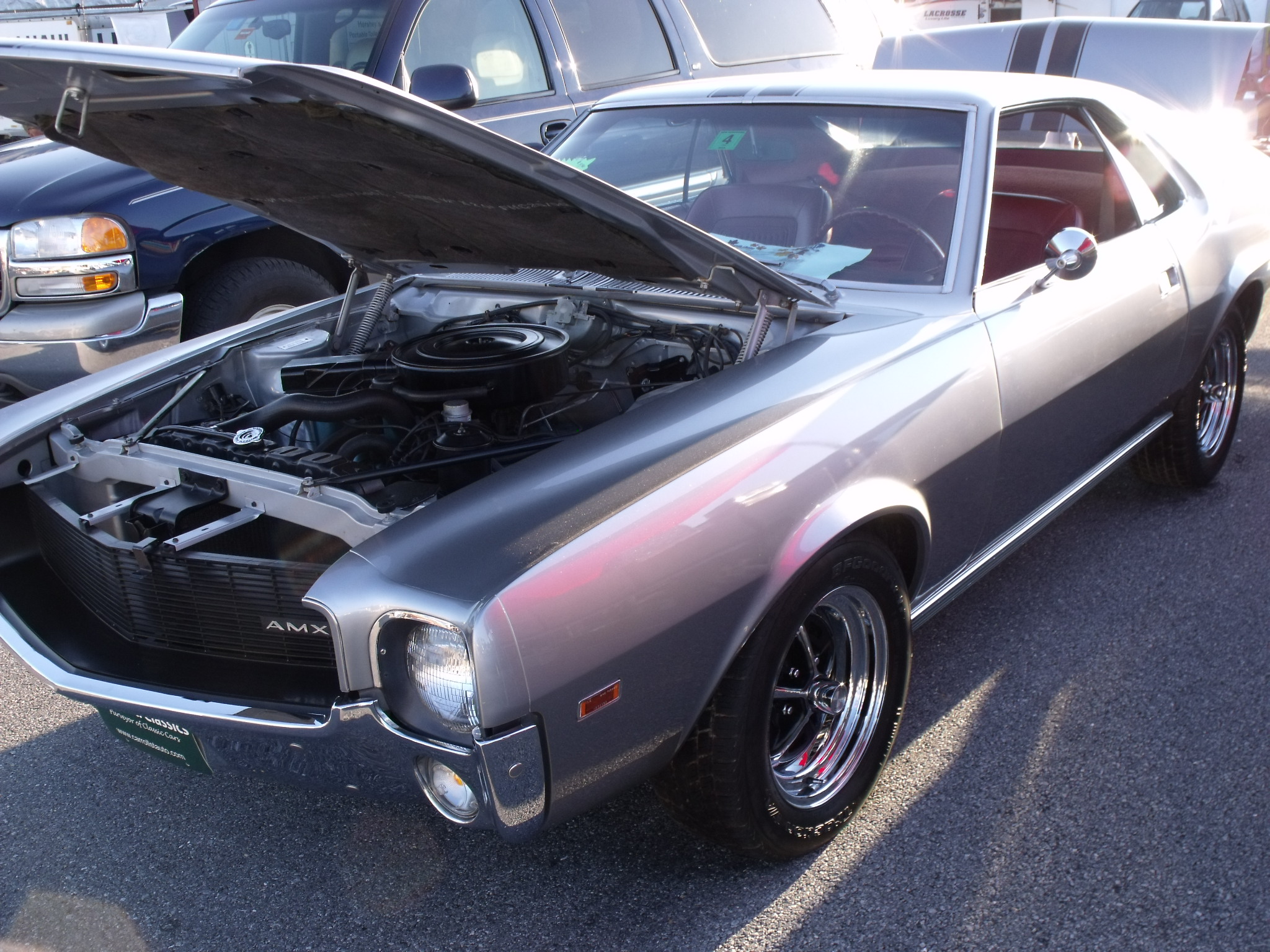
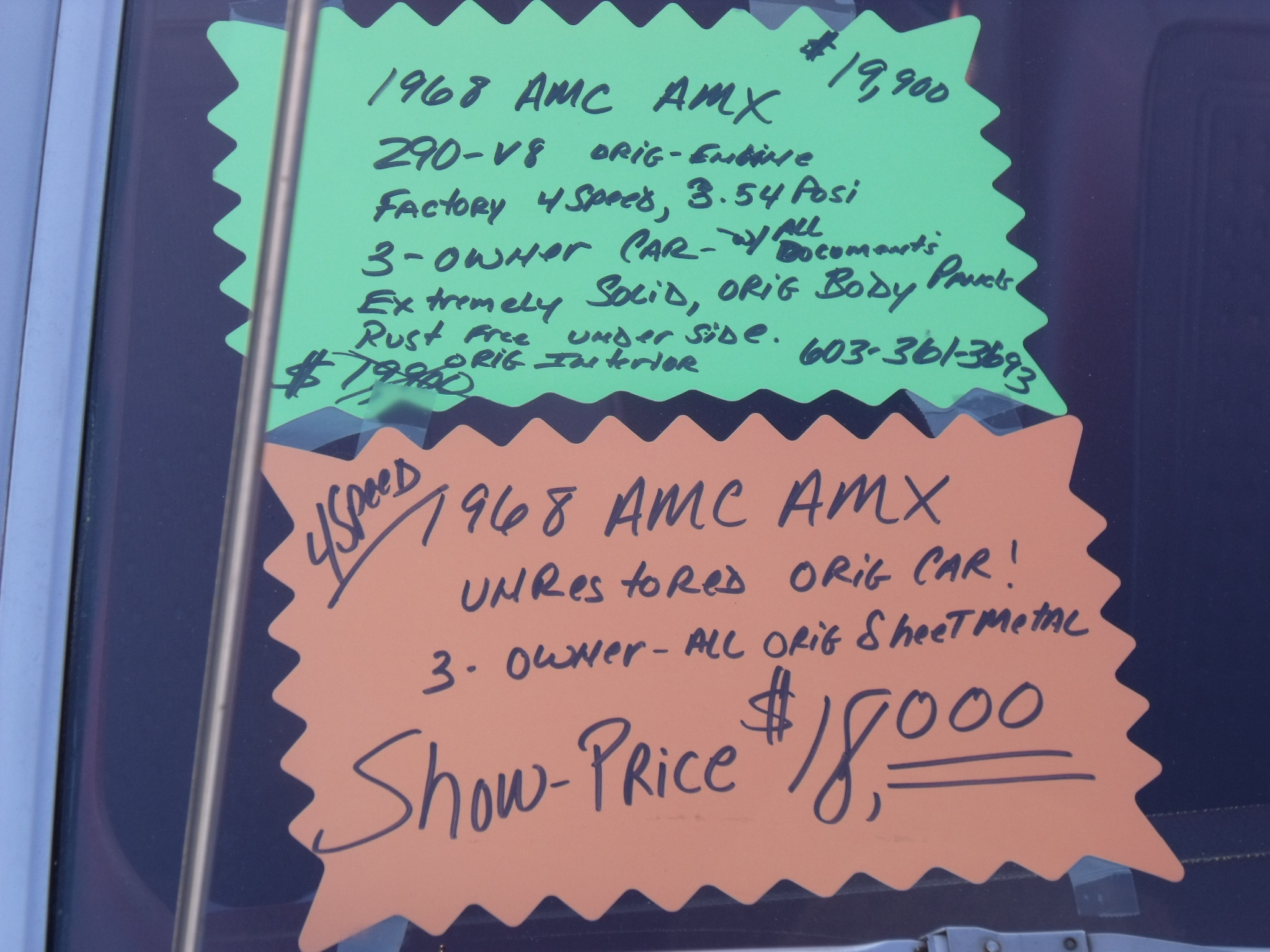
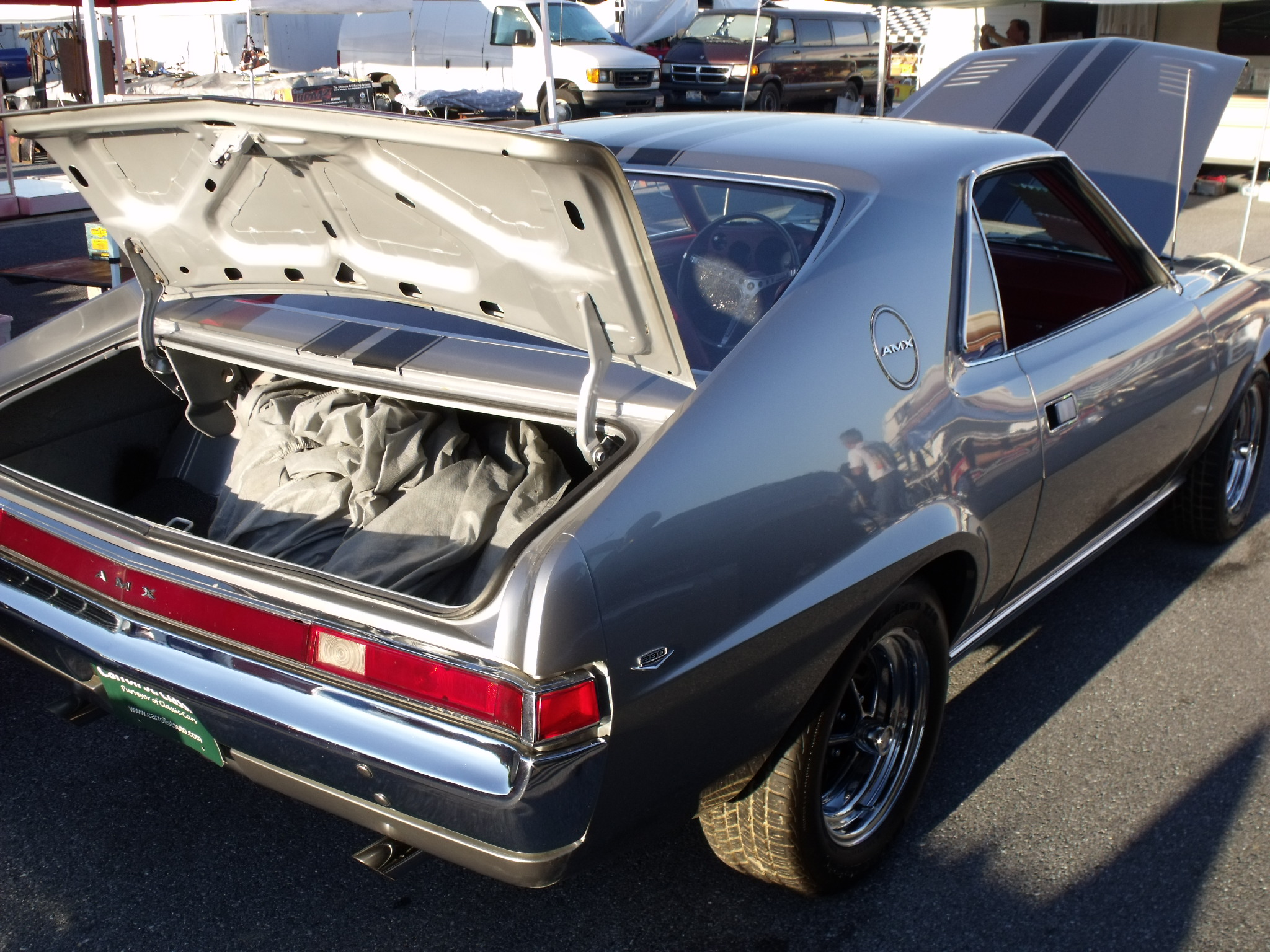
The original AMC AMX, which debuted in 1968 when I was a young teen, was a car I always found attractive. Its shortened wheelbase and deleted rear seat put it in a class above the typical pony cars of the day; I saw it as a more affordable version of that other 2-seat sports car, the Corvette. I photographed this one because I like silver over red. The price caught my eye too, compared to what you’d pay for a similar Camaro or Mustang. As it sat in the Car Corral, the price was dropping, so a deal could have been made. This one had the small 290 V8, and almost every first gen AMX on BaT is listed with the 390. My CPI value guide lists the ’68-’70 AMX as worth between $16,000 and $35,000 for a good to excellent one, so in this case, let’s hope it was bought to enjoy rather than to profit from.
Sometimes the more interesting cars for sale are not in the Car Corral, but are rather found scattered within the flea market. This 1940 Continental convertible was tucked among the tents and tables, with an asking price of $75,000. The 1940 model year was a stylistic high-water mark for the Ford Motor Company, and first gen Continentals had the further advantage of a 12-cylinder version of Ford’s famous flathead engine. The 1939-1948 Continentals are on the official list of Approved Full Classics from the CCCA (Classic Car Club of America), a distinction not to be taken lightly.
THE SATURDAY PARADE AND CAR SHOW
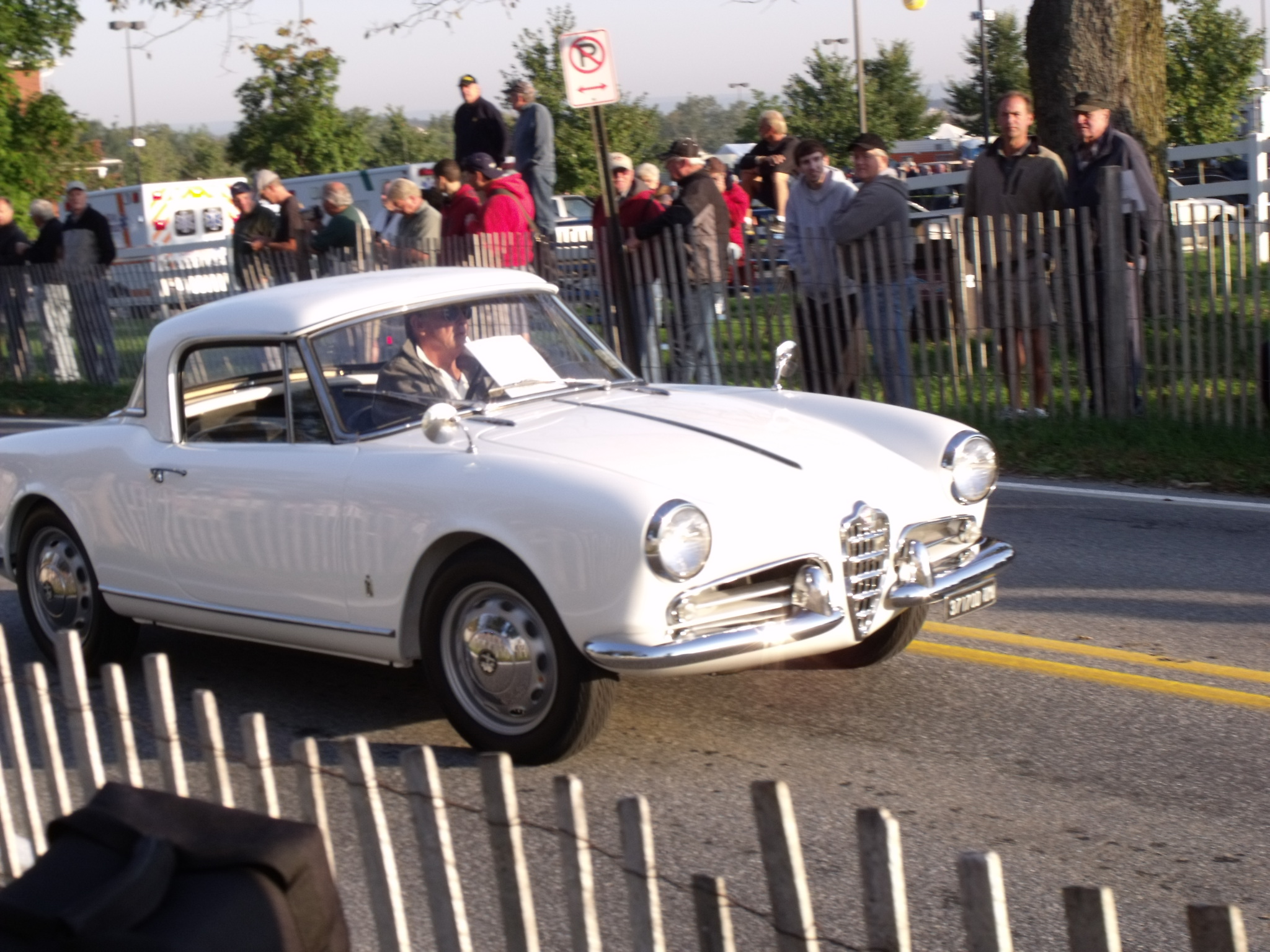
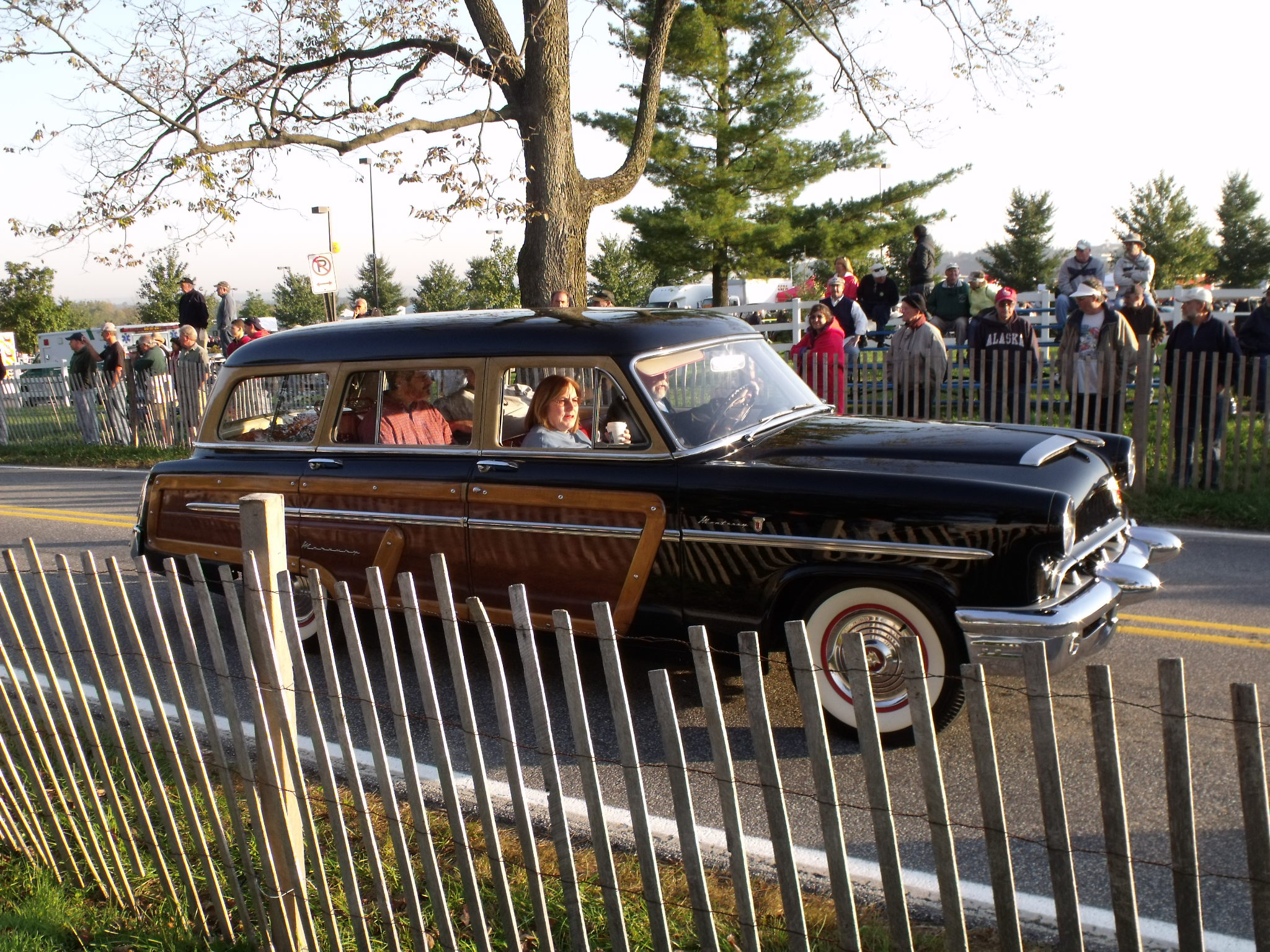
Ever since accidentally discovering that Saturday’s earliest attendees gain the additional enjoyment of watching show cars arrive under their own power, it’s been a highlight of Hershey week to set the alarm for 6, grab a bagel and coffee to go, and hunt down the best vantage point.
With vehicles arranged by class (typically year/make/model) it’s best to wander to where your interests lie, as the vast show field is almost impossible to completely cover in one day. Many years ago, I read this advice in a photo magazine: move closer to your subject, and when you think you’ve moved close enough, move even closer. With cars, it can sometimes be more interesting to focus on only a portion (the crowds sometimes thwart all effort to snap the entire vehicle anyway). I’ve tried that effect for several of these shots.
Continuing with my coverage of Hershey visits which preceded the birth of the blog, below are a few shots from AACA Hershey 2010. The photos show that the weather was beautiful and the turnout was significant. As I stated in the blog post for the 2009 event, my photographic coverage was not as all-encompassing yet.
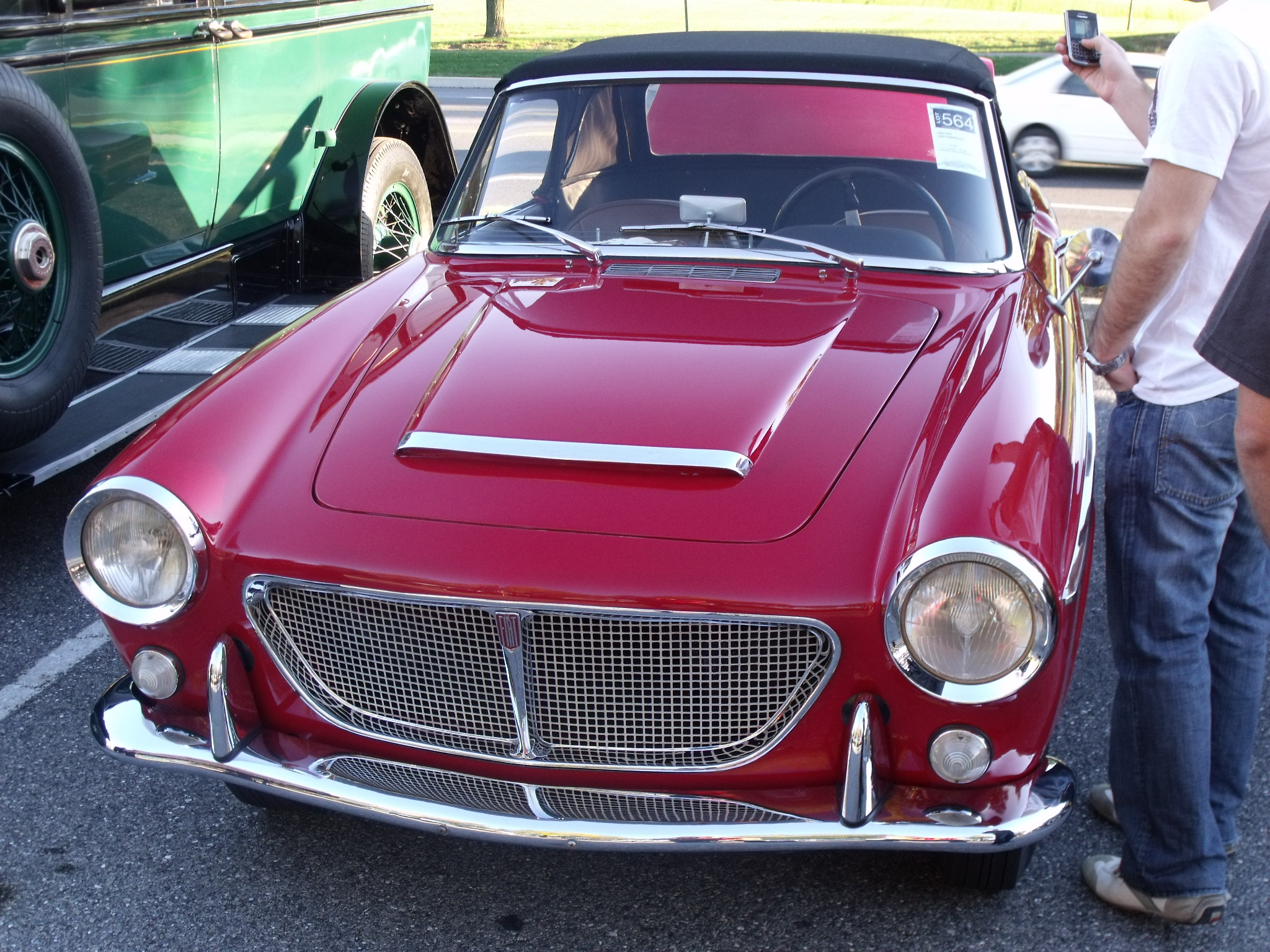
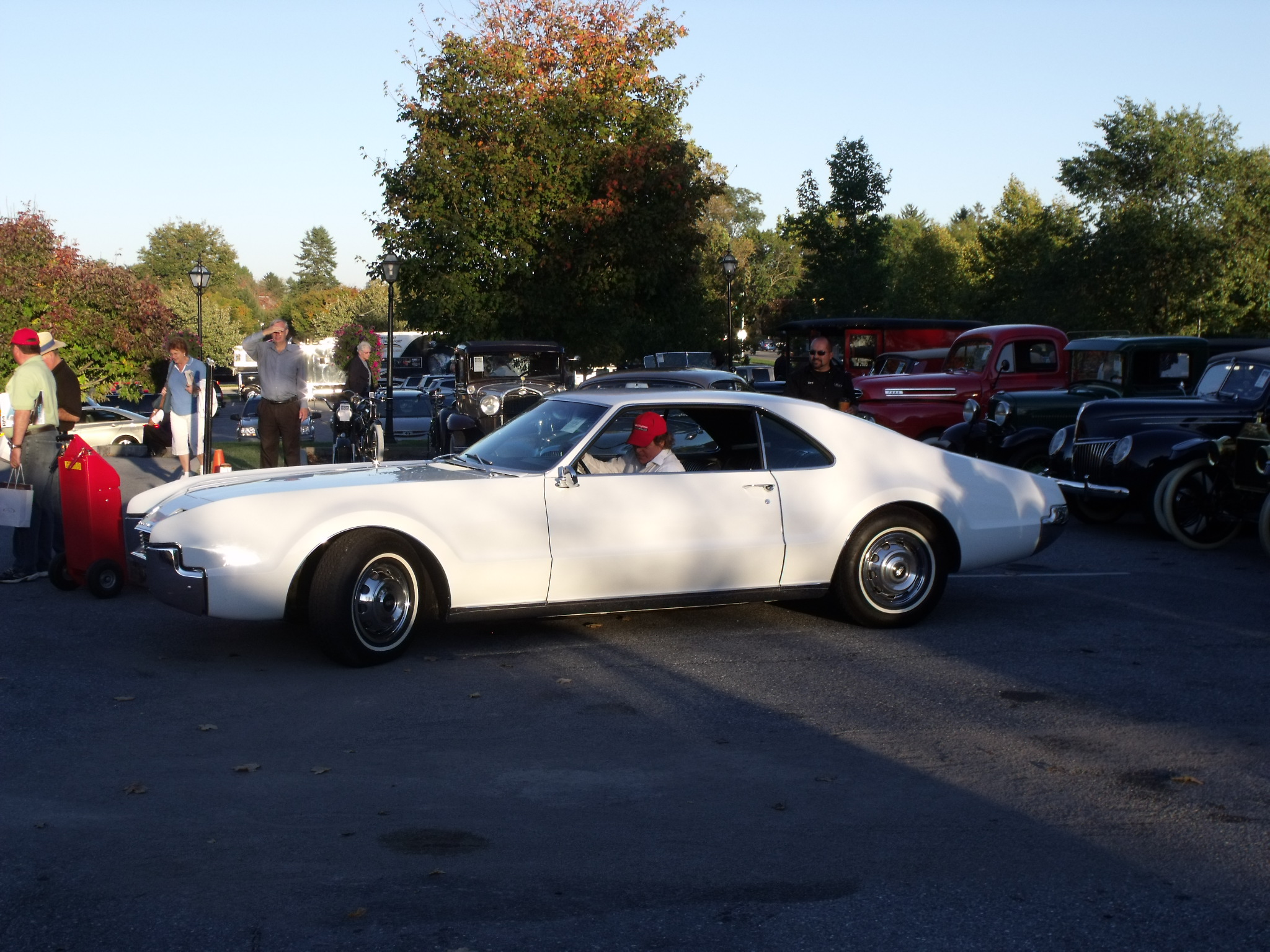
Photos of cars with lot numbers on the windshields were there to be auctioned by RM at the Hershey Lodge. While I was not yet in the habit of notating auction sales results, my access to the RM Sotheby’s website has allowed me to search for and find the sale prices, which are indicated below. Since the website shows numbers “all in” with commission, I have calculated the actual hammer price by backing out the 10% buyer’s premium. It would be three more years before the Isetta was trailered to RM Hershey to be sold, which occurred in 2013.
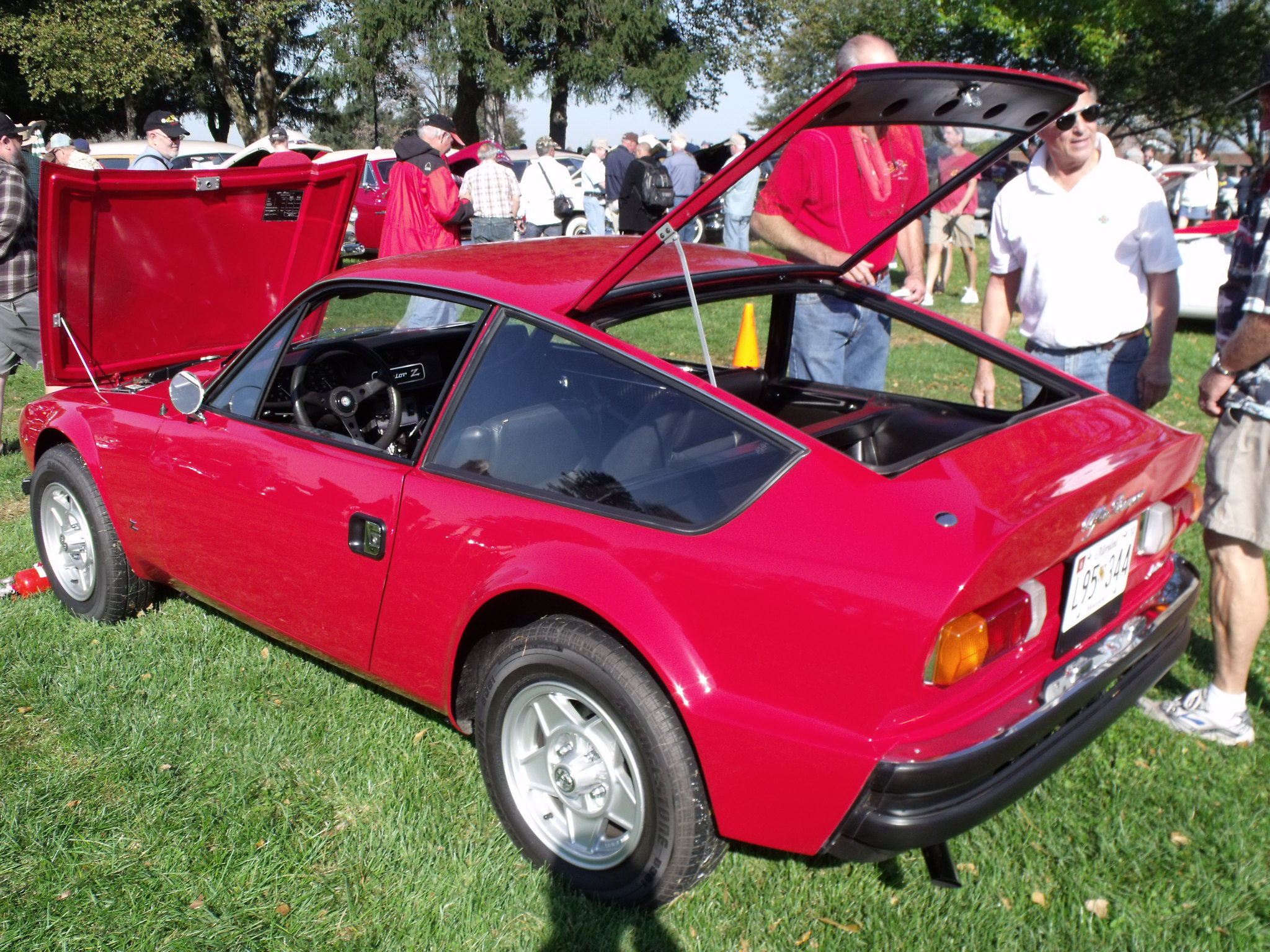
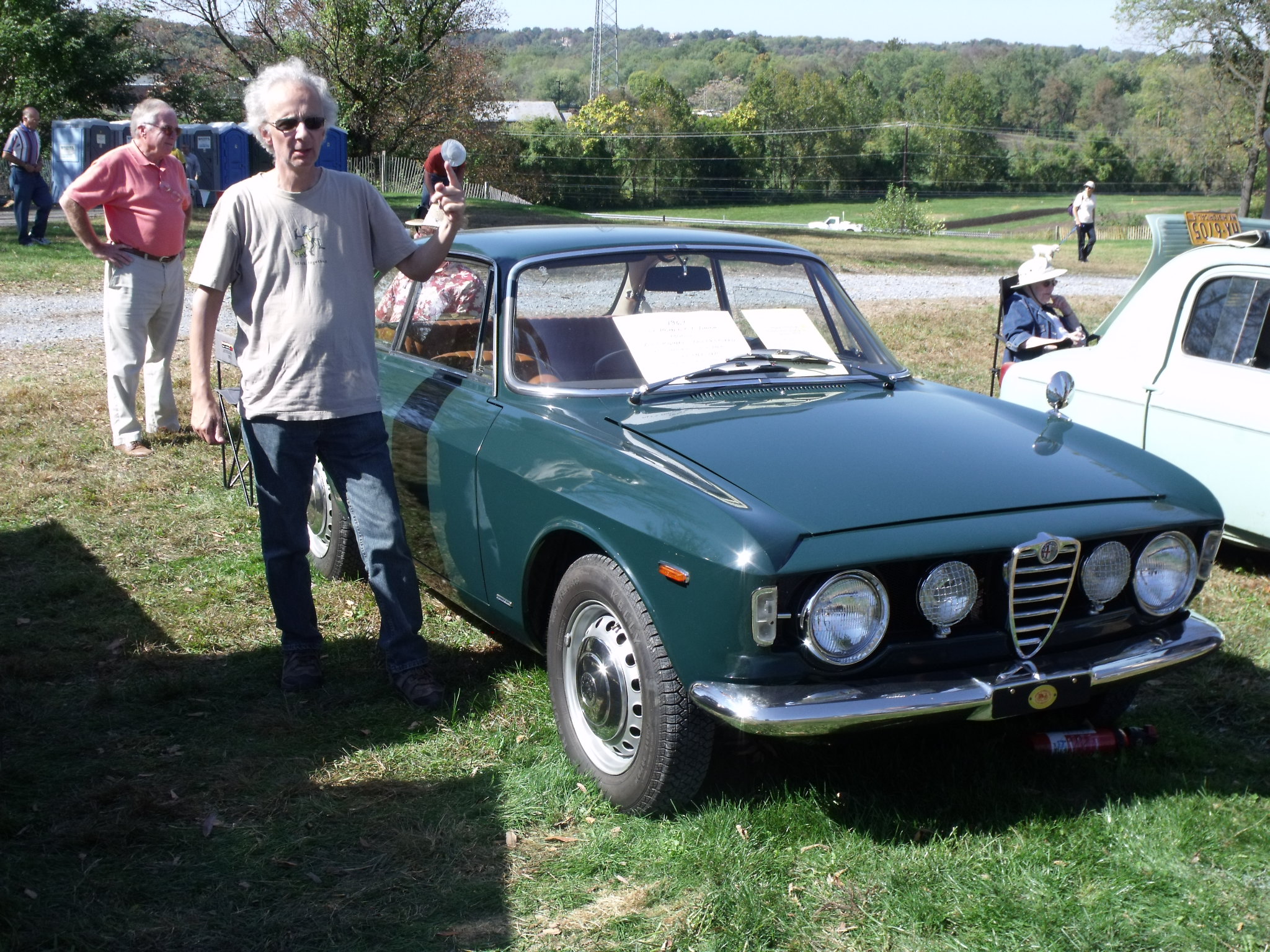
The remainder of the shots cover the big Saturday judged event. My friend Pete showed up with “his” Alfa GT 1300 Junior, which he placed in the HPOF category. The expression on my face as I stood next to the car says it all: “Pete, someday, this will be mine!” It took him a while to come around, but the day did come, in March 2013.
THE RM HERSHEY AUCTION
1962 Fiat 1200 Cabriolet, sold for $33,000 (hammer price $30,000)
1970 Fiat 500L, sold for $15,400 (hammer price $14,000)
1955 Studebaker Speedster, sold for $55,000 (hammer price $50,000)
1966 Oldsmobile Toronado, sold for $45,100 (hammer price $41,000)
THE SATURDAY CAR SHOW
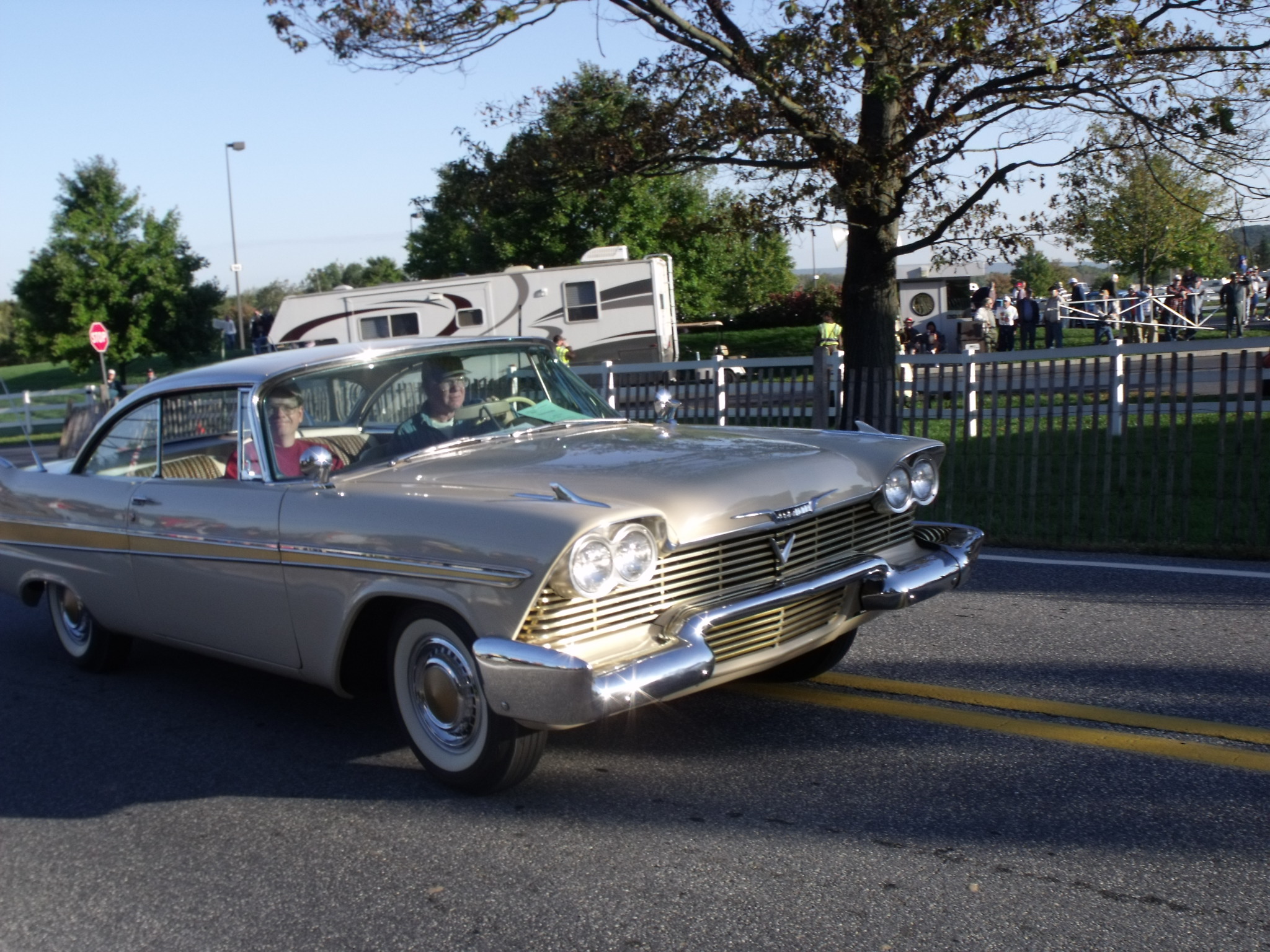
The morning parade of cars on their way to the show field:
The gargantuan auction which is Mecum Kissimmee (over 4,500 vehicular lots) is held every January in its namesake Florida city. This year, the big show extends across 13 days, from Thursday January 6 through Sunday January 16. My previous two-day visits to Mecum Harrisburg were mind-numbing and ear-deafening; the thought of attending this circus for its entire duration would require earplugs, aspirin, and frequent excuses to temporarily vacate the premises. In reality, bidders most likely attend only on the days when the lots which interest them are crossing the block.
Mecum purposely schedules the expected show-stoppers for the weekends to maximize TV exposure. In contrast, it’s been traditionally observed that the first few hours or days can bring out the bargains. I therefore took the liberty to peruse results from Days 1 and 2 to see if there were any standout deals. Setting an arbitrary cutoff of $15,000, I found nine cars that struck me as good values for the buyers. These are personal judgements based on photos and sometimes scant descriptions; an in-person examination is always preferable.
The nine cars are listed below in model year order. All were sold on either Thursday Jan. 6 or Friday Jan. 7. The prices below include the 10% buyer’s premium; divide the number by 1.1 to obtain the hammer price. Links are provided to Mecum’s site (I cannot reprint their photos here). In a few cases where a recent BaT sale of a similar car was found, I included a link to that vehicle.
First generation Corvairs usually pop up as 2-door coupes or convertibles. This 4-door (with its GM “flat roof”) is a rarely seen body style. Corvair owners are fanatical, and there’s good club and parts support. If not for the manual gearbox, I would not have included this. As Corvair enthusiasts like to say, “try buying that OTHER air-cooled flat-6 engine car for this kind of money”.
Car looked very clean in photos; paint is almost too fresh. Lack of mileage indication usually means it’s high. Beetles of all years and body styles have recently garnered more attention at auctions. Like the Corvair, club and parts support are plentiful. BaT sold a very similar ’72 also in yellow in November ’21 for $21,500, making this one look like a deal.
By 1975, Plymouth had moved the Fury nameplate down a notch to the intermediate platform; the full-size car was called “Gran Fury”. This coupe looked funky, and it’s not a body style that will appeal to many. The only reason for its inclusion here is the 440; obtaining this motor in most other Mopar products would cost multiples of this sale price.
Forget the Fury; for the hardcore Mopar man (or gal), this was the one to have. If Walter P. were alive in 1977, this would be his company car. The car looks brand-new in photos. Sure, it’s from the Malaise Era, and you need a double-length pole barn to store it, but it’s perfect. And it’s a two-door! Once you learn to parallel park it, you will be the hit at every cruise night and Cars & Coffee you attend. As an added bonus, you can bring all five of your friends. Oh, and get a gasoline credit card. Maybe two.
These Spiders, after languishing for years, are getting more attention and more bucks thrown at them. This Limited Edition car (only came in this color) was exceptionally clean-looking (and no rub strips!). BaT sold one in December 2021 for $16,500. Rust is enemy #1; try to not let it ever, ever get wet. Stay on top of maintenance (easy DIY or become friends with Tony) and they’re actually reliable.
Fox-body Mustangs continue to be bargains, and I’m waiting for prices to take off. How can you go wrong in a drop-top pony car with a 5.0 V8 for well under 10 grand? Yeah, I also wish it were a stick, but that’s one of the tradeoffs at this number. (Mecum’s Kissimmee lots include many sporty cars with slushboxes; is this a reflection of Florida’s population?) Last month, BaT sold a ’92 ‘vert in the same colors with the same drivetrain for $13,250.
Corvette C4 prices are all over the map and largely dependent on miles and condition (and unwanted mods). The attraction here is the low mileage. I’m a fan of the ’91-and-newer restyle, which cleaned things up inside and out. I do think C4s represent a bit of a performance bargain, but the new owner should drive the car and not expect (or worry about) any future upside, which may never come to pass.
An additional $1,650 over the ’90 Mustang above nets a car four years newer, wearing updated styling on the SN-95 platform. Personally, it’s a toss-up between the two, and really dependent on color, miles, and service history. Again, the auto is the tradeoff at this number, but it’s still a lot of stylish fun on four wheels for under nine large.
When Kissimmee is over, Mecum will brag about the high-five figure, six-figure, and (if there are any) seven-figure sales, implying that ALL their sold units went for big bucks. The collector car market is very strong right now; selling is favoring the sellers. That does not mean that bargains don’t exist, a point proven by these 9 examples (8 if you take away the Fury). The trick with auctions is to be at the right place at the right time. Looking at “sold” results is hindsight. With this many cars crossing the block, some are bound to fall through the cracks. (Mecum will keep a bidding session active for only one to two minutes.) The savvy bidder researches the lots of interest ahead of time, sets an upper limit, then places her/himself near the block, ready to bid. Each of these cars was sold to someone who is convinced they got a good deal, and they did.
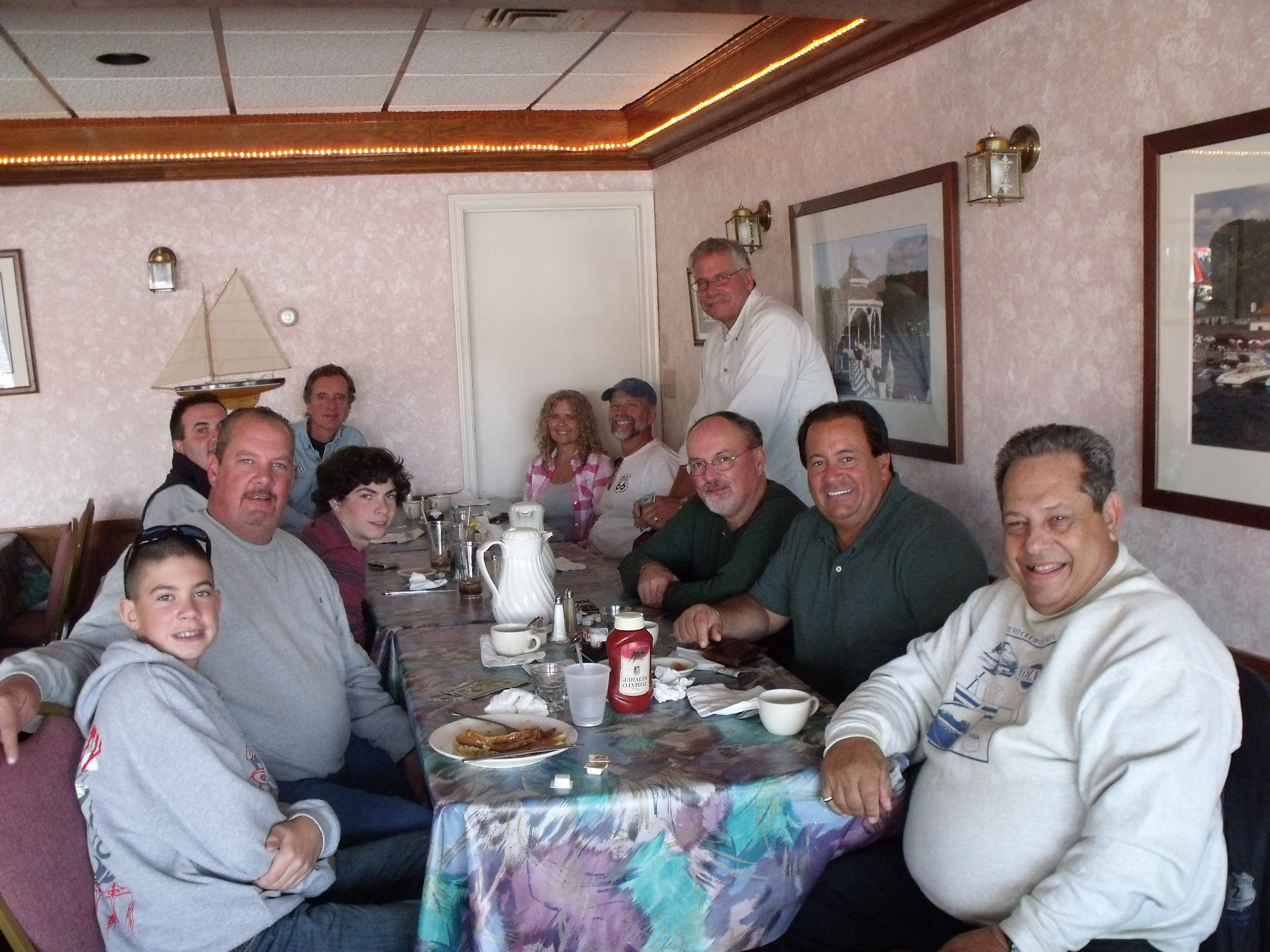
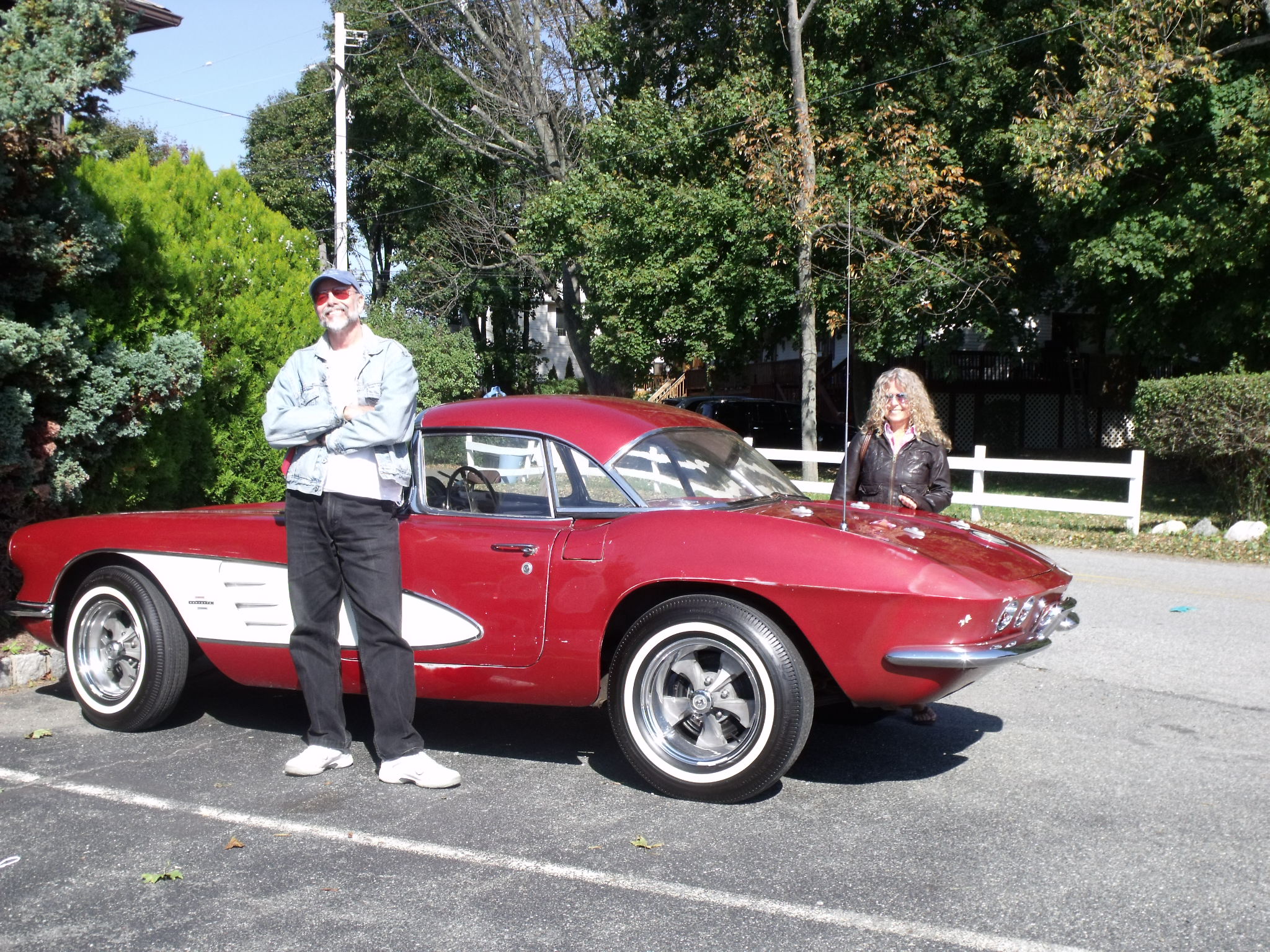
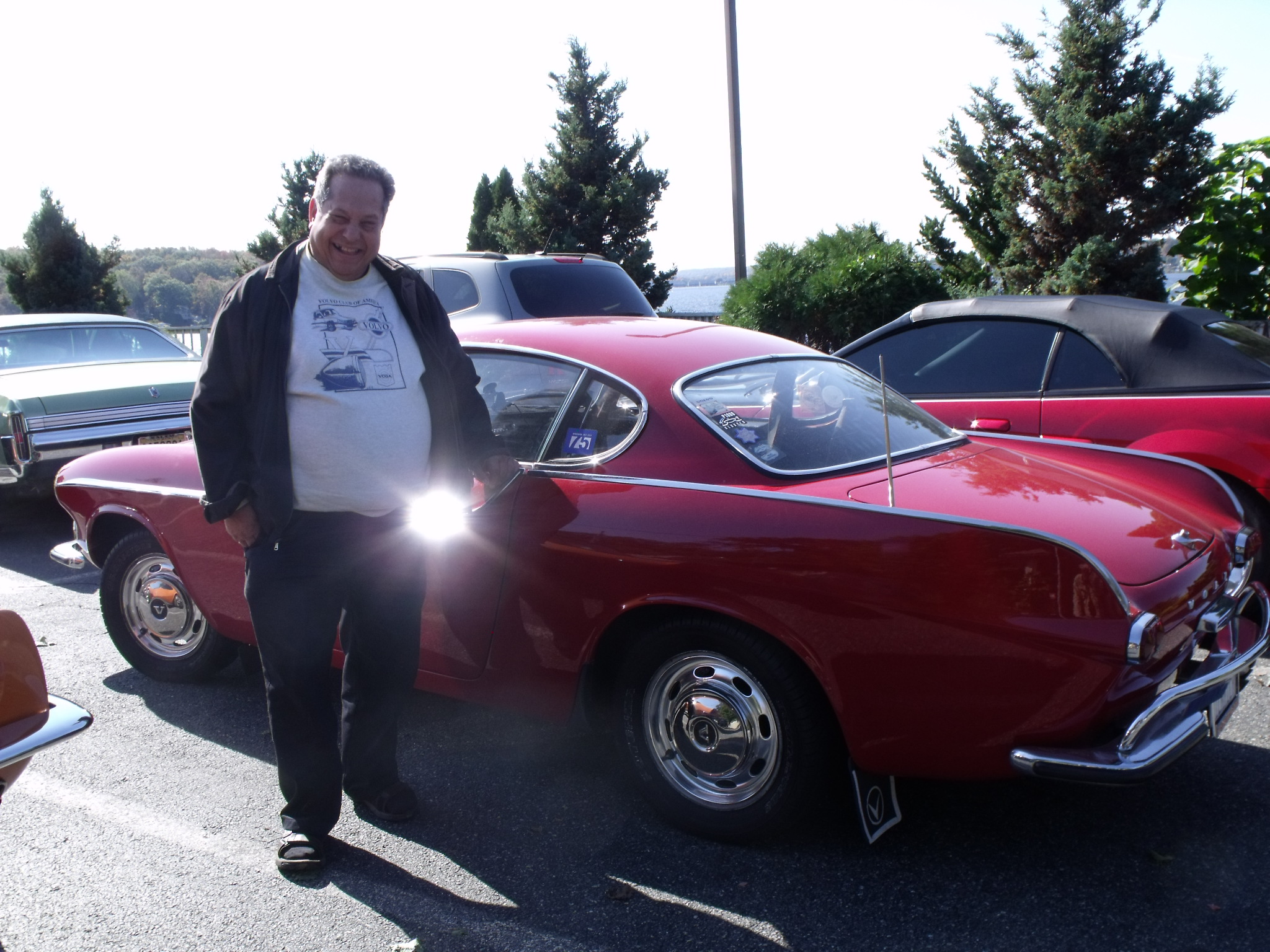
As I continue to cycle through my photo files in search of automotive adventures which haven’t yet made their way into a blog post , I came across this gem. In October of 2010, we had a breakfast run which for the first and only time included our friend Irv Gordon, driving his Volvo 1800S no less.
Irv informs me he’s ready for breakfast
Irv, for those few who may not be familiar, holds the Guinness World Record for number of miles recorded on a privately-owned passenger car (he eventually surpassed 3 million miles). Many of us employed at Volvo Cars North America (VCNA) got to know Irv professionally, and once you know Irv, it’s difficult not to also know him personally. A large part of Irv’s success was due to his outgoing personality, good-natured warmth, and delight in sharing stories about his beloved Volvo sports car, which he bought new in 1966.
The shadows reveal how early in the morning we gathered on this sunny October Sunday
Driving from his Long Island home to northern Jersey for a one-hour ride to breakfast would be the equivalent for most of us to driving to the corner store for coffee. But join us he did, and I would guess that he knew most of the fellow participants already. The photos reveal just how small the Sunday morning breakfast group was at this time. It was great to have Irv out with us; while he was regularly invited to join subsequent breakfast drives, he was never able to attend another one. His typical excuse? He was on the road, headed to some other event somewhere else in the USA.
Presumably after we’ve eaten, as we’re all smiling
It can be entertaining to reminisce about “the one that got away”. Whether it’s the big fish that broke loose from your hook, or the college flame you think you should have married (and admit it, it wouldn’t have worked out), we occasionally think about the “almost” events from our past.
Those of us in the collector car hobby are particularly expert at this game. I haven’t met a single classic car fan who hasn’t cried on my shoulder about the one that should never have left the garage. A variation of that theme are the cars we could have purchased at auction and didn’t.
The recent release of Hagerty’s Bull Market List for 2022 provided something of a prompt for this post. I have no beef with their choices and have no plans to rebut them or offer my own. However, the list implies if not outright claims that certain cars will increase in value, some more quickly than others. We therefore swing back to the question of whether one can buy cars, especially at an auction, enjoy them for a while, and then sell them for a profit.
I decided to revisit my blog posts of five years ago, 2016, a year in which I attended auctions in Atlantic City, Carlisle, Harrisburg, and Hershey. Scanning the results, I spotted a few cars which seemed to sell on the low end of pricing compared to what they might bring today. (Let’s temper all this talk about “making a profit” by pointing out that the buyer must cover overhead such as auction fees, taxes, registration, shipping, insurance, maintenance, repair, and storage. Ownership of a car is not “free”.)
Below is my one pick from each of the five auctions I attended that year. The text and photo are carried over from my initial post, and I’ve added comments along with book values and an example of a recent sale.
Lot #1542, 1995 Jaguar XJS convertible, champagne, brown cloth top, glass rear window, tan interior, 86,900 miles. Car looks very nice from the outside. Some driver’s seat bolster wear, otherwise clean interior. 6 cylinder, automatic, nice alloy wheels, paint looks great except for repainted passenger door (but it’s hardly noticeable). Sign on the dash said “not sold on Friday, but for sale at asking price of $9,500”. Online, the car was reported sold for $8,000. CPI values the car between $10,250 (#3) and $17,425 (#2). We would rate is at 3+ and call it very well bought.
Feb. 2016, G. Potter King Auction: 1995 Jaguar XJS
Here are my thoughts in 2021:
I remember this car well, thought it was very attractive, and thought it was a steal in 2016. That steal looks even better in 2021. CPI values the car in Dec. ’21 between $12,400 (#3) and $22,800 (#2). Bring a Trailer (BaT) sold a very similar one in October ’21 for $23,050. That eight grand sale is looking good.
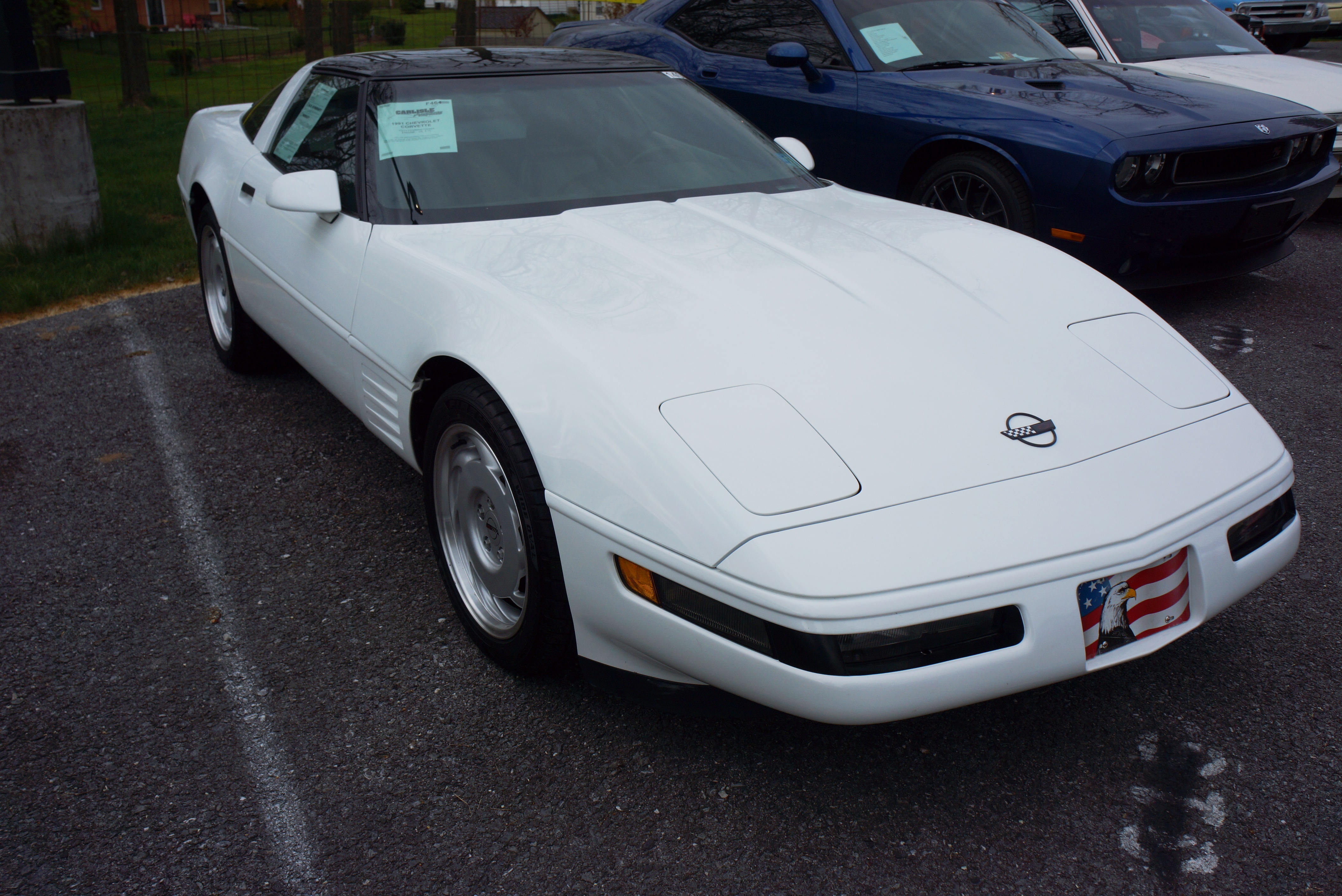
F464 1991 Chevy Corvette coupe, VIN 1G1YY2386M5104468, white, smoke glass top, 5.7L V8, automatic, 24,000 original miles, just serviced. Corvette alloy wheels are unmarked. Nose shows no paint chips or scrapes. Door seals in good shape. Interior is blue/gray, automatic, with slight carpet wear. Interior supports mileage claim. Paint looks original, all looks presentable. Glass OK. This car was very late in crossing the block, but bidder interest was high, possibly because of the low miles. Car was still sold within the CPI “good” range, so we’ll call this one well-bought.
CONDITION: 2-
HIGH BID: $9,200 SOLD!
CPI: $9,000-15,000
Apr. 2016, Spring Carlisle Auction: 1991 Corvette
Here are my thoughts in 2021:
This was when I started noticing how inexpensive C4 Corvettes were. To me, this car was a trade-off between the low miles and the auto gearbox. Since then, I’ve noticed that C4 values have been flat, as evidenced by the CPI numbers in the Dec. ’21 book: good-to-excellent values are between $7,000 and $13,500, meaning they’ve actually dropped in the last five years. On BaT, almost all the C4s are either ZR-1s or convertibles, and all have low mileage. The closest comp is this ’91 with 16k on it which sold for $15,000. The buyer of this white car would only be ahead if the car remained parked, and what’s the point of that?
This generation SL is hot right now, especially the 450-SLs from the late ‘70s like this one, and the final 560-SLs. Many of the ones we see at auction are dogs; this one was decidedly not. Price was not a bargain, but fair for a very presentable Benz. This car can likely be enjoyed and then sold in several years for the same or a little more.
Awfully cheeky of me to write that, eh? Actually, R107 (platform name) Benzes have stayed hot, but particularly the final iteration, the 560SL models which were offered through 1989. Values of older ones like this 450SL are highly dependent on condition. I rated this car as a 2+. The current CPI values these between $12,800 and $28,000 for a good-to-excellent car. So I’ll stand behind my words from April 2016 and state that you could sell this car in this condition today for “a little more” than you paid for it in 2016. Here’s a recent sale of a ’78 450SL for $20,500 on BaT which supports the value range.
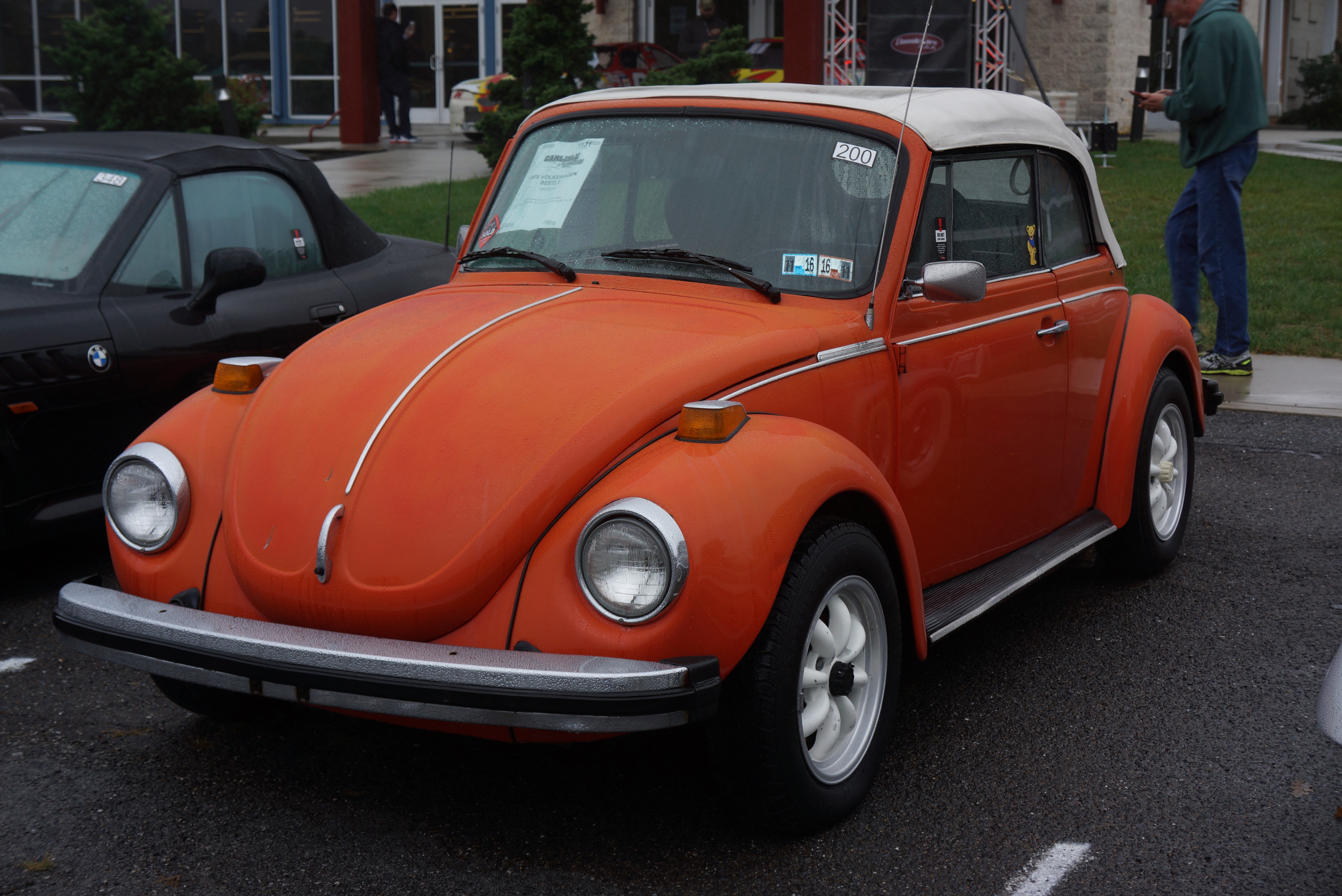
Lot #T131, 1978 VW Beetle convertible, orange, white top, white painted alloy wheels, black vinyl seats. Sold for $5,750. While I did not examine this car closely, it appeared to be solid, with good paint and a good top. The white painted wheels must go, but that’s an easy fix. Sold for about half book price, perhaps because this audience wants muscle cars.
Oct. 2016, Fall Carlisle Auction: 1977 VW Beetle convertible
Here are my thoughts in 2021:
Of all the cars from my youth, I confess that air-cooled VW Bugs were my guess for cars to least likely appreciate and become collector-car-worthy. Of course, I was wrong. Exhibit A as represented here are the final run of Beetle convertibles, especially the 1979 final-year ones. This ’78 is close enough to that. I did note that at $5,750, this car sold “for about half book price” making book price back then about $12,000. The Dec. ’21 CPI puts these drop-tops between $15,000 for “good” to $32,000 for “excellent”. Earlier this month, BaT sold a black-on-black ’79 for $15,000, so our orange Beetle owner would do ok if they sold it today.
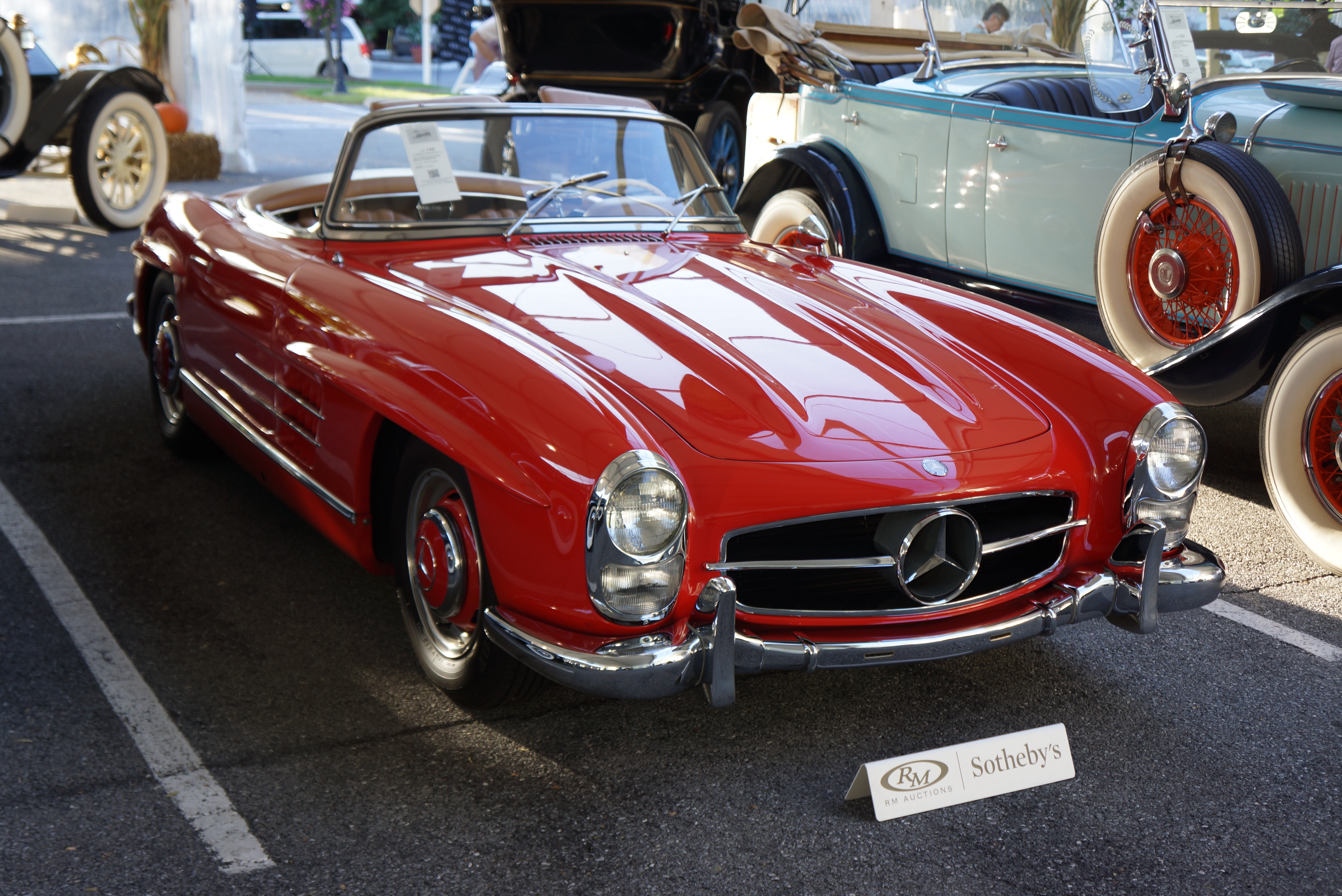
Lot #142, 1957 Mercedes-Benz 300SL roadster, red with tan interior, pre-sale estimate of $900,000 – $1,100,000
SOLD for $750,000
This was another cosmetic stunner, even if its red-over-tan was a change from its factory blue-over-cream. Claimed to come from long-term ownership, I had every reason to expect the car to break into seven figures. These 300SL roadsters long ago achieved price parity with their Gullwing brothers. Therefore, it came as a total shock to watch the hammer fall at a number so far below the low estimate. Was it the color change, did the audience see something I didn’t, or is the market that soft?
Mercedes-Benz 300SLs, both Gullwing and Roadster, are true blue-chip collectibles, meaning that their values are better than money in the bank. While there may be the occasional backslide, the law of supply and demand (few cars exist, moneyed buyers are a-plenty) means that waiting out any blip is simply a matter of patience. Yet as I asked above, did this one slip through the cracks? The only fault was the color change, and as long as factory colors are chosen, there is no real knock to value. Today’s CPI puts this car between $1.2 and $1.5 million (if you have to ask….). If it was flipped for a profit, let’s hope the owner at least got to enjoy driving it a bit. As you might imagine, online sales are few and far between. BaT did sell a Roadster in July of this year for $1.4 million.
It’s easy to be the armchair quarterback and say “you shoulda bought that one, you coulda doubled your money!”. Sure, like I had three quarters of a mil hanging around. Even the least expensive car of these five, the VW, would have likely cost closer to $7,000 when one was done with the initial outlays, including replacing those ugly wheels. My close friends and I agree: the Number One rule is buy what you like because you like it. The speculation game is a gamble and relies on good luck as well as a good eye. It can and does happen, but my experience is that turning a profit on a resale can mean holding onto a car for a while.
I’m filling in the gaps in my Hershey coverage. For the most part, I’ve posted a story in my blog within days of returning from the Big Event. The blog started in 2015, and I’ve posted stories and pictures from visits in 2015, 2016, 2017, 2018, 2019, and 2021 – there was no Hershey in 2020. (“Hershey” is so massive that in some cases, I had created multiple posts for the same year, so be sure to look for that.)
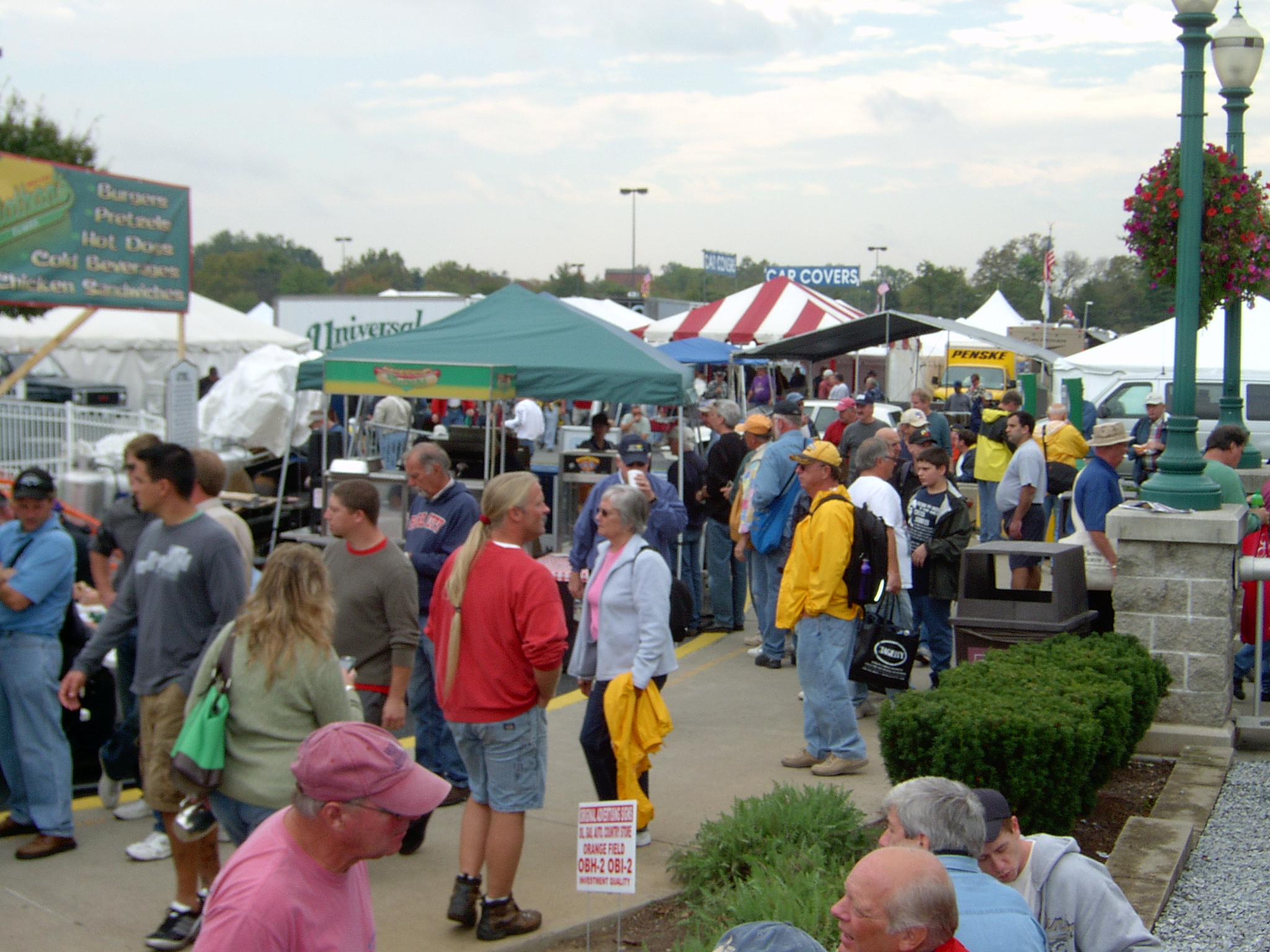
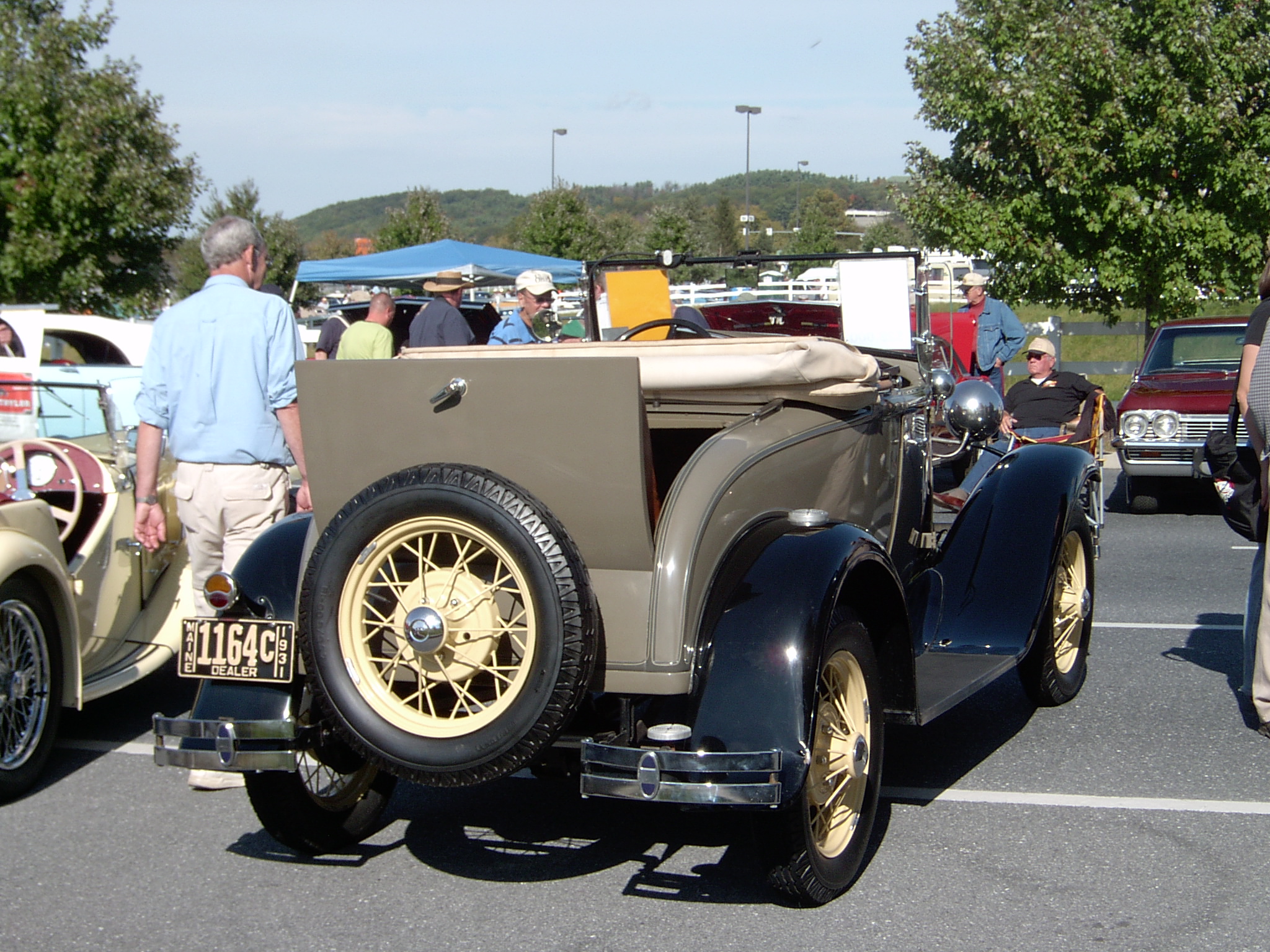
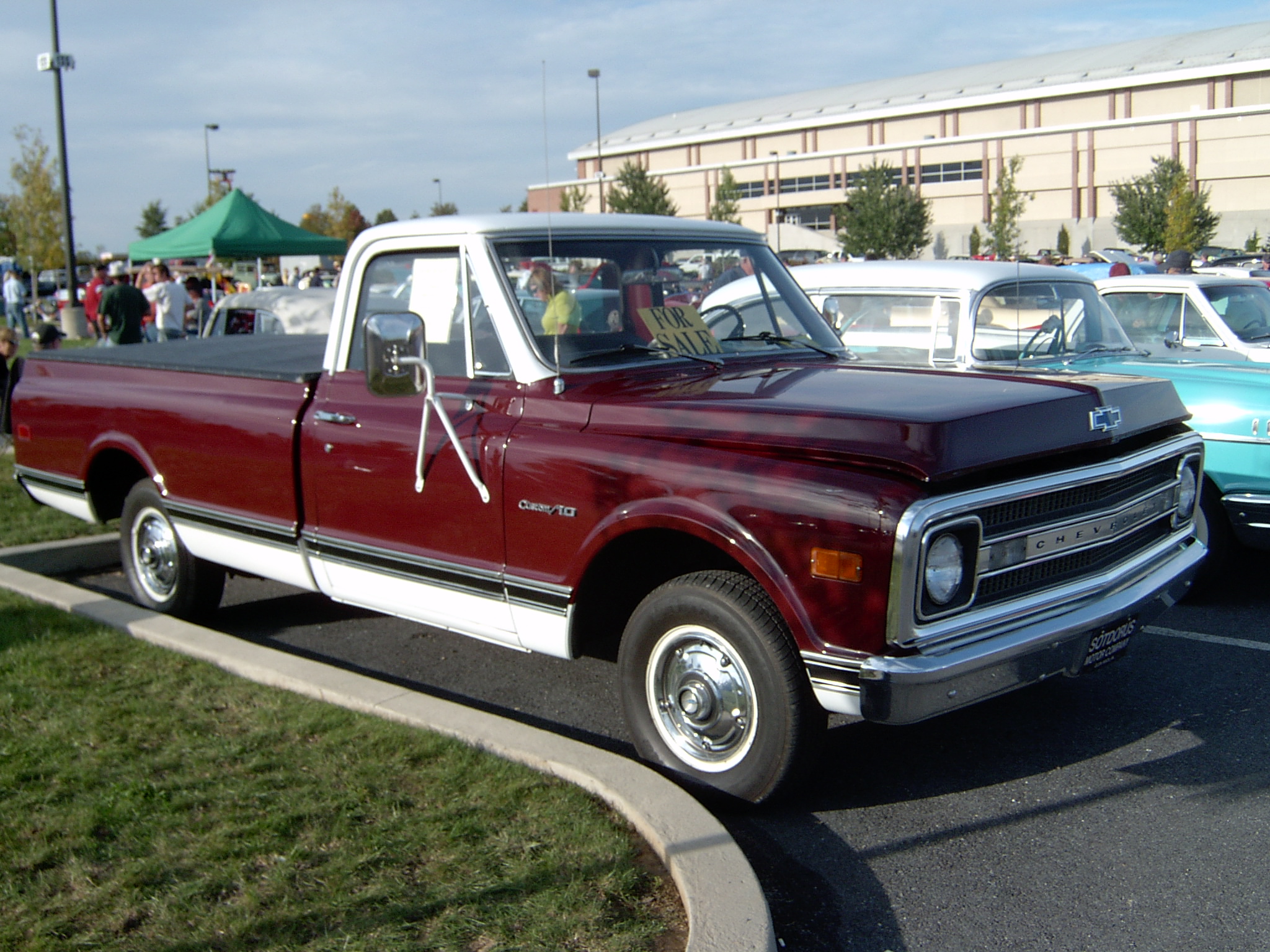
I’ve now gone back and found photos from visits which predated the beginning of my blog. My photographic coverage is not always as thorough as more recent visits – however, I’ll make the best of what I have. Here, we have jumped back 12 years to 2009. Most of the shots cover the Car Corral, and they leave me with the somewhat confusing impression that I was perhaps looking for a truck (I have never considered myself a truck guy). In retrospect, I believe that I had latched onto a suspicion that trucks were starting to gain traction as collector vehicles. Maybe I was right for once.
More older Hershey coverage will be posted in the upcoming weeks.
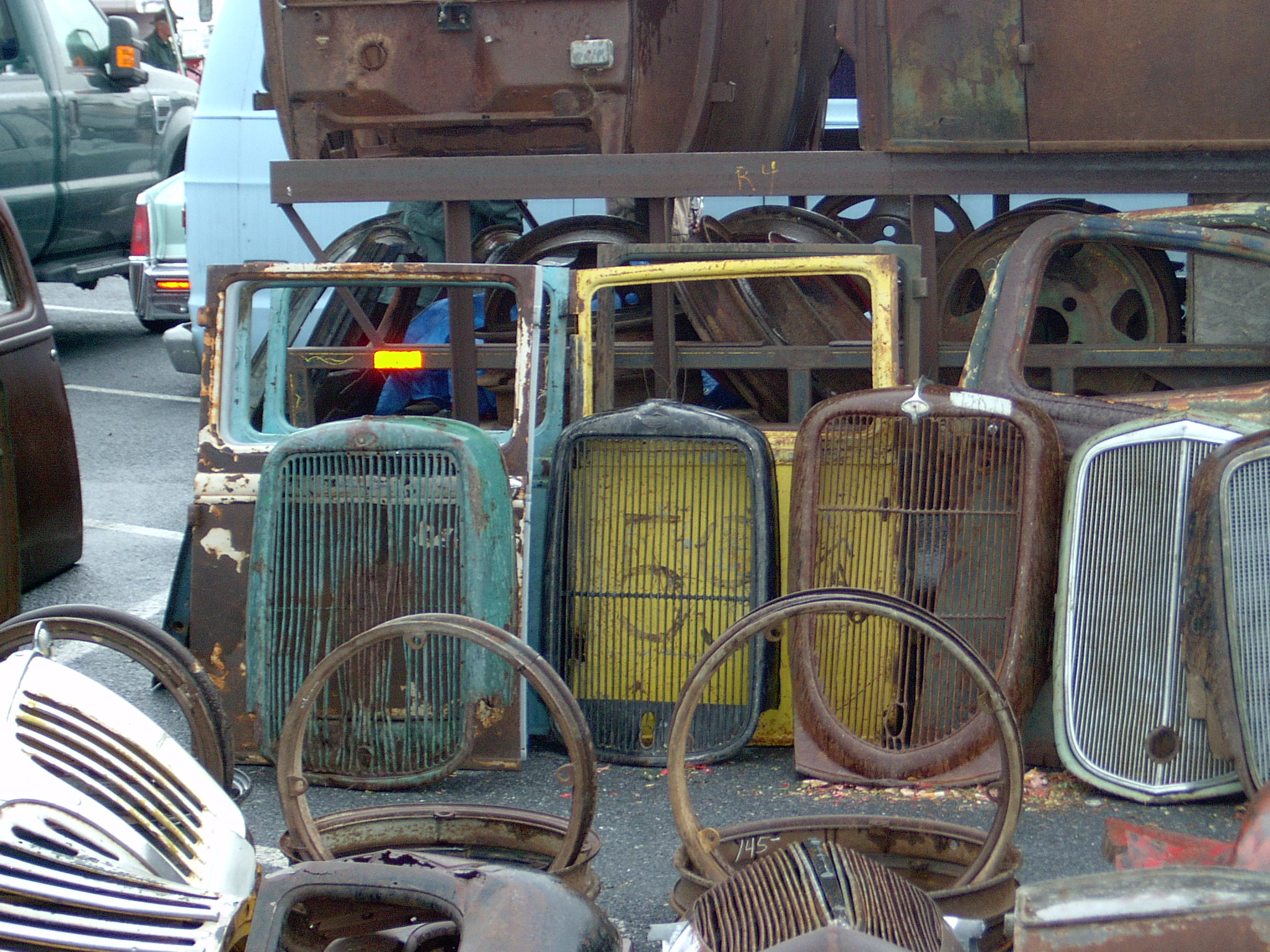
The Flea Market was still packed with plenty of original pre-war sheetmetal for your restoration needs
What, no masks? Oh wait, this was 2009. Attendance was still strong all week.
The owner of this 1940 Olds, on display in HPOF, claimed that it was one of the earliest Oldsmobiles factory fitted with an automatic transmission.
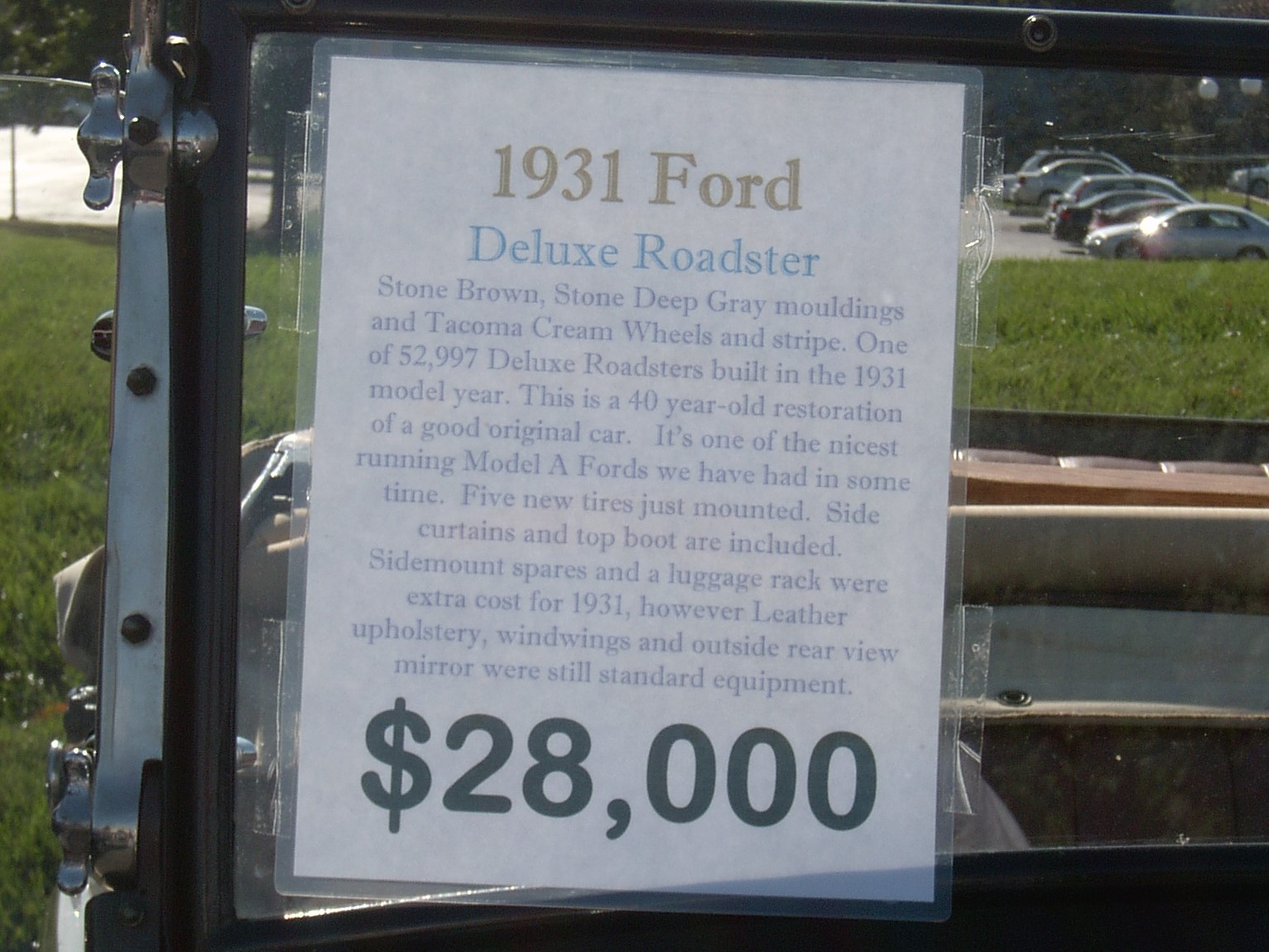
I took these photos for a friend who was looking for a Model A Roadster in the low $20s; this was the closest to that price I could find.
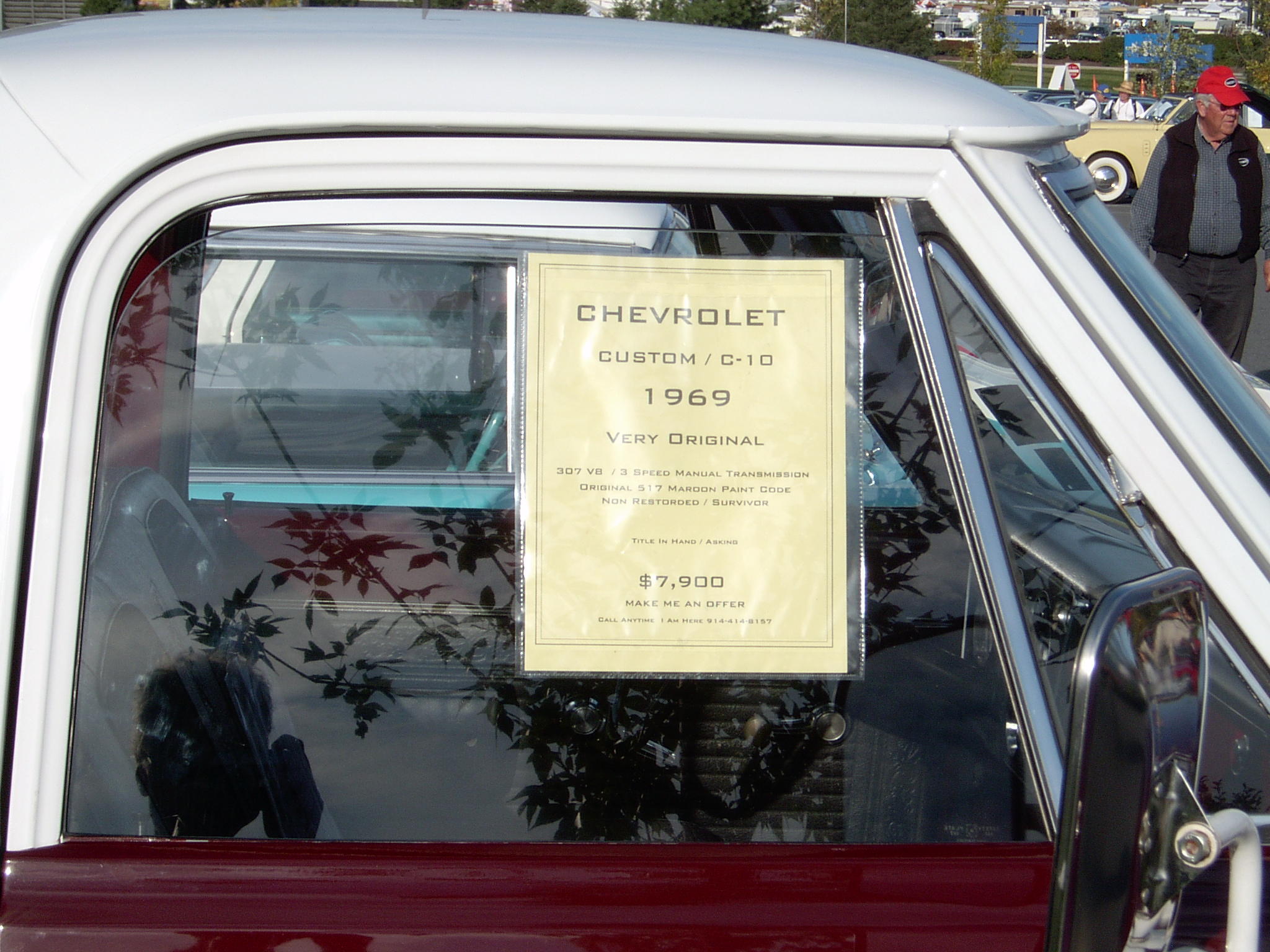
Even now I remember thinking this Chevy was a good deal in 2009; CPI values this truck in #3 condition at $17k and #2 condition at $47k.
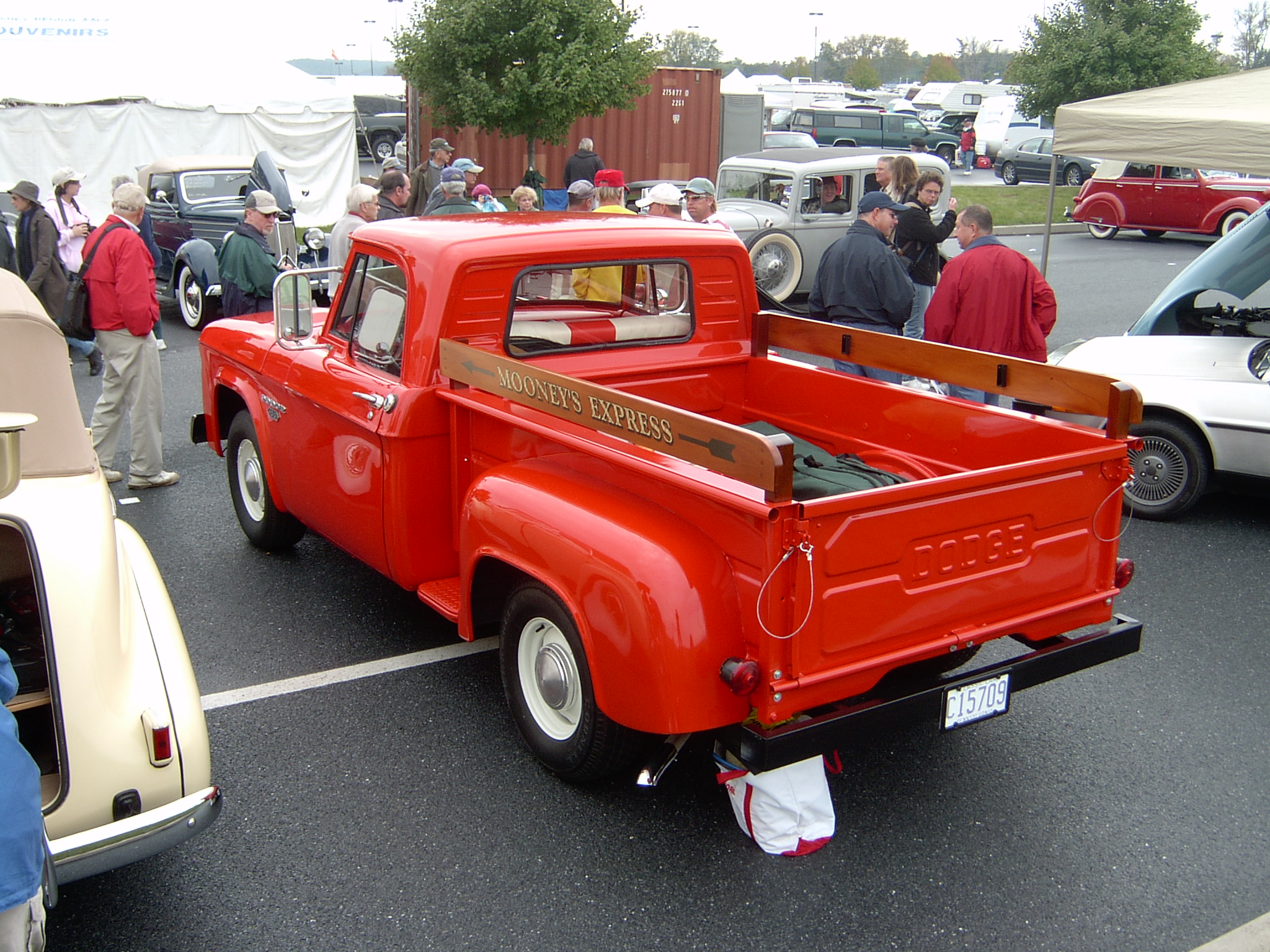
Truck appears to be done similar to Lil Red Express; these were never as popular as Ford or Chevy pickups; CPI values this in #2 condition at $15k.
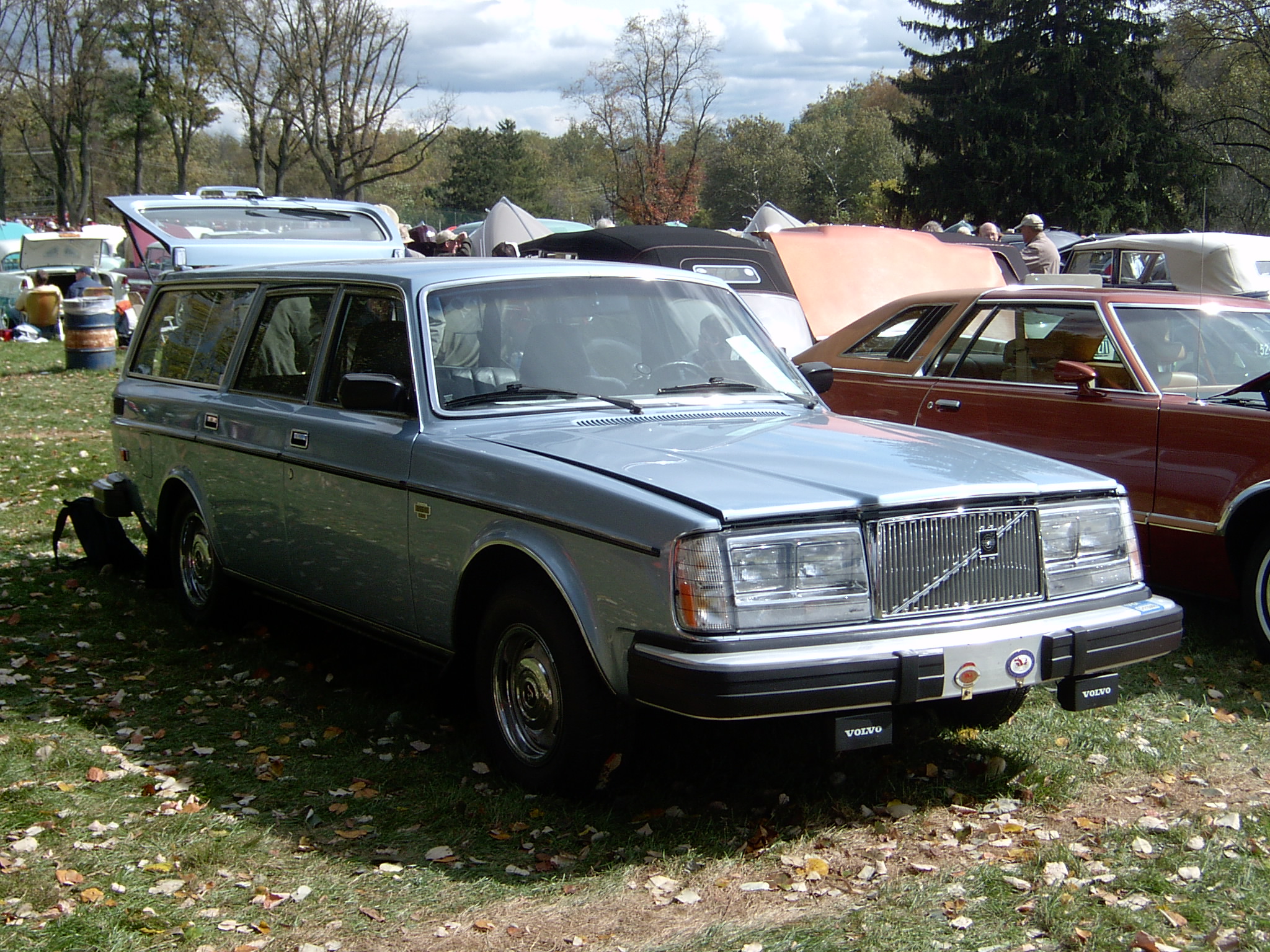
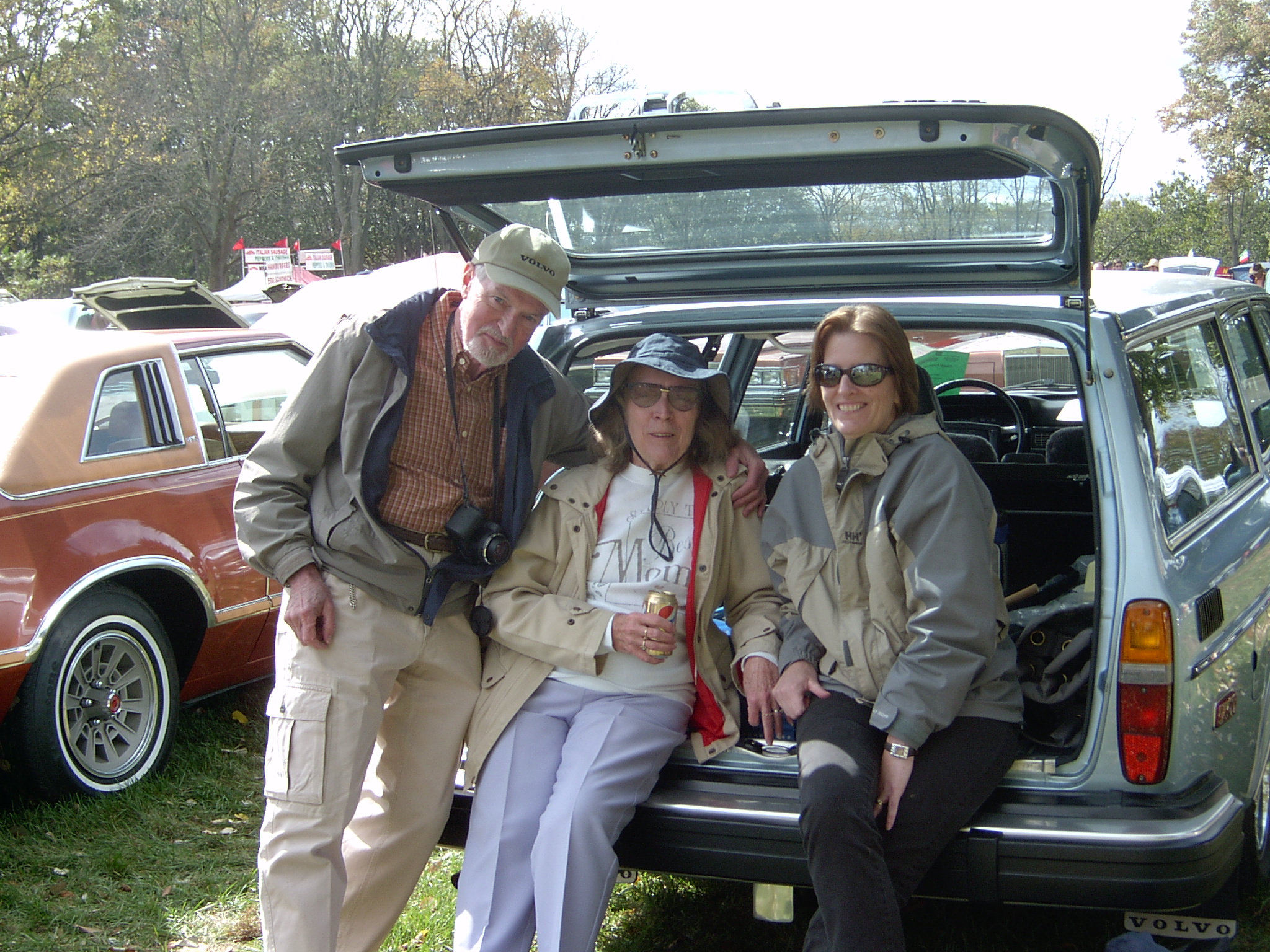
My dear friend Pete was there with his one-owner (him) ’79 Volvo 265; that’s Pete with his wife and my wife in the wayback. He has since sold this car.
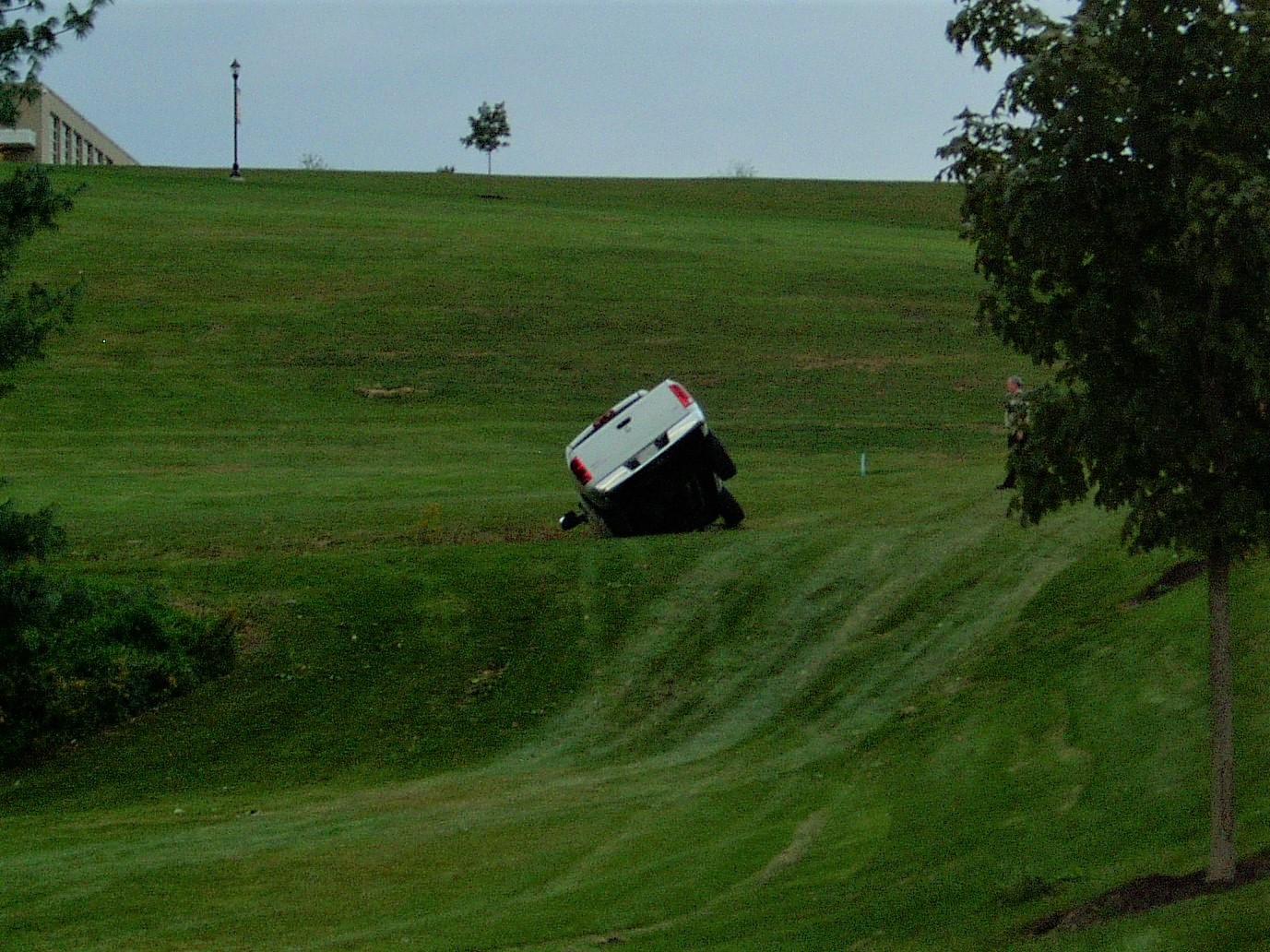
No, pickup trucks CANNOT go anywhere they want, at least not without getting into a little trouble.
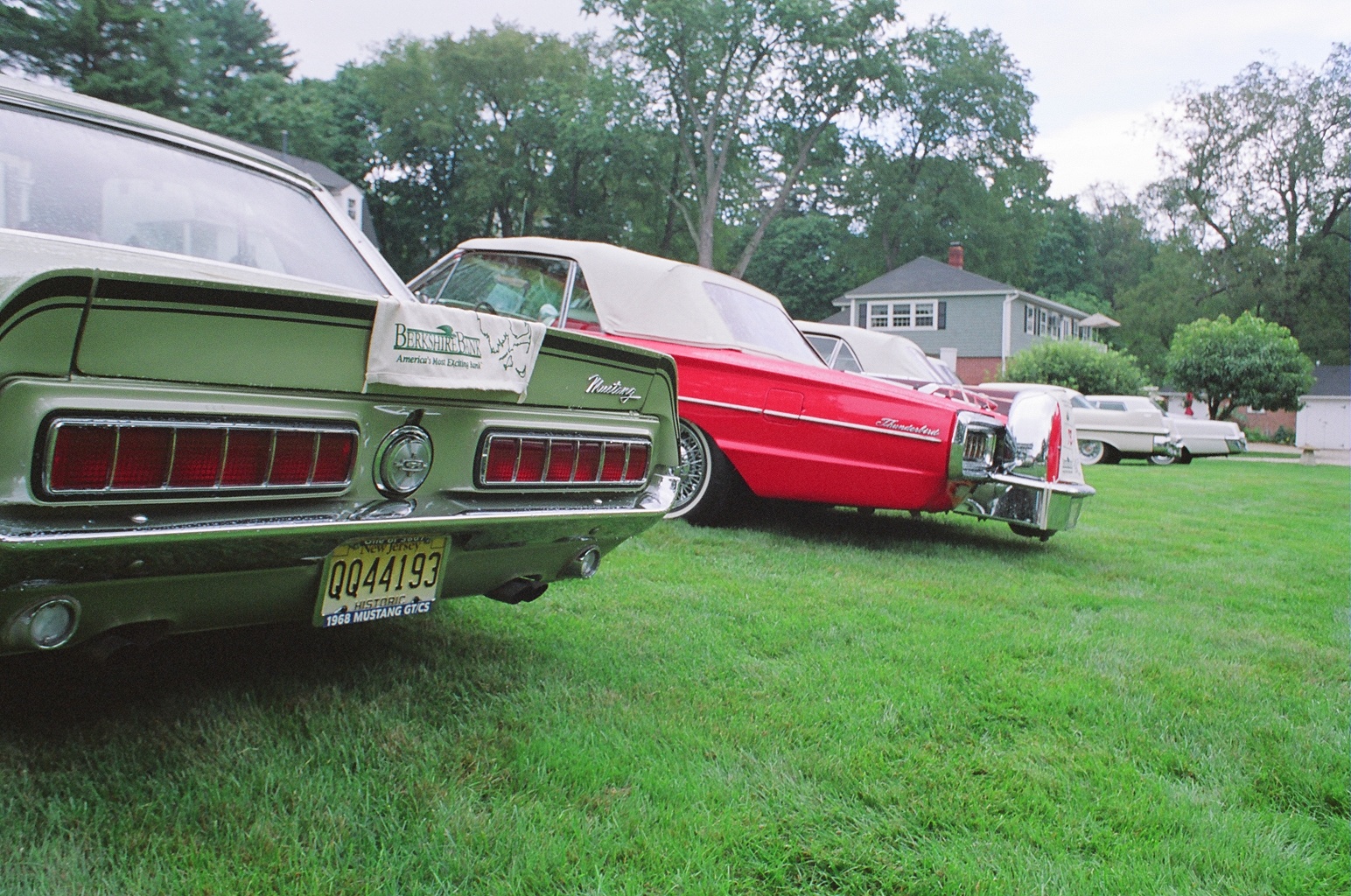
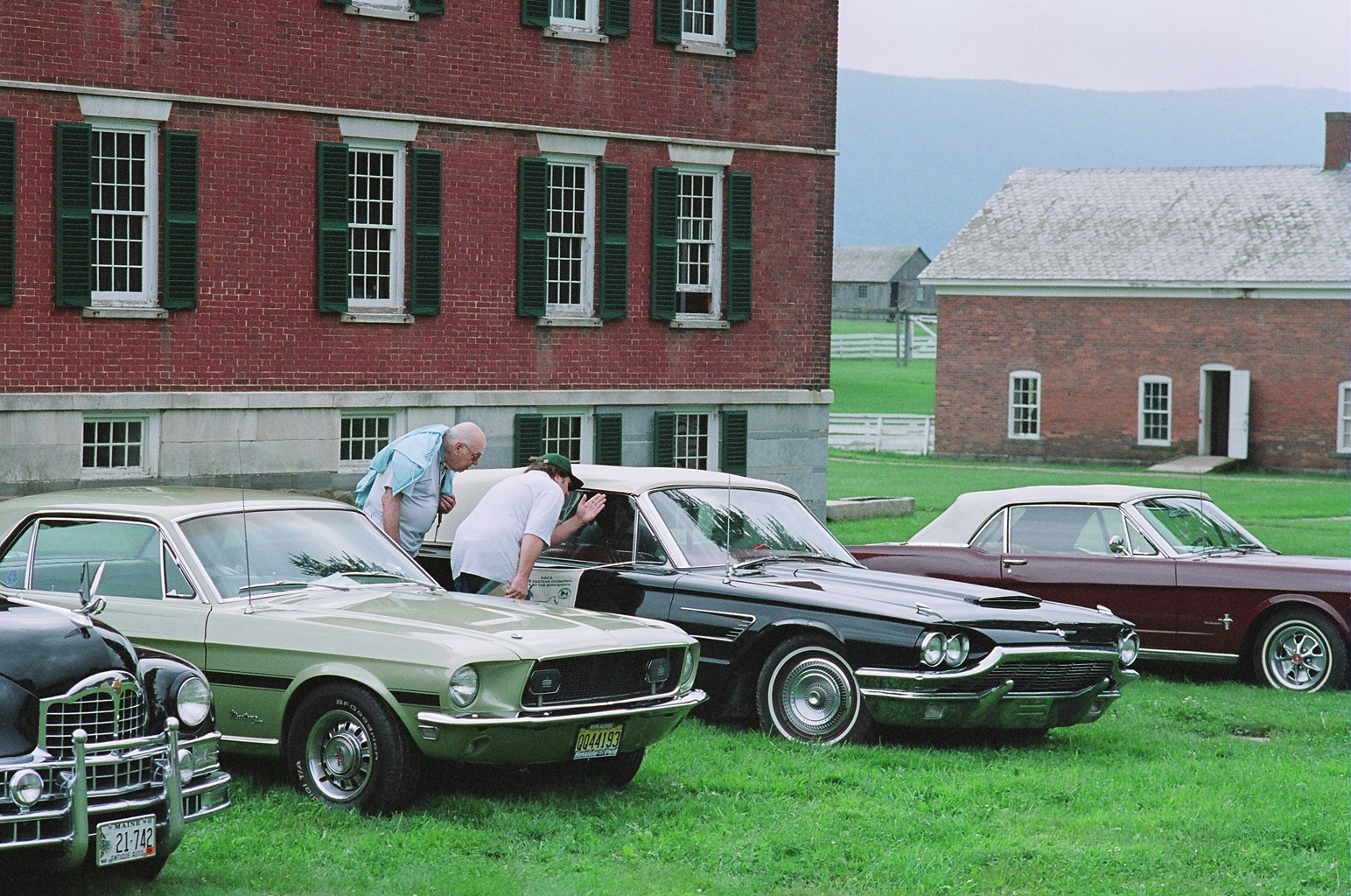
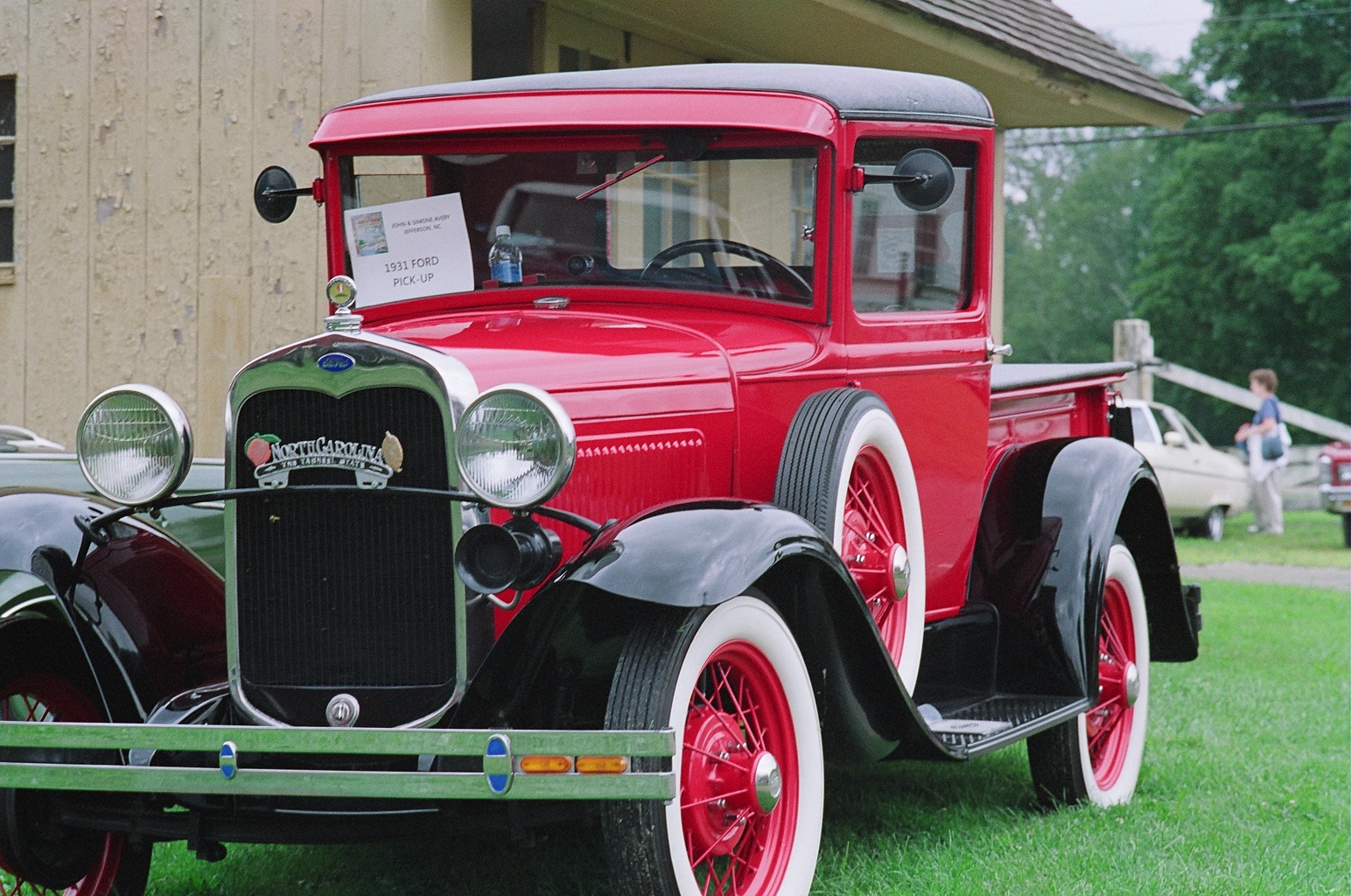
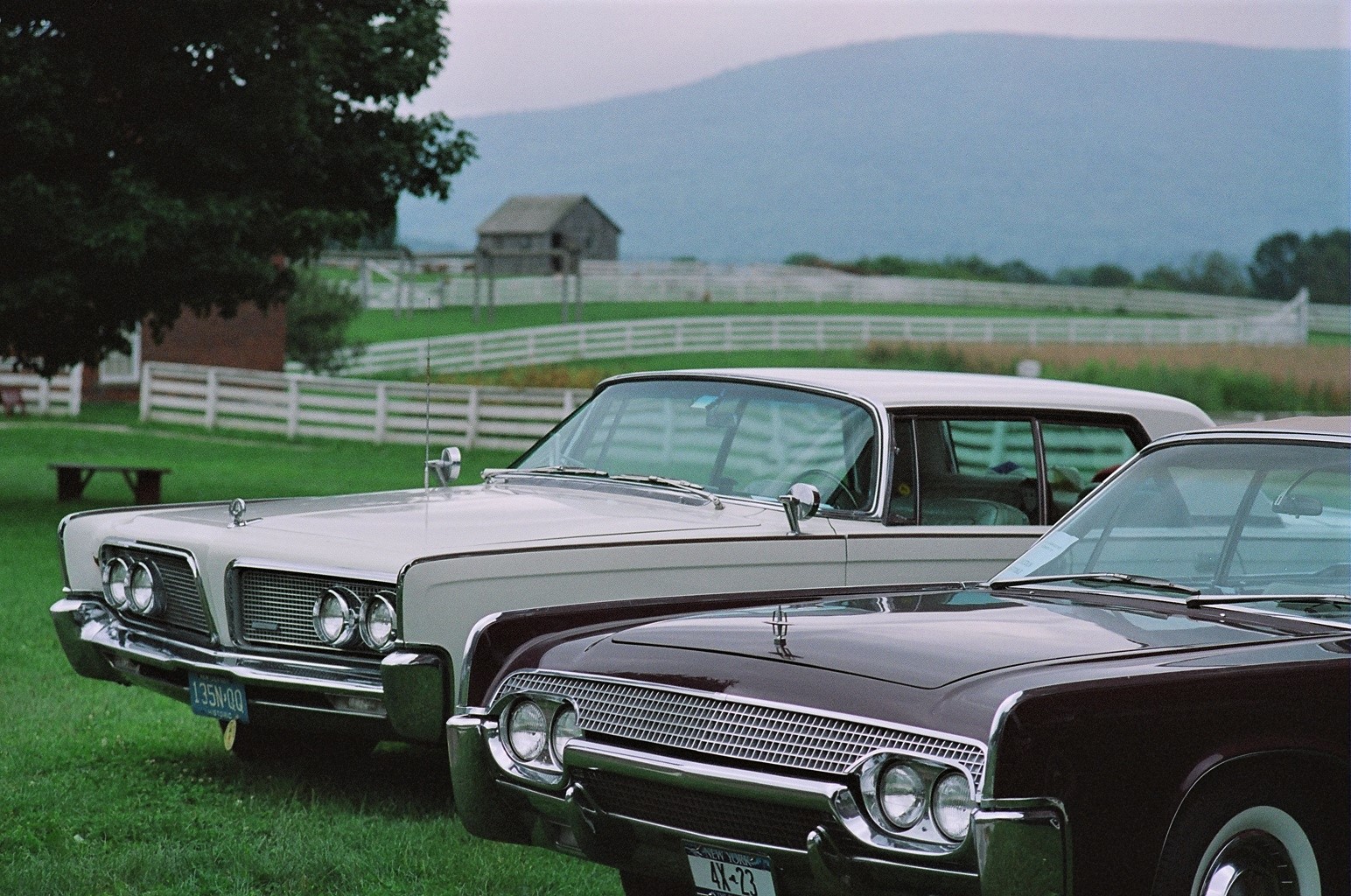
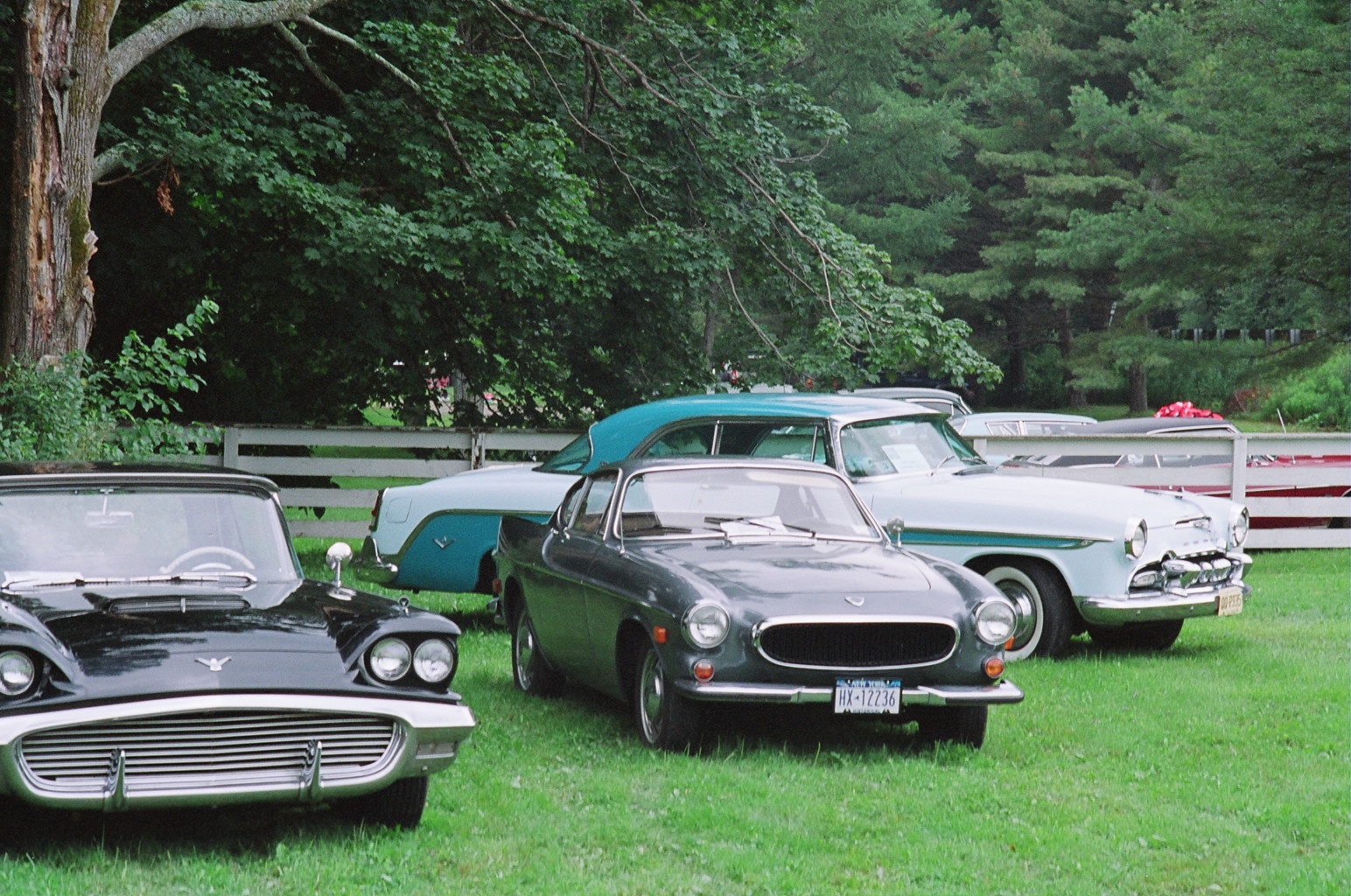
My wife came along on this one and enjoyed its more laid-back pace compared to the one NE1000 rally in which she participated, in 2001. We did this Berkshires/Springfield tour in my 1968 Mustang California Special, and she also appreciated the higher level of comfort than was offered in the MGB which was our ride in ’01.
The accompanying photos reveal a change from 14 years ago compared to today’s tours: in 2008, most of the participating vehicles were truly “older cars”. You’ll see that vehicles from the ’40s, ‘50s, and ‘60s comprise the majority of the iron. Today’s tour vehicles are about 50% from the ‘80s and ‘90s (nothing wrong with that as they meet the AACA ‘twenty-five years or older’ rule), and about 50% modern iron, likely because the aging AACA membership is simply more comfortable driving their 3- or 4-year-old SUV with climate control, cruise control, and Bluetooth phone control.
A highlight of the week was our visit to Tanglewood. Tour participants were allowed to drive onto the grounds, and our cars became an ad hoc car show in the afternoon before the concert. While I was already a member of the National AACA when I signed up for this event, it was here where I met a small gang from Noo Joisy who corralled me into joining their Regional Chapter, where I’ve been a somewhat active member these past dozen years.
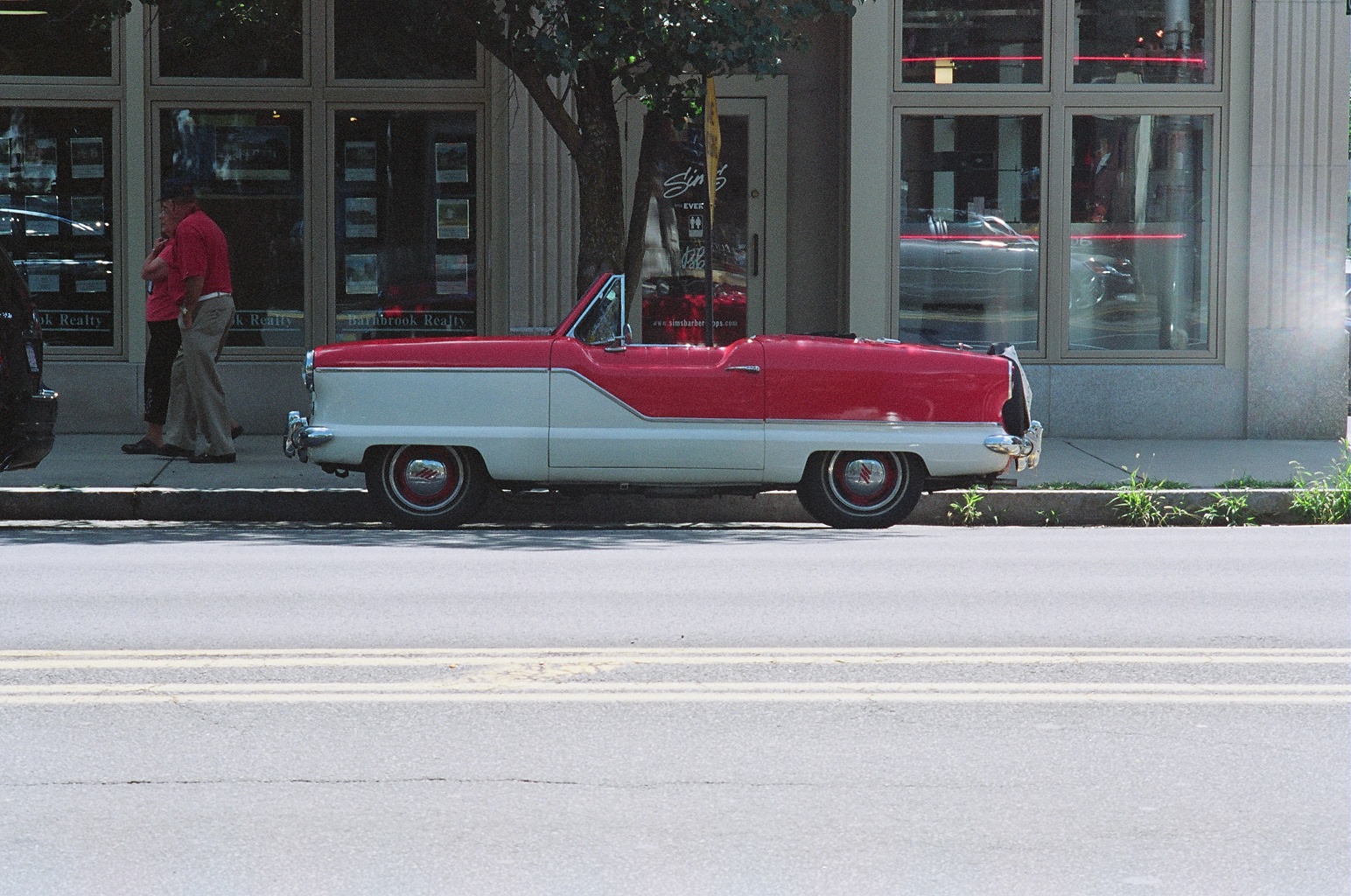
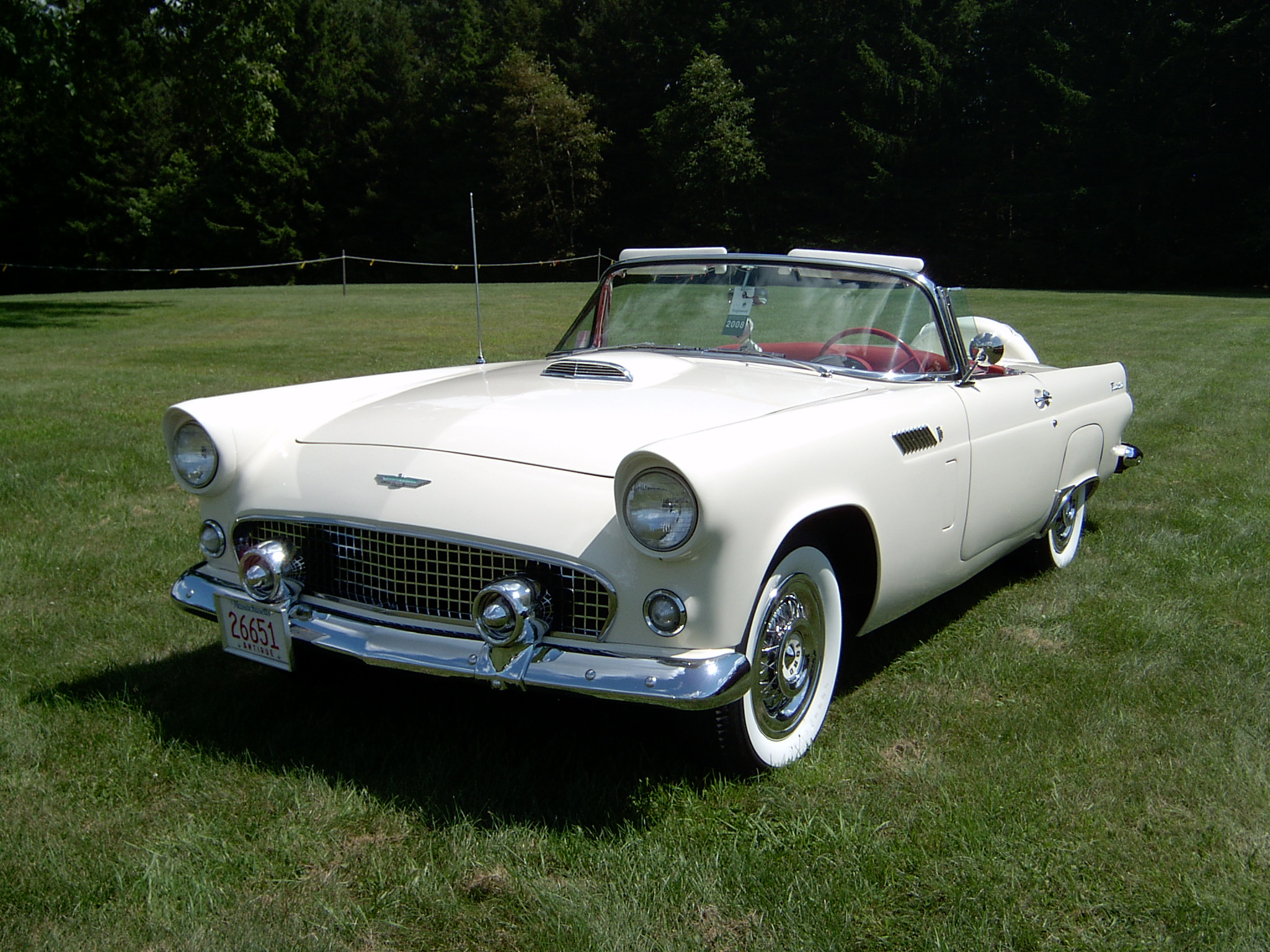
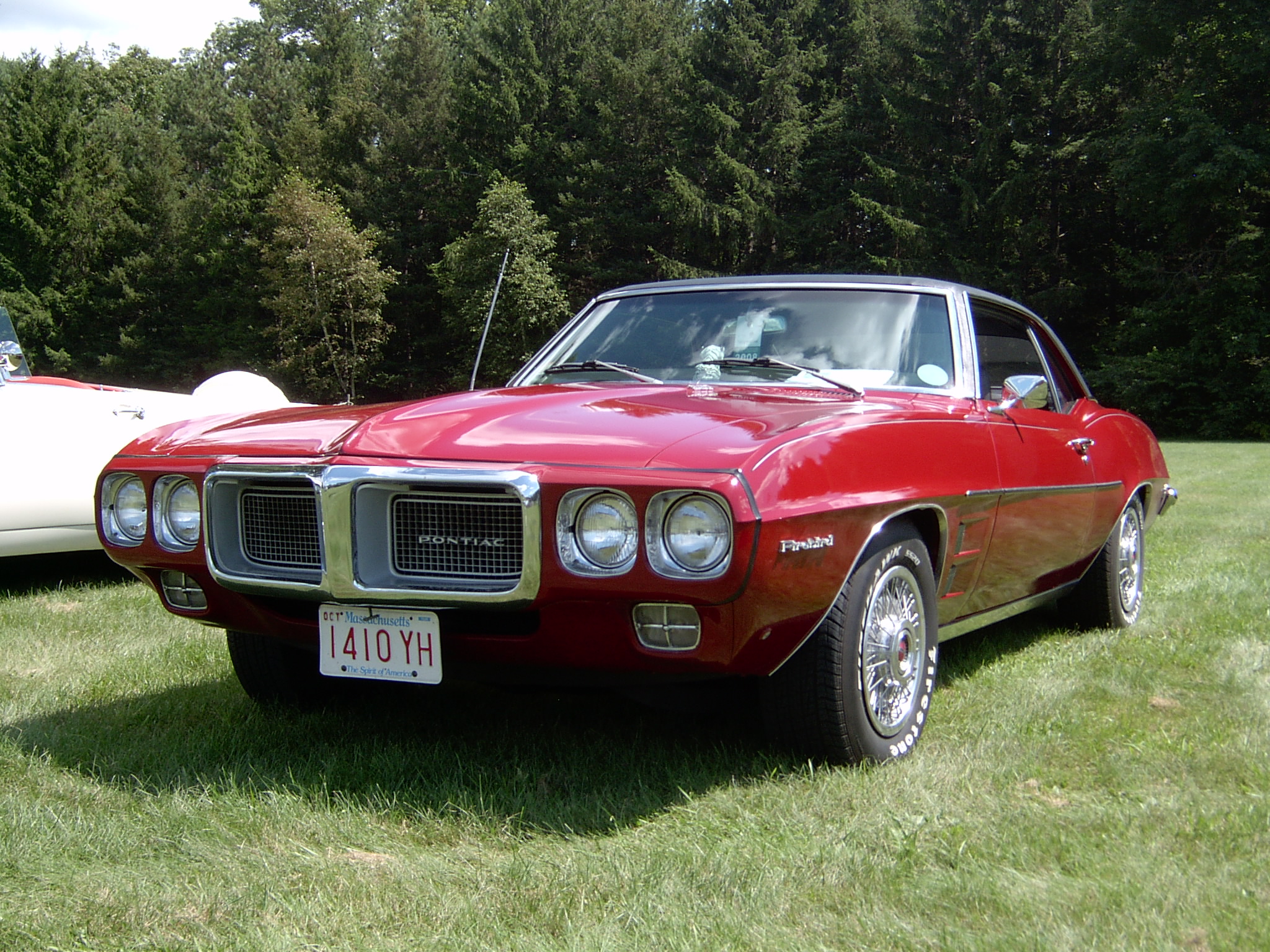
A note about the photos: these are a mix of digital and film photos, and could be one of the last times I depended on a film camera for documenting an event. Enjoy the shots!
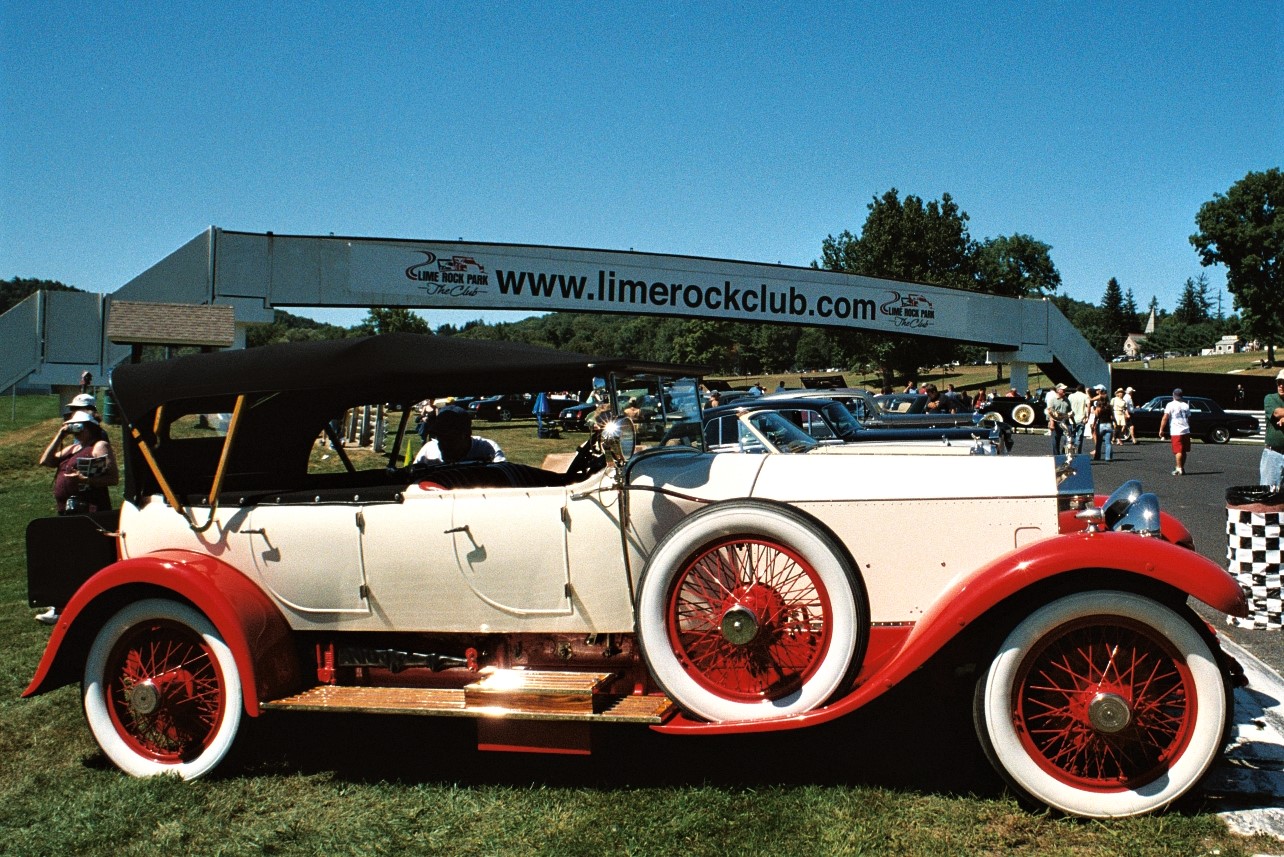
This pre-war beauty is perfectly framed under the overpass
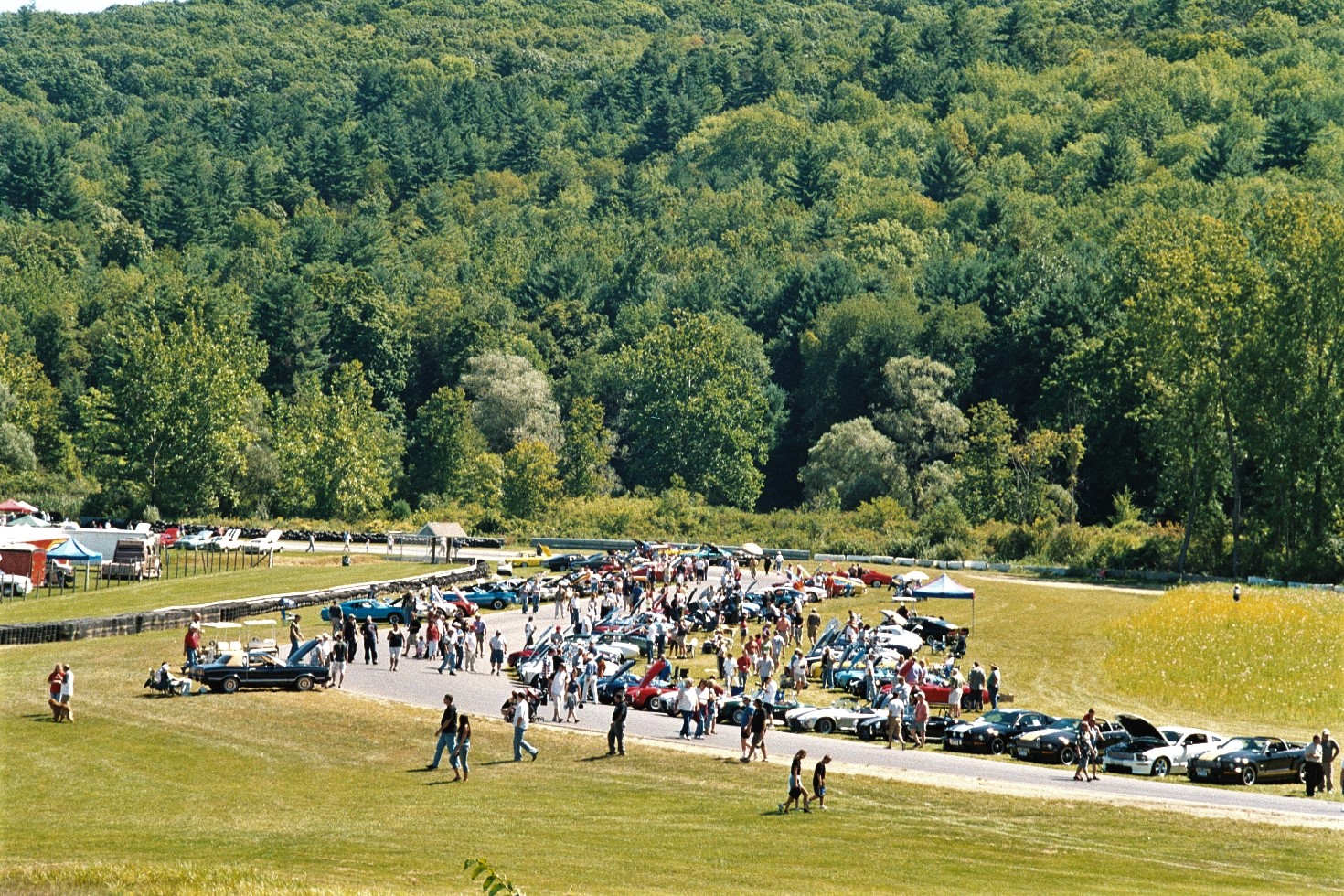
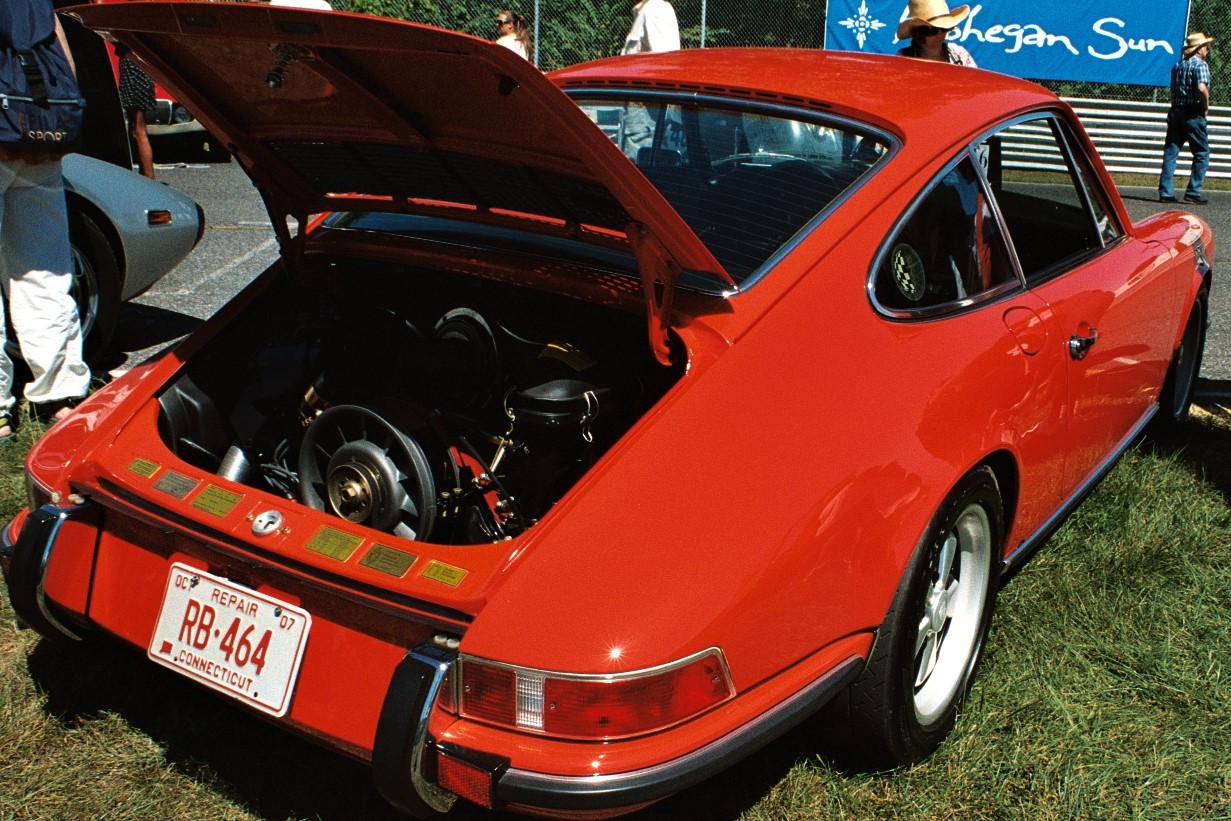
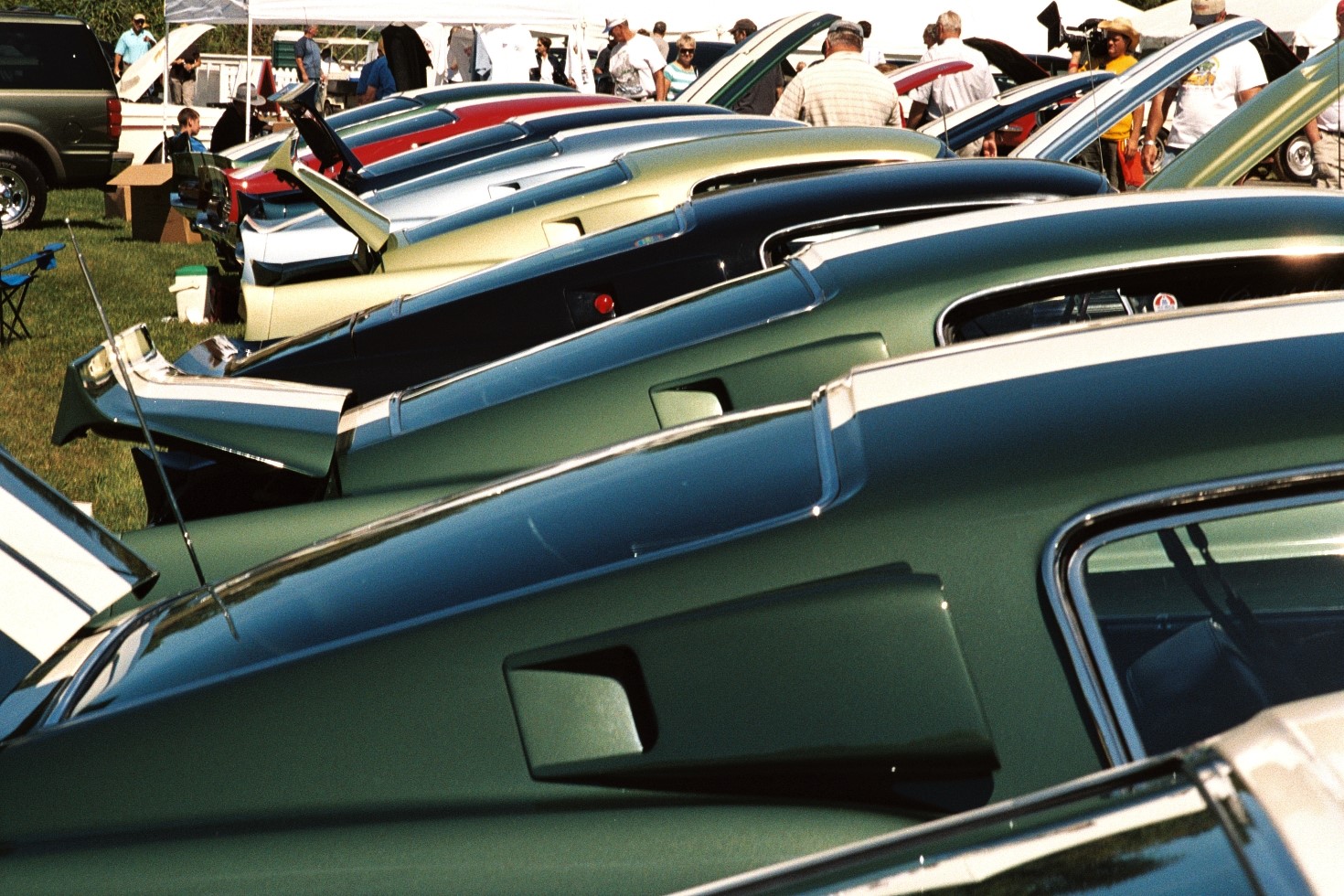
Perusing some old photos, I came across pictures that I snapped on my 2007 visit. That’s too long ago for me to have specific memories, however, the photos reveal that the day was bright and sunny, and when the weather cooperates, Lime Rock is one of the best vintage automotive events on the East Coast.
The track is truly in a park-like setting
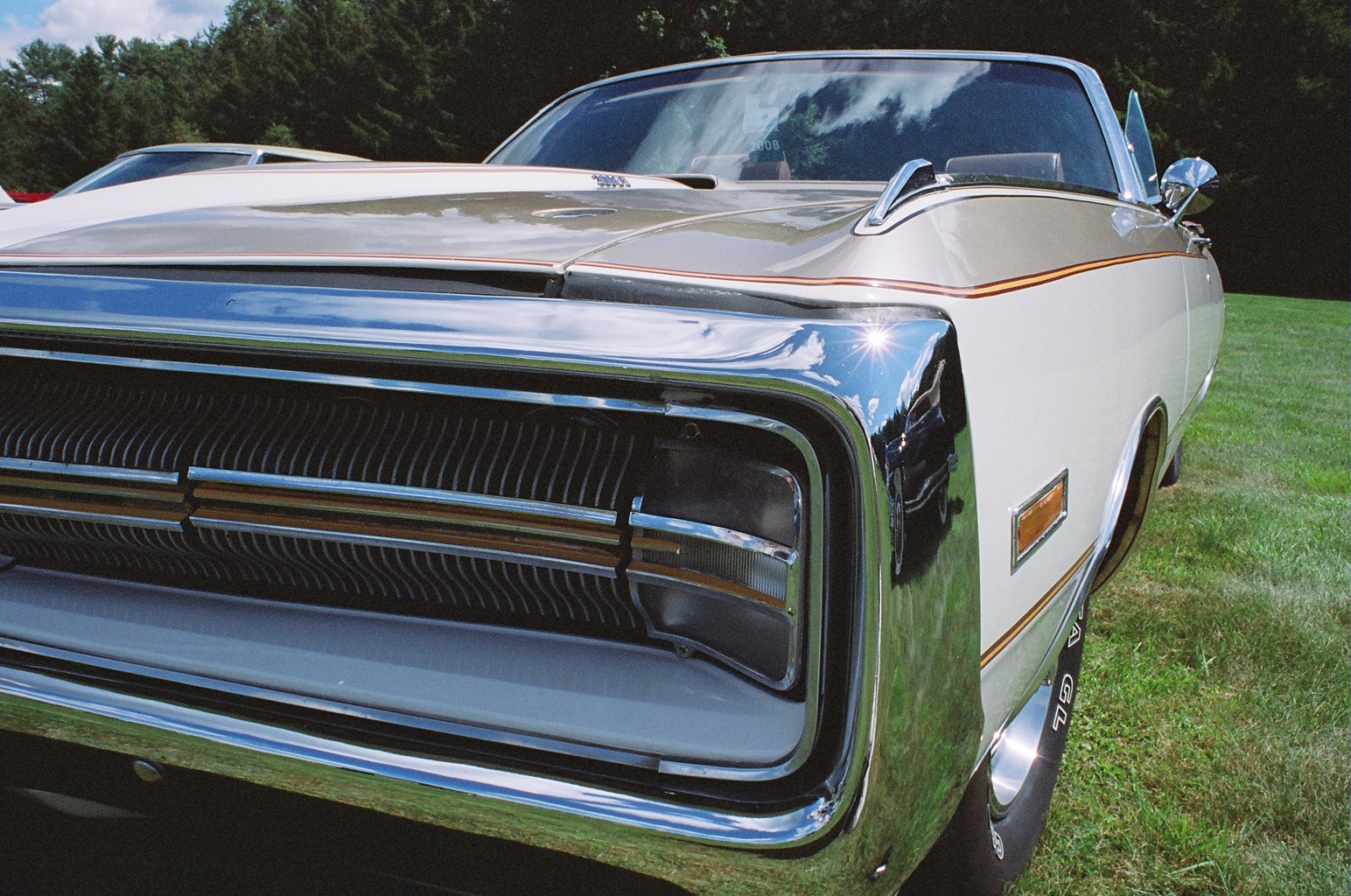
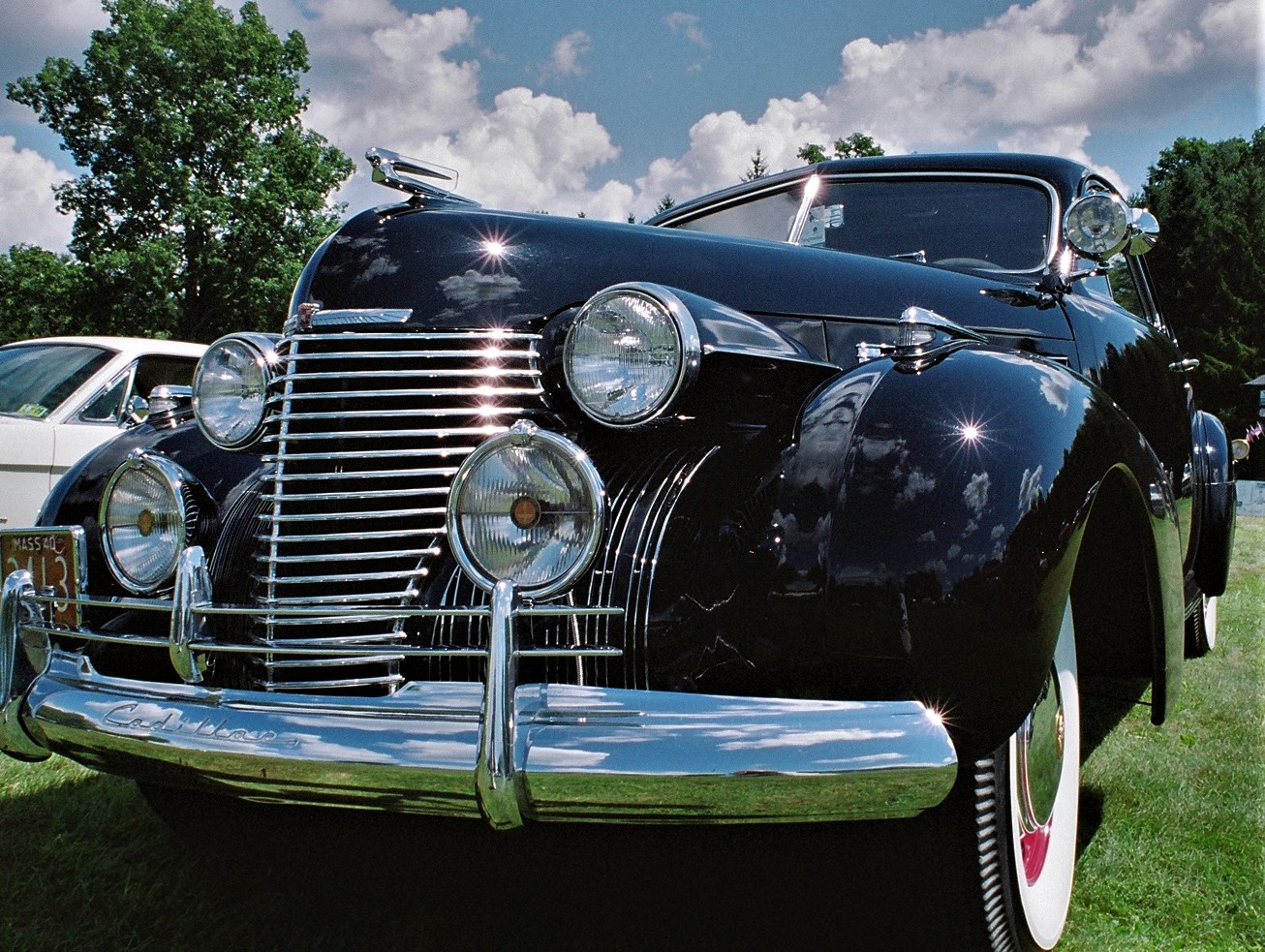
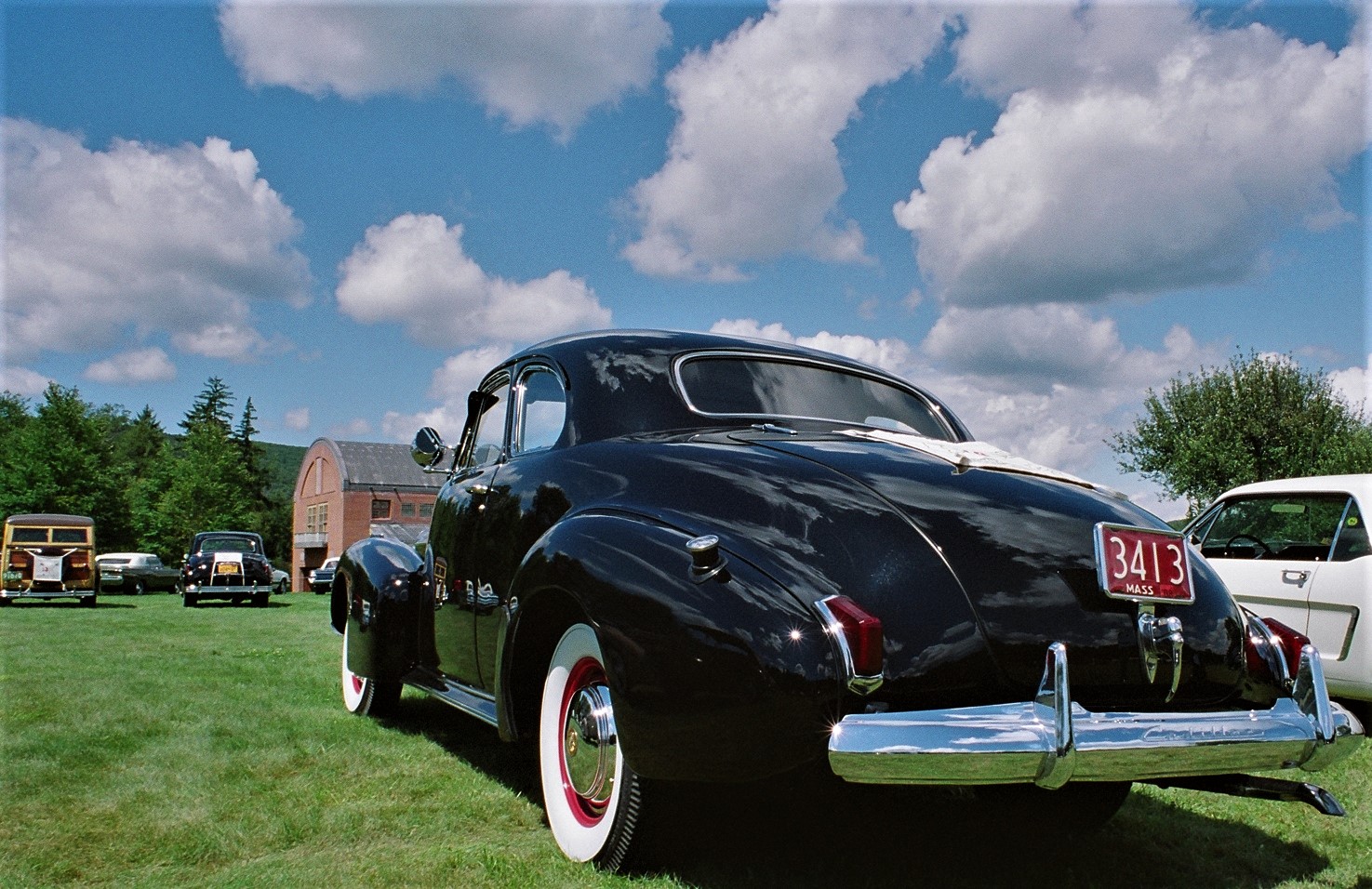
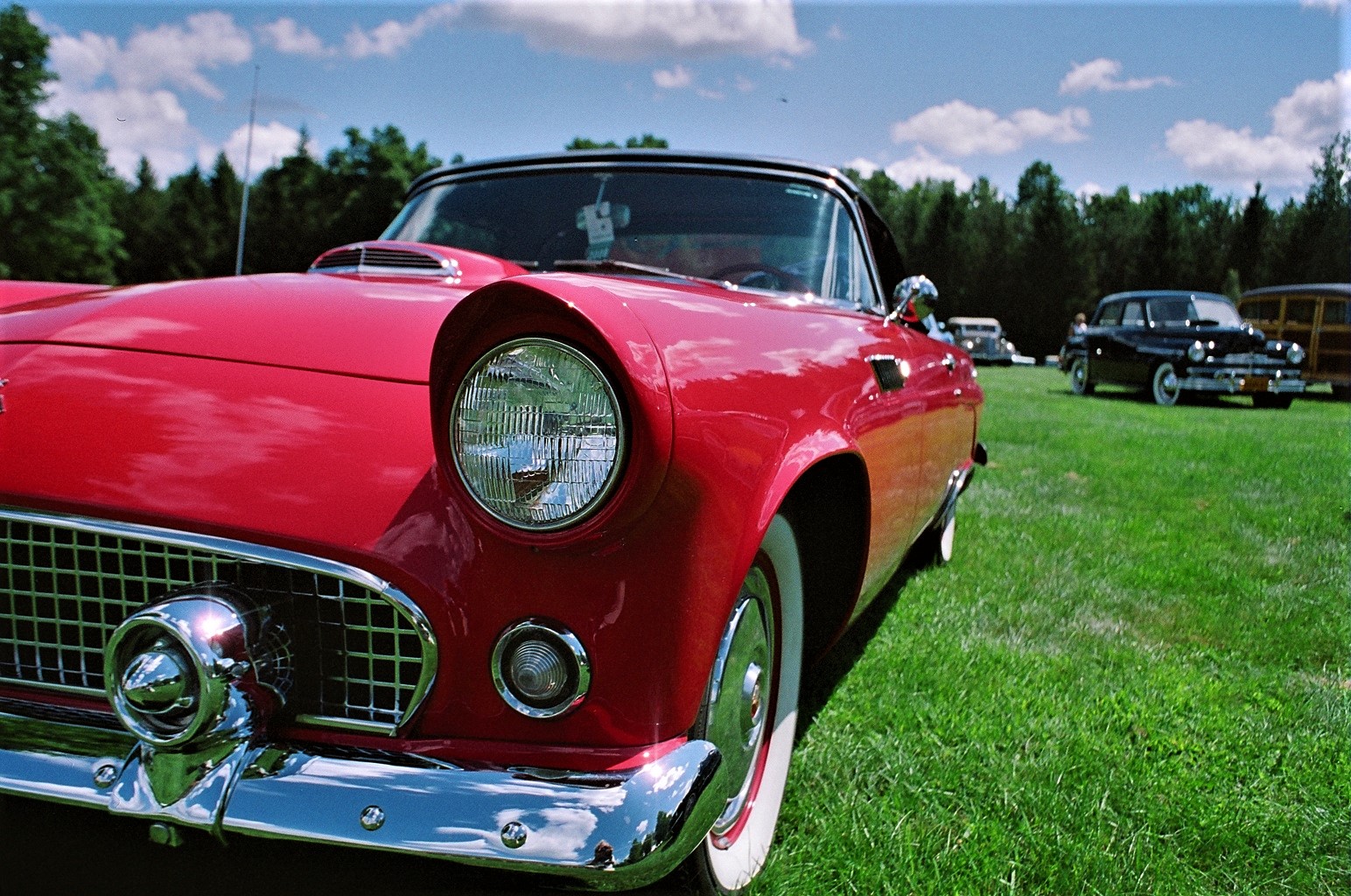
There is actually one memory worth noting: these snaps were taken with a film camera, likely my Nikon EM, and likely with Kodak Gold ISO 100 or 200 film. I tweaked the brightness and contrast on a few of them, but other than that, their rich color stands out to me. Enjoy the shots!


















































 richardscarblog