Simeone Museum Presents: “Preserving Shelby Cobra Daytona CSX2287”

On Saturday, December 12, 2015, the Simeone Foundation Automotive Museum in Philadelphia PA hosted a special “Preservation Workshop”, featuring the Shelby Cobra Daytona Coupe (serial number CSX2287) owned by the Foundation. The gist of the presentation was that, after this vehicle spent some 30-odd years languishing in hidden storage, it was acquired by the Foundation and brought back to running, driving condition. The work to accomplish that goal was considered “preservation” and “conservation”, not “restoration”, in an attempt to keep the car as original as possible.

The star of the show awaits its start

This particular vehicle is one of only 6 Cobra Daytona Coupes built, and on that basis alone, it is an historically important vehicle. However, CSX2287 is also the first Daytona Coupe built, and the only one constructed entirely in the U.S. Most infamously, it has a long and convoluted ownership history (including, for a short time, serving as daily driver for the music producer Phil Spector). No attempt will be made here to delve into this history, about which much has been written elsewhere. Instead, this blog entry will summarize the workshop presentation, which was fascinating both for its detail as well as some of its controversial “conservation” decisions. For those interested, the Foundation’s website has this information on the car: http://www.simeonemuseum.org/the-collection/bonneville-salt-flats/1964-shelby-cobra-daytona-coupe
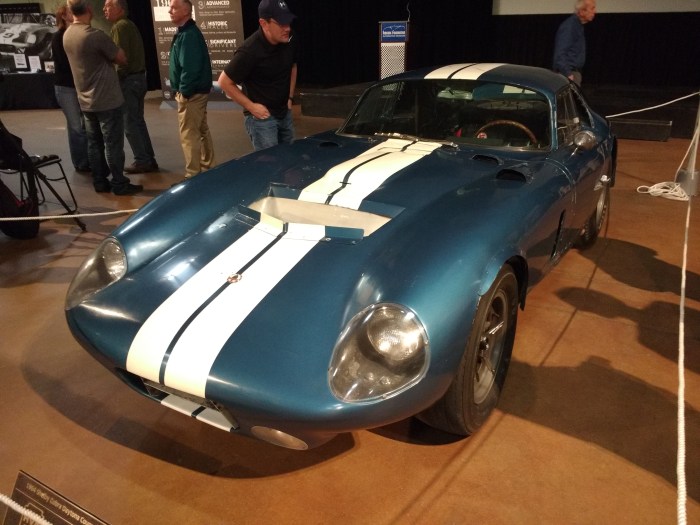

The event started promptly at its scheduled time of 12 noon, with about 150-175 people in attendance. After the briefest of introductions, the mic was handed to Dr. Fred Simeone, who spoke while clicking through Power Point slides on a large screen at the front of the room. The Belle of the Ball, the car itself, sat on the floor, roped off from groping hands.

Dr. Fred Simeone works the crowd

The good doctor proved himself to be knowledgeable, well-spoken, interesting, and occasionally amusing. One got the sense while listening to him that he was actively involved in the car’s refurbishment. He may not have literally had his hands on components (indeed, he informed us that the work was performed by a restoration shop in Georgia), but he likely was helping to make key decisions.

The slide presentation began with the history of CSX 2287: its creation and racing exploits. Again, there is no need to cover that here. The Foundation purchased the car in the early 2000s, and since one of their goals is to maintain all vehicles in running condition, work started to make it a driver again. A rotisserie was constructed, with mechanical systems (fuel, suspension, brakes, etc.) disassembled and carefully documented and photographed. Various methods were employed to remove dirt, scale, and rust, while preserving whatever original finishes might be found. In this way, the original black paint on the tube frame was saved; so were factory markings on the engine, cooling system, even the hardware. Rubber fuel lines, obviously corroded to nothingness after such a long time, were replaced as a necessary safety matter. However, the metal ends were reused, a painstaking and more expensive approach, but one which preserved what could be saved. Almost every piece of hardware was cleaned and reused. In cases where worn parts were replaced (wheel bearings), the originals were kept and stored away.

As Yogi might have said: "Carroll must have signed it while he was still alive"
As Yogi might have said: “Carroll must have signed it while he was still alive”

The engine, not original to the car (Shelby American installed a “spare” Hi-Po 289 into it when they sold it to a private individual in the late ‘60s), was determined to have relatively few miles on it. One controversial decision was to NOT rebuild the engine, for as far as anyone knew, there was nothing wrong with it! In fact, Dr. Fred stated that the ONLY reason the engine was removed from the frame was to replace a seeping freeze plug, a job which could not be done with the engine in situ.
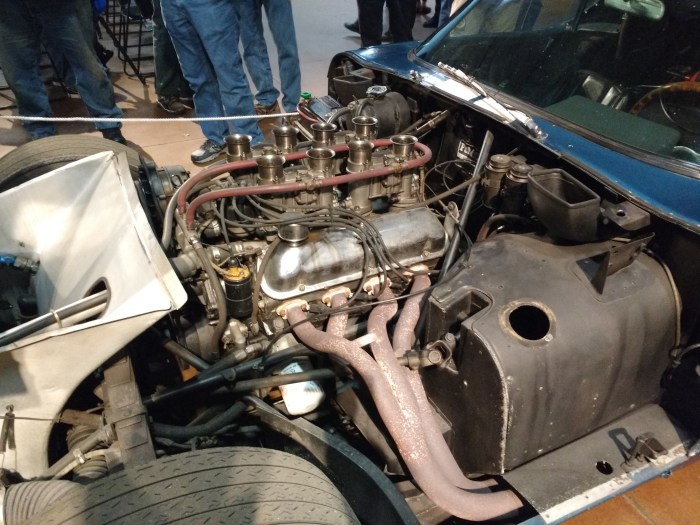
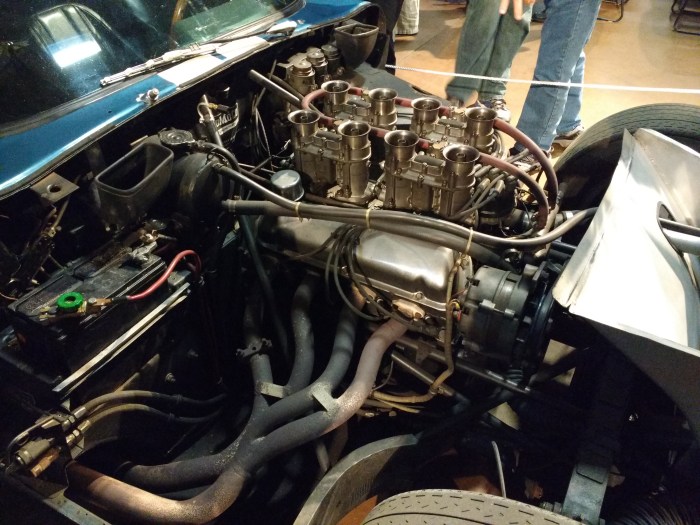
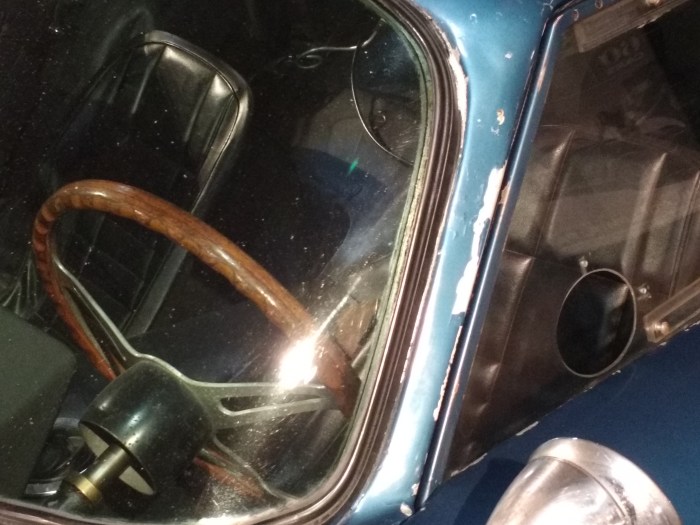
The photos below reveal that the body and paint on this Shelby were decidedly not restored. This of course, was also controversial, for several reasons. The first and most obvious is that in this hobby, “refurbished” cars are not just mechanically corrected; they are cosmetically returned to their most glamorous state. The controversy is further fueled by Pete Brock, this vehicle’s original designer. He has made it publicly known that in his opinion, the only correct “restoration” of CSX2287 is to remove its hood scoops and rear spoiler (which were added while the vehicle was competing in real races), and to repaint it in the original (lighter) shade of blue which it wore in 1964. Dr. Simeone was not shy in stressing that while he respects Pete, he disagrees with him.
As mentioned earlier, Dr. Fred was far from boring during the hour+ he held the mic. Some of his memorable quotes from the day include:
• “A car that doesn’t run isn’t a car. It’s a statue.”
• “Restoring a car for Pebble Beach does nothing for its conservation. All it does is make you eligible to win a plastic trophy.”
• (Quoting Carroll Shelby, who was trying to negotiate the repurchase of the Daytona coupe from the woman who hid it away for 30 years): “The bitch would only talk to me through the screen door”.
• “Watch out if you disagree with Pete Brock. First he’ll argue his case with you, and when he’s done, he’ll sic his wife on you”.

Floor poster sums up an incredible history

This concept of keeping original cars original is not new to CSX2287. Those in the old car hobby began to notice a hard right turn in that direction within the last decade or so. Recent auction results around the globe have shocked onlookers by repeatedly proving that “barn finds” in some cases fetch more money than 100-point restorations. The Simeone Automotive Foundation, in 2012, published a book “The Stewardship of Historically Important Automobiles” which draws parallels between art and furniture collections (which pieces would never be stripped of their finishes) and automobile collections.

Hood up so the battery could be connected

Hood up so the battery could be connected

The book does make the distinction (as Dr. Fred did today) that the concept of preserving what is original is not intended for every “Model A and Mustang out there”. Some astute writers have noted that compared to an oil portrait or a desk, a functioning automobile has moving parts which are designed to become worn, deteriorated, and consumed. Eventually, the entire vehicle is discarded. Therefore, for many vehicles selected for the restoration process, there is no choice but to completely renew all their components.


After an hour of the slide presentation and audience Q & A, the Daytona Coupe was started and allowed to idle for a minute. Slow to crank, it fired up on the second try. Expecting a cacophonous roar, the vehicle sounded docile at idle. While never to turn a wheel in anger again, this simple demonstration helped prove that the preservation efforts accomplished their intended goal.

A final note about this particular car and the maturing of the old car hobby concerns the National Historic Vehicle Register, overseen by the U.S. Department of the Interior. The National Historic Register has been awarding “historic status” to buildings and other architecture in this country for decades. Recently, it was proposed to extend such recognition to automobiles. This Shelby Cobra Daytona CSX2287 is the first such vehicle recognized, a massive accomplishment, and one that signifies that not only is the old car hobby alive and well, it is growing in important ways.

Comments concerning “restoration” versus “preservation“ are invited.
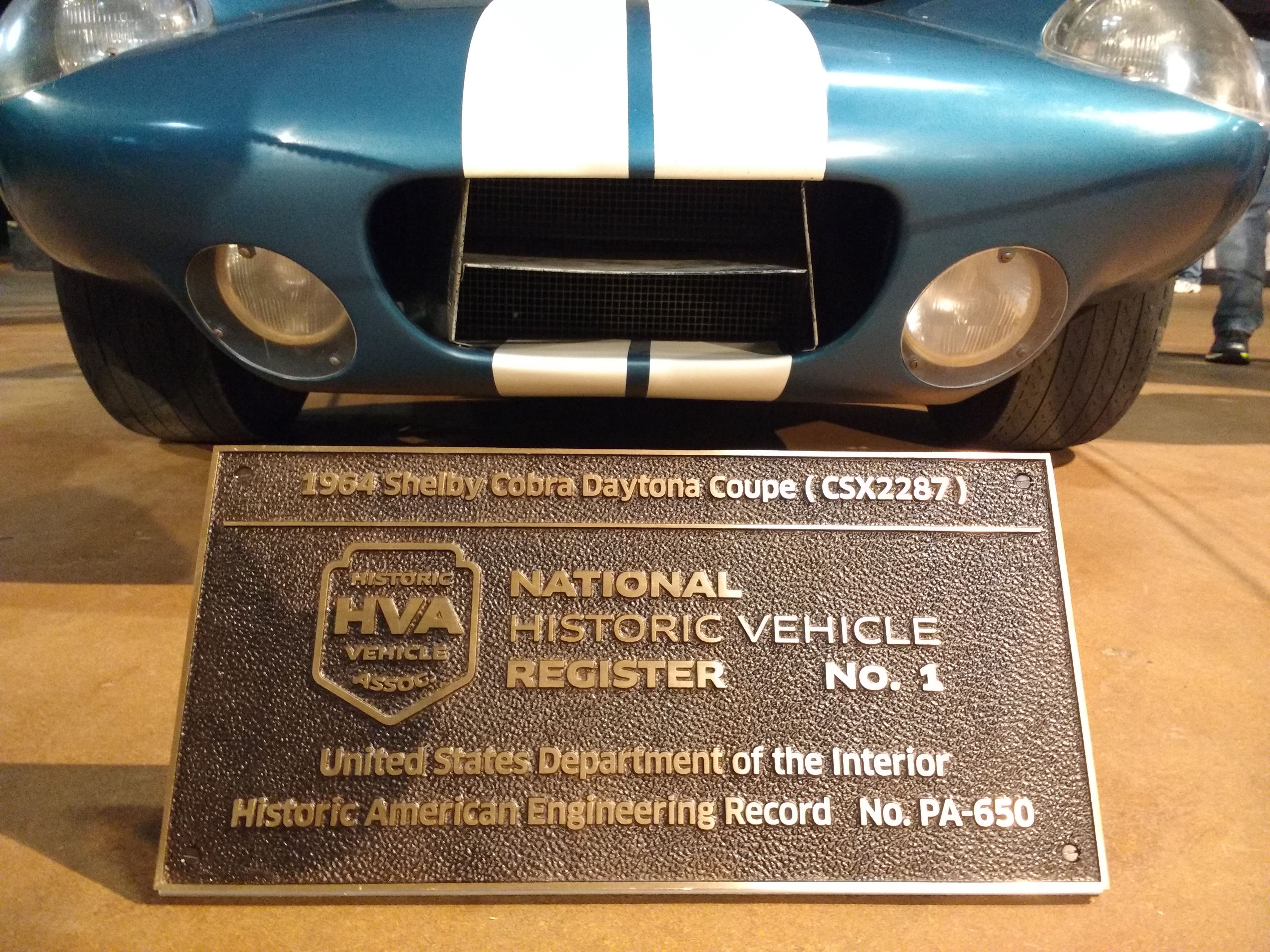
 

The car and the HVA plaque


All photographs copyright © 2015 Richard A. Reina. Photos may not be copied or reproduced without express written permission.

 

Enzo Acquires an Alfa

Proud new owner with his 1991 Alfa Romeo spider

My friend Enzo (he signs his emails as “EC”, so that shall be his nom de plume) is a former colleague of mine from Volvo corporate. We’ve known each other for over 25 years. After I retired from Volvo in 2009, I didn’t see him again until he retired this past December, when we reconnected. Since then, he’s joined us for several of our weekend breakfast runs, but always riding shotgun.

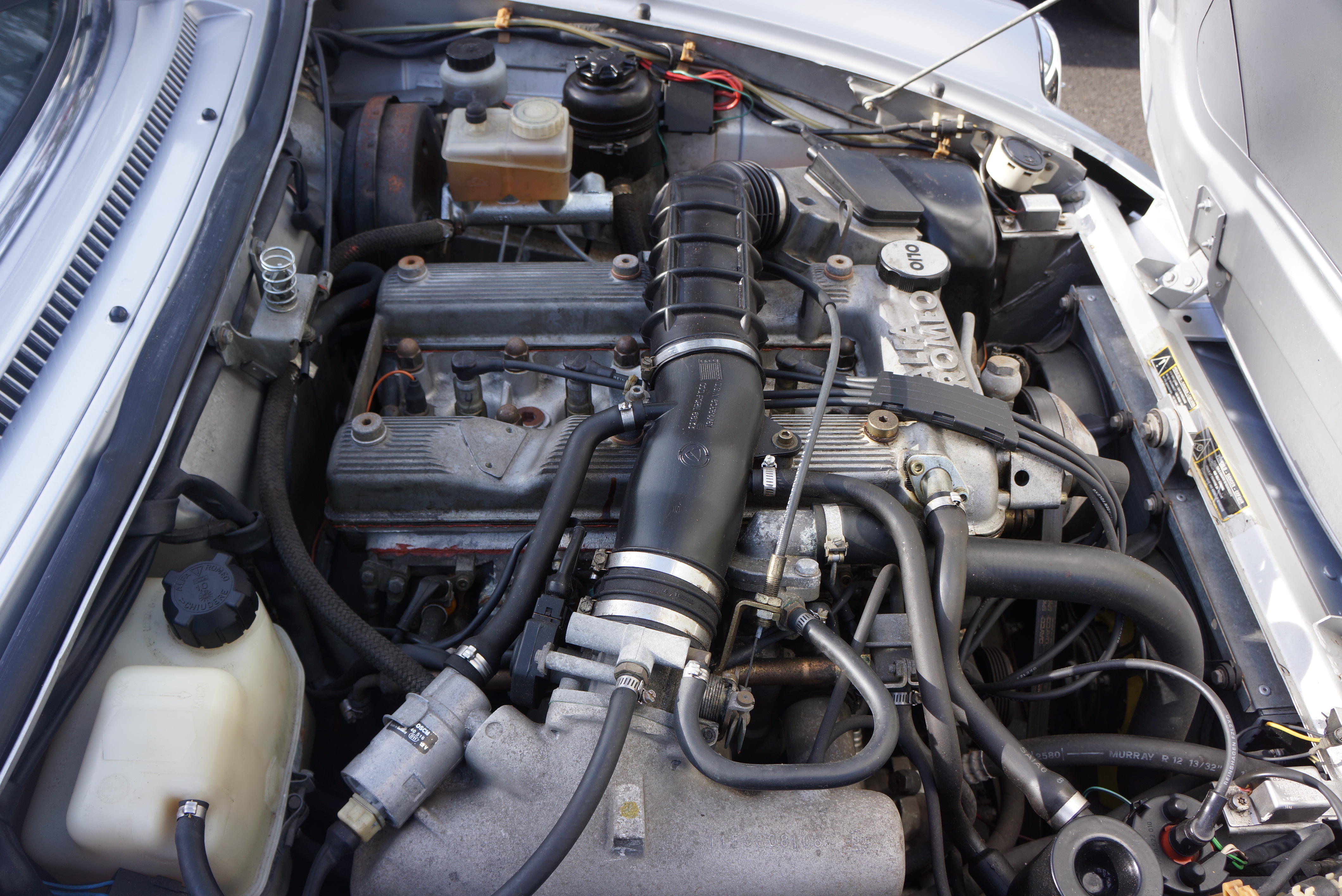
Note valve cover indentation for previous version air intake

Since his retirement, he’s talked about acquiring a toy car, preferably an Alfa Romeo. He informed me that as a younger man, he owned a Fiat 124 spider and several water-cooled 4-cylinder Porsches, and had no desire to repeat those experiences. He TRIED to buy my Alfa from me, but alas, it’s not for sale. The only Alfa GTVs in his price range are project cars, which are not where his interest lies.

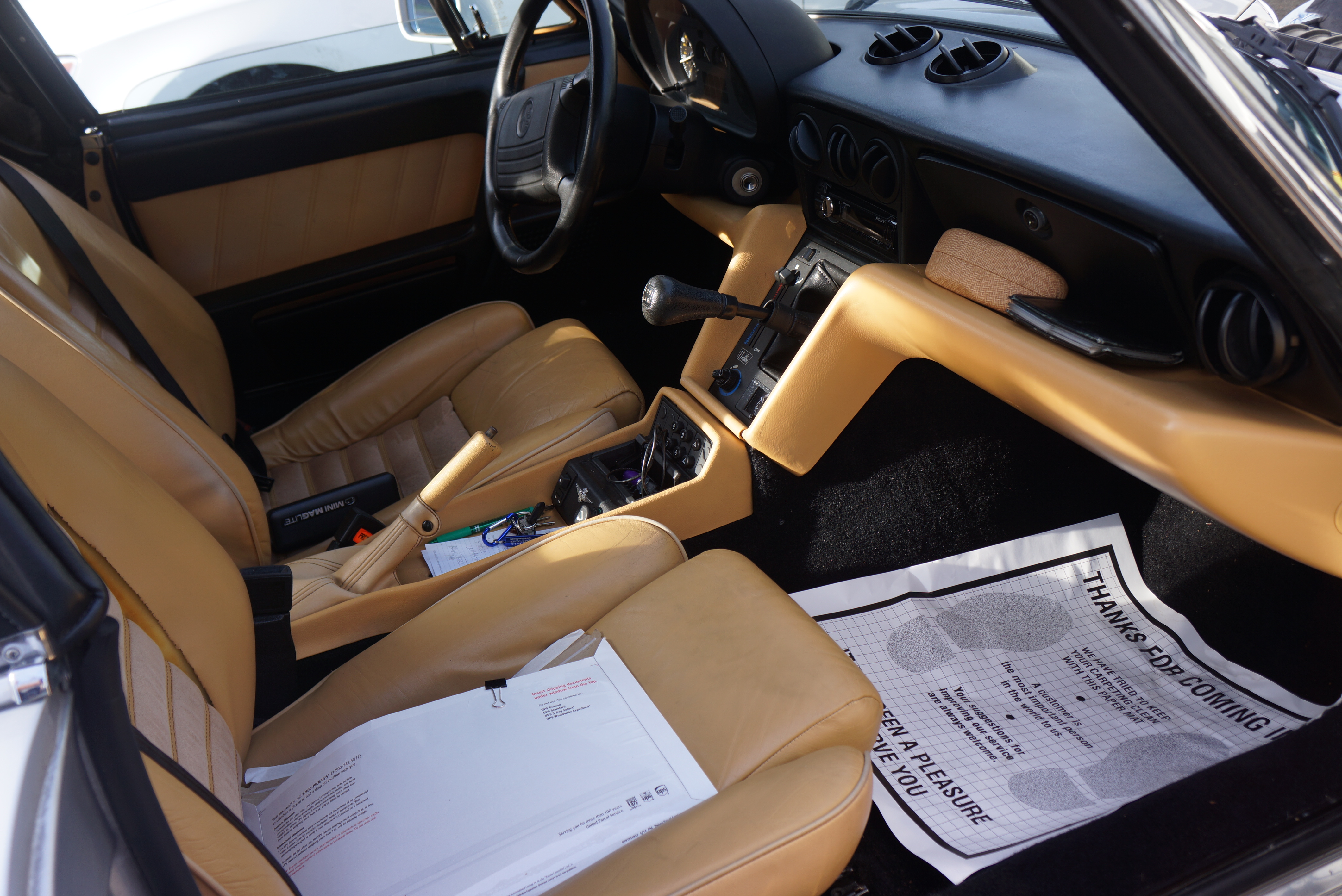
Clean interior features Alcantara seat inserts

EC put considerable effort during 2015 into searching for the “right” car. He and I talked at length about an Alfa spider. Although a convertible was not his first choice, he did finally recognize that at the present time, almost all of the “Duetto” shaped spiders, built for over 25 years without significant change, represent a good value in the collector car marketplace. Only the original dove-tail spiders, sold in the U.S. from 1966-1969 (MIA in 1968 and again in 1970 for failing to meet emission standards), were out of his price range.

VIN plate verifies that in 1991, official company name was "Alfa Lancia"
VIN plate verifies that in 1991, official company name was “Alfa Lancia”

The so-called Series 2, 3, and 4 spiders, which differ mainly by fuel delivery systems and nose-and-tail styling enhancements, are available in the high 4-figure range in reasonably good condition. They also were built in sufficient quantity that dozens are on the market at any given time. As with any Italian car, rust is public enemy #1. A former Alfa corporate field rep once cautioned me: “these cars are pre-rusted from the factory”.

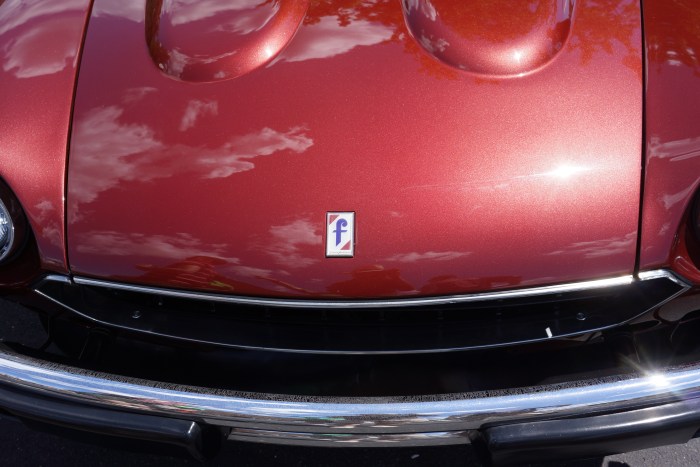
Company symbol "f", company name "pininfarina". Anyone know why?
Company symbol “f”, company name “pininfarina”. Anyone know why? Add a comment.

Earlier this month, EC found the right car. A classic used-car dealer in Queens, NY had a 1991 spider, with a purported 43,000 original miles. Attractive in silver with a black cloth top and tan interior, there was a stack of recent maintenance and repair records, including but not limited to new Pirelli tires, new brake calipers, rotors, pads and hoses at all 4 corners, and a front suspension rebuild. The car was put on a lift and verified to be solid. EC’s assessment after several test drives was that the mileage was believable, the condition was excellent, and the price was fair. A deal was struck, and EC picked up his new toy and first-ever Alfa Romeo several weeks ago.

Washer motor and A/C accumulator only accessible from under front bumper

On the day after Thanksgiving, by mutual arrangement, EC drove the car to my house so that we could give it a more thorough going-over. While much work had indeed just been completed, there were still items requiring attention, truthfully not unusual for a 21-year-old used (Italian) car. This GT 1300 Junior owner took the spider for a spin, and overall, completely agreed with the new owner’s assessment: the car was solid, drove well, and gave us no reason to think that it couldn’t be taken for a long weekend trip right now. The few minor mechanical and cosmetic issues were not deal-breakers, and most could be tackled while continuing to enjoy the car, at least until the first snow flies.

Spider at rest
Spider at rest

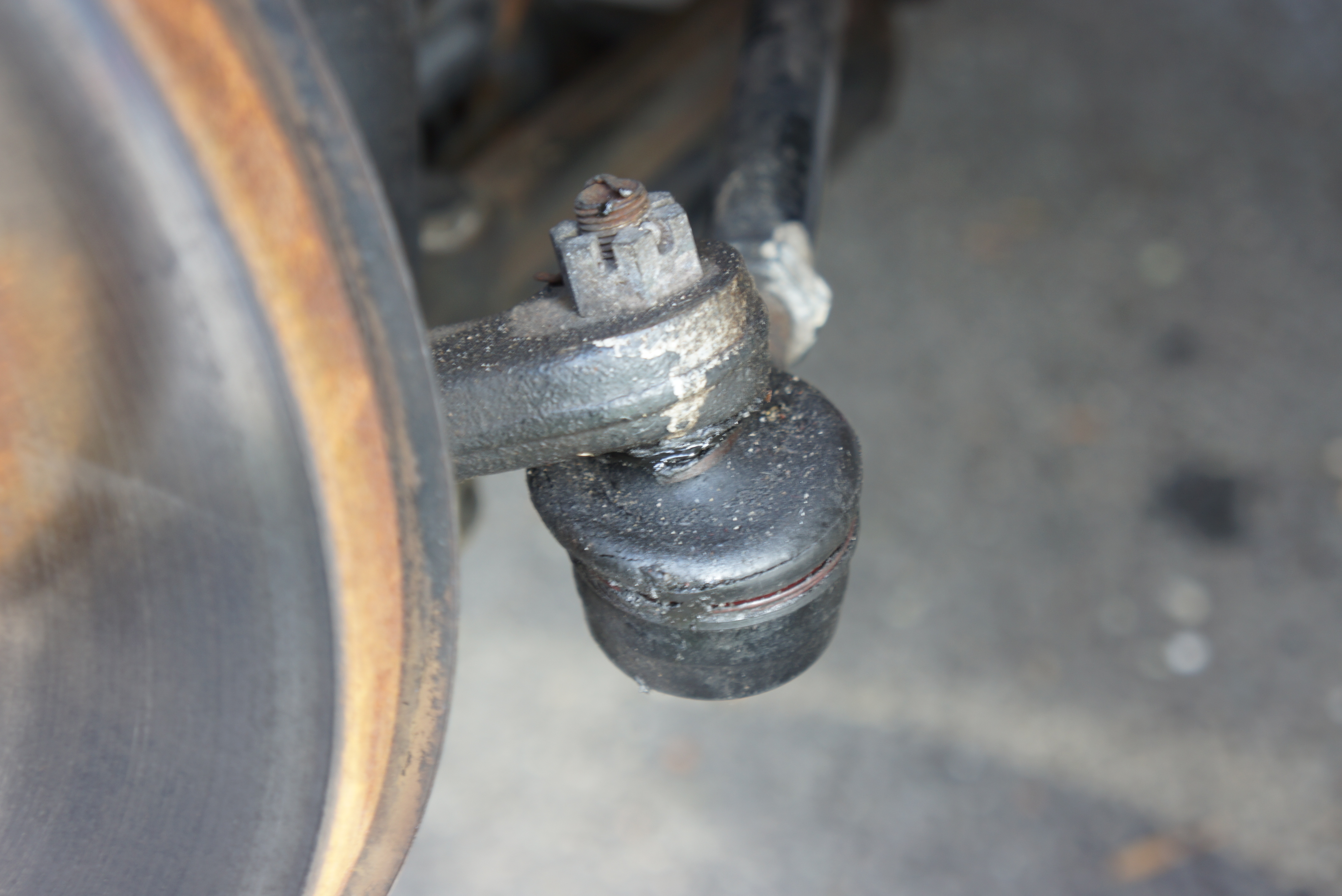
We rotated the tires, and while doing so, verified the date stamps on all the tires (good) as well as the brake and suspension work (also good). Several torn boots on steering tie-rods were noted, as well as one incorrect wheel lug nut, so a list was begun of needed parts. Just before he was about to head home, I asked EC to drive my ’93 Miata. He had never driven an MX-5, and found it enjoyable, if a bit rough-riding with 98k on the clock (the original shocks are shot and will be replaced this winter).

Tire rotation aided by fire-truck-sized wheel chocks


All 4 wheels have right-hand threaded nuts; author's '67 has left-hand threads on 2 left wheels
All 4 wheels have right-hand threaded nuts; author’s ’67 has left-hand threads on 2 left wheels


Steering tie rod end boot is torn but still holds grease

So, to my friend Enzo, I offer heartfelt congratulations on behalf of myself and the rest of our group! As you yourself would say, you finally pulled the gun. When we schedule our first breakfast run of 2016, you no longer need to hitch a ride – we look forward to seeing you there with YOUR OWN Alfa Romeo.


All photographs copyright © 2015 Richard A. Reina. Photos may not be copied or reproduced without express written permission.
Sunday Morning Breakfast Drive, Nov. 15 2015

DSC02313

Our final drive of the 2015 season took place on Sunday, November 15. The day dawned sunny, dry, and as the weatherman might say, “seasonably warm”, with midday temps approaching 60 degrees. The emails with regrets I had received during the week led me to believe that we would have a light turnout. This was incorrect, as we had 11 cars and 15 guys, not too shabby! As has been the tradition this year, two gents new to the group joined us for the first time. We must be doing something right.

We pushed off from our usual Mahwah Sheraton Crossroads departure point at 9 a.m., one hour later than usual, in deference to the shorter November days. Heading down Route 287 South, yours truly was all too happy to cruise in the Miata with the top down, but not too many other convertibles took advantage of the sunshine, at least not at first.

Beautiful day for a cruise (photo courtesy Rich S.)

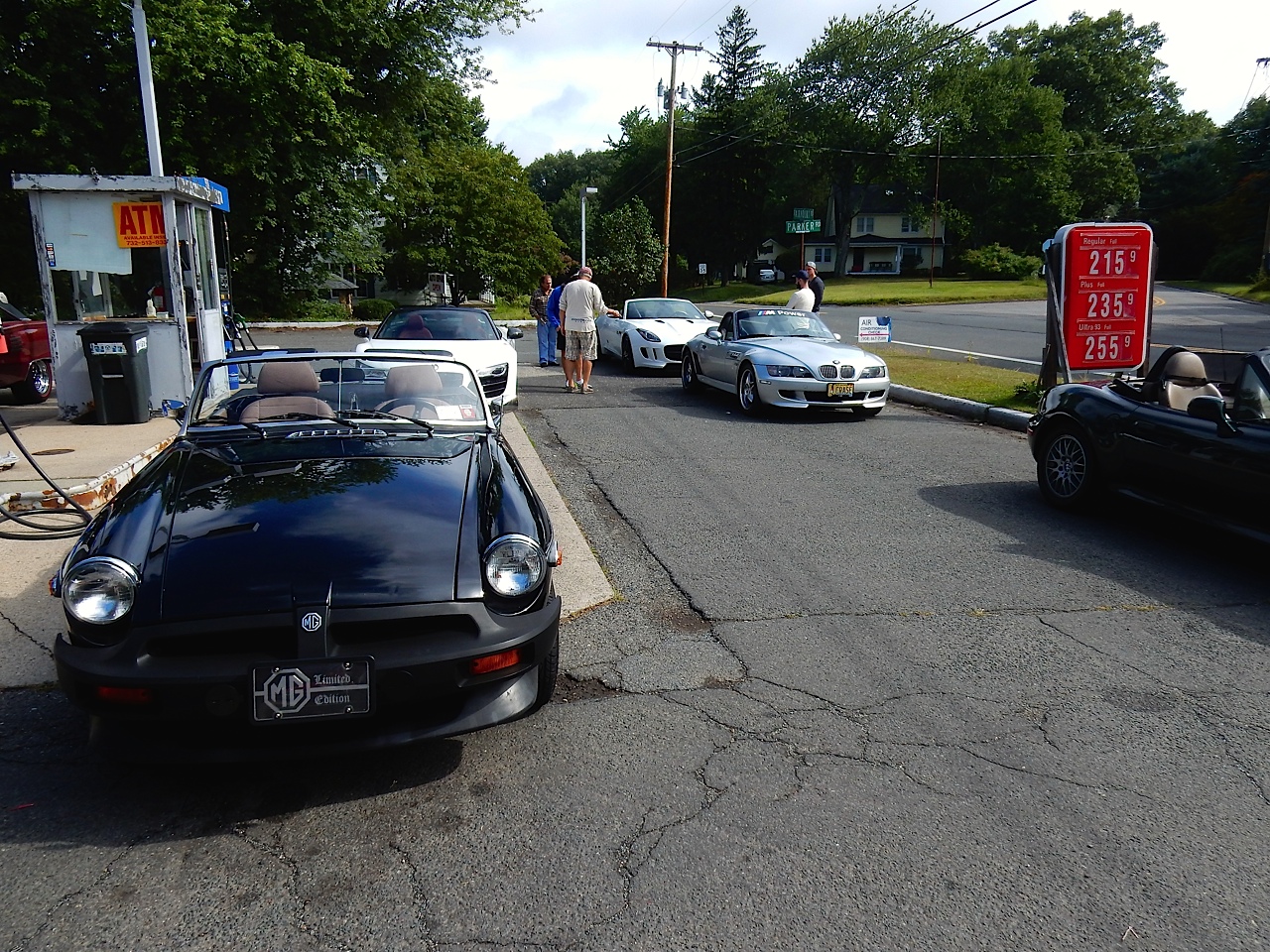
Our destination for the morning was Stella G’s, an excellent breakfast joint in Hackettstown, NJ. We’ve been there before, but not this year. The drive consisted of three roads: Route 287 South to Route 23 North to Route 517 South. A new tradition is the now-obligatory pit-stop, christened the “Bill Whited fuel and bathroom break”. This time it was a Quick Chek. Your scribe observed that once we stop and let everyone start yapping again, it can be problematic to get the boys back into their cars.

The others follow the Corvette (as they should)

After a beautiful cruise down Route 517 (we will NOT mention that the chase car made a wrong turn and ended up on Route 80), we were at Stella G’s at exactly 11 a.m. Customer Service in the state of NJ can indeed be spoken about in the present tense, as proven today. We called Stella G’s twice to ask them about seating 15 arrivals, and even though they do not take reservations on the weekend, we walked in at 11 a.m. sharp to find tables reserved and set for our large crowd. The food, coffee, and service were excellent as they always are at Stella G’s (thank you Kate!).

We were having too good a time. It was difficult for the group to leave the restaurant, and leave Hackettstown, knowing that we would not have the opportunity to do this again until the spring of 2016. Since time moves faster the older we get, it remains an unspoken truth that our first drive of the New Year will be here soon enough. To a man, we can’t wait.


All photographs (except as noted) copyright © 2015 Richard A. Reina. Photos may not be copied or reproduced without express written permission.


Larry and Rich Tackle John’s 1963 Buick Wildcat

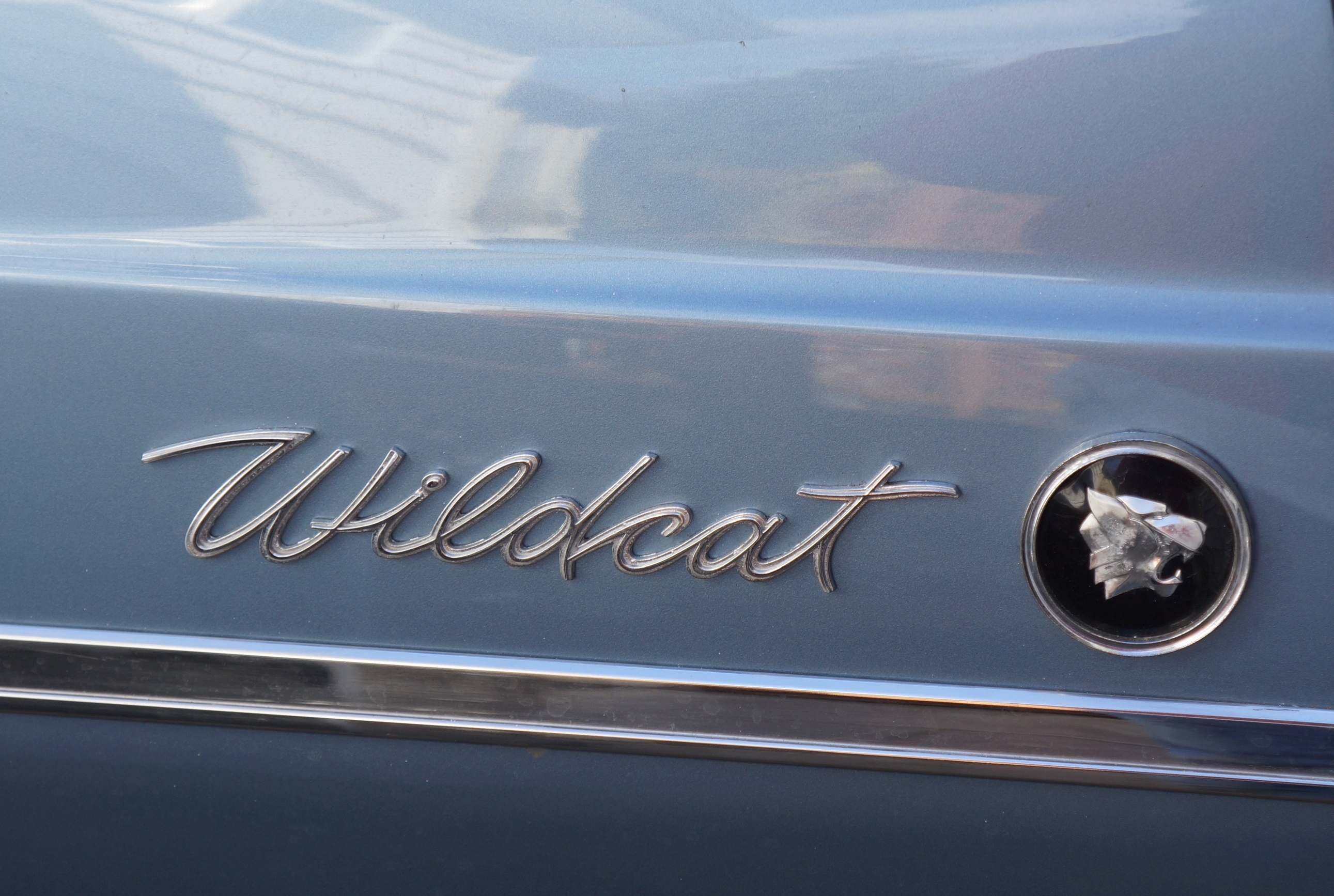
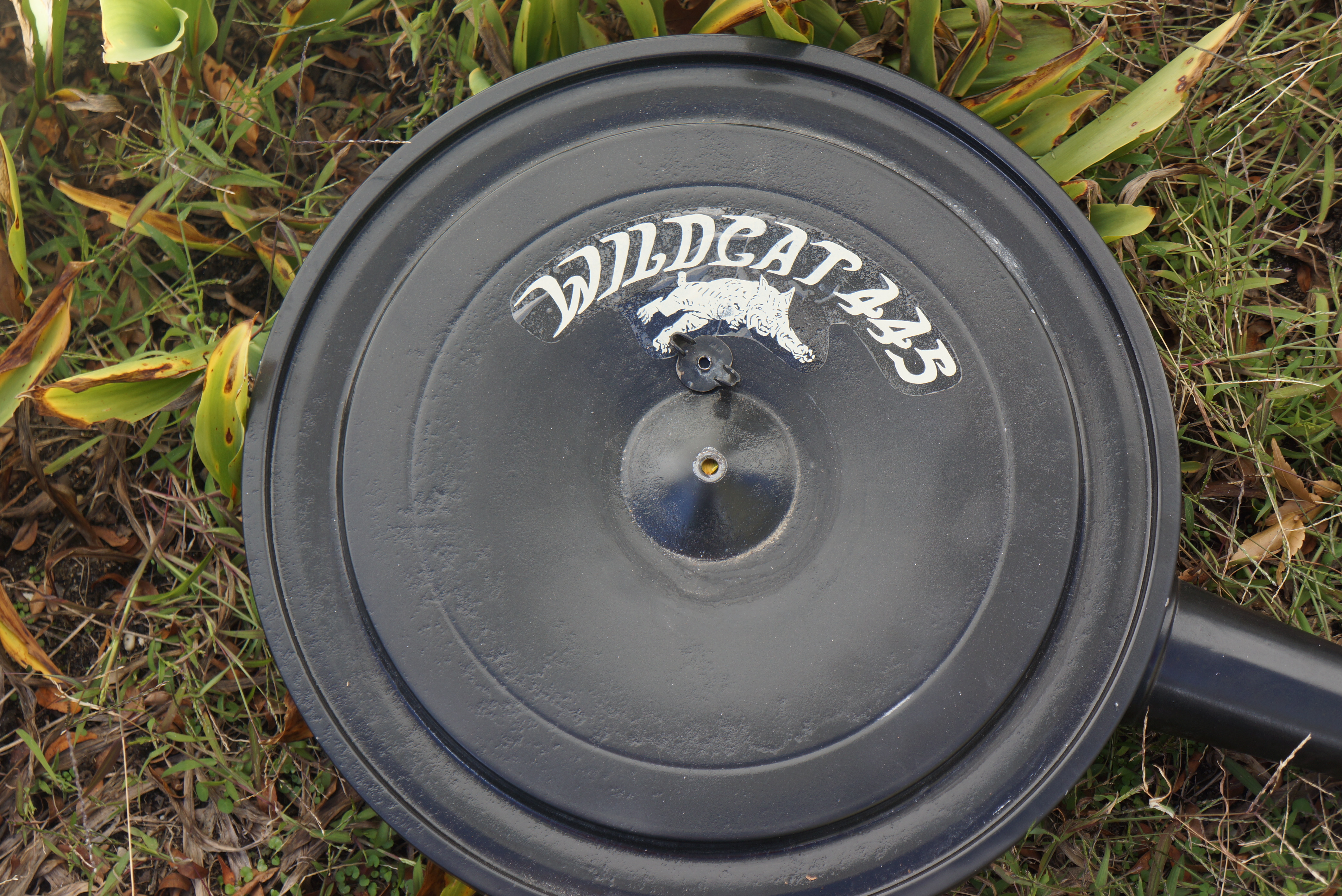
The Wildcat trim on the rear quater
The Wildcat trim on the rear quarter

My good friend John M. owns a 1963 Buick Wildcat convertible, which he bought in 1992. Yours truly accompanied John on the trip to Staunton VA when he purchased the car, which is a whole ‘nother story (which will someday be told in a blog post, as I have PHOTOS). Fast forward to 2015: John has been slowly but steadily bringing the Buick back from the brink, and requested that Larry and I assist him in diagnosing some troublesome overheating issues, plus a rough idle/rough running complaint.

Let's start under the hood...
Let’s start under the hood…

We had not seen the car since John had the body and paint work completed, and overall, the exterior looked stunning. The car had also just come back from Montclair Auto Top where a new convertible top was installed, and that was looking fine. Regarding the overheating, John told us that it took a few miles of driving before the red dash light would come on (no temp gauge), yet the water pump, thermostat, and hoses were new.

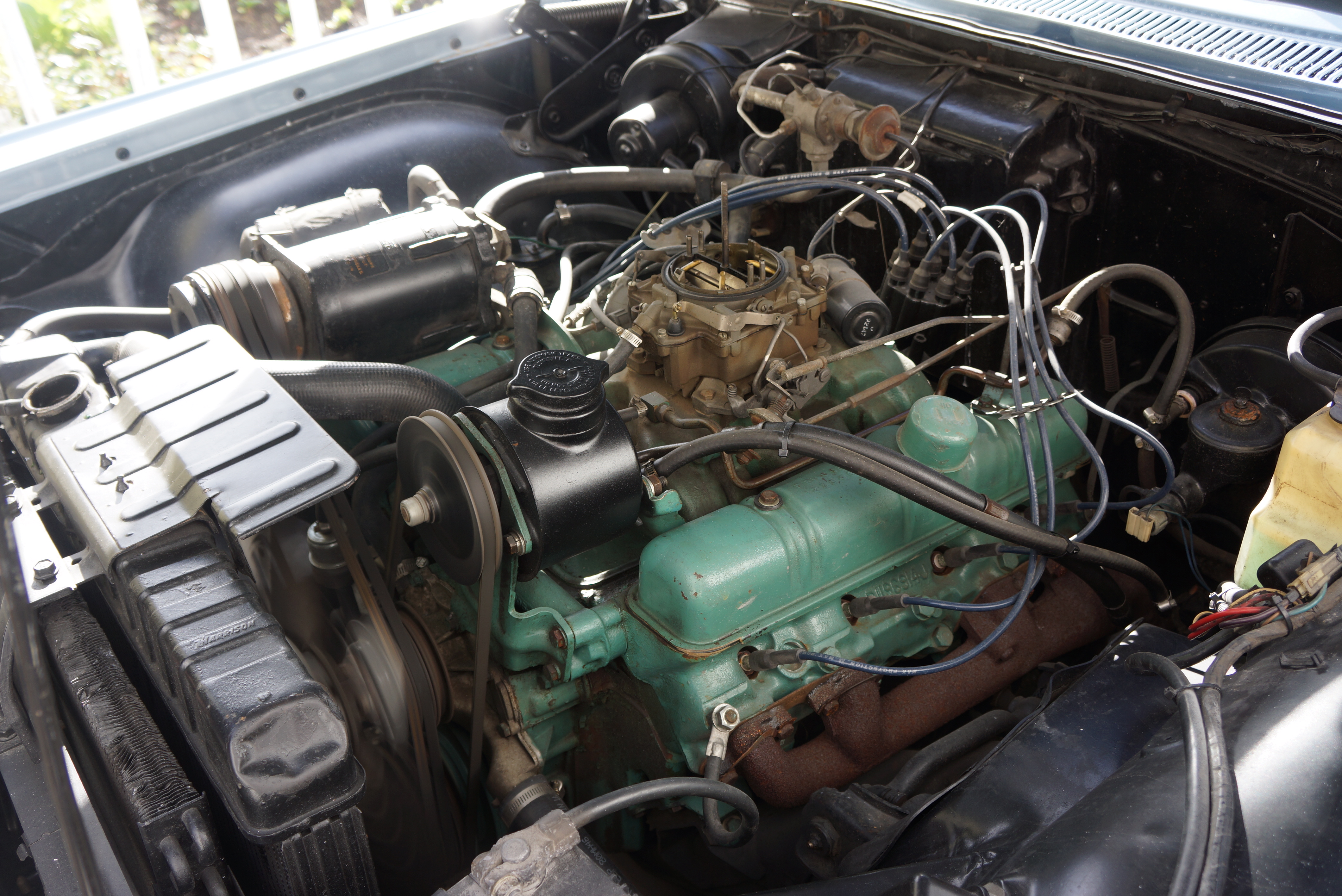
Buick 401 nailhead, WITH factory air
Buick 401 nailhead, with 4 barrel carb, power steering, and factory air

Examining the radiator, it seemed obvious to all that it had either never been out of the car, or, if it had been removed, it was sometime during the Carter Administration. The coolant itself looked suspect, and a hydrometer check revealed it to have minimal temperature protection. Leaving the radiator cap off, John started the car and let it warm up so that we could continue our checks.

The "445" is the engine's torque in ft. lb.
The “445” is the engine’s torque in ft. lb.

With the engine idling, Larry the Carburetor Expert began to apply his touch. First he checked the dwell and found that needed adjustment. The ignition timing was spot on at 12 degrees BTDC. But the 4V carb was running quite rich. Larry leaned out the carb mix and reset the idle to spec. John pronounced that the resulting smooth idle was the best he had experienced with the car in a long time.

In 1963, dwell and idle speed were adjustable

Back to our cooling system, we observed good flow past the cap opening, and a digital temperature gauge recorded a coolant temp of about 185 degrees, well below boiling (but keep in mind that the system was not pressurized). It took a long time for the bottom (return) radiator hose to feel warm. We still suspected slow flow through the radiator core.

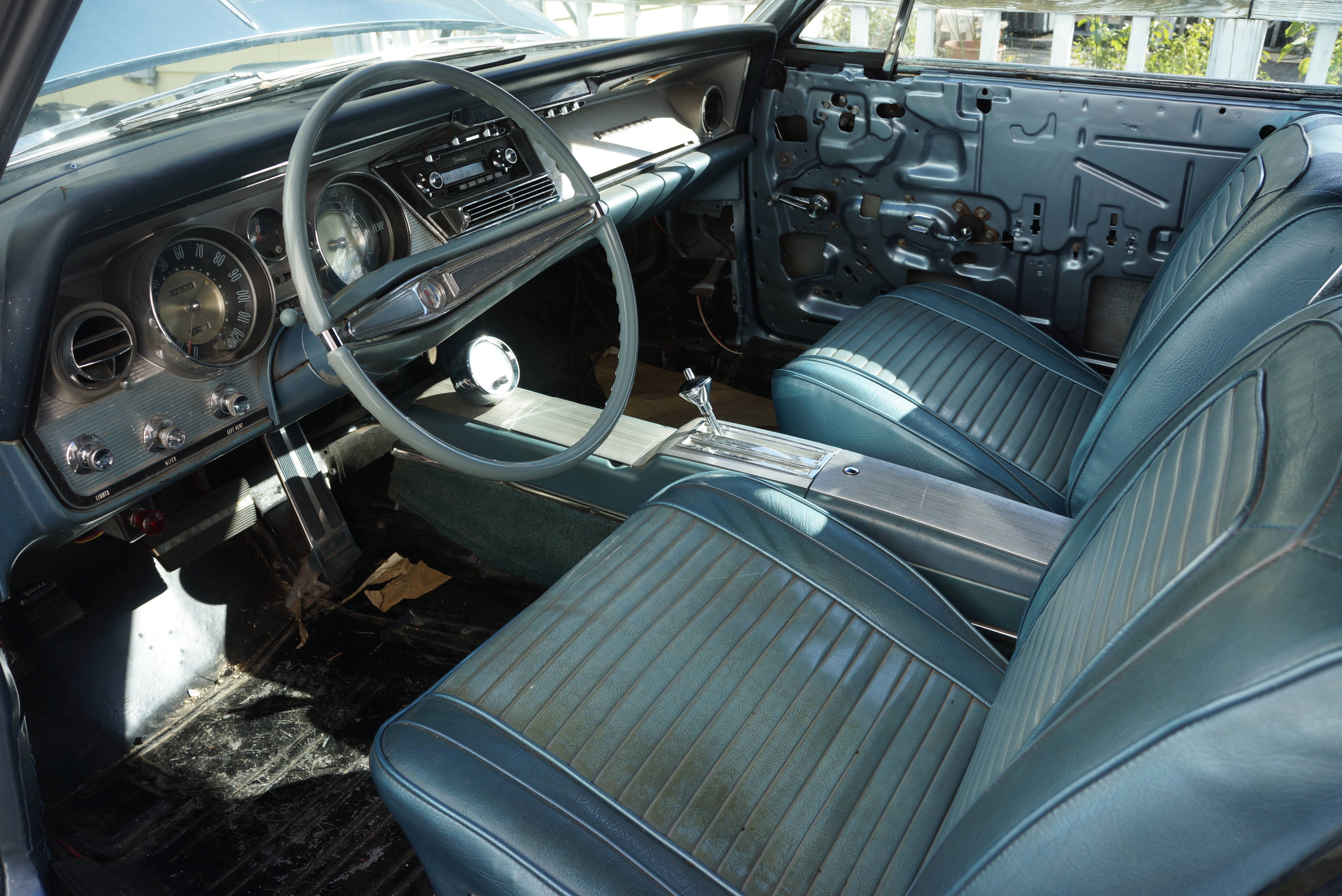
Interior is final step to be tackled; John has all the parts

Time for a test drive; with the owner piloting, the two visitors climbed in for a tour of downtown Glen Ridge. John said that the car ran stronger, and the slight hesitation/surge he felt when he put his foot into it was almost, but not completely, gone. After about a 10 minute ride, we were back at John’s house, and leaving the car to idle, we never saw the temp light come on. The daytime temperature was around 50 degrees, so to be fair, we were not duplicating the outside temps John experienced in August.

Car looks as distinctive from the rear

Our wrench work finished for the day, John treated us to bagels and coffee while we searched for Buick parts on our phones (could not have written that sentence during the Carter Administration). With driving season almost completed for the year, John said his next step may be replacing the coolant with fresh mixture. He will consider pulling the radiator, but perhaps not until first thaw of next year. As we departed, Larry and I both told him we’d be thrilled to see that big ol’ Buick on the road in 2016.

All photographs copyright © 2015 Richard A. Reina. Photos may not be copied or reproduced without express written permission.

Ladies Join Oct. 17 2015 Drive Event, Everyone Survives

DSC02042

History was made on Saturday, October 17, 2015, when the New York Mets (sorry, wrong blog) the Sunday Morning Driving Club went out for a ride, and changed all the rules. What exactly did we do? We drove on a Saturday (for the first time); we scheduled a breakfast AND a lunch (for the first time); we visited the Jersey Shore (for the first time); and we allowed drivers to invite their Significant Others along for the experience (for the last time; sorry, wrong blog – for the first of what we are sure will be many more times).

As best as we know, all the participating husbands and wives were still married to each other at the end of the day. Seriously, we think the ladies enjoyed themselves, and got a taste of the genuine fun we men have had for years, namely, riding through beautiful scenery in interesting cars, and sitting down for a hearty meal with affable and like-minded people.

DSC02025

The formal part of the day started at the Bridgewater Diner in Bridgewater, NJ. Changing with past tradition, attendees arrived on their own between 9 a.m. and 10 a.m. and fortified themselves with good local diner food. By 10:30 a.m., after a few who skipped breakfast but were joining the group arrived, we were out of the parking lot, embarking on the first half of the day’s drive. This 30-mile-route, dotted with fall foliage, took us along the Millstone River, through the farmland of Monmouth County, into the historic village of Cranbury, and eventually to a Wawa pit stop, sorely needed by the men after all that diner coffee.

This deserved Wawa-stop allowed us time to hang and chat in the parking lot. Old friends caught up with each other, new friends were made, and Bill Whited bought gas. After sufficient time was given for life’s necessities, the lead Alfa driven by your humble servant (who assigned the 90-horsepower car to lead??), with 11 other cars in caravan, headed east on Route 33 for the second leg of our drive – a 25-mile straight shot to the seaside resort town of Ocean Grove.

We allowed plenty of time for folks to find parking and wander along the picturesque Main Ave. before our 1:30 lunch reservation at The SeaGrass restaurant. Our table was set and ready for us ten minutes early, and our rowdy crowd was ably handled solo by one young waitress who, to her credit, smiled through the whole ordeal. The food was excellent, and more than one person in our party remarked that while not expecting to be hungry after breakfast, the food at The SeaGrass was too good to pass up.

It bears mentioning that as the popularity of our drive events has grown, participants have told friends, who have told friends…. For this drive, we had two drivers who were with us for the first time. Several others had only made their first trips with us earlier this year. By my count, half of today’s drivers are people I’ve met through other drivers. It’s been rewarding to see the group grow in this fashion.

Lunch was over by 3 p.m. The shoppers delayed their departures so they could wander through the many gift shops in Ocean Grove. Others hit the road in order to get back home before the ever-earlier darkness closed the day. Overall, our many “firsts” combined to make this drive one of our most successful, read, enjoyable outings yet.

All photographs copyright © 2015 Richard A. Reina. Photos may not be copied or reproduced without express written permission.

Hershey Report, 2015

DSC01995

The annual car show formally called the “Antique Automobile Club of America Eastern Division National Fall Meet”, but known the world over simply as “Hershey,” was held for the 60th time on October 7-10, 2015. The event takes over most of the 121-acre grounds which are Hersheypark, plus some adjoining property. The town of Hershey PA, which not coincidentally is also home to national AACA headquarters, gives itself completely to “Hershey Week”. If you want a nearby hotel room next year, book it 4-6 months in advance.

DSC01889
For those who have never been to Hershey, describing it as the biggest car show on the East Coast and one of the biggest car shows in the world does not do it justice. Most of Hersheypark’s paved lots are blanketed with flea market vendors. Hundreds of antique and classic cars are offered for sale in the Car Corral. Saturday is the show’s raison d’être, as the finest restored cars and trucks in the country compete at a judged car show. Hershey attracts participants and spectators from around the world, many of whom have been making the annual trek for decades.

These die-hards renew old acquaintances, seek out valuable parts needed for their restorations, and buy and/or sell cars with regularity. Your scribe first attended Hershey in the late 1970s, and has not missed a meet since the late 1990s. If your interest is in stock (meaning unmodified) cars that are 25 years old and older, as required by AACA guidelines, this is the place to be. Newer and heavily modified vehicles (and parts for them) need not apply.

Hershey is endemic of, but not responsible for, many of the changes we’ve witnessed as the hobby has grown, changed, and matured. In years past, an automotive flea market consisted of vendors with rusty old junkyard parts, or obsolete dealer parts stock. Either way, the parts were in milk crates, scattered on folding tables, or spread out on tarps on the ground. You had better well know your needs, because you were going to spend hours looking through those piles to find that gem in the rough.

At many flea markets today, you can seek out a vendor who specializes in your make and model vehicle. Once you inform the vendor of your vehicle particulars, the part, remanufactured as an aftermarket component, probably “offshore” (a nice euphemism which allows you to avoid saying “China”), is handed over, neatly packaged in hard plastic. This is if you even bother to attend the flea market. Much of this stuff is available online with a few clicks of the mouse button.

Given two facts, one, that AACA is strict about its 25-year-old-and-older rule, and two, that many of the Hershey veterans still have a huge interest in pre-war (WWII) cars, the flea market has fewer of the reproduction vendors that you would likely see at Carlisle, for instance. The thrill of the hunt still applies. The photos below affirm that Hershey still does the flea market the old-fashioned (some would say the more fun) way:

THE CAR CORRAL, SUB-$10,000 EDITION

The Hershey Car Corral always has a nice variety of cars for sale. This year, the variety of domestic and imported vehicles seemed greater than usual. That is not to say that every car in the corral is an instant classic. There are those run-what-you-brung cars that look like they were someone’s daily driver as recently as last week. Part of my reaction to these cars is because I was of driving age when they were new. Heck, I saw cars for sale that were new at the car dealerships where I worked in the 1980s.

The good news is that many of these types of cars have low asking prices, and can serve as excellent starter vehicles for someone new to the hobby. (My friends and I enjoy pointing these out to those who say the hobby has become too expensive to enter.) Here are some random choices for those with limited means who still want an AACA-eligible car.

1990 Pontiac Firebird

One of the few car corral vehicles from the newest-allowable model year, the sign on this 1990 Firebird claimed it to be a one-owner car with 52,000 miles. The asking price was $6,000, likely held back because of the V6 under the hood. But moving down the road, who would know?


1965 Jeep J-10 pickup

With an asking price of $4,800, this 1965 Jeep J-10 pickup truck is rare. Many were used as work trucks and long ago met their fate at the crusher. Four-wheel-drive and V8 power meant that little was going to stop your forward motivation. The Colorado license plate helped assure that there was little to no body rust (none that could be seen with a cursory look). Buy this and you’re practically guaranteed to have the only one at the next Cars & Coffee.


1981 Honda Civic
1981 Honda Civic

Squeaking in under the wire of our self-imposed $10,000 limit with an ask of $9,900, this 1981 Honda Civic had many scratching their heads. Sure, by year and unmodified condition, it’s eligible. My personal reaction is that I remember doing new-car prep at the dealership on them, and my then-best friend bought one of these new. They CAN’T be allowed here, can they?


1979 Triumph TR7
1979 Triumph TR7

By my account, the least expensive operational vehicle in the car corral, this Triumph appeared to have arrived under its own power. The sign on it said “new transmission, new clutch, new interior, runs great, fun car!” Asking price? $2,800. Make ‘em an offer.


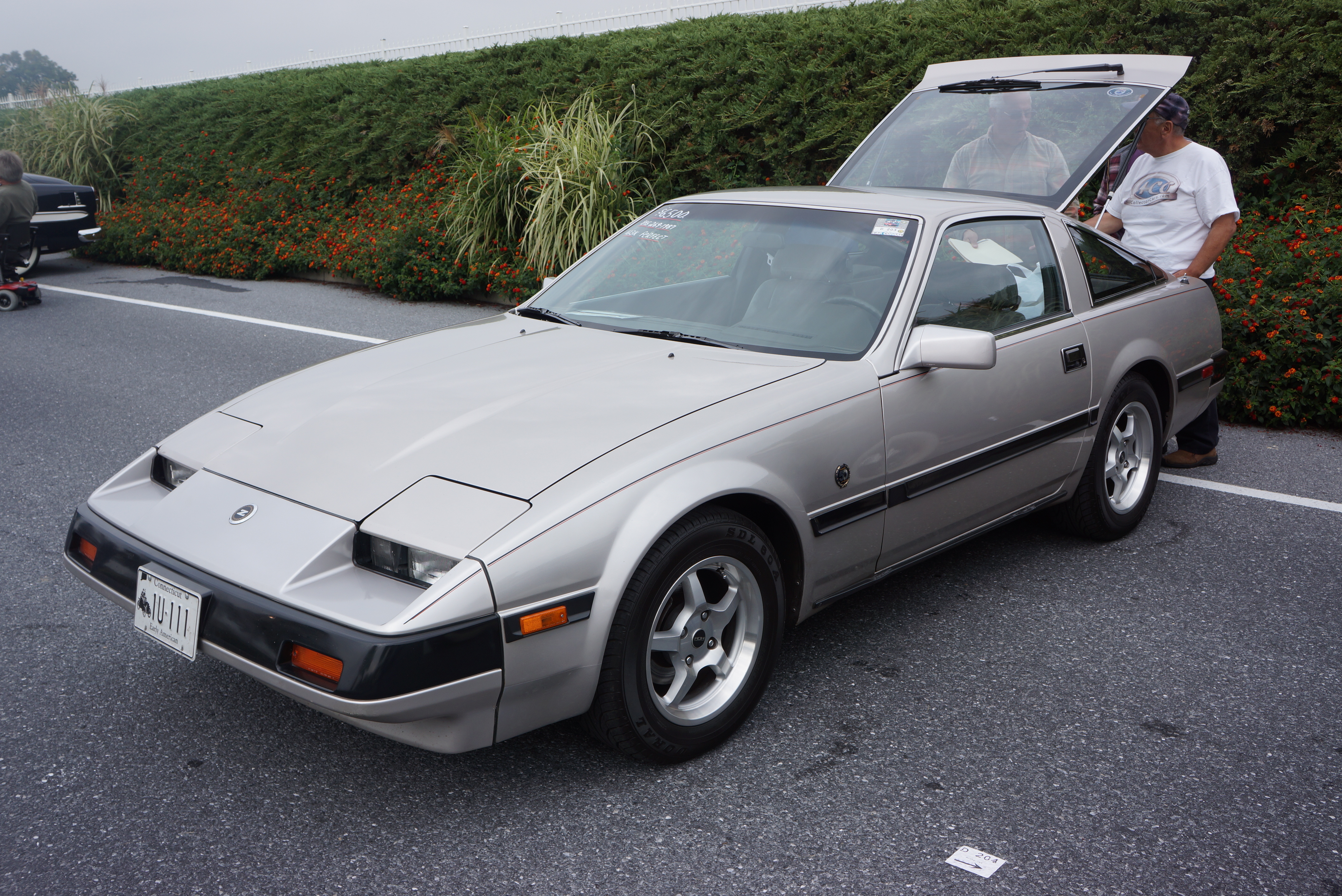
1984 Datsun 280ZX
1984 Datsun 280ZX

This car’s cleanliness belied its reported 123,000 miles. The paint and interior were unblemished. It was a stick to boot. Thursday’s price was $7,400, Friday’s was $6,500. Don’t know if he sold it, but this was a later “Z” that wouldn’t require the gold chains to be worn (by you, not the car).


1978 Cadillac Seville

My Caddy friends assure me that these first-generation Sevilles are future collectibles. We’ll see. However, if you wanted a sharp driver in a very appealing black over red, this car could do it. The windshield write-up claimed it to be a one-owner, 80k car. Another one going through a fire sale, Friday’s price was $5,600, down from an earlier $5,900.

1980 Mazda RX-7
1980 Mazda RX-7

First generation Mazda RX-7s are another model which pundits claim will double in value “soon”. Hasn’t happened yet. In the meantime, good clean cars sell for credit card money, and someone is having fun. This 1980 rotary rocket with 82,000 miles could be yours for $7,850. Handwritten next to the price was “let’s talk $”.


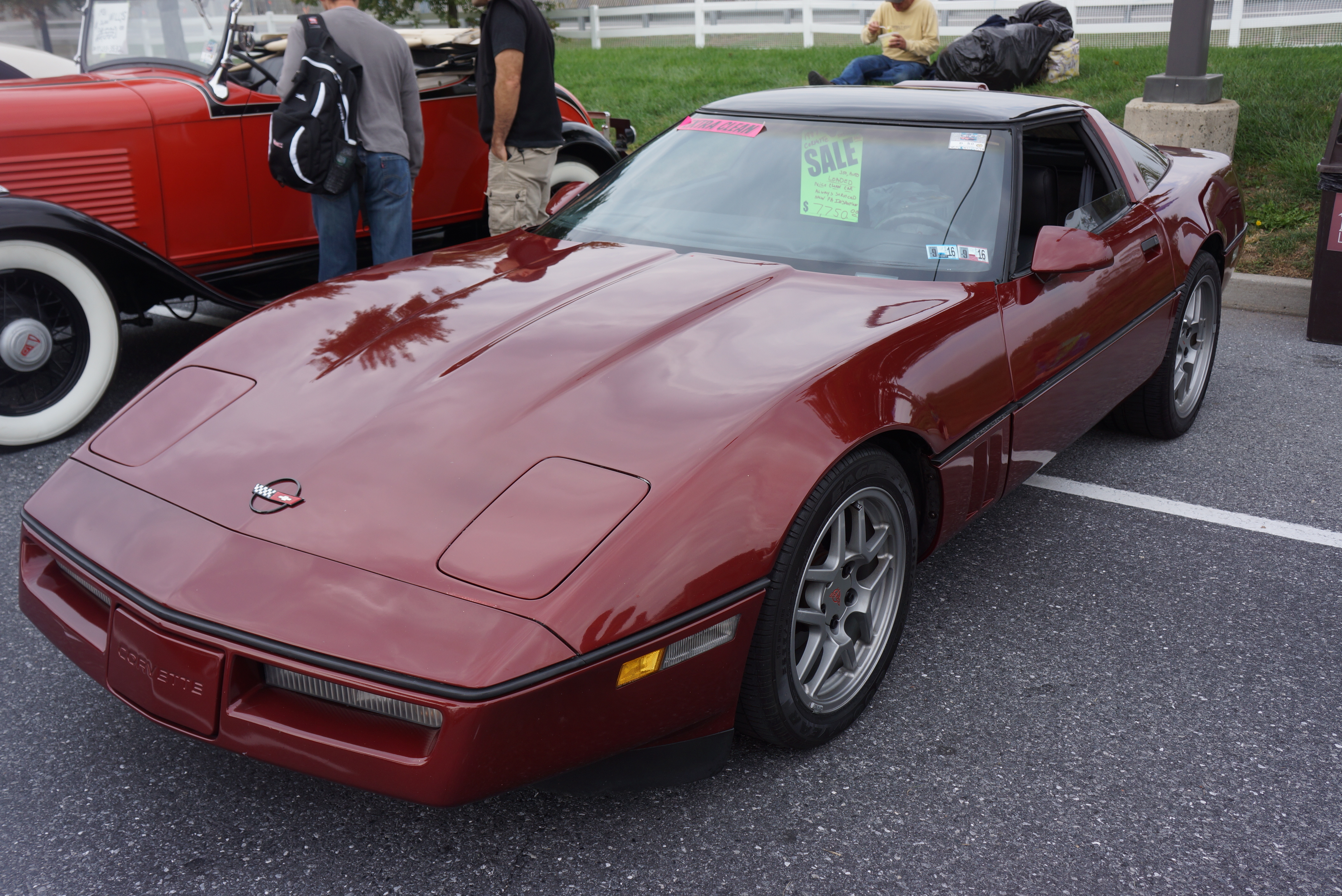
1987 Corvette
1987 Corvette

Sure, SS 396 Camaros and Shelby Mustangs are never going to make mention in a chapter called “sub-$10,000 cars”. But that’s not to say that good ol’ American performance can’t be had at that number. How about a Corvette? Seriously. The C4 Corvettes (1984-1996) are quite affordable right now. Here’s proof, in the form of a 1987 coupe. Yes, it’s a 350/auto with incorrect wheels, but at $7,750, it’s something you could drive every day and display at cruise nights.
THE CAR CORRAL, VOLVO EDITION


Volvo 122S wagon
Volvo 122S wagon

Two Volvos in particular stood out for me. A 122 wagon, in white over red, stick shift of course, was fresh from the Pacific Northwest, and looked it, as there were no signs of visible rust in the body. The ask of $14,500 may have seemed high, but try to find another one this solid on the East Coast. (Recent Bring A Trailer sales of 122s have approached $20,000.)


1979 Volvo 242DL
1979 Volvo 242DL

By contrast, this 1979 242DL, with automatic and (dealer installed) a/c, was super clean, and in that requisite 1970s brown. But $12,500? See sub-$10,000 cars above. This Volvo was for someone who HAS to have this particular configuration.
THE CAR CORRAL, NOT IN THE CORRAL EDITION

Not every car for sale at Hershey is in the designated car corral. There were some interesting finds in the flea market area. There are also cars for sale in the parking lot, possibly as a way to avoid paying the AACA car corral fee.


1963 Studebaker Avanti

This Studebaker Avanti from the first year of production is distinguishable by its round headlight bezels. This car also has the desirable 4-speed with factory air. At $26,995, the asking price fell in between CPI’s “good” $14,000 and “excellent” $29,000 values.


1967 Porsche 912
1967 Porsche 912

Porsche 911s of all years, body styles, and performance levels are hot right now. The joke is that 911 pricing is like the fish at your favorite seafood restaurant: “market pricing”, which is X today and will likely change upward tomorrow. But the 912, the 4-cylinder variant, remains relatively affordable. This car was in the parking lot across the street. The sign said its engine had been swapped out for a 1969 version. The owner was asking $29,000. Going down the road, no one will know you’re not packing a flat-6. (By way of reference, nice 1967 911s are approaching six figures.)


1954 Ford
1954 Ford

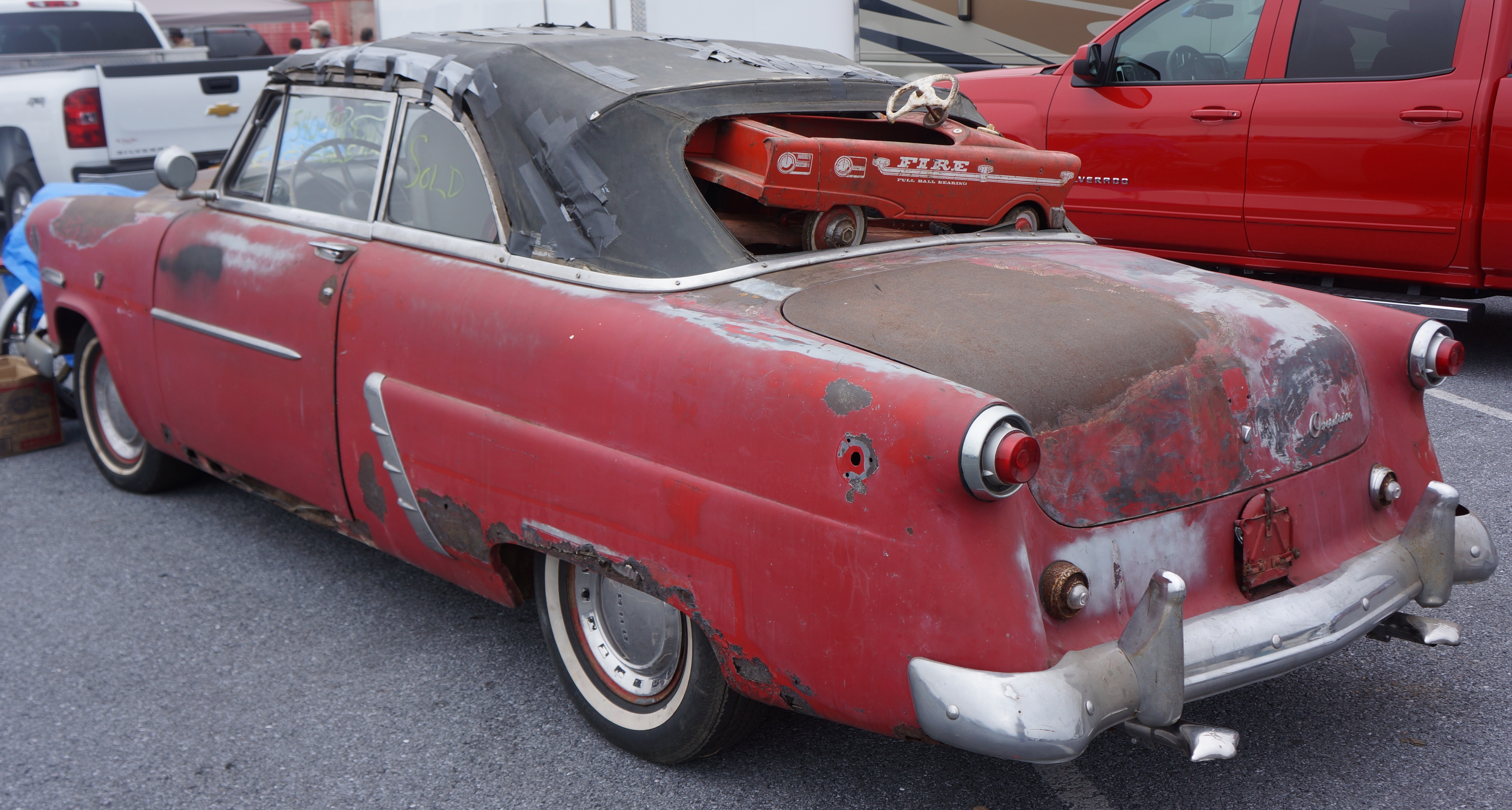
This 1954 Ford convertible was hanging out in the flea market. The asking price, if it had been displayed, was now gone, and the car was marked “sold”. Given its overall dreadful condition, I took it as a healthy sign for the hobby that someone out there was willing to take it on. No word whether the Fire Chief pedal car was included (might be worth more than the Ford).
SATURDAY’S CAR SHOW

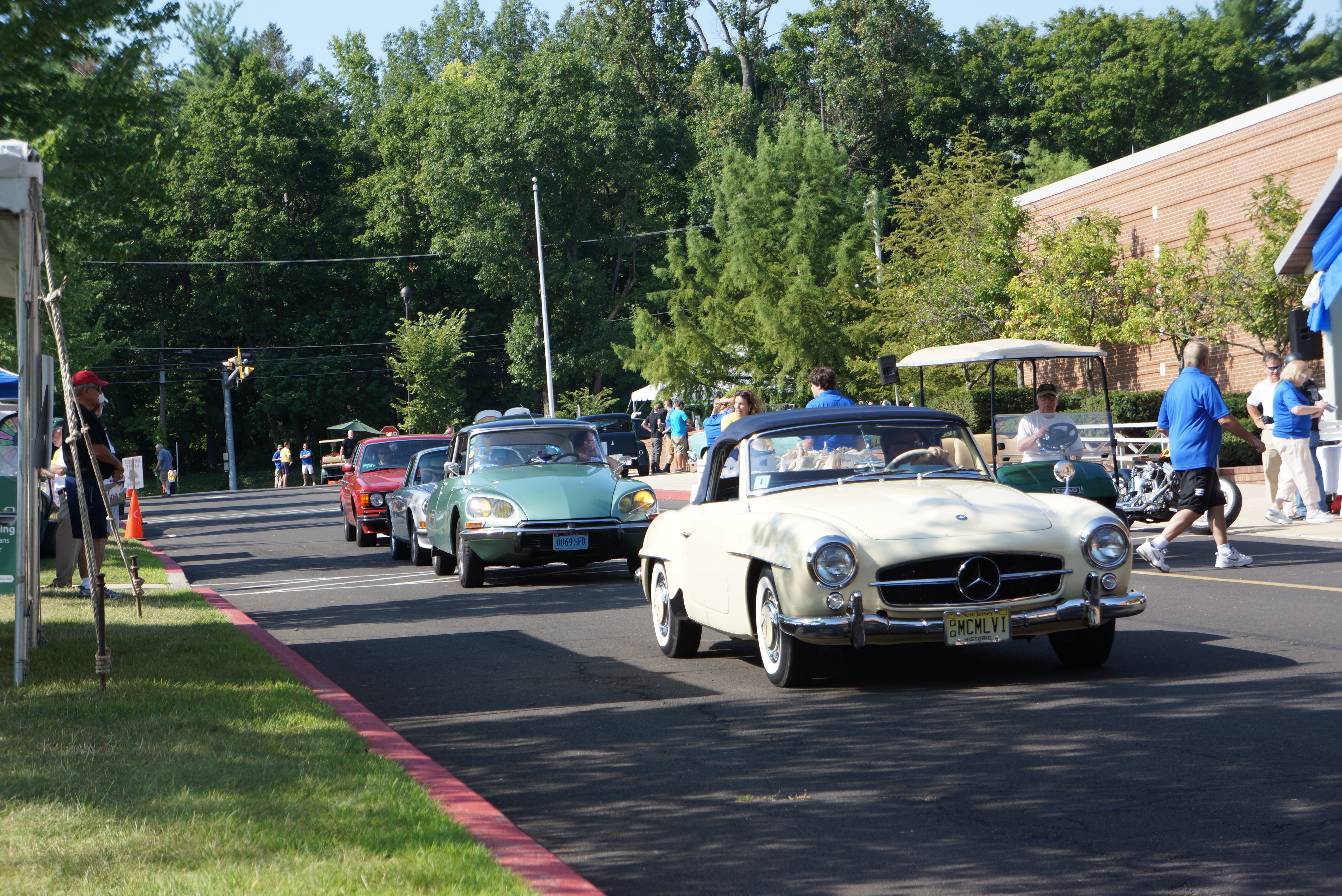
My great friend and fellow rally driver Steve H and I have made the trip to Hershey together numerous times. It was one trip in the 1990s when we discovered that if we arrived early enough on Saturday morning, we could have the pleasure of watching the parade of cars as they entered the show field (AACA rules require that show cars be driven onto the field under their own power).

As has become my custom, I was on the grounds before 8 a.m., and found a good viewing spot. It is endlessly entertaining to see the cars. If you’re close enough, you can also capture the drivers’ faces, almost every one of them grinning as they proudly pilot their machines. Below is an assortment of vehicles moving under their own power before finding their designated show field spots (click on these, or any photos in the post, to enlarge them).


FINAL COMMENTS

Sometimes, the “business” of the hobby causes us to forget that this IS a hobby, which means we’re doing this for fun. And looking around at the sights and sounds, plenty of people at Hershey are having fun. We’ll leave you with a few photos as reminders.


All photographs copyright © 2015 Richard A. Reina. Photos may not be copied or reproduced without express written permission.

Sunday Morning Breakfast Drive, Sep. 13 2015

2 p.m. Saturday: Larry and Rich talk by phone:

“I don’t know about tomorrow. I’m driving right now and there’s nothing but dark clouds overhead.”
“The weather forecast is for heavy showers through tonight, and cloudy with showers all day Sunday.”
“One report I heard said that the showers may hold off. Let’s talk again later.”
“OK. I’ll call you after dinner.”

8 p.m. Saturday: Larry and Rich talk by phone:

“Forecast isn’t looking good. What should we do?”
“No one is going to want to drive in the rain. Should we cancel?”
“Let’s see what it’s like at 6 a.m. Worse case, we get together and just have breakfast locally.”

At 9 p.m. on Saturday night, the National Weather Service was calling for Sunday’s weather in the entirety of New Jersey to be completely cloudy, with the likelihood of showers increasing throughout the day. But at 7 a.m. Sunday morning, the sky was mostly blue, with scattered high clouds. Be prepared to ignore the weatherman when you’re planning a Sunday morning breakfast run!

"When I was your age, I bought a Z-28 for $1,500!"
“When I was your age, I bought a Z-28 for $1,500!”

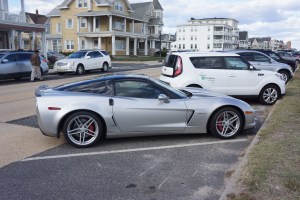
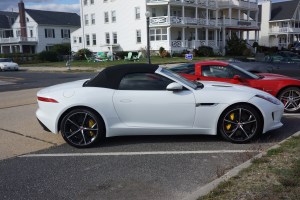
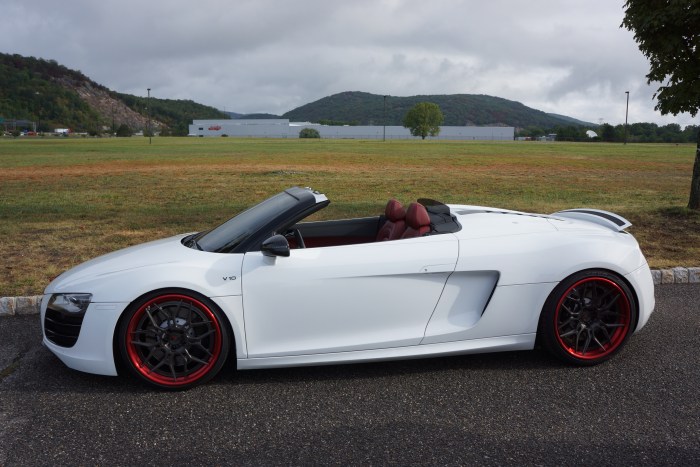
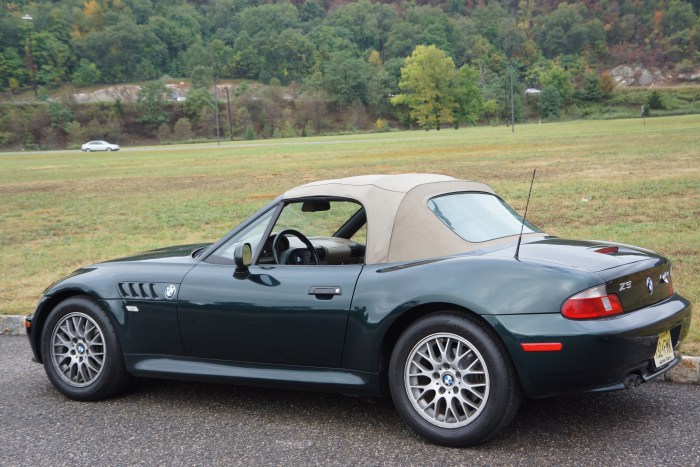
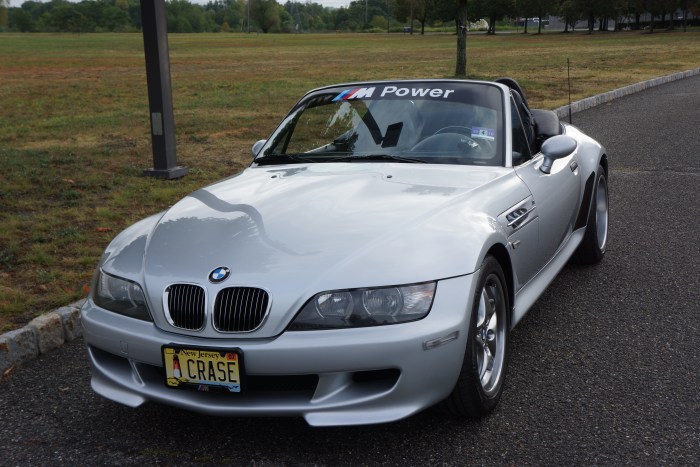
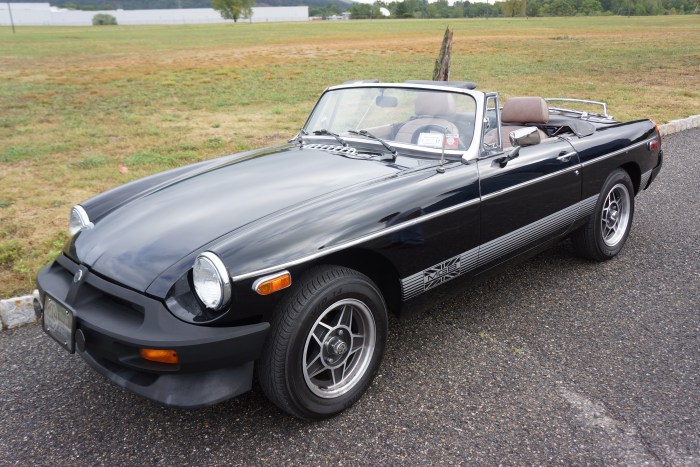
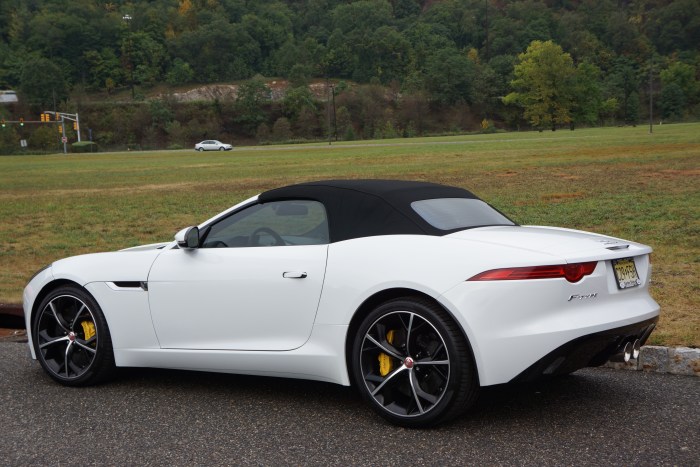
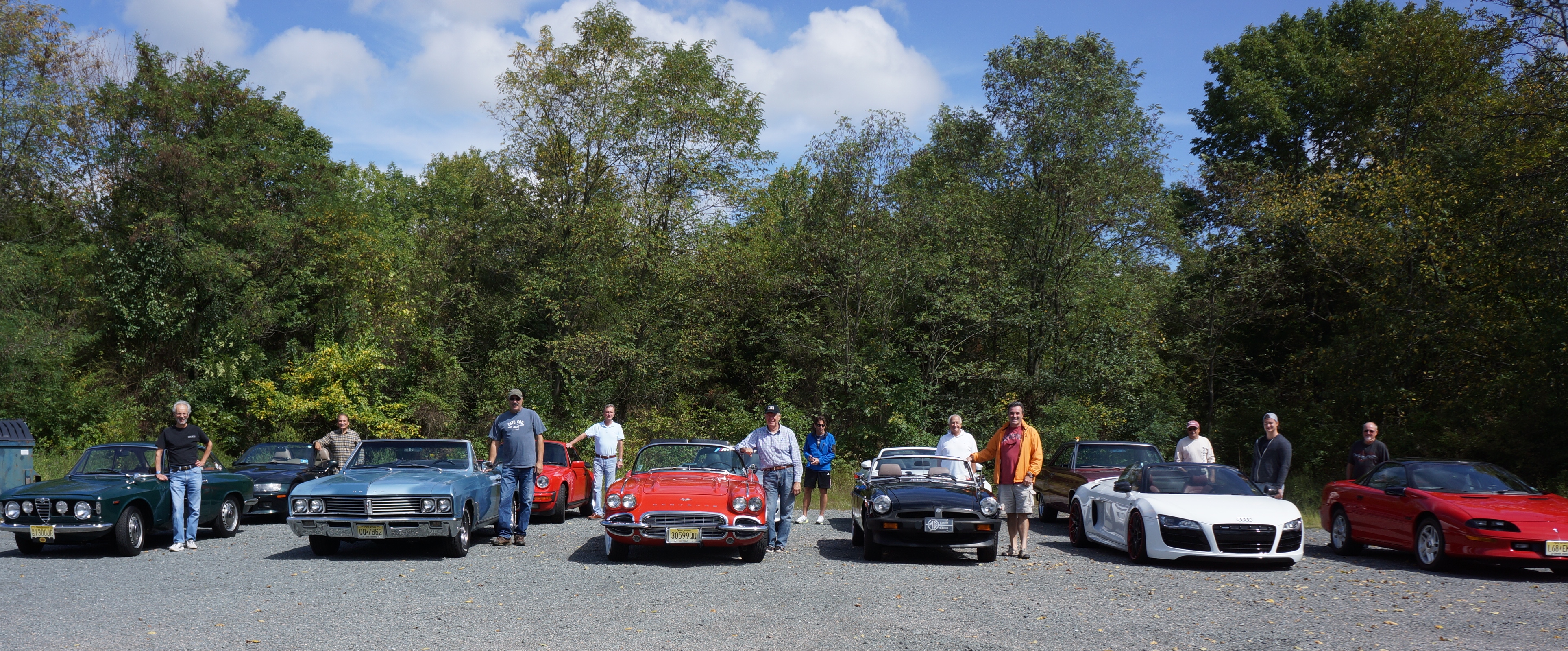
In all, eleven brave souls brought out their cars for what turned out to be a spectacular morning. Several in the crowd were with us for the first time. And in what must have been a first for our group, the European sporting machines outnumbered the American iron, 7 to 4! The Germans were well-represented by Peter’s 911 (with son Jonathan navigating), Danek’s Audi R8, and the “almost twin” BMWs of Jeff (Z3) and Rob (Z3M). The UK flag was flown by Rich S in his MGB and Rich L in his Jaguar F-Type. Rounding out the cars from the Old Country, your humble scribe proved once again that the words “reliable” and “1967 Alfa Romeo” can be spoken in the same sentence.

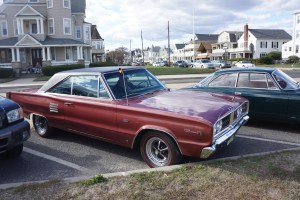
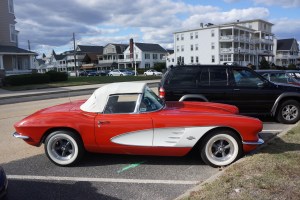
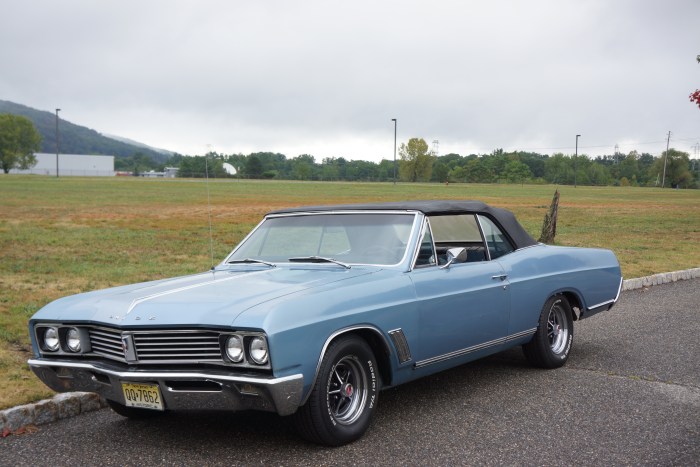
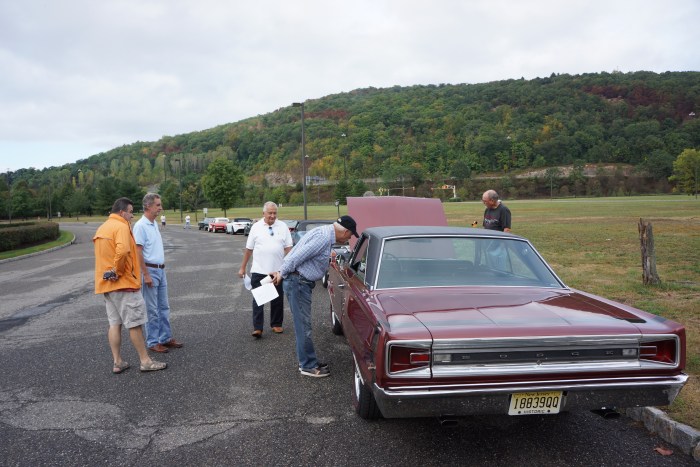
It’s usually “Chevys Rule” at these events, but the only Chevys today were Larry’s Camaro, and Bill’s new (to him) ’61 Corvette, making its Sunday morning inaugural run with us. The ‘vette also had the distinction of the oldest car participating. Ralphie’s tried-and-true Buick convertible was back, and Julio debuted (to us) his hot ’66 Dodge Coronet.

Once our stragglers arrived, we were able to push off by 8:45, with the Readington Diner as our destination. Our route took us down Route 287 and into Morristown, where we met our first challenge: the roads around the Morristown Green were closed for a bicycle race, forcing us into a detour. Further on in Chester, a street fair gave us some minor issues. However, the weatherman could not have been more wrong, and the sunshine only added to the joy of driving the winding country roads through the towns of Mendham, Long Valley, and Oldwick. After an unscheduled pitstop to use the toilets and refill the cars (in that order), we arrived at the diner on Route 22 by 10:45.

True to form, Rich S again assumed the duties of the traveling photographer, thinking nothing of pulling his MGB alongside another car on 287 and jutting his camera skyward, taking pictures while managing to stay in his lane. With his permission, these 3 photos below taken by Rich S are posted here:

The diner food must wait...
The diner food must wait…

When 12 hungry guys order breakfast, the orders are as varied as our cars. And you would think that with food on our minds, each of us would remember our selection. But it doesn’t always work that way. The waitress showed up with the first plate: “Awright, who had the #3 with eggs sunny-side?” No one said a word. Her patience ran out after 15 seconds and she put the plate down. Rich S said “we’re not very good at this part, are we?”, to which we laughingly agreed. Eventually, everyone had a plate in front of them, with food approximating their order. No one left hungry. Coffee service continued well after the last morsels were consumed. The wait staff was generously compensated for their attentiveness.

"What are you getting?" "I don't know, what are you getting?"
“What are you getting?” “I don’t know, what are you getting?”

 
The diner has a large parking area in the back, and the joint wasn’t overly crowded, so we had all parked together. As we exited, we asked several gentlemen nearby if they would take some group photos for us, and they happily obliged. Lots of smiles, handshakes, hugs, and of course, cries for a repeat event before year’s end brought our September breakfast run to a cheerful conclusion.

The group with their automobiles


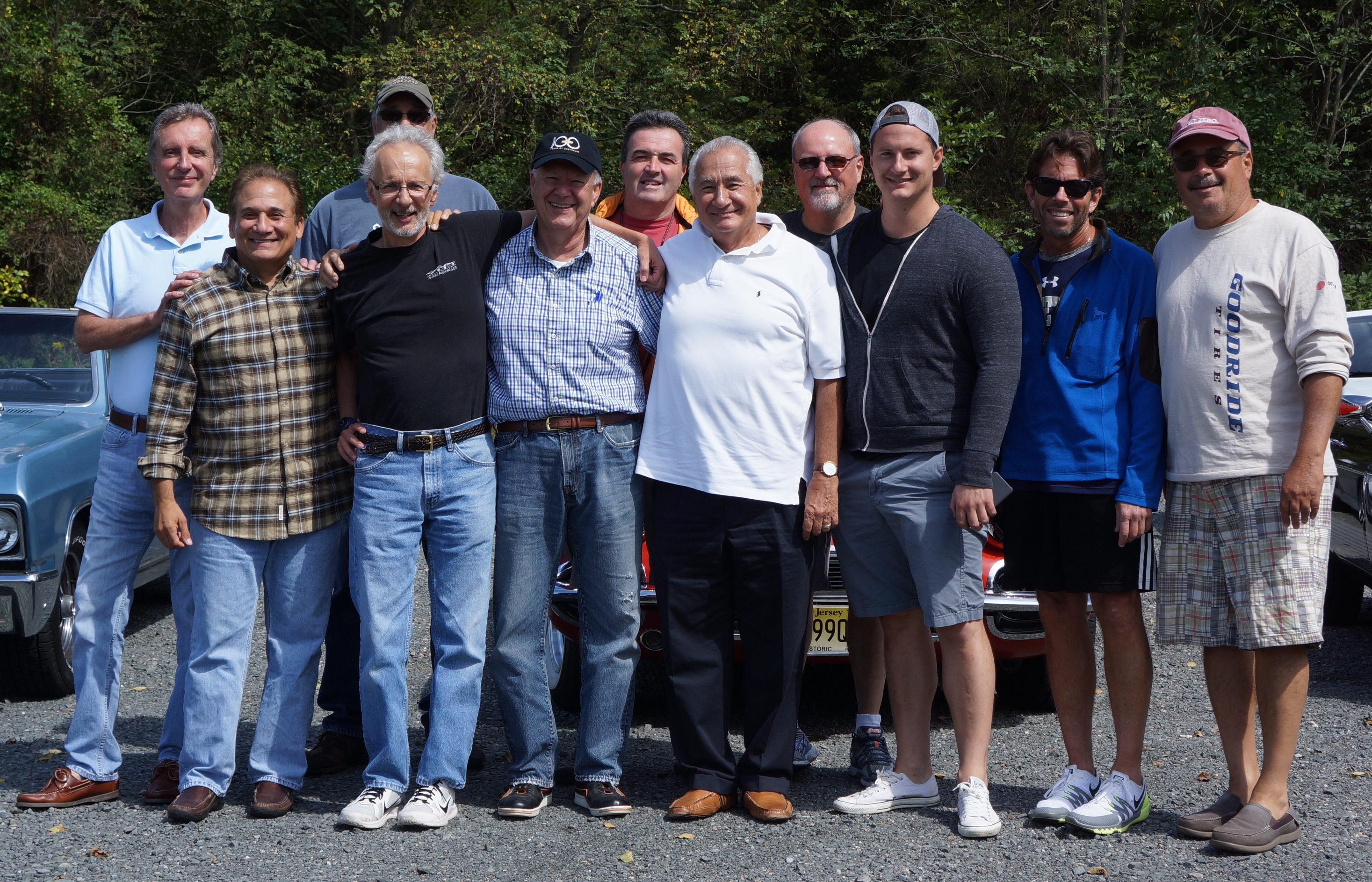
The Group
The Group


All photographs (except as noted above) copyright © 2015 Richard A. Reina. Photos may not be copied or reproduced without express written permission.


Alfa Romeos at the 2015 New Hope Auto Show

View of the show field from a participant's chair
View of the show field from a participant’s chair

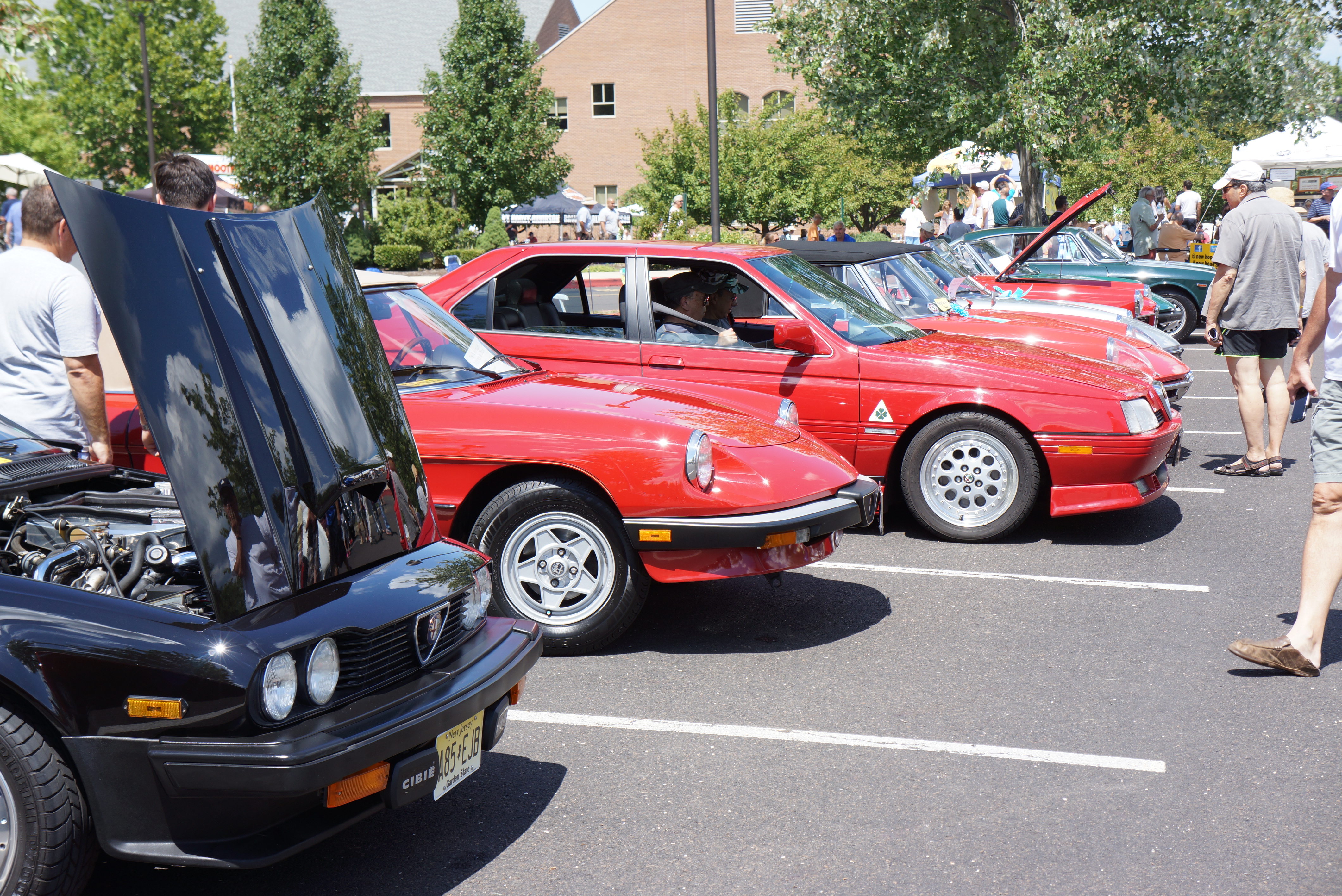
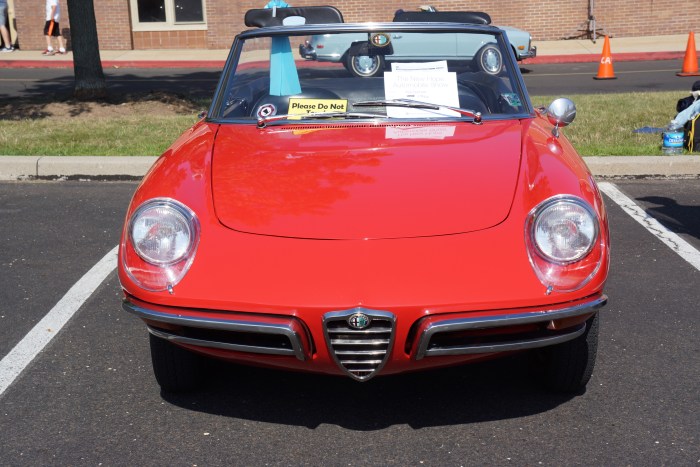
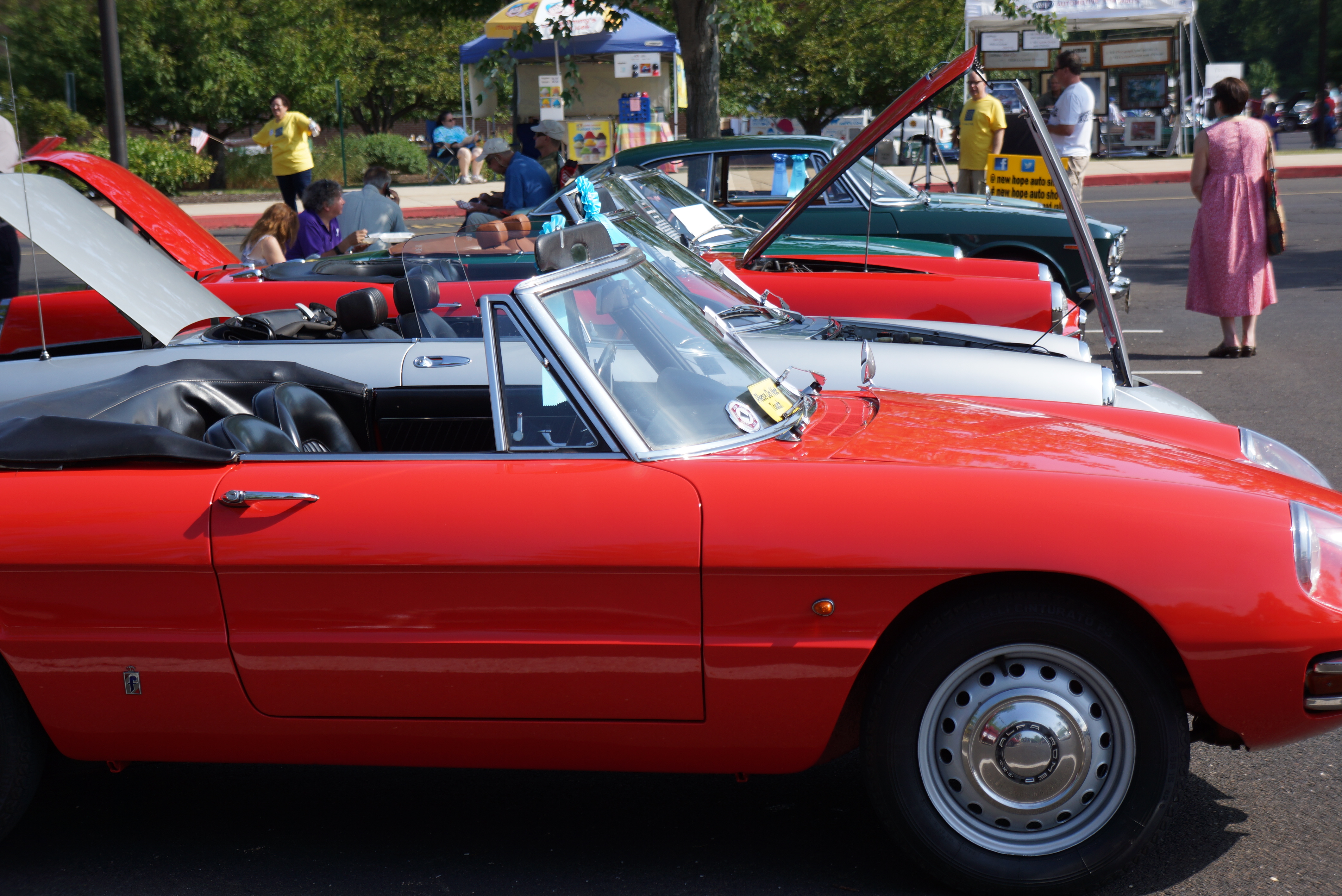
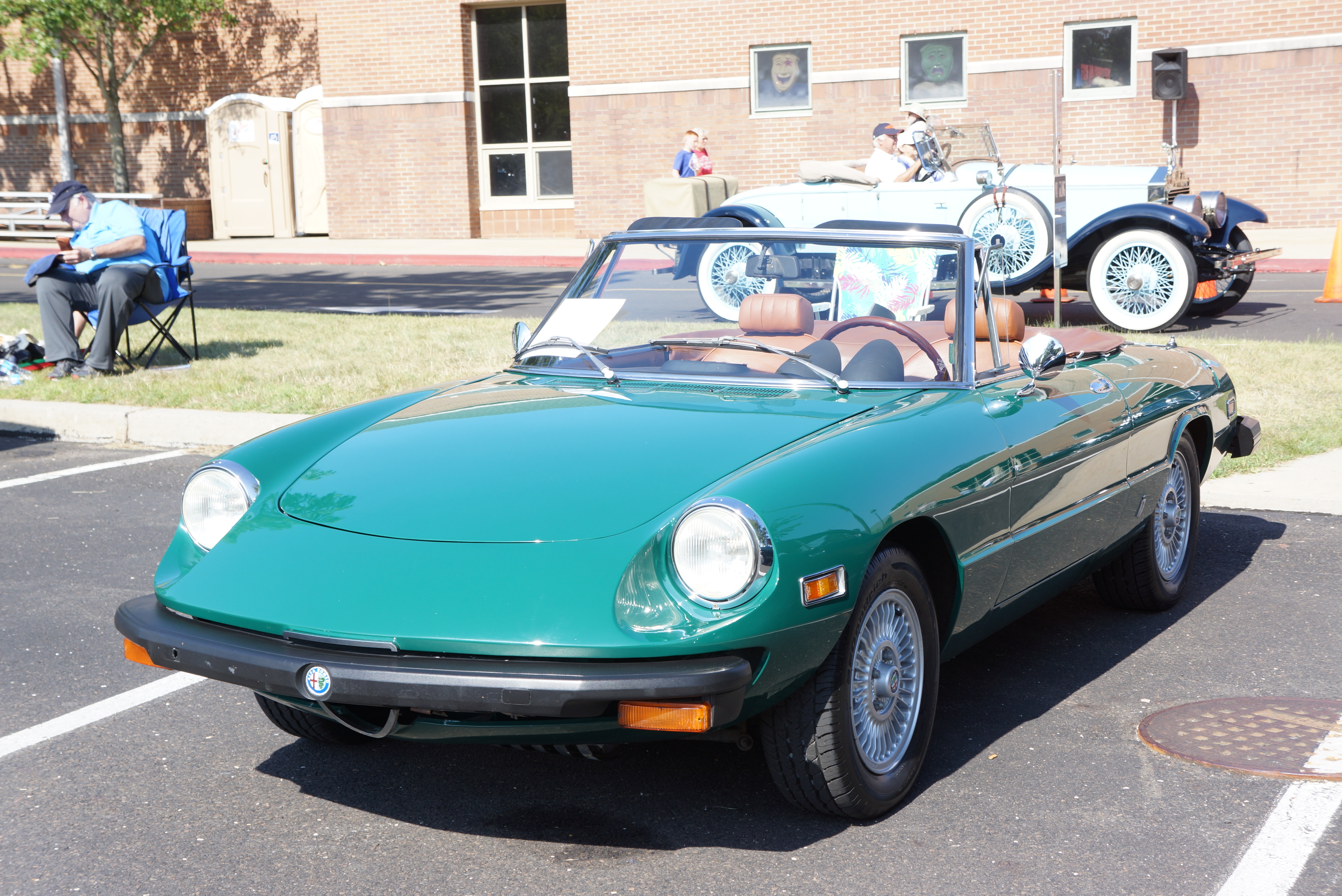
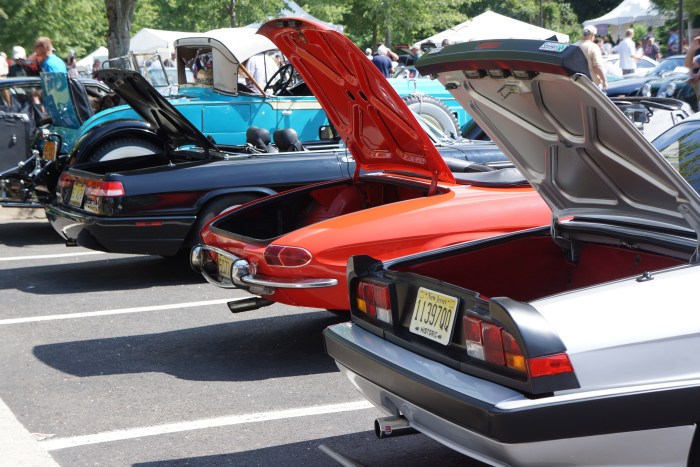
The storied Italian car maker Alfa Romeo was heavily featured at this year’s New Hope Auto Show, held on the grounds of this Pennsylvania town’s high school. The Alfas, assigned their own class, were all parked next to each other, although there was no particular order to their arrangement. The casual observer would be forgiven if s/he thought that Alfa only made convertibles. Of the 15 cars present, 10 were soft tops (“spiders” in Alfa-speak). Of those 10, 9 were of the same basic body style, a design which debuted as the Duetto in 1966 and concluded its run as the Spider Veloce in 1994. That is a very long time in car-years.

Alfas proudly on display
Alfas in a row
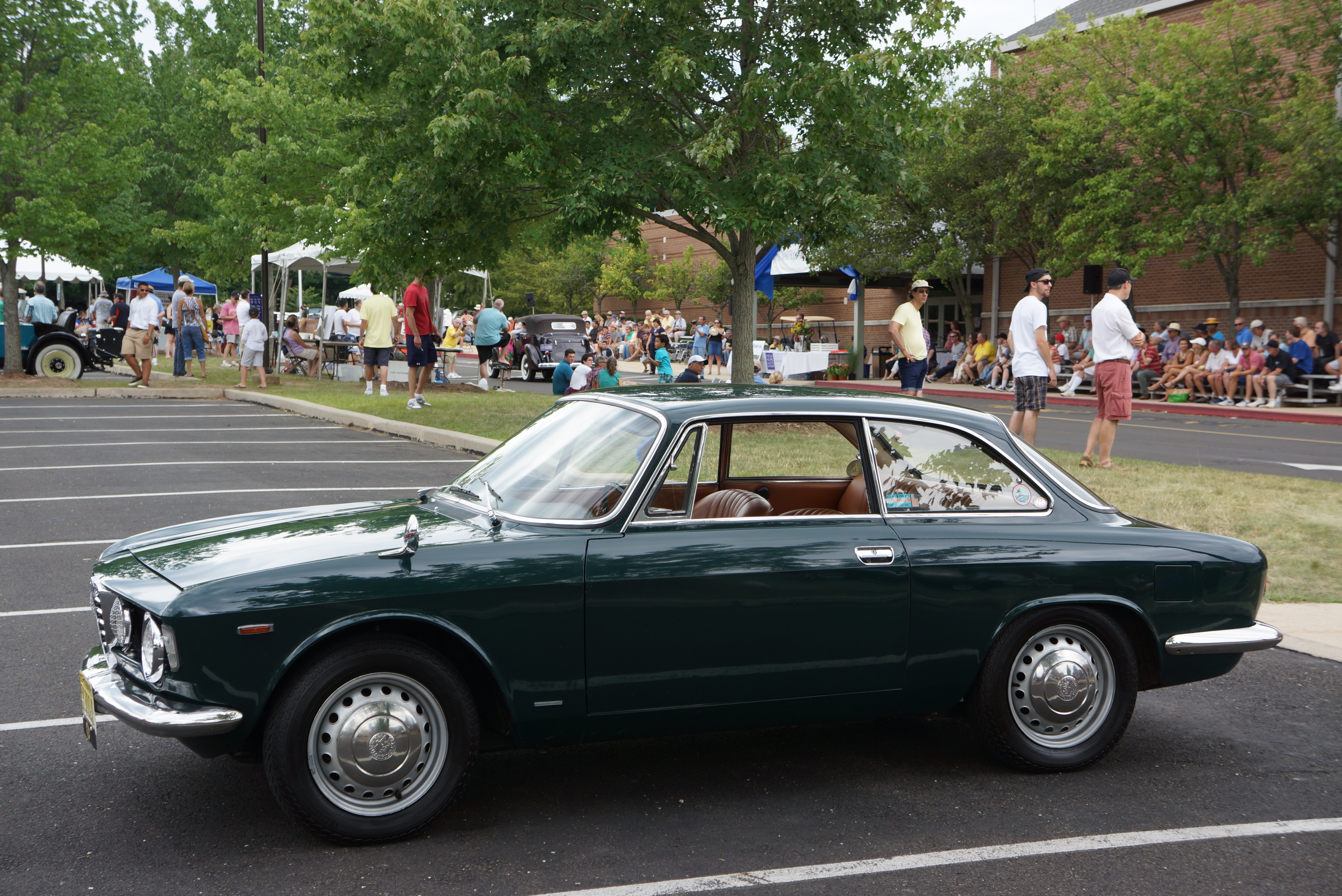
The only Giulia coupe at this year's show, and a step-nose to boot
The only Giulia coupe at this year’s show, and a step-nose to boot

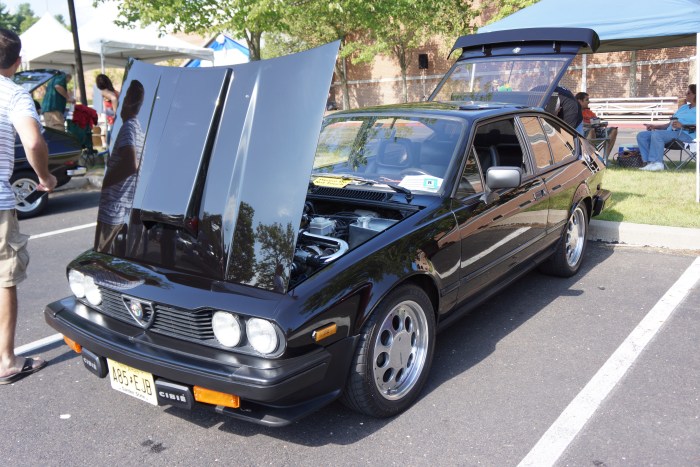
Your author’s car, a 1967 GT 1300 Junior, was proudly on display, and was one of the few tin-tops in attendance. The field was rounded out with an early ‘60s 2000 Spider (the so-called Large Alfa), an Alfetta GT, a GTV-6, and a 164 sedan (the only front-wheel-drive Alfa present among all the rear-wheel-drive vehicles).

It was a rare treat for me to see so many Alfa Romeos in one place at the same time. But the real treat was provided by the gang which brought in these beautiful cars. Alfa owners are a passionate lot; they like to drive their cars; they like to show off and talk about their cars; and they like to meet and chat with fellow Alfa owners and wanna-be owners. Most of the day was consumed by conversation about our Milanese machines.

The first couple I met had arrived in their 1979 Alfetta GT 2-door coupe. “Quinn” and I happily traded stories about each other’s cars. One story I shared occurred last week. While driving to work, I spotted a car just like theirs on the road with me. It had been ages since I had seen an Alfetta moving under its own power. This particular one was mostly in grey primer, with its passenger door still red (and still wearing a large “ALFA ROMEO” decal). It was bumperless, and obviously a work-in-progress. But by the sounds it was making, I knew the driver was having a blast.

An Alfetta GT reflected in the mirror of a Bentley Continental GT

What made our roadway rendezvous rather unique that morning is that I was piloting my boss’ 2012 Bentley Continental GT Coupe, all W-12 twin-turbo 500+ horsepower of it. I’m always a bit self-conscious driving that car, and tend to stay to the right, moving at the speed limit, in order to avoid undue attention. As the Alfetta drew closer, I wanted to drop my window and give the driver a big thumbs-up. Dismissing any concern about what he might think of me, I did just that. His ear-to-ear grin told me all I needed to know.

The owner of the ’79 Alfetta GT told me that he has owned his car in excess of 20 years, and although he has done scores of maintenance and repair work on it, he considers it a mostly original car. Looking the car over, I agreed with him, as much of the black lacquer as well as the beige cloth upholstery remained as it was in 1979. These early Alfettas had a controversial dash design: the tachometer was centered in front of the driver, with all the other gauges in the center. I’ve driven these cars, and it takes some time to get used to the arrangement.

Not all Alfas are red; just most of them

Immediately to one side of me was a Spider owner who is also a very active member of his Alfa Romeo Owners Club local chapter. He, among many other owners, encouraged me to join the club in order to become more involved in their driving events. “Bill” is a marque expert who delighted in telling me about the nuances among the display cars, including which cars were factory-correct and which were not. The truth is that he was a tremendous knowledge source about all things Alfa.

1982 Alfa Spider
1982 Alfa Spider

On the other side of me was another spider. “Jim” had bought this car just a few months ago (sight unseen off eBay!). It was a Texas car, in very nice shape. This was his 4th Alfa, and he told me that the drive to the show that morning was the longest he had driven the car since obtaining it earlier this year.

1976 Alfa Spider
1976 Alfa Spider

An hour or so after arriving, the couple with the ’79 Alfetta returned to my car to make an announcement: they had shared my story about “The Alfetta and the Bentley” with the folks in the car next to theirs, and he was the driver of that primered Alfa! “Tom” and I met and screamed over and over at each other “I can’t believe it!” After I told him that I had arrived at work and shared my photo with several fellow enthusiasts, he told me that he got to work and called his wife to tell her “hey honey, some guy in a BENTLEY gave me a thumbs-up”. (His wife chimed in that he never called her from work, and she had at first assumed that something was wrong). Of course, I clarified for him that my daily-driver Jetta was home while I put some miles on the boss’ car. He told me that I had made his day, which made me feel wonderful about the entire encounter.

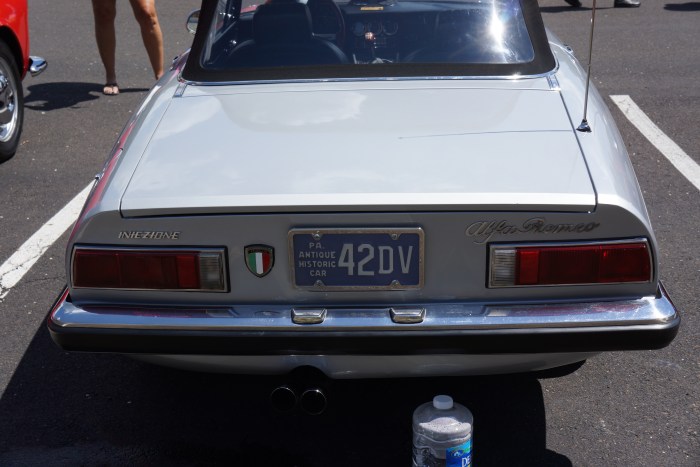
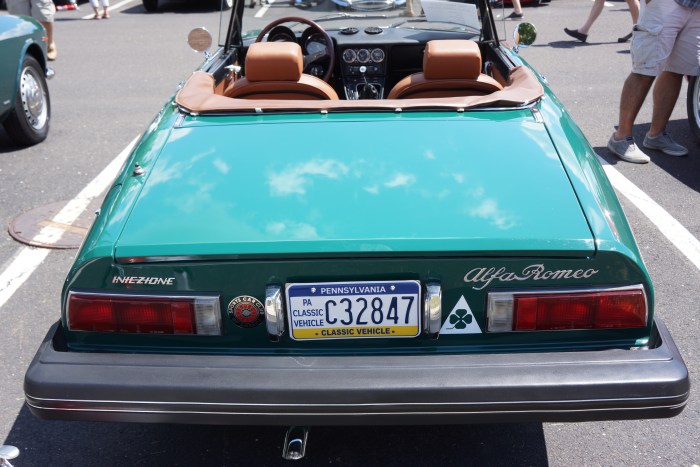
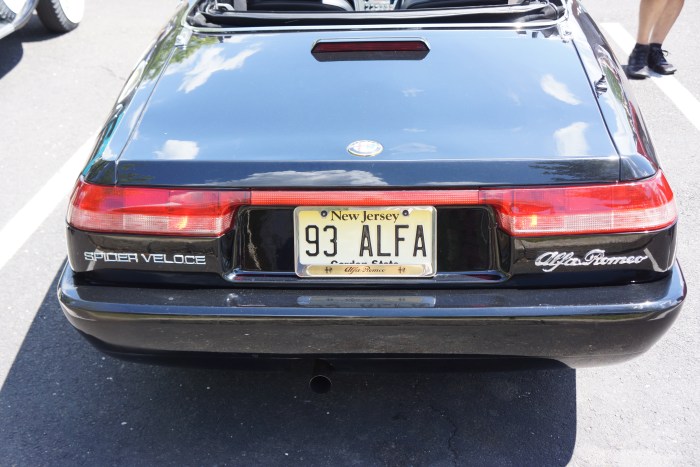
The number of spiders at the show gave me the chance to document something which I knew about, but for which I was lacking empirical data: the evolutionary design changes of the spider’s back end through 4 generations, known among the faithful as S1, S2, S3, and S4. (The front end also evolved, but to a lesser degree.) Photographing each version and displaying them side-to-side clarifies the differences. It also makes it plain to this set of eyes which of these wins the beauty contest. Your opinion may vary.

Kudos to the organizers of the New Hope show. With close to 250 cars on display, the difficult logistics of successfully running such an event become clear once you spend most of the day observing it. As the cars paraded off the field, my Alfa eventually became the sole representative of the marque. Lovely cars were seen, photographed, dissected, and discussed. Most importantly, new friendships were begun, with the promise of future automotive adventures to come.

The last Alfa standing waits to go home

All photographs copyright © 2015 Richard A. Reina. Photos may not be copied or reproduced without express written permission.

NEW HOPE AUTO SHOW, AUGUST 2015

Entrance queue at the start of Sunday's New Hope Auto Show
Entrance queue at the start of Sunday’s New Hope Auto Show

The New Hope (PA) Automobile Show was held on the grounds of the New Hope-Solebury High School on Saturday August 8 and Sunday August 9, 2015. This event, which held its first show in 1957, celebrated its 58th anniversary this year. Vehicles are displayed according to predetermined classes, which are different on each day. In general, domestic vehicles are shown on Saturday, while European imports are featured on Sunday. These divisions are not completely strict, as we shall see. Your faithful scribe registered and showed his 1967 Alfa Romeo GT 1300 Junior on Sunday, so this report will focus only on that day’s cars.

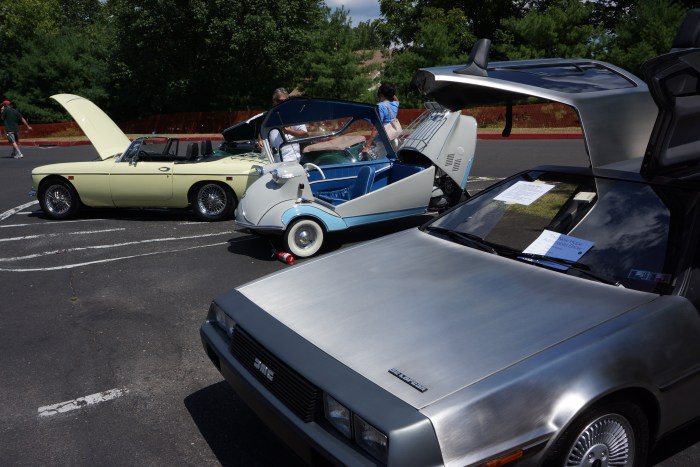
Arriving at 8:15 a.m. and assigned to park with several Alfas already in attendance, I was pleasantly surprised to see our row quickly fill up. In all, 15 Alfas eventually arrived and parked together. While spiders (convertibles in Alfa-speak) were the dominant body style, there was enough variety to keep the Alfisti happy. And Alfas were far from the only well-represented marque. Car classes included Austin-Healey, BMW, Jaguar, Lotus, Mercedes-Benz, MG, Porsche, Rolls-Royce/Bentley, and Triumph. Some of these classes had total entries in the dozens. All the usual suspects were present, yet the Sunday show distinguished itself by drawing out some truly unusual and rarely-seen exotics.

The Alfa segment of our program will be covered in a separate blog entry. For now, let’s take a tour of some of the other beautiful, sporty, exotic, and downright eye-opening cars on the field. (Photos can be enlarged for viewing by simply clicking on them.)

BRITISH

The MG menagerie
The MG menagerie

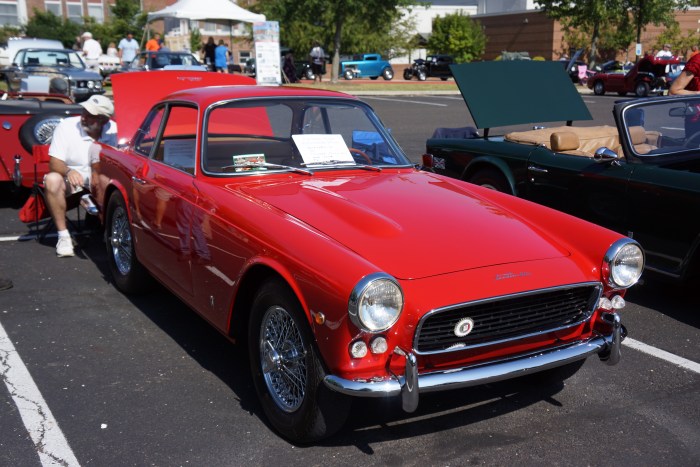
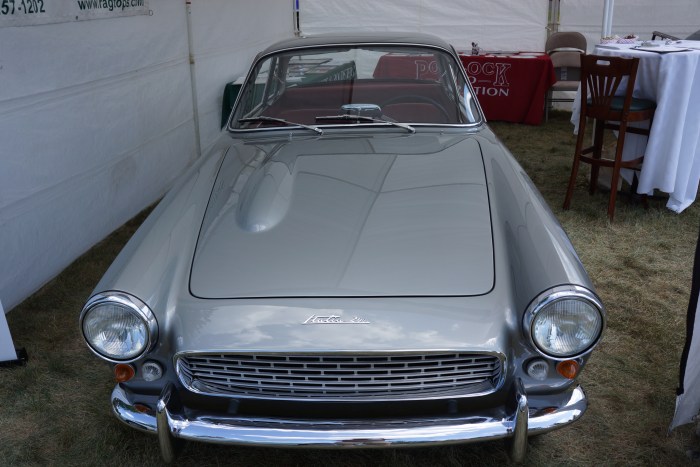
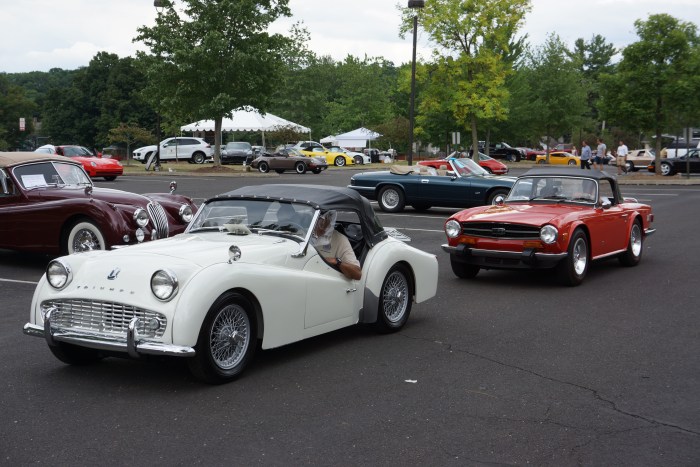
Any classic car show which bills itself as featuring “MGs and Triumphs” will cause you to expect to find MGBs and TR6s. We had MGBs and TR6s in New Hope. We also had Triumph Italias. The Italia had Triumph TR3 mechanicals under a Michelotti-designed body, built by Vignale in Italy. According to Wikipedia, only 329 were made. To say that they are rare is an understatement. To see one at a car show is completely unexpected. There were two on display today (the earlier use of the plural “Italias” was not a typo).

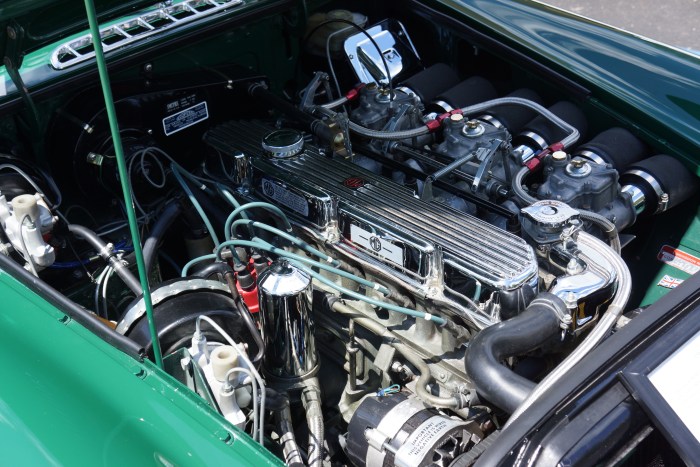
Not as rare as an Italia, but still infrequently spotted, were several MGCs. To those unaware of its existence, the “C” externally appears no different than an MGB. Careful scrutiny will reveal a hood bulge, necessary to accommodate the inline-six cylinder engine shoe-horned into the front. While contemporaneous road tests derided the extra weight over the front wheels and the accompanying poor handling, a kinder and gentler revisiting of the model has critics responding favorably to the extra oomph brought on by two extra cylinders.

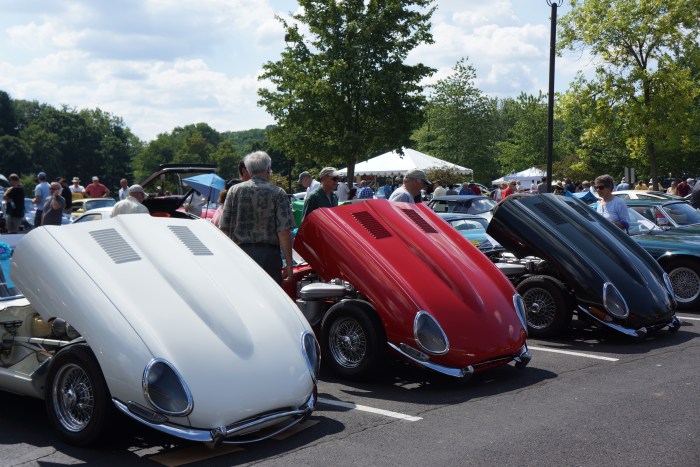
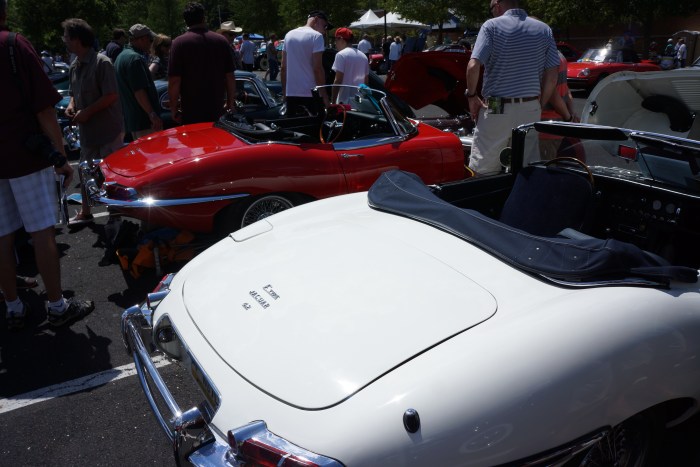
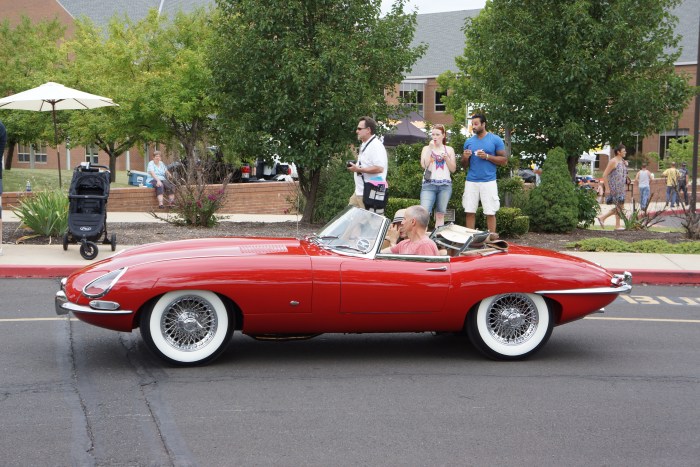
The Jaguar E-Type (more commonly known as the XKE on this side of the pond) is arguably one of the most beautiful cars ever designed, and among the Series I, II, and III cars, the Series I is considered the purest version of the form. It was our luck to have four Series I E-Types at the show. With three of them parked adjacent to each other, the photo ops were aplenty.

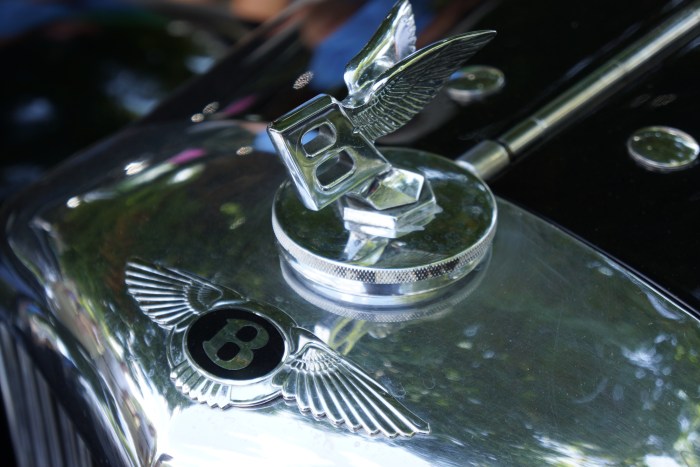
The Rolls-Royce and Bentley contingent was huge, no doubt sparked into action through the nudging of the local RR-Bentley club to get its members out and onto the field. We know from past experience that said owners are not afraid to drive these British beauties, so seeing 25-30 of them was not a surprise. The distinctive front-end styling is a photographer’s delight.

Rounding out our review of British iron were these more commonly seen models, still enjoyable to admire.

PORSCHE
What’s a car show without Porsches? In this case, it would be a car show with many fewer vehicles on the show field. While no count was taken, it’s safe to presume that Porsche was the single best-represented marque at the event. Whether this was due to club participation or a wide and adoring audience for these sports cars, it was fun to see the variety extending from the 356, through the air-cooled 911s, to the water-cooled 924/944/928 series. If you were so inclined, new Panameras and Cayennes were also on display courtesy of a local Porsche dealer.

Throughout the generations, a Porsche front end is instantly recognizable

The rarest Porsche spotted today was this 959. According to my sources, a total of 200 were made. Originally not legal for sale in the U.S., these cars from the late 1980s are now old enough that they can legally be imported and driven. At the time of its release, it was considered the most far-flung supercar of its day. Its specifications may seem the stuff of normalcy now, however, it did lay the foundation for what would be expected among the world’s highest-performing machines.

A Porsche 959

A Porsche 959

DOMESITC

The New Hope Auto Show’s website states that Sunday’s car show includes classes for production GM, FoMoCo, and Chrysler Corp cars through 1990. The American cars on site were not a large group, but several MoPar models were standouts, and are worth highlighting for their styling and engineering features.


ITALIAN
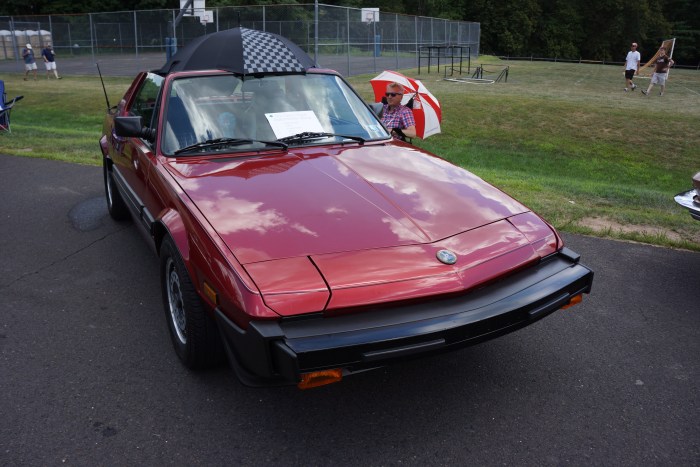
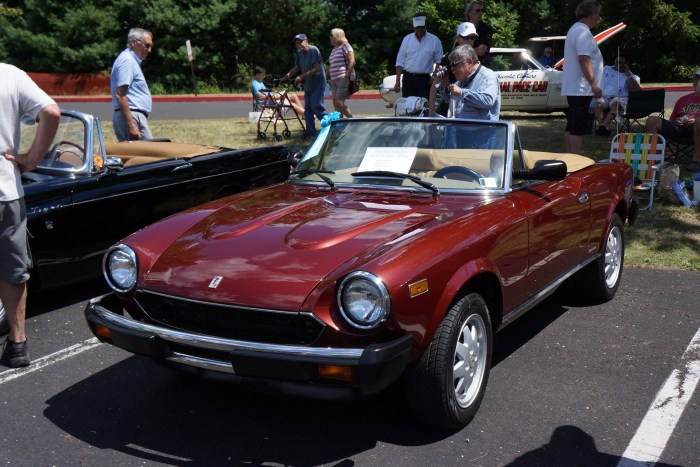
Two different model Fiats were in attendance, sharing a unique attribute: neither car was badged “Fiat”.

After Fiat left the U.S. market in 1982, production of two of its popular sports cars, the X1/9 and the Spider 2000, was continued by Bertone and Pininfarina respectively, and these firms imported and sold the cars in the States under their own brands. (Malcolm Bricklin was somehow involved, but that’s too dark a story to include here.)

This 1987 Bertone X1/9 was an all-original car in pristine condition. Its current owner stated to me that he has owned the car for over 20 years, and drives it year-round (making sure that his winter driving is on dry roads).

This 1985 Pininfarina Spider looked brand new. While the owner was not available to answer questions, the condition of the car (flawless) spoke for him.


All photographs copyright © 2015 Richard A. Reina. Photos may not be copied or reproduced without express written permission.
 

Larry Moves The Mercury At Mecum

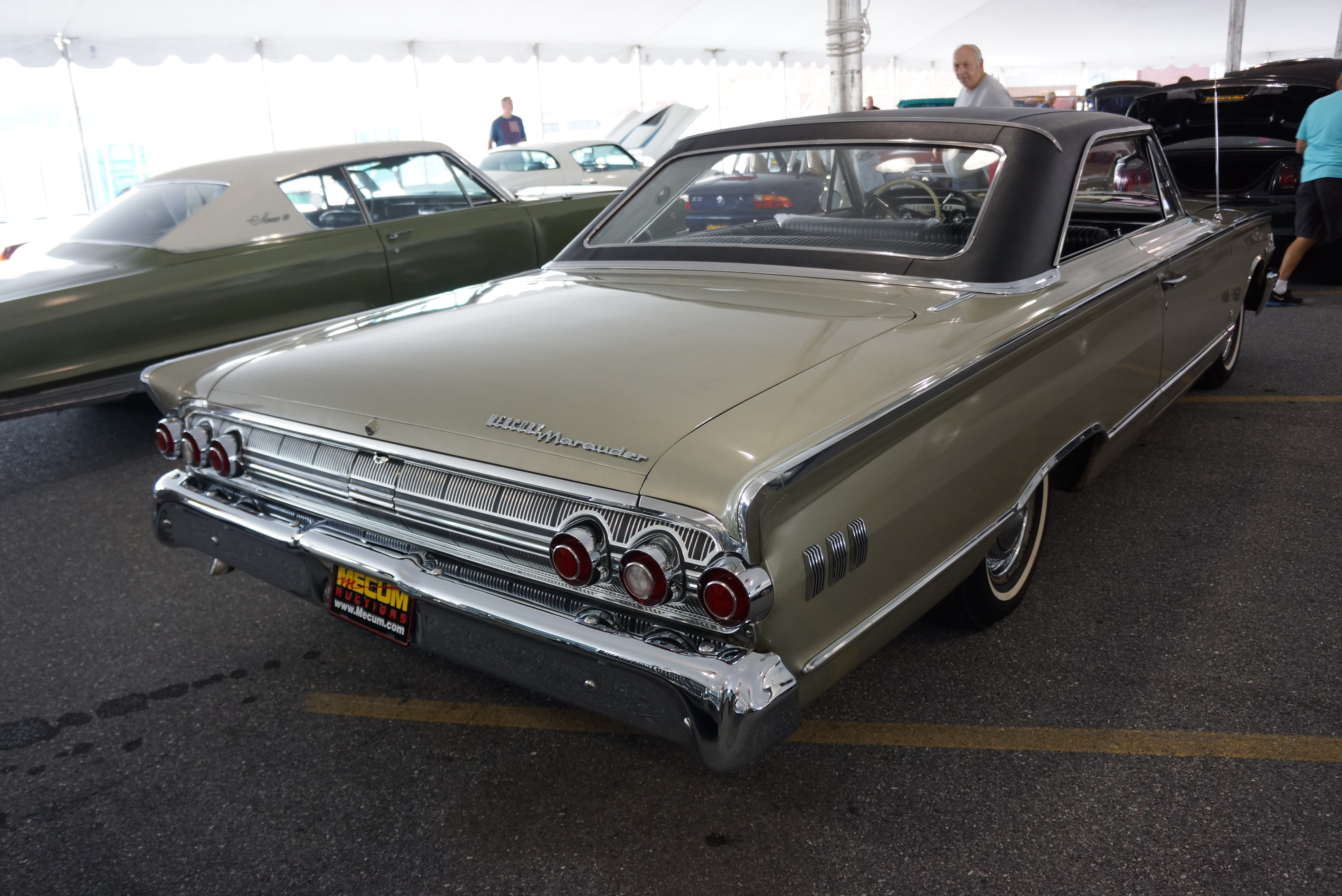
“A roller coaster”: Those three words, direct from my friend Larry, summed up his experience as a first-time seller of a vehicle at a public auction. But this was no ordinary car, and certainly was an extraordinary auction. The car was his 1963 Mercury Marauder, a one-family car previously owned by his late aunt. (Regular readers of this blog have likely seen the coverage of this gem of an automobile. For those who may have missed it, you can find the story here.) It was Larry’s decision to liquidate it via his chosen venue, the Mecum auction in Harrisburg PA.

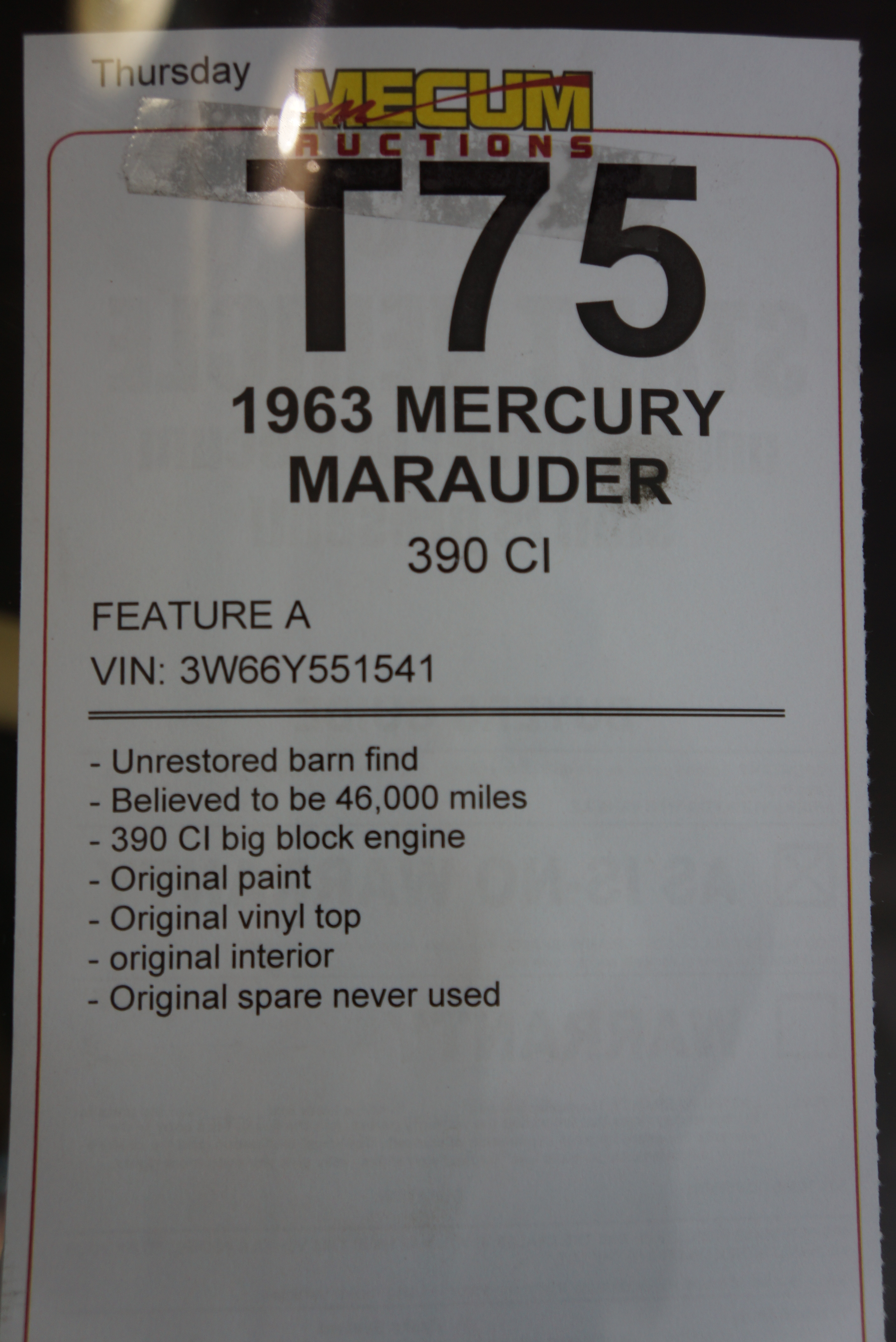
We’ve known for months that the vehicle would cross the block on Thursday July 30, the first of three selling days. We’ve also known that the lot number, T75, ostensibly meant that his would be the “75th car” to sell that day. Initial concerns about the car going up too early in the day evaporated when The Selling Day arrived. More about that in a few moments.

Larry had previously arranged for the car to be transported to the auction site via truck. Our plan was to arrive on Wednesday, do a final prep of the car, and check out the other cars for sale. We would be back early Thursday to stay with the car during its final roll under Larry’s ownership, and Friday would be our day to return to the auction in a more relaxed mode. Most of that went according to schedule.

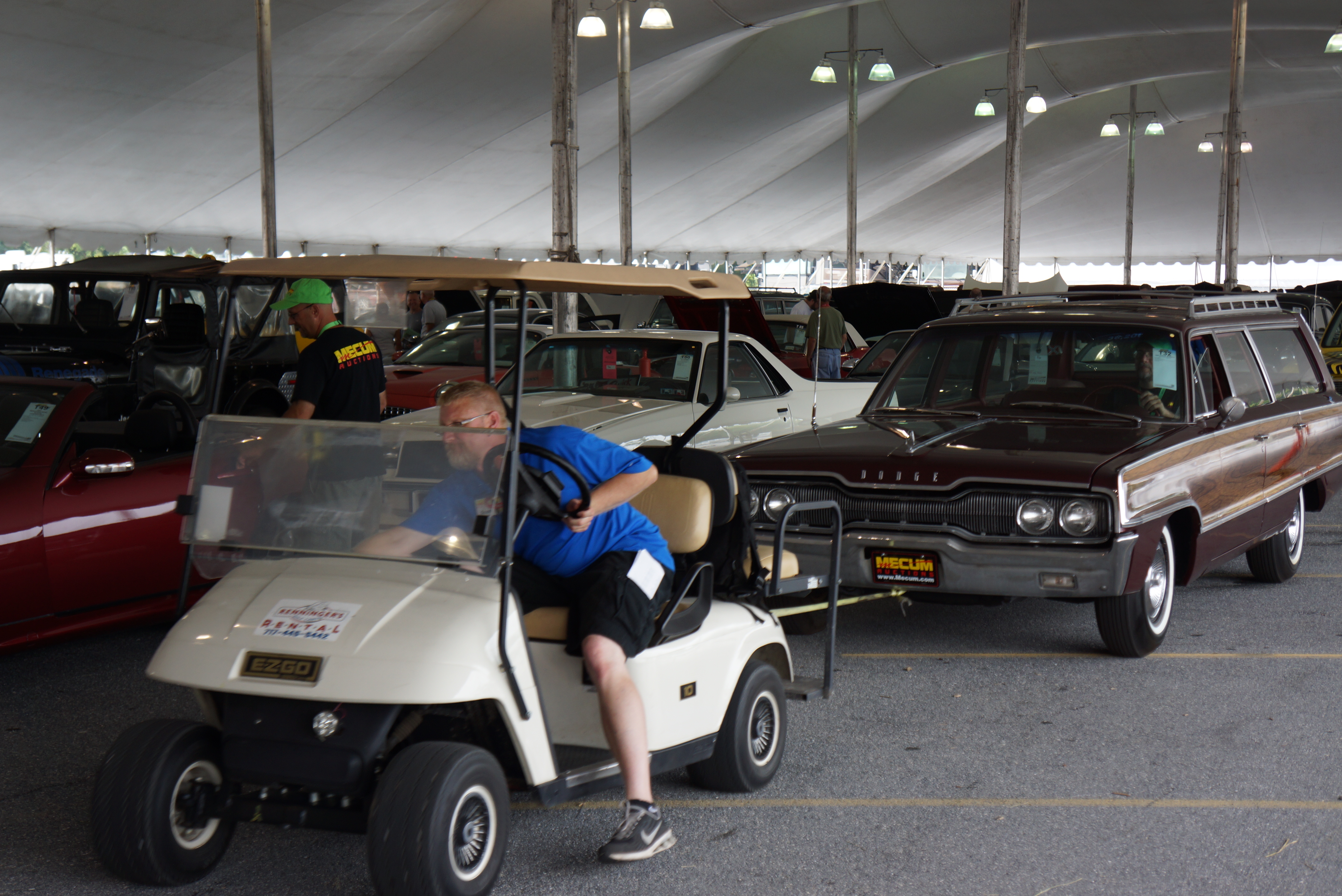
After the requisite stop for a road-trip breakfast of Dunkin’ Donuts bagels and coffee, we were at the Farm Show Complex by 11 a.m. Wednesday morning. Credentials were quickly issued (registering ahead of time has its perks), and our lanyard-mounted badges allowed us access to the entire building. Your author attended this auction last year, but never left the main auction room. Much to my surprise, we found that there are many additional rooms throughout the complex. This is where all the cars and trucks (and tractors) sit waiting their turn. Finding the Mercury meant wandering among these rooms, although we were helped by the “Thursday”, “Friday”, and “Saturday” signs providing direction. As the Complex is used primary for animals, these back rooms are not air-conditioned (the main hall is), and have a musty, dingy feel to them. It’s not the most appealing arrangement for classic cars and trucks.

The Merc as found in Thursday's holding pen
The Merc as found in Thursday’s holding pen

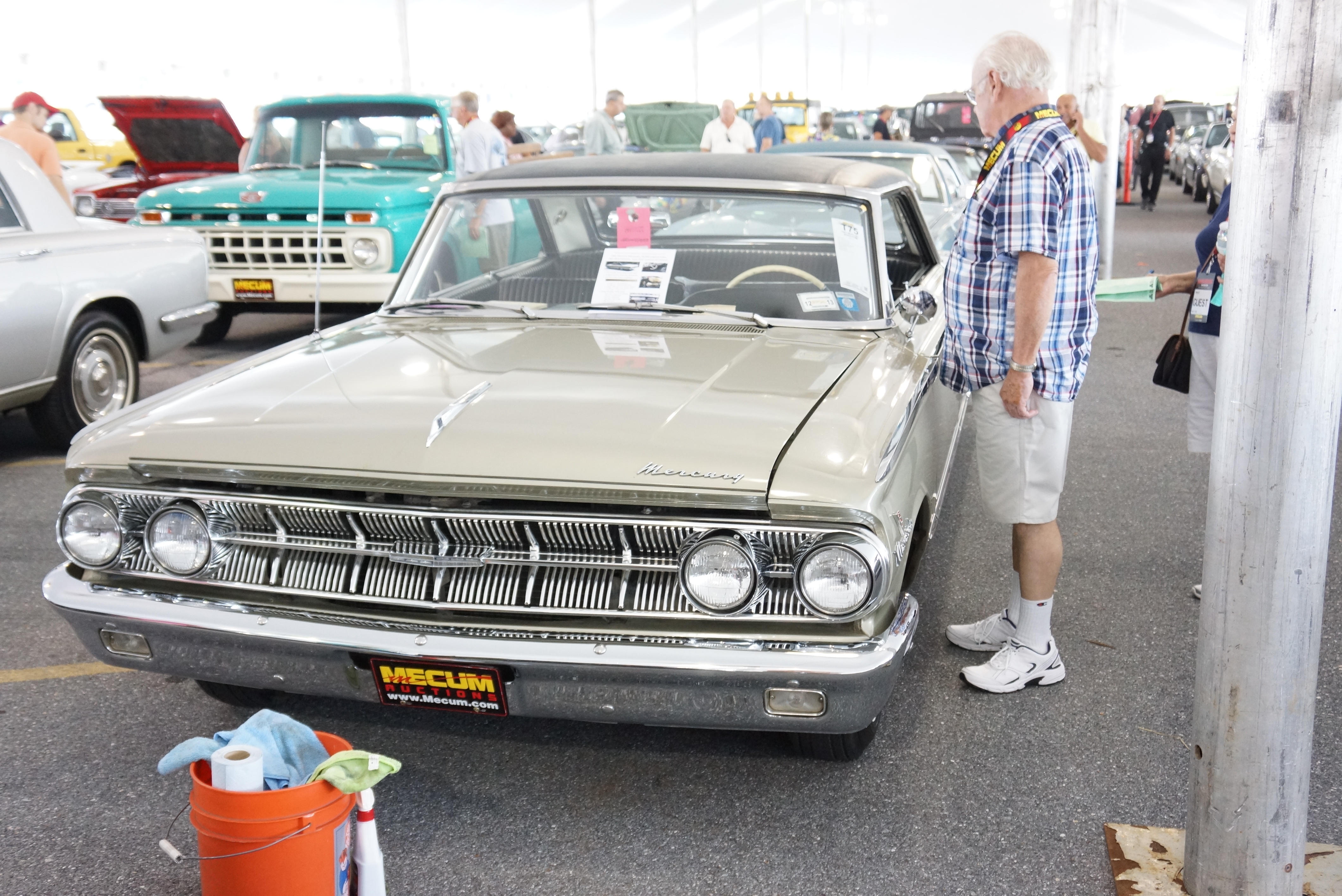
The Merc was in the Thursday room, and looked pretty good after its journey. In fact, we decided based on the conditions in the holding pen that any final detailing would best wait until early Thursday morning. This was our excuse to spend the rest of Wednesday checking out the merchandise! By late afternoon we learned that drivers would be restaging Thursday’s cars from the pen to the tent immediately outside the main hall’s entrance. At around 5 p.m., “our” driver arrived, and suggested that we hop in for the ride, which of course we did. This was my first time in the Marauder with it moving under its own power, and it was Larry’s last time. As we coasted into our parking spot, I saw that we had a good location: the fourth row, near the front of the tent, very close to the main room’s entrance ramp.

Under the big tent
Under the big tent

The Big Day arrived soon enough. We were on site by 8 a.m. in order to secure a close parking spot for the daily driver, detail the ‘63, and chat up any potential prospects. Fears that we would not have an audience due to our rather early time slot were allayed when we saw A) the mob lined up at this hour to get into the building, and B) all the attention the Mercury was getting under the tent. Of course, there were about 150 other cars sharing the tent with us, many of them real beauties. But surreptitious listening to observers’ comments reinforced what we already knew: this was a nice car. Most onlookers told each other (or us) that it was great to see such a rare car; that the car’s condition was “fantastic” for an unrestored vehicle; and that it was one of the more striking cars in the tent that morning. We were feeling good! One gentleman in particular lingered long enough that he asked for the car to be started, and he was the only one to peer into the trunk. He told Larry that he would be bidding.

Detail bucket deployed for final time

Mecum’s schedule said that automobilia would be sold starting at 9:30, with the first automobile crossing the block at 10 a.m. We do not know why cars did not start rolling out of the tent until about 10:45. However, once they started to roll, they moved quickly. Official drivers, distinguished by their neon green Mecum caps, were staged at the top of each row, and dispatched to the cars in plenty of time to start them, warm them up a bit, and begin the parade.

DSC01050
In case his green hat isn’t obvious enough, his badge says DRIVER

A few digressions: perhaps it’s me, but wouldn’t you think that if YOU had a classic car that you planned to sell at auction, YOU would make sure that the car would start at its appointed time? When I say “start”, I’m referring to “crank”, as in “have a charged battery in the car”! To my utter amazement, I saw not one, not two, but THREE cars ahead of us in the tent require the services of the jump-start cart in order to become motorvated (Chuck Berry’s word). In at least one of those cases, the jump attempt failed, and the good ol’ golf-cart-with-a-tow-rope was deployed. Once inside and on the smooth level ground, the white-gloved pushers move the car along with the engine off, and most of the bidding audience is never the wiser.

Golf cart doubles as tow truck

One of the volunteer drivers, a middle-aged woman assigned to move the ’67 Dodge next to us, chatted me up about the Merc, saying that while she liked it, she and her husband collected Pontiacs. I used the opportunity to inquire how she landed this prestigious job, and she told me that their club, the Susquehanna Valley GTO Club, volunteered their services to the auction company. So these drivers knew each other, and were on site primarily for the fun of it. She then confided to me that she did not drive a manual transmission, and she was quite nervous hopping into these “strangers’ cars and figuring out the controls”! Having worked for years at car dealerships, I told her that driving many different new and used cars every day becomes second nature.

It was time. Even with the late start, we had predicted that Larry’s car would cross the block between 12 and 12:30, and here it was just a few minutes before noon. The driver assigned to the Marauder asked Larry if there was anything special to the starting procedure. “Hop in and she should start right up” was the reply. He did and she did.

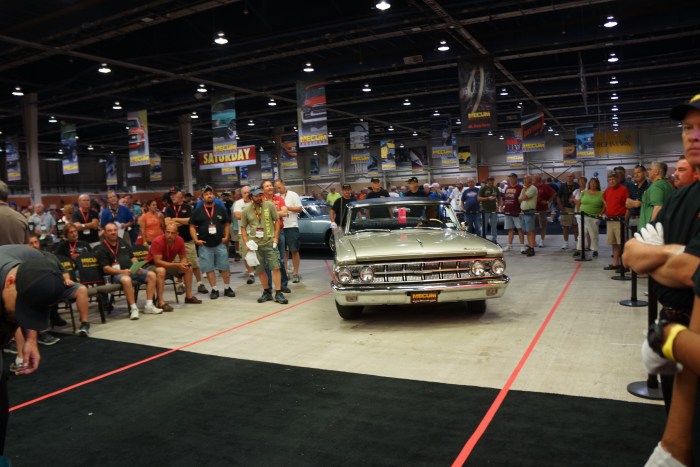
In the building at last

The Mercury cruised effortlessly up the ramp and into the queue. Once in the main building, the excitement level for both of us jumped up several notches. First, the car looked even more incredible under the neon lights. Second, the inside crowd mobbed this car (in truth, they mobbed every car in line). We got the sense that these folks were the more serious potential bidders, rather than the tire-kickers outside. The car got a more thorough going-over during these brief moments than it had at any point prior. Third, this line was moving fast! It felt like less than a minute before the Marauder was about to make the 90° right turn toward the block.

Then…everything stopped. A charity appeal began, in order to raise money for childhood cancer. This was a truly noble cause; and while $10,000 was raised, it gave us a chance to catch our breaths.

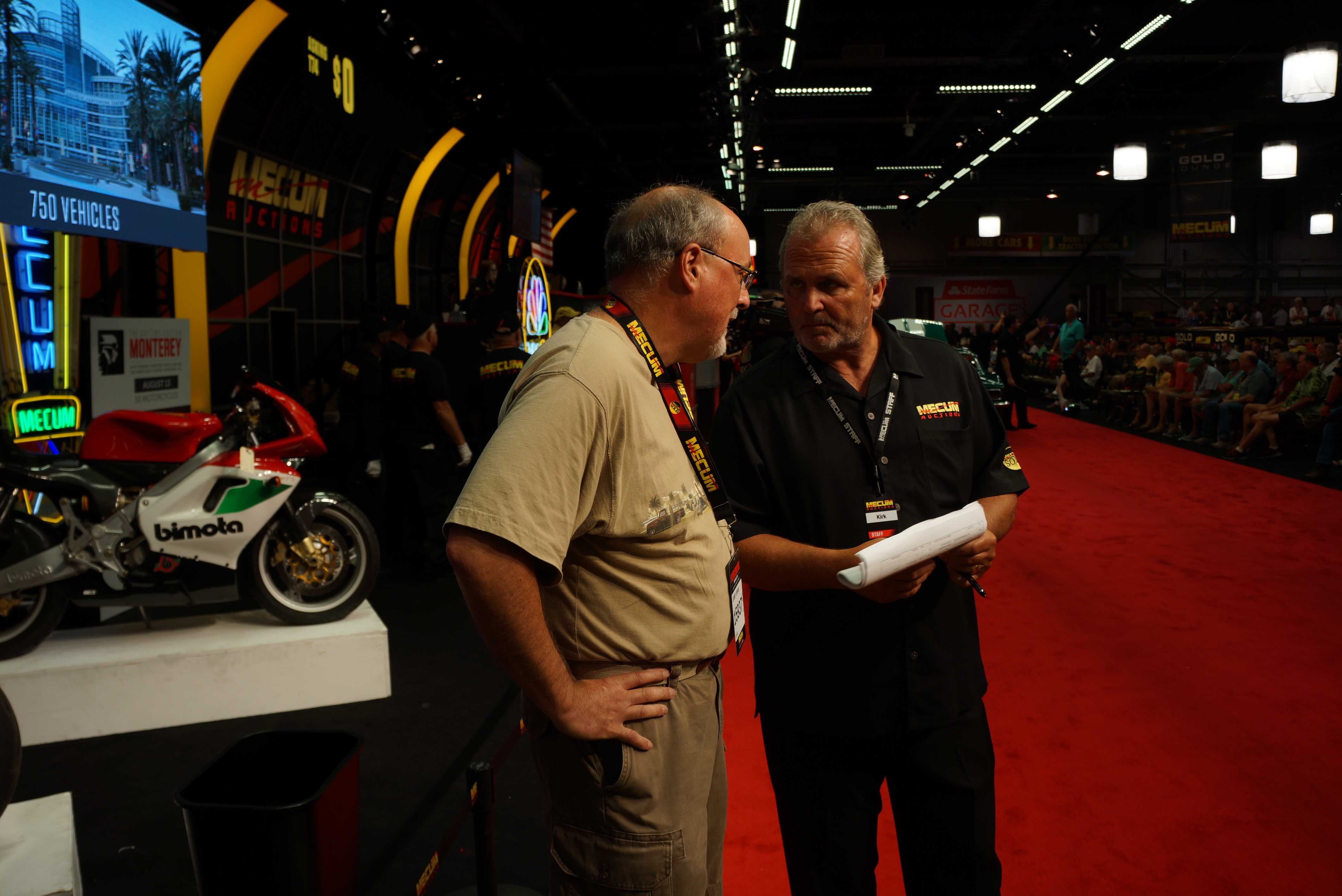
Mecum Man talks to the owner

Like a light switch on at full brightness, then turned off, it was switched on again. I couldn’t tell you a thing about any of the cars that crossed the block ahead of us, whether they sold or not, and if they did, for what amount. My eyes were glued to that Merc, headed to a new destiny. The auctioneer’s voice was suddenly clear enough for me to understand every word: “Lot T75, 1963 Mercury Marauder, 45,000 original miles, unrestored barn find, one family since new, do I have 20,000, 20, 20, who will bid 20? Can I have 15, 15,000, anyone? 10,000, 10,000 for this Mercury? Do I have 5?” Finally, a bite. While I knew he would start high, there was a slight sinking feeling when I heard the opening bid drop all the way to 5,000. The auctioneer continued: “6,000, I have 6, 7,000, who will bid 7? 7, now 8,000?” And so on, as it quickly jumped to $10,000. “Eleven thousand dollars, who will bid 11? 11? 11?” Nothing. It stalled at 10,000. Larry, in the “batter’s box” as they call it, directly below the auctioneer’s podium, was getting pressure from the Mecum man to lower his reserve from $12,000. Larry would not. It was over. The car did not sell. It was 12:15 p.m.

We had 10; asking for the 11 which never came

Shock. Disappointment. Dismay. We could only repeat “I can’t believe it!” to each other over and over. The car missed Larry’s reserve by $2,000. It got a “The Bid Goes On” sticker stuck to its windshield, and was relegated to one of the back rooms normally used by horses and cows. Our cell phones went into overdrive, but instead of broadcasting success, our emails and texts informed our friends that Larry still owned the Mercury. Which brought up this realization: it would be Larry’s responsibility to move the car back home, on his dime. Time to stop thinking about it so much. Time to take a break and not worry about it for a while. We decided to have lunch.

After eating, we convinced ourselves that watching and enjoying the auction proceedings was a good thing to do, so we did. A calmness settled in, combined with an acceptance of the outcome. Larry would do what needed to be done, and I would do my best to support him through this.

Close to 5pm, almost 4 hours after the car failed to sell, Larry’s cell phone rang. It was a brief conversation. The Mecum rep who called told Larry that they had just gotten a bid from an absentee bidder (phone or internet) for the reserve price of $12,000. The car was sold. There was nothing he needed to do. Relief, not joy, was the emotion of the moment. We could talk all day and all night about how the car was worth more; about the lack of real interest among the in-person bidders; and about the sale going to someone who presumably didn’t even see the car in the metal. Finally, the goal was achieved, and a real sense of “done” settled over us. The beers with dinner that night tasted especially good.

DSC01039
We returned bright and early on Friday morning to watch more of the auction without the pressure of the Mercury hanging over us, but we were tired. We hung around until right after lunch, when it seemed our best course of action would be to get on the road and ahead of the upcoming weekend’s traffic. The trip home gave us a chance to review everything that went down over the preceding several days.

There were some lessons learned about the entire auction process. Much of what occurs on the block is not predictable. While some nice cars sold for strong money and a few poor cars sold for cheap prices, good cars were not always bid up to a fair value, and some junk sold for what seemed like crazy high dollars. With all the effort we put into representing the car on Wednesday and Thursday, it ended up selling to someone offsite. Mecum’s cars and trucks tend to be all about the sizzle, whether they are bondo-filled quickie repaints, 100-point restorations, or dolled-up restomods. The Mercury was none of these. Did that affect its outcome? Who knows, because we don’t. Would the car have found a more receptive audience on Friday or Saturday? Again, perhaps, but perhaps not. Finally, would it have done better somewhere else? If so, where? One attraction about Harrisburg is its closeness. Taking it to another locale would have raised the costs of doing business for shipping and accommodations.

The collector car hobby is immensely fulfilling in so many ways. Auctions are only one part of it. At times, they’re a necessary element to help us continue with our passion. In this case, after the ups and downs of the roller coaster, the ride ended, and the players got what they needed to get out of it.
All photographs copyright © 2015 Richard A. Reina. Photos may not be copied or reproduced without express written permission.