Perhaps the ongoing lockdown has distorted my sense of time. Brake System Update Part 5 was posted on April 3, and I would have guessed that it was more recent than that. Progress has continued, and I’m not shy about admitting that 12 weeks of working from home has allotted additional free time with the removal of a two hour round-trip commute. It also felt redundant and nonconstructive to add a post which only stated “… and today I cut and flared two more brake lines….”
The month of May had me in limbo because of the master cylinder. I was keen on keeping the original part and simply rebuilding it. I had taken a chance last year by ordering a rebuild kit that I knew might not work, and it didn’t. Then I found a new supplier based in Germany whose website looked like they had the correct ATE rebuild kit. That order was placed in late April, and I’m still waiting. Supposedly DHL has the part (or more likely has lost the part).
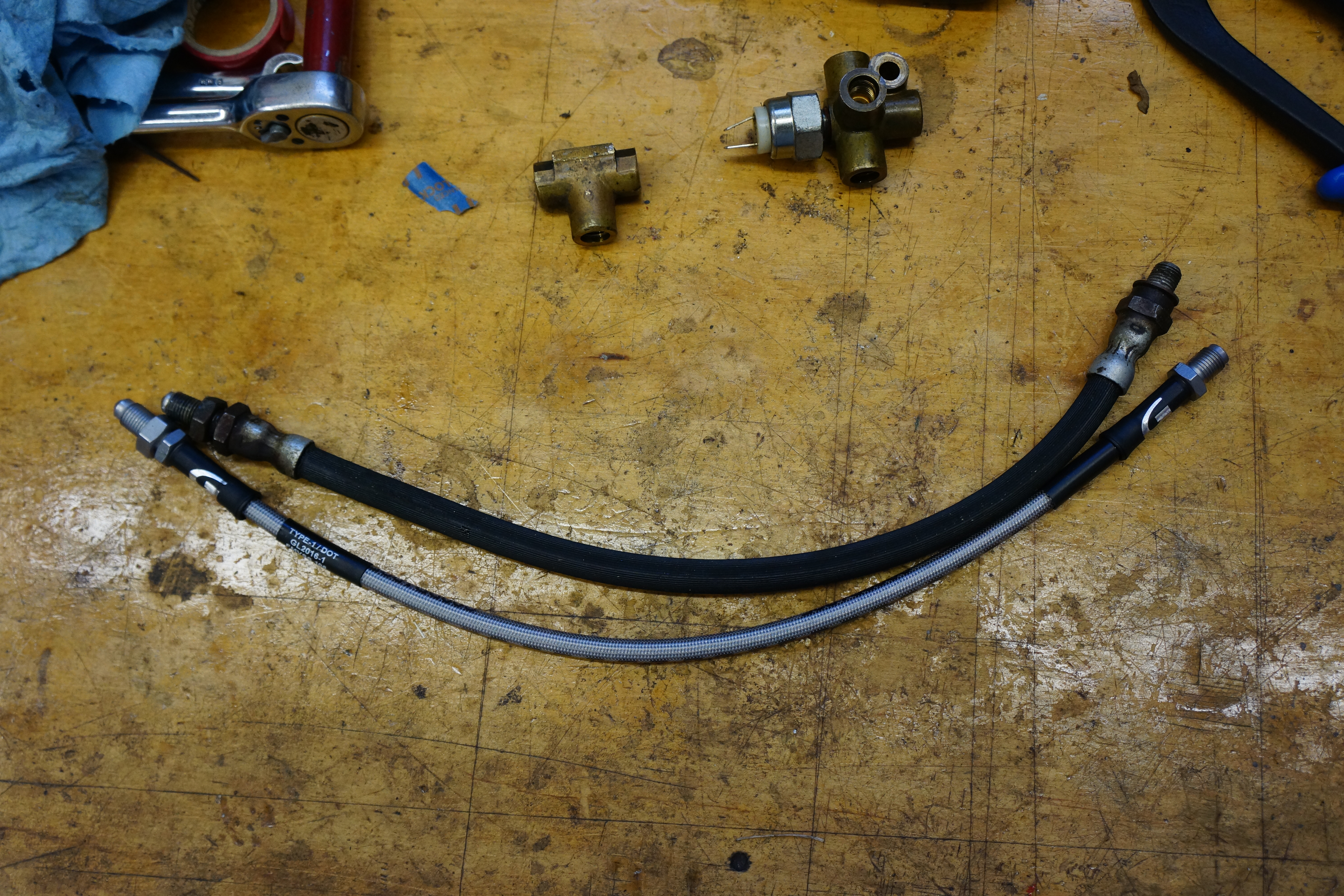
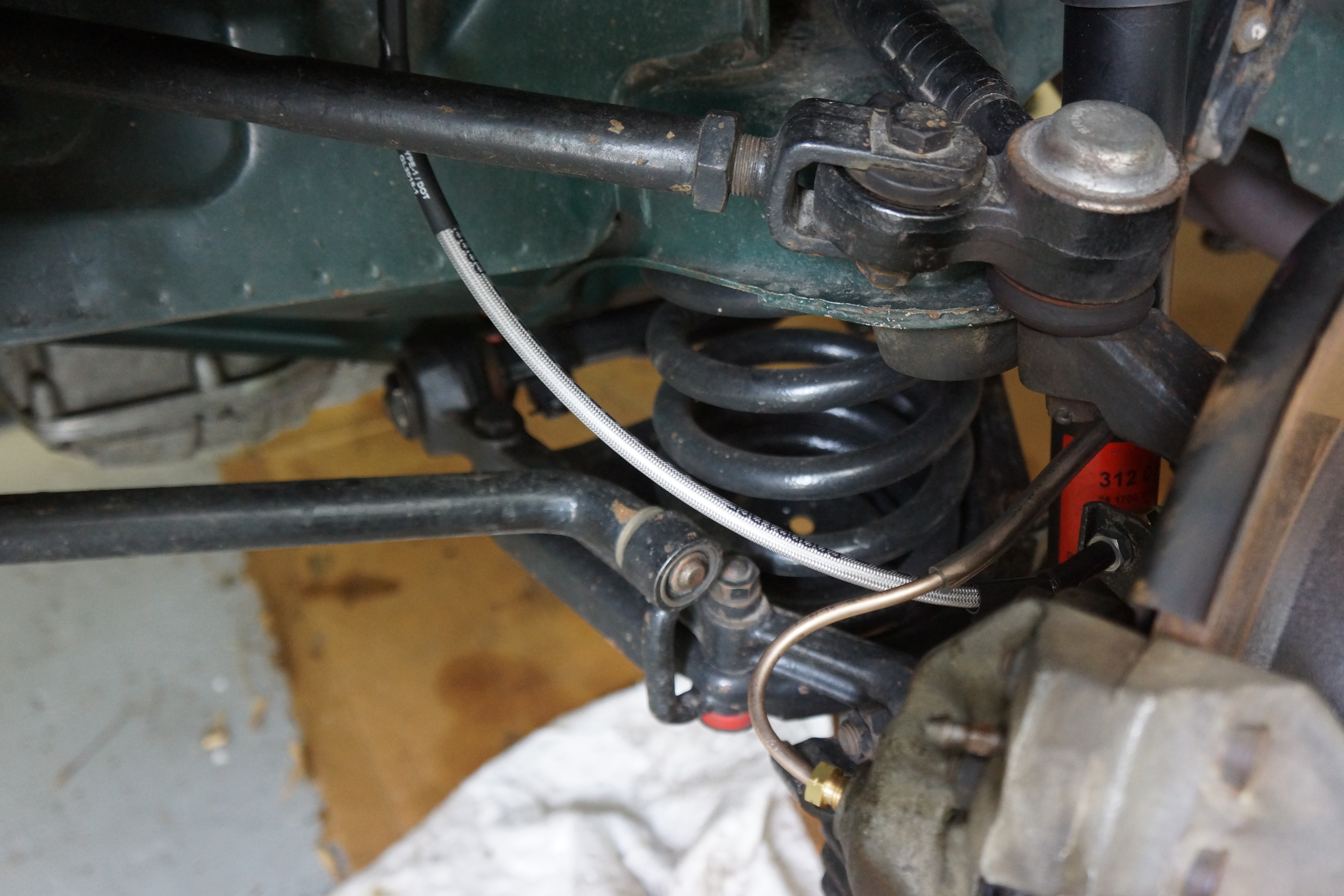
New reinforced brake hose alongside old hose
As much as I wanted to avoid the expense of a new master, I bit the bullet and bought a brand new unit (almost two bills) from my main vendor Classic Alfa. One concern is that there are so many master cylinder variants (standing vs hanging pedals, LHD vs RHD, non-servo vs one servo vs two servos, 20mm bore vs 22mm bore). While I was nervous about getting the correct one, I needn’t had worried. It arrived in two days (the usual Classic Alfa timeliness), and all threaded fittings and mounting points are 100% accurate.
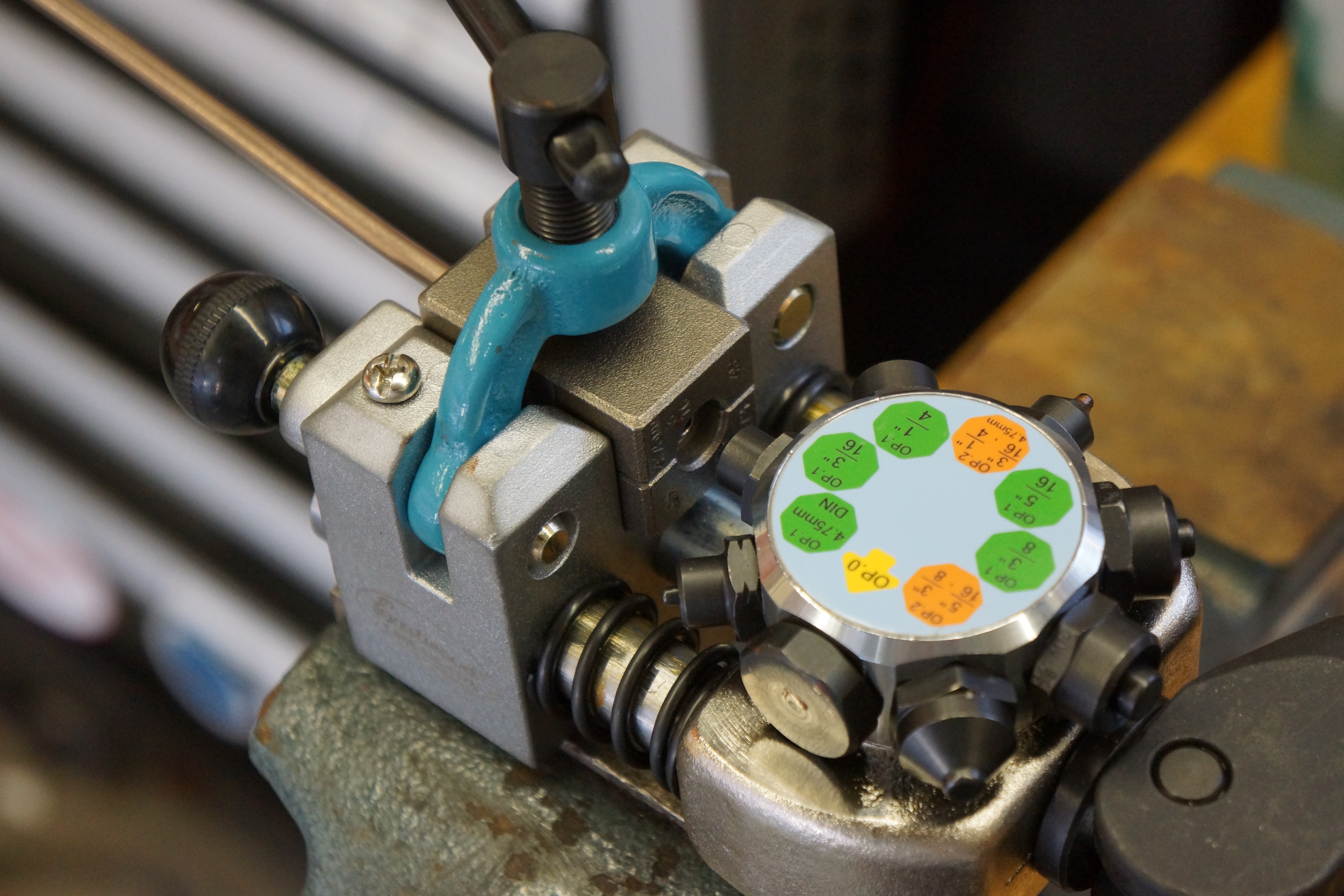
Clamping the brake line forming tool in the bench vise frees up both hands to manipulate the line
As of today: all 3/16” brake lines have been replaced with new lines cut and formed by me, all new flare fittings are on, and all lines are in place on the car (some final fitting still needs to be done). All three rubber brake hoses have been replaced with steel woven reinforced pieces (this is a case where originality is easily overridden by better quality).
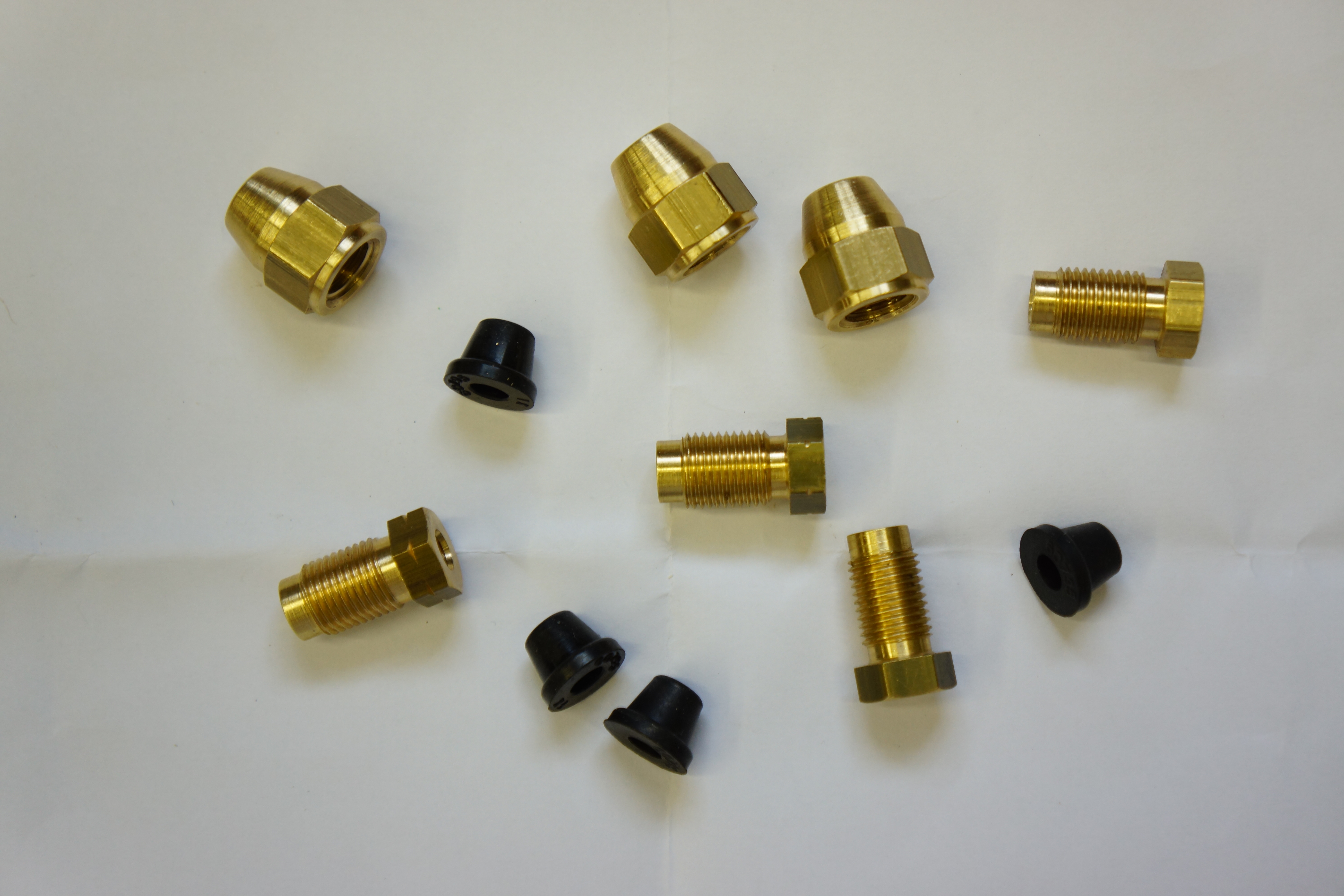
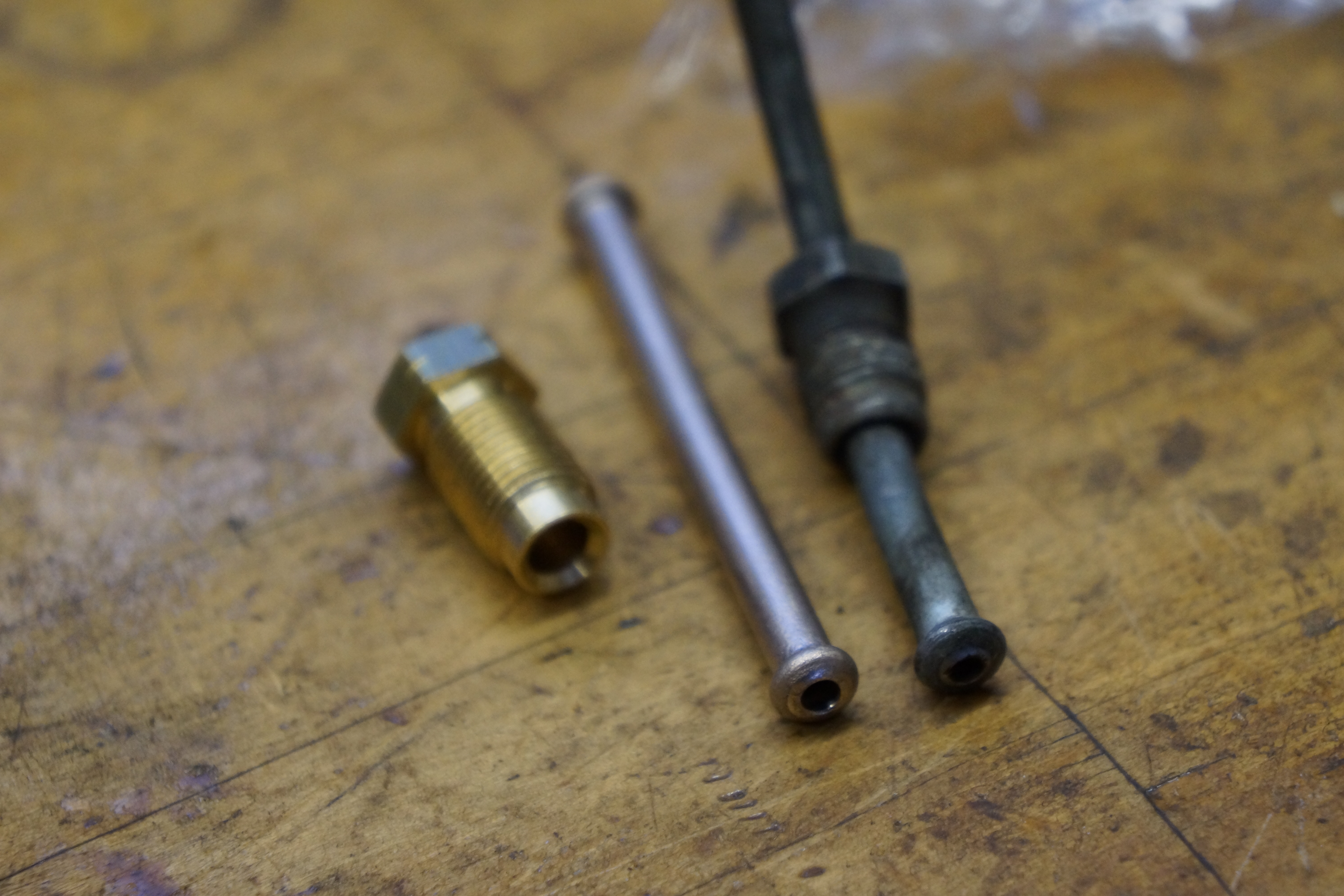
New male and female brake line fittings plus bleeder screw caps
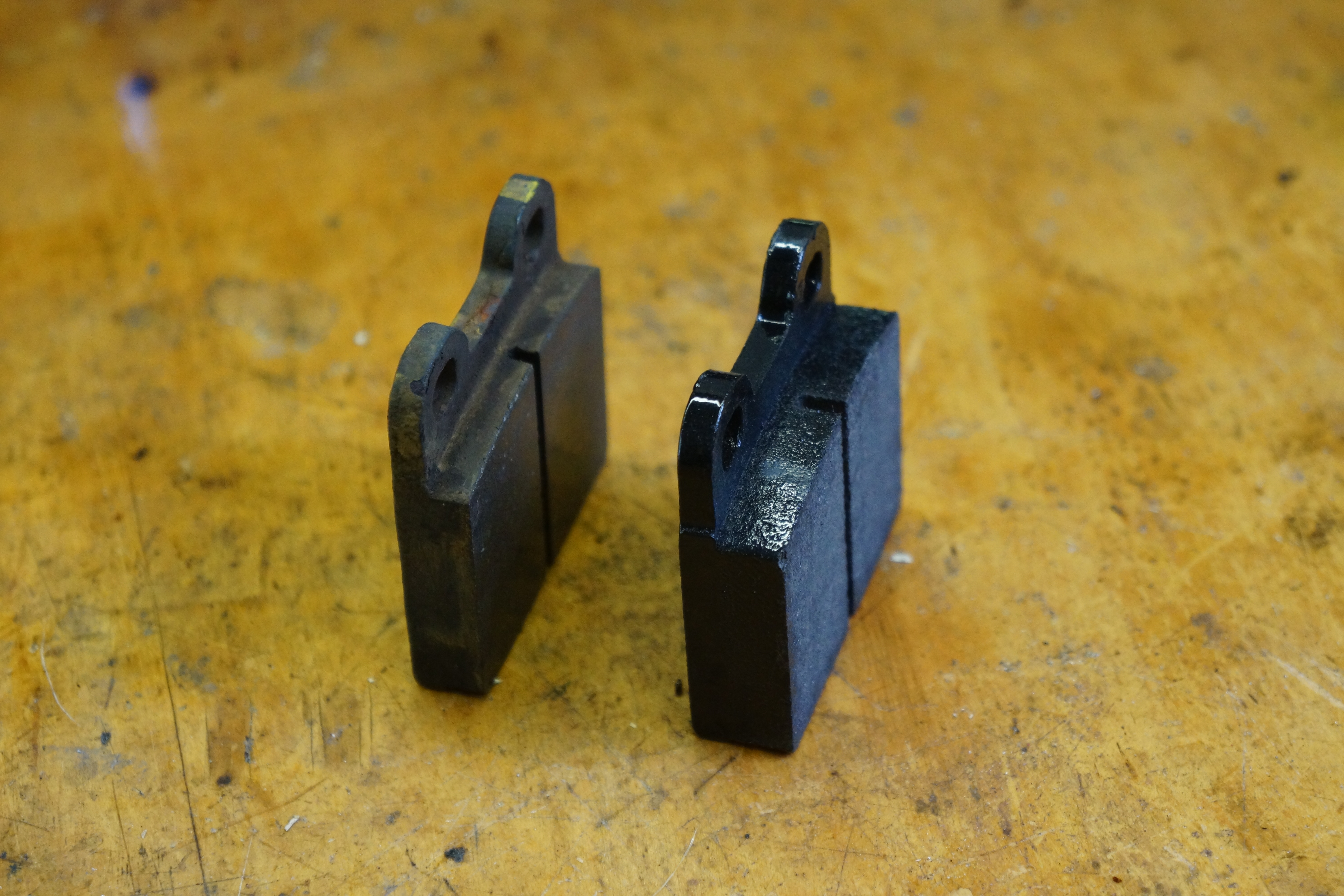
All four rebuilt brake calipers have been reinstalled, with new Ferodo pads in place (the Centric front pads I had installed several years back shed a lot of dust; let’s see if these are better).
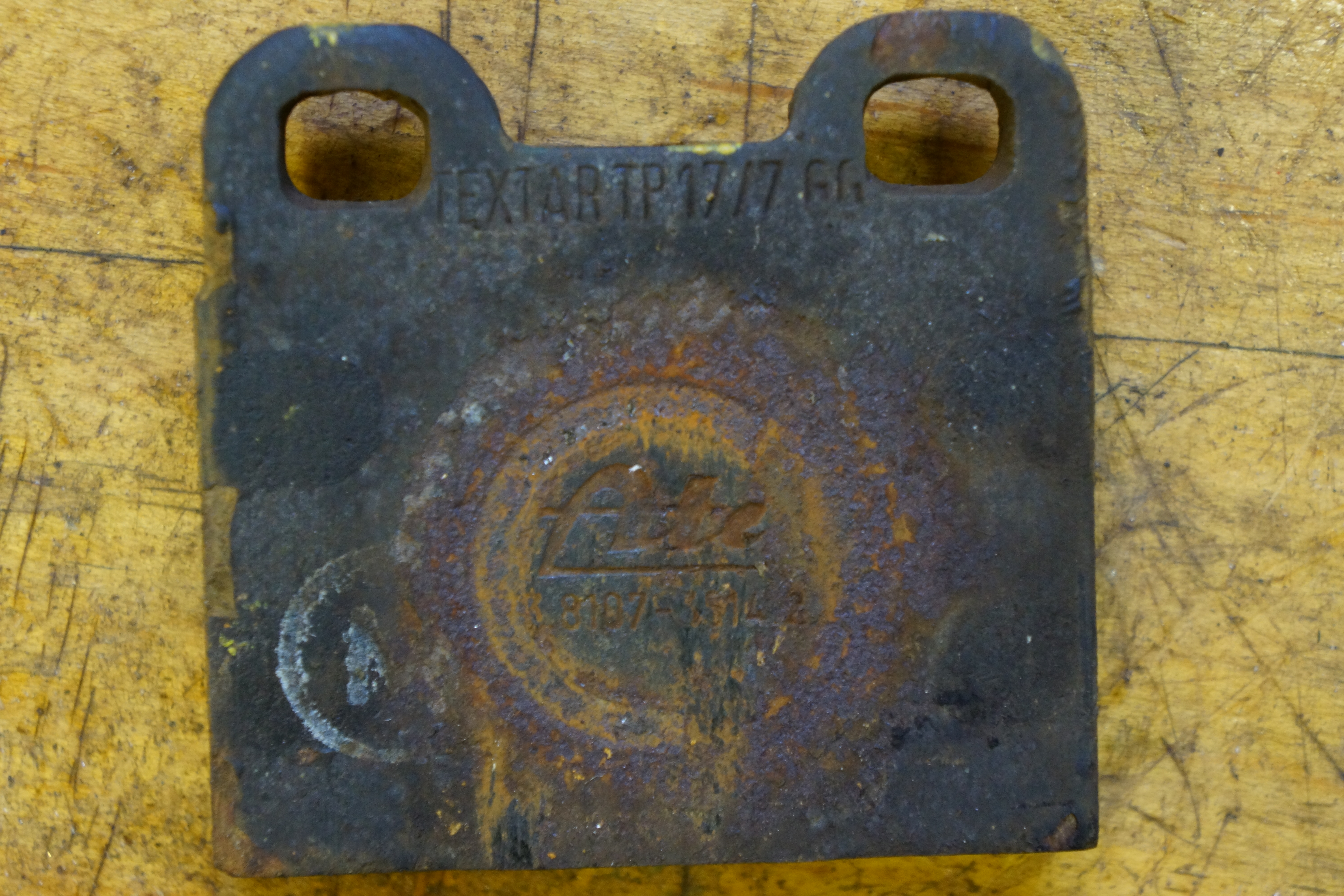
Old and new pads side-by-side
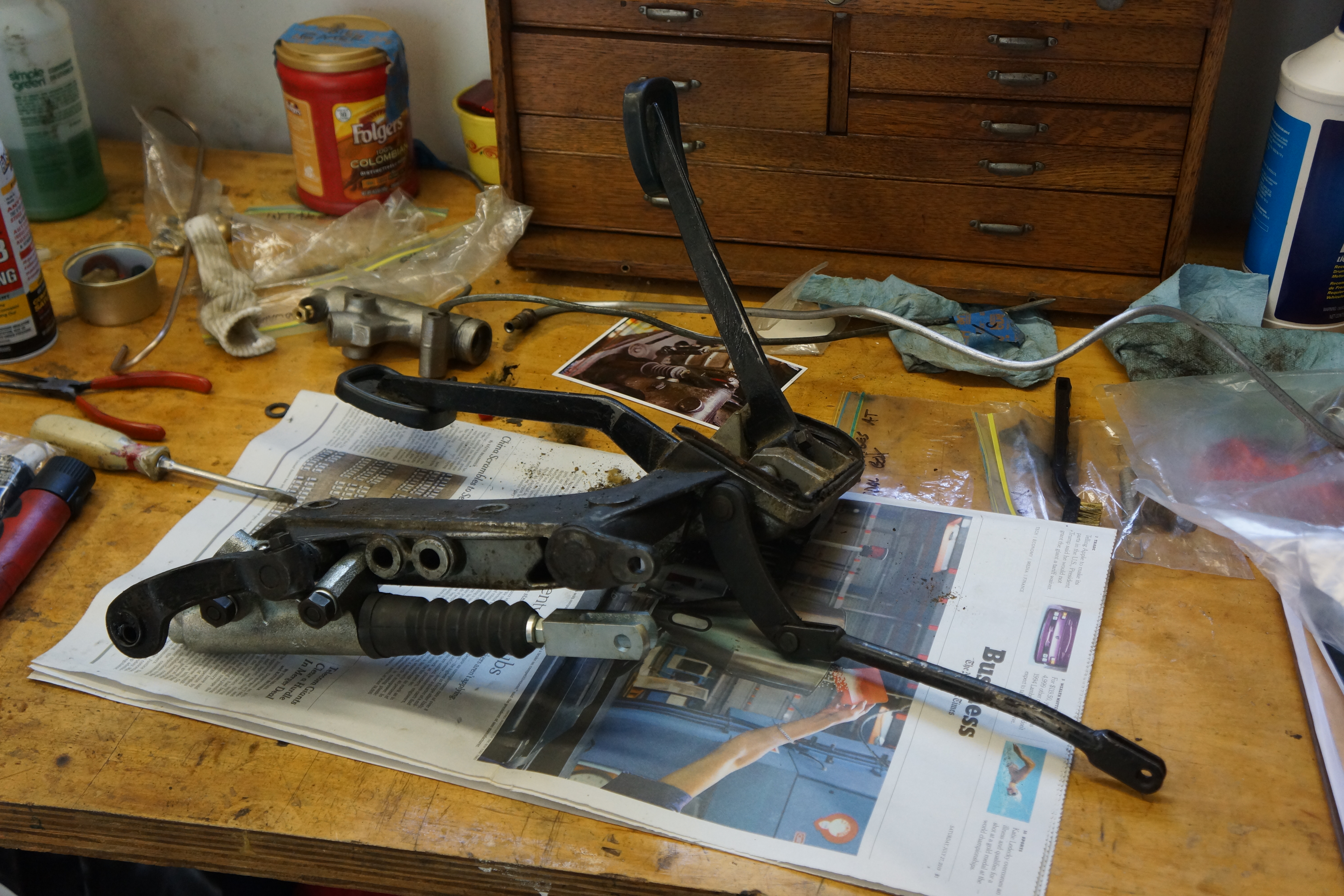
The new master is (loosely) bolted in place, but the two brake line connections have yet to be made to it. (Not since the Isetta have I worked on a car with the master located below the floor. The Isetta was easy because the body had been removed from the chassis. The accessibility on the Alfa is horrible.) Once the lines to the master cylinder are done, I need to reinstall the pedal box in the driver’s footwell, as all three pedals had to be loosened/removed to gain access to the master.
I can’t prove it, but “ATE” mark on rear pad might indicate it’s never been replaced
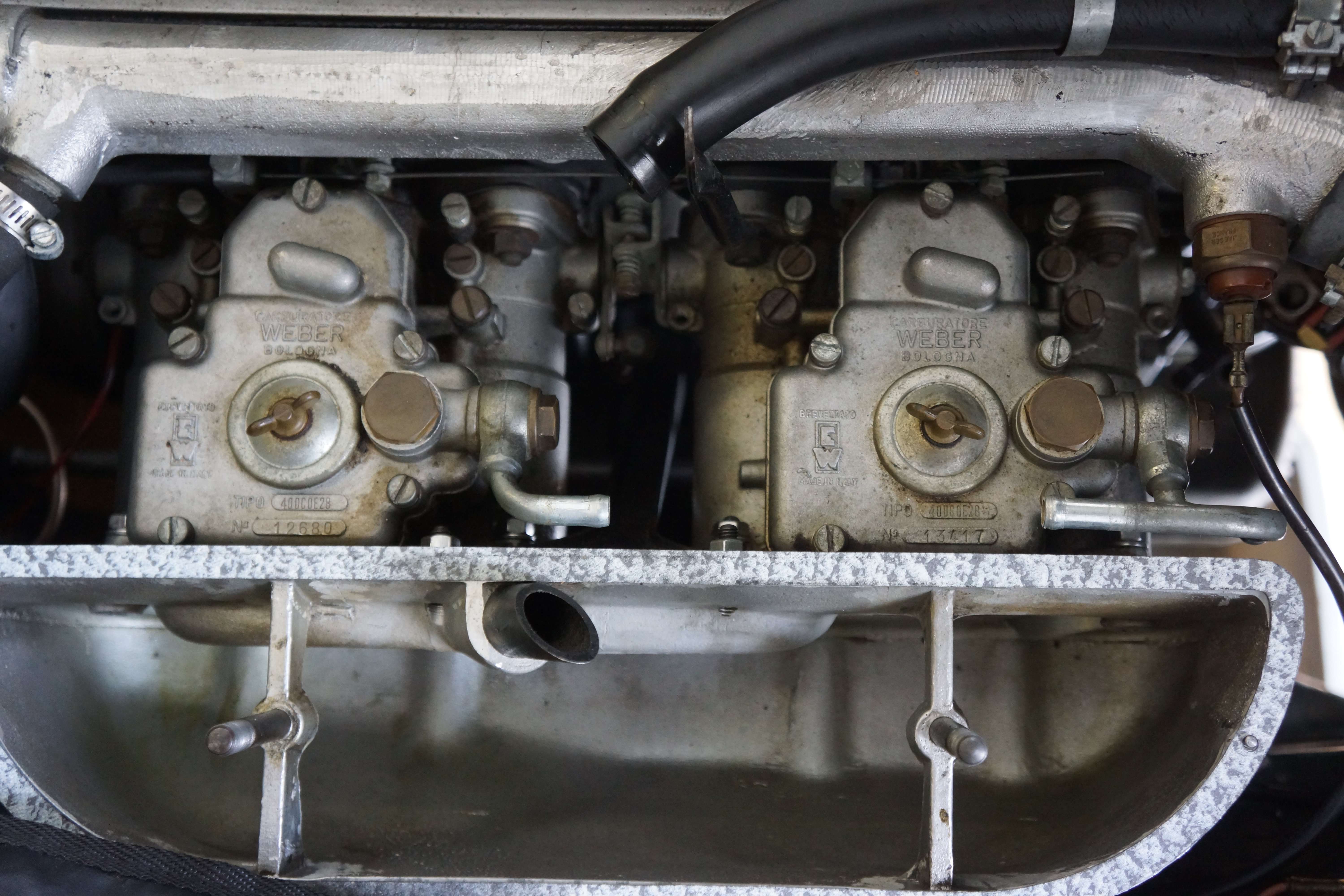
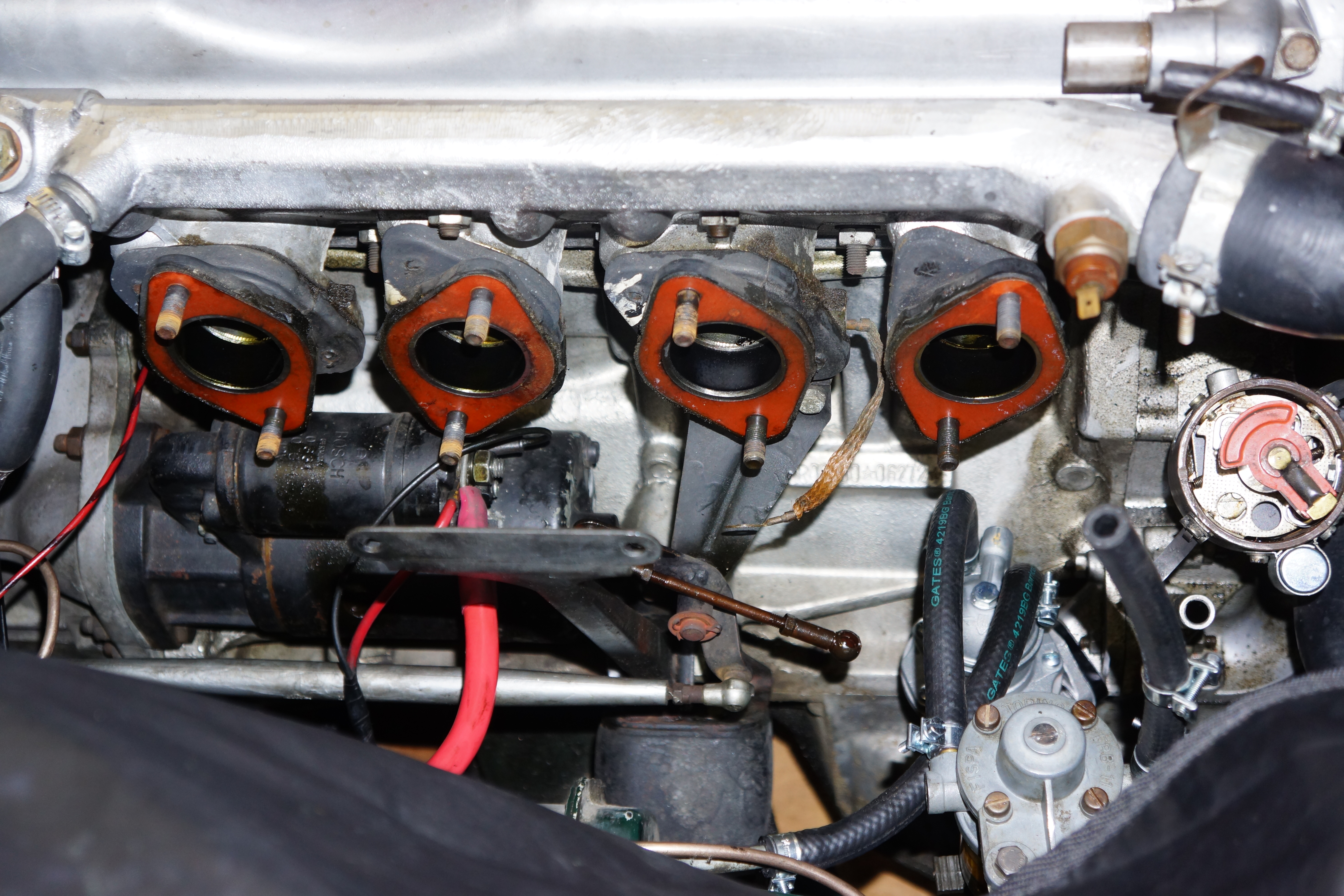
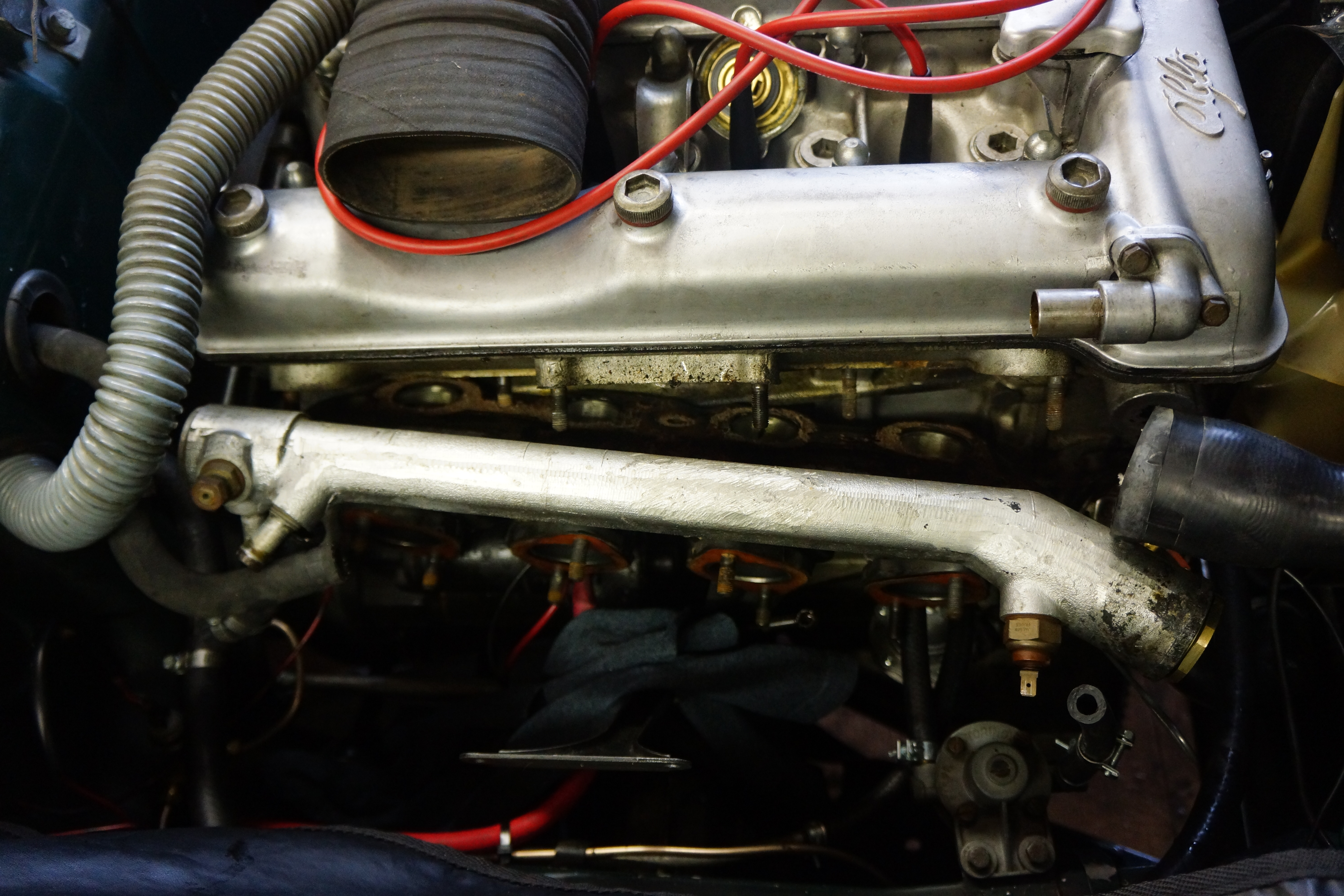
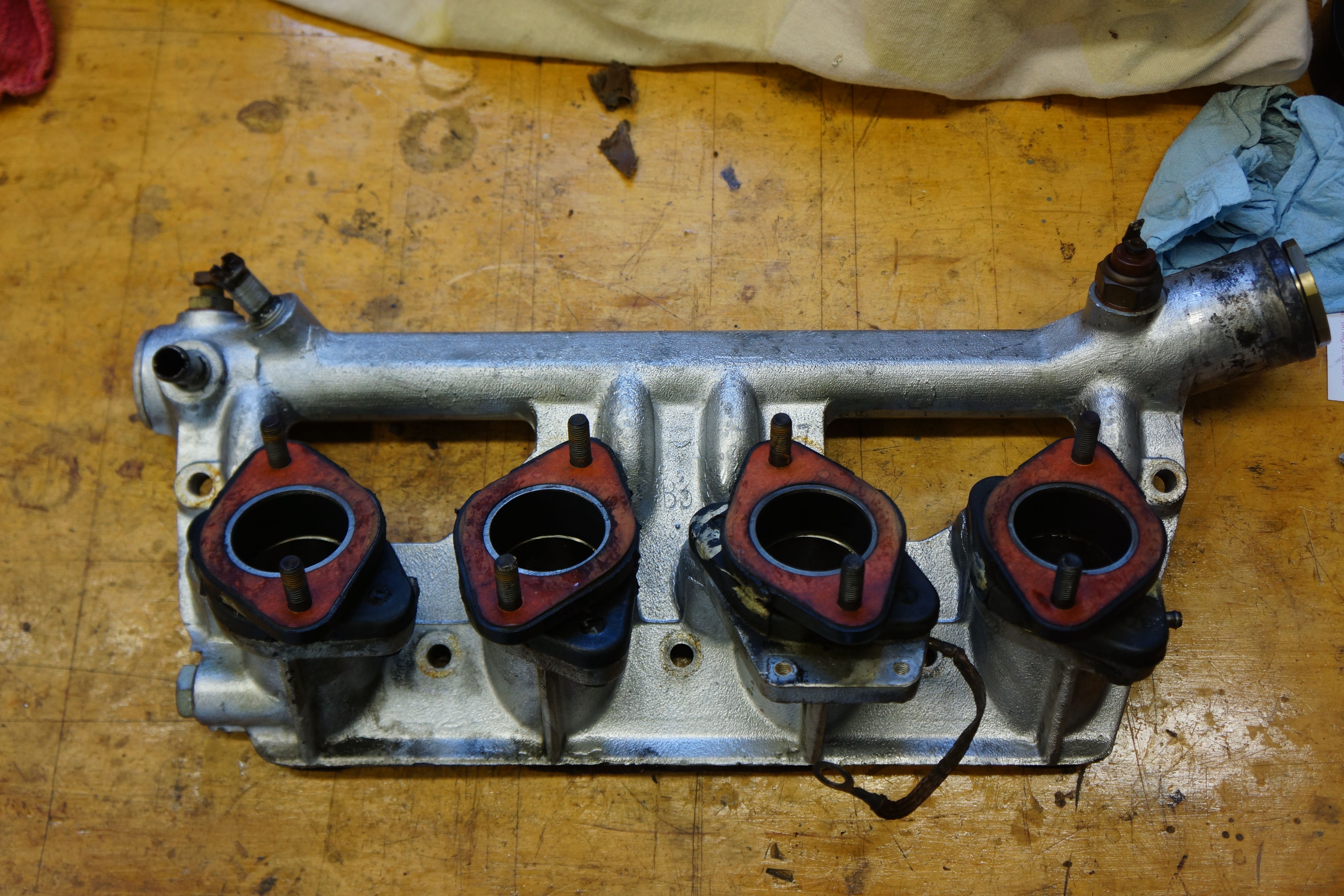
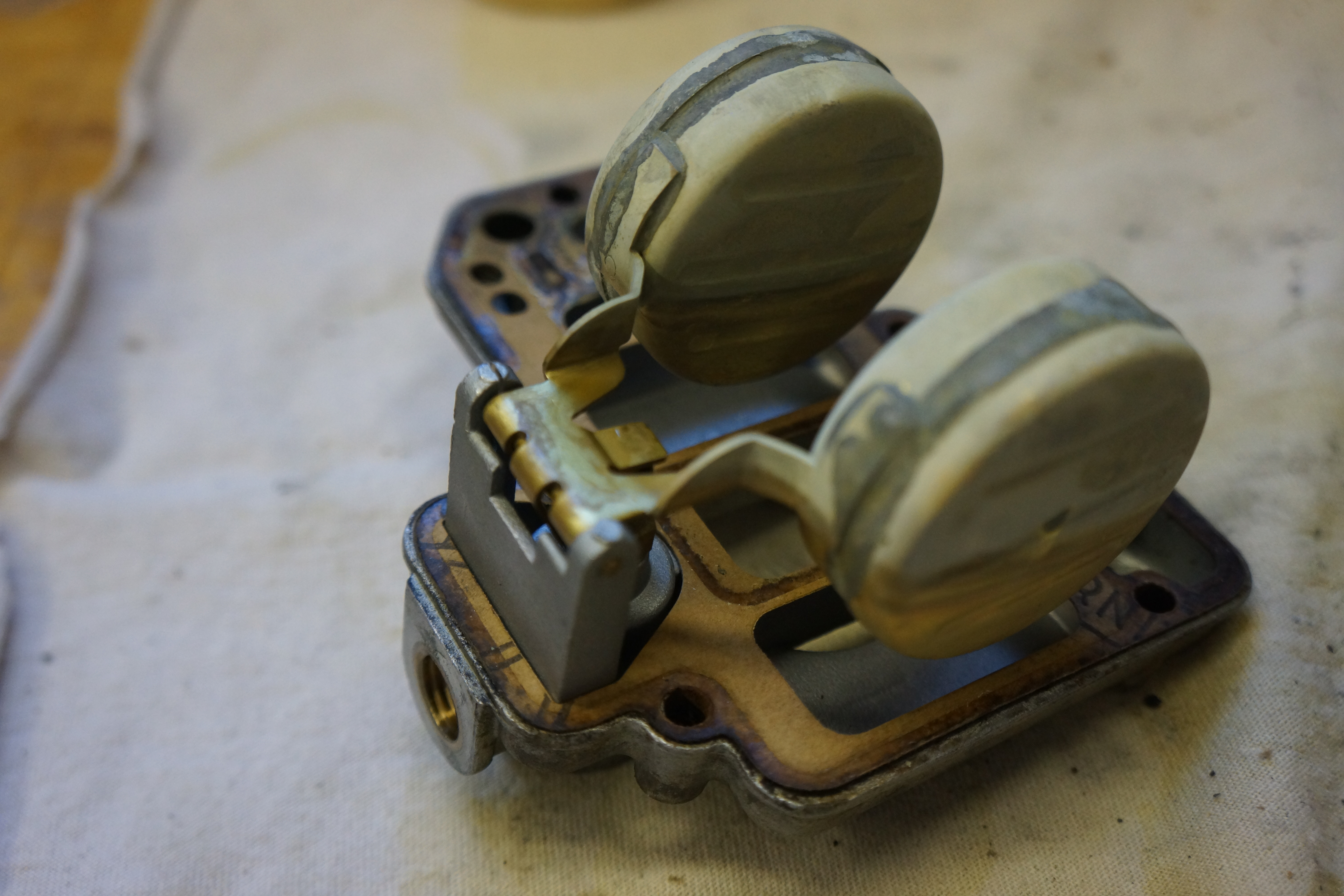
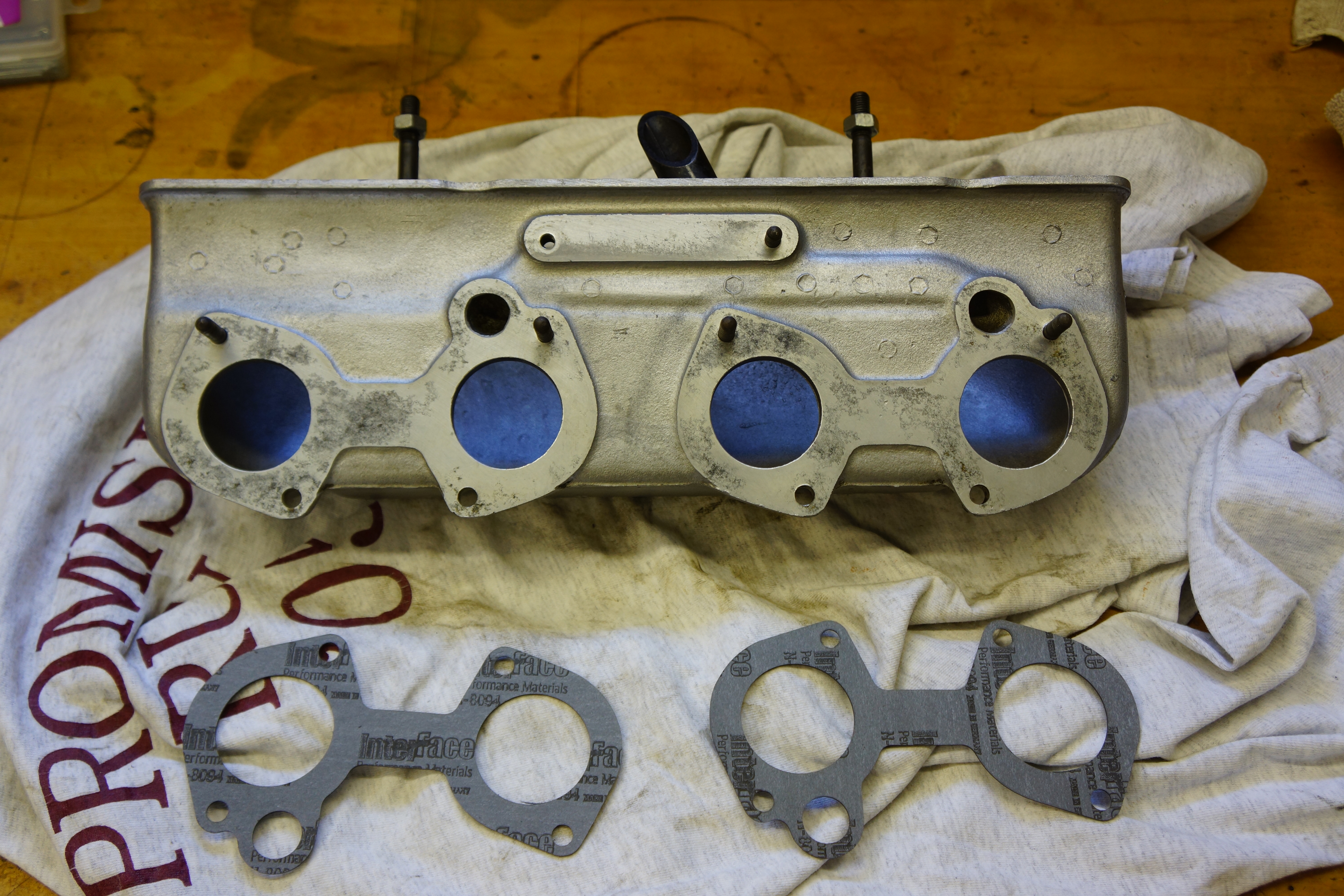
I then have the ‘extra’ job of replacing the positive cable for the battery. The previous owner had relocated this car’s battery from the engine compartment to the trunk, and used (in his own words) “a battery cable sourced from a junkyard Renault”. Since purchasing the car from him, he has recommended that I replace this cable. I’ve purchased a much heavier-duty one from Taylor Cable, which needs to be cut to size and have the appropriate terminals connected. Part of the intake plenum was removed for access to the starter, so that will need to go back together.
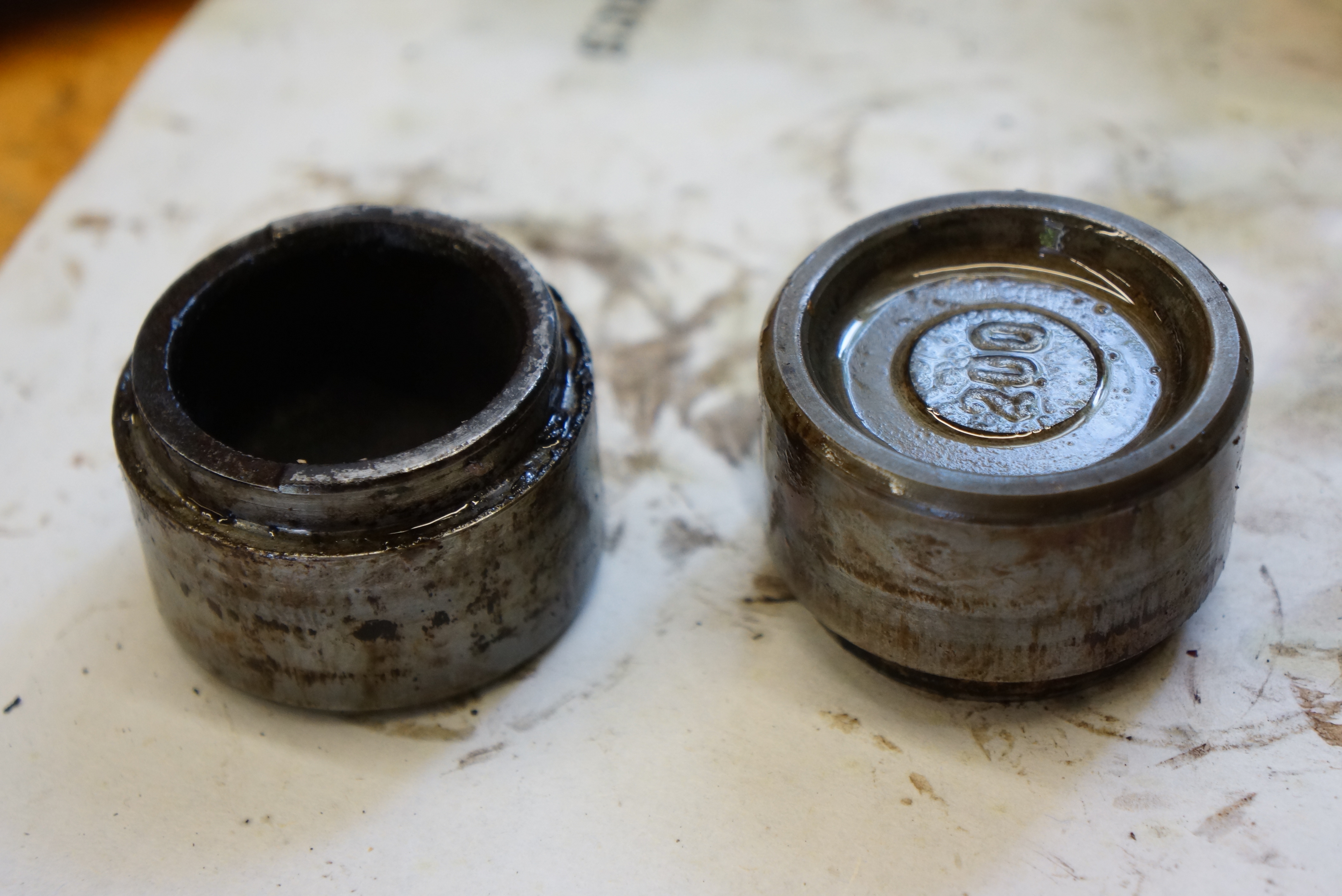
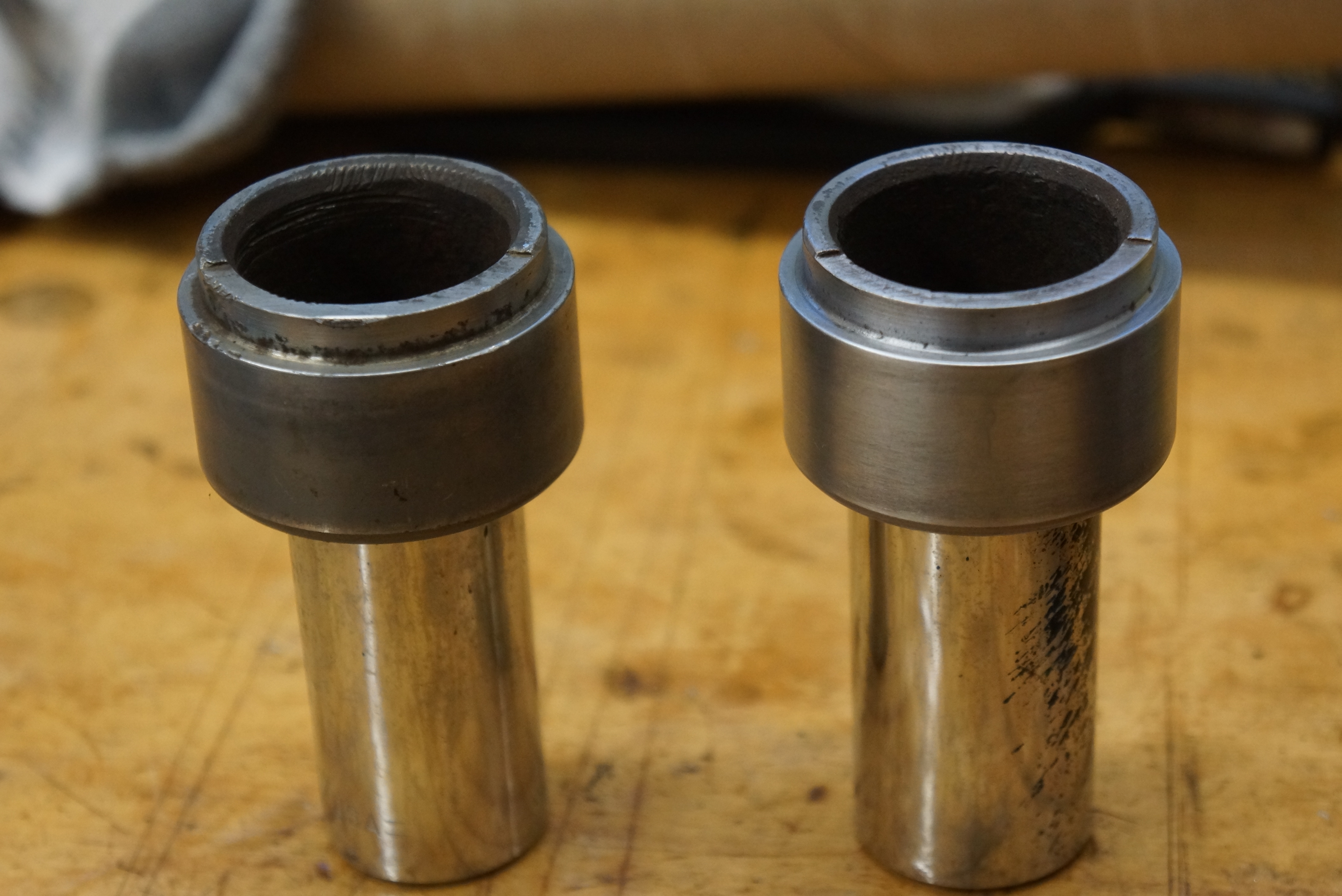
New caliper pins (L) didn’t fit, had to clean up & reuse old ones (C & R). Never throw old parts away!
The goal is to get this vehicle off the 4 jack stands upon which it’s been sitting before we reach the first anniversary of the brake seizure which happened in July 2019. I miss driving my Alfa! As I said, there is light at the end of the tunnel.
A big part of this brake project has always been the intention to replace all the hard lines. It was back in the fall of 2019 (days we’ll forever remember as “pre-coronavirus”) when I purchased a 25’ roll of new CuNiFer (copper/nickel/iron) brake line (from FedHill) and all new line fittings (from Classic Alfa), knowing that the day would come when I’d need them.
Well, that day did come, and I’ve spent a somewhat enjoyable last few days in the garage making up the new lines. The rear rotors and calipers have been bolted back in place, so with the old lines as templates, I cut the first two new lines for the two rear calipers to the appropriate lengths.
The creation of new brake lines requires that the ends be flared, which requires a special tool. I have one of those cheap old flaring yokes, a tool I’ve had for so long that I couldn’t tell you the last time I used it. Maybe never. My good friend Mike G owns a high-end brake flaring tool kit made by Eastwood, which he generously loaned to me. I’m going to walk you through the step-by-step process, which on an old Alfa like mine can be a bit tricky! You’ll see in a moment.
The Eastwood brake flaring tool
With the exception of the ¼” hard line from the brake fluid reservoir to the master cylinder, all the other hard lines on the car are 3/16”. That’s the easy part. The fittings, on the other hand, are a mixed bag. The car’s four-wheel ATE calipers use metric M10x1 threads, while most of the remaining connections, such as at both front and rear T-fittings, use UNF 3/8”-24 threads. Further, the M10 end requires an ISO bubble flare, and the 3/8” end takes a double 45° flare. Please don’t ask me why – I’ll just point to the car and say “that’s how the Italians did it!”
The Eastwood tool, which I used for the very first time this week, is a bit intimidating at first. The instructions in the box are ok, but I thought it would be wise to cut a few short pieces of pipe and make some test flares (I purchased about 7 feet more brake line than needed, because sooner or later I’ll make a mistake and need to redo a line).
L to R: new fitting, test pipe w/ISO bubble flare, old pipe w/same
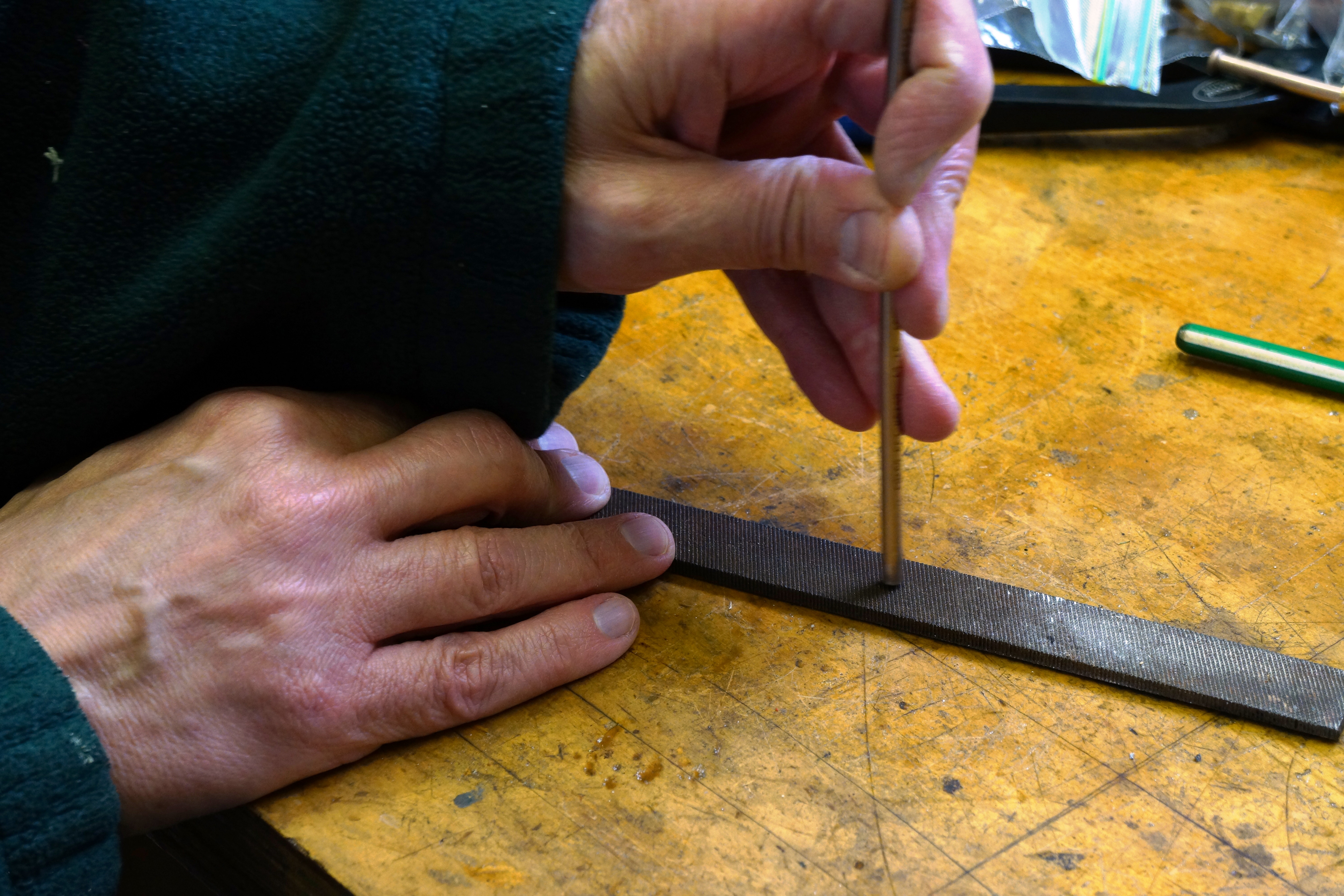
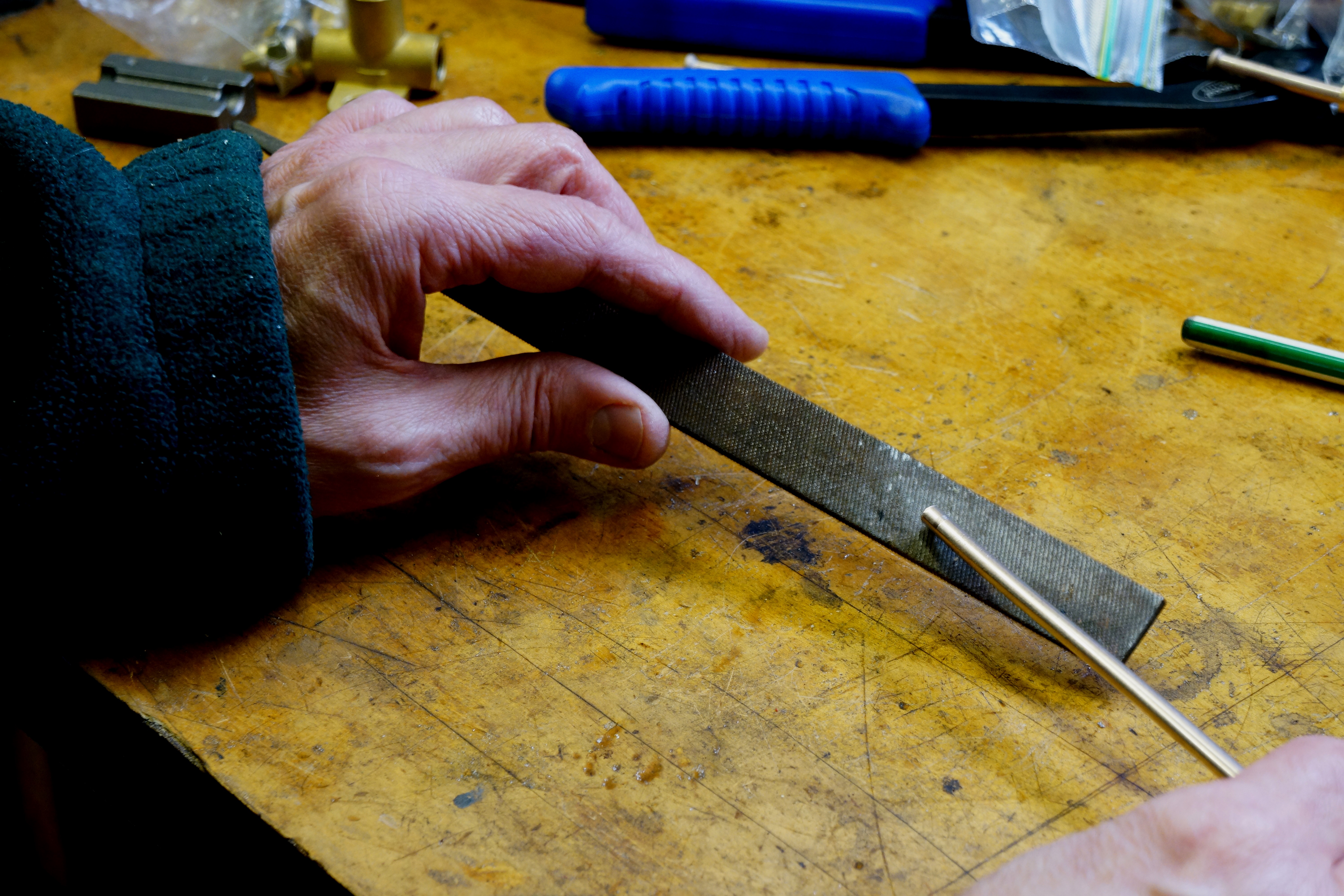
The Eastwood instruction book states that before you make a flare, you should do 3 things with the cut tube: run a file on the inside to remove burrs; run a file on the outside for the same reason; and slightly chamfer the edges. I dutifully followed instructions.
File the inside…
File the outside…
Chamfer the edges
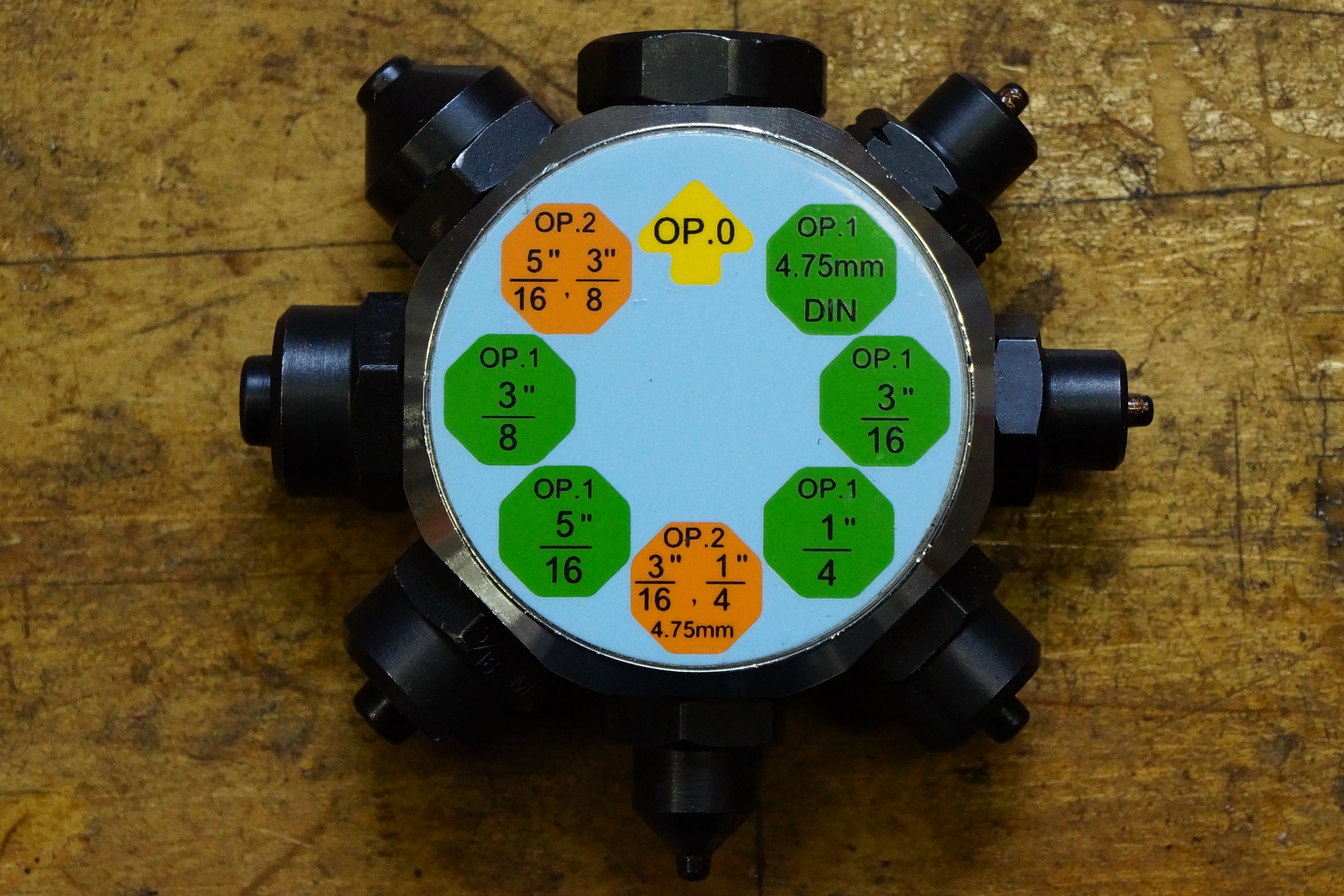
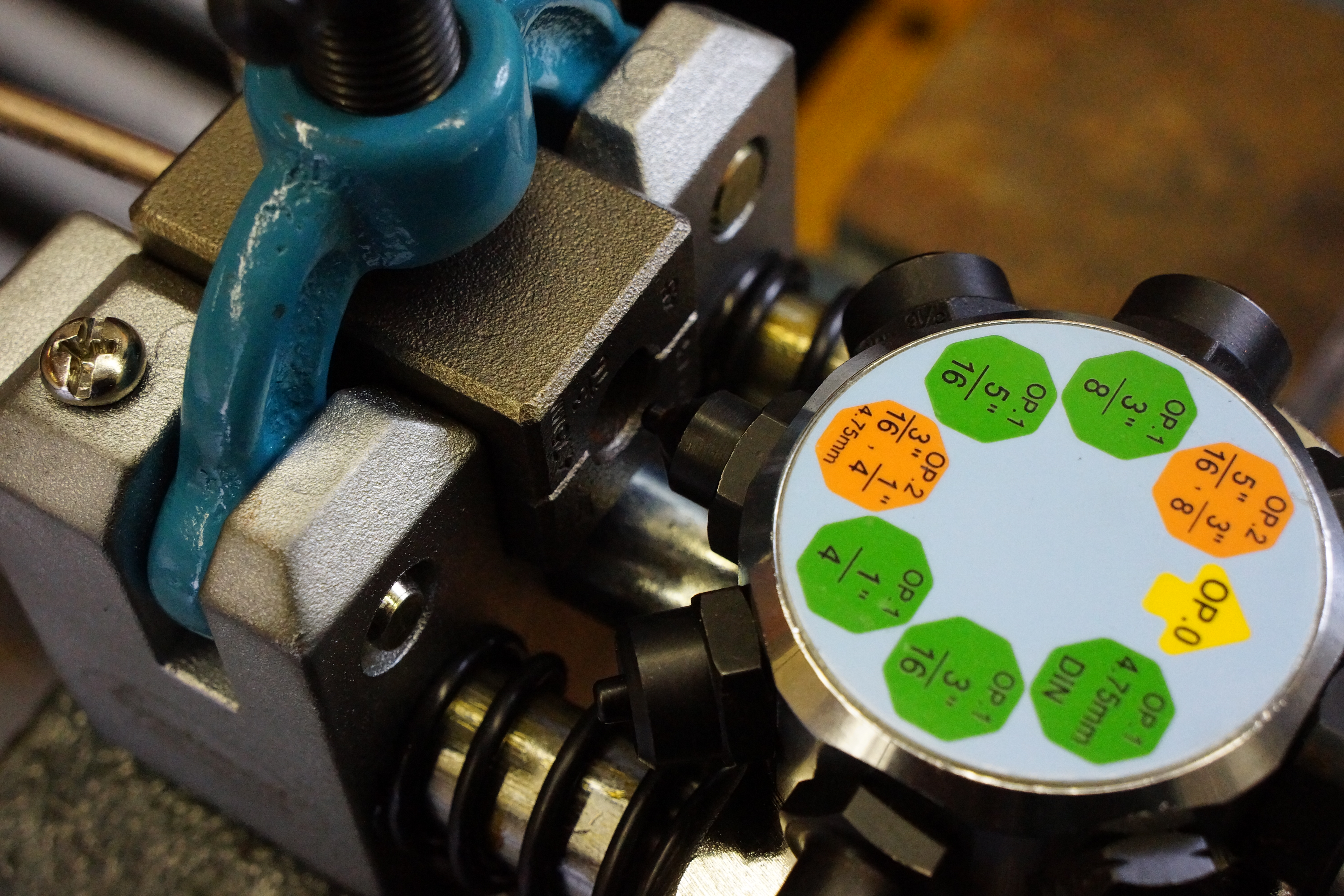
The tool itself is designed to be securely clamped into a bench vise. The two most important pieces which require your utmost intention are the tube-holding dies in 4 different sizes, and a rotatable disc with the various flare-forming dies. This is when I discovered that the 3/16” tube die is double-ended: it says 45° on one side, and DIN on the other. The instruction book didn’t say too much about this.
All the flare-forming dies are on this disc
3/16″ die, 45 degree end
same die, DIN end
I grabbed the 3/16” tube-holding die and placed it into the tool, with the 45° double-flare at the business end. The tube itself was inserted between the two halves of the die, and with the disc’s “OP. 0” (Operation Zero) facing the tube, I pulled the handle. This step simply squares up the end of the tube with the end of the die. Once done, I made sure the clamp was tight.
OP ZERO before squaring the tubingOP ZERO after tubing end is squared with die
Rotating the disc to “OP 1, 3/16”, I again pulled the handle. As a final step, the forming die disc was rotated to “OP 2, 3/16”, the handle was pulled, and I removed the tubing to examine my work. It looked good! I had a nice, neat 45° double flare.
OP 1, step one of the 45 degree flare
OP 2, step 2 of the 45 degree flare
45 degree double flare done!
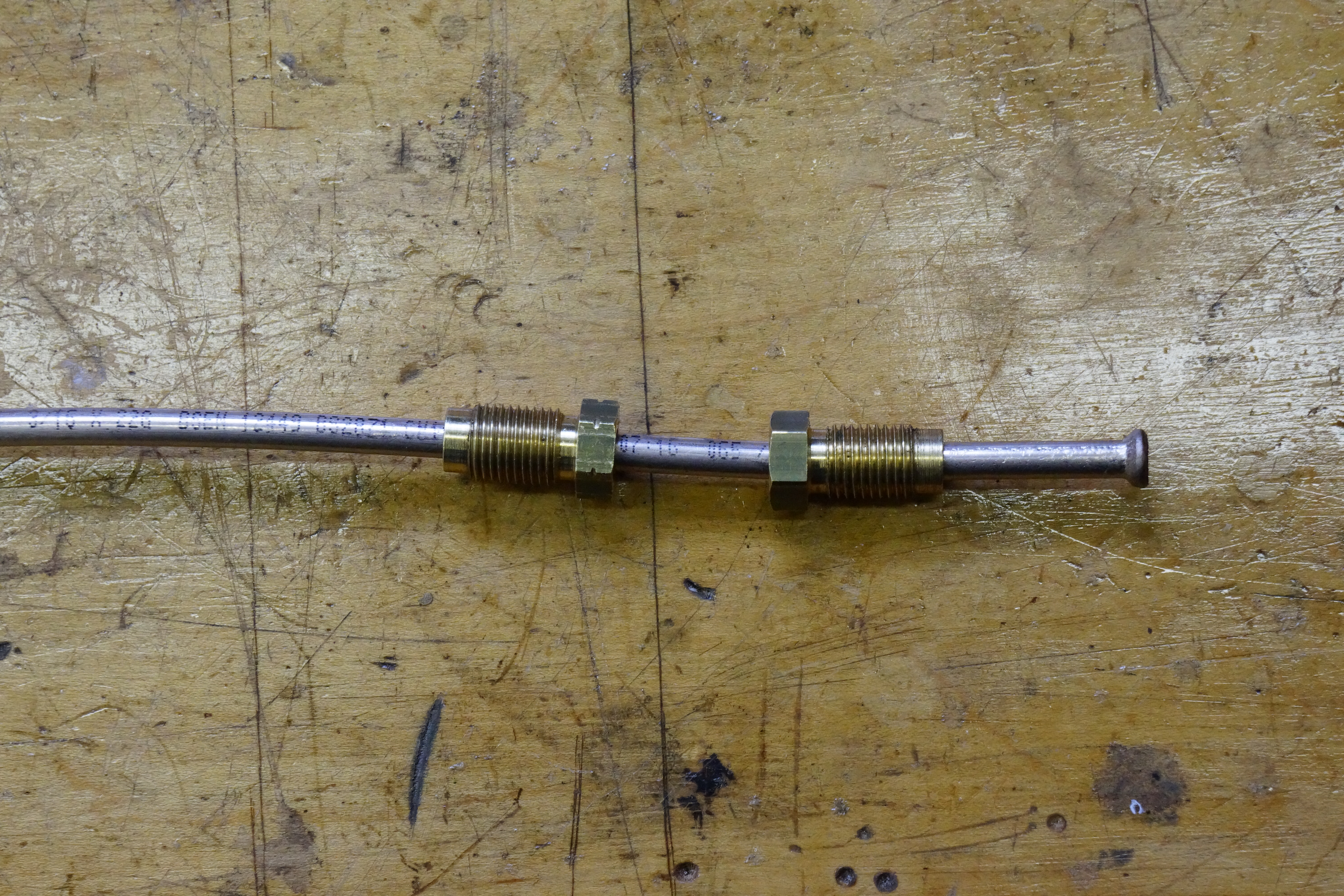
Before you flare the other end of the tube, you MUST slide on the two flare fittings; once both ends are flared, you’ll never get them on. In my case, not only did they need to face the correct way, they needed to be the correct threads! With the 45° double flare done, the 3/8” fitting went on first, and then the M10 fitting. It is highly recommended to delay the celebratory glass of vino until AFTER these steps are completed.
Pay attention! L to R: M10 flare fitting, 3/8″ flare fitting, 45 degree double flare on pipe end
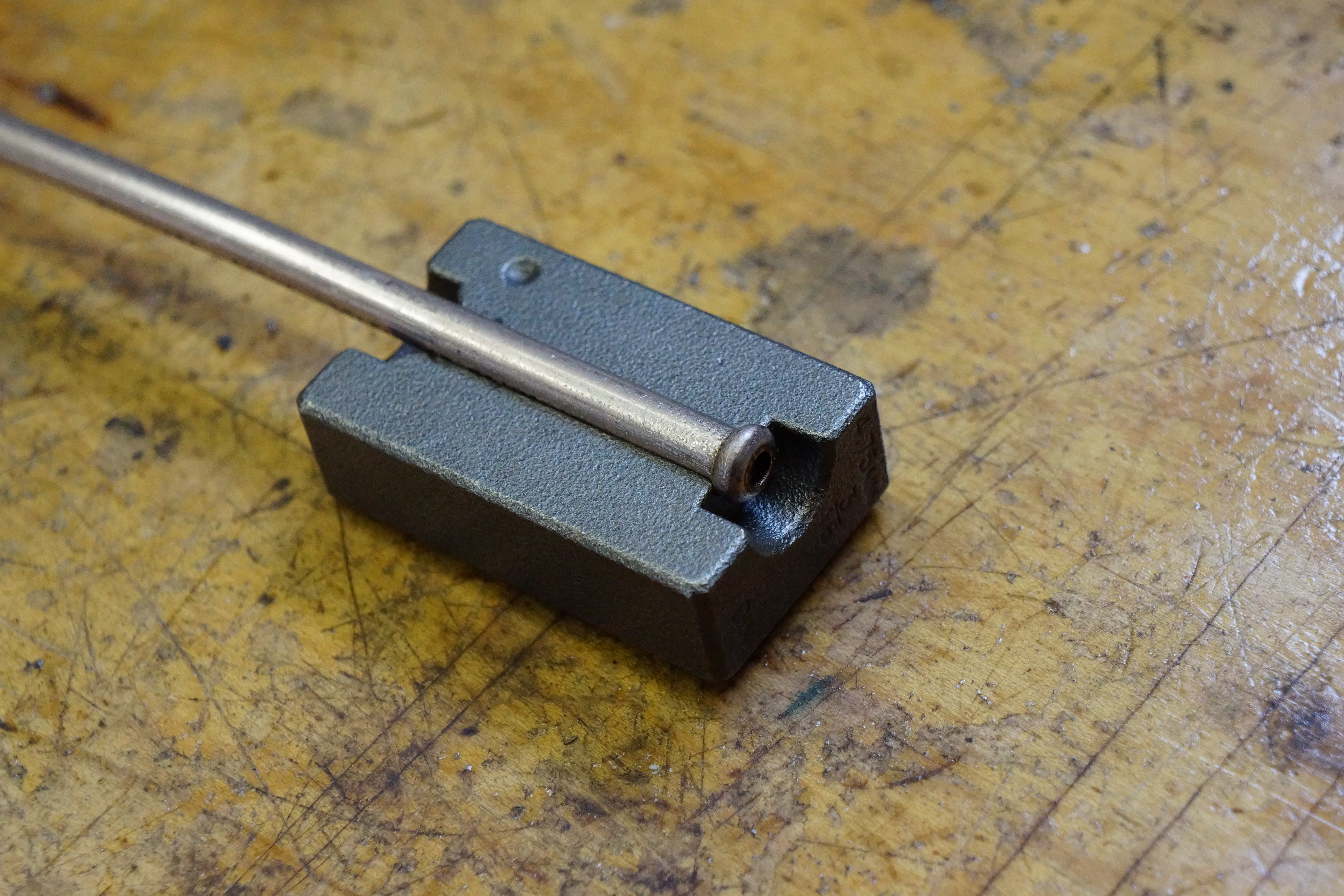
It was a good thing that I had made some test pipes, which is when I discovered that the DIN end of the tubing die would make the needed ISO flare. I further discovered via experimentation that while the forming die does have an “OP 1” and “OP 2” for the DIN flare, I needed only “OP 1” to get a bubble flare that matched my old brake line.
ISO bubble flare done!
I’ve made two lines so far, and am quite pleased with the progress. It’s a nice feeling to have rounded the curve and to have begun reassembly. With most collector car events cancelled for the spring, the pressure is off, but the progress continues.
I’ve often referred to the two years I spent as a professional automotive technician as my “post-college” graduate work. It was a different kind of education, and included the benefit of earning a salary. One of the earliest lessons, and one I still carry today, is that there is no substitute for having the right tool for the job at hand. The correct tool ensures that the repair is done correctly, safely, and within a reasonable amount of time. It is not an exaggeration to state that there were times when sweat dripped from my brow, and curses sprang from my lips, when the lack of the appropriate tool made a repair attempt a real struggle.
A corollary lesson states that sometimes, one needs to practice some creativity and “invent” a tool, perhaps by assembling one from hardware parts, or by modifying an existing tool. This point was put into practice during the Isetta restoration, as tools for that car aren’t exactly found in your local NAPA store.
The challenge rose up again during the recent brake work on my Alfa. I found myself struggling with the reassembly of the parking brake shoes, which reside inside the rear brake rotor ‘hat’. The shoes and their assorted springs and clips came apart easily enough. But now my efforts to put it all back together were just taking too long.
Let me be more specific: the brake shoe assembly mounts to a backing plate, like on most cars. Unlike most cars, though, the wheel hub is mounted on a bearing that is press-fitted into place through the backing plate. The parking brake reassembly would be easier if the hub were not in the way, but to remove it, I would need to remove the entire axle and press the hub and backing plate apart. That was more work than I wanted to bother with. I was convinced that there was a way to put the parts back on with the hub in place.
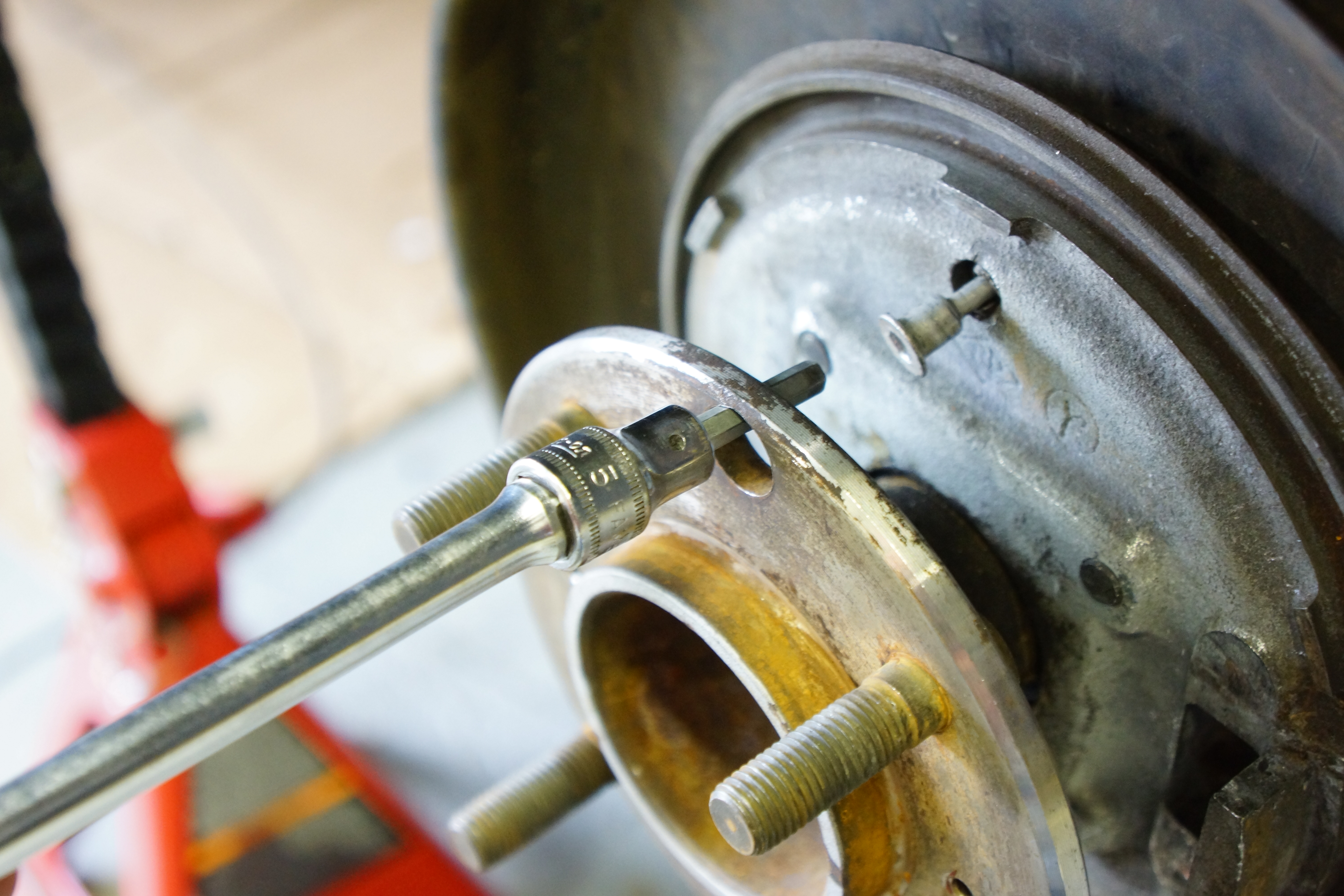
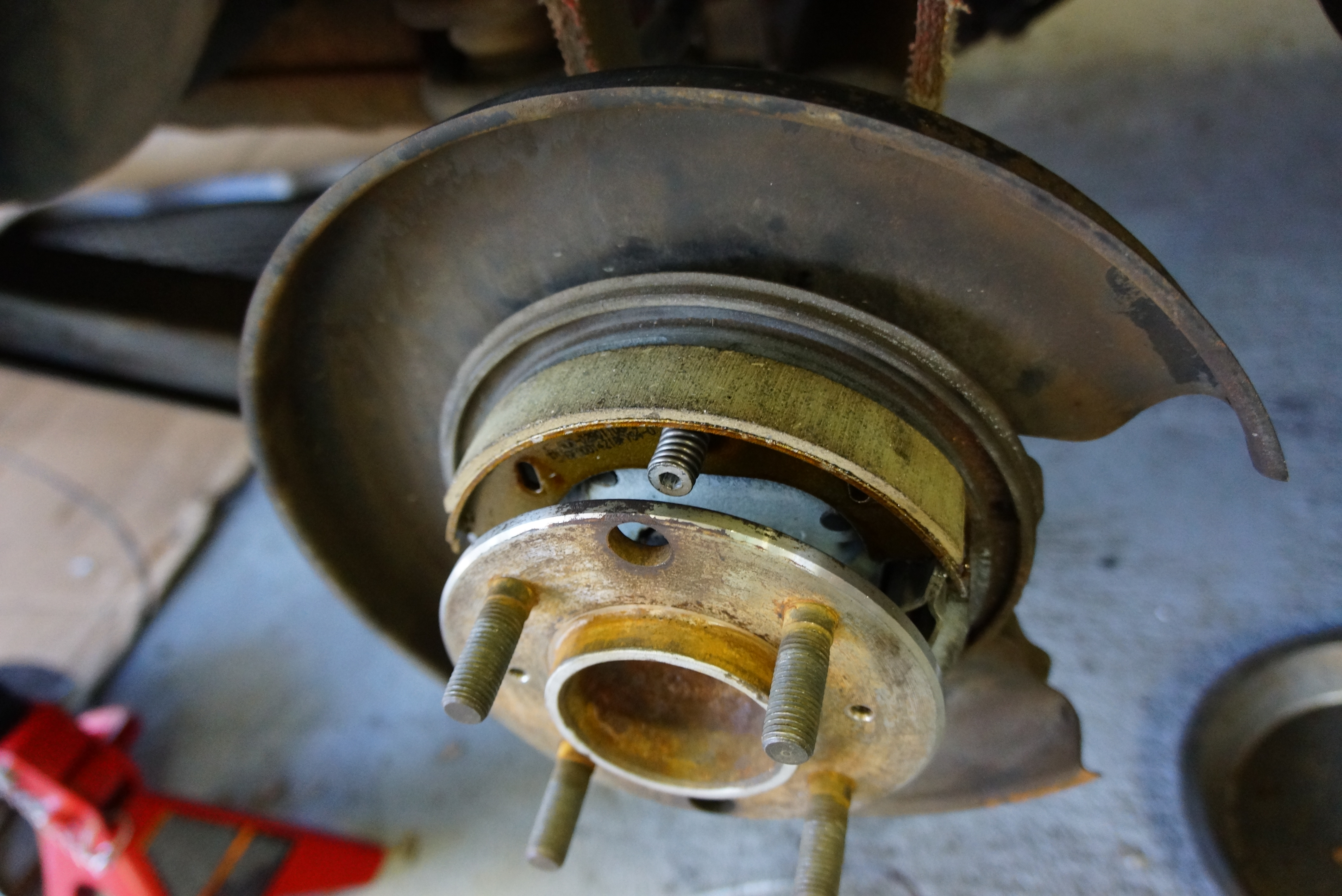
And Alfa Romeo actually made that accommodation. The hub surface has two additional holes, lined up in such a way to allow a tool to pass through them to access the brake shoe hold-down pins. The pins require a 5mm Allen tool, and I have one as a 3/8” drive socket. Since there is so much spring pressure to overcome, putting the Allen socket on an extension, with a 3/8” drive ratchet wrench, provides way more leverage than one could ever get from a tiny hex key.
Original 5mm hex socket on extension is placed through access hole in hub
Herewith was the problem: I could not push the pin in far enough to engage its lock, because the socket was too wide to pass completely through the hole in the hub. I briefly considered grinding down the socket, but a close examination revealed that would likely weaken it to the point of failure once an extension or a wrench was snapped into place. I briefly (like, for 10 seconds) considered enlarging the hole in the hub before rejecting that crazy idea. (Repair lesson #39.b.2: when making permanent modifications, always do so to inexpensive, replaceable objects, NOT to complex, difficult-to-replace components of the vehicle itself.)
Socket bottoms out before pin can be fully inserted in backing plate (spring and shoes removed for clarity)
Staring at things for several minutes brought forth the revelation that if the 5mm hex shaft were longer, I’d have what I needed. After considering a Home Depot run, which I internally wagered would yield a 25% chance of success, I challenged myself to modify the tool I owned. Could I do this in less than an hour? I thought it entirely reasonable.
Here is the Snap-On 5mm Allen socket about to be modified
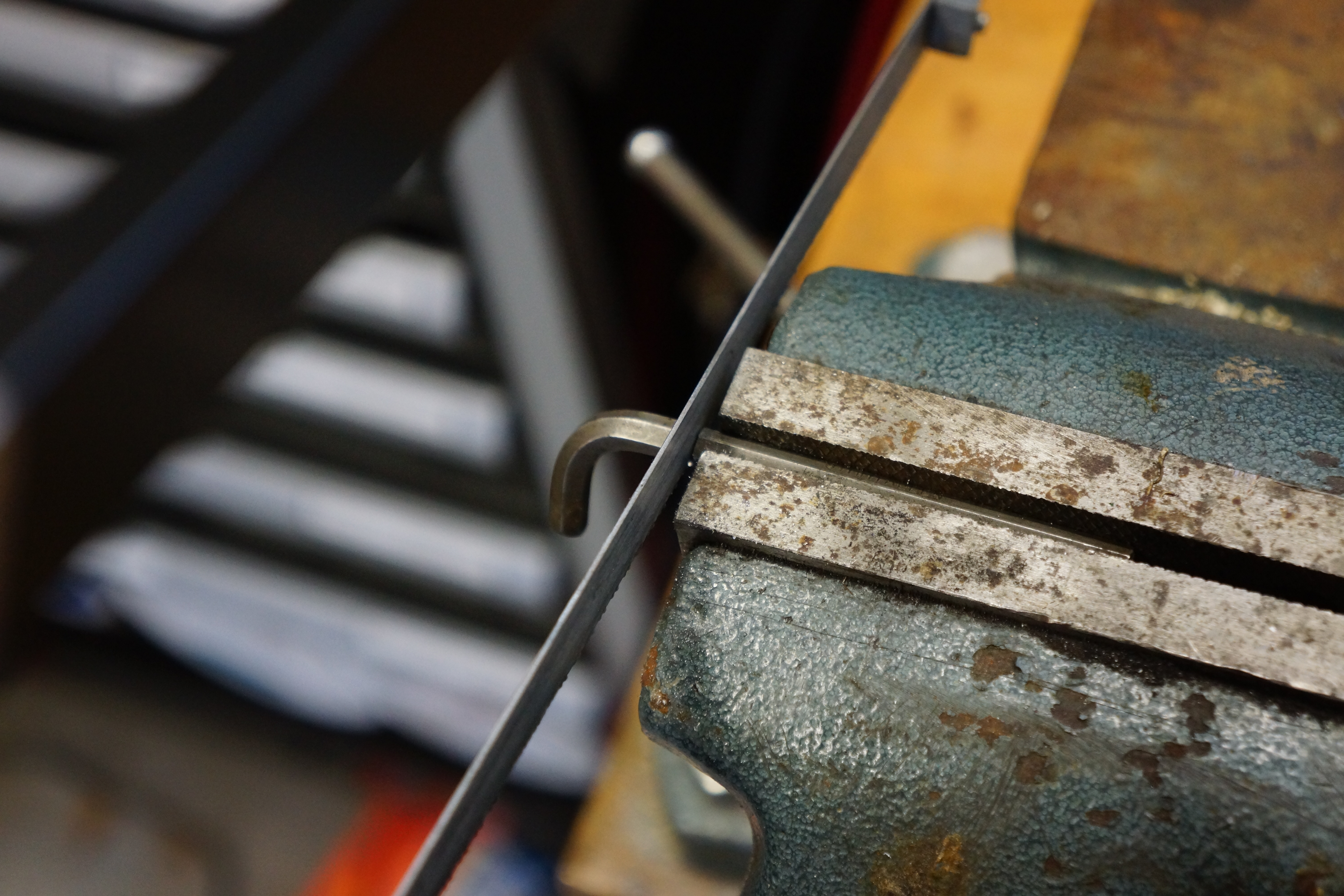
With a 3/32” drift, I hammered out the roll pin and pulled out the existing 5mm bit from the socket. I found a standard 5mm hex key in my Allen key collection, and tested it at the car. It was long enough for my purposes. Next, I secured the longer hex key in the bench vise and hacksawed off the short end. (I really should have pulled out the Dremel tool for this step, as the hardened steel took longer than I thought it would to hack off.) I filed the end smooth, and it fit right into the socket. My attempts to drill a hole in it to reinstall the roll pin resulted in two broken drill bits – like I said, that tool steel is hard! But the new bit was a tight fit in the socket, and since I’d be pushing against it, not pulling on it, I let it be, feeling certain that there was nothing to worry about.
Drift makes short work of roll pin removalThis hex key is about to give up its life for a greater goodHacksaw got the job done, but it took 10 minutes of muscular effort
Total time to modify the 5mm Allen socket: approximately 30 minutes. I attached my ‘new’ socket onto an extension, snapped on a ratchet wrench, and was easily able to engage the brake shoe pins in their locks. Mission accomplished!
“New” socket has considerably longer shaft
I’m keeping my new, longer 5mm Allen socket as is. Who knows when someone might need my help with their Alfa Romeo parking brake shoes? “Hey, I got just the tool for that!”
Success! Longer hex shaft makes short work of engaging pin
The weather today in downtown Neshanic Station NJ reached a balmy (for February) 55 degrees F. While I desperately do NOT want it to be 90 in April, I didn’t mind today’s spring preview; after all, the calendar claims we’re only four weeks away.
That high temp was accompanied by blue skies and lots of sunshine, all of which inspired me to get back to the garage. The Alfa’s brakes have been ignored since last autumn, and even I can’t believe how long it’s been since I’ve put up a blog post about my progress, of which there has been scant little. I have been ordering parts, reading service manuals, and perusing online forums, but there’s been no actual wrench-turning since before Halloween, which feels like a very long time ago.
Old (upper) and new (lower) parking brake cables- note boots
While today’s progress was not substantial, it was significant. The corner has been turned; everything that’s to be removed has been removed. I am now embarking on reassembly, using new parts as required. Starting at the left rear, a new parking brake cable was installed, and a new upper e-brake shoe was also put into place.
Parking brake shoes & springs: old (left) and new (right)
Projects never proceed at an orderly pace. There may be a flurry of activity, then a slowdown. Other, smaller projects may jump the line. Sometimes, it’s a parts delay that forces the pullback. However, there’s something to be said for picking up the tools again after a long layoff: it reinvigorates the soul, and reawakens the motivation.
LR upper e-brake shoe in place
I’m also motivated by an email I received from the NJ Chapter of the Alfa Romeo Owner’s Club, announcing a one-day spring tour for Sunday April 26. That’s nine weeks from today. I plan to drive this car on that tour. Sounds like I have lots of time, but we know how quickly that time will fly. The last time I drove my Alfa was July of last year. I have not gone this long without driving it since my purchase in 2013. So I’m motivated! Let’s hope the trend for an early spring continues.
Where did the year go? I swear that just the other day was sunny and 75; today is frosty and 40….. Every year I need to remind myself that putting the cars away for the winter needs to be done well before Thanksgiving, lest we get an early taste of winter and my ever-shrinking window of opportunity gets blown away like the final leaves of autumn.
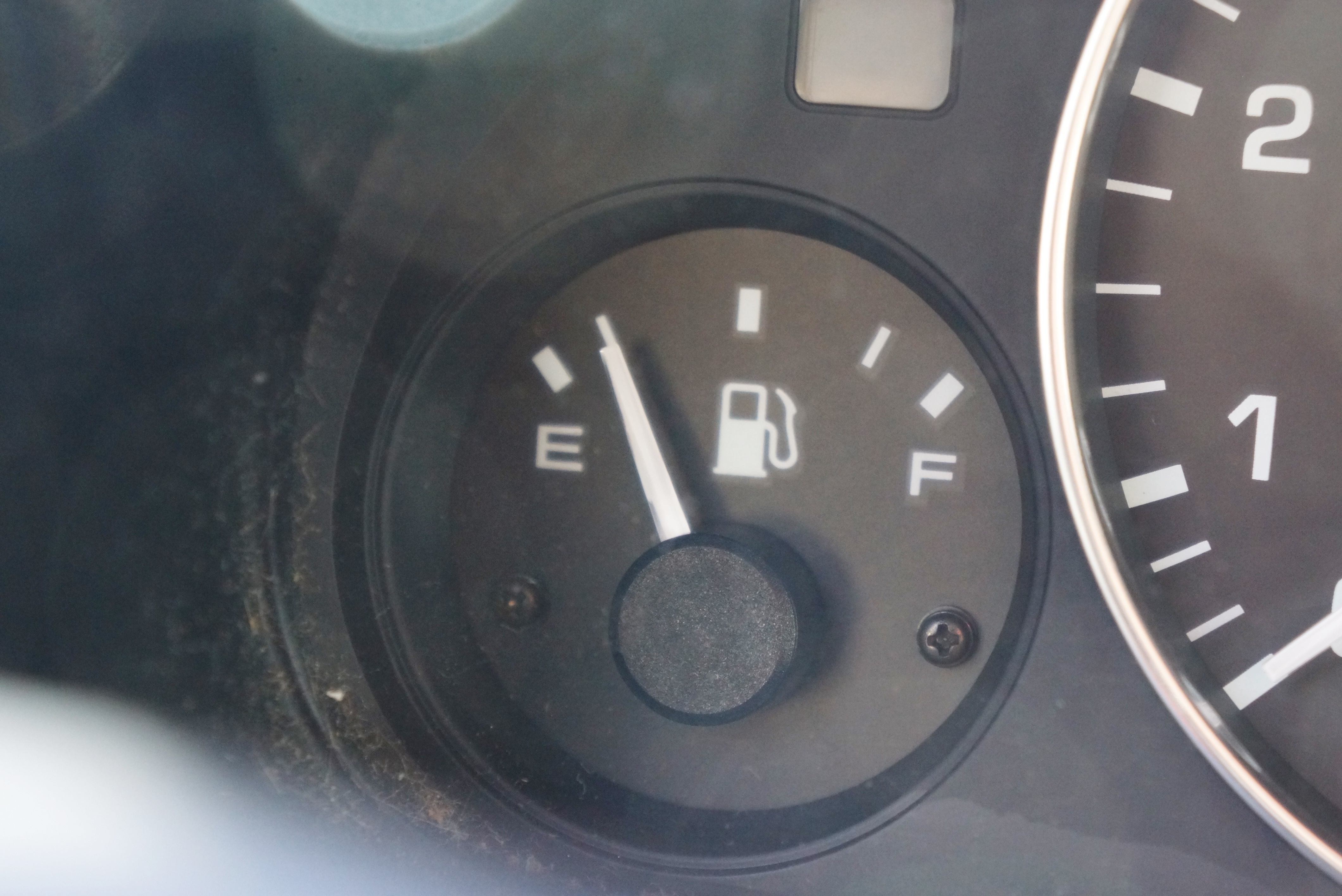
Today was the day to put the Miata to rest until spring. The Alfa, on the other hand, is still up on four jack stands as it patiently waits for me to complete the brake overhaul I started during the summer. The only accomplishment today in the Alfa’s favor was funneling a few ounces of Sta-Bil into the tank. I can’t start her up, because the battery positive cable and carburetor intake plenum have been temporarily displaced. We’ll save the rest of that story for the next post about the brakes.
Back to the Miata: my routine for winterizing this car, or any of my cars, is fairly simple. Unlike some friends who keep their collector cars “at the ready” should we get a sunny dry day above the freezing mark, I believe in putting them down with the intent of not starting them again until spring returns. The tasks to reach that goal are: add air to the tires; fill the tank and add fuel stabilizer; dissuade critters from making my car their winter getaway; connect the battery charger; and cover the car to protect the paint.
TIRES
Tire flat-spotting is a potential problem with any car, even one that sits only for a few days. The issue seems to vary among tire brands. When I bought my Acura TSX, the tires on it would be flat-spotted every morning. It took 2-3 miles of driving for them to warm up and stop going “thump-thump-thump”. A car which sits all winter is especially prone to this problem.
Like everything else I’m recommending, there is more than one solution. I’ve read that you should remove all the tires from your vehicle (necessitates jack stands) and store the tires on a wall-mounted tire rack (takes up extra space). You can buy cradles designed to go under each tire which distribute the car’s weight more evenly along the tread (more cash outlay, and I’ll need to store the cradles when not using them).
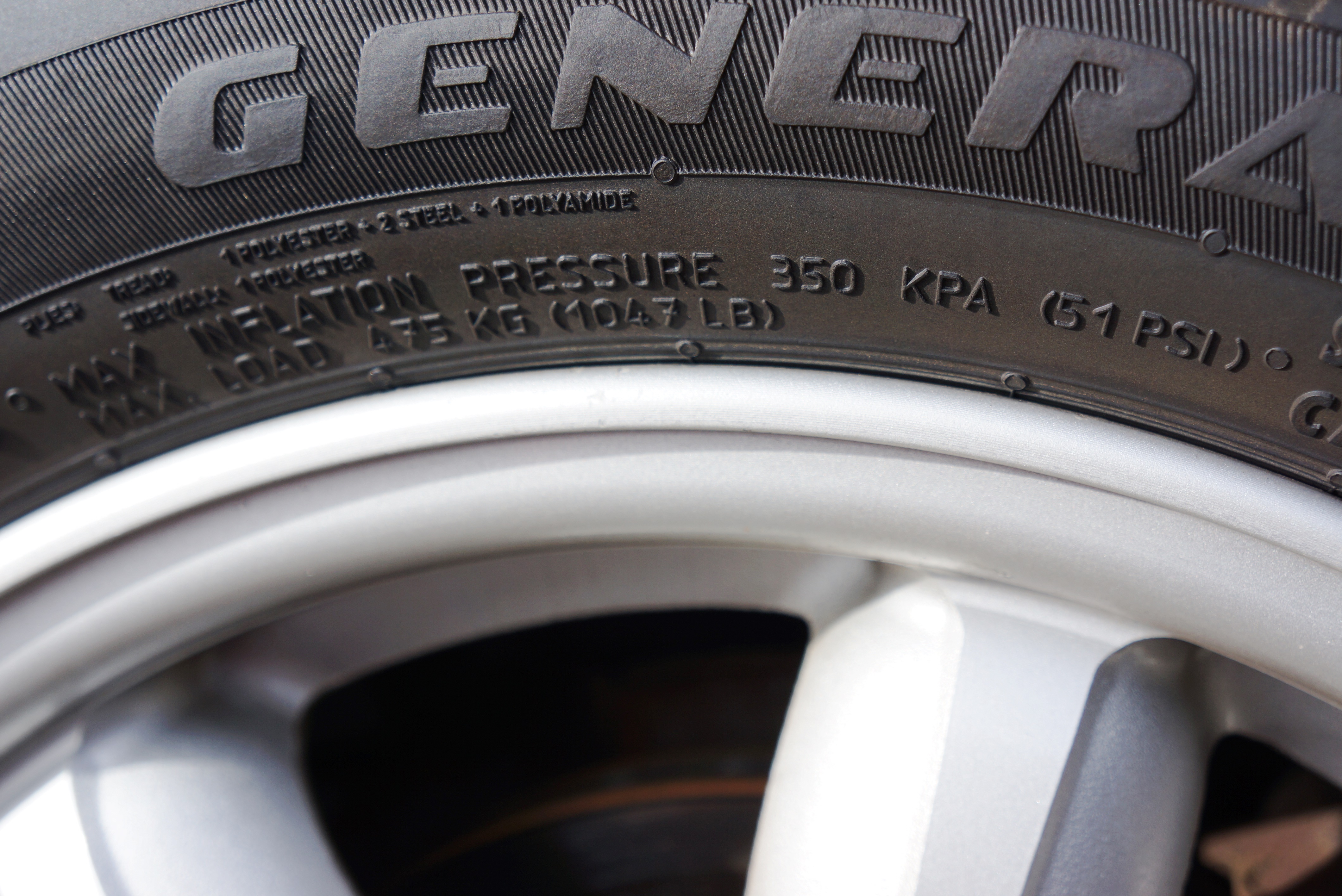
The sidewall indicates maximum tire pressure of 51 psi; I aimed for 45.
My method, which I’ve used for almost 20 years, is to over-inflate the tires and just let them sit. The extra air supports more weight, and it costs nothing other than about 10 minutes of work. I check the tire sidewall for the tire manufacturer’s maximum tire pressure, and aim for a number about 5 psi below that. Come spring, I bleed the tires back down to the vehicle manufacturer’s recommendation, and drive off without any thumping. Tires I’ve treated like this have never flat-spotted.
My cost-effective method to prevent flat-spotting
FUEL
Modern fuel will go bad in about 6 months; it’s been said that the ethanol in today’s fuel only exacerbates the problem. Besides the fuel turning to gel, condensation (from minuscule amounts of water in the fuel) can end up on the tank’s walls and cause corrosion.
A fresh bottle of Sta-Bil awaits my use. Note the forlorn Alfa in the background.
There are two good solutions for the condensation issue: store the car (or lawn mower, or snow thrower) with a full tank of gas, or with a completely empty tank. My lawn equipment, with its pint-sized plastic tanks, easily lends itself to the empty tank approach. But I do the opposite for the cars, because I don’t want to expose the remainder of the fuel system to whatever debris is likely lounging at the bottom.
Once opened, the contents are good for 2 years. Sta-Bil provides a spot for noting start date.
I’ve written before about fuel stabilizers; there are a few different brands, and I’ve been partial to Sta-Bil by Gold Eagle, simply because I’ve been using it for years and it works very well for me. One necessity with any fuel stabilizer is to run the engine for at least 5 minutes AFTER you’ve added the stuff, to circulate it through the rest of the fuel system. I’ve one more trick, and that is to add the Sta-Bil to the tank before filling it up. As fresh fuel is added, it mixes the two, and the drive back from the filling station usually suffices to distribute to good stuff through the carbs, injectors, and what-have-you.
Sta-Bil was added with tank one-quarter full, after which it was topped off
CRITTERS
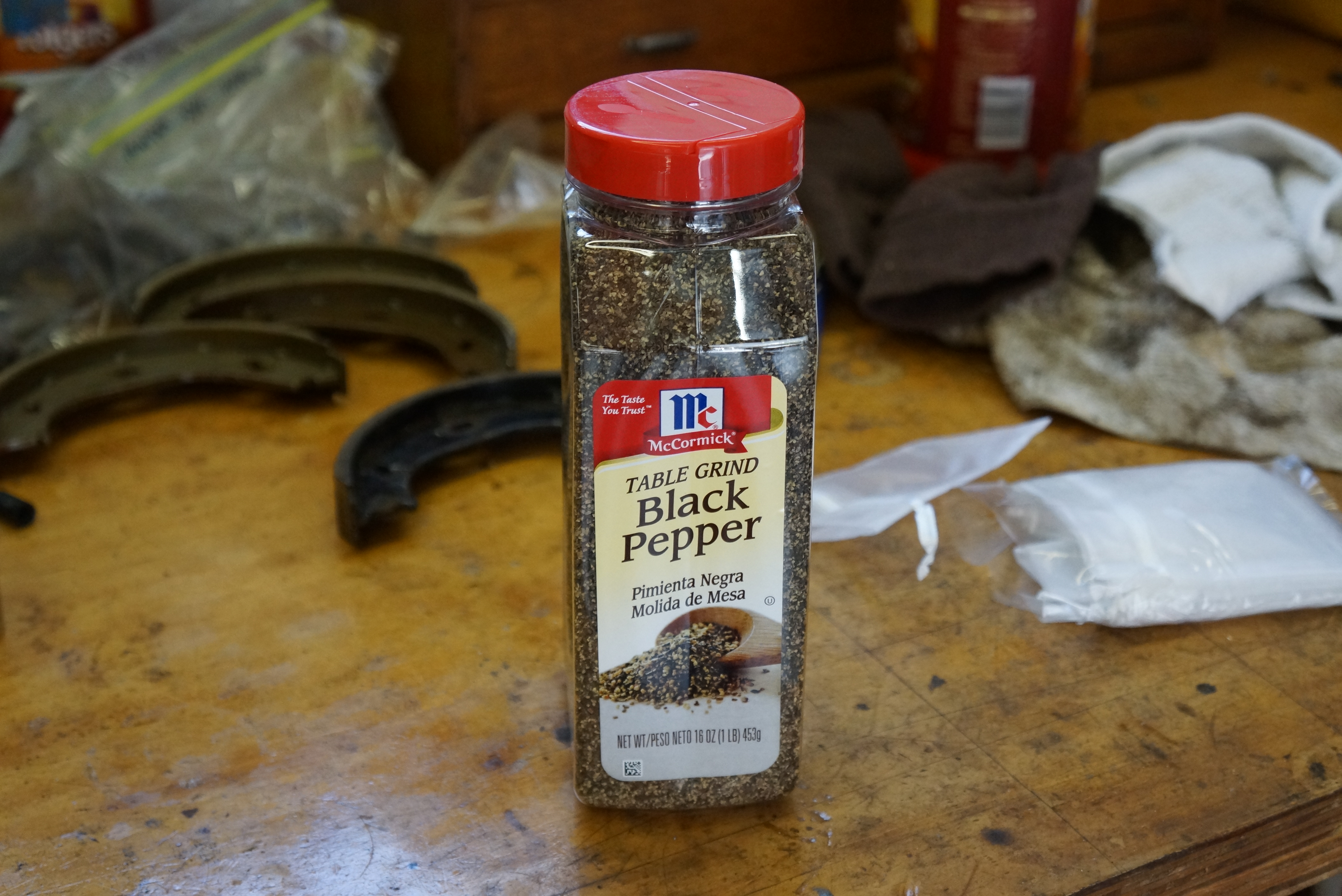
The good news is, I have a 3-car detached garage in the yard next to my house. The bad news is, I have a 3-car detached garage in the yard next to my house. I joke; there is no bad news. Except sometimes, critters, mainly field mice, want to see my collection. They think it’s cute. I don’t think they are cute. While no real damage has occurred, I’ve caught a few of them in there. They are not welcome. Rather than catch them, I’d sooner discourage them from entering. Through the years, I’ve used bait, traps, dryer sheets, mothballs, and black pepper, to varying degrees of success. Last year, the black pepper approach seemed to help, but it was loose on paper plates, and invariably, I would kick the plates and scatter the pepper about.
McCormick calls the coarse ground “table grind”
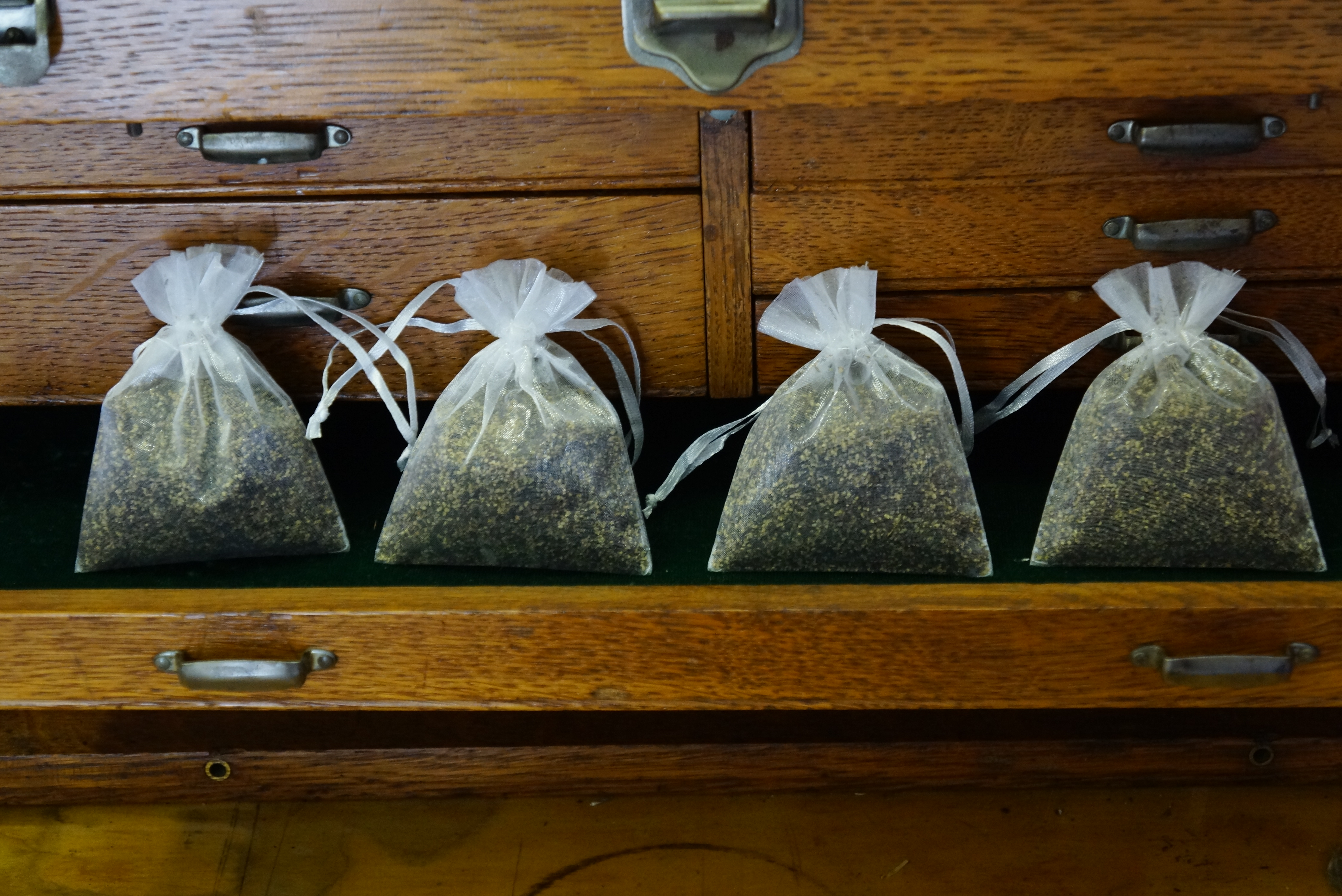
My wife came up with this suggestion: she offered to buy “potpourri” bags, like you’d use in the house for scented objects. (She got them in Michael’s in the bride’s section.) I bought an institutional-sized container of black pepper from Costco (get the coarse ground, not the fine), and filled a dozen bags with pepper. These went into the interior floor, trunk, and engine compartment. My entire garage smells like pepper (it’s better than mothballs; the one time I used them, the odor lingered for almost a year). As long as I spot no signs of toothsome damage, I’ll consider the pepper bags a success.
Potpourri bags are now pepper bags
BATTERY
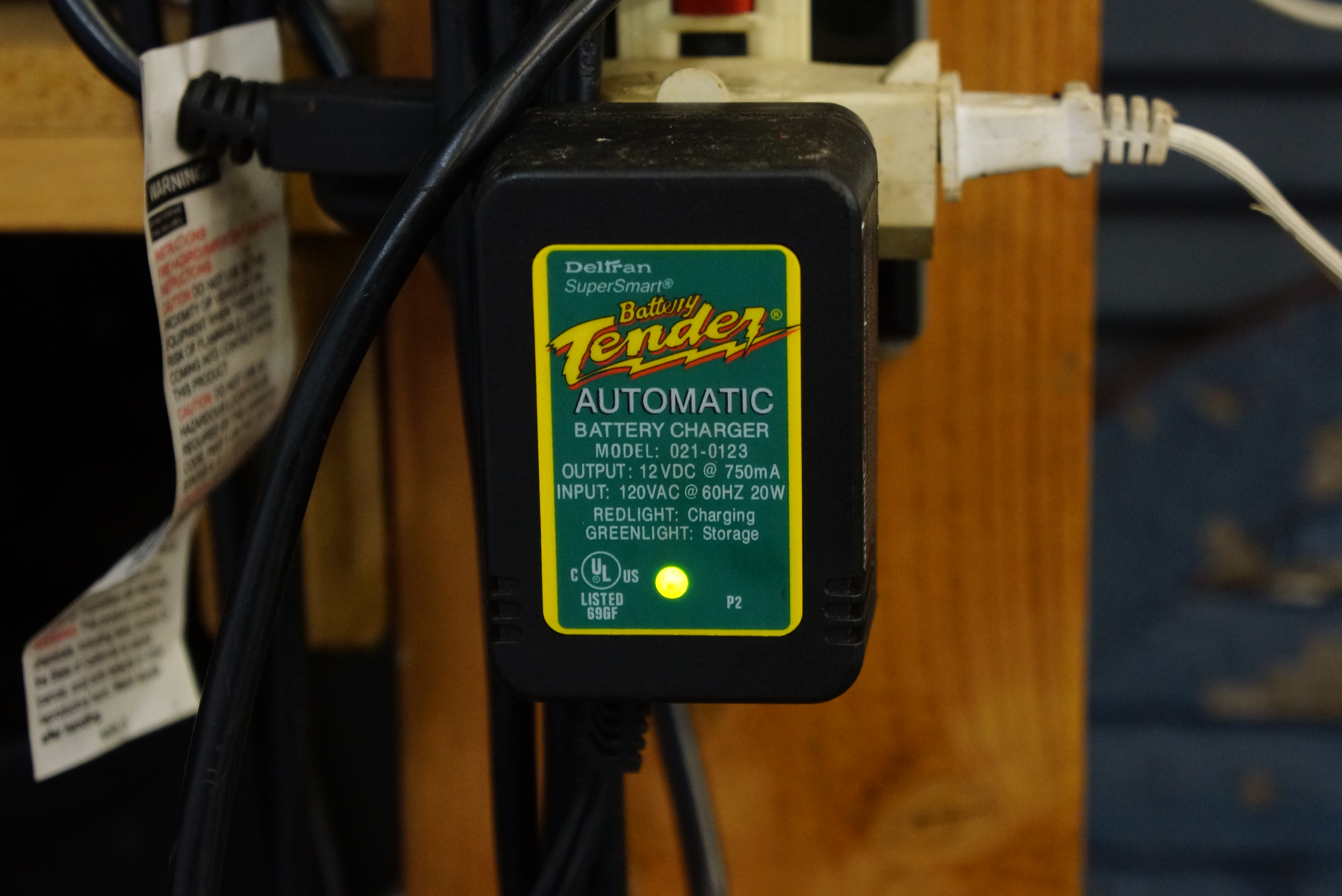
Again, there are multiple approaches for off-season battery maintenance, and none of them is wrong. What’s important is that your battery charger offers a trickle-charge function so the battery does not overcharge and boil over. The Battery Tender brand has been my choice, simply because that was the first one I bought. I now own several.
Lights on Battery Tender are only thing to monitor
I used to remove the batteries from the cars and arrange them on a shelf, connecting each one to a separate charger. (If you have multiple cars, and access to a wall outlet is an issue, there are trickle chargers designed to charge an entire bank of batteries.) I’ve now decided that there is no advantage to taking the battery out of the car; it’s just more work. However, I disconnect the negative cable to isolate the electrical system during charging. Once the terminal clamps are connected and the unit is plugged in, my work is done.
COVER
Before working at my current employer, I didn’t believe in car covers. Somehow I was convinced that they did more harm than good. Then I researched some of the better covers that we sell, and did a 180 on them. My brand of choice is Covercraft: the fit is excellent, the materials are top-notch, and there is a good variety of covers at different price points. Once the tires, fuel system, battery, and interior are treated, on goes the cover.
The first day of spring next year is Friday 03/20/20. I’ll be OK with it if Mother Nature wants to usher it in a week or two sooner, so I can undo all the above and take the Miata on its first spin of 2020.
In Part 2, we covered the ongoing caliper overhaul, both front and rear. While waiting for the caliper rebuild parts to show up, I decided to remove the rear rotors and inspect the parking brake set-up.
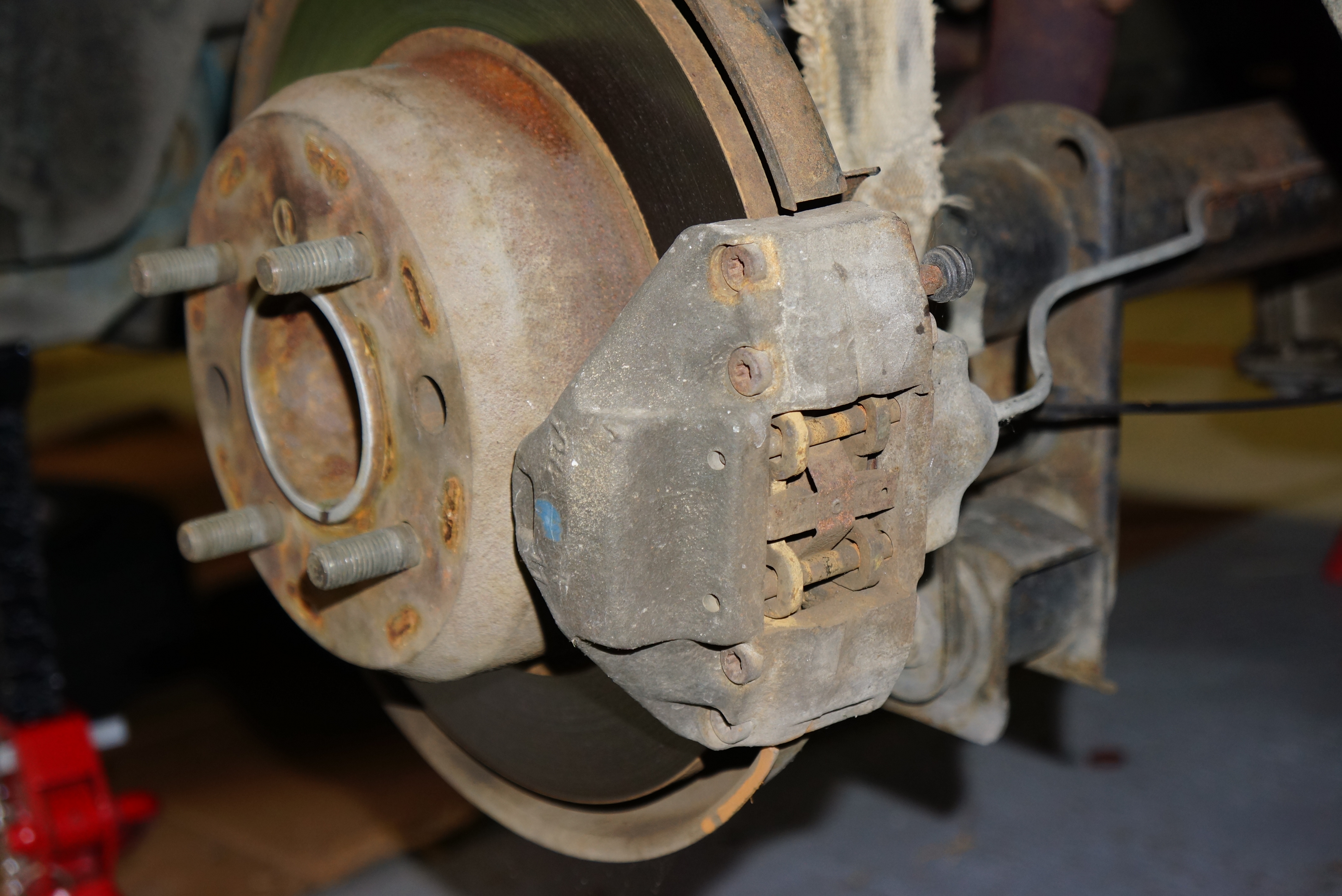
Left rear disc, caliper, and brake line
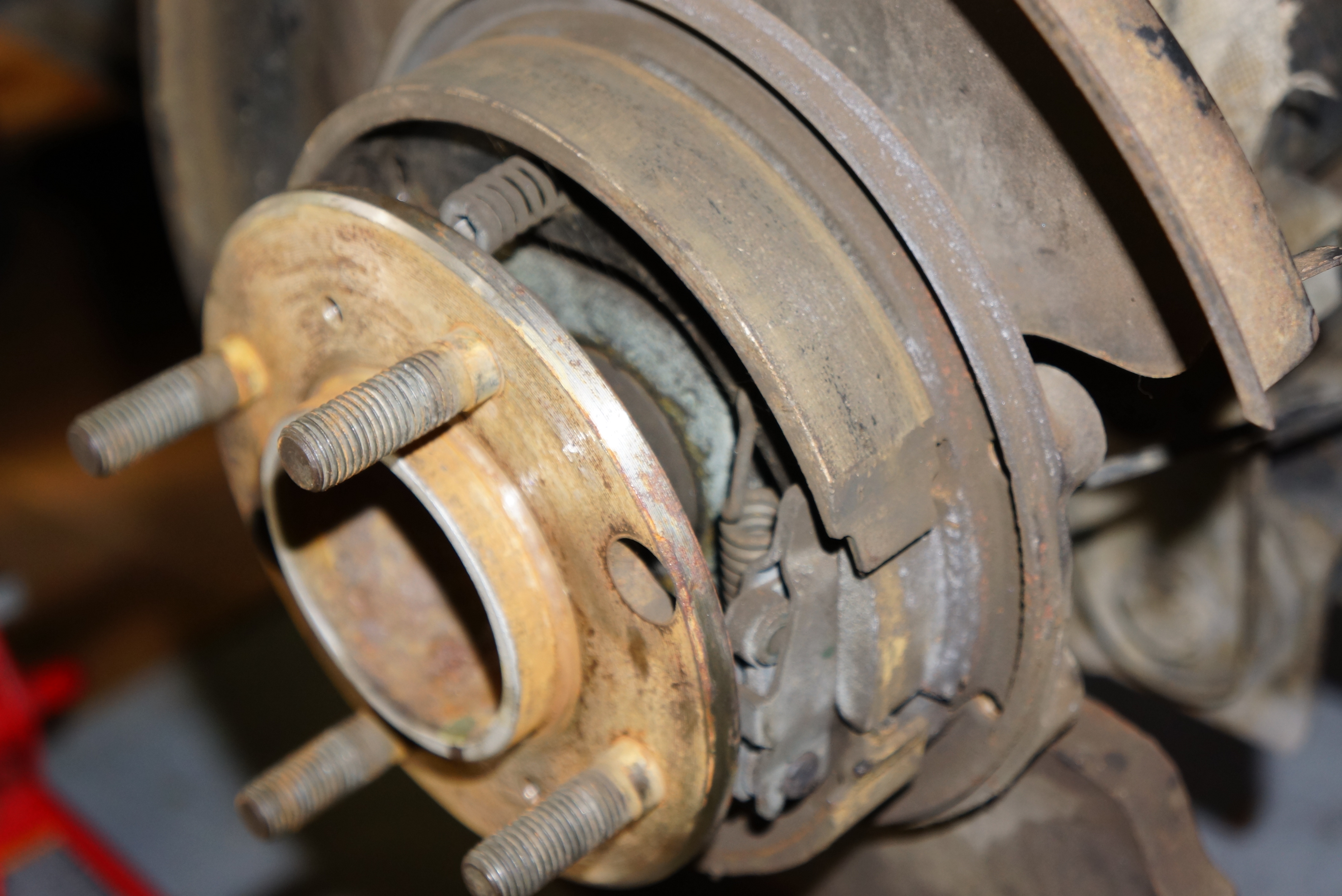
Similar to what Volvo has used for decades, the rear rotors sit over a set of drum brake shoes which apply to the inside of the rear disc “hat”. On the Alfa, these are cable-operated. It was always gratifying that my car’s hand brake worked, but it required a significant tug of the handle to engage.
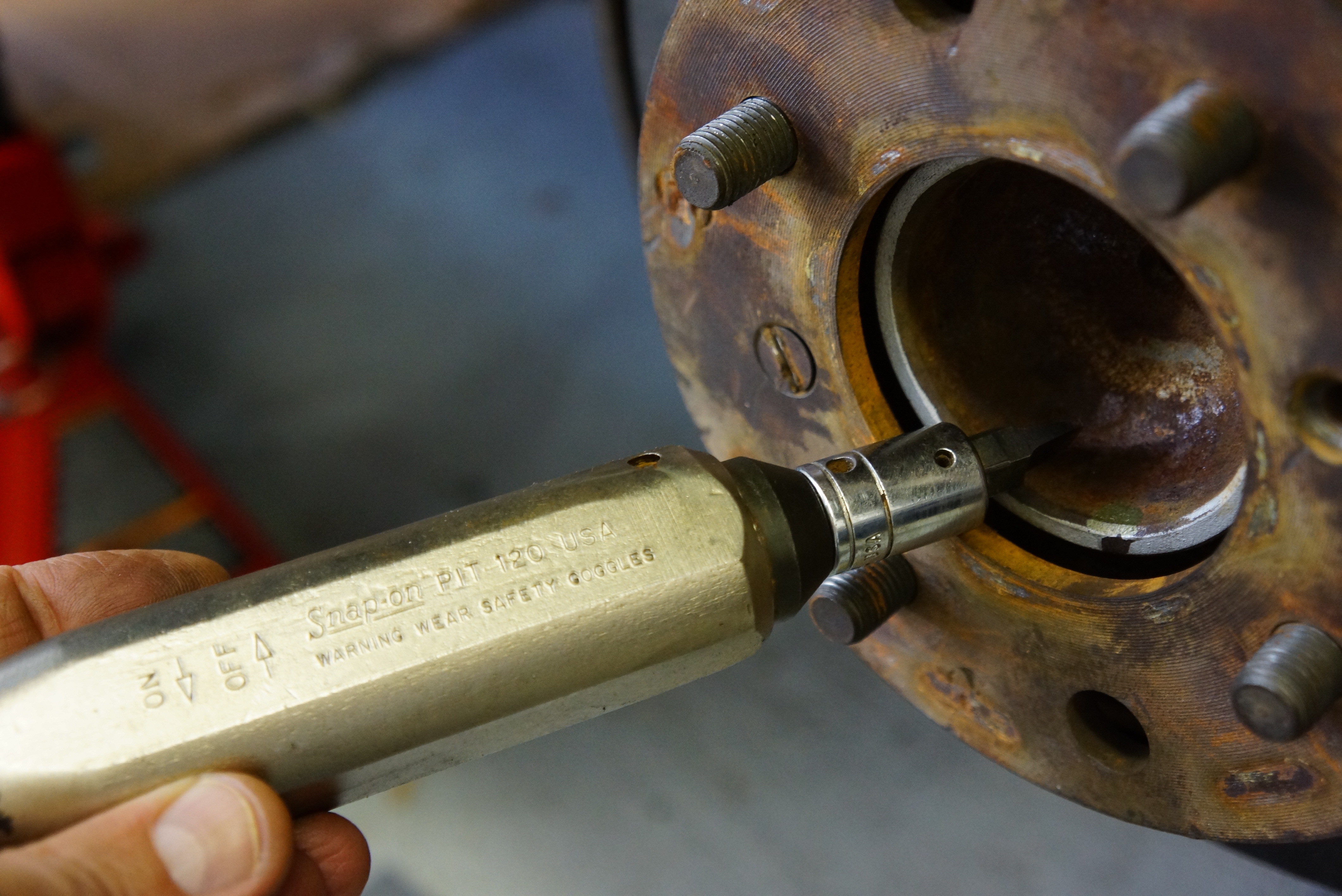
First challenge was removing the two slotted-head screws holding each rear rotor to the hub. An ordinary screwdriver wasn’t getting the job done, so I resorted to one of my favorite tools: my Snap-On hammer-driven impact driver. A long time ago, Andy Finnegan, the shop foreman at the first Volvo dealer that employed me, suggested this tool to me. While I infrequently use it, it’s one of those tools that makes you glad you have it for the occasions you really need it. This was one of those occasions.
The right tool at the right time can save hours of time and frustration – note slotted screw in rotor face
A few taps with a hammer, and the screws were loose (I also bought new replacements on the chance that I would mangle the heads during removal.). But getting the disc off also required a few heavier hammer blows. Eventually, the rotors were off, first on the driver’s side, then the passenger side.
It would not surprise me if I were the first person to expose the parking brake shoes since this car left Italy. Remember that when I bought it, the car has 54,000 original miles. I also have reason to suspect that the rear brake pads were original to the car. There has likely been little need to check or service these components.
Note star wheel on left
and cable linkage on right
With some effort, I removed the brake shoes on the driver’s side (access is conveniently limited by the hub). The arrangement is typical, with a star wheel for adjustment, and two springs holding the upper and lower shoes. A cable extends from the differential through an access hole in the backing plate, pulling a lever which spreads the shoes. After taking the one side apart, I decided to leave the passenger side intact for reference, and ordered all new parts from Classic Alfa.
Old shoes and springs will be replaced
It was also time to remove the master cylinder. With its so-called “standing pedals” hinged through the floor, my ’67 is one of the last Giulia coupes so configured. Within a year or so (varying by model), Alfa would switch to “hanging pedals” and mount the master cylinder in the conventional location on the firewall.
Standing pedals – accel pedal has been removed
I desperately searched for guidance on the Alfa forums for “master cylinder removal”, but nothing I came across addressed the underfloor location. So I tackled it on my own, and really struggled with it. There are two bolts which pass horizontally through the master cylinder, and these bolts mount into a plate that also holds the clutch linkage. Said plate didn’t look removable to me – that’s from the vantage point of lying on my back, with my nose about 3 inches from the car’s underside. Without removing the plate, there wasn’t enough clearance to remove the bolts. Through sheer luck, I wiggled the cylinder and the bolts and got the master cylinder cleared. But I’ll need to investigate this plate when it comes time for reinstallation.
View of master cylinder while on my back
There was also the matter of the two brake lines, both of which thread into the top of the cylinder. There was little choice but to loosen and drop the cylinder to give me access to the line fittings, but then I lost the leverage one gets from a master cylinder firmly bolted to something.
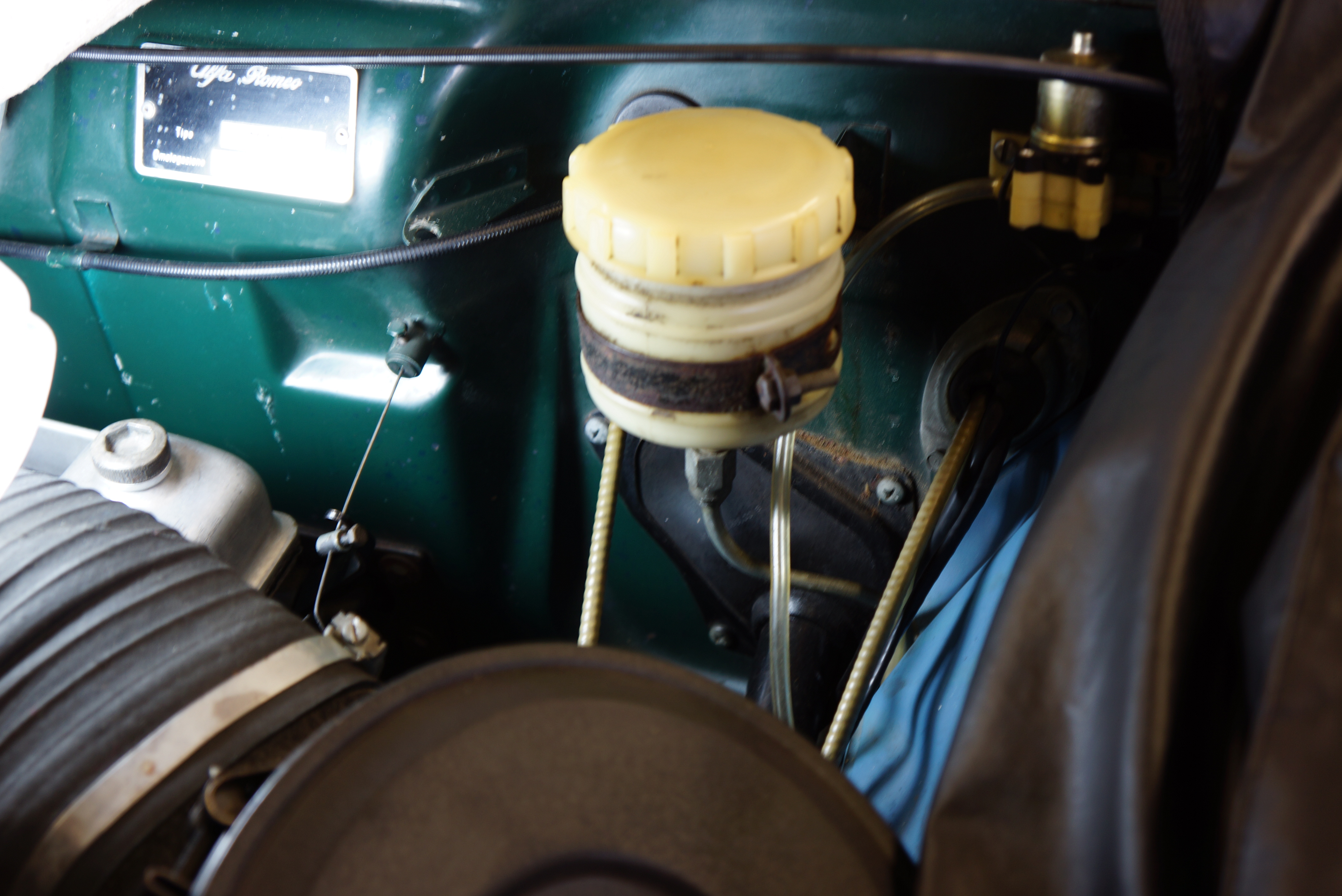
Brake fluid reservoir on firewall is where you’d expect to find m/c – note hard line which feeds it
Using my flare nut wrenches, the first fitting came out easily. The second one did not. I resorted to using a cheater bar (a length of pipe) on the wrench, and for the first time during this brake overhaul, the wrench slipped on the fitting and rounded it off. The fitting was seized. I cut the line with a pair of diagonal cutters, and the master cylinder was on my workbench. In a bit of good news, the fitting did come loose once I dropped a deep 6-point socket on it.
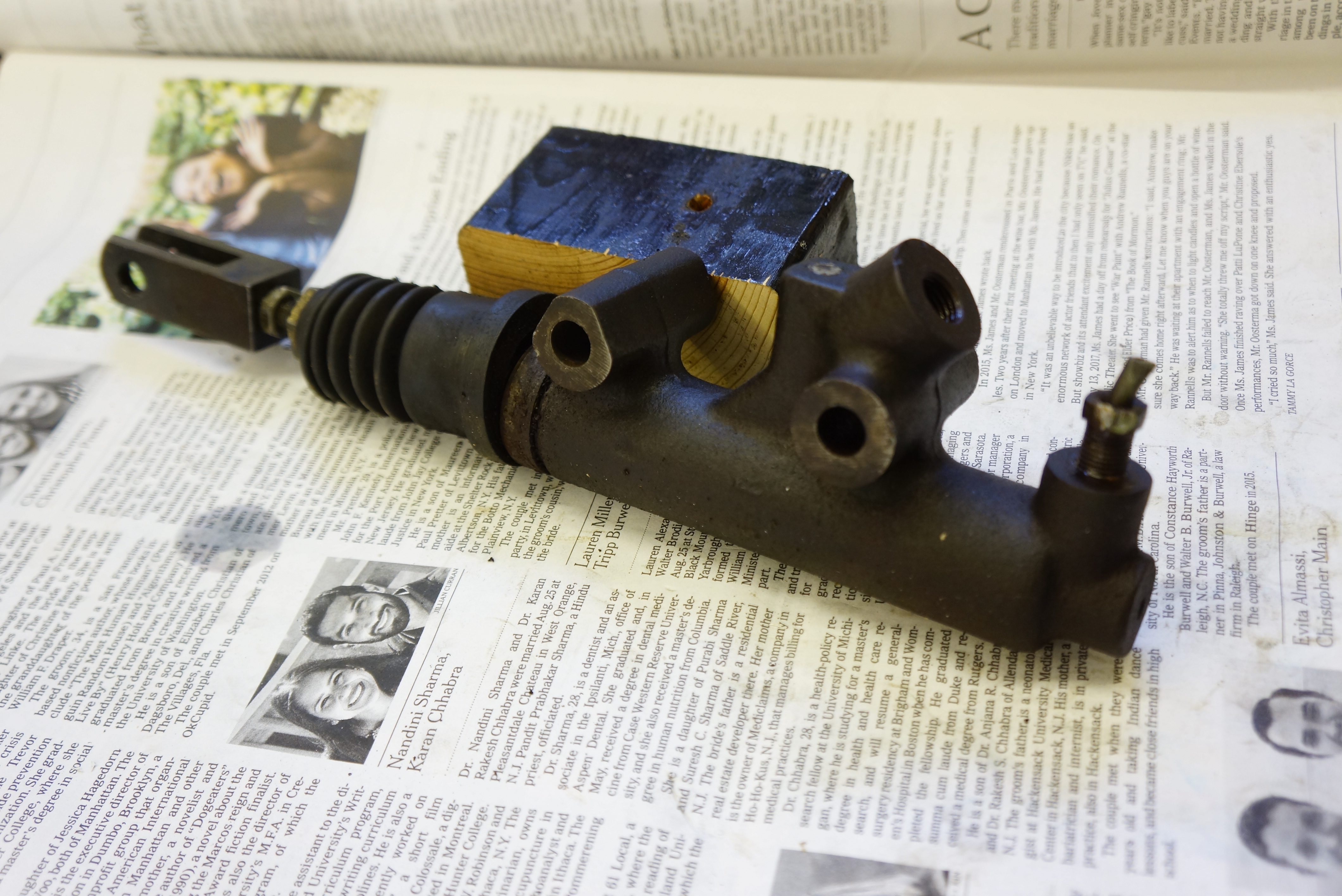
Master cylinder – note severed line and fitting in right-most hole
There is plenty to do next: finish the rebuilding of the two rear calipers, renew the parking brake parts, and rebuild the master cylinder. Parts were duly ordered and are on their way.
As you read in Part 1 of the Alfa Romeo brake system overhaul, the new front calipers I had purchased, through no one’s fault, didn’t get the job done. It was just as well; in an attempt to get my car ready to drive to the AROC Convention in Pittsburgh, I was hurrying through the job, which is no way to work on a braking system. If anything, the inability to make the car roadworthy gave me just the excuse I needed to do the right thing.
I had purchased this car in 2013 from my friend Pete. He bought it in 1968, drove it for perhaps five years, mothballed it for over 20 years, then took it out of long-term storage. After refreshing various systems, including the brakes, Pete enjoyed the car for about 10 years before handing over the keys. In my mind, this Alfa had been “recently” refurbished. However, once I added up the years and the miles, I realized my own miscalculation. At best, Pete worked on the brakes around the year 2003, meaning, the brake fluid alone was now 16 years old. Shame on me! Since I loved driving the car, I wanted 100% confidence in its brakes, so The Right Thing meant a complete overhaul: rebuilt calipers, new or rebuilt master cylinder, and new lines and hoses. I got all 4 wheels up off the ground, drained what little fluid remained, and brought both front calipers to the workbench.
Caliper with piston, dust boot and spring in place before removal
First, the dust boots and their retaining springs had to be removed. The springs were so rusty that it was difficult to see them against the boots, but with a little urging from a dental pick, they popped off. The boot for the seized piston looked like it had been on fire (it almost was), and this early discovery reinforced that this overhaul was necessary and overdue.
Dust boot and rusty old spring on their way off
This dust boot is ready for the trash can
I’ve rebuilt calipers before, as a Volvo tech, but it wasn’t a job we did very frequently. All 4 of my car’s calipers are of the two-piston fixed type, and research from my Alfa library led me to conclude that there was no need to split the calipers. The pistons could be removed with compressed air, and the bores cleaned up as necessary.
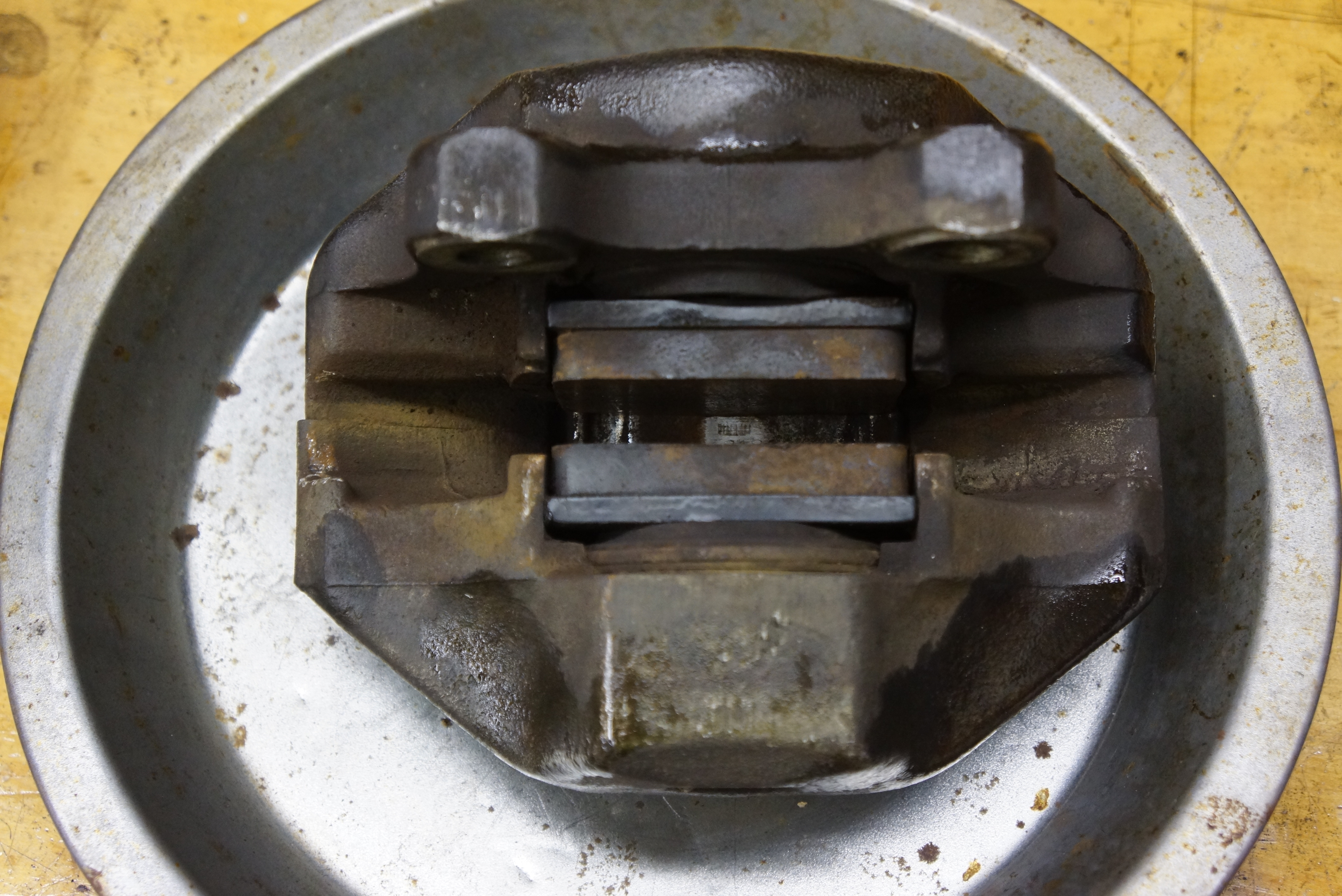
This 2-piston caliper has 1 piston behind each pad. It is “fixed”: the two halves are bolted together.
Starting with the seized right front unit, my technique was to start by pushing the pistons back into their bores with a piston compression tool. The reasoning is that any movement is good movement. Once they were fully retracted, I hit the fluid passage with compressed air, and both pistons moved outward a few millimeters. The cycle was repeated: retract pistons, apply air; retract pistons, apply air. Finally, one piston popped free.
At the start, piston retraction tool was used to push pistons all the way back
Compressed air is good stuff
But now I had a problem: the compressed air escaped from the now-empty bore, and did nothing to move the piston still in place. I reinstalled the removed piston, but the same thing happened: one piston came out, and one stayed in. I needed a way to block the fluid passages without fully reinstalling the first piston. Stuffing rags into the bore did nothing.
C-clamp is employed to hold 1st piston while compressed air dislodges 2nd one
Here’s how I did that: lubing up the piston with brake fluid, I reinserted it just a few millimeters back into its bore, enough to block air flow, but not so much that I couldn’t pull it out by hand. I held this piston in place with a C-clamp, so the force of the air would blow out the 2nd piston. It worked! The 2nd piston shot out, and once I removed the C-clamp, the 1st piston could be worked out with my fingers. With the pistons out, the inner seals were easily coaxed out with a dental pick.
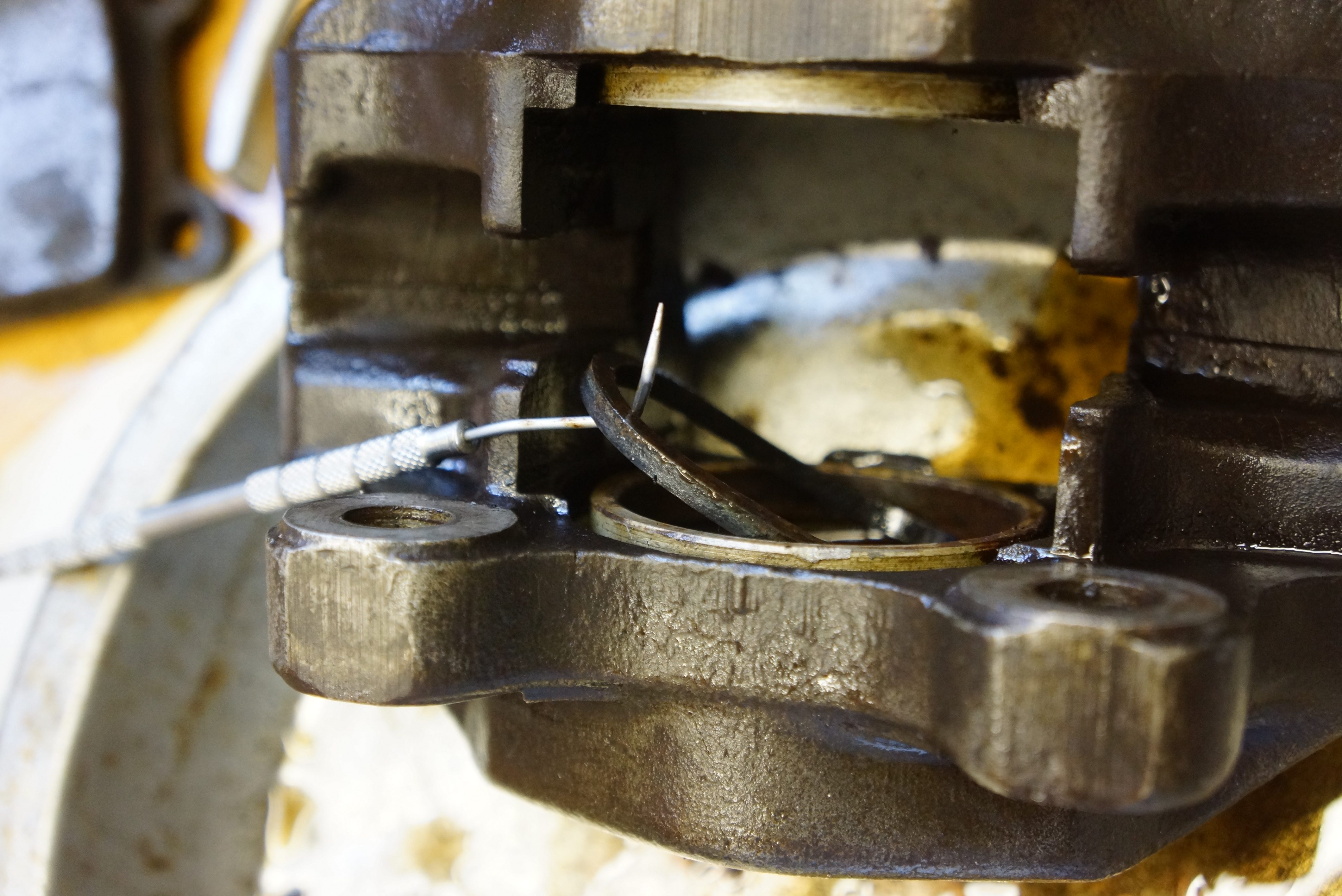
Removal of the inner seal
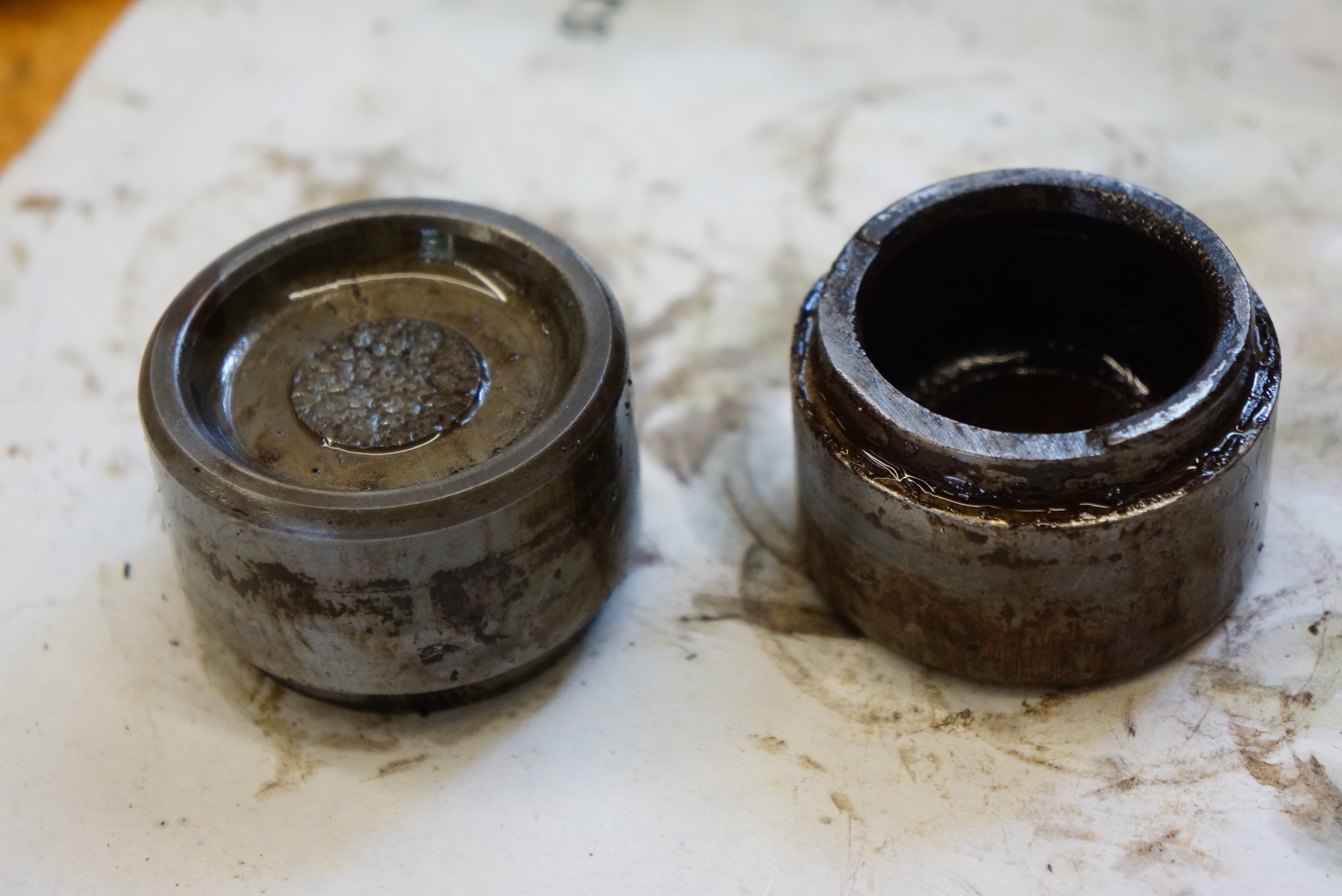
A close examination of the pistons revealed that one had a mark along its surface. My local Ace Hardware store had 3M brand emery cloth which I bought in medium, fine, and super fine grit. While I couldn’t completely remove the nick, I smoothed it out so that it couldn’t be felt. The front lips of the pistons showed marks from pliers or Vice-Grips, so someone (not me) got aggressive with a prior piston removal attempt. Thankfully, the marks would not affect the braking performance.
Front pistons
Left and right sides
The bores themselves showed some minor corrosion along the outer edges, but the insides (below the inner seals) weren’t bad, and the super-fine emery cloth made them even better. While this was going on, the rear calipers were unbolted and disassembled so that I could measure the piston diameter. According to my supplier, Classic Alfa, this generation Giulia used either 30mm or 36mm rear pistons, and of course, one needed to know before ordering parts. It turned out that my car has 30mm pistons. I placed my order with my favorite Alfa supplier, knowing that I’d have the parts within 48 hours or so.
Pistons before (left) and after (right) emery cloth treatment
Nick in surface could not be removed, but was minimized. Note pliers marks.
Now, the full story as to why I was not able to drive my Alfa to this year’s AROC (Alfa Romeo Owner’s Club) annual convention in Pittsburgh can be told. In my initial post about the convention, I wrote:
Let’s get this bit of disappointing news out of the way: while this Alfista was in attendance, his ’67 Alfa GT Junior was not. Four days before the scheduled departure, the car’s right front brake caliper locked up, and although repair parts were obtained, there wasn’t enough time to effect a safe and sufficient repair. So the green stepnose stayed home.
This is what happened: Four days before we planned to leave for Pittsburgh, I drove the Alfa to my friend George’s house. George (Geo to his really close friends) lives just five miles away, and while he was excited to join in the weekend’s festivities, he had never driven my car before. I thought it only fair that he have a crack at it before we commenced on a 6-hour journey.
As soon as I pulled out of my garage that morning, I sensed that something was amiss. The car seemed a little down on power, and it pulled to the right. Other than that, it drove OK, so I pushed onward. The moment I entered Geo’s driveway and killed the engine, smoke emanated from under the closed hood. I popped the hood but saw nothing obvious. When Geo came out, I explained what had happened, and we both decided to let him drive the car, if only for 2 or 3 miles.
Once Geo got the car back to his place, the smoke returned, only this time, the source was clear: it was pouring off the right front brake. Hindsight made the drifting and low power obvious: this brake caliper was seized. I was lucky we weren’t seeing flames.
We pulled the wheel and there was nothing visibly wrong that we could try to fix on the spot. Putting the wheel back on, I reasoned that I could “carefully” drive the 5 miles back home, and work on it there. As soon as I bade Geo ciao, I started the car, put it in first, and headed down his driveway to the street, where I would need to turn left. Hitting the brake pedal, it sank to the floor. Thankfully, my parking brake (sort of) works, and I used it to stop at the bottom of the driveway. I backed the car up the drive, and started to figure out what Plan B looked like.
Geo couldn’t understand the loss of the pedal. I reasoned that the heat had caused the fluid to boil. Sure enough, 15 minutes later, a firm pedal returned. But I wasn’t driving this car home. There’s a reason I carry an AAA card. I called, they said one hour, and the truck was there in 90 minutes. In seven seasons of ownership, and in over 11,000 miles of driving, this car has never ridden on the back of a flat bed – until this brake failure. But the risk in driving it wasn’t worth it.
There’s a first time for everything
While waiting for the truck, I had time to calculate how I was going to get this repaired by Friday morning, just a few hours shy of four days away. My go-to Alfa parts supplier, Classic Alfa in the UK, was still open, if barely. I had always placed my orders via their website, never by phone, and this seemed like a most valid reason to spend the money for an international call. Given their stellar shipping reputation, I could have the parts by Wednesday, which I reckoned would still allow enough time to make a repair.
I called. ‘Chris’ answered. I explained my dilemma and asked him about my options. He quickly offered the choice of either remanufactured (reman) ATE calipers, or brand new ones. I asked him for the price difference, and he replied about 20 British pounds (approximately $25 thanks to the Brexit-depressed value of the pound). I figured that the small differential between new and reman made the new ones a deal, so I ordered a set. Since a core return wasn’t required, I asked Chris to include a caliper rebuild kit, thinking that I would eventually refurbish the old ones. It was now close to noon on Monday in New Jersey, and Chris said I should see the parts by late Wednesday.
Chris was wrong. The parts were in my hands at 5:30 pm ON TUESDAY. This was a miracle, and I presumed that the boys in the UK pushed the order through, having heard that I was planning on driving this thing to the U.S. Alfa convention in 4 days. So far, so good.
Shiny new caliper, ATE-like
Opening the box, the first disappointment was to discover that while these were certainly new calipers, they were not marked ATE, and I had to conclude that they were ATE copies. I unbolted the offending caliper, and an eyeball comparison proved that the new one was identically shaped. All I had to do was swap over the pads, connect the hard brake line, and bleed the system.
Right front rotor shows slight scoring, looks salvageable
With the existing pads and pad hardware installed, I knelt at the right front knuckle, held the 11 pound caliper in my right hand, and began to thread the brake line fitting into the new caliper with my left hand. The threads would not start. I tried every trick I knew; after perhaps 20 minutes, it felt like the threads had started, but I was unable to turn the fitting by hand more than half a turn. Of course, the dreaded fear is that I might cross-thread it, and ruin the caliper and/or the brake line fitting. After another 20 minutes, with blisters forming on the pads of my fingers, it felt again like it started. I picked up the flare nut wrench, and slowly, carefully, brought the fitting all the way down. It was about 8pm on Tuesday night. I was drenched, from both the 100% humidity and the nervous energy.
Flare-nut wrenches (this fitting is 11mm) indispensable for brake line work
The next evening, I removed the (good) left front caliper, and, convinced that the previous night’s issues were behind me, went through the same routine: swapped the pads, held the caliper up to the knuckle, and began to thread the pipe fitting. SAME PROBLEM. Desperate, I removed the hard line from the car, and brought it and the new caliper to the workbench, where I wouldn’t need to struggle with the caliper’s weight. I never came close to getting the threads to start.
New caliper looks great, too bad it leaks
I rationalized: I have the new caliper on the right front, to replace the known bad caliper. Certainly, I can keep the existing left front caliper in place and drive the car a few hundred miles. The left front caliper was reinstalled. Geo stopped by to assist. We were ready to bleed (the brakes, not us). I filled the master reservoir, asked Geo to climb in, and we began the “pump, hold, release” routine of manual brake bleeding.
There was a drip at the fitting at the right front caliper.
Reluctantly, I put a wrench on it and got another 10-15 degrees in clockwise motion. The bleeding resumed, and so did the dripping. I told Geo that we were done. While I did have the rebuild kit, it was now after dark on Wednesday, and I was out of time, patience, and confidence. Working on a car under such duress only encourages poor decision-making, unnecessary shortcuts, and botched repairs. My only desire was to enjoy the AROC convention, knowing that I would resume this wrenching at an unhurried pace upon my return. The new calipers would go back to Classic Alfa as defective or unusable.
To briefly recap: Ron bought a derelict 914 many years ago, only to discover that its engine was junk. He purchased a spare motor, and invited me to join in the festivities. We’re on equal ground, because neither of us has ever rebuilt an air-cooled VW or Porsche engine before. To quote Ron: “What could go wrong?”
The good news is, we are still in the disassembly phase, and as anyone who has attempted any kind of project can tell you, taking something apart is easy, compared to putting it all back together (and expecting it to operate).
During my 2nd visit, we were able to remove the rocker arm assemblies, pushrods, cylinder heads, and cylinders (jugs). Ron kept reminding me that he wasn’t too concerned about the condition of all these parts, as he has already purchased new replacements for all of them. However, one issue that is keeping me concerned is that we started with a 1.8L engine (I think), we are now working on a 1.7L engine (I think), yet the new parts are for a 1.8L, as that’s what Ron thought he’d be rebuilding until discovering that it had been stored in a pond. Hey, we’ll figure it out. (If you have any familiarity with the similarities and differences between the 1.7 and 1.8 914 engine, please drop me a line.)
Rocker arm assembly prior to removal
One cylinder head off the crankcase
Condition of valves is unknown but unimportant, as new heads will be used
Pushrod tubes required force to remove, as prior rebuilder glued o-rings (known leak point)
We reasoned that once unbolted, cylinders should slide right off
And they did, exposing pistons and rings
During that same visit, we had intended to remove the flywheel, but we lacked the exact tools we needed (½” drive impact sockets). During my all-too-brief 3rd visit, I brought the required sockets with me, but, even with an air impact gun, the final flywheel bolt would not budge. We worked it so hard that its corners started to round off, so cooler heads prevailed, and we left it alone until a Plan B arises from the pond….
The blue wrench is again utilized in a vain attempt to remove final flywheel bolt
At my urging, Ron did buy a set of snap ring pliers, and they came in handy when removing the snap rings, two per cylinder, one on either side of each piston pin. With those out, the pins were easily knocked free with a drift and hammer, and all the pistons were removed.
With access hindered in places, Ron still managed to reach all 8 snap rings
Ron eyes connecting rod bolts, ponders bearing replacement
I informed Ron that I had a busy August coming up, so in the interim, he had some decisions to make:
If the flywheel bolt can’t be removed, what is our next course of action? Just leave it be? He was leaning in that direction.
With pistons removed, the con rod bolts are accessible, and Ron was considering replacing the con rod bearings (but not the crank bearings). He was actively mulling that over.
While he had previously purchased a complete engine gasket kit, was he certain that it had everything we needed for reassembly? He was going to inventory that kit.
Since that 3rd visit, Ron emailed me with an update: he had purchased a set of bolt extractors, “guaranteed to remove the most stubborn rounded-off bolts”, so he was engaged in that exercise. I hope to get back to wrenching on this engine within the next week or two, but I’ve got the Alfa brakes to tackle, and that’s a project (and a story) that will take me through most of the remaining driving season.
For varying reasons, we (the “we” being my buddy George) and I are departing Friday morning. It’s about a 350-mile one-way trip, and while my 51-year-old Italian car is more than up for it, there’s still all that last-minute stuff to attend to. Since it got a full tune, valve adjustment, and oil change earlier this year, most of what I’ve put effort into these last few weeks has been cosmetic. After all, it will be on a show field with many of its siblings and cousins, and it needs to look it best!
Here are some of those recent efforts:
Floor mats
When I got the car in 2013, there were custom-fitted carpet floor mats in place. Pete, the previous owner, had had them made, and they fit well and looked good. But during my time with the car, the driver’s side mat had started to bunch up near the pedals. Looking at replacement mats online, the biggest challenge was finding a set that could properly deal with the “standing pedals” (hinged through the floor) on my Alfa. The set in the car had a rubber panel, cut to allow the clutch and brake pedals to pass through. I was looking for similar, and was not satisfied with what I was finding.
Existing mat handled standing pedals
but bunched up near them
The good folks at Coco Mats (www.cocomats.com) offered to make a custom set for me, and went so far as to send me a template for a hanging pedal car, which I could customize. But during my email exchanges with them, they seemed reluctant to deal with a mat that would be slotted for the standing pedals. While I liked the idea of coco mats, I continued to search.
My usual UK supplier, Classic Alfa, didn’t carry floor mats at all, but Alfaholics did (www.alfaholics.com). While the mats appeared able to adapt to the pedals, the image on the screen was less assuring. The Alfa logo AND script were rendered in bright red, and took up a large chuck of real estate on the mat; perfect perhaps for a car with some red on the outside or inside, but my GT Junior has neither. I decided to keep looking.
Centerline, based in the states, possibly had a good-looking mat, as the screen shot showed the Alfa logo done up in proper colors. The issue for me was the entire mat wasn’t shown, and I wanted to see how they handled the pedals. So I called and asked if someone could perhaps take a photo or two and send that to me. The nice chap I spoke to said, “well, it’s Friday, but we could do that for you next week”, to which I replied, “great!”. When “next week” came and went, I called again, and got a different, somewhat less-nice chap. His first question was “who did you speak to?” and I replied “I have no idea”. When I again asked for pictures, he said “well, we’re kind of busy filling orders”. Hmm. Guess I’ll just look somewhere else then, shall I? (I never did receive photographs from them.)
Driver’s mats: old mat on left, Mr Fiat mat on right
Out of frustration, I Googled “Alfa Romeo mats made in Italy” (U.S.-made mats were for hanging pedal cars only). This brought me to the website of Mr. Fiat, where I saw good-looking mats for standing pedal cars. The Alfa logo was in all-red, but it was small and subtle. I called. Mrs. Fiat answered the phone, and verified that they had my mats in stock (the company is in Atlanta GA). She transferred me to Mr. Fiat, who took my order over the phone. I had the mats in 3 days.
Juniors left factory with rubber mats, but you got the cross & snake logo!
The look is good; the fit is just so-so, but about what I would expect for aftermarket mats. Their main purpose, after all, is to protect the original rubber mat flooring, so these will get the job done!
I will admit that on 90-degree summer days, the vinyl upholstery in my car becomes a bit unbearable. So the idea of sheepskin covers, with their “cool in the summer, warm in the winter” advantages, appealed. I’m also lucky to work for a company which sells aftermarket car parts and accessories, and I bought my covers, through www.carid.com, from U.S. Sheepskin.
Sheepskin covers are for travel only; big help on hot days
They are universal fit, and while the fit on the seat back is excellent, they are quite big on the seat cushions. The color is complementary at best, but that’s OK, because these are for travel only. Once I get to a show, the covers are coming off to expose the original upholstery. I’ve made some short local trips with the seat covers in place, and so far, pretty comfy.
US Sheepskin doesn’t carry pigskin brown; tan was closest match
Polish and wax
The Alfa has single-stage paint, meaning, no clear coat on top. Not sure that any 1967 cars had two-stage paint, probably not. I’m also guessing that its paint is lacquer, as it has that “soft” feel to it. Whenever I apply any kind of wax, the cloth quickly turns green, so I know I’m removing paint.
Since buying the car in 2013, I’ve put over 10,000 miles on it. When it goes on one of the New England 1000 rallies, it spends a full week outside, and that quickly takes its toll on the paint. In my garage, the car stays covered, but the paint still needs frequent attention.
Meguiars products have been my favorites for over 10 years now, and I’m 99% exclusive with them. For the Alfa, having tried several different combinations of products, I’ve settled on two: Show Car Glaze #7, and Liquid Yellow Wax #26.
#7 and #7 available in the Mirror Glaze Professional line
The Show Car Glaze is a polish, designed to rejuvenate the paint by nourishing it and adding essential oils back into it. It has some compounding effect, but very little. I’ve read articles which refer to Meguiars #7 as “Queen For A Day”, meaning that it may be short-lived, but it will quickly bring back a deep shine.
Yellow Wax #26 is a blend of carnauba and other waxes. It’s easy to apply; there’s no rush to remove it; and it doesn’t dry white, so if you get a little in some nooks and crannies, it’s no big deal. It also seems to sit nicely on top of the #7 Glaze.
Microfiber cloth shows results from polishing entire car
I started with the horizontal surfaces, which had the most hazing on them, and they cleaned up nicely. I was able to go lighter on the sides, and finished up with the front and rear. By the way, the #26 wax works beautifully on my stainless bumpers, frankly, better than the metal polishes I have. We’ll see how well the car does when it’s judged on Saturday!
The Alfa Convention in Montreal in 2017 was my first visit to an AROC event, and I was knocked out. I missed 2018 in Washington state, and am thrilled that the 2019 Convention is so close. Watch this space for updates and a full report!