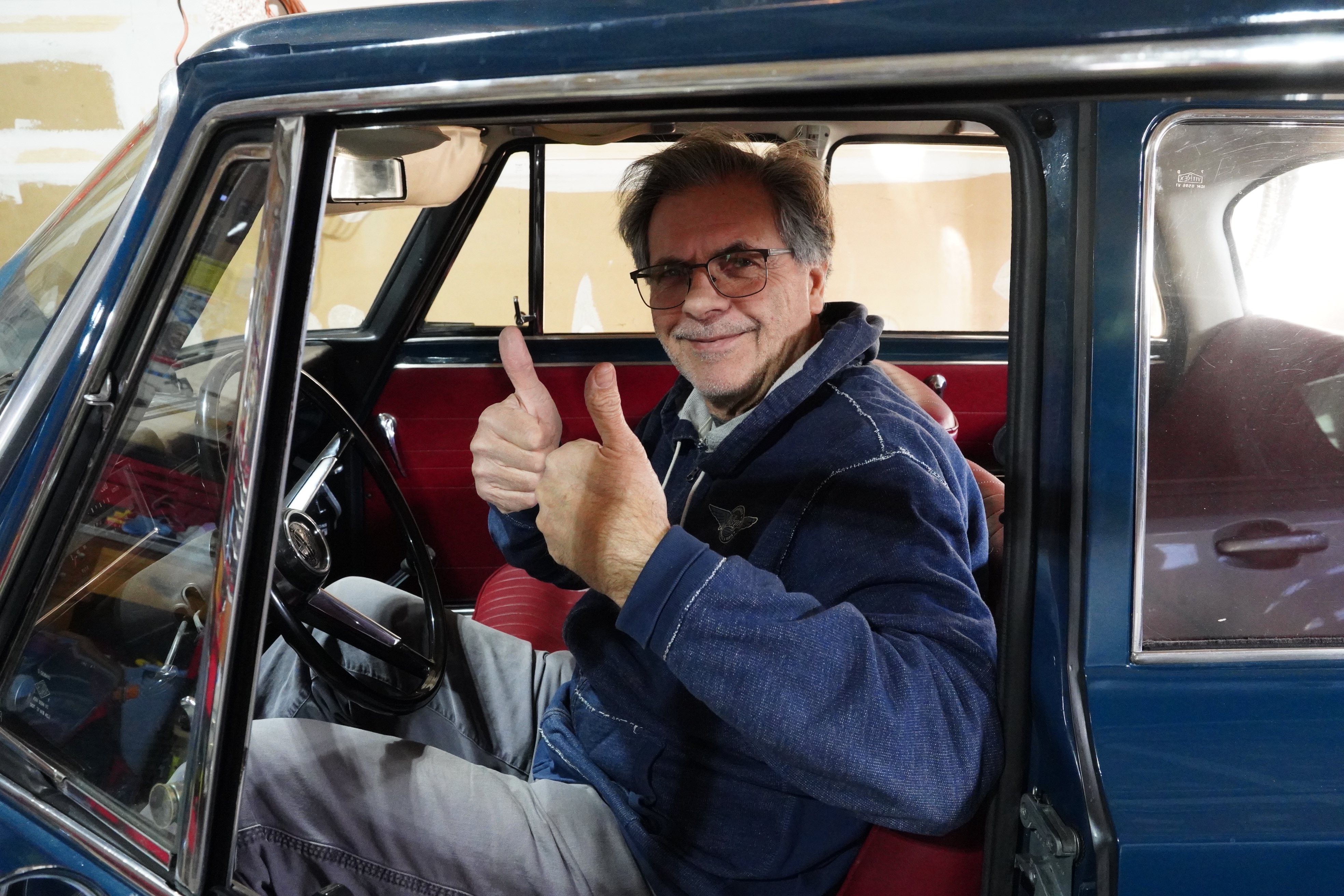
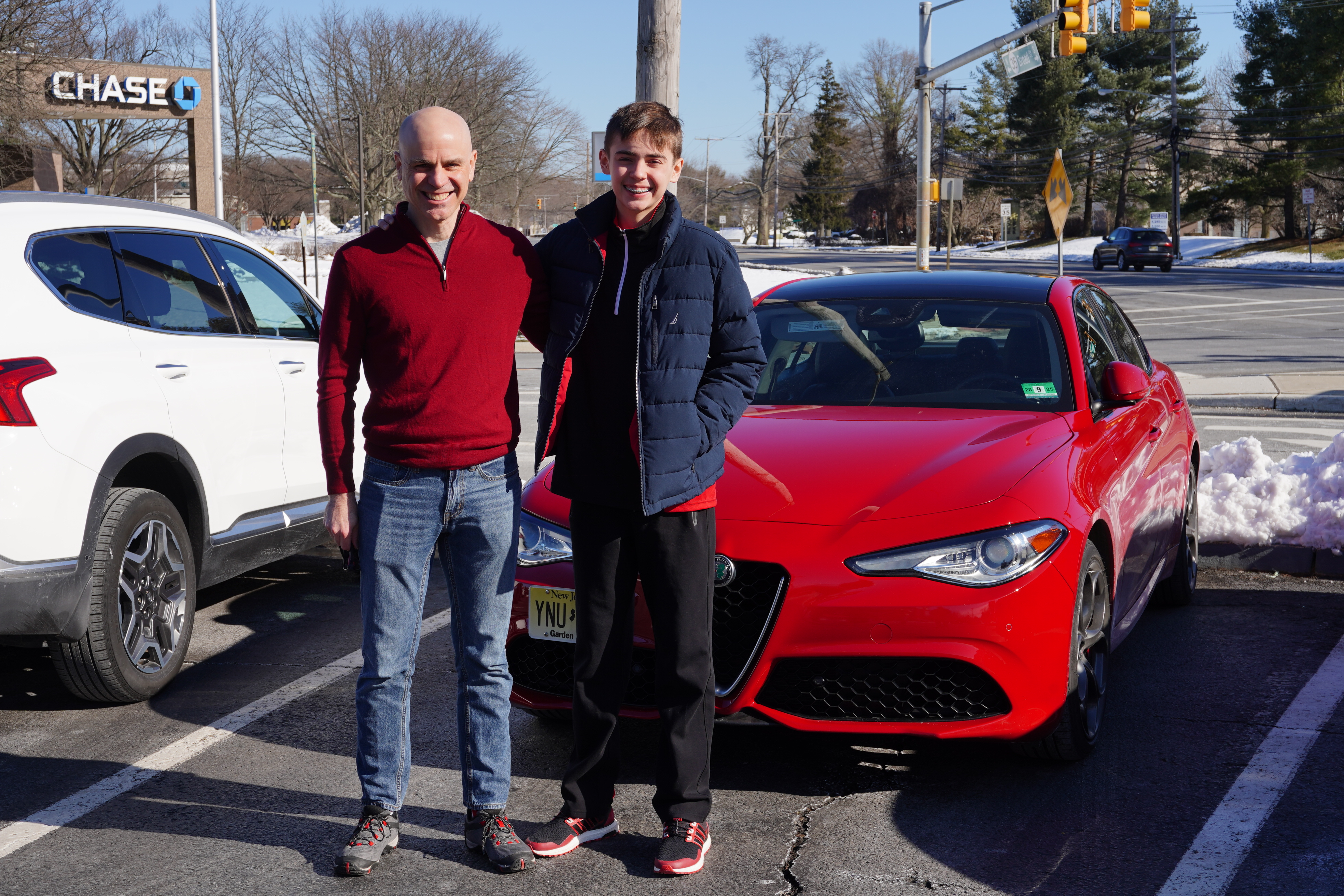
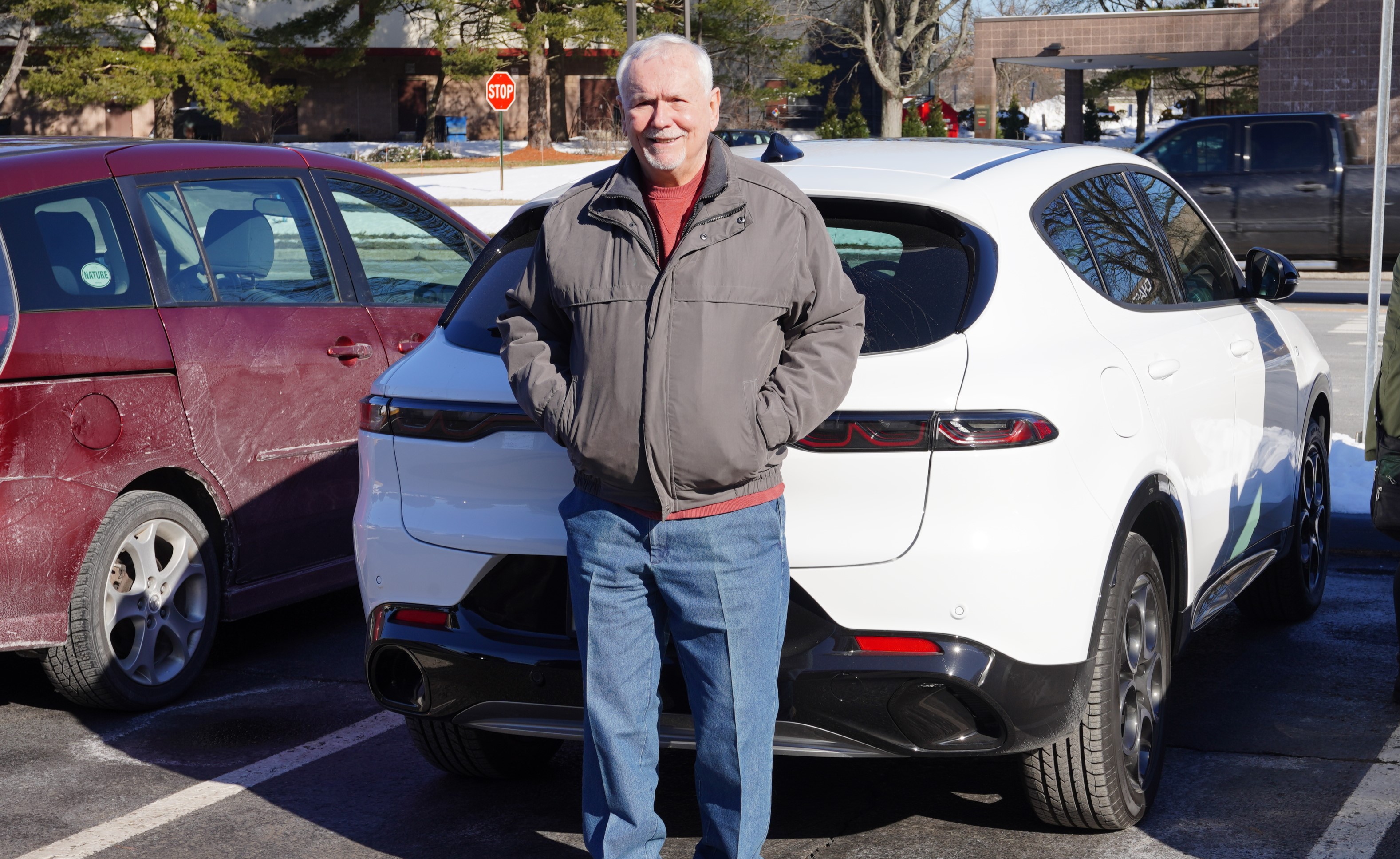
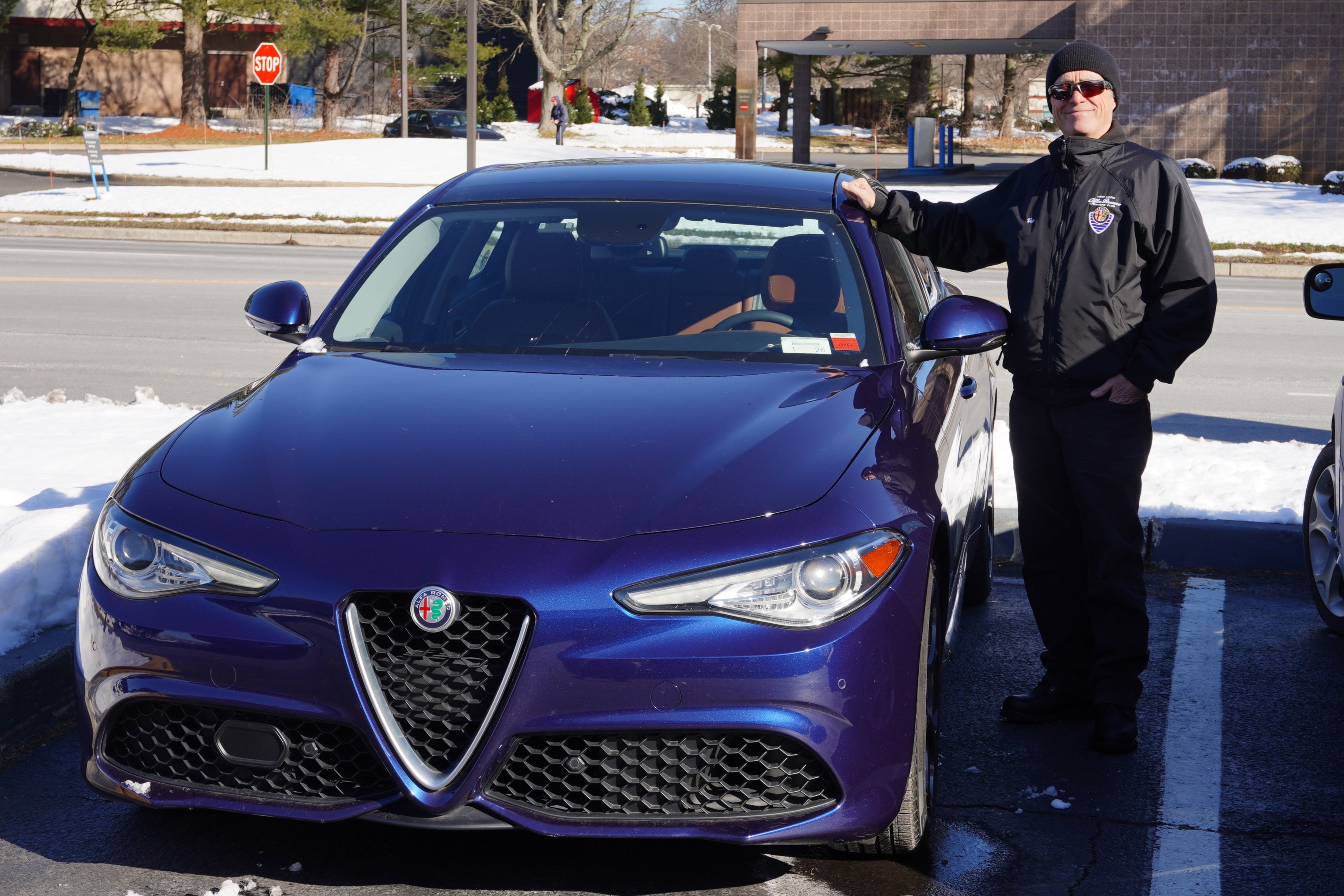
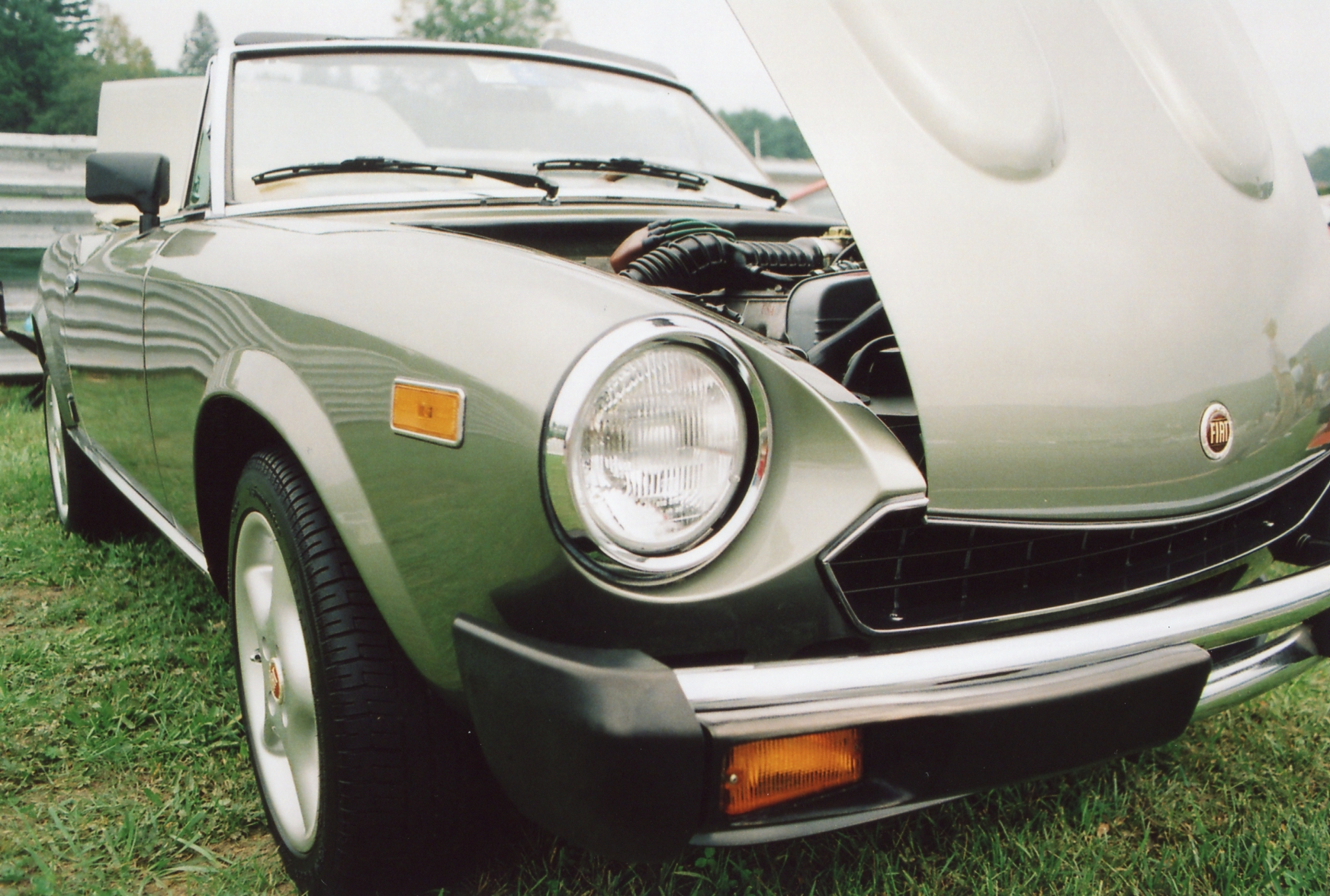
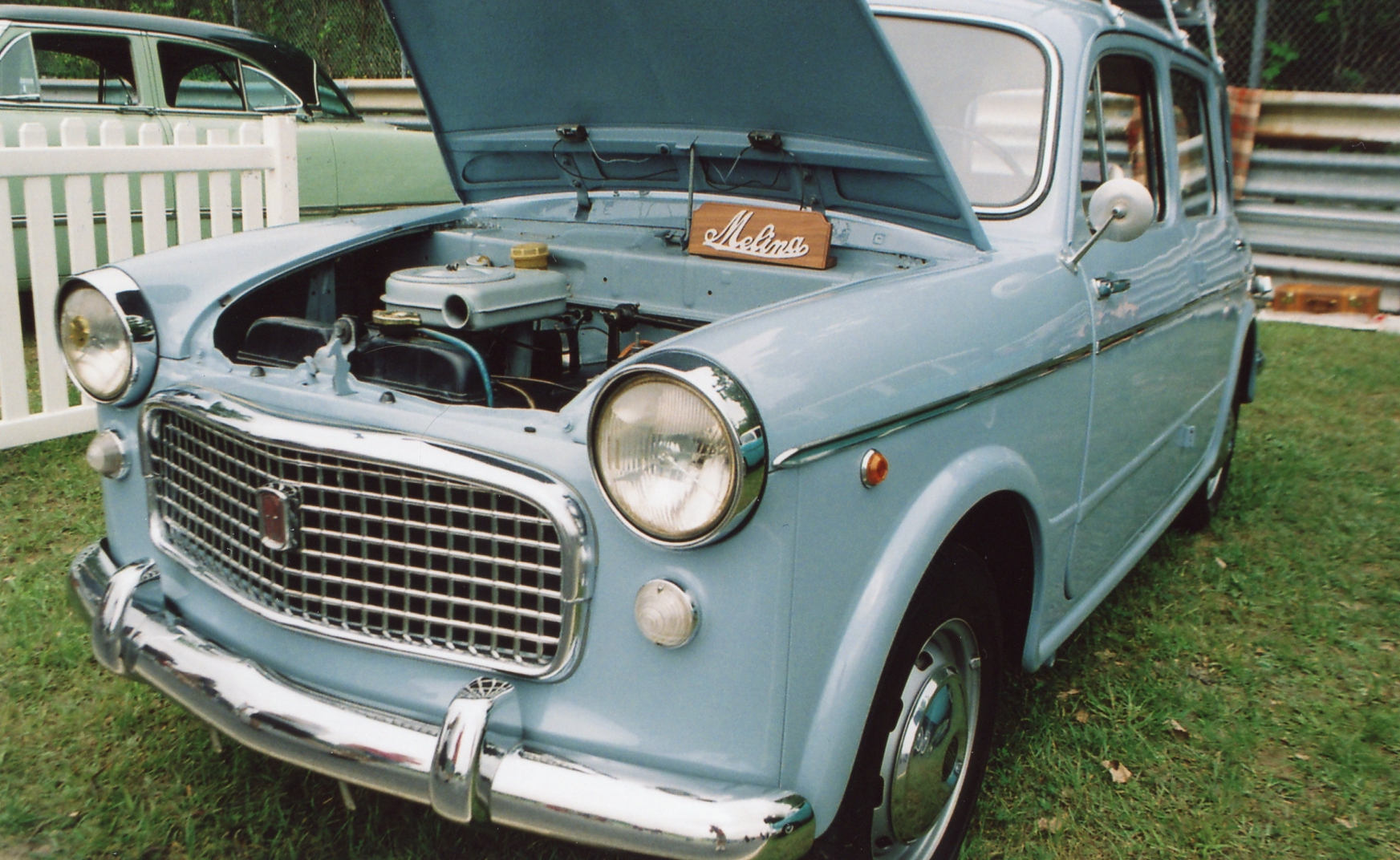
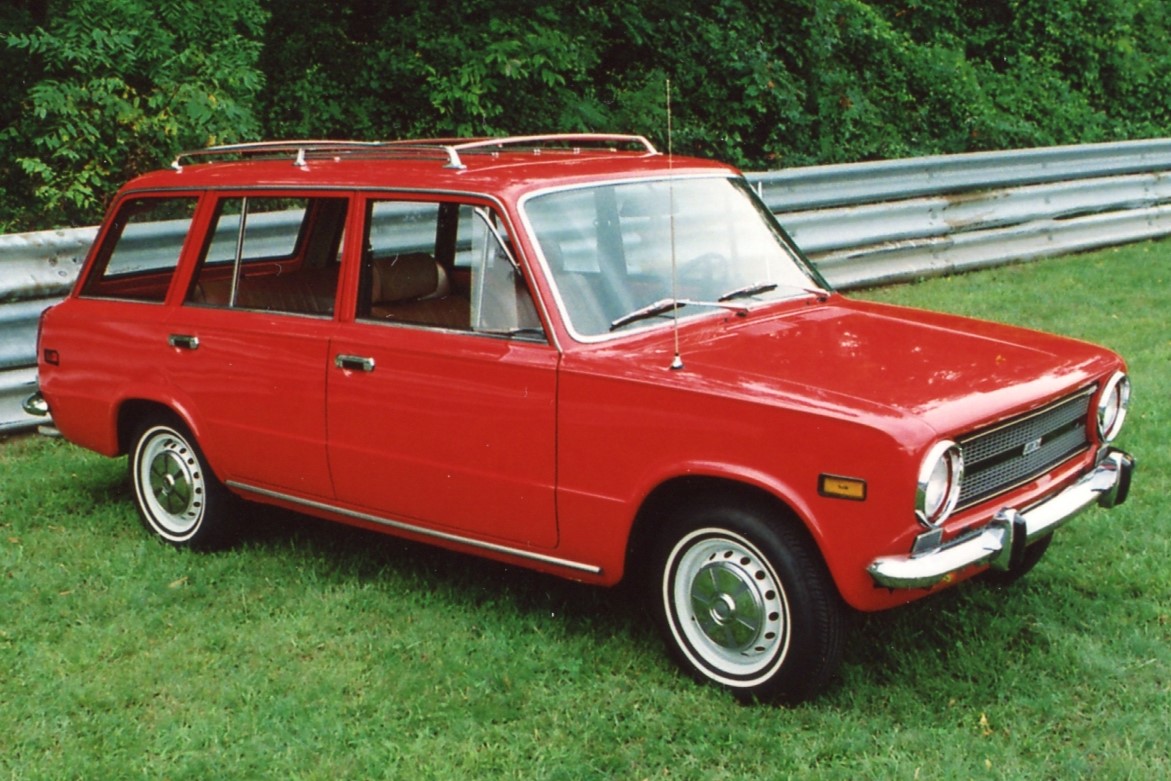
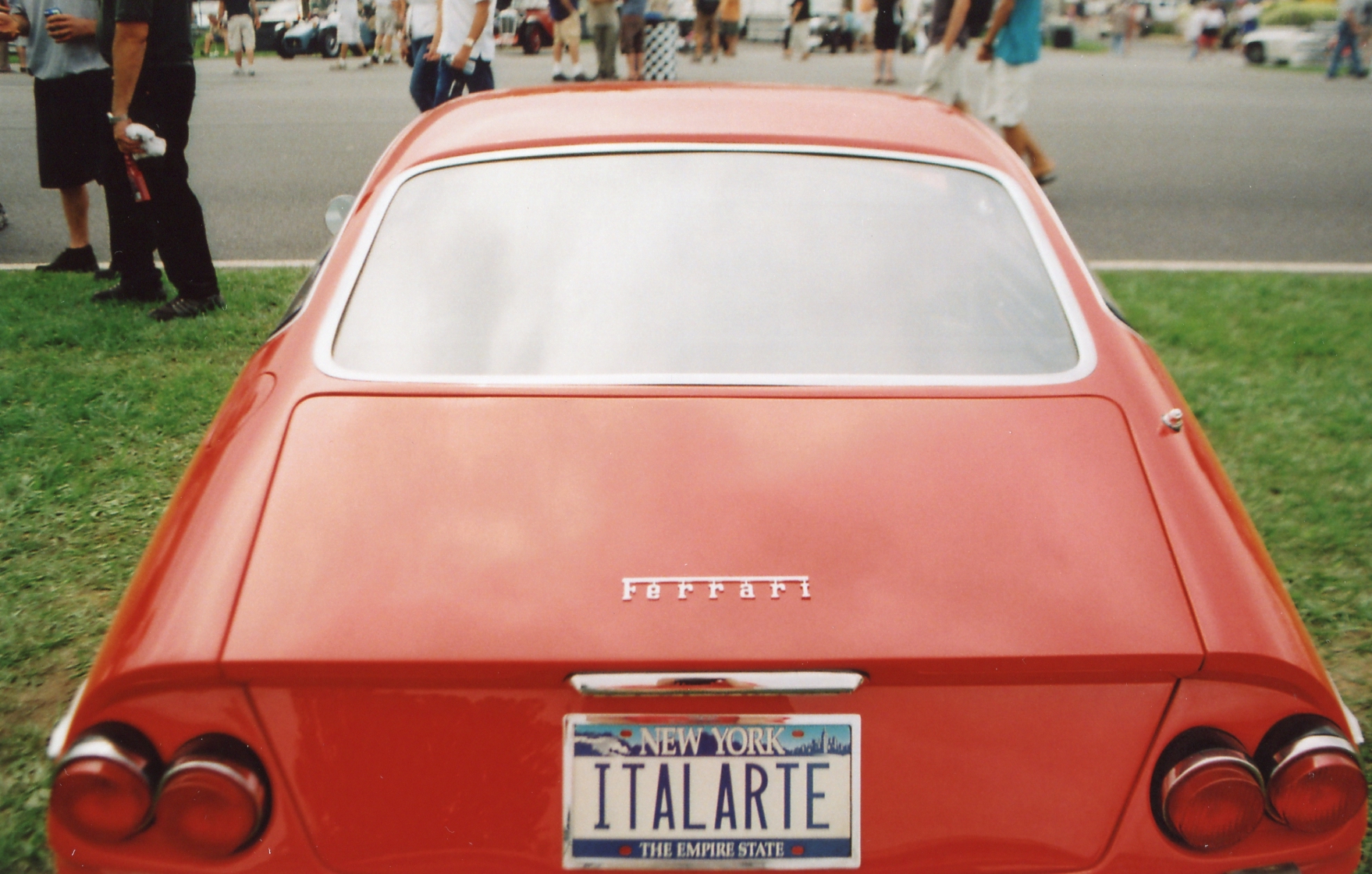
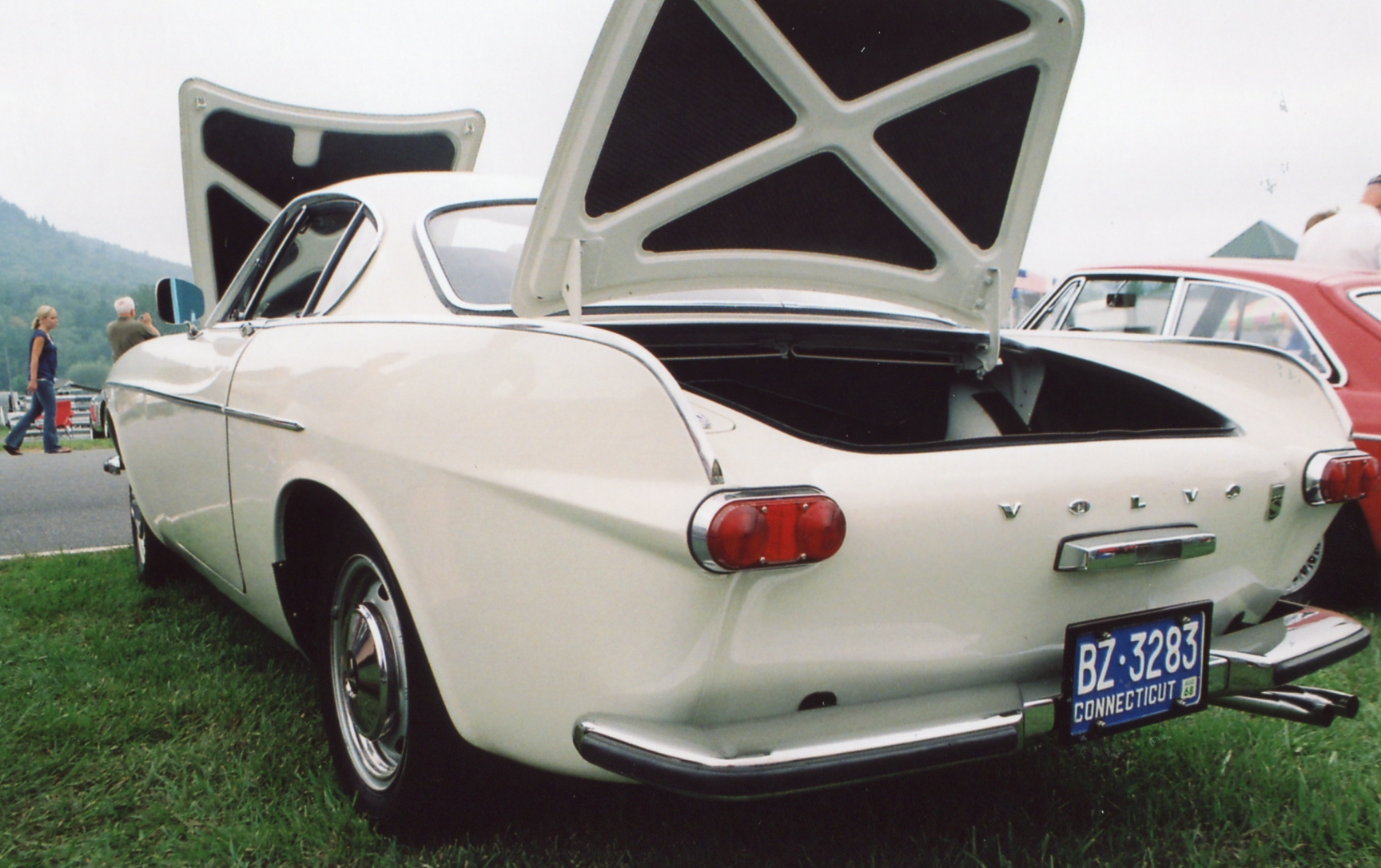
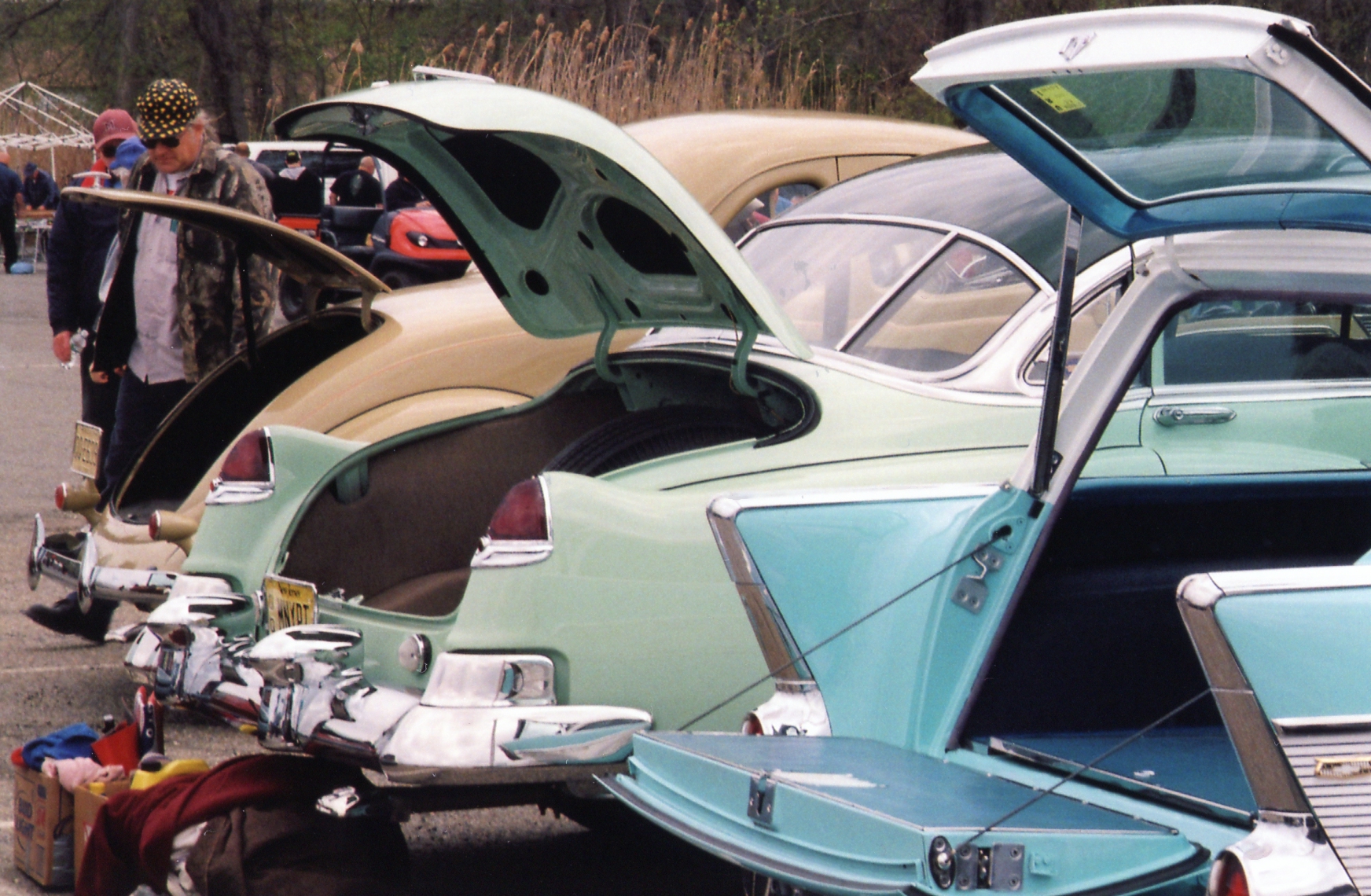
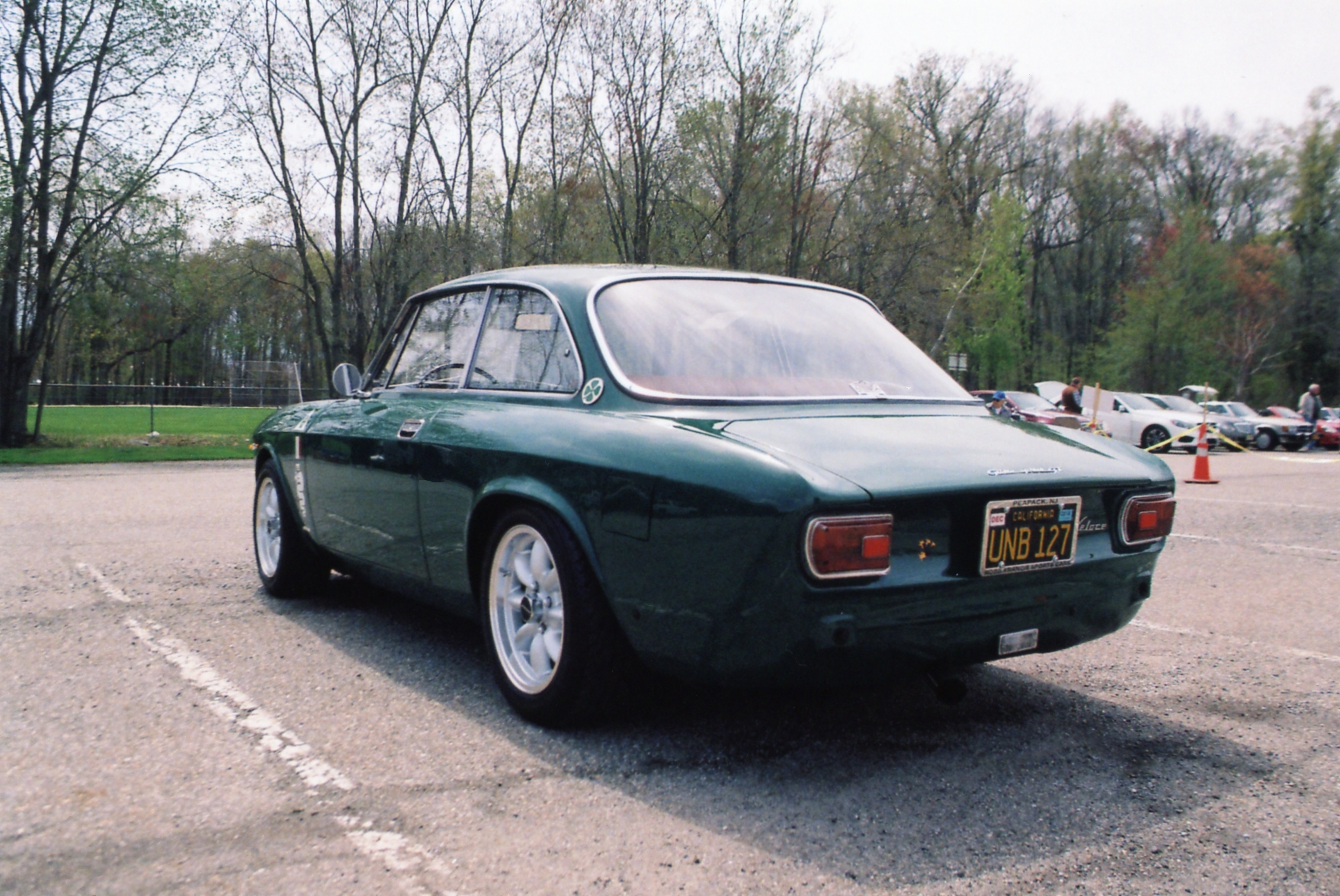
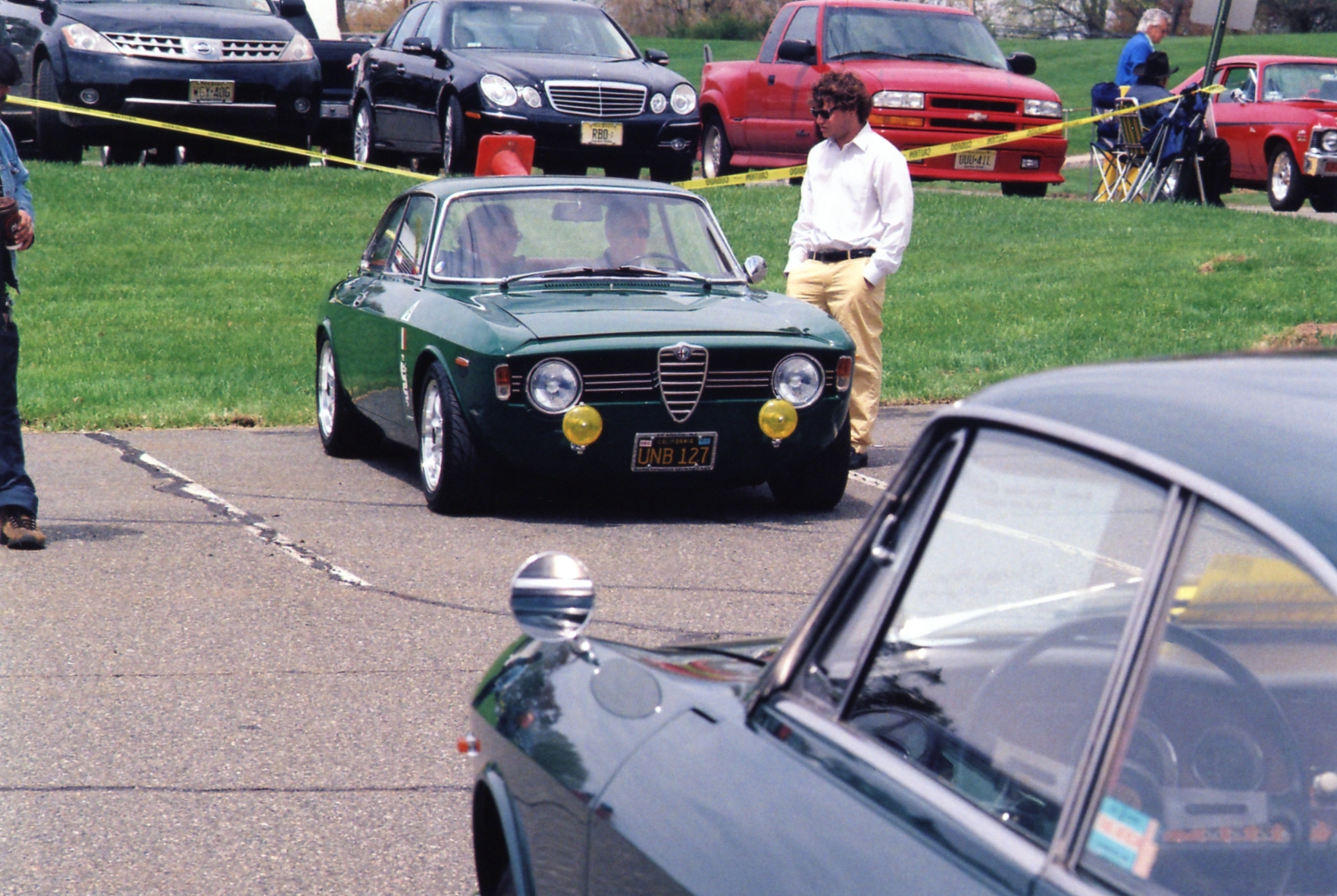
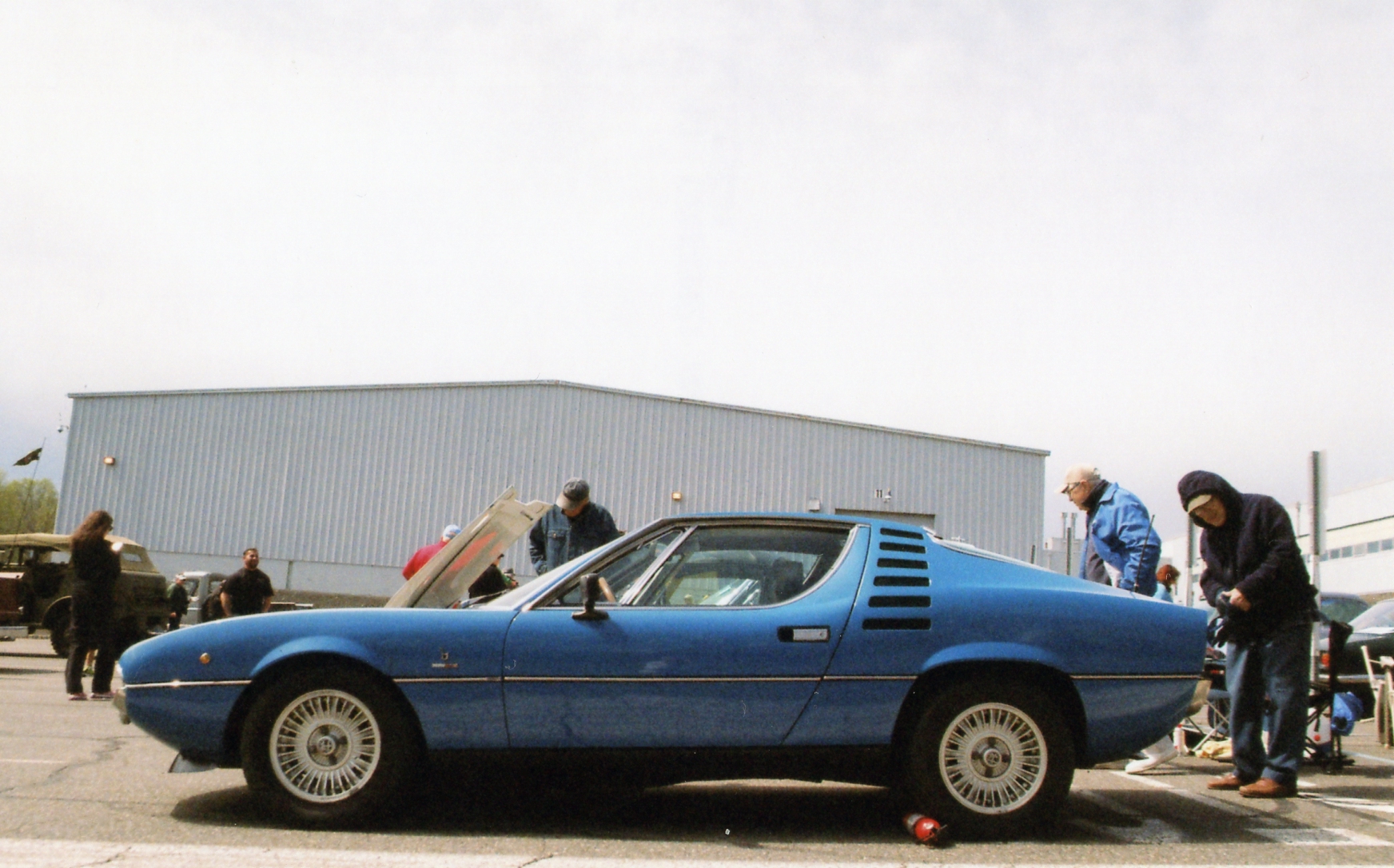
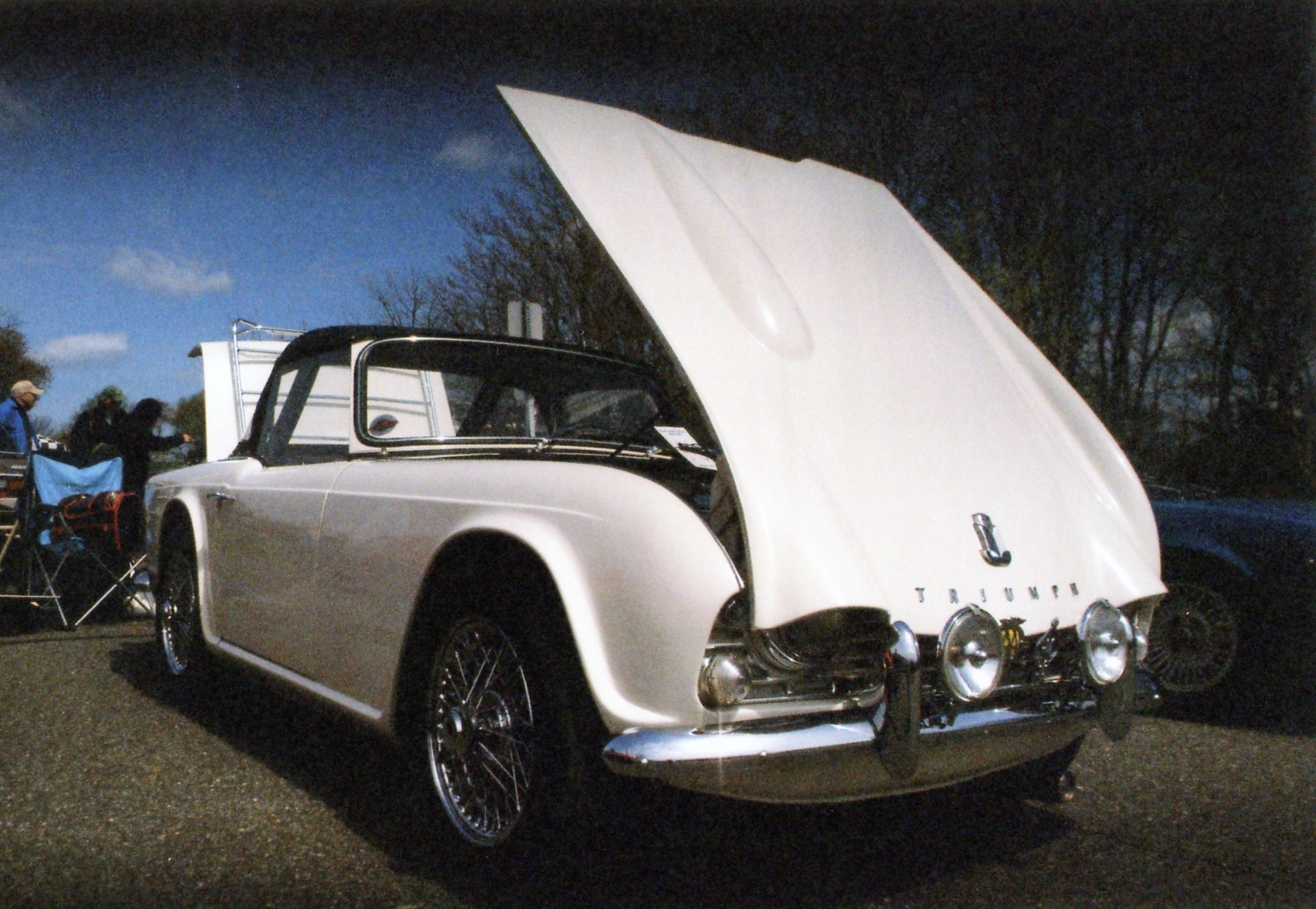
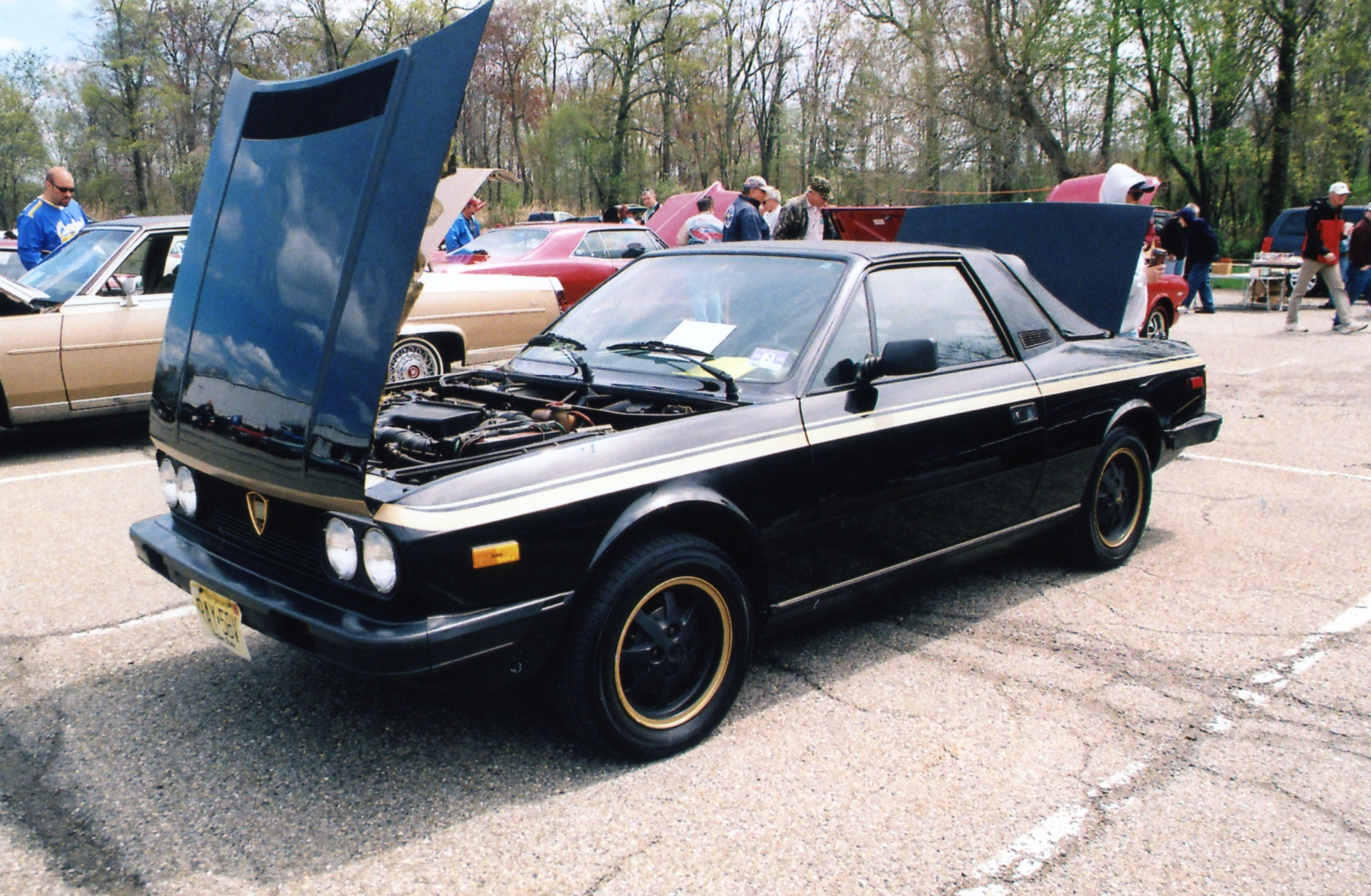
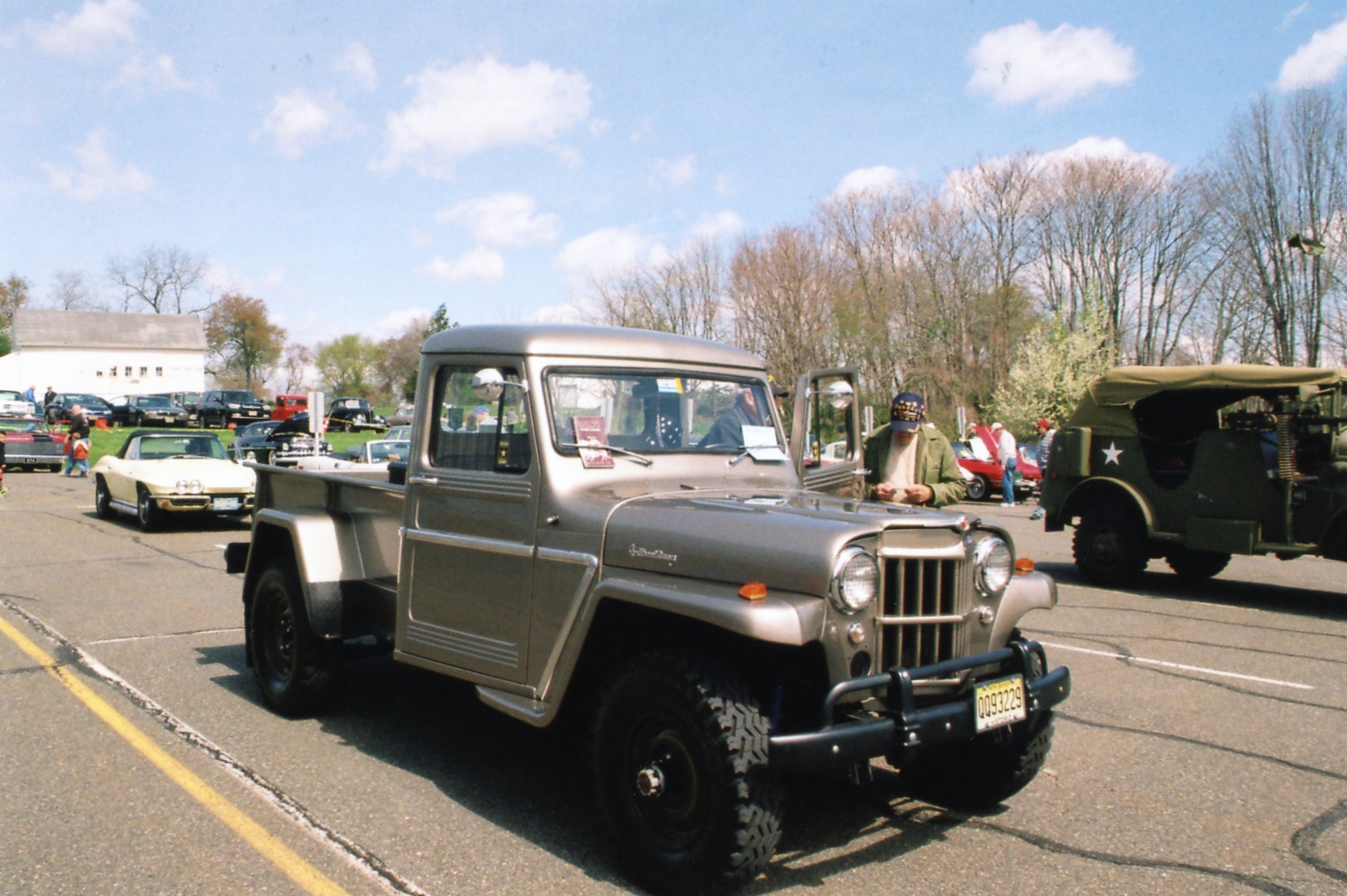
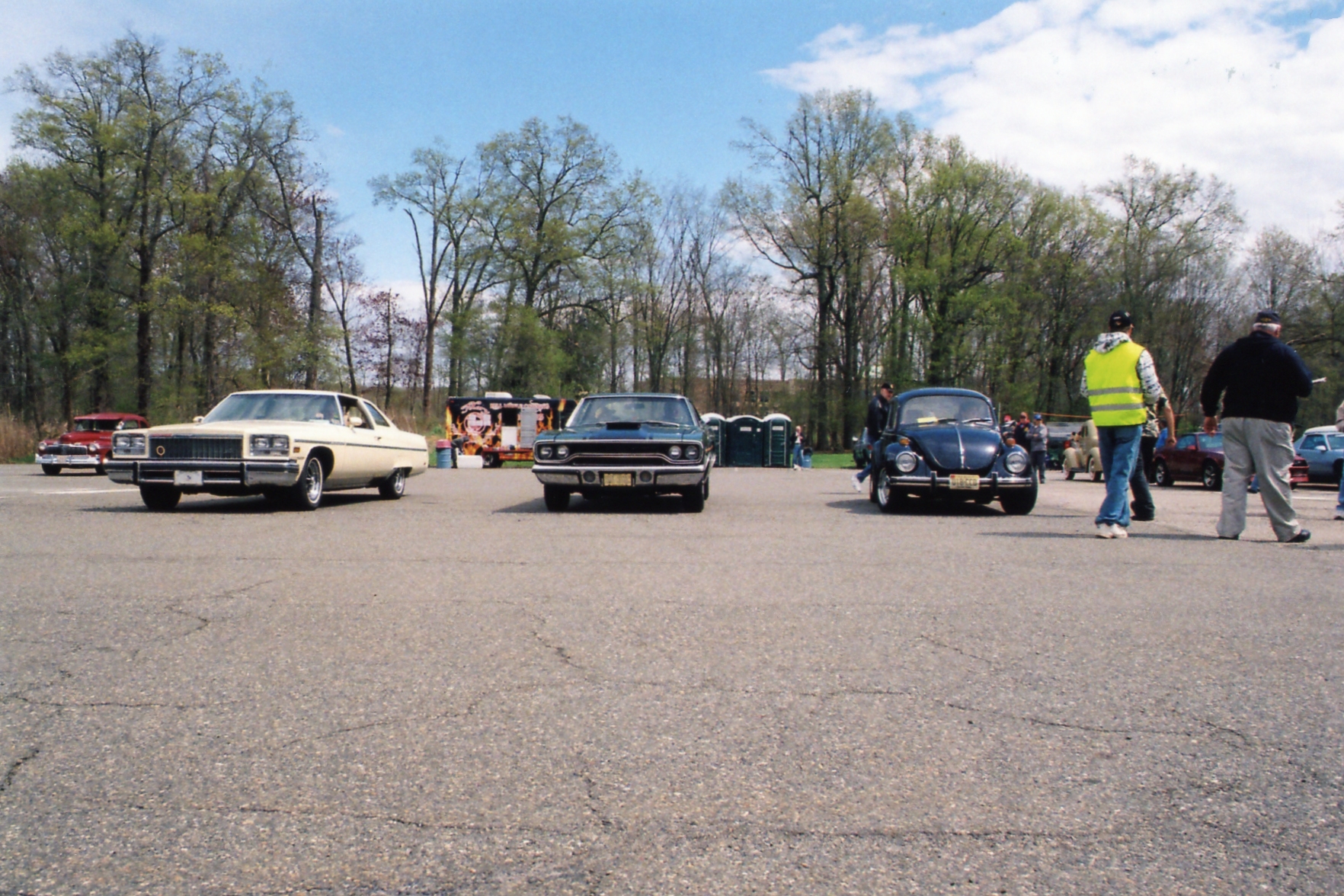
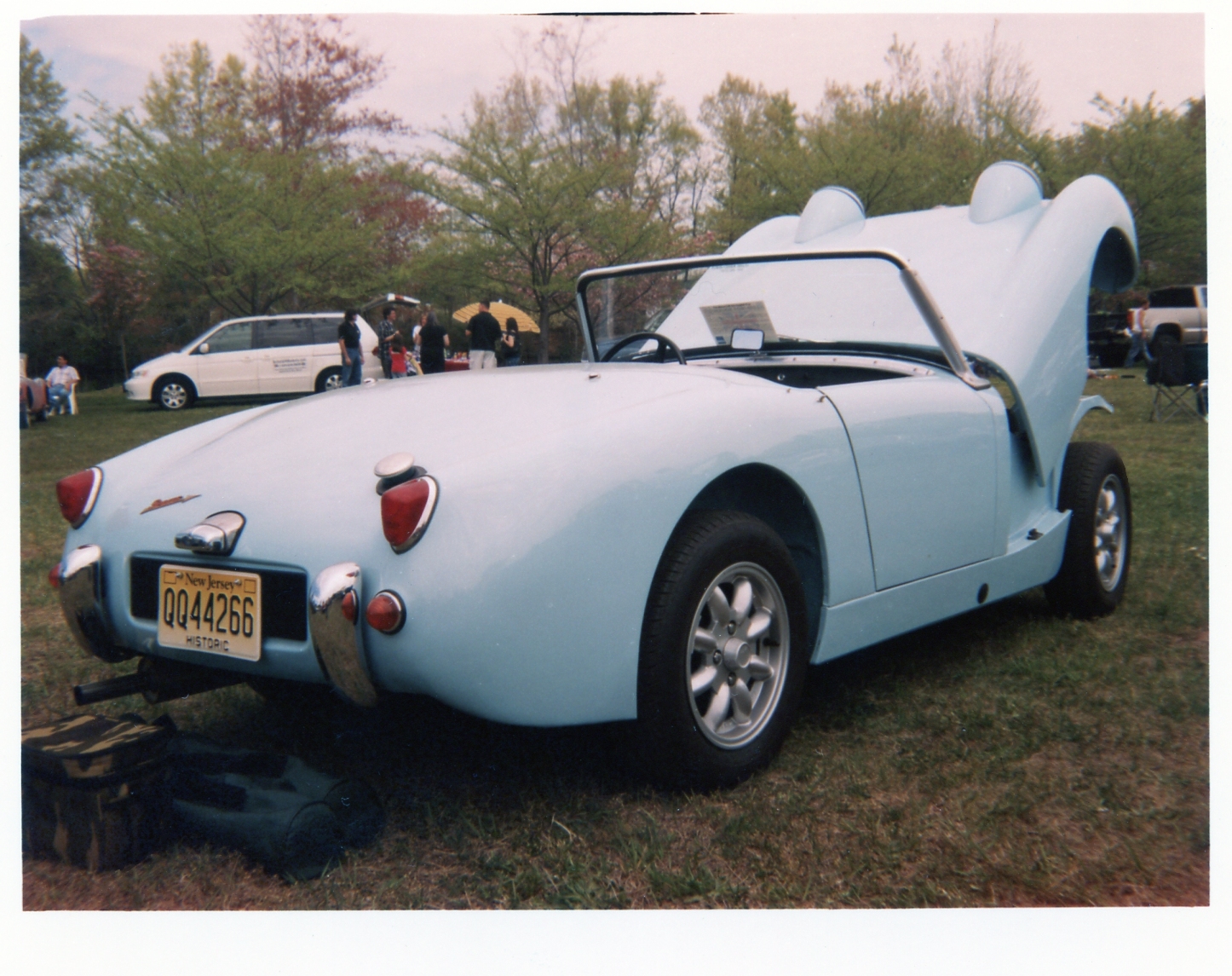
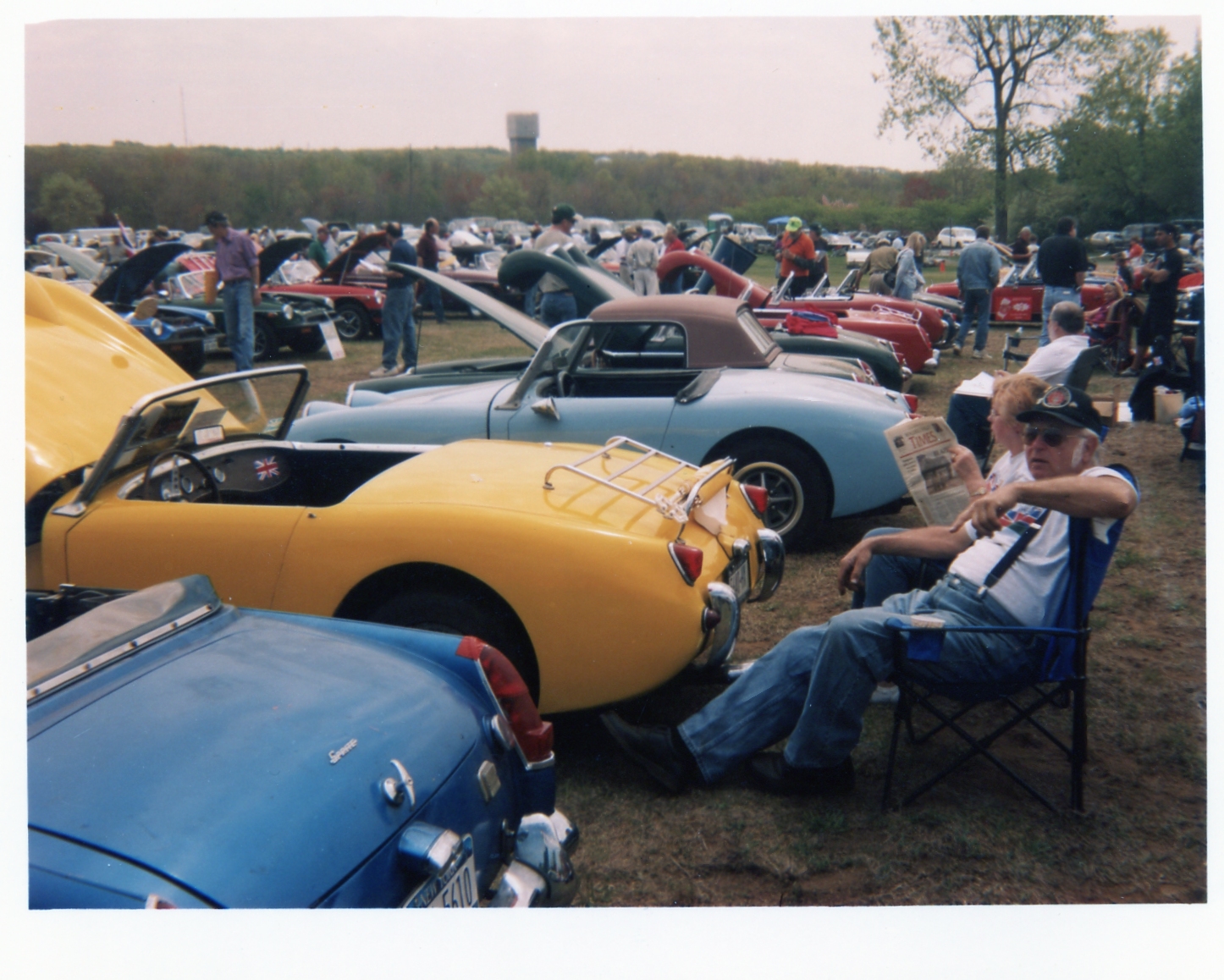
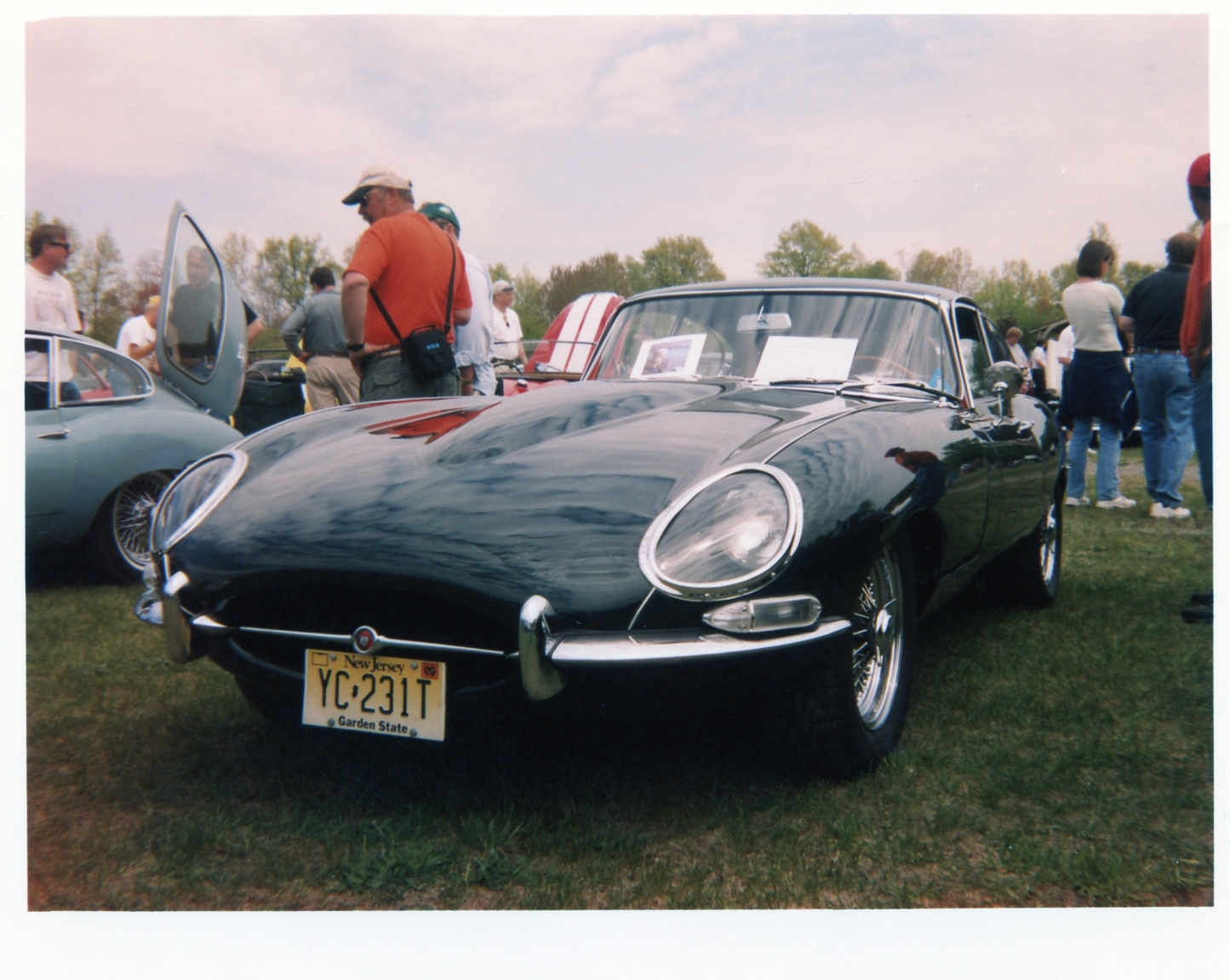
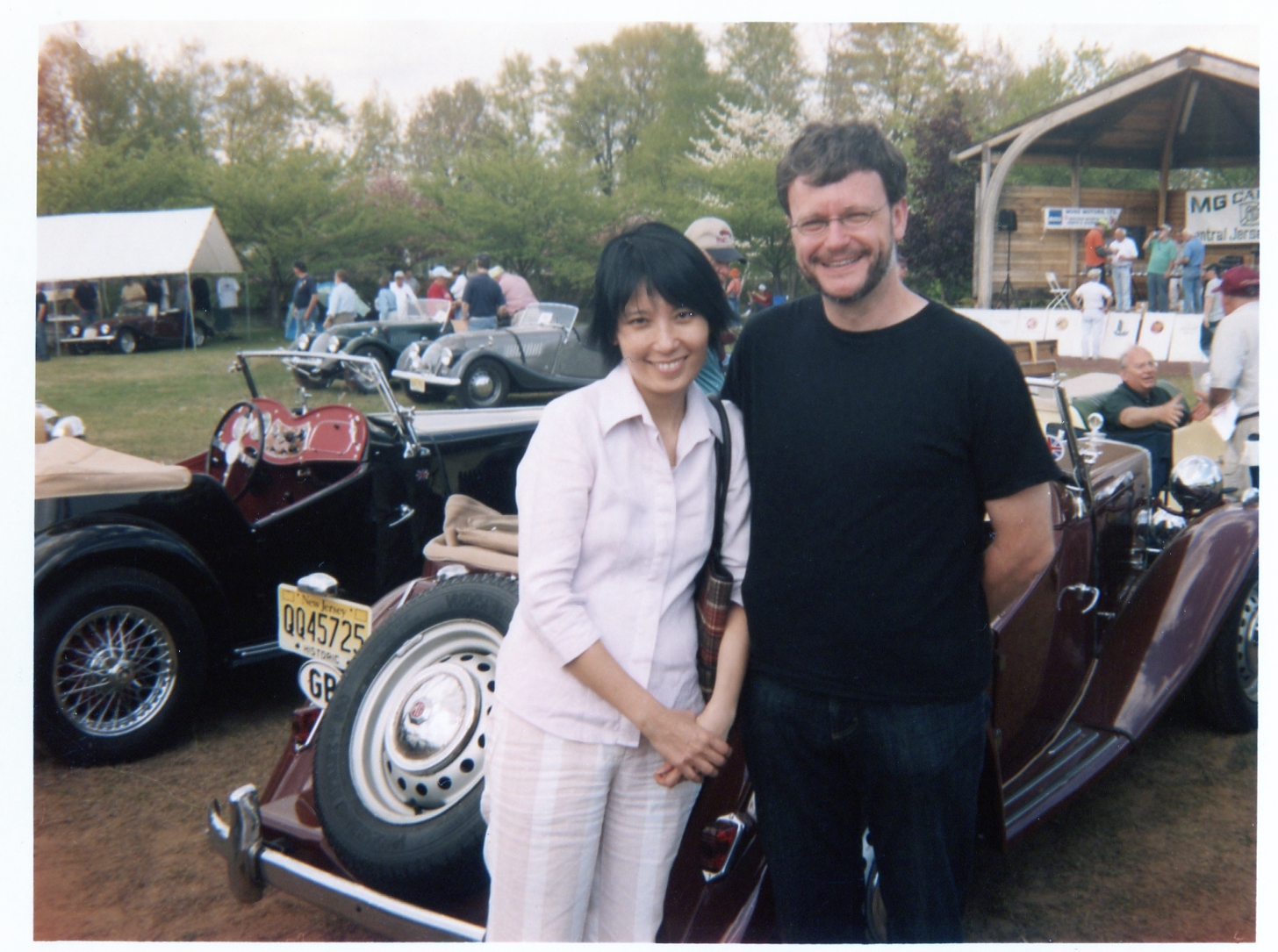
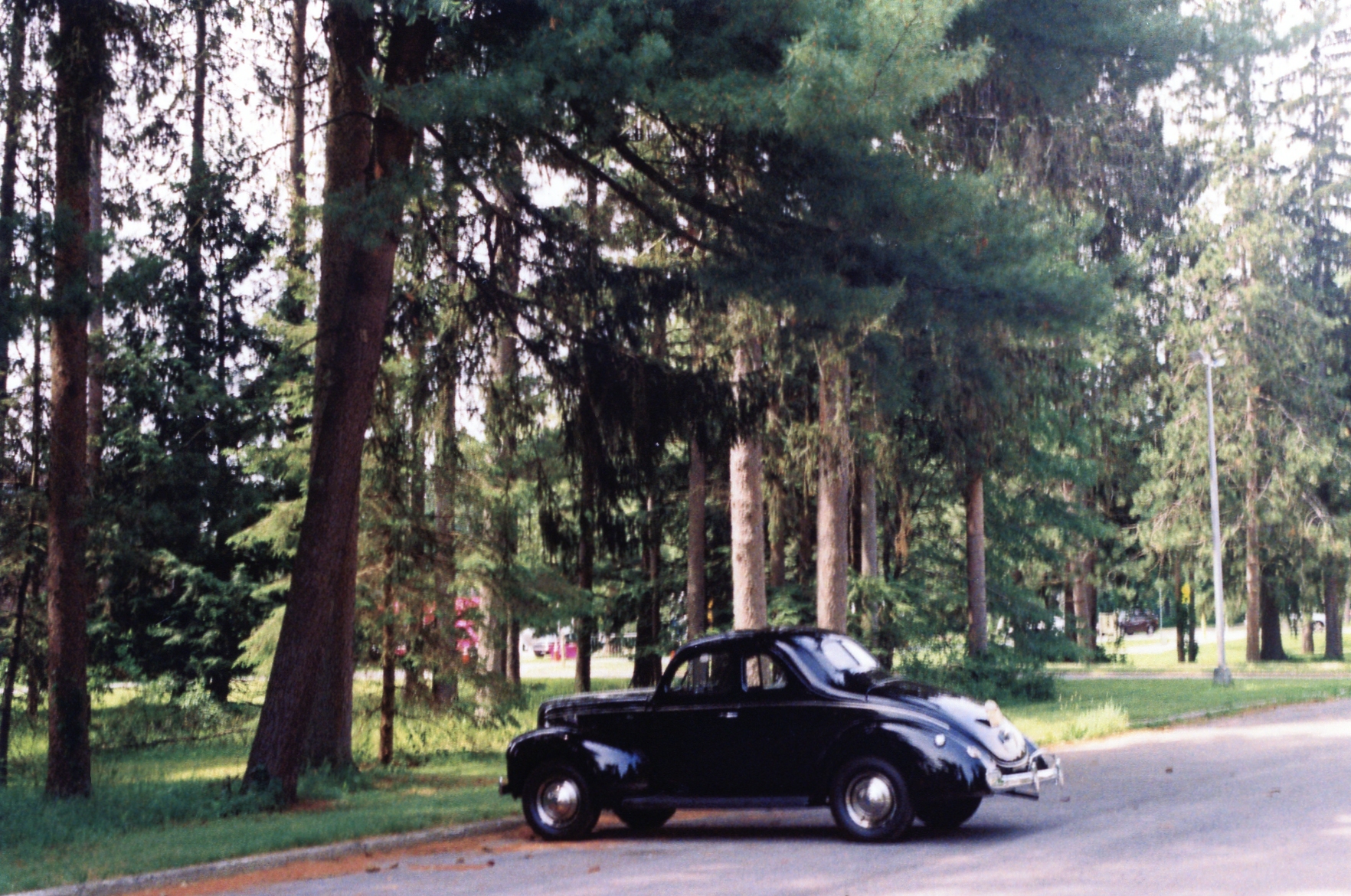
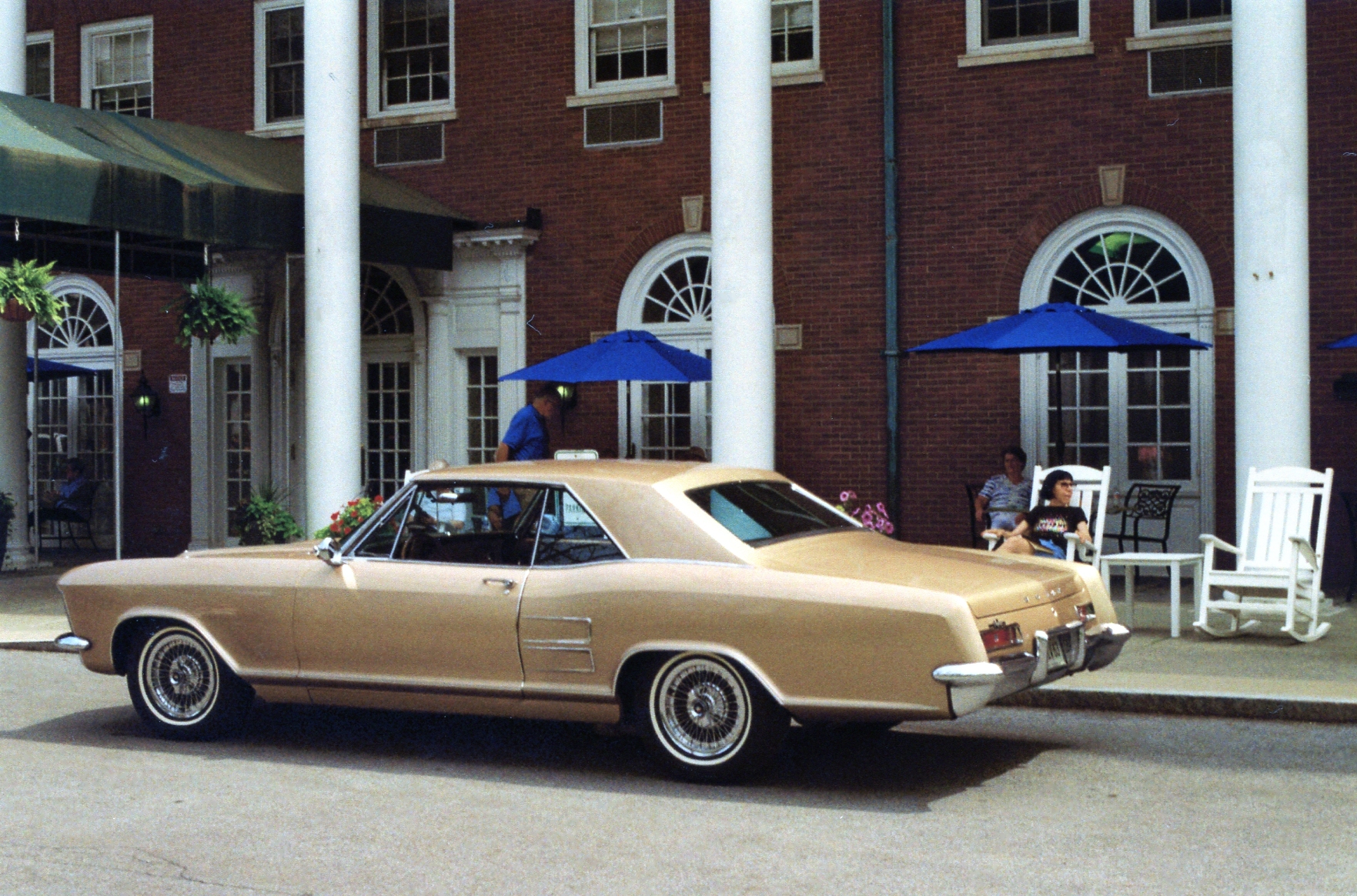
I was delighted by all the positive responses to last week’s post, which frankly I didn’t expect. One friend in particular encouraged me to “get out there and use film cameras to photograph more old cars”, which I intend to do once the 2024 show car season flips its switch to “on”. In the meantime, I leafed through a couple of photo albums and found snaps which up until now have not made it onto the blog.
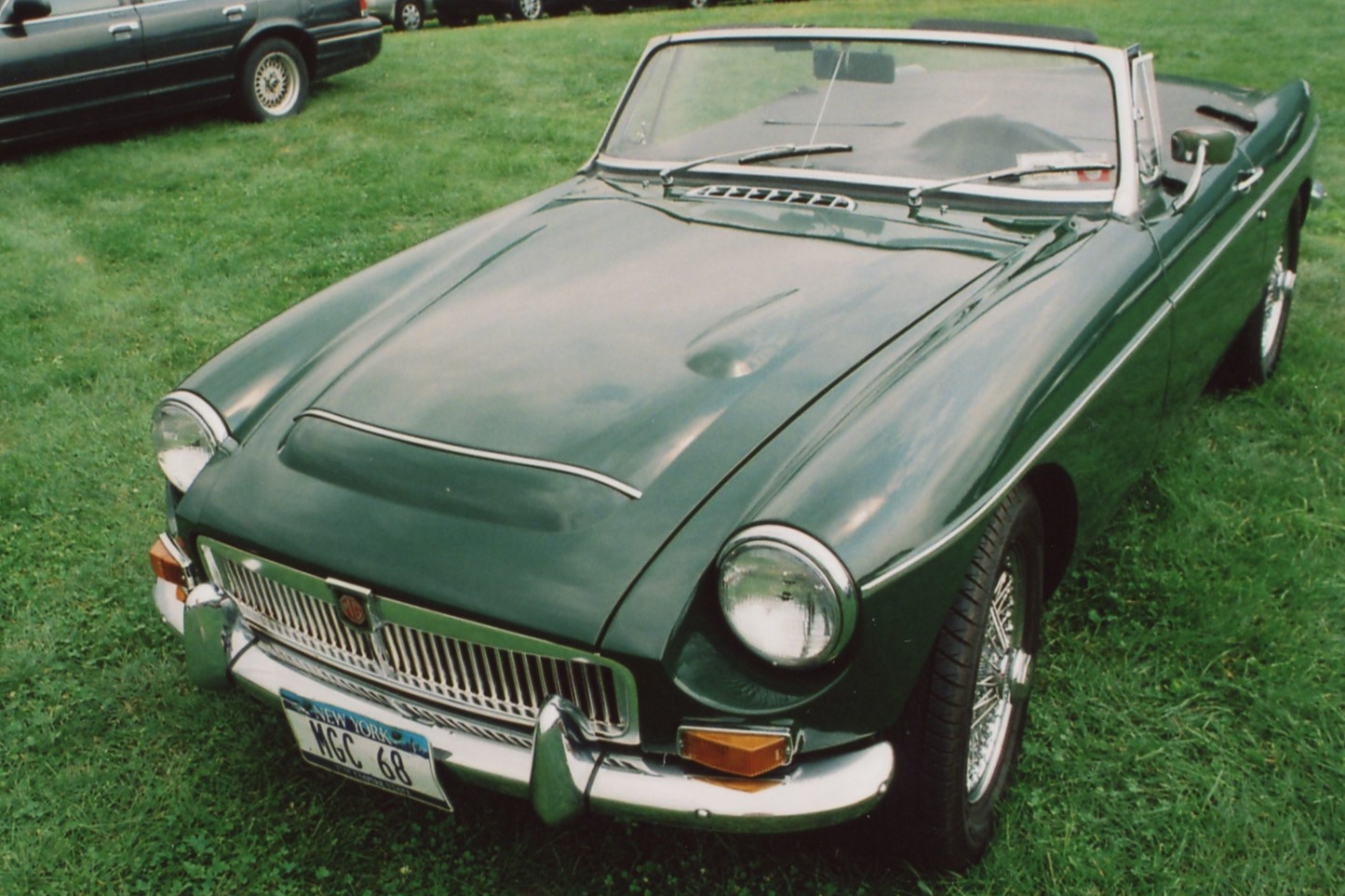
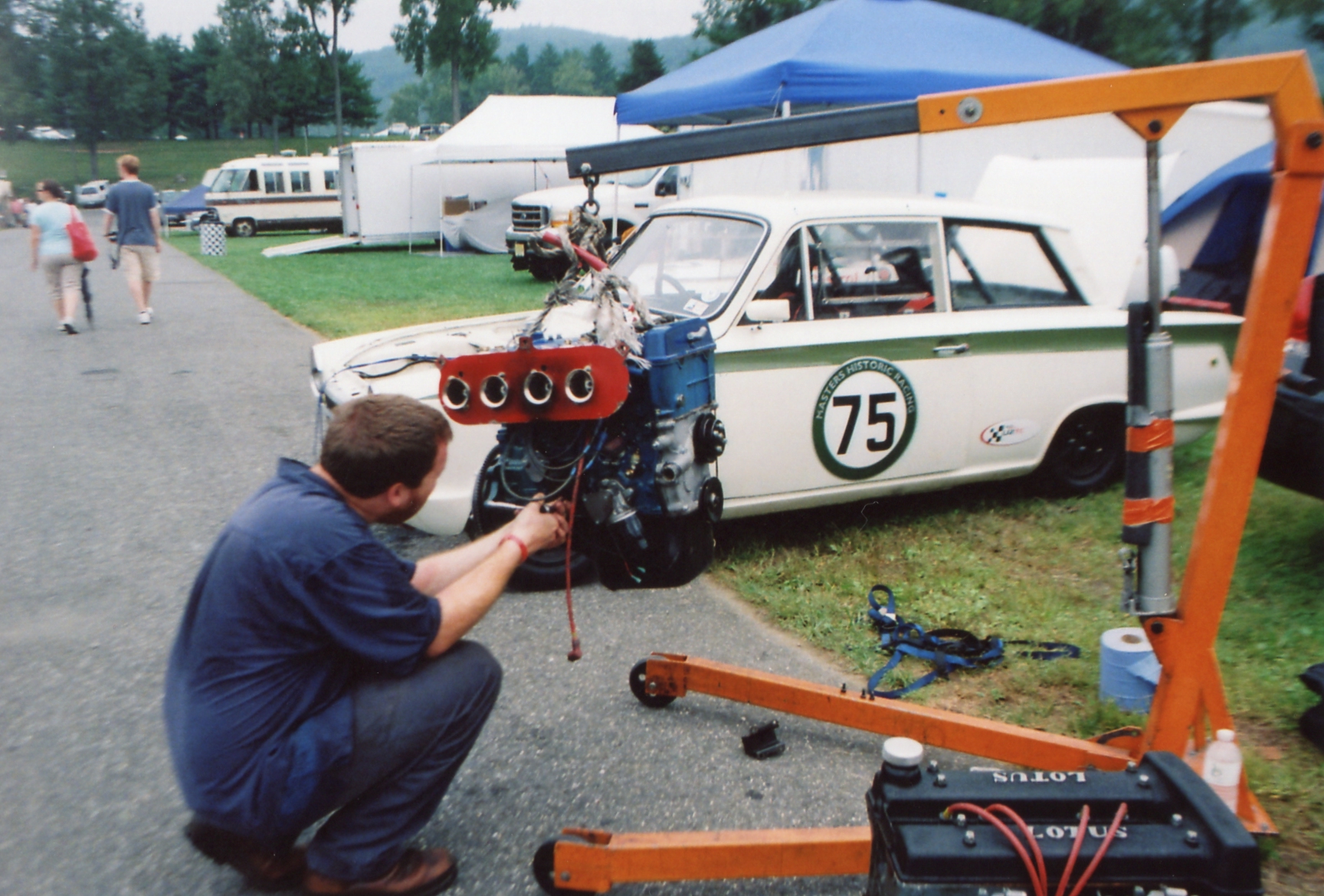
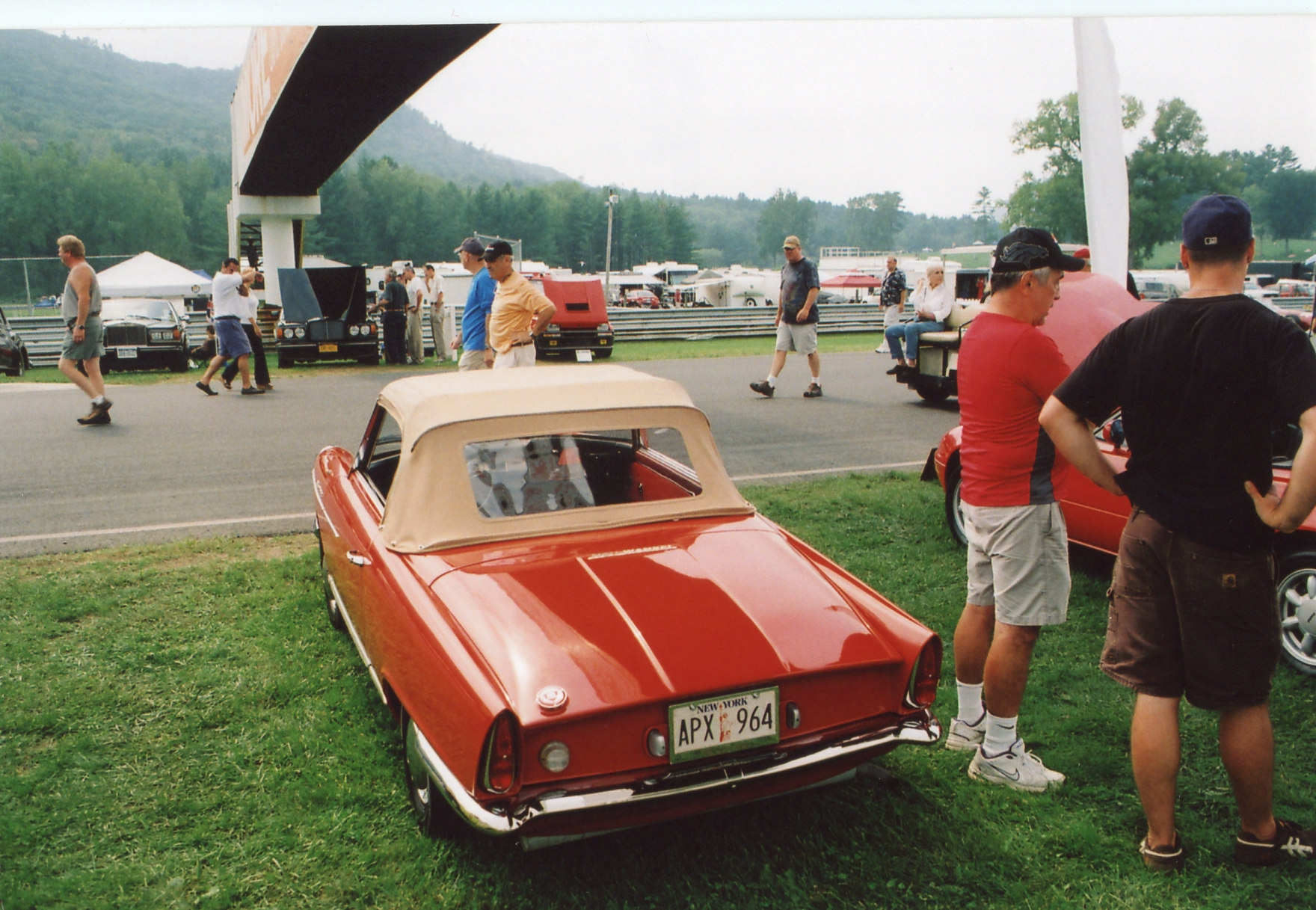
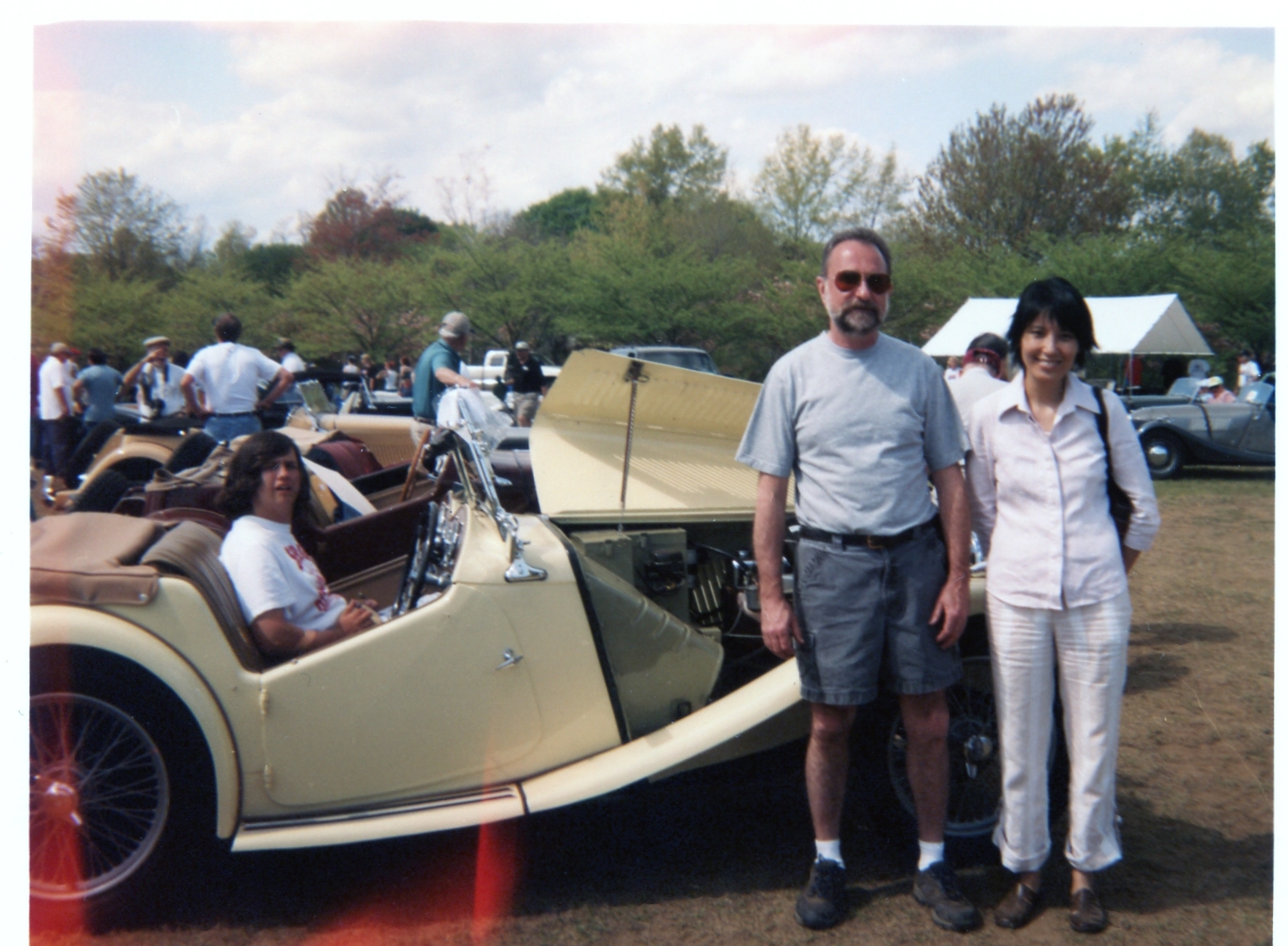
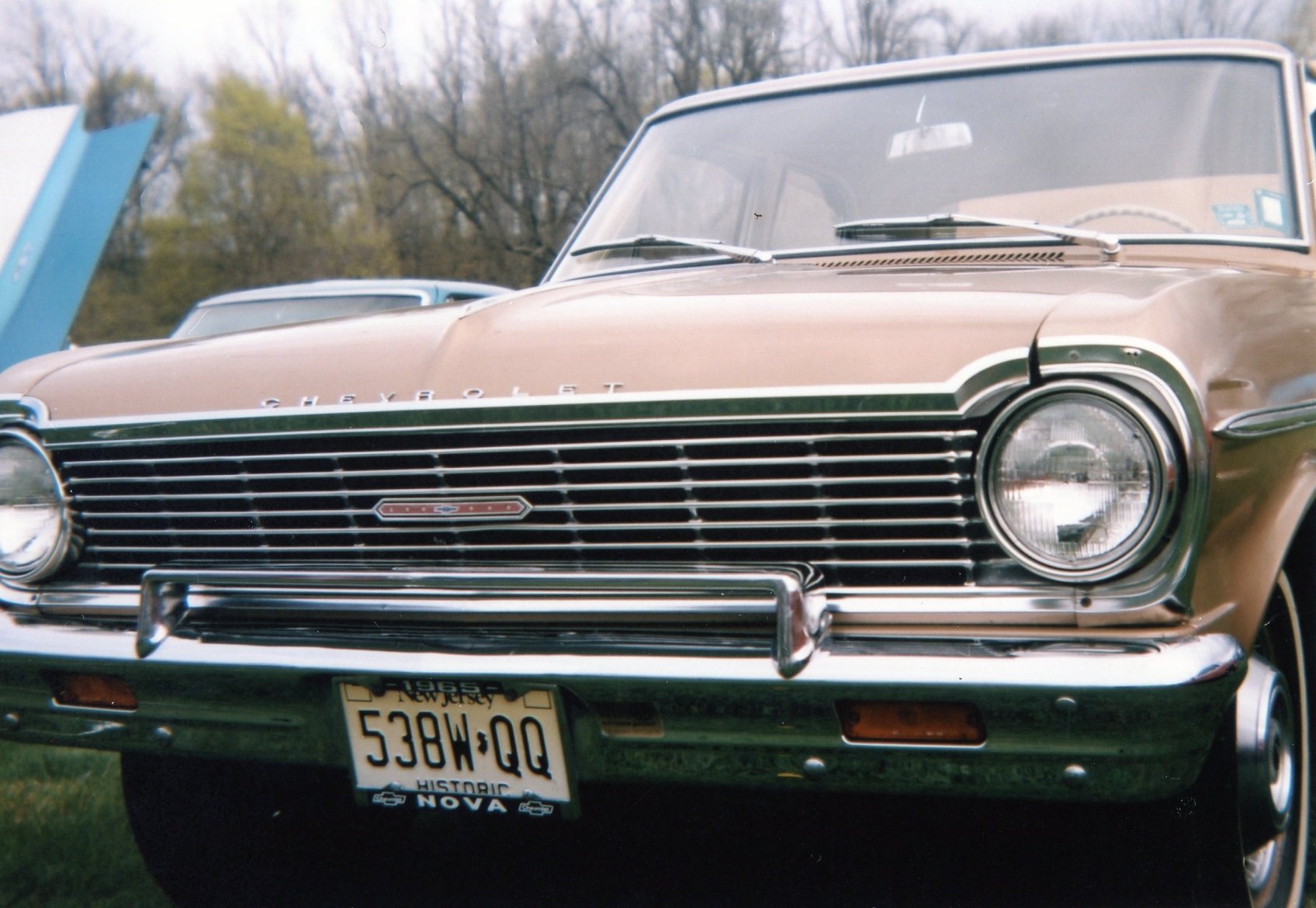
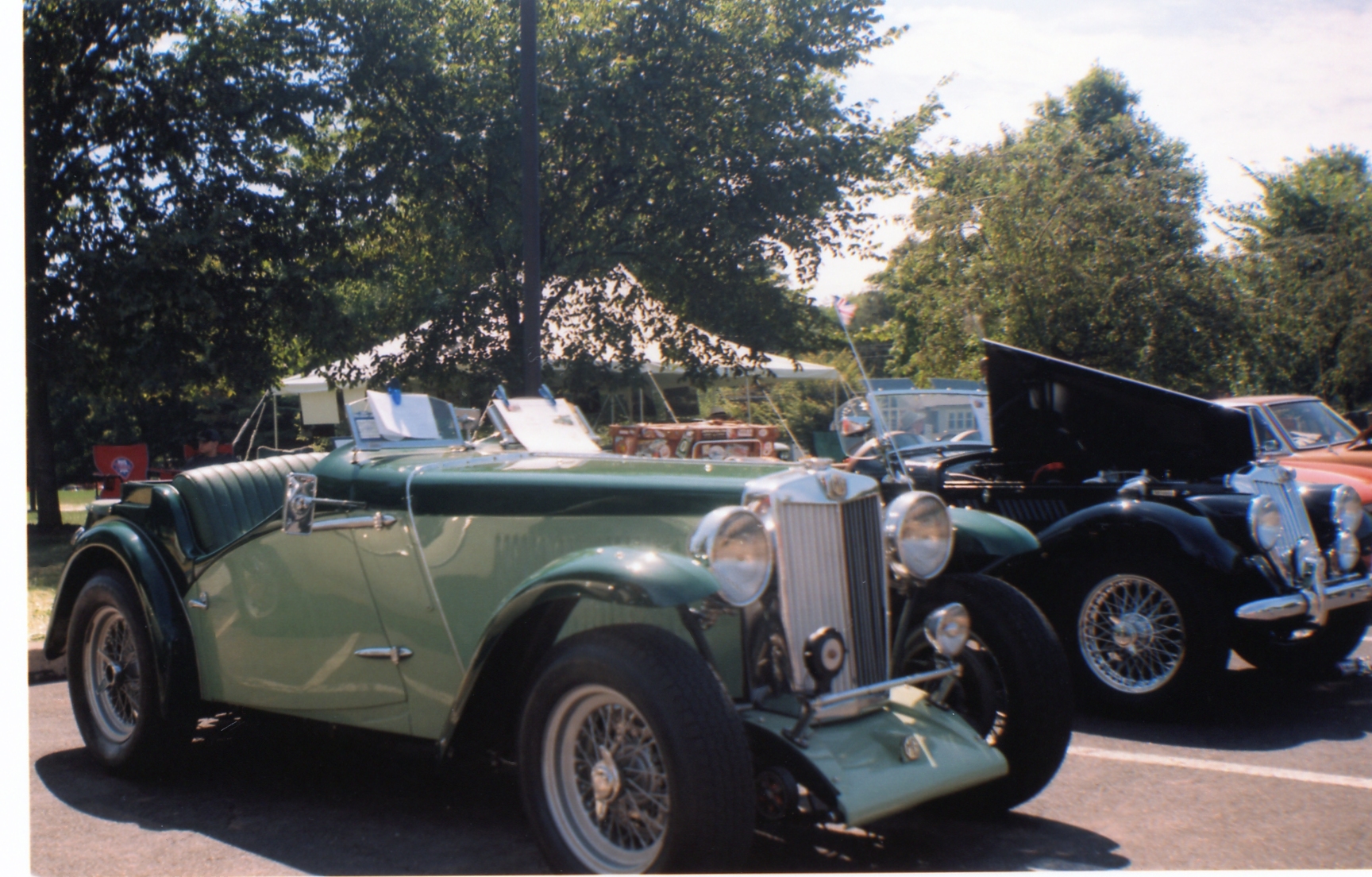
According to my documentation, these shots were taken in 2006, which is when my antique-camera obsession was born, triggered by a dear aunt of mine who gifted me with a bag full of old cameras she discovered when cleaning out her attic. The show was the All-British Car Show in Succasunna NJ, the camera was a Kodak Brownie Bullet, and the film was Kodak VC160. While I no longer own the camera, I’m certain that it was an inexpensive fixed-focus model, and these photos appear to be mostly in focus, with good depth of field.
If it weren’t for the minivan in the background of the Bugeye Sprite (and perhaps the QQ “antique” license plates), you could be convinced that these were taken 50 years ago. In the final photo of the yellow MG-TC, you can see some camera flare at the bottom, adding to the old-time aura. Looking at these photos again reminds me how spoiled we are by digital picture-taking, with its instant gratification. With this roll of film, first, I had to finish it, then send it off to developing, then patiently wait a week before being able to critique my image-making. Here, I felt lucky that the compositions captured what I had hoped they would. But that is part of the charm, isn’t it?
Among other hobbies of mine which drain money from my wallet, I have a modest collection of old cameras. Not to turn this into RichardsPhotoBlog, but most of the cameras take 120 (medium format) film, utilizing a negative that is roughly 4 times the size of a 35mm negative. Everything being equal, the larger the negative, the more detail which can be captured. However, these old cameras (3 of my favorites date from the decades of the 1940s and ‘50s) have inferior lenses compared to “modern” film cameras. These cameras are also completely manual in operation: there are no batteries installed, no light meters, no (gasp!) auto-focus. Yet the larger negatives can produce results which a technically better 35mm camera cannot. Part of the fun is to see if I can A) load film into them; B) operate the controls; and C) produce acceptable images.
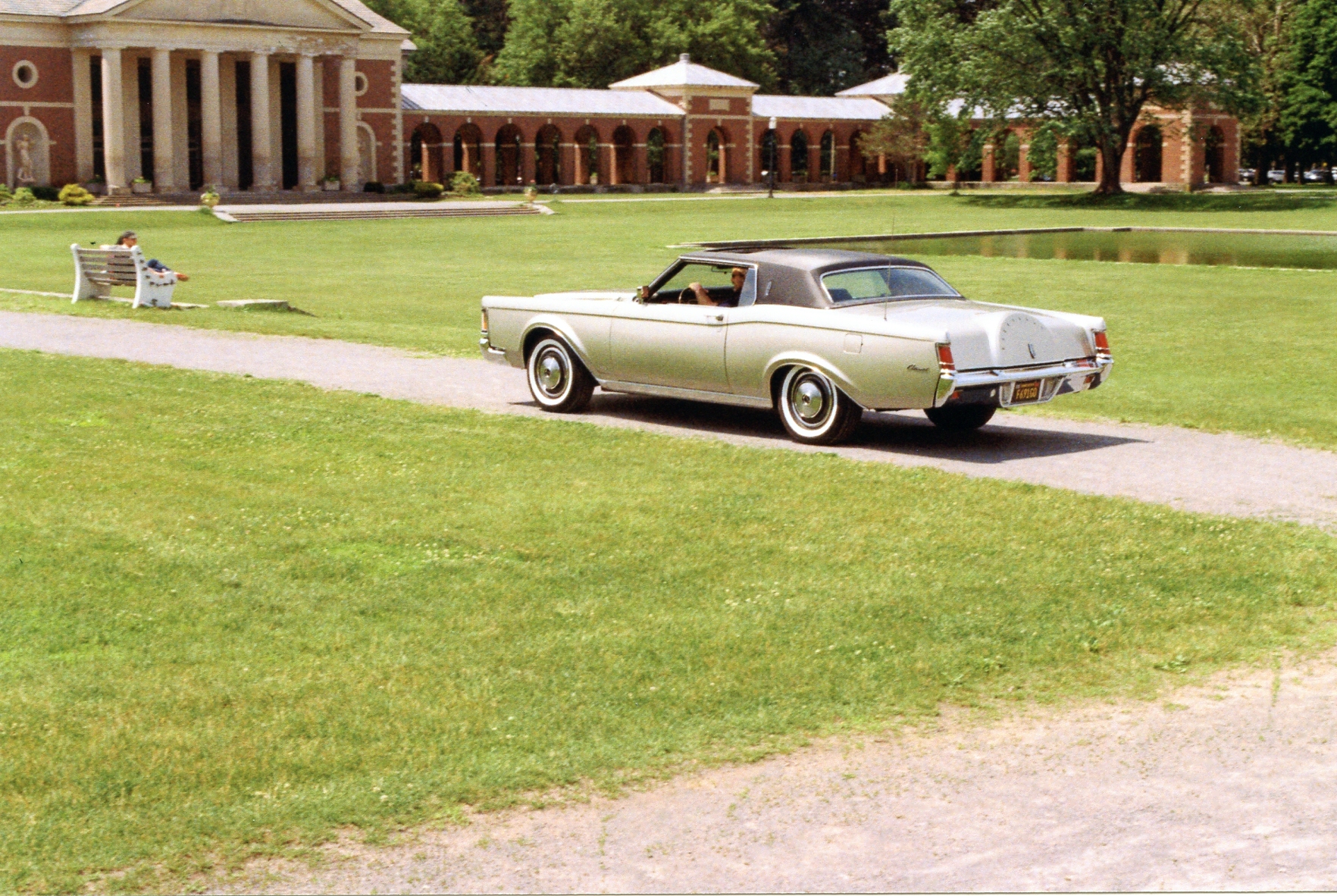
I’m not the first with this idea (check out Murilee Martin, who’s carved out a corner of the Internet by combining his passions for cars and film photography) , but when I remember to bring an old camera, I’ve enjoyed using it to photograph show cars. This all came to mind recently when I uncovered a few envelopes of prints. My photos go into albums in somewhat chronological order, and I had not attended to that task in several years. Hence, the subject of this week’s blog post. The pictures I found had been taken during the summer of 2021, when I attended 3 different events, each time with a film camera in tow. Posted below are samples of the results. There is definitely a softness, a color shift, an old-world quality to film that digital does not possess. I did use an older (1981) 35mm film camera for some of the snaps, and I’ve indicated that below. See what you think compared to the cold perfection of digital.
My friend Terry invited me to his home last weekend to check out the progress on his project car. Quick background stories on both: I met Terry close to 25 years ago when we both worked for VCNA (Volvo Cars North America). Our professional relationship was peripheral until I joined him in the Technical Engineering Department in 2006. We labored together until my retirement in 2009 and have remained close. Terry became owner of this 1964 Chevy Malibu SS in 1971 when he was still a teenager! It remained garaged at his parents’ home in Madison, Wisconsin until 1999, when he trailered the car back to his residence in NY. Only since his own retirement has he been able to devote time to it, and his progress has been noteworthy.
The Chevrolet/Volvo/Madison coincidence runs deeper than this, though. Terry told me that he (in reality his father) bought this ’64 from Smart Motors in Madison, which at that time was an authorized Volvo dealer (also selling other import makes, as most did). The car, not running because the manual gearbox was stuck in gear, cost $225. Terry said he seems to remember using a hammer on it, which successfully freed the mechanism, allowing him to drive it home. (He wanted a ’65 because an uncle had one, but settled on this ’64 instead.)
This past Friday, as soon as Larry and I arrived at Terry’s house, he invited us into his garage to view a complete engine/transmission assembly on a home-built stand. With 12V battery and gas can on the ground, Terry stepped up to a “dashboard”, flicked a few controls, and the engine instantly fired to life. In order to ensure that his engine rebuild was done to his satisfaction, and to fine-tune all the settings, Terry constructed an elaborate set-up allowing him to start and run the engine in his garage.
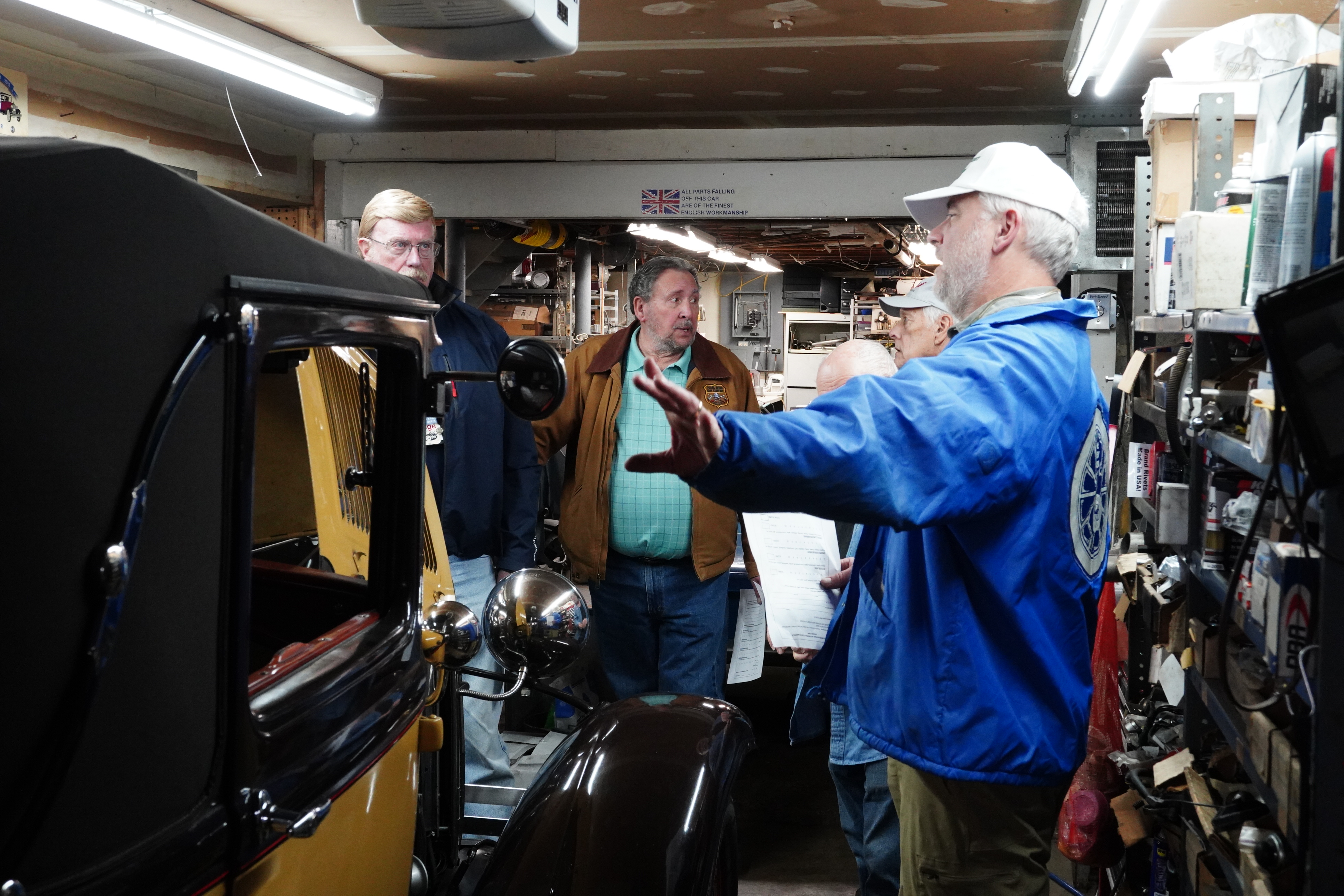
Larry (L) and Terry (R) inspect the details
Here you can see the complete drivetrain, with “dashboard” on right
Carburetor closeup
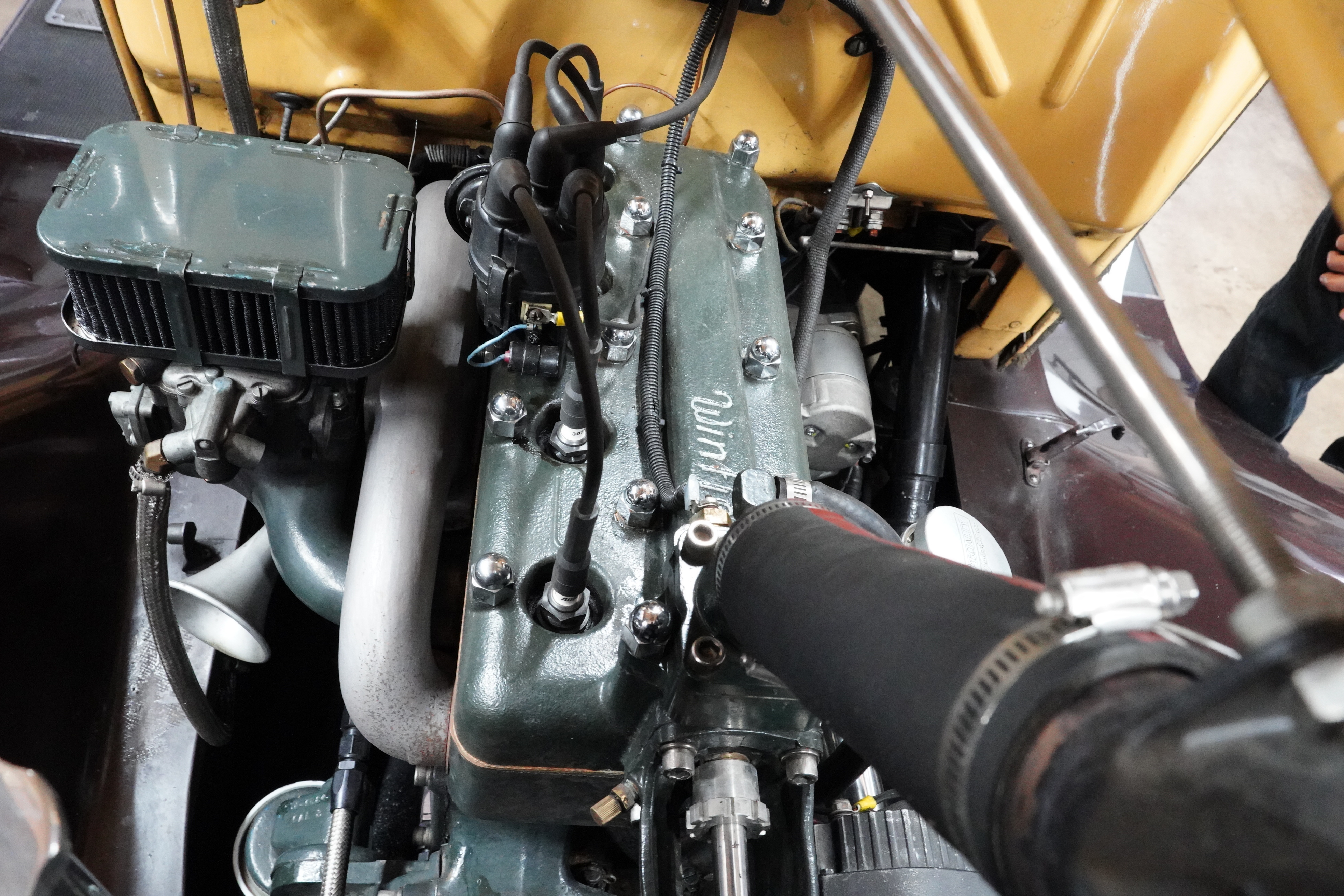
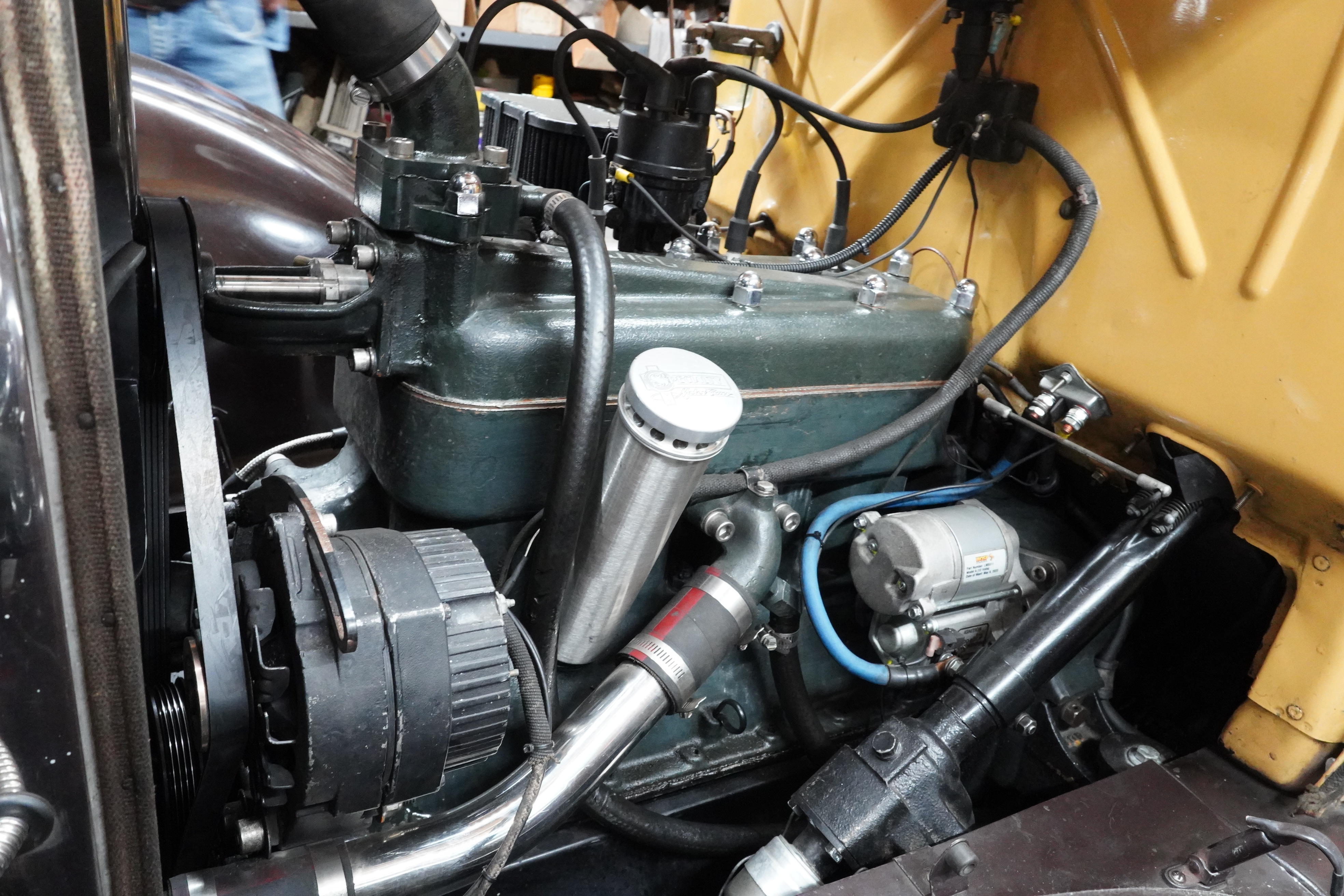
Some specifics on the drivetrain: the car’s original engine block became lost over time, so Terry located a 283 SS engine which he had bored 0.030” over, yielding a displacement of 355 c.i. The block wears aluminum heads with larger valves. Atop the aluminum intake manifold is a Holley 4-barrel “street” carb, rated at 600 CFM. Terry noted that it’s a common mistake to “over carburate” a rebuilt engine, and this arrangement was chosen for its street-worthiness. (“I’m not going racing with it!” he exclaimed.) Backing up this engine is a Tremec 5-speed TKO model tranny. Fifth gear is a 0.64-to-1 overdrive, which will allow for relaxed highway cruising. The transmission also features an electronic pickup for the speedometer, as well as neutral safety and reverse light switches.
The man is on a mission
This is a technician’s delight
With the drivetrain so near completion, Terry has begun to make plans for the body shell’s restoration. To my amateur eye, the body looked good. (As I told Terry, I grew up in NYC where copious amounts of salt were strewn on the roads every winter. In the ‘60s and ‘70s of my youth, we saw many cars rust away after only 5 or 6 years of driving.) Over the last several years, he has been collecting NOS and replacement sheetmetal, and Terry has lined up a restoration shop which will take the shell sometime in 2024 to restore and paint it. At that point, all that will be left is final assembly!
The 1964 Malibu body shell wears a very old coat of black paint
Firewall is solid
Missing trunk floor allows view of rear axle
Terry and I have spoken at length about auto restoration in general, and my own 5-year journey with the Isetta, well-documented throughout this blog. Somehow I found time to do that work when I was in my 30s and 40s. Thirty years older than I was then, after relocating from WI to Sweden to NY, and raising a family, this is now Terry’s time. I’m personally thrilled for him, and his own excitement is palpable. I plan to make future visits to document his progress on these digital pages.
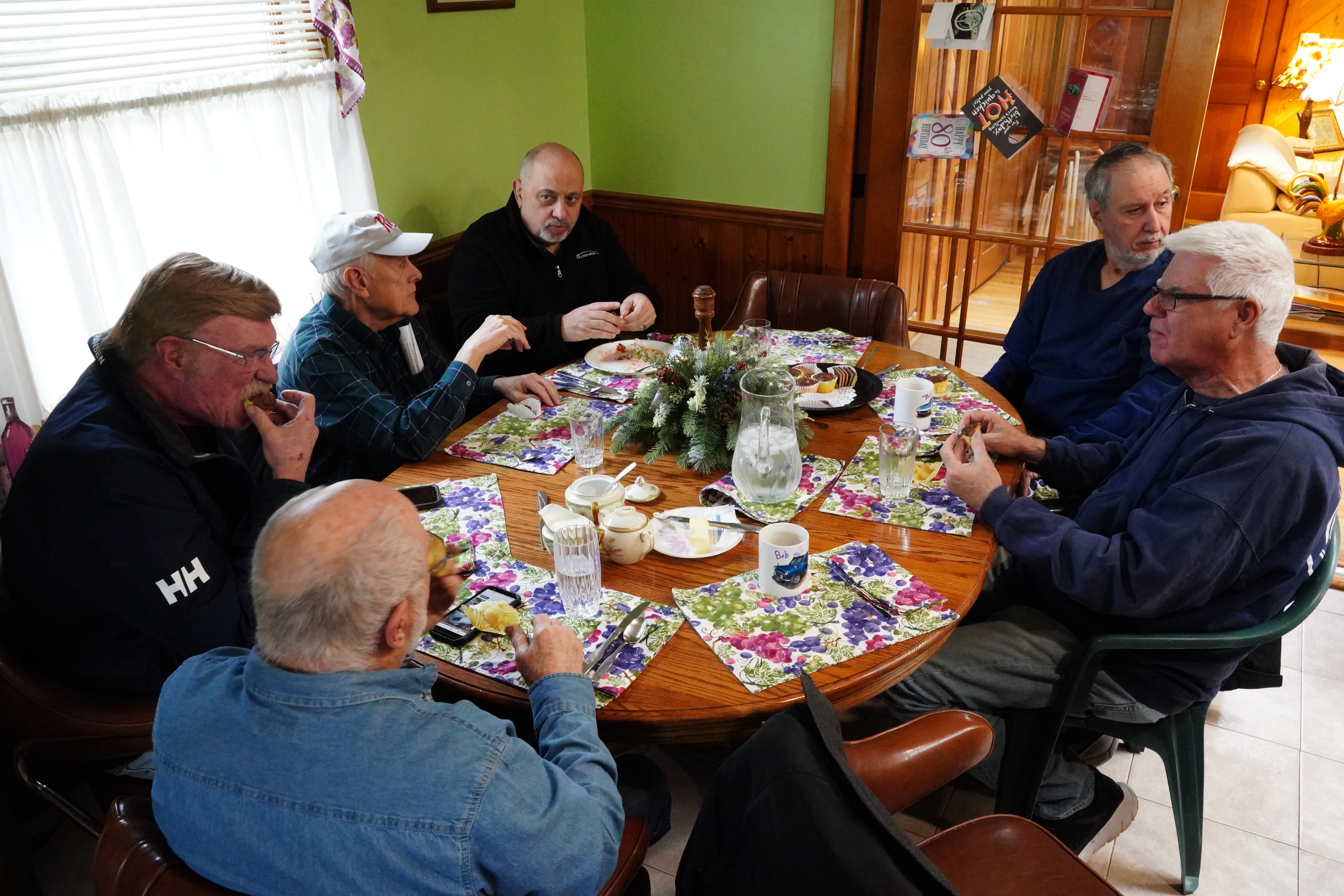
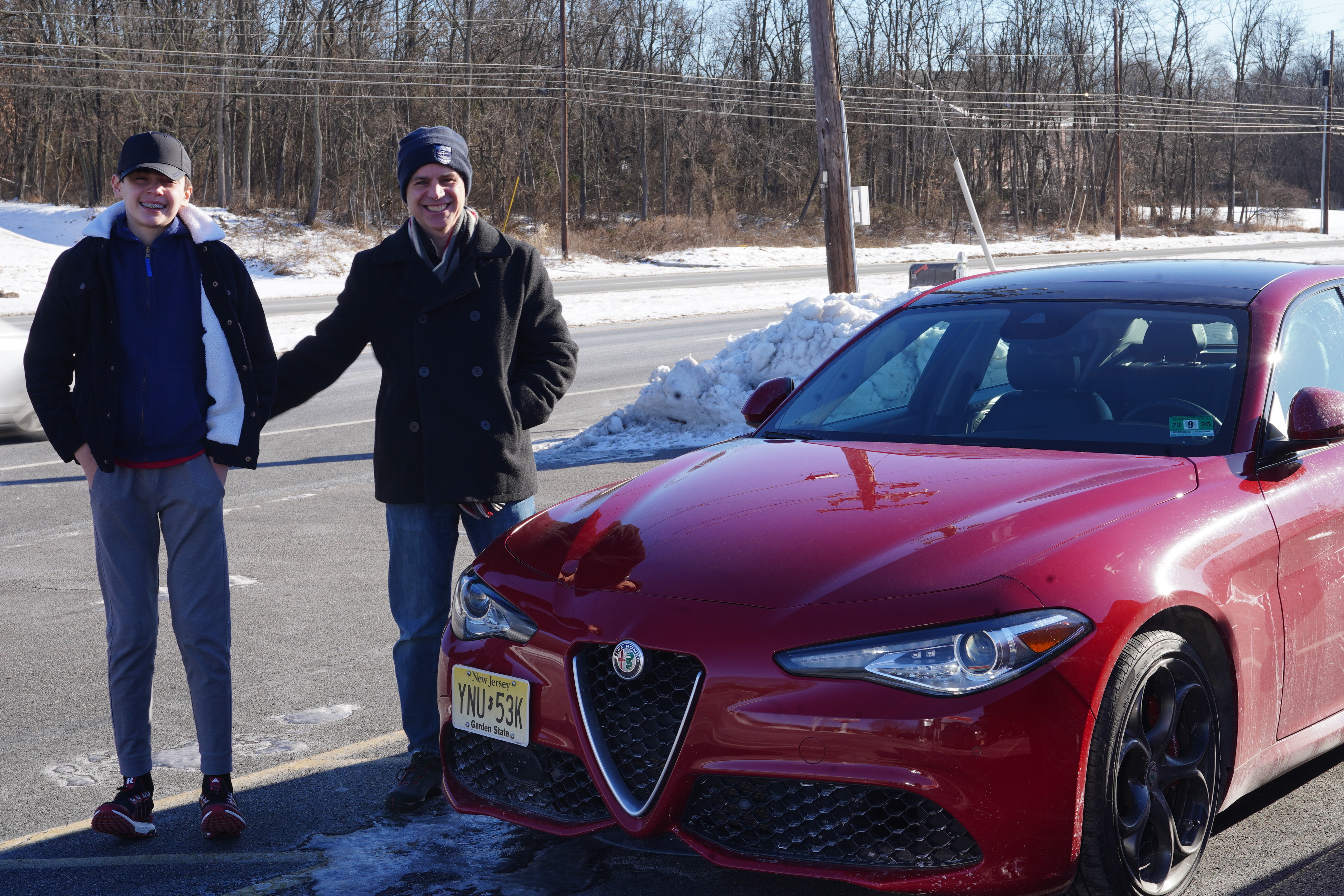
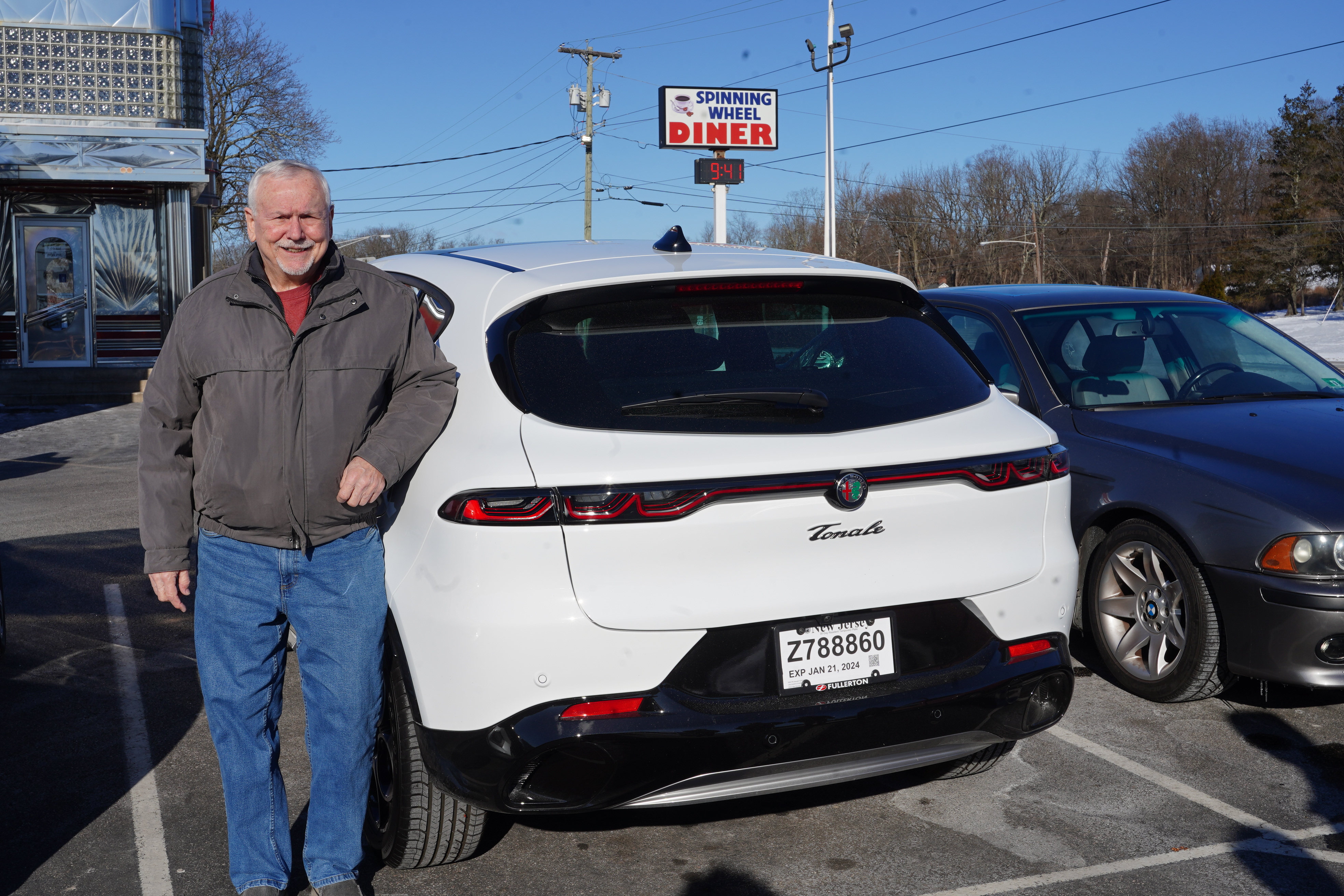
On Sunday November 12, 2023, the NJ Chapter of the Alfa Romeo Owners Club (AROC) sponsored an “Alfas and Espresso” event at Auto Exotica in Red Bank NJ. The gathering was scheduled to run from 9am to 12 noon, and as I observed as I pulled into the lot at 9:05 in my ’67 GT 1300 Junior, much of the available parking was already spoken for. The folks at Auto Exotica had also invited members of the Italian Car Club of Staten Island, and they showed up in good numbers, driving mostly late-model Alfas and Ferraris. Auto Exotica is an independent used-car dealer, stocking newer high-end machinery from brands like BMW, Porsche, and Mercedes-Benz.
It was great to see friends from our NJ Chapter again; there has been a rejuvenation of the club since the middle of the year, and hopes are high that this will continue into 2024. The day was partly sunny but brisk, with morning temps in the low 40s, so soon after parking, we headed inside where coffee, bagels, and (no surprise here) Italian cookies and cannolis awaited us.
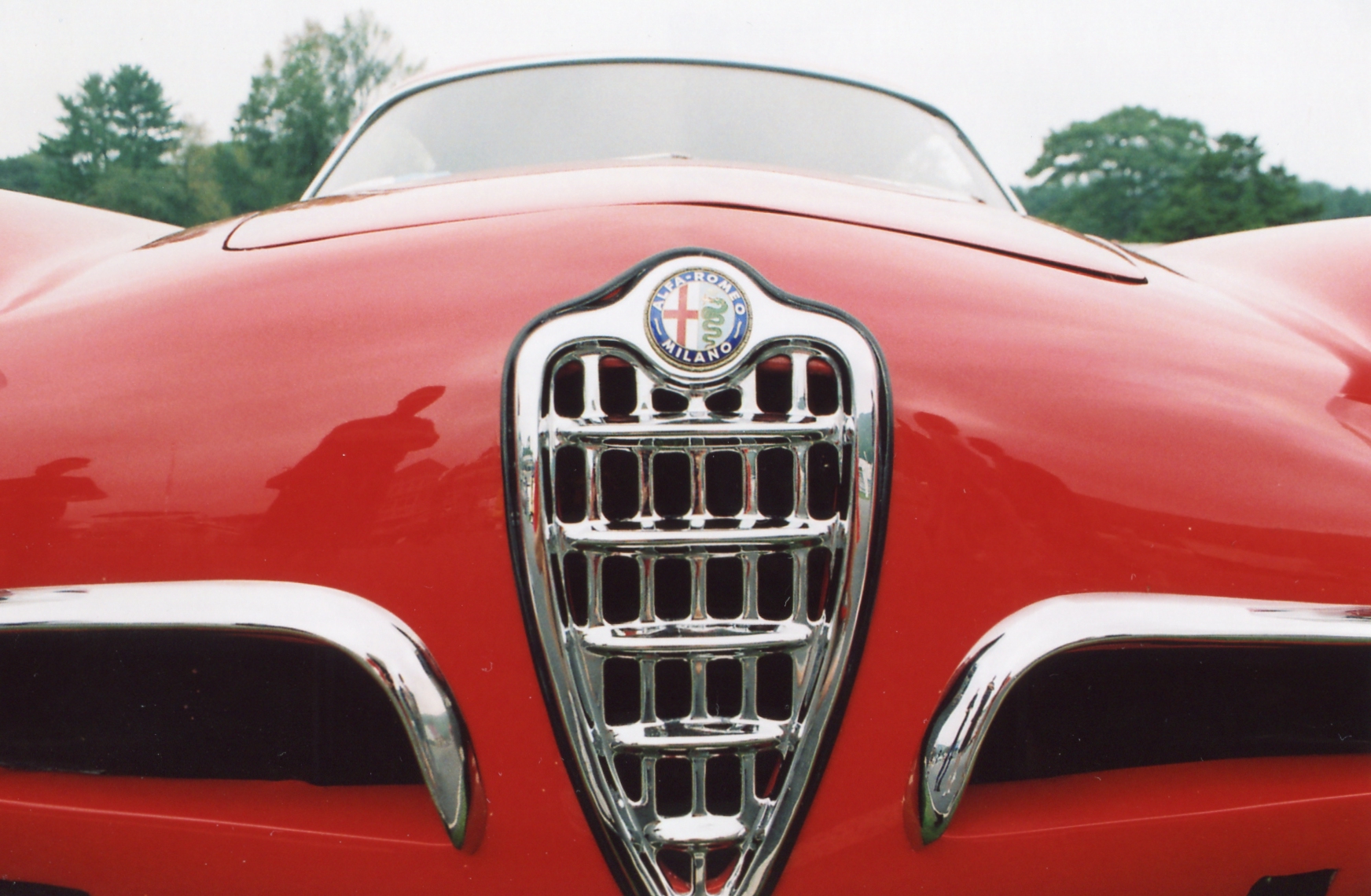
I didn’t wait long to head back outside because I wanted to photograph as many of these beautiful Italian automobiles as I could. Standouts included a Giulietta Sprint Speciale, a large handful of 4Cs, including some in seldom-seen colors, modern Giulia sedans modified with exterior goodies, and arriving several hours late, a pair of Giulia GTAs which I was told were authentic, complete with twin-spark engines and plexiglass windows. (When they change hands, which is infrequent, real GTA transaction prices are in the 200 large range. Buyer beware, as many ‘tributes’ are built.)
Wanting to beat the crowd, I departed Auto Exotica around 11:30 am. The ride home, like the ride to the place, was uneventful, with mostly highway driving on Route 287 and the Garden State Parkway. This was my final event of this year, so once I got home, I topped up the fuel tank, added the requisite dose of Sta-Bil, and put the Alfa in the garage for the winter. It was a very good year for that car: By my records, I drove it 813 miles in 2023, close to my personal goal of 1,000 miles. The car ran flawlessly. It consumed no oil, never failed to start, and never failed to get me home. Of course I have a to-do list for the car, consisting mostly of maintenance items. Weather permitting, I’ll be working on it over the winter and updating the blog as progress ensues.
During a routine check of my Alfa’s exterior lighting, I discovered an inoperative right rear turn signal. Easy enough to change the bulb, I told myself, and removed that side’s tail lamp lens (4 Philips head screws, easily accessed). I have had the rear lenses apart before, several years ago, at which time I gave them a thorough cleaning. Then it occurred to me: I have never removed the front turn signal lenses. Even though all the front parking and signal lights worked, I decided that after 10+ years of ownership, it would be prudent to peek at those as well.
Here’s the thing about owning an older car (my Alfa will be 57 years old next year!): the list of preventative maintenance items never ends. I consider myself a good steward of the car, staying on top of fluid changes, brakes, tires, and various rubber bits. But the front lamps? Why did something so simple and so obvious escape my grasp? I have no excuse other than to rationalize that there was always something else that was a priority. So now was the time.
The front signal lenses were even easier to remove than the rears: just one Philips head screw. I pulled all the bulbs and was not surprised to observe that although functional, several of them had dark spots. They have all been in the car since at least 2013, the year it became mine, and how many years before that is anyone’s guess. Now I was ready to shop for bulbs.
Walmart’s finest
They were all standard sizes: 1156, 1157, and 5007, front and rear. Ever so briefly did I consider going the LED route, but changed my mind, deciding that I didn’t want to tax the older wiring, or run into any overheating or physical interference issues. I checked online to explore my choices, and saw that Walmart had the best combination of brand, availability, and pricing. The front lenses are clear, and the 1156 bulbs for the turn signals were clear (white light), so the one upgrade I made was to swap in amber bulbs. The 4 packages of bulbs ran me around $12, and 48 hours after placing the order online, I drove to my local Walmart, pulled into one of their “online pickup” parking spots, called the phone number on the sign, and 5 minutes later, the bulbs were brought out to my car door.
Lens gasket (in white) perished a while back
Oh, the front signal lens gaskets: Without a doubt they were the ones that ‘Mario’ installed in March of ’67 as the car came down the Milano assembly line, as they crumbled in my hands. A plastic scraper removed the final traces of the old gaskets, and I placed an order with my #1 Alfa parts supplier, Classic Alfa in the UK, around 3 p.m. on Sunday afternoon. On Tuesday at 7 p.m. a DHL truck dropped the box on my front porch. This 48-hour turnaround is typical for them, and this, combined with the quality of their wares, is why they are my #1.
Thank you Classic Alfa! (and DHL)
Before…
… and After
Bezels by Carello
All the new Sylvania bulbs fit as expected and everything functioned on first try. I did not necessarily detect a substantial increase in brightness, but that was not the goal. I wanted new bulbs that would match left to right and would last for a few years. While working on the front end, I noticed (again, after 10 years of ownership) that the 2 headlight bulbs were from different manufacturers. I’ve never had the headlights out of the car, so back to the task of finding and ordering new bulbs. Amazon had Wagner sealed beam halogen bulbs and that’s what I bought. While the headlight bezels were off, I gave their undersides a quick coat of Rust-O-Leum paint to seal some minor rust, and polished the chrome which really spruced up the front of the car. Take a look at these before and after shots of the low beams and high beams:
OLD BULBS: low beam
OLD BULBS: high beam
NEW BULBS: low beam
NEW BULBS: high beam
Lesson learned! Modern cars spoil us with their state-of-the-art lighting (which in many cases require a complete assembly to be replaced if a lighting element fails). If you have a older car running incandescent bulbs, consider checking and replacing them with new, even if they are functional.
My dear friend Pete Wyman passed away on September 25, 2023. He was 90 years old. I first met Pete over 20 years ago when his daughter Pam, a good friend and former work colleague of my wife’s, was visiting our home. Walking past the garage where I was tinkering, probably with the Isetta, Pam uttered in the most nonchalant way, “Oh, you should meet my father, he likes old cars too”. A short time later, I did meet Pete, and we became good friends almost immediately, bonding over our shared automotive passions.
Pete was a man of few words, and even when he did speak, he was soft-spoken, so during that first meeting, he spoke a bit about his collection, but I had a difficult time grasping what he said. He invited us to his home in Fairfield PA, outside of Gettysburg, and we eventually made the trek. As we pulled into the driveway, I saw this gorgeous green Alfa Romeo parked on the front lawn. As soon as I exited my car, I pointed to the Alfa and exclaimed “sell me this car!” Pete immediately replied “No, it’s not for sale, but you can drive it if you’d like”. Of course, I had the first of what would be many stints behind the wheel, something I got to do at every visit.
ABOVE: The first visit. Me with the Alfa which would someday be mine; my wife Margaretanne and I with the DeSoto; Pete with the DeSoto.
Also in his possession at that time were 2 pre-war cars, a 1931 DeSoto and 1936 Oldsmobile. The other surprise was to discover that he was the original owner of a 1979 Volvo 265 station wagon, an AACA award winner. I would eventually visit Pete at his home once or twice a year. At each visit I would work on one of his cars for him, and get to drive one or more of them. Through the years, the collection grew and shrank. Pete’s taste was eclectic: he added an AMC Pacer and Hudson Jet, neither of which he kept for long. In a moment of candor, he admitted that both were ‘whim’ purchases, made without much deliberation. He went on to sell the DeSoto, the Olds, and the Volvo, and added some newer iron in the form of a 2006 Jaguar XJ, a retro Ford Thunderbird, and a Volvo XC70. The Volvo was purchased new, while the Jag and T-Bird were low-mileage used cars.
ABOVE: The AMC Pacer next to my 2003 Volvo V70; the Alfa, Pacer and V70
Pete was an electrical engineer; you could literally say that he was a rocket scientist, as he performed contract work on the Space Shuttle for NASA. One of his proudest possessions was a photograph, autographed by the astronauts who had flown one of the Space Shuttle missions. Like other engineers I’ve met, he was fastidious with the care and upkeep of his cars. Also like some engineers, he enjoyed making what he saw as “improvements” to them. For example, the ’79 Volvo had a 3-speed automatic transmission, and to Pete, the engine revved too high at highway speeds. He was determined to put in a Volvo-sourced 4-speed, but ran into all kinds of issues regarding bellhousing shape, driveshaft length, and crossmember location. He persisted, though, and found a mechanic willing to work with him on it. Despite my own words of discouragement (“Pete, really, you hardly drive the car, is it worth it?”), he successfully completed the project.
I drove every one of his cars except the Hudson (my recollection is that he owned that car for such a short period of time that he bought it and sold it in between my visits!). The DeSoto was my first time behind the wheel of a pre-war car – I was shocked at how easy it was to drive. The Pacer was competent and didn’t feel like an old car. I said this to Pete about the Jaguar: you could jump onto Route 80, set the cruise control, and arrive in San Francisco still refreshed. Driving the ’36 Olds convertible was a huge thrill. The torque from that straight-8 engine was endless; the ride and handling were sublime. Steering effort was manageable, but with that long, long hood, one had to plan for turns half a block in advance.
ABOVE: The Jaguar XJ, with Pete’s new XC70 in the garage
Finally, the Alfa: I’ve told this story so many times, and still get a kick out of telling it. After that initial “No!” from Pete, I persisted in asking him to sell me the car every time I saw him. Well, persistence pays off! It took 8 years, but Pete finally said yes, and that gorgeous ’67 Alfa Romeo became mine in March of 2013. The sale was contingent on a gentlemen’s agreement that I would keep the Alfa in as original condition as he had done during his 45 years of stewardship. I’ve kept to my promise, and even though Pete is gone, I intend to continue to honor it.
I attended Pete’s service and burial on Monday, October 2. His wife, four daughters, sons-in-law, and grandchildren were all there (one daughter predeceased him). Pete was in the hospital two weeks prior, and spent the final week of his life at his home in hospice care. My wife and I visited him in the hospital, and while he was physically very weak, his mind was as sharp as ever, proven by his recollections with me of many of our automotive adventures.
I will greatly miss my friend Pete. Even though one is aware that someone’s time is coming to an end, it’s still a shock to learn that a friend has passed. I am honored to say that Pete Wyman was my friend. Please read his obituary to learn more about this wonderful man:
ABOVE: Views from inside the garage, with the ’79 265 and the ’36 Olds undergoing service.
Pete, his wife Charlen, and Volvo 265 at Hershey
Pete under the hood of the 265. Silver canister to right of coolant overflow bottle is electric pre-oiler installed by him, which delivers engine oil to cylinder heads before cranking.
Pete inside the ’36 Olds.
Pete, his wife Charlen, and my wife Margaretanne (with Volvo 265) at Hershey
Pete under the hood of HIS Alfa
The T-Bird
1936 Olds with T-Bird and ’79 Volvo in their garages
ABOVE: Beauty shots of the 1936 Olds, taken after I returned from driving it.
The NJ Region of the AACA participated in a display of special interest cars at the Bright View Senior Living Facility in Warren NJ on Sunday Oct. 22, 2023. The Region has hosted or co-hosted a number of these type of events throughout the Garden State. Facility residents are invited to come outside and enjoy viewing the older cars, while the facility supplies lunch and snacks for car owners and residents alike.
1933 Pontiac at front of facility
The car count was strong at this one: 22 vehicles in all, most of them AACA-original spec cars. Several custom, modifieds, and “hot rods” were also displayed. As usual for an AACA showing, there was a wide spread of makes and model years. The oldest vehicle among the stock cars was a 1933 Pontiac, closely followed by a 1938 LaSalle. A beautiful 1953 Cadillac was also on display, as were a large number of models from the ‘60s through ‘90s.
A nice variety
The day was sunny if a bit breezy; in other words, a great autumn day. The event ran from 12 noon to 3 p.m., and the instant feedback from organizers was that the cars were greatly appreciated by the residents.
The Garden State Region Mustang Club (GSRMC) held its “Mustangs & Merlot” car show at the Brook Hollow Winery in Columbia NJ on Sunday Oct. 15, 2023. The GSRMC President is also a member of the NJ Region of the AACA, and he requested a team of AACA volunteers with some judging experience to judge the Mustangs. Doing it this way would maintain impartiality, as none of the 6 judges were displaying cars. I agreed to be one of the 6, and we were split into 3 teams of 2.
Cars were divided into classes: first, either “stock” or “modified”, then by generation. (The “modified” distinction was made by GSRMC officers, and not the judges. Any cars with 3 or more mods were placed in the modified class.) My co-judge and I judged 5 stock classes: 1964-1966 cars, 1967-1970 cars, Fox-body cars, 1994-2004 cars, and 2015-2023 cars. While that sounds like a large number, there were 6 cars in the ’64-’66 class, only 2 in the ’67-’70 class, only ONE Fox-body car, and only 2 cars in the 1994-2004 class. The big numbers were in the 2015-and-up class which had 11 cars. (Again, these numbers reflect cars in the STOCK class only.) I estimated that there were about 50 cars on the show field.
As a former Mustang owner and GSRMC member, I was genuinely surprised at the very low turnout for all pre-2005 cars. Mike D., GSRMC President whom I’ve known for many years, told me a while back that club membership has taken a decided turn toward late-model vehicles. At least this speaks well of the continued enthusiasm for the Mustang among newer and presumably younger owners.
Cars were judged on workmanship and appearance (condition and cleanliness) only, so none of us were expected to be Mustang experts. Still, especially among the newer cars, judging became very tight when points were being subtracted for demerits as small as dirty floor mats, paint nicks, and less-than-stellar engine compartments. Our task was made easier because we only had to select one winner per class. We were not looking for 1st, 2nd, and 3rd place winners.
I took my photos before judging started, knowing that cars would leave as soon as winners were announced. In many cases, as you can see, hoods and trunks were open as required, so I had to accept that in my pictures. After the previous day’s rain, everyone was thrilled that it was dry, but a brisk breeze and a peek-a-boo sun meant jackets stayed on. I greatly enjoyed being immersed ever so briefly among Mustangs again, and I saw one or two that would look really nice in my garage!
The only car in the Fox-body class, he took 1st place, natch
ALL of the cars were in great shape; judging was challenging and came down to examining the tiniest details.
If you’re an enthusiast of classic cars, especially those restored to original condition, there is but one word which signifies the most anticipated day of the car show season: “Hershey”. Hershey as in the chocolate bar, and as in the quaint Pennsylvania town named after the chocolate company located there. About 70 years ago, local members of the Antique Automobile Club of America (AACA) decided that this town would be a great place to hold an annual combination flea market / judged car show. These founders could never have predicted what would occur in the ensuing decades: that their event would snowball into a mammoth spectacle known across the country and around the world.
Wednesday and Thursday were sunny and unseasonably warm; the forecast for Friday, car show day, was for rain. Based on the conversations I overheard, you would think that it was time to build another ark! When show day dawned, it rained for about 15 minutes (I missed it; I was told it rained around 8:30 a.m.) and then stopped. While we had overcast skies for the remainder of the day, it stayed dry, and the cars came out to play. Lots of them.
Show cars are in one of three categories: Class Judging, with class assignments based on model year and/or make (cars are restored to like-new and judged on a 400-point scale); HPOF, for Historical Preservation of Original Features (unrestored yet still kept to original specs); and DPC, for Driver Participation Class (cars don’t fit into the other two classes and are allowed “some” modifications). AACA’s introduction of the HPOF and DPC classes has been successful in opening up the hobby to a greater number of participants.
Someone from my AACA NJ Region told me that the show field can hold 1,000 cars, and I don’t doubt it. I would guess that the field was about 90% filled, so let’s round it down to about 900 vehicles in attendance. It’s always a challenge for me to decide which cars to see, as there isn’t time to see them all. While I did not see every car on the field, I did get to spend time with an assortment of vehicles from all 3 categories.
CARS IN CLASS JUDGING
A collection of C2 Corvette coupes
Stunning Lincoln
Class 19E: Classic Car Club of America vehicles, 1940-1948
Hershey is the place to see all the pre-war classics:
The LaSalle marque would not live past 1940
Dave and his 1924 Dodge Brothers Touring
I met Dave at the AACA Nationals in Saratoga Springs in 2021. My blog write-up from that show featured his 1955 Thunderbird. He was kind enough to reach out to let me know he’d be at Hershey this year with a different car. This Dodge Brothers Touring has been in his family since 1973, and the car was there to be judged for its Repeat Preservation, which I’m happy to say for Dave’s sake was awarded!
Howard and his 1979 Volvo 265
I met Howard and his wife for the first time on Friday, but it was far from the first time I had heard his name. He didn’t know it until I introduced myself, but we have something in common: both of us have purchased cars from Pete Wyman: in Howard’s case, this Volvo, and in my case, my Alfa Romeo. I told Howard that I knew much of the history of this car, and had even wrenched on it a few times while it was in Pete’s possession. Howard, a true Volvo fan (he also had a 1987 245 in the DPC class), had chased Pete for years, trying to get him to sell the car, before Pete finally relented. Based on its appearance here, I have no doubt that this 265 is in good hands with Howard. Like Dave, Howard entered the car in hopes of earning its Repeat Preservation, and I’m proud of both Pete and Howard, because the car was successful in earning that!
1937 Ford
1964 Austin-Healey
1963 Ferrari 250GTE
1994 Mazda Miata
1981 Fiat X1/9 (only Fiat at the show!)
1958 VW convertible
This 1938 Lea-Francis, which was recently on the cover of Collectible Automobilemagazine, was one of the prettiest cars in the show:
CARS IN HPOF
Larry and his 1980 Olds Cutlass sedan
Larry is a 30+ year friend, going back to our days together at VCNA. He and I co-hosted our Sunday Morning Breakfast Drives for about 15 years, and his ride of choice for those outings was his 1972 Chevrolet Nova. A dedicated GM guy, I knew that he had the itch for something different when, earlier this year, he stumbled on this 1980 Olds Cutlass sedan. It was on eBay, and located in New Hampshire. He took a ride, checked it out, and bought the car, driving it back home to NJ without incident. This was the first time Larry had entered a car at an AACA meet. He was extremely proud to learn that his Cutlass achieved its HPOF certification. That’s Larry with his wife Linda in their incognito shades next to the car.
James and his ’51 Packard
I have a thing for Packards; I’ve driven them, and have admired them for a long time, but have never owned one. Depending on the year and model, I’ve seen some which were incredibly affordable. This car, in HPOF, immediately caught my eye based on its wonderful condition. I struck up a brief conversation with its caretaker, who was the kindest and most soft-spoken gent I met all day. He told me that except for some touch-ups, the paint was all original, and that he owned the car for about 10 years. He invited me to open the door to take a closer look if I so desired. James was there to try to win a Repeat Original HPOF award for his Packard, and the announced results sheet showed me that he did!
1948 DeSoto
1987 Mazda RX-7
1978 AMC Concord
CARS IN DPC
1987 Volvo 240 wagon
1972 Opel GT
1963 Chevrolet Corvair
1972 Volvo 1800ES
And proud of it too!
When the week’s events catch up with you, and you need a place for a quick snooze…
A review of my Hershey blog reports from 2016, 2017, and 2018 provides visual documentation to support the notion that the car corral is less crowded than it used to be. This is not to say that it wasn’t still alive with activity: the corral was full or close to full across the entire front of the Giant Center. However, as one followed the road toward the back of the Giant Center, it was almost completely vacant. To be brutally objective about it, I’d guesstimate that the available spaces were about 60% full.
The crowded part of the car corral
The past 5 years or so have seen the expanding success of online collector car auctions take over much of the action which had been the domain of shows like Hershey. The Bring a Trailer website in particular has changed the game, offering 100+ special interest cars a day, 7 days a week, stopping only for the infrequent major holidays. The BaT sell-through appears to be around 65-70%, not phenomenal, but do the math: conservative estimates show BaT selling over 20,000 collector cars a year. It must be affecting what happens at Hershey and elsewhere. I’m not even going to comment on eBay Motors, a site I almost completely avoid.
Despite this doom-and-gloom-sounding message, sellers brought cars to Hershey, potential buyers walked the aisles, and some transactions occurred. There is no substitute for seeing your next toy car in the metal first. I saw enough “SOLD” signs to reassure me that some business was still being conducted. I walked the car corral all 3 days of my visit: Wednesday, Thursday, and Friday. While many asking prices struck me as above market, I continued to spot affordable cars, defined this year as $20,000 and under (inflation, you know), and remember, these were asking prices. Everything is negotiable. A handful of the ones I found interesting are documented below. I did not perform a detailed inspection on any of these vehicles, so the usual caveat emptor rules apply (I hope you were paying attention in Latin class). Cars below are arranged in asking price order from low to high.
1990 Chrysler TC by Maserati, white, tan interior, removeable hardtop, 87k miles, 3.0L V6, sutomatic.
Asking: $6,500
Some call this “Lido’s Folly”, as it was Lee “Lido” Iacocca who spearheaded the project, which he envisioned as a modern-day 2-seat T-Bird, complete with porthole hardtop. I think these have mellowed nicely with age. They will never be worth a lot of money, but think of it as a ‘90s Italian/American hybrid.
1985 Olds Toronado, green, tan “carriage roof”, 120k miles, owned by same family since 1987, AACA HPOF certified.
Asking: $8,500
This car looks so similar to the same-year Riviera that you would be forgiven for failing to distinguish them from each other (a common ‘80s GM malady). I much prefer the Riv, and really dislike the dealer-installed padded roof, but at this price, you could join the Olds club and tour in comfort with this.
1985 Ford Mustang SVO, red, grey interior, 66k miles. All SVOs had 2.3L turbo 4-cylinder engines and 5-speed transmissions.
Asking $10,650
Hmm, where have I seen this car before? At last year’s Hershey car corral, with an asking price $4,000 higher, that’s where. The owner must be extremely patient, or is not advertising it anywhere else.
In 2022:
1998 Ford F-150 pickup truck, regular cab, long bed, 160k miles, 4.6L V8, 5-speed manual, 2WD, tan metallic, red interior.
Asking: $11,500
I remember reading an article in the 1990s about collector vehicles. The author of that story proclaimed: “Trucks will never become collectible”. Reminds me of Yogi Berra’s quip: “It’s difficult to make predictions, especially about the future”. Of course, trucks are THE hottest thing in the new vehicle market and have been for years, so the trickle-down effect applies here. This F-150, with a V8, 5-speed, and rear wheel drive, is like a Mustang with a pickup bed.
1991 Chevy Corvette coupe, dark red, 69k miles. Interior color and transmission not noted. Sign claims $5,000 recently spent on “upgrades”.
Asking $11,998
There are always a multitude of C4 Corvettes for sale. This one was from the first year of the styling refresh, which in my opinion improved its looks. Depending on what is meant by “upgrades”, this could be a lot of performance for the dollar.
1940 Ford Tudor sedan, dark red, tan interior, presumed Ford flathead V8 under hood.
Asking $13,500
I’m shocked to find an iconic 1940 Ford for sale at this price. Yes, it’s not a coupe or convertible, but you’ve got that fabulous front end design with a flattie engine, and lots of aftermarket parts support. Looks like fun for not a lot of cash.
I’ve driven a few 544s and they can be a blast to drive. Just don’t expect a smooth and quiet ride. This car looked very solid but was perhaps overpriced by a few thousand. Cash talks!
1947 Fiat 500 Topolino, grey, tan interior, 569cc 4-cylinder engine, 4-speed, sign claims recent engine rebuild.
Asking $22,750
Rarely seen in the U.S., the Topolino (“Little Mouse”) was one of Fiat’s biggest successes. You might have the only one at the next meeting of the Fiat Club. Just don’t be in a hurry to get there.
1963 Buick Riviera, gold, beige cloth interior, factory A/C, sign claims front disc brakes which must be aftermarket (’63 Rivs had finned drums all around).
Asking: $24,000
This is the first year of the Riviera, which helped GM kick off its attack on the 4-seat T-Bird. These two cars and a few others begat the whole personal-luxury car segment which would live for the next 20 years. The colors on this Riv were great, and it had an honest look to it. I’ve been following this market a bit, and this asking price was in the ballpark, especially with the unmolested interior and the factory air.
1987 Porsche 928 S4, yellow, auto, 54k miles, sign details number of small defects.
Asking $29,500
I never saw a 928 in this color. In a word, it was ugly, and its ugliness only grew when one noticed the faded paint on the bumpers and side rub strips. Nothing about the car’s appearance exuded any confidence that there was a good car underneath. And while 928 values have risen of late, that is for “fine to excellent” cars, which this example is most definitely not. Pass.
1959 Messerschmitt KR200, red, black cloth top, red interior. Aftermarket front “bumper”.
Asking: $39,500
When I had my Isetta and would attend “microcar and minicar” shows, there would always be a small supply of these. Parking my rolling egg next to a “Schmitt” made the Isetta look normal. These have 2-cycle engines, 8 inch tires, a single rear wheel, and tandem seating. There are no doors: the roof tilts to the side to allow ingress and egress, much like a fighter plane. I’m including it here only because it’s a Messerschmitt.
1974 Alfa Romeo GTV coupe, silver, black interior with red piping, mileage not noted, bumpers removed but included, factory A/C removed but included, Panasport wheels.
Asking $42,500
This was the final year for this generation GTV in the U.S. market and was one of two Alfa GTVs parked near each other, presumably on offer from the same dealer. This car was the cheaper one by $27k, and despite the mods, none of which I cared for, there was some potential value here; it would be an even better value at $37,500.
CODA
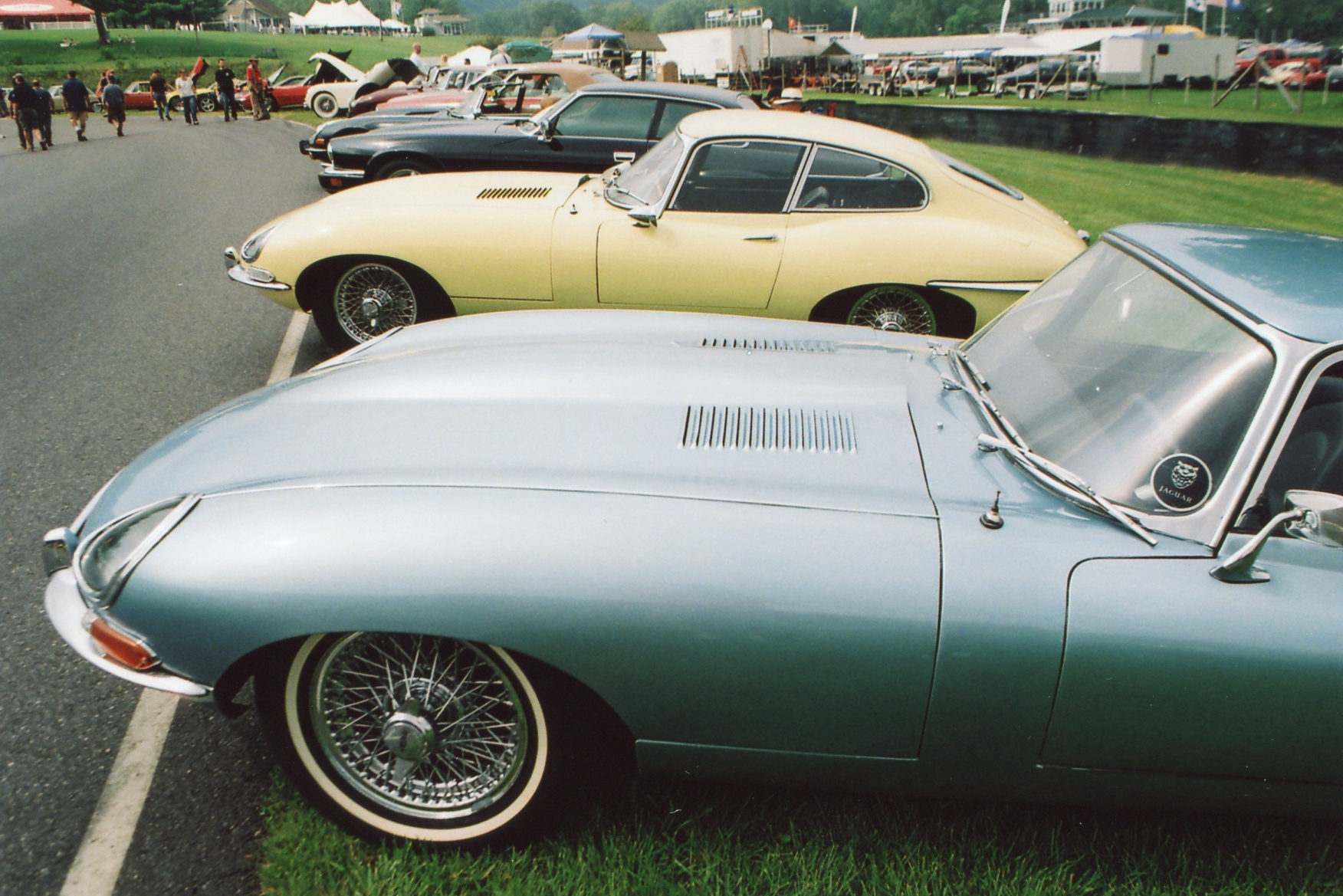
There was a Series 2 Jaguar XKE (E-Type) OTS (Open Two Seater, or roadster) in the car corral. It was in one of my fave Jag color combos: primrose yellow with a black leather interior. I stopped to admire it. It was a ‘driver’: lots of nice things about it, mainly that it appeared unmolested, but it was a #3 condition car (on a scale of 1-to-5), with wear-and-tear here and there. The shock was the asking price of $125k which was way high. This was on Wednesday. On Thursday, the car was still there, I stopped again, and the $125k had been crossed out; the ask was now $100k. I kept walking. On Friday, once again, the Jag and I met. Now the sign indicated a “Friday” price of $75k and THAT was crossed out, replaced with $70k! I didn’t photograph the car, but I memorized the price slide! The car was probably worth $60k-65k based on recent sales. If someone had been looking for such a car, patience might have rewarded them!