Richard’s Rearview Mirror – Auto industry recap, week ending Feb. 25 2023

NJ IS LATEST STATE TRYING TO GO “ALL EV”

New Jersey government officials announced plans to phase out the sale of ICE vehicles, setting a target date of 2035. Governor Phil Murphy signed executive orders which will begin the process for the state to follow the framework as drawn up by California. NJ follows similar moves by Vermont, Oregon, New York, and other states.


FERRARI BUILDS 4-DOOR UTILITY VEHICLE, ENZO SPINS IN GRAVE

The long-awaited Purosangue was revealed by Ferrari last week, and the Italian automaker refuses to call the high-ground-clearance, four-door, hatchback vehicle an “SUV”. Pricing was also announced, with the vehicle starting at $398,000. If you want one and haven’t ordered yet, be prepared to wait. The Purosangue (no, we don’t know how to pronounce it) is sold out for the next two years.


TOYOTA TO BUILD ELECTRIC VEHICLES IN KY BY 2025?

A report from Nikkei Asia claimed that Toyota will begin building mid- and full-sized EV SUVs at its existing Kentucky plant, with production slated to start as early as the summer of 2025, ramping up to an eventual goal of 10,000 such EVs a month. Toyota, one of the world’s largest car companies, has been a leader in hybrids (witness the Prius) but has lagged behind its competitors with pure EVs. A spokesperson for Toyota Motor denied any such announcement and added that the company has not finalized plans for U.S.-based EV production.


2023 DODGE HORNET PRICING ANNOUNCED

Stellantis revealed the price structure for its upcoming Hornet CUV. (The Hornet name, by the way, goes all the way back to the 1951 Hudson Hornet, and was recycled for the 1970-1976 AMC Hornet.) Including a destination charge of $1,595, the least expensive trim level, the GT, will start at $31,590, and the top-of-the-heap R/T Plus will set you back $46,490. The Hornet shares its platform with the Alfa Romeo Tonale; Tonale prices are expected to range several hundred dollars above the Hornet’s. The new Dodge will begin sales this spring.


TESLA SHIFTS GEARS ON BATTERY PRODUCTION LOCATION

The Brandenburg Germany Economy Ministry said that Tesla has changed its mind regarding EV battery production in Germany, and will move production to the U.S. because of more favorable tax incentives, available via the IRA (Inflation Reduction Act). The Reuters article further stated that Tesla has been moving more slowly than expected in ramping up battery production at its existing Fremont, CA and Austin, TX factories.


EU JAN. ’23 SALES RESULTS BY POWERTRAIN: ICE, BEV, HEV, & PHEV

Alphabet soup! First: ICE = internal combustion engine; BEV = battery electric vehicle; HEV = hybrid electric vehicle; PHEV = plug-in hybrid electric vehicle. Looking at passenger car sales for the entire European Union for the month of January 2023, based on drivetrain, ICE vehicles were highest at 37.9%, followed by HEV at 26.0%, diesel (!?!) at 15.9%, BEV at 9.5%, and PHEV at 7.1%.  When we add the 3 “electric” numbers together, the total, 42.6%, outpaces the ICE cars.


STELLANTIS BUILDS BIG EXPENSIVE TRUCKS, MAKES LOTS OF MONEY

Stellantis, the global parent company of American brands Chrysler, Dodge, Ram, and Jeep, reported 2022 pre-tax margins for its North American operations of 16.4%. This is almost twice what Ford reported for North America, and it’s 6% higher than what GM’s North American operations achieved. This result even exceeded Mercedes-Benz’s global pre-tax margins. There is no doubt that Americans’ appetite for large and expensive trucks and SUVs, of which the Stellantis brands sell plenty, helped fuel this result.


RAM REV EV PICKUP ORDER WINDOW: A 5-DAY OPEN-AND-SHUT CASE

It took only five days for Ram to stop taking deposits from customers interested in the new REV EV pickup truck. Ram did not state how many $100 deposits it accepted, nor has any final pricing info been made public. The Ram REV is not scheduled to begin production until late in 2024.


MERCEDES-BENZ IS LATEST CAR MAKER TO INSTALL GOOGLE

Mercedes-Benz announced that it has entered into an agreement with Google whereby Google will power the in-car navigation experience, and will also allow passengers access to YouTube under certain safe circumstances, such as when the vehicle is stationary. The German luxury car maker joins a list of other manufacturers including GM, Renault, and Volvo, all of whom have embedded Google within their vehicles. The trend is being closely watched by other auto brands –  some car makers are “giving up” software oversight and are instead turning to companies seen as having greater expertise, such as Google. Pundits have opined that whoever manages that software will have powerful access to personal data which can be used to marketing advantages.


AN EV YOU NEVER HEARD OF (MAYBE) BEGINS PRODUCTION NEXT MONTH (MAYBE)

Faraday Future (be honest, you’ve heard of them?) announced a production start date of March 30, 2023, for its FF 91 EV. There is one caveat, though, as stated on the company’s website: “… assuming timely receipt of funds from the Company’s investors….”  Their website is accepting preorders with a $1,500 deposit, but also includes the disclaimer that “… you understand and agree that placing this preorder does not guarantee receipt of an FF 91 or a specific delivery date.” If and when something changes, I’ll try to remember the company name post an update.


NEW VEHICLE SALES EXPECTED TO SHOW IMPROVEMENTS THIS MONTH

Early projections are showing that U.S. light-duty vehicle sales for February 2023 will show a 7% improvement compared to February 2022. Analysts attribute some of that improvement to stepped-up production, although the same report acknowledged that supply will still fail to fulfill demand. Rising prices are not scaring away customers, either: the average new-vehicle transaction price is expected to clock in at over $46,000.


VW AND AUDI TALK UP POSSIBLE U.S. PLANT ADDITIONS

A German industry publication reported that VW will build a dedicated U.S. factory for its new Scout brand. VW had earlier announced that it would launch the new brand in 2026. Scout, a takeoff on the old International Scout, would be designed and manufactured in U.S., VW had added at the time.

Meanwhile, Audi’s CEO, Markus Deusmann, said in a recent interview that Audi might consider a U.S. plant, a possibility driven by the financial advantages of the Inflation Reduction Act. The Audi brand, owned by VW, has never manufactured vehicles here, while VW currently has a U.S. factory in TN and opened its first U.S. plant in PA in the 1970s.


IRA LOOPHOLE SAVES NON-U.S. MADE EVs, FOR NOW

Until the final rules for the Inflation Reduction Act are completed, which is expected to happen next month, customers who lease their EVs will be eligible for the Act’s tax incentives. The U.S. Treasury considers a “lease” to be a “commercial transaction”, moving it into the “eligible” column. While it’s not known if or when this will change, the European and Asian makers of EVs who have been arguing for a rules change are breathing a (temporary) sigh of relief.


Rich’s Repair Ramblings #2: Automotive-Specific Tools & Equipment

RICH’S REPAIR RAMBLINGS, ORIGINALLY PUBLISHED SEP. 2019

AUTOMOTIVE-SPECIFIC TOOLS & EQUIPMENT

In the initial installment of this column, found in the Aug. 2019 Road Map, we listed the basic hand tools you should have for maintenance and repair work on your classic car. This month, we’ll add the automotive-specific tools and equipment you’ll need, plus our recommended shop supplies and consumables which should be in any automotive workshop. (Additional car-specific tools will be covered when we feature certain repairs, for example, brake tools for brake work.)

Lifting: Performing the most basic repairs, such as oil changes and front end work, requires lifting the car. So let’s make this point early: YOUR SAFETY, MEANING PREVENTION OF INJURY OR DEATH, DEPENDS ON SAFELY LIFTING A CAR. Never, ever, use the factory jack for anything but changing a tire in an emergency. And never, ever, get under a car supported by just a floor jack, or heavens, by milk crates or cinder blocks.

Get a good floor jack, and one or two pair of jack stands. The floor jack weight rating should equal or exceed the weight of the entire car (for example, use a 2-ton jack to lift a corner of a 4,000-lb. car). Make sure the jack stands are low enough to get under your car, and high enough to raise the car to your desired working height. Use the jack stands every time you raise and work on the car. I have a floor jack and three sets of jack stands (different heights for different cars), plus a set of drive-on ramps, convenient for oil changes since wheel removal isn’t necessary.


3.5 ton jack is overkill for my 2,000 lb Alfa. These jack stands have locking pins for added safety.

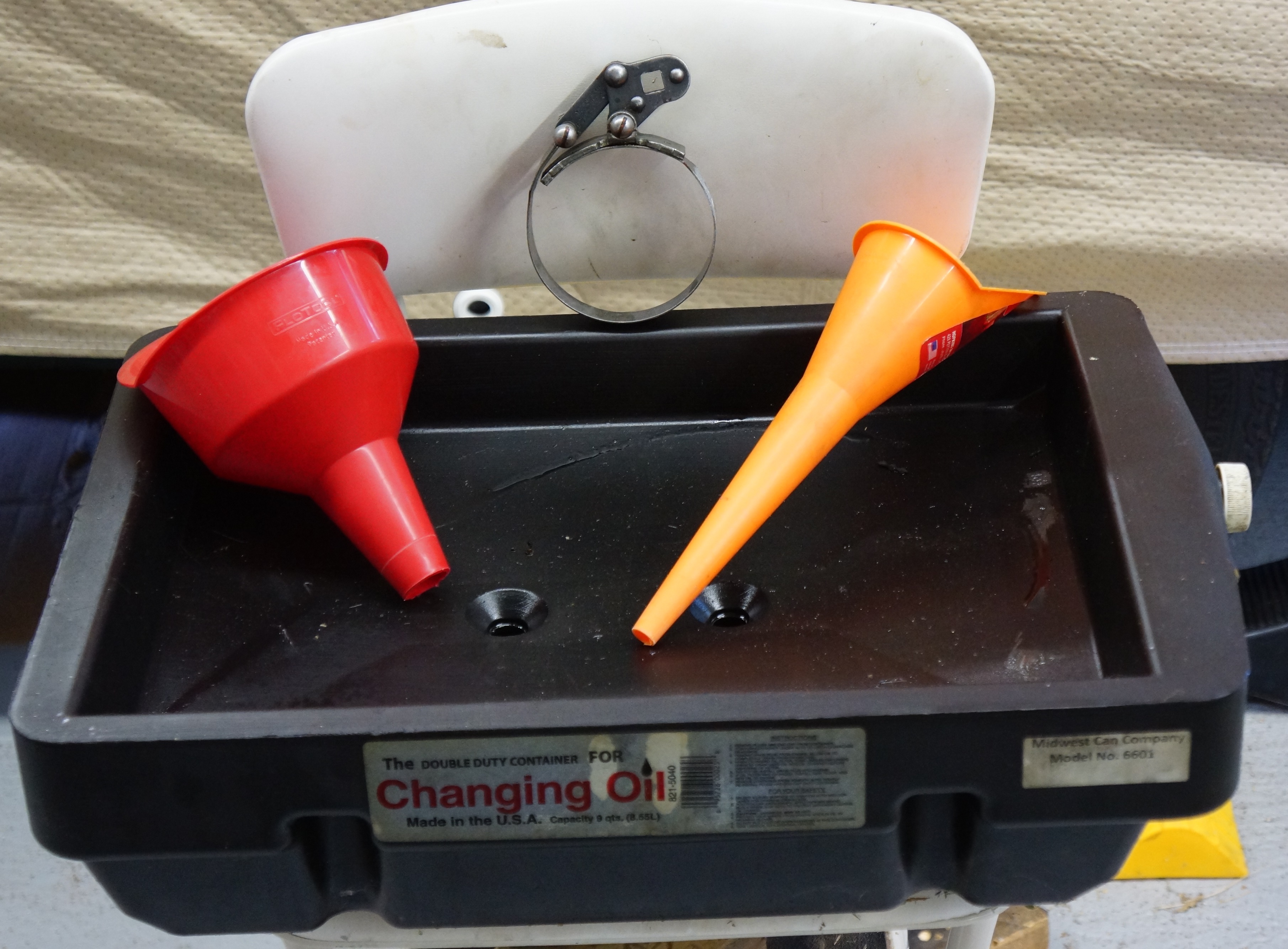
Oil Change: You can do an oil change without these, but a dedicated oil drain bucket (low profile, with at least a 6 qt. capacity), a selection of funnels, and an oil filter wrench that fits your car’s filter will make the job easier and neater.


Drain bucket with two different size funnels. Oil filter wrench takes 3/8” drive ratchet or extension.


Electrical Work: You don’t do electrical work? I’m hoping you will after future columns discuss how easy this can be. For wiring repair, start with a wiring cutting/stripping/crimping tool. Basic circuit checks can be made with a test light, but better still, consider investing in a digital multimeter (DMM). They have dropped in price; I bought mine for under $50. Also handy is a terminal release tool to disengage terminals from multi-plugs.

Back row: test light, DMM, crimping/stripping/cutting tool. Front left: terminal release tool.


Ignition: Our old jalopies use ignition points, condenser, cap, rotor, spark plugs, and plug wires. To do the job right, you need a dwell meter, timing light, and plug gapper. Spark plug sockets are worth it: internal foam protects the ceramic and grips the plug upon removal (there are two sizes, so check whether your plugs are 5/8” or 13/16”). Spark plug wire pliers are nice to have; they help remove stubborn wires.

Back: Timing light, dwell meter; Front: spark plug sockets, plug wire pliers, plug gapper.


SUPPLIES

It’s a major annoyance when I want to start a job on a weekend only to discover that I’m missing some “supply” that requires me to drive back and forth to the store, when it’s a $10 item I really should have on hand. Whether you’re just starting out, or looking to replenish, it’s a best practice to have a variety of supplies and consumables in your storage cabinet.

Chemicals: Here are the “essential seven” that I couldn’t work without:

  • Spray lube: WD-40 is most folks’ go-to lube, handy whenever you need to unstick something. Most of it evaporates, which is usually an advantage. If you need something heavier, white lithium grease in a spray or tube works well.
  • Rust-buster: Sooner or later, you’ll need help loosening a fitting that’s rusted tight. My dad used Liquid Wrench, and so do I, although lately I’ve been fond of B’laster spray. Your local store shelves have lots of choices.
  • Thread locker: Some automotive fittings rely on more than mechanical tightening; they need chemical help too. Thread locker liquid hardens and prevents fasteners from loosening due to vibration. Your vehicle service manual will tell you when it’s required.
  • Glue: Glue fixes objects which are NLA (no longer available), and on our old buggies, there could be many such things. Again, dad was using two-part epoxy back in the 1970s, and I’ve made repairs with it that are still holding 40 years later. Other automotive choices include rubber cement, contact cement, and weatherstrip adhesive.
  • Cleaner/degreaser: Dirty car parts need to be clean upon reassembly. If I don’t want water in the mix, a great all-around product is spray brake cleaner. Be aware that you’ll go through a can in about 5 minutes. If it’s OK to get the part wet, Simple Green works well. Your local hardware store has a variety of grease-cutters.
  • Gasket maker: Gasketing material in a tube is a life-saver when working on old cars. Many gaskets are NLA; even with a gasket, gasket makers can act as an additional sealant. We don’t want leaks! RTV (room temperature vulcanizing) dries semi-hard; I’m partial to the stuff that stays sticky and doesn’t get completely firm.
  • Petroleum jelly/dielectric grease: Great for battery terminals, I use this on electrical connections on my old Italian car to chase away those electrical gremlins. British car owners should buy it by the gallon.


Back: B’laster, brake cleaner, gasket maker, dielectric grease, WD-40; Front: Thread locker, two-part epoxy.


Electrical: A roll of black electrical tape, some 14-gauge black wire (the smaller the number, the thicker the wire), and crimp-on terminals will get you started with electrical repairs.

Electrical tape, black electric wire, and crimp-on terminal assortment


General Shop Supplies: A fire extinguisher, eye protection, and a first-aid kit can literally be lifesavers. Gloves, paper towels, rags, and hand cleaner all help keep the mess at bay.

Hand cleaner, fire extinguisher, and eye & hand protection are shop must-haves


All photographs copyright © 2023 Richard A. Reina. Photos may not be copied or reproduced without express written permission.

Rich’s Repair Ramblings #1: Basic Hand Tools

We are starting a new series with this post, all entitled “Rich’s Repair Ramblings”. What is this about? Way back during the summer of 2019, I was approached by the editor of The Road Map, which is the newsletter for the NJ Region AACA. He asked me if I would author a monthly technical column to be published in our club newsletter. I agreed to take on the task, and I have been writing the articles ever since.

The Road Map is only distributed electronically and is available without charge and without a password requirement. You can find an archive of all The Road Maps back to 2015 at this link here. For multiple reasons, including my desire to give these articles a more permanent home with easier access, I have decided to reprint them here. For the most part, they combine automotive technical history with some basic DIY instructions; keep in mind my need to be somewhat general, as I am addressing owners of vehicles as disparate as Ford Model As, ’57 Chevy Bel Airs, and Hemi Cudas. I plan to add about one article a week; I hope you enjoy them, and let me know of any comments or questions.


RICH’S REPAIR RAMBLINGS, ORIGINALLY PUBLISHED AUGUST 2019

Hello, and welcome to the initial installment of “Rich’s Repair Ramblings”. You may know me as the Region’s Properties Chairperson: the guy who stores and sets up our PA system, tents, and signage. I’ve also dabbled as our unofficial IT assistant, and in that role I’ve traveled to the homes of several members to help with PC and printing issues.

So what qualifies me to write a column about auto repair? What you may not know about me is that I’ve spent almost my entire professional career (41 years and counting) in the automotive business, mostly on the service and technical side. I started as a dealership technician, moved to Service Advisor, and then to Service Manager. After seven years of that, I jumped to the corporate side, spending 23 years employed by Volvo Cars North America, the official importer of those “boxy but safe” cars from Sweden. Since taking early retirement from Volvo, I’ve taught auto technology at a community college, and have spent the past 8 years working for the company that runs the www.CARiD.com website, where we sell aftermarket car parts and accessories.

While all that was going on, I was also fully immersed in the old car hobby. I’ve owned a 1957 Ford Skyliner, 1967 Dodge Dart GT convertible, 1972 MGB, and 1968 Ford Mustang California Special. My proudest achievement was completing a full restoration on a 1957 BMW Isetta. All of these collector cars had most of their maintenance and repair work done by yours truly, right in my own garage.

Between wrenching for a living and performing restorations as a hobby, I’ve collected quite an accumulation of tools. Let’s start our ramblings on that topic. Presuming that you either want to learn how to work on your own classic cars, or that you want to improve your skill level, you need tools. Most folks have a few screwdrivers, hammers, pliers, and maybe a drill with a bunch of drill bits, along with an adjustable wrench. That might help you fix a loose doorknob or stuck window inside your house, but you’ll need a little more if you want to perform your own fixes on that ’62 Corvette or ’72 Triumph.

Having said that: you do NOT need to own one of every tool you see in Home Depot (or in that Harbor Freight catalog). For basic automotive repair, let’s outline the minimum necessary tools, all of them common and readily available.

Screwdrivers: Most everyone has “flat” screwdrivers, for slotted screw heads. You will want a good assortment of thin and thick tips, and short and long shanks (shafts). Phillips-head (cross-head) fittings are much more common on cars. Phillips-head sizes are noted by number, from small to large: #1, #2, #3. The #2 is the most common, so have a variety of those, including a “stubby” (the first time you need the stubby you’ll thank me). For now, I would hold off on the other sizes.

Phillips screwdrivers top to bottom: #2 stubby, #1, #2, and #3

Wrenches and sockets: If your collector cars are American, you’ll need SAE (inch) sizes; most imported cars use metric-sizes. It’s a rookie mistake to own SAE tools and expect them to work on metric fittings, or vice-versa. Always use the correct size, or risk doing damage to the fitting. Here’s what you’ll need:

  • Wrenches: Basic wrenches, whether SAE or metric, are either “box-end” (enclosed) or “open-end”. Box-end are stronger, but can only be used if the box end can slip over the fitting. Open-end are more versatile, but not as strong. My own preference is the combination wrench: box on one end, open on the other, both ends the same size.


My metric wrench collection, arranged (mostly) in size order
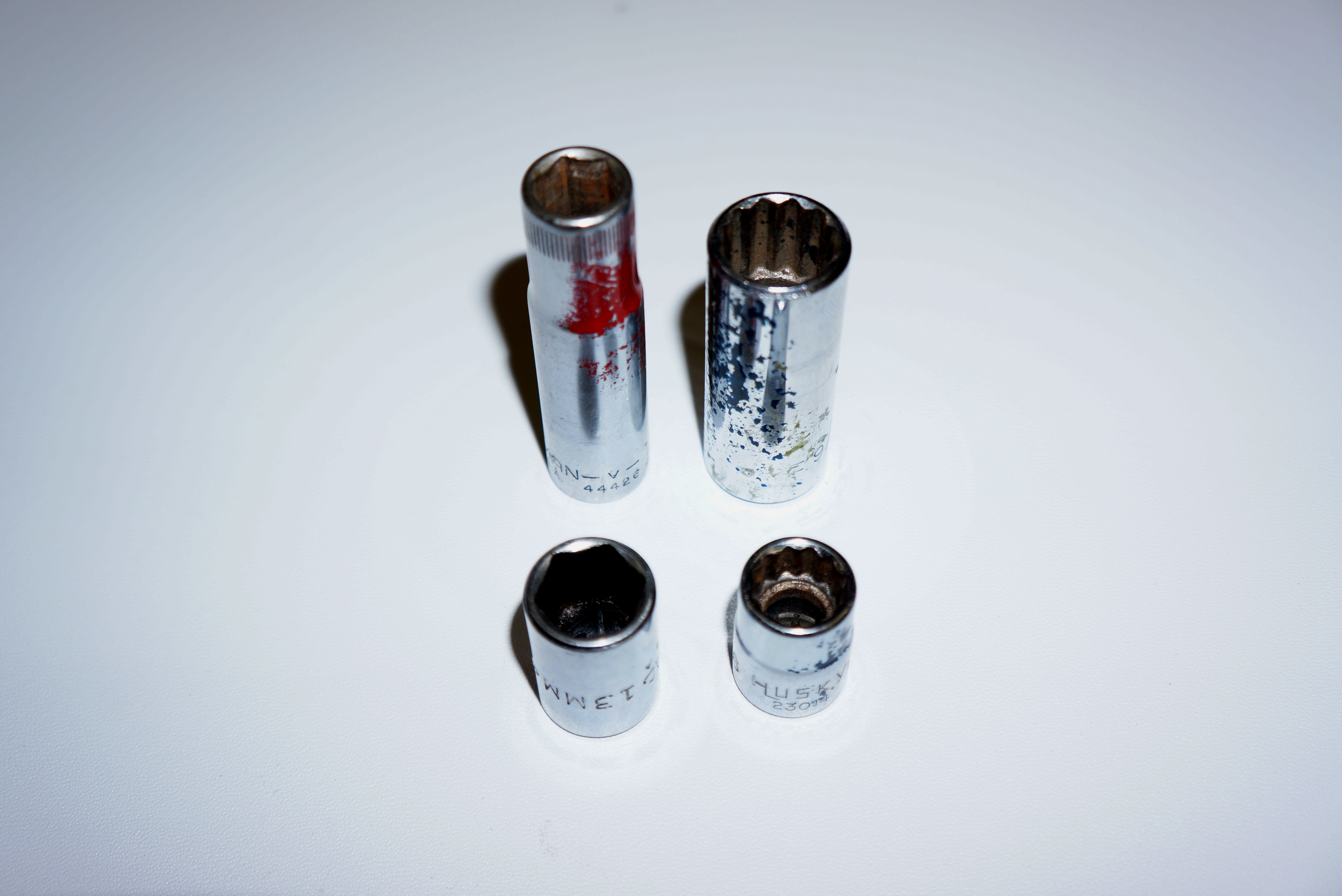
  • Sockets: Sockets are attached to a ratchet wrench (more about that shortly). Aside from the nut or bolt size, the square end that snaps onto a ratchet wrench is either ¼”, 3/8”, or ½”. For starting out, stick with the 3/8”. You can add the others later. Sockets are also described as either “6-point” or “12-point”, which refers to the number of edges (points) which fit around the nut or bolt. The 12-points allow you more finesse if making very small turns with a ratchet, but the higher strength of the 6-point sockets make them the preferred choice for automotive work. Finally, there’s “regular” depth and “deep” sockets. Deep sockets give you access to recessed fittings, and are good to have.
Top row: deep sockets, 6-point (L) and 12-point (R). Bottom row: regular sockets, 6-point (L) and 12-point (R)
  • Your starter set should consist of 6-point sockets, 3/8” drive, in both regular and deep sizes. The SAE range should be 3/8” to 1”; the metric range should be 8mm to 24mm.


  • Ratchet wrenches: The drive end is on a ratchet, which allows you to swing the handle in an arc as small as 25 or 30 degrees and rotate the socket. The ratchet also makes quick work of running a fastener on or off. A lever in the head allows you to reverse the ratchet direction between clockwise (tighten) and counter-clockwise (loosen). Get two or three handle lengths in 3/8” drive to match your sockets. The shorter handles are handy in tight quarters. The longer handles give you leverage for stuck fittings.
Ratchet wrenches and corresponding sockets, L to R: 1/4″, 3/8″, 1/2″


  • Extension bars: these fit between the socket and ratchet to give you extra reach. Get several in various lengths; you’ll need them. Be sure the size matches your ratchet and sockets.


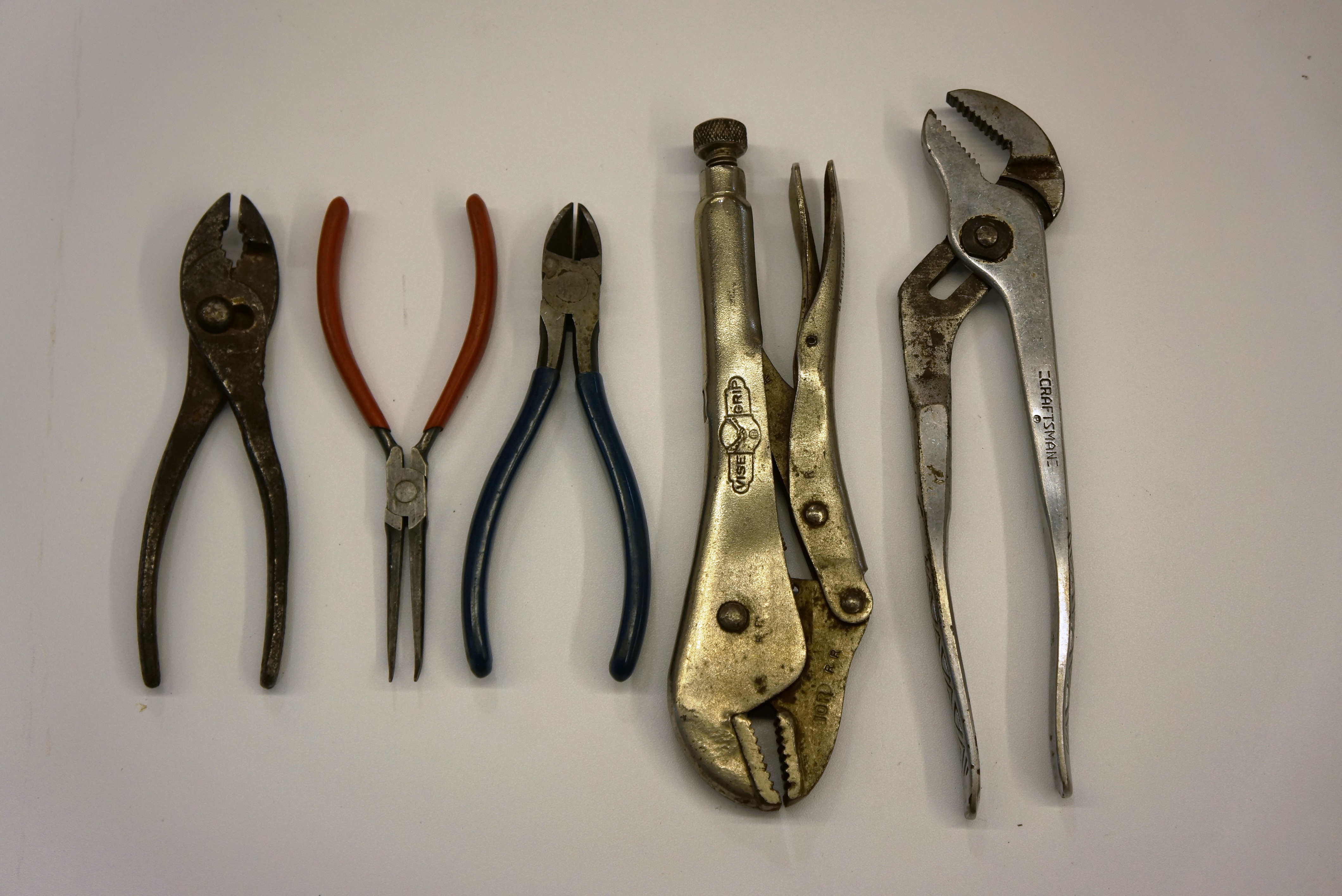
Pliers are necessary, but for starters, three or four will do. Besides the standard pair of pliers, get a pair of needle-nose, slip-joint (adjustable opening size), and locking pliers (known by the Vice-Grip brand name).

Pliers (L to R): regular, needle nose, diagonal cutters, locking, and slip-joint

Hammers should include ball-peen (rounded end) and plastic or rubber headed mallets, which deliver blows without marking or denting the surface.

If you’re building a tool collection from scratch, the above list covers over 80% of what you should have on hand for common tools. When shopping, you can look for “mechanic’s starter kits” but be wary of kits which contain tools you may never use. It might cost a bit more, but purchasing a la carte will guarantee that you get what’s on your list, and nothing more. My final comment about tools: quality tools are worth it. It’s a sad waste of money to buy a cheap tool that breaks the second time you use it. You don’t need to buy from Snap-On; Craftsman, Matco, NAPA are good and even some of the big-box brands are not bad. Avoid the “no-name” stuff that’s priced too good to be true, because it is.


All photographs copyright © 2023 Richard A. Reina. Photos may not be copied or reproduced without express written permission.


Richard’s Rearview Mirror – Auto industry recap, week ending Feb. 18 2023

This week is the start of something new at Richard’s Car Blog: the introduction of a weekly “Rearview Mirror” column focusing on the auto industry. Gathering news items of interest from various sources, the post will provide a succinct summary of the week’s highlights. Whether the reader is an industry veteran, is interested in the car business, or wants to know about the latest trends, my new weekly report provides a quick and easy way to digest the week’s happenings. Future Rearview Mirror columns may expand to include collector cars. Stay tuned as we take this new approach for a ride!


CHRYSLER SAYS GOODBYE TO THE 300

Autoblog posted an interview held with Chrysler’s CEO, Christine Fuell, during which she acknowledged that the 300 sedan, launched in 2005, will go out of production later this year. At that point, the solitary vehicle in Chrysler showrooms will be the Pacifica minivan, and that won’t change until 2025, when the first in what she states will be a series of new EVs will launch. She further stated that some of these EVs will be in market segments new to the brand.


A SUBARU WITH IN INLINE 4?

Subaru, a brand which has been slow to embrace electrification, announced that a hybrid Forester should hit the market within the next year. Subaru shares some technology with Toyota (the Subaru BRZ/Toyota 86 twins and the Toyota bZ4X/Subaru Solterra EVs), so it’s no surprise to read that this upcoming hybrid might share its drivetrain with the Toyota RAV4 Prime. If true, that will plant an inline-4 cylinder ICE in the Forester, and by my reckoning, it would be the first Subie since the 360 with an engine that is NOT horizontally-opposed.


HAVE A HYUNDAI? GET A FREE STEERING WHEEL LOCK

Thefts of Hyundais and Kias have been way up, after a video was posted online showing how easy it was to steal the cars. It turned out that the affected vehicles did NOT have a transponder chip in the ignition key (and it was news to me that this was not a Federally-mandated requirement). The problem got so bad that a few insurance companies refused to insure the cars. Hyundai announced this week that they are launching a free software upgrade to remedy the issue. A total of 8.3 million Hyundais and Kias are affected. One hiccup: the new software works on most, but not all of the affected cars. Until that is rectified, Hyundai will reimburse owners who purchase a steering wheel lock. No word yet if a video has been released showing how to remove one.


NOT SO FAST, VINFAST

VinFast is the Vietnamese EV manufacturer with big plans to sell their cars in the U.S. market. (Photos of Vinfast’s EV lineup at the 2022 NY Auto Show can be found at my blog post here.) The initial shipment of cars has arrived, and they were due to begin sales in late 2022, but the launch has been delayed numerous times. The company is blaming the latest delay on a change in the posted driving range, which must be certified by the U.S. EPA. The company also cut their U.S. staff headcount by about 80. Vinfast claims to have a number of deposits from U.S. customers, but there is still no word as to when the vehicles will go on sale.


NEW FORD EV BATTERY PLANT COMING

The Ford Motor Company announced that they will build an EV battery plant in Michigan, investing $3.5 billion and creating 2,500 jobs in the process. The plant will be operated in conjunction with Ford’s Chinese partner CATL, and Ford was quick to point out that they, Ford, will have 100% ownership, but use CATL’s technology and equipment within the plant. One goal is to find ways to reduce battery costs which will of course also reduce the price of EVs.


IS THAT A MACH-E IN A TESLA SUPERCHARGER SPOT?

Tesla, which might be almost as famous for its nationwide network of superchargers as it is for its outspoken CEO tremendous EV sales, reached an agreement with the Federal Government to open that network to EVs other than Teslas. The plan is that by the end of 2024, about 3,500 highway-based superchargers, plus an additional 4,000 slower chargers found at non-highway locations, will be able to be used by drivers of non-Tesla EVs. Tesla in turn will become eligible for some of that $7.5 billion which the Feds have earmarked to build up the EV infrastructure in this country. Those funds are there thanks to the IRA (Inflation Reduction Act).


NEW TESLA MODEL 3 COMING?

Tesla’s China factory will temporarily halt production of the Model 3 while certain vehicle upgrades are made. Tesla has been mum as to how extensive these upgrades might be, and whether they will include any exterior styling changes. The factory is expected to reopen by the end of February.


FORD FORCED TO STOP LIGHTNING

Ford this week issued a combined “stop-build” and “stop-ship” order for the F-150 Lightning EV pickup trucks while a potential battery issue is investigated. The batteries are sourced from South Korean manufacturer SK On. The order did not include a “stop sale”, so it does not affect any vehicles already at Ford dealerships. Ford is trying to ramp up production to meet what continues to be strong demand for its EV pickup. The company has not stated when Lightning production might resume.


WILL A FRENCH CAR AGAIN BE AVAILABLE IN THE U.S.?

The French car company Renault is reportedly in discussions with U.S. retail giant AutoNation to import Renault/Alpine sports cars. Renault has a long history with the Alpine name, and it was a storied model for them for many decades. Recently, Alpine was relaunched in Europe as its own brand, and the company wants to expand its availability. Renault acknowledged that given its long absence from the U.S. market, any such attempt will not be easy, but AutoNation, with 300 retail locations nationwide, could be one shortcut to putting French cars in front of Americans again.

Quick side story: to the best of my knowledge, Renault Alpine cars were never officially sold here. If they were, it would have been in extremely limited quantities. One of the few times I ever laid eyes on an Alpine in the metal was around 1979, when I worked at Autosport. The dealer has just signed up to take on the DeLorean franchise, and since no DeLoreans existed yet, the company sent a Renault Alpine to the dealer instead. Huh? Well, the Alpine had a few things in common with John Z’s upcoming dream: two seats, a rear engine, and power from Volvo’s PRV (Peugeot/Renault/Volvo) V-6. How I desperately wanted to drive that Alpine, but of course, was not given permission.


VW’S ID EV BORROWS BACK A FAMILIAR NAME

Volkswagen’s automotive EV lineup has featured model names all beginning with ID, as in ID.4 and ID.Buzz. One upcoming vehicle, the ID.2, is going through some changes before launch. The company, recognizing the legacy value in its iconic Golf name, has renamed the car the ID.Golf. Further, the ID.2’s futuristic styling has been completely canned. The refreshed styling comes courtesy of Andreas Mindt, the new styling chief. It’s been said that the revamp gives the ID.Golf an appearance evocative of previous generation Golfs.


STICKER SHOCK RELIEF FINALLY COMING?

Kelly Blue Book, which keeps track of these things, reported that new vehicle prices in the U.S. dropped ever so slightly from December 2022 to January 2023. While 0.6% does not sound like a lot, at an average transaction price of $50,000, that amounts to a $300 savings. Of greater interest to consumers weary of shady dealer practices, the average ADM (Additional Dealer Markup) dropped to ‘only’ $310 compared to $900 in January 2022.


TESLA RECALLS CARS FOR FSD FIX

The NHTSA pushed Tesla into recalling 362,000 vehicles in order to modify their FSD (Full Self Driving) software. Tesla did get NHTSA to agree to allow this to be done via an OTA (over the air) update, avoiding the necessity of owners driving to Tesla service centers. NHTSA required the recall after concluding that the FSD mode did not always obey posted speed limits, and did not always correctly slow or stop at intersections.

AACA Hershey Meet, 2006

My 2006 visit to the AACA Fall Eastern Meet, better known as “Hershey”, was likely the 5th consecutive year I attended. Before that, most of my trips to eastern PA car shows were to Carlisle. However, Hershey’s focus on original cars which were 25 years and older was becoming a more attractive proposition to me.

Hershey has had a long history with mud. Ask any oldtimer, and they can regale you with stories of mud up to the knees, and classic cars buried in mud up to their axles. While more and more of the field area was gradually becoming paved, in 2006, not all of it was on asphalt yet. One photo in particular documents what appear to be Car Corral vehicles parked across the street from Hershey Park, on the lawn in front of the Hotel Hershey. There’s lots of sunshine as well so the infamous and soon to be gone Hershey mud was not a factor that year.

Ever since my rally brother Steve and I discovered it in the late 1990s, the spectacle of witnessing the Saturday morning parade of show cars has been a must-see part of the Hershey visit. Several of these photos capture that parade, as disorganized as it may appear! Take a note of all the spectators alongside the cars, enjoying the same sights as I was.

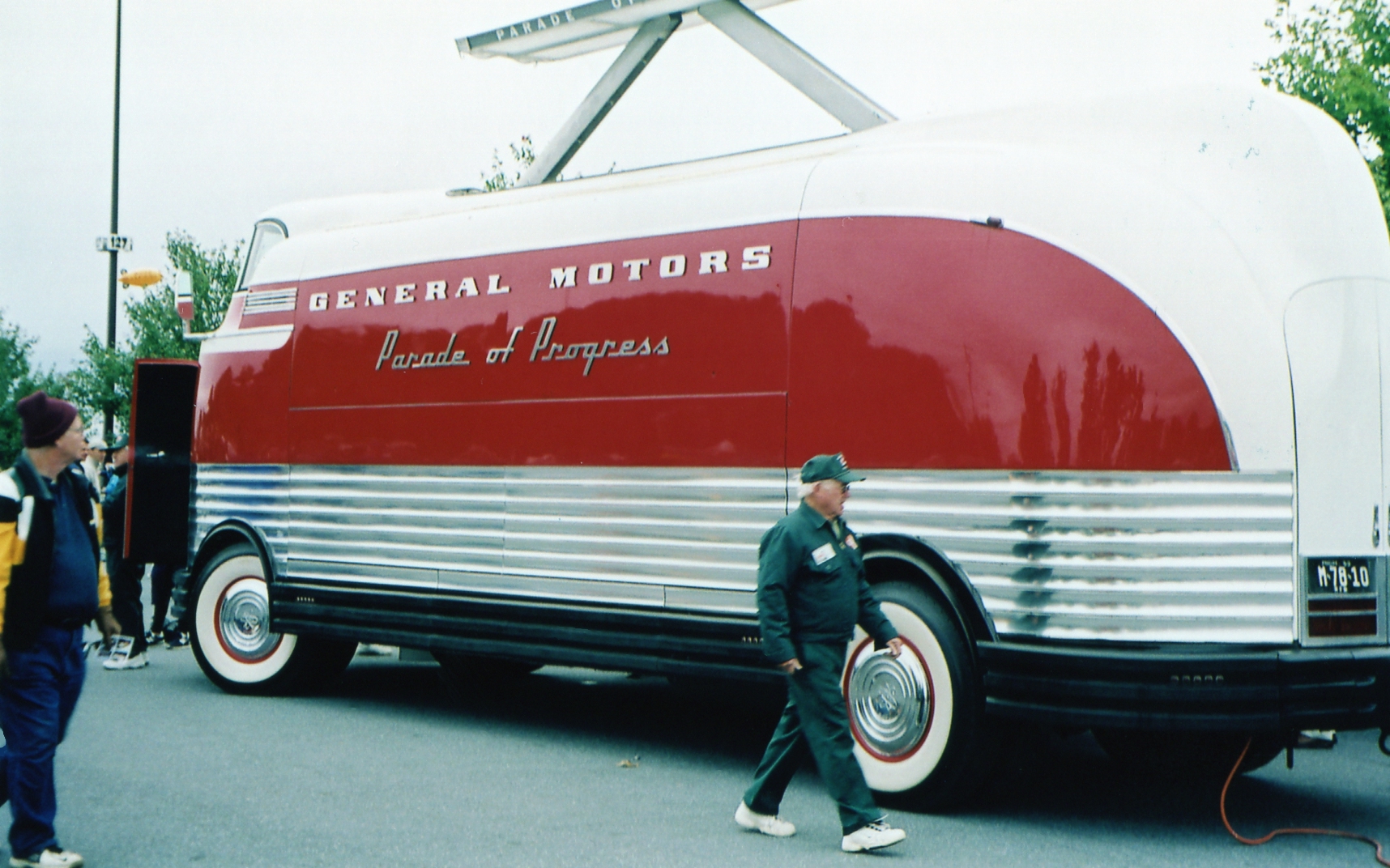
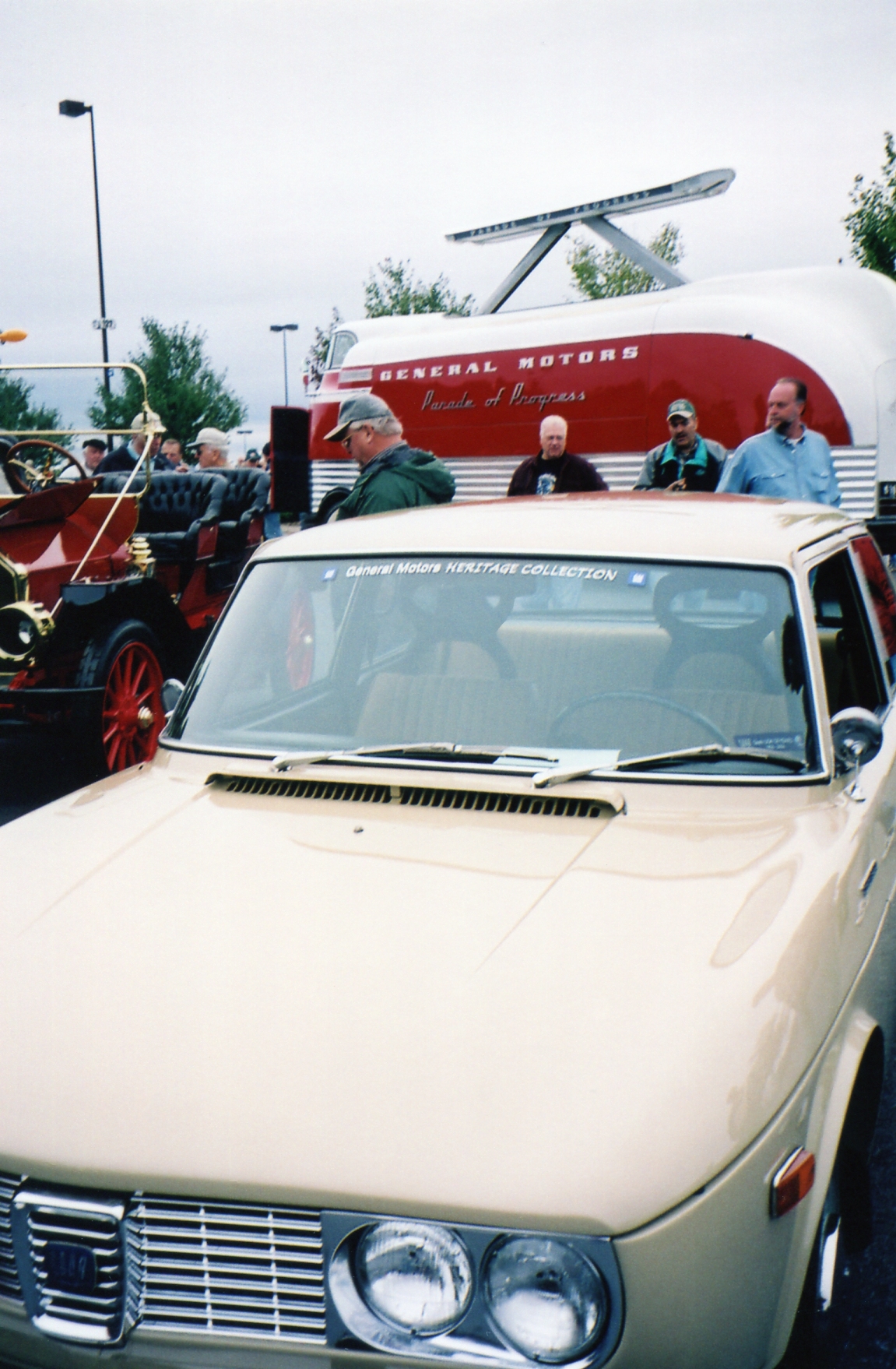
The big surprise of 2006 was the special display trucked in by General Motors. They dipped into their “GM Heritage Vehicle Collection” and brought a number of cars and trucks which were set up in a special area near the Giant Center. The most outstanding of them, in several ways, was the GM Futurliner. I had been reading articles about these massive vehicles for years. In January of 2006, a Futurliner sold at a Barrett-Jackson auction for $4 million. More shocking to me was their size, something difficult to capture in photographs. It makes me wonder how GM was able to move it; but of course, being GM, they have all kinds of vehicles and equipment at their disposal. And if you’re asking yourself “why is there a Saab near the Futurliner?”, it is because GM had purchased Saab and included several of the Swedish brand’s models in its display. A stretch? I thought so then, and still think so now.


The Car Corral drew a nice crowd of tire-kickers
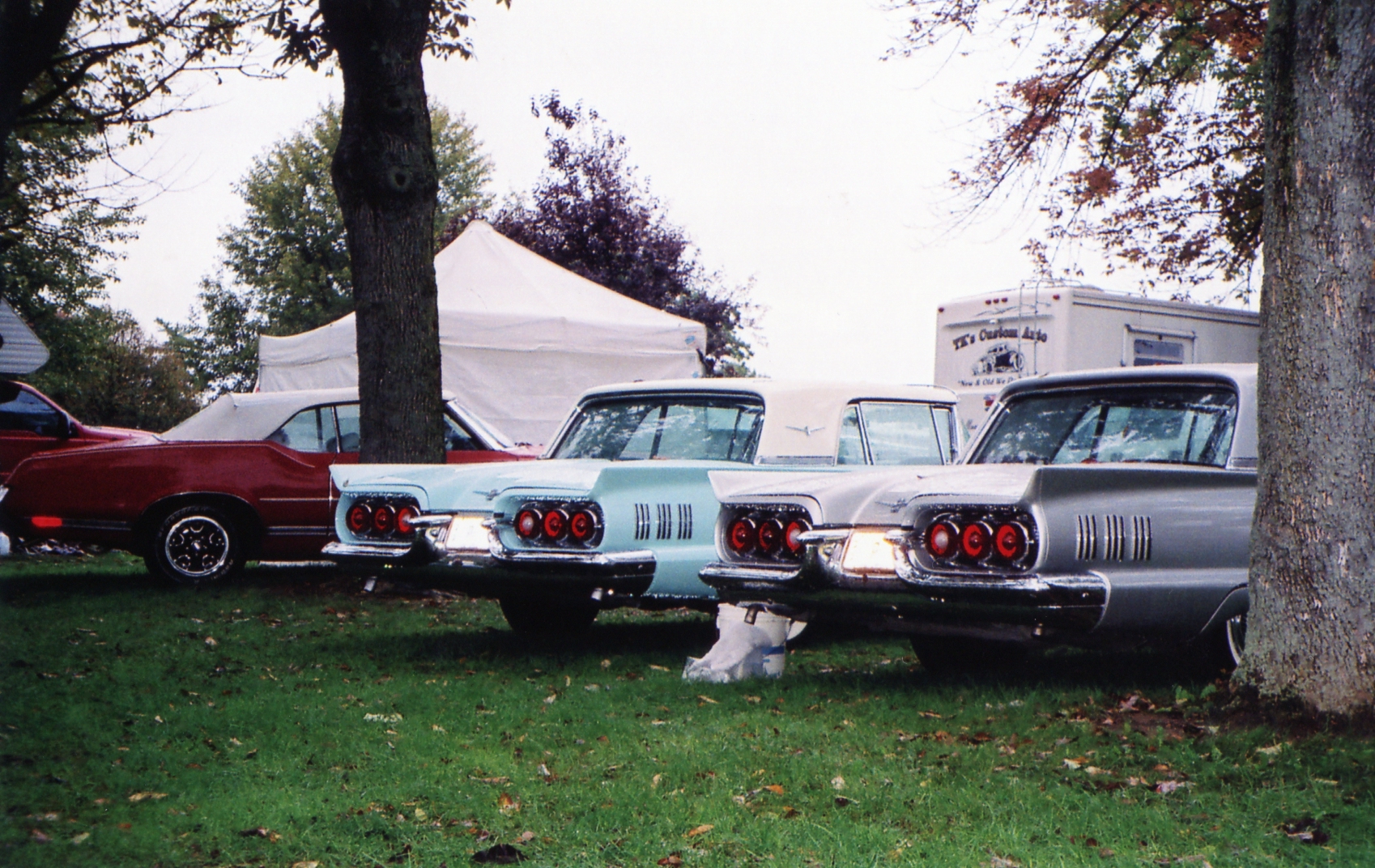
A couple of Ford “Squarebirds”, aka 2nd gen T-Birds, sit side-by-side


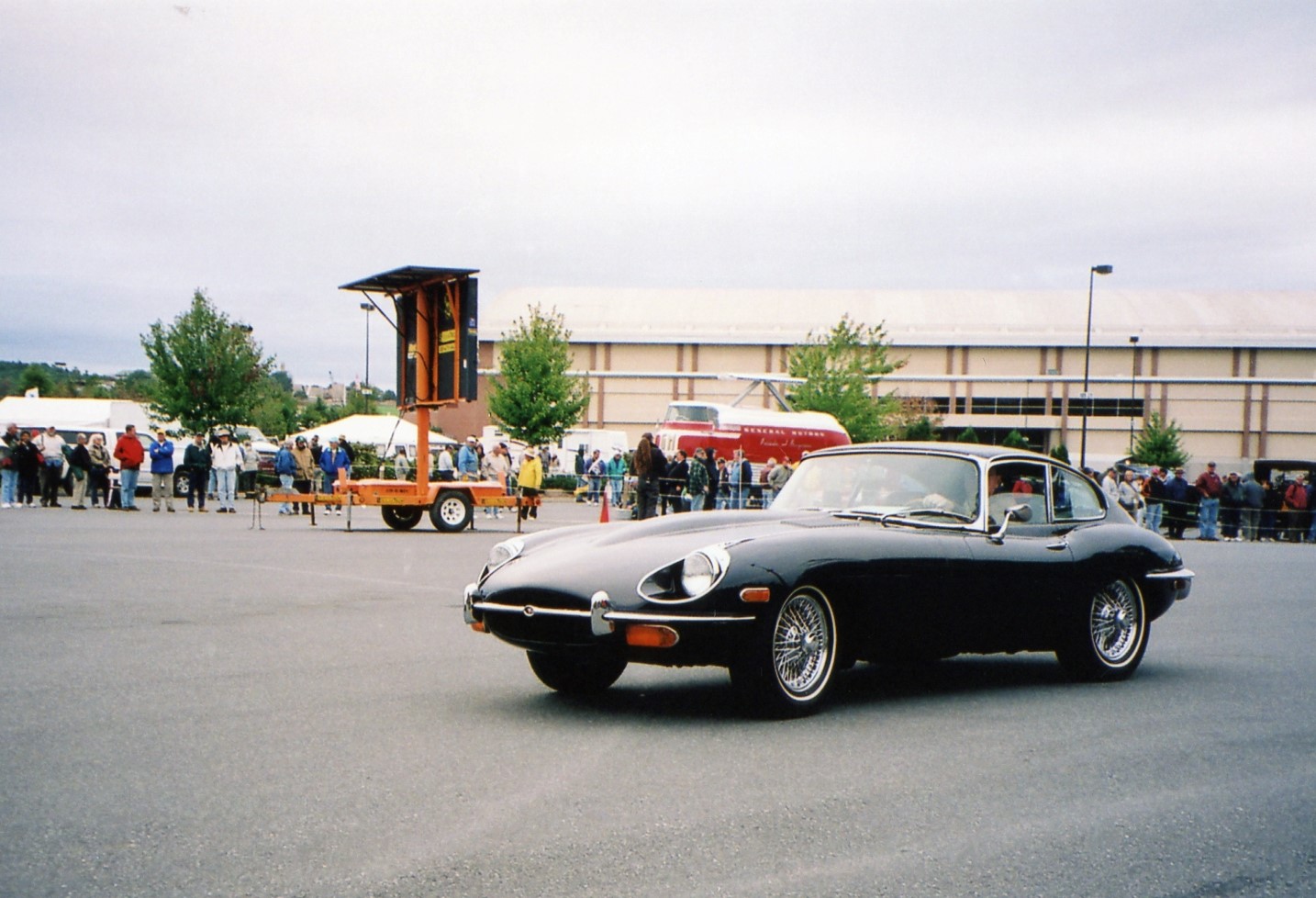
A Jaguar E-Type heads toward the show field – Note the Futurliner in the background


A bullet-nose Studebaker


A 1968 Ford Mustang California Special, similar to the one I owned


The VW Bug can be seen between the Cadillac and Buick


Orphans: the green Studebaker Lark and the red AMC Marlin


The GM Futurliner; the man by the rear wheel gives some sense of scale


GM decided they had the right to include Saab in their Heritage Display – note the windshield decal


All photographs copyright © 2023 Richard A. Reina. Photos may not be copied or reproduced without express written permission.


The 2012 AACA NJ Region Annual Car Show

In 2012, the NJ Region of the Antique Automobile Club of America (AACA) held its 59th annual car show on its traditional date, the first Sunday in May. The show was held in the parking lot of the Automatic Switch Company in Florham Park, NJ. The Region had been using this location as far back as anyone could remember, possibly since the 1960s. However, just a few years after these shots were taken, the Automatic Switch lot was no longer available and the Region was forced to find a new locale.

These photographs were taken with a film camera, and since I don’t have any record of digital pictures from this event, the ones below are the only photos I have of the show (see sidebar if you’re interested in details about the camera and film used).

At its peak, the NJ Region’s annual show was known to attract between 250 and 300 automobiles. Without knowing the time of day my photos were snapped, don’t be too judgmental about the ‘gaps’ in the parking lot. It may well be that I took my photos in the morning as cars were still arriving. Since I was in charge of setting up and running the PA system for the club at these shows, I had work to do and did not have the luxury of wandering the show field all day.

As the scanned photos are smaller than the digital photos you’re used to seeing here, you many find it especially helpful to click on each photo, then click on it again to enlarge it to fill your screen.


From this vantage point, we can see mainly cars from the 1960s and ’70s.


I don’t exactly recall the point of the doodled-up truck, but it may have served as an attraction for any children in attendance.


This out-of-focus shot features what look like Ford Model A’s.


1967 Buick Wildcat convertible


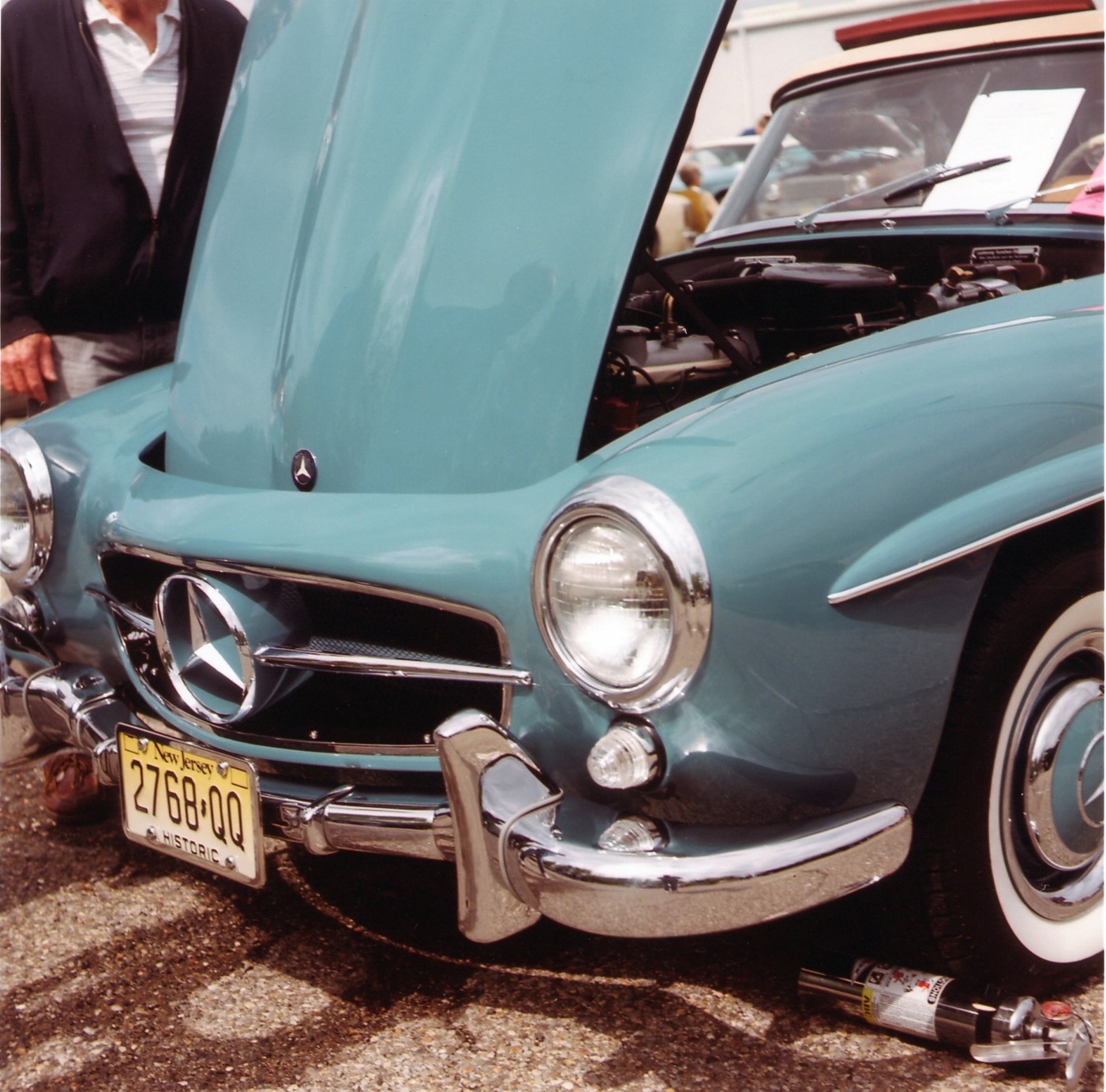
Mercedes-Benz 190 SL roadster


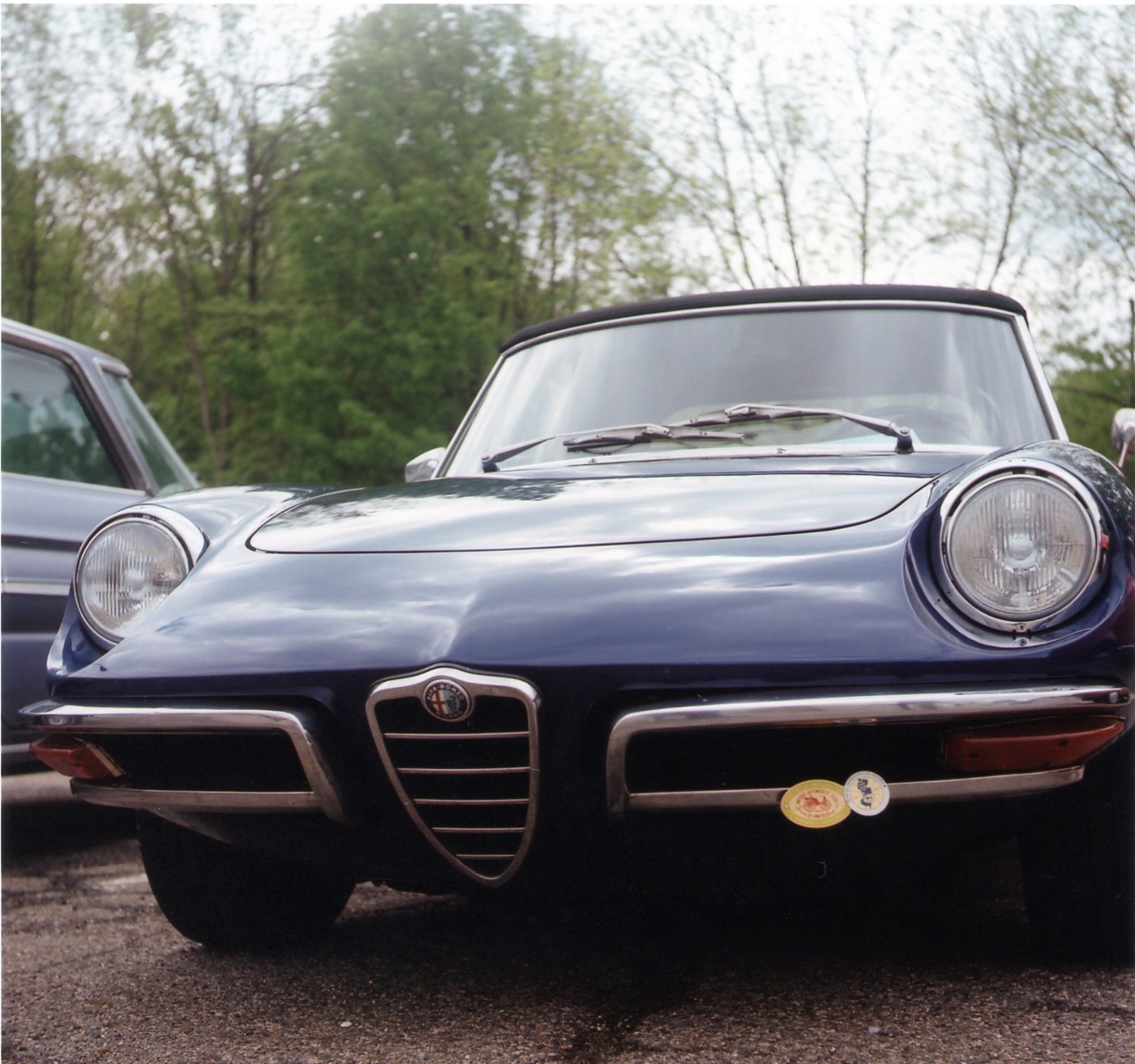
Alfa Romeo 1750 Spider


Detail of 1958 Mercury tail light


Detail of wood on a Chrysler Town & Country


Jump seats in what I recall was a stretched-wheelbase early ’50s Chrysler


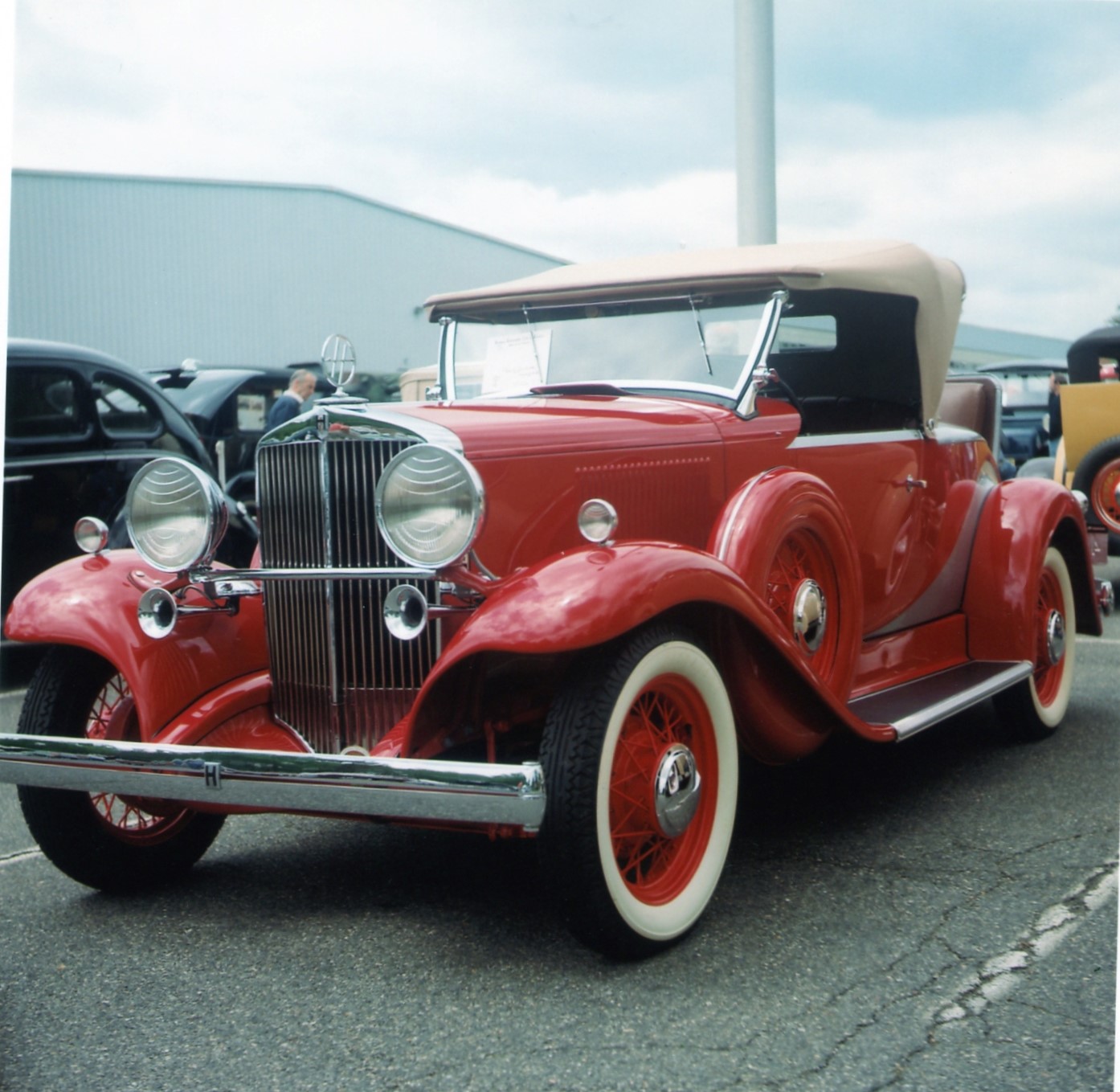
Huppmobile (note the “H” on radiator shell and as hood ornament), early ’30s?


My friend Ron with his 1936 Packard convertible


The trophy table, awaiting the announcement of the day’s winners


SIDEBAR: The Ciro-flex 120 film camera and Kodak VC160 film

I’ve been collecting film cameras for about 15 years, and I actually take pictures with the ones in my possession. This Ciro-flex camera, made in Delaware, Ohio, is the only non-Kodak U.S.-made camera I own, and luckily, it takes the readily-available 120 film size, rather than the 620 film that Kodak forced consumers to use (Kodak made out because they were the ones producing the 620 film).

I bought the camera at the Rose Bowl flea market in California, I think in 2009, and paid $25 for it. It’s a dual-lens reflex camera. The top opens, and one gazes into a ground glass while holding the camera at about waist level. It can be manually focused, and both the aperture and shutter speed are adjustable. The focal length is set at 85 mm.

For these shots, I used Kodak’s VC160 film. “VC” stands for “vivid color” (as opposed to “NC” film, or “neutral color”). It’s a bright film, and while I’ve read that some photographers find the colors to be over-saturated, I like the look. The 160 in the film name refers to the film speed. When I was shooting 35mm almost exclusively, most film I used was either 100 or 200 speed, so the 160 is almost exactly in between.

Focusing the Ciro-flex is tricky. The ground glass is hazy, and you get a clear image in it only in the brightest lights. As you can see, the focus is better in some photos than in others. In a perfect world, I’d use the camera often enough to become more accustomed to it, when in fact I use this one sporadically. Overall, though, I greatly enjoy shooting with film, because it forces me to slow down the process, think before pushing the shutter button, and delivers photos with that old-world quality look which I just don’t get from digital.


All photographs copyright © 2023 Richard A. Reina. Photos may not be copied or reproduced without express written permission.

The Volvo 480ES: The Rest of the Story

Today, the online auction website Bring a Trailer (BaT) sold a 1995 Volvo 480 Turbo for $15,250. If you’ve never heard of the Volvo 480, you’re not alone. Even I was surprised by the number of usually knowledgeable BaT commenters who posted sentiments along the lines of “I never heard of this model!”

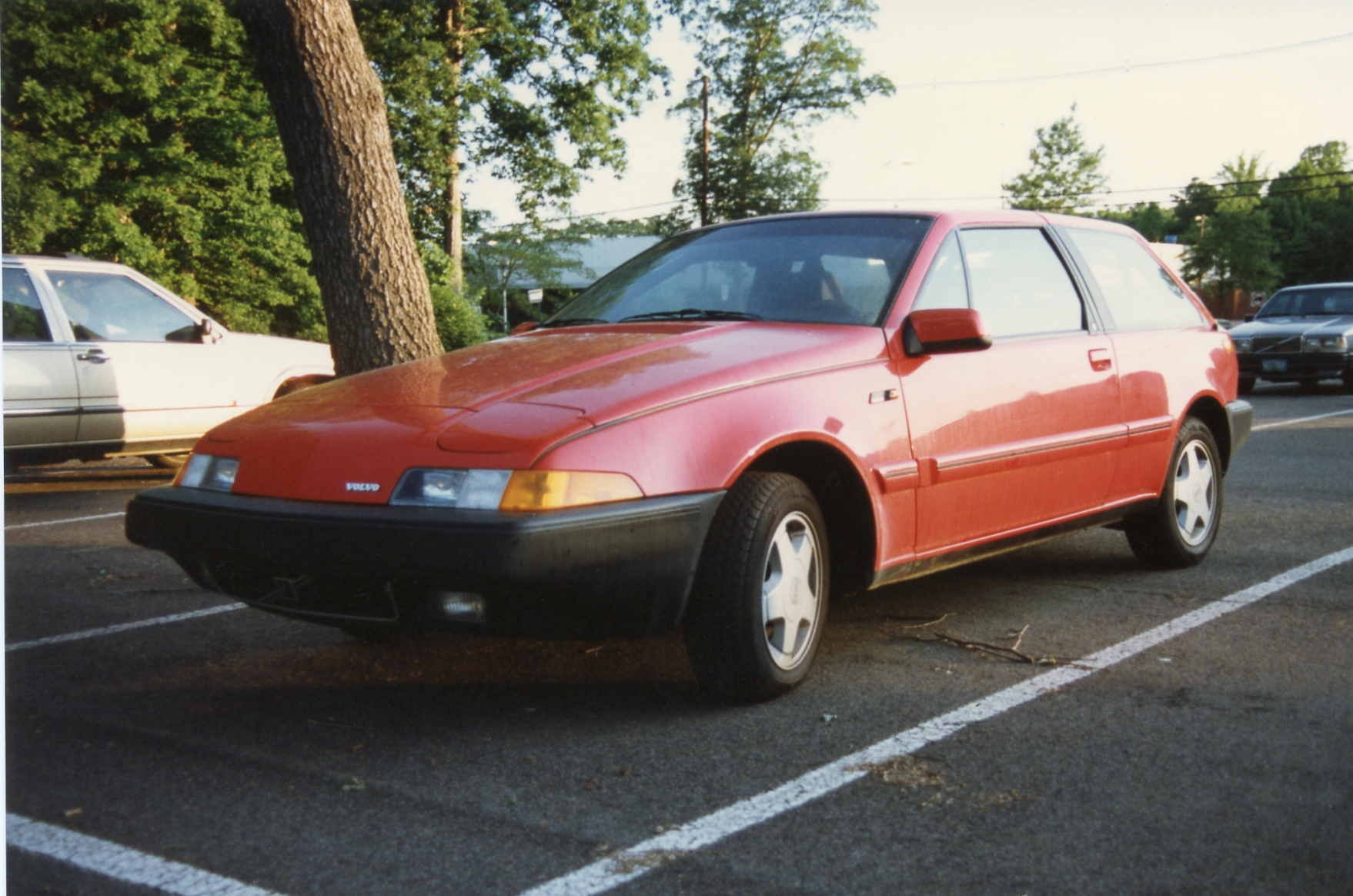
A few days ago, I posted a photograph of a Volvo 480ES which I had taken in the parking lot of Volvo Corporate Headquarters in NJ, sometime in early 1987. I added a comment of my own at that auction, and posted a link to the photo, promising that I would flesh out the story, as I have below.

I started working at VCNA (Volvo Cars North America) in October of 1986. My recollection is that I spotted a Volvo 480 in and around the corporate industrial park within my first few weeks. I also recall meeting Bob Austin, head of the Public Relations Department for the company, around the same time, and his ‘company car’ was a 480ES! It may have been the only one the company had, or they may have been others, of that I’m not sure. But it was well-understood among the employees that VCNA intended to begin importation of this Dutch-built car, planning on a 1987 launch. Volvo dealers had been clamoring for a less-expensive model, and management thought that this new 480 could be it. In 1986, VCNA was selling 240- and 740-series models, carrying MSRPs between $15,000 and $21,000. (The 760 models were more expensive still.) The 480 would need to slide in under that to make sense.

Not only was the 480 Volvo’s first FWD car; if imported, it would become the first U.S. Volvo brought in from Volvo BV, based in Holland. The factory was co-owned: 30% Volvo, 70% the Dutch government. As an insider, I sensed that there were some concerns: Would it be perceived as a “true” Volvo? Would it be up to the same quality standards as the existing U.S. models? Would the new FWD technology be embraced? (Some of the company’s marketing in the 1980s bragged about our RWD powertrain.) And perhaps most importantly, could it be priced below the 240s, but also at a number which would make it competitive against other like-sized models?

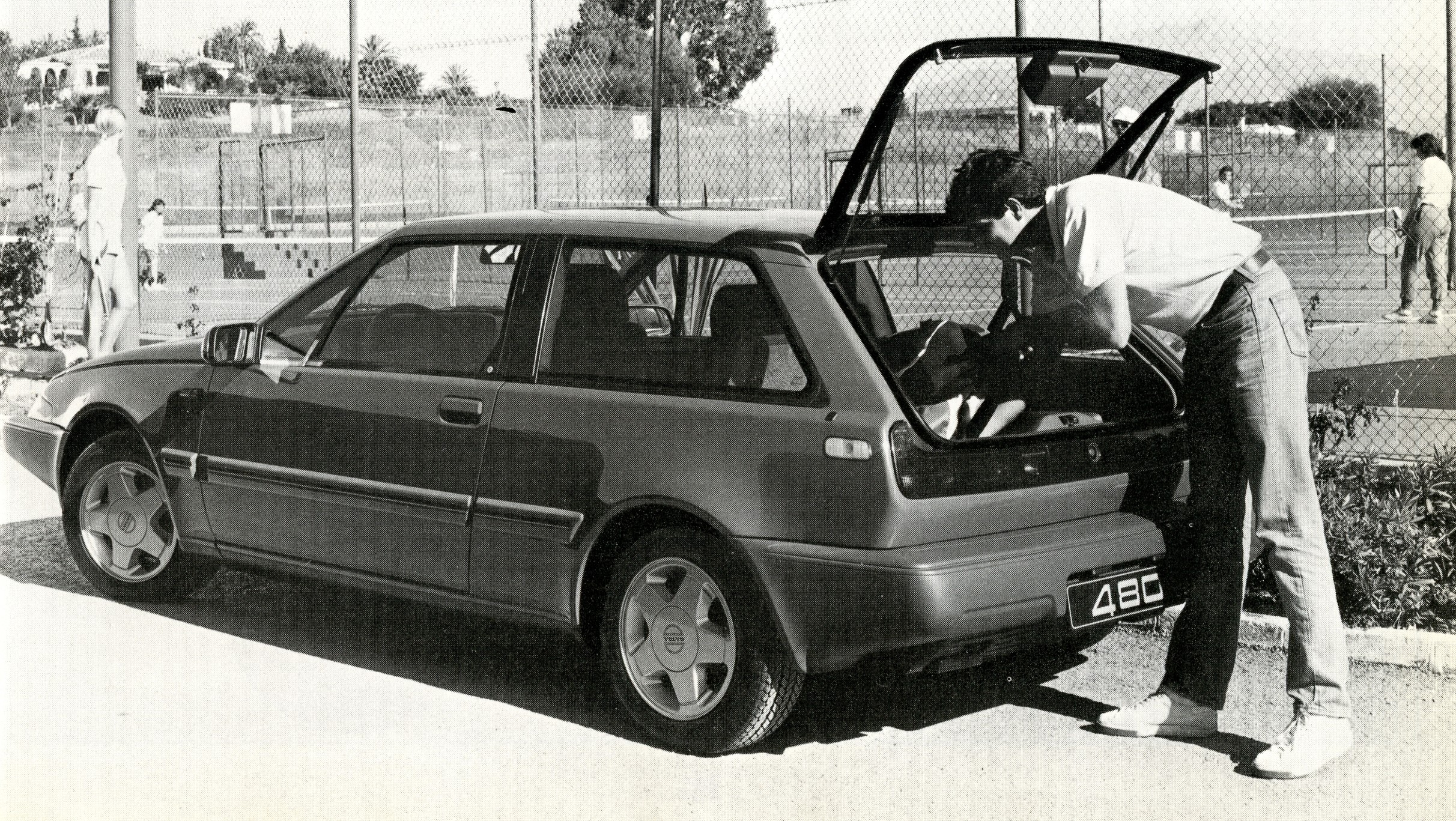
My copy of the book “Volvo The Cars – From the 20s to the 80s”, by Bjorn-Eric Lindh, was published in 1986. Interestingly, there is a two-page spread on the 480 (b&w images below). The book’s text states in part:

“Given Volvo’s world-famous reputation for quality and durability, the new 480ES is almost certain to become a major competitor in its class, particularly in the USA…. Initially, annual output will total approximately 35,000 units, 25,000 of which will be destined for the American market.”

Those are heady numbers, given that during the years 1987 through 1989, U.S. Volvo sales totals were between 98,000 and 106,000, meaning the 480 would represent 25% of that. However, after months of planning, VCNA management realized that the exchange rate would be a roadblock to any plan to sell the 480 at the right price (at least that was the official line as spelled out in the letter sent to all U.S. Volvo dealers).

From an internal Volvo publication in my collection

America would have to wait until model year 1993 for the launch of the all-new Volvo 850, our first FWD car, and one designed and built in Sweden to boot. In the meanwhile, the 480 sold respectably well in Europe. I have a Volvo internal publication which states that the 480 existed from model year 1986 to model year 1995, and that the company built 76,375 of them (making that earlier prediction a bit of a stretch!). I suspect that Volvo felt the car was a success, and despite its Dutch parentage, it likely gave the company some needed experience in FWD technology.

This page, also from an internal book, shows how different the 480 is compared to other Volvos.

If any of my fellow former-VCNA colleagues have any additional recollections (or corrections), please share them!


All photographs copyright © 2023 Richard A. Reina. Photos may not be copied or reproduced without express written permission.


Volvo’s 480ES

Bring a Trailer (BaT) currently has a Volvo 480 up for auction on its website:

1995 Volvo 480 Turbo Collection Edition 5-Speed

I added a comment that I had photographed a 480ES in the spring of 1987, in the VCNA HQ parking lot in Rockleigh, NJ. This is that photo:

I will add to this story after the BaT auction ends.


All photographs copyright © 2023 Richard A. Reina. Photos may not be copied or reproduced without express written permission.


A Visit to the AACA Museum, Jan. 2023

Last week, two buddies and I made a long-overdue return visit to the AACA Museum in Hershey, PA. While “AACA” is in the name, this statement of clarification is on the Museum’s website: The AACA Museum, Inc. has been and remains an independent 501 (c) (3) non-profit organization, not affiliated with the Antique Automobile Club of America.

A Plymouth Superbird is in the front lobby to greet you

I know very little of the story and don’t care to know the details, so let’s just say that there was a courtship which ended in an ugly breakup. In spite of the divorce, it was a happy surprise that my National AACA membership card gained me free entrance!

Not surprising that Carlisle events, and not AACA events, are displayed

My most recent previous visit there was almost six years ago, to fetch my ’67 Alfa Romeo after it spent the winter inside the Museum as part of its Amore della Strada exhibit of Italian cars. It was good to be back; it was also relatively quiet on the day we visited, so it felt like we had the place to ourselves.

Most of the vehicles on display were not the same as we saw in 2017. The Museum is known for rotating what’s on the floor, and the curators are also known for putting on special exbibits, all of which keeps it fresh for repeat visitors. This time, it was racing cars which were featured. Although I don’t count myself as a rabid fan of the sport, there was still plenty of history to be absorbed.

A C2 and C3 Corvettes share space


A constructive comment about the displays: I appreciate the Museum’s efforts to create dioramas for all the cars, and that space is somewhat at a premium. As a photographer, though, it was very challenging to take pictures that showed an entire vehicle while keeping other vehicles and distractions out of the frame. As a result, many of these snaps show most, but not all, of the cars.

A permanent display which was little-changed since our last visit was the Tucker Exhibit. A private collector, David Cammack, began collecting Tucker cars, parts, and memorabilia in the early 1970s. He eventually willed the entirety of it to the Museum. Even though I’ve seen it several times before, there are fascinating aspects of the Tucker story which are worth revisiting.

Part of the Tucker Exhibit

While wandering around the bottom floor (there are 3 levels), a Museum employee engaged with us and offered to take us back into a work area normally off-limits to the public. There, we saw some vehicles being prepped for their turn in the spotlight, and also learned that a regular troop of volunteers makes their way to the Museum to lend a helping hand with the cars. It sounded to this writer like a possible future activity in which to participate.

You need a big basement to house buses

For those who have been to Hershey and have not taken in a tour of the Museum, it’s worth the detour. It is located perhaps 10 minutes from Hersheypark Drive, and admission is $12, $10.50 for seniors, and as I mentioned above, free if you belong to the AACA.


THE RACE CARS
After featuring TWO Subaru coupes last week, here’s another one!


The placard for this Saab stated that it was one of very few notchback coupes


A blown ‘vette


This one had the corner display to itself


THE DELOREANS

I spotted the two DeLoreans side-by-side from a distance at first, and snapped the first photo while noting that one looked a bit lower than the other, and didn’t give it much more thought. I was a shock to get closer, read the placard, and learn about this previously-unknown prototype:


Hopefully you can see in these closer photos that the prototype shares few exterior body panels with the production car. The seats are different as well.


THE TUCKER EXHIBIT

Of the 51 Tuckers manufactured, David Cammack ended up owning 3, and all 3 are here in Hershey.


Engines comprise a large part of the display. Tucker experimented with many different ideas before deciding on a water-cooler flat-6 engine. The engine in red is an experimental engine with hydraulically-operated valves. It looks like a service nightmare.


THE LOWER LEVEL

The majority of the Museum’s displays are on the main level (in this case, the race cars, the Tuckers, the DeLoreans, and assorted other cars). The top level is a mezzanine with some scooters but no cars. The lower level has historically been primarily taken up with buses. This visit was the first time that I can recall seeing so many cars sharing space with the buses.

Triumph GT6


1964 Studebaker Daytona convertible


Volvo PV544


1935 Terraplane coupe (which we all agreed was quite attractive)


MG-TF


THE WORKSHOP

Our behind-the-scenes tour included sneak peeks at these cars:


Step-down Hudson convertible


1966 Thunderbird convertible


Rolls-Royce, year and model not noted


AUTOMOBILIA

It’s not just cars on display! In this hobby, everything is collectible.


All photographs copyright © 2023 Richard A. Reina. Photos may not be copied or reproduced without express written permission.

Cars on the street, 1984-1985

I again found myself poring through old photo albums when I noticed that I had a few street scenes from 1984 and 1985 which I found interesting. Here they are, and here’s hoping you also find them of some interest.


BLOOMFIELD, NJ

I lived in Bloomfield from 1980 to 1989, and would occasionally take snapshots of parked and moving cars.


This shot was taken along a service road of the Garden State Parkway. I was practicing my panning. Here is a Subaru Coupe neck and neck with a Mercury Colony Park station wagon


The silver VW Scirocco on the right was mine, parked behind my apartment complex. Next to it are a very rusty mid-70’s Chevelle, and a 1965 Ford Fairlane, coming up on 20 years old, making it an ancient car for its time.

My college friend Beth came to visit me in Bloomfield. I think she bought this Subaru new. (I find it ironic that it’s a 2-door like the Subie above; this was back when Americans actually bought 2-door cars.) It’s probably FWD, as AWD was not yet standard across the board. Note the VW Squareback; when did you last see one in the wild?


SMYTHE VOLVO, SUMMIT NJ

I worked at this Volvo dealership from 1980 to 1986, and would sometimes bring my camera to work, if only to document some of the goings-on.


The dealership bought, then later demolished, an apartment building on an adjacent property. I had the camera ready to take some photos of the planned destruction. Note the Ford T-Bird and Honda Civic on the left, and various Volvos in for service on the right. And that’s our gal Friday, Sue, imploring me to not take her photograph!


Street parking near the dealership was non-existent. Management made a deal with the church across the street which allowed employees to park there (the lot, frankly, was practically vacant except on Sundays). Yes, an employee (a son of one of the dealer principals) commuted in a Volvo 1800. At the top of the row, next to the Chevy Caprice, is a VW Dasher diesel wagon driven by the Parts Manager. The silver wagon on the far right is my Audi Fox wagon.


The Service write-up counters and the Parts retail counter were inside the workshop. Customers entered a back door and literally walked among cars on the lifts. This is the view from my service advisor’s desk. The place looks incredibly dingy, yet I don’t remember it that way. I guess I got used to being in that environment on a daily basis.


CLINTON, IOWA


I made a Christmastime trip with my girlfriend to visit her family in Iowa. We drove, and I didn’t trust the Audi to make the trip, so I rented this Tempo. It was among the first of Ford’s jellybean cars. The car performed just fine.


PARK SLOPE BROOKLYN, NY

These next two photos were taken in the Park Slope Brooklyn neighborhood where my girlfriend lived. This photo was heavily edited to focus on the cars. In the foreground are a Honda Civic and Toyota Tercel (I think). Across the street it’s harder to tell, but I will guess that the car on the left is a Datsun/Nissan, maybe a Sentra, and the one on the right a then-current Buick Riviera.


Yes, this Porsche 356 Coupe was parked on the street in Park Slope. What was it worth in 1984, a couple grand? My current edition of the CPI value guide pins this 356 SC at between $66k and $126k.


All photographs copyright © 2023 Richard A. Reina. Photos may not be copied or reproduced without express written permission.