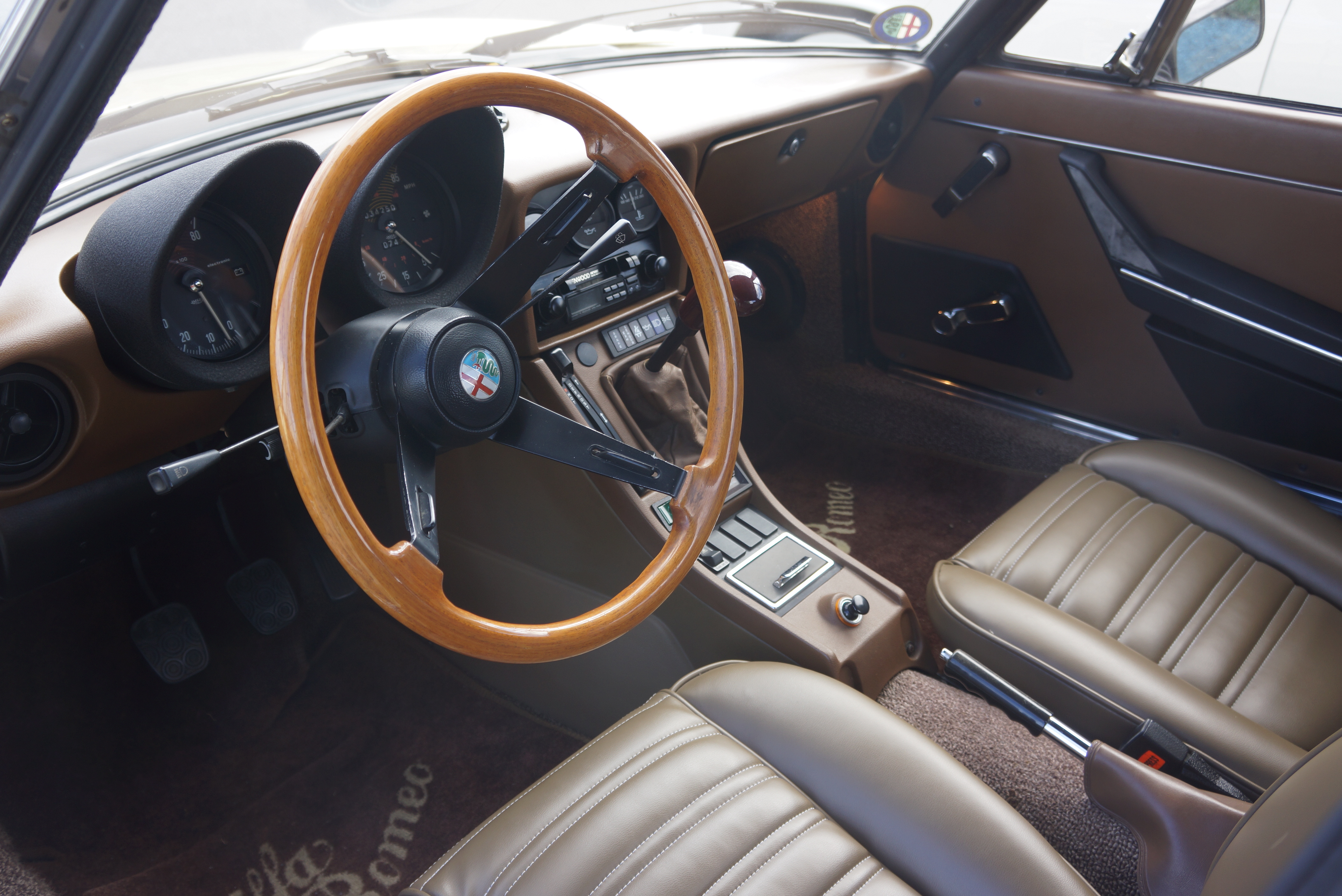
My Alfa is a mostly completely original car, meaning that it’s never been “restored”, not in the sense that classic cars are restored with all-new cosmetics and completely overhauled mechanicals. Yet with 65,000 miles on it (and counting), there have been maintenance and wear items needing attention.
The car is wearing about 90% of the paint and 100% of the interior with which it left the factory. The engine, gearbox, and rear axle are likewise the same assemblies that Tony, Vito and their fellow factory workers installed. During the past 51 years, the car has gotten new tires, brakes, belts, hoses, bulbs, shocks, clutch, tune-up parts, and fluids. I’m very conscious of my role as “steward” of this car, and hope that when it eventually moves to its next owner, the preservation efforts will continue.
As you may know from reading this blog, I’m not shy about putting several thousand miles a year on it, and if the paint gets a little worn or slightly chipped from my enjoyable time behind the wheel, so be it. But I would never consider repainting the car. Likewise, should a major engine component fail, I’ll repair it as necessary, but I’m not going to seek out a larger engine from another Alfa. I’m continually striving to maintain that balance whereby I get to enjoy the car while only fixing what needs fixing.
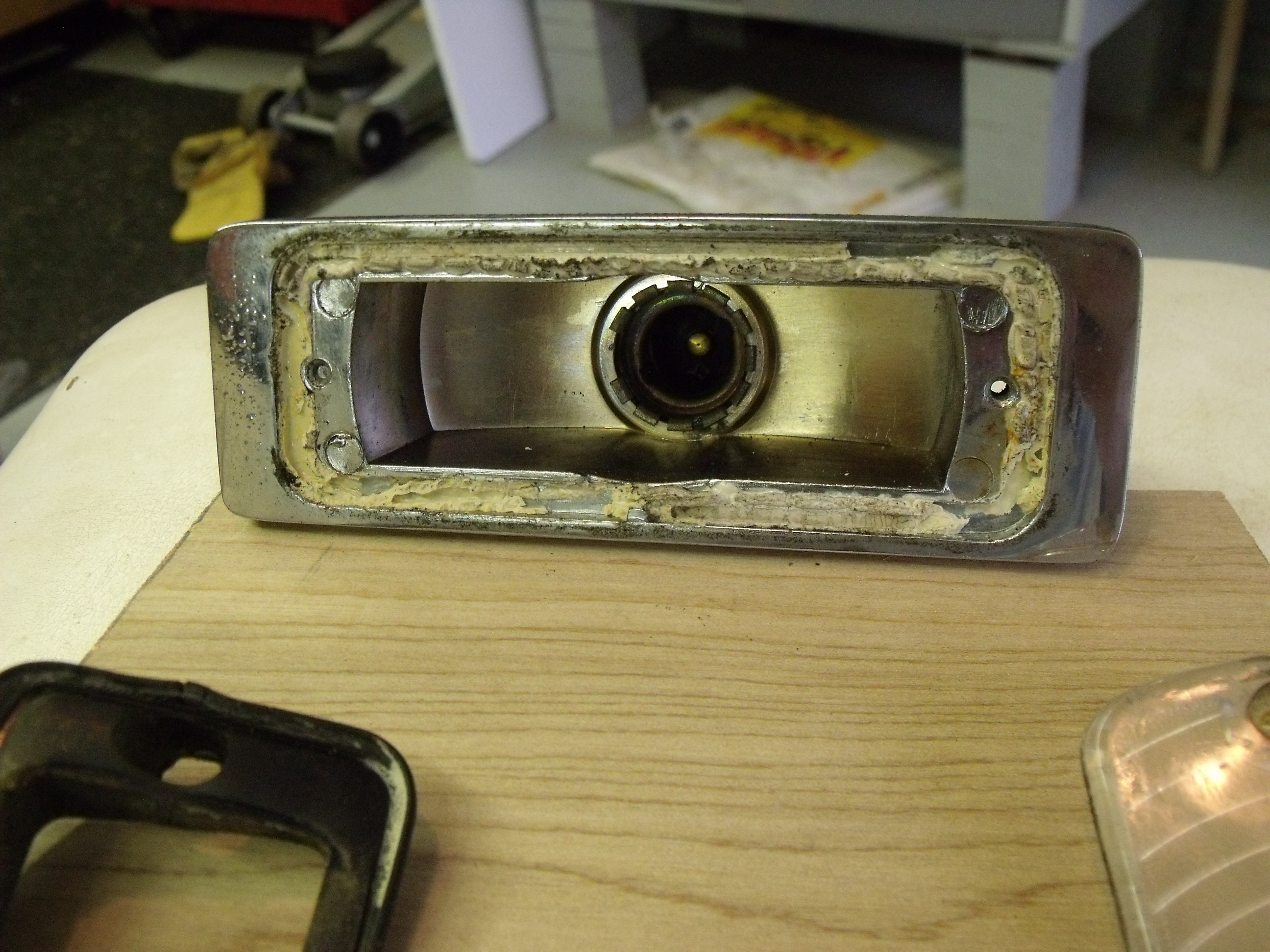
Earlier this year, I discovered that the reverse light didn’t work. The truth is, in the 5 years I’ve owned the car, I don’t think I had ever checked the back-up light. Its inoperative status gave me the impetus to remove the light assembly (there’s only one, below the rear bumper) and get it working again. The overall goal was not to replace it, but refurbish it, reusing as many of the original components as possible.
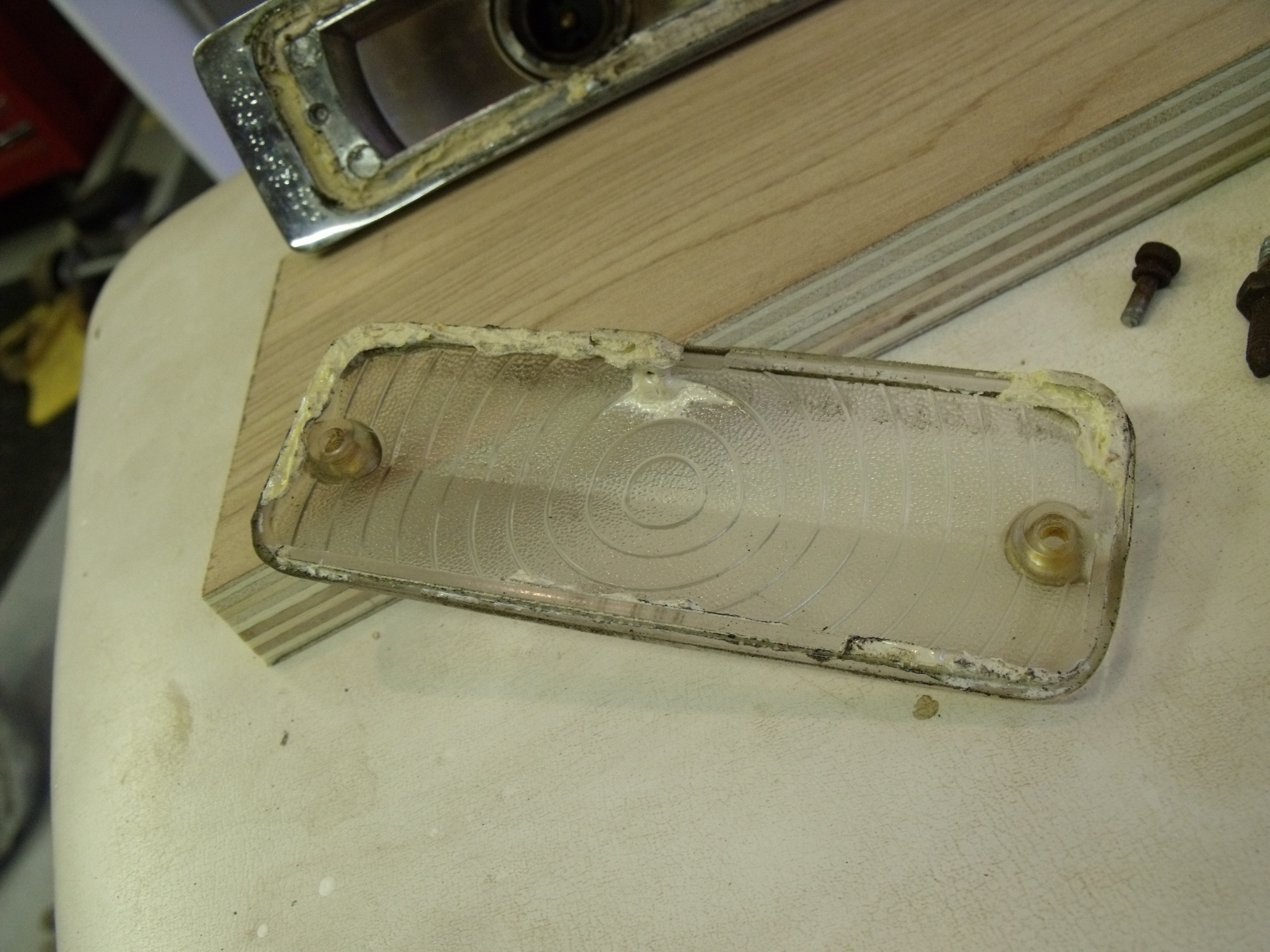
Bezel, housing, lens, and broken hardware after removal from car
The first challenge presented itself when two of the four fasteners snapped during removal. The clear lens was held in place by two Philips head screws, and half of one stayed in the housing. The housing itself used two studs with nuts, and one stud broke in half. Unlike the recessed screw for the lens, the broken stud projected far enough above the housing that a pair of locking pliers got it out the rest of the way.
Closeup of housing. Note broken screw on left, and hardened white gasket.
The gasket beneath the lens had been some kind of rubber that had turned to stone. It’s likely that it had never been disturbed until now. The chrome housing was somewhat pitted, and looked like it would respond to some metal polishing. The rubber bezel, mounted between the housing and the painted rear valence, would be treated to a trick I successfully deployed during the Isetta restoration: using Meguiar’s #40 Rubber Reconditioner, the bezel would be submerged and soaked for several days, hopefully returning some of the rubber’s pliancy.
I had my doubts about salvaging the lens; the old gasket was that hard.
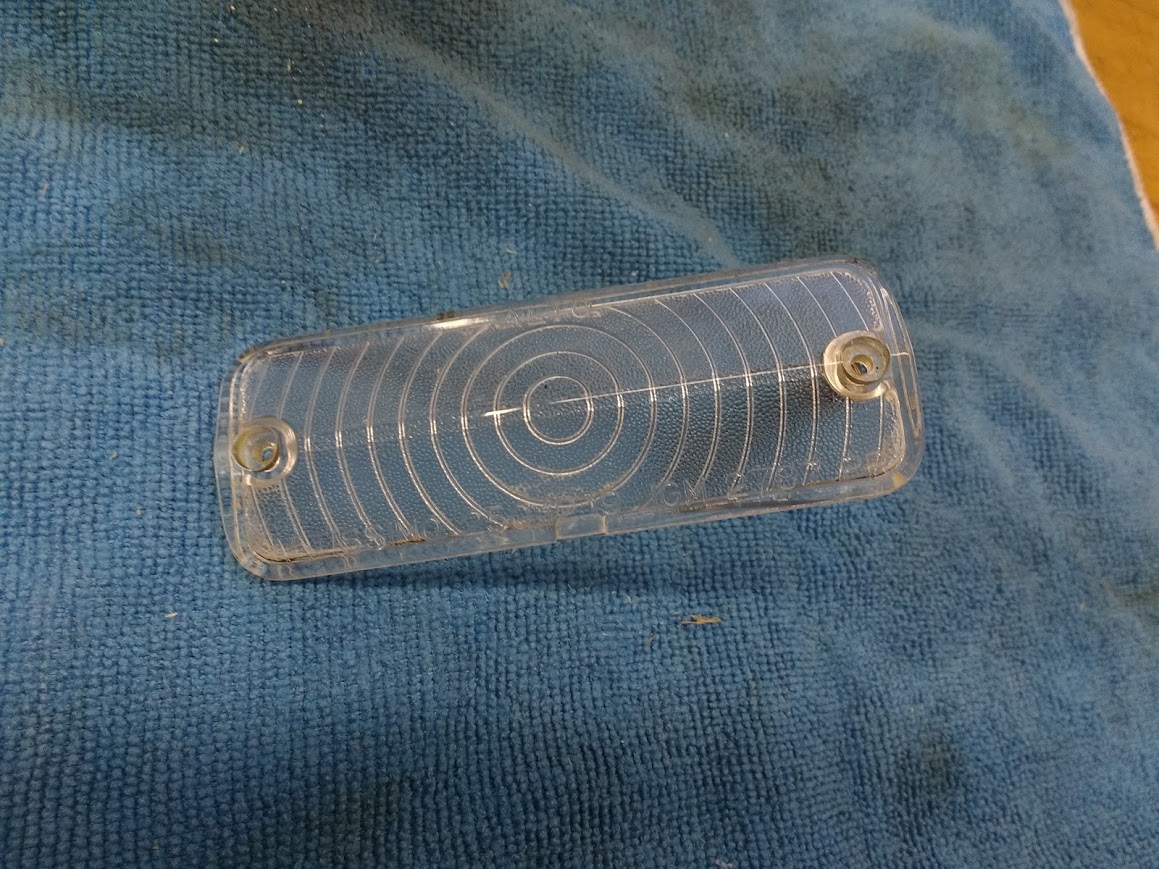
While that sat in its bath, I tackled the removal of the old gasket. This was more of a fight than I anticipated. Not wanting to damage either the housing or the lens, I started with a plastic scraper, but made little progress. Next, I tried various solvents, attempting to soften the material. WD-40 had a minor effect on it, so I kept at it with that, fearful that anything stronger would also harm the lens. The most effective removal tool turned out to be a single-edge razor blade, but this took time. Eventually, both surfaces were rid of the hardened white material.
The lens did clean up nicely
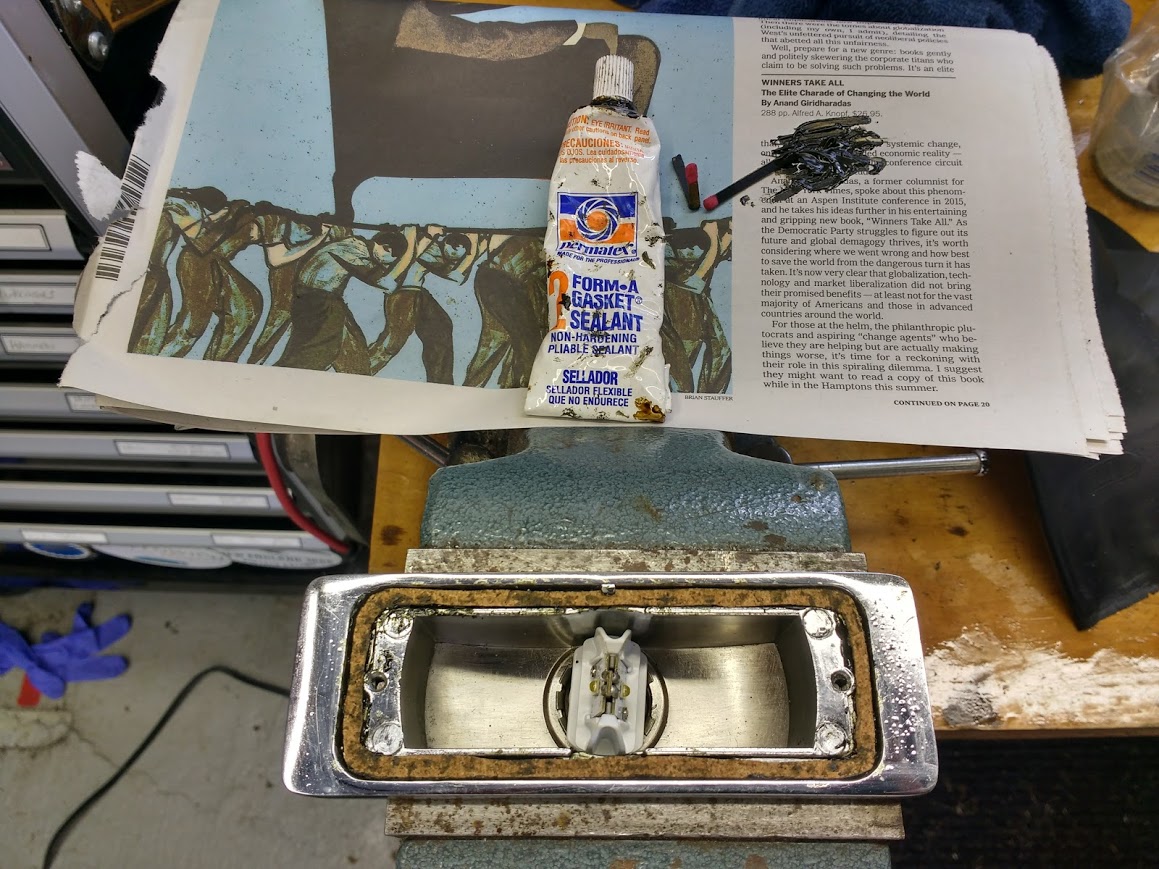
Instead of purchasing a replacement gasket, I fashioned one from sheet cork which I keep just for such purposes. I tacked it in place using non-hardening gasket glue. Three days in the conditioning bath brought the rubber bezel mostly back to its former glory.
I’ve had great success with Permatex #2 non-hardening sealant; note LED bulb in place
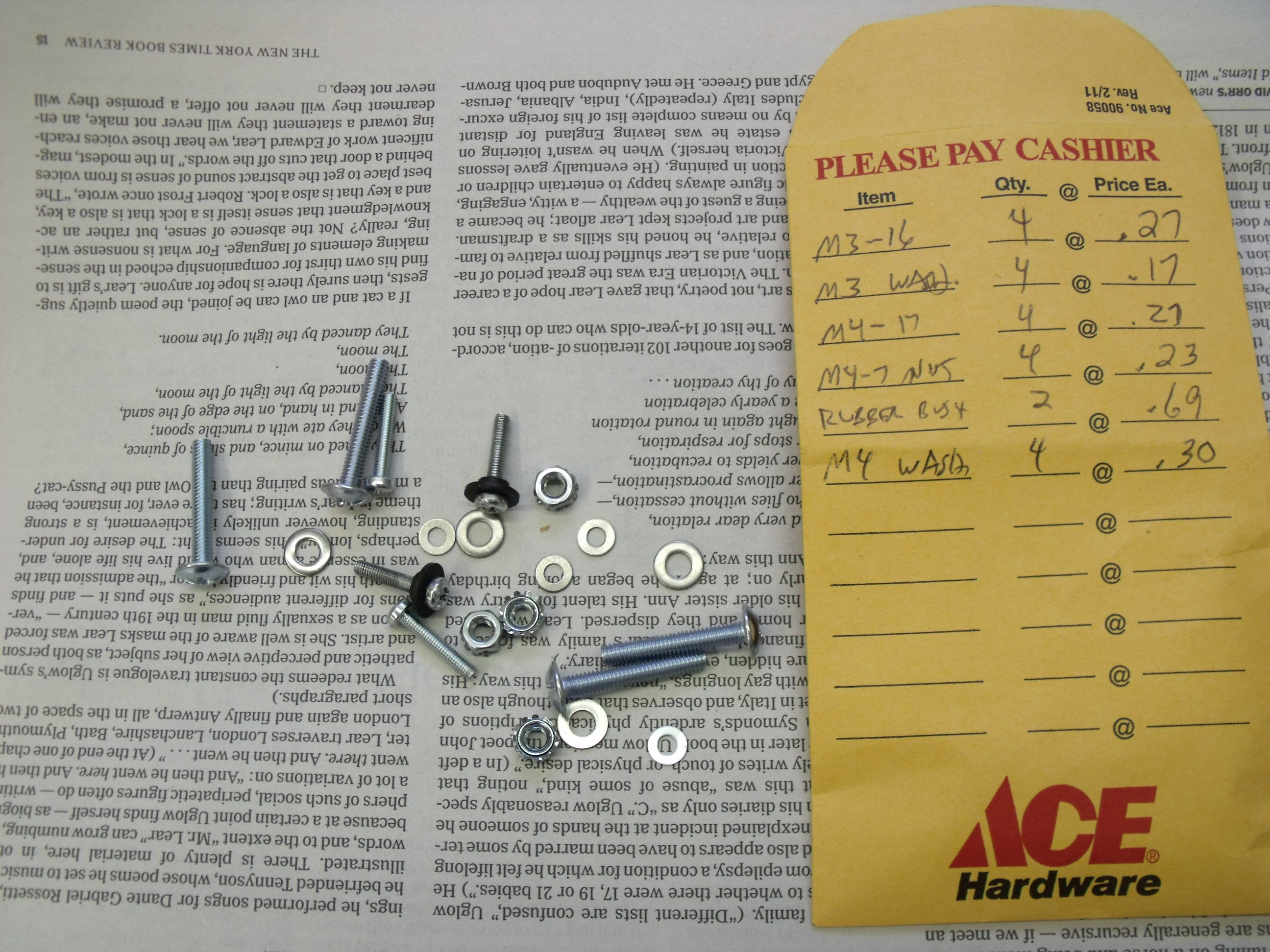
My best shot at finding the metric hardware I needed was the local ACE Hardware store, Post Hardware on Route 22 in Somerville NJ. They had the correct screws for the lens, but not the studs. So instead, I bought bolts with the right thread pitch, and hacksawed off the bolt heads. Viola! Metric studs.
There’s a reason they say that ACE is the place
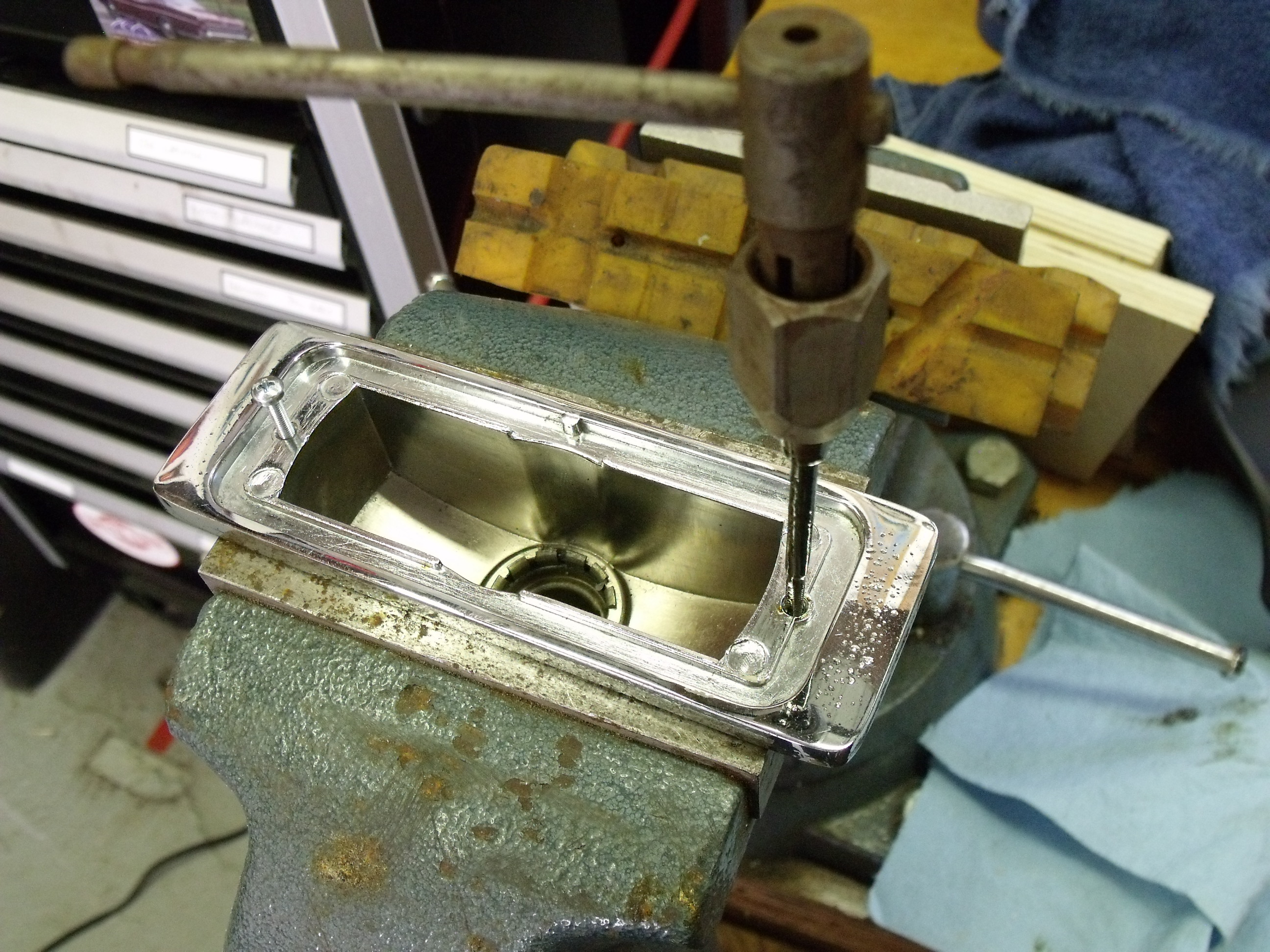
The broken screw was drilled out, and retapped with my metric tap and die kit. The studs were installed with a dollop of thread-locking compound. The old incandescent bulb was replaced with an LED bulb from CARiD.com. As the repair books state: “reassembly is the reverse of disassembly”.
I may use the tap & die set infrequently, but it’s great to have
As you can see, the back-up lamp burns brightly. There’s just one more thing to report, but before I do, I must ask you to think like an Italian. You see, when I first tested the refurbished assembly, it still didn’t work. And that’s when I remembered: in 1967, as far as the Italians were concerned, a driver didn’t need the back-up light to illuminate everytime you put the car in reverse! After all, it would provide little or no help in daylight. But if the headlampsare on, indicating it’s dark out, THEN a reverse lamp would prove helpful. So the back-up light is wired to come on only when the light switch is on. I’ll be taking a night cruise just to confirm how well I can see behind me….
Nice and bright (as long as the headlights are on)
I just recently came across these photos, which I had frankly forgotten about, which is why this technical procedure, performed in May, is only getting its own blog post now.
If your memory is good, then you’ll recall reading back in May’s report on this year’s New England 1000 that the Alfa’s alternator failed us in the middle of the rally. If your memory is not so good, or if you’re just joining us, you can read about it here.
The truth is, I should have been wise to an impending failure, as even with the Red-Top Optima battery on trickle charge, the car would still occasionally need a boost. Alternator output measured at the battery was barely 13 volts, a weak statistic which I rationalized to a low idle.
As mentioned in the rally write-up, the drive to our starting destination was done in a steady rain, with lights blazing and wipers flailing. It’s likely that was enough to seal the fate of the battery.
Tuesday morning, we bought a NAPA-brand battery, and leaving the Optima in its place in the trunk, we simply swapped the cables onto the new unit, using bungee cords to keep it from sliding around. The alternator wasn’t completely dead, just on life support. With the new battery, we had zero starting issues the rest of the week, and coasted home on Friday.
Once again I must give a shout to my friends at Classic Alfa in the UK. A new alternator, ordered Tuesday afternoon after they had closed for the day, arrived at my house on Thursday evening. I dare say that most U.S.-based suppliers would not have been able to get me one with such speed. So Memorial Day weekend was spent in part performing the alternator-ectomy.
Old alternator and attendant wiring connections
Access to the unit in the engine compartment was quite good, improved by the battery’s relocation to the trunk, performed by the previous owner (PO). The PO had also removed the factory generator (which I still have) and installed this alternator plus an external voltage regulator. My new replacement alternator has an internal regulator, and it’s a so-called one-wire job.
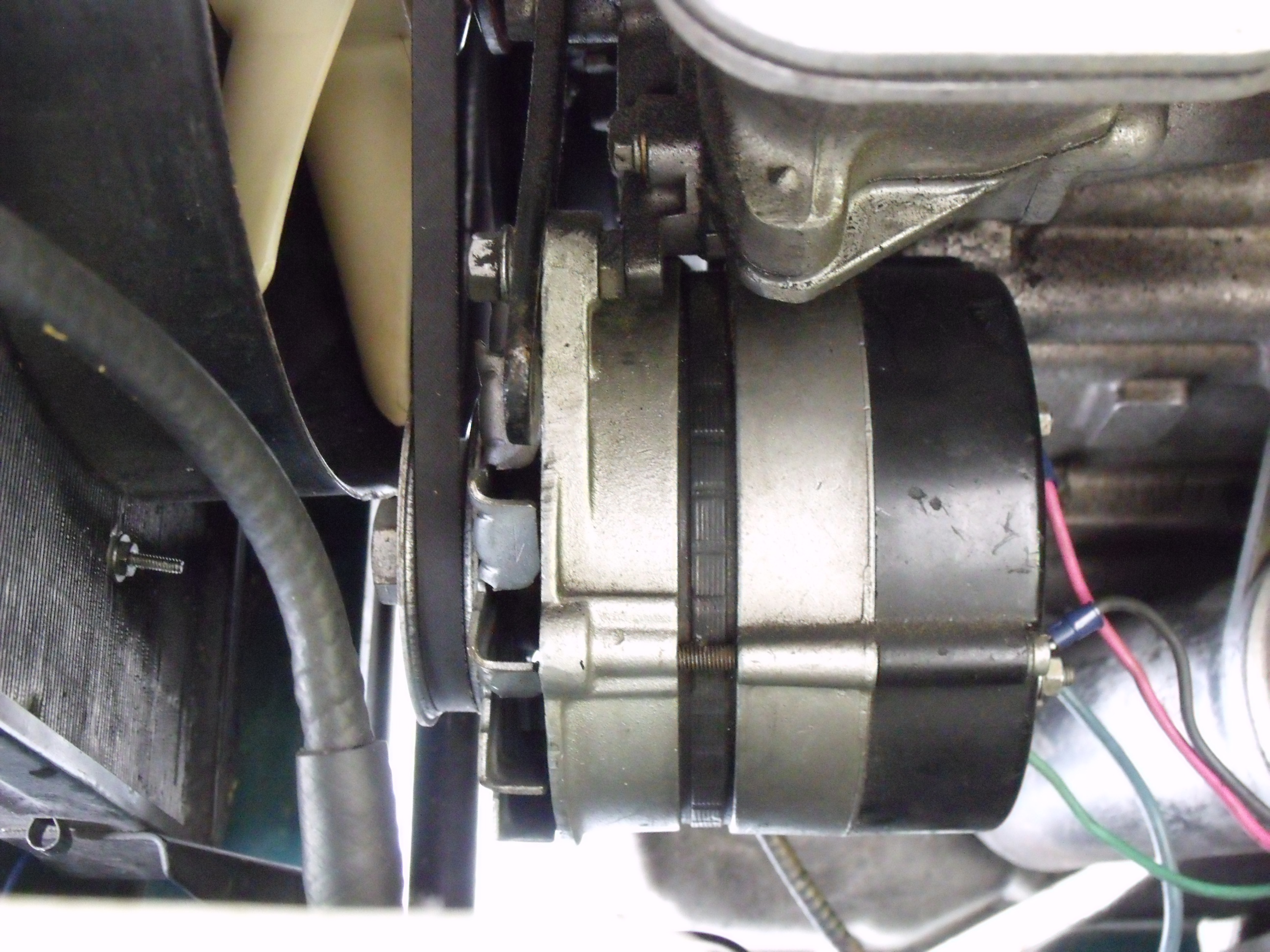
Old one again. Note alignment of upper bracket.
I photographed the wiring to help with any reinstallation questions, then removed the two components. I noted that the alternator’s upper mounting bracket was at a slight angle, and vowed to focus on improving that geometry when putting it all back together.
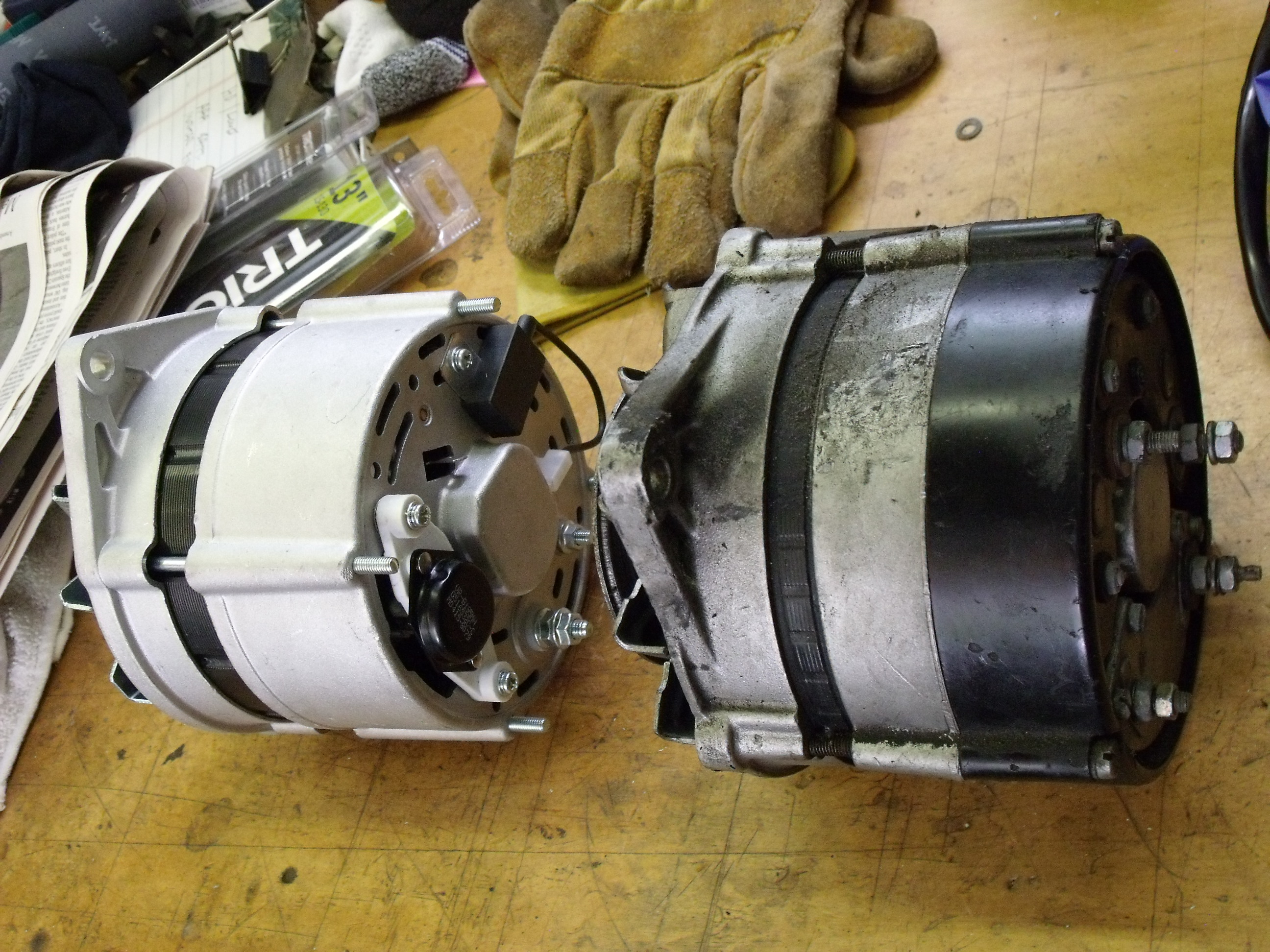
New & old side-by-side
Note pulley sizes
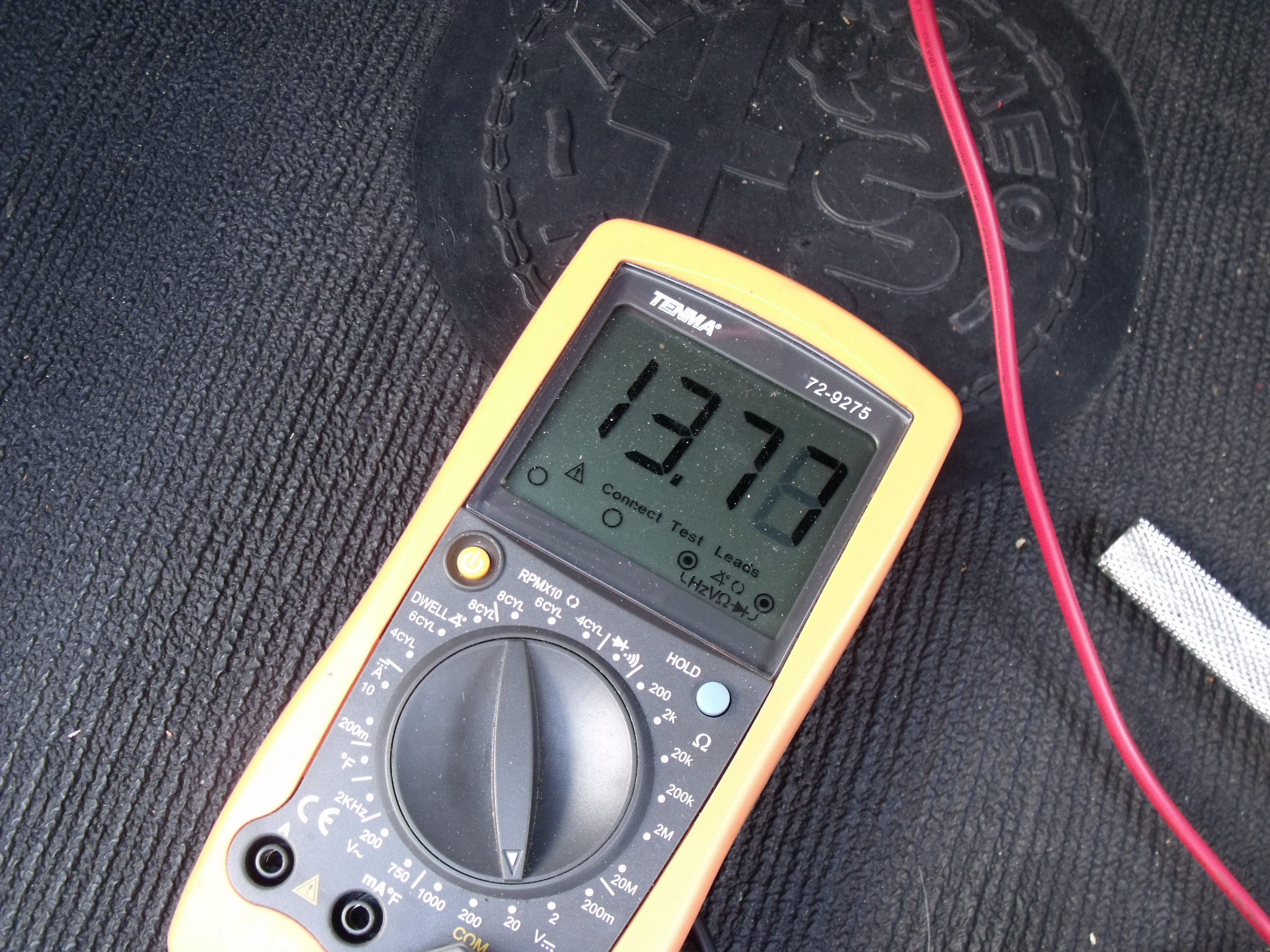
With everything hooked up, I measured a steady 13.8 volts at the battery (yet another new Red-Top that I purchased to be on the safe side). I was able to recover the old Optima by very slowly trickle-charging it, and both that battery and the barely-used NAPA one were sold to a young man in my office who is always working on 3-4 project vehicles at a time. (And for the record, both the old alternator and regulator were put in the trash. I don’t keep worn-out parts around.)
New alternator in place, and better aligned too
The only issue, and it’s the smallest of nits to pick, is that the one-wire alternator needs to be ‘excited’ after initial start before it will charge (much the same can be said about me). The ammeter reads zero until I bring engine revs above 3,500 rpm (waiting a few minutes so that oil circulates), at which point, the amp gauge needle jumps to life. It’s a small price to pay to be secure in the knowledge that the battery’s got the juice to crank that 1300cc monster to life.
The weather prediction for Sunday September 16, 2018 said “sunny, warm, no rain”. Never mind that the reality was a 7 a.m. fog so thick that traffic signals were all but invisible until you were almost on top of them. They promised the fog would burn off, and it did. After a summer filled with excess heat, an overabundance of precipitation, and more cancelled driving events than I can count, our chosen date for a Sunday morning breakfast run was promising to turn out well.
A perfect morning for a breakfast run
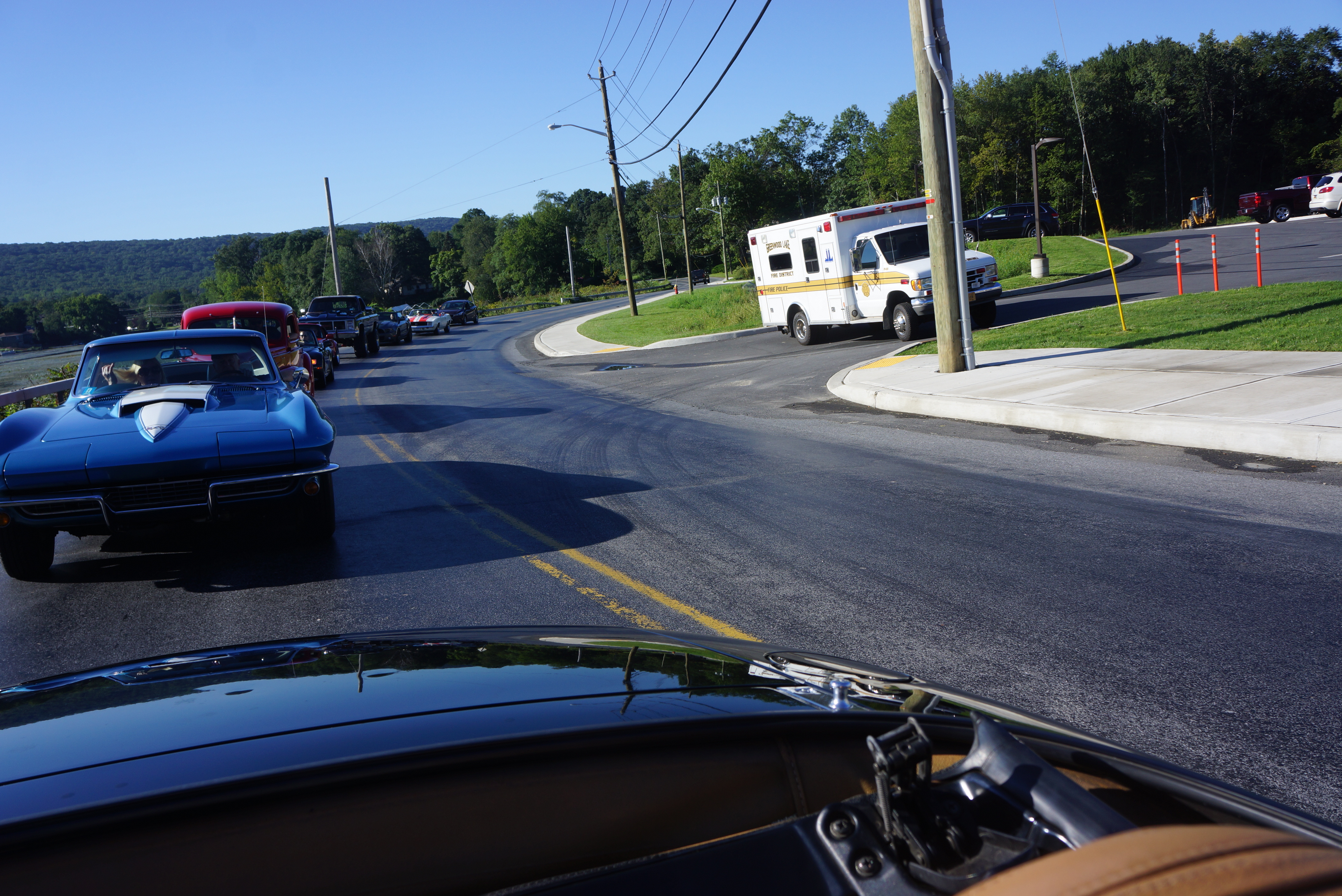
The weather awakened something in many of our driving buddies too, as 22 participants in 17 cars made it for the 8:30 push-off from the Crossroads Sheraton in Mahwah NJ. We had not been on a Sunday run since early June, so expectations were high for a nice drive and a tasty breakfast. We were headed to the Empire Diner in Monroe NY, a first-time destination for us. The route we chose was scenic and not too drawn out. Since driving time was just about an hour, there were no planned pit stops. (The group must be learning; everyone had enough fuel in their rides to make it to the diner.) Perhaps most amazingly, traffic was light and the 17 cars managed to caravan for the entire run.
Lined up for a rest room, I mean, for the diner parking lot
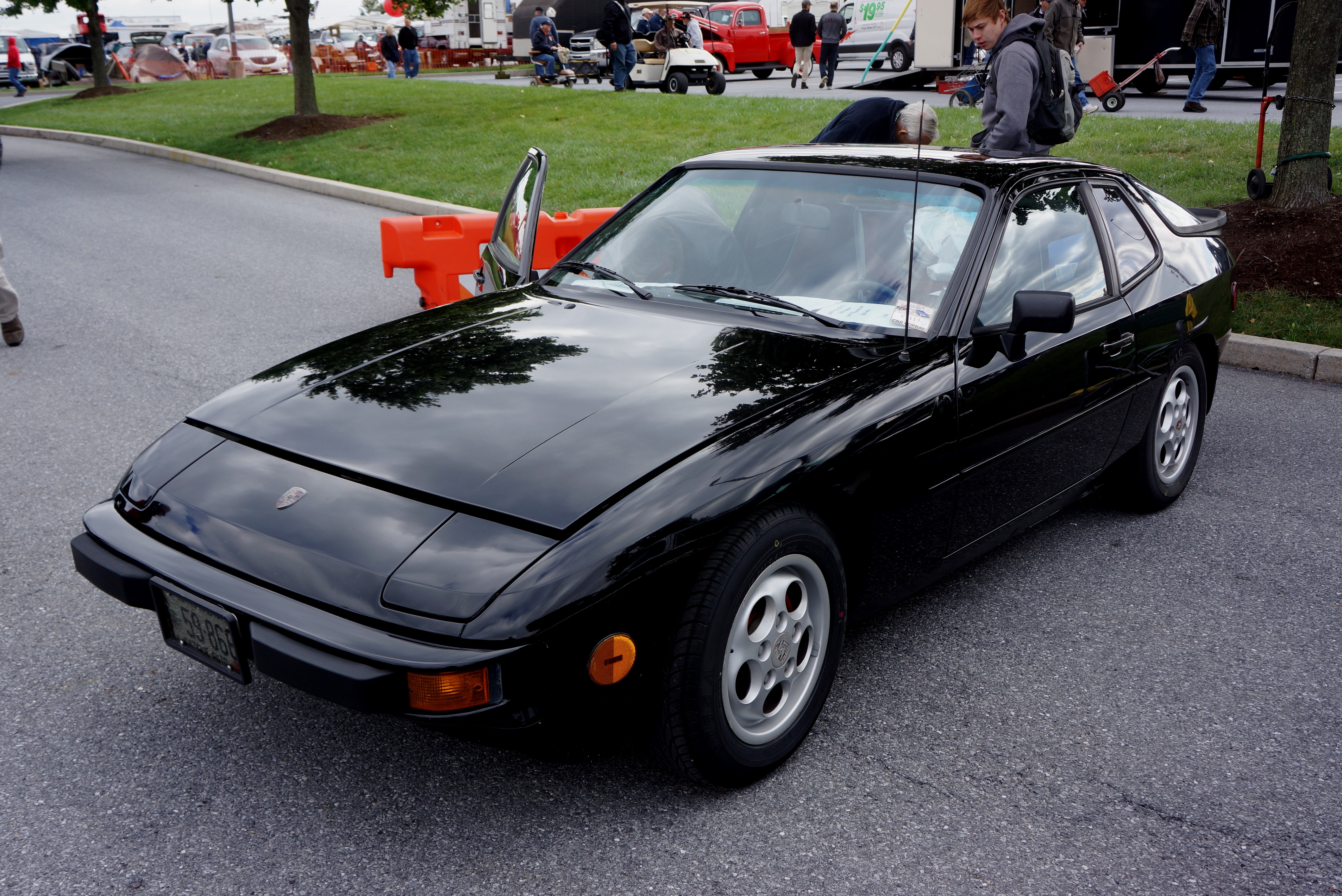
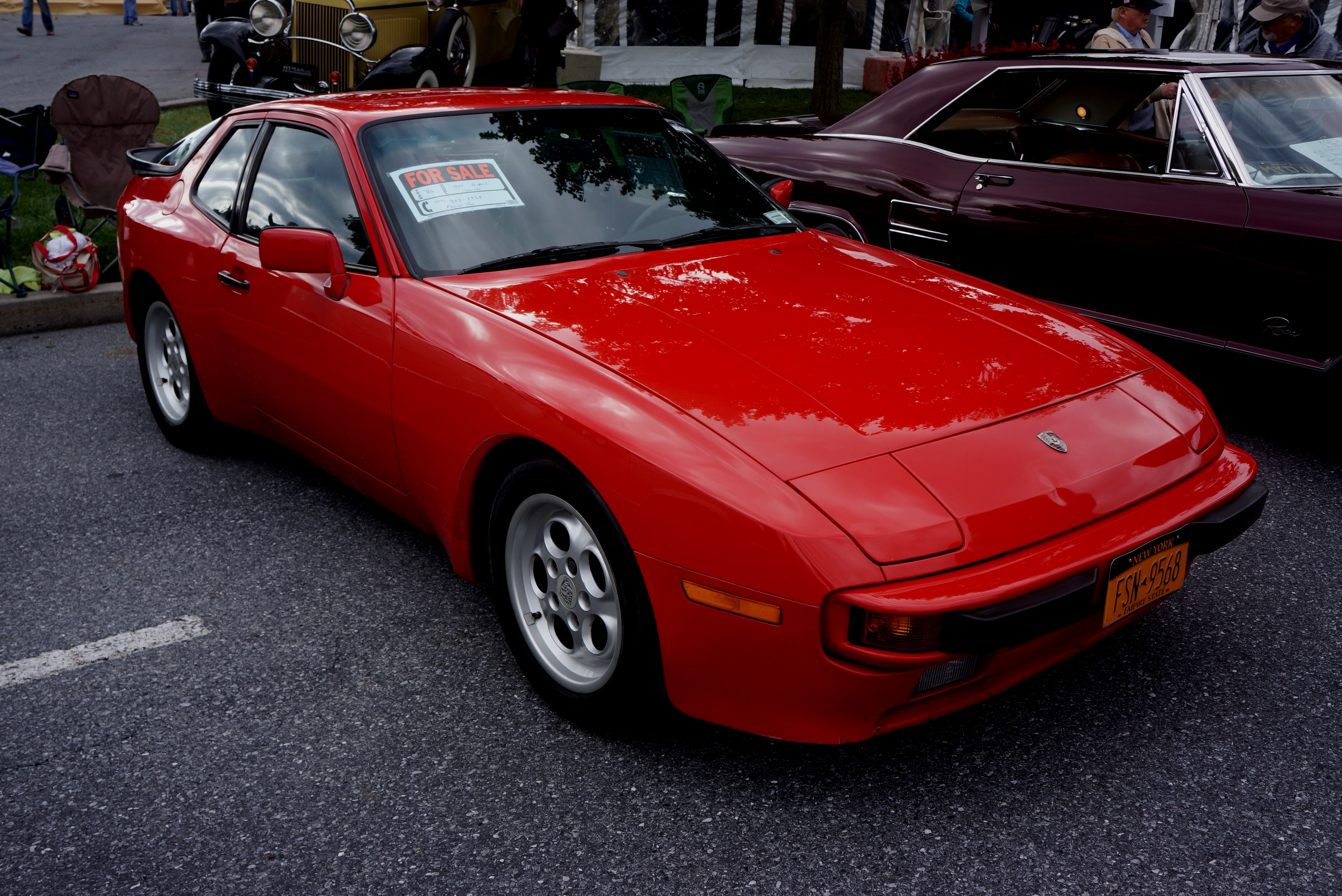
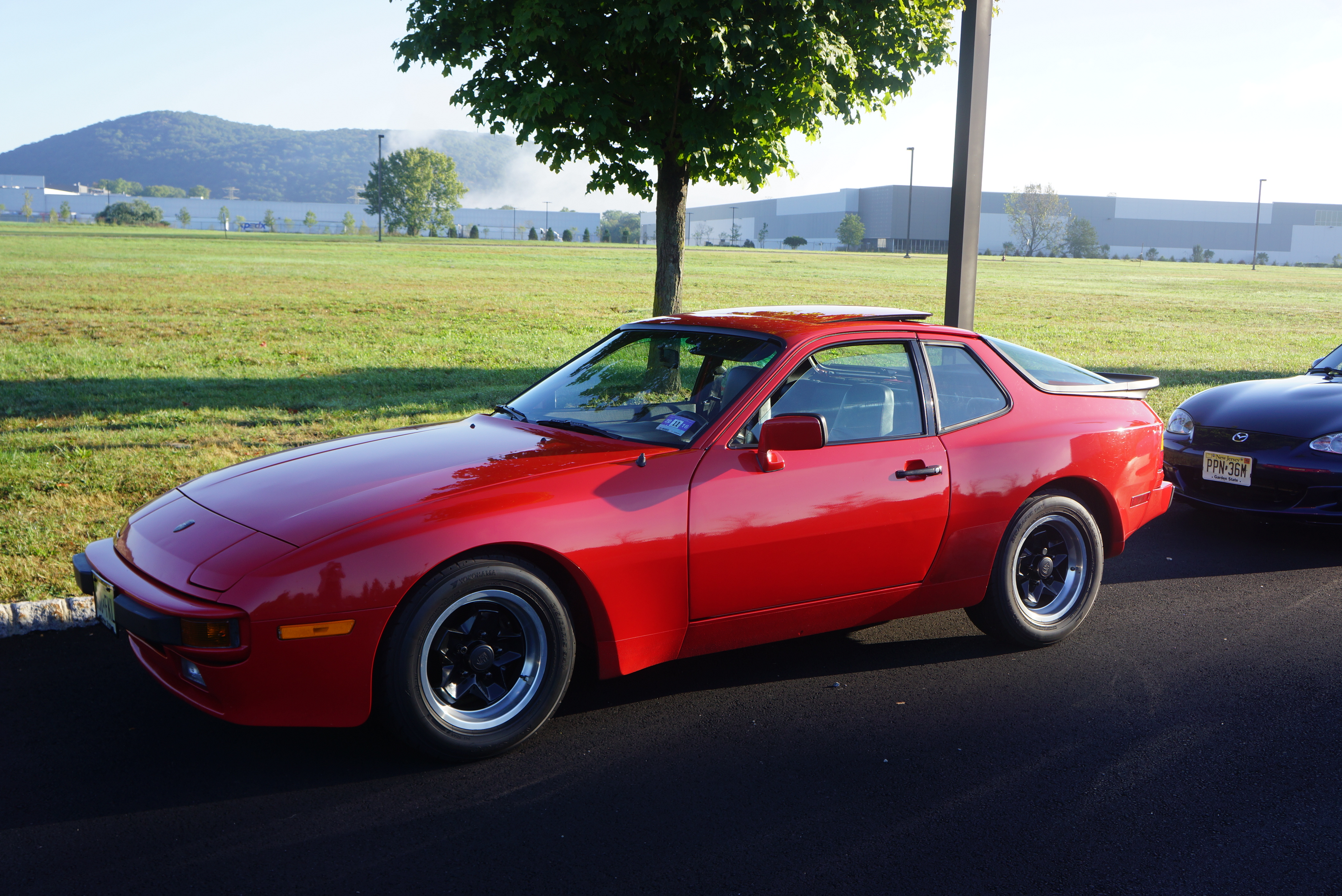
Word continues to spread about our adventures: a VW GTi and a Porsche 944 were driven by two gents who were making their maiden voyage with us. Most of the rest of the fleet consisted of old and new domestic iron, a host of German cars, a Jag, and two Miatas. Alas, the Italians stayed home today.
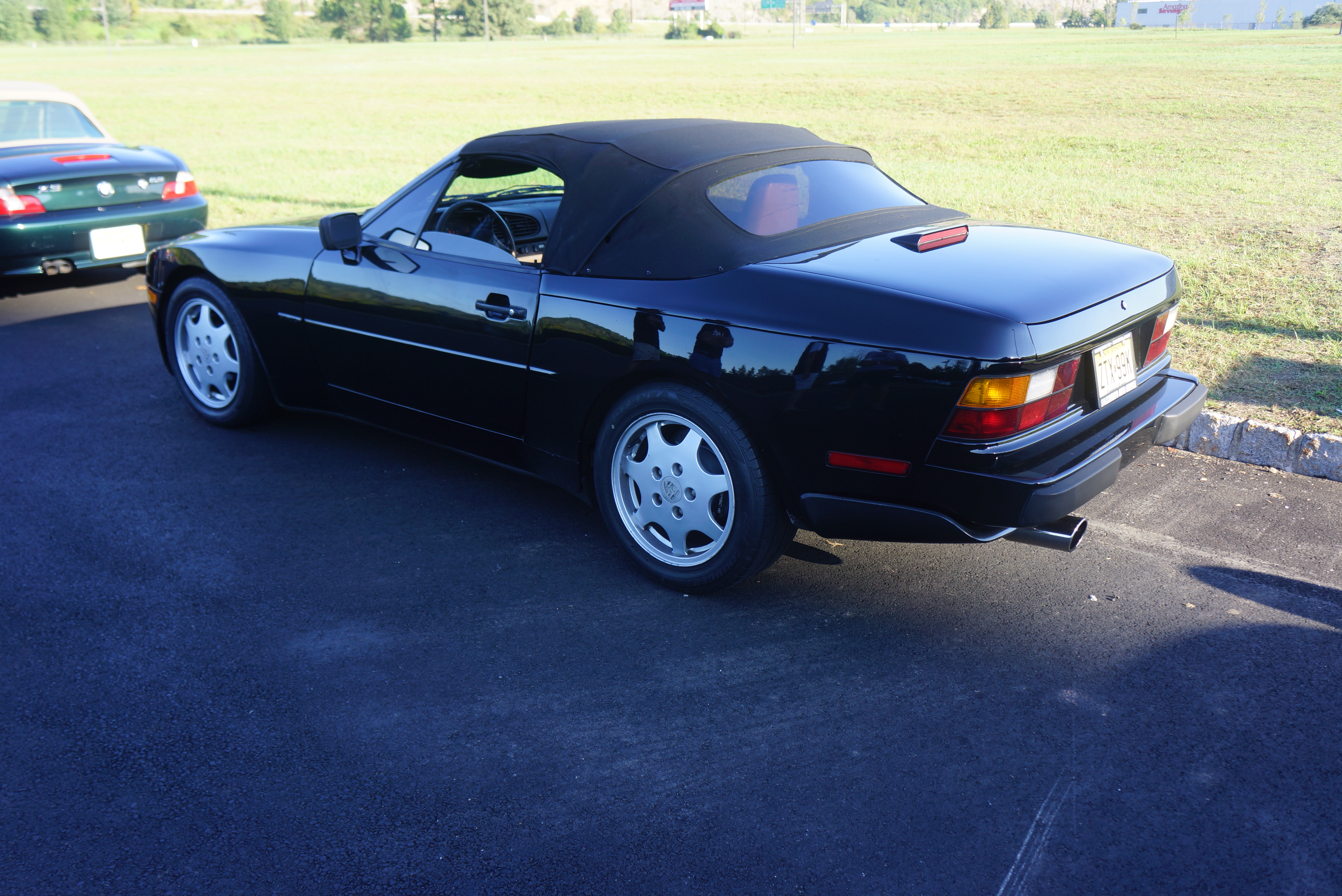
Following Danny’s Porsche 944 cabrio
The Empire Diner had tables waiting for us at 9:45 (thanks, ladies!), and the food and service were exemplary. Any waitress who swings by every 10 minutes with a hot coffee pot in her hand gets my vote. As usual, the men did their best to out-gab the females, and after the meal the chit-chat spilled out into the parking lot. Speaking of our better halves, several drivers brought their significant others. The ladies are always welcome as long as they can tolerate a bunch of guys sitting around talking about cars all morning.
We managed to fit all 17 cars into the Empire Diner’s smallish lot
The first day of autumn is one week from today (and this scribe wishes to say ‘thank goodness!’). More than one driver asked when we plan to run again. With Carlisle and Hershey coming up, the best we can hope for is late October. And with what had better be cooler weather by then, we should have another beautiful drive.
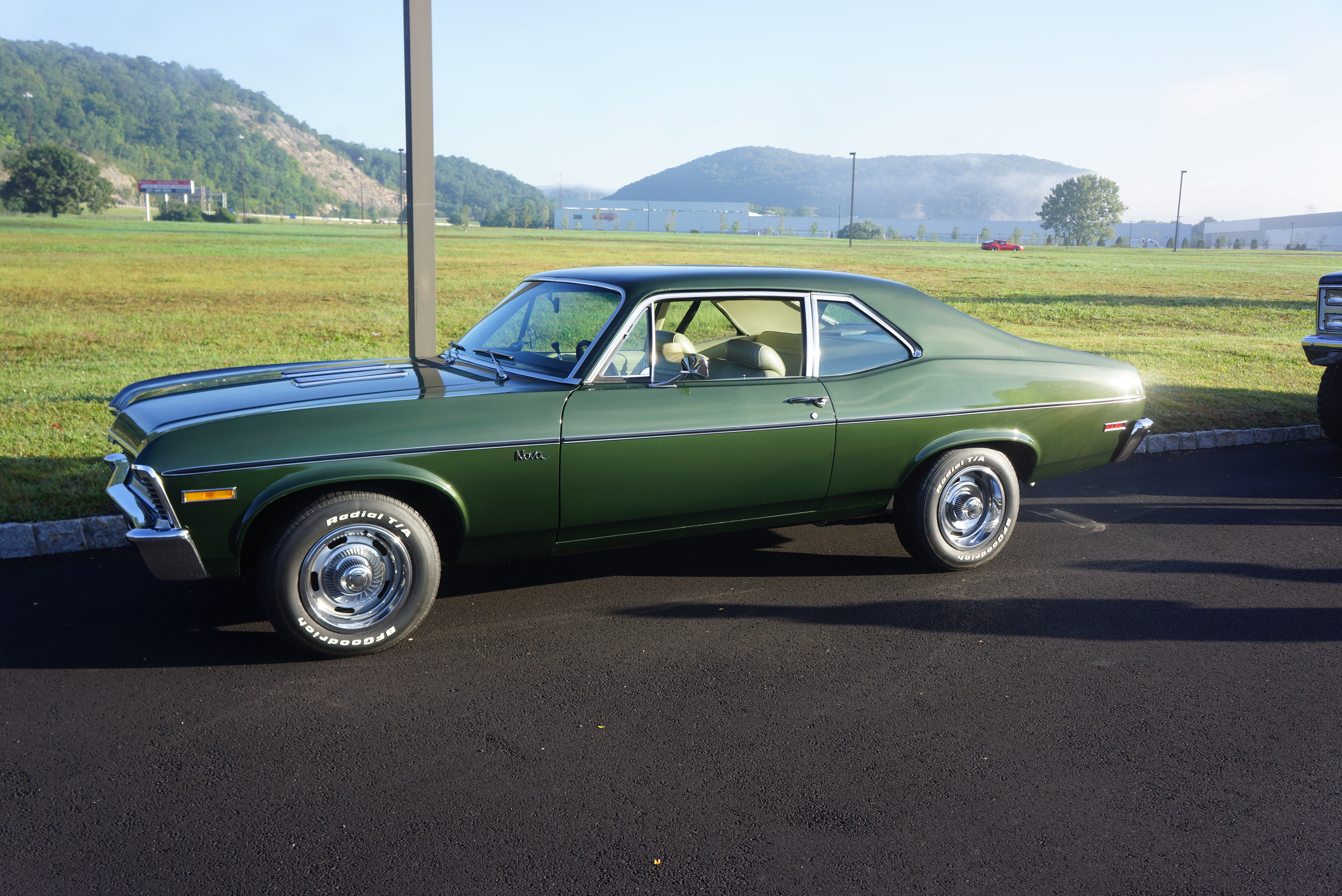
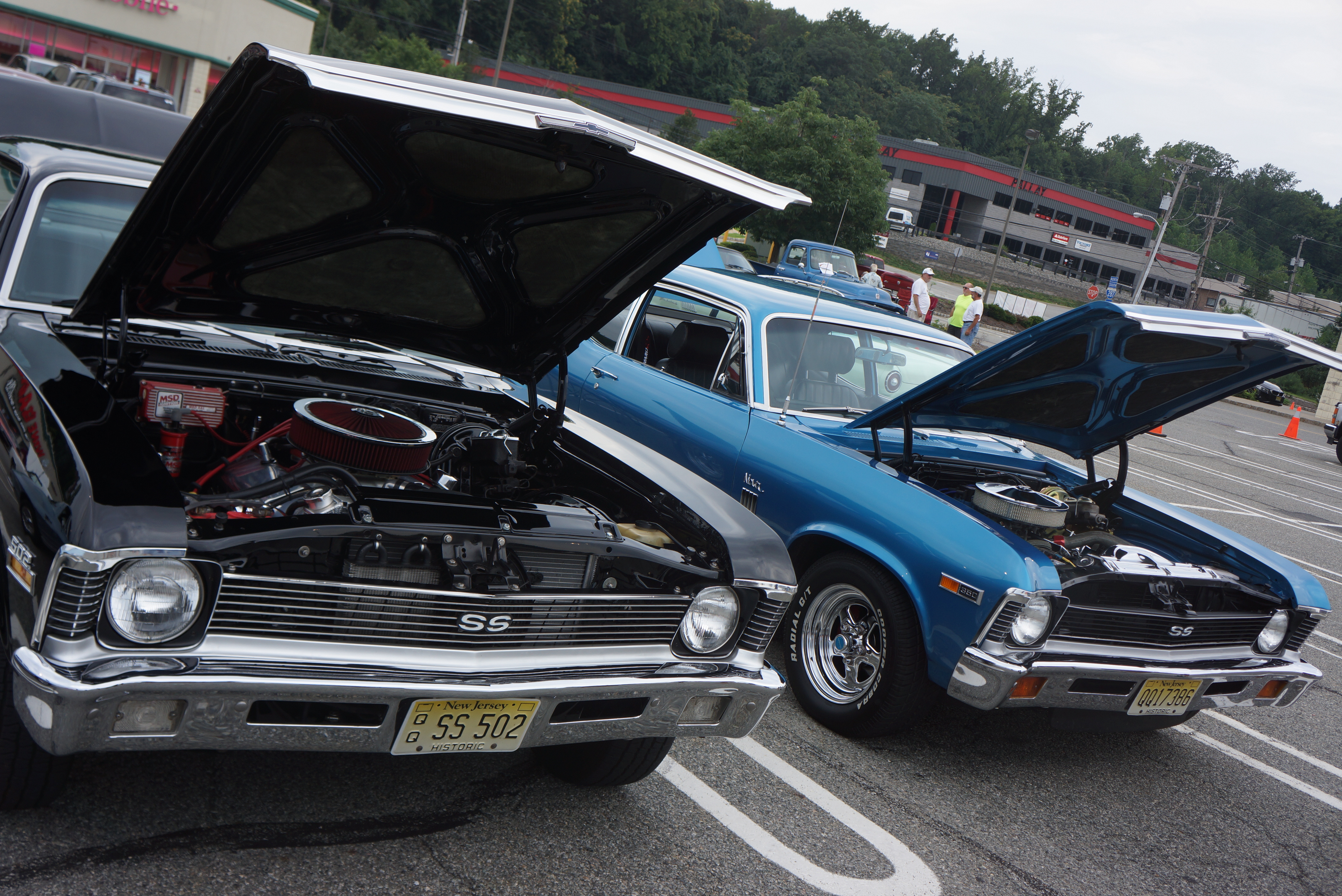
Larry’s ’72 Nova
Stevie’s heavily worked GMC pickup
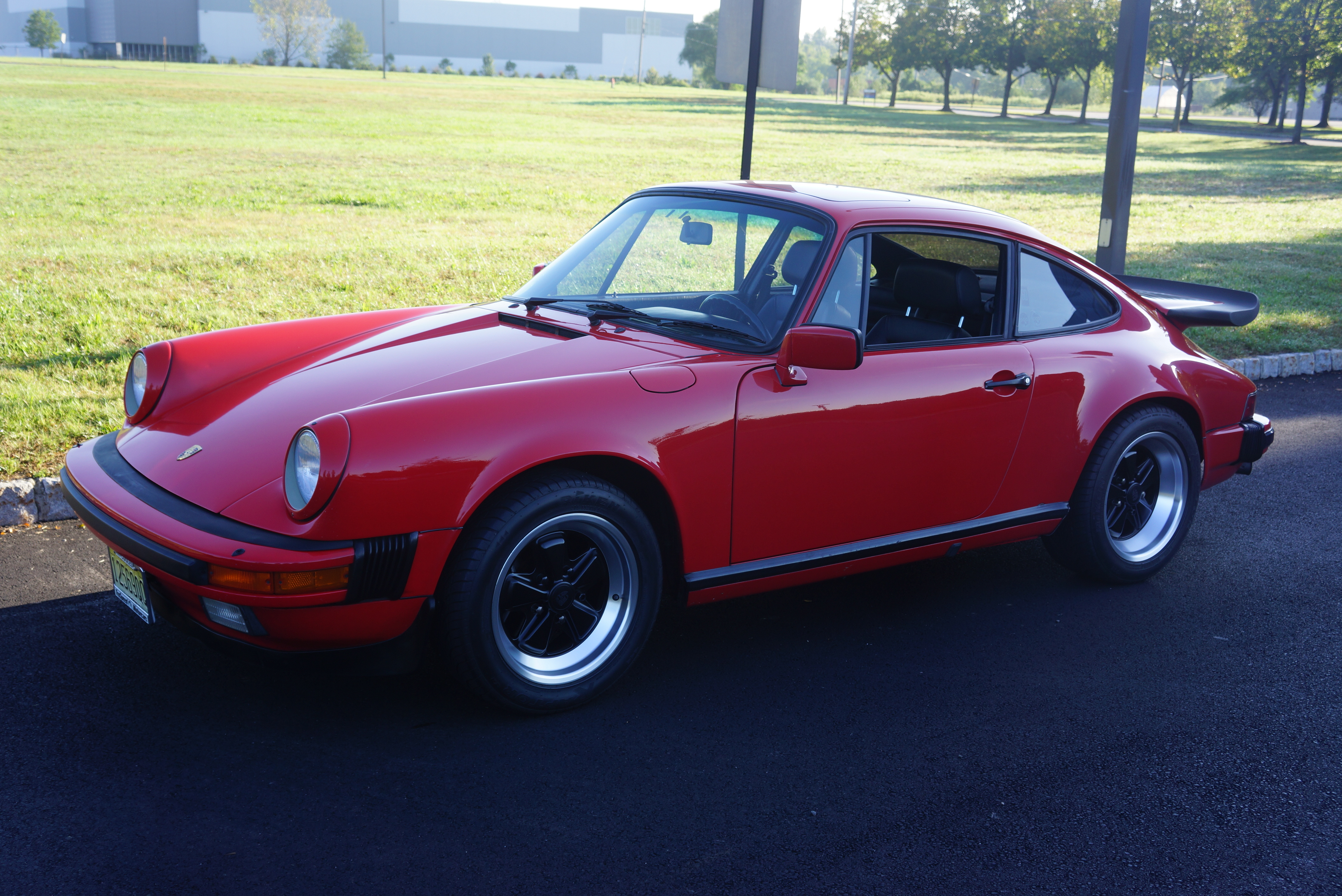
Woody’s 911
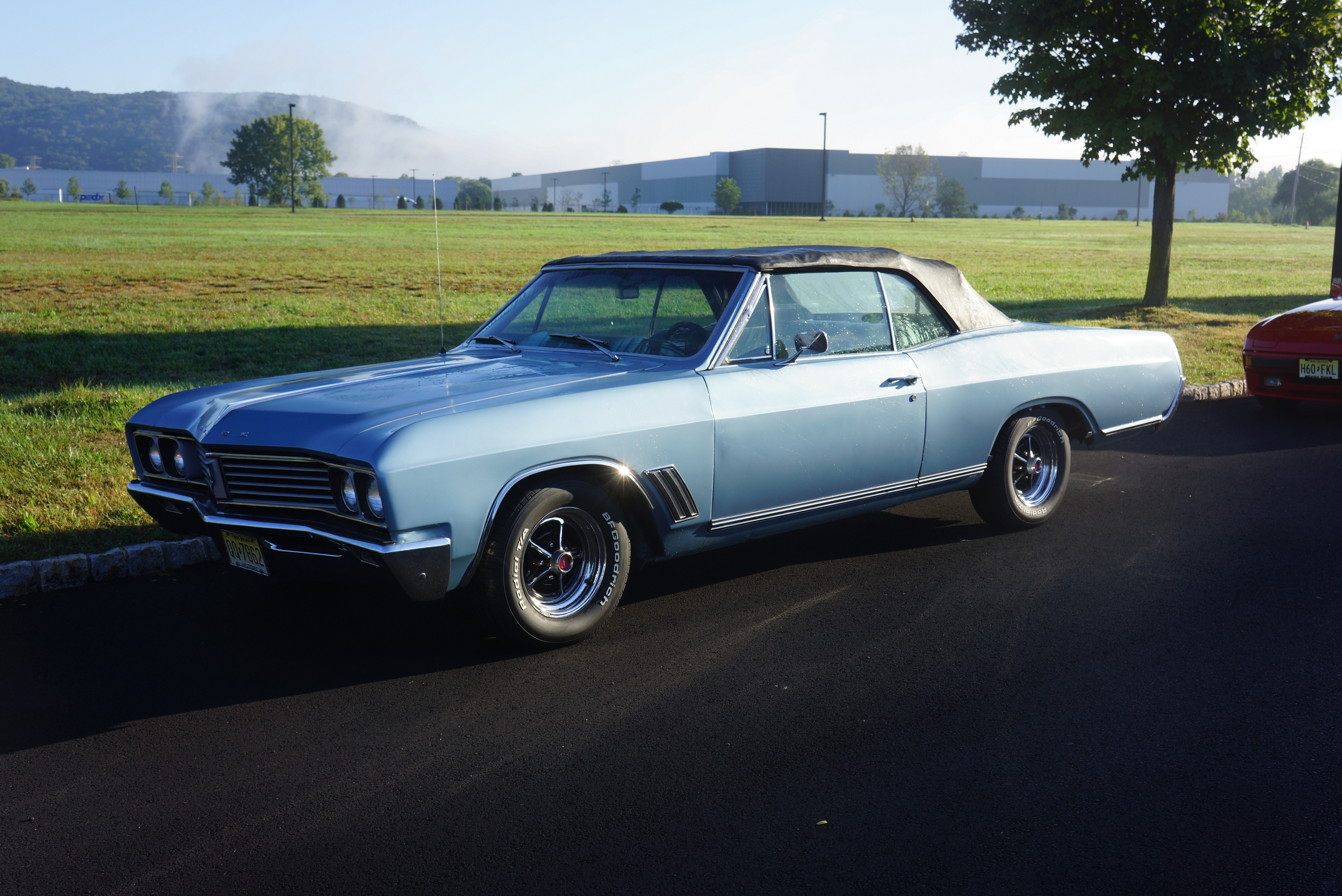
Ralphie’s ’67 Buick Skylark
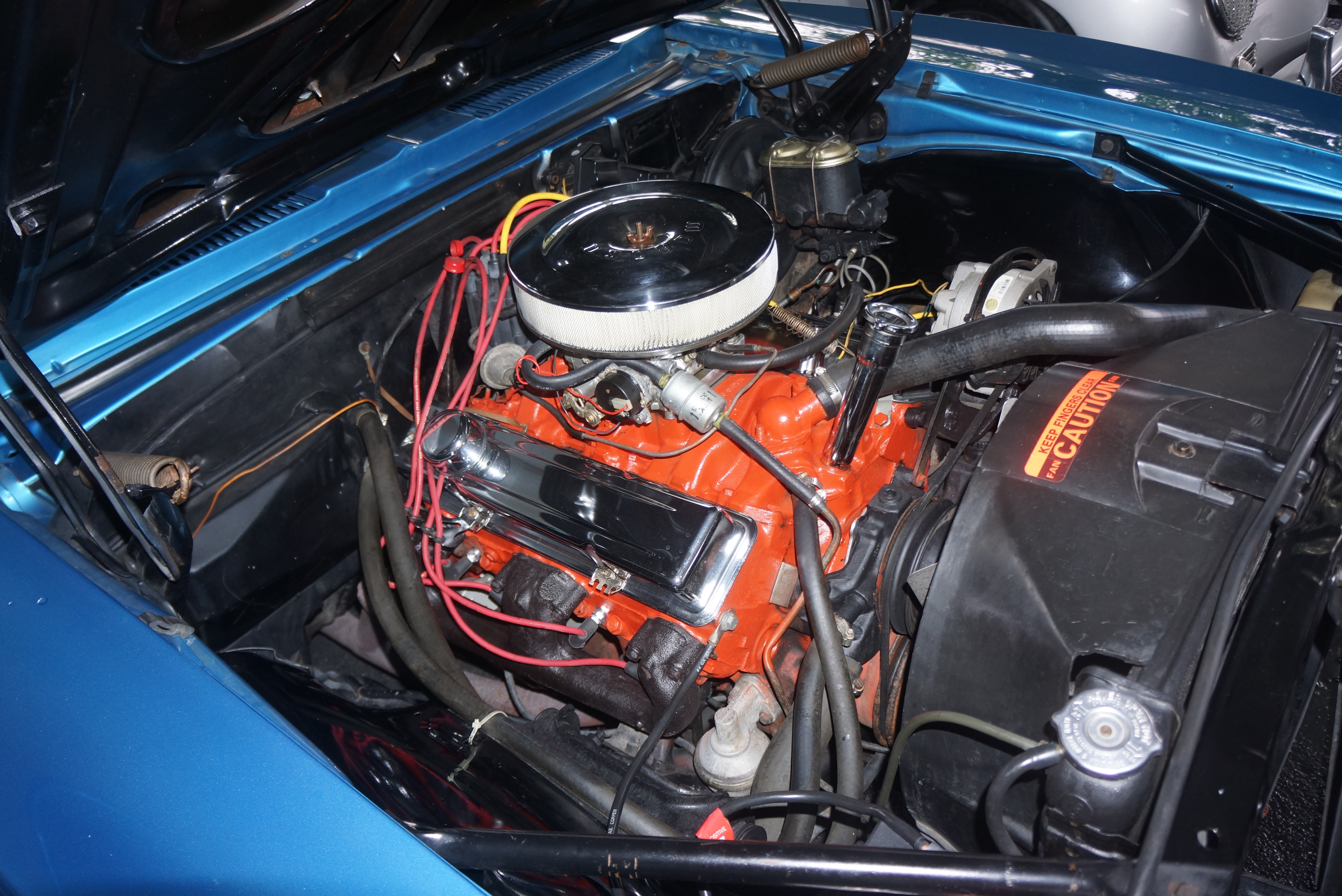
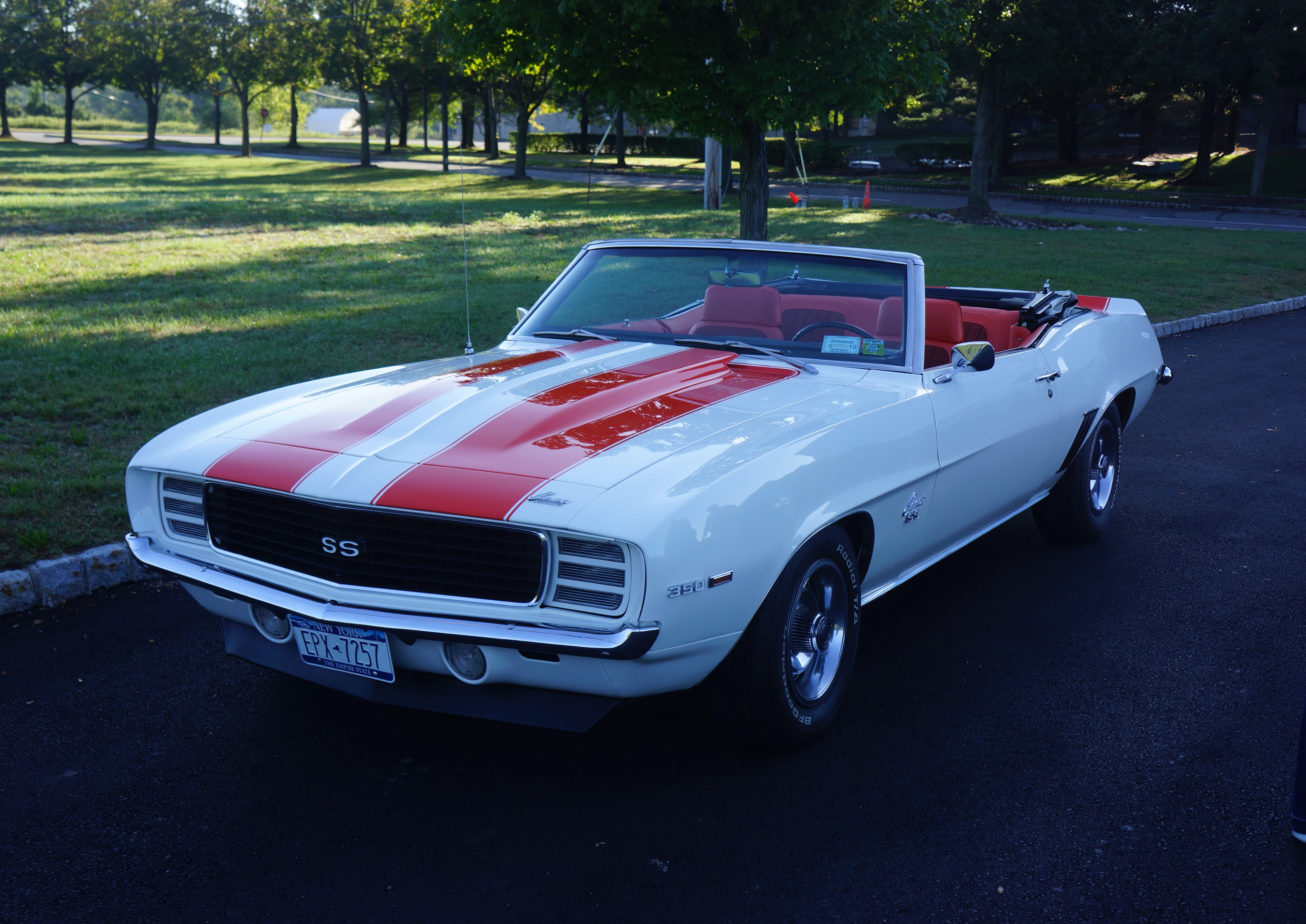
Paul’s ’69 Camaro
John’s 944
Peter’s 911
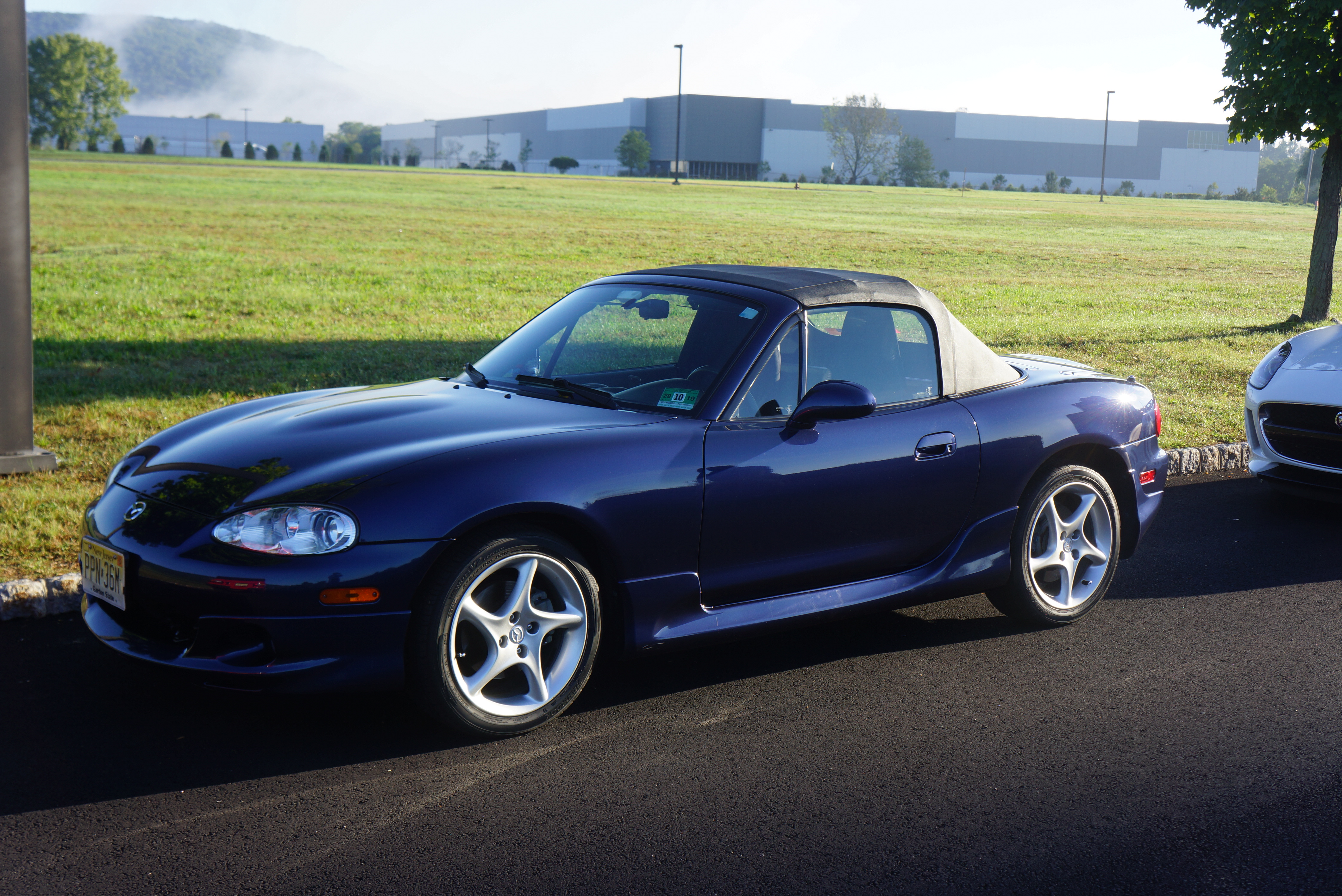
John’s 2003 Miata NB (2nd gen)
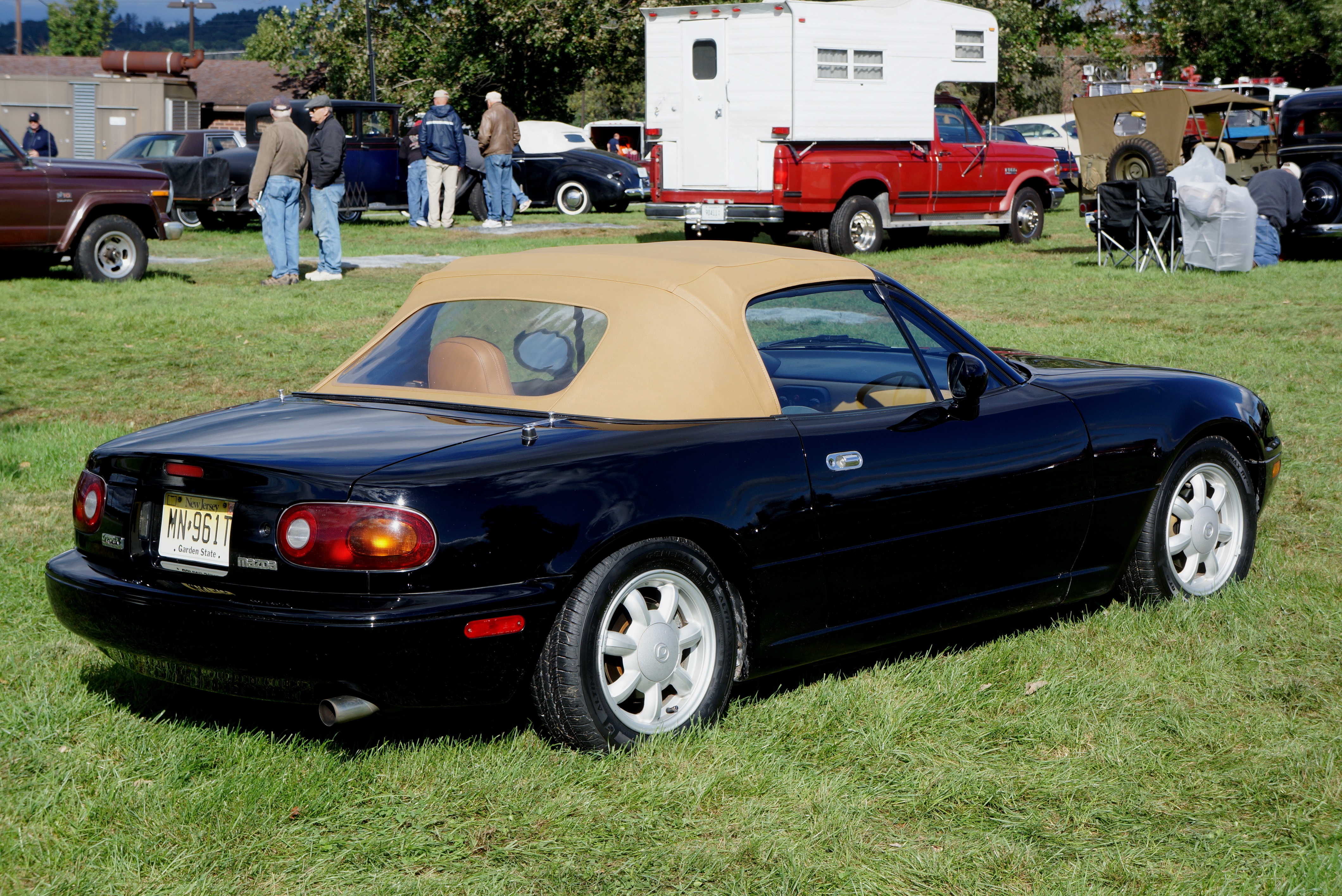
The author’s ’93 Miata NA (1st gen)
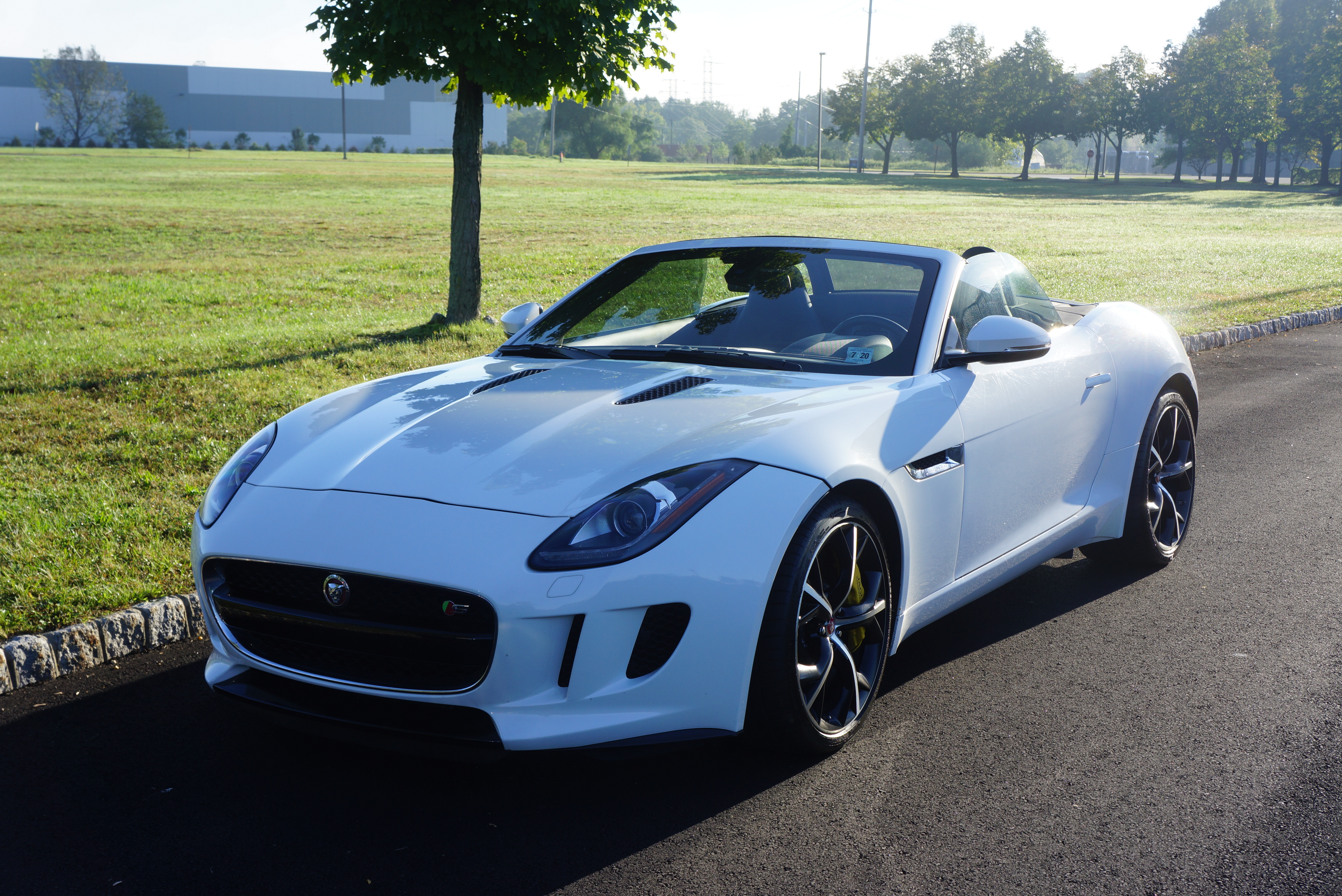
Richard L’s Jaguar F-Type
Bill’s ’39 Ford with ’40 font clip, driven by Corey
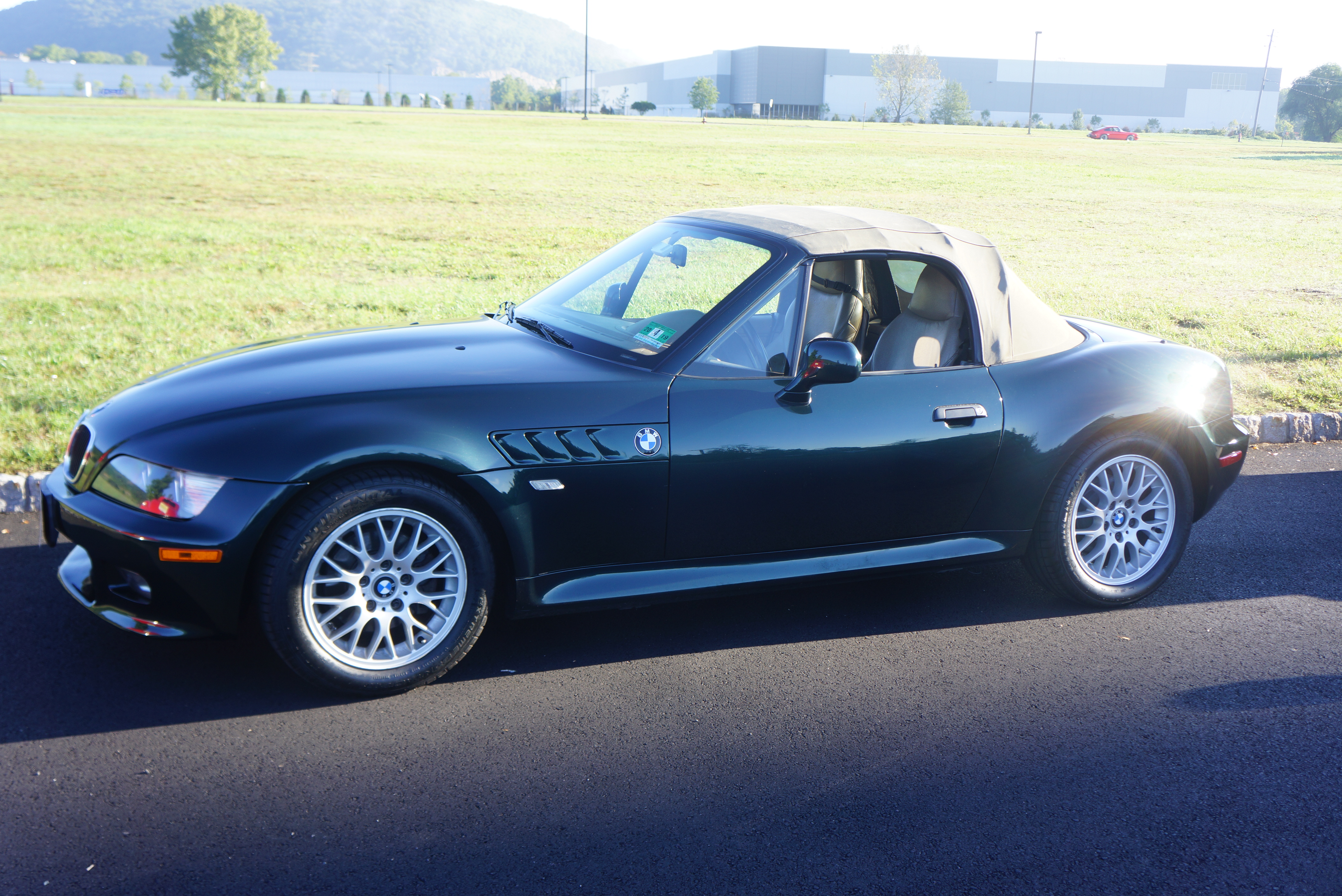
Jeff’s BMW Z3
Danny’s Porsche 944 cab
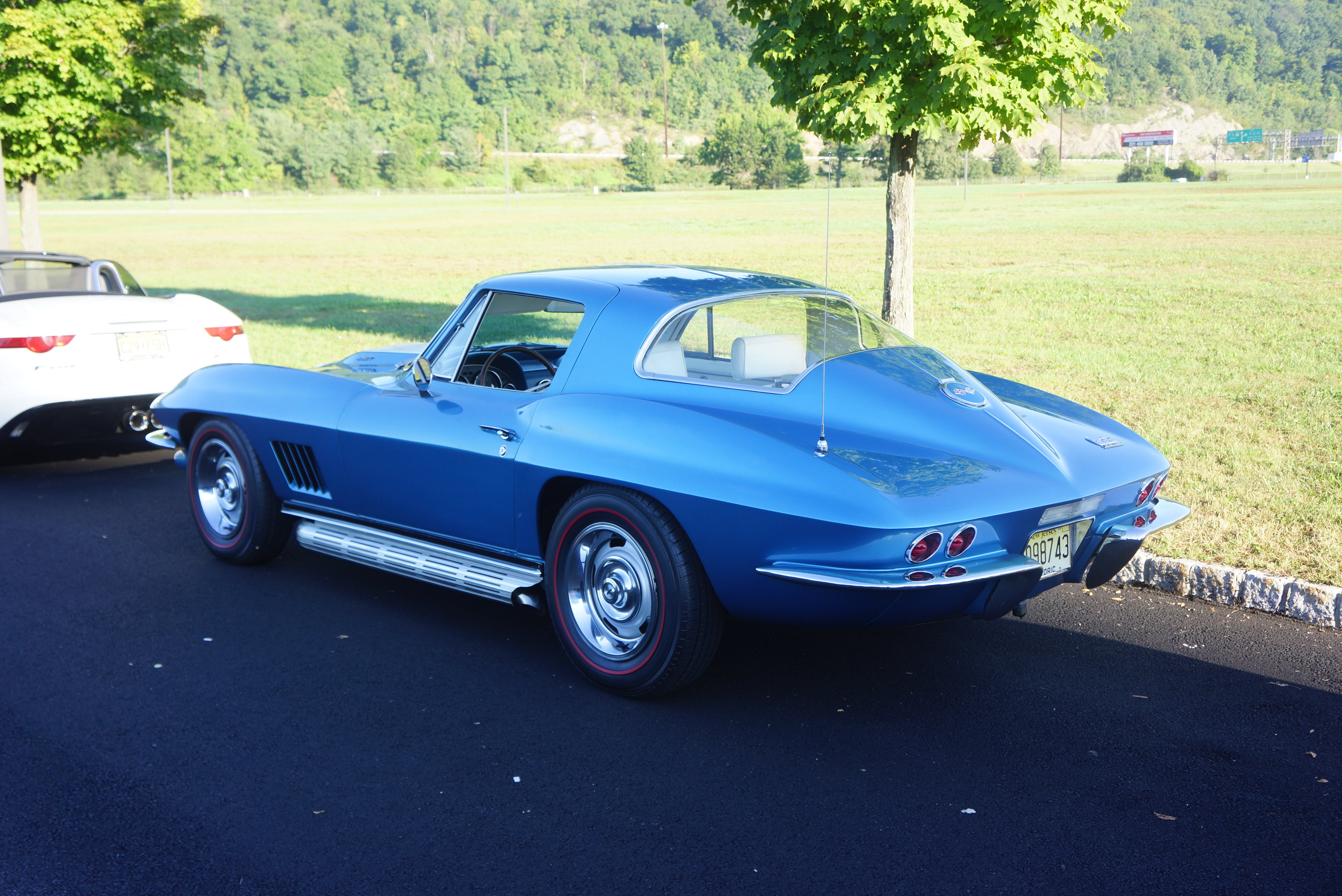
Bill’s ’67 Corvette
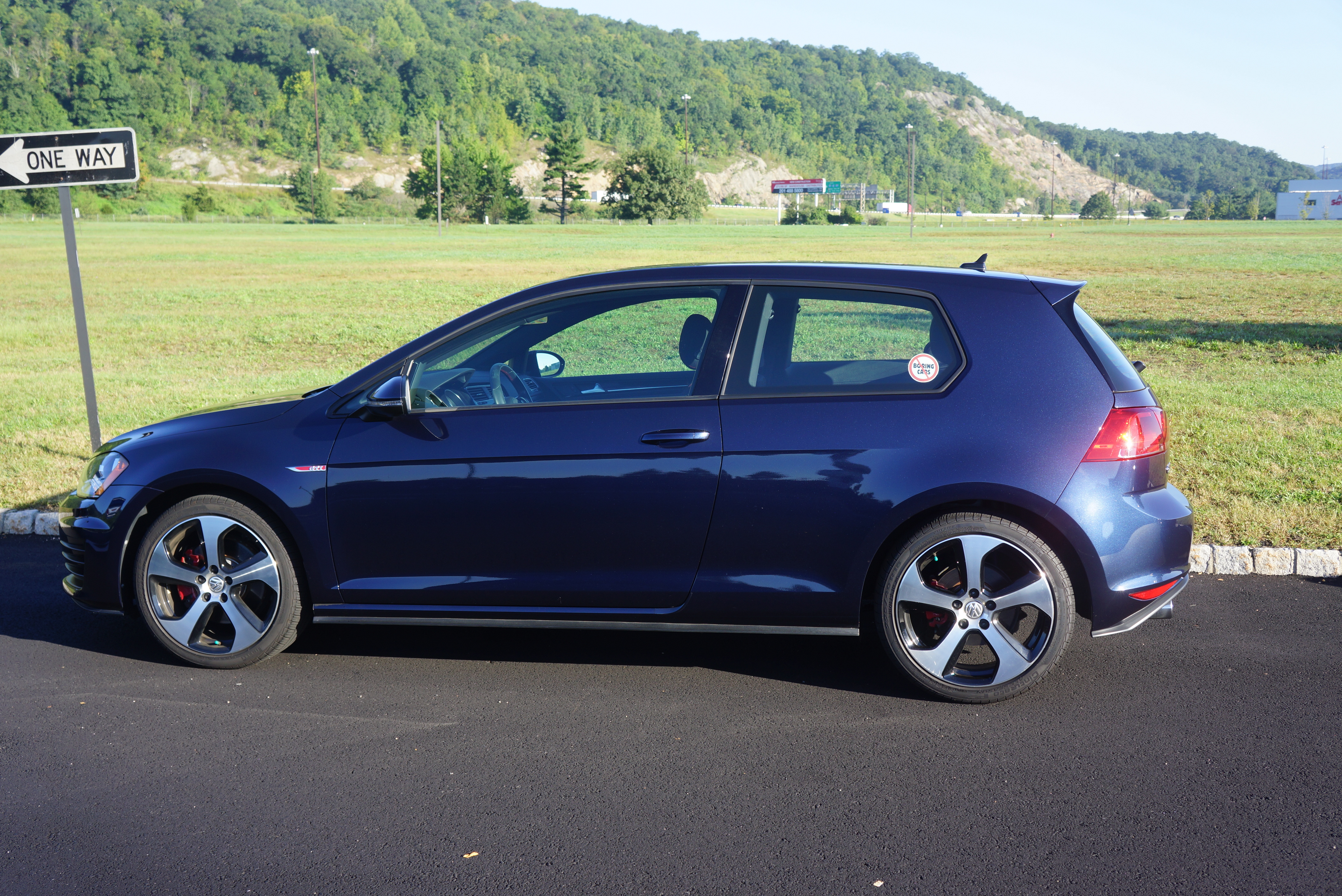
Art’s VW GTi
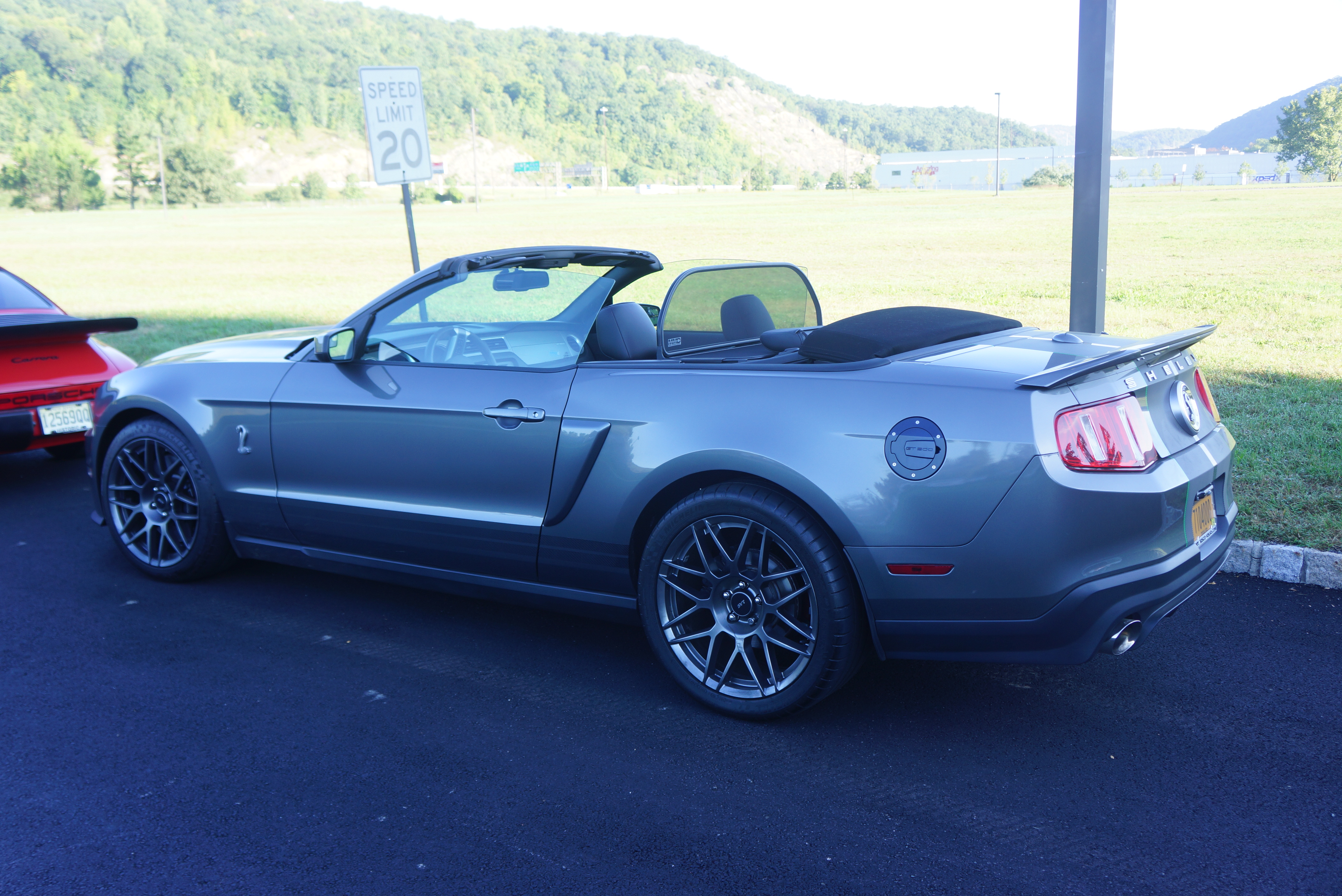
Rich S’s Shelby Mustang
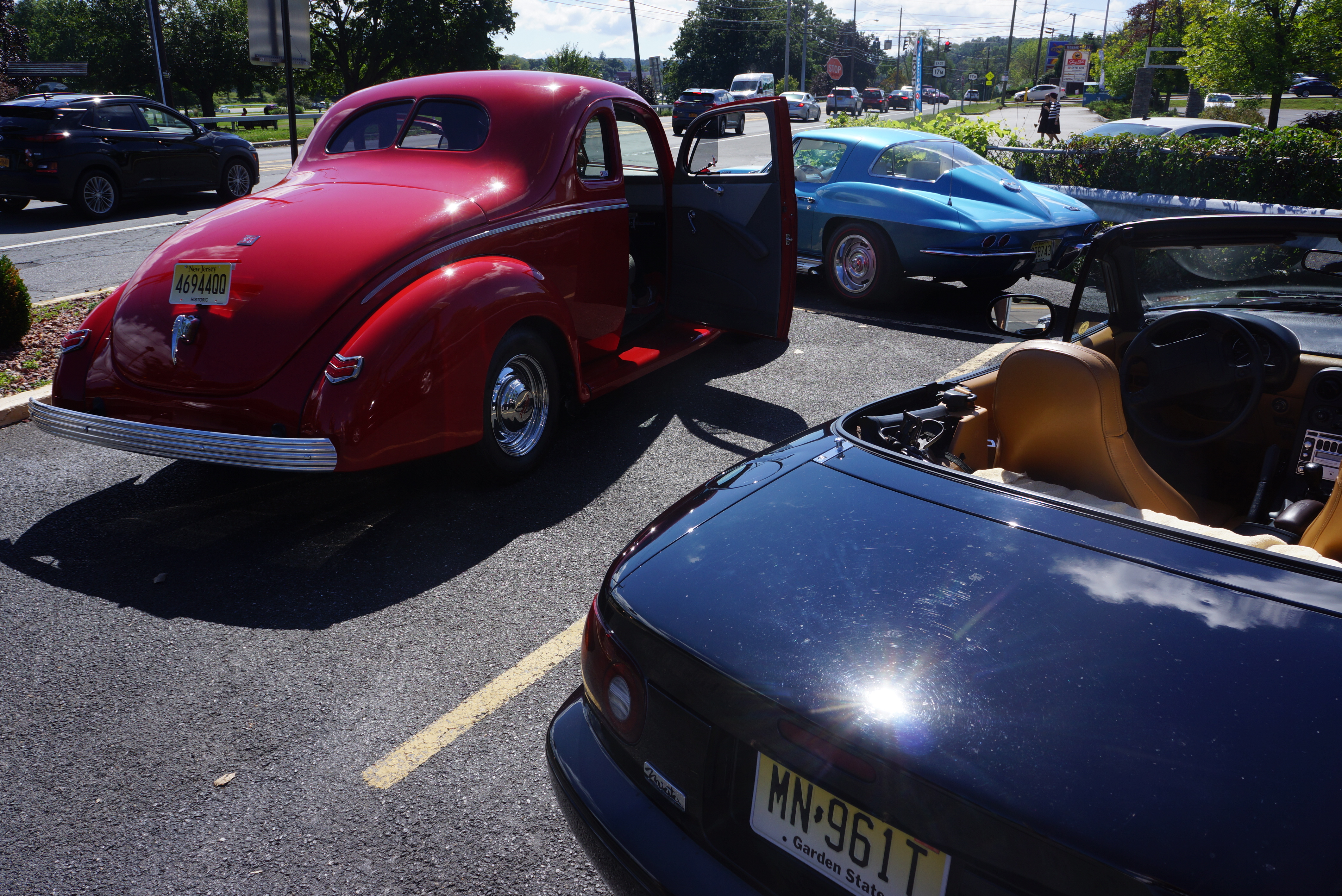
While we all did fit in the lot, it meant blocking some cars in…
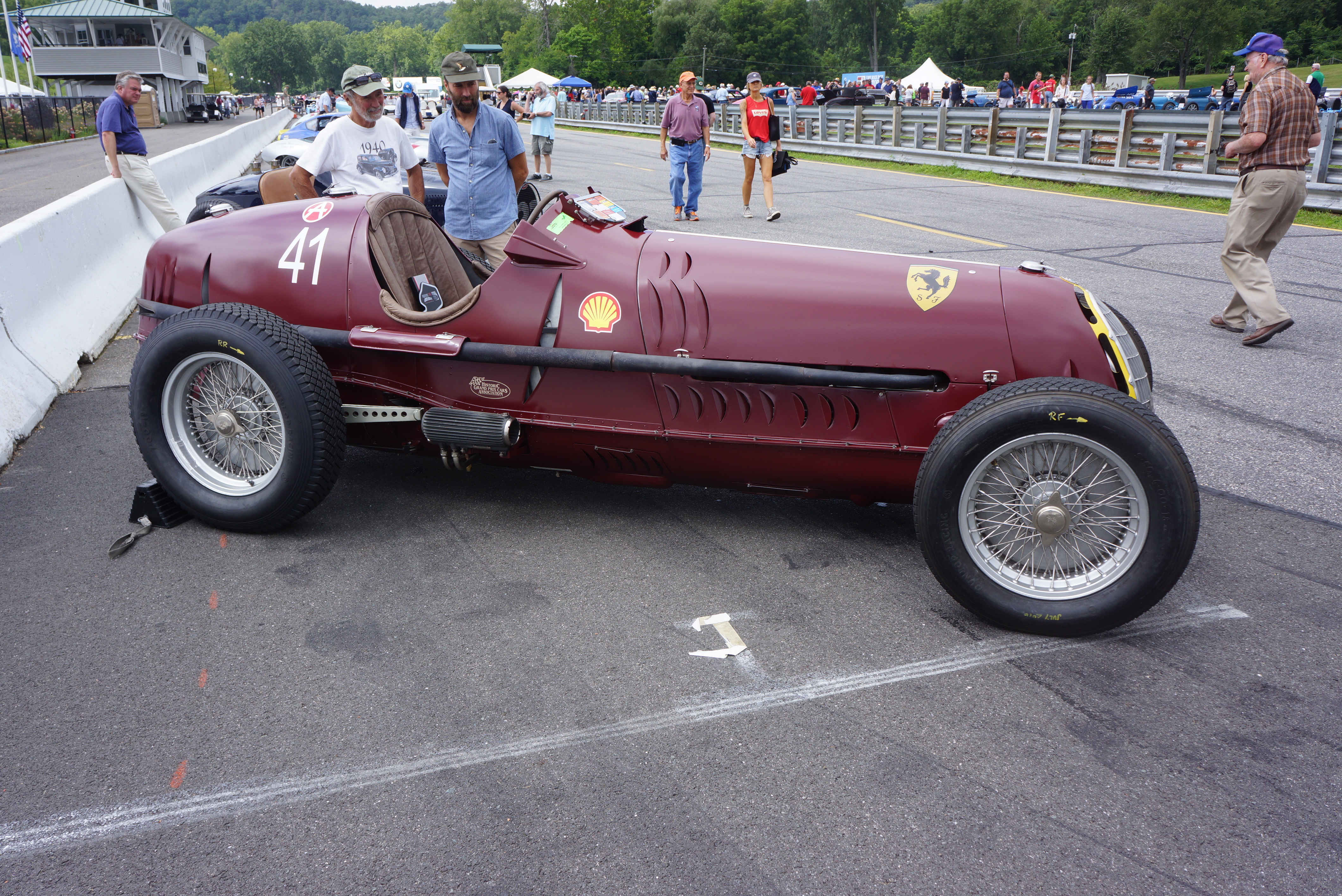
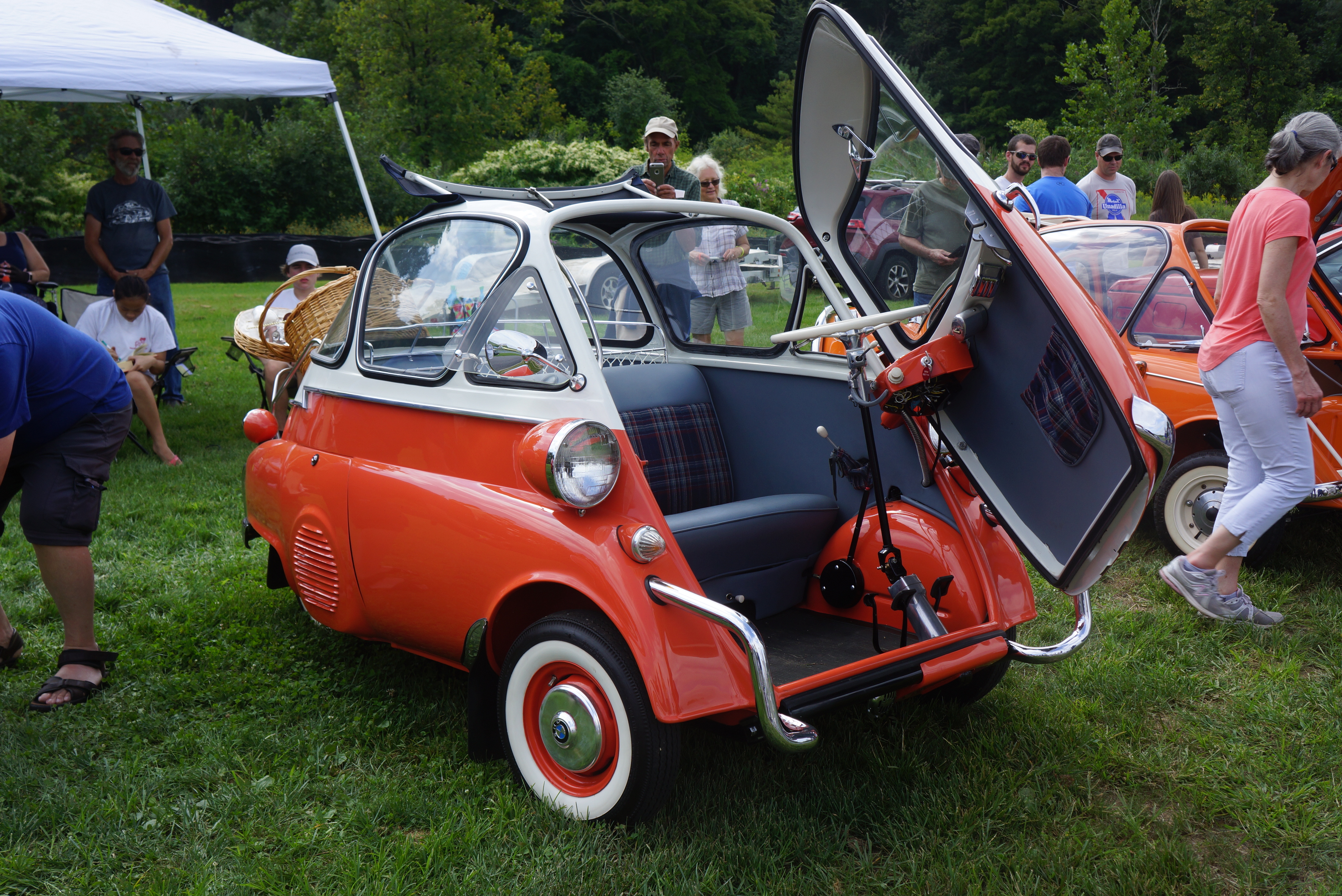
Connecticut’s Lime Rock Park held its 36th annual Historic Festival during the Labor Day weekend, running from August 30 through September 3, 2018. If you enjoy vintage racing, then Friday, Saturday, and Monday are your days to watch classic race cars battling it out around this historic track. By local ordinance, racing is not allowed on Sundays. The Festival organizers have taken advantage of that restriction by hosting their “Sunday In The Park” event, with hundreds of classic (and sometimes not-so-classic) cars arrayed along the entirety of track’s perimeter.
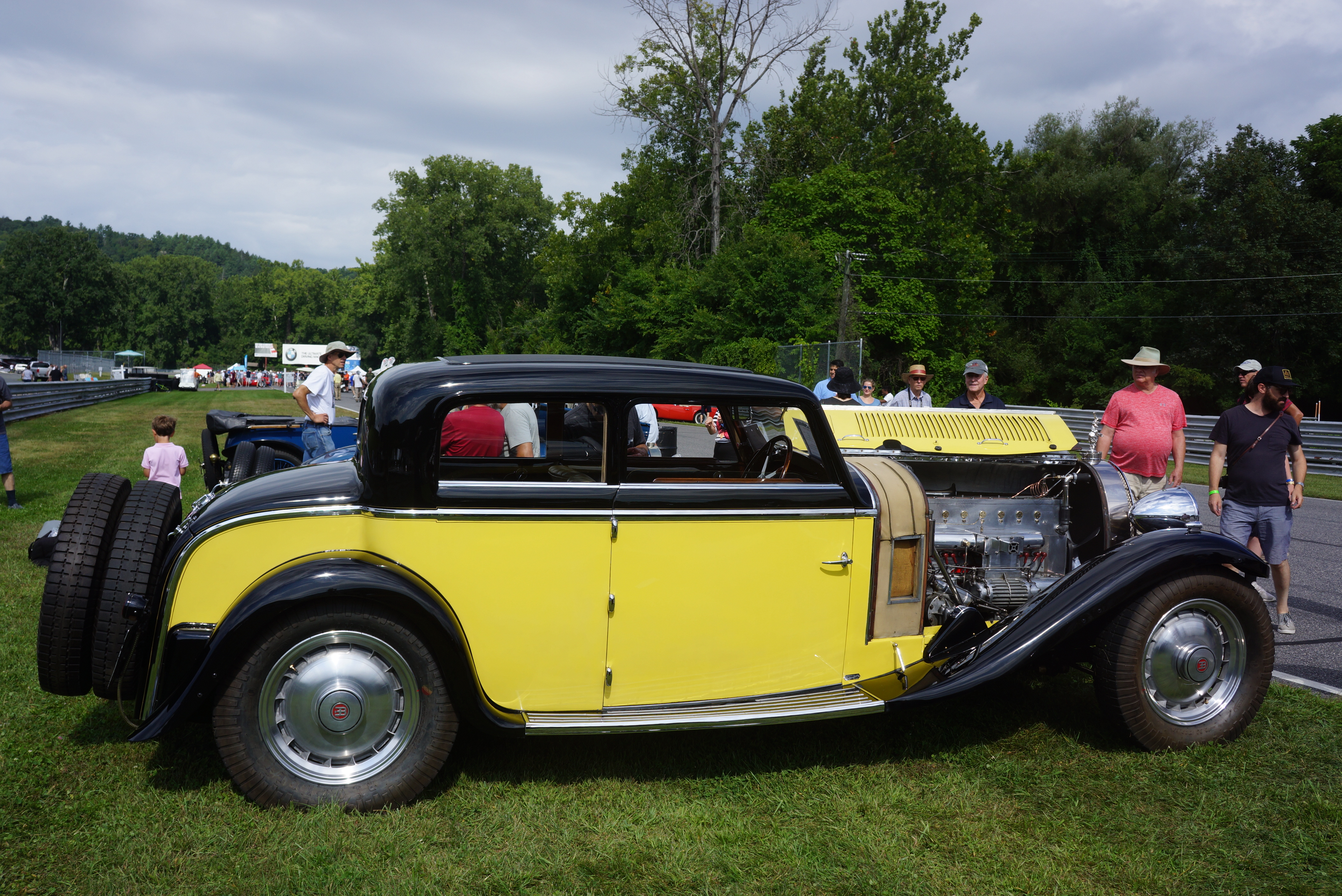
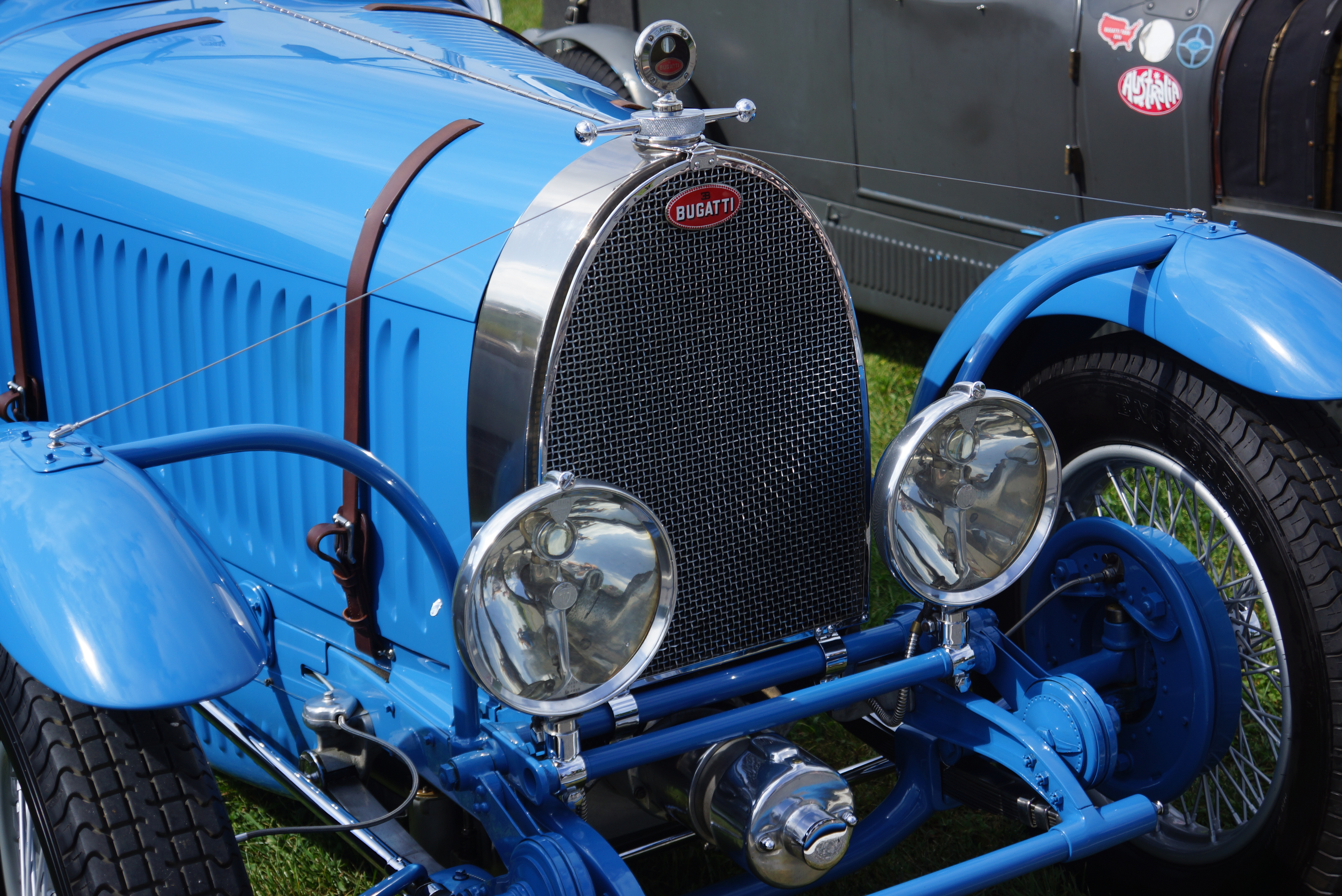
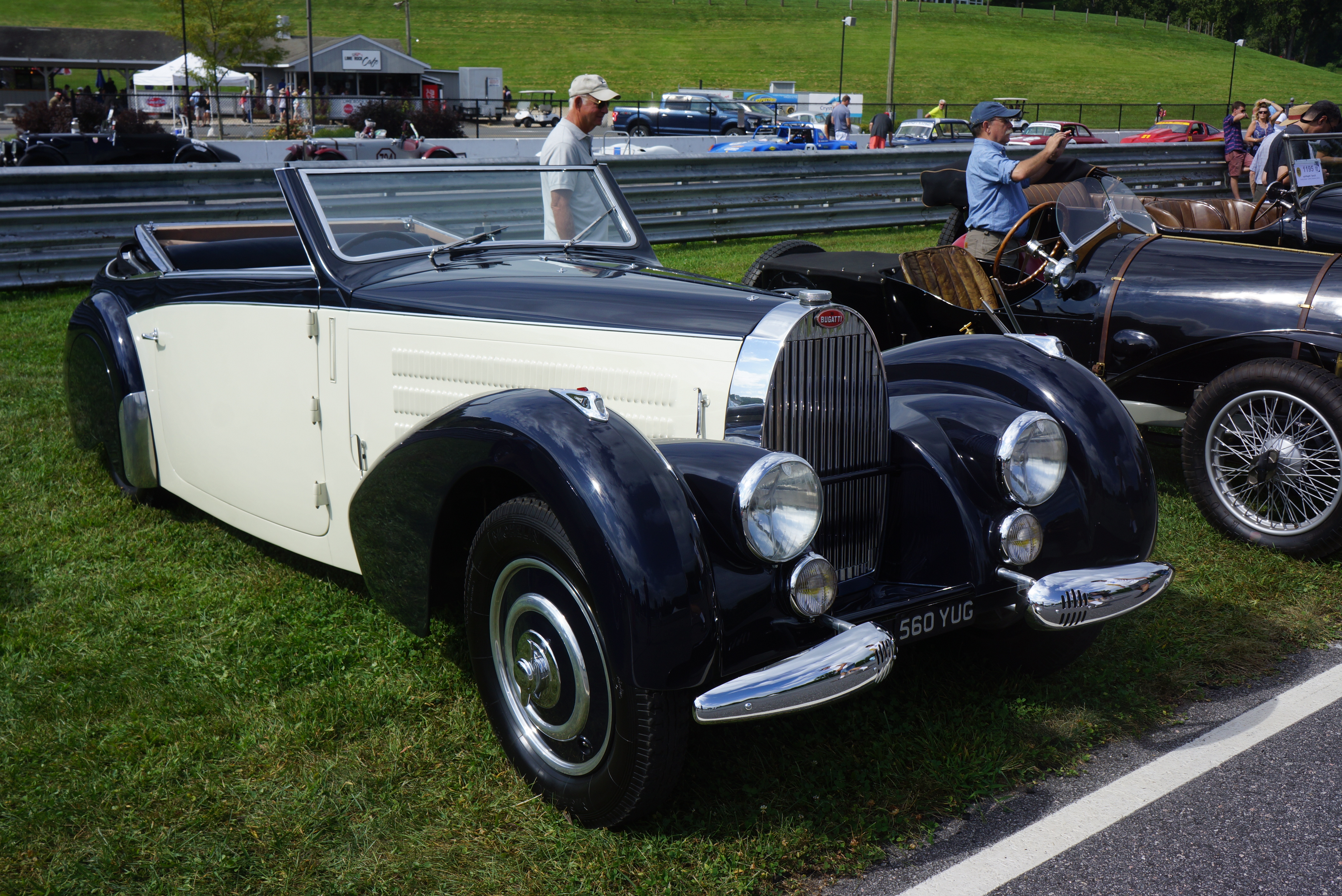
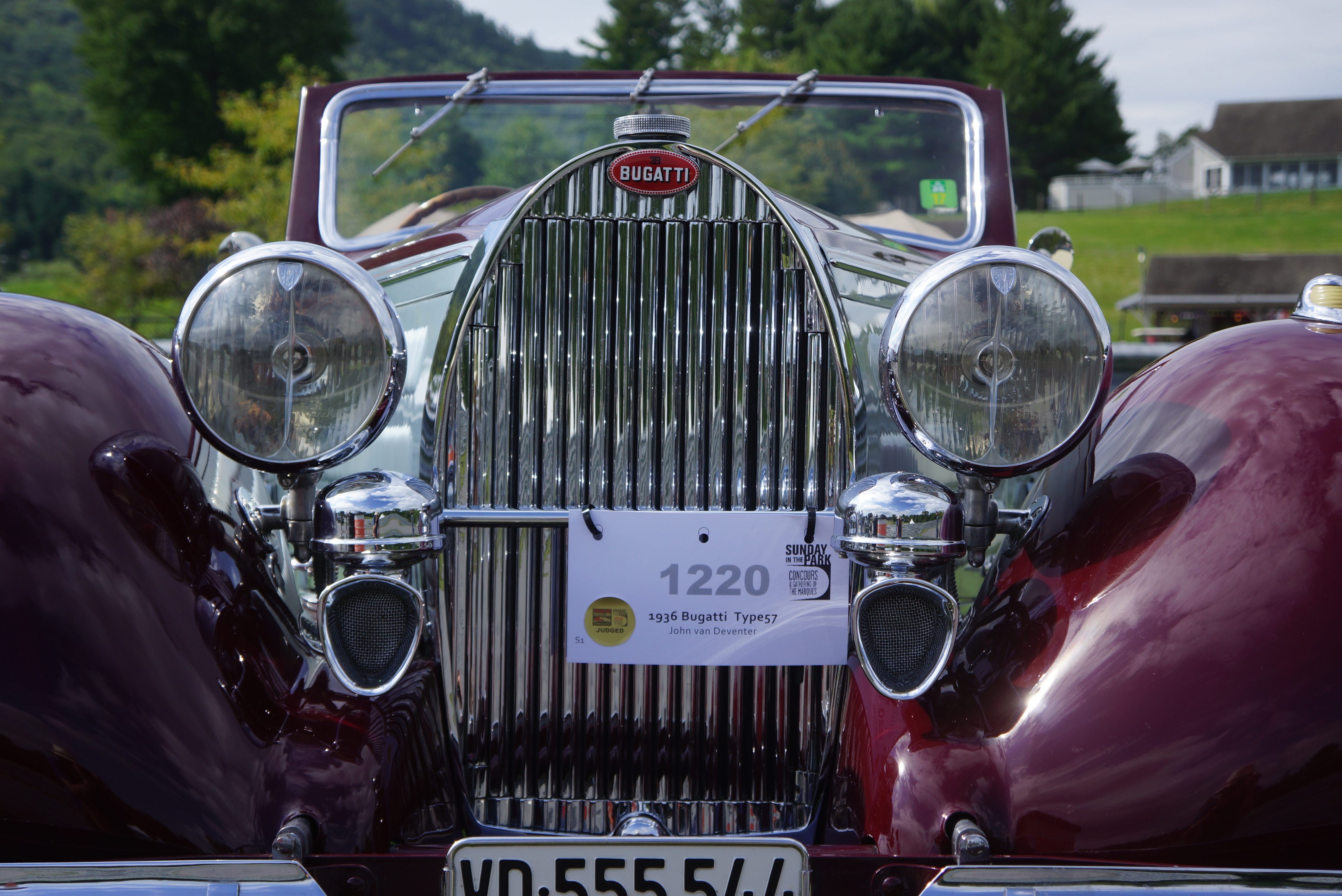
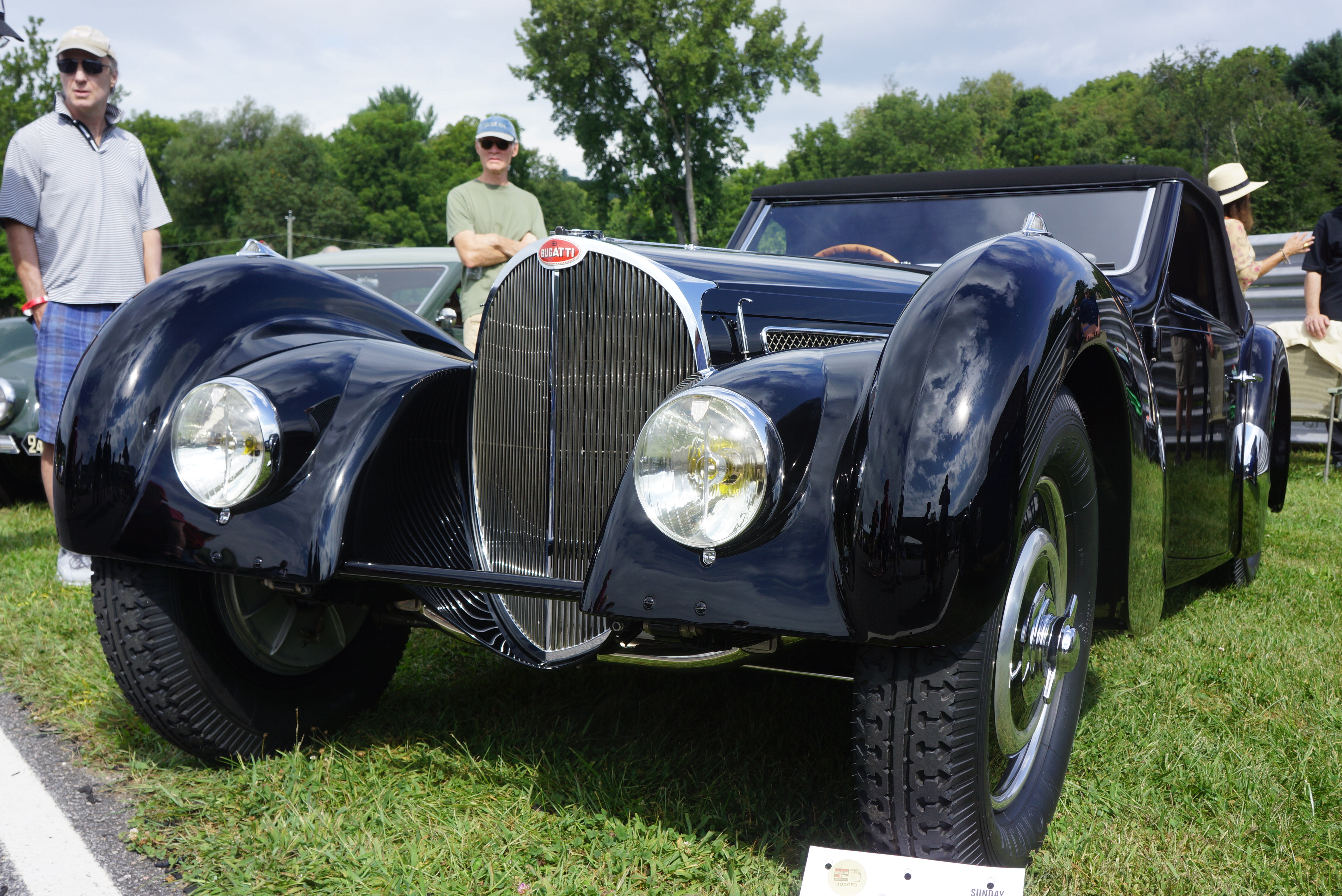
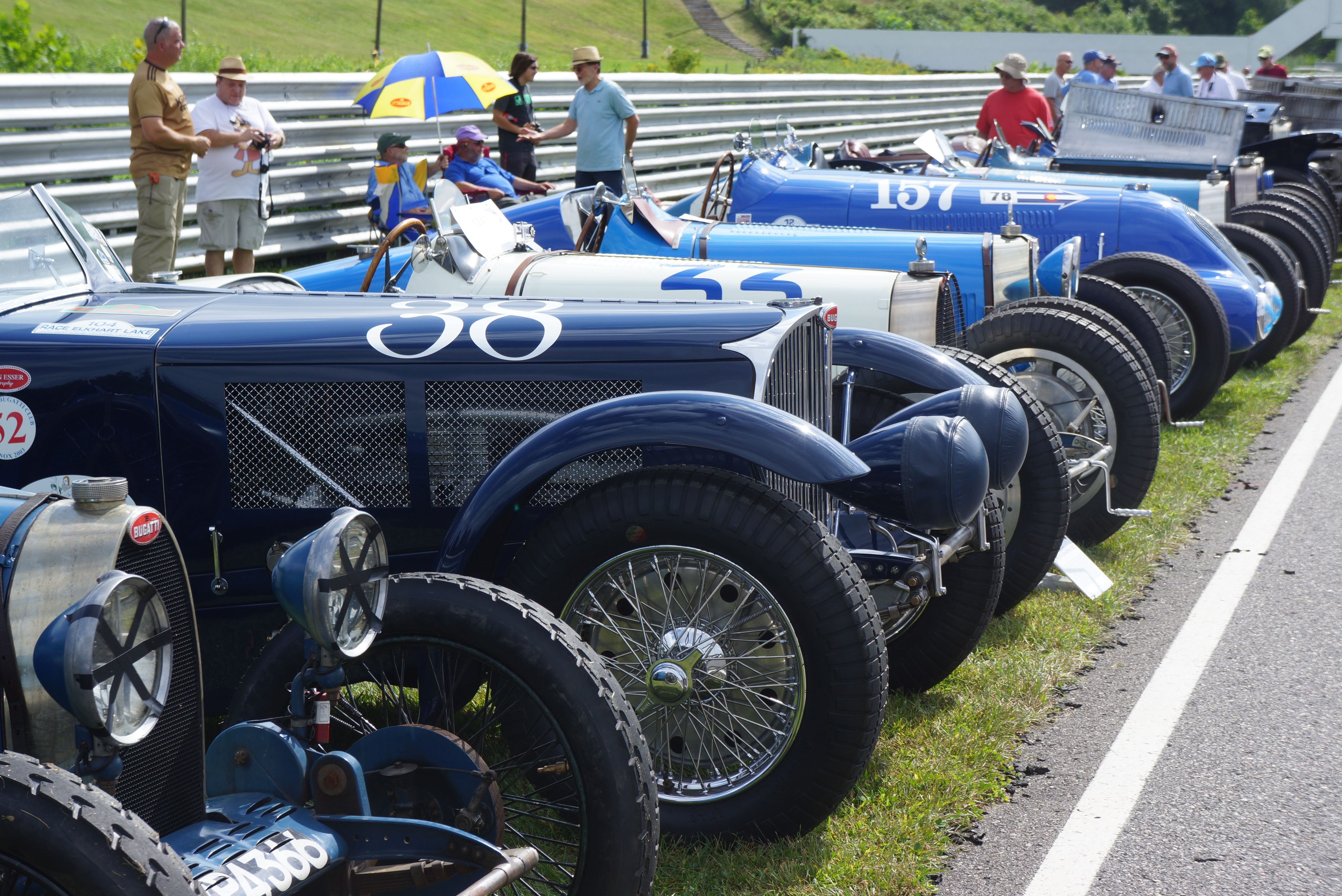
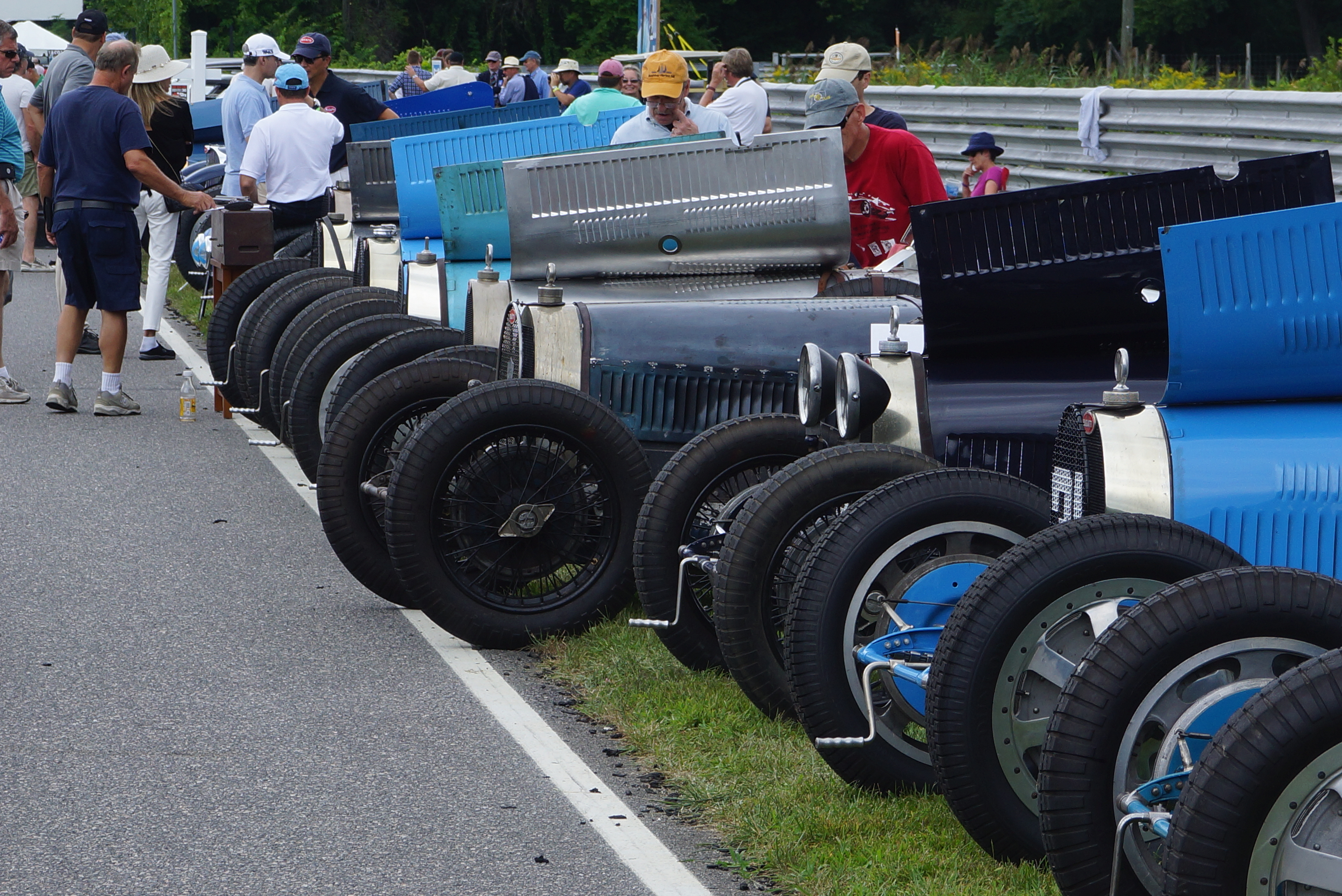
Each year there is a special featured marque, and for 2018, that marque was Bugatti. By my count, there were 70 of these famed French cars on display, a number that might be rivaled only by the former Schlumf Museum’s holdings. The strong turnout speaks to the high esteem with which Ettore’s cars are held. Many of the race cars appeared to be in original condition, while most of the road-going cars have been restored at some point. No matter, as Bugatti owners (like Bentley owners) are known to drive their cars rather than treat them like trailer queens.
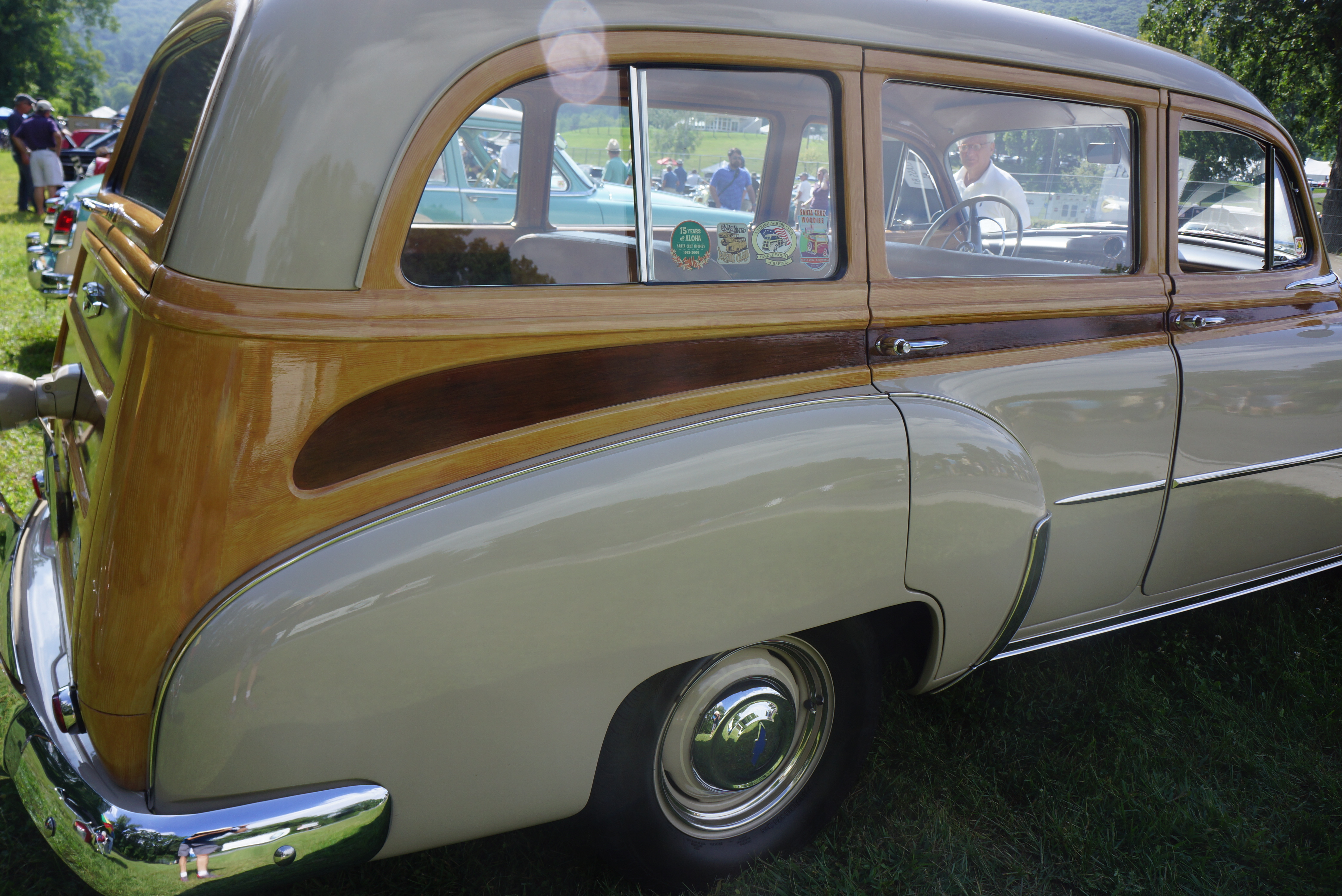
While the Bugatti display bordered on overwhelming, there were plenty of other vehicles on the field to draw one’s attention. This show tends to attract primarily European cars, and the British, German, Italian, and Swedish turnout did not disappoint. A relatively new feature at Lime Rock is the so-called “Gathering of the Marques”. Open classes, sometimes labeled by Country of Origin and sometimes specified by make and model, are created, and owners are invited to park their vehicles on the track.
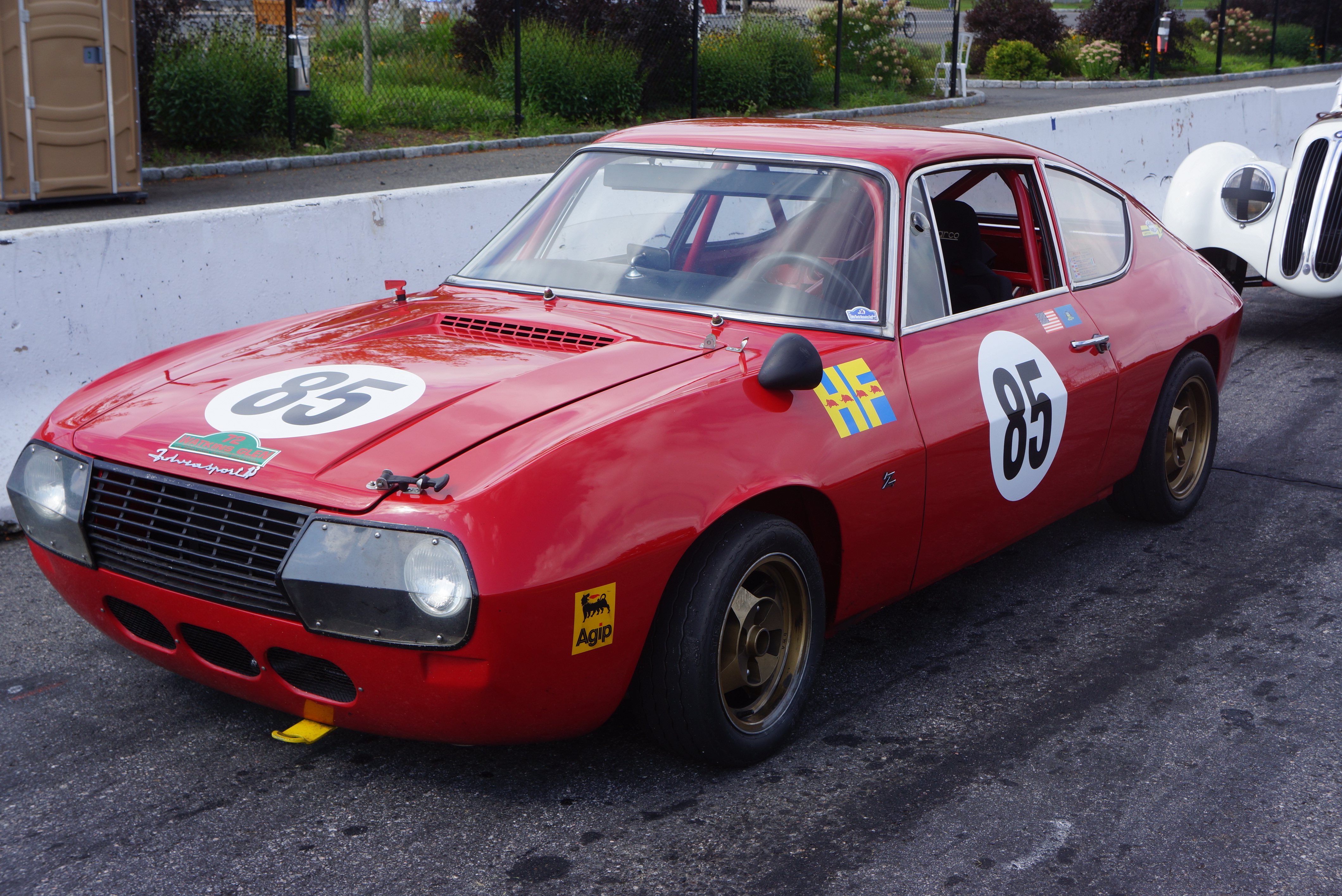
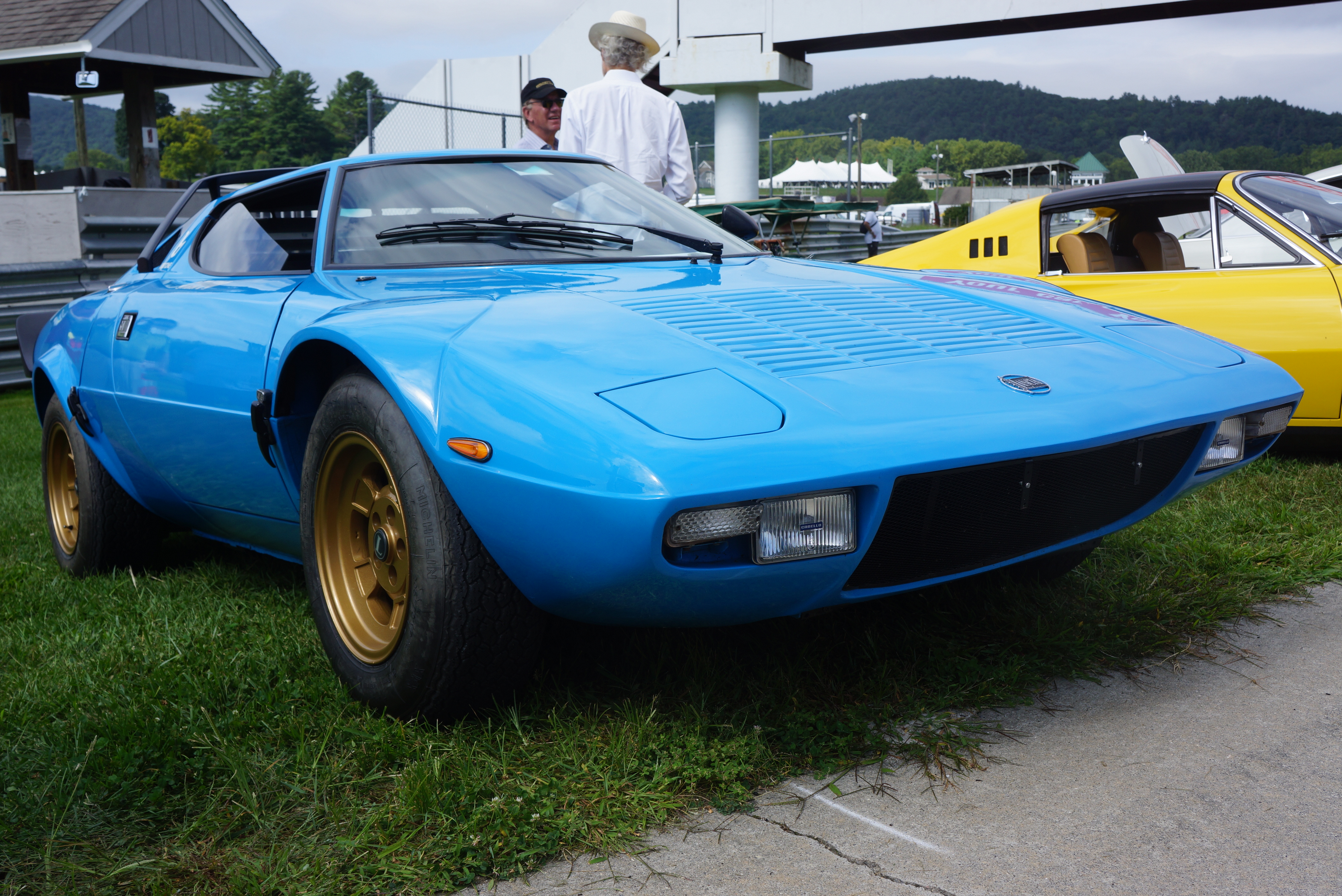
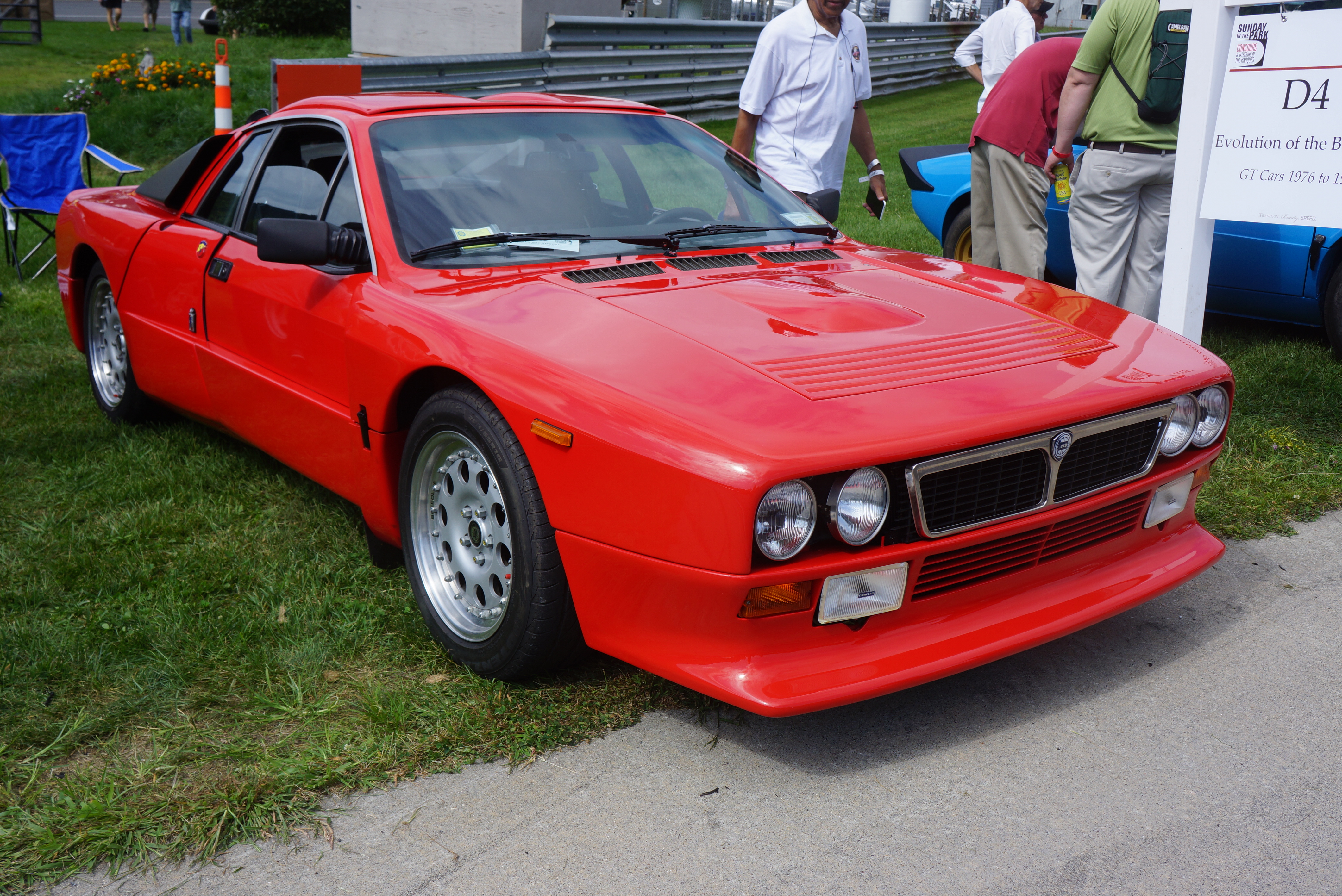
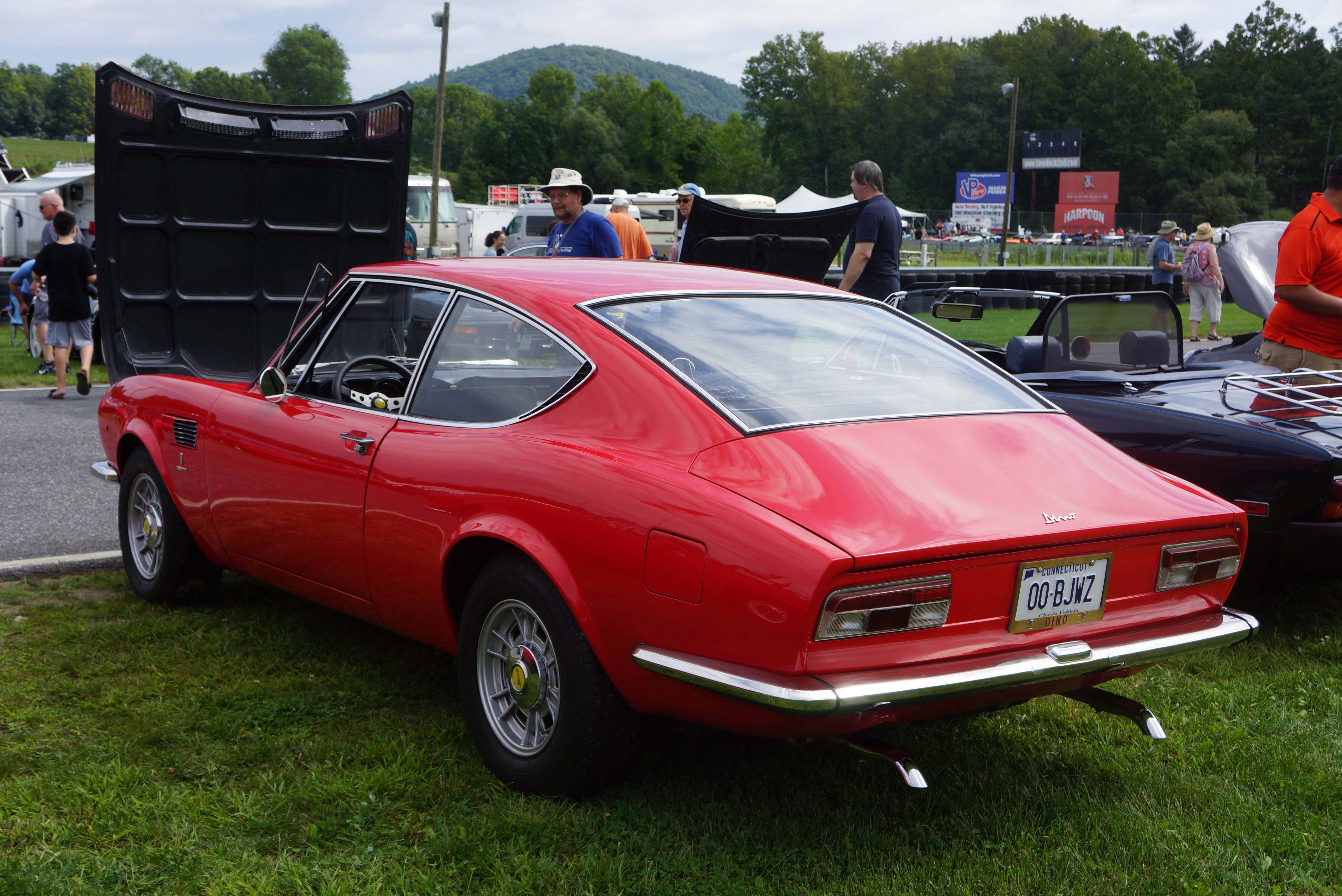
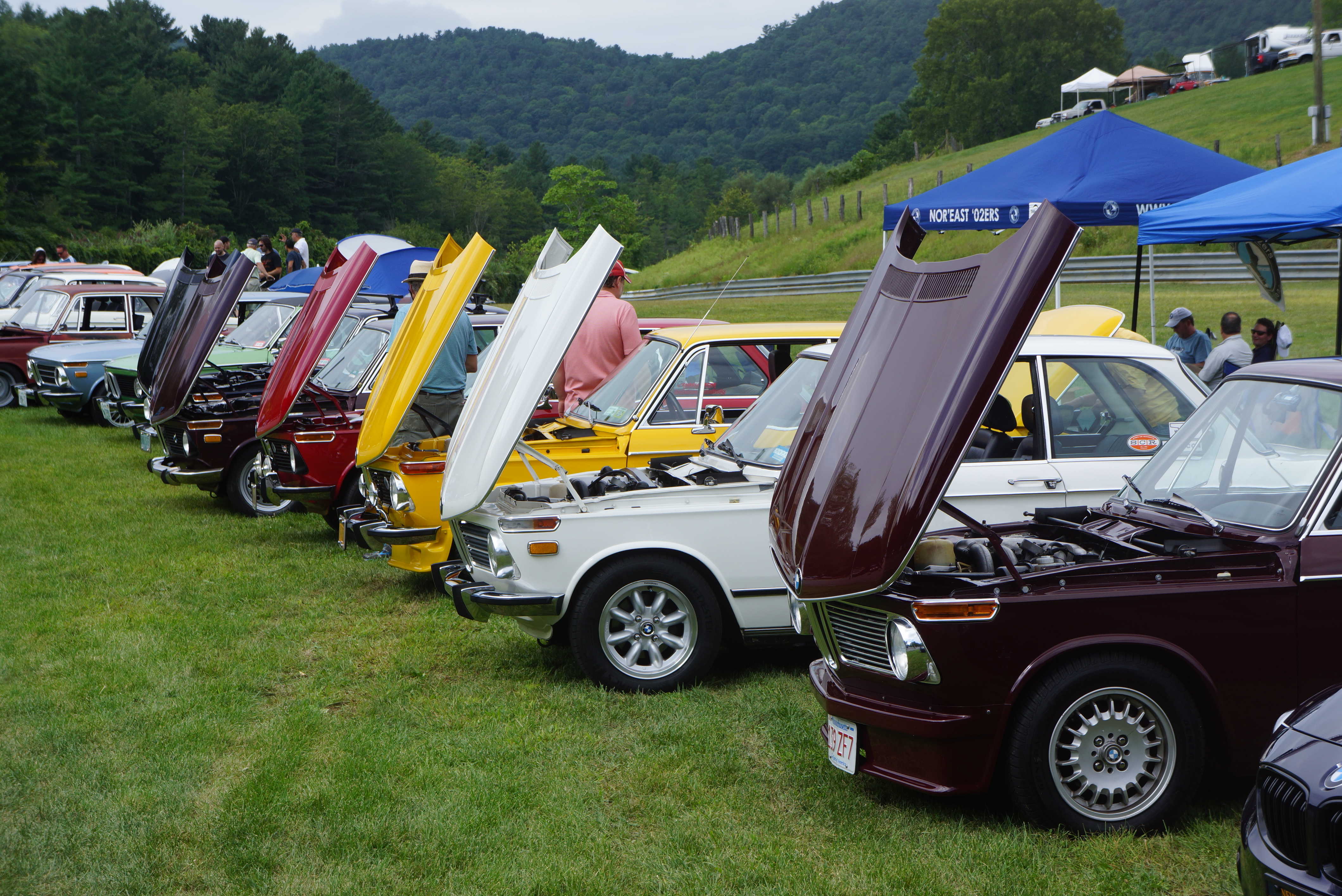
The Gathering of the Marques attracted particularly large volumes of BMWs (especially the 2002 model), Porsches (especially 911s), Mazda Miatas, plus the cars of Sweden, Great Britain, and Italy. (Where else but at Lime Rock would a fan of Italian cars such as myself see an Alfa 1900, Fiat Dino Coupe, and Lancia Stratos all on the same day?) A smaller but significant selection of domestic iron provided a nice contrast to the European cars.
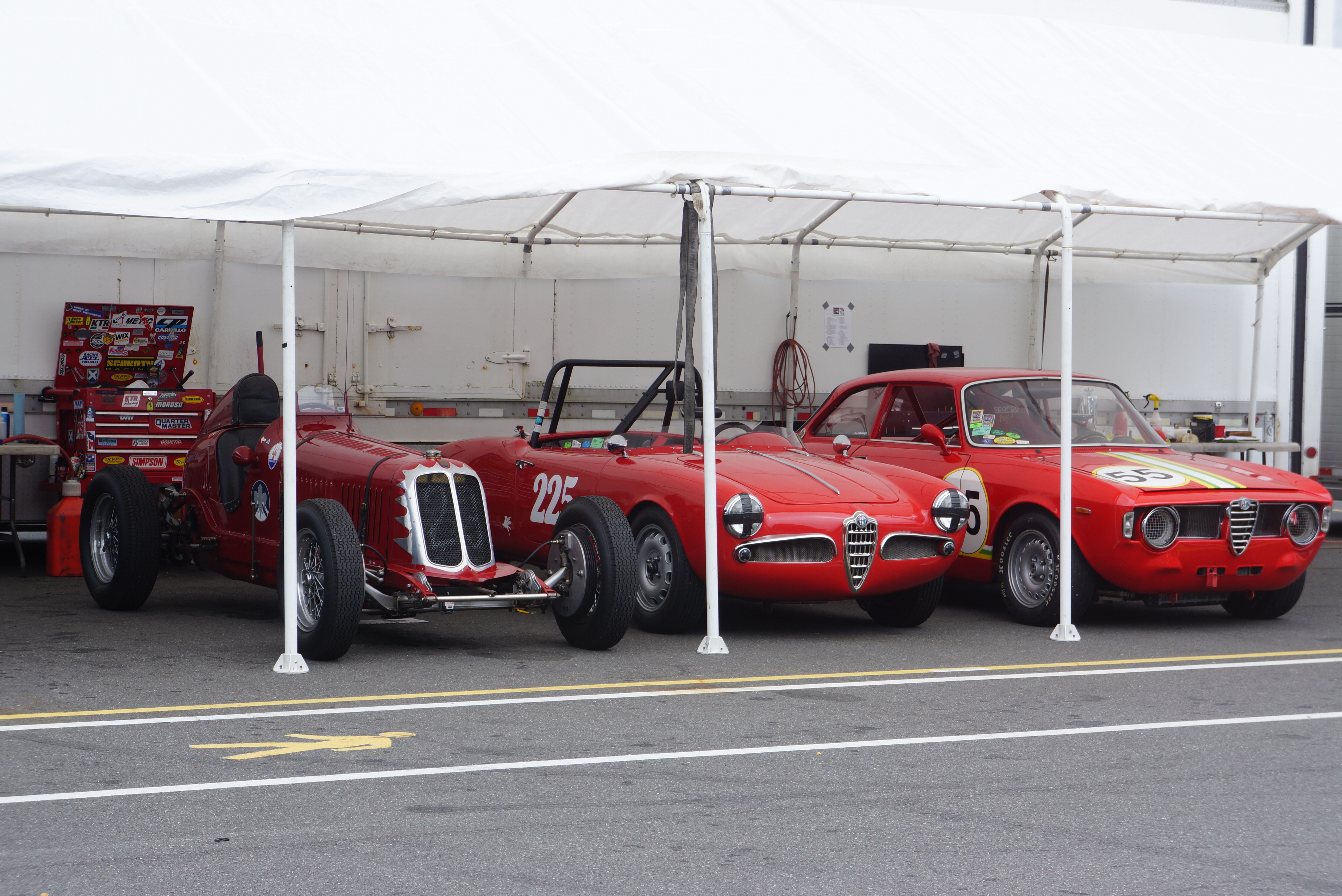
The flea market area which used to exist near the start of the straightaway has all but disappeared, but a few vendors had interesting cars for sale, at what appeared to be reasonable prices. And let’s not forget that the paddocks are open to the public on Sunday, so race vehicles otherwise not on display can be ogled as part of the entertainment.
The threatened rain showers never materialized; in fact, the temps remained reasonable, staying in the high 70s/low 80s. Anything would have been better than last year’s deluge. It’s a three-hour one-way drive for me, but the quality and variety of offerings has drawn me back almost every Labor Day weekend for the past 25+ years. The track’s setting, nestled in a valley in the Berkshire Mountains, only adds to the ambience. The Lime Rock Fall Historic Festival is a must-see event on the calendar for auto enthusiasts in the Northeast.
Click on the photos to enable full-screen view!
BUGATTIS:
ITALIAN:
Fiat Abarth Double Bubble
1955 Alfa Romeo 1900 (for sale for $395,000)
Lancia Fulvia Zagato! Here’s looking at you, Lenny!
Lancia Appia four-door pillarless sedan
1974 Lancia Stratos Stradale
1983 Lancia Rally 037 Stradale
Alfa Romeo Zagato GT Junior
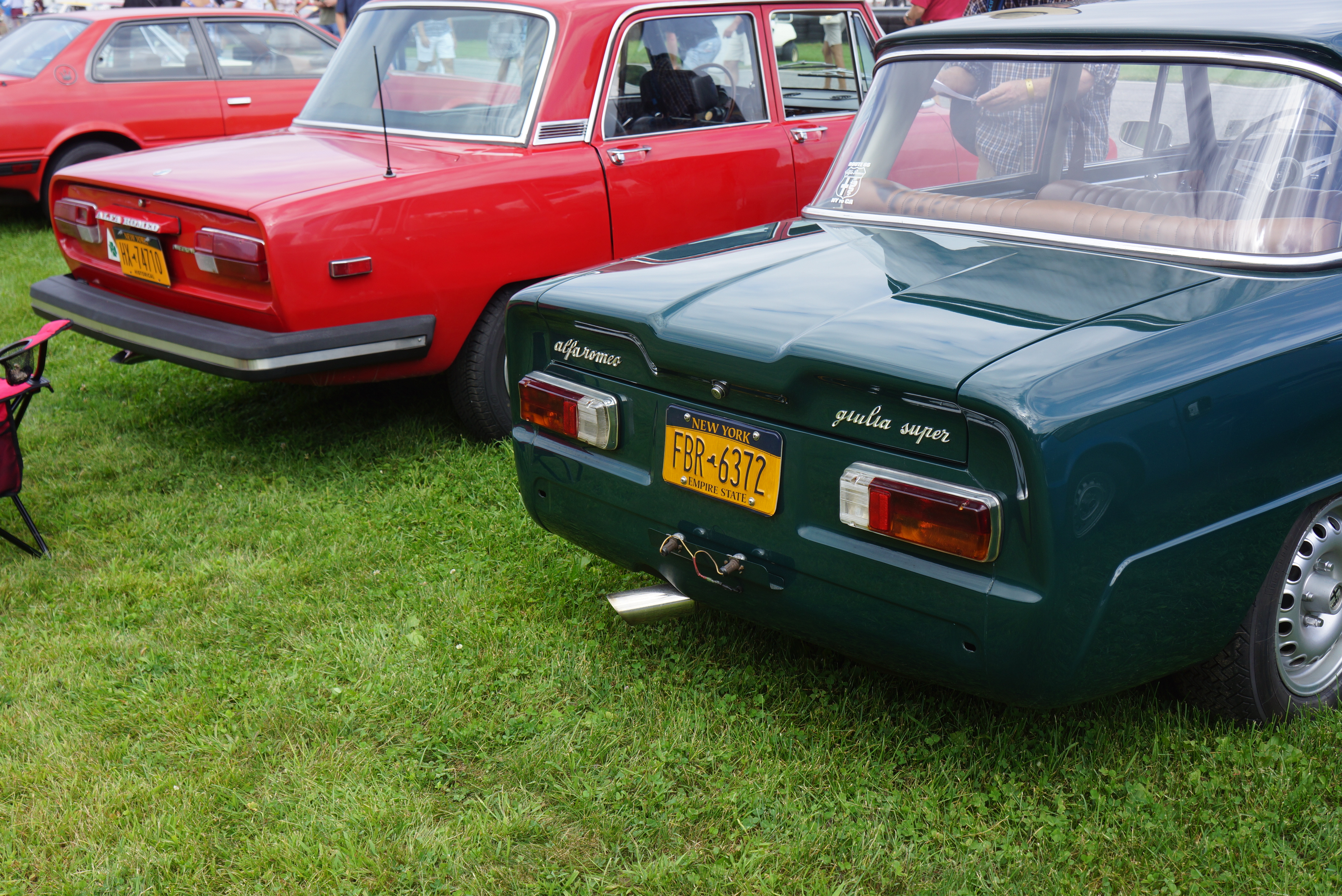
Alfa sedan rear ends
Alfa Romeo Giulietta Spider
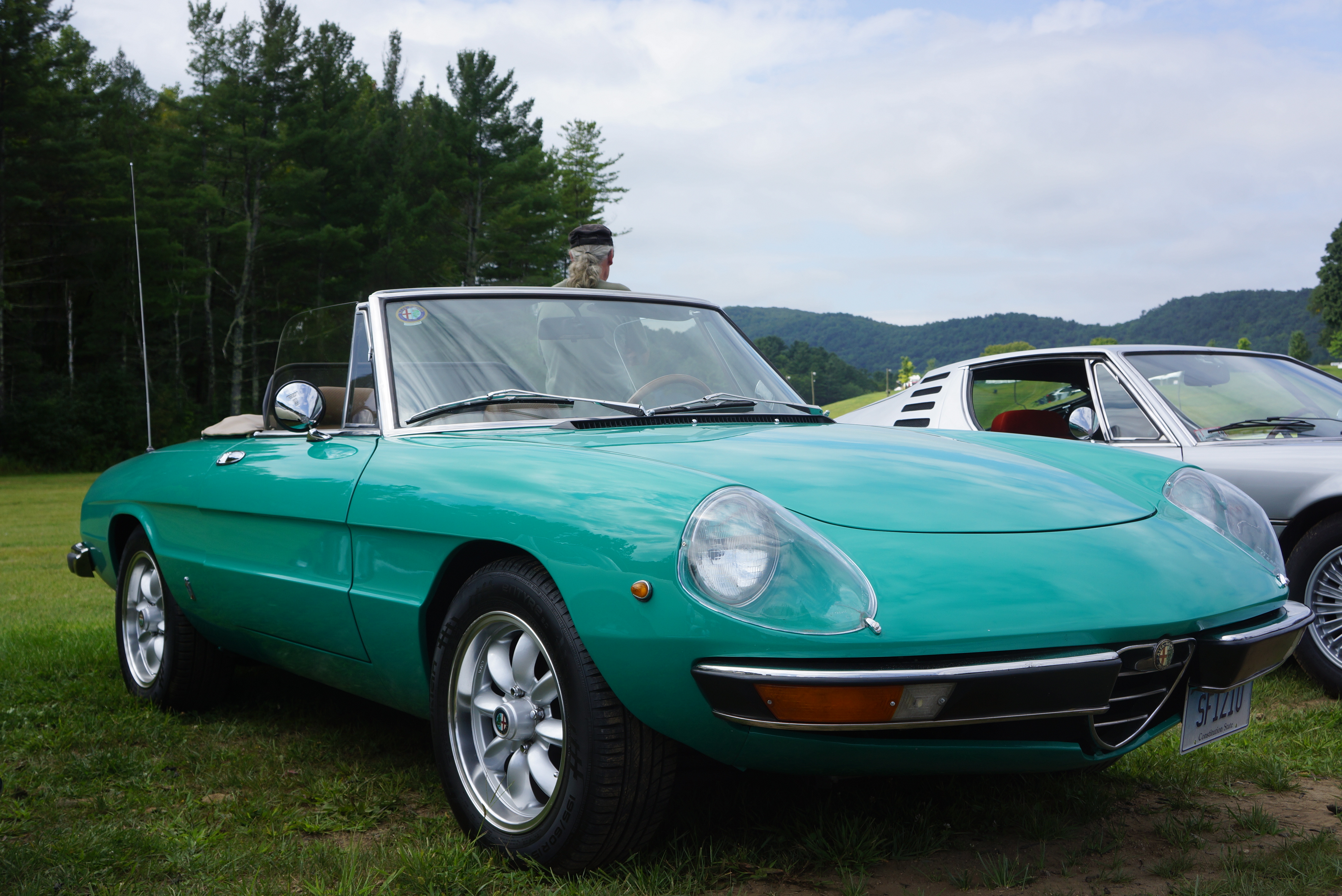
Alfa Romeo Spider
Lancia Beta Zagato
Fiat Dino Coupe, powered by Ferrari V6 Dino engine
The Boonton (NJ) cruise night has been a Friday night tradition in that town’s WalMart parking lot for at least a decade. Known for its ability to draw upwards of 300 cars, the show on Friday August 10th of this year was well below capacity, possibly in part due to vacation season, but more likely a result of a sudden change in the afternoon’s weather from sunny and hot to cloudy and threatening.
This was my first time back to Boonton in several years, and I enjoyed the smaller number of cars and trucks as well as the lighter crowds. It made for a very relaxing evening. Oh, and it sprinkled for about 5 seconds, causing a small number of drivers to jump in their rides and split. It was their loss, as the evening stayed dry.
Cruise nights in general have a greater variety of vehicles on display. By that I am referring to a large mix of pre- & post-war, stock & custom, and original & restored. It provides a chance to look over cars that I otherwise might not go out of my way to see. If there was one ‘class’ of vehicle lacking, it would be imports. I could count on one hand the number of non-domestic vehicles on display. That made the few there all the more interesting.
The pictures below are displayed in random order, which is how the vehicles are parked, unless family members or friends arrive together. (Although if you didn’t know better, you’d think that the night’s festivities were sponsored by the local Buick club.) Enjoy the photo-documentation of this classic NJ cruise night.
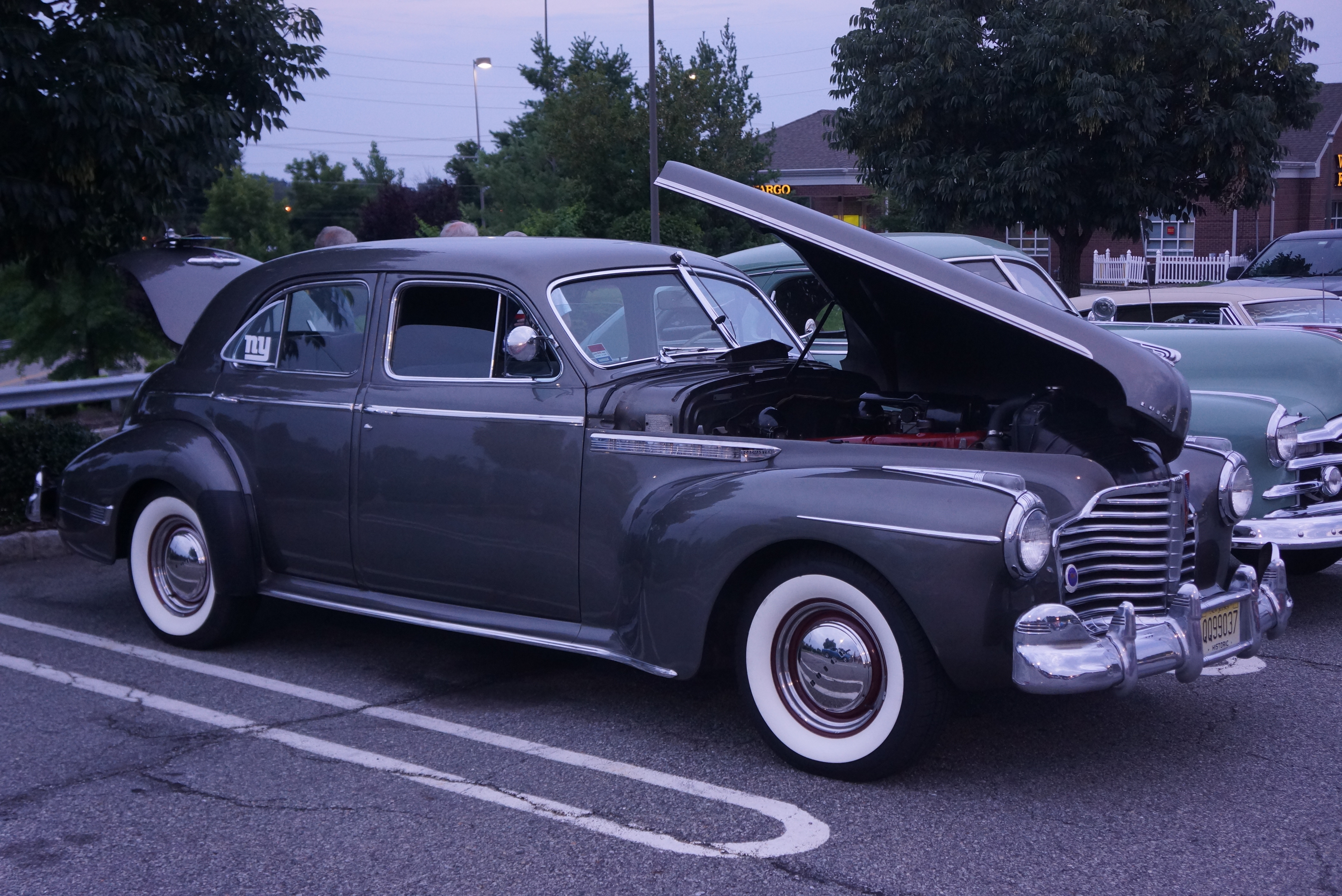
1941 Buick Roadmaster sedan
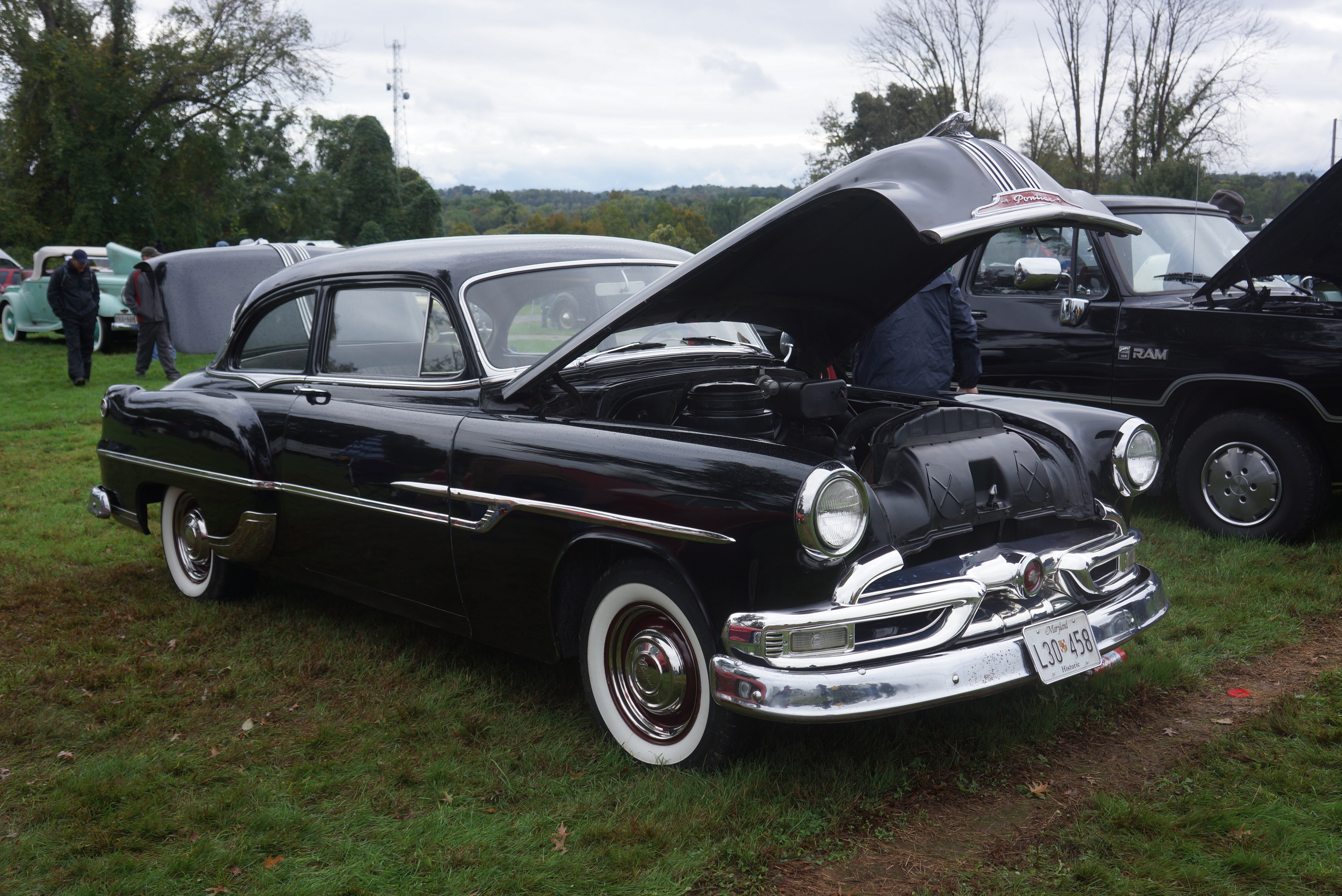
1948 Pontiac Silver Streak
1965 Buick Gran Sport
1967 Buick Gran Sport
1968 Buick Gran Sport
1958 Dodge Coronet
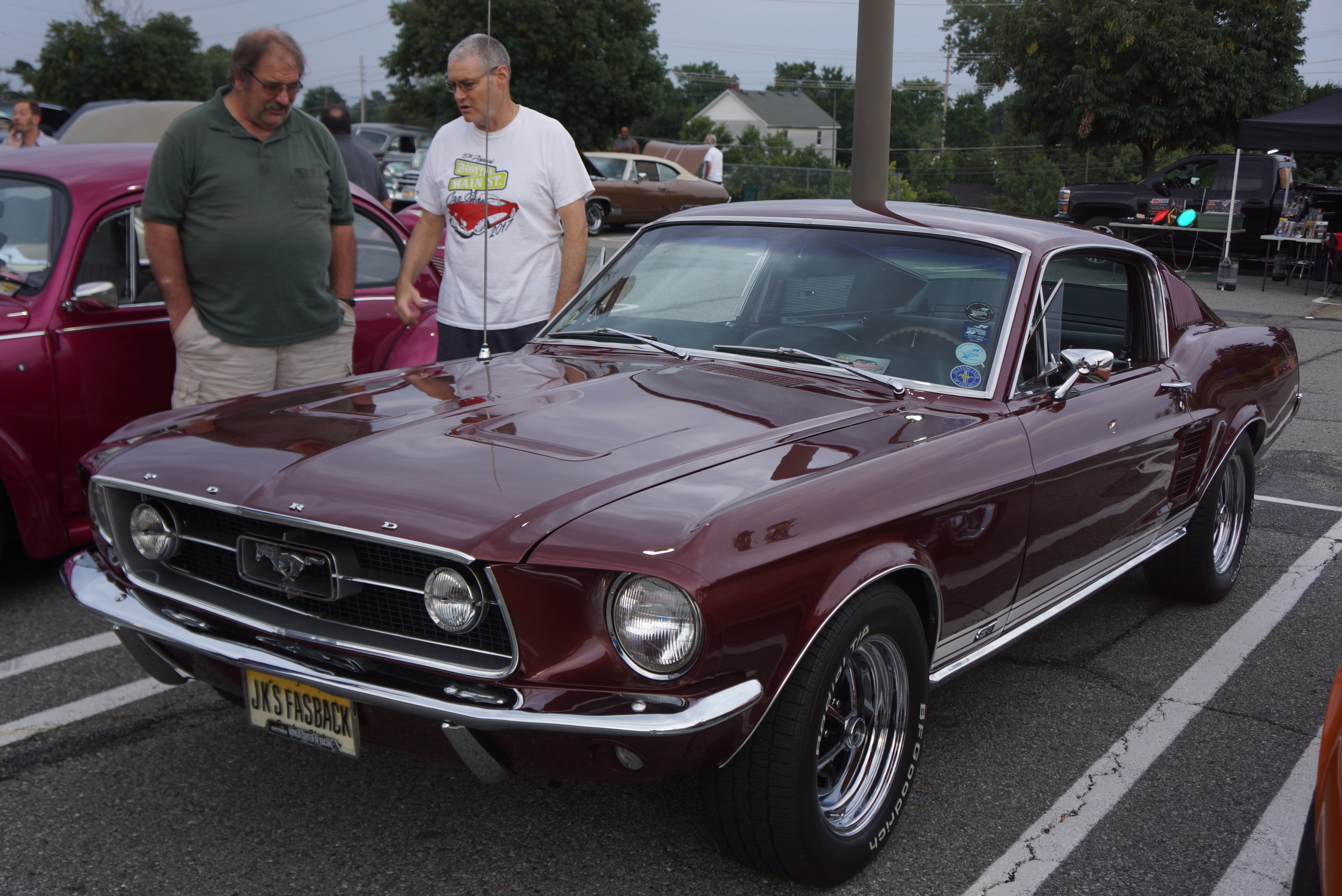
1967 Ford Mustang
Buick Reatta convertible
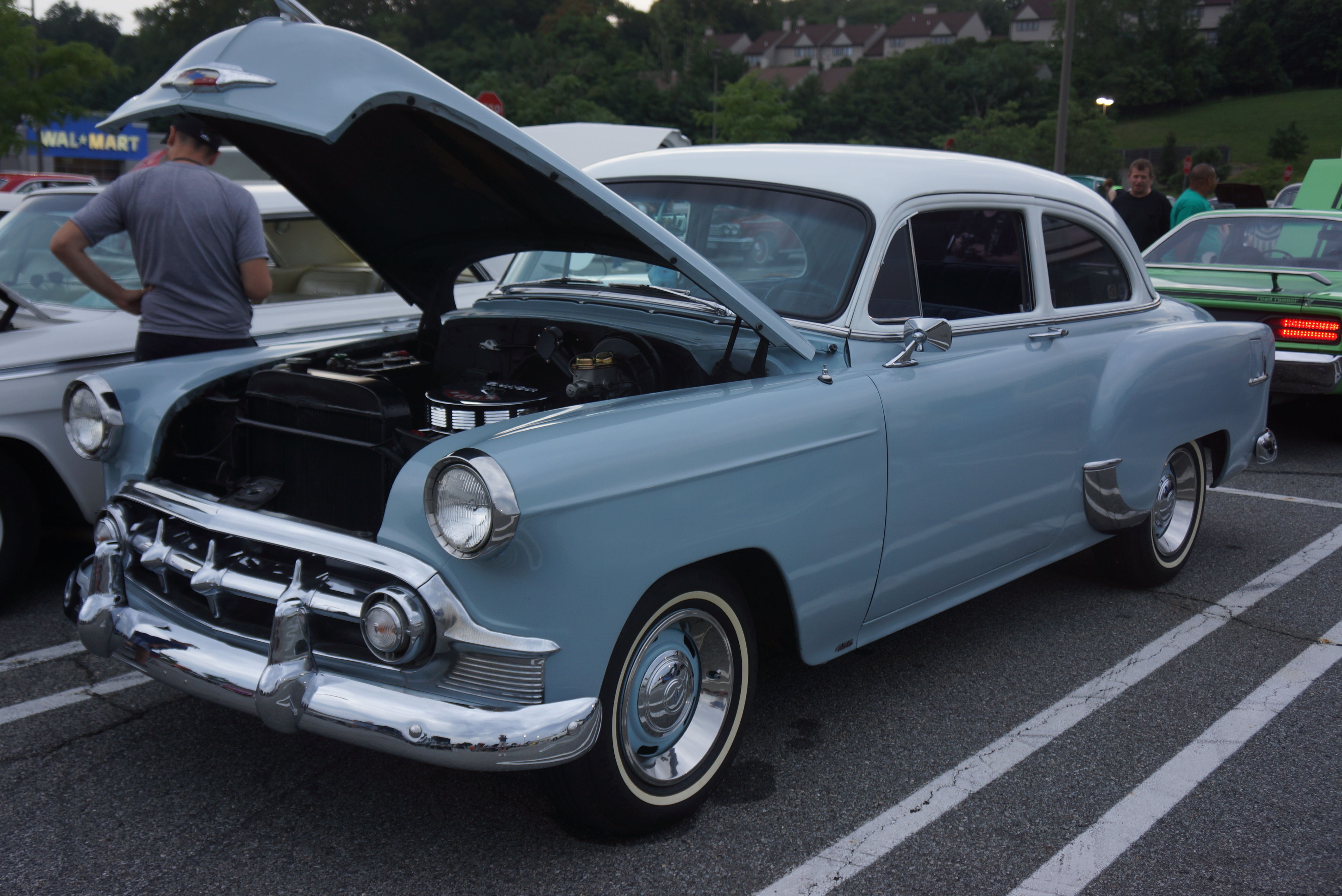
1953 Chevrolet
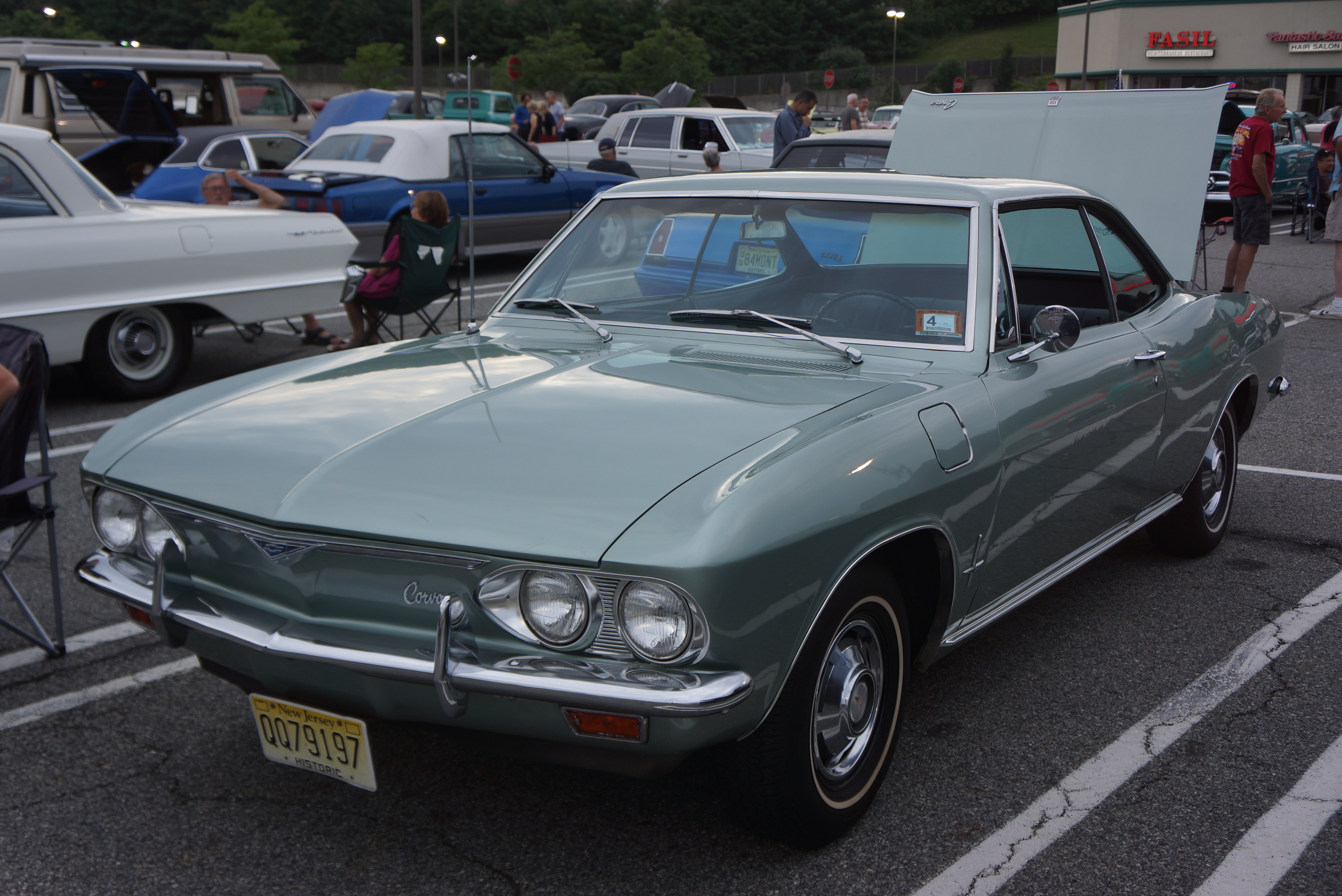
1966 Chevrolet Corvair
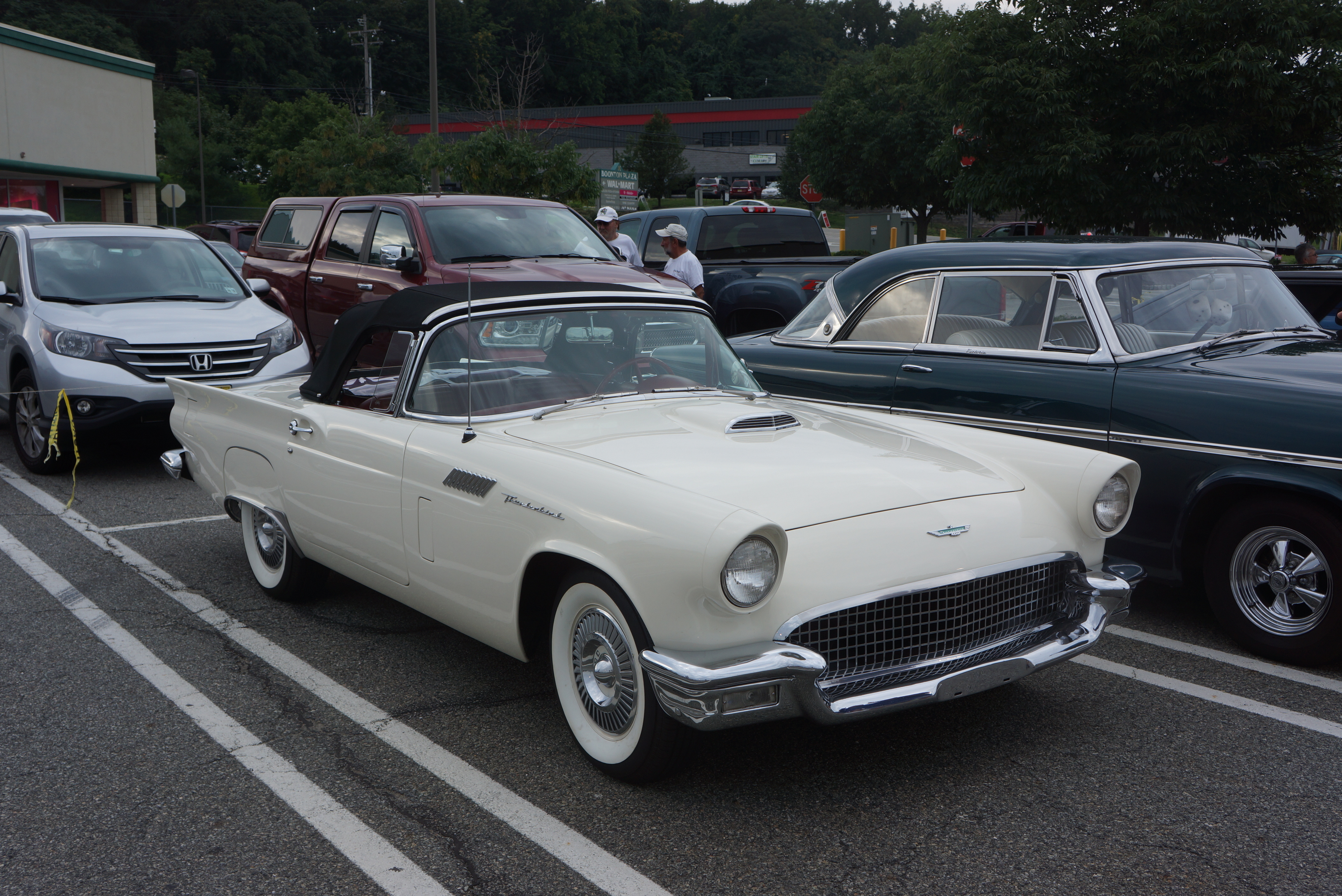
’57 T-Bird in white….
… and in green
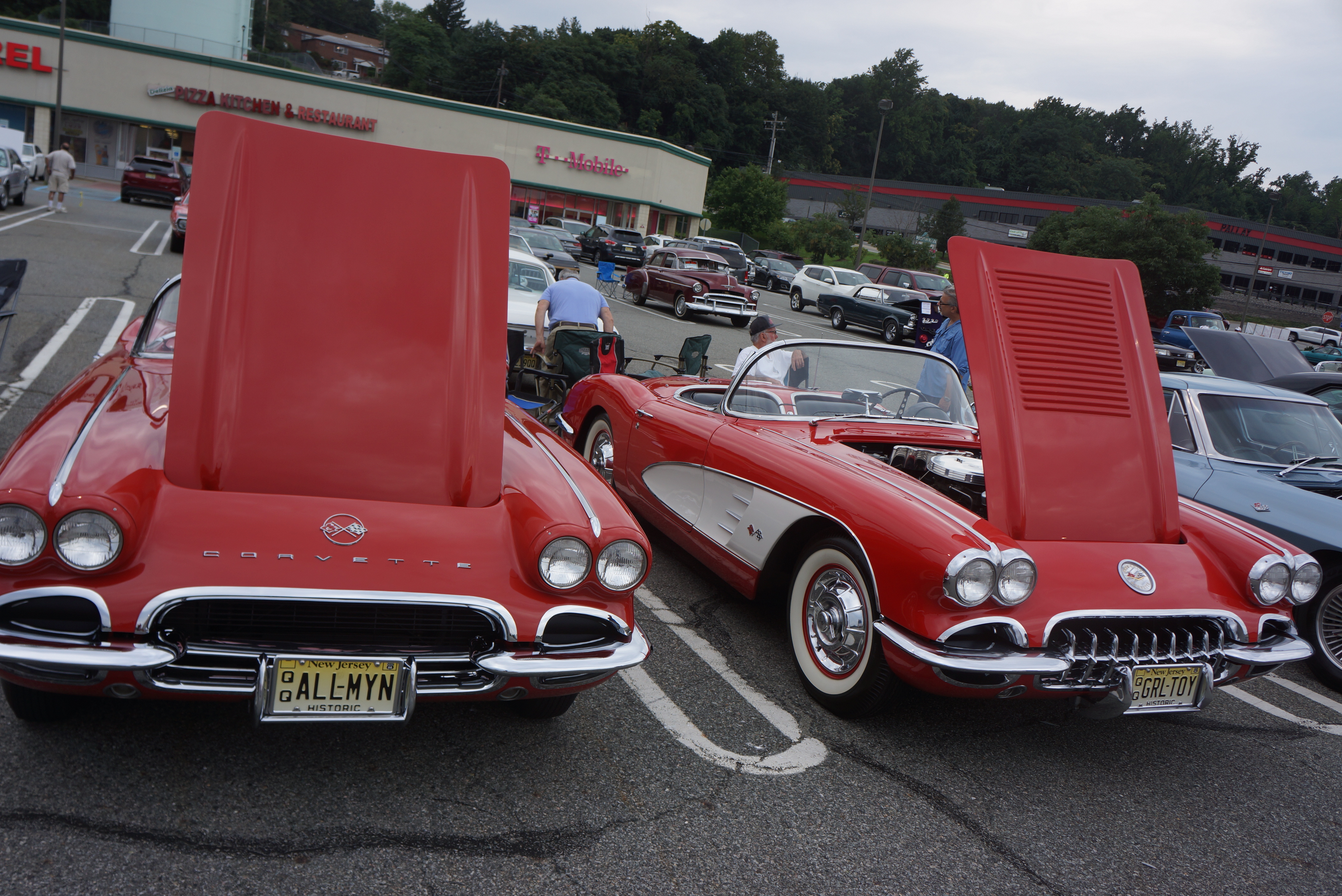
His-&-her C1 Corvettes, ’62 on left and ’58 on right
2nd generation AMC AMX
1963 Corvette with steelies, dog dish caps, and redwalls
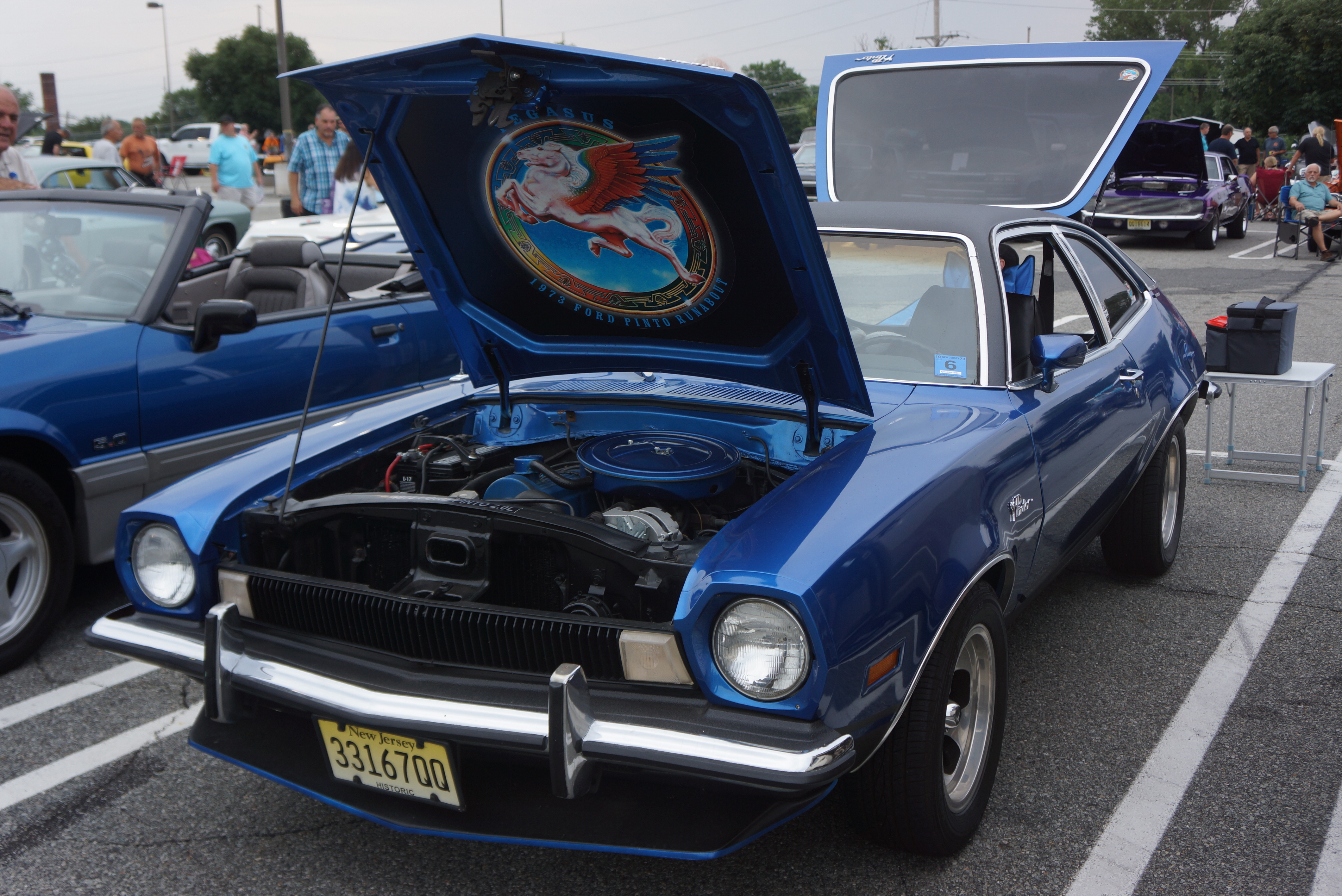
Ford Pinto Runabout
Naming a car after a cartoon character was a huge success for Plymouth
After a summer hiatus, the blog is back! Enjoy the report on last week’s Mecum auction held in Harrisburg PA.
Mecum Auctions returned to Harrisburg PA for the fifth consecutive year, conducting its collector car and automobilia auction on August 2, 3, and 4, 2018. This event at the Farm Show Complex just keeps getting bigger and better, proving that Mecum knows its business. I’ve been in attendance all five years, and there’s little to complain about (especially in comparison to my disappointment in Barrett-Jackson’s CT event of just a few weeks prior).
Thursday’s crowd
This year, my buddy Larry and I made it a one day out-and-back journey, and we decided that Thursday would be the most enjoyable, as the lower-priced wares are usually on offer on Day #1. In the past, we’ve also experienced slightly smaller crowds, as many other attendees wait until Friday and Saturday so they can witness the big-buck stuff go bang on the block.
We were parked and on the premises by 9am. The doors had opened at 8, but the action wasn’t due to start until 10. We wandered among the cars in the staging tent, which would be first to cross, and made our way into the air-conditioned main hall just before the top of the hour. The size of the crowd shocked us both; there wasn’t a seat to be had, and the SRO crowds crushed the front corners. The word was out: Mecum on Thursday is a great show.
Adding to this evidence were the bidders. From the very first lot, bidders weren’t holding back. Bidding was loud and quick, paced by lead auctioneer Jimmy Landis’ style, which could be summarized as “Hey folks, we have 330 cars to sell today, and I’m gonna spend about a minute or so on each car, so pay attention!” He did, literally, spend about one minute or so per lot for the reserve cars.
A big change this year was the greater number of no-reserve lots (which kept the sell-through rate high). For these, the auctioneer had no concern about meeting reserve, so about 2-3 minutes were spent on each car, knowing it would sell.
No-reserve cars, as has been mentioned in previous posts on this blog, can cut two ways. If it’s a less desirable car, or if the right people aren’t in the room, cars can fall through the cracks, and buyers can get a potential deal. But, bidders know that a no-reserve car is guaranteed to sell, and it only takes two determined bidders to drive the price up. From my casual observations, very few of the no-reserve cars were “great deals”; most seemed to sell at or slightly above their value. (Although not photographed by me, and therefore not included in the reported results below, we watched not one but TWO Buick Rivieras, a ’79 and an ’81, sell for Two Thousand Dollars each. Yes, each drove under its own power on and off the block.)
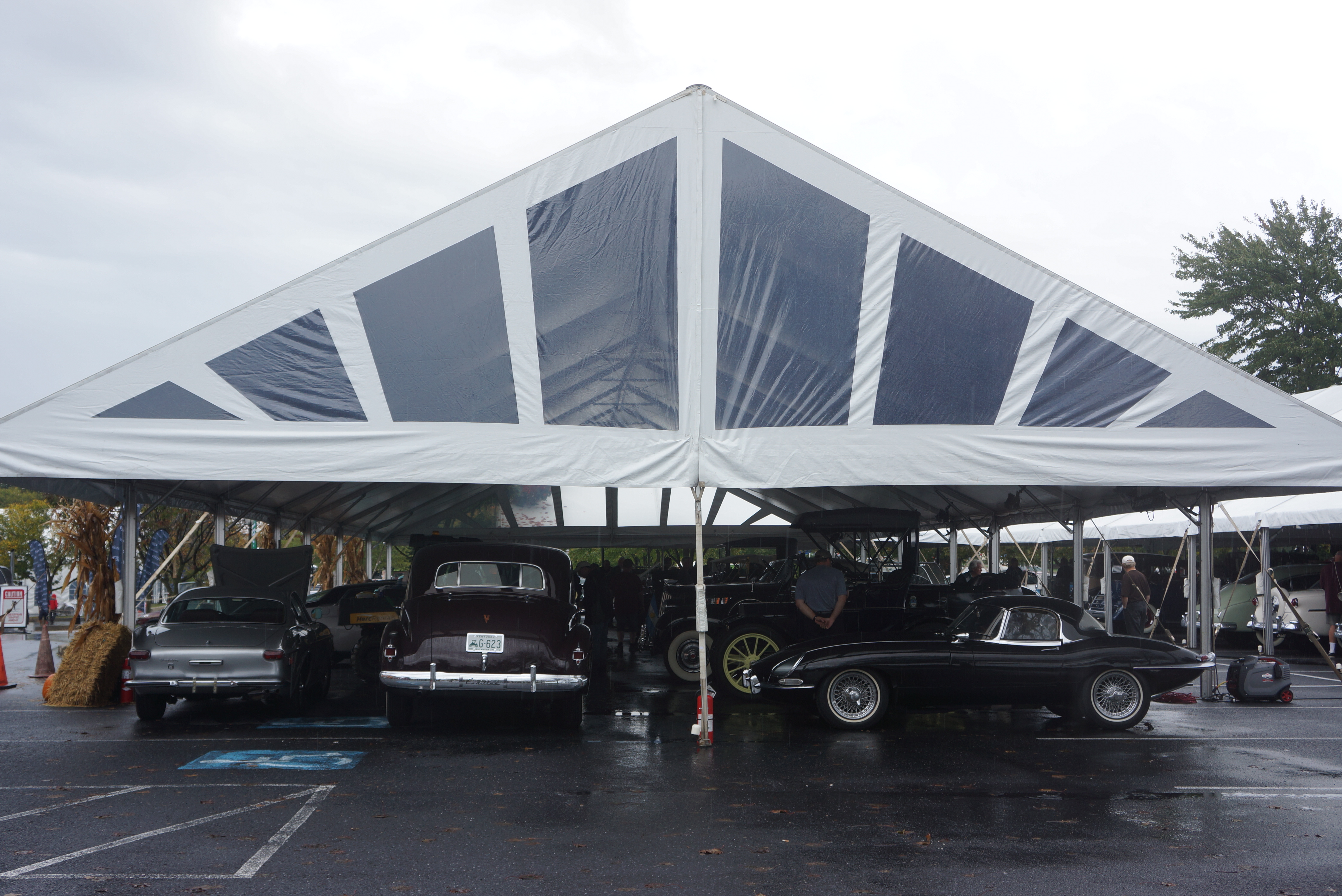
Estate collections were gathered together under banners
One other trend, not unique to Mecum, was on full display here: the sell-off of “estate” collections. “The Samuel & Rhea Kline Collection”;“The Peery Family Collection”; and “The Berry Mountain Estate Collection Offered at No Reserve” were three such offerings. All of us in the hobby know it’s changing, and not necessarily for the better. As older collectors become unable to tend to their stables, or pass on, families face decisions about selling the old man’s cars. A stark reality is that their next-of-kin has no interest in a bunch of old jalopies, so those responsible for liquidation are turning to auction houses. If there is a silver lining, it’s that younger collectors have the chance to snap up some deals. Look through these results and decide for yourselves if that’s the case. (Warning: the condition of some of these cars is not for the faint-hearted.)
Below is a small sample of vehicles of interest which sold on Thursday, along with my personal observations for each. Sale prices are hammer prices, and are therefore exclusive of the 10% buyer’s premium. No Reserve lots are noted as such. And finally, as we do here on Richard’s Car Blog, these cars are arranged in price order, to give you a sense of what your pennies can buy.
$6,000 to $6,500:
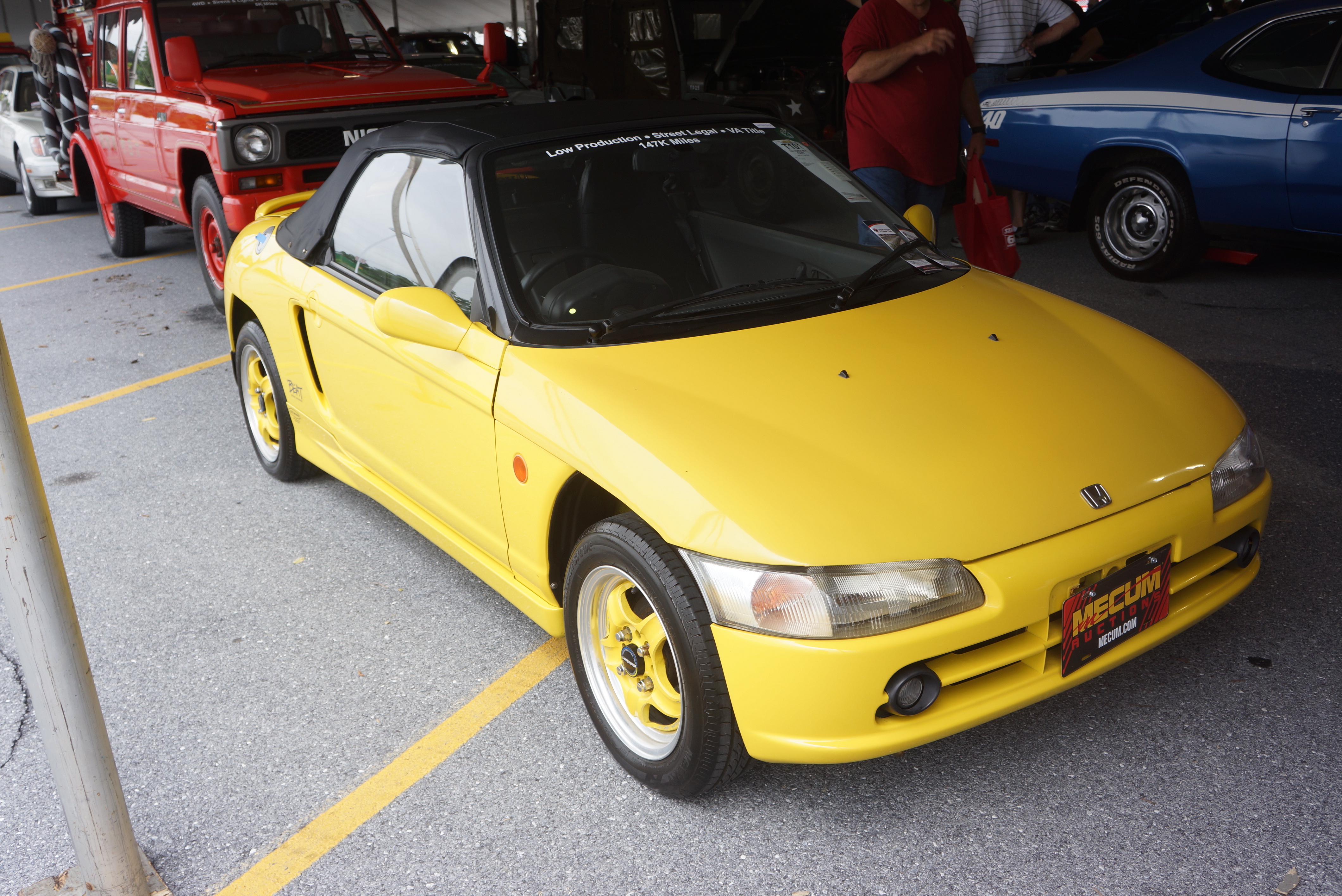
Lot T101, 1991 Honda Beat convertible
Sold for $6,000
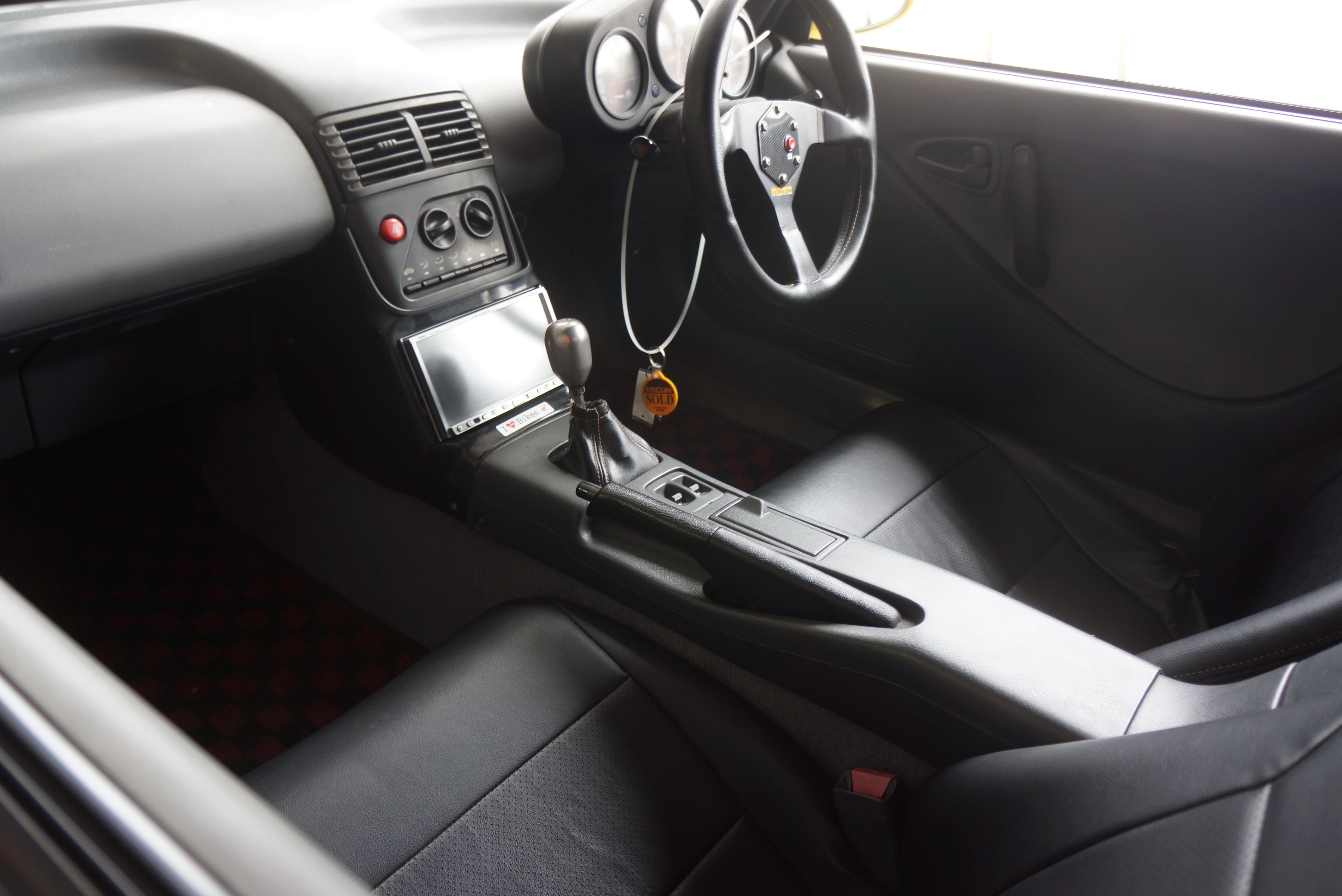
Japanese “kei class” car, never officially sold in U.S., now over 25 years old, so legal for import. Three-cylinder mid-mounted engine, 5-speed manual. Yellow, black convertible top and interior. From my research, all Beats had zebra-stripe seat upholstery and floor mats, both missing here. High miles (147,000 MILES, per sticker). Overall look is somewhat worn, with rust bubble on rear decklid. Cute, unique, but you might have wanted to hold out for a better example.
Honda Beat
Right hand drive only
Lot T29, 1973 VW Beetle convertible, No Reserve
Sold for $6,500
White paint, white interior, top color not noted. Sign on car claims new tires and new chrome. Overall look is of a presentable car. This no-reserve car was potentially a great deal, provided the rust has been kept in check. And let’s for once and for all stop saying that you’re priced out of the hobby, as this would be a wonderful first collector car.
1973 VW
White-on-white
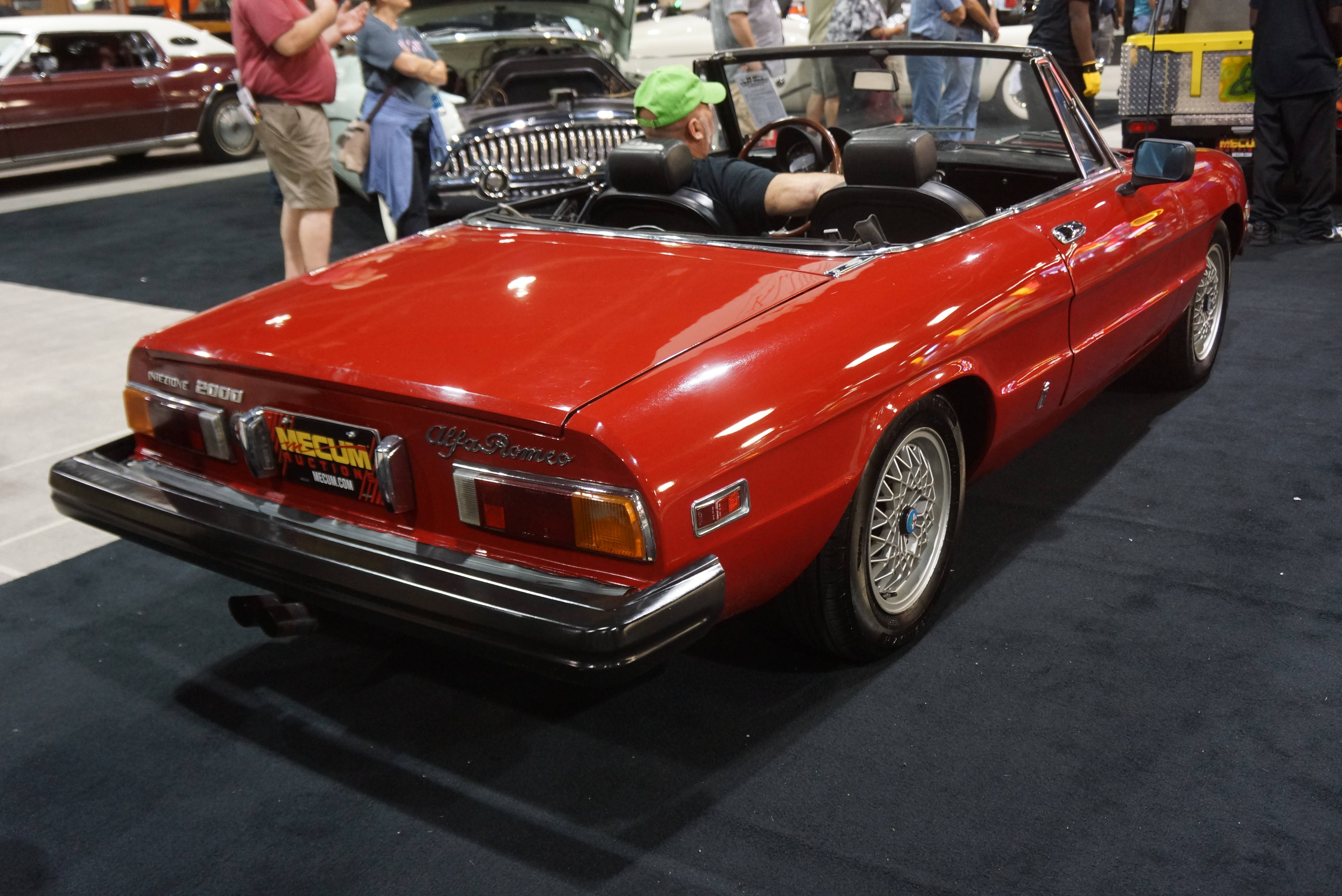
Lot T257, 1976 Alfa Romeo spider
Sold for $6,500
Red, black top, black interior redone in leather. Aftermarket lace style wheels looked good. Paint faded and swirled. Sliding my hand along passenger side rocker panel revealed ability to insert fingers into rust holes. This is a Series 2 spider, with Kamm tail, big bumpers, and Spica fuel injection. Alfa spiders have been climbing in value in recent years. Given the rust, the best bet here is to drive and enjoy. Any attempt at restoration will put you underwater.
Aftermarket headlt. covers
Can’t see rust from here
typical Italian color combo
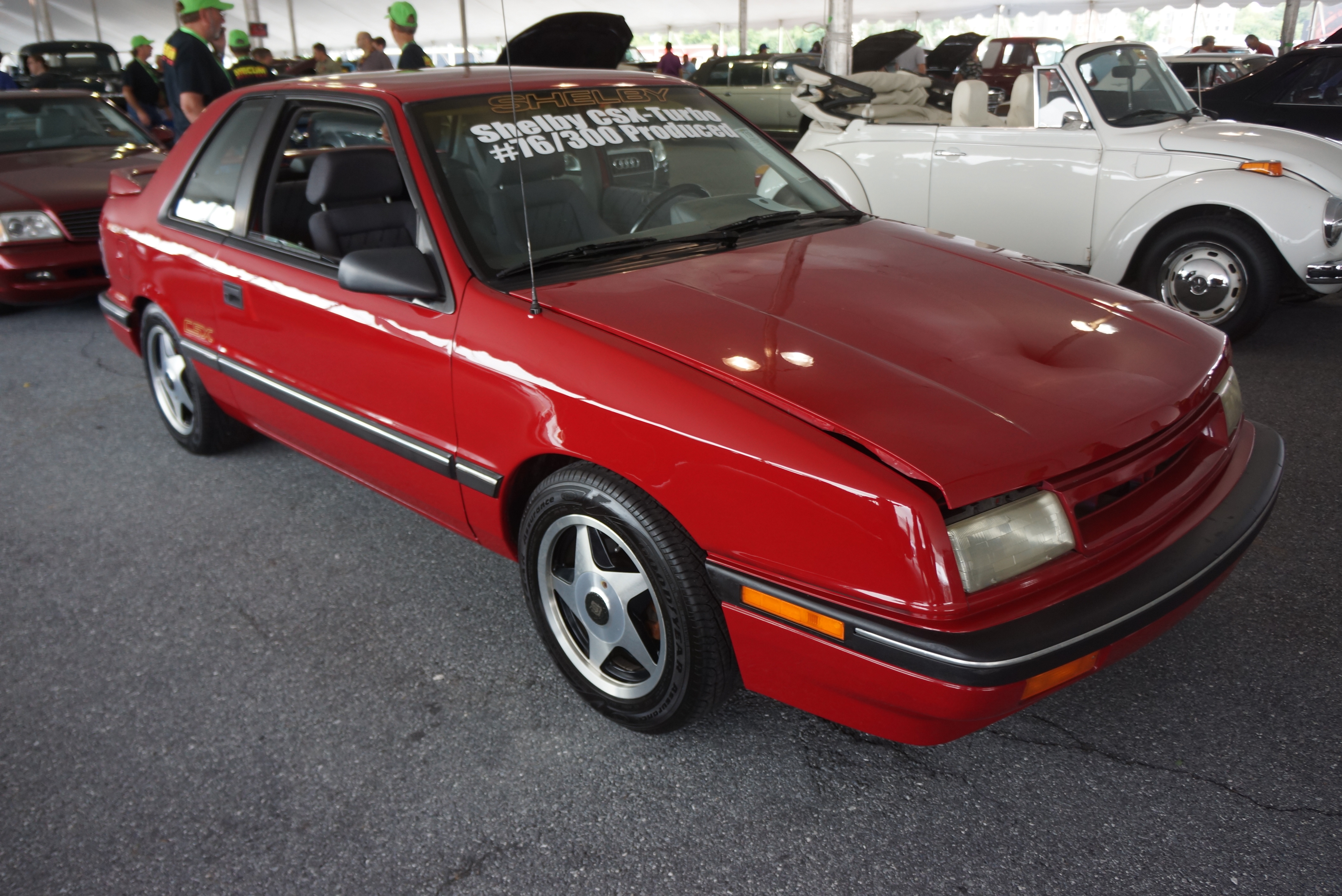
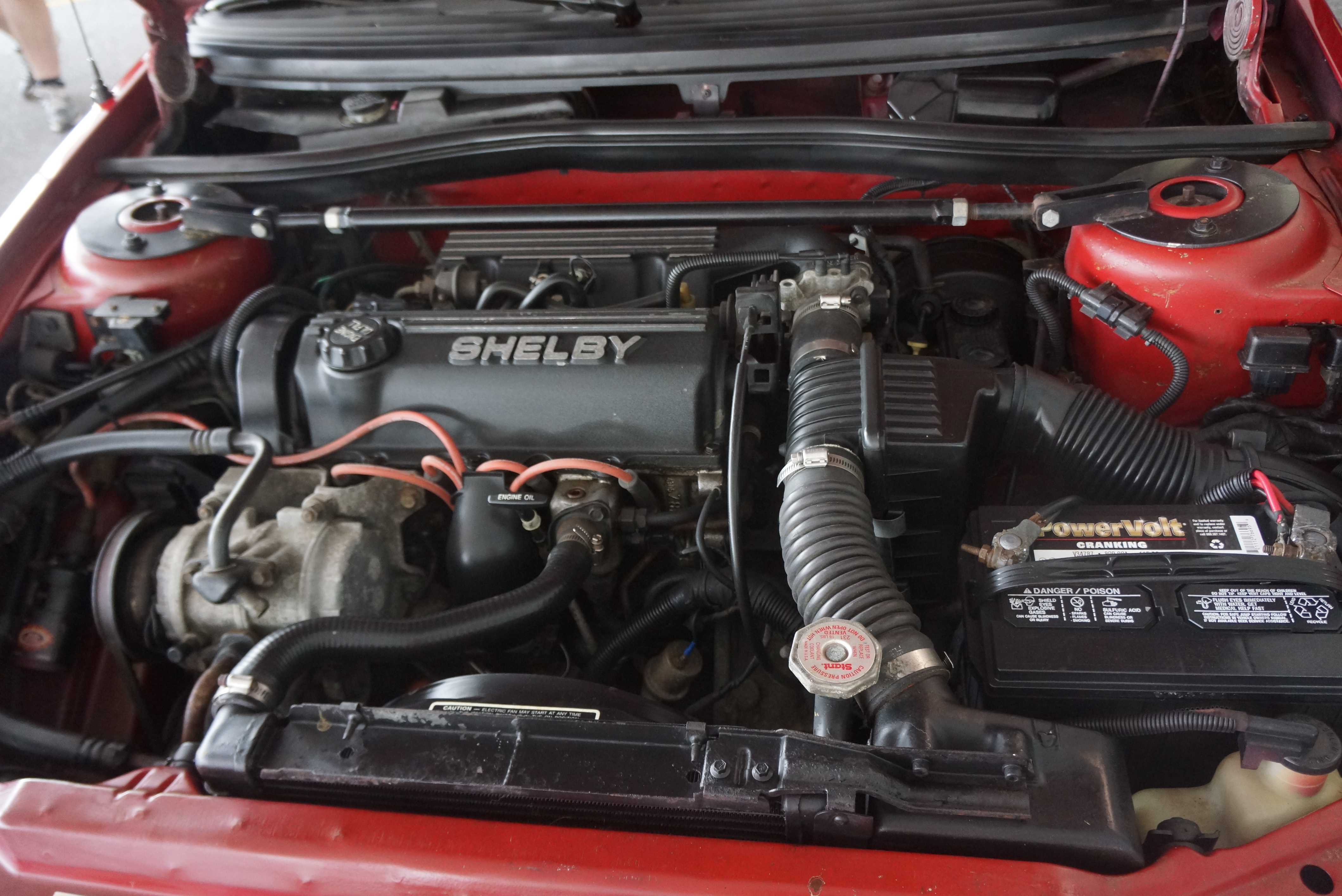
Lot T19, 1989 Dodge Shadow Shelby CSX coupe
Sold for $6,500
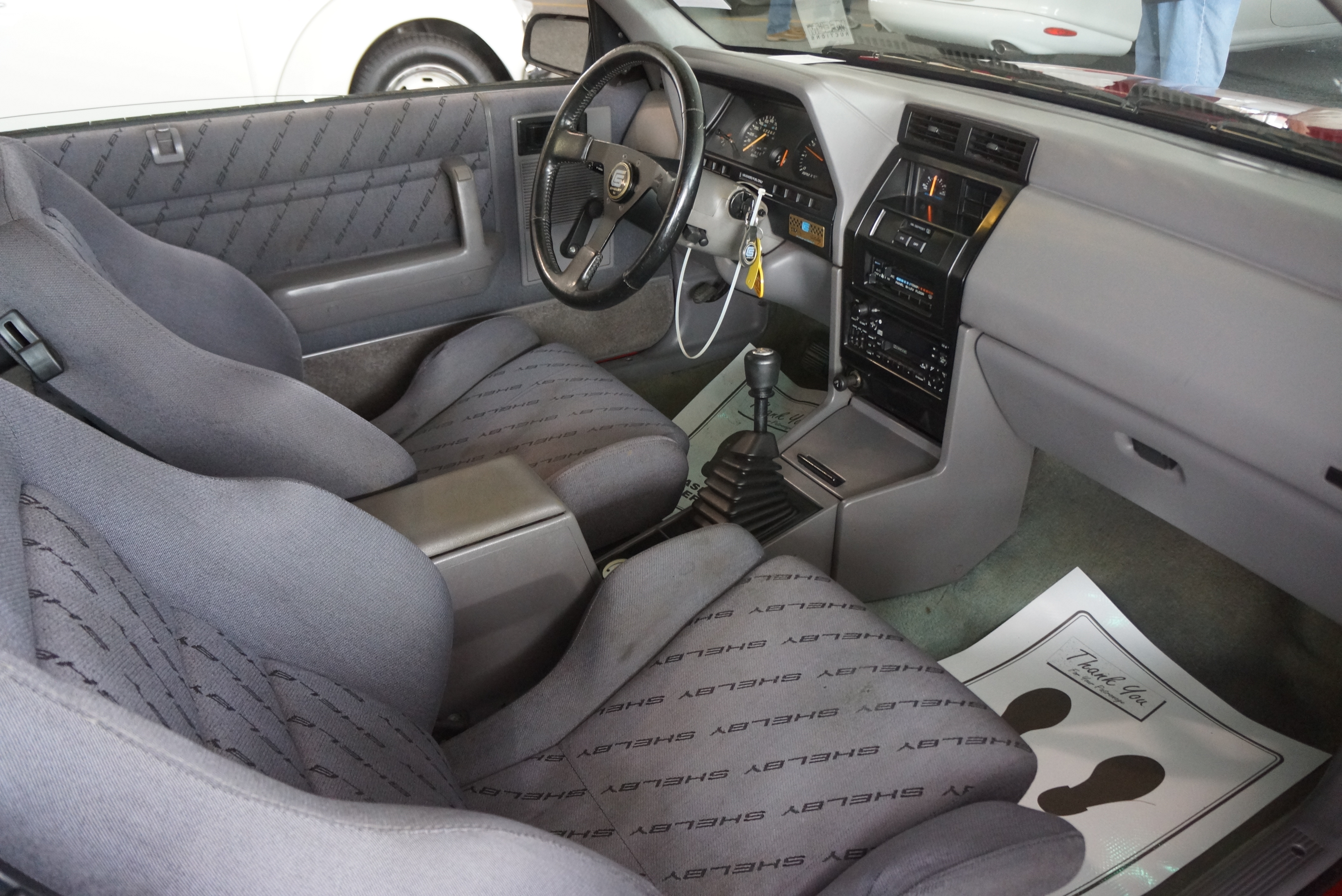
Laugh if you want, but this is a real Shelby. Misleadingly listed as a “Dodge”, this was one of, if not the last car that ol’ Carroll developed for his buddy Lee at Chrysler. It was the first production car to use a variable-vane turbo, which didn’t need a wastegate, and eliminated turbo lag. FWD, 2.2L 4, 5-speed manual. In 1989, only 500 were built, all of them red with grey interior. No visible rust, one decent repaint, and it has avoided being modded to death. This one was missing its front spoiler and side skirts, but they are available. Interior with optional factory Recaro seats was well preserved. Mecum sold the same ’89 CSX 3 times in 2014, between $4,000 and $5,000. I thought this one, the 19th car across the block, might fly under the radar. Someone got a very unique and fun Shelby for very little money.
Sign wrong: 500 were built
Recaros are nice touch
205 HP to front wheels
$8,000 to $9,000:
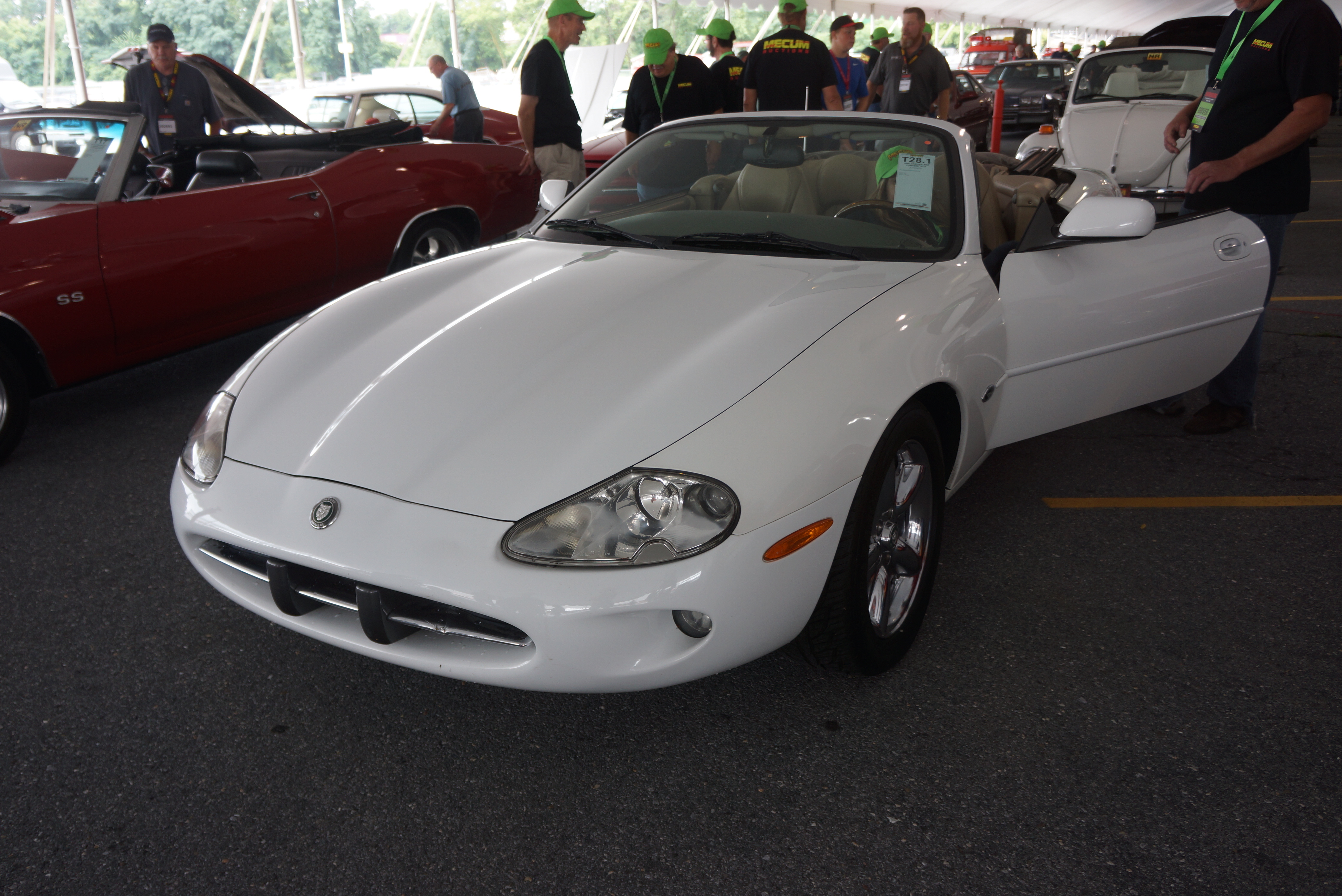
Lot T28.1, 1998 Jaguar XK8 convertible
Sold for $8,000
The mileage wasn’t noted, but many of these seen at auctions have close to 100,000 miles on them. This one, in a nice color combo, looked clean overall. Interior wasn’t shot, which is about the best thing that can be said for this 2nd year example. Cheap fun until the first big repair bill comes due.
Classy white on tan
Clean for 20-year-old car
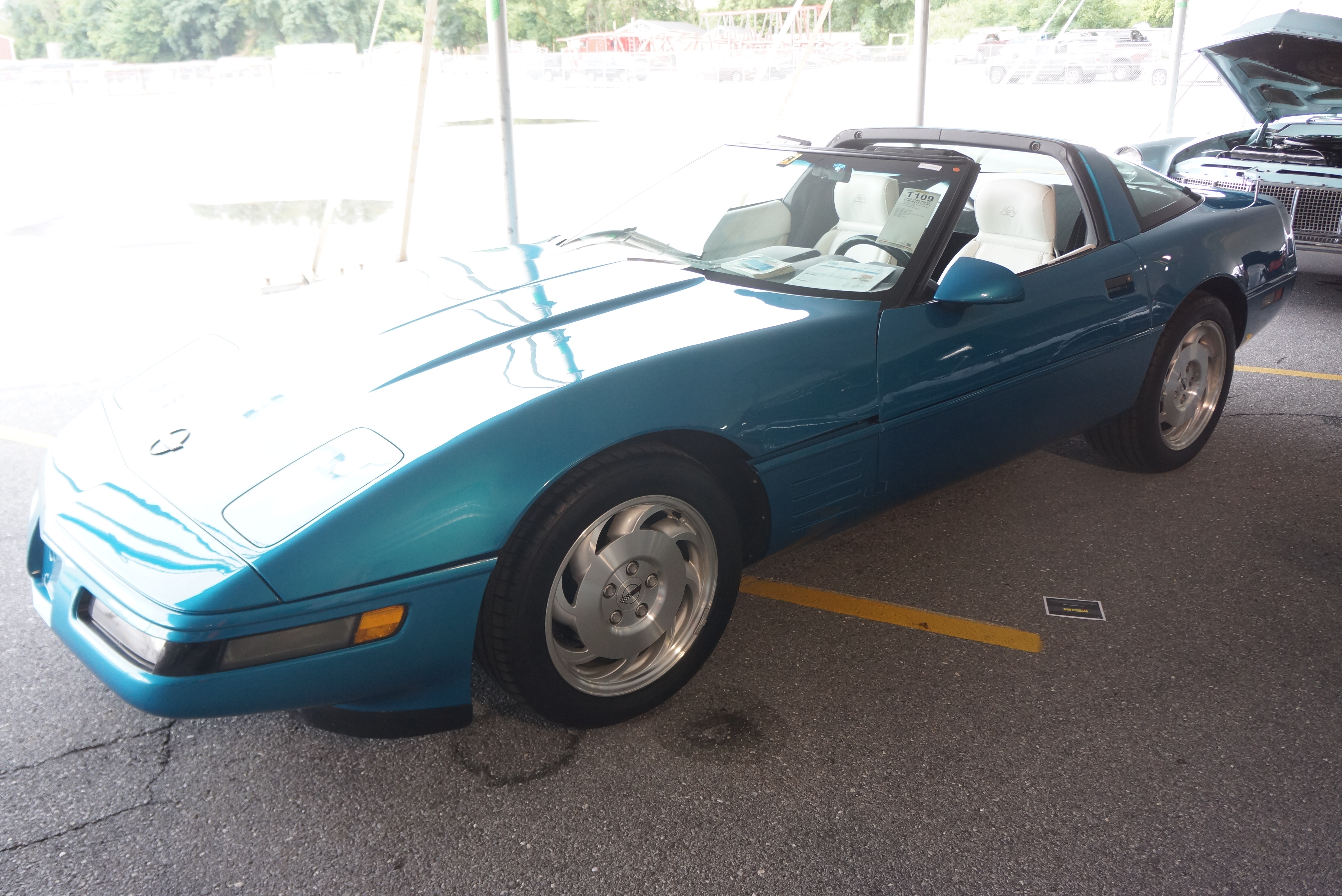
Lot T109, 1993 Chevrolet Corvette coupe
Sold for $8,500
When we first entered the main hall at 10am, we saw lots T12 and T13, two C4 Corvettes, apparently being sold by the same owner. I overheard him telling a prospective bidder: “I need to get my reserves, or these are coming home with me”. His ’88 sold for $7,750, and his ’95 sold for $9,000, so his reserves were reasonable. Lot T109 was arguably the nicest of all the C4s at the event. The aqua paint, which looked blue in photos, was more attractive in person. Whether original or a repaint, there wasn’t a mark on it. The white interior was a nice contrast, and unlike most C4s, the seats weren’t beat. The mileage was reasonable at 78,000. The only thing holding this one back was the automatic, but on a Corvette, that may not be as much of a factor. When this one hammered for $8,500, I declared it one of the best buys of the day. C4 Corvettes continue to be performance bargains; good for buyers, not great for sellers.
Tent lighting made pic poor
Nice interior for C4
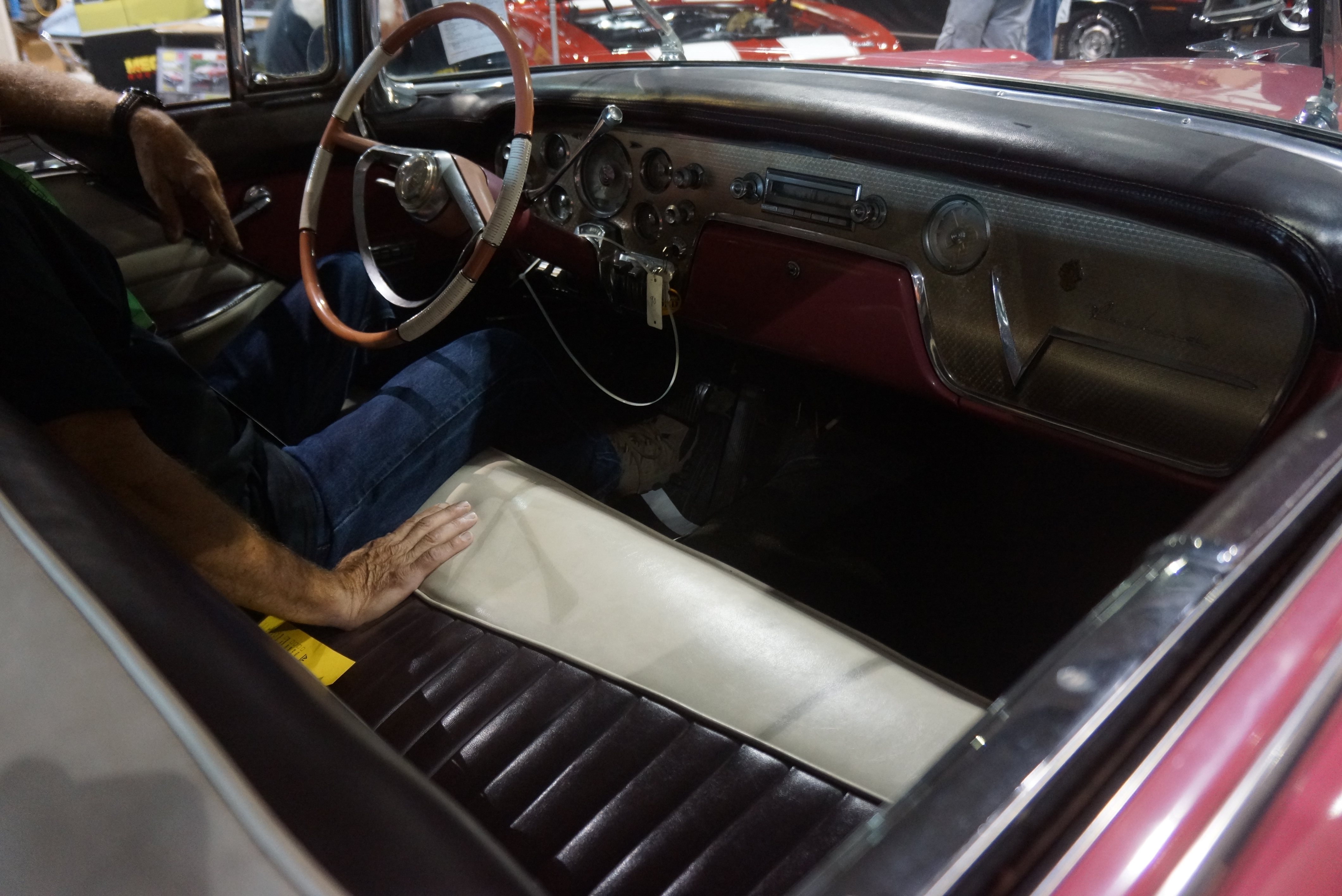
Lot T235, 1956 Packard 400 2-door hardtop, No Reserve
Sold for $9,000
The ‘56s were the last “true” Packards, as the ‘57s were restyled Studebakers. The 400 coupe rode on a 127” wheelbase, 5 inches longer than the Cllipper and Executive coupes. The 400 also had the larger 374 c.i. V8 making 290 horsepower. This car appeared to be all there, with nothing obvious missing or modified. The paint could charitably be called tired. This one was fun to watch, as all the action took place literally two seats away from me. A man in the row in front of me was holding the high bid of $8,000. When the auctioneer asked for $9,000, the man behind him (and next to me) raised his hand, and seconds later, the car was declared sold. This was a lot of car for $9,000. Having driven one, a ‘50s Packard is on my bucket list.
The final real Packard
“400” on deck lid
Typical ’50s interior
$10,500 to $13,500:
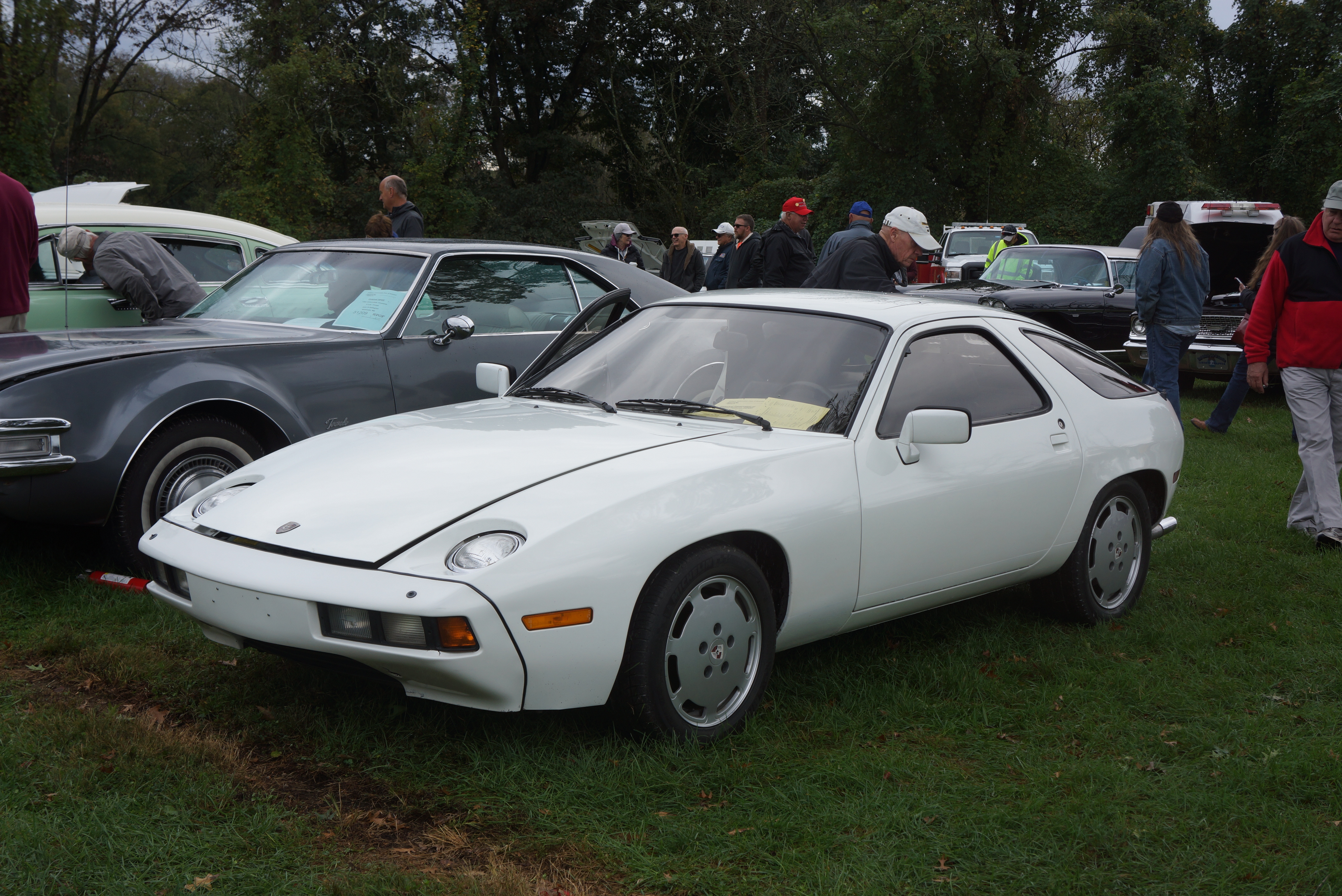
Lot T227, 1984 Porsche 928
Sold for $10,500
With classic Porsche 911 prices climbing so that only one-percenters can afford them, those who want to scratch their Stuttgart itch have turned to other models: 914, 924, 944. A few years ago, the 928 was the laughingstock of the lot. Overweight, overcomplicated, 80% of them saddled with automatics, the word on the street was to run away. The few which crossed auction blocks had crazy high mileages (150,000 was not unusual), or lacked any maintenance records. How things change over the course of a few years. Today, asking prices for 928s are 50-100% higher than they were about 5 years ago. However, there is still quite a pecking order, driven by year, equipment, and condition. This ’84 had the automatic, was in decent colors, and unlike many 928s, had an interior that didn’t need a complete re-do. The mileage wasn’t recorded, but the hammer price got you entry into the Porsche club at a number that’s hard to duplicate with any other model.
Decent exterior
Rub strips & spoiler are factory
Interior OK for a 928
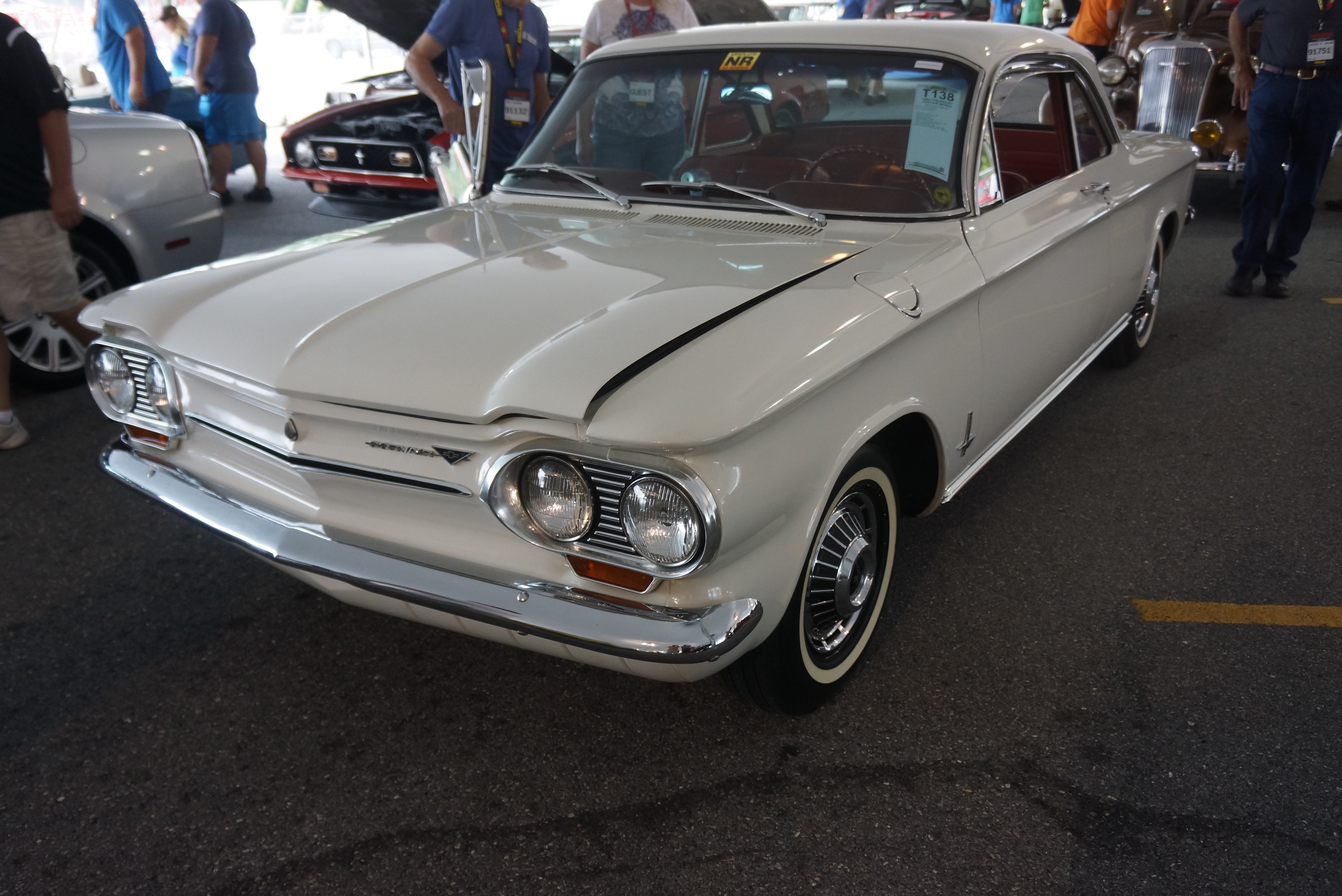
Lot T138, 1963 Chevrolet Corvair Monza coupe, No Reserve
Sold for $13,500
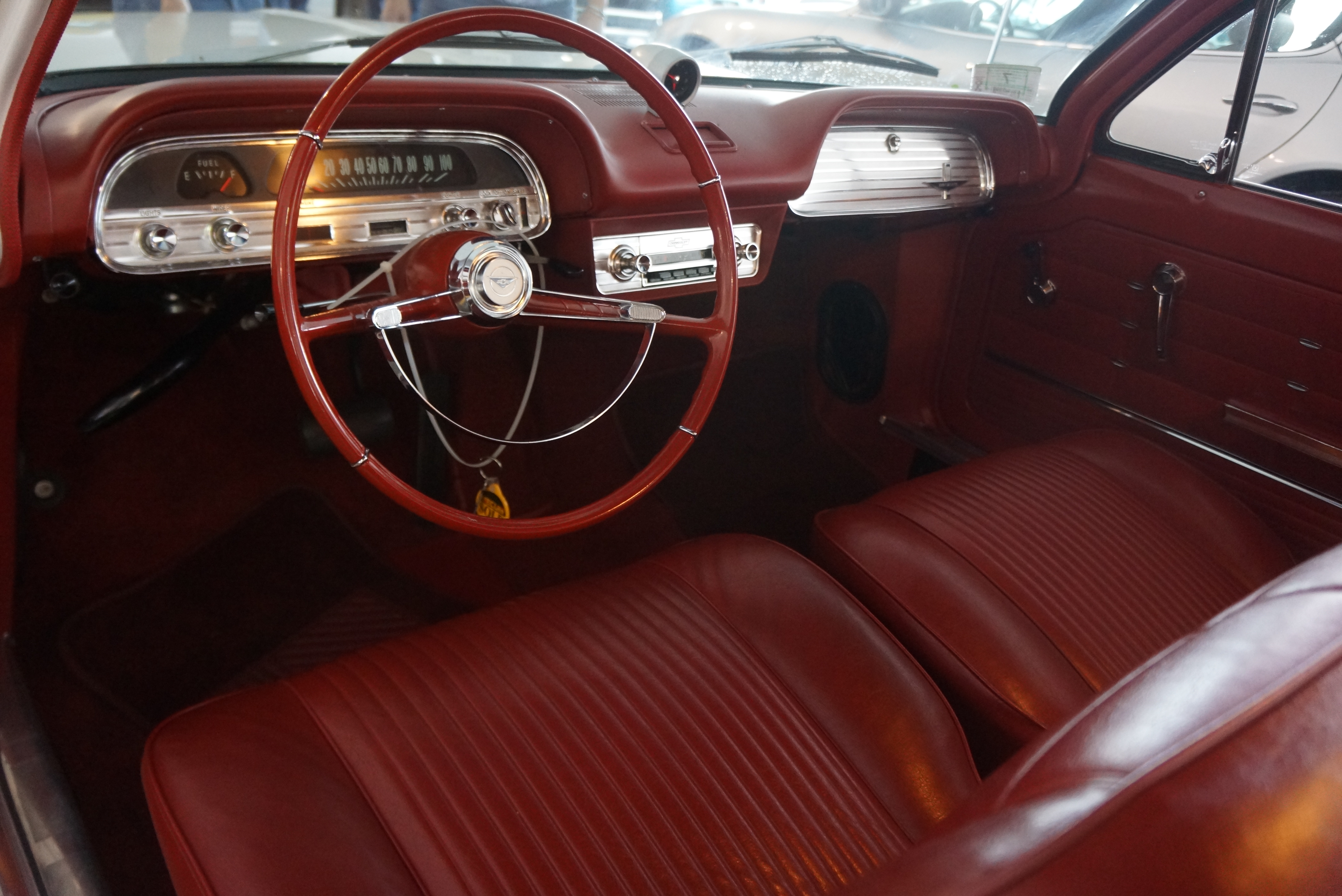
Most car guys I talk to see the Corvair as an anomaly. “Yeah, I like Chevys. Give me a mid-sixties Impala coupe, or any Malibu from ’68-’72. Corvairs? They’re for weirdos.” And even those who appreciate its quirky engineering prefer the 2nd generation cars from ’65-’69. But there was no denying the appeal of this 1st gen coupe. The sign on the car stated that it has 20,000 original miles, a believable statement based on its condition. Except for several chips on one rear quarter, the paint was unmarked. So too was the interior, with its buckets and automatic shift lever sticking out of the dash. The sale price was high for a Corvair without a folding top, but its originality and condition made it a good deal for those who like their Chevys weird.
Styling the same for ’60-64
Long rear deck hides H6
Even the wheel is unmarked
$22,500 to $24,000:
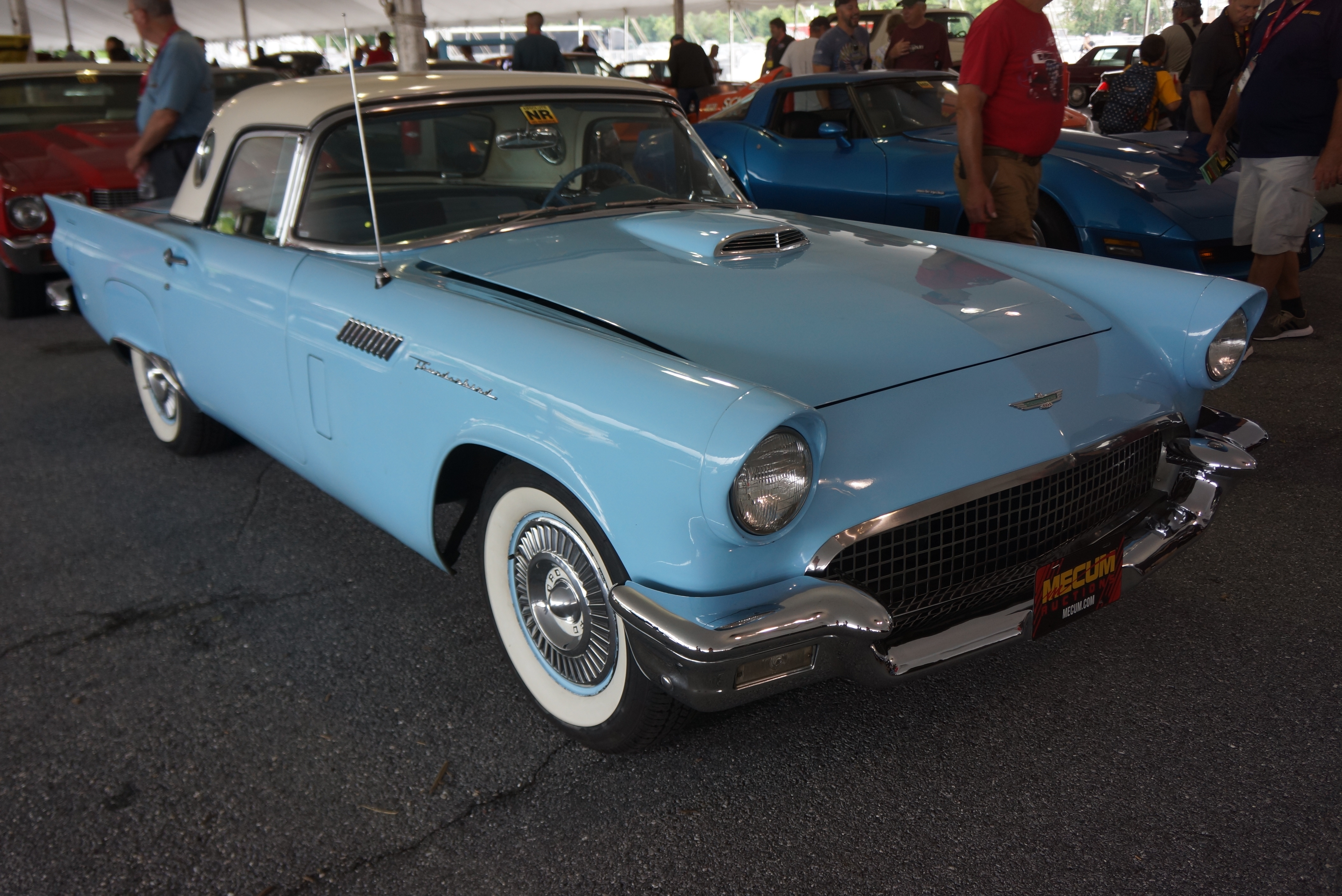
Lot T127, 1957 Ford Thunderbird, No Reserve
Sold for $22,500
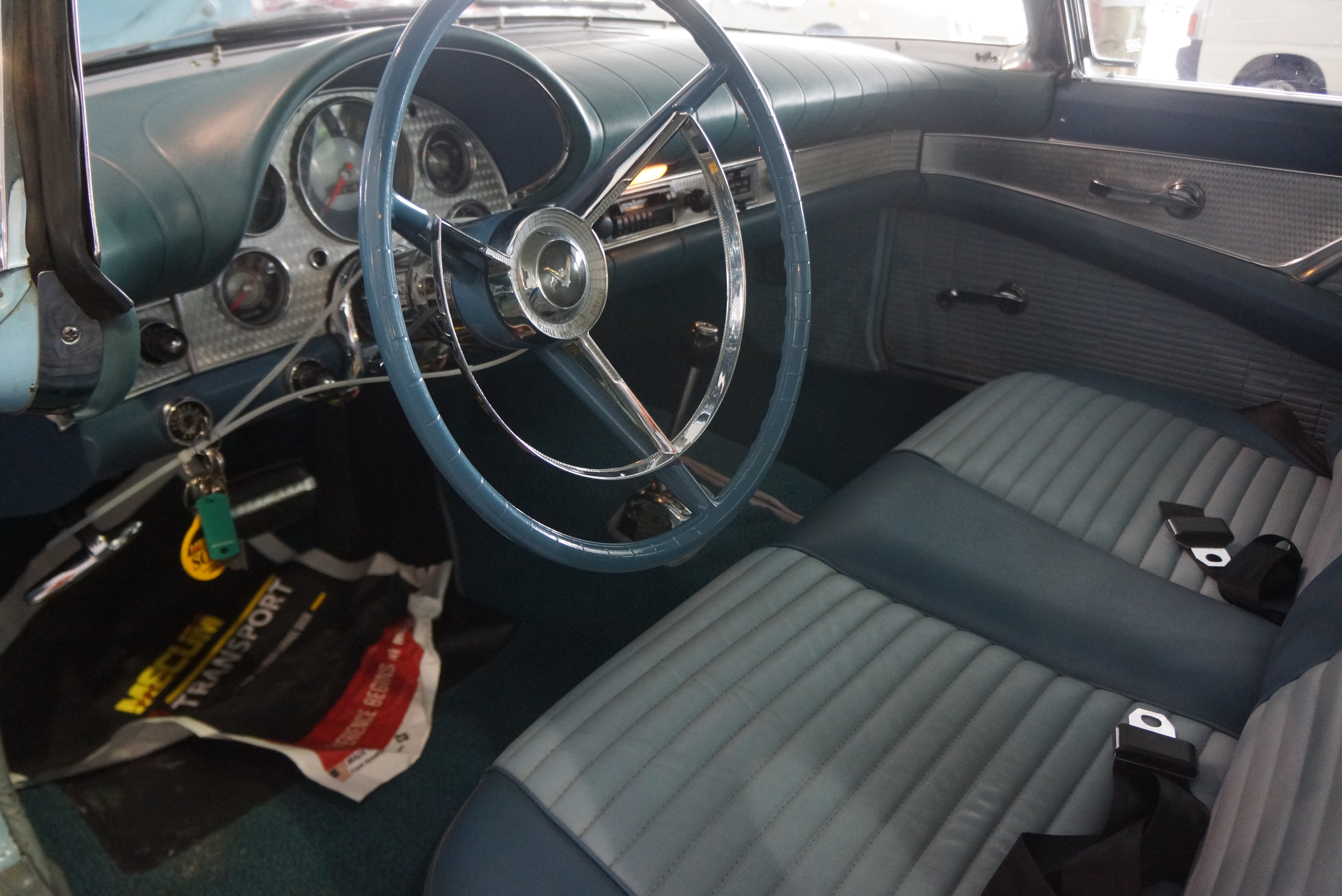
Two-seat T-Bird values have gone nowhere in the last, oh, twenty years or so. Sale prices are completely driven by condition, and perhaps there’s a dwindling audience for these faux sports cars. On the other hand, if you want one, attend an auction and be patient. Of the 3 model years from 1955-1957, the ‘57s have their fans (this writer included). This one, in bland colors, looked like an older restoration. On the positive side of the ledger, it had PS, PB, and the engine dress-up kit. But the engine compartment needed a good detail. The no-reserve price was a bit light, so let’s hope the new owner drives it and enjoys it rather than worries about future values.
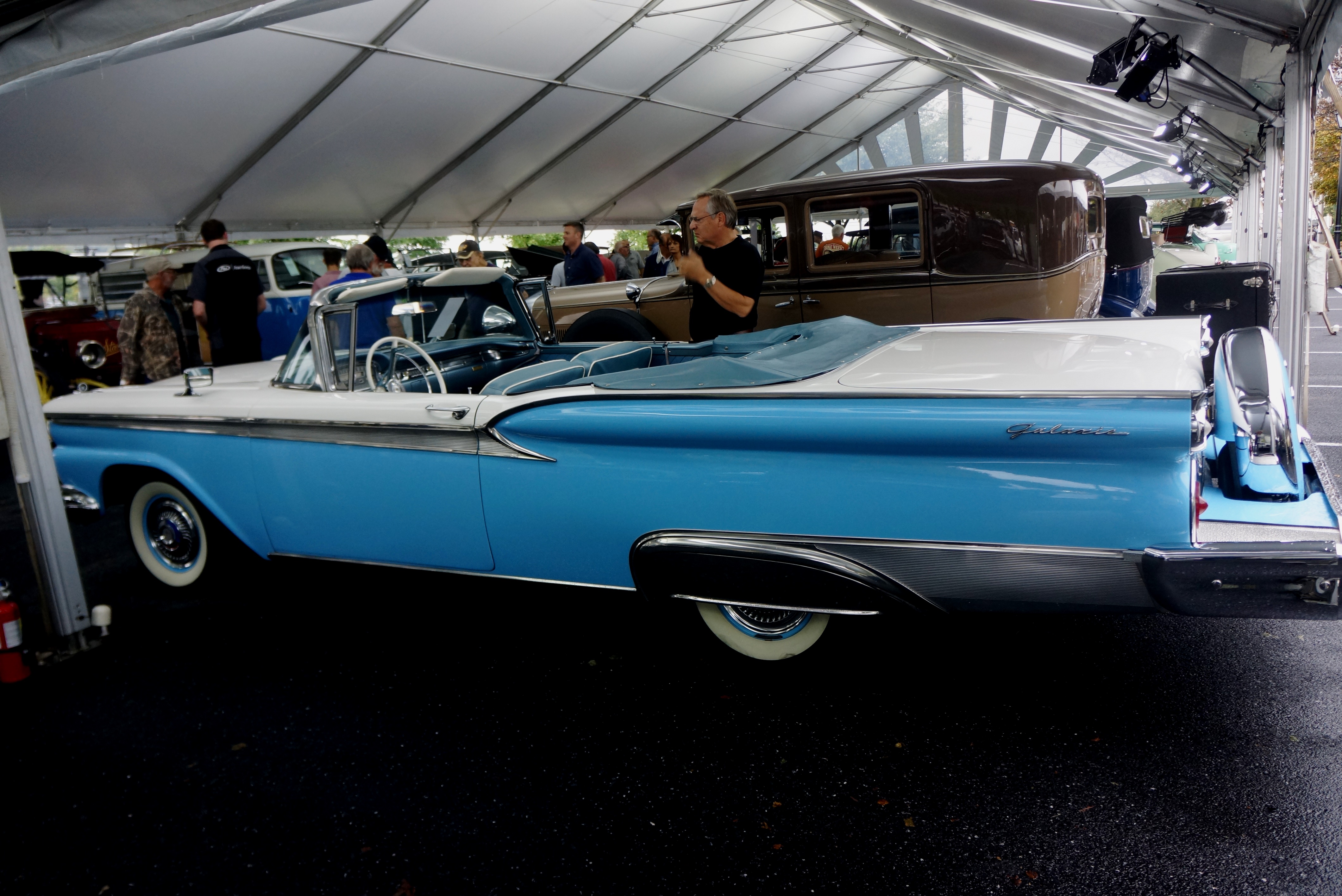
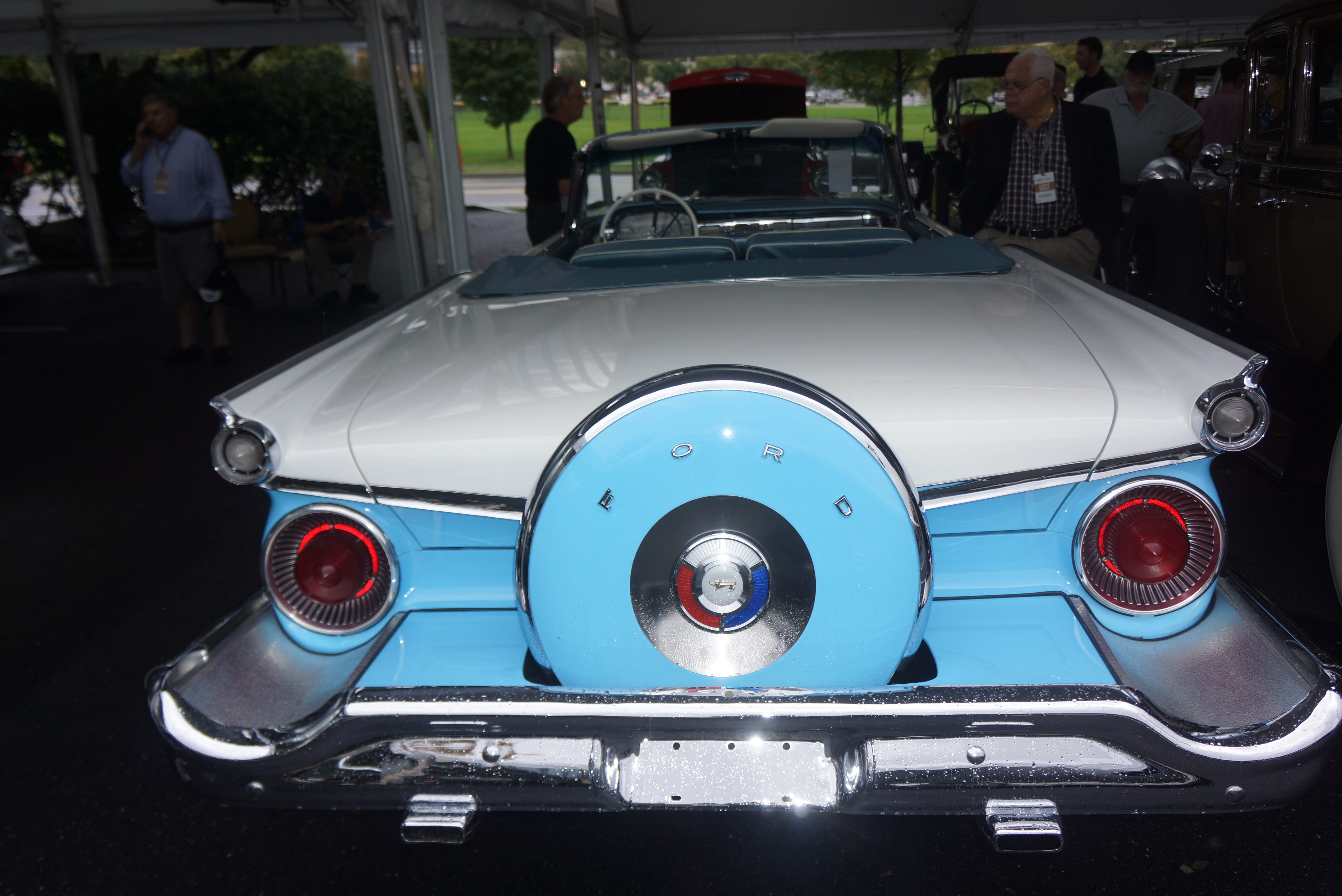
Blue and wide whites
Most Birds were autos
Needs a detailing
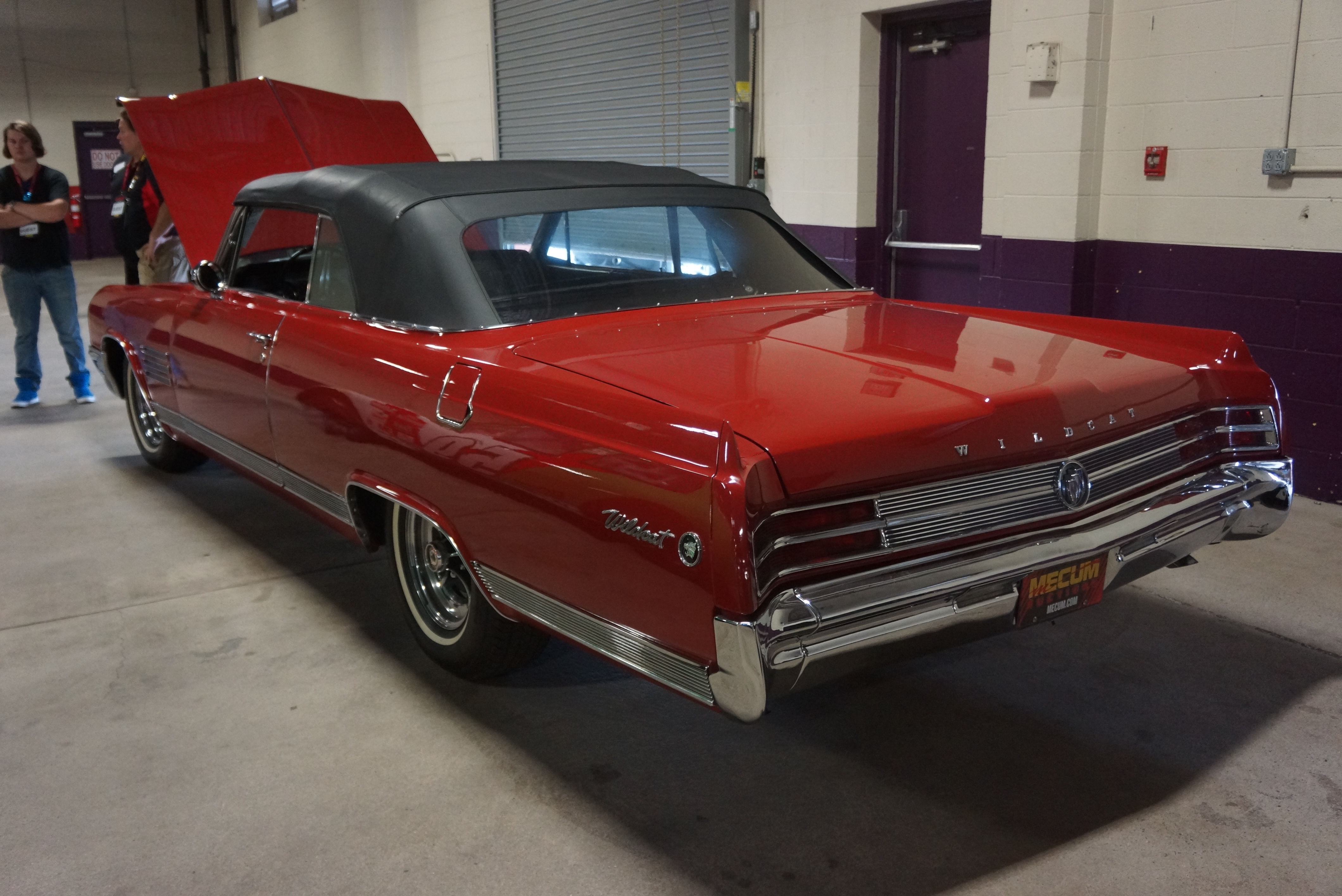
Lot T303, 1964 Buick Wildcat convertible
Sold for $23,000
As one buddy of mine learned, it’s the Fords and Chevys, and not their fancier stablemates, which tend to bring the big bucks. It seems counter-intuitive, but higher-priced marques such as Pontiac, Buick, and Mercury are less desirable simply because fewer of them were sold new. Case in point: this ’64 Buick. Here was a full-size sixties American convertible, in nice shape, in desirable colors, selling for 2/3 what a similar Chevrolet would hammer for. This one sold for the exact same number as shown in CPI for an “excellent” car, so I’ll call it fair to buyer and seller.
Not a car you see every day
Luxurious Buick interior
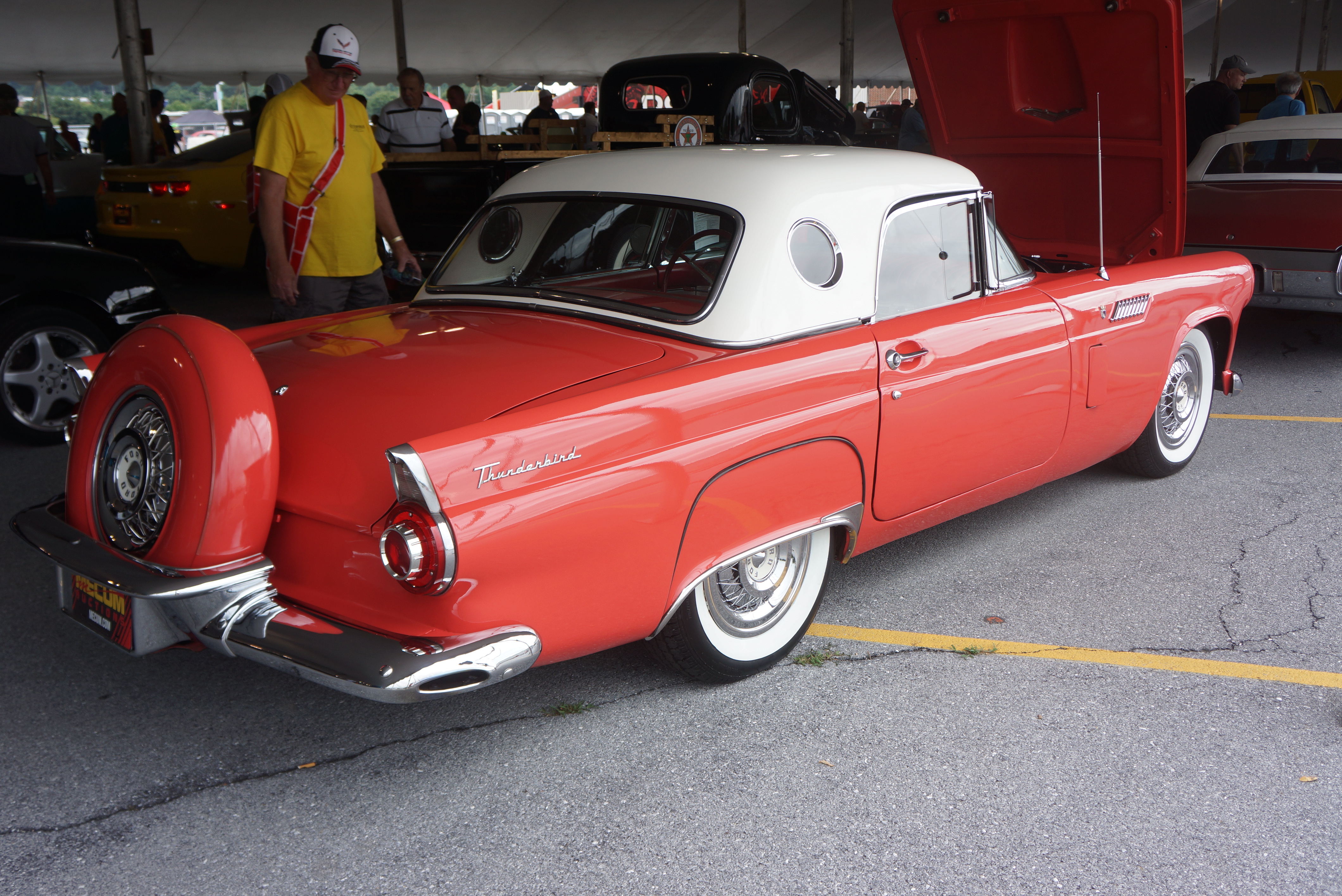
Lot T107, 1956 Ford Thunderbird
Sold for $24,000
At first glance, this one looked nice: Fiesta red (almost flamingo) with red & white interior, decent engine compartment with dress-up kit, and both tops. But looking past the ’56-only Continental kit (making it my least-favorite of the ’55-’57 Birds), the paint was simply shot. There would be little choice but to expend for a complete strip and respray. This one was expensive, especially compared to the ’57 covered above.
In the world of collector car auctions, Barrett-Jackson is the juggernaut: the biggest, loudest, most sensational extravaganza of classic and special-interest cars bought and sold in a public space. Or so you would be led to believe, based on the extensive TV coverage that the brand has managed to manipulate to its maximum advantage.
Mecum may hold a greater number of events; Bonhams may sell more high-dollar cars; Russo & Steele may run multiple auction blocks simultaneously; but Barrett-Jackson has captured and held onto the public’s imagination as THE place to go for ultimate auction thrills.
Aside from video exposure, a factor which has added to this allure is B-J’s no-reserve policy. Almost 100% of their lots are sold without reserve, meaning that the high bidder gets the car. (Very recently, B-J did begin to allow a small selection of reserve cars.) Of course, this only increases the drama when you KNOW the car is going to sell. None of this “whaddaya mean it didn’t meet reserve”. It’s always good for the buyers, and given the unrelenting supply of consigned vehicles, one would presume that sellers are satisfied too.
Phoenix has been B-J’s home for decades, and they’ve expanded from there into Las Vegas and Palm Beach. Three years ago, they launched their Northeast Auction, situated at the Mohegan Sun Casino and Resort in CT. By all accounts, this first foray into New England was hugely successful, and the Barrett-Jackson crew was back for the third consecutive year in June of 2018.
The actual auction dates were Thursday, Friday, and Saturday, June 21-23. The entry-level (read: cheapest) cars would be crossing the block the first day, so that’s the day I chose to attend. Purchasing tickets online (a 45% discount if bought in advance) meant buying them through Ticketmaster, an indication of how big they’ve gotten. Once that lovely organization was done tacking on its handling and service fees, I was out-of-pocket an additional 9 bucks. My final ticket cost totaled $35. A bidder’s pass would have cost many multiples of that.
Aside from morning rush hour traffic, getting there was easy enough, and as this was my first visit to Mohegan Sun, the initial impressions were favorable: the sprawling complex is well laid-out, with ample garage deck parking, clear signage, and a spotless infrastructure. A 9:30 a.m. arrival was well ahead of the crowds, and there was no waiting for my ticket to be scanned, granting me access to the auction building.
You would be forgiven if your initial impression was that you ended up at the wrong show. New-vehicle displays from Ford, Chevrolet, and Dodge are your first sightings, along with booths selling everything from Meguiar’s to mattresses. Apparently, association with B-J makes it worth your while to display your automotive and non-automotive wares to the expected throngs.
Ford’s new vehicle display greets you upon entering
But where are the cars? A long walk toward the rear of the complex finally brought me to the auction vehicles, arrayed in a multi-level parking deck as well as in a pitched tent outside the garage. Next question: in what order are they? Unlike almost all other car auctions I’ve attended, these cars and trucks were NOT in run order. Instead, some of them were thematically placed so that similar vehicles were grouped (Corvettes here, Mustangs there, ‘50s custom cars back yonder). While it might make for pretty pictures, it didn’t help you find the Thursday cars starting with car #1, which was my goal.
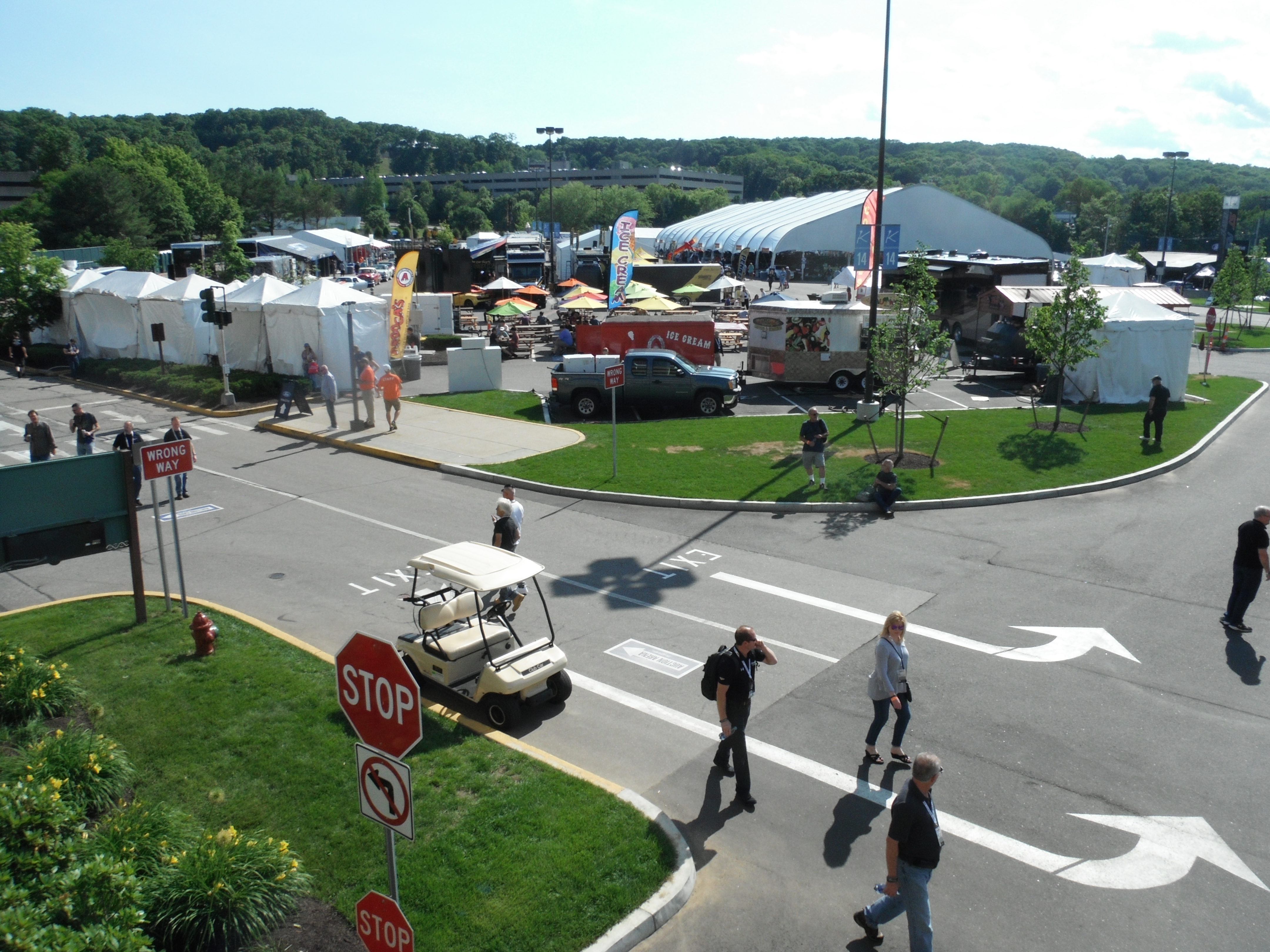
Cars, ride & drives, vendors, and food stalls were spread outside
There certainly were some very nice cars on display. There were also the aforementioned “custom” cars (not my cup of tea when you take a ’65 Riviera and completely rip out its factory interior for 21st century electronics), along with late-model used cars. One such newer vehicle was a 2001 Volvo V70 T5, and I climbed in, looking for clues as to why it might be here. Suddenly, a booming voice was directed toward me: “Sir, get OUT of the car! You are NOT allowed to TOUCH, OPEN, or SIT in ANY of the AUCTION CARS!” The hired hand, a security guy wearing a “CSC Staff” shirt, made it all too clear that I had broken the law according to Barrett-Jackson.
Indeed, only then did I notice all the signs stating “Please do not touch any of the auction cars”. This rule applied to bidders too, which then begged the question: if you’re here to buy something, how do you check it out? Other auctions allow bidders to open hoods, check odometer readings, and in some cases, start the cars and turn on accessories. Not B-J. What’s up with that?
With wrists appropriately slapped, the on-site survey continued (hands behind back). Again, I asked myself, what order are the cars in? I had finally found Thursday’s car #1, but hadn’t yet spotted #2 through #10. After 90 minutes of pacing the parking areas, it was time to head to the auction block itself. The automobilia auction had started at 10am, and the cars were due to begin at 1pm. I wanted to find a seat and leave time for some lunch.
It was a longish walk, first outside, then into the bowels of the complex to get to the stage. Unbeknownst to me, the actual auction was being held in the Mohegan Sun Arena, a 10,000-seat multi-level indoor stadium usually used for sporting events and concerts (upcoming in July: Barry Manilow and Britney Spears, on different nights, thank you). Now it was time for the next surprise: ground-level seating was strictly for those with bidder’s passes – general admission ticket holders, i.e., me, were directed into the nose-bleed upper tier. From there, the auction block looked like it was several hundred feet away, because it was. So much for walking anywhere near the cars. But hearing was no problem, as the auctioneer took advantage of the 110-decibel house sound system. At least from that vantage, I could look down at the skyboxes, where the high-roller bidders had buffet tables and adult beverages as part of their several-hundred-dollar premium package.
The view of the stage from the rear of the arena
Free treats in the skybox
It was time for lunch. A sandwich, bag of chips, and a soft drink for $9 wasn’t a bad deal, and there was no line at all. The cars began to cross the block. The magic number of the early afternoon was $7,500; that was the hammer price for 8 of the first 20 lots. The pace was similar to Mecum, in that cars spent an average of two minutes in the spotlight, so they moved at 30 cars per hour. Vehicle descriptions were lacking in detail; mileages were announced only if it was something favorable (“this car has 43,000 original miles!”).
Of the first 25 cars, only 9 of them broke into five figures, so if your goal was to buy a car for less than $10,000, there was ample opportunity. The flip side of that is that, to this eye, there were rather few bargains. No-reserve sales can cut two ways: a consignor is taking a chance that his car slips through the cracks and sells too cheaply. Sellers know that the car is going home with someone. But it only takes two determined bidders to push the hammer price to a level that favors the seller, and my overall impression was that the majority of Thursday’s sales did indeed favor the seller. Hey, who needs to know the service history if you can be shown on TV pumping high-fives after spending twenty grand?
I had seen over 40 cars sell, and ninety minutes is my personal limit for remaining in one place, so it was time to wander back to the garages. Cars which had crossed the block were all slapped with SOLD stickers, and conveniently, the sale price was noted on the windshields. A few more strolls back and forth between the staging area and the arena, and it was time to bring this long day to an end.
It’s very easy to look casually at the Barrett-Jackson experience and understand the attraction. There’s automotive variety; everything sells; the side shows keep even the most bored folks entertained; and it’s pumped up like it’s going to be on TV because it is.
I watched about 80 cars sell; the highest hammer price I personally observed was $42k; my guesstimate is that Thursday’s average selling price was in the $15k-20k range. If your interests lie with resto-mods, Jeeps, late-model exotics, or running projects, this could be your venue. At any auction, you’re buying a pig in a poke. At B-J, the inability of bidders to take a hands-on approach made it more so. As a non-bidder, the limited access was a bit off-putting, as that is not the case at other auctions. I’m glad I went. I can say that, yes, I’ve experienced a Barrett-Jackson auction. It’s likely that I’ll not feel the need to make a return appearance.
A sampling of Thursday’s auction cars are below, and as always, they are arranged in SALE PRICE order (dollar amounts are exclusive of the buyer’s 10% commission). Apologies for the poor picture quality; I didn’t want to carry my SLR and brought a cheap digital camera with me that did a poor job in the fluorescent lighting.
$3,000 TO $7,200:
#1, 1990 Chrysler Maserati TC convertible, sold for $3,000
Mitsubishi V6 and 4-speed automatic. An American-Italian-Japanese mash-up; I’m sure that any FCA dealership can service it for you.
1990 Chrysler Maserati TC
#15, 1989 Chevrolet Corvette convertible, sold for $6,700
This 6-speed car wore newer Corvette wheels. Sign claimed that most of its paint was original, and listed a host of recent maintenance. This was one of the few really good deals from Thursday.
1989 Chevy Corvette
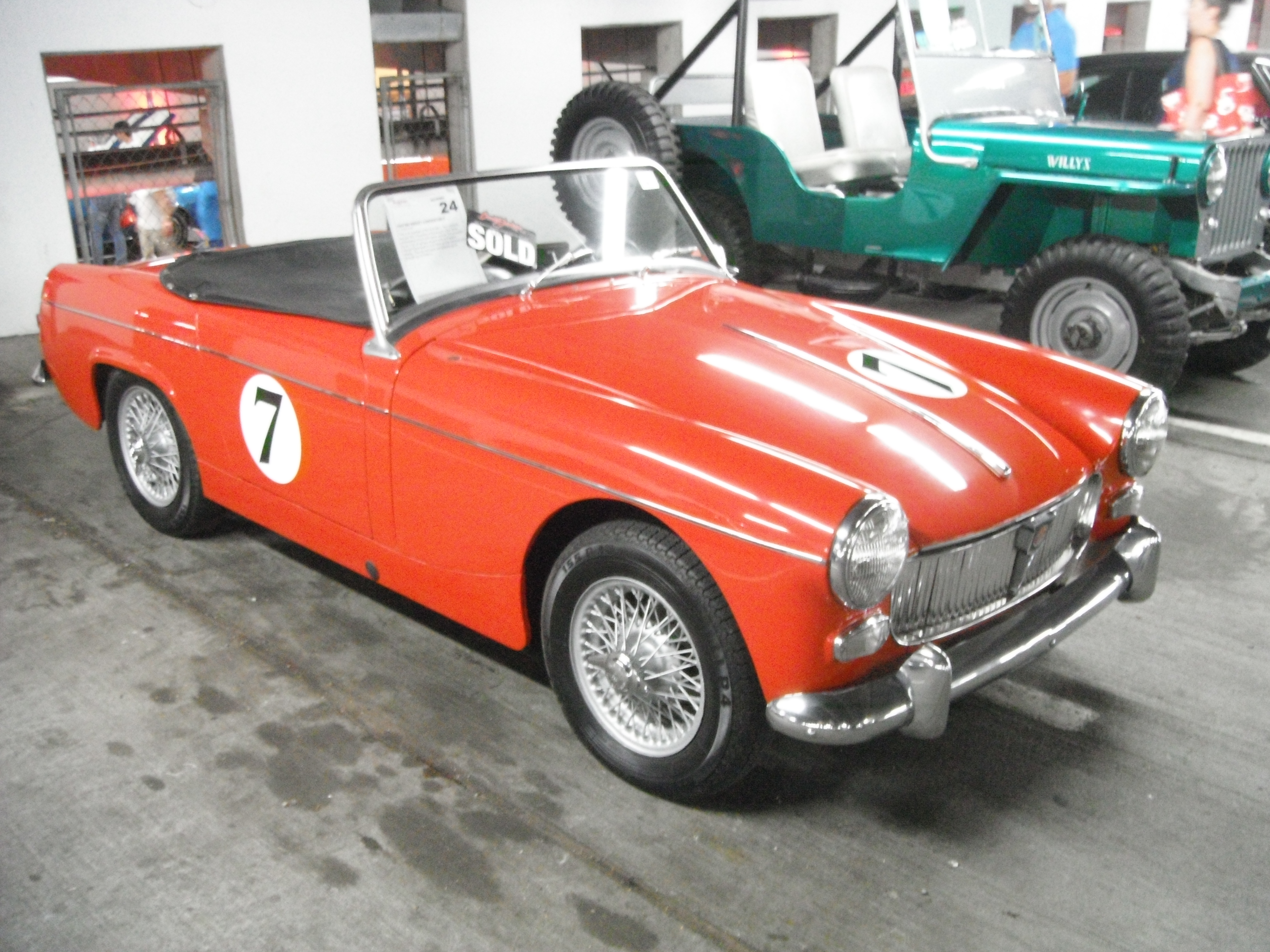
#24, 1964 MG Midget convertible, sold for $6,800
An affordable way to get a British sports car. Just check to make sure your girth lets you fit.
1964 MG Midget
#25, 2002 Jaguar XK convertible, sold for $7,200
An average used exotic which sold for an average price.
2002 Jaguar XK convertible
THE $7,500 BUFFET TABLE:
#1.1, 1966 Cadillac Sedan DeVille, sold for $7,500
Driver’s seat upholstery worn, looked OK otherwise.
1966 Cadillac Sedan DeVille
#18, 1966 Ford Thunderbird Landau hardtop, sold for $7,500
A lot of style, luxury, and fuel consumption for not much money.
1966 Ford Thunderbird
#6, 1972 Plymouth Satellite, sold for $7,500
Both A-pillars bubbling with rust. Rear quarters not much better. Rebuilt 440, perhaps only good for parts.
’72 Plymouth Satellite
A-pillar
Trunk lid
#19, 1985 Chevrolet Corvette coupe, sold for $7,500
A clean-looking 2nd year C4 in attractive colors. No explanation why this car would have fetched more money than Lot #15, which is 4 years newer and has a drop-top.
1985 Chevy Corvette
#12, 1985 Toyota Supra, sold for $7,500
A potentially good deal on a rising Asian collectible.
1985 Toyota Supra
$11,500 TO $14,500:
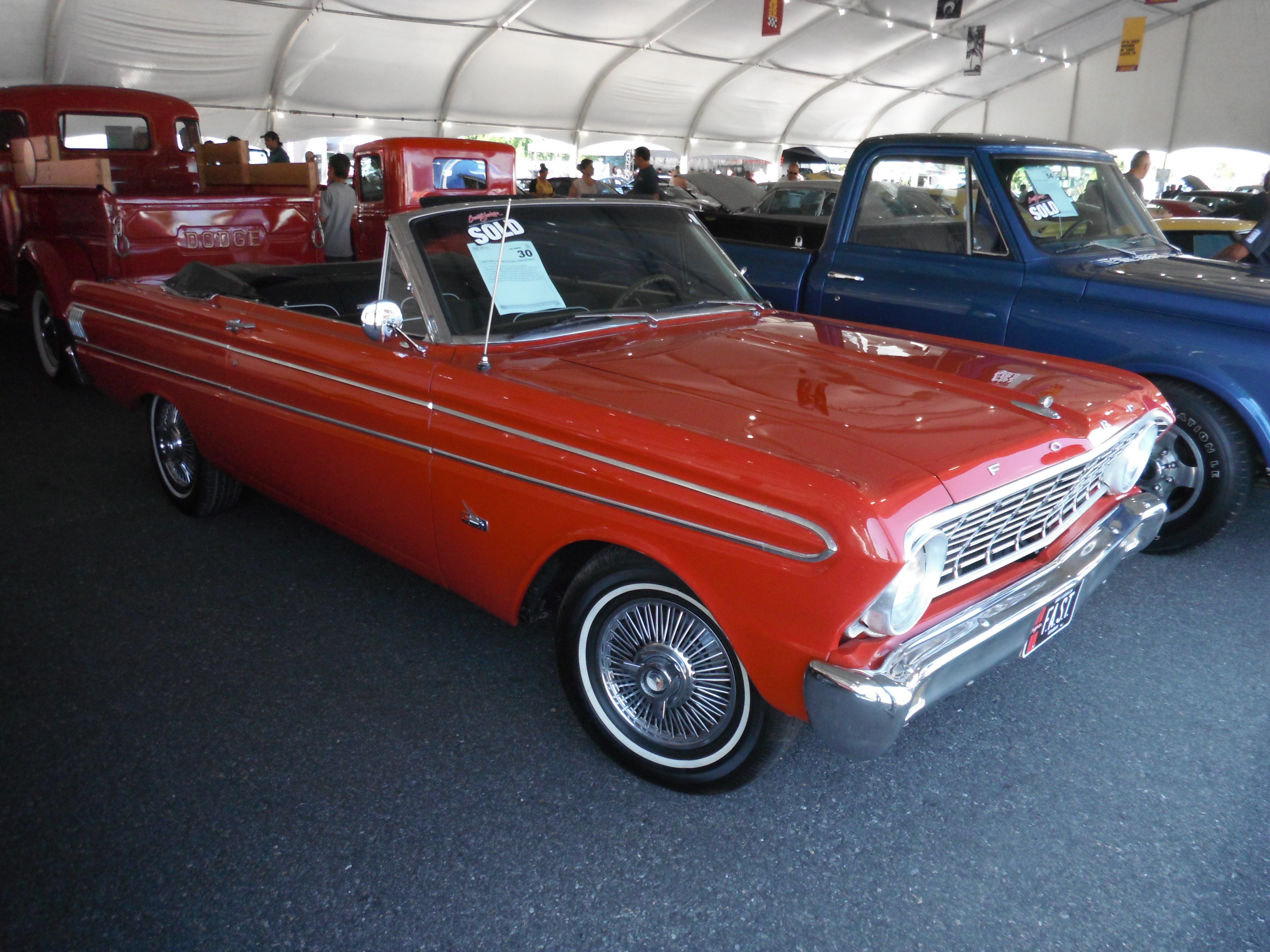
#30, 1964 Ford Falcon convertible, sold for $11,500
This six-cylinder drop-top sold for half what a comparable Mustang would have brought.
1964 Ford Falcon convertible
#23.1, 1986 GMC Sierra 4×4 pickup, sold for $12,000
The first of 2 GM pickups to sell for this price. Perhaps B-J is the place to buy your pickup truck, because these sell for twice this at Mecum in Harrisburg.
1986 GMC Sierra
#37, 1987 Chevrolet Silverado pickup, sold for $12,000
Pickup trucks of all flavors were relative bargains today. Aside from its wheels (easy fix), truck looked to be done to a good original standard.
1987 Chevy Silverado
#60.1, 1953 MG TD, sold for $13,000
Worst repaint I’ve ever seen on an auction car. Literally looked like it was pulled from a garage and painted with rattle cans over dust and dirt.
1953 MG TD
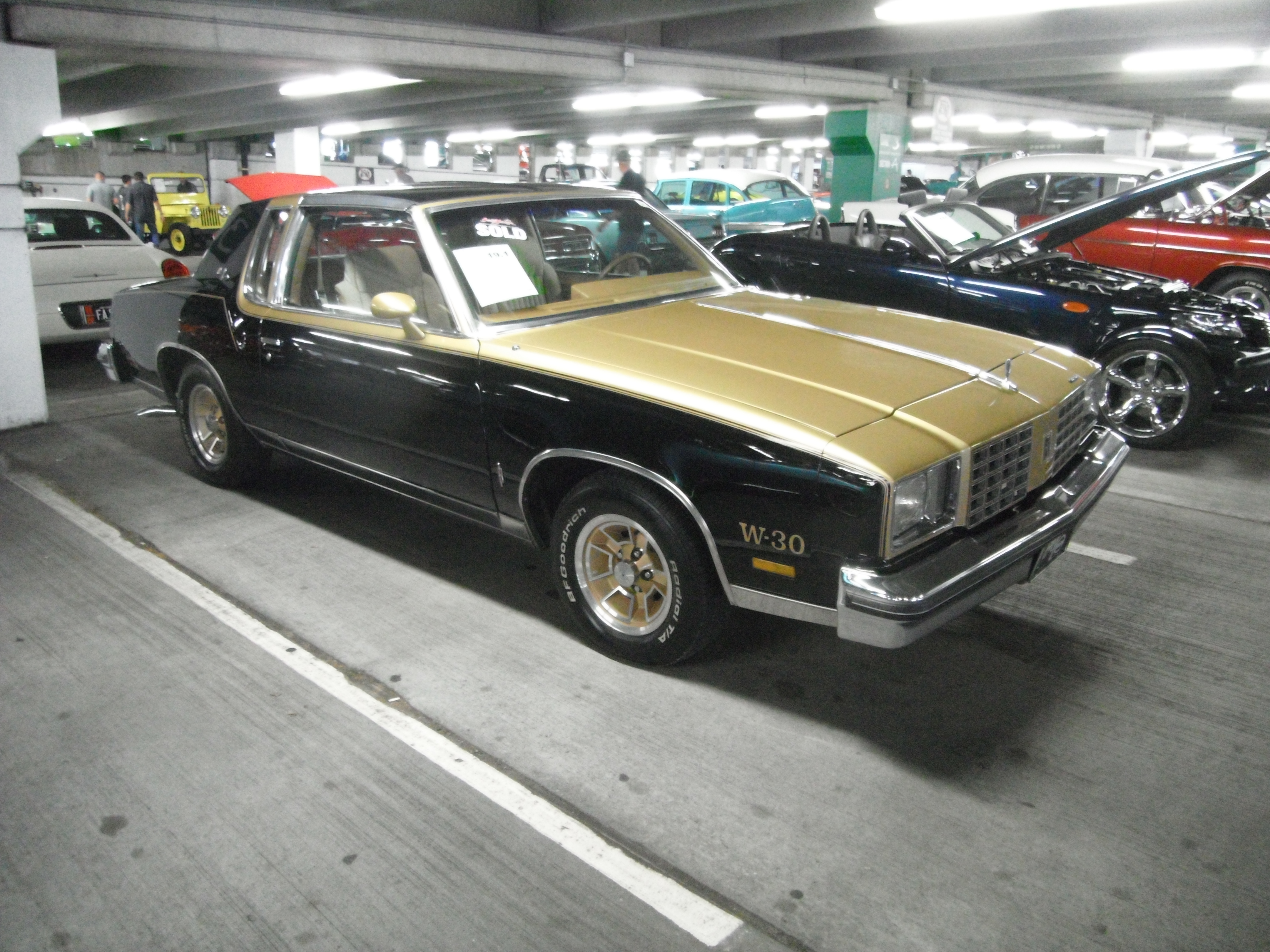
#19.1, 1979 Oldsmobile Cutlass Hurst W30, sold for $13,000
A model infrequently seen these days, interesting RWD Hurst/Olds package looked to be all there.
1979 Oldsmobile Cutlass H/O
#35, 1965 Plymouth Barracuda, sold for $14,500
A survivor, as most of these were long ago consumed by the tin worm. Plain exterior offset by nice interior.
1965 Plymouth Barracuda
$18,000 TO $20,000:
#32, 1965 Fiat 500, sold for $18,000
Got a lot of attention in the garage pre-sale, sold for more lira than most of the domestic iron that preceded it across the block.
1965 Fiat 500
#33, 1963 Austin-Healey Sprite roadster, sold for $18,500
The good news: the restoration work looked to be top-notch. The bad news: the 1955 Dodge LaFemme color scheme didn’t look good here. I met the winning bidder while he photographed his new toy. A 30-something hipster, he told me that he always wanted one. Hope he drives it and enjoys the attention.
1963 Austin-Healey Sprite
#66.1, 1966 Chrysler Newport, sold for $19,000
Sign claims “rotisserie restoration” of body, rebuilt 383, and original interior. Big stylish cruiser for Mopar fans.
1966 Chrysler Newport
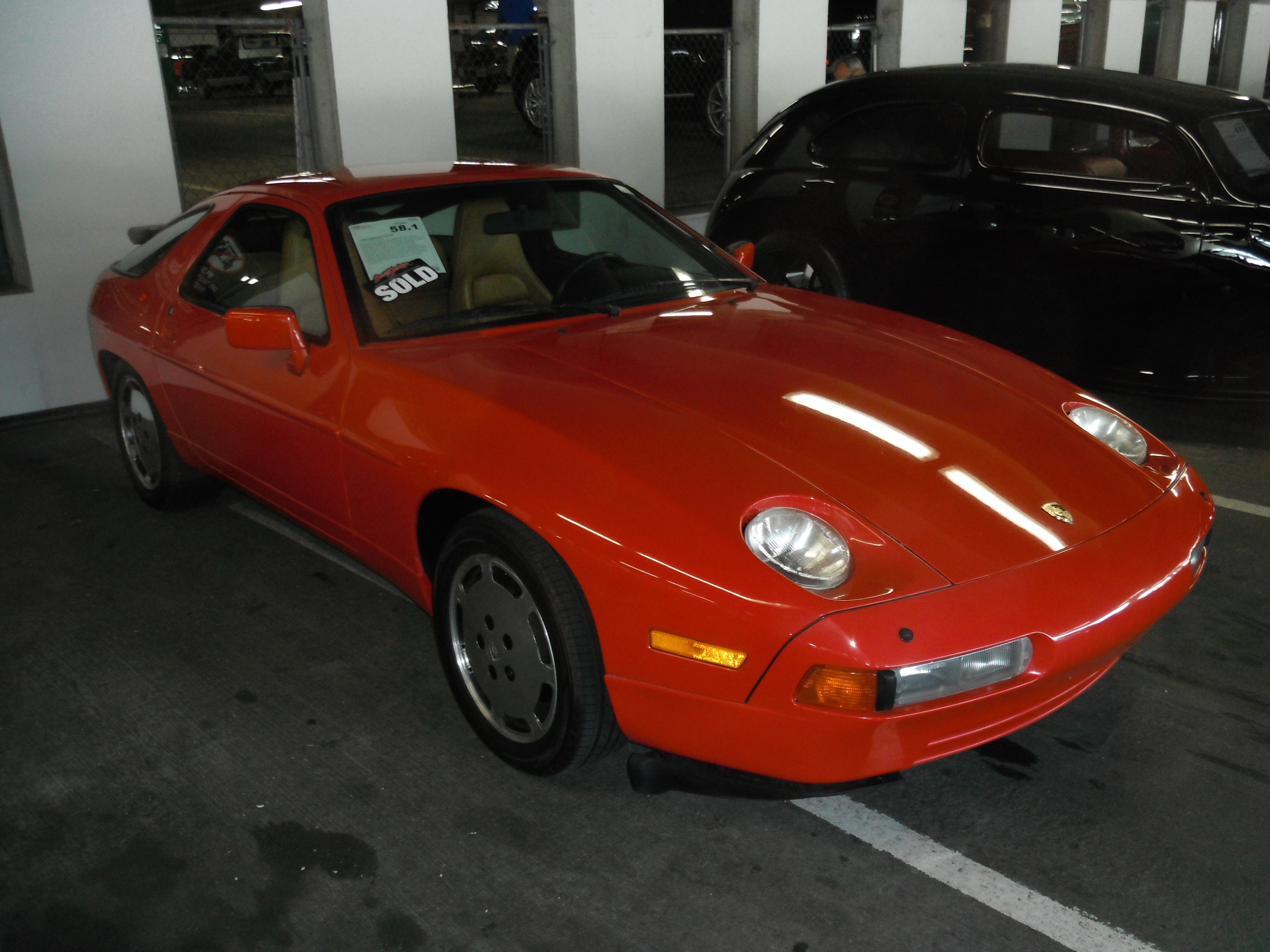
#58.1, 1988 Porsche 928, sold for $20,000
This was a $10,000 car five years ago. This one claimed to have 43,000 original miles.
It was reported the other day that in New Jersey, there has been rain on at least one, if not both days of the weekend for the past ten weeks. The corollary to that is that the weather forecasters have been batting about .210 (if they were ball players, they would have been sent back to the minors by now).
So it should not have come as a surprise to awaken on Sunday June 10 to showers, even if 24 hours prior they had not been predicted. It was two months ago that the NJ Chapter of the Alfa Romeo Owner’s Club (AROC) selected this date for its spring driving tour through Hunterdon County. But Alfa drivers love to cruise so much that a little moisture wasn’t going to deter us. We met as planned at the Readington Diner on Route 22 in Whitehouse at 10am, and after a brief driver’s meeting, ten people in six Alfas were off.
1967 Alfa Giulia sedan
1967 Alfa (Giulia) GT Jr.
Alfa 164 (V6, FWD)
The half-dozen vehicles were neatly divided into two groups of three: in the ‘older’ group were two ’67 Giulias, a sedan and a coupe, along with a 164 four-door sedan. Alfa Romeo’s current model lineup was thoroughly represented by the 2nd group of three: a Giulia sedan, a Stelvio SUV, and a 4C Spider. The factory couldn’t have planned that better if it tried.
Alfa Giulia sedan
Alfa Stelvio SUV
Alfa 4C Spider
From the diner, we drove about 4 miles on Route 22 before turning south. From that point on, 100% of the driving was on two-lane secondary roads. We wound our way around Round Valley Reservoir, and meandered through the towns of Stanton, Barley Sheaf, Cherryville, Quakertown, and Pittstown before descending into Frenchtown, on the NJ/PA border. The rain at this point was nothing more than a nuisance, and made me long for intermittent wipers on my ’67.
Back on the road, we turned left and began to head east, passing through Sergeantsville, Ringoes (named after John Ringo), Unionville, and Reaville. We briefly entered Somerset County, driving through Cloverhill and Montgomery, before circling round, winding through Wertzville, and finally turning south toward our destination, the town of Hopewell in Mercer County. We covered just over 70 miles in slightly under 2.5 hours, including our break.
Lunch was at Antimo’s Italian Kitchen, and it was charming. Our wait staff catered to our every need, and the food was delizioso. Perhaps best of all, new friendships were formed, as several of today’s participants were on their maiden voyage with the Alfa club.
Both of these cars are Alfa Romeo Giulia sedans! Can you tell them apart?
The roads were lightly traveled; the scenery was verdant and historic; the overcast skies kept the temperatures reasonable; and no one broke down. What else but to conclude that our NJ AROC Hunterdon County tour was a roaring success?
This is what we do: we get up early on a Sunday morning, earlier than many of us would otherwise arise on a day off from work. We hop into our toy car, and it doesn’t matter if it’s a 40-year-old gem we’ve owned for many a decade, a recent “beater” that’s a work in progress, or a brand-new supercar. (One rule in this club that has no rules is, we do not criticize each other’s cars based on age, marque, horsepower, color, or relative value.)
The lineup: the cars and their owners
We meet at a pre-arranged spot, and then we drive. It’s almost always delightful, verdant, winding, two-lane roads, which may take us north, south, east, or west. We delight in the sights and sounds of our friends’ cars in front of us and behind us. Sure, we drive in a spirited fashion, but there’s no reckless behavior on the road; we respect each other too much for that. (Rule #2 in this rule-less club is that overly aggressive driving will certainly ensure you’re disinvited to our next soiree.)
“So I opened the hood, but still couldn’t find the battery….”
Upon arriving at our destination, we anxiously await our morning treat: hot coffee, good breakfast food, and lots of conversation. Some of us have known each other for 25 years. Some of us met about 90 minutes ago. It doesn’t matter. We share a passion for our internal-combustion-powered devices, and we’ll talk about them and the exhilarating freedom they provide until the waitresses toss us out (pity the future generations who will not know the thrill of piloting such sporting machines).
Following the Ferrari on the way to breakfast
Some of us break from talking long enough to glance at the camera
With breakfast done, our desire to continue the chat is all too obvious, as we spill out onto the sidewalk, inadvertently blocking the restaurant’s entrance. Finally, as the noon hour approaches, we reluctantly wish each other a fond “see you next time”, and head back to our machines, and back to whatever reality awaits the remainder of our Sunday.
This is what we do.
Buick Skylark convertible
Chevy Nova
Alfa Romeo Spider VeloceVolvo C70 Coupe
NA (1st gen) Mazda Miata
NB (2nd gen) Mazda Miata
Porsche 911 Targa
Jaguar F-Type
Shelby Mustang convertible
I had a hard time keeping up with this guy on my way home
As we exited the Bear Mountain Bridge over the Hudson River, Rich S took these photos, and they are used with his permission:
It means that we must remember the true spirit of the holiday, as we honor those who served, especially those who made the ultimate sacrifice for our freedom.
The flag display at the parade
It means that we have the freedom to pursue our own vision of happiness. For many of my friends, as well as for me, that means sharing our passion for the old car hobby.
AACA members chat before the parade start
1940 Buick
1976 Buick
1988 Cougar
1936 Ford
1939 Ford
1967 Pontiac
1966 Corvette
1966 Mustang
The old car parade
It means that I can volunteer to spend a few hours to participate in a local parade, giving citizens a reason to come out and smile, cheer, and wave the flag.
It means that I have freedom of choice to purchase and drive the car that I want, not based on what someone determines is “the right choice” based on that vehicle’s country of origin.
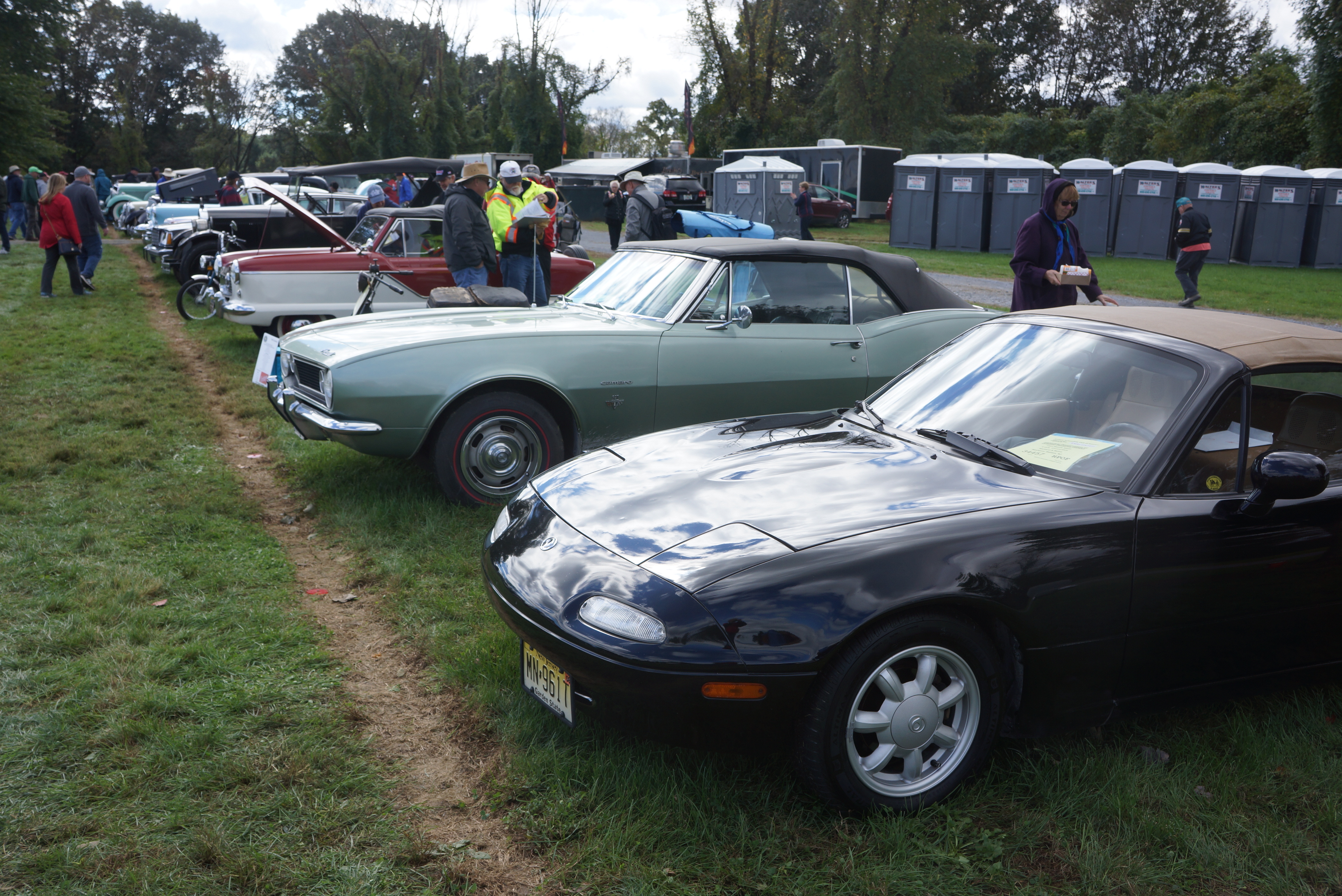
My ’93 Miata, the only non-domestic car in the parade
It means that our children, our future generations, can learn from the past, and work toward a future that we hope is peaceful and safe for them.
It means that there is great joy in recognizing that Americans come in all colors, from all different backgrounds and nationalities, and they are as proud and happy as anyone to celebrate this momentous holiday with all their fellow Americans.