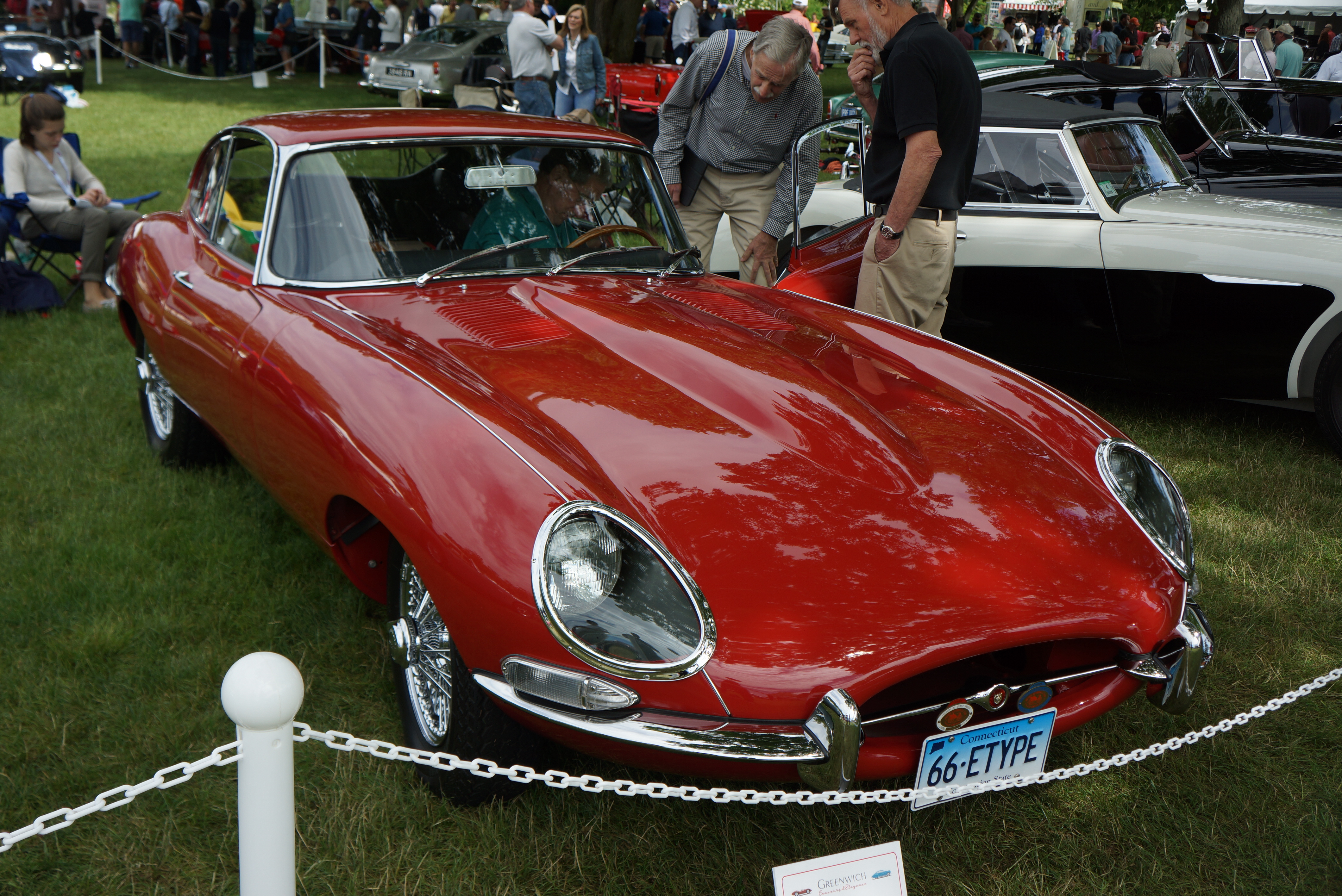
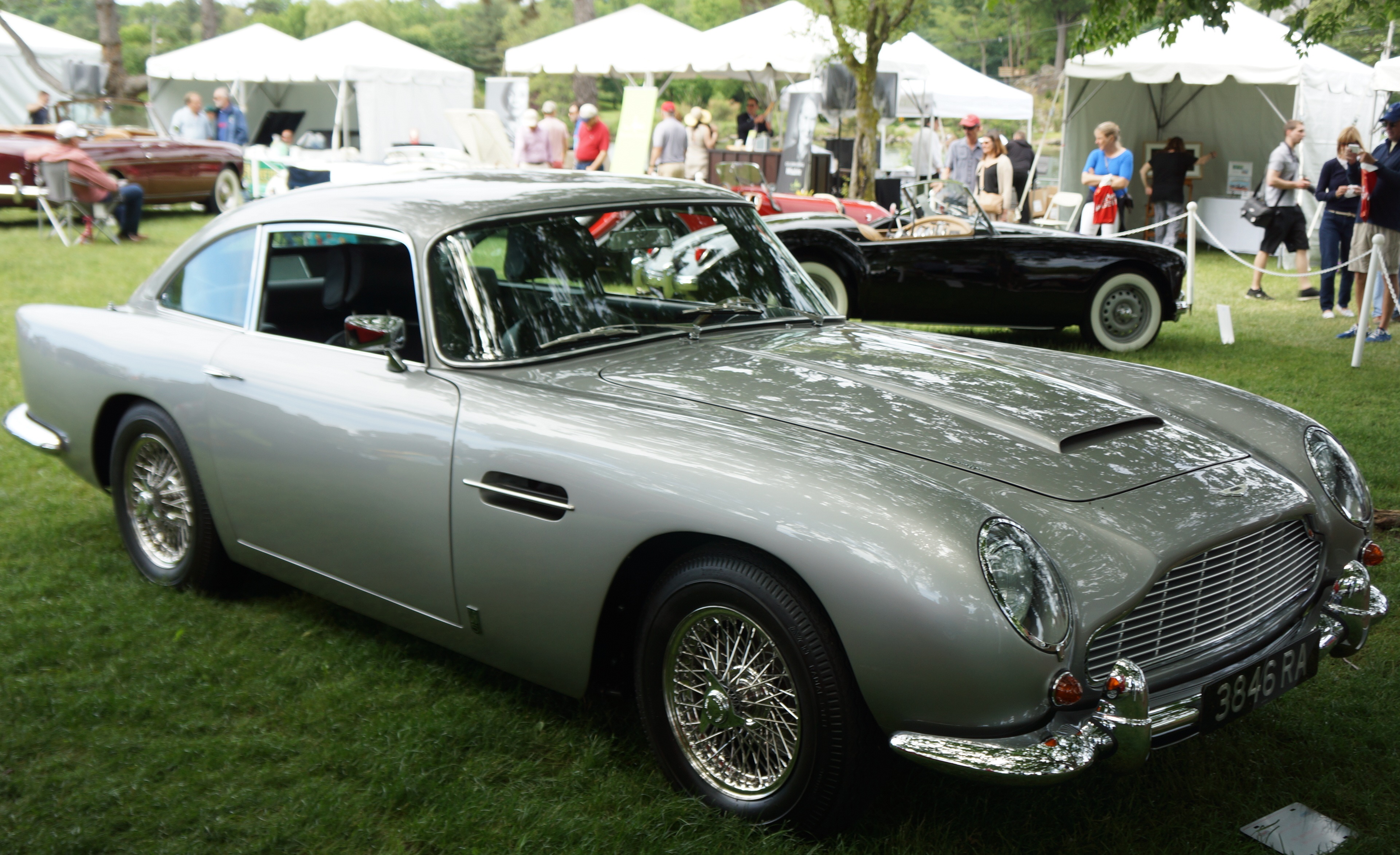
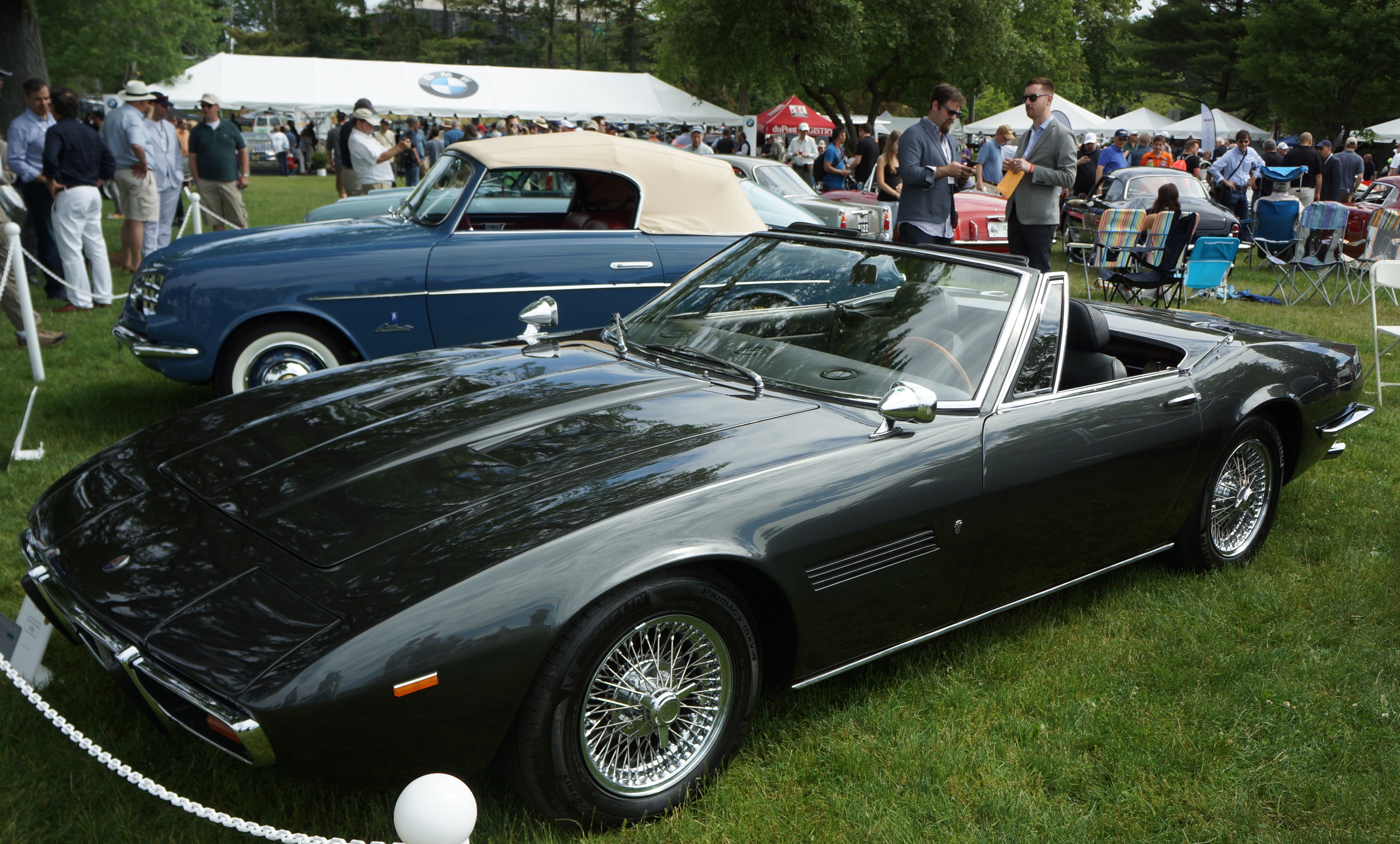
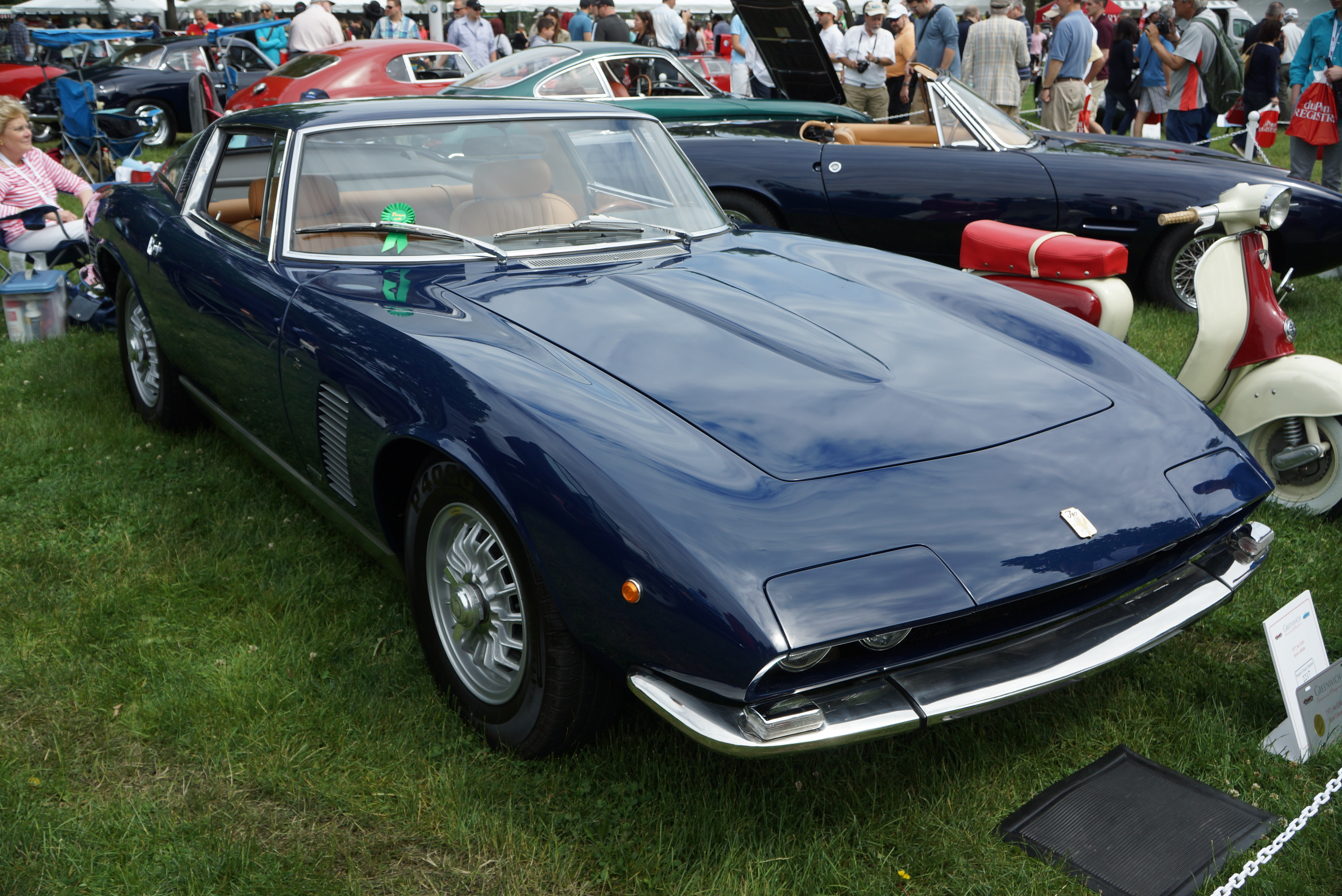
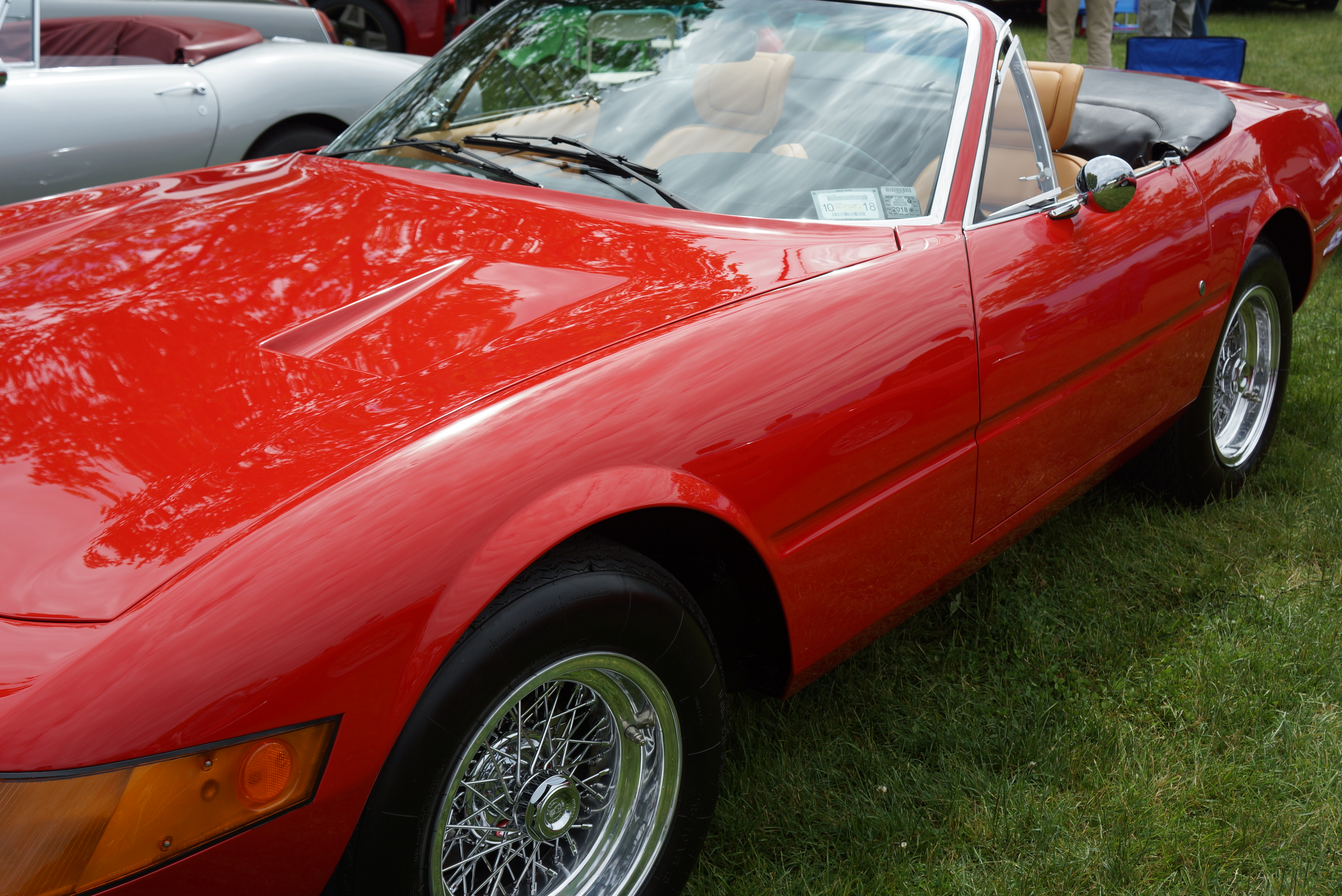
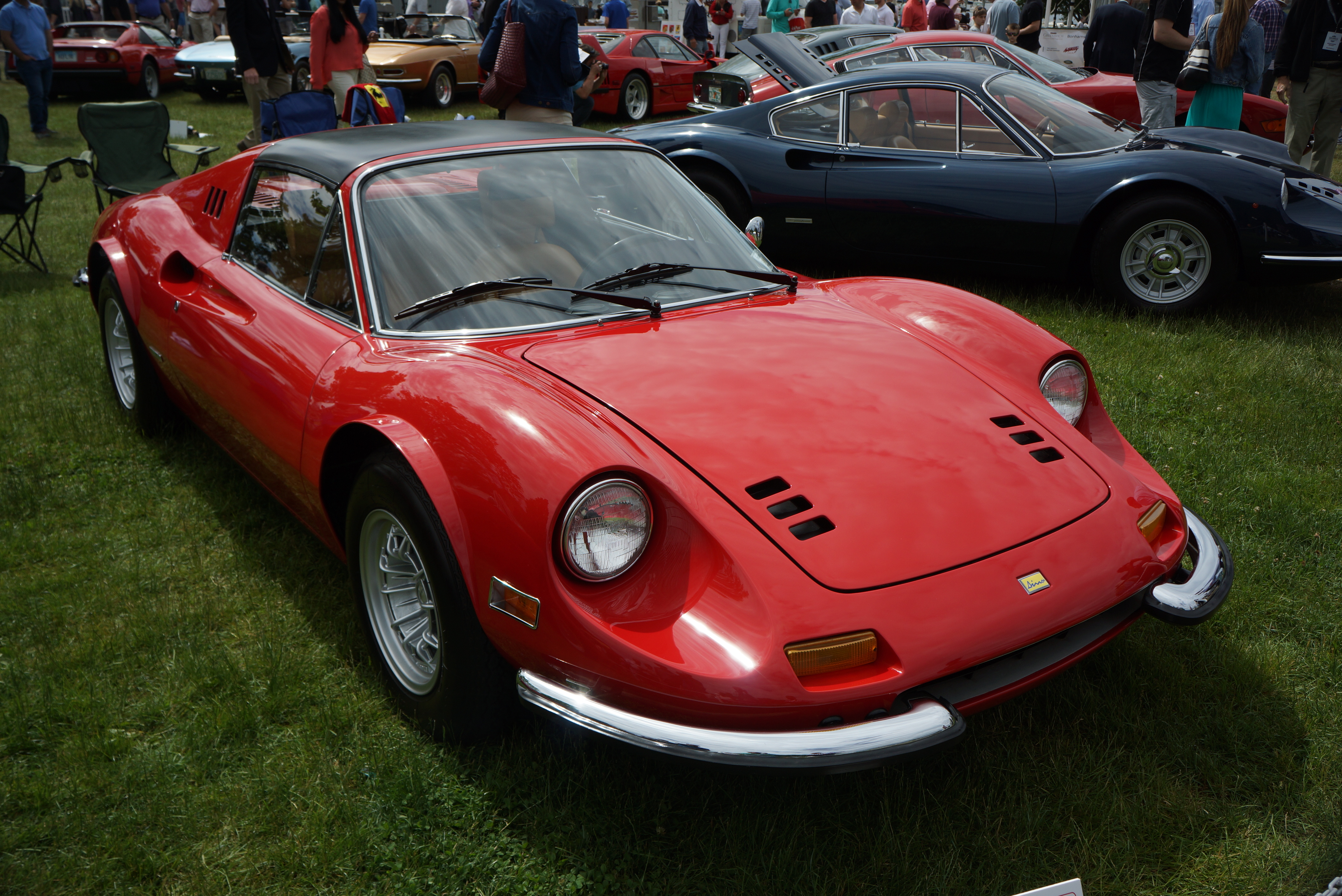
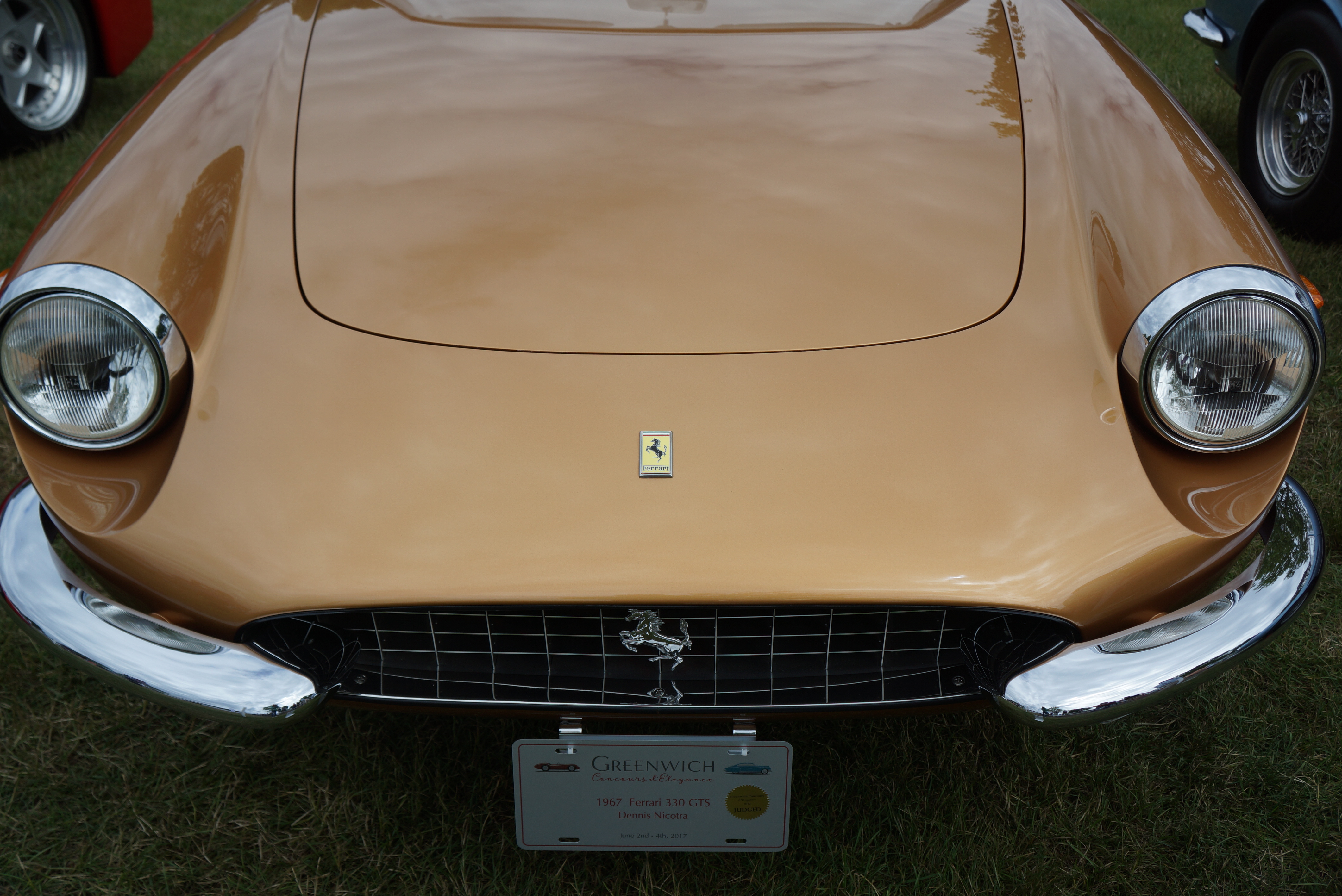
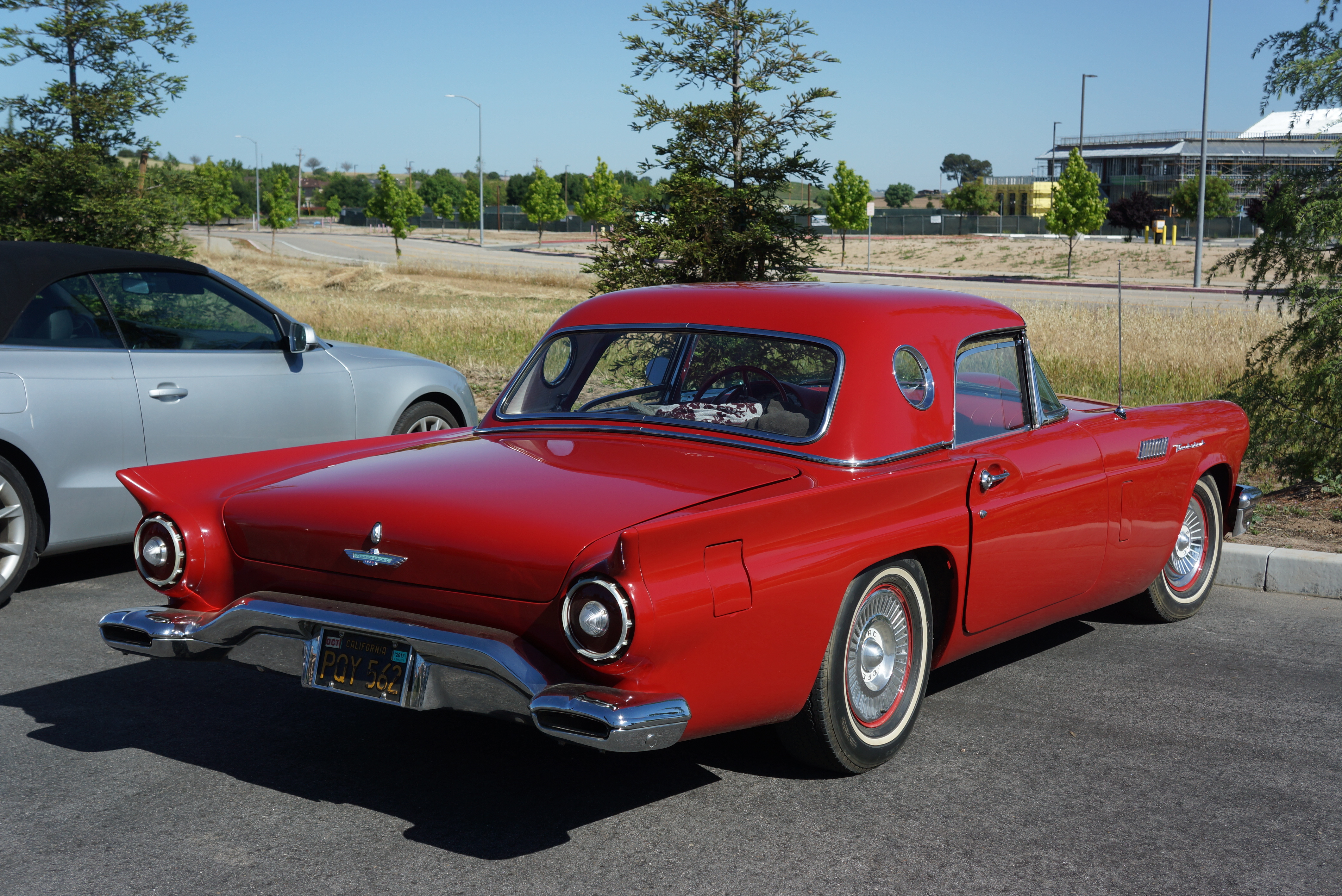
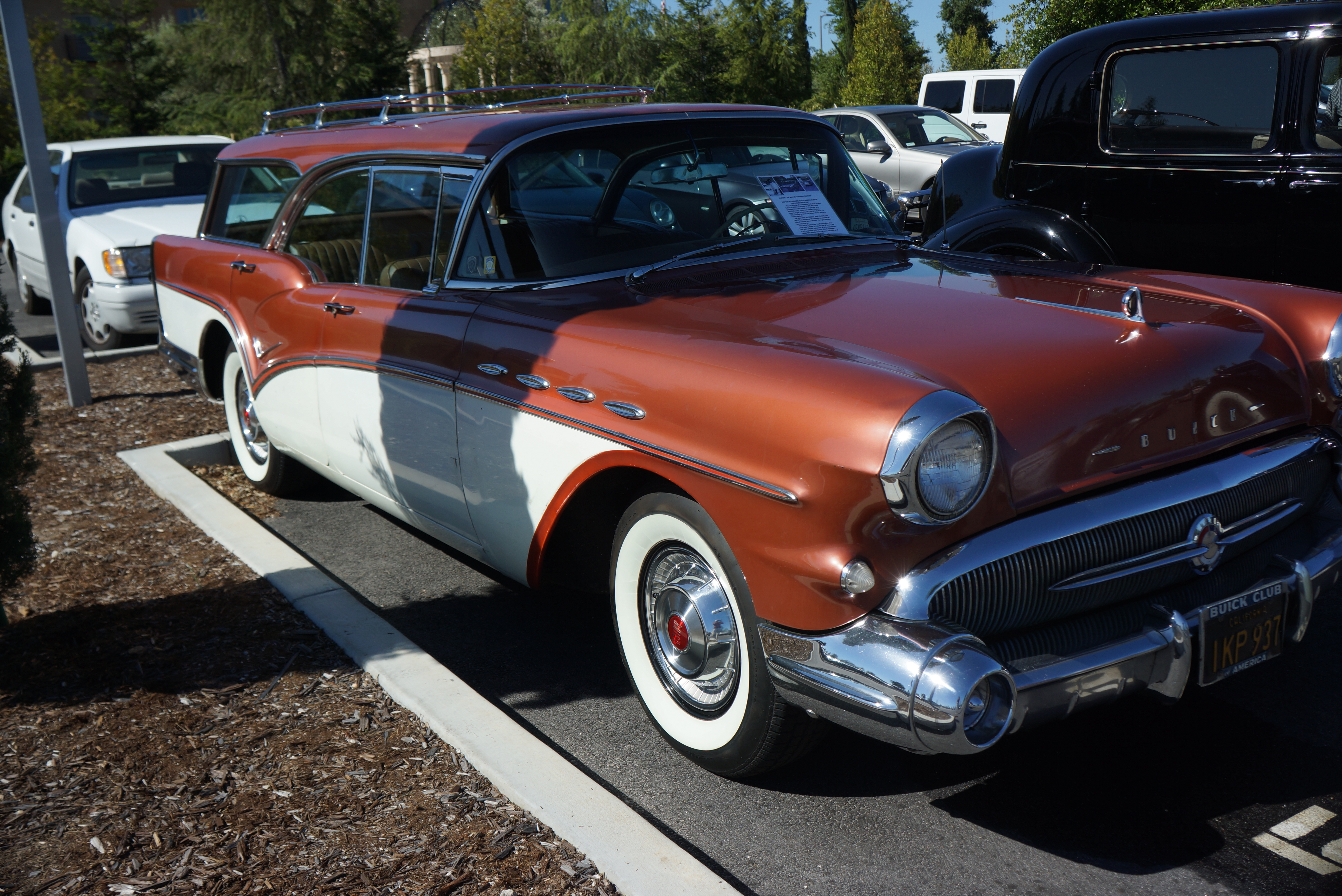
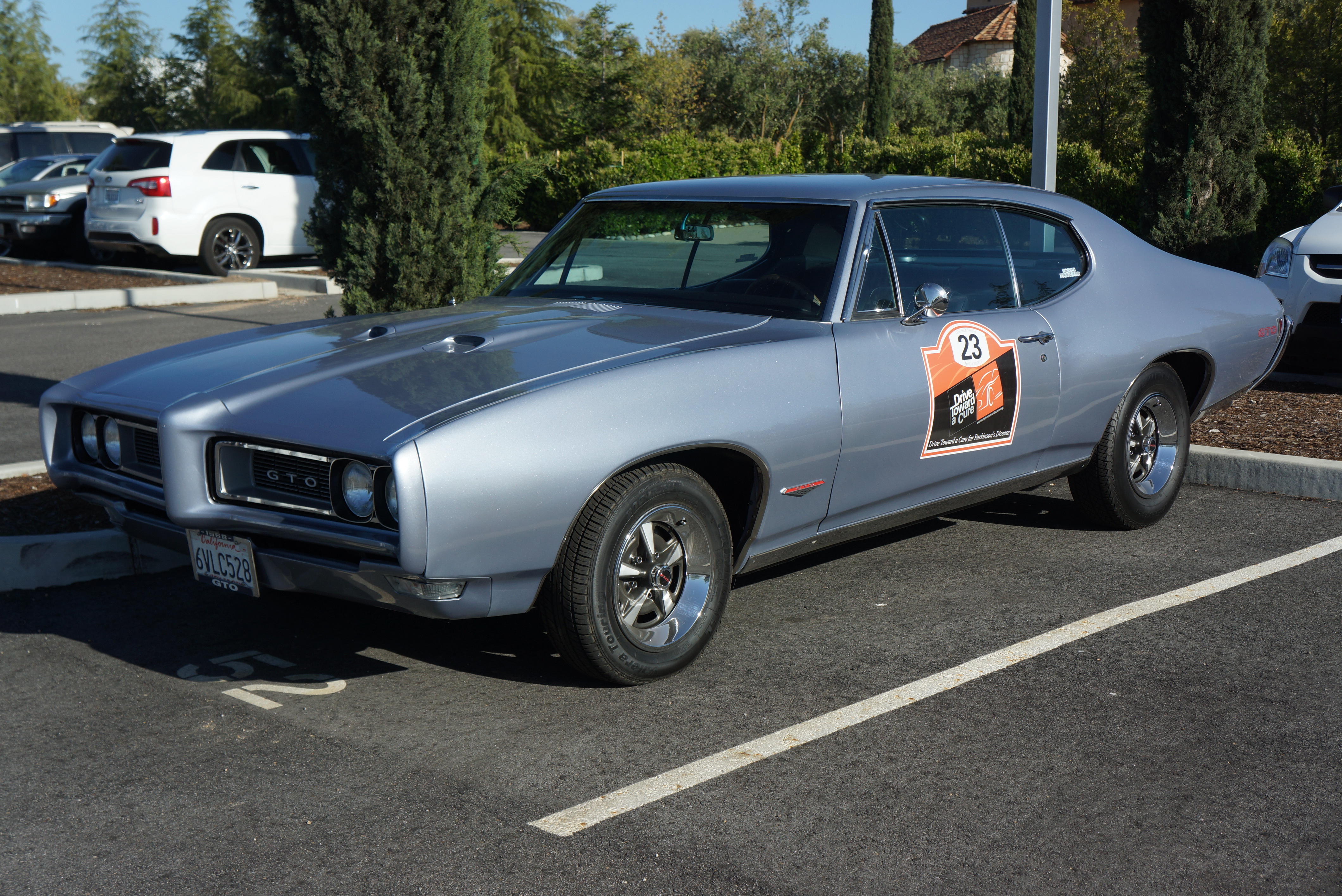
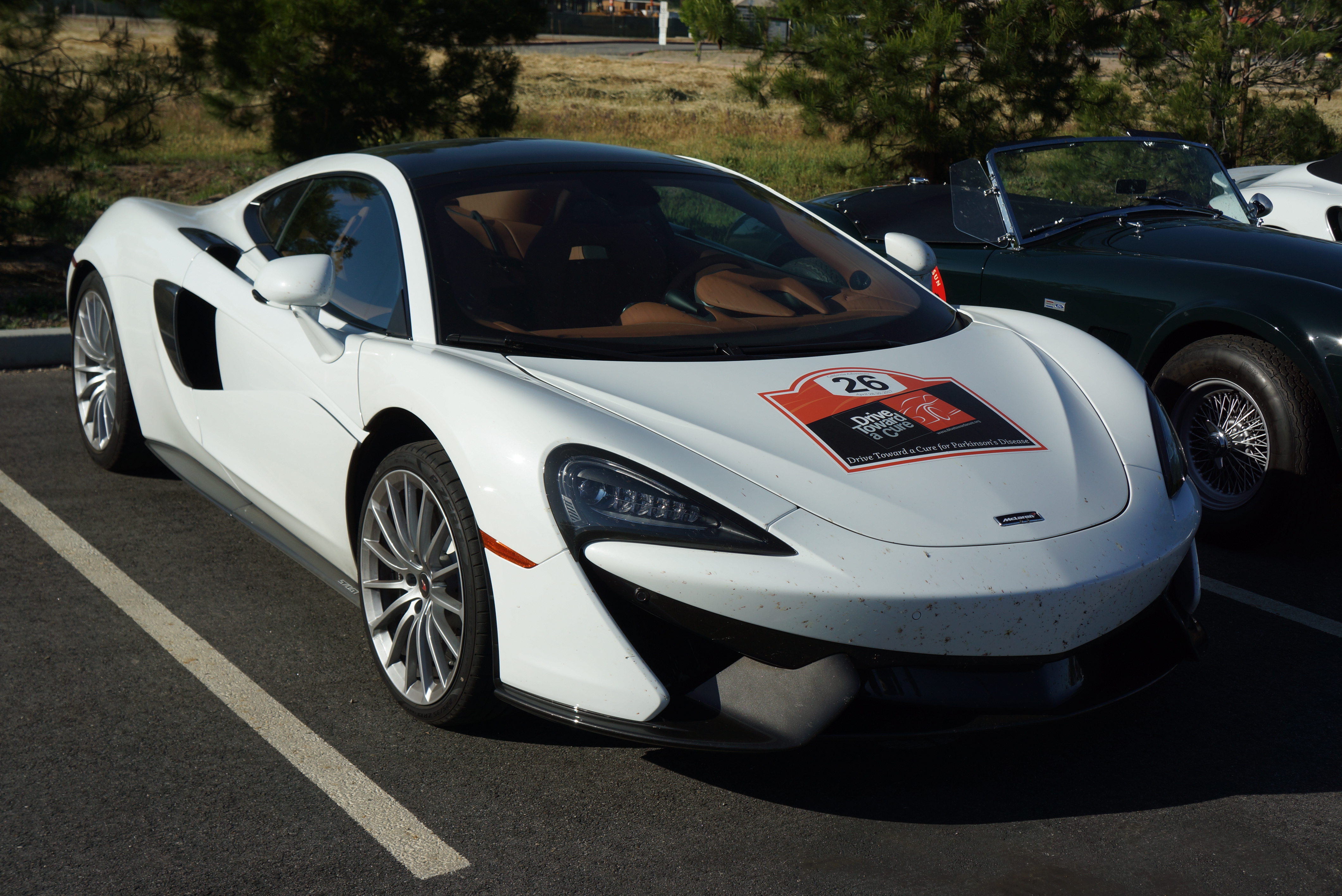
The 2017 NJ AACA car show

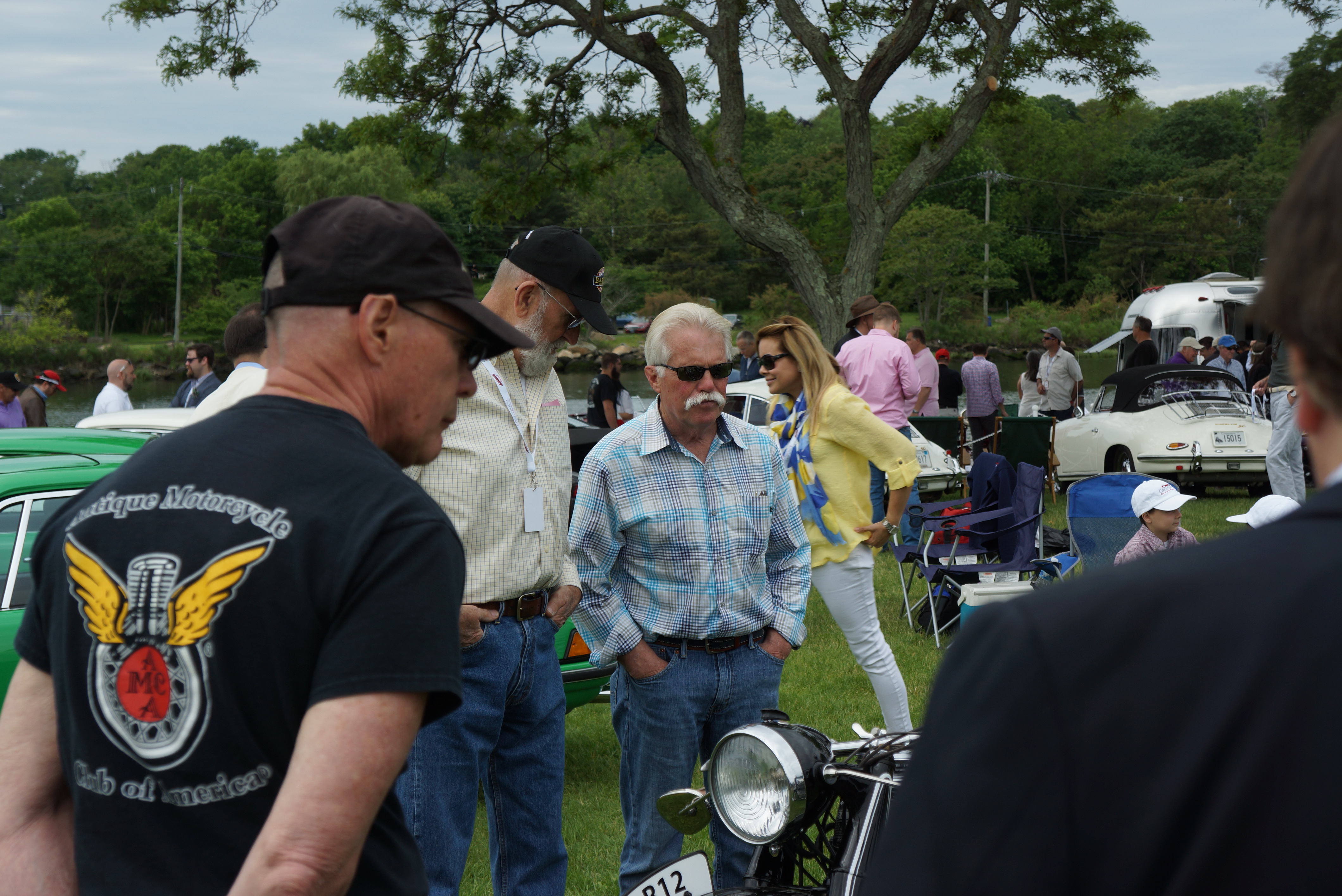
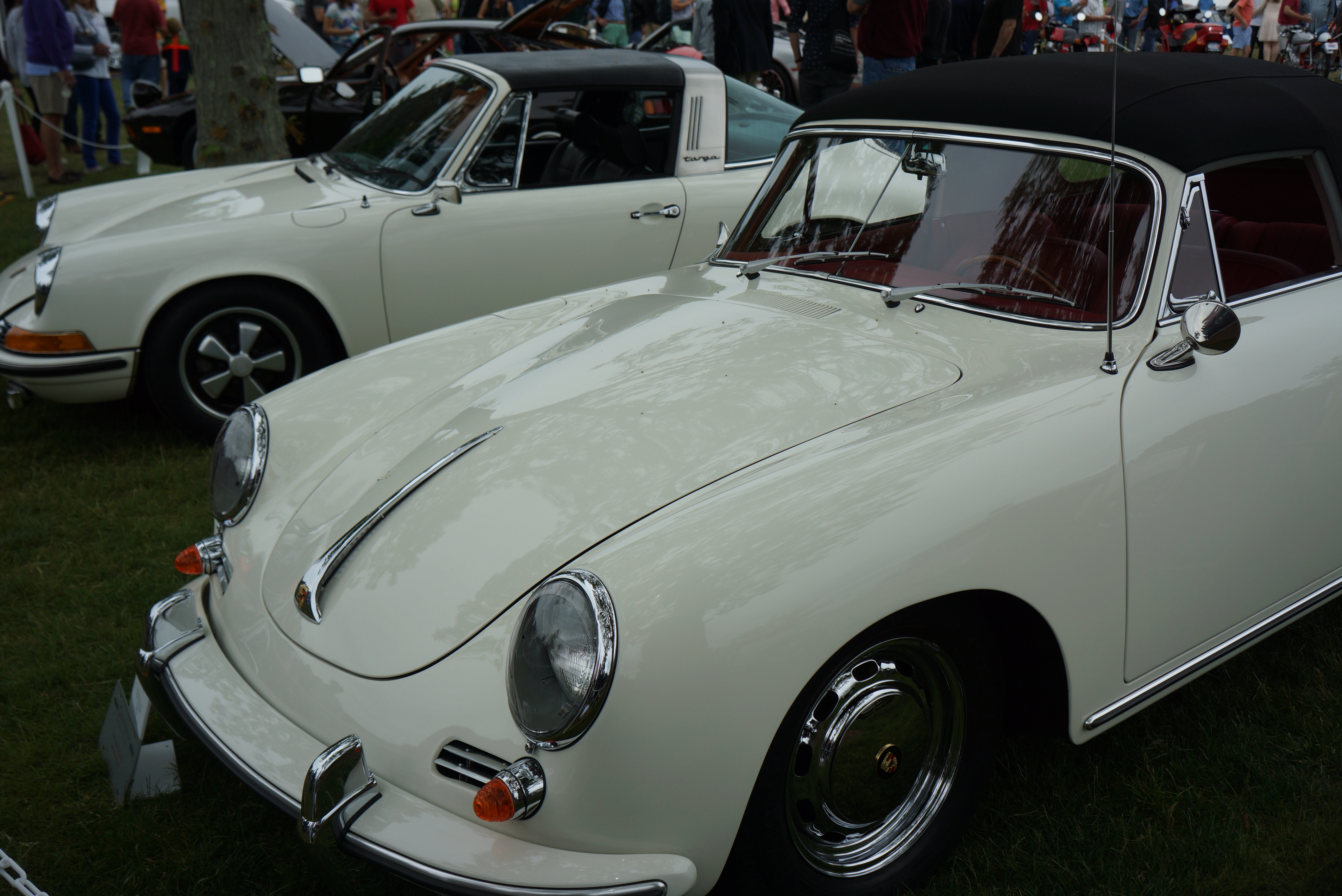
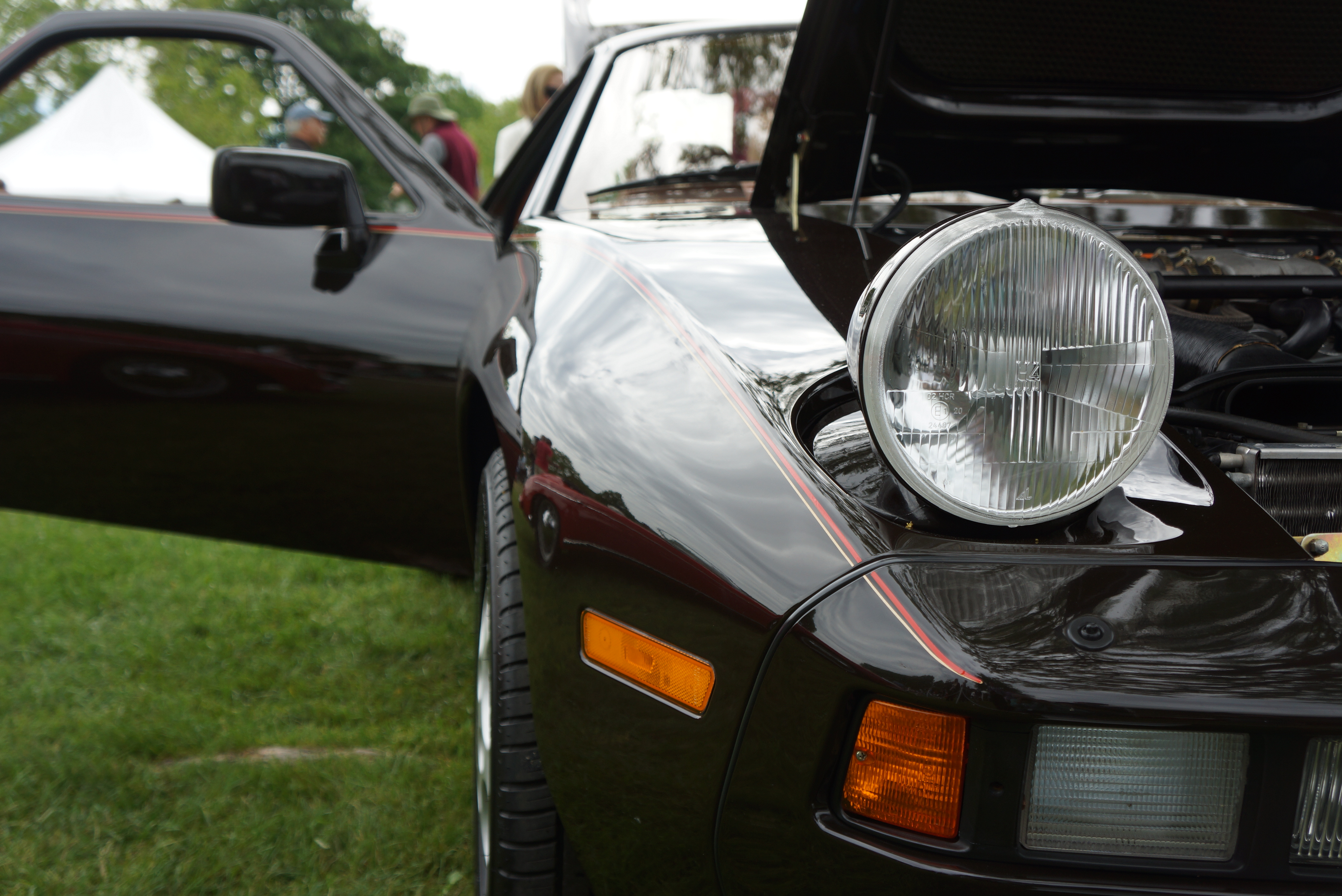
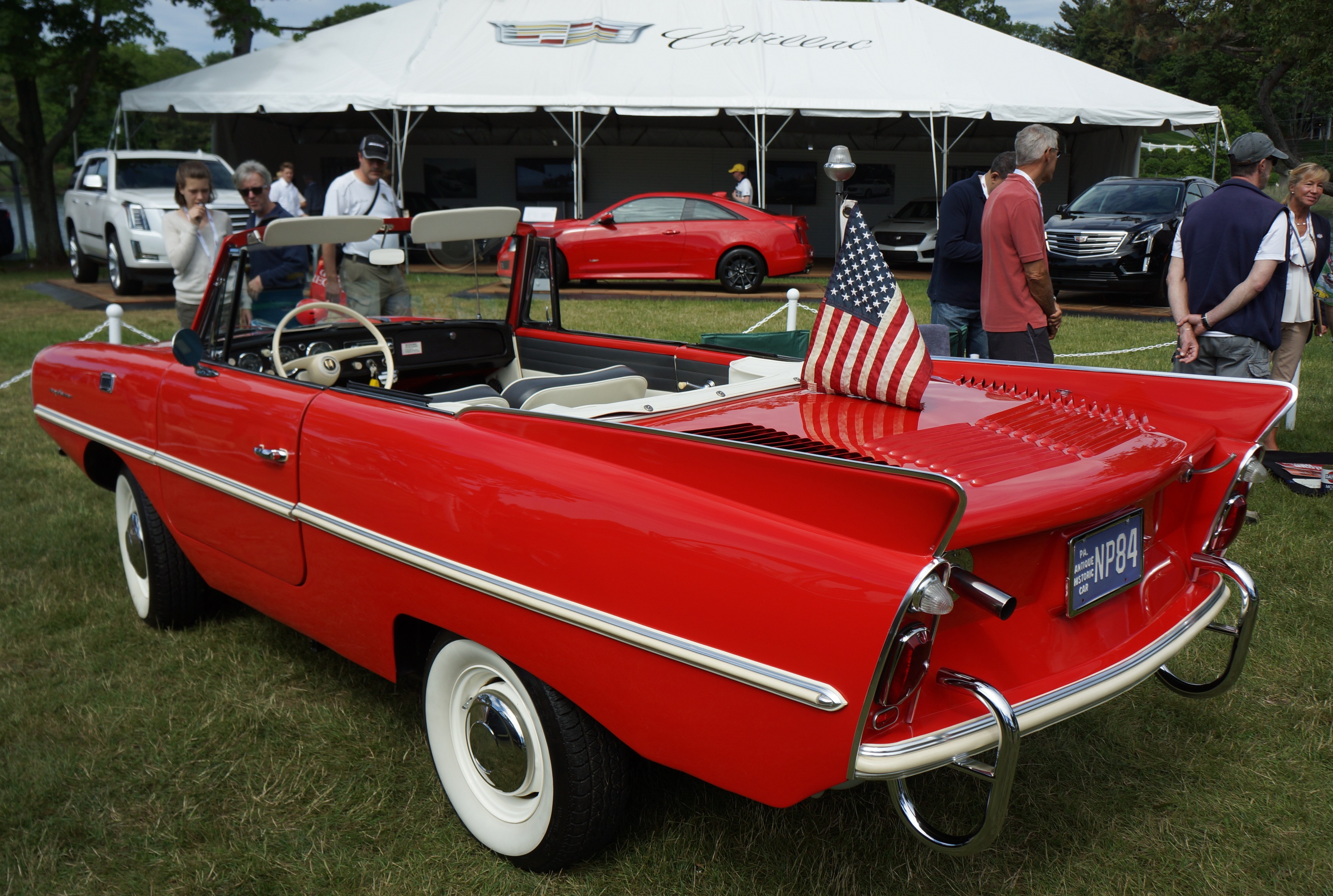
The New Jersey Region of the Antique Automobile Club of America held its annual car show as it always does, on the first Sunday in May, which this year was the 7th.

Last year, the show was moved to the Mennen Arena in Morristown NJ, so 2017 was only the club’s second time here, after being held in Florham Park for the last 5 or 6 decades.

Last year’s inaugural event at the new location is remembered for only one thing: the cold rain, which kept all but a hardcore 30 or so cars from showing up. With weather the one variable outside the club’s control, we all presumed that the odds would work in our favor and we would be blessed with a perfect spring day.

Not quite.

While nowhere near the washout of 2016, this year still required participants and spectators alike to deal with cloudy and somewhat cool temperatures for this time of year. At least the promised rain held off until about an hour before the show was done. In spite of the threats, turnout was decent, with some unofficial estimates putting the vehicle count at close to 200 cars. Spectators turned out in decent numbers too.

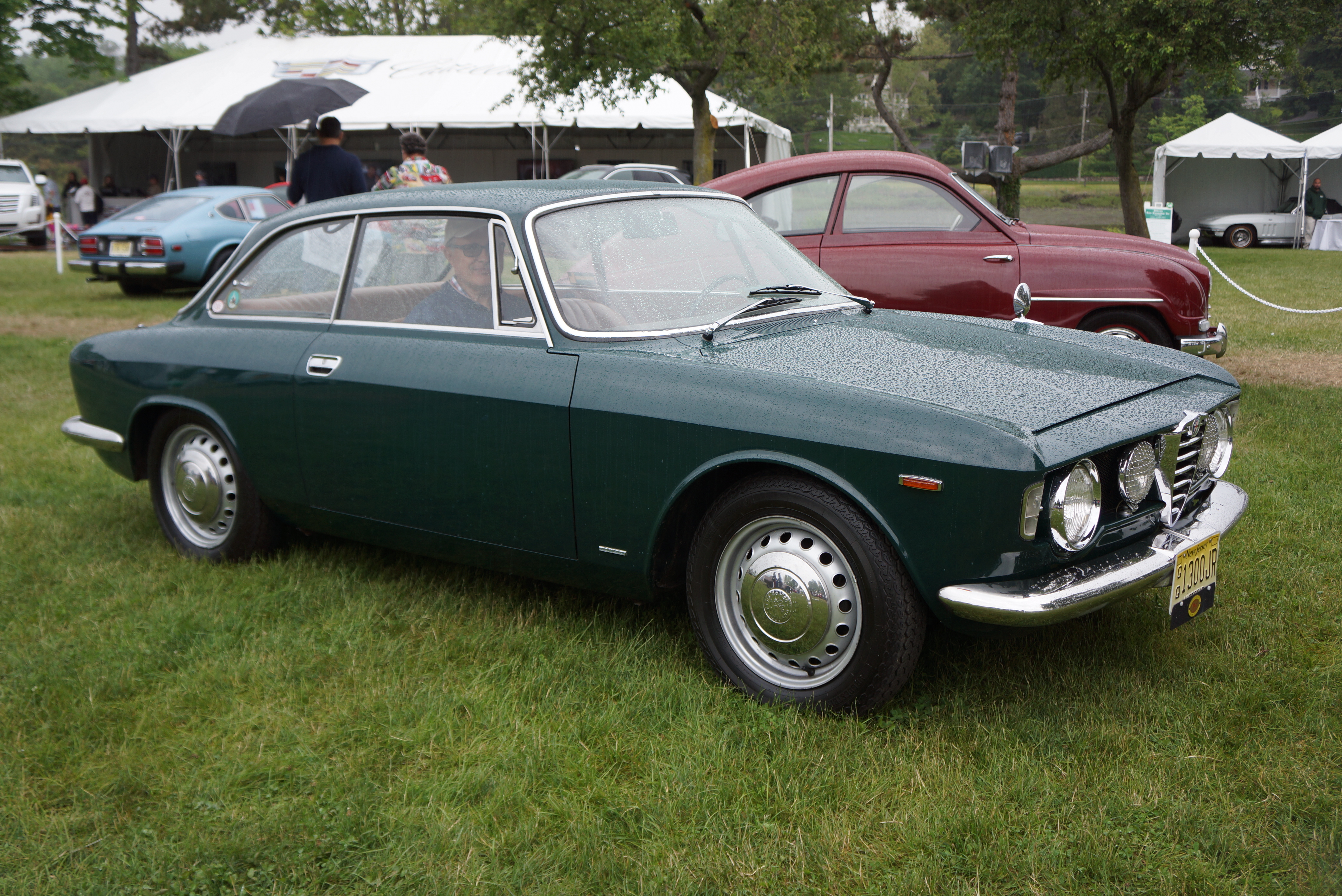
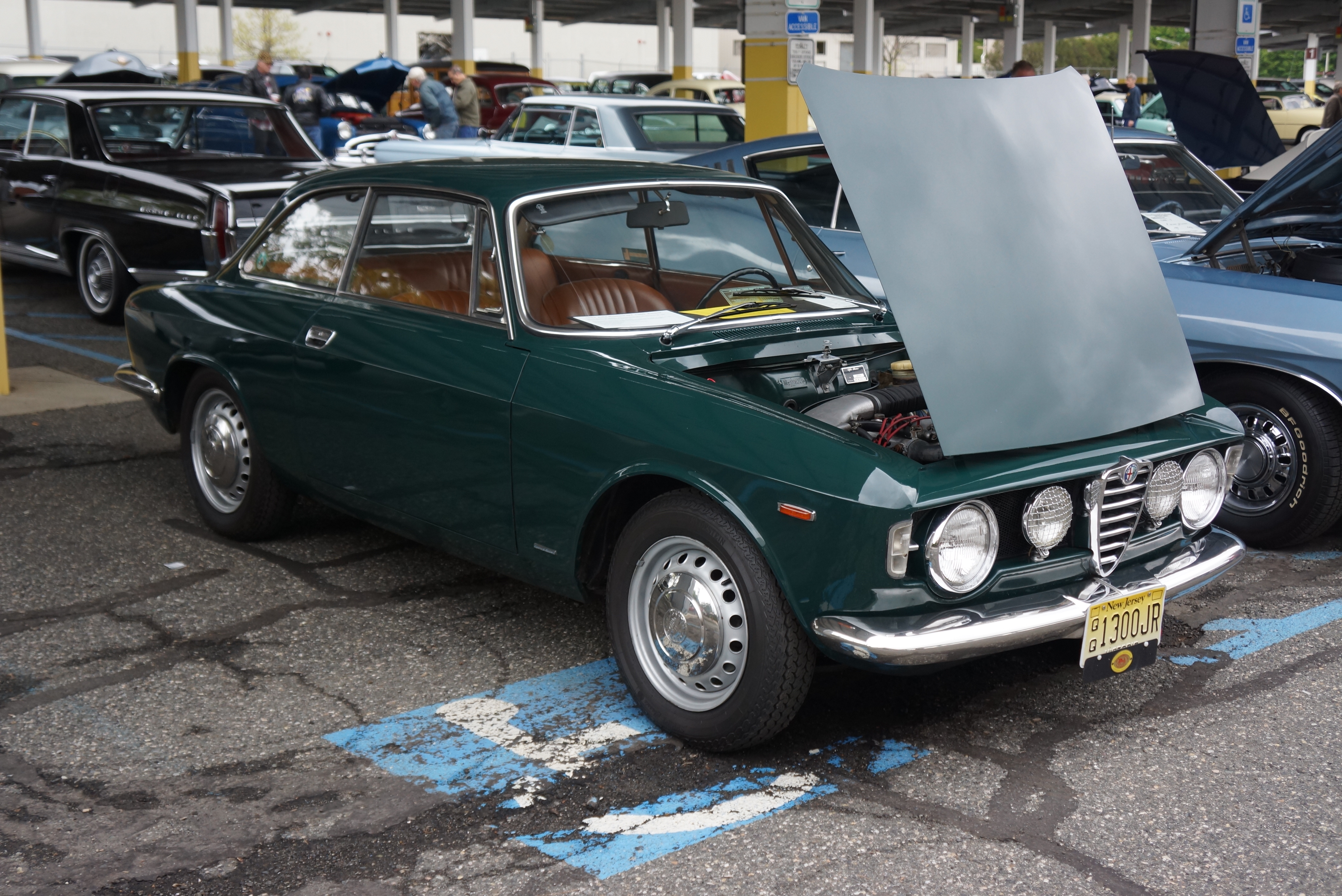
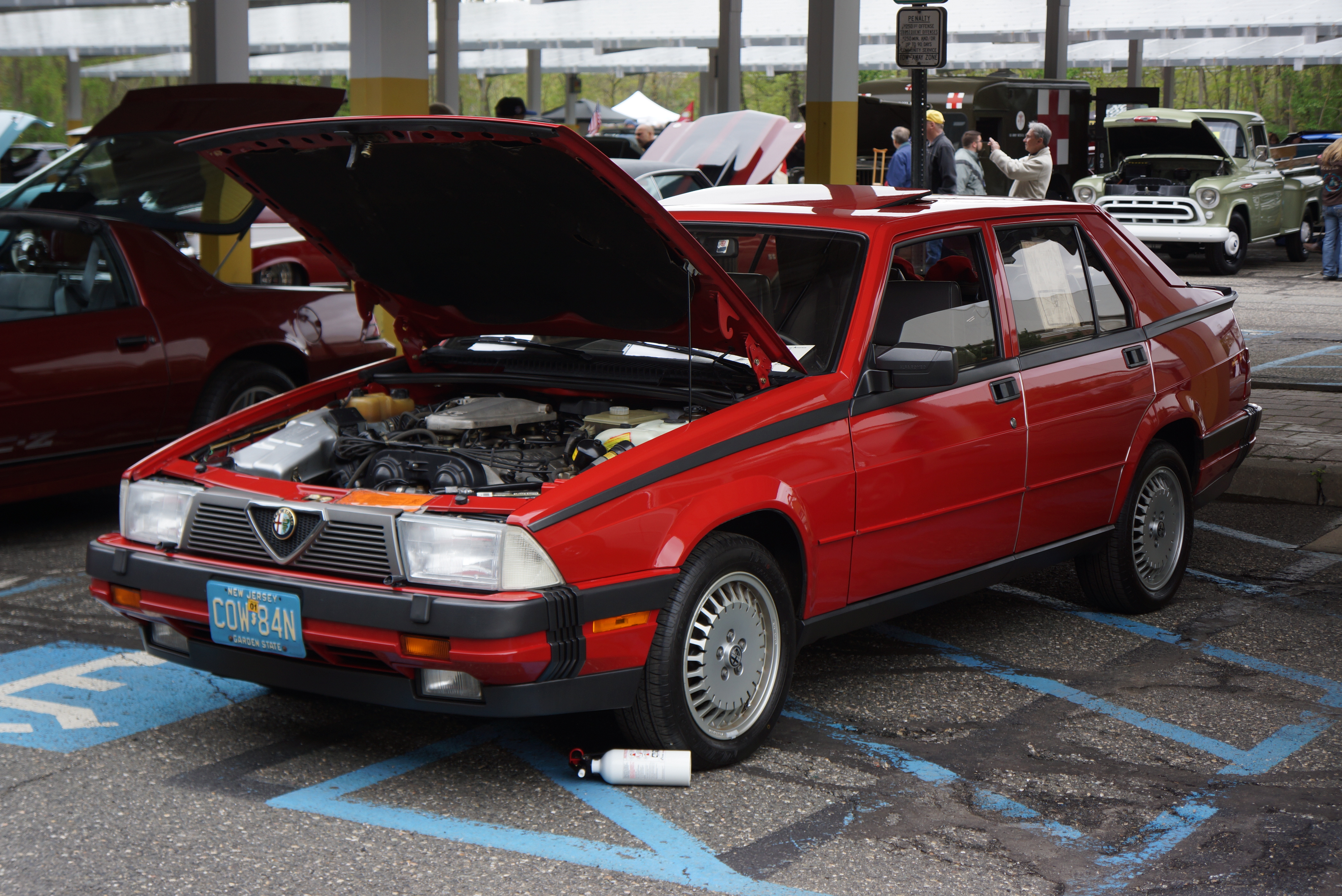
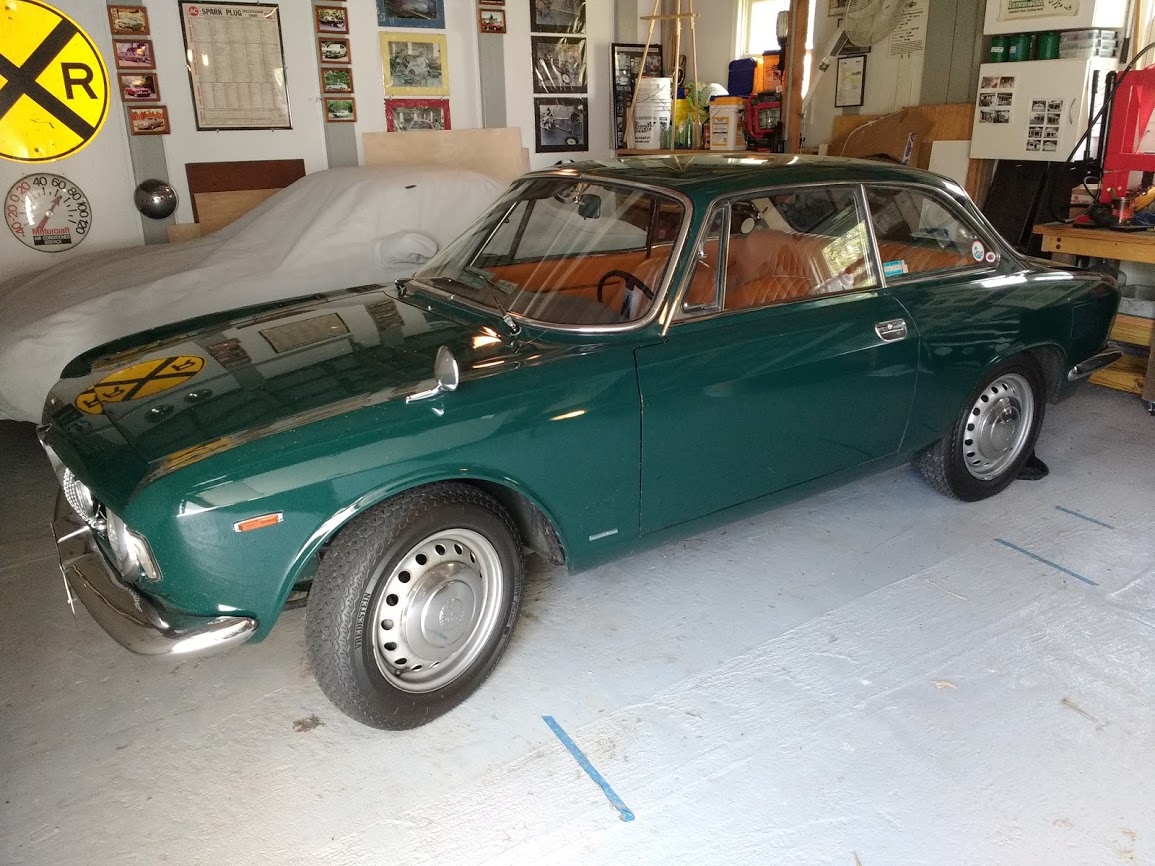
I was proud to have my Alfa Romeo, fresh from the AACA museum, on display, and was pleasantly surprised to see that it was one of three Alfas at the show, joined by a rare Euro-spec Nuova Giulia sedan, and a one-owner Milano. The Italian car feast was rounded out by a Lancia Fulvia coupe.

’67 Alfa GT 1300 Junior


’78 Alfa Nuova Giulia


’87 Alfa Milano


Lanica Fulvia Coupe

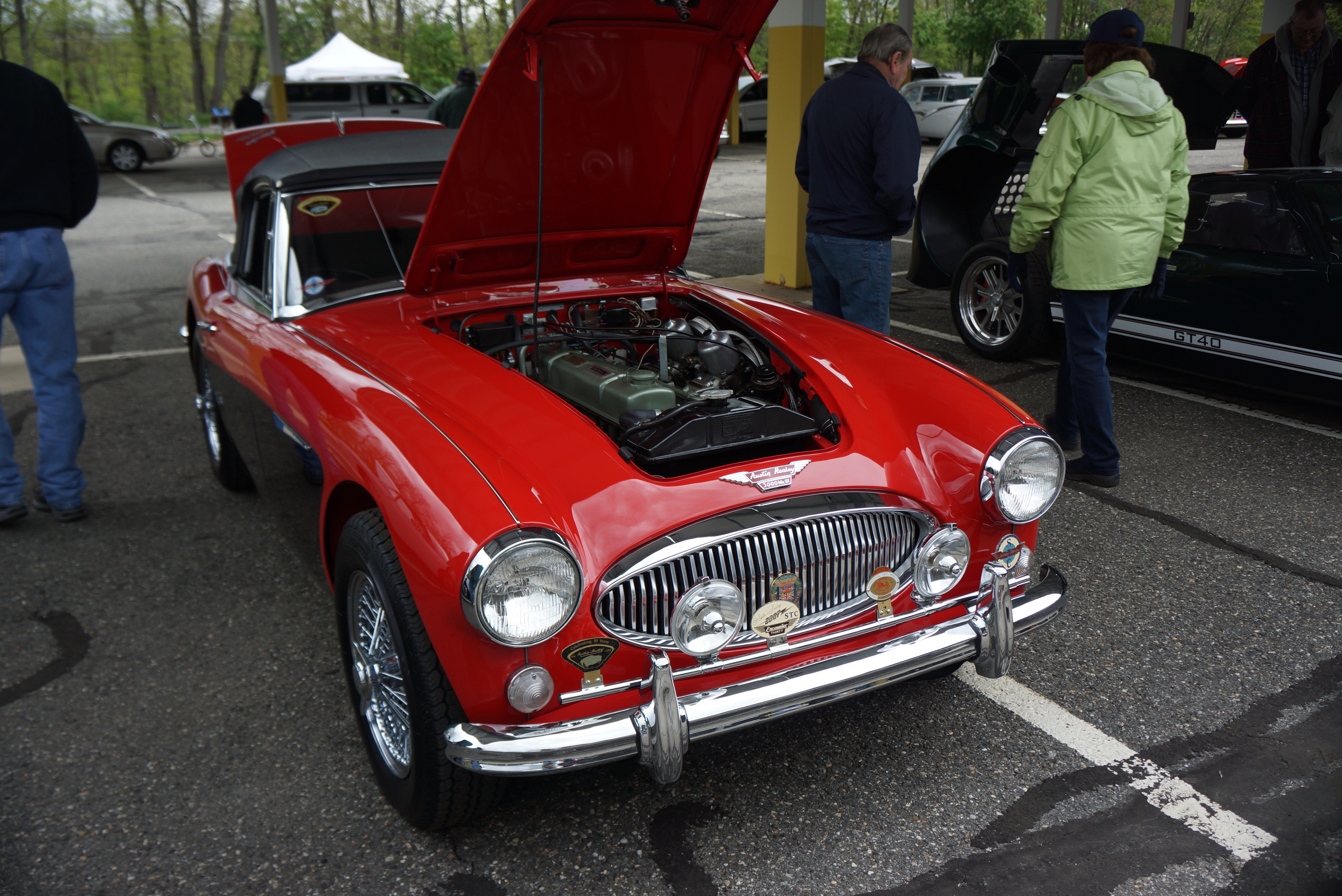
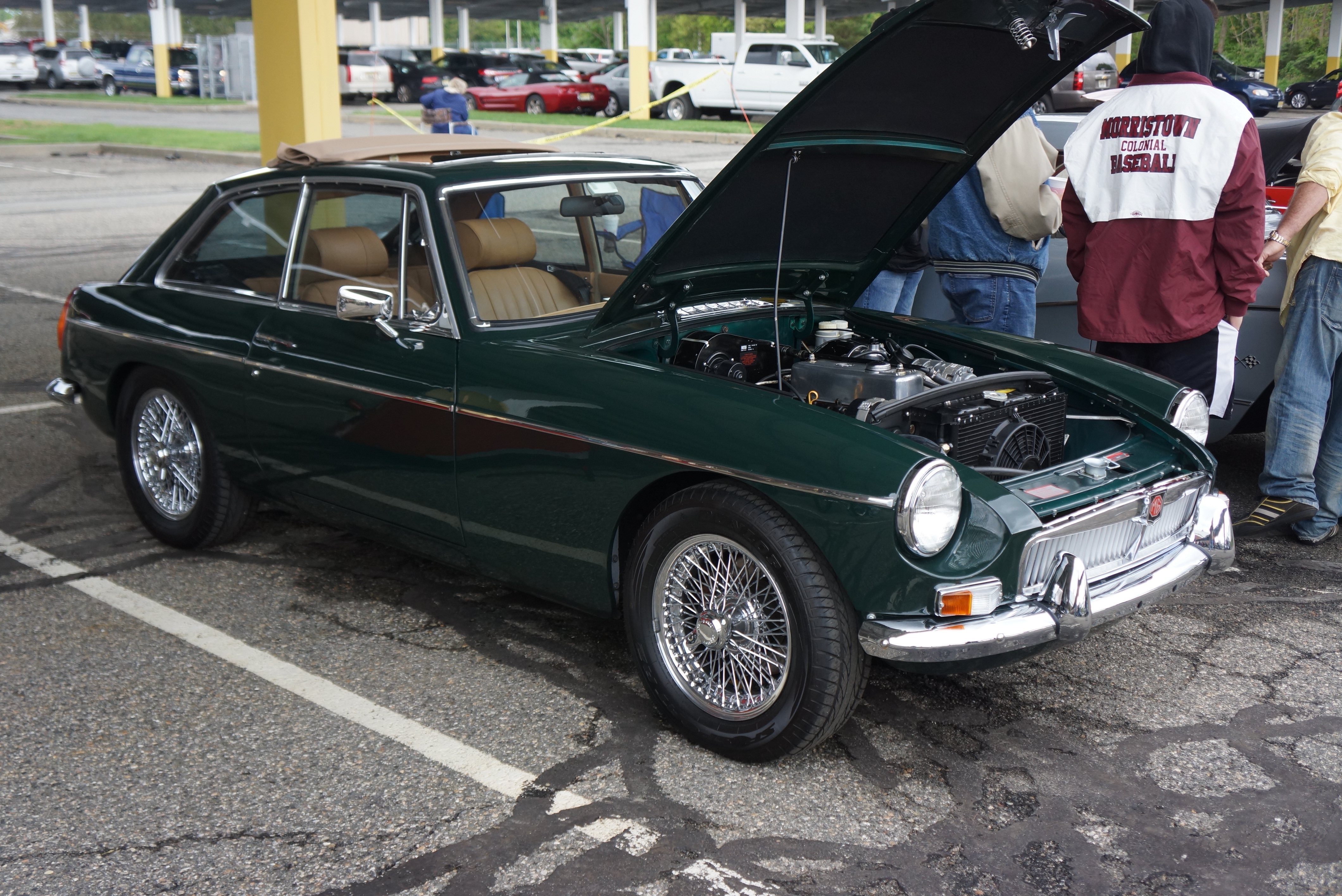
British cars included an Austin-Healey, a stunning MGB-GT, and two Lotuses (Loti?), an Elan and a Europa (yes, all Lotus model names begin with the letter E).

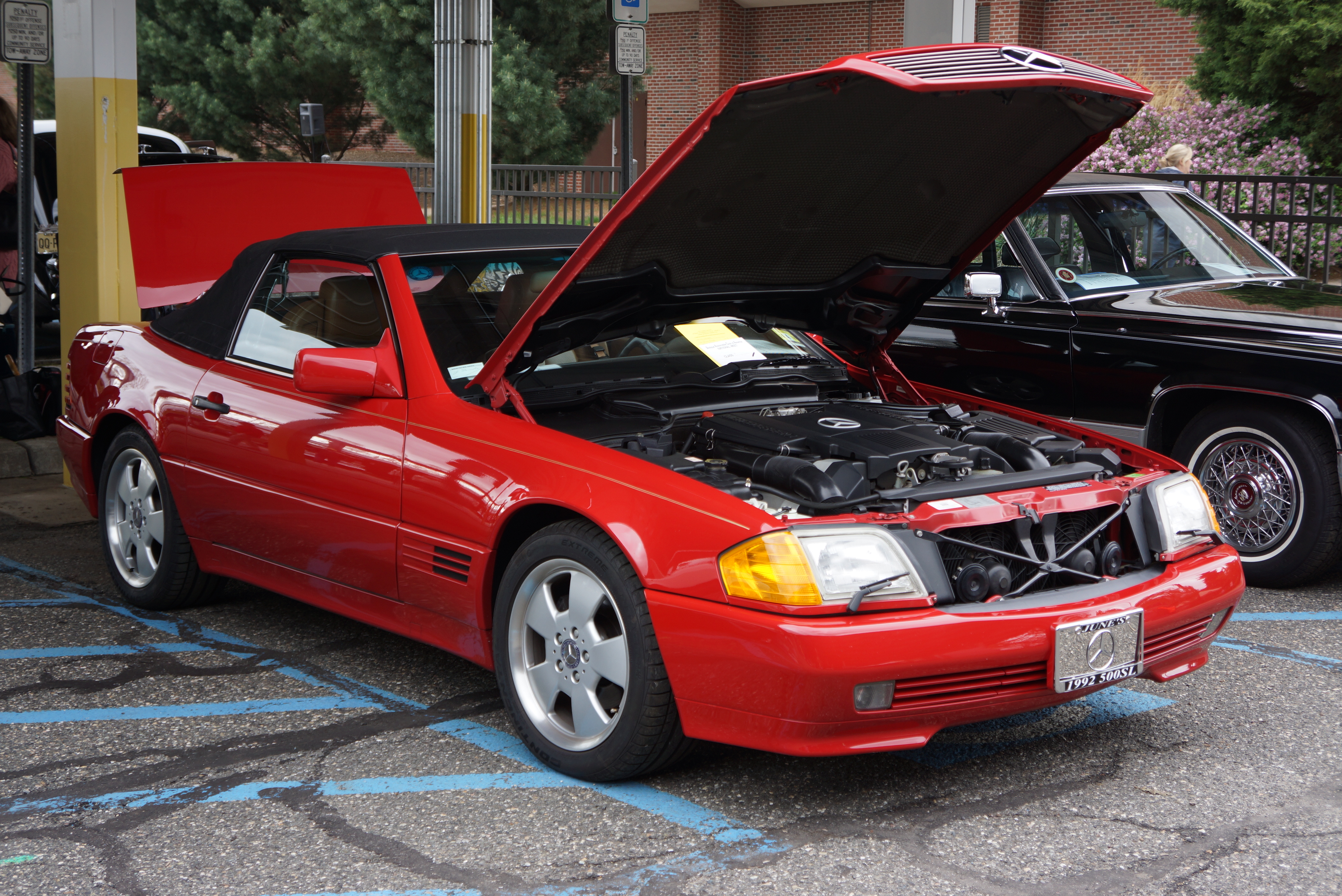
AACA rules allow cars to be shown once they reach 25 years of age. So on a rolling basis, each new calendar year means that there is a new “class” of eligible cars. For 2017, 1992 and older cars can be shown, so it was a pleasure to see this beautiful ’92 Mercedes Benz 500SL on the showfield.

1992 Mercedes Benz 500SL

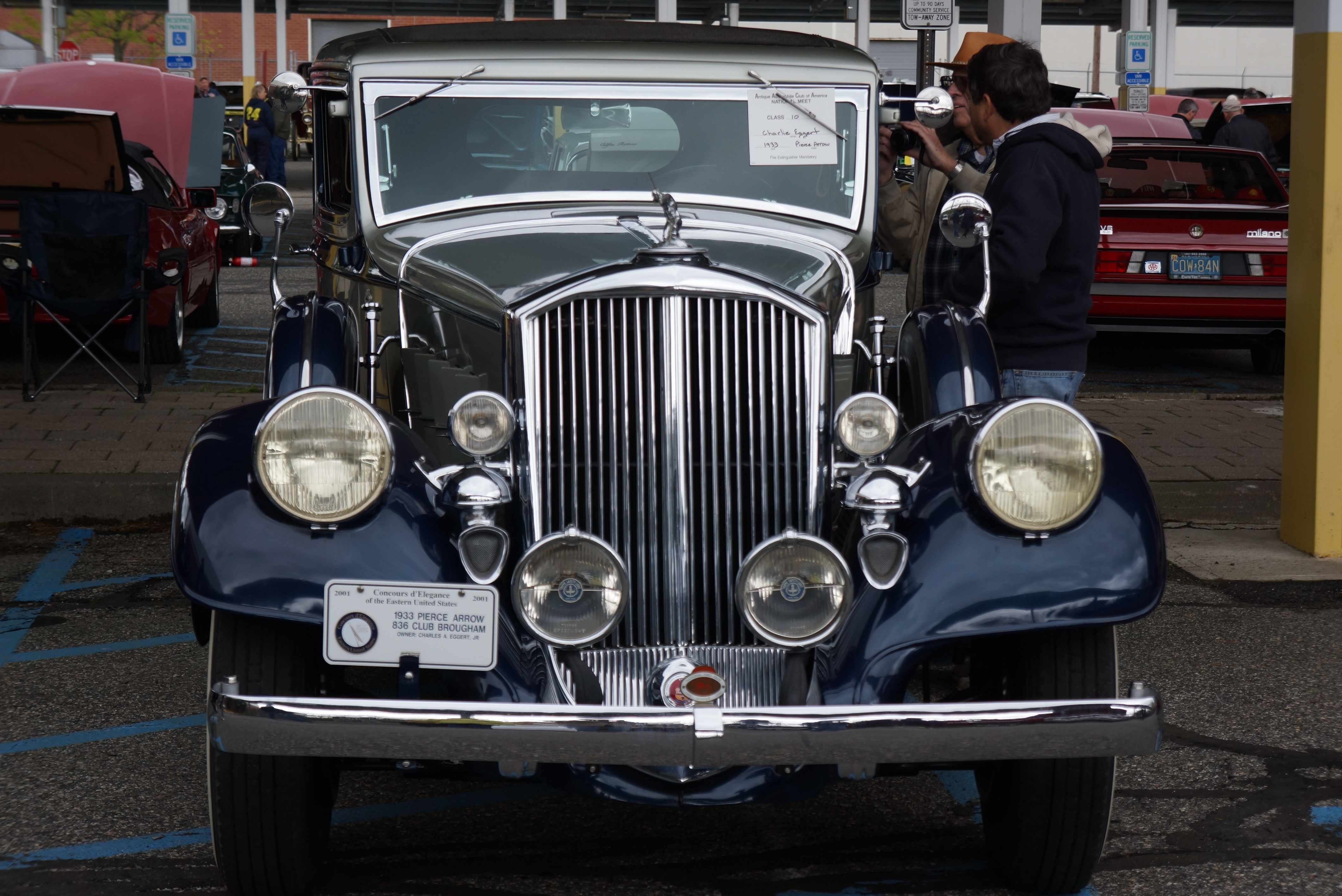
Of course, American makes dominate the display, including the so-called orphan manufacturers (those whose marques no longer exist). Below are some examples of these, including Pierce Arrow, LaSalle, Crosley, DeSoto, and Pontiac (still strikes this writer as odd to see Pontiac’s name with the others).

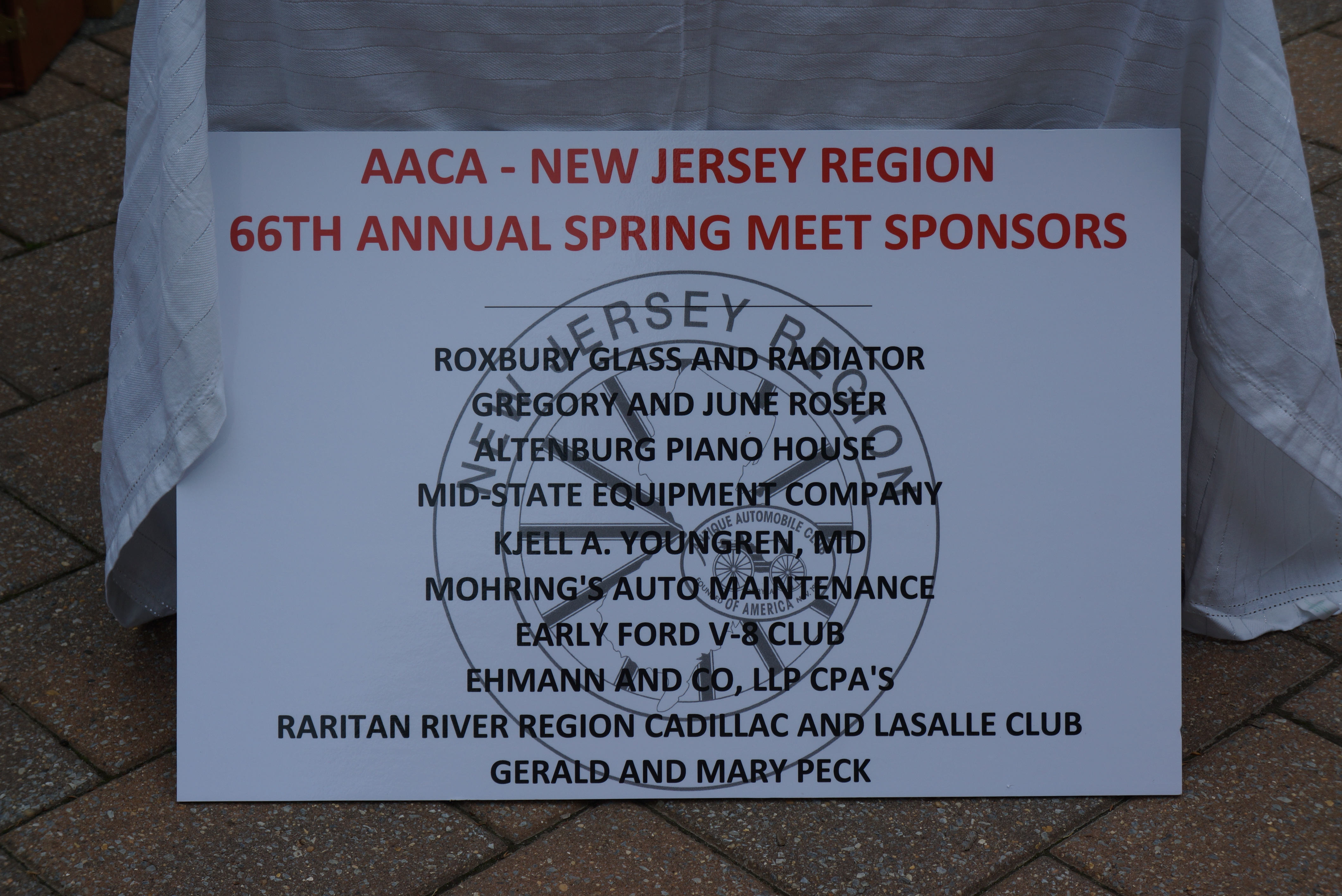
One does not need to be a member of AACA to enter a car into the show. One of the draws for members and non-members alike is the chance to win something, as this show is one of the few in the area which is judged (to AACA standards). The NJ Region recently switched from trophies (aka dust-collectors) to tool and duffle bags, to make for more practical prizes. It’s the generosity of the sponsors who help make it possible to have awards.

NJ AACA sponsors

Here’s hoping for better weather in 2018!


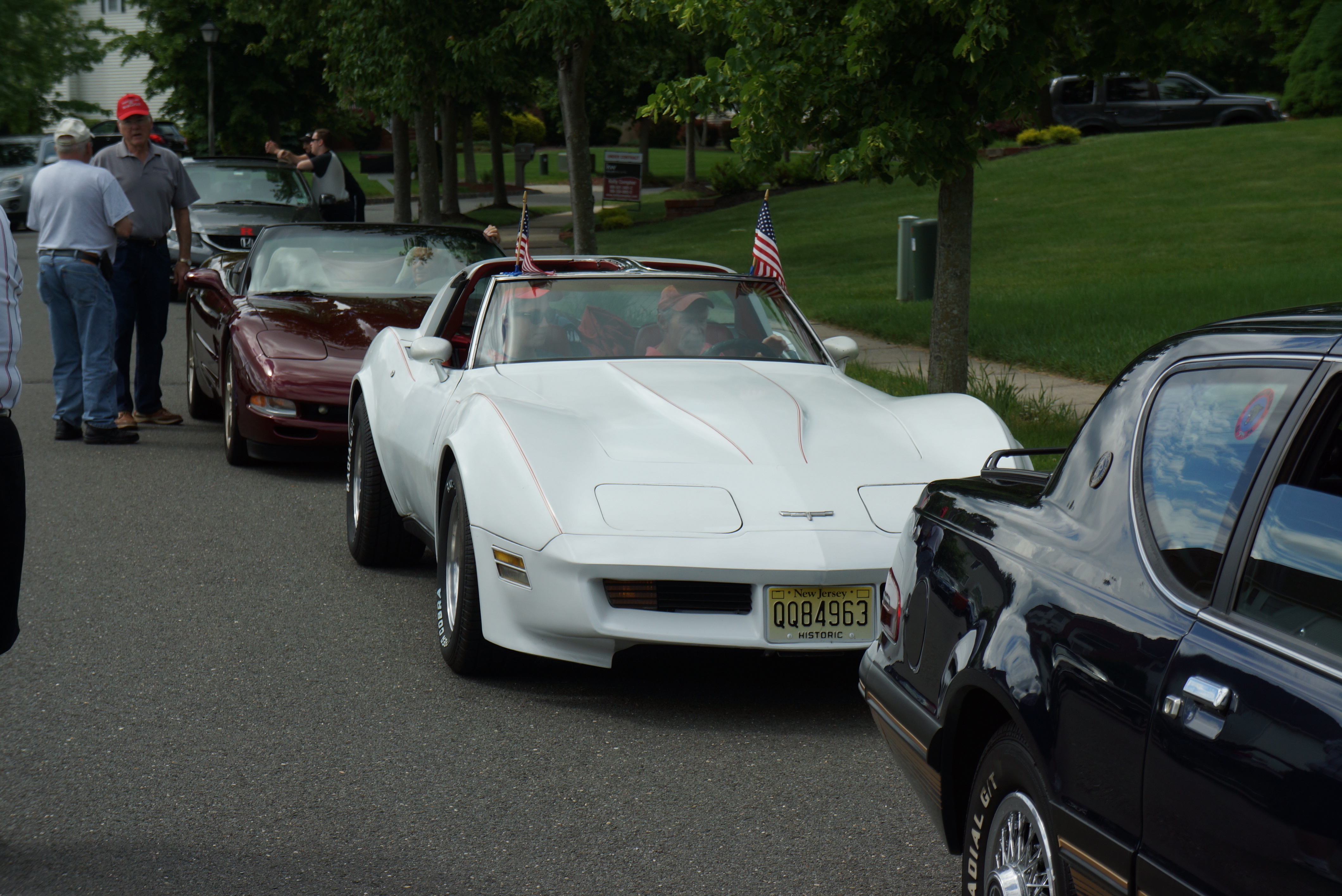
1960 Corvette


A trio of 2-seat T-Birds


Detailing before the judges arrive!


All photographs copyright © 2017 Richard A. Reina. Photos may not be copied or reproduced without express written permission.


The “Drive Toward A Cure” California Adventure Rally, April 2017

When my rally brother Steve and I first started rallying together in the late 1990s, we both lived in New Jersey. Steve owned his ’66 Sunbeam Tiger, which was a great car for these events.

After several years of this, Steve took a job transfer to California, but we both wanted to continue participating in the New England 1000. This meant that Steve needed to fly east, and your scribe needed to provide the rally ride. Steve did come back to this area four times between 2005 and 2015. For those rallies, we initially drove my ’68 Mustang California Special. When that car went away, we switched to my ’67 Alfa Romeo GT 1300 Junior.

Throughout this time, I had always informed him that should a left-coast event become available, I’d return the favor and fly west. Besides, the thrill of driving that V8-powered British sports car of his was something I savored to repeat. During the winter of 2016-2017, we found an opportunity that seemed to hit all the right notes.

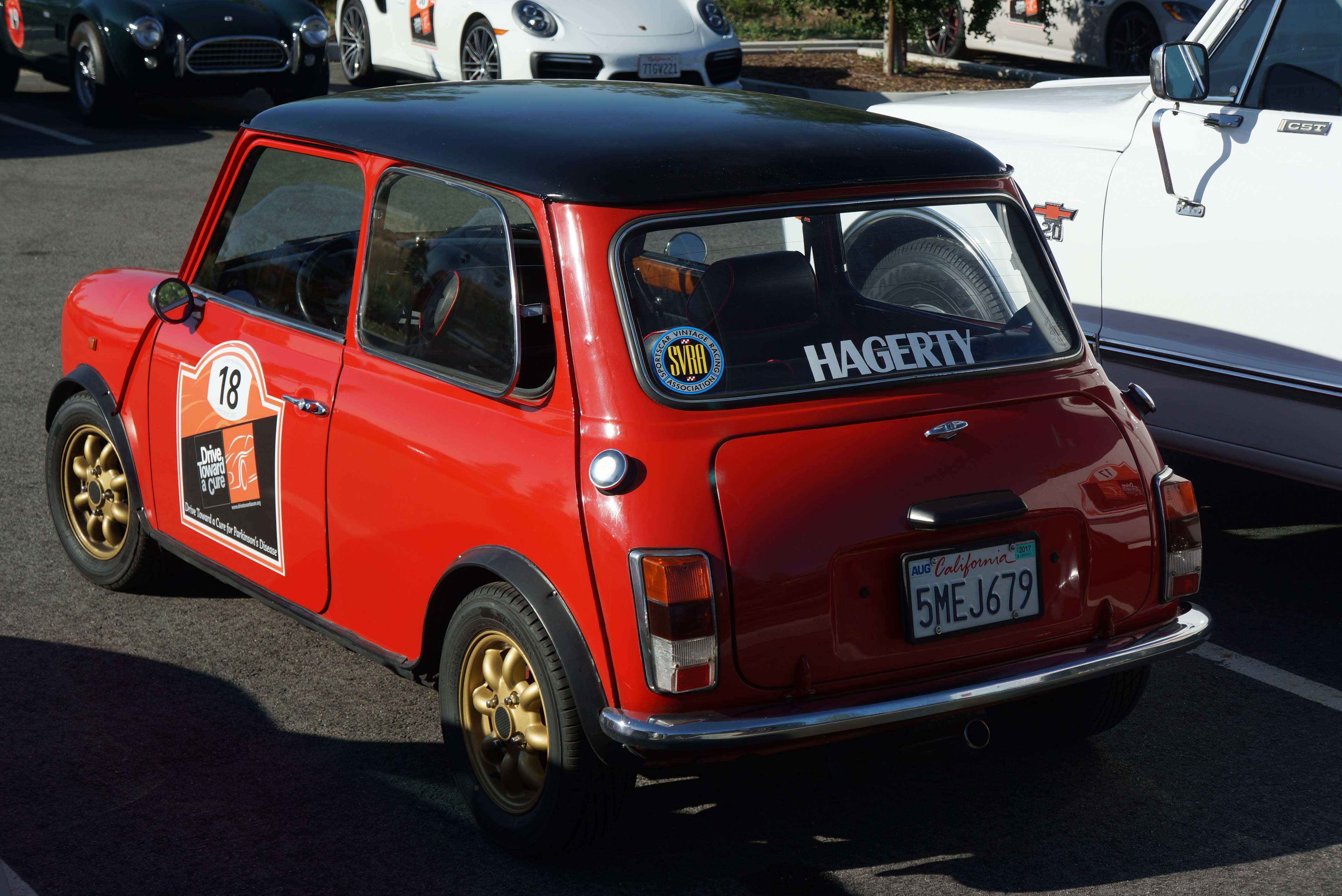
The rally was called “Drive Toward a Cure”. Scheduled to be held in April of 2017, it would be a 3-day event, starting in downtown Los Angeles, and overnighting in Paso Robles in central CA. Its mission: raise funds and awareness for Parkinson’s Disease. We would be driving in its inaugural run. We were in!

With a rally push-off date of Friday April 28, I flew out on Wednesday the 26th, to meet up with Steve on Thursday and attend to any last-minute details. It was great to see the Tiger again. We changed the oil and buttoned up a few loose ends. The biggest difference compared to last time was the installation of a hardtop, which meant no top-down driving.

Rally brothers ready for the next adventure

Friday morning arrived quickly enough. We were up at 4:30 a.m. (my body still on NY time), because we needed to depart his house at 5:15 a.m. to reach our destination, the Petersen Museum in L.A., at 7 a.m.

This New Yorker couldn’t believe the traffic on the highways of southern California at 6 a.m. on a weekday morning! Steve drove in without issue, and we parked at the Petersen to collect our registration papers, get coffee, and meet some of our fellow rallyists.

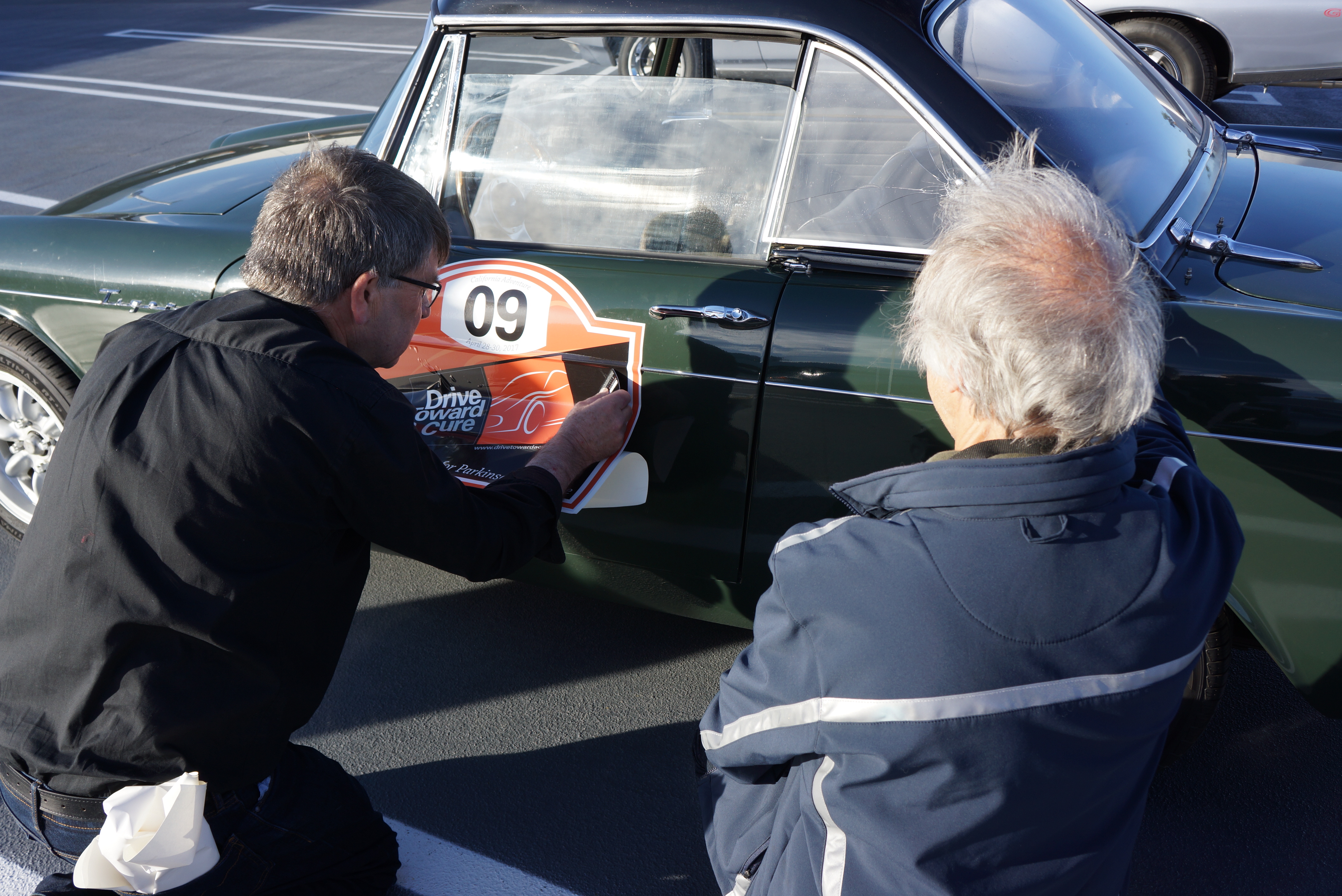
The Tiger gets its rally decals installed

There were approximately 20 cars with scheduled check-out times one minute apart. One of the unique features of this rally was that there were another 20 cars doing likewise, but starting in Danville, outside of San Francisco. They would head south as we headed north. We would not see those cars until our rendezvous at our host hotel.

The Petersen parking deck, Friday morning


The Tiger (with a Goat on the left) ready to depart

We left the parking deck of the Petersen, and drove directly into… downtown LA congestion. We were trying to get to the Pacific Coast Highway (PCH), just a few blocks away, but gridlock maximized our time getting there.

Once on the PCH, we were moving along nicely. After a few miles, we turned right, and went straight uphill into the mountains. By this time, there was a lineup of 4 to 5 rally cars behind us, and one in front of us. The lead car was a Jensen Interceptor Coupe, with a Chrysler V8. Another hybrid, just like our Tiger.

The Jensen Interceptor of Bob Humphreys leads the way

The scenery of oceanfront beaches changed to deep canyons full of verdant foliage. The roads were winding, with sharp bends and hairpin switchbacks. For long stretches, there were no guardrails between you and the bottom of the canyon. It didn’t matter. The weather was perfect.

Porsche 356 on our tail(fin), with more rally cars behind it

Our first stop was the Mullin Museum in Oxnard. Peter Mullin’s private collection resides here, and it consists of exclusively French automobiles. The museum’s interior design is just as impressive as the cars. The only drawback to our visit was a one-hour limitation, which meant we may have seen about 25% of it.

The stunning interior of the Mullin Museum


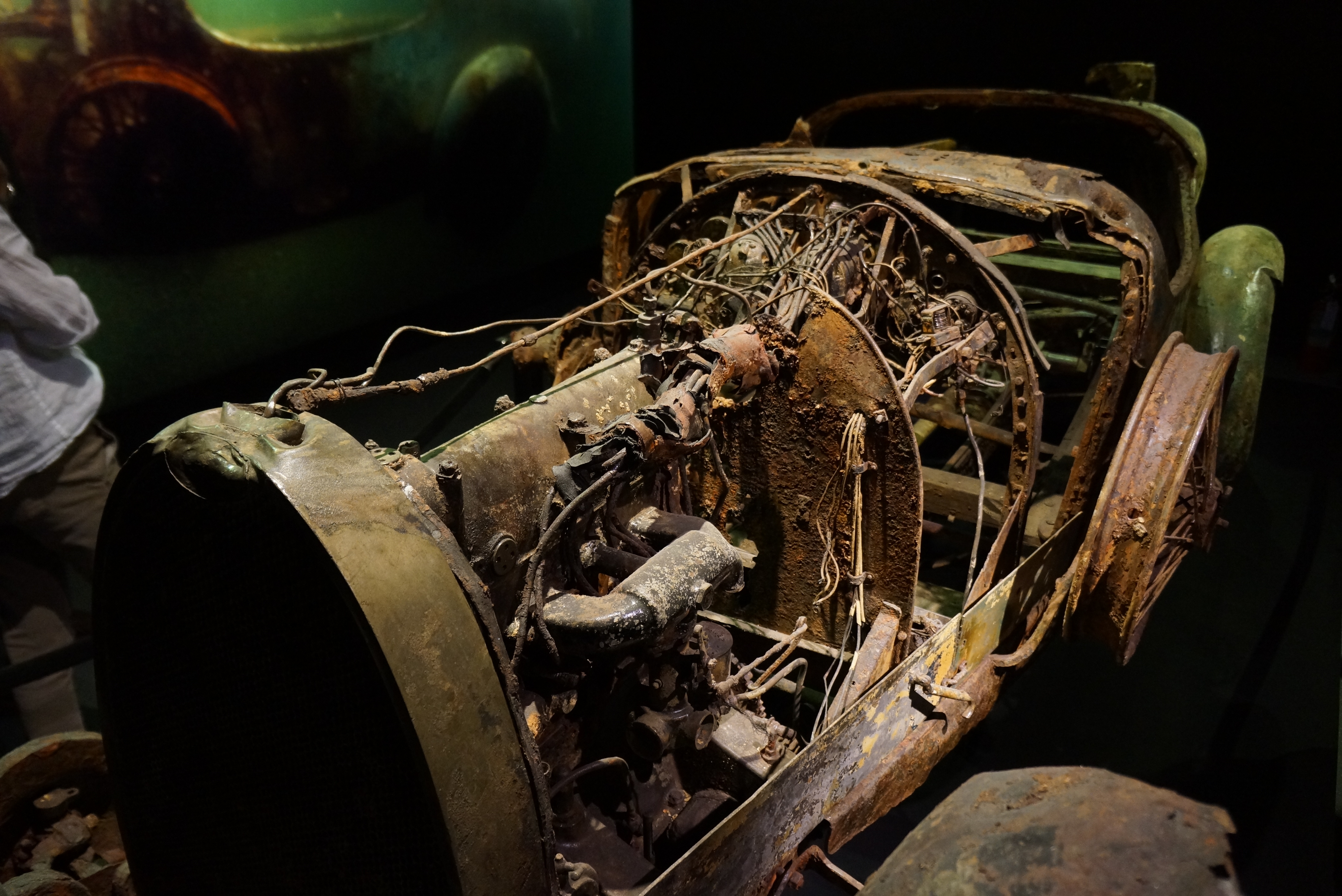
The Bugatti which sat at the bottom of Lake Como for 50 years, now at the Mullin

Yes, we were “encouraged” to keep moving, but it’s important to point out that very much UNLIKE the NE1000, our driving stages were NOT timed. This California Adventure was not a TSD (time/speed/distance) type rally, and as such, it made for a more relaxed driving atmosphere behind the wheel.

A collection of rally cars at rest

Lunch was in the charming town of Solvang (it’s redundant to say “charming” about these California towns outside of the metropolitan areas), and we were back in the saddle to be on time for 7 p.m. dinner at the Allegretto Resort in Paso Robles.

We were very, very late for dinner.

With me behind the wheel, Steve saw it first. The temperature gauge, which we monitored constantly, suddenly shot up well past what had been its normal 200 F. I pulled into a bank parking lot; we opened the hood; and it was a trifecta: the sight of green fluid all over the engine compartment; the unmistakable odor of hot coolant; and a loud hiss as the steaming liquid and vapor tried to escape.

Steve checked the radiator hose clamps for tightness. He had just replaced the factory radiator with an aluminum model to try to stay one step ahead of the Tiger’s Achilles Heel: excess engine heat. Steve reported that all clamps looked good. Because things were so hot under there, we were prevented from further diagnosis.

Our savior on Friday night came in the form of Hagerty roadside assistance, which was part of the rally’s benefit package. Within an hour, a flatbed truck picked up the car, and we rode in the cab with “Junior”. He drove us the final hour to the hotel. We walked into dinner at 9 p.m., tired, hungry, and most upsettingly, unsure of what was ahead for the car.

Junior loads the Tiger, with special thanks to Hagerty

What transpired on Saturday morning will restore anyone’s faith in human nature. Or, as Steve himself put it, “yes, there is a rally God”. (The details are in the sidebar story below: “Paso Robles Good Guys Rescue Stranded Tiger”.)

While we missed Saturday morning’s driving events, we didn’t miss lunch! After our meal (including a visit from the mayor of Paso Robles, Steve Martin), we were on the road again for the afternoon’s drives. (Another distinguishing characteristic compared to the NE1000: Day 1 is “rallying”; Day 2 is “scenic cruising”.) We drove through the mountainous landscape dotted with vineyards, then out to Cambria, on the coast, before heading back to the Allegretto.

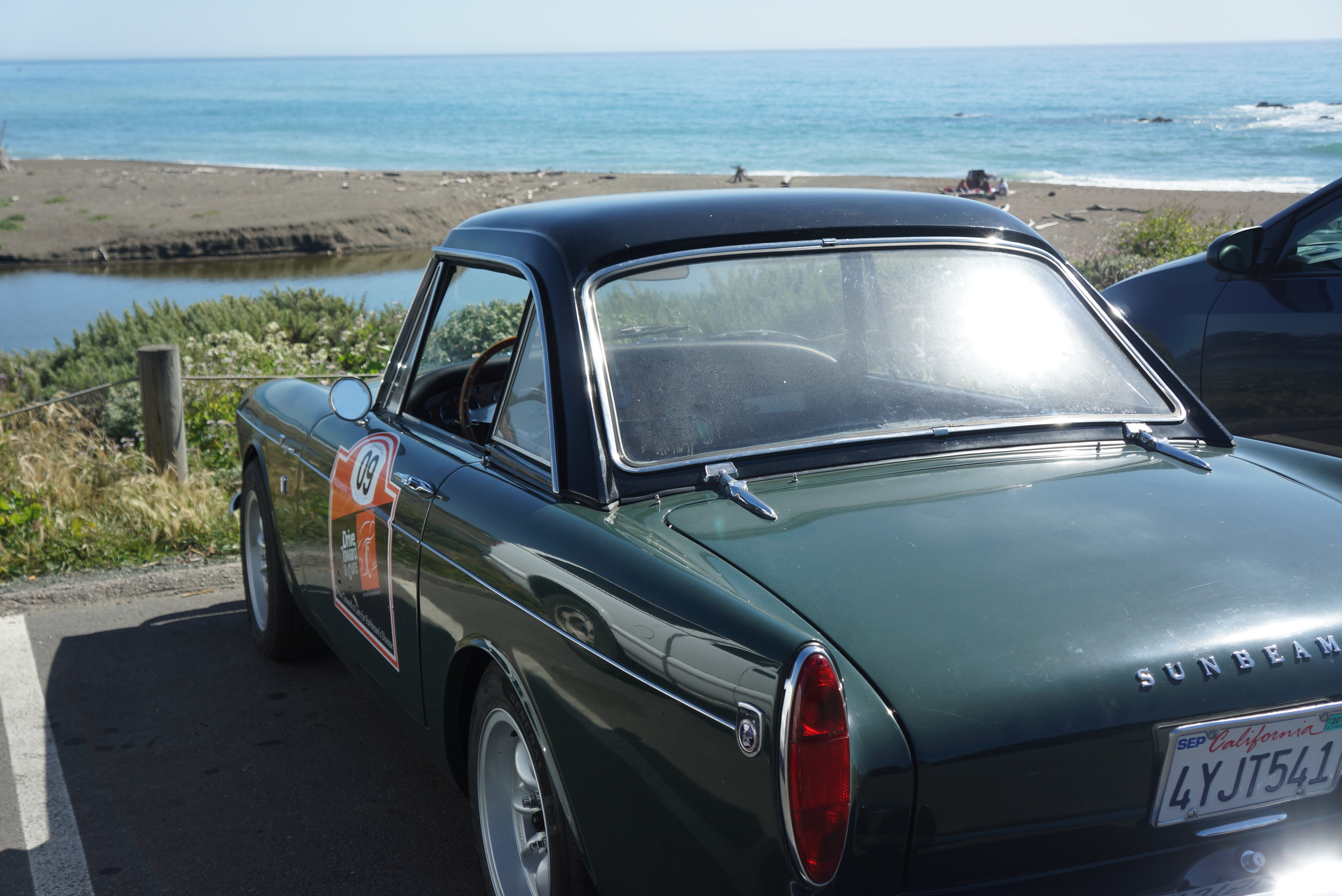
The Tiger on the central California coast

Dinner was at a different nearby winery, and was served family style. You really get to know your fellow rallyists when you must ask the Ferrari driver “could you please pass the potatoes?” The free-flowing wine helped.

Sunday morning started with a surprise visit from the local San Luis Obispo-based AACA club. Several American classics, definitely different from the rally cars, were in the parking lot for us to admire. Soon after, we were headed to brunch at our 3rd winery stop (Paso Robles must have 100 vineyards). After brunch, it was adieus, and we were on our way home.

AACA cars:

The trip to Steve’s house was mostly on I-5, a north-south highway in the middle of the state. The ambient temperature increase was noticeable compared to the delightfully moderate Paso Robles, and we were glad for the hardtop. Had we been convertibling, we would have roasted.

The Tiger got us home in plenty of time for a celebratory dinner with Steve and his wife. All hot-running issues were behind us. The car did about 700 miles, and except for the hose failure, proved that you can drive a 51-year-old car in these kinds of adventures. We don’t exactly know what’s next in our quest for another rally, but it’s sure to yield stories.


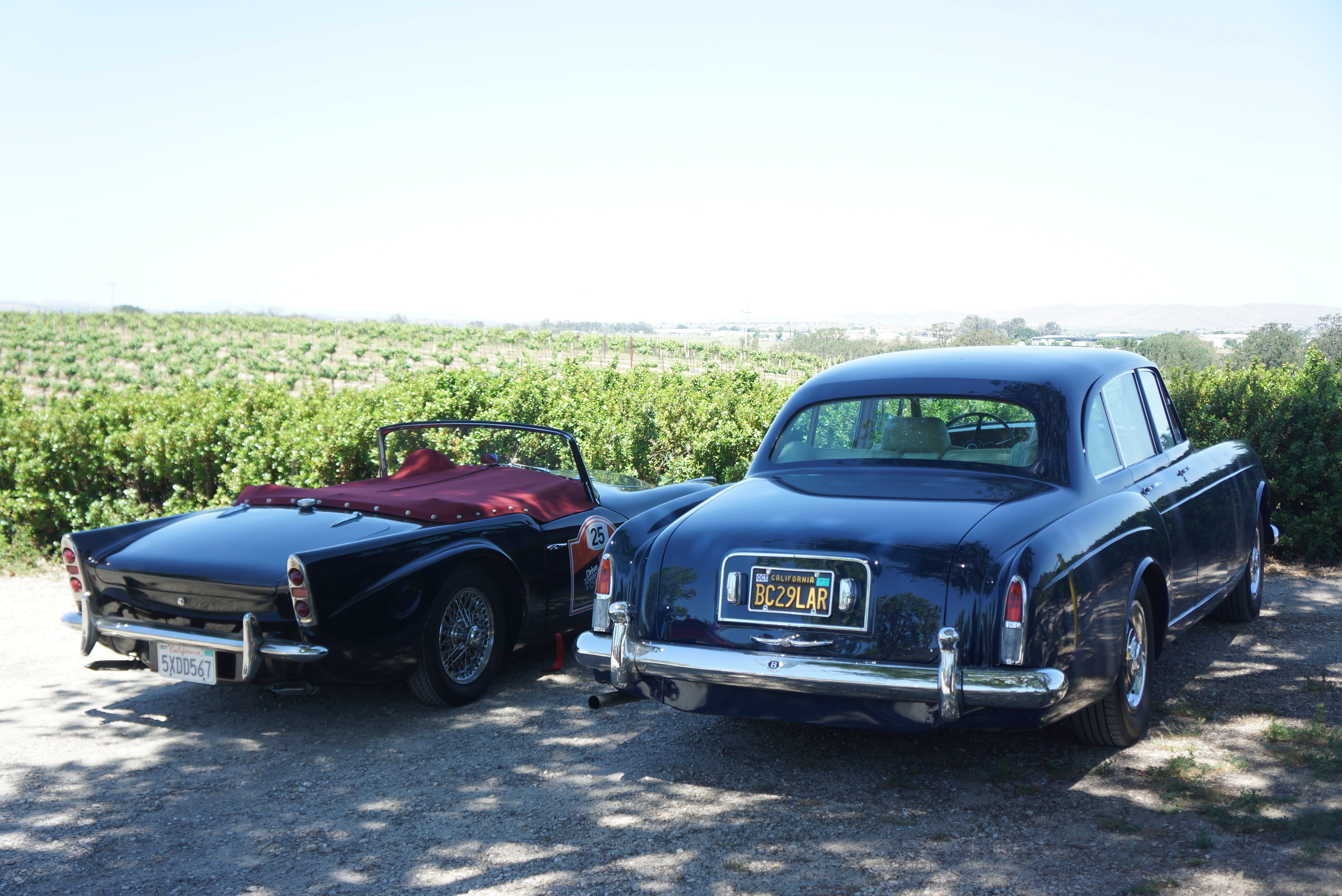
Daimler and Bentley visit a vineyard


SIDEBAR: “Paso Robles Good Guys Rescue Stranded Tiger”

After being towed to our hotel on Friday night, it was a non-stop conversation centered around “what do we do now?” While it was necessary to begin to consider options for Sunday (Tow the car home? Leave it in Paso Robles and rent a car? FLY back to L.A.??), we also knew that we had to spend Saturday morning giving our best shot to a repair attempt.
Before breakfast, Steve worked the Google machine and compiled a list of local repair shops. Most of them didn’t open until 8 a.m., so we breakfasted at 7:30, then quickly headed back to the room to work the phones. With both of us making calls, I struck pay dirt on my 3rd try. “Jorge” at Dave Foltz Automotive answered the phone. I must have sounded like a broken-hearted teenager: “Hi, listen, I’m from out of town, we’re driving an old car, it broke down, we’re stranded, WWWAAAAAHHHHHH!!!”
Alright, it wasn’t that bad. Even if I did sound desperate, Jorge was cool and calm. “Listen, I don’t know what it is, but bring it in, and we’ll look at it right away.” “OK, Jorge, but I need it FLAT-BEDDED. Can you do that?” “No, but call Dennis at 123-456-7890.” I called Dennis. “Sure, I got a flat-bed. I can be there in 10 minutes.” Was I dreaming?
By the time we walked downstairs and out to the portico, Dennis and his truck were waiting for us. Dave Foltz Automotive was 1.5 miles away. As we pulled into the lot, I spotted a NAPA store next store. I mean, five paces away.
I jumped out and Jorge greeted me. But every bay was full, and I was doubtful they’d get to it anytime soon. Jorge said, “we’re finishing one up in 10 minutes, then we’ll bring in the Tiger”. Sure enough, the Tiger was next into the shop, and tech Antonio went to work. I sat in the customer lounge, and tried to distract myself with a year-old People magazine.
Within another few minutes, Jorge was in front of me with a blown lower radiator hose in his hands. “Hey, where do you get parts for something like this?” I said I had no flippin’ idea. He said that he’d walk next door to see what NAPA had. Back to People.
FIVE minutes later, the NAPA parts dude shows up holding a new version of the exact hose. I was so beside myself that I wanted to hug Jorge. (But I refrained.) A few more minutes with People, and I heard a honk. Antonio was outside, beckoning me to join him for a test drive. Halleluiah! They did it!
Antonio, our hero for the day
Total time at Dave Foltz: about 90 minutes. Total charges, including California surcharge for handling cancer-causing chemicals (I made that up): $106 (I didn’t make that up). Antonio got his palm greased to the tune of $20. The Tiger was back at the Allegretto by about 11 a.m. Saturday morning.
The fine auto repair personnel at Dave Foltz Automotive of Paso Robles deserve nothing but our highest praise. At 9 p.m. the night before, even my best-case fantasy didn’t have the car fixed THIS quickly.
The rally Gods smiled. “We’ll take care of you this time….”

All photographs copyright © 2017 Richard A. Reina. Photos may not be copied or reproduced without express written permission.


Auction Report: 2017 Spring Carlisle

Carlisle Events held its Spring 2017 Auction at the Carlisle PA Expo Center on April 20, 21, and 22, as always, running concurrently with the Spring Carlisle show. A few years ago, they teamed up with Auctions America, but that marriage broke up, and they are back to being on their own.

For the auction organizers, it’s getting better all the time (to quote Lennon & McCartney). The biggest change for 2017 was moving from a 2-day to a 3-day event; however, that created the problem of lack of parking for the extra cars. The church lot next door was utilized for the overflow. For attendees, it was a challenge at times to find the cars they were seeking out.

Another improvement: run sheets were actually available sooner than one hour before show time. Thursday’s run sheet was posted on their website the evening before! Carlisle has made and continues to make great strides in elevating the auction experience for buyers and sellers alike.

Below are some highlights of cars which sold. We’ll say it yet again: if you want to get into the hobby on a budget and you’re open-minded, there are choices.

Your scribe wishes to point out that this auction report, unlike any other printed or online report, provides both multiple photos of every car, and, arranges the ‘sold’ units in price groups, so that you, dear reader, can get a better sense of what your $6,000, or $10,000, or $20,000 will buy these days. Click on the thumbnails to enlarge the photos, and enjoy the read.

____________________________________________________________

UNDER $5,000:

Lot F360, 1965 Austin Healey Sprite, 4 cylinder, stick, white, red interior, looks good from 20 ft., still looks OK up close. Possible quickie re-do of paint and upholstery. British Heritage Trust Certificate included. SOLD FOR $3,400. Could be fun provided you fit in.

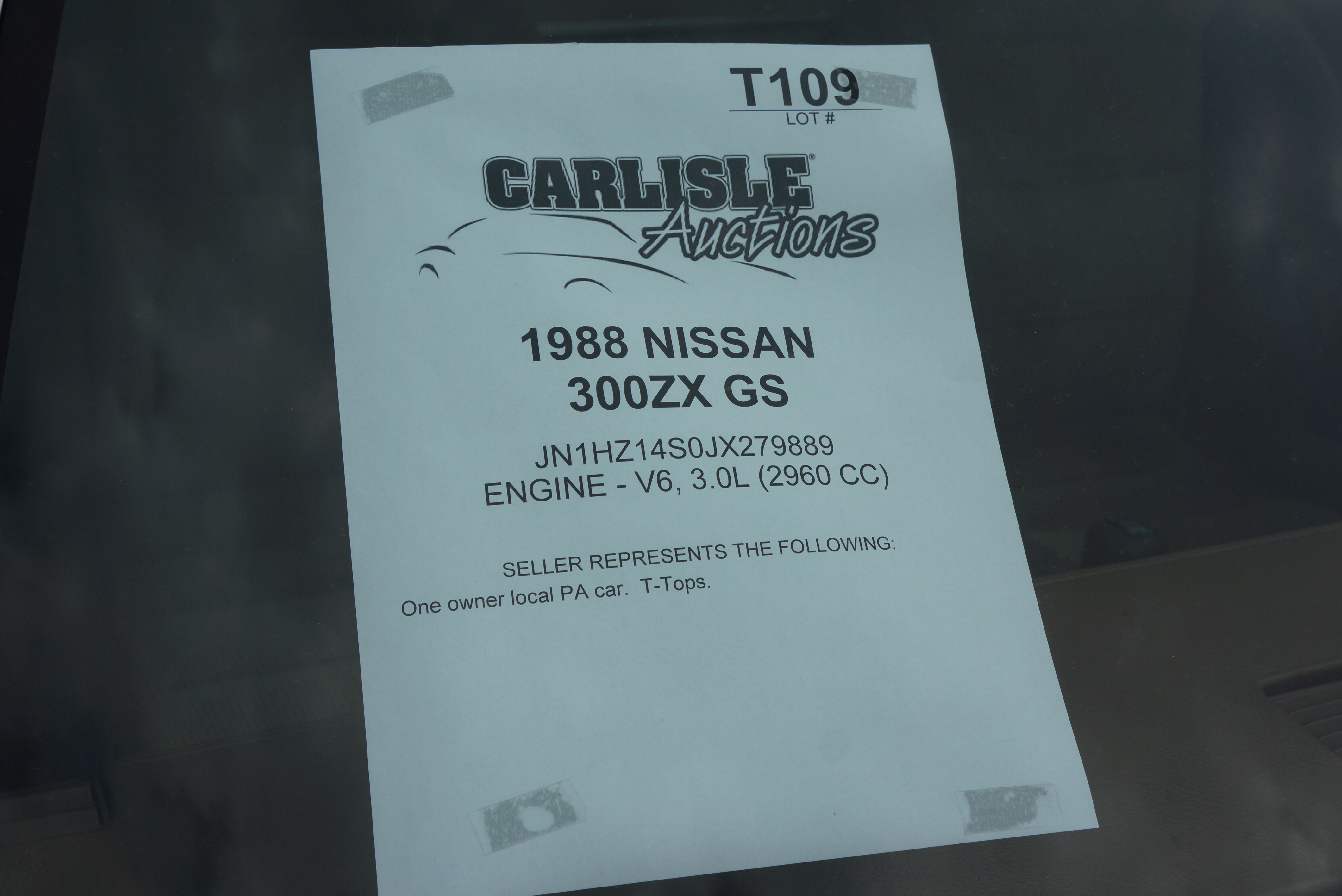
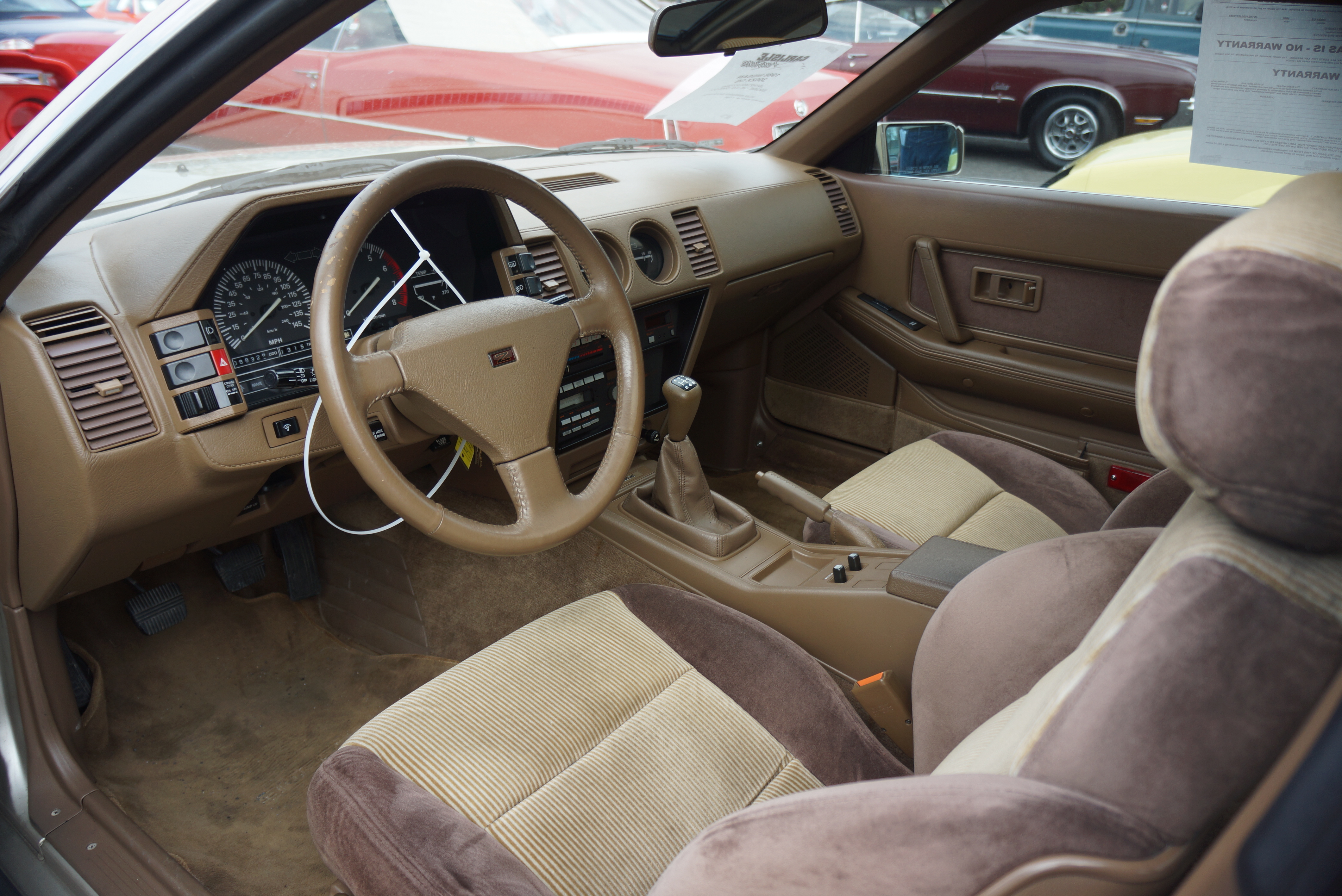
Lot T109, 1988 Nissan 300ZX, bland in gold metallic, t-tops, beige velour cloth, V6 non-turbo, 5 speed, 88k miles, interior shows some marks on wheel and driver’s door panel, seats are ok, interior is otherwise clean. SOLD FOR $4,600. Possibly the daily-driver deal of the auction.

___________________________________________________________

$5,500 TO $6,100:

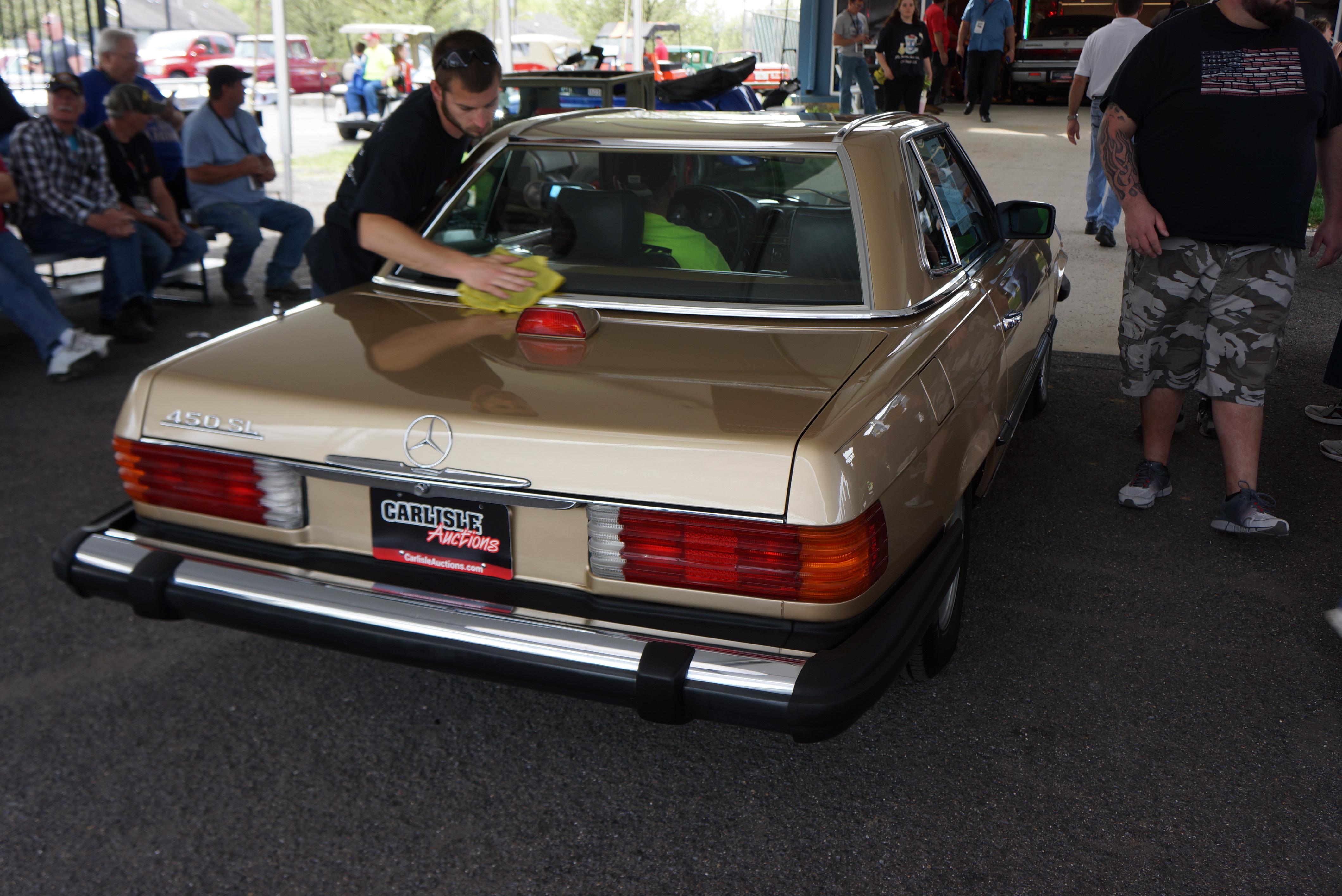
Lot T148, 1980 Mercedes-Benz 450SL, gold, gold hardtop, black interior, V8, automatic. 129k on odometer, doesn’t look it, very clean and straight. SOLD FOR $5,500.  High miles, good price if maintenance is up-to-date, bad price if it’s not.

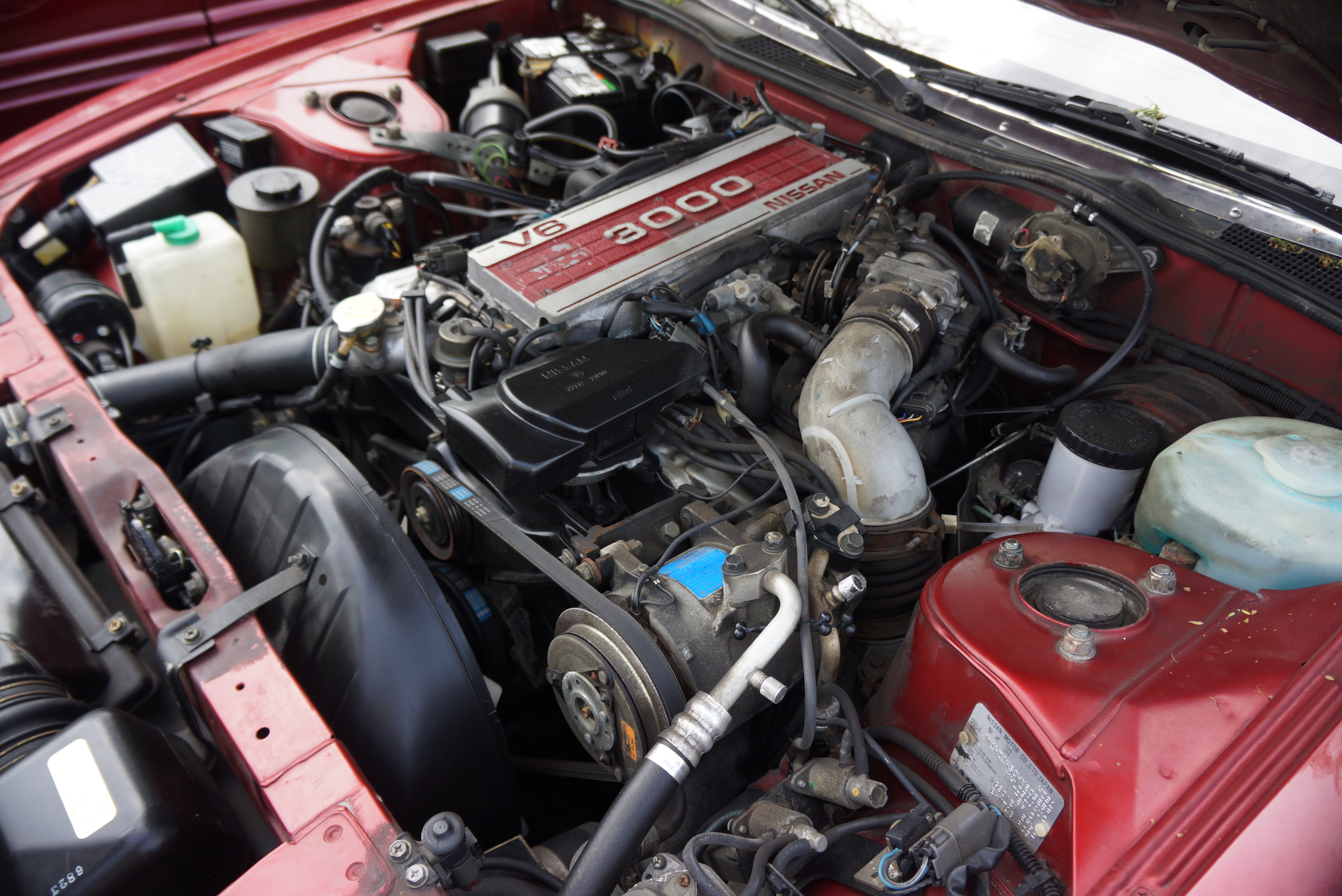
Lot F317, 1987 Nissan 300ZX, red metallic, beige cloth , V6 non-turbo, automatic, 59k miles, t-tops, clean overall, some wear on center armrest, driver seat adjuster arm missing, engine compartment dirty. SOLD FOR $6,000. Lower miles than Lot T109, but automatic vs manual may make the difference.

Lot F302, 1995 Mercedes-Benz SL500, V8, automatic, black, black hardtop, light beige interior, odometer unknown. Sign on car claims much service work done. Interior shows a lot of wear, driver’s seat foam showing, cracks in a lot of interior plastic. SOLD FOR $6,000. Mileage is likely high, making this no bargain. Drive it until it breaks.

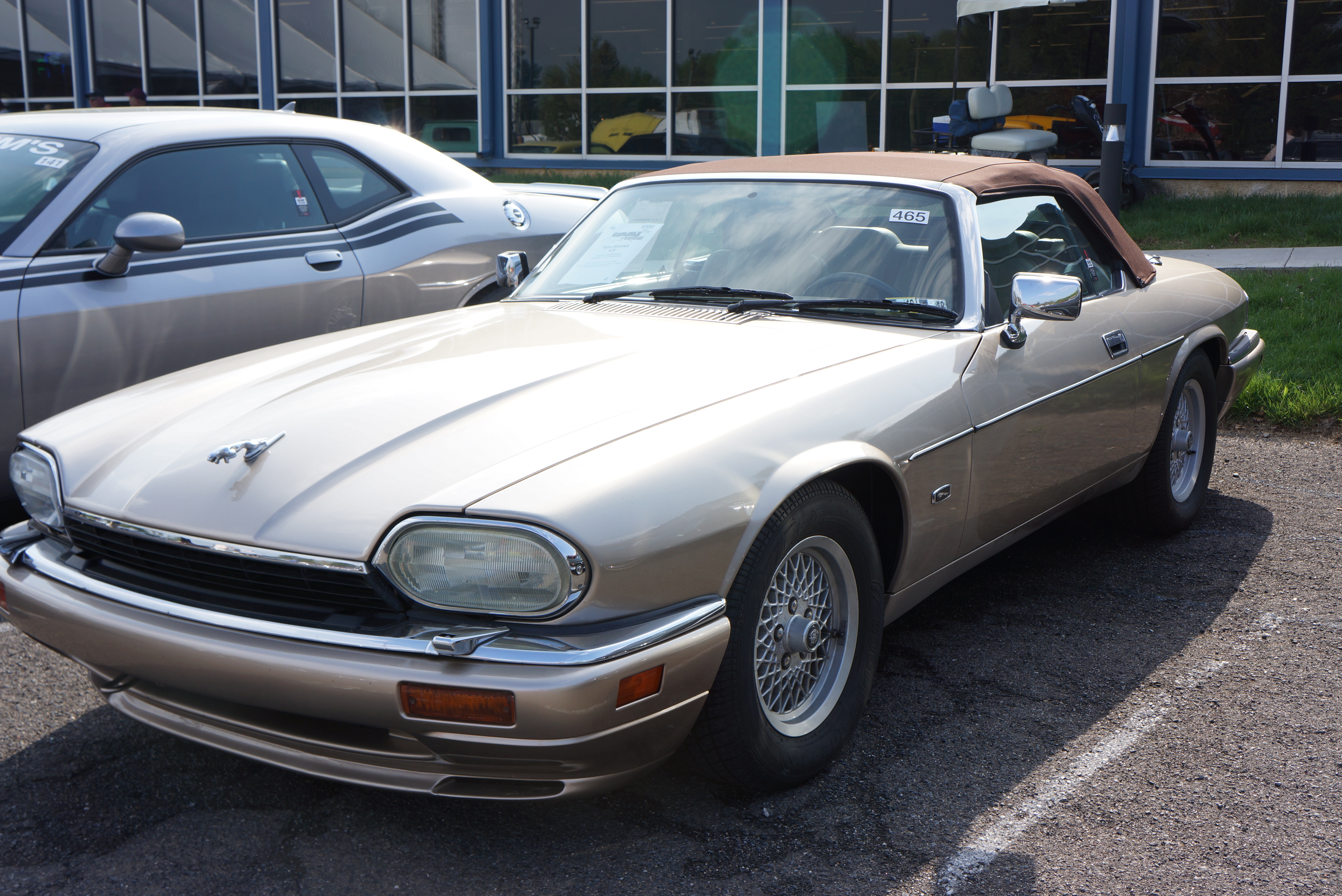
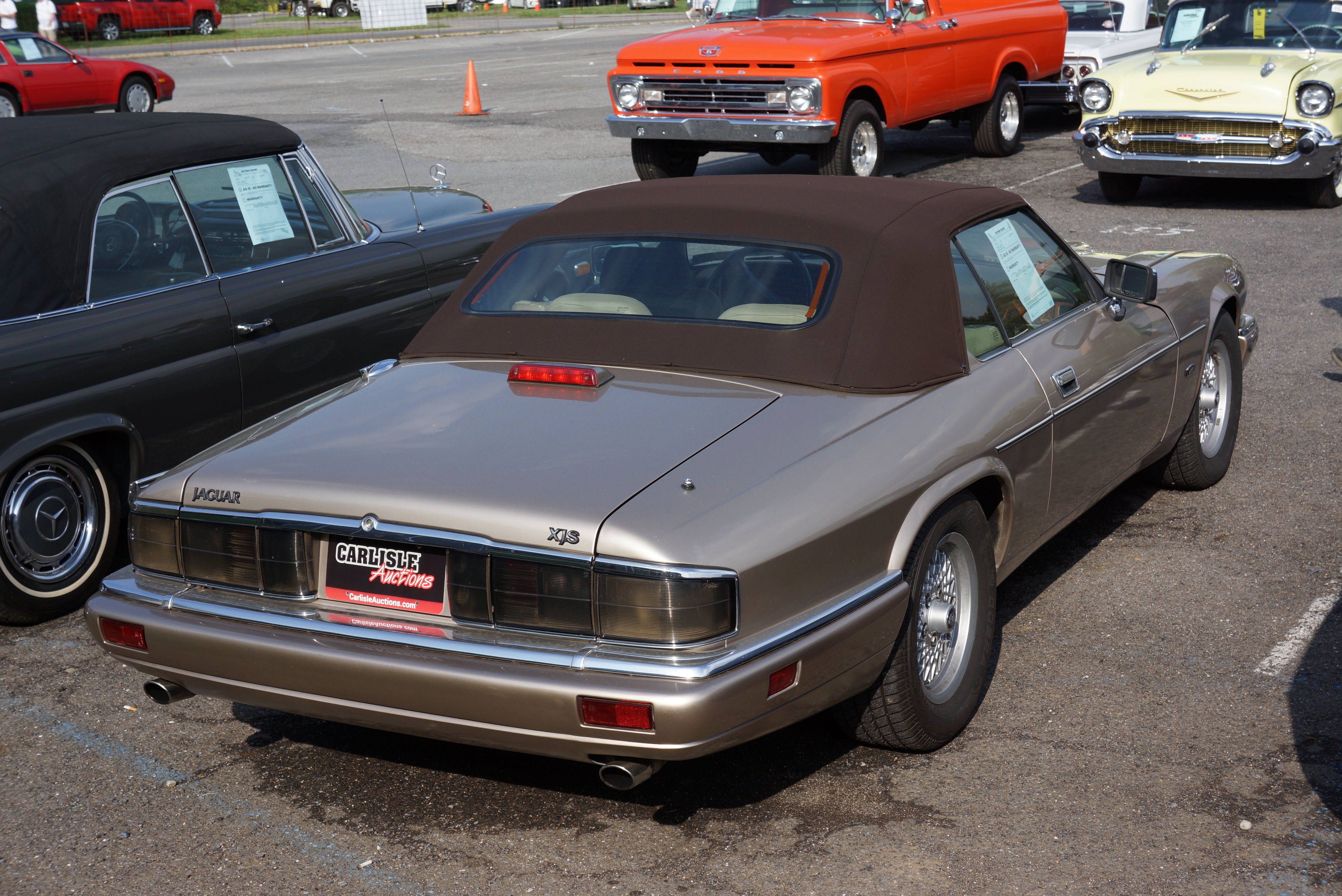
Lot S558, 1994 Jaguar XJS convertible, tan metallic, brown soft top, tan interior. 4.0 L inline-6, automatic. 67k original miles. Looks clean and straight. Sign says “here to be sold”, meaning, the owner has had enough (or, the reserve is really low). SOLD FOR $6,100. If you’re not afraid of British cars, this could be fun. Six-cylinder helps a lot.

________________________________________________________

$8,000 TO $11,000:

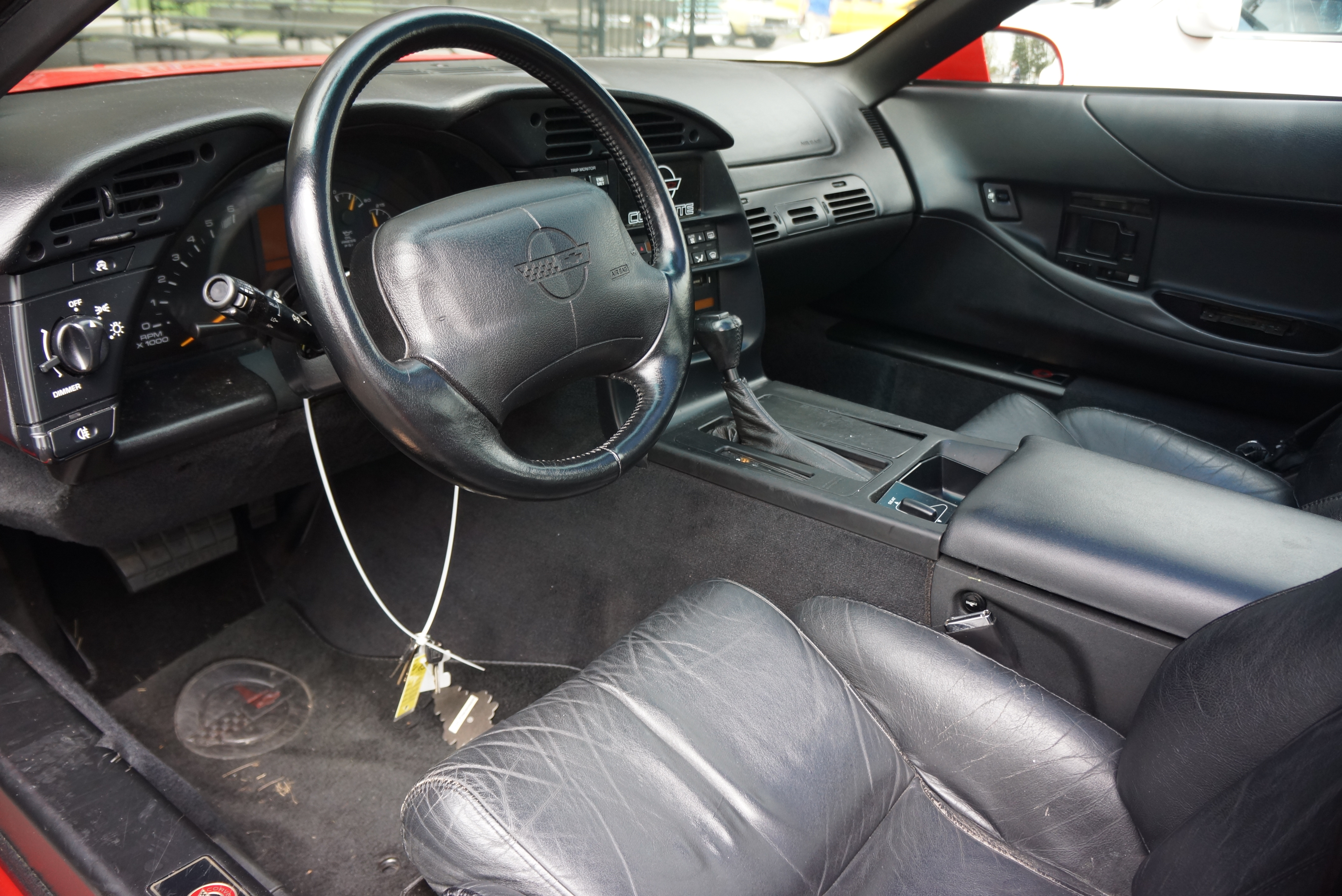
Lot T103, 1994 Chevrolet Corvette, hardtop, automatic, red, smoke roof panel, chrome wheels, black interior, LT1 engine, 55,383 miles. Some light aftermarket mods, such as wheels and tail light grilles. Crossed the block and declared NO SALE at $7,500. Later reported SOLD FOR $8,000. C4 Corvettes are on their way up, but there are better deals (and better-looking C4s) out there.

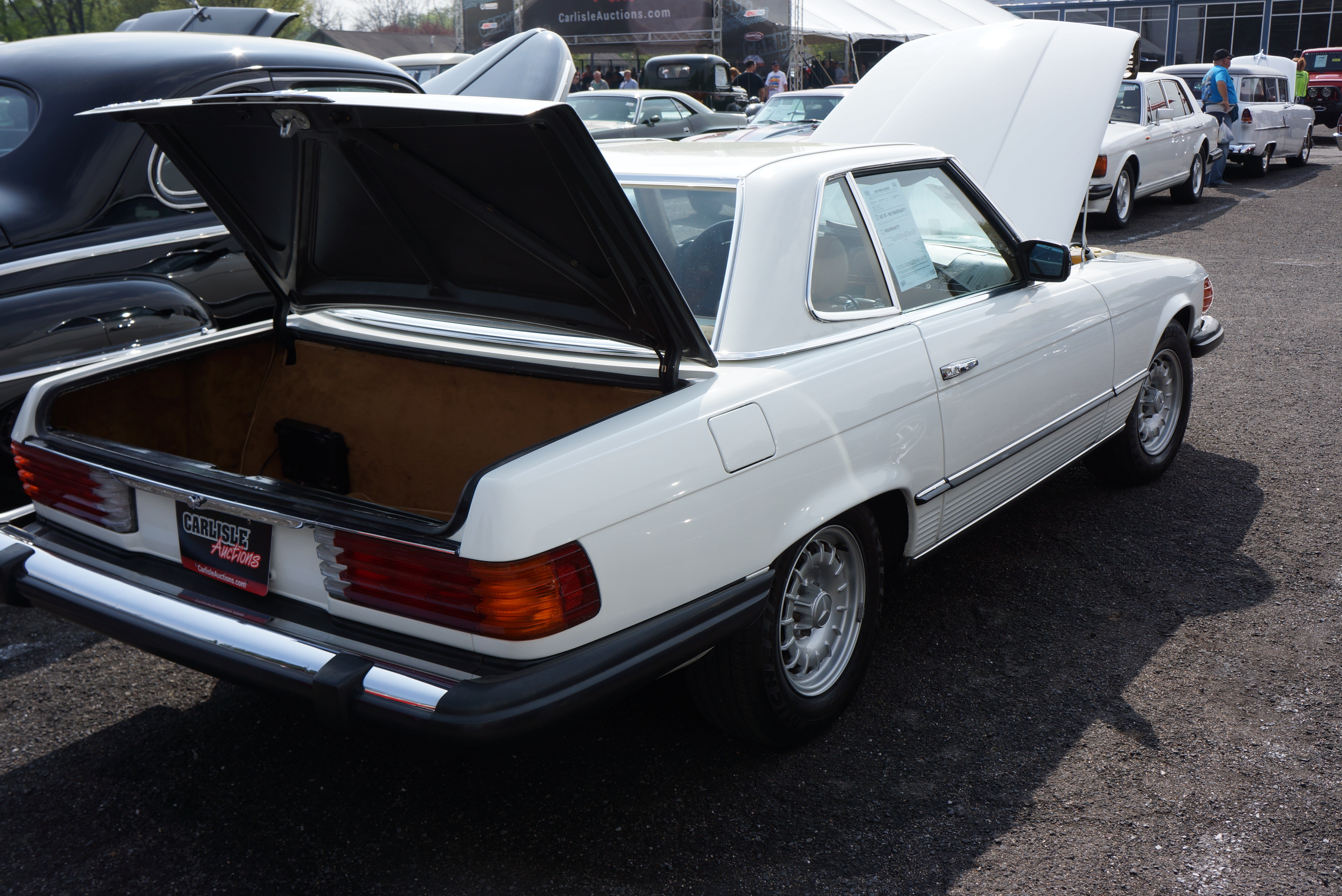
Lot F429, 1983 Mercedes-Benz 380SL, white, tan interior, 124,444 miles, white hardtop, overall clean and straight, no obvious defects. SOLD FOR $9,250. At this price and mileage, this makes Lot T148 look like a good deal. Besides, 450SLs are worth more than 380SLs.

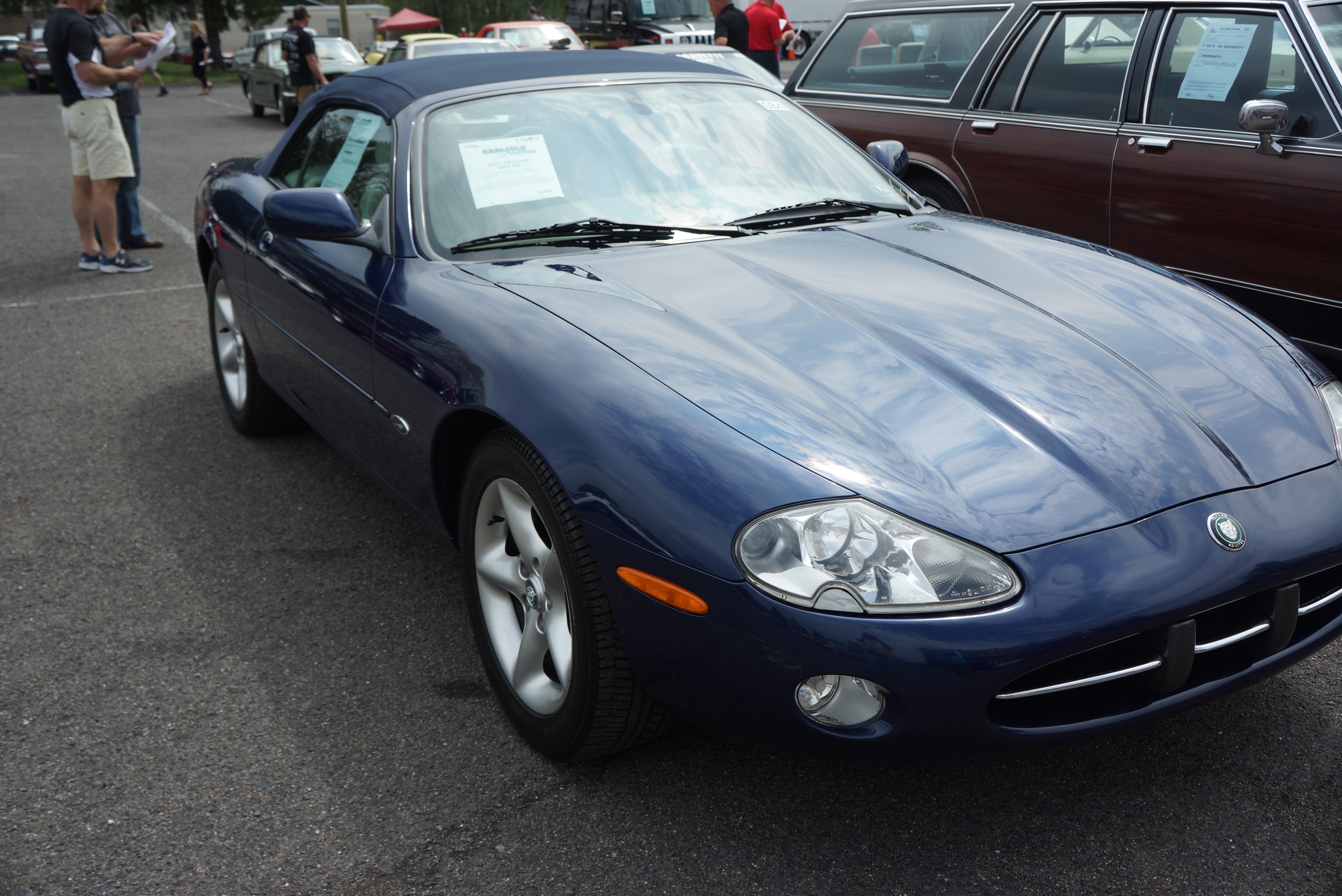
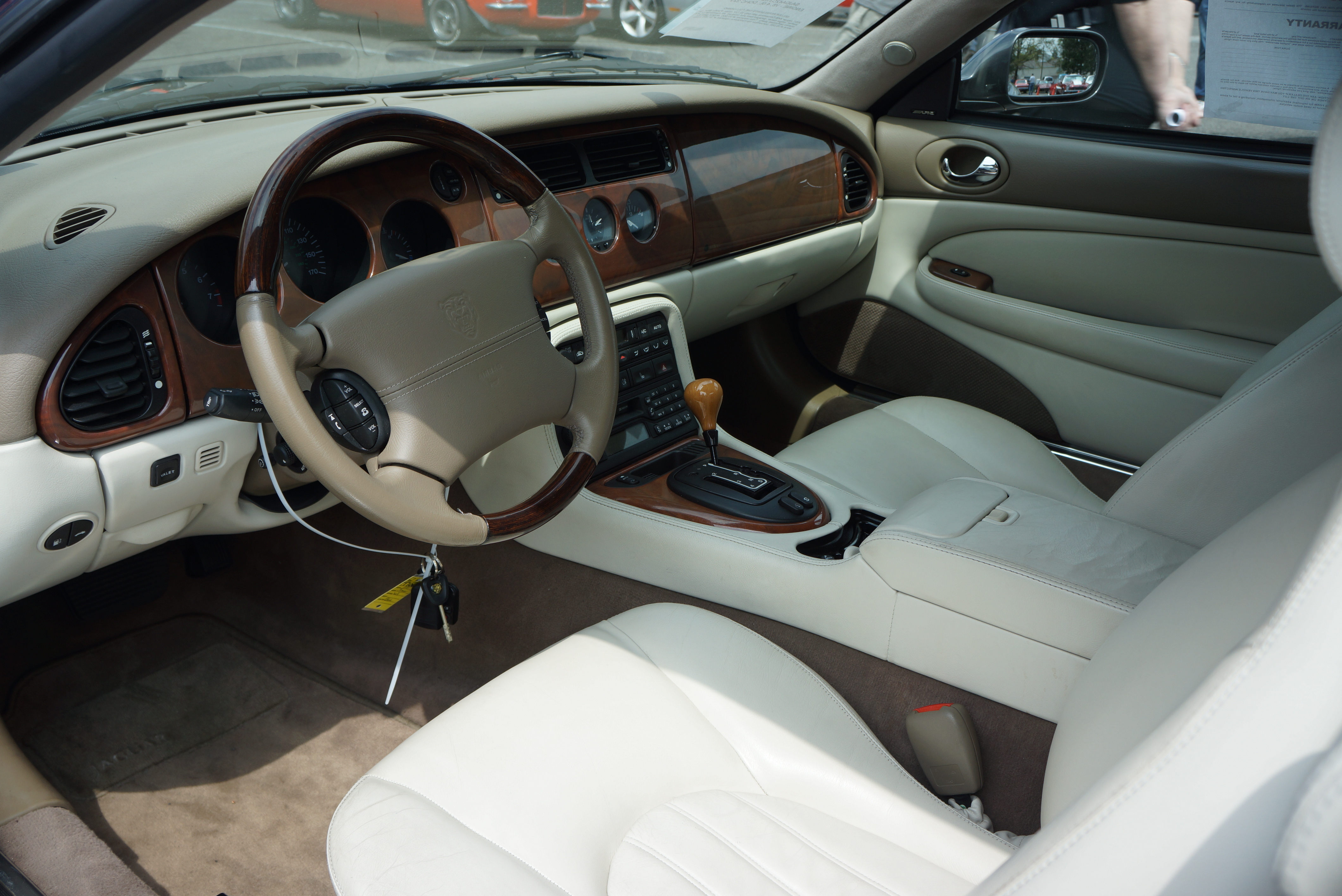
Lot T106, 2001 Jaguar XK8 convertible, blue, blue soft top, tan interior, automatic, factory wheels, 32k original miles, Wear on driver’s seat looks like from higher mileage car, interior otherwise is OK. SOLD FOR $9,300. Nice if you like blue (which I don’t). Low mileage is key here, placing this in the “well bought” category.

Lot T111, 1966 Ford Mustang convertible, green, black top, beige Pony interior, as ratty as any car ever seen at a Carlisle Auction. Only redeeming factor is “A code” 4-barrel 289 engine. Automatic. Bad green respray, convertible top has tape over holes, rear window opaque. Pony interior is destroyed. Both doors shut poorly; if both doors were opened at the same time, car would fold. A true rat. SOLD FOR $10,750. A shocking price for a car that must be completely restored to be used.

___________________________________________________________

$18,000 TO $21,000:

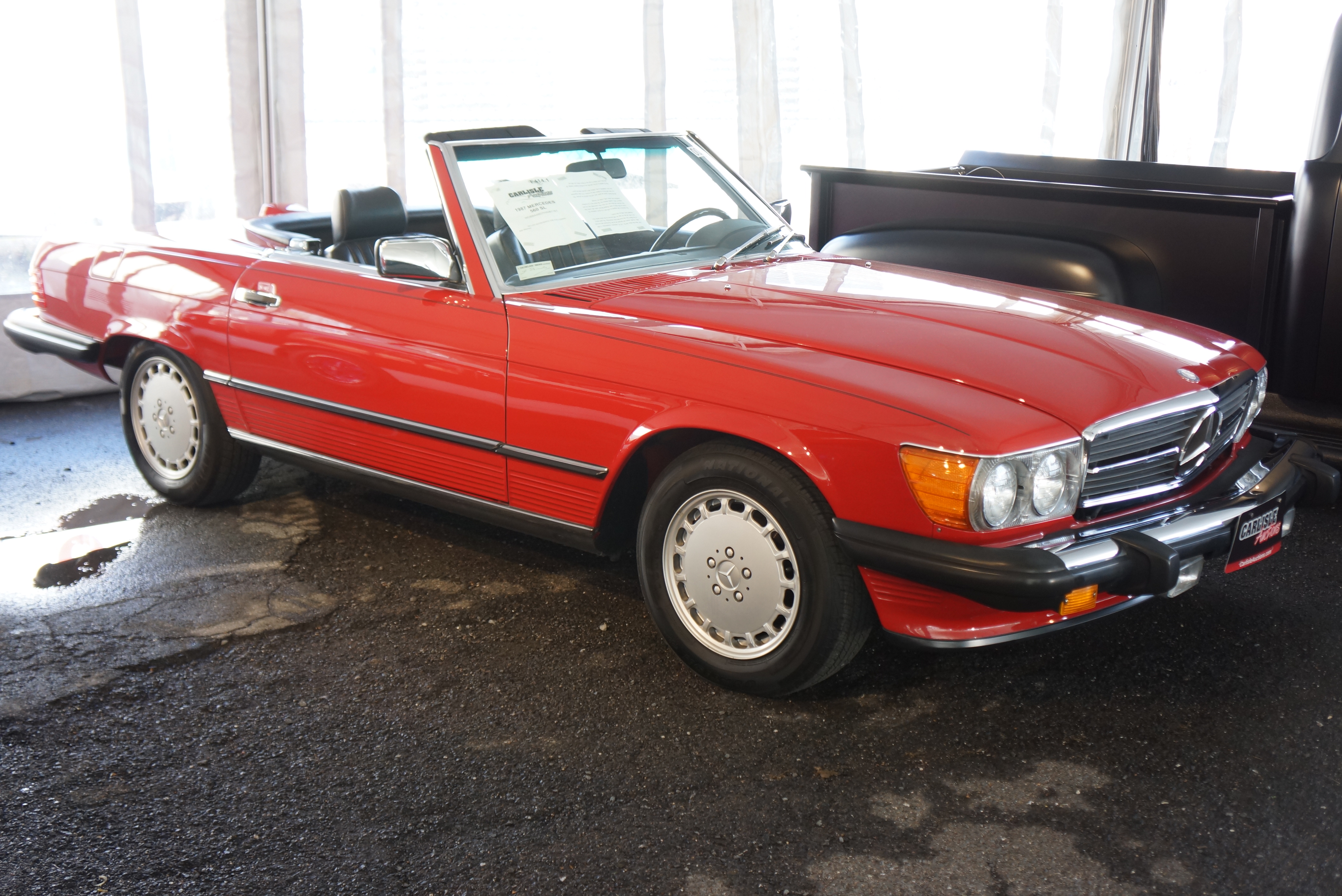
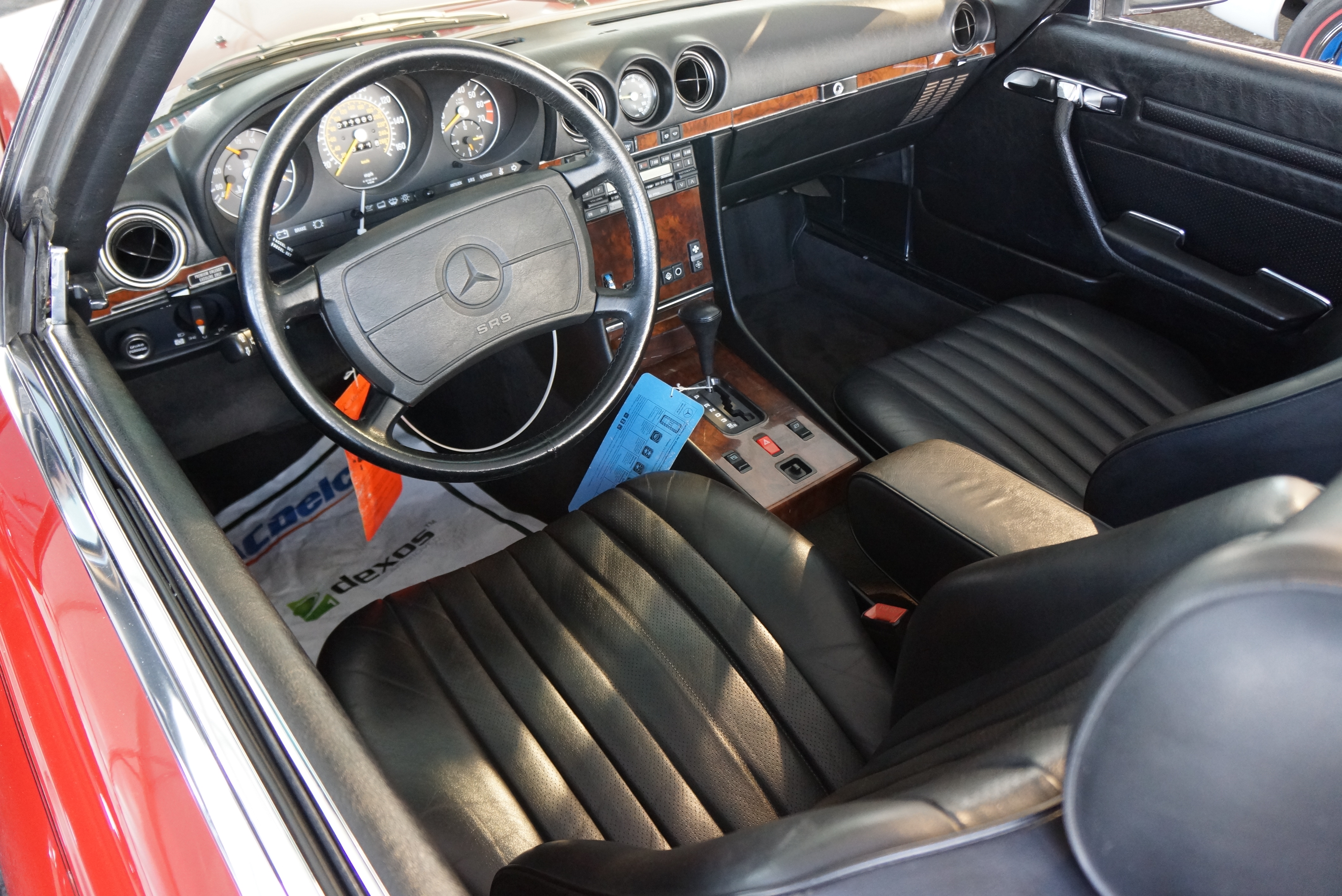
Lot F414.1, 1987 Mercedes-Benz 560 SL, red, black interior, both tops, claimed 72k original miles. SOLD FOR $18,750. Resale red (and low miles) wowed the crowd into a sale.

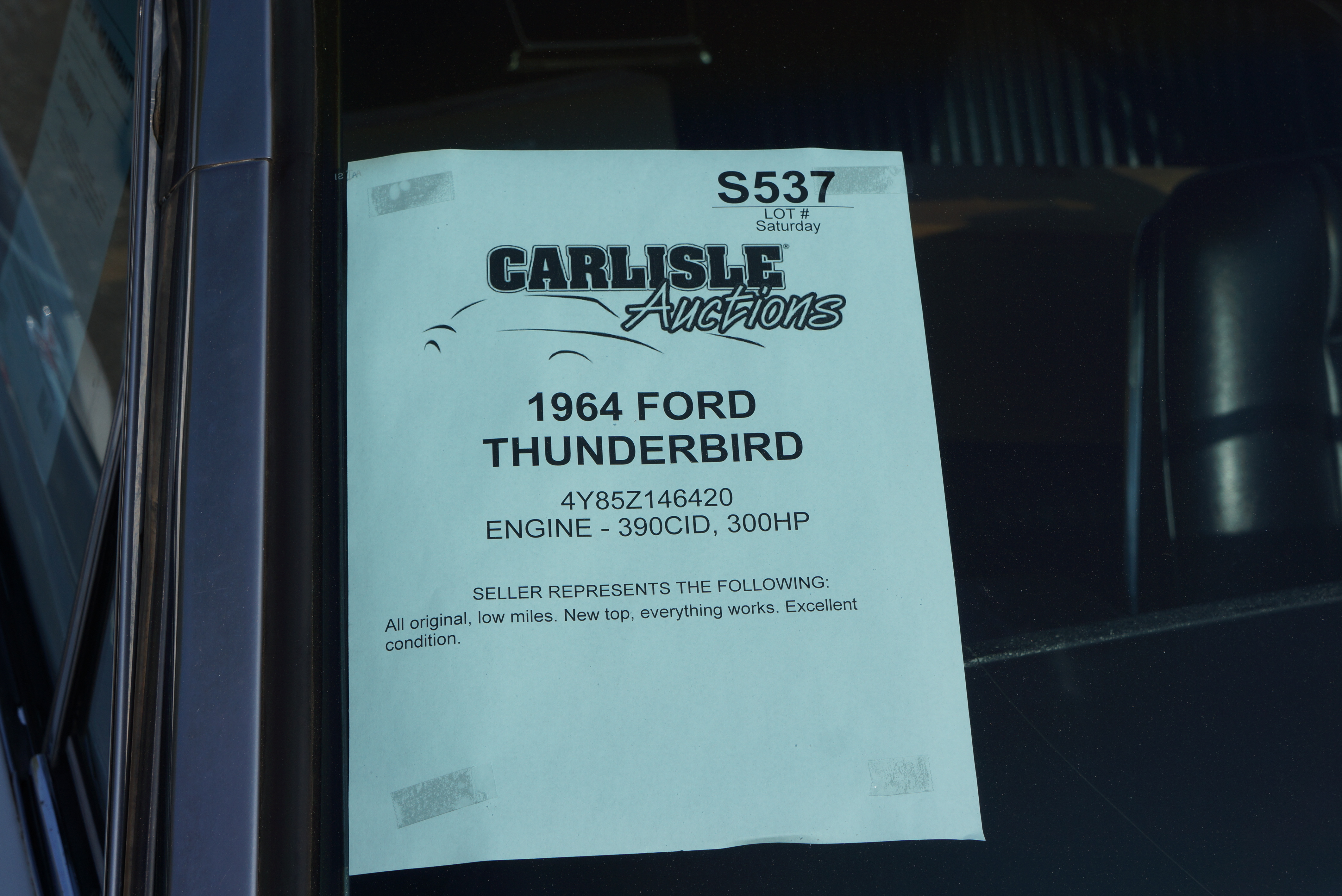
Lot S537, 1964 Ford Thunderbird convertible, white, black soft top, black interior. Wire wheels, white walls. 71k miles, claimed original. Paint and interior good, steering wheel worn, underhood a little sloppy in places. Gold 390 looks good in there. SOLD FOR $19,250. Decent mid ‘60s T-Bird in monochrome colors. Good deal as long as the top works.

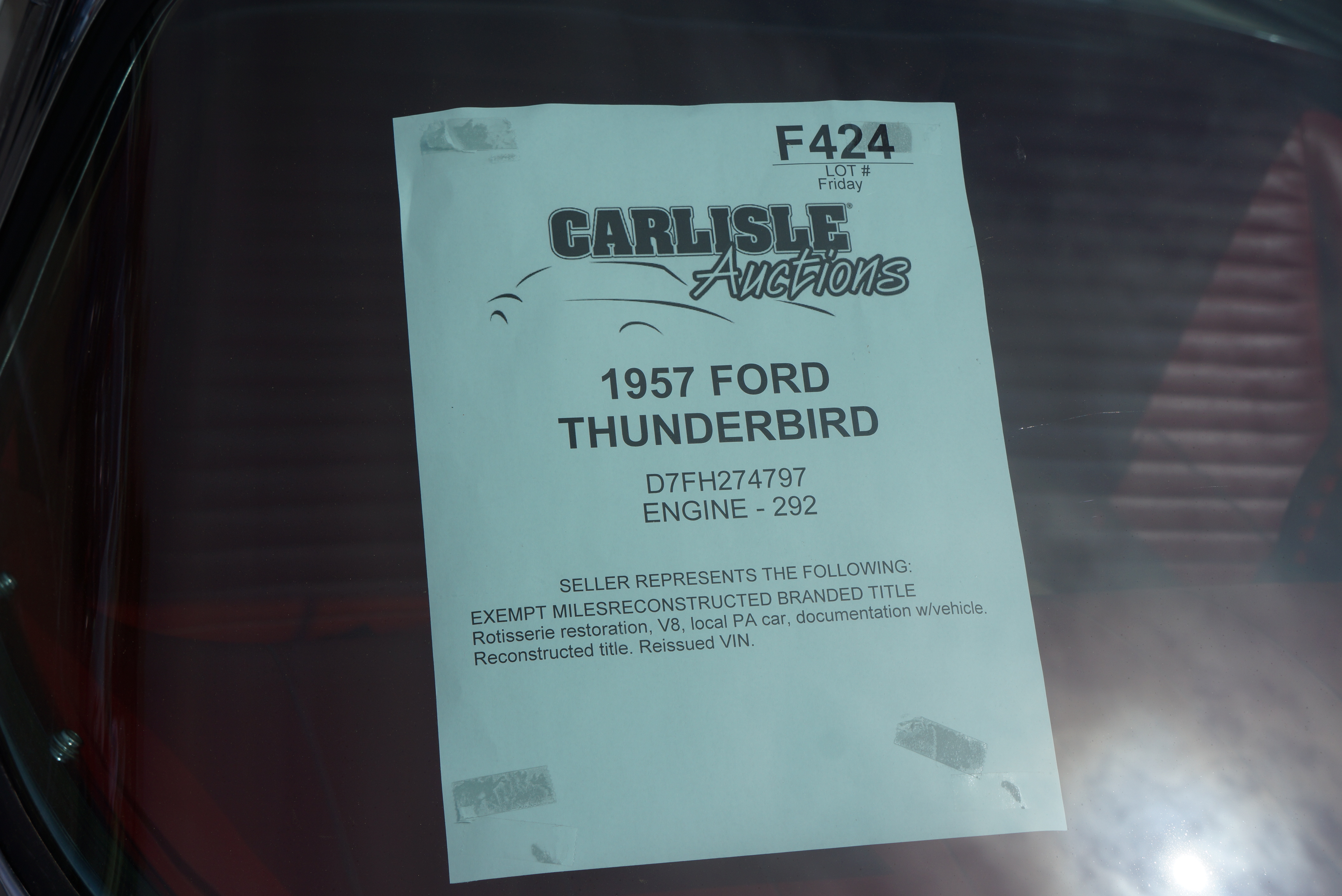
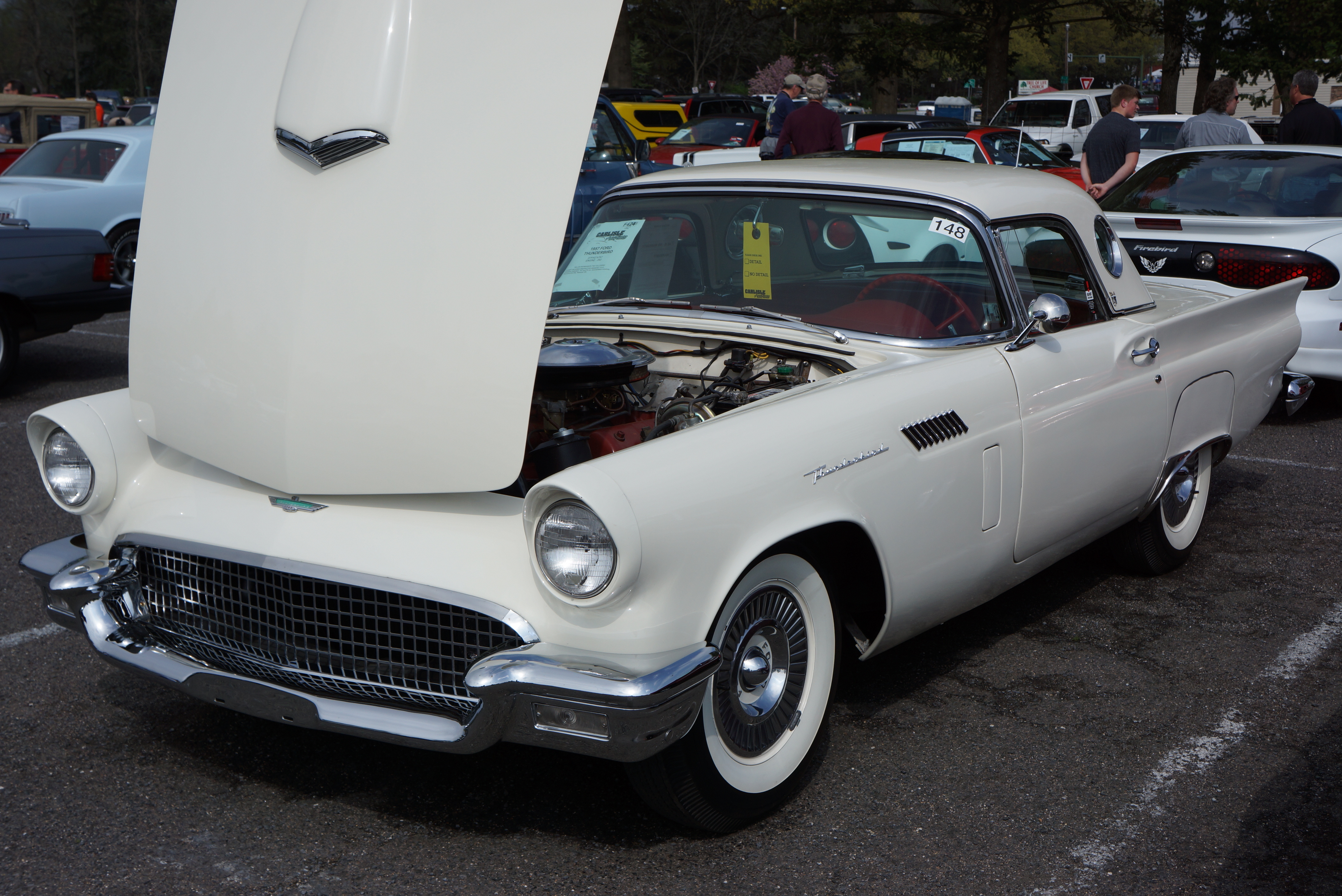
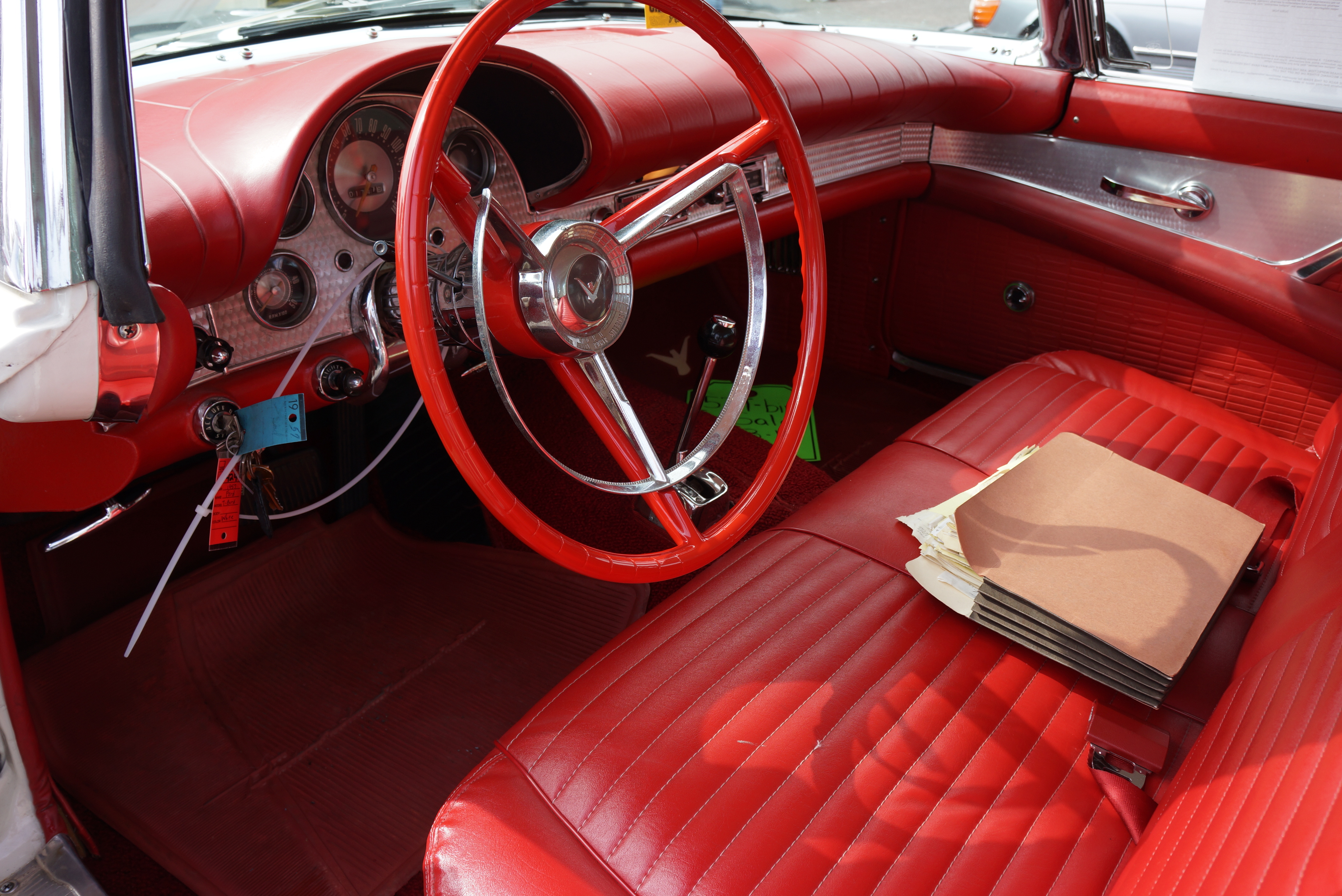
Lot F424, 1957 Ford Thunderbird, white, red interior, porthole hardtop, full wheel covers, wide whites, 292 V8, auto, sign says “reconstructed title, reissued VIN”. Paint and interior OK, underhood not detailed. SOLD FOR $20,800. On the low side for a 2-seat T-Bird. May be worth it if you’re going to keep it. The title issue may make it hard to resell.


All photographs copyright © 2017 Richard A. Reina. Photos may not be copied or reproduced without express written permission.

The Alfa Returns From Its Stay At the AACA Museum

The AACA (Antique Automobile Club of America) Museum in Hershey PA has both permanent and temporary automotive exhibits. In November of 2016, a 5-month long show was launched there, entitled Amore della Strada (“Love of the Road”), a tribute to Italian machinery of both the 4-wheel and 2-wheel varieties.

I was humbled to have my 1967 Alfa Romeo chosen as one of only about 20 cars for the exhibit. Aside from the honor of having your vehicle on display for the public to admire, there are the logistical challenges of getting the car there, and getting the car home. All transportation arrangements are the sole responsibility of the vehicle owner.

The Alfa poses in front of its temporary home.

Bringing the car to them was easy, because my wife and I decided to spend the weekend in Hershey. The Alfa made the trek without incident (with the driver thankful that there was no early snow). My wife followed in her modern iron, so getting home was simple.

I knew from the start that the museum exhibit was scheduled to end the same April weekend as Spring Carlisle. My good friend Larry and I made plans to attend the Carlisle show together, and he generously offered to pick me up at my house, drive me to Carlisle, then drive me to the Museum. There had been previous email exchanges with museum staff that I would show up sometime on Friday to get the car.

Larry’s such a good friend that he stuck around to make sure my departure was OK.

Upon arrival, there was one hitch: my car’s battery, which the museum had assured me would be charged up, was not. When I sat in the car to crank the engine, the revolutions were so slow that you could count them. A 12V powerpack was brought to the scene, and the Alfa started right up. Any concerns about re-starting were alleviated when I turned off the car, and it immediately cranked back to life.

Day #2 of the Carlisle Auction was in action on Friday, and I wanted to be there. I drove to the showfield, and parked in a private driveway (five bucks, thanks Rita!) arranged by another good friend, Rich S. Then, back to my hotel Friday night, with the Alfa safely tucked behind the building.

Saturday morning, up bright and early, and I was on the road again in the little Alfa. Traffic was surprisingly heavy along Routes 81 and 78, but I’ve learned to stick to the right lane and stay out of the way. At 155 inches and 2,000 pounds, my 1300 Junior would be flicked off the road like a pesky bug should an SUV or 18-wheeler make an errant maneuver.

I-78 eastbound, somewhere in PA. At 70 mph in 5th, engine is turning just under 4k.

The car ran beautifully the entire way home. One hundred and thirty-four miles later, it was back in the garage that the car hadn’t seen since November of last year. Once some basic maintenance is attended to, we can start with the first of a number of events which have been scheduled for the car this year.

Back home, safe and sound


All photographs copyright © 2017 Richard A. Reina. Photos may not be copied or reproduced without express written permission.

Car Spotting in Southern California, April 2017 edition

My wife and I spent a long Easter weekend in Santa Monica and its immediate environs, primarily to visit her family. For me, it’s always an adventure to go to California. For this native New Yorker, a stroll down the street is its own car show. The climate has, for the most part, ensured that automobiles survive for a very long time.

My life-long home turf of metropolitan NY/NJ suffers from the ravages of snow most winters. To be more precise, we suffer from the road salt liberally applied as the result of the snow. All this salt is not kind to vehicular sheetmetal, causing it to rust. Since salt is not needed in most of the Southwest, it’s not unusual to see 30, 40, even 50 year old vehicles still being pushed into daily-driver service on the streets of California.

As the designated driver for much of the weekend,  I was left with little time for strolling and picture-taking. Many cars from the ’60s and ’70s were spotted but not photographed. For the few instances when we were on foot, usually to or from a meal, my cell phone caught some neat old cars. Here are a few of the more interesting ones.

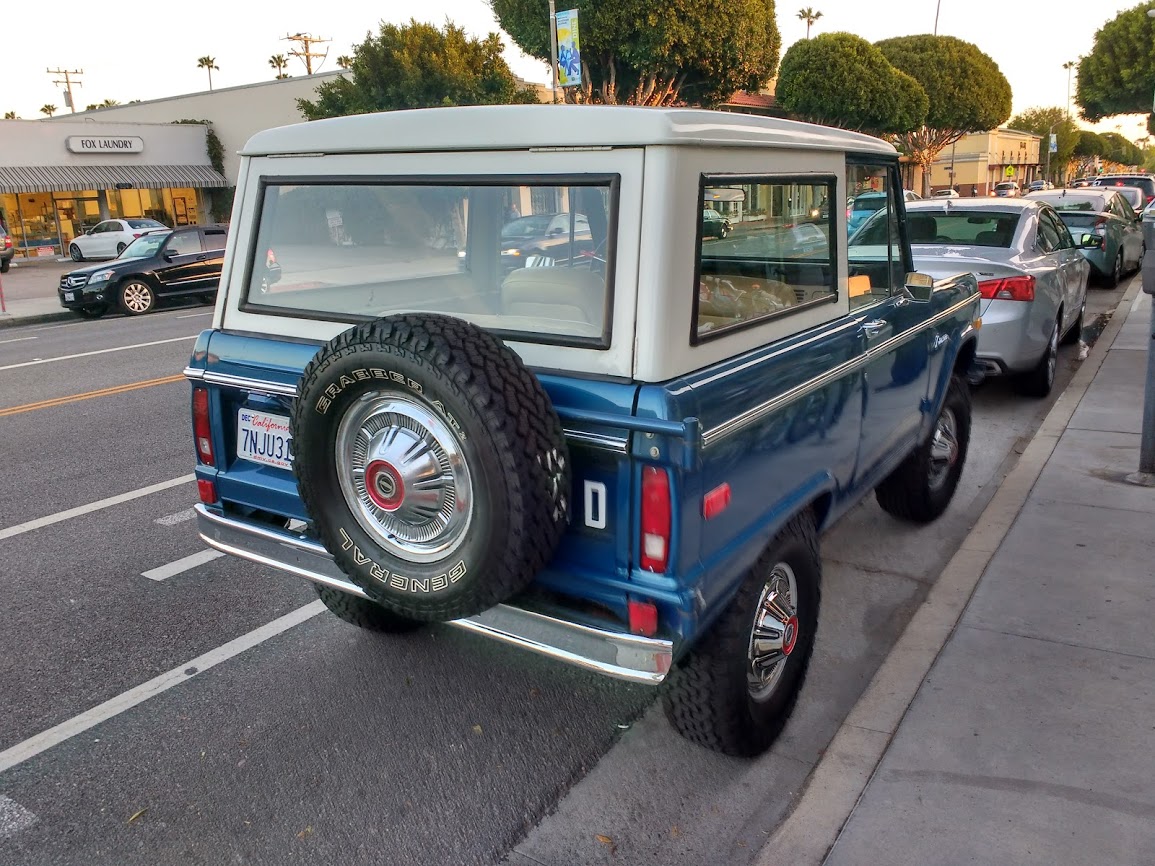
This first-generation Ford Bronco looked completely restored to stock condition. Given that the market currently values these things in the $30k-50k range, it was a surprise to see it unattended. However, it did have “The Club” on the steering wheel.

This 1969 Cadillac Coupe Deville didn’t need The Club. Paint was gone from most of its horizontal surfaces, several lenses were busted, and rust had eaten the hood’s leading edge, leading me to suspect that the car may not have been native to the state. Note the coveted ‘black plate’.


This early ’70s BMW 3.0 coupe looked too nice to not have been restored. The lucky owner drove it to church on Easter morning, as I found it in a church parking lot. It looks minuscule next to the Range Rover. Yes, the parking lot is carpeted. 

The biggest surprise for me was this early ’70s Alfa Romeo GTV, parked on the street in a residential area of Santa Monica. The paint was weathered, the wheels rusty, the windows dirty, and the chrome lackluster. Yet, it didn’t give the impression that it had been sitting there long. With no visible rust, this is a $25k car back east. I was tempted to leave my phone number….


All photographs copyright © 2017 Richard A. Reina. Photos may not be copied or reproduced without express written permission.


Sunday Morning Breakfast Run, April 9 2017

We eased into our first driving event of 2017, with 6 cars occupied by 8 hungry drivers and riders. After a cool but sunny dawn, we got the weatherman’s promised warmth. In all, it was an almost perfect early spring day for a drive, evidenced by the dropping of several convertible tops.

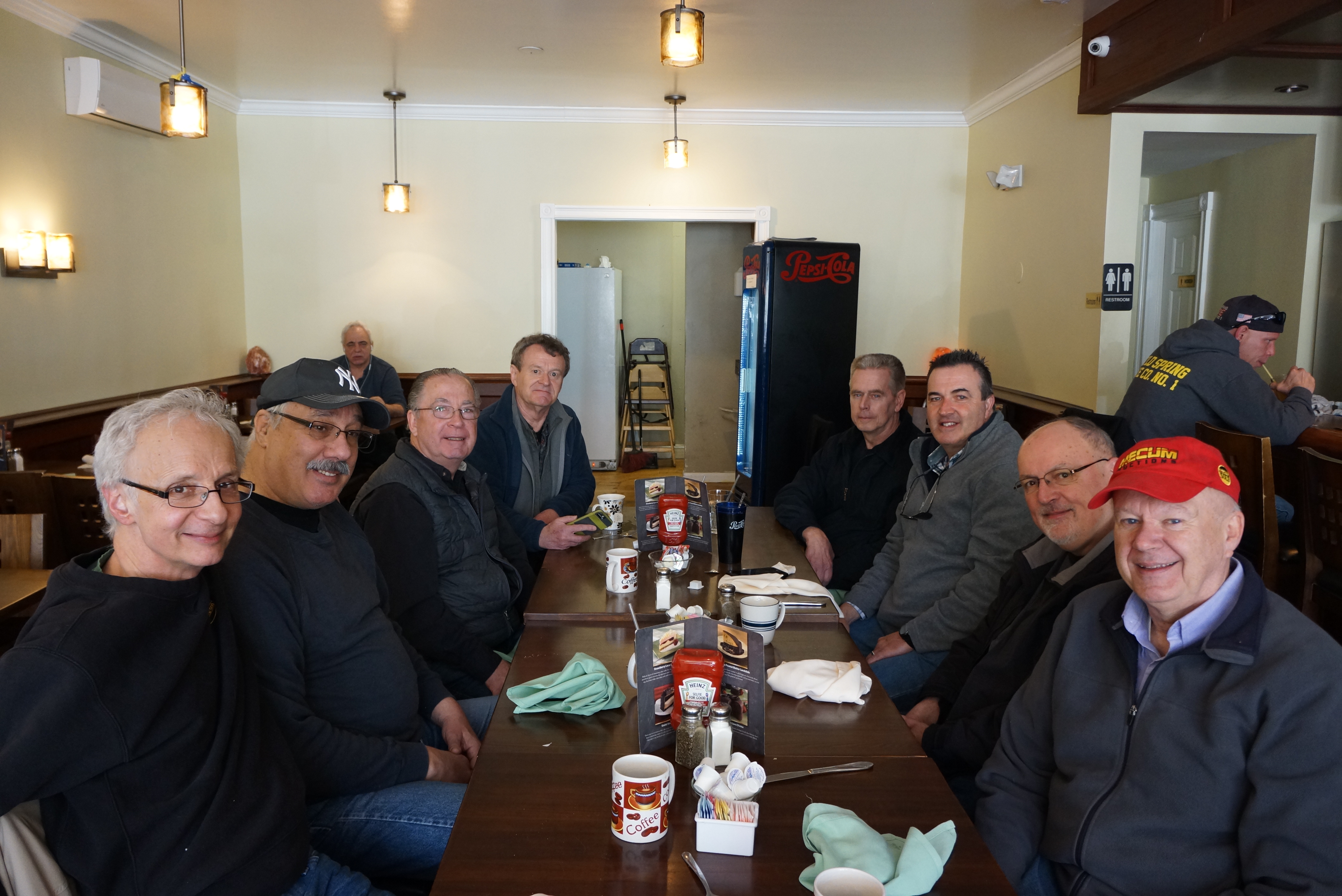
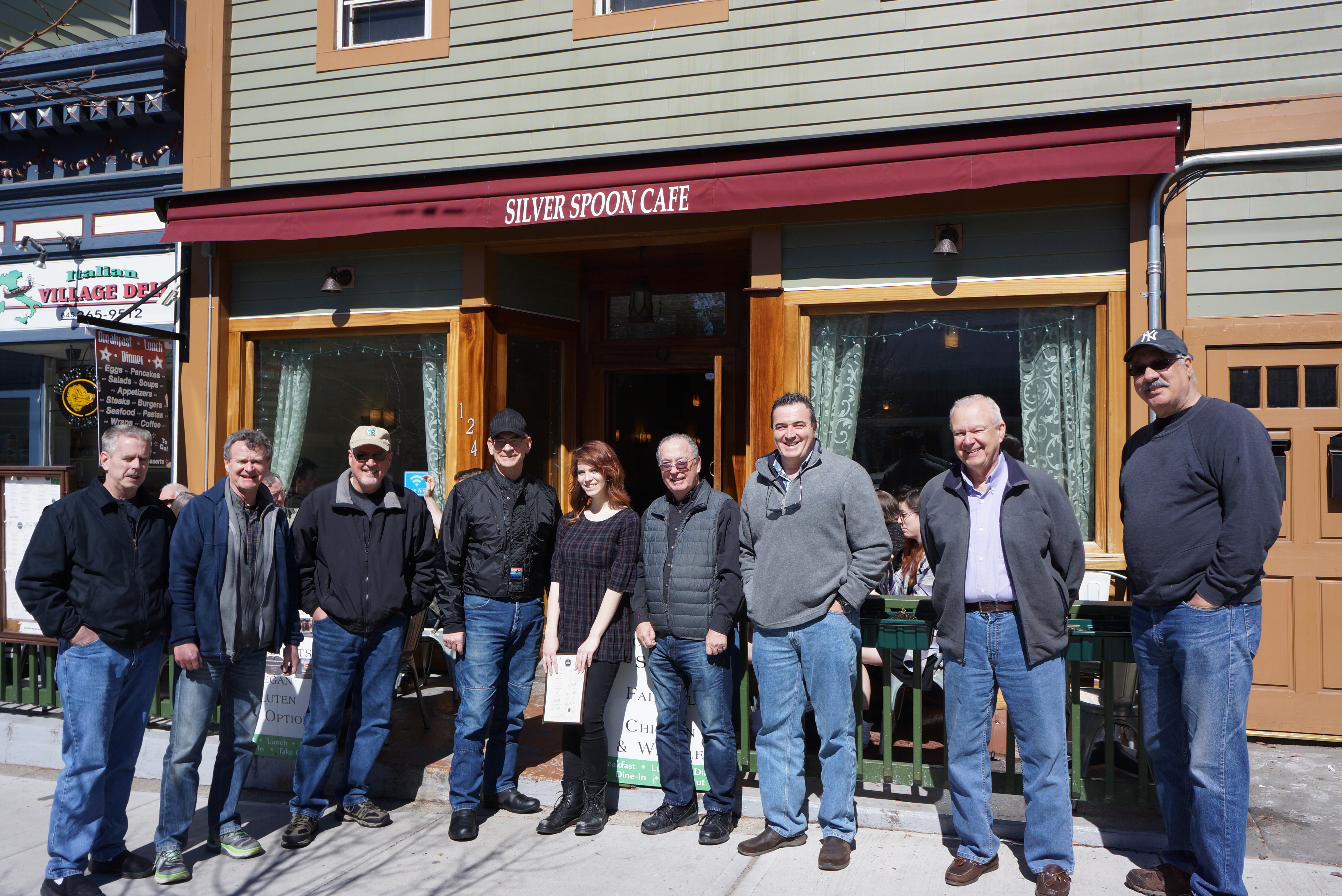
Our destination was the perennial favorite Silver Spoon Café in Cold Spring NY. They were expecting us, and we were seated by 9:45, and drinking coffee by 9:48. The food was good, the service was exemplary, and as is our habit, we exited the café only to spill out onto the sidewalk to continue our chatter.

We were happy to be able to drive so early in April, and while we’ve said it before, we’ll say again that our intent is to schedule one drive per month for the remainder of our Northeast driving season.

Larry’s 1972 Chevy Nova


Jim’s Datsun 280Z


Ralph’s Buick Skylark


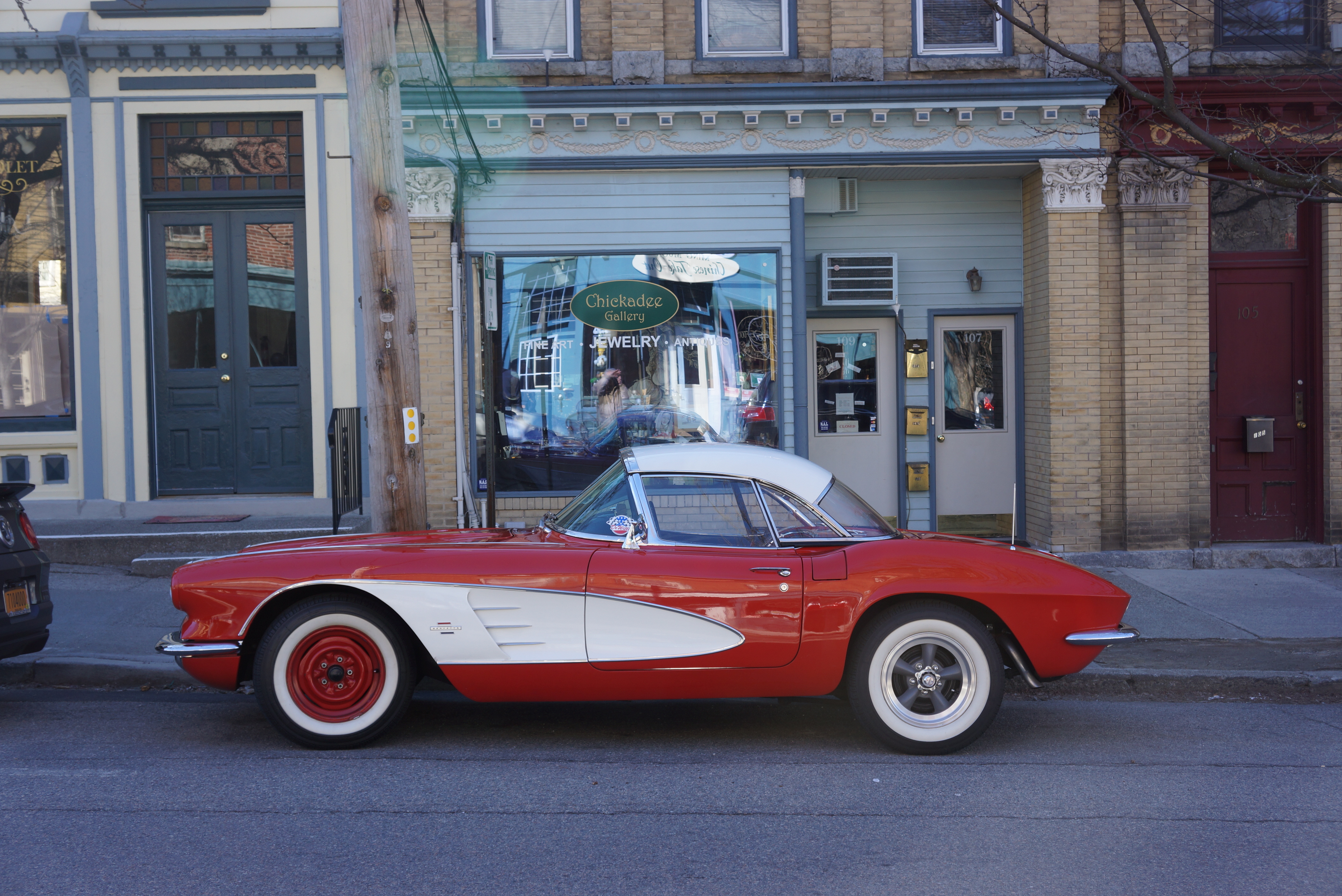
Bill’s 1961 C1 Corvette


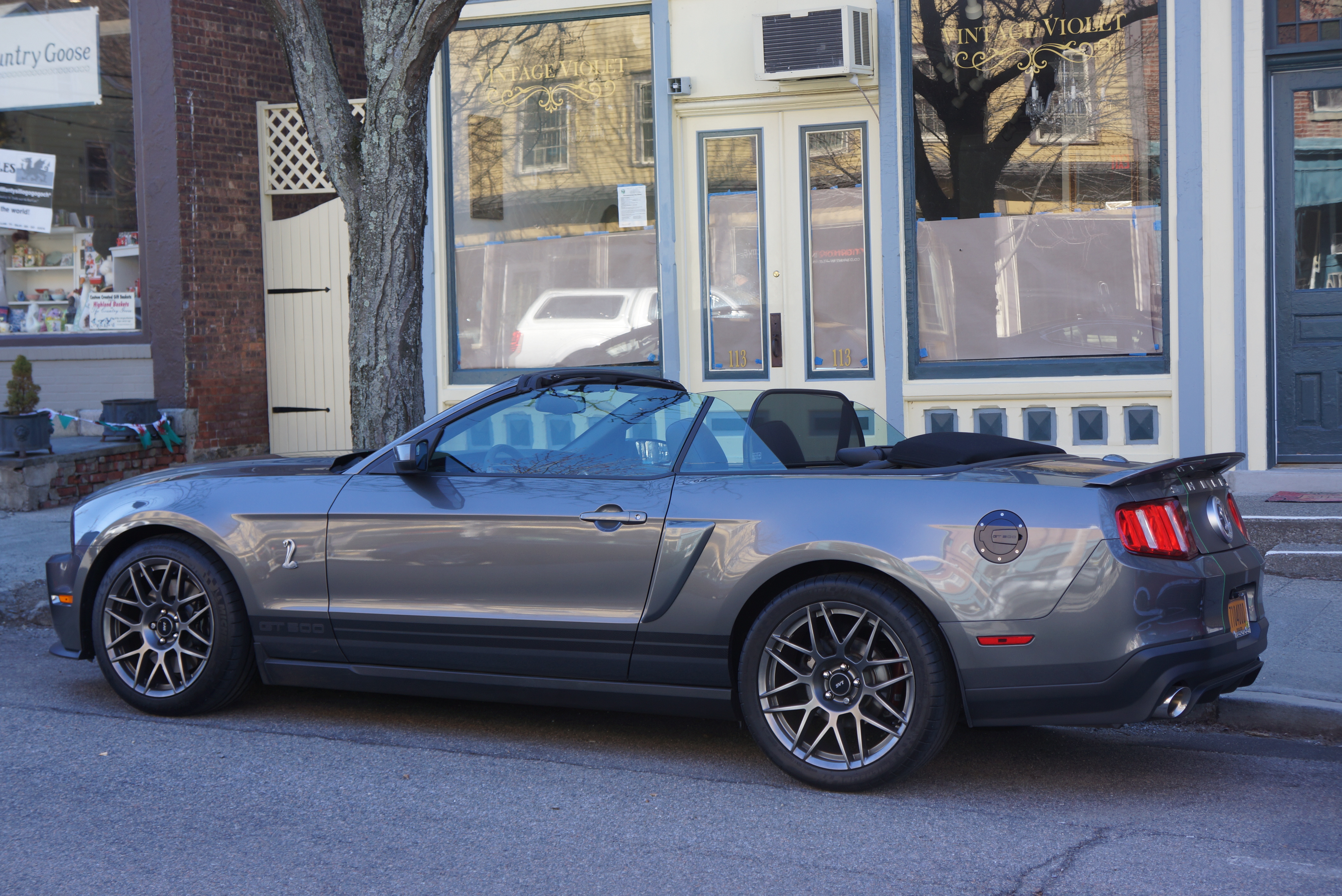
Rich S’s Shelby Mustang


Your author’s 1993 Mazda Miata


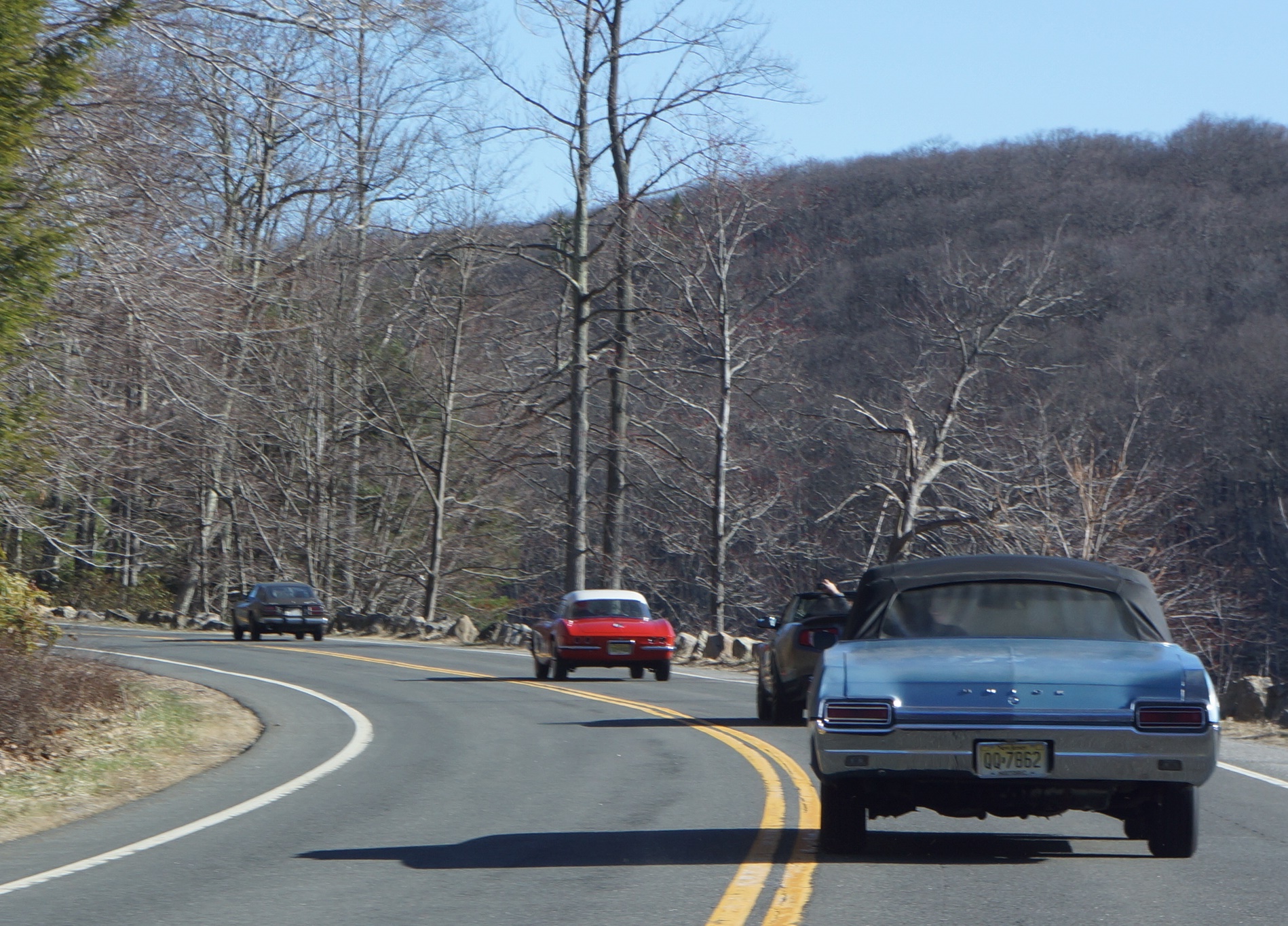
Along Seven Lakes Drive in Rockland County NY


The Breakfast Club


In front of our host cafe (hostess graciously agreed to pose with us)


All photographs copyright © 2017 Richard A. Reina. Photos may not be copied or reproduced without express written permission.

Removing the Oil Pump on a 1936 Oldsmobile

Yesterday, visited my friend Pete (from whom I bought the Alfa). Pete’s a family friend, and an all-around great guy. He had invited me out to give him some assistance with working on one (or more) of his cars.

A few weeks ago, Pete told me he could use my help with his ’79 Volvo 265, which was exhibiting an intermittent no-crank symptom. He had checked two of the more obvious things: battery health and battery terminal condition. I asked him if he had thoroughly checked the battery ground cable, as I had experienced instances with that cable hiding extensive corrosion under its sheathing.

When I arrived yesterday, he proudly told me that several days ago, he had removed the negative cable, found extensive corrosion at the engine block, cleaned all that up, and has not had a lick of a problem since. So on to the Olds….

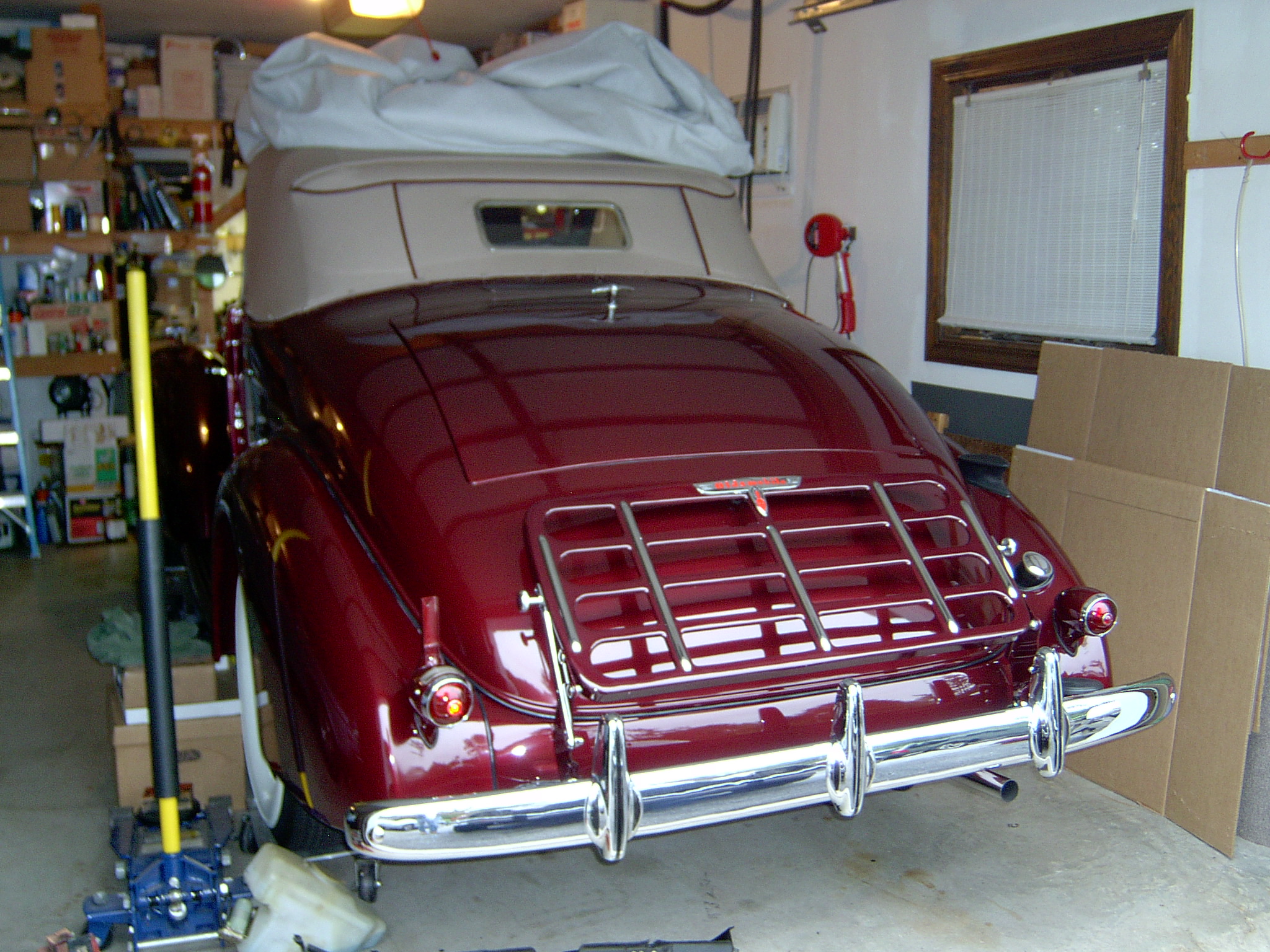
One of his prized possessions is his ’36 Oldsmobile L-36 convertible. Here is some background, provided by my copy of The Encyclopedia of American Cars, by the Auto Editors of Consumer Guide:

In 1936, there were two series of Oldsmobiles: the 6-cylinder F-36, riding a 115 inch wheelbase, and the L-36, with an inline-8 on a 121 inch wheelbase. The I-8 displaced 240 cubic inches, and put out 100 horsepower. Pete’s convertible coupe was the most expensive Olds in ’36, at $935. (The base Olds business coupe was $665.) Production numbers for the convertible totaled 931 (compare that to their volume leader 6-cylinder 4-door touring sedan, of which 66,714 were built). Survival rate of the convertibles is unknown, but certainly, Pete’s drop-top is one rare car.


A shot taken a few years ago of the ’36 Olds


Topside of engine. Restoration was done in ’90s, still looks great

When I visited last year, Pete was very concerned about the Olds exhibiting low oil pressure at idle. Yesterday, he reiterated those concerns, informing me that the most recent readings he’s seen showed 20-25 psi at cold start up with high idle, then descending to figures below 10 psi at warm idle. (These numbers are from a quality aftermarket oil pressure gauge screwed directly into a passage in the block.) There was straight-30 weight in the crankcase.

Pete had been conversing online with a self-designated pre-war Olds expert, who opined that the straight-8’s oil pan was NOT coming off until one first dropped the steering linkages. Pete wanted to try it without disconnecting the tie rods. I said that the worst that happens is, we bolt the pan back up and attack the linkages.

The oil was already drained, and drop light, creeper, and tools were waiting for me to get under the car and get to work.

There must have been 30 bolts along the perimeter of the pan. None of them were very tight, and most could be accessed with a ratchet and socket on a short extension. But six at the front were under the steering linkage, and required a box-end wrench, turning each about 1/6 of a turn at a time. It wasn’t difficult, just time-consuming.

I left one bolt in the front and one in the rear, both finger-tight, to prevent the oil pan from crashing down onto my chest. With a putty knife and a hammer, I gently tapped at the two back corners of the pan. At this point, my fight was with the copious amount of orange Permatex all along the edge.

A few taps later, the pan was free of the crankcase. By now, Pete was on the ground under the car with me. We removed the final two bolts. The pan wouldn’t drop further. At the front, the steering linkage was in the way, which we knew. At the rear, the clutch housing stopped us from sliding the pan rearward. We also had to get the pan low enough to clear the oil pump.

Pete suggested rotating it 90 degrees toward the passenger side. With two sets of hands on the pan, we did that. Success! In a matter of moments, the pan was on the garage floor.

The pan is where we want it: on the floor

The oil pump, now out in the open, was held in place by 2 nuts, needing only a 9/16” wrench to remove. The concern here was the possibility of loosening the studs onto which the nuts threaded. But as soon as I broke each nut free, I could see that studs remained stationary. The oil pump was in my hands.

Inline-8 Olds oil pump. Pump is driven by shaft (right) which extends up to camshaft

We both agreed that things looked very clean in there. There was the slightest bit of sludge on the pump’s pick-up screen, but it didn’t make us concerned. Pete’s next challenge is to find a reputable shop to check the pump, and if needed, rebuild it. However, after months of wondering what to do, he was both relieved and thrilled to have the oil pump out, ready to move onto the next steps.

Straight-8 crankshaft. Oil pump mounting boss at lower left. Permatex is not from 1936.

As a parting gift (!), Pete asked me to help him clean out his garage by giving me this front bucket seat from one of his Fiats. Does anyone need a black vinyl seat for a Fiat 124 sedan or wagon?


For sale: one Fiat seat


All photographs copyright © 2017 Richard A. Reina. Photos may not be copied or reproduced without express written permission.
 

The 2005 New England 1000 Rally

After a 4-year hiatus, rally brother Steve and I decided to take my ’68 Mustang California Special on the 2005 New England 1000. We last drove the rally together in 2001; Steve and his wife drove a Sunbeam Alpine in the 2002 edition of the rally.

We’ll drive the older car, thanks

Steve again agreed to fly east from his California home to meet me at my New Jersey home, from where we headed to our host hotel, the Black Point Inn, just outside of Portland Maine. All systems were working well in the Mustang; the heater core replacement was holding up, and I had driven the car enough to give me faith in its ability to get us there, around, and back.

Steve was driving it for the first time, and the recirculating-ball power steering took some getting used to. The steering had about 30 degrees slop at the top of the wheel, and at first, the instinct is to ‘oversteer’ then correct – you feel like you’re on a sailboat when the car is driven that way. But it only takes 5-10 minutes to get accustomed to dialing in the correct amount of lock.

En route, we detoured to the Larz Anderson Auto Museum in Brookline MA, as it was Italian Car Day, and yours truly needed to check out the fine Italian machinery.

A prescient picture

We arrived in ME with no issues, except that it was a cloudy and cool day. We paid no attention to the weather forecast. First, this was vacation; second, the rally is a rain-or-shine event; and third, in all our previous NE1000 outings, we had never had more than a day of wet weather, so why shouldn’t we expect the same this year?

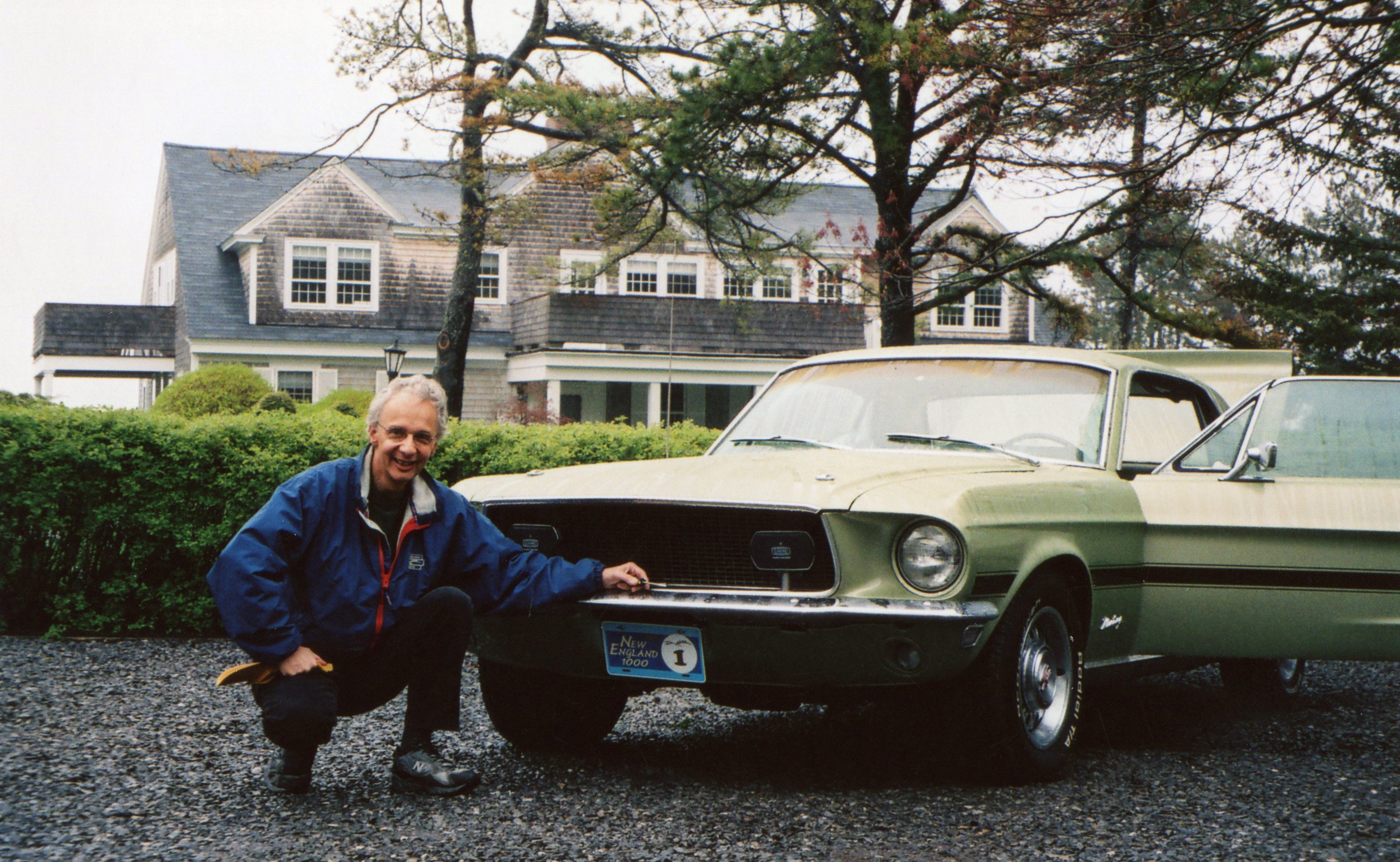
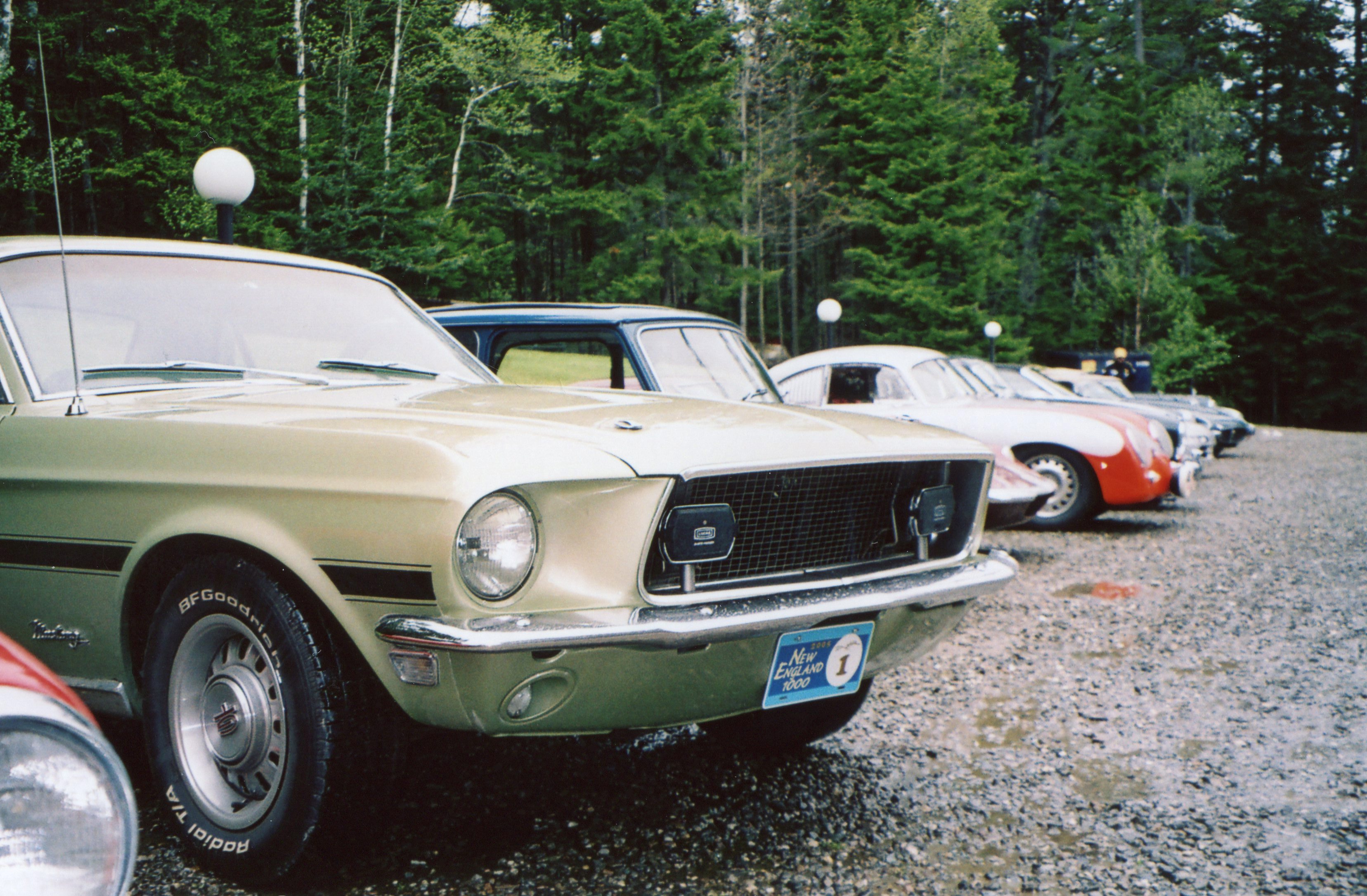
The ceremonial mounting of the plate (#1 again!)

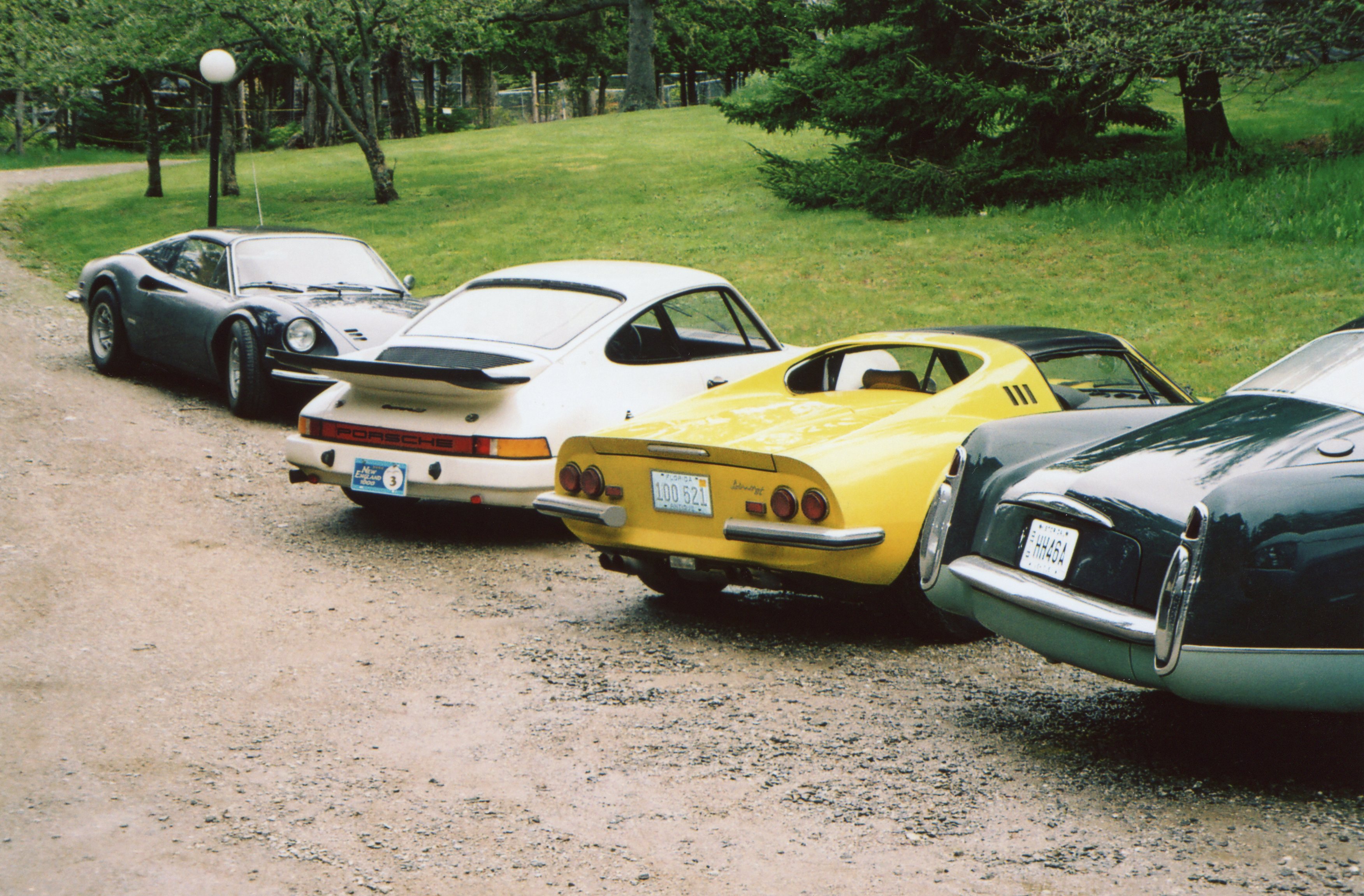
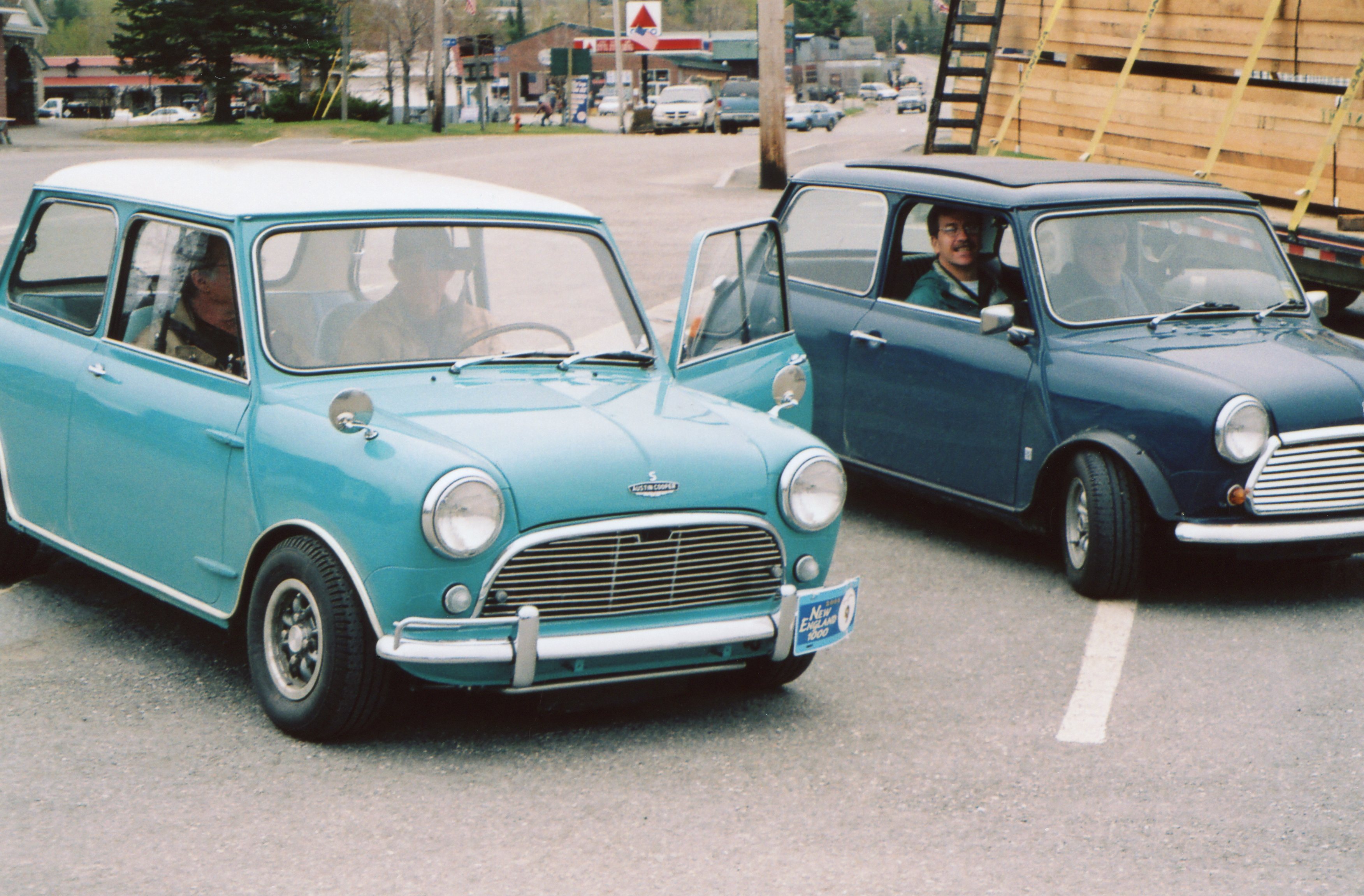
The selection of cars continued to amaze us. There were no fewer than 3 Ferrari 246 Dinos, 6 Porsche 911s, 2 Austin Mini Coopers, the usual assortment of Jag’s and Benz’s, and a one-off 1955 Chrysler Ghia show car. Our V8 Mustang was one of two cars grouped into the “Historic American V8” class, the other being a ’64 Sting Ray convertible driven by our friends Chuck and Beth.

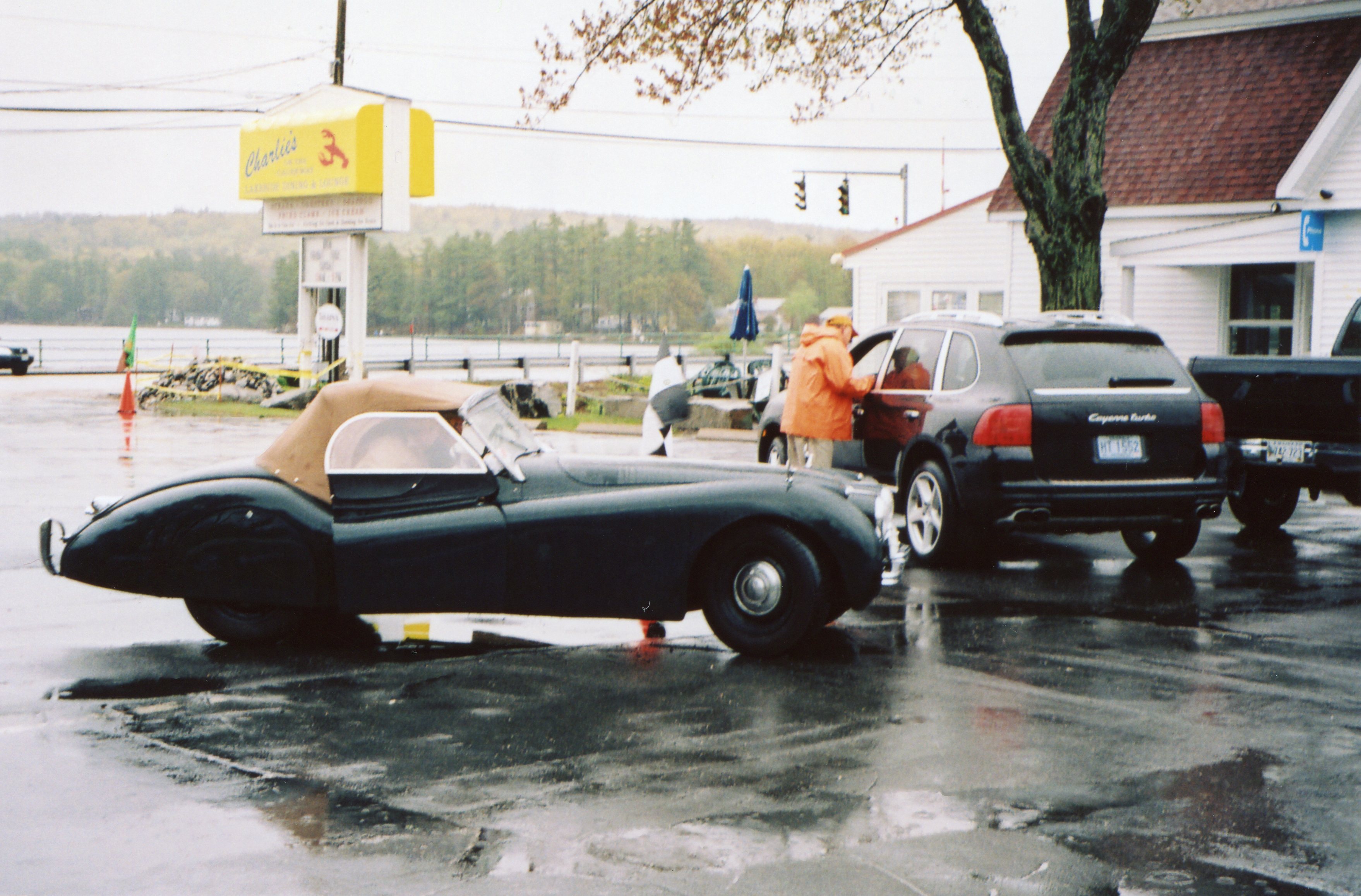
It bears repeating: the folks who bring out their valuable classics for the New England 1000 do it to drive them. While all of the cars are road-worthy, many of them, especially cars of the ‘50s and ‘60s, are not what you’d call weather-proof compared to a modern car. The British vehicles, for some reason, seem especially suspect to the ingress of water onto their occupants.

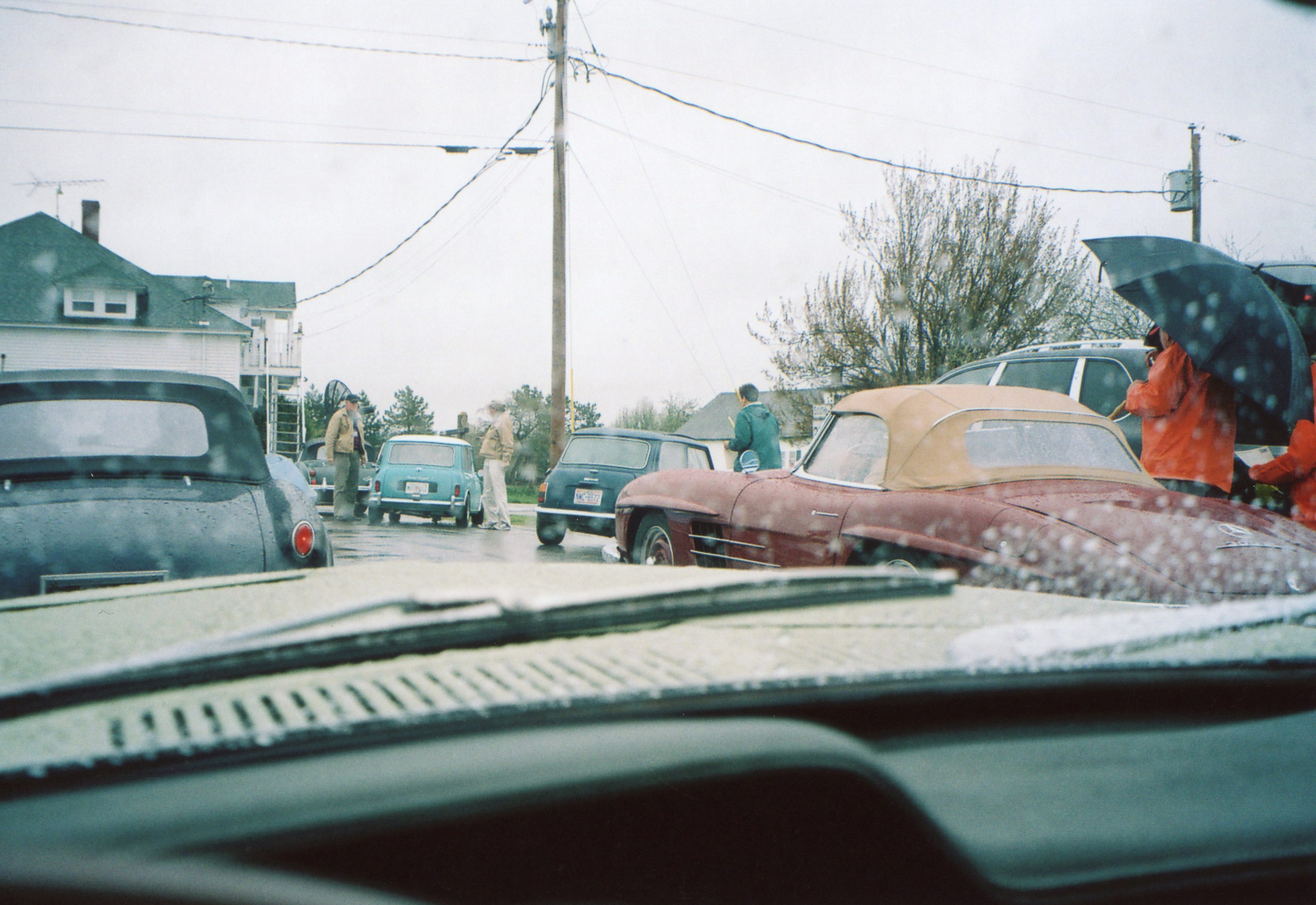
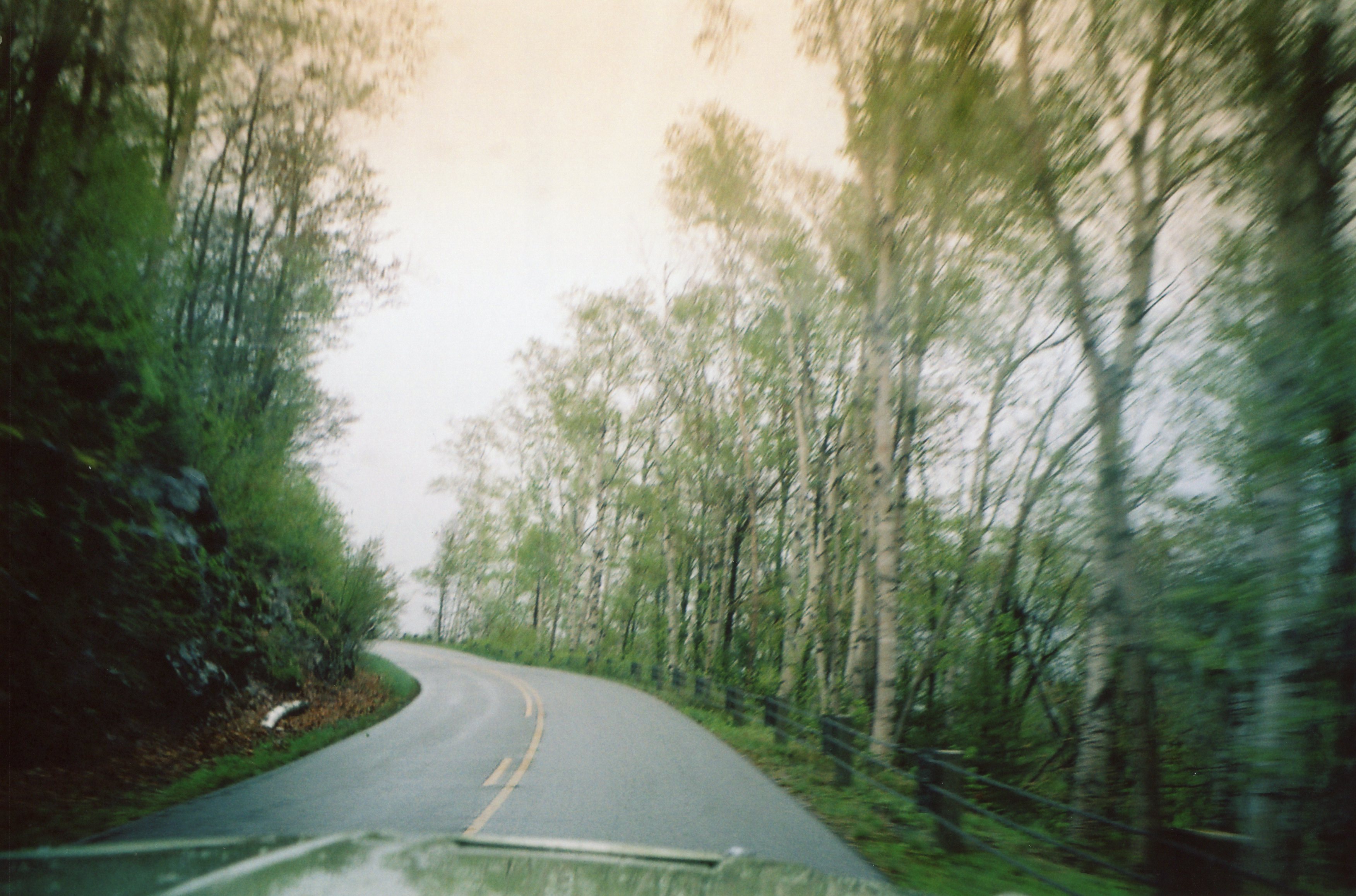
And this is how the week went: every driving day, from Monday through Thursday, saw rain. It didn’t rain every minute of the day, but, the threat was always there. The photos bear proof that we did not see the sun for the duration of the driving. Our friend Carol caught a local weather report, and informed us that a large storm system had parked itself over the entirety of New England for the week.

Remember that heater core? Well, the two young men in the Mustang hardtop, with roll-up windows, good weatherstripping, and a functioning heater/defrost system, stayed warm and dry. Observing some miserable fellow rallyists, I started to feel just a little bit guilty. To the credit of every participant, no one dropped out (not even the guys running side curtains).

Friday morning, just in time to load up and begin the trek home, the rain stopped, the sun popped out, and we had a rather dry ride back to NJ. Wet weather or not, we again proclaimed the 2005 edition to be a rousing success. Given the rain, we were secretly glad to have turned in the ragtops for a hardtop!

Jag XK’s top stayed up all week


Jag may be headed for drier climes


A respite from rain. Chrysler Ghia is at far right


Mini Coopers, LHD & RHD


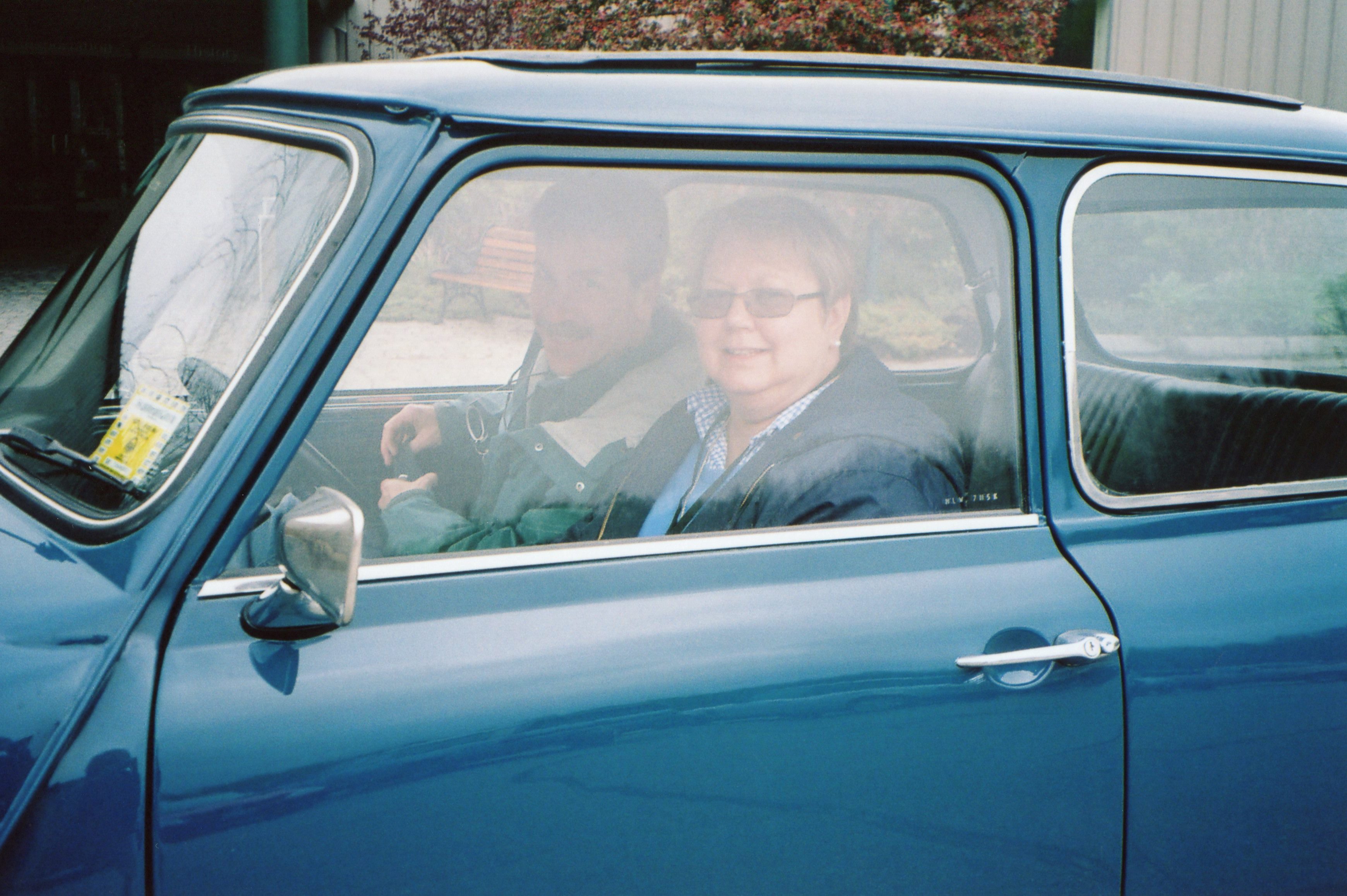
Our good friends Dave and Deb (Deb is NOT driving)


Our friend Ron, in his Austin Healey, theorizes that shorts prevent his pants from getting wet


From inside the Drystang


At a lunch stop, with the GT/CS parked among its brethren


An additional benefit to a dry car: dry rally instructions


The New England scenery is always beautiful


This sums it up: what we had to do to keep our taillights visible


All photographs copyright © 2017 Richard A. Reina. Photos may not be copied or reproduced without express written permission.

A Late Winter Visit To the AACA Museum

A 1958 Chevrolet Impala “on Route 66” inside the AACA Museum


On March 18, 2017, seven intrepid souls, expecting a delightful early spring day, ventured instead into the dreary dampness to visit the AACA (Antique Automobile Club of America) Museum in Hershey PA.

One of our rides for the day

The trip was planned weeks ago as a “rain or shine” event, and our travels were assuaged by riding in modern chariots, that is, two brand new Volvo XC90 SUVs. After an obligatory Dunkin’ Donuts stop, we were at the Museum by 11 a.m. Once there, Museum employees informed us that the basement had been emptied of many of its cars in preparation for an afternoon private event, so the daily admission fee was discounted. (AACA members are granted free entry.) But with the main floor fully stocked, there was plenty to see.

Hybrids are allowed to park up front, and recharge for free at the same time

In addition to the permanent exhibits, two temporary exhibits were in the house. “Amore della Strade” features cars and motorcycles of Italian heritage, and “Mopar Midsize Muscle” delivers big block excitement from the Chrysler Corporation.

A 1967 Plymouth GTX

Certainly, the most extraordinary permanent display is the “Cammack Collection”, a grand showing of Tucker automobiles, engines, artifacts, and history. The late David Cammack had begun collecting all things Tucker in the early 1970s. Before his passing in 2013, he willed his entire collection to the AACA Museum. The Museum in turn has done a marvelous job in setting up an interactive display to teach the public about this enigmatic automobile.

A Tucker in front of a reproduction Tucker dealership

Three hours or so after entering, we were on our way out. More importantly, we were hungry, and our stop at The Manor Restaurant & Bar up the street (thanks, Ted!) satisfied everyone’s hunger and thirst. To cap off a wonderful day, in spite of the cold, we made it (almost) all the way back without hitting any of the promised rain and snow. We each declared the day a success, and promised to make return visits.


Some of the oldest cars on display; the vehicles are arranged by decade


A 1932 Studebaker


The Italian motorcycles were in their own display room


Several of our group stand near the author’s ’67 Alfa, on loan as part of the Italian car display


The Tucker exhibit includes prototype engines against a photo of the engine manufacturing plant


Colleagues pose next to one of three Tuckers in the museum (out of 51 built)


First- and second-generation Dodge Chargers


1970 Dodge Charger


The basement includes buses and a reproduction 1950’s diner


A mid-60s Corvette is the centerpiece display of numerous Chevrolets


A wall mural pays tribute to Milton Hershey, whose businesses still dominate his namesake town


All photographs copyright © 2017 Richard A. Reina. Photos may not be copied or reproduced without express written permission.

Turning wrenches on your old car: When things go right

My first full year as the owner of a 1968 Mustang California Special was proceeding nicely. In April of 2004, the car successfully completed a 2,200 mile round-trip to Nashville for the MCA (Mustang Club of America) 40th anniversary event.

A month later, on Memorial Day Weekend, the Garden State Region Mustang Club (GSRMC) extended an invitation to attend a Ford Motor Company-sponsored event in Flushing Meadow Park in Queens, NY, site of the 1964-1965 World’s Fair, and site of the introduction of the first Mustang. The response from club members was enthusiastic, so early on Sunday morning of that weekend a large lineup of Mustangs caravanned through midtown Manhattan, arriving at the park by 10 a.m. Besides the GSRMC, the only other Mustang club invited was the Long Island club. Estimates of the total Mustang count was close to 100. My GT/CS was the only one of its kind there.

Waiting for the parade to start


For Ford, this was a marketing and PR stunt, as the all-new 2005 Mustang, which would not enter production until September, was represented by a pre-production prototype. Ford was looking for photo ops, so a ’64 ½ convertible was staged across from the 2005 ‘Stang. The stainless-steel Unisphere, one of the few remaining relics from the ’64-’65 fair, loomed in the background. A photographer, hired for the occasion, perched on a 10-ft. tall ladder.

One at a time, each owner was invited to drive his/her car across the cameraman’s field of view, stop between the two posed cars, lean out the window, smile, and move on. As you might imagine, this took some time. I used the downtime to take some of my own photos as we crawled in the queue. Eventually, I had my picture taken, and headed home.


The official photo; cloudy all day, the rain held off until the drive home

Rally brother Steve and I had started to make some noise about possibly driving the Mustang in next year’s New England 1000 rally. With that on my mind, it seemed that the winter of 2004-2005 would be the ideal time to tackle the leaky heater core. My collector cars are usually off the road for the winter, so I would have the time I’d need to get this done.

On a Mustang with factory air such as mine, the heater core and A/C evaporator reside together in a fiberglass box under the passenger side dash. Following the factory-recommended procedure, I began the disassembly that would grant me access to said box. My A/C was inoperative, with zero pressure in the system, so no further harm was inflicted onto the ozone layer when I broke open the evaporator connections.

Much of the dashboard and instrument cluster needed to be removed, so I used this as an opportunity to replace other worn parts (more about that in a bit). Most of the wrenching was straight-forward. If there was a tricky part, it was keeping track of the various color-coded vacuum lines that operate the blend doors. I knew that new vacuum line kits were available, so that was added to the shopping list.

Heater box birthed from car; dum-dum repair at corner was dumb

With the box out of the car, my heart sank to see that it was cracked; actually, a chunk was missing from one corner. I also knew that boxes were not available in the aftermarket, so the heater box was repaired with fiberglass matting and epoxy glue.

Fiberglass fix didn’t need to be pretty

Along with a new heater core, I was able to order a new foam heater box kit. All blend doors as well as the core itself got new foam seals. Having come this far, I thought better of reinstalling the dash pad, which was warped, and the woodgrain instrument cluster surround, which had lost most of its chrome. These parts were readily available from various suppliers, so new ones were ordered and installed.

Wood and clamps hold foam while glue dries

Near the end, I worked as long as my patience would allow to line up the new aftermarket dash pieces. Of course, they did not fit as well as the originals. Eventually, I got it to the point that only I would notice any misalignment.

Repaired box about to be reinstalled. A/C evaporator was also new

Did the new heater core work? You know the drill: Add fresh antifreeze; turn on the heat; pray that nothing leaks.

Nothing leaked. The car had tremendous heat output, and anyone riding in the front seats would have toasty dry toes. This would turn out to be a huge benefit during the running of the 2005 New England 1000.


All photographs copyright © 2017 Richard A. Reina. Photos may not be copied or reproduced without express written permission.