Garage Tools: Micrometers, Vernier Calipers, and Dial Indicators

My dad was a career mechanic-machinist, spending most of his working life first in the garment district in Manhattan, repairing sewing machines, then with Proctor & Gamble at their Port Ivory (Staten Island) manufacturing plant, maintaining the production lines. Much of the love and respect I have today for tools of all kinds came from hanging around my father in his workshop. It is also my privilege to have inherited many of his tools, which now reside in my garage. Recently, when straightening out one of my tool drawers, I thought that featuring some of my dad’s old tools would be an enjoyable topic for a blog entry.

While it’s a cliche to say “they don’t make ‘em like they used to”, in many cases they don’t (but in some cases they still do!). To the point: these measuring tools, each about 60-70 years old in my estimation. Their metal composition gives them heft in the hand, yet operating their slides and dials is to exercise their silky smoothness. Their markings are for the most part stamped into their faces; no printing or transferring to wear away. They feel like they will last another 75 years. They may see infrequent use; but there is no doubt that they have maintained their measuring accuracy.

Starrett micrometer #216

This first tool is a micrometer, with two features that I especially enjoy: it’s metric, and it’s digital. Reading a micrometer in the conventional way is something I can do, but I’d rather look at the digital readout! This one is marked “Starrett No. 216”, and to my surprise, it’s available today from Starrett:
http://www.starrett.com/metrology/product-detail/216P-1


Starrett micrometer #230

Another Starrett micrometer in my collection looks a little worse for wear, but still functions fine. This one, model #230, has its fractional readings converted out to 4 decimal places in both 16ths and 32nds. I love the way those numbers are sturdily stamped directly into the frame of the tool.

This too can be bought new from the Starrett Company:
http://www.starrett.com/metrology/product-detail/Outside-Micrometers/Micrometers/Precision-Hand-Tools/Precision-Measuring-Tools/230FL


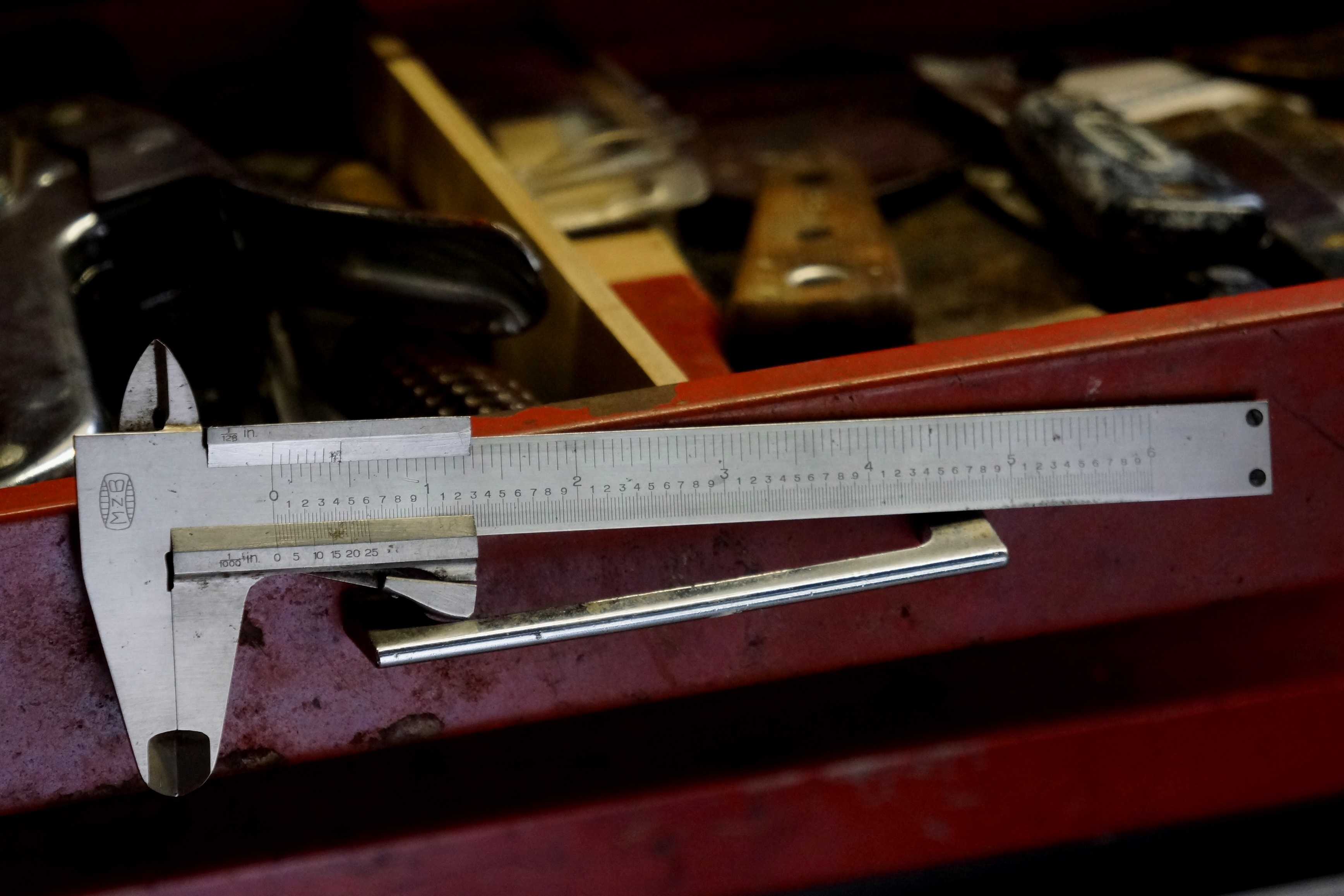
MZB vernier calilper
MZB vernier caliper

The kind of automotive work I’ve done has called for use of Vernier calipers more often than a micrometer. This Vernier caliper was made by a company called “MZB”. A Google search coughed up this ad from the May 1951 issue of Popular Mechanics. It would not surprise me if my dad bought this via this advertisement. (What, they don’t take Pay Pal?)


MZB caliper ad, May 1951 Popular Mechanics


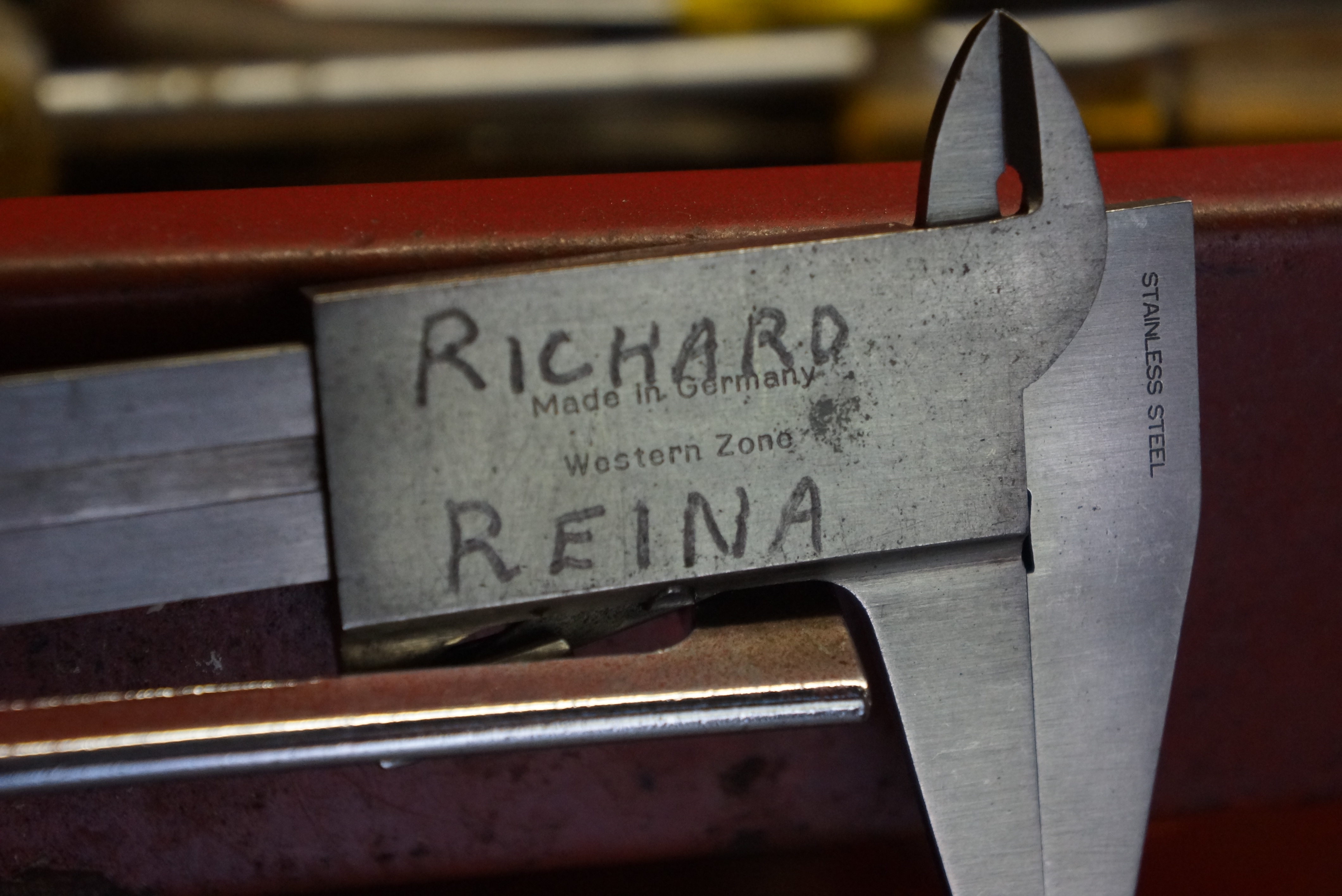
On my calipers, of special note is the reverse stamp: “Made in Germany Western Zone”. That must date its production to the time immediately after the end of World War II. (Also note my father’s name engraved into the tool, as he did with almost everything he owned.)

MZB caliper: Made in Germany Western Zone

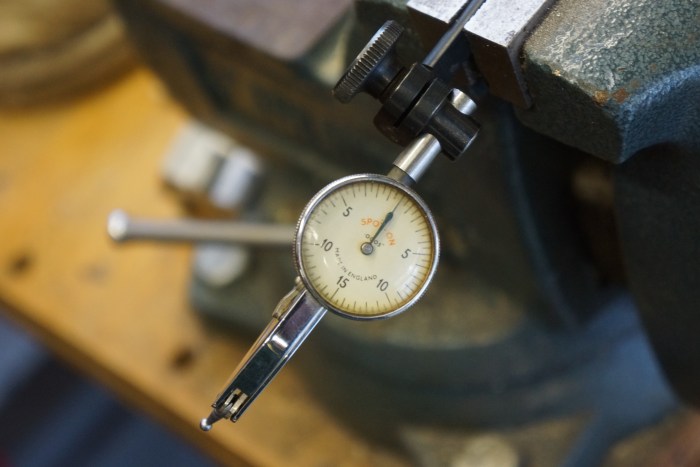
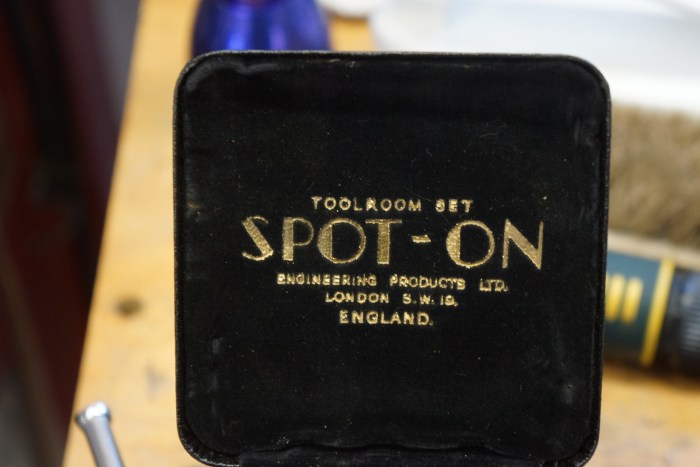
Spot-On Engineering Products of London England produced this lovely dial indicator, in its own protective hard-shell case. Little else is known about Spot-On, at least based on futile Google searches. However, the tool lives on in my garage, seeing occasional use for run-out measurements. It’s delightful to operate, and I especially enjoy watching the dial move around the face of the gauge.

What is it about tools that appeals to us car guys? Whether we fix our own vehicles or not, I think we share an admiration for the fine workmanship and usefulness that goes into a long-lasting quality tool, much like we feel about our classic rides.


All photographs copyright © 2015 Richard A. Reina. Photos may not be copied or reproduced without express written permission.
Simeone Museum Presents: “Preserving Shelby Cobra Daytona CSX2287”

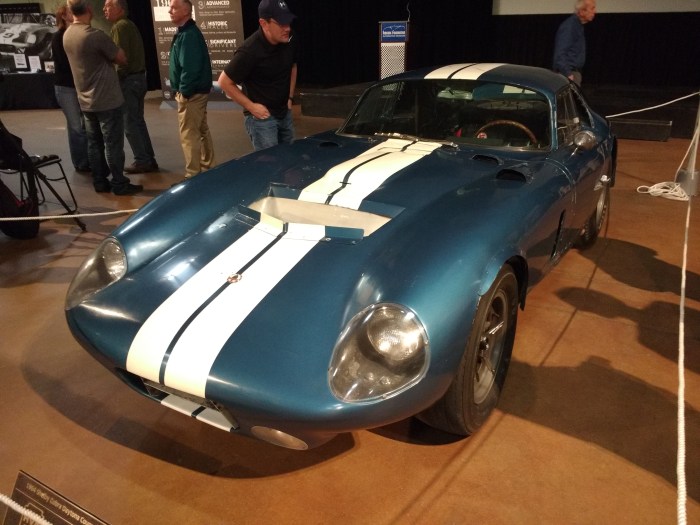
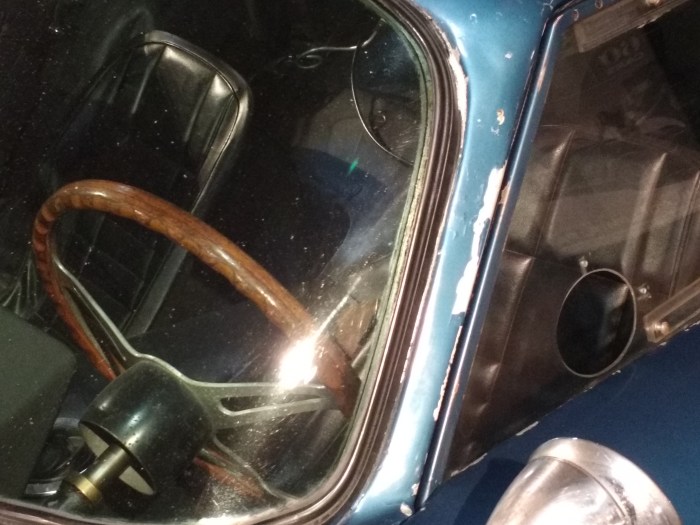
On Saturday, December 12, 2015, the Simeone Foundation Automotive Museum in Philadelphia PA hosted a special “Preservation Workshop”, featuring the Shelby Cobra Daytona Coupe (serial number CSX2287) owned by the Foundation. The gist of the presentation was that, after this vehicle spent some 30-odd years languishing in hidden storage, it was acquired by the Foundation and brought back to running, driving condition. The work to accomplish that goal was considered “preservation” and “conservation”, not “restoration”, in an attempt to keep the car as original as possible.

The star of the show awaits its start

This particular vehicle is one of only 6 Cobra Daytona Coupes built, and on that basis alone, it is an historically important vehicle. However, CSX2287 is also the first Daytona Coupe built, and the only one constructed entirely in the U.S. Most infamously, it has a long and convoluted ownership history (including, for a short time, serving as daily driver for the music producer Phil Spector). No attempt will be made here to delve into this history, about which much has been written elsewhere. Instead, this blog entry will summarize the workshop presentation, which was fascinating both for its detail as well as some of its controversial “conservation” decisions. For those interested, the Foundation’s website has this information on the car: http://www.simeonemuseum.org/the-collection/bonneville-salt-flats/1964-shelby-cobra-daytona-coupe


The event started promptly at its scheduled time of 12 noon, with about 150-175 people in attendance. After the briefest of introductions, the mic was handed to Dr. Fred Simeone, who spoke while clicking through Power Point slides on a large screen at the front of the room. The Belle of the Ball, the car itself, sat on the floor, roped off from groping hands.

Dr. Fred Simeone works the crowd

The good doctor proved himself to be knowledgeable, well-spoken, interesting, and occasionally amusing. One got the sense while listening to him that he was actively involved in the car’s refurbishment. He may not have literally had his hands on components (indeed, he informed us that the work was performed by a restoration shop in Georgia), but he likely was helping to make key decisions.

The slide presentation began with the history of CSX 2287: its creation and racing exploits. Again, there is no need to cover that here. The Foundation purchased the car in the early 2000s, and since one of their goals is to maintain all vehicles in running condition, work started to make it a driver again. A rotisserie was constructed, with mechanical systems (fuel, suspension, brakes, etc.) disassembled and carefully documented and photographed. Various methods were employed to remove dirt, scale, and rust, while preserving whatever original finishes might be found. In this way, the original black paint on the tube frame was saved; so were factory markings on the engine, cooling system, even the hardware. Rubber fuel lines, obviously corroded to nothingness after such a long time, were replaced as a necessary safety matter. However, the metal ends were reused, a painstaking and more expensive approach, but one which preserved what could be saved. Almost every piece of hardware was cleaned and reused. In cases where worn parts were replaced (wheel bearings), the originals were kept and stored away.

As Yogi might have said: "Carroll must have signed it while he was still alive"
As Yogi might have said: “Carroll must have signed it while he was still alive”

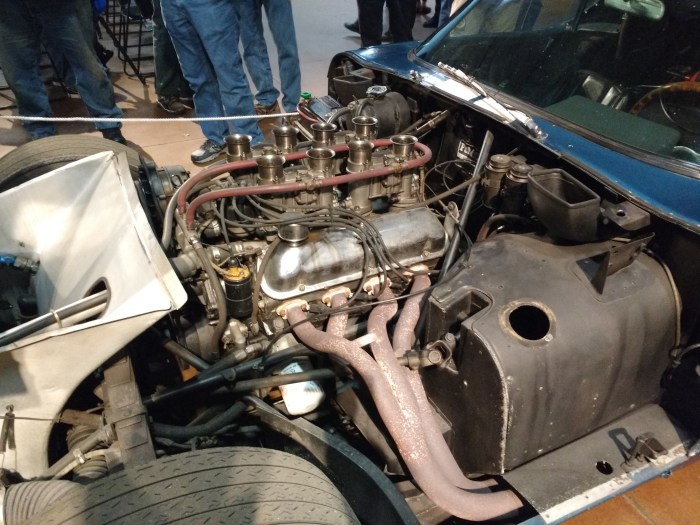
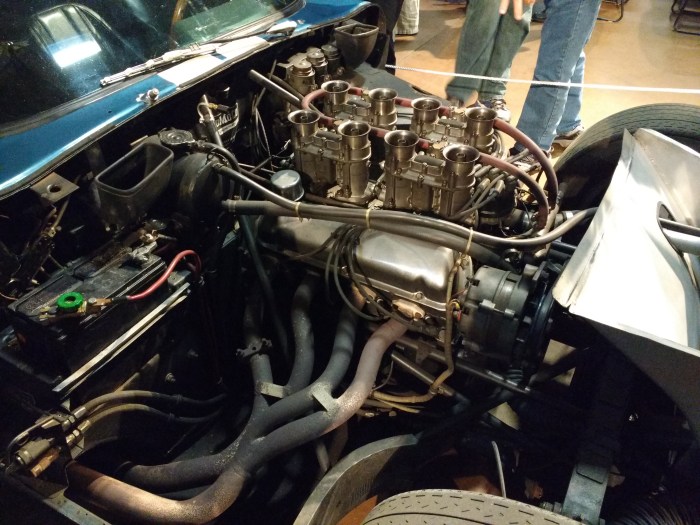
The engine, not original to the car (Shelby American installed a “spare” Hi-Po 289 into it when they sold it to a private individual in the late ‘60s), was determined to have relatively few miles on it. One controversial decision was to NOT rebuild the engine, for as far as anyone knew, there was nothing wrong with it! In fact, Dr. Fred stated that the ONLY reason the engine was removed from the frame was to replace a seeping freeze plug, a job which could not be done with the engine in situ.

The photos below reveal that the body and paint on this Shelby were decidedly not restored. This of course, was also controversial, for several reasons. The first and most obvious is that in this hobby, “refurbished” cars are not just mechanically corrected; they are cosmetically returned to their most glamorous state. The controversy is further fueled by Pete Brock, this vehicle’s original designer. He has made it publicly known that in his opinion, the only correct “restoration” of CSX2287 is to remove its hood scoops and rear spoiler (which were added while the vehicle was competing in real races), and to repaint it in the original (lighter) shade of blue which it wore in 1964. Dr. Simeone was not shy in stressing that while he respects Pete, he disagrees with him.

As mentioned earlier, Dr. Fred was far from boring during the hour+ he held the mic. Some of his memorable quotes from the day include:
• “A car that doesn’t run isn’t a car. It’s a statue.”
• “Restoring a car for Pebble Beach does nothing for its conservation. All it does is make you eligible to win a plastic trophy.”
• (Quoting Carroll Shelby, who was trying to negotiate the repurchase of the Daytona coupe from the woman who hid it away for 30 years): “The bitch would only talk to me through the screen door”.
• “Watch out if you disagree with Pete Brock. First he’ll argue his case with you, and when he’s done, he’ll sic his wife on you”.

Floor poster sums up an incredible history

This concept of keeping original cars original is not new to CSX2287. Those in the old car hobby began to notice a hard right turn in that direction within the last decade or so. Recent auction results around the globe have shocked onlookers by repeatedly proving that “barn finds” in some cases fetch more money than 100-point restorations. The Simeone Automotive Foundation, in 2012, published a book “The Stewardship of Historically Important Automobiles” which draws parallels between art and furniture collections (which pieces would never be stripped of their finishes) and automobile collections.

Hood up so the battery could be connected

Hood up so the battery could be connected

The book does make the distinction (as Dr. Fred did today) that the concept of preserving what is original is not intended for every “Model A and Mustang out there”. Some astute writers have noted that compared to an oil portrait or a desk, a functioning automobile has moving parts which are designed to become worn, deteriorated, and consumed. Eventually, the entire vehicle is discarded. Therefore, for many vehicles selected for the restoration process, there is no choice but to completely renew all their components.


After an hour of the slide presentation and audience Q & A, the Daytona Coupe was started and allowed to idle for a minute. Slow to crank, it fired up on the second try. Expecting a cacophonous roar, the vehicle sounded docile at idle. While never to turn a wheel in anger again, this simple demonstration helped prove that the preservation efforts accomplished their intended goal.

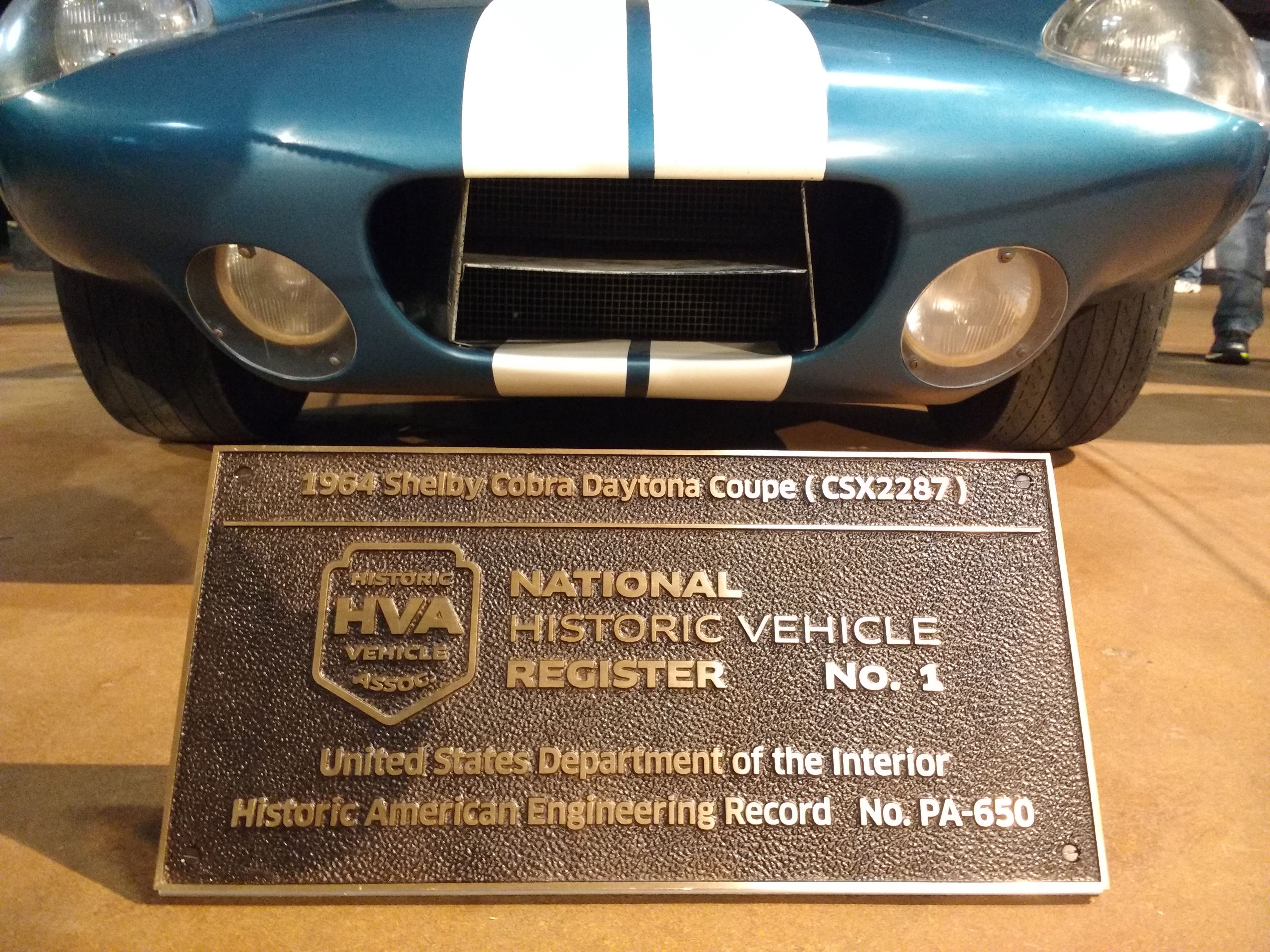
A final note about this particular car and the maturing of the old car hobby concerns the National Historic Vehicle Register, overseen by the U.S. Department of the Interior. The National Historic Register has been awarding “historic status” to buildings and other architecture in this country for decades. Recently, it was proposed to extend such recognition to automobiles. This Shelby Cobra Daytona CSX2287 is the first such vehicle recognized, a massive accomplishment, and one that signifies that not only is the old car hobby alive and well, it is growing in important ways.

Comments concerning “restoration” versus “preservation“ are invited.


The car and the HVA plaque


All photographs copyright © 2015 Richard A. Reina. Photos may not be copied or reproduced without express written permission.


Enzo Acquires an Alfa

Proud new owner with his 1991 Alfa Romeo spider

My friend Enzo (he signs his emails as “EC”, so that shall be his nom de plume) is a former colleague of mine from Volvo corporate. We’ve known each other for over 25 years. After I retired from Volvo in 2009, I didn’t see him again until he retired this past December, when we reconnected. Since then, he’s joined us for several of our weekend breakfast runs, but always riding shotgun.

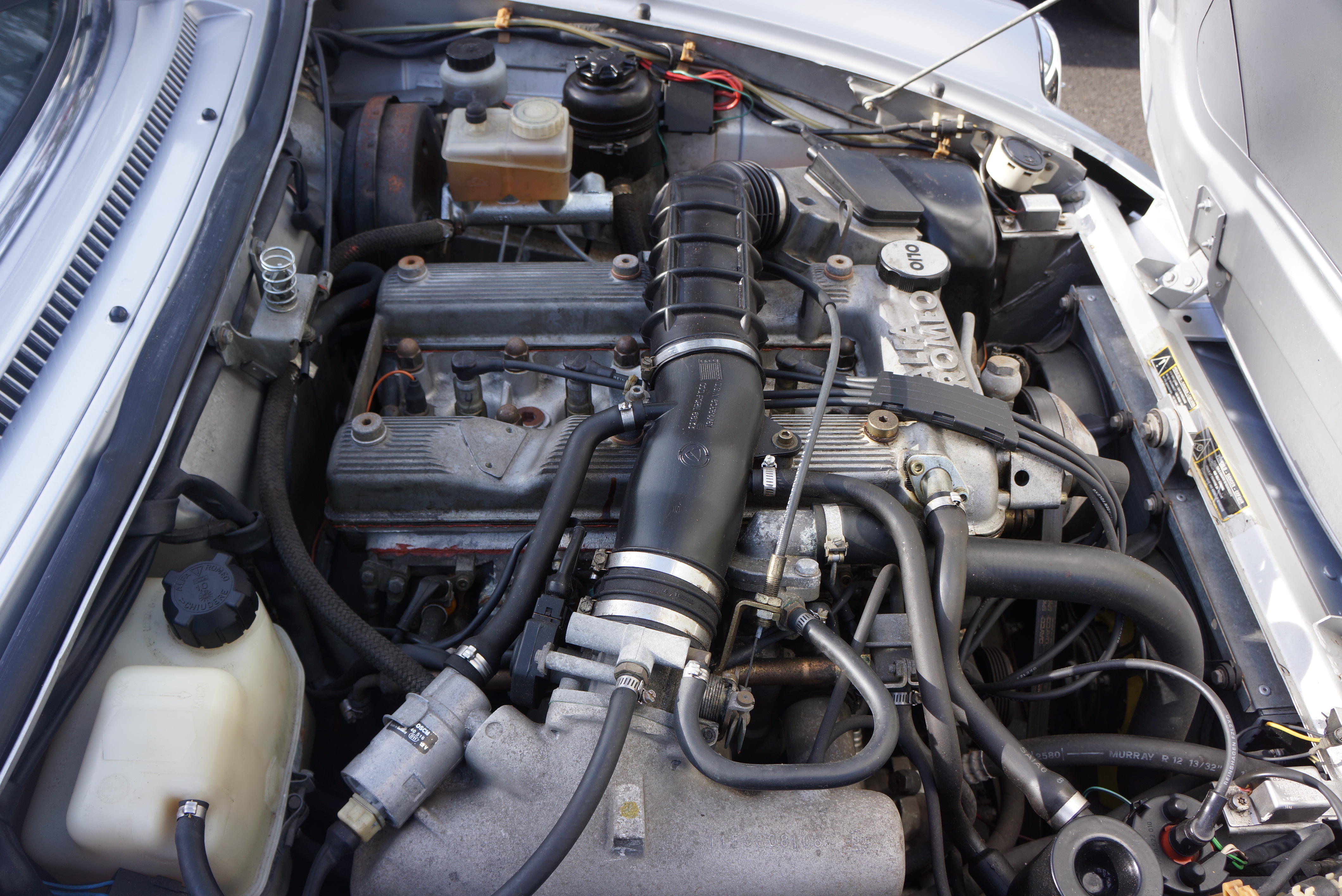
Note valve cover indentation for previous version air intake

Since his retirement, he’s talked about acquiring a toy car, preferably an Alfa Romeo. He informed me that as a younger man, he owned a Fiat 124 spider and several water-cooled 4-cylinder Porsches, and had no desire to repeat those experiences. He TRIED to buy my Alfa from me, but alas, it’s not for sale. The only Alfa GTVs in his price range are project cars, which are not where his interest lies.

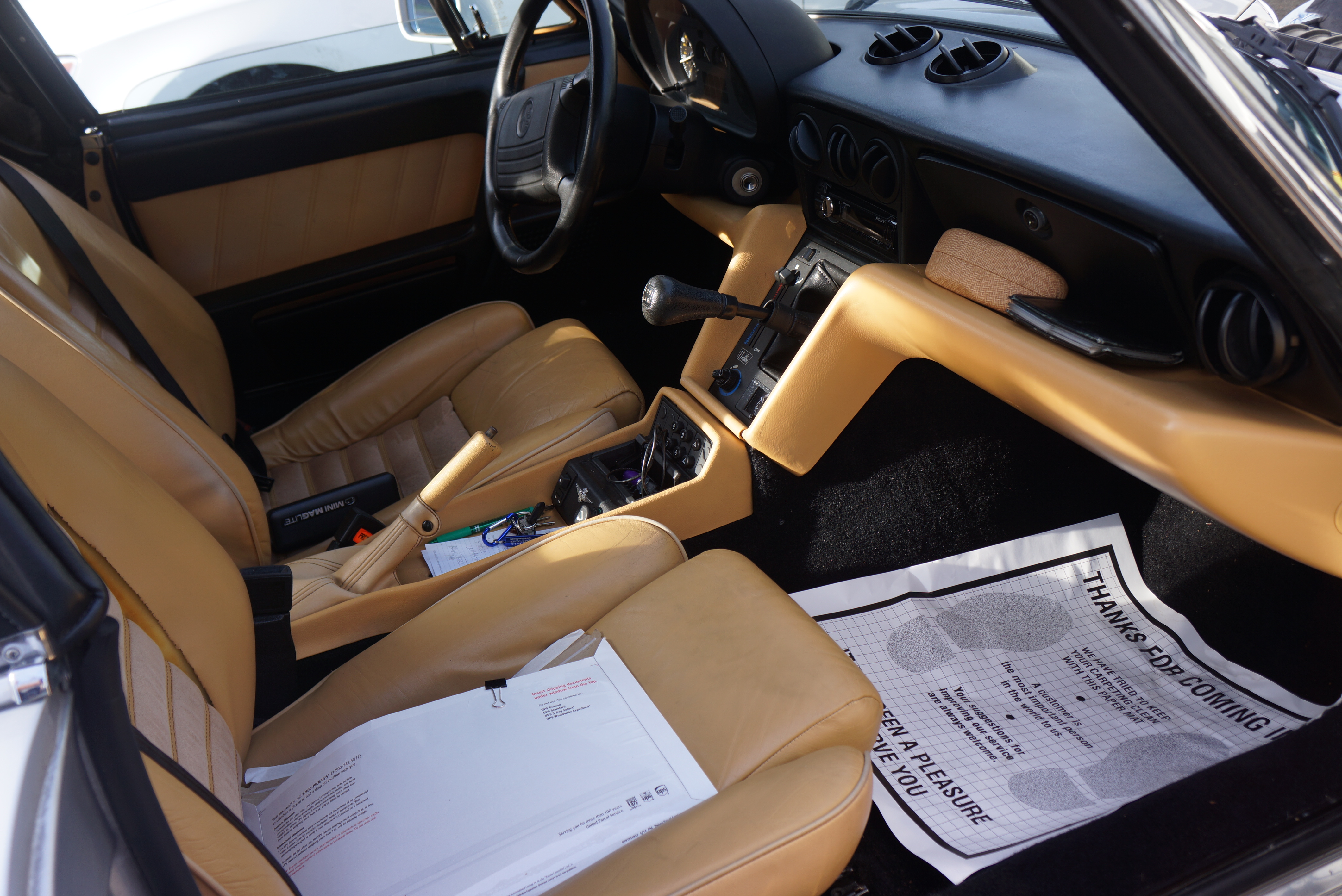
Clean interior features Alcantara seat inserts

EC put considerable effort during 2015 into searching for the “right” car. He and I talked at length about an Alfa spider. Although a convertible was not his first choice, he did finally recognize that at the present time, almost all of the “Duetto” shaped spiders, built for over 25 years without significant change, represent a good value in the collector car marketplace. Only the original dove-tail spiders, sold in the U.S. from 1966-1969 (MIA in 1968 and again in 1970 for failing to meet emission standards), were out of his price range.

VIN plate verifies that in 1991, official company name was "Alfa Lancia"
VIN plate verifies that in 1991, official company name was “Alfa Lancia”

The so-called Series 2, 3, and 4 spiders, which differ mainly by fuel delivery systems and nose-and-tail styling enhancements, are available in the high 4-figure range in reasonably good condition. They also were built in sufficient quantity that dozens are on the market at any given time. As with any Italian car, rust is public enemy #1. A former Alfa corporate field rep once cautioned me: “these cars are pre-rusted from the factory”.

Company symbol "f", company name "pininfarina". Anyone know why?
Company symbol “f”, company name “pininfarina”. Anyone know why? Add a comment.

Earlier this month, EC found the right car. A classic used-car dealer in Queens, NY had a 1991 spider, with a purported 43,000 original miles. Attractive in silver with a black cloth top and tan interior, there was a stack of recent maintenance and repair records, including but not limited to new Pirelli tires, new brake calipers, rotors, pads and hoses at all 4 corners, and a front suspension rebuild. The car was put on a lift and verified to be solid. EC’s assessment after several test drives was that the mileage was believable, the condition was excellent, and the price was fair. A deal was struck, and EC picked up his new toy and first-ever Alfa Romeo several weeks ago.

Washer motor and A/C accumulator only accessible from under front bumper

On the day after Thanksgiving, by mutual arrangement, EC drove the car to my house so that we could give it a more thorough going-over. While much work had indeed just been completed, there were still items requiring attention, truthfully not unusual for a 21-year-old used (Italian) car. This GT 1300 Junior owner took the spider for a spin, and overall, completely agreed with the new owner’s assessment: the car was solid, drove well, and gave us no reason to think that it couldn’t be taken for a long weekend trip right now. The few minor mechanical and cosmetic issues were not deal-breakers, and most could be tackled while continuing to enjoy the car, at least until the first snow flies.

Spider at rest
Spider at rest

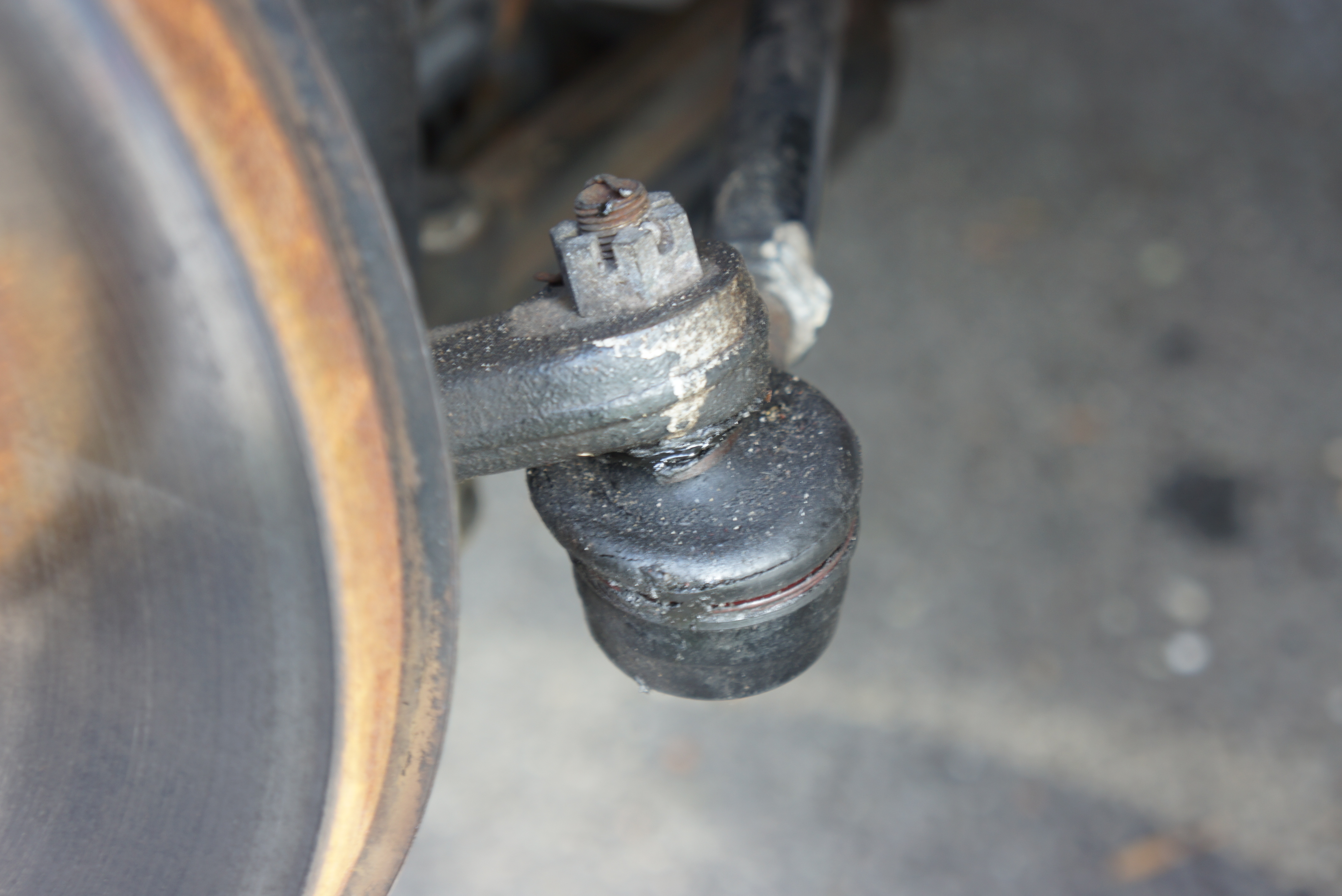
We rotated the tires, and while doing so, verified the date stamps on all the tires (good) as well as the brake and suspension work (also good). Several torn boots on steering tie-rods were noted, as well as one incorrect wheel lug nut, so a list was begun of needed parts. Just before he was about to head home, I asked EC to drive my ’93 Miata. He had never driven an MX-5, and found it enjoyable, if a bit rough-riding with 98k on the clock (the original shocks are shot and will be replaced this winter).

Tire rotation aided by fire-truck-sized wheel chocks


All 4 wheels have right-hand threaded nuts; author's '67 has left-hand threads on 2 left wheels
All 4 wheels have right-hand threaded nuts; author’s ’67 has left-hand threads on 2 left wheels


Steering tie rod end boot is torn but still holds grease

So, to my friend Enzo, I offer heartfelt congratulations on behalf of myself and the rest of our group! As you yourself would say, you finally pulled the gun. When we schedule our first breakfast run of 2016, you no longer need to hitch a ride – we look forward to seeing you there with YOUR OWN Alfa Romeo.


All photographs copyright © 2015 Richard A. Reina. Photos may not be copied or reproduced without express written permission.
Sunday Morning Breakfast Drive, Nov. 15 2015

DSC02313

Our final drive of the 2015 season took place on Sunday, November 15. The day dawned sunny, dry, and as the weatherman might say, “seasonably warm”, with midday temps approaching 60 degrees. The emails with regrets I had received during the week led me to believe that we would have a light turnout. This was incorrect, as we had 11 cars and 15 guys, not too shabby! As has been the tradition this year, two gents new to the group joined us for the first time. We must be doing something right.

We pushed off from our usual Mahwah Sheraton Crossroads departure point at 9 a.m., one hour later than usual, in deference to the shorter November days. Heading down Route 287 South, yours truly was all too happy to cruise in the Miata with the top down, but not too many other convertibles took advantage of the sunshine, at least not at first.

Beautiful day for a cruise (photo courtesy Rich S.)

Our destination for the morning was Stella G’s, an excellent breakfast joint in Hackettstown, NJ. We’ve been there before, but not this year. The drive consisted of three roads: Route 287 South to Route 23 North to Route 517 South. A new tradition is the now-obligatory pit-stop, christened the “Bill Whited fuel and bathroom break”. This time it was a Quick Chek. Your scribe observed that once we stop and let everyone start yapping again, it can be problematic to get the boys back into their cars.

The others follow the Corvette (as they should)

After a beautiful cruise down Route 517 (we will NOT mention that the chase car made a wrong turn and ended up on Route 80), we were at Stella G’s at exactly 11 a.m. Customer Service in the state of NJ can indeed be spoken about in the present tense, as proven today. We called Stella G’s twice to ask them about seating 15 arrivals, and even though they do not take reservations on the weekend, we walked in at 11 a.m. sharp to find tables reserved and set for our large crowd. The food, coffee, and service were excellent as they always are at Stella G’s (thank you Kate!).

We were having too good a time. It was difficult for the group to leave the restaurant, and leave Hackettstown, knowing that we would not have the opportunity to do this again until the spring of 2016. Since time moves faster the older we get, it remains an unspoken truth that our first drive of the New Year will be here soon enough. To a man, we can’t wait.


All photographs (except as noted) copyright © 2015 Richard A. Reina. Photos may not be copied or reproduced without express written permission.
 

Larry and Rich Tackle John’s 1963 Buick Wildcat

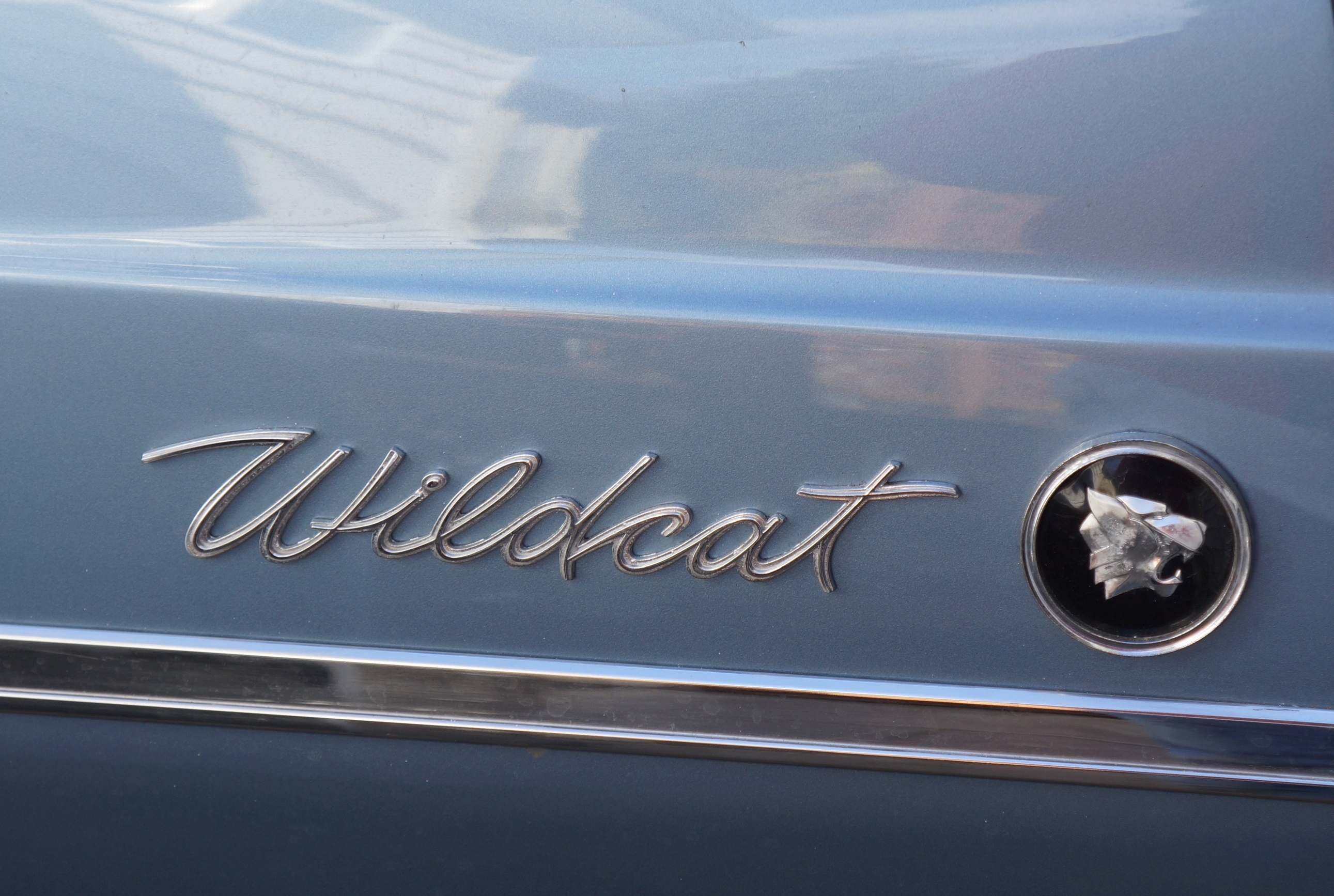
The Wildcat trim on the rear quater
The Wildcat trim on the rear quarter

My good friend John M. owns a 1963 Buick Wildcat convertible, which he bought in 1992. Yours truly accompanied John on the trip to Staunton VA when he purchased the car, which is a whole ‘nother story (which will someday be told in a blog post, as I have PHOTOS). Fast forward to 2015: John has been slowly but steadily bringing the Buick back from the brink, and requested that Larry and I assist him in diagnosing some troublesome overheating issues, plus a rough idle/rough running complaint.

Let's start under the hood...
Let’s start under the hood…

We had not seen the car since John had the body and paint work completed, and overall, the exterior looked stunning. The car had also just come back from Montclair Auto Top where a new convertible top was installed, and that was looking fine. Regarding the overheating, John told us that it took a few miles of driving before the red dash light would come on (no temp gauge), yet the water pump, thermostat, and hoses were new.

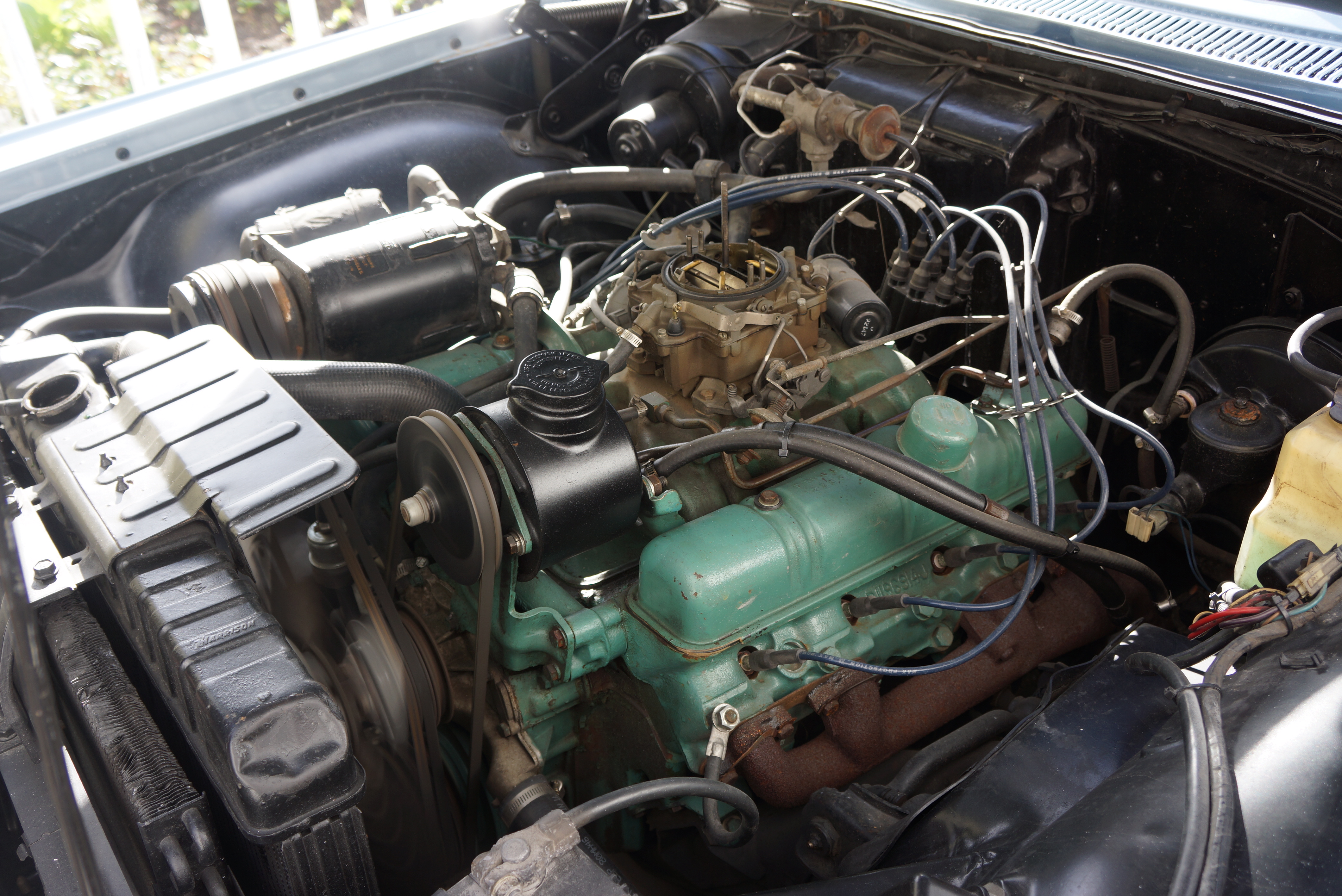
Buick 401 nailhead, WITH factory air
Buick 401 nailhead, with 4 barrel carb, power steering, and factory air

Examining the radiator, it seemed obvious to all that it had either never been out of the car, or, if it had been removed, it was sometime during the Carter Administration. The coolant itself looked suspect, and a hydrometer check revealed it to have minimal temperature protection. Leaving the radiator cap off, John started the car and let it warm up so that we could continue our checks.

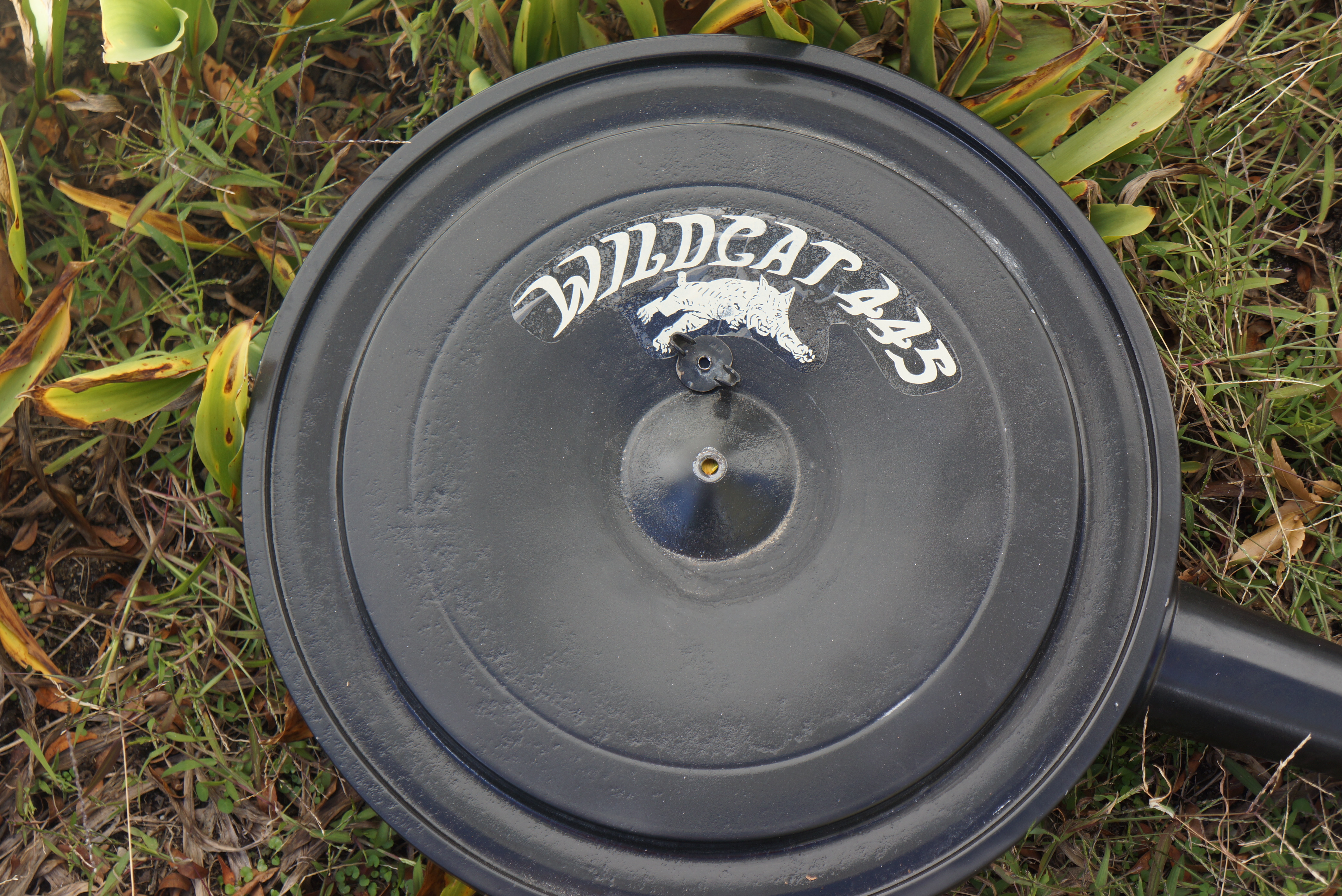
The "445" is the engine's torque in ft. lb.
The “445” is the engine’s torque in ft. lb.

With the engine idling, Larry the Carburetor Expert began to apply his touch. First he checked the dwell and found that needed adjustment. The ignition timing was spot on at 12 degrees BTDC. But the 4V carb was running quite rich. Larry leaned out the carb mix and reset the idle to spec. John pronounced that the resulting smooth idle was the best he had experienced with the car in a long time.

In 1963, dwell and idle speed were adjustable

Back to our cooling system, we observed good flow past the cap opening, and a digital temperature gauge recorded a coolant temp of about 185 degrees, well below boiling (but keep in mind that the system was not pressurized). It took a long time for the bottom (return) radiator hose to feel warm. We still suspected slow flow through the radiator core.

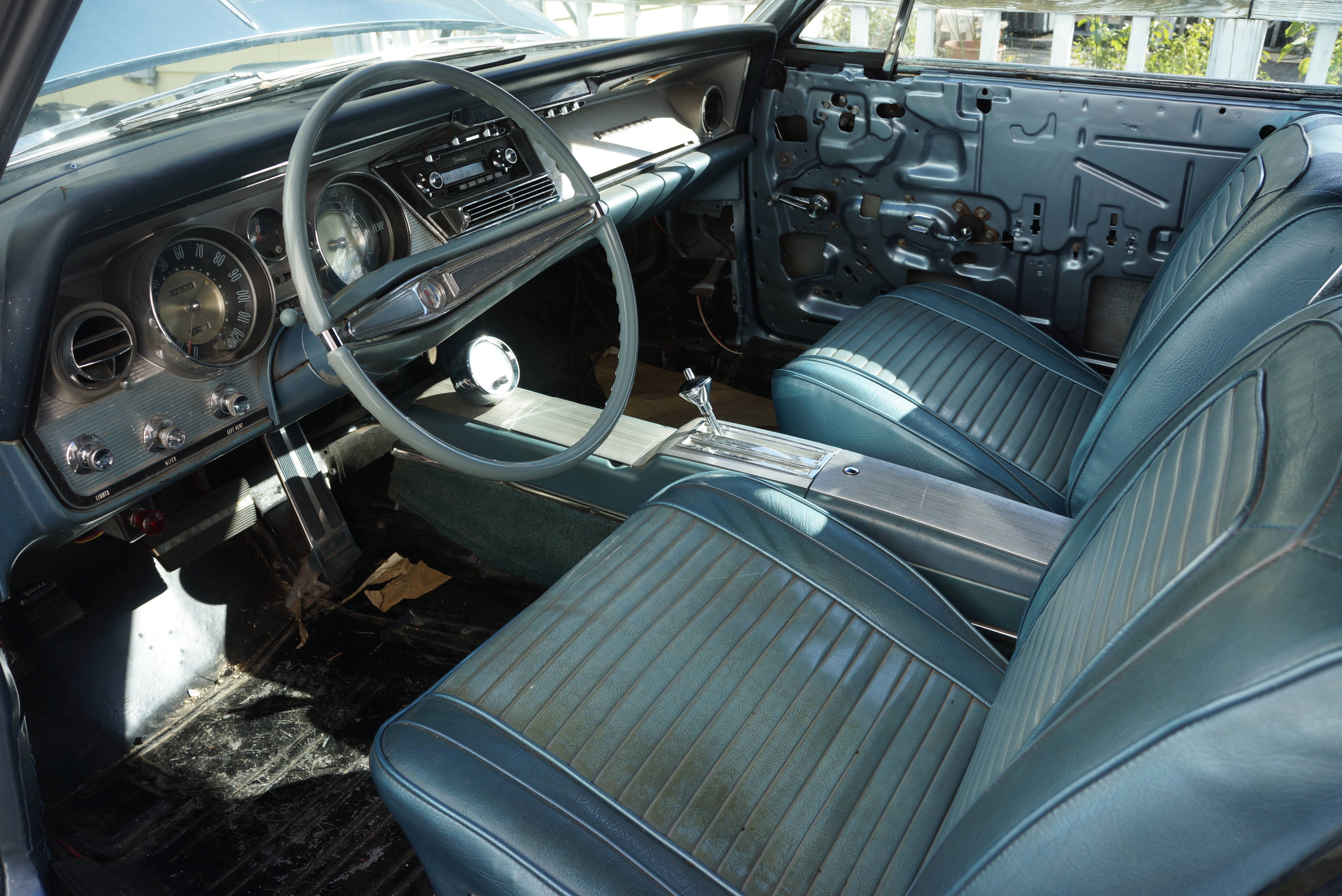
Interior is final step to be tackled; John has all the parts

Time for a test drive; with the owner piloting, the two visitors climbed in for a tour of downtown Glen Ridge. John said that the car ran stronger, and the slight hesitation/surge he felt when he put his foot into it was almost, but not completely, gone. After about a 10 minute ride, we were back at John’s house, and leaving the car to idle, we never saw the temp light come on. The daytime temperature was around 50 degrees, so to be fair, we were not duplicating the outside temps John experienced in August.

Car looks as distinctive from the rear

Our wrench work finished for the day, John treated us to bagels and coffee while we searched for Buick parts on our phones (could not have written that sentence during the Carter Administration). With driving season almost completed for the year, John said his next step may be replacing the coolant with fresh mixture. He will consider pulling the radiator, but perhaps not until first thaw of next year. As we departed, Larry and I both told him we’d be thrilled to see that big ol’ Buick on the road in 2016.

All photographs copyright © 2015 Richard A. Reina. Photos may not be copied or reproduced without express written permission.
The Alfa Goes To Sleep For The Winter

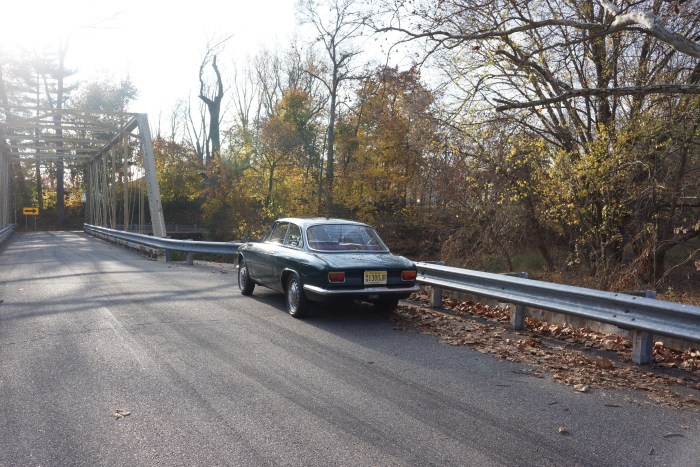
The 1967 Alfa before the slumber


An annual ritual was completed today, when I put my 1967 Alfa Romeo away for the winter. I’ve followed the same basic checklist for a number of years, on this car as well as on my previously owned collectibles. The success rate has been very good, with all the cars eagerly starting up on first try once the spring weather returns. I’ve been spared any issues with dead batteries, flat-spotted tires, or gummy fuel systems, by completing a few steps which are quite simple to do.

Friday, November 6, 2015, was unusually warm in New Jersey, so it was a good day to take the Alfa for one more brief maintenance run before beginning the winterization process. The car ran superbly, as it has since I bought it in the spring of 2013. Once back home, I added about 4 ounces of Sta-Bil fuel stabilizer, then headed to my local Shell station to top off the tank.

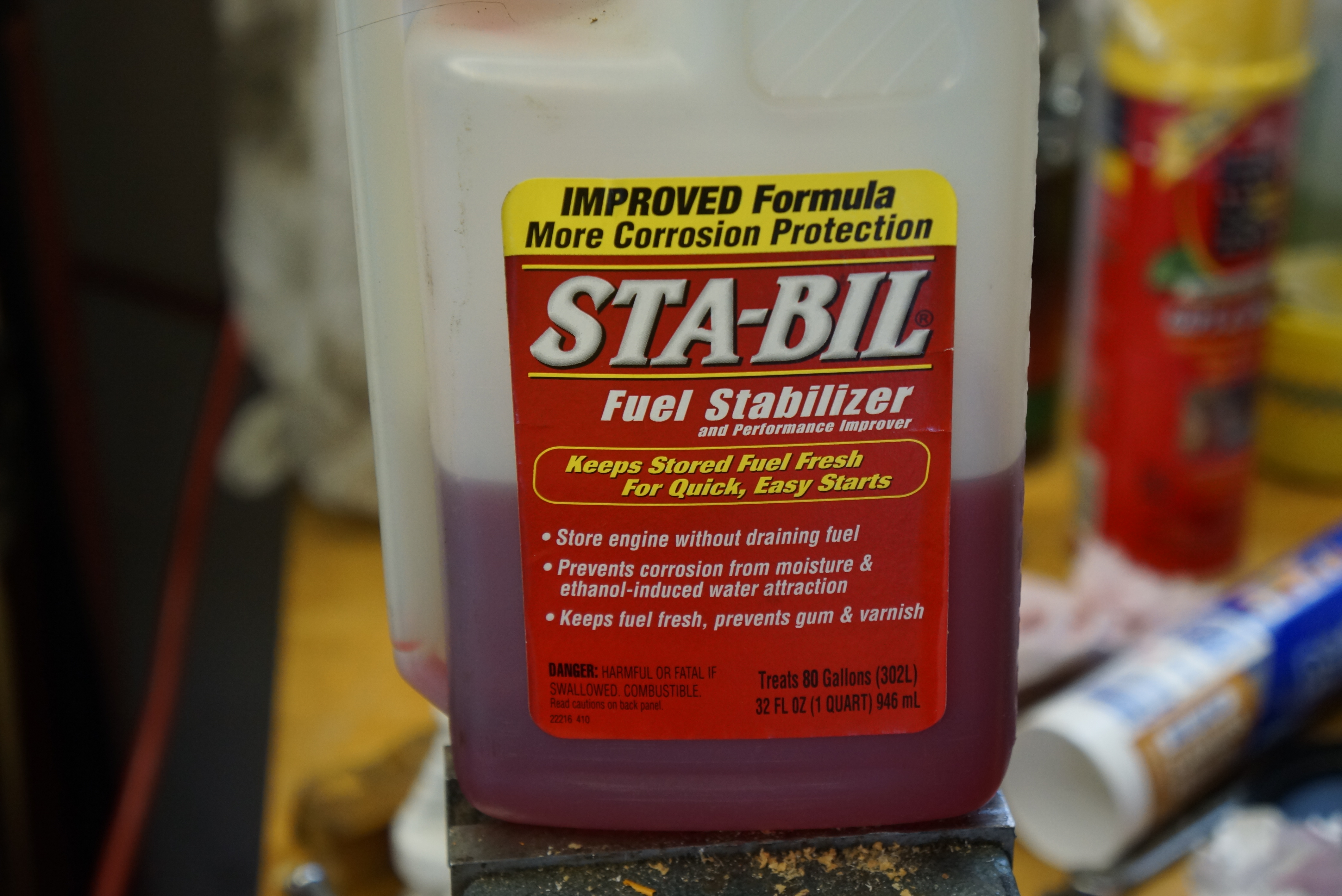
Sta-Bil is my friend. Have used it for years

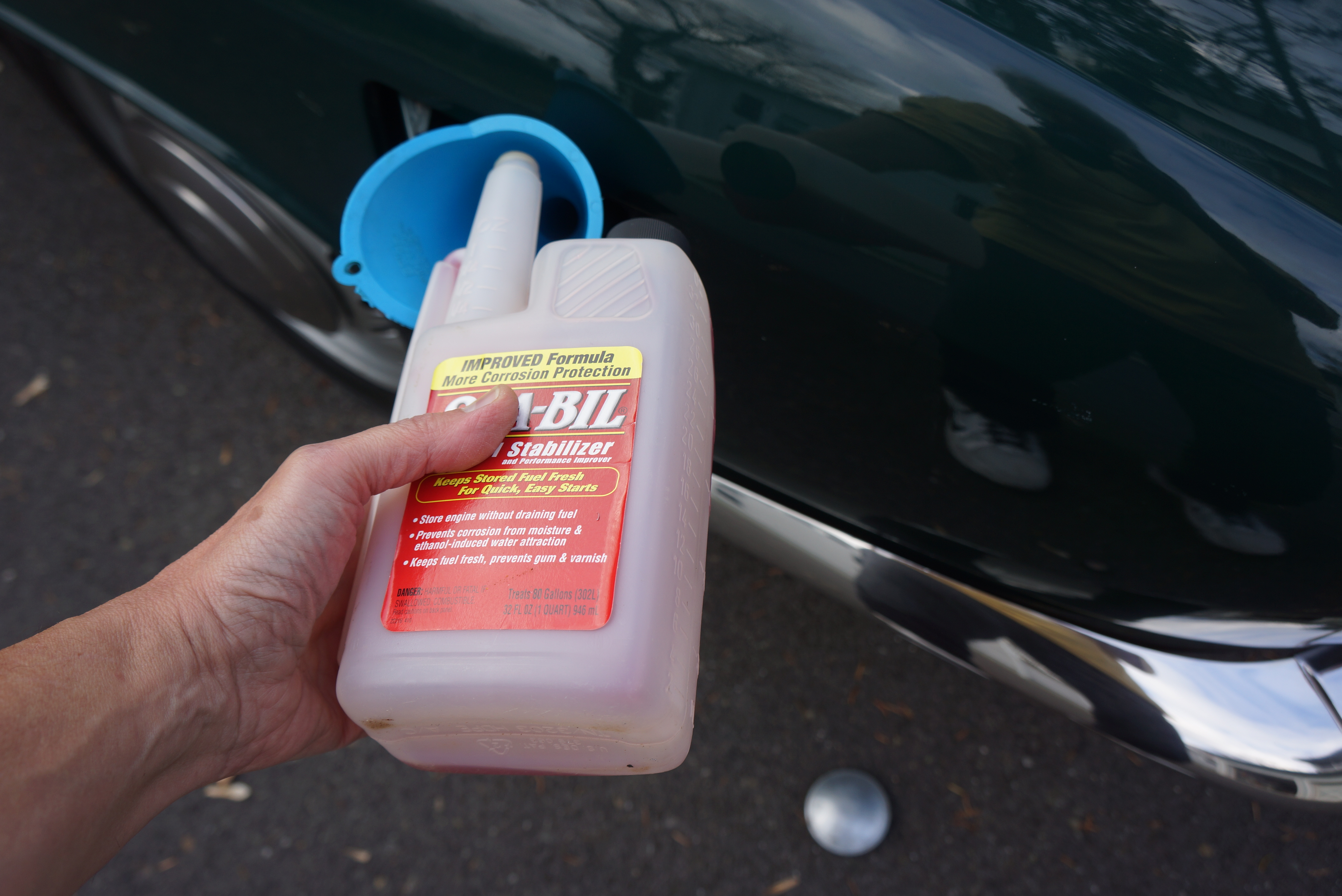
The Sta-Bil was added first in order to better blend it with the fuel. Purchasing the 6 gallons I need to fill the tank ensured that the stabilizer would be more thoroughly blended. If I had added the Sta-Bil after the fill-up, it would be less likely to completely mix with the fuel in the tank. I always store the car with a completely full fuel tank, as this minimizes the chance of condensation on the inside of the tank walls. I let the car idle for 5 minutes or so, in order for the gasoline/Sta-Bil combination to circulate through the carburetors.

Pouring the Sta-Bil left-handed

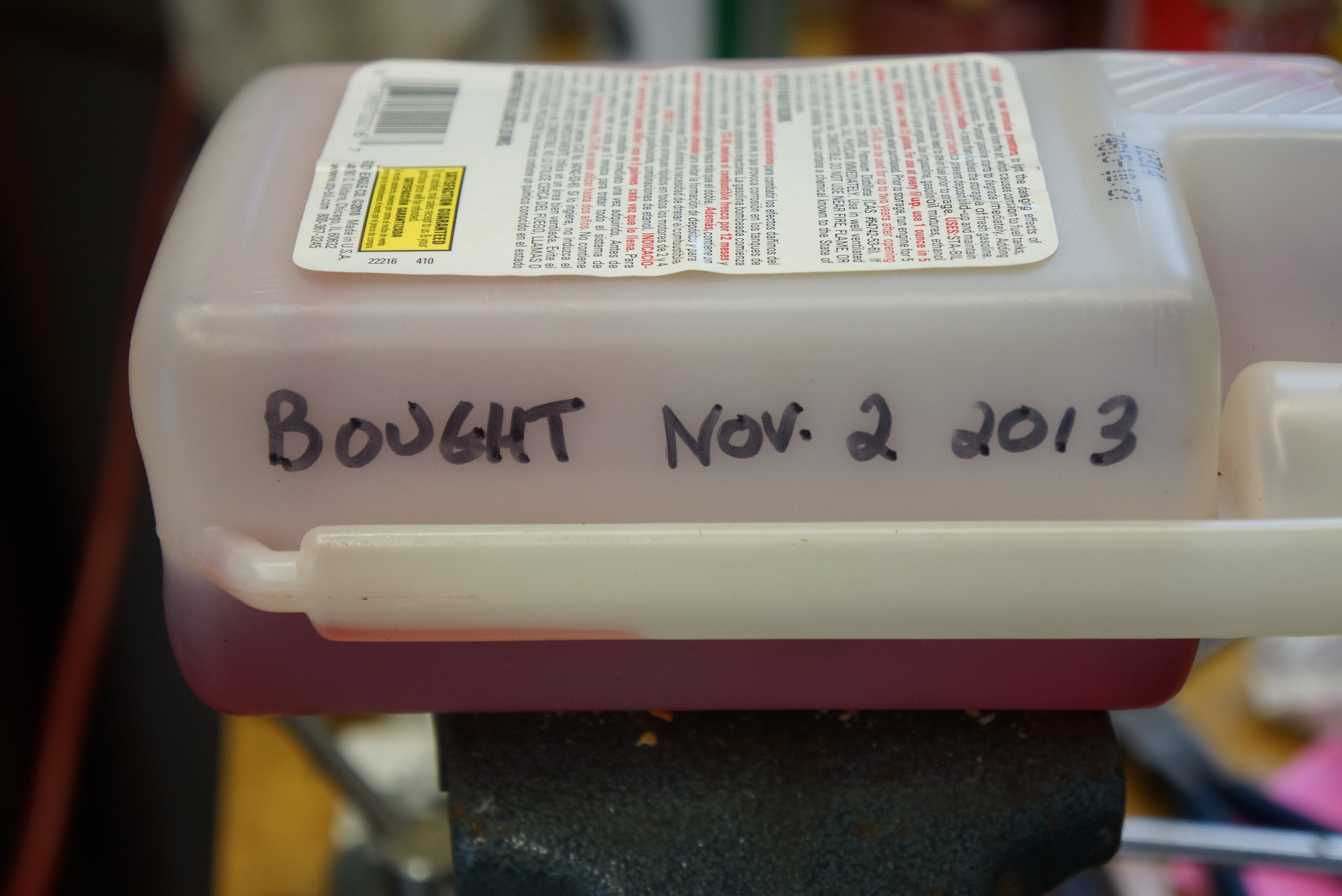
The Sta-Bil label recommends that the product be used within two years of opening it, and since I use it in the Mazda Miata, the lawn mower, weed trimmer, and snow thrower, I don’t have too much of an issue consuming a 32 oz. bottle within that time frame.

My German side makes me do these things

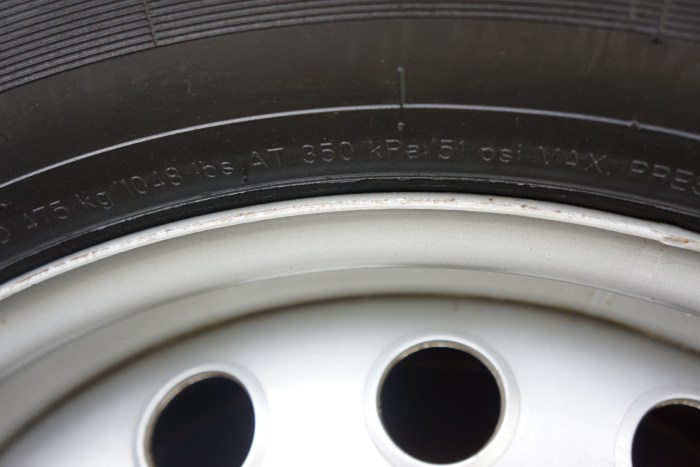
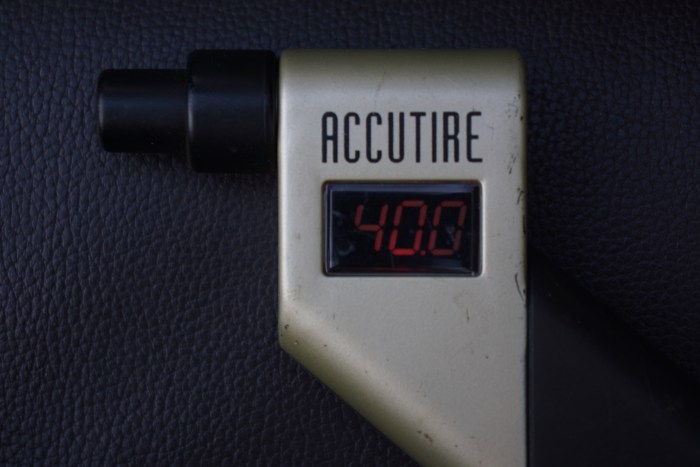
Next on the list were the tires, specifically, resetting the pressures. Because I let my cars sit on the garage floor during the winter, the car’s weight continues to bear down on the tires. It would be better to get the car up on 4 jack stands, remove the tires, and store them horizontally, but I have found this method avoids all that. I overinflate the tires, being careful to stay within the maximum pressure on the tire’s sidewall. The 155-15 Vredesteins on the Alfa indicate a maximum pressure of 51 psi, significantly above my driving pressure of around 26-28 psi. I decided on 40 psi, and all tires were pumped up to that.

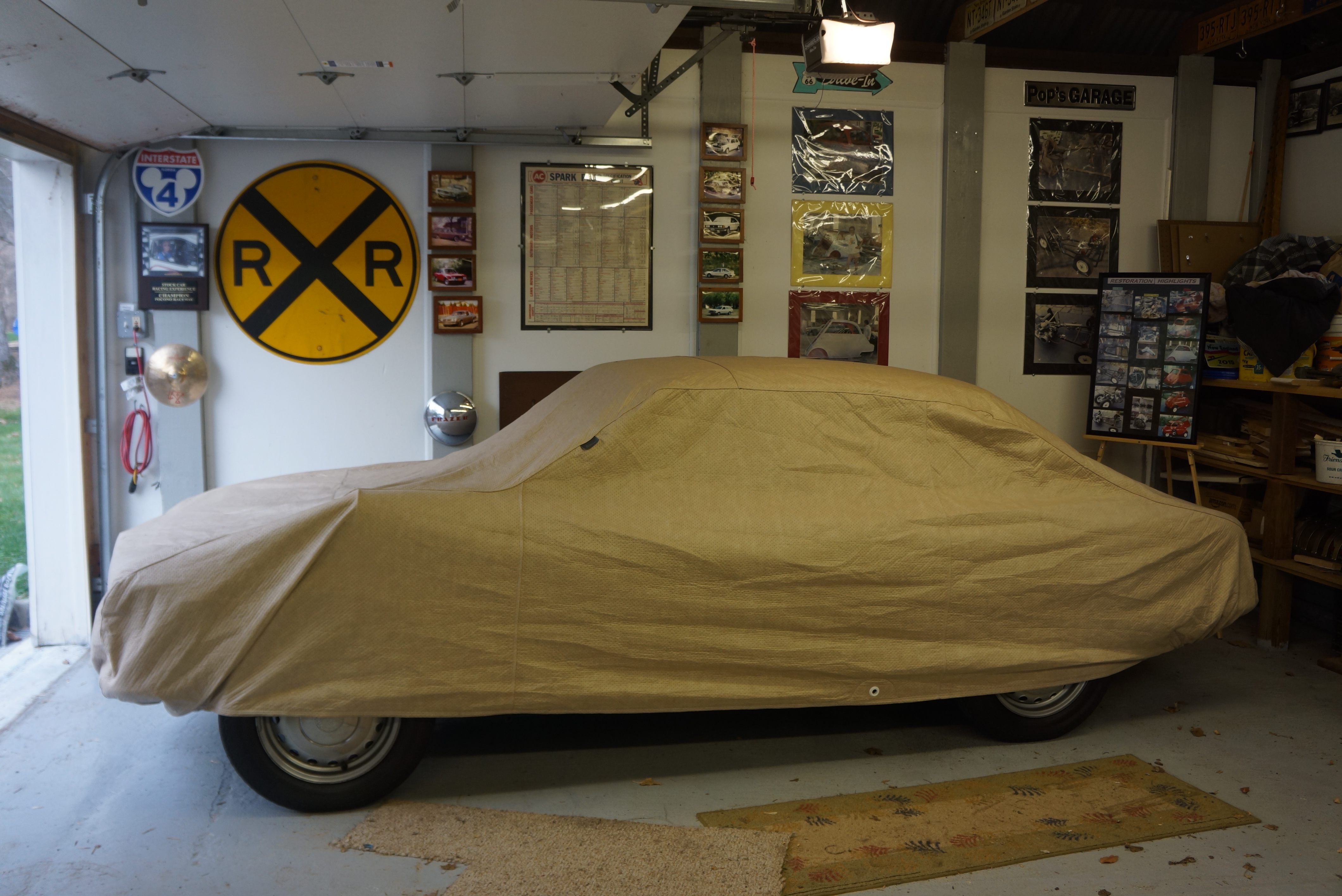
Part of the winter ritual is a fresh oil and filter change. However, given that the Alfa got that done just several hundred miles ago, I didn’t do that today. Instead, the car was backed into its garage bay, all windows were rolled up, and the battery kill switch was turned to “off”. The car was once again cocooned under its cover, and except for attaching a Battery Tender, which will be done later in the weekend, the task was finished.

Done. Hoping for an early spring!

Last year, the car was up on four jack stands, as I spent much of the winter, and a good part of early spring, rebuilding the front suspension. There are no winter projects for the Alfa this year. Come spring, I will tune it up and change some filters, as I haven’t done that since first acquiring the car, when it had 54,000 miles. Hard to believe I’ve driven it 7,000 miles over three driving seasons. The car’s reliability all that time has been remarkable. Yes, there have been some hiccups, but it has never failed to get me where I was going, or get me back home. The plan is to continue that for 2016!


Only 2,333 miles per year


All photographs copyright © 2015 Richard A. Reina. Photos may not be copied or reproduced without express written permission.
Dad’s 1966 Buick Sportwagon

My father was always a GM guy, at least through most of my boyhood. Later on he moved away from General Motors products, first with a Mustang, and then some Japanese cars. But during most of the time I lived with my family, my dad’s daily driver was either a new Chevrolet or a used Pontiac or Buick.

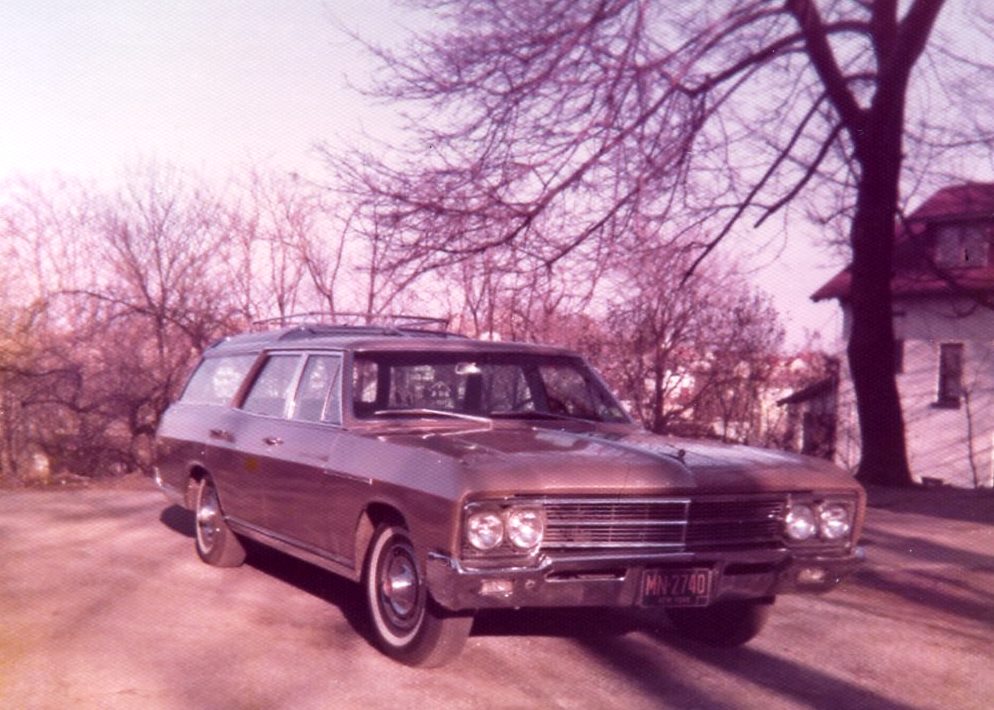
It was probably 1969 when, while perusing the Sunday classifieds, he mentioned to me that Reedman’s in PA had a used Buick in which he was interested. At that time, Reedman’s Auto Mall had a reputation as one of the largest used car dealers in the Northeast. While they did sell new cars, they never seemed to advertise them. Years before the advent of the automotive superstore, they regularly ran newspaper ads which featured their gigantic pre-owned inventory. Located in Langhorne, PA (and still in existence today as Reedman-Toll), it was an hour ride from our house on Staten Island. Dad invited me to accompany him to check out the car, a 1966 Buick Sportwagon. He had never before involved me in any aspect of a vehicle purchase, and I was utterly thrilled.

scan299c
We arrived and found the car. The concept of a gold station wagon did nothing to excite me. But its list of comfort and convenience features did. This car had factory a/c, power windows and seat, AM/FM radio, and cruise control. NO vehicle in the Reina family fleet up until now had ANY ONE of these, much less all of them in one automobile. A second glance at the body style made me realize that this “Sportwagon” had the second windshield above the rear seat, as did the more aptly named Olds Vista-Cruiser. So this was something cool, at least as station wagons go.

scan298c

The passage of time has caused me to completely forget the dealer’s asking price. A check of my Encyclopedia of American Cars tells me that a 1966 Buick 2-row custom Sportwagon carried a base MSRP of $3,155. What could the price have been on a 3-year-old example, $1,900? Whatever it was, I begged my father to buy the car. He did. We traded in the Corvair; I think we actually drove the Corvair there and drove home in the Buick, the deal done in one day.

 
The Buick became mom’s car; dad was still driving the ’63 Pontiac Catalina (of which I have no photos). (Writing that previous sentence brought out a chuckle in me; in the 1960s, wives had no input in the selection of their cars – their husbands just bought them and brought them home.) He was soon about to get his Mustang, which is a story for another time. I got my driver’s license in 1971, and by 1973, mom was ready for a new car. The Buick became mine. The FM radio, along with its ability to swallow my drum set, were its best features. By far its worst feature was the 8 miles-per-gallon I was achieving in local Staten Island driving. By 1974, when the first gas crisis hit, the fillup costs were crushing my meager budget. The Buick was also using a quart of oil about every 500 miles. It was sold for $400. I bought a Fiat 124 Sport Coupe, which could get an amazing-for-its-time TWENTY miles per gallon!

 
Buick Sportwagons never appear at any of the various car shows and auctions I attend. Hagerty’s Classic Car Price Guide pins the value of one today (Nov. 2015) at $9,850. Gee, if I had only held onto it….

All photographs copyright © 2015 Richard A. Reina. Photos may not be copied or reproduced without express written permission.

Ladies Join Oct. 17 2015 Drive Event, Everyone Survives

DSC02042

History was made on Saturday, October 17, 2015, when the New York Mets (sorry, wrong blog) the Sunday Morning Driving Club went out for a ride, and changed all the rules. What exactly did we do? We drove on a Saturday (for the first time); we scheduled a breakfast AND a lunch (for the first time); we visited the Jersey Shore (for the first time); and we allowed drivers to invite their Significant Others along for the experience (for the last time; sorry, wrong blog – for the first of what we are sure will be many more times).

As best as we know, all the participating husbands and wives were still married to each other at the end of the day. Seriously, we think the ladies enjoyed themselves, and got a taste of the genuine fun we men have had for years, namely, riding through beautiful scenery in interesting cars, and sitting down for a hearty meal with affable and like-minded people.

DSC02025

The formal part of the day started at the Bridgewater Diner in Bridgewater, NJ. Changing with past tradition, attendees arrived on their own between 9 a.m. and 10 a.m. and fortified themselves with good local diner food. By 10:30 a.m., after a few who skipped breakfast but were joining the group arrived, we were out of the parking lot, embarking on the first half of the day’s drive. This 30-mile-route, dotted with fall foliage, took us along the Millstone River, through the farmland of Monmouth County, into the historic village of Cranbury, and eventually to a Wawa pit stop, sorely needed by the men after all that diner coffee.

This deserved Wawa-stop allowed us time to hang and chat in the parking lot. Old friends caught up with each other, new friends were made, and Bill Whited bought gas. After sufficient time was given for life’s necessities, the lead Alfa driven by your humble servant (who assigned the 90-horsepower car to lead??), with 11 other cars in caravan, headed east on Route 33 for the second leg of our drive – a 25-mile straight shot to the seaside resort town of Ocean Grove.

We allowed plenty of time for folks to find parking and wander along the picturesque Main Ave. before our 1:30 lunch reservation at The SeaGrass restaurant. Our table was set and ready for us ten minutes early, and our rowdy crowd was ably handled solo by one young waitress who, to her credit, smiled through the whole ordeal. The food was excellent, and more than one person in our party remarked that while not expecting to be hungry after breakfast, the food at The SeaGrass was too good to pass up.

It bears mentioning that as the popularity of our drive events has grown, participants have told friends, who have told friends…. For this drive, we had two drivers who were with us for the first time. Several others had only made their first trips with us earlier this year. By my count, half of today’s drivers are people I’ve met through other drivers. It’s been rewarding to see the group grow in this fashion.

Lunch was over by 3 p.m. The shoppers delayed their departures so they could wander through the many gift shops in Ocean Grove. Others hit the road in order to get back home before the ever-earlier darkness closed the day. Overall, our many “firsts” combined to make this drive one of our most successful, read, enjoyable outings yet.

All photographs copyright © 2015 Richard A. Reina. Photos may not be copied or reproduced without express written permission.

Hershey Report, 2015

DSC01995

The annual car show formally called the “Antique Automobile Club of America Eastern Division National Fall Meet”, but known the world over simply as “Hershey,” was held for the 60th time on October 7-10, 2015. The event takes over most of the 121-acre grounds which are Hersheypark, plus some adjoining property. The town of Hershey PA, which not coincidentally is also home to national AACA headquarters, gives itself completely to “Hershey Week”. If you want a nearby hotel room next year, book it 4-6 months in advance.

DSC01889
For those who have never been to Hershey, describing it as the biggest car show on the East Coast and one of the biggest car shows in the world does not do it justice. Most of Hersheypark’s paved lots are blanketed with flea market vendors. Hundreds of antique and classic cars are offered for sale in the Car Corral. Saturday is the show’s raison d’être, as the finest restored cars and trucks in the country compete at a judged car show. Hershey attracts participants and spectators from around the world, many of whom have been making the annual trek for decades.

These die-hards renew old acquaintances, seek out valuable parts needed for their restorations, and buy and/or sell cars with regularity. Your scribe first attended Hershey in the late 1970s, and has not missed a meet since the late 1990s. If your interest is in stock (meaning unmodified) cars that are 25 years old and older, as required by AACA guidelines, this is the place to be. Newer and heavily modified vehicles (and parts for them) need not apply.

Hershey is endemic of, but not responsible for, many of the changes we’ve witnessed as the hobby has grown, changed, and matured. In years past, an automotive flea market consisted of vendors with rusty old junkyard parts, or obsolete dealer parts stock. Either way, the parts were in milk crates, scattered on folding tables, or spread out on tarps on the ground. You had better well know your needs, because you were going to spend hours looking through those piles to find that gem in the rough.

At many flea markets today, you can seek out a vendor who specializes in your make and model vehicle. Once you inform the vendor of your vehicle particulars, the part, remanufactured as an aftermarket component, probably “offshore” (a nice euphemism which allows you to avoid saying “China”), is handed over, neatly packaged in hard plastic. This is if you even bother to attend the flea market. Much of this stuff is available online with a few clicks of the mouse button.

Given two facts, one, that AACA is strict about its 25-year-old-and-older rule, and two, that many of the Hershey veterans still have a huge interest in pre-war (WWII) cars, the flea market has fewer of the reproduction vendors that you would likely see at Carlisle, for instance. The thrill of the hunt still applies. The photos below affirm that Hershey still does the flea market the old-fashioned (some would say the more fun) way:

THE CAR CORRAL, SUB-$10,000 EDITION

The Hershey Car Corral always has a nice variety of cars for sale. This year, the variety of domestic and imported vehicles seemed greater than usual. That is not to say that every car in the corral is an instant classic. There are those run-what-you-brung cars that look like they were someone’s daily driver as recently as last week. Part of my reaction to these cars is because I was of driving age when they were new. Heck, I saw cars for sale that were new at the car dealerships where I worked in the 1980s.

The good news is that many of these types of cars have low asking prices, and can serve as excellent starter vehicles for someone new to the hobby. (My friends and I enjoy pointing these out to those who say the hobby has become too expensive to enter.) Here are some random choices for those with limited means who still want an AACA-eligible car.

1990 Pontiac Firebird

One of the few car corral vehicles from the newest-allowable model year, the sign on this 1990 Firebird claimed it to be a one-owner car with 52,000 miles. The asking price was $6,000, likely held back because of the V6 under the hood. But moving down the road, who would know?


1965 Jeep J-10 pickup

With an asking price of $4,800, this 1965 Jeep J-10 pickup truck is rare. Many were used as work trucks and long ago met their fate at the crusher. Four-wheel-drive and V8 power meant that little was going to stop your forward motivation. The Colorado license plate helped assure that there was little to no body rust (none that could be seen with a cursory look). Buy this and you’re practically guaranteed to have the only one at the next Cars & Coffee.


1981 Honda Civic
1981 Honda Civic

Squeaking in under the wire of our self-imposed $10,000 limit with an ask of $9,900, this 1981 Honda Civic had many scratching their heads. Sure, by year and unmodified condition, it’s eligible. My personal reaction is that I remember doing new-car prep at the dealership on them, and my then-best friend bought one of these new. They CAN’T be allowed here, can they?


1979 Triumph TR7
1979 Triumph TR7

By my account, the least expensive operational vehicle in the car corral, this Triumph appeared to have arrived under its own power. The sign on it said “new transmission, new clutch, new interior, runs great, fun car!” Asking price? $2,800. Make ‘em an offer.


1984 Datsun 280ZX
1984 Datsun 280ZX

This car’s cleanliness belied its reported 123,000 miles. The paint and interior were unblemished. It was a stick to boot. Thursday’s price was $7,400, Friday’s was $6,500. Don’t know if he sold it, but this was a later “Z” that wouldn’t require the gold chains to be worn (by you, not the car).


1978 Cadillac Seville

My Caddy friends assure me that these first-generation Sevilles are future collectibles. We’ll see. However, if you wanted a sharp driver in a very appealing black over red, this car could do it. The windshield write-up claimed it to be a one-owner, 80k car. Another one going through a fire sale, Friday’s price was $5,600, down from an earlier $5,900.

1980 Mazda RX-7
1980 Mazda RX-7

First generation Mazda RX-7s are another model which pundits claim will double in value “soon”. Hasn’t happened yet. In the meantime, good clean cars sell for credit card money, and someone is having fun. This 1980 rotary rocket with 82,000 miles could be yours for $7,850. Handwritten next to the price was “let’s talk $”.


1987 Corvette
1987 Corvette

Sure, SS 396 Camaros and Shelby Mustangs are never going to make mention in a chapter called “sub-$10,000 cars”. But that’s not to say that good ol’ American performance can’t be had at that number. How about a Corvette? Seriously. The C4 Corvettes (1984-1996) are quite affordable right now. Here’s proof, in the form of a 1987 coupe. Yes, it’s a 350/auto with incorrect wheels, but at $7,750, it’s something you could drive every day and display at cruise nights.
THE CAR CORRAL, VOLVO EDITION


Volvo 122S wagon
Volvo 122S wagon

Two Volvos in particular stood out for me. A 122 wagon, in white over red, stick shift of course, was fresh from the Pacific Northwest, and looked it, as there were no signs of visible rust in the body. The ask of $14,500 may have seemed high, but try to find another one this solid on the East Coast. (Recent Bring A Trailer sales of 122s have approached $20,000.)


1979 Volvo 242DL
1979 Volvo 242DL

By contrast, this 1979 242DL, with automatic and (dealer installed) a/c, was super clean, and in that requisite 1970s brown. But $12,500? See sub-$10,000 cars above. This Volvo was for someone who HAS to have this particular configuration.
THE CAR CORRAL, NOT IN THE CORRAL EDITION

Not every car for sale at Hershey is in the designated car corral. There were some interesting finds in the flea market area. There are also cars for sale in the parking lot, possibly as a way to avoid paying the AACA car corral fee.


1963 Studebaker Avanti

This Studebaker Avanti from the first year of production is distinguishable by its round headlight bezels. This car also has the desirable 4-speed with factory air. At $26,995, the asking price fell in between CPI’s “good” $14,000 and “excellent” $29,000 values.


1967 Porsche 912
1967 Porsche 912

Porsche 911s of all years, body styles, and performance levels are hot right now. The joke is that 911 pricing is like the fish at your favorite seafood restaurant: “market pricing”, which is X today and will likely change upward tomorrow. But the 912, the 4-cylinder variant, remains relatively affordable. This car was in the parking lot across the street. The sign said its engine had been swapped out for a 1969 version. The owner was asking $29,000. Going down the road, no one will know you’re not packing a flat-6. (By way of reference, nice 1967 911s are approaching six figures.)


1954 Ford
1954 Ford

This 1954 Ford convertible was hanging out in the flea market. The asking price, if it had been displayed, was now gone, and the car was marked “sold”. Given its overall dreadful condition, I took it as a healthy sign for the hobby that someone out there was willing to take it on. No word whether the Fire Chief pedal car was included (might be worth more than the Ford).
SATURDAY’S CAR SHOW

My great friend and fellow rally driver Steve H and I have made the trip to Hershey together numerous times. It was one trip in the 1990s when we discovered that if we arrived early enough on Saturday morning, we could have the pleasure of watching the parade of cars as they entered the show field (AACA rules require that show cars be driven onto the field under their own power).

As has become my custom, I was on the grounds before 8 a.m., and found a good viewing spot. It is endlessly entertaining to see the cars. If you’re close enough, you can also capture the drivers’ faces, almost every one of them grinning as they proudly pilot their machines. Below is an assortment of vehicles moving under their own power before finding their designated show field spots (click on these, or any photos in the post, to enlarge them).


FINAL COMMENTS

Sometimes, the “business” of the hobby causes us to forget that this IS a hobby, which means we’re doing this for fun. And looking around at the sights and sounds, plenty of people at Hershey are having fun. We’ll leave you with a few photos as reminders.


All photographs copyright © 2015 Richard A. Reina. Photos may not be copied or reproduced without express written permission.
Sunday Morning Breakfast Drive, Sep. 13 2015

2 p.m. Saturday: Larry and Rich talk by phone:

“I don’t know about tomorrow. I’m driving right now and there’s nothing but dark clouds overhead.”
“The weather forecast is for heavy showers through tonight, and cloudy with showers all day Sunday.”
“One report I heard said that the showers may hold off. Let’s talk again later.”
“OK. I’ll call you after dinner.”

8 p.m. Saturday: Larry and Rich talk by phone:

“Forecast isn’t looking good. What should we do?”
“No one is going to want to drive in the rain. Should we cancel?”
“Let’s see what it’s like at 6 a.m. Worse case, we get together and just have breakfast locally.”

At 9 p.m. on Saturday night, the National Weather Service was calling for Sunday’s weather in the entirety of New Jersey to be completely cloudy, with the likelihood of showers increasing throughout the day. But at 7 a.m. Sunday morning, the sky was mostly blue, with scattered high clouds. Be prepared to ignore the weatherman when you’re planning a Sunday morning breakfast run!

"When I was your age, I bought a Z-28 for $1,500!"
“When I was your age, I bought a Z-28 for $1,500!”

In all, eleven brave souls brought out their cars for what turned out to be a spectacular morning. Several in the crowd were with us for the first time. And in what must have been a first for our group, the European sporting machines outnumbered the American iron, 7 to 4! The Germans were well-represented by Peter’s 911 (with son Jonathan navigating), Danek’s Audi R8, and the “almost twin” BMWs of Jeff (Z3) and Rob (Z3M). The UK flag was flown by Rich S in his MGB and Rich L in his Jaguar F-Type. Rounding out the cars from the Old Country, your humble scribe proved once again that the words “reliable” and “1967 Alfa Romeo” can be spoken in the same sentence.

It’s usually “Chevys Rule” at these events, but the only Chevys today were Larry’s Camaro, and Bill’s new (to him) ’61 Corvette, making its Sunday morning inaugural run with us. The ‘vette also had the distinction of the oldest car participating. Ralphie’s tried-and-true Buick convertible was back, and Julio debuted (to us) his hot ’66 Dodge Coronet.

Once our stragglers arrived, we were able to push off by 8:45, with the Readington Diner as our destination. Our route took us down Route 287 and into Morristown, where we met our first challenge: the roads around the Morristown Green were closed for a bicycle race, forcing us into a detour. Further on in Chester, a street fair gave us some minor issues. However, the weatherman could not have been more wrong, and the sunshine only added to the joy of driving the winding country roads through the towns of Mendham, Long Valley, and Oldwick. After an unscheduled pitstop to use the toilets and refill the cars (in that order), we arrived at the diner on Route 22 by 10:45.

True to form, Rich S again assumed the duties of the traveling photographer, thinking nothing of pulling his MGB alongside another car on 287 and jutting his camera skyward, taking pictures while managing to stay in his lane. With his permission, these 3 photos below taken by Rich S are posted here:

The diner food must wait...
The diner food must wait…

When 12 hungry guys order breakfast, the orders are as varied as our cars. And you would think that with food on our minds, each of us would remember our selection. But it doesn’t always work that way. The waitress showed up with the first plate: “Awright, who had the #3 with eggs sunny-side?” No one said a word. Her patience ran out after 15 seconds and she put the plate down. Rich S said “we’re not very good at this part, are we?”, to which we laughingly agreed. Eventually, everyone had a plate in front of them, with food approximating their order. No one left hungry. Coffee service continued well after the last morsels were consumed. The wait staff was generously compensated for their attentiveness.

"What are you getting?" "I don't know, what are you getting?"
“What are you getting?” “I don’t know, what are you getting?”

 
The diner has a large parking area in the back, and the joint wasn’t overly crowded, so we had all parked together. As we exited, we asked several gentlemen nearby if they would take some group photos for us, and they happily obliged. Lots of smiles, handshakes, hugs, and of course, cries for a repeat event before year’s end brought our September breakfast run to a cheerful conclusion.
The group with their automobiles


The Group
The Group


All photographs (except as noted above) copyright © 2015 Richard A. Reina. Photos may not be copied or reproduced without express written permission.