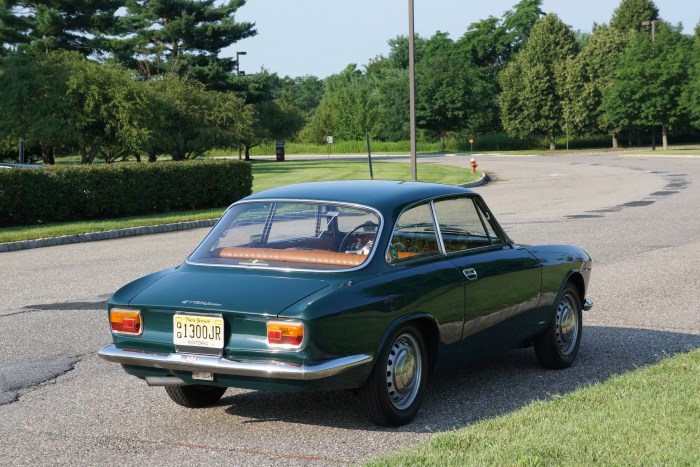
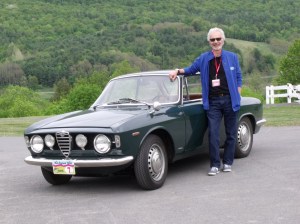
An annual ritual was completed today, when I put my 1967 Alfa Romeo away for the winter. I’ve followed the same basic checklist for a number of years, on this car as well as on my previously owned collectibles. The success rate has been very good, with all the cars eagerly starting up on first try once the spring weather returns. I’ve been spared any issues with dead batteries, flat-spotted tires, or gummy fuel systems, by completing a few steps which are quite simple to do.
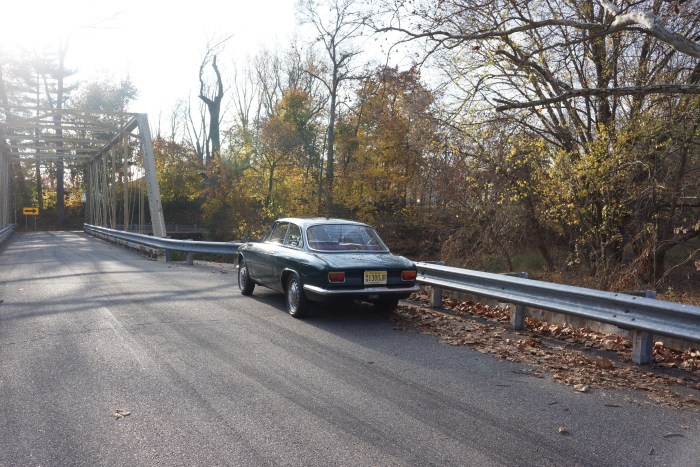
The Alfa in Three Bridges NJ
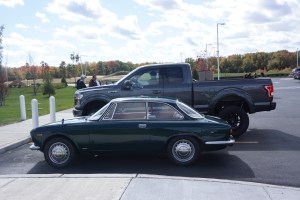
Parked just beyond a bridge in Three Bridges NJ
Friday, November 6, 2015, was unusually warm in New Jersey, so it was a good day to take the Alfa for one more brief maintenance run before beginning the winterization process. The car ran superbly, as it has since I bought it in the spring of 2013. Once back home, I added about 4 ounces of Sta-Bil fuel stabilizer, then headed to my local Shell station to top off the tank.
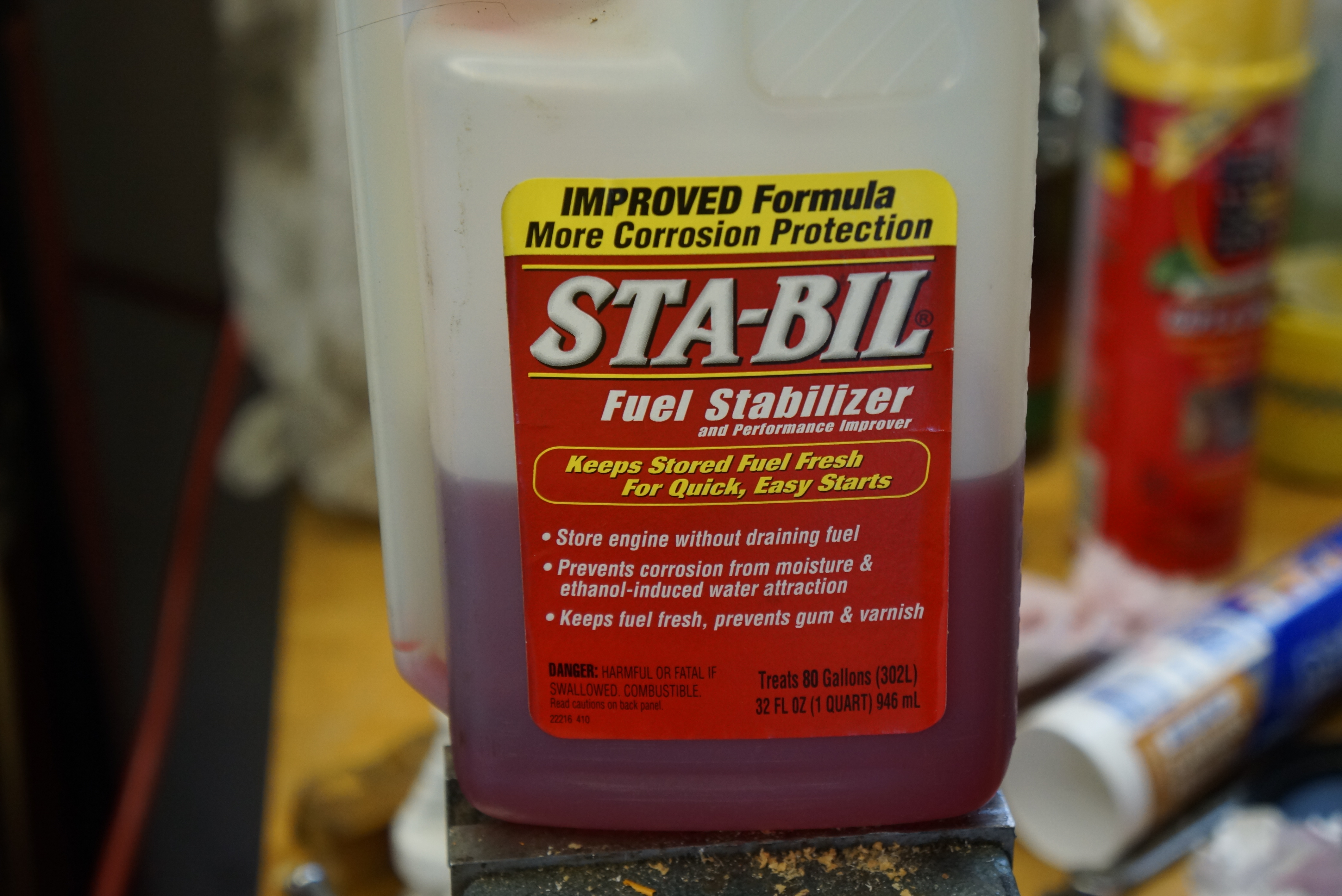
Sta-Bil is my friend. Have used it for years
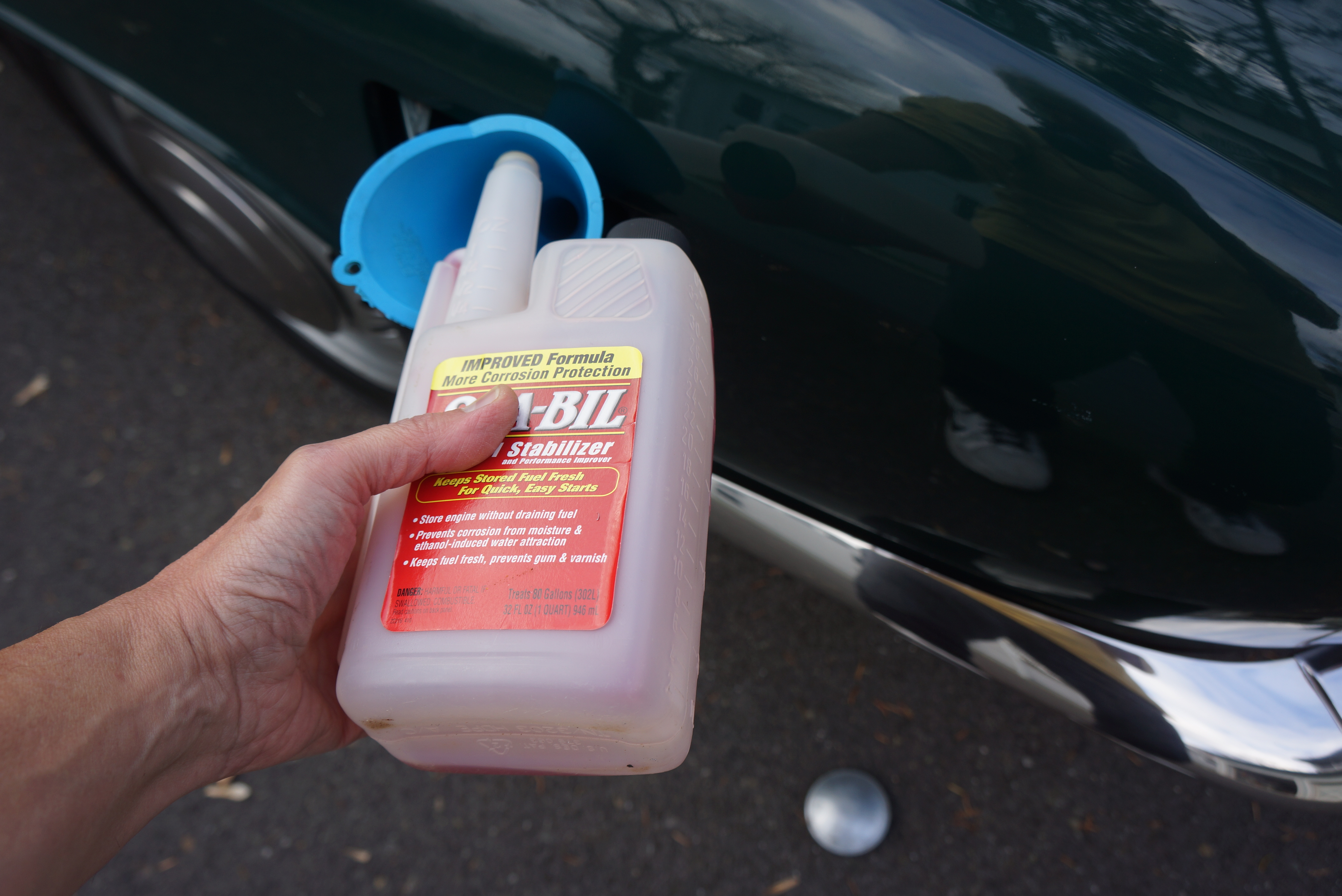
The Sta-Bil was added first in order to better blend it with the fuel. Purchasing the 6 gallons I need to fill the tank ensured that the stabilizer would be more thoroughly blended. If I had added the Sta-Bil after the fill-up, it would be less likely to completely mix with the fuel in the tank. I always store the car with a completely full fuel tank, as this minimizes the chance of condensation on the inside of the tank walls. I let the car idle for 5 minutes or so, in order for the gasoline/Sta-Bil combination to circulate through the carburetors.
Pouring the Sta-Bil left-handed
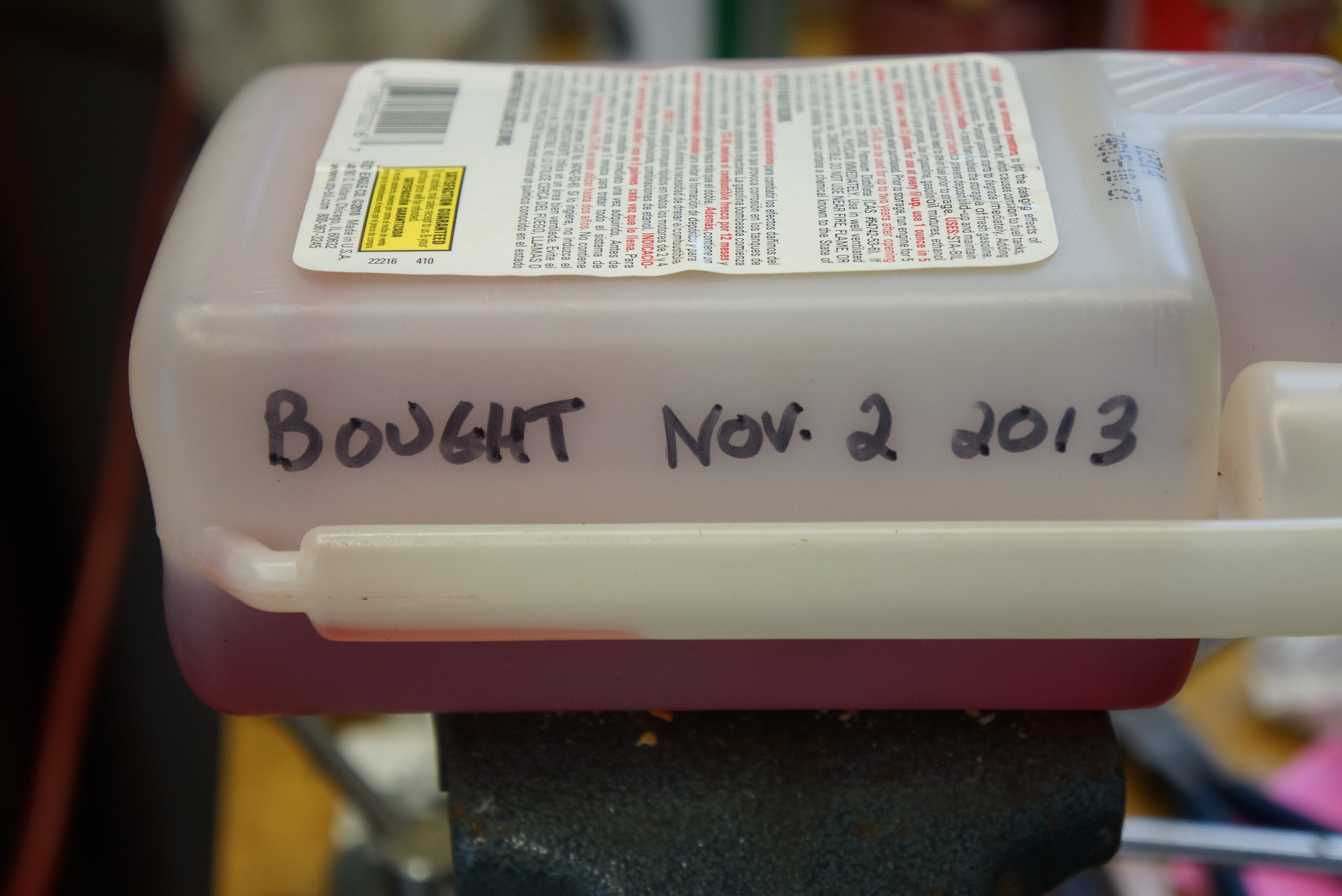
The Sta-Bil label recommends that the product be used within two years of opening it, and since I use it in the Mazda Miata, the lawn mower, weed trimmer, and snow thrower, I don’t have too much of an issue consuming a 32 oz. bottle within that time frame.
My German side makes me do these things
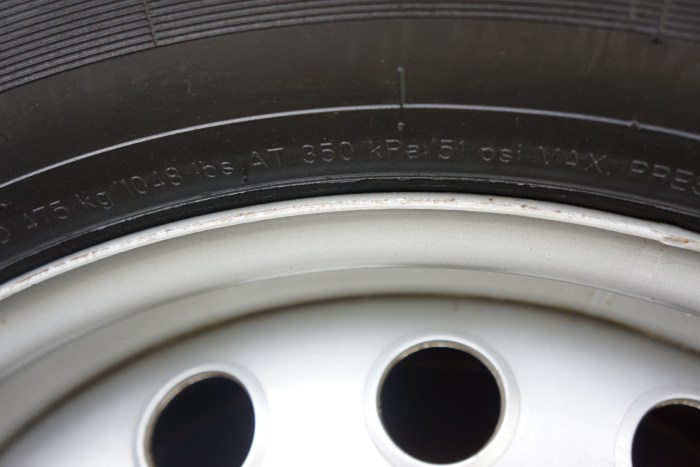
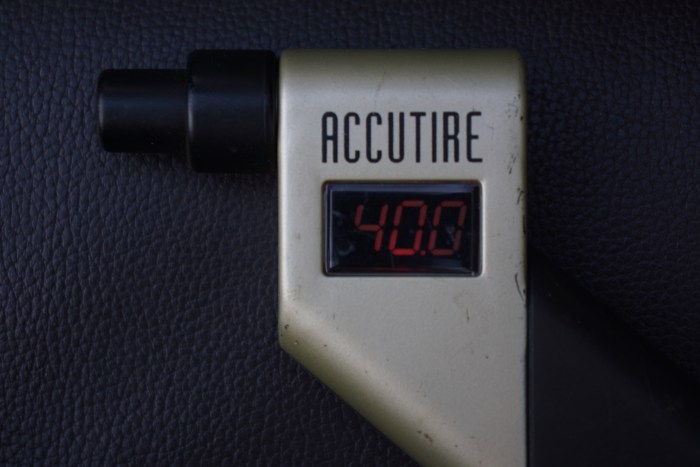
Next on the list were the tires, specifically, resetting the pressures. Because I let my cars sit on the garage floor during the winter, the car’s weight continues to bear down on the tires. It would be better to get the car up on 4 jack stands, remove the tires, and store them horizontally, but I have found this method avoids all that. I overinflate the tires, being careful to stay within the maximum pressure on the tire’s sidewall. The 155-15 Vredesteins on the Alfa indicate a maximum pressure of 51 psi, significantly above my driving pressure of around 26-28 psi. I decided on 40 psi, and all tires were pumped up to that.
Sidewall shows 51 psi max
I also add air left-handed
Accutire gauge shows pressure digitally
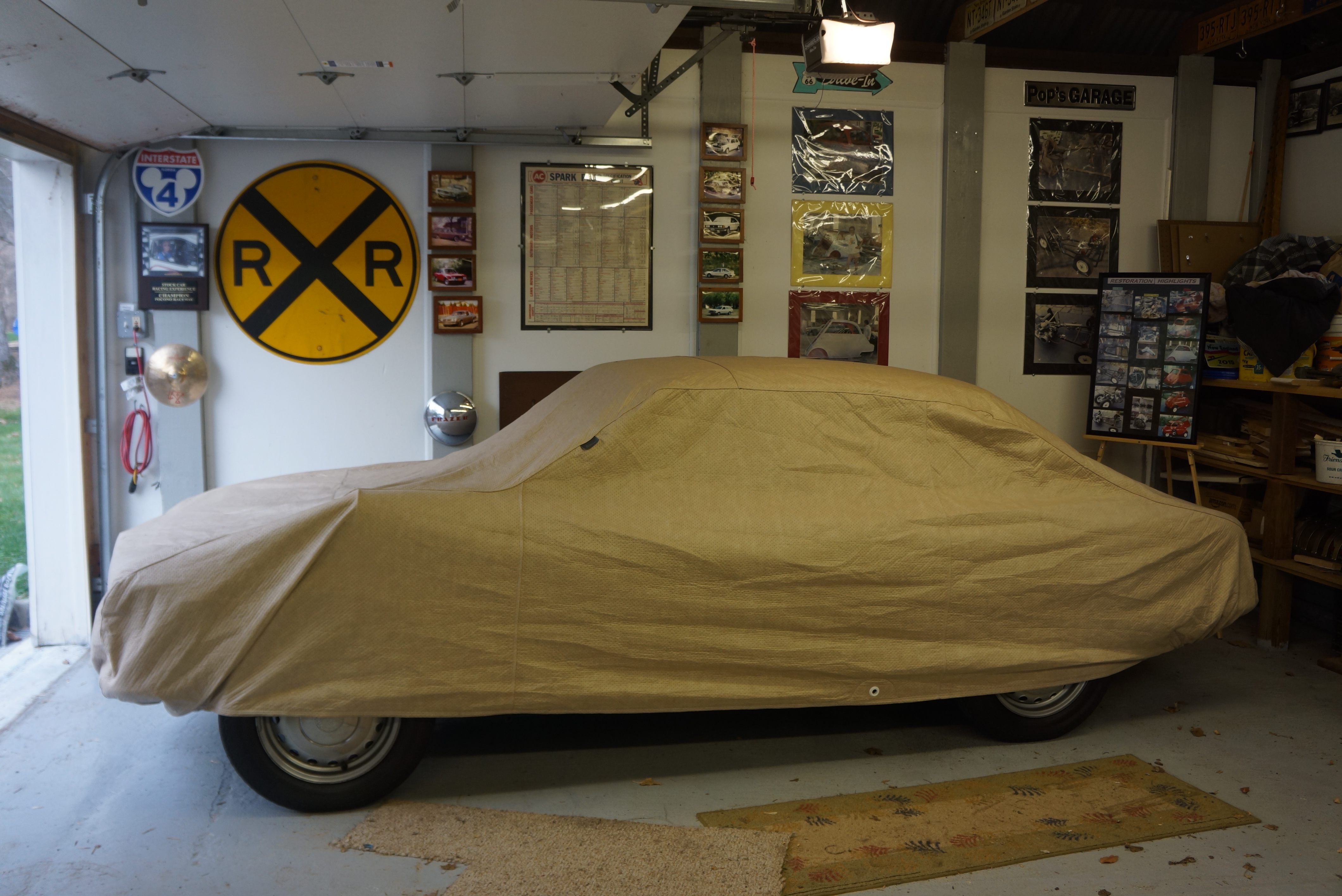
Part of the winter ritual is a fresh oil and filter change. However, given that the Alfa got that done just several hundred miles ago, I didn’t do that today. Instead, the car was backed into its garage bay, all windows were rolled up, and the battery kill switch was turned to “off”. The car was once again cocooned under its cover, and except for attaching a Battery Tender, which will be done later in the weekend, the task was finished.
Done. Hoping for an early spring!
Last year, the car was up on four jack stands, as I spent much of the winter, and a good part of early spring, rebuilding the front suspension. There are no winter projects for the Alfa this year. Come spring, I will tune it up and change some filters, as I haven’t done that since first acquiring the car, when it had 54,000 miles. Hard to believe I’ve driven it 7,000 miles over three driving seasons. The car’s reliability all that time has been remarkable. Yes, there have been some hiccups, but it has never failed to get me where I was going, or get me back home. The plan is to continue that for 2016!
History was made on Saturday, October 17, 2015, when the New York Mets (sorry, wrong blog) the Sunday Morning Driving Club went out for a ride, and changed all the rules. What exactly did we do? We drove on a Saturday (for the first time); we scheduled a breakfast AND a lunch (for the first time); we visited the Jersey Shore (for the first time); and we allowed drivers to invite their Significant Others along for the experience (for the last time; sorry, wrong blog – for the first of what we are sure will be many more times).
As best as we know, all the participating husbands and wives were still married to each other at the end of the day. Seriously, we think the ladies enjoyed themselves, and got a taste of the genuine fun we men have had for years, namely, riding through beautiful scenery in interesting cars, and sitting down for a hearty meal with affable and like-minded people.
The formal part of the day started at the Bridgewater Diner in Bridgewater, NJ. Changing with past tradition, attendees arrived on their own between 9 a.m. and 10 a.m. and fortified themselves with good local diner food. By 10:30 a.m., after a few who skipped breakfast but were joining the group arrived, we were out of the parking lot, embarking on the first half of the day’s drive. This 30-mile-route, dotted with fall foliage, took us along the Millstone River, through the farmland of Monmouth County, into the historic village of Cranbury, and eventually to a Wawa pit stop, sorely needed by the men after all that diner coffee.
Ted’s 911 (the C7 was not with us)
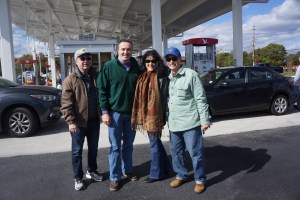
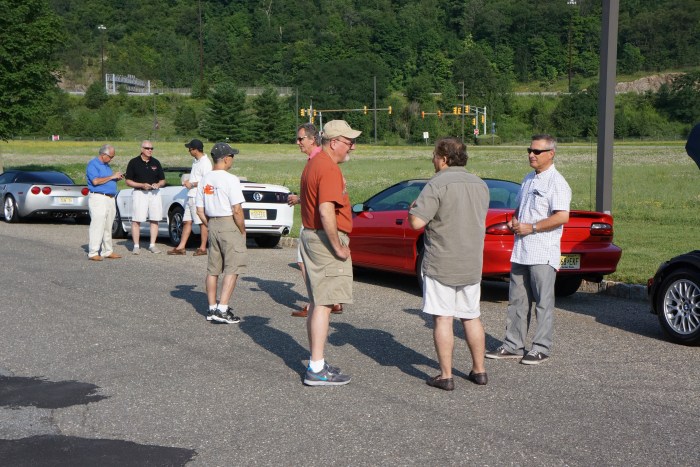
The men hanging out at Wawa
Proof that Ford F-Series are larger than Alfas
This deserved Wawa-stop allowed us time to hang and chat in the parking lot. Old friends caught up with each other, new friends were made, and Bill Whited bought gas. After sufficient time was given for life’s necessities, the lead Alfa driven by your humble servant (who assigned the 90-horsepower car to lead??), with 11 other cars in caravan, headed east on Route 33 for the second leg of our drive – a 25-mile straight shot to the seaside resort town of Ocean Grove.
New friends (?) are made
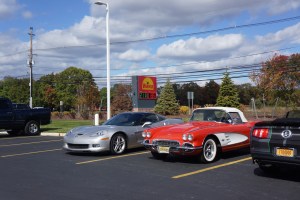
Bill’s C1 after fill-up
The ladies smile for the camera
We allowed plenty of time for folks to find parking and wander along the picturesque Main Ave. before our 1:30 lunch reservation at The SeaGrass restaurant. Our table was set and ready for us ten minutes early, and our rowdy crowd was ably handled solo by one young waitress who, to her credit, smiled through the whole ordeal. The food was excellent, and more than one person in our party remarked that while not expecting to be hungry after breakfast, the food at The SeaGrass was too good to pass up.
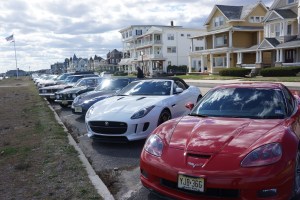
We line up in Ocean Grove
Angela & Rich discuss the menu
We patiently await our food
It bears mentioning that as the popularity of our drive events has grown, participants have told friends, who have told friends…. For this drive, we had two drivers who were with us for the first time. Several others had only made their first trips with us earlier this year. By my count, half of today’s drivers are people I’ve met through other drivers. It’s been rewarding to see the group grow in this fashion.
Julio’s Dodge
Bill’s Corvette
Cory’s Corvette
Nick’s Mustang
Lunch was over by 3 p.m. The shoppers delayed their departures so they could wander through the many gift shops in Ocean Grove. Others hit the road in order to get back home before the ever-earlier darkness closed the day. Overall, our many “firsts” combined to make this drive one of our most successful, read, enjoyable outings yet.
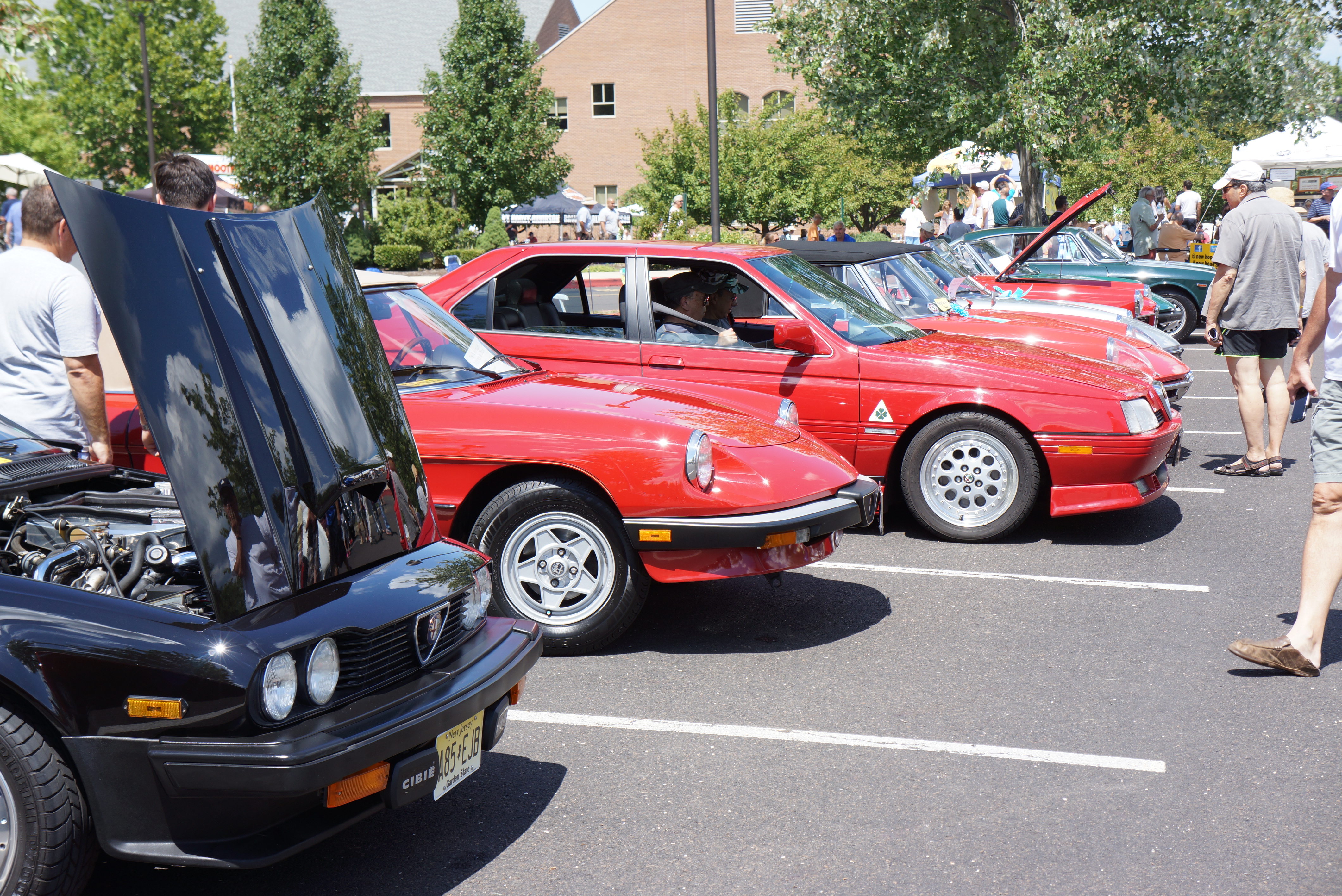
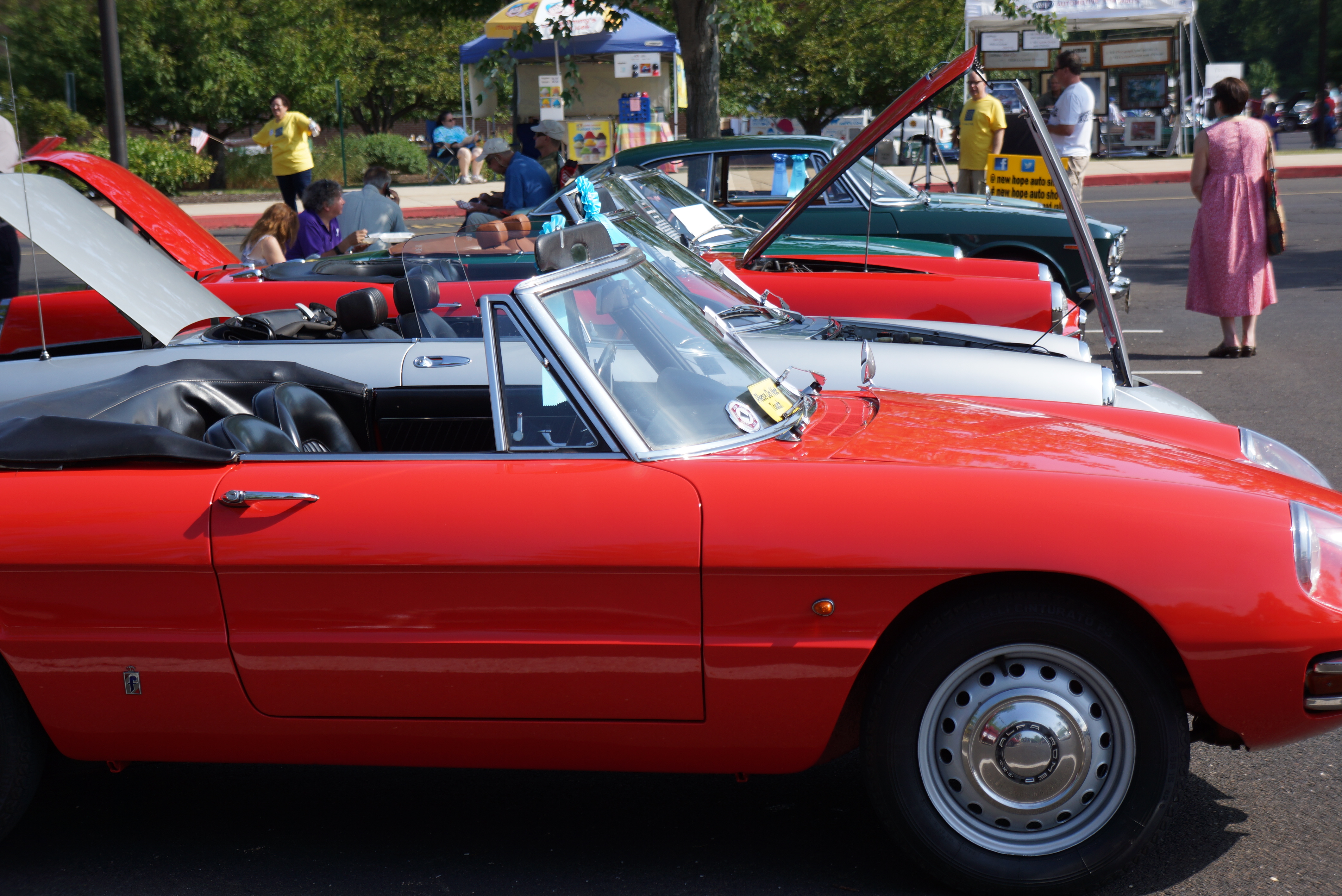
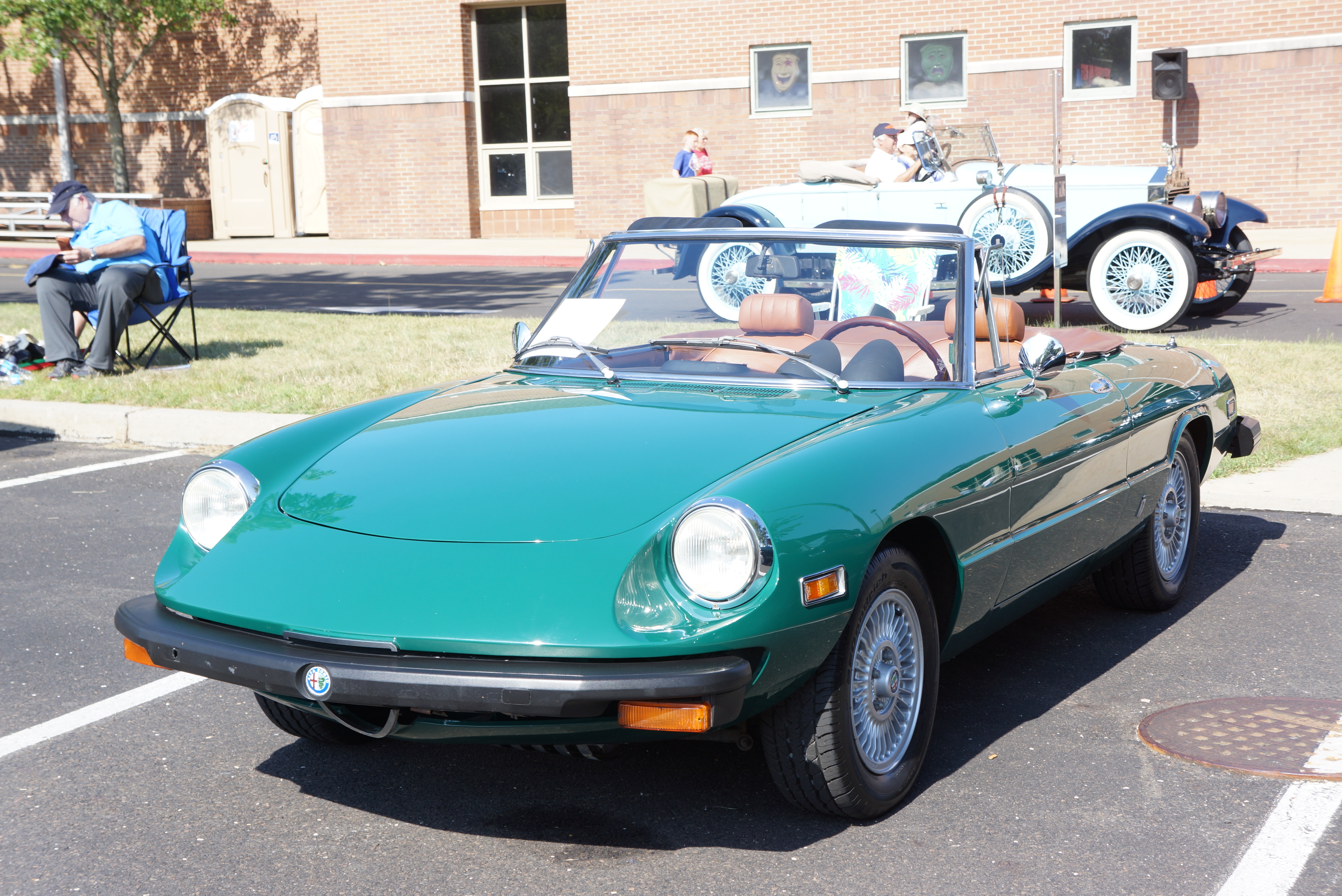
The storied Italian car maker Alfa Romeo was heavily featured at this year’s New Hope Auto Show, held on the grounds of this Pennsylvania town’s high school. The Alfas, assigned their own class, were all parked next to each other, although there was no particular order to their arrangement. The casual observer would be forgiven if s/he thought that Alfa only made convertibles. Of the 15 cars present, 10 were soft tops (“spiders” in Alfa-speak). Of those 10, 9 were of the same basic body style, a design which debuted as the Duetto in 1966 and concluded its run as the Spider Veloce in 1994. That is a very long time in car-years.
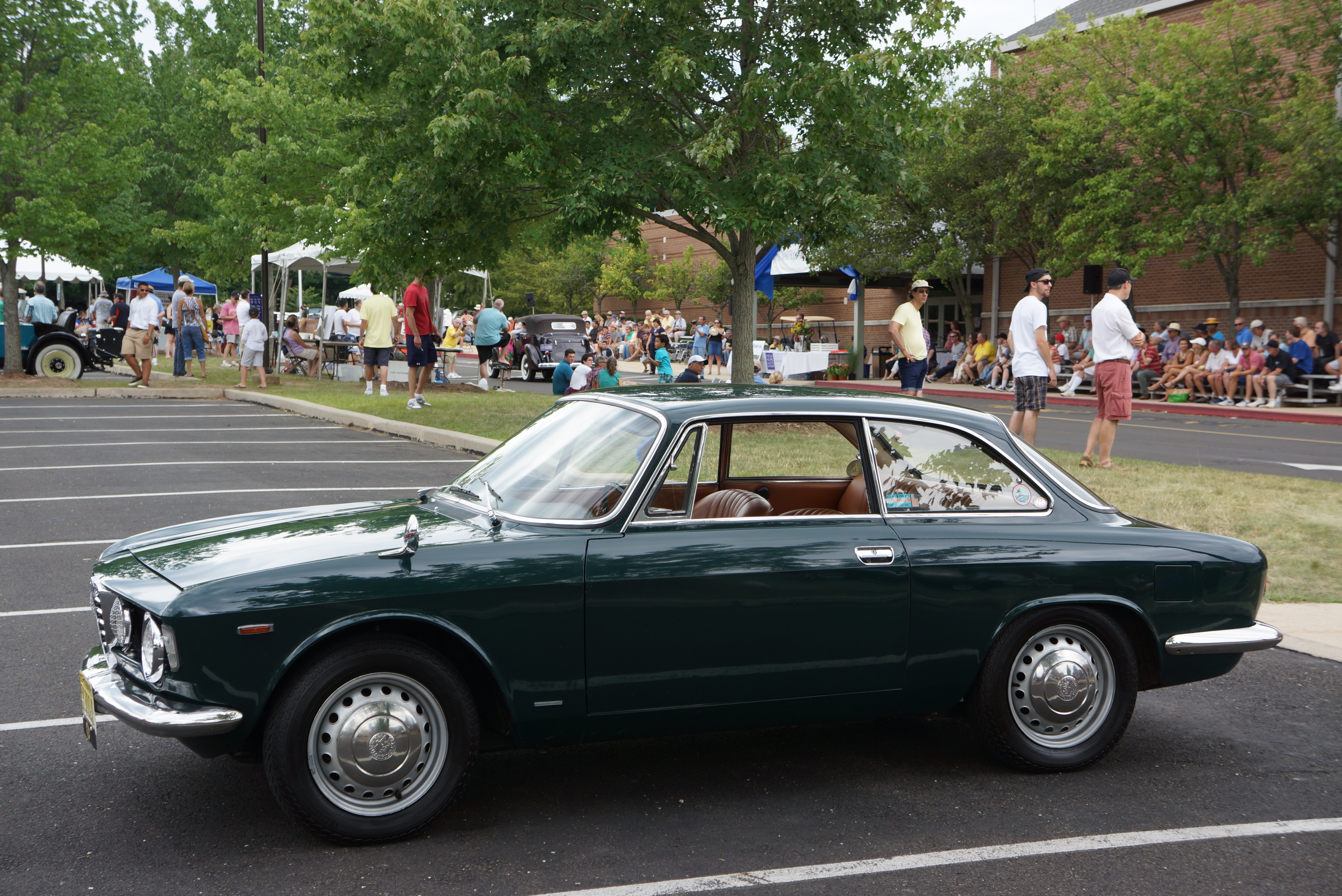
Alfas in a row The only Giulia coupe at this year’s show, and a step-nose to boot
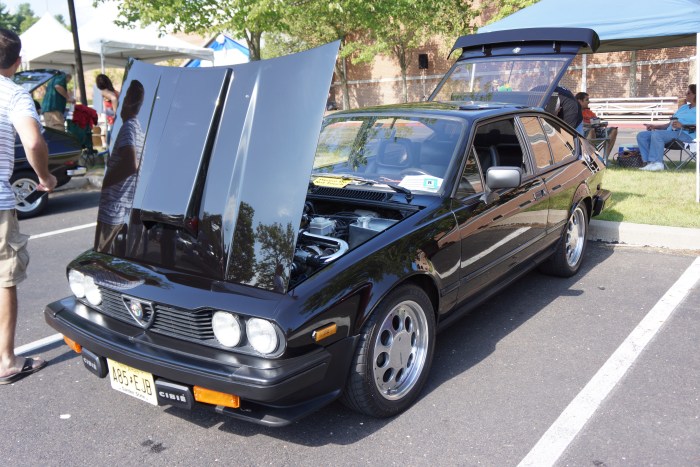
Your author’s car, a 1967 GT 1300 Junior, was proudly on display, and was one of the few tin-tops in attendance. The field was rounded out with an early ‘60s 2000 Spider (the so-called Large Alfa), an Alfetta GT, a GTV-6, and a 164 sedan (the only front-wheel-drive Alfa present among all the rear-wheel-drive vehicles).
A 1979 Alfetta GT
An early ’60s 2000 Spider
A 1985 GTV-6 Callaway Twin-Turbo
It was a rare treat for me to see so many Alfa Romeos in one place at the same time. But the real treat was provided by the gang which brought in these beautiful cars. Alfa owners are a passionate lot; they like to drive their cars; they like to show off and talk about their cars; and they like to meet and chat with fellow Alfa owners and wanna-be owners. Most of the day was consumed by conversation about our Milanese machines.
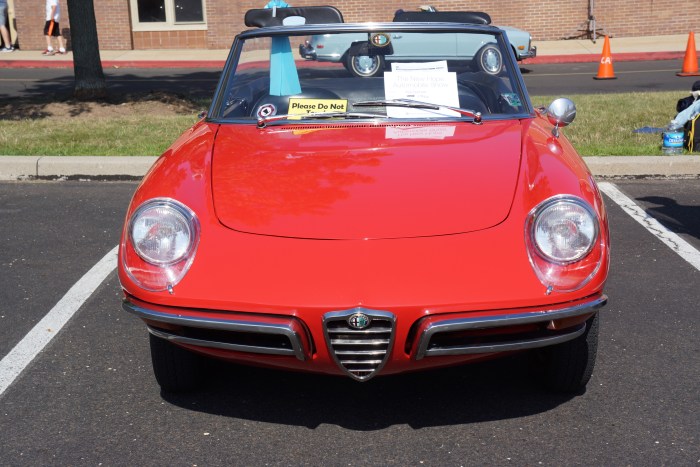
Front end of the Duetto
The Duetto’s “round tail”
The first couple I met had arrived in their 1979 Alfetta GT 2-door coupe. “Quinn” and I happily traded stories about each other’s cars. One story I shared occurred last week. While driving to work, I spotted a car just like theirs on the road with me. It had been ages since I had seen an Alfetta moving under its own power. This particular one was mostly in grey primer, with its passenger door still red (and still wearing a large “ALFA ROMEO” decal). It was bumperless, and obviously a work-in-progress. But by the sounds it was making, I knew the driver was having a blast.
An Alfetta GT reflected in the mirror of a Bentley Continental GT
What made our roadway rendezvous rather unique that morning is that I was piloting my boss’ 2012 Bentley Continental GT Coupe, all W-12 twin-turbo 500+ horsepower of it. I’m always a bit self-conscious driving that car, and tend to stay to the right, moving at the speed limit, in order to avoid undue attention. As the Alfetta drew closer, I wanted to drop my window and give the driver a big thumbs-up. Dismissing any concern about what he might think of me, I did just that. His ear-to-ear grin told me all I needed to know.
1989 Alfa Spider
The Spider hardtop
The owner of the ’79 Alfetta GT told me that he has owned his car in excess of 20 years, and although he has done scores of maintenance and repair work on it, he considers it a mostly original car. Looking the car over, I agreed with him, as much of the black lacquer as well as the beige cloth upholstery remained as it was in 1979. These early Alfettas had a controversial dash design: the tachometer was centered in front of the driver, with all the other gauges in the center. I’ve driven these cars, and it takes some time to get used to the arrangement.
Not all Alfas are red; just most of them
Immediately to one side of me was a Spider owner who is also a very active member of his Alfa Romeo Owners Club local chapter. He, among many other owners, encouraged me to join the club in order to become more involved in their driving events. “Bill” is a marque expert who delighted in telling me about the nuances among the display cars, including which cars were factory-correct and which were not. The truth is that he was a tremendous knowledge source about all things Alfa.
1982 Alfa Spider
On the other side of me was another spider. “Jim” had bought this car just a few months ago (sight unseen off eBay!). It was a Texas car, in very nice shape. This was his 4th Alfa, and he told me that the drive to the show that morning was the longest he had driven the car since obtaining it earlier this year.
1976 Alfa Spider
An hour or so after arriving, the couple with the ’79 Alfetta returned to my car to make an announcement: they had shared my story about “The Alfetta and the Bentley” with the folks in the car next to theirs, and he was the driver of that primered Alfa! “Tom” and I met and screamed over and over at each other “I can’t believe it!” After I told him that I had arrived at work and shared my photo with several fellow enthusiasts, he told me that he got to work and called his wife to tell her “hey honey, some guy in a BENTLEY gave me a thumbs-up”. (His wife chimed in that he never called her from work, and she had at first assumed that something was wrong). Of course, I clarified for him that my daily-driver Jetta was home while I put some miles on the boss’ car. He told me that I had made his day, which made me feel wonderful about the entire encounter.
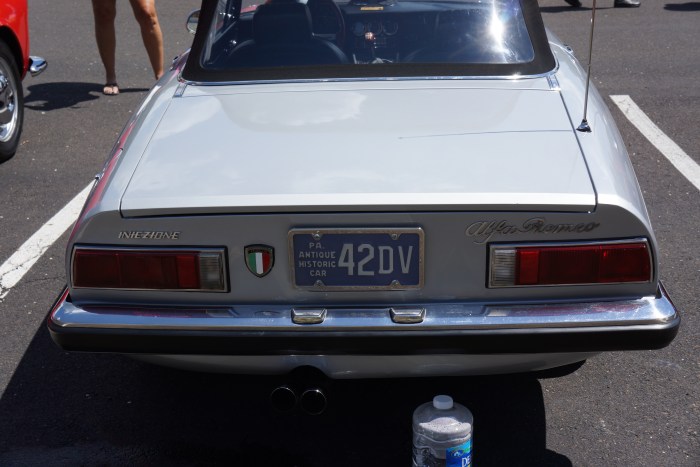
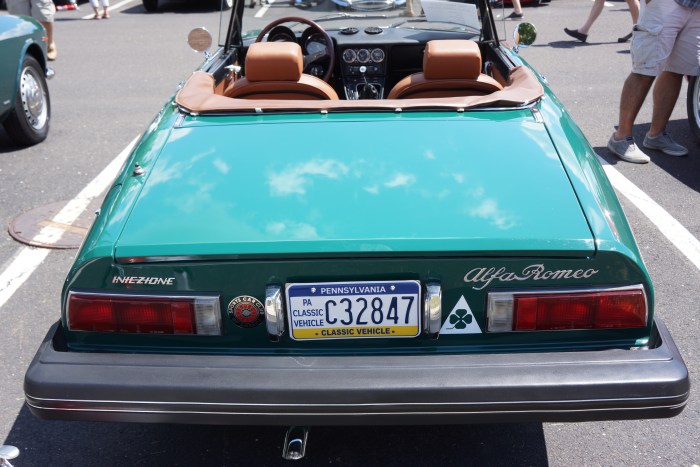
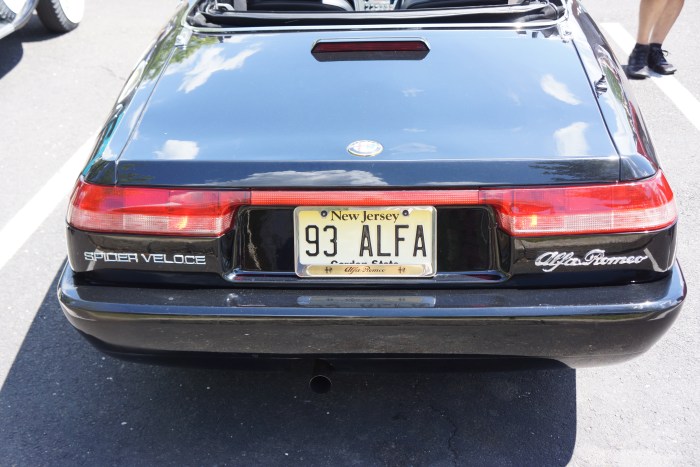
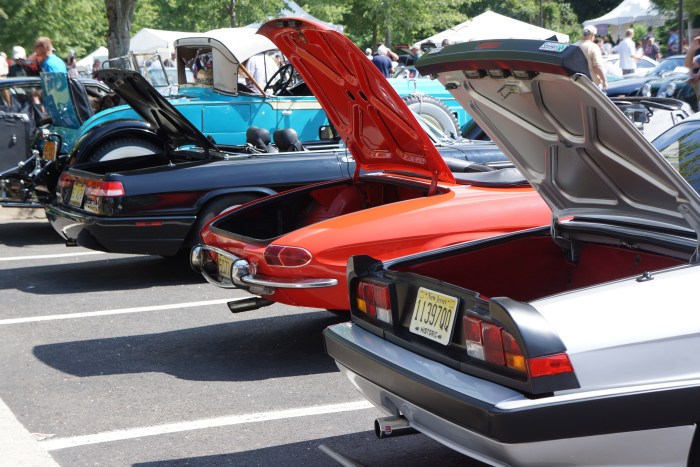
The number of spiders at the show gave me the chance to document something which I knew about, but for which I was lacking empirical data: the evolutionary design changes of the spider’s back end through 4 generations, known among the faithful as S1, S2, S3, and S4. (The front end also evolved, but to a lesser degree.) Photographing each version and displaying them side-to-side clarifies the differences. It also makes it plain to this set of eyes which of these wins the beauty contest. Your opinion may vary.
S1 (Duetto)
S2 Kamm-back (chrome)
S2 Kamm-back (black)
S3 (Duck tail)
S4 (aero tail)
L to R: S4, S1, S3
Kudos to the organizers of the New Hope show. With close to 250 cars on display, the difficult logistics of successfully running such an event become clear once you spend most of the day observing it. As the cars paraded off the field, my Alfa eventually became the sole representative of the marque. Lovely cars were seen, photographed, dissected, and discussed. Most importantly, new friendships were begun, with the promise of future automotive adventures to come.
The morning of Sunday, July 12, 2015, dawned sunny and temperate. The promised heat was still a few hours away as 10 cars and 13 participants gathered at our usual meeting spot, the Sheraton Crossroads Hotel in Mahwah NJ, for our planned breakfast drive.
The first arrivals were on site by 8am. We were “all in” by 8:30am and caravanning by 8:35, headed to Cold Spring NY. Cars built by General Motors were again predominantly represented by Bill’s C6 Corvette, Larry’s Z28 Camaro, Ted’s boat, er, Eldorado, and Ralphie’s Buick Skylark.
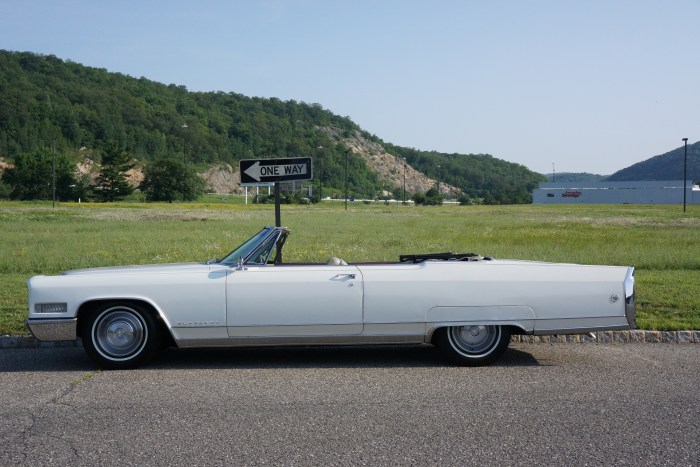
Ted’s ’66 Caddy Eldorado convertible
Ralphie’s Buick Skylark convertible
Larry’s ’94 Camaro Z28
Bill’s C6 Corvette
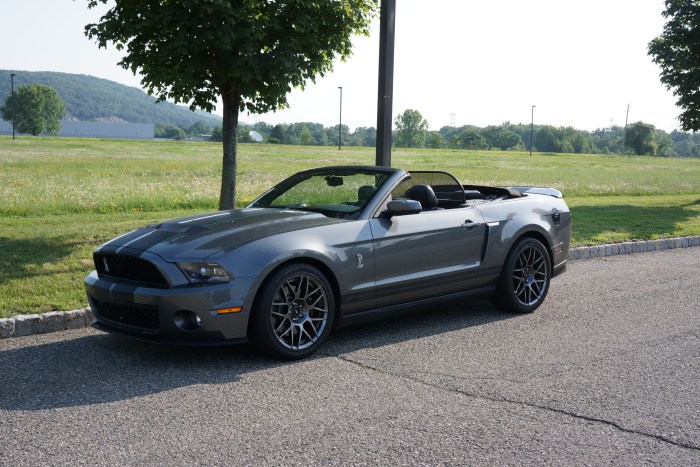
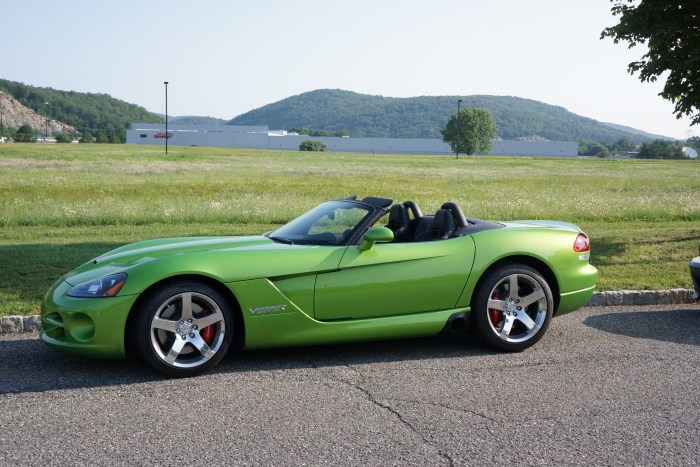
We had two Mustangs this time, both driven by Nick! Nick D piloted the white convertible while Nick S drove the grey coupe. The only MoPar again wasn’t a car, it was a Viper. It was also a last-minute substitution as Rich S intended to drive his V8-equipped Alfa spider, but “something” was causing a rear tire to rub. And your author’s Alfa had European company from Peter’s 911 and Jeff’s BMW Z3. Enzo, Rich L, and Bob P hitched rides with willing drivers. (Jeff, in a most humanitarian gesture, allowed Enzo to drive his Z3.)
Nick D’s Mustang
Nick S’s Mustang
Rich S’s Viper
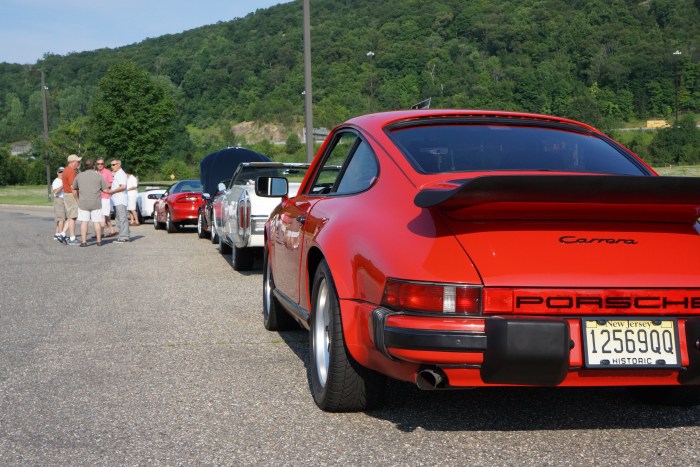
Peter’s Porsche 911
Jeff’s 2000 BMW Z3
Your author’s 1967 Alfa Romeo
Fish tales before breakfast again!
Lined up and (almost) ready to roll
EC drives Jeff’s BMW, decides it’s not Italian enough
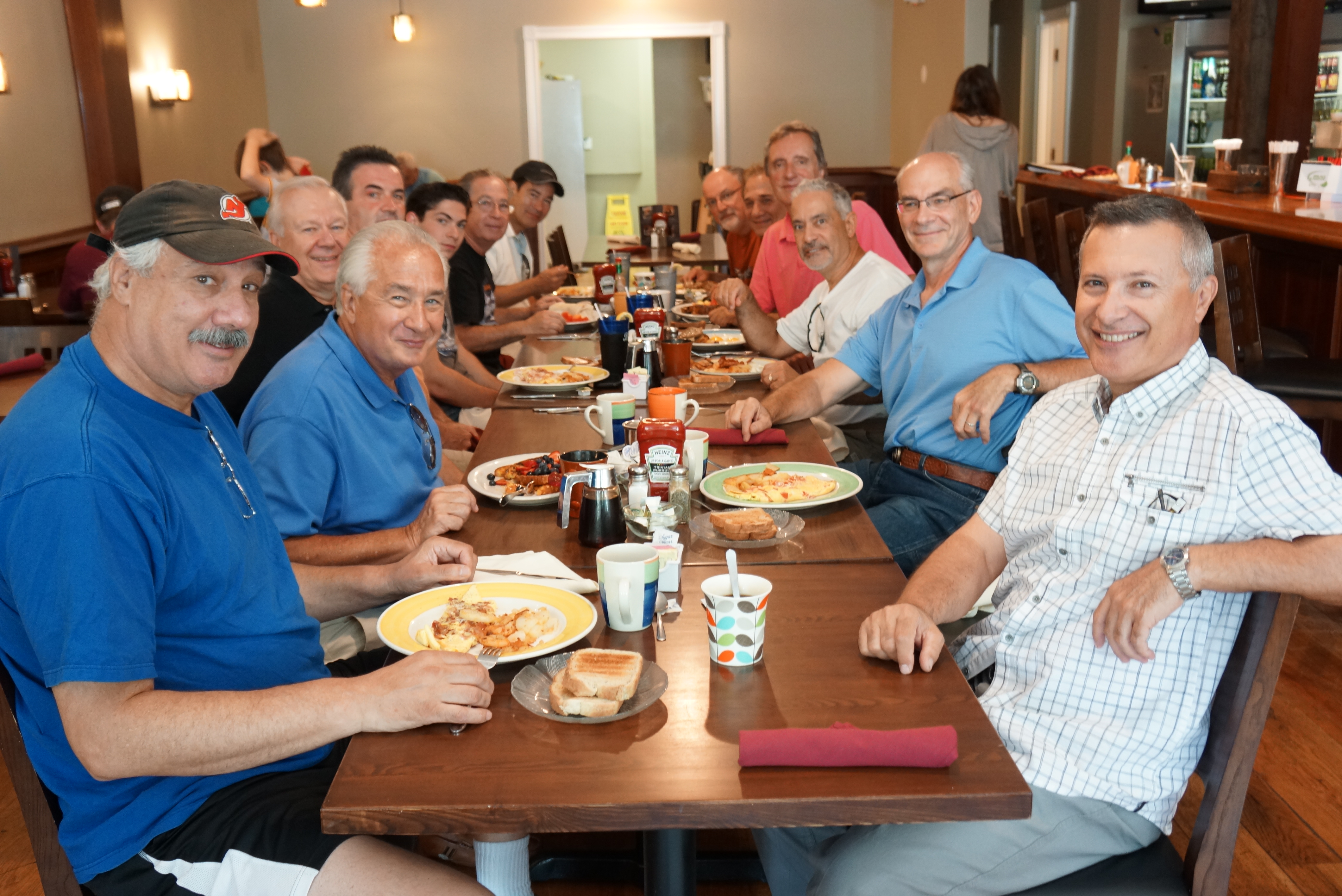
Larry led the charge through Seven Lakes Drive, across the Bear Mountain Bridge, then north into Cold Spring. We were at our spot, the Silver Spoon Café, ten minutes early. Nevertheless, our table was ready and waiting for us. Terry met us there, having ridden his bike from home nearby, so 14 hungry men sat down for a good breakfast. It was our first time to this restaurant, and high marks all around for the food, the coffee, and the service. Thanks, ladies!
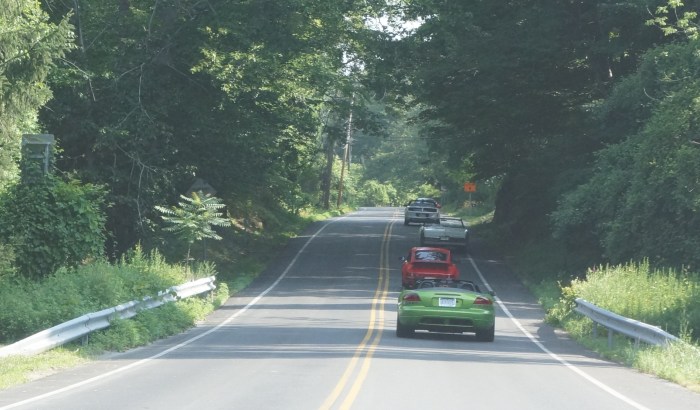
On our way
Rich drives AND takes photos from the Viper
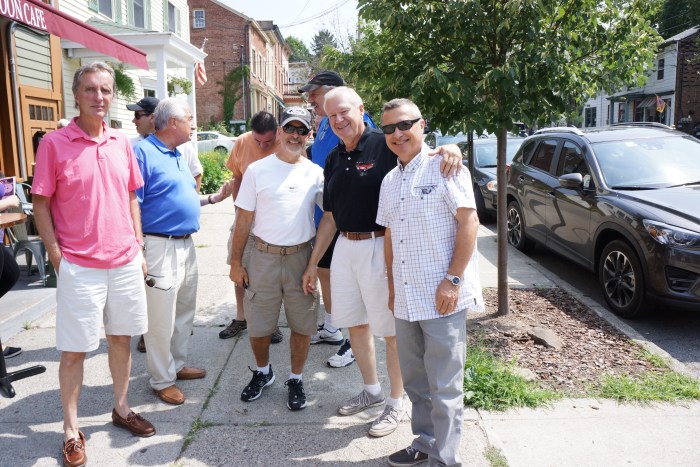
No one was in a rush to leave the table, and the staff was in no rush to show us the door. In fact, they kept coming ‘round and filling mugs long after the bill was paid. When we finally made it back outside, the temperature had kicked up considerably. The group still continued to mingle on the sidewalk in front of the café for a few more minutes, and several of us also took advantage of a tour through the charming town of Cold Spring, either on foot or by car.
All 13 of us (with me hiding behind the lens)
For several participants, it was their first time out with us, and they’re threatening to return. Given that it’s the middle of the summer vacation season, we still had a great turnout from the regulars. We always say the same thing: “It’s about time we did this again!” And so we will. We’re already perusing the calendar for an August repeat.
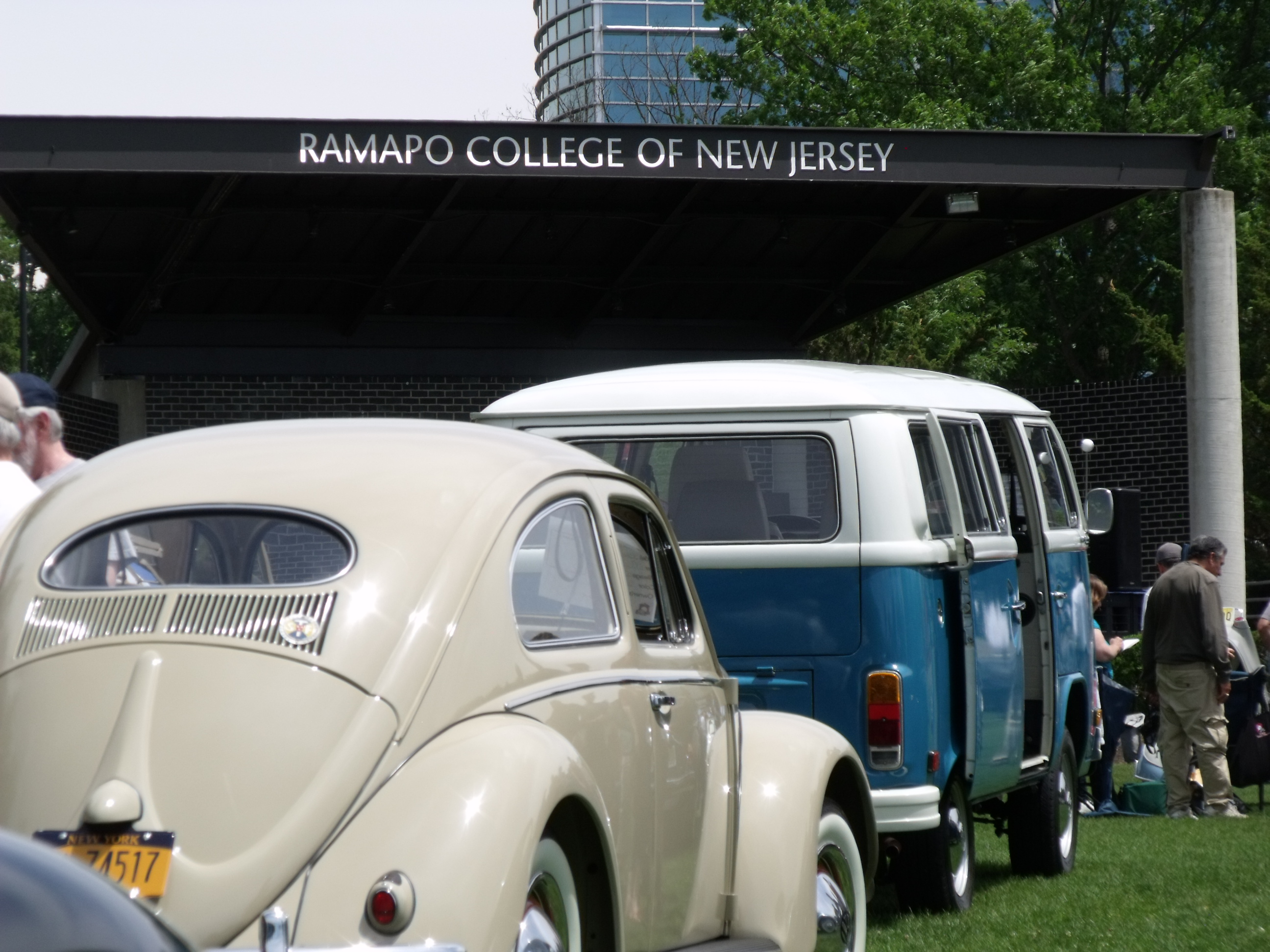
The first annual Ramapo Concours d’Elegance was held on the grounds of Ramapo College in Mahwah, NJ, on Saturday June 6, 2015. The Concours was an outgrowth of a regular Cars & Coffee event held at the campus (and locally referred to as a “Caffeine & Carburetors” gathering).
Show cars were arrayed on the grass (thankfully not asphalt) in front of the band shell.
Our Driving Club regulars started the day extra-early by meeting at Mary Ann’s deli for breakfast. As my Alfa was entered in the show (alas, the only car in our group so selected), I needed to leave breakfast early, not only to arrive on the show field on time, but also to detail my car after driving an hour in the rain that morning! Once there, detailing was not helped by an intermittent sprinkle which lingered until after 9 a.m., by which time the first of the spectators had arrived. By 9:30, the sun was out, and it turned into a beautiful, warm spring day.
The view of the show field from the folding chair.
The college enlisted co-sponsorship from the Prestige Dealership Group of northern New Jersey, and Hackensack Medical University Hospital. While all who worked the event made their best efforts to be helpful and accommodating, it was obvious that this was the first time any of them had put on a car show. It is not worth dwelling on “things gone wrong” that day, as frankly, most of them were minor and easily fixed with an increased focus on logistics, which should be expected from them now that they’ve done it once.
We will however, review the show cars (and the vast majority of these automobiles were outstanding) by “class”. If there was an overriding point of discussion during the day, it concerned the vehicle classes. While some classes were well-defined and well-populated, other classes were very small and/or left us wondering how they were decided upon.
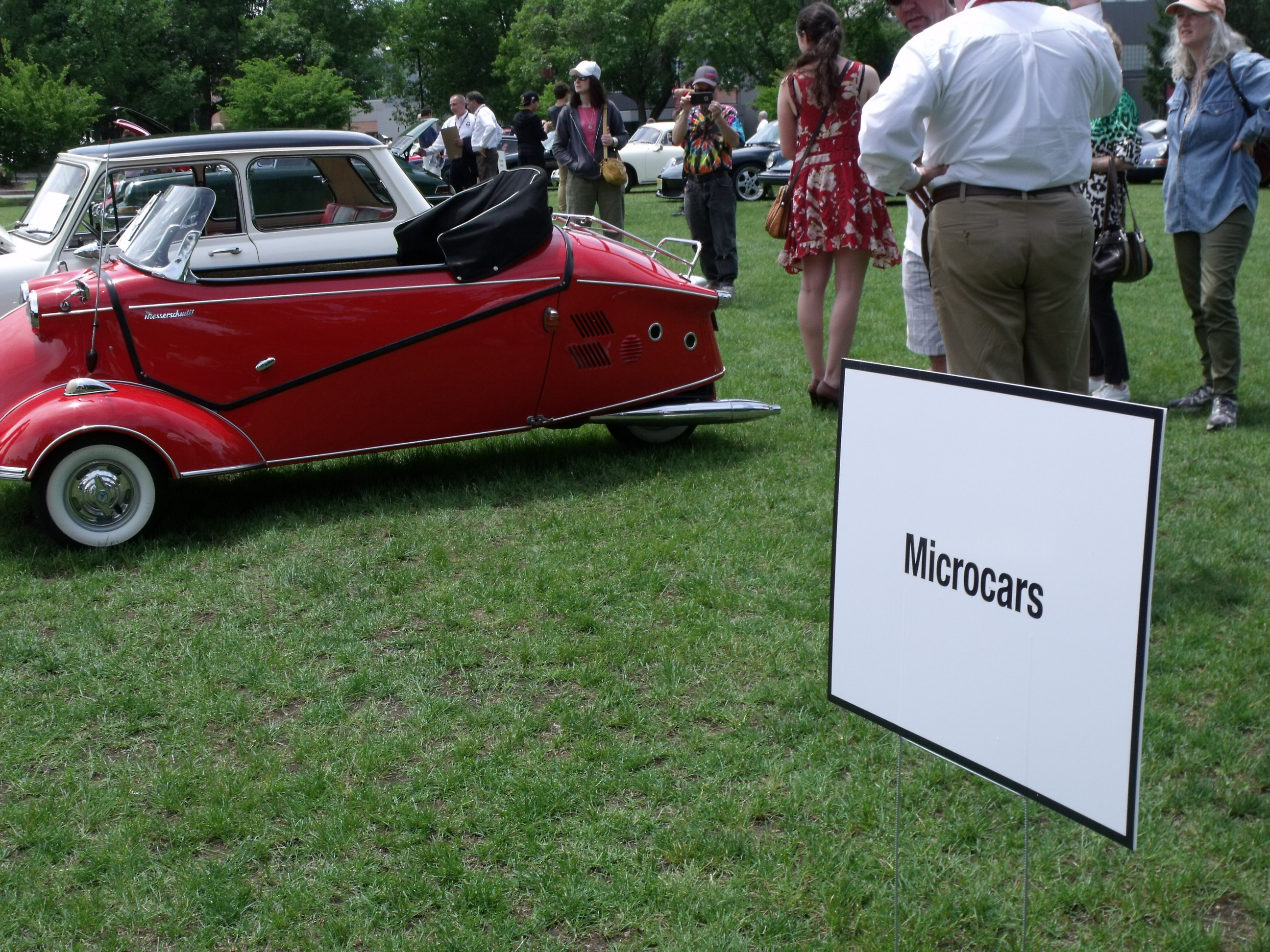
Microcars on display included this rare Messerschmitt cabrio.
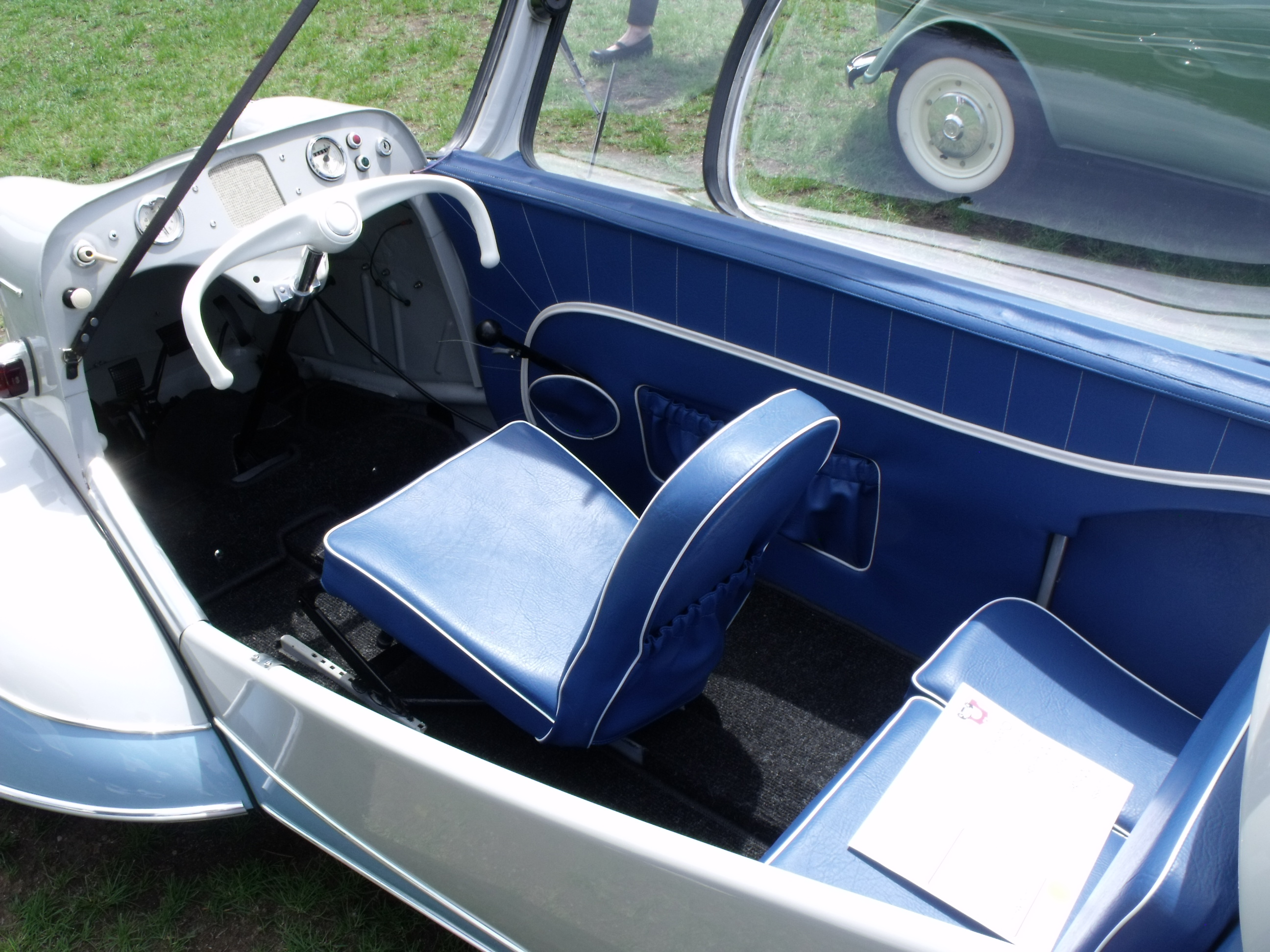
At the end of the show, I heard one of the dealer principals comment that he was amazed at the large turnout of microcars. He need not have been. These puppy-dog cars have been steadily gaining in popularity, especially in the last decade. We had the “usual” Isettas and Messerschmitts, plus some less-frequently seen tiny cars.
This Isetta bubble-window cabrio is ultra-rare. It is estimated that between 15-99 (out of 161,000) of this body style were made.This restoration was close to 100% original. As a former Isetta owner, I know.A 1955 Messerschmitt with its canopy top open.The Isetta’s big brother, the BMW 600. It had TWO cylinders, for 26 horsepower!
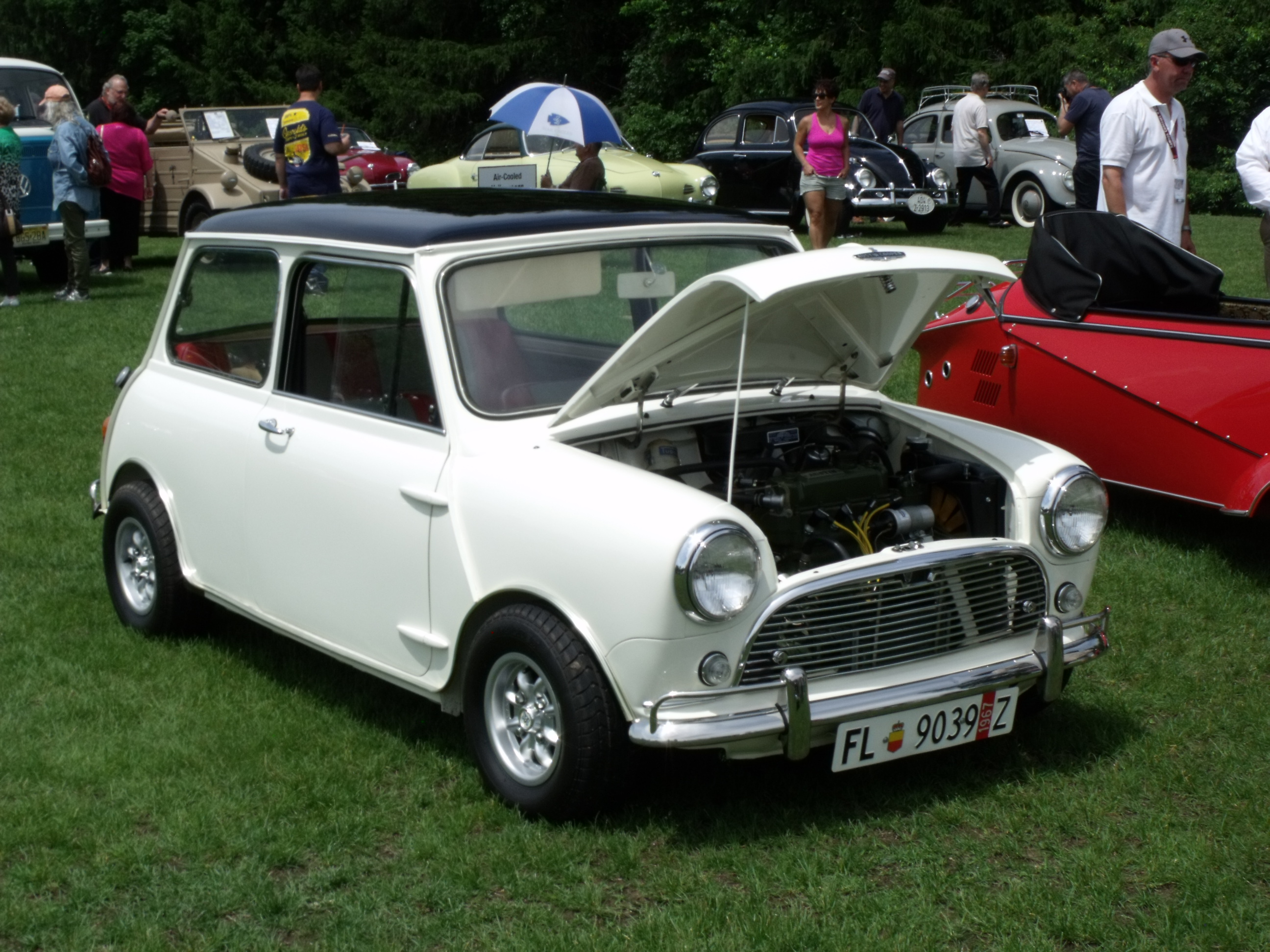
At noon, A Zimmer (of all things) invited itself in, and proceeded to park next to this Mini Clubman.This 1967 Mini looked large next to its microcar brethren.
Two extremes of air-cooled VWs: a ’70s bus next to a WW2 military VW.
Another well-populated class, these cars were not even considered collectible until rather recently. Now, Beetles, Karmann-Ghias, and especially buses have soared in popularity (AND price). Get yours while they’re affordable.
Possibly the oldest bug I’ve ever seen: a 1950 model.
The rear of the ’50. Note complete lack of chrome.
This ’51 is almost as old, yet wears a modicum of chrome.
Gorgeous Karmann-Ghia interior.
Not a 23-window, but gaining in popularity nonetheless.
Air-cooled AND rear-engined.
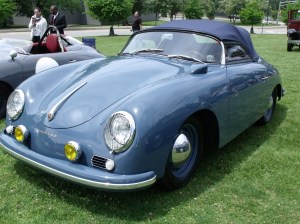
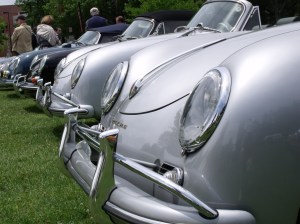
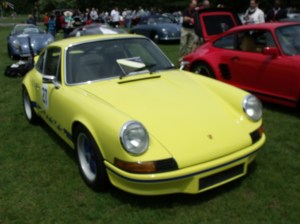
The class definition excluded 924s, 944s, 928s, and any 911 built after 1998. Nevertheless, old-school 911s and 356s turned out in force. Everyone loves these cars, as they are so recognizable, even if many of us have been priced out of the market.
A 356 Speedster, much coveted today.
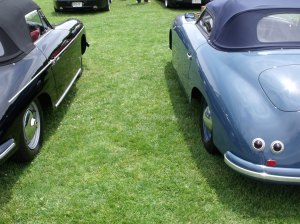
A nice comparison of a 356 convertible (left) and 356 Speedster (right). Note side curtains on Speedster.
An attractive white 356 coupe.
Speedsters in German silver line up.
Gotta love period colors like orange…
… bright blue….
… and yellow.
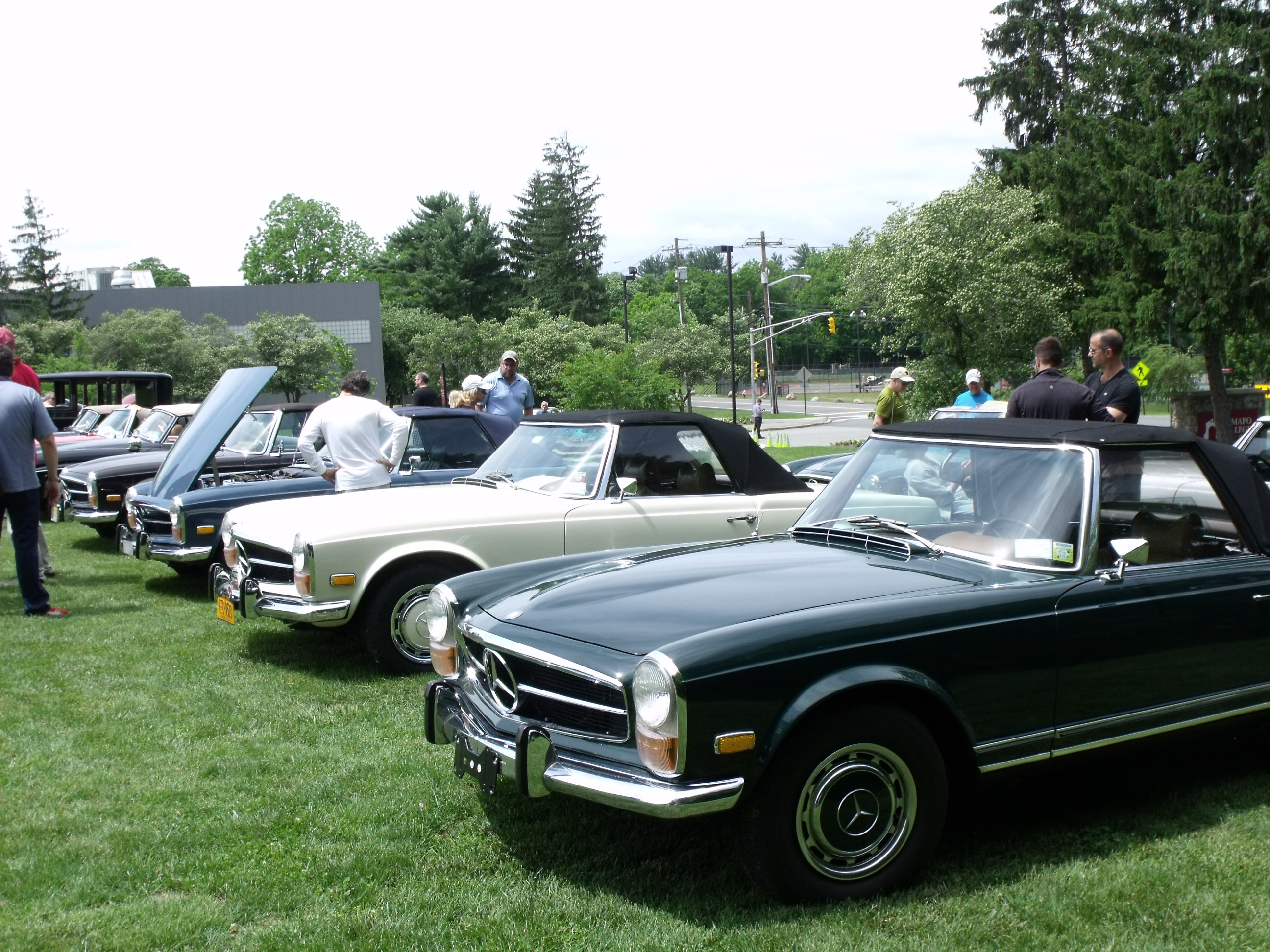
MERCEDES SL PRE-71
While no 300SLs graced us with their presence, this 3rd class of German cars still impressed us with a nice selection of 190SLs, and various “Pagoda” cars (230/250/280 SL).
It’s June, so Pagoda tops are home in favor of soft tops.
A Continental Mark II (don’t call it a Lincoln!) on display.
One of only 3 domestic classes, this was also the class with the fewest number of vehicles in it. In fact, there were a total of 3 cars, and since 1st, 2nd, and 3rd place trophies were being awarded, everyone in this class took something home!
A not-often seen ’53 Lincoln Capri was impressive in its sleekness.
The Lincoln Capri tail light.
You can have your show T-Bird any way you like (as long as it’s a 2-seater).
The above is the total class description. Ford made T-Birds every year from 1955 through 1997, then the Retro-Bird from 2002-2006. Yet of the 10 or so cars on the show field, every one of them was either a ’56 or ’57 (all 2-seaters, obviously, or perhaps not obviously if you are unaware). However that happened, it was nice to see the colorful collection on display. The original T-Bird still has a charm all its own.
’57 in black…
… white ….
… and gunmetal grey.
T-Bird fronts.
T-Bird tails.
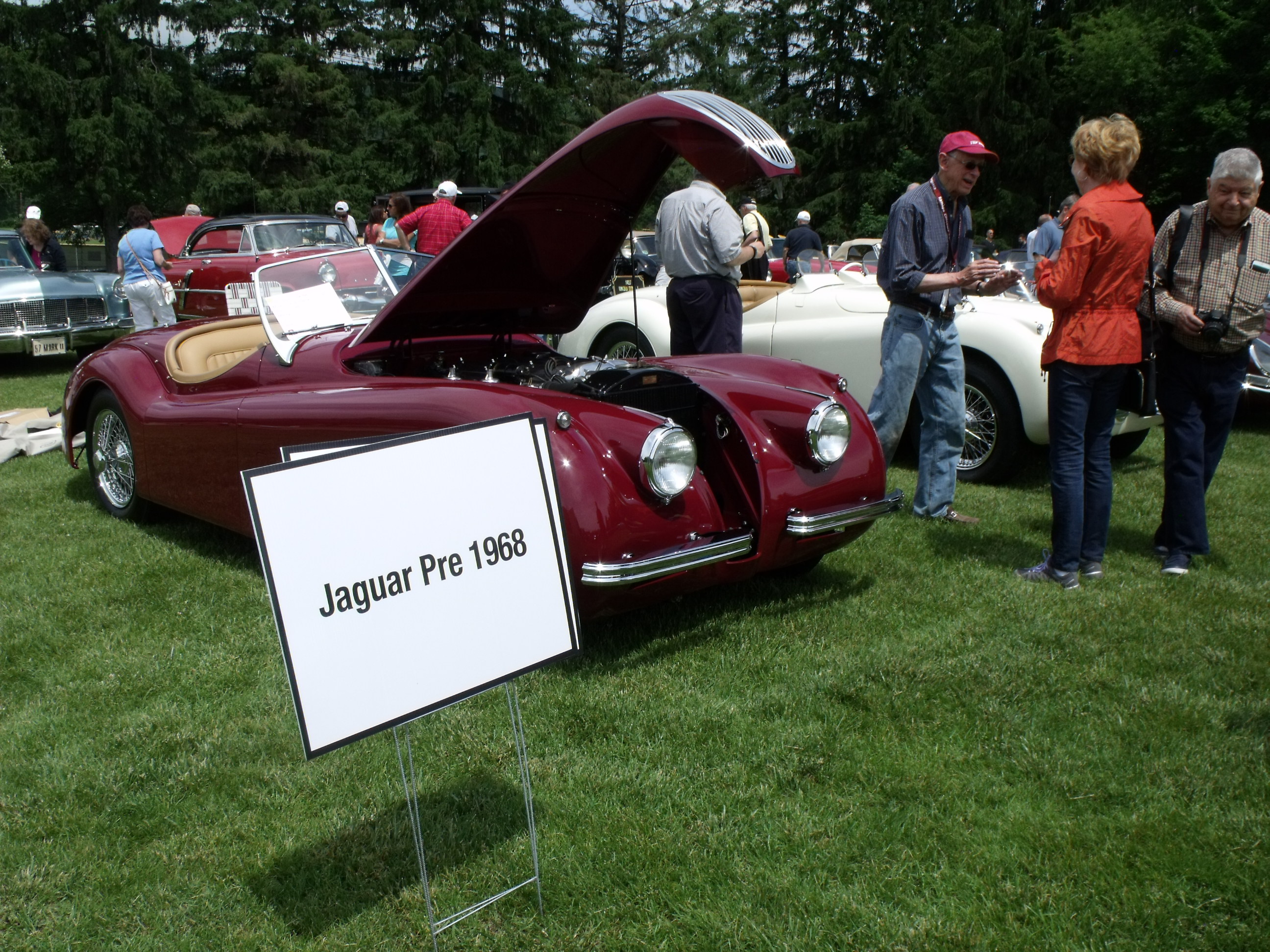
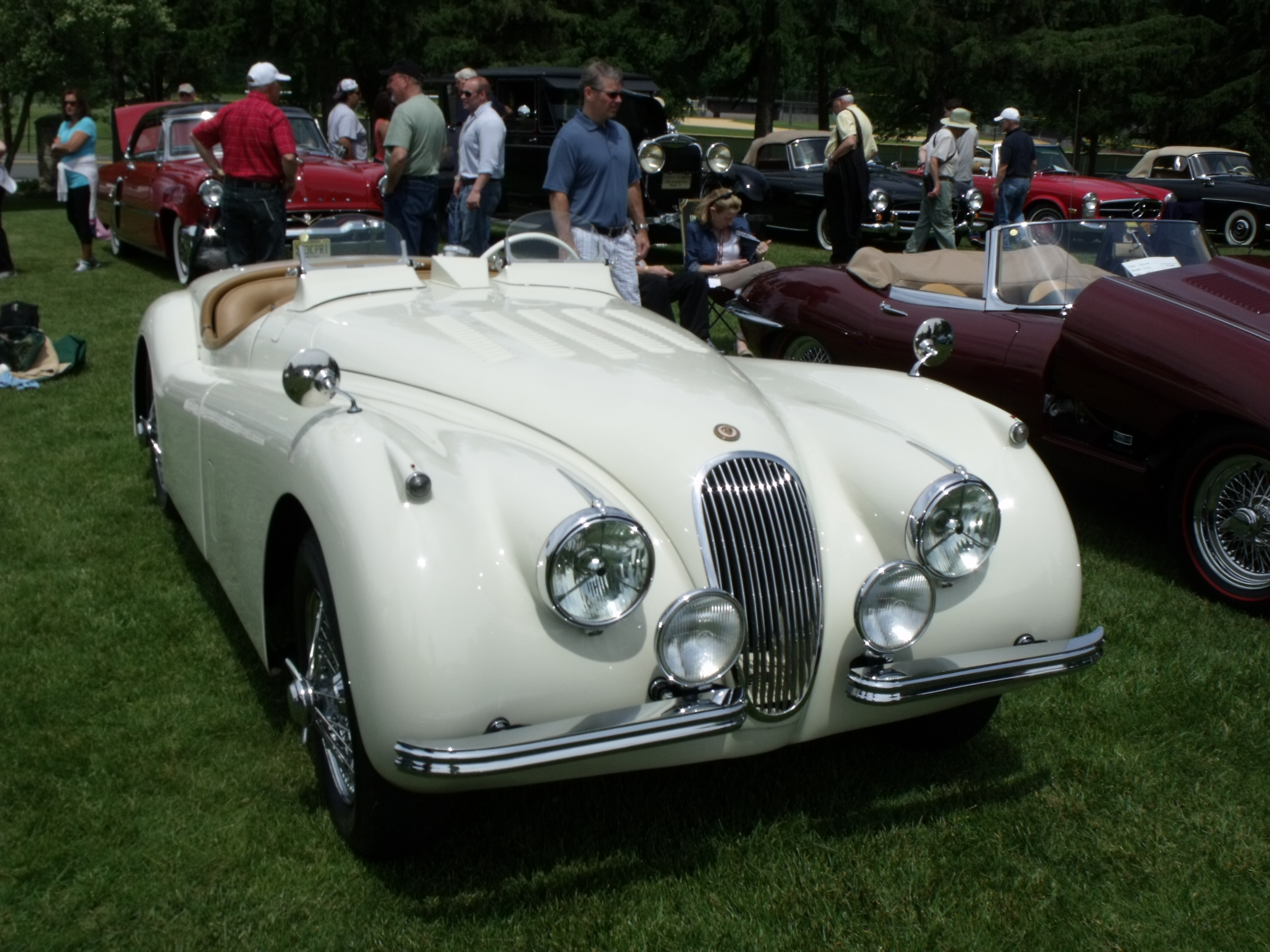
An XK-120 in the correct class.
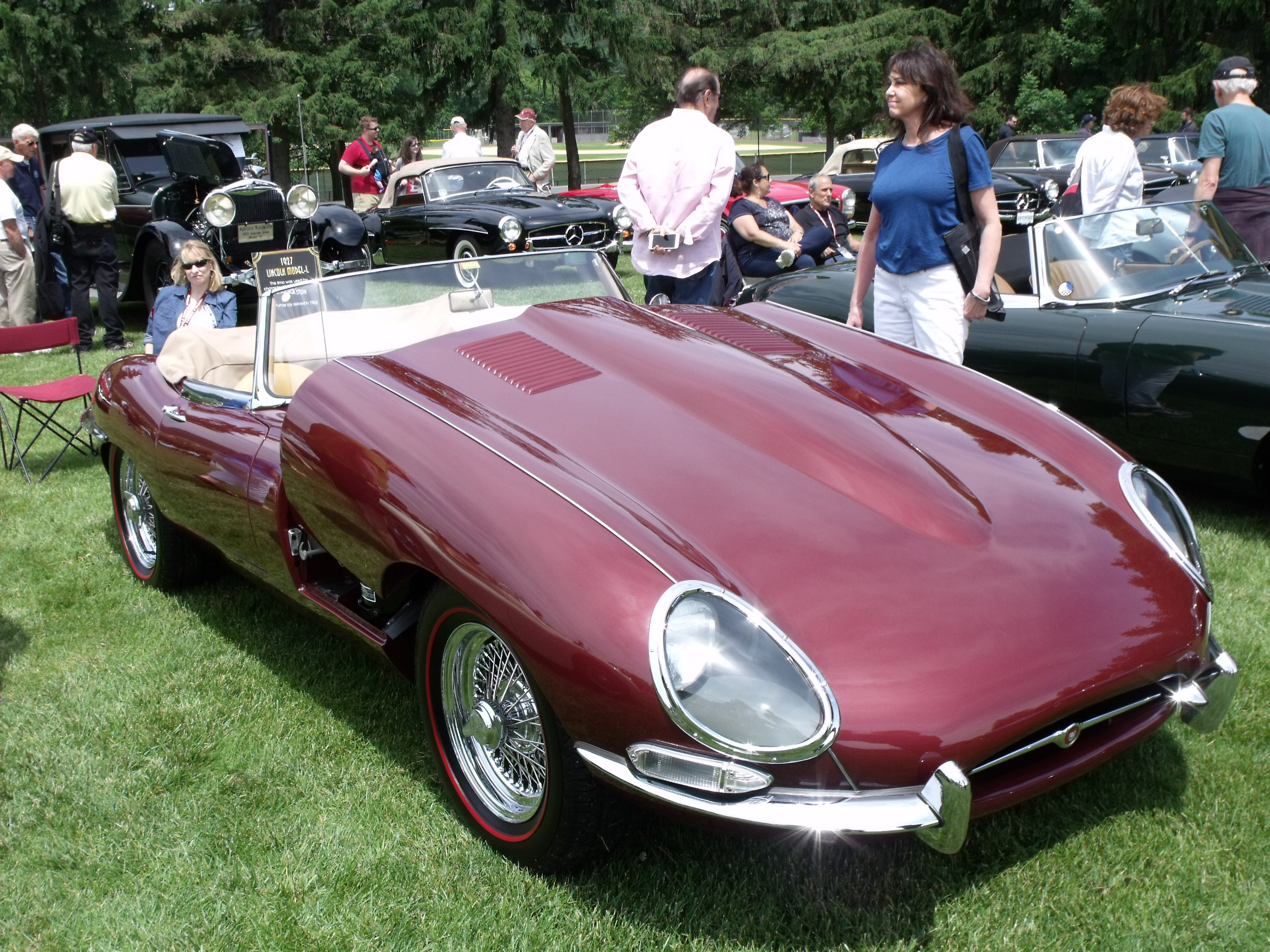
The class definition assured us that we would see only “classic Jags”, the newest of which would Series 1 E-types. We were rewarded with some of the nicest machinery on the entire field. Several of the XKs were truly #1 cars, with gorgeous cosmetics, and paint better than ever applied at the factory.
An XK-120 stunning us all in its blue perfection.An XK-120 MC. Note the “wind visors” in place of a proper windscreen.A Series 1 E-type OTS (open two seater).
Post-war cars with cycle fenders and stand-alone headlights? Must be British.
Jaguars had their own class, so this class grouped some common and not-so-common British machines. This likely was the most eclectic grouping on the grounds that day, with a pre-war Triumph, a pre-war Aston Martin, and a Sunbeam Harrington battling it out for “most unique British car”.
A Sunbeam Harrington from the rear, showing its unique roofline.
A 1930 Aston Martin. Looked like a Bentley from afar, looked better than that up close.
Grille detail on the Aston Martin.
A 1935 Triumph Southern Cross. Bet you never heard of it.
The interior of the Triumph.
Yes, there were cars other than Ferraris in the Italian class.
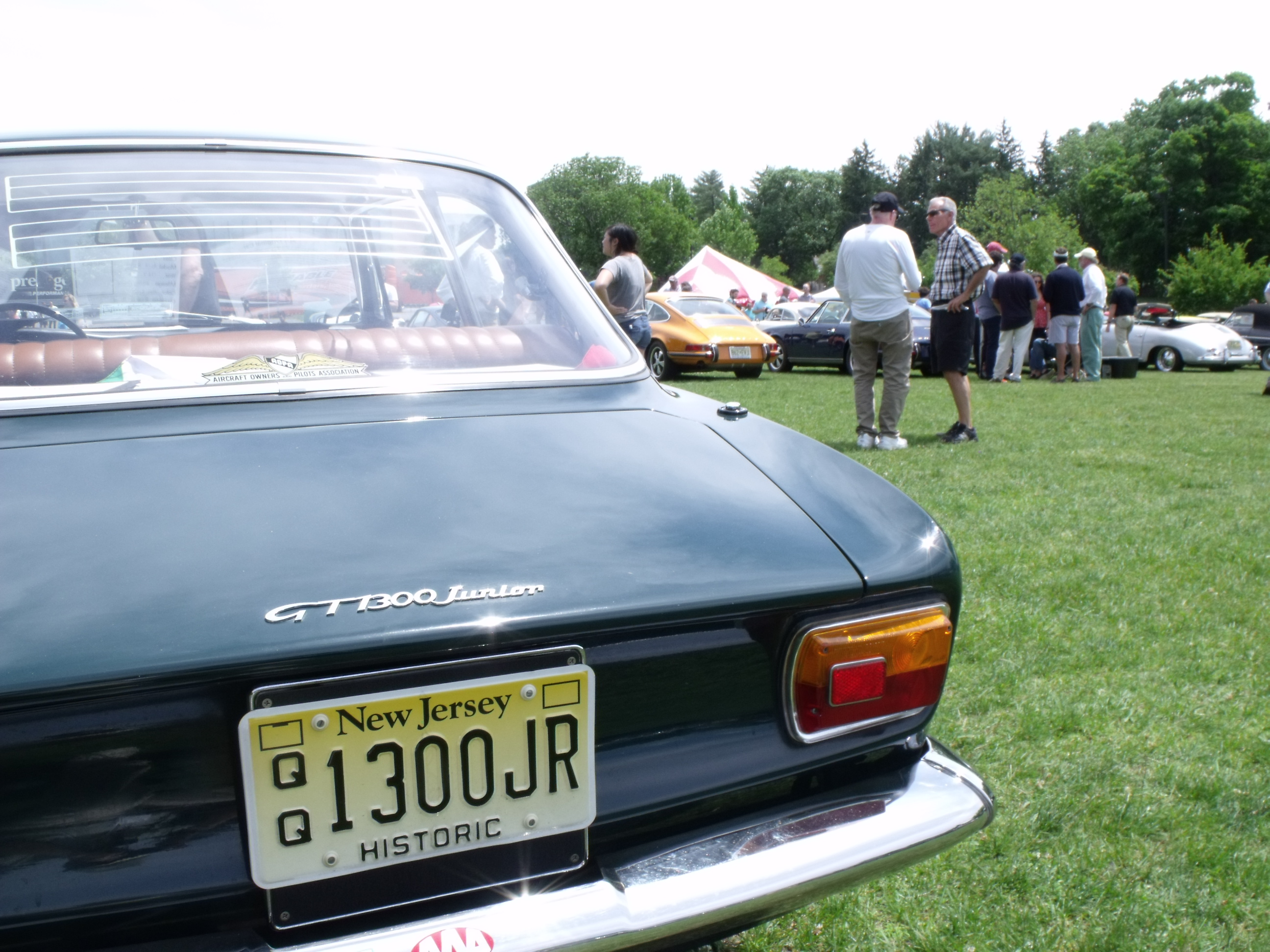
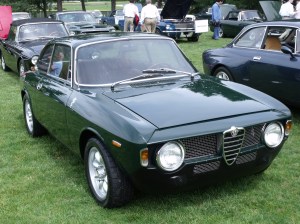
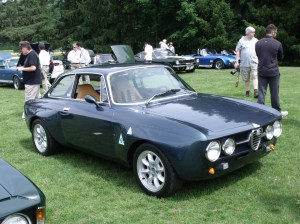
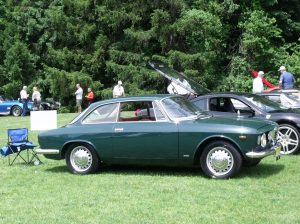
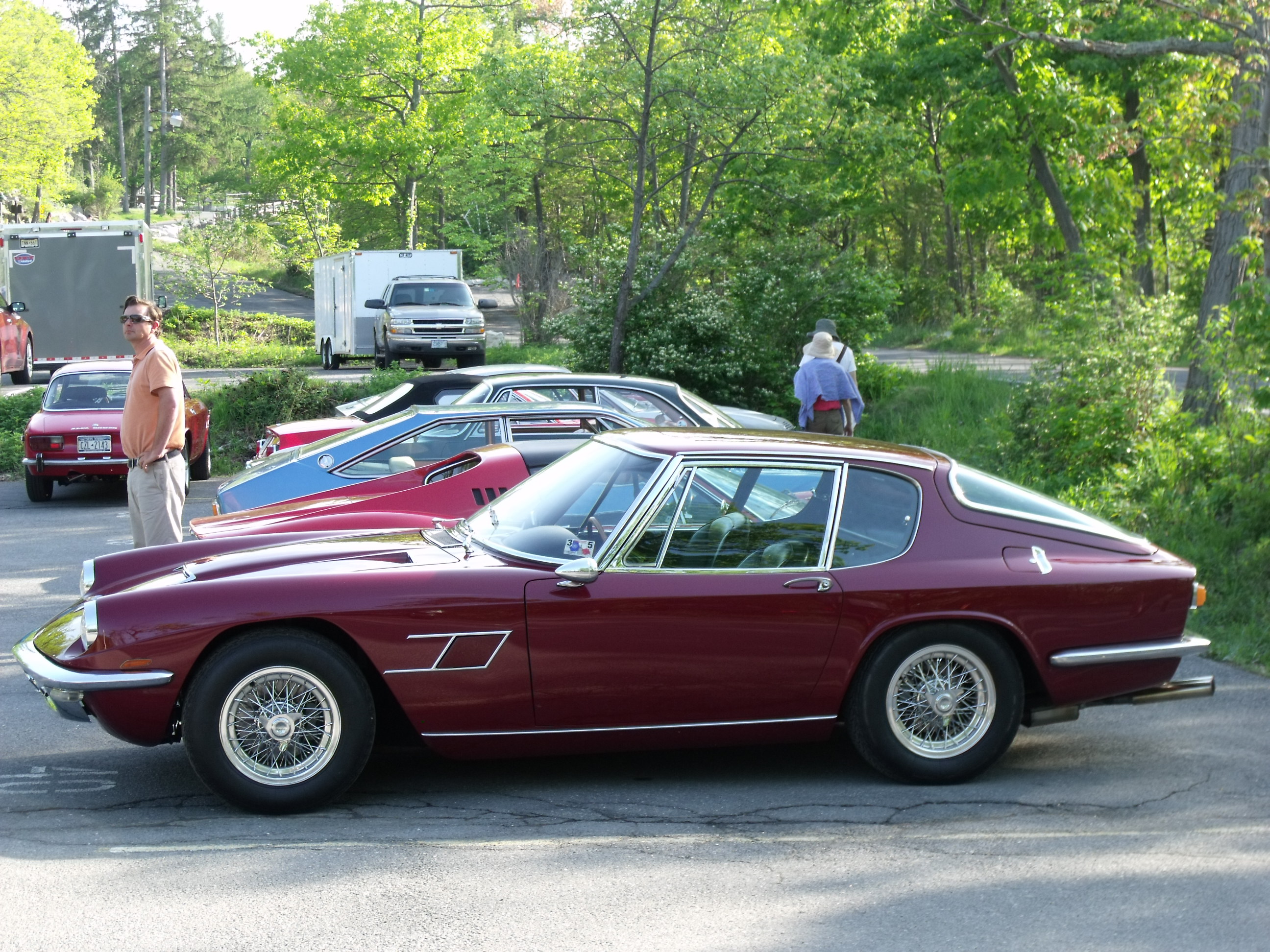
Of course, this was the class into which my Alfa was entered. By definition, we might have seen everything from a Fiat 850 spyder, to a Lancia Fulvia, Maserati Mistral, Lamborghini Miura, and Ferrari 275 GTB. None of them showed. The class turned out to be one of the lesser-populated: 4 Ferraris and 3 Alfas were the total turnout. All the Ferraris were ‘70s era and newer, and all 3 Alfas were Giulia coupes!
This was the only class for which I recorded the class winners (noted in below photos).
A highly-modified ’67 Alfa GTV.
A race-prepped ’71 GTV.
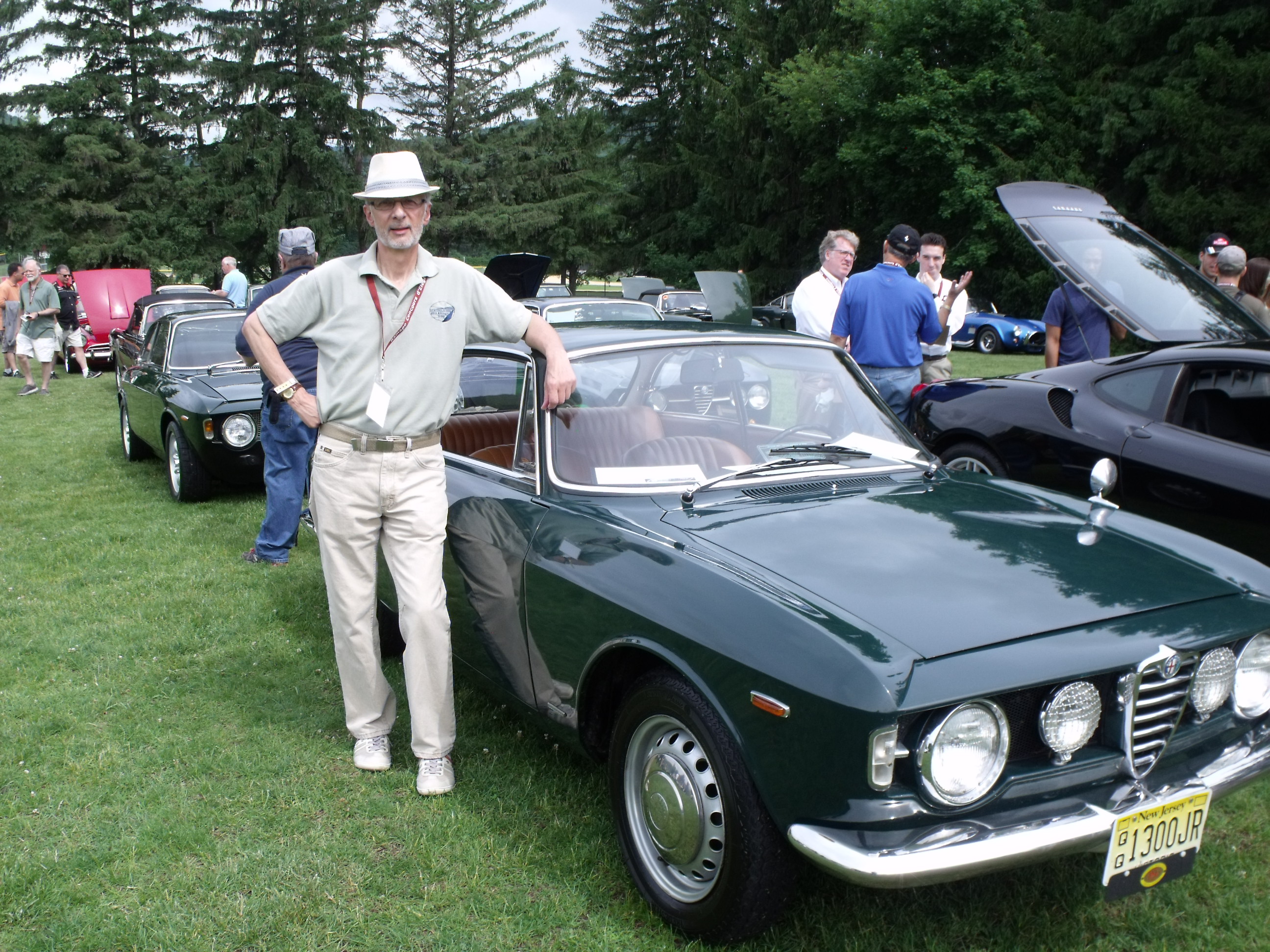
The author’s ’67 GT 1300 Jr.
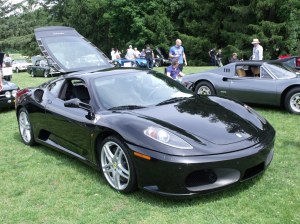
A 2007 Ferrari F430.
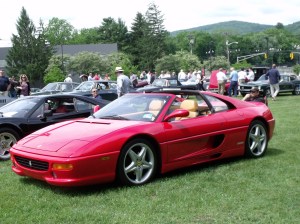
A mid-90s Ferrari 355.
Italian rear ends.
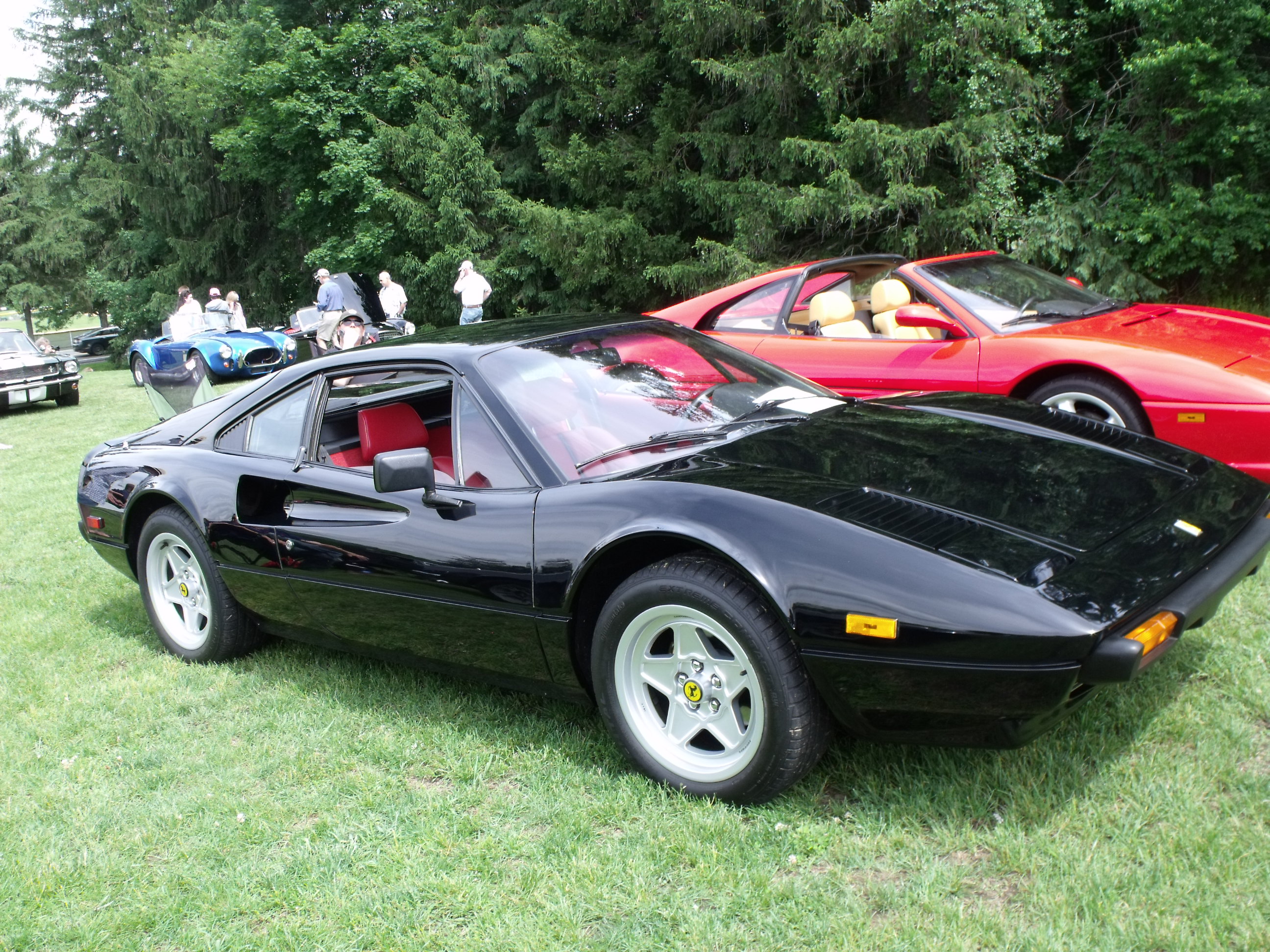
Third place: a former barn find ’79 Ferrari 308 GTB.Second place: ’67 Alfa GT 1300 Jr (that hat looks familiar).First place: 1973 Ferrari Dino.
A discussion that I became part of at the end of the show assured me that the wheels are already in motion to make next year’s event better. One of the show principals and one of the judges were engaged in dialogue to improve the class definitions. The important point is, whatever they decide, the 2016 Ramapo Concours should be that much more well-organized and well-run.
Oh, for the love of querty! While creating the daily blog entries during the rally last week, I was forced to peck at a tablet “keyboard” which severely limited my prose. By the end of the week, I omitted all text and had resorted to posting only pictures. So now, with five days of reflection since the rally ended, allow me to sum up the experience.
My rally co-driver, co-navigator, and all-around great car guy Steve Hansen was with me all week, which is always a treat. Steve and I drove our first NE1000 together in his Sunbeam Tiger in 1998. Since then, we have co-driven this event SEVEN times. (We have also cheated on each other by twice driving the rally with others.) In addition to three times with Tiger, we’ve been twice in a ’68 Mustang, and now our second time in my ’67 Alfa. It is especially heart-warming to me that Steve, as a resident of the state of California, is willing to fly east to participate. He does admit to secretly harboring a desire to visit New England if only to see green foliage, a sight sorely lacking in his part of the country.
Steve during the ceremonial mounting of the rally plate.
Steve Hansen enjoying his time behind the wheel of the Alfa.
Steve with the Alfa somewhere in the Catskills.
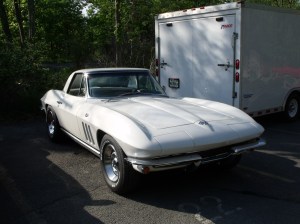
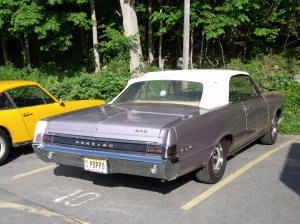
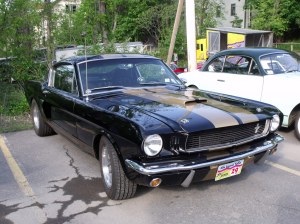
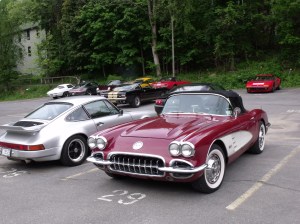
We meet up with many of the same faces each time, and it never feels like a year since we’ve last been with our fellow rallyists. They keep it interesting for us by bringing different vehicles. Among the cars, American iron counted for a slightly higher percentage of the vehicle count, and as had been the case in recent times, modern exotics also were aplenty (more about that shortly).
C2 Corvette.
1965 Pontiac GTO
1966 Ford Mustang GT 350H
1960 Corvette.
This year, “RPM”, a service and restoration shop in VT, provided mechanical assistance (as they have for the past 20 years), but also brought along several of their classics as back-up transportation should a rally car break and become unrepairable. Their Alfa spider was driven by at least three couples who needed something else while their cars underwent surgery. There was an ulterior motive: all the cars they brought are for sale, and I’m certain they had some interested parties by the end of the week.
1968 Porsche 912 owned by RPM.
Austin Healey owned by RPM.
Alfa Romeo Montreal owned by RPM.
Our organizers and hosts, Rich and Jean Taylor, pride themselves on planning a unique route each time out. This year was no different, with the Mohohk Mountain House in New Paltz NY serving as the host hotel for the start and finish, and the Cranwell Resort in Lenox MA also providing overnight accommodations. Our four days of driving took us through much of the eastern part of upstate NY, as well as portions of southern VT and NH. While we had more than our usual share of daytime traffic and road construction, we also had glorious sweepers through undulating hills, with little or no traffic to impede our forward progress. Most of the roads were actually paved.
Wayne Brooks, Rich Taylor, and your scribe, who sometimes still can’t believe he knows this guy.
Regular followers of this blog know that the Alfa got a completely rebuilt front suspension over this past winter, and with barely 100 shakedown miles on it before departure, I am pleased to report that the front end remained attached to the vehicle. Actually, the car drove quite well, with all previous front-end knocks and squeaks banished. Steering feel was excellent, especially through the twisties.
The Alfa at a lunch stop.
The Alfa in front of Scheffler’s garage.
The Alfa in the foreground of some mightily impressive cars.
Steve gives our steed a bath.
A most reliable Italian rally car.
Flanked by German and American muscle.
One issue which arose late on Sunday was an intermittent miss or hesitation, which at first only revealed itself on steep inclines. By Monday afternoon, it felt like it was getting worse. I had a concern regarding the percentage of ethanol used in the fuel in New York State, and had pre-emptively begun using Sta-Bil brand fuel additive for ethanol. After dosing (probably over-dosing) the tank 3 or 4 times, Steve and I decided to eliminate the Sta-Bil, as it was the only “new” variable that we had changed. By the second fill-up without the additive, it was as if someone had thrown a switch. The car ran better than ever, and we banished the additive to the trunk (my remaining supply is now on eBay). The car ran absolutely flawlessly the remainder of the week.
Eighteen years ago, while driving home after our first rally, we both marveled at the concept that “car people” would take their precious old Jaguars, Porsches, Ferraris, and the like, and actually drive these valuable old automobiles, rain or shine. We have never felt the same about a static car show since. Each year, there is something about driving your old car down the road, and having a Ferrari Daytona in front of you, and an AC Bristol behind you. While photo opportunities seem to become more infrequent as the week wears on, we did manage to squeeze off a few shots of cars on the road with us.
Ferrari Daytona spyder in back.
Ferrari Daytona in front.
AC Bristol coming up fast.
Ferrari 250 Speciale after it passed us.
One morning at breakfast, a couple who were driving this rally for the first time (in their modern 911) asked us what has changed over the years. This started a lengthy and at times quite humorous recollection of “the way it was”. At one time, cars had to be 1973 or older, so no modern metal. A large part of your week was spent tending to matters underhood to ensure you’d make the full 1,000 miles. The TSD (Time/Speed/Distance) part of the week was fiercely competitive. One driver at our table freely admitted that back in the day, he would approach an intersection intending to turn right, but would signal left to purposely confuse the fellow rallyist behind him. We covered broader swaths of territory, because we changed hotels each and every night. Each week, there were optional off-road driving challenges including hill climbs, autocrosses, gymkhanas, and drag races. Drivers drove their cars in anger (helmets were required, and were always carried by us the first few years). Cars sometimes broke during these “races”.
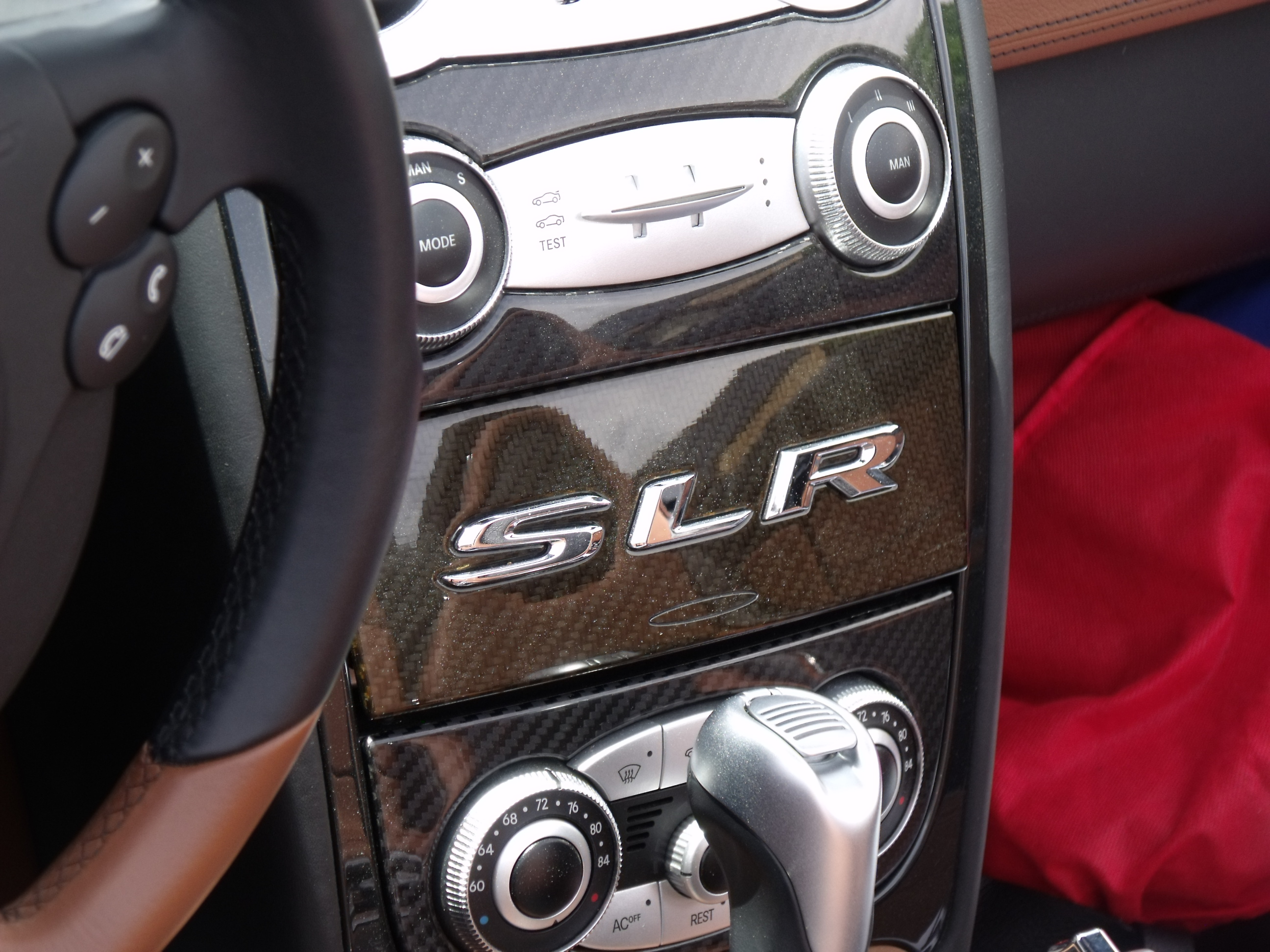
Among the “new” cars this year were about a half dozen Porsche 911s and a Mercedes-McLaren SLR. We overheard one couple in a 911 complain that their biggest issue this week was lack of “sufficient USB ports” in the center console. Sorry, that’s not “rallying”, that’s “driving your new car on the same roads as rally cars”. End of rant.
Silly Little Roadster
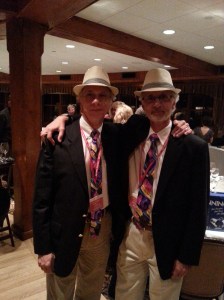
Banquet night on Thursday is always a highlight, as scores are announced, awards are presented, and we all shake hands with the promise to see each other at the next rally. Steve and I have been teased for years about looking like brothers, so we played into their hands and dressed in matching outfits. For such creativity, we got an extra piece of glass crystal to cart home, providing me with one more object in my home office to dust. The drive home on Friday in the Alfa was super smooth, and was spent plotting our next rally adventure.
“Best Car of the Rally” award winner, 1954 French Ford Comete“Spirit of the Rally” winner 1957 Ferrari Testa Rossa
We visited Hemmings in Bennington VT.
The General Store in Peru VT.
A few spare XK engines at Donovan’s Jaguar Service.
We visited the Baseball Hall of Fame in Cooperstown NY
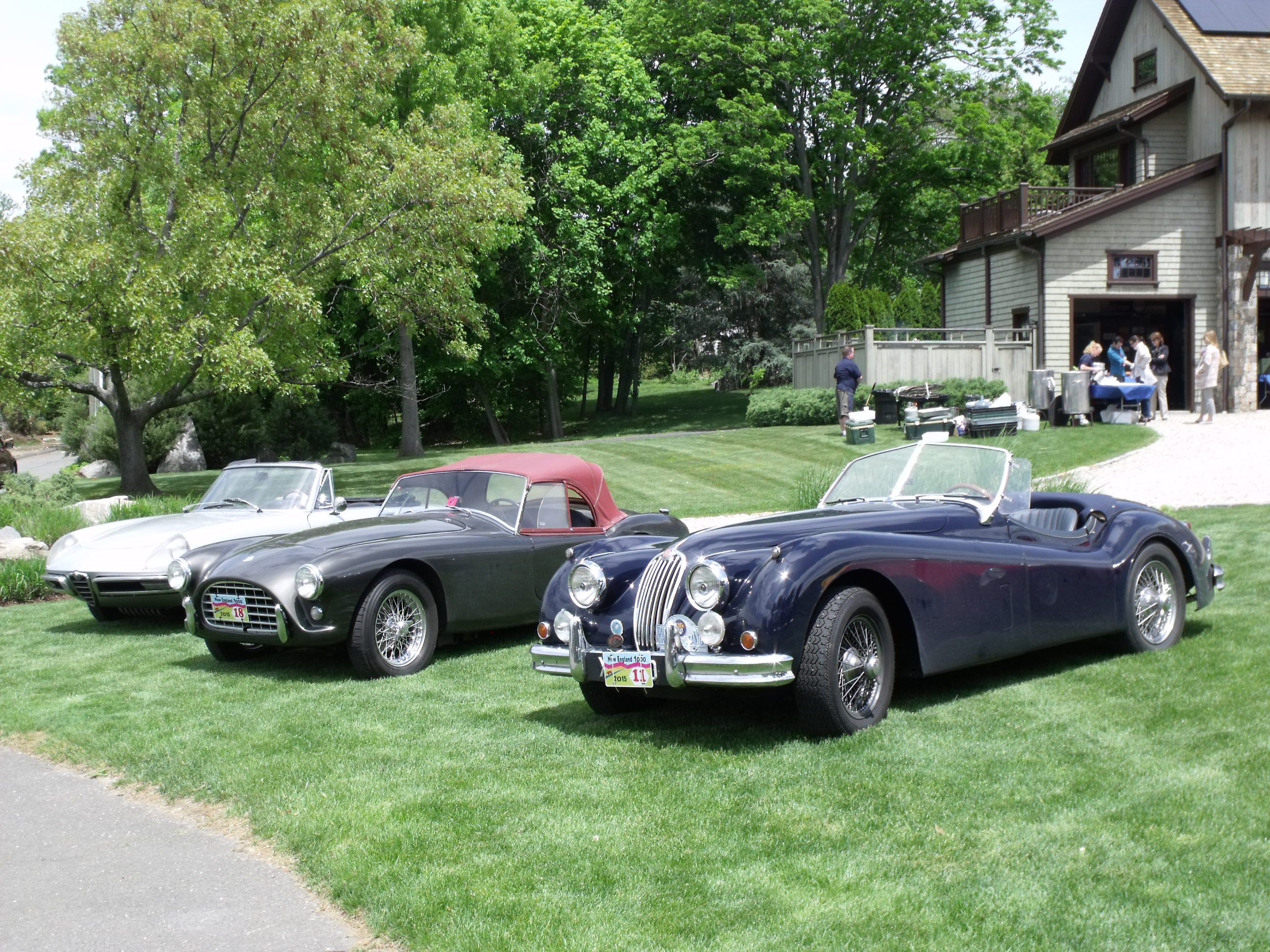
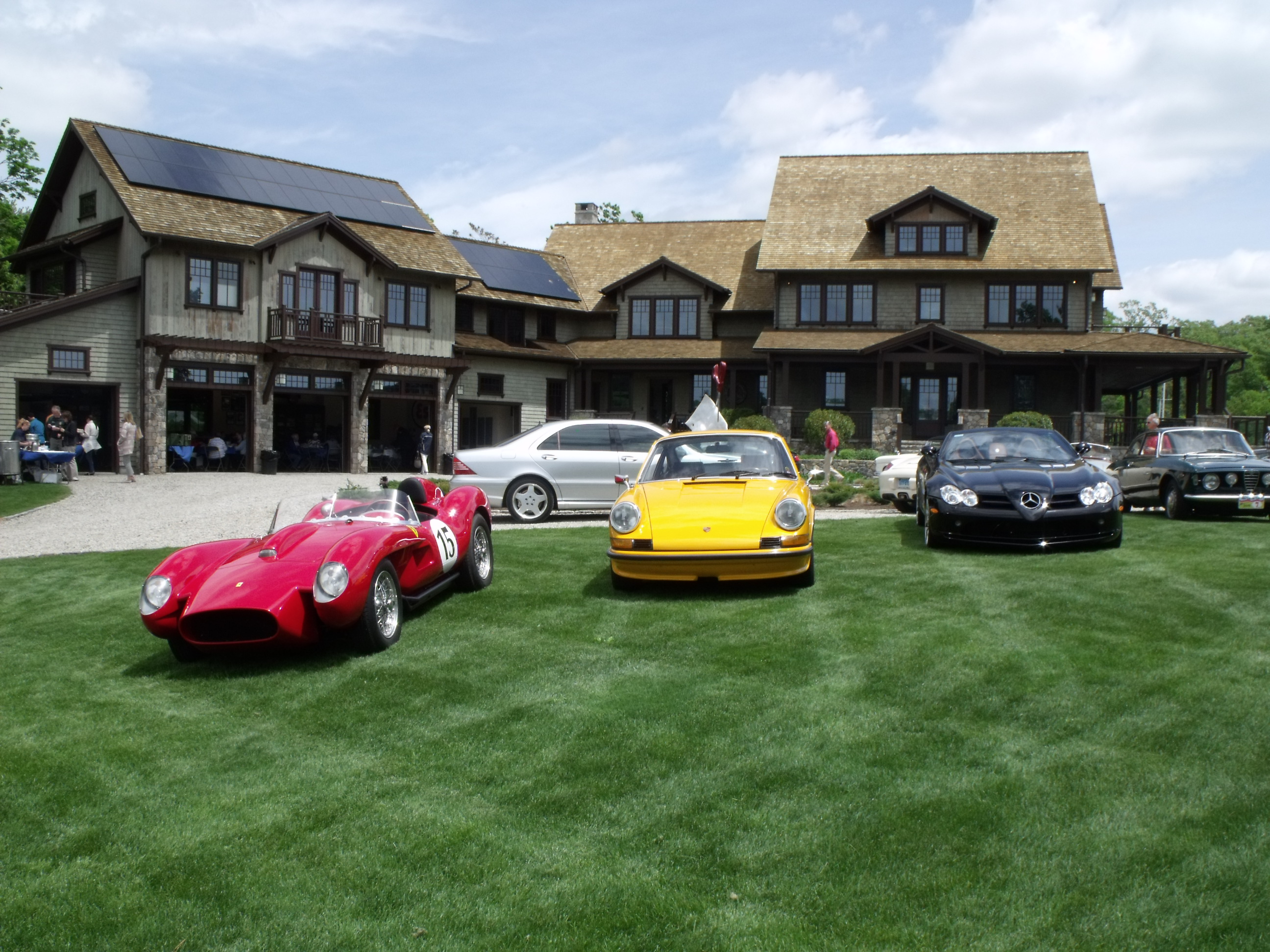
Wednesday’s driving took us from MA and into CT, where we visited Dragone Classic Motorcars and lunched at the home of Bill Scheffler. The Scheffler homestead was the day’s highlight, for the magnificent garage, the lawn’s car collection, and the lobster lunch. It was a long but lovely drive back into NY and a return to the Mohonk Mountain House.
The ceremonial washing of the rally car.Rally cars queuing up to get a time out for the next segment.Porsche 911 and Ferrari Dino.Rally cars lined up at a rest stop.AC and Jaguar at Scheffler’s.Two Fords lead the line.Ferrari, Porsche, and Mercedes at Scheffler’s.Ferrari, Corvette, and French Ford.The Alfa in front of Scheffler’s garage.Bob Cushman learns how to fold a British convertible top.The circle in front of Bill Scheffler’s home.Rally cars from a second floor window.
Each year, this classic car rally has a home base which serves as a starting and ending point. For 2015 that home base is the Mohonk Mountain House in New Paltz NY. Departing NJ at about 1pm, the Alfa easily handled the ride up the NY Thruway. Improvements to the cooling system kept the engine temperature under control at 85 degrees and 70mph.
The Alfa and I arrived in a little over two hours. It was a personal thrill to meet up with my rally brother Steve Hansen, who flew in from California (again) to drive the rally with me.
As always, there was the ceremonial installation of the front license plate. We then perused the parking lot to take in this year’s rally choices. The cars were more eclectic than ever, with a larger mix of domestic iron than we usually see.
Having completed our first rally together in 1998, the fun of meeting up with other rallyists whom we have gotten to know through the years sometimes outweighs the fun of seeing the spectacular cars.
From here I will let the photos speak for themselves. At 8am Monday morning the actual rallying begins.
Steve at the ceremonial license install.Richard at the ceremonial license install.1965 Pontiac GTOPorsche 9111965 Chevrolet Corvette Sting Ray1968 Porsche 912
1954 Ford Comete (French)1966 Ford Mustang GT 350H1967 Maserati Mistral1973 Ferrari Dino1955 Jaguar XK 1401972 Ferrari Daytona spyder
With the front suspension rebuild finally done, it was time to entrust a front end alignment to a true professional. Ed Haggan, the owner of Haggan Tire & Auto, conveniently located 0.2 miles from my house, was able to schedule the alignment on my Alfa for this past Friday. Brian, the lead tech, ably handled the job, and didn’t charge me extra for leering over his shoulder as we both stared at the screen on the Hunter machine.
Hunter did not have specs for a ’67 Alfa GT 1300 Junior, but I handed Brian printouts from one of my Alfa manuals which called for positive caster of 2 degrees, plus or minus .5 degree, and total toe-in of 3 mm. There is no camber setting (well, there is if you purchase the optional adjustable upper control arms, an option on which I passed). Brian seemed especially pleased when I told him that I had left all the adjustment locknuts finger-tight. Actually, his facial expression made me think that he wondered what else on the car was only finger-tight.
Brian states the Hunter machine is so easy to use, he can do it with his eyes closed.
A little over an hour later, I left the shop, and put 20 miles on the car. It was a revelation. The car tracked straight, steering effort was good, return to straight-ahead after a turn was amazing, and best of all, there was not a sound from the front end. (Before the rebuild, the front end clunked over every bump in the road.) Everything felt tight and right.
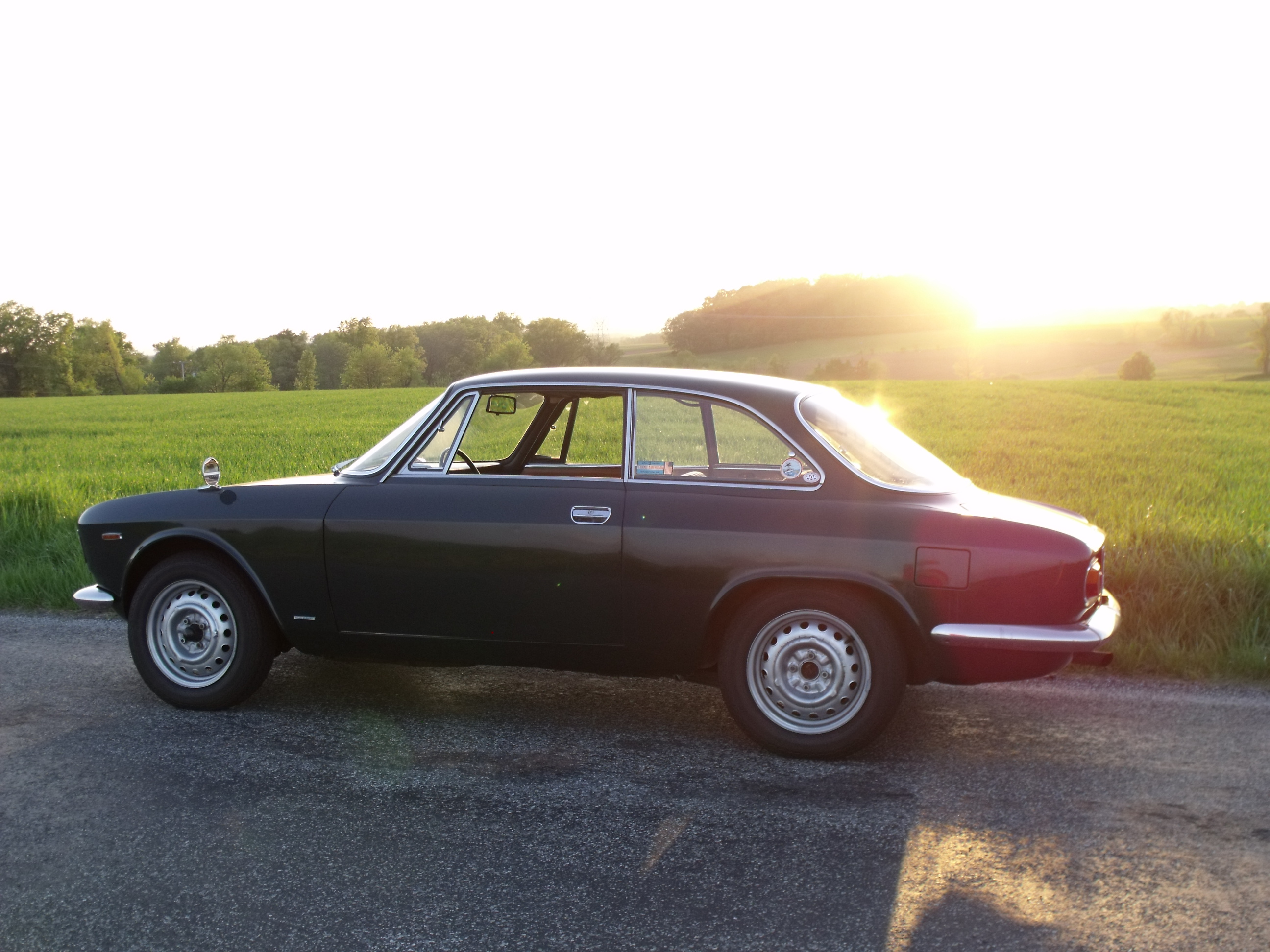
Today, with my wife along for the ride, we put another 65 miles on the car. (I’m also trying to consume the fuel from last November so that I can add fresh gas.) It was a beautiful afternoon for a ride, and the two-lane backroads of Hunterdon County were relatively deserted. After a stop for some photos, with the sun about 20 minutes away from leaving us for the day, we were home.
The Alfa on Higginsville Rd. in Neshanic Station. We don’t see a lot of traffic ’round these parts.The setting sun nicely silhouettes the Alfa. The hubcaps are in the garage, really.
Today’s ride reassured me that the front end was good, and so was the rest of the car. An oil and filter change plus quick once-over will be done tomorrow. I hope to have time for a wash and wax before departing on Sunday to drive to Mohonk Mountain House in New Paltz NY for the start of this year’s New England 1000 road rally.
The last post on this topic was three weeks ago. What have I been doing? The remaining tasks seemed easy; they were easy. But they took time to do correctly. And several events occurred in the interim (like our first breakfast run of the year, and the Carlisle auction) which I refused to ignore in spite of the looming deadline – more about THAT below.
Remember that clicking on the photos enlarges them.
By sub-assembly:
BRAKES: Truth be told, I love working on brakes, especially disc brakes. Deceptively simple. Brakes were the first real mechanical job I did on my own, on my 1970 Fiat, while I was in college. On the Alfa, once both front hoses were bolted into place, the new pads were installed, and the two front calipers bled. I saw no need to bleed the rear brakes, even though the master cylinder reservoir had drained dry. My wife agreed to enter the garage just long enough to endure the oft-repeated litany of “press; hold; release”. She actually inquired this time as to “what exactly are you bleeding when you say you’re bleeding the brakes?”. I tried to explain. She left the garage. I went back to work.
New pads and hardware from Centric.
A favorite tool in action: this caliper piston tool pushes the piston back into its bore.
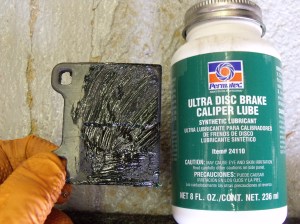
A little brake grease in the proper location works wonders.
New pads and hardware installed in the caliper.
FRONT SWAY BAR: Once the end links were pressed on, it was just nuts and bolts to get this bad boy back into its rightful location. Except the sway bar is heavy. And it’s balanced in such a way that it does not want to behave when you need to run the bolts up. Jack stands were enlisted to serve as an alternate set of hands. Which sort of worked. A pry bar was engaged too. Once the bolts were started, it went back on nicely.
Front sway bar, freshly painted and ready for its end links.
Use of jack stands was the only way to get the sway bar up where it needed to be when working by myself.
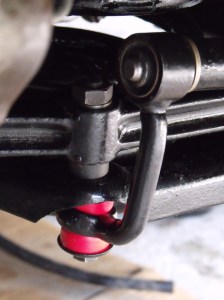
Sway bar end link bolted to the lower control arm, with polyurethane bushings.
CASTER ARMS: Perusing an online Alfa spare-parts catalog shocked me into the realization that I never had ordered the rubber bushings which fit in the junction between the caster arm and upper control arm. The real reason I had not ordered them at the same time I ordered everything else is that there were NO RUBBER BUSHINGS when I disassembled the parts. The rubber left the car long ago. The parts were inexpensive; fitting them involved another opportunity to use a BFH to bring everything in line. I also find that use of the BFH increases in direct proportion to the anxiety one feels as one nears the end of a project.
The new replacement for the missing bushing.
Caster arm bolted to upper control arm, with bushing in place.
STEERING LINKS: In an earlier blog post, I mentioned that the 6 steering link tie rod ends were replaced as a “might as well do this while I’m here” job. It seemed simple enough, and if the front suspension were to be like new, the steering rods should be too. Six steering ends were duly ordered and threaded into the sleeves. The sleeves were then bolted back onto the Pitman arm, idler arm, and spindles.
Three steering sleeves, with all 6 new tie rod ends in place.
In my haste, I reinstalled them without giving a thought to steering wheel location. This was a mistake. (Isn’t this what I’m supposed to do in a blog? Confess my sins?) I found that A) with front tires pointed straight ahead, the steering wheel was upside-down; B) I had a different number of turns to left lock compared to right lock; and C) the two front tires had toe-out of about 30 degrees (probably 5 degrees, but I was so frustrated that it may as well have been 90 degrees).
As I learned during the Isetta restoration, when you get to this point, get the largest BFH you have walk away from the car and return to it the next day. Not only did I do that, I consulted my more-knowledgeable friends (thanks, Mike and Larry), and the next day, was able to disconnect the Pitman arm linkage, center the wheel, rotate all the sleeves in the correct direction, reconnect everything, and perform an approximate front alignment. Hooray, as it was time to drive the car.
For the first time this year, all parts were back on the car, with no tools on the floor.
FIRST TEST DRIVE: This past Saturday, for the first time in five months, the Alfa left the garage, and was driven several miles. The steering felt great, ALL prior knocking and squeaking noises from the front end were gone, the car tracked straight, and the steering wheel was almost centered. Brakes worked too. Upon return, I performed a final torque, complete with insertion of cotter pins in all the ball joints. Ed at my corner garage does alignments, and I will endeavor to get that done this week.
THE UPCOMING RALLY: Two weeks from today, I leave in the Alfa to begin this year’s running of the New England 1000 old-car rally. Home base for the rally this year is Mohunk Mountain House in New Paltz, NY, a scant two hours from my home. I would still like to put about 100 maintenance miles on the car, but I’m fully confident that the Alfa will get me there, run the rally, and get me home. My rally brother Steve Hansen is flying east AGAIN to co-drive with me. This marks the 7th time we will have shared a car in this event.
So I got it done just in time – isn’t that how it’s supposed to work?








































































 richardscarblog