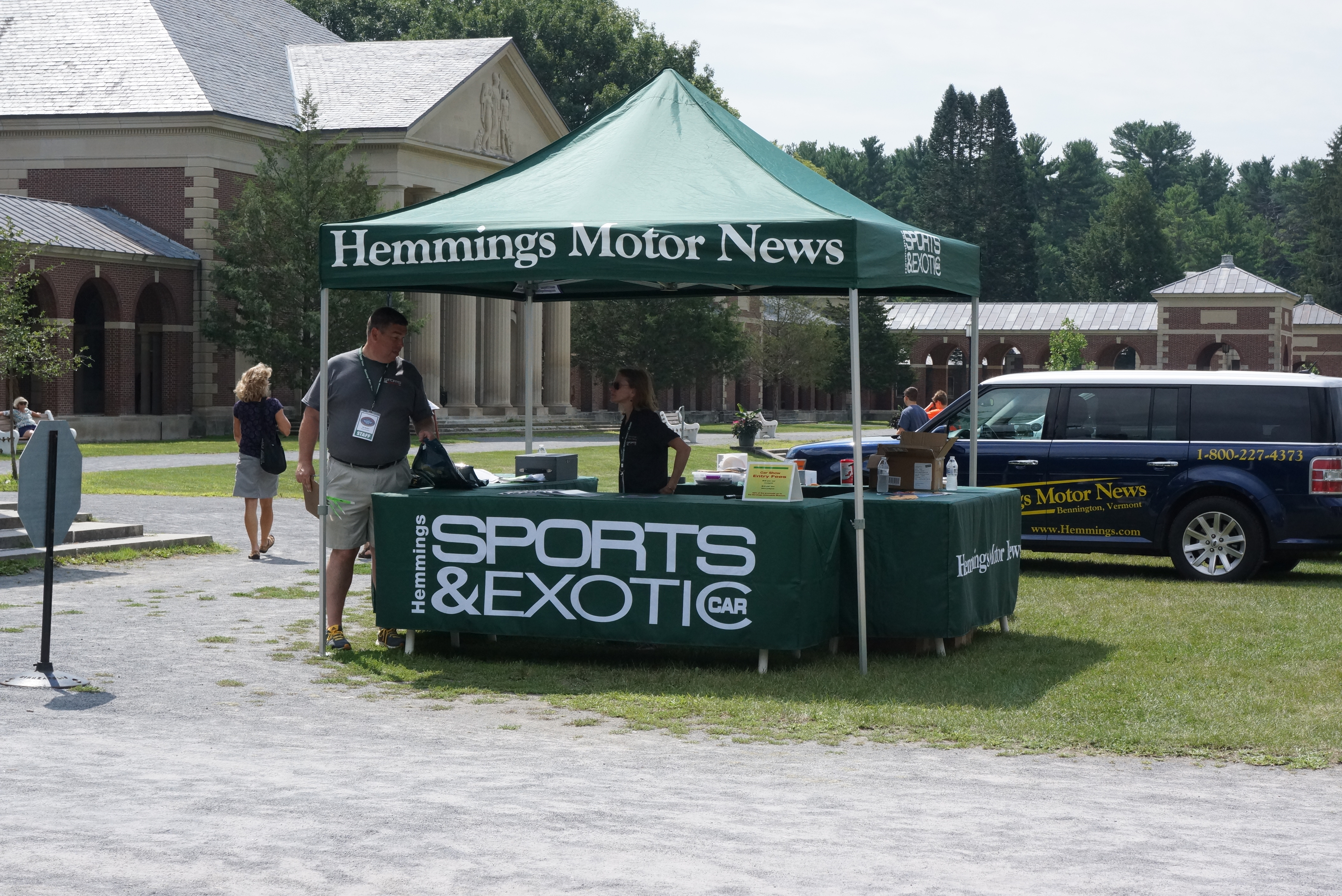
The good folks at “Hemmings”, publishers of several well-known collector car magazines, held their 11th annual Sports & Exotic Car Show on the grounds of the Saratoga Automobile Museum in Saratoga Springs, NY. The event took place on Saturday, August 6, 2016. In spite of a threatening forecast (and a published rain date of Sunday August 7), the organizers decided to press on, and the weather cooperated, as the show field remained sunny and dry, if a bit warm.
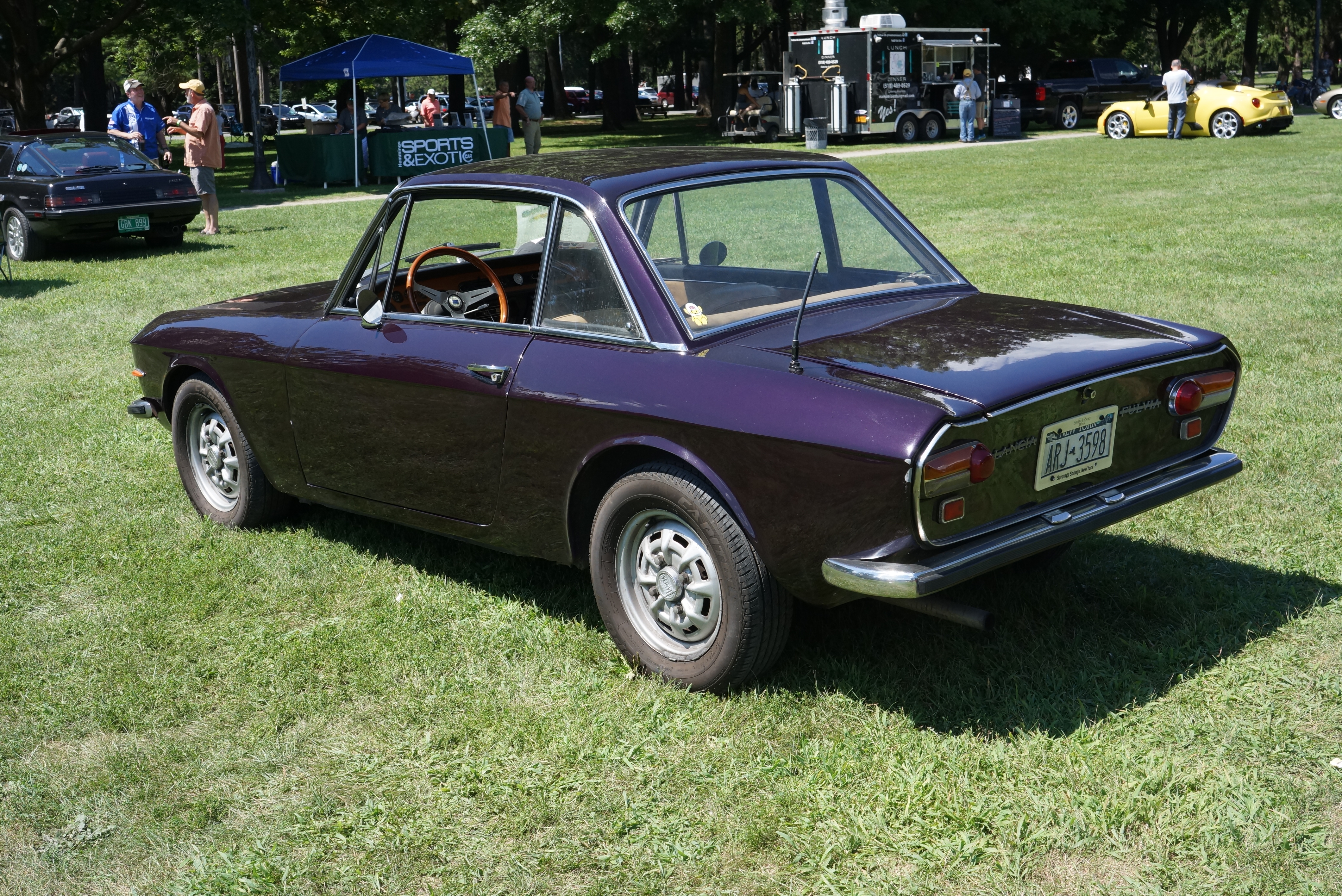
The show was open to “sports cars, GTs and exotics built outside the United States prior to 1992.” Those with newer imports were still welcome to attend, but would not have their vehicles judged.
My good friend Peter agreed to accompany me (and did most of the driving – thanks Peter!). Since I had attended one Hemmings show at the same location two years prior, I had reason to expect a professionally-run event, with a decent turnout and quality cars. We were not disappointed.
Arriving by 10:30 a.m., the show field was almost completely full. Cars were arranged by class, which for the majority of attendees was Country of Origin. As in years past, this show had several Featured Classes, including pre-1992 Jaguars, Porsche 356s, and Toyota Sports & GT cars. The big attractions for me were the two Italian Featured Classes: Fiat 124 spiders and Alfa Romeo spiders. Both the Fiat 124 spider and the Alfa Duetto/spider were celebrating their 50th anniversaries.
The entire event had a relaxed and casual feel to it. Most cars were prepped for judging, but unlike some other judged shows, the owners seemed carefree. (No one was spotted picking blades of grass out of their tire treads.) Everyone lazily walked the grounds, chatted up the drivers, and shared their stories. The verdant setting helped with the “stroll in the park” ambiance.
At 2 p.m. sharp, the Awards Ceremony began. There was a 2nd place and 1st place trophy for each of 13 classes. (I believe judging was done by that time-honored method known as “which cars do we really like?” Nothing wrong with that, either.) The winners were lined up and slowly driven past an admiring audience. By 2:30, it was over.
Hemmings hold two shows each year in Saratoga Springs, this one, and the larger Concours d’Elegance in September. If you haven’t been, either is highly recommended.
BRITISH
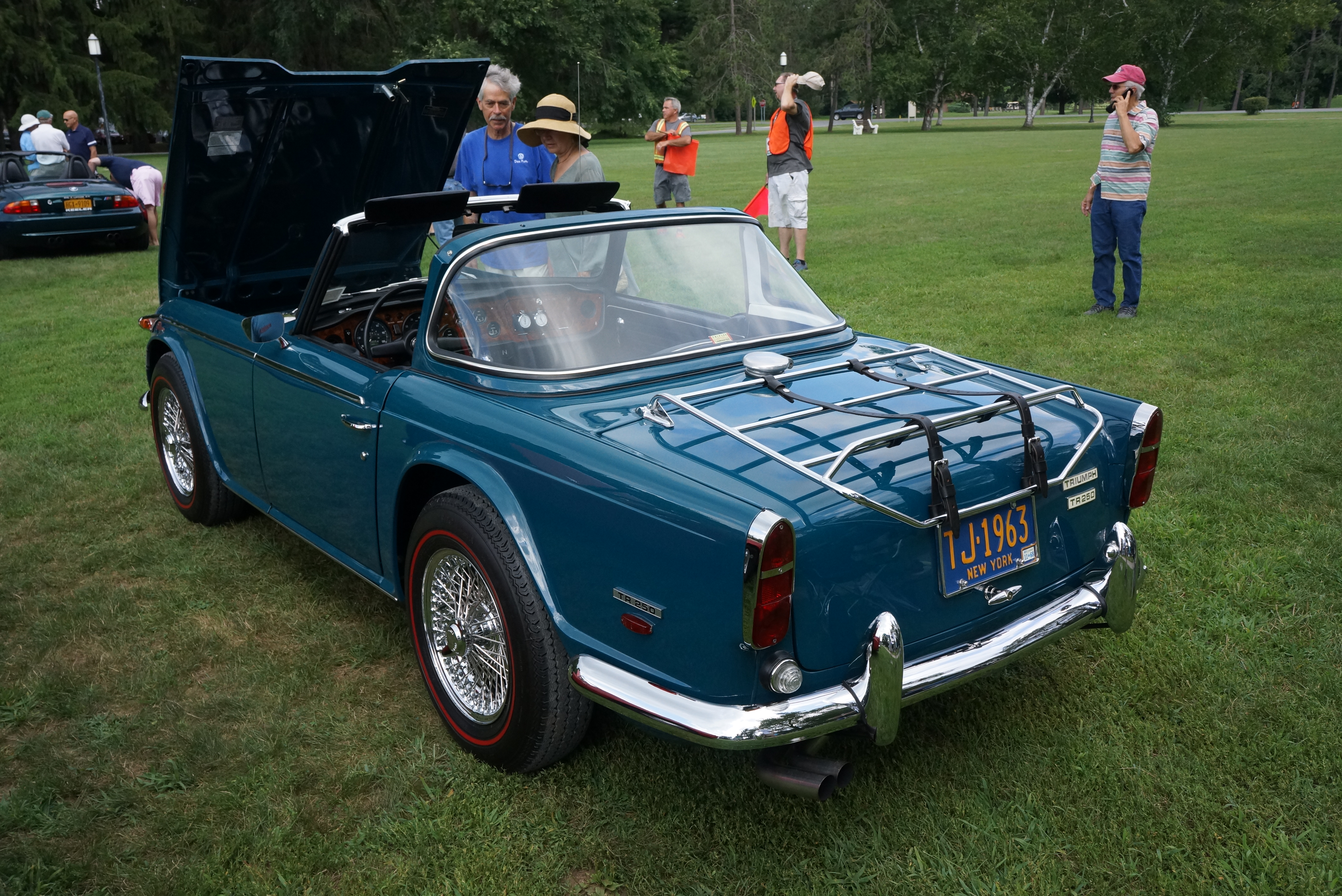
This 1968 Triumph 250 was voted “Best of Show”. It was immaculate, and it deserved it.
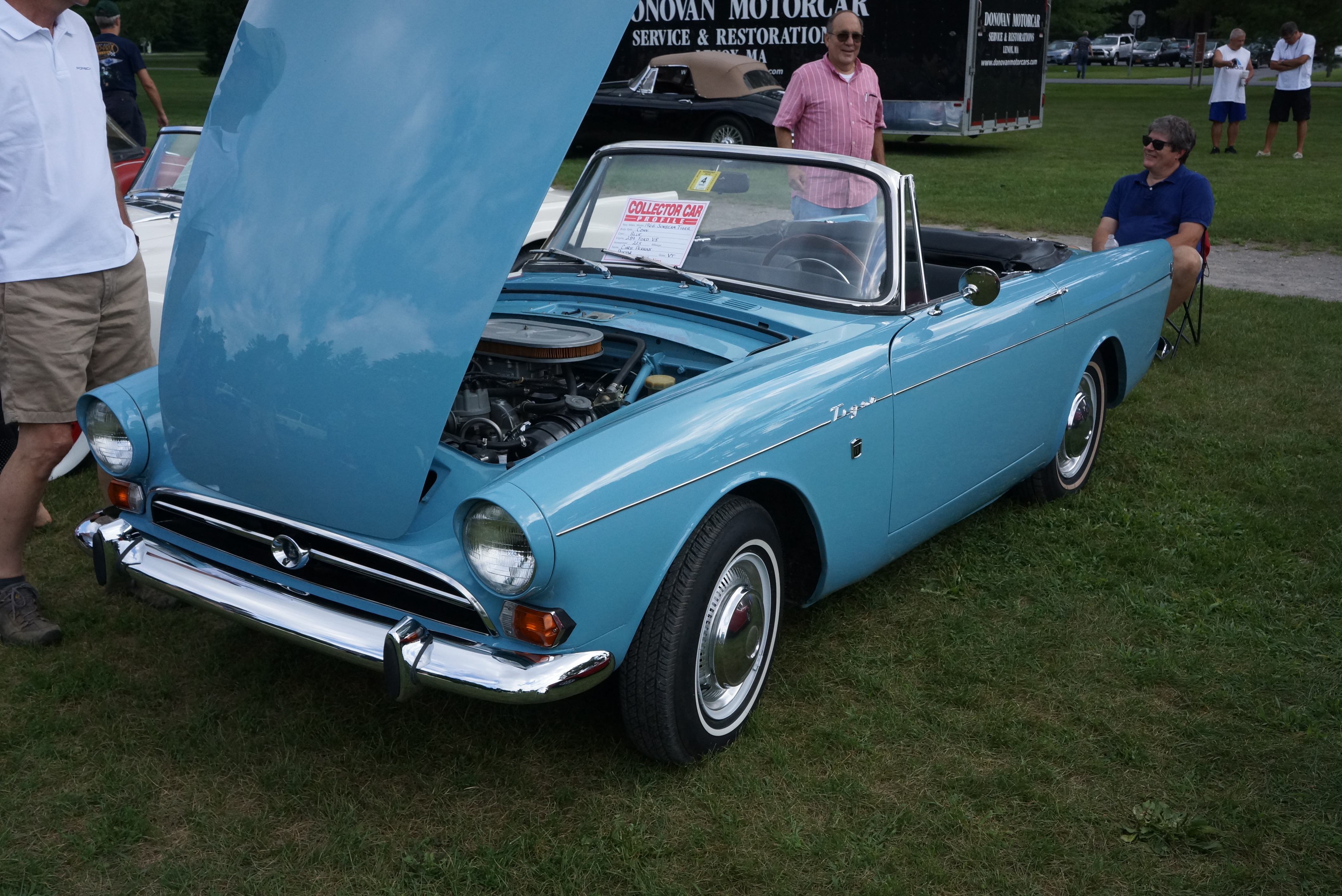
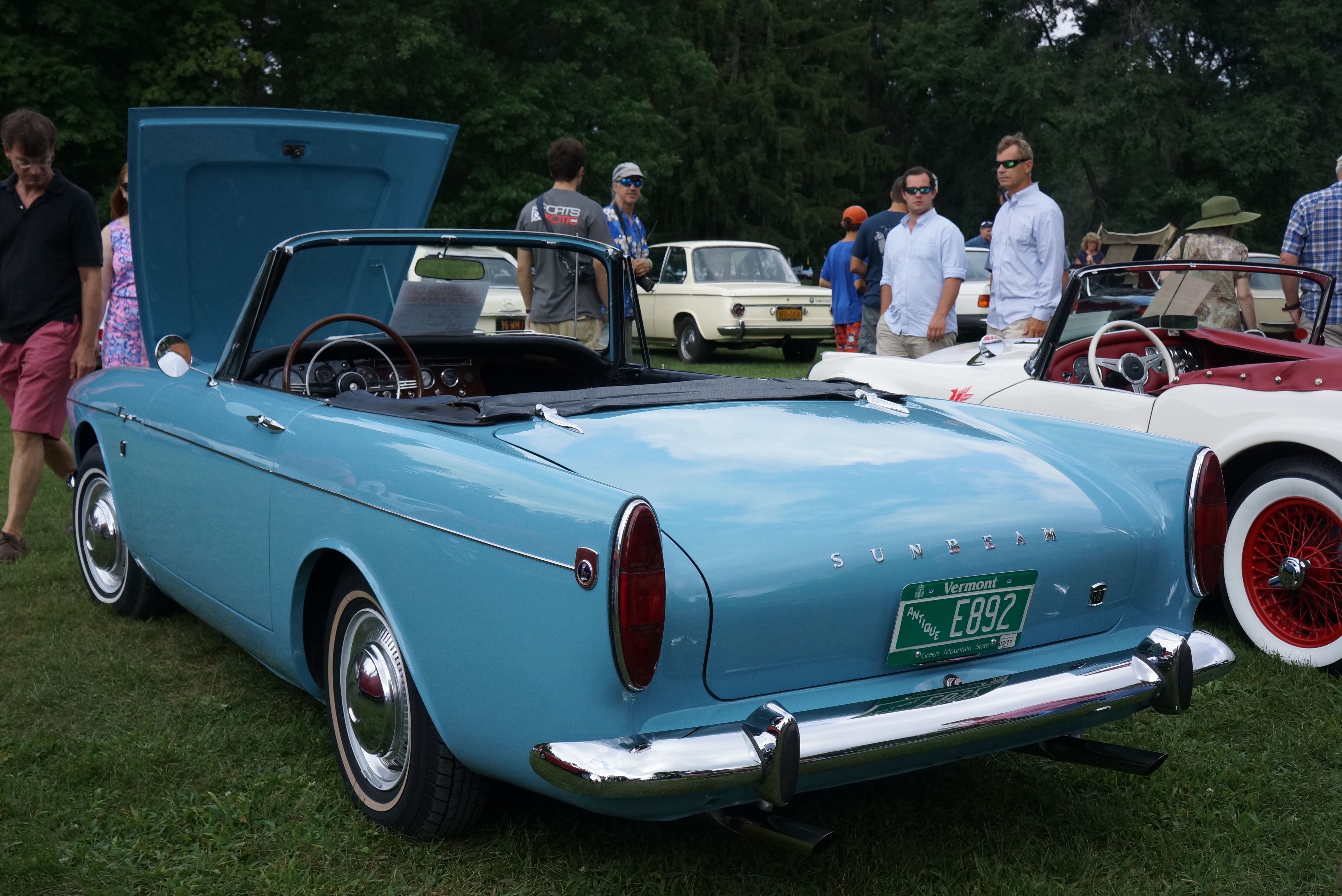
This Sunbeam Tiger was in a most unusual shade of baby blue, and we’re unsure if the color was an original choice from the factory.
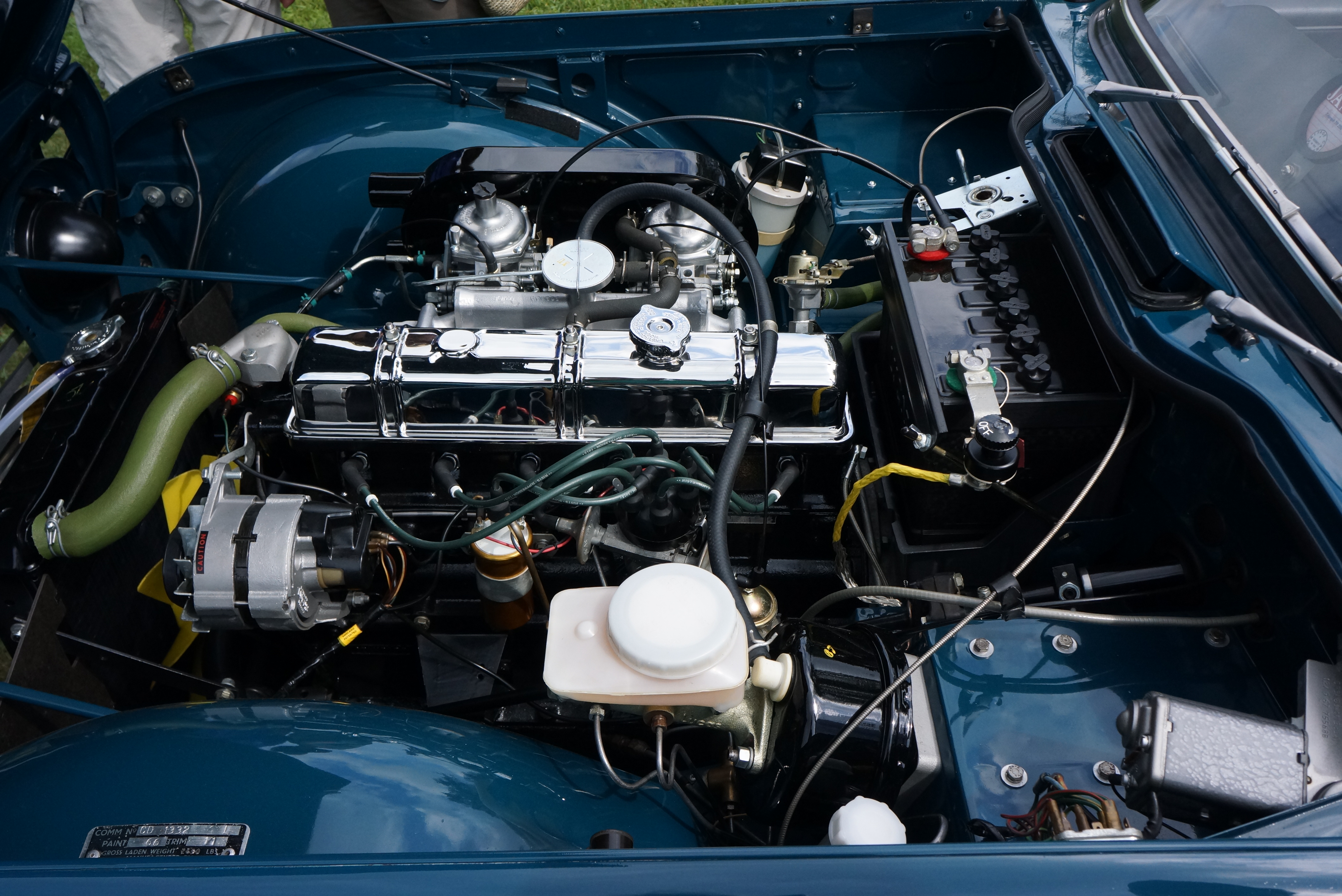
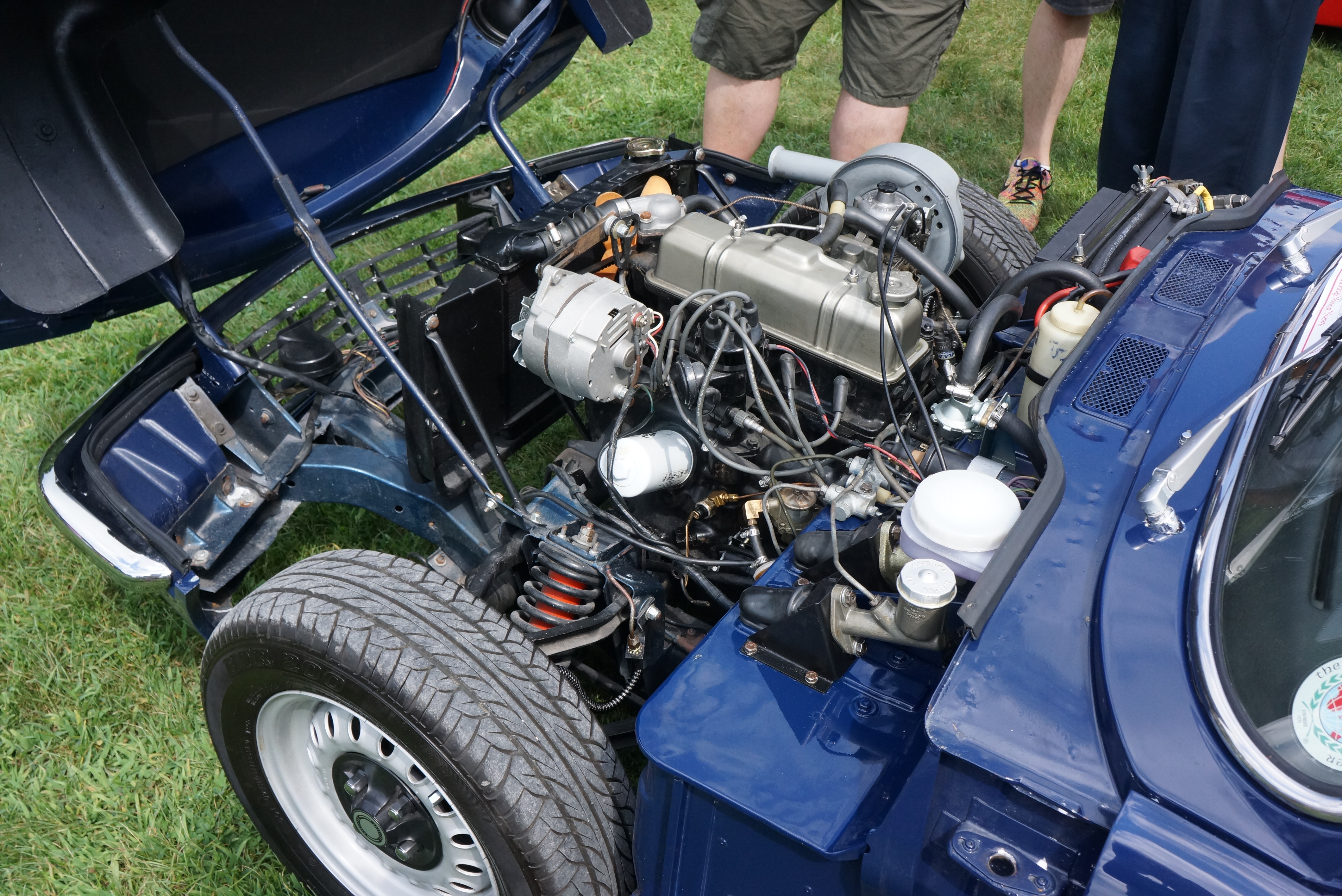
Triumph Spitfires have marvelous engine access.
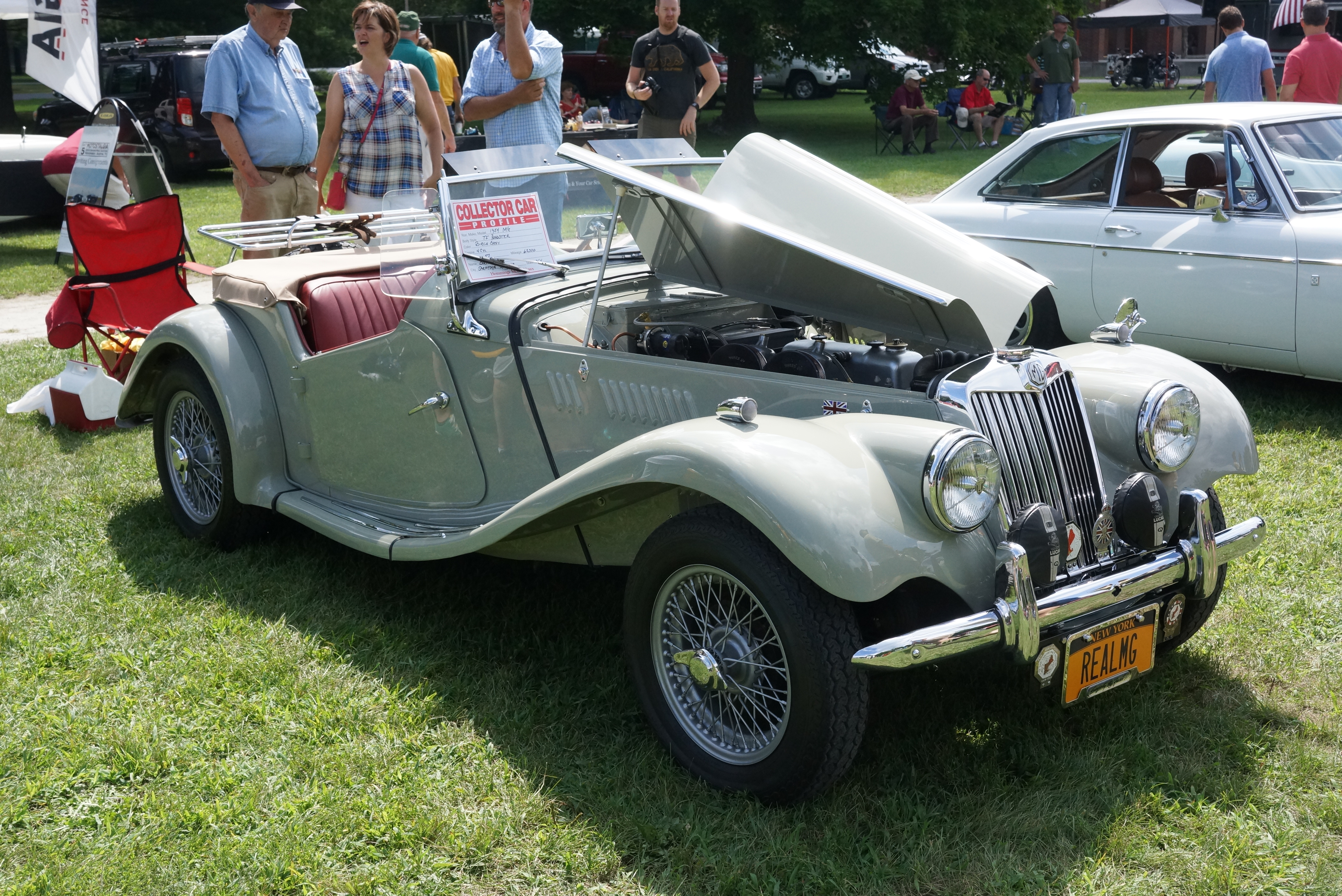
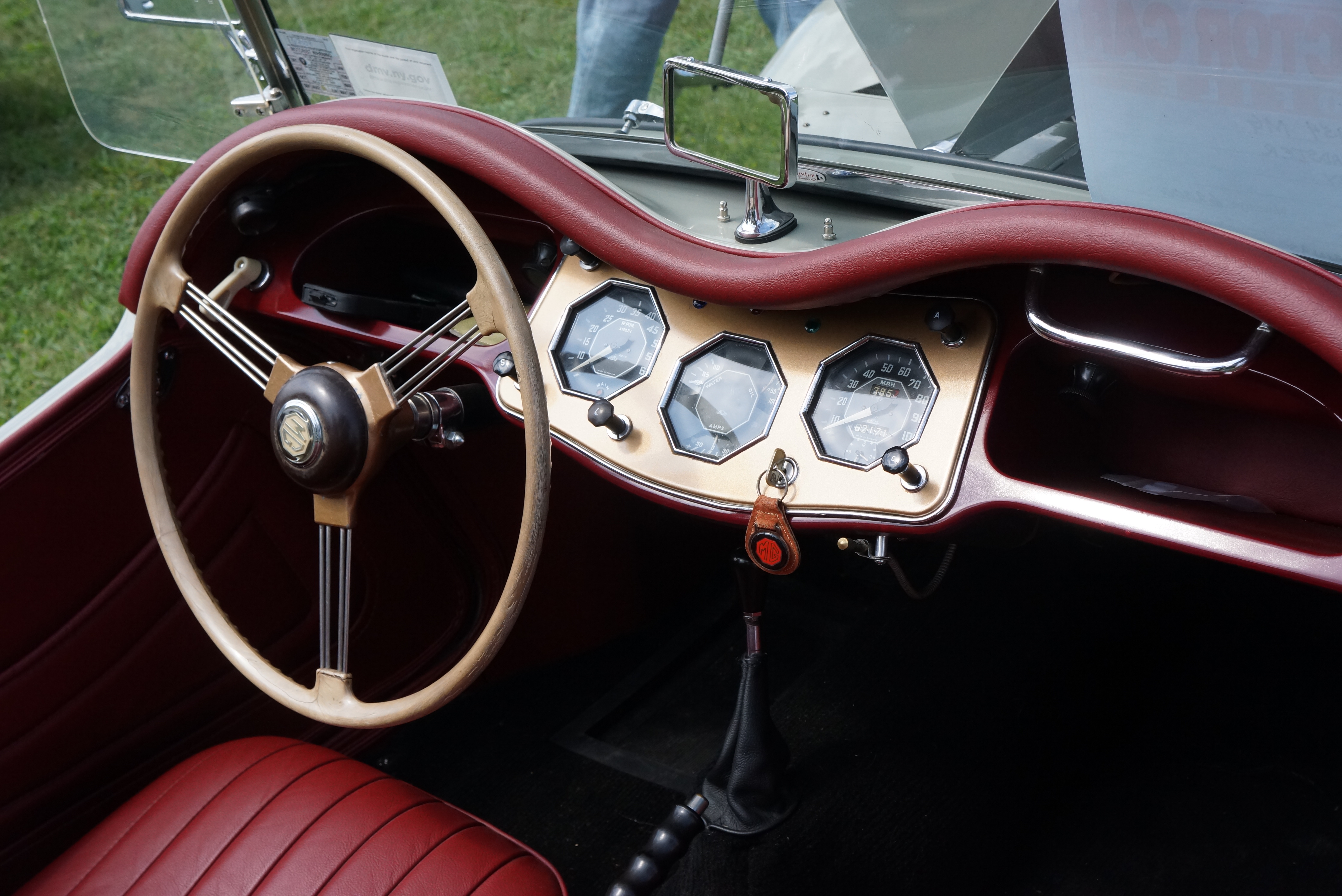
MG-TFs carried the marque’s octagonal badge shape to the instrument cluster.
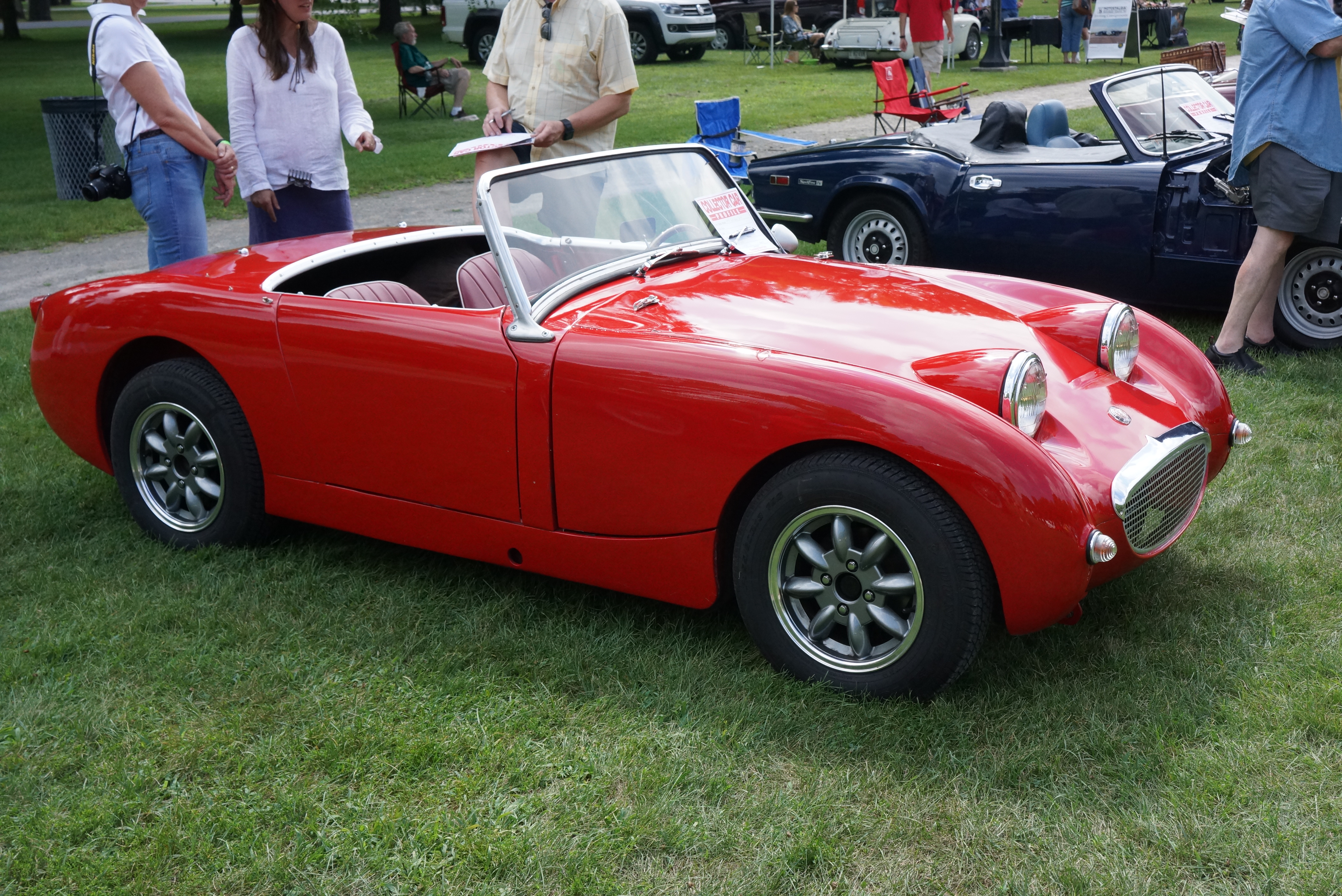
This Austin-Healey Bug Eye Sprite was even cuter sans bumpers.
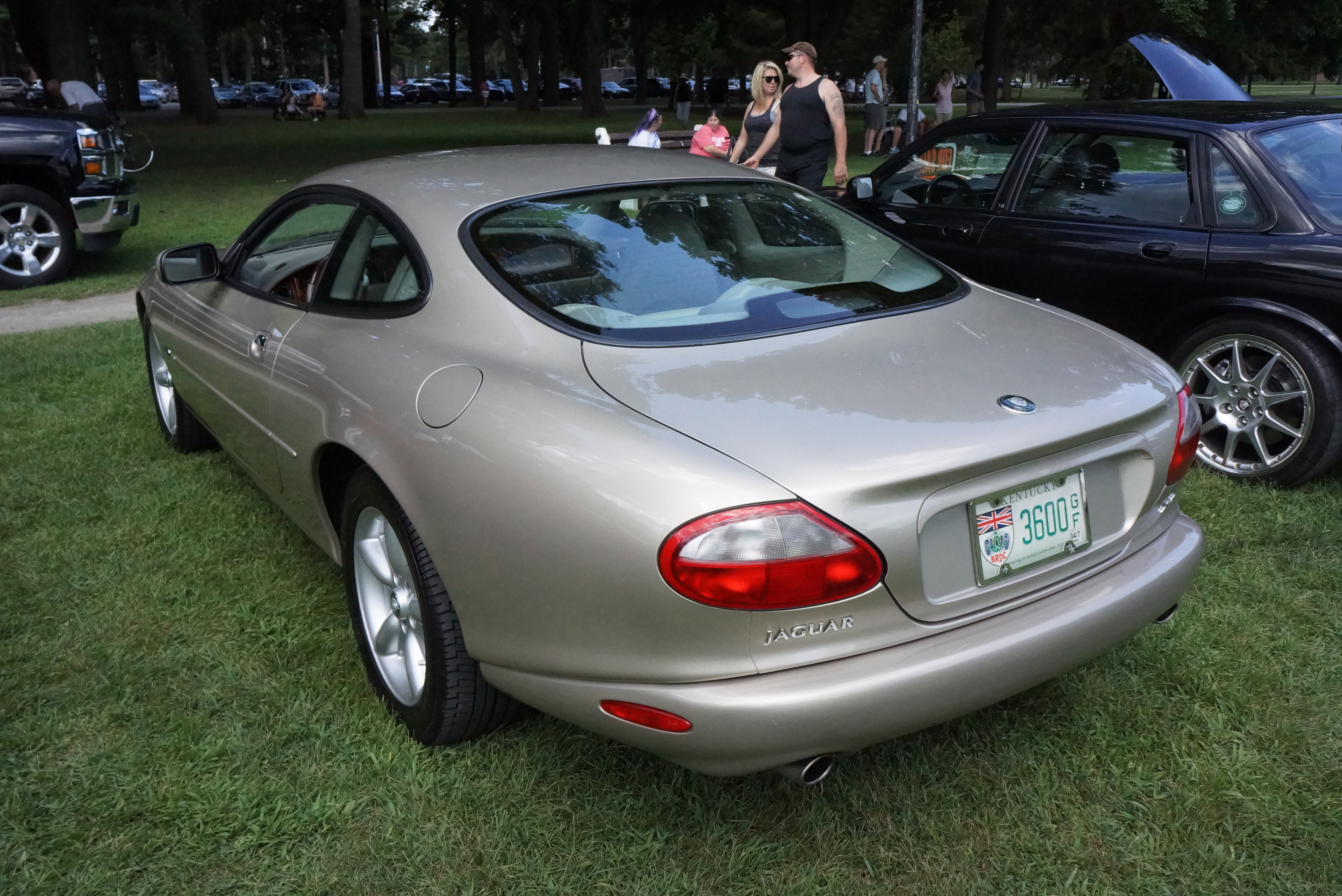
A Jaguar XK8 Coupe.
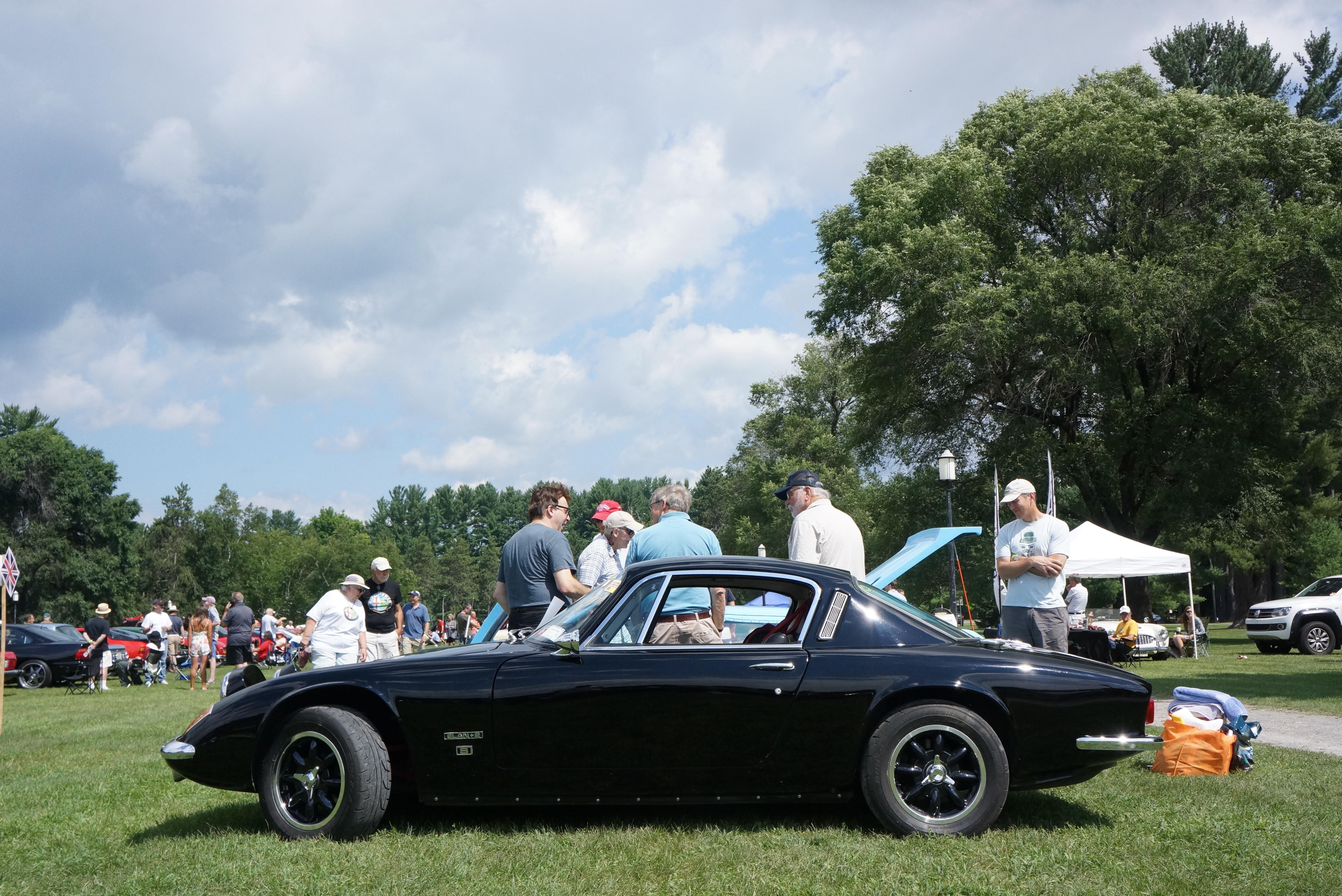
A rarely-seen Lotus Elan +2.
GERMAN
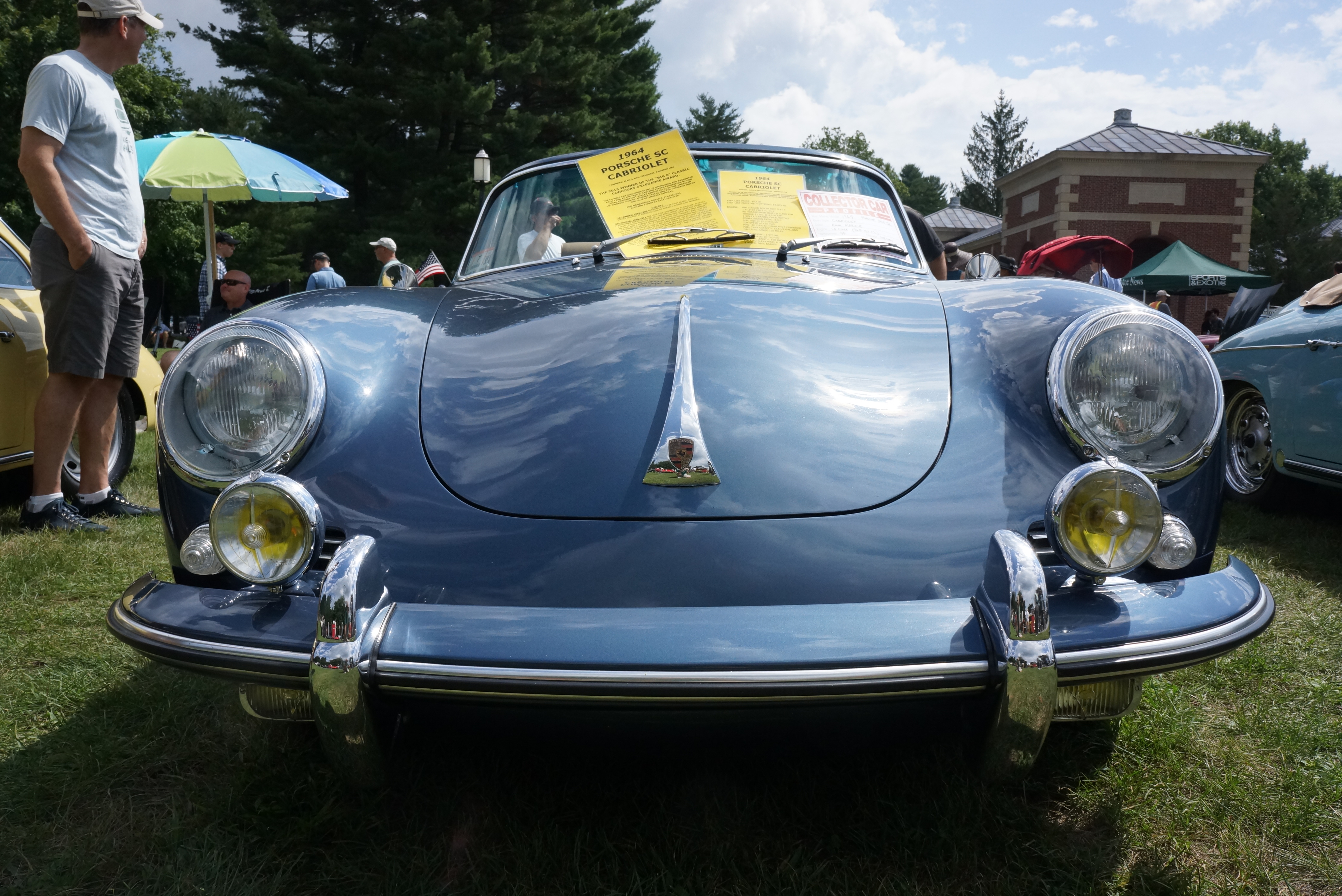
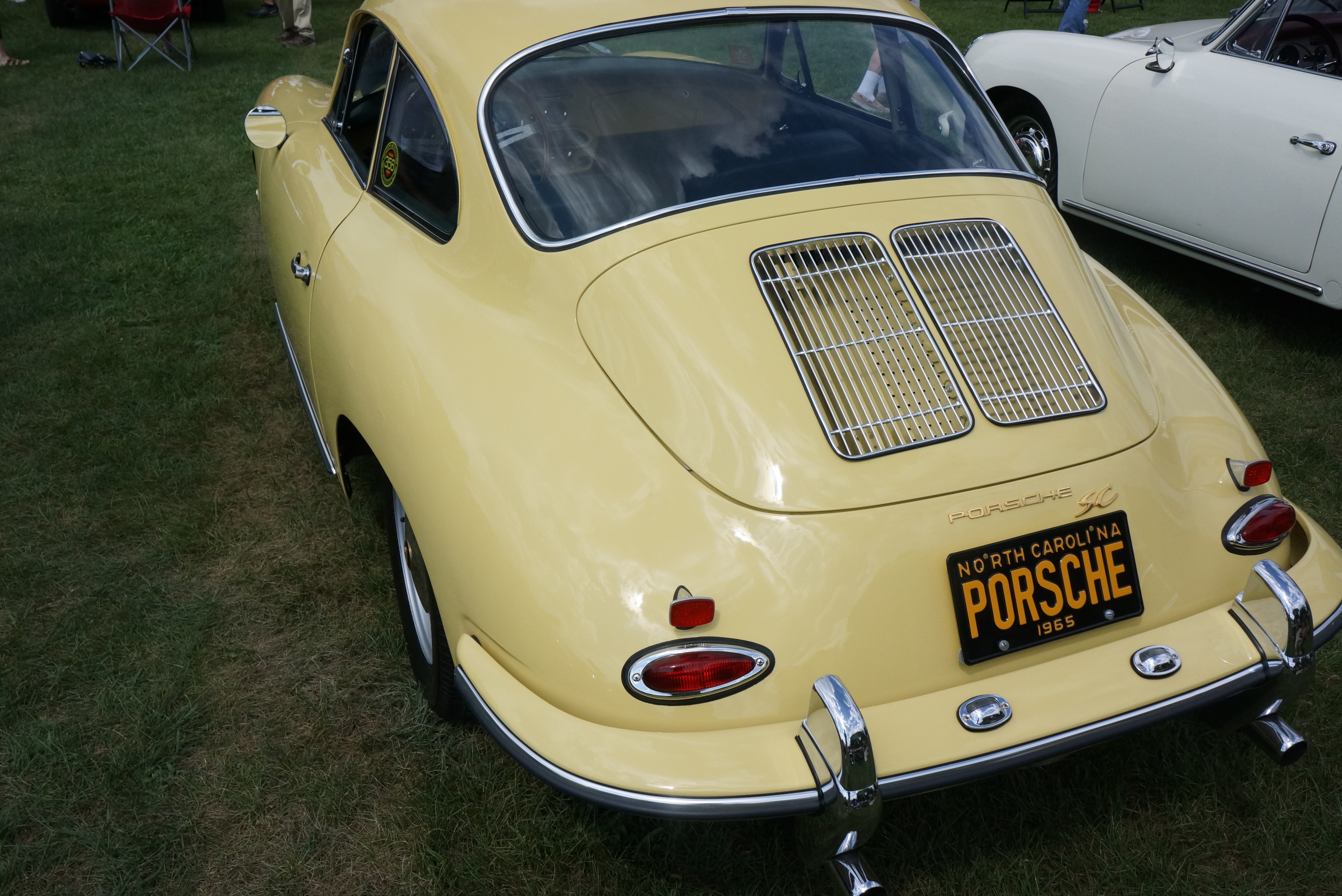
Porsche 356s were one of the Featured Classes.
Two of the more striking ones in attendance.
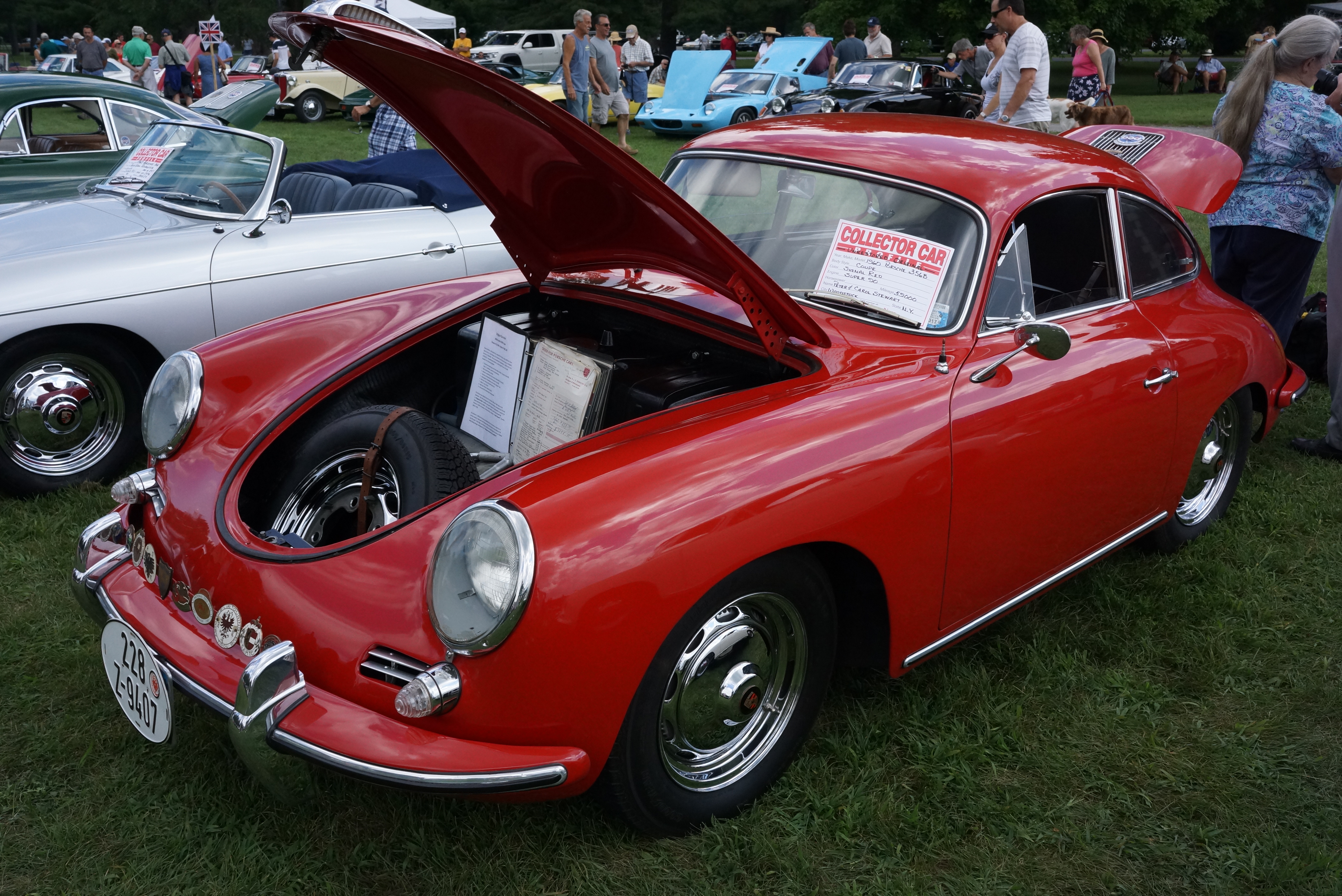
This 1960 356 coupe is an unrestored survivor.
One of my show favorites: this 1969 911 has been with the same owner for 25 years. Paint was peeling off the driver’s door. He told us he didn’t care; he owns the car to drive it.
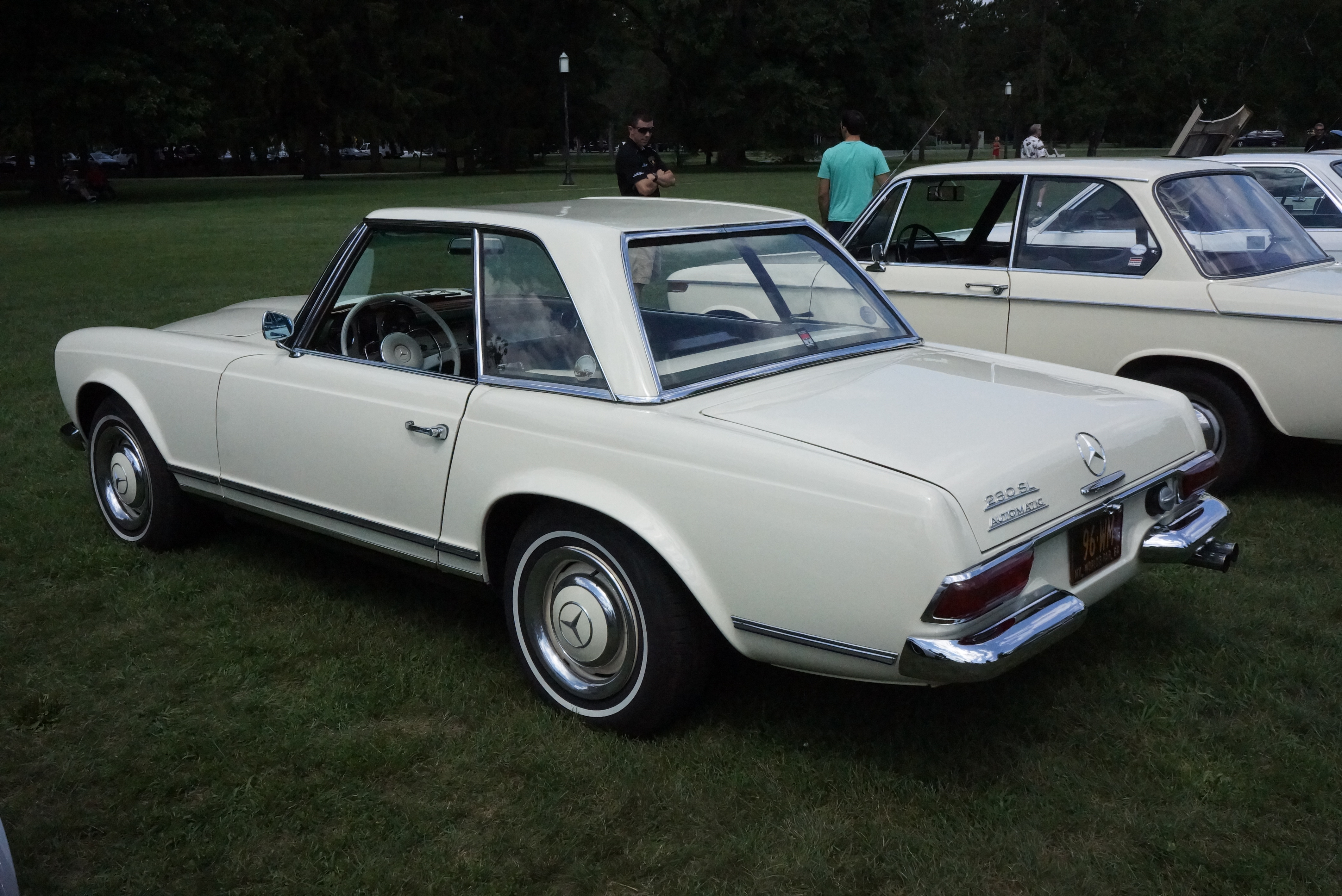
There were German cars there besides Porsche. This Mercedes Benz 230-SL had a side-facing rear jump seat.
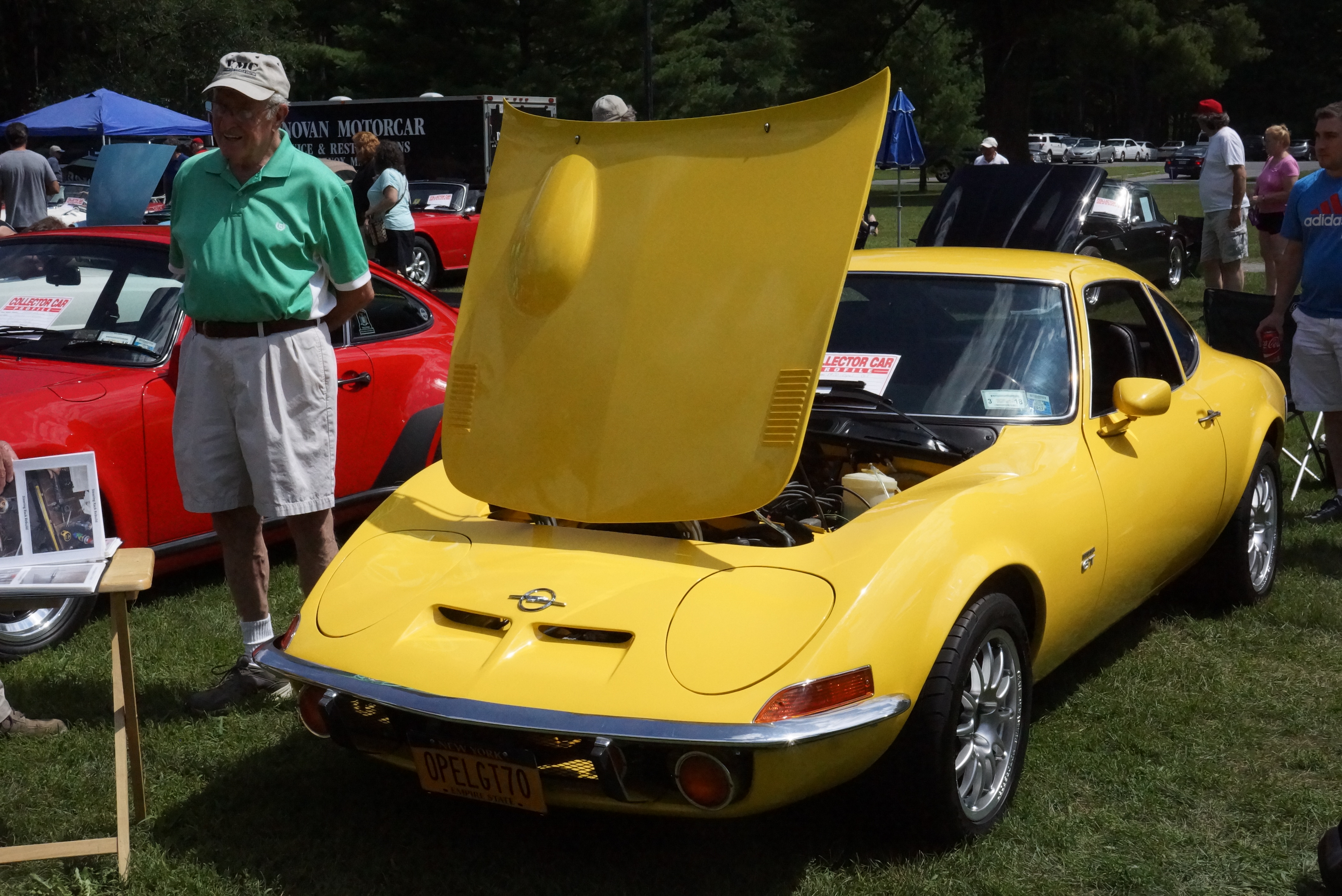
An Opel GT, sold new in the U.S. by Buick dealers.
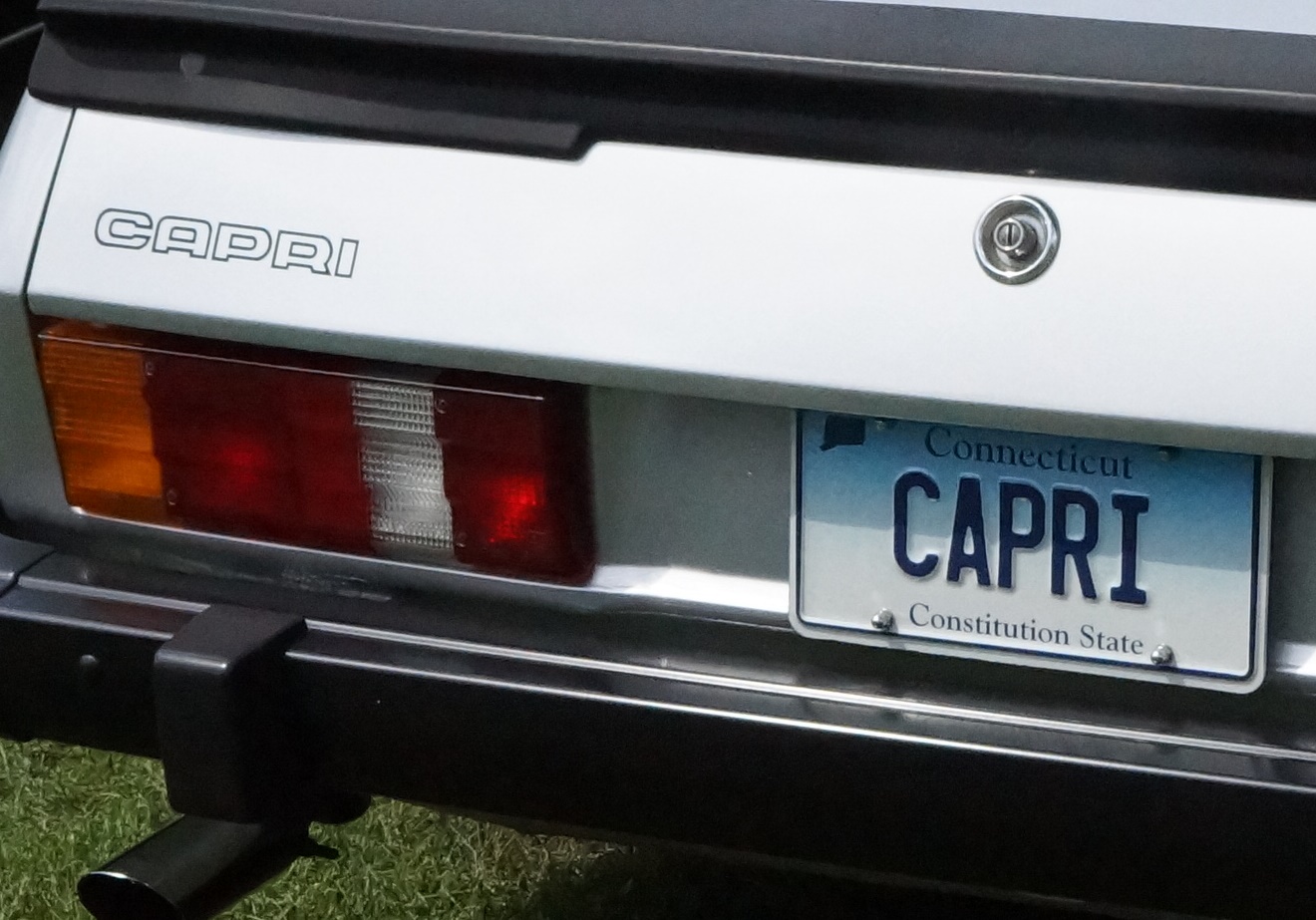
Another favorite: this 1979 Ford (not Mercury) Capri had been privately imported. The car was tastefully modified, was clean and straight, and must be a hoot to drive.
SWEDISH
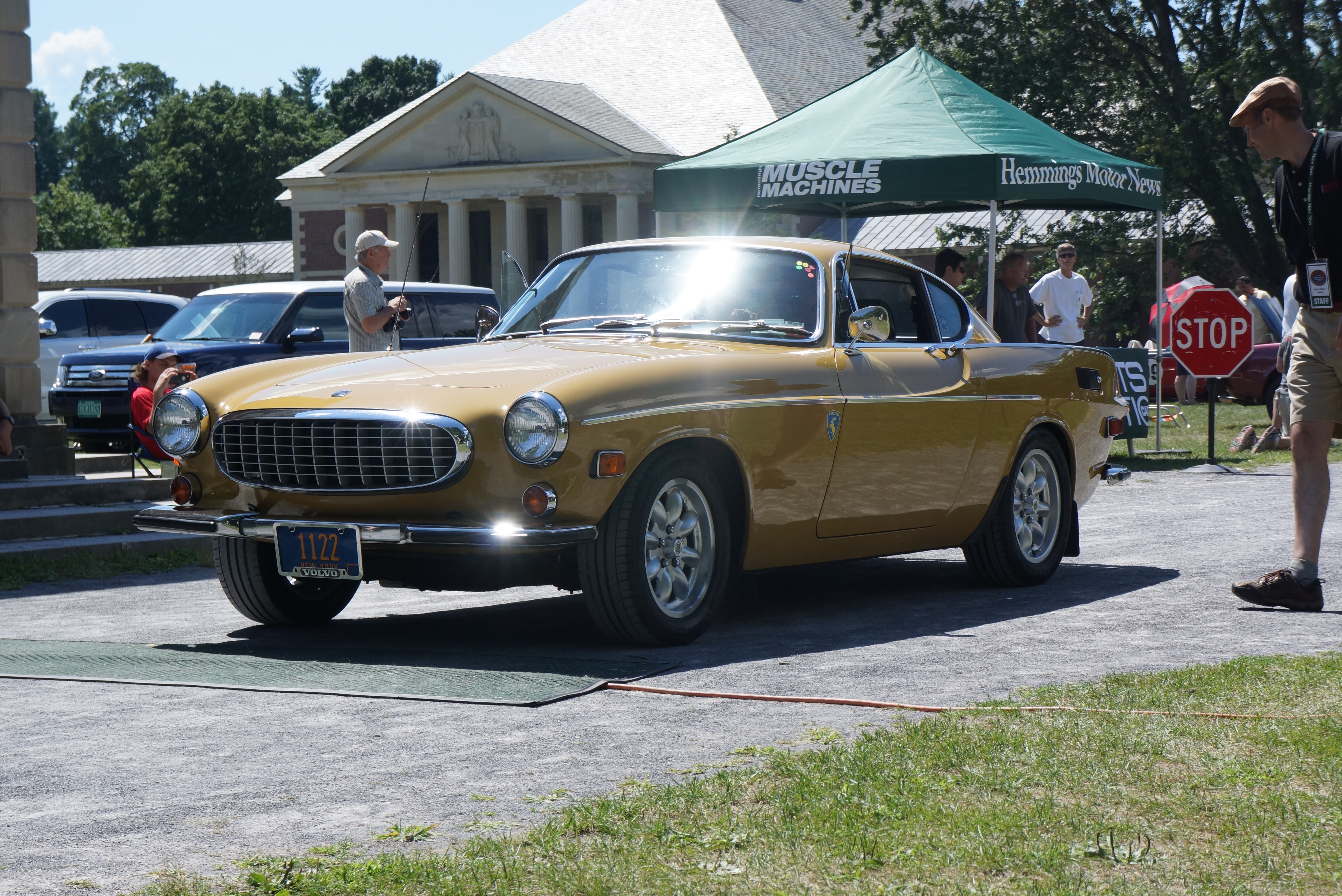
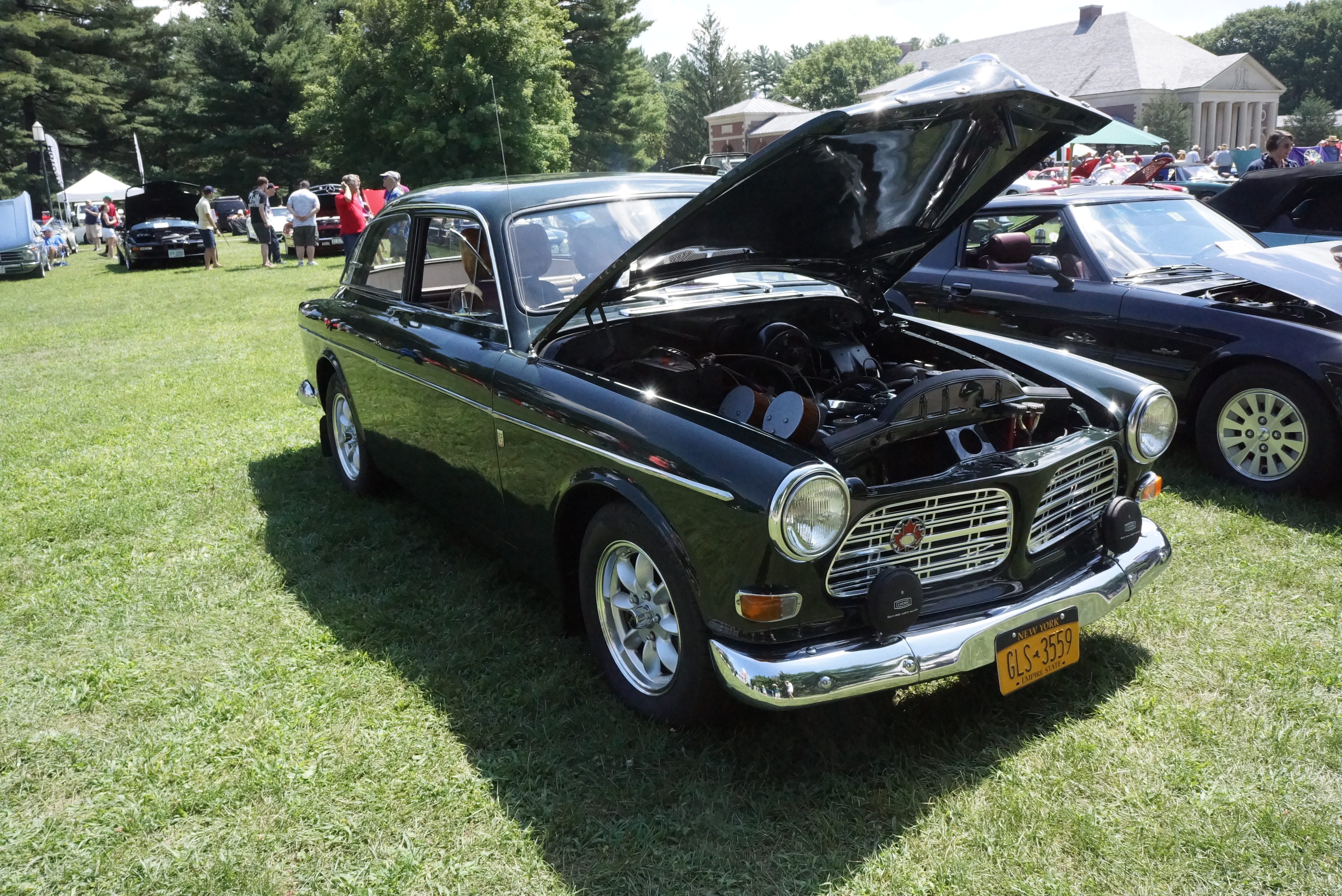
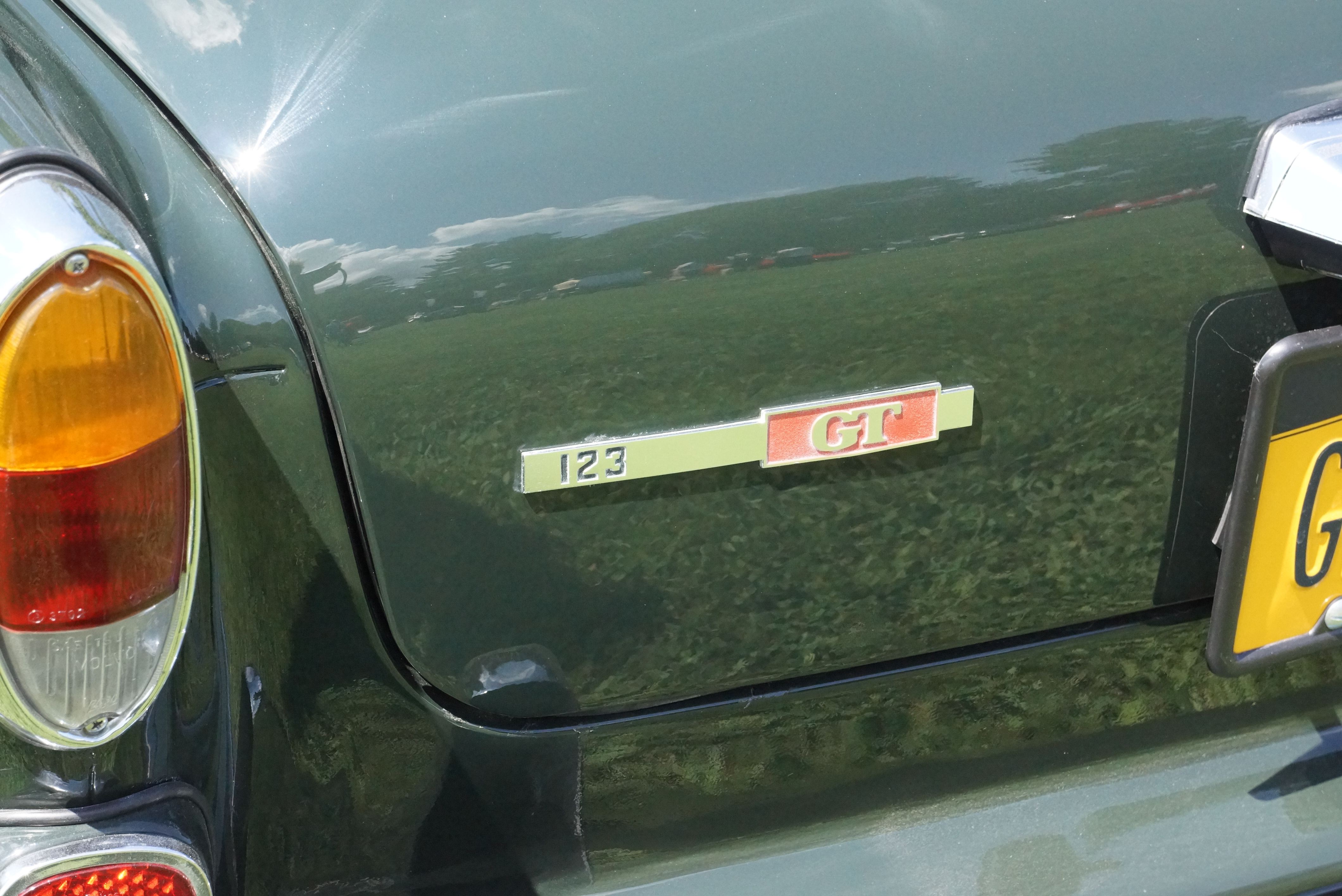
This Volvo 123GT looked authentic; at least it wore the correct badging. I don’t think I’ve seen an actual 123GT in about 20 years.
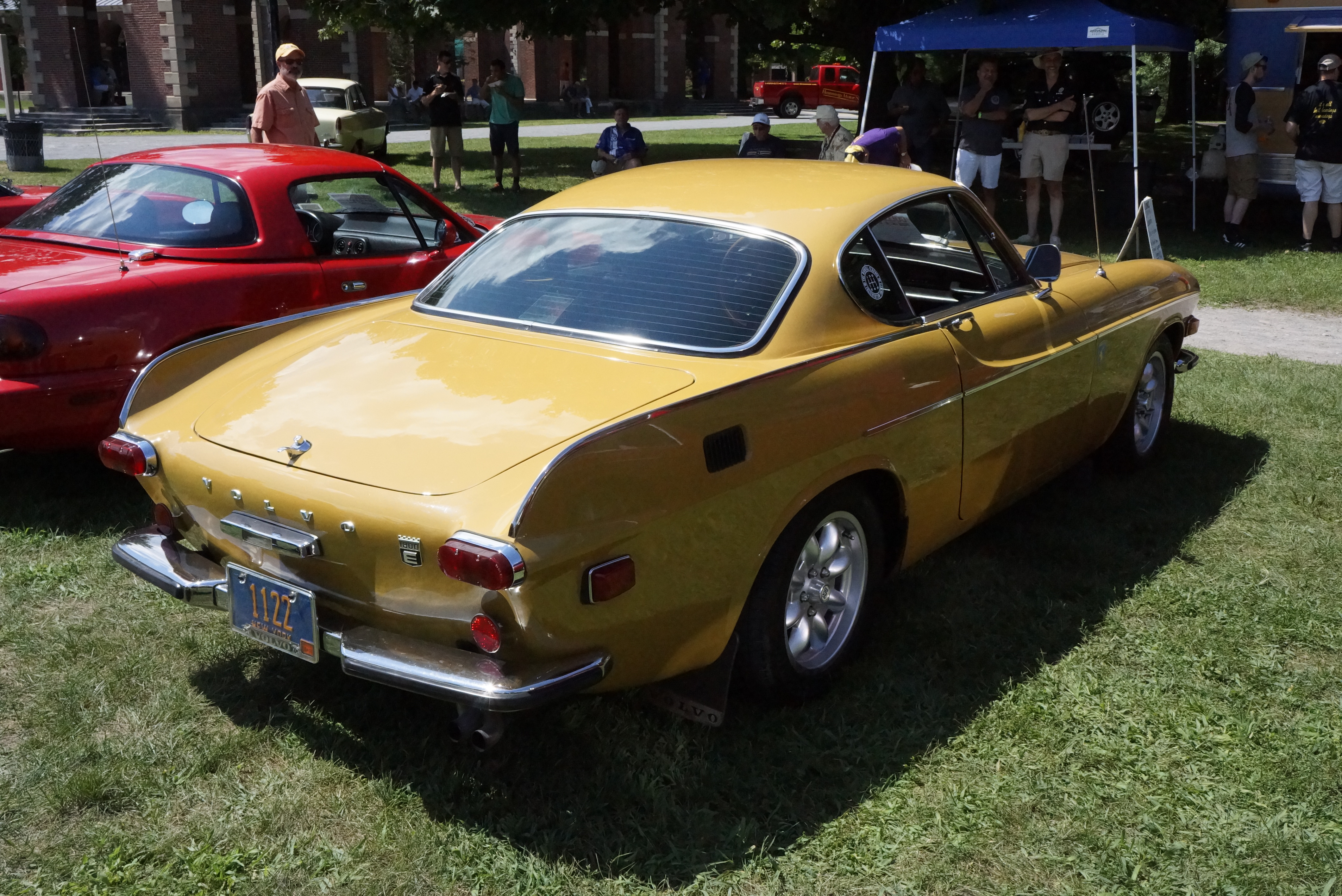
This was the only Volvo 1800 at the show.
FIAT 124 SPIDERS
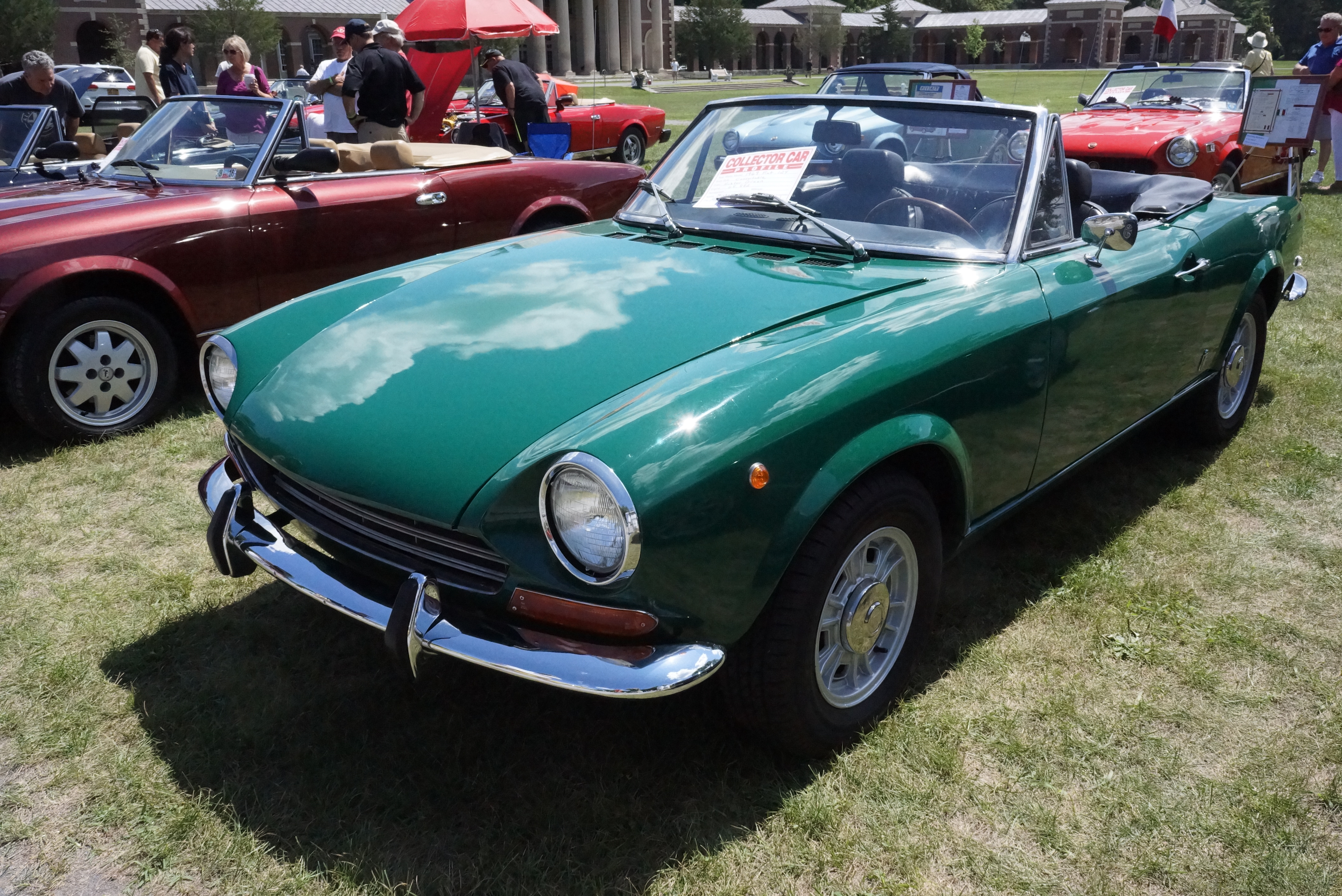
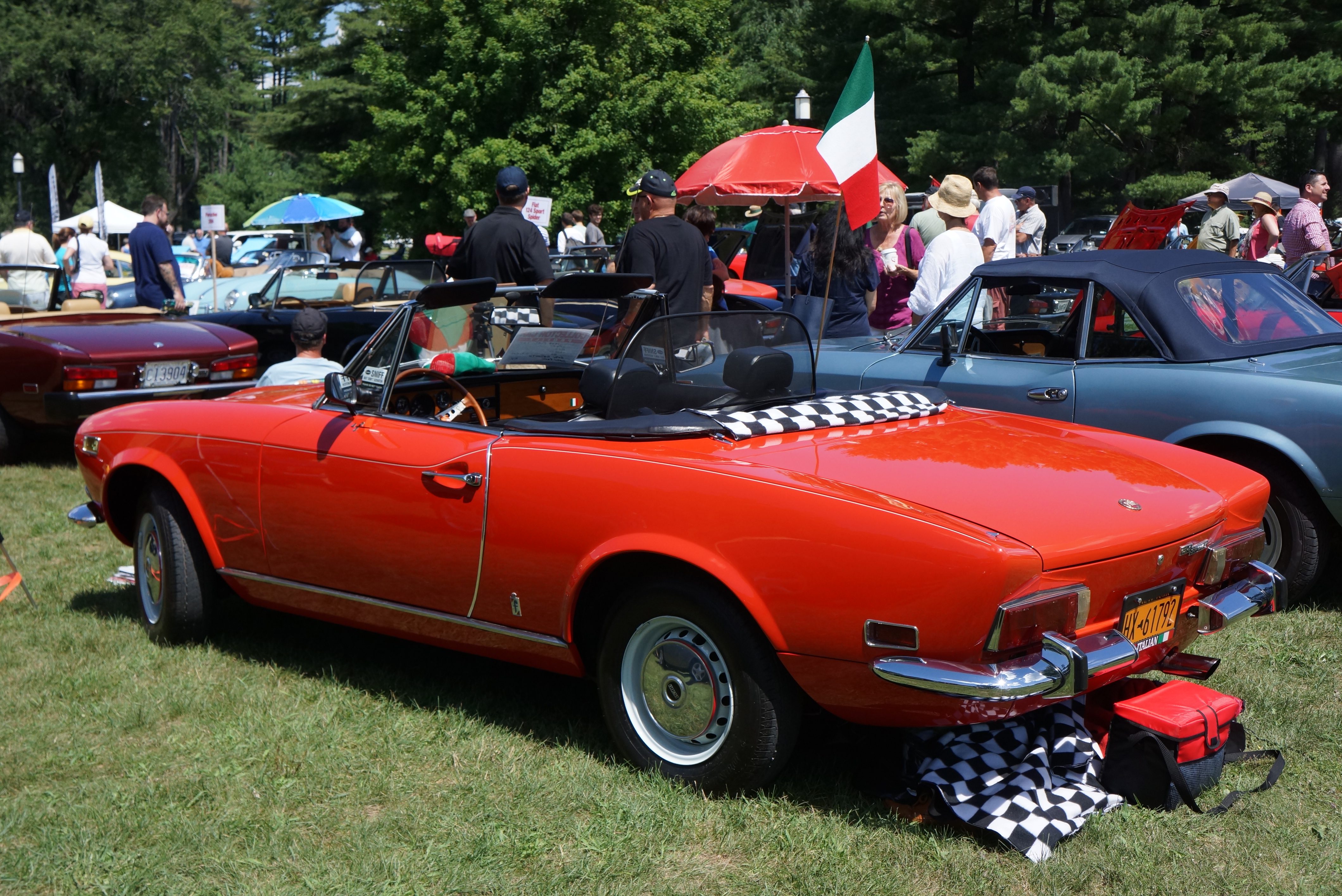
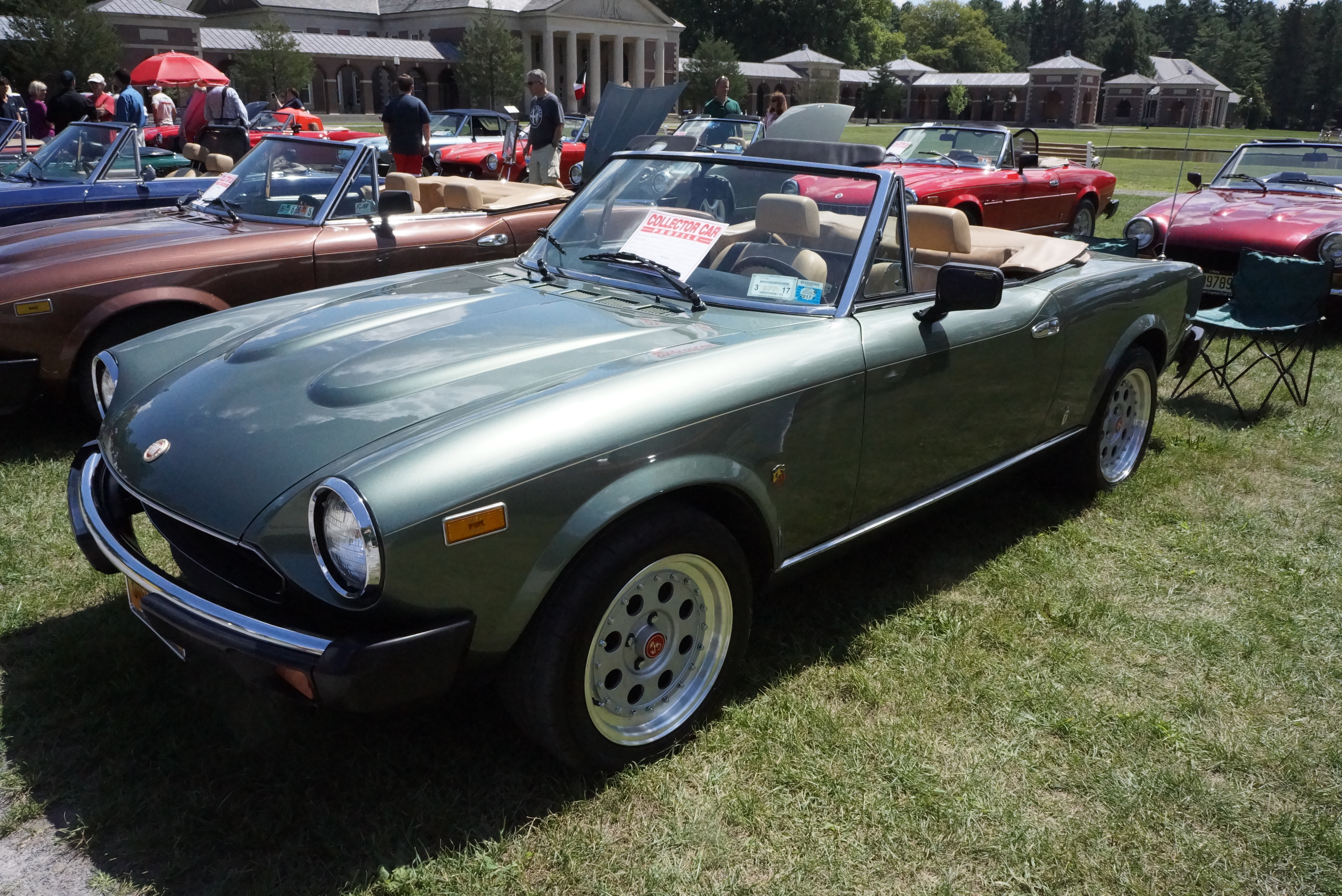
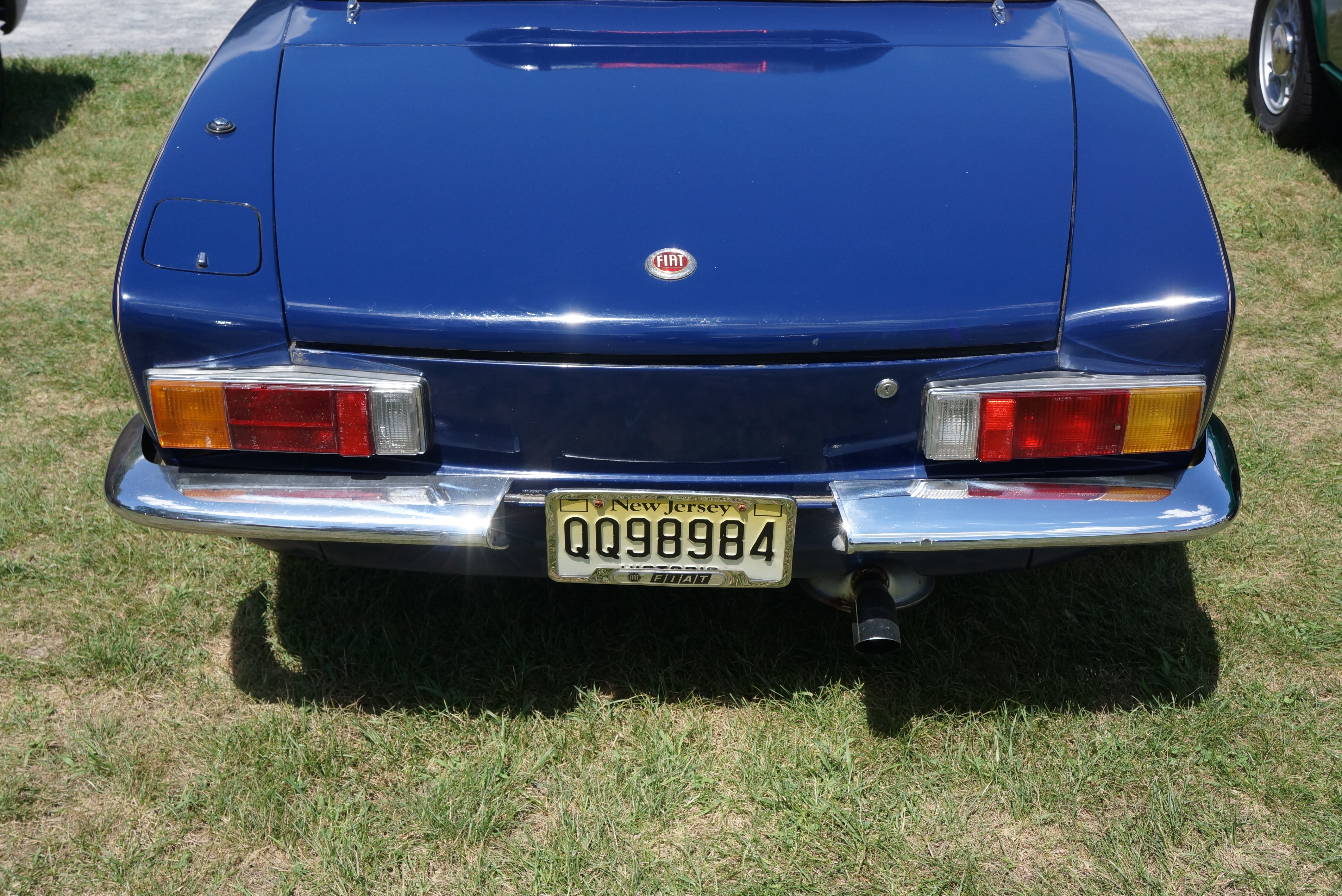
There were about 20 Fiat 124 spiders at the show, with cars from the first generation (late 1960s) right through to the Pininfarina-badged cars of the mid-1980s. As a former Fiat owner, it was difficult for me to believe that this many survived. Best of all, the owners were there just to have a blast. Bellissimo!
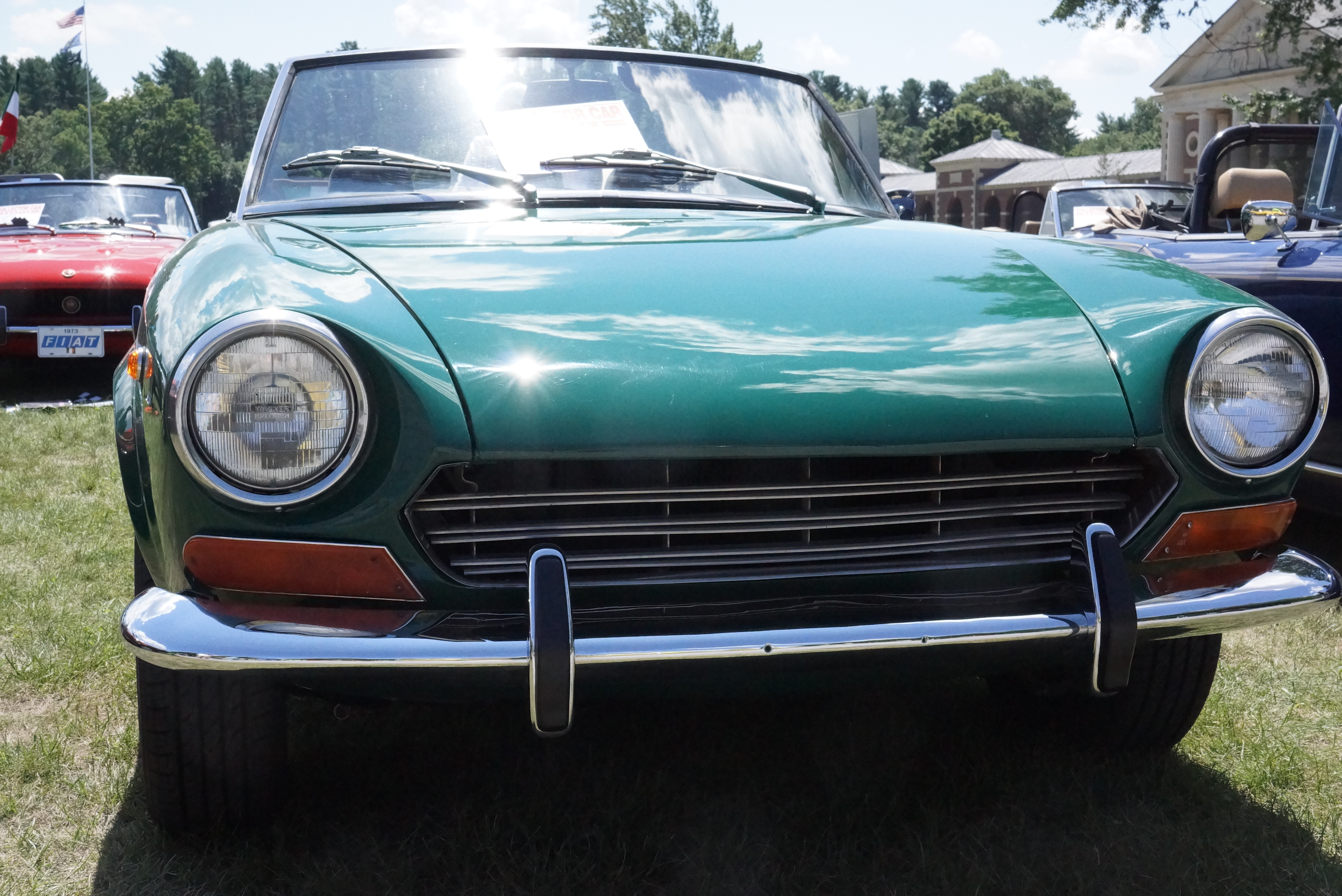
An early car: in addition to the chrome bumpers, note the slatted grille, and the small, round side marker lights.
The placard claimed this to be an unrestored survivor.
We spoke at length to the owner of the Positano Giallo car. He recently bought this car after it had sat, unused, in the previous owner’s garage for 30 years. There had been a small carb fire, and that owner gave up on it. The new owner refreshed the fluids, washed off 30 years of dust, and here it is.
This beauty took home 2nd place in this class.
More, more, more
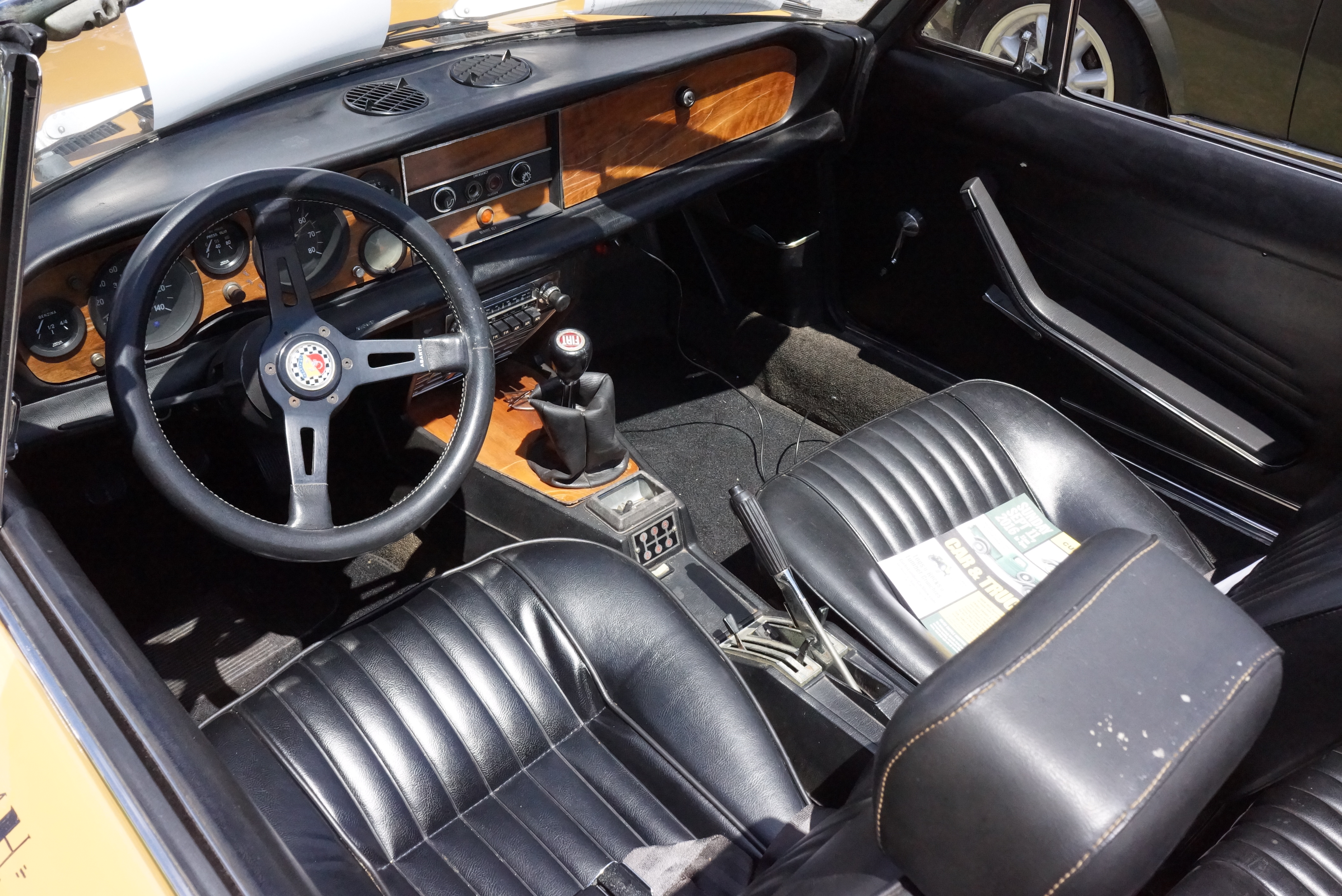
The Pininfarina cars got their first dashboard redesign.
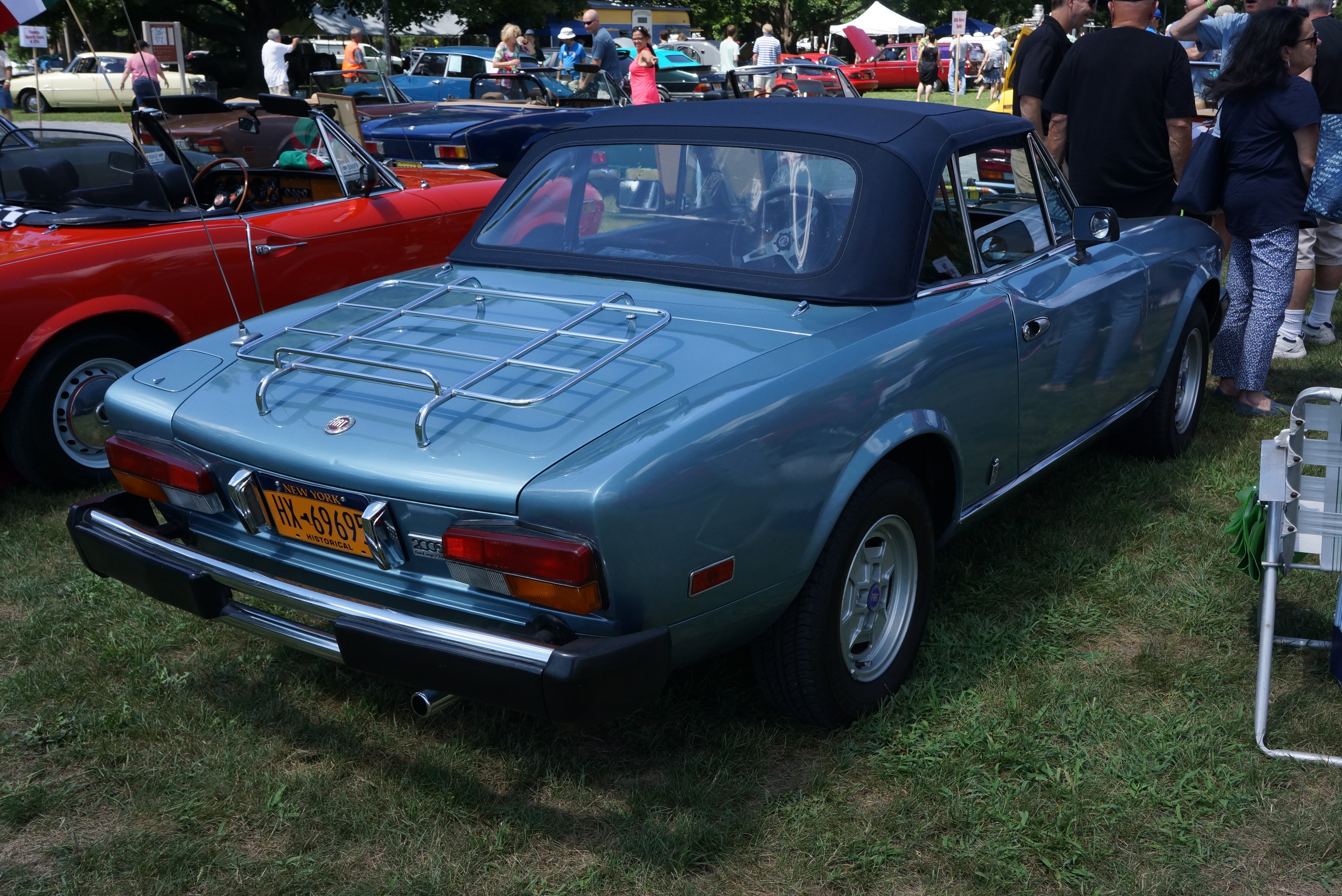
Here you see the 124 Spider tail lights evolve and enlarge.
OTHER ITALIAN
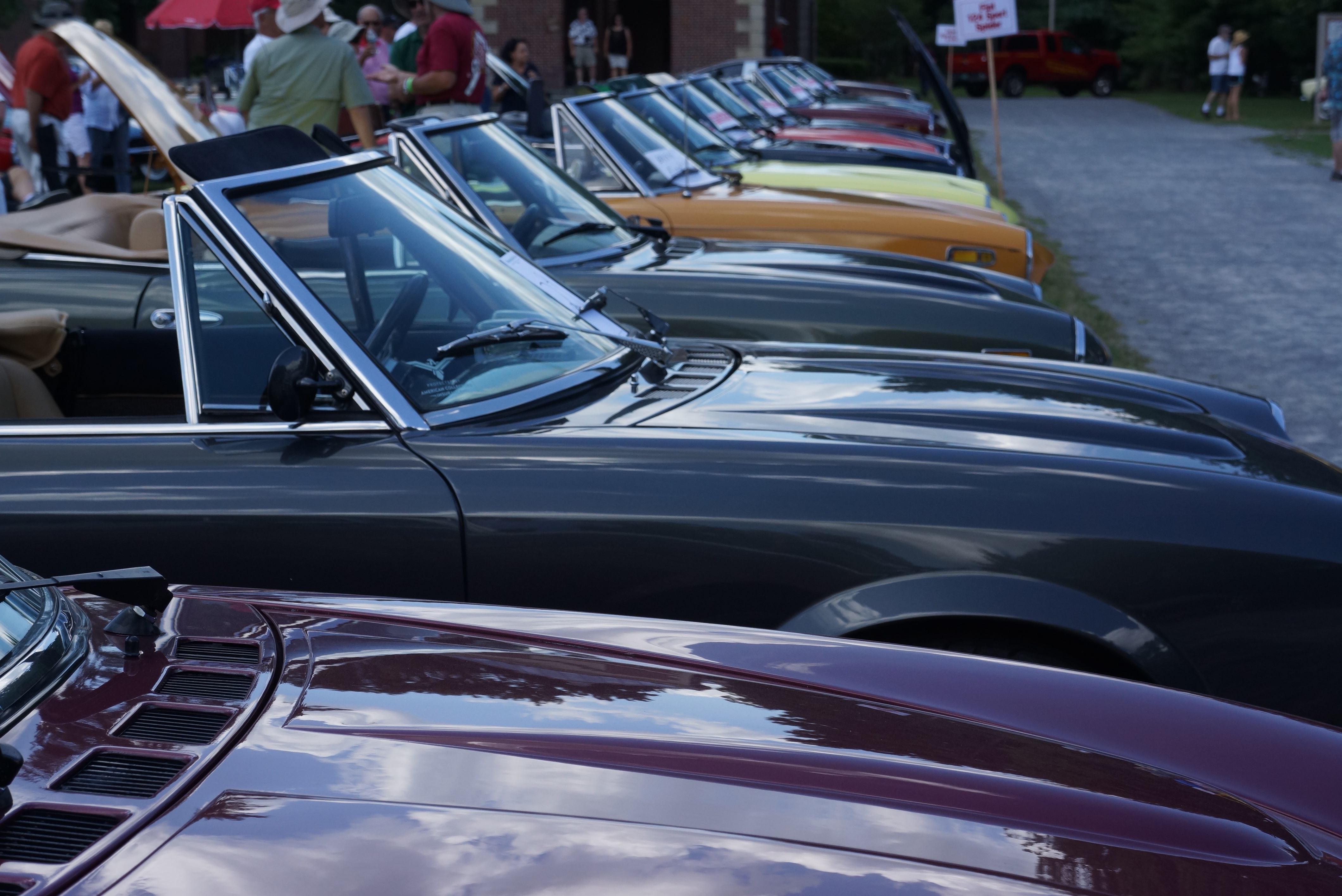
The Alfa class was disappointingly small. However, the cars that were there were gems.
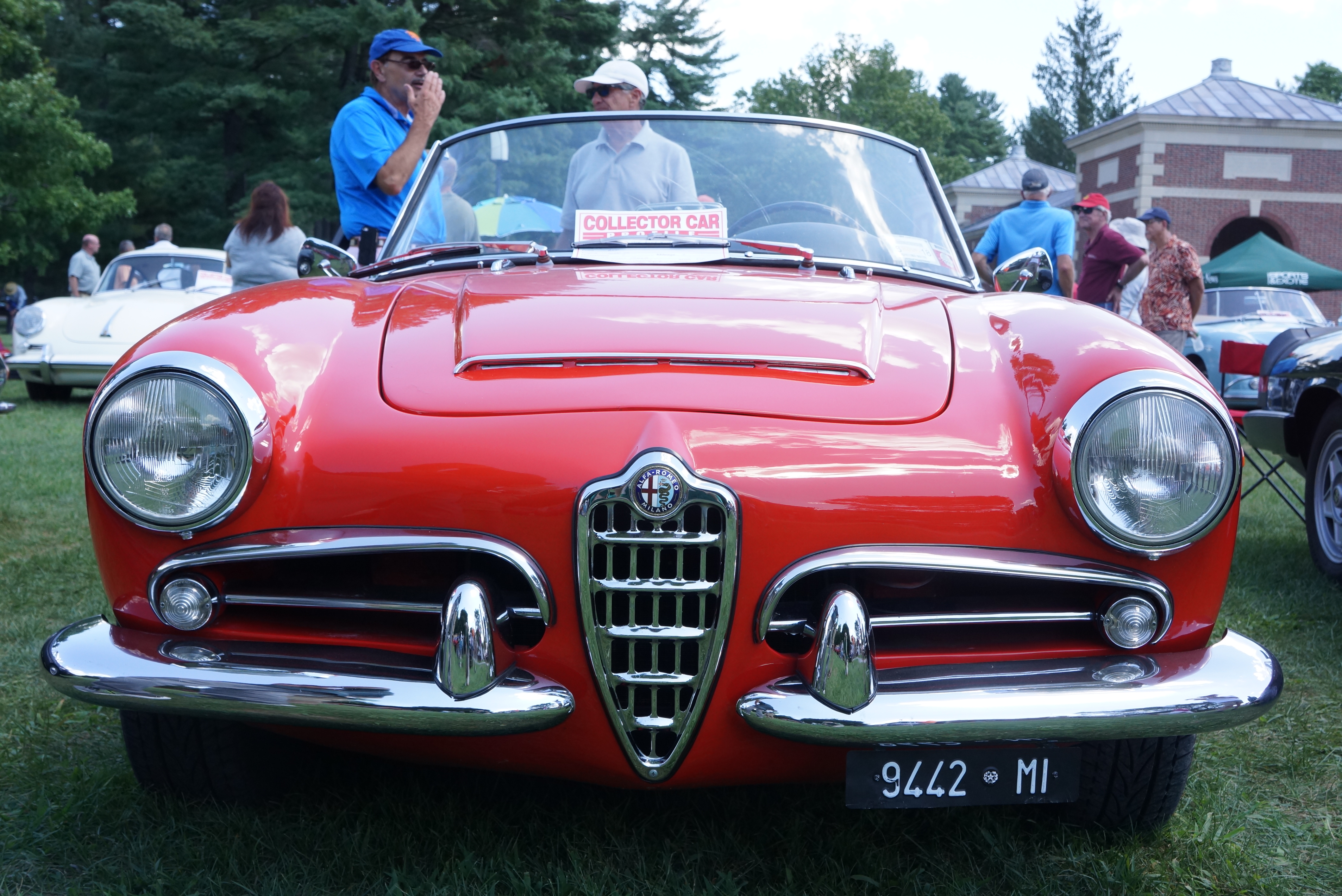
Fine Italian jewelry:
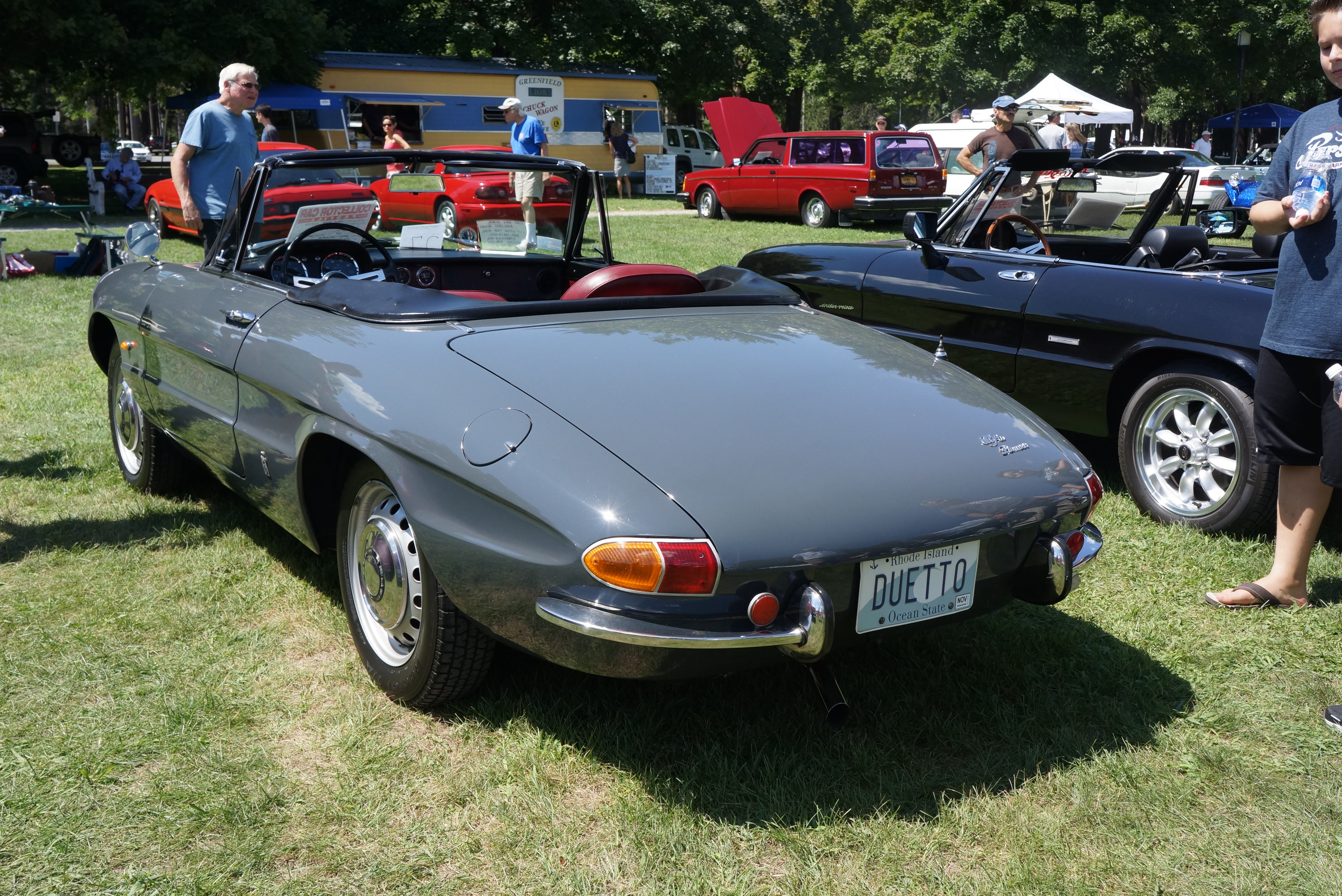
This Duetto, striking in grey, took 1st place in its class.
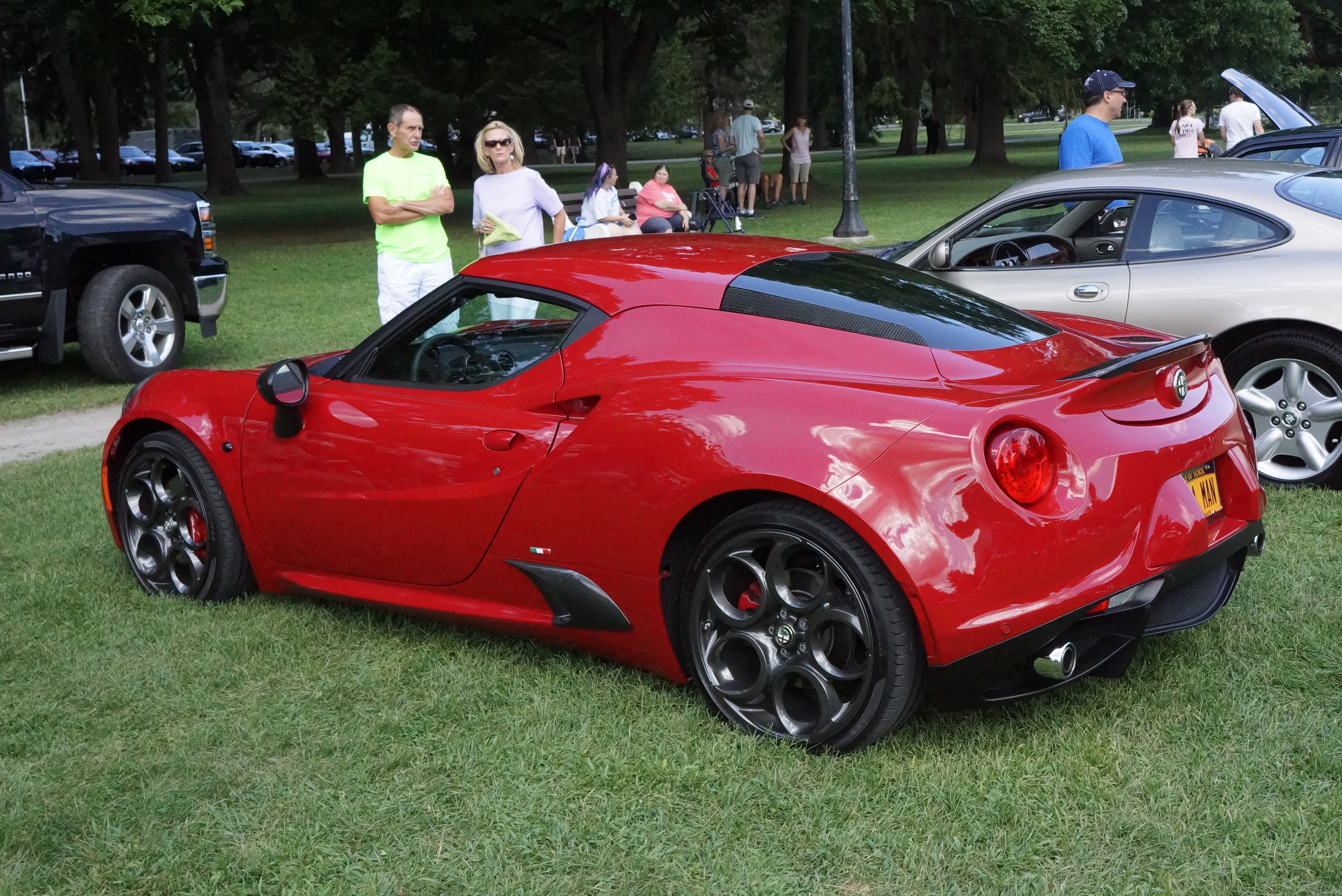
Modern Alfas, in the guise of a 4C coupe and 4C spider:
Car magazines and books are a weakness of mine. My automotive library hold hundreds of car books, and hundreds of various magazine titles. I’ve written in the past of the Car & Driver collection which extends back to the early 1960s. Every year for the past 30+ years, when attending the Carlisle and Hershey flea markets, I am on the lookout for a hardcover or softcover treasure to take home.
Several years ago, a visit to a “$2 bargain bin” at Carlisle yielded this treasure: Truemagazine’s annual Automobile Yearbook, with none other than Uncle Tom McCahill on the cover. (True, also known as “True, The Man’s Magazine”, was published from 1937 to 1974 by Fawcett Publications. During the 1950s, famous automotive author Ken Purdy was its editor.)
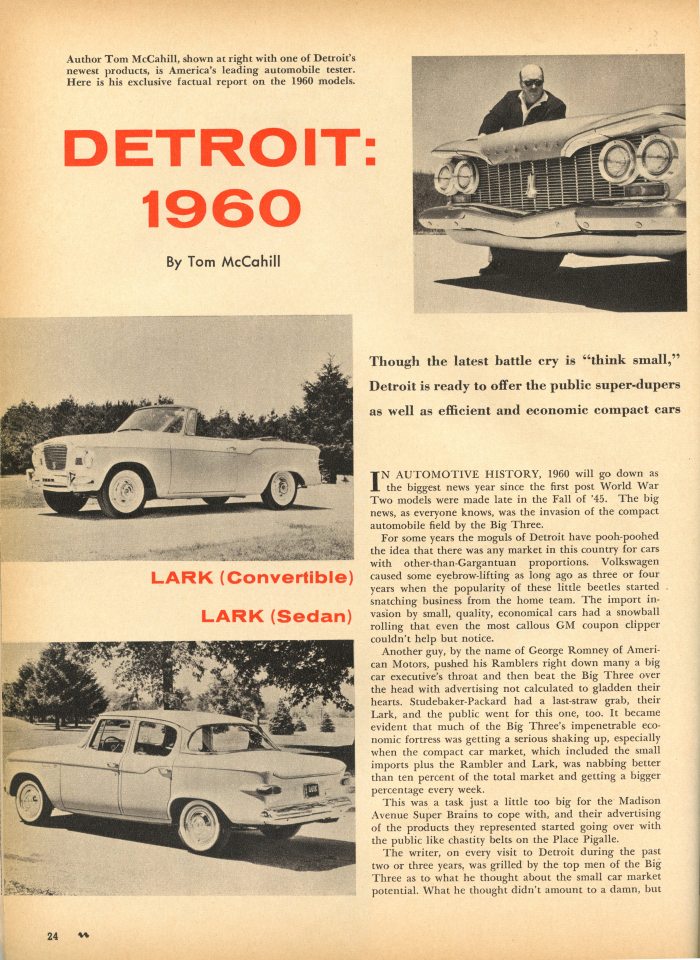
The year 1960 was a watershed year in the U.S. car business, as the Big Three domestic manufacturers each introduced a compact car to fight the growing import car invasion. One vehicle each from GM, Ford, and Chrysler made the cover, but the only compact to do so was the Corvair. Note the picture caption: by mentioning “rear-engine”, perhaps it was seen as Detroit’s best shot to beat Volkswagen at its own game.
The article “Detroit: 1960”, written by McCahill, summarizes the market-share drubbing the big boys were facing, and not just from the imports, but from Rambler and the Studebaker Lark too. As the decade was dawning, these executives were counting on the accuracy of their prediction that the compacts would account for 20% of the new car market. As we know now, it was impossible for them to see what else was in store: intermediate-sized cars, pony cars, government regulations, and further penetration by non-American makes.
Uncle Tom always had a way with words. In this article, he spews out some beauties, such as “… opinions as to what percentage of the market these small cars will pull are as wild as a Third Avenue saloon on Saint Patrick’s Day”; “… good imports …. appear to be put together by guys who really liked what they were doing and not counting the days until their next strike”; and “… 1960 promises to be the wildest year since Louis Chevrolet sat on a bear trap”.
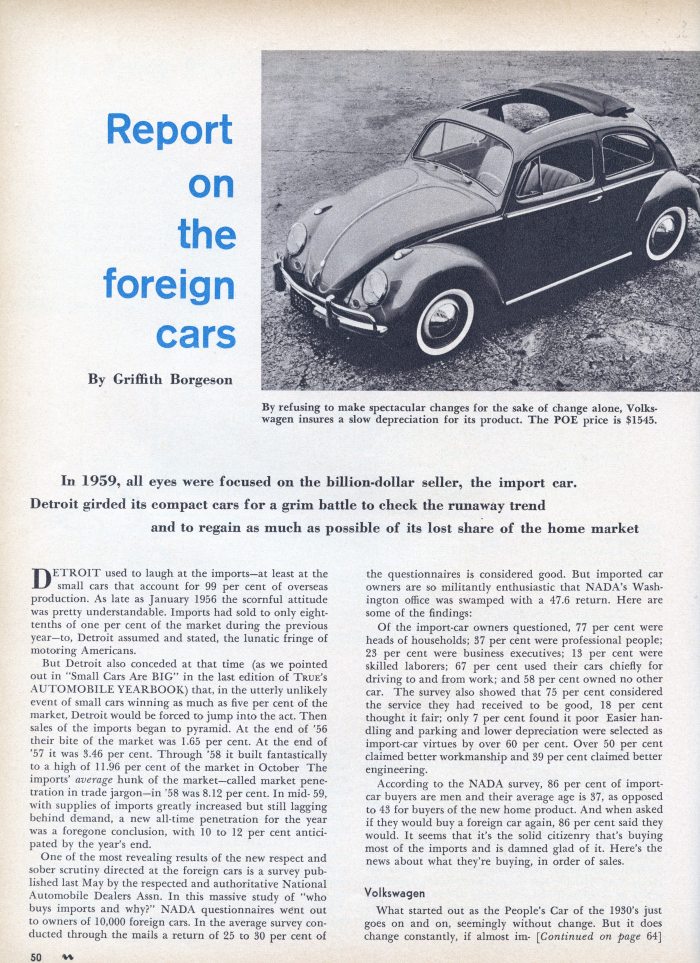
Imports were still viewed as a separate category, deserving of their own story. “The Report on the Foreign Cars” article highlights the tremendous rise in market share, which increased from 1.65% in 1956, to an anticipated 10-12% by the end of 1959.
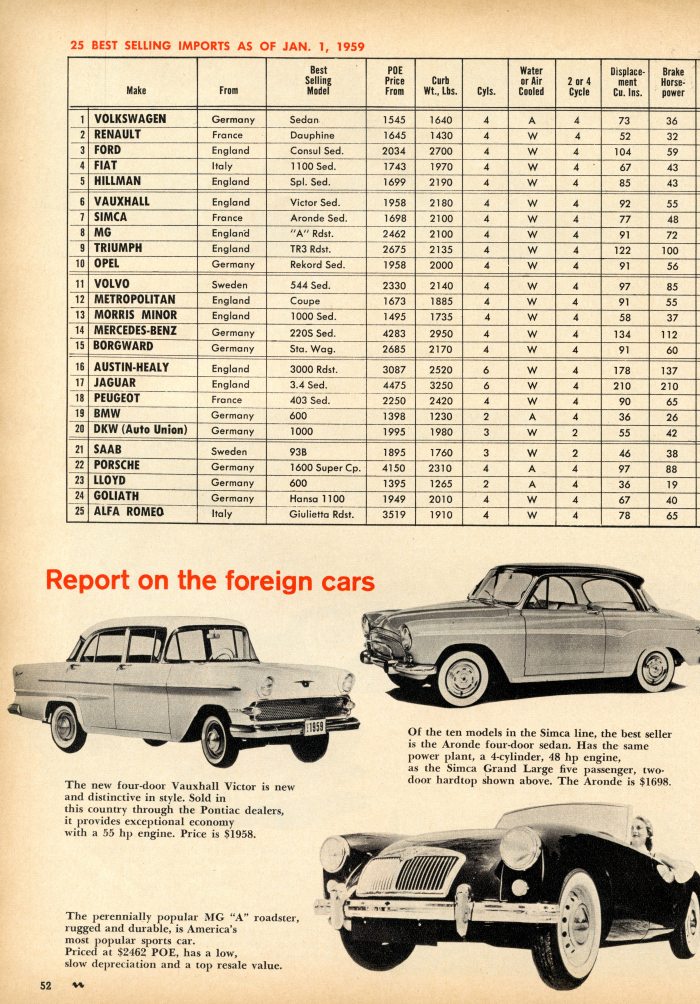
More telling is this list of the “25 Best Selling Imports as of Jan. 1, 1959”. Number One is no surprise. But the 2nd best-selling car in America was French?
To those who may be seeing data like this from the late ‘50s for the first time (or for those who have not seen this in a while), there are two surprises: one, the relatively low positions of future German giants such as Mercedes-Benz (14th), BMW (19th) and Porsche (22nd); and two, the complete lack of any Asian brands in the top 25 positions.
Indeed, the vehicular landscape would change again (and again). No one would have predicted that England, which held FIVE of the top ten positions, would all but disappear from the ranks. Borgward outsold Jaguar AND Saab AND Alfa Romeo? Really?
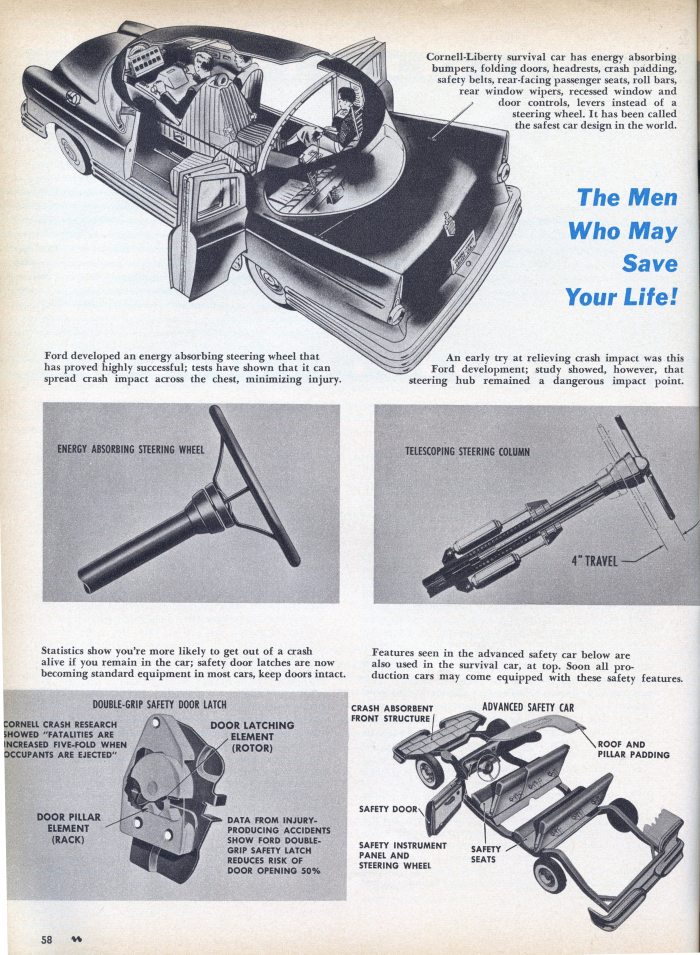
No car magazine from this time period would be considered complete without an article on safety. This excerpt is surprisingly accurate in listing energy-absorbing bumpers, headrests, safety belts, roll bars, and crash-absorbing front structures as features which would save lives. But it would take an act of Congress (the 1966 Motor Vehicle Safety Act) to get many of these features installed. I’ll leave it out of the discussion whether that was because consumers wouldn’t pay for them, or because the car makers preferred to emphasize styling and horsepower.
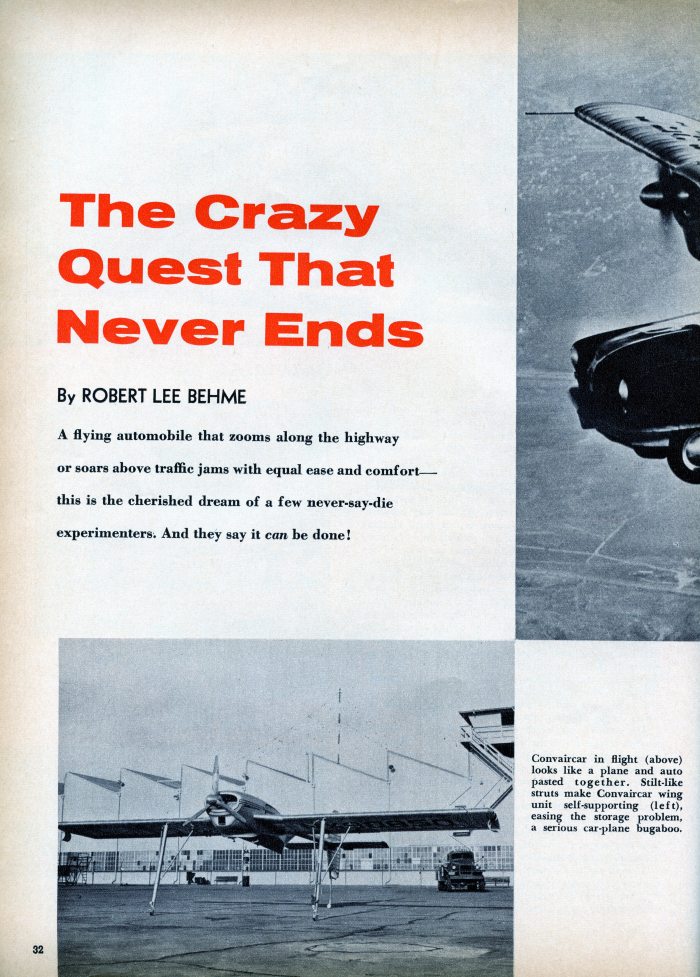
AND, no car magazine from this time period would be complete without an article about… flying cars! (There was an obvious lack of articles from the 1960s about the Internet.) Perhaps it’s best these never came to pass – imagine the issues if pilots were distracted by their cell phones.
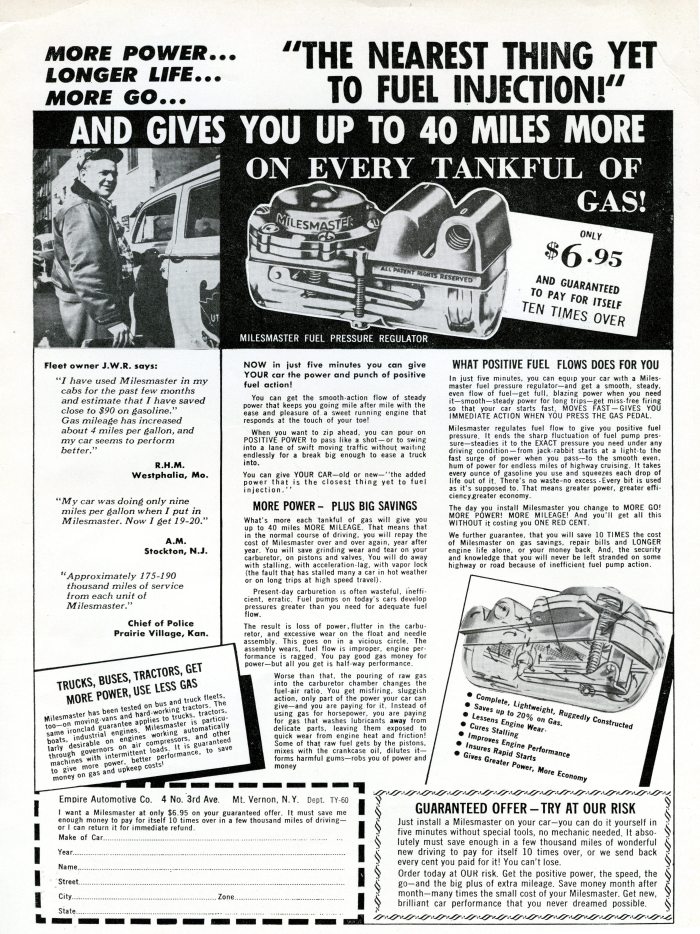
EPILOGUE: The Milesmaster Fuel Pressure Regulator, only $6.95, guaranteed.
Scans are from “TRUE’S Automobile Yearbook for 1960”, which is in the author’s personal collection.
Mecum Auctions came back to Harrisburg PA for the third consecutive year, and held its auction event at the Pennsylvania Farm Show Complex on July 21-23, 2016. Your correspondent was in attendance, also for the third year running, and while external appearances were roughly the same, the men and women of Mecum have been hard at work on incremental improvements.
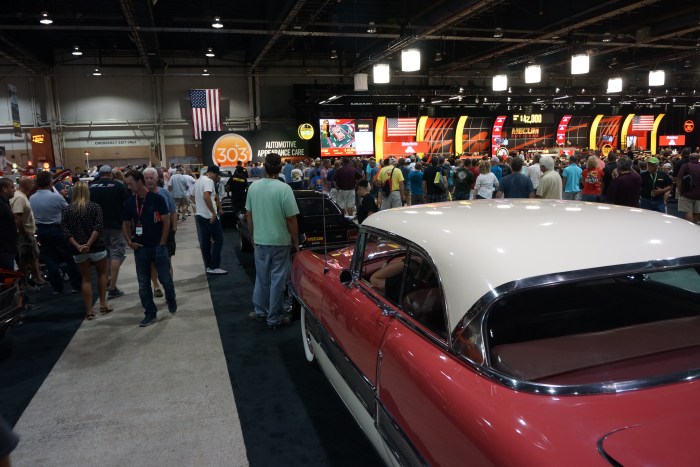
Mecum builds the same set at every auction
Two years ago, parking was confined to off-site lots which required shuttle buses to usher attendees back and forth. Food was only available from counter service inside the building, with limited menu choices. Signage everywhere was poor, leaving many to wander and wonder which way to turn.
YUGE video screens always give you current bid
This year, ample parking was available within the Complex parking lot itself, allowing one to be inside within minutes. Food trucks lined the back parking lot, offering the traditional burgers and chicken, plus crab cakes, po’ boys, pizza, and Greek gyros. Not only were large signs posted everywhere; upon entry, all who paid admission (NOT just bidders) were handed run sheets, maps, and daily programs. The improvements were palpable, and it reinforced the juggernaut that Mecum has become in the collector car auction business.
Good crowd, plenty of seating, and A/C
The quality of the consignments seemed rather consistent each of the three years, although this year, there were fewer of the vehicles that light my fire (original and/or unrestored American cars, and European sporty cars). The field was heavy with hot rods and resto-mods, and of course, the always-expected Mustangs, Camaros, and Corvettes (as my friend Larry said of them, “the backbone of the hobby”). The latter three models easily comprised about 20% of the total offerings.
The queue on its way to the block
Sitting through two complete days of across-the-block auction action, the room was almost constantly abuzz. Real bidders were bidding, and most cars generated a high level of excitement. When that seemed to wane, Mecum seemingly just turned up the volume on the already-blaring PA system to make sure you were awake.
A recent distasteful trend: well-restored cars with modern wheels
Sell-through rate appeared strong (SWAG: 70%), helped by Dana himself arm-twisting owners on the spot to drop their reserves and close the deal. Are some prices off their highs of one to two years ago? Yes. Is everything selling at distress-sale levels? Absolutely not. To those who think that the collector-car hobby is in a slump, I hold up Mecum Harrisburg 2016 as Exhibit #1 that it is not. And if it was slumping, it has bounced back with a vengeance.
Mecum staff excellent at organizing cars in staging tent
Below, in lot number order, are my thoughts on an varied group of cars and trucks which were interesting to me. You, no doubt, would have chosen 14 different vehicles to profile. Let me know which of these, if any, you would have bought for the price.
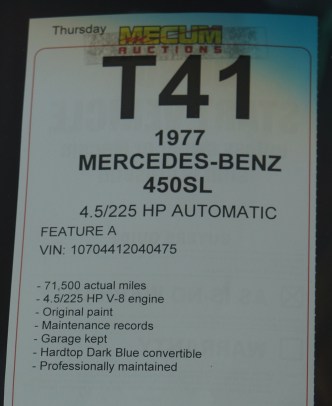
LOT T41, 1977 MERCEDES BENZ 450-SL
Condition estimate: 2+
SOLD for $15,500
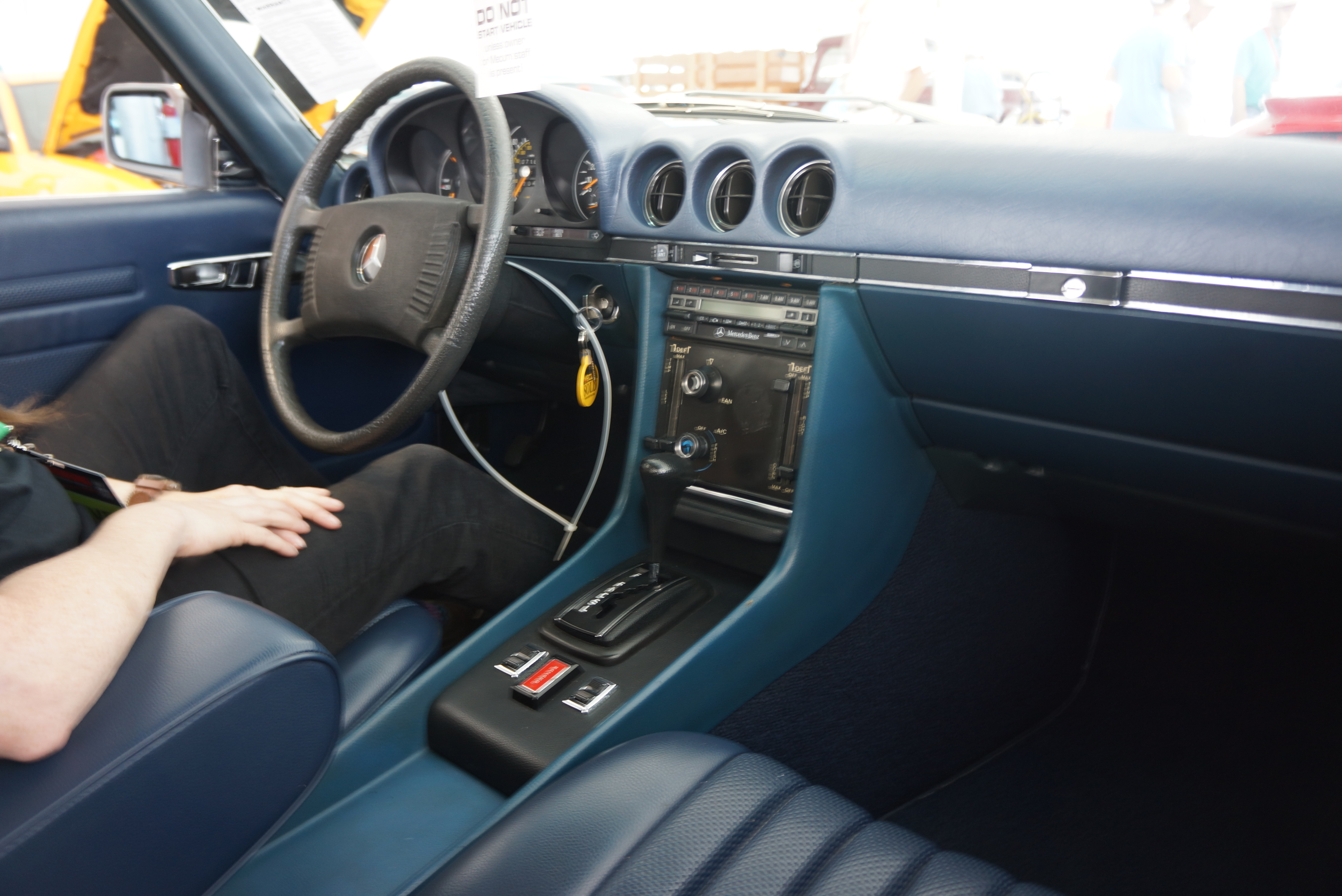
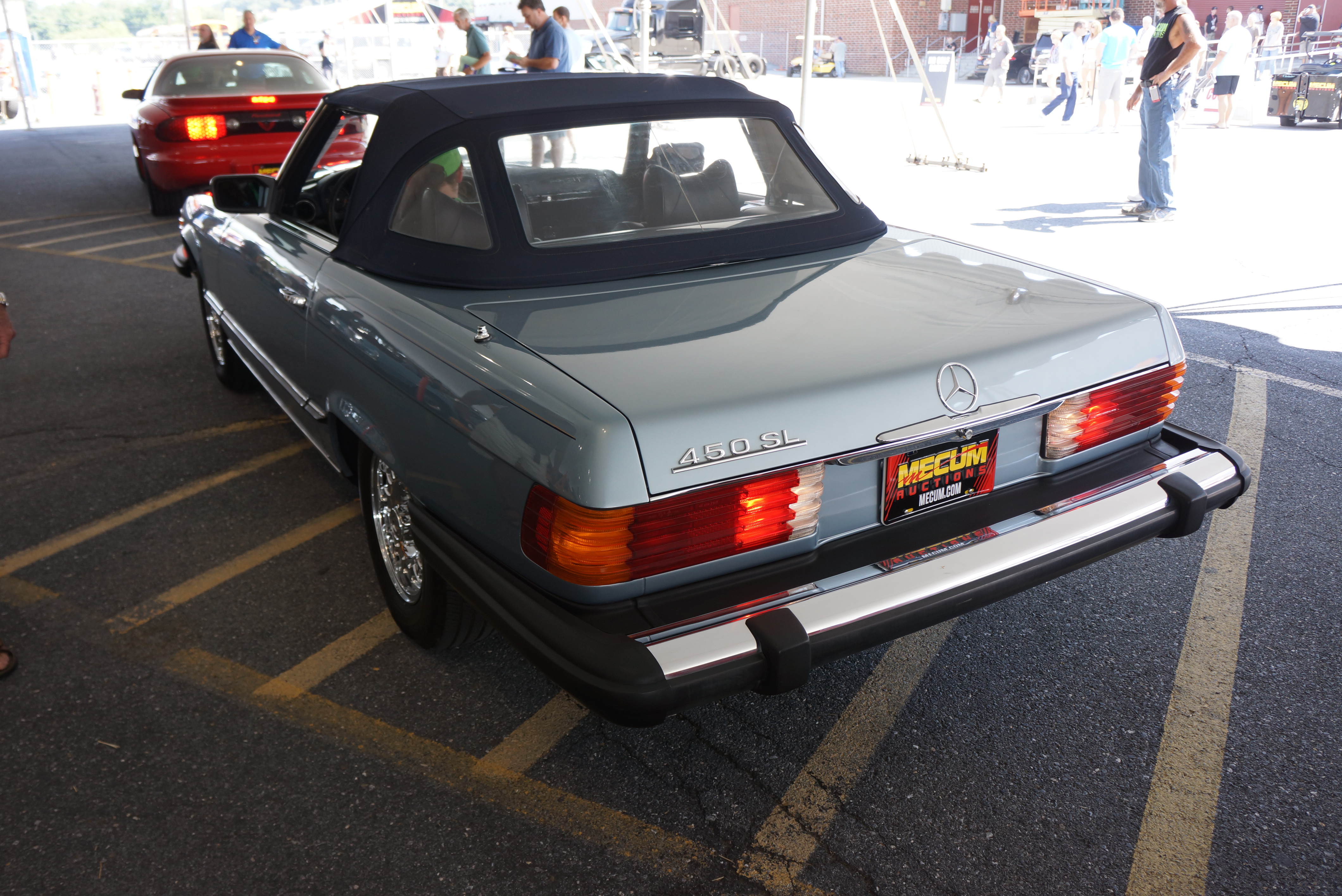
This generation SL is hot right now, especially the 450-SLs from the late ‘70s like this one, and the final 560-SLs. Many of the ones we see at auction are dogs; this one was decidedly not. Price was not a bargain, but fair for a very presentable Benz. This car can likely be enjoyed and then sold in several years for the same or a little more.
’77 MB 450SL, blue on blue
Interior clean in complementary blue
Soft top looks good
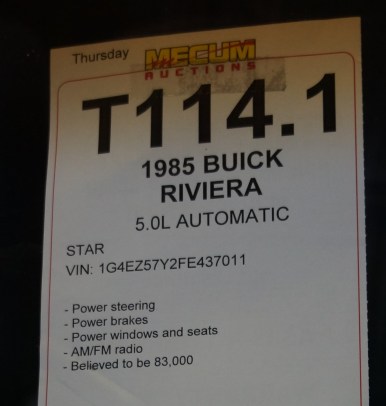
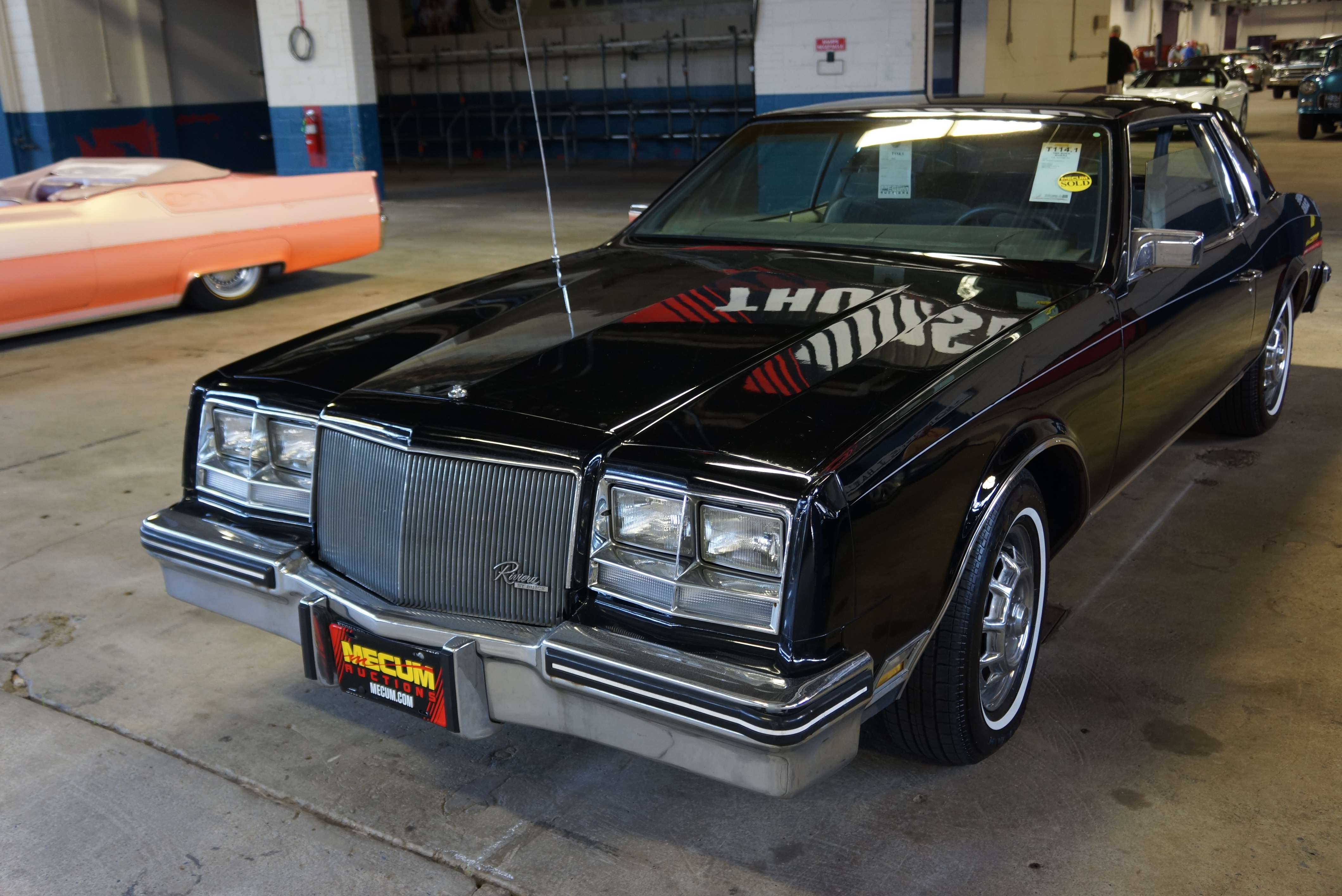
T114.1, 1985 BUICK RIVIERA
Condition estimate: 4
SOLD for $2,000
The scene on the auction block was something I’d never witnessed before. As the car came up, “auctioneer A” could not get a single $1,000 opening bid for it. He asked, begged, cajoled, screamed, and pleaded, all in vain. There was a long pause, and (this was the novel part) Jimmy Landis, Mecum’s well-known town crier, grabbed the microphone and said “let me try”! But still no bids. Jimmy turned to the owner, and into the microphone, said “sir, nobody wants your car!” Finally, someone in the crowd, recognizing that they could buy a running, driving, V8-powered American automobile for cheap, bid $1,000, then $1,500, then $2,000, at which point Jimmy screamed SOLD!!! This entire process took the better part of 10 minutes.
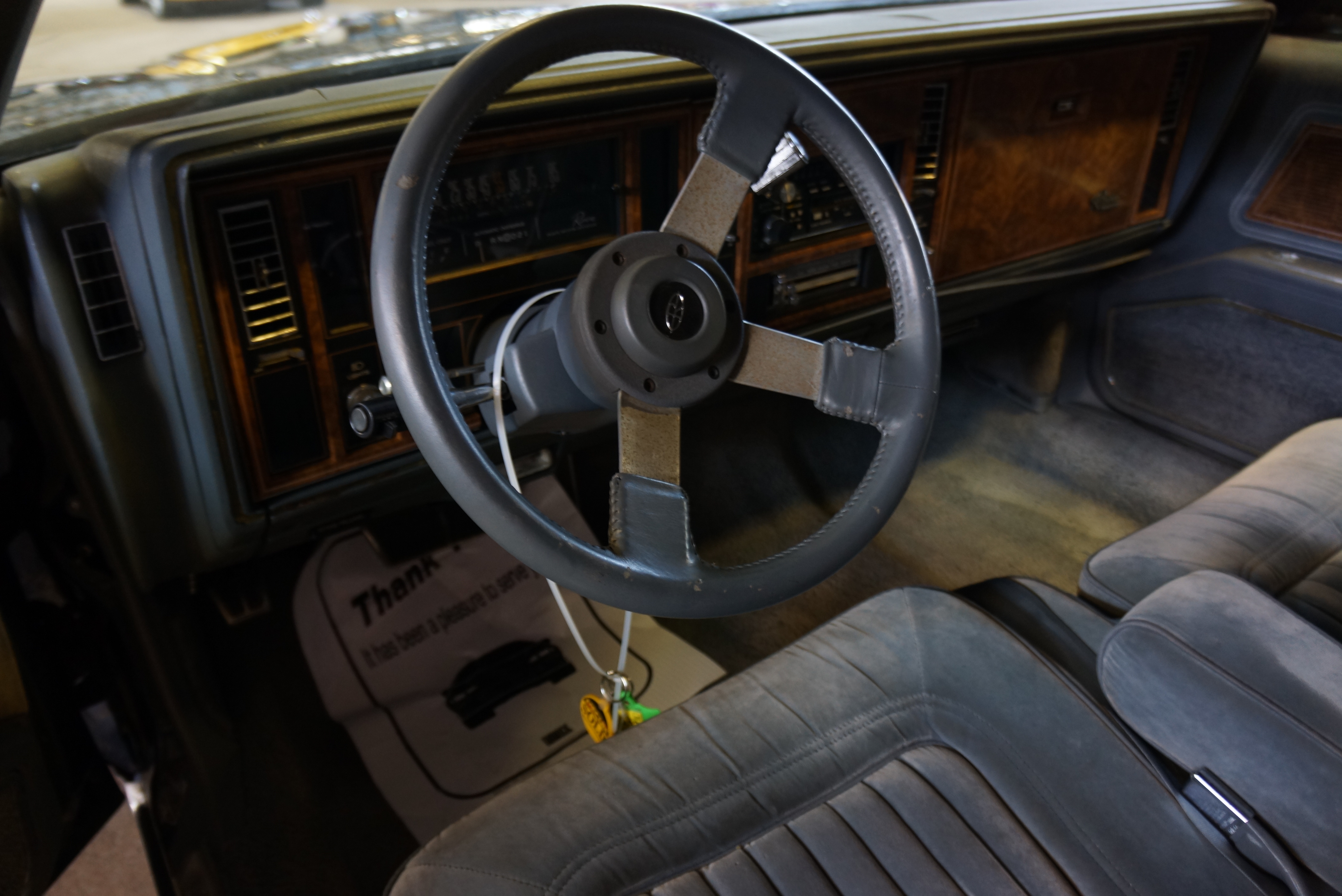
We checked out the car later. The sides were laser-straight, but the black paint on the roof was a little sketchy. The interior was not trashed, and it all seemed to be there. Someone got a driver for very little money.
Riv from the front
Riv from the rear
Interior seems fine
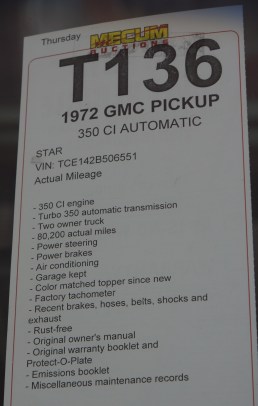
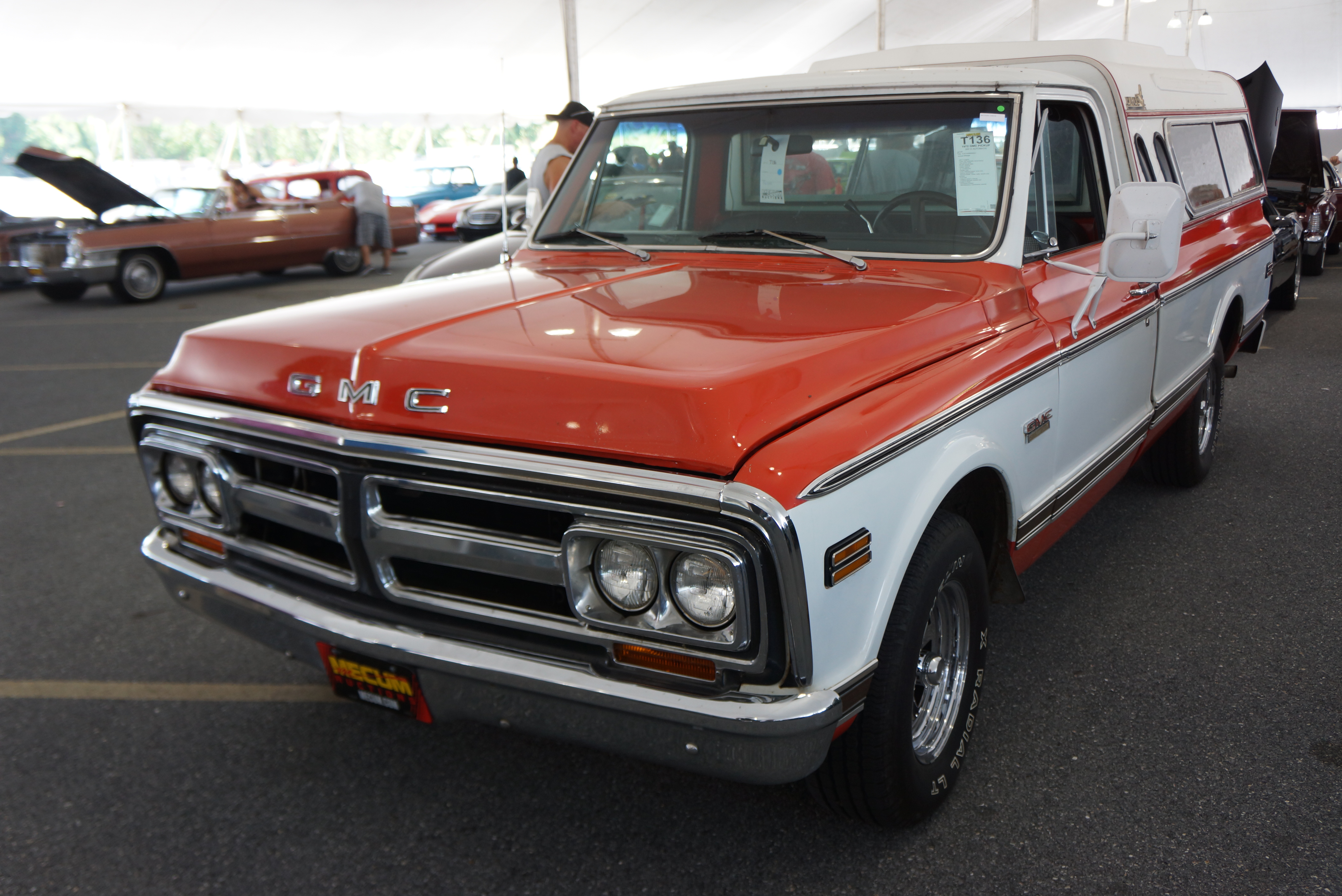
T136, 1972 GMC PICKUP TRUCK
Condition estimate: 3-
SOLD for $12,500
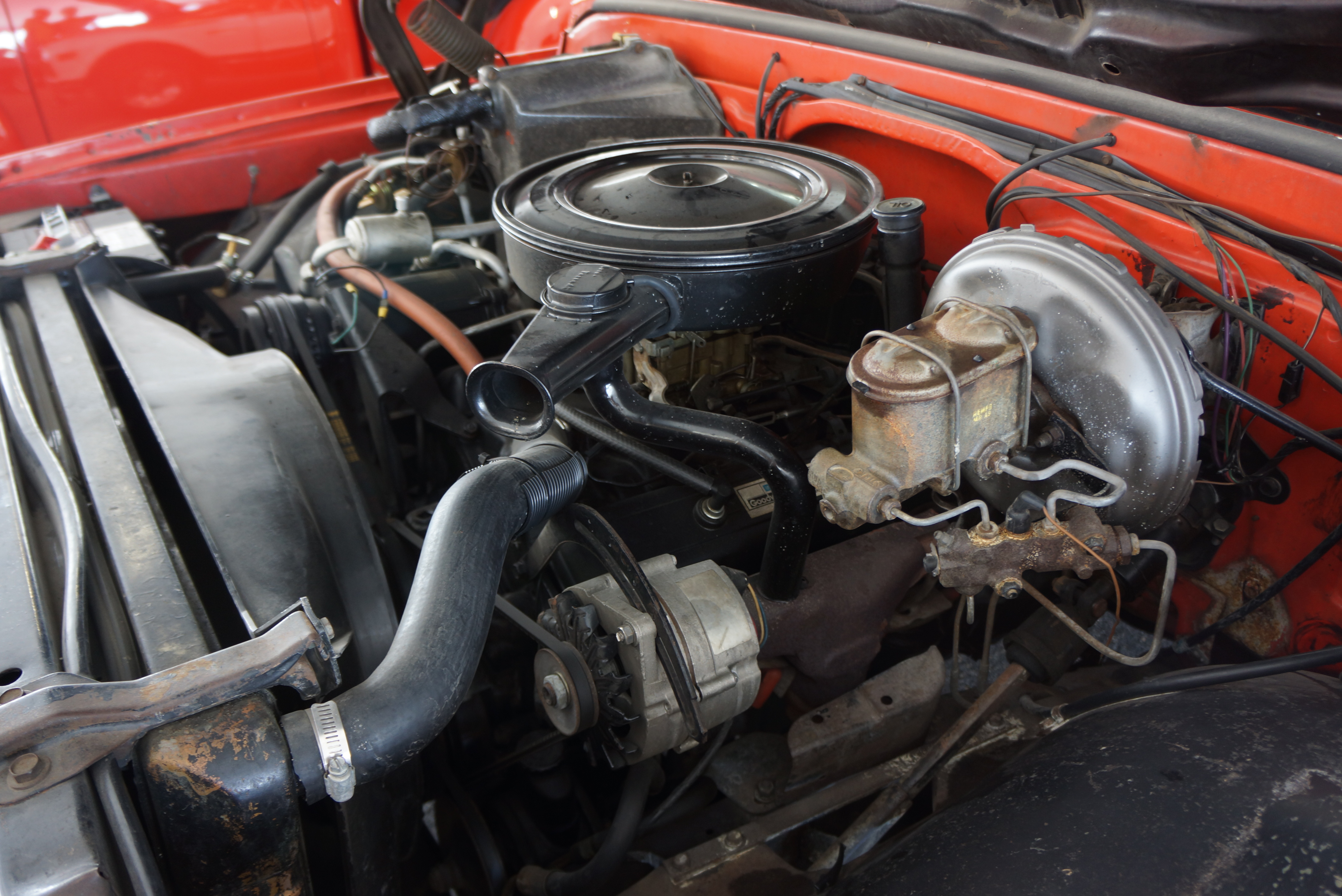
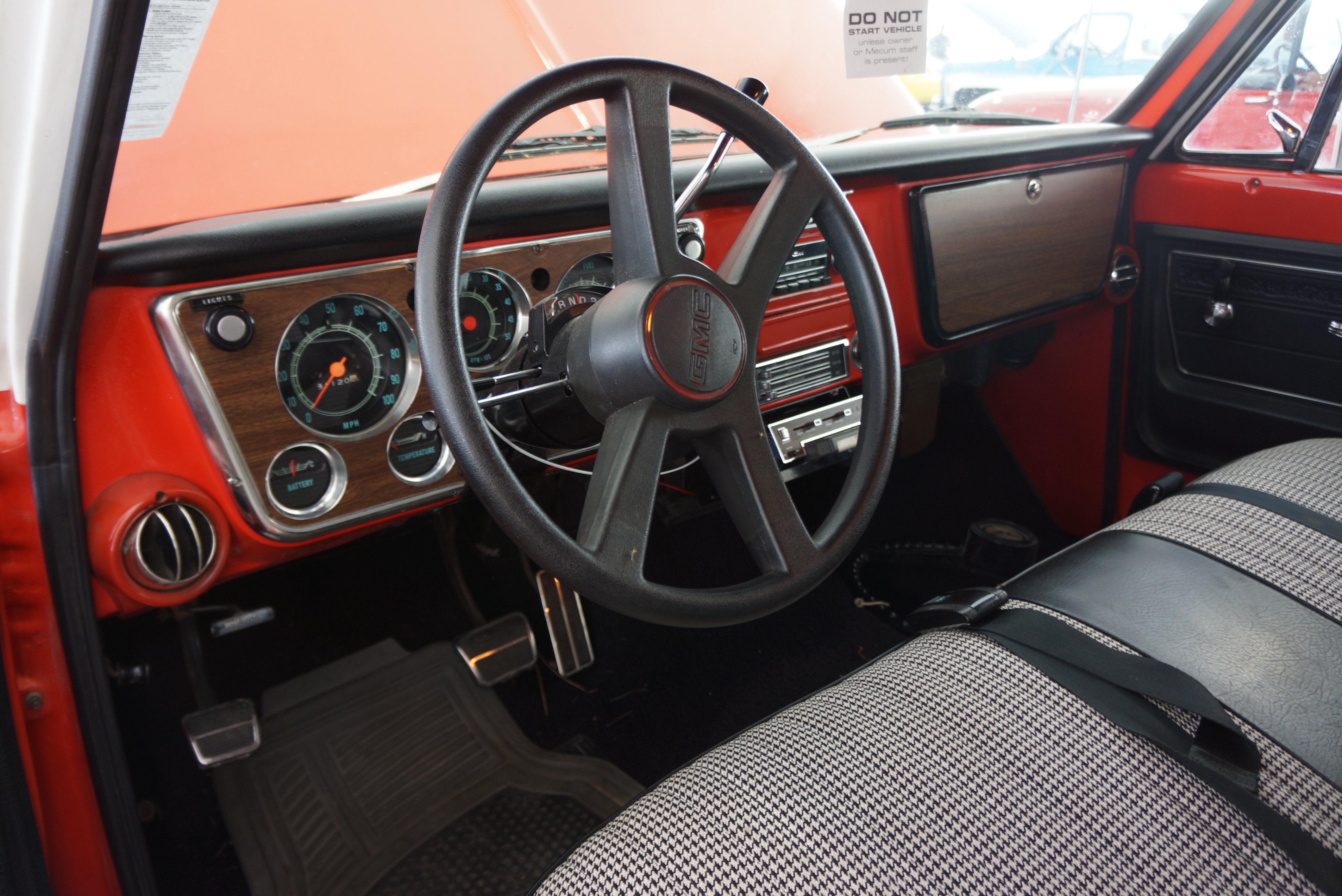
There were a large number of GM pickups from this generation (’67-’72) at the auction, most of which were either restored to #1 condition or were rodded. This was one of the few that appeared to be original and unrestored, and the truck had an honest vibe to it. The price seemed to favor the buyer; a few thousand more would not have surprised.
Very period orange & white
Decent engine compartment
Houndstooth, just like a ’69 Camaro
Bed likely was protected by cap
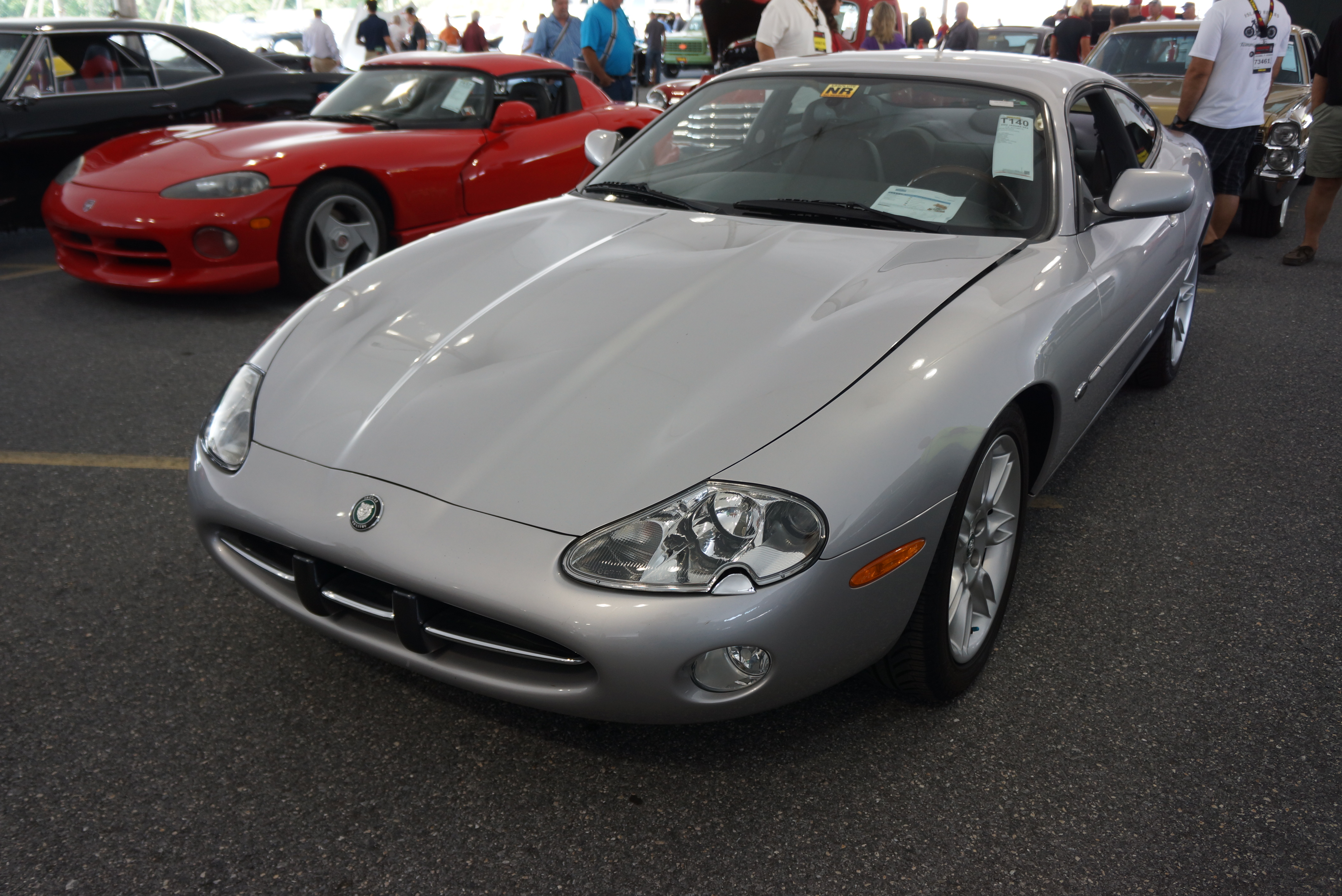
T140, 2002 JAGUAR XK8 COUPE
Condition estimate: 3-
SOLD for $7,000
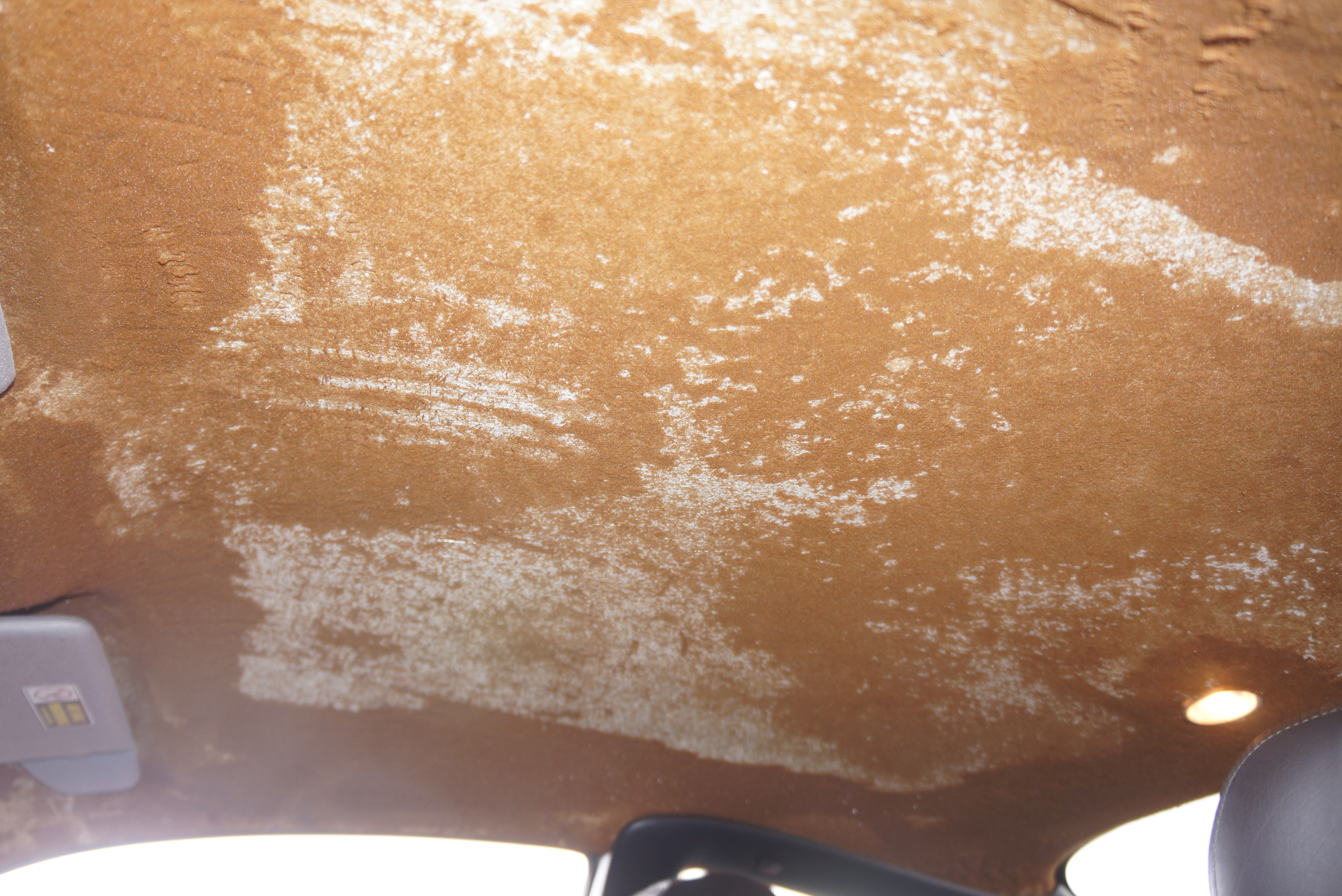
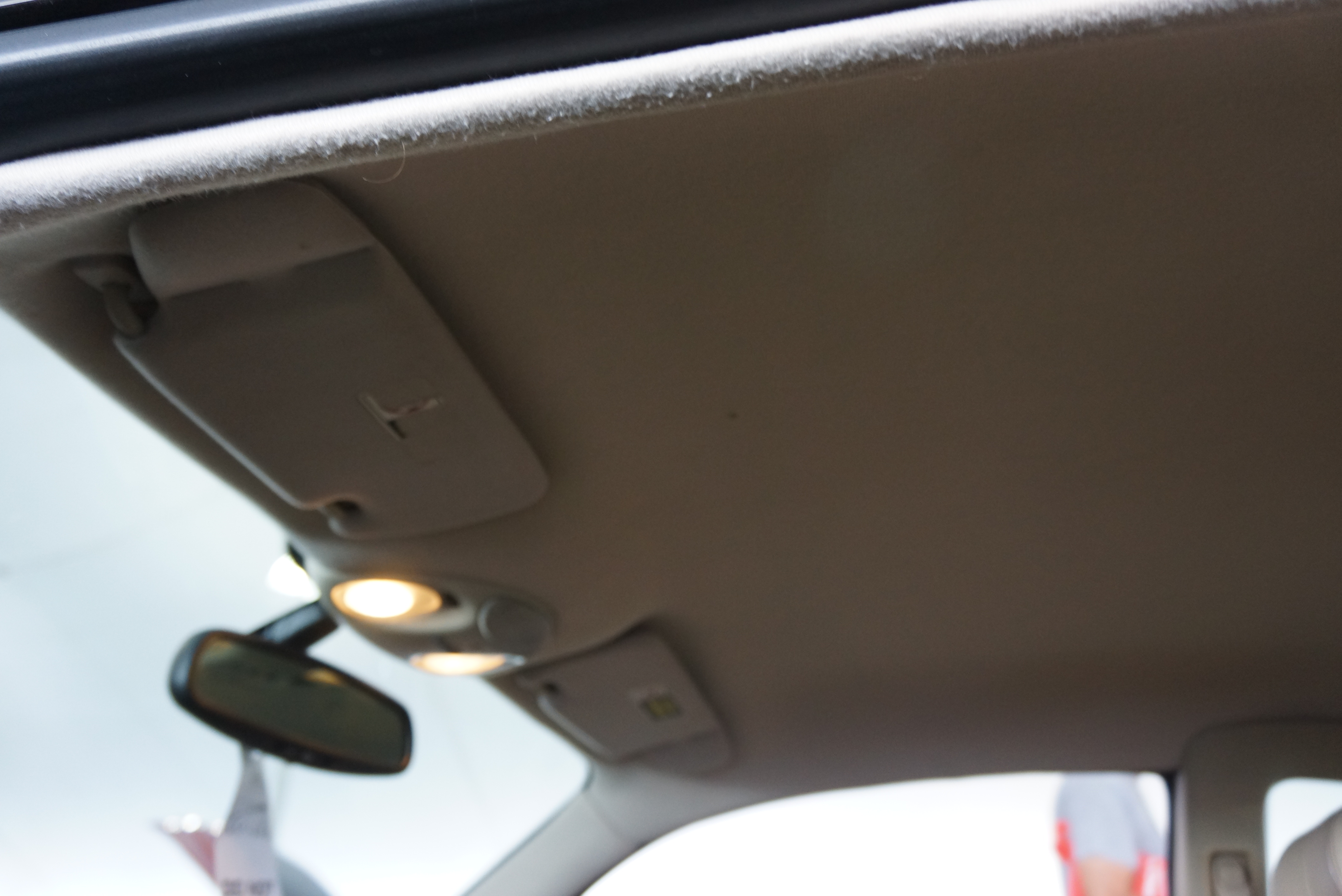
Jaguar XK8 convertibles outsold their coupe counterparts 10 to 1. Coupes are therefore thin on the ground, and it was nice to see one. However, as I sat in the driver’s seat, “crumbs” appeared on my shirt. Looking up, I saw…. that the car had no headliner. This selling price (no reserve) seems fair, but don’t forget to factor in the parts and labor for a headliner.
Nice to see an XK8 coupe
We’re told these engines are strong
Interior looks good until…
you look up to see this
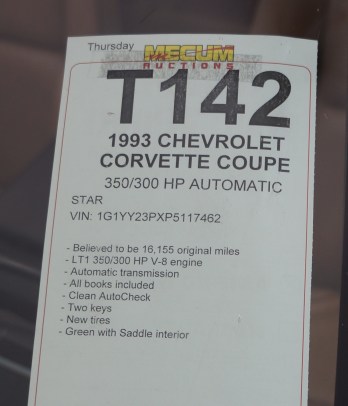
T142, 1993 CHEVROLET CORVETTE COUPE
Condition estimate: 2
SOLD for $13,500
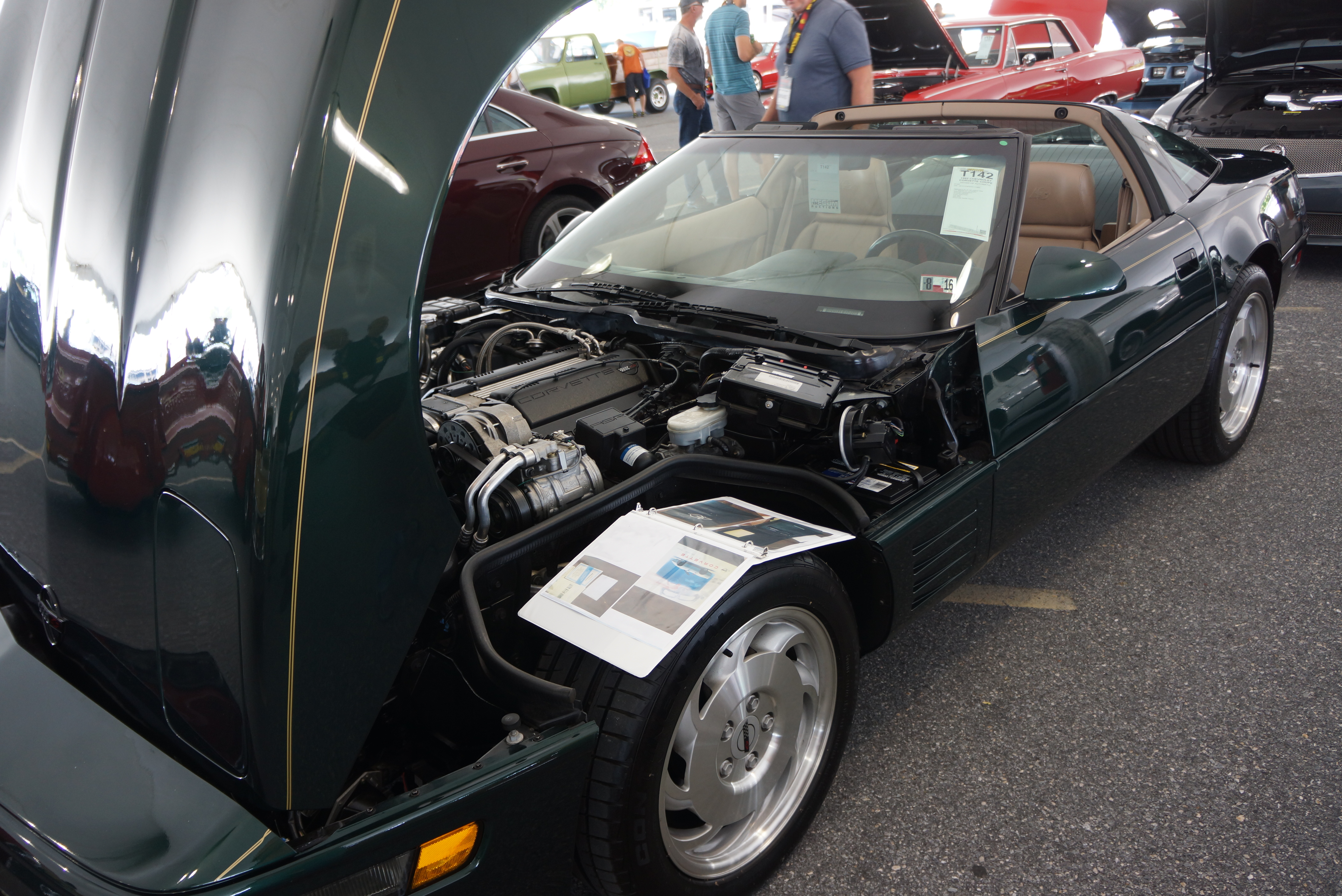
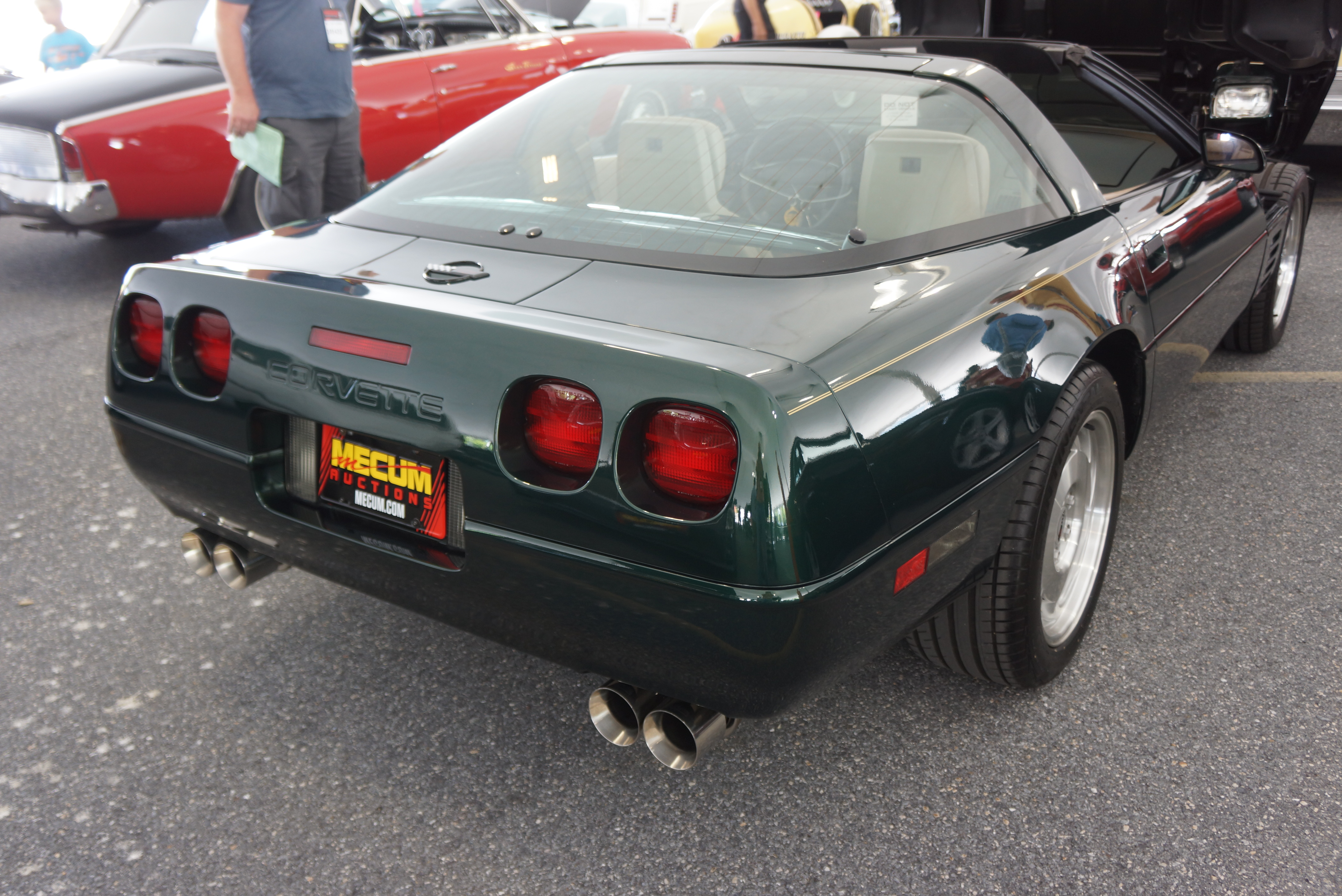
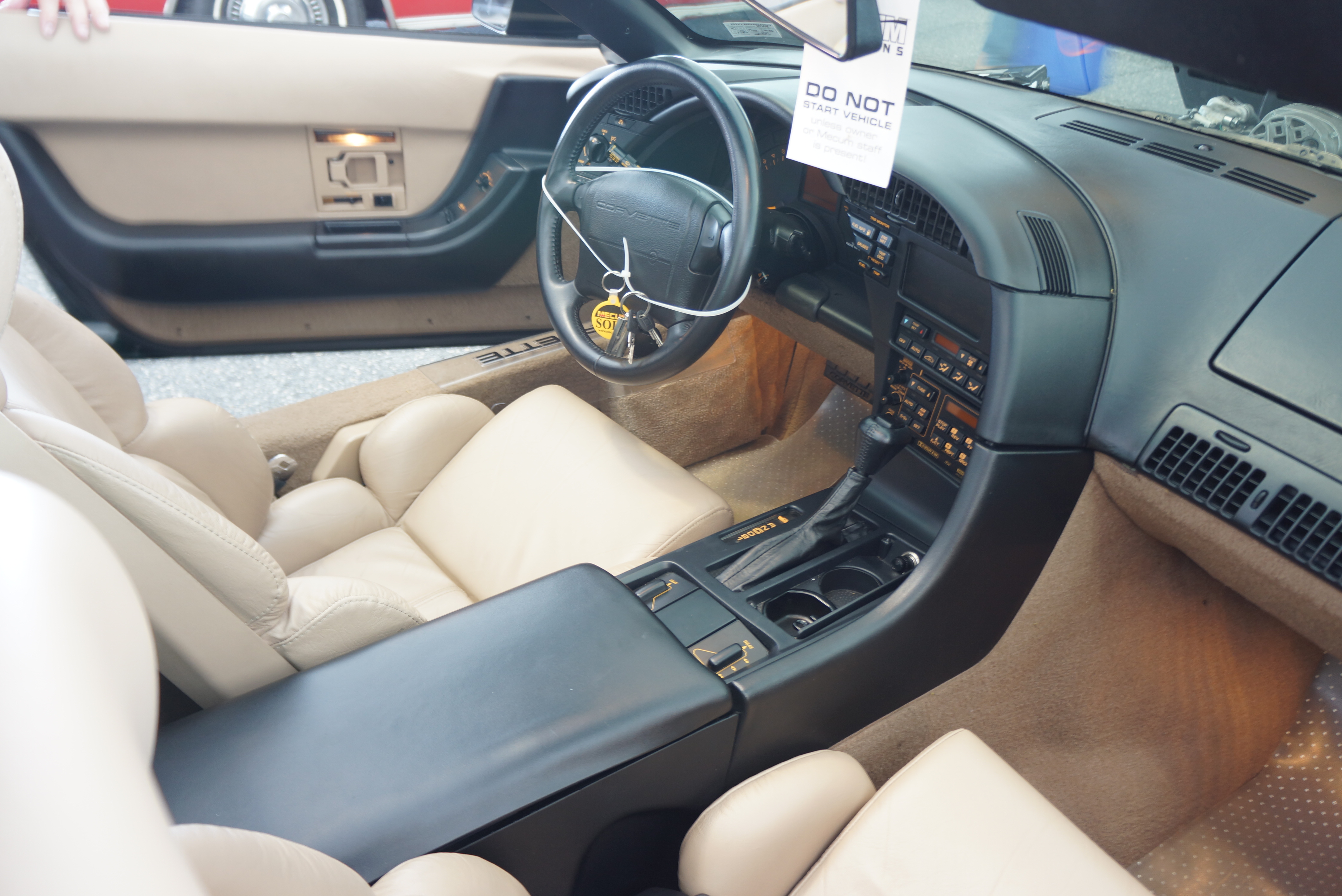
Green over tan is popular on MGs and Jags, but not to everyone’s taste on America’s Sports Car. The car was clean and purportedly very low miles. Price was a bit higher compared to what we saw at Carlisle just 3 months ago; are C4s on the way up?
Sit on the tire to service it
Dark green paint has held up
As has sharp beige interior
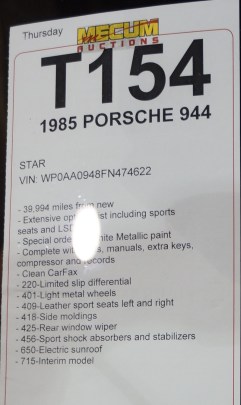
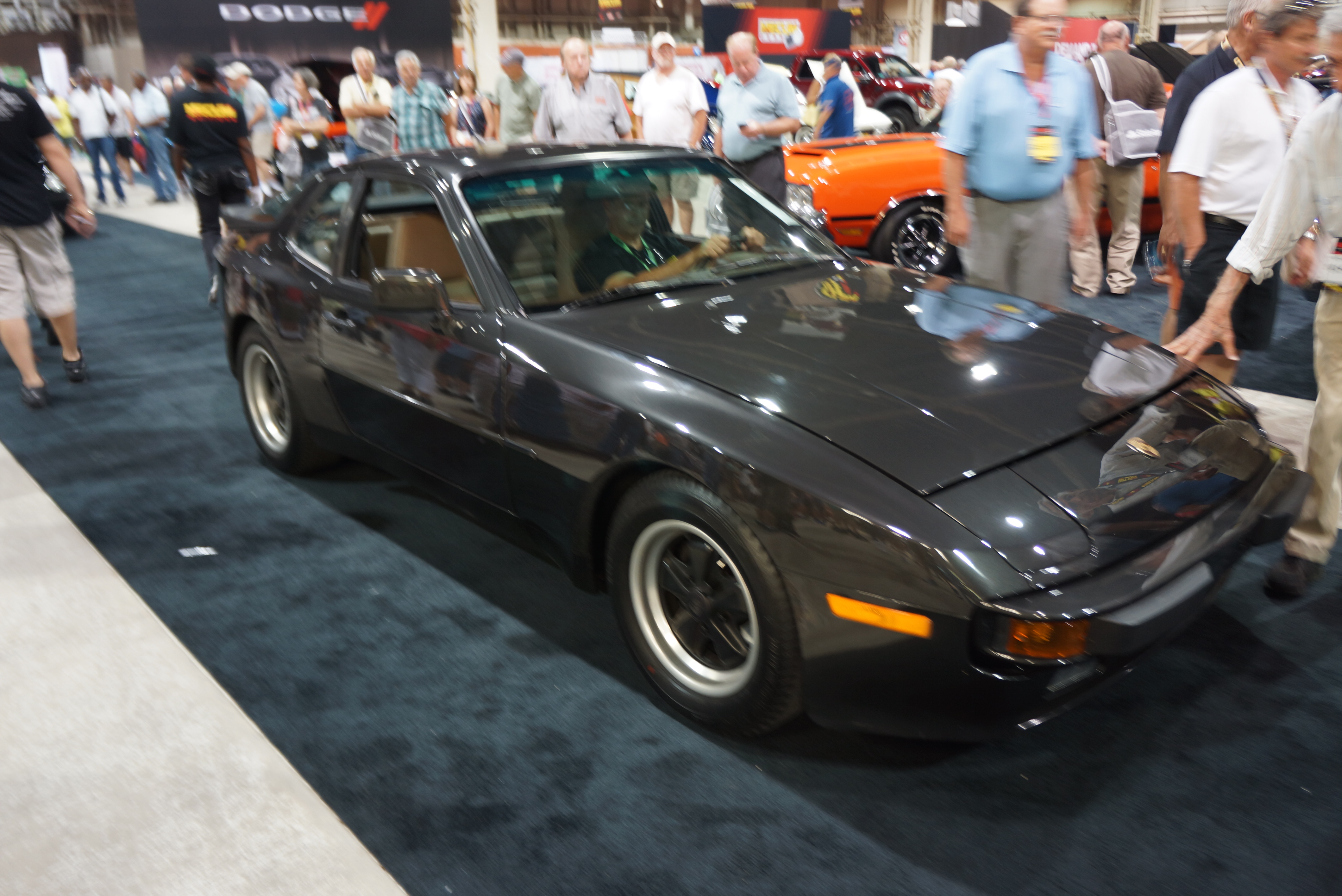
T154, 1984 PORSCHE 944
Condition estimate: 2
NOT SOLD AT $15,000 HIGH BID
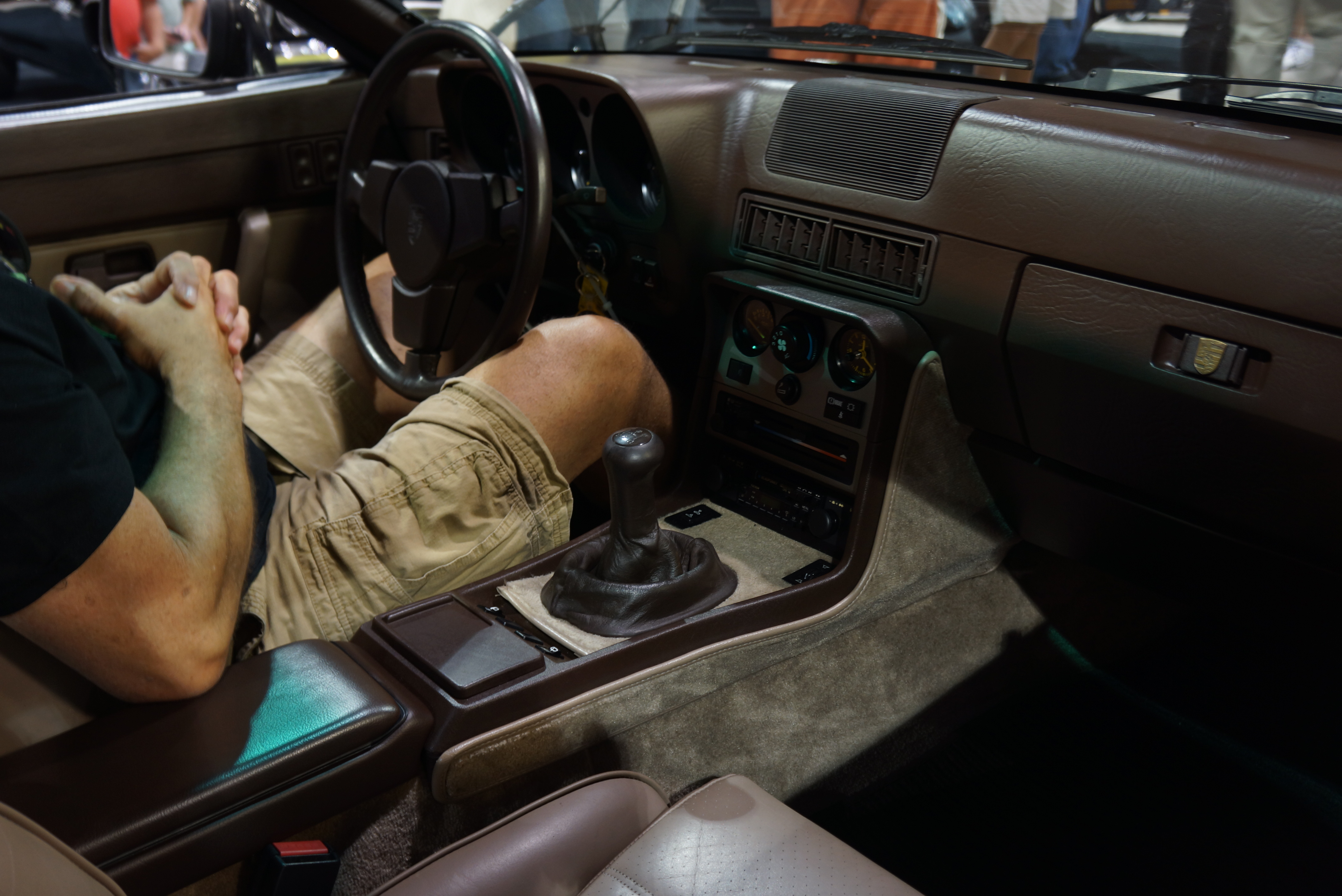
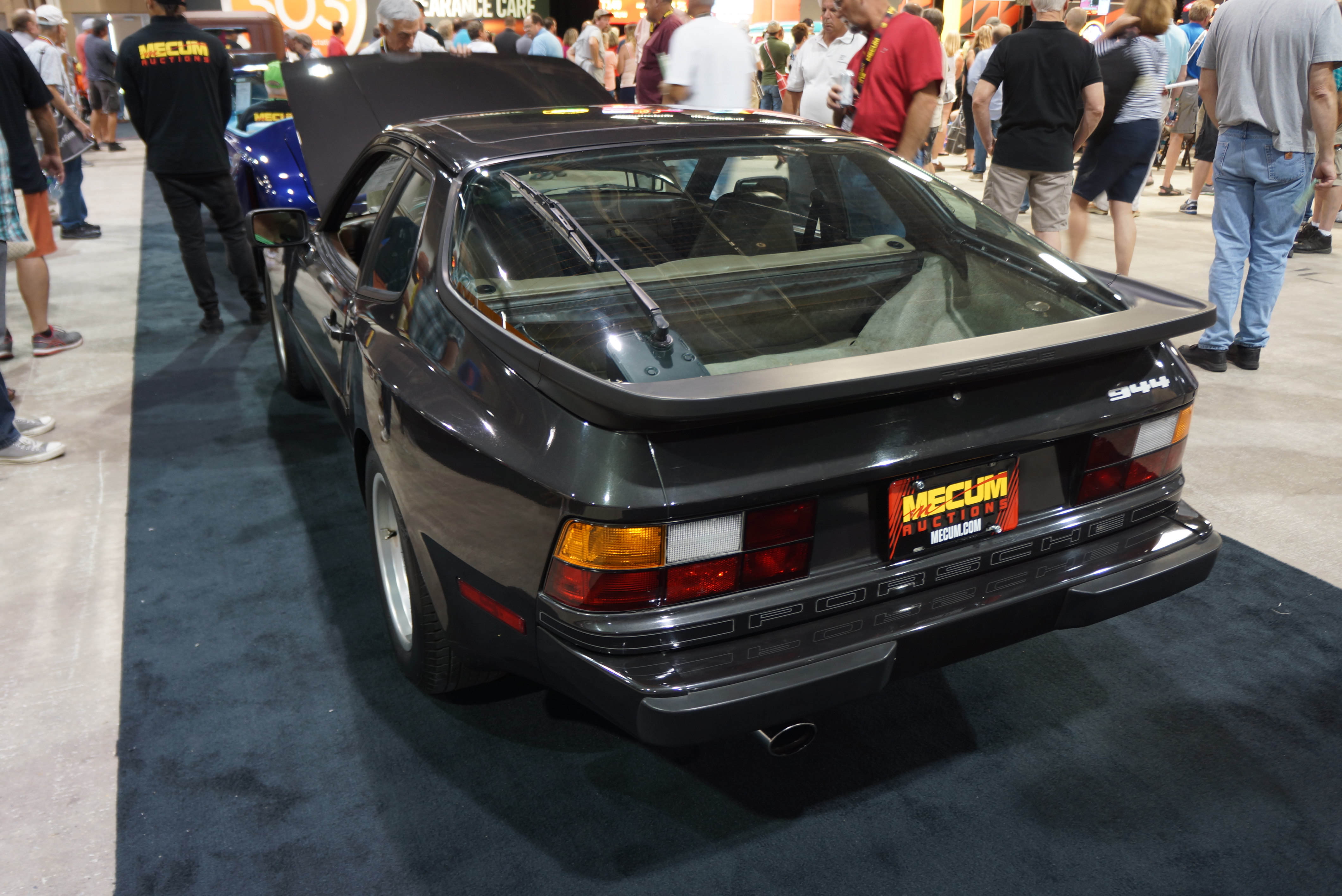
As Porsche 911 prices climb beyond a reasonable level for the average collector, other Porsches gain interest. Several years ago, there was no such thing as a five-figure 944. This car, from the model’s third year of production, was highly optioned, and in an attractive and rare color. But it’s the later 944s which are getting bucks in the mid-teens. This car should have sold at this number.
Grey metallic unusual & striking
Dash design was about to change
The 944 look has grown on many
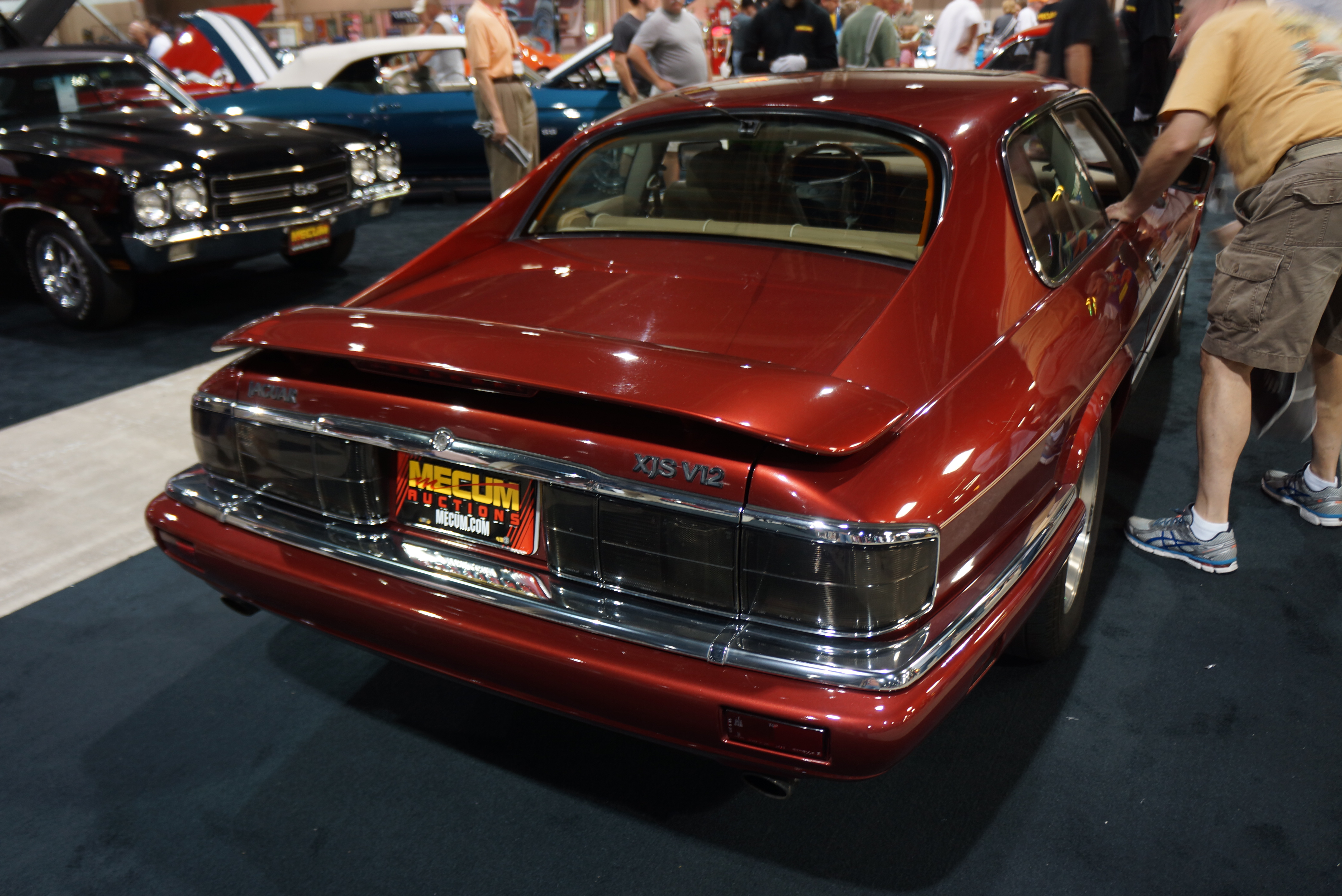
T172, 1995 JAGUAR XJS COUPE
Condition estimate: 2
NOT SOLD AT $10,000 HIGH BID
The 1991 redesign of the XJS actually improved its looks, at which time, the introduction of a 6-cylinder engine and a full convertible meant most were built that way. That makes this late 12-cylinder coupe rare, but as we know, rare does not always equal valuable. The bid price seemed close enough to me, but not to the owner. One would guess we were no more than a few grand away from the reserve.
By ’95, bumpers were color-keyed
and spoiler adorned deck lid
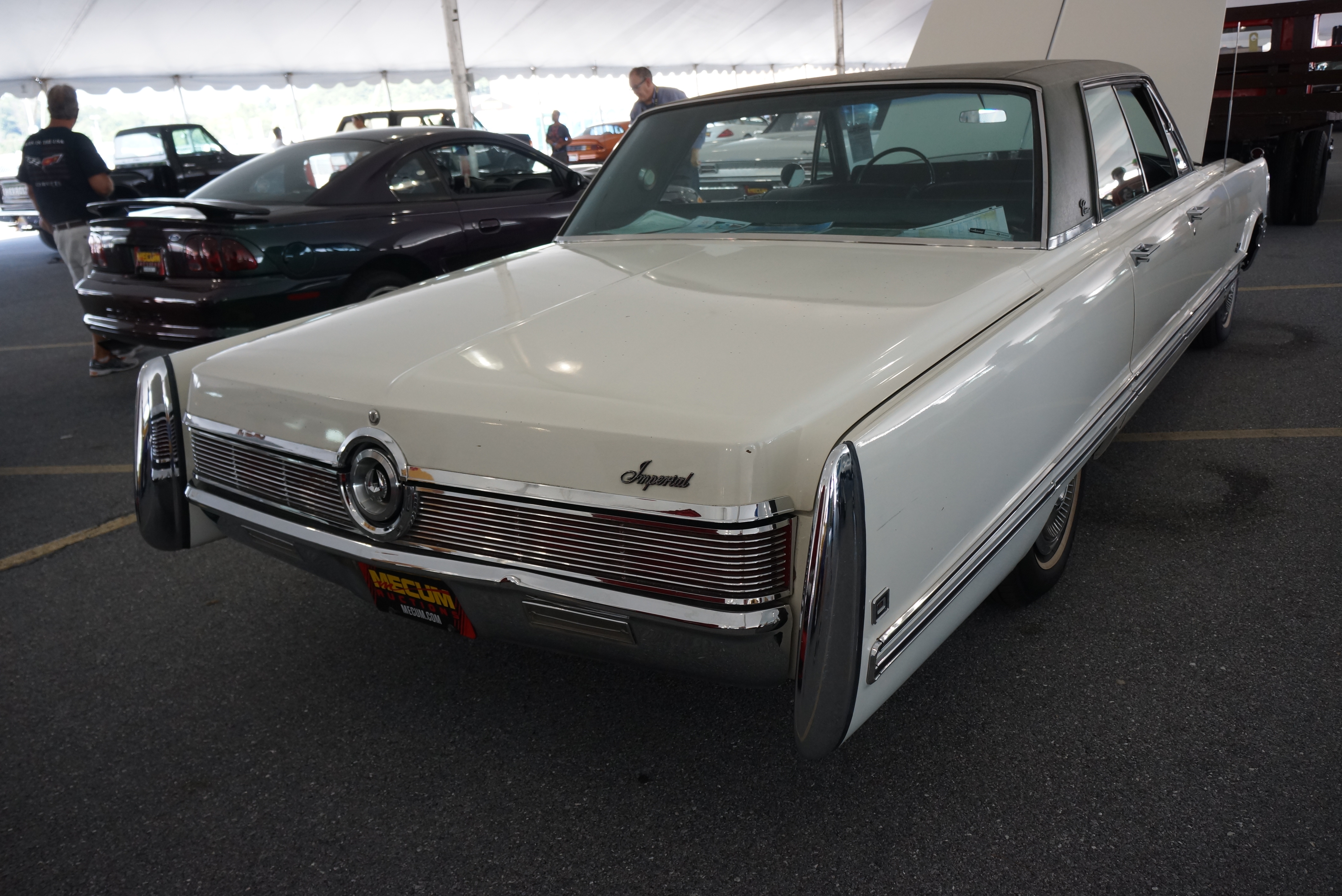
T263, 1968 CHRYSLER IMPERIAL
Condition estimate: 3-
NOT SOLD AT $7,000 HIGH BID
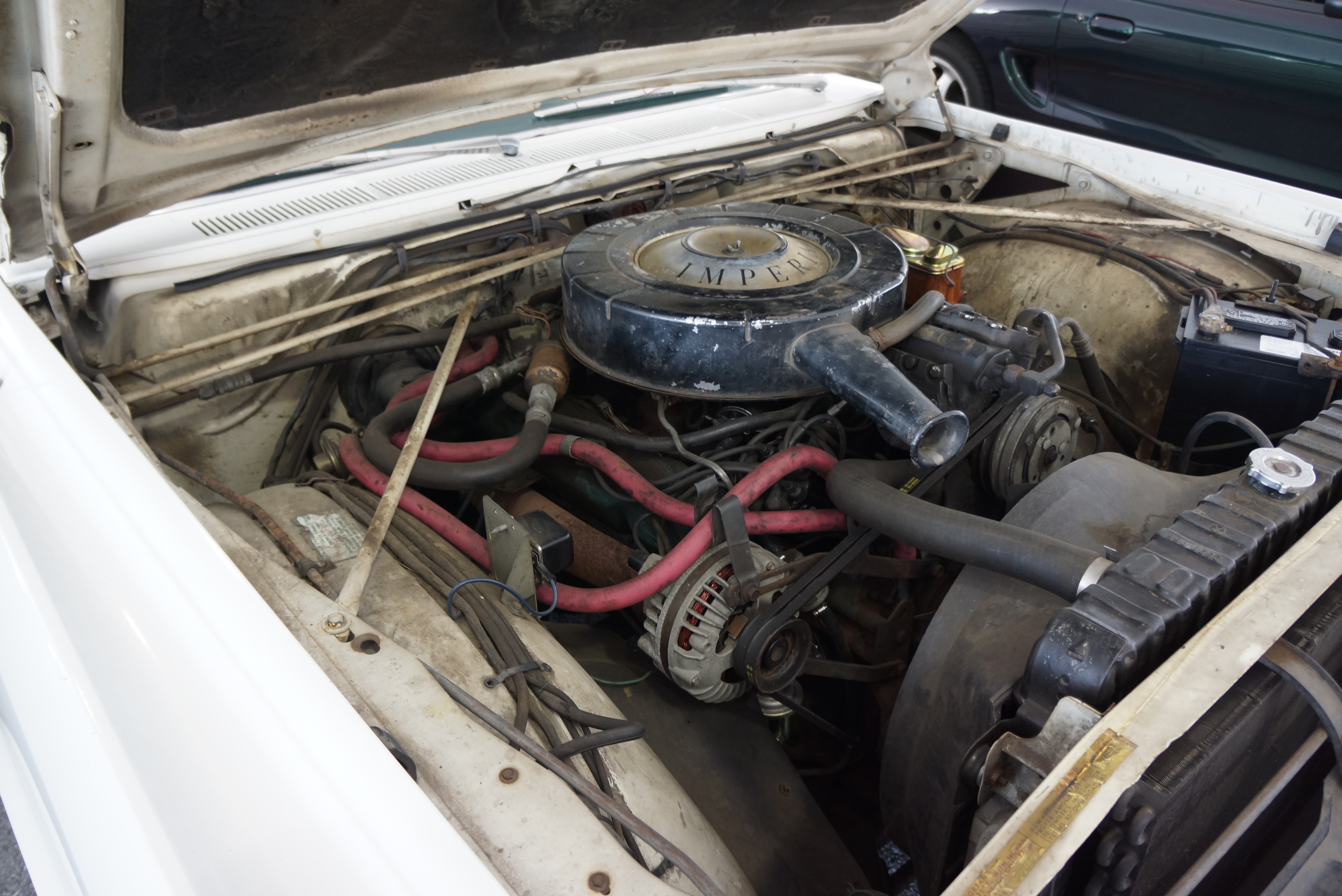
“I got me a Chrysler it’s as big as a whale” sang the B-52s, and it certainly applies here. This car was fascinating on many levels: its size, originality, color scheme, and details like a shrouded dash with hide-away radio panel. This car was American late ‘60s luxury at its finest (if only it fit in my garage). A weekend spent detailing the land yacht (especially underhood) might have garnered a sale price a thousand or two more than the high bid.
Big and heavy from any angle
Back shows vestigal fins
Pic can barely capture expansive dash
Biggest letdown was engine compartment
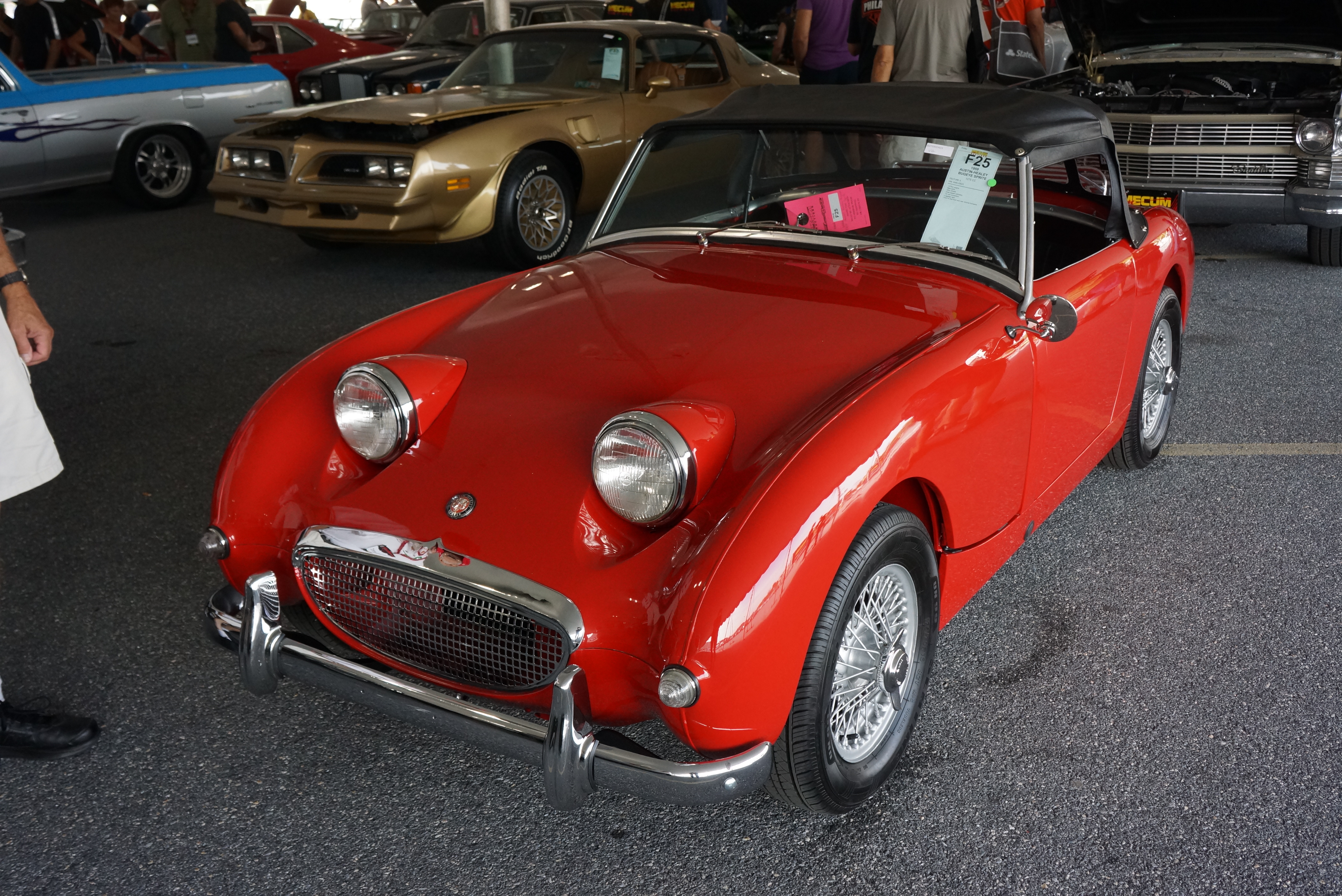
F25, 1959 AUSTIN-HEALEY SPRITE
Condition estimate: 4
NOT SOLD AT $13,000 HIGH BID
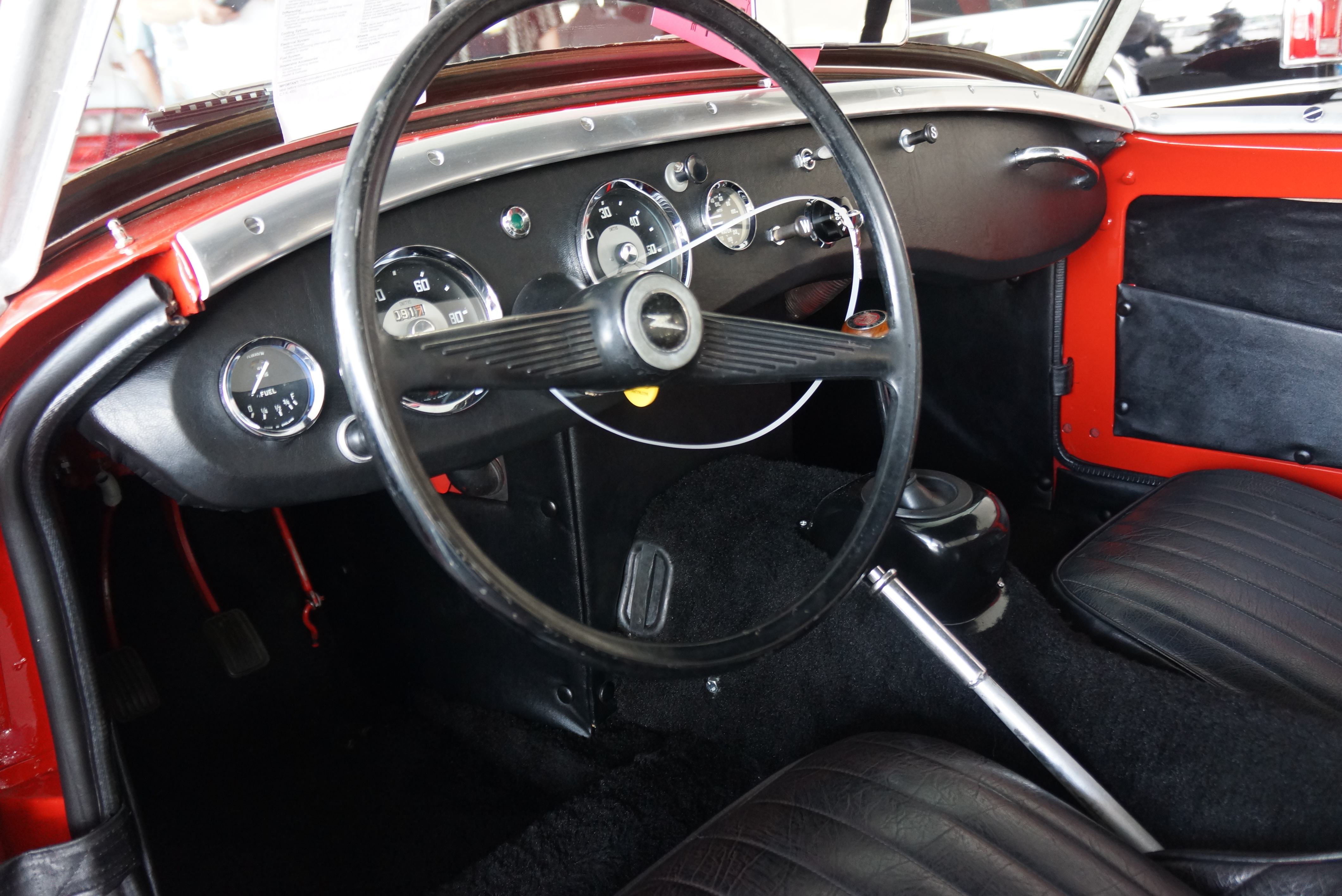
All my friends know that I like small cars, and I’ve always been smitten with Bug-eyes. Sitting in this one, I was appalled at the complete lack of attention to detail. The overall vibe was of a car that was quickly slapped together for resale. Bug-eyes routinely trade in the $10,000-20,000 range, depending on equipment and condition. I don’t know what shocked me more: that the bidding reached $13,000, or that the owner didn’t grab the money and run.
Don’t be fooled by glossy red paint
Plenty of loose parts & overspray
Shiny but needy
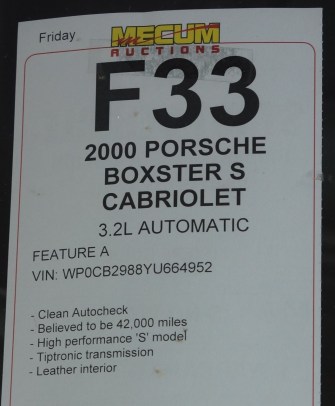
F33, 2000 PORSCHE BOXSTER S
Condition estimate: 2-
SOLD for $12,500
The color scheme, bright yellow with a BLUE cloth top and black interior, turned me off, as did the automatic transmission. There are too many other choices among used Boxsters to rate this as anything but on the expensive side for a late model play toy.
Windshield proclaims low miles
Black interior clean, but gets hot
First gen Boxster styling has held up
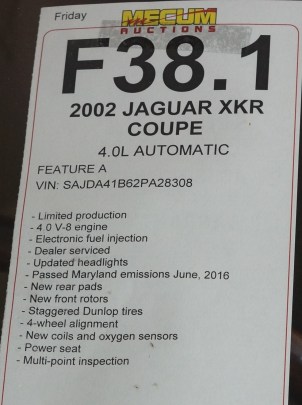
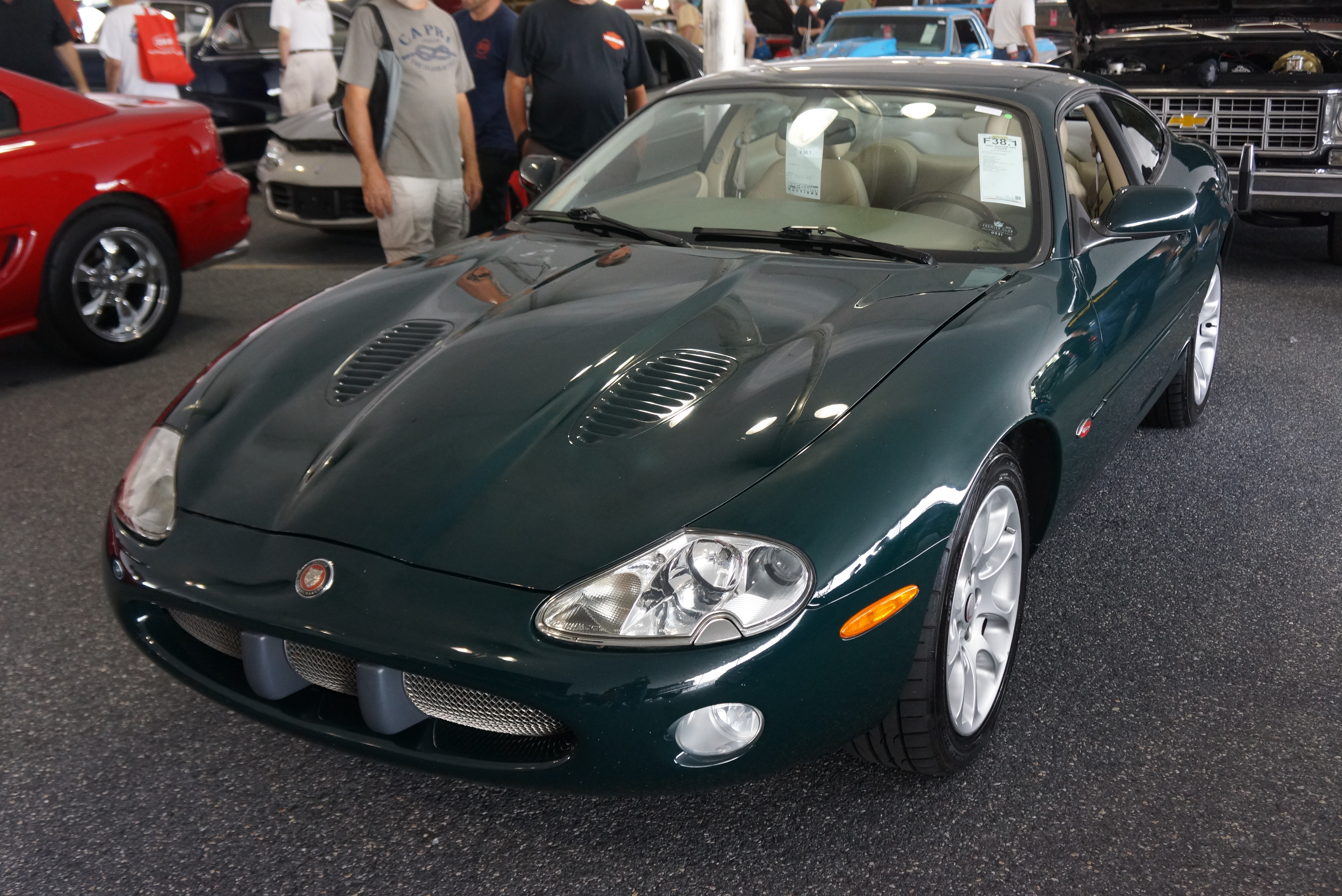
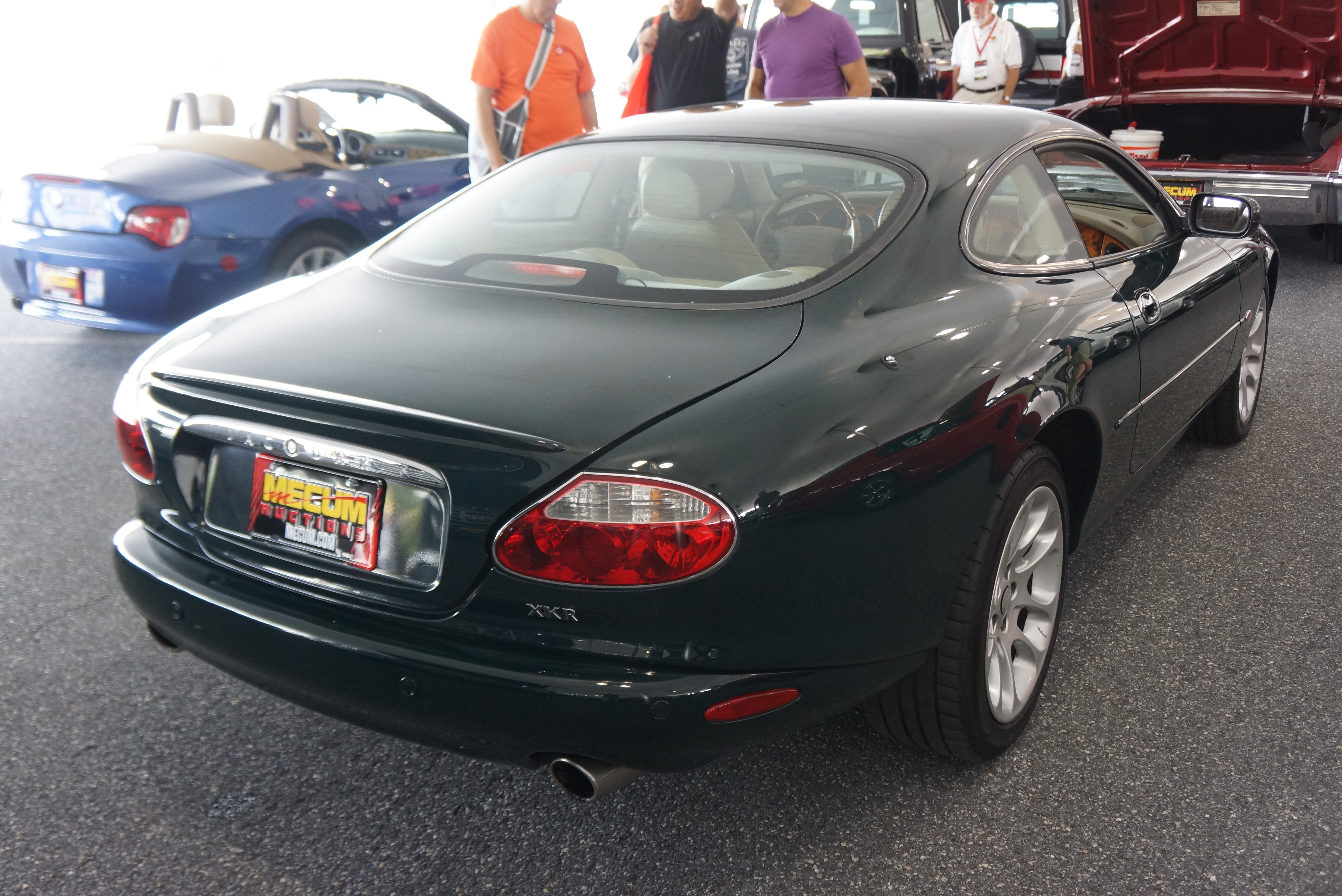
F38.1, 2002 JAGUAR XKR COUPE
Condition estimate: 3
NOT SOLD AT $8,000 HIGH BID
The XKR is the supercharged version, and this car (complete with headliner) deserved more. The miles were relatively high at 85k, but a mid-teens sale price would still be fair.
2nd XK-coupe at this auction
Coupe’s hindquarters look better
Jag has expected leather & wood
and has its headliner in place
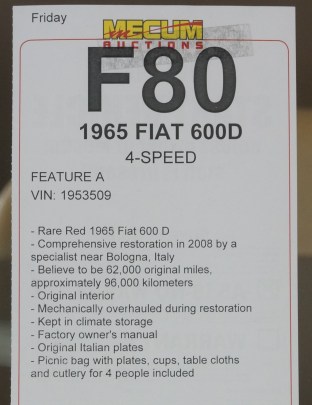
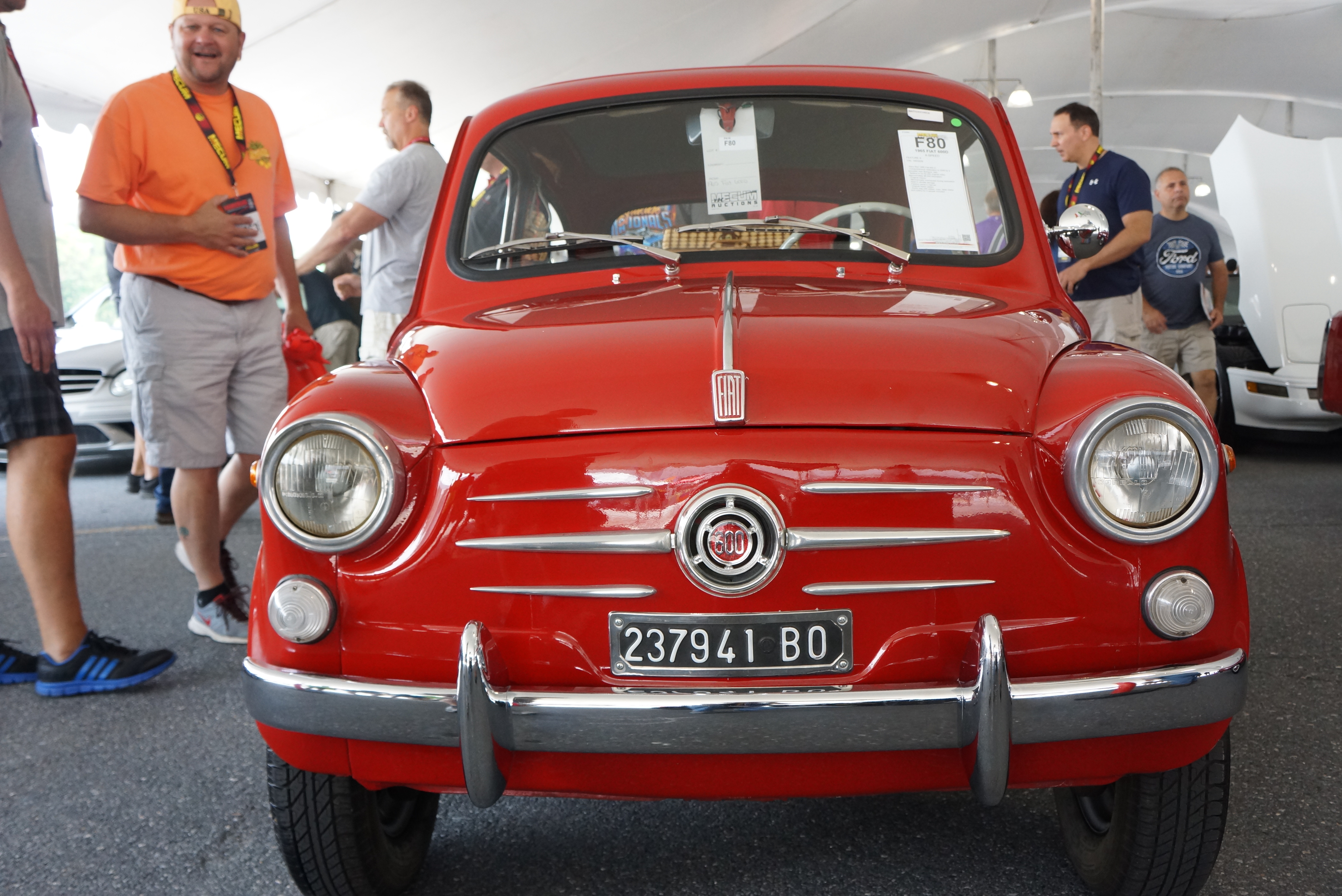
F80, 1965 FIAT 600
Condition estimate: 3
SOLD FOR $13,500
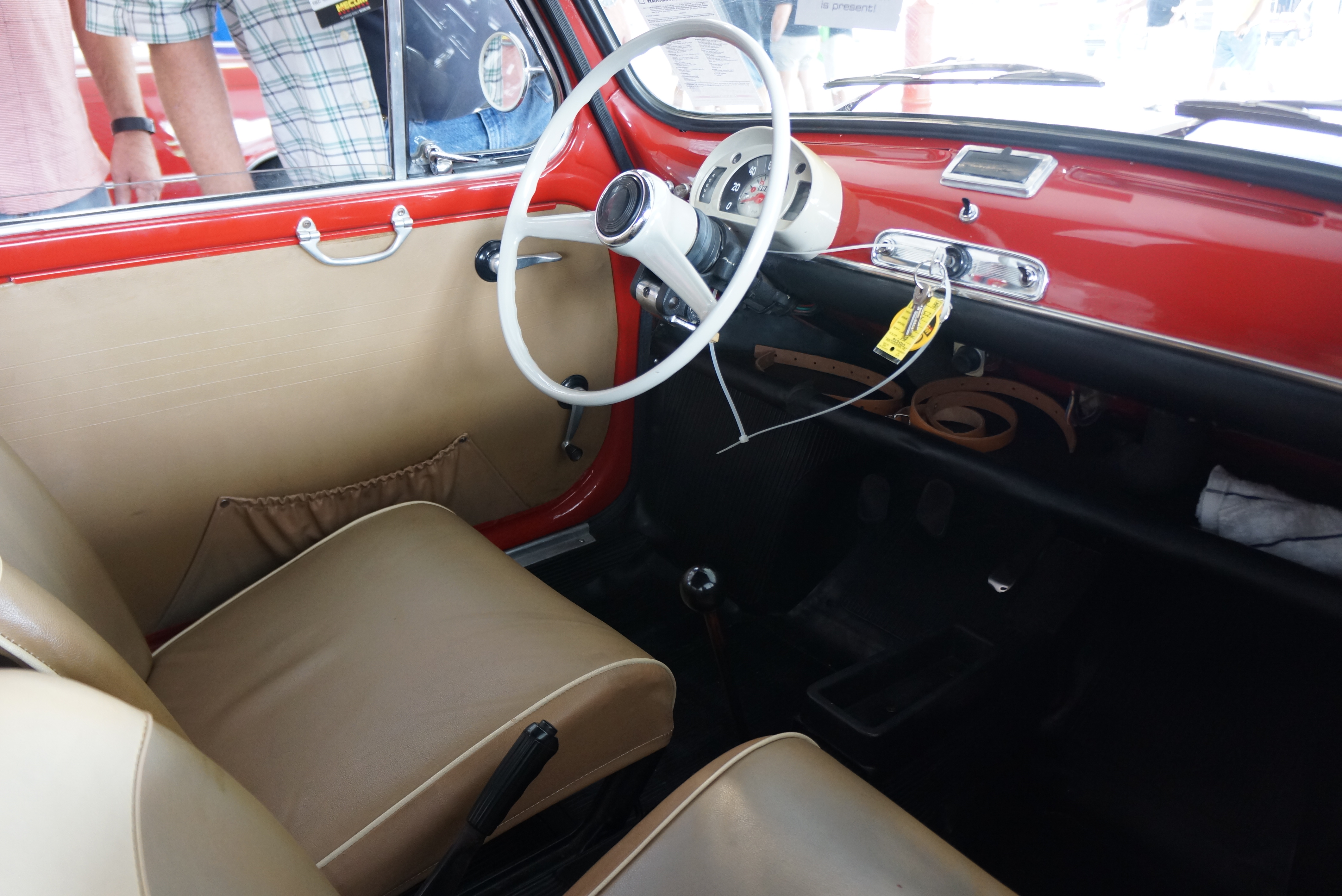
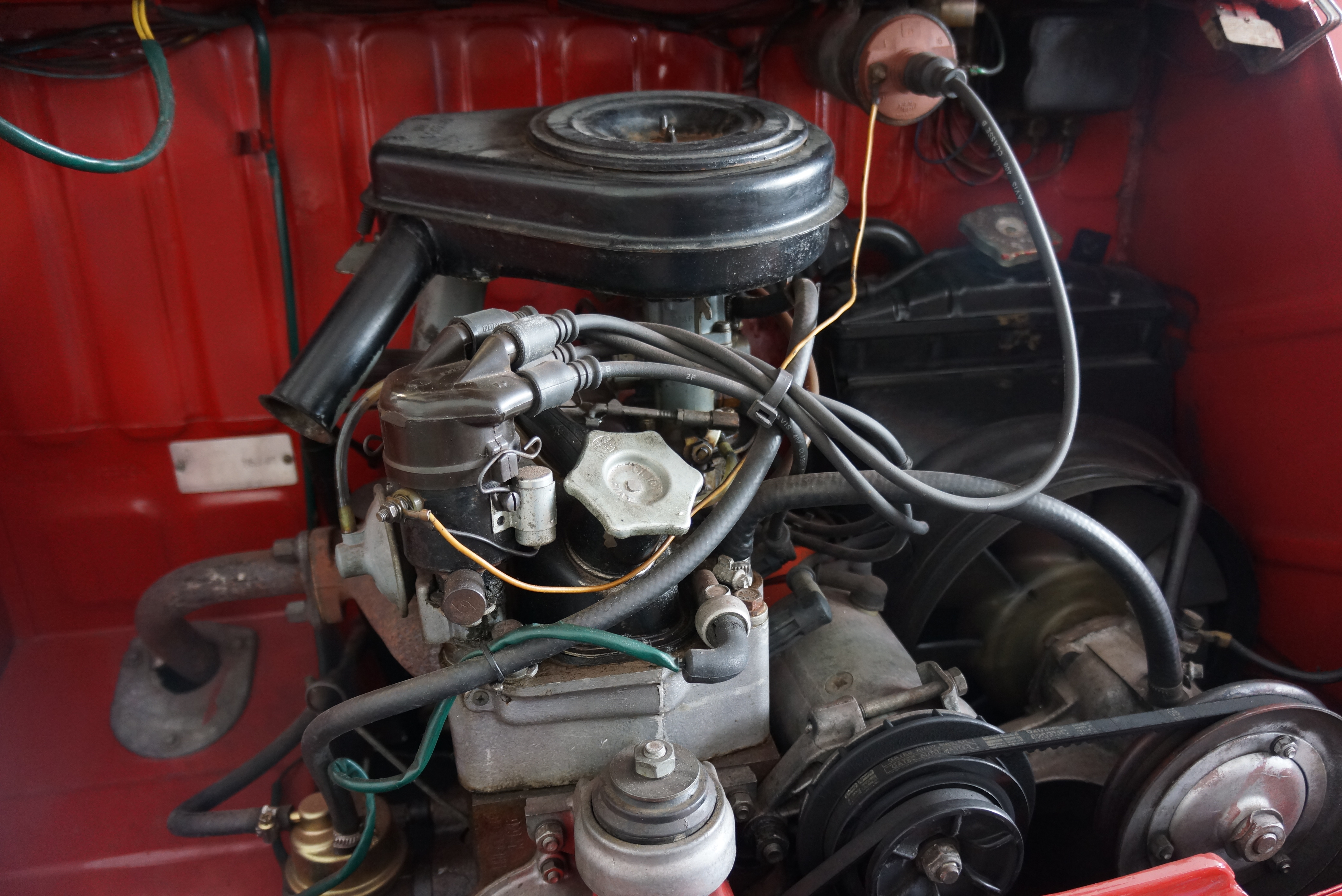
I fell in love again with an Italian redhead, but compared to last year’s 2-cylinder job, this girl runs a 4-banger and is water cooled. Thinking I might steal it if bidding stayed under $10k (hey, this audience is here for ‘murican muscle), bids quickly exceeded that and was hammed sold at what is admittedly a fair price. Just don’t take it on the Turnpike.
What a cute face
Picnic basket corny but effective
Lots of room for everyone
4-cylinder longitudinally mounted; radiator on side
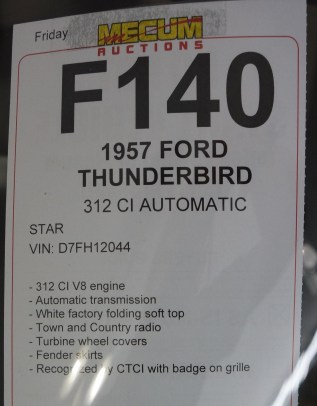
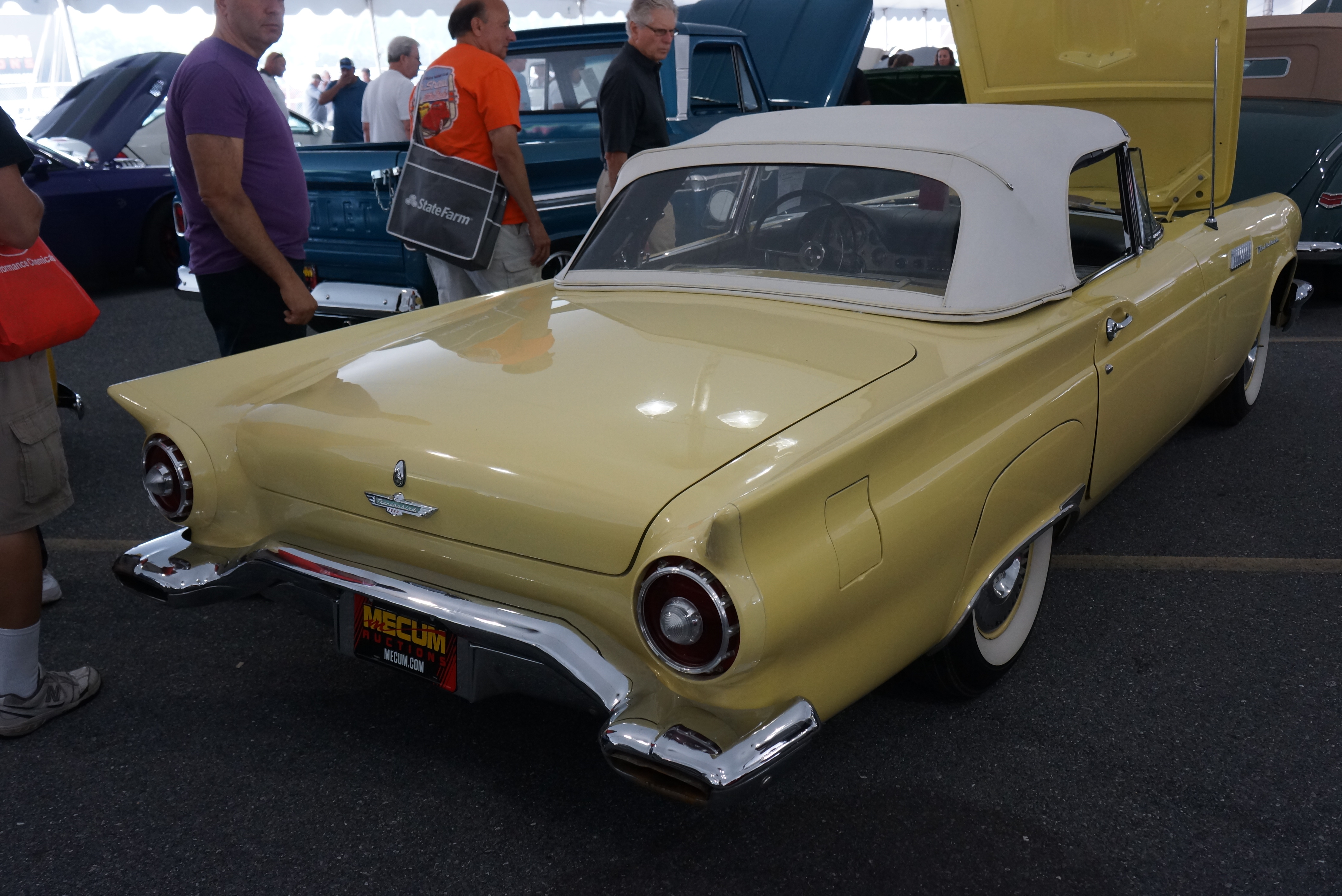
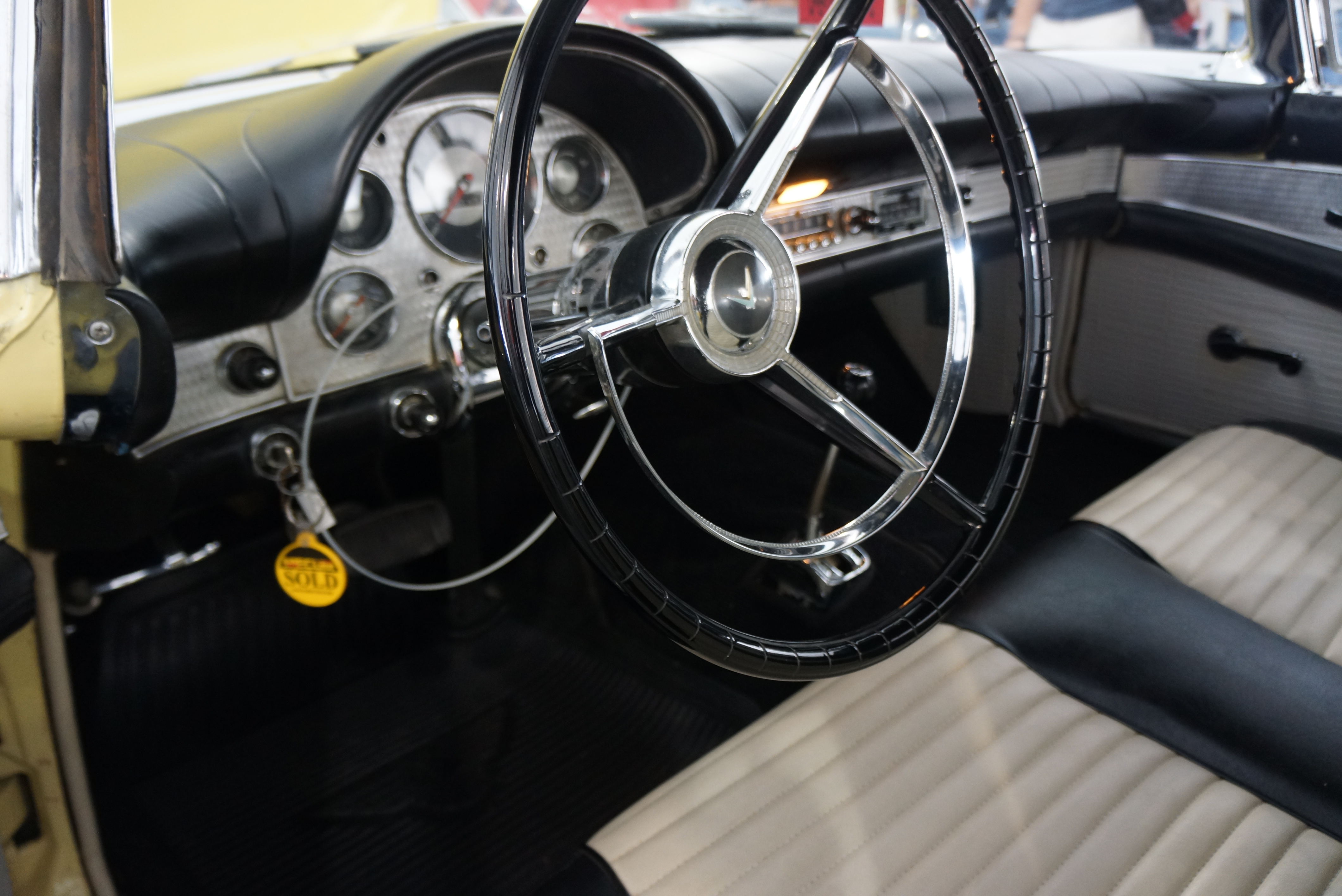
F140, 1957 FORD THUNDERBIRD
Condition estimate: 2-
SOLD for $34,000
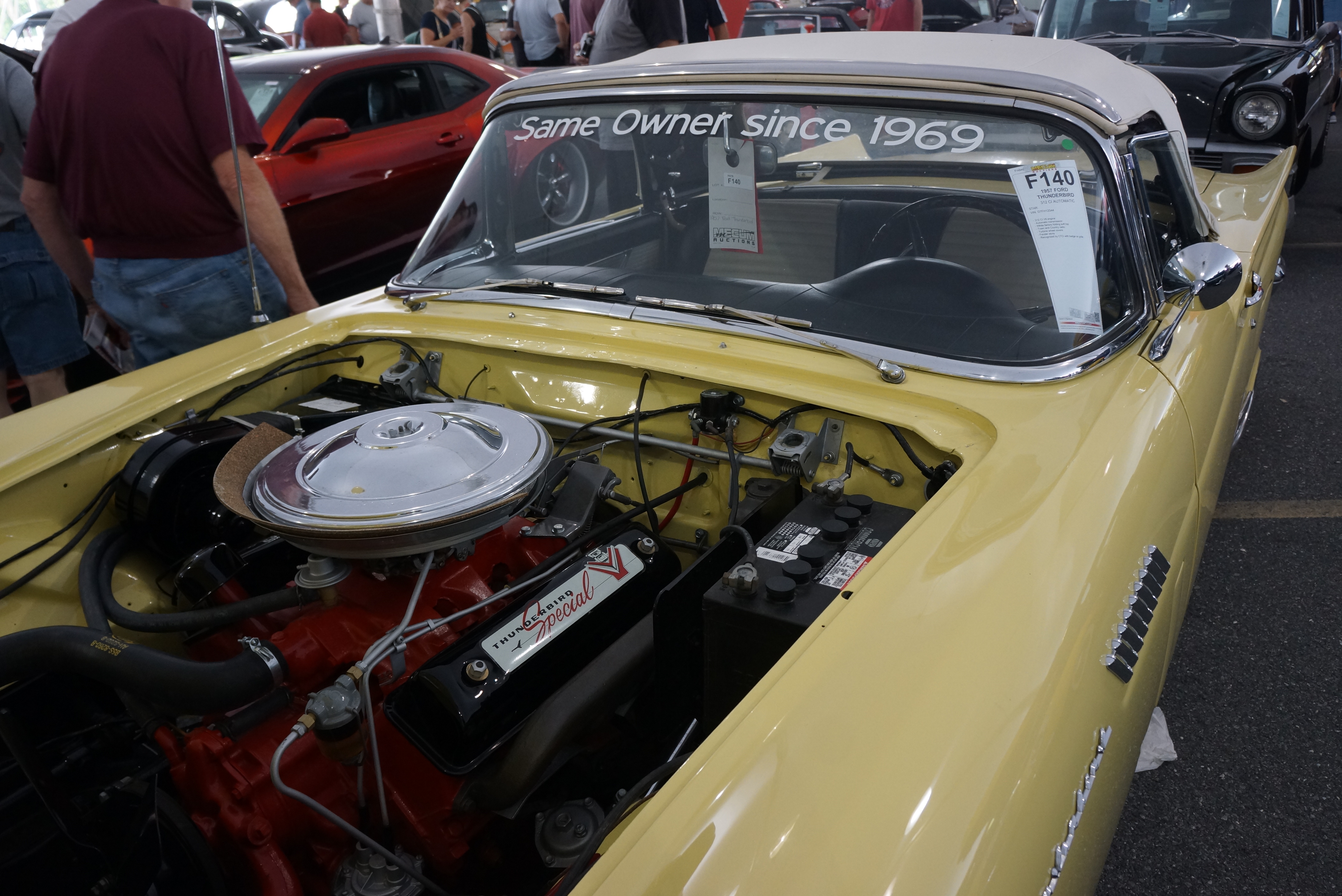
The windshield decal claimed that the car has had the same owner since 1969, which seemed to play in this car’s favor, as it gave the appearance of a car that has been well-kept while still being enjoyed. Two-seat T-Bird prices are all over the place; as the final year of the first-gen car in an attractive color, I call this well-bought.
Clean & straight engine compartment
White soft top looks nice over yellow
Dash attempts to convey sportiness
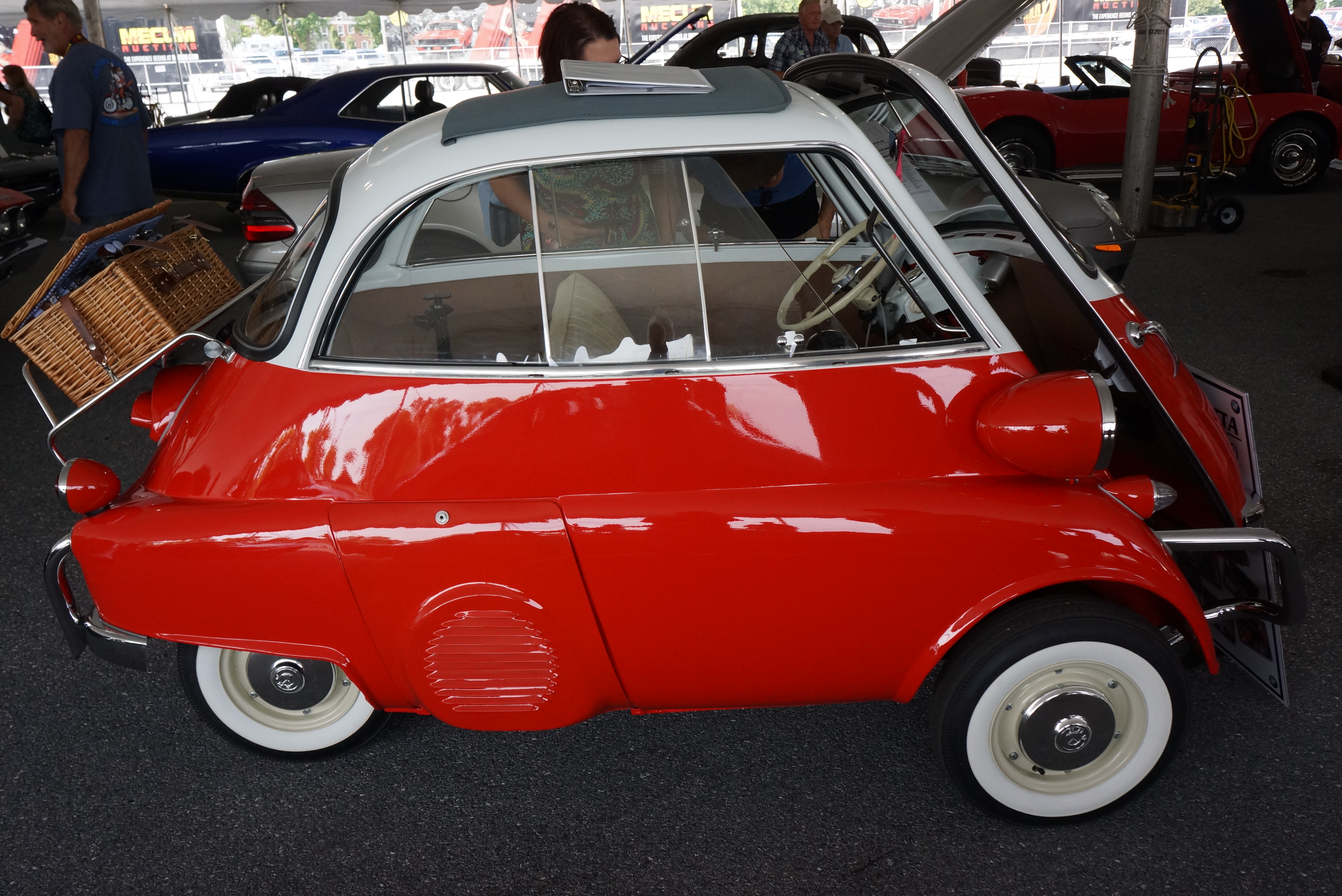
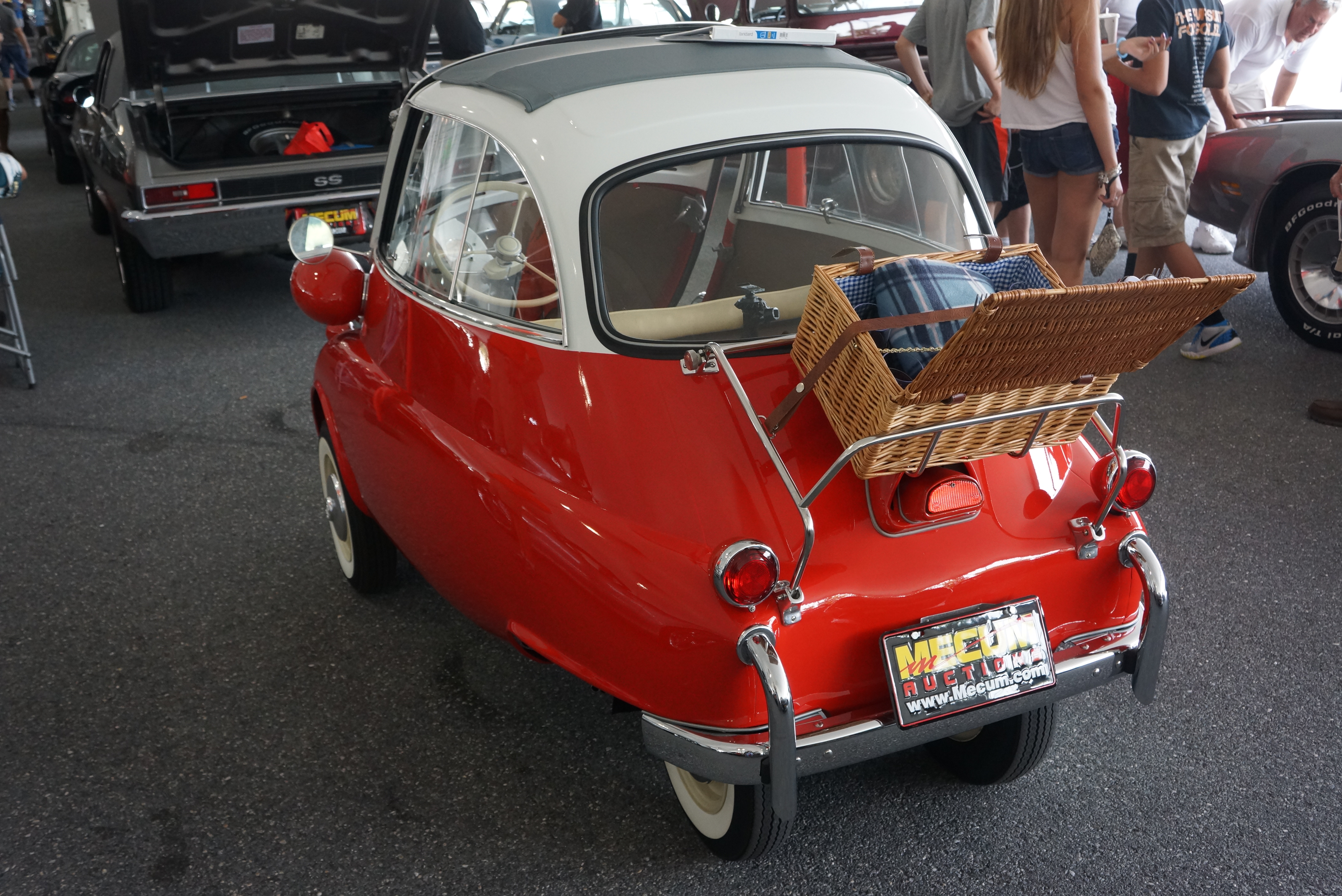
LOT F215, 1957 BMW ISETTA
Condition estimate: 1-
SOLD for $25,000
There’s one at every auction – this one was in the frequently-seen two-tone combo of red and white. It appeared somewhat over-restored, save for some orange peel on the door. I spoke to the owner, who acknowledged that he might be out of his element with this audience, then confided in me that he needed to get $30k for it. I guess Dana changed his mind, because the hammer dropped $5k light.
Most disconcerting were the rust bubbles forming at the base of the windshield pillars. The upholstery was starting to wear, and oil consumption was rising. It was around this time that I began to think about a replacement vehicle, and another new Volkswagen was at the top of the list. The Scirocco had always been appealing, but the 1st generation car was tight inside, especially in the all-important hatchback area. The ability to carry my drum set was a top priority. Sometime in 1981 I learned that the Scirocco would be restyled for the 1982 model year.
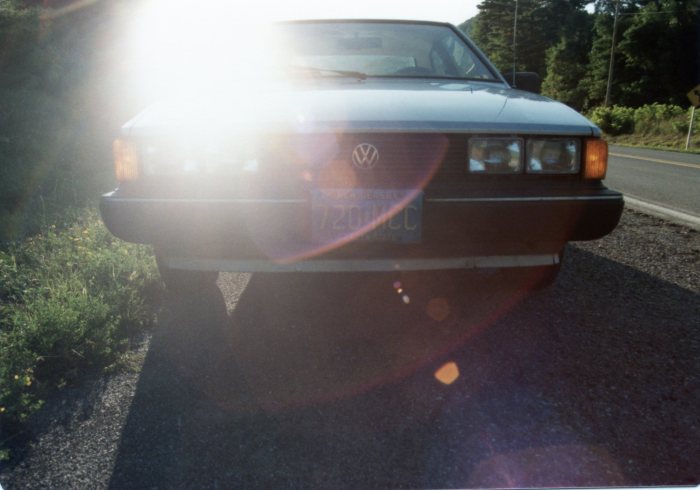
My attempt at an artsy Scirocco shot.
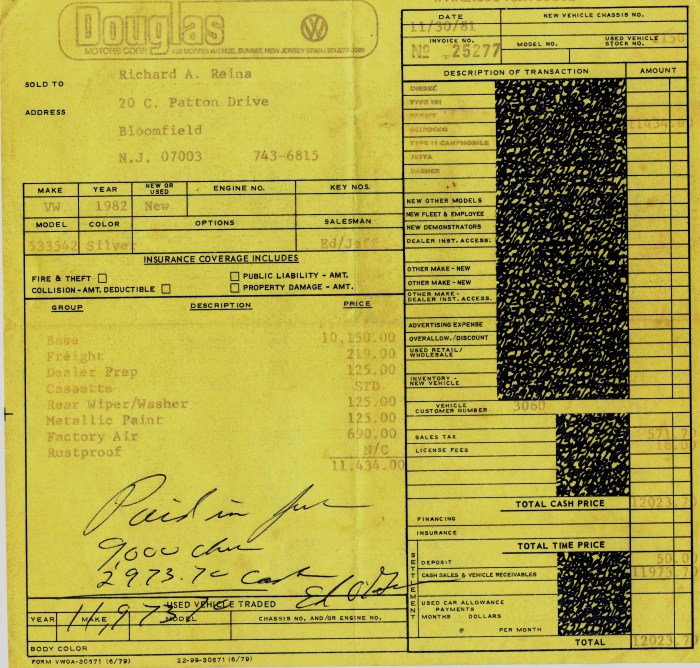
In December 1981 I visited Douglas VW in Summit NJ, which was about a mile from the Volvo dealer where I was employed. They had the new Scirocco on the showroom floor, and I was smitten. Admittedly, the exterior styling was a letdown compared to the previous version, but the interior more than compensated for this. The dash, sport seats, upholstery, and ample trunk space were all factors in its favor.
The all-important sales order; seems cheap now, but not in 1981.
Then I looked at the Monroney label. This new car stickered for over $10,000. It seemed like yesterday that I paid $3,599 for the Rabbit! The sticker shock was the result of rampant inflation, as well as a long list of standard and optional equipment which was not on the Rabbit: factory air, AM/FM/cassette radio, alloy wheels, rear wiper, and metallic paint. The Scirocco was a 5-speed, while the Rabbit made do with four, so I also expected fuel mileage to be a tick better.
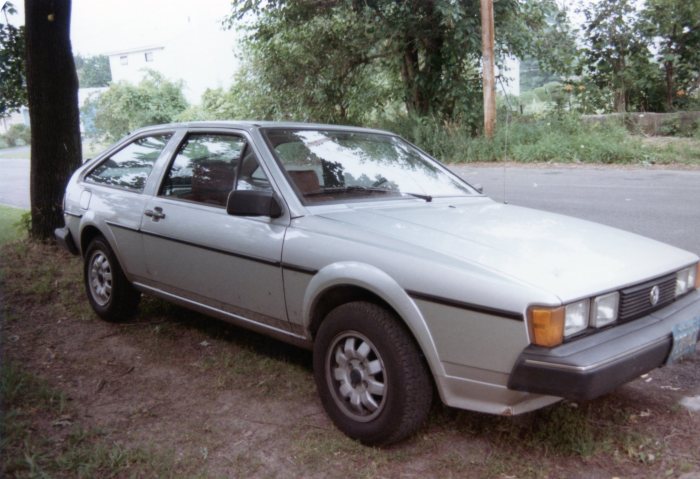
After test driving the vehicle, I selected a car in stock with silver paint and a red plaid cloth interior. The Rabbit was sold for $1,000 to one of the techs at the Volvo dealership. My car insurance at the time was with Allstate, and they had sent me blurbs that they financed new car purchases, so I “conveniently” (and blindly) arranged a car loan with them.
It’s not clean, but I was on a road trip.
Shock #2: the interest on the loan was 18%! Yes, I was in the car business; no, I was not savvy in the ways of new car purchases. Nevertheless, I wanted this car badly, so I plowed ahead and made the monthly payments.
Compared to the Rabbit, there was much to like. As mentioned above, the interior was especially plush. The sport seats fit me wonderfully. This car, lower than the Rabbit, handled better. I had A/C for the first time since the 1966 Buick. However, several design features did not put VW in the best light, and it took driving in the elements to discover this.
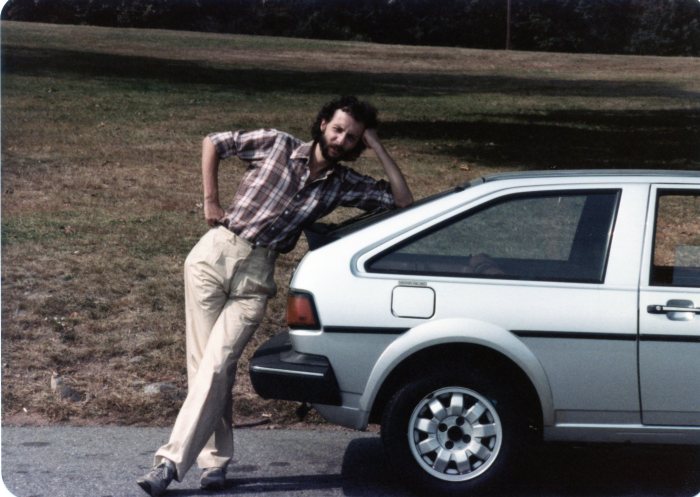
That’s me on the left, visiting college roommate Eric, summer ’84. Beards were in.
First, the front wiper. Yes, singular. The ’82 Scirocco had a single wiper, likely as a styling statement. It looked cool, but didn’t work well. As is the standard for left-hand-drive cars, the wiper parked on the passenger side, and wiped up and toward the left side of the car. The single blade’s tip would reach the middle of the left A-pillar, and would leave two large triangles unwiped in the driver’s line of sight. Several model years later, VW went back to two front wipers on the Scirocco. (Mercedes-Benz would solve this problem with an articulating wiper.)
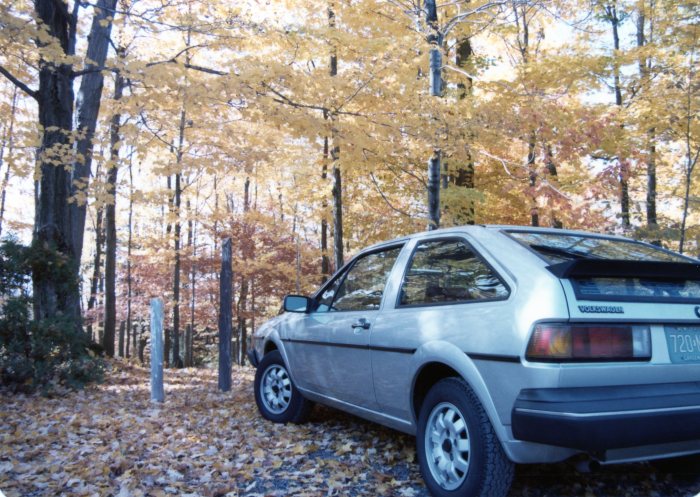
Another artistic angle, this time with fall foliage.
The other issue was the standard rear spoiler, which sat several inches above the lower edge of the hatch glass. In the winter, this spoiler served as a catch for snow. Although the car had a rear wiper, it couldn’t remove the snow that piled up on the spoiler. If I were driving while it was snowing, the backlite would eventually become covered. My solution was to unbolt the rear spoiler for winter driving.
My excuse is, the photographer asked me to pose like this.
Other than these issues, this VW was as reliable as the first one. By 1986, there were over 100,000 miles on it, and I was ready for a replacement, but wanted to save money by buying something used this time. The Scirocco was advertised locally and sold to a young woman. I could not have known that it would be twenty years before I would again step into a new car dealership and purchase or lease a brand new car.
Display cars in the parking lot, with TD Bank Ballpark in the backgroud
Friday, July 8, 2016 was Collector Car Appreciation Day in the U.S., the seventh year in a row that such a date was recognized. The date was designated as per a U.S. Senate resolution which was passed with the support of various auto hobby lobbying groups, most notably SEMA (Specialty Equipment Market Association).
As part of this celebration, the New Jersey Region of the AACA (Antique Automobile Club of America) co-sponsored a car show held in the parking lot of the TD Bank Ballpark, the home stadium in Bridgewater NJ for the Somerset Patriots baseball team. This show was held on Sunday, July 10, 2016.
Another view of the cars on display.
Turnout among NJ AACA members was impressive, with 20 cars from the club on display. The Street Dreams Car Club had also been invited to participate. Their cars and trucks leaned toward newer and /or modified, but not exclusively so. In total, there were close to 50 vehicles in the show. Ballpark employees roped and coned off a section of the lot, allowing us to park together, and game spectators meandered the aisles, enjoying the vehicular variety.
The Street Dreams club cars were mostly at the other end of the lot.
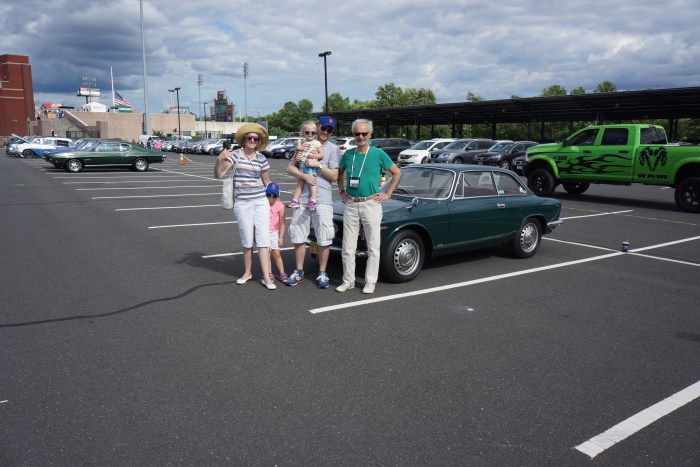
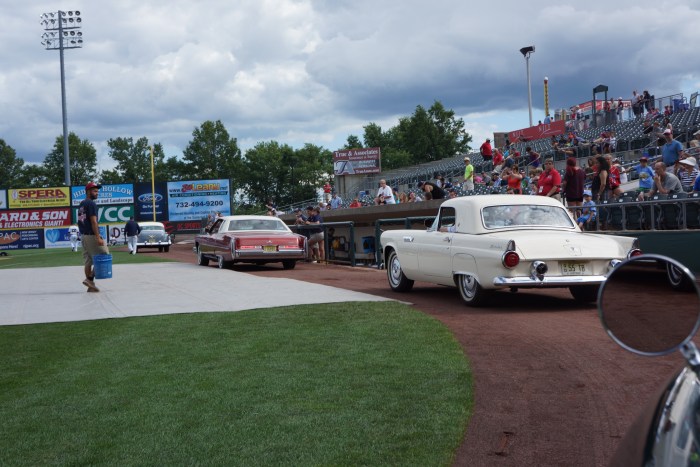
The parking lot show started at 3pm, and the ball game was scheduled to begin at 5pm. Around 4 o’clock, word went out that we all should start our cars and get into a queue near the back of the lot. A large gate swung open, and every show car was allowed to drive one parade lap completely around the field’s warning track. This Alfa Romeo owner had his wife, step-son, and two granddaughters in the car (FIVE occupants, a world record), and we thoroughly enjoyed the chance to see the ballpark from the vantage point of a vintage automobile.
A true family affair. Yes, we all fit into the little Italian job.
At the conclusion of the parade lap, we all returned to the parking lot, and most of us entered the stadium to enjoy a little baseball. This was the first time that the NJ AACA helped conduct such an event, and I understand that the club has already decided to make this an annual occurrence.
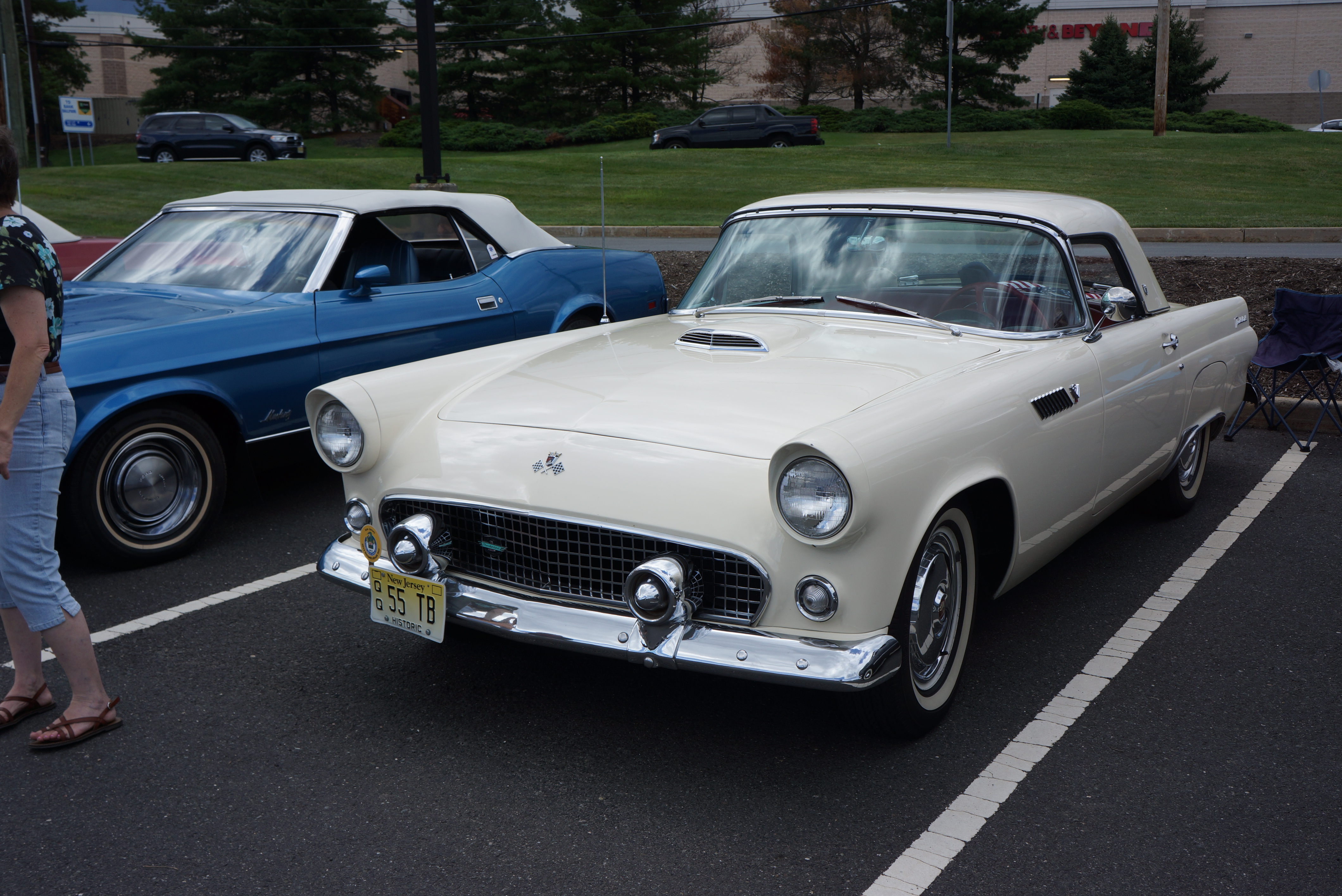
A ’55 T-Bird, first year of production.
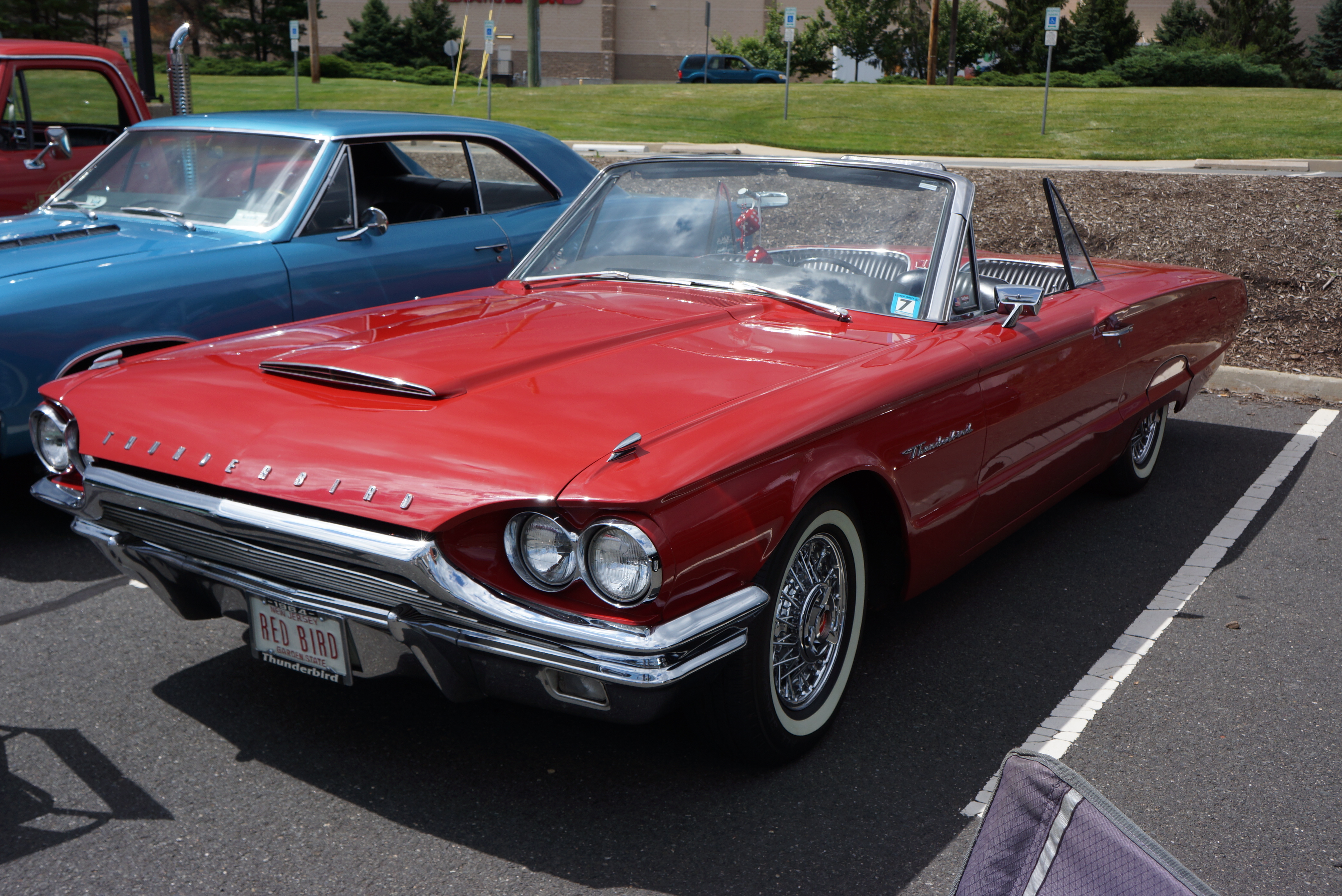
A ’64 T-Bird, one of the last of the so-called collectible Birds.
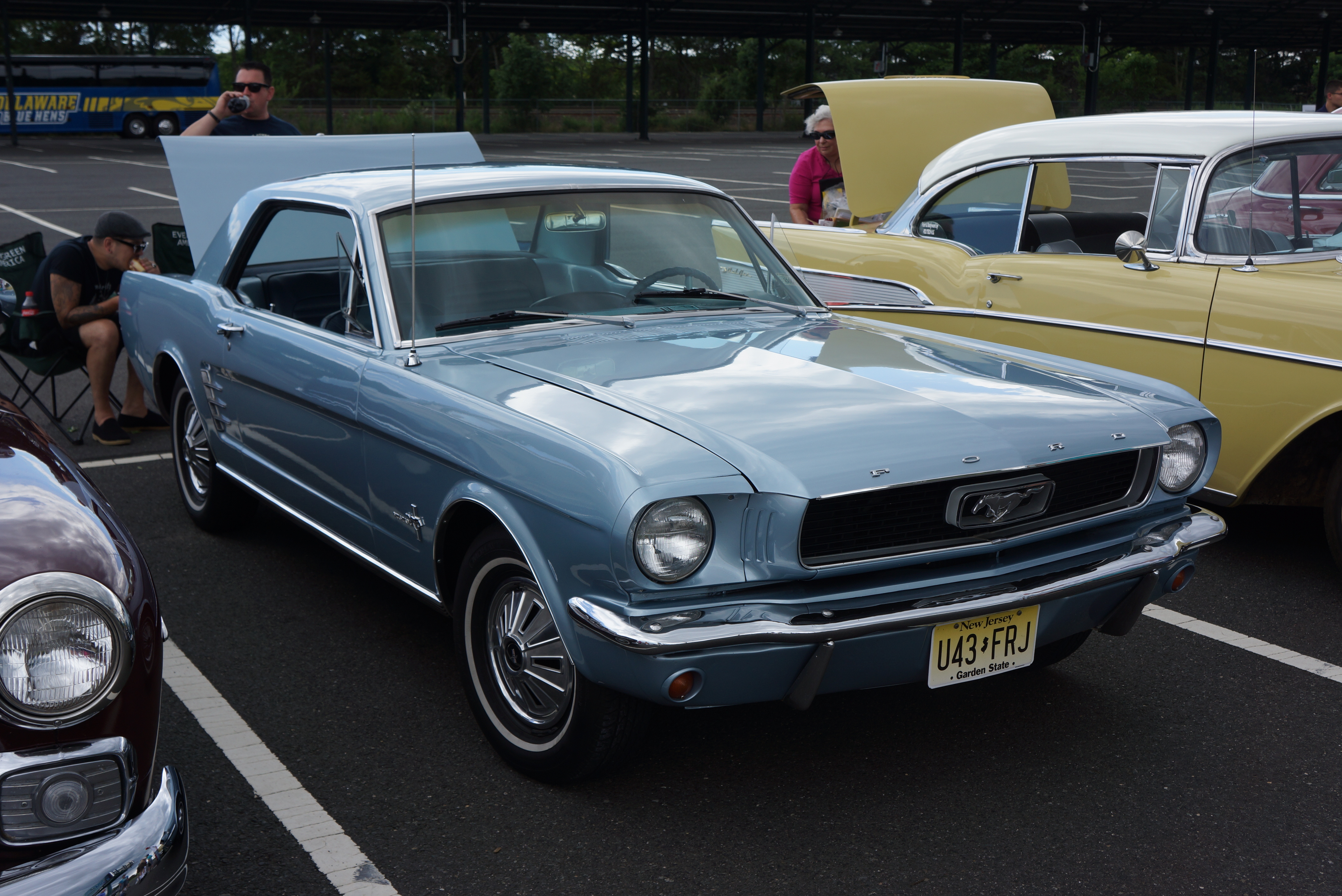
This ’66 Mustang is a 1st generation car.
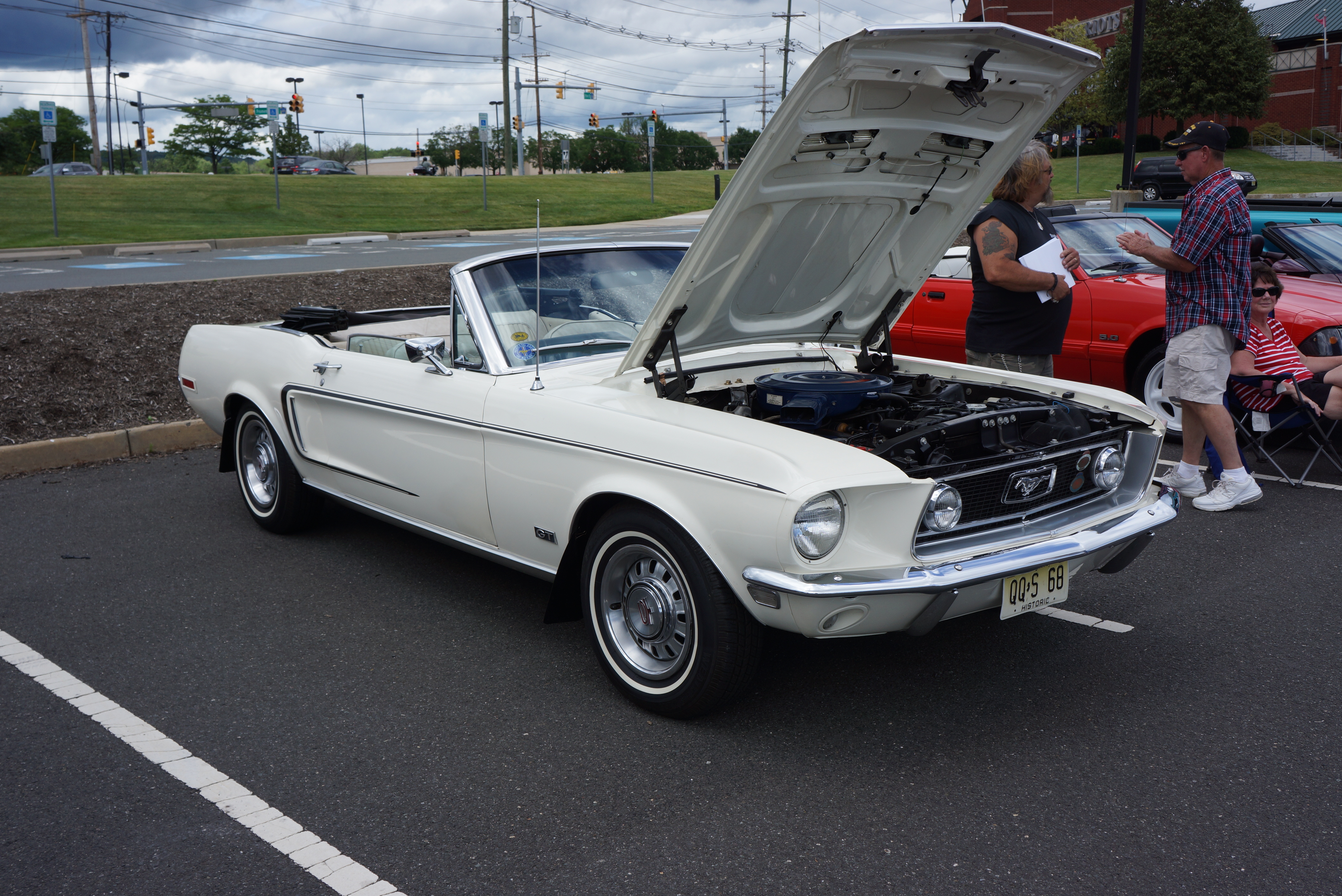
By 1968, the Mustang’s size grew.
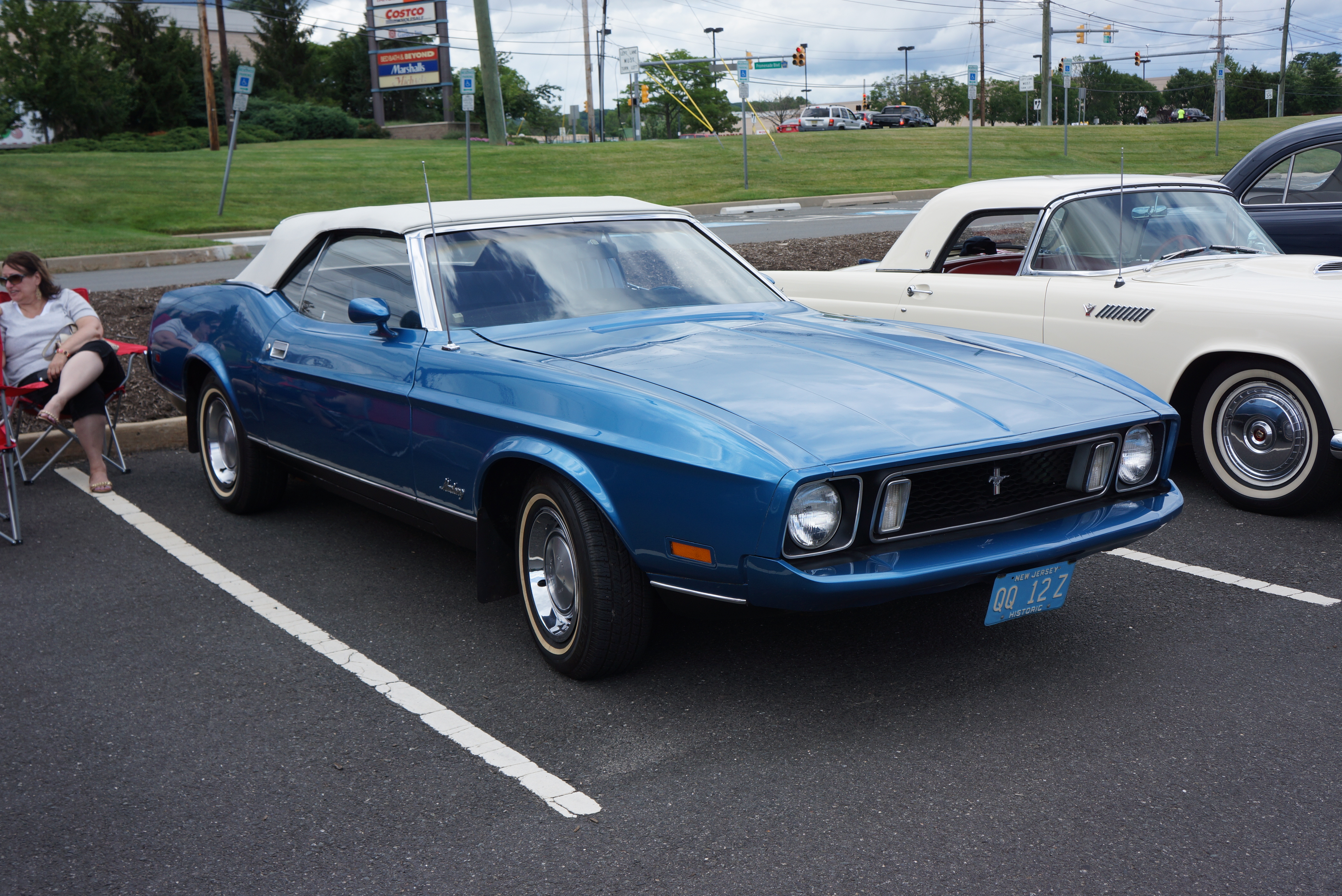
But by ’73, it was yet another size larger.
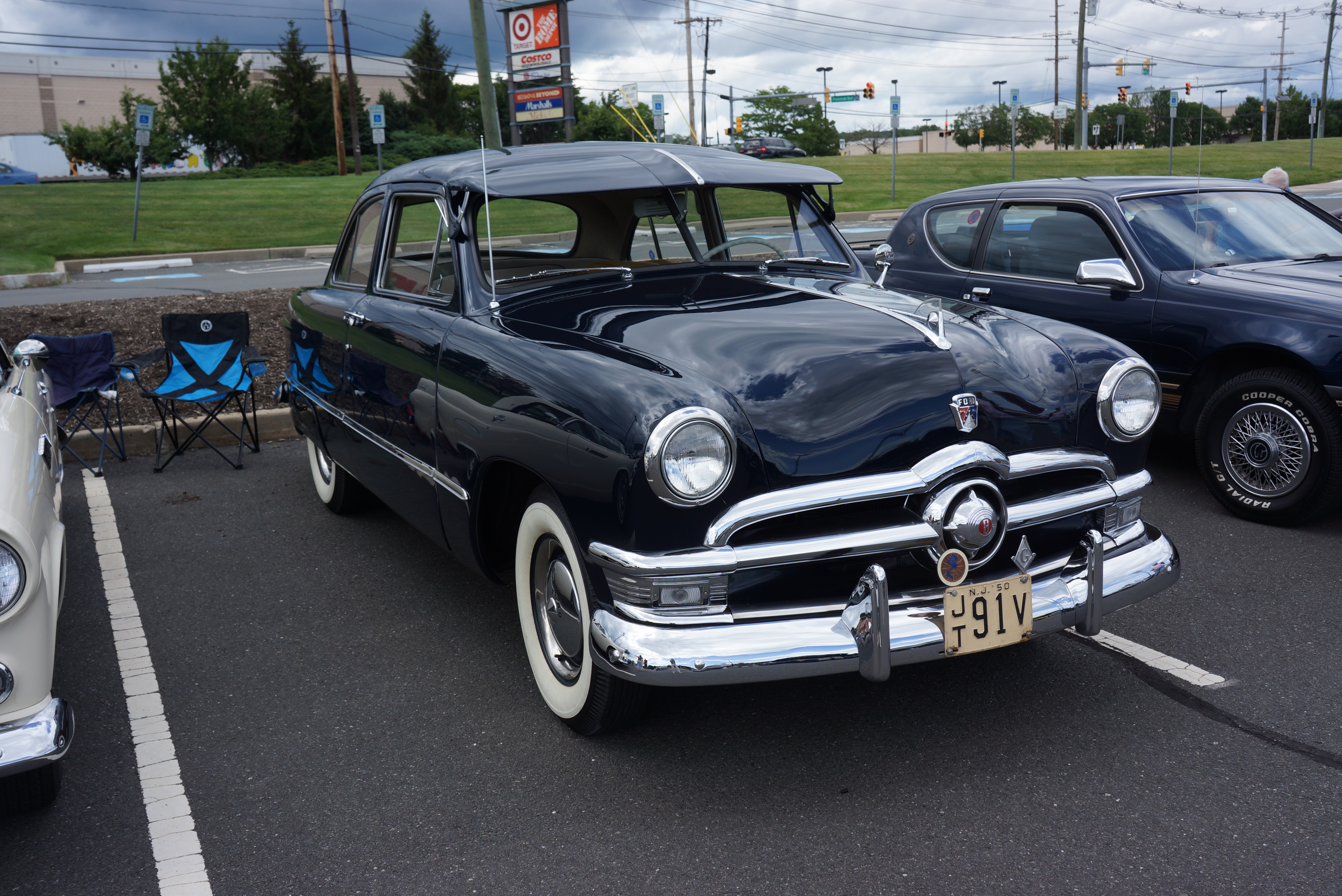
Older FoMoCo cars included this ’50 Ford
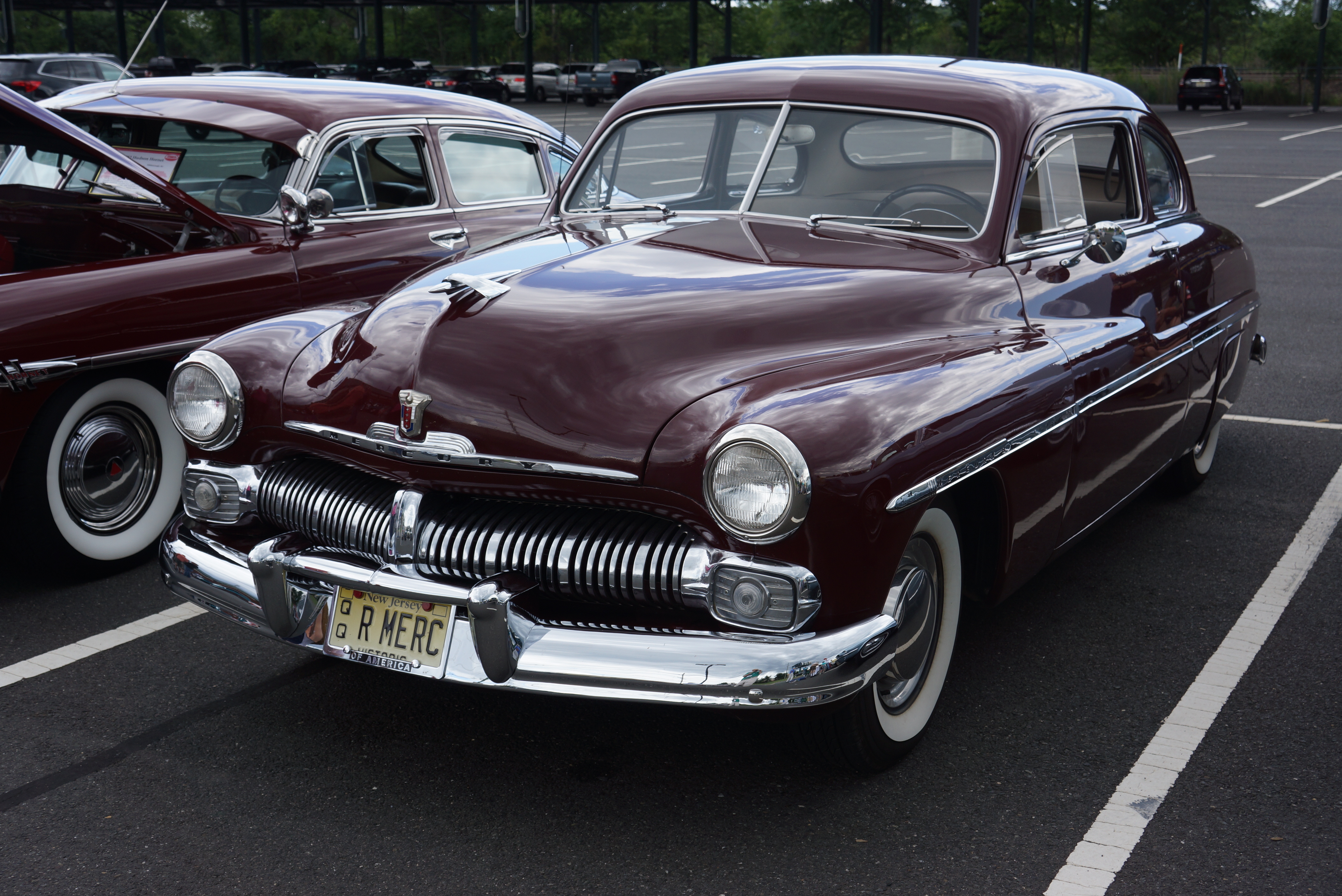
… and this ’50 Mercury.
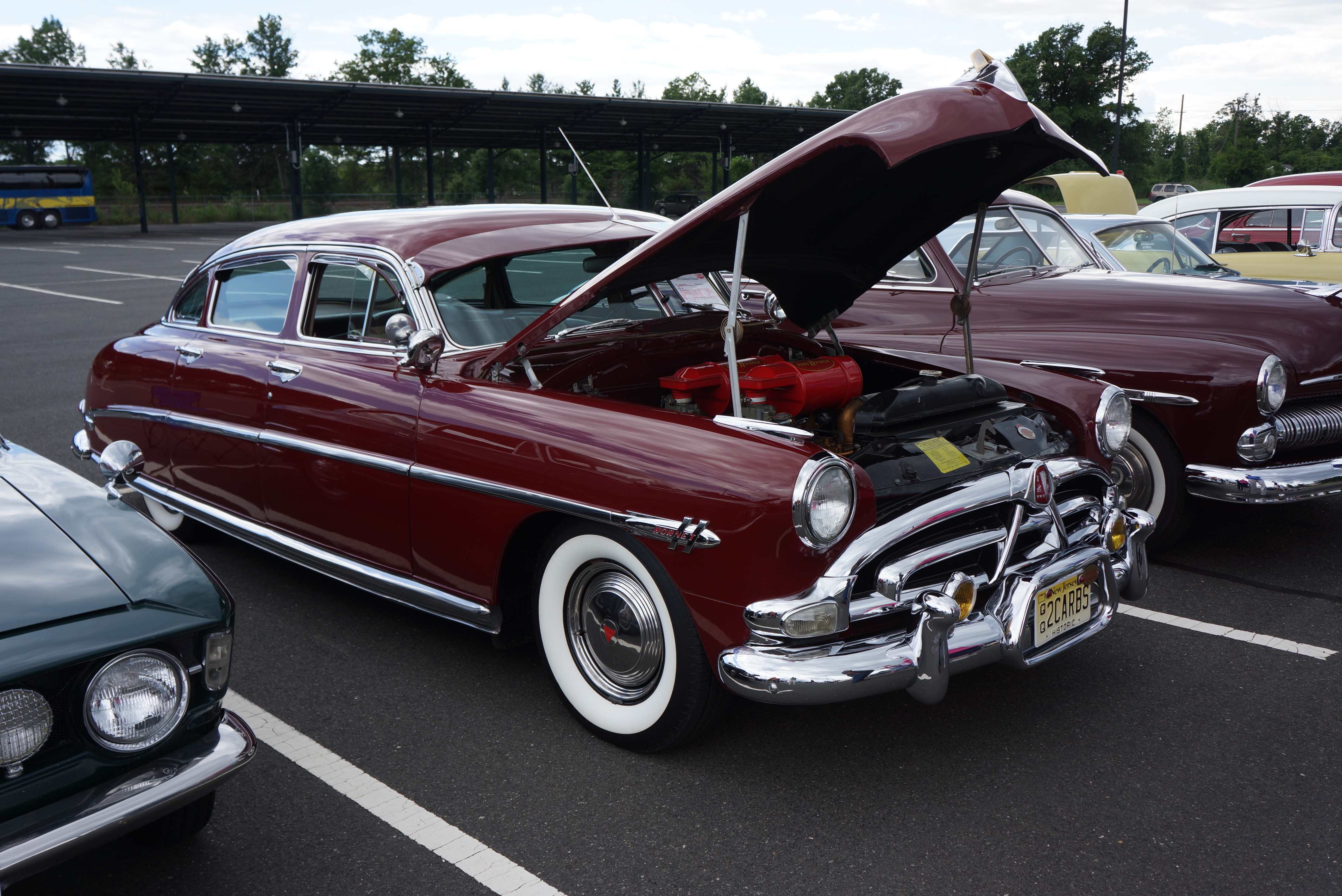
This 1952 Hudson Hornet was immaculate.
Its trunk carried this stylized badge.
The styling similarity between the ’50 Mercury and ’52 Hornet is obvious from the rear.
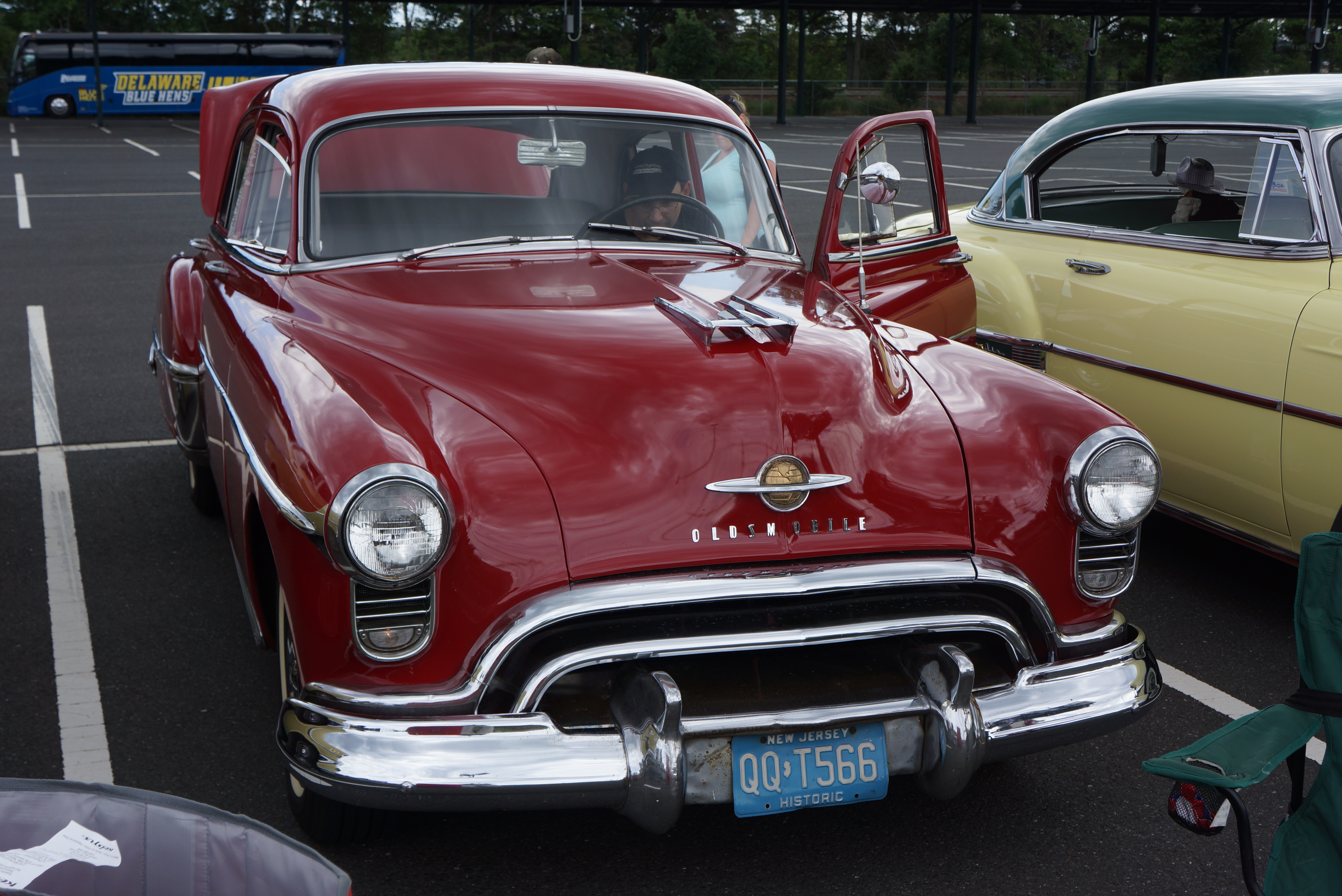
Fifties GM cars included this ’50 Olds,
this 1954 Chevrolet,
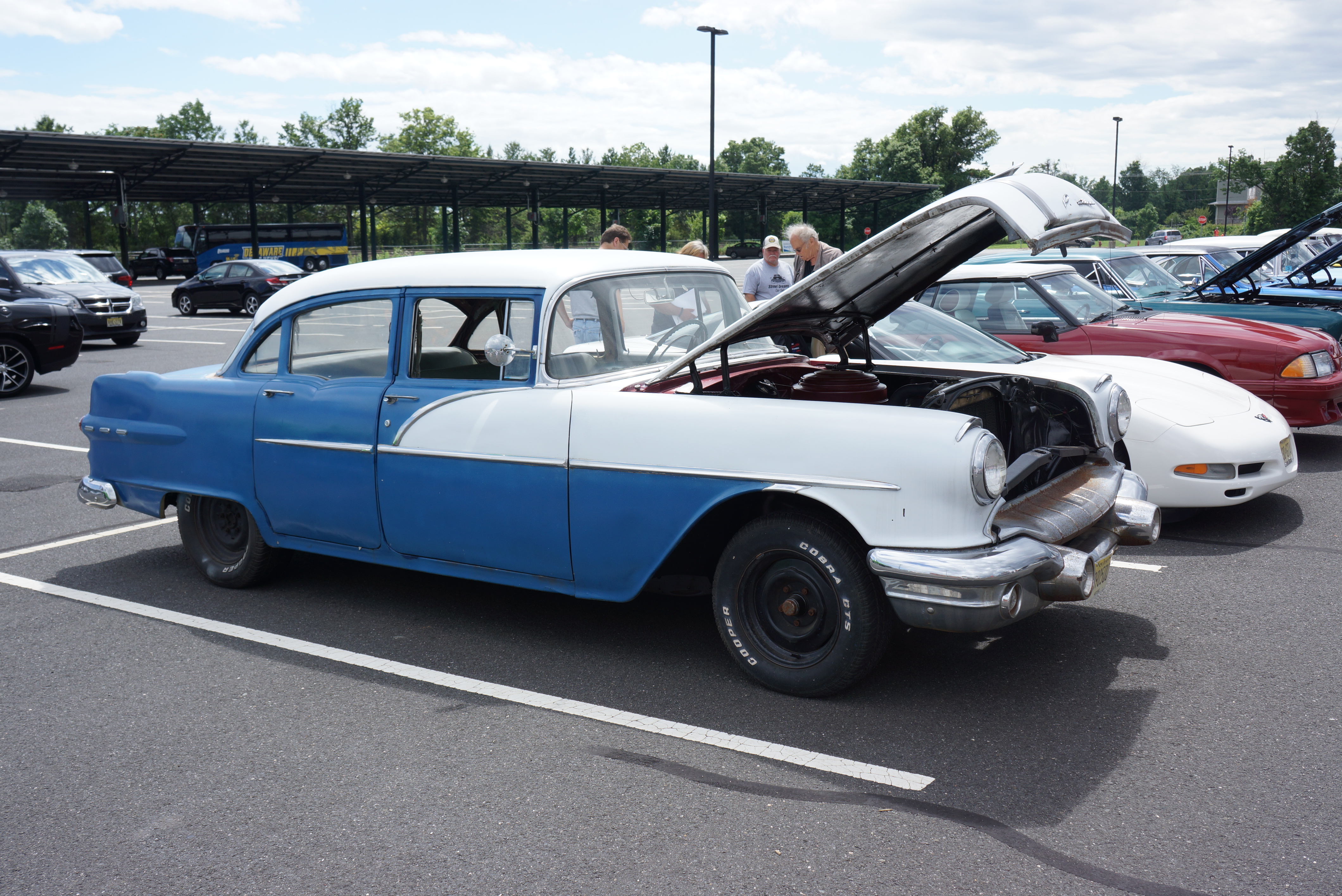
and this unrestored ’56 Pontiac.
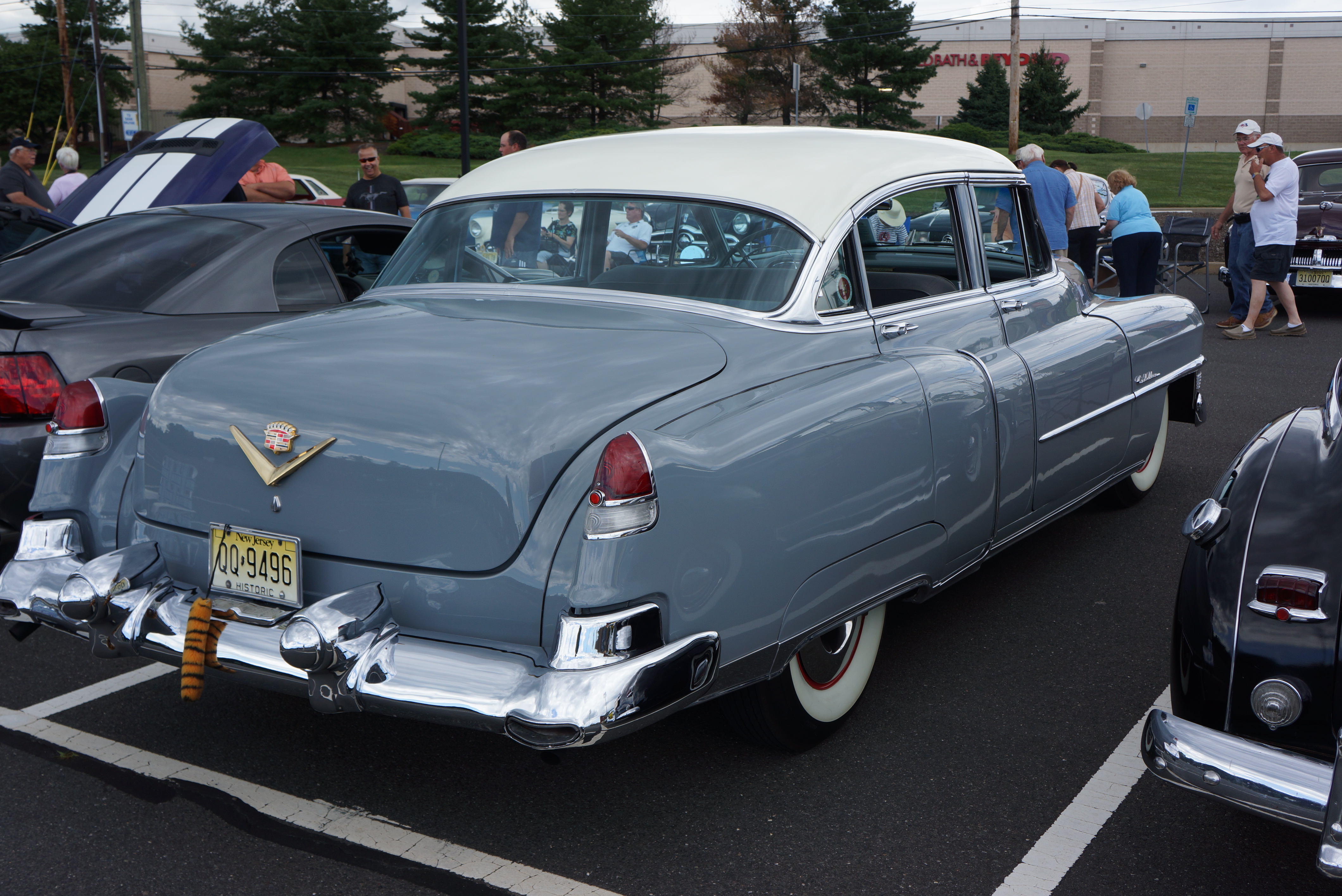
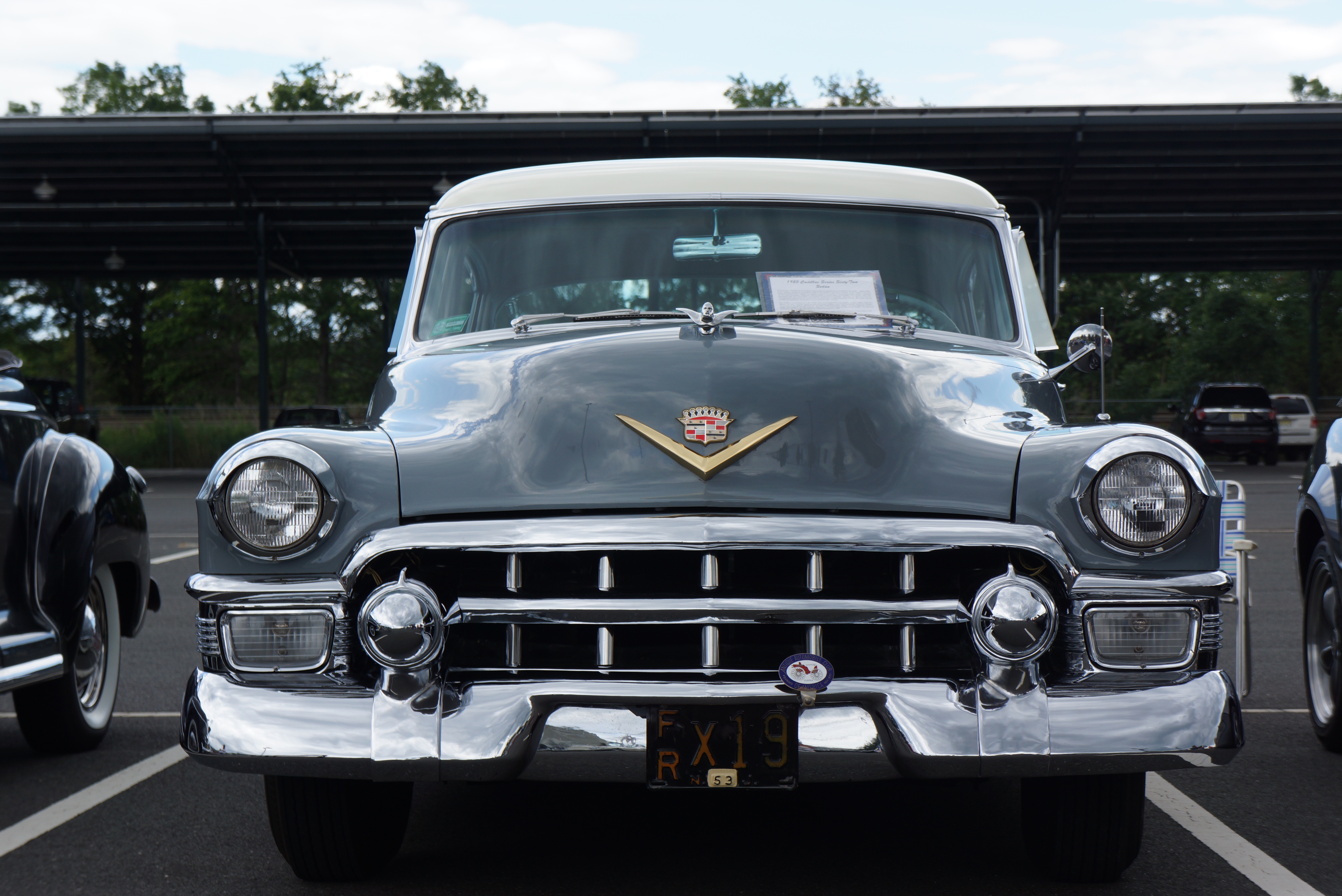
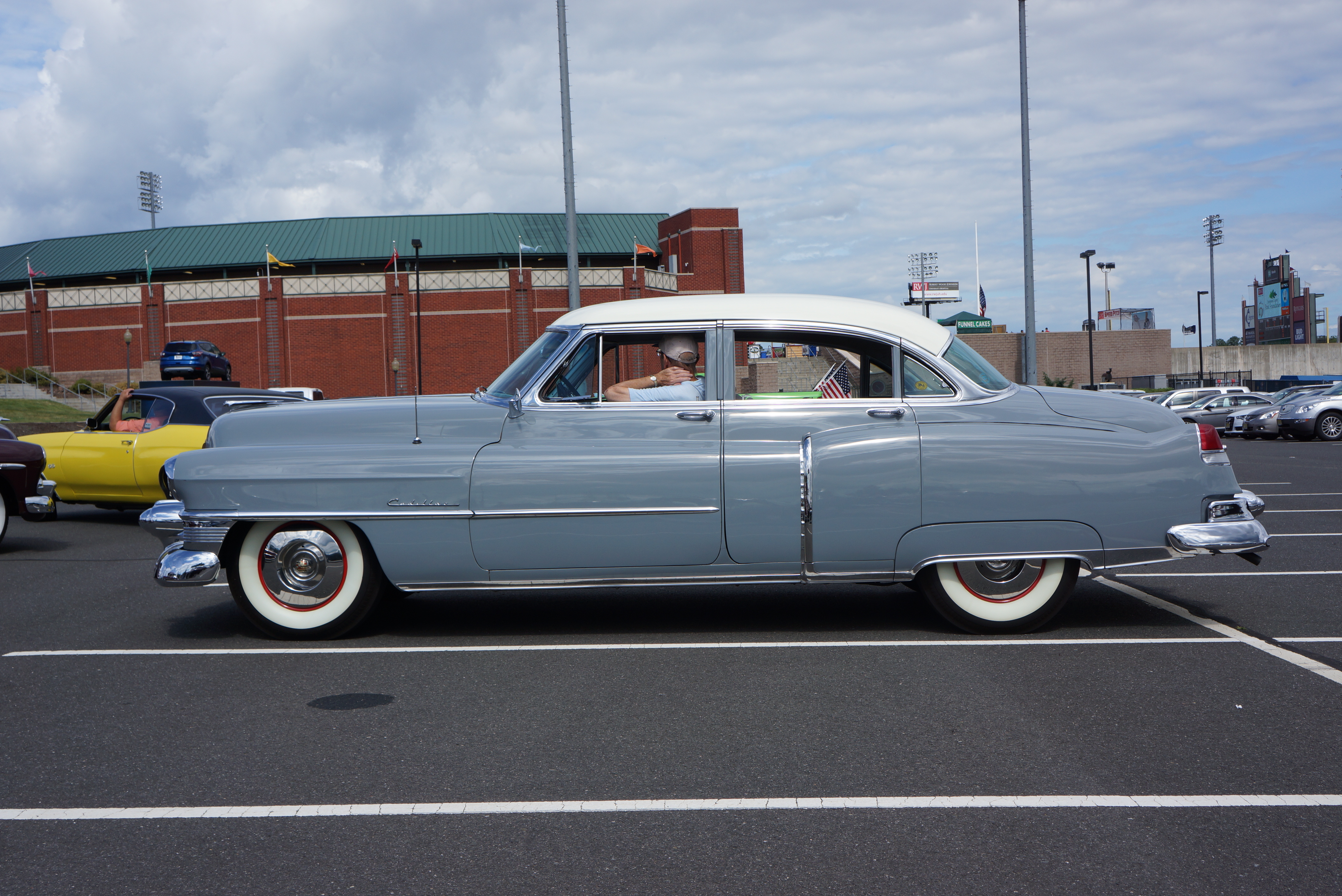
This 53 Cadillac is huge from any angle.
It looks especially wide from the front.
In length, it takes up more than a modern parking spot.
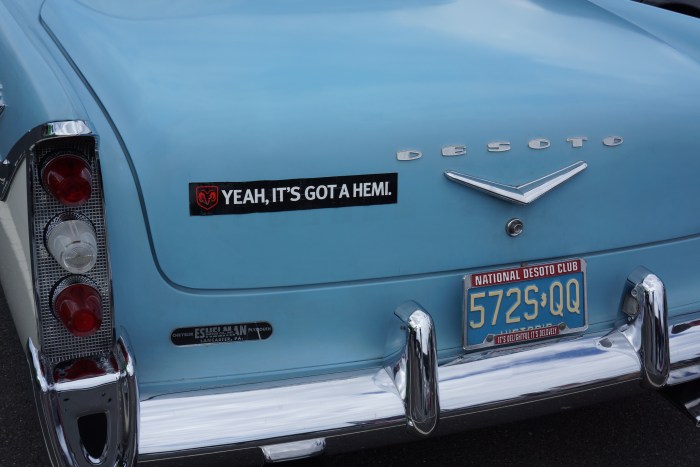
The owner of this ’56 DeSoto has a sense of humor (but it really does have a Hemi).
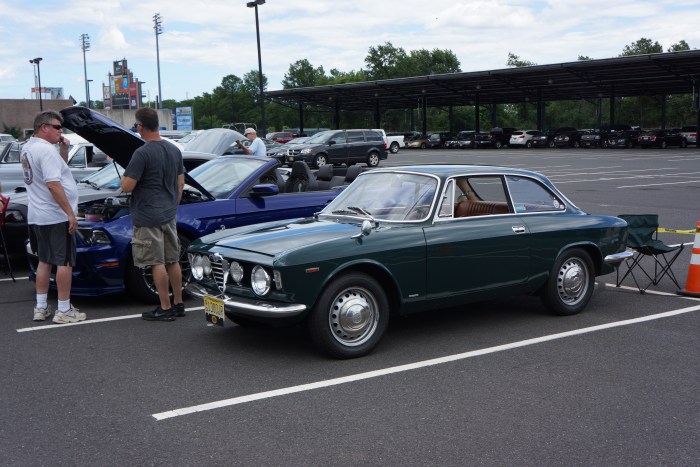
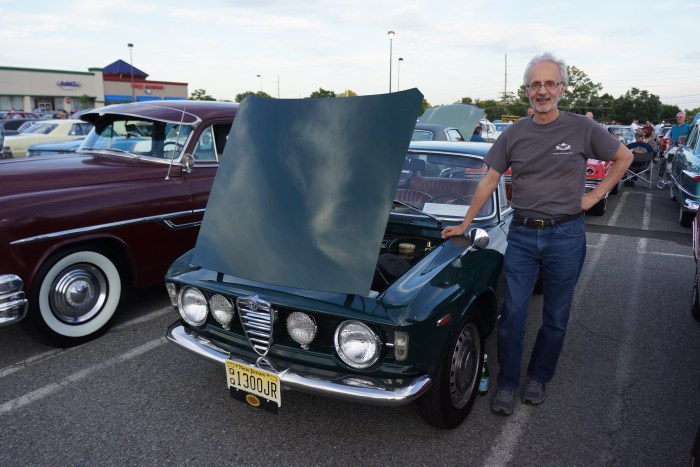
The author’s 1967 Alfa Romeo was the only non-American car in the show.
In August of 1978, bored silly after 11 months in my office job, I answered an ad in a local newspaper. A car dealership was looking for apprentice mechanics – “willing to train”, it said.
My one and only interview was with the dealer’s service manager. Jerry Miller told me that he was an engineer, but preferred working around automobiles. He seemed impressed that I had a Bachelor’s degree, and inferred that he and I would be the only college-educated people there. Assuring me that my pay would be “x” dollars per hour, he hired me. I gave two weeks’ notice to the Department of Labor, and, shocking my family and friends, announced that I was entering the car business to work as a mechanic (the term “technician” was not yet in vogue).
The dealership was Autosport, in Somerville, NJ. The store sold and serviced Volvos, Hondas, Alfa Romeos, and Holiday Rambler motor homes.
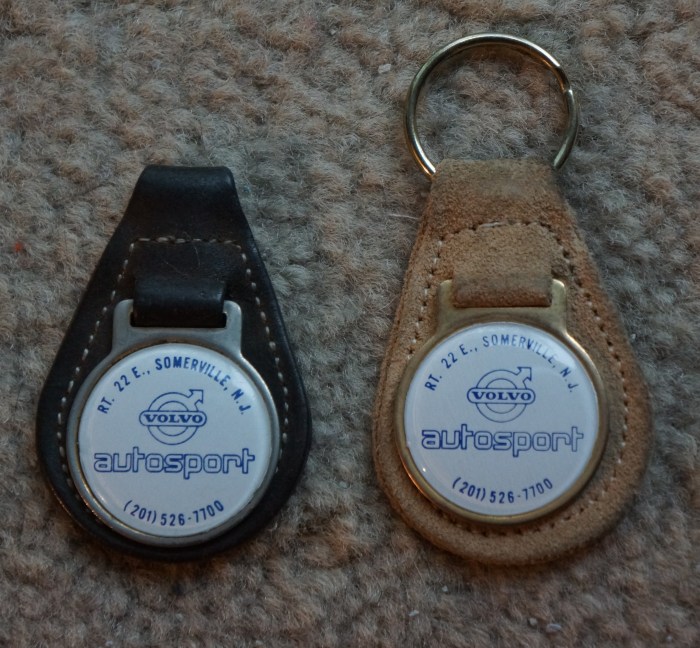
I used the fob on the left for years. Today, at the same location and same phone number (different area code), is Bridgewater Volvo. “Autosport” continues as a stand-alone Honda store across the street.
My first day on the job, Jerry said that there were ten mechanics, in two teams of five. One team primarily worked on Volvos, the other on Hondas, with the Alfa and motor home work shared between the two. He looked at me and said “I will put you on the….Volvo team”. Funny how one seemingly simple decision, made by another, can cast your fate.
I walked over to the Volvo side of the shop, and waited for the Volvo shop foreman to arrive. About 30 minutes later, a clapped-out Mercedes-Benz sedan with faded blue paint bounded into the parking lot. Behind the wheel was a dark-haired man, about 10 years older than I was, somehow holding both a cigarette and a cup of coffee while driving. He meandered into the building, and being the amicable Irish chap he was, stuck out his hand and said “Hi, I’m Andy Finnegan. Welcome”.
Misunderstanding #1: I’d be supplied tools and a toolbox by the dealership.
As I recall, I asked few questions during the interview, and made many assumptions, some of which turned out to be false. For example, this naïve 24-year-old thought that dealerships supplied tools.
Andy: “Where’s your tool box?” Me: “You guys give me one, right?” Andy: “Nope”.
After work, I drove to the local Ace hardware store and bought their house-brand tool box. Just an upper chest, I likely paid around $75 for it. My dad, none too happy about this career change as it was, gave me a small supply of tools to augment the only ones I did own, which was a set of Craftsman ½” drive metric sockets. (Thinking I was set with the metric stuff, I soon found out that most Volvos used SAE-size hardware.) Andy kindly let me use a rolling cart to serve as a place to put my tool chest.
The “Master Mechanic” label forced me to endure much ribbing. The missing red paint was caused by bench-bleeding a master cylinder and shooting a spray of brake fluid against it.
Misunderstanding #2: I’d be working only on cars.
About two weeks into the job, I was handed a Repair Order (RO): “Customer states that shower leaks”.
Huh?
Oh, right, this must be one of those Holiday Ramblers. At least it would be easy to find in the lot. Entering the motor home, I was greeted with piles of dirty dishes and dirty laundry. The shower looked like it had not been cleaned in several months. I got Andy, who said “I’ll take care of this”. He complained to the Service Manager that “car mechanics” were not going to service someone’s unkempt mobile residence. I was never again given an RO for a Holiday Rambler.
Other unexpected jobs included spraying undercoating onto the underside of new Hondas (without a mask), and painting the service shop floor.
Misunderstanding #3: I’d be making my hourly pay rate times 40 hours per week.
Two months into the job, I considered quitting. The work was much more difficult than I had imagined. Under the flat-rate system, I was supposed to find the car, diagnose the problem, procure the parts, complete the repair, and perform a road test, all within a published book time. That rarely happened for me. My preferred approach was to grab the Volvo service literature and page through it, looking for possible solutions. This was not how to make money.
My hourly rate, had I been able to earn 40 hours’ worth of it, would have been roughly equivalent to my previous job’s pay. In reality, I was earning about 25-30 hours a week. Without Andy there, I would have earned even less. Then, six months into my employment, Andy quit.
He told me he had gotten a job as a “Field Technical Specialist”, or FTS, at Volvo Cars of North America. I was devastated, and had no choice but to latch on to the new Volvo team leader, who, while also helpful, was no Andy. However, Andy’s career change gave me the idea that down the road, such a move could be possible for me.
At least the dealership gave me formal training. Six times in 1979, I attended Volvo service training at the Rockleigh headquarters. Many of my service training instructors later became colleagues.
The Volvo Service Training Passport. Earning a sticker was a badge of honor.
As time went on, my skills did improve. I got a loan from the Snap-On tool guy, bought a roller cabinet, and soon had just about all the tools I needed. I even started to enjoy the work, although I was no Class A mechanic. Some of my mishaps were quite humorous.
My favorite story concerns the Alfa Romeo Alfetta I brought in for recall work. Alfa had announced a recall on its catalytic converters, which at that time were filled with coated pellets. The recall was necessary because the converters had not been completely filled at the factory. The repair was simple enough: unbolt the converter, remove the plug at one end, get the box of pellets from the parts counter, fill up the converter, and put everything back together.
My job complete, I let the car idle in my stall while I wrote up the repair on the back of the RO. Suddenly, the guys across the aisle started to yell. “Hey, Reina, your car is shooting at us!” What? I walked around and saw small white objects leaving the car’s tailpipe. Back at the workbench, I found the plug which I had forgotten to reinstall – the car was shooting its catalytic pellets like a BB gun. I needed to do the job all over again, and, bear the wrath of the Parts Manager (“this box of pellets costs us $1,000!”). Talk about not making flat-rate….
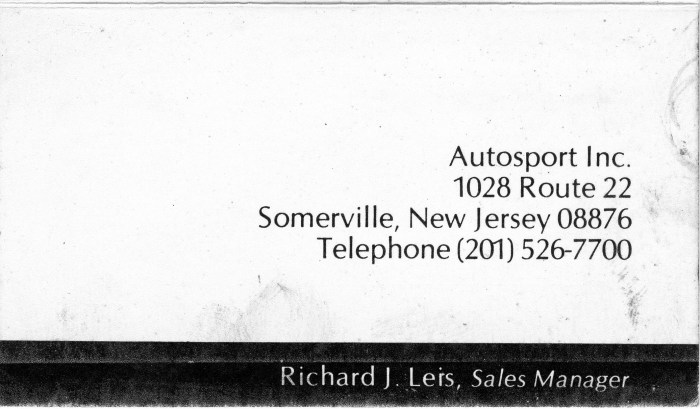
A year into the job, the Sales Department was abuzz because Jerry Lustig, the dealer principal, was going to add a nameplate to the showroom: Autosport had signed up to become a DeLorean dealer. In anticipation, the Sales Manager printed business cards with his name. Alas, it never happened, and whether that was due to Jerry L. or John Z., I wasn’t there long enough to find out.
A DMC business card; collectible?
Autosport never became a DeLorean dealer
Two years after starting at Autosport, it was time to find the next opportunity. Andy had told me about a Volvo dealer where, he had heard, service was run more smoothly. Walking in cold off the street, I applied for a job as a B tech at Smythe Volvo in Summit NJ, and was hired. When I left Autosport, my take home pay was not much more than when I started. As a tech at Smythe, I would be paid hourly; their technicians did not work flat rate. That was fine by me.
A portrait of the mechanic as a young man. Note the hipster pocket protector.
My first two years wrenching on cars were like a college education all over again. I learned as much on this job as I had learned in four years at the university. Best of all, the skills I acquired have stayed with me and have been put to good use working on my personal and hobby cars.
Thank God for my time with Andy Finnegan. He was late every day, smoked like a chimney, and regularly mouthed off to the boss. But he patiently helped me every day he was there, and taught me everything he knew about Volvos and car repair in general.
Years later at Volvo corporate, Andy and I became colleagues, and although we did not work directly together, we kept in touch. About ten years ago, he became quite ill and passed away. Before he left us, I visited him and told him how much I appreciated what he did for me. To this day, when working on any of my cars, he’ll cross my mind. I feel that I owe my career to him.
The Simeone Foundation Automotive Museum, located in Philadelphia PA, is far from your typical car museum. There are several attributes which contribute to its uniqueness. First, the cars in the collection are almost exclusively race cars, further specializing in “sports cars” which have been or could be used as dual-purpose road/race cars. Next, the museum practices preservation over restoration, believing that they have an actual duty to preserve and maintain these vehicles in their “as found” condition.
Last, Dr. Fred Simeone and his staff regularly exercise all the cars in the collection, and to that end, they invite the public to attend “Demo Days” to witness the running of the cars. The popularity of these has led to an expansion of Demo Days from once a month to twice a month. Saturday June 25 was such a Demo Day, and several friends and I found ourselves there to observe the goings-on.
While not a V12, V8-powered Ferrari 308 is stunning ’70s shape
Each Demo Day has a theme: for our visit, it was “cars with 12-cylinder engines”. Demonstration runs are held behind the museum in a paved lot, several acres in size, and the crew brought out their Ferrari 250 Testa Rossa, Bizzarrini Spyder, Auburn V12 Speedster, and Alfa Romeo Tipo 33. Several other cars likely belonging to customers, including a Ferrari 308GTS and a Mercedes Benz AMG GT-S, were also on hand. There is no need here to delve into the history of each vehicle; for further reading I refer you to the museum website and/or Google. Below, we will cover each vehicle chronologically, providing comments on observed features.
THE 1933 AUBURN V12 SPEEDSTER
The Auburn is gorgeous from any angle
This stunning shape startles you when you realize that this car was designed in the early 1930s. You are again startled when you note that this magnificent V12 was sold during the Great Depression. This is clearly a vehicle which represents form over function. The massive cast-iron engine must give it terrible weight distribution; there is tight seating for only two adults; and there is no luggage space to speak of. However, if style and speed were your only objectives, and money was no object, in 1933 this was one of the ones to have.
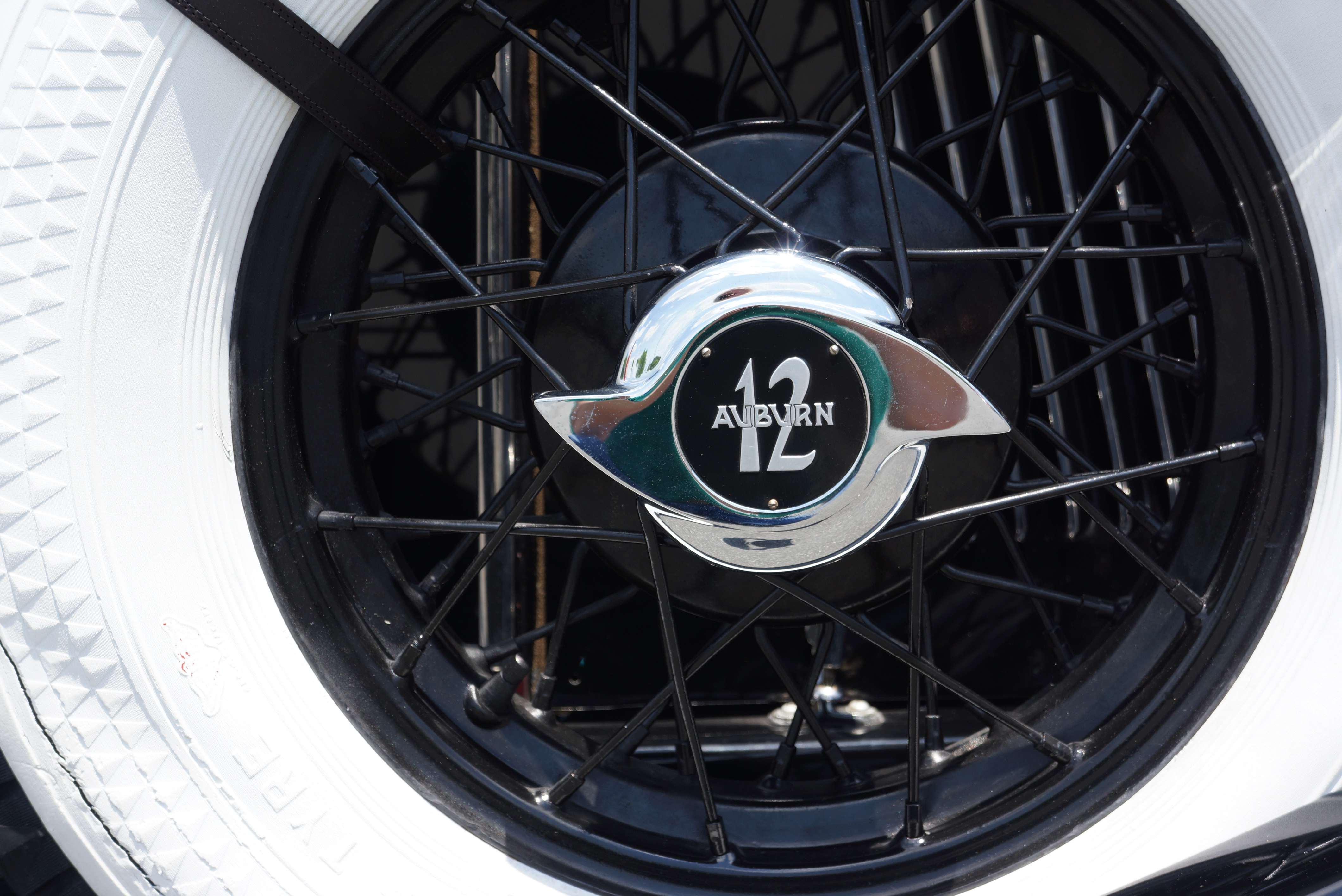
Note “Auburn V12” badge in bumper
Tail lights stand proud
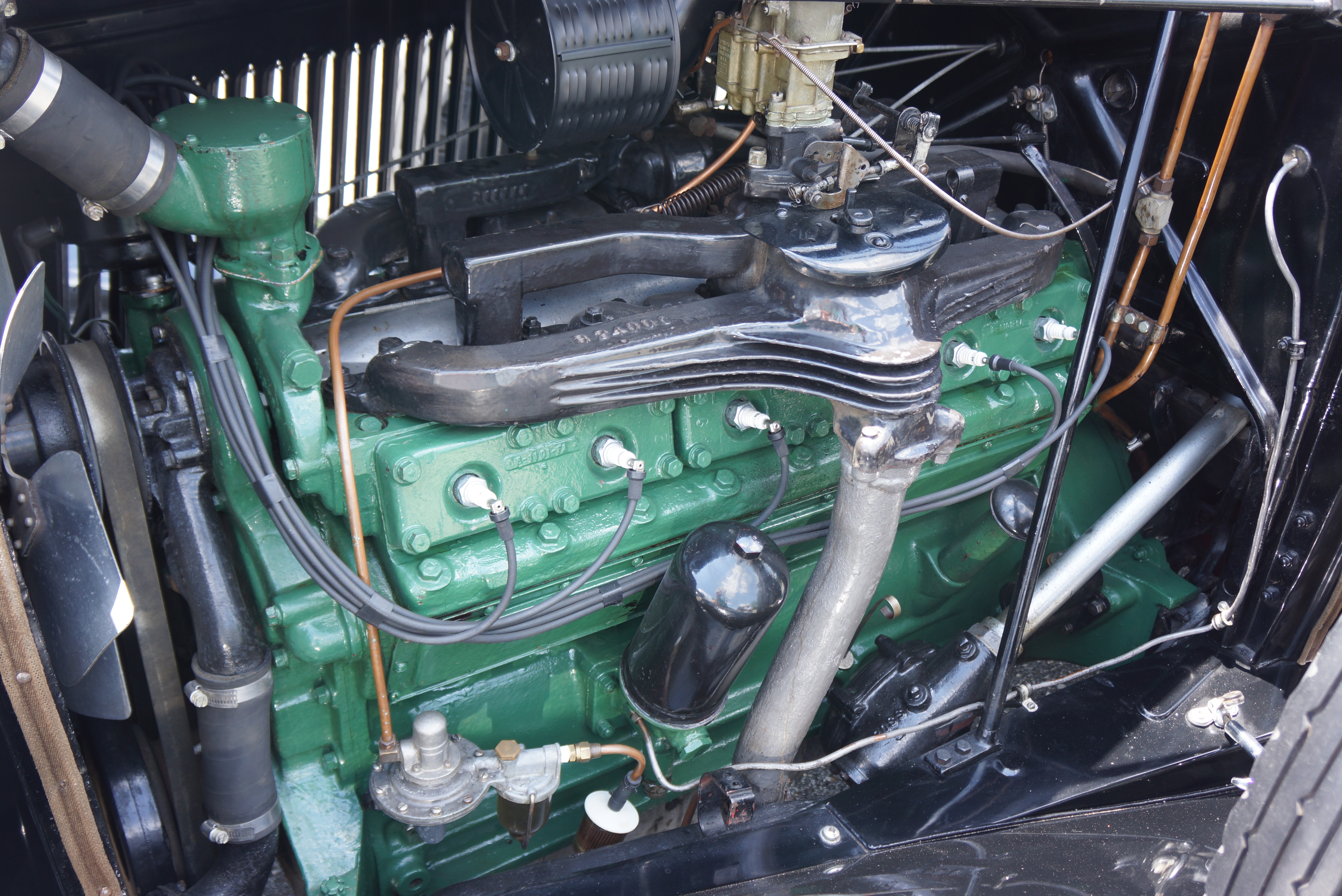
Massive V12 beautifully detailed
Wire wheel hub detail
Dash shows Art Deco design
Tail light script is subtle
THE 1958 FERRARI TESTA ROSSA
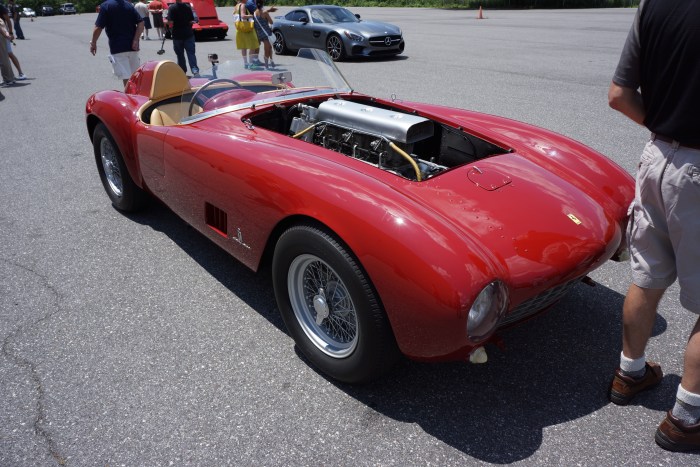
Perfection can be so simple
The shape of this sheetmetal is so pure, so perfect, yet so simple, it would be impossible to improve upon it. Note the front turn signals; unobtrusive but functional, you could take this grocery-shopping and be able to legally signal your lefts and rights. The Ferrari 12 cylinder engine, fed by three Webers, is mechanical design taken to perfection. And allow us to point out the passenger seat, if you’re so inclined to invite someone special along for the ride (NOT that there wouldn’t be a line of volunteers).
The classic Ferrari V12 engine
Room for two if you don’t mind RHD
Weber carbs of course
THE 1965-1967 BIZZARRINI P538 SPYDER
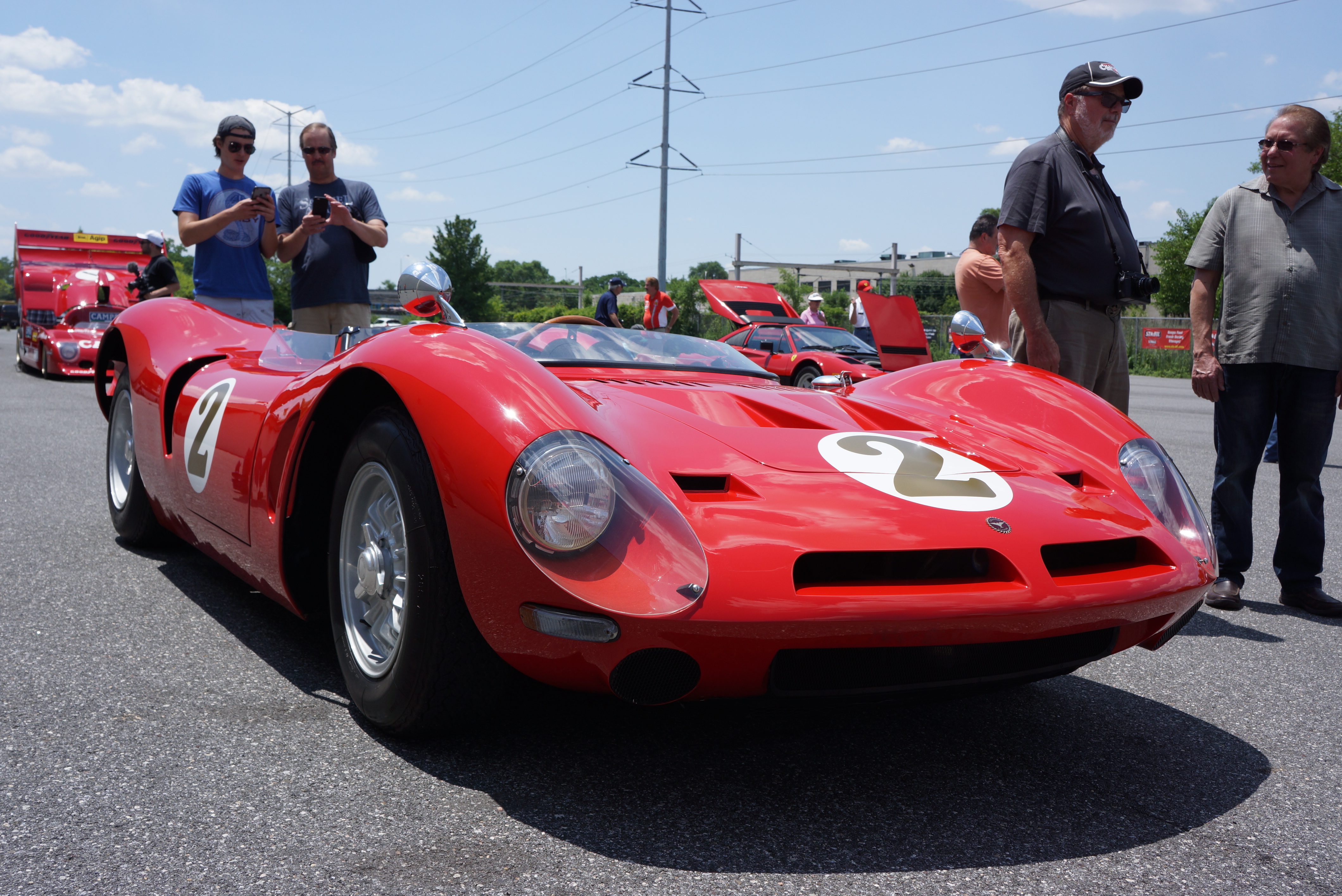
Bizzarrini looks almost two-dimensional from this angle
Almost all Bizzarrinis were powered by Chevrolet V8 engines. However, two of the four P538 Spyders built were equipped with Lamborghini V12s. Photos do not do justice in trying to convey the lowness of this car. It comes up to about your knees. It is unimaginable how the V12 fits in there. This is a rare Bizzarrini, and its looks and performance will give almost any Ferrari a run for its money.
Logo includes city of origin
So low you could almost step over it
Cam covers proudly display engine source
Note massive calipers aside transaxle
THE 1975 ALFA ROMEO TIPO 33 TT 12
The shape screams ’70s race car
By the 1970s, aerodynamics played a much larger role in the design of racing machines. This Alfa distinguishes itself from its Demo Day company by its squared-off shape. It’s the opposite of the Auburn in that it’s all function over form. Note the protruding front spoiler, flat vertical sides, and tall rear view mirror. Unlike the other V12s out in the back lot, this Alfa has a flat-12, which of course contributes to a low center of gravity.
Same Alfa badge as found on any of their sedans
Seeing and hearing these cars run brings them to life; after all, cars were built to be driven. Better still, it transfers the museum experience from a dusty display of decay to an immersion in living and breathing history.
Demo Days at the Simeone are recommended for anyone who wants more than static displays. It is a trend we hope becomes contagious at other automobile museums around the country.
My Mazda Miata workshop manual is an aftermarket publication, not the official factory book, but it’s been very helpful. It’s well researched and written, and the photography is adequate. It’s written in the style of “we’re in a shop with an example of this car, and we are documenting our actual repair procedures”. This approach certainly lends an air of credibility to the book.
In reading the section on heater core replacement, this service manual states (and I’m paraphrasing): “the entire dashboard must be removed from the car. We know of no work-around”. The manual was published in the mid-1990’s, at the dawn of the public’s access to the Internet, and it is obvious that were it to be updated today, information gleaned from various online forums would be incorporated, including a heater core work-around.
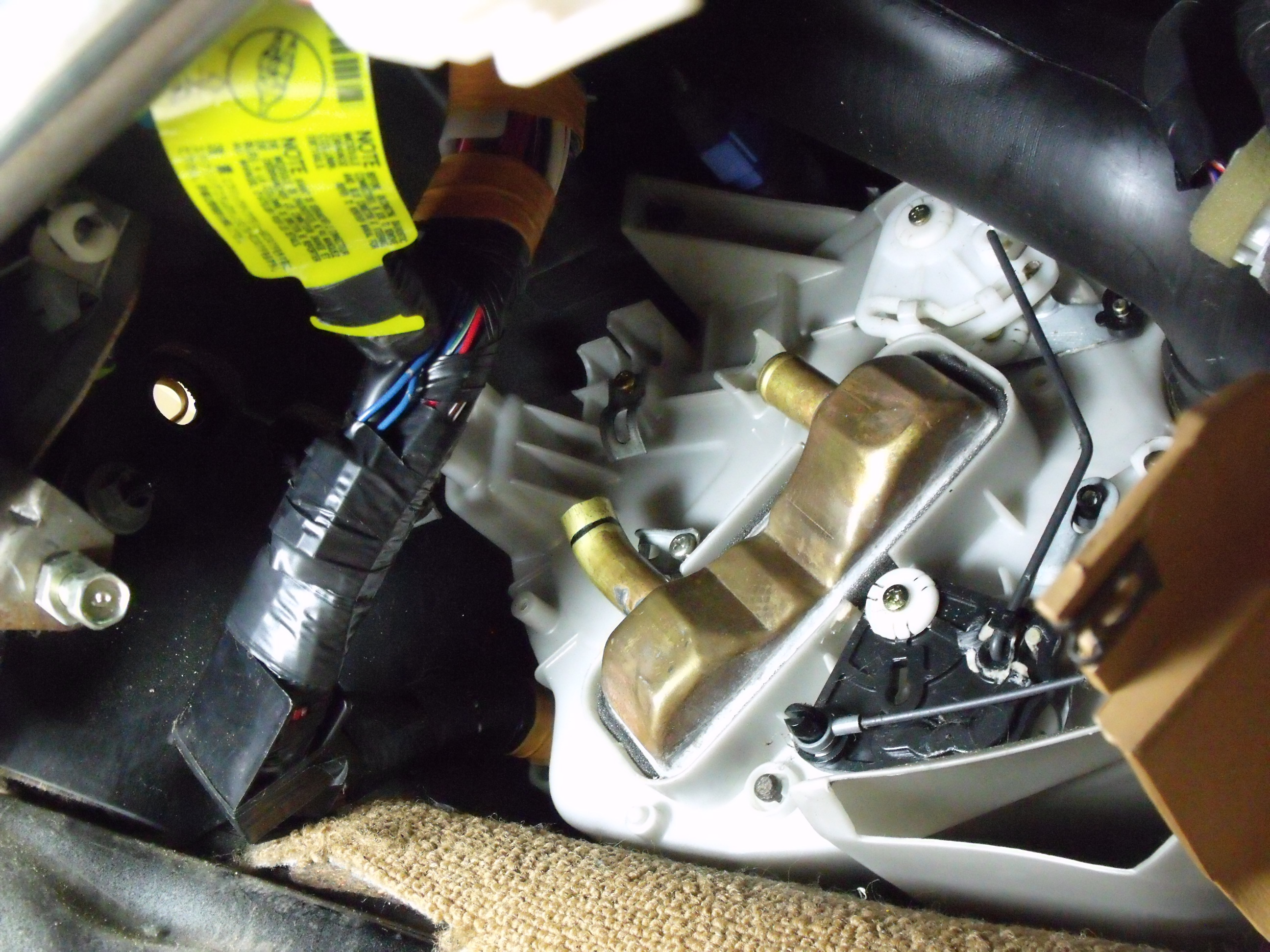
I was able to remove and reinstall my Miata’s heater core WITHOUT removing the entire dashboard. In fact, an underdash panel held in place with two screws, a heater box cover held in place with two screws, and several hose clamps were the totality of what was removed for successful heater core retraction. (The driver’s seat was also unbolted and taken out, only to provide greater comfort when working under the dash.)
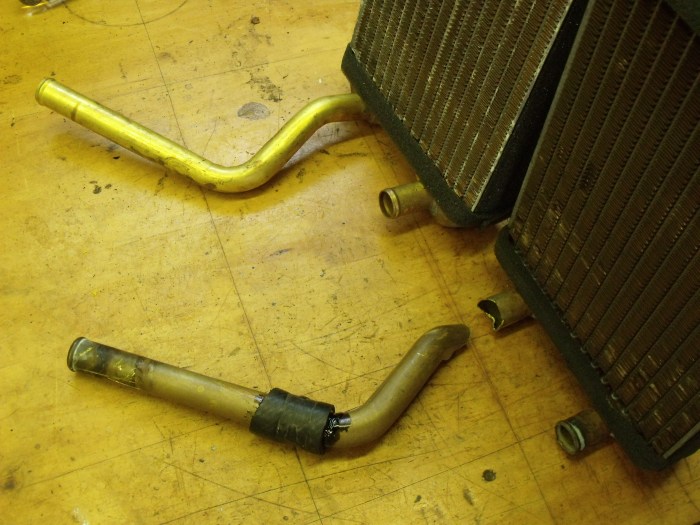
Old (foreground) and new (background) heater cores. Old one has been cut; new one, not yet.
The secret to this success came from an online forum, www.miata.net. For those who dismiss the Internet (especially automotive forums) as a waste of time, populated by flamers and trollers, one must wade through the waste to find the gems. And this was a gem: a poster at the Miata forum had discovered that cutting one heater core pipe would reduce total work time by hours (in my case, days). I used a Dremel tool to cut the pipe, and I had the old core out and in my hands, dashboard intact.
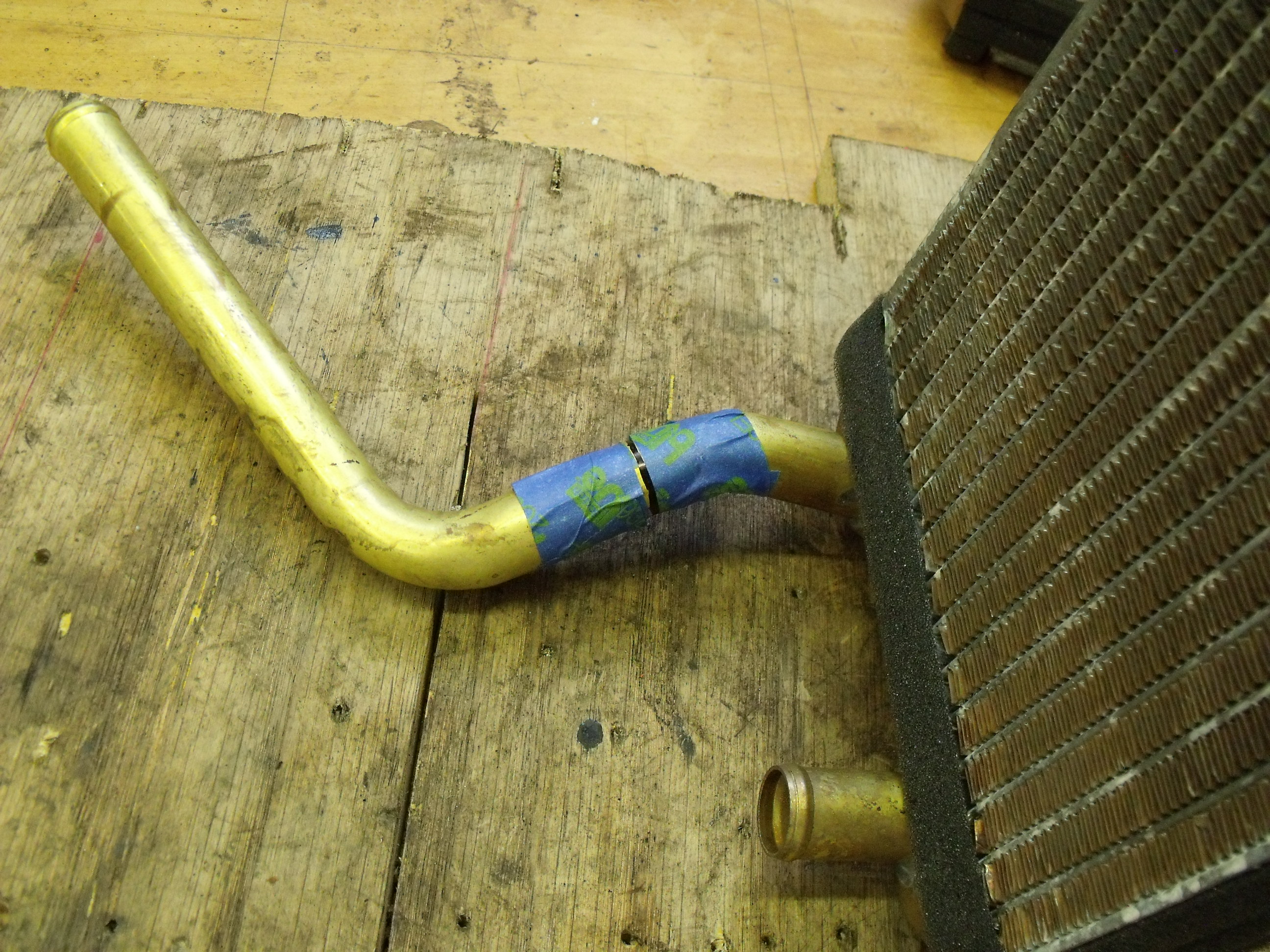
First, hose clamp determines cut line
Tape keeps blade from straying
No returning it now…
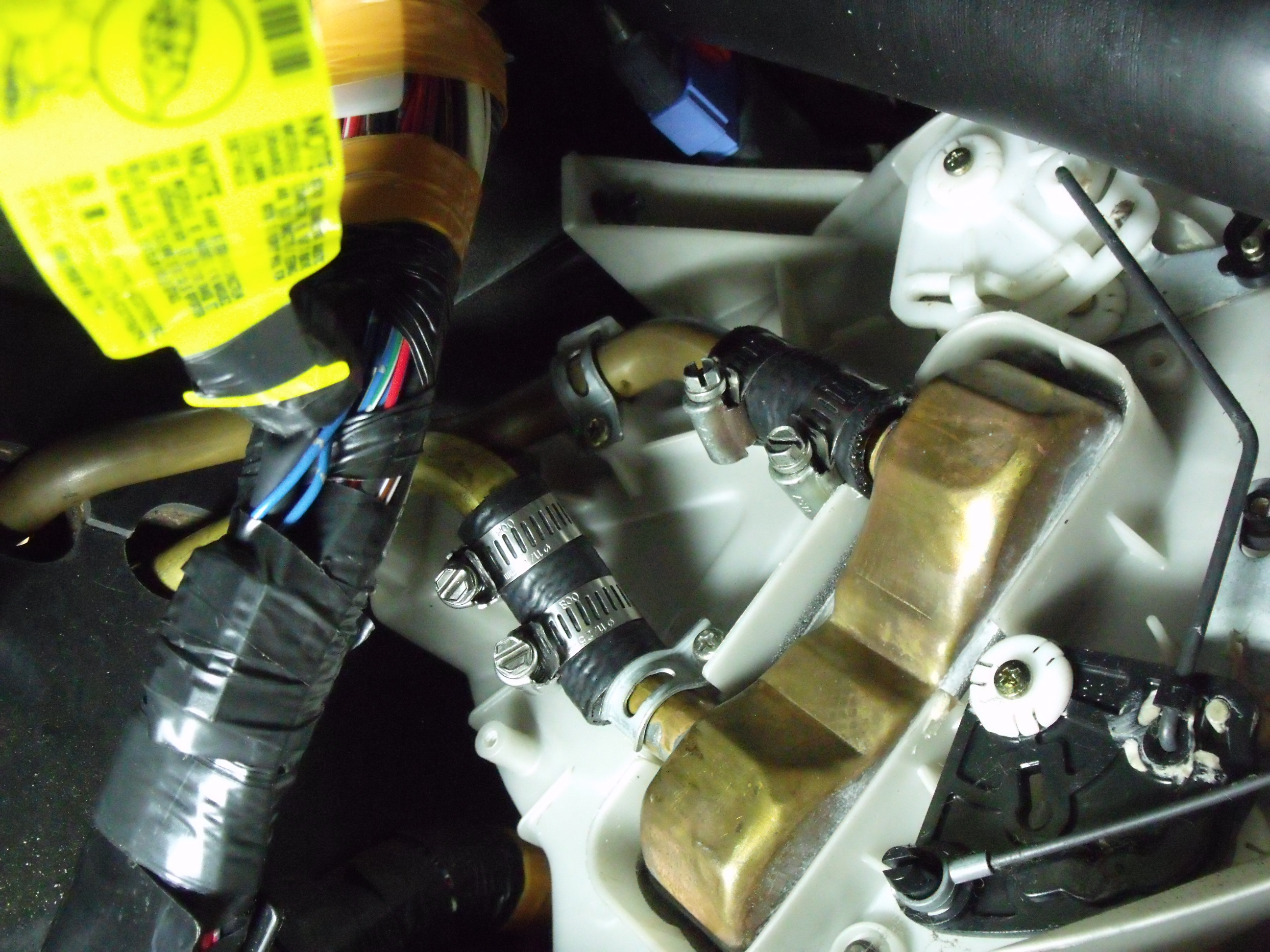
The concept is this: Mazda built this heater core with one short pipe and one long pipe, soldered to the core itself. The short pipe uses a piece of hose and a clamp to connect to a pipe running through the firewall. The long pipe goes directly through the firewall, and it’s this long pipe which necessitates dashboard removal, so that you have room to swing the core around and maneuver the long pipe out. However, if you cut this long pipe, then join the two pieces together with a hose and clamps, there’s no need for the major disassembly and reassembly.
Hoses and clamps on pipes will be connected once core is in place
(Interesting sidenote: for the NB (2nd generation) Miata which started in 1998, the factory switched to TWO short pipes, for easier removal of the core.)
The tricky part during reinstallation was determining the EXACT best place to cut the new pipe. First, it is not in my nature to take a hacksaw to a new $150 part. Should that part be defective, its warranty would be, as they say, over. The goal was to cut the pipe as short as possible while still leaving room for two hose clamps. I temporarily installed one hose clamp to ensure that I’d have room for it, then drew a line along it, which became the cut line. It worked.
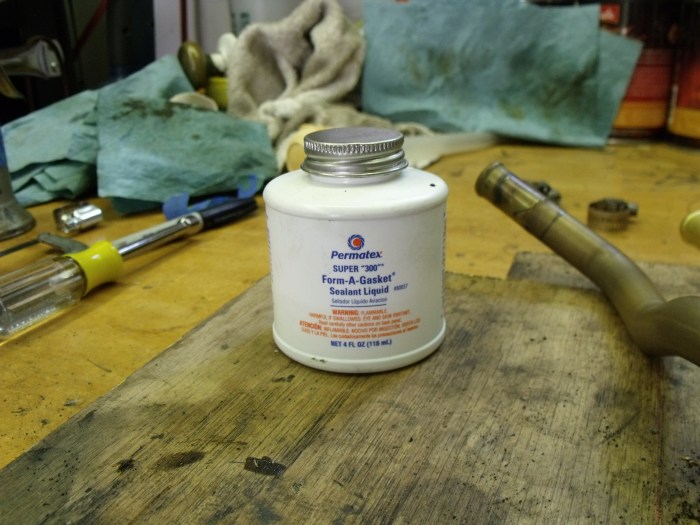
Permatex 300: non-hardening sealant designed to work with antifreeze
In the interest of doing this job so that it would not ever leak, I spent an additional $4 on another factory heater hose so that I would have the perfect ID hose for the job. I also bought a $3 jar of Permatex sealant designed to work with cooling systems (and waited 12 days for its arrival) to be absolutely sure that I’d get no drips. I hate drips. It was overkill, but I’m glad I used it.
Auxiliary drive belt, in spite of looking pristine, was replaced
The new heater core slipped into place easier than I anticipated. Working in the tight quarters under the dash was a pain, but a #2 Philips screwdriver bit in a ¼” ratchet wrench (instead of a screwdriver) was the trick to get to all the Philips screws. While this was going on, all the underhood work was wrapped up, including all new coolant hoses, new thermostat, and two new auxiliary drive belts. As recommended in the forum post, the car was started and run before buttoning everything up, to make sure it was all dry. It was.
New core in place: harness was main obstacle
Top hose was per factory
Bottom hose was the cut one
Friday of last week, the job was completed, and I drove the Miata for the first time this season. It welcomed me like an old friend. It’s nice to know that I can look forward to a summer’s driving season without worrying about cleaning the windshield after every drive.
My good friend Enzo (“EC” to his buddies) bought his first collector car, a 1991 Alfa Romeo spider, last autumn. This was not Enzo’s first Italian car, as he had Fiats as daily drivers, albeit 30 years ago. But upon retirement, he decided to treat himself, and found this pristine low mileage beauty locally. Like any other 25-year-old vehicle, it needed attention to some small details, but EC has been fastidious about staying on top of needed repairs.
When I had had the chance to go over the car with him late last year, we found that one of the tie rod end boots was torn. It didn’t require immediate replacement, but over the winter he ordered parts, then invited me to his home for a day to be spent swapping out tie rod ends.
One of the outer tie rod ends, about to meet its demise
Upon arriving one day last week, I saw that he had ordered ALL SIX tie rod ends. I was under the now-mistaken impression that we were replacing only the two outer. (All 4-cylinder Alfas on the 750-, 101-, and 105 platforms use recirculating ball steering, with a center link and two tie rods. Each rod has two ball joints, one with right-hand thread, and one with left-hand thread, to allow for toe adjustment.)
One of the tie rods is out and is measured
We got to work. First order of business was to pull out the cotter pins, but these pins were so thin and rusted that half of them broke before we could retract them. We ended up forcing the socket over the castle nuts and using an impact wrench to remove all six nuts.
Part numbers marked on each end to keep track
A trick I had remembered from doing the same repair on my Alfa was to rotate the steering wheel to bring the center nuts to an exposed position from within the engine compartment. Then, using a long extension, we could gun the nuts loose from up top, which was much easier than trying it while on our backs.
Next came out the pickle fork. Persuasion from a two-pound hammer was all it took to get the links to drop.
We were cranking the tunes in the garage!
With the three links off the car, we counted threads AND measured overall length, as our best attempt to reassemble the car without changing the alignment too much. We matched up old and new parts (with EC marking part numbers on each component using a Sharpie), and had all six tie rod ends installed into their respective links within minutes.
This may have been the point when we took a lunch break. Prosciutto, Parmesan, salami, olives, and wine (!) were on the menu. Lunch concluded with a nice cup of coffee (to wake me up after the wine), and we were back to the garage.
Masking tape helps keep identification straight (wine does not)
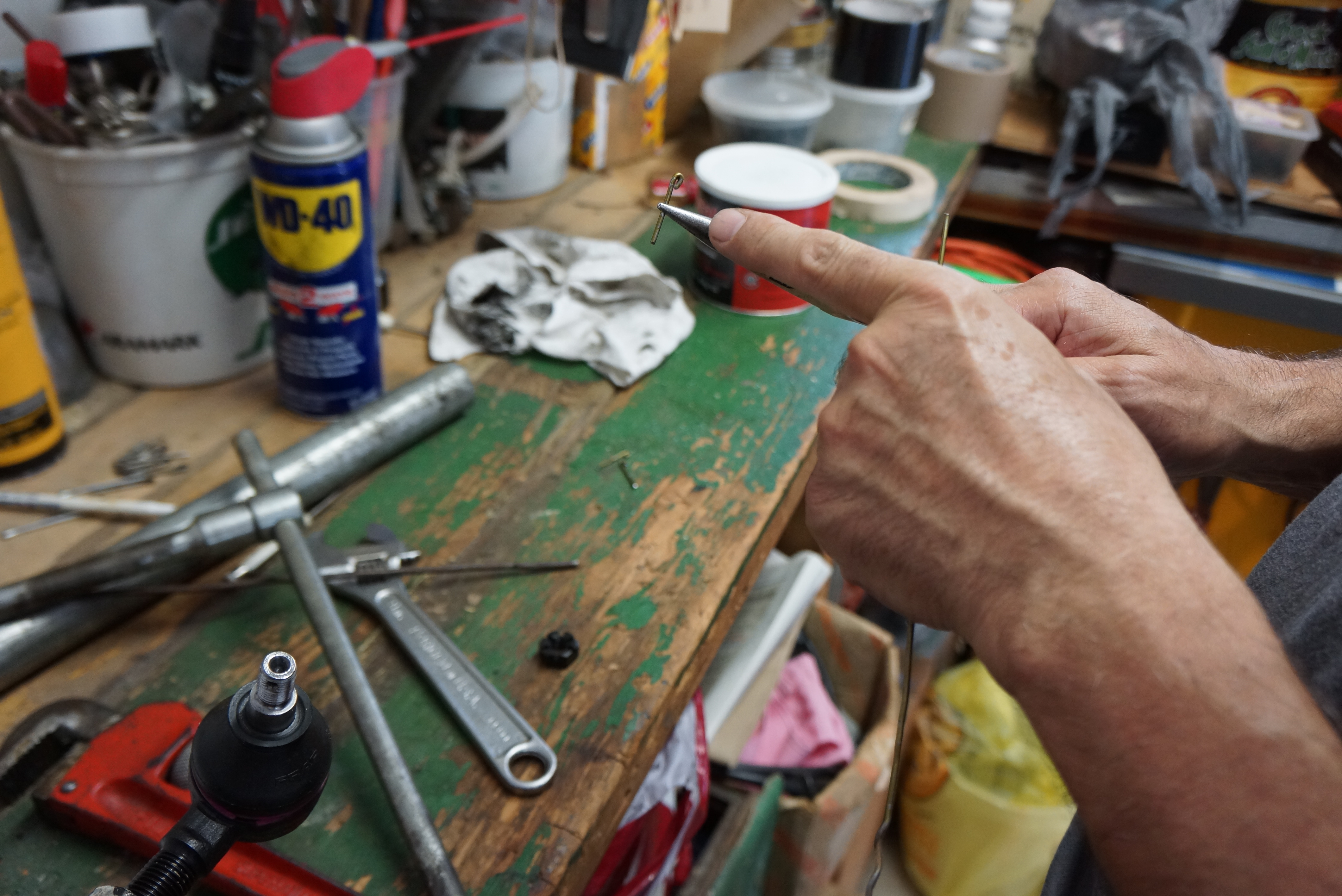
The new parts, bought from Classic Alfa in the UK (the author’s favorite Alfa parts supplier) used castle nuts and cotter pins for the four outer ends, and locking nuts for the two inner. We did not have the correct-sized cotter pins on hand, so the ever-resourceful EC made his own from coat hanger wire. The temporary pins will be replaced with authentic pins once he gets to the store.
EC fashions cotter pins…
… points out handiwork
Much to my surprise and satisfaction, all six nuts tightened right up without giving us any trouble. I had concerns that the ball joints might spin and prevent us from reaching the proper torque, but that didn’t happen. With everything buttoned up, Enzo took the car for a test drive, and came back to report that the only issue was a steering wheel which was slightly off center. The car will need an alignment after this work anyway.
Front wheels remained attached during test drive
At the rate my friend EC is moving, there is very little else that needs attention on this gorgeous drop-top. It’s running great, and he’s got the summer to enjoy it! I know that we’ll see him and his Alfa out with us on our weekend jaunts.
The Boonton NJ cruise night, held on Fridays in the WalMart shopping Plaza, had its first show of the 2016 season on June 10. This year’s festivities were scheduled to start on June 3, but that show was cancelled due to inclement weather.
The cruise night, sponsored by the Starlight Cruisers car club, began in 2007 and has proven to be one of the better attended events of its kind in northern Jersey. The parking lot is roped off to allow parking for up to 250 cars. Because of the show’s popularity, vehicles are limited to those with QQ (NJ antique automobile) plates, or those which are at least 25 years old. The club provides music and door prizes.
The weather on the 10th was perfect – sunny, warm, cloudless, with low humidity, which brought out the crowds. The show cars were 99% domestic product, with a large percentage of them easily defined as “modified” – everything from bolt-ons to full customs in the old-school sense. GM vehicles from the 50s and 60s dominated, but there was also enough variety to keep things interesting for those who seek the unusual. There was a smattering of pre-war iron, including a lovely 1940 LaSalle convertible. Original owner and/or unrestored cars were present, such as a 1967 AMC Marlin whose owner has had it since 1971. And some imports dared to show up among all the Chevys and Fords, including an Opel GT, a Saab 93, and your author’s Alfa.
AMC products are rare sightings at any car event. This cruise night featured a number of them, including this Rebel “The Machine”, and this 1978 Concord AMX.
AMC Rebel The Machine
1978 AMC AMX
This 1967 Marlin was striking in several ways, most notably because its owner told us that this was his first car when he bought it in 1971. His daughter was dutifully deployed to attend to polishing duties. When asked about the missing fuel door, he replied that the door has been shipped to Sweden (!) for color-matching. We were left unclear as to why.
1967 was on Ambassador platform
Sign nicely captures history
She’s only half-way done
The number of Corvettes in attendance easily reached several dozen. What was especially impressive was the large number of C1 and C2 cars.
’58 and ’62 C1 side-by-side
1961 C1 in Fawn Beige
Iconic ’63 Split Window- note the plate
These C2s lined up their beautiful rear ends
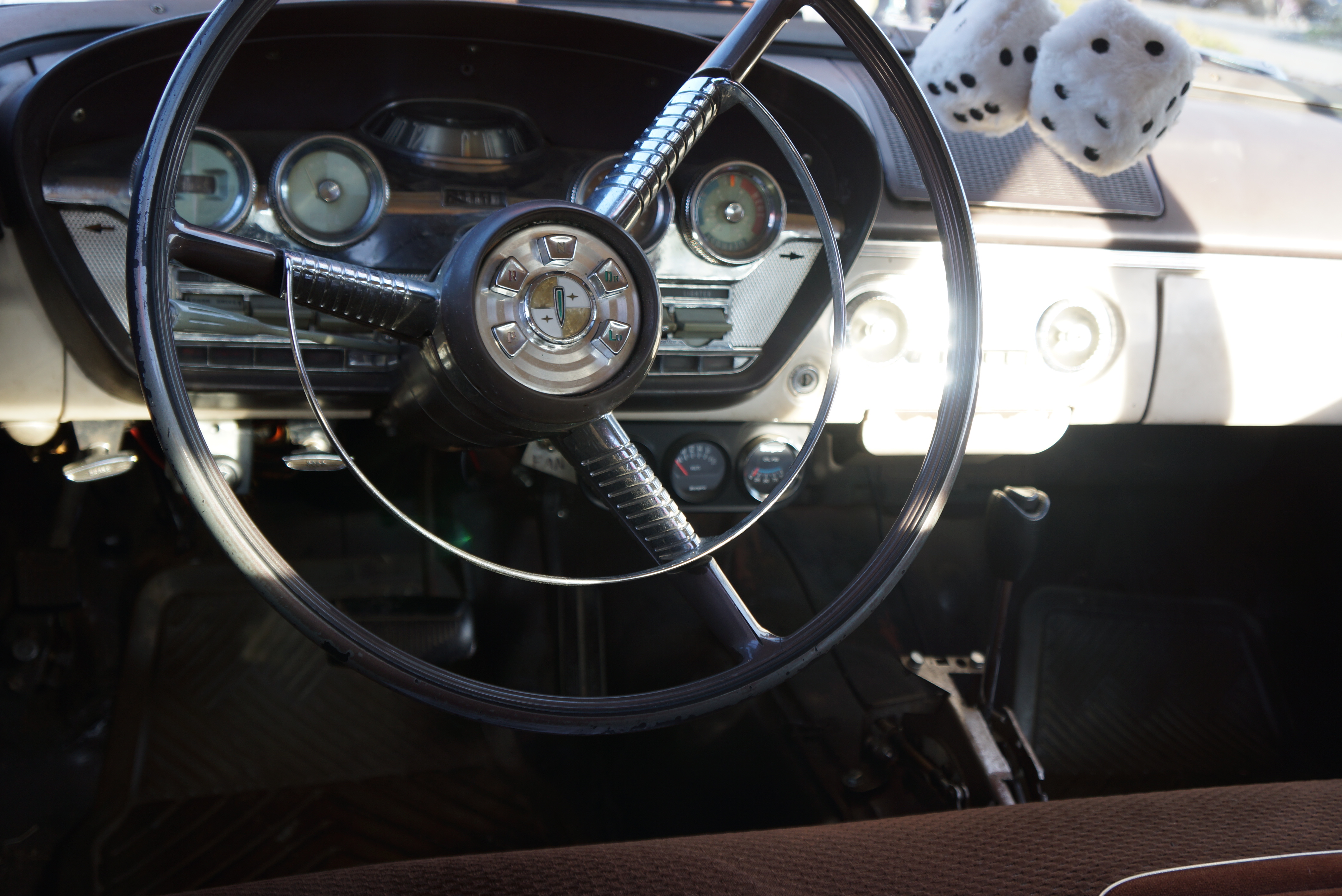
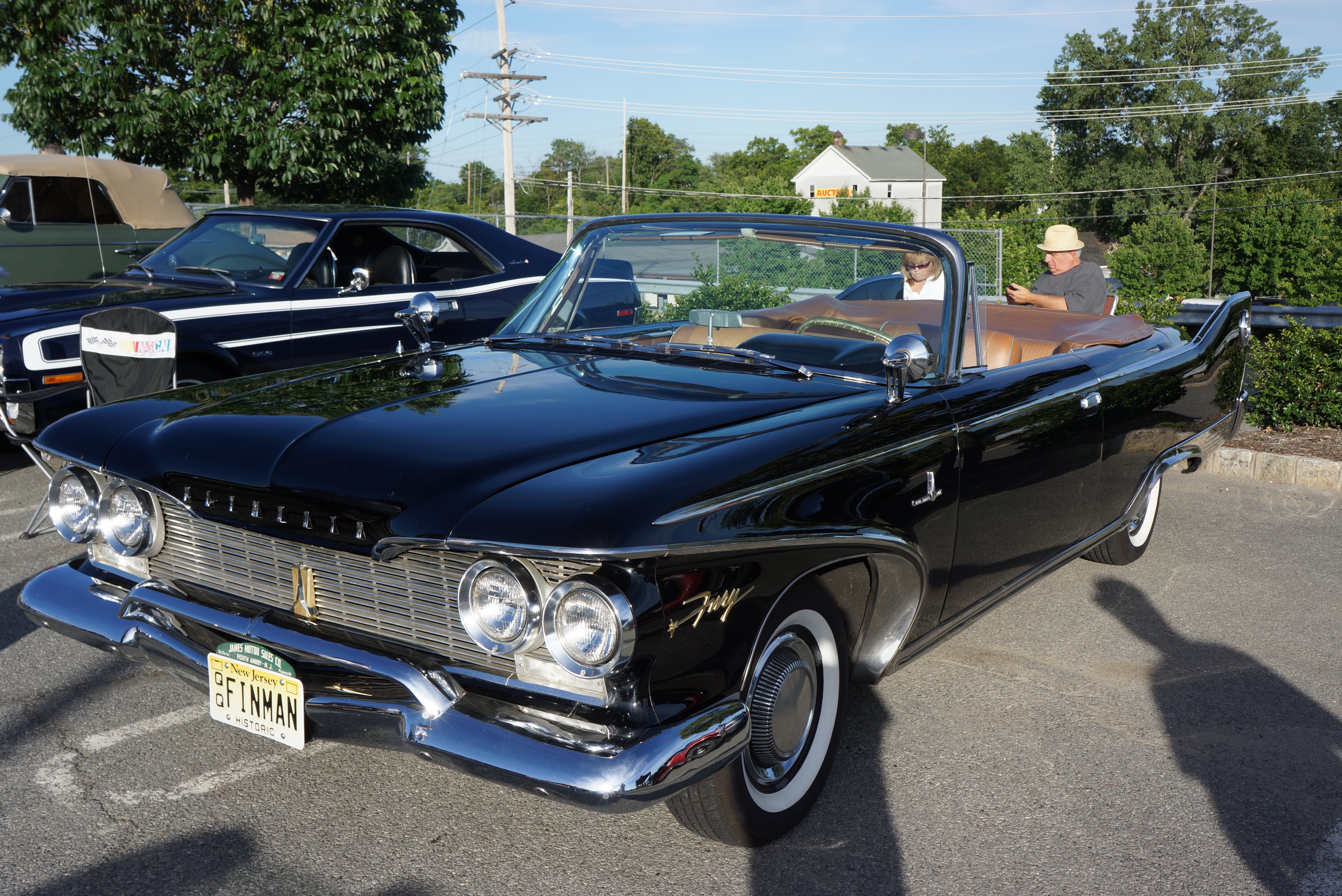
It is often stated that American car styling reached its bizarre peak in the late 1950s. While that may be true, what is sometimes missed is that interior styling also captured some of that strange creativity, and that included functional items such as transmission controls. This 1958 Edsel and 1960 Plymouth both used unusual solutions for transmission control placement. (Note that the Edsel has a floor shifter as part of a complete drivetrain swap.)
Quarter panel trim for a ’58 Edsel? Yeah, we got that.
Tranny buttons front and center
Chrysler didn’t get the memo that tail fins were out
Trans push buttons and square wheel
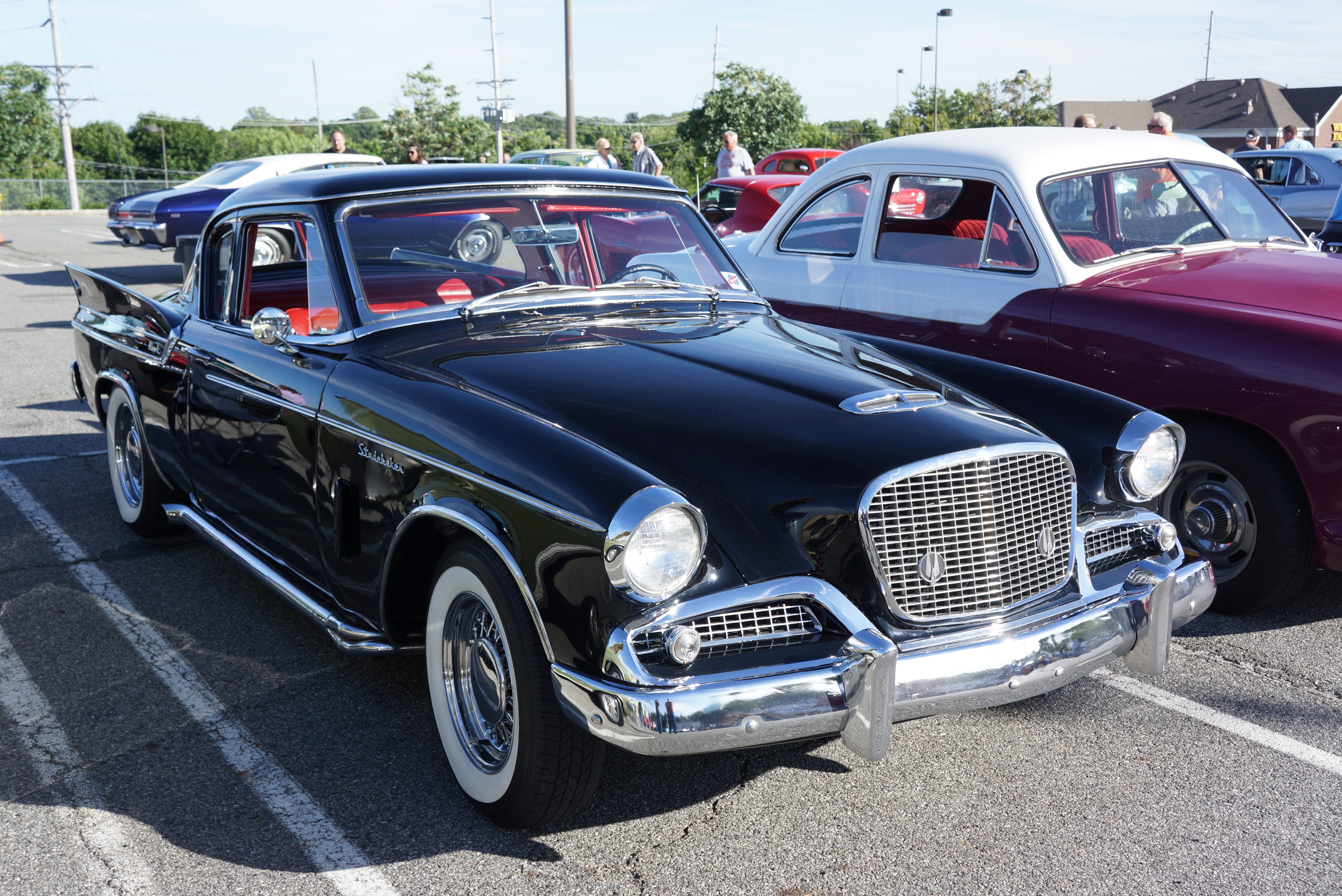
Studebaker’s history began 50 years before the dawn of the motorized vehicle, when the Studebaker brothers manufactured covered wagons. By the 1950s, they struggled to compete with the Big Three. “Daring to be different” was a strategy employed by them (as well as by AMC), as borne out by this Hawk and Avanti.
Studebaker Hawk with side pipes
’63 (first year) Avanti
Despite the dominance of 50s-60s muscle, a few cars from an earlier time were also on the show field. None was more striking than this 1940 LaSalle. The LaSalle brand was a “junior Cadillac”, but alas, could not compete in the marketplace. Production ended in 1940, making this car a representative of the marque’s final year.
1940 LaSalle convertible
Gorgeous Art Deco logo
Grille badge is subtle
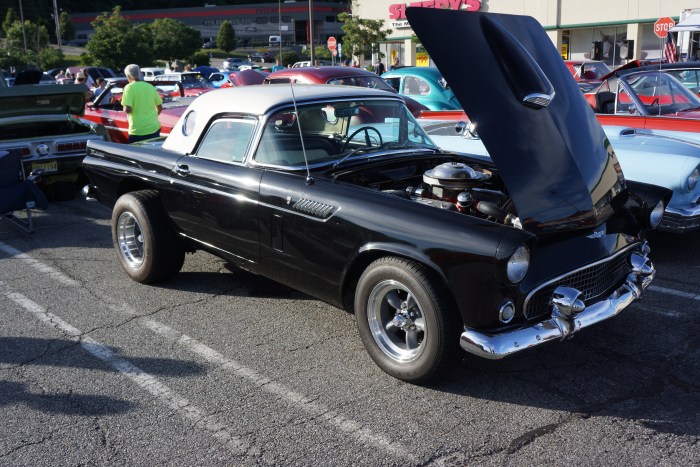
Not all T-Birds are restored to AACA standards. This ’56 was ready to rumble.
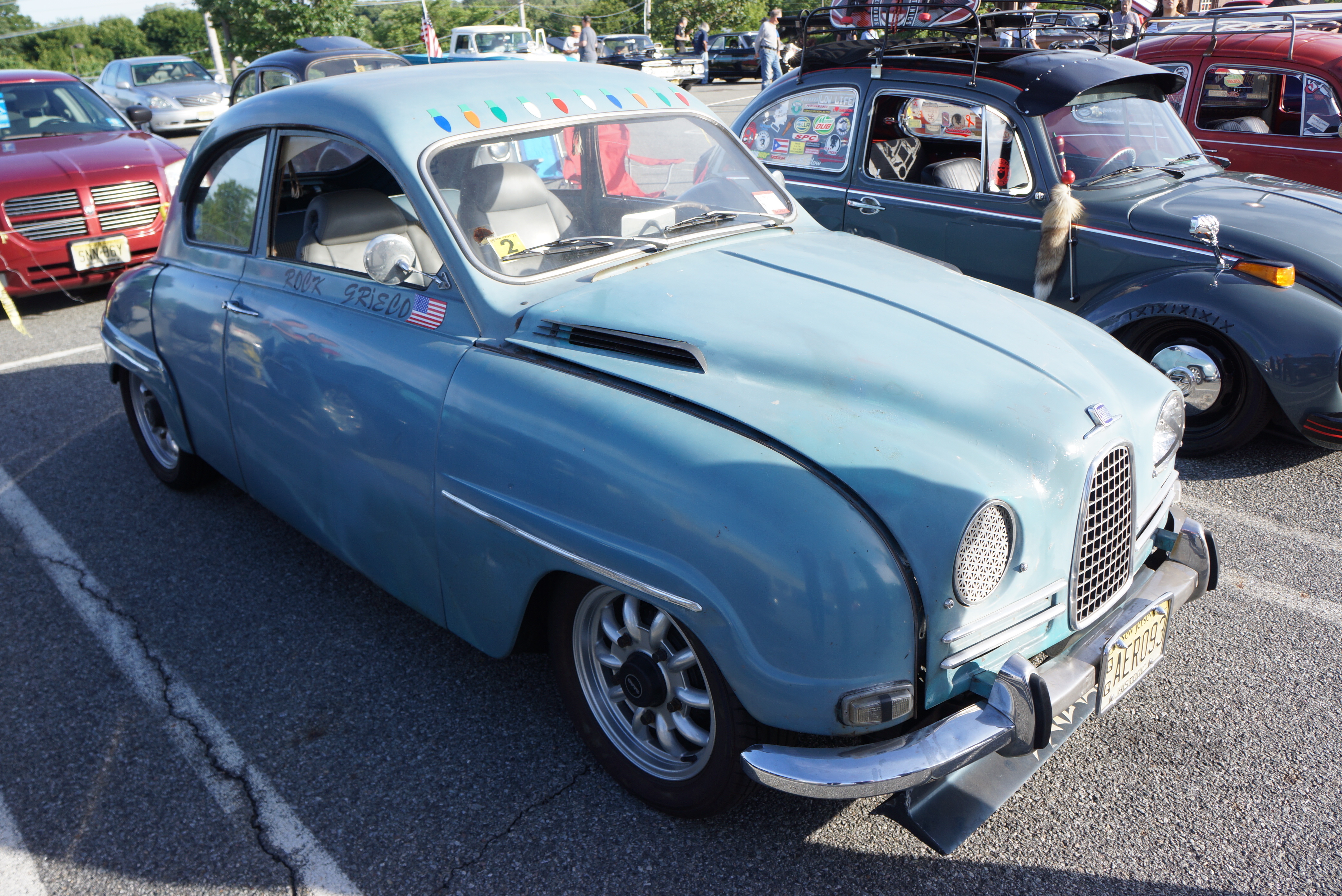
This Saab has been in Boonton before. Although we did not have the pleasure of seeing it run on this particular evening, the owner has kept the 2-stroke motor and has opened up the exhaust a bit, resulting in some glorious albeit raucous noises.
Saab 93
Sounds like a popcorn machine when running
Proof that Erik Carlsson has not driven this Saab
DeLoreans never went away; they’ve been hiding in plain sight all these years. For a vehicle which was manufactured for only two years (1981-1982) and in limited numbers, one always seems to turn up. Their collectibility may be on the rise, though, as a recent change in government regulations will allow the “new” DeLorean Motor Company to begin to legally manufacture cars again.
No BttF jokes, promise!
In 1970, if you could not afford a new Corvette, you may have been drawn to the Opel GT. Buick dealers sold them as captive imports. Built in Germany, the Opel GT was available with either a 1.1L or 1.9L inline 4-cylinder. You certainly didn’t pay the Corvette’s price, but you didn’t get the Corvette’s horsepower either.
Rarely seen Opel GT
Was called the “Corvette Jr” when new
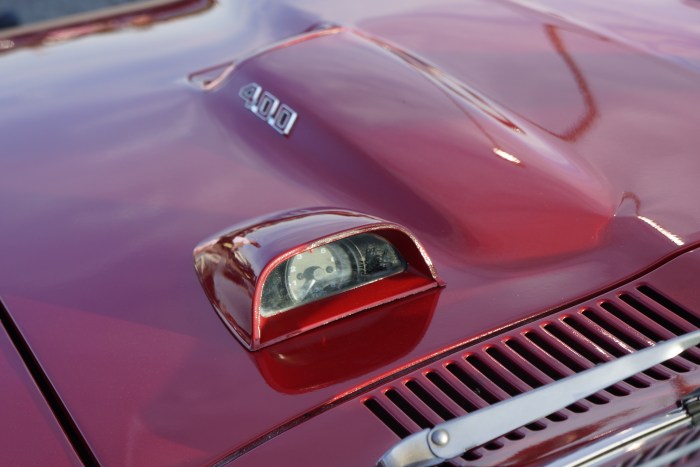
This ’67 Firebird has the optional hood-mounted tach
The Alfa may have looked lost among the sea of U.S. built cars (it certainly is physically smaller than all of them), but several spectators stopped by to tell the typical “I had one of those” stories. The car ran flawlessly up and down Route 287 that evening.
















































































 richardscarblog