Earlier this year, the AACA invited its members to submit applications for their Italian cars to be considered. I completed said application, and was thrilled and humbled to learn that the ’67 Alfa Romeo which normally resides in my garage was accepted to be part of the show. (Of the approximately 20 Italian cars to be displayed, all but one are privately owned.)
On the crisp clear Friday morning of November 11, 2016, I started up the Alfa for its two-hour drive to Hershey (this car is no trailer queen). After putting 260 miles on it on last Sunday, this 120-mile ride would be simple. Aside from dicing it up with the tractor-trailers on Route 78 through Allentown PA, the trip was uneventful.
The Alfa arrives at the AACA Museum. The Hershey Kissmobile was also visiting.
Arriving at the museum a little past 10 a.m., I drove around to the load-in entrance at the rear. Glenn from the museum staff met me there, and we went through some of the small peculiarities that make Italian cars so lovable. Glenn seemed especially astounded to learn that the ONLY way to open the trunk is by opening the passenger door and pulling the cable release in the door jamb, something he needed to know in order to access the trunk-mounted battery.
In the basement. You can see a Fiat 124 in front of my car.
My buddy Larry, who is a saint-among-saints as a friend, met me out there in his Silverado. We toured the museum (it was his first time visiting), and got a sneak preview of the upcoming show, as most of the Italian cars were already on display. After a local lunch at Red Robin, we were back on the road by 3-ish.
Sneak preview: DeTomaso Longchamp, Fiats 124, 850, and X1/9
My wife and I will be headed out there again this coming Friday for the exhibit’s opening reception – blog story to follow. And now that I have an empty garage slot for the next five months, we’ll see if I can slip something else in there. (Honey, I know you’re reading this….)
Hamburger with arugula, spicy black beans; does it get any better?
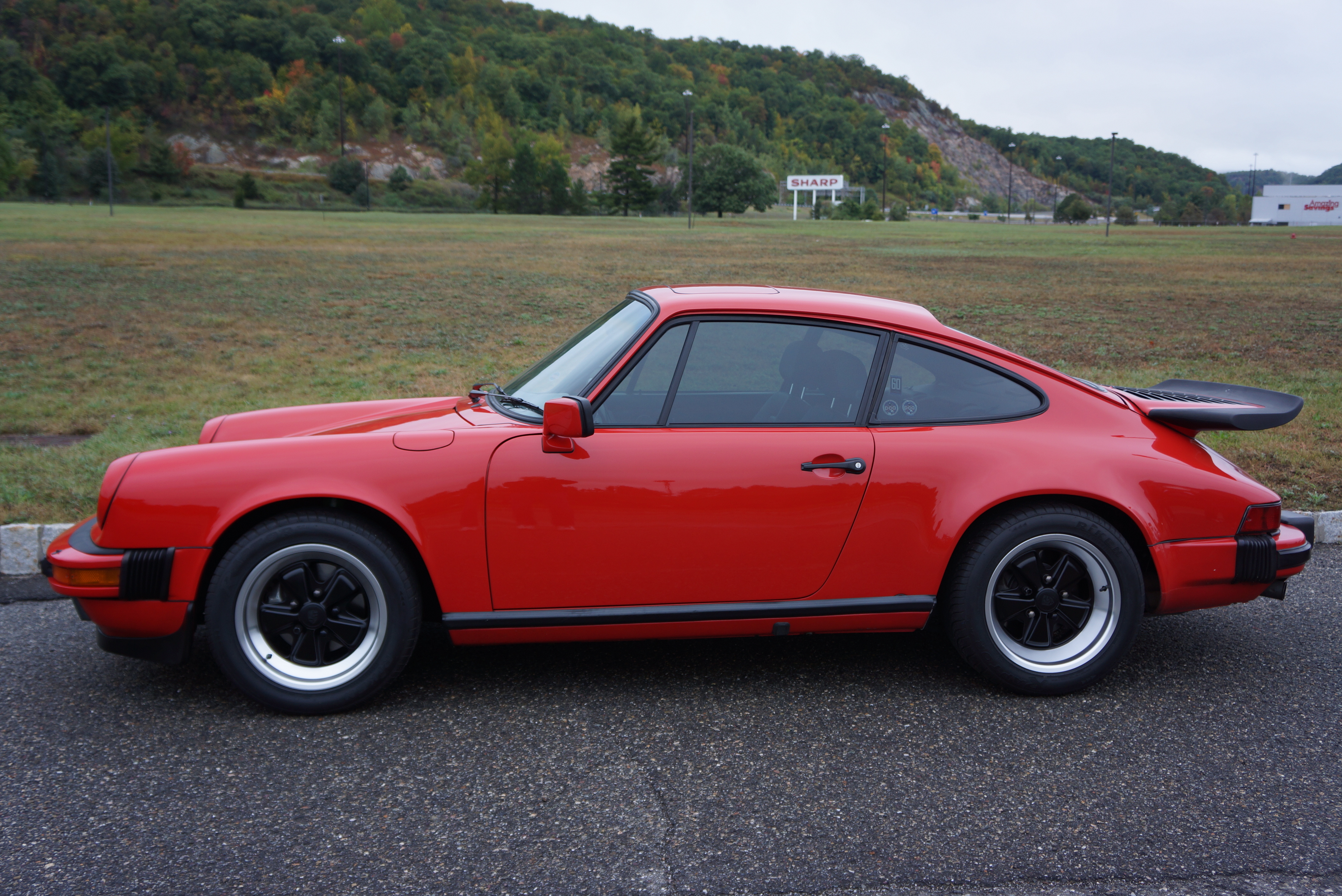
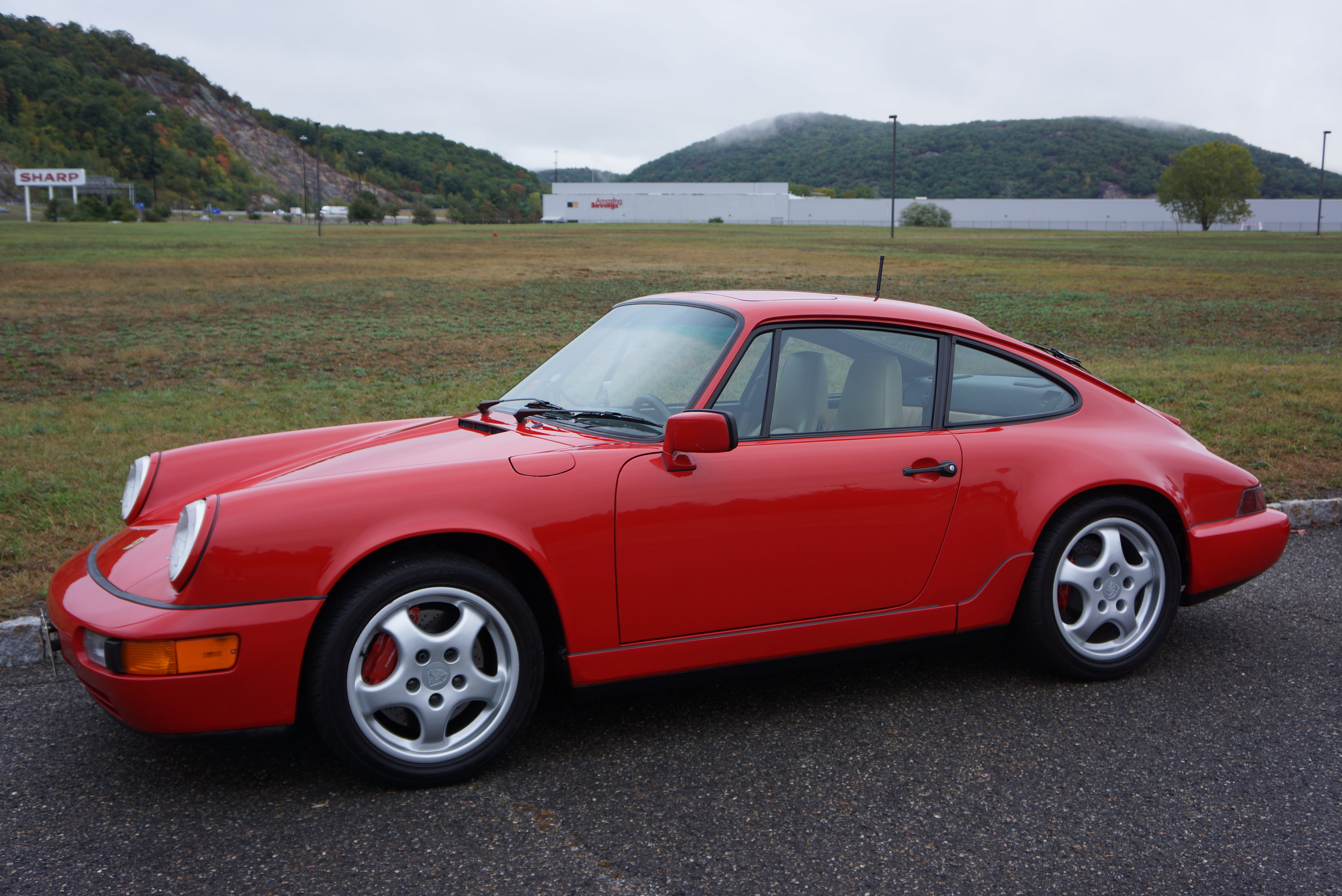
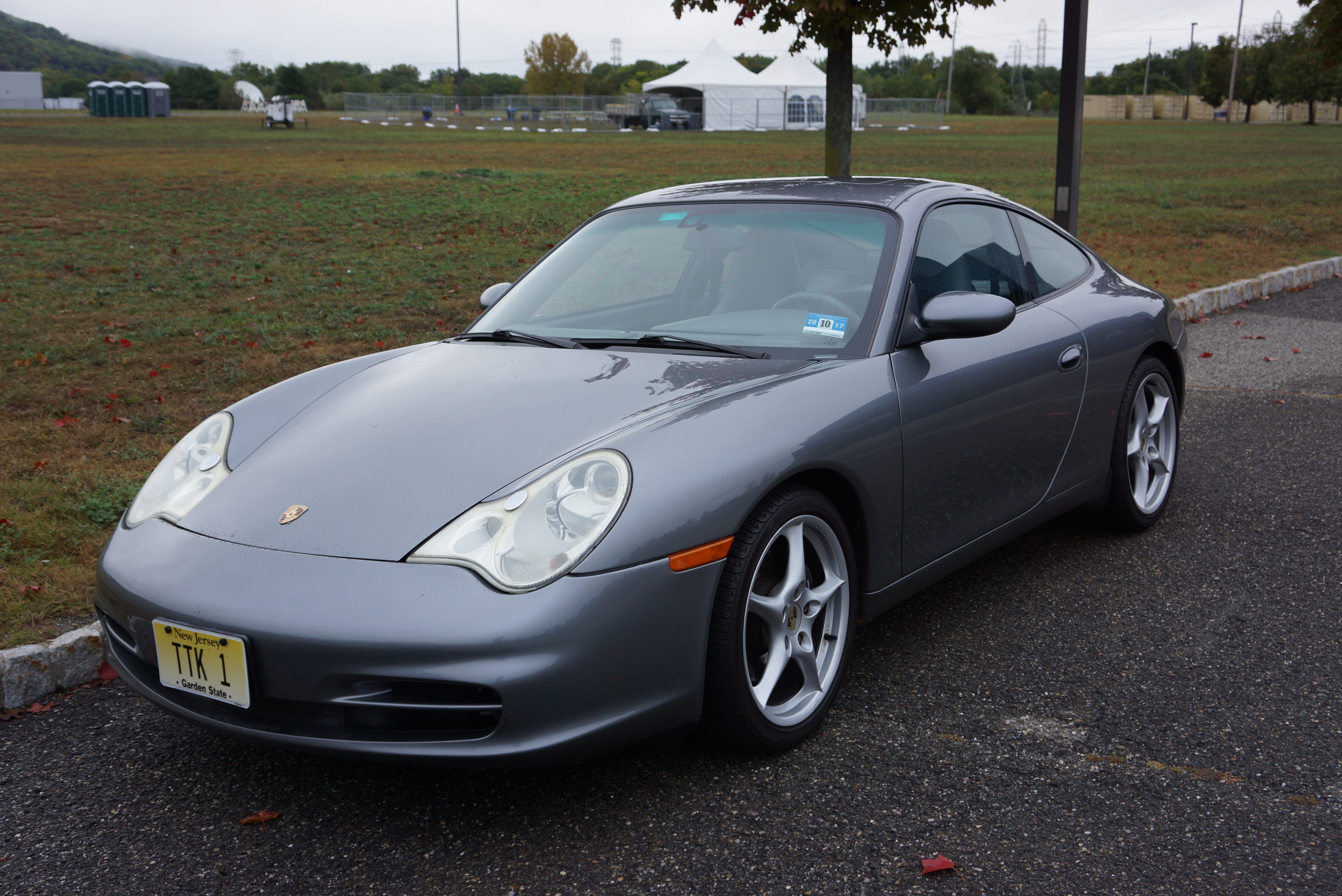
From the ’60s through the ’90s, the family resemblance is there
The New Jersey Chapter of the Alfa Romeo Owner’s Club held an informal Sunday cruise during the afternoon of November 6, 2016. Five club members, led by our chapter head Enrico Ciabattoni, gathered at our starting point at the PNC Bank Arts Center in Holmdel NJ. We pushed off around 2pm and cruised to various spots in Monmouth County, including Atlantic Highlands, Sandy Hook, and Colts Neck.
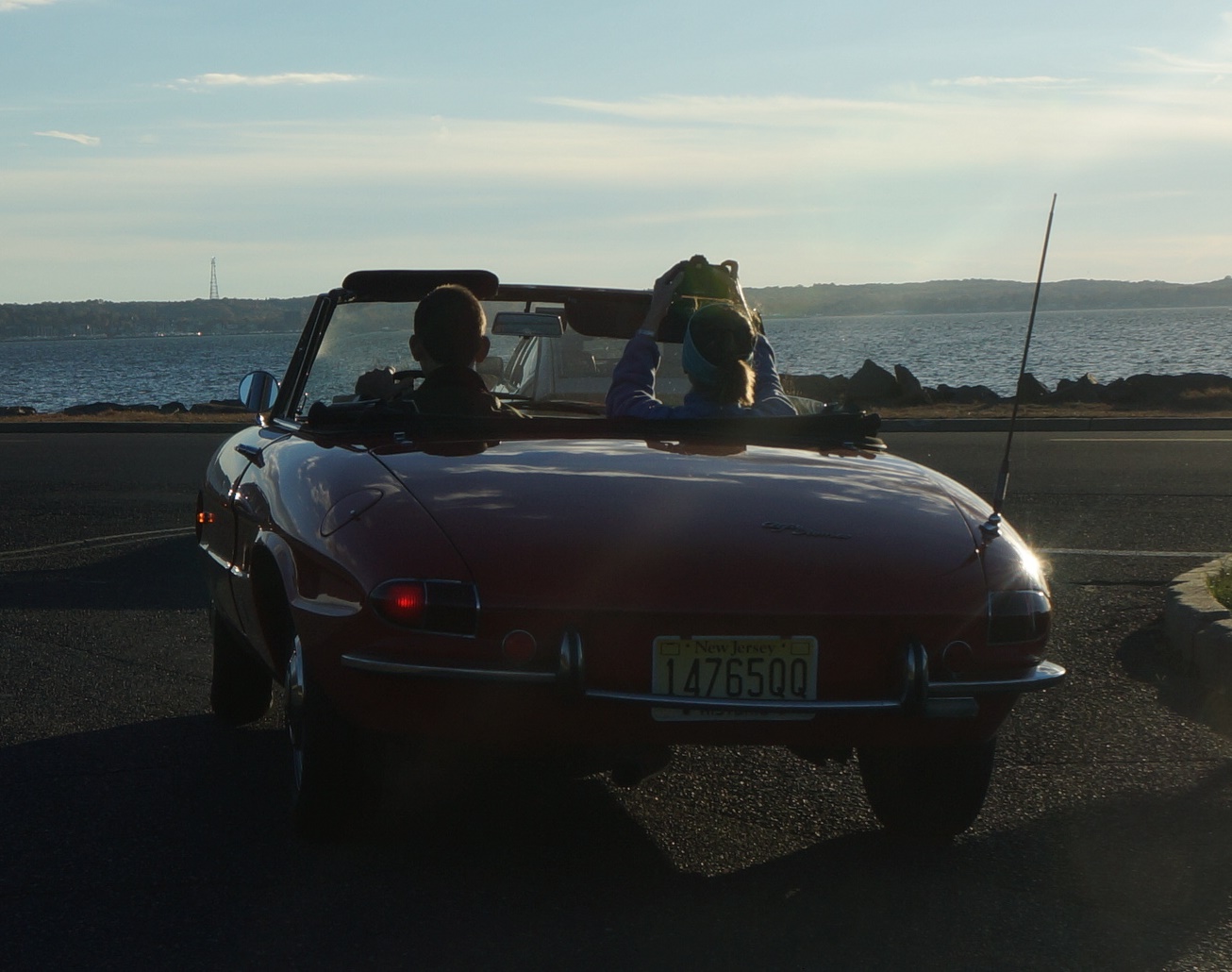
Alex and Carly’s ’66 Duetto
John’s 164
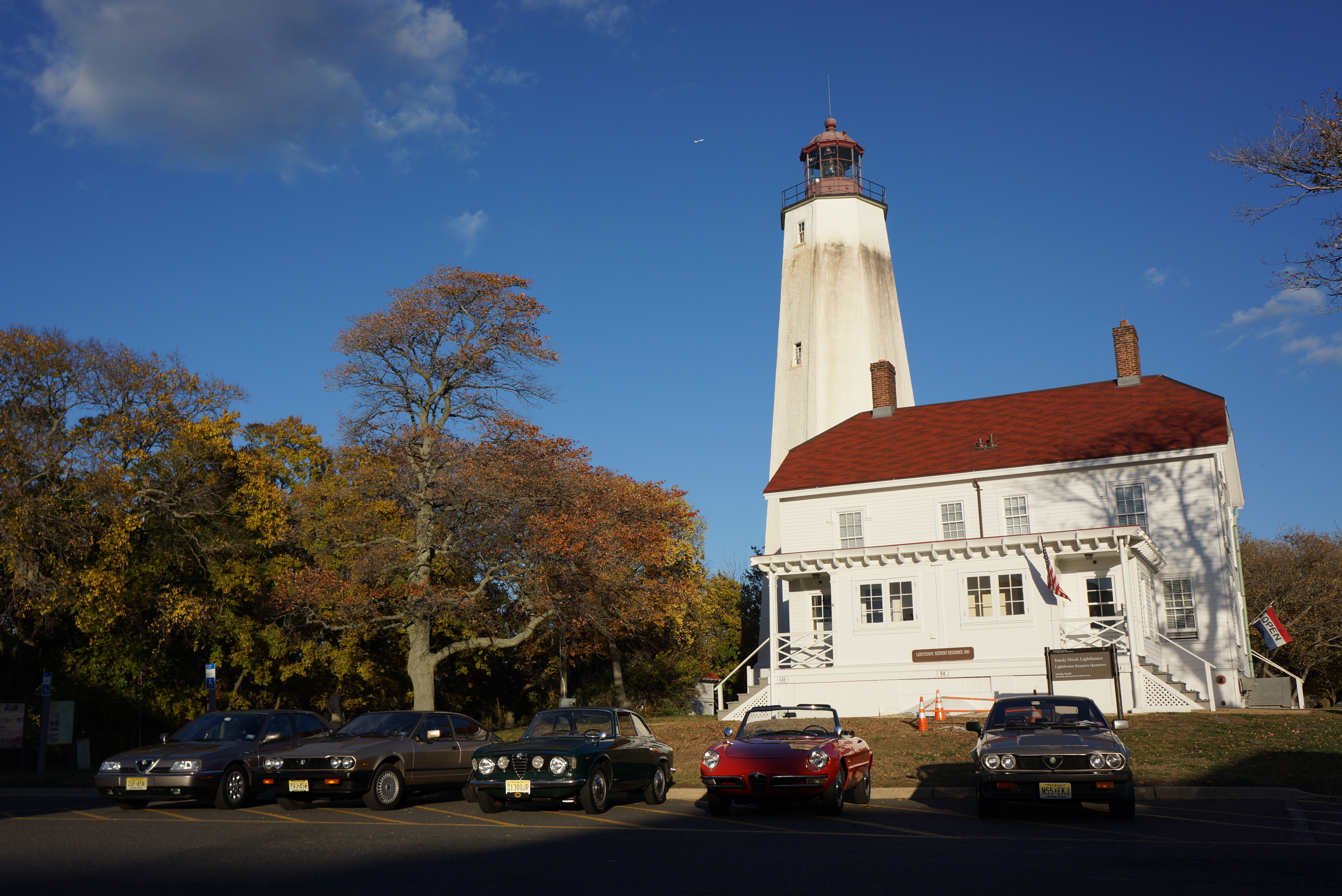
The oldest car in today’s contingent was the 1966 Duetto driven by Alex and Carly. Richard’s 1967 GT 1300 Junior was just a year newer. The eighties were well-represented by two GTV6s, Enrico’s and Bill’s. The newest Alfa for today was John’s beautifully-kept 164. Alas, no new Giulia sedans showed up to surprise us. However, Enrico’s wife and daughter did a commendable job driving the sweep car in their Honda Odyssey. Thanks, ladies!
Richards’ ’67 GT 1300 Jr.
Plenty of time was allotted for photo ops (what with such gorgeous cars!), and a personal highlight was stopping for pictures at the Sandy Hook Lighthouse, the oldest operating lighthouse in the country. The cameras were not always aimed at cars; the vista from atop the Mount Mitchill Scenic Overlook in Atlantic Highlands provided glorious views of the New York skyline and lower bay.
The Alfas line up in front of the Sandy Hook Lighthouse
The tremendous view from the Mount Mitchill Overlook
Our day ended at Delicious Orchards in Colts Neck, which also gave us a chance to pick up some produce (Enrico was spotted heading for the Italian chestnuts). Since it was the first day back on Eastern Standard Time, the rapidly-diminishing daylight had this scribe heading for home before sunset.
The six-cylinder cars hang out together
And you thought Subaru Foresters were small cars….
For those who doubt the reliability of Italian machinery: combined with this morning’s breakfast run, Richard’s Alfa was driven a total of 260 miles today, much of it buzzing along the highways of New Jersey at 70 mph, fending off soccer moms in the SUVs. Not bad for a 49-year-old car.
Carly snaps, and has a great line of sight with the top down
It was wonderful to be out with fellow Alfisti and to delight in the sounds of 4- and 6-cylinder engines in full song. We hope to get the group back on the road in early 2017.
The final Sunday morning breakfast run of the season was held on November 6, 2016. New Jersey weather in early November can be unpredictable; today, we were blessed with sunshine, high pressure, slight winds, and temps in the mid-50s. In other words, it was perfect weather to take our classics out for one more spin around the neighborhood.
Julio’s Coronet in the foreground, with most (but not all) the remainder in front
Today’s joke was that we’ve become victims of our own success; we had a record 20 cars (even if not all of them hung with us the entire morning), and 20 hungry mouths to feed at breakfast. Kicking off from our usual starting spot at the Sheraton Crossroads Hotel in Mahwah, a number of first-timers joined the usual crowd. We ventured north, eventually connecting with Route 513, which we followed south all the way to Route 80 and then Route 46 in NJ, ending at Paul’s Family Diner in Mountain Lakes.
The BS starts before the caffeine flows
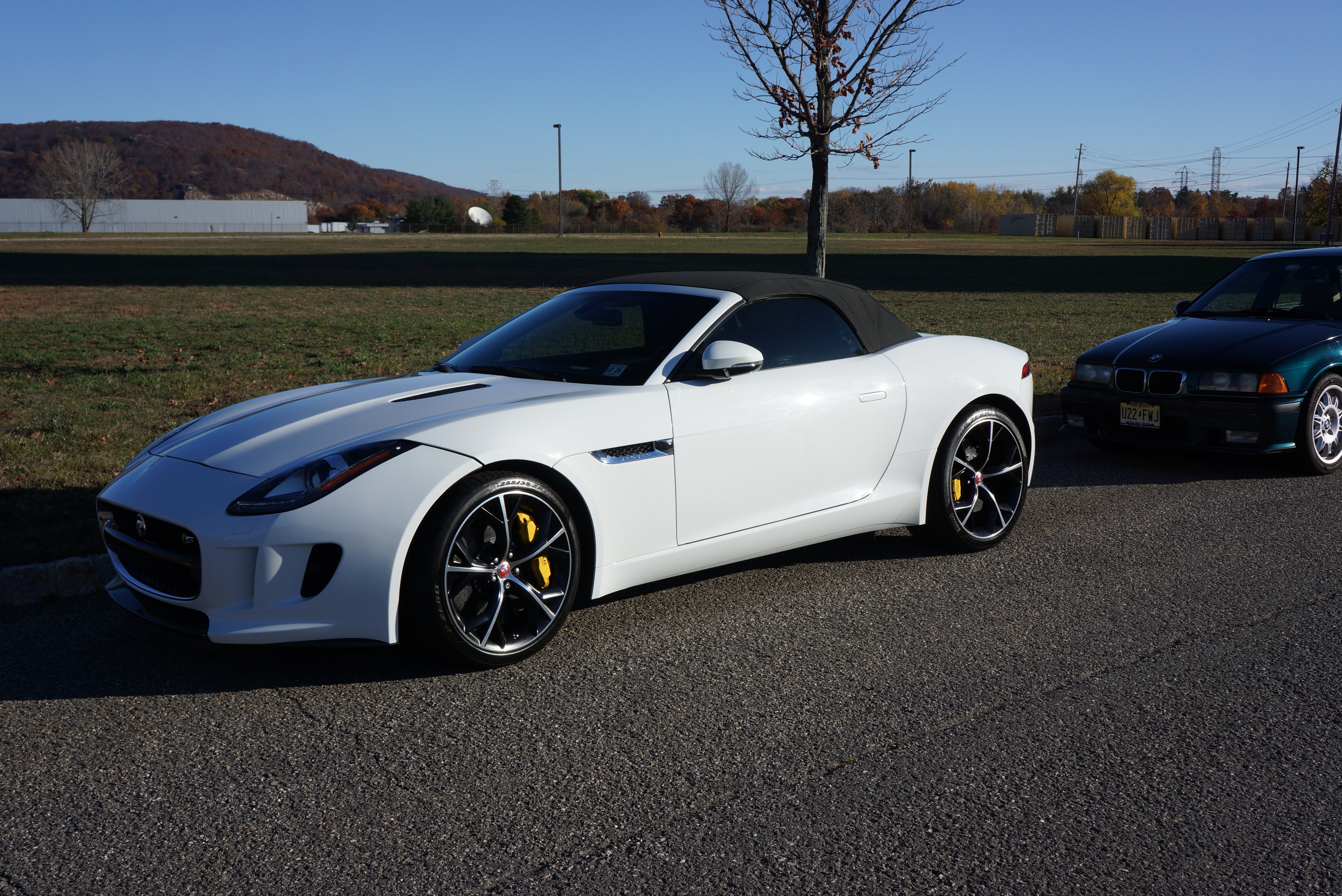
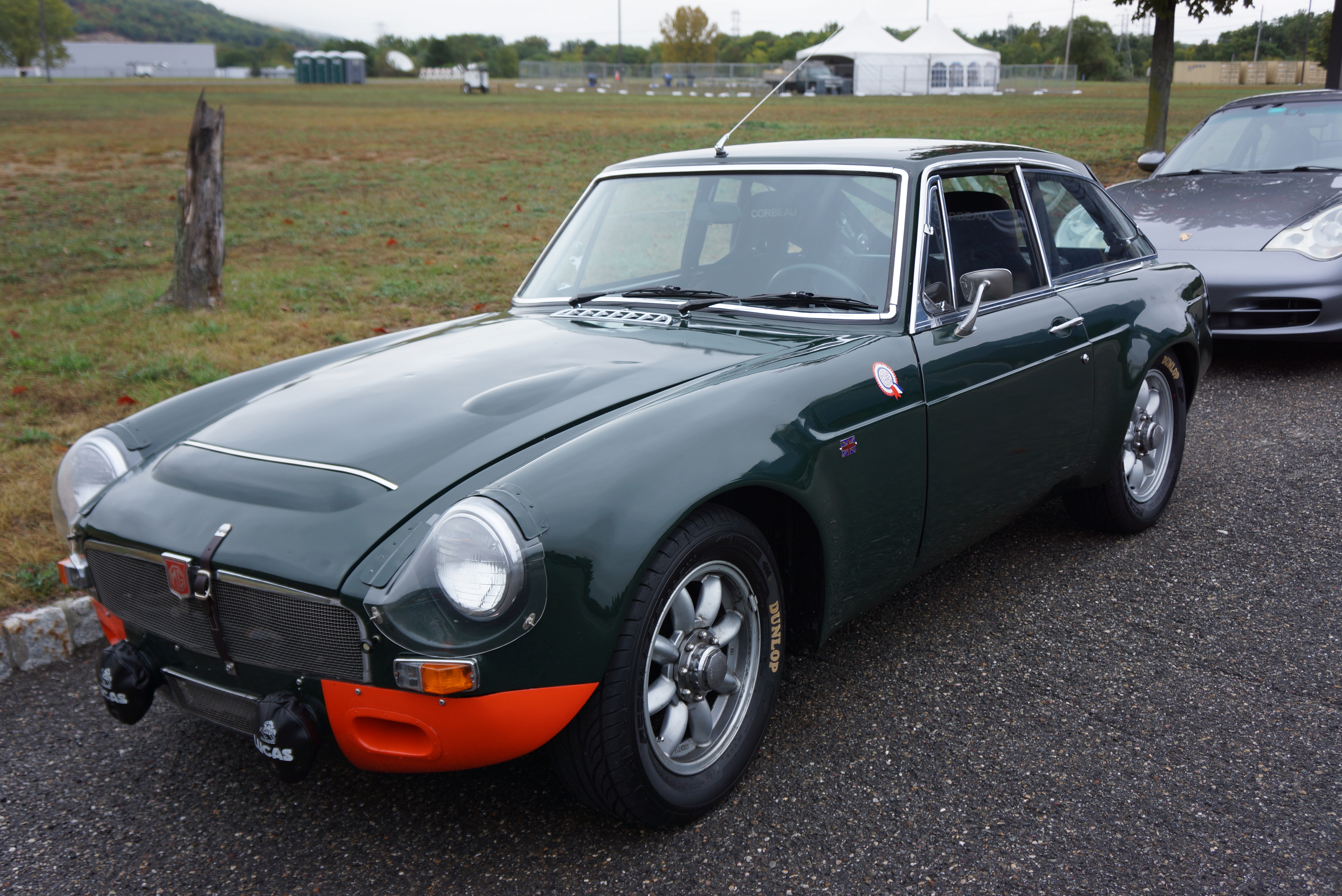
Several participants commented on the wide-ranging variety of machinery in today’s caravan. The British made a strong showing with Rich S’s MGB-GT V8, Rich L’s Jaguar F-Type, and Greg’s ’66 E-Type Coupe (RHD, no less).
American muscle was well represented by Julio’s Coronet, Ralph’s Skylark, Larry’s Nova, Paul’s Camaro, and Nick’s Mustang.
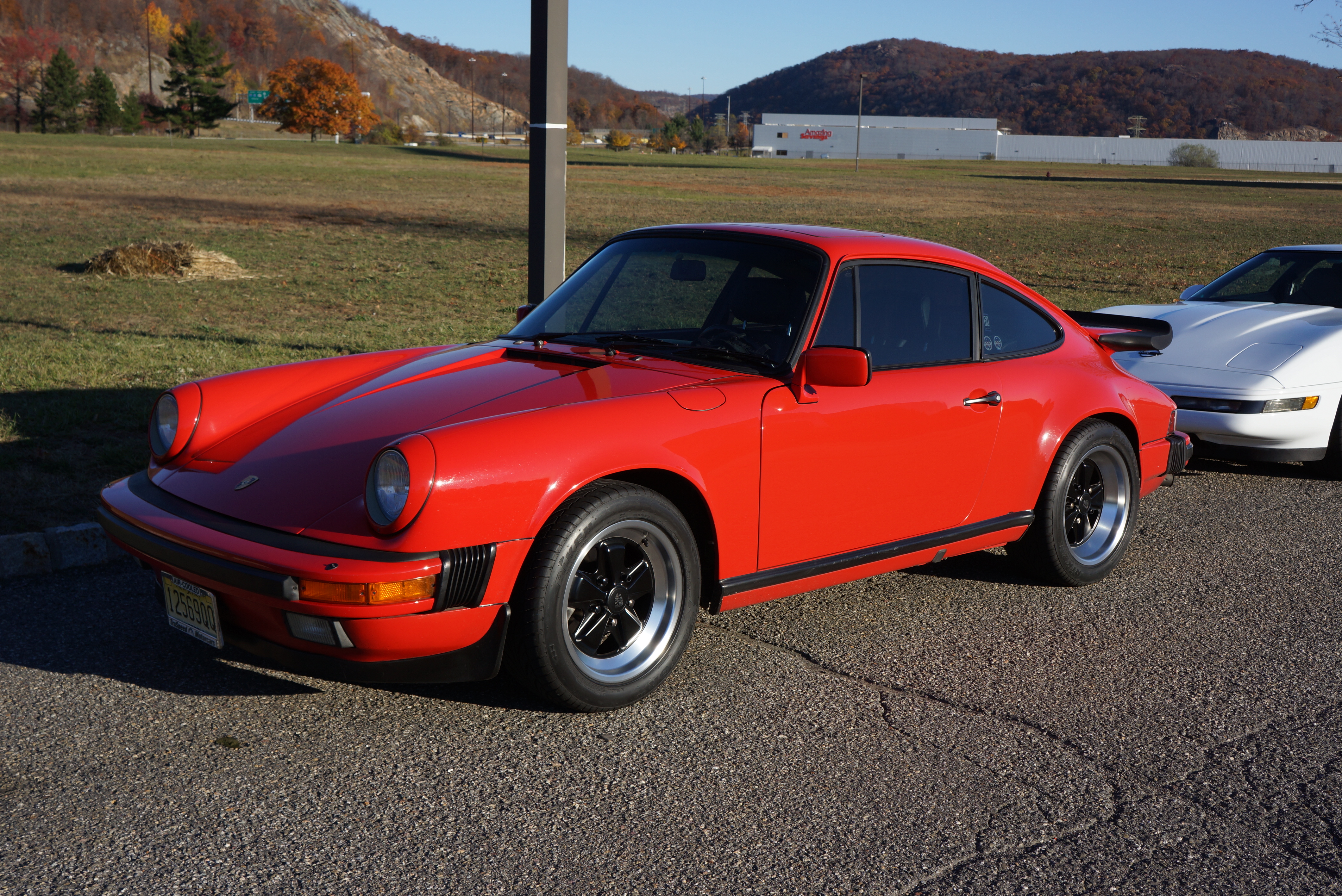
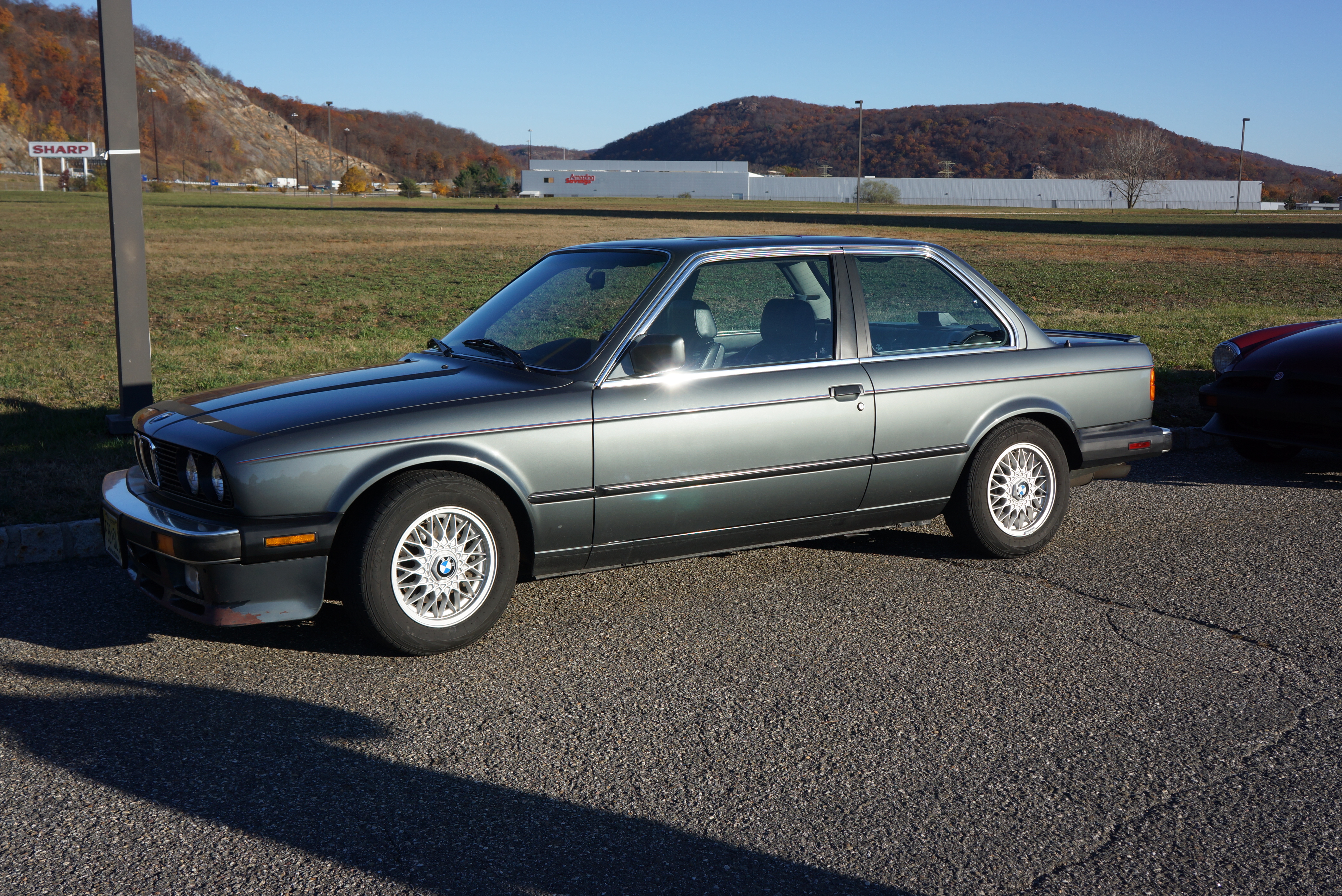
The Germans, as usual, had an army of 911s, including Peter’s, Dave’s, and Ted’s. BMWs were represented by Sal in his E30, and Julio’s’ son in a 3-series sedan.
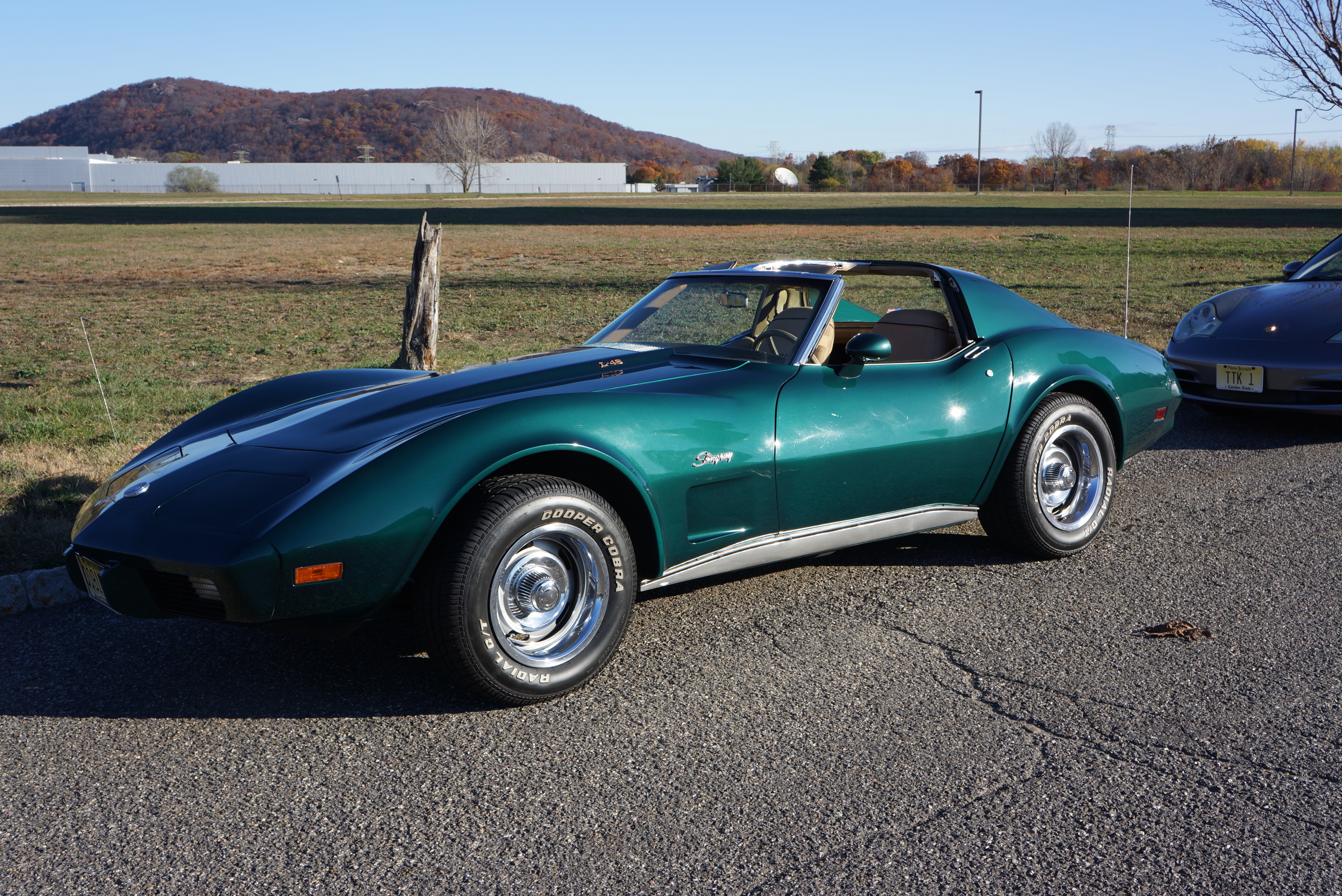
The class winner was the Corvette contingent. We had Burton’s C1, Bill’s C2 (with a 427 3×2), two C3’s (neither joined us at breakfast) and Ron’s C4.
Jim brought his Datsun Z but didn’t drive with us, and the lone Italian car (again) was your author’s very trusty Alfa.
American, German, and British machinery sweep through the curves
The cruise down Route 513 was scenic, if a bit hampered by locals driving modern cars. We arrived at the diner at 10 sharp, and although it was under construction, both the food and the service were exemplary. After the usual post-meal parking lot BS session, we were all on our way back by noon. And so ends a very successful 2016 driving season. The sooner that Old Man Winter gets here, does his thing, and gets out, the sooner we can dust ‘em off and start driving in 2017. We can’t wait.
A tune-up? Who performs “tune-ups” anymore? Modern cars have spoiled us with their extended service intervals. My 2014 VW Jetta calls for an oil and filter change every 10,000 miles, and spark plug and air filter replacement every 60,000 miles. That’s about it. There are other new vehicles for which the manufacturer recommends spark plugs every 100,000 miles. You might forget they were in there if you wait that long.
It’s different, of course, with an older car. The ’67 Alfa Romeo GT 1300 Junior taking residence in my garage still uses an ignition distributor with a cap, rotor, points, and condenser (ask any person under 30, even an auto buff, what are points and condenser, but be prepared to ‘splain).
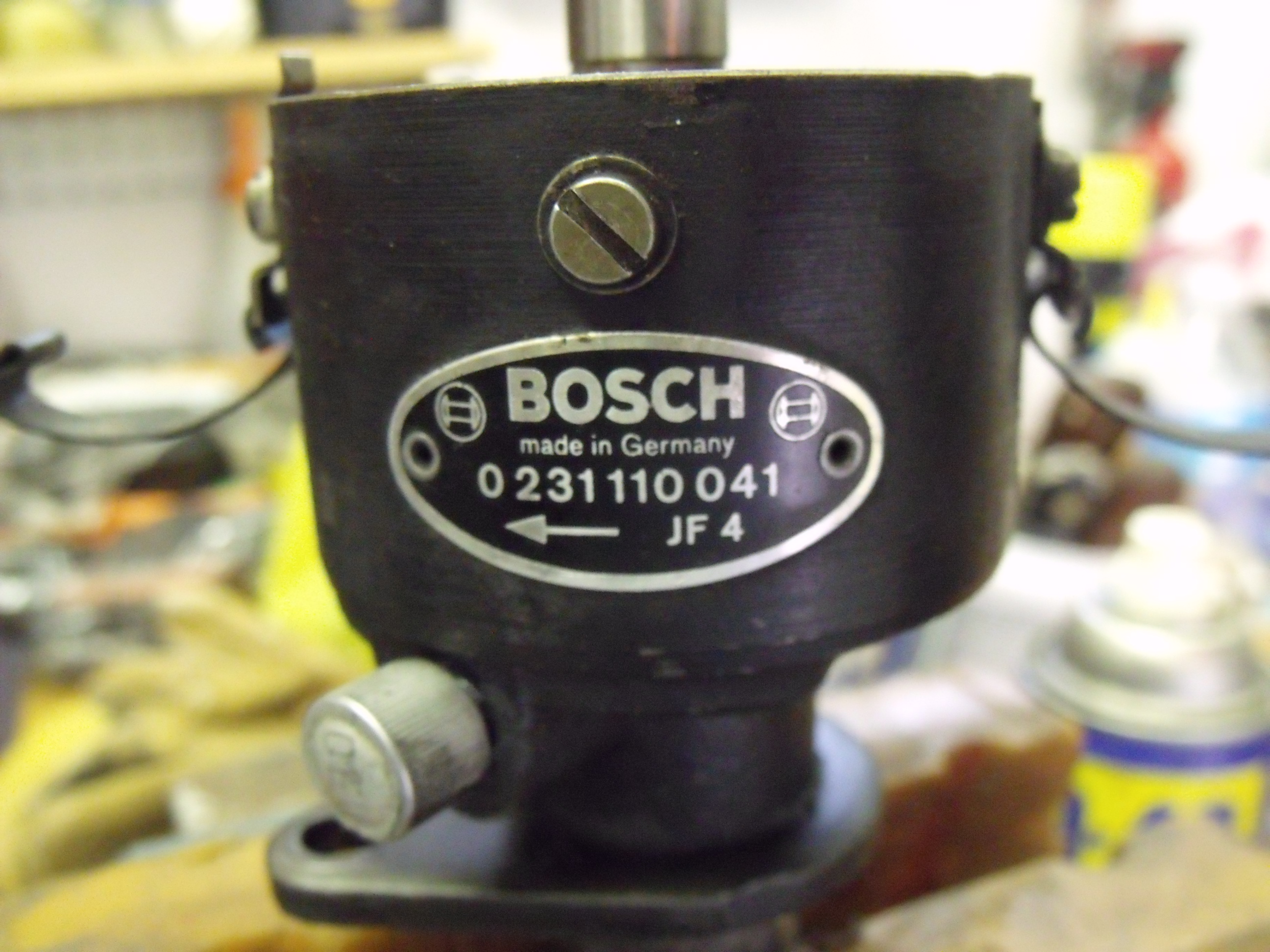
GT 1300 Junior used Bosch electrics. Other Alfas used Marelli.
When I obtained the Alfa in March of 2013, with 54k on the clock, I did what I normally do with any used car that’s new to me – I attended to all the normal maintenance items as a proactive measure, no matter how meticulous the previous owner may have been. In my case, the Alfa’s 1.3L engine got new plugs, wires, cap, rotor, points, and condenser. There was peace of mind knowing the tune was good for a while.
Remove air hose (2 clamps) and all 4 plugs are readily accessible
Right now, the car barely has 62,000 miles on it, so it’s only been eight thousand miles, but it’s been three and a half years. Earlier this year, I ordered a full complement of tune-up items, just to have them on hand. My plan was to revisit the tune at the 10,000 interval, or at 64,000 miles.
For some reason, last weekend, I decided to pull the plugs. First of all, I can’t think of an engine on which it’s easier to change the four spark plugs. Yes, I need to remove the air filter hose to access the #4 plug, but that takes 30 seconds. Once that’s out of the way, the plugs are RIGHT THERE. So out they came.
The 4 old Bosch plugs
Plugs numbers one, two, and three looked almost identical. That’s not to say that they looked good. All three of them had significant carbon deposits on them. They were not wet from gas, nor oily, nor sooty with unburned fuel, which was some good news.
The shock was the fourth and final plug, which had so much material deposited on it that I seriously questioned how this thing was firing. (The engine mostly ran fine before I pulled the plugs, with the very infrequent high-speed miss. I was still attributing the miss to a fuel issue.)
The #4 plug. I’ve been working on cars for 40 years. I can’t believe this plug fired.
Before proceeding further, I went into the house to pull my invoices on the car. When I bought the plugs, early in 2013, I had not yet settled on an Alfa supplier which I felt met my needs. The plugs were purchased from a U.S. supplier with whom I no longer conduct business. They were Bosch plugs, and from everything I’ve since researched, no one today recommends these plugs for Alfa engines. My principal supplier, Classic Alfa in the U.K. exclusively recommends NGK plugs, and that’s what went in as replacements.
Photo documents rotor direction, for correct orientation when reinstallling distributor
While I was under the hood, I removed the distributor (one 10mm hold-down bolt), and replaced the points and condenser. I lubed the distributor in three places, put on the new cap and rotor, and put it all back together. She fired right up, of course! – unlike three years ago, when I accidentally grounded the points….
Service book recommends distributor removal for points and condenser replacement
Taking the car for a test drive, I was not expecting any significant power improvement. I mean, we’re starting with 100 hp, so, who’s going to feel a 5% increase? What was noticeable was the difference in throttle response. Touching the accelerator pedal gave an immediate jump in RPM. The car was such a joy to drive that I stayed out for about 30 minutes, taking it through the gears, and bringing that rev-happy Italian engine up to 6 grand on the tach. Oh, and no high-speed miss.
So, lesson learned. European sports cars which get driven infrequently need to have their state of tune checked more frequently. It’s easy enough to do, so there’s no excuse. This ain’t no 2014 VW. Thankfully.
The RM tent immediately adjacent to the building entrance
For those unwilling to pay the $200 to sit inside, RM thoughtfully set up loudspeakers outside. By positioning oneself immediately adjacent to the entrance door, one had a clear view of all the cars entering and leaving the building. The PA did a fine job of ensuring that you heard the bidding as it happened.
The vehicles for sale this year were a good mix of domestic and imported product. RM has recently specialized in pre-war vehicles, and despite the naysayers who insist that the audience for most anything built before World War Two is dead, these vehicles continue to garner interest among collectors. We also observed that the trend toward offering unrestored and “barn find” cars continued.
The majority of Thursday’s lots (and many of Friday’s) were listed as “offered without reserve”. (RM has long had a policy that vehicles with pre-sale estimates below a certain amount must be no-reserve sales. Several years ago, that threshold was $50,000. This year it appeared to be closer to $100,000.) Indeed, of the 15 lots covered below, 13 were no-reserve pieces. Perhaps more telling, 9 of these 15 sold under their pre-sale estimate.
You won’t find this at Mecum: RM offers history of every lot they sell
Presented below is a sample of Thursday’s sale results, the only day I was in attendance. SOLD prices are hammer prices, WITHOUT the 10% buyer’s premium. The results are again bracketed in price ranges, to provide a clearer sense of what’s available within a certain budget.
One more point: It is my opinion that remaining outside to directly observe the RM crew valiantly attempt to start and drive these vehicles reveals more about their overall condition than could be gleaned by parking one’s behind inside.
UNDER $10,000:
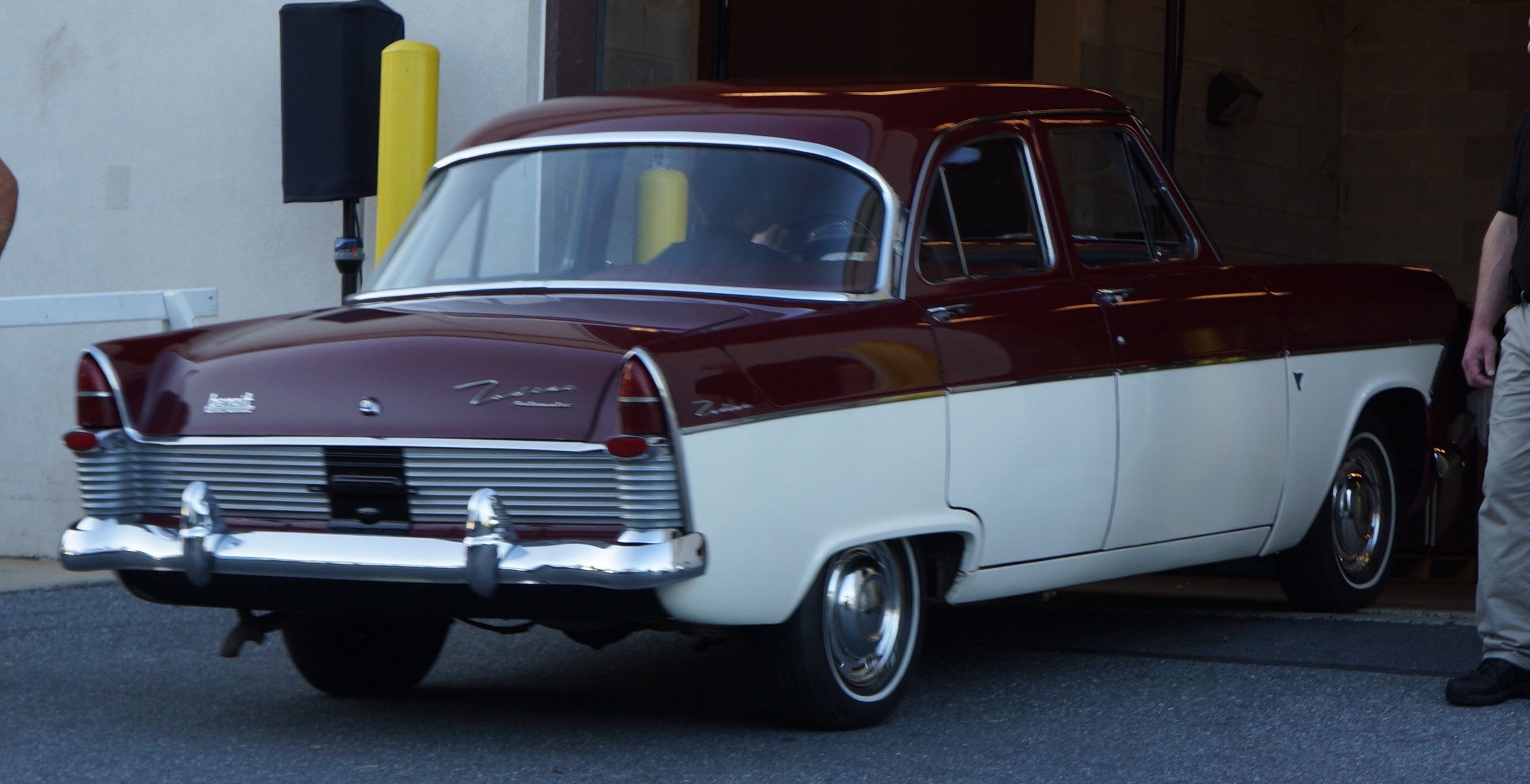
Lot #111, 1960 Ford Zodiac Mk II Saloon, 4-door sedan, red & white, red interior. Six-cylinder engine with automatic transmission. Pre-sale estimate of $10-15,000.
SOLD at no reserve for $4,000
Never saw one in the metal before, although I’ve seen grainy black and white photos of John, Paul, George and Ringo standing around one. Not the most attractive thing, although the quality of the restoration was decent. Drive it to your next Beatles convention.
Zodiac enters the building…
… and leaves the building
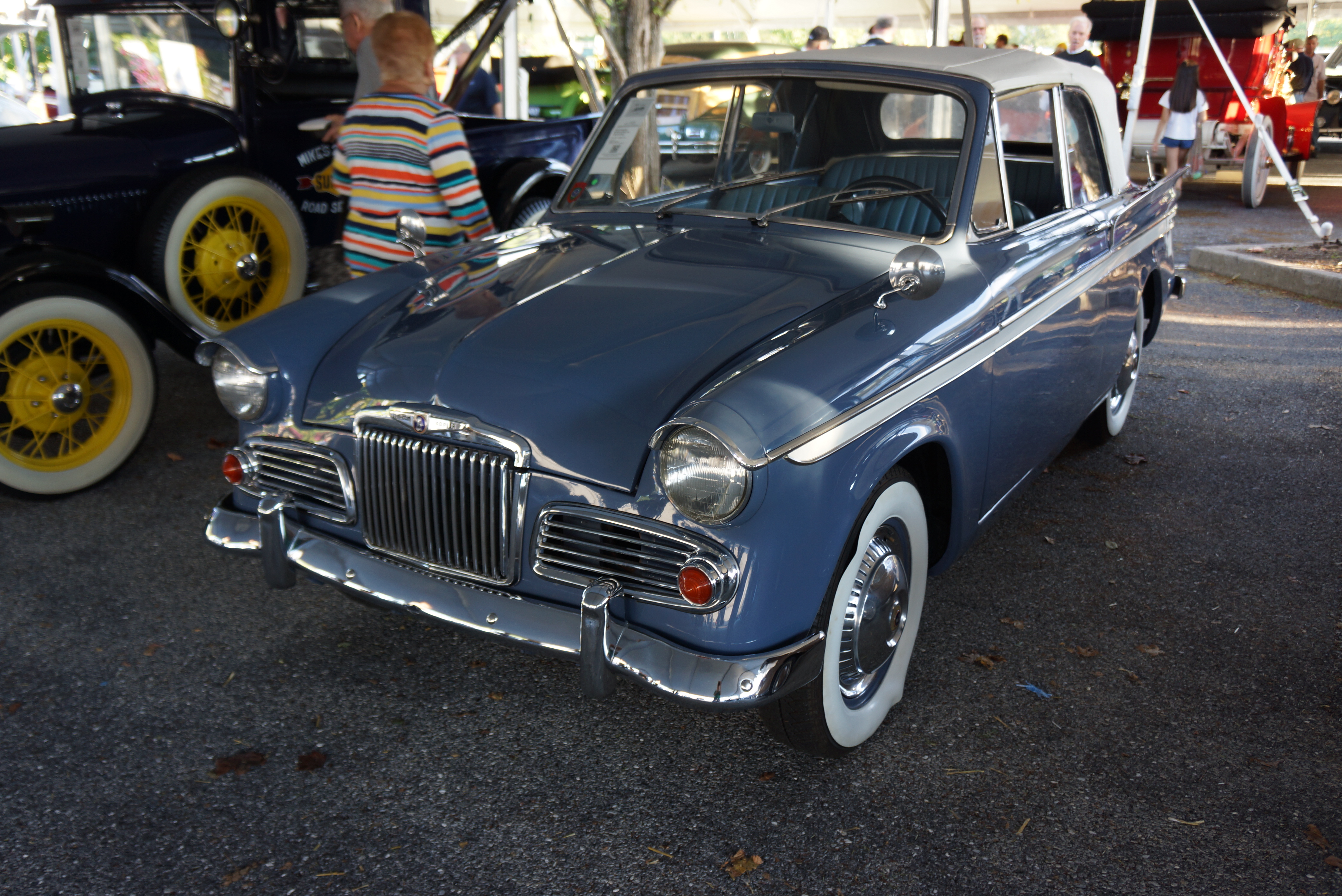
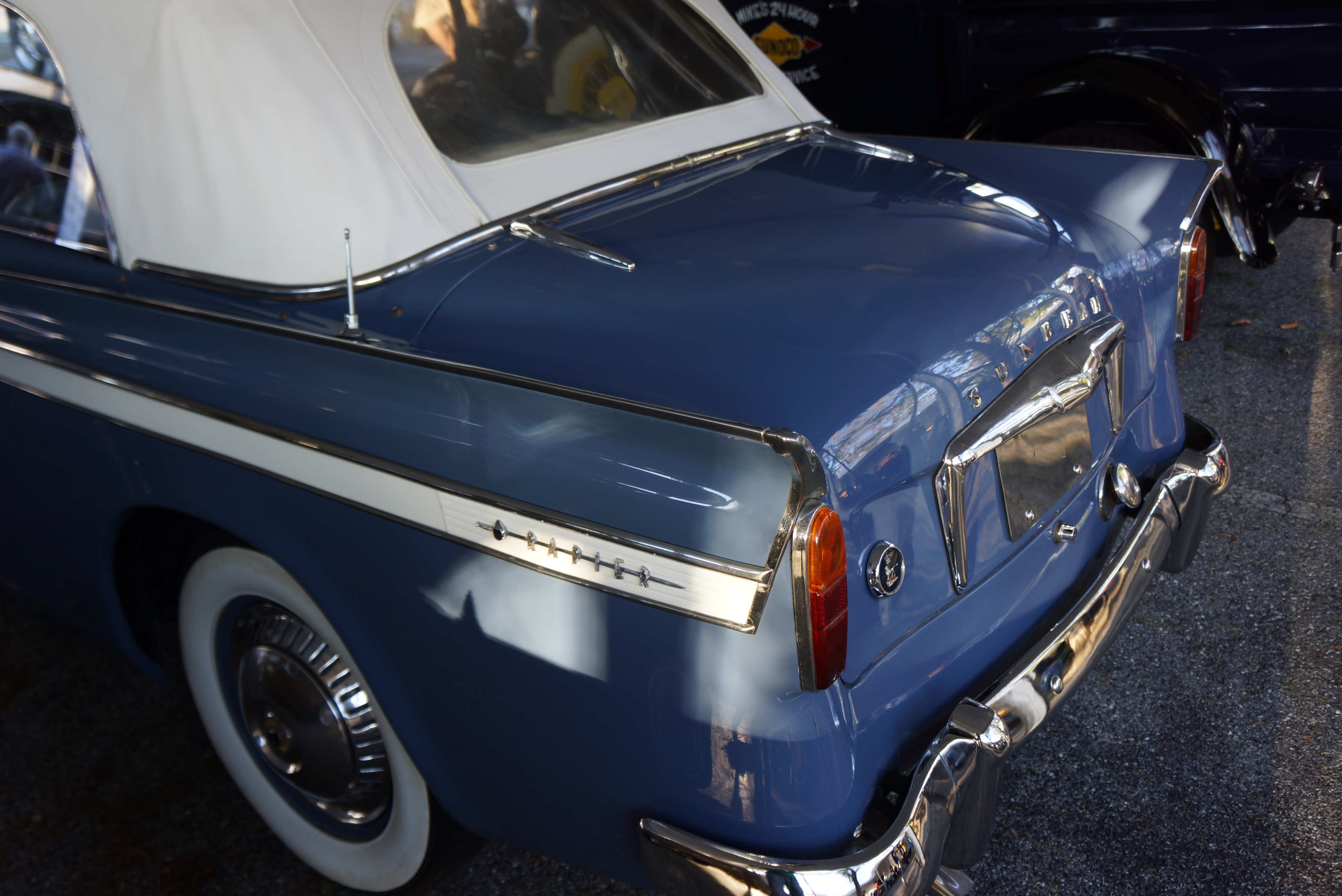
Lot #117, 1963 Sunbeam Rapier Series III convertible, medium blue, white stripe and top, blue interior. Four-cylinder engine, 4-speed stick on the floor. Pre-sale estimate of $20-25,000.
SOLD at no reserve for $7,500
Another oddball British car, although with arguably a bit more charm than the Zodiac. The restoration looked top-notch, except for Port-a-wall whitewalls pulling away from the sides of the tires. You could have the only one at the next all-British car show.
Cheeky Sunbeam
’60s era tail fins
Nice Rapier interior
Car let down by tacky whitewalls
Lot #130, 1963 Sunbeam Alpine Series III convertible, red, red removable hardtop, black interior. Four-cylinder engine with 4-speed stick. Pre-sale estimate of $20-30,000
SOLD at no reserve for $9,000
The car looked OK, possibly a well-kept original or older restoration. Of note, the catalog kept referring to the vehicle as a Series III, while the badges on the fenders and trunk stated Series IV. The hardtop adds to its all-weather use, although the Perspex windows were cracked and glazed.
Red-on-black not the best
Basic black Alpine interior
Hardtop windows bad
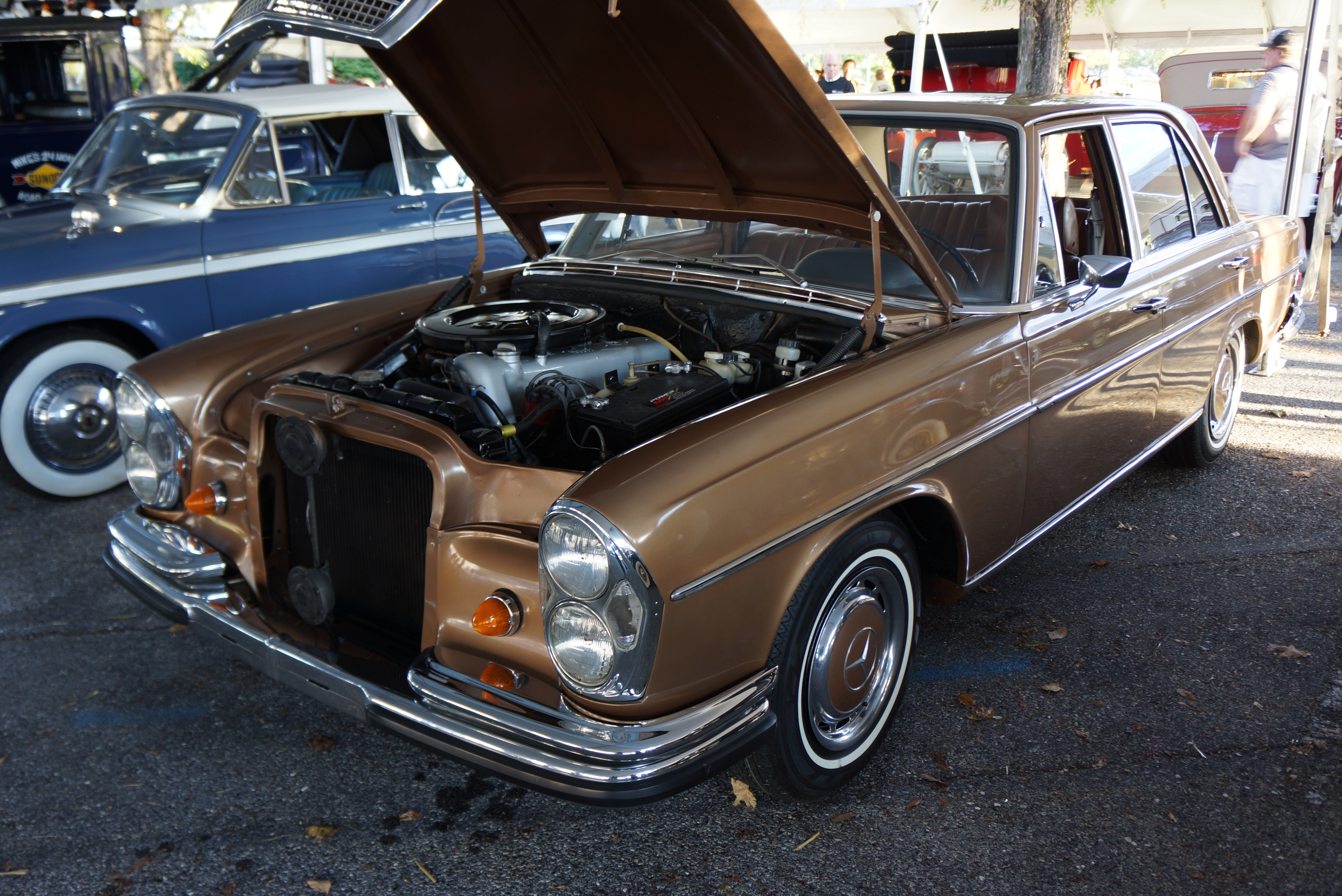
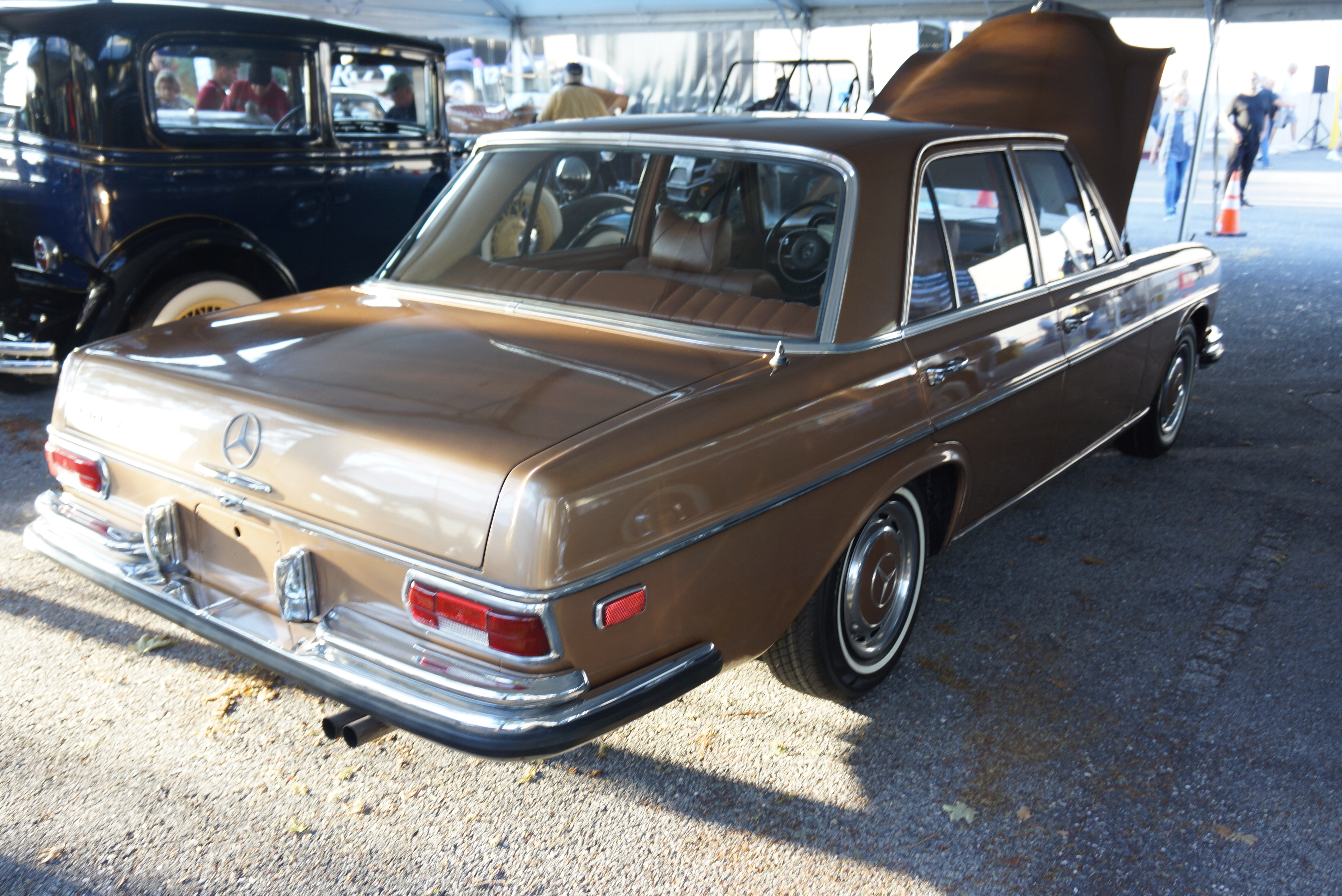
Lot #116, 1969 Mercedes-Benz 280SE 4-door sedan, bronze metallic, brown interior. Six-cylinder carbureted engine, automatic transmission. Pre-sale estimate of $15-20,000
SOLD at no reserve for $9,000
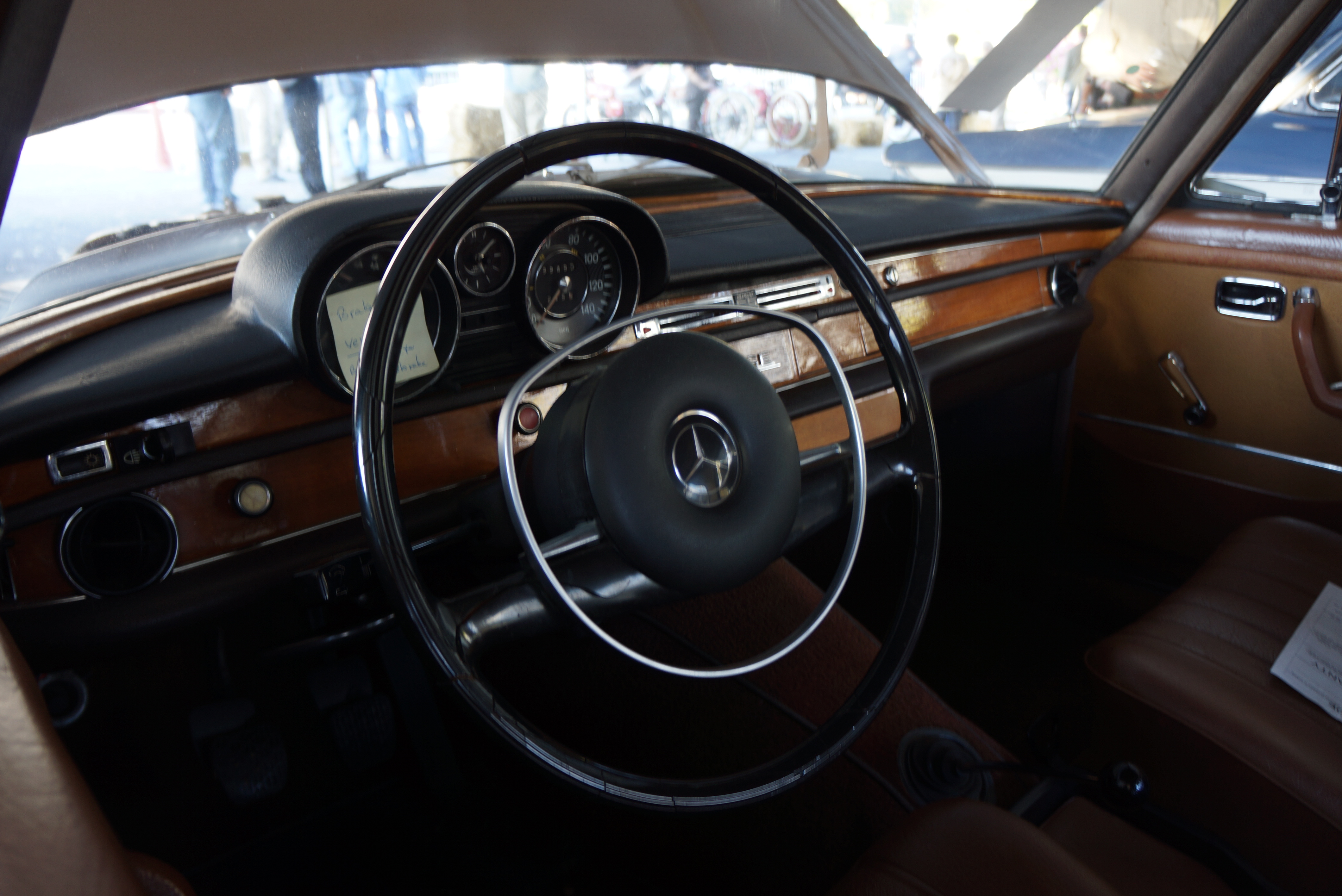
The catalog claimed this was an all-original car with just under 100,000 miles. My question is, who brings a car to a high-end auction with so many needs? Anyone who stuck their head through the open driver’s window could read the sticky note on the dash: “Brakes are VERY soft. Be prepared to use handbrake.” The RM staff had great trouble starting it, and it barely ran under its own power onto the block. On its way out, it stalled and would not restart. The hammer price is just the start of the expenses.
1969 M-B; note grille rises w/hood
Not a bad-looking sedan from rear
Sticky note warns of bad brakes
Not too bad here
Right here is where it stalled, would not restart
$10,000 to $15,000:
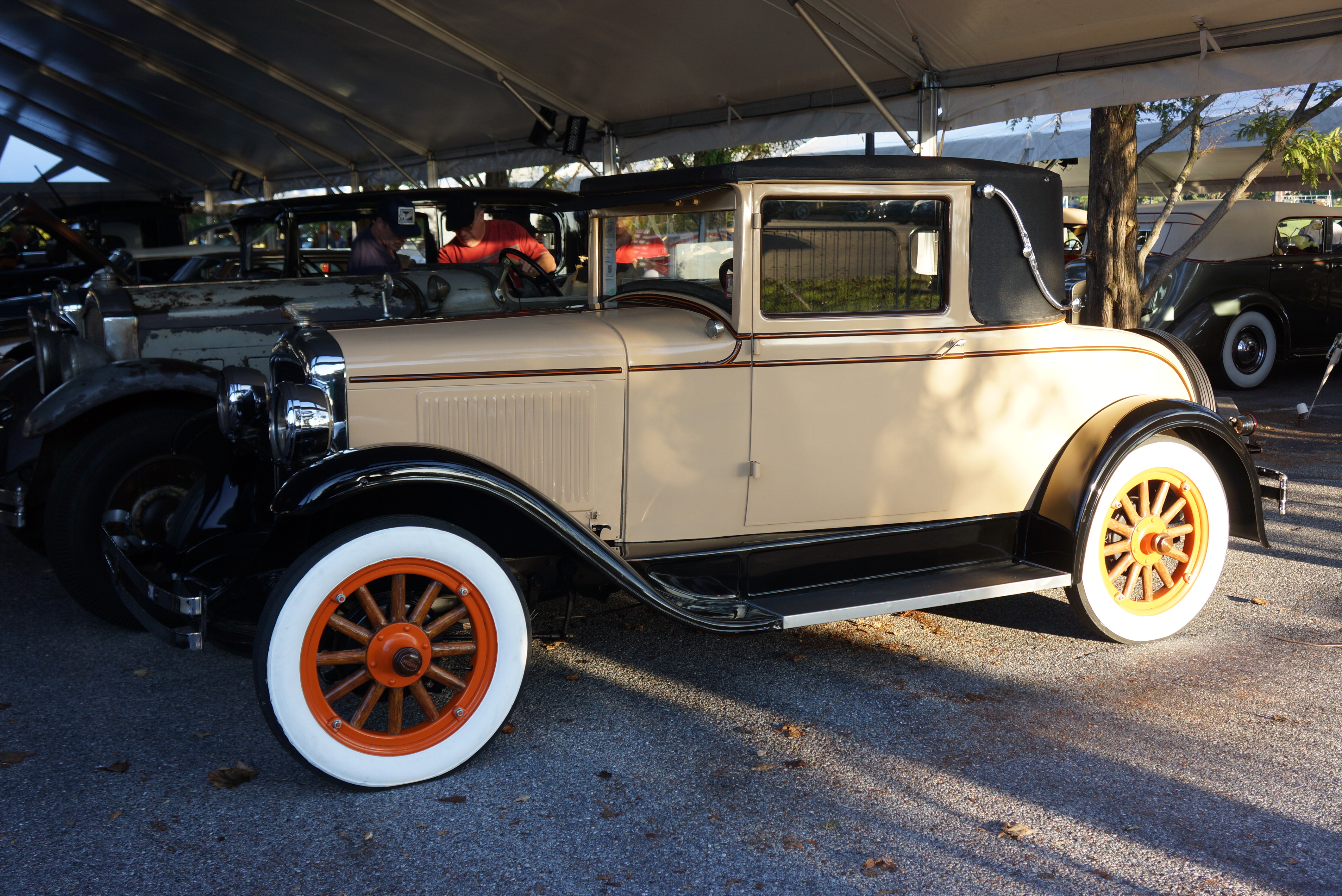
Lot #113, 1928 Pontiac 2-door coupe, tan body, black running boards and fenders, orange wood wheels. Six-cylinder engine, 3-speed manual transmission. Pre-sale estimate of $18-25,000
SOLD at no reserve for $12,500
A good-looking pre-war car in attractive colors, it ran well across the block. I’ll call it a good buy for someone interested in Pontiacs which pre-date Silver Streaks and Wide Tracks.
Pre-war Pontiac in handsome colors
It got in and out under its own power
Lot #115, 1931 Chevrolet Independence 2-door sedan, dark blue body, black fenders, yellow wire wheels with whitewall tires. Six-cylinder engine, 3-speed manual transmission. Pre-sale estimate of $25-30,000
SOLD at no reserve for $15,000
A nice change from the usual Ford Model As, this compared well to the 1928 Pontiac which sold for a similar price. You had a choice of pre-war GM cars for under $20,000.
Nice pre-war Chevrolet
$20,000 to $35,000:
Lot #112, 1922 Buick Model 22-45 Five Passenger Touring, beige, dark tan fenders, white top. Six-cylinder engine, 3-speed manual transmission. Pre-sale estimate of $25-30,000.
SOLD at no reserve for $22,500
This makes an interesting comparison to the Pontiac and Chevy which sold for substantially less. This Buick appeared to be a more recent restoration (the odometer read 13 miles, and the catalog claimed this was the total mileage since it was restored), yet as a car with open sides, it may be seen as less usable than the two newer closed cars. The seller should be happy: it “almost” made low estimate.
Buick also self-propelled
Big car has nice proportions
Lot #125, 1928 Marmon Model 68 Roadster, blue, black fenders, white top, blue-painted wood wheels with whitewall tires. Inline 8-cylinder engine and 3-speed manual. Pre-sale estimate of $70-90,000.
SOLD at no reserve for $27,500
The catalog claimed that this was a mostly-unrestored car with 38,000 original miles. I thought it looked like a striking and honest automobile. (The straight-8 must give it some oomph.) The question is, was the pre-sale estimate way off, or did someone steal this car?
The Marmon leaves the building to a new owner
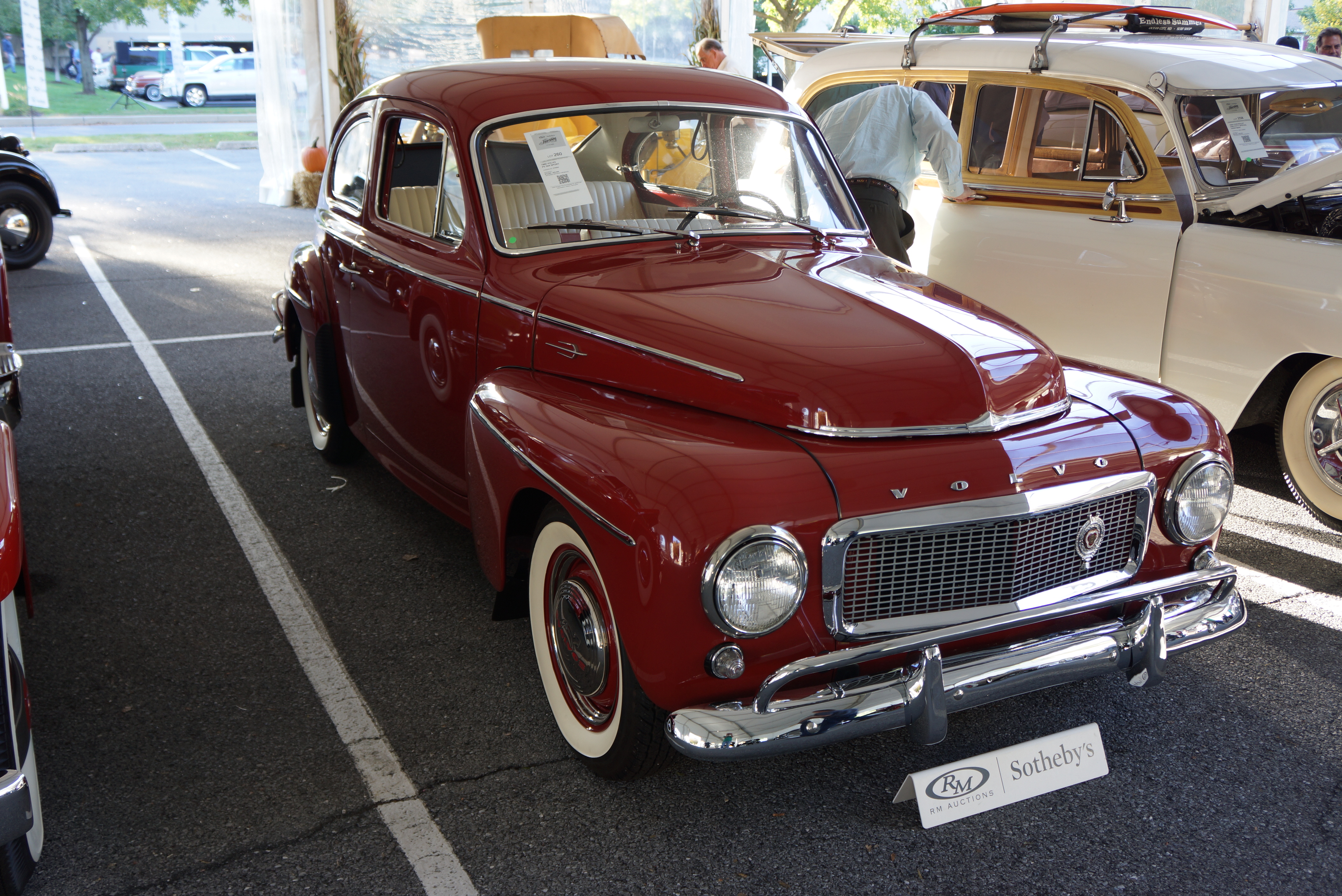
Lot #260, 1960 Volvo PV544 Sport 2-door sedan, red with red and white interior. Four-cylinder engine, two carbs, 4-speed manual transmission. Pre-sale estimate of $15-20,000
SOLD at no reserve for $31,000
While you do occasionally see Volvo PVs at auctions, from my experience it is rare to find one so thoroughly restored, and to original specs too. This car sold on Friday, so I was not present to witness what must have been spirited bidding, as the car sold for significantly over its high estimate. The audience recognized the quality of the resto.
Beautifully restored Volvo PV544
Volvo’s interior appears done to correct specs
$50,000 to $90,000:
Lot #114, 1929 Packard Deluxe Eight Roadster. No paint color can be discerned. Inline 8-cylinder engine and 3-speed manual. Pre-sale estimate of $55-75,000.
SOLD at no reserve for $56,000
A barn find, or just a neglected old car? While the write-up assured all that the owner had brought the beast back to running condition, it still needed to be pushed around. Hey, at least it rolled. Sold almost right on its low estimate.
RM staff get their exercise pushing pudgy Packard
Lot #134, 1962 Ford Thunderbird convertible, white with aqua interior, Kelsey-Hayes wire wheels with wide whites. 390 V8, 3-speed automatic. Pre-sale estimate of $40-45,000.
SOLD at no reserve for $60,000
The catalog claimed that aside from one repaint in its original white, this was mostly an original car. While it looked nice, and I do like these so-called Bullet Birds, I can only explain the sale price blowing past reserve by the fact that the car sat on the block for 10 minutes while two determined bidders duked it out.
Pretty ’62 T-Bird drop-top
Original aqua; note swing-away wheel
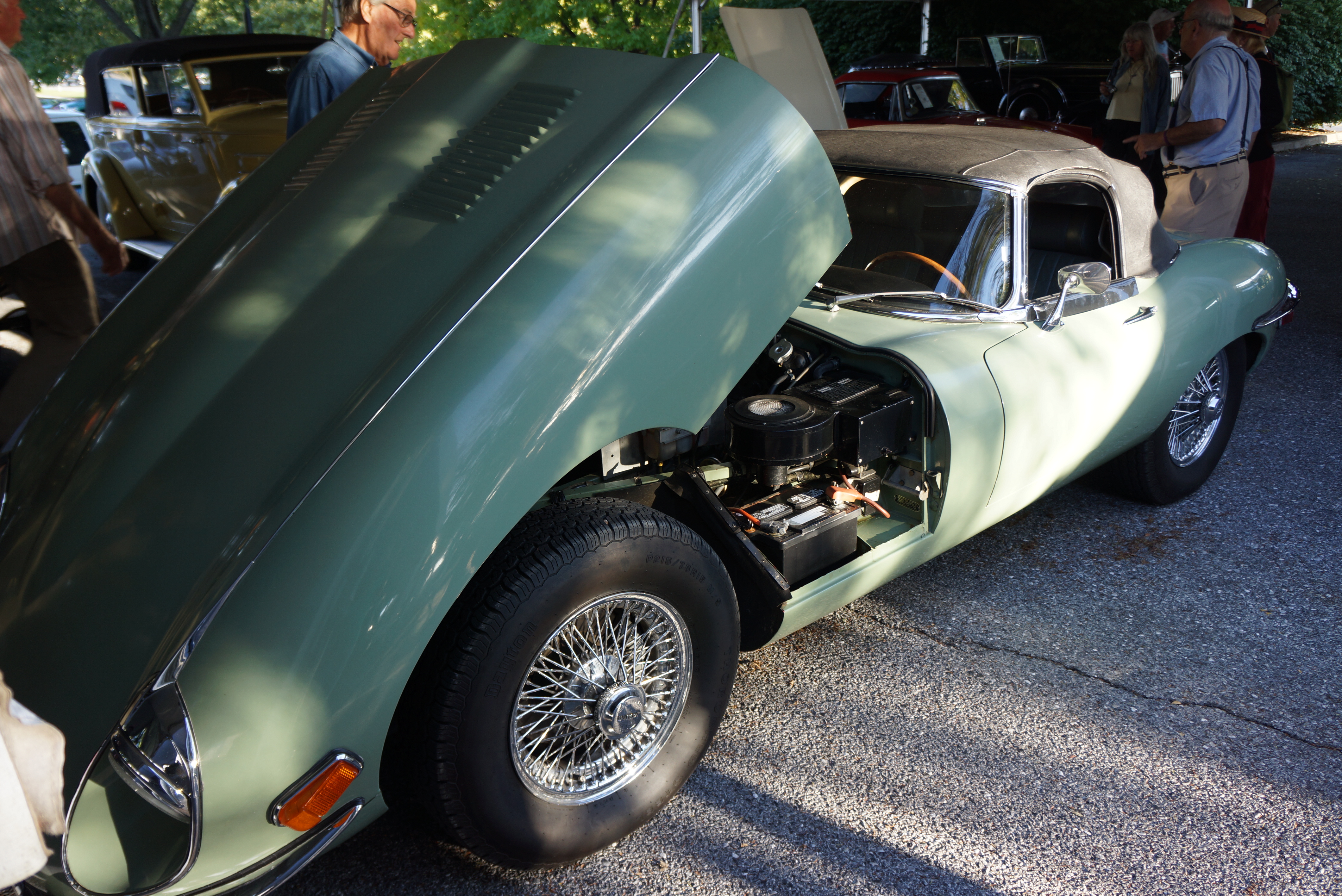
Lot #141, 1969 Jaguar E-Type roadster, green with green interior, Series II car with inline 6 and 4-speed manual. Pre-sale estimate of $60-70,000
SOLD at no reserve for $64,000
At first glance, under the harsh tent lights, this looked like a lovely and well-preserved E-Type. The green-on-green may not be to everyone’s taste, but at least it was all original. Upon closer inspection, one noticed that there was no sheen to the paint at all. It actually looked like primer. The interior was decent, and underhood, things appeared like the car got occasional use and maintenance. This is today’s price for a “driver” Series II E-Type roadster.
E-Type hood opens from front
Paint shot; note reverse dent in trunk
Engine compartment shows some use
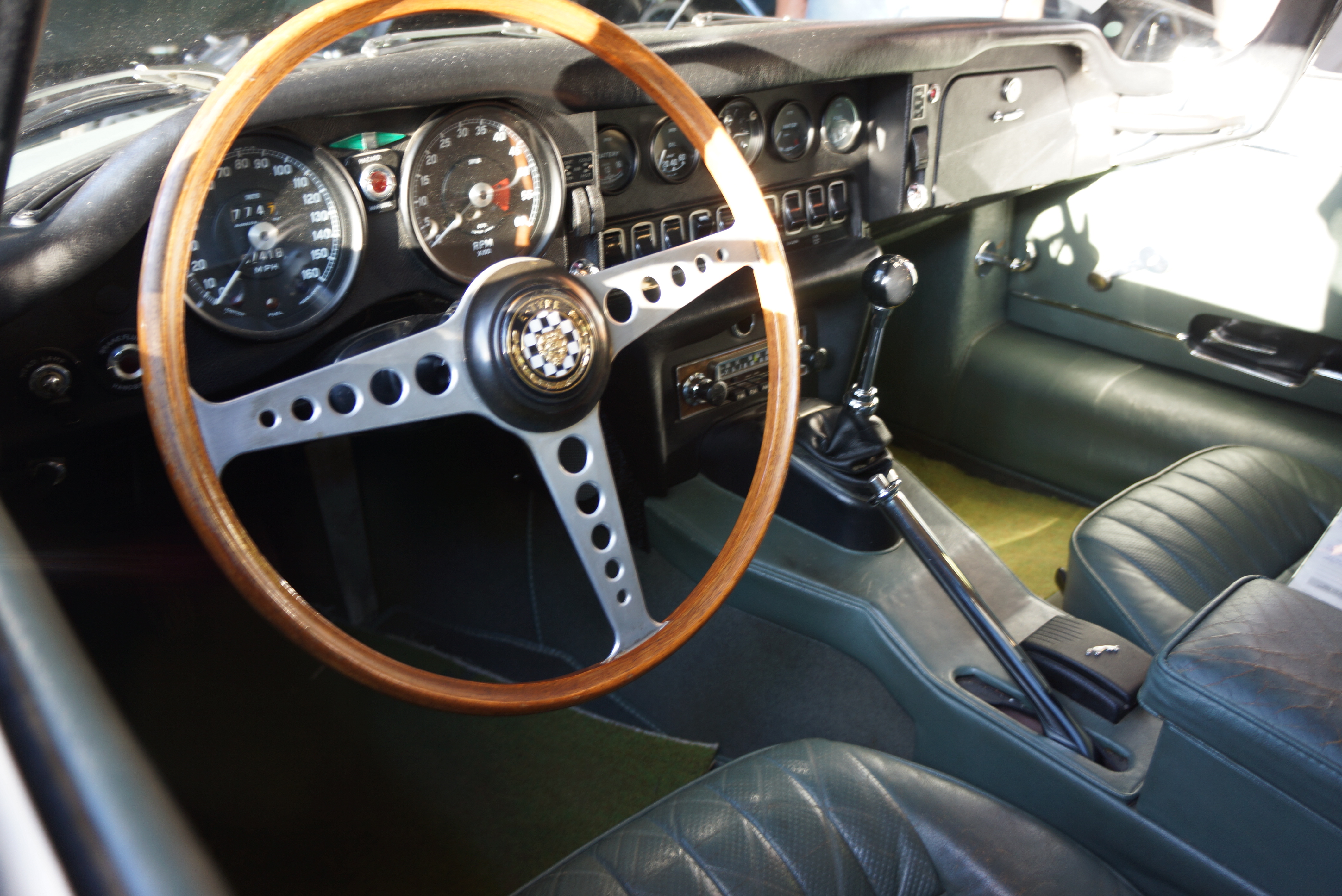
All-original interor
The green E leaves the building, “SOLD!”
Lot #127, 1935 Packard Eight Convertible Sedan, yellow, black top, wire wheels with whitewalls, tan interior RIGHT HAND DRIVE. Pre-sale estimate of $80-100,000.
SOLD for $70,000
A lovely yet imposing thing, its sale price may have been held back by its steering wheel placement. I don’t pretend to know Packards, but this one sold for only $14,000 more than Lot #114, AND it ran, AND it looked good. If I were in the market for a pre-war Packard, I know which one I would have sprung for.
Packard about to go across the block; note RHD wheel
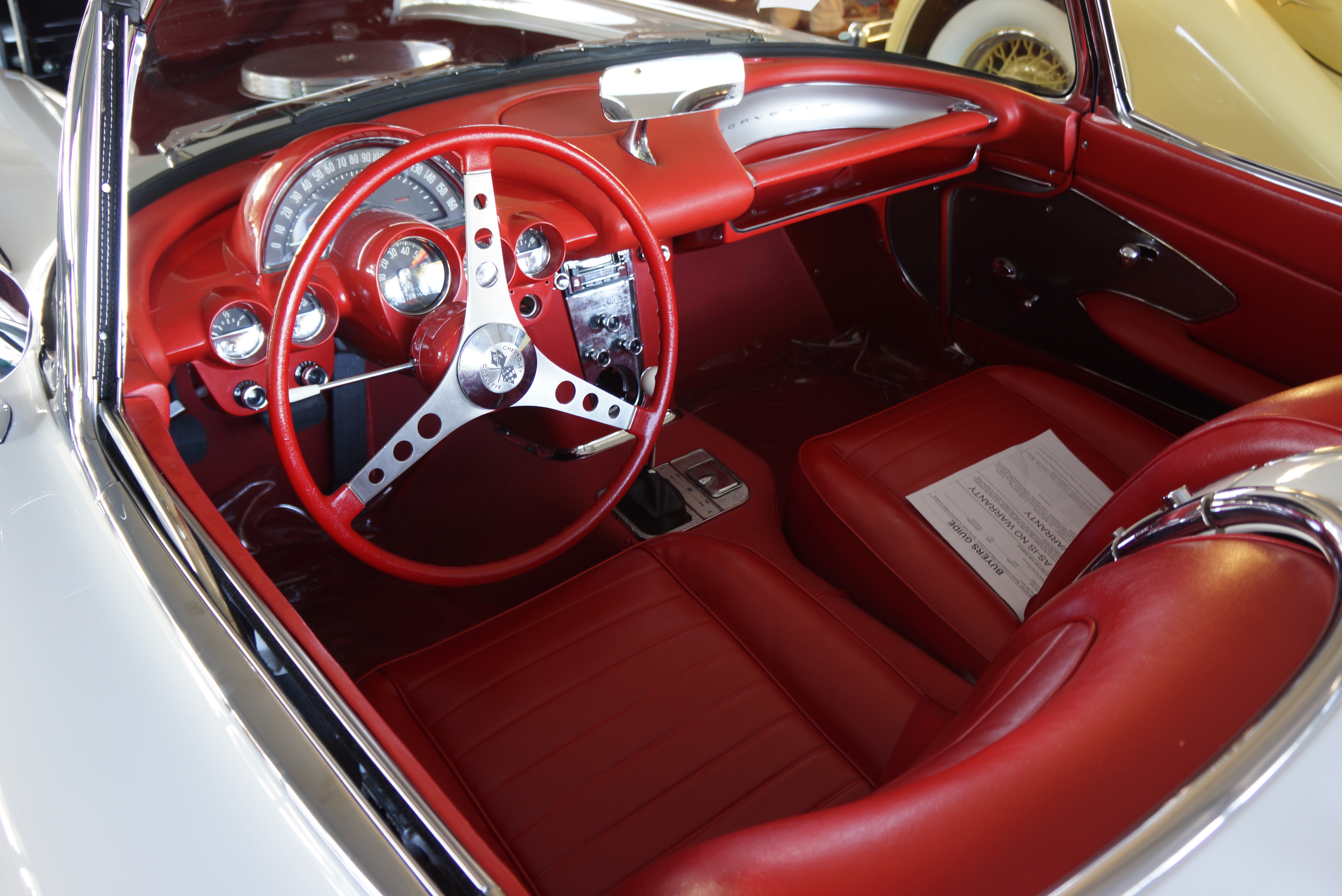
Lot #128, 1959 Chevrolet Corvette convertible, white, silver coves, red interior. 230-hp 283 V8, 4-barrel carb, 4-speed stick shift. Pre-sale estimate of $75-90,000
SOLD at no reserve for $85,000
A stunning cosmetic restoration in striking colors, the catalog claimed that the car has “almost zero miles” since restoration, although the write-up goes on to state that the engine is an “unstamped replacement block”. That did not hold back the bidders. Like the ’62 T-Bird, a contest ensued among several attendees until the hammer price almost reached the high estimate.
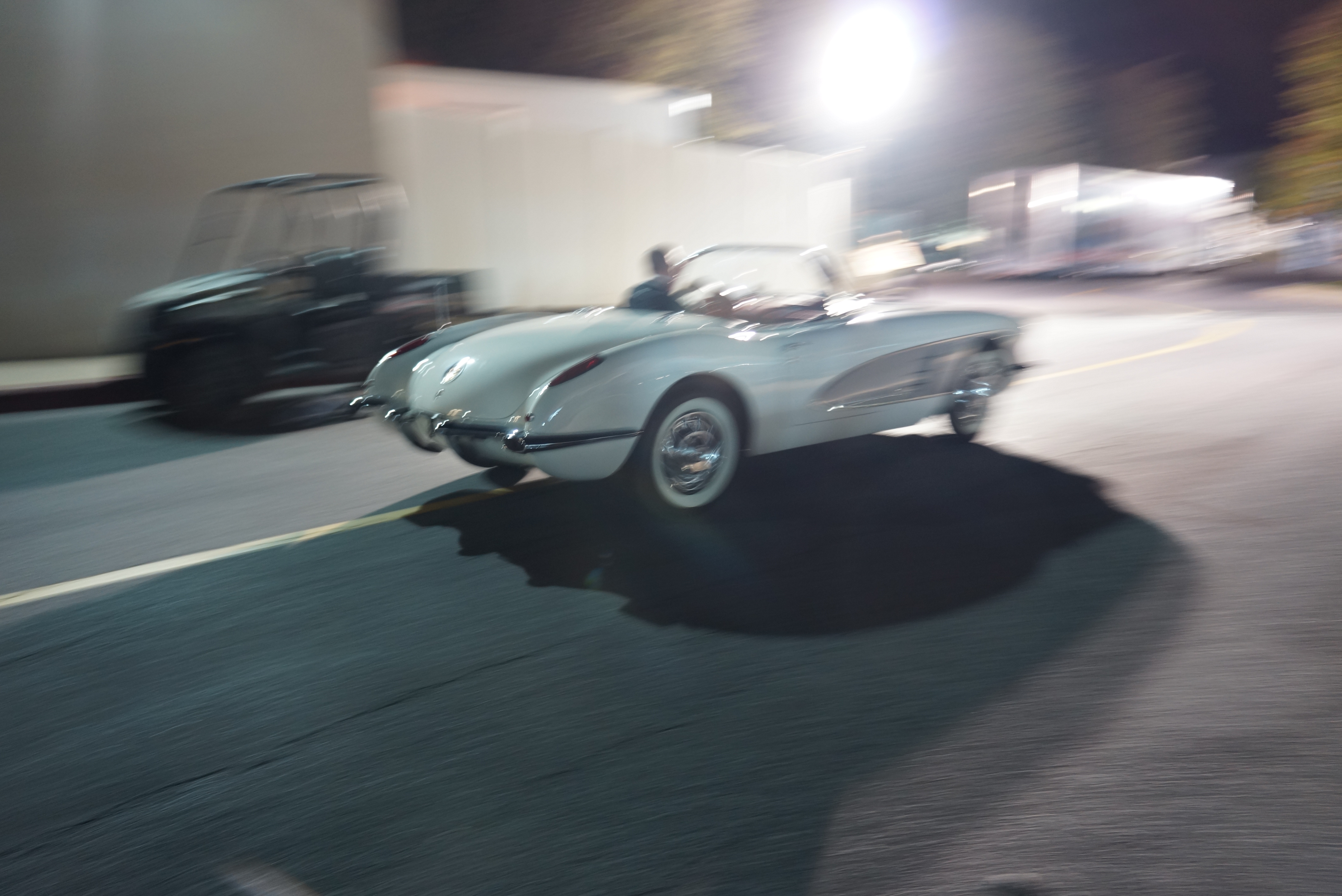
C1 Corvette got lots of looks
Interior freshly restored, looks never sat in
Someone’s wallet is $85k lighter, and someone else’s is that much heavier
$300,000 to $750,000:
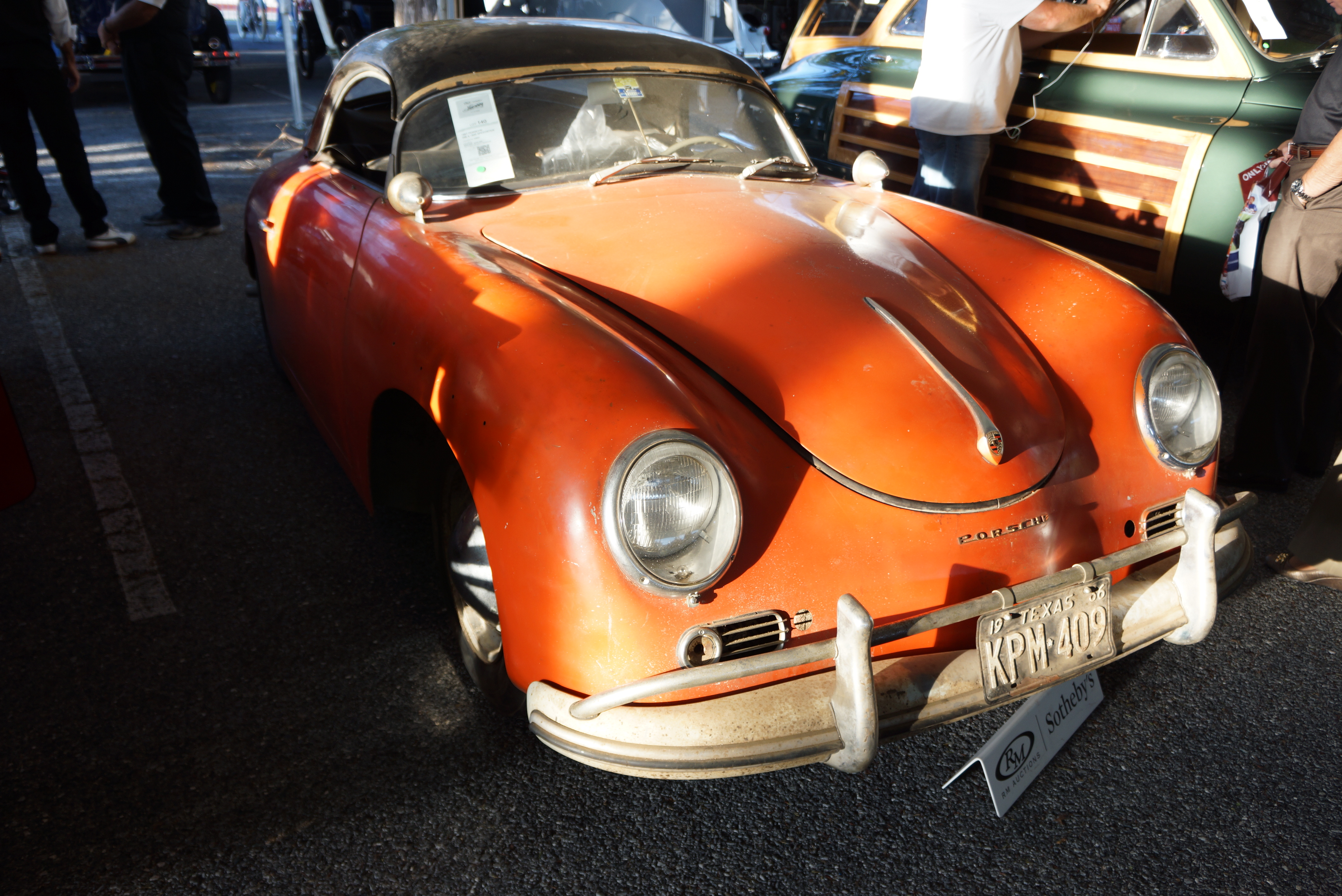
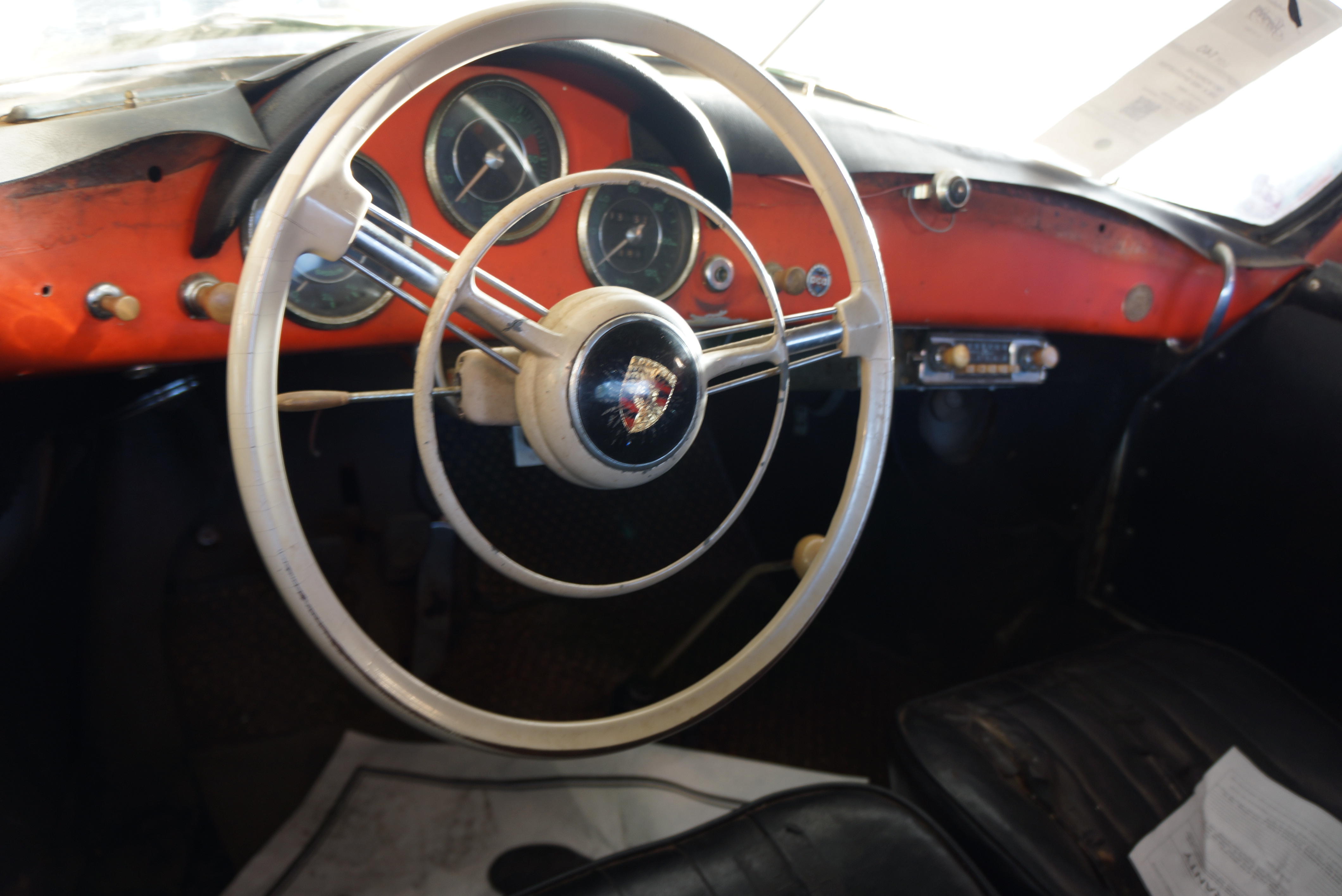
Lot #140, 1957 Porsche 356A Speedster, orange, black hardtop, black interior. 60-hp 4-cylinder engine, 4-speed manual. Pre-sale estimate of $200-250,000
SOLD at no reserve for $310,000
This is a car which, to the uninitiated, should be sent directly to the junkyard. This Porsche could be the poster child for a “barn find”: It was bought by a man in 1967 who hand-painted it orange over its original white, enjoyed it for a few years, then stored it for 40 years, until it was rediscovered and sold. This 356 got more attention under the tent than anything else on Thursday. After protracted bidding, it screamed past its high estimate. Originality has its price. Shame about the paint.
Barn find Porsche, born white, spray-bombed orange
Best I can say about interior is that it’s all present
Hardtop likely rare accessory; note parking lot stickers to left of license plate
The Speedster gets driven to its new owner
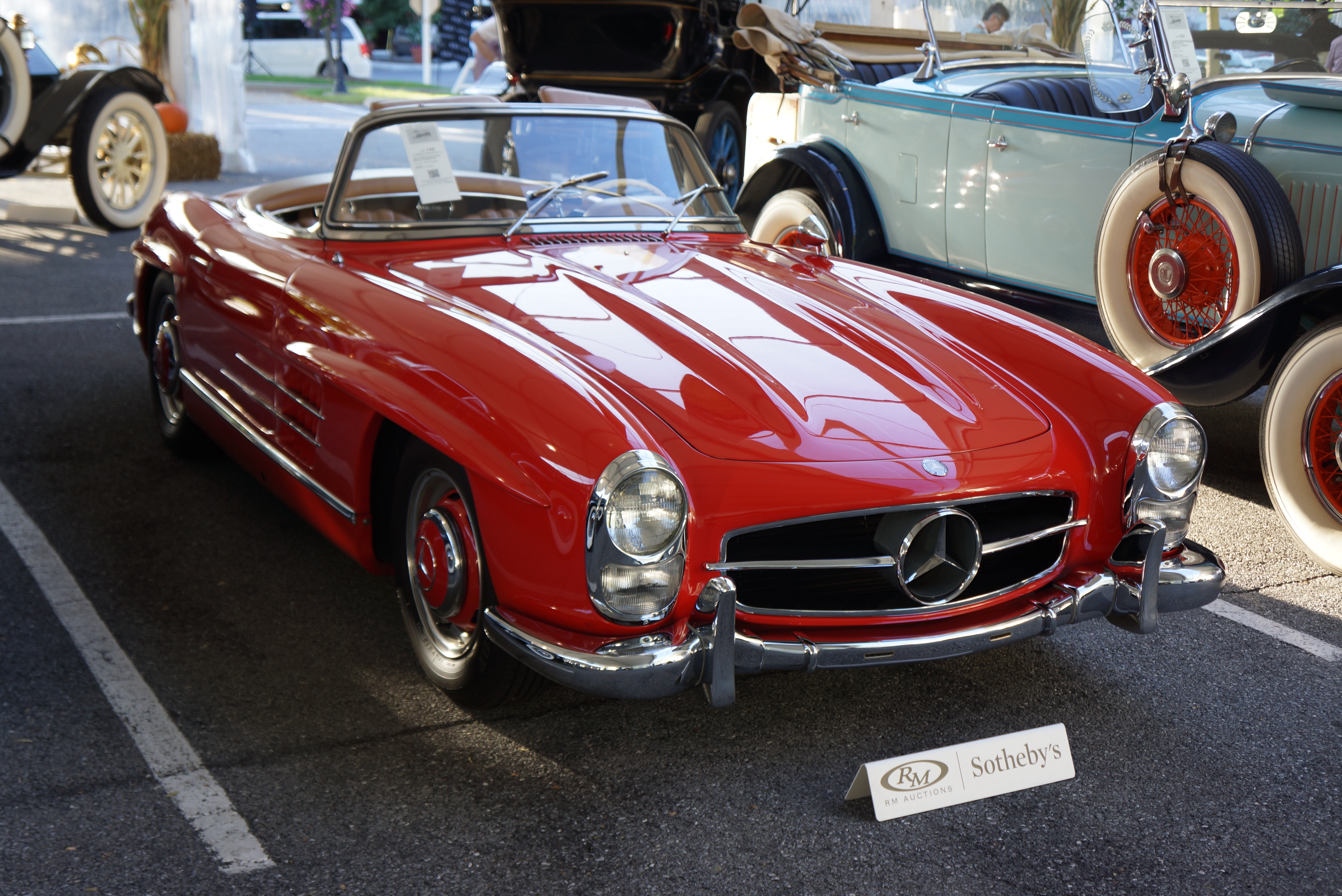
Lot #142, 1957 Mercedes-Benz 300SL roadster, red with tan interior, pre-sale estimate of $900,000 – $1,100,000
SOLD for $750,000
This was another cosmetic stunner, even if its red-over-tan was a change from its factory blue-over-cream. Claimed to come from long-term ownership, I had every reason to expect the car to break into seven figures. These 300SL roadsters long ago achieved price parity with their Gullwing brothers. Therefore, it came as a total shock to watch the hammer fall at a number so far below the low estimate. Was it the color change, did the audience see something I didn’t, or is the market that soft?
Beautiful Benz 300SL roadsterIconic styling carried over well from Gullwing to this
Interior looks faultless; did someone get a great deal?
The Antique Automobile Club of America (AACA) hosted their Eastern Division National Fall Meet for the umpteenth (61st) time in Hershey PA during the first week of October this year. As someone who has attended “Hershey” at least 25 times over the years, I find myself asking “what is it that keeps drawing the crowds?”
Car Corral merchandise lines up on the perimeter road
After all, as has been reflected in numerous posts here as well as within every publication which covers collector cars, the old car hobby has changed in so many ways. The Internet, obviously, has driven transactions online. The greying of the hobby means that the aging boomers, who may finally have the means to buy that dream car, will buy it not as a project, but as a restored, ready-to-go vehicle, and may pursue that dream at an auction. Younger generations are not showing interest in 25-year-old and older stock vehicles, and frankly may be reluctant to join a club with the word “Antique” in its title.
Bargains still available, you supply the labor to restore
This blog has now been up and running long enough that some annual events are being reported for the second time. And so it is with Hershey. It may be instructive to revisit what was said a year ago: in essence, thanks in large part to its six-decade history, Hershey continues to be the go-to place for cars and parts which can be found in few other places, in person or online.
Two well-known hobby names in attendance
The sheer size of the event, with its combination of old-fashioned flea market, car corral, and judged car show can account for the crowds. (Again this year, the influx of foreigners was huge.) Weather may sometimes play a role (who remembers the Hershey mud?), but even that is a relic of the past, as the entire flea market and corral are on pavement.
Wooden road wheels and steering wheels
There certainly are things to see and do which cannot be duplicated on a tablet screen. For example, Hagerty Insurance, as they did last year, ran a “Search, Build, Drive” contest whereby they would purchase a project vehicle from the Car Corral, and bring it to running, driving condition using parts found in the flea market. And one more small detail: they challenge themselves to accomplish this within the 4 days of Hershey. You can read more about it here.
The Hagerty Team hard at work on this year’s Ford Model A project
Due to personal commitments, I was unable to attend Saturday’s judged meet this year. I did attend the RM-Sotheby auto auction, held about a mile away at the Hershy Lodge, which will be covered as a separate blog post.
Caffeine oasis in the flea market
The bulk of this post will be a report on a random sample of cars, domestic and foreign, in the Car Corral. While there are hundreds of cars for sale, I’m especially drawn to both imports and to orphan makes. Comments about each car follow the photos.
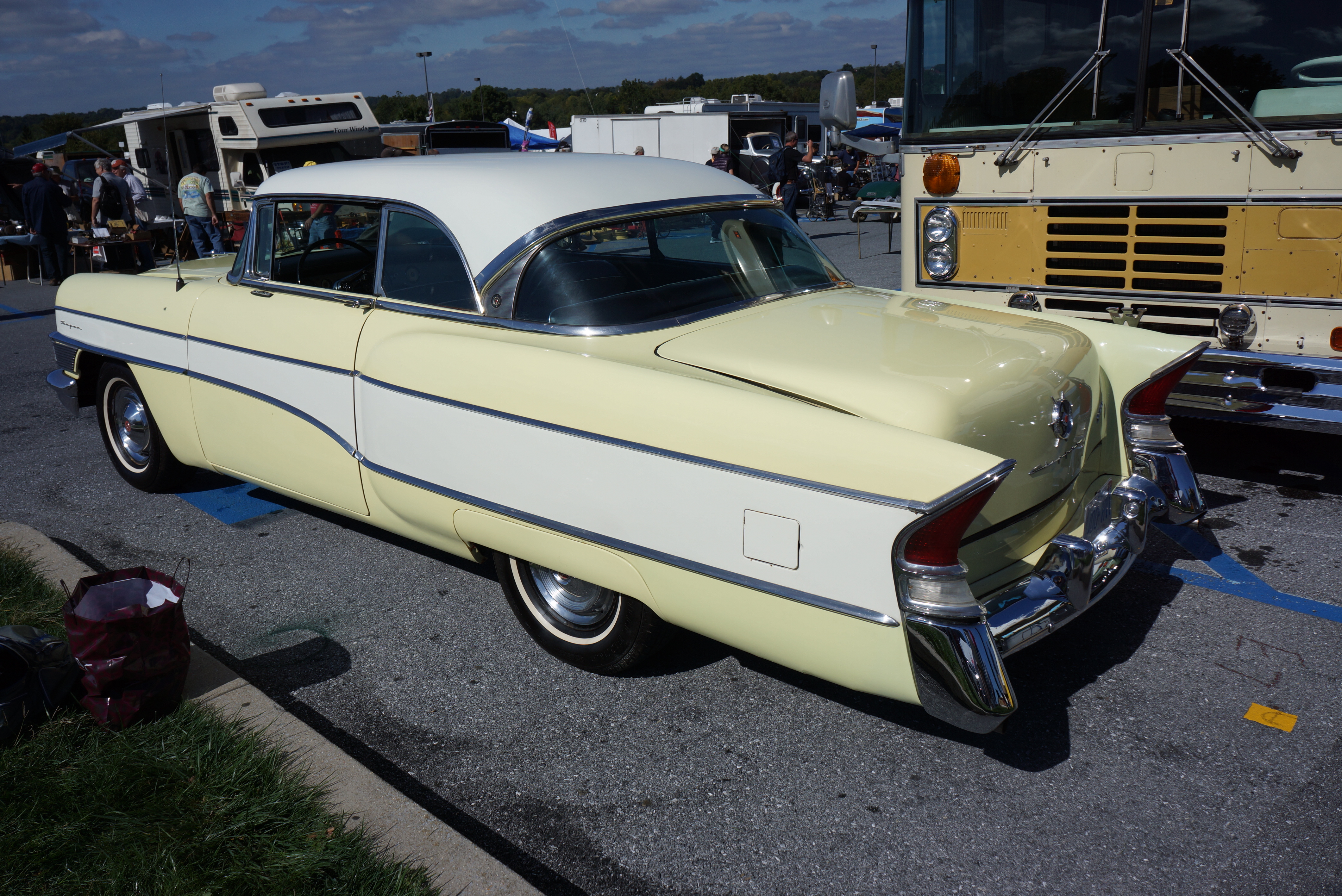
1956 “Clipper by Packard”
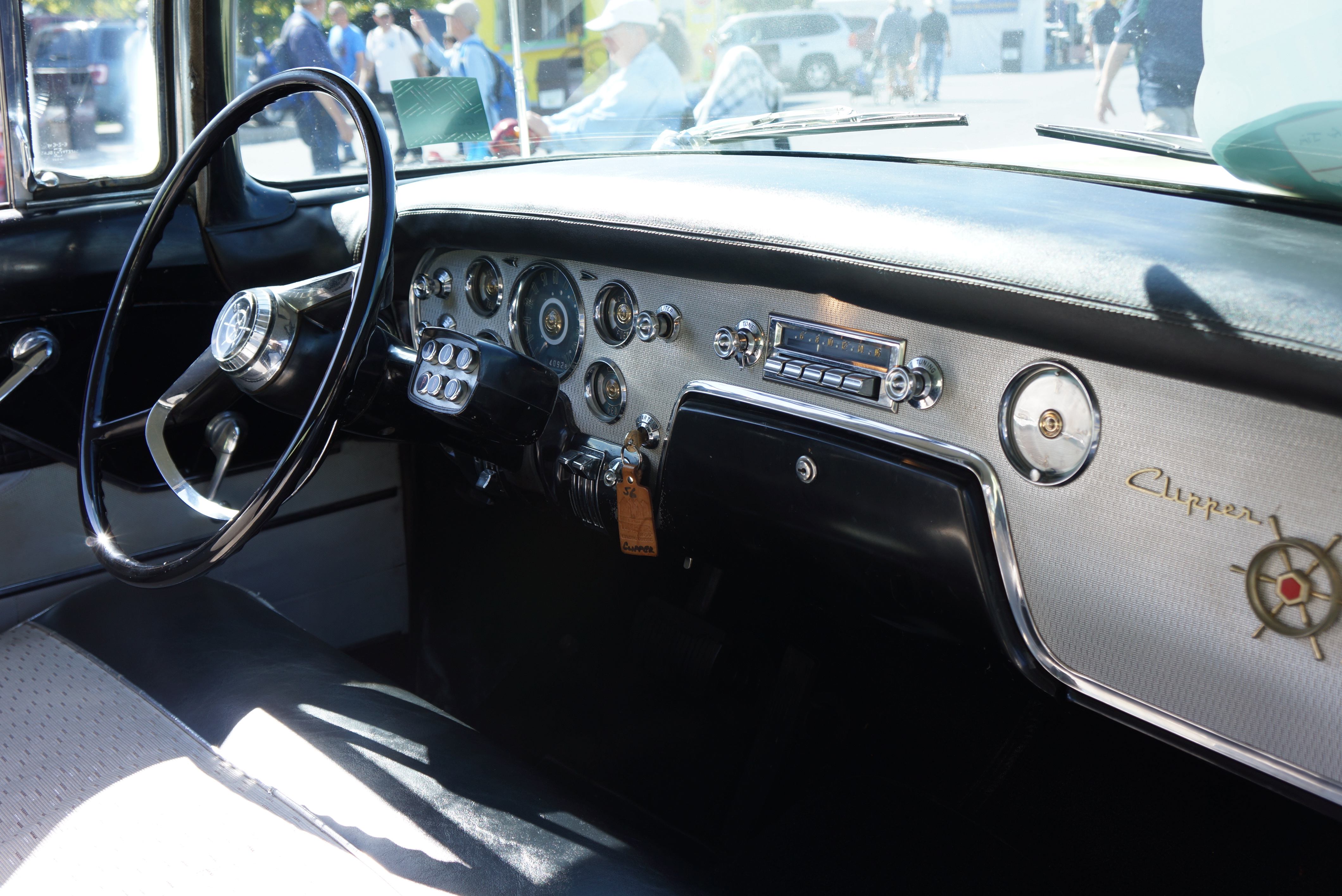
Dig the buttons on a stalk
This 1956 Packard Clipper 2-door hardtop was driven down from Ontario, Canada to the meet. It allegedly had 40,000 original miles, but much of the lower body was wavy with Bondo. The ask was $14,750. If that were Canadian bucks, it would be an even better deal.
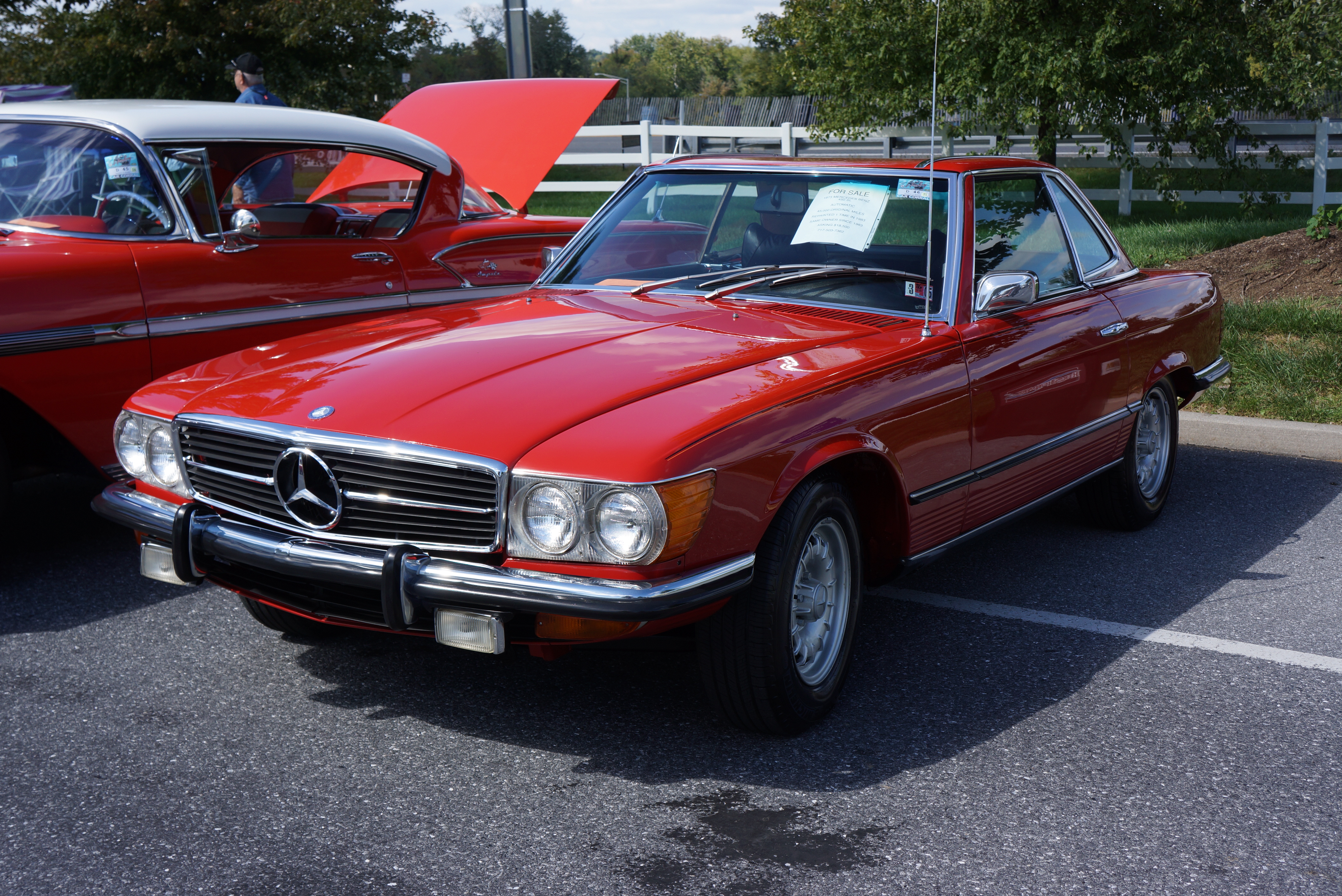
1973 Mercedes Benz 450 SL
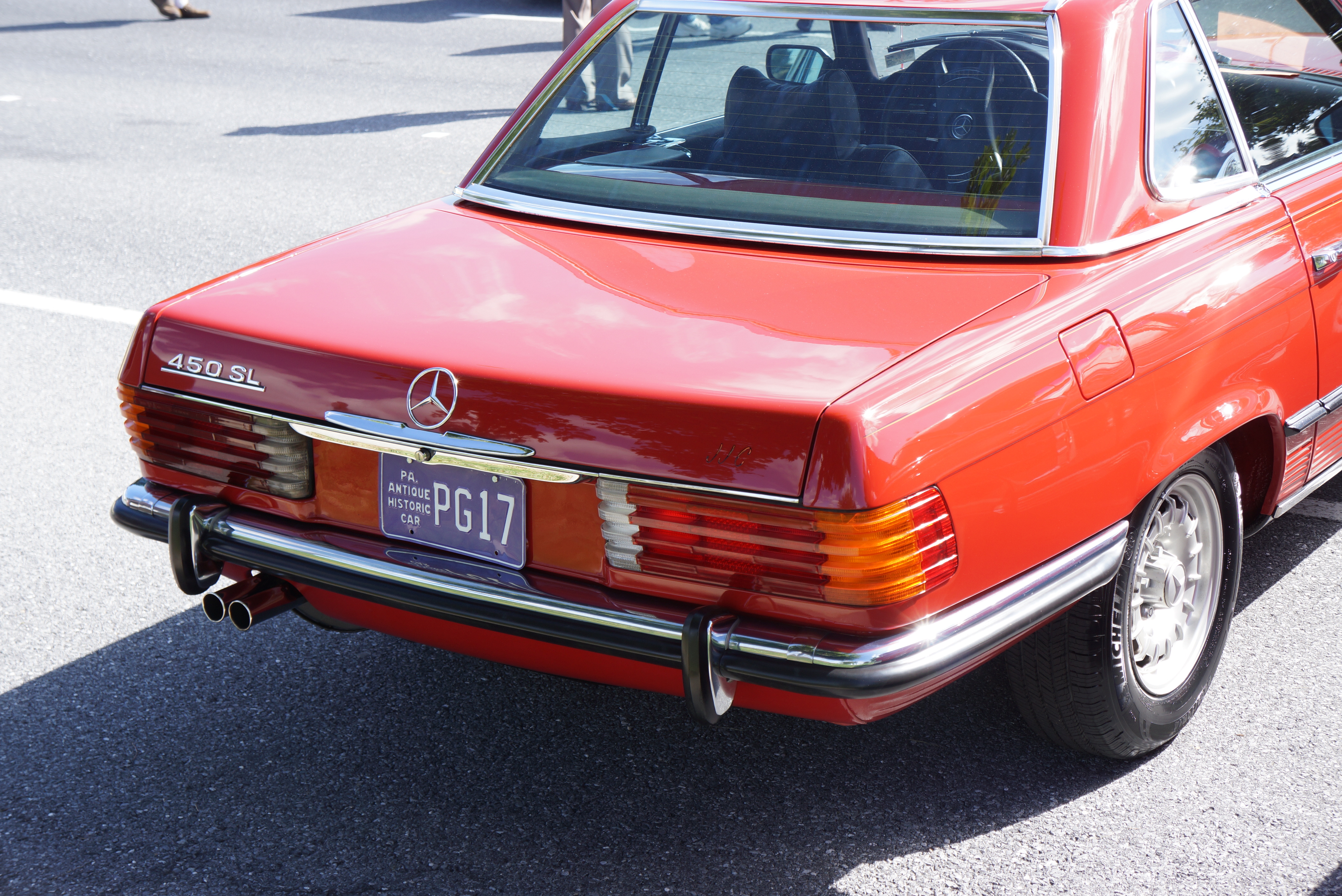
Rear bumper as streamlined as front
This generation of the Mercedes-Benz SL (known as the “107” chassis to the devoted) was sold here from 1973-1989. We are so used to seeing them with their diving-board bumpers that we forget how elegant the original design was. This ’73 U.S.-spec car reminds us. This car claimed to have 45,000 original miles, and the owner was asking $18,500.
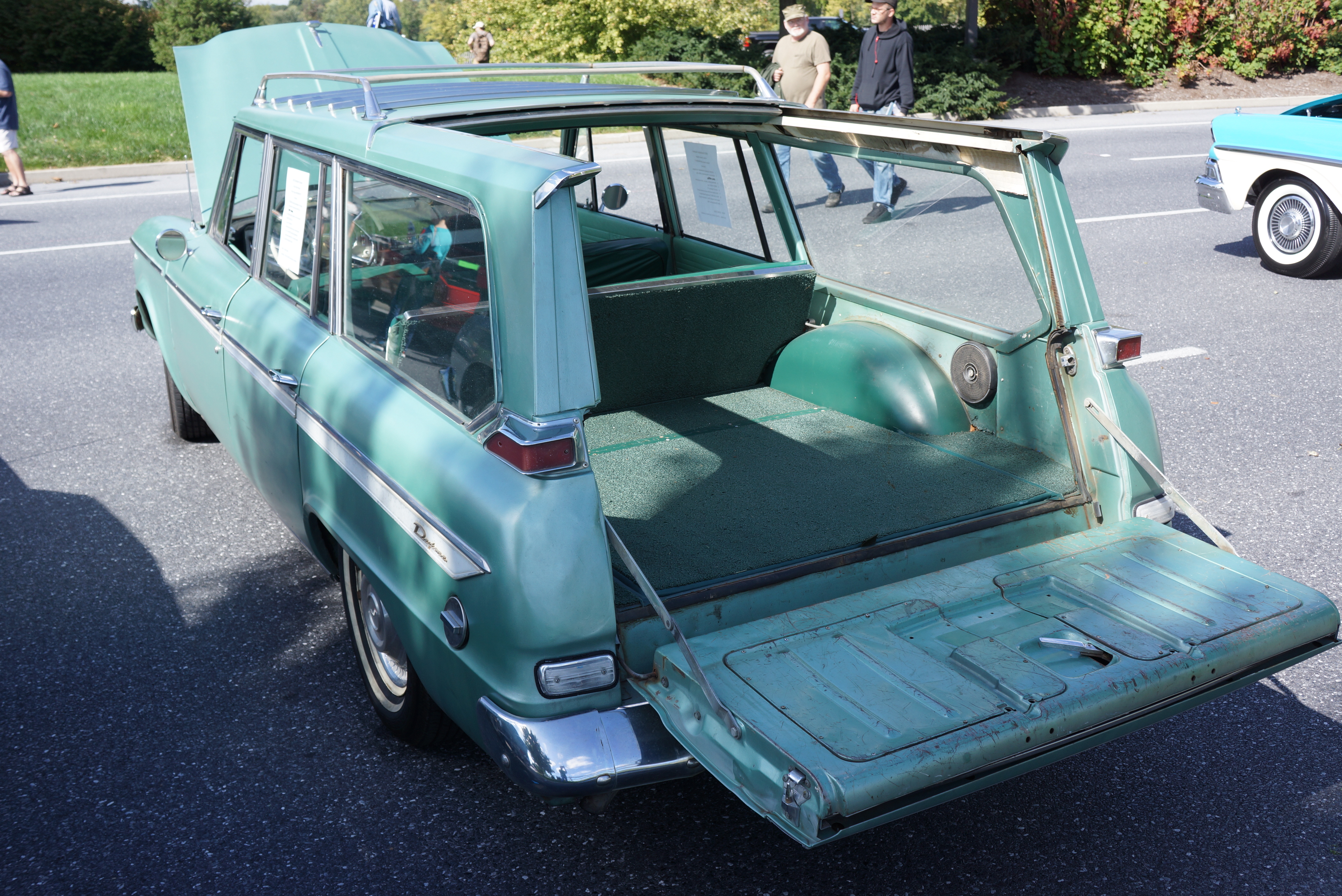
Wagonaire featured sliding roof panel
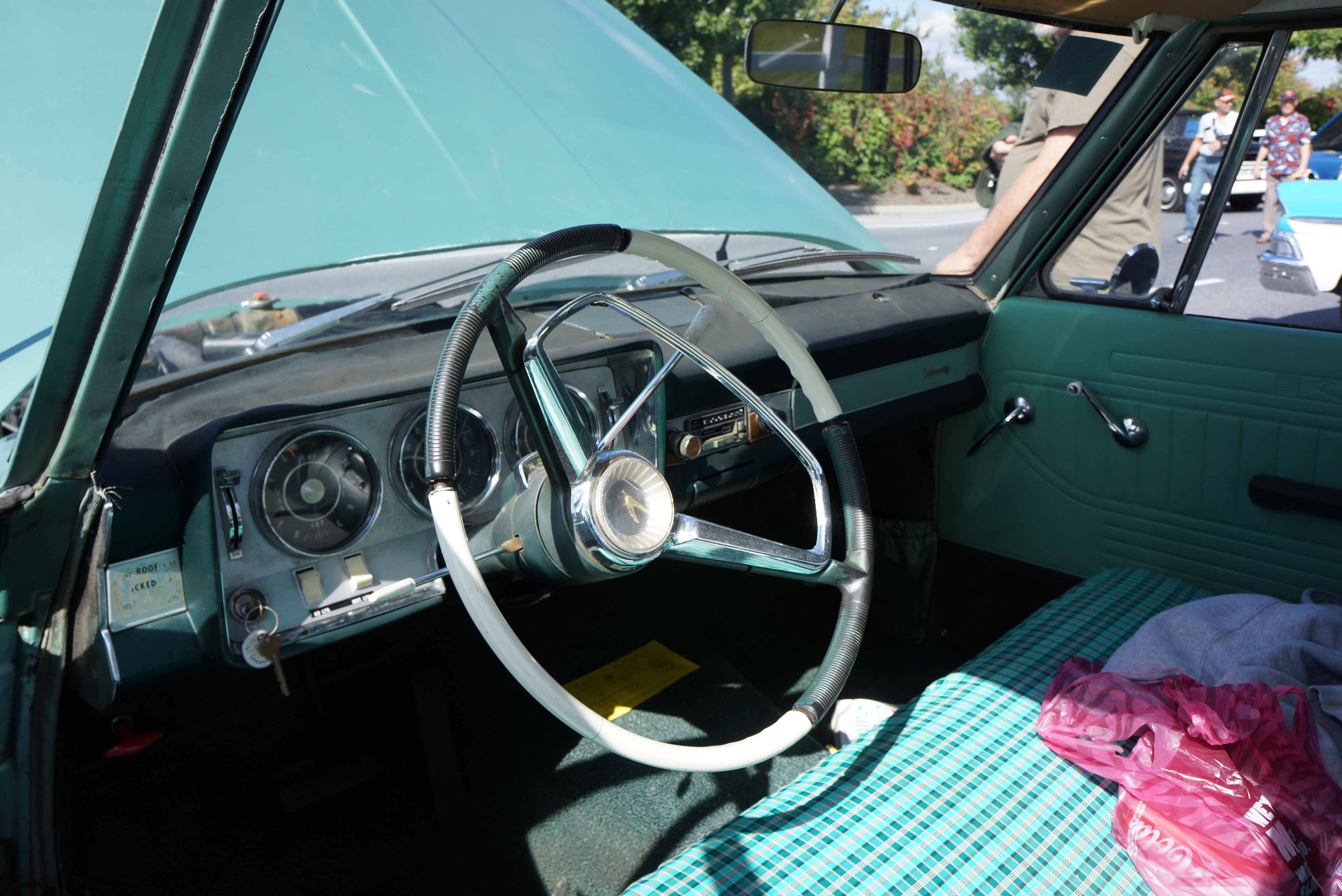
Wagonaire interior
This 1963 Studebaker Wagonaire was rough around the edges, but it looked like it was all there. Price was $7,500 OBO. It was the only one at Hershey.
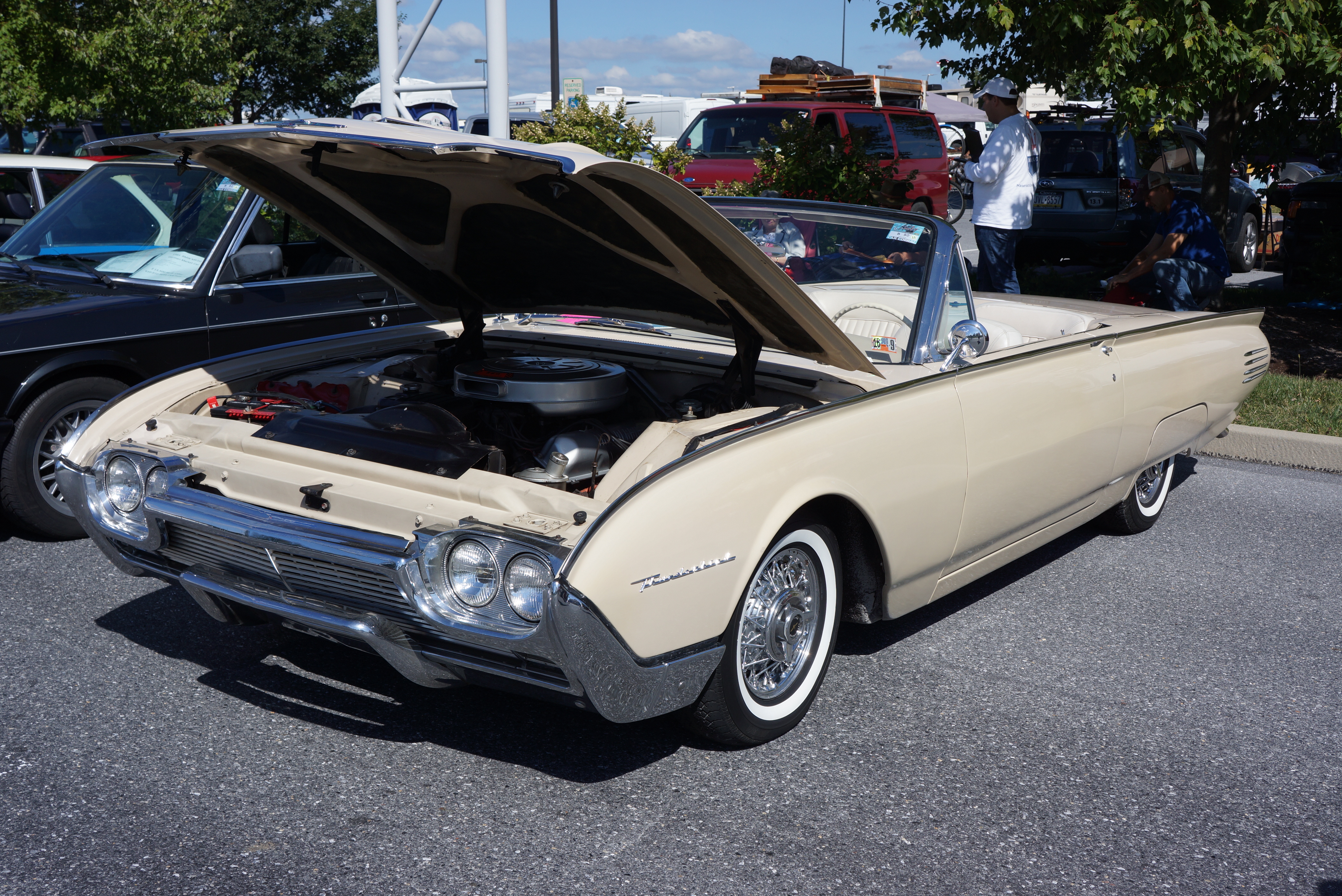
1961 Ford Thunderbird
T-Bird wrap-around dash
This ’61 T-Bird was claimed to be highly optioned with power steering, brakes, top, windows, and seats. It also had wire wheels. The beige-on-beige may not be your first choice, but I liked it. Asking $24,000 “cash! Priced to sell!”
1987 Alfa Romeo Graduate Spider
Alfa dash had gone electronic
The sign on this 1987 Alfa Romeo Graduate Spider gave little info other than “Low miles, $9,900“.
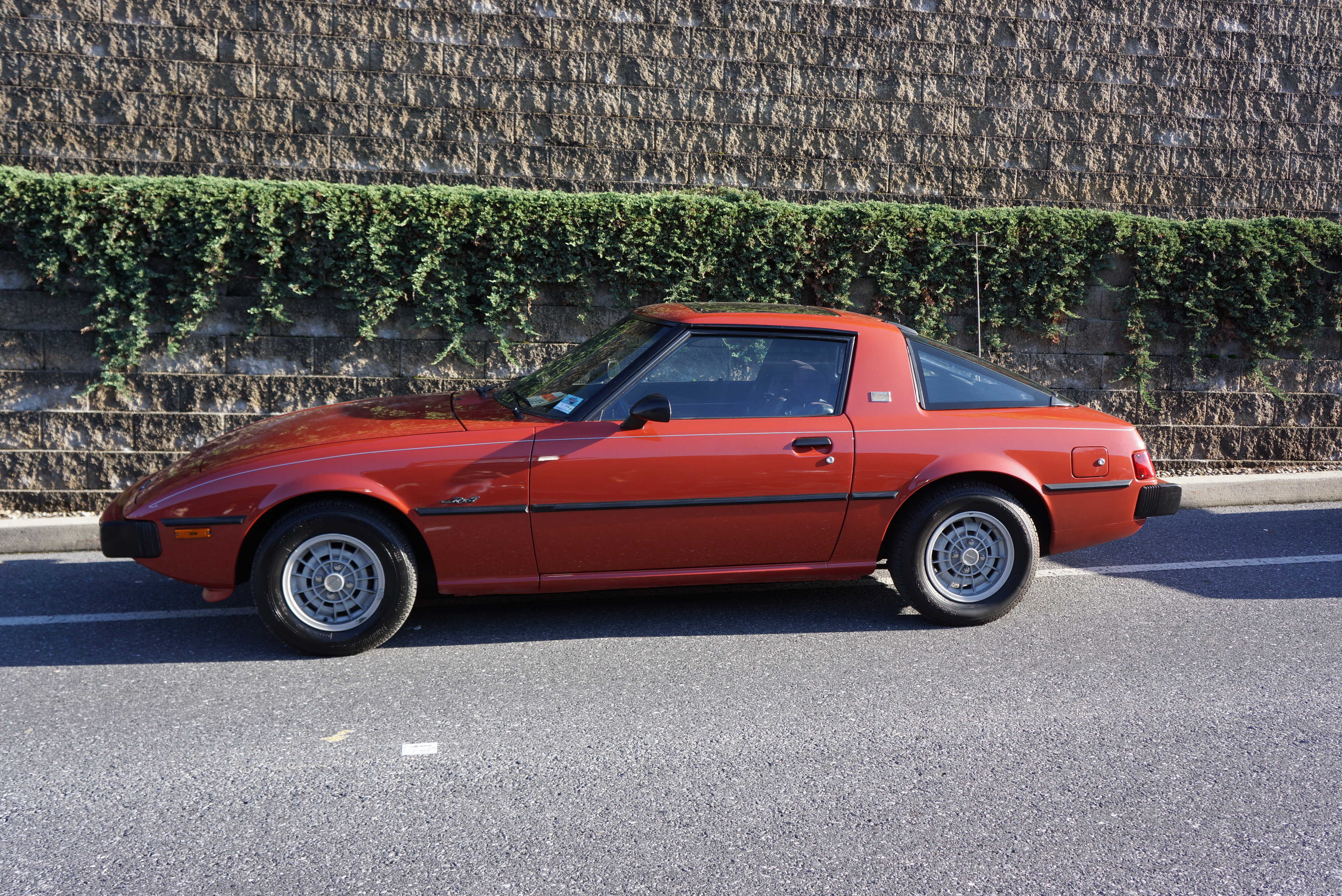
1980 Mazda RX-7
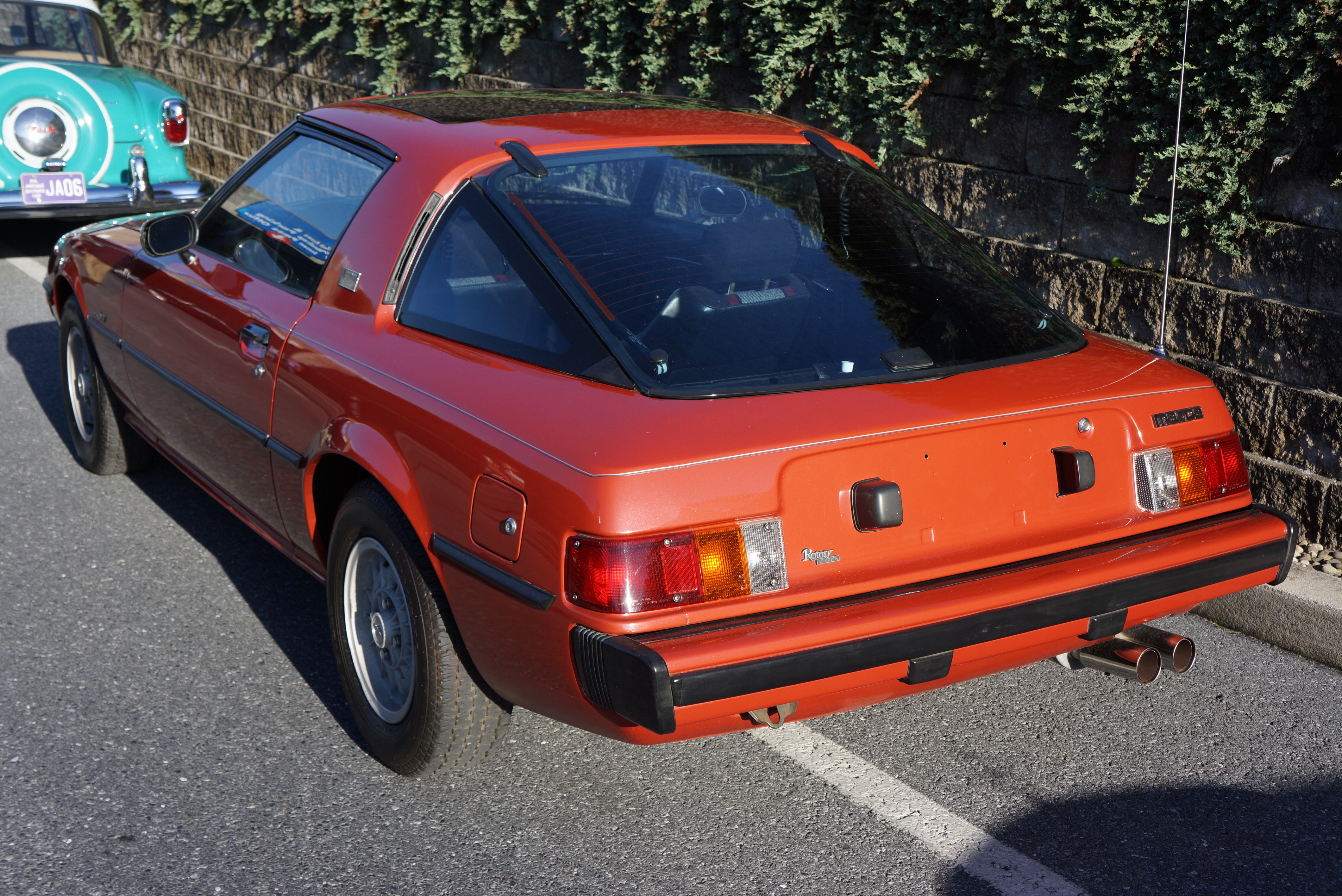
’80 still had original rear styling
This 1980 Mazda RX-7, a first-generation car, still wore the original tail light design, which was updated a year later. The sign claimed this car was an Anniversary Edition (whatever that is), and with 63,000 miles, the ask was $9,800.
1977 Jaguar XJ6-C
Interior shows auto, torn seat
This 1977 Jaguar XJ6-C is a rare 2-door version of the better-known XJ four-door sedan. My recollection is that 100% of these vehicles had factory vinyl roofs. This one’s was removed in favor of black paint. The car looked like it had needs, and these are known to be rust-prone, so check carefully before you pay the $12,500 asking price.
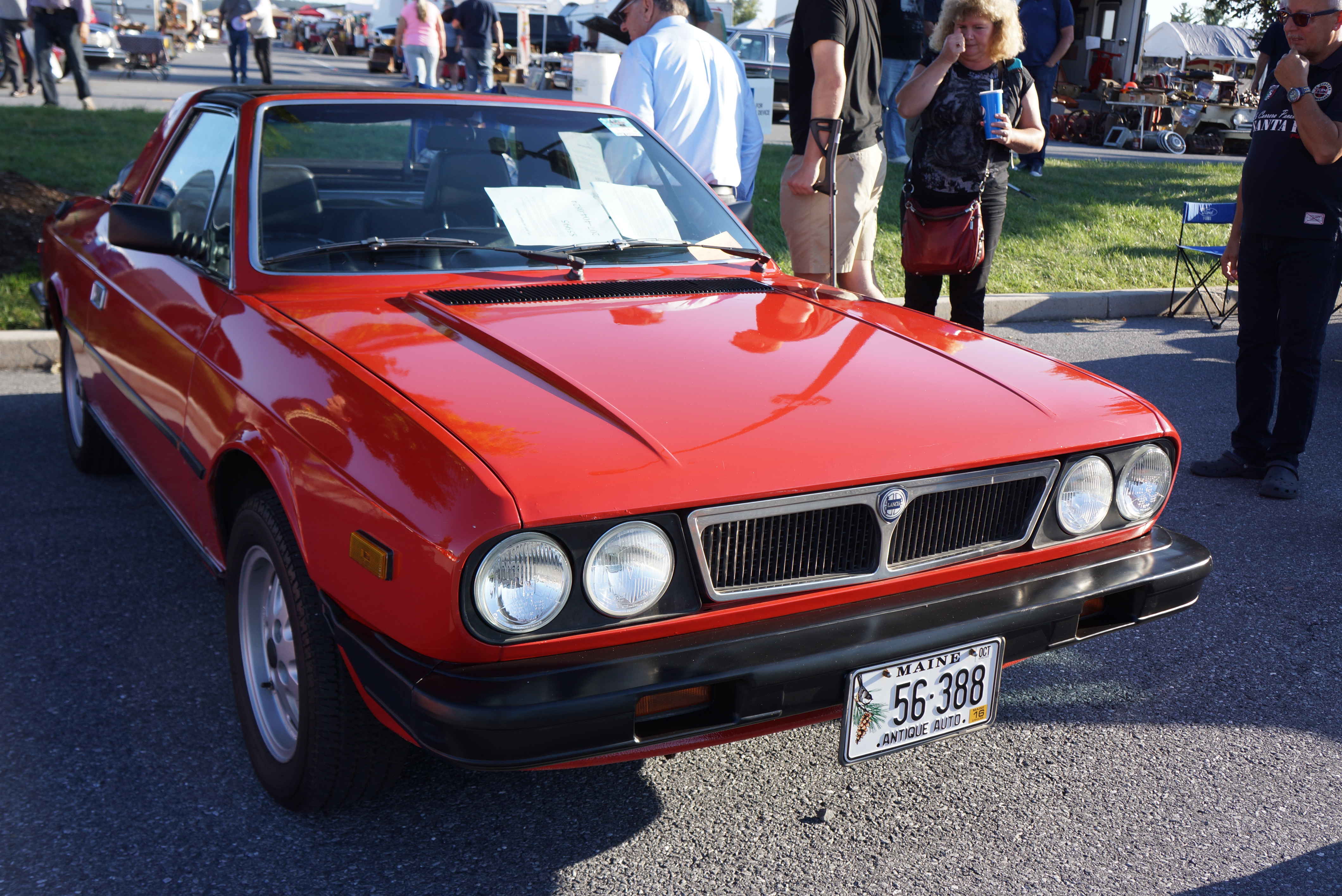
1982 Lancia Beta Zagato
Clean interior supports mileage claim
This 1982 Lancia Beta Zagato is from the final year of U.S. sales for this Italian import. Like the Beta coupe, the transverse engine drove the front wheels. The Zagato version has a fold-down soft rear window plus a removable targa top, giving an almost-convertible feel. The sign claimed 59,000 pampered miles, and it looked it. The owner was asking $5,995.
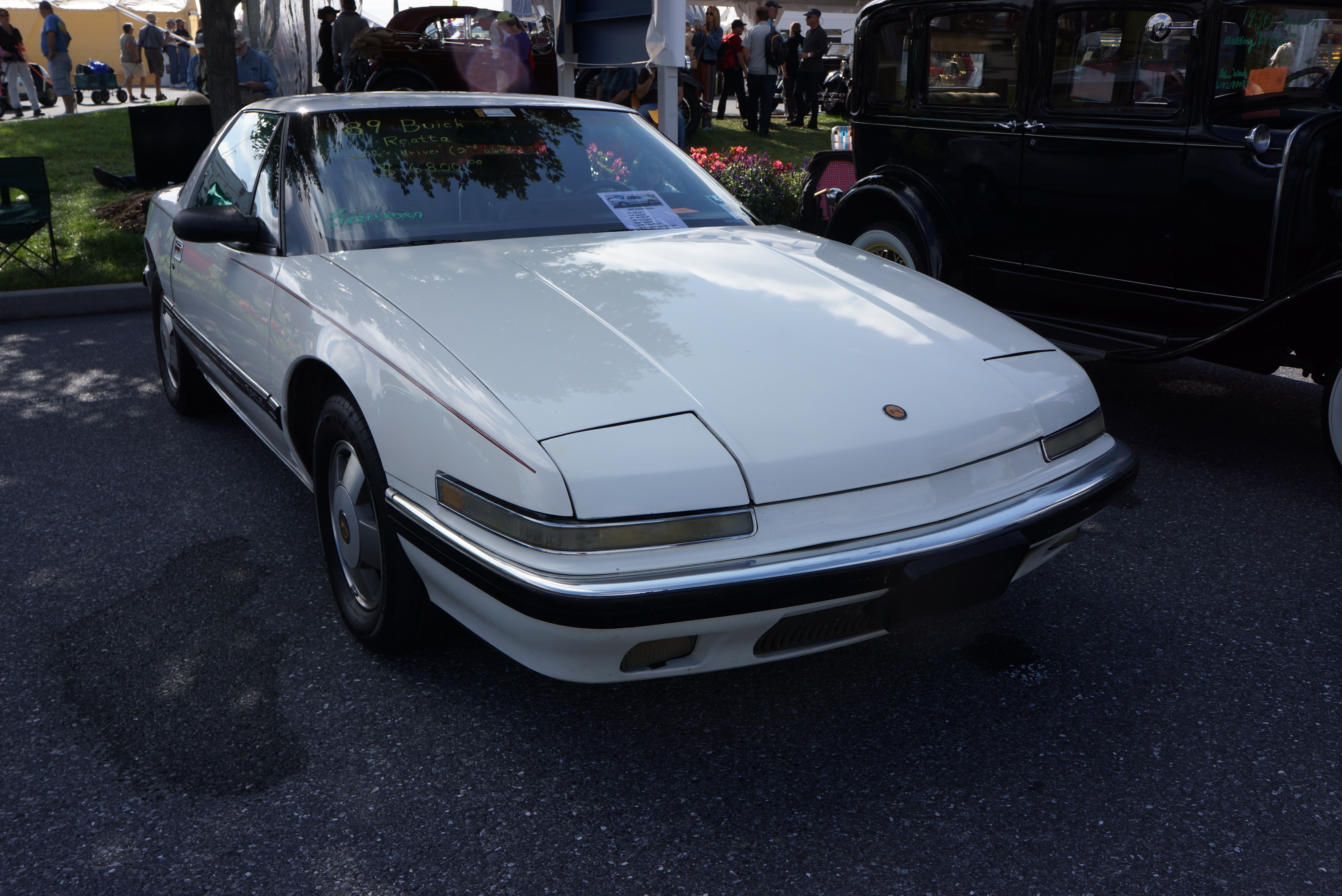
1989 Buick Reatta
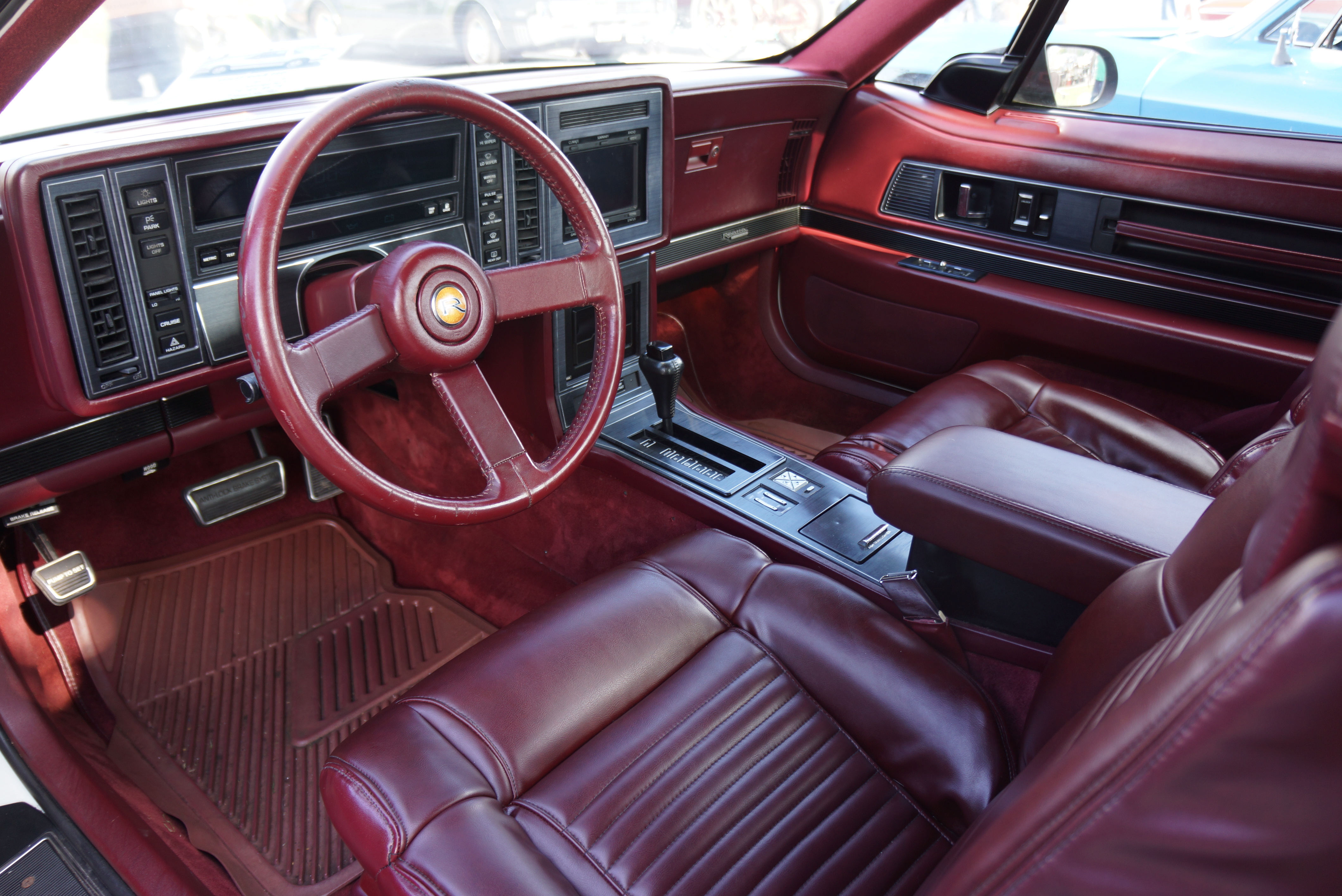
Very clean red leather interior
The Buick Reatta has been on the “appreciating future collectible” list for so long that I think most people have forgotten it. There are always a few for sale, and this one’s colors and condition made it stand out. The sign claimed it to be a two-owner car for only $6,800.
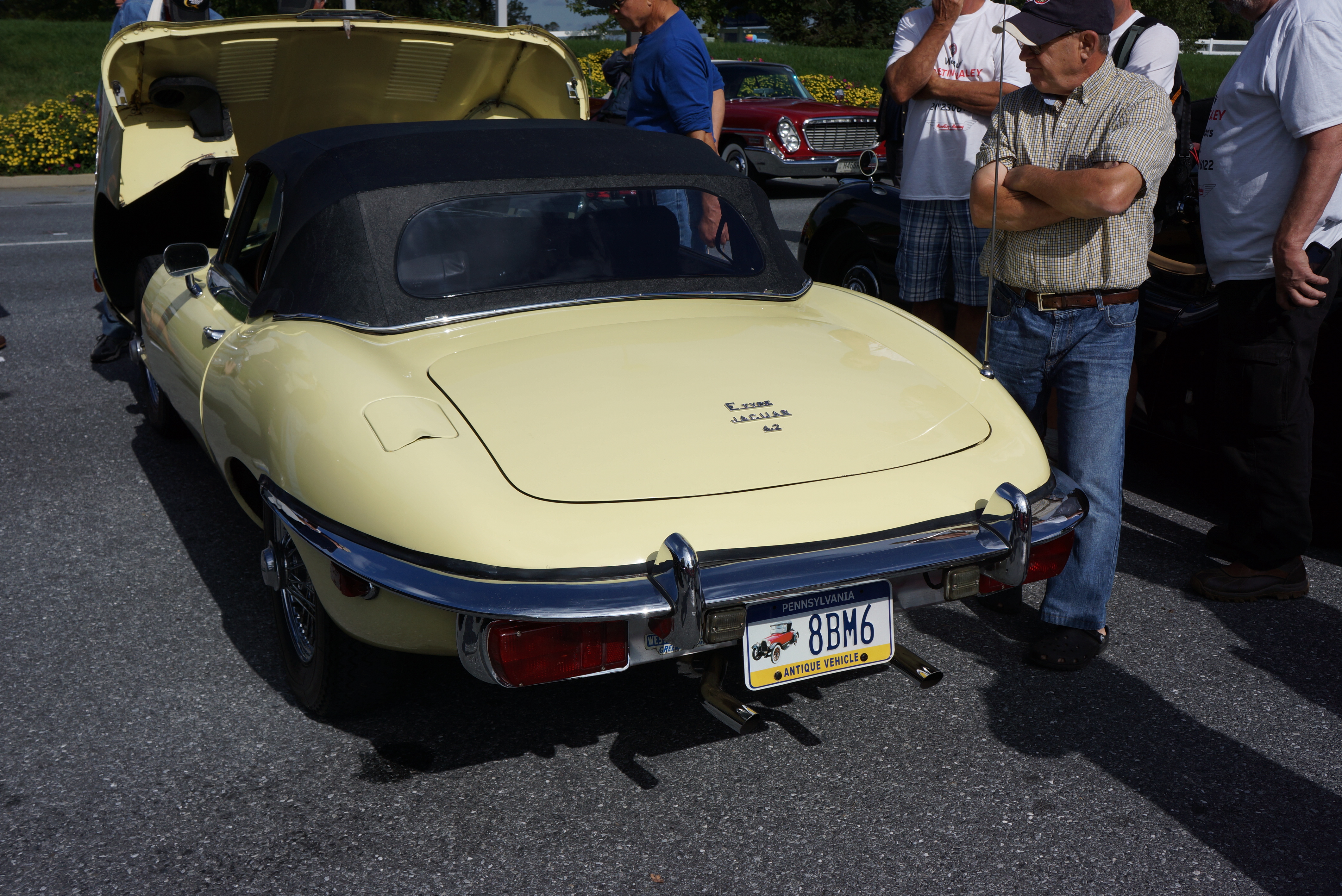
Series 2: tail lights under bumper, no fender flares
Stock interior, correct wood wheel
This 1969 Jaguar E-Type OTS (Open Two Seater) was claimed to be an unrestored original car with only 48,000 miles. Primrose yellow is one of my favorite E-Type colors. If solid, it may be a good buy at $75,900.
1971 Continental Mark III
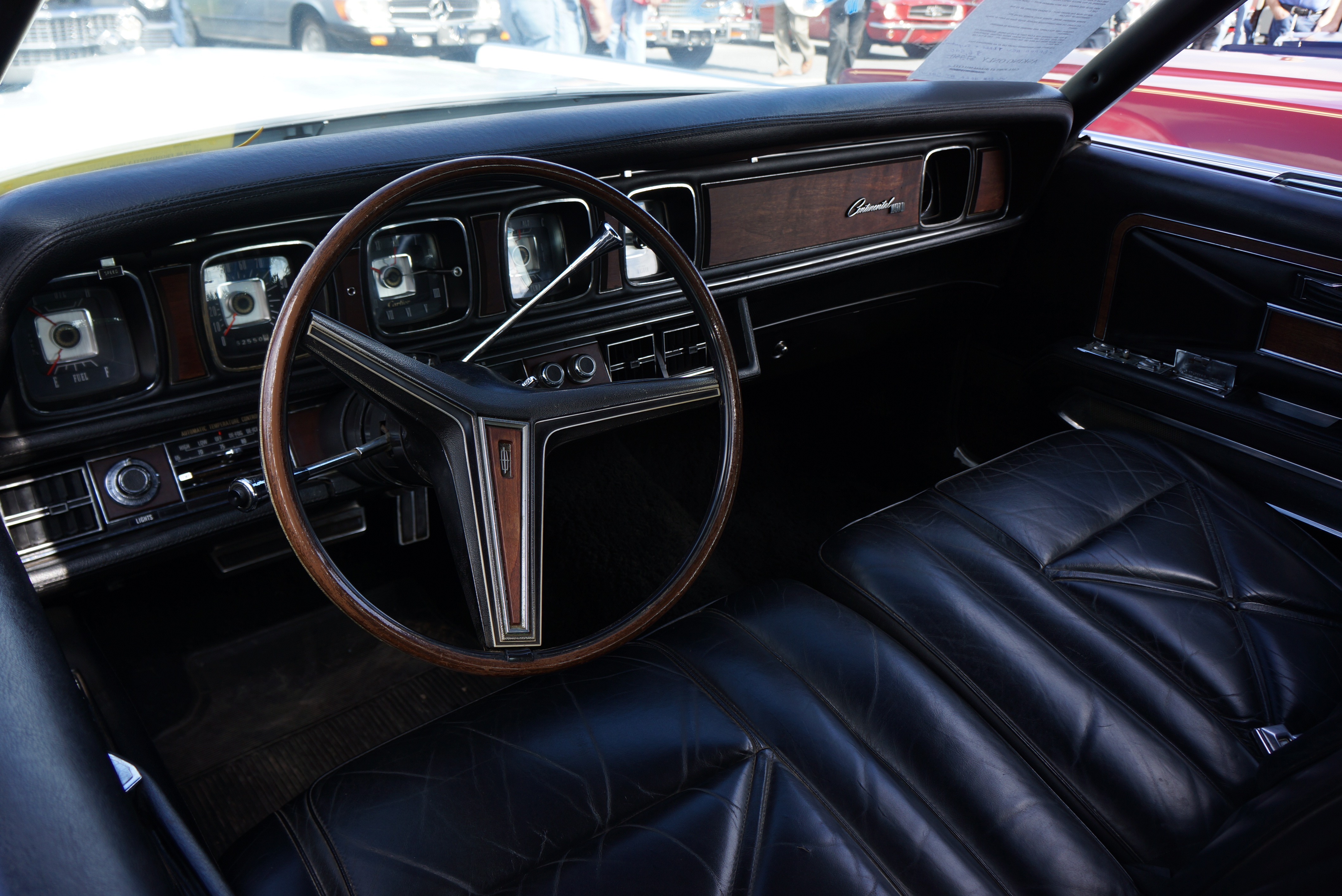
Mark III interior
This 1971 Lincoln Continental Mark III was alleged to be a 62,000 mile all-original car. A little bland in white with a black vinyl top and black leather interior, it would look good in your garage (provided it fit) for only $6,500.
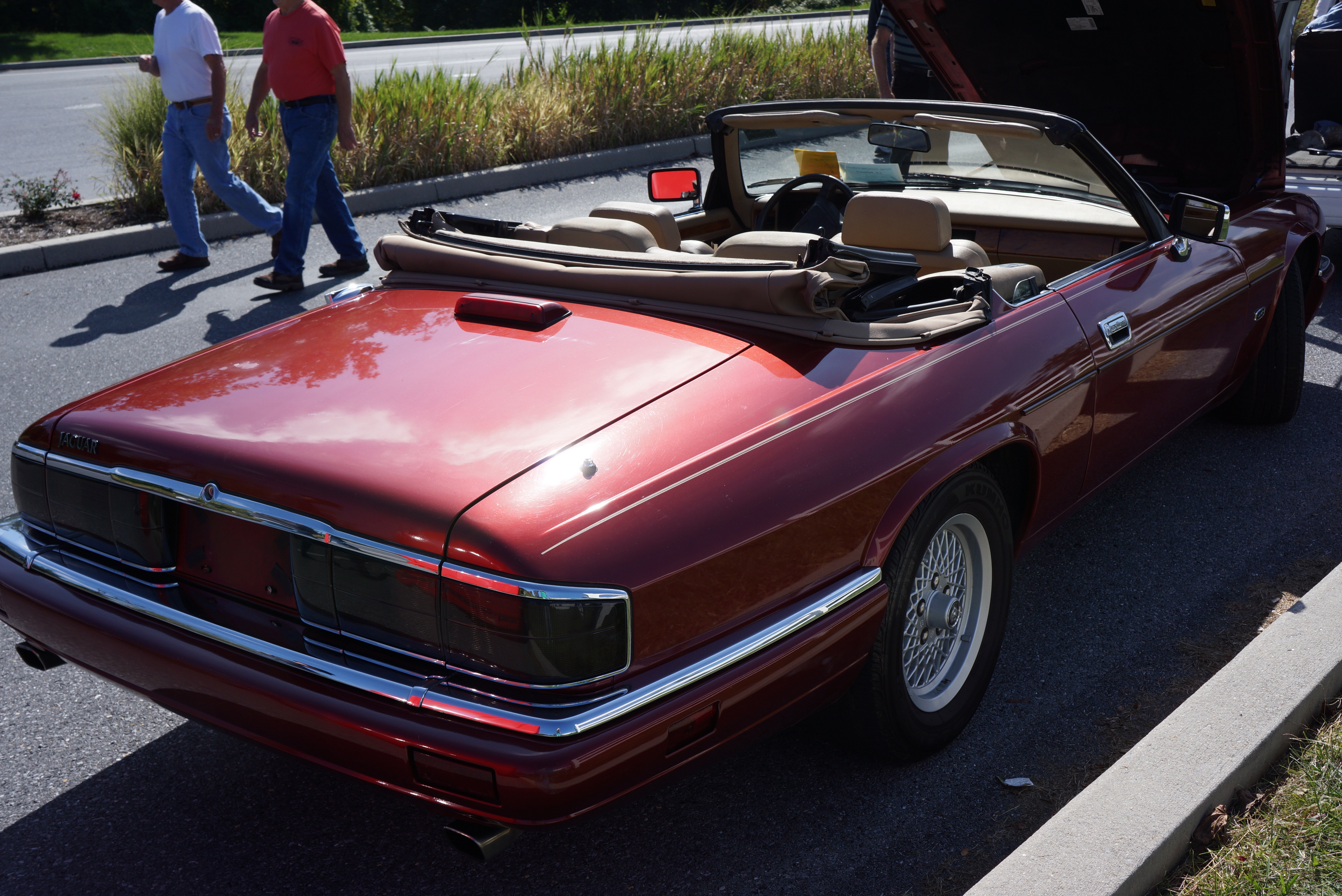
1994 Jaguar XJS convertible
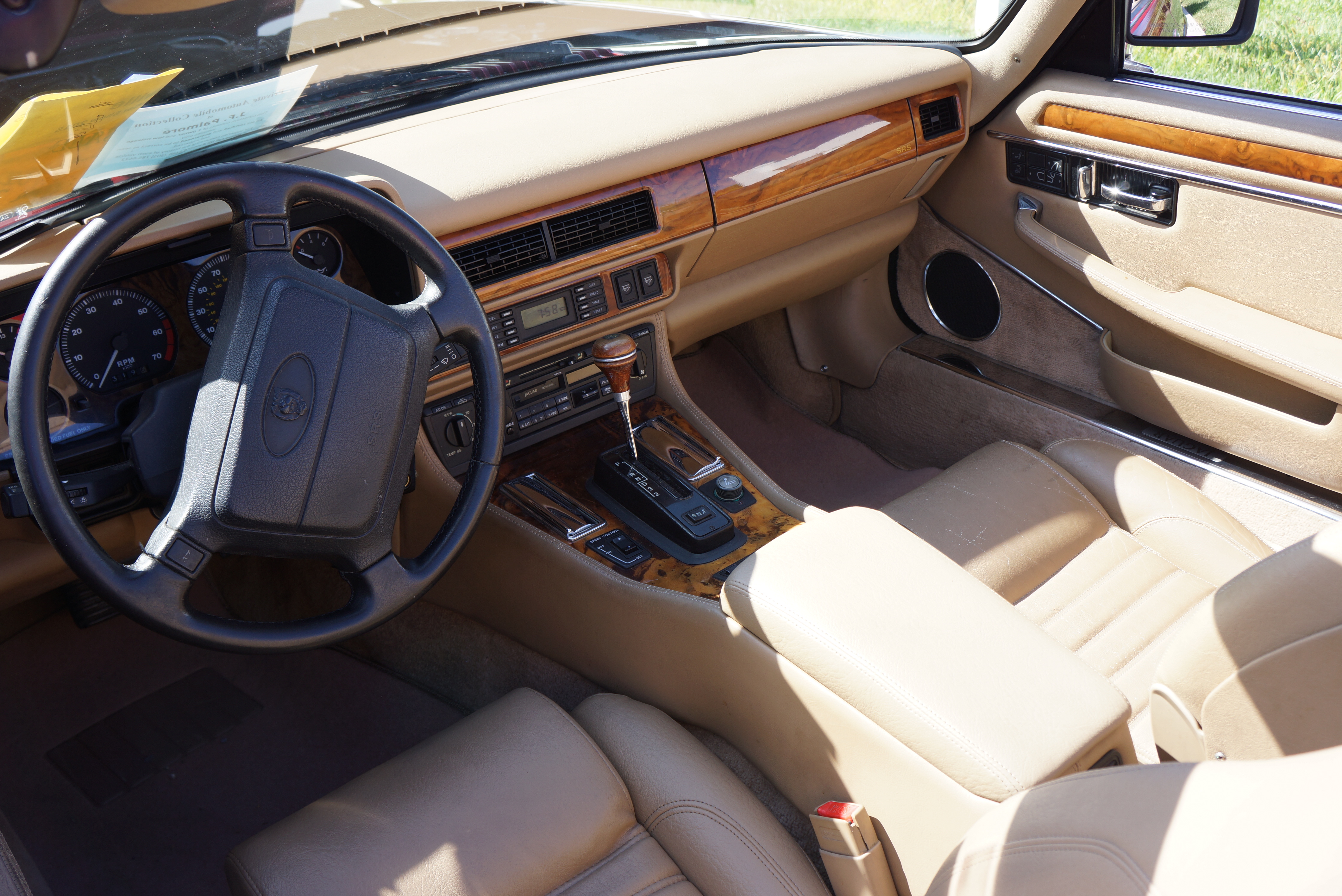
All U.S. XJS’s were automatic
This 1994 Jaguar XJS convertible had the 4.0 six-cylinder engine, but had bad paint, with clearcoat failure on several horizontal surfaces. The ask was $7,850 /offer.
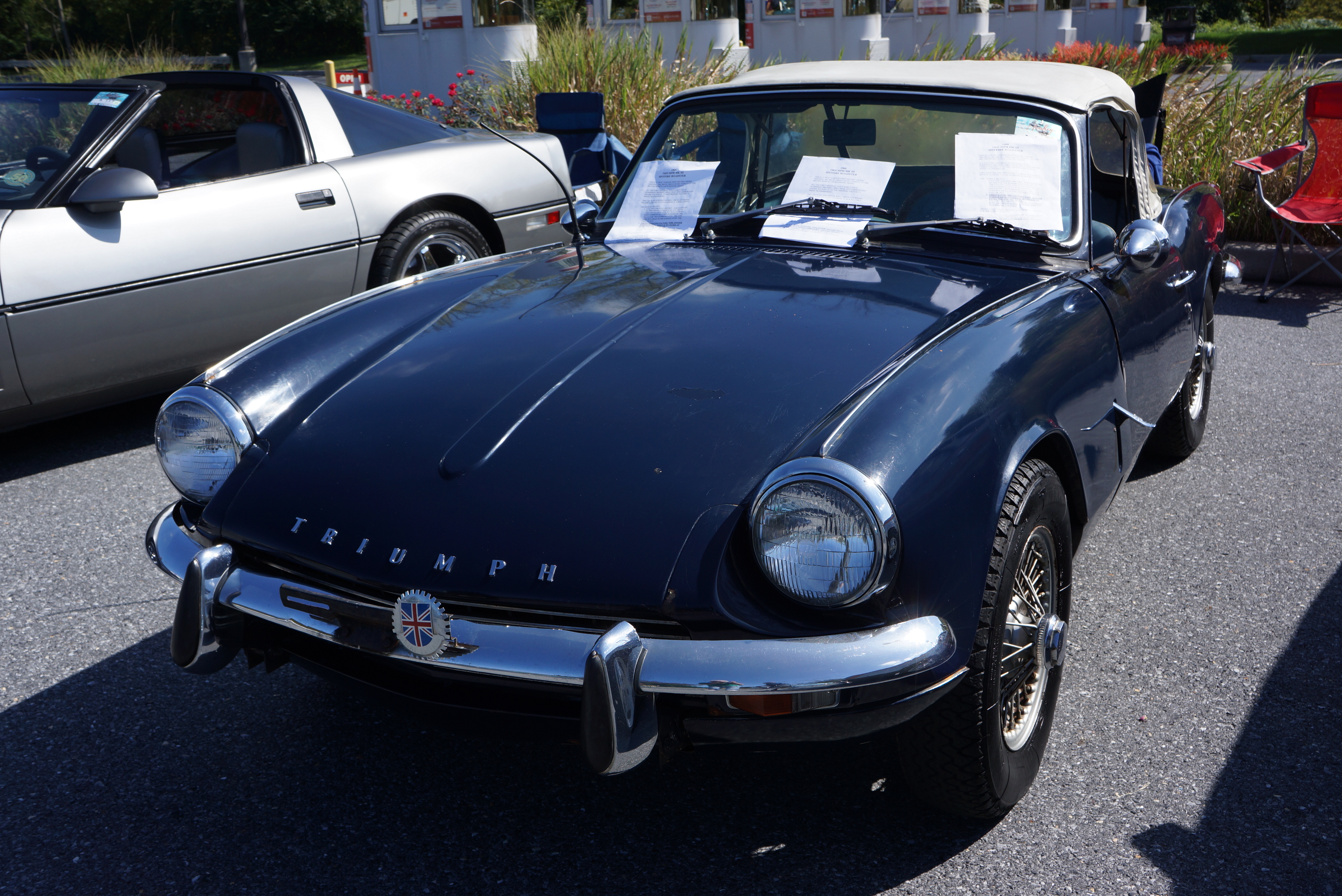
1968 Triumph Spitfire
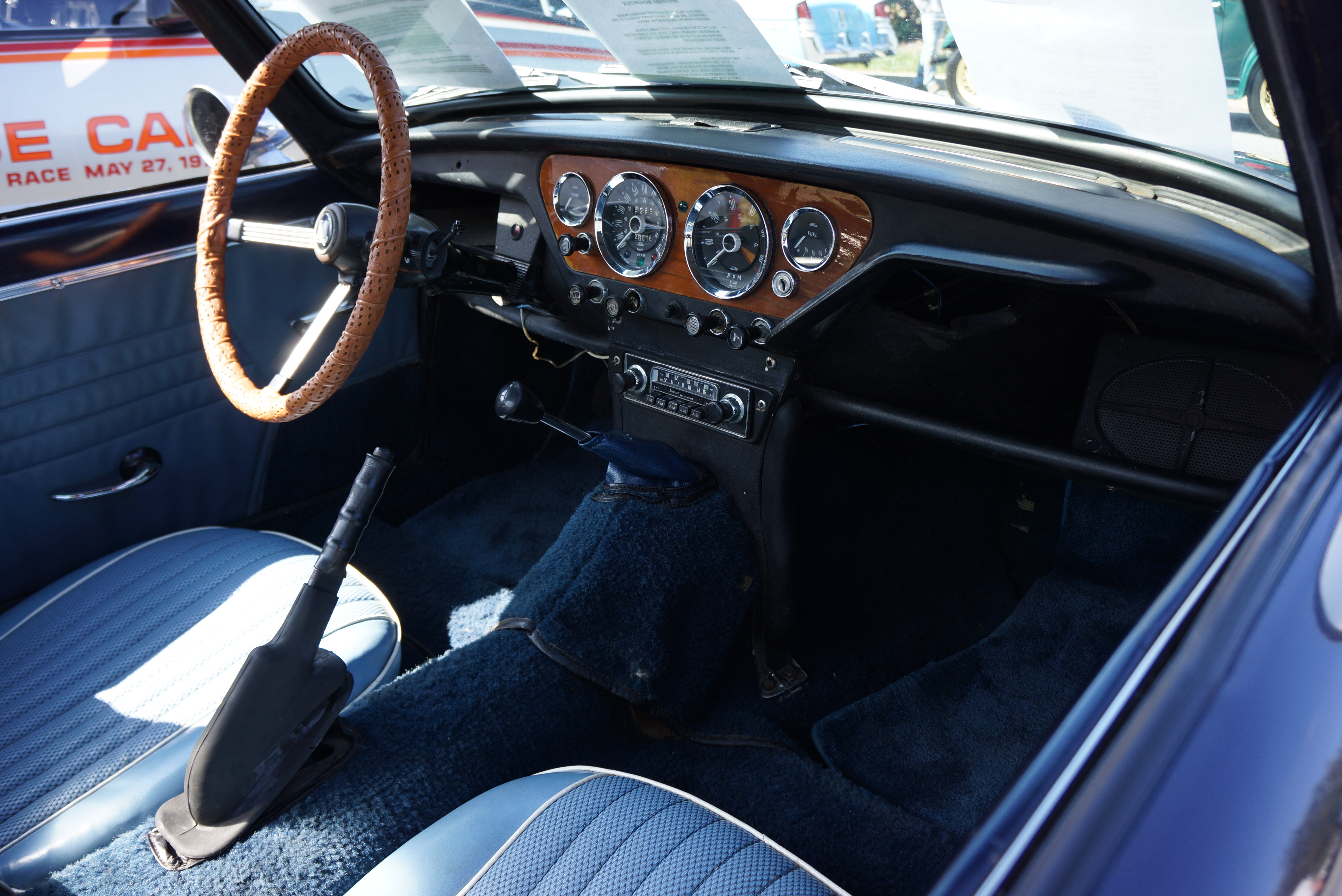
Spitfire interior
It’s rare to see a Triumph Spitfire this old that has not turned into a pile of iron oxide, but this 1968 appeared to be all there. Sure, it needed work, but it looked like you could drive it on weekends and attend to its needs during the week. The sign claimed that this car had been put away in storage between 1986 and 2015, and that accounts for the 28k original miles. The price, you ask? $4,975.
1964 Studebaker Commander
Power-nothing interior
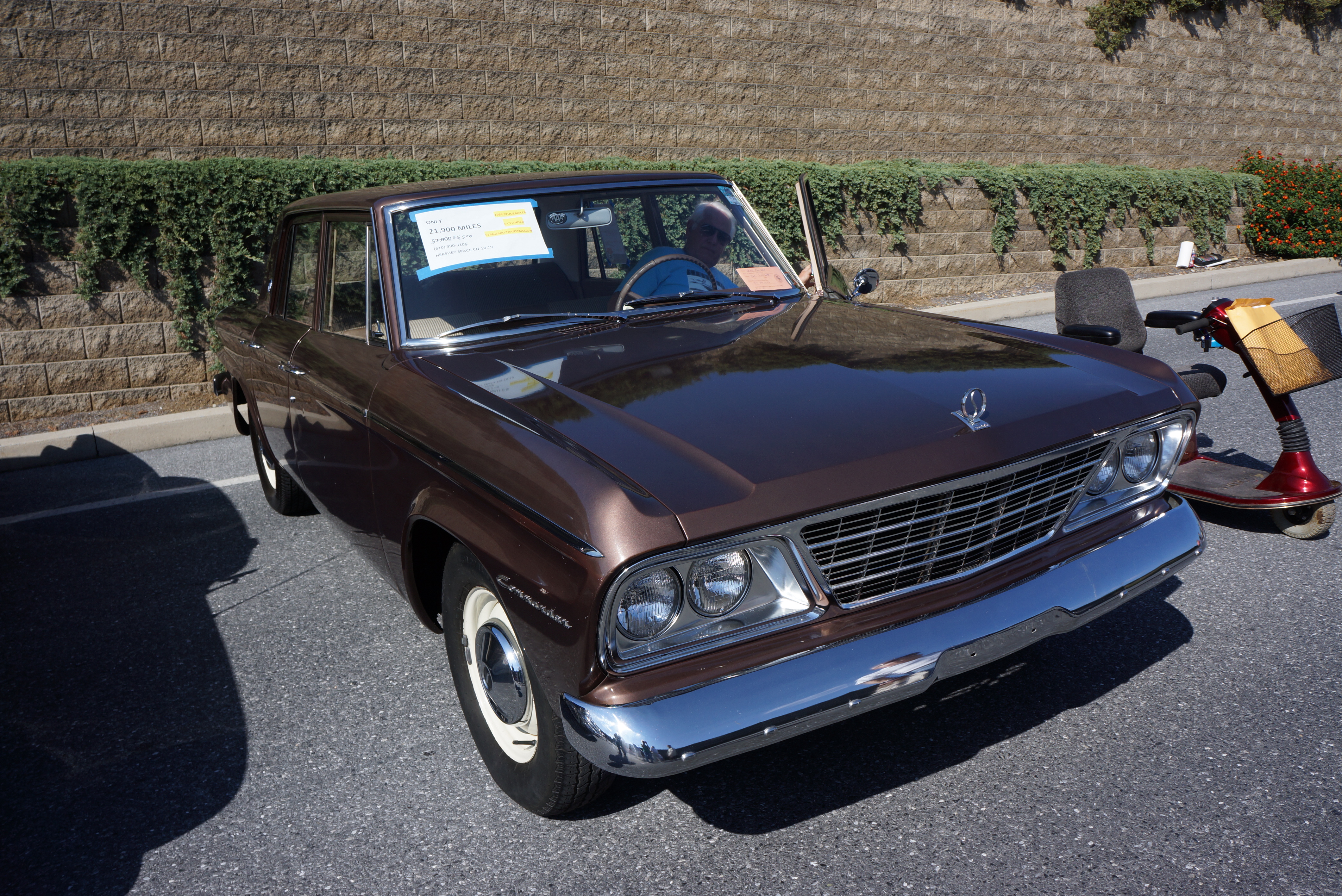
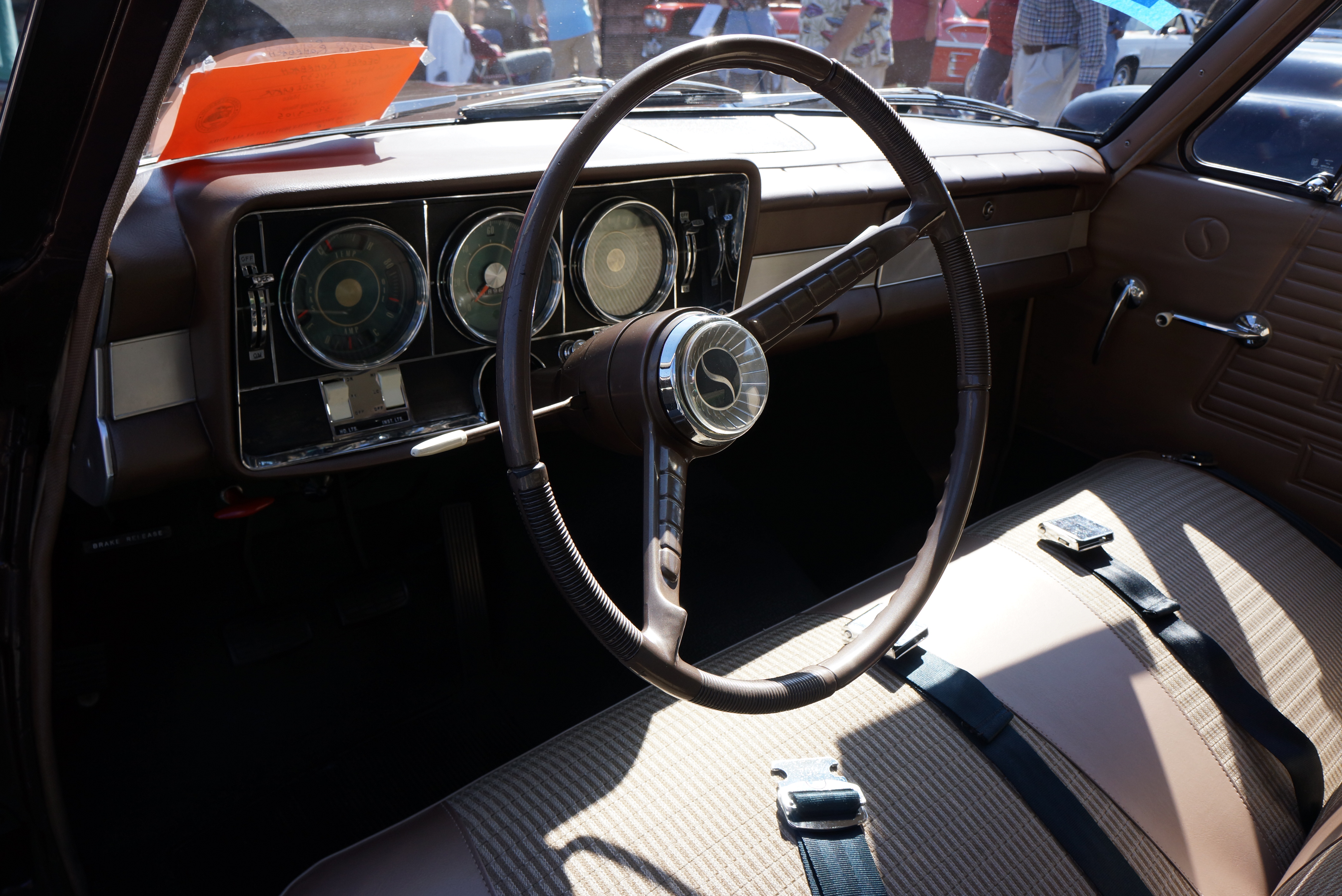
This 1964 Studebaker Commander (in Bermuda Brown Metallic, the same FACTORY shade as the GT Hawk at Carlisle last week) had 21,000 original miles on it, was an unrestored car, and looked it. We had a lengthy discussion with the owner, who pointed out that the only option on this 6-cylinder engine, 3-speed manual car was a cigar lighter. He was asking $5,500.
1972 Triumph TR-6
Nice TR-6 interior, non-original wheel
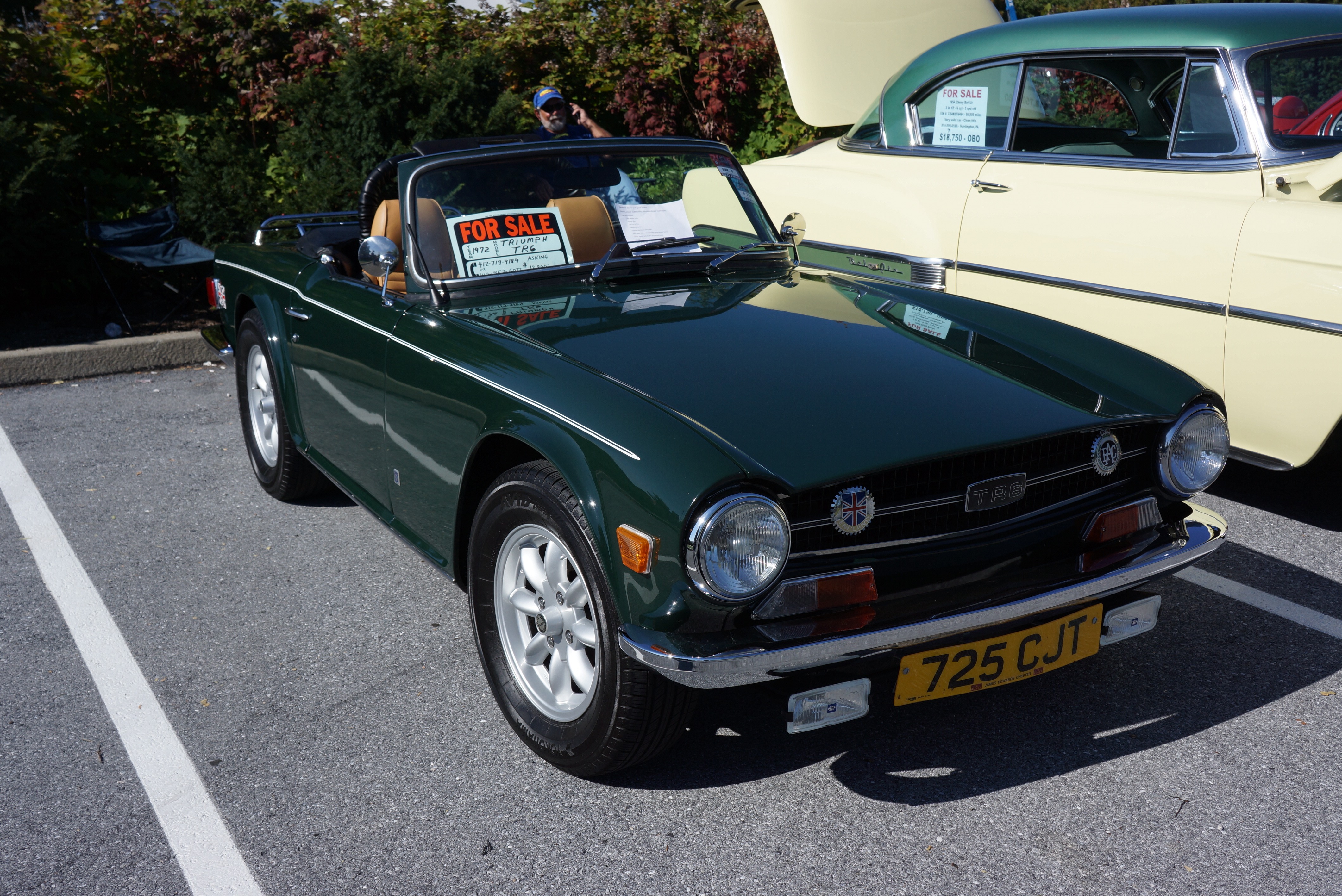
There were several Triumph TR-6s in the corral, and this was one of the nicer ones. A 1972 model has the smaller bumpers, and this green-over-tan car was nicely set off by oversize tires on Panasport wheels. The mods continued under the hood with dual Webers. It was cosmetically spotless. The owners were asking $12,900.
1958 Triumph TR-3
TR-3 interior; keep your arms in
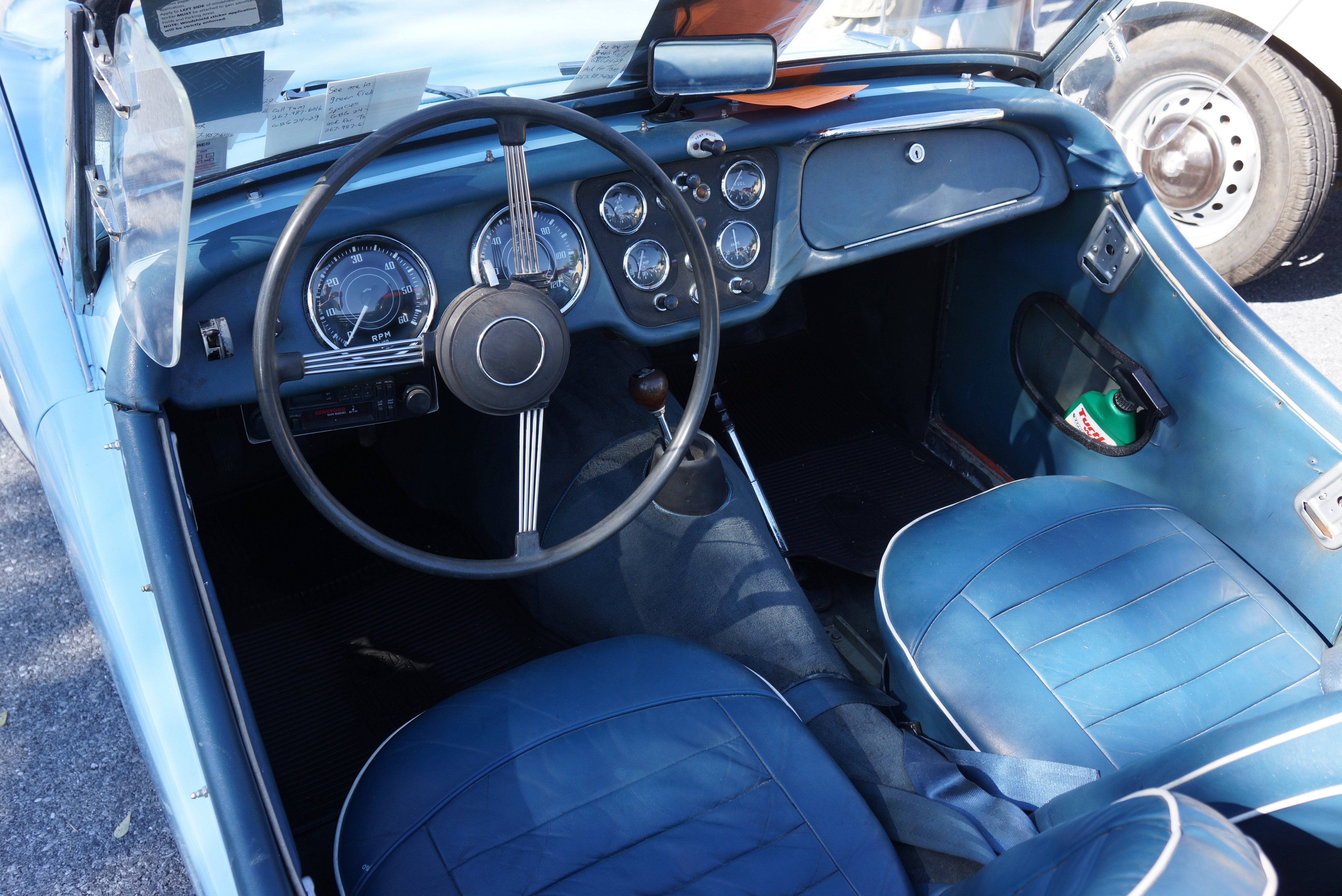
This 1958 Triumph TR-3 was in baby blue over a medium blue interior, with whitewalls on chrome wires. It looked like you could hop right in and go for a cruise. This “older restoration” was for sale for $17,900.
1966 Lincoln convertible
Last of the American 4-door ‘verts
This 1966 Lincoln Continental convertible was parked next to an identical model from 1965. It was interesting to note the styling changes, both inside and out, with my vote going to the ’66. This one was cosmetically less attractive, but it had the more reasonable asking price of $20,000.
1971 Jaguar E-Type Series III
All Series III cars had longer wheelbase
This 1971 Jaguar XKE Series III coupe, again in Primrose yellow, was claimed to be a 97,000 mile unrestored car (you may have noticed the continuing trend toward “unrestored / all-original / barn find” cars for sale). All Series III cars rode on the longer 2+2 wheelbase and used the V-12 engine. This one was a stick (many Series III cars were automatic). There were rough spots, but it was about as reasonably-priced an E-Type as you’ll find for $39,000.
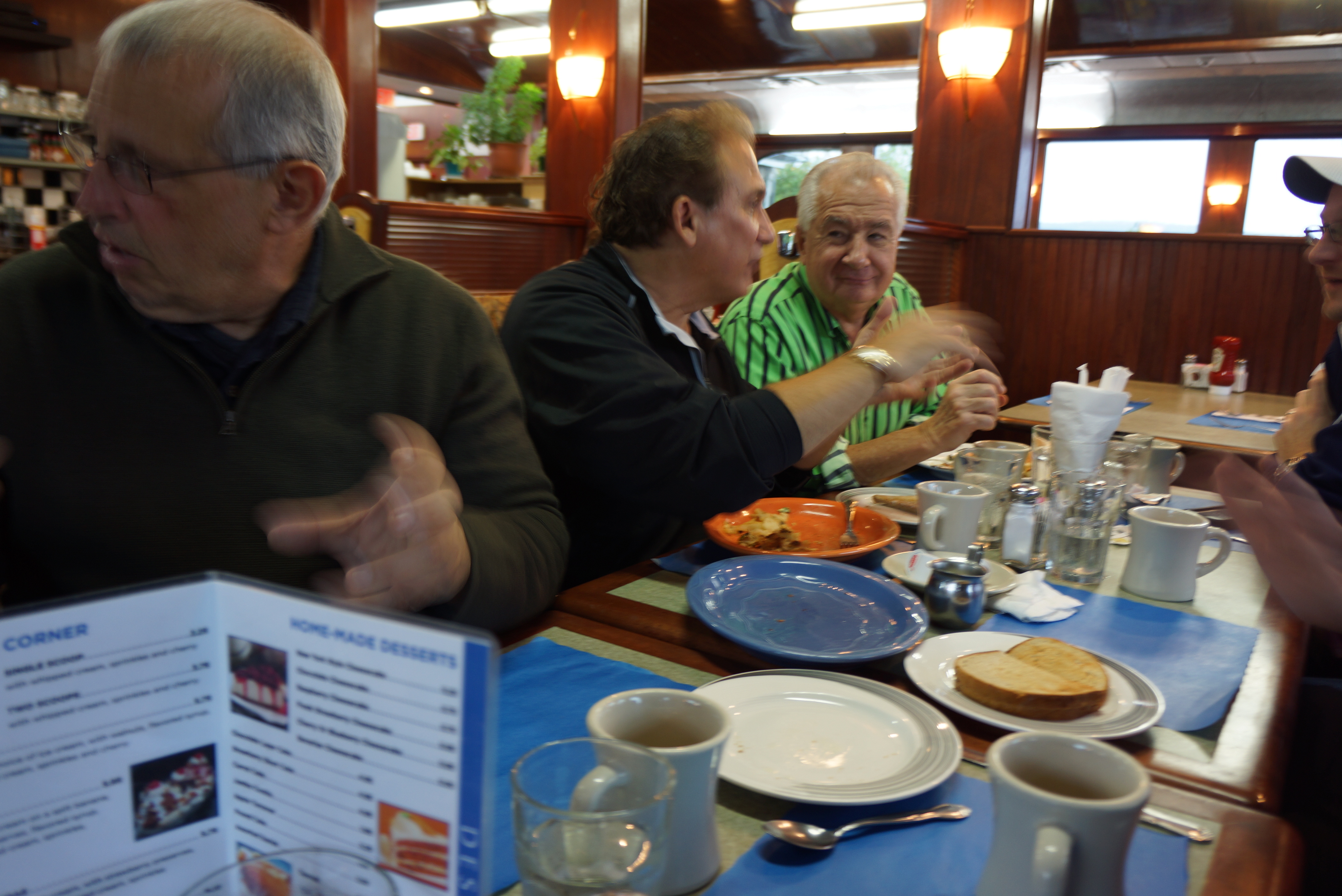
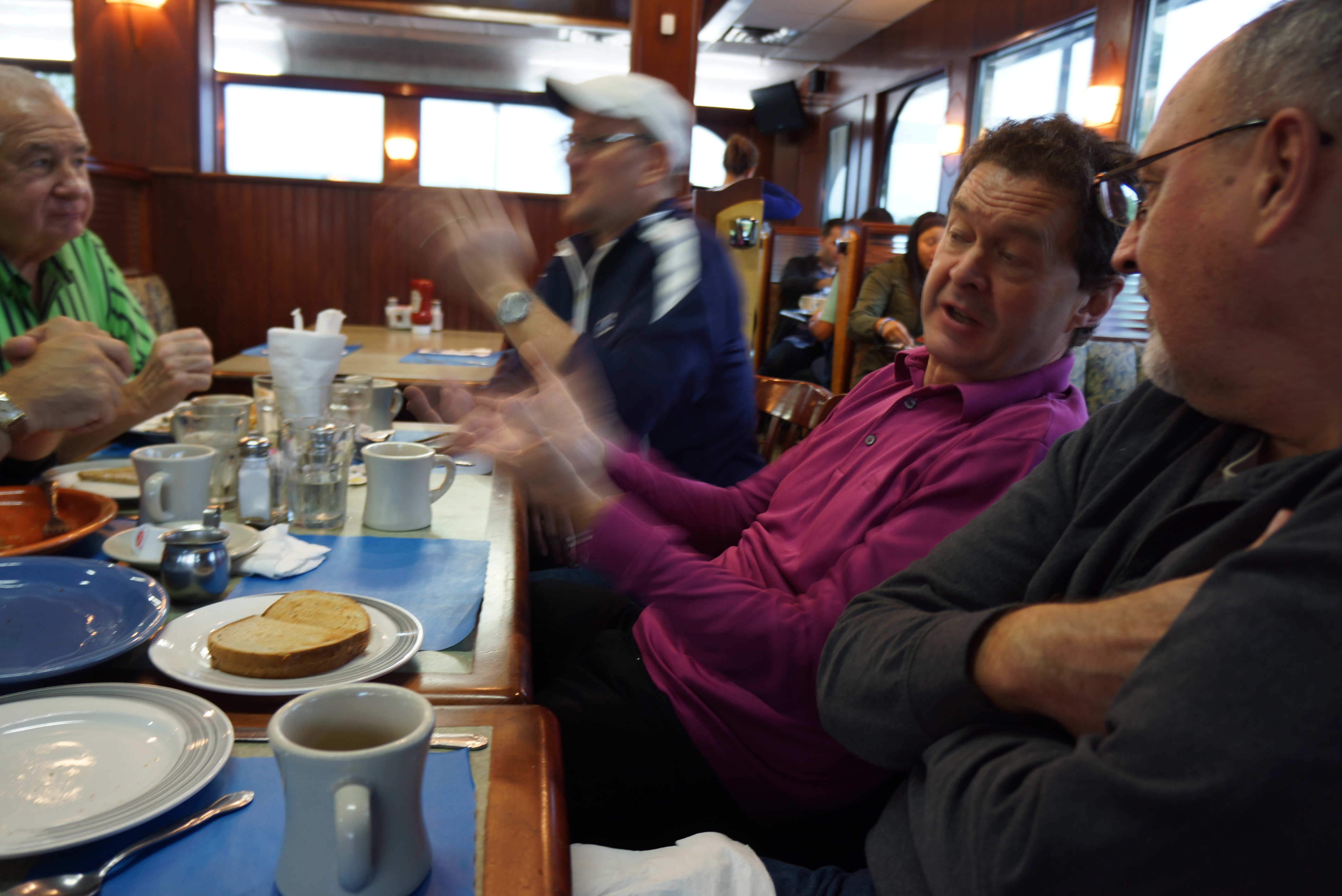
We had an excellent turnout for our early October outing, with 16 like-minded friends willing to venture out in spite of a gloomy forecast (for the record, it didn’t rain during the drive). All in, we had 12 classic cars, 2 modern Volvos, plus a motorcycle! Several first-timers seemed to like it well enough that they’ve threatened to show their faces again.
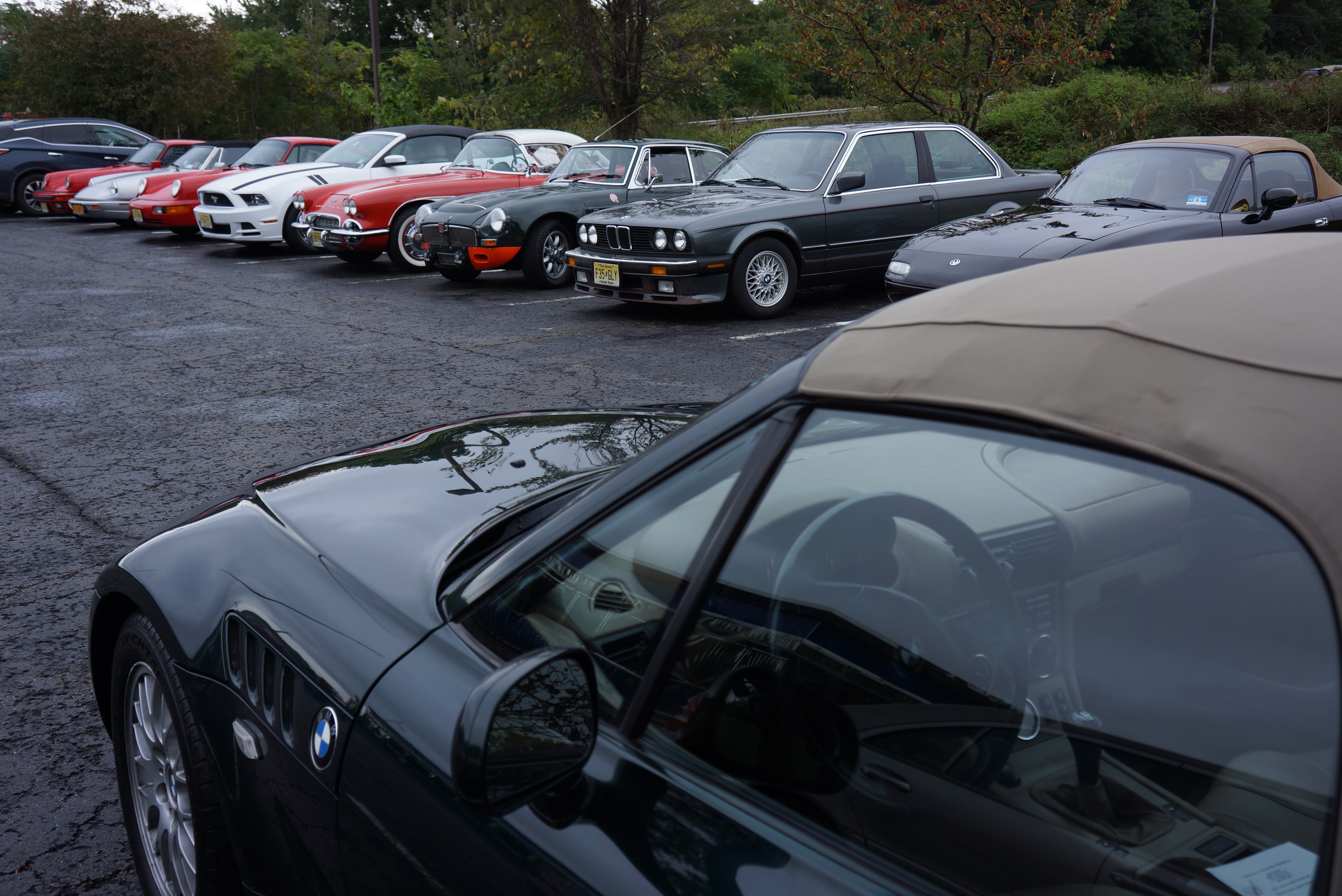
You could be forgiven for looking at the photos and thinking that this was a meeting of the local Porsche 911 club, what with four of them (three red) among our assortment. We still had a fine mix of American, British, Italian, Japanese, and other German cars, old and new.
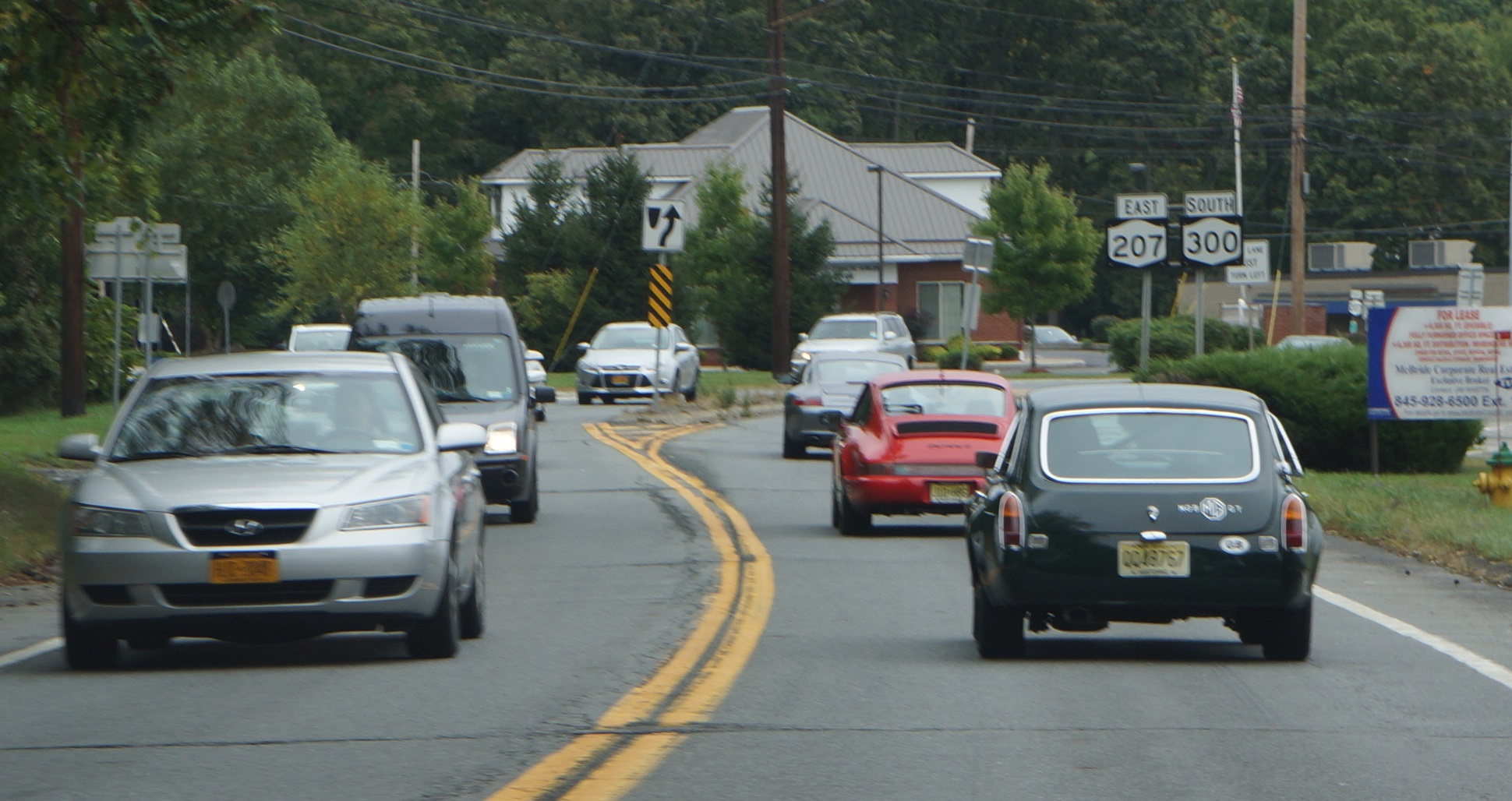
Our ride this day took us north from the Sheraton in Mahwah, along Greenwood Lake, and eventually to New Windsor, NY, where we dined at the Ikaros Diner. The diner staff had a table waiting for us, and somehow, in spite of constant blabbering, we also managed to consume food and coffee.
The diner’s parking lot made for an excellent staging area for group photos. (Thanks to Bill W and Andy M for the panorama photo of us). We must be doing something right, because at the end of the event, most everyone wanted to know when we’re going to do this again. It must be the coffee.
Ken’s RED 911
Peter’s RED 911
Dave’s RED 911
Ted’s NON RED 911
Jeff’s BMW Z3
Enzo’s Alfa Spider
Nick’s Mustang
Bill’s C1 Corvette
Sal’s E30 BMW 3-Series
Tim’s MG-B/C/V8-GT
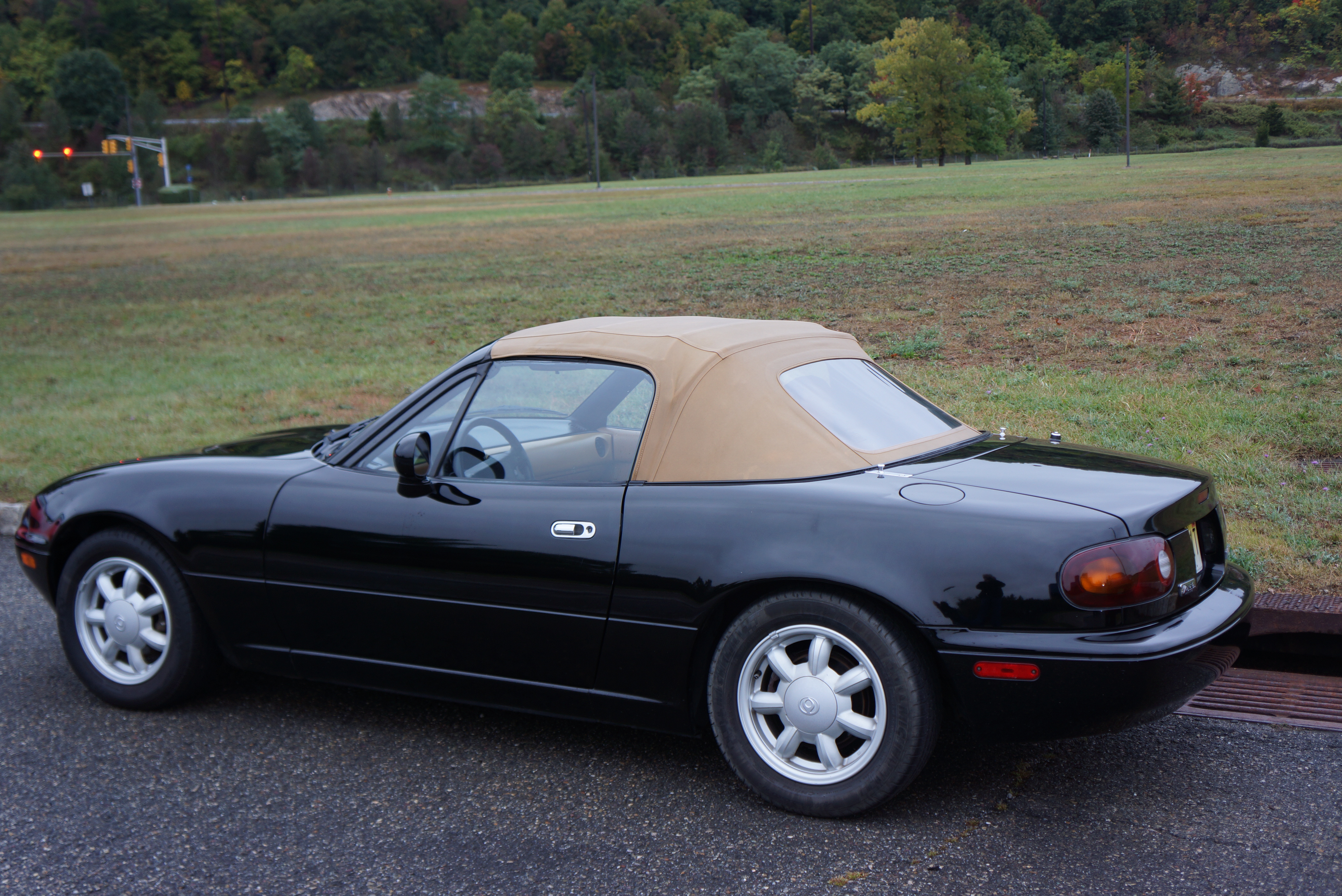
Your author’s Miata
Red Porsche in front, red Porsche in back
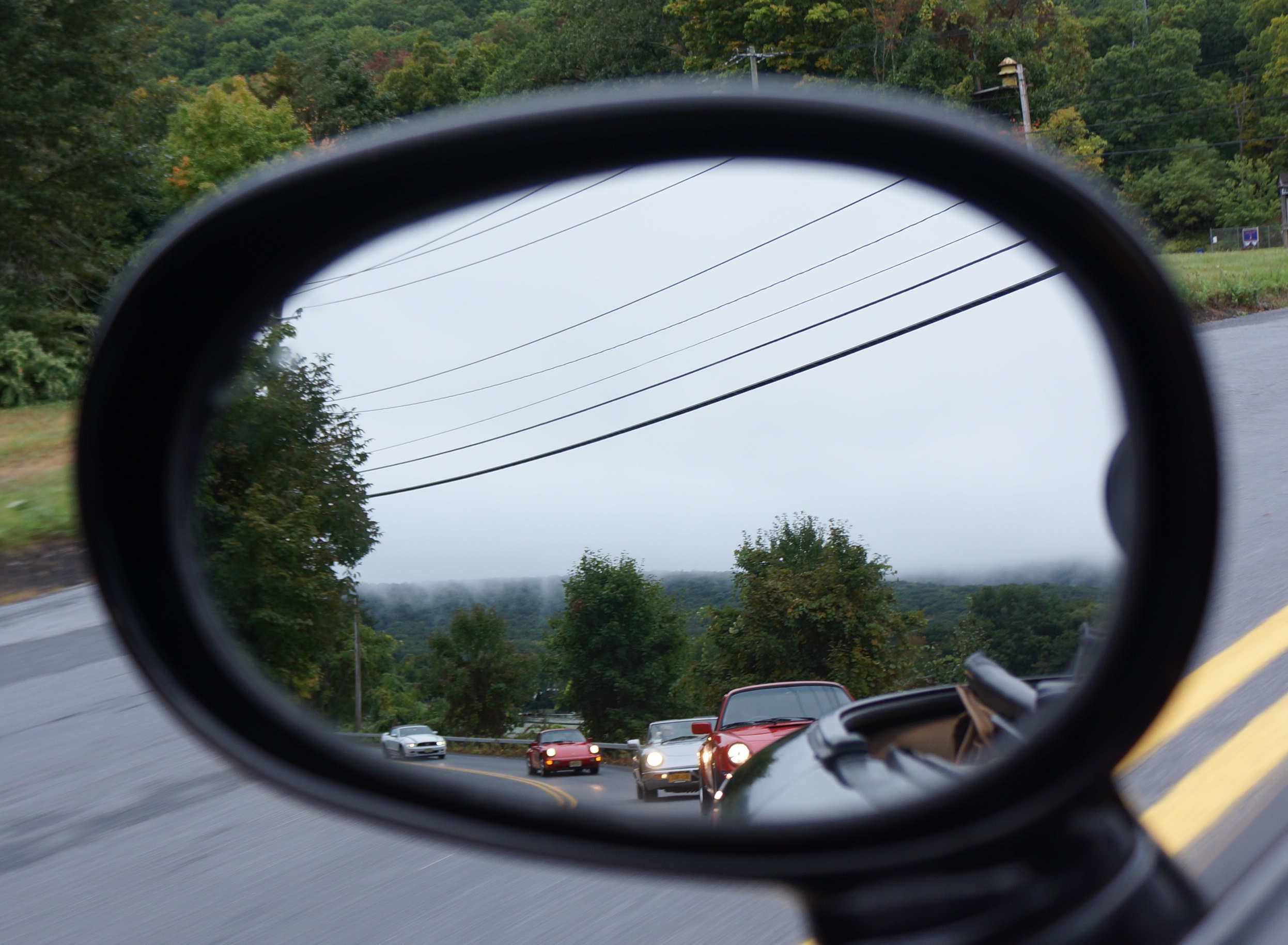
Porsche, Alfa, Porsche, Mustang in Miata mirror
“I turned left when you went straight”
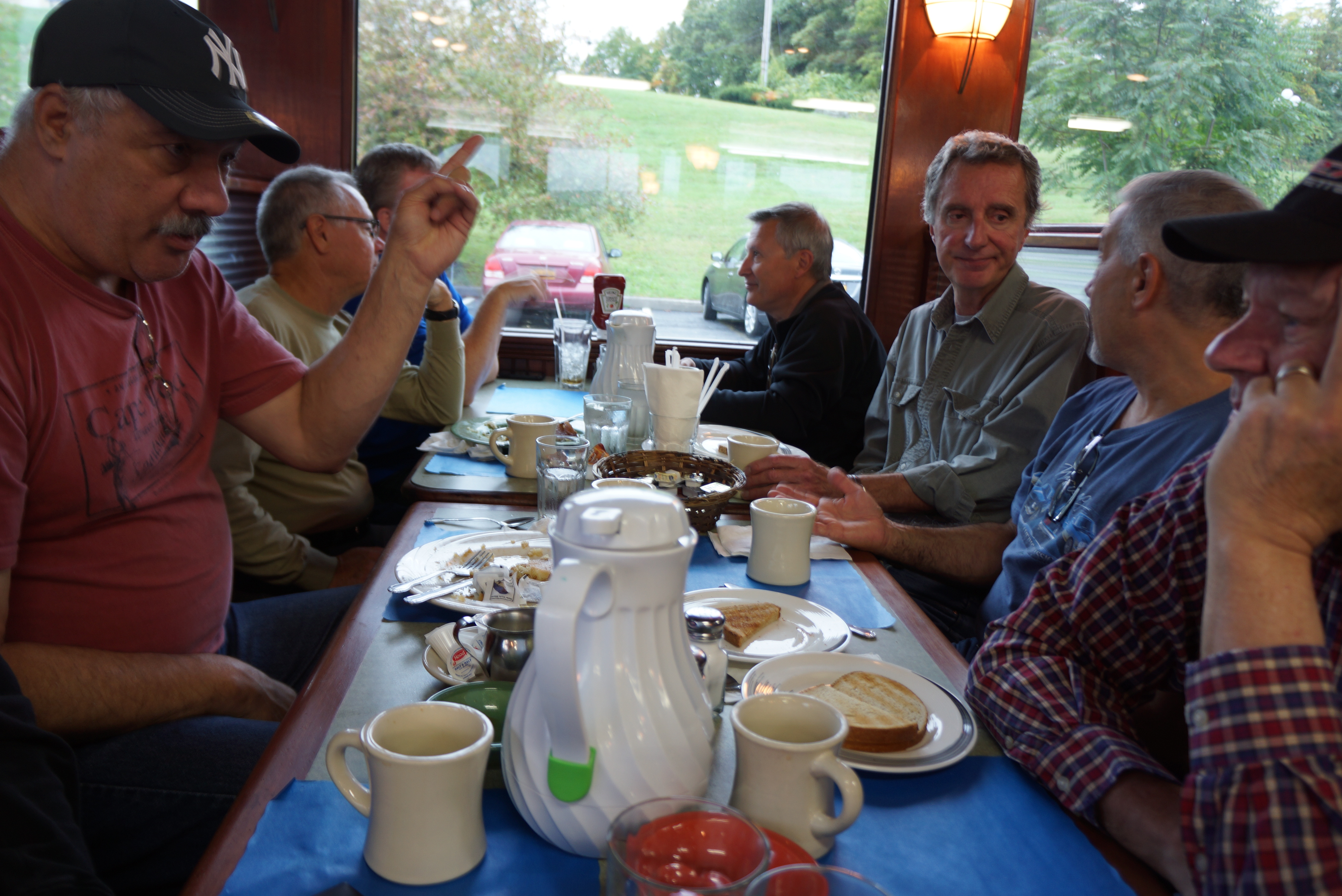
Proof that men…
… talk with their hands
The Z3 serves as a nice foreground
As does Richard’s Jaguar F-Type
“I gotta get over there, they’re talking about me”
The good men and women of Carlisle Auctions worked very hard this year to put on an exceptional show for bidders, consignors, and attendees, and they succeeded. Compared to just six months ago, the improvements in organization were obvious.
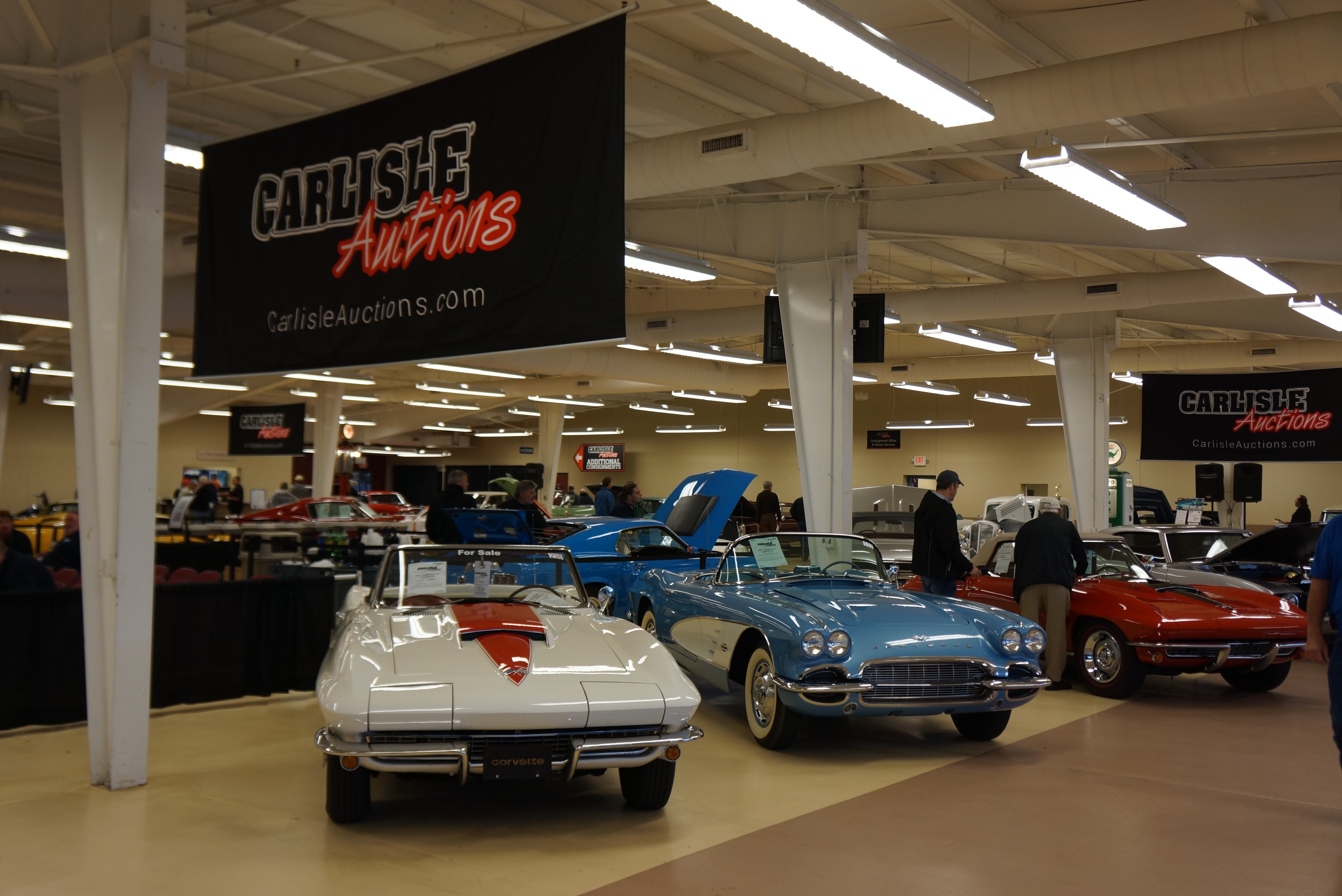
Prime meat gets to sit inside the Expo Center.
For example, run sheets for both Thursday’s AND Friday’s cars were out early Thursday morning. (At the Spring 2016 event, Thursday’s run sheets were put out about one hour before the auction began.) For the first time, a large tent was erected to showcase some of the higher-end cars, and the tent had a pass-through directly to the main building.
A tent! Welcome to the big leagues, Carlisle.
The quality of the consignments seemed better to this observer, with fewer late-model “just used cars”, and fewer highly-modified rides which have limited appeal. The proof of the higher-caliber merchandise showed in what is guesstimated to be an 85% sell-through rate, much better than their recent auctions. Perhaps Mecum’s presence in Harrisburg has caused the organizers to step up their game.
The one thing the auction team could not control was the weather. After an entire summer season of hot, dry days, Mother Nature decided that Fall Carlisle would be an excellent time to bring in the rain. Fortunately, the forecasters were slightly wrong, as Carlisle only had a bearable on-and-off drizzle.
We’re trying a novel way to report sales, and that’s by grouping sold units in price ranges. Some of the notable no-sales are also reviewed below. As always, click on any photos to enlarge them, and your comments are welcome, especially your thoughts on which cars were good deals.
UNDER $5,000
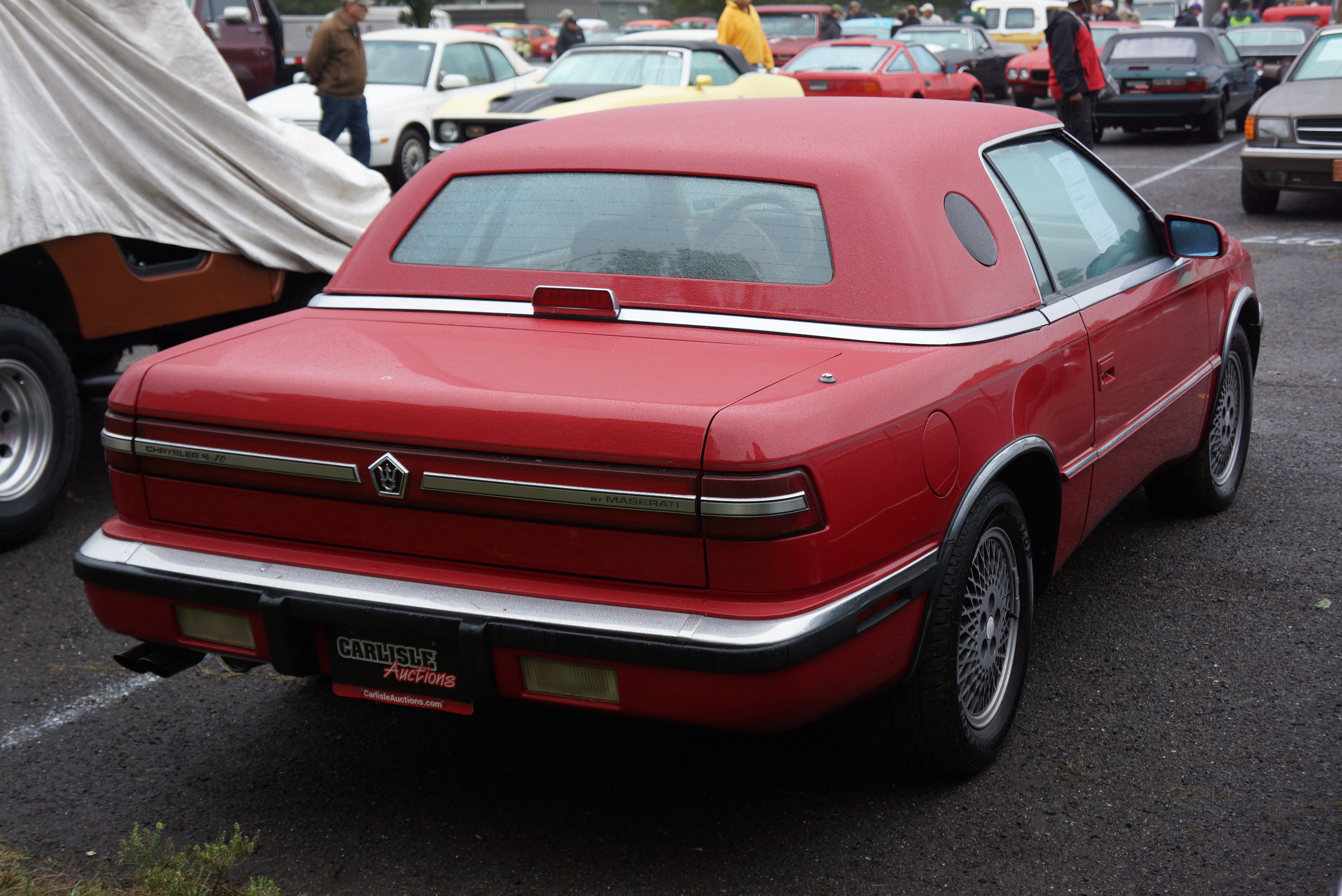
Lot #T103, 1990 Chrysler TC by Maserati, Red with tan leather, removable hard top, 92,000 miles, V6.
Looked too much like the LeBaron
Yes, that top comes off
Fine Italian leather has not held up
Sold for $1,800.
Exterior showed no glaring defects, interior very worn. The collector world does not want these. If you bought it, you could tell your friends you bought a “Maserati” for under 2 grand. Be thankful they didn’t name it The Lido.
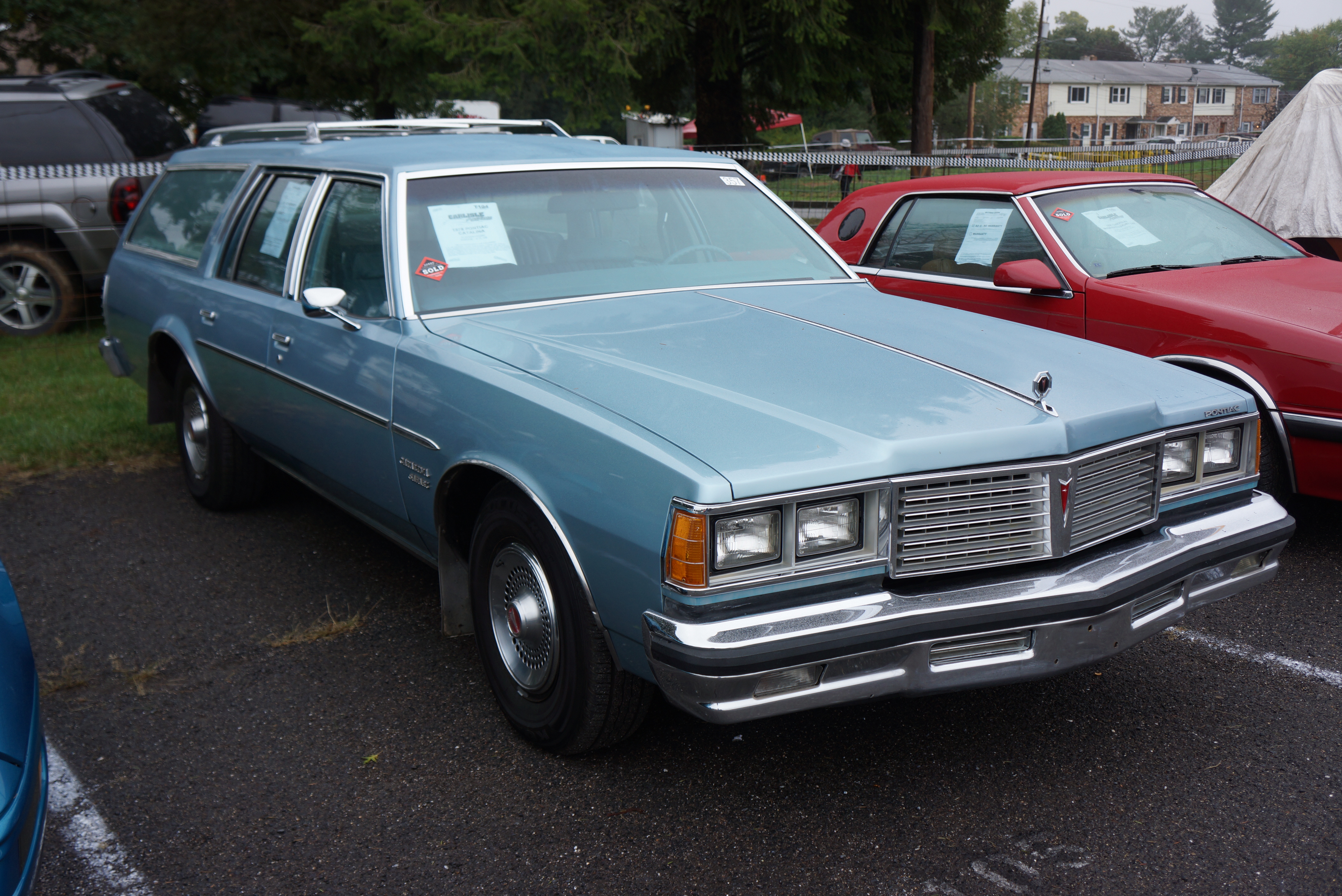
Lot #T104, 1978 Pontiac Catalina station wagon. V8, automatic. Bland blue in and out. Shows a believable 74,539 miles. Worn, but not worn out.
Looks like a Pontiac up front
Shared body with the Chevy wagon
Interior supports mileage claim
Sold for $1,900.
With styling as bland as could be, and colors which do nothing to overcome that, this was still a steal for any fans of GM long-roofs. Looked like it had lots of life left.
Lot #F311, 1999 Mercedes-Benz SLK 2-door retractable hardtop-convertible, silver, black interior, V6, automatic, 147,000 miles.
The Mercedes SL as mini-me.
Sold for $3,300.
So cheap, you could drive it for a year, and once something big broke, just throw it away.
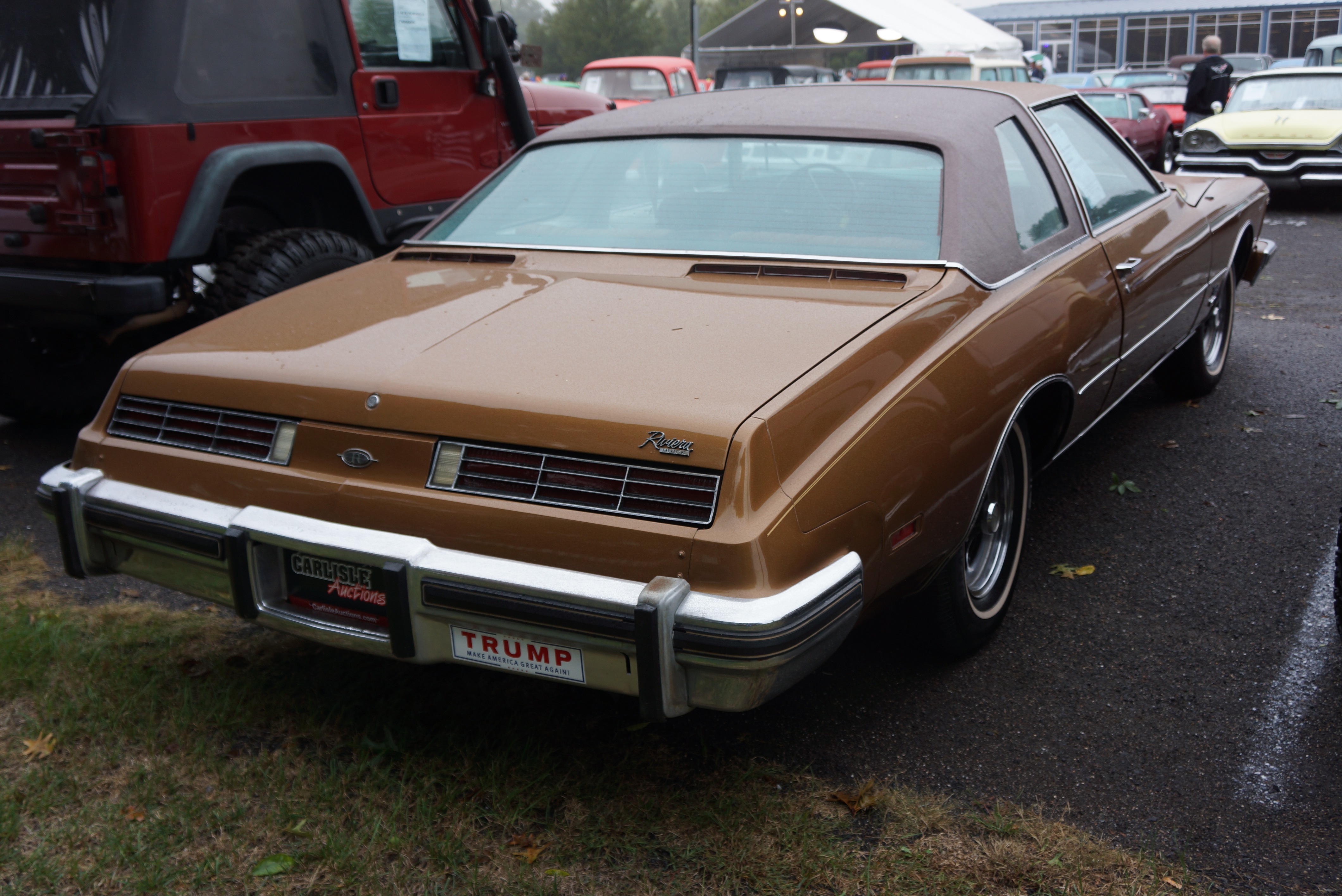
Lot #T111, 1974 Buick Riviera, gold metallic paint. Interior once was beige; someone thought it a good idea to install red velour seats. Mileage reads 74,539, could be real.
Similar to ’73 styling up front
Were the original seats that bad?
Hint of bustle-back to come
Sold for $3,300.
First year Riv after the controversial boat-tails, now with quite a conservative look. Even at this price, this is only for the true Buick aficionado. No extra charge for the bumper sticker.
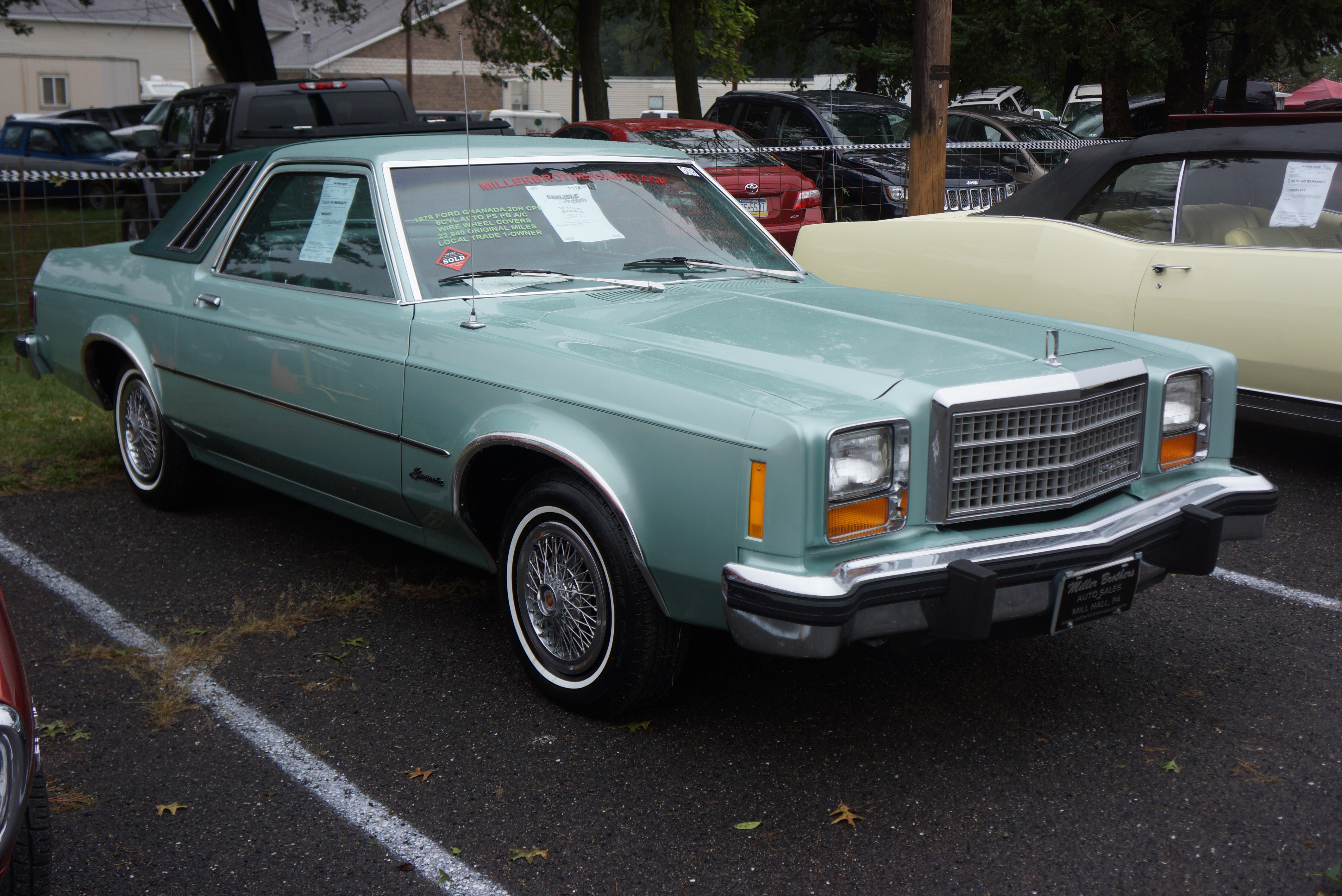
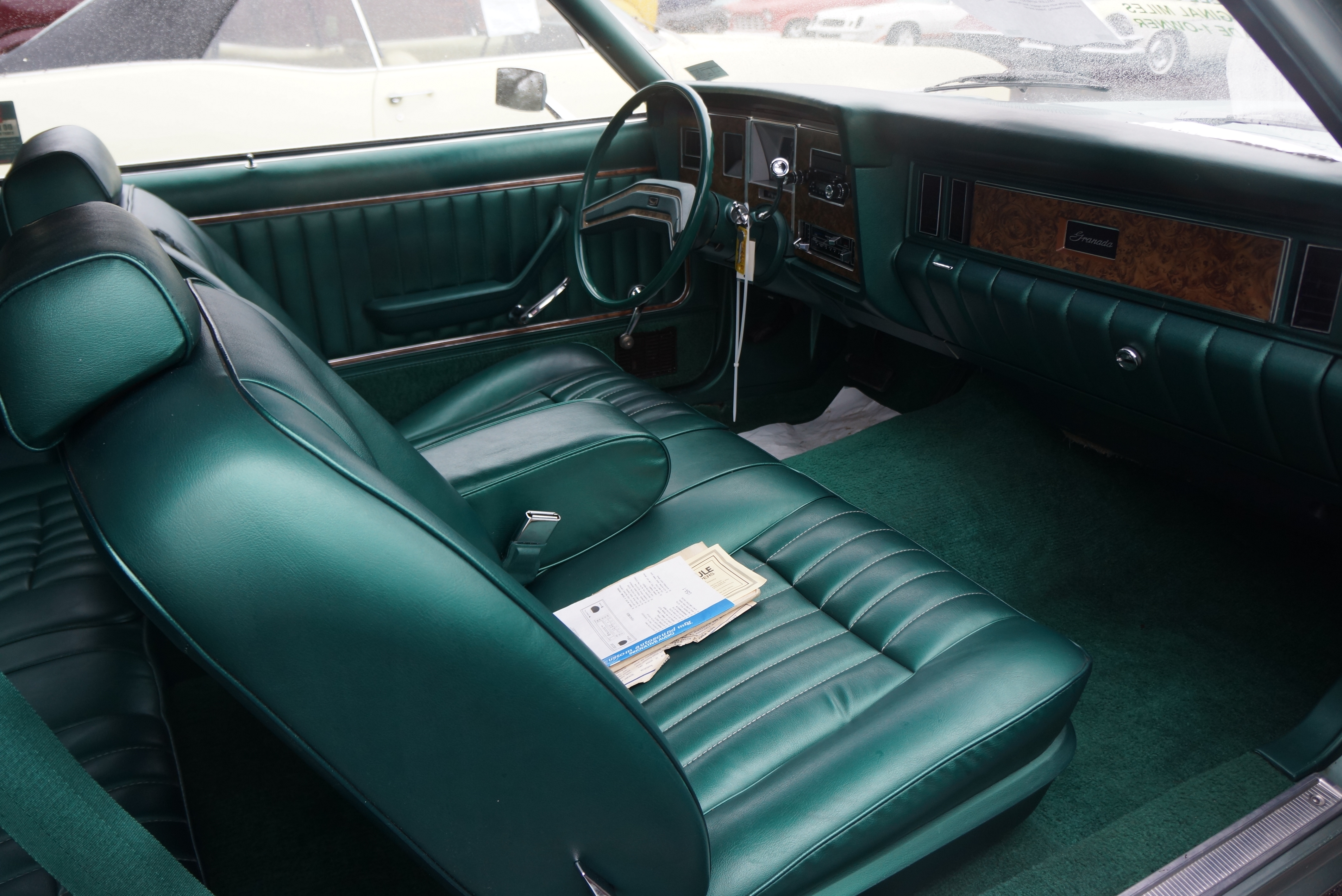
Lot #T114, 1978 Ford Granada 2-door, triple green, 22,000 original miles. Looks brand new.
Attempt at Euro-elegance circa 1978
Remember opera windows?
The interior is GREEN
Sold for $4,250.
Someone salted this one away. Among the many cars at this auction claiming low miles, this Granada was one of the few that looked the part. Even though I like green, I can’t get over that interior shade. So you bought this for under $5,000 – what do you do with it?
$5,000 TO $10,000
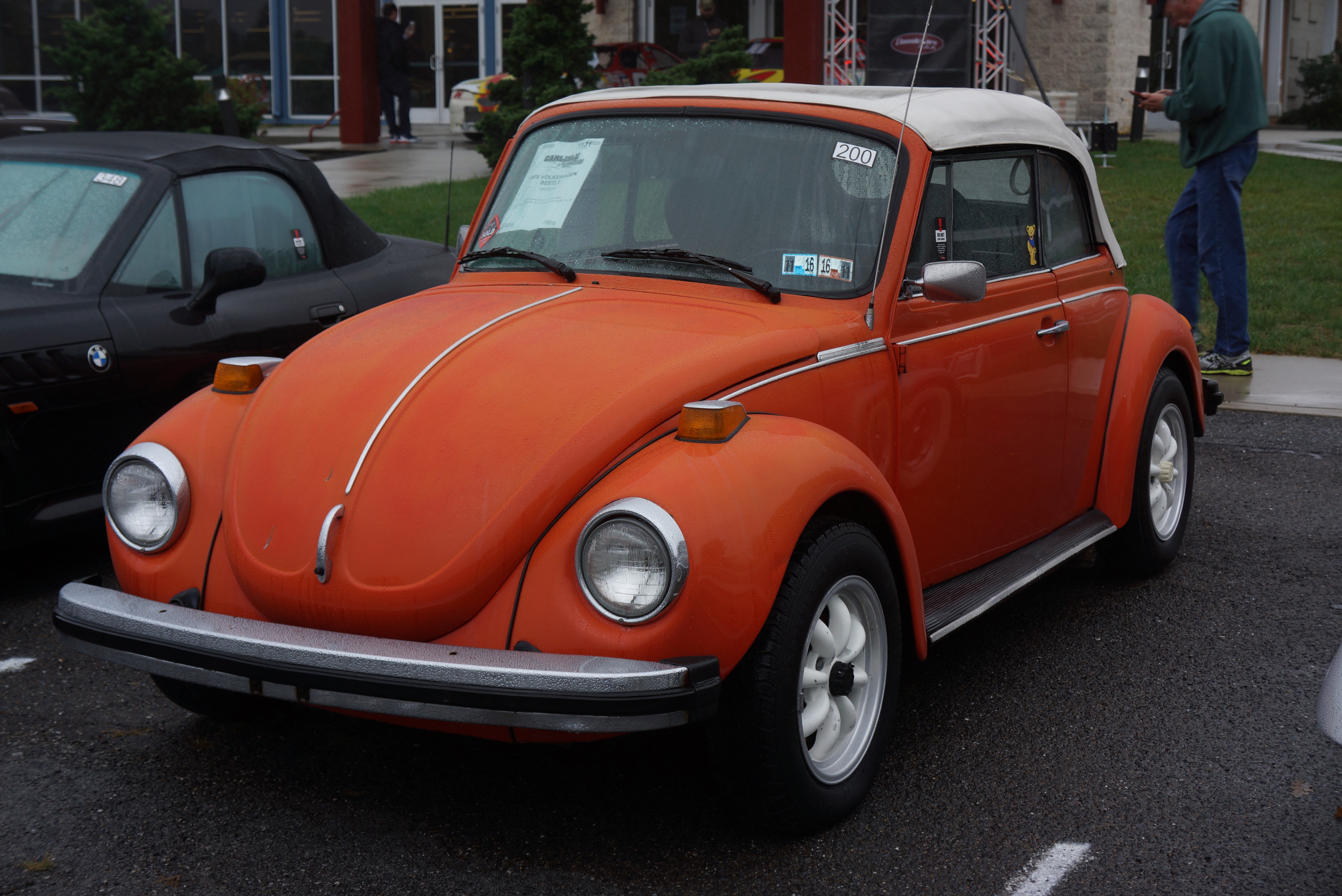
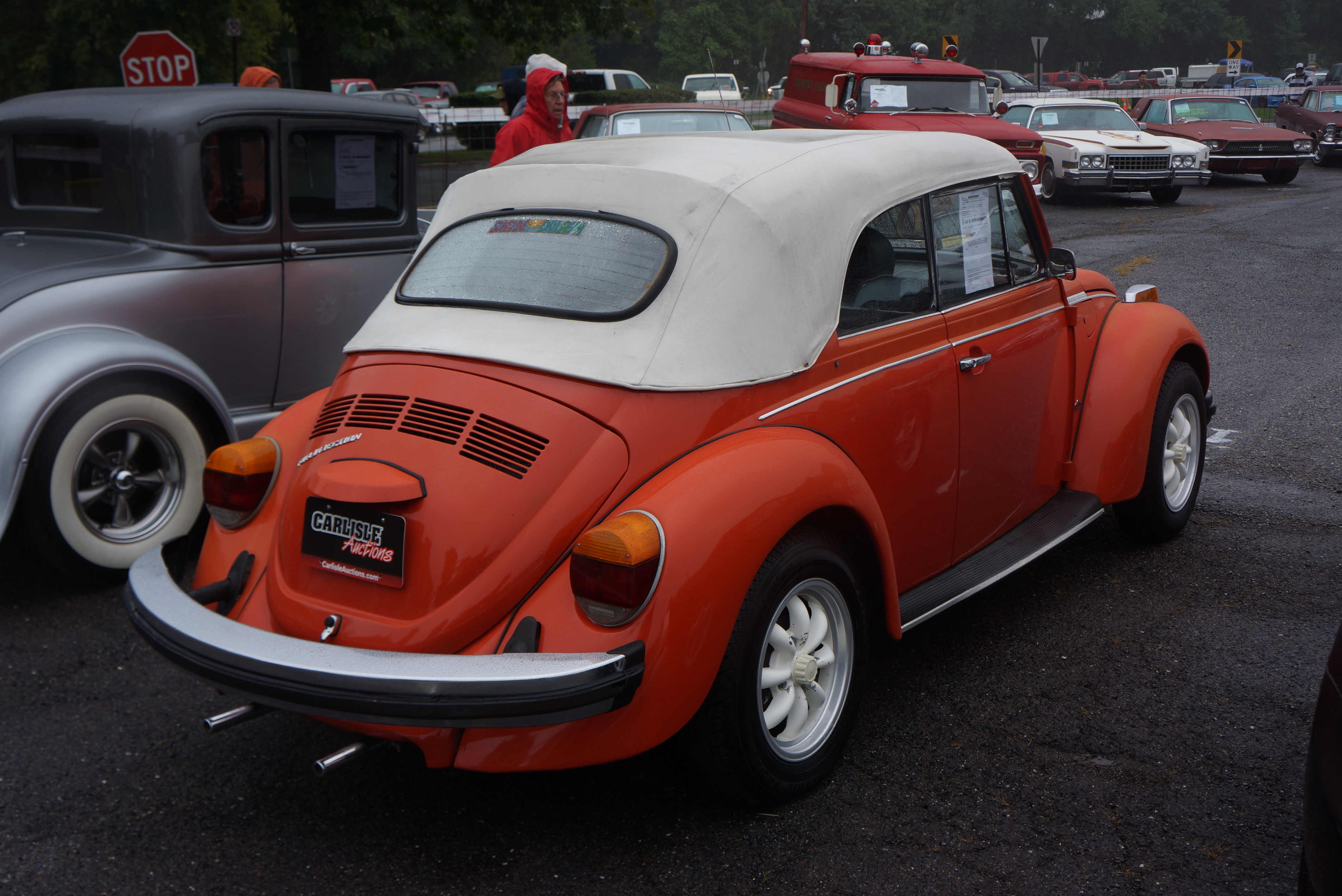
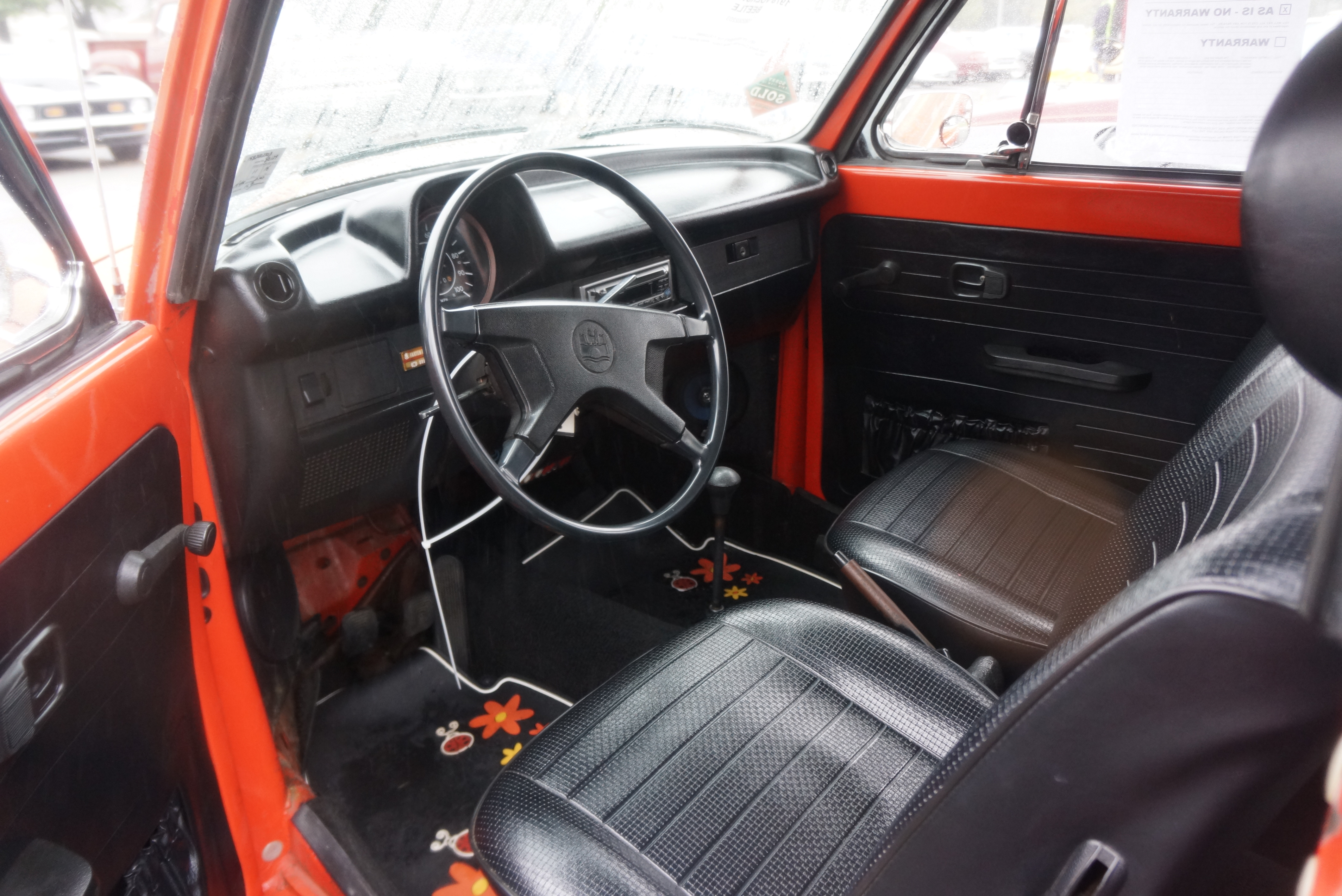
Lot #T131, 1978 VW Beetle convertible, orange, white top, white painted alloy wheels, black vinyl seats.
2nd to last year for Beetle drop-top
Wheels match top, but are still ugly
Note later style dash
Sold for $5,750.
While I did not examine this car closely, it appeared to be solid, with good paint and a good top. The white painted wheels must go, but that’s an easy fix. Sold for about half book price, perhaps because this audience wants muscle cars.
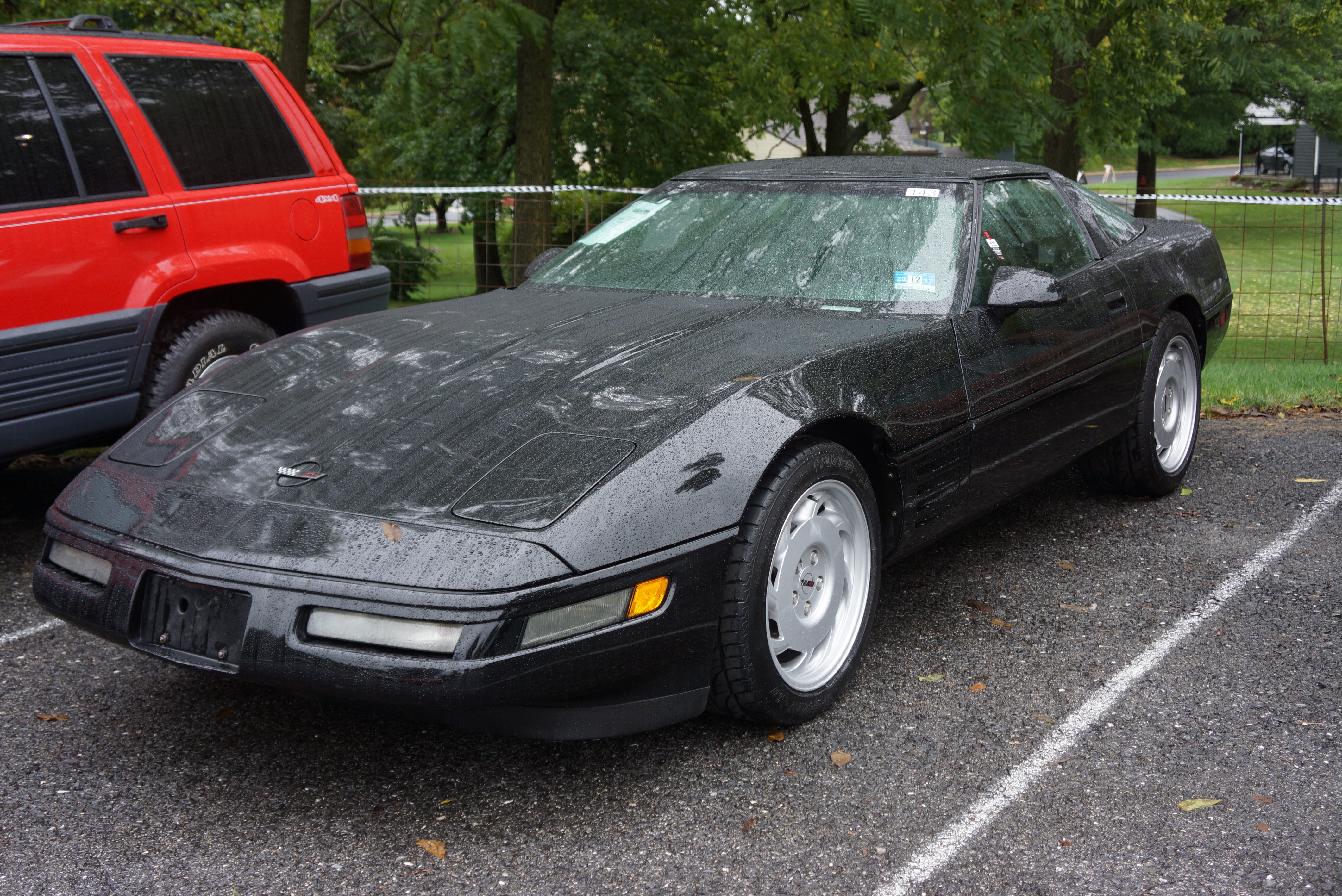
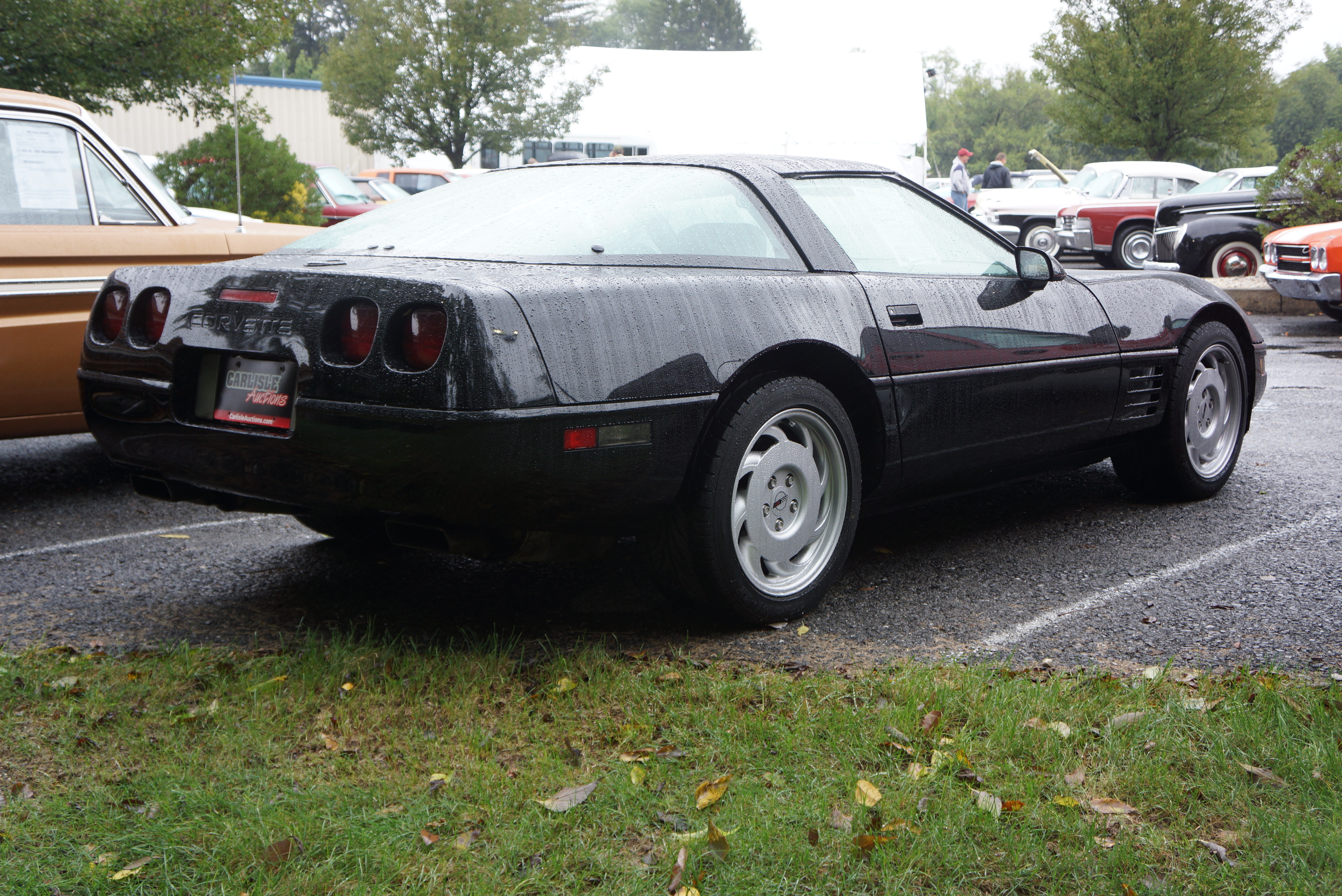
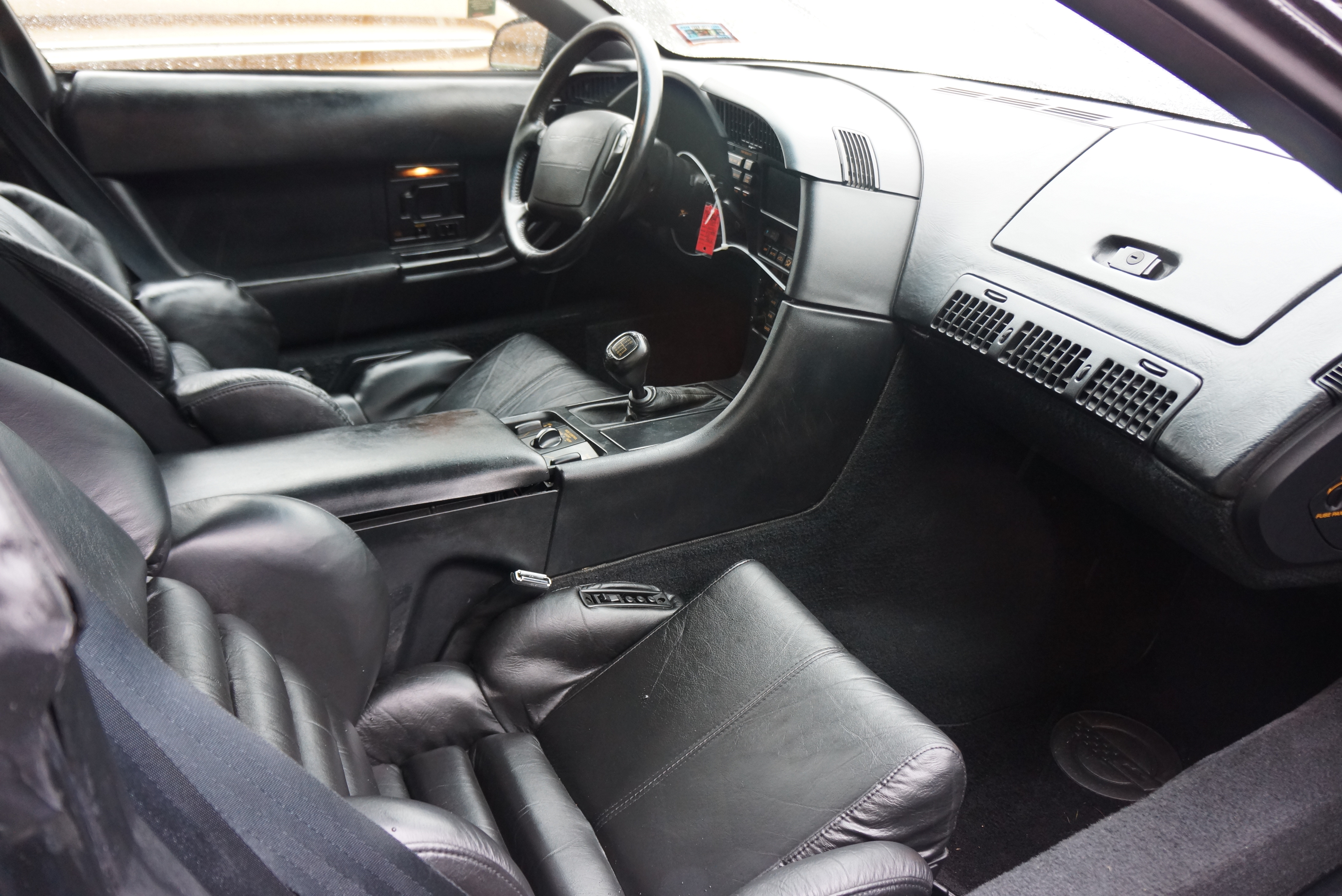
Lot #F304, 1993 Chevrolet Corvette coupe, black on black, 6-speed manual, 48,000 miles, correct factory alloy wheels. Driver’s seat bolster appears to have been repaired. Rubber doorseals, a typical C4 wear problem, look good here.
Wet or dry, paint looked good
Correct factory wheels
Interior dreary in black
Sold for $6,600.
A true auction bargain, perhaps because it was the 4th car across the block on Friday. The black paint looked great, and the interior, not a strong point on these, showed somewhat normal wear for the miles. Can C4 prices go any lower? This is a car you could daily-drive for 3 seasons a year and simply not worry about values. Well bought.
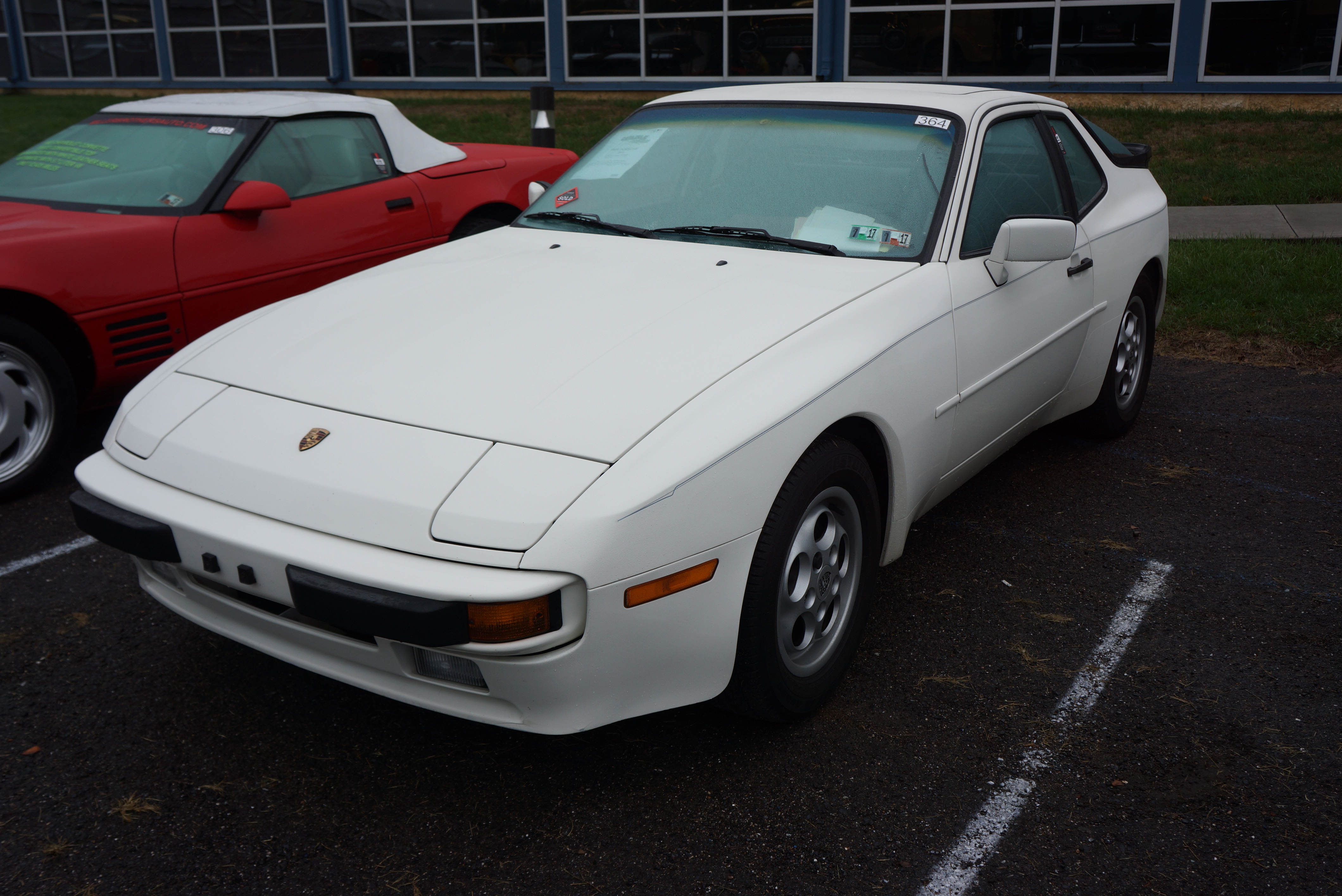
Lot #T141, 1989 Porsche 944 coupe, white, blue leather interior, sunroof. Phone dial wheels, stick shift, 68,000 miles.
Porsche 944 still looks all stock
Don’t break that hatch glass; it’s NLA
Sold for $6,700.
Bland color combo didn’t create much excitement. No obvious faults. If you want a Porsche and can’t swing $40k for a 911, here’s your entry point.
Lot #T137, 1964 Studebaker GT Hawk, brown metallic, tan vinyl interior, buckets. 289 V8, automatic on the floor. Driver’s door won’t shut. Repaint OK with some overspray, some orange peel. Instrument cluster dirty and worn. Full wheel covers, whitewall tires. Hood fit off on both sides. 22,175 is odometer reading, likely on second trip around.
’64 was last year for Hawk GT
’64 got new trunk lid
Buckets, floor shift to chase T-Birds
Sold for $6,750.
One of the bargains of the auction, IF you wanted a Studebaker. (My book shows $15k for a #3 condition car.) Color may have been a turn-off, but I liked it. (My Catalog of American Car ID Numbers 1960-69 lists a Bermuda Brown Metallic as a factory paint choice for 1964 Studebakers.) Even with its minor faults, this is a unique, fun 2-door which can be improved without getting upside down.
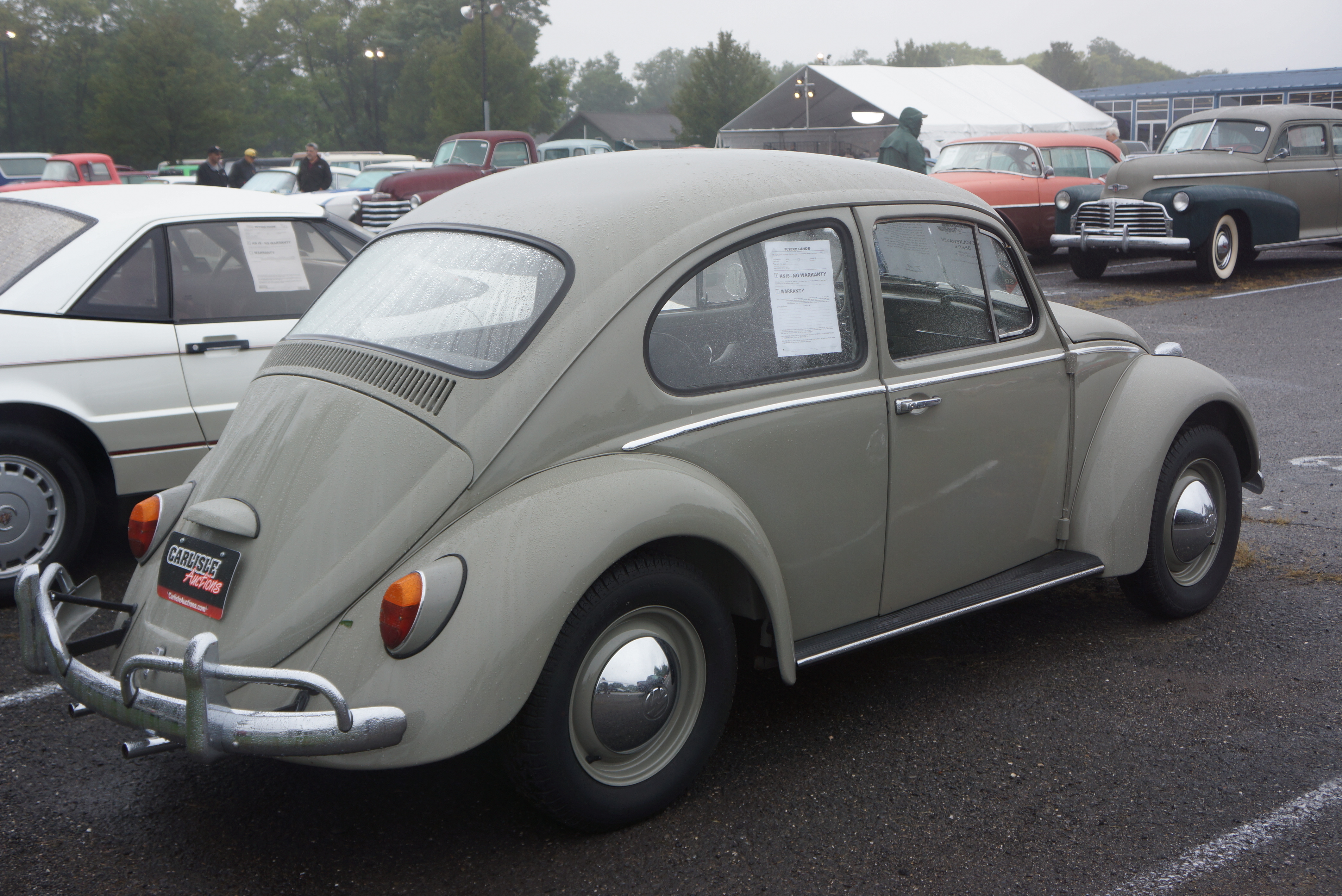
Lot #T119, 1965 VW Beetle 2-door sedan. Sand color, black vinyl seats, grey carpet. Correct VW wheel covers, blackwall tires. What few shiny bits are on the outside look OK. Odometer reads 88,848, sign on car claims those are original miles.
Color looks like camoflauge
Note lack of bright trim around glass
This was full instrumentation for ’65 VW
Sold for $7,200.
Among the half-dozen Beetles here, this was one which a) wasn’t modified and b) wasn’t rusted out. Sold for below book. Just don’t take it on the highway – a Touareg might not see you and will run you over.
Lot #T117, 1970 MGB roadster, British Racing Green, tan seats, painted wire wheels, black top. 66,655 on odometer could be first time around. Overall, a good-looking B.
Dual mirrors, triple wipers
Split rear bumper rare on B
Clean tan & black interior
Sold for $7,500.
MGB prices have risen lately; even the later rubber-bumper cars command values in the high-four figures. If there were no glaring faults, this was a bit of a bargain for a chrome bumper car.
Lot #F344, 1965 Ford Mustang 2-door hardtop, white, red interior. Six-cylinder, 3-speed manual, center console, aftermarket AC. Correct Mustang full wheel covers, white walls, odometer reads 89,000. Body gaps all look good. AM radio.
Iconic ’65 color combo
All trim and gaps look good
Note console, AC, radio
Sold for $8,000.
I was drawn to this car for its honesty. While an obvious respray, it was done in the original color, based on a look at the door jambs (which were obviously not repainted). The color combo was great. Both doors shut with a solidity normally not found on old Mustangs. This was potentially a mostly-original car that’s never been taken apart. At this price, this was the perfect entry-level hobby car for someone who claims that the market has priced them out. Or, just drop a 289 in it.
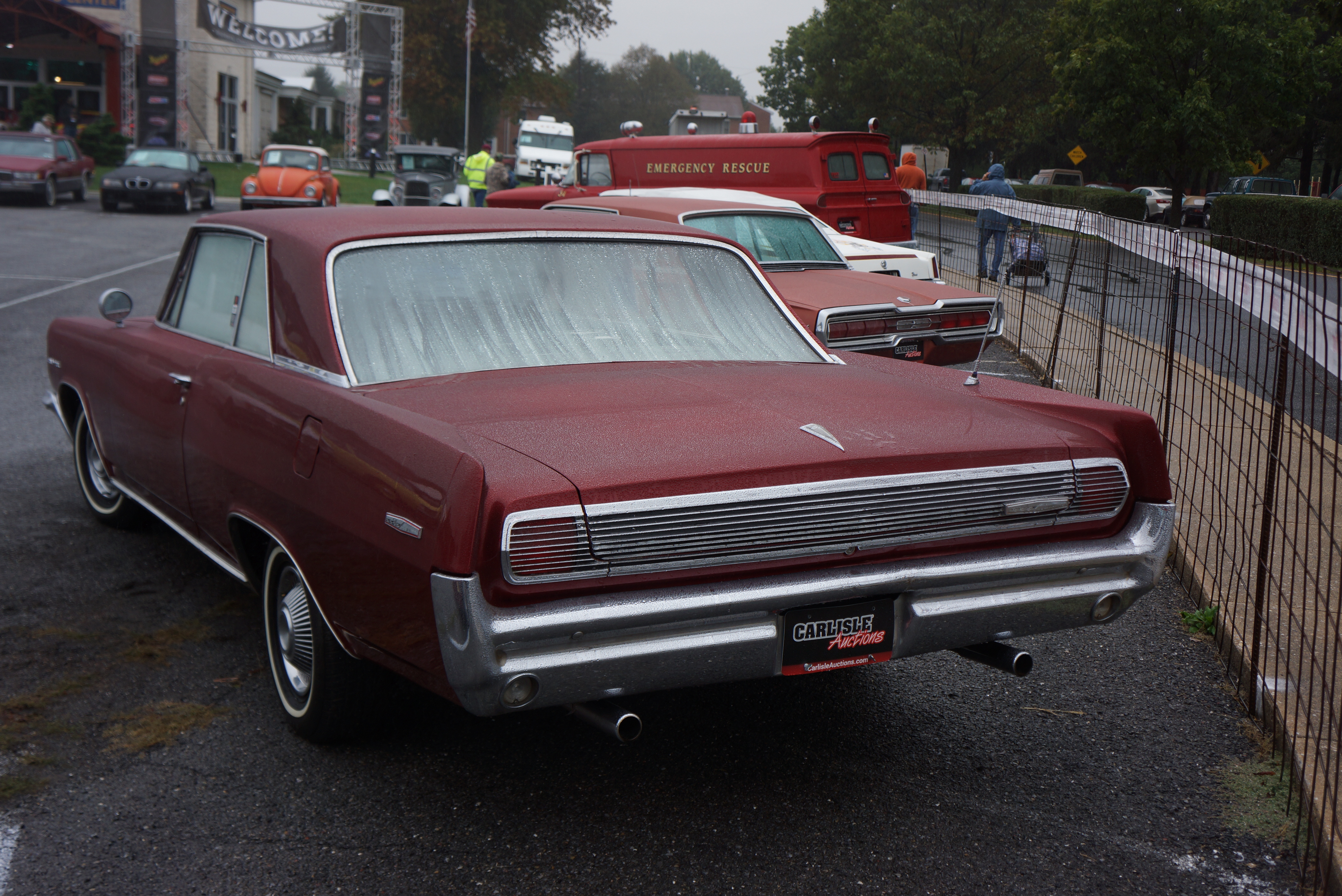
Lot #T125, 1963 Pontiac Grand Prix, red paint, black interior. Full wheel covers, whitewall tires. Windshield sign claims 389 4-barrell, buckets, console, A/C, power windows and seats. No further examination done.
This is a full-size car
1963 was 1st year GP was stand-alone model
Sold for $8,500.
An iconic GM personal luxury coupe, for the price of a used Kia. Maybe the market for these ‘60s full-size sleds is drying up. Get yours now.
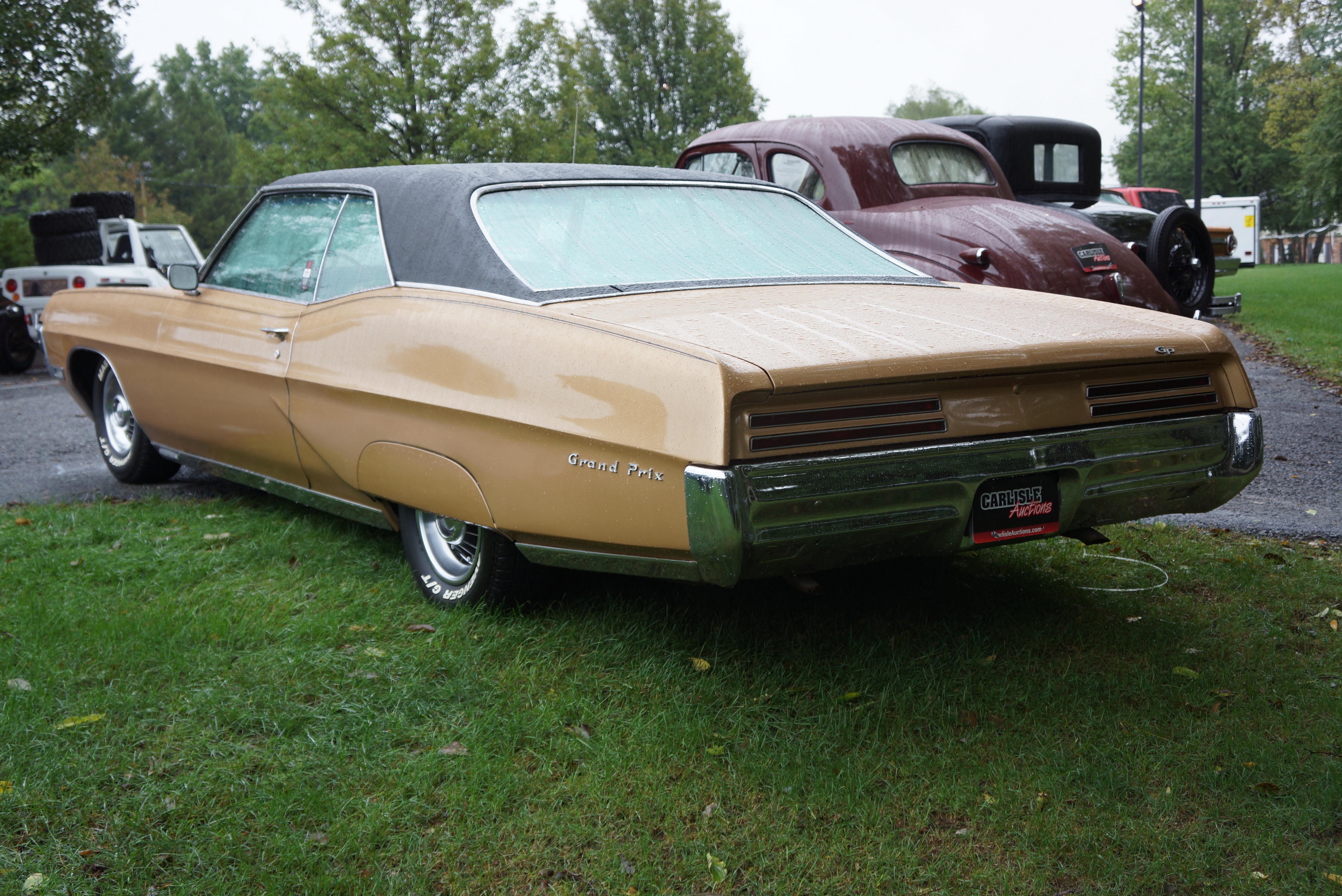
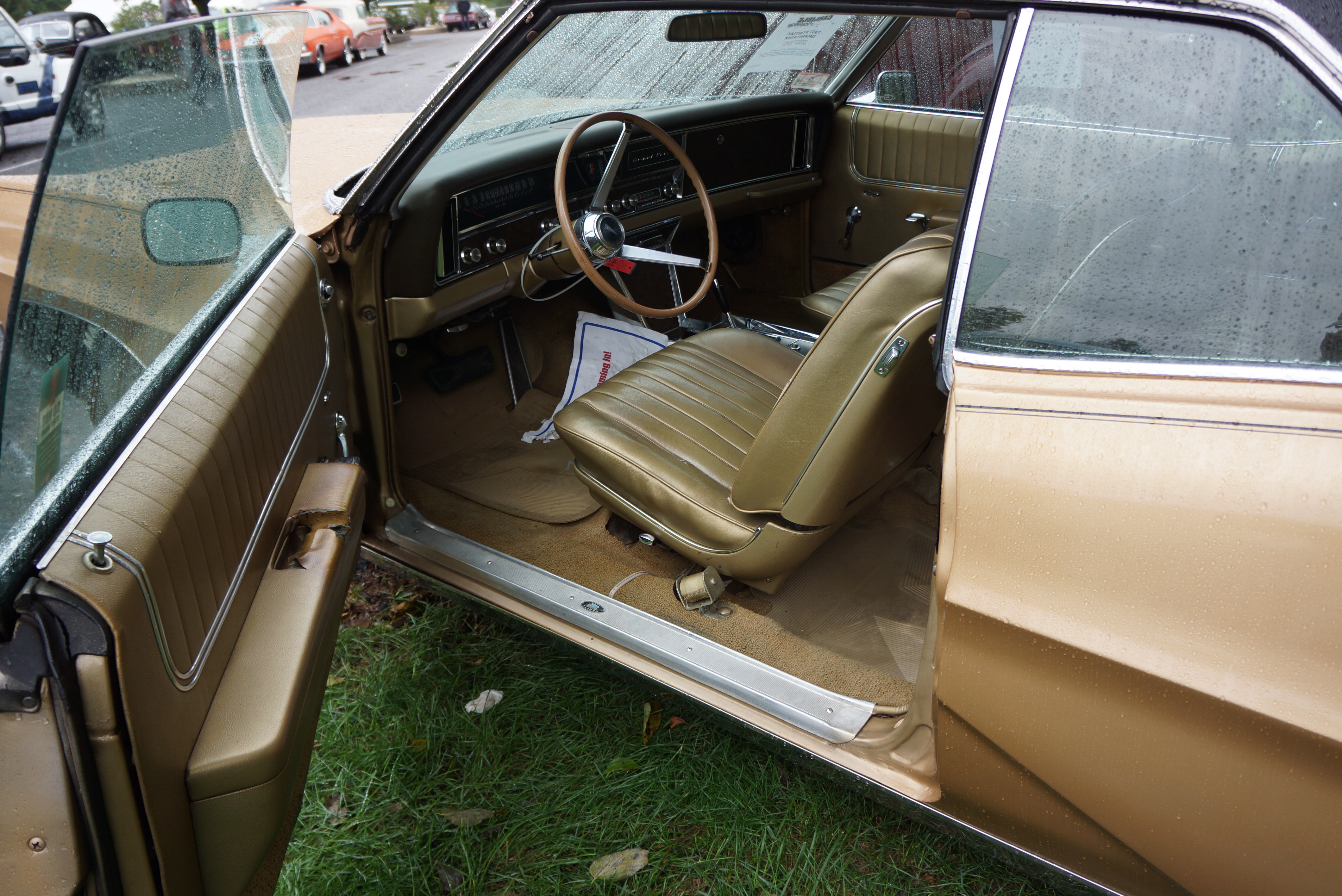
Lot #F309, 1967 Pontiac Grand Prix coupe, gold, black vinyl roof, gold interior. Raised white-letter tires are out of place on 8-lug wheels. Driver’s seat and door armrest show significant wear. 400 c.i. V8, automatic, buckets, center console. Door jambs show rustproofing plugs which may have helped its survival. Chrome looks OK, sheet metal is straight; car has good bones. 03873 is odometer, presumption is that car has 103k on it.
Looks good from here
Straight sheet metal
Color clash is obvious
Sold for $8,500.
Here’s an example of a car which, if you were a phone or Internet bidder, could bite you in the tail, and it would hurt. This car looked, and was, solid and straight on the outside. The repaint was decent quality, and the vinyl roof was still attached at all four corners. When you opened the door, the contrast between the “gold” upholstery and “gold” paint was the visual equivalent of nails on a blackboard. An examination of the door jambs revealed the truth: the repaint was in a different, and decidedly incorrect, shade of gold. On a phone screen, you might not catch the difference. The sale price might just leave enough room for a respray.
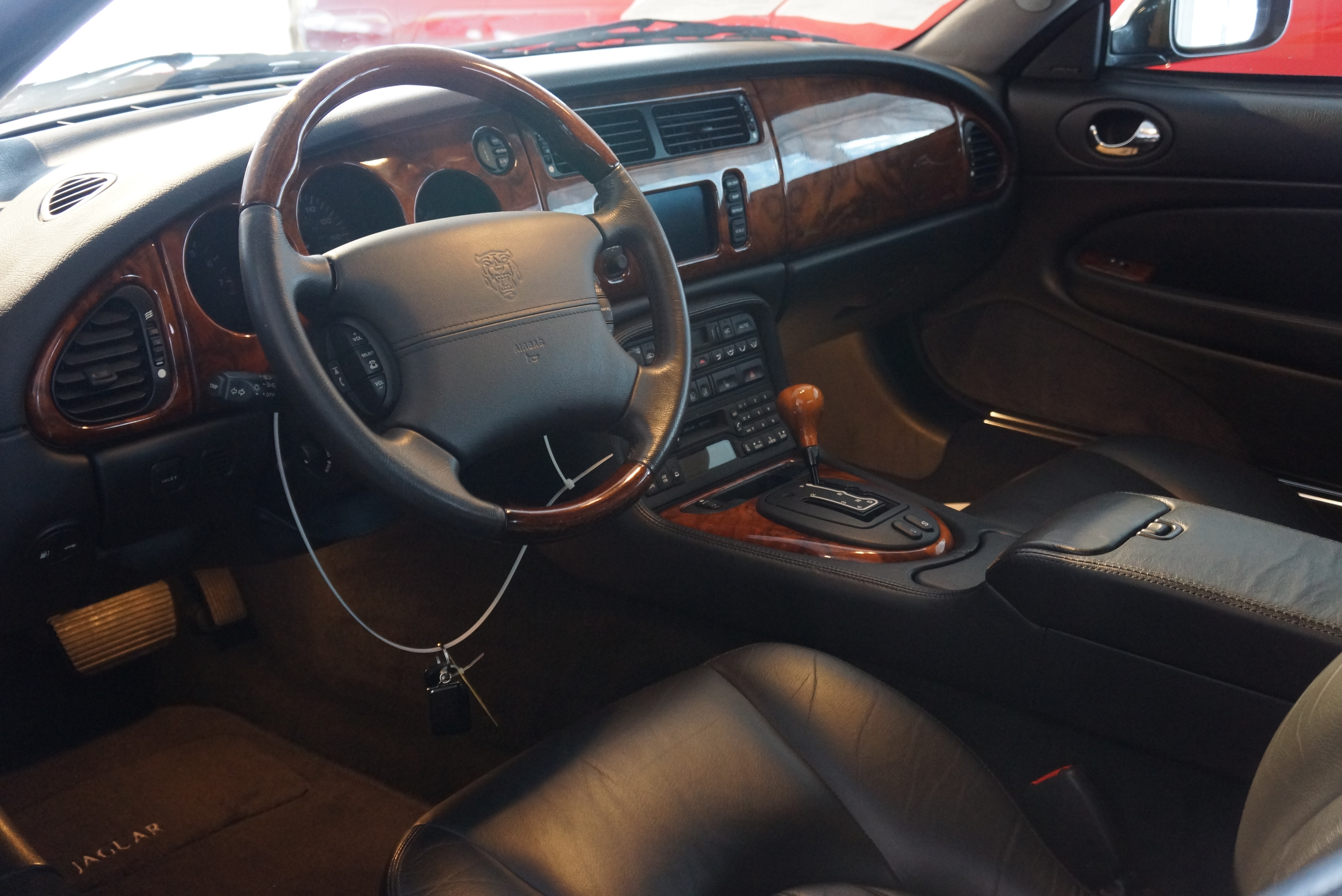
Lot #T164.1, 2002 Jaguar XK8 convertible, dark blue, black top, blue interior, 32,014 original miles. Paint shows some slight swirl marks, driver’s seat has slight bolster wear. Jaguar alloys with blackwall tires. Interior clean and attractive. Top is cloth with glass rear window, again looks new. Looked incredible under the tent lights.
Dark blue looks almost black
Looks good top down or up
US-XK8’s were automatic only
Sold for $9,600.
This was one babied Jaguar. The dark colors do not work for me on a convertible, but these XK8’s continue to be auction bargains. AND, no drooping headliner to worry about.
$10,000 TO $15,000
Lot #F336, 1971 Ford Mustang fastback, Grabber Blue, modified 351 V8, may not be original motor. 4-speed. Sign says upholstery is “custom”. Looks like a Mach 1, but it’s not. Consigner labeled car as “barn find”, whatever that means here.
The Mustang immediately after crossing the block
Sold for $11,100.
I did not inspect this car, but even if it’s a fakey-doo, it seemed to be priced fairly. These large Mustangs are not to everyone’s taste, but if you like this full-size styling, this was an affordable way to get into one.
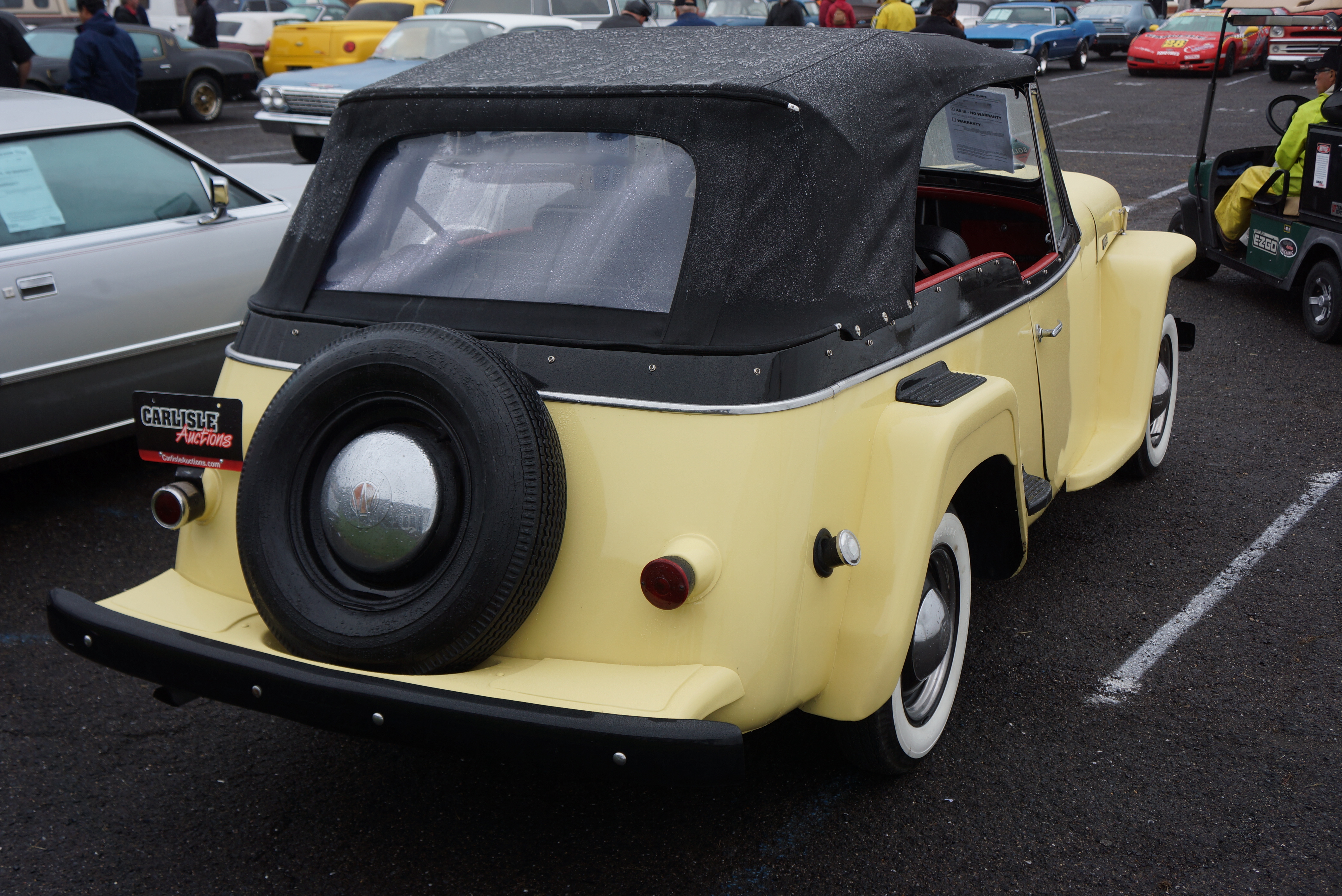
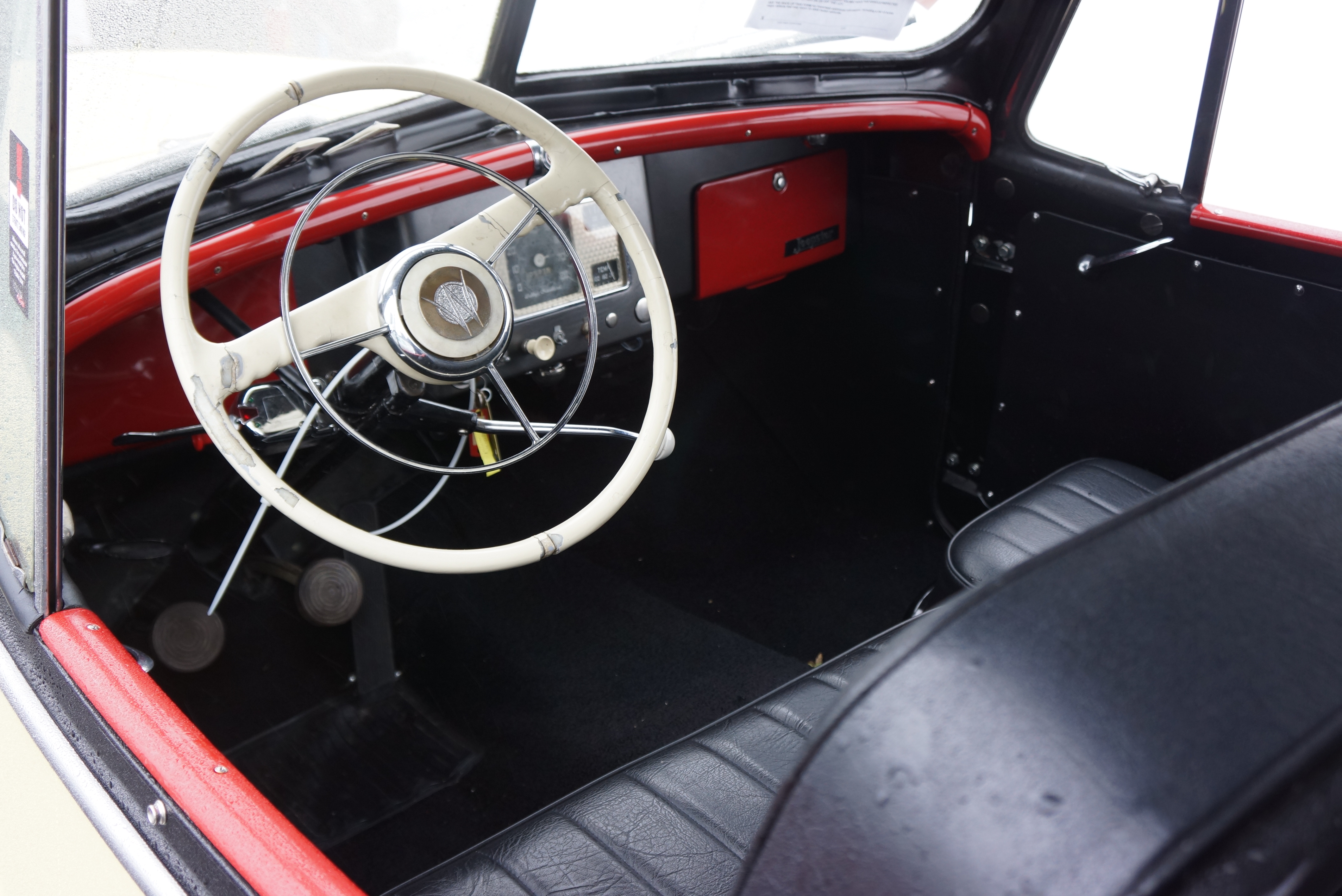
Lot #T147, 1948 Willys Jeepster, 2-door roadster, yellow, black top, red & black interior. 4-cylinder, stick shift.
Jeepster tried to appeal to civilians
No trunk to speak of
Spartan interior; hey, its a Jeep!
Sold for $11,500.
Cheeky. Everything “Jeep” is hot (or at least lukewarm) these days. I test drove one 25 years ago when the ask was $3,500. The drive was not reassuring. But the Jeep people I know don’t care. This one sold under book, so we’ll call it well-bought.
NOTABLE NO-SALES
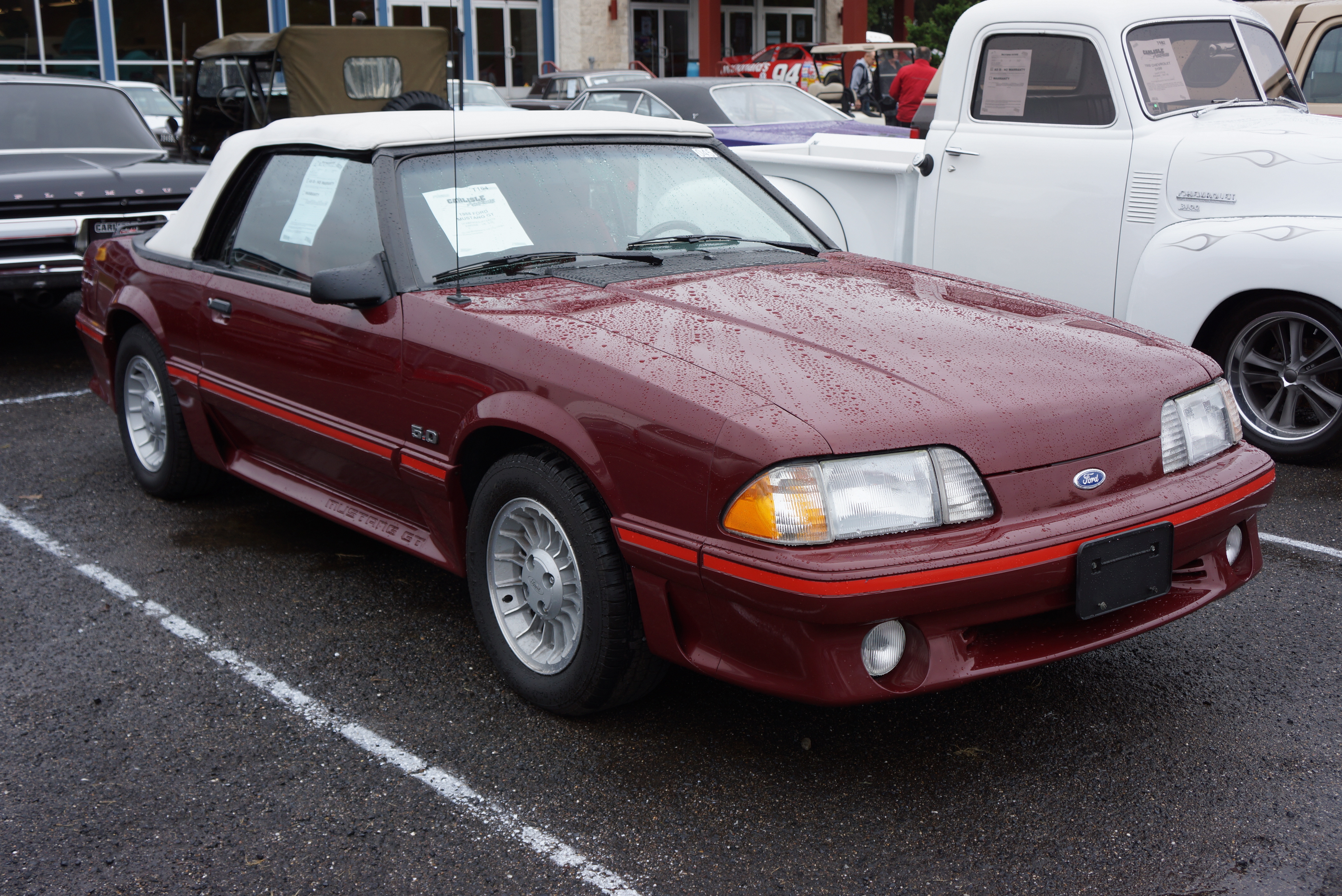
Lot #T164, 1988 Ford Mustang GT convertible, 5.0 V8, 4-speed manual on floor. Dark red, red stripe, white top, red plaid cloth interior. Ford alloy wheels with blackwall tires. 41,137 miles on odometer looks believable. Luggage rack on rear deck, convertible top shows no flaws. A nice ’80s look.
Cladding is factory
Colors are very ’80s, but they work
Interior fabric looks German, as in GTi
NOT SOLD at high bid of $6,900.
This was a clean and unmolested Mustang. The interior was especially attractive in its red plaid cloth, and showed no signs of wear at all. Bid was light by several grand.
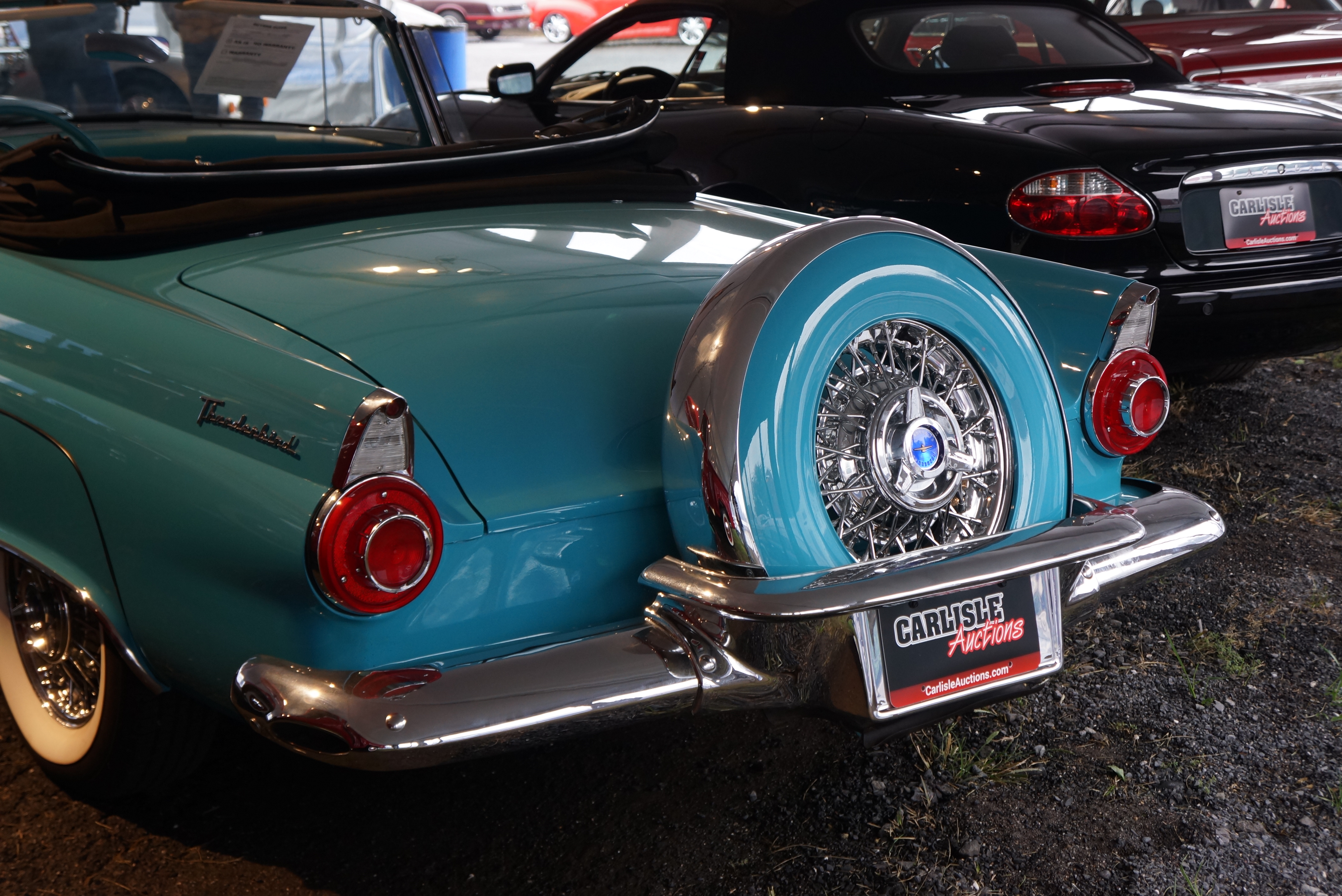
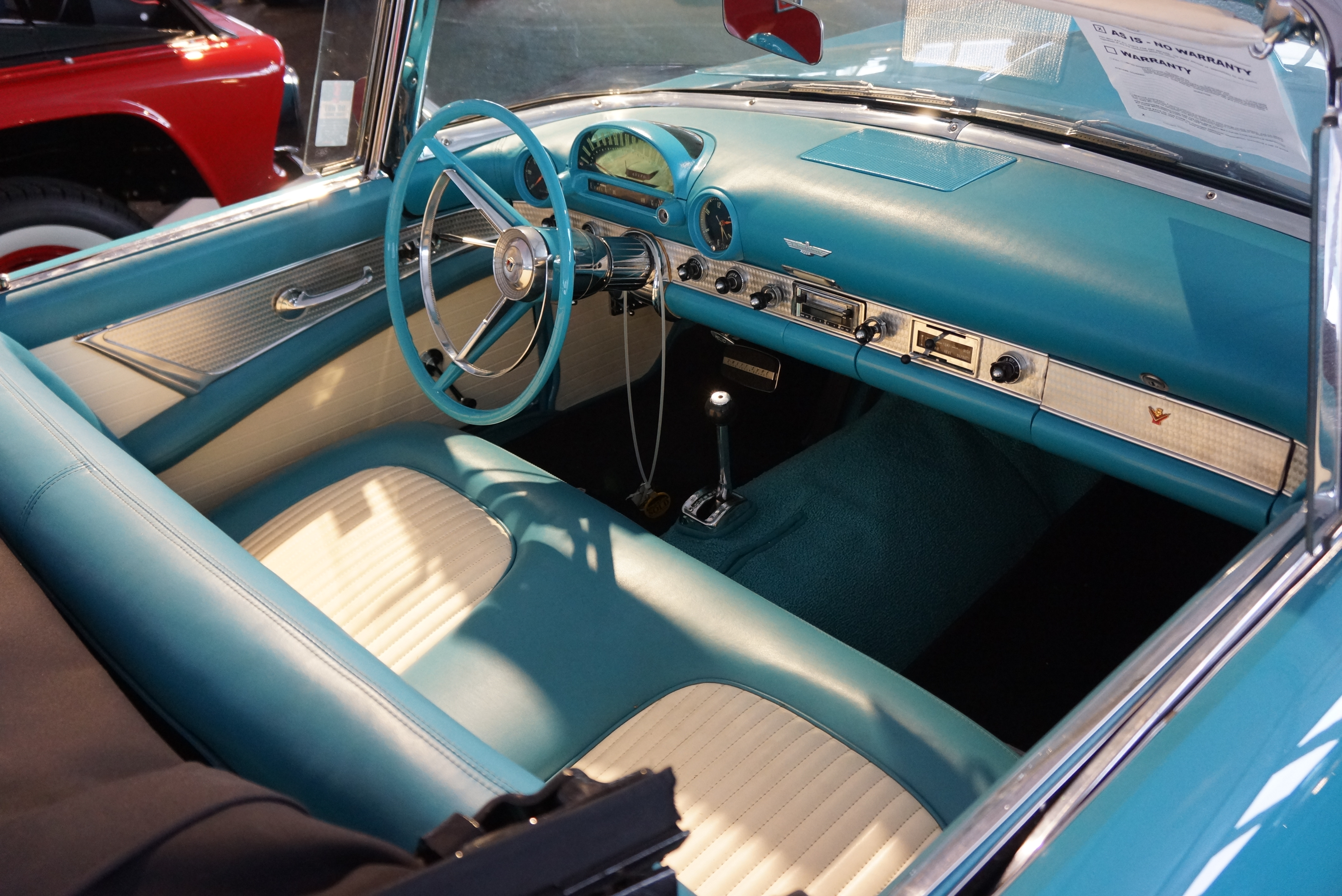
Lot #T166.1, 1956 Ford Thunderbird convertible, Peacock Blue, black soft top, blue and white interior, automatic. Wire wheels with wide whites. Website states that hardtop is included. Looks recently restored to a high standard.
Tent lights bring out best in baby Bird
Conti Kit was standard for ’56
Nice interior matches outside
NOT SOLD at high bid of $35,000.
Cosmetically, this car was stunning. I usually prefer the ‘55s (without the Continental spare) or the slightly restyled ‘57s, but this car had lots of eyeball appeal. Two-seat T-Bird values are all over the place. The top bid was a little light, but not by much in this market.
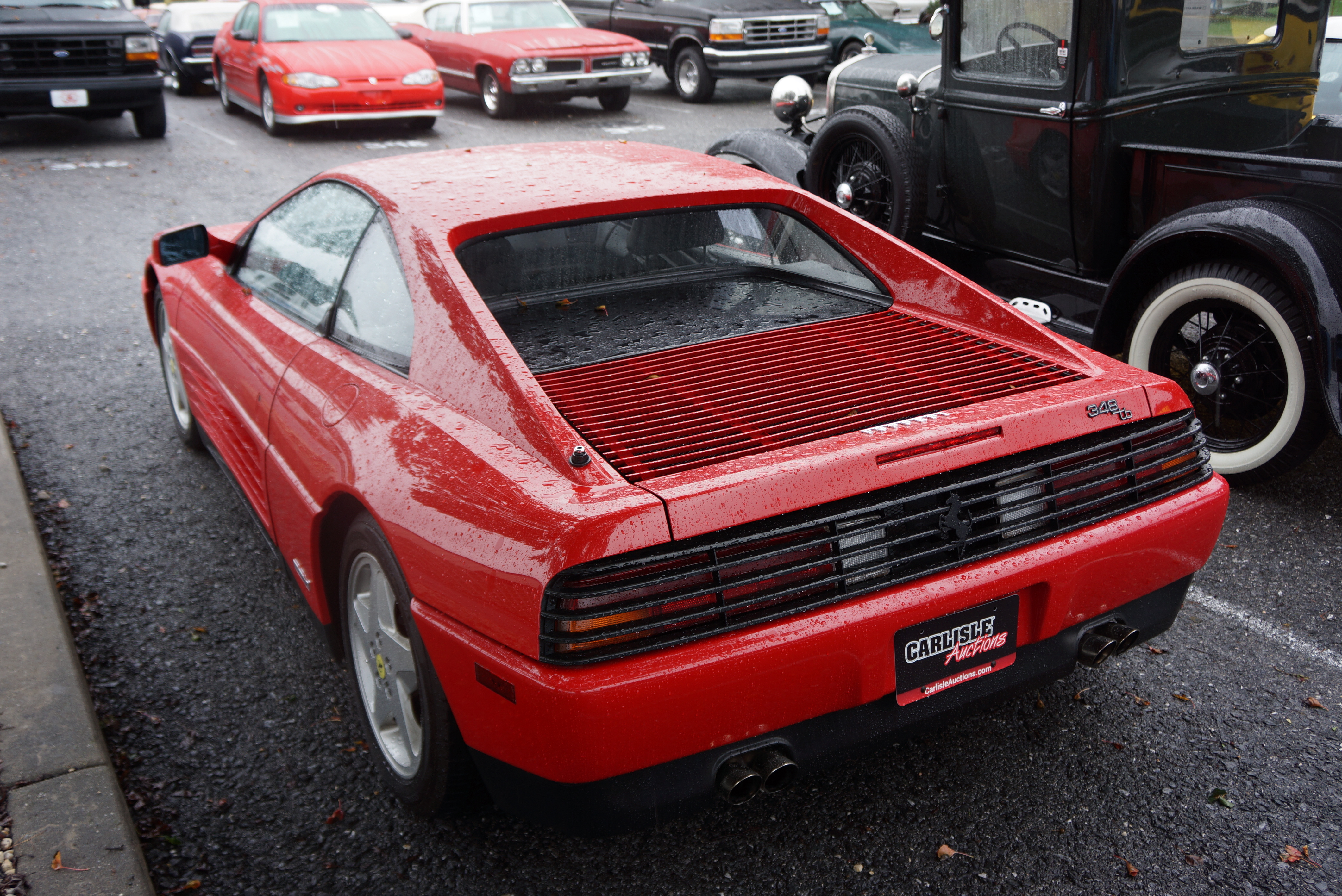
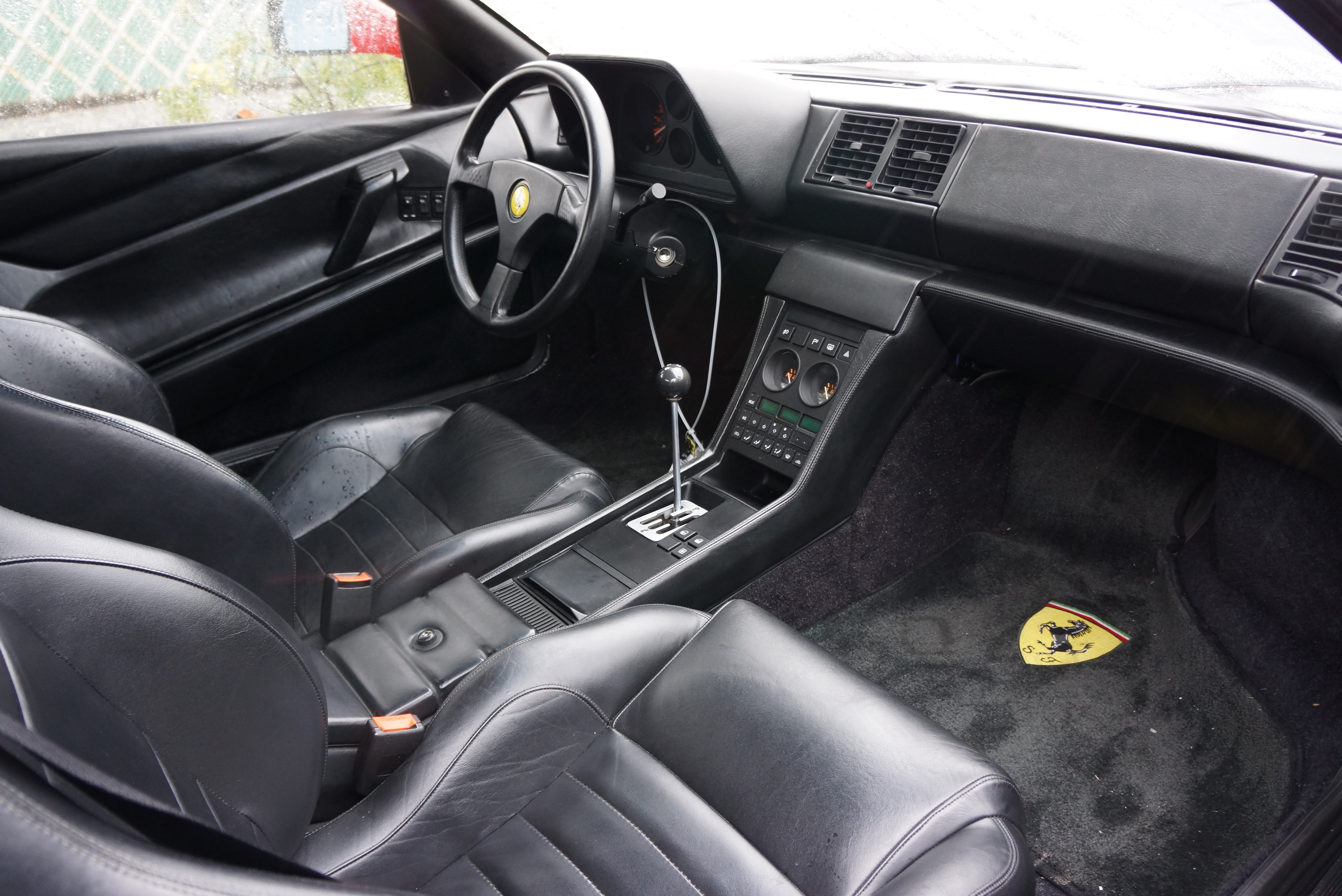
Lot #F337, 1989 Ferrari 348 TB 2-door, red, black leather interior, 5-speed manual in gated shifter. Outside unmarked. V8 mounted longitudinally making service much more expensive (engine out timing belt change). Odo is 6-digit affair, reads 026909.
Another red Ferrari
Styling mimics Testarossa
Note floor mats, gated shifter
NOT SOLD at high bid of $57,000.
From my experience, it’s rare to see any Ferraris at a Carlisle auction. The Fall 2016 edition featured four of Enzo’s finest. Given the stratospheric rise in prices of Ferraris from the 1950s and ‘60s, everyone else who owns a later car thinks it’s worth a million. This 348 is a prime example. My book shows a top (#2 condition) value of $42,000. If that $57k bid were real, the owner should have cut it loose.
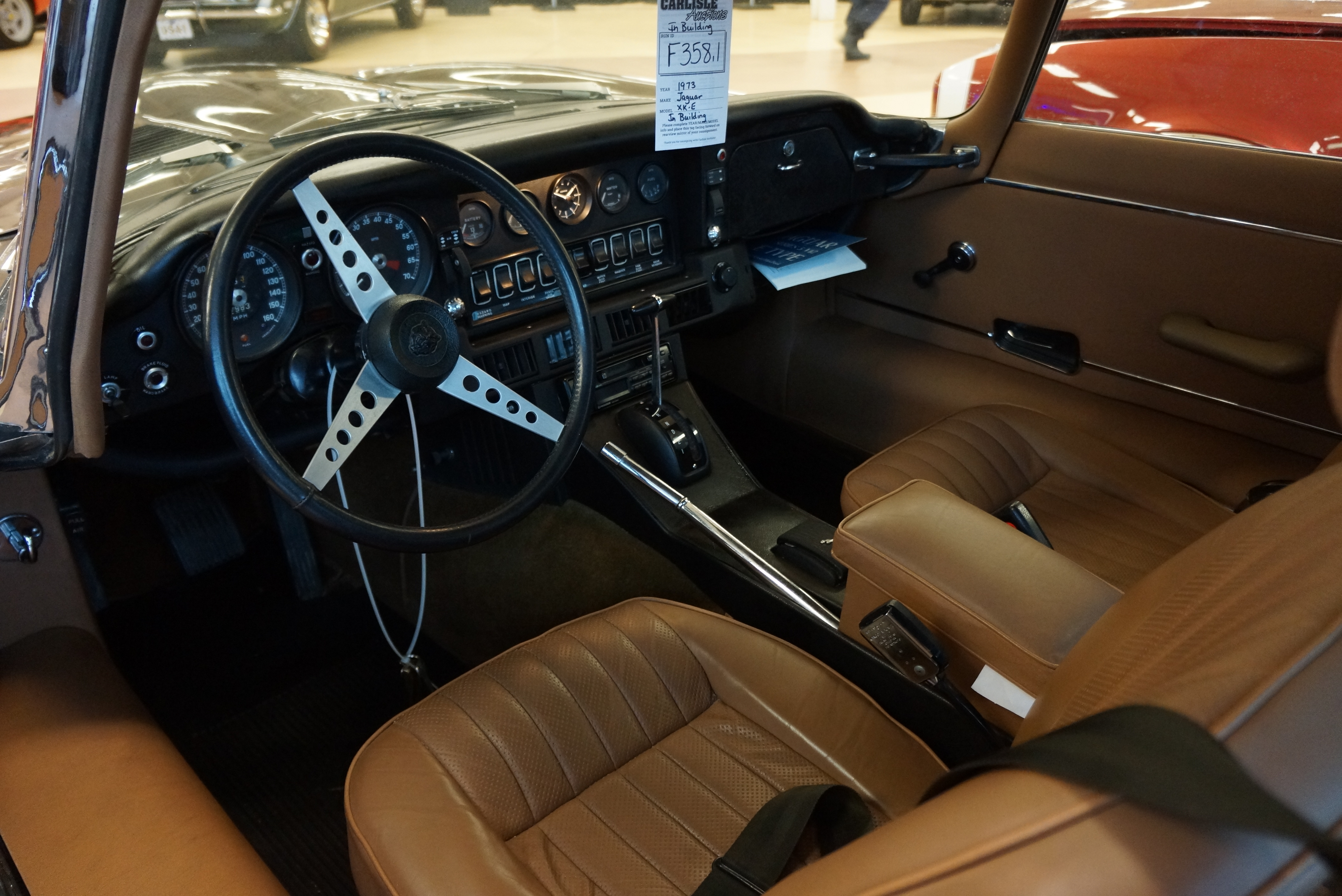
Lot #F358.1, 1973 Jaguar E-Type 2+2 coupe, V12, automatic, sable brown, tan interior. Chrome wire wheels, whitewall tires. Exterior bright trim is dull. Some paint defects in rear quarters.
Series 3 cars have large grill, fender flares
Note quad exhaust tips
Interior looks all correct
NOT SOLD at high bid of $26,000.
See Ferrari 348 comments above – much the same applies to the Jaguar XKE market. These Series 3 cars, with their modified mouths, fender flares, and extended wheelbases, are not the first choice among those who want an E-Type. But with Series 1 prices approaching quarter-million for the nicest roadsters, the rising tide has lifted these boats too. On this car, some paint problems, a bland color, and the automatic may have held back the bidding. Oh, and the top doesn’t go down.
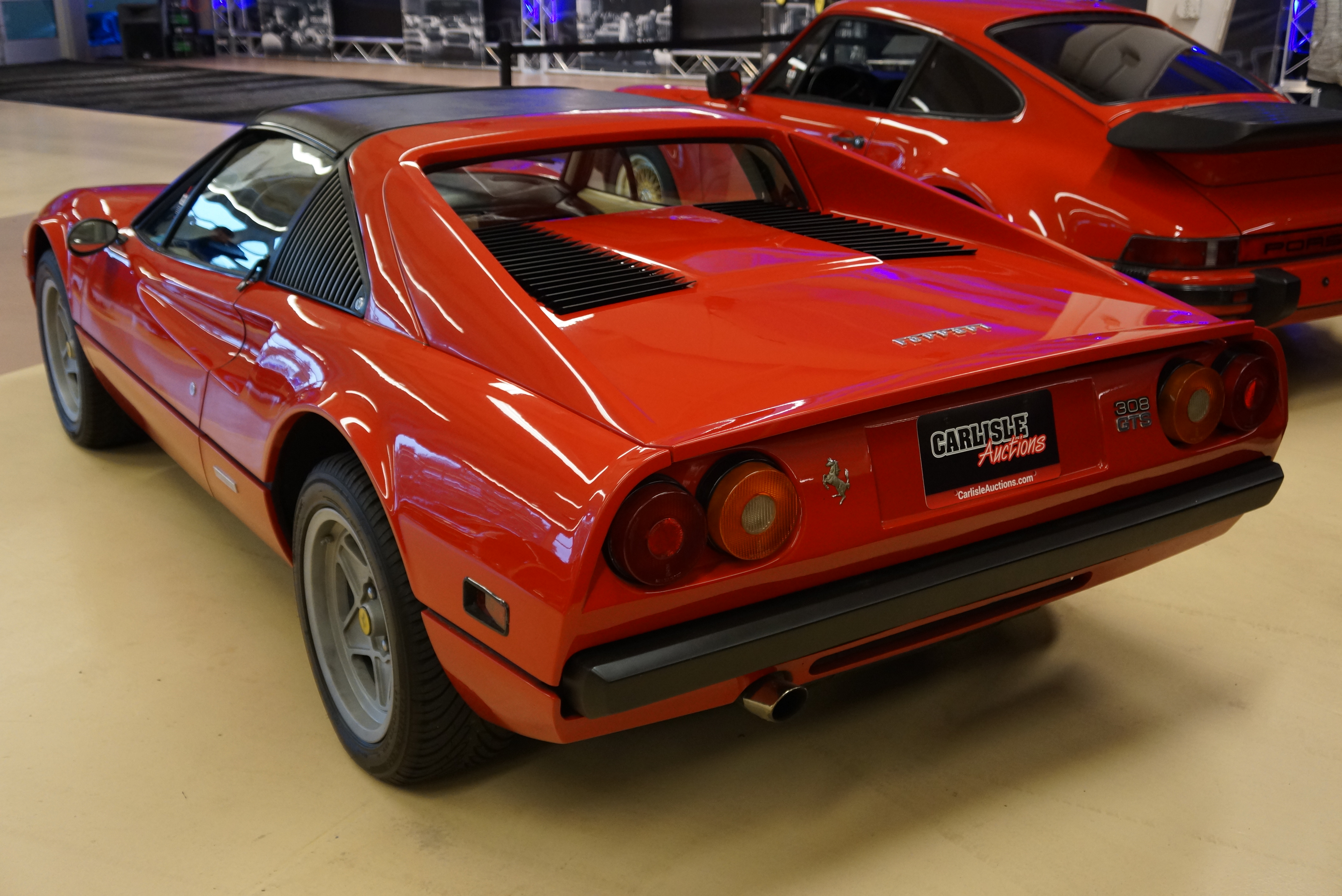
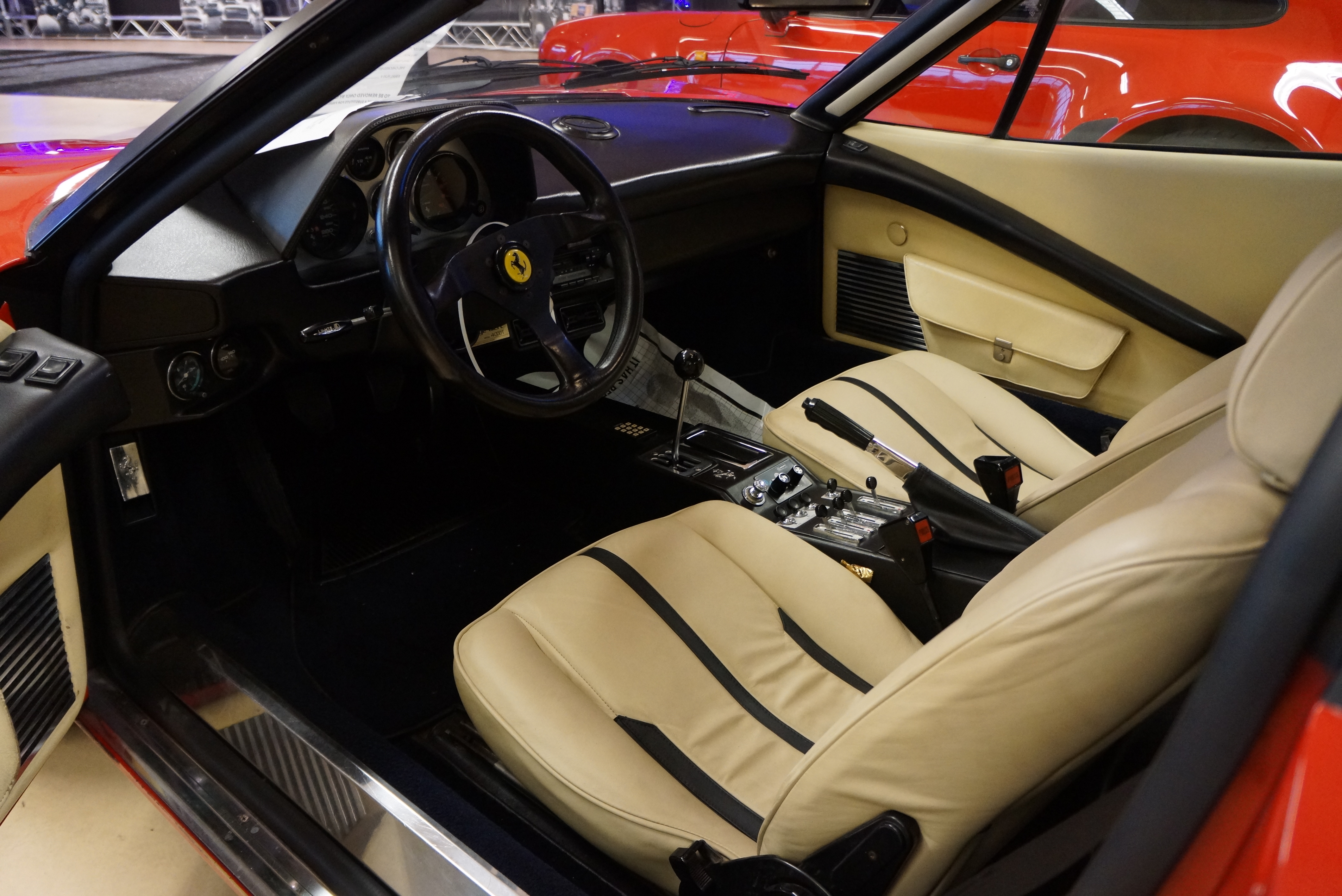
Lot #F373, 1979 Ferrari 308GTS, red, cream interior. V8, 5-speed manual in gated shifter. Ferrari alloy wheels are very dull, and ruin what is otherwise a nice exterior. Reported to be a Euro-spec car with 48,000 km (30,000 miles).
A common Ferrari, if that exists
GTS has removable roof panel
Cream interior very clean
NOT SOLD at high bid of $65,500.
These Magnum P.I. cars couldn’t be given away five years ago; but the market has woken up to these as entry-level Ferraris, if there is such a thing. This one was OK – the dirty wheels were the biggest letdown. Some folks prefer the later fuel-injected and 4-valve cars (this one has Webers). The price was about where 308s are selling today, but this owner wants more. Not sure where he’s going to get it.
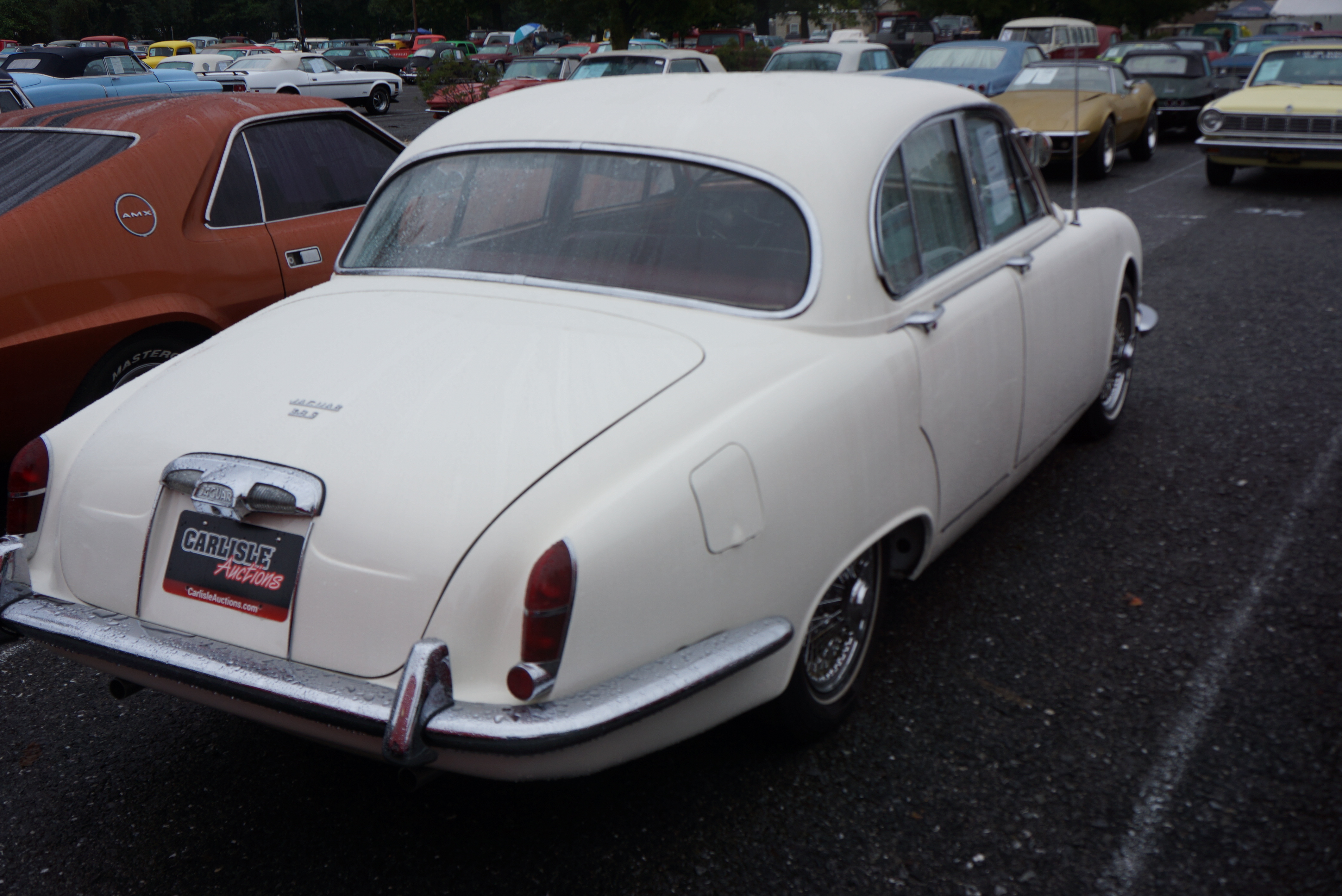
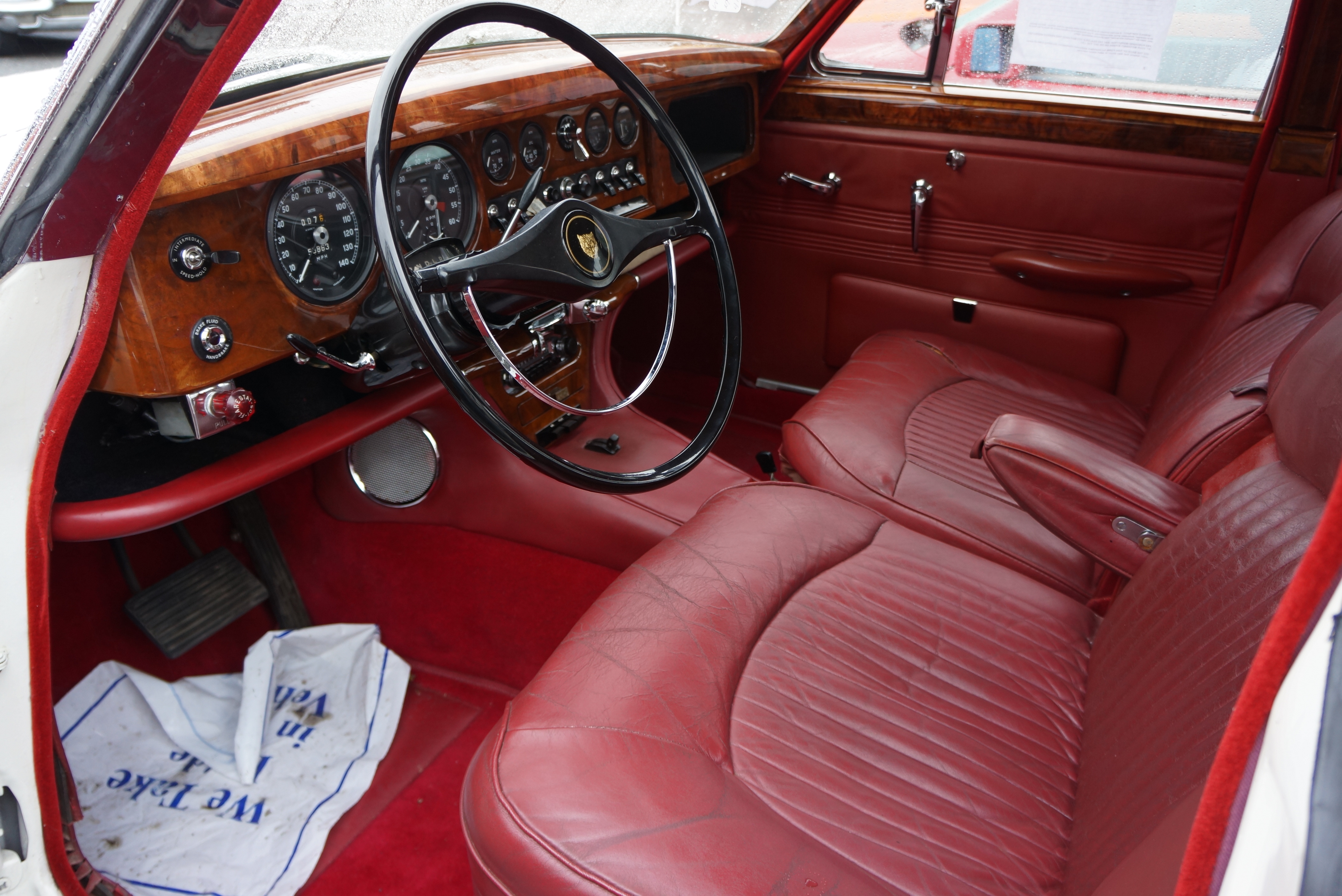
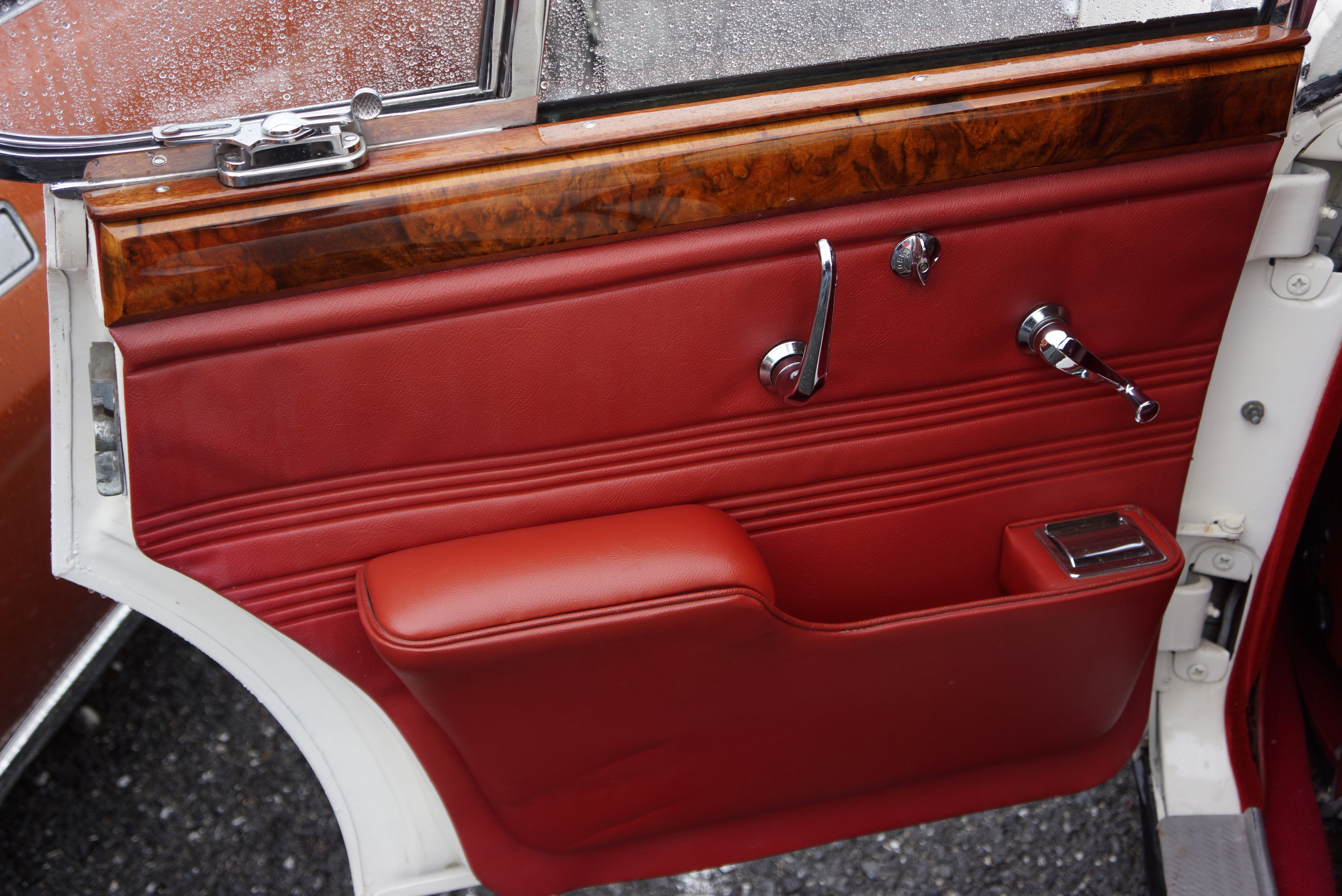
Lot #F363, 1967 Jaguar S-Type four-door sedan, 3.8L straight-six, automatic on column. One repaint in original white, red leather interior, chrome wire wheels, whitewall tires. Odometer shows 53,863 miles, consignor claims that’s original. Sign claims previous owner had car for 48 years. Wires are a little rusty. Dual gas tanks, “switch-over” switch on dash is taped, so only one tank working. Interior of leather, wool and burled walnut is to die for.
No mistaking it for anything else
Sloping deck hides large trunk
Stunning driver’s compartment
Door panels are works of art
NOT SOLD at high bid of $28,000.
This car broke my heart. Once I sat in this car, I didn’t want to get out. While the outside showed a decent repaint in its original color, the interior looked (and smelled) all original. The combination of the leather seats, wool headliner and carpet, and walnut trim was intoxicating. One charming interior detail was a pull-out tray below the center-dash switches.
My book showed this car at $14k for a #3 condition car. I prayed that the audience would ignore it and that I could steal it for $10k. And here comes the heartbreak: the Jag had to be towed across the auction block (the only car in two days of attendance that needed such assist). I spoke to the owner: the ignition key was spinning in its cylinder, so, no crank. Then, to my shock, the audience bid this car to $28,000! What do they care that it won’t start! But did it sell at this number? No! The owner wanted more for this non-runner. I’m going back to German cars: What did that SLK sell for again?
It’s been a hot summer in the Northeast, but the morning of August 28, 2016, dawned with somewhat cool temperatures. This usually means that while it would still get quite warm, the humidity would fail to be oppressive. Most importantly, it gave every indication of staying dry for our breakfast drive, a gathering which we last did back in May.
The usual chit-chat before breakfast
Our turnout today was great: 12 cars and 14 participants. Showing the diversity of our automotive interests, we had a mix of 5 domestics and 7 imports, and almost every decade represented from the 1960s through the 2000s. For a switch, let’s list our cars alphabetically by make (OK, I admit it, I want to get the Alfas first):
Alfa Romeo – THREE! Two ’91 Spiders, and your blogger’s ’67 GT Junior.
BMWs – Three: Two Z3s (one an M), and a rather new 2-series convertible.
Cadillac – a ’66 Eldorado convertible.
Chevrolet – Two: A ’72 Nova, and a C4 Corvette coupe.
Dodge – The Green Viper.
Ford – A late-model Mustang convertible.
Porsche – a late ‘80s 911 coupe.
We’re now in the habit of including a fuel and restroom break
Our breakfast destination was the Readington Diner on Route 22 in Whitehouse Station NJ. Once we got off Routes 287 and 10, the roads were a driver’s delight. The diner was most accommodating, as we called ahead, and there was a table waiting for us when we strolled in at 10:30.
Coffee, food, more coffee, talk, and more coffee finally concluded with the usual “why don’t we do this again soon?” So we will. We’re hoping for at least two more runs this year before our classics are tucked away for the winter.
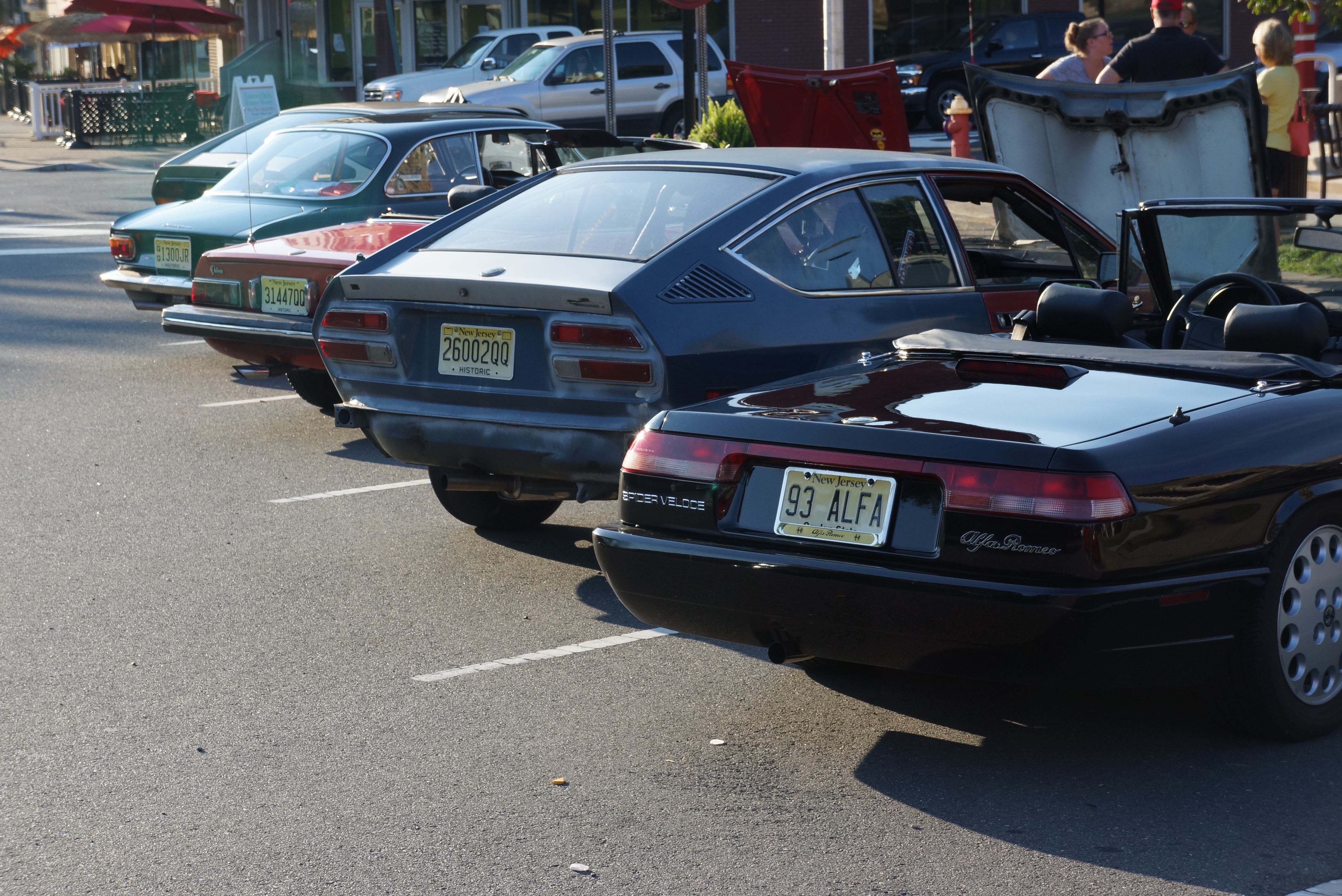
The Friday tradition known as the Somerville NJ cruise night took place as expected on August 26, 2016. However, the usual swarm of domestic muscle cars and old-school hot rods was invaded by members from the NJ Region of the Alfa Romeo Owners Club (AROC). In total, there were 9 Alfa Romeos present, which was an excellent showing for this sweltering late summer evening.
The club had reached out to the cruise night organizers to request a group parking spot. As has been done in the past for other clubs, the spaces in front of the Somerset County Courthouse were reserved for us. The first Alfa was in place before 5pm, with the majority of cars claiming their spots by 6pm. Based on the steady flow of foot traffic parading past our cars, we can presume that the audience enjoyed the rather unexpected gathering of Italian machinery.
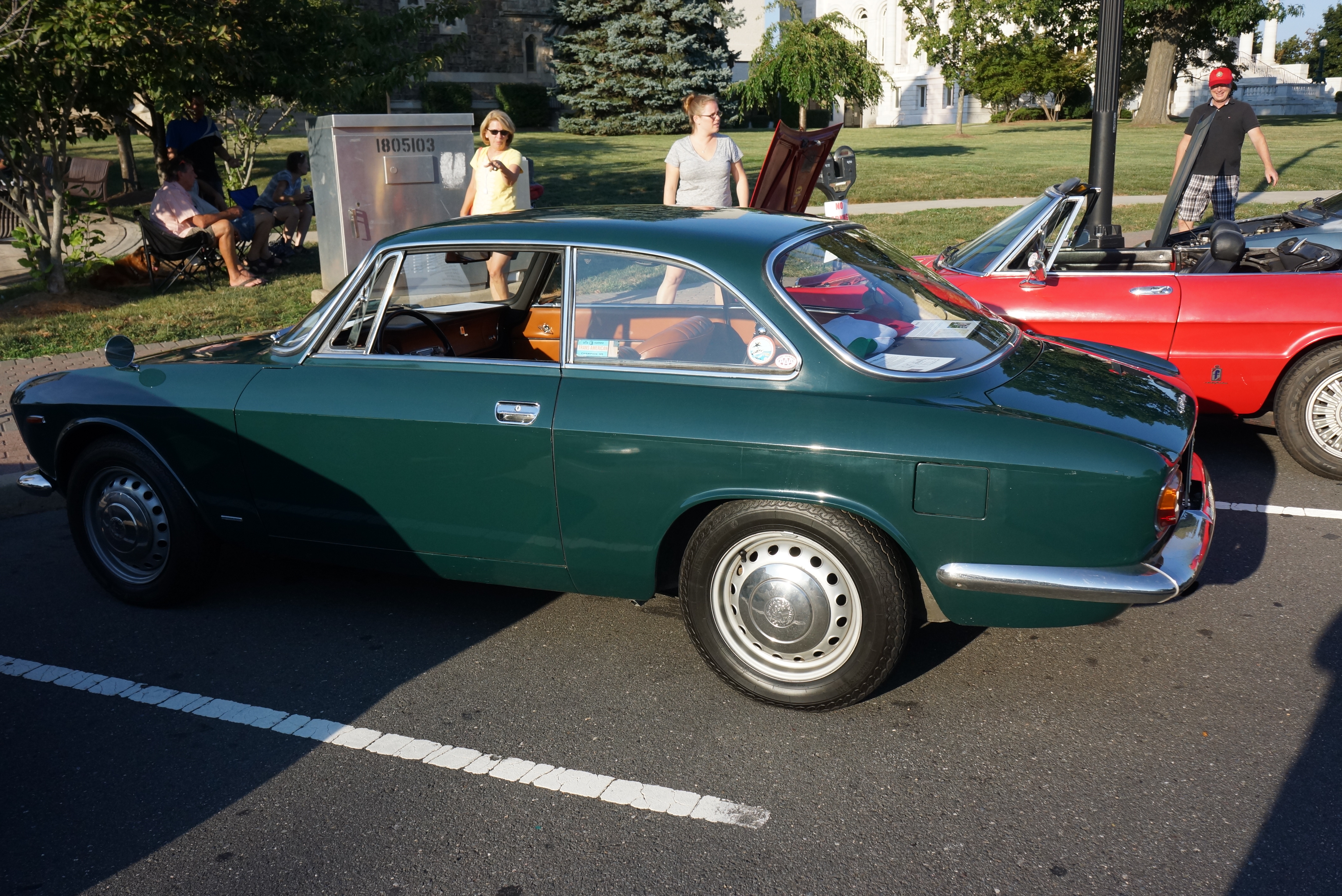
There was great model diversity, with Alfetta GTs, Spiders, a 164, two 4Cs, and your scribe’s GT 1300 Junior. The Junior was the sole vehicle from the 1960s, but we had great representation from the ‘70s and ‘80s.
The 4Cs were the surprise of the evening, with one privately-owned car in attendance, as well as a brand new one from the local dealer, Fullerton Fiat-Alfa (thanks, Dave!).
No mirrors were used in this shot
Gorgeous interior (note carbon fiber)
Engine hidden under shroud
Old friends got reacquainted, new friends were made, and with darkness arriving by 8pm, most of us were back on the road by then. It was an enjoyable way to spend an evening with like-minded people, and we hold out hope that our local Alfa club can find its way to organize one more gathering before the cars are stored for the winter.
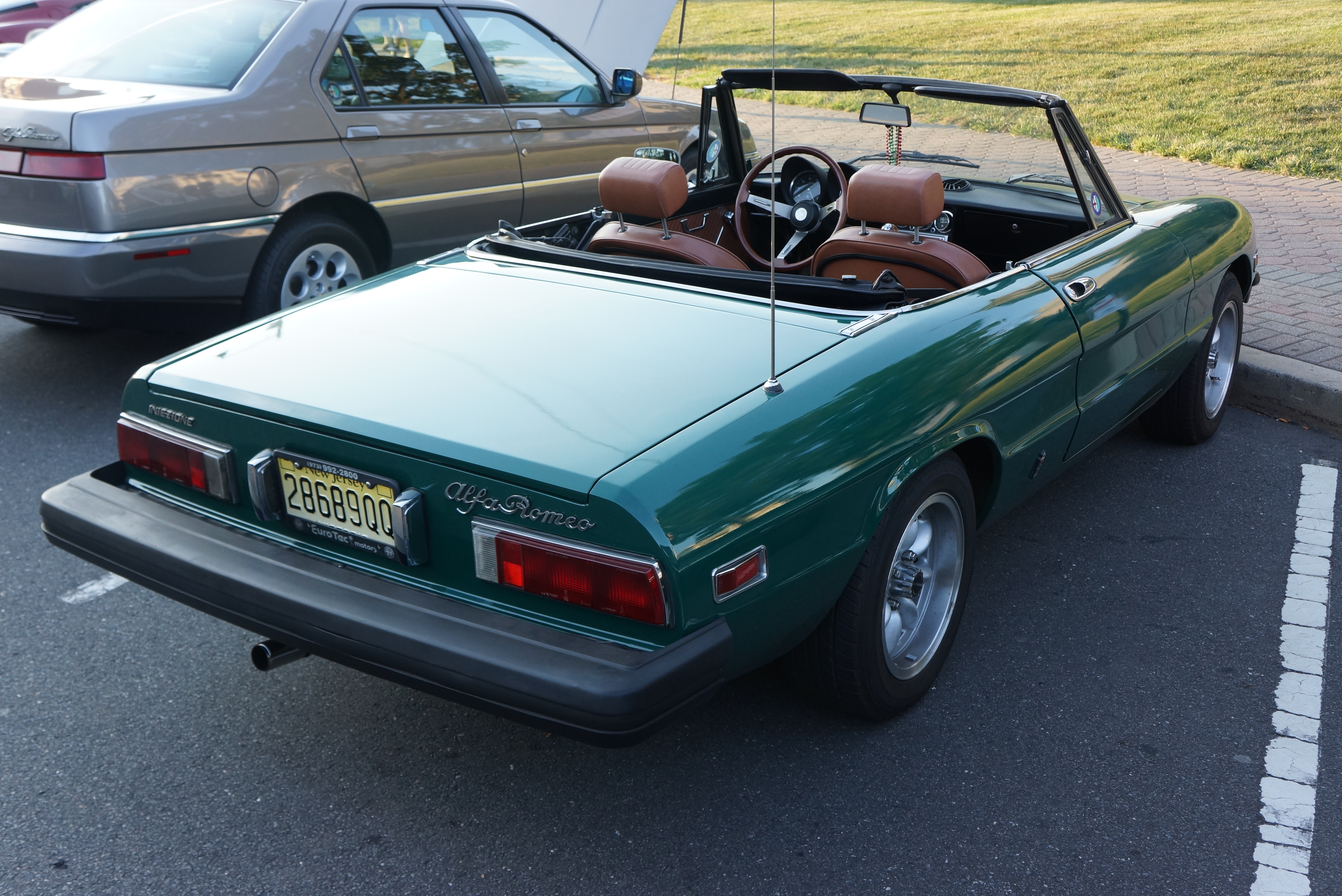
1977 Spider
Still owned by original purchaser
Interior a mix of original and refurbished
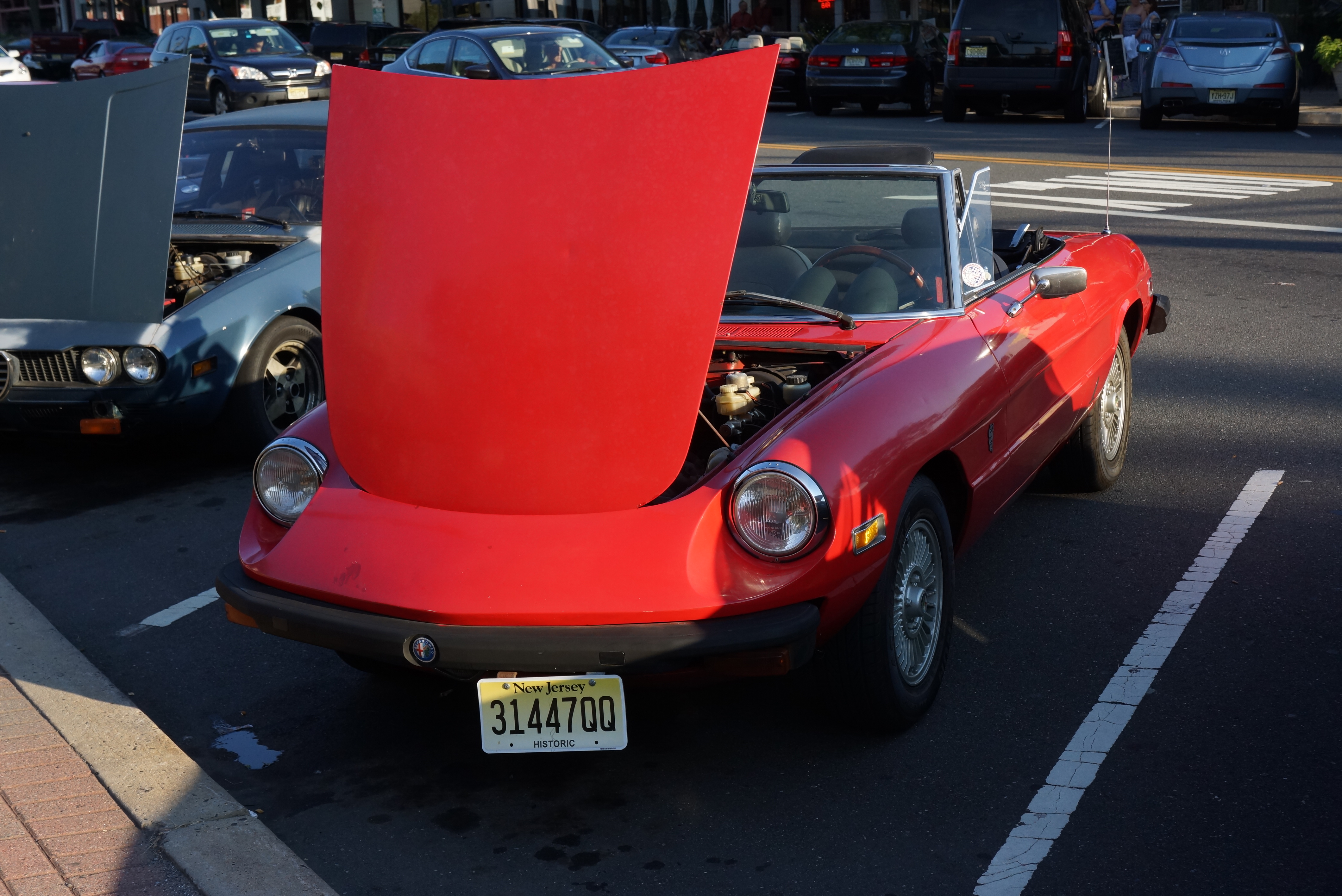
Spider in obligatory red
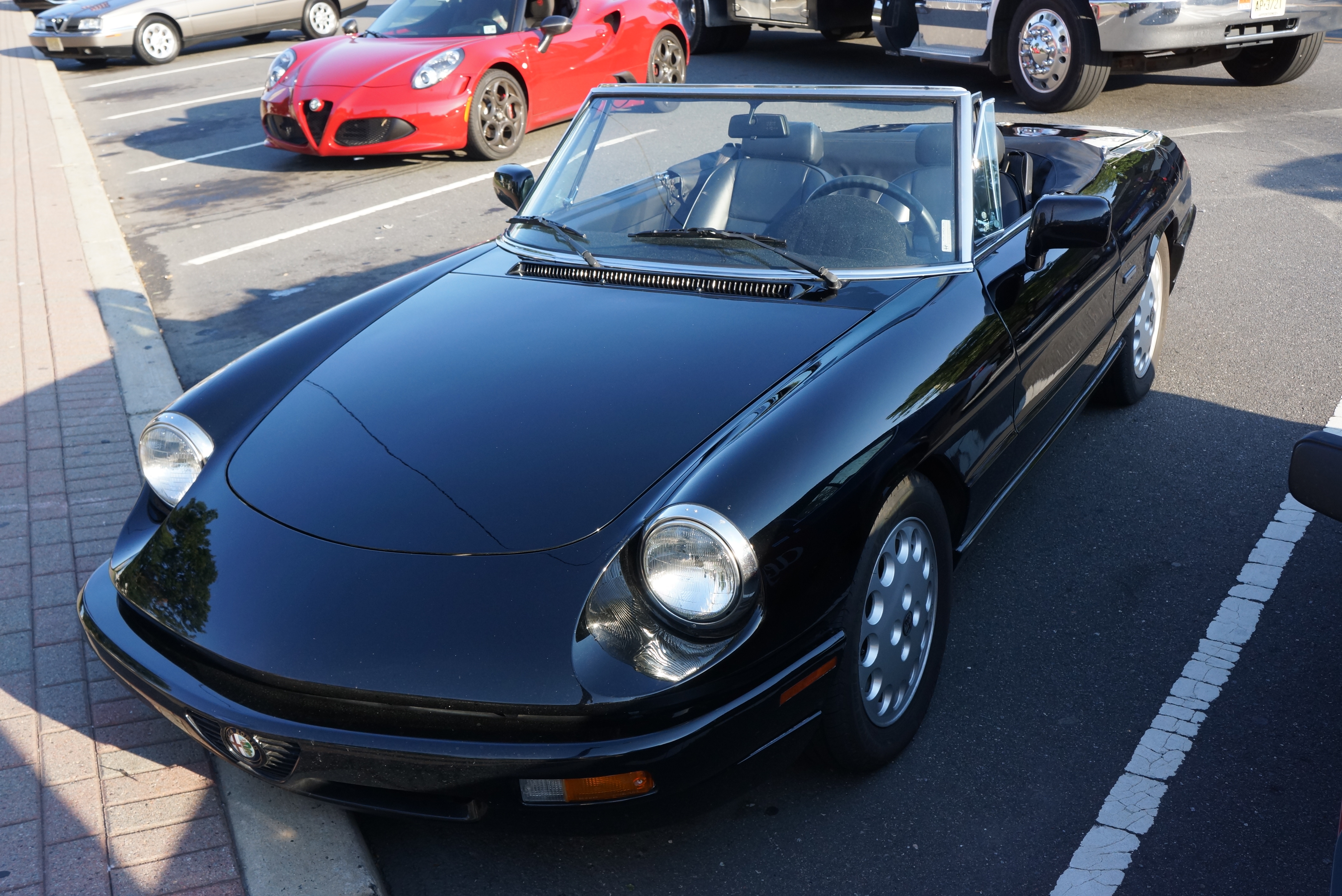
1993 Spider looking sharp in black
’70s era Alfetta GT
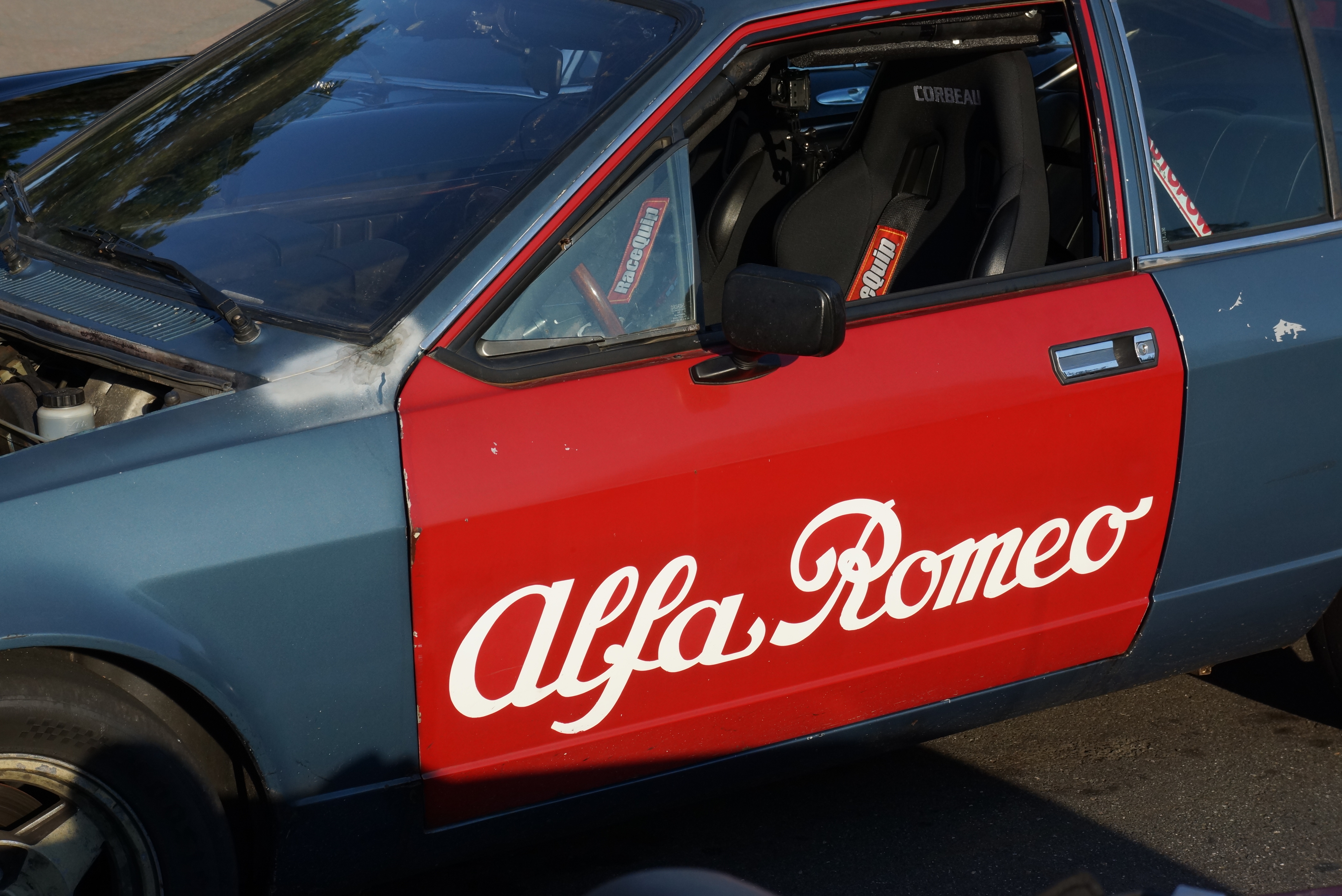
In case you didn’t know the marque
Rare twin-plug engine
Earliest Alfettas put tach in front of driver, with speedo pushed to center
The 164: V6 & FWD
So clean it looked a year old
Detailed engine compartment
My 1967 GT 1300 Junior
A V6-equipped ’80s GT Coupe
Sixty years later, Alfa still using manual release in 4C’s door jamb to open trunk

















































































 richardscarblog