Enzo’s Alfa, and Allen’s Invention

My buddy Enzo drove his 1991 Alfa Romeo Spider Veloce to my house this past weekend. He had requested my assistance with changing the transmission and rear axle oil in his car, and I’m always more than willing to assist a fellow Alfisti in need. This is not the first time I’ve worked on Enzo’s car, and in fact, we are both readying our Italian stallions in preparation for the trip to Pittsburgh in July for the AROC (Alfa Romeo Owner’s Club) annual convention.

Saturday was an almost-perfect weather day in NJ, sunny, warm, with low humidity. The sun was perhaps a bit too warm, as I pulled my ’67 GT 1300 Junior out of its stall so that we could work on the Spider in the cool shade of the garage.

The flag indicates that the middle bay is reserved for Alfas only

Enzo had the correct oil with him, 75W-90 GL-5 gear oil, so we decided to start with the gearbox. Jacking up the front of the car under the front spring perches, sturdy jack stands were placed under the jacking points just behind each front wheel. For some reason only known to Alfa engineers, the transmission case drain and fill plugs are on the same side as the exhaust (the driver’s side), so I found it easier to slide under the car from the passenger side and avoid contact with the still-hot exhaust pipes.

Enzo read the printout he had with him from his electronic service manual: “Remove the drain plug; allow the oil to drain out until you see just a drip. Reinstall the drain plug. Remove the fill plug, and add the appropriate oil until it reaches the top of the fill plug; reinstall the fill plug”. It sounded too easy.

Front is raised, drain pan is empty and ready

On my ’67, I knew that the fill and/or drain plugs required Allen wrenches, as I had done this job on my own car a few years back. I also knew that I had a rather good assortment of metric Allen sockets. I grabbed my drain bucket and positioned it under the tranny. At this point, I related a lesson I had learned a long time ago, and possibly had witnessed during my own repair travels.

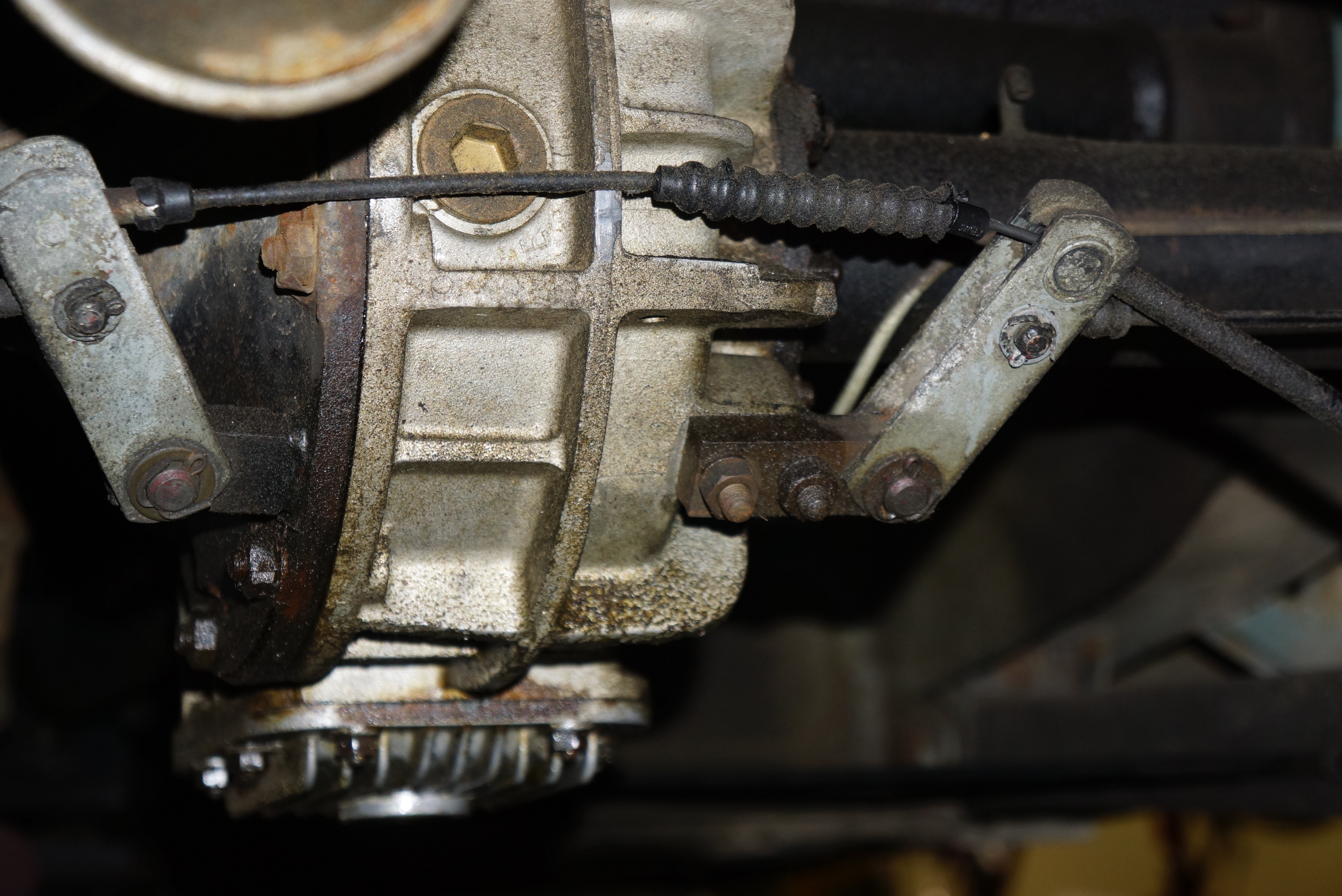
This is my ’67, showing the rear axle fill plug, requiring an Allen wrench

While the instructions were clear enough, I said, they should not be taken so literally. What if the car owner removed the drain plug, drained all the oil, reinstalled it, and then found out that s/he could not remove the fill plug? ROOKIE MISTAKE!

An experienced mechanic would always remove the fill plug first, just to ensure that it could be unscrewed and reinstalled. Having done that, the repair person would have the assurance that fresh oil could be added after the old oil had been drained. So that is what we planned to do.

Peering at the side of the case, flashlight in hand, I saw that the drain (lower) plug required a regular socket, perhaps 19mm or 22mm. But the fill (upper plug) would need an Allen (hex) wrench. I asked Enzo to hand me an assortment of metric Allen sockets from my toolbox.

None of them fit. Most were too small; one was too large. (This too-large one was 14mm, and I’m certain that I purchased it specifically for my car.) So much for my presumption that my ’67 and his ’91 would use the same size tools. I slid out from under the car, and opened a drawer which consisted mainly of Allen keys, in both SAE and metric sizes. I grabbed a bunch, got back under the car, and tried them one by one. None fit. That’s it, I said. We are finished before we even begin.

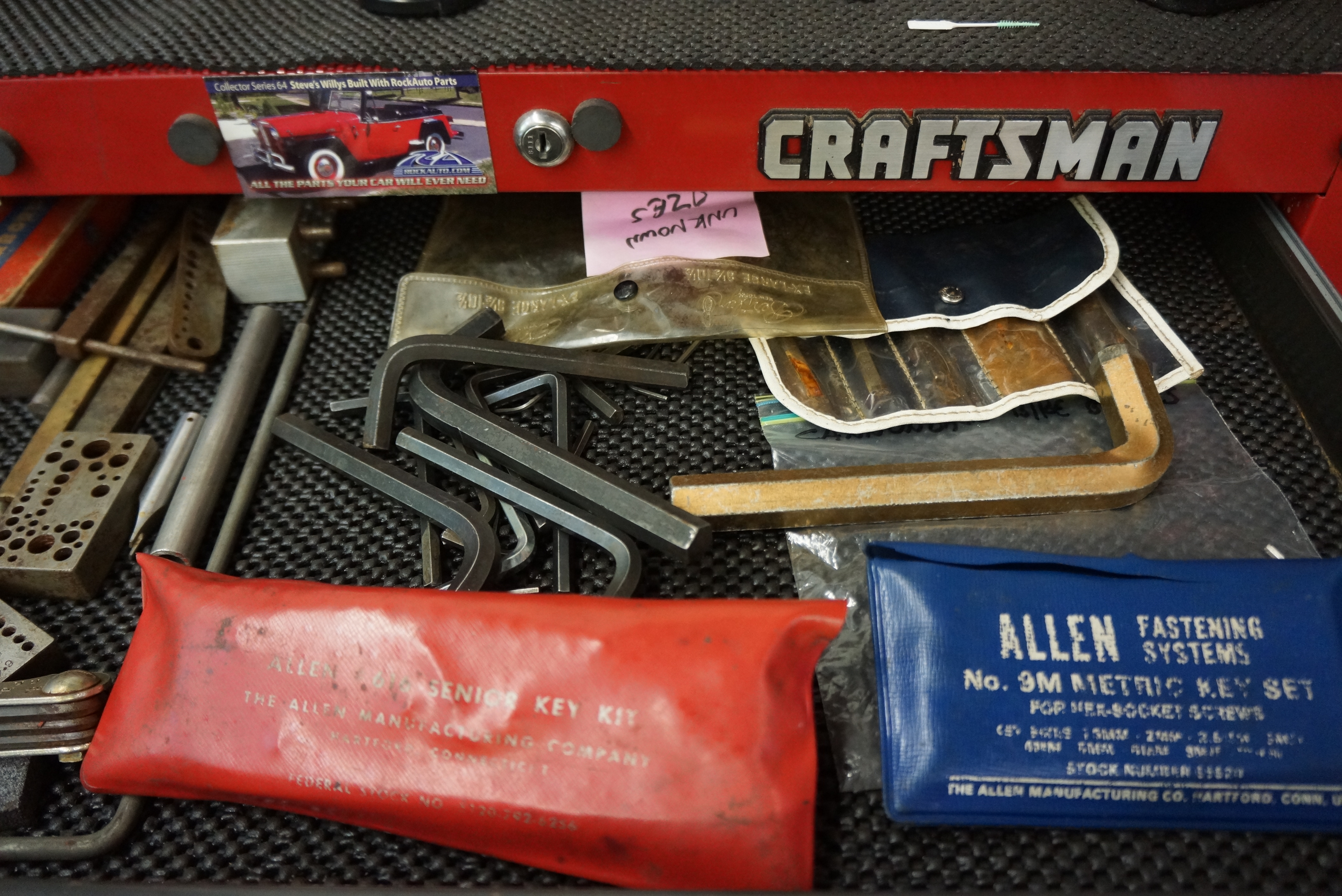
My hex key drawer


All metric, none correct

With that, Enzo opened his car’s trunk and rummaged through the tool kit that came with the Alfa. He pulled out a hex wrench. “Try this one” he said. I did. It worked. Voila! His Craftsman 12mm Allen wrench he just happened to have with him was the “key”.

“There’s an Allen wrench in here somewhere”

This wrench was about 5 inches long, and working on my back, I didn’t have a lot of leverage to crank counter-clockwise on this thing. “Get me a breaker bar” I shouted. “There are some black iron pipes in the same drawer as my hammers”. Enzo gave me a pipe about a foot long. STILL could not budge the upper plug. I’m not the strongest guy to have turned wrenches, which is why I keep an assortment of breaker bars on hand. But this fill plug was F.T.

Enzo works the breaker bar for a better fit

Enzo said “I have an idea – you hold the wrench and the breaker bar, and I’m going to extend my foot under the car”. Before I could ask him exactly what he had in mind, Enzo pushed hard with his leg against the pipe, and we both heard that satisfying “crack” sound when something that’s uber-tight breaks free. We did it. With the upper plug out, the lower plug was quickly removed with a 22mm socket and ½” drive wrench, and the old, possibly original, gearbox oil was flowing out and into my catch can.

I had forgotten to mention to Enzo the need for fresh copper washers, but I just happened to have a few new ones on hand. I think that every drain plug on every ‘60s/’70s Alfa uses the same size copper washer! The magnetic drain plug had a bit of sludge on it, but it didn’t look like anything to worry about to me. I cleaned off the sludge, and gave the threads a quick gentle scrub with a brass brush.

The drain plug was reinstalled, and Enzo snaked a rubber hose from the engine compartment, down toward the transmission. I held the hose in place at the fill plug, while Enzo poured in about 2 quarts of the gear oil. Once it started flowing out of the top hole, indicating a full tranny, I reinstalled the fill plug. This transmission drain-and-fill, with the jacking, prying, and filling, took us over an hour and a half.

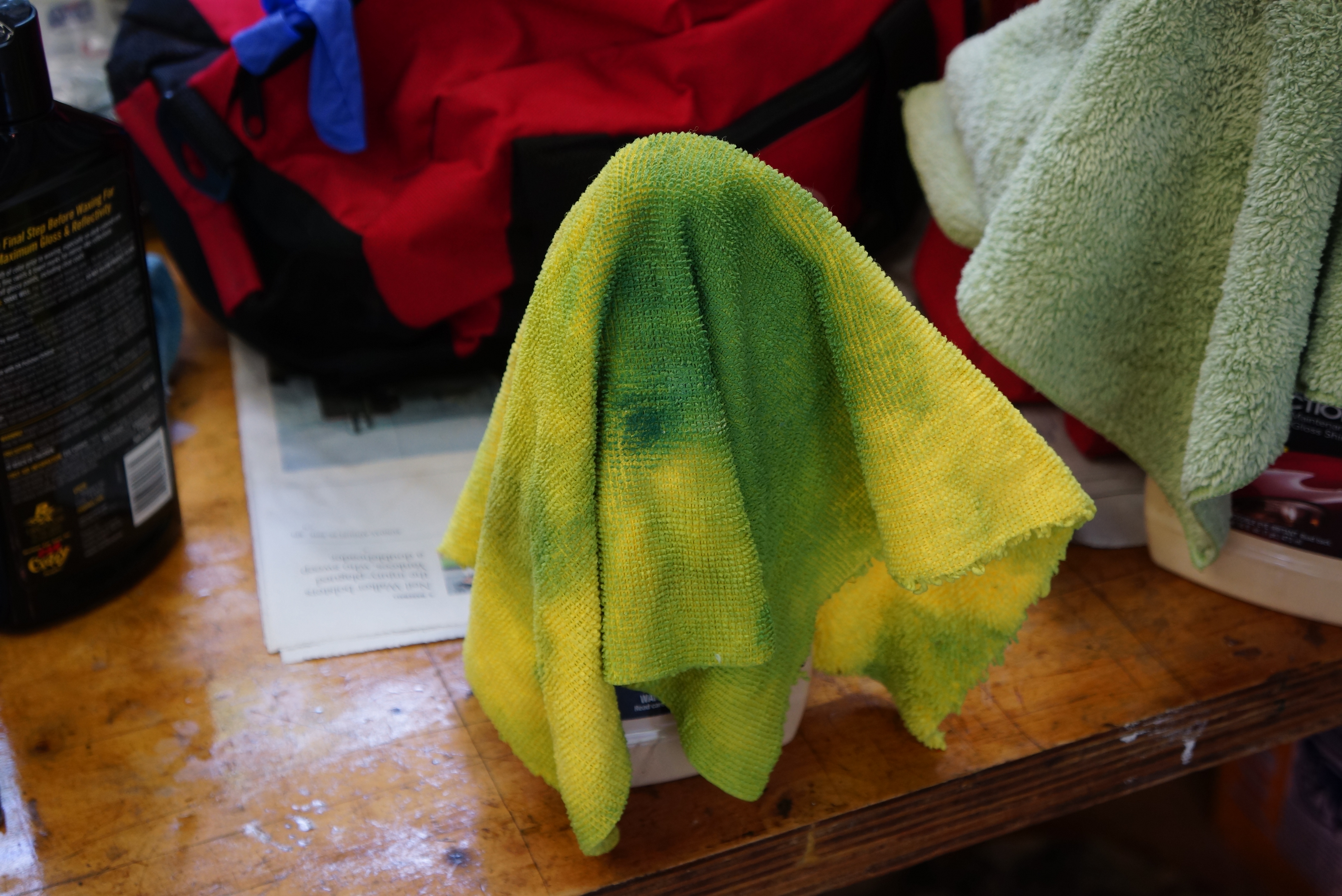
Pan, hose, and rag, after the job

The rear axle, by comparison, was relatively easy. Besides, we were now experts. The jack stands were removed from the front. The floor jack was placed directly under the differential drain plug, and both sides of the car were lifted at the same time. With the jack stands in place at the rear, I noted that we needed the same two tools: a 12mm Allen for the upper fill plug, and a 22mm socket for the lower drain plug. We again needed Enzo’s muscular right leg (probably built up from years of playing soccer) to loosen both the fill plug AND the drain plug, but with that. the rear axle oil was flowing.

This magnetic drain plug had the same amount of sludge, and it too was cleaned and fitted with a fresh copper washer. With the drain plug back in, we were ready to add new gear oil.

To route the fill hose, Enzo pulled the spare tire from its well, and unbolted a drain cap, which then provided excellent access to the fill hole. About 1.5 quarts of oil were added. We buttoned up, cleaned up, and started it up. A short test drive confirmed no untoward noises, and with that Enzo was safely on his way. Let’s hope there isn’t too much more to do between now and our mid-July departure for Pittsburgh.


SIDEBAR: THE ALLEN MANUFACTURING COMPANY
Most technicians are familiar with a tool that’s commonly called a “hex key” or “Allen key” or “Allen wrench”: it’s a six-sided hexagonal shape that’s inserted INTO a screw head or bolt head, as opposed to the more-common socket or wrench, also 6- (or 12-) sided that’s placed OVER the outside of a bolt head. The hex/Allen design offers the advantage of a smaller head that can fit in tighter places, and can even be designed to thread down and into a threaded hole or shaft.
A vinyl pouch from the Allen Manufacturing Co. Note use of the word “key”.
“Hex” of course means “six”. But why is this tool also called an “Allen wrench/key”? You can thank Mr. William G. Allen, who, in 1909-1910, patented the design, and began manufacturing both the screws and the tools via the Allen Manufacturing Company of Hartford, CT.
My father worked around production machinery for much of his professional life, and set screws which required Allen wrenches were very common. My father’s extensive collection of Allen wrenches in both SAE and metric sizes are now in my possession, and even include some plastic carrying cases bearing the company’s name.
Allen’s “NO. 9M METRIC KEY SET”
You can read more about Mr. Allen, his patent, and other related bits of information, in this Wikipedia entry on hex keys.

All photographs copyright © 2019 Richard A. Reina. Photos may not be copied or reproduced without express written permission.


Assisting with a Porsche 914 engine rebuild, Part 1

I’ve known Ron for over 20 years now – unlike the majority of my friends, whom I know either from school or work, I met Ron during my very first New England 1000 rally in 1998. He and his wife Carol drove an MGA that year, while Steve and I were in Steve’s Tiger. We hit it off because we liked similar cars, plus we were all from NJ.

Ron loves all kinds of cars and motorcycles, preferably those from merry ol’ England. He currently has a Triumph Spitfire, an Austin-Healey, and about a half-dozen British two-wheelers. Still, I would describe his tastes in motor vehicles as “varied”, as the fleet also includes a Ford Model A pickup, a pre-war Packard convertible, a ’56 T-Bird, and a Porsche 356.

About 10 years ago, Ron picked up a derelict Porsche 914, and after doing body repairs (he’s proficient at metal work), he finally peeked inside the engine to discover a disaster: water had sat inside the crankcase for so long that all the internals were frozen. Somehow, he found another 914 engine for sale for $200 and dragged that home. That’s when he called me.

Ron explained that he had rebuilt the engine in his MG Midget race car (numerous times) but was unfamiliar with this VW Type 4 air-cooled flat four. I told him in turn that I rebuilt the one-lunger in my BMW Isetta, and felt equally unfamiliar with the V-Dub motor. Somehow, he convinced me that I knew more than he did, and I agreed to give him a hand one day for a few hours.

I’ve turned wrenches for much of my adult life, and can even try to convince you that I earned a living at it for a year or two. My experience, though, does not extend to a lot of in-depth engine work. Perhaps my biggest contribution to Ron’s project would be as a disassociated 3rd party who could oversee the proceedings, maintain a slow and steady pace, and assist in keeping things organized.

BEFORE DISASSEMBLY:

Arriving at his house one day last week, Ron had the engine on top of a sturdy work table, and had cleaned off much of the grime. Even removed from the car, it’s difficult to look at this hulk and envision an engine in there. Frankly, I’ve never understood the appeal of these VW/Porsche boxers. If you popped the hood on my ’68 Mustang, you were greeted with 390 cubic inches of cast iron painted Ford blue. In a different vein, but equally impressive in my opinion, opening the hood on my ’67 Alfa reveals a 1.3 liter aluminum jewel, with the valve cover proudly perched above the dual overhead cams. Lift the engine cover on a Beetle, early 911, or 914 and you’ll see…. sheet metal shrouding.

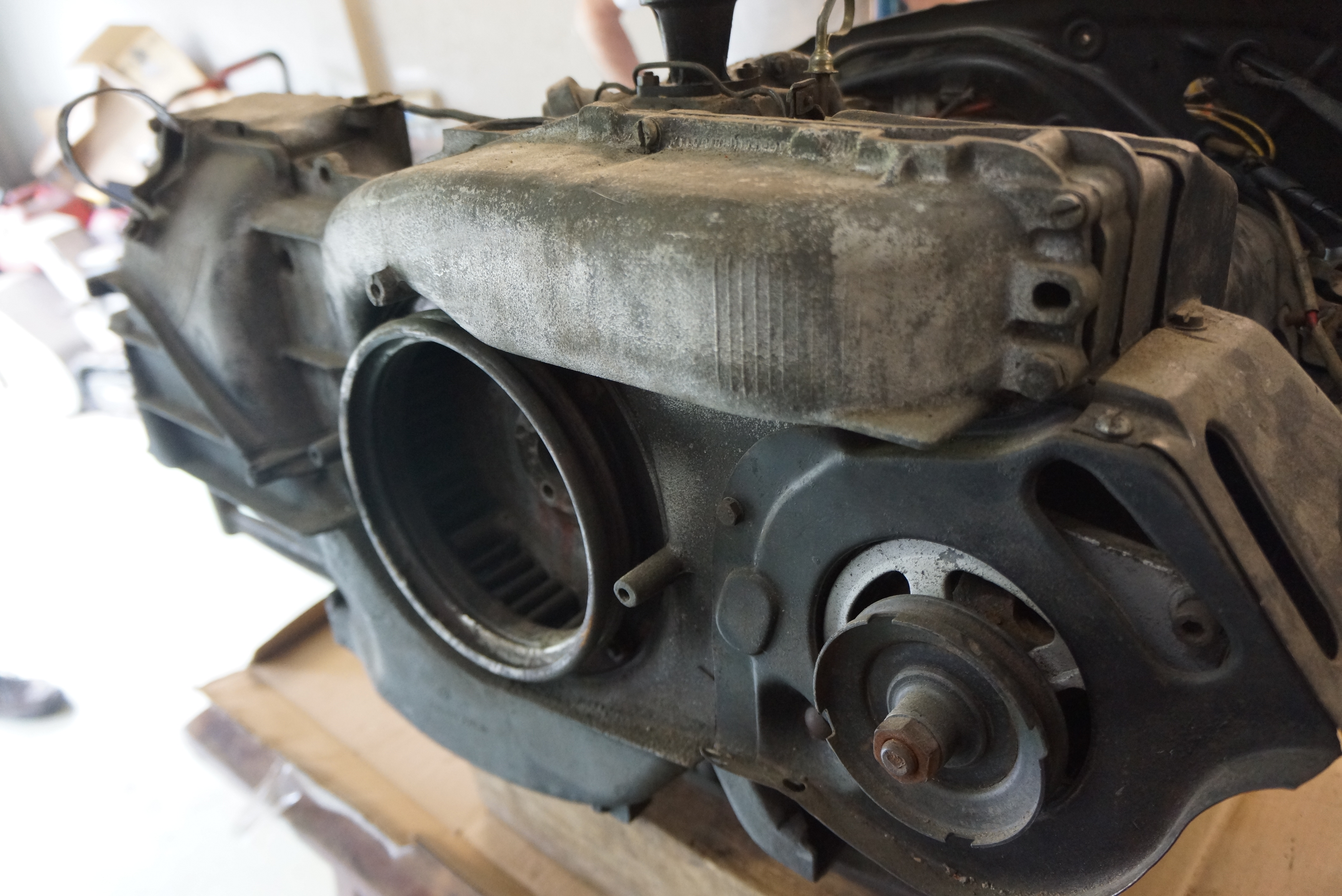
Everything is shrouded: the top of the cylinders; the cooling fan; the bottom of the cylinders; and the alternator too. I get it: no radiator, no antifreeze, no hoses or hose clamps. It does simplify things. But you still need to control airflow over the crankcase, cylinders, and heads to dissipate heat.


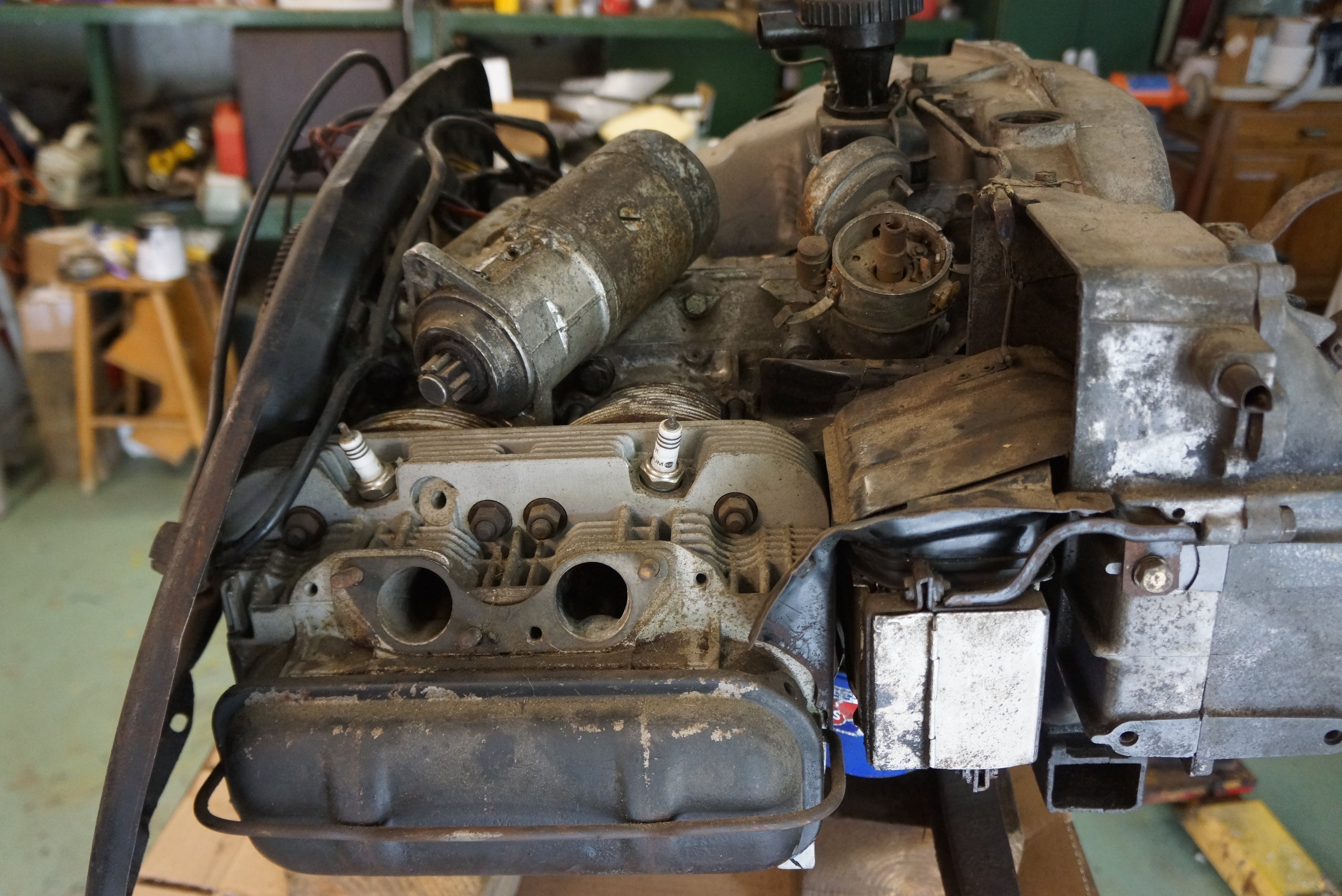
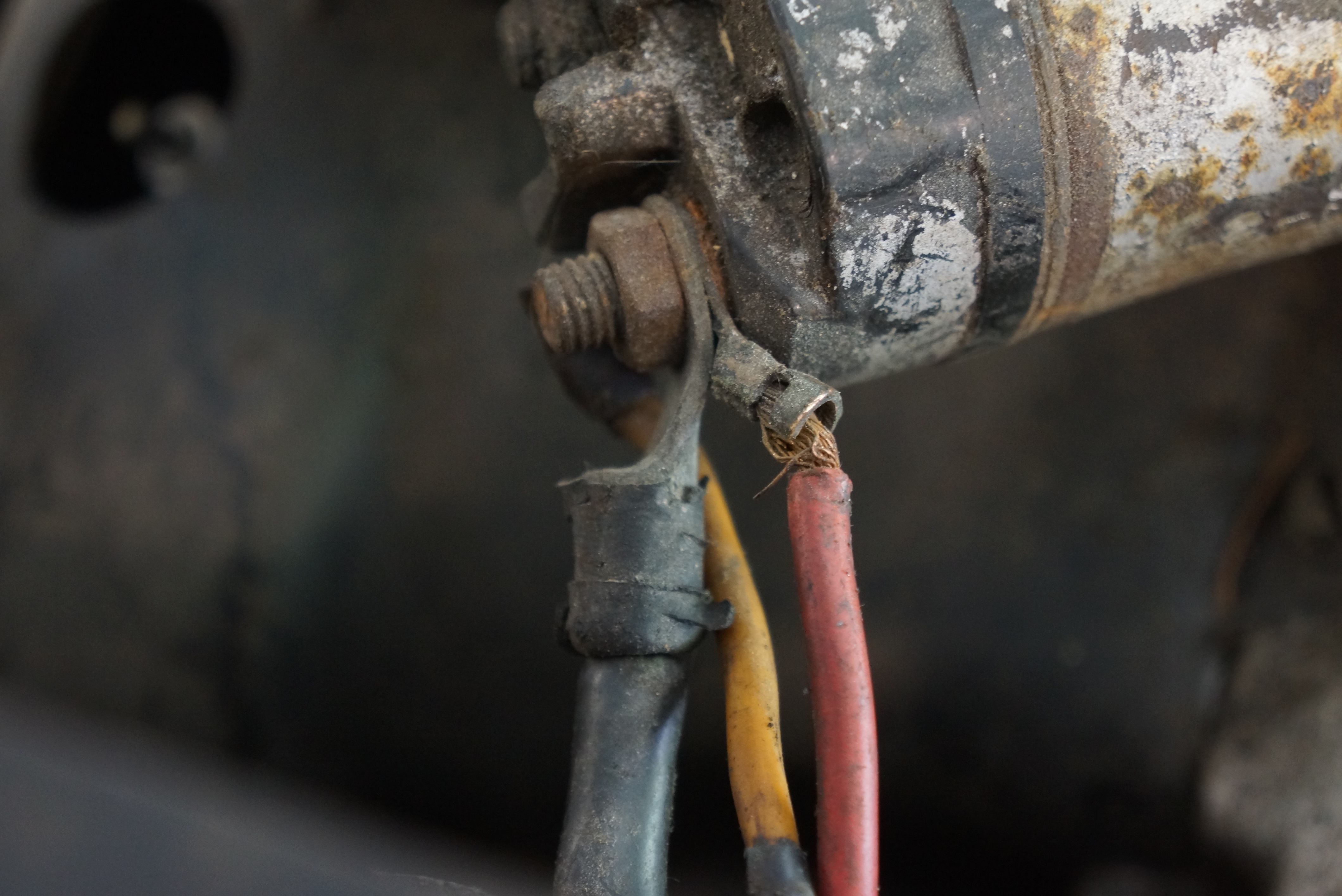
Capturing this detail at the starter will help during reassembly

So the first order of business was to remove all the shrouding, and just as importantly, photograph and label each piece as it was removed, for reassembly sometime in the hopefully not-too-distant future. (Actually, the first task was to remove the starter and its attendant wiring harness on top of the engine, so this we did.)

I had not seen a shrouded alternator before this

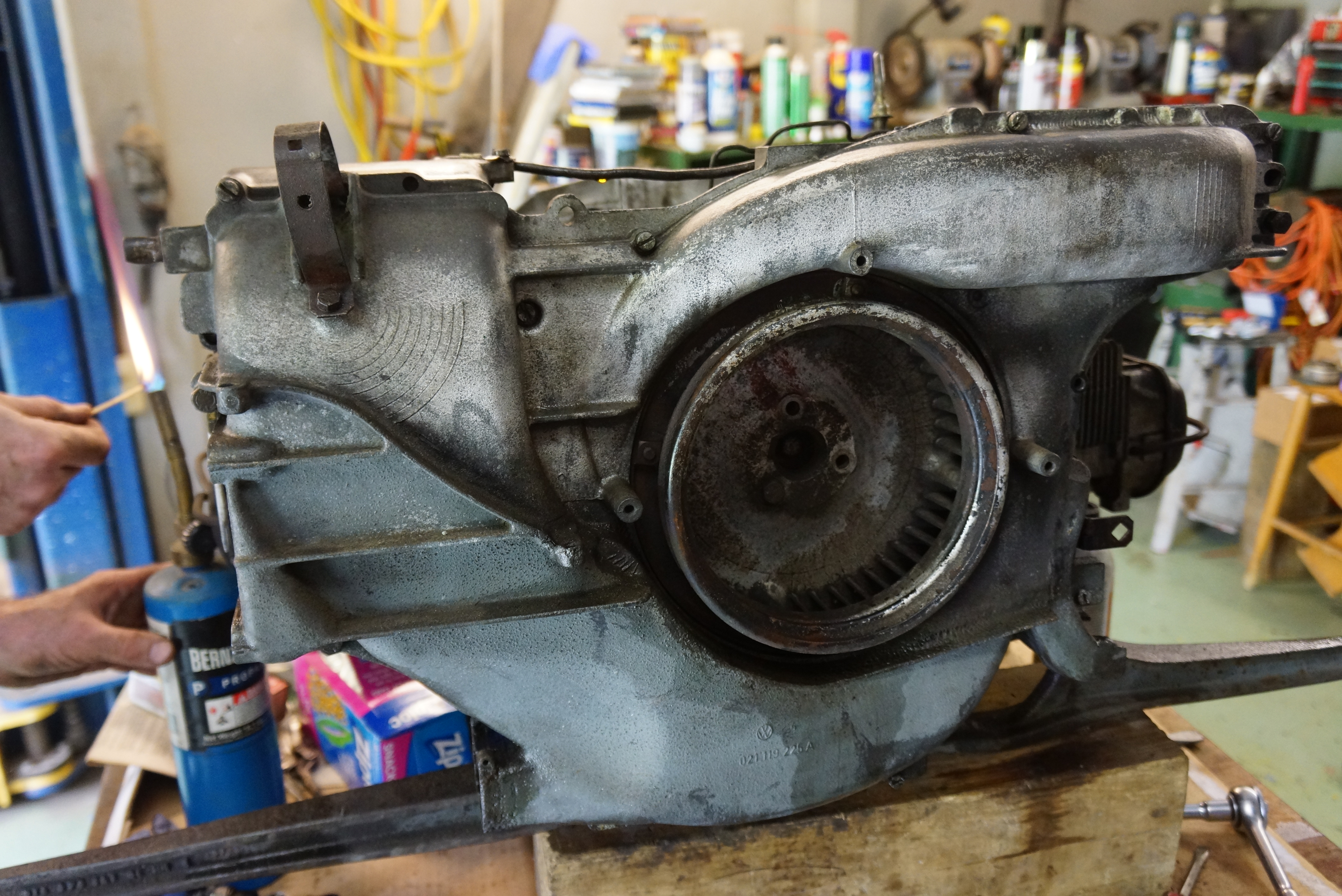
This engine had already been apart at some point in its past. We knew that because A) the shroud screws were a mixed bag of slotted screws and cap screws; B) blue Permatex sealer was evident in various spots; and C) a few shroud screws had broken off in the case, something for us to work on later.

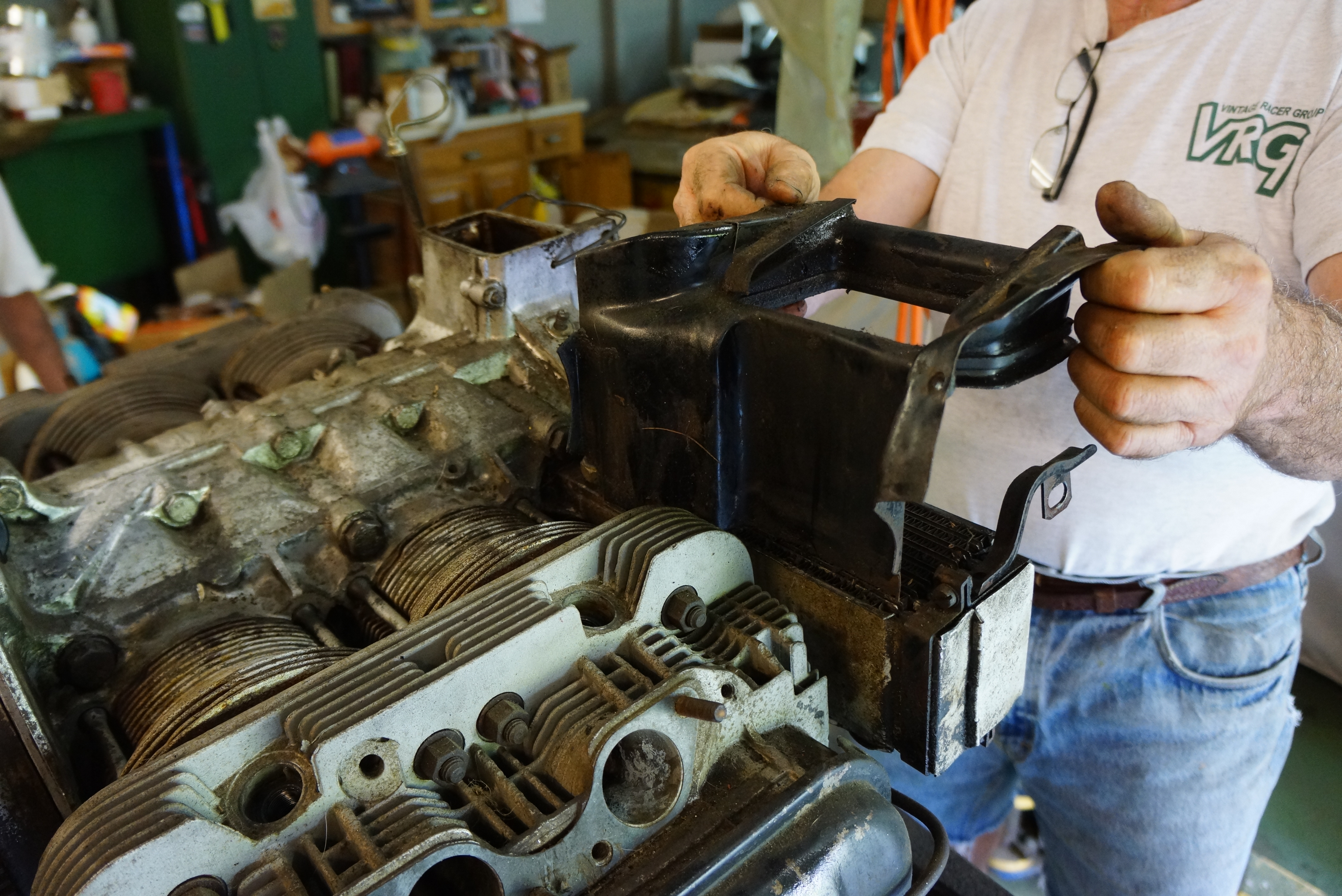
RON POSES WITH SHROUDING FOR THE CAMERA:

With the thin sheet metal shrouding off, we tackled the fan housing, a large aluminum casing at the front of the engine, almost as large as the crankcase itself. Here we ran into a few screws that would not budge. Ron first tried the blue wrench, aka the torch. When THAT didn’t work, he resorted to a drill to remove the screw heads. This finally allowed the housing to be separated from the case.

The blue wrench is ON. Ron’s friend John wisely stands several yards away.

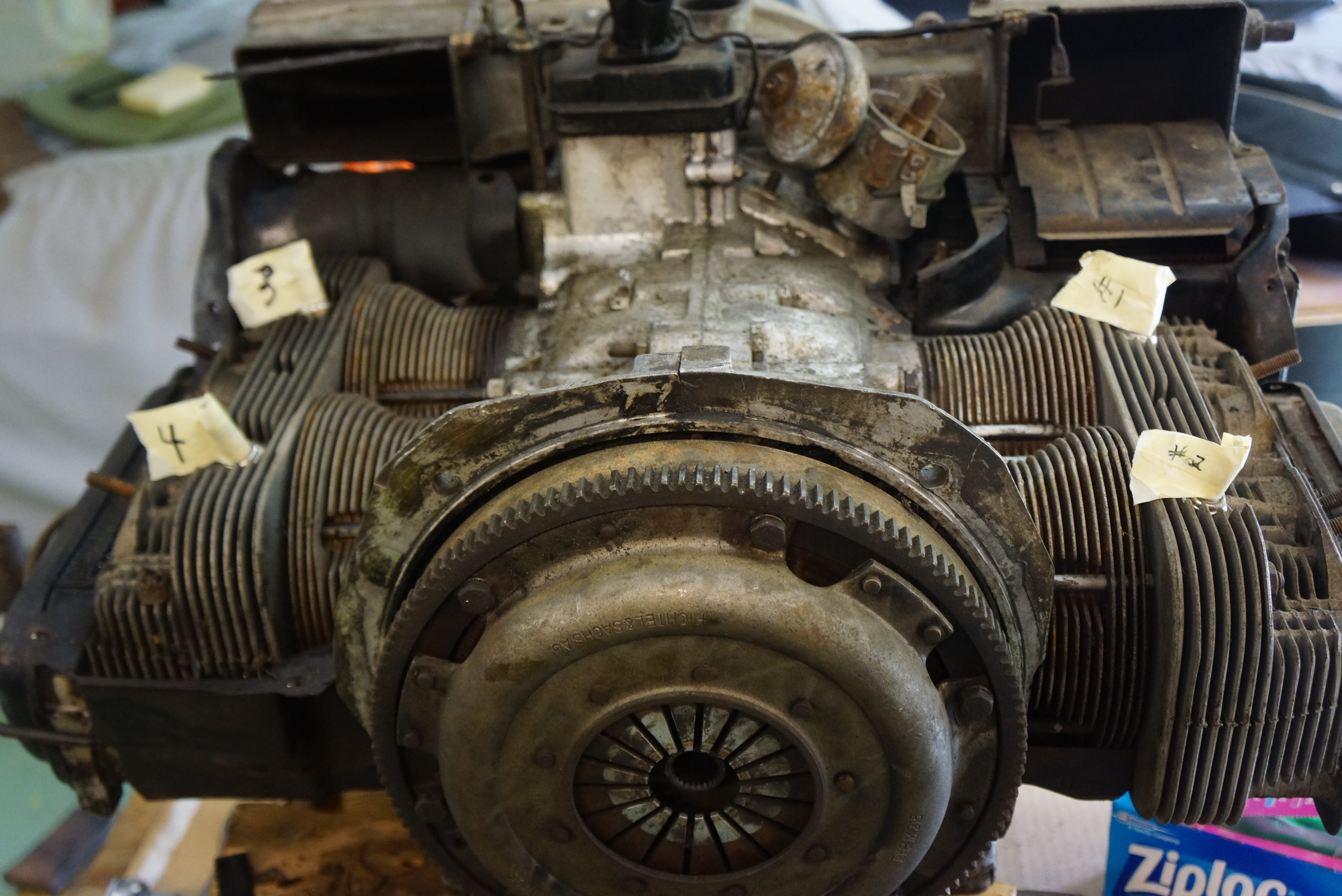
We marked the spark plugs 1 through 4, and took a snapshot to keep track of cylinder numbers. Removing the spark plugs, we found that the engine easily turned by hand, with no untoward noises. This was a good sign, and maybe just maybe, things are OK at the crank.

Cylinders 1 through 4 are so marked

The clutch came off without drama once the pressure plate bolts were out. The flywheel was rusty, but we saw no obvious score marks.


This was enough work for one day. Ron’s plan is to use new/reman cylinders, pistons, and heads, all of which he already owns. I reminded him that he needed to order a clutch, and I suggested that he look for a shroud fastener kit, so we could avoid dealing with chewed-up bolt heads.

Ron pointed out there was no blood, no broken bones, and no one’s clothes caught fire, so he declared the day a success. He managed to convince me to return, and I managed to croak out a “sure”. But we’re going to need to get this thing on an engine stand soon – AFTER that flywheel comes off.


All photographs copyright © 2019 Richard A. Reina. Photos may not be copied or reproduced without express written permission.


The Alfa Gets Its 2019 Tune-up

When I bought my Alfa Romeo GT 1300 Junior in March of 2013, it was for the express purpose of using it to participate in automotive events. There’s no denying that I have piled on the miles. The four New England 1000 rallies of 2013, 2014, 2015, and 2018, the Alfa National (International) excursion to Montreal in 2017, and two trips to the Greenwich CT Concours have accounted for the bulk of the mileage. Add to that the innumerable local breakfast drives and car shows, and you can understand how in 6 years of ownership I’ve managed to spend 11,000 miles behind the wheel of this fine Italian automobile.


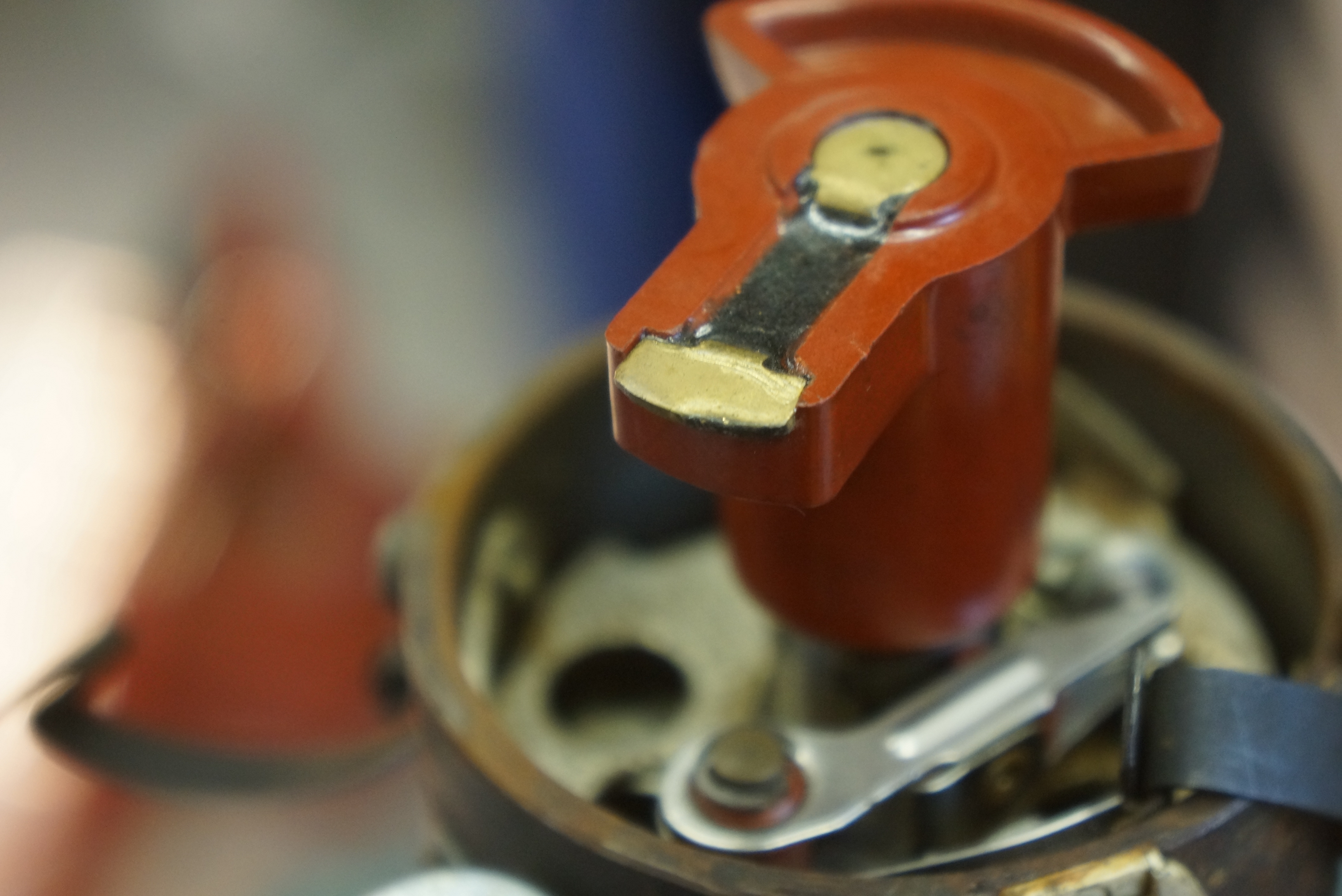
Bosch rotor, unlike ones I serviced on Volvos, uses a set screw to hold it in place.


Old rotor showed tip wear, but appeared normal to me


Alfas, and Italian cars in general get a bad rap as “unreliable”. That’s not been my experience. Except for a dead battery right after purchase, and a failed alternator on the ’18 NE1000, those 11,000 miles have been trouble-free. I’ve mentioned to those who ask that the more I drive the car, the better it seems to run. The other side of that coin is that, as a ‘60s European thoroughbred, the car’s mechanical state of tune must be strictly looked after; indeed, the Alfa maintenance schedule, which requires more frequent service than an American car of similar vintage, should be followed as closely as possible. This is where ability to work on your own vehicle becomes a significant advantage compared to needing to pay someone to do what is in essence straightforward service work.

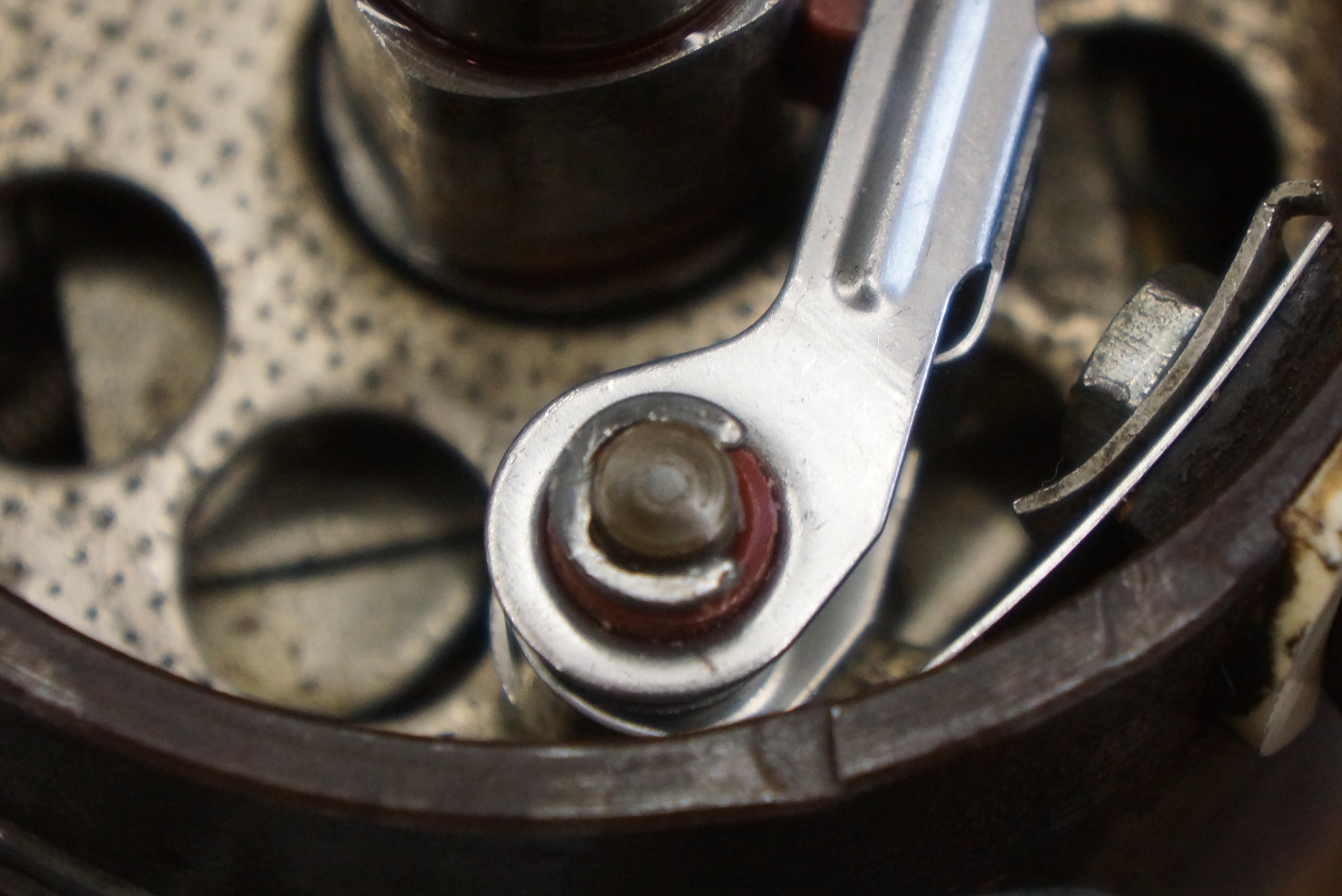
C-clip holds points in place; tricky to remove and hold onto


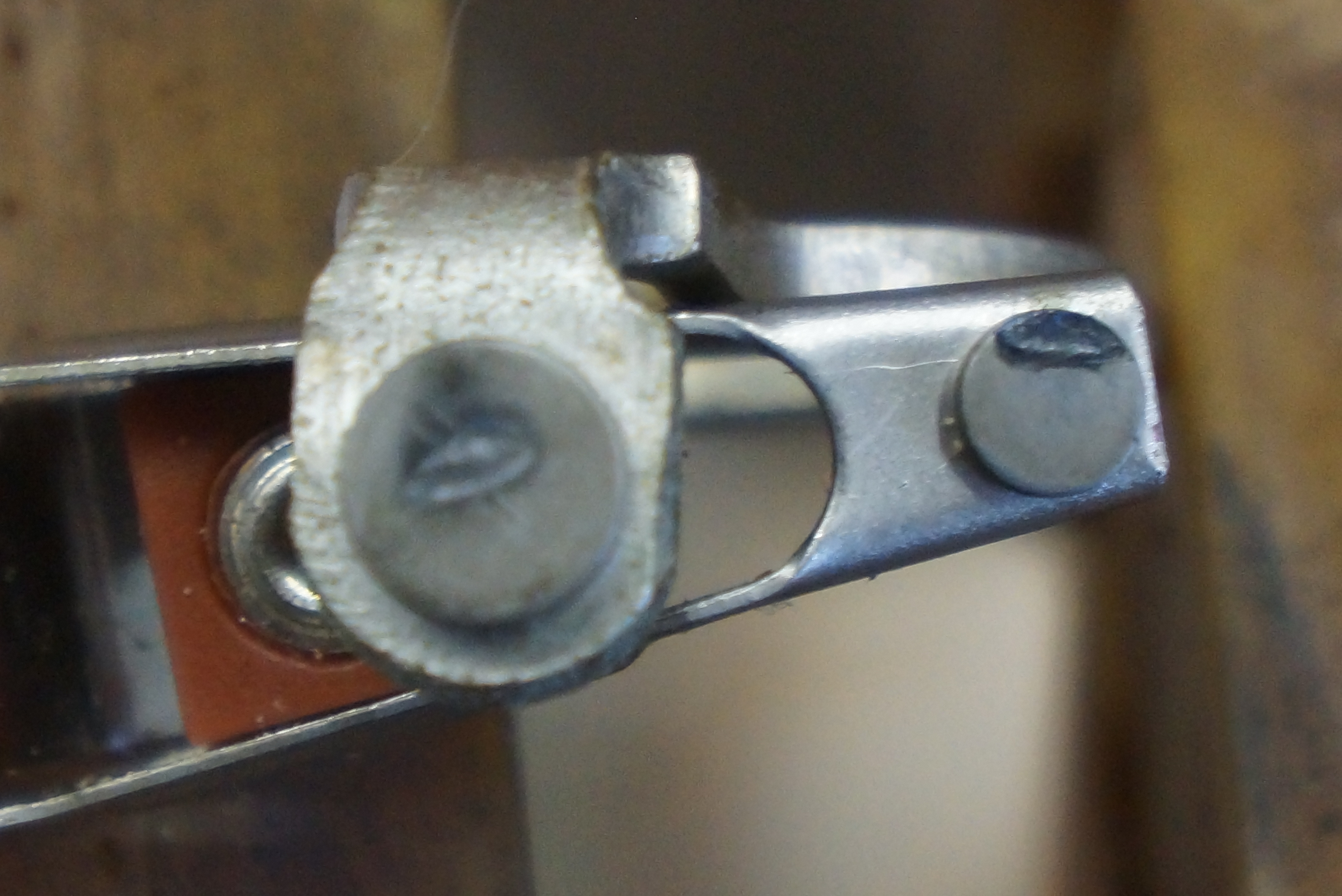
Points showed rather severe pitting

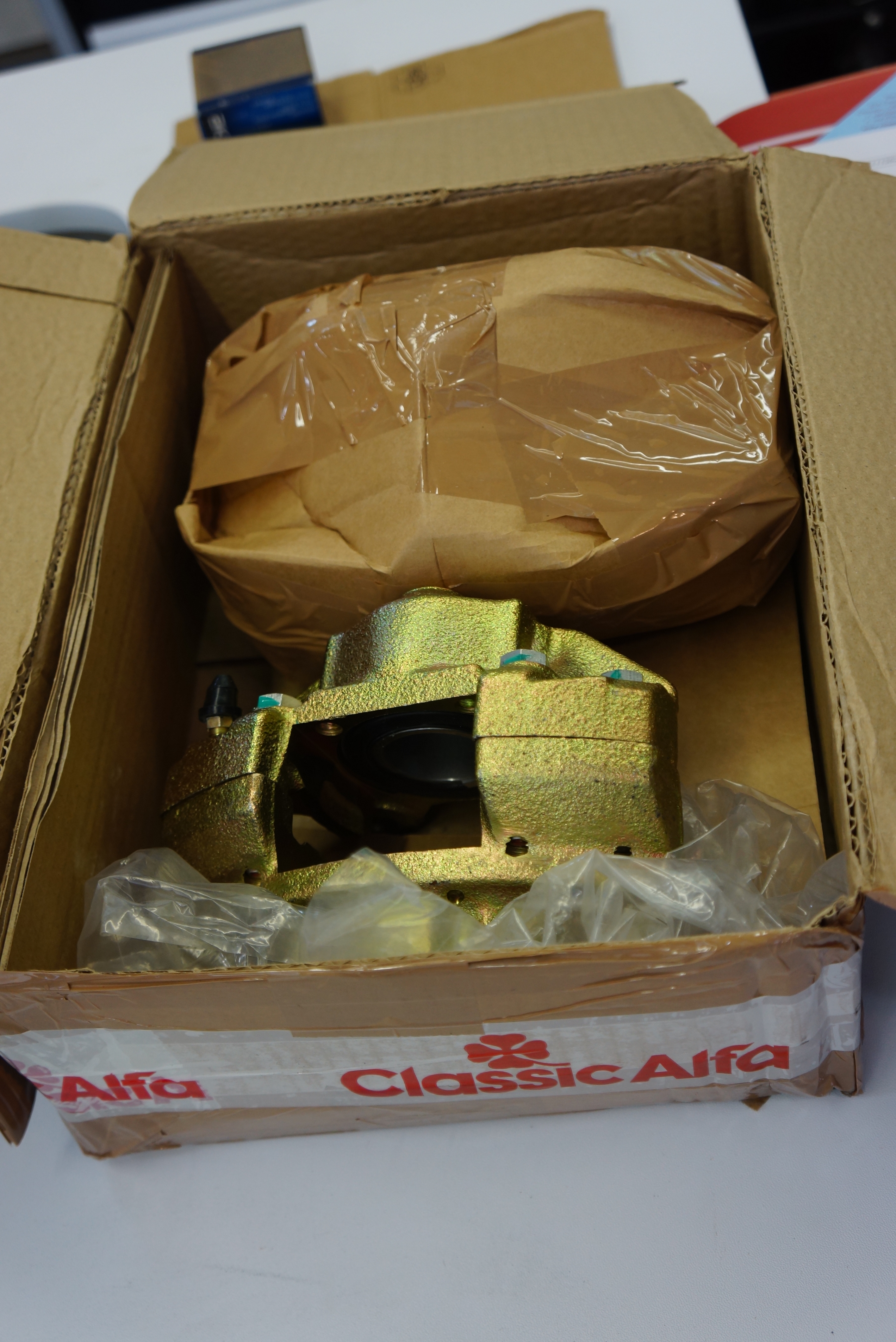
After I finished the valve adjustment a few weeks ago, I noted that the idle was terrible, and in fact, it was difficult to get the engine to consistently respond to accelerator inputs. My first suspicion was the car’s ignition system, so an order was placed with Classic Alfa for the suite of tune-up parts. (And they spoiled me again, with the package on my front porch is less than 48 hours.)

Bosch rotor is different part number for 1300 compared to US-spec cars- note German “OEL” (oil)

The service books recommend removal of the distributor for service work, and it’s held in place by a single 10mm-headed bolt, so it’s easy to pop it out. Checking the usual suspects for wear, I didn’t see anything severely out of the ordinary, although the points were badly pitted, and the gap was too small.

Freshly-serviced distributor, with new points, condensor, and rotor

I ended up replacing the spark plugs, plug wires, cap, rotor, points, condenser, and, for the first time under my ownership, the coil, which looked original. The car fired right up, and as I’ve noticed immediately after prior tunes, the tip-in is magnificent. I took the car for an all-too-brief run around the neighborhood, and felt infinitely better about all the driving I’ve got planned for the Alfa for this year, especially the Alfa Club Convention in Pittsburgh in July.

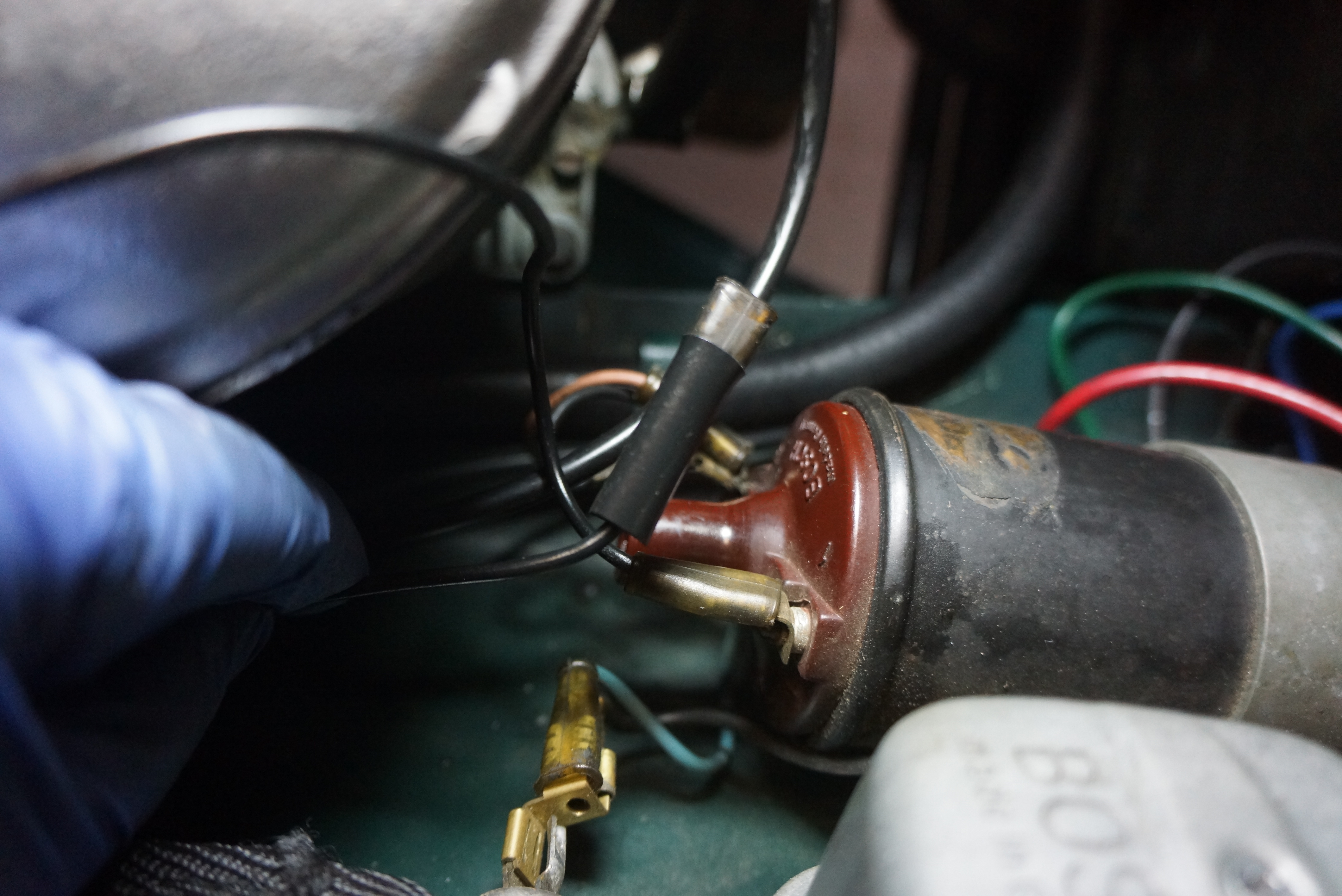
In addition to replacing coil (old one here), I fabricated a new coil-to-distributor wire

The one remaining item on the tune-up to-do list is the ignition timing. If I’m reading the books correctly, the best way to set the distributor timing for utmost performance is by checking it at 5,000 rpm. At that engine speed the “M” (for “massimo” or maximum) should line up with the timing pointer. The books also recommend NOT adjusting the distributor while at 5,000 rpm, and that’s good advice.

Note to self: every year, the ignition system needs to be checked, adjusted, and renewed as necessary at the start of every driving season.


All photographs copyright © 2019 Richard A. Reina. Photos may not be copied or reproduced without express written permission.
Alfa Romeo Valve Adjustment, Part 2

As you read in “Alfa Romeo Valve Adjustment, Part 1” (or if you skipped your reading assignment, you can find it here), the valve gaps on my 1300 engine were out of whack, especially on the intake side. With cams temporarily removed, I measured all the existing shims, did the algebra to calculate the sizes of the needed shims, and placed my order with Classic Alfa in the UK. I was not the least bit surprised when the order I placed at 10 p.m. on a Saturday night landed on my front stoop before I got home from work on Tuesday. (I need to email them and enquire what happens after Brexit, presuming that Brexit happens.)

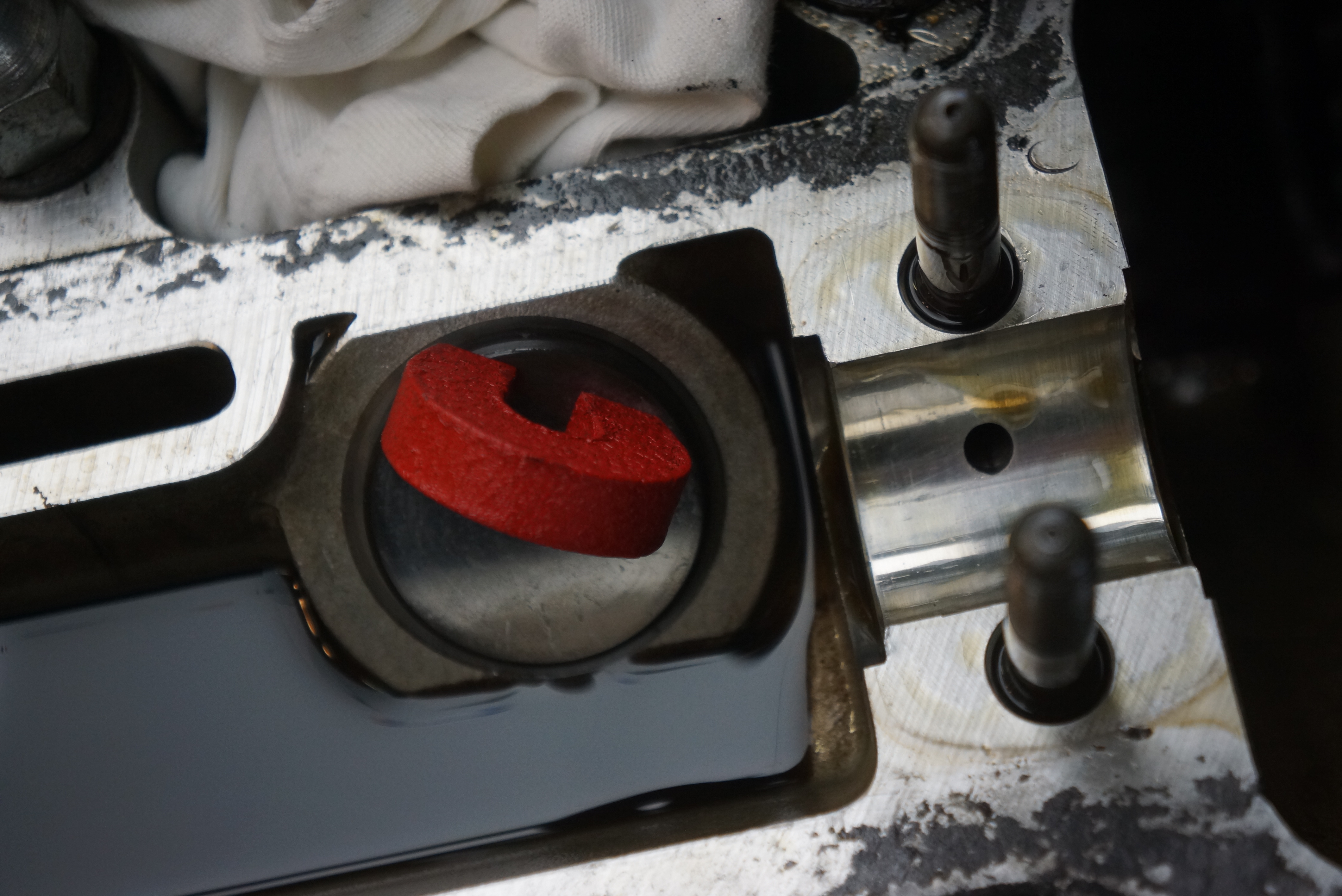
This magnet was very helpful in encouraging the slippery follower to come out

The following weekend, all the old shims came out, and the new shims went in, again following the “one cylinder at a time” rule I established so as not to cross-install the followers which must remain with their original cylinders. When reinstalling the cams, I could not get the timing marks between the cams and front bearing caps to line up. It made me nervous enough that I removed and reinstalled the cams a second time (remember that the timing chain remained attached to the sprockets). I finally convinced myself that once I released the bolt holding back the spring tension in the timing chain tensioner, all would return to sync, and that is exactly what happened. With the tensioner pressing against the chain, I rotated the crank and cams through two complete revolutions, and then tightened the bolt in the spring tensioner. The marks were still aligned, thankfully.

I double-checked and wrote down all the new valve clearances, and all seemed good (but read on). Since I had the spark plugs out, a new set of NGK B7ES plugs, which are in stock at my local Advance Auto Parts store, went in. With plug wires, intake plenum, and air filter hose back in place, it was time to attempt to start this baby, remembering that the engine had not been run since the car went to sleep the previous autumn. The engine started on the second try, however, there was an unhealthy miss at idle. I shut it down, and made plans for a complete tune-up, which was next on the Alfa’s to-do list anyway.


Never-seize coating on plug threads
Postscript: I jotted down all the “new” valve clearances, and really didn’t give them a second glance, undoubtedly presuming that everything was done correctly. Today, while composing this blog post, I noticed that my spec for intake valve #3, .450mm, was unchanged from its original measurement, yet I have no doubt that the 2.15mm shim which had been in there was replaced with a 2.10mm shim, which means that the new measurement should have been .500mm. For now, I’m leaving this alone for several reasons: valve #3 was the closest to spec of all the intake valves during the original check; testing the thicknesses of the new shims revealed that how tightly I cranked on my micrometer made a difference in the measurement (including the effect of residual oil on the shim); and I’m not yanking that cam again for 0.05mm!


All photographs and video recordings copyright © 2019 Richard A. Reina. Photos may not be copied or reproduced without express written permission.


Alfa Romeo Valve Adjustment, Part 1

The owner’s manual for my 1967 Alfa Romeo GT 1300 Junior calls for the engine valve clearances to be checked every 18,000 kilometers. According to Google Calculator (before Google Calculator I would have used my slide rule), that’s every 11,185 miles. Coincidentally, I’ve put almost exactly 11,000 miles on the Alfa since purchasing it in March 2013. So in part to prepare for what is anticipated to be a very busy 2019 driving season, and in part because I really don’t know when this was last done, I decided to check all 8 valve clearances (4-cylinder engine, 2 valves per cylinder equals 8 valves).

The Alfa engine, before any disassembly

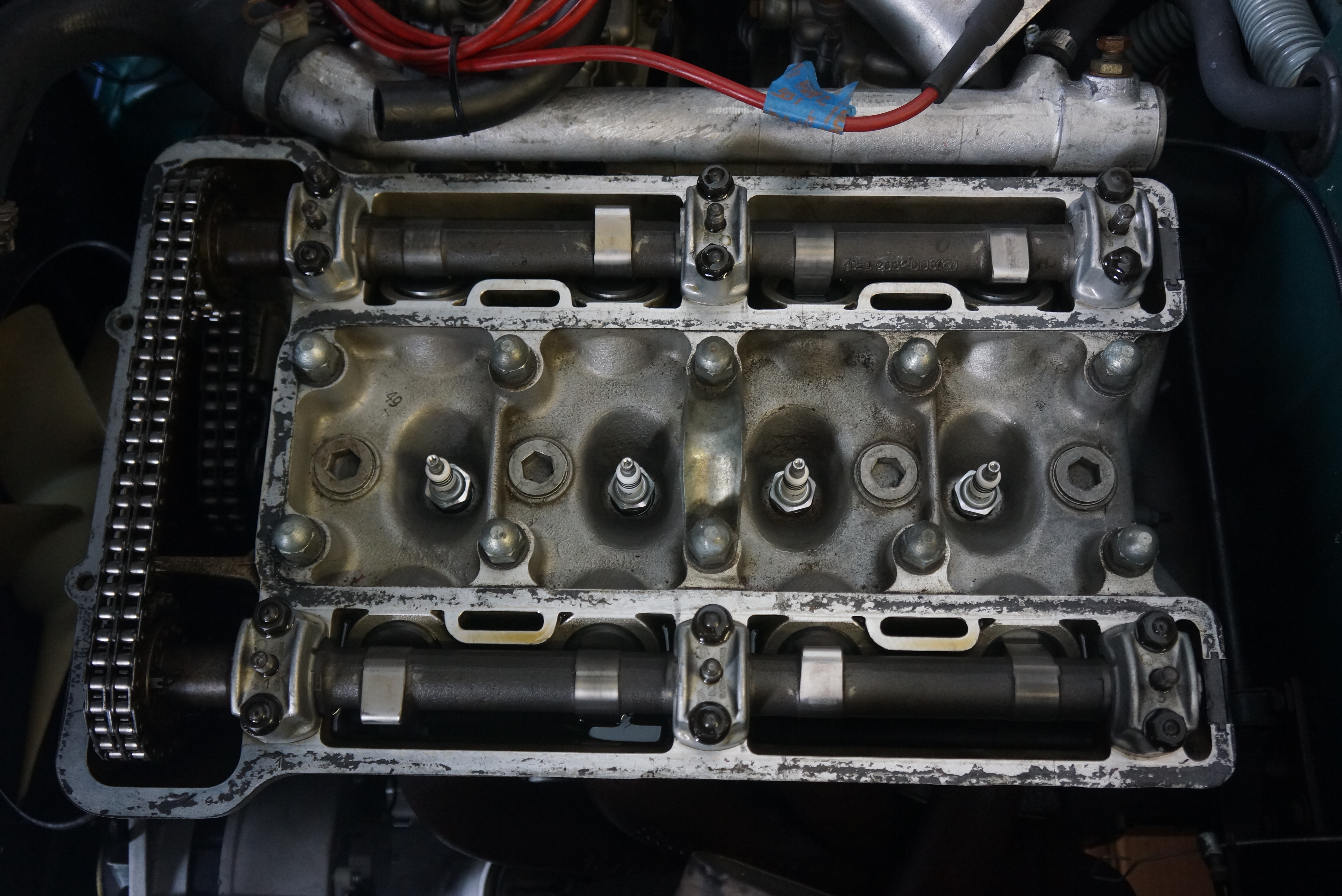
Accessing the valves and followers is the simple part. This overhead-cam engine has its two camshafts at the very top. The valve cover can be removed once the spark plug leads, air hose, and the top of the intake plenum are out of the way, which is a 10-minute affair. The valve cover is held in place by 6 large Allen screws along the top, and two bolts at the front. I had never had the valve cover off this engine before, and my first reaction was one of pleasant surprise at how clean the engine looked.

Valve cover removed

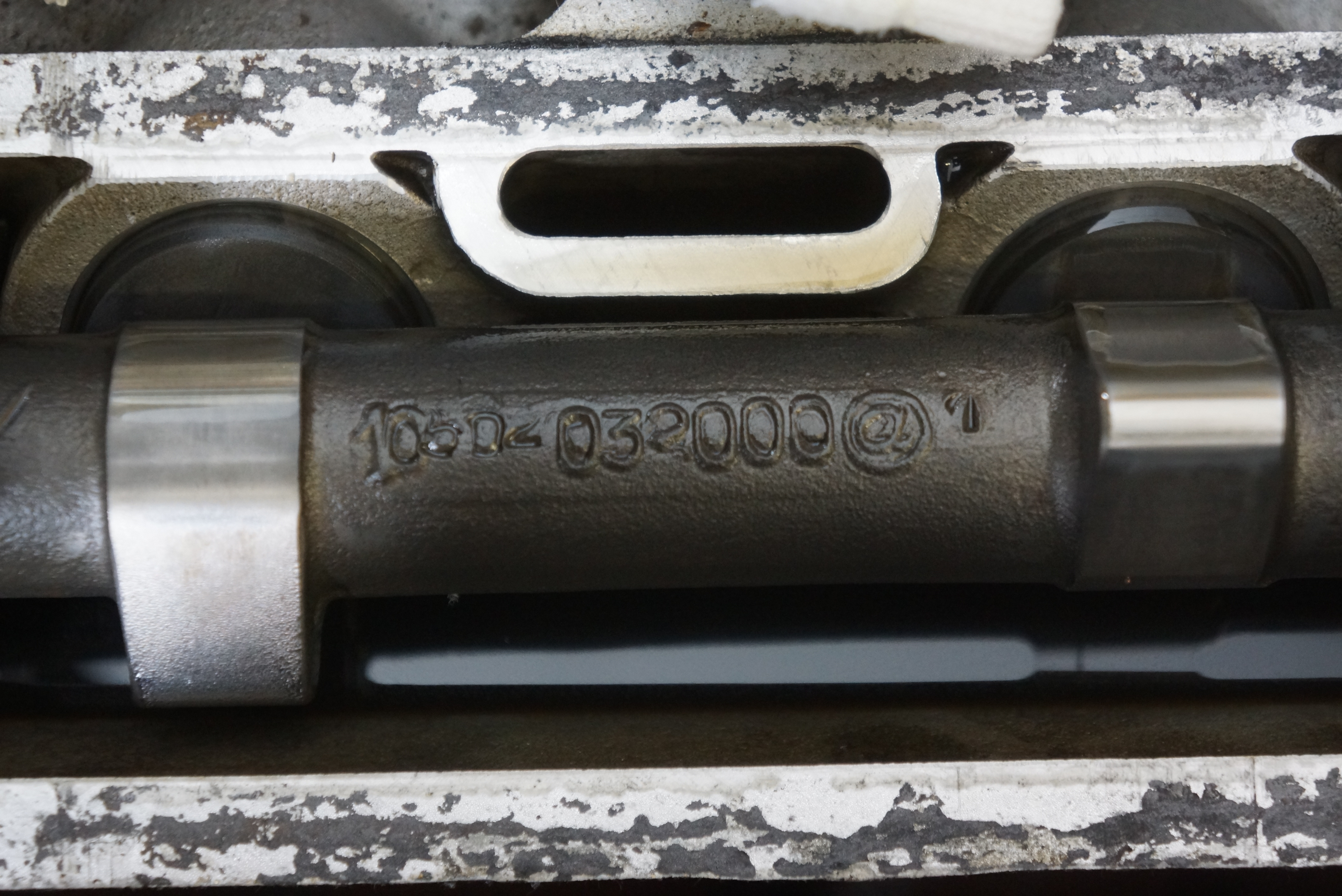
My first task was to find the camshaft part numbers, to verify that these were Alfa Romeo cams and not some hot aftermarket replacements (in which case the clearance specs would be different). A prior conversation with Pete, the family friend who sold me the car, revealed that he wasn’t sure what cams were in it. The part numbers of both cams were readily visible, and verifying them against my technical literature confirmed that these are indeed the factory cams.

This is the correct part number for a 105-platform 1300 Junior engine (105020320001)

Now it was onto the actual clearances. To rotate the engine, I first tried getting a socket on the crank pulley bolt, but the fan shroud blocked that. The next-easiest way to spin the engine was via the nut on the front of the alternator. Popping out the plugs provided less compression resistance, and some moderate thumb pressure on the alternator belt was all that was needed to get the crank and cams to spin.

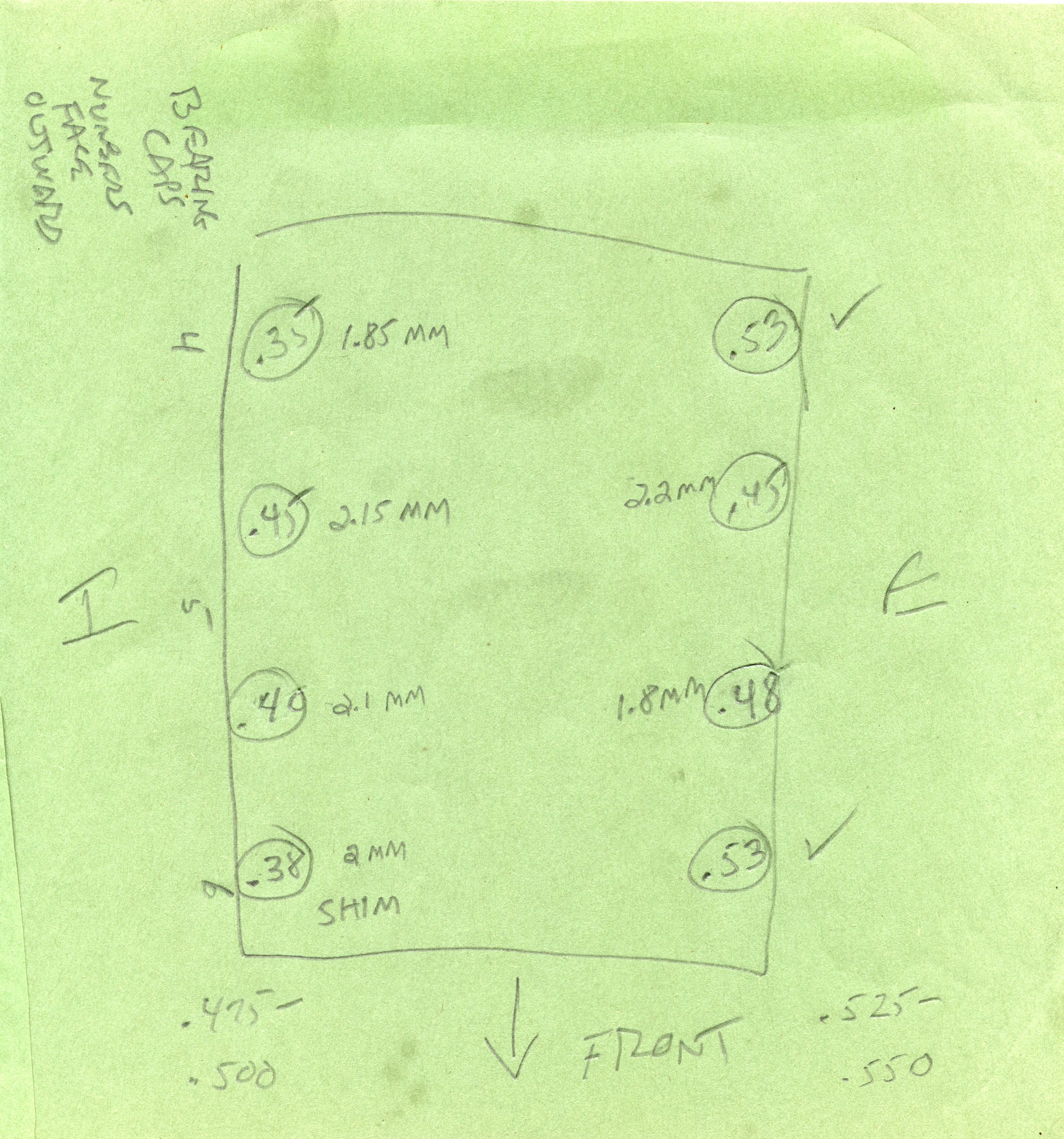
Paper and pencil at the ready, the valve clearances were checked in firing-order order (1-3-4-2) and recorded. While my owner’s manual provides specs in both millimeters and inches, I decided to stick with the metric measurements – I have metric feeler gauges, and the needed shims are sold in metric sizes.

The spec for the intake valves is 0.475-0.500 mm, and the exhaust spec is 0.525-0.550 mm. Six of the eight valves were out of spec: all 4 intakes and 2 exhausts, and, all 6 showed too little clearance, meaning the valves were not seating completely, subjecting them to less cooling since they were not making full contact with the valve seats.

The worst measurement was #4 intake: 0.350 mm, meaning it was 0.150 mm too tight compared to a correct outer range of 0.500 mm. Yes, we’re talking fractions of a millimeter, but specs are specs, and I felt that the clearances should be corrected.

Here is where it got interesting. My Alfa engine was originally designed in the early 1950s. It’s a very sophisticated layout, with not only overhead cams, but all-aluminum block, wet cylinder liners, hemispherical combustion chambers, etc. However, like most other OHC engines of its time, adjusting the valves requires removing the cams to allow access to the followers (buckets) and shims which are under the buckets. Most friends to whom I mentioned this procedure looked at me with a combination of horror and pity. “It’s really easier than it sounds” I would retort, which did nothing to alleviate their sympathy for me.

(As a complete aside, the first OHC engine to incorporate a valve design which allowed for adjustments with cams in place was the Fiat twin-cam engine, introduced in 1966. My 1970 Fiat 124 Coupe used this design, although I never did adjust those valves!)

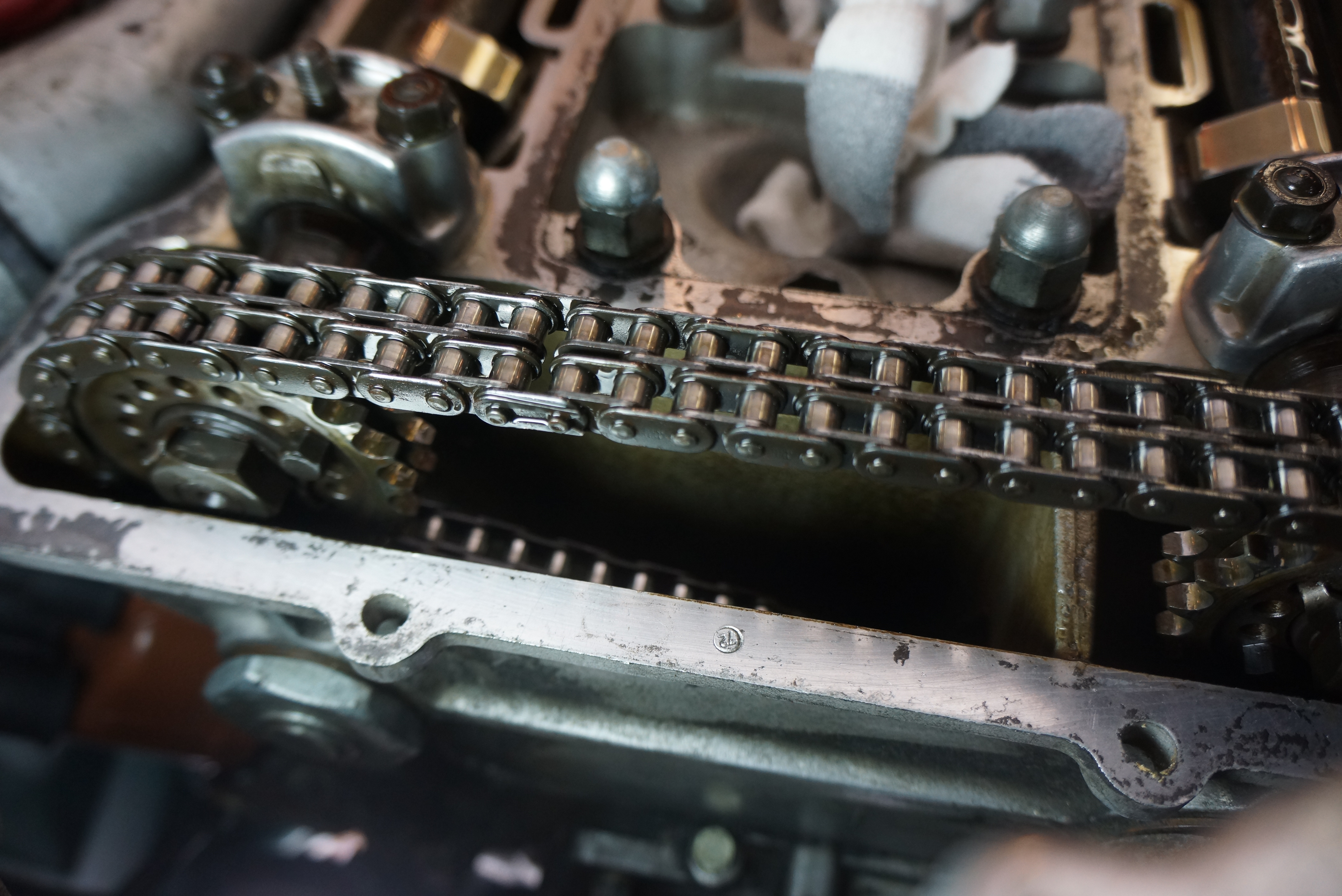
The timing chain’s master link is to the left of center

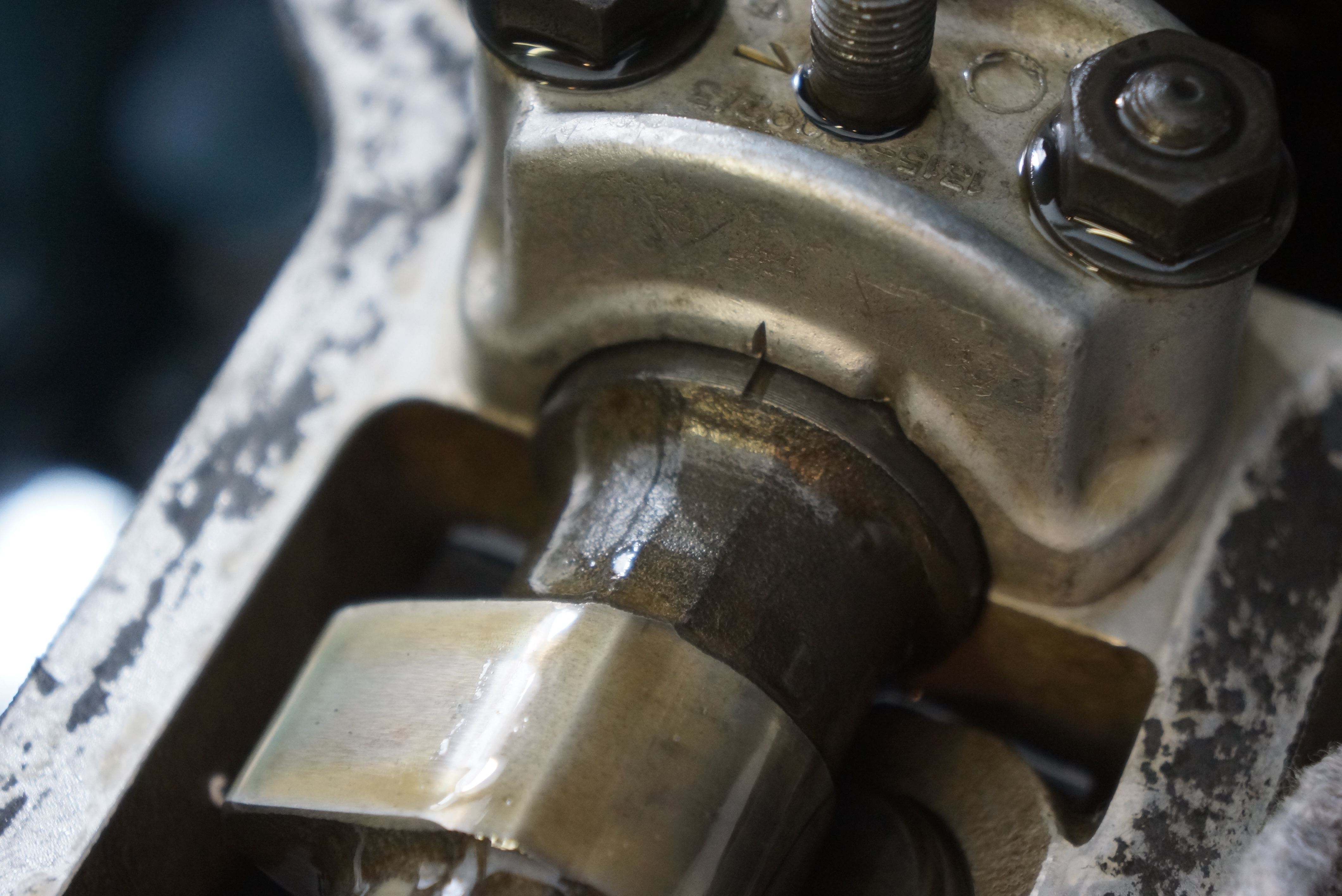
The official Alfa procedure calls for locating the timing chain’s master link, disconnecting it, and swinging the two chain ends out of the way. This method opens the possibility that the cam timing would need to be adjusted at reassembly. Of course, some very clever people have devised a work-around. One of the service books I own is the Alfa Romeo Owner’s Bible, written by the late Alfa expert Pat Braden. He describes a method that does not involve unhooking the chain. Instead, he suggests loosening the chain tensioner, pushing the tensioner all the way IN (making for a loose chain), locking the tensioner in this position, and then lifting the cams toward the center of the engine without disturbing the cam sprocket/chain connection. In this way, on reassembly, the cam timing does not change at all. Ideally, this is done with both cam timing marks lined up with the bearing cap marks.

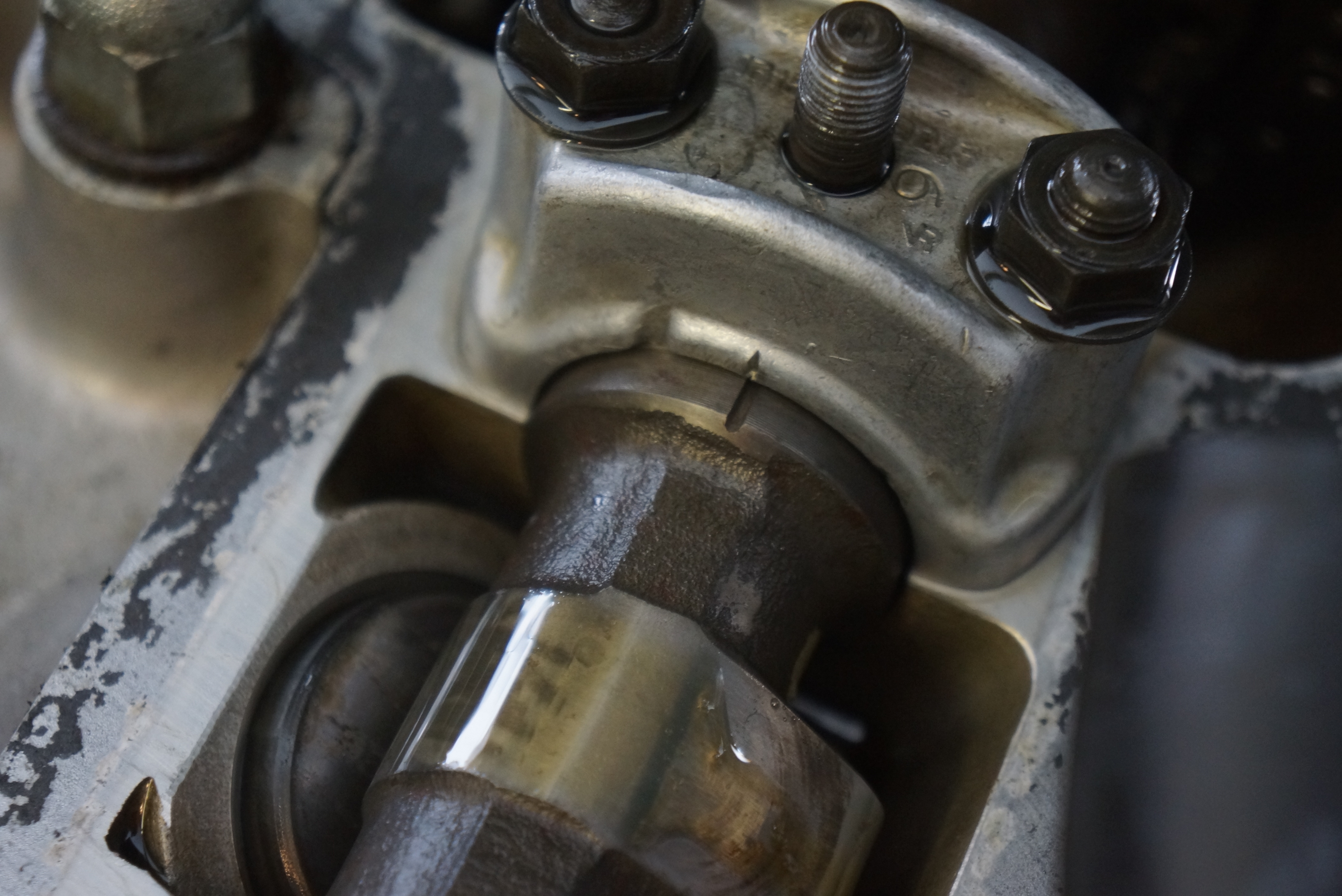
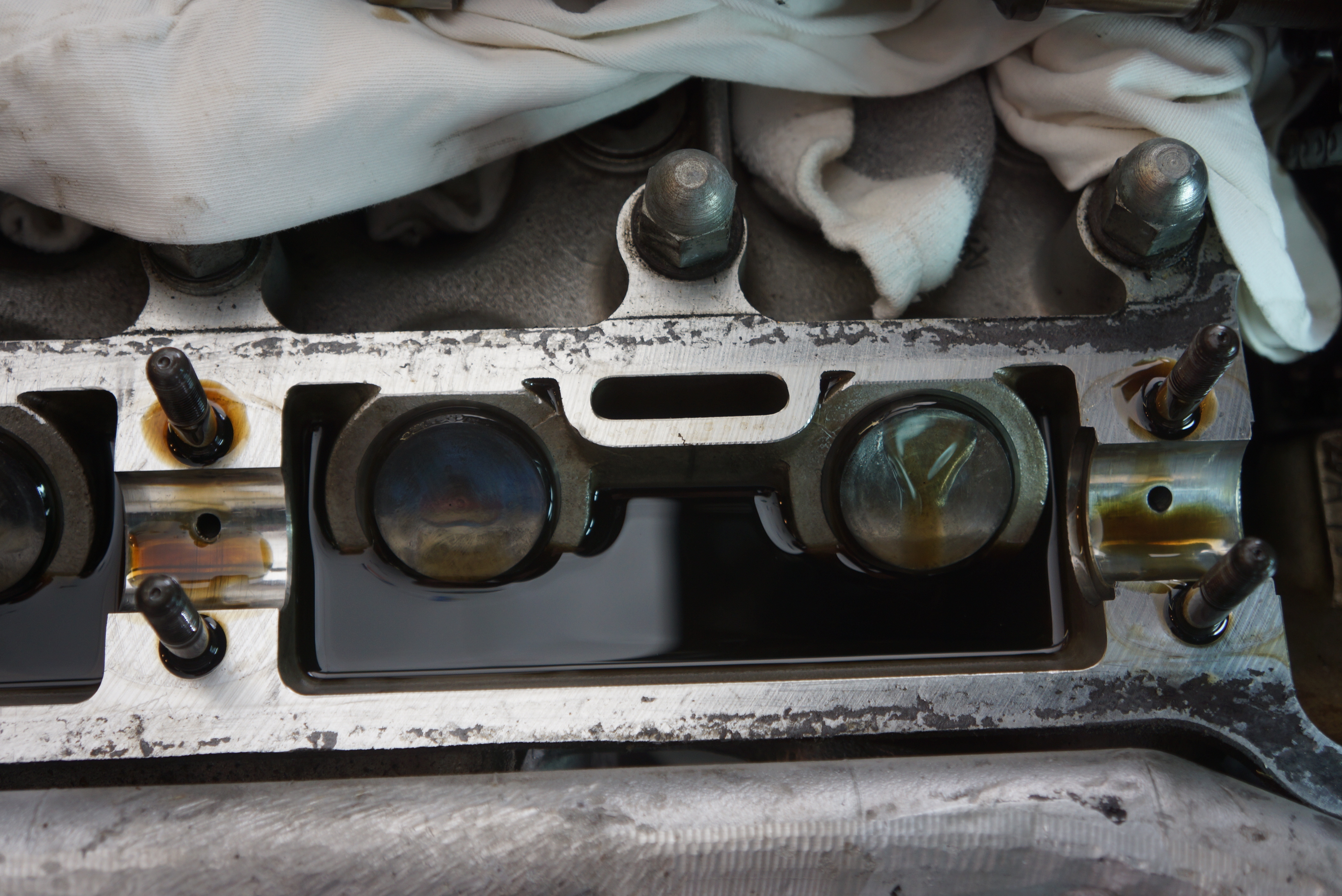
This is exactly what I did. With the tension off the timing chain, I started on the intake side and removed the 3 cam bearing caps (Alfa thoughtfully numbers the caps 1 through 6, and I documented everything with photos before turning the first nut). The intake cam was lifted and placed over the spark plug holes (which were protected with clean rags). The chain remained on the cam sprocket.

Cam bearing cap #3 – cap nuts were loosened gradually


Intake cam lying over spark plug holes- note timing chain still on cam sprocket

The next trick was getting the buckets out, as they were oil-covered and lacking a way to grab them. I realized that a magnet might do the trick, and it did. The bucket came out, and under it was the shim, which was also removed.

These slippery guys were tricky to remove!

Working on just one cylinder at a time so as not to mix up any of the locations, I measured each shim with a digital metric micrometer. The value was recorded on the same sheet of paper as the clearances. I started on the #1 intake valve, went down the line to the #4 intake valve, then did the same thing on the exhaust side. Once all these measurements were taken, the shims and buckets were back in place on the engine. I gently placed the valve cover on top of the engine, lowered the hood, and took my measurements inside so that the ‘new’ shim sizes could be calculated.

Bucket/follower (top) and shim (left) pose with micrometer


Starrett No. 216 records a shim value of 2.15 mm

I knew that all the out-of-adjustment valves were tight, so I needed greater clearance, so all the new shims needed to be thinner than the current shims. I found an online “Alfa shim calculator” someone built in Excel, and I used it, but I also checked all my numbers two more times. I aimed for the higher end of the spec, figuring that if the valves are tightening up over time, I had best start by providing the maximum clearance while remaining in spec.


Documentation of initial clearances and shim thicknesses

My go-to Alfa supplier, Classic Alfa in the UK, sells shims in increments of 0.125 mm, so it was a fairly easy task to calculate my needed shim sizes. The order was placed, and now I just needed to wait for the shims to show up. But it certainly felt like the hard work was behind me!


All photographs and video recordings copyright © 2019 Richard A. Reina. Photos may not be copied or reproduced without express written permission.
 

The Isetta Saga, Chapter 20: Prepping for a Party

With its initial drive event behind me, further work on the Isetta slowed. The notebook I kept to track my progress has very few entries for September 1995. The notes which are there make scant reference to exterior lighting and door adjustments. My time and effort was directed to planning a party.

Every milestone of the Isetta’s progress had been marked with a celebration: the first running of the engine, and the body and chassis wedding, to cite two examples. This time, the festivities would be on a much larger scale. The car was as ready as it was going to be for its public unveiling, known as The Bubble Party. The date was set: Sunday, October 1, 1995. We went so far as to petition the town to close our street to vehicular traffic so that the bright red Bubble Machine could be buzzed from one corner to the next without interference. The mayor agreed (I think a small donation helped).

I did take the car out for several more reconnaissance runs, and my ear-to-ear grin gave it away every time: I never imagined that a 13 horsepower car could be so much fun to drive. The only variable not in our control, the weather, was simply ignored. The Isetta was ready, and we would be too.


All photographs and video recordings copyright © 2019 Richard A. Reina. Photos may not be copied or reproduced without express written permission.


The Isetta Saga, Chapter 18: Making the Final Connections

It had been some wedding! The body and chassis were reunited. Now the party was over. The guests had departed. It was time to get back to work and make the reunion more permanent. The upcoming week was a vacation week for me so that I could fully apply myself. It felt as though I were days away from actually driving the creature.

First item on the to-do list: install new sound-deadening material to the interior. The commercially-available products seen in every old car magazine were one choice (Dynamat is one well-known brand). However, they are pricey, even for a car as small as an Isetta. Another issue was my desire to adhere as closely as possible to the original treatment, which resembled tar paper. (The new-fangled stuff is thick and shiny and more appropriate for a drafty ‘50s British roadster or a noisy ‘60s muscle car.)

When conveying my indecision to my neighbor, he gave me a great suggestion: a visit to Home Depot would likely yield a roll of black roofing material which could be purchased for a reasonable number. For $9.97, I bought a roll which could have completed multiple Isettas! The measuring and the cutting began.


“30 LB FELT”, a deal at $9.97 (plus tax of course)


The wiring harnesses were next. The Isetta has two: a front main harness, and a rear harness. I had earlier disassembled, cleaned, and re-sheathed them, and they were ready to be put back into place. This was a clear case of my earlier photography coming to the rescue, as it was the photos taken during disassembly which portrayed the exact locations and connections for the wiring.

The electrical system of the vehicle is as simple as it gets: front and rear exterior lights, dashboard warning lights, and the starting/charging system. No power seats, no climate control. The test-firing of the engine way back in March of that year meant that I had the battery, Dynastart, and voltage regulator connections down, so with the body resting on top of the chassis, I only needed to bring those wires to their permanent spots.

The ignition switch was a trouble spot. I had an original one, but no key for it. There was a key code on the outside of the cylinder, but efforts to find someone who could create a working key for it were futile. One gent at the local auto parts store was very patient with me as I sought solutions to a car for which he had no listings. We tried several aftermarket ignition switches, but the first few were physically too large to fit within the minuscule dash pod. Finally, he found a switch that fit. He got to know me, and came to be of great assistance on several other small universal parts I needed.

The seat as found

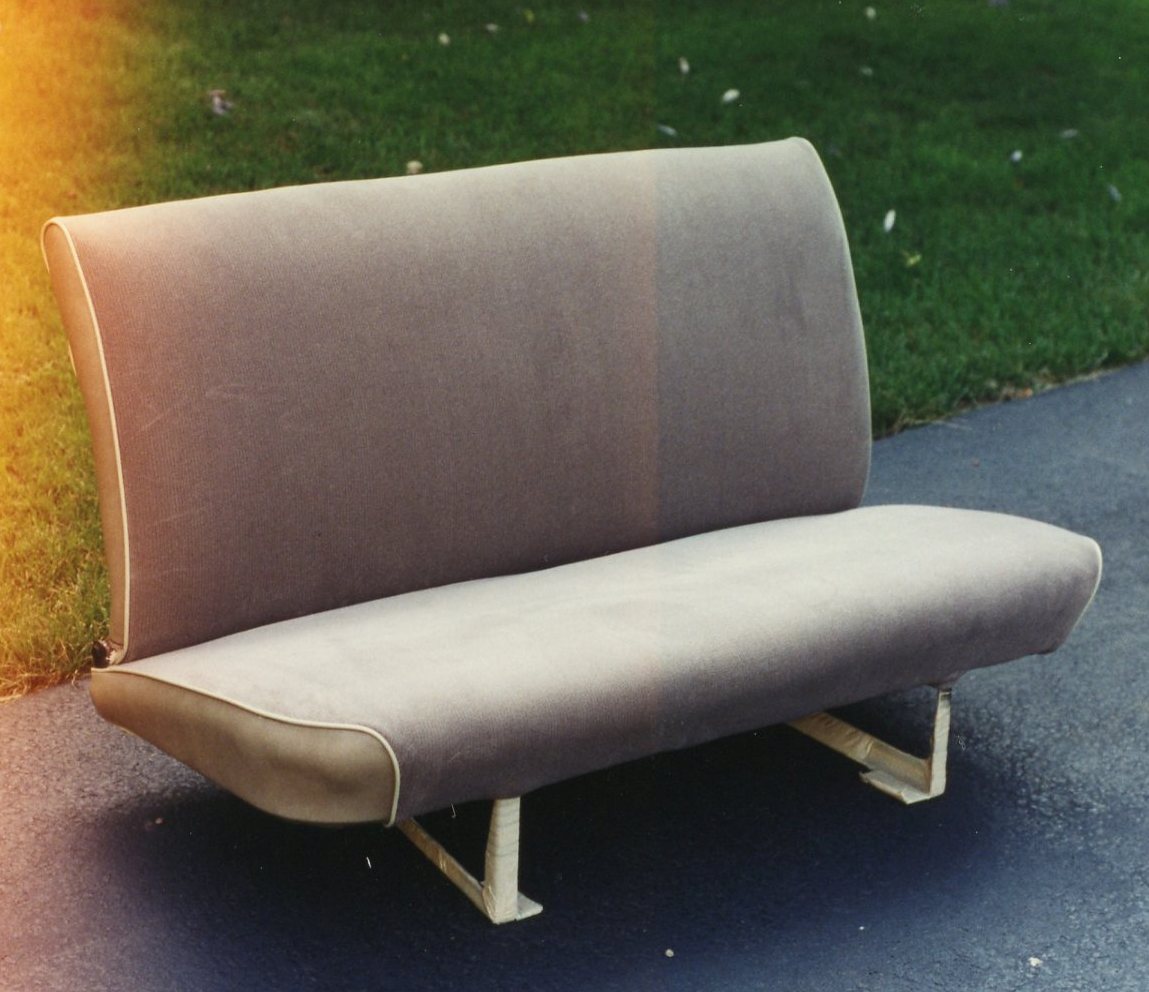
The seat had been sent out to a local upholstery shop. Here, I purposely deviated from original, as American-market Isettas used a patterned vinyl upholstery, and I did not want to sit on vinyl. Instead, I chose a beige corduroy with off-white piping. The beige seat came close to matching the beige fabric sunroof, and since I always like red & beige on Ferraris, I thought “why not?”

Back from the upholstery shop

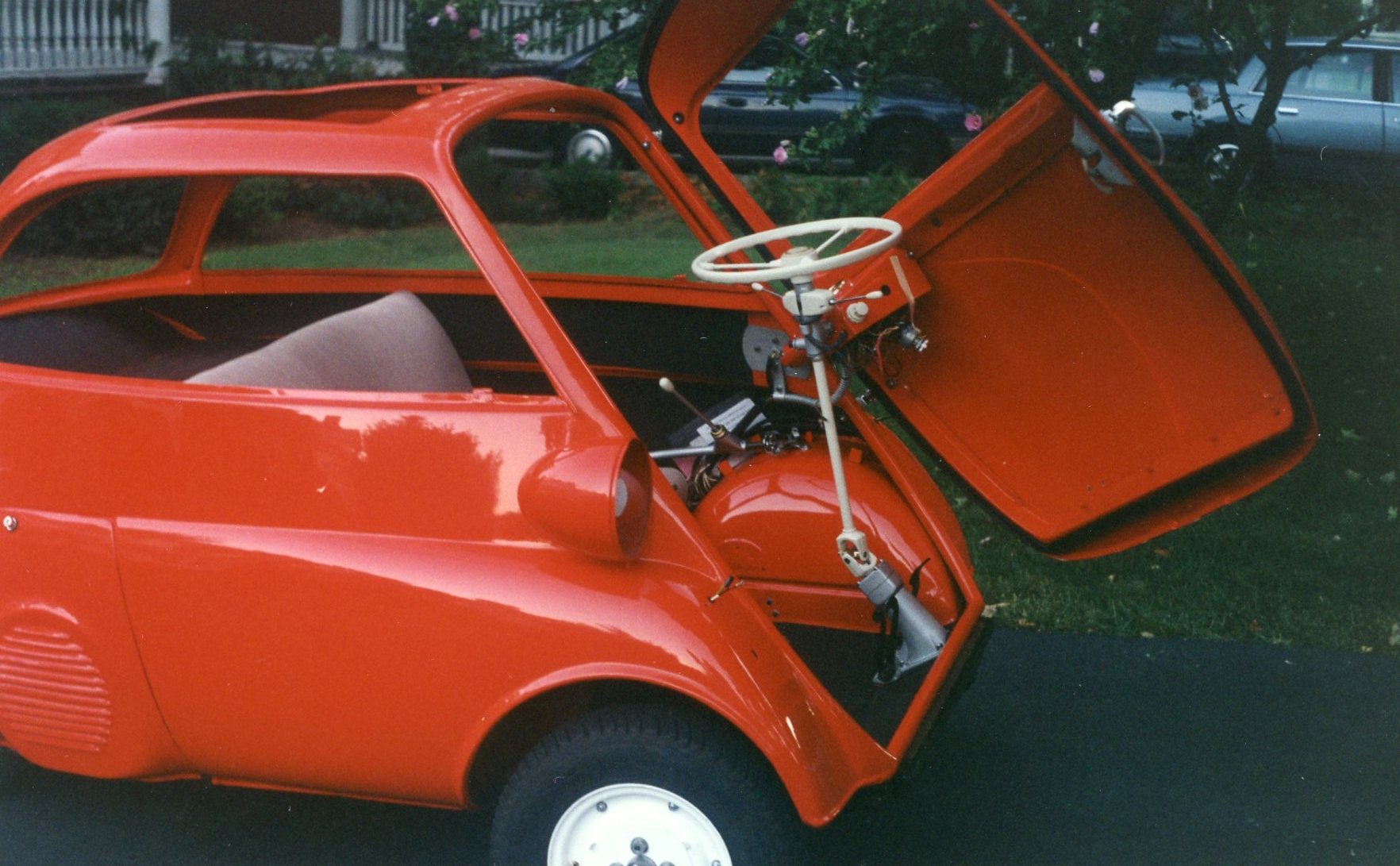
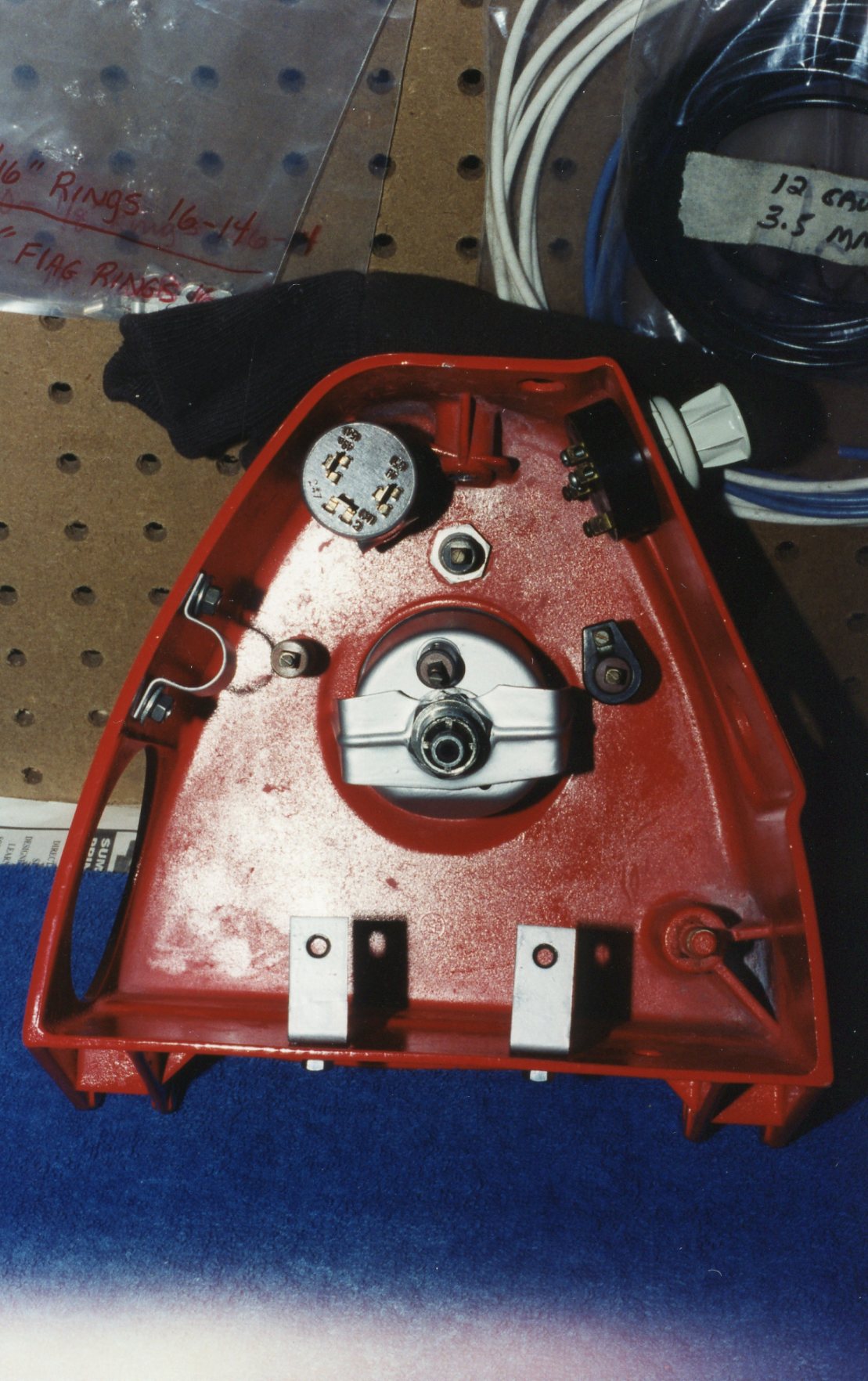
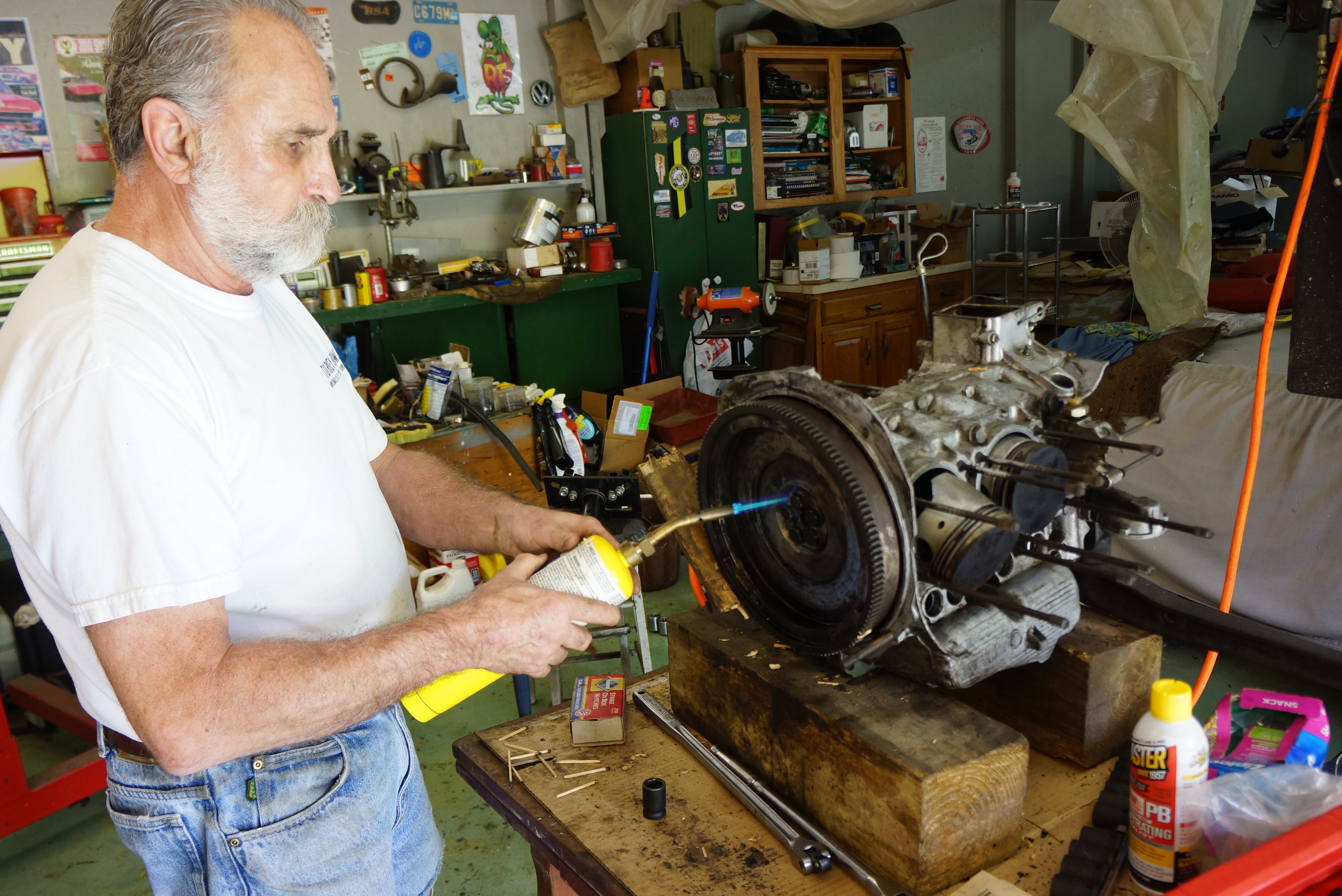
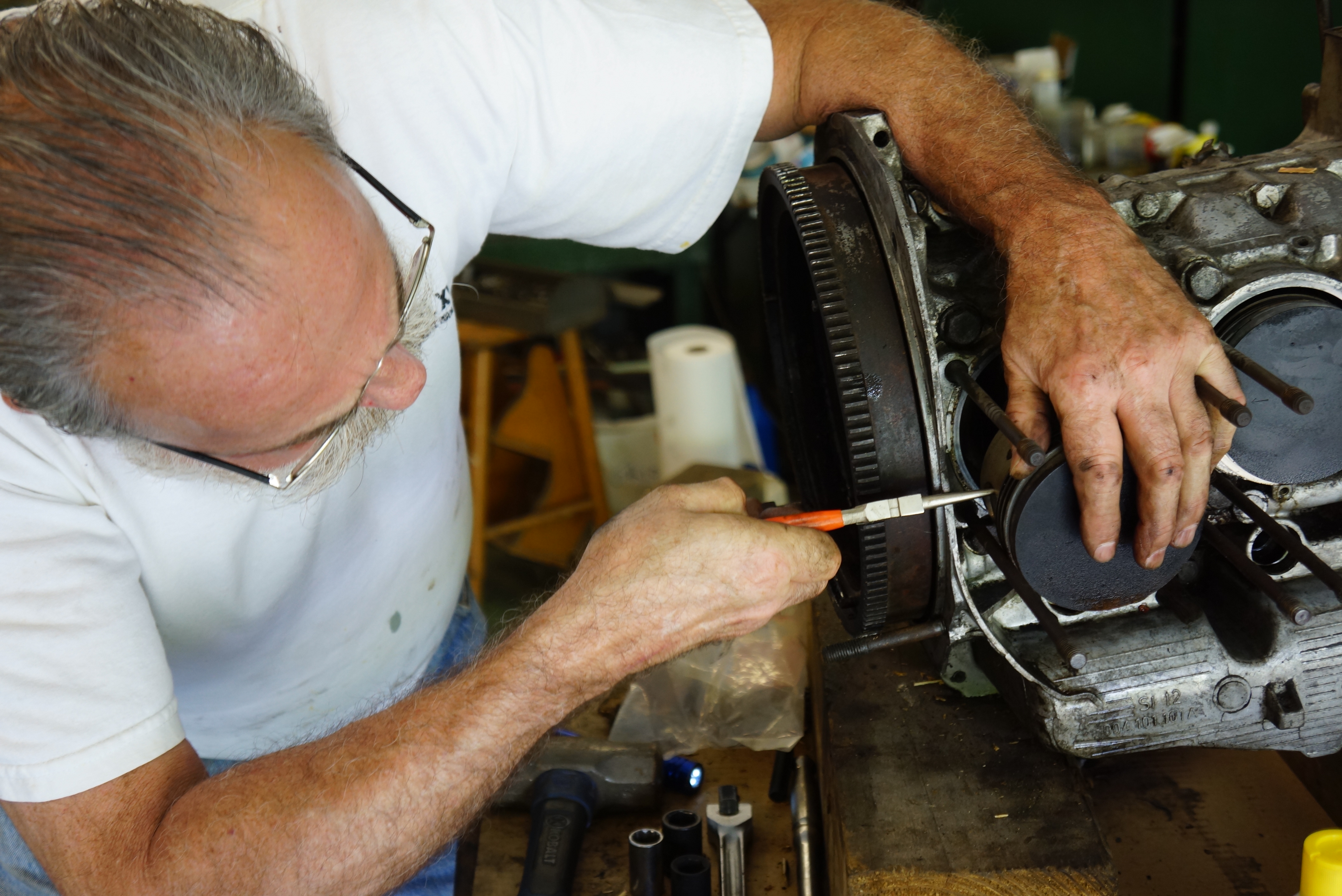
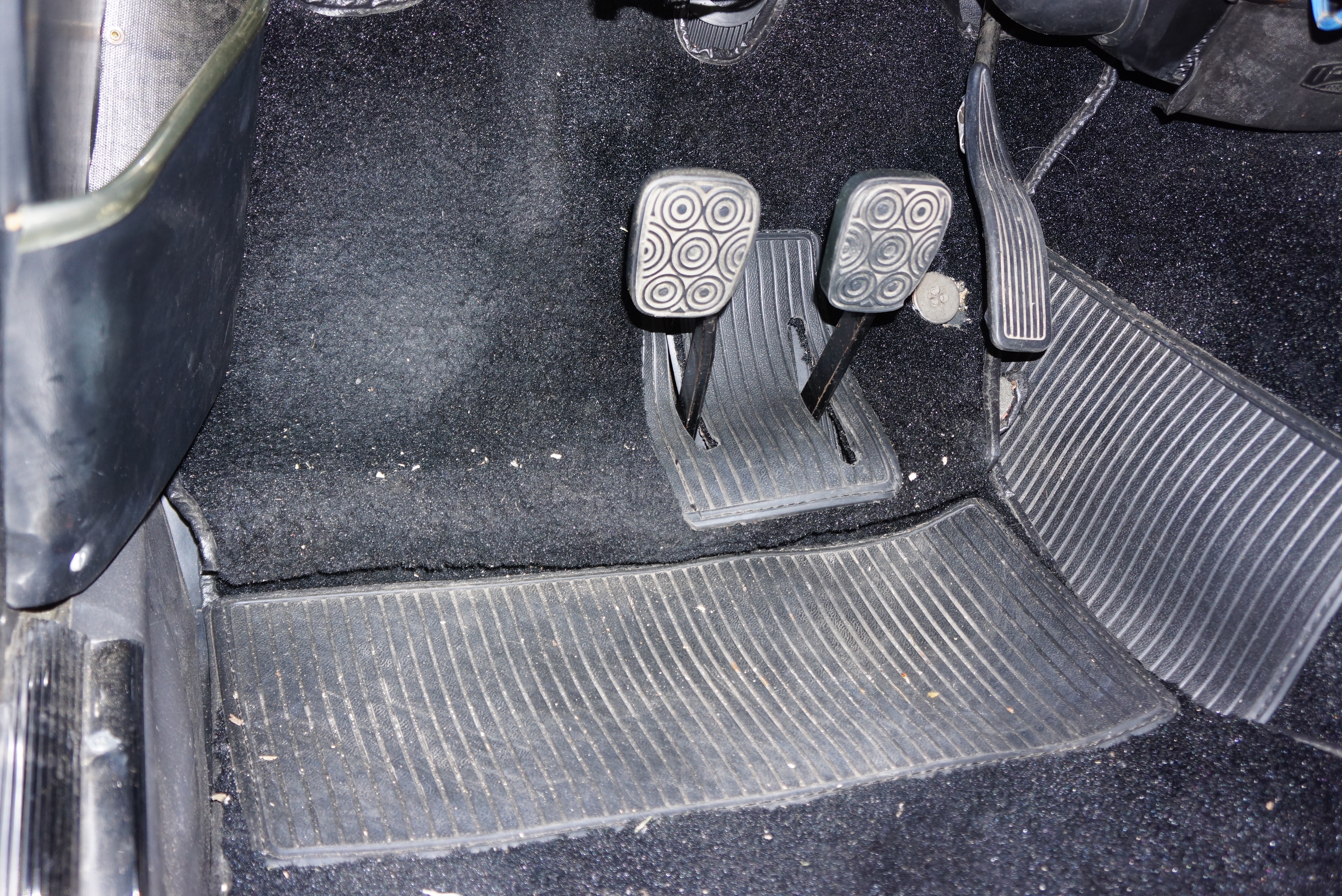
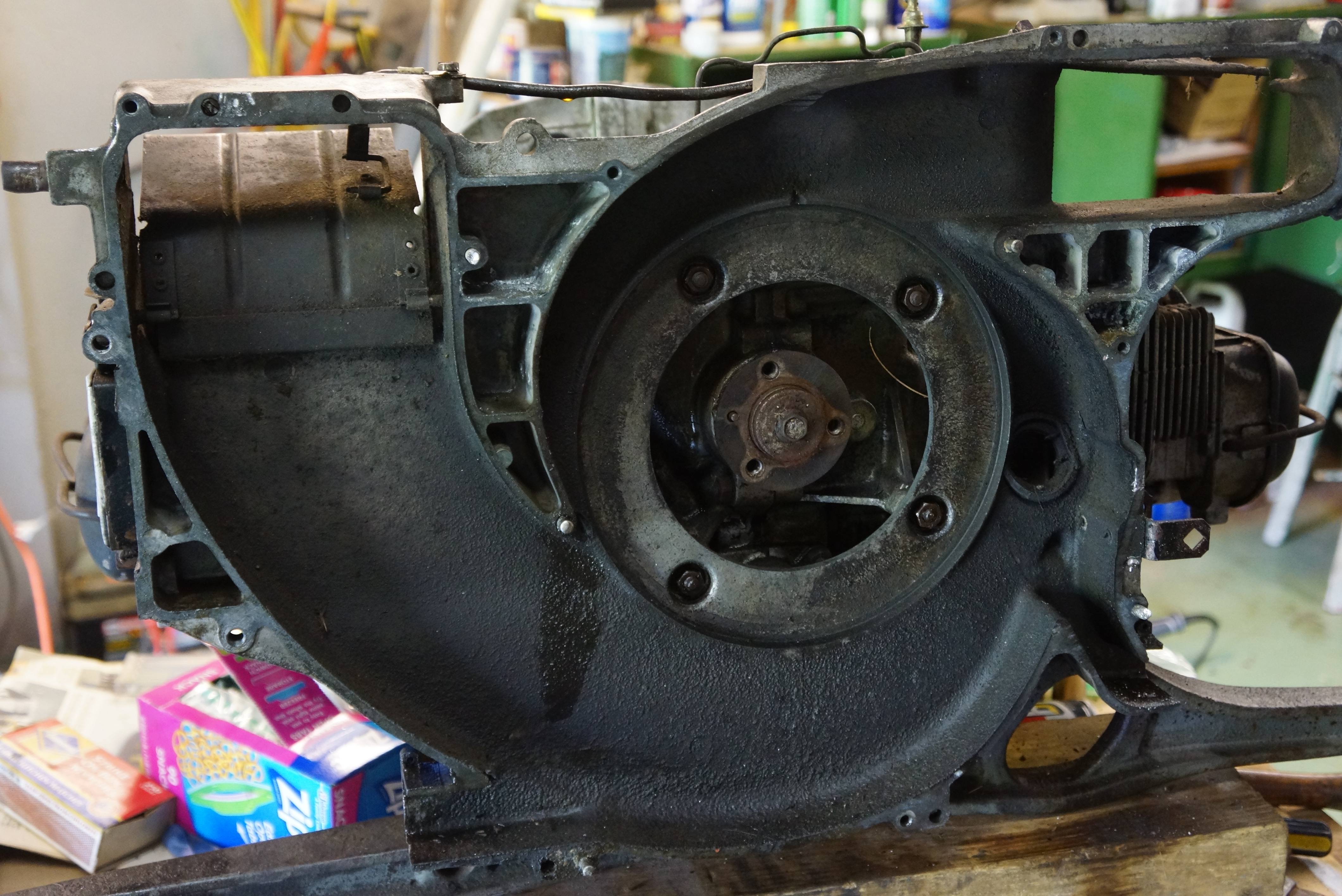
The steering wheel, column, dashboard, and pedals are a major subassembly unto themselves, and these were bolted into place, with pedals connected to the undercar linkages. To the left of the steering wheel, the shifter was joined to the rear-mounted transmission. Once I readjusted the clutch, I was able to shift into all four forward gears and reverse gear.

Ready for the seat (towels protect inner fender paint)

All the work recounted here took two weeks, bringing me to Labor Day weekend. That Sunday night, September 3, 1995, I discovered that the car’s battery was flat from sitting. I put it on trickle charge overnight. The next day was Labor Day. In the morning, I would attempt to start the Isetta, put it into gear, and be behind the wheel when it would move under its own power for the first time under my 17 years of ownership.


All photographs copyright © 2019 Richard A. Reina. Photos may not be copied or reproduced without express written permission.
The Isetta Saga, Chapter 17: The Body & Chassis “Wedding”

During the restoration of the Isetta, a frequent question presented to me was “what motivates you to keep going?” Of course, I wanted to see the project reach a successful conclusion, but setbacks, and there were a few, can be demotivating. There were times I questioned my own sanity, as in, “why am I spending so much time, money and effort to restore a 13-horsepower bubble car from the 1950s that most people have never heard of?” With everyday life (job, family, house) swirling around me, I was occasionally tempted to quit the whole deal.

One of my mantras during this 5+ year stretch was “celebrate your successes”. Reaching certain milestones not only feels great, but the achievement can be shared with others, which then inspires you to keep moving forward.

In August of 1995, I was ready for such a celebration: the Isetta body shell, freshly painted and just back from “The Shop”, was about to be reunited with the mechanically-restored chassis. In a traditional automobile assembly plant, the moment of “marrying” the up-until-then separate body and chassis is called the marriage point. So, in honor of that event’s facsimile, we decided to host a wedding. Before, um, consummating this union, since the shiny and clean chassis was about to be covered up again, a final set of photographs was taken to document its return to as-new glory.

The wedding was scheduled for Sunday, August 20, 1995, and since a wedding must have guests, a small ensemble was invited. (Memory doesn’t recall whether any of the invitees were tipped off that there was work to be done before food and beverages would be served.) The chassis was staged in the driveway just beyond the garage doors, with the body patiently hanging out in the garage on four jack stands.

Five intrepid groomspeople (Chris Beyer, John Maggio, Dennis & Ann Marie Nash, and Don Dahringer) vaulted the body back into the daylight. Spotters were assigned to eyeball the body’s descent so that nothing was injured. It took a few moments to clear all the obstacles, but the (re)union was a success.

A video camera (thanks, John) was rolling to capture the event. You can view a 12-minute excerpt at this YouTube clip here:

Whew! My nervous excitement is palatable to me as I watch myself nervously pace back and forth and around the car. In all seriousness, having a group of friends around me helped alleviate my worries. Once I knew the body shell was resting on the chassis rails, we popped the champagne, ate some BBQ, and of course, shared dessert in the form of a wedding cake:

The end of the push to make “The Isetta Drive in ‘95” was close, really, truly close. The steering, pedals, wiring harness, ignition, and seat all needed to be installed and connected. The motivation was the knowledge that I was perhaps a few short weeks away from driving my Isetta for the first time since buying it as a disassembled heap in 1978.

It almost looks ready to drive. Almost.


(Special thanks to my Creative Team pals Cody, Eslam, and Greg for their video-editing assistance. You guys are the DUDES.)


All photographs copyright © 2019 Richard A. Reina. Photos may not be copied or reproduced without express written permission.


The Isetta Saga, Chapter 16: The Painted Body Comes Home

Jody Fitzpatrick, proprietor of “The Shop” in Maplewood NJ, had my Isetta in his possession for one day shy of five weeks. His work was completed, done, finished. I breathed a huge sigh of relief if only for his ability to accurately predict his work timeline, originally estimated at “3 to 4 weeks”. This was close enough. There wouldn’t be any restoration shop horror stories in my future.

Chris Beyer, work colleague, neighbor, and friend, had accompanied me when I dropped off the Isetta body. When I told him that it was ready for pick-up, he was ready and willing to join me again.

The date was Friday July 28, 1995. Nothing in my notes or my memory explains how Chris and I both happened to be off from work that day; but we were. It was a sweltering humid day, hotter than the previous days had been during what was already an oppressive summer. Cranking the A/C in my Volvo 850 wagon did little help; nothing was going to cool me enough to dissipate my nervous excitement over seeing the painted shell.


Jody’s 2nd and final statement


At our arrival, Jody strolled out to greet us, looking and acting nonchalant. “How come HE’S so cool?” I asked no one. Perhaps because he does this every day, and, it’s not his car, and, he just wants to get paid, replied the voice in my head. The body shell, of course, looked perfect, almost too much so. I was afraid to touch it, but with Jody and Chris’s help, we got the same 2x4s bolted back to its underside, and then to the trailer floor.


The red 850, ready to tow home the red Isetta (note dolly and plywood in lower right of photo)


From ugly duckling to gorgeous swan (obviously, beauty is in the eye of the beholder)


Chris and I pose in parking lot of The Shop


Jody got his check, I got my receipt and my obligatory photos, and we were on our way. I must have glanced in the rear view mirror about every 12 seconds to make sure the body was still there. At a red light on the way home, several male teens yelled out “hey, it’s the Urkel-mobile!” Oh My God, I thought, am I going to be hearing this for the duration of my ownership of this thing? (The short answer to that question is “yes”.)


Back home after a 5-week vacation


Soon to be reunited


Leaving the 2x4s in place for now, we carried the body into the garage, and back onto my makeshift dolly. I posed it next to the completed chassis, fully aware that in a few days, five years of mechanical work would be covered forever (or at least until the car is re-restored in 2095).

Light buckets and other externals at the ready

What work was remaining before reuniting the body and chassis? The body’s hand-painted underside now had primer overspray on it, so that got yet another coat of gloss red. The headlight and tail light buckets were bolted on. The fuel tank, which had earlier been restored by coating it with Bill Hirsch’s GasTank Sealer, was secured in place. The 2x4s were finally removed, and the body was placed onto 4 jack stands.

Gas tank bolted into place (note fuel tap in upper left)

In an auto assembly plant, the moment when the car’s body, on one conveyor, is lowered onto a complete chassis, arriving on another conveyor, is called “the marriage point”. The Isetta’s 17-year courtship was coming to an end. It was time to host a wedding party and consummate this marriage.

The Groom


All photographs copyright © 2019 Richard A. Reina. Photos may not be copied or reproduced without express written permission.
The Isetta Saga, Chapter 15: Documenting the Body Restoration Progress

Jody Fitzpatrick, proprietor of “The Shop” in Maplewood NJ, was my choice to oversee the body restoration of the Isetta for many reasons: he was personally recommended, the business was nearby my residence, his pricing was fair, we had a mutual understanding of what “done” looked like, and his estimated timeframe was reasonable. Another reason is that Jody assured me that I could visit and observe the progress whenever I desired (sort of like conjugal visits for the incarcerated).

Having read more than one “restoration shop horror story” (the car gets pushed to the back, 6 months pass with no progress, the shop demands more upfront money, they lose your car keys, or worst, they close the business and lock the doors with your car inside), having visitation rights was refreshing.

So visit I did.

Three times during that hot July of 1995, I stopped in to have a peek and to snap a few snaps. Jody was always very accommodating and genuinely happy to see me, and gave me free rein to walk around my car and chat up the crew doing the actual labor.

During the first visit, employees were using homemade scrapers to remove the paint. They had decided against chemical dipping or media blasting, fearful of inflicting further damage. They also hammered out any dents and other rough spots, in preparation for some minor welding and an eventual skim coat of putty in spots. (From my own research, I had come to learn that any talk of body repair that doesn’t involve some small use of plastic filler is fantasy.)

THE SHELL IN THE PROCESS OF PAINT BEING REMOVED:

During this visit, Jody and I also finalized the choice of paint color. There was no known “official 1957 BMW Isetta paint code chart” we could refer to, so we did the next best thing. Sampling the unfaded paint we found under the BMW roundel on the door, we matched that to the closest shade among the modern paint code charts in Jody’s possession. We both agreed that the 1995 Ford Mustang shade of “Performance Red” was it. Jody stressed another advantage: should the car need touch-up or repair in the future, the correct paint would be readily available.

Just a week later, I saw the body with all the original paint gone, and the metal work beginning. I had given Jody a recommendation from John Jensen’s Isetta Restoration book for a method to reinforce the rearmost body panel at the tail lights and rear bumper. This section of the shell was not directly attached to the chassis, and was a known weak spot. Jody stated he would use the printed suggestion to add some additional metal in places.

HAND-SANDING THE FILLER AND THE GUIDE COAT:

During this 2nd visit, I pointed out a number of drilled holes which needed to be filled. These included where the dealer-installed mud flaps and luggage rack had been, neither of which were to be reinstalled. (I would later discover one which I missed, requiring the purchase of a somewhat pricey accessory in order to cover it!) Jody’s suggestion of grinding down the visible factory welds at the body panel joints was rejected by me, as I had every desire to keep to an original look.

Like a proud papa, I posed alongside the work-in-progress:

The third visit found the body in full primer. With the metal work done and its flanks as smooth as new, it was not difficult to visualize a freshly painted body shell. Jody had the door and all the other exterior pieces at The Shop, but he also generously offered to hang and align the door for me, something that was not part of our initial negotiation. I brought the freshly-plated door hinges with me so that he could do just that.
THE BODY IN FULL PRIMER, JUST PRIOR TO COLOR COAT:

Perhaps the most exciting aspect was that the work was closely adhering to the originally estimated timeframe. Jody said that it might take a week longer than he hoped, but everything looked to be on track for a final pick-up by the end of July. And there were no “pricing surprises” either. Jody had gotten a $2,000 down payment upon drop-off, and he said that all I owed him at completion was the $2,000 balance plus NJ state sales tax.

A few days later I got the call. “It’s ready whenever you are.” That Saturday, I hooked up the trailer to the car and grabbed my checkbook. We were on our way.


All photographs copyright © 2019 Richard A. Reina. Photos may not be copied or reproduced without express written permission.