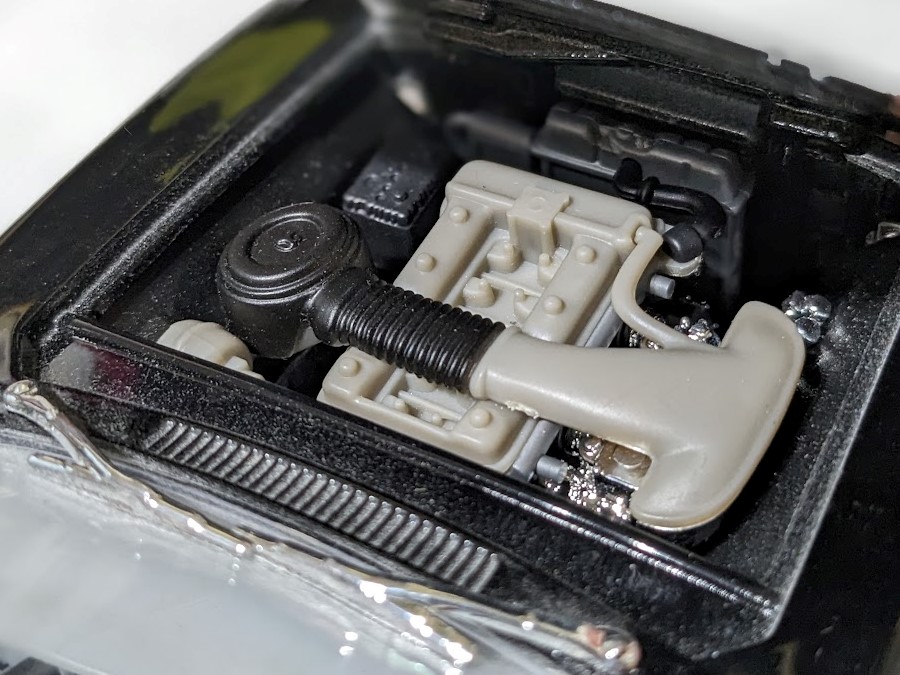
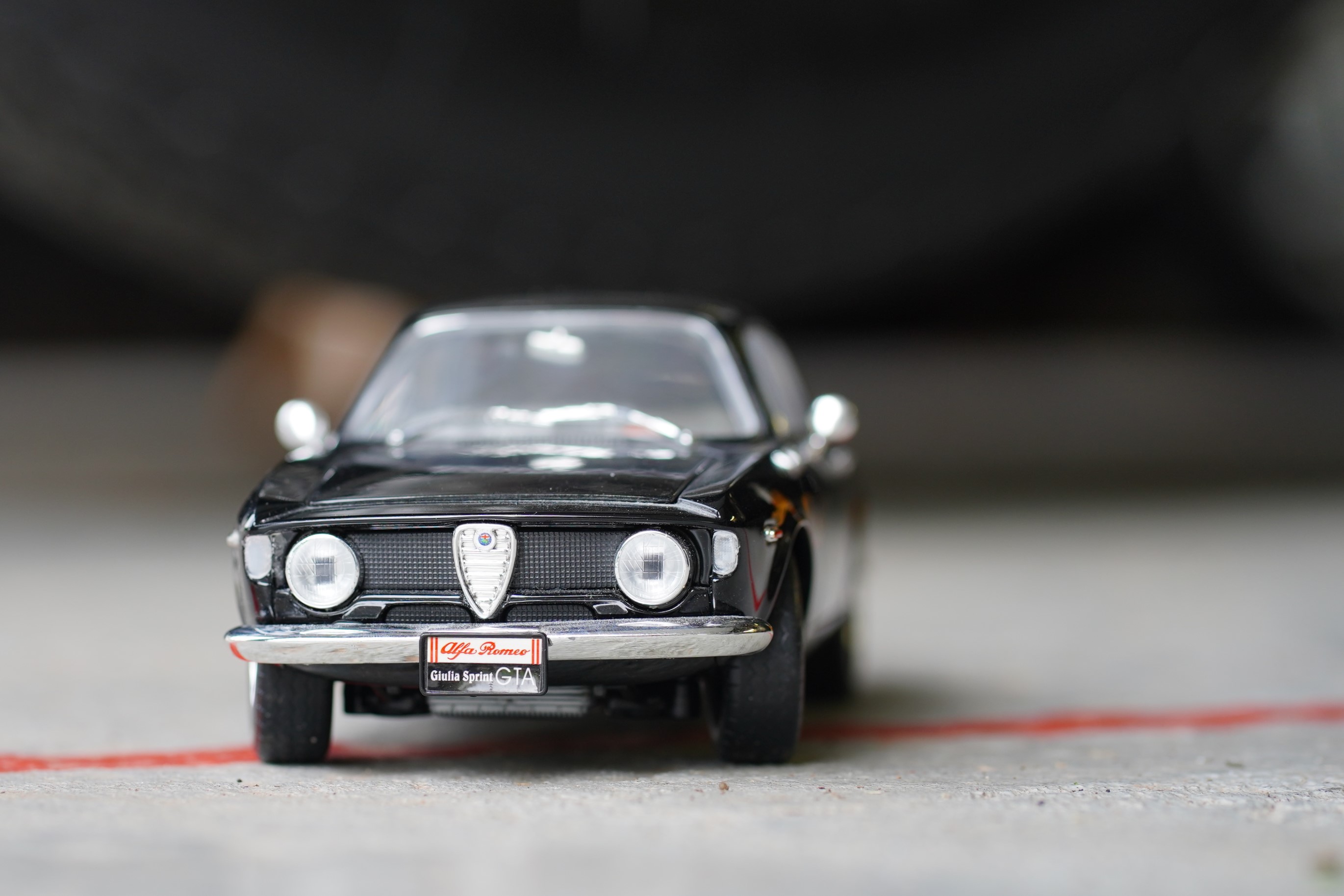
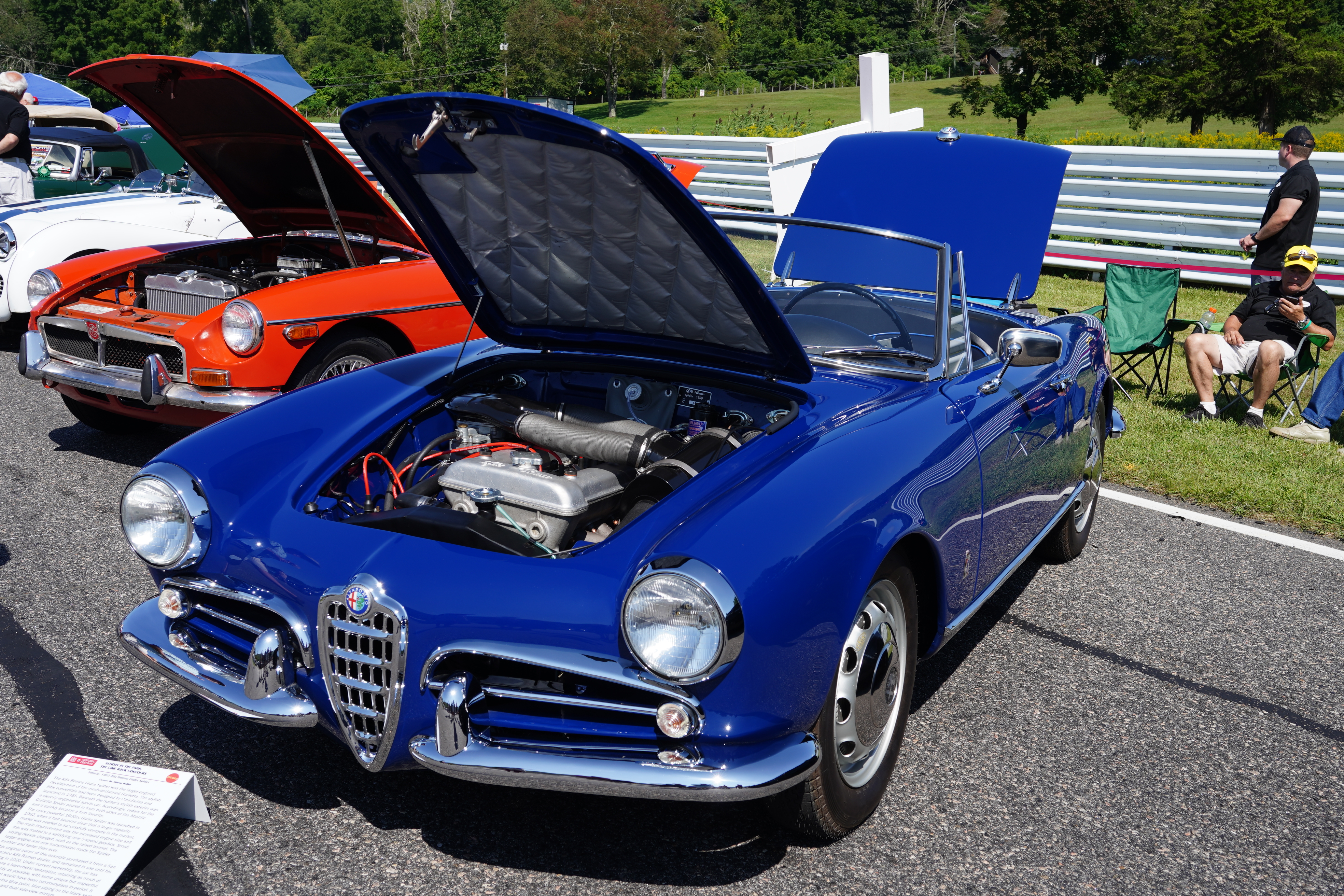
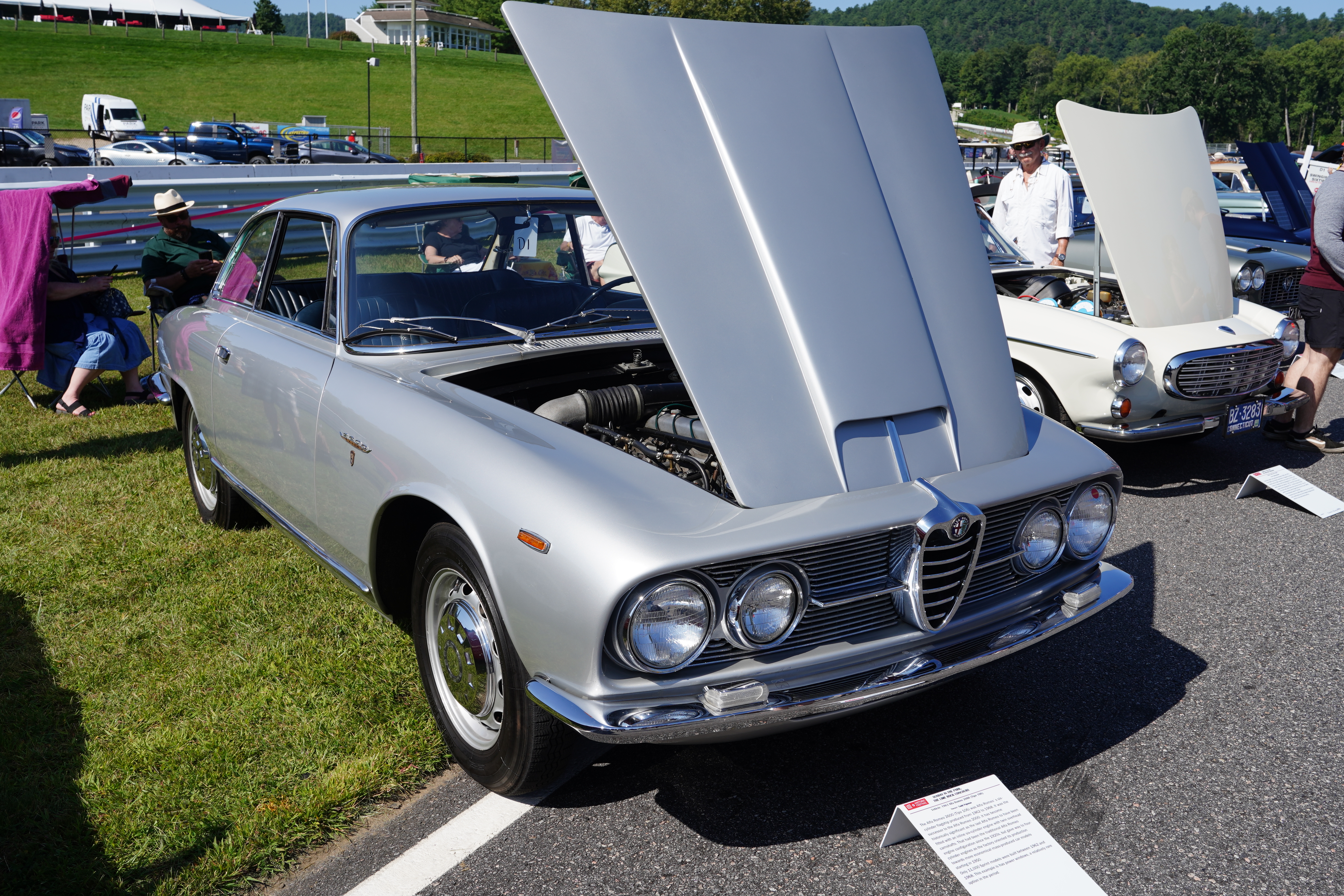
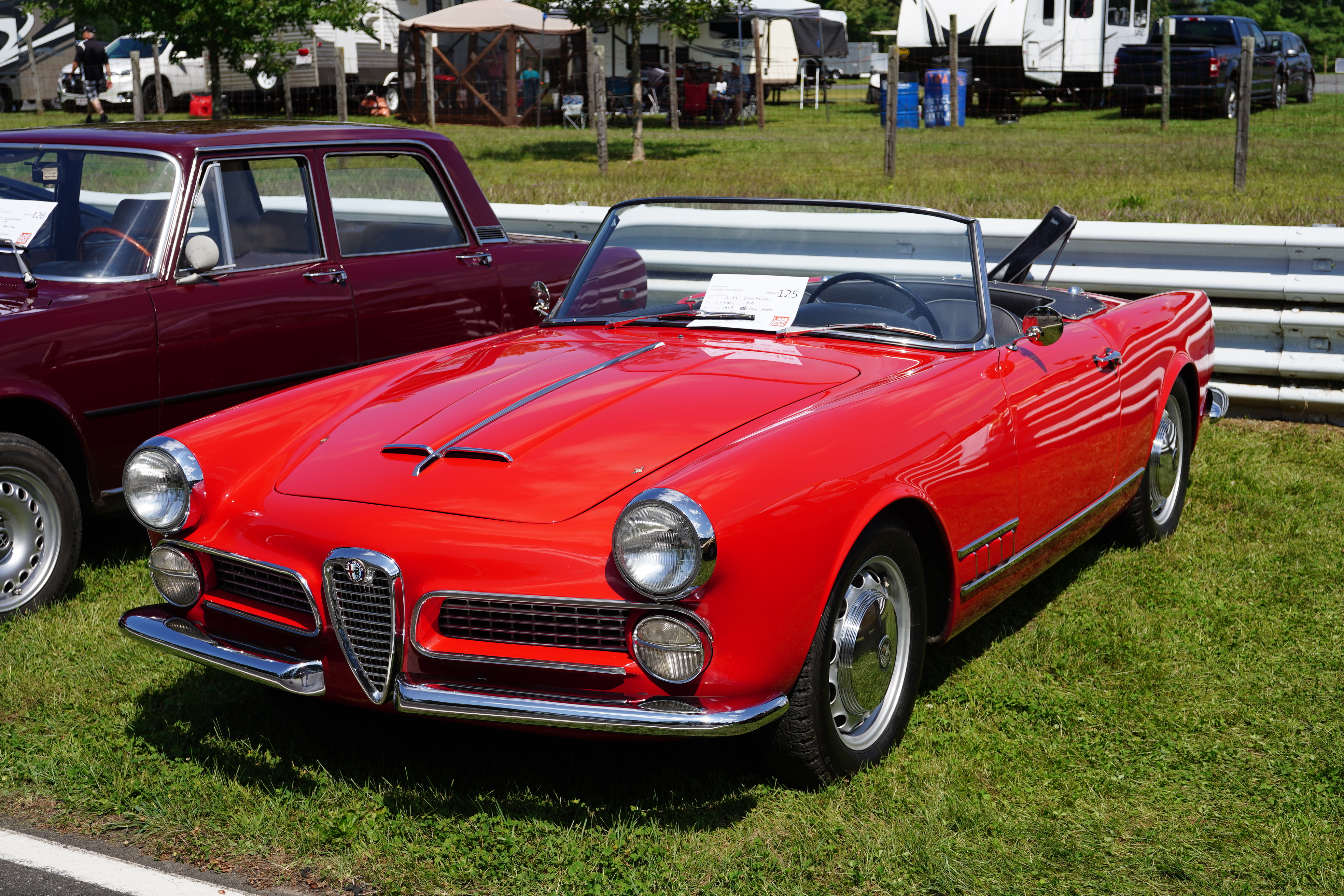
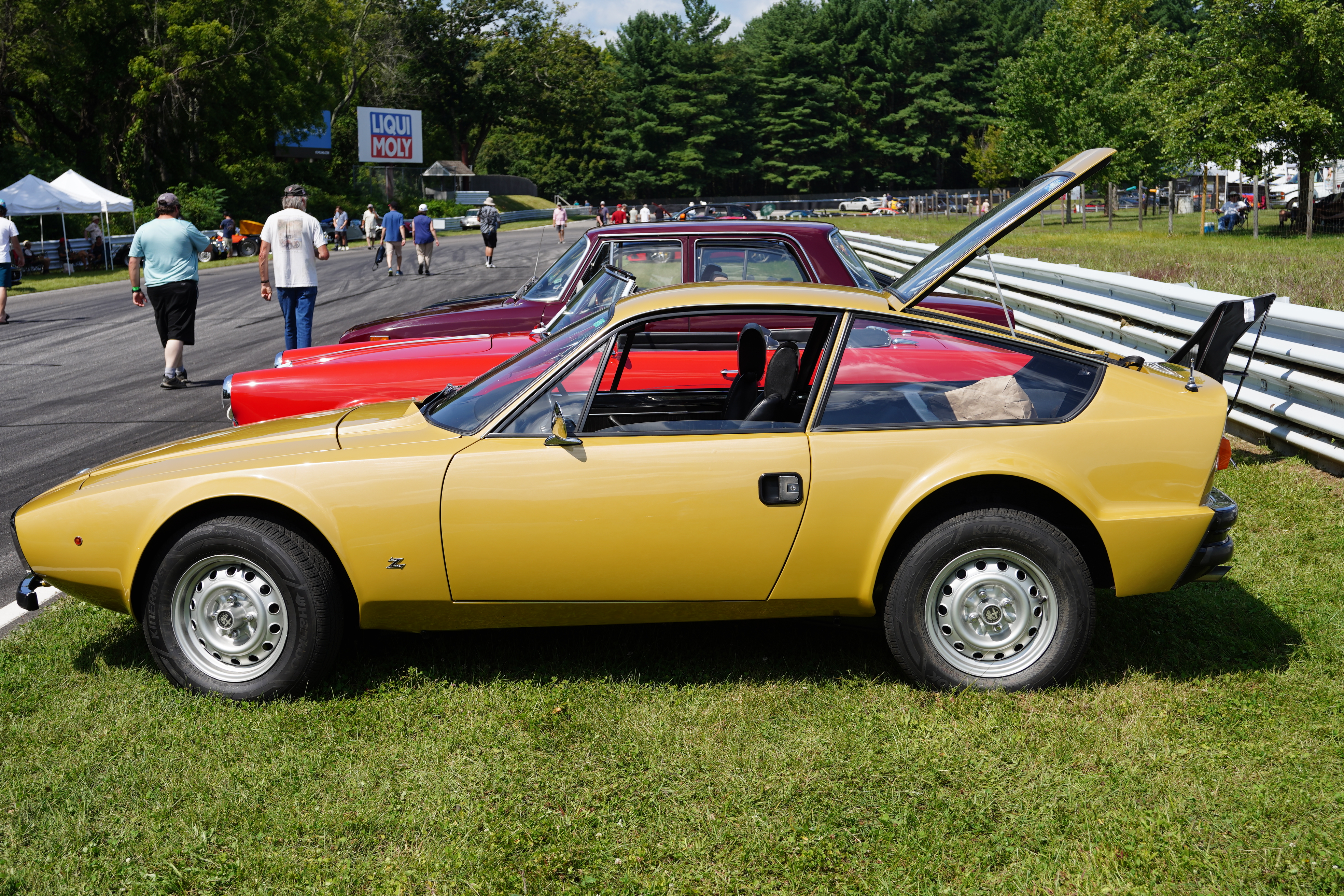
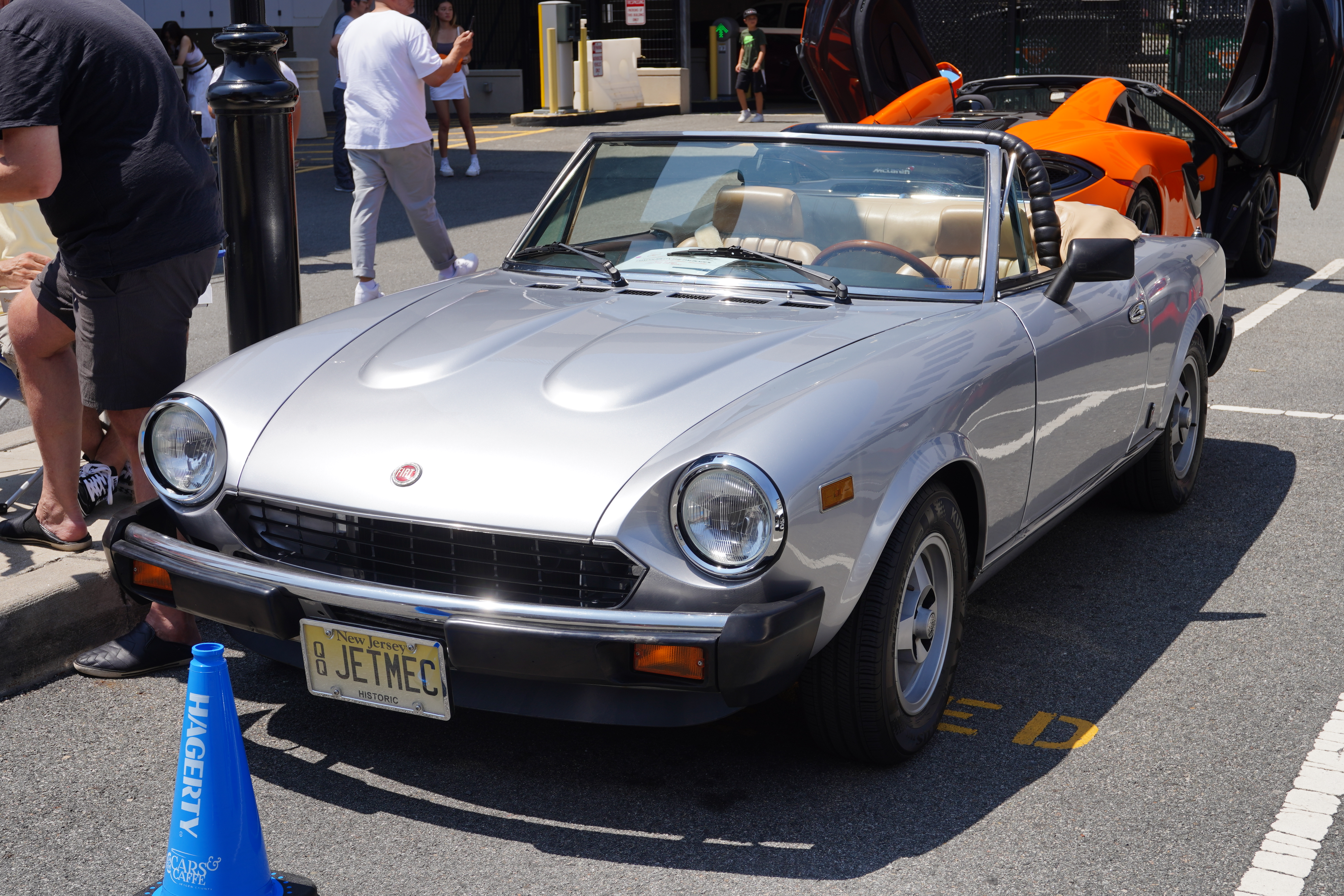
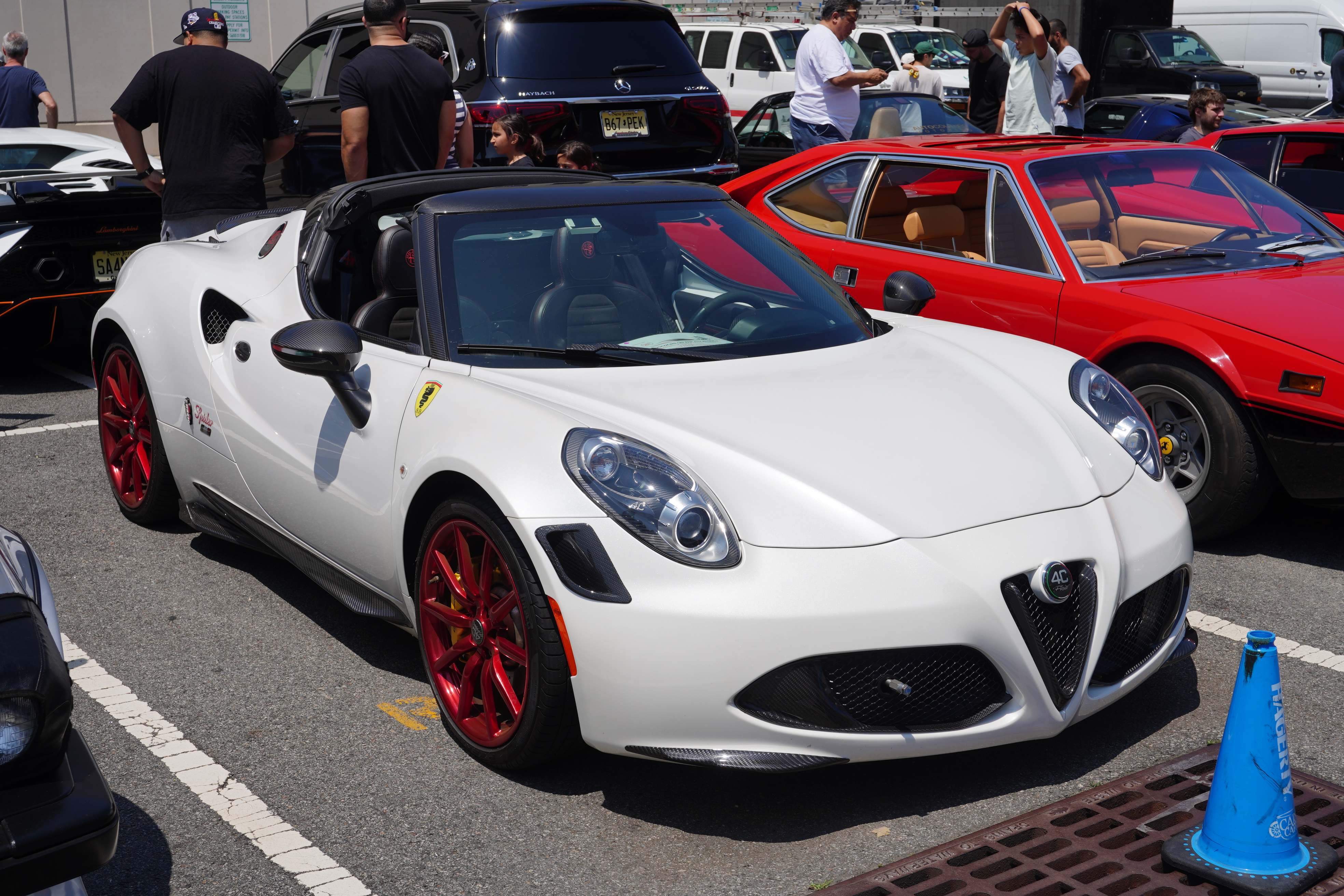
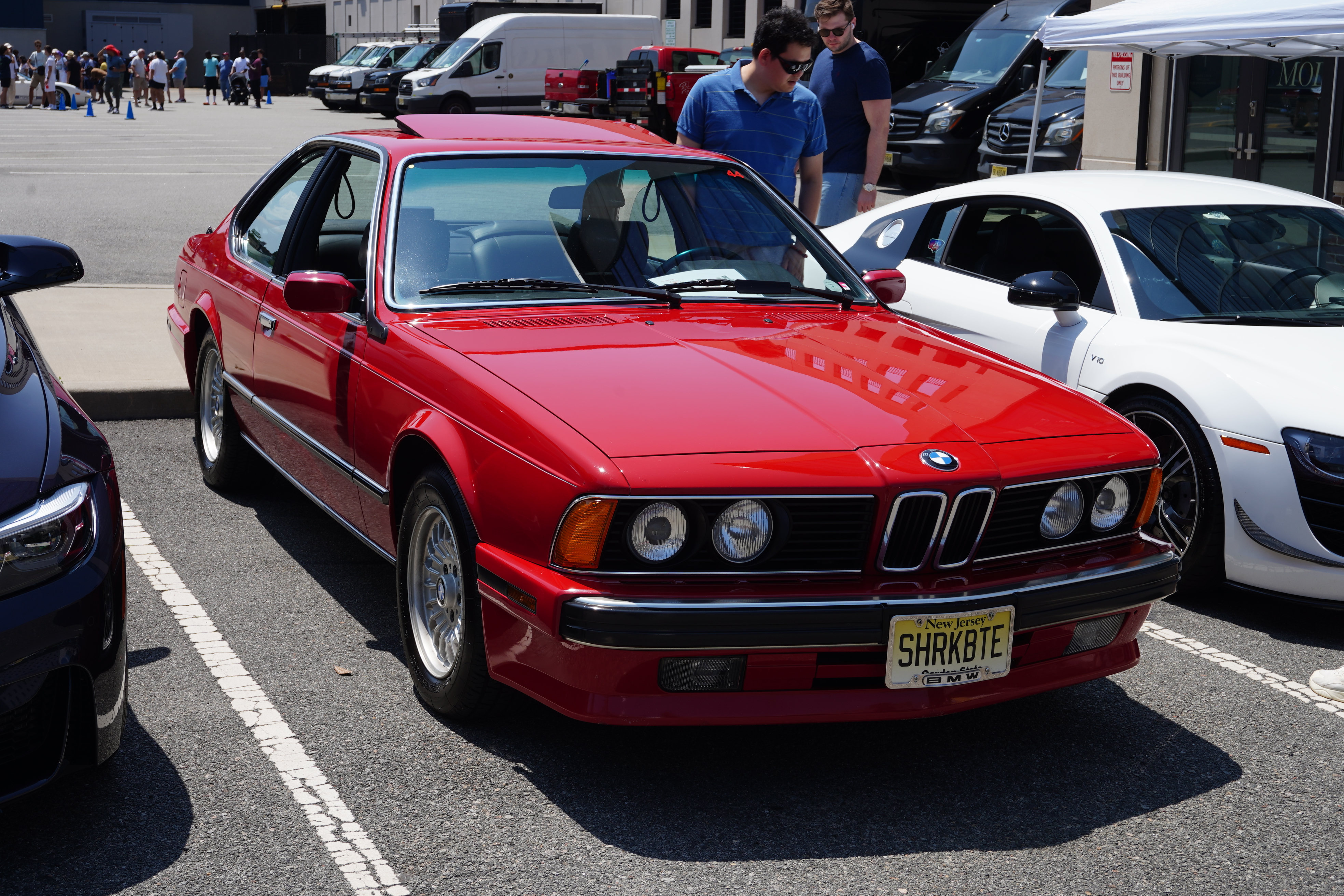
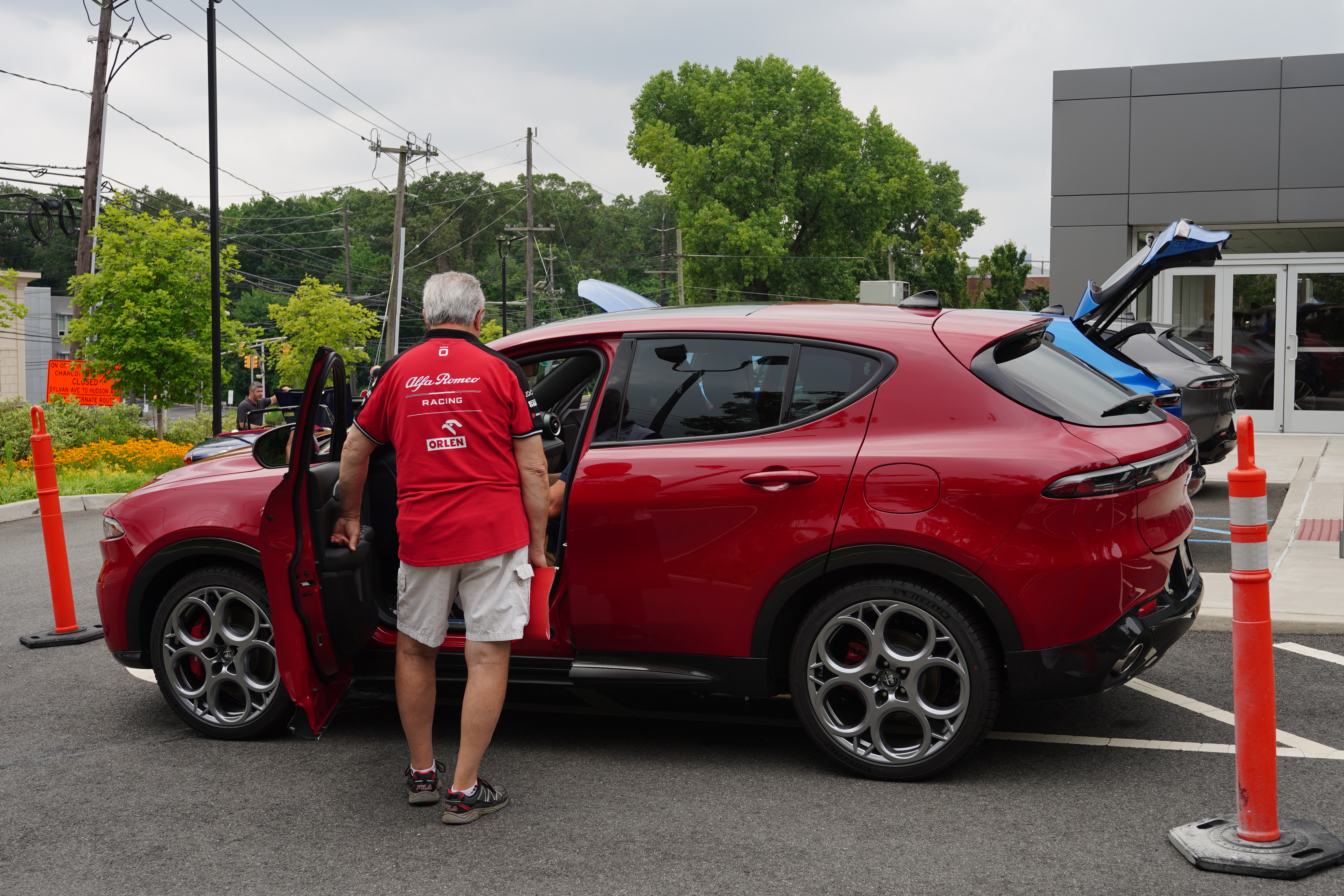
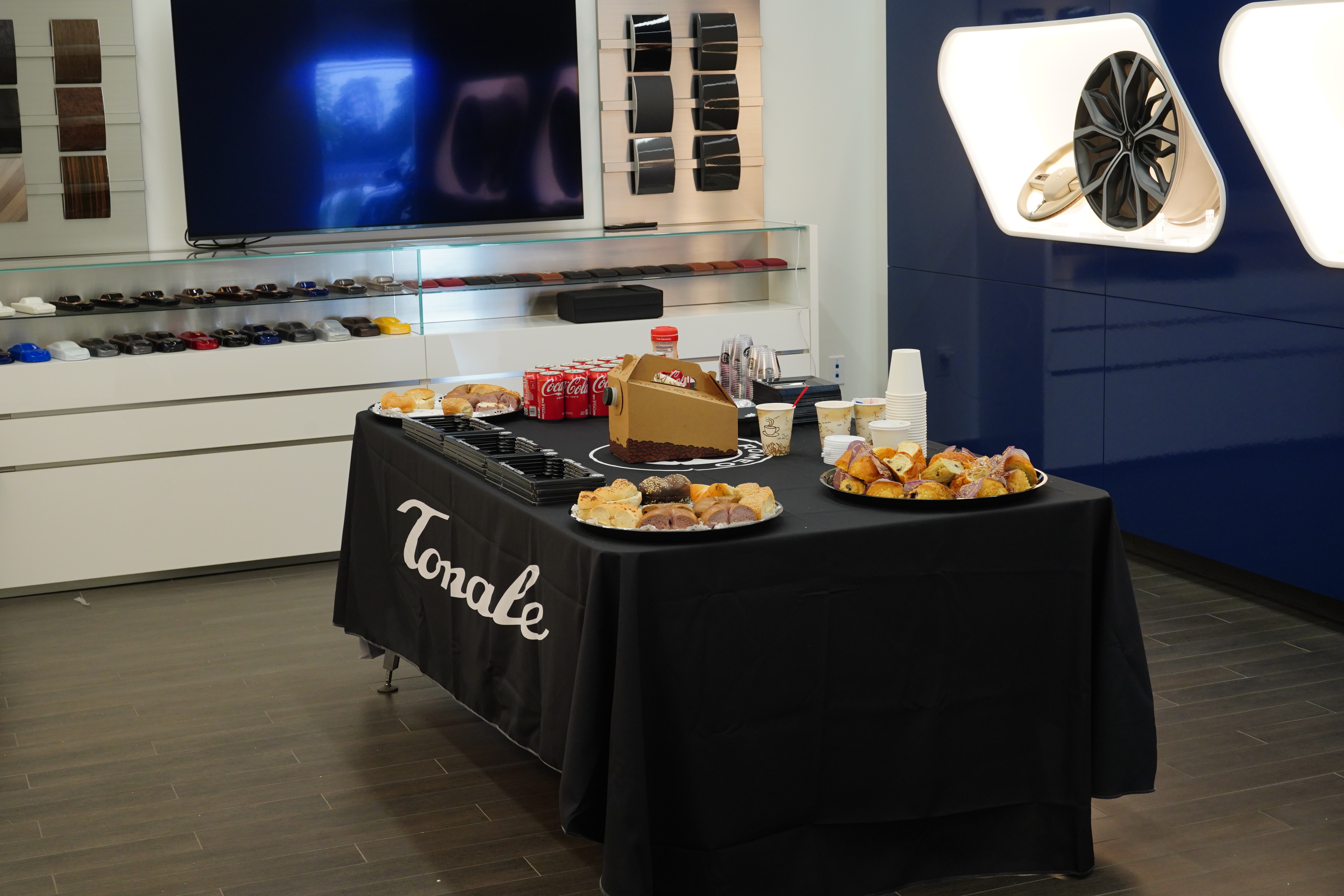
Members of the NJ Chapter of the Alfa Romeo Owners Club (AROC) were again invited to be guests at the Alfa Romeo of Englewood Cliffs NJ dealership, on Sunday July 9, 2023. The dealer opened their doors on a day when they are usually closed, provided breakfast food and coffee, and had several of the new Tonale SUVs on display.
Several Tonales were staged in front of the showroom
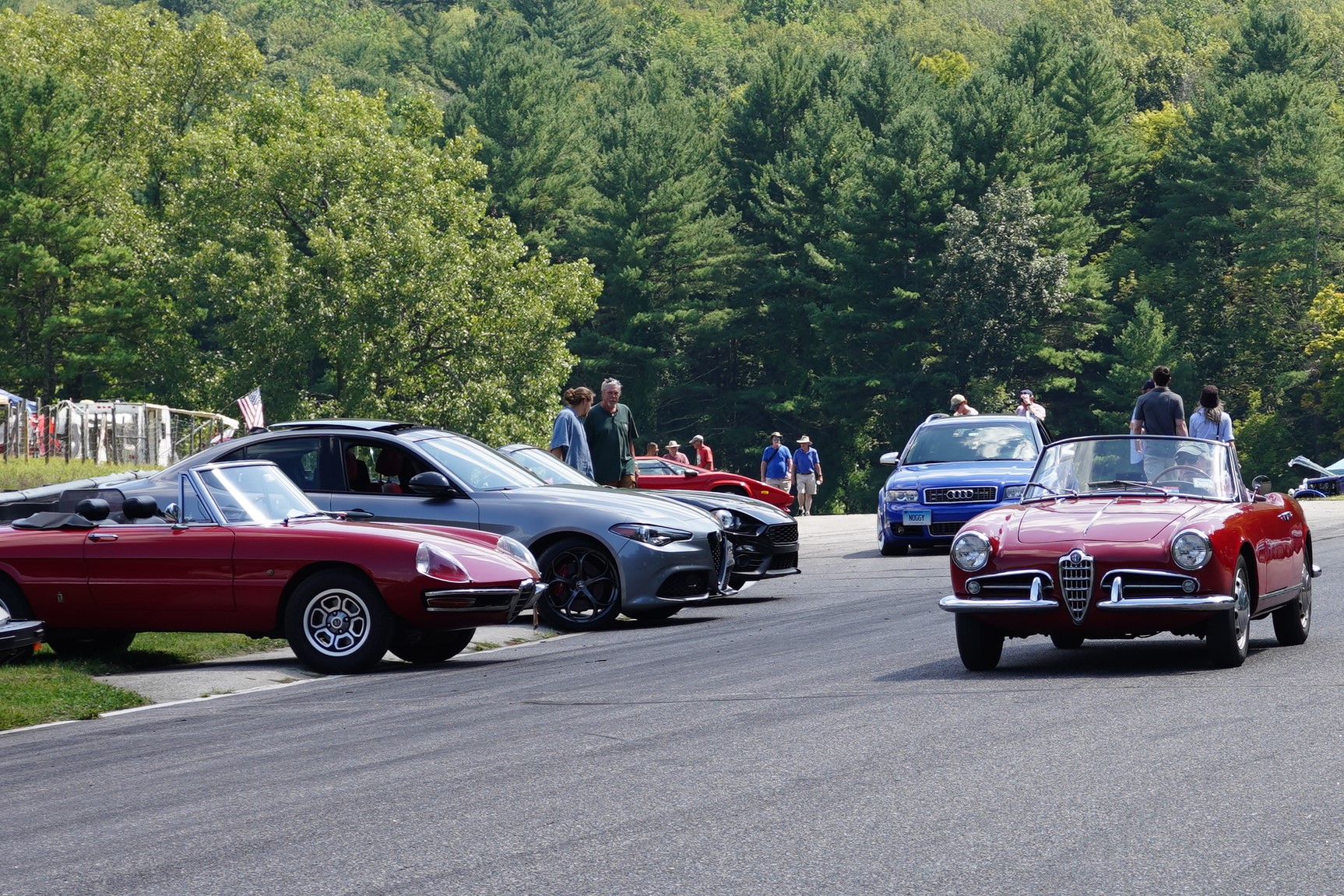
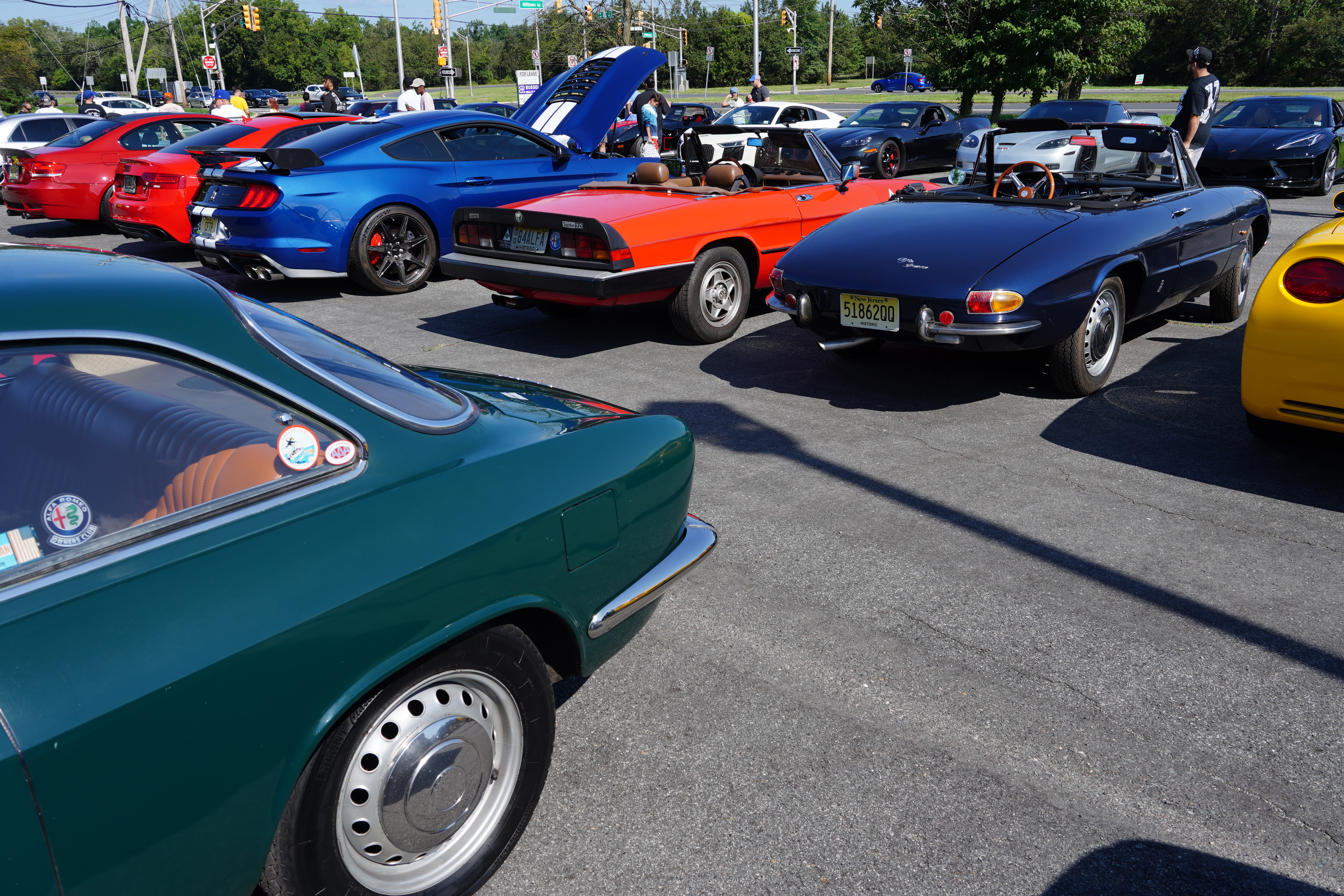
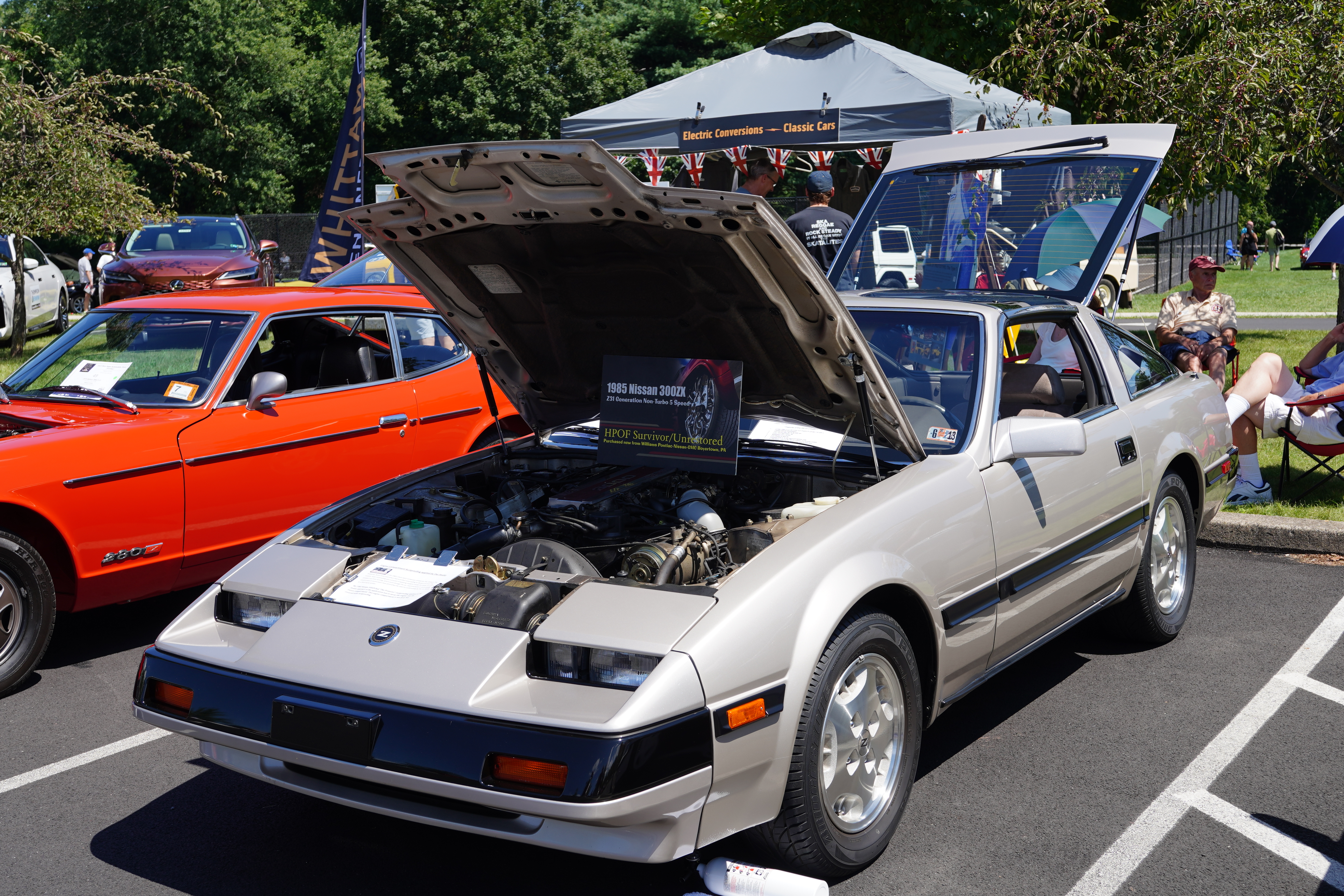
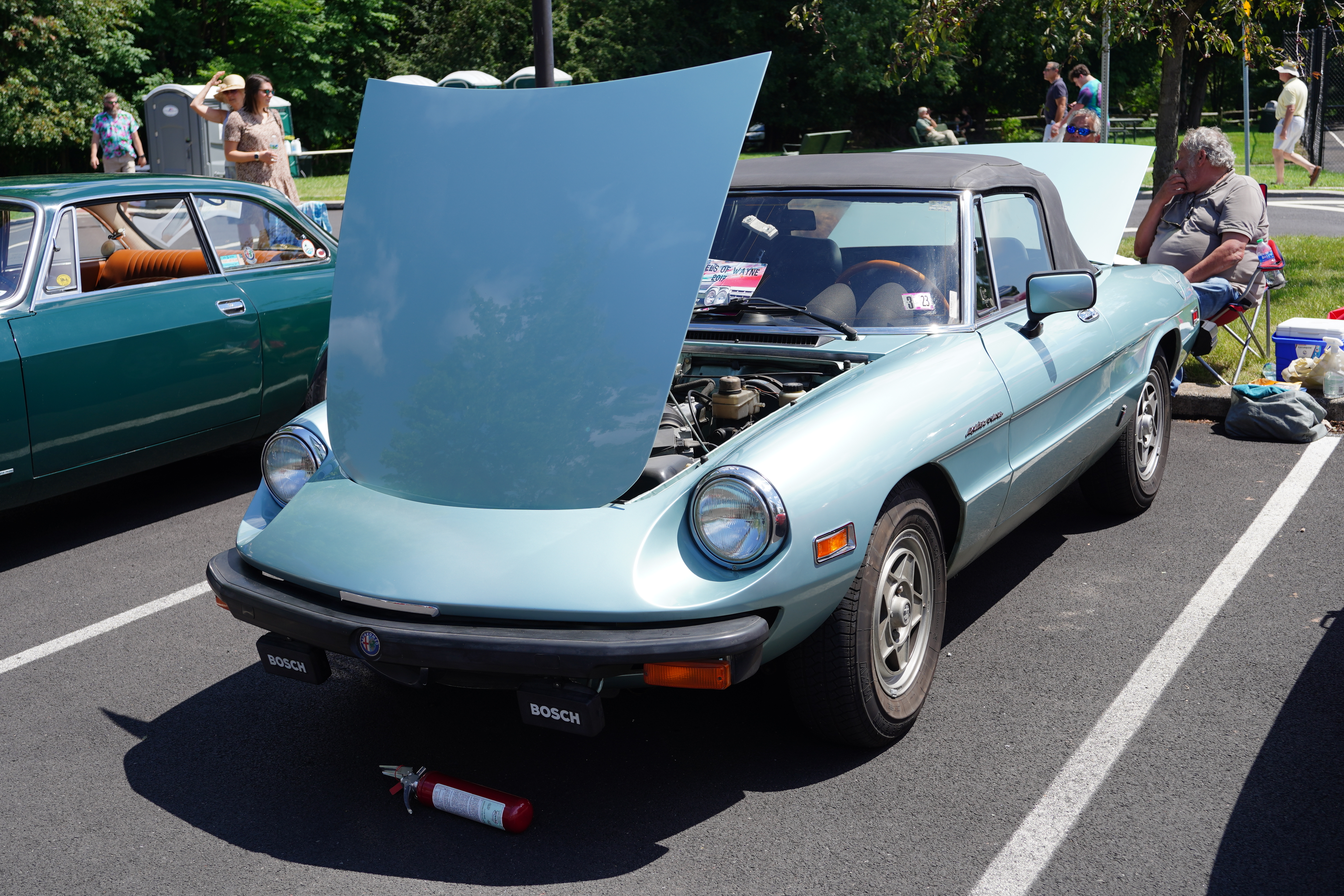
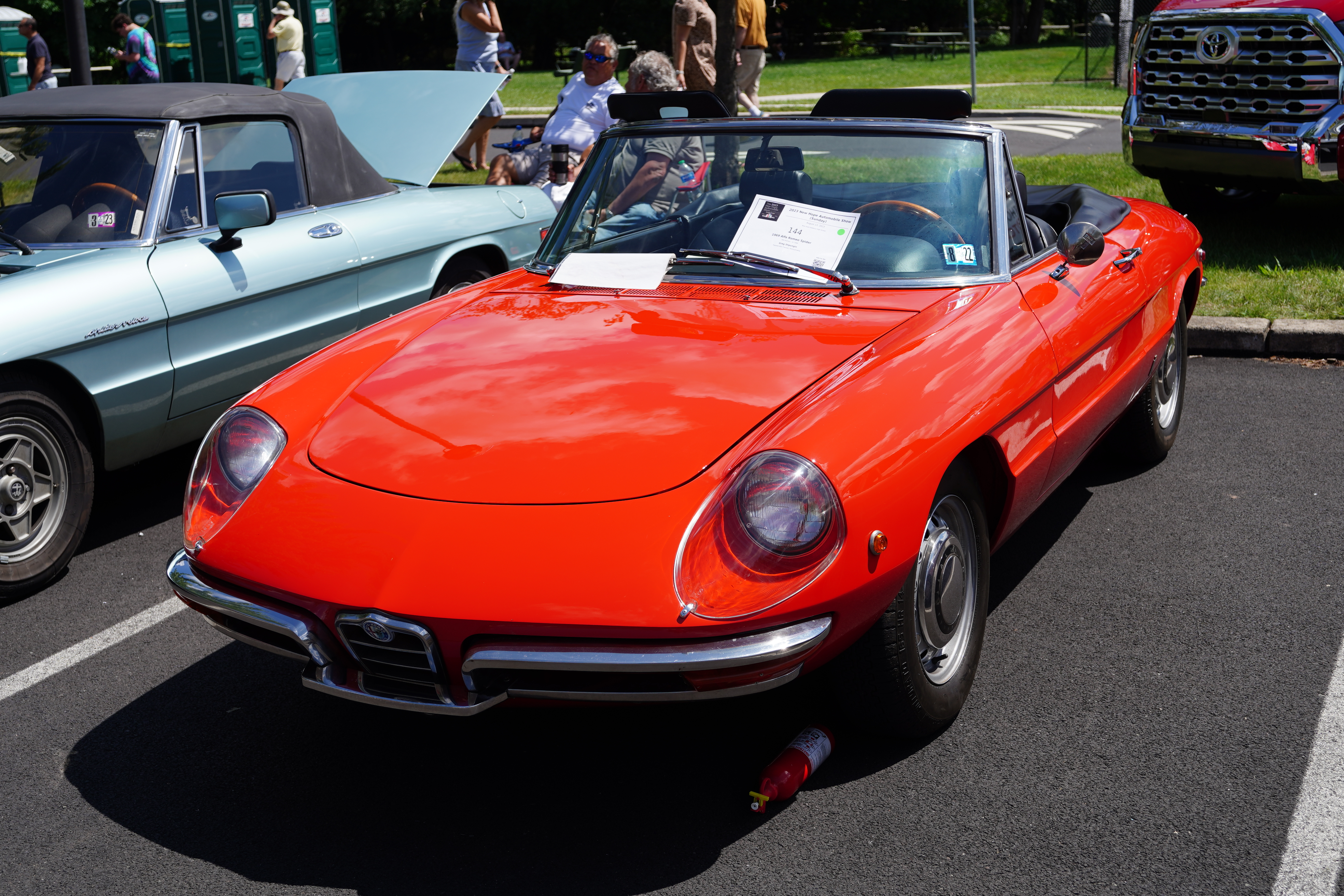
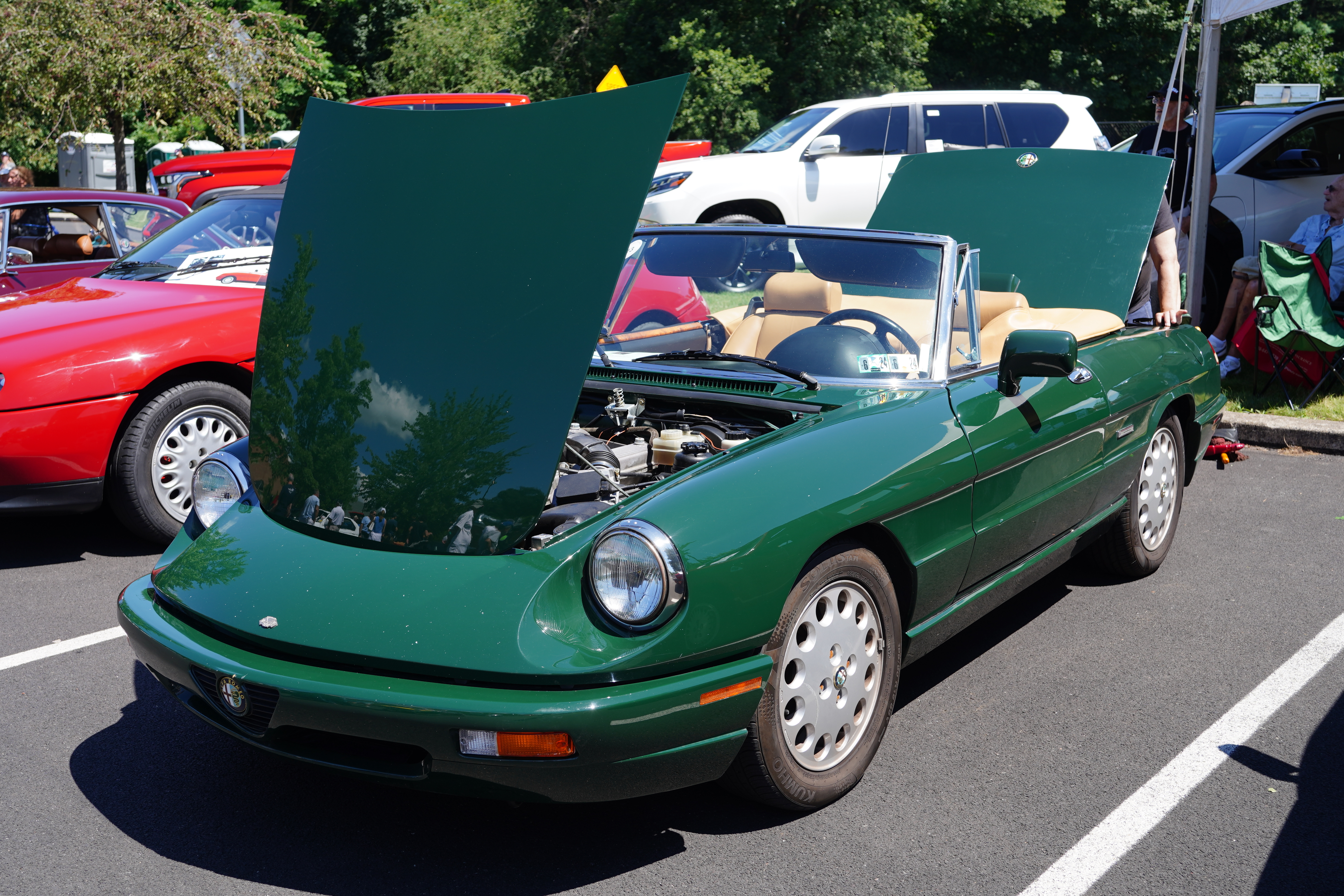
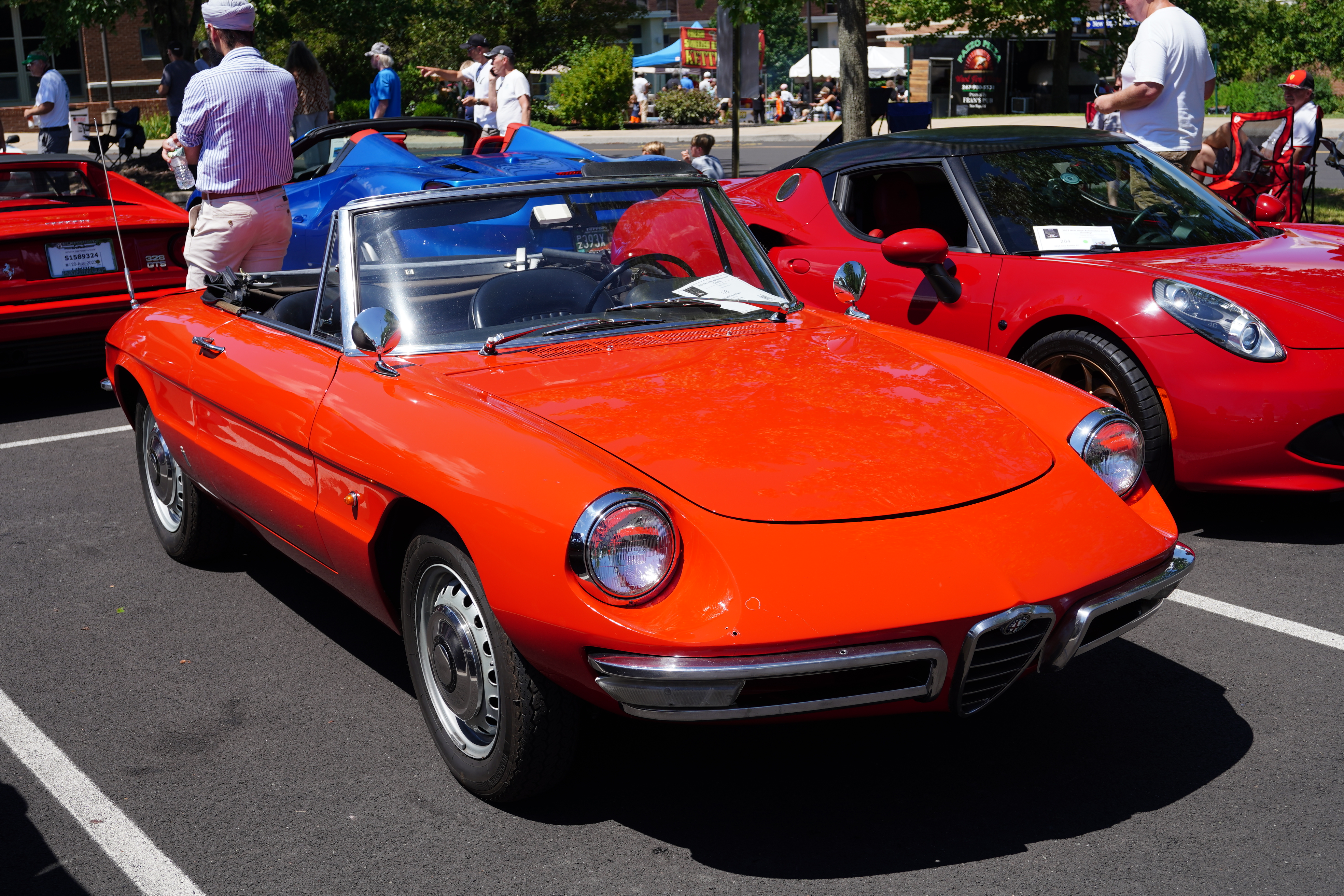
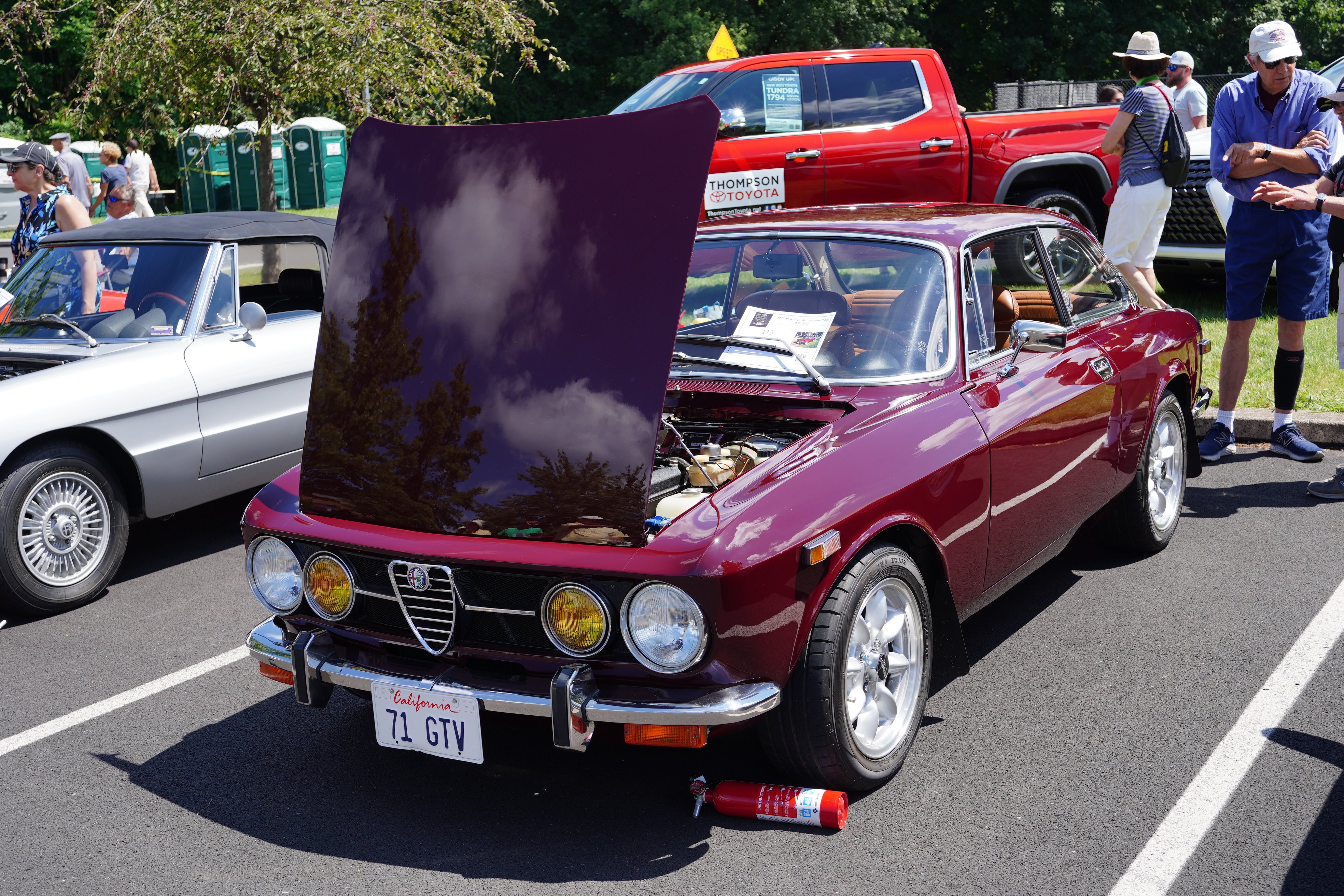
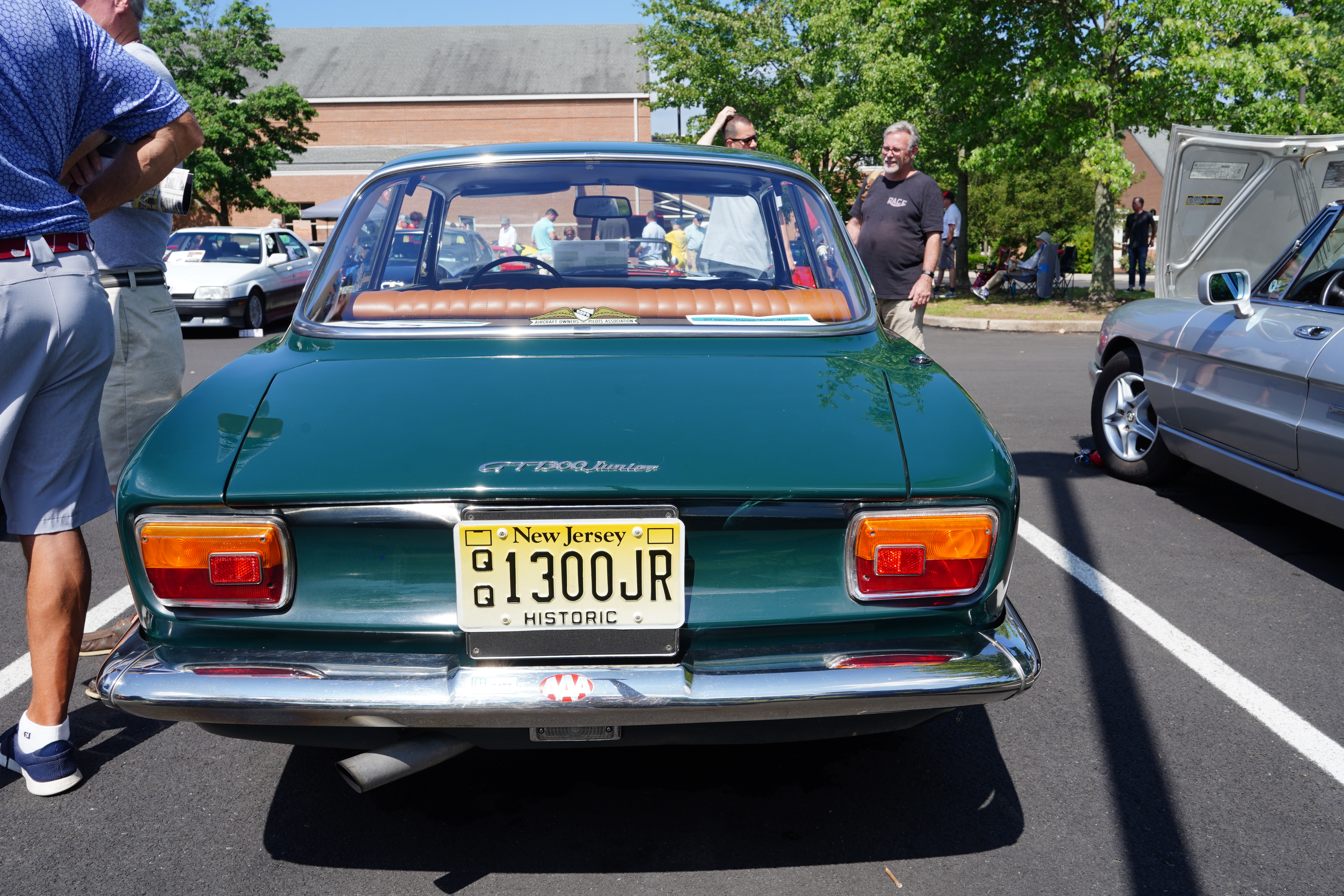
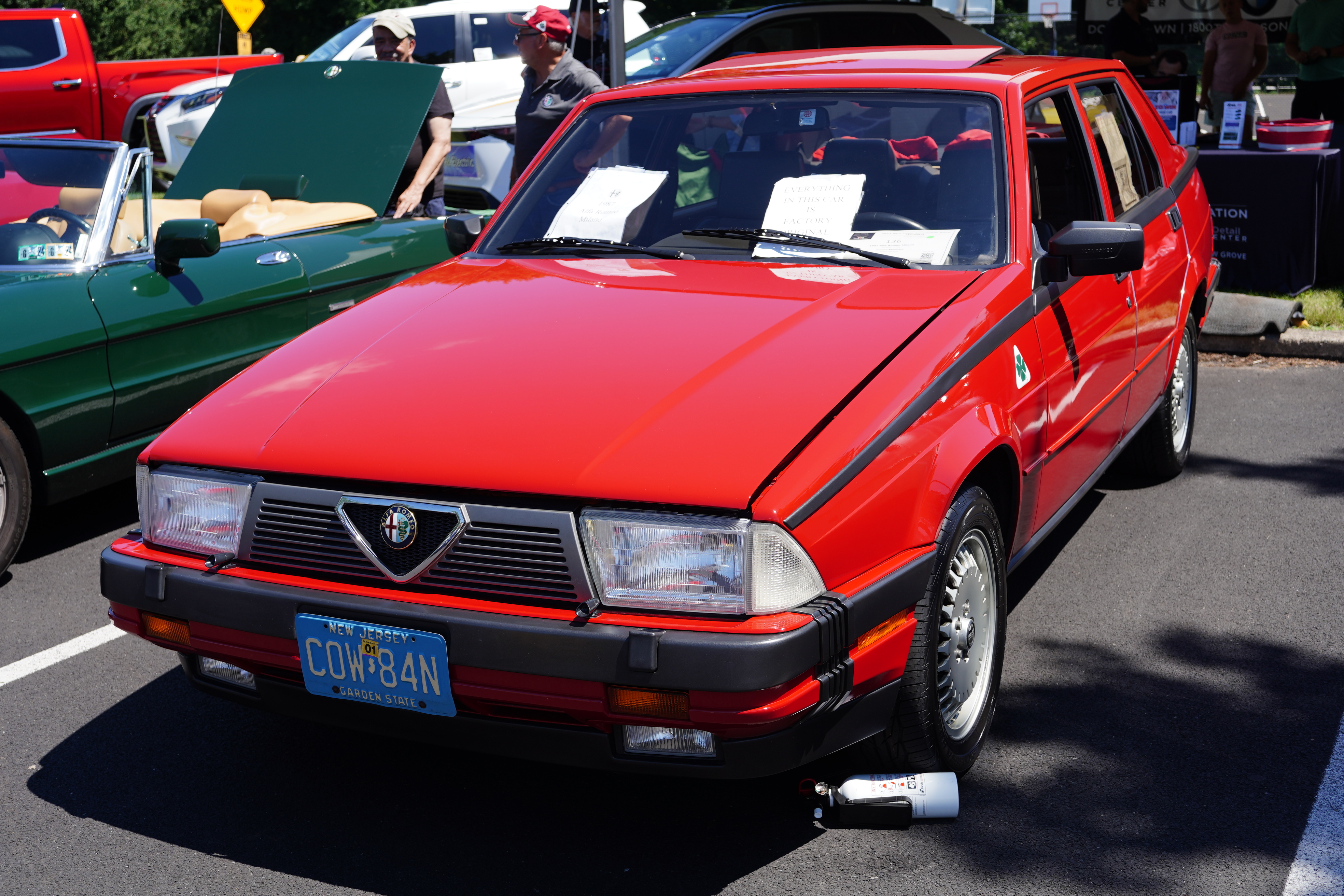
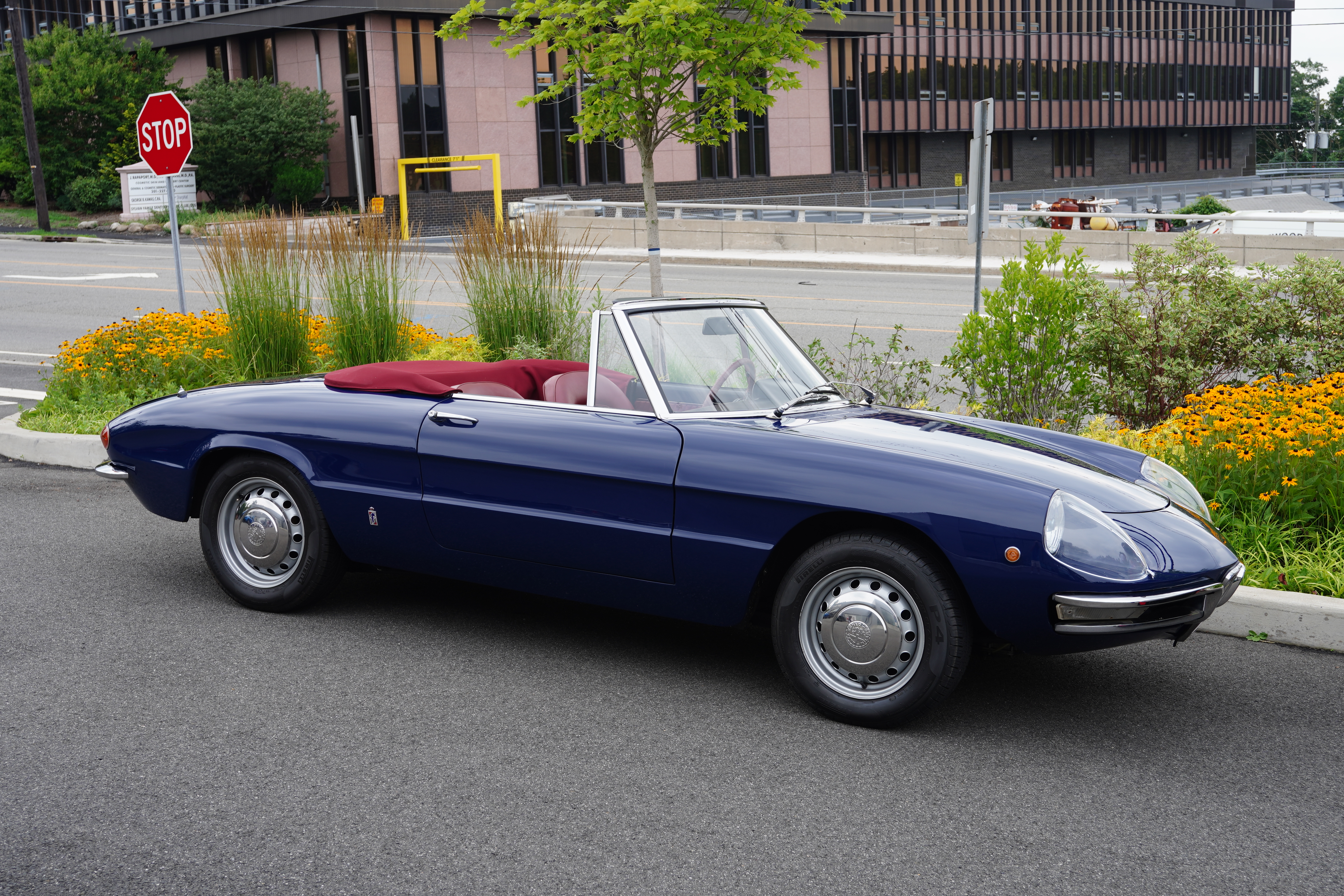
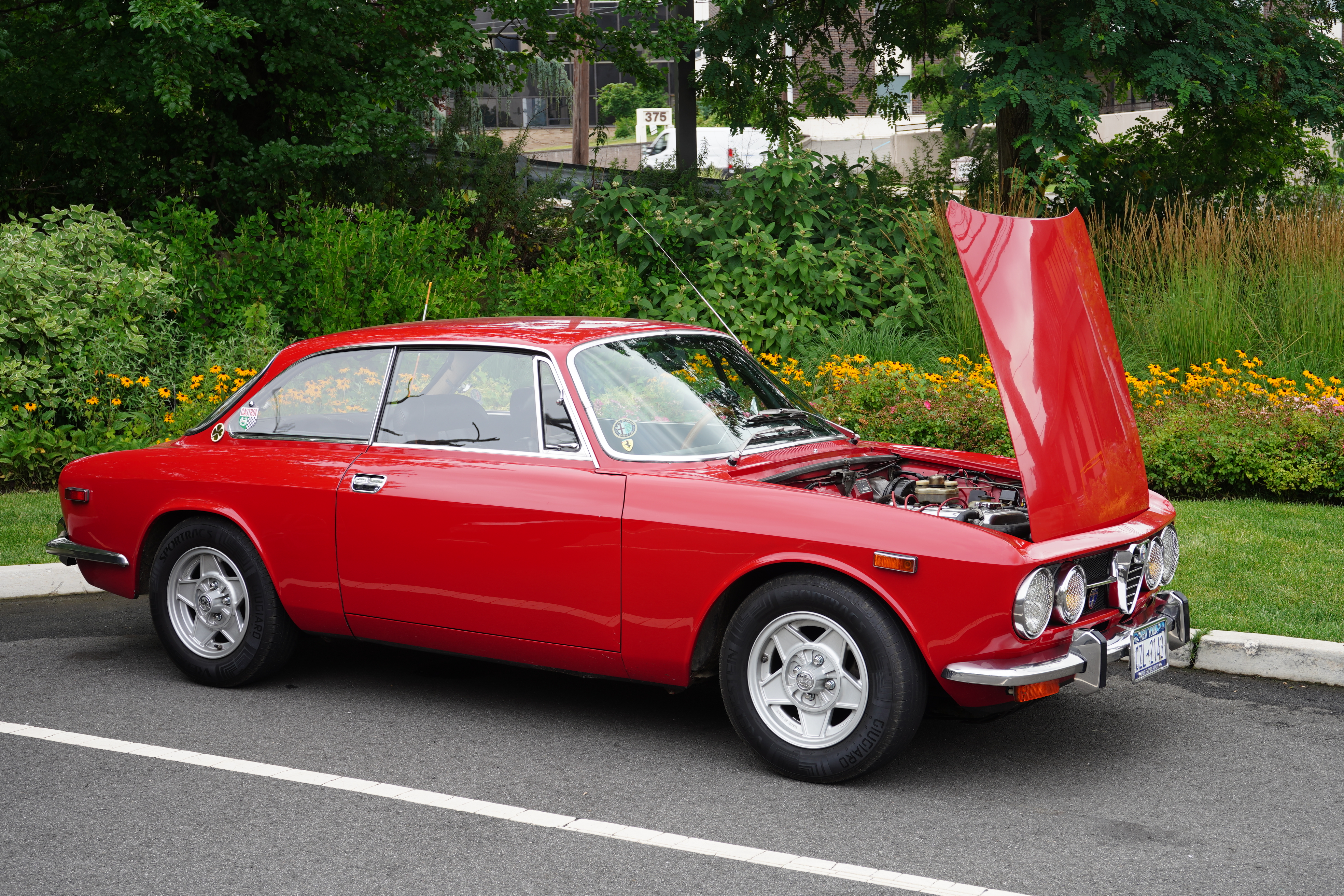
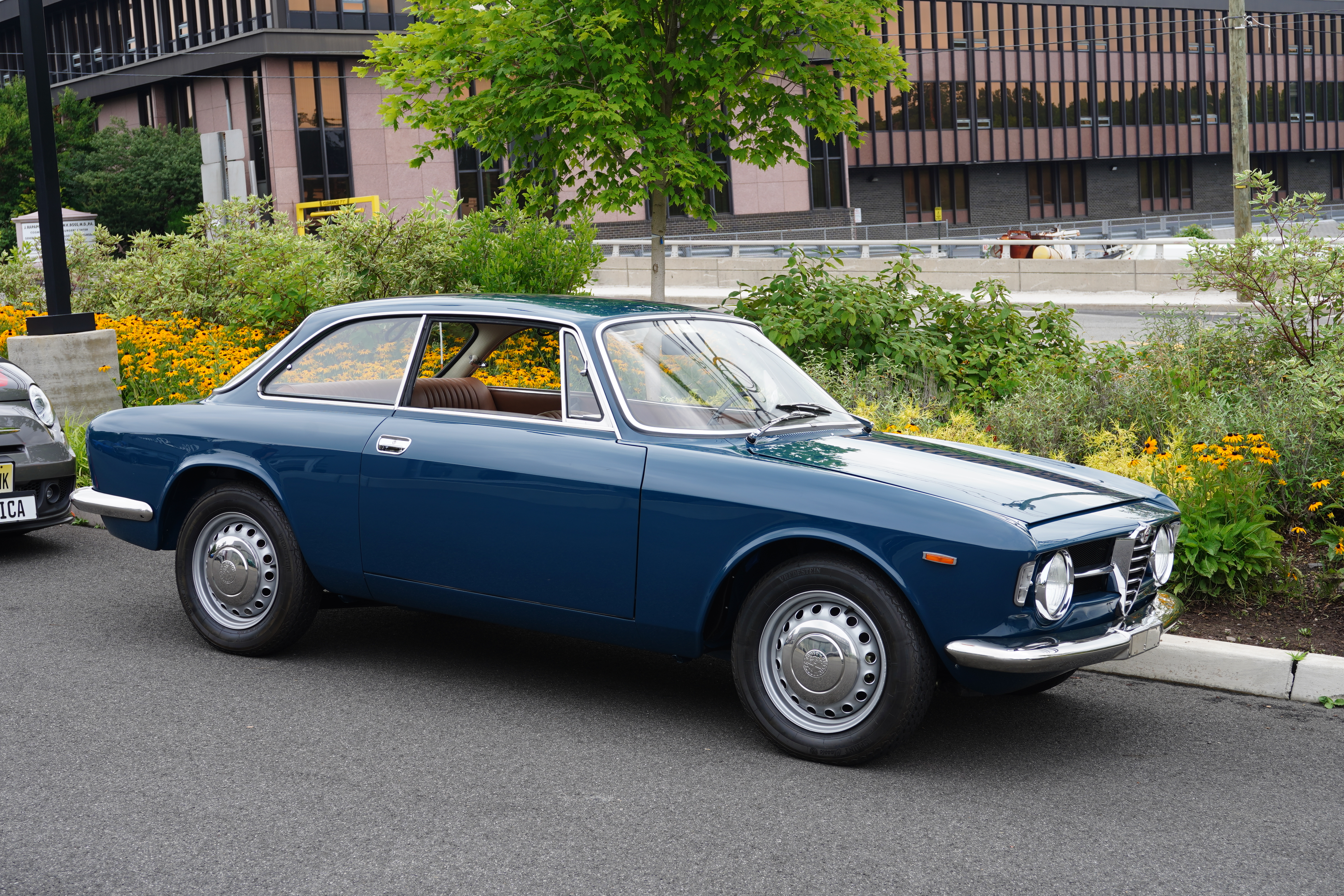
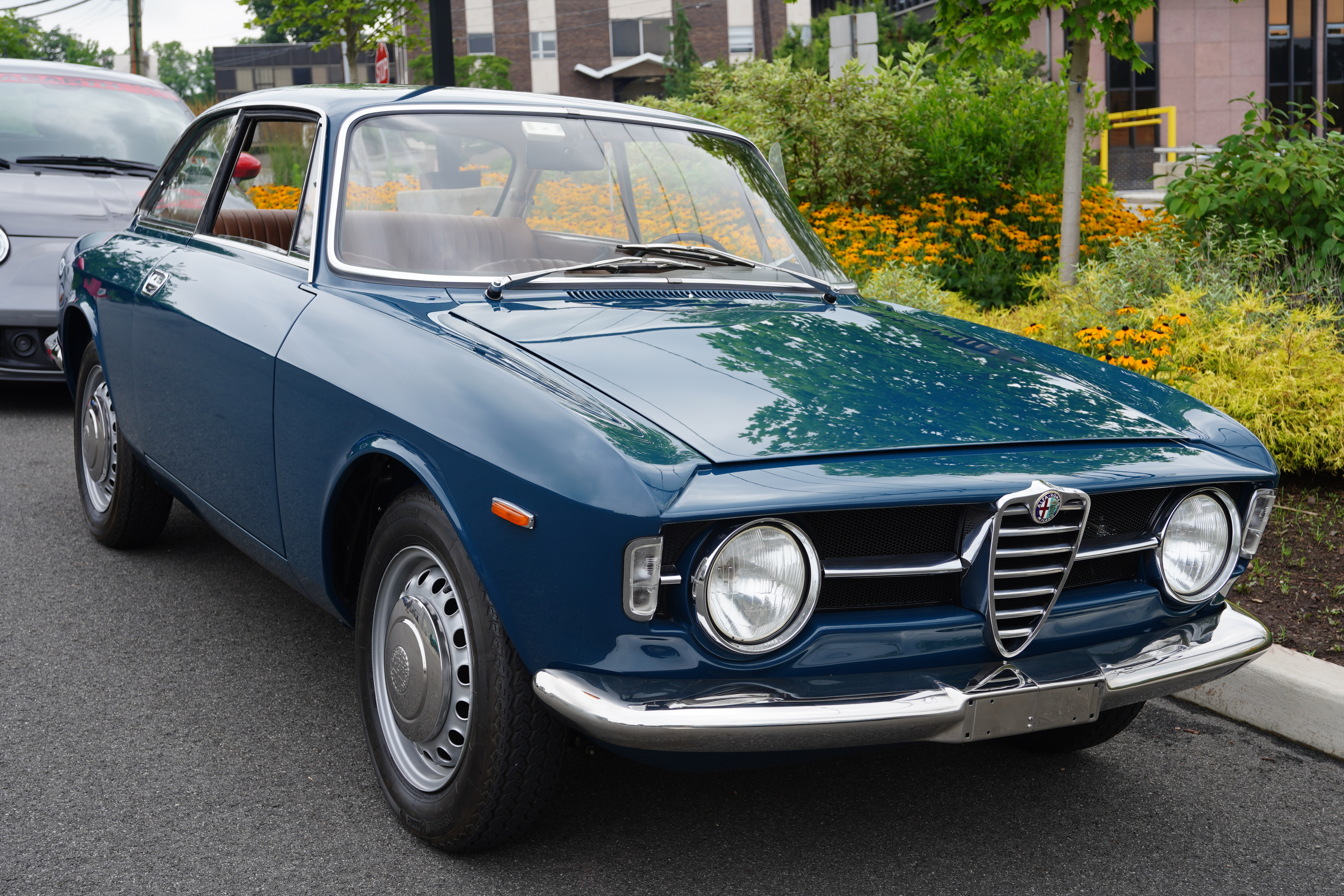
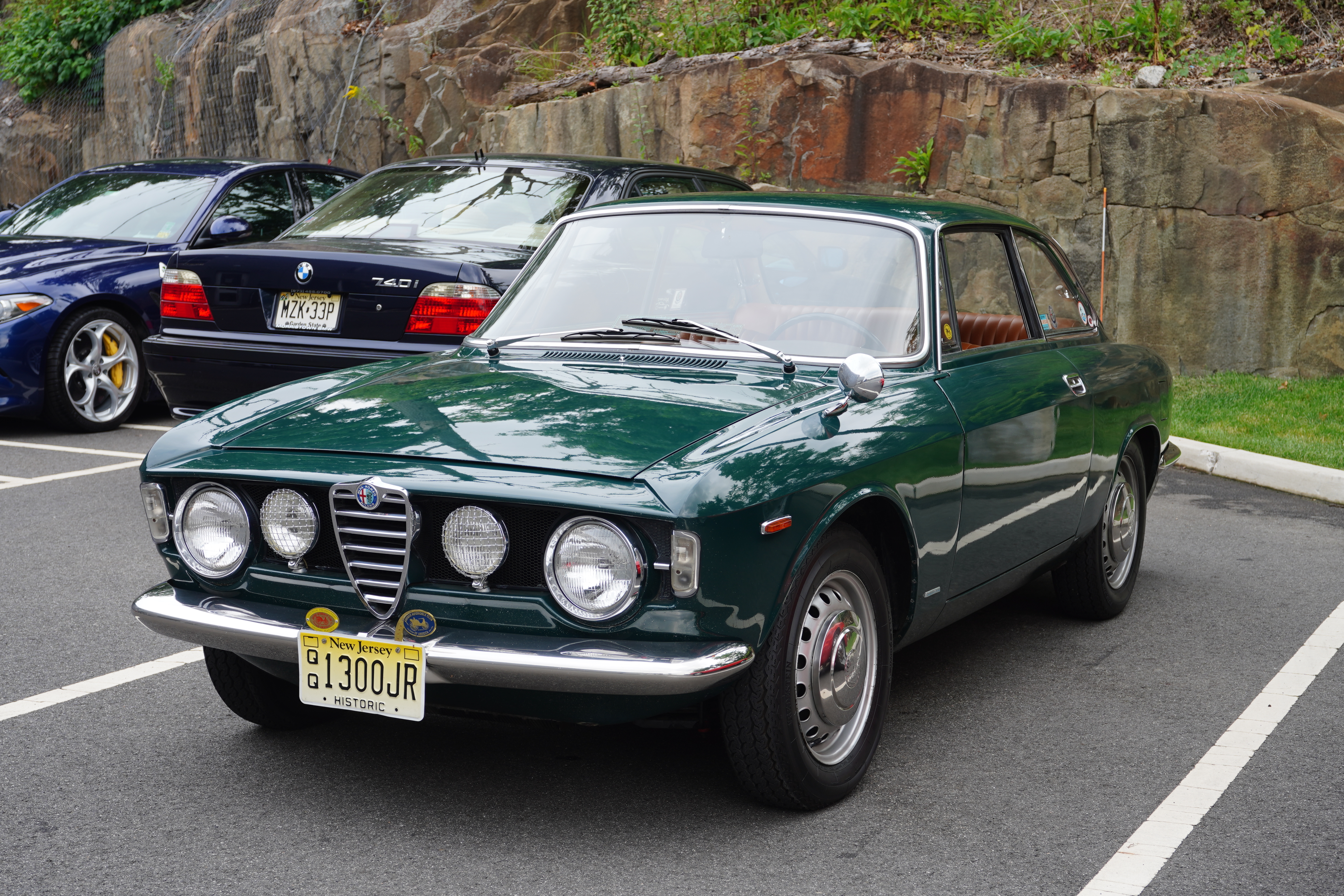
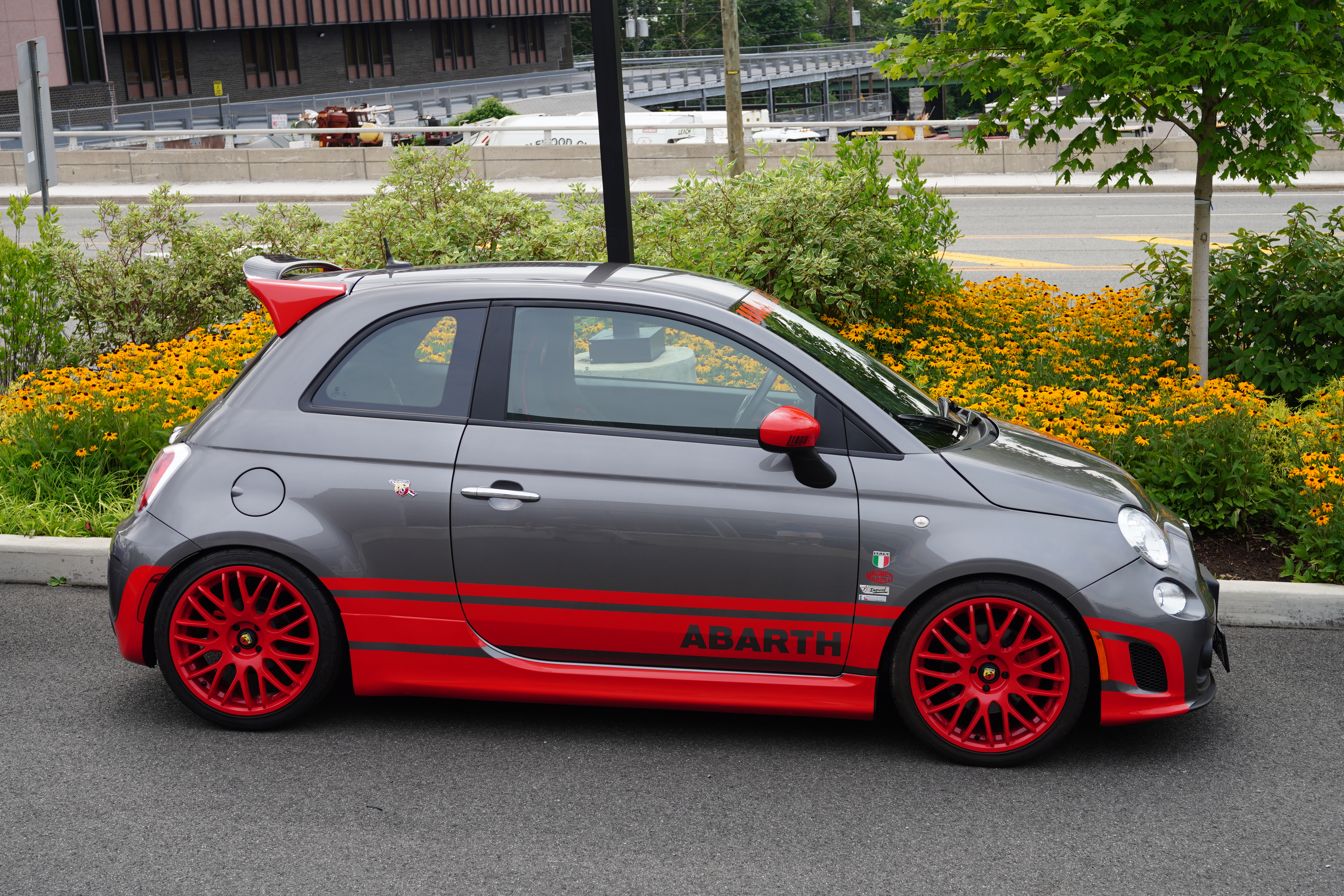
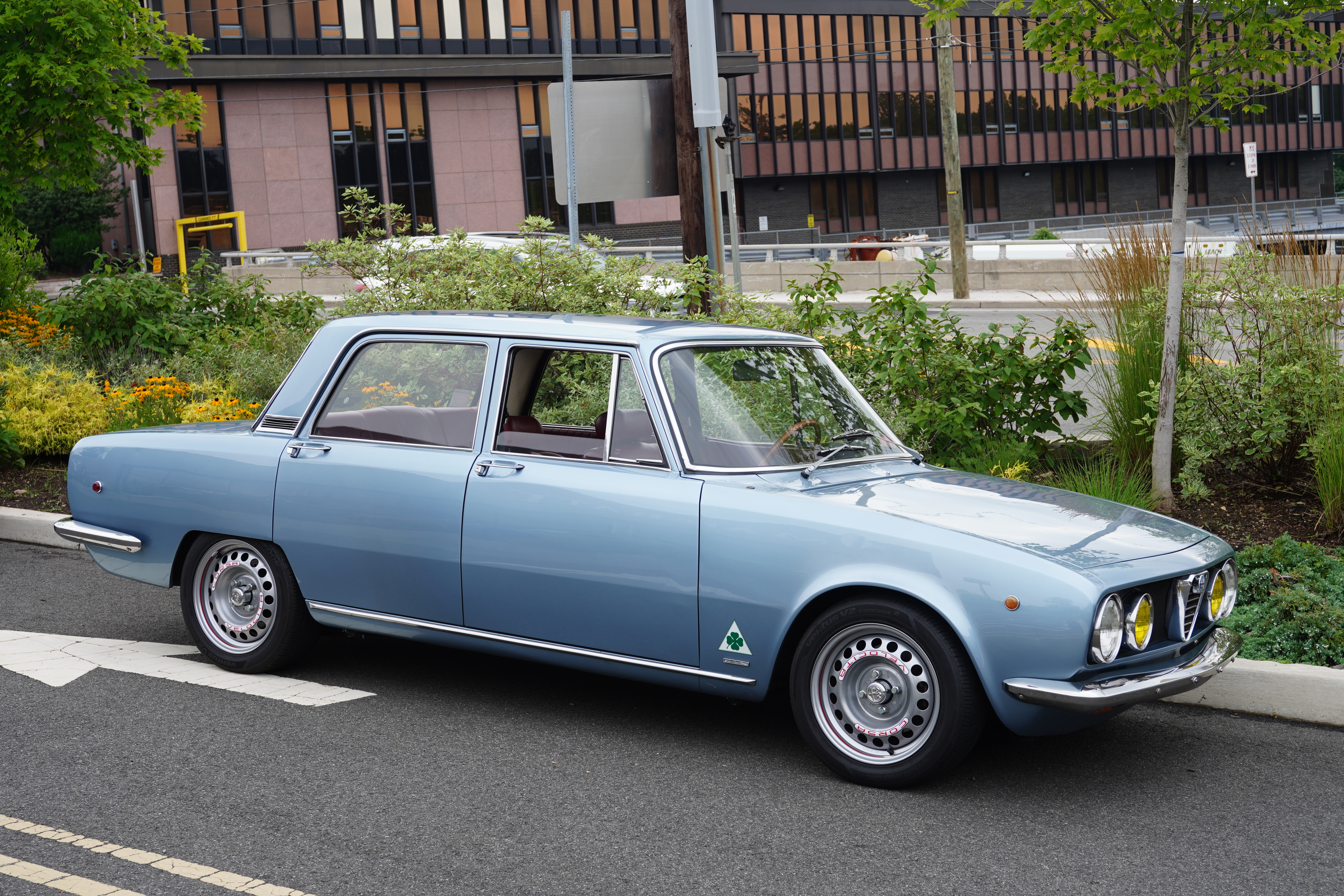
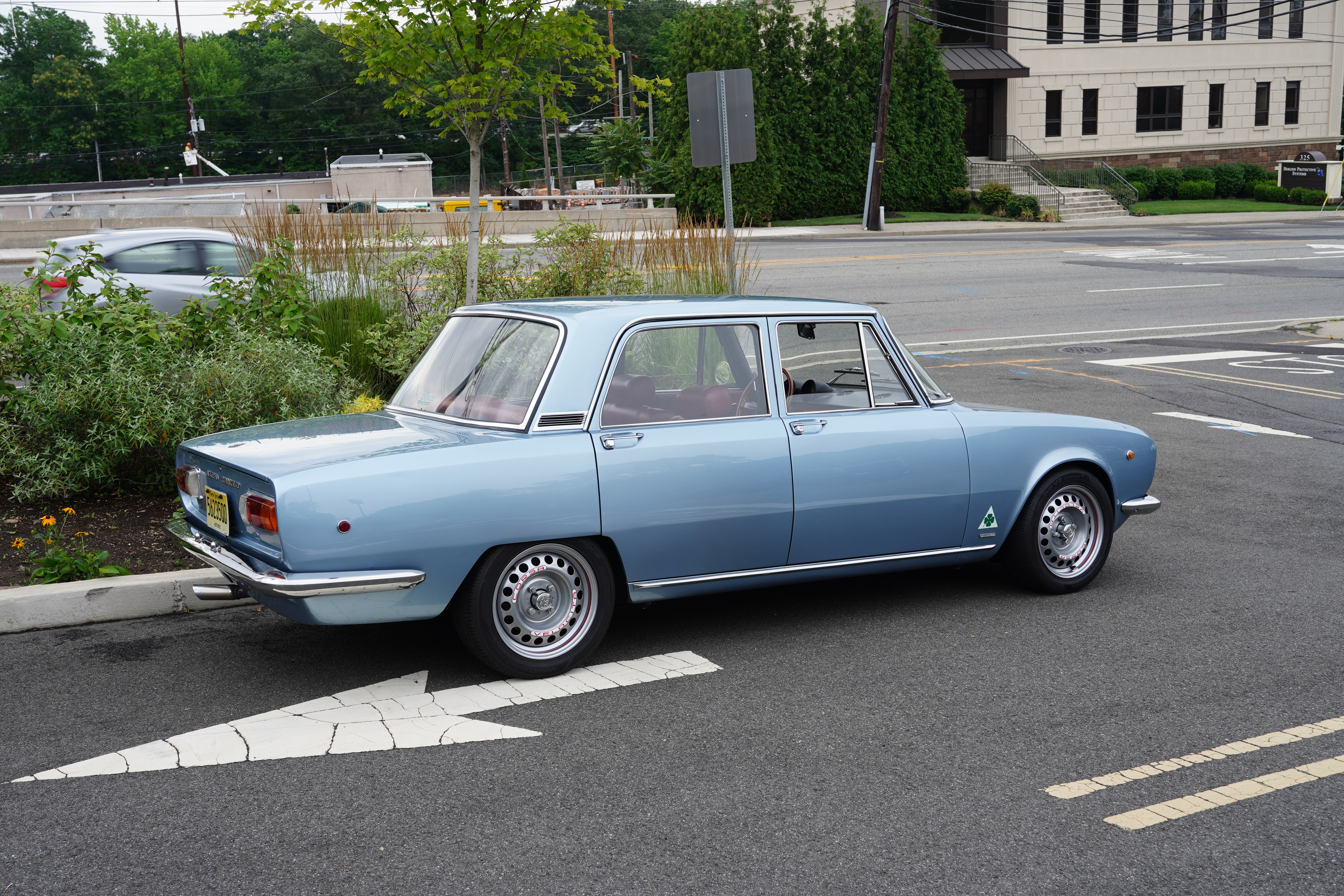
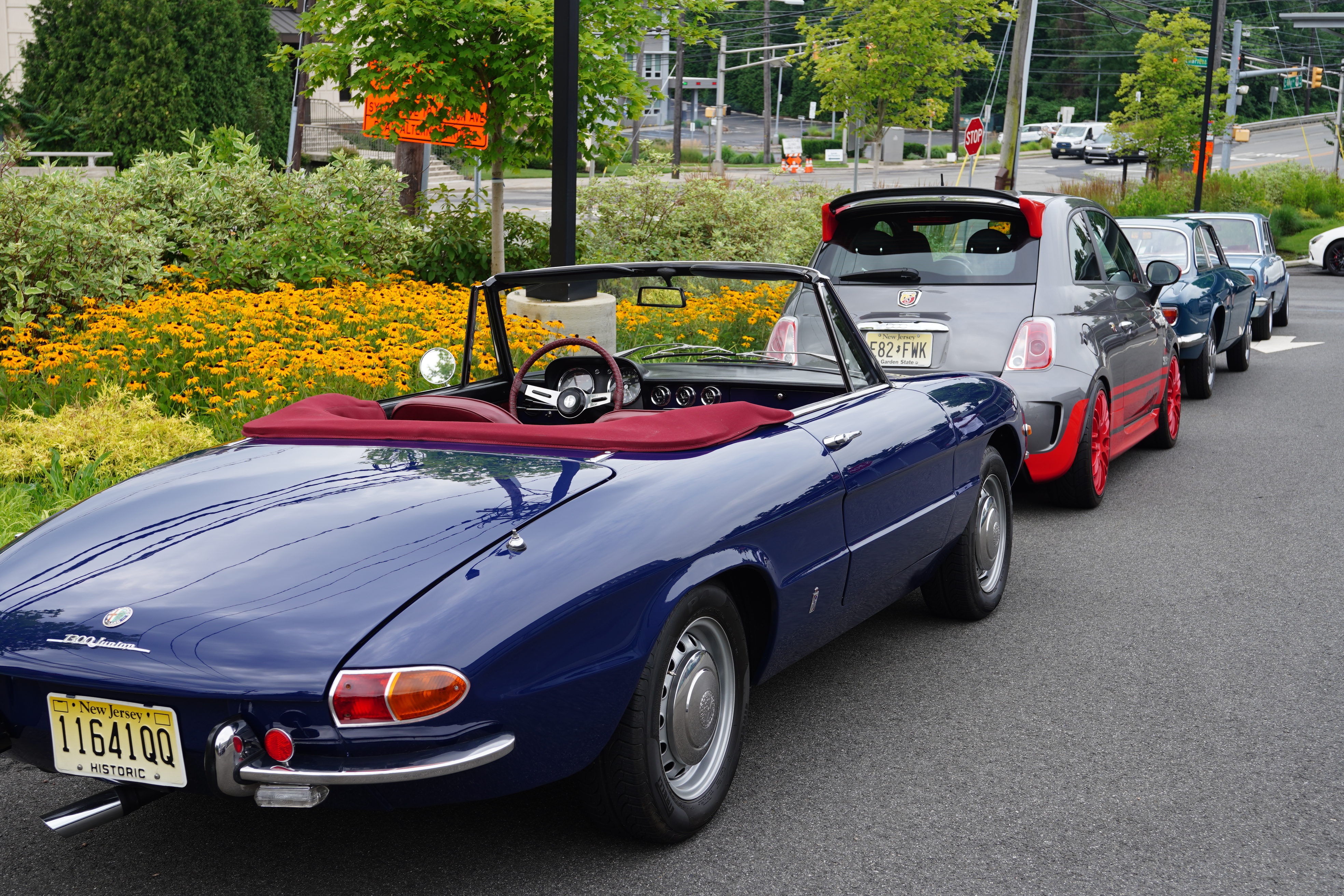
About 10 Chapter members showed up with their Alfas (and one Fiat Abarth); several other members drove to the event in modern iron. The number of vehicles was down slightly from our previous visit, and all the club vehicles were from the “classic” era. There was a nice assortment of Giulia coupes, Spiders, and one beautifully-modified Berlina sedan. We had a total of three 1300 Juniors: two coupes, including your author’s, and one Spider. Keep in mind the relative rarity of these Juniors, as it is a model which was never officially sold in the States.
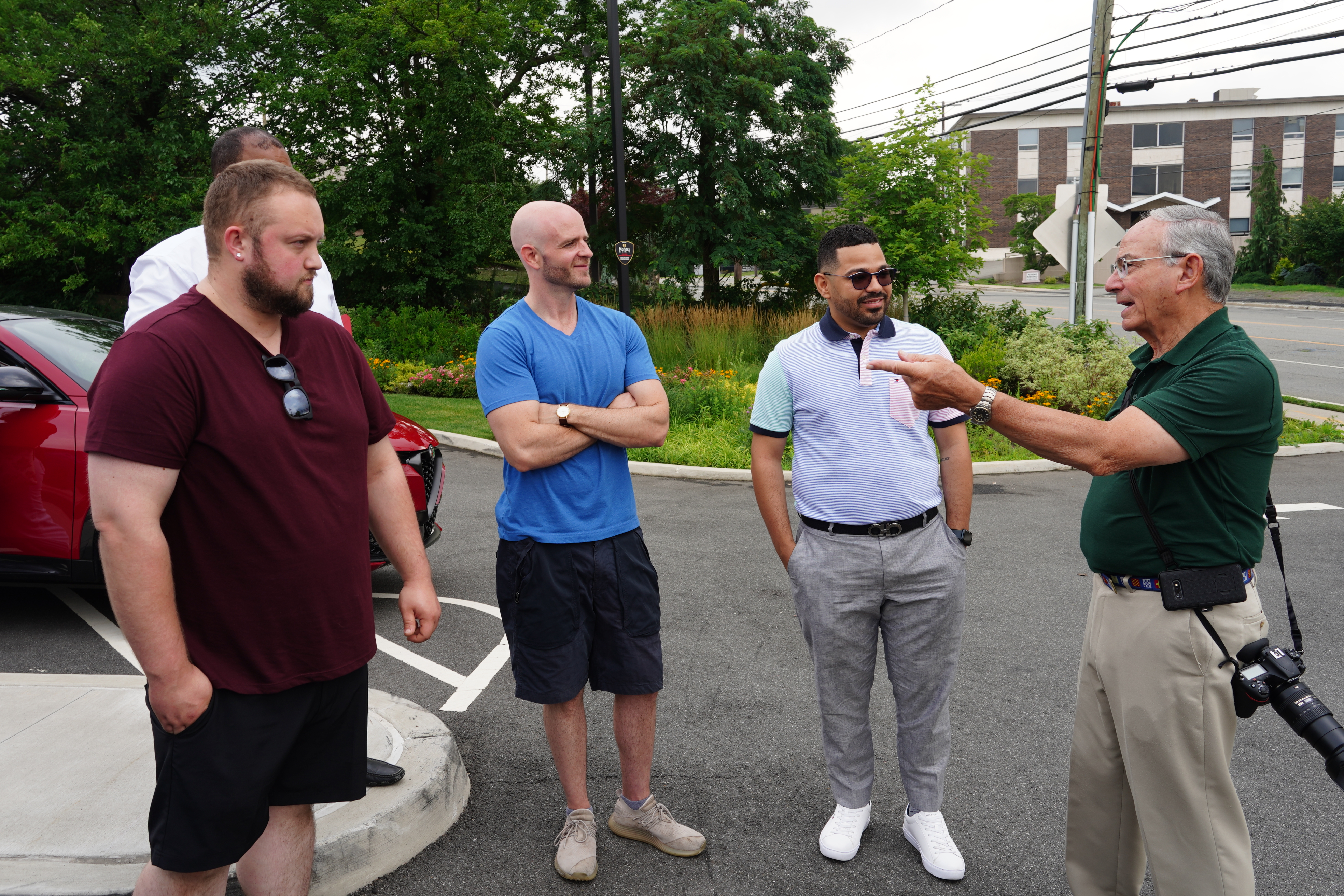
Several dealer sales and service people gave us a walkaround of the Tonale, a PHEV with a 1.3L gas engine up front, and two electric motors, one front and one rear. The vehicle to my eye looks like a junior Stelvio, which is not a bad thing given that I consider the Stelvio to be one of the better-looking SUVs on the market today.
NJ-AROC members check out the new Tonale
The sky was grey all morning, and we were all aware of the pending thunderstorms in the forecast, which likely played a role in keeping the overall numbers down. The event was scheduled to run from 9 a.m. to 12 noon. I scooted at 10:45 to try to beat the rain. Aside from driving home in two very brief showers, I did make it back before the skies opened their taps.
I had missed the previous two NJ Chapter gatherings, only because of other commitments, so I was glad to attend this one, and it was good to see some Alfa friends again. On behalf of the NJ Chapter of AROC, I want to thank Alfa Romeo of Englewood Cliffs for their hospitality.
1300 Junior Spider
Giulia GTV
1966 Duetto (first year for the model)
GT 1300 Junior
Your author’s GT 1300 Junior
Fiat Abarth
Dealer personnel and Chapter members at the Tonale presentation
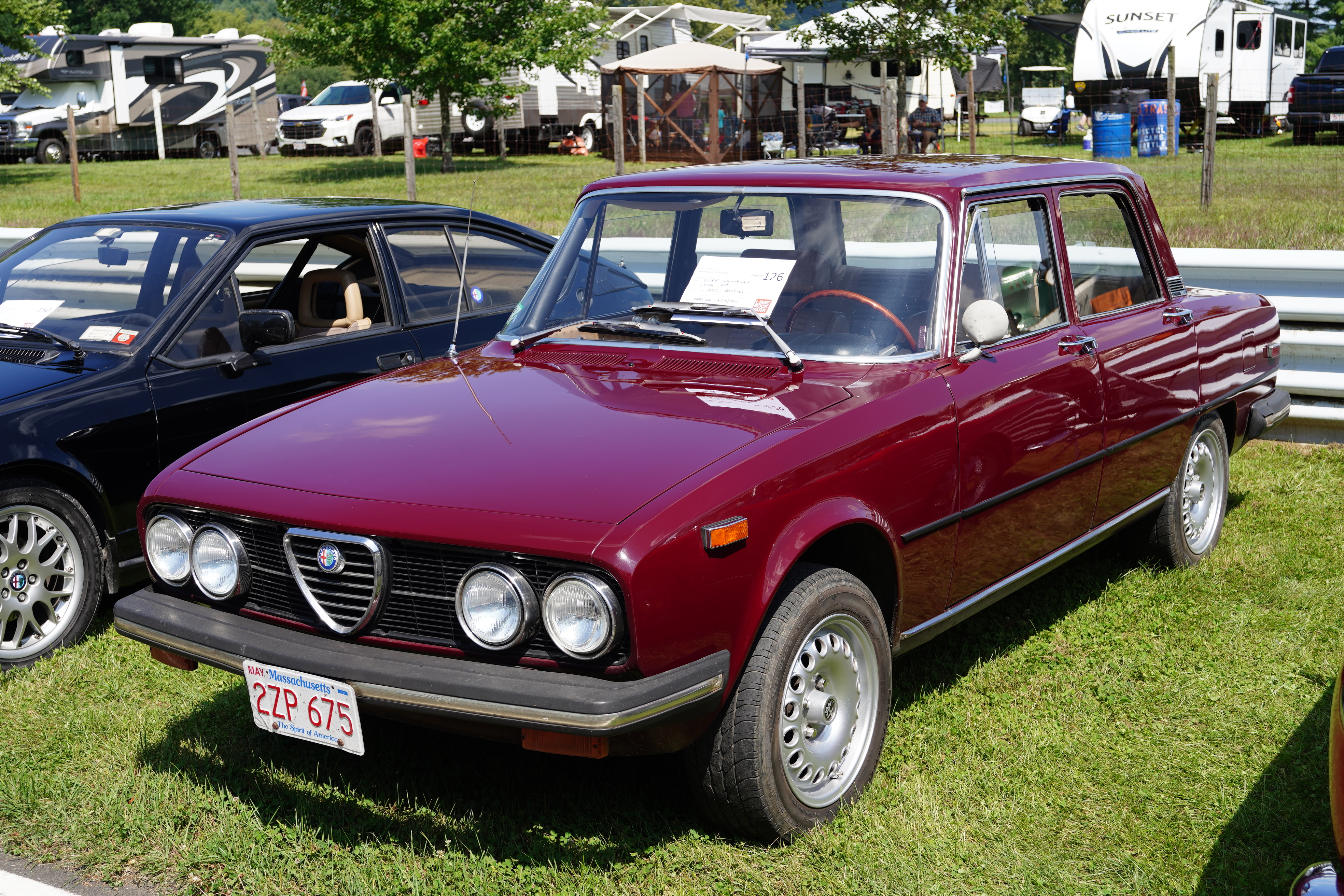
Berlina sedan
Tastefully modified
Four in a row
Close to what you would have seen in an Alfa showroom in ’66-’67
June has been a busy month for car shows, with Greenwich, Quaker Bridge, and now Flemington in 3 consecutive weeks. I had intended to drive the Alfa to Flemington Saturday night, as it’s all of 10 minutes away, but a later-than-expected departure from a relative’s house during the afternoon left me little time, so I darted over in a modern car and managed to take in the show just as some cars were leaving.
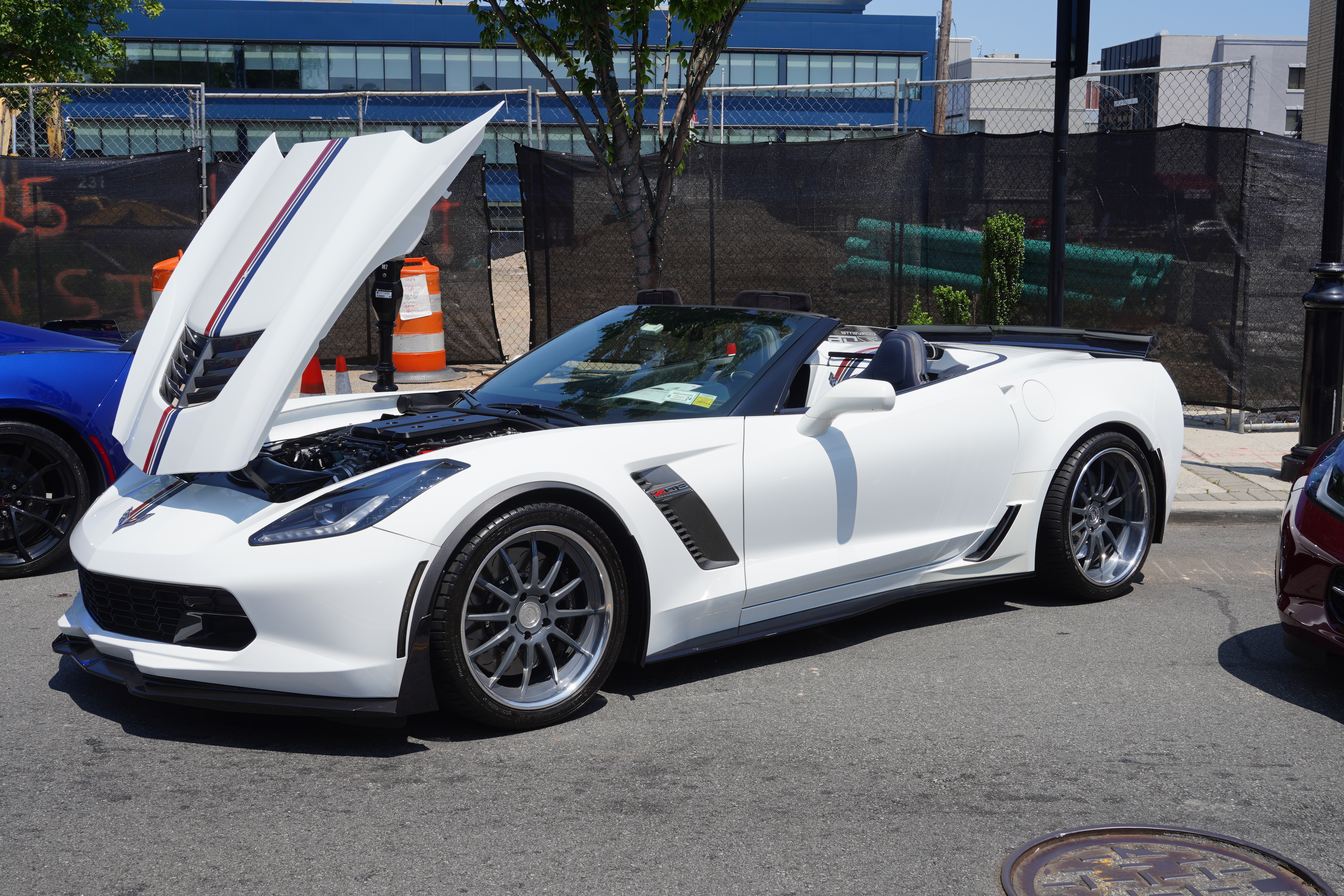
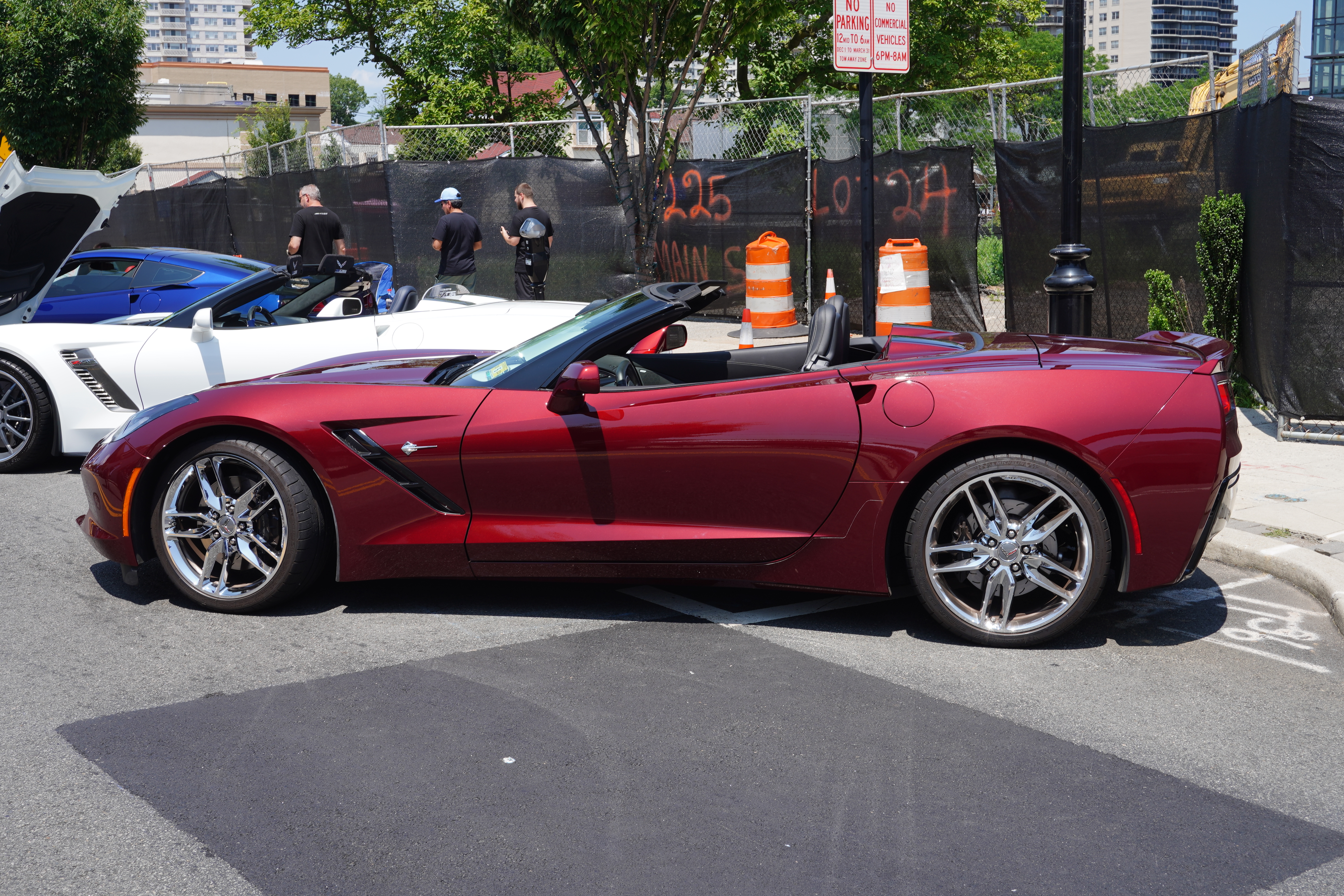
C2 Corvette behind C7 Corvette
The town of Flemington NJ has hosted a bi-weekly cruise night for several years. Held on alternating Saturdays, they announce “featured makes and models”, but from my observation, that doesn’t seem to have much influence on which vehicles arrive. Cars can park along Main St., but there also is a small parking lot which is where I tend to see the best cars. Not one but two live bands were cranking out the tunes, and show-goers were invited to vote for a “People’s Choice” best in show. Local restaurants stayed open, with a few of them offering outside seating. The weather, as it has been for much of the month, was near perfect.
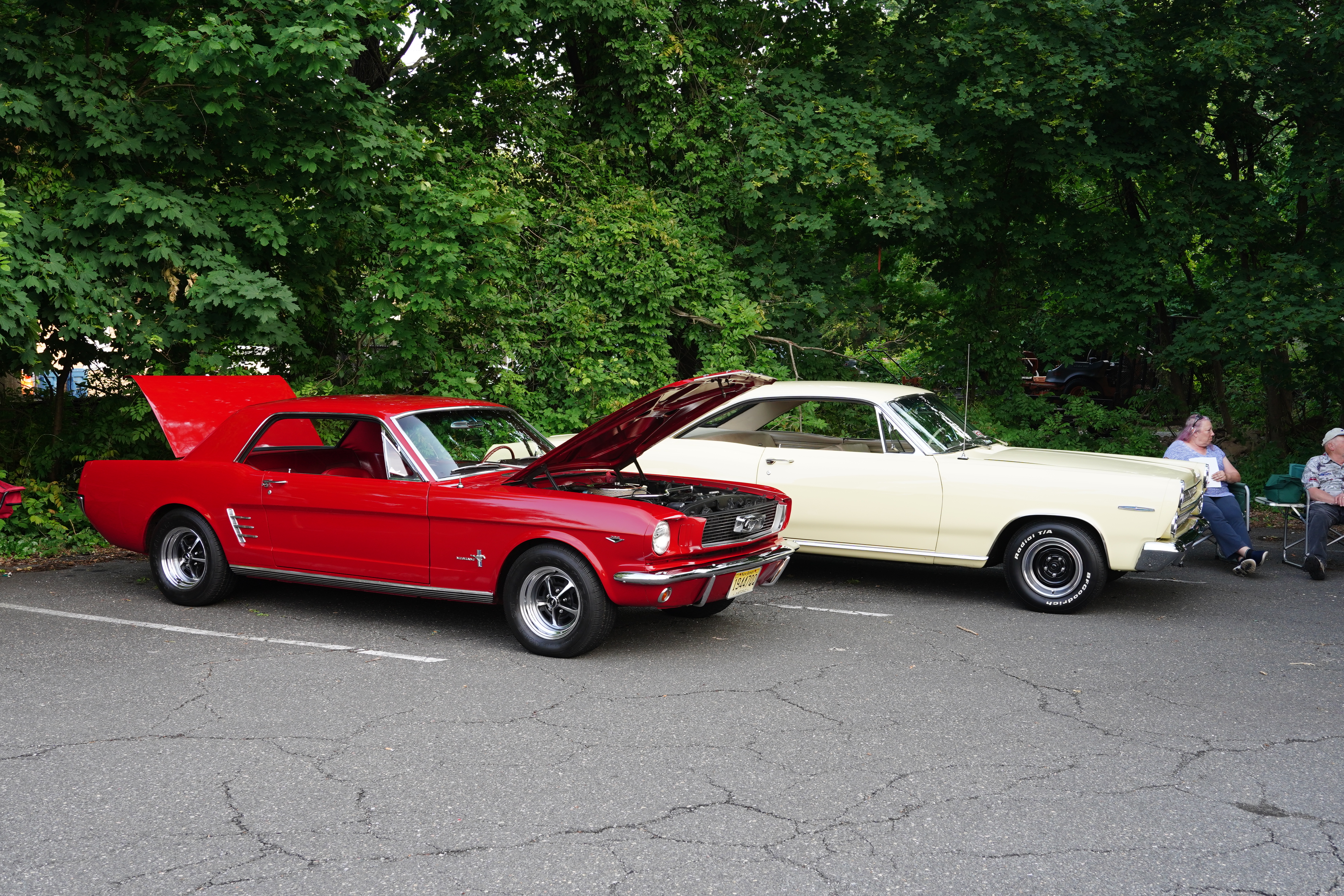
Two nice FoMoCo products: 1st gen Mustang & Mercury Comet
The cruise-in started at 5 p.m. and I didn’t get there until a little after 7, so I don’t know what I missed. There were perhaps a few dozen vehicles scattered around, mostly domestic product. I photographed the cars which held the greatest interest for me, which meant ignoring the heavily modified stuff. I’m hoping to get back here at some point later in the season and put one of my own cars on display, and maybe invite a few of my local car club friends to join me.
VW Beetle convertible, a true “driver”
1967 Camaro
One of the few pre-war cars in attendance
Mid-70s Olds Cutlass
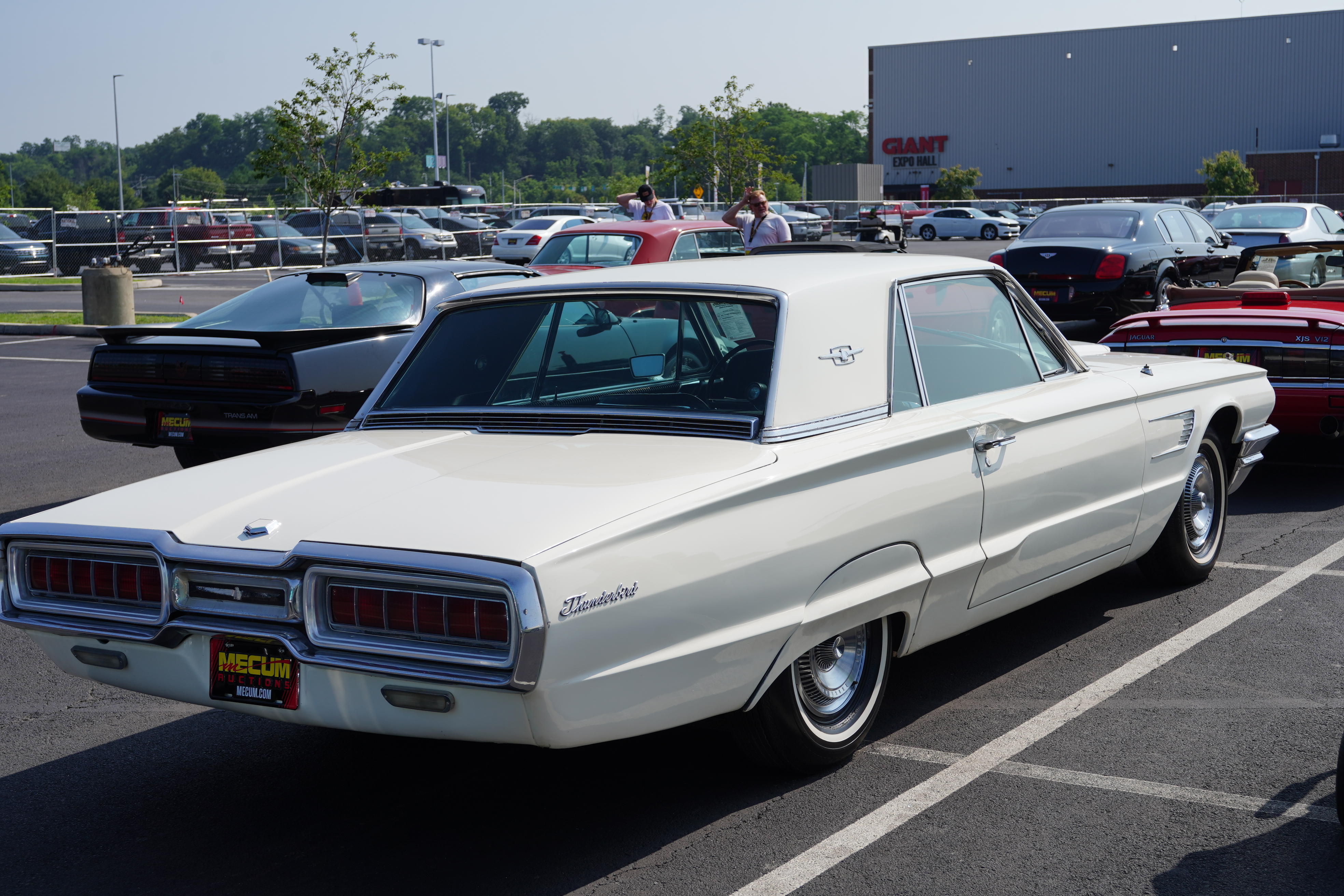
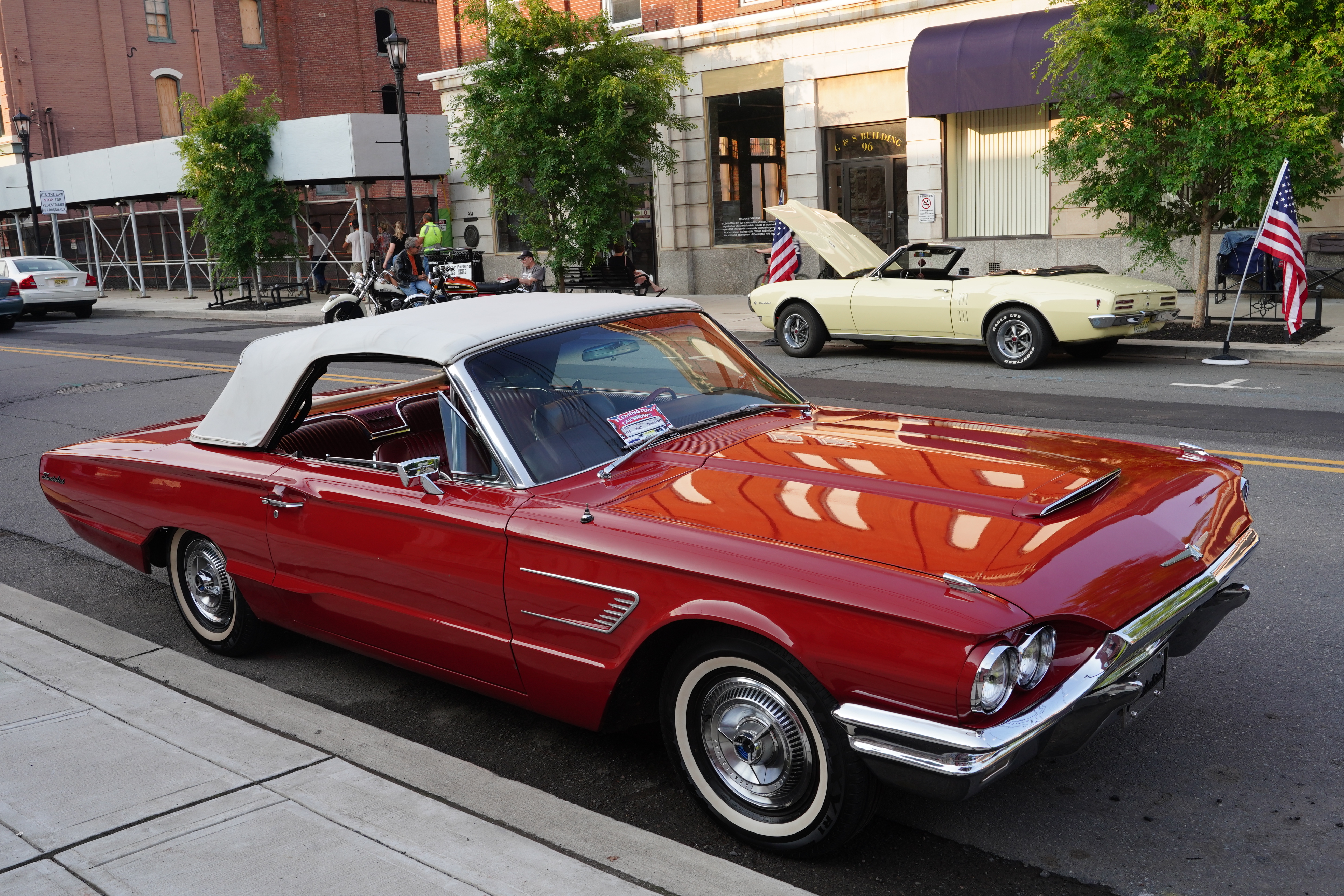
’64 T-Bird with ’68 Firebird across the street
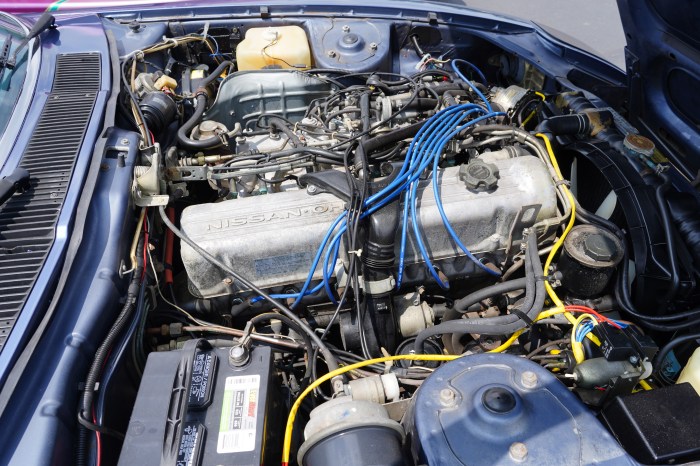
(Above and below): This 1957 Cadillac was in the parking lot, hood up, windows down, with its owner nowhere to be seen. I lingered for a few minutes hoping he/she would show up, because I really wanted to speak with them. I go to a lot of car shows an see a lot of cars; this Caddy was truly a #1 condition car, and the truth is, there are very few #1 cars. It was so perfect that I found it hard to believe it was driven here. One question for the sharp-eyed and knowledgeable readers out there: look at the photo of the engine compartment. To the left of the brake master cylinder is a vertical cylinder with a removable cap. What is this??
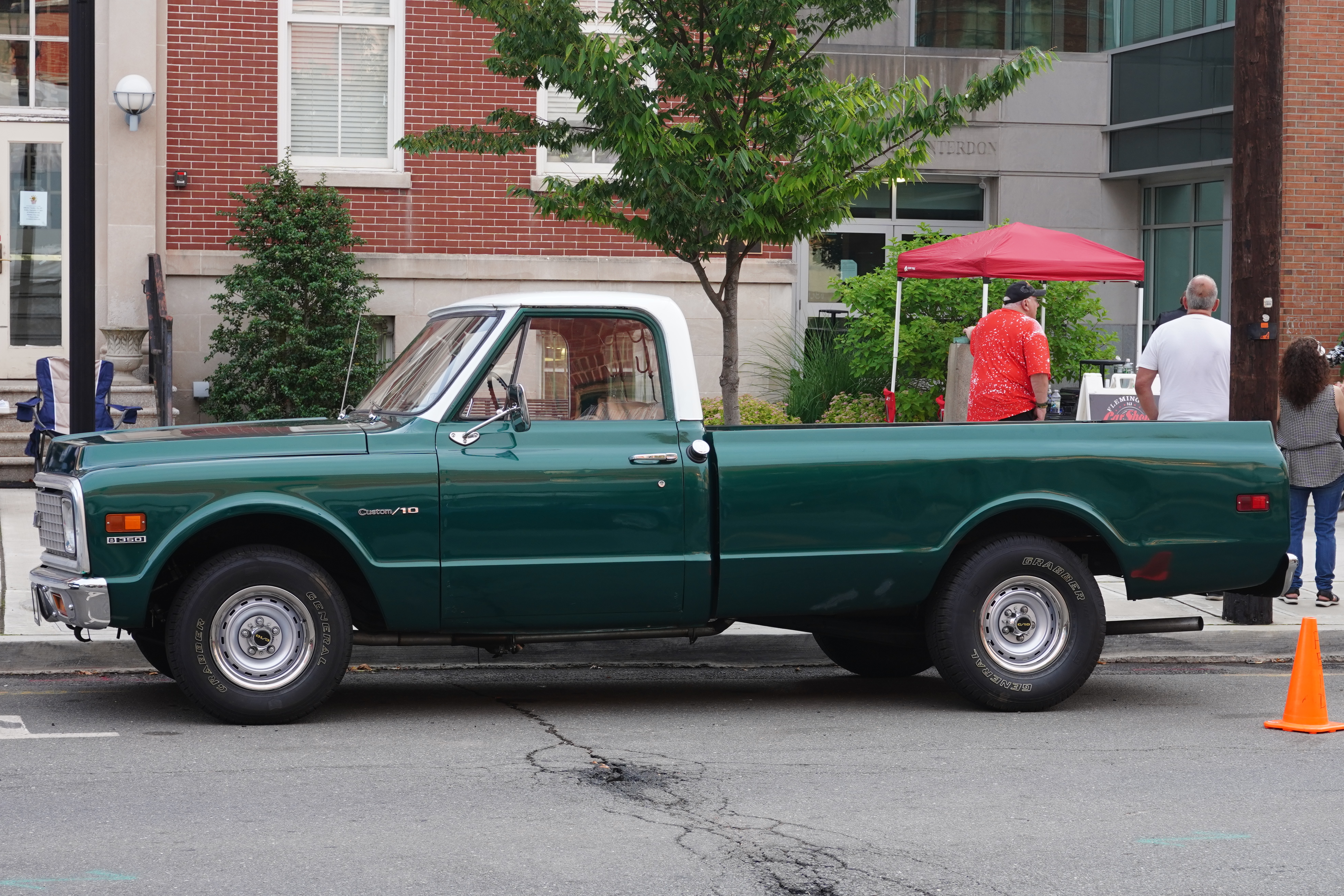
A couple of Chevy pickup trucks
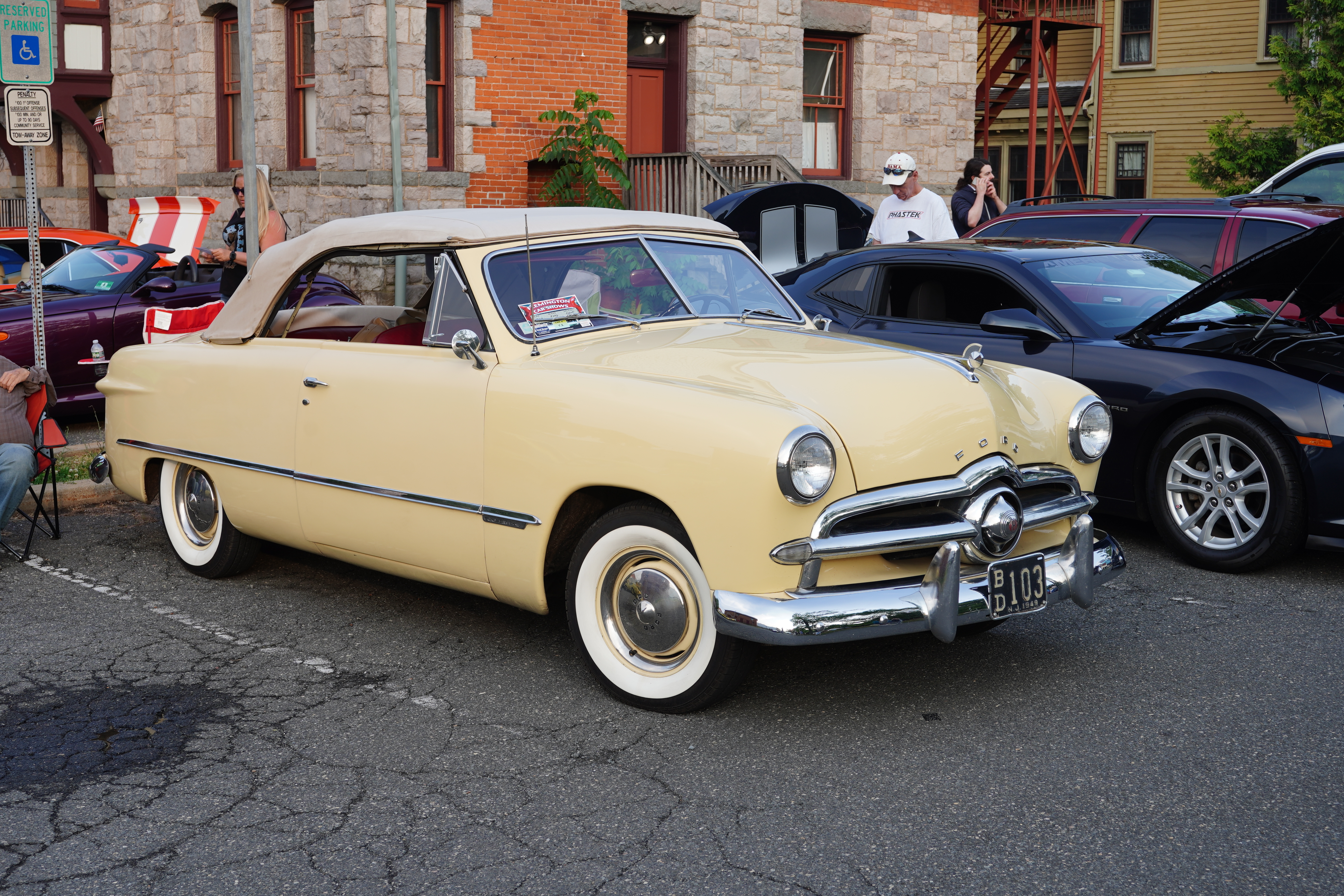
Above: I managed to chat up the owner of this ’49 Ford just as he was leaving. He was an old codger, and told me that he’s owned the car for about 20 years. He thinks it’s the original flattie V8 under the hood. The car looked and sounded great as he started it up and drove away. It had that look of an honest, old, fun car to me.
I showed up precisely at the announced start time of 8 a.m. to discover about a dozen cars already in place. The mall has a huge parking lot, and the designated spot for the show is in a corner at the rear. I staged my Alfa next to Mike’s beautiful ’66 Corvette roadster, and after exchanging pleasantries, I was on the hunt for caffeine, hoping there would also be something resembling breakfast food. A rep from the insurance company had complementary Dunkin’ Donuts coffee and donuts, so I made do with a cruller to accompany my brew. Next time, I’ll stop for a proper meal on the way down.
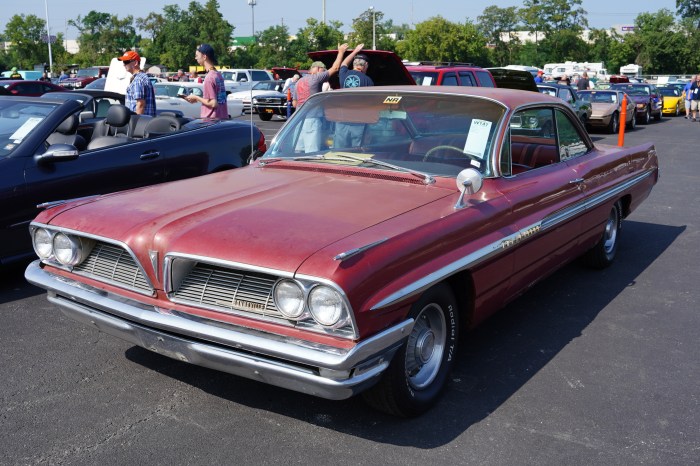
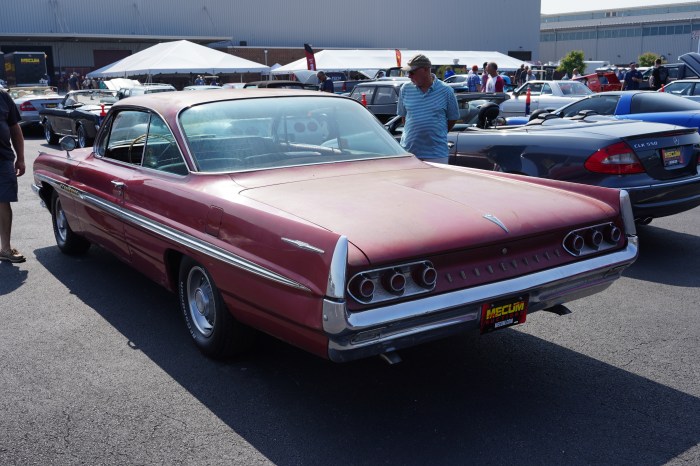
1963 Buick
Within minutes, a fellow car owner named Harry ambled over and introduced himself. He drove a stunning Chevy Nova which had been born with a 6-cylinder and now sported a 396 big block. Both Mike and I spent a good deal of time chatting it up with Harry, who proved himself to be a real “car guy”: knowledgeable yet humble.
What’s the plate mean?
396 BB replaces I-6
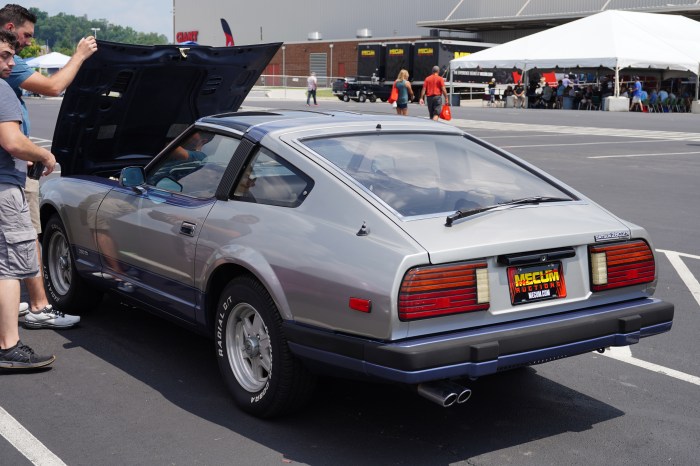
The vehicles on display ran the gamut of old and new, stock and modified, domestic and imported. The oldest vehicle was a ’38 Buick (but restomodded, with a modern drivetrain) and the newest was possibly the Mazda RX-8. As seems to often be the case, my Alfa Romeo was the only Italian car.
1938 Buick restomod
Although advertised to run from 8 a.m. to 12 noon, both Mike and I scooted a little after 10. First, I was famished; second, there were no bathroom facilities! (The mall would open at 11 a.m. for those willing to wait for food and restrooms.) This was an enjoyable way to spend a Sunday morning, and weather permitting, I’m going to try to make it to the next Quaker Bridge Mall event on Sunday July 9.
A Falcon and a Beetle (no, this is not the zoo)
Another Falcon
One of the newer cars there, a Honda S2000
Another ’66 C2; owner claimed it was all-original
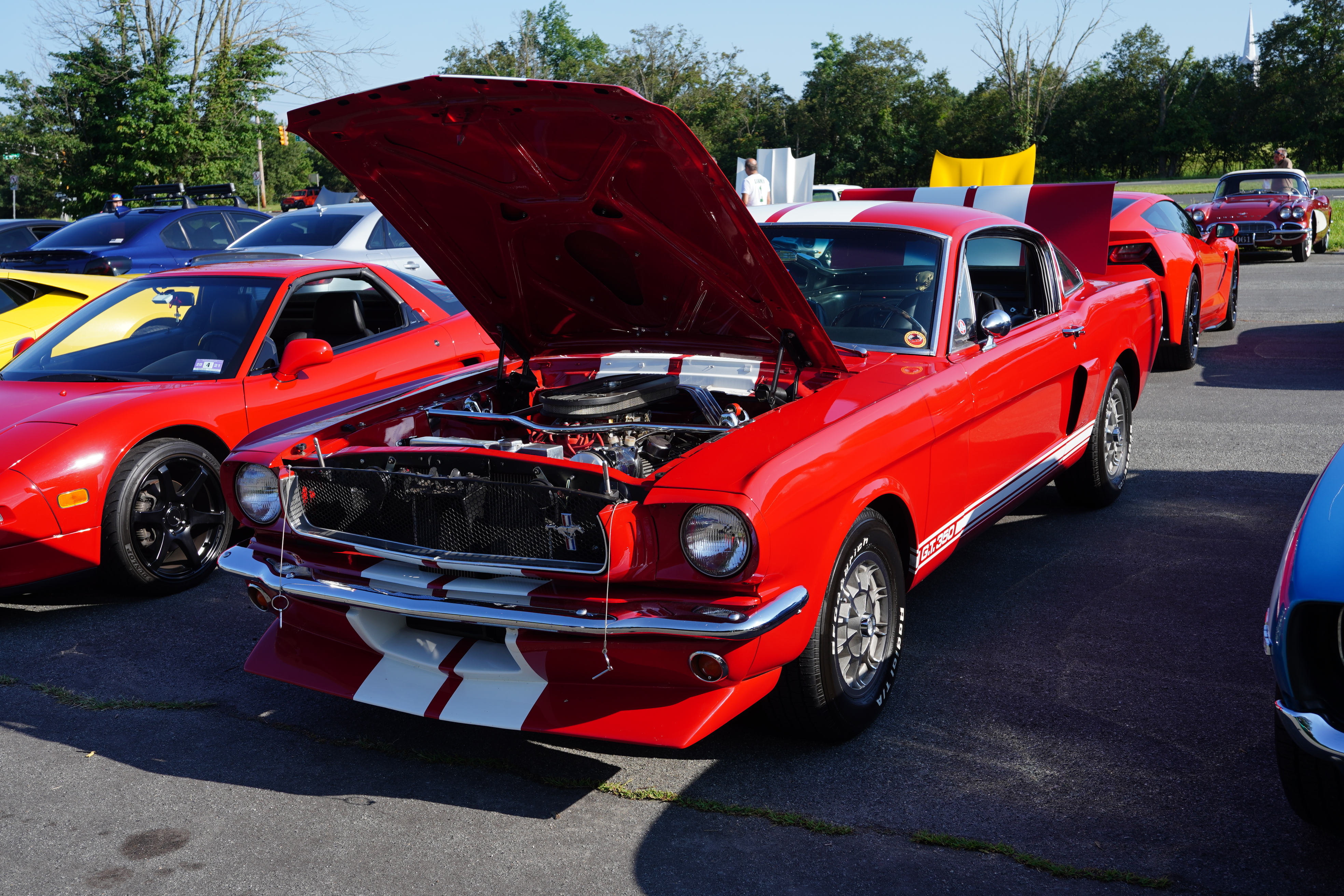
1st gen Mustang fastback
DeTomaso Pantera
Great drivetrain access!
1962 T-Bird
Willys Jeepster
C1 Corvette
(Above): I don’t know when I last saw one of these; in fact, I had to look it up to write about it. The Chevy Monza was built from 1975-1980, on the Vega platform. Standard engine was the Vega 4-cylinder, but a V8 was optional. The fastback 2+2 is the one I remember, but this “Town Coupe” came later. I think this design has held up well.
Mercedes-Benz sedan
1967 Ford Ranchero
E-body Barracuda; note the “billboard” quarter panel treatment
(Above) The most unusual car at this show, this 1956 Canadian-spec “Meteor Rideau” wore a grille treatment and side trim unlike any U.S. spec FoMoCo product. The owner told me that “Rideau” is a river in Canada.
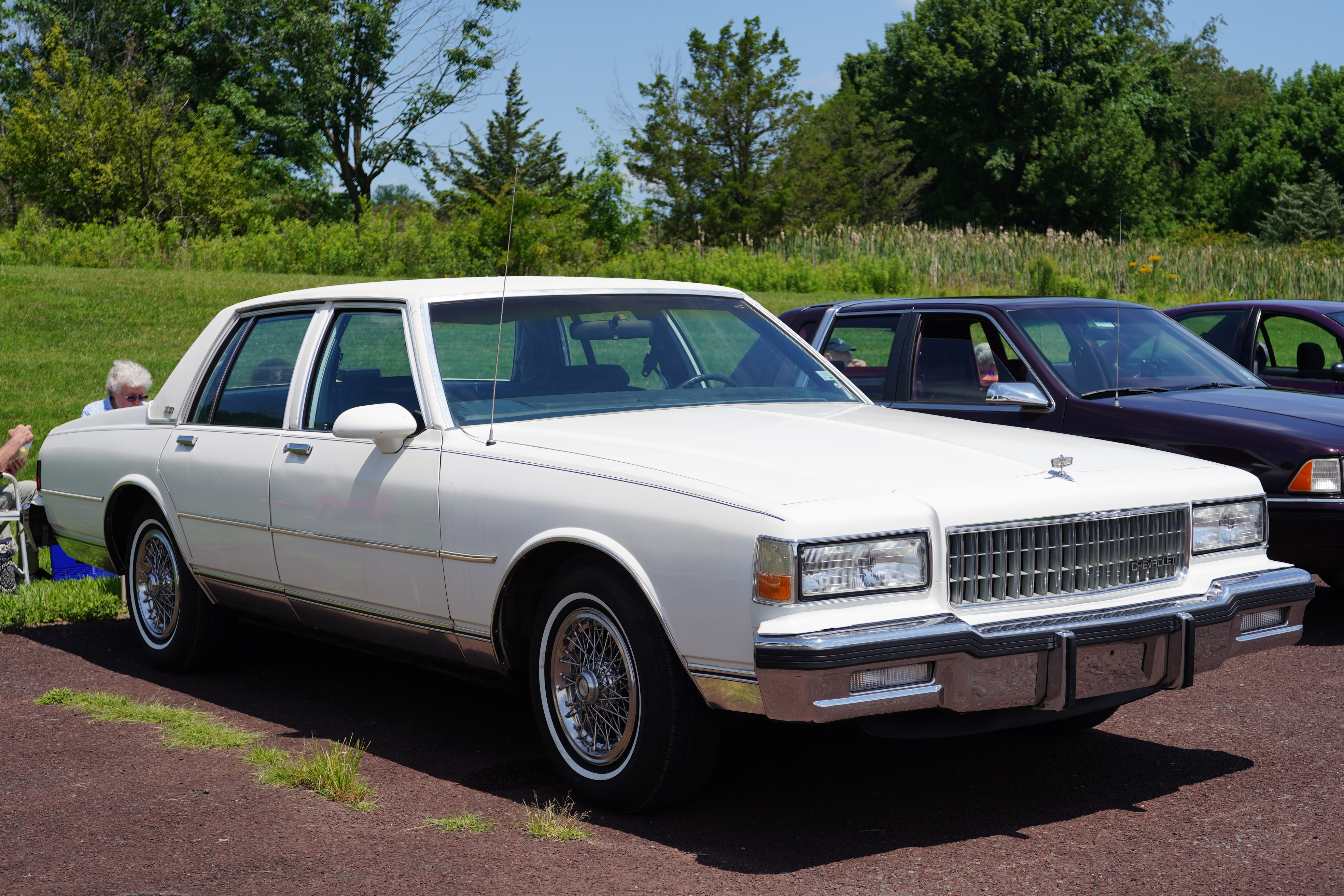
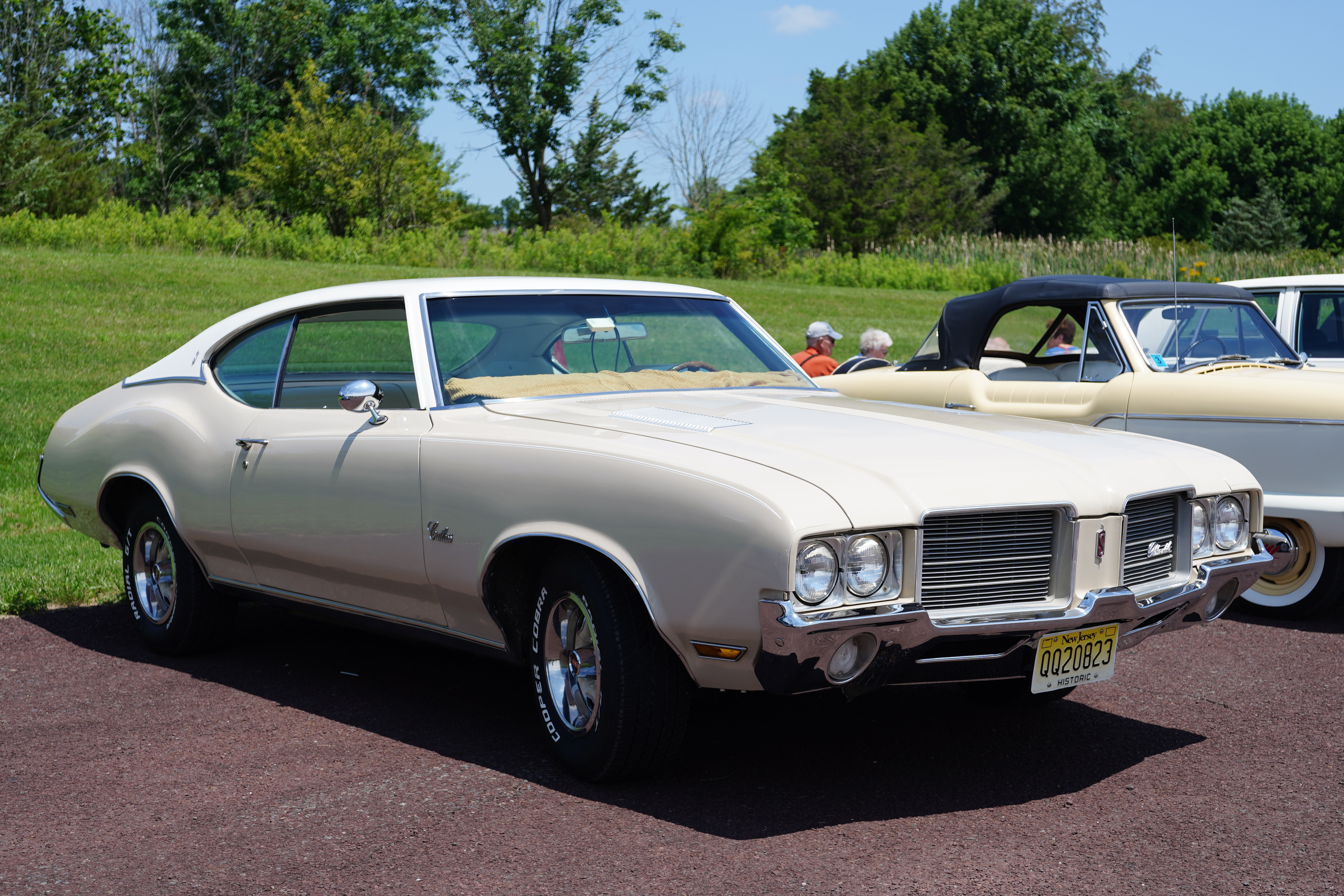
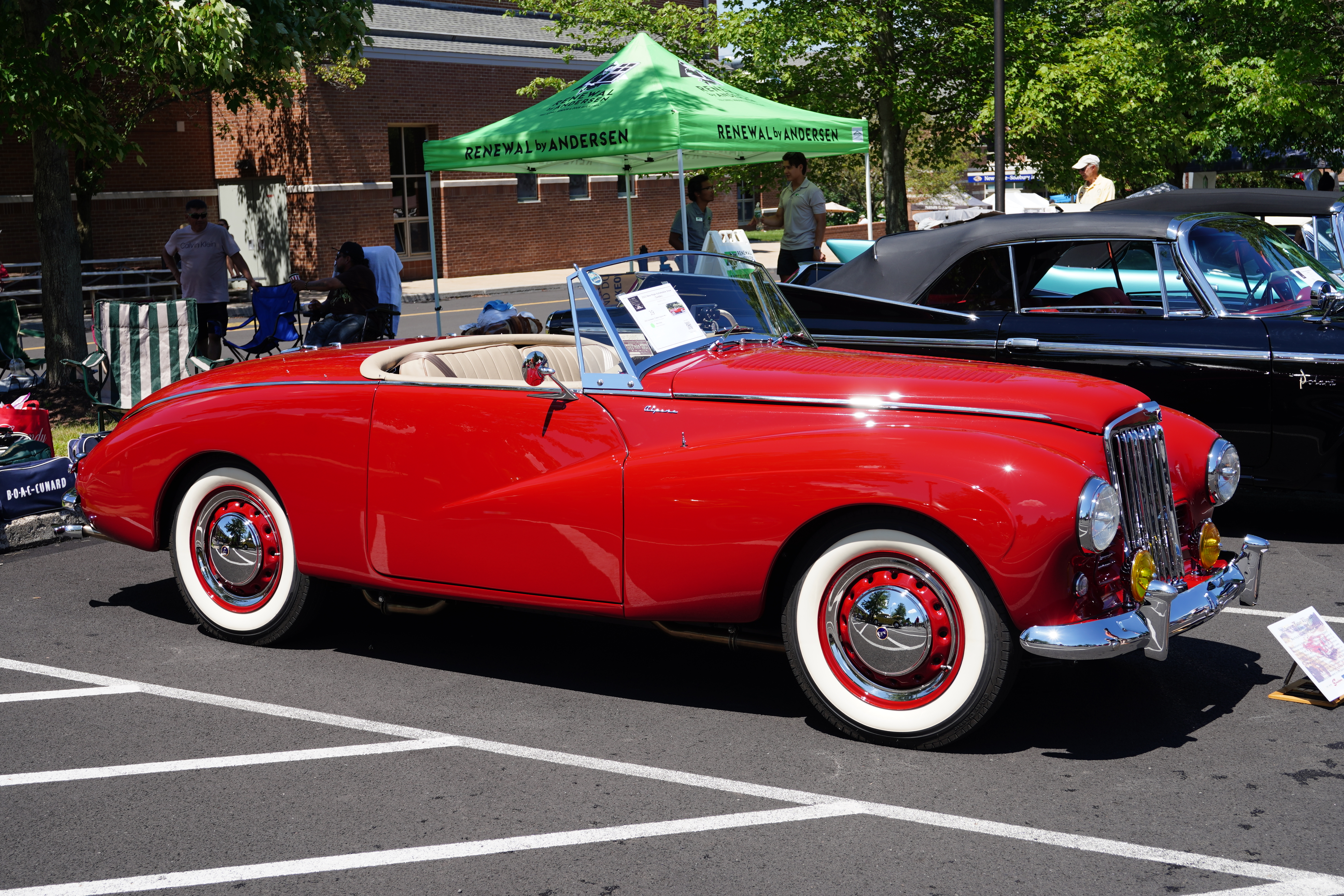
One of the nice things about Sunday’s show (and I presume Saturday’s as well although I wasn’t there) was the variety of cars. Perhaps it was too varied, but more words about that below. I have so far posted photos of Italian and British cars, as well as cars from classes not dependent on country of origin. To finish this off, here are photos of some of the American cars on display that day, primarily consisting of personal luxury cars and muscle cars.
Wayne Carini’s Studebaker
AMERICAN MUSCLE
One class consisted of “American muscle cars in high-impact colors”, some of which you see here:
Pontiac Grand PrixCadillac EldoradoOlds Toronado1969 Buick Riviera1971 Buick Riviera boattail
HAGERTY, THE SHOW OWNERS AND HOSTS
The Greenwich Concours d’Elegance began in 1996, when husband-and-wife team Bruce and Genia Wennerstrom decided to host a true Concours in the area. When Bruce and Genia passed away, their children continued the tradition. It was always a two-day event, with domestic cars on Saturday and import vehicles on Sunday. When it was a family affair, I showed cars there 6 times, an honor which I don’t take lightly. Attending the show was always an easygoing and relaxed day.
Hagerty bought the Greenwich Concours from the Wennerstroms a few years back. My 2023 participation was the first time under the Hagerty umbrella. Overall, Hagerty puts a tremendous amount of effort into organizing, arranging, and hosting an event like this. It’s still a two-day show, but now the classes are more varied. This year the Saturday show was billed as “Concours de Sport” and Sunday was the “Concours d’Elegance”. Sunday’s show consisted of a total of 19 different classes! From my observation, there was no overriding theme or sense of unity to the displays.
As a participant, I felt that Hagerty crossed the line from “organization” to “control”. Innumerable emails told me everything from what time I must load in on Sunday (“6 a.m. to 7:30 a.m., and we reserve the right to turn away entrants who arrive later”), to how I should park (“place the left front tire of your vehicle on top of disc hammered into the ground at your parking spot”), to what time I could leave (“show gates will be locked until 4:30 p.m., and no one will be permitted to exit before then”). I was told that absolutely no signage of my own was permitted on, in, or around my car, which didn’t stop me from putting informational posters I had created on top of my dash and rear parcel shelf. We had passes for an included lunch, which was nice, but were sternly told that “you may only enter once; once you leave you cannot reenter the luncheon area”. It was difficult to converse with showgoers at times because the MC blared incessantly through the too-loud PA all day long.
What was a relaxed, low-key, fashionable, reasonably-sized and well laid-out classic car show set in a verdant water-lined park has been turned into a mega-event. The communal spirit which flowed through every aspect of what the Wennerstroms had created has been displaced by a big-business approach as would be taken by a major corporation. It’s still a great show; it’s just not as great as it once was.
The Greenwich Concours d’Elegance is more than just the cars; it’s the people, of course: fellow car owners, judges, spectators, and really anyone who wants to chat about interesting cars. Below are capsule summaries of a few of my encounters.
Ed Welburn
I had seen in the program that an honorary judge for the event was Ed Welburn, who recently retired as GM’s Vice President of Global Design (a position previously held by a couple of gents named Harley Earl and Bill Mitchell). As I strolled among the show cars, there was Ed, walking along by himself, so I stopped and asked “are you Ed Welburn?” When he replied in the affirmative, I shook his hand and told him it was an honor to meet him. You can read about his professional life here.
Fellow AROC members
It was nice to catch up with several AROC (Alfa Romeo Owners Club) members, especially those from the NJ Chapter whom I recently met on a Zoom call and had never met in person. Thanks for stopping by, Lambert and Vic!
Ian Kelleher from Broad Arrow Auctions
In 2013, when I finally decided to go with RM/Sotheby’s Auctions to sell my Isetta, I still had a bit of trepidation about the particular arrangements. My RM ‘rep’ was a fellow named Ian Kelleher, and I have not forgotten about his patience and graciousness as he walked me through the particulars. Ian now works for Broad Arrow Auctions (owned by Hagerty), and when I saw him on Sunday, I took advantage of the opportunity to again thank him for his help. BTW, Bonhams Auctions used to be the in-house auction company at Greenwich, but since Hagerty bought Greenwich, they won’t allow an ‘outside’ auction company to operate there. The same thing happened at Ameilia Island, as RM was told “you’re out” and Broad Arrow was told “you’re in”. So it goes….
Richard with the Riviera
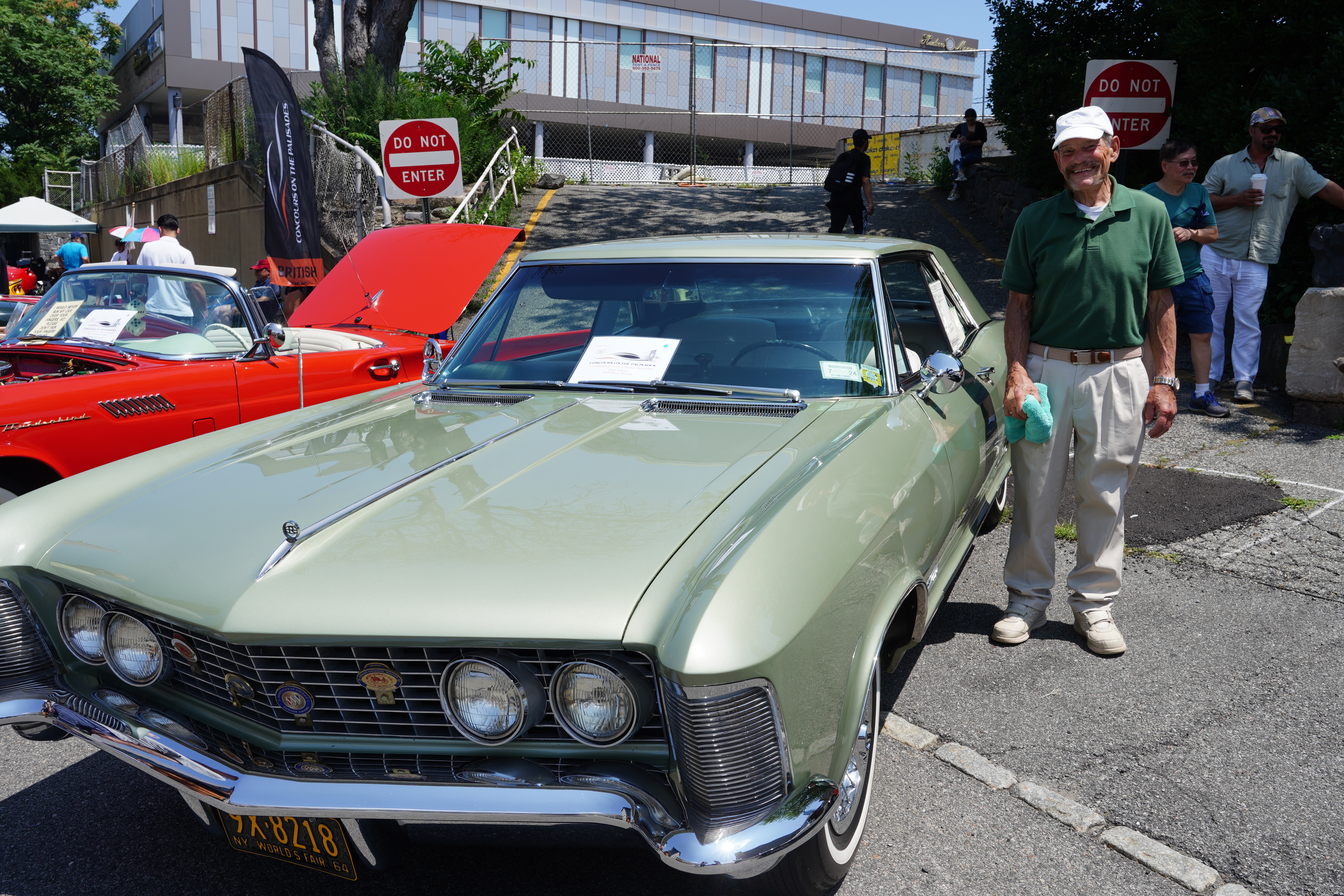
I’ve seen this same green ’64 Buick Riviera so often that I’ve gotten to know the owner. Rich drives his car up and down the East Coast attending car shows. I featured him and his car in this blog post about the 2021 AACA Nationals in Saratoga Springs NY.
Erich from the Boca Raton Concours
The gentleman patiently stood there waiting while I finished up speaking to a spectator. He quickly introduced himself and handed me his business card. He said, “I see that this Alfa is all original. Because it has been so well kept, I want to formally invite you to enter your car in the Preservation Class at next year’s Boca Raton Concours d’Elegance, in February 2024. Besides, it’s a nice time of year to be in Florida!” I thanked him for the invite and told him I was honored that he would consider my car for it. Of course, getting the car there and back is on me, which makes it very unlikely, but it was still very nice to be recognized in this way.
Rich Taylor
On occasion, I will pull random copies of old Car & Driver magazines from my library and leaf through them. About two weeks ago, the July ’73 issue ended up in my hands, and lo and behold, the cover told me that there was a review of the “new” Alfa Romeo GTV. I sat down to read it, and as I turned the page to the full-page photo, I immediately said to myself, “that guy looks familiar”. I scanned the page, printed out an 8×10 glossy, put a Post-It note on the pic which said “guess who?” and at the show on Sunday, placed the photo on top of the Alfa’s dash.
When judging started, who came around to judge my car (actually, the entire class of Alfas) but Rich Taylor himself. After we exchanged pleasantries, I directed him to check out the photo. He grabbed it and said “let me pose like this again!”. I got into the shot holding up the glossy (which he signed for me). Anything for a chance to have a little fun with that “famous automotive journalist Rich Taylor”.
BRITISH & ITALIAN CARS
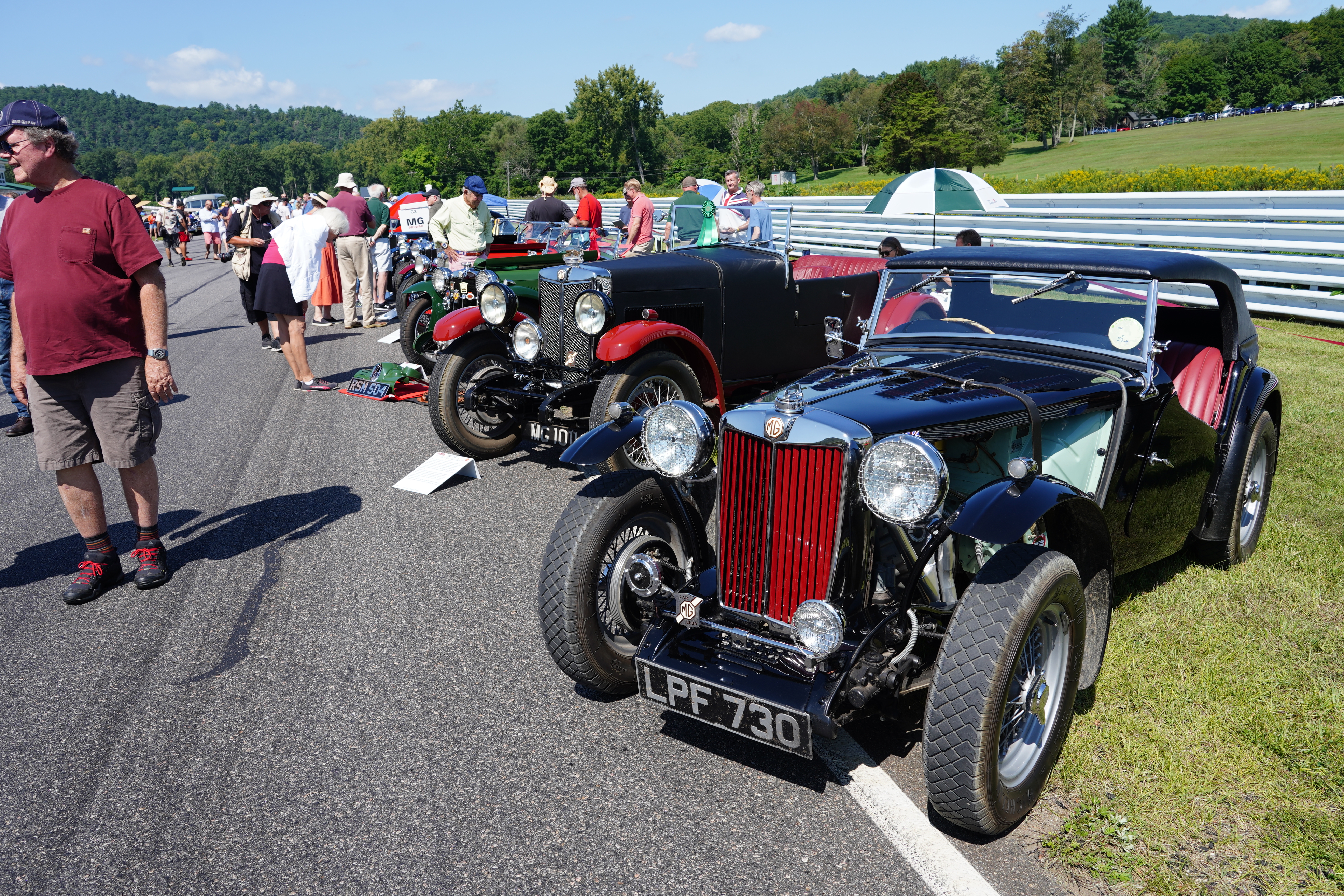
Below is a sampling of the European cars which I found to be photo-worthy.
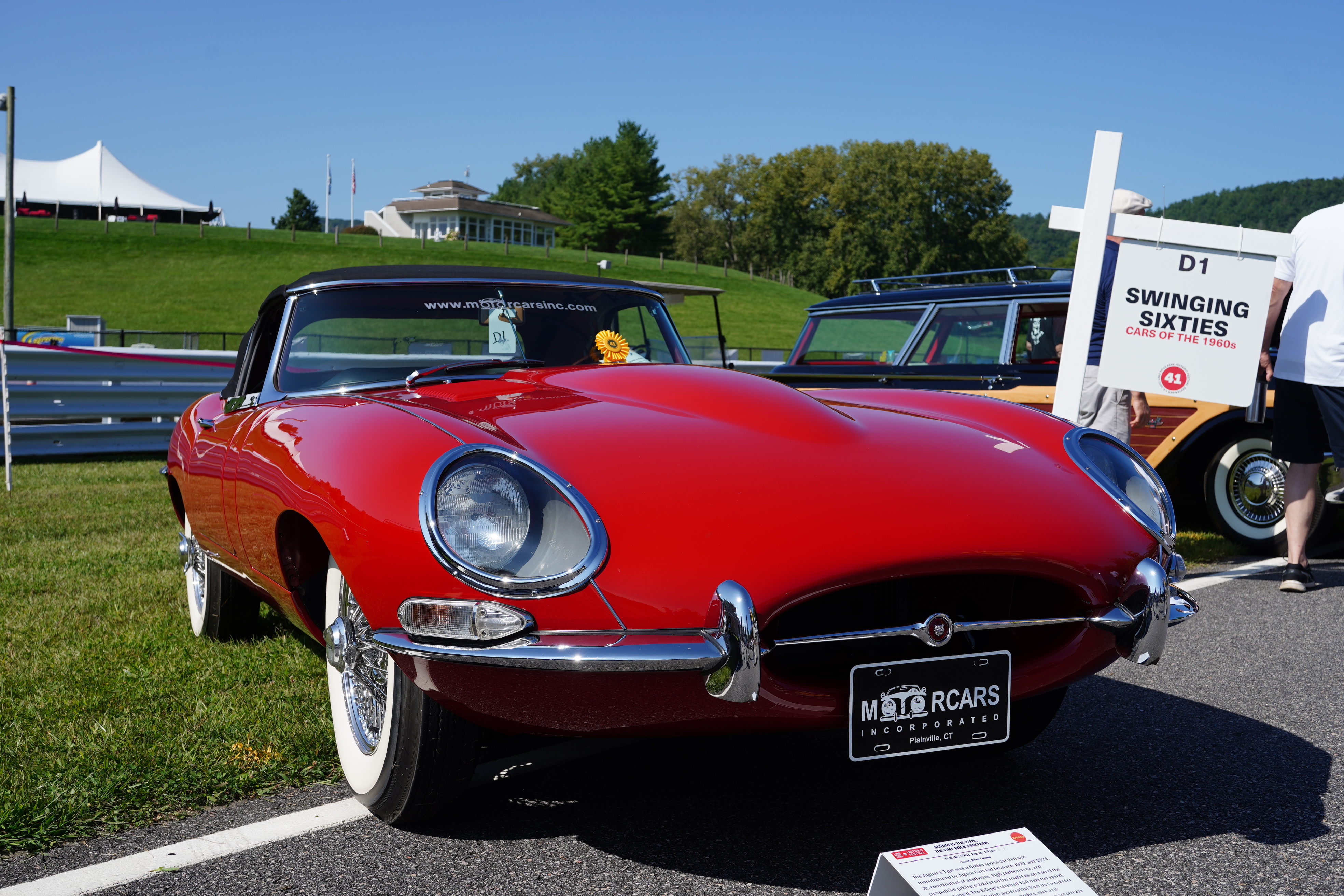
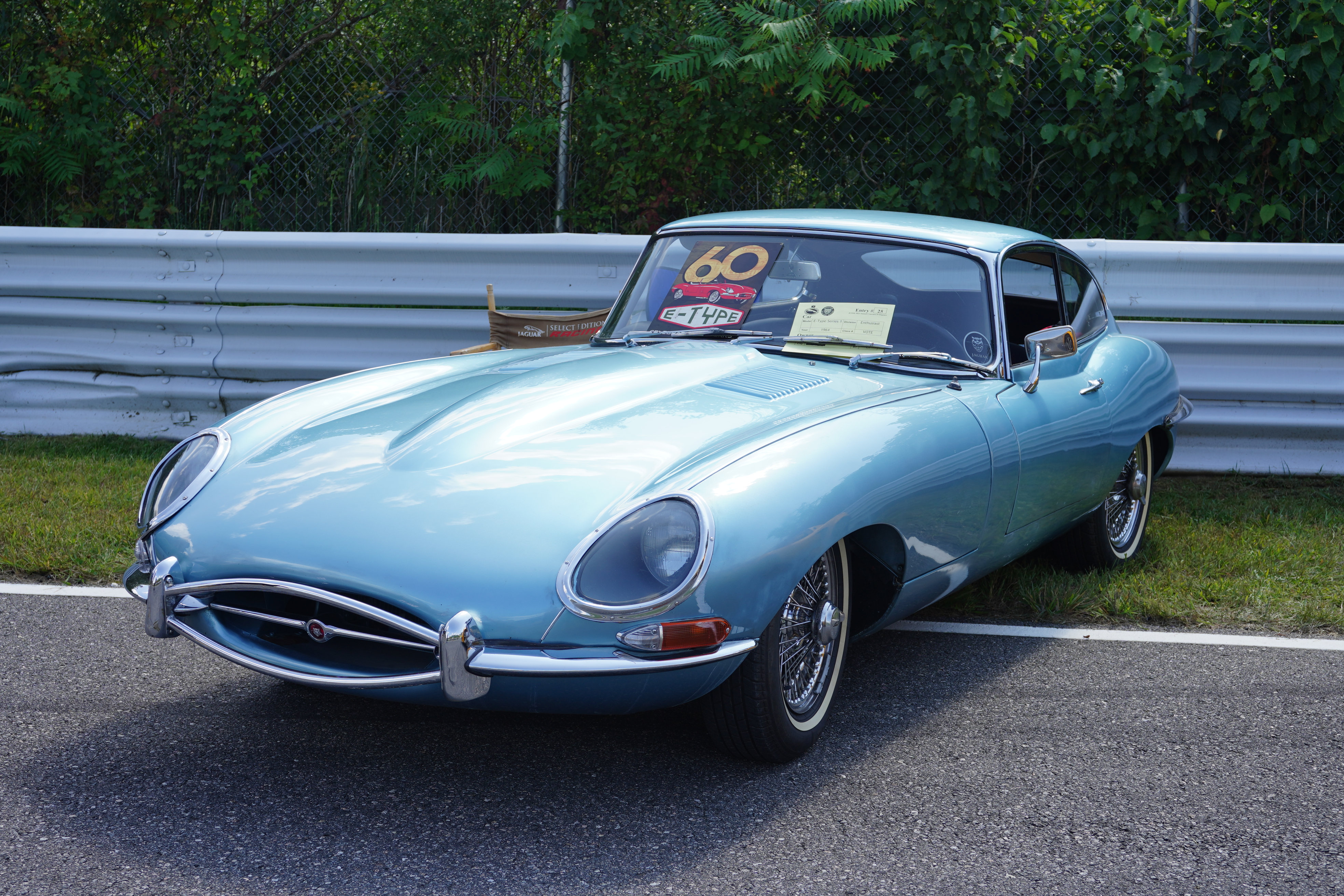
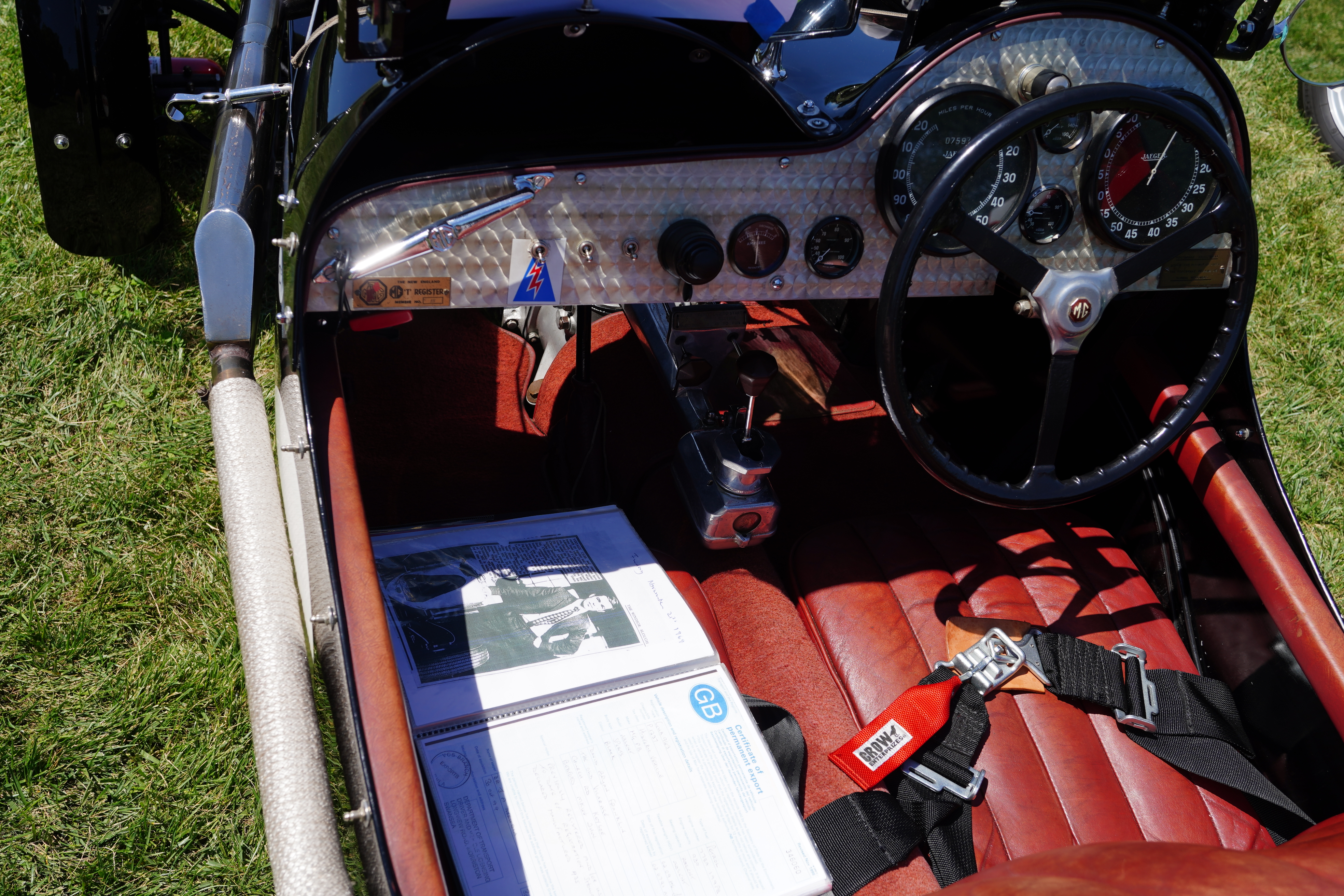
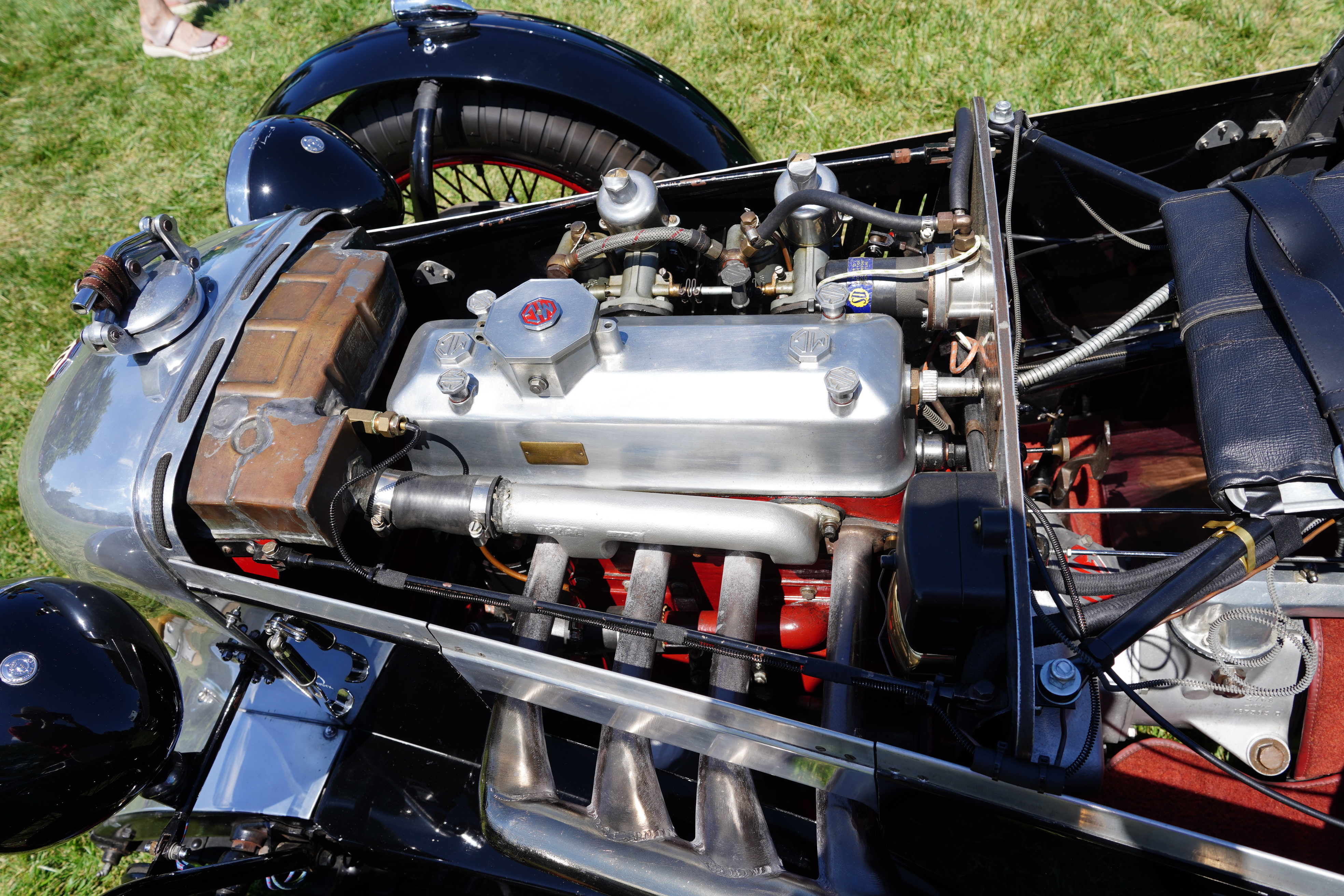
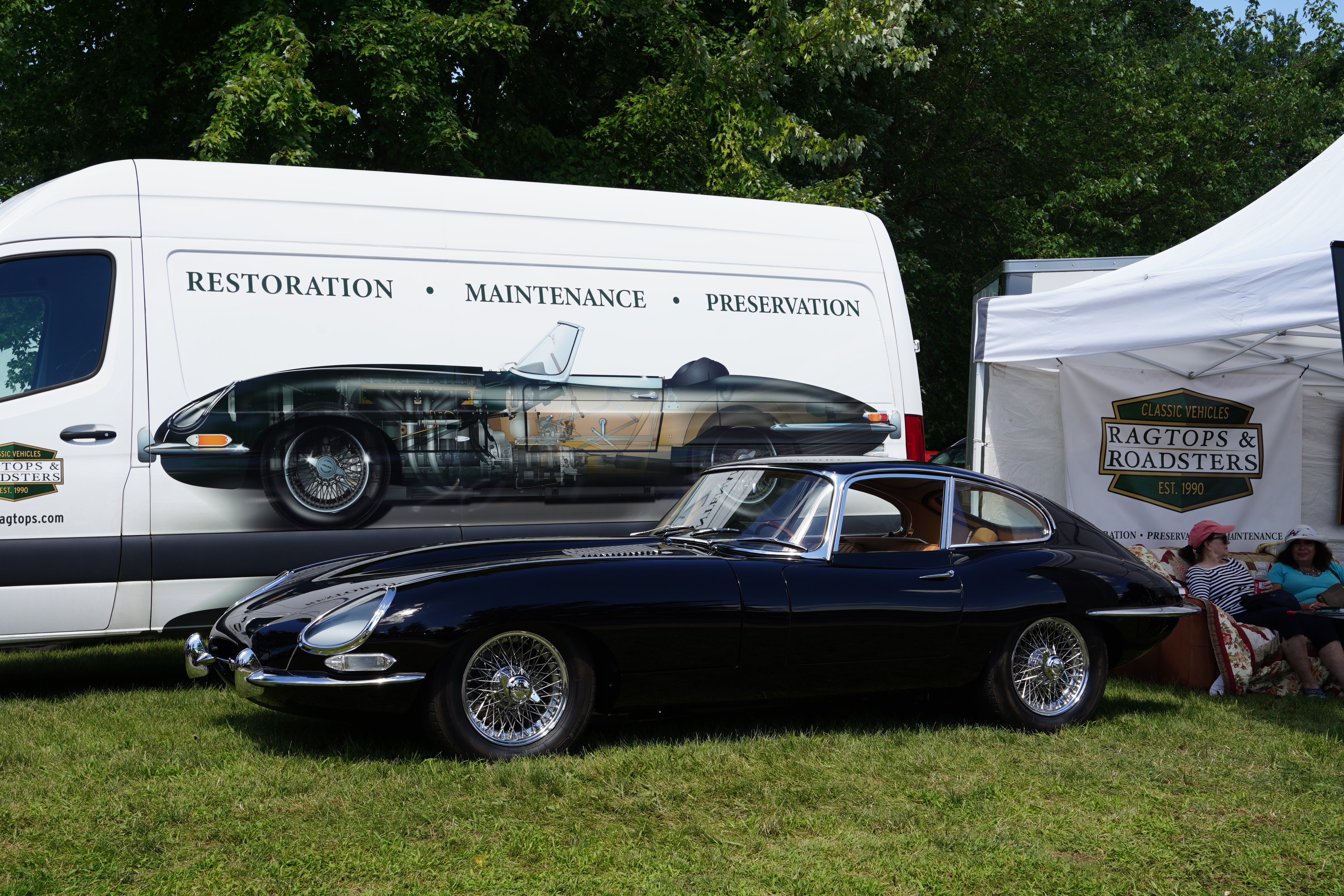
Jaguar XK-150Jaguar E-Type Series 1 FHCPre-war MG (one of Wayne Carini’s cars)MG-TFMorgan
Fiat JollysIso GrifoMaserati 3500GTMaserati GhibliLamborghini MiuraLambo 12-cylinder engine with 6 Weber carbs
As I mentioned in Part 1 of this blog series, the Greenwich Concours is an invitation-only event, so it is an honor to show a car there. My Alfa was there in 2013 and again in 2017; however, the Wennerstrom family was still running the show in those years. Bruce Wennerstrom knew of me because I had shown the BMW Isetta at Greenwich 4 times (2001, 2004, 2007, and 2010), and he had always been gracious and welcoming to me and my little bubble car, surrounded as it was by machinery worth 5 or 10 times its value. Hagerty bought the Greenwich Concours a few years ago (and I will elaborate on my impressions of Hagerty in a later post). For 2023, Greenwich was not necessarily on my radar until an email arrived in March from Rich Taylor.
I know Rich from the New England 1000 rallies. He knows of my Alfa because I drove it in 4 of those rallies (2013, 2014, 2015, and 2018). He wrote to tell me that Alfa Romeo would be a featured marque at Greenwich this year, and he was “in charge” of assembling both pre-war and post-war classes. He continued “I would like to include your rare GT Junior”. Of course, I replied in the affirmative. (There’s lots more to the Rich Taylor story from Sunday. Stay tuned.)
A few weeks later, an email arrived from Hagerty confirming my acceptance at the show. That set off a slew of follow-up emails from the show sponsors about what was expected of me. My wife decided to accompany me, and although we had originally planned to depart very early Sunday morning (show cars were required to be on the field no later than 8 a.m., and it’s a one hour, forty-five minute drive from our house), we made a very late decision on Friday to head up during the day on Saturday. I’m glad we did because we got to the hotel early Saturday evening, had a relaxing dinner, and had a simple 3.5 mile drive on Sunday morning.
When I wasn’t busy hanging around my car to field questions (there is certainly something about the “Giulia coupe” which draws people; let’s acknowledge that it is a near-universally-loved design), I managed to walk the field several times to photograph the rest of the show. It was a wildly varied mix, with plenty of domestic and European brands (but no Asian brands), pre-war and post-war generations, and production and concept cars. For this post, I will feature 3 classes: The Ghia concept cars; the Woodies; and the “Class of 1963”.
THE GHIA CONCEPT CARS
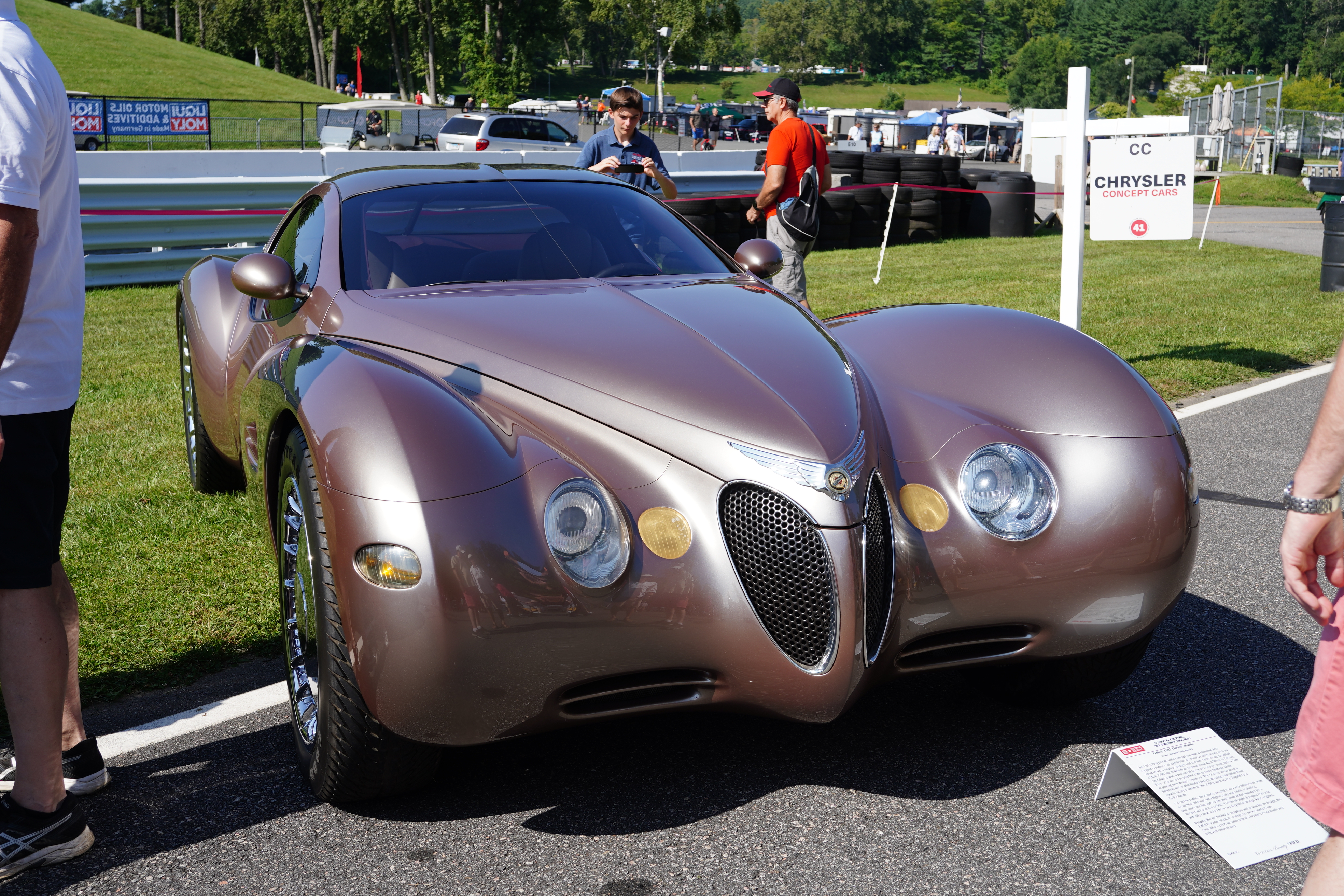
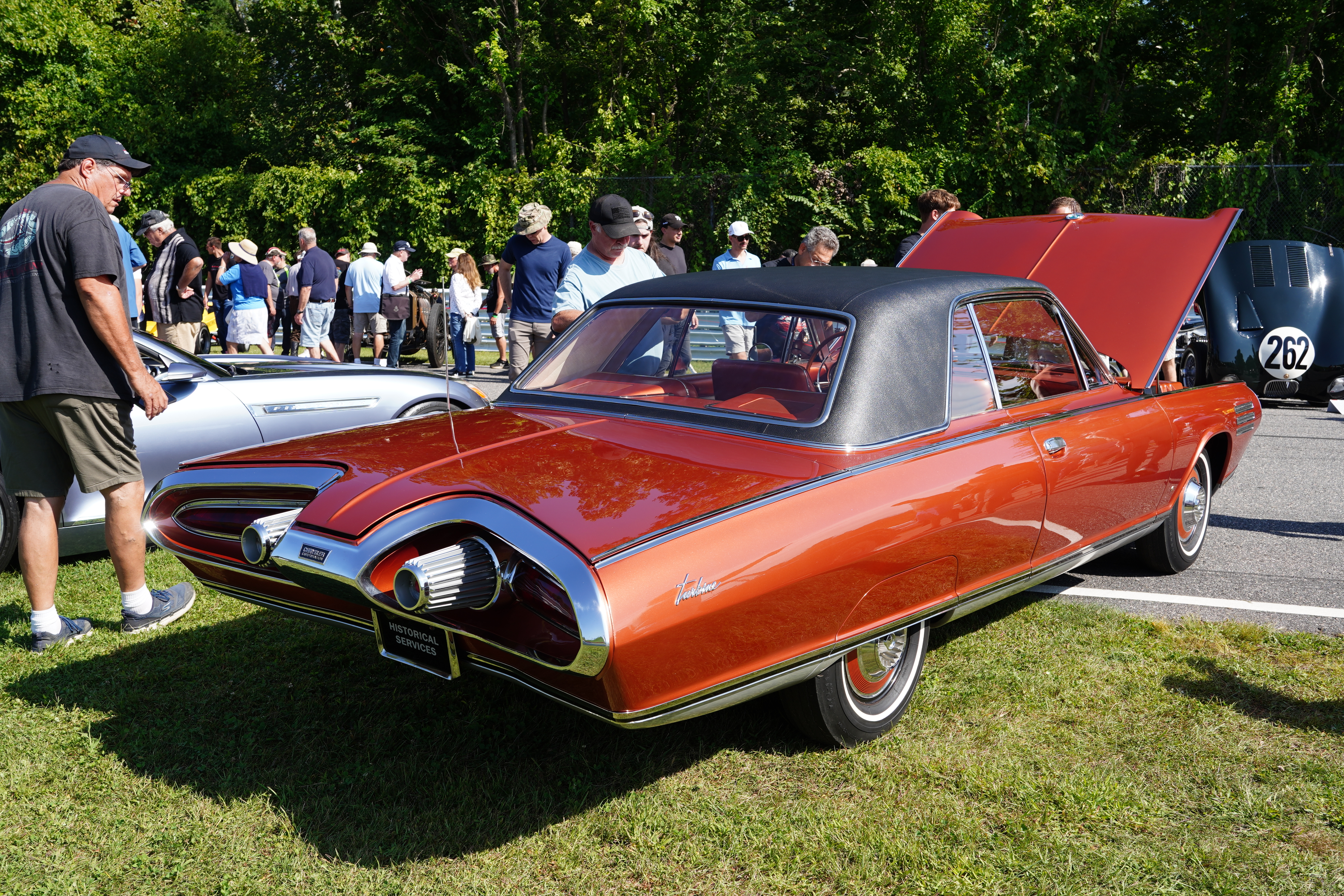
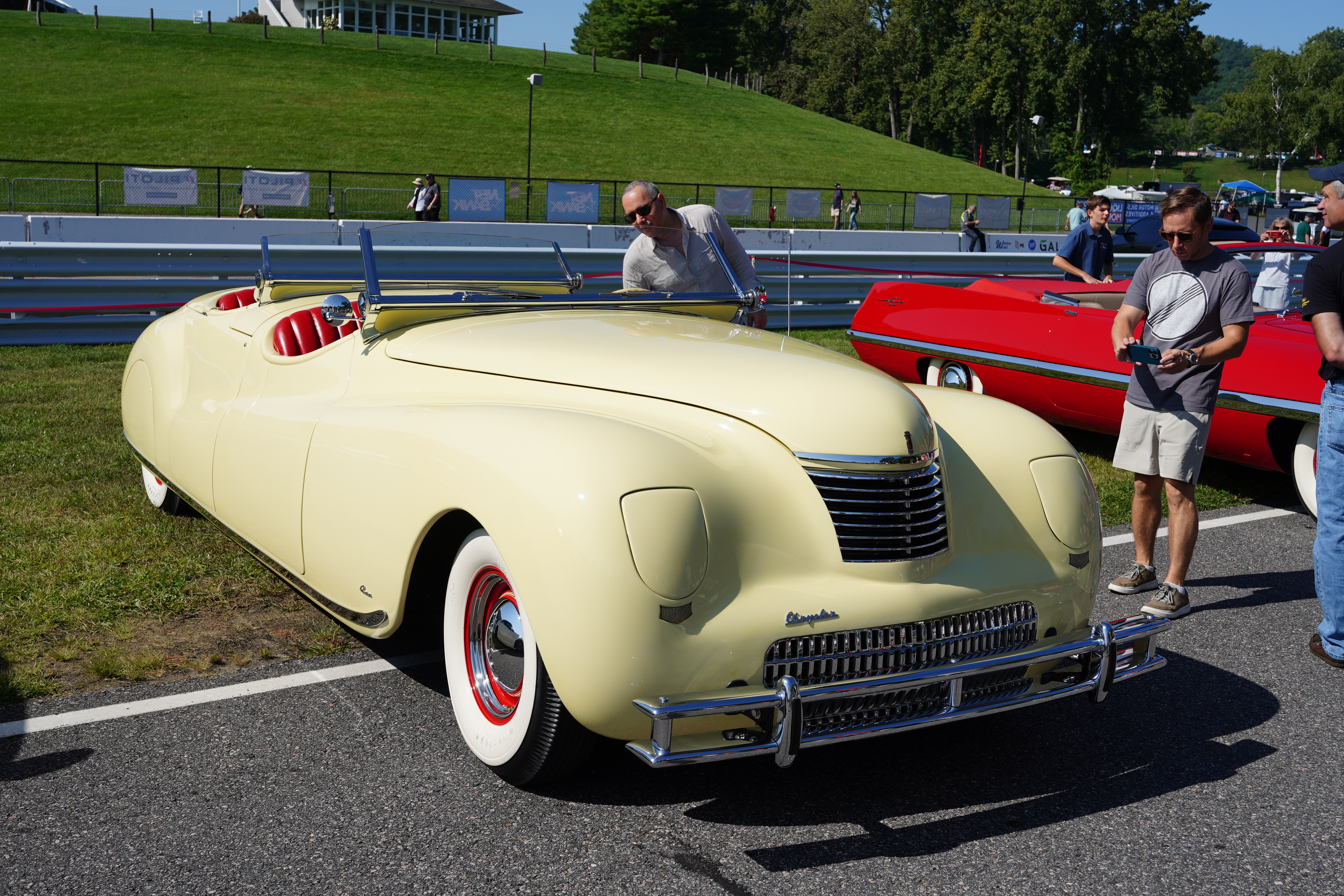
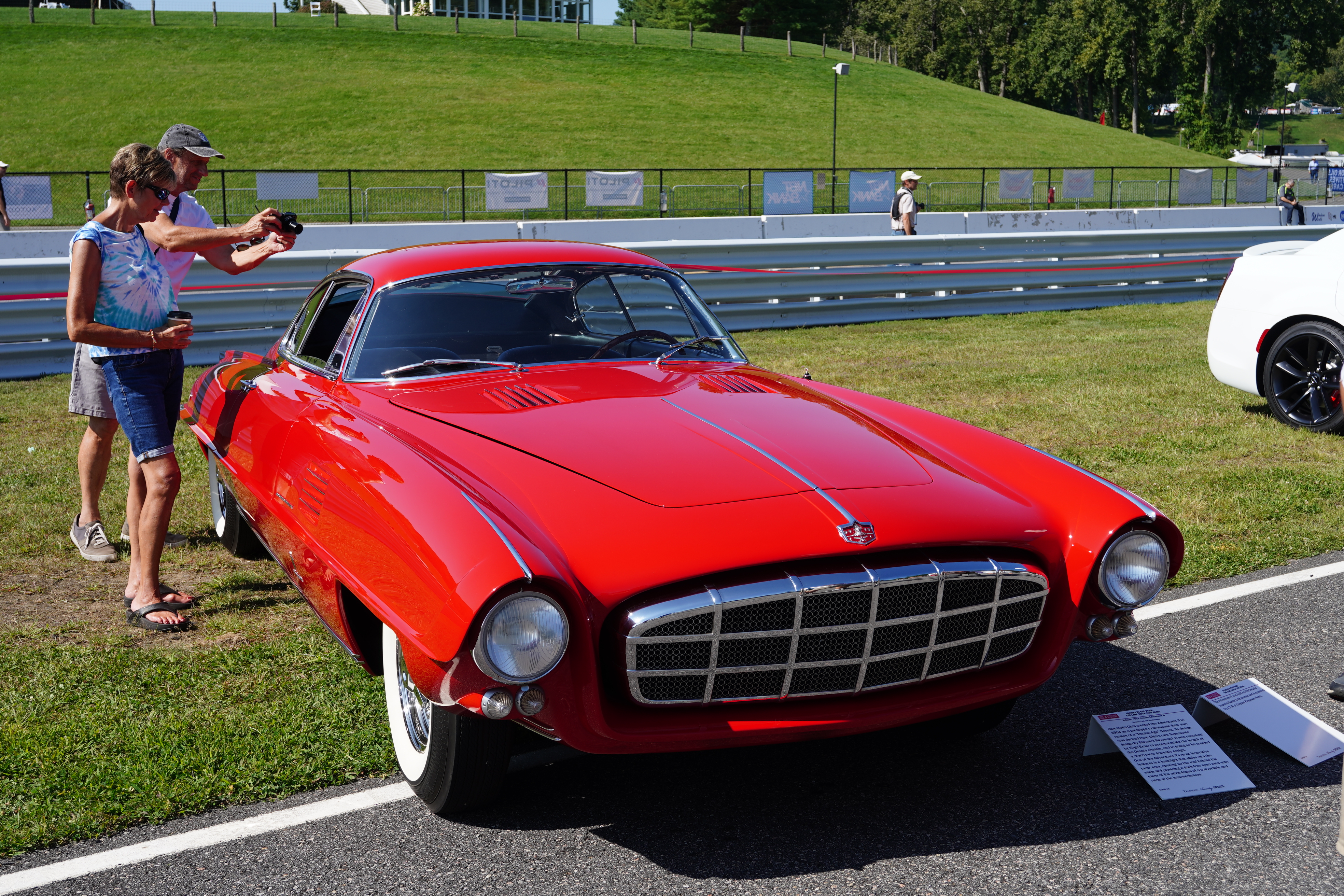
I didn’t have time to read all the explanatory signs around these gorgeous concept cars which Ghia built for Chrysler in the early-to-mid ‘50s. One or two I’ve seen before, and others I’ve only seen in photographs. To see them in person was breathtaking.
THE WOODIES
Wood was originally used as a vehicle body material out of necessity. Station wagons up through the first half of the 20th century used wood because there weren’t yet presses large enough to stamp the big sheets of steel needed for the wagon’s body panels. Once domestic station wagons switched to all-steel, which happened by the end of the 1940s, there was some nostalgia for woodies, so Detroit continued to trim their wagons with wood. Eventually, as a cost savings, vinyl sheets with woodgrain patterns were used. The 1961 Ford was the newest woody wagon on display. The Nash Rambler, with its minimal fake wood treatment, was a vehicle I can’t recall ever seeing before.
THE CLASS OF 1963
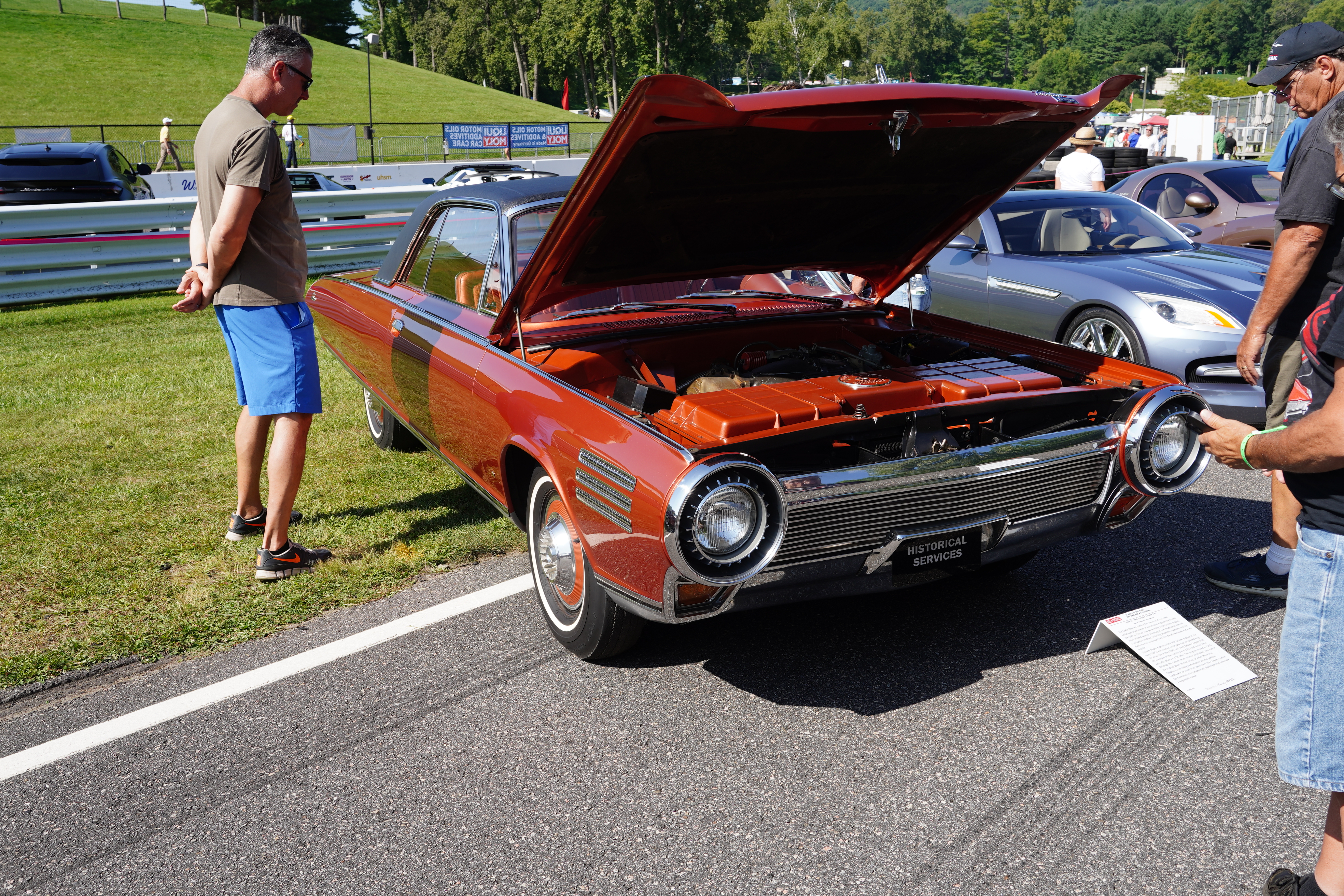
I’ve often fantasized what it must have been like to have been a young person of driving age in 1963, with money in one’s pocket to buy almost any new car available. It was a banner year for new vehicle introductions, which included the Chevrolet Corvette Sting Ray in both split-window coupe and roadster forms; the Buick Riviera, GM’s first real competition against the Ford Thunderbird in the personal luxury coupe class; and the Studebaker Avanti, an all-fiberglass coupe which, in a last-ditch effort by Studebaker to stay alive, was radically designed by Raymond Loewy. Other choice offerings included the Chrysler 300J, the Lincoln Continental 4-door convertible, and the Pontiac Grand Prix. If you were willing to consider “foreign cars”, you could check out the Jaguar XKE, the Austin-Healey 3000, the Fiat 1200 Spider, the Iso Rivolta, the MGB, the Porsche 356, the Triumph TR4, and the Volvo P1800, among others.
I don’t know if Hagerty chose “The Class of 1963” because it was an iconic year or because it was 60 years ago. Either way, there was a delightful and eclectic variety of 1963 model year vehicles lined up, ranging from Volkswagen to Cadillac, and some interesting things in between. .
AN ALFA ADDENDUM
Thanks to my new buddy Lambert from the NJ Alfa Club who took this shot and gave me permission to use it, here is that class-winning 1900:
For Part 3 I will have plenty more photos plus more stories about some of the personalities I met.
My wife and I just got back from a whirlwind 25-hour up-and-back trip to Greenwich CT for the 2023 Greenwich Concours. My Alfa was on the lawn again this year, and given that this is an invitation-only event, it was a high honor indeed. Alfa Romeo was a featured marque on Sunday, divided into pre-war and post-war classes. My ’67 was in the post-war class, of course, and although we didn’t win anything, it was an exciting and event-filled day. This first post about the show will focus only on the Alfa Romeos. There is much else to cover, and I will put up additional stories about the rest of the show during the week.
THE POST-WAR CLASS
There were 8 vehicles; in model year order, they were a ’56 1900, a ’59 Giulietta Spider, a ’63 Giulia Spider, a ’67 4R Zagato, my ’67 GT 1300 Jr., a ’71 Montreal, a ’78 Series 2 Spider, and a ’93 RZ Zagato. Right off the bat, note the strong representation from THREE iconic Italian design houses: Pininfarina, Bertone, and Zagato.
THE MONTREAL
This car is so-named because Alfa Romeo exhibited a concept car at the 1967 Montreal Expo. That design study went into production and was therefore named after the city where it was first displayed. It remains Alfa’s only road-going V8-powered automobile.
THE 4R ZAGATO
I’ve read about this car but never saw one in the metal before today. The woman representing the car (she’s wearing the scarf in the first photo) told me that only 92 were ever produced, only 3 are in the U.S., and the other two are on the west coast. That kinda explains why I haven’t seen one before this. The chassis and all mechanicals are 1967 Alfa. The factory commissioned Zagato to build a “pre-war style body” on top of the Guilia chassis. Viola!
RZ ZAGATO
Another Zagato oddball (is that redundant? 😉 ). I know very little about these except that the Italians nick-named it “The Monster”, which in Italian is “Il Mostro”. Ergo the license plate.
THE EARLY SPIDERS
I think that the ’63 Giulia is the blue car and the ’59 Giulietta is the red car, but I’m not certain. Someone will correct me if I got that backwards.
MY GT 1300 JUNIOR
Spending the week prior to the show detailing it did it wonders. We drove it 192 miles round-trip, mostly at 65-70 mph, and it performed flawlessly. Interestingly, it was the only Giulia coupe in the show.
’78 SERIES 2 SPIDER NIKI LAUDA EDITION
I have no recollection of being aware of this special model before. Phil, the owner of the car, parked next to me so we spent a bit of time chatting. He said that in 1978, when Lauda left Ferrari and joined the Alfa racing team, Alfa created this special model. Included were the headlight covers, body-painted rear spoiler, pin striping, and fender badges. Phil said that the Turbina wheels would be correct for this model, not the 5-star ones on it now. Here, Phil clowns with a leather racing helmet on his head.
MEA CULPA
Each car in our class was judged, and the winning car was the 1900. Unbelievably, of the 8 Alfa Romeos in the class, it is the one car I did not photograph. although you can get slight glimpses of it in the background of some of the photos above. My excuse is that as class winner, the car spent a good part of the day on display elsewhere on the show field. That’s the best I can do.
THE PRE-WAR CLASS
For whatever reason, the 3 Alfa Romeos in the pre-war class were arranged in a different area of the showfield, nowhere near us. I managed to get only one photo of the group of cars. When I went back to take additional photos, I couldn’t get near them as the area was roped off in preparation for the awards ceremony.
Future posts will cover many of the remaining show cars; there were about 140 vehicles on the showfield, and a nice variety it was. I also met some amazing people and I have stories to tell about those encounters.
The Hillsborough NJ Memorial Day parade was held on Saturday, May 27, 2023. As has become tradition, the NJ Region of the AACA was invited to have its members drive their collector cars in the parade. About 17 special interest vehicles, all at least 25 years old, participated. The weather was close to perfect, with sunny skies and comfortably warm temperatures. I enjoy this event because it’s local to me. I’ve driven it in 2017, 2018, 2019, and 2022. In 2018 it was in the Miata, and all other times in the Alfa.
The view from the driver’s seat
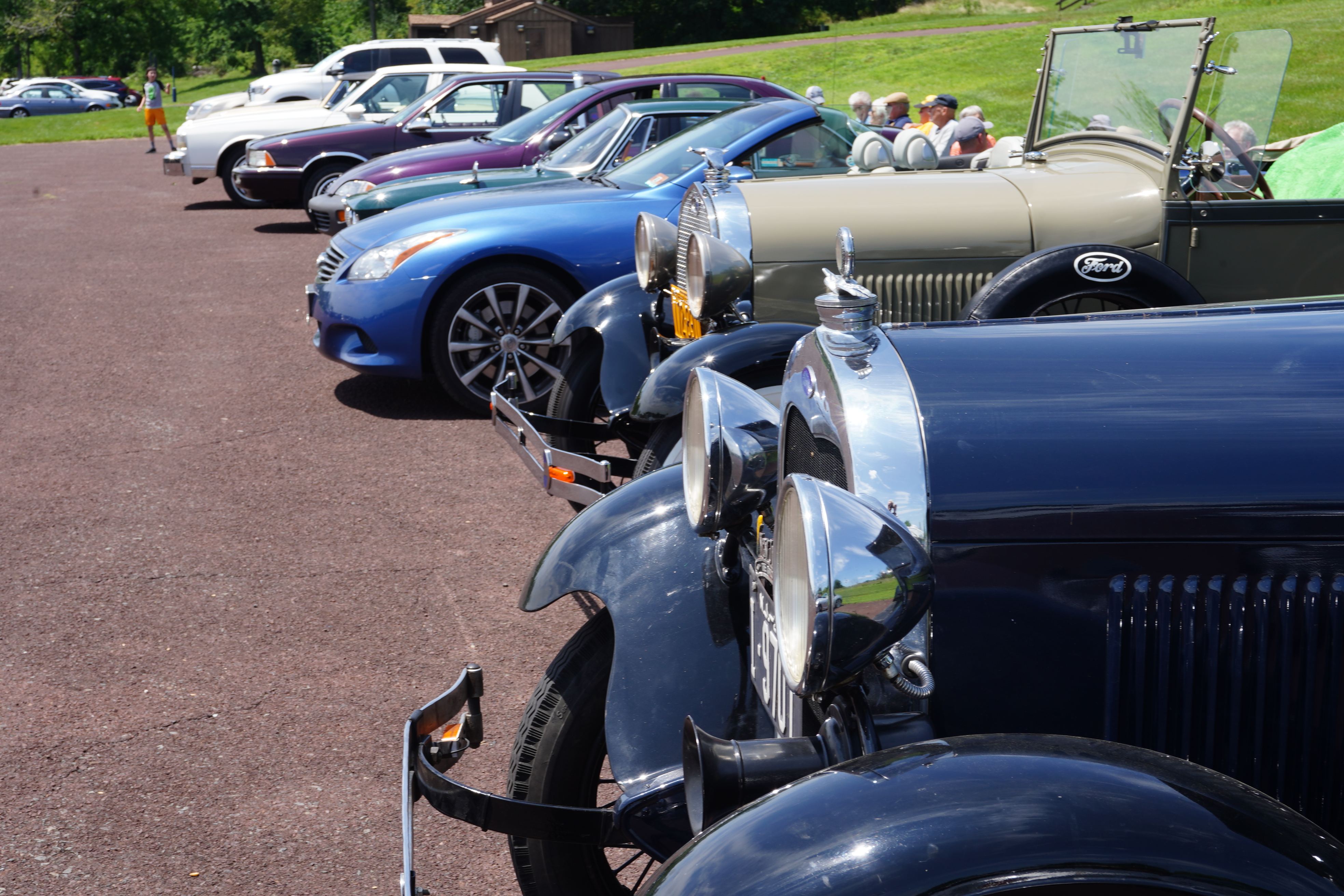
The oldest vehicles in the parade were from the ‘40s, and coincidentally, all were trucks. The 1950s were well-represented, with 7 cars, all from the Big 3. The 1960s cars included a late C1 Corvette, a Ford, two Mercurys, and the lone import in the parade, your scribe’s Alfa Romeo. A single vehicle from each of the decades of the ‘80s and ‘90s rounded it out.
All parades move slowly. This year, the puttering along seemed even slower, and then we came to a complete stop for several minutes. I learned later that one of the lead vehicles (not an AACA car) was tossing candy out the windows, and children were running into the street to retrieve it, which led to a dangerous situation. The parade was temporarily stopped so that this vehicle could be instructed to quit tossing the sweets. I almost brought the parade to a stop myself when a spectator yelled out to me “I like your Audi!”. I hit my brakes and yelled back “it’s an Alfa!”.
For me, as it has been in previous years, it’s all about the spectators. I love seeing people of all ages, races, and ethnic backgrounds who are now here in the USA and are partaking in this event. I’m glad that the NJ Region has continued its own tradition by participating each year.
1946 Chevy pickup1946 Dodge pickup1949 Dodge Power Wagon1953 Chevy
1953 Cadillac
A pair of
57 Bel Airs
1957 Chrysler1959 Ford1962 Corvette1965 Ford
1967 Alfa Romeo1967 Mercury Comet
1967 Mercury Cougar1988 Mercury Cougar
1993 Pontiac Firebird
THE TRUE COLORS OF OUR COUNTRY AS REPRESENTED BY THESE SPECTATORS:
Rich’s Repair Ramblings #9: Ten Steps to a Better Oil Change
Changing the engine oil and oil filter is one of the easiest and most straightforward maintenance jobs you can perform on your collector car. What’s easier than “pull the drain plug, swap out the filter, and add new oil”? Would it surprise you if I said that I might be able to offer up to 10 suggestions to improve the process? The following 10 Best Practices are from my own experiences. Read through the list and see if there isn’t at least one step which you can incorporate to make the next oil change a better one for your buggy.
#1. SAFETY FIRST!
It bears constant repetition: Never work under a car that isn’t properly supported. Do not use the vehicle jack (or worse, some cinder blocks) to support a car off the ground. Use quality jack stands or drive-up ramps with sufficient weight ratings when doing any work that involves sliding under something that weighs upwards of several tons. Make sure that the transmission is either in “Park” or for stick shift cars, in a forward gear. Always set the parking brake. Chocks on the rear wheels are a good idea too.
Ramps are great for oil changes, as there is no need to remove front tires
#2. DRAIN THE OIL WHEN THE ENGINE IS WARM.
Yes, “cold” (room temperature) oil will flow out the oil pan. But warm oil flows more quickly, and more importantly, takes more contaminants out with it. The engine doesn’t need to be hot – you increase the risk of burning yourself from scalding oil or a hot exhaust pipe. But if the car is cold, let it idle at least until the temperature gauge starts to move. If you don’t have a gauge, 5 minutes on a warm day should do it. If you’ve just driven the car and everything is too hot to touch, wait 20 to 30 minutes so that the oil is warm but not burning hot.
Let the temp gauge move off “C” before draining oil
#3. REMOVE THE FILLER CAP BEFORE YOU REMOVE THE DRAIN PLUG.
You’ll get faster flow (and again, remove more of the bad stuff) if you take off the oil filler cap and allow air into the engine during the drain. The cap needs to come off anyway! This is the same as punching a 2nd hole in a can when you’re trying to pour out liquid.
#4. REPLACE THE DRAIN PLUG WASHER.
The drain plug has a gasket or washer, typically made of copper or aluminum, which serves as a seal. The softer metal is designed to be crushed when you tighten the plug. But the washer can stand being crushed only so many times before it’s no longer effective at stopping leaks. The trick in replacing the drain plug washer is having a spare one on hand. (I buy them by the dozen.) And a tip to avoid a problem that even trips up the pros: make sure that the OLD washer is removed, and is not stuck to the drain plug or oil pan. If you put a new washer on the drain plug with the old one there, you’ll almost certainly have a leak.
Old washer on left shows crush marks; new washer on right
#5. ALWAYS REPLACE THE OIL FILTER.
I continue to be amazed at the number of times that someone has told me that they completed an oil change and left the old filter in place. What is the issue? Is the filter difficult to access? Is it too expensive? Do you think that the old filter has some service life left in it? If it’s hard to get to, watch some YouTube videos and figure it out. Others have. How much does a new filter cost? Stop being so cheap. Leaving the old filter in place recirculates about a quart of dirty oil directly into your fresh clean oil. It also runs the risk of the filter becoming so full of contaminants that it can no longer do its job. Always be sure to have a new filter on hand before you start the job.
#6. PRE-FILL THE OIL FILTER BEFORE INSTALLING IT.
This is one ‘best practice’ that isn’t always practical to do. I do this for one car, but not the other, simply because of the filter’s location. If the filter attaches from the bottom, I can add oil to it and keep it right-side-up, avoiding any spills when reinstalling it. However, if the filter attaches horizontally, it’s trickier. Sometimes I can add a little oil and get it on there without any spills. We’ll need to qualify this best practice with the caveat “it depends”. See Tip #9 below.
#7. TIGHTEN THE OIL FILTER CORRECTLY.
A while back, my neighbor had to return her car immediately after an oil change, and she was told that the tech had left the filter loose. (The person performing the job also needs to make sure that the rubber gasket from the old filter is not stuck to the engine block, for if it is, the new filter will never seal properly.) It’s just as bad, however, to overtighten the filter. I have personally witnessed technicians resort to hammering a long screwdriver through an old filter to act as a pry bar to remove an overtighened one. For most cars, oil filters should be tightened by hand, without the use of any tool. Tighten until the gasket contacts the engine, then turn the filter another 1/8 to ¼ of a turn. That’s it!
Rubber seal on old filter on left came loose; new filter on right. Box holds extra drain plug washers
#8. USE THE CORRECT VISCOSITY OIL.
Your owner’s manual will identify the specified viscosity. For most cars built in the last 50 years, vehicle manufacturers have recommended a multi-weight oil good for year-round use, with numbers like “10W-30”. The lower the number, the thinner the oil, necessary in cold weather. The higher the number, the thicker the oil, needed in hot climates. The “W” stands for winter. Using the incorrect viscosity oil can damage the engine in your old car. My Alfa Romeo calls for 20W-40 oil, but that was printed in 1967. It runs very happily (and uses no oil between changes) on 20W-50. At the other extreme, my modern iron specifies 0W-20. It would be a disaster if I were to switch these viscosities between the old and new cars! As a special note for much older AACA cars, the called-for viscosity may no longer be readily available. If your engine has been rebuilt, you may need to adjust the viscosity you use compared to what was recommended 70 or 80 years ago. Speak to other owners with similar cars to see what they use or recommend.
#9. CRANK, BUT DON’T START, THE ENGINE TO BUILD UP OIL PRESSURE.
Starting an engine immediately after an oil change runs the risk of starving critical components like bearings of needed oil. A best practice is to disable the ignition (easy on old cars by simply pulling the secondary coil wire) and cranking the engine until oil pressure builds, usually in about 5 to 8 seconds. Taking this small step helps ensure the longevity of internally lubricated engine parts.
#10. RECHECK THE OIL LEVEL 5 MINUTES LATER.
The manual states “five quarts with filter”, and that’s what you put in. But I don’t rely solely on the number of quart bottles I’ve poured. After running the engine for a few minutes, I shut it down, wait 5, then pull the dipstick (with the car on level ground). If it needs a smidgen more, now’s the time to do it. I want the peace of mind of knowing that, after an oil change, the level is exactly at the ‘full’ mark on the stick.
Rich’s Repair Ramblings #8, Repairing a ground wire
In our most recent previous Ramblings, we stated that “the number one cause of automotive electrical problems is loose, dirty, or corroded connections”. In this installment we’ll show you how to fix a loose or broken terminal connection. On our AACA cars, many electrical terminals are universal, or a standardized size; they have self-described names like ring, spade, blade, and bullet. Making a repair typically involves replacing a short piece of wire, or attaching a new connector to a wire, or both.
The best way to make such a repair is by soldering. However, soldering requires dedicated tools and equipment, and some practice. An alternate method is using solderless terminals, aka crimp terminals, which are quicker and easier than soldering. I’ve been successfully using them for years. They get a bad rap as unreliable, but like most repairs, there’s a correct way, and an incorrect way, to complete the job. Let’s dive in.
First, you’ll need these tools and supplies: wire stripper, terminal crimper, wire, appropriate terminal, and electric tape or shrink wrap. There are some very fancy stripping and crimping tools on the market, but I’ve had the same pair of yellow-handled combo cutters/strippers/crimpers forever, and they still get the job done. For wire, you’ll want the same gauge as the existing wire (gauge number DECREASES as wire thickness INCREASES- if in doubt, bring a sample to the store). For most of my car repairs, 16- or 14-gauge suffices.
L to R: stripping/crimping tool, terminal assortment, homemade test wire
Crimp terminals are color-coded for size: the smallest are red (18-22 gauge wire), then blue (14-16 gauge), and the largest, yellow (10-12 gauge). Again, for cars, blue connectors cover almost all my needs. When buying electrical tape, stick to name brands; I like 3M, which costs a bit more, but makes better repairs. In the example below, I use shrink wrap, which comes in different diameters. You want a diameter which will fit OVER the end of the terminal.
Top to bottom: female spade connector, shrink wrap, 14-gauge wire
For my sample repair, I need a 2-ft length of 14-gauge wire, and need to crimp a (blue) female spade terminal to one end of the wire. Note that I’ve correctly matched the 14-gauge wire to a blue-coded terminal. THE FIRST MOST COMMON MISTAKE IS INCORRECTLY MATCHING THE WIRE AND TERMINAL SIZES. I’ve verified that the shrink wrap fits over the barrel end of my terminal. I will strip about 3/8” of insulation from the wire – enough so that when the stripped end is inserted into the terminal, a tiny bit peeks out, and bare copper is under the barrel where I will be crimping. THE SECOND MOST COMMON MISTAKE IS STRIPPING TOO LITTLE INSULATION SO THAT BARE COPPER IS NOT UNDER THE TERMINAL BARREL.
Stripping the wire
When using the stripping tool, select the opening which is just slightly smaller than the wire diameter. Your goal is to cut the insulation so that you can pull it off without also removing any copper strands. I took the photo using the 2nd-smallest size, but then ended up moving the wire to the next larger size. This takes some practice – try it out on several different wire gauge sizes.
Before crimping the terminal, slide the shrink wrap onto the wire; if you’re repairing an existing wire on the car, this may be your only chance to get it into position! With the terminal placed over the bare copper strands, verify that copper is under the barrel, Use the crimping part of the tool to firmly crush the barrel onto the wire. THE THIRD MOST COMMON MISTAKE IS CRIMPING THE TERMINAL NEAR ONE OF ITS ENDS SO THAT THE CRIMP DOESN’T FIRMLY GRASP THE WIRE. A COROLLARY MISTAKE IS USING A HAMMER & CHISEL, OR PLIERS TO MAKE THE CRIMP. USE A CRIMPING TOOL, PLEASE. In the photo, note that the barrel is crushed almost directly in the middle. Using moderate force, pull on the terminal; it should feel securely attached and should not slide off. If it does, the crimp is inadequate, and you’ll need to repeat the process.
Crimping the terminal
Slide the shrink wrap over the terminal, and heat it with a heat gun. (A match or propane torch also works, but don’t let the flame touch the material!) Within seconds, the shrink wrap reduces to less than half its original diameter, and the final repair looks very professional. You can use electric tape here also. The point of the shrink wrap or tape is to insulate your repair. THE FOURTH MOST COMMON MISTAKE IS USING TAPE TO CONNECT THE TERMINAL TO THE WIRE. IT’S THE MECHANICAL CRUSH OF THE BARREL ON THE WIRE WHICH MAKES THE CONNECTION.
Note that crush is in center of barrel
Heat gun on shrink wrap
I’m not kidding about these common mistakes. I’ve seen everything from copper wire twisted around a crimp terminal to Scotch tape used as an attempt to hold the wire and terminal together. Installing crimp terminals takes some practice; buy some wire and a terminal assortment, and practice before you need to make a repair to your car. I’ve also used solderless terminals to make up my own test wires, whether it’s to run temporary grounds, or run 12V from the battery to the rear of the car. These test wires may have alligator clips or spade terminals or some other combination; I have several, and they come in handy!