Tucker Restoration Shop Holds Open House

For a vehicle which reached a production count of only 51, the “Tucker 48” automobile has fascinated auto enthusiasts, historians, collectors, and conspiracy theorists ever since the Tucker Corporation ceased operating in 1949.

On Sunday January 28, 2018, I had an opportunity to visit a shop which is in the process of performing a complete restoration on Tucker #1044. Via my membership in the NJ Region of the Antique Automobile Club of America (AACA), the word went out that Ida Automotive, a shop in Morganville NJ, was hosting an Open House, allowing invitees to see this Tucker in its disassembled state.

Arriving shortly after the announced start time of 11 a.m., the lot surrounding the building was already so crowded that finding a parking spot took a few minutes. By the time I worked my way inside, I would estimate that I was one of at least 100 people in attendance.
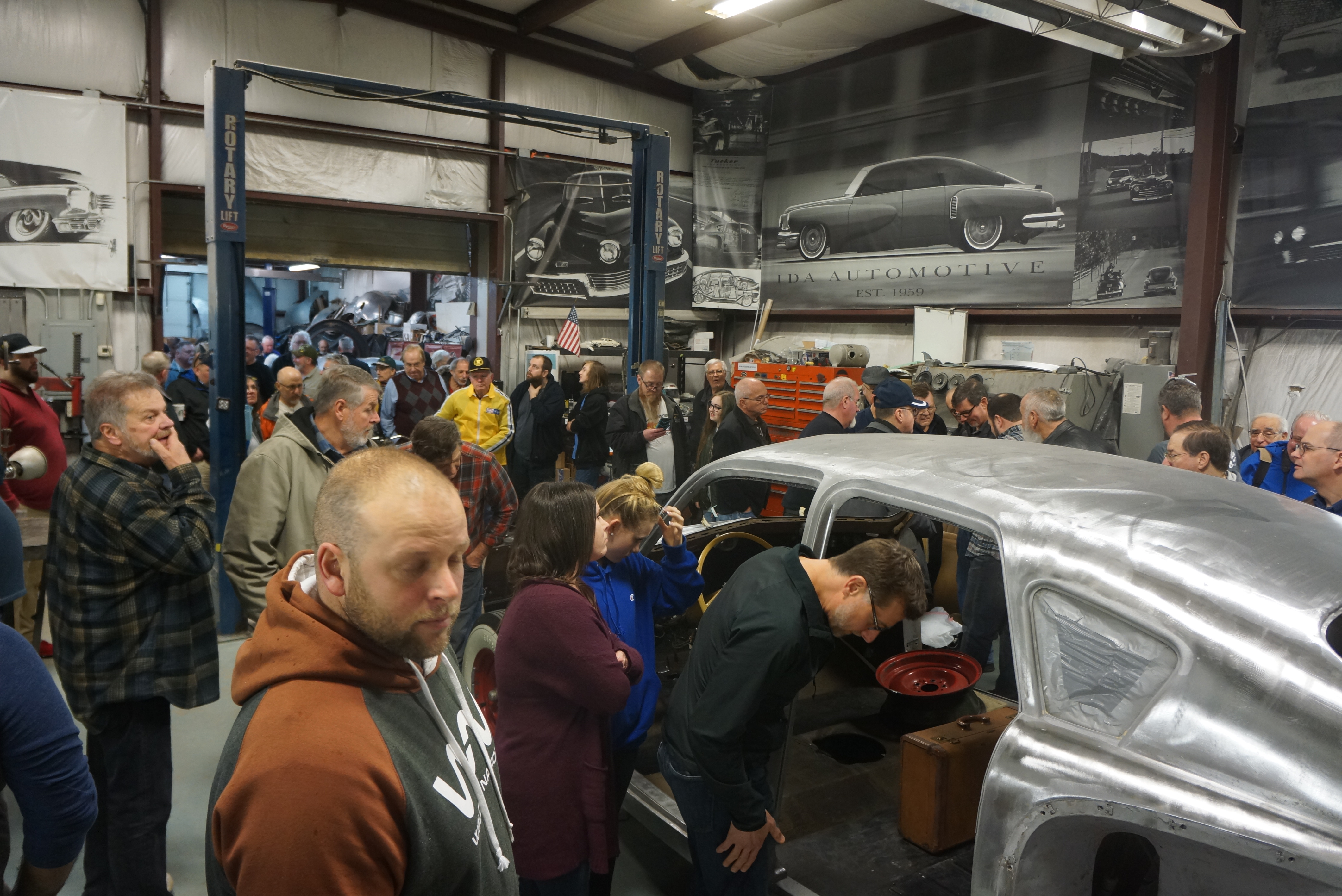
This is one of three shop rooms

There is no need to delve into the detailed history of Preston Tucker and his eponymous cars here. If interested, the author invites the reader to visit this Wikipedia page, or this page from the AACA Museum website. Indeed, Richard’s Car Blog briefly highlighted the Tuckers at the Museum when we visited in early 2017.

Back to Ida Automotive: the shop building is set back from busy Texas Rd. by about 100 yards. With no identifying signage out front, those driving by on this busy street would have no idea it existed. Entering the front door, one passes through a small but neatly painted and carpeted front room and then into the shop area itself. There are multiple rooms, and each room is jammed with cars-in-process, tools, supplies, machine equipment, lifts, parts, and most notably, sheet metal, both in ‘stock’ and ‘formed’ shapes. The mob on hand made it so crowded that moving about took time and patience.

Having visited my share of automotive repair shops, there was an immediate sense that this operation is different. The primary work product here is sheet metal fabrication. The car collection within was eclectic, and included a ’50 Mercury convertible, an unidentifiable ‘40s-era pickup truck under cover, a Ferrari 365 GT “Queen Mother”, and a ’58 Cadillac custom (covered and on a lift, exposing its rack-and-pinion steering!).
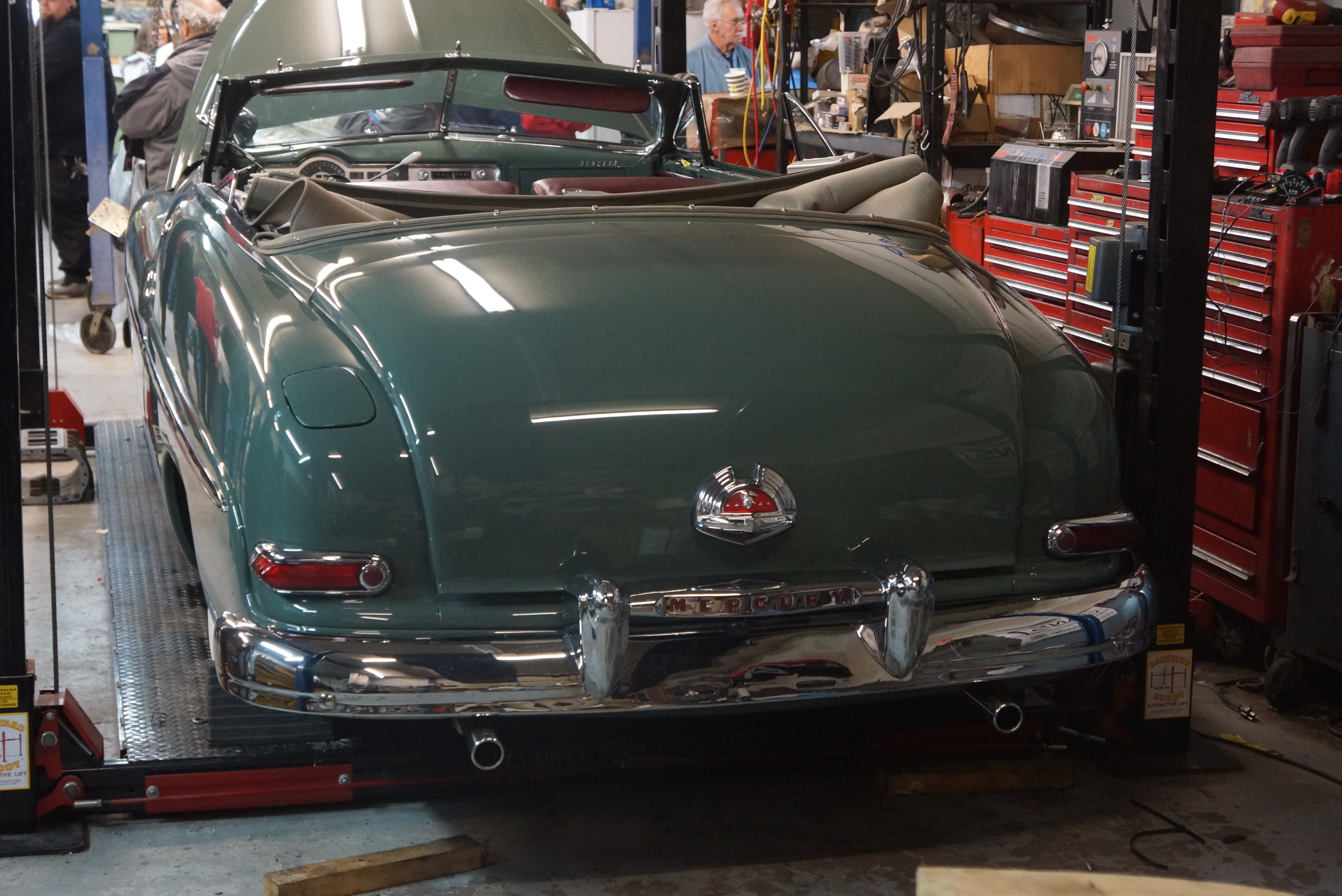
’50 Mercury convertible, almost done (but I found green over red colors odd)

A FERRARI IN A FABRICATION SHOP?
The question was answered once I spotted the “before” photo: something had crushed its roof, and the skilled metal workers at Ida Automotive had beautifully repaired it:

That brings us to the Tuckers. One was immediately drawn to a brilliant blue Tucker, appearing to be a perfectly restored car – until one noticed the twin-turbo engine out back, sitting in a chassis that looked about 4 inches lower than stock. This Tucker otherwise appeared ‘normal’, but the blank VIN plate caused me to conclude that this was a replicar, albeit an extremely well-done one.
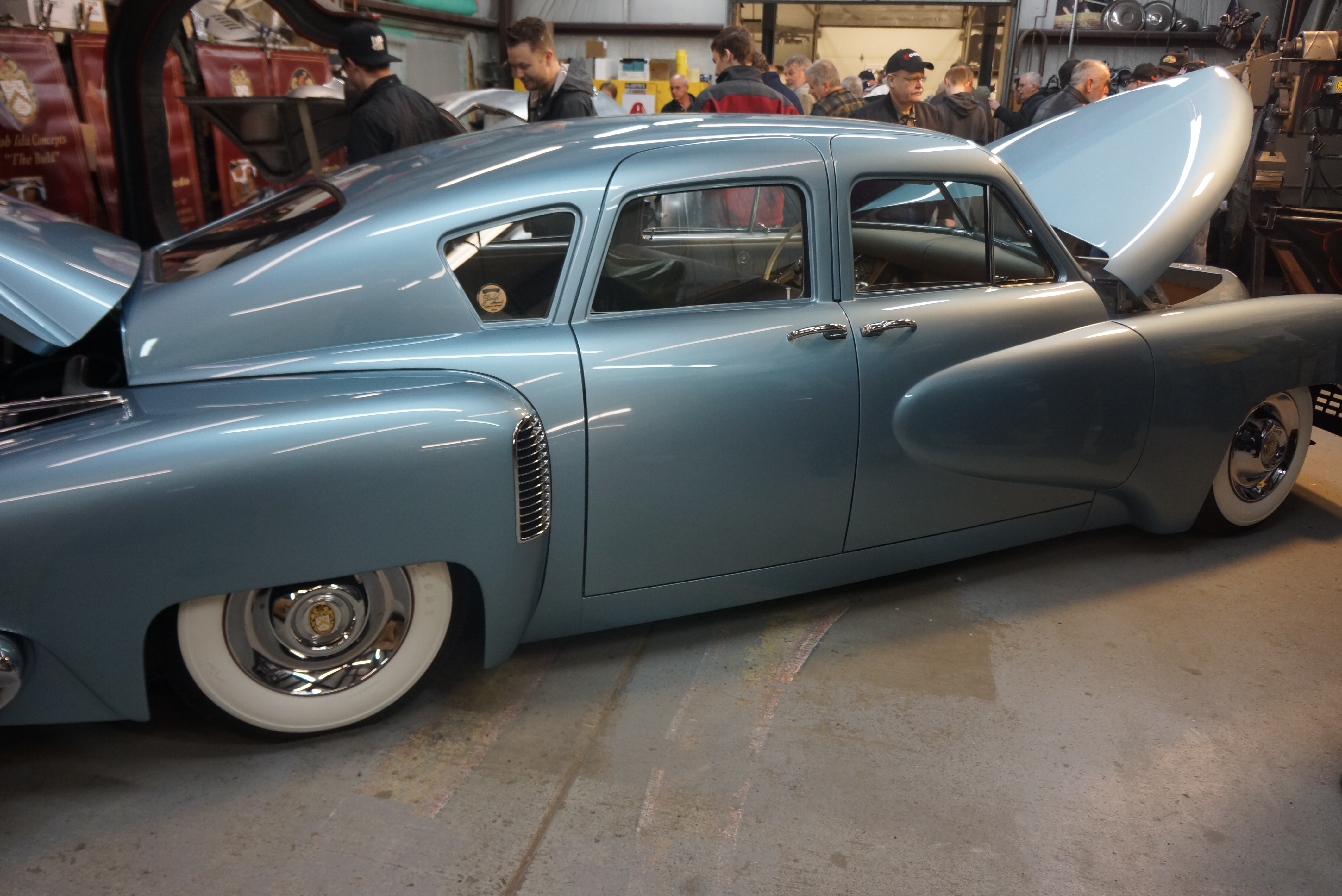
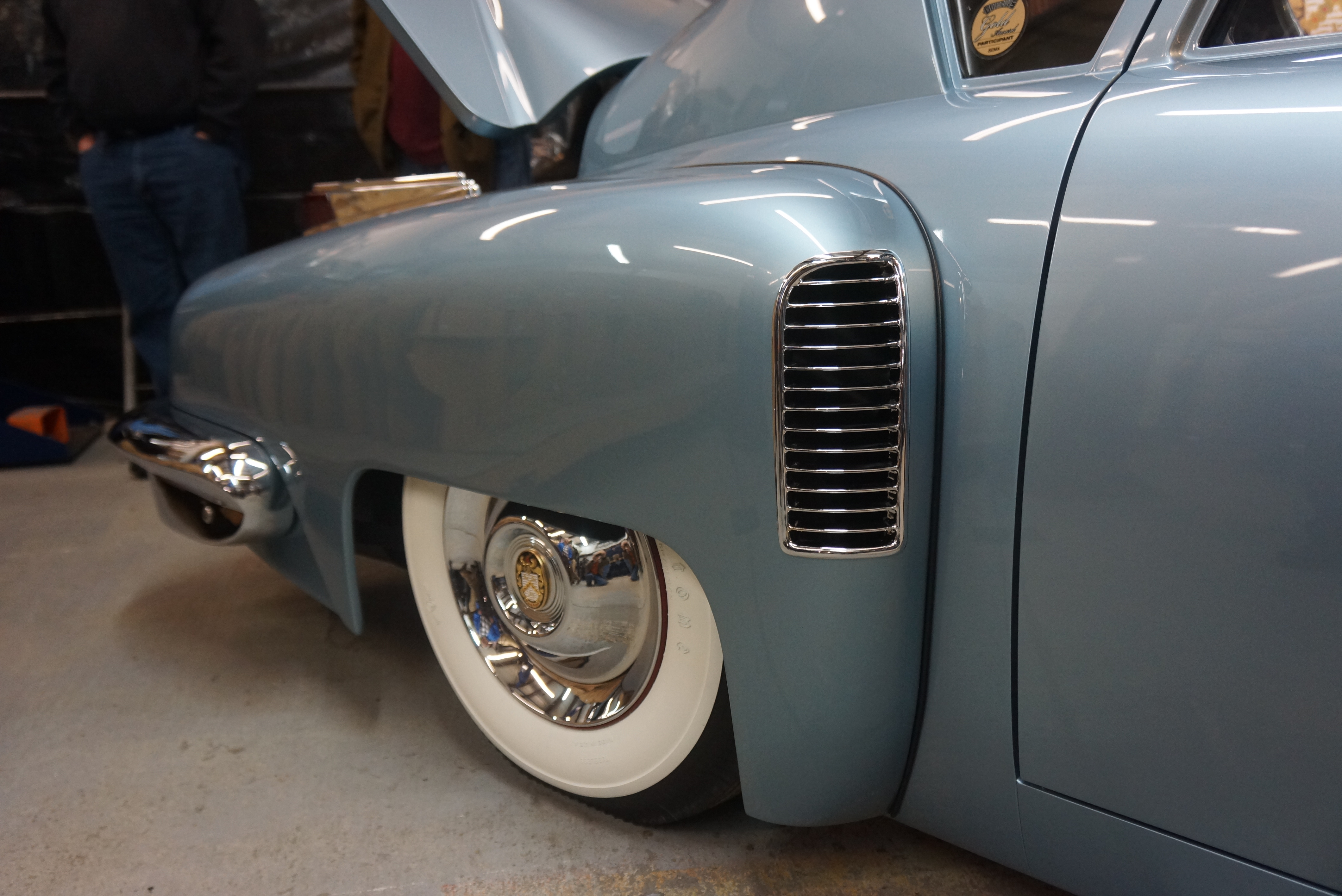
Behind it was a wooden buck (upon which sheet metal is formed into shape), and again, first glances proved deceiving. While the overall form looked Tuckerish (if that’s not a word, it should be), certain shapes on the buck deviated from the blue car next to it.

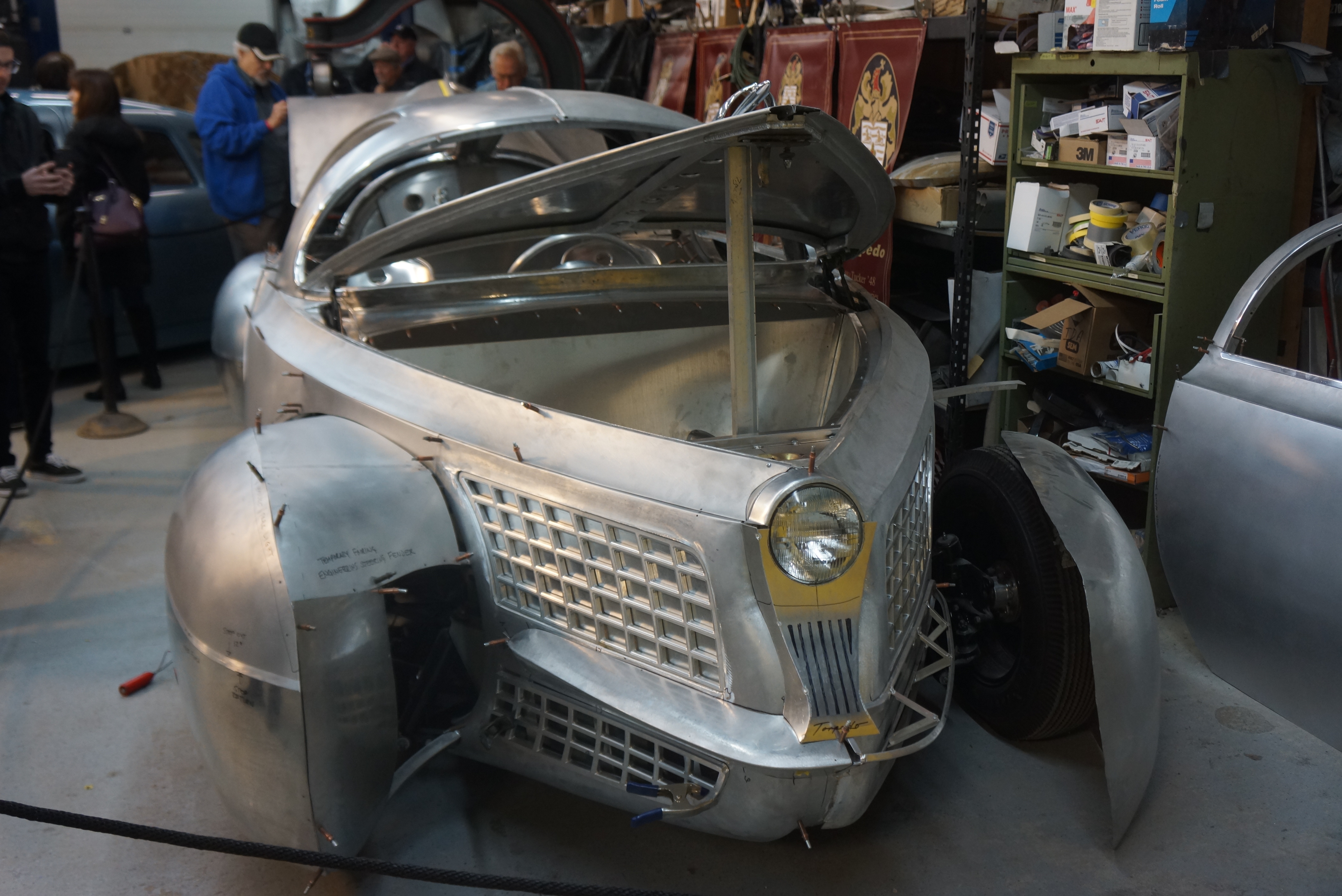
Moving into the next room, the shiny object in front of me was some sort of car, but what? Again, the word “Tuckerish” came to mind. But there were enough hints lying around in the form of printed images to solve the riddle. Ida Automotive is in the process of recreating the original Tucker Torpedo, the design study shown to the public in two-dimensional form, but never built. It’s an odd-looking thing, especially without glass and doors installed, preventing you from seeing the whole shape. But the more one stared, the more one could see the familial resemblance. Oh, and that buck behind it is for this Torpedo.


THE TUCKER TORPEDO
The “Torpedo” was the name given to the illustration of the prototype. Many mistakenly called the production car the “Torpedo ’48”, but that was not its name. The efforts by Ida Automotive to create a vehicle which never existed is fanatical.
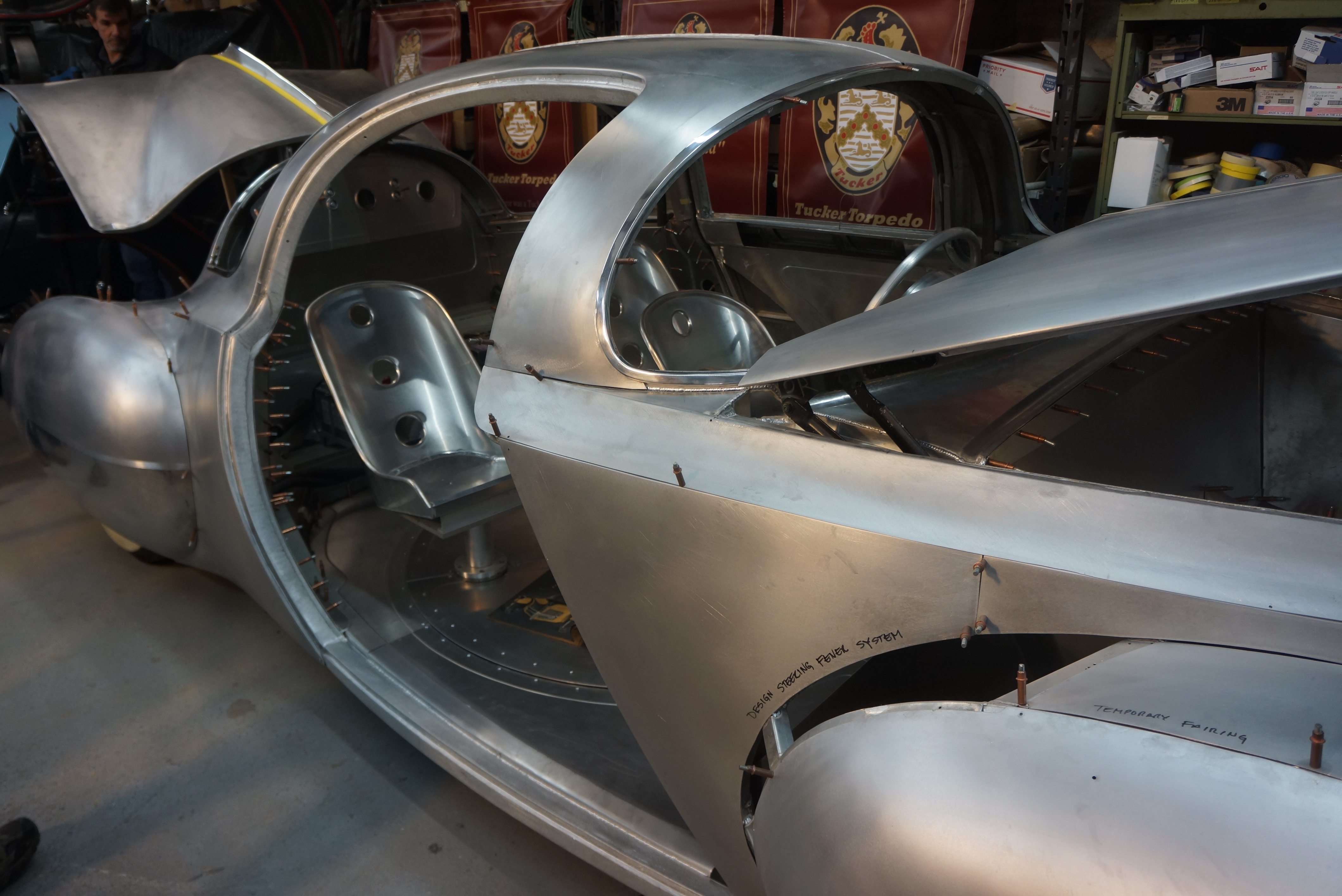
Minus doors and glass, Torpedo looks awkward from this angle
Its most unique feature (so far) is the seating arrangement. There are 3 seats, arranged on an electrically-powered carousel disc. There is one seat in the front for the driver, who sits behind the centrally-mounted wheel; in the rear are two passengers. However, the carousel rotates, which means any one of the 3 seats can be the driver’s seat. This might also assist with ingress and egress. One can only hope that the carousel’s rotational ability is disabled while the Torpedo is in motion.
The Torpedo’s 3 seats, mounted on a carousel (note magazine illustration)

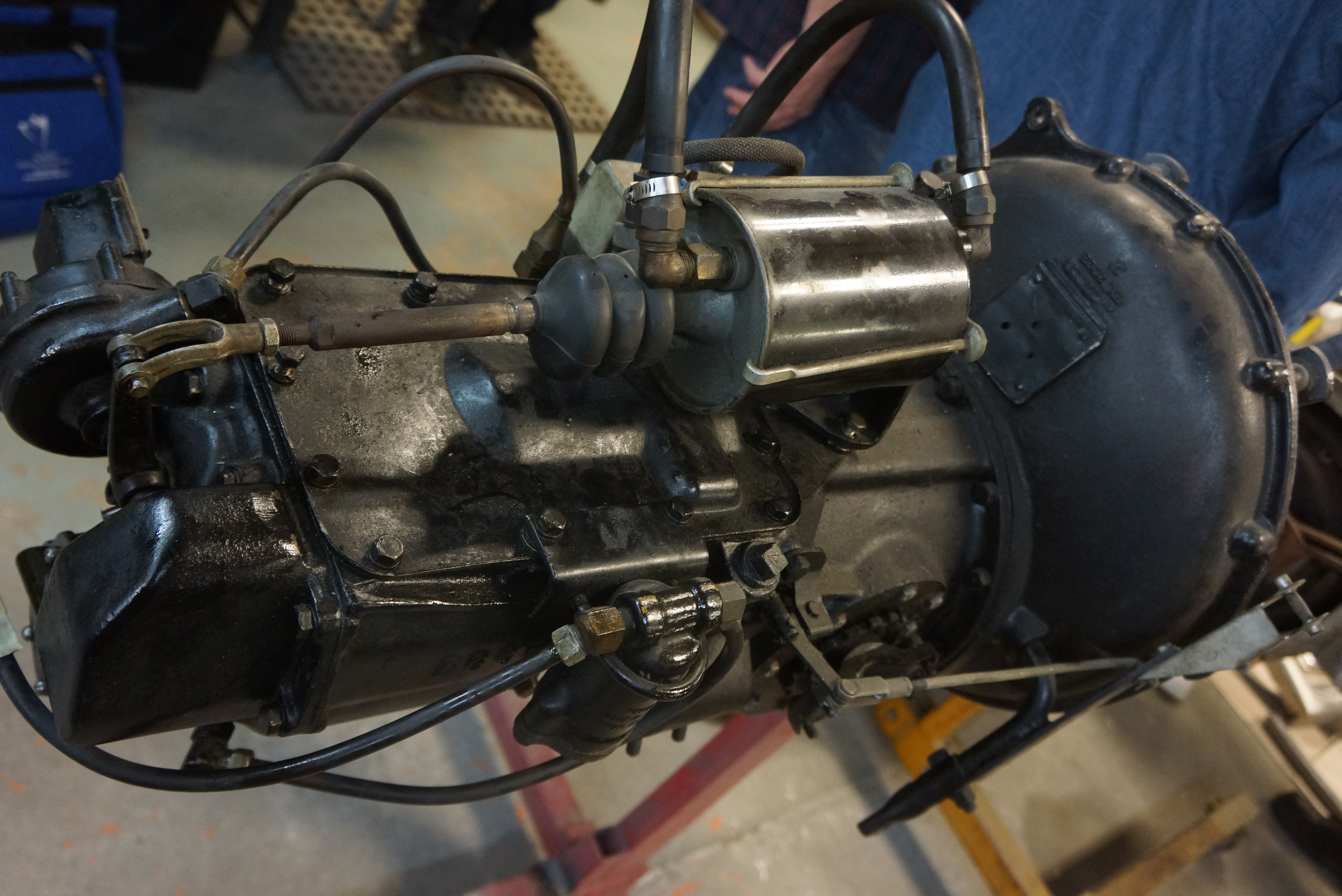
The final room held the star of the show, Tucker #1044 (its serial number). Interestingly, this very car was recently featured in Hemmings’ Classic Car magazine. The gentleman who owns it bought it last year, and must have decided that, although a decent driver, it deserved a complete do-over, and he concluded that Ida Automotive was the best place for it.

Spacious interior looks even more so here


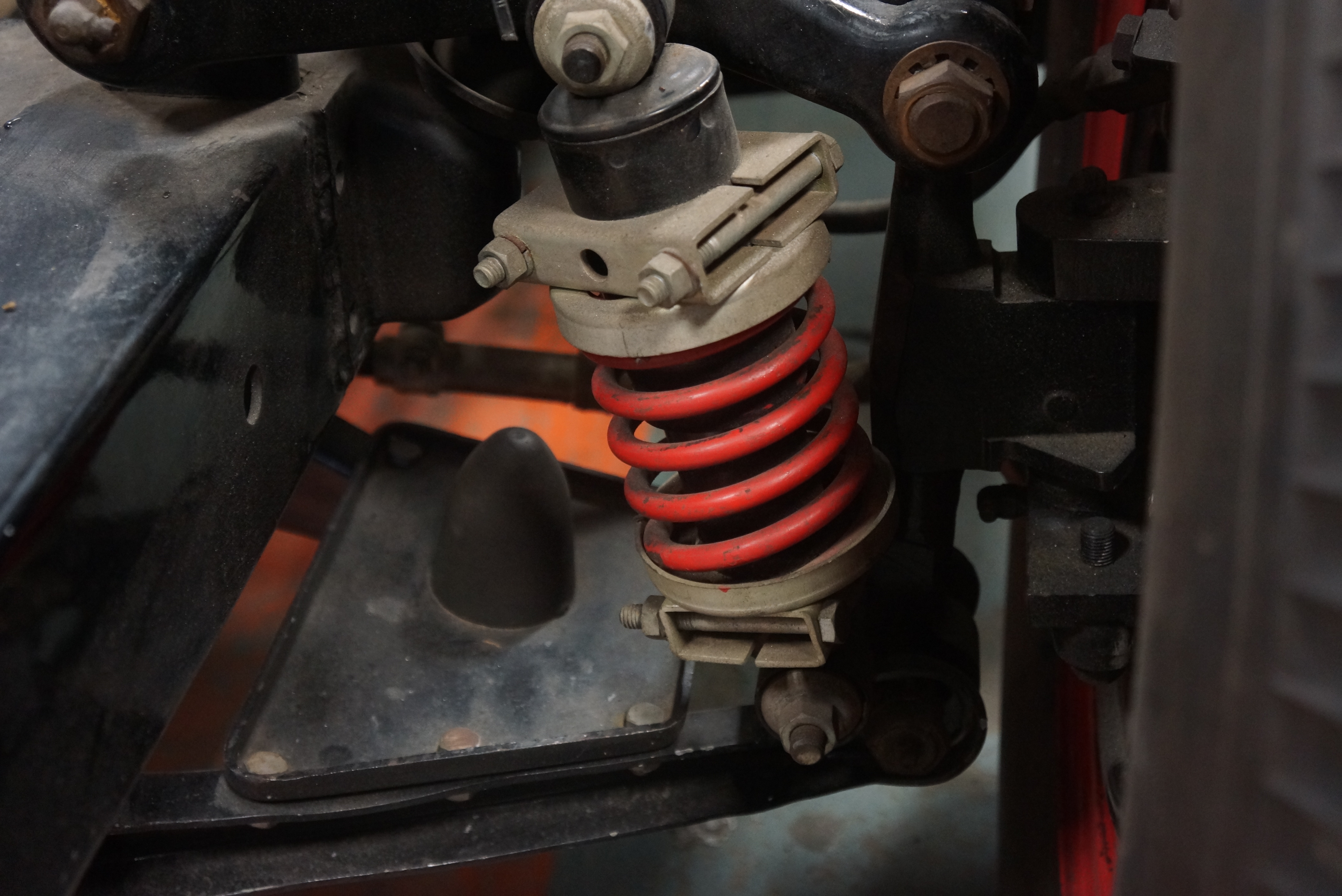
Front suspension detail. Originally car had rubber suspension.
There was always a crowd around #1044 (note wall posters)


It was very generous for the proprietors to open their doors on a Sunday to those of us interested in Tuckers. Our hosts went so far as to provide coffee, water, and breakfast treats. There were no formal presentations, so we were left to figure things out by snooping around the place.  A poster on the wall was a big giveaway: a man named Joseph Ida was the dealer principal of a Tucker dealership in New York, so it’s not a far stretch to conclude that a descendant owns Ida Automotive. Another poster proclaims: “Ida Automotive Est. 1959”, so they’ve been at it for a while.

Wall poster shows Joseph Ida in front of his Tucker dealership in NY

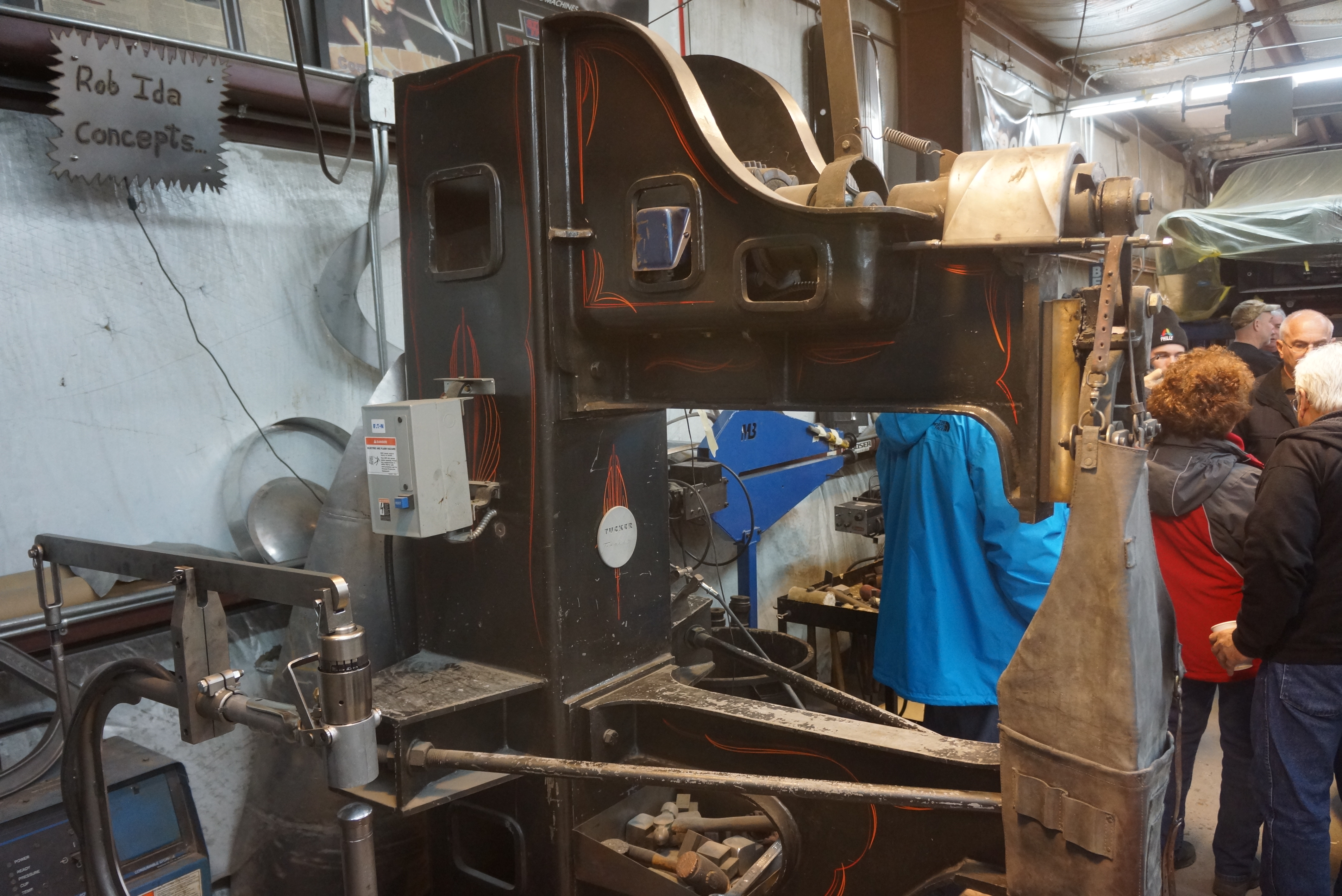
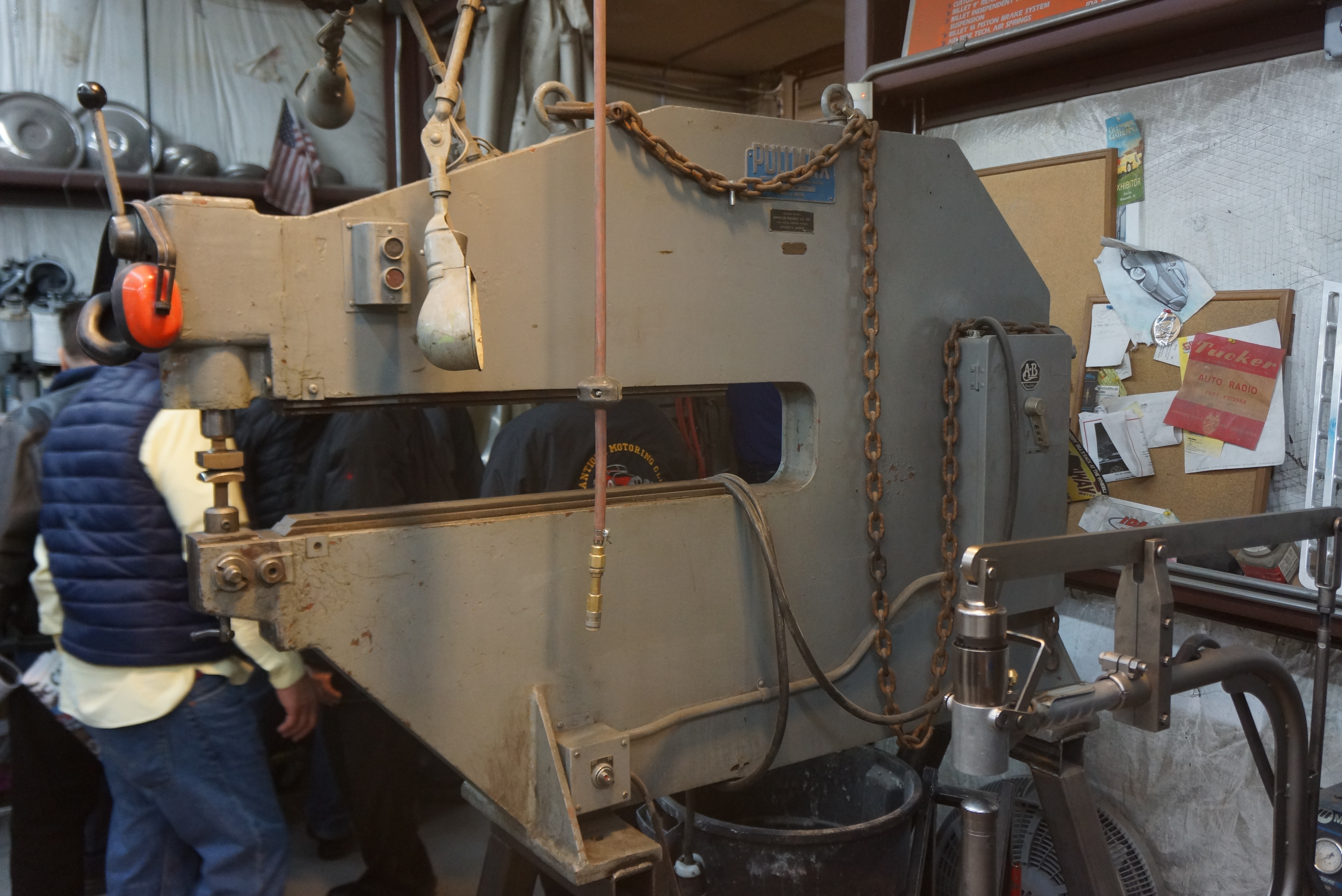
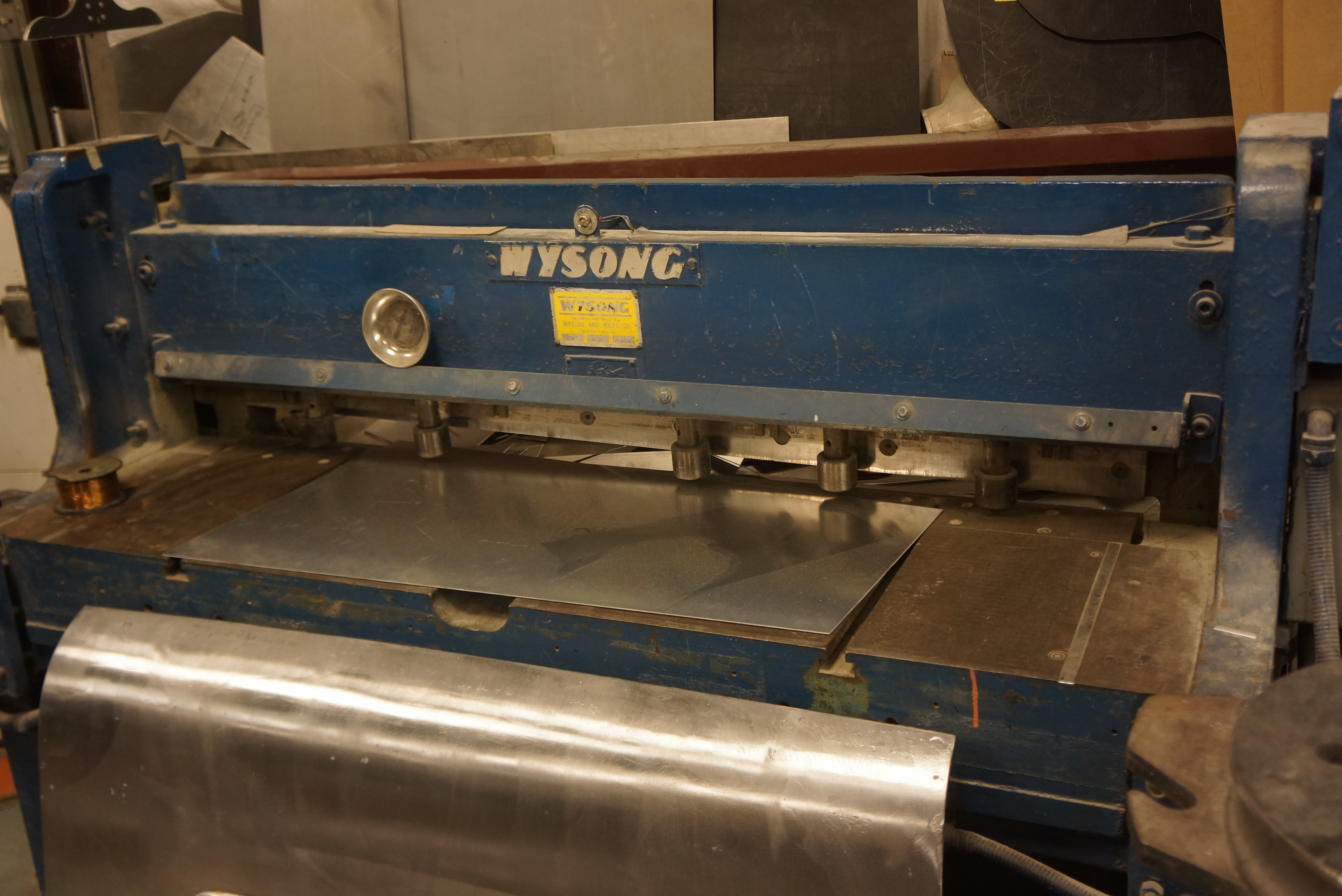
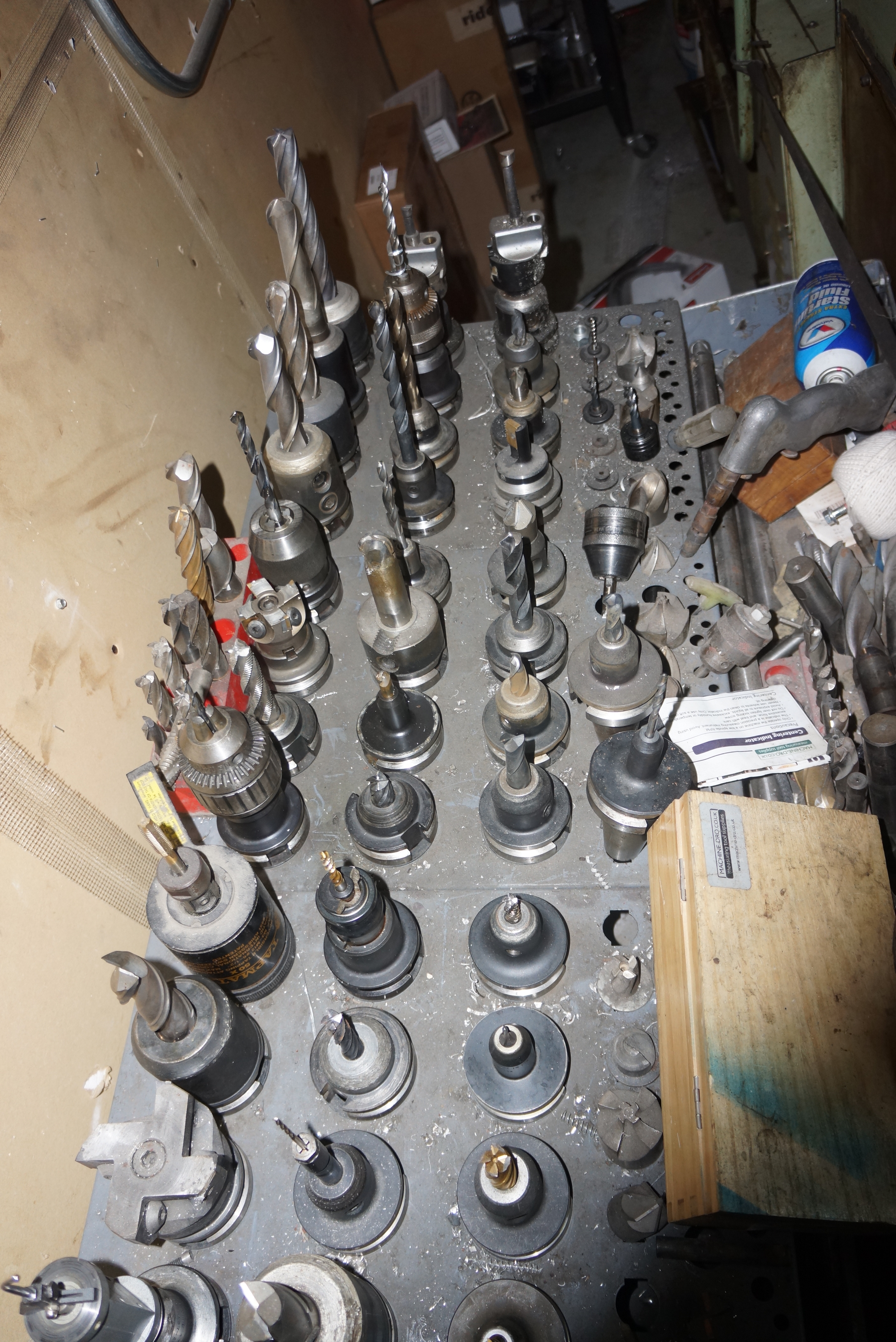
MACHINE  AND SHEET METAL TOOLS


The business’ associated websites offer little in the way of clues as to what actually transpires within these walls. Based on the quality of work I observed, it’s fair to say that Ida Automotive excels at what they do. It’s also refreshing for this collector to see some things still done the old-fashioned way. We in the hobby can only hope that workers with these skill sets continue to be around so that our automotive treasures can continue to be maintained and enjoyed.

Please don’t be alarmed: Chapter Four of the Isetta Saga will return next week, promise.  

All photographs copyright © 2018 Richard A. Reina. Photos may not be copied or reproduced without express written permission.


FUN FACT OF THE WEEK:

Tucker #1029, the car personally owned and driven by Preston Tucker, was sold by RM Sotheby’s at their January 2018 Arizona auction for $1,792,500.


The Isetta Saga, Chapter 3: Discovering You Are Not Alone Among the Bubble Cars

In Chapter Two, we voyaged with our intrepid travelers as they braved all manner of hardships to secure safe passage of their beloved bubble cars back to NJ.

Chapter Three brings us the exciting discovery that there are others who own and collect Isettas, and can even provide much-needed parts and technical knowledge. However, none of that solves the challenges of the need for time, space, and money.

CHAPTER 3: DISCOVERING YOU ARE NOT ALONE AMONG THE BUBBLE CARS

We came back from Vermont with more than just cars and parts.  Wes Turner had also given us a small pile of papers: a spare parts list, exploded diagrams, and other print material. Although we visually scanned the documents before heading home, the significance of what we had took some time to sink in.

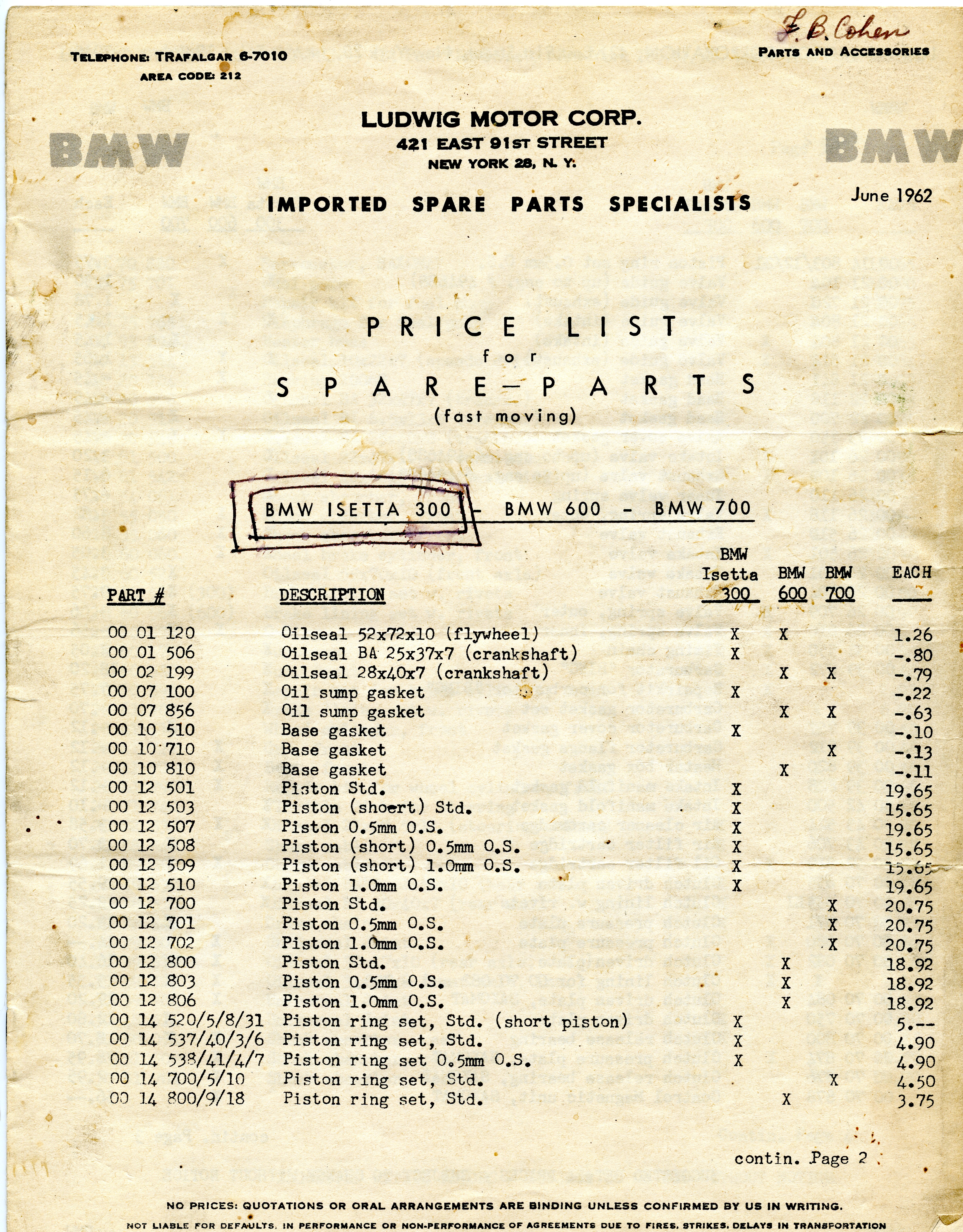
The spare parts price list was from the Ludwig Motor Corp., “imported spare parts specialists”. It was also dated June 1962, making it 17 years old. We surmised that it was more than likely that Herr Ludwig und Co. were no longer in operation.


The Ludwig Motor Corp. Isetta Spare Parts Price List


The exploded parts diagrams were fascinating in their detailed precision. (We didn’t know it at the time, but these drawings were from the factory BMW Isetta parts catalog.) In red, at the top of the page was an ink stamp: “Felling Enterprises” of Topanga, CA. We contacted said Enterprises to learn that it consisted of the husband & wife team of Carl and Marilyn Felling. Not only did they have Isetta spare parts to sell; they headed an organization called the HMI Club.


BMW’s official Isetta exploded parts diagrams. These would come in very handy down the road.


HMI stood for “Heinkel / Messerschmitt / Isetta”, the 3 most popular microcars at that time. (The Heinkel was conceptually similar to the Isetta. The ‘schmitt, with its tandem seating, yoke steering, 8″ wheels, 2-stroke engine, and side-hinged canopy, made an Isetta look normal.)

The club was for members interested in restoring, collecting, and showing their bubble cars (so called due to their rounded bubble-like shape). From their home in Topanga, the Fellings published a quarterly magazine, sold replacement parts, restored their own Isettas, and generally made themselves available to fellow bubble-nuts.


Marilyn sent out this letter in response to a recent Motor Trend article about her


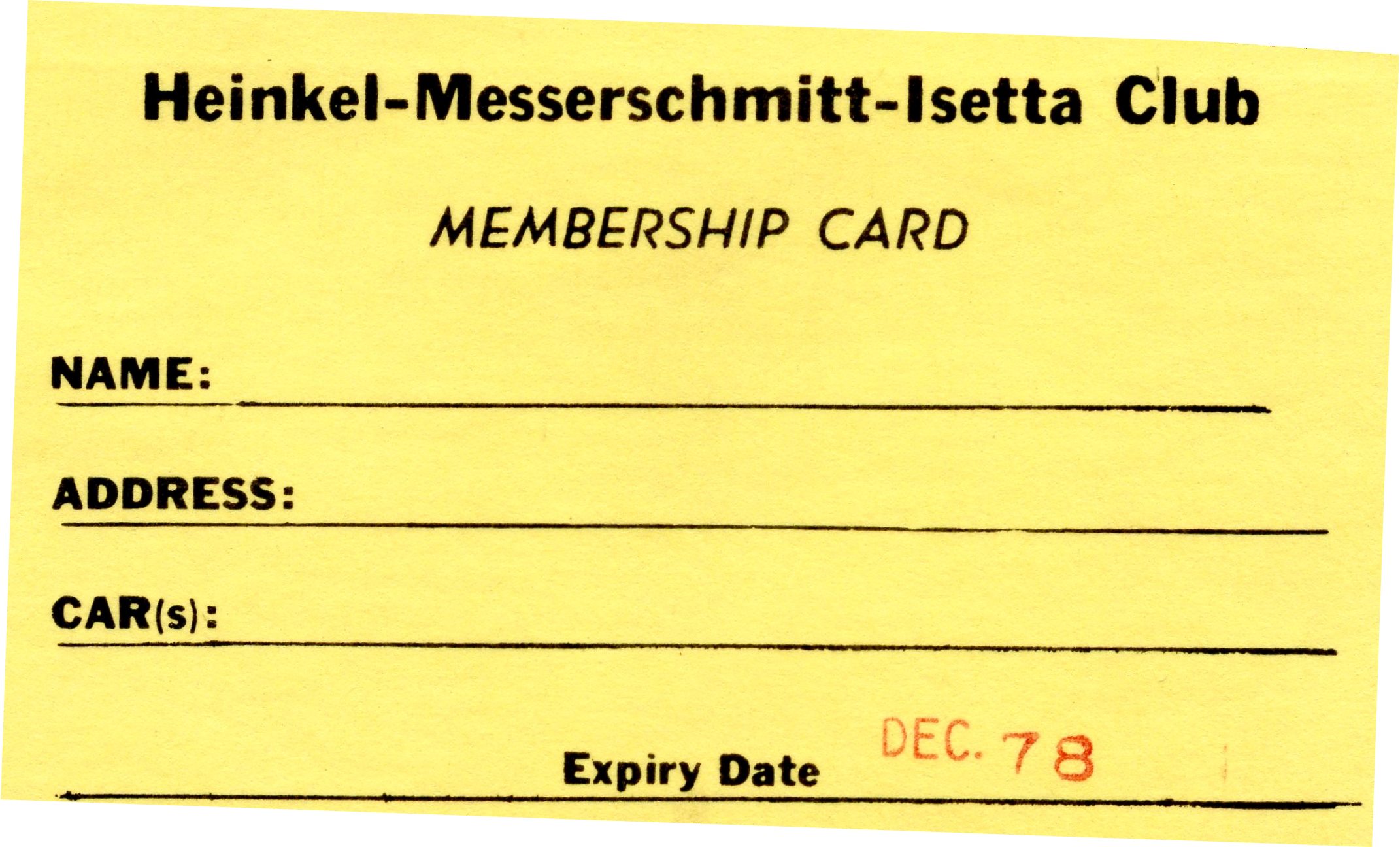
It was almost too much for me to take in that right here in the U.S. were others who were equally interested in Isettas, and were available with resources to support my vision of a restored final product. I signed up for HMI Club membership immediately.

My HMI Club membership card

If one looked hard enough, there were other sources to be found. At Carlisle in 1979 (a primarily domestic automotive flea market), I found a literature vendor with four pieces of BMW Isetta sales literature, in both English and German. I bought everything he had, and paid close to $50 for it. When I showed my dad, he thought I had really lost it.

While occupied with research on the Isetta, I still needed to remind myself that I also owned a 1957 Ford Skyliner retractable hardtop. My daily driver continued to be my 1977 VW Rabbit. At the age of 24, I owned 5 cars, never mind that three of them were disassembled microcars which were an unknown oddity to the automotive world at large. Given that the Ford ran and the BMWs didn’t, the Skyliner got some priority.

During the summer of ’79, I committed to rebuilding the very tired and worn Y-block V8 in the Ford. It had 140,000 miles on it, and pulling the valve covers revealed sludge so thick that I couldn’t see the head bolts. Having never rebuilt an engine before, I rented a cherry picker, borrowed an engine stand, disassembled the entire engine, had machine work done to the heads and block, and put it all back together. At one point, I even had the bare block in the back of the Rabbit.


Summer of ’79: engineless Ford, Rabbit, and Isettas all crowd into my folks’ backyard


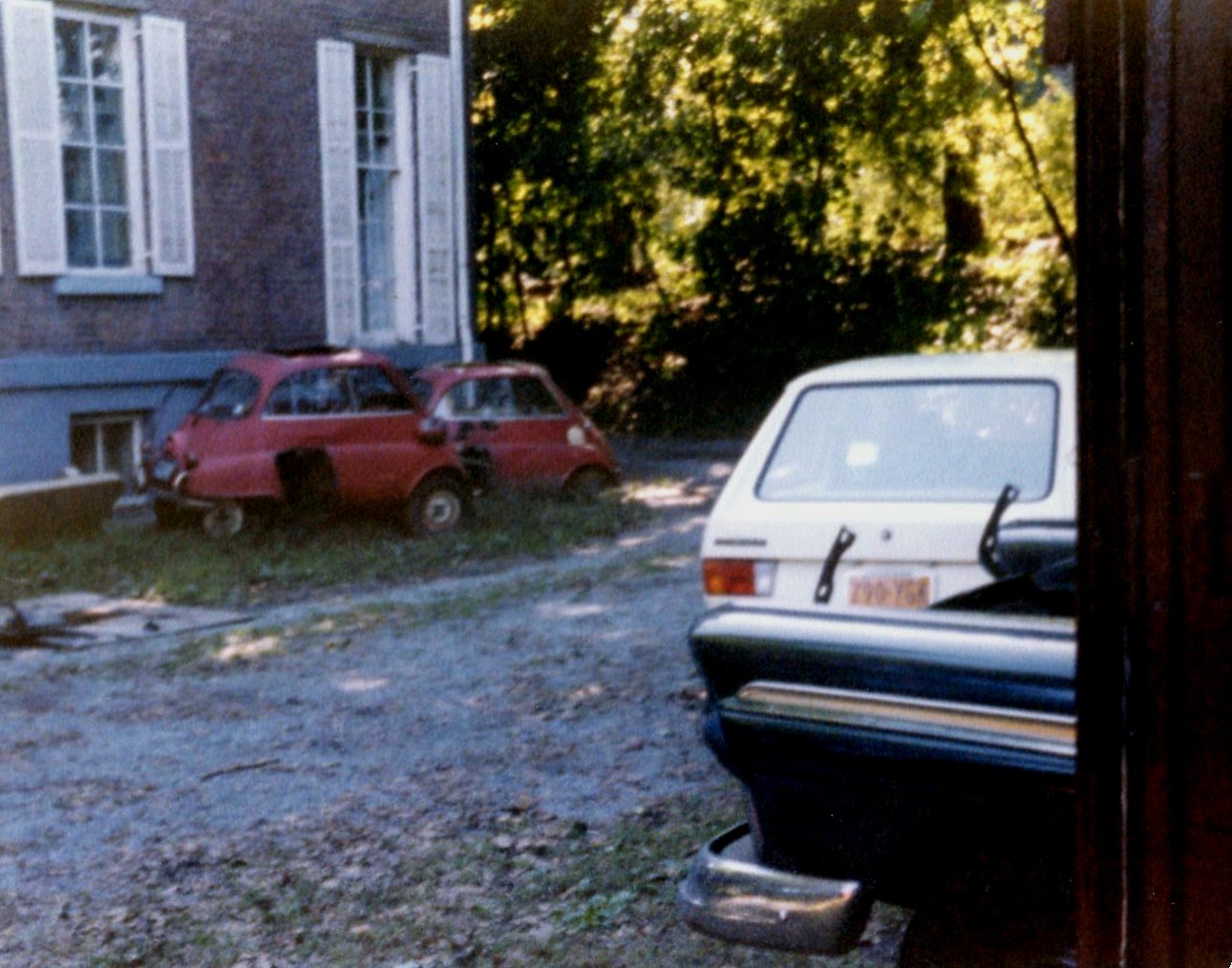
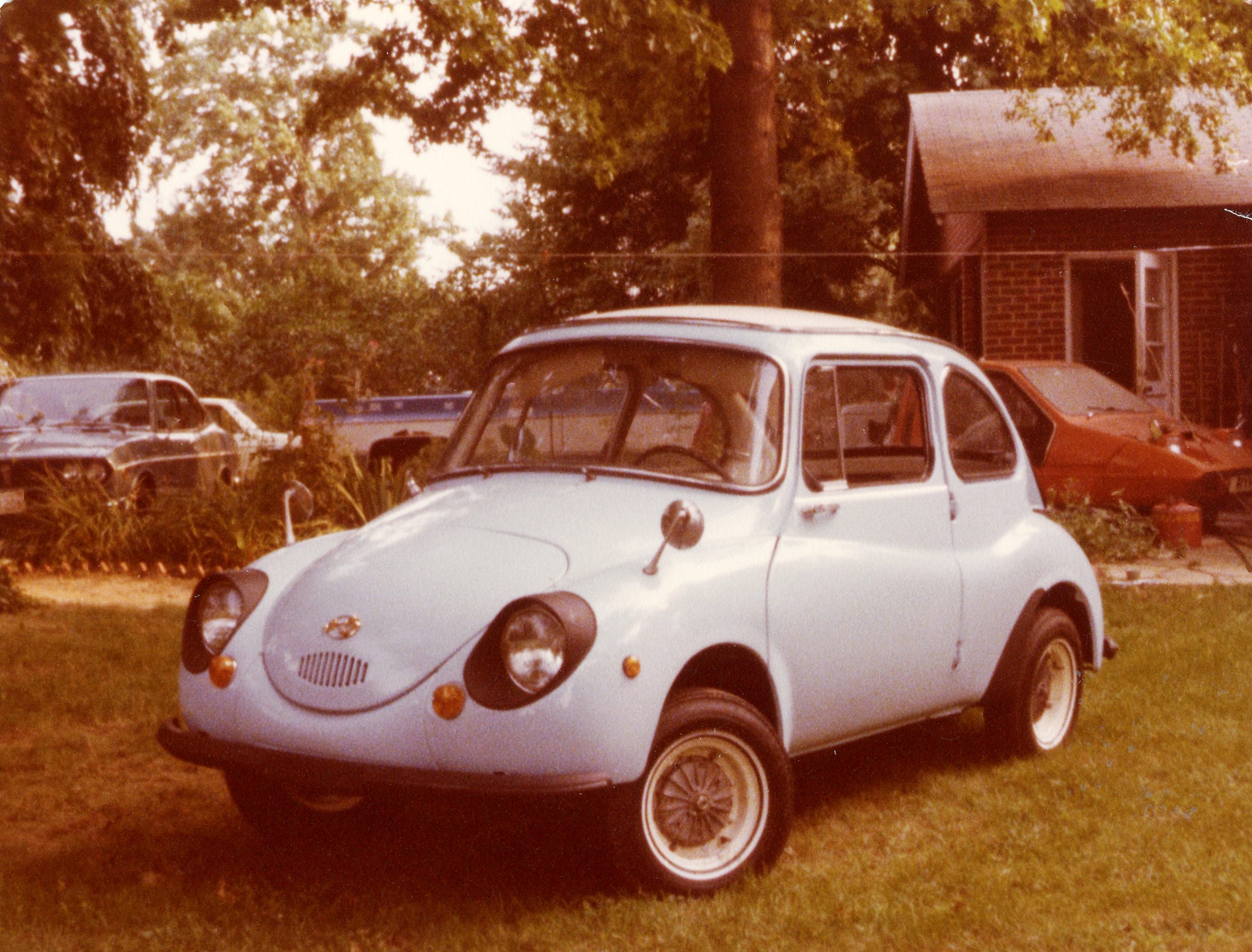
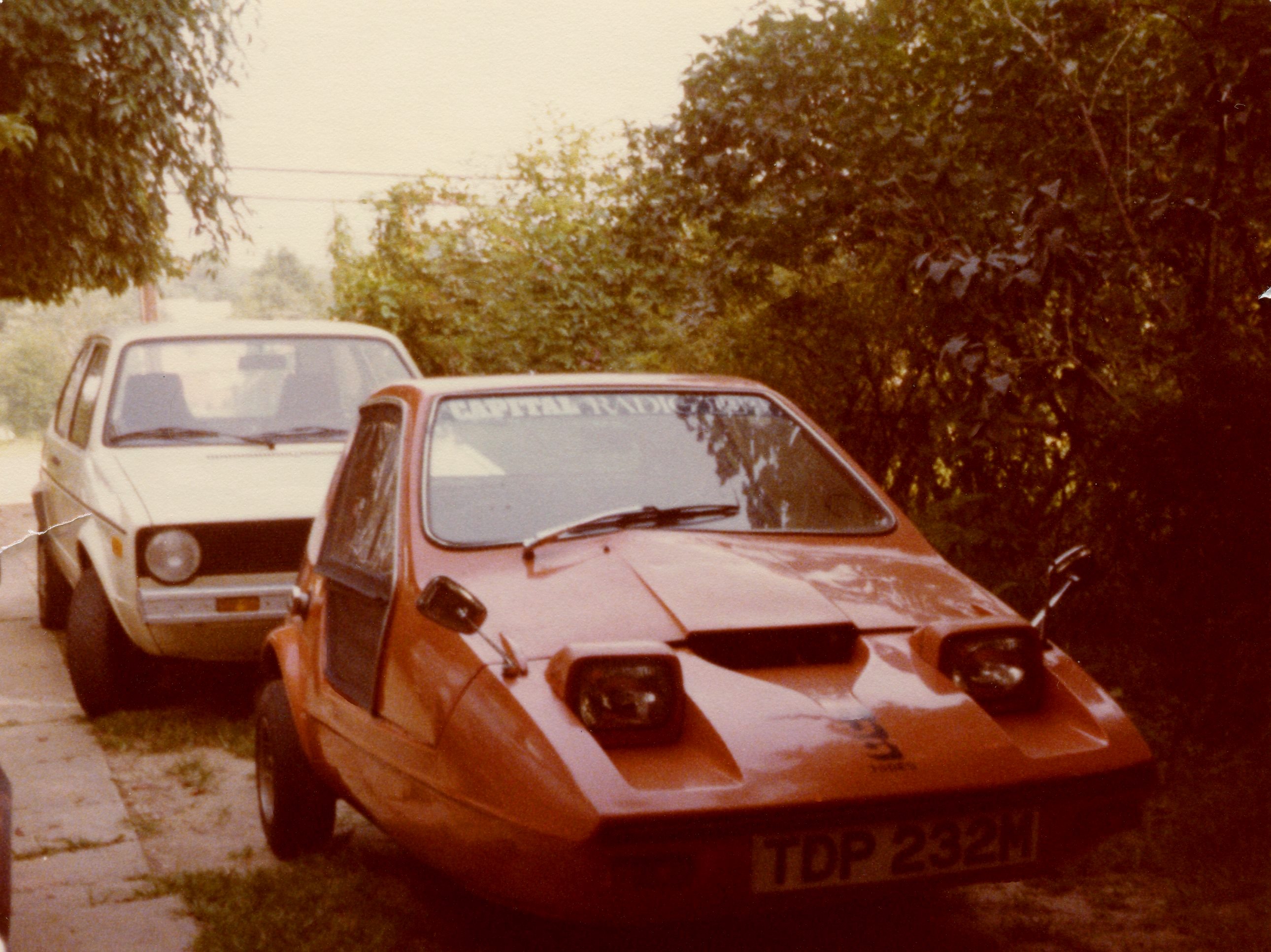
Later that summer, with a trip to the Washington DC area in the making, I took advantage of the HMI Club directory. I looked up a club member named John Malcolm who lived in Maryland, and invited myself to his house. John was more into Messerschmitts and Subaru 360s than he was Isettas, but he was technically brilliant (he had written several how-to articles for the club newsletter), so I picked his brain as much as possible. In addition to his various project cars strewn across his parents’ yard, he also showed me his ‘modern’ Bond Bug microcar.

The cars of John Malcolm:

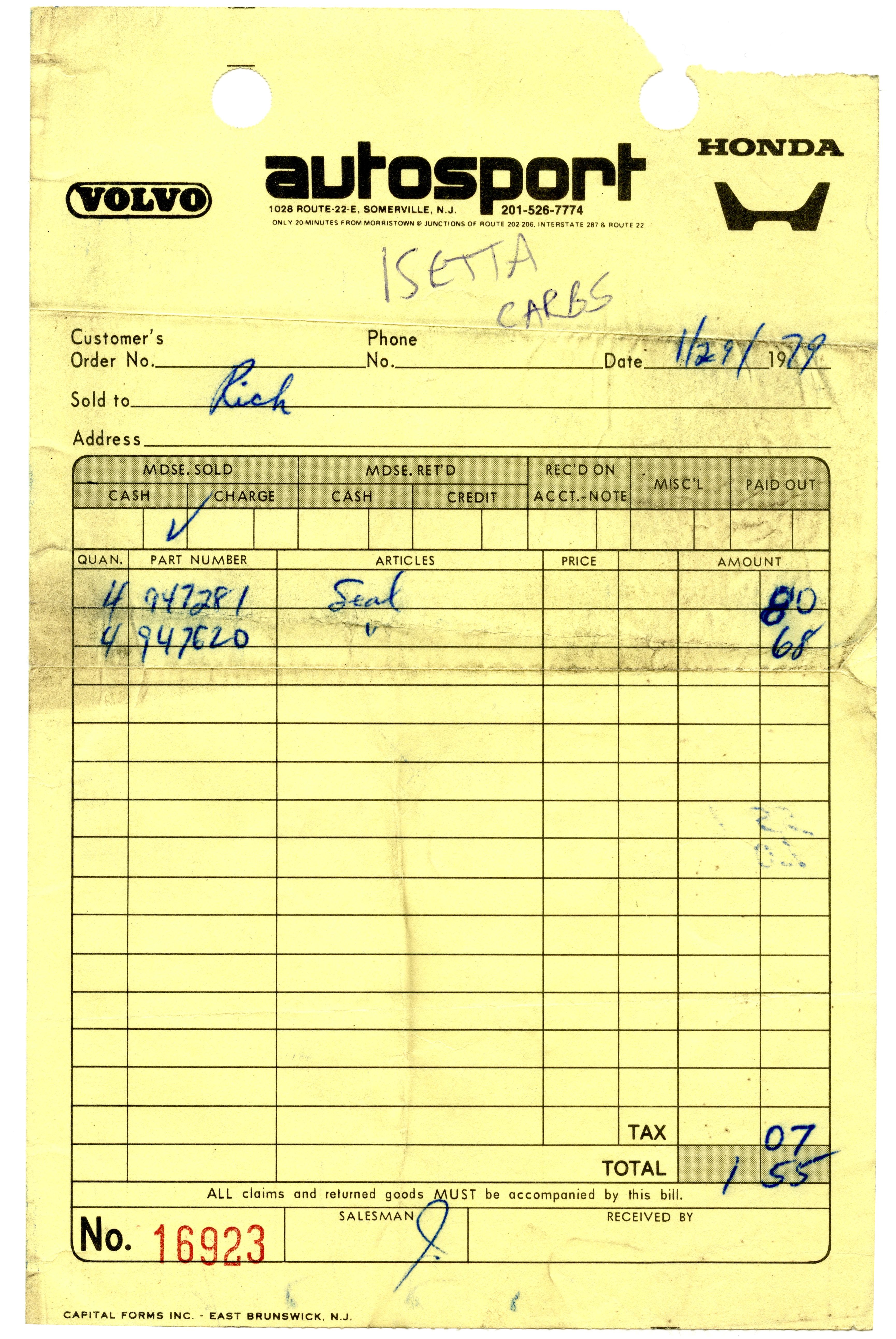
As 1979 drew to a close, the Skyliner was running but still needed significant body and interior work. There was no real progress to speak of with the Isettas. I had bought some carburetor parts from the Fellings (and even found some Volvo o-rings that would work), but the main stumbling block was that there was no plan. Access to my cars was about to get worse.


Any Volvo parts guys recognize those part numbers?


On January 1, 1980, I moved from my parents’ house on Staten Island to an apartment sans garage in Somerville NJ, which put me about a mile away from my job at Autosport. All the collector cars stayed with my folks, meaning, there was no regular opportunity to work on them.

In 1981, my father retired, and my parents decided to sell their Staten Island home and move to a retirement village in southern New Jersey. This meant that I could no longer rely on free storage for my rolling pipe dreams. My mechanic’s career was not exactly making me rich, and rather than selling off the collection, which would have been the mature decision, I spent what little extra funds I had on rental storage for all the cars.

The Isettas were moved into one half of a two-car detached garage in Maplewood NJ. Mike Adams, a salesman at Smythe Volvo in Summit NJ, where I went to work in August of 1980, had a Volvo PV 544. He was storing the Volvo in one half of a garage he was renting from a friend of his, Sue Stetson. He told me that the other half was available for $20/month. So I rented a truck, moved the 3 Isettas into this dirt floor garage, and told myself that at least they had a roof over their heads. As noted in greater detail here, the Skyliner was moved to Van’s Storage in western Jersey.

The decade of the 1980s began with me owning four collector cars, none of them stored anywhere within the proximity of my living quarters. Nine long years would pass before any further progress would transpire for my “rolling eggs”, as the Germans called the Isettas.


Stay tuned for Chapter Four, when we’ll discover how a clandestine rescue mission brought the Isettas home to a garage to call their own. 

All photographs copyright © 2018 Richard A. Reina. Photos may not be copied or reproduced without express written permission.


FUN FACT OF THE WEEK:

Ford’s flip-top Skyliner was not the world’s first retractable hardtop/convertible brought to market, but was certainly the first mass-produced one. The engineering was initially intended for the Continental Mark II, but when the bean-counters realized that the projected low volume of the Continental would never amortize the costs, the entire project was moved over to the full-size Ford platform. First introduced in 1957, Skyliner sales reached 20,000. But in 1958, volume dropped to 14,000, and for its third and final year, 1959 sales only hit 12,000 units. While Ford gave up on the retractable hardtop, the decklid and package shelf mechanisms lived on in the soft-top Thunderbird and Lincoln Continental convertibles of the 1960s.


The Isetta Saga, Chapter 2: Fetching Your Isettas in Several Easy 16-Hour Round Trips

Chapter One recounted the genesis of the Isetta Saga: Richard and Don, almost on a whim, answered an ad in Road & Track magazine by making a 16-hour round trip to northern Vermont, where they left a $100 down payment on the purchase of 3 or 4 (they really weren’t sure) BMW Isettas.
 In Chapter Two, we will see how our two intrepid automobile-restorers-to-be would go about bringing home their spoils.


CHAPTER TWO: FETCHING YOUR ISETTAS IN SEVERAL EASY 16-HOUR ROUND TRIPS

It was mid-November, 1978. As we promised Wes Turner, we did return, about three weeks later. In the interim, we plotted a low-cost method for obtaining the equipment we needed to move our non-running vehicles: we would borrow it.

My younger brother Karl happened to own a Chevy C-10 Suburban (the model with one door on the driver’s side, and two doors on the passenger side). It was equipped with a trailer hitch, and my bro had no problem lending it to us for a weekend.

For our next loan, we turned to Jerry Lustig, the dealer principal at Autosport, our employer. Jerry was a part-timer race car driver (his primary weapon in 1978 being a track-ready Fiat 124 Spider), and he owned an open-deck trailer. We asked him if we could borrow it (racing season was over), and he generously said yes.

As if this trip were to be all fun and games, we decided to invite our girlfriends along for the ride.

Instead of the bonsai back-n-forth-in-under-24-hours jaunt we pulled off last month, we decided to make a weekend of it. The plan was to leave New Jersey on Friday night after work, stay in a hotel halfway along, arrive in Moscow on Saturday, load the cars, stay in Moscow on Saturday, and drive home on Sunday.

Things didn’t go quite as smoothly as our first trip.

Trouble started about two hours after departure. Somewhere on the Connecticut Turnpike, we heard a booming/crashing sound behind us. Pulling onto the shoulder (and keep in mind it was dark by this time), we discovered that the trailer’s wooden ramps, which were not secured, had flown off and were lying on the highway.

We gave brief thought to the idea of dashing out to retrieve them, but other vehicles kept driving over them, reducing the ramps to splinters. We had no choice but to continue without them.

Saturday morning, we arrived at Wes’s and surveyed the situation. Our borrowed trailer was not going to fit more than 2 Isettas. There would be one more round-trip in the future. For now, it seemed most prudent to load the two vehicles which would most likely to roll on their own: the two-tone blue/grey car (the most complete of them), and one of the red cars (the one without the door vents).

With the girlfriends’ assistance (and maybe Les), we pushed and grunted the cars onto the trailer (remember, we had no ramps). To secure them, we used nylon rope we brought with us. We knew nothing of tie-down ratcheting straps, and I did my Boy-Scout best to make good knots. This loading and lashing took Saturday afternoon AND Sunday morning, so by the time we left Vermont, it was early Sunday afternoon. We had 8+ hours of driving in front of us, and we all had to work Monday morning.

Sunday’s drive was uneventful for the first six hours or so. Actually, we were a bit taken aback by our fellow motorists, hooting, hollering, honking, pointing, and acting generally hysterical at the sight of these forlorn Isettas.

Soon after entering New Jersey, we began to hear a clicking/clunking sound coming from the back of my brother’s truck. It quickly grew in volume and frequency. Checking around the truck with a flashlight (of course, it was dark outside), I noticed that one of the rear wheels was held on with only 4 of its 8 lug nuts. Four of the lugs had snapped off. We slowly motored to the nearest service station, left the truck/trailer/Isetta combination there, and called a family friend for a ride back to the dealership where we again had left our cars. It was very late on Sunday night when I finally made it back to my house, and I was deflated.

Monday after work, Don and I headed back to the service station (we had spoken to them during the day, and the Chevy was fixed), and I drove the truck, following Don to his house in Pittstown.

At some point during all this time together, we had come to a gentlemen’s agreement: Don wanted the two-tone blue/grey car. It was the most complete of the four, and based on appearances alone, it seemed to be the one car that would most easily respond to attempts at resuscitation. If I agreed to that, Don said, then I could have “the other three”. I agreed.

Arriving at Don’s house, we got what was now his car off the trailer. With the car sitting at the top of a gentle hill, Don suggested that I climb in, and he’d give it a push. I did, and he did. The gravity-fed ride was probably 30 feet and lasted 10 seconds. I had just had my first ride in an Isetta. I wouldn’t be in the driver’s seat of a moving Isetta for another seventeen years.

Returning to my parents’ house, I unloaded the one remaining Isetta, drove the rig back to the dealership, and unhooked the trailer. I don’t think either one of us said anything to Mr. Lustig about the ramps!

With winter about to start, we would wait until spring for what would be our third and final round-trip to Moscow VT.

By March of ’79, Don now owned a Dodge van, with hitch (how convenient). We again borrowed a (different) trailer from Mr. Lustig, who generously agreed even though we had lost his ramps.

Similar to our November trip, we decided to use the entire weekend for the adventure. Unlike November, the girlfriends stayed home, and I brought a camera. Wes, learning of our plans, offered to let us stay in a spare room on his property, which we gladly accepted.

Mar. 31, 1979: my first-ever photo of our Isettas. Don lashes the chassis to the trailer.

The two remaining cars were the red car with deluxe door vents, and the body sans chassis (plus boxes of loose parts presumably belonging to Isettas and not to Borgward Isabellas). We loaded the cars onto the trailer, tied them down the best we could, and prepared for the long ride home.

The door vents identify this car as a deluxe model (note Wes’s Celica Liftback in background)

This was the weekend of March 31-April 1, 1979. While in Vermont, we heard the news that there had been a nuclear plant accident at a site called Three Mile Island in Pennsylvania. We had our own mini-crisis (again) when we spotted a fuel leak from a small hole in the gas tank. We took care of it the best way we knew how: we drove faster.

At a service stop, I tried adding air to this tire. It held. Note professional rope-lashing job. 

With both cars coming back to Staten Island, we drove straight to my house, and dumped these two next to the one we fetched in November. My parents were thrilled.

Summer ’79: “my” 2.5 Isettas in my parents’ backyard (body on right is lacking chassis)


Another view: note 1965 VT plate


With engine cover missing, gaping hole reveals that engine is missing too

So here it was, the spring of 1979, and what had we accomplished? Don and I had completed three round trips to Moscow VT, totaling around 50 hours behind the wheel. Each trip was made in a different vehicle. We never kept track of the money spent on gasoline, tolls, hotels, meals, and unexpected repairs.

We each had laid out $325 to Wes Turner for the purchase. We would never have contact with Wes again.  I had no titles, no bills of sale, nothing to legally show that these cars were mine.

I was working as an automobile mechanic, and my thinking was “these cars are so small! What could be so difficult about getting one to run?” The truth was, I didn’t know where to start.

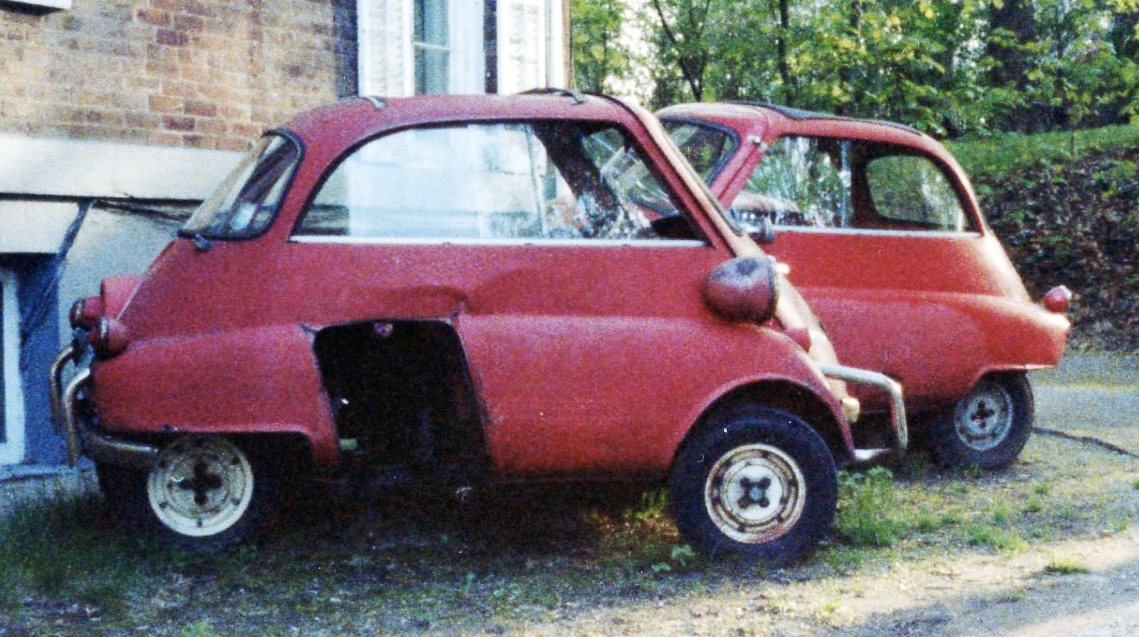
Of the 4 cars, I never photographed Don’s. This car, spotted years later, is the same color combo as his (but not in this condition).

Stay tuned for Chapter Three, when your humble Isetta restorer discovers that there are others in the U.S. who are as crazy about Isettas as he is (actually, crazier).

All photographs copyright © 2018 Richard A. Reina. Photos may not be copied or reproduced without express written permission.


FUN FACT OF THE WEEK

BMW began production of its version of the Isetta after several BMW executives spotted the Iso Isetta at a European car show. BMW signed a contract with Iso which allowed the company to install their own (motorcycle-based) drivetrain, but they were prohibited from making other changes. The BMW Isetta turned out to be a huge commercial success for the Bavarian Motor Works, with final production numbers exceeding 160,000. It was the largest-volume BMW automobile model produced to date.
The BMW Isetta Saga, Chapter 1: Finding your car in the Road & Track ads

Happy New Year! January 2018 brings us near the completion of three years of Richard’s Car Blog. Post #1 was February 2015, and we’ve managed to publish 144 more since then. Thanks to all of you for your readership, and your comments, whether sent to the site, to my email, or delivered to me in person. The support is greatly appreciated.
All my blog posts relate to either my automotive career, or my immersion in the car hobby (which really started as an obsessed two-year-old). I’ve gone back to reflect on my dad’s cars, and I’ve posted rally and auction results within days of participation.
There is one vehicle, a car that I owned for 30 years, which has yet to be the subject of a blog post (although it has been mentioned in passing). Many of you know that I owned and restored a 1957 BMW Isetta. Unlike what you see on TV, the restoration didn’t take 60 minutes. In my case, 17 years elapsed between purchase and my first drive.
So we’ll kick off 2018 by launching the Isetta Saga. Memory-triggering is helped by my photo collection (plus the fact that I’m, like, really smart). Chapter 1 will be followed by umpteen more, taking us through much of this winter, as we patiently await for Spring Carlisle in April. Thanks again for reading along.

In October of 1978, I was 24 years old, living at home with my parents, and was all of two months into my job as an apprentice mechanic at Autosport, a Volvo/Honda/Alfa Romeo dealership in Somerville, NJ. I had become fast friends with a parts counterperson named Don Krech, whom I met when I started working there in August. Don and I were the same age, and shared similar interests in cars and music.

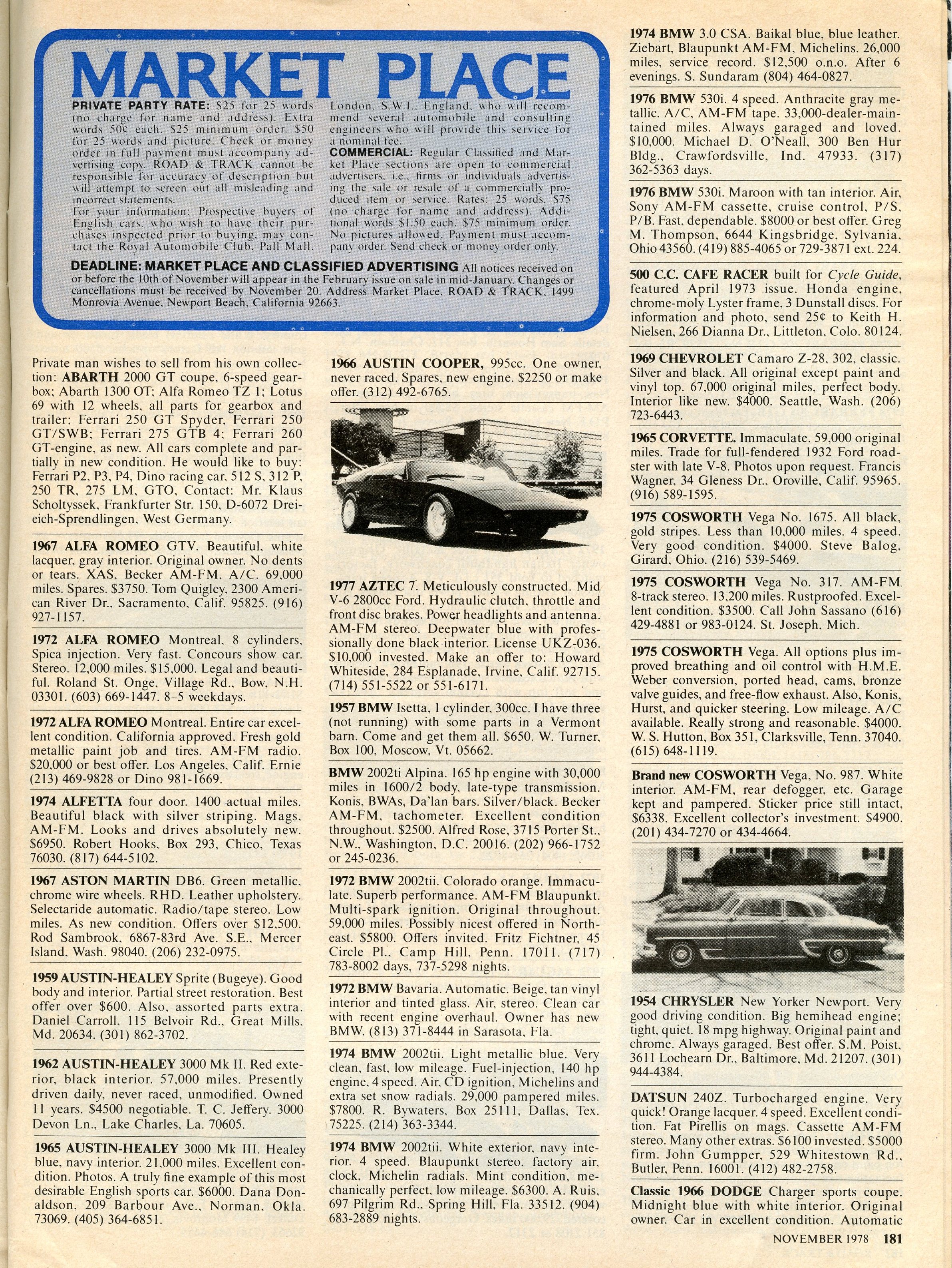
One day that month, the November issue of Road & Track magazine, to which I subscribed, arrived in the mail. I noticed an ad in MARKET PLACE, their classified ad section:

R&T, Nov. ’78. Look in the 2nd column, 3rd ad.

I brought the magazine to work and showed it to Don. The ad had neither a phone number nor street address (only a PO Box), yet we almost immediately decided to make the 8-hour one-way drive together, on the presumption that we would figure it out when we got there. Our plan was to depart late that Friday in order to arrive in Moscow VT early on Saturday morning.

Don played guitar in a band, and he had a gig that Friday. After the gig, I met Don at the dealership and, leaving my VW Rabbit there, climbed into his yellow Toyota Corolla SR-5 Liftback. We departed central New Jersey around 1 a.m. on the morning of Saturday October 21, 1978, headed for Moscow Vermont. We had paper maps, a bunch of music cassettes, some money, and precious little else with us.

Don did most of the driving. Even though I had caught a few hours shut-eye after getting home from work, I was tired, and I typically don’t do well when challenged to stay awake all night. We kept each other going by blasting The Cars’ first album on the Toyota’s stereo.

We arrived in the hamlet of Moscow, just outside the better-known ski resort of Stowe, around 9 a.m., groggy from lack of sleep, and convinced that we should have no trouble finding a Mr. “W. Turner” in a town so tiny. But first we found coffee.

We stopped several people on the street and inquired “do you know a W. Turner?” By the time we asked the fifth person, we got a semi-intelligent answer: “oh yeah, he lives in that corner house with the Honda on the front lawn”. Sure enough, on our way into town, we had driven past a Honda 600 up on jack stands, and joked that this must be his place. It was.

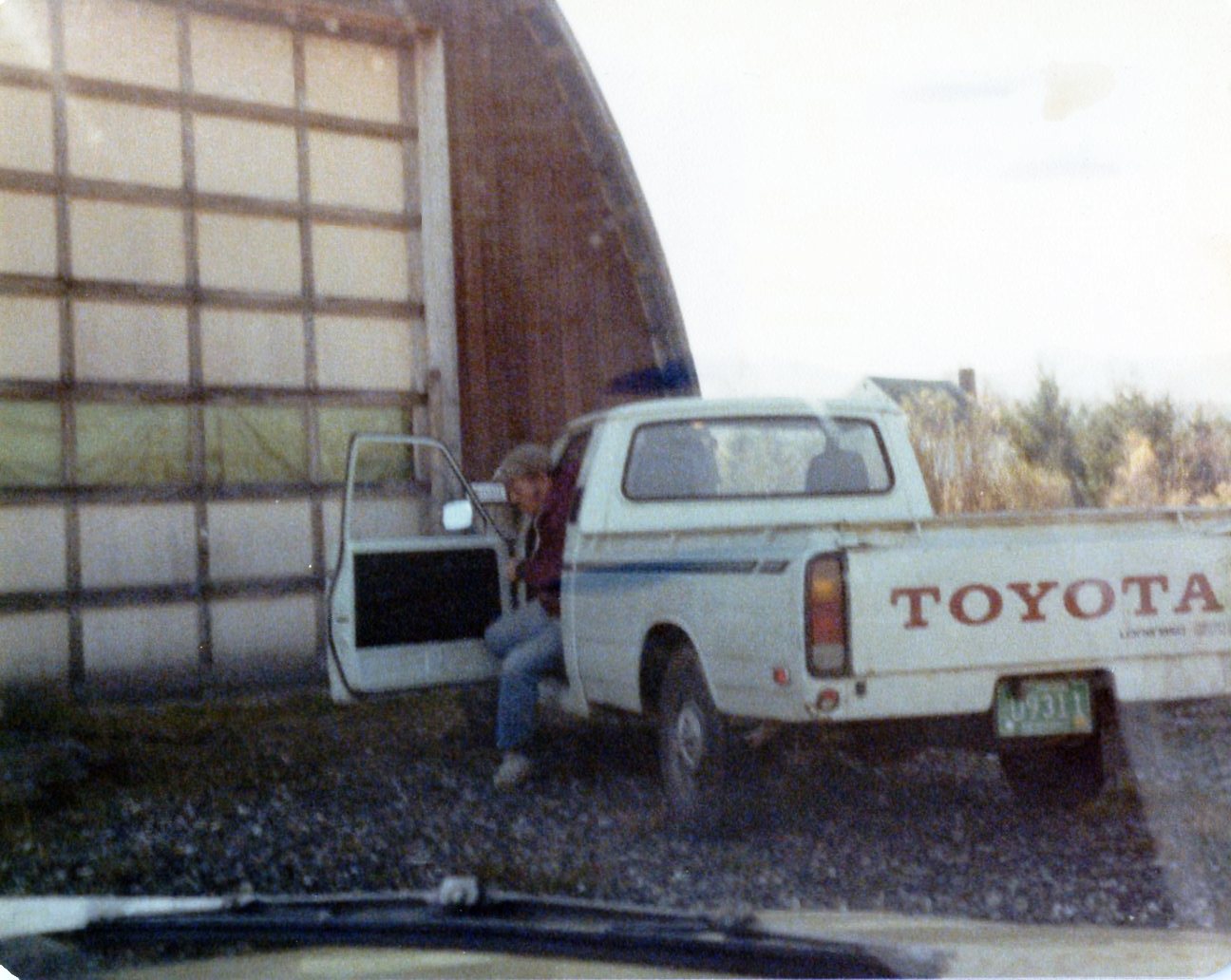
We knocked. An older gentleman answered the door, and responded in the affirmative to the question “Are you W. Turner?” When we told him that we were there in response to the Isetta ad, he was shocked. But he shrugged his shoulders, told us the cars were in a barn a mile away, and instructed that we should follow him in his Toyota pickup truck.

Wes Turner emerging from his Toyota. We are about to see the Isettas for the first time.

The barn door yawned wide, allowing daylight to hit its inner surfaces for the first time in who knows how long. What little light there was revealed a number of Isettas scattered about on the dirt floor, none of which was completely assembled. Some had all their glass, some did not. Various Isetta-ish-looking parts were on the cars’ floors. We sort of made out an engine or two. One Isetta had a Vermont license plate. From 1965.

What we saw in that barn should have sent us scurrying back to New Jersey.

But it did not. As two naïve 24-year-olds, all we saw was potential: here were three BMW Isettas, plus an extra body without a chassis, as the ad described. We weren’t horrified! We were delighted. They were small; they were cute; and they certainly gave the impression of being easy to restore.

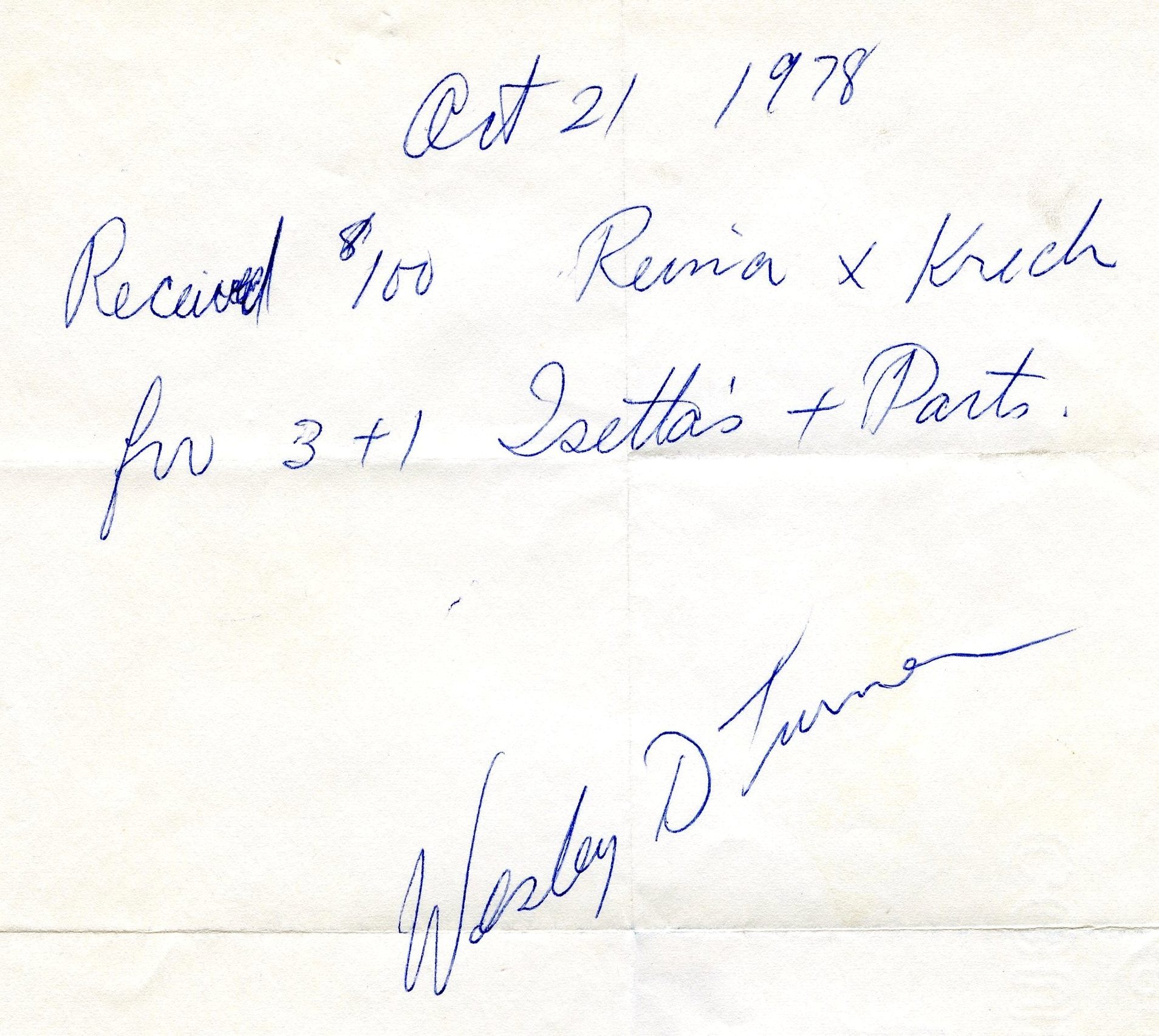
We didn’t ask if he had titles (he didn’t); we didn’t ask if there was any wiggle room on the $650 asking price; we forked over a deposit of $100 (amazed in retrospect that we had that much cash between us), and told Wesley D. Turner that we’d be back up “in a few weeks” to drag our new treasures home.

This signed deposit receipt was the only proof we had that we bought Wes’ Isettas


Wes was always an enigma to us; he gave us this card, but we still didn’t have his number

We departed Moscow around 12 noon to head home. At no point during the 8-hour return trip did Don and I A) talk about exactly how we would “divide” the spoils among us; or B) try to figure out exactly how we would drag these admittedly tiny vehicles back south.

Here’s the entirety of what we knew: it was already late October, and if we were going to bring any of it home in 1978, it had better be before winter weather hit.

Don got me back to the dealership and my car around 8pm. I made the 45-minute drive home and went straight to bed, knowing I’d see Don at work on Monday, when we would resume our plans.

Stay tuned for Chapter Two: Fetching Your Isettas in Several Easy 16-Hour Round Trips


All photographs copyright © 2018 Richard A. Reina. Photos may not be copied or reproduced without express written permission.


FUN FACT OF THE WEEK

The Isetta was not a BMW design, but originated in Italy, brought to market by a company called Iso. The original Iso Isetta was a commercial flop. (The name Isetta is Italian for “Little Iso”.) Iso had better success in the 1960s with the Iso Rivolta and Iso Griffo, hybrids with Italian design and American V8 muscle.

Sunday Morning Breakfast Runs – The Early Years, Pt. I

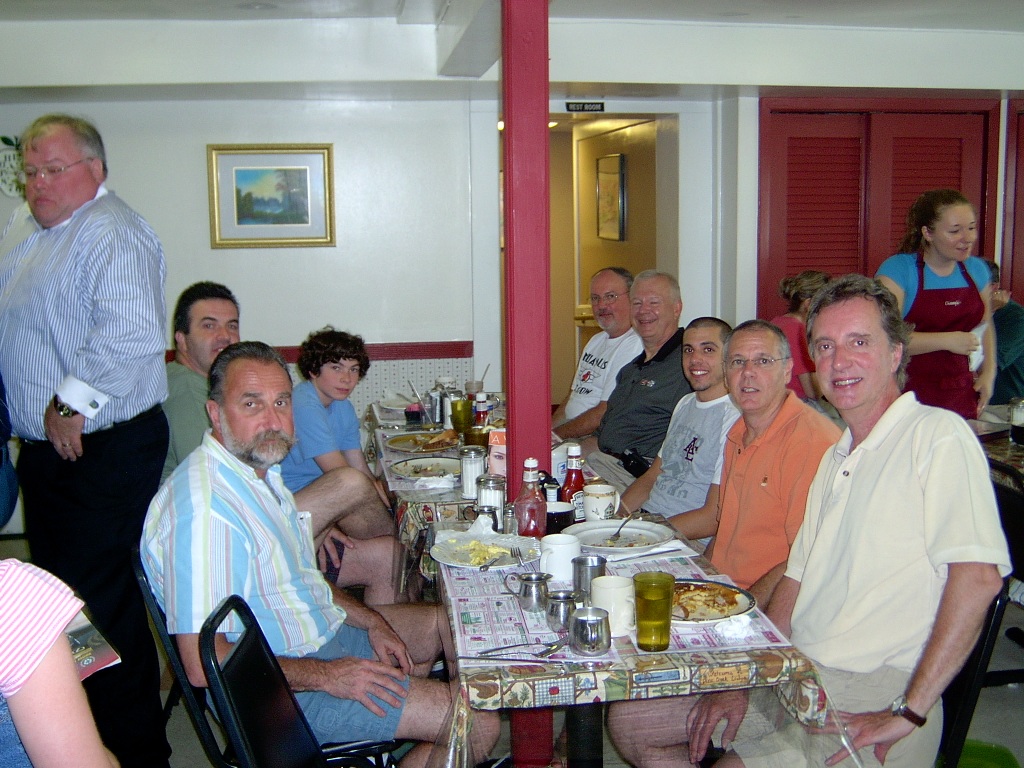
Our Sunday Morning Breakfast Runs, about which I’ve blogged so much, started well before I joined the fray. I believe I had been told that the initial trio who launched these events began back in 1999 or 2000.

Earlier this year, someone in our group who had joined around the same time as I did asked me, “when did all this start?” Great question, I responded to myself as much to anyone else, and decided to pore through my photos to see how far back I could trace my involvement.

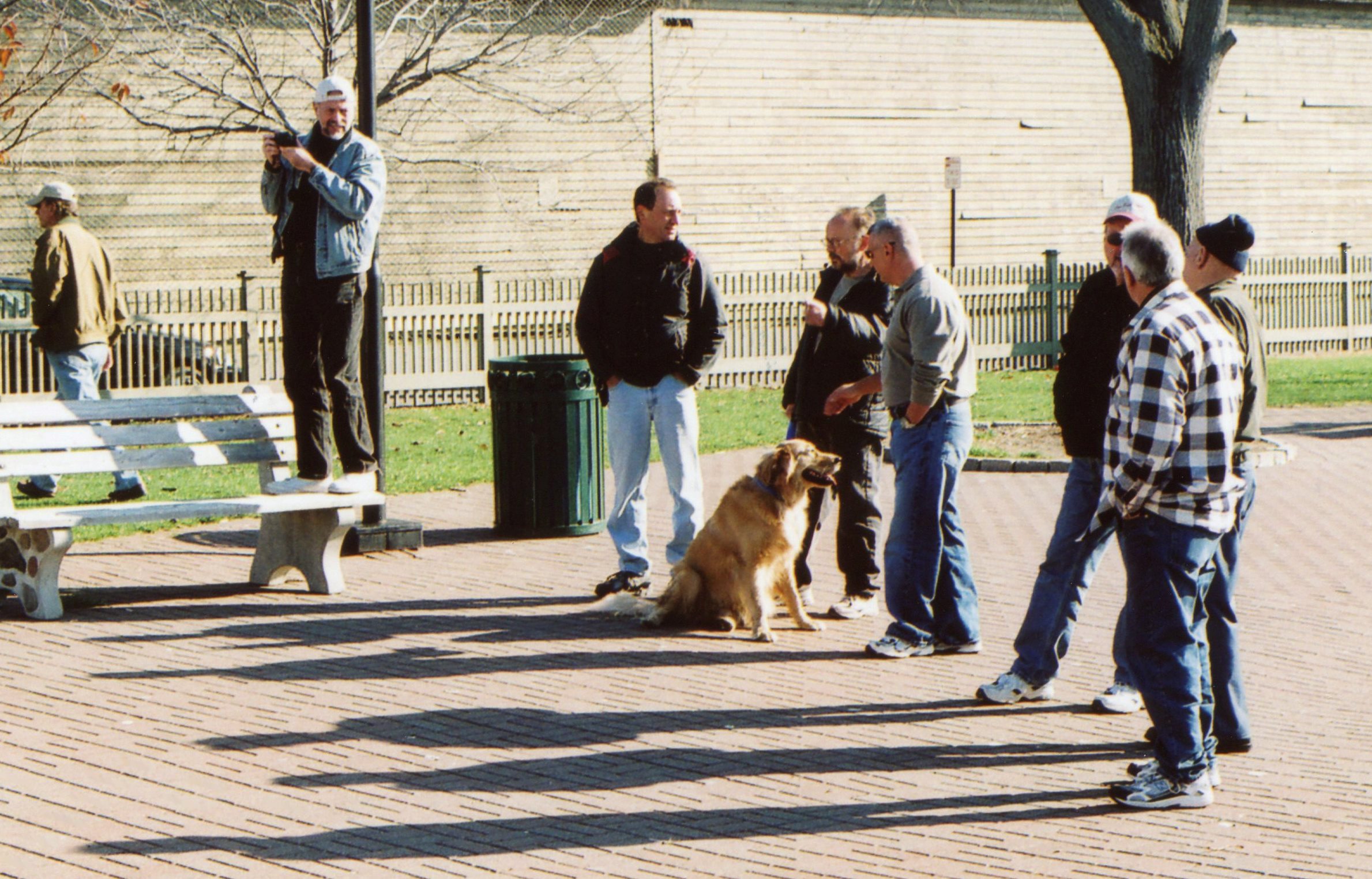
The earliest photographic evidence of my participation takes me to early spring of 2006. Since the trees in the photos have yet to bloom, I would pin the timeframe as late March/early April. The photos were taken in Cold Spring NY, which was a frequent destination for many of the early runs. We parked our cars around a little cul-de-sac, with the Hudson River in the background, and this served as a wonderful photo op (that’s Burton standing on the bench, primed for some excellent shots). Note that there are SEVEN cars, a typical number for our group at that time.

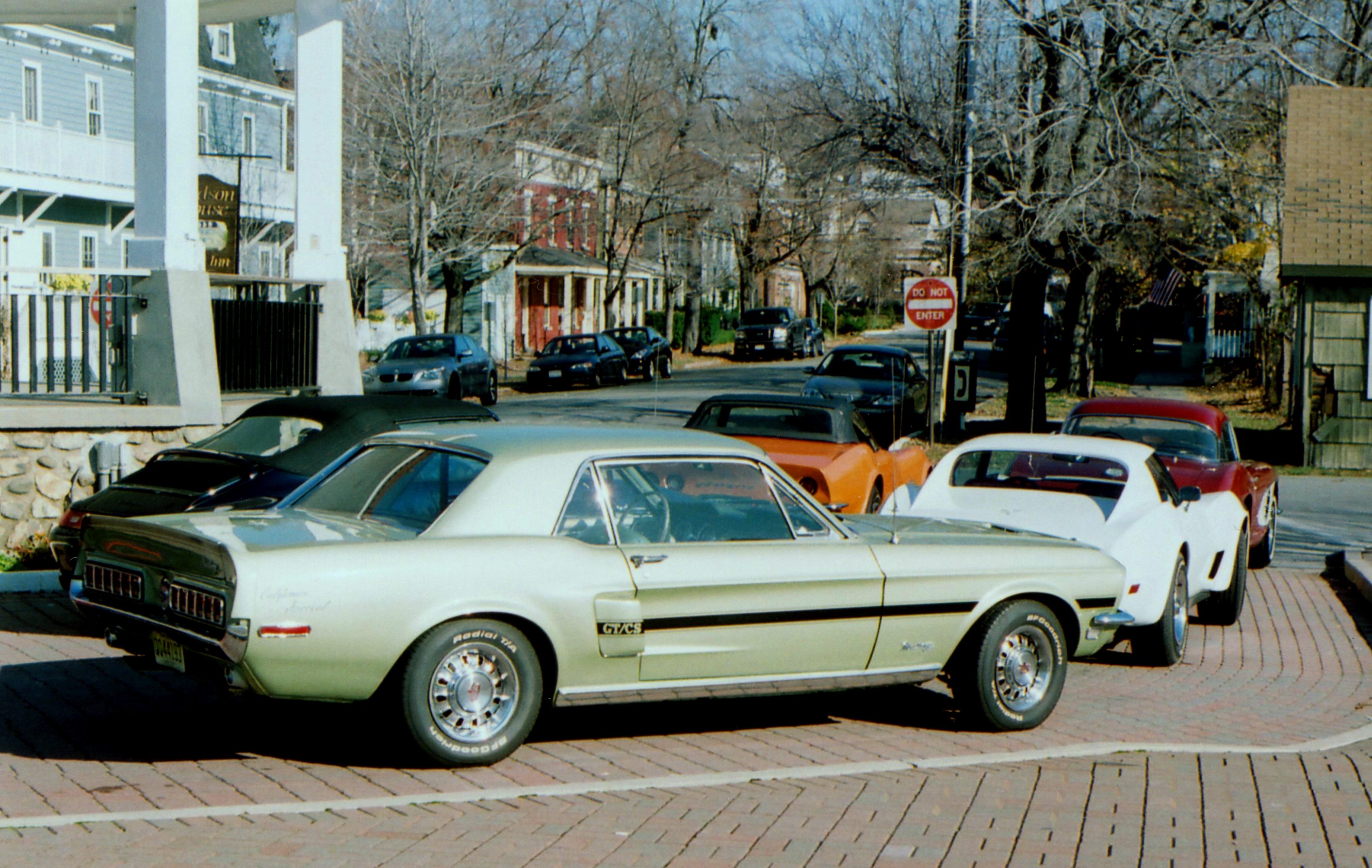
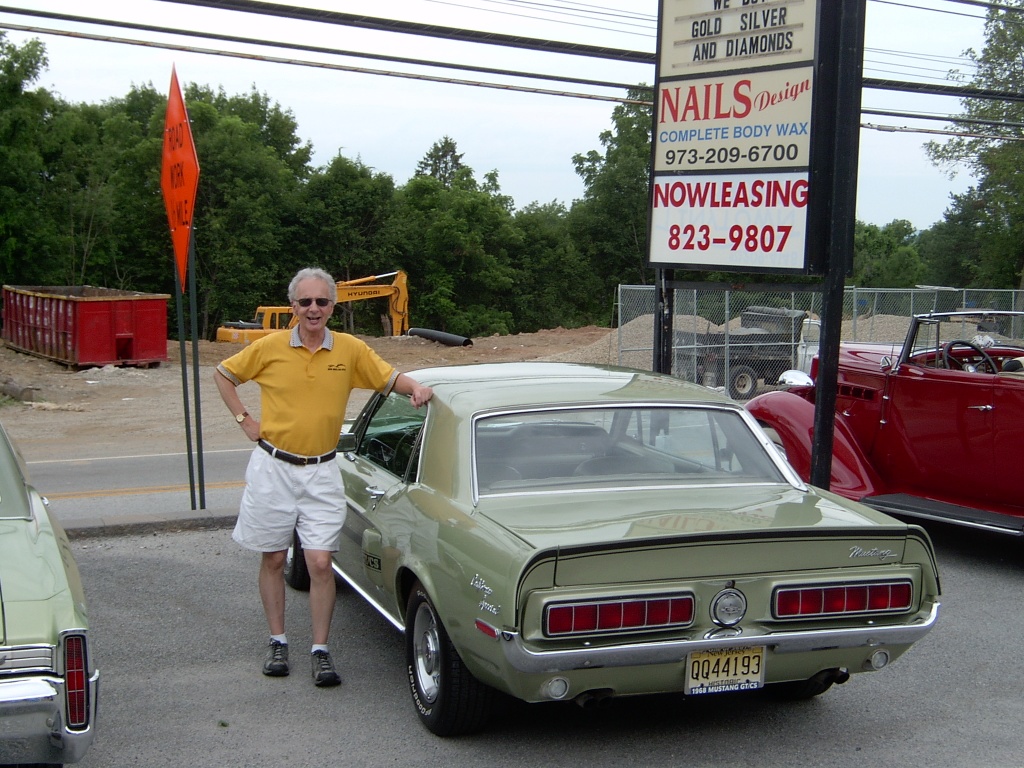
My ’68 Mustang California Special (GT/CS) had been in my possession for only 2 ½ years. The year 2006 would be the year in between driving that car in the ’05 and ’07 New England 1000 rallies.

The next time I photographed a Breakfast Run was June of 2008, and since the pictures reveal that our destination was Granny’s Pancake House in Hamburg NJ, I know that this was one of the, if not THE first time that Larry and I “hosted” the run. Granny’s had been recommended to me by a colleague at Volvo, and it proved to be a tasty breakfast place.

The GT/CS at the start of the run

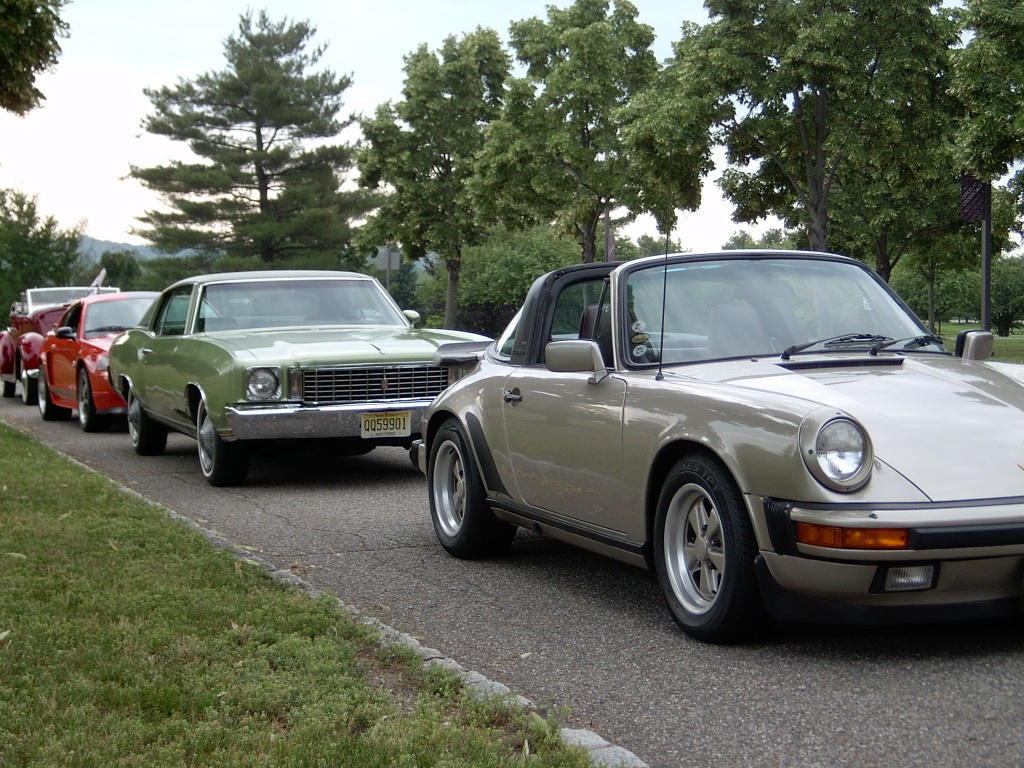
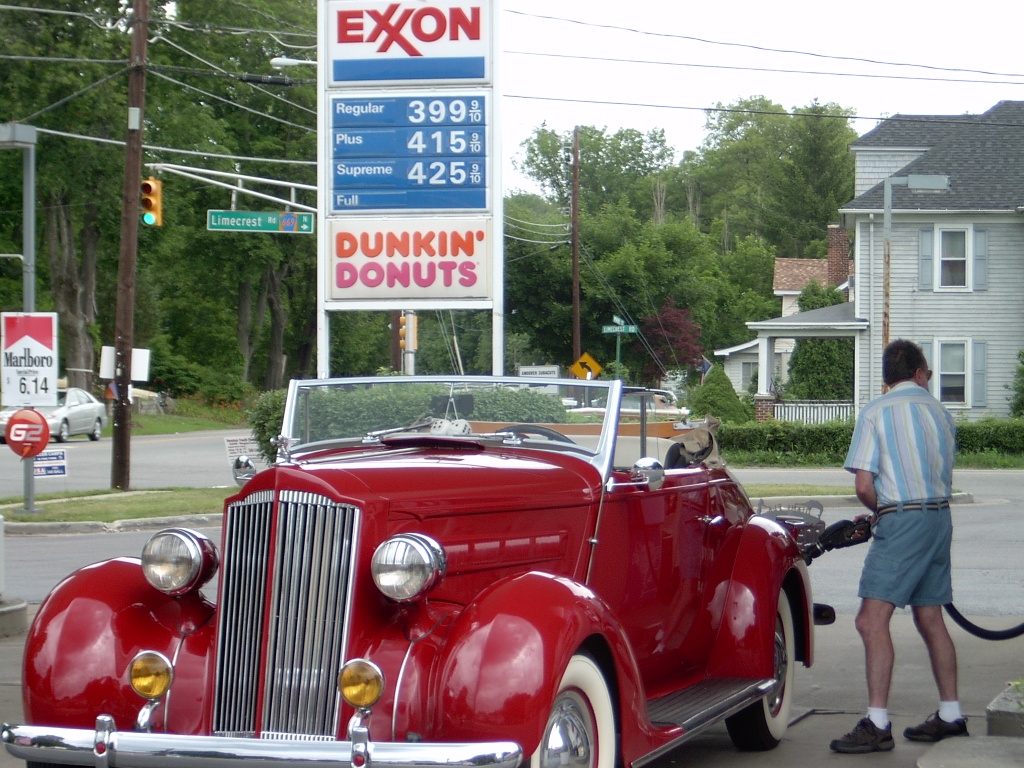
As we exited the restaurant, I asked each driver (and passenger, if there was one) to pose next to their automobiles. As is always the case, the eclectic mix of vehicles is a big part of the draw. Our NE1000 buddy Ron dared to show up in his 1937 Packard convertible. I can report that he doesn’t baby the car on the road, as I had to keep my foot into my 390 to keep up with him!

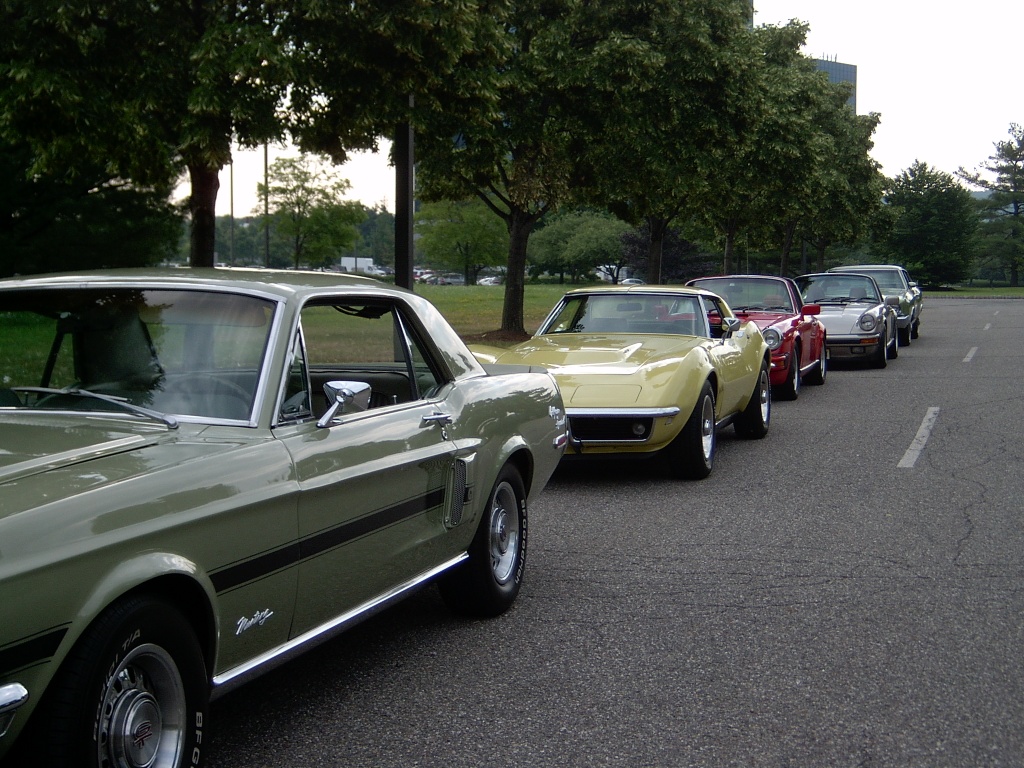
Again, there were seven cars, which made it easy to keep everyone together in a caravan. Little could we imagine the size to which our outfit would expand.

In a future post, we’ll continue to look back at some of our older Sunday Breakfast Runs.

Our June 2008 participants (NOT the dude standing up at the left)


Ken and son with Porsche 911


Peter with Porsche 911


Larry with Chevy Monte Carlo


Richard with Mustang GT/CS


Ron with Packard


Rich and son with Mustang


Bill with Corvette


Spotting the Packard over the Mustang’s hood


Summer of ’08: check out those high fuel prices!


All photographs copyright © 2017 Richard A. Reina. Photos may not be copied or reproduced without express written permission.


FUN FACT OF THE WEEK

A 1937 Packard Super Eight convertible coupe, with a 135 hp, 320 c.i. inline-8, cost $2,680 new. Or, one could purchase a 1937 Ford DeLuxe cabriolet, with an 85 hp, 221 c.i. V8, and pay $719 (27% of the Packard’s cost).


The AACA Mileage Award Program (MAP)

It’s been over ten years since I first joined the Antique Automobile Club of America (AACA), even though I have been attending the club’s Hershey events since the late 1970s.

In my opinion, the club sometimes gets undeserved criticism for being set in its ways, an organization whose membership is only focused on perfect show cars. As evidence to the contrary, I cite the introduction of the HPOF (Historical Preservation of Original Features) award, which recognizes vehicles which are in essentially original unrestored condition. Another recent addition was the creation of the Driver’s Participation Class (DPC), which has brought many previously-excluded vehicles onto the showfields. And to battle the image of “old guys and their old cars”, great strides have been made to get our youth into the club and involved in this hobby.

Along these lines, I accidentally stumbled across something called the Mileage Award Program (MAP) on the AACA website. Seemingly started in 2012, its purpose is to reward those who actually drive their antiques. I had not heard of it before discovering it online about a year ago.

Busy front end, what with personalized plate, HPOF award, and Mileage award

I sent in my application, and received an emblem and a mileage-tracking form. Once I pulled my Alfa Romeo out of the AACA Museum earlier this year, I noted the odometer reading, and began driving the car. The year 2017 saw plenty of use for the Alfa, the highlight of which was the almost-900 mile round trip to Montreal for the AROC (Alfa Romeo Owners’ Club) annual convention.

As I was putting the car away for the winter in mid-November, I recorded that the car had been driven just over 2,000 miles. I noted that fact on the MAP form, and mailed it in. Several weeks later, my “2” pin arrived, and today, I fastened it to the MAP plaque above the front license plate.

“2” is for two thousand. Additional holes are for future mileage pins.

The MAP recognition awards are given out at 2,000 and 5,000 mile intervals. (It is not clear to me if the mileage segments are cumulative or not; in other words, when I drive another 3,000 miles, am I then eligible for my 5,000-mile pin? Or must I now drive an additional 5,000 miles? I need to reach out to the club and ask.)

If you’re an AACA member (and if you’re not, please consider joining this wonderful club; old-car ownership is NOT required!), check out this relatively new feature. If you regularly drive your AACA-eligible car, it’s a great badge of honor, as well as a conversation starter if your car has the Mileage Award Program recognition on it.


All photographs copyright © 2017 Richard A. Reina. Photos may not be copied or reproduced without express written permission.


FUN FACT OF THE WEEK

In 2012, the AACA published its first-ever “Membership Album and Roster”. The hardcover book is in two sections: the bulk of the book contains color photos of hundreds of members’ cars. The final third is a phone directory-like alphabetical list of every AACA member. The book runs 919 pages.


The Personalized Plate

(NOTE: The following is a work of historical fiction.)

Bill Farrell was not a car guy, and he knew it. He was painfully aware of it because his father, Thomas P. (Tommy) Farrell II, had been a car guy, and never let Bill, his only child, forget it.

Tommy came of age in the early days of hotrodding: shoehorning worked-over flatheads into chopped Deuce coupes was all he and his Army buddies wanted to do once the war ended. Laying rubber and chasing girls (not necessarily in that order) helped them forget the horrors of World War Two. They were just happy they survived.

Tommy wasn’t really one for much chasing. His high school squeeze, Helen, was waiting for him at the end of the war. But Helen was done waiting; she told Tommy in no uncertain terms that if he wanted her, he needed to get down on one knee “and be a man about it”. And so he did, and so they did: by the summer of ’46, the knot was tied, and it wasn’t long after that Helen was “with child”.

Tommy secretly hoped for a boy. Helen claimed she didn’t care, but growing up as the only girl in a family of five children, she dreamed of a daughter. On the 7th of July 1947, a son was born to Thomas and Helen Farrell. Tommy knew all along that if he had a son, he’d be named “Thomas P. Farrell III”. (The P stood for Patrick, and his Irish grandparents told him the name came from St. Patrick, even if he didn’t himself believe it.)

Helen had a secret she never told her husband: before Helen’s mother passed away, while Tommy was at war, Helen promised her mother that if she ever had a son, he would be named William, after Helen’s father, who succumbed to cancer when Helen was just 12.

In a way that only wives can do, Helen gently but firmly informed her husband that she wanted their son named after her dad. Tommy actually fought it for a day, then gave in, knowing he would never win. As something of a consolation prize, their son was given his dad’s name as a middle name.

For reasons which remained unspoken, and which were eventually taken to their graves, Tommy and Helen stopped trying to have another offspring. Bill was an only child.

He was a typical boy, playing with the typical toys of the time. Yet any attempt by Bill’s dad to coerce the youngster into joining him in the garage fell on deaf ears. Bill (“William” in school, and never “Billy” at home) would rather watch that new-fangled TV, for which Tommy had no use. So Tommy continued to fiddle with his Deuce in the garage, while Bill played with Lincoln Logs and watched Saturday morning cartoons.

Fast-forward to 1963: Bill, at the age of 16, was eligible for his driver’s license, and succeeded in passing his driver’s test on the first try. His mom’s car, a ’62 Dodge Dart 440 station wagon with automatic, was what he preferred to drive. His dad’s daily driver, a ’59 Chevy Biscayne 2-door post with 3-on-the-tree, would have been first choice for most teenage boys, but Bill didn’t know how to shift with a clutch, and showed zero interest in learning.

Always meticulous, the boy did enjoy the wash-and-wax ritual, and treated his mother’s wagon to a fresh coat of Simonize at least twice a year. He may not have been the consummate car guy, but he wanted his ride to be clean while he was behind the wheel.

There was one way he was very much like his dad: Bill met a girl, Sally, in high school, and it wasn’t long before they were going steady. By the time each of them was 20, they knew they wanted to spend their lives together. In the autumn of 1967, Bill and Sally married.

The newlyweds stayed in town, and took advantage of both sets of parents living nearby, very handy when Andrew (1969) and Eileen (1971) were born. Their house, at 7 Hemlock Court, in their leafy New Jersey suburb, had a two-car garage, of which Bill’s dad was unendingly jealous. Although Tommy could always afford to provide a vehicle for both Helen and him, he never managed to own property with more than a one-car garage. He burned up a bit more when he saw his son and daughter-in-law use the garage for bicycles and lawn furniture rather than automobiles.

Bill’s automotive choices were always practical. He liked full-size Fords as family cars, and had a series of them throughout the decade of the ‘70s, usually in brown or green. But between two gas crises and diminishing vehicular quality, Bill began to sour on cars from the Blue Oval. One day a new dealership opened in town, selling these nice-looking Japanese front-wheel-drive sedans. By 1978, Bill bought one of the first Honda Accords in his neighborhood, and he never looked back.

Before the decade of the ‘80s arrived, both of Bill’s parents passed away from natural causes.

Bill never so much as changed his own oil (“that’s what dealer service departments are for”), but it still haunted him that he never lived up to his dad’s image as a “car guy”. One day, he noticed a car in the parking lot at work with 3 letters, followed by a number. That’s it! He told himself that he’d honor his father in his own way by getting a personalized plate, featuring his initials and his lucky number “7” (he was born on 7/7/47, and his house number was 7).

In New Jersey, car owners are allowed to transfer plates from one vehicle to the next, and that’s just what Bill did. His home state eventually redesigned their license plates, moving from the non-reflectorized “straw & black” to reflectorized plates in different shades. Still, Bill held onto his cherished tag, moving it from Accord to Accord. (He occasionally selected a different exterior color, but stayed with the same model.)

Both Andrew and Eileen grew up to be polite young adults, and like their parents and grandparents before them, each of them married young. Andrew and his bride Sandy moved to Indiana for her job. They also decided, for reasons kept to themselves, to remain childless. Eileen married Robb, and they moved two towns away from her folks. Bill and Sally became convinced they would never become grandparents, but Robb and Eileen were only postponing things until they got settled in their careers. They had two boys in quick succession, Tyler (2002) and Jordan (2005).

By the second decade of the 21st century, Bill Farrell wasn’t old by any stretch of the imagination, but he did feel himself slowing down. He drove less, mainly because he realized his eyesight wasn’t what it used to be. One day, approaching his car in the mall parking lot, he thought his eyes deceived him. A group of young boys was running away from his car, giggling. He thought he might have been imagining it. Then a few months later, some high school girls were using their phones (“how does a phone have a camera in it anyway?”) to take their pictures next to his car. “What could be interesting about an old Honda?” he asked himself.

Because his car was more than a few years old, and because Sally drove a newer Acura, they tended to use her car whenever they visited Eileen, Robb, and the boys. One day, since the Accord had just come back from the car wash and was blocking her car, they decided to hop into his car for the ride to visit their grandkids.

As soon as they arrived, Bill was heard to exclaim “gosh darned if these kids can’t get their noses unglued from their phones!” His daughter just shrugged her shoulders as he implored the boys to join him for a game of catch. Finally, Jordan, who had just turned 10, said, “sure Grandpa, let’s go outside”. Gramps replied, “OK, but no fastballs! And don’t hit my car with any wild pitches!”

Everyone else stayed in the air conditioning. Bill and his grandson got no further than 10 feet from the driveway when Jordan, catching his first-ever glimpse of his grandfather’s car, could not stop the hysterical laughing. Bill was equally stunned and annoyed. What in hell could be so funny? When the belly laughs finally subsided enough for Jordan to speak, he felt that he had to whisper the truth to his grandfather.

All that Bill could manage to muster in response was “texting?? Is that like email on the phone?” Beyond that, Jordan’s grandfather was speechless. And so it came to pass that William Thomas Farrell, who was so proud of the manner in which he honored his father’s memory, learned the irony of his personalized plate from his own young grandson.


This is a real photo, taken of a real car, with a real license plate (no Photoshop usage here). While driving in Flemington NJ during July of 2017, I saw this plate and fired off a shot with my phone before the car was out of my sight. The story almost wrote itself around this obviously-old NJ plate on the Accord.

All photographs copyright © 2017 Richard A. Reina. Photos may not be copied or reproduced without express written permission.


Winter Storage, and the Start of the Miata’s Next To-Do List

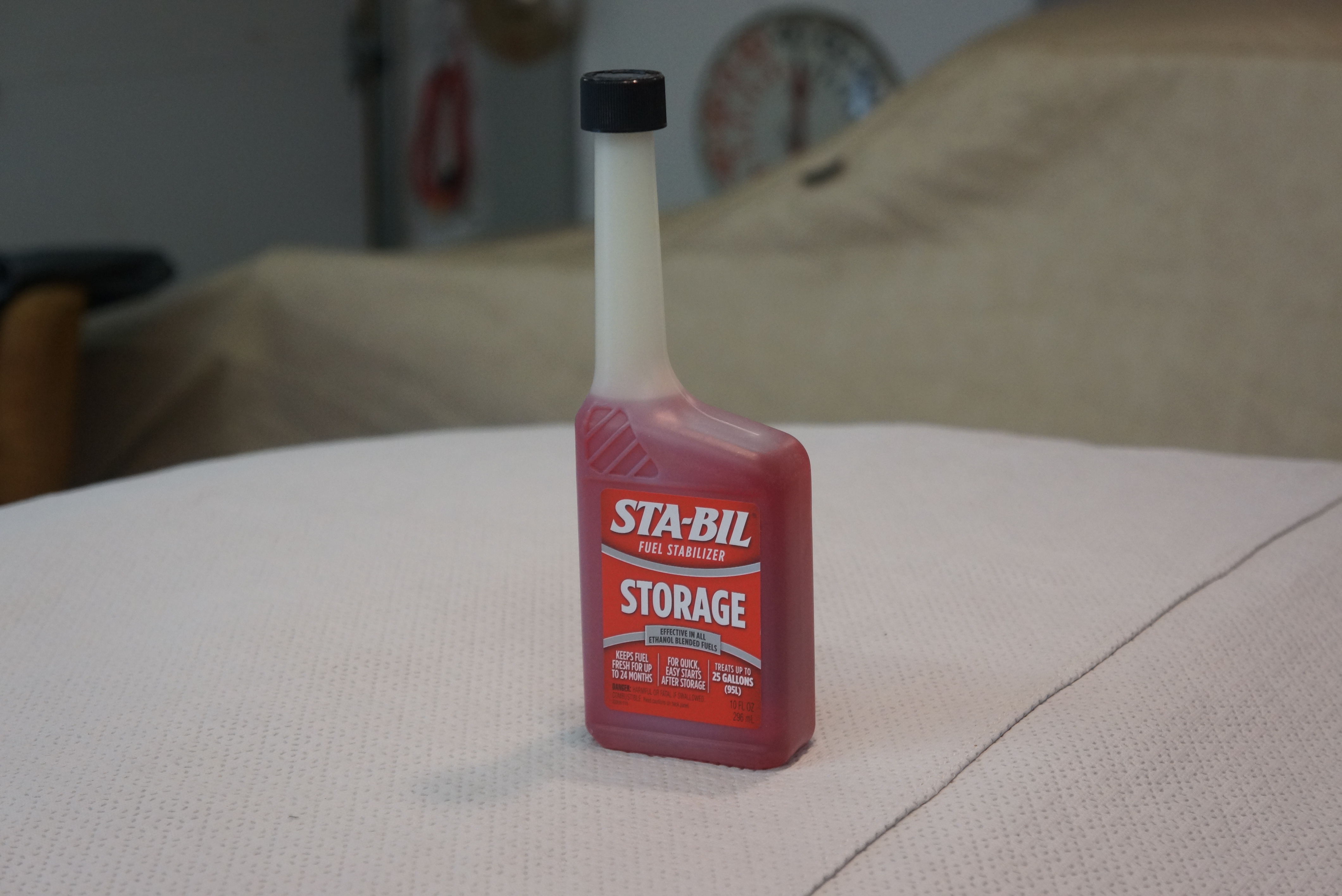
As happens every winter, the collector cars (loosely defined as the cars that don’t get driven in snow) are put away for the winter. The ritual is one that has evolved over the years and is now consistent: fill the tanks with fresh fuel, add Sta-Bil, pump up the tires at least 10 p.s.i. over normal to avoid flat-spotting, put a trickle charger on the batteries, and cover the cars with a dedicated car cover. It’s easy, takes little time, and doesn’t cost very much.

Before going further, let’s take a moment to say a few words about the brands I use, and have continued to use. (I’m a firm believer in finding good products and sticking with them, even if they cost a trifle more. As the cliché goes, ‘you get what you pay for’.)

The Sta-Bil brand of fuel stabilizer, made by Gold Eagle, has been in use in my garage since I’ve owned powered lawn and garden equipment. Many moons ago, I heard stories about lawn mowers and snow throwers, two examples of gas-engine devices which see seasonal use, failing to run because the old gummed-up gas gummed up the works. As soon as I got my first lawn mower, Sta-Bil went into its tank.  The gumming has never happened to me, and I’ve stuck with the brand ever since.

Sta-Bil STORAGE is your basic fuel additive if fuel is going to sit

Yes, I had my doubts about their ethanol treatment after it seemingly made the Alfa run worse (a conclusion which I now doubt since discovering my carbs are running rich and fouling the plugs a bit), but your basic ‘storage’ version of Sta-Bil is the way to go for any fuel tank in which fuel may sit more than 6 weeks or so.

It’s a similar story with battery chargers. I still have my dad’s Sears charger, which looks like it was made in the 1960s. It works great to jump-start a dead battery, but it ain’t no trickle charger. Long-term battery storage requires both a slow charge (the “trickle”) and a volt-sensing cut-out that won’t overcharge the thing and boil it to death.

You know it’s an old charger when there’s a switch for “6V” and “12V”

The Deltran Battery Tender brand came onto the market several decades ago, and they found their niche for the car collectors whose vehicles are stored in the off-season. While many competing brands have since been introduced, I’ve stayed with what I know works. I think I’m up to 3 of these Battery Tenders in the garage.

Green is good! Battery Tender keeps battery charged without overcharging

Car covers are a relatively new accessory to my winter arsenal. Up until a few years ago, frankly, I didn’t believe in them. It was a combination of fear of paint damage from moisture trapped beneath the cover, and frustration with my inability to find a custom-fit cover for the BMW Isetta (my expectations were a bit high with that one).

Since working at CARiD, I’ve learned a lot about the usefulness of good quality car covers, and one thing I learned is that the Covercraft brand is my favorite. The fit is perfect, and the variety of material choices will satisfy any indoor or outdoor cover needs at any price point.

The indoor-rated Dustop from Covercraft fits the Alfa perfectly

The Alfa has a Covercraft Block-It Dustop (yes, they had the ’67 Alfa pattern in stock), and the Miata wears the Covercraft Evolution indoor-outdoor cover. In the garage, both covers do more than keep dust off the paint; they also protect the interiors from sunlight, and provide some protection from wayward nuts and bolts spinning out of control off my workbench. I would never again think of storing a car without a cover. Even in the nice weather, if it’s going to be more than a week or two before one of the cars gets driven again, the cover goes on.

The Covercraft Evolution cover on the Miata is rated for indoor and outdoor use

All this is a prelude to an announcement about my Mazda Miata: after giving some thought to selling it, I’ve now decided to keep the car. What’s more, next year, in 2018, this 1993 automobile will be 25 years old, making it eligible for AACA events. So I’m going to turn it into a show car.

The plan is to spend the winter tending to some mechanical maintenance, but also attending to some detail work in order to display the car at shows next year as a 25-year-old original unrestored car.

The mechanical list includes new rear brake calipers (one of the parking brake adjusters is stuck), new tires (tread is good, but they’re 10 years old), and a continuation of the LED bulb upgrade. The detail work involves a new convertible top (worn and dirty), an engine compartment detail, Paintless Dent Removal work on some small dings, and a complete polish and wax.

Here’s hoping for a mild winter, which will encourage me to get out to the garage! As long as the temperature is above freezing, I can spend a few hours out there. Watch this blog for updates on my progress with the Miata.


Is it spring yet?


All photographs copyright © 2017 Richard A. Reina. Photos may not be copied or reproduced without express written permission.


Automotive Fuses: A Somewhat Brief Tutorial (with Illustrations)

Have you replaced a fuse on one of your modern daily-driver automobiles recently? It’s likely you have not. Today’s motor vehicles have much more sophisticated electrical systems, and while your typical 2017 four-wheeled 2.5 ton behemoth still uses fuses, the days of fuses just “wearing out” are behind us.

If you have needed to replace a fuse, the first trick may have been to locate the fuse boxes. My wife’s 2017 Honda Odyssey has FIVE fuse boxes: two in the engine compartment, two under the dash, and one at the rear, containing a total of 107 fuses. It makes me pity the shop tech who needs to fault-trace an intermittent electrical problem.

My 1967 Alfa Romeo GT 1300 Junior, by contrast, has one fuse box, located in the engine compartment. Access to it is easy, as it’s mounted high up, on the right-side inner fender. There are a total of 10 fuses: one for ignition, five for exterior lighting, and three which are helpfully marked “other electric devices” (of which there are few; my Alfa lacks the power sliding doors, climate control, and ‘Lane Departure Warning’ of my wife’s minivan).

Ten little fuses, all in a row. Note bi-lingual fuse box cover.

Italian cars get a bad rap for their supposed temperamental electrics. But there’s not been a lick of an issue with mine, save for a battery which died shortly after I got the car (because it was 10 years old at that point). Preventative maintenance goes a long way toward keeping the electrons flowing in the proper direction and in a complete circuit.

With any old car, I will gladly get on my soapbox and preach the ’12-Volt Gospel’: 99% of electrical gremlins are caused by poor connections. Terminals must be clean and tight; ground wires must be securely connected to clean ground; and fuses and their terminals must be clean, tight, and protected with dielectric grease. In no case should an electrical component be replaced without first ensuring that all connections, hold-downs, and crimped or soldered terminals are in the best shape they can be.

Soon after acquiring the Alfa, I removed all 10 of the European-style ceramic fuses, cleaned the spring-tensioned holders with a brass brush, and bent the holders inward to make them tighter. Next, I applied a light coating of dielectric grease. Upon reinstalling the fuses, I ran continuity tests with my multimeter to check that there was minimal (ideally, close to zero) resistance in the connections.

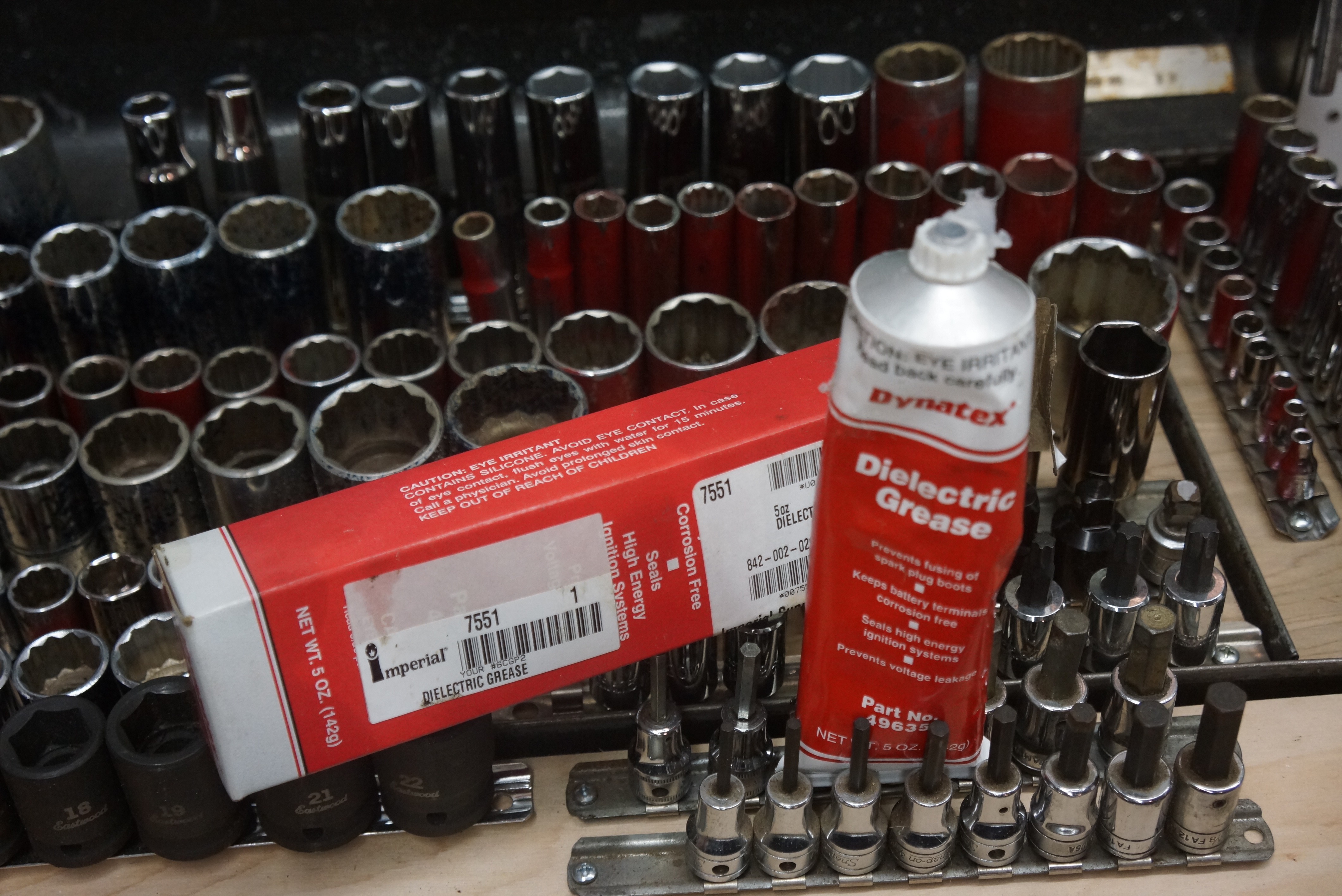
This dielectric grease is magical stuff. It seems counter-intuitive to grease electrical connections, but it prevents corrosion from forming. You still need to have a strong mechanical connection. It should be used on battery terminals and spark plug boots as well as fuses. Don’t waste your $1.99 buying the point-of-purchase 0.001 oz. packet at the retail store checkout counter. I bought a 5-ounce tube about four years ago, and even after multiple applications on multiple cars, I’ve only used about 25% of it.

Dynatex brand dielectric grease – I use it frequently on electrical work

While on the subject of fuses: I recently cleaned out an old shoe box full of automotive miscellany which had belonged to my dad. In it were several tins of glass-style fuses. While none of the cars I own today use this style, my ’68 Mustang did, and I recall how difficult it was to reach the fuse box on that car, as it was mounted above the gas pedal.

Buss brand glass fuses – note old & new style packaging

Some people refer to these as Buss fuses, however, that is a brand name. According to Wikipedia, these fuses were also known as “SFE” fuses because they were developed by the Society of Fuse Engineers.  They varied in ratings between 4 and 30 amps, and in corresponding lengths between 5/8” and 1&7/16”. This was done by design in order to help prevent a fuse of incorrect amperage from being inserted.

Automotive glass fuses


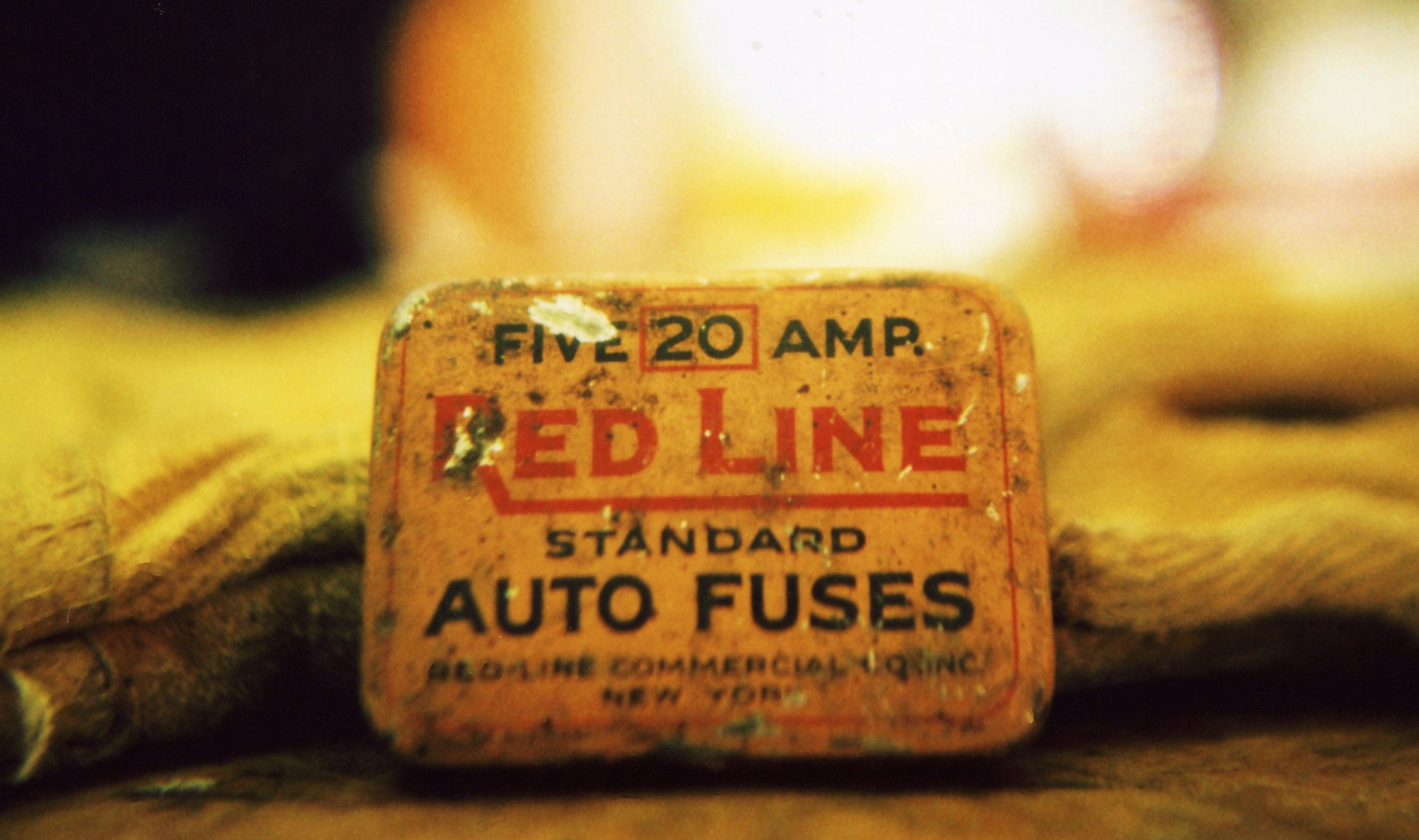
Red Line brand fuses – box states that company is from N.Y.


Opening these is like going on an archeological dig

If you have a newer car, here’s hoping that you never need to replace a fuse (much less find the fuse box). If you have an older car, here’s hoping that you invest in a tube of dielectric grease, and in a half-hour of preventative maintenance. Let me know how it works out.


All photographs copyright © 2017 Richard A. Reina. Photos may not be copied or reproduced without express written permission.

Special photographic note: the 4 photos of the glass fuses were taken with a FILM camera, specifically, my Nikon EM, using Kodak Gold ISO 200 film.


FUN FACT OF THE WEEK

On January 14, 1885, Thomas A. Edison of Menlo Park NJ, applied for a U.S. Patent for his invention of a “fuse-block”, to act as an electrical protection device.


NJ Alfa Club Fall Foliage Driving Tour, November 11, 2017

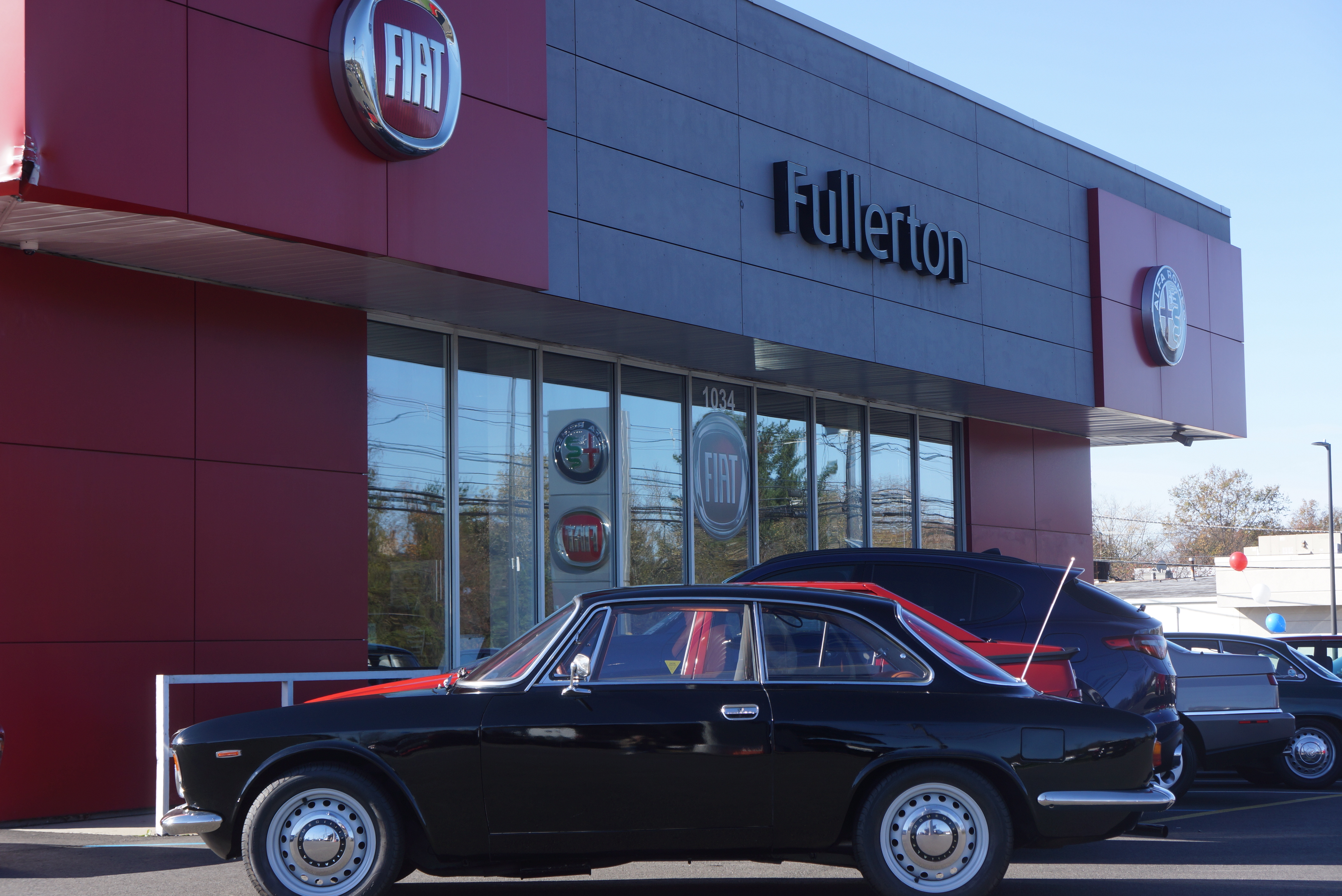
On Saturday, November 11, 2017, the New Jersey chapter of the Alfa Romeo Owner’s Club (AROC) held its Fall Foliage Driving Tour, starting at Fullerton Alfa Romeo in Bridgewater, and ending at Duke Farms in Hillsborough.

The day dawned sunny but quite cold, with sunrise temps below freezing. The wind, which had been a factor the previous day, was all but nonexistent, which made the cold more tolerable. The thermometer moderated as the day progressed, and it turned out to be a beautiful day for a driving tour.

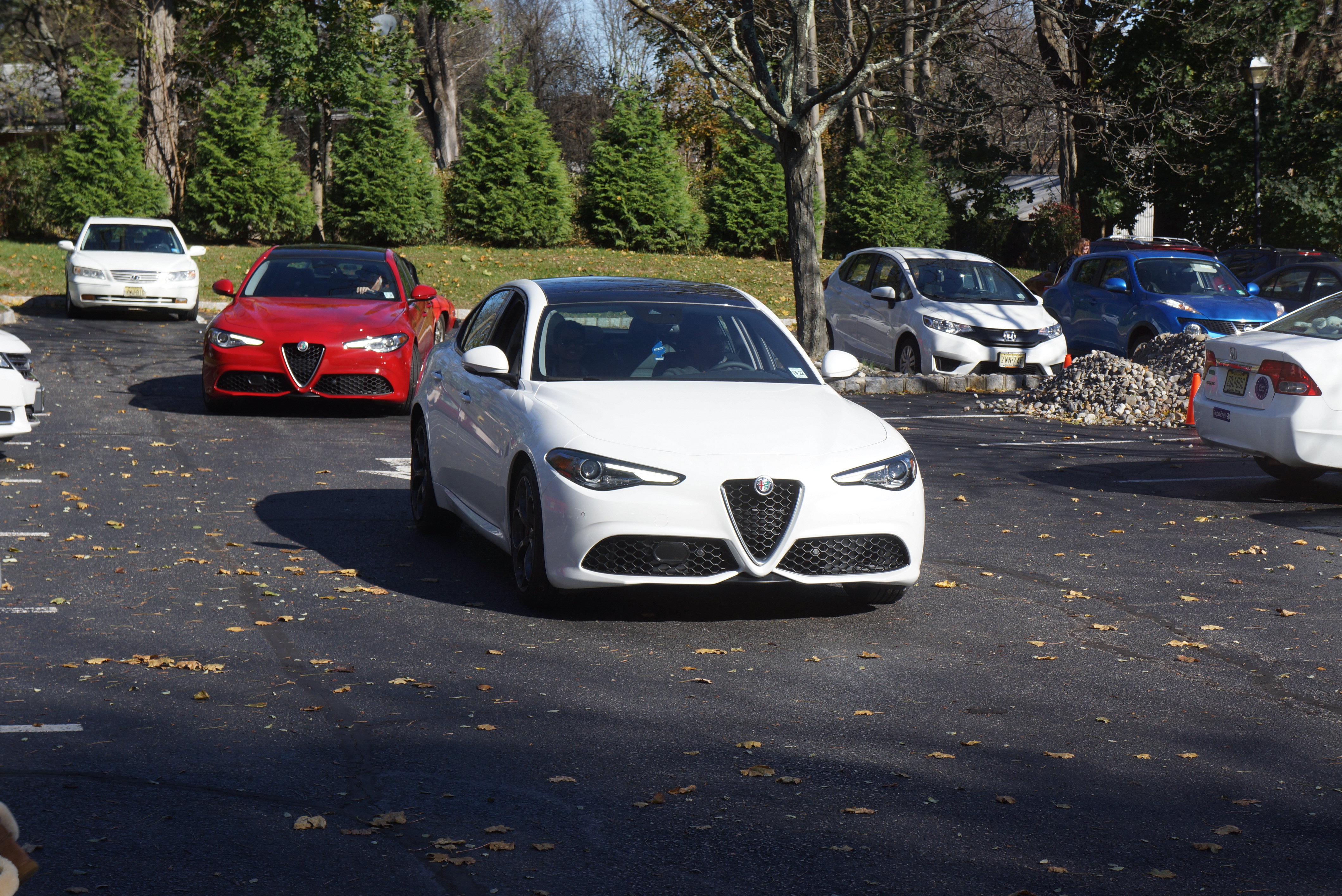
The dealer did a great job hosting us in the a.m., with plenty of coffee, bagels, and other breakfast treats available. Early arrivals were there before 9:30, and during the subsequent hour, 17 cars and close to 30 attendees streamed in. While there, we enjoyed alternating our gazes between the new Giulia sedans & Stelvio SUVs, and the classic Alfas parked outside.

After a brief driver’s meeting, we were off and running. Our first leg had us heading north/northwest, through Oldwick and Long Valley. After an hour on the road, we arrived at our planned rest stop in Chester NJ. The intent was to give participants a chance to wander the streets of this quaint town, filled with antique shops, bakeries, and the like. But true to the Italian spirit, almost everyone stayed in the parking lot, hovered around our Milanese metal, and swapped stories (mostly lies about horsepower).

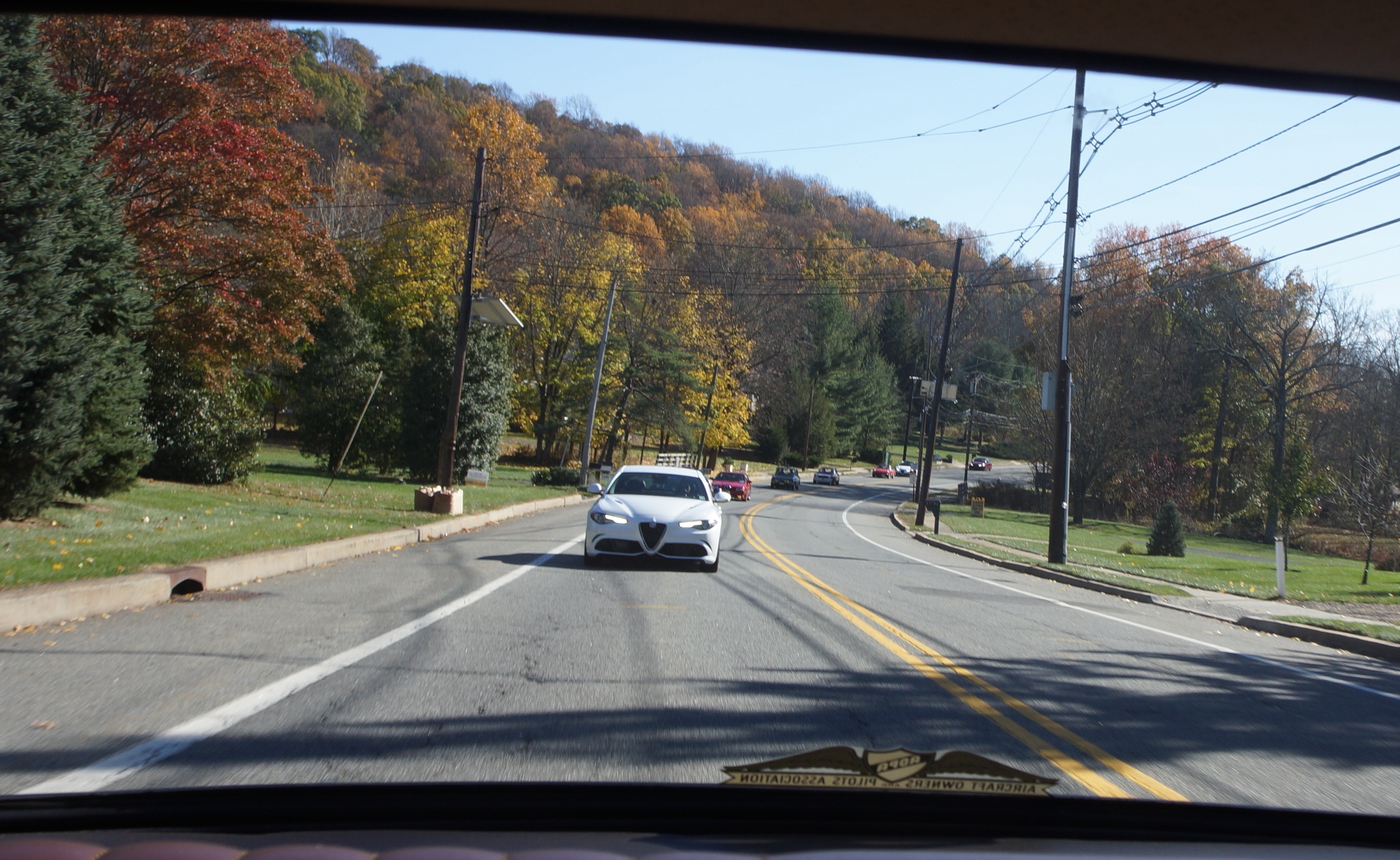
The view out our rear window

By 12:30, the second leg of the drive began, and we were on the road again, now headed back south. We briefly doubled back on Lamington Road (Route 523), then turned south/southeast, through Whitehouse Station and Readington. We arrived at Duke Farms exactly at 1:30, which was a good thing, as our catered luncheon was scheduled to start at that time. By complete coincidence, the second leg was also an hour’s length. Both drives were blessed with relatively light traffic, colorful autumnal leaves, lots of sunshine, and no breakdowns.

The view out the front (we were in the lead car)

Duke Farms is the property formerly owned by tobacco heiress Doris Duke, and it has quite the history. As an aside to this driving tour blog post, if you’re ever in the area, it’s worth stopping by.

The café staff, led by Debbie, went overboard with our catered meal. We walked in to find a smorgasbord of sandwiches, wraps, salads, fruit, plus cookies and coffee. A section of the dining room was reserved for us, and we continued to catch up with old friends and/or make new ones, all while stuffing our faces.

We love to drive, we love to talk, we love to eat!

Our chapter president, Enrico, declared the event a success, and there was widespread agreement among the chapter members. Based on today’s turnout, we are all counting on AROC’s NJ Chapter to hold more such events in 2018.

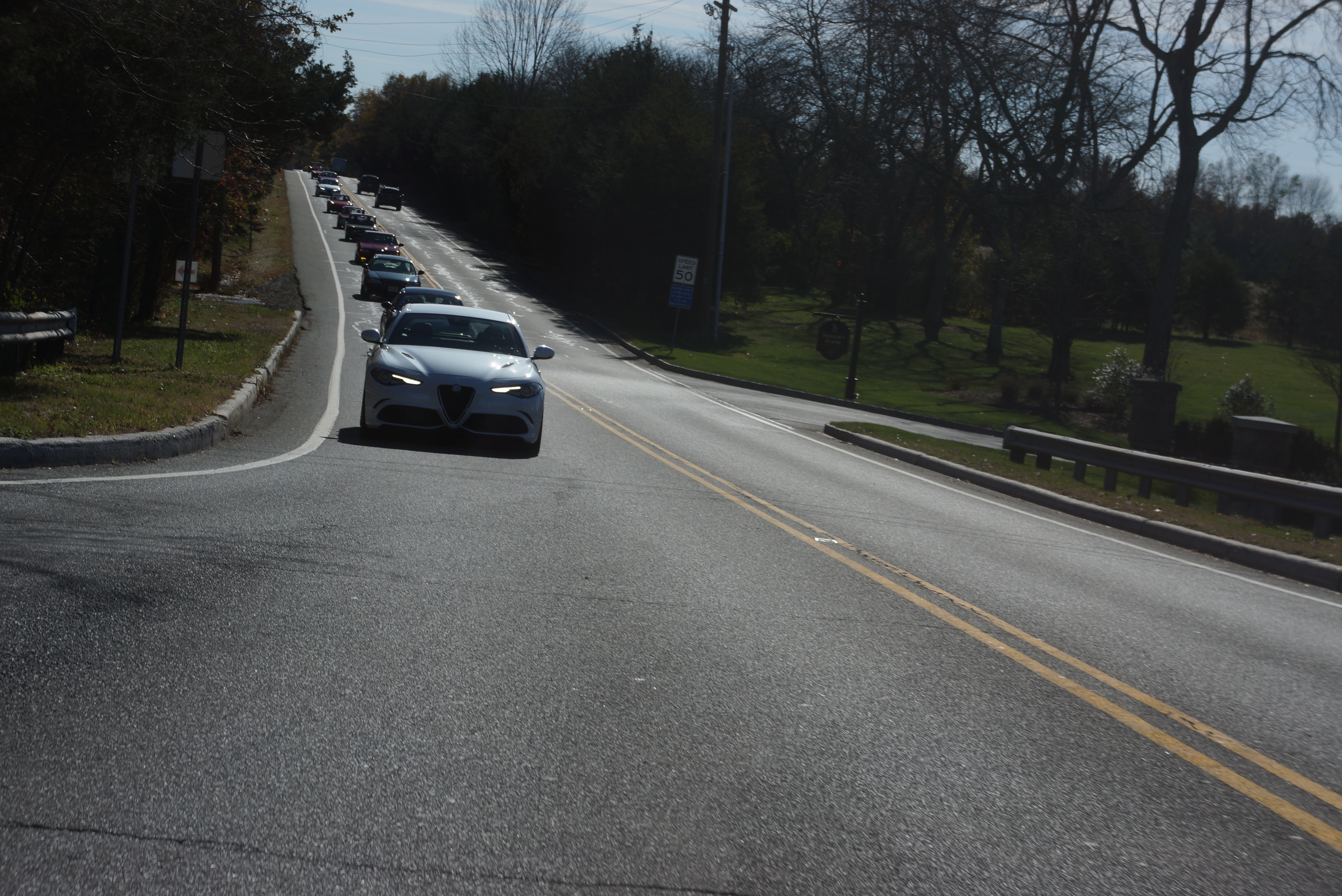
We somehow managed to keep 17 cars (mostly) in a row


Arriving at the Chester rest stop, two new Giulias


A GTV-6 coupe


A ’67 GT 1300 Jr.


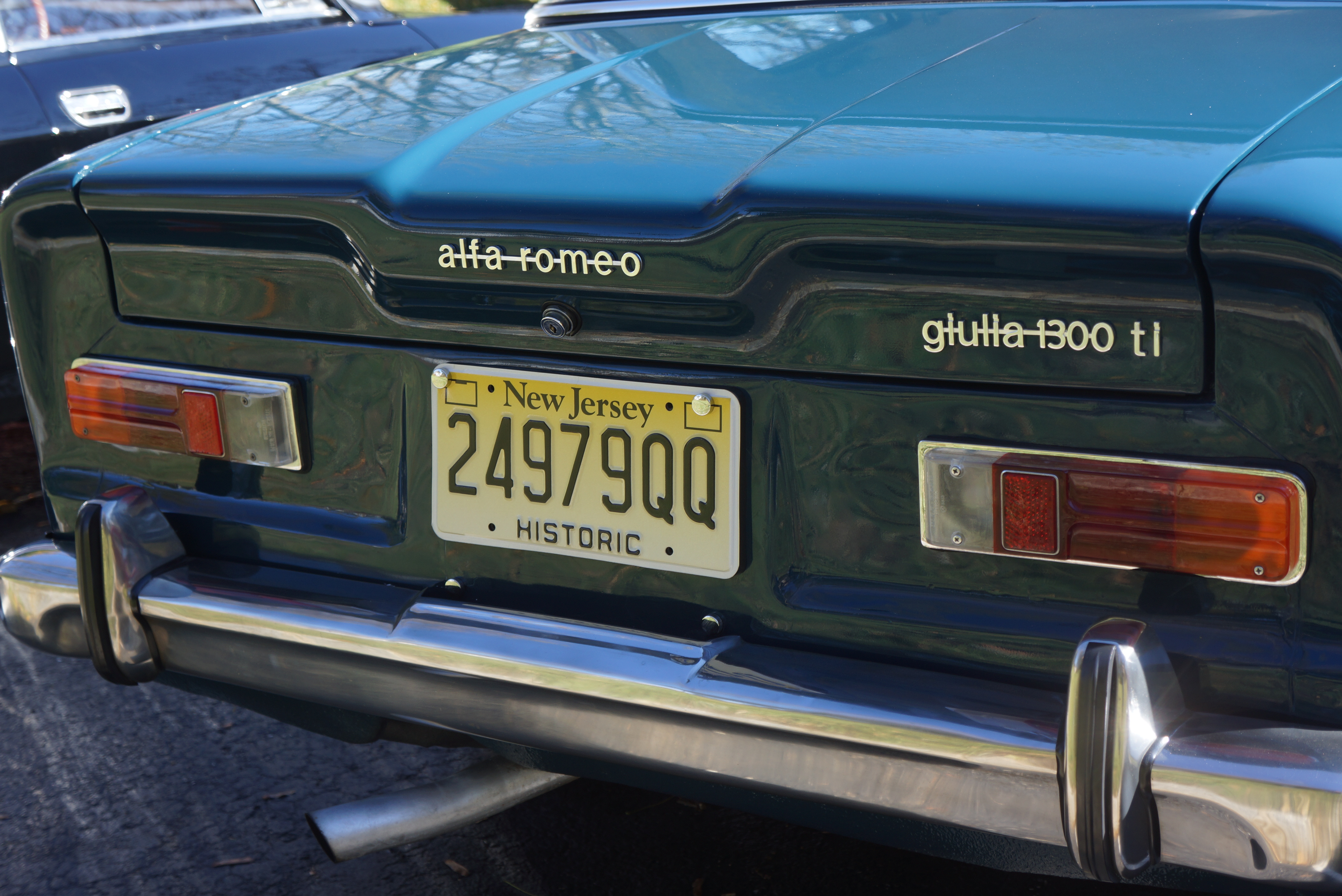
A Giulia 1300 Ti sedan


A ’66 Duetto


A police escort protected us from on-the-road citations


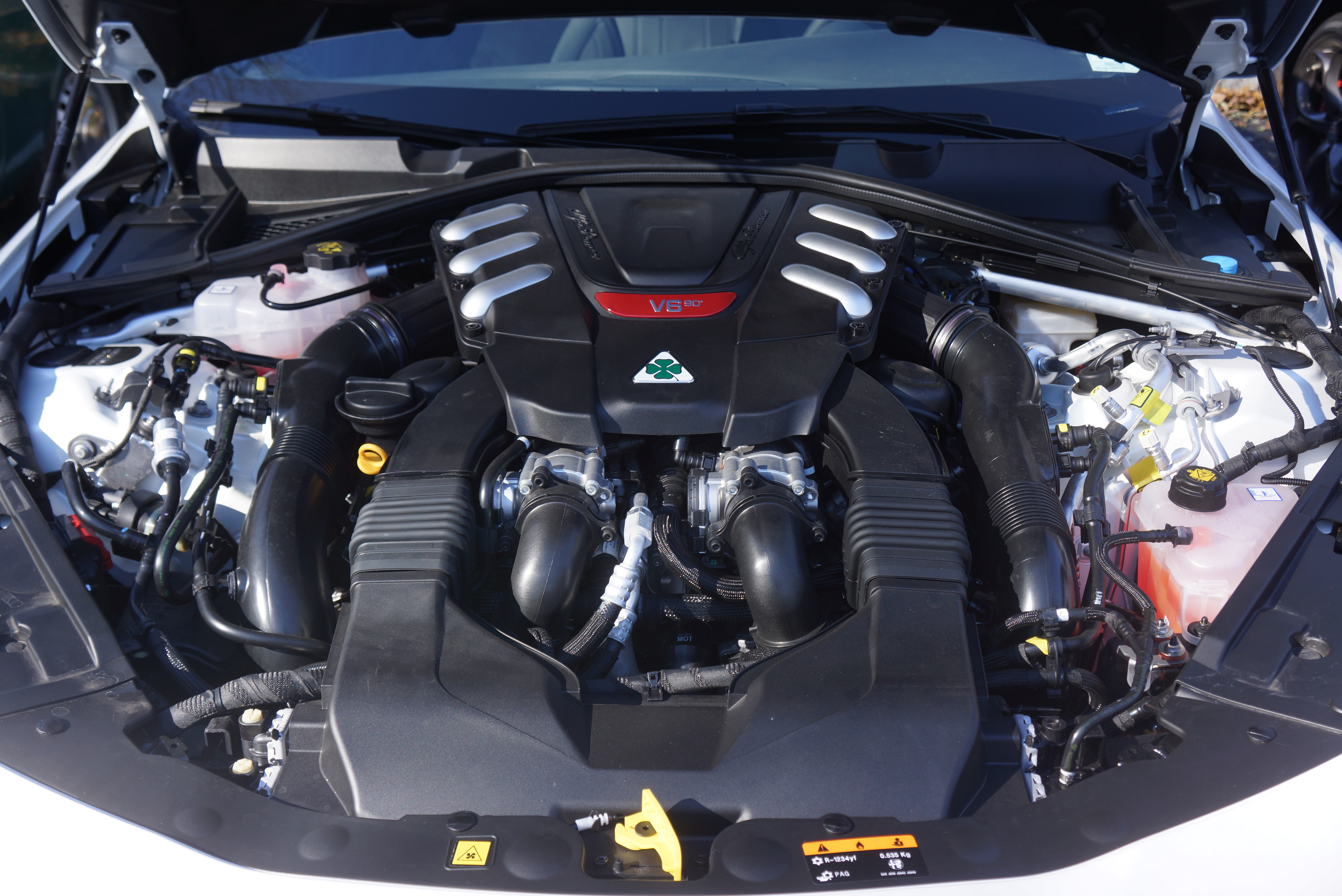
The 505-hp engine of the Giulia Quadrifoglio


Alfa 164


GTA-look


Another 164


Chatting in Chester (sorry)


Follow the leader


A rare shot of the driver driving (courtesy of my wife)


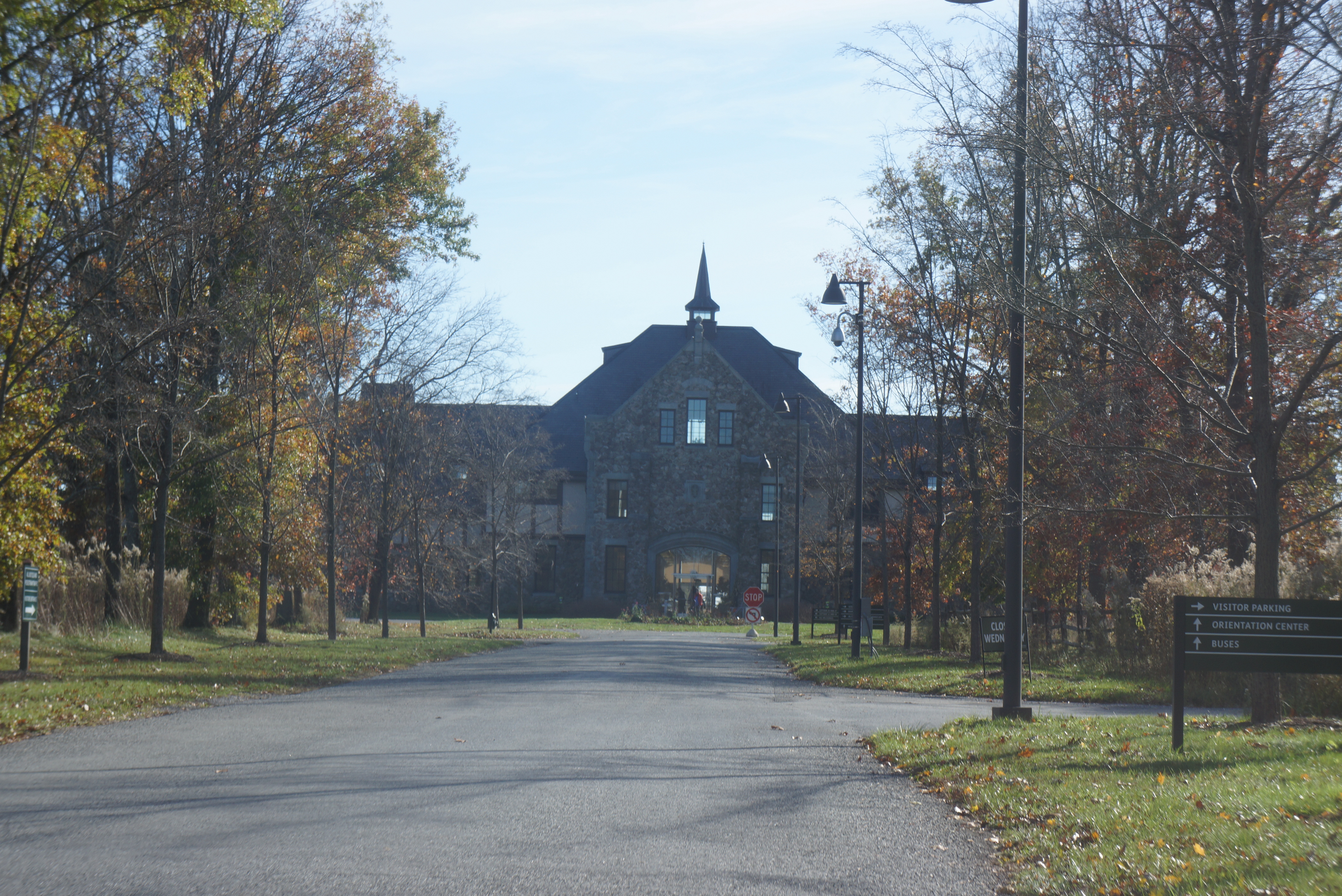
Duke Farms


Arriving at Duke Farms, we found plenty of parking


The cafe service was outstanding, with plenty of food and drink for all


Alfa men gather to argue the firing order of the Busso V6

(Special thanks to my wife Margaretanne for accompanying me, and taking all the on-the-road photos.)

All photographs copyright © 2017 Richard A. Reina. Photos may not be copied or reproduced without express written permission.


FUN FACT OF THE WEEK

The original name of the company we know today as “Alfa Romeo” was A.L.F.A., which is an acronym. In Italian, it stands for Anonima Lombarda Fabbrica Automobili, which translates as “Anonymous Lombardy (Region) Manufacturer (of) Automobiles”.

During World War I, an industrialist named Nicola Romeo took over control of A.L.F.A., which was then in liquidation. He immodestly changed the name of the company to Alfa Romeo, with “Alfa” no longer an acronym. A recession during the 1920’s forced Romeo out of the company, but the name change stayed.

None of this stops people from continuing to spell the car name as “Alpha” (as if the car were Greek!).