I’ve driven past the spot dozens, if not hundreds of times: just another industrial park along Route 22 in western New Jersey. But on Saturday November 23, 2019, this locale, set back a few hundred feet from the highway, proved to be quite something else, as the New Jersey Region of the Antique Automobile Club of America (AACA) was invited to tour the Steven Babinsky Restoration Business.
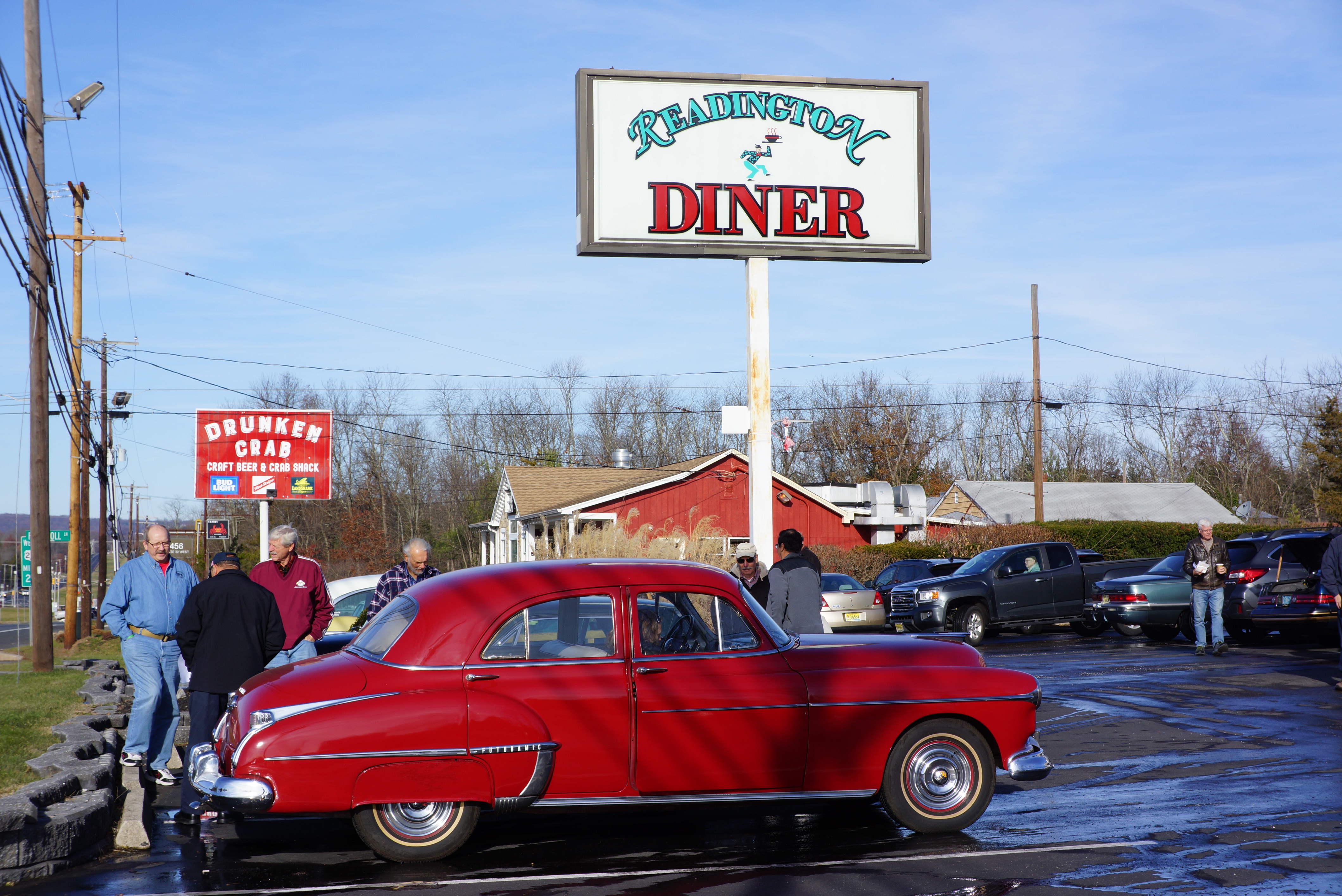
The weather cooperated: it was a sunny and dry, if somewhat crisp day. Many club members took advantage of an optional breakfast at the Readington Diner starting at 8am, which gave us a chance to fuel ourselves with food and coffee while chatting with our buddies about, what else, our cars. By 9:30, the last of the participants met us there, and we totaled over 50 attendees, ready to begin our tour.
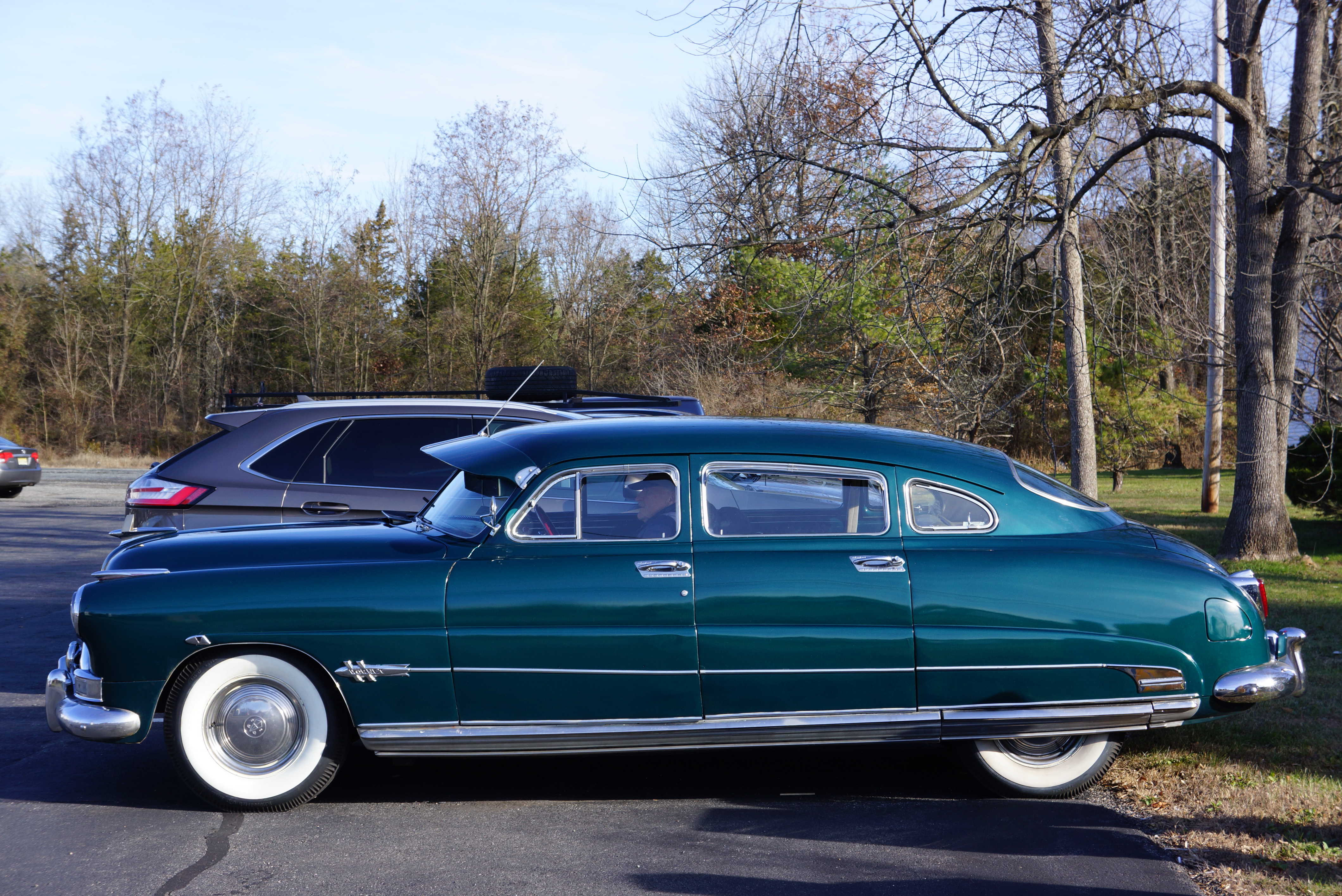
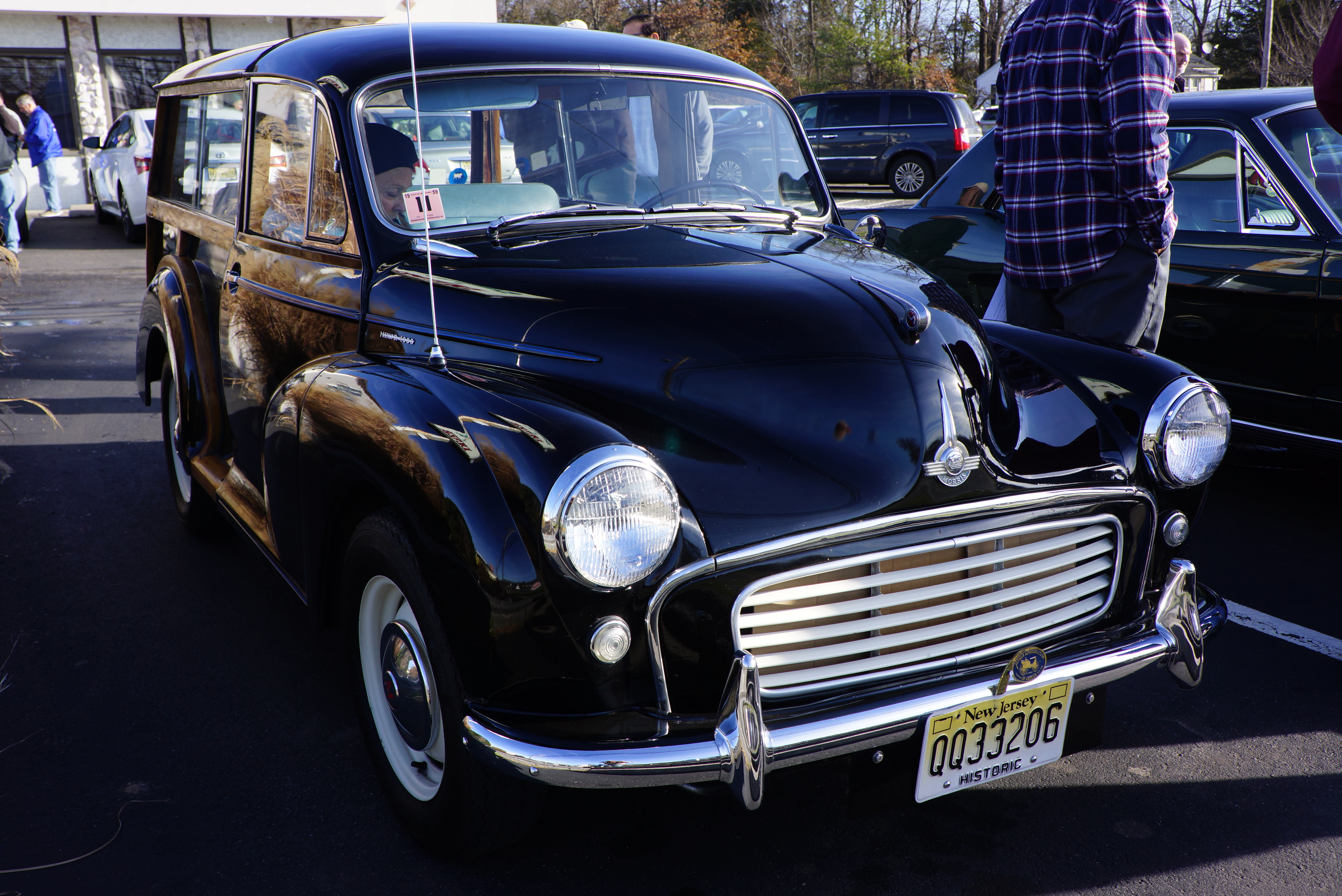
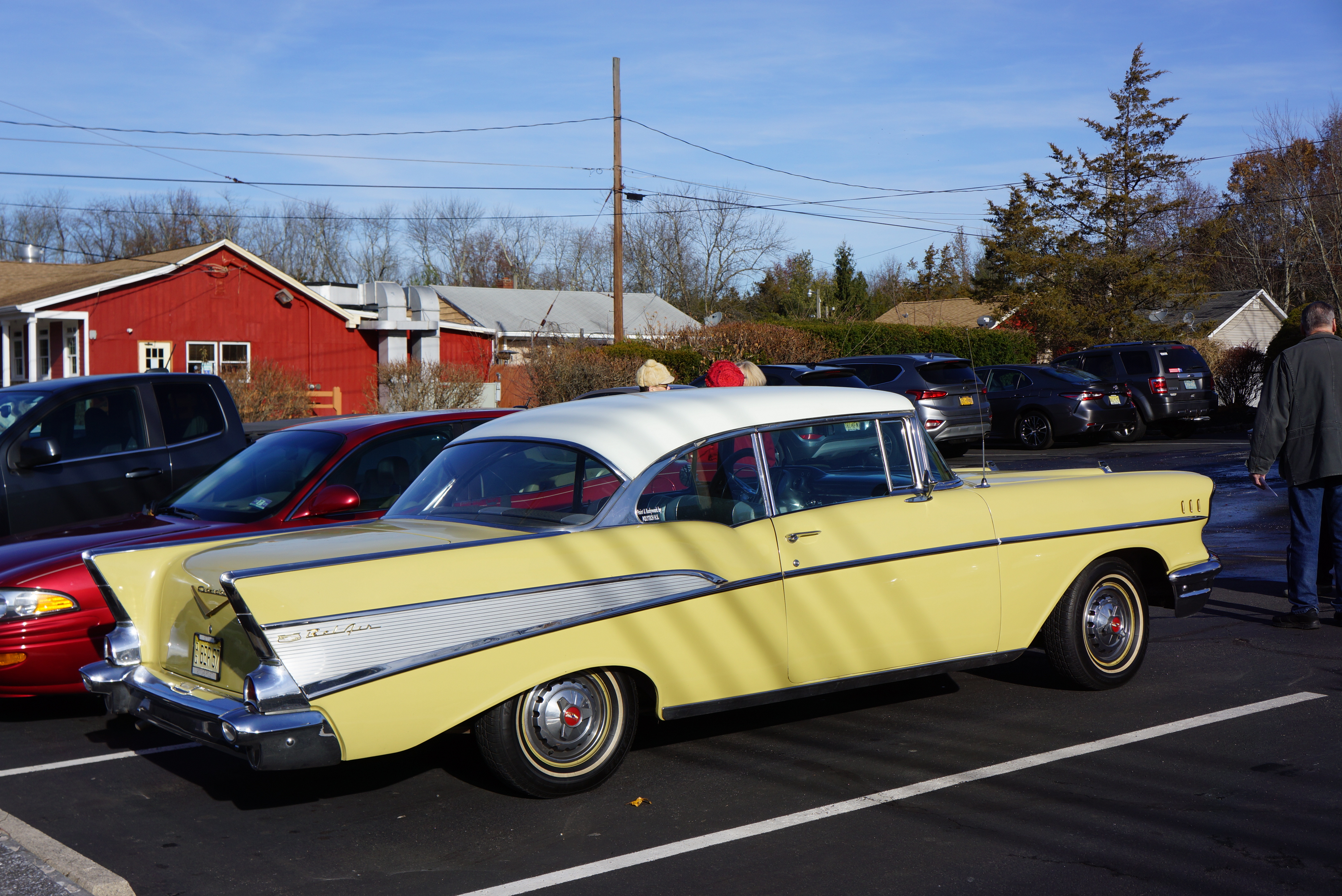
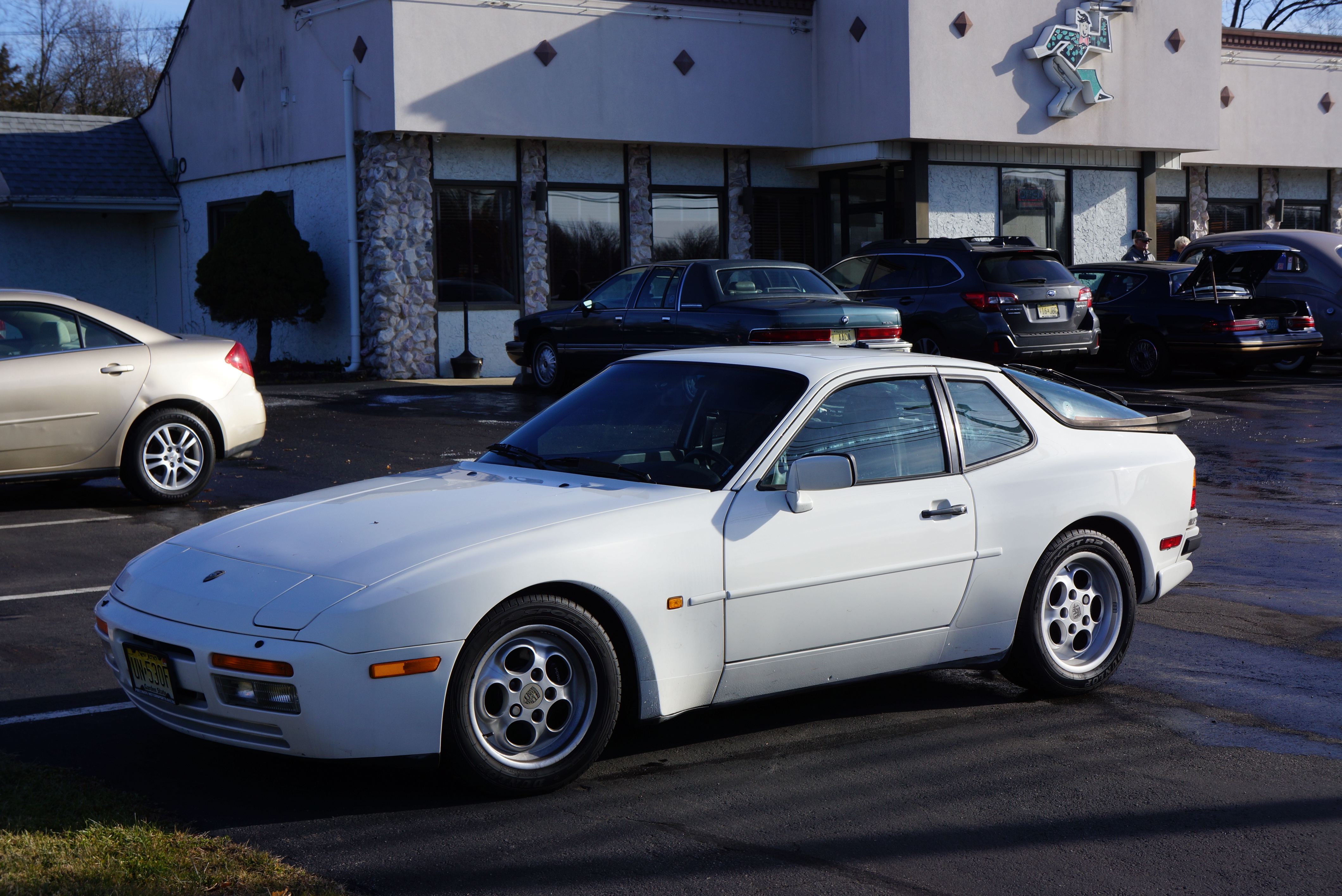
NJ REGION AACA MEMBERS’ CARS AT THE READINGTON DINER
From the diner, it was a 5-minute drive to our destination. Steve Babinsky was on hand to greet us, and made us feel quite welcome by informing us that we were free to wander around the premises. A few of his craftsman were working, and they didn’t mind fieldling our questions. Steve also made himself available for Q & A all morning.
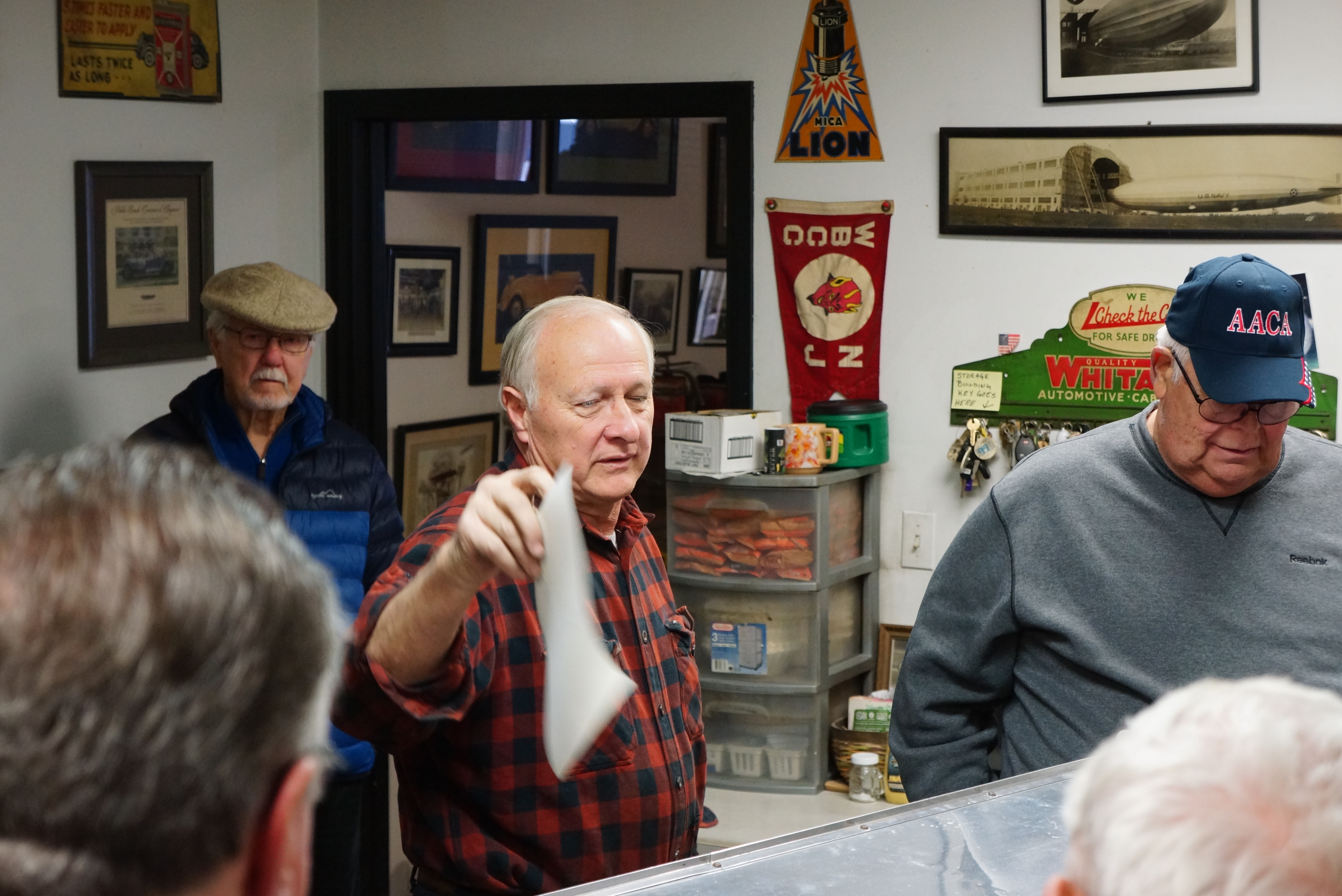
Steve Babinsky (in red & black plaid shirt) uses piece of paper to make a point
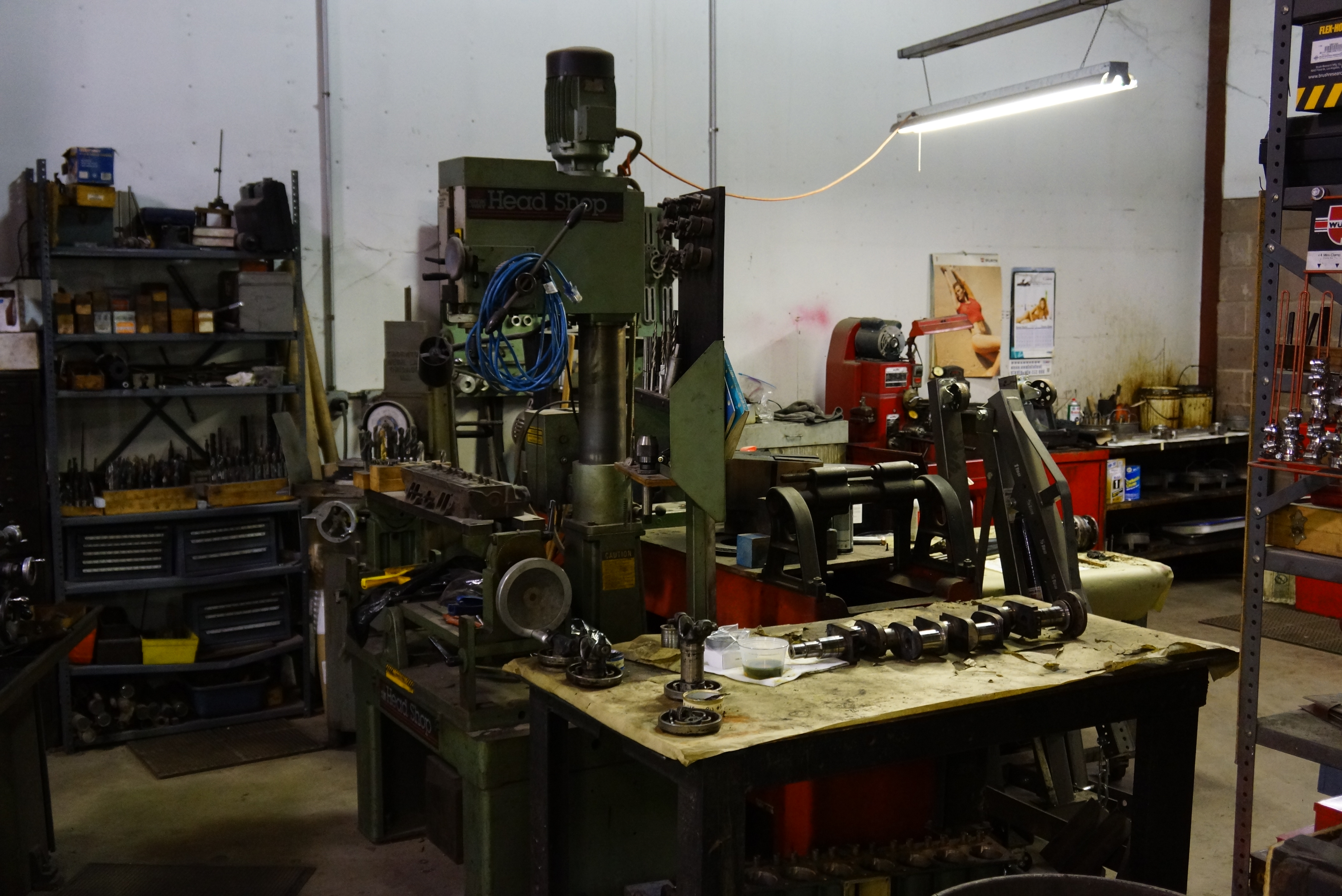
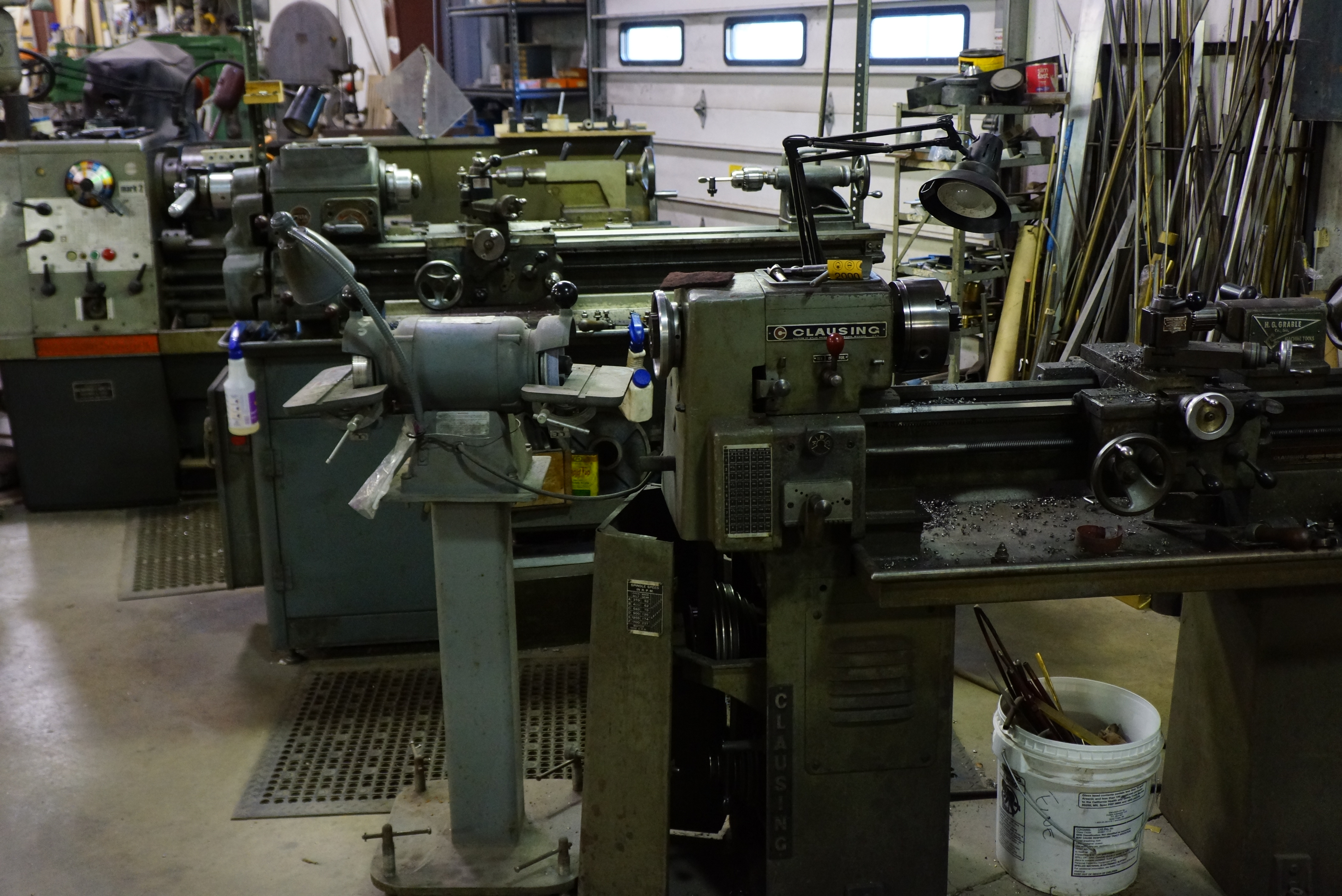
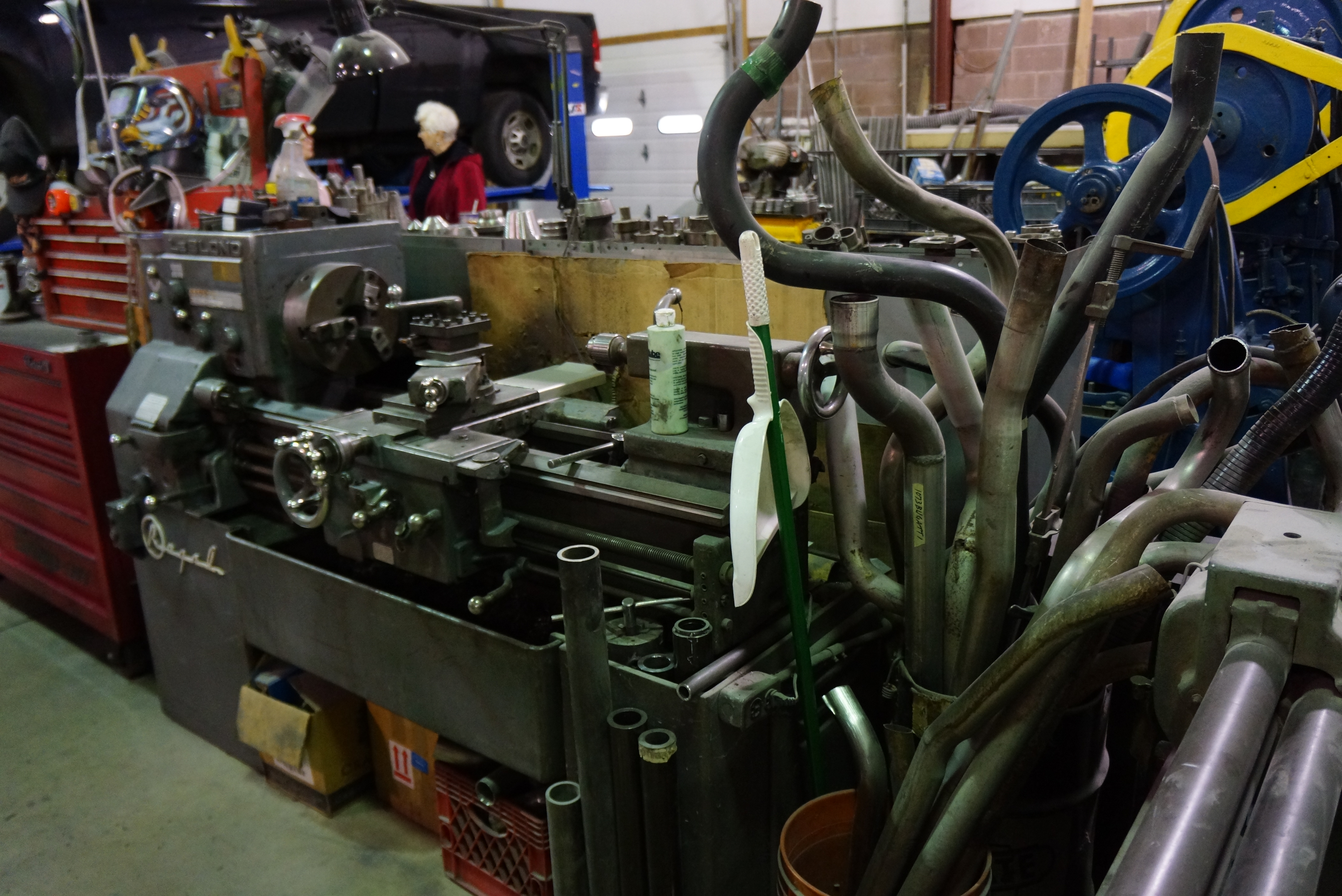
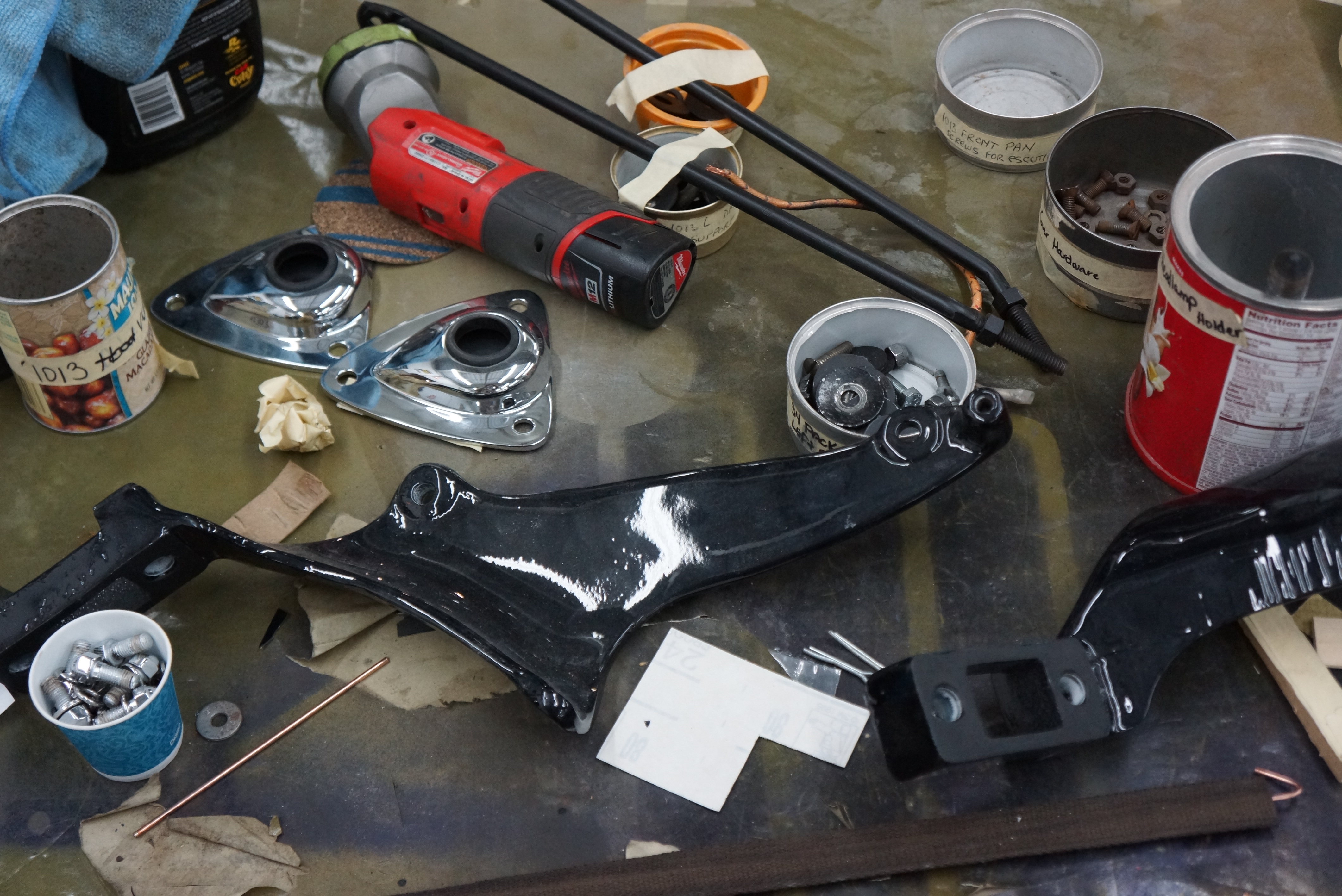
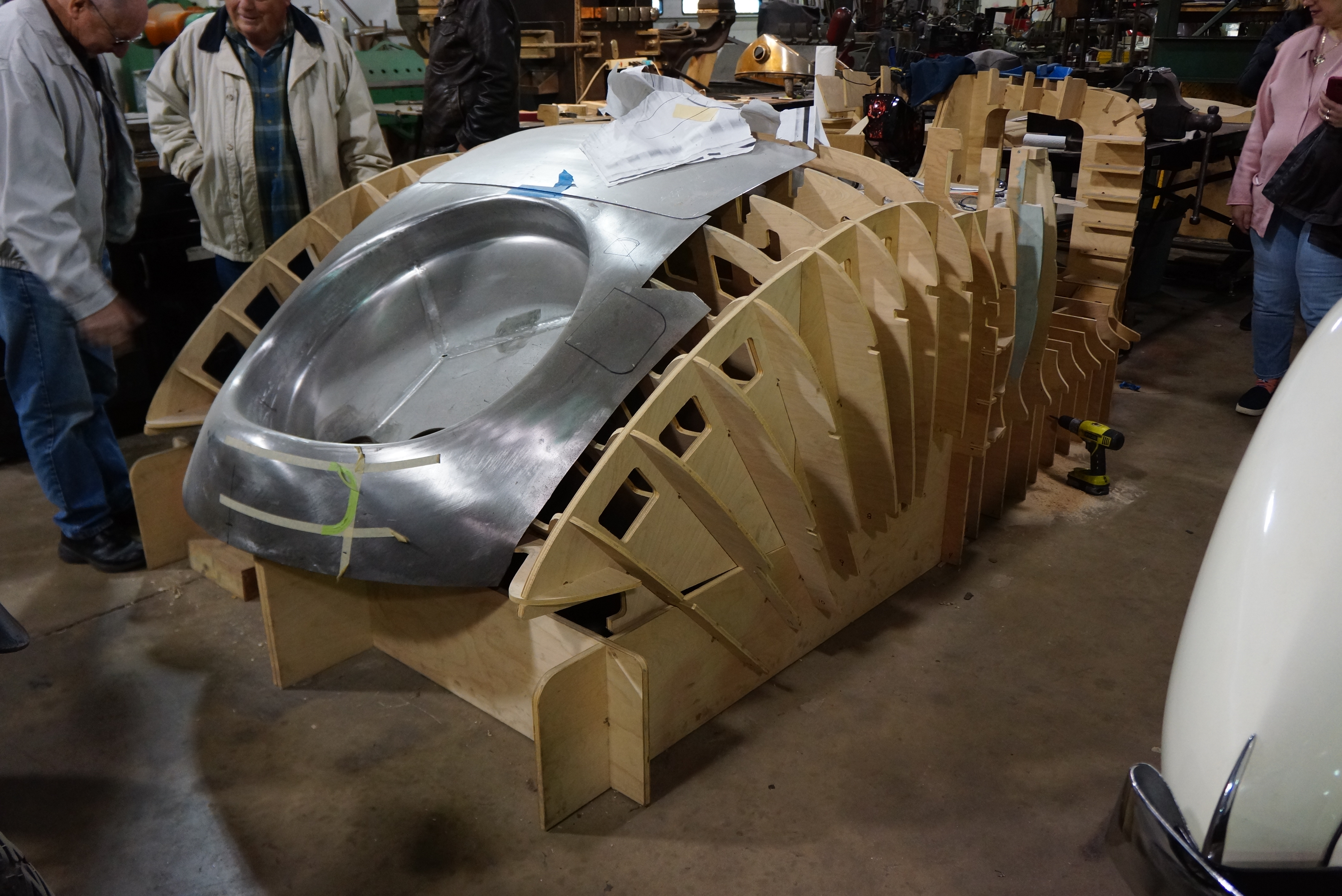
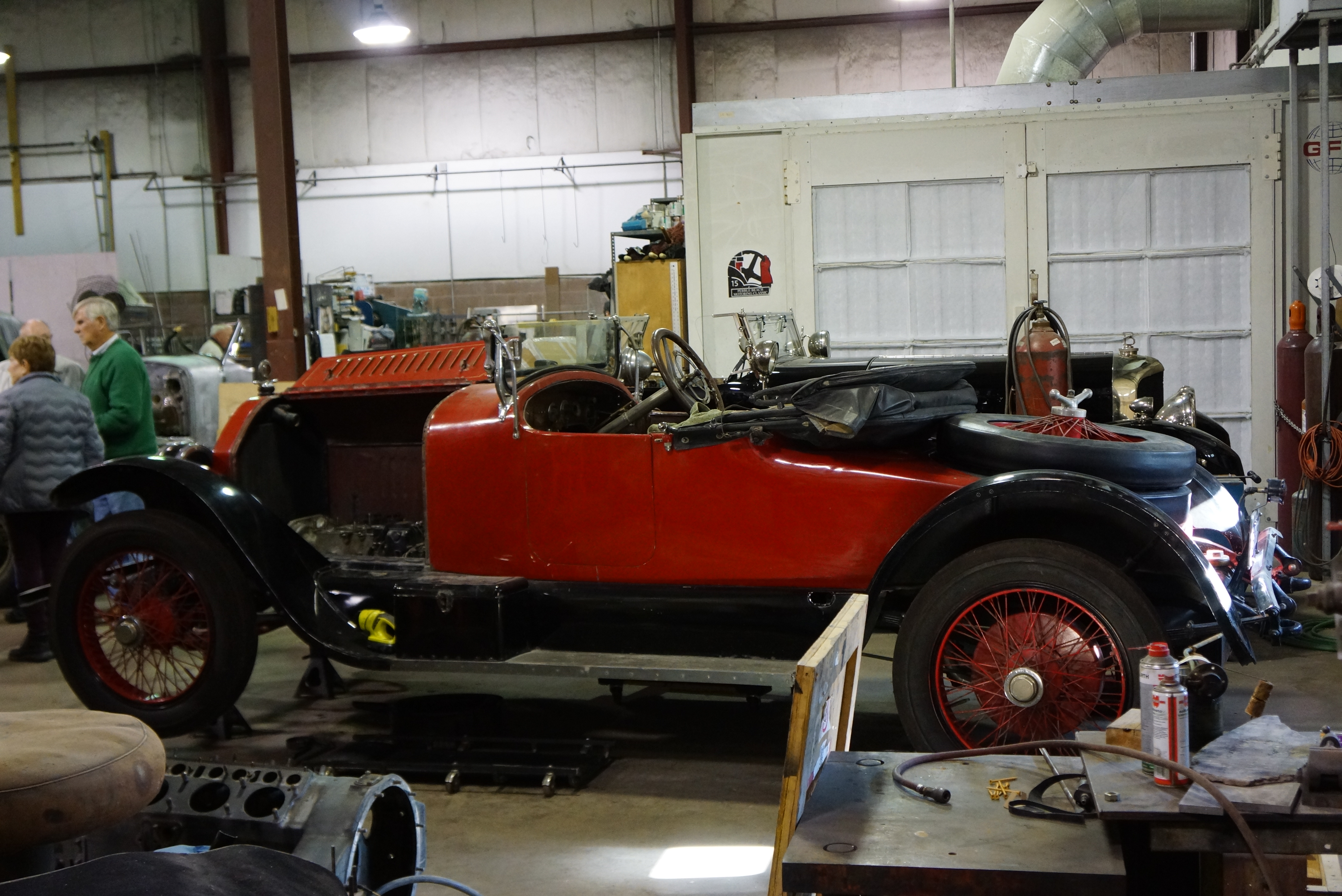
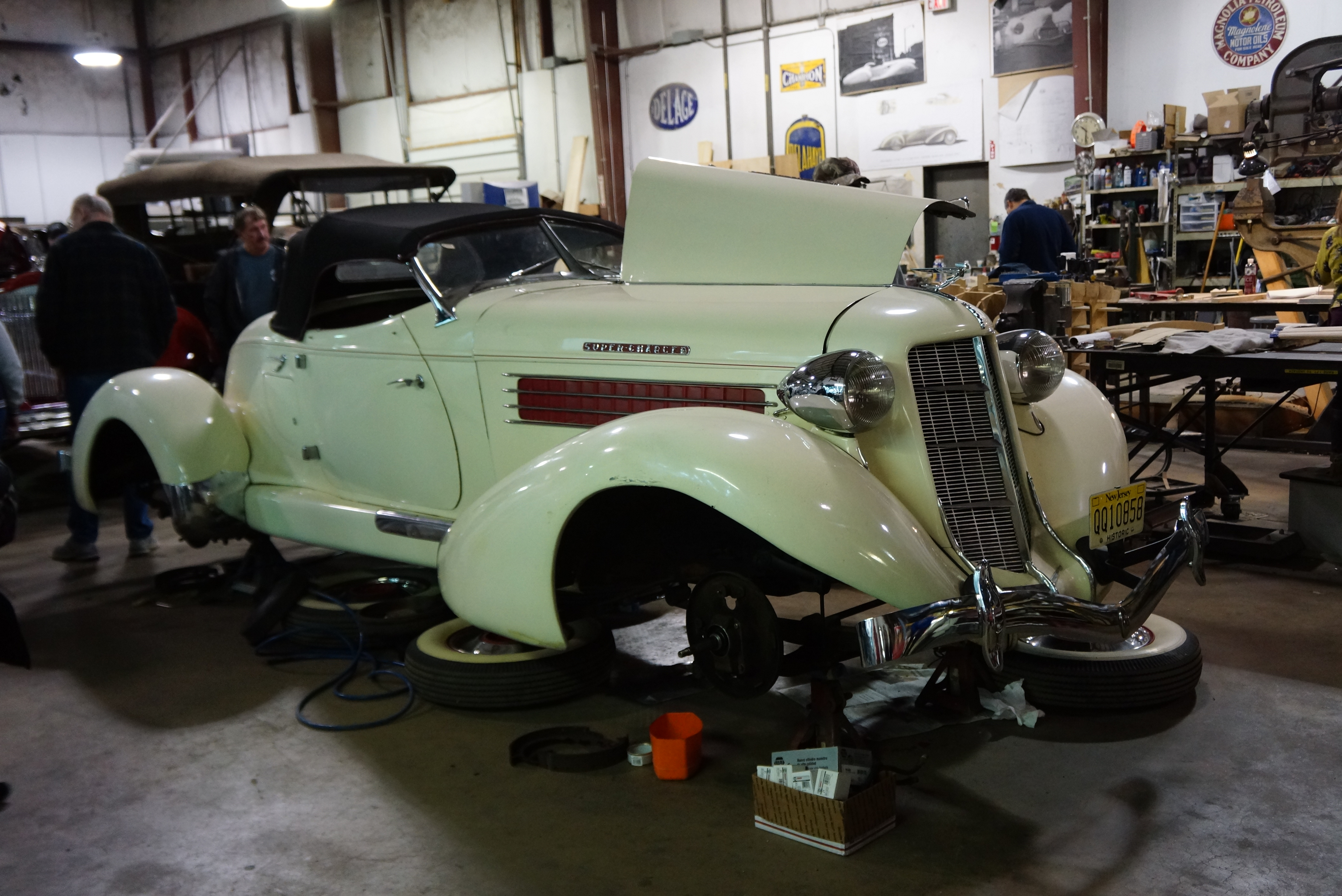
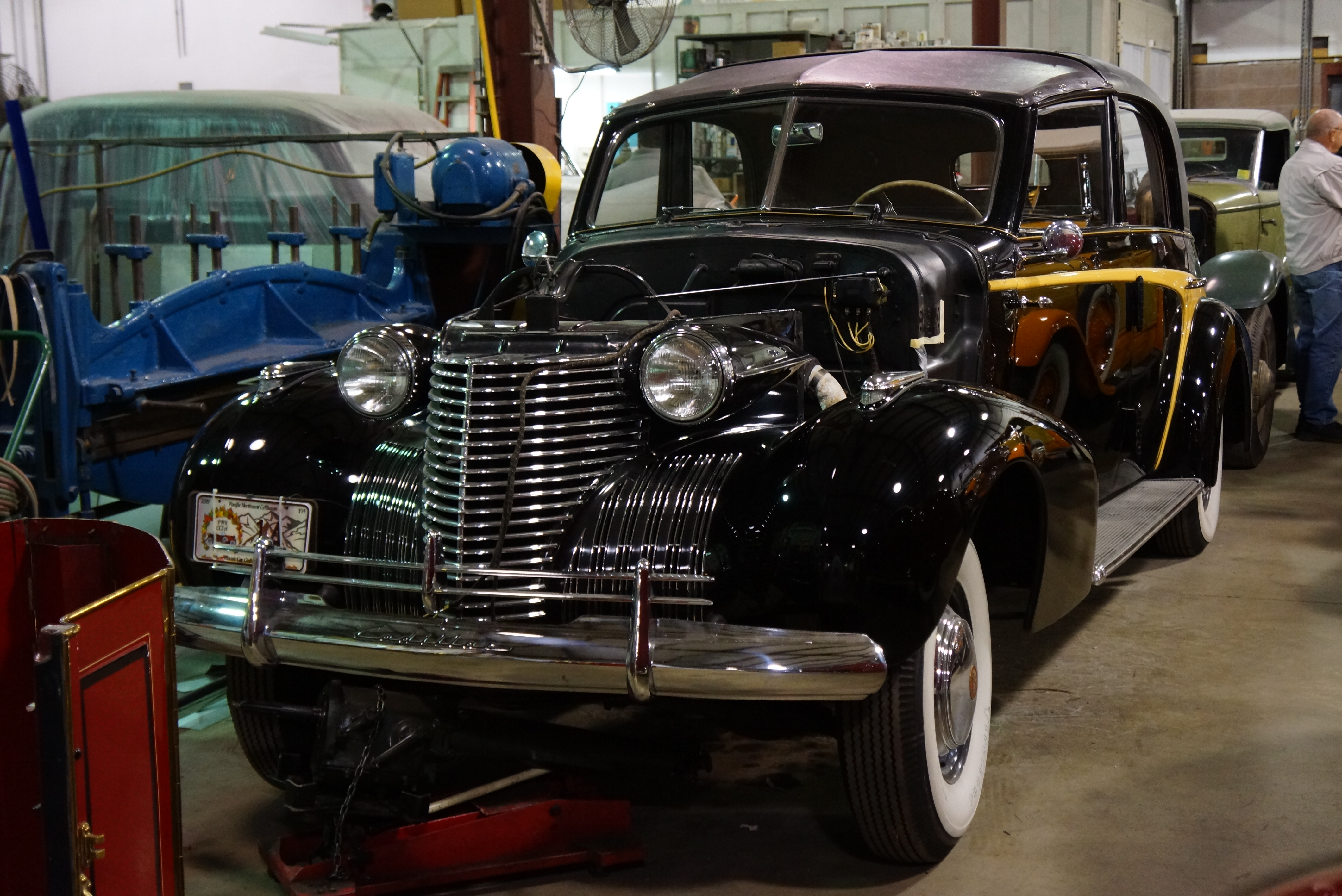
The shop itself is huge; there were perhaps two dozen vehicles inside, all in various states of disassembly. I get a kick out of inspecting shop equipment, and I wasn’t disappointed. Everything from lathes, milling machines, and tubing benders, to presses, a paint booth, and a ‘fire pit’ (to pre-heat aluminum prior to welding according to Steve) was inside.
TOOLS & EQUIPMENT IN THE WORKSHOP
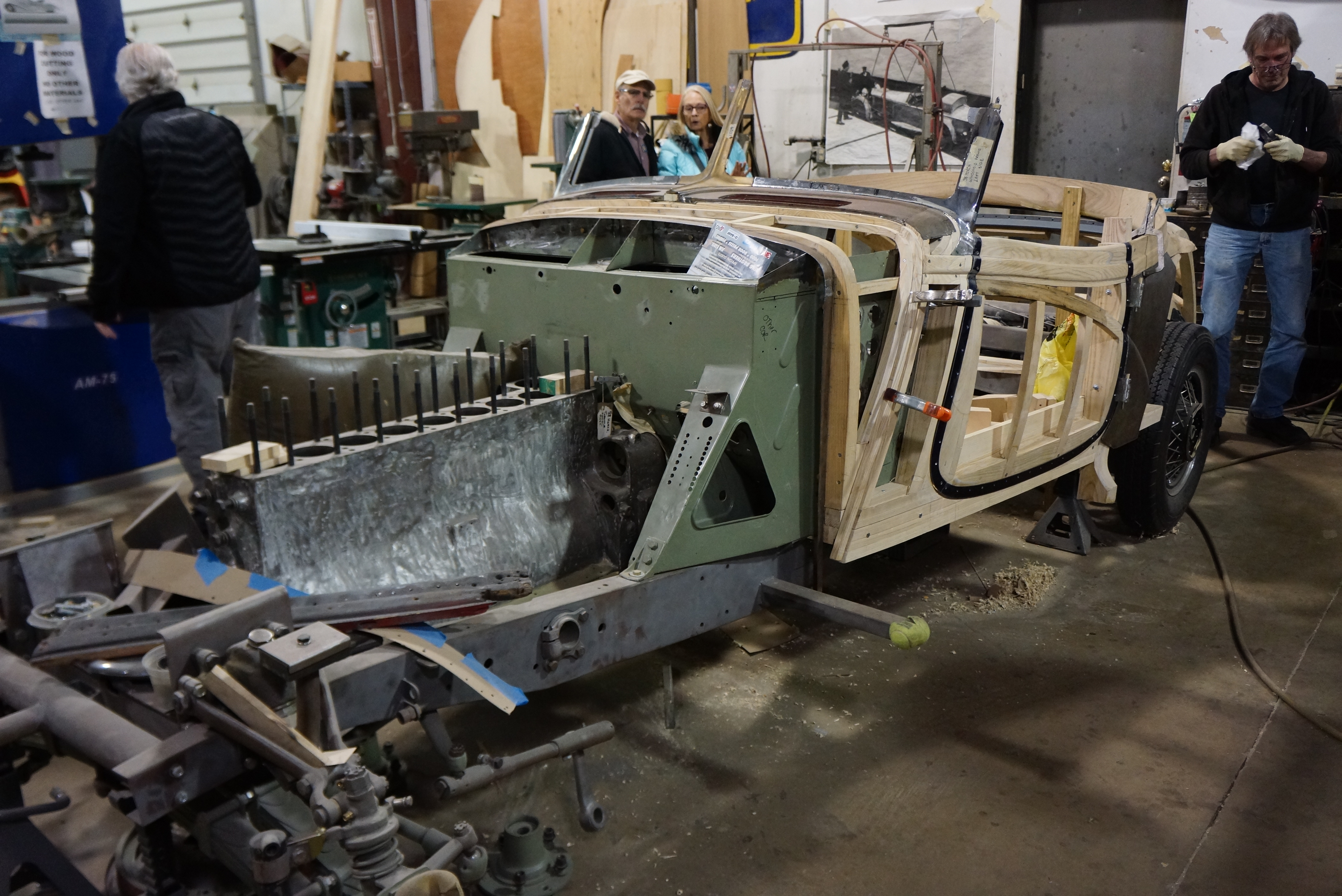
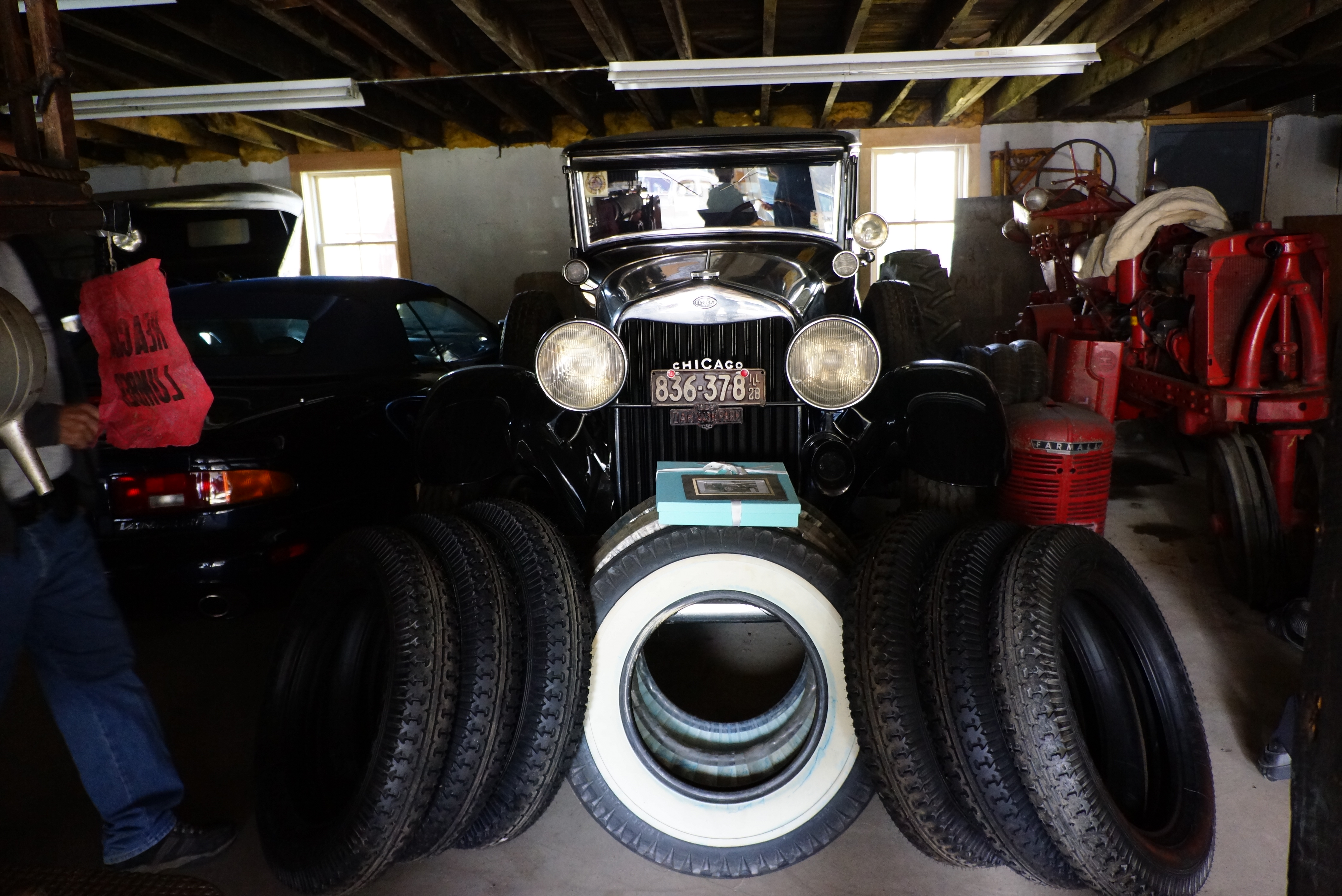
With the sole exception of a ’59 Caddy convertible, all the vehicles in this building were pre-war, which is Steve’s specialty. After we had enough running around in the shop, we were invited to enter another warehouse across the parking lot, which serves as a storage building. Here, cars were so tightly packed that it was difficult to walk around (and certainly a challenge to get good photos).
VEHICLES IN THE MAIN SHOP UNDERGOING RESTORATION WORK
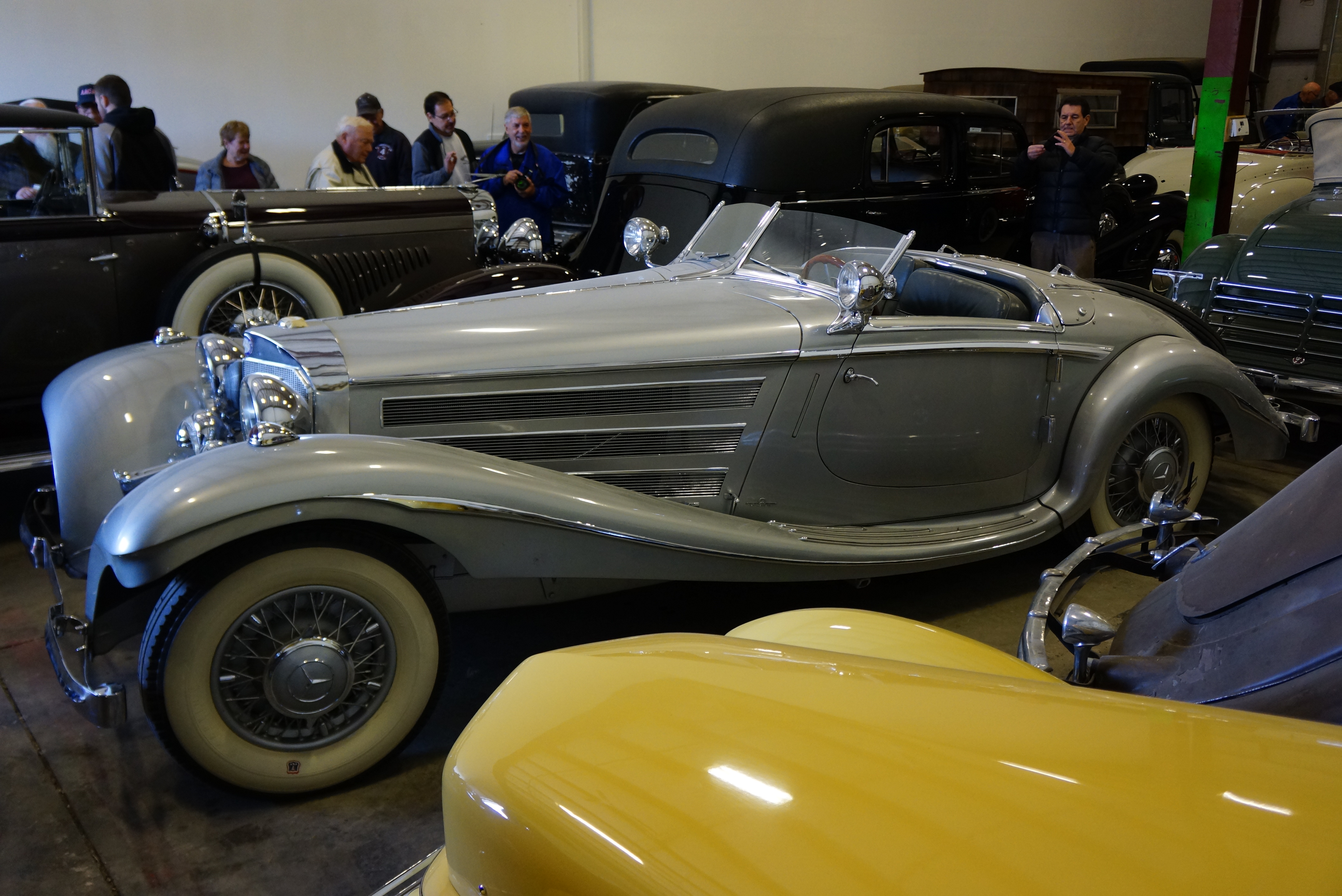
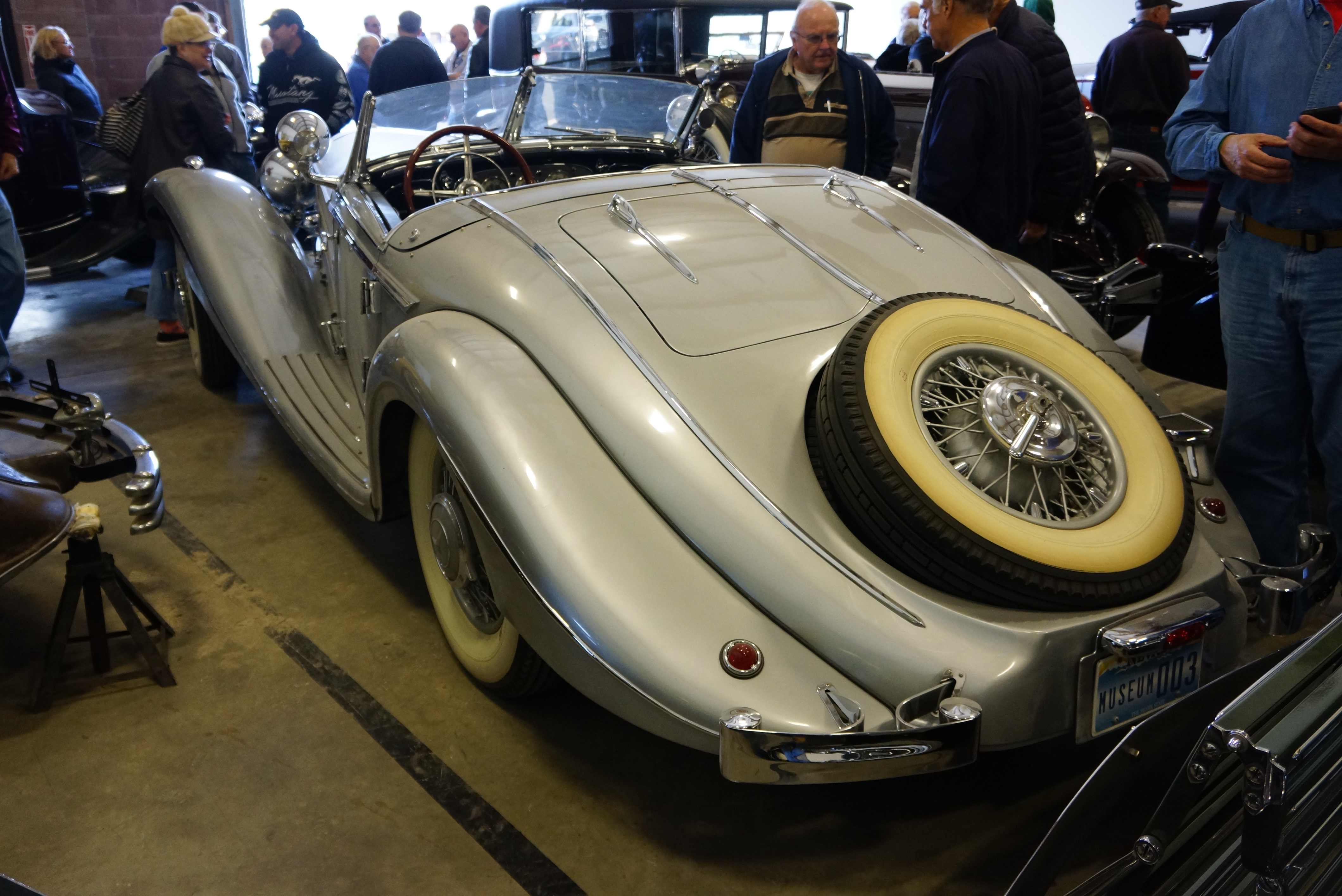
One car though stood out among all the valuable machinery. A silver Mercedes-Benz 540K roadster (I believe), looking like an older restoration, was in the middle of the crowd. The top was down; the whitewall tires had long ago turned yellow; it was dusty; and one got the impression that it had not been started in a long time. But its design was breathtaking. Everyone to a person admired it.
THE MERCEDES-BENZ 540K ROADSTER
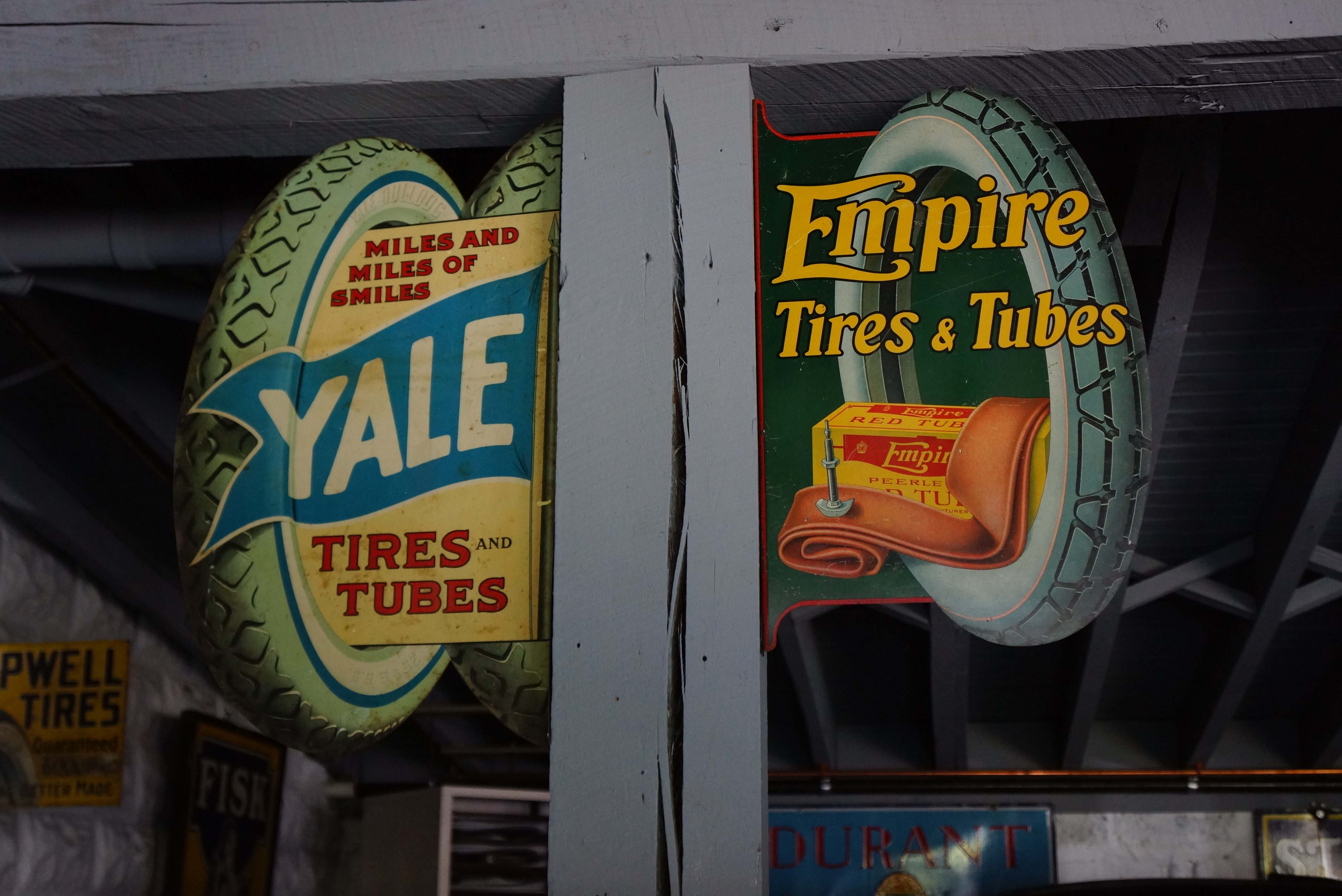
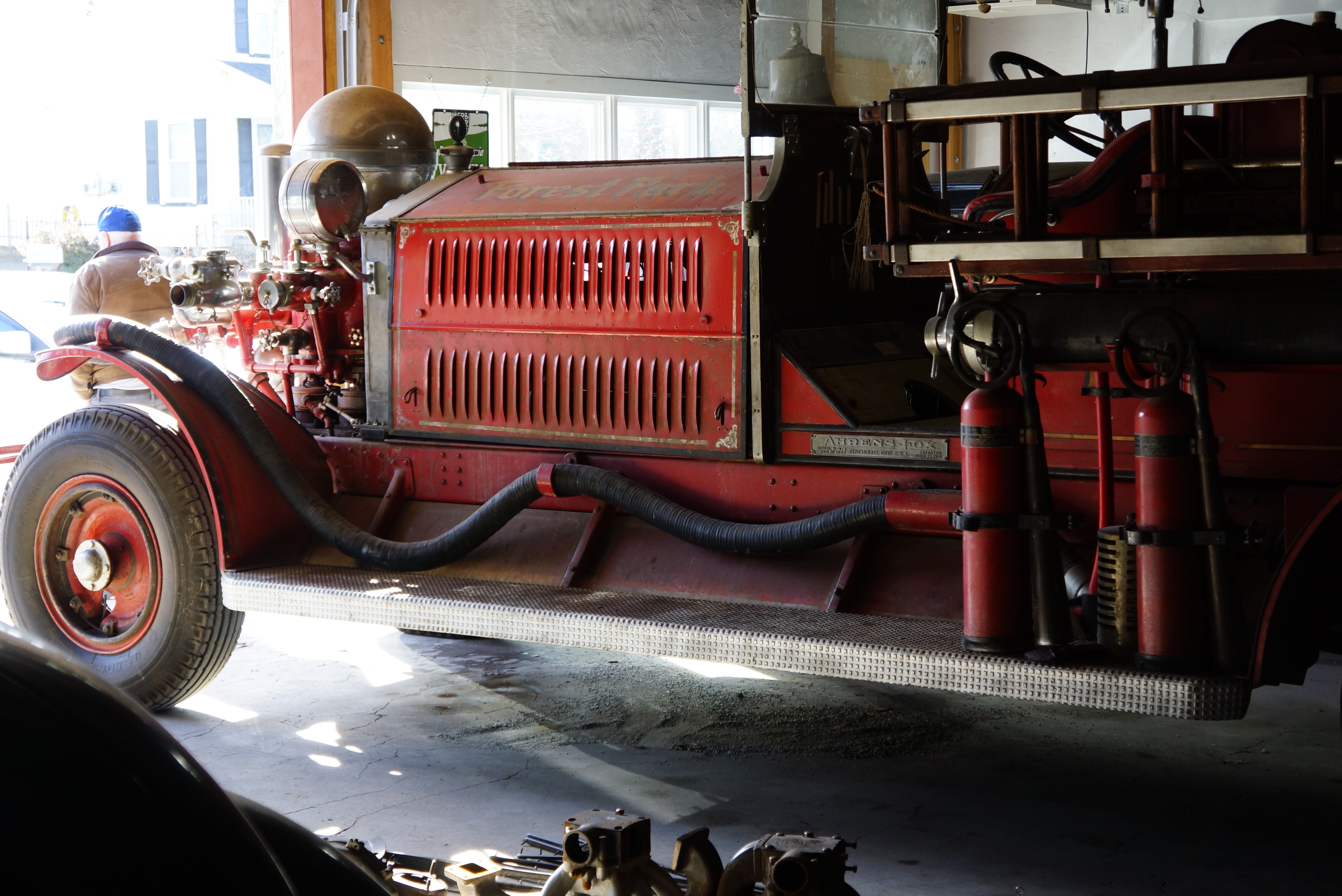
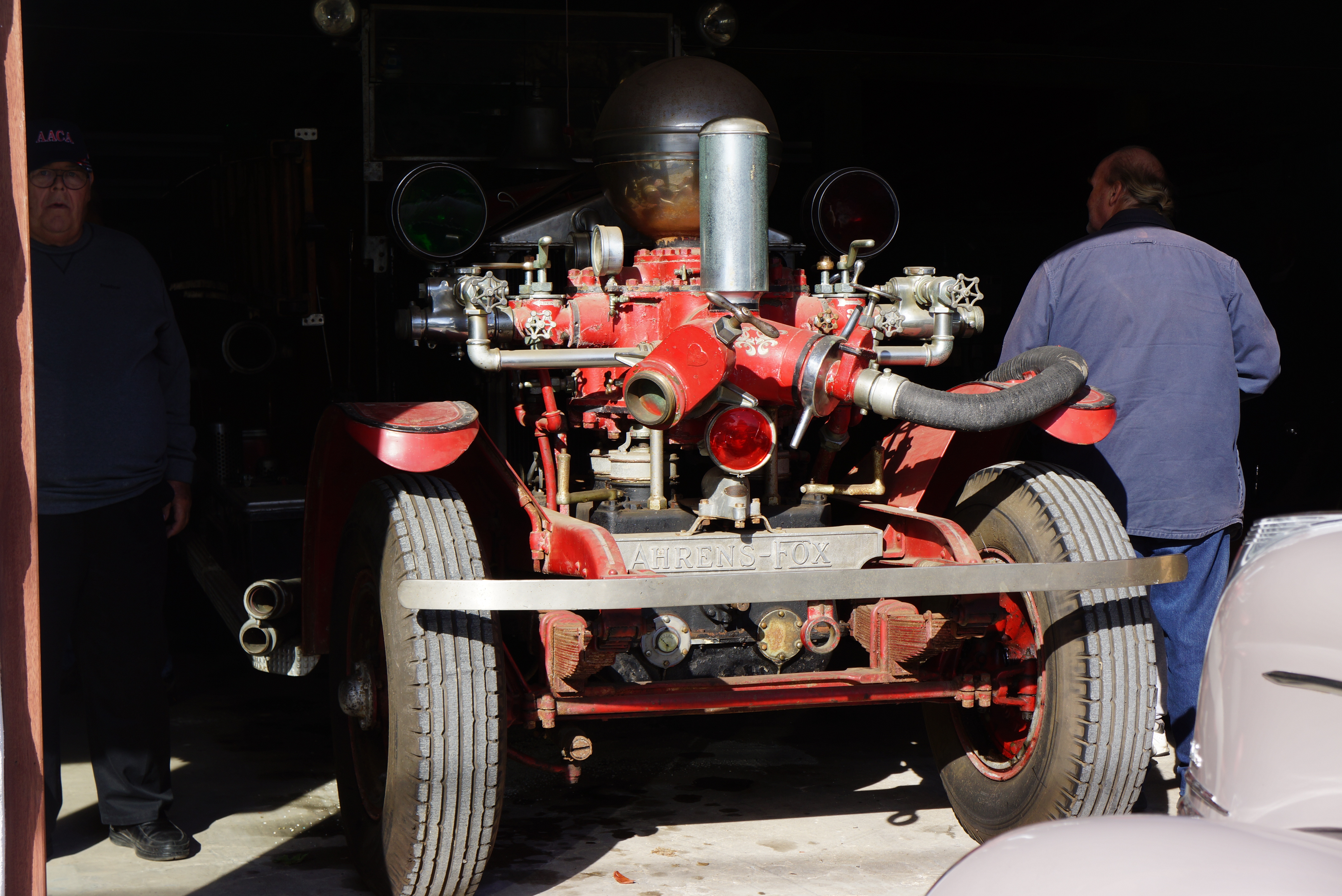
After staring at so much interesting automotive history, we were invited to drive another 20 minutes to the town of Bloomsbury, where Steve stores yet more vehicles in a building which once was a Studebaker dealership. Scattered among the cars at this location was a lot of automobilia: metal signs, old advertising, hood ornaments, toys, and the like. The biggest surprise (and far and away the biggest vehicle) was a pre-war Ahrens Fox fire engine.
THE REPURPOSED STUDEBAKER DEALERSHIP
Before the tour, I had read a little bit about how Mr. Babinsky got his start. Like many other businesses, things started slowly for him. But once word spread about the quality of his work (he does boast of having restored multiple Pebble Beach winners), he said he has no reason to advertise. He doesn’t even have a website. Based on my very informal observation, he has enough work on hand at present to keep him busy for several years. It was a thrill and a privilege to be given inside access to his business for a few hours.
Where did the year go? I swear that just the other day was sunny and 75; today is frosty and 40….. Every year I need to remind myself that putting the cars away for the winter needs to be done well before Thanksgiving, lest we get an early taste of winter and my ever-shrinking window of opportunity gets blown away like the final leaves of autumn.
Today was the day to put the Miata to rest until spring. The Alfa, on the other hand, is still up on four jack stands as it patiently waits for me to complete the brake overhaul I started during the summer. The only accomplishment today in the Alfa’s favor was funneling a few ounces of Sta-Bil into the tank. I can’t start her up, because the battery positive cable and carburetor intake plenum have been temporarily displaced. We’ll save the rest of that story for the next post about the brakes.
Back to the Miata: my routine for winterizing this car, or any of my cars, is fairly simple. Unlike some friends who keep their collector cars “at the ready” should we get a sunny dry day above the freezing mark, I believe in putting them down with the intent of not starting them again until spring returns. The tasks to reach that goal are: add air to the tires; fill the tank and add fuel stabilizer; dissuade critters from making my car their winter getaway; connect the battery charger; and cover the car to protect the paint.
TIRES
Tire flat-spotting is a potential problem with any car, even one that sits only for a few days. The issue seems to vary among tire brands. When I bought my Acura TSX, the tires on it would be flat-spotted every morning. It took 2-3 miles of driving for them to warm up and stop going “thump-thump-thump”. A car which sits all winter is especially prone to this problem.
Like everything else I’m recommending, there is more than one solution. I’ve read that you should remove all the tires from your vehicle (necessitates jack stands) and store the tires on a wall-mounted tire rack (takes up extra space). You can buy cradles designed to go under each tire which distribute the car’s weight more evenly along the tread (more cash outlay, and I’ll need to store the cradles when not using them).
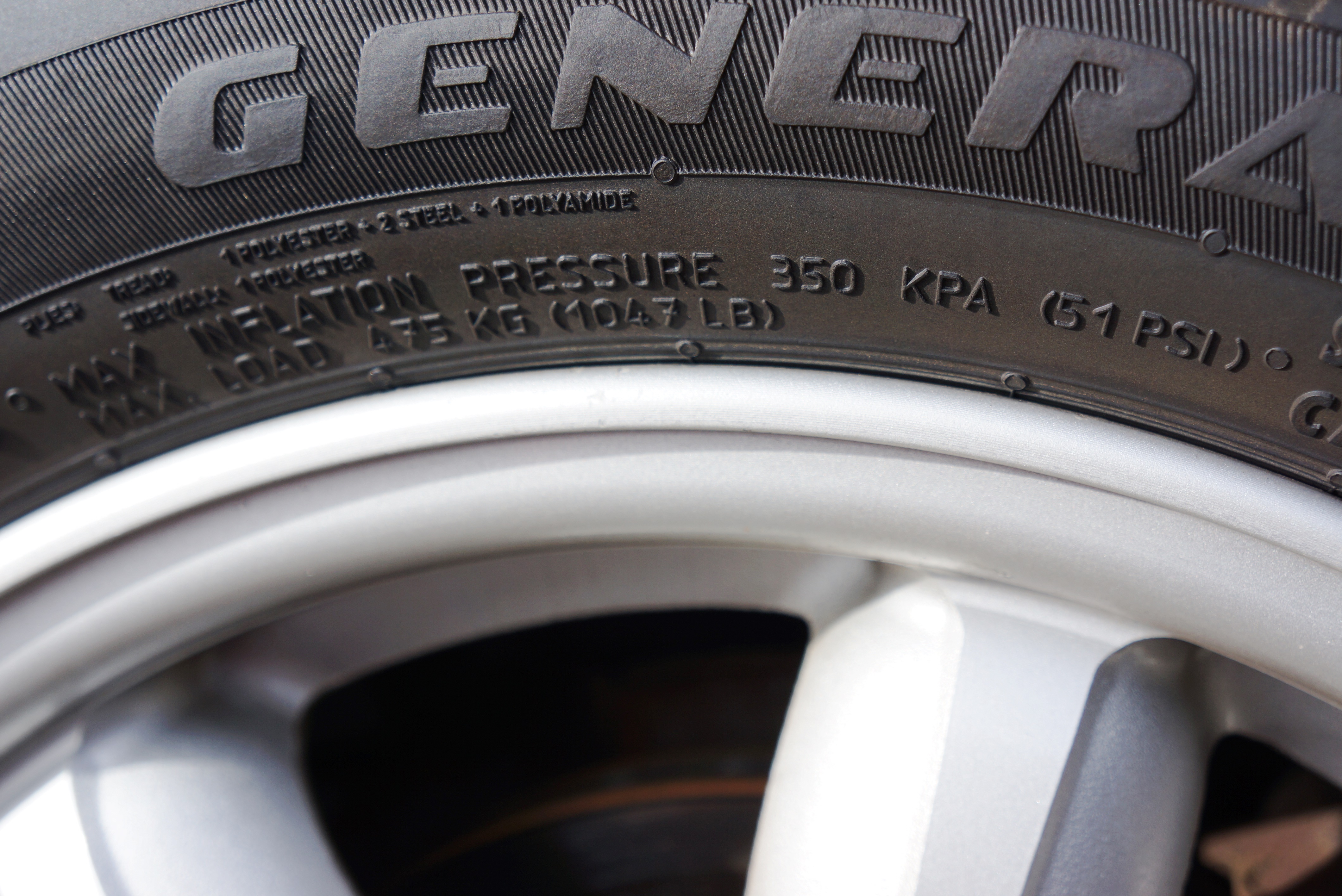
The sidewall indicates maximum tire pressure of 51 psi; I aimed for 45.
My method, which I’ve used for almost 20 years, is to over-inflate the tires and just let them sit. The extra air supports more weight, and it costs nothing other than about 10 minutes of work. I check the tire sidewall for the tire manufacturer’s maximum tire pressure, and aim for a number about 5 psi below that. Come spring, I bleed the tires back down to the vehicle manufacturer’s recommendation, and drive off without any thumping. Tires I’ve treated like this have never flat-spotted.
My cost-effective method to prevent flat-spotting
FUEL
Modern fuel will go bad in about 6 months; it’s been said that the ethanol in today’s fuel only exacerbates the problem. Besides the fuel turning to gel, condensation (from minuscule amounts of water in the fuel) can end up on the tank’s walls and cause corrosion.
A fresh bottle of Sta-Bil awaits my use. Note the forlorn Alfa in the background.
There are two good solutions for the condensation issue: store the car (or lawn mower, or snow thrower) with a full tank of gas, or with a completely empty tank. My lawn equipment, with its pint-sized plastic tanks, easily lends itself to the empty tank approach. But I do the opposite for the cars, because I don’t want to expose the remainder of the fuel system to whatever debris is likely lounging at the bottom.
Once opened, the contents are good for 2 years. Sta-Bil provides a spot for noting start date.
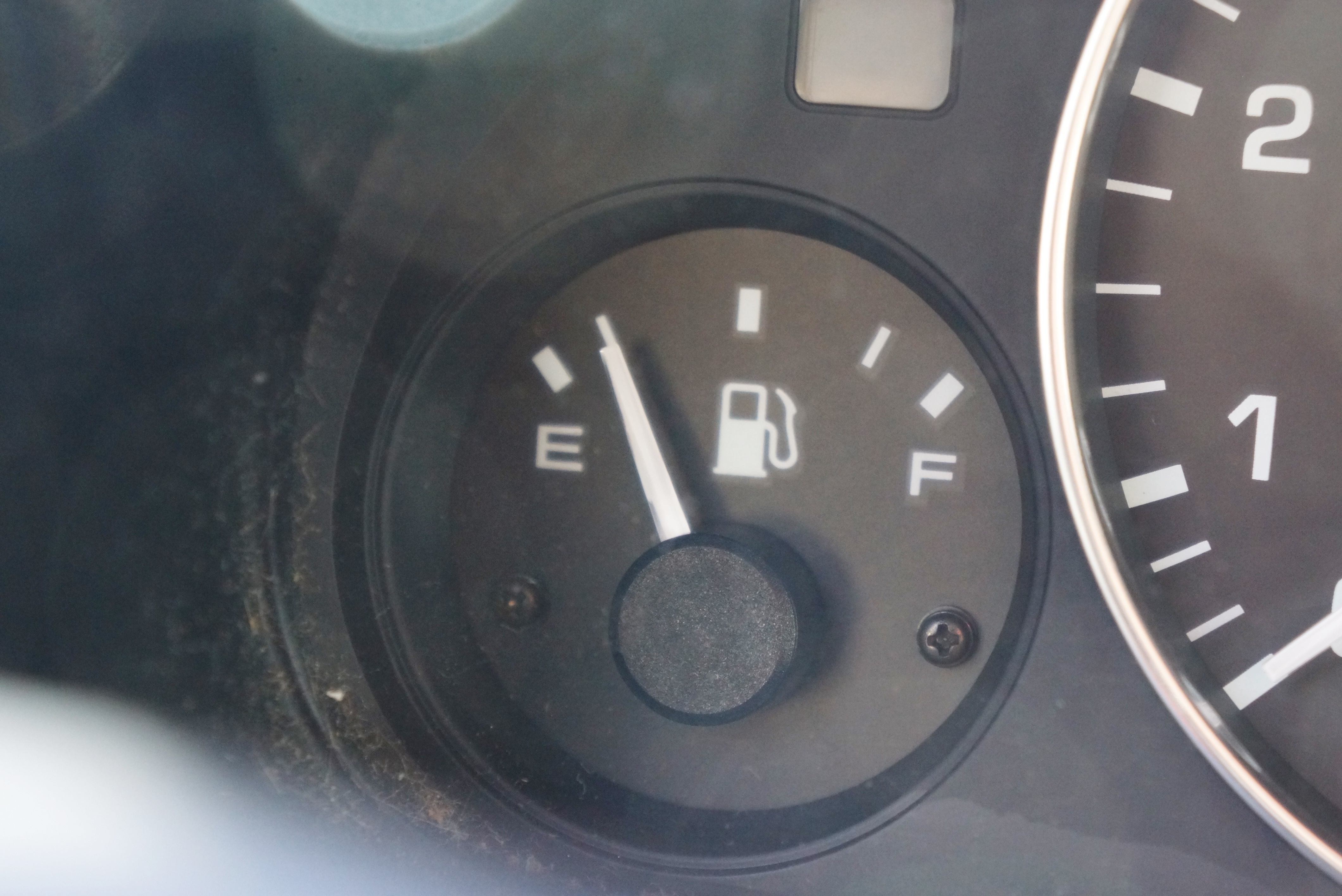
I’ve written before about fuel stabilizers; there are a few different brands, and I’ve been partial to Sta-Bil by Gold Eagle, simply because I’ve been using it for years and it works very well for me. One necessity with any fuel stabilizer is to run the engine for at least 5 minutes AFTER you’ve added the stuff, to circulate it through the rest of the fuel system. I’ve one more trick, and that is to add the Sta-Bil to the tank before filling it up. As fresh fuel is added, it mixes the two, and the drive back from the filling station usually suffices to distribute to good stuff through the carbs, injectors, and what-have-you.
Sta-Bil was added with tank one-quarter full, after which it was topped off
CRITTERS
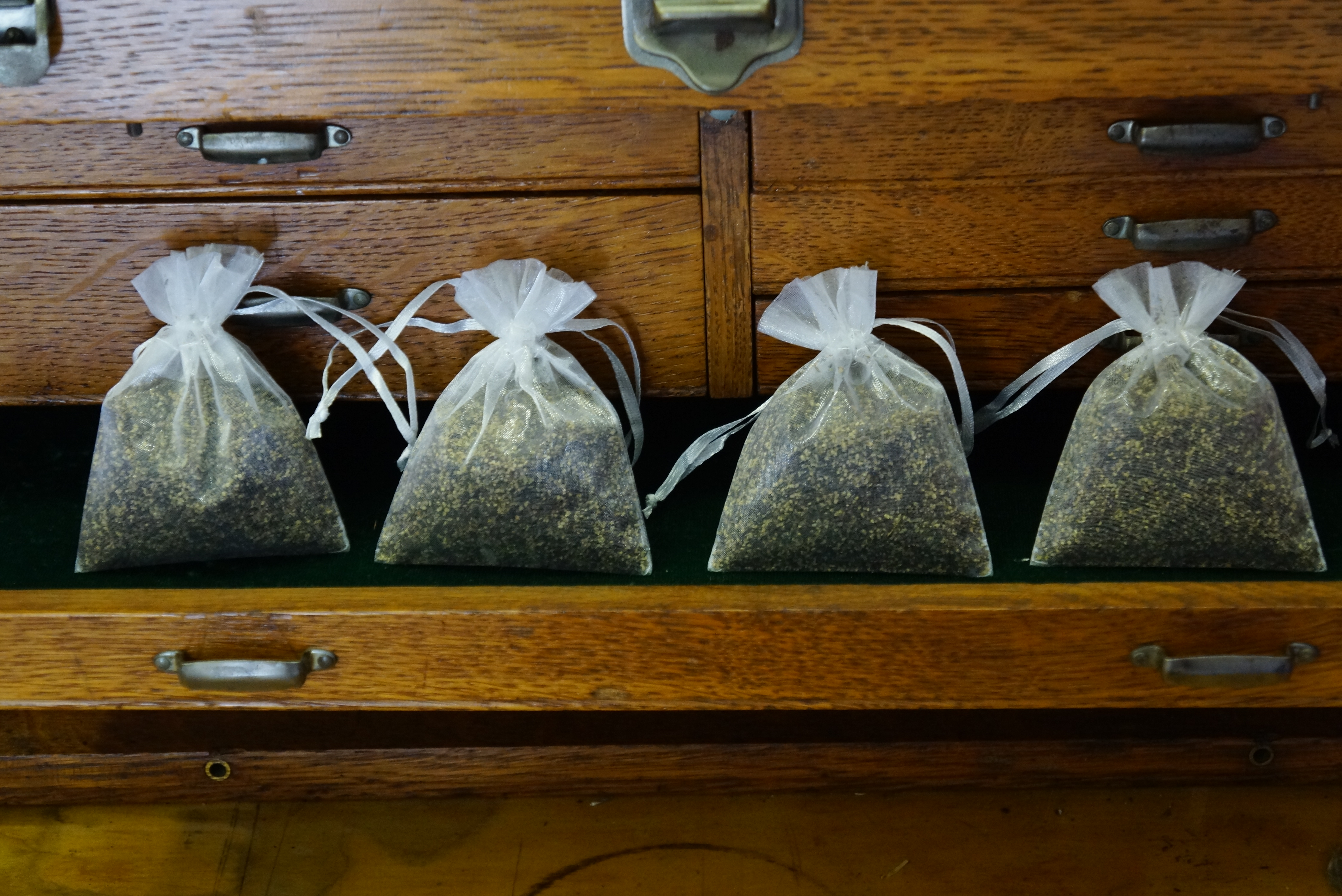
The good news is, I have a 3-car detached garage in the yard next to my house. The bad news is, I have a 3-car detached garage in the yard next to my house. I joke; there is no bad news. Except sometimes, critters, mainly field mice, want to see my collection. They think it’s cute. I don’t think they are cute. While no real damage has occurred, I’ve caught a few of them in there. They are not welcome. Rather than catch them, I’d sooner discourage them from entering. Through the years, I’ve used bait, traps, dryer sheets, mothballs, and black pepper, to varying degrees of success. Last year, the black pepper approach seemed to help, but it was loose on paper plates, and invariably, I would kick the plates and scatter the pepper about.
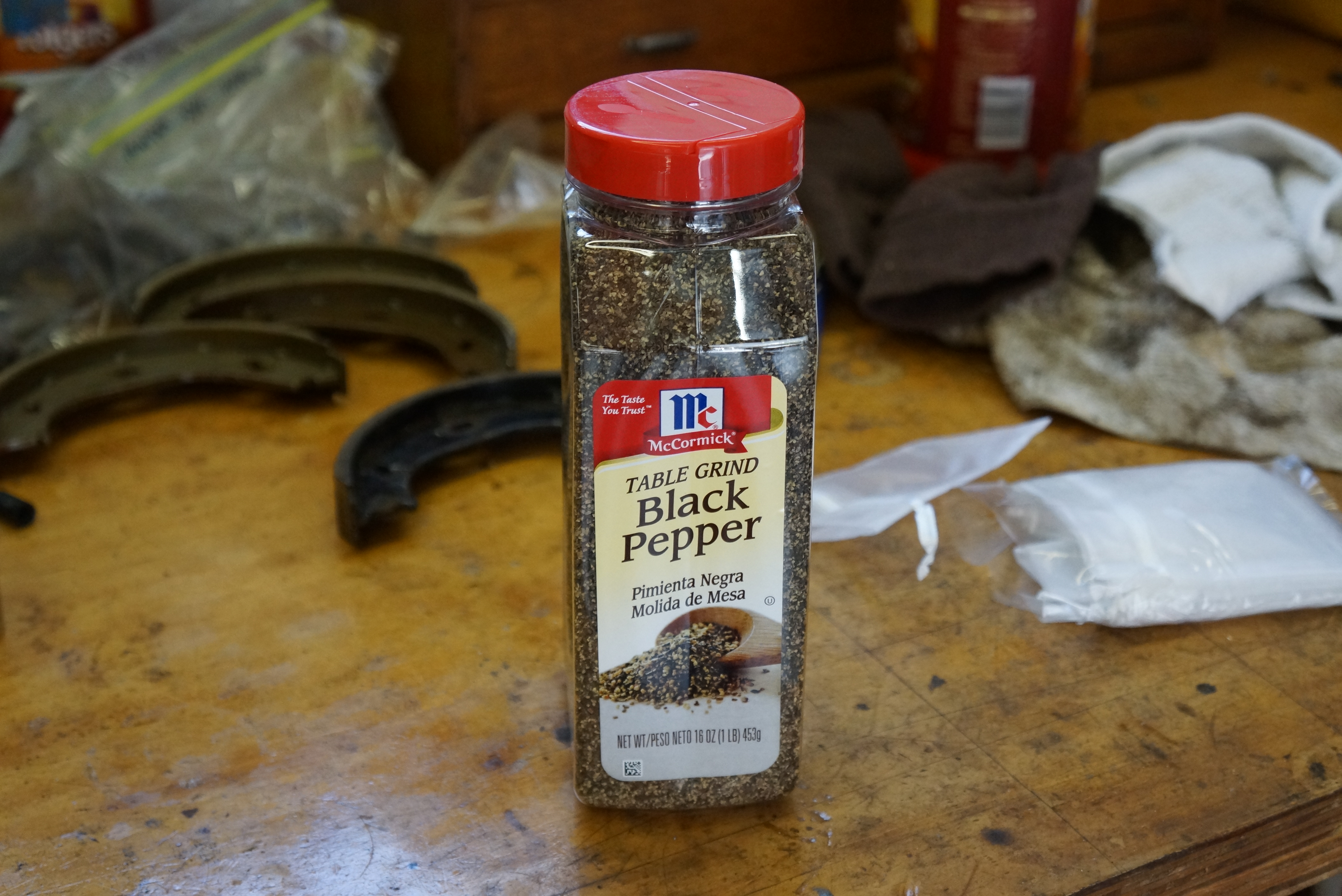
McCormick calls the coarse ground “table grind”
My wife came up with this suggestion: she offered to buy “potpourri” bags, like you’d use in the house for scented objects. (She got them in Michael’s in the bride’s section.) I bought an institutional-sized container of black pepper from Costco (get the coarse ground, not the fine), and filled a dozen bags with pepper. These went into the interior floor, trunk, and engine compartment. My entire garage smells like pepper (it’s better than mothballs; the one time I used them, the odor lingered for almost a year). As long as I spot no signs of toothsome damage, I’ll consider the pepper bags a success.
Potpourri bags are now pepper bags
BATTERY
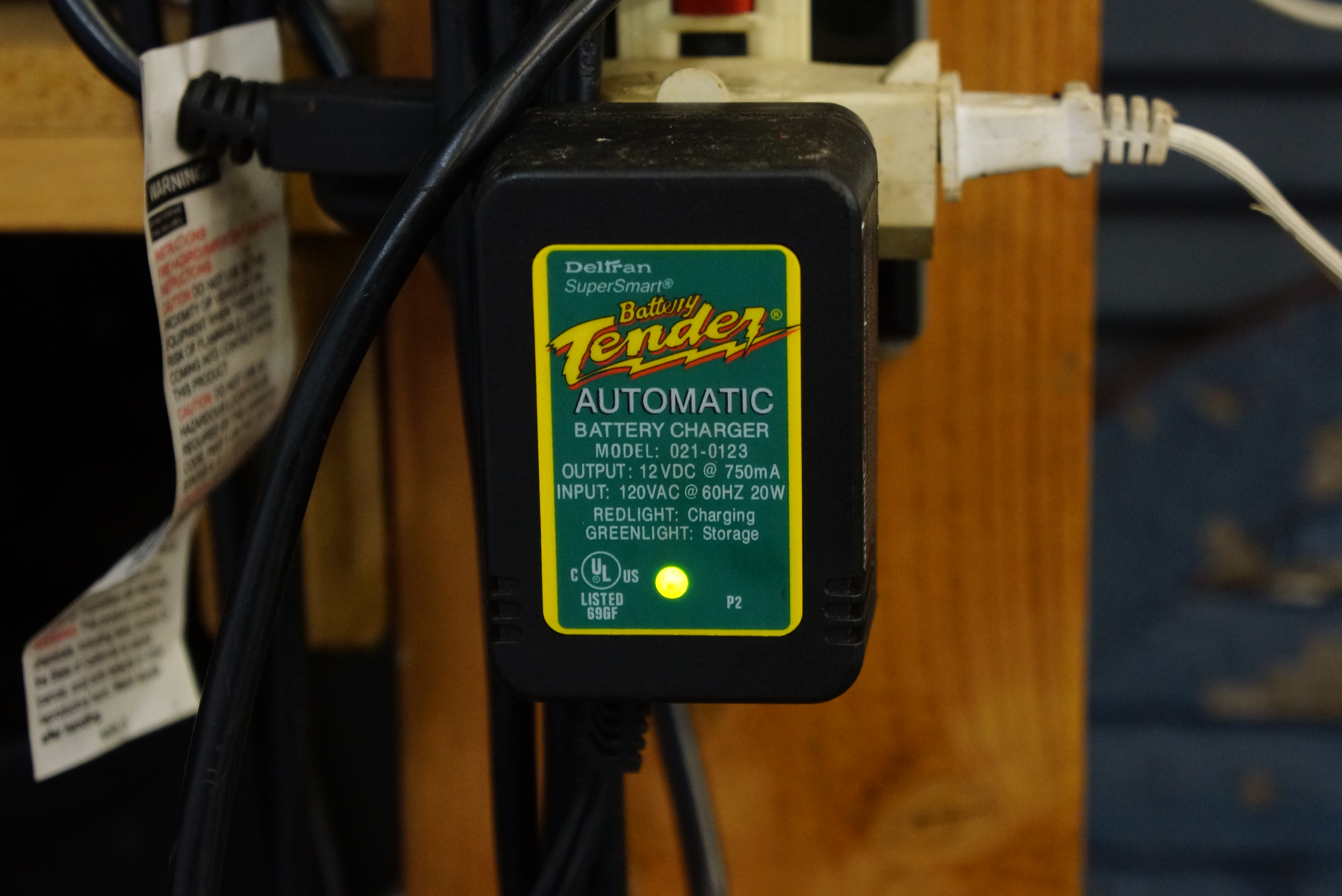
Again, there are multiple approaches for off-season battery maintenance, and none of them is wrong. What’s important is that your battery charger offers a trickle-charge function so the battery does not overcharge and boil over. The Battery Tender brand has been my choice, simply because that was the first one I bought. I now own several.
Lights on Battery Tender are only thing to monitor
I used to remove the batteries from the cars and arrange them on a shelf, connecting each one to a separate charger. (If you have multiple cars, and access to a wall outlet is an issue, there are trickle chargers designed to charge an entire bank of batteries.) I’ve now decided that there is no advantage to taking the battery out of the car; it’s just more work. However, I disconnect the negative cable to isolate the electrical system during charging. Once the terminal clamps are connected and the unit is plugged in, my work is done.
COVER
Before working at my current employer, I didn’t believe in car covers. Somehow I was convinced that they did more harm than good. Then I researched some of the better covers that we sell, and did a 180 on them. My brand of choice is Covercraft: the fit is excellent, the materials are top-notch, and there is a good variety of covers at different price points. Once the tires, fuel system, battery, and interior are treated, on goes the cover.
The first day of spring next year is Friday 03/20/20. I’ll be OK with it if Mother Nature wants to usher it in a week or two sooner, so I can undo all the above and take the Miata on its first spin of 2020.
HERSHEY! For old-car enthusiasts, that one word is all that needs to be said. Its official name is the Antique Automobile Club of America (AACA) Eastern Fall Meet, held every October, but we know it simply by the town which has hosted it since the early 1950s. This 5-day event takes over all of Hersheypark’s paved lots, and encompasses a flea market, car corral, and AACA-judged car show.
SHOW CARS ARE ARRANGED BY CLASS:
With one exception, and that for a business trip, I haven’t missed Hershey since 2002, and have attended on and off before that, going back to my first visit in 1980. It not only represents the unofficial end of the collector car show season; it has become the highlight of my automotive year. Typically, I’ll come out Thursday morning and stay through Saturday afternoon. The first two days are spent wandering the flea market and car corral, and Saturday of course we’re all at the big show. This year was especially outstanding: the weather was close to perfect on Thursday and Friday, and although Saturday was cloudy and cooler, it was still pleasant to be outside (and not staring at a screen).
The crowd strolls through the Car Corral on a perfect weather day
There was nothing in particular on my shopping list this year; sometimes it’s enough to walk the aisles and take in the ambiance. I did end up purchasing a few items from Eastwood, and succumbed to my weakness for printed material by purchasing a book entitled “GM: The First 75 Years of Transportation Products”. This hardcover 223-page tome was a giveaway to GM employees, and had never been offered to the public. My copy even included the letter addressed to “Dear GM Employee” and signed by Roger B. Smith. With beautiful full-color photos courtesy of Automobile Quarterly’s archives, it was a no-brainer at a measly $5.
More and more dealers are setting up displays with cars for sale
While there were some empty spots among the flea market vendors, attendance seemed good, people were pulling out their wallets to make purchases, and many languages besides English were overheard. It’s reassuring to know that Hershey continues to attract an international audience.
FLEA MARKET OFFERINGS:
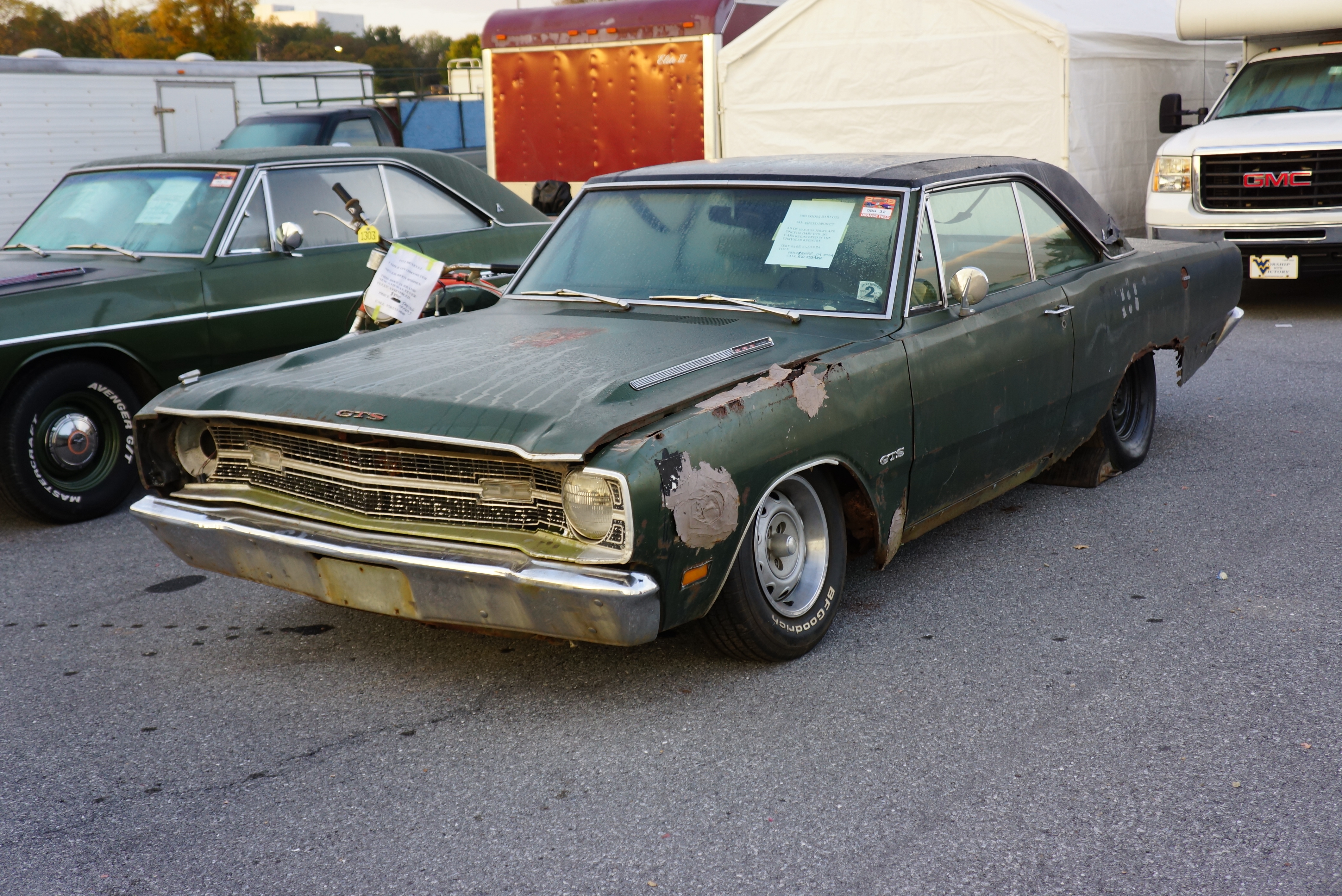
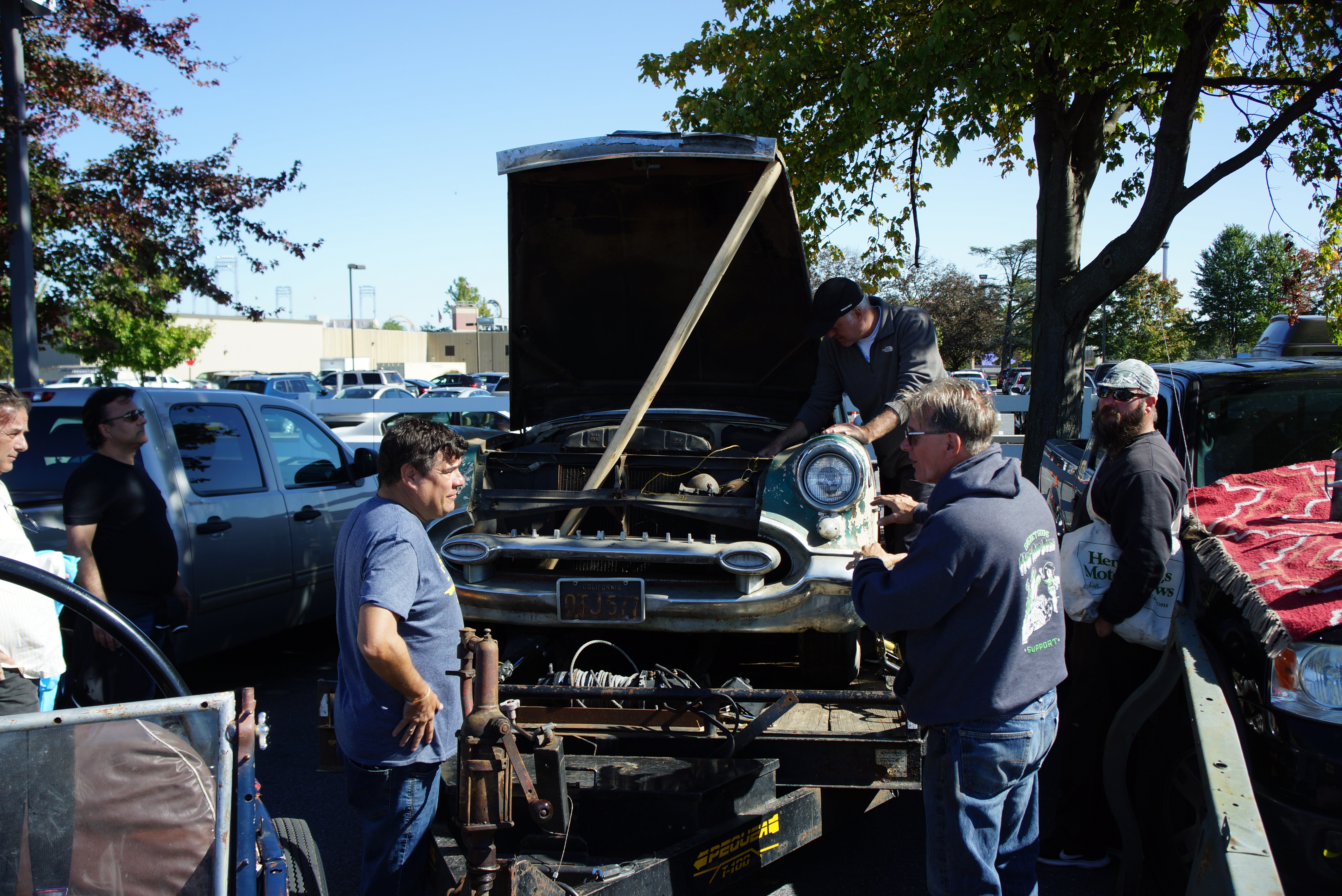
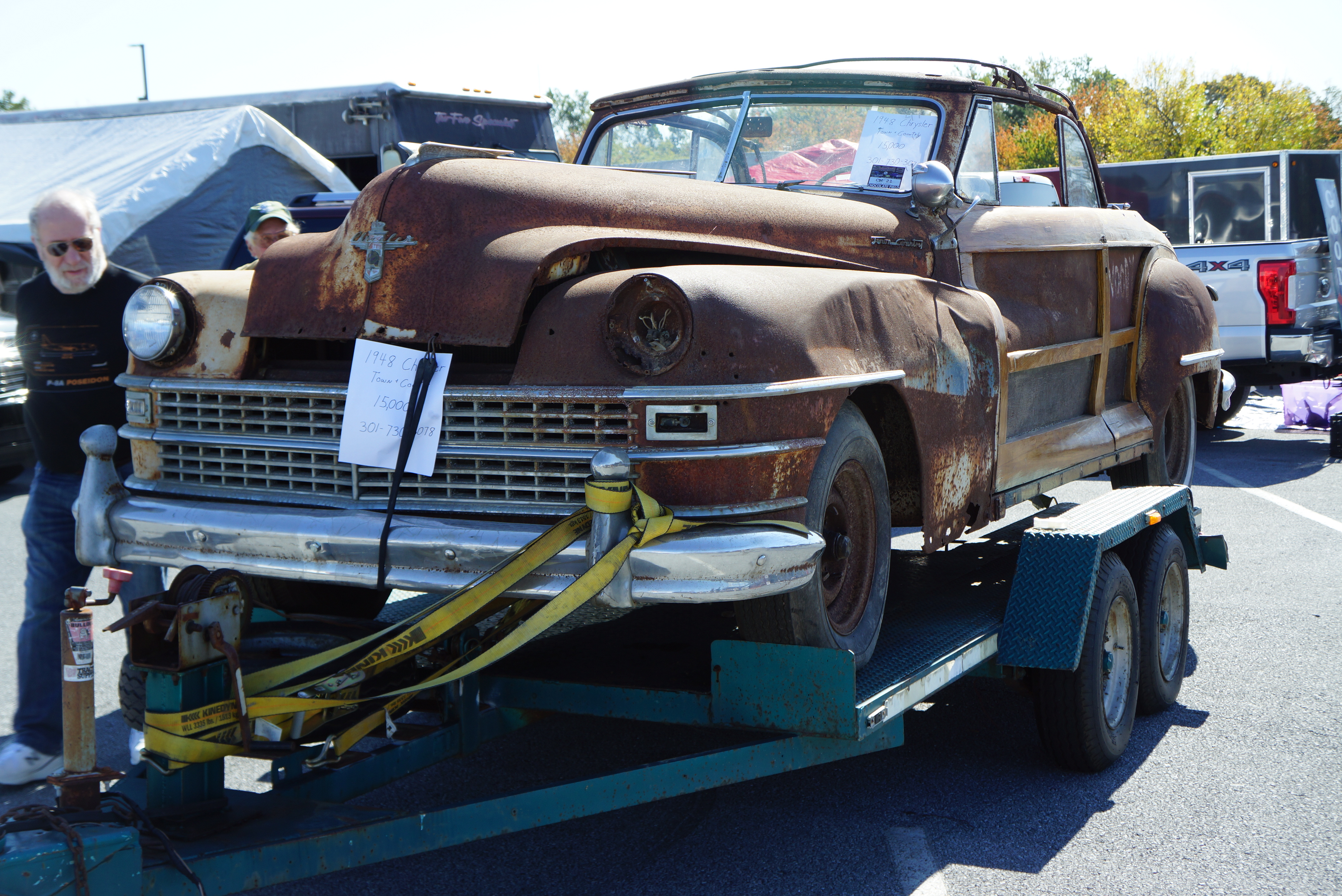
The car corral was unimpressive this year. There was a dearth of cars priced under $20,000 or so, and worse, many of the cars in the corral had been here in 2018, with no change in the asking prices! Do people put cars in the car corral to sell them, or to give themselves a way to park on the show grounds? (Don’t laugh, I’ve had some club members actually admit that to me.)
PROJECT CARS:
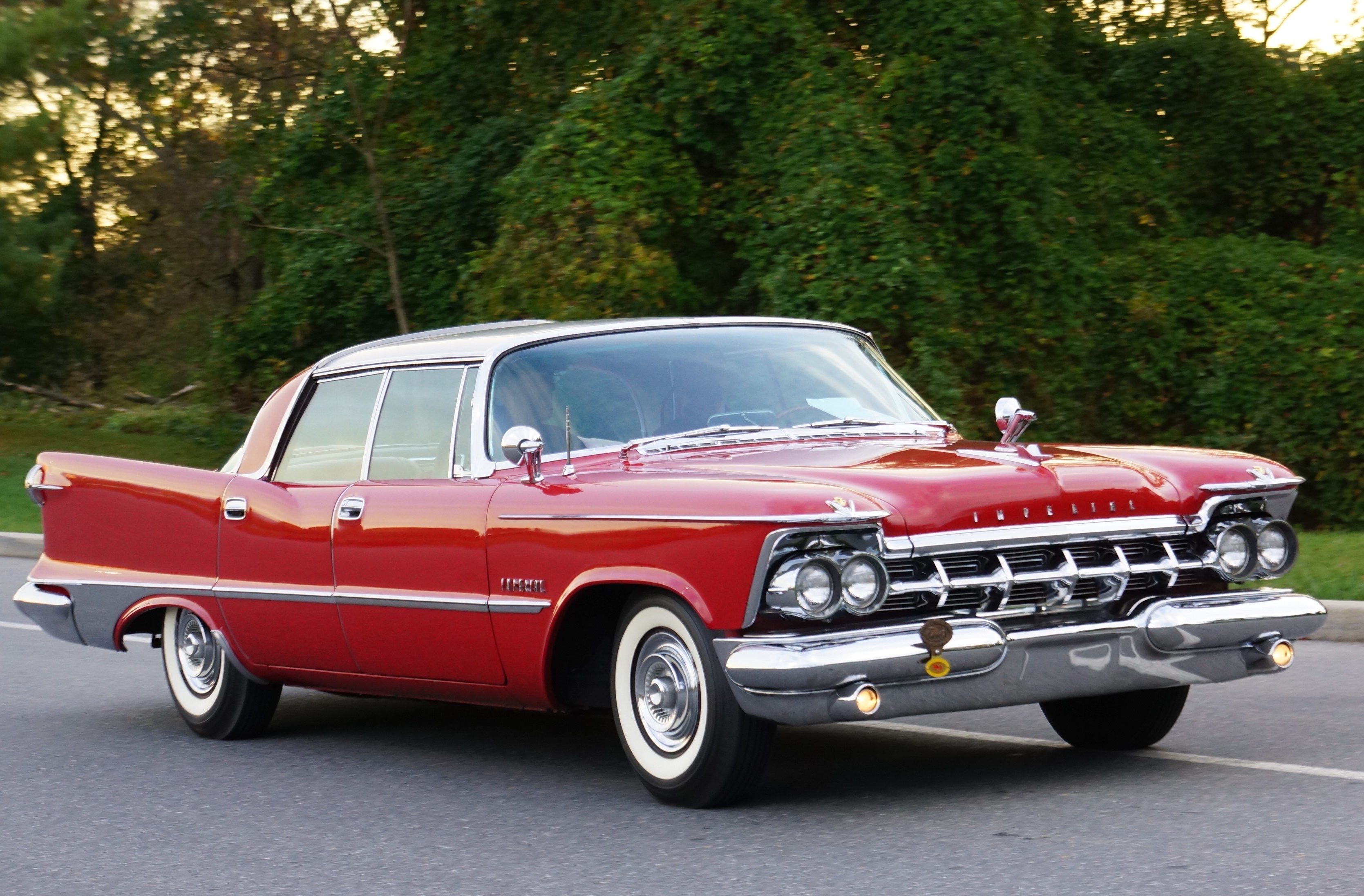
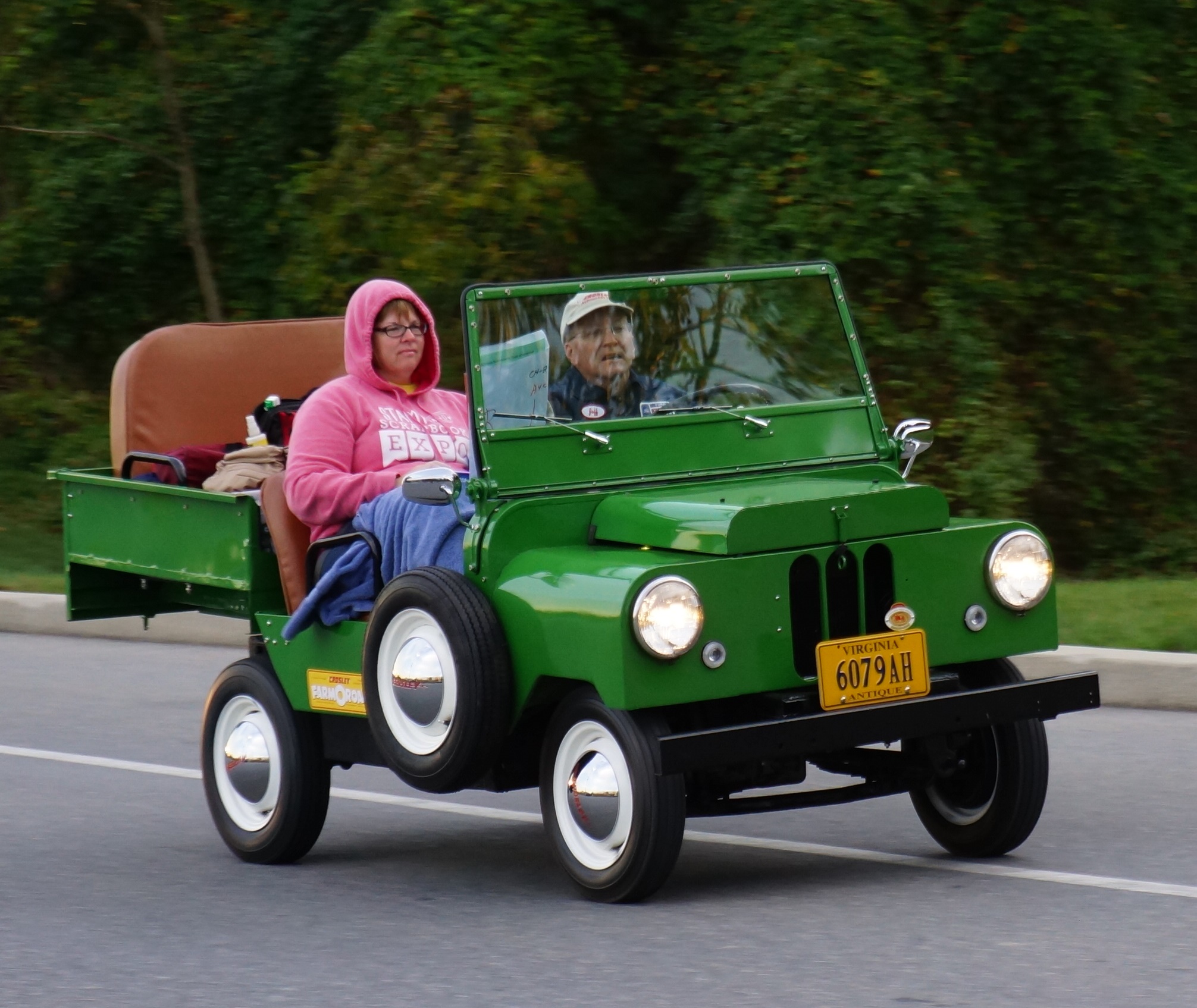
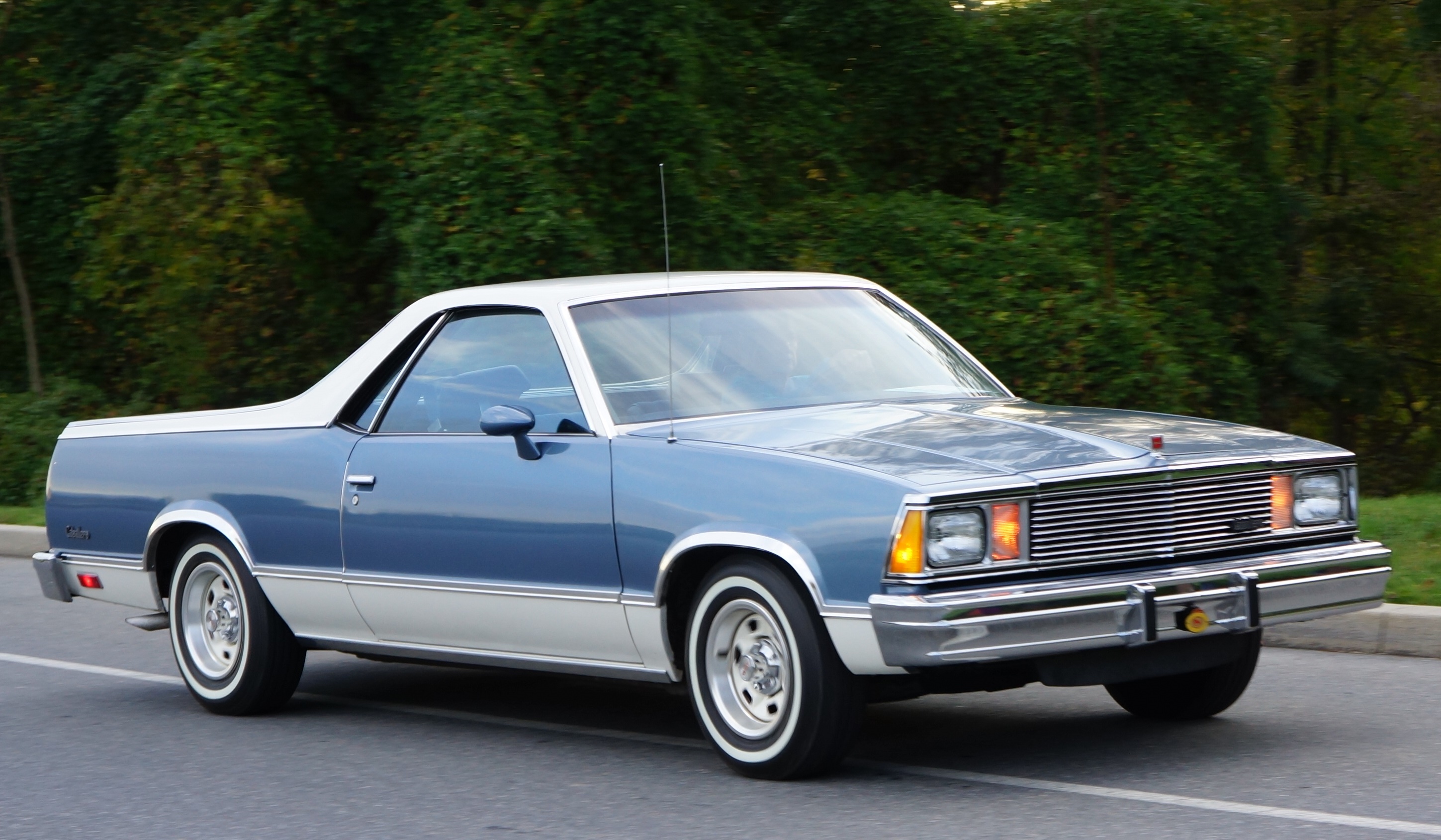
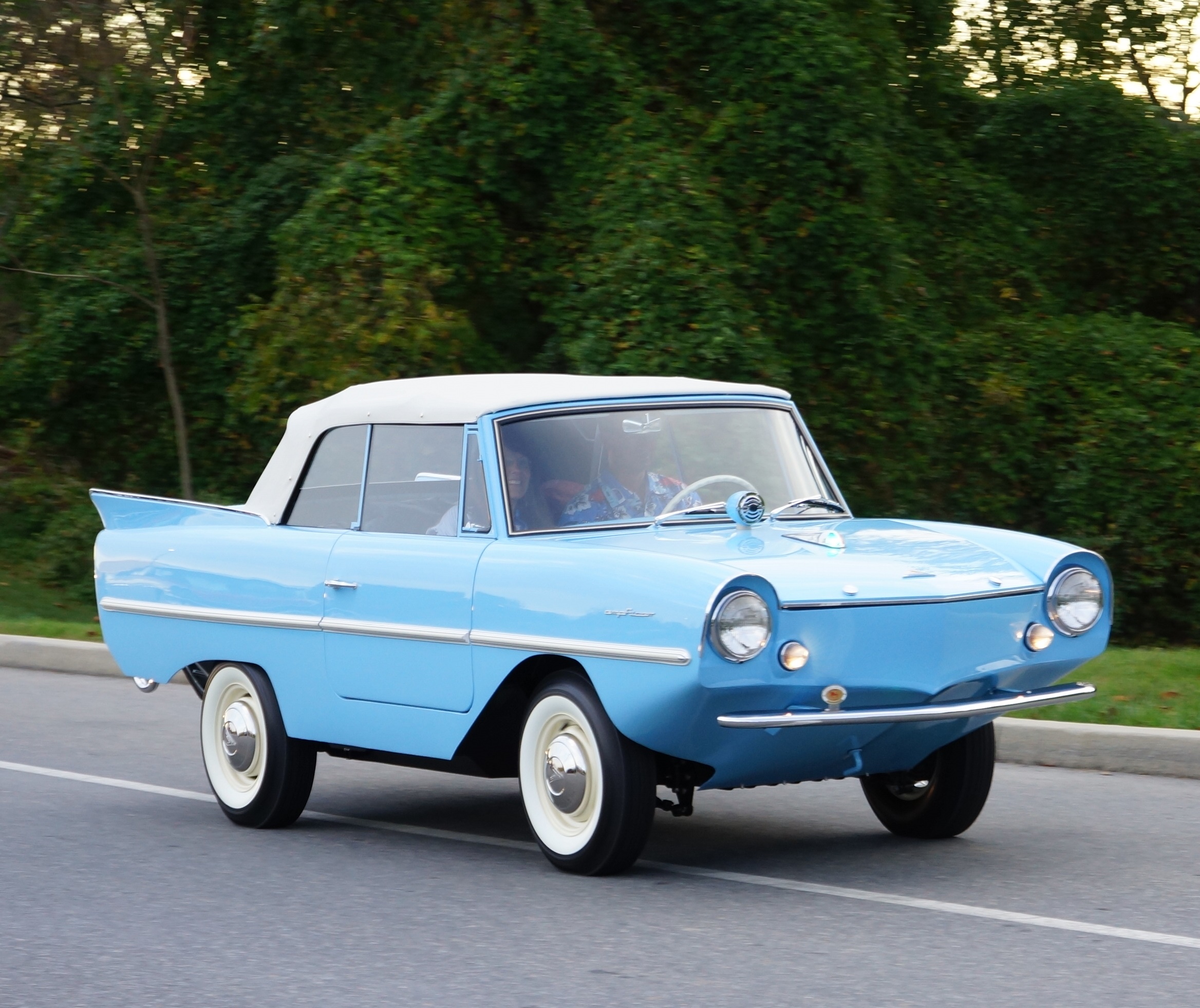
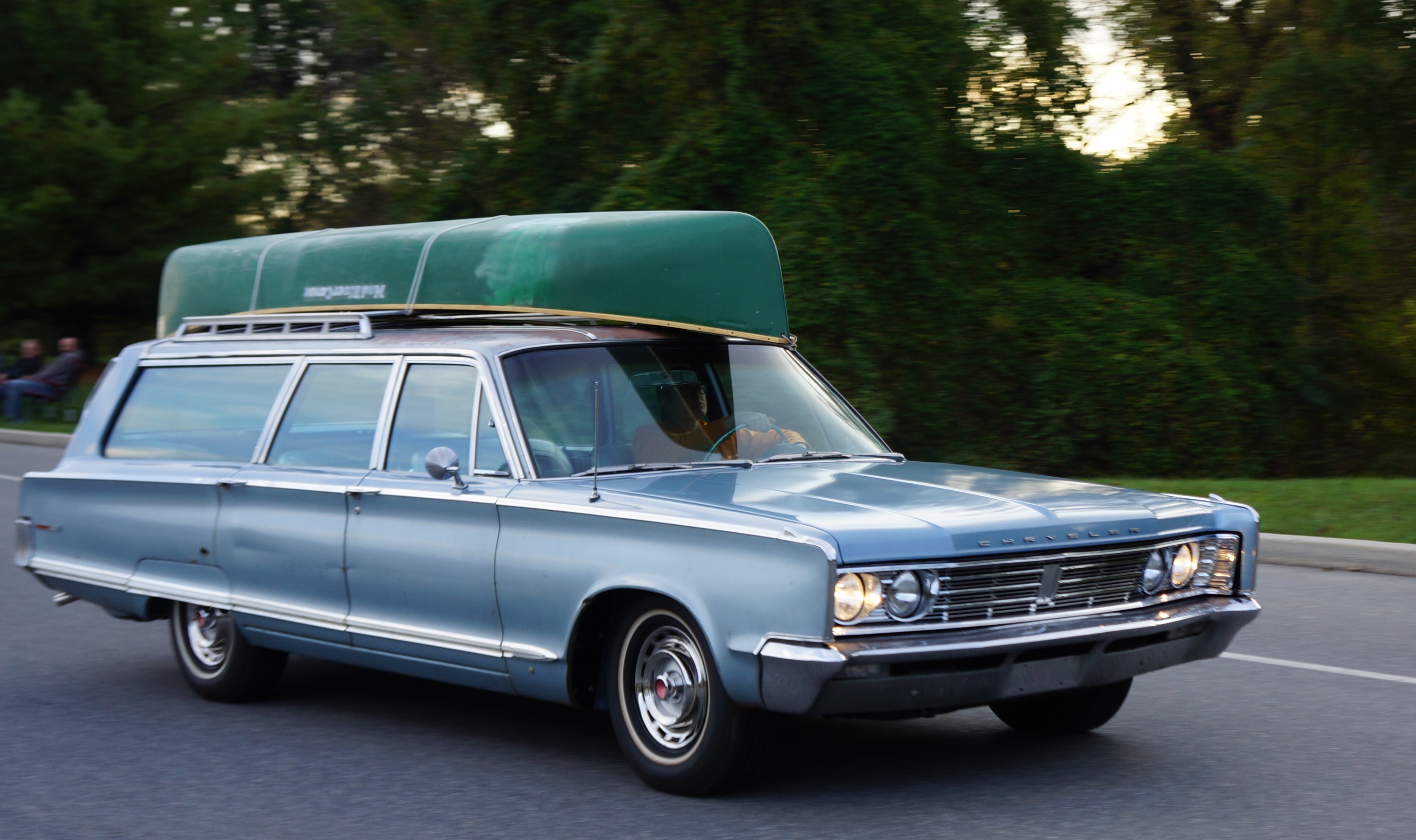
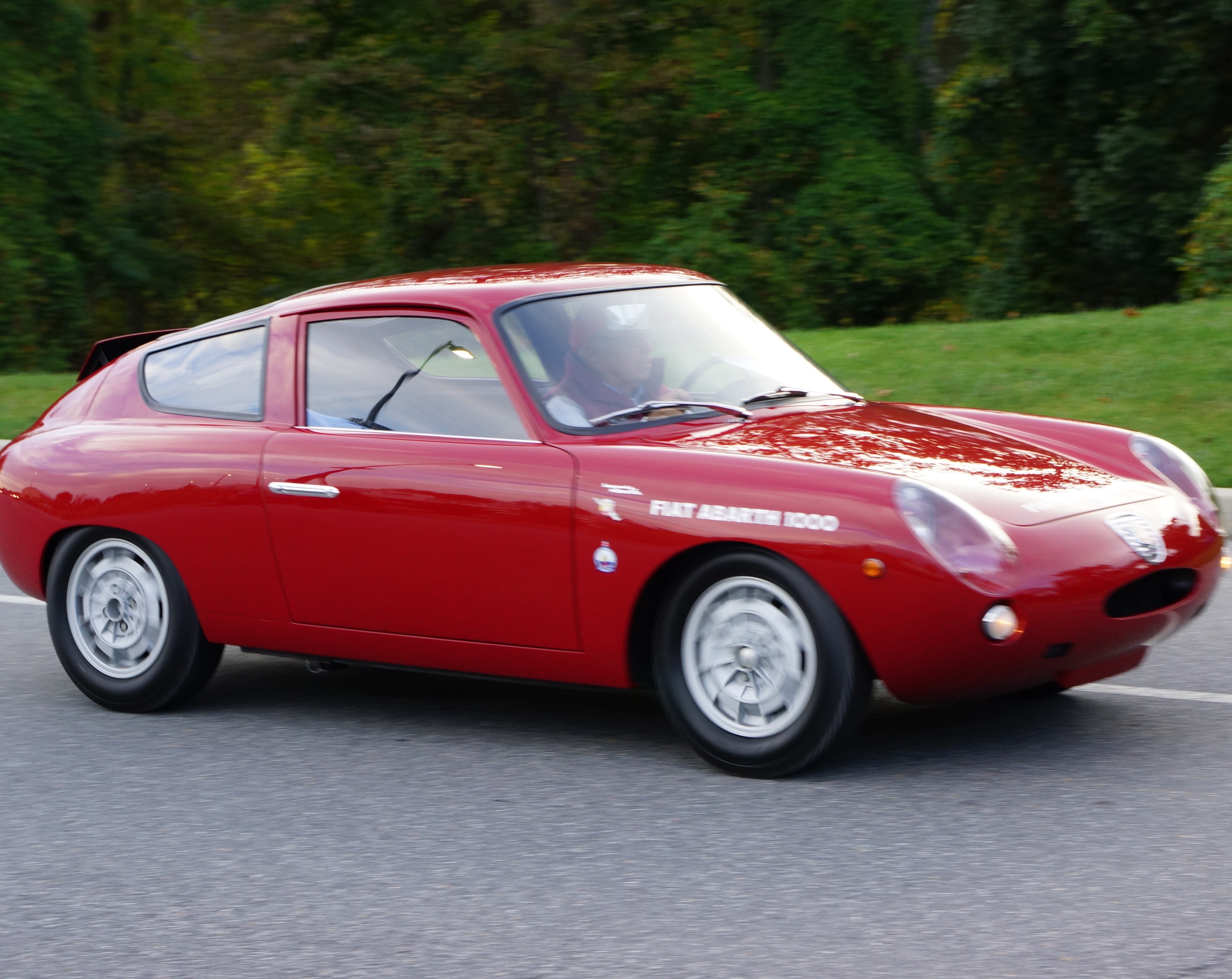
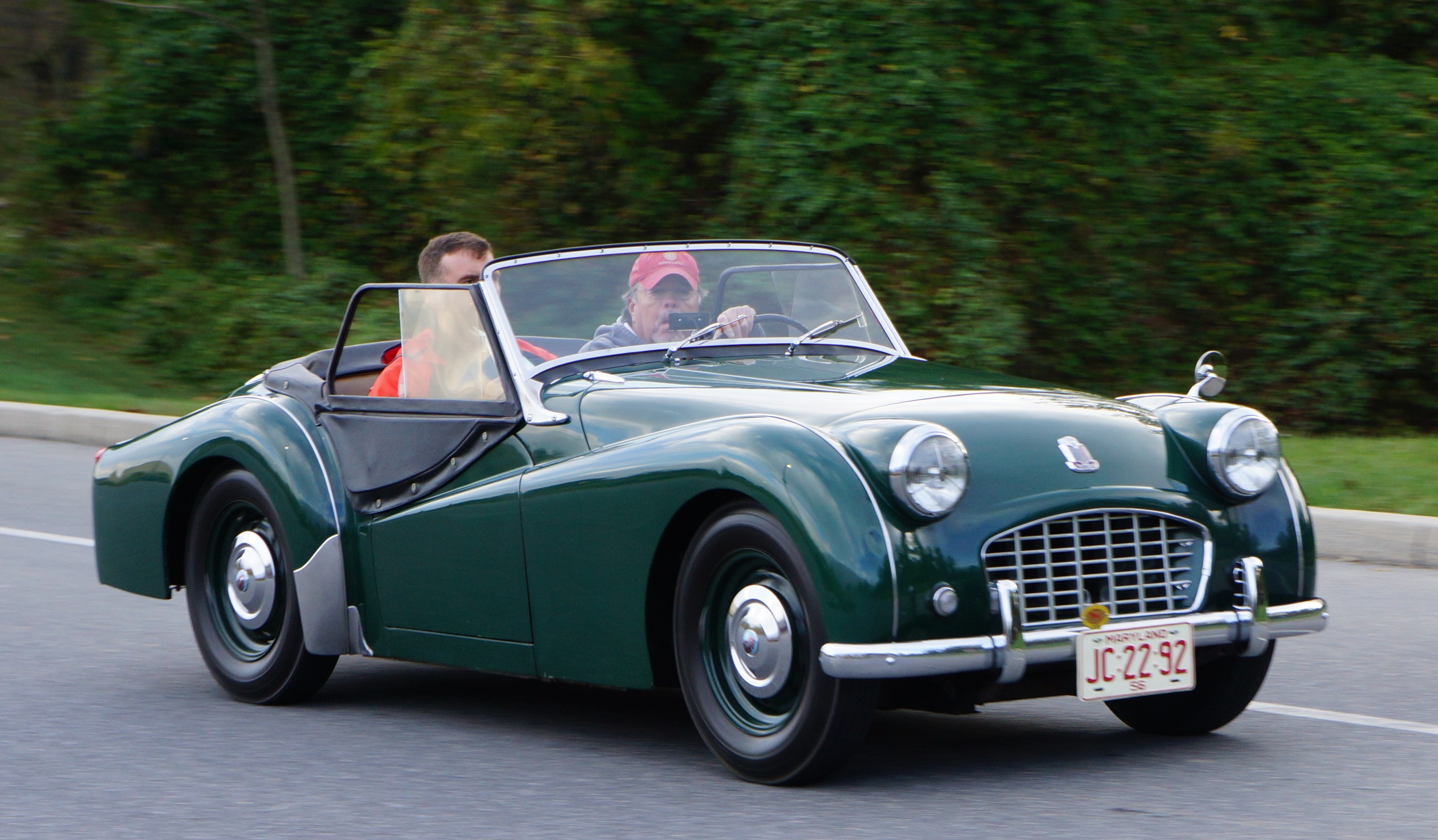
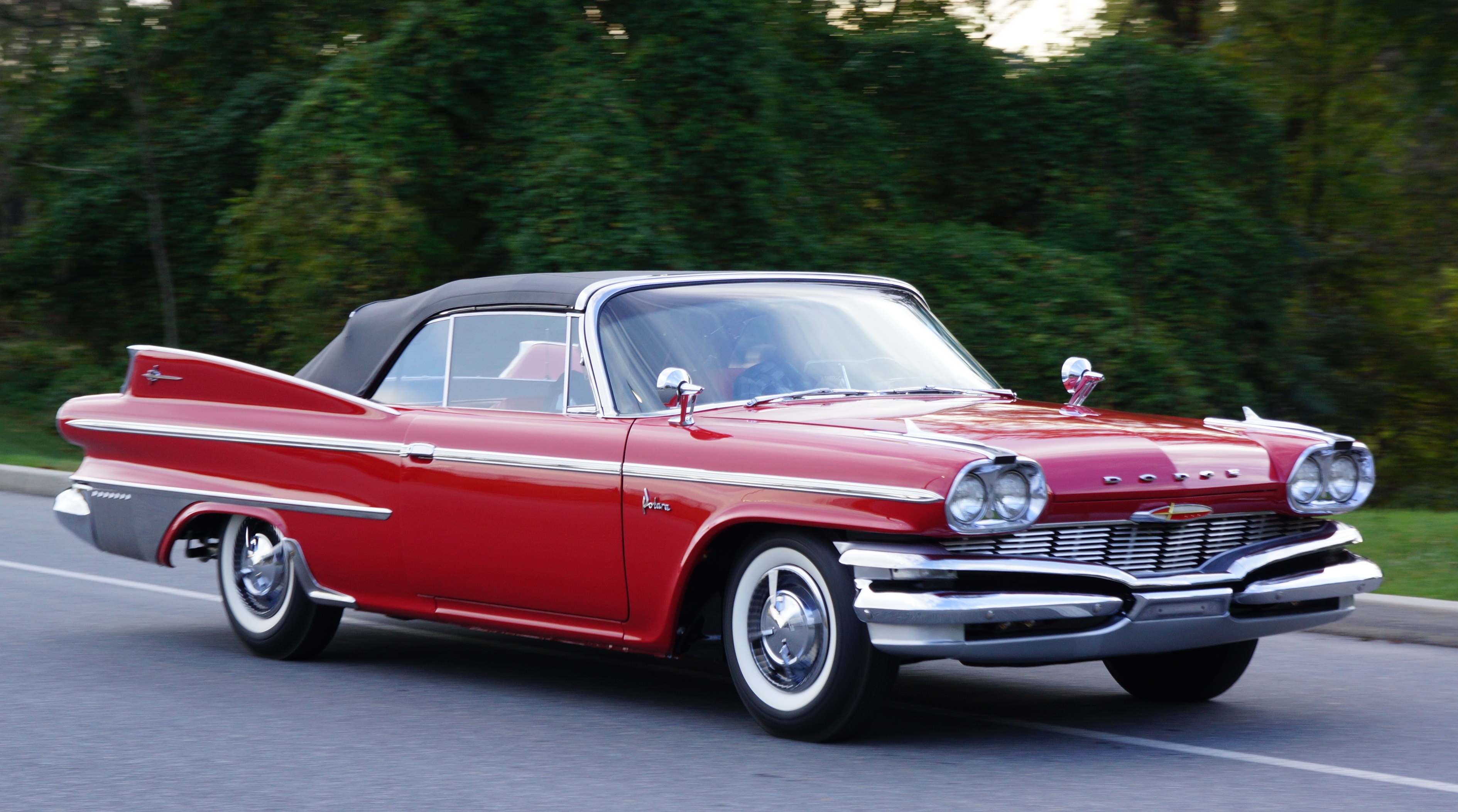
The Hershey Highlight continues to be the chance to watch the parade of show cars as they enter the field. By AACA rules, show vehicles (except race cars) must be driven onto the show field under their own power. Ever since rally brother Steve and I accidentally discovered this many years ago, it’s been a must to arrive by 7 a.m., and find a suitable vantage point. I tried a new spot this year which provided unobstructed views. The only problem was that it was a stretch of asphalt that allowed speeds somewhat above a parade crawl, and that made for some tricky photography.
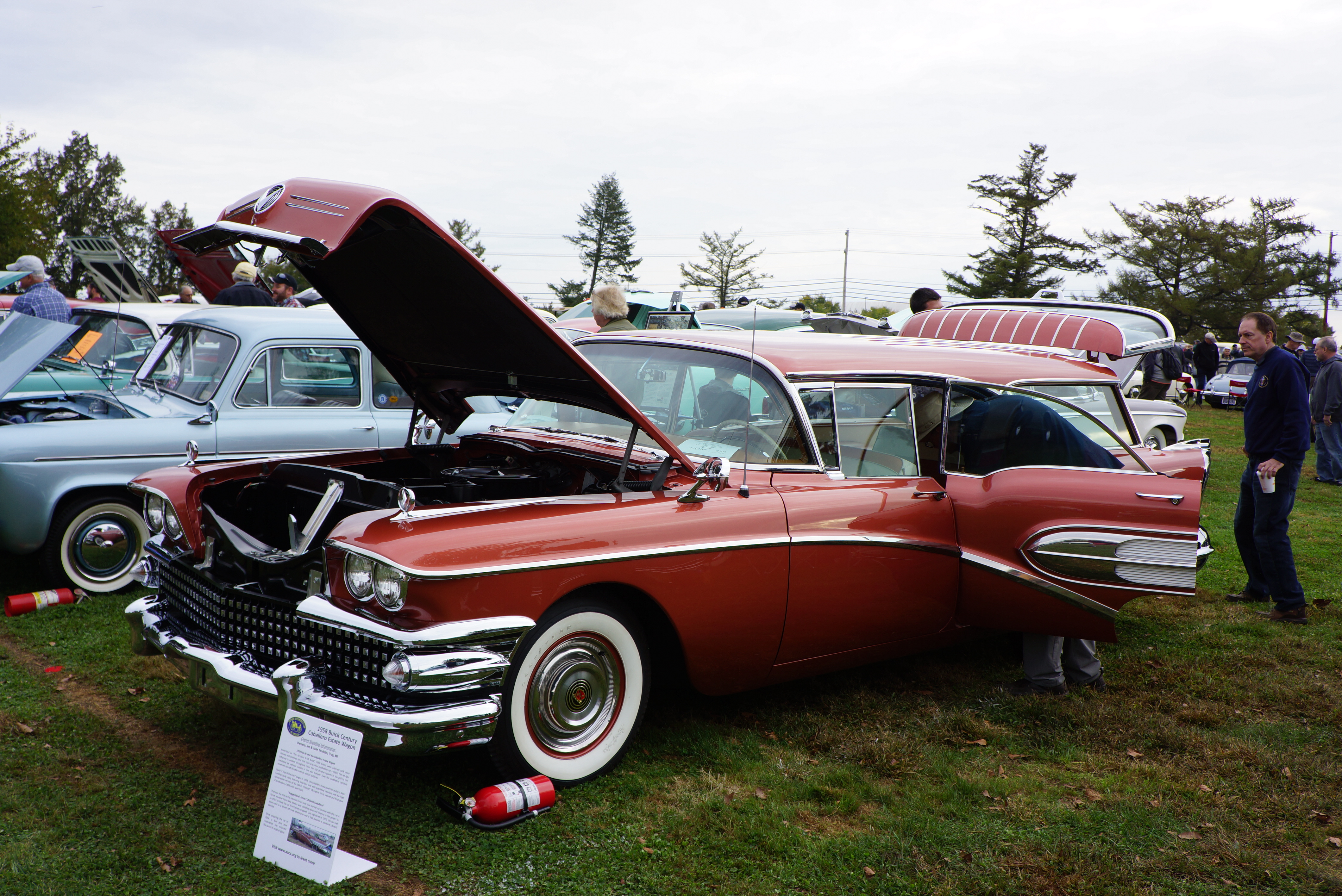
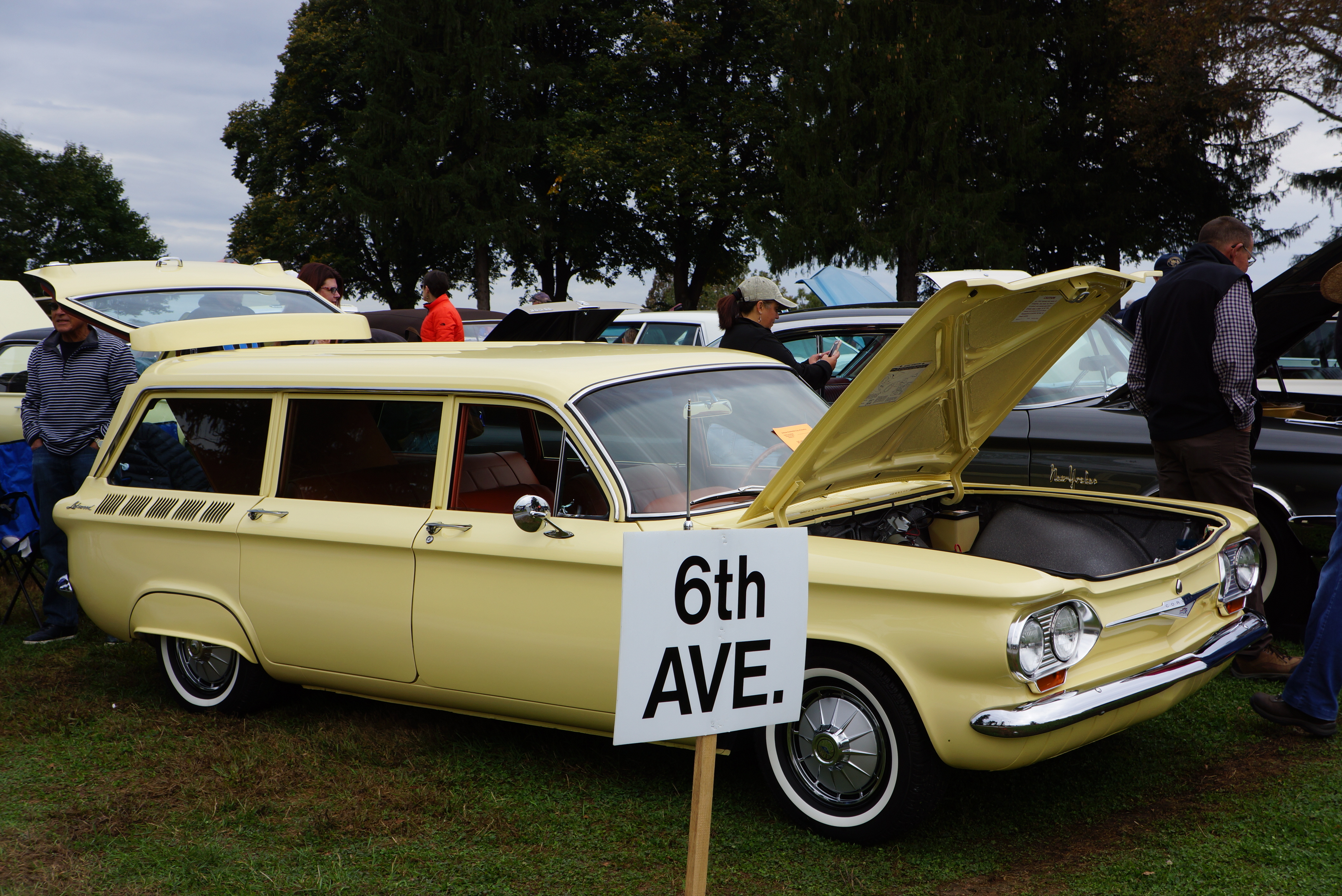
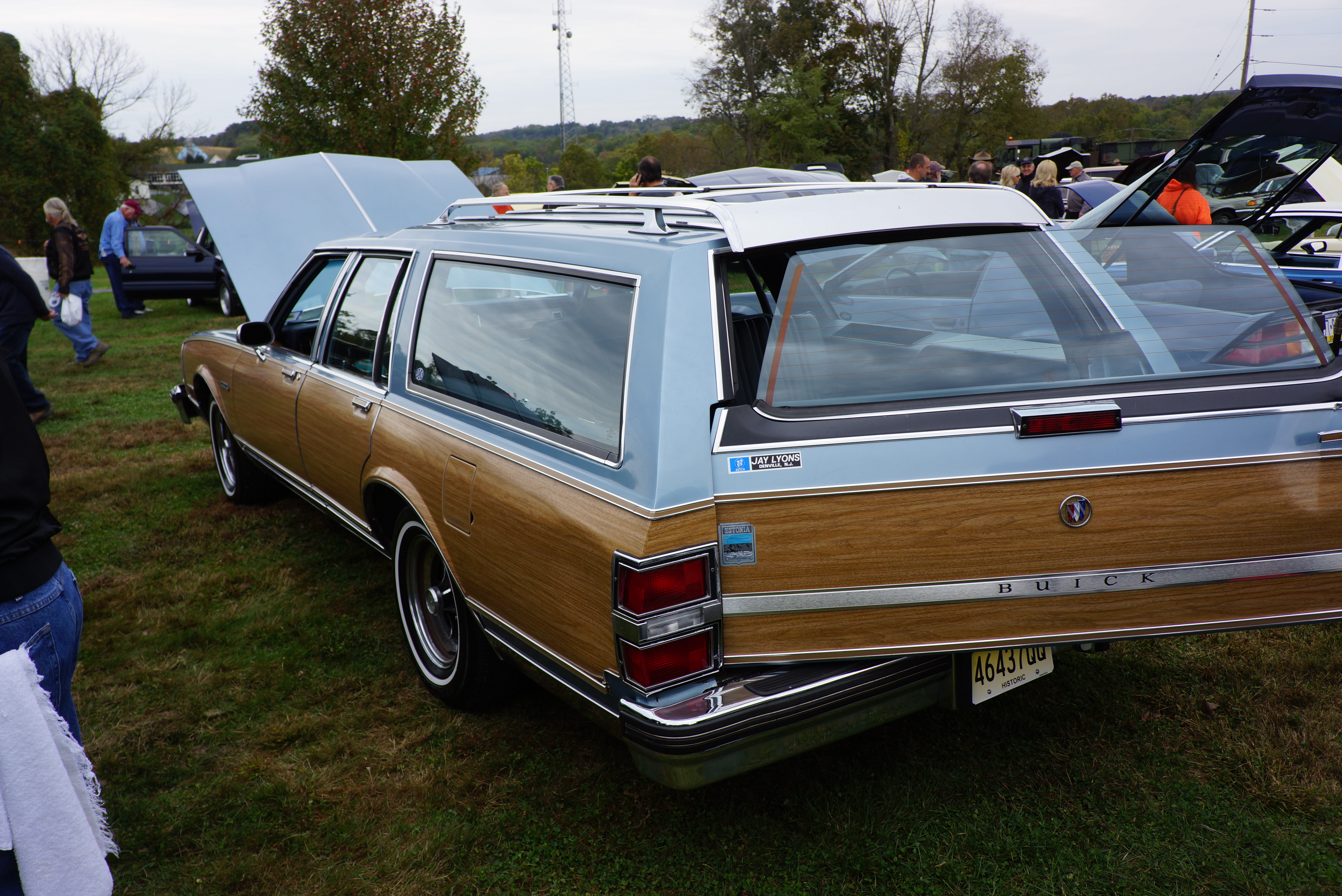
WAGONS, AKA LONG ROOFS:
If you’ve been to Hershey, you can relate, and you have your own stories. If you haven’t been, and you consider yourself to be the least bit interested in classic cars, then it’s a must for your bucket list. You could visit only for a day; however, even the healthiest among you could cover about 50% of the flea market/car corral at best. If you attend only for the Saturday show, be aware that most vendors have closed up by Friday afternoon. Whether you attend for one day or the entire week, Hershey continues to provide proof that the collector car hobby remains vibrant.
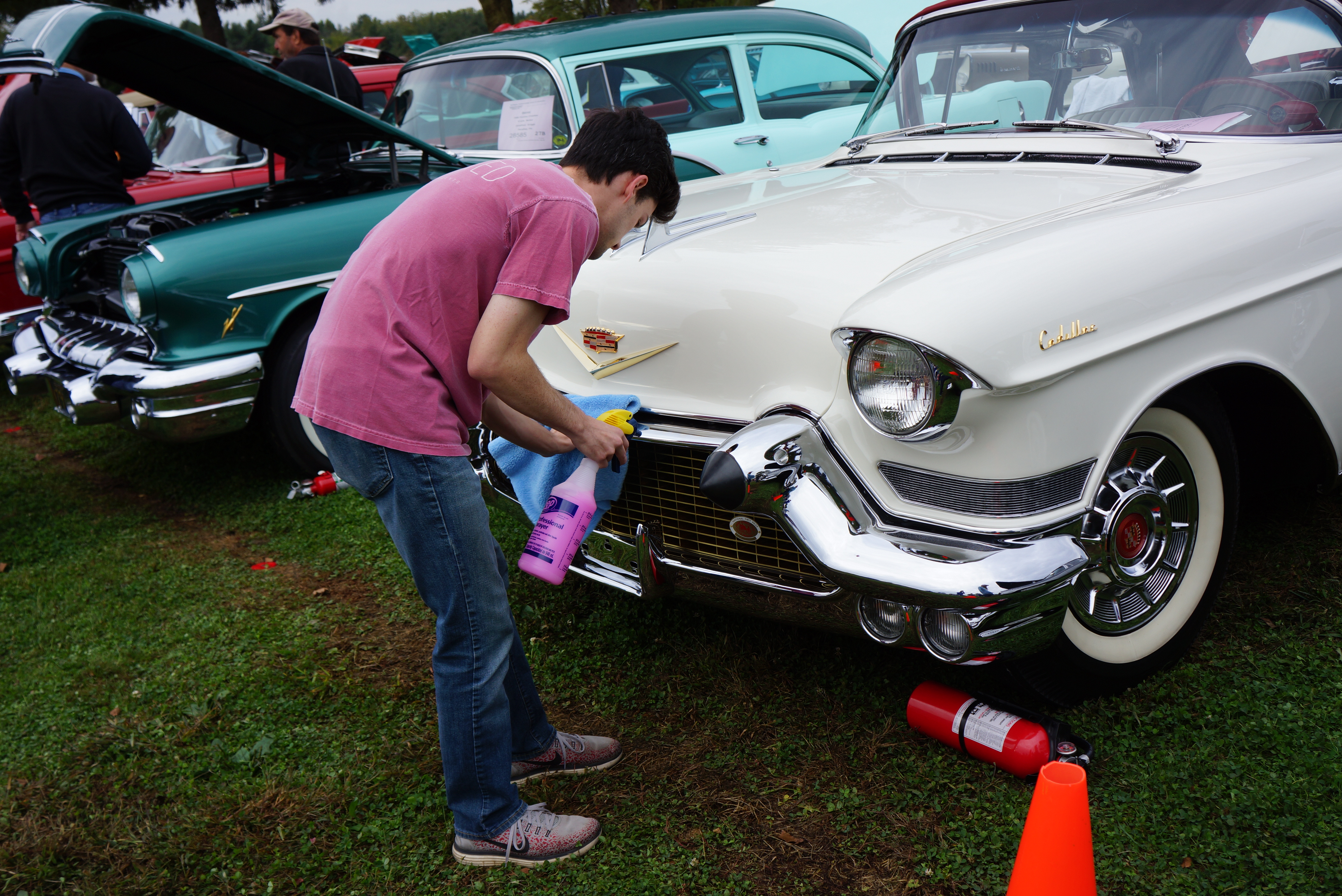
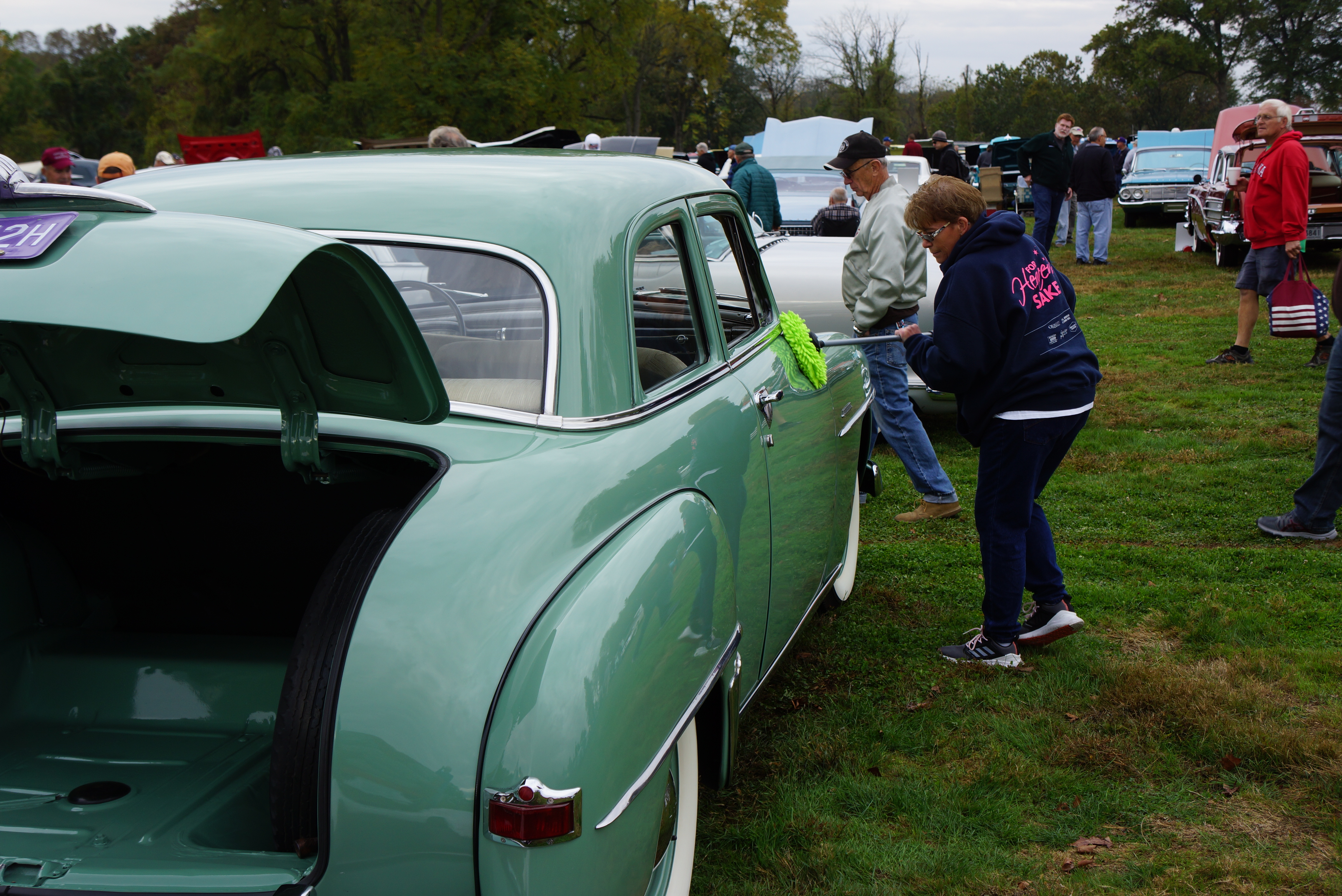
DETAILING IT FOR THE JUDGES:
Below, please enjoy photos of the show cars as they paraded in on Saturday morning.
Friday was Day Two of the RM Sotheby’s Auction at the Hershey Lodge (located of course in downtown Chocolate World). In contrast with Thursday’s auction, the cars were a mix of pre- and post-war (still dominated by the former), and some of the lots had reserves this time around. The performance of the pre-war iron was again impressive, with the cars selling for decent money, proving that there is still a market for ’20s and ’30s era vehicles. Friday also had a smattering of imports scattered amongst the American marques.
Pre-war metal ready to cross the block
As we’ve seen at every auction lately, Friday’s offerings included an estate sale, with a large poster proclaiming “The Complete Collection of Jack Dunning, Offered Entirely Without Reserve”. Presumably, Jack has either passed on and his heirs don’t care, or, he needed to liquidate and he didn’t care. I didn’t stick around long enough to witness any of Jack’s wares sell, but if you’re interested, RM has the results posted here.
Poster was impressive; so were his cars
I did watch the first dozen and a half or so cars go in, up, off, and back. The fine ground crew decided to start and drive most of these cars, so that treat was enjoyed after missing out on it the previous night. Of the vehicles I watched, only one failed to sell: a ’55 Chrysler C-300 (first year of the legendary 300s), which was bid up to $50,000 against a $70,000 estimate. Me thinks the right number is right in between.
1955 Chrysler C-300, no sale at $50,000 high bid
Overall, I do believe that RM Sotheby’s puts on an excellent auction. They work hard at it, and frankly, it shows. I’ve been fortunate to be a first-hand spectator at auctions by Bonhams, Barrett-Jackson, Carlisle, and Mecum, all of which are fine auction companies in their own right. But I’ve seen their hits and misses. RM seems to be the most consistent of the bunch.
Below is a selection of Friday’s sales, arranged in ascending hammer price order. The prices shown are exclusive of 10% buyer’s premium.
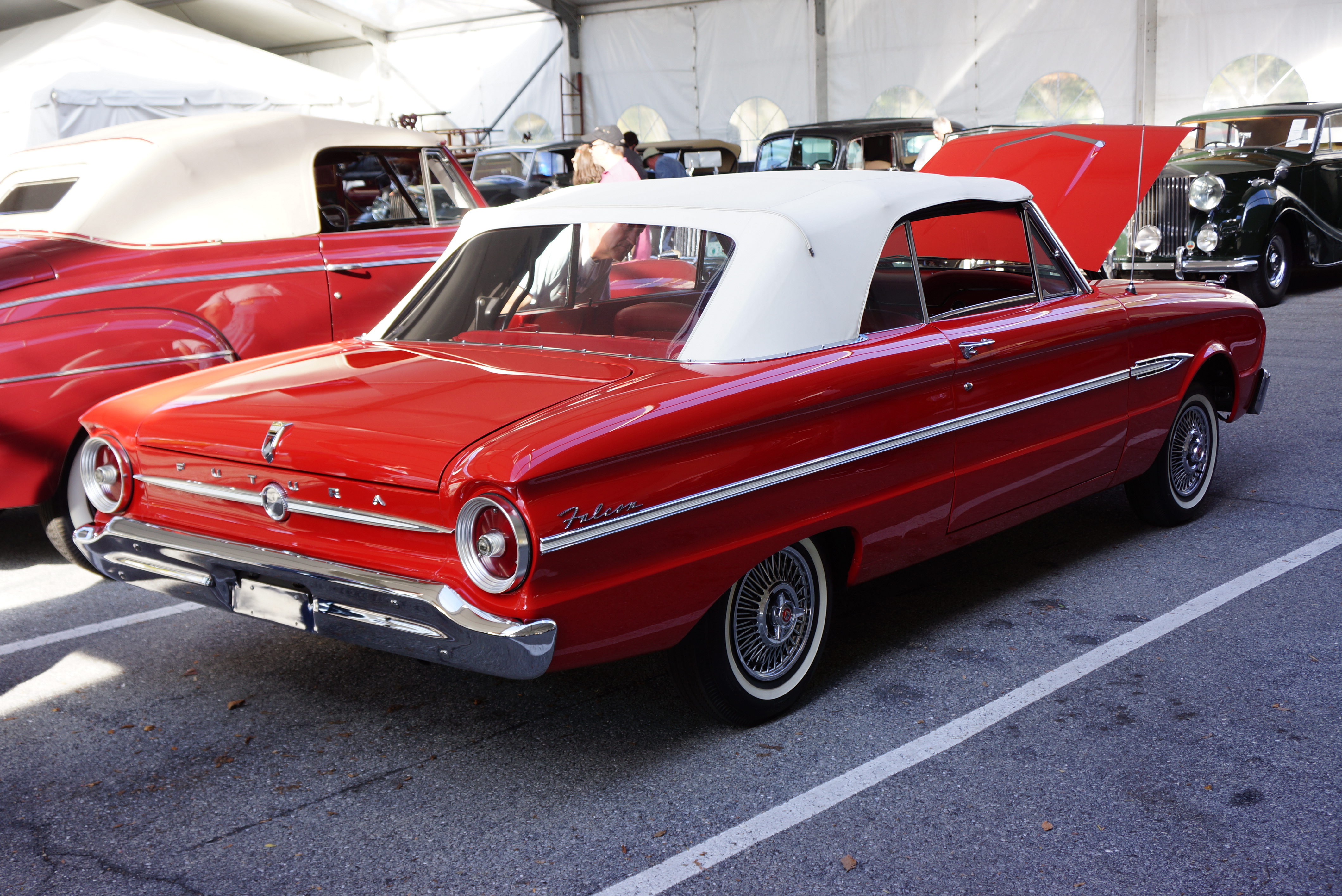
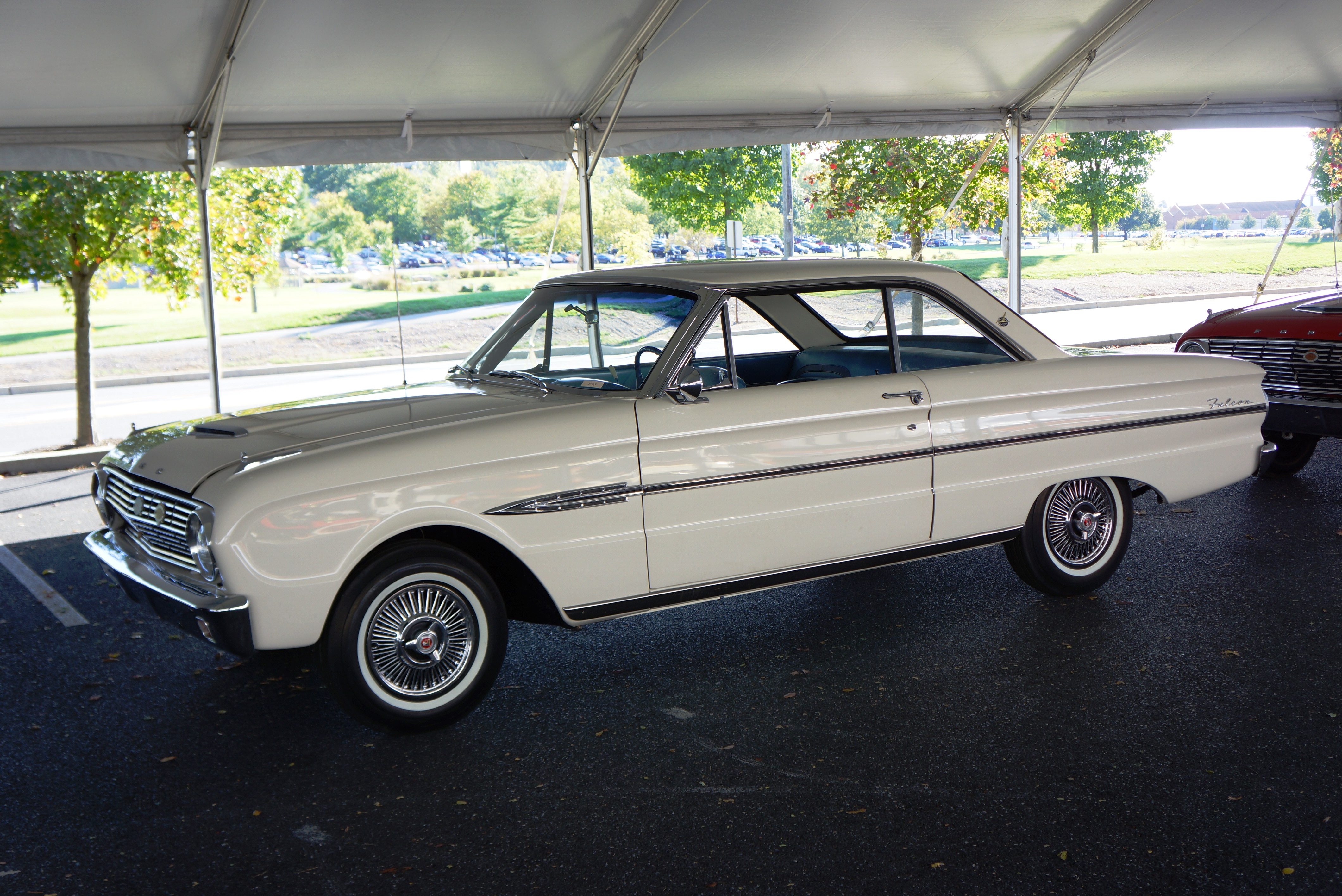
1953 Chevrolet 210 2-door sedan, sold for $11,0001959 Nash Metropolitan coupe, sold for $12,0001928 Ford Model A Roadster, sold for $13.5001931 Ford Model A Roadster, sold for $17,0001928 Ford Model AR Phaeton, sold for $21,0001941 Ford V-8 Convertible Coupe, sold for $23,0001931 Ford Model A Roadster, sold for $25,0001963 Ford Falcon Futura convertible, sold for $27,5001939 Ford V-8 Convertible Sedan, sold for $29,0001963 Ford Falcon Futura Coupe, sold for $30,0001962 Lincoln Continental sedan, sold for $35,0001934 Ford V-8 Coupe, sold for $37,5001936 Packard 120-B Convertible, sold for $52,5001964 Fiat 2300S Coupe, sold for $52,5001940 Ford V-8 Convertible Coupe, sold for $70,0001929 Pierce-Arrow Roadster, sold for $75,0001938 Packard Twelve Touring Cabriolet, sold for $110,000
Anyone who thinks that the collector car hobby is on the decline, or who at least proposes that the pre-war segment in particular is as dead as these vehicles’ original owners, was not in attendance as I was at the October 2019 two-day auction held by RM Sotheby’s in Hershey PA. As they have for probably the last 10 years, RM contracted with the Hershey Lodge to host the event, and it was scheduled to coincide with the AACA Hershey Fall Meet.
Lots are queued up under the tent next to Hershey Lodge
The auction results I observed made it crystal clear that the hobby is as strong as ever; and anyone suggesting that “no one is in the market for anything built before ______” (insert the post-war model year of your choice) is not cognizant of the facts.
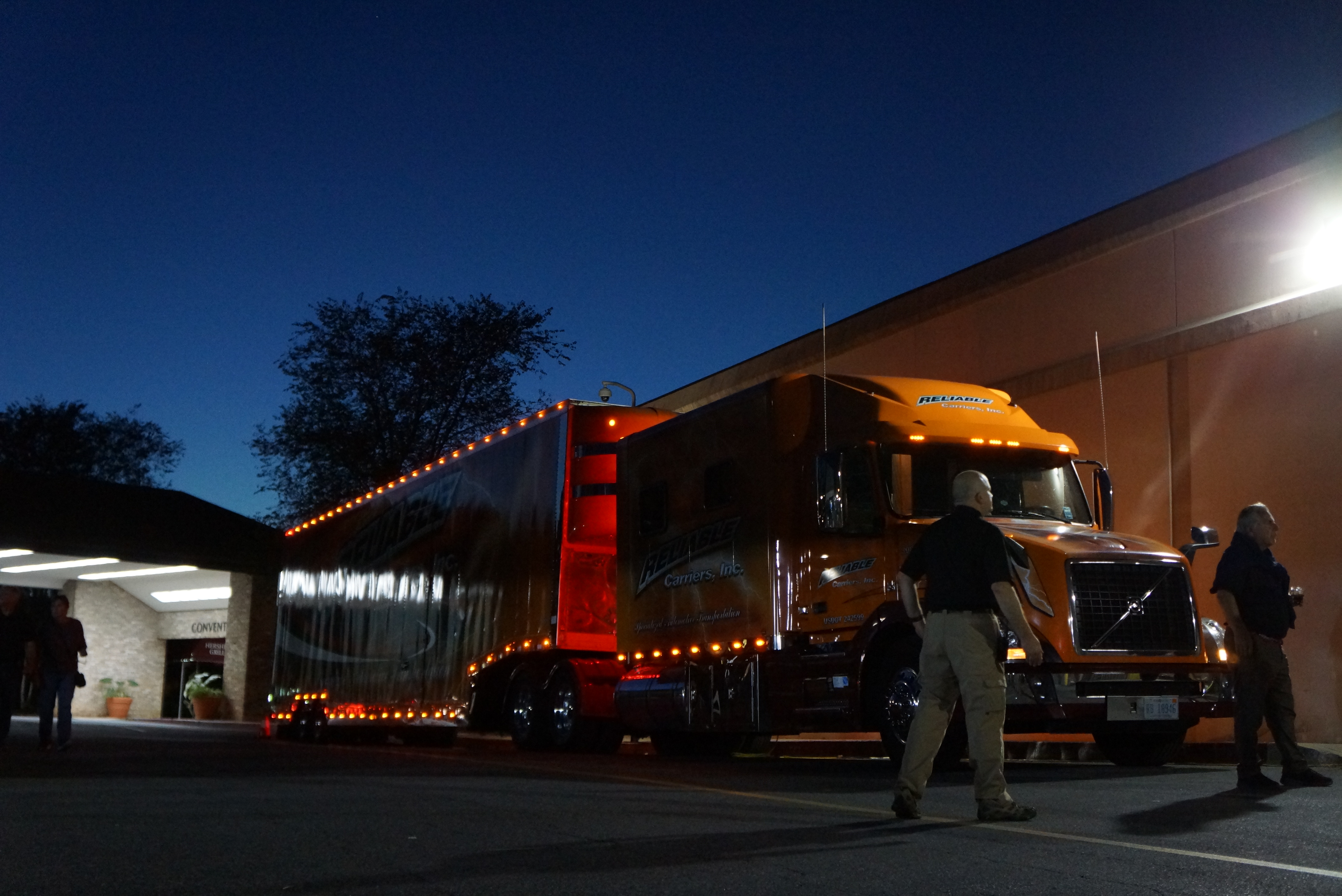
The orange Reliable Carriers truck glows under the twilight sky
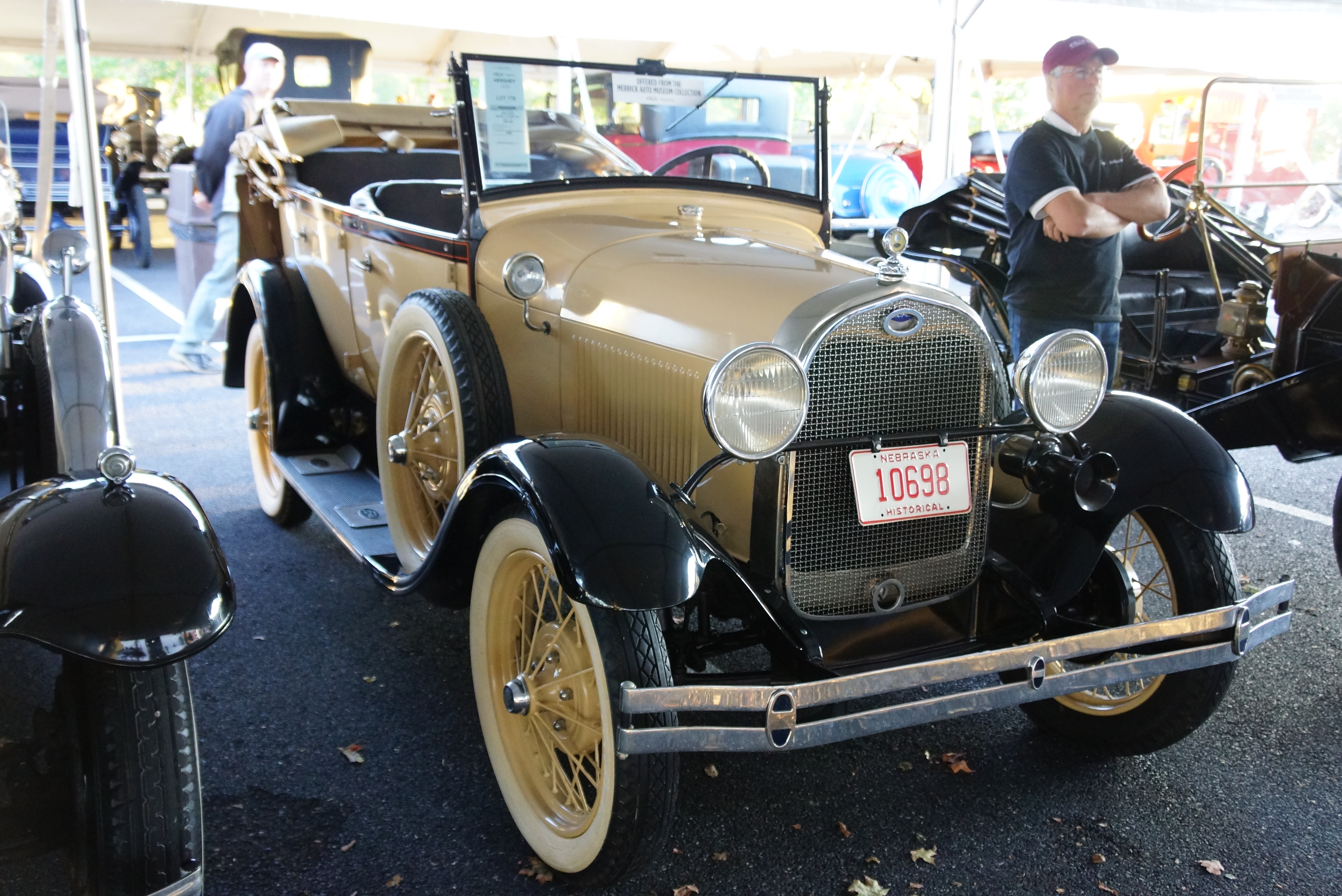
The facts are these: the Thursday portion of the auction was the liquidation of the Merritt Auto Museum of Nebraska. No explanation was given for its closing, but the 107 vehicles on offer were all pre-war, and all were offered at no reserve. The catalog provided the auction house’s pre-sale estimates, and much of the pre-auction excitement boiled down to this: would the supposed indifference to such aged lots result in low-dollar sales? Or would the no-reserve format drive the bidding to numbers close to or above the estimates?
I stuck around long enough to personally observe 33 lots cross the block. Of those 33, 21 sold within or above their estimates; 13 lots sold below (and of those 13, two were “replicas”, and one was a sedan rebodied as a phaeton). It was an impressive performance, and with possibly very few exceptions, no one “stole” any automobiles. This chart shows those 33 vehicles (buckboards were clearly the hot attraction of the night):
Note that the indicated “hammer” price is exclusive of 10% buyer’s premium.
Thursday’s show also differed from other RM at Hershey auctions because every lot was pushed into and out of the building. In previous years, one of the thrills for me (and a reassurance to the bidding audience) was the visual acknowledgement that the cars started and ran. Whether the pushing was done for expediency or to spare our lungs was not stated; and while all the vehicles looked cosmetically fresh (I’d rate every vehicle a 3+ or 2- in condition), I did overhear the handlers state “watch out, that one has no brakes” several times.
They pushed them in….… and they pushed them back out.
Below are selected photos from Thursday’s auction. The vehicles below are arranged in order of HAMMER PRICE, from lowest to highest. Due to the size of this report, I will break out Friday’s auction results as a separate blog post.
Lot 163, 1902 Olds Curved Dash Replica, sold for $3,500, 42% below its pre-sale low estimate of $6,000
Lot 186, 1914 Buick Roadster, sold for $13,000, 35% below its pre-sale low estimate of $20,000
Lot 181, 1923 Willys-Knight Roadster, sold for $13,000, 48% below its pre-sale low estimate of $25,000
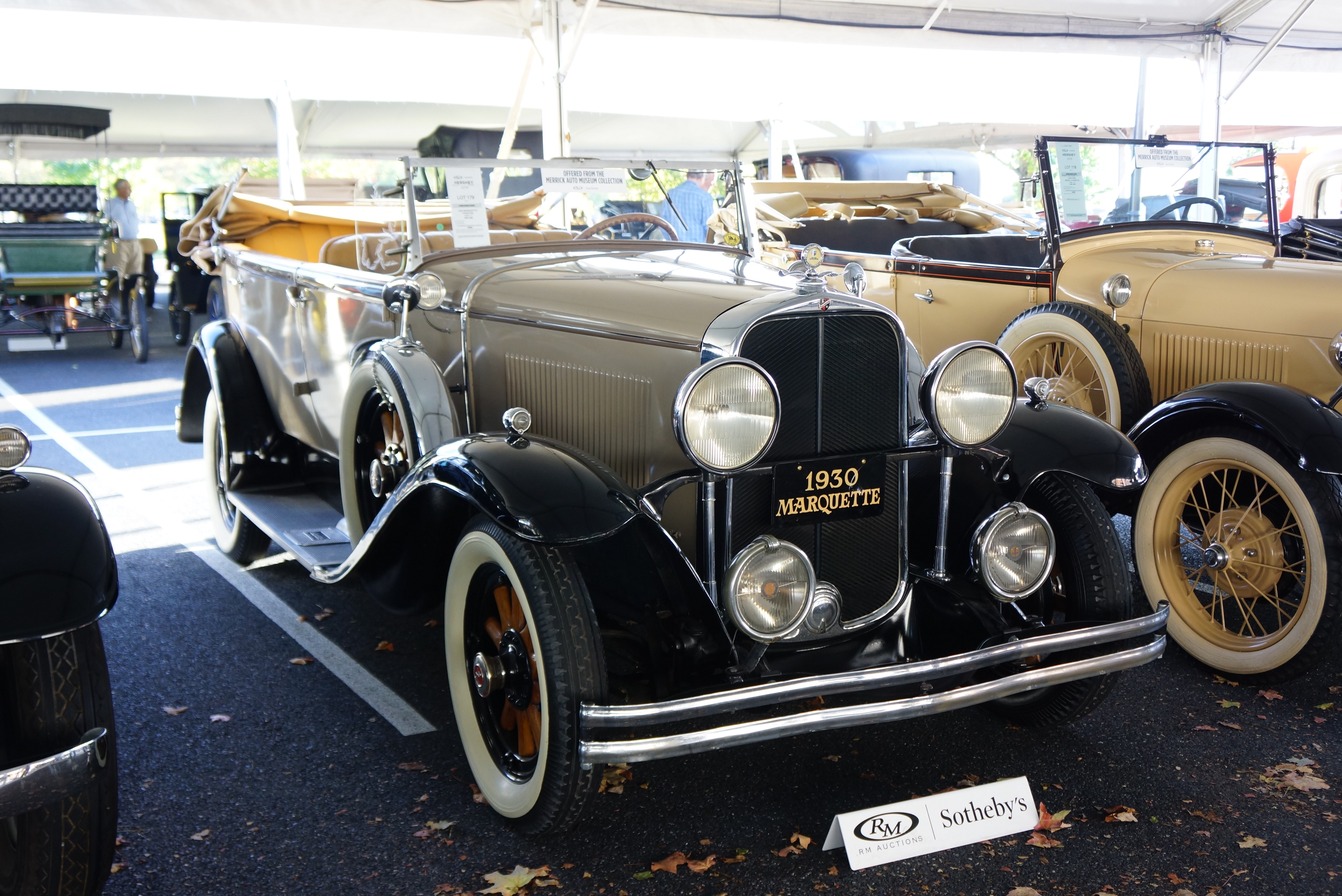
Lot 179, 1930 Marquette Phaeton (rebodied sedan), sold for $14,500, 3% below pre-sale low estimate of $15,000
Lot 168, 1933 Essex Terraplane, sold for $17,000, within its pre-sale estimate of $15-25,000
Lot 184, 1913 Maxwell Roadster, sold for $18,500, within its pre-sale estimate of $15-25,000
Lot 180, 1933 Essex Terraplane, sold for $20,000, within its pre-sale estimate of $20-30,000
Lot 178, 1929 Ford Model A Phaeton, sold for $22,000, within its pre-sale estimate of $20-25,000
Lot 201, 1928 Franklin Depot Hack, sold for $22,500, 25% below its pre-sale low estimate of $30,000
Lot 185, 1912 Detroiter Speedster, sold for $25,500, within its pre-sale estimate of $25-35,000
Lot 206, 1932 Pontiac Coupe, sold for $26,000, within its pre-sale estimate of $25-35,000
Lot 195, 1932 LaSalle sedan, sold for $30,000, 14% below its pre-sale low estimate of $35,000
Lot 187, 1923 Packard Runabout, sold for $34,000, within its pre-sale estimate of $30-40,000
Lot 202, 1936 Cord 810 Westchester sedan, sold for $37,500, 25% above its pre-sale high estimate of $30,000 (it was announced on the block that engine had a cracked cylinder head)
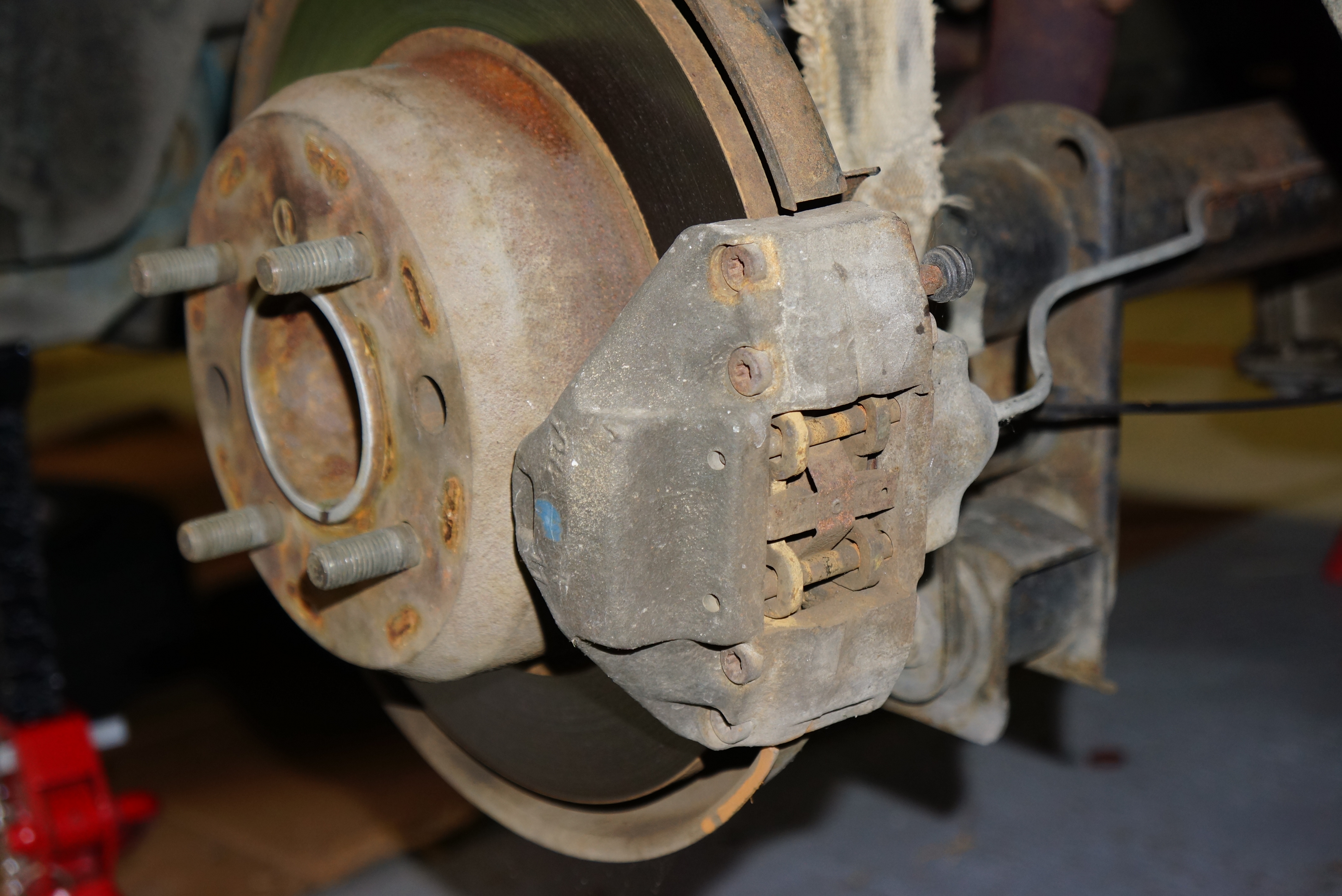
In Part 2, we covered the ongoing caliper overhaul, both front and rear. While waiting for the caliper rebuild parts to show up, I decided to remove the rear rotors and inspect the parking brake set-up.
Left rear disc, caliper, and brake line
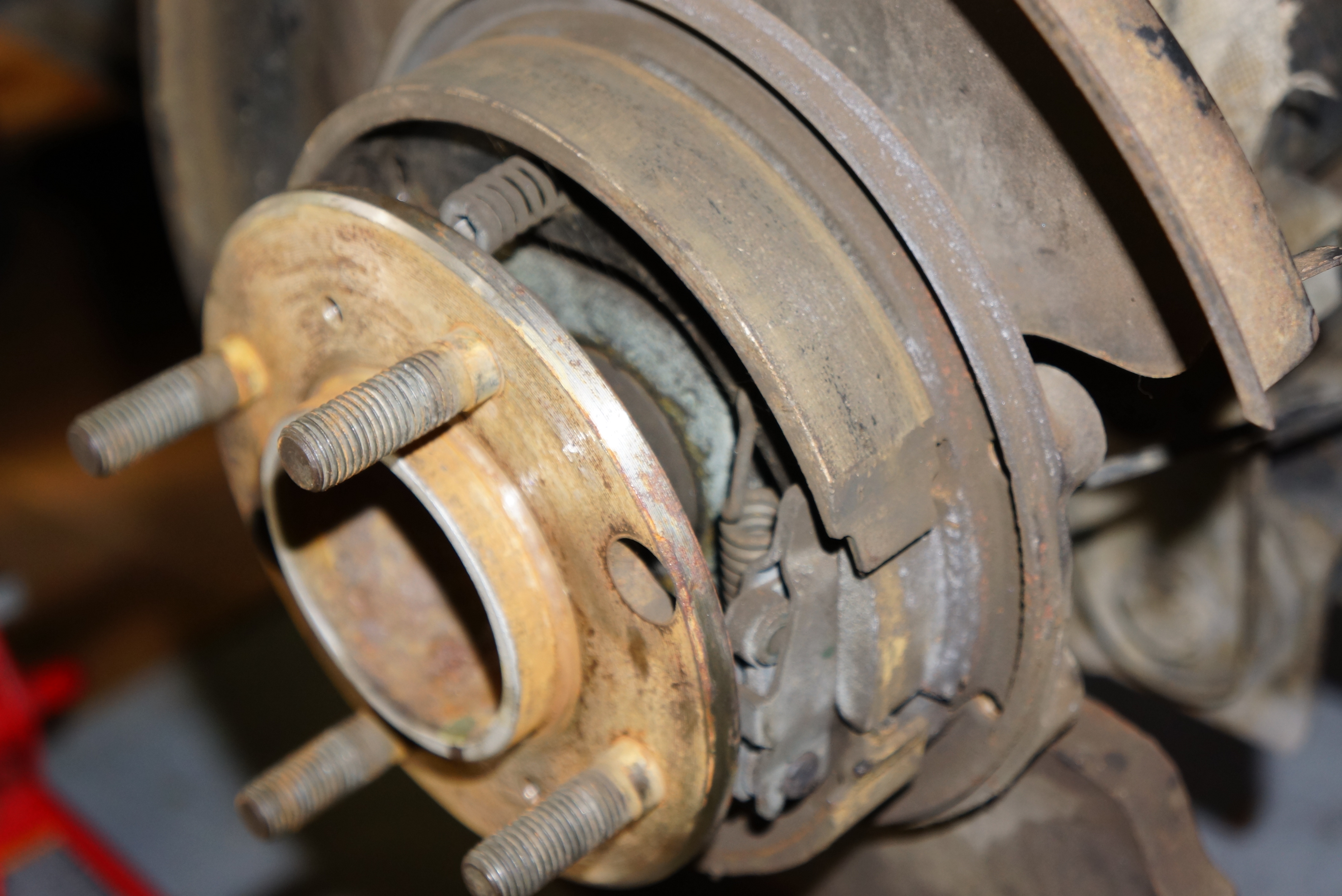
Similar to what Volvo has used for decades, the rear rotors sit over a set of drum brake shoes which apply to the inside of the rear disc “hat”. On the Alfa, these are cable-operated. It was always gratifying that my car’s hand brake worked, but it required a significant tug of the handle to engage.
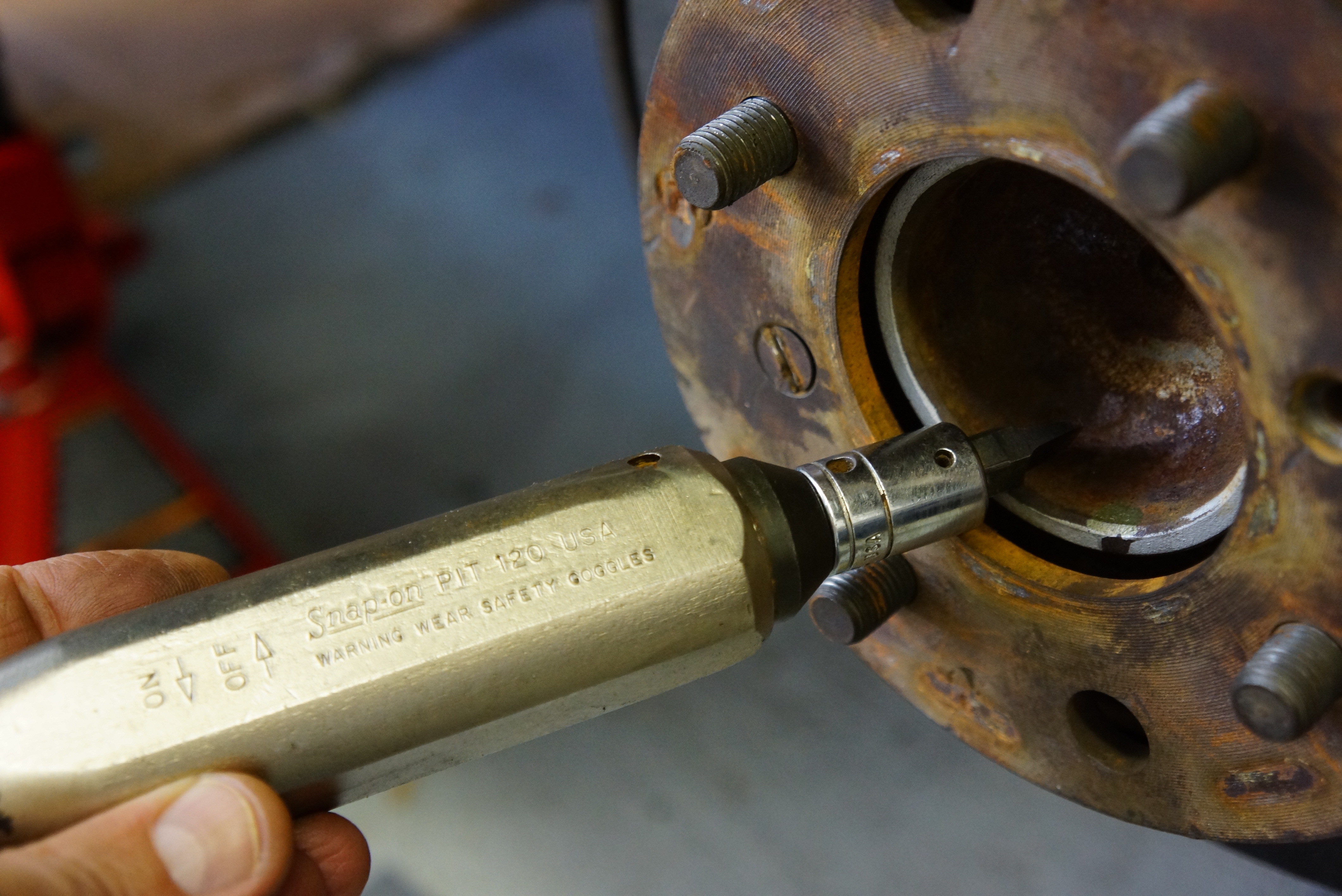
First challenge was removing the two slotted-head screws holding each rear rotor to the hub. An ordinary screwdriver wasn’t getting the job done, so I resorted to one of my favorite tools: my Snap-On hammer-driven impact driver. A long time ago, Andy Finnegan, the shop foreman at the first Volvo dealer that employed me, suggested this tool to me. While I infrequently use it, it’s one of those tools that makes you glad you have it for the occasions you really need it. This was one of those occasions.
The right tool at the right time can save hours of time and frustration – note slotted screw in rotor face
A few taps with a hammer, and the screws were loose (I also bought new replacements on the chance that I would mangle the heads during removal.). But getting the disc off also required a few heavier hammer blows. Eventually, the rotors were off, first on the driver’s side, then the passenger side.
It would not surprise me if I were the first person to expose the parking brake shoes since this car left Italy. Remember that when I bought it, the car has 54,000 original miles. I also have reason to suspect that the rear brake pads were original to the car. There has likely been little need to check or service these components.
Note star wheel on left
and cable linkage on right
With some effort, I removed the brake shoes on the driver’s side (access is conveniently limited by the hub). The arrangement is typical, with a star wheel for adjustment, and two springs holding the upper and lower shoes. A cable extends from the differential through an access hole in the backing plate, pulling a lever which spreads the shoes. After taking the one side apart, I decided to leave the passenger side intact for reference, and ordered all new parts from Classic Alfa.
Old shoes and springs will be replaced
It was also time to remove the master cylinder. With its so-called “standing pedals” hinged through the floor, my ’67 is one of the last Giulia coupes so configured. Within a year or so (varying by model), Alfa would switch to “hanging pedals” and mount the master cylinder in the conventional location on the firewall.
Standing pedals – accel pedal has been removed
I desperately searched for guidance on the Alfa forums for “master cylinder removal”, but nothing I came across addressed the underfloor location. So I tackled it on my own, and really struggled with it. There are two bolts which pass horizontally through the master cylinder, and these bolts mount into a plate that also holds the clutch linkage. Said plate didn’t look removable to me – that’s from the vantage point of lying on my back, with my nose about 3 inches from the car’s underside. Without removing the plate, there wasn’t enough clearance to remove the bolts. Through sheer luck, I wiggled the cylinder and the bolts and got the master cylinder cleared. But I’ll need to investigate this plate when it comes time for reinstallation.
View of master cylinder while on my back
There was also the matter of the two brake lines, both of which thread into the top of the cylinder. There was little choice but to loosen and drop the cylinder to give me access to the line fittings, but then I lost the leverage one gets from a master cylinder firmly bolted to something.
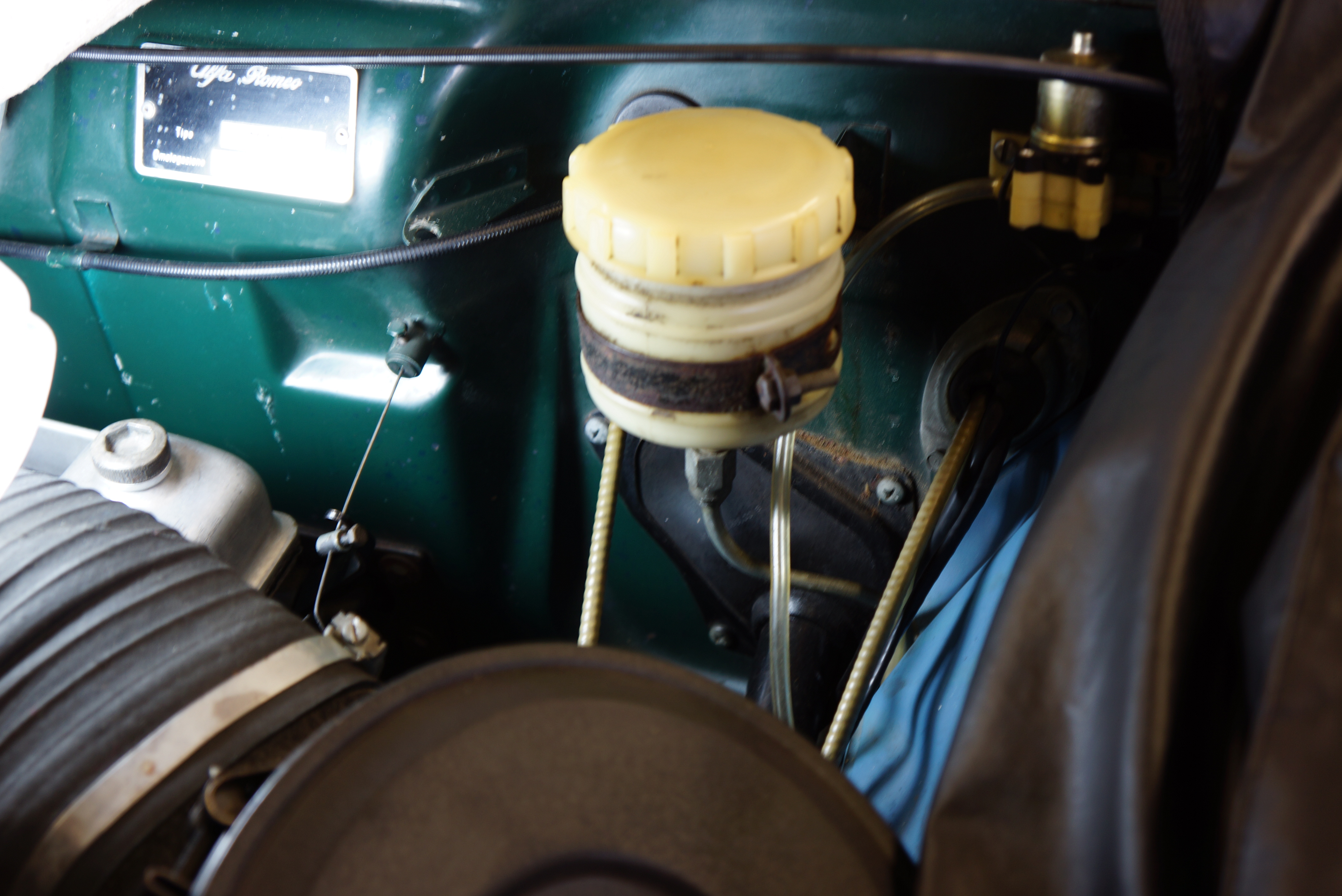
Brake fluid reservoir on firewall is where you’d expect to find m/c – note hard line which feeds it
Using my flare nut wrenches, the first fitting came out easily. The second one did not. I resorted to using a cheater bar (a length of pipe) on the wrench, and for the first time during this brake overhaul, the wrench slipped on the fitting and rounded it off. The fitting was seized. I cut the line with a pair of diagonal cutters, and the master cylinder was on my workbench. In a bit of good news, the fitting did come loose once I dropped a deep 6-point socket on it.
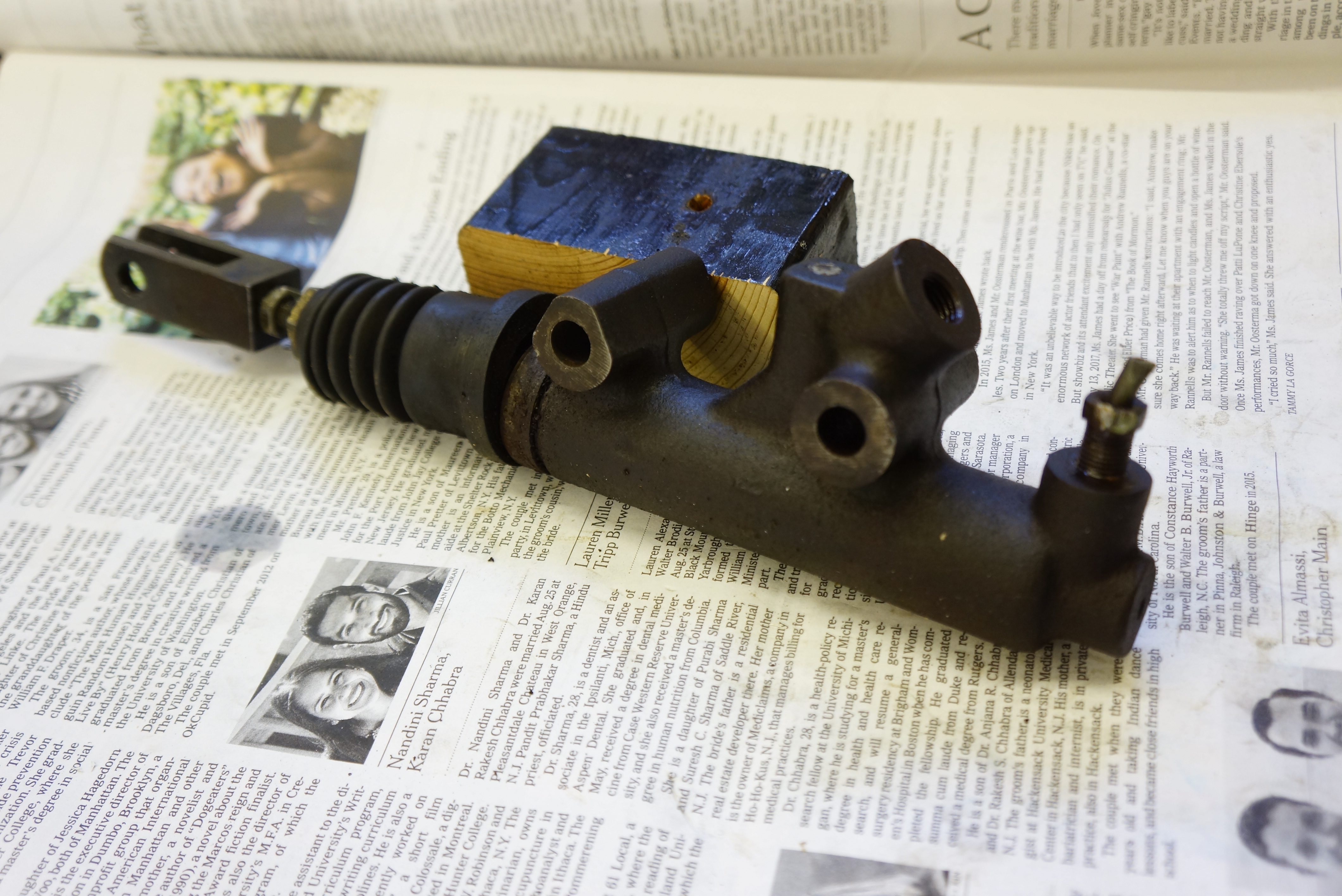
Master cylinder – note severed line and fitting in right-most hole
There is plenty to do next: finish the rebuilding of the two rear calipers, renew the parking brake parts, and rebuild the master cylinder. Parts were duly ordered and are on their way.
The last official day of summer turned out to be a near-perfect day for a breakfast drive. Pre-dawn, the air remained cool enough for a light jacket; once ol’ Sol broke above the horizon, or in our case, over the Mahwah Sheraton, the air temp quickly climbed and didn’t stop climbing until reaching the 80s.
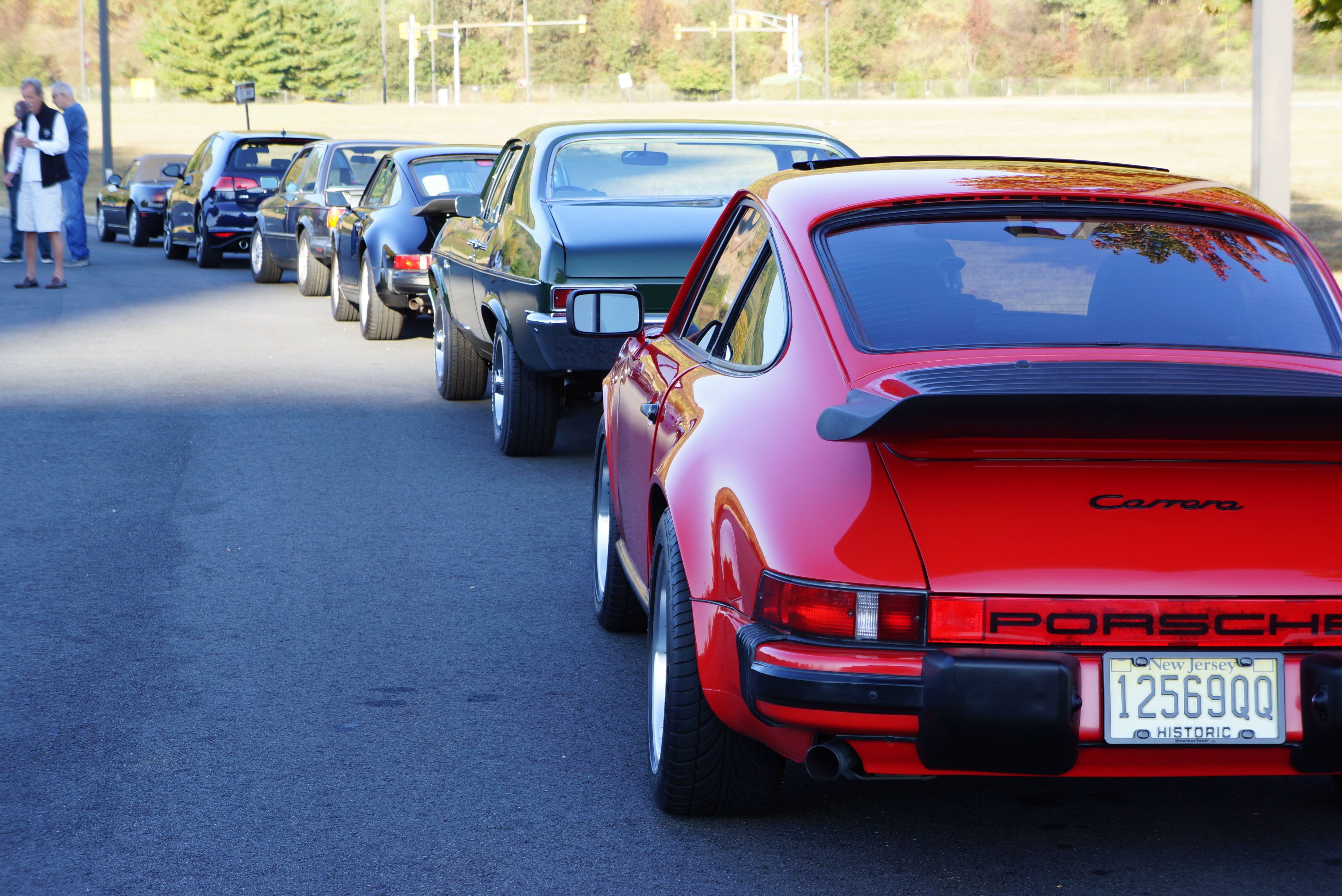
(Part of) the morning lineup
Eleven gentlemen in nine different vehicles made the trek on the 22nd. Six of the nine rides wore German badges (I was surprised the group didn’t demand knockwurst and potato pancakes for breakfast). However, it’s a genial bunch, and we heard nary a complaint about our chosen destination, the Hampton Diner in Newton NJ.
On Route 206 in Newton, if you care to visit- book your party here
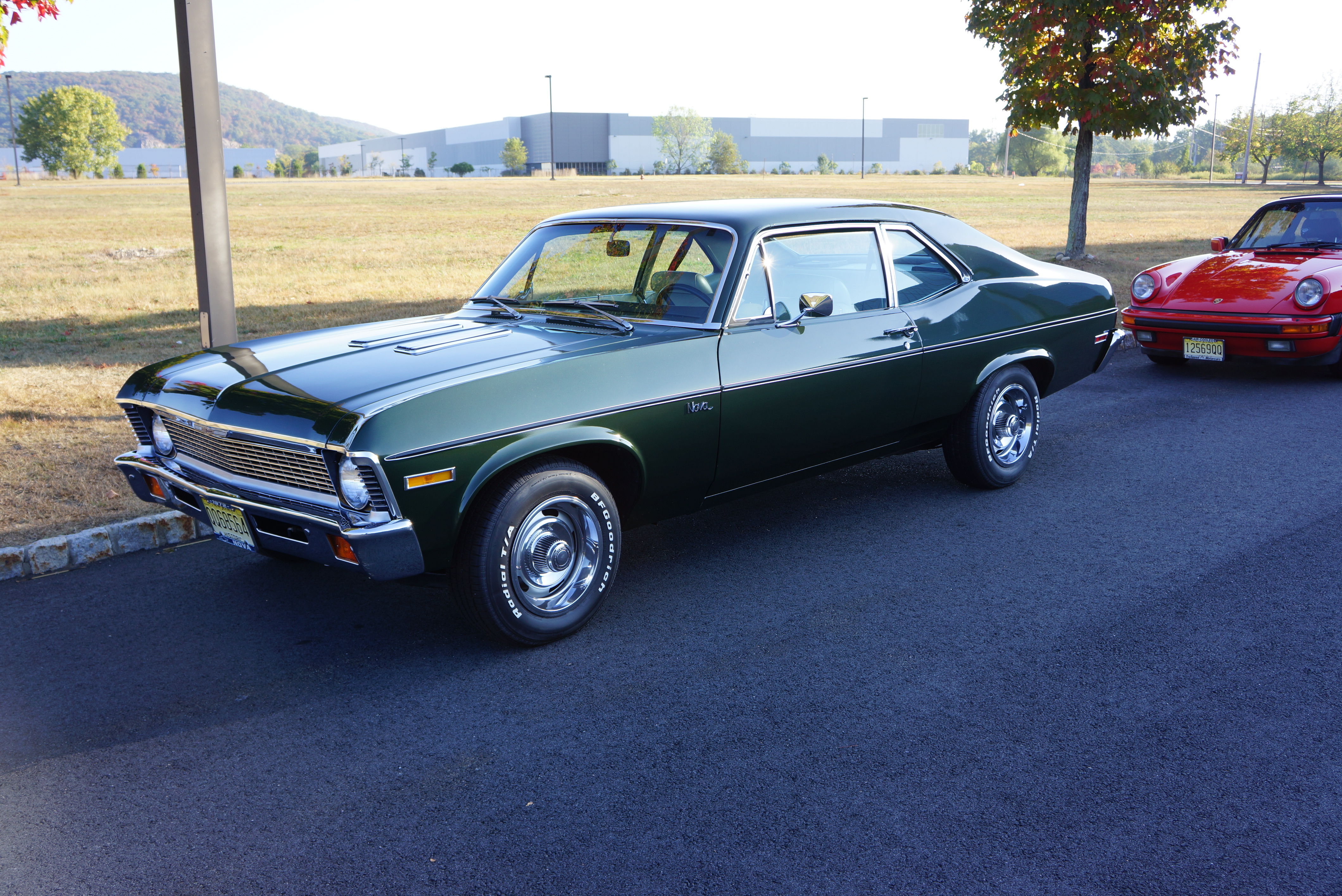
We set out from the Sheraton at about 8:35am, with Larry leading the way in his Nova. It was a glorious drive through northern Jersey, dipping into then out of New York State. A planned pit stop was undertaken at a BP gas station in Vernon NJ. To everyone’s surprise, Bill’s Porsche did NOT need fuel, but more than a few of us took advantage of the restroom facility. One patch of rough road brought our speed down to below 30mph for a bit, but all the cars escaped unscathed.
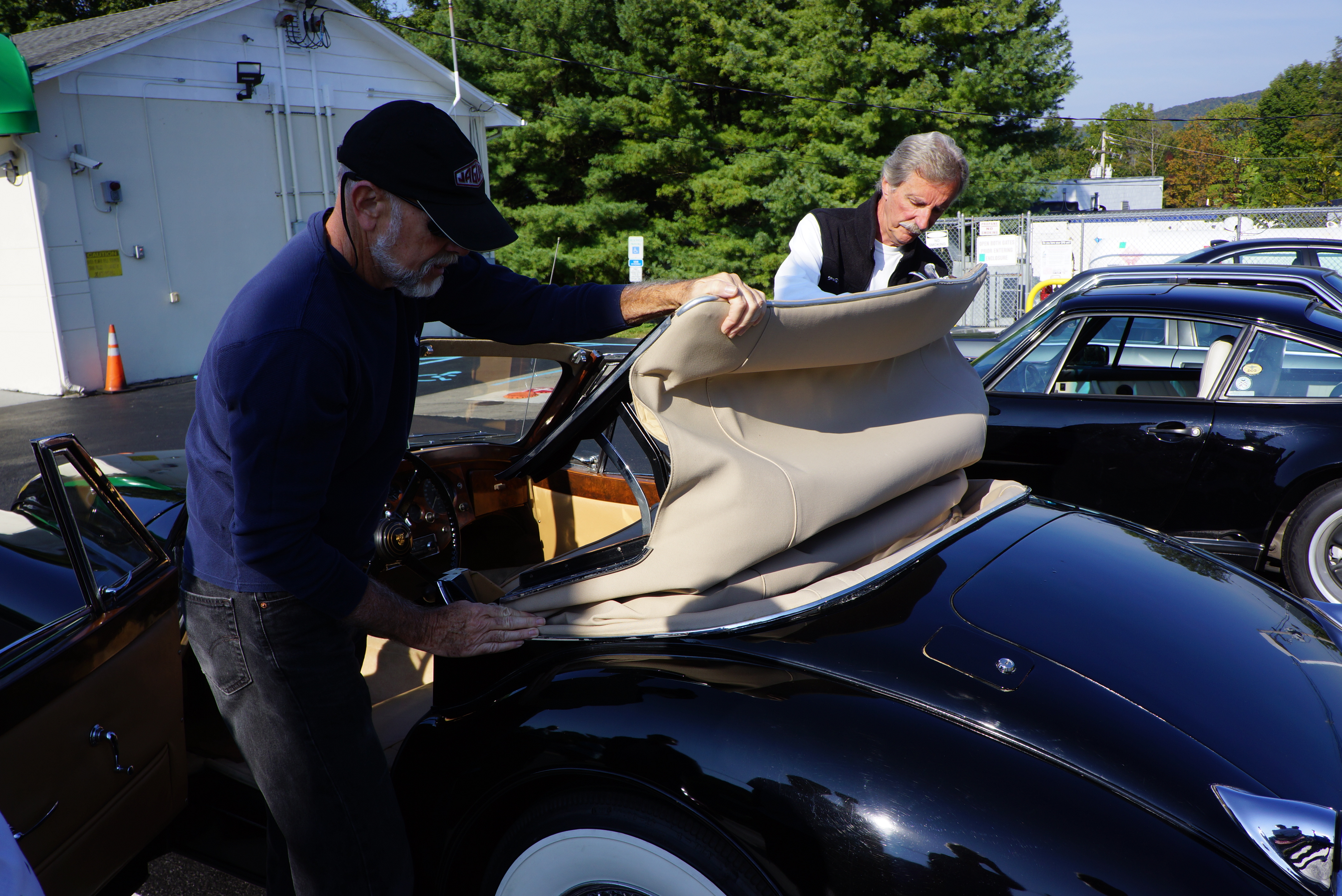
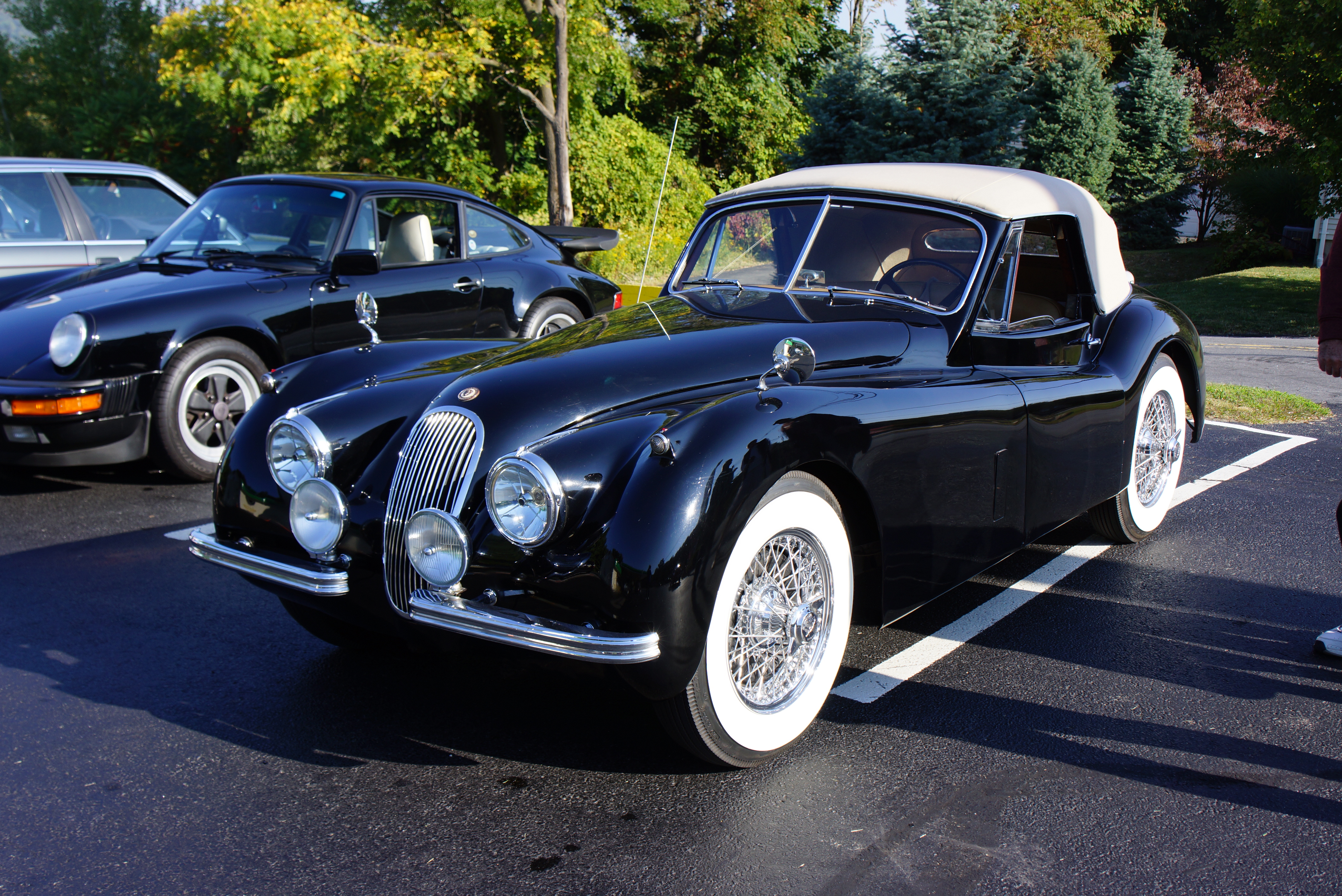
Burton demonstrates the ease of dropping the XK-120’s top
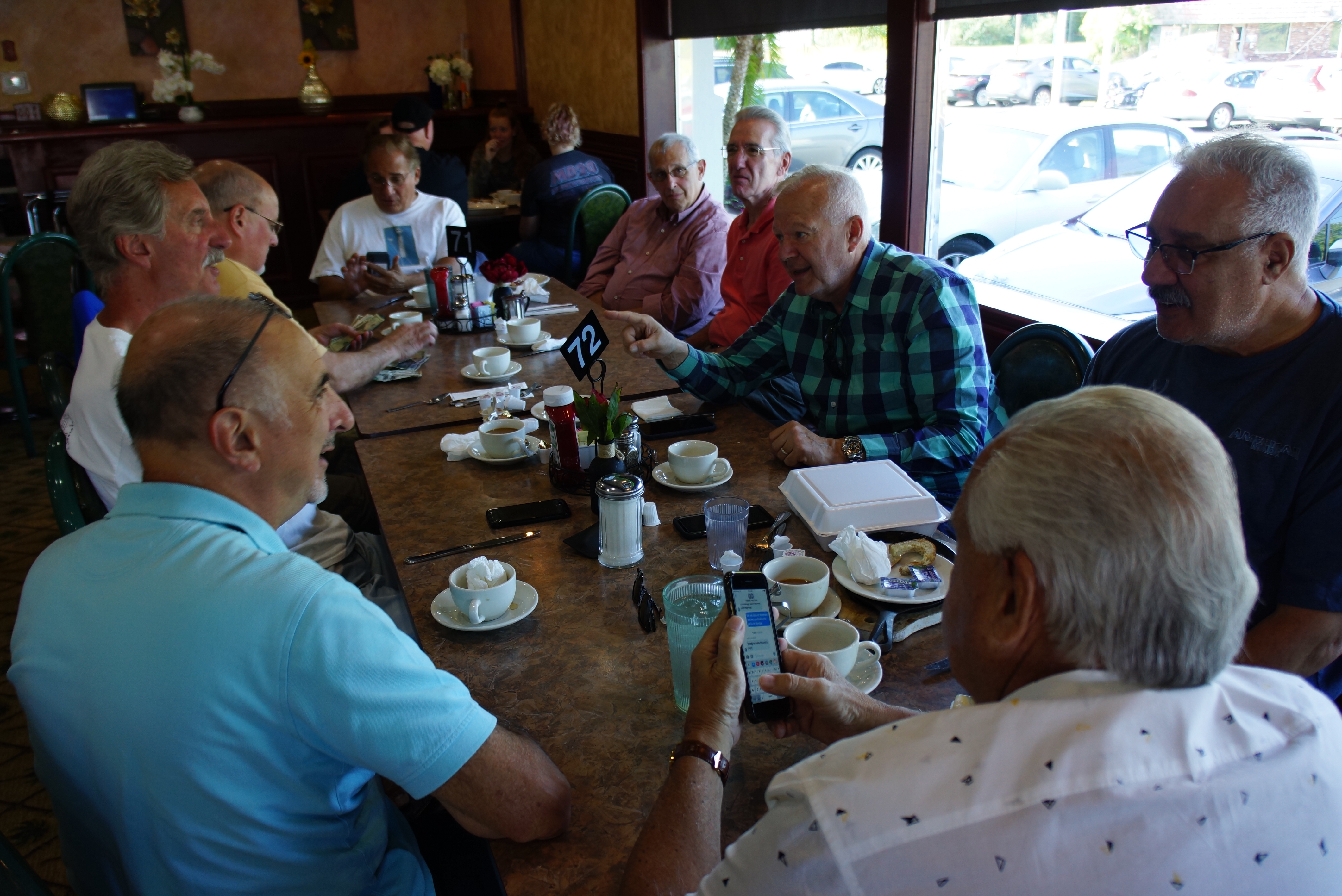
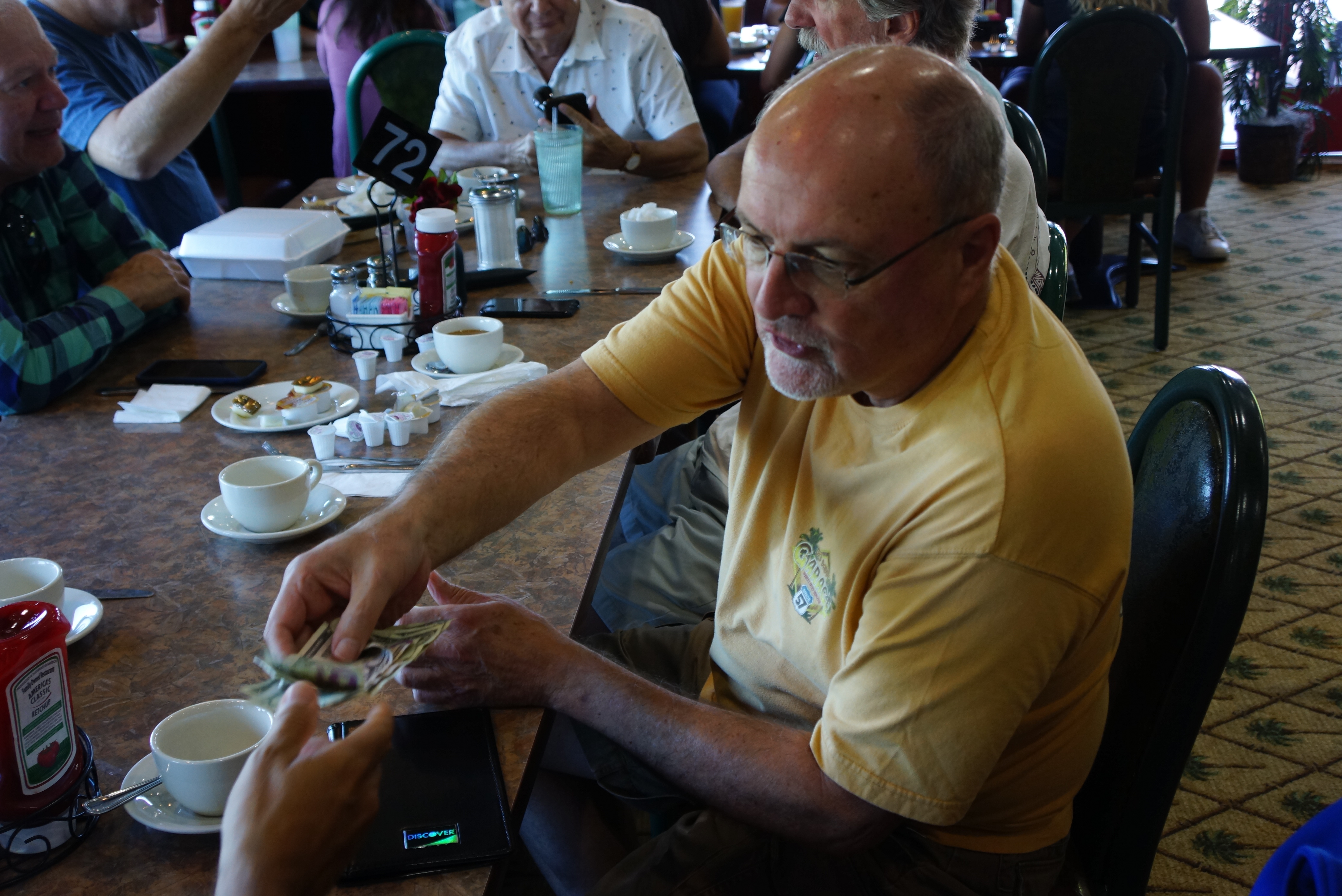
We reached the Diner just before 10:30am, were immediately served coffee, and got our breakfast plates not long after. Thanks goes out to our young waiter who seemed to have a pot of hot java available for refills at a moment’s notice.
Bill makes his point
Larry collects the bucks
As is our habit, the conversations continued out into the parking lot, and it was past noon by the time the final vehicles began the return trip home. While tomorrow may be the first day of autumn, that should still give us ample time to fit in one (or two) more breakfast runs this year.
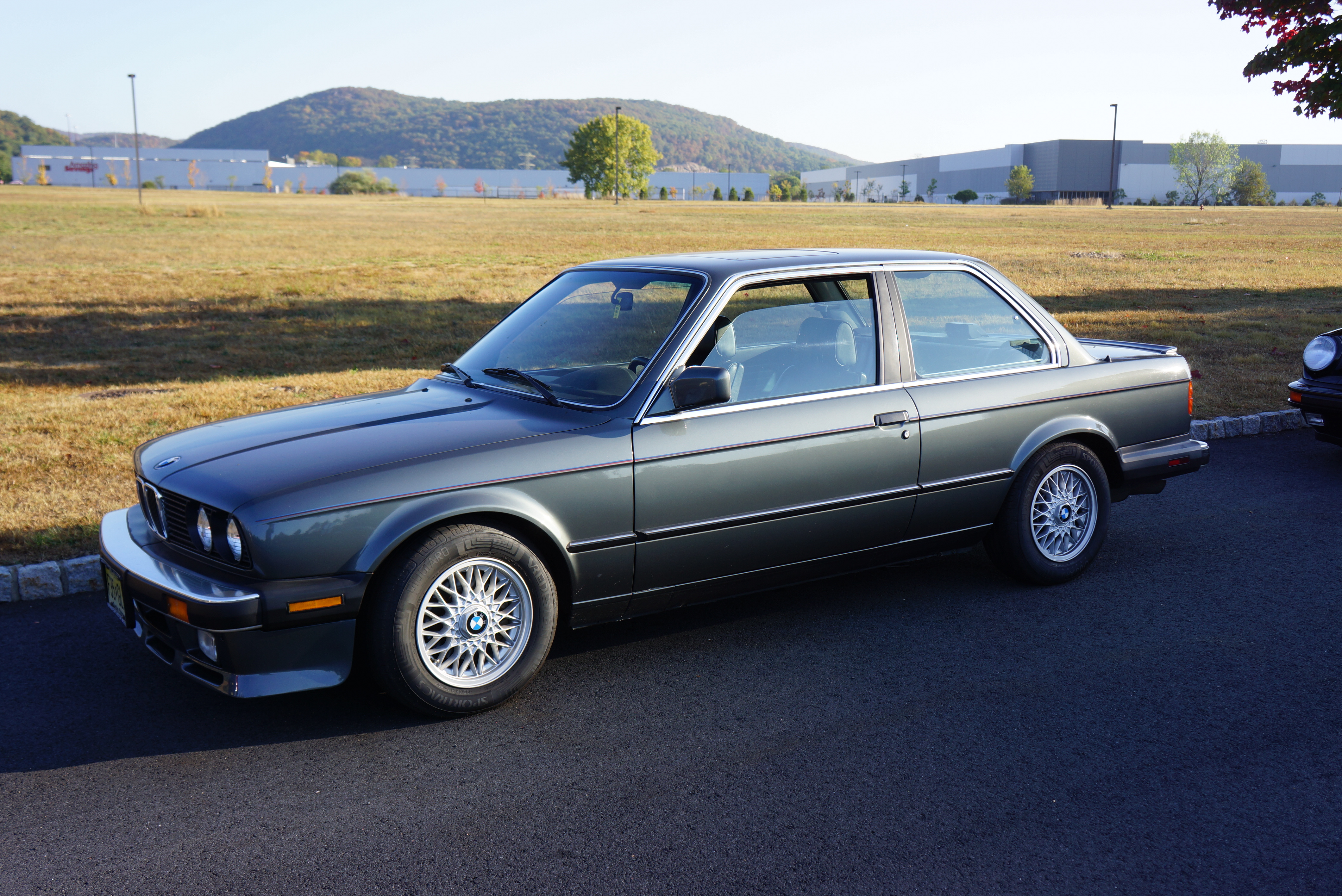
Sal’s E30 BMW
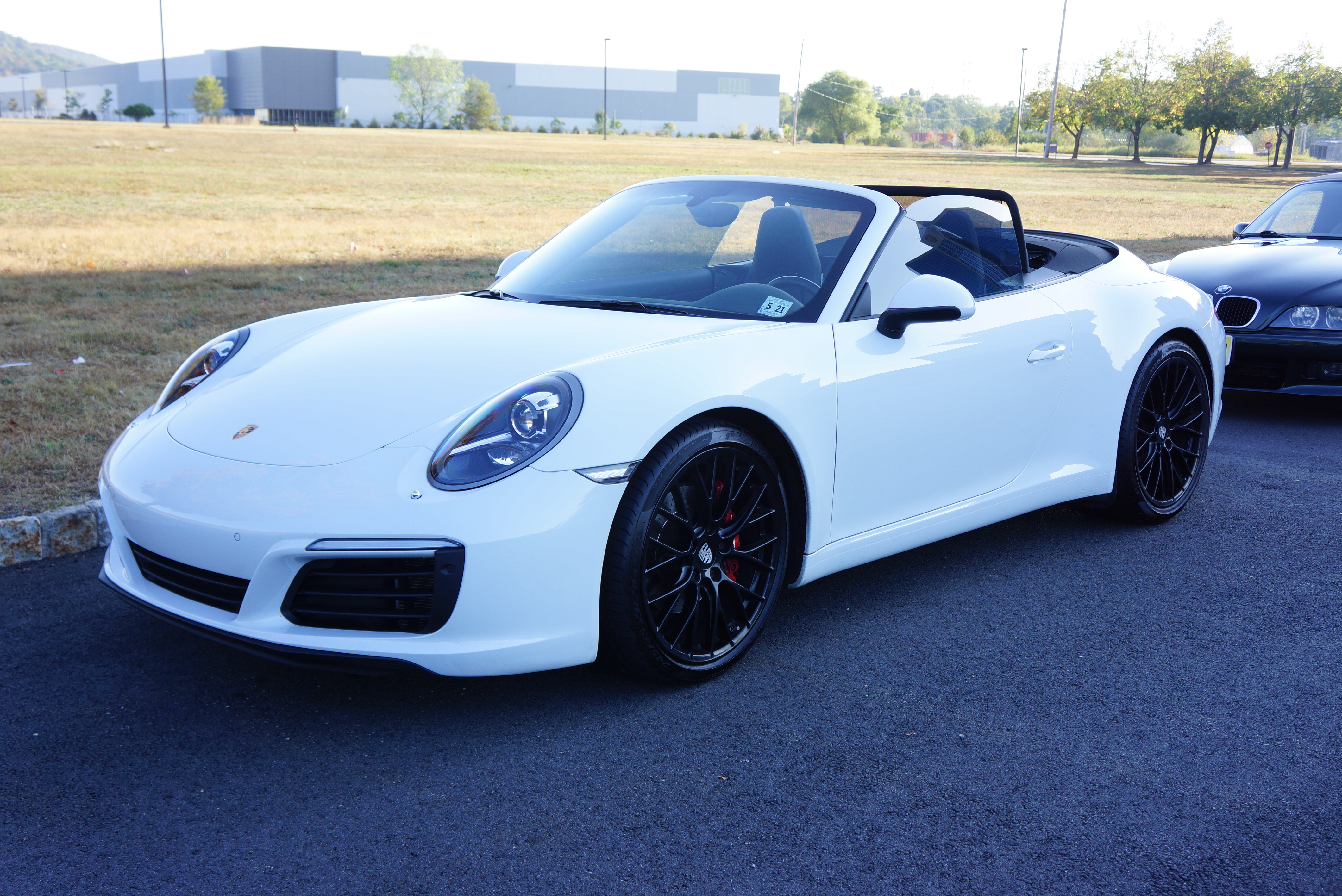
Bill’s black 911
Peter’s red 911
Rich L’s white 911
Jeff’s BMW Z3
Art’s VW GTi
Burton’s Jaguar XK-120
Larry’s Chevy Nova
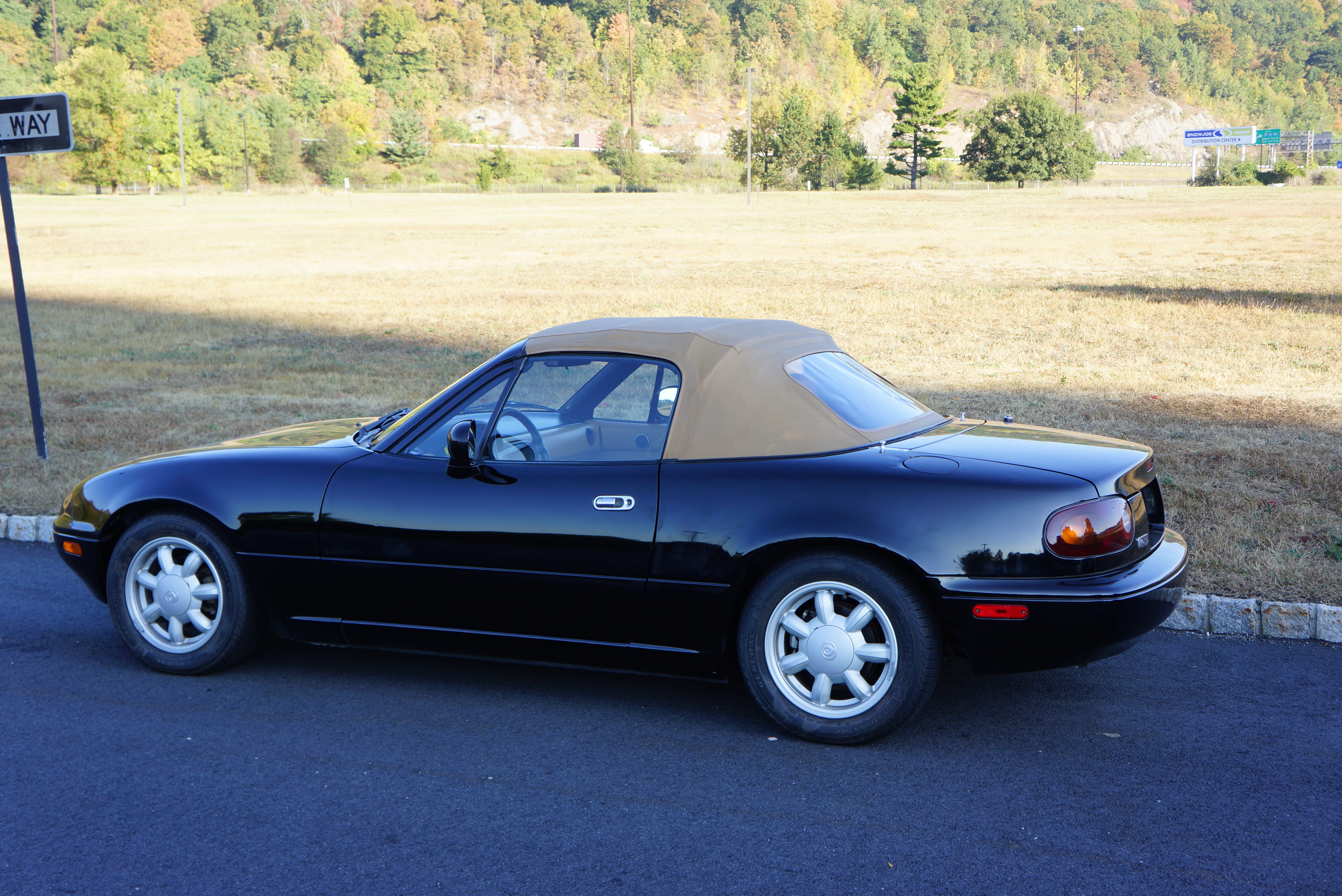
Your blogger’s Miata
Ours were not the only classics at the diner that morning
As you read in Part 1 of the Alfa Romeo brake system overhaul, the new front calipers I had purchased, through no one’s fault, didn’t get the job done. It was just as well; in an attempt to get my car ready to drive to the AROC Convention in Pittsburgh, I was hurrying through the job, which is no way to work on a braking system. If anything, the inability to make the car roadworthy gave me just the excuse I needed to do the right thing.
I had purchased this car in 2013 from my friend Pete. He bought it in 1968, drove it for perhaps five years, mothballed it for over 20 years, then took it out of long-term storage. After refreshing various systems, including the brakes, Pete enjoyed the car for about 10 years before handing over the keys. In my mind, this Alfa had been “recently” refurbished. However, once I added up the years and the miles, I realized my own miscalculation. At best, Pete worked on the brakes around the year 2003, meaning, the brake fluid alone was now 16 years old. Shame on me! Since I loved driving the car, I wanted 100% confidence in its brakes, so The Right Thing meant a complete overhaul: rebuilt calipers, new or rebuilt master cylinder, and new lines and hoses. I got all 4 wheels up off the ground, drained what little fluid remained, and brought both front calipers to the workbench.
Caliper with piston, dust boot and spring in place before removal
First, the dust boots and their retaining springs had to be removed. The springs were so rusty that it was difficult to see them against the boots, but with a little urging from a dental pick, they popped off. The boot for the seized piston looked like it had been on fire (it almost was), and this early discovery reinforced that this overhaul was necessary and overdue.
Dust boot and rusty old spring on their way off
This dust boot is ready for the trash can
I’ve rebuilt calipers before, as a Volvo tech, but it wasn’t a job we did very frequently. All 4 of my car’s calipers are of the two-piston fixed type, and research from my Alfa library led me to conclude that there was no need to split the calipers. The pistons could be removed with compressed air, and the bores cleaned up as necessary.
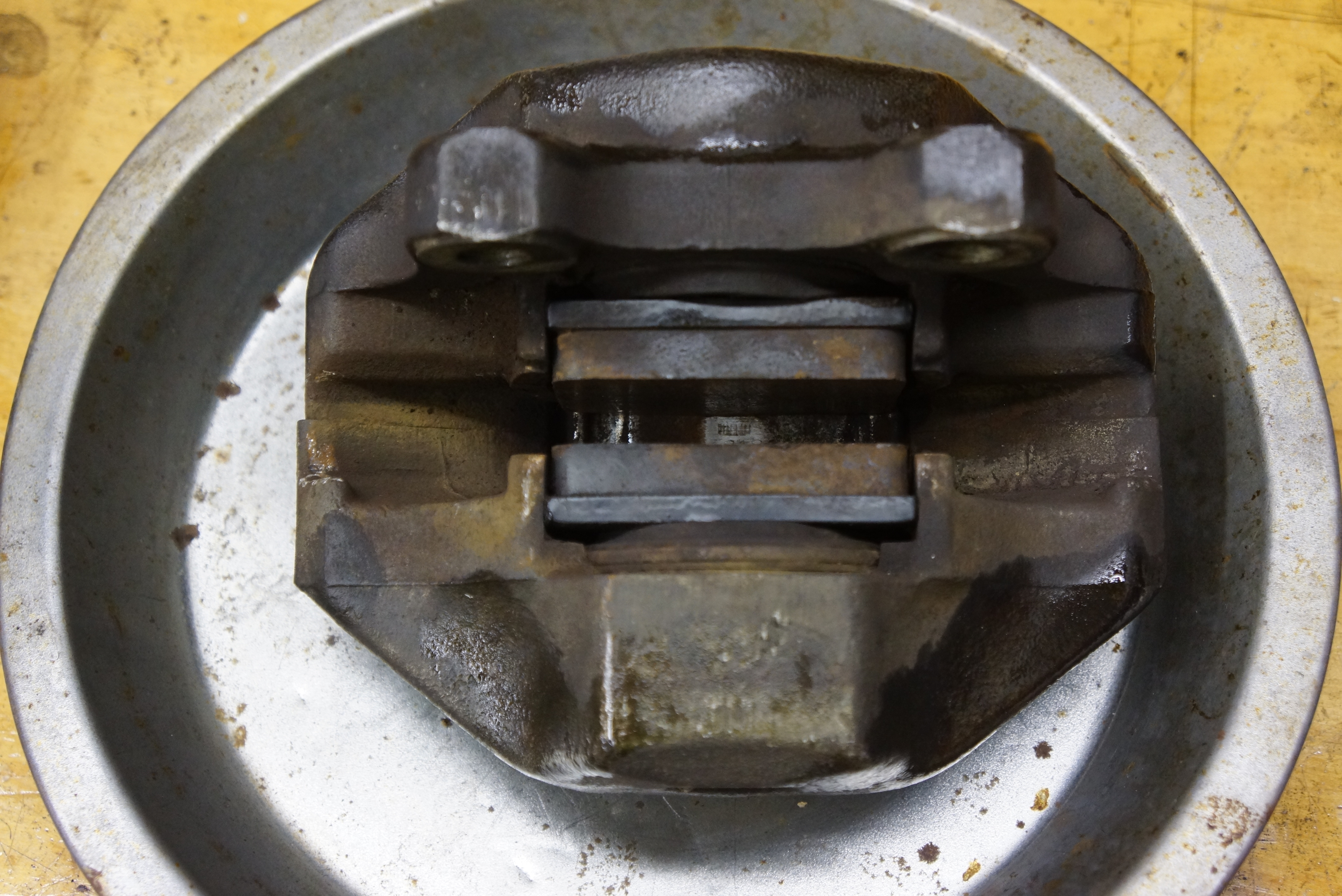
This 2-piston caliper has 1 piston behind each pad. It is “fixed”: the two halves are bolted together.
Starting with the seized right front unit, my technique was to start by pushing the pistons back into their bores with a piston compression tool. The reasoning is that any movement is good movement. Once they were fully retracted, I hit the fluid passage with compressed air, and both pistons moved outward a few millimeters. The cycle was repeated: retract pistons, apply air; retract pistons, apply air. Finally, one piston popped free.
At the start, piston retraction tool was used to push pistons all the way back
Compressed air is good stuff
But now I had a problem: the compressed air escaped from the now-empty bore, and did nothing to move the piston still in place. I reinstalled the removed piston, but the same thing happened: one piston came out, and one stayed in. I needed a way to block the fluid passages without fully reinstalling the first piston. Stuffing rags into the bore did nothing.
C-clamp is employed to hold 1st piston while compressed air dislodges 2nd one
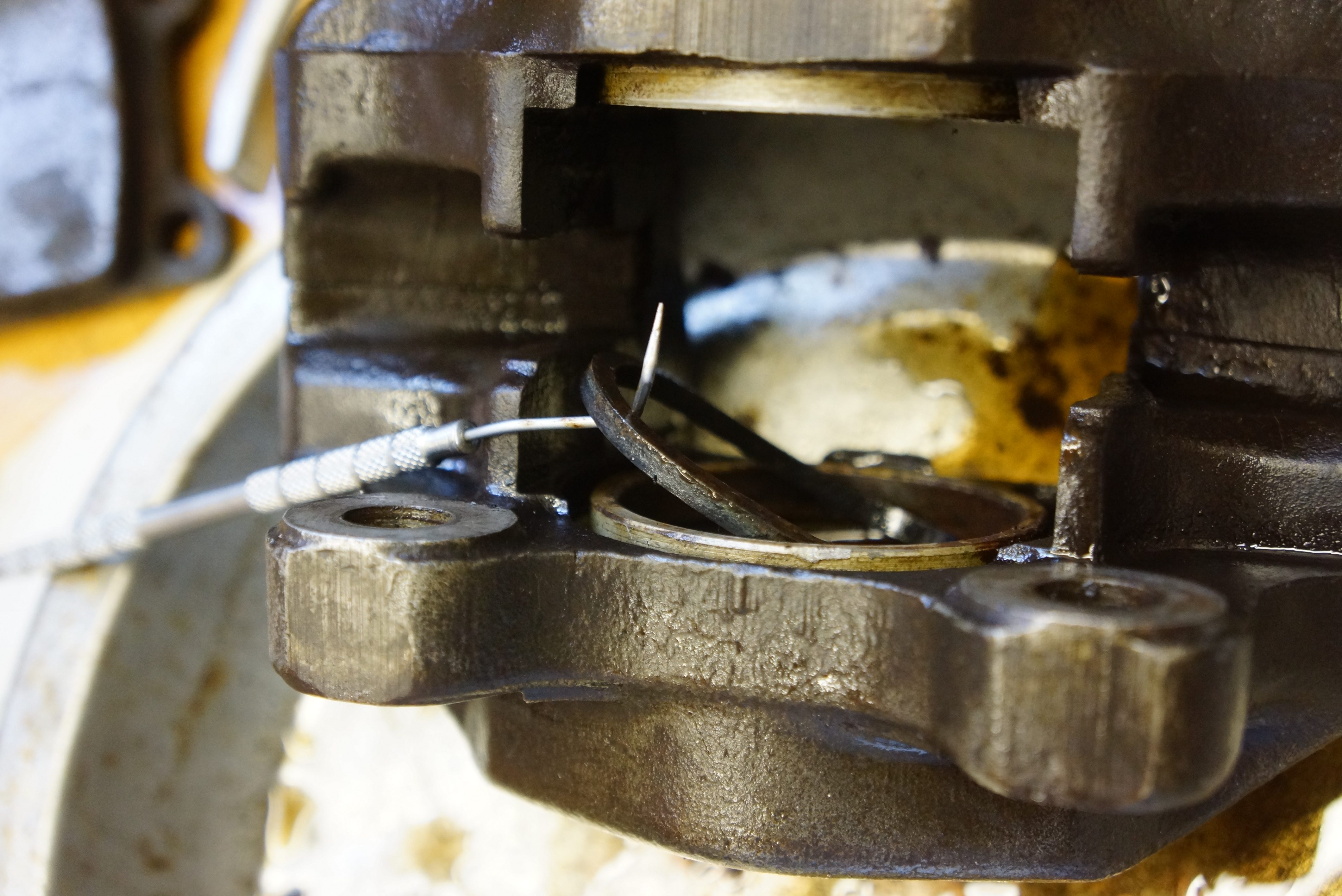
Here’s how I did that: lubing up the piston with brake fluid, I reinserted it just a few millimeters back into its bore, enough to block air flow, but not so much that I couldn’t pull it out by hand. I held this piston in place with a C-clamp, so the force of the air would blow out the 2nd piston. It worked! The 2nd piston shot out, and once I removed the C-clamp, the 1st piston could be worked out with my fingers. With the pistons out, the inner seals were easily coaxed out with a dental pick.
Removal of the inner seal
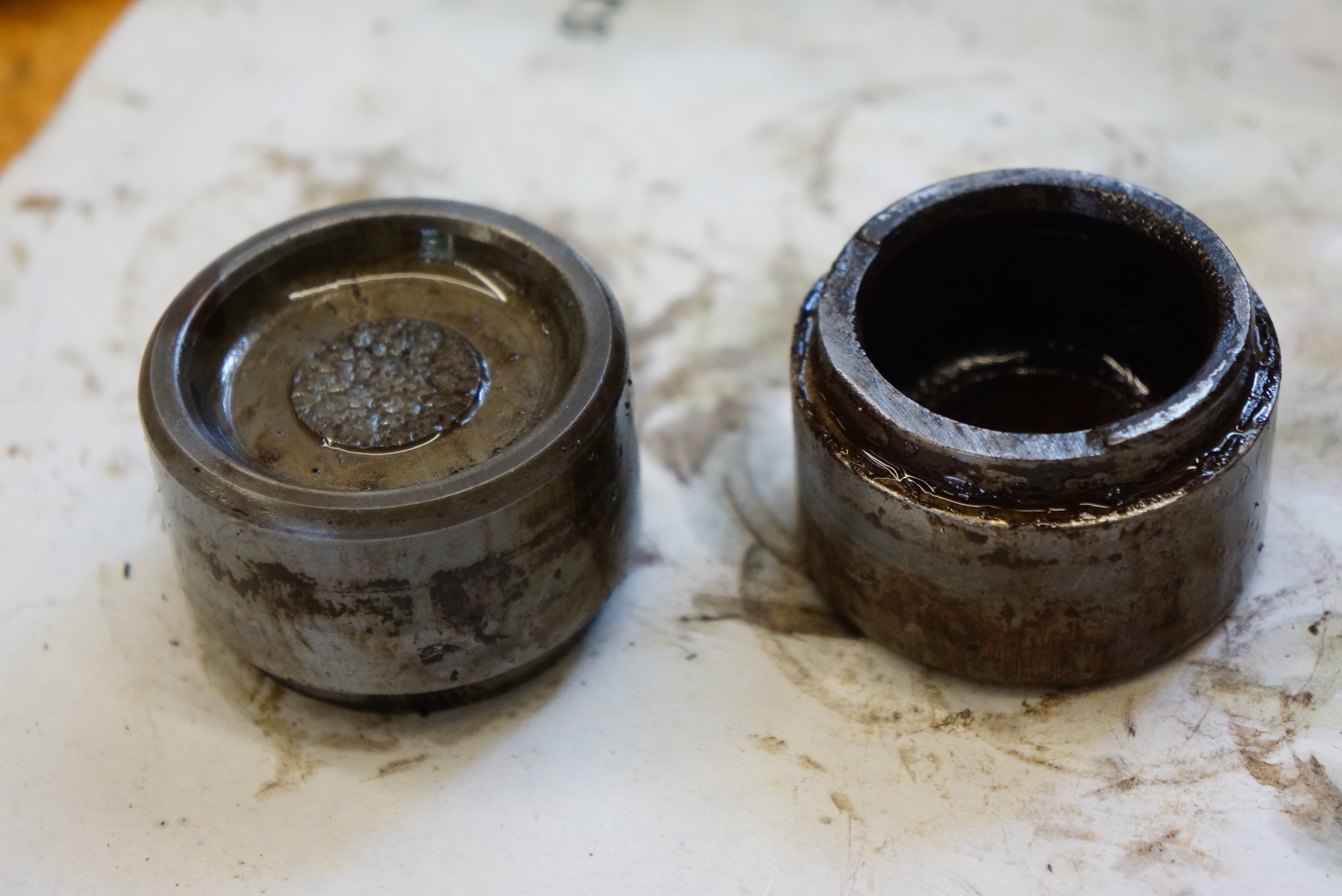
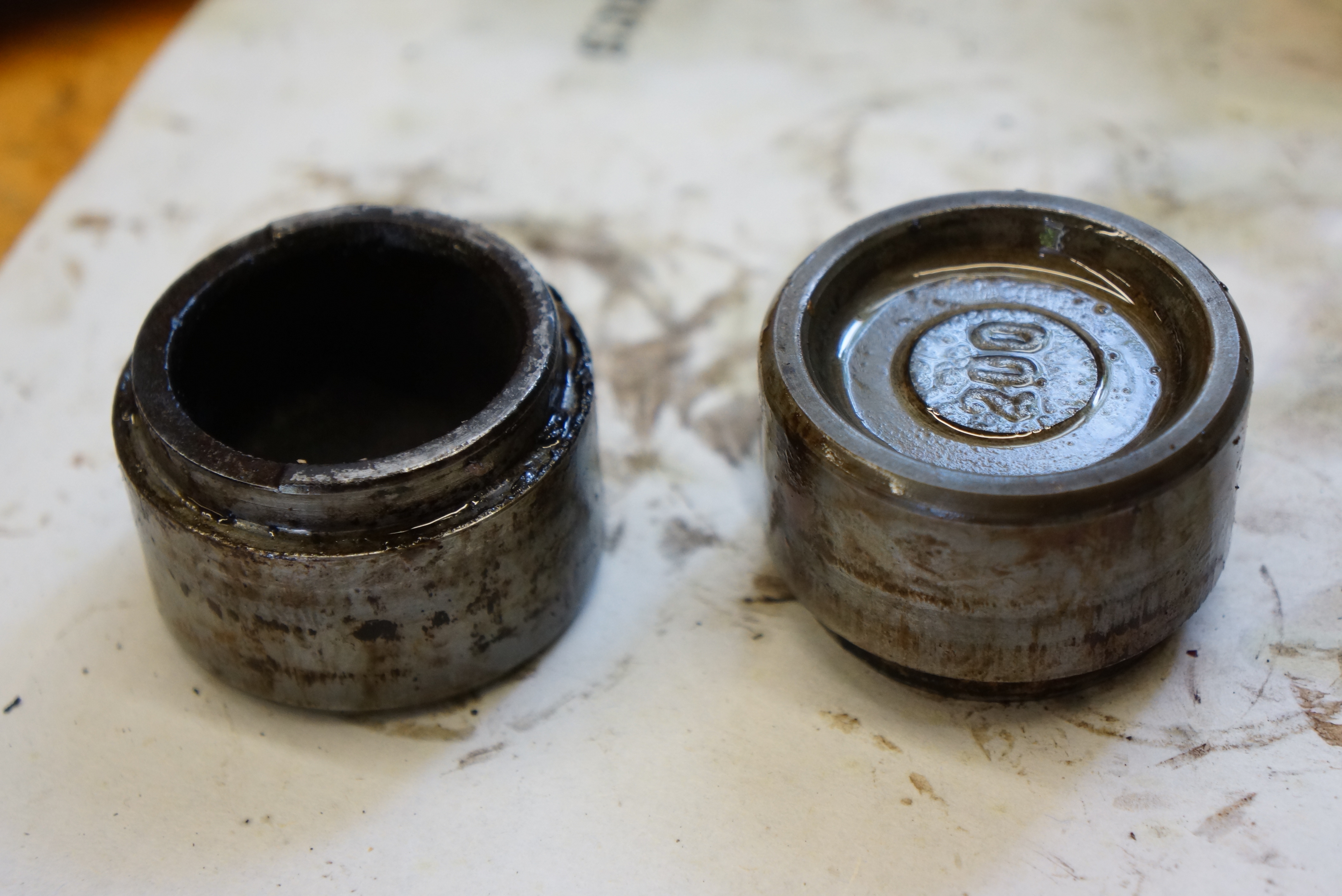
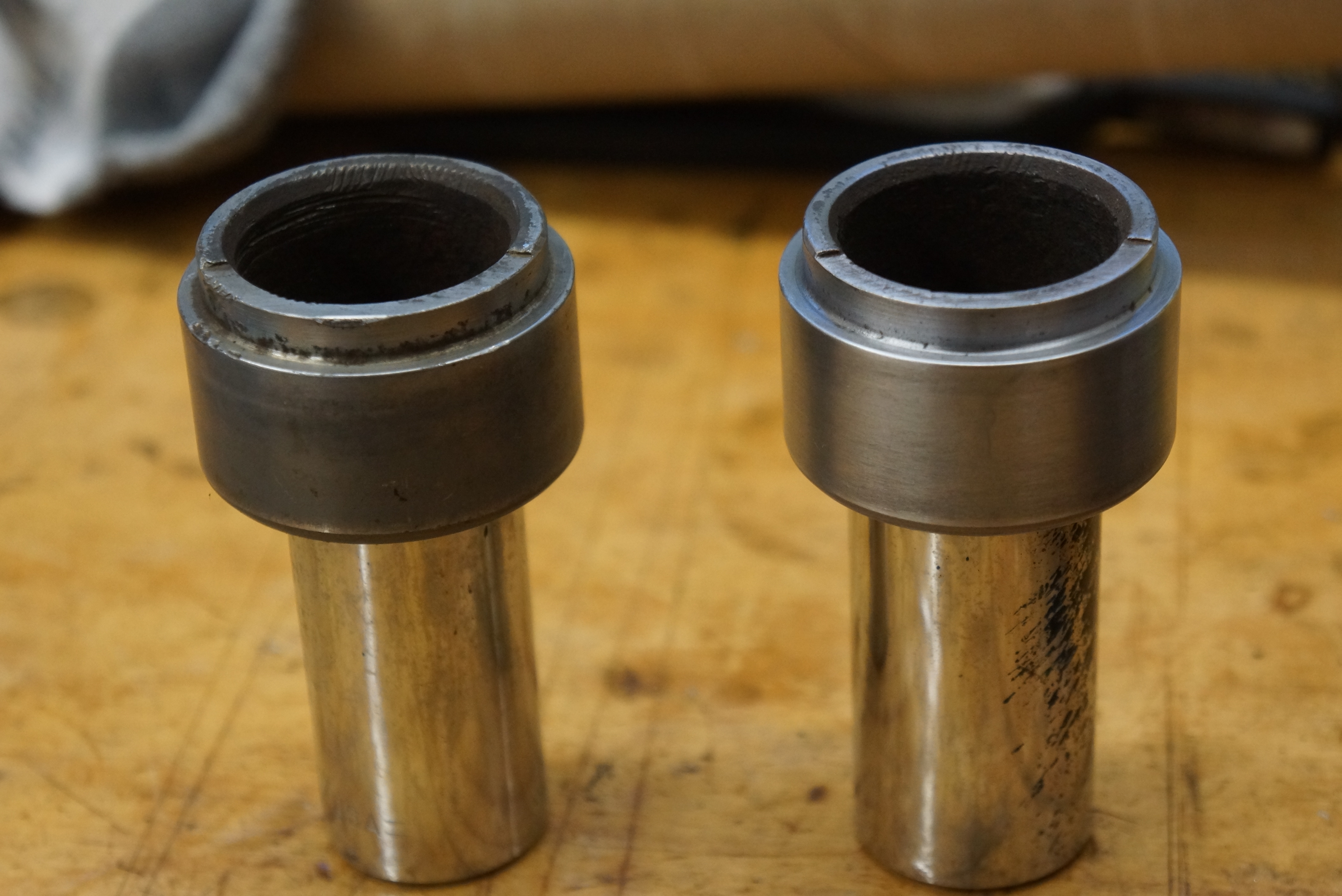
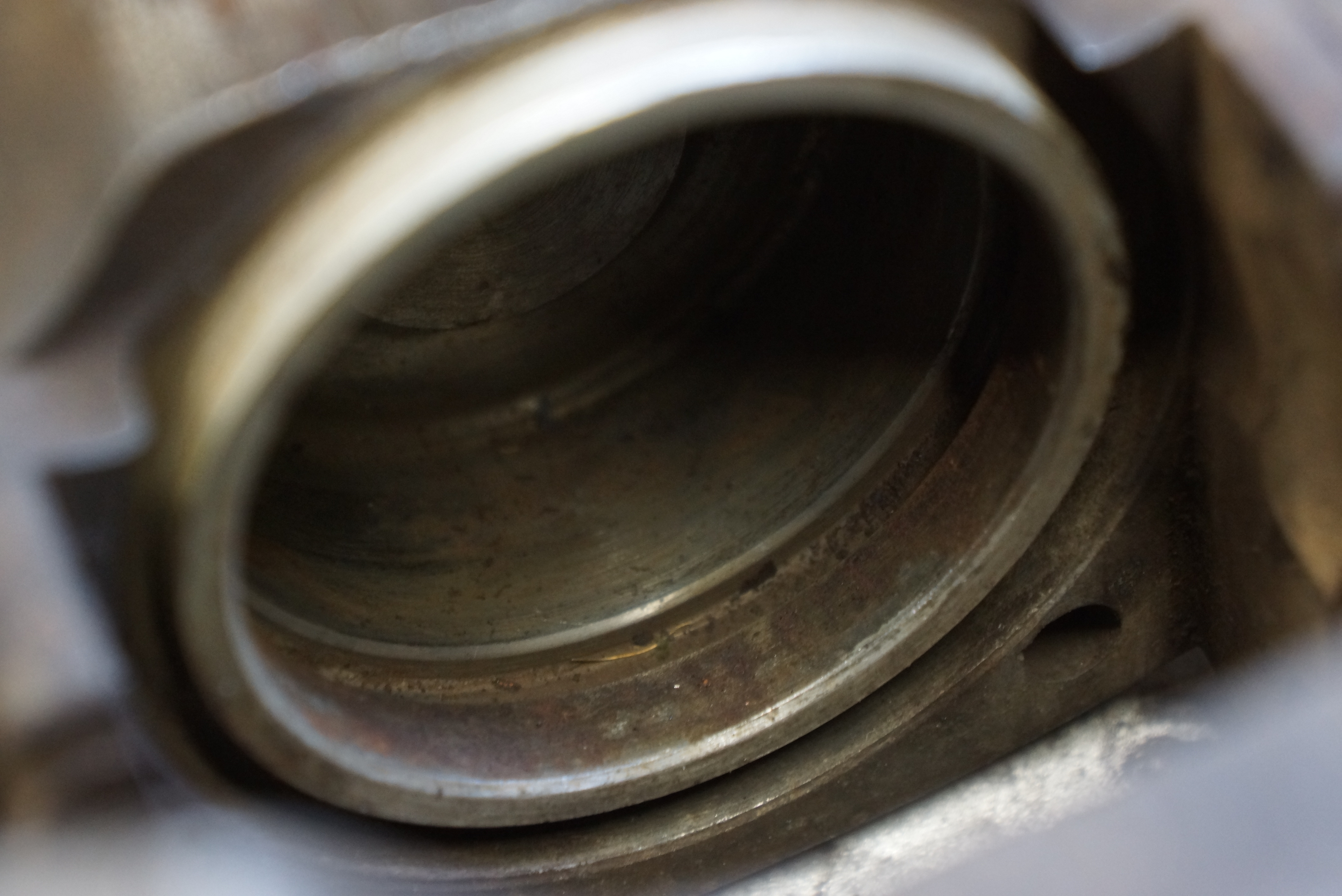
A close examination of the pistons revealed that one had a mark along its surface. My local Ace Hardware store had 3M brand emery cloth which I bought in medium, fine, and super fine grit. While I couldn’t completely remove the nick, I smoothed it out so that it couldn’t be felt. The front lips of the pistons showed marks from pliers or Vice-Grips, so someone (not me) got aggressive with a prior piston removal attempt. Thankfully, the marks would not affect the braking performance.
Front pistons
Left and right sides
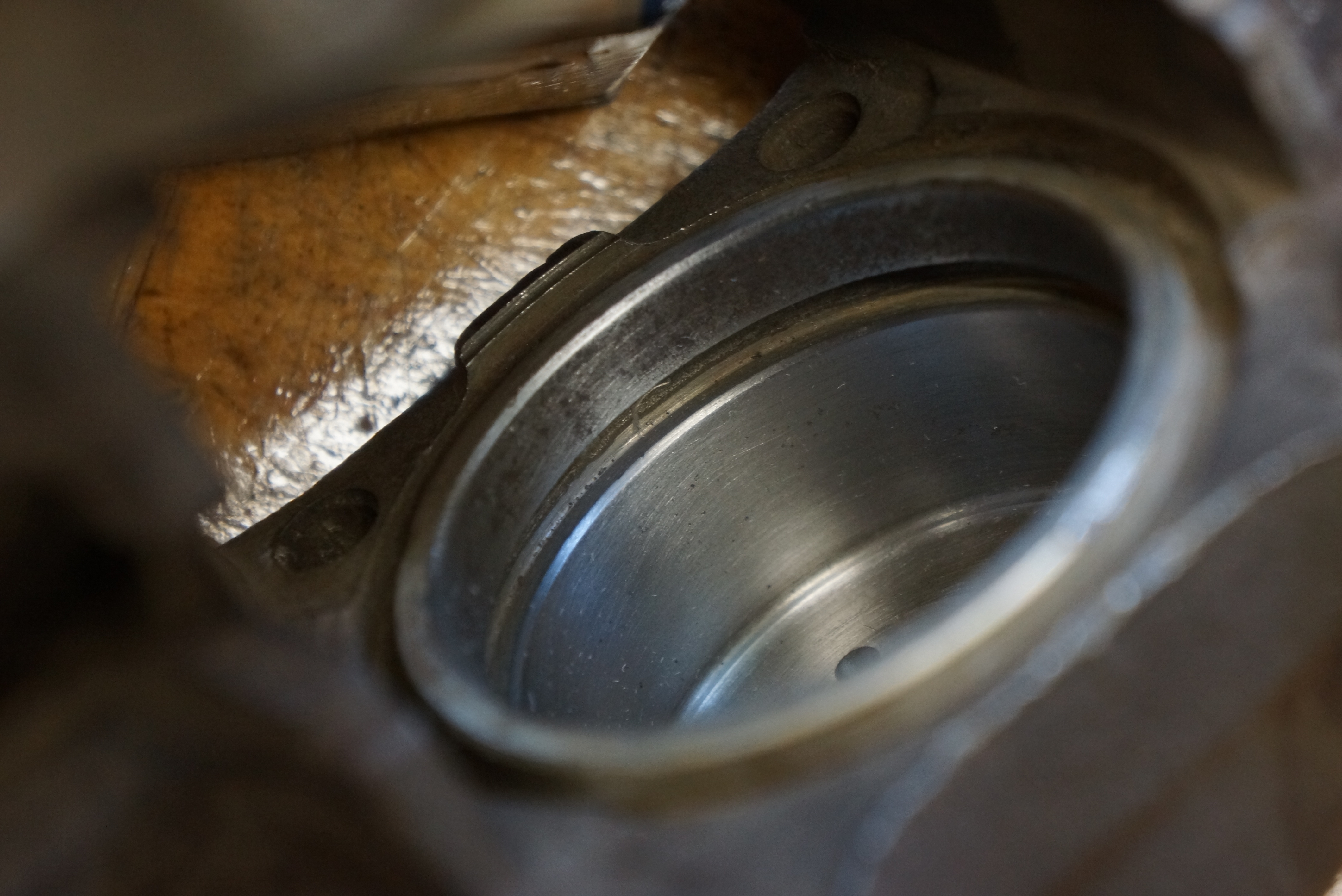
The bores themselves showed some minor corrosion along the outer edges, but the insides (below the inner seals) weren’t bad, and the super-fine emery cloth made them even better. While this was going on, the rear calipers were unbolted and disassembled so that I could measure the piston diameter. According to my supplier, Classic Alfa, this generation Giulia used either 30mm or 36mm rear pistons, and of course, one needed to know before ordering parts. It turned out that my car has 30mm pistons. I placed my order with my favorite Alfa supplier, knowing that I’d have the parts within 48 hours or so.
Pistons before (left) and after (right) emery cloth treatment
Nick in surface could not be removed, but was minimized. Note pliers marks.
Lime Rock Park, an historic race track nestled in a valley within the verdant hills of northwest Connecticut, held its Historic Festival #37 over the 2019 Labor Day weekend. The races run all weekend except Sunday, as that is prohibited by local ordinance. Many moons ago, Festival organizers reasoned that the non-racing day could be put to great use for a car show, and “Sunday in the Park” was born.
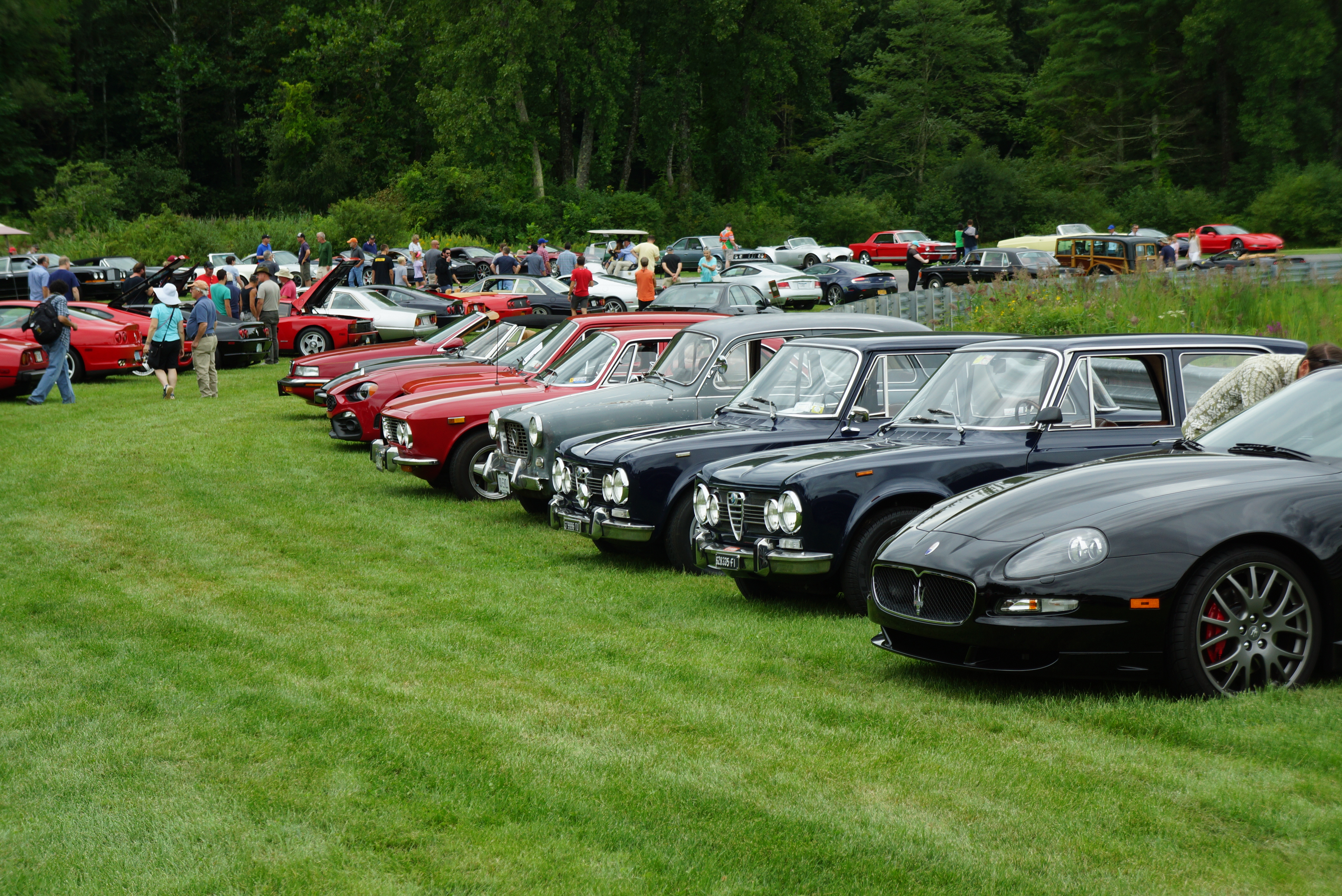
For me, the static car show in Lime Rock has been an annual treat going back to the early 1990s. So many factors make this show special, including location, size, quality, and variety. Lime Rock delights in creating its own classes based on decade, country of origin, and vehicle type. It keeps things interesting for the spectators. Added to that is the tremendous support from marque-specific clubs, resulting in hundreds of vehicles lining the perimeter of almost the entire track.
Although the park is a 3-hour one-way trip for me, the long Labor Day weekend means that a one-day round trip on Sunday isn’t so bad, as vacationers squeezing in a last summer getaway won’t be clogging the roads until Monday. Pedestrian traffic at the track wasn’t so dense to prevent unobstructed photos, which are presented below, in semi-organized fashion. Enjoy the automotive eye candy!
ITALIAN
The Italians are coming!
Fiat 500
Lanica B20
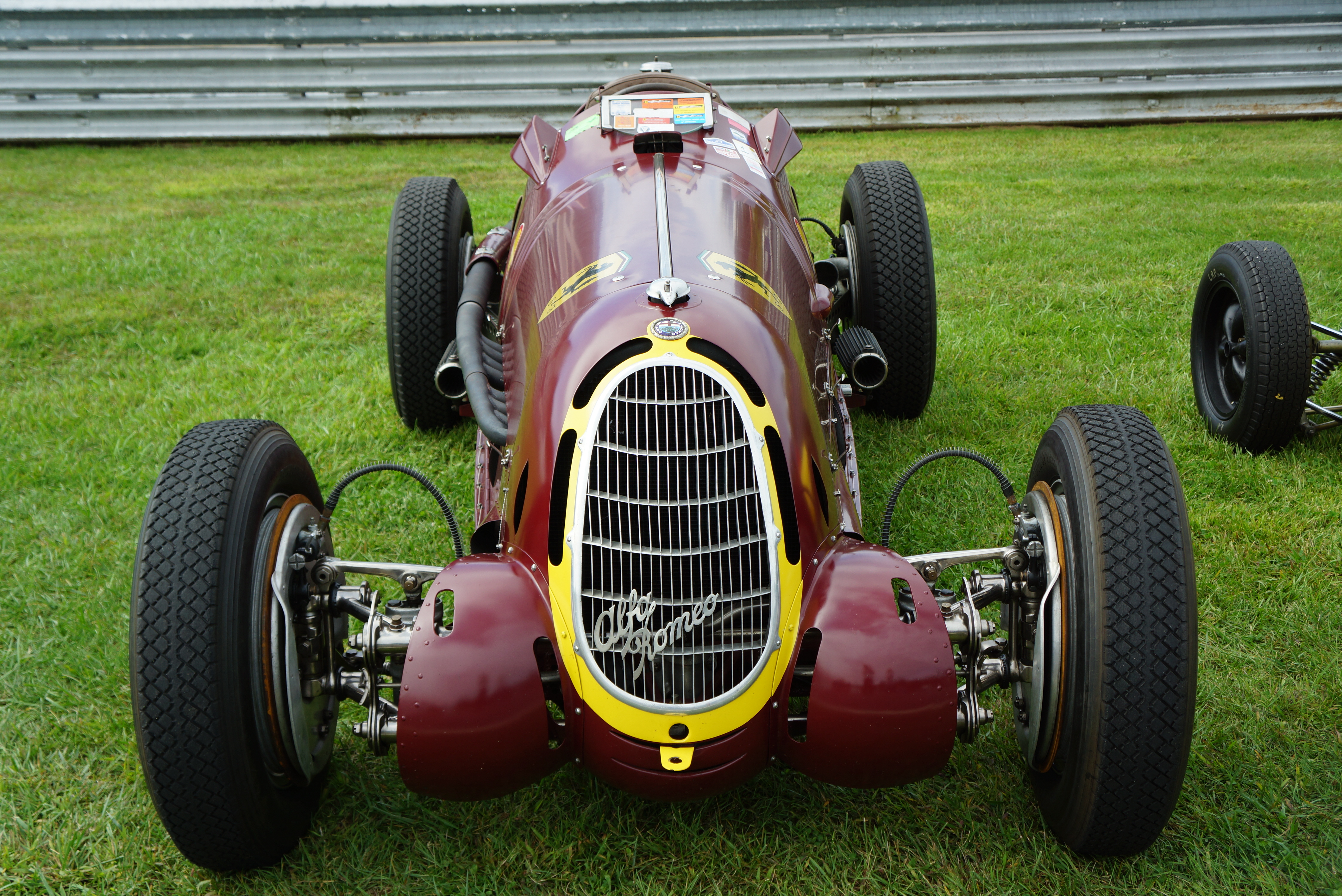
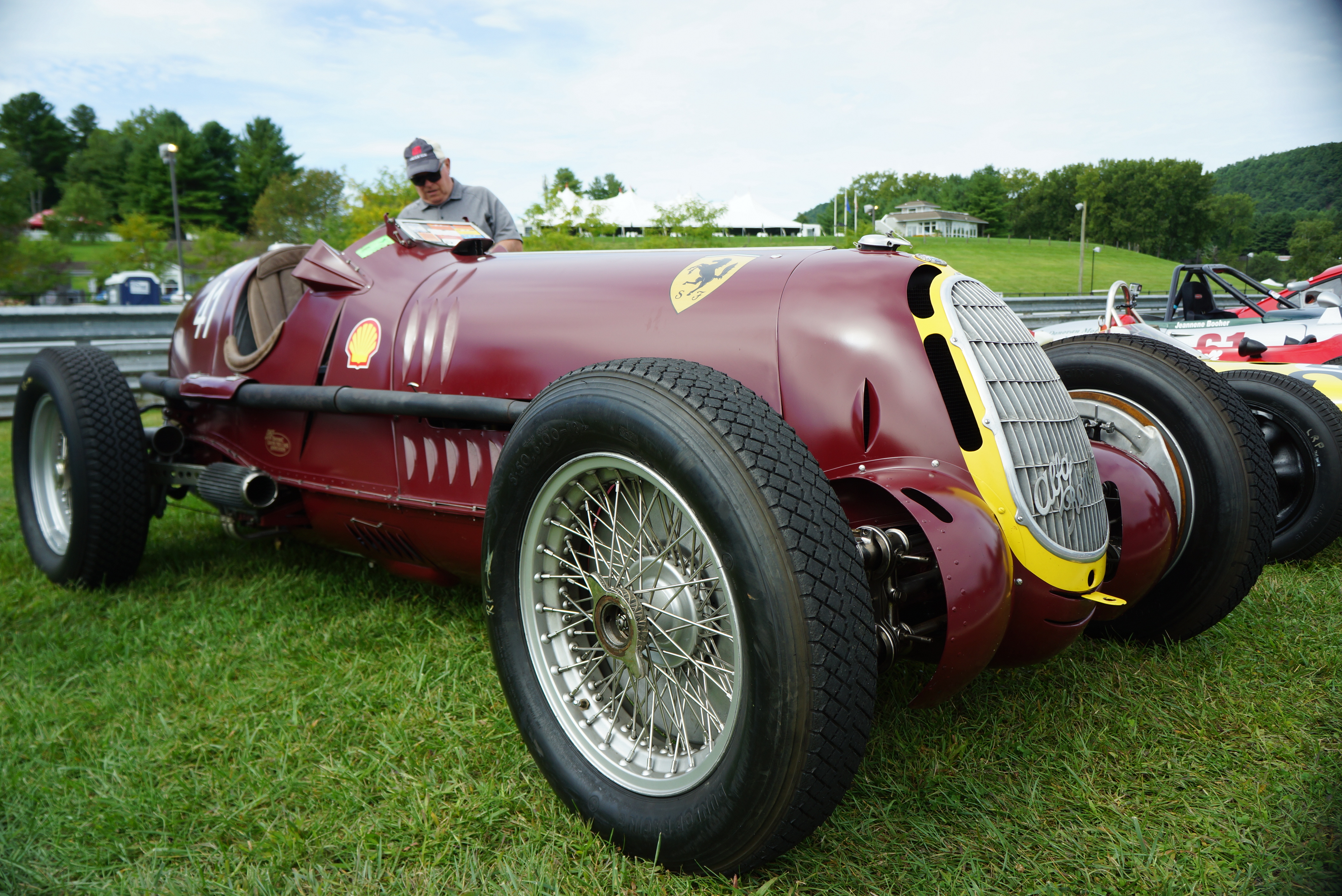
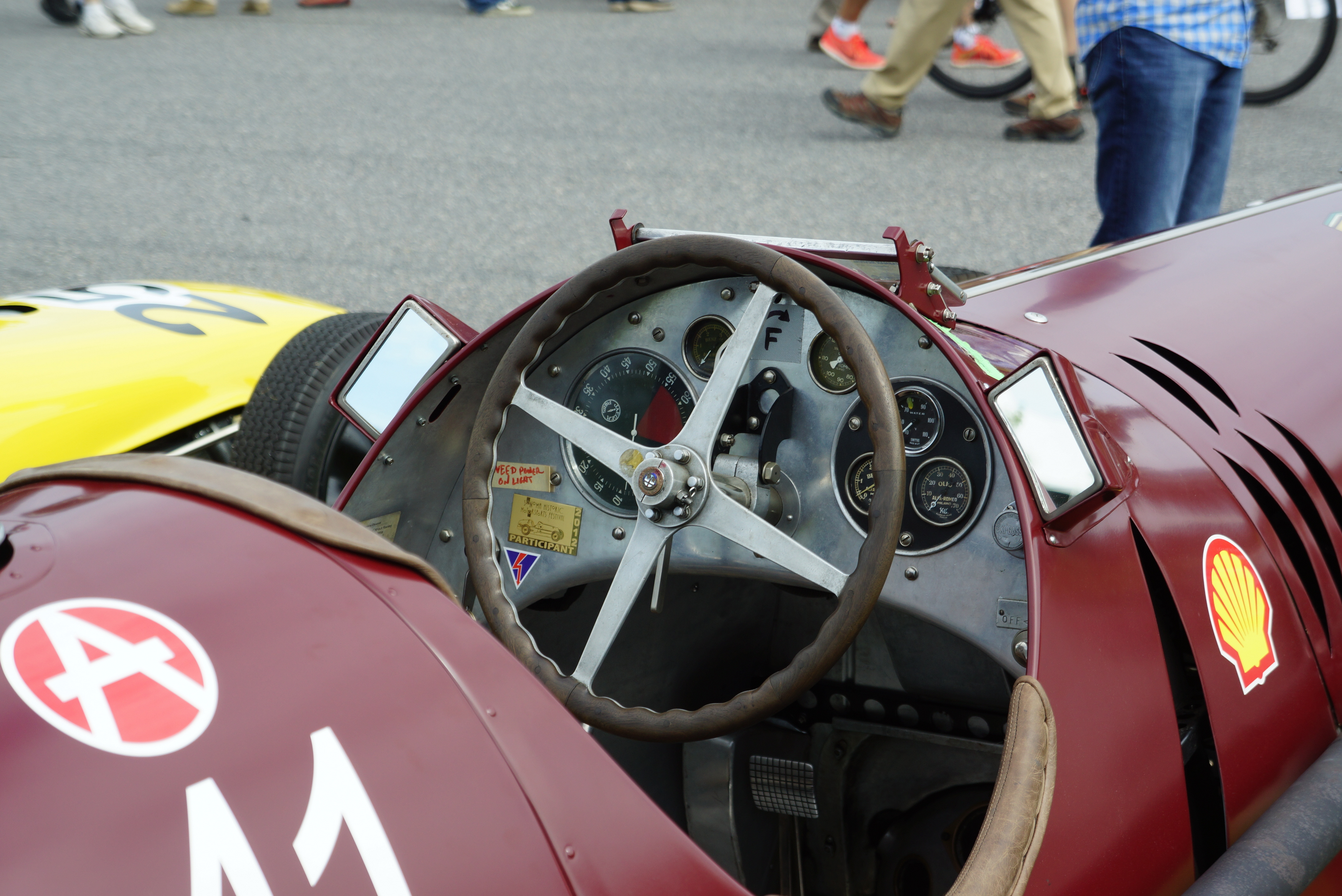
Alfa pre-war racer
Note SF decal
Monoposto
A selection of pre-war Alfa race cars
The Al Cosentino Fiat racer
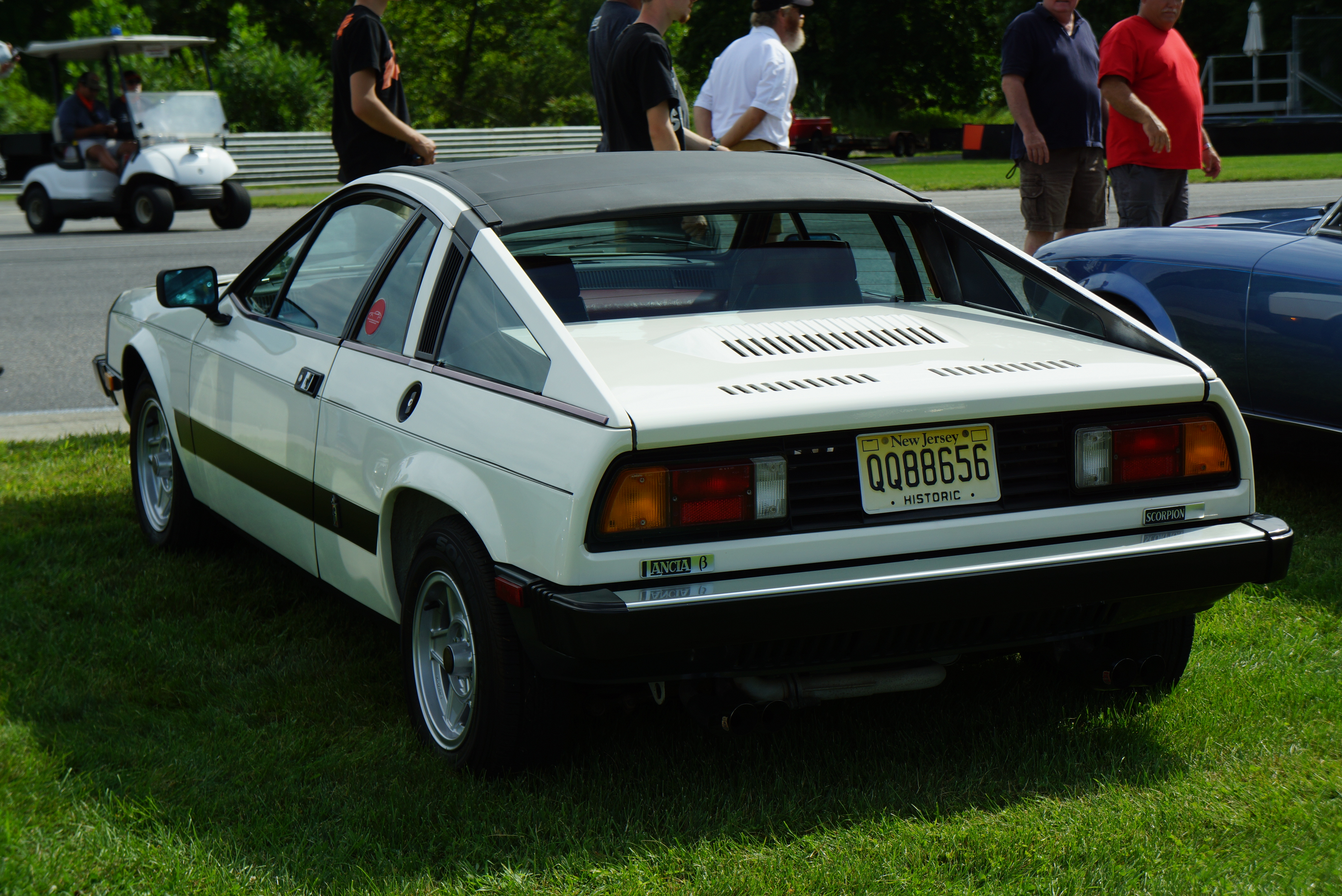
Lancia Scorpion
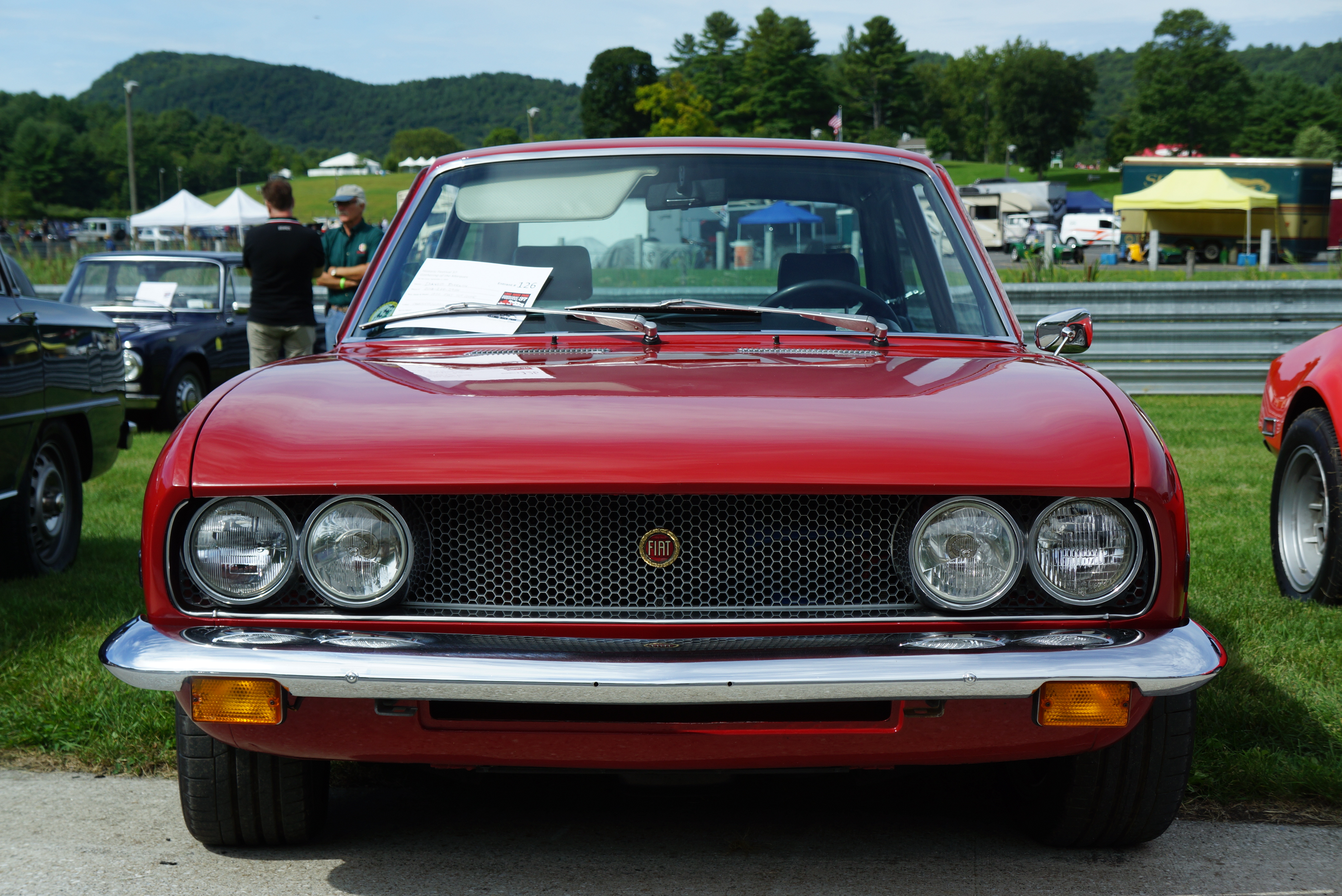
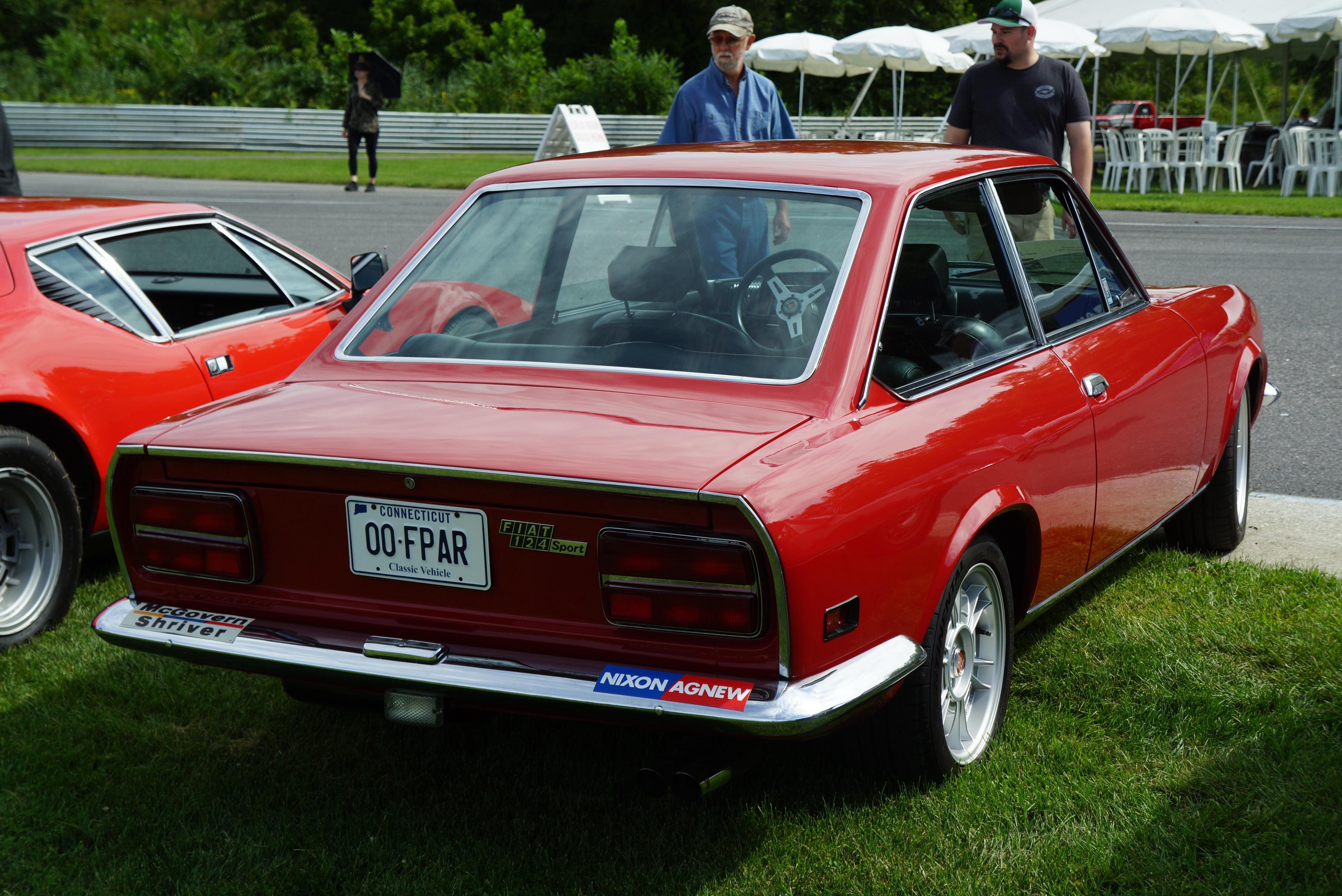
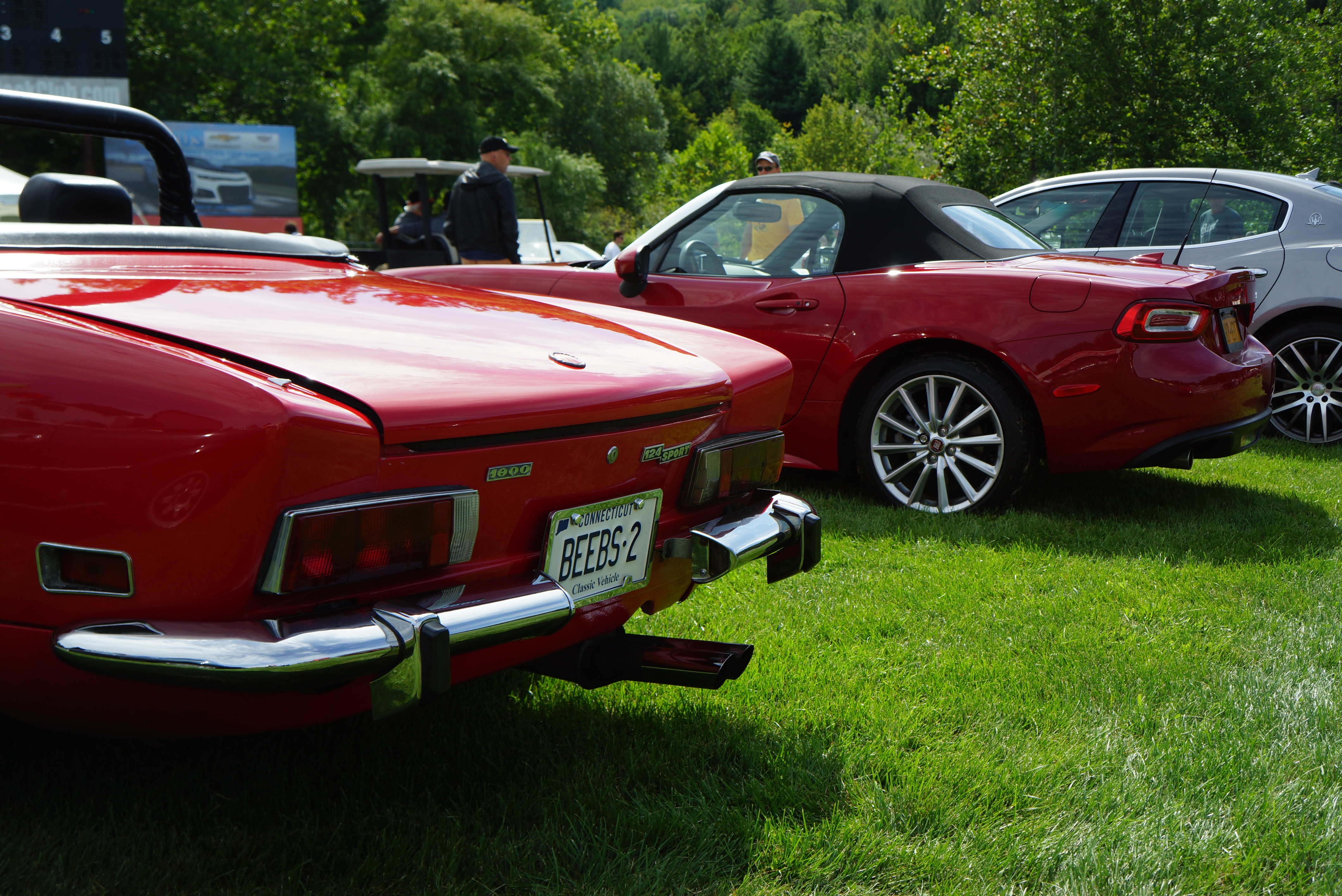
1972 Fiat 124
Sport Coupe
Just liked I owned
Alfa spider
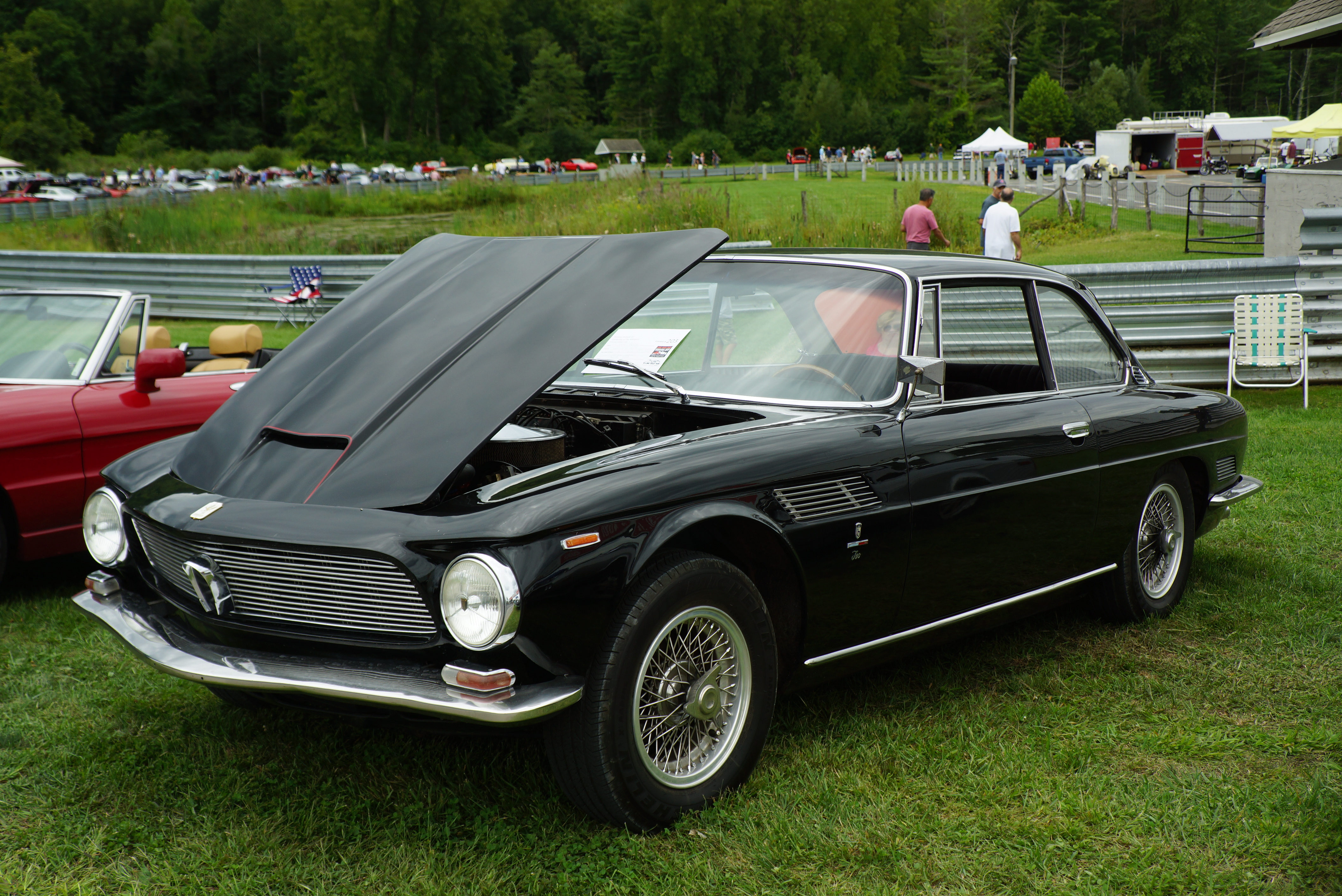
Iso Rivolta
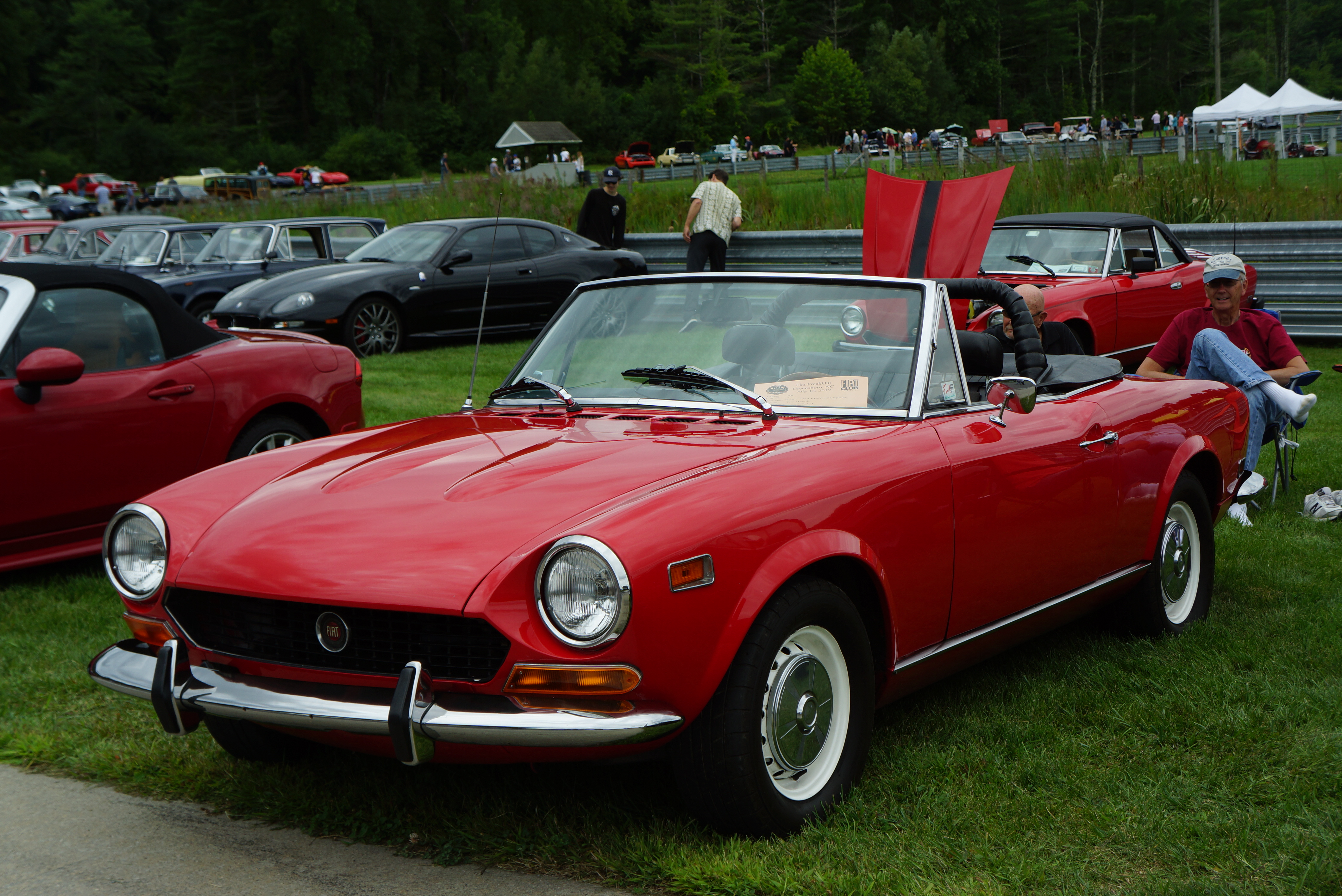
Chrome-bumper Fiat 124 spider
GERMAN
VW step-side pickup
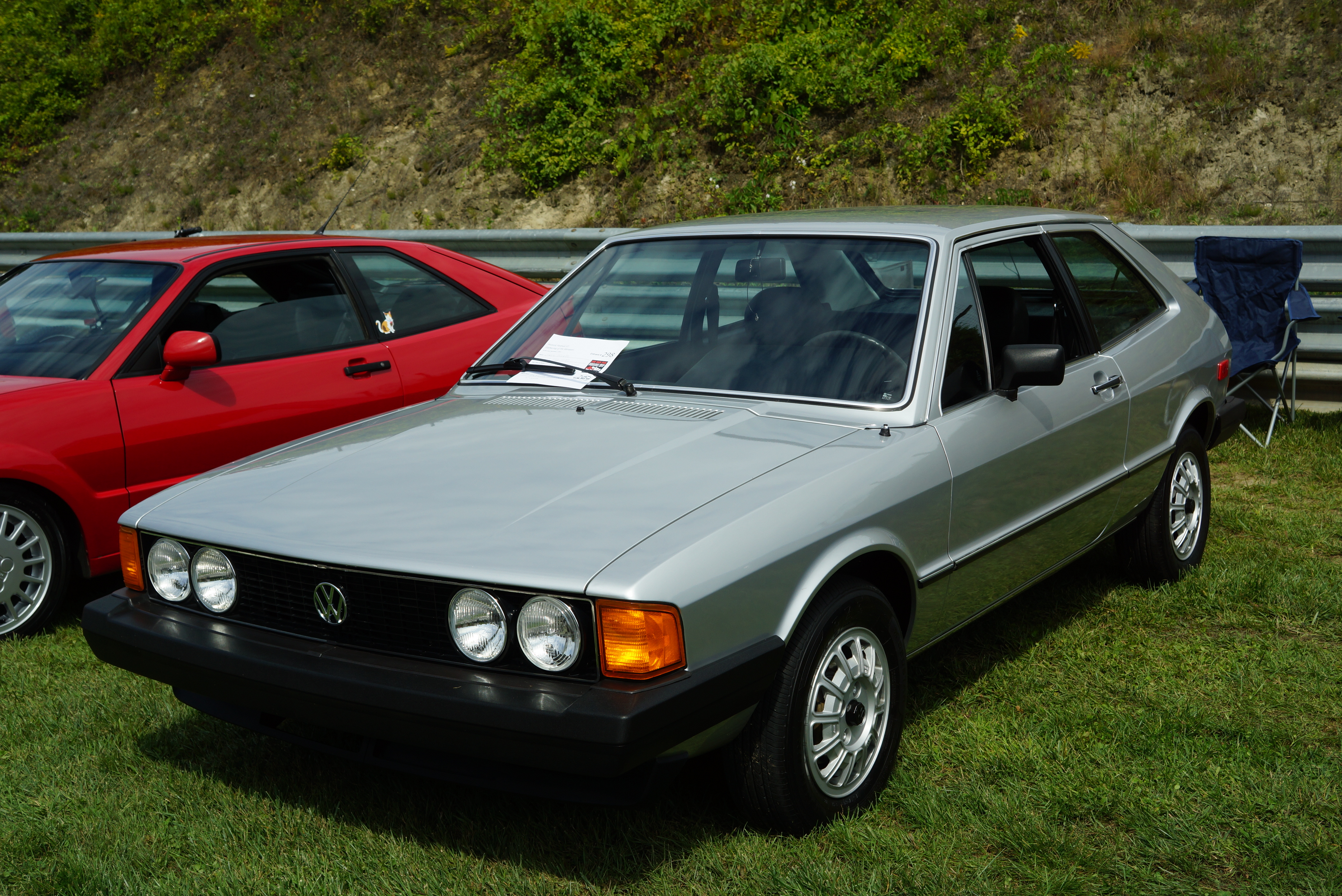
1st gen VW Scirocco
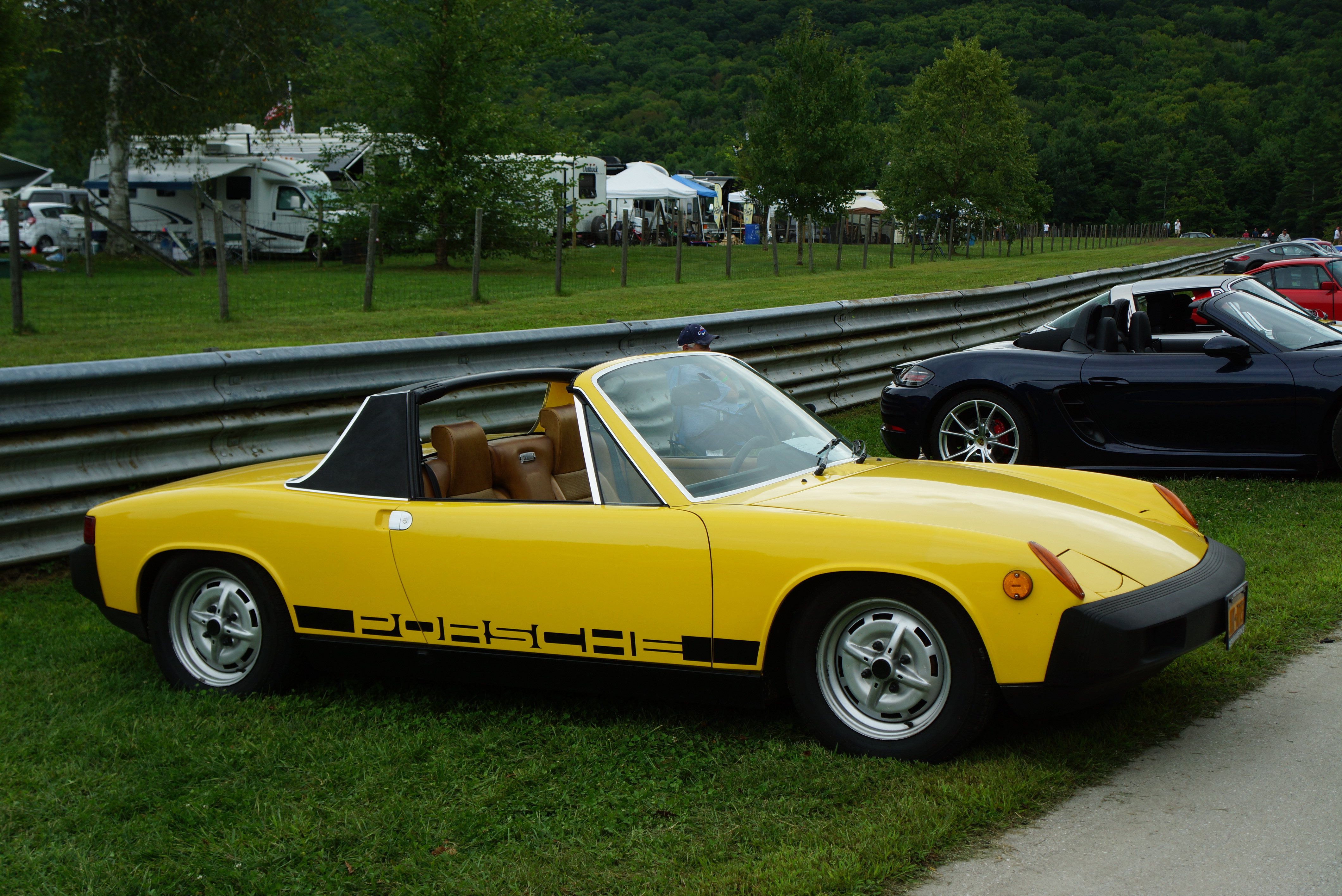
Porsche 914
A pair of clown shoes (BMW Z3 coupes)
AMERICAN
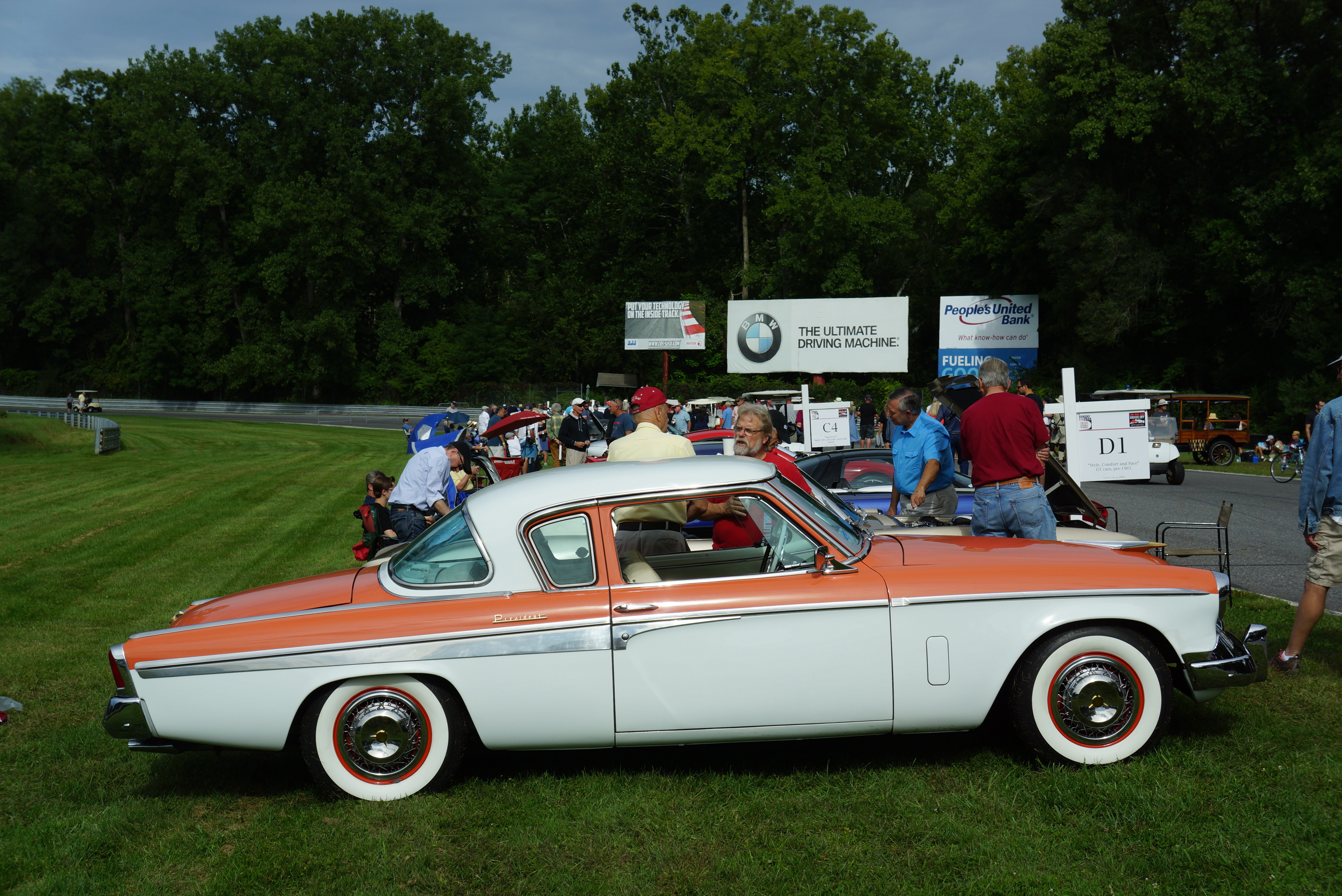
Studebaker Hawk
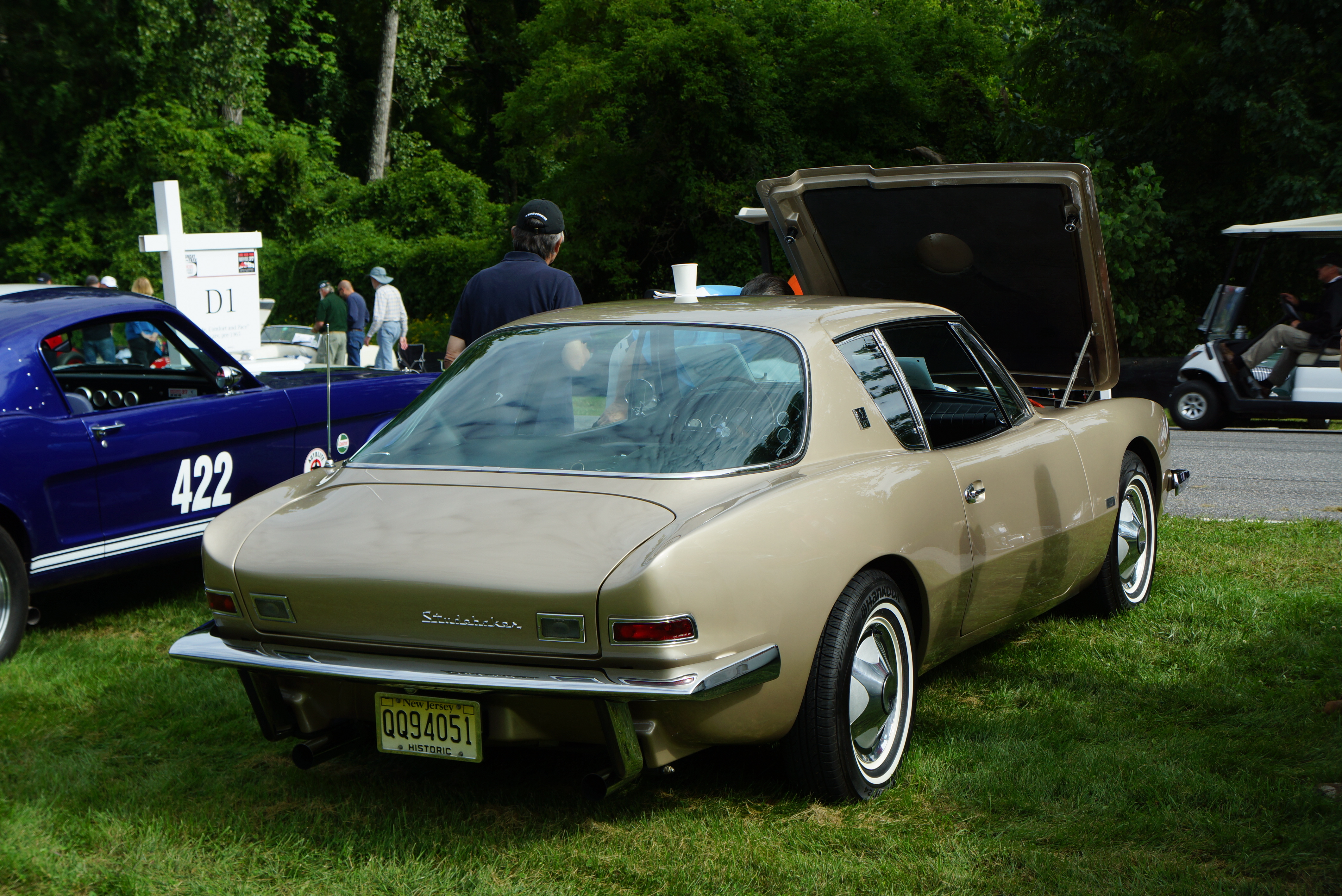
Studebaker Avanti
1940 Ford coupe
1956 Chrysler 300
The 1st muscle car?
Yeah, it’s a Hemi
“B” indicates 2nd year of 300
Lime Rock enters 21st century; Teslas recharge onsite
2nd gen Chevrolet Corvair
1962 Chevy Bel Air ambulance
BRITISH
MGB-GT
Lotus Elan (for sale: $19k)
Aston Martin
Morgan coupe
Mogies line up
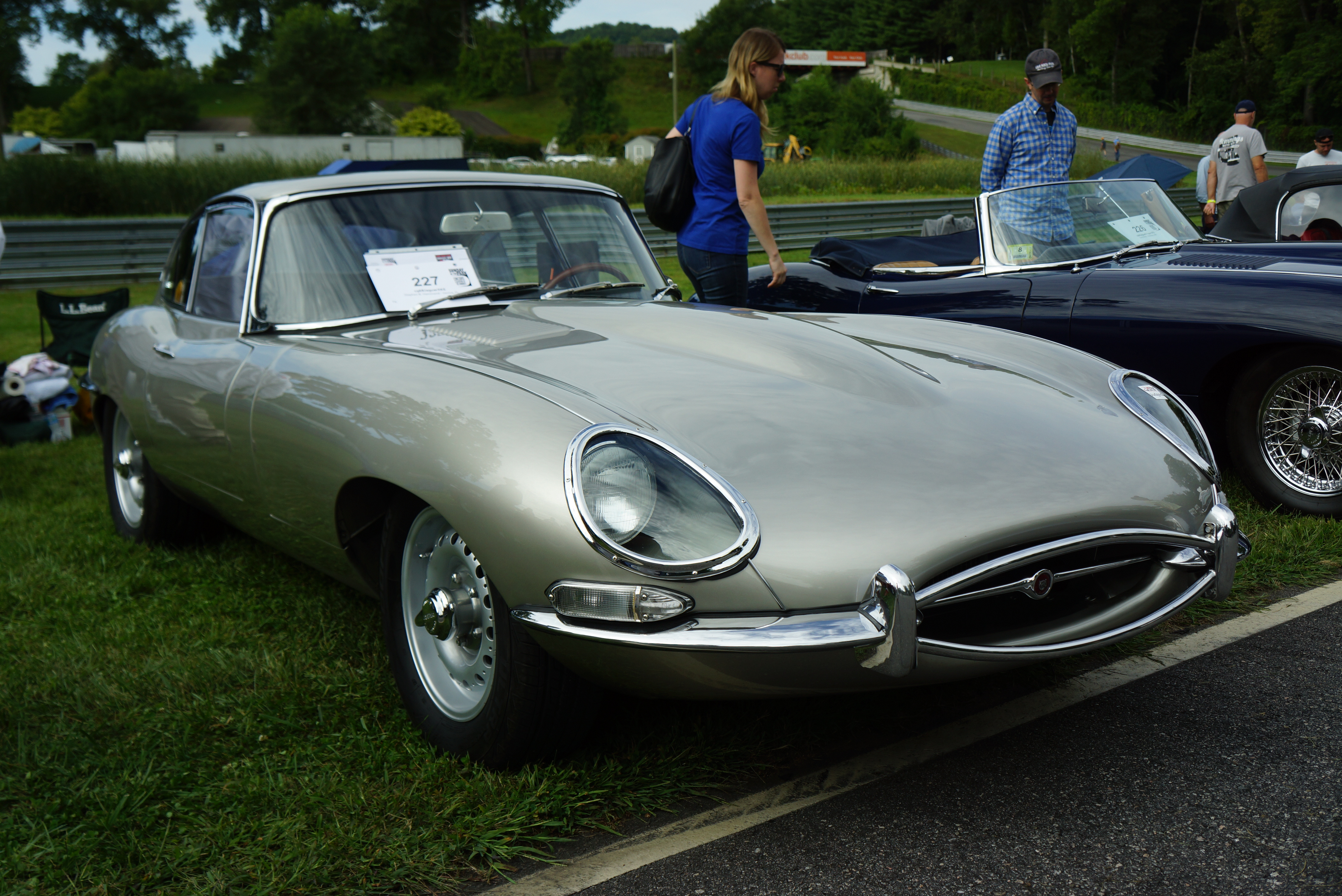
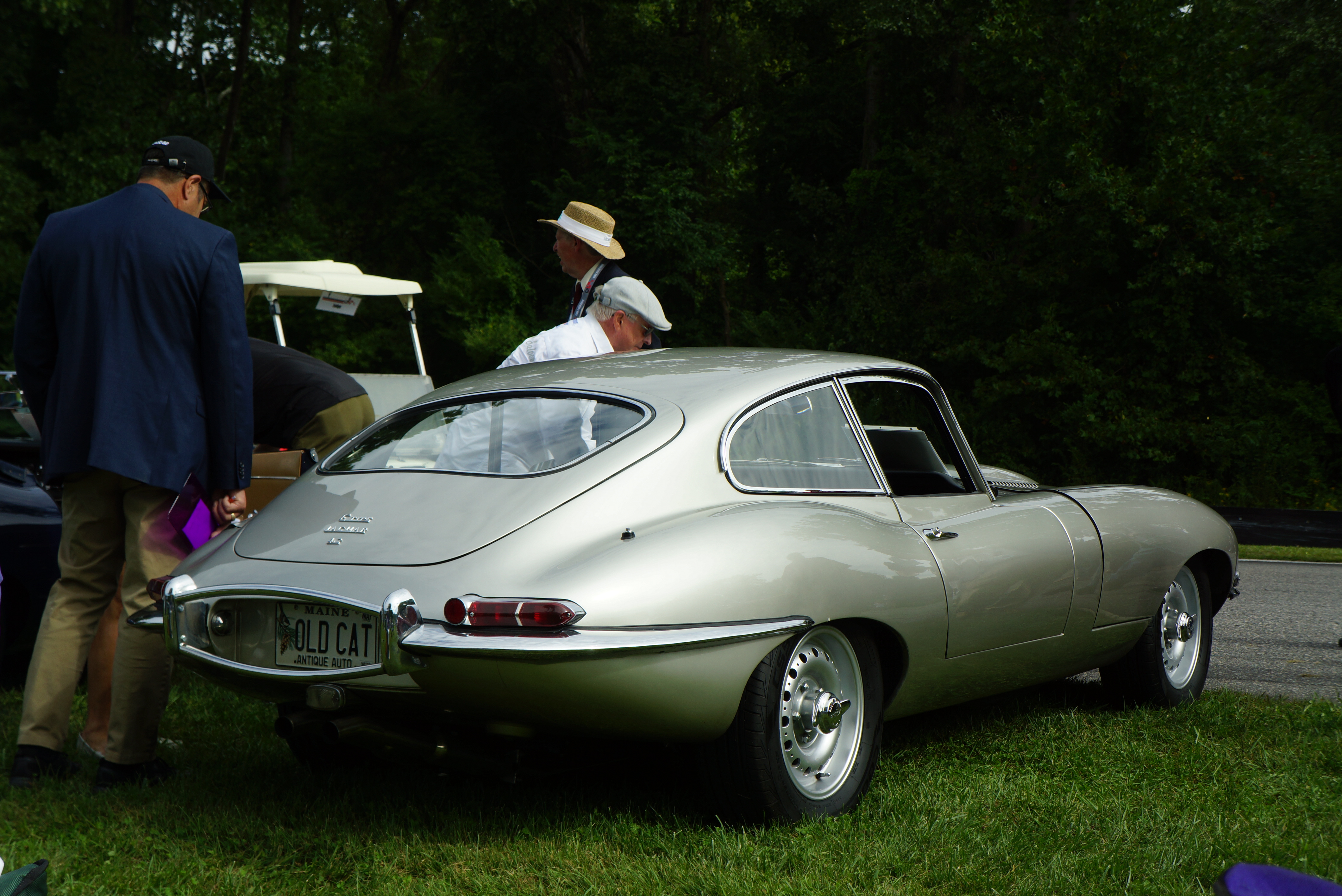
Series I Jag E-Type coupe
Stunning; note disc wheels
SWEDISH
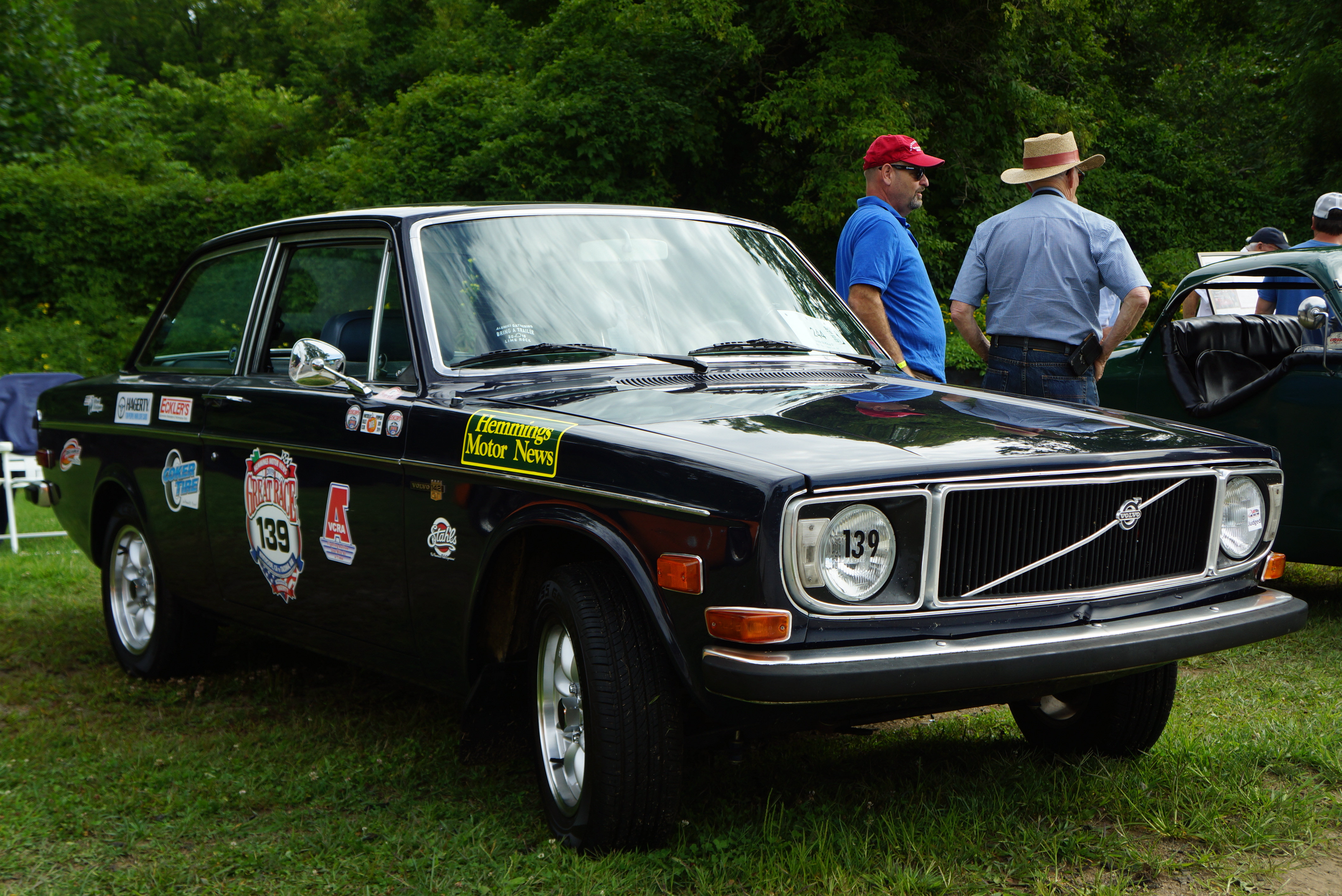
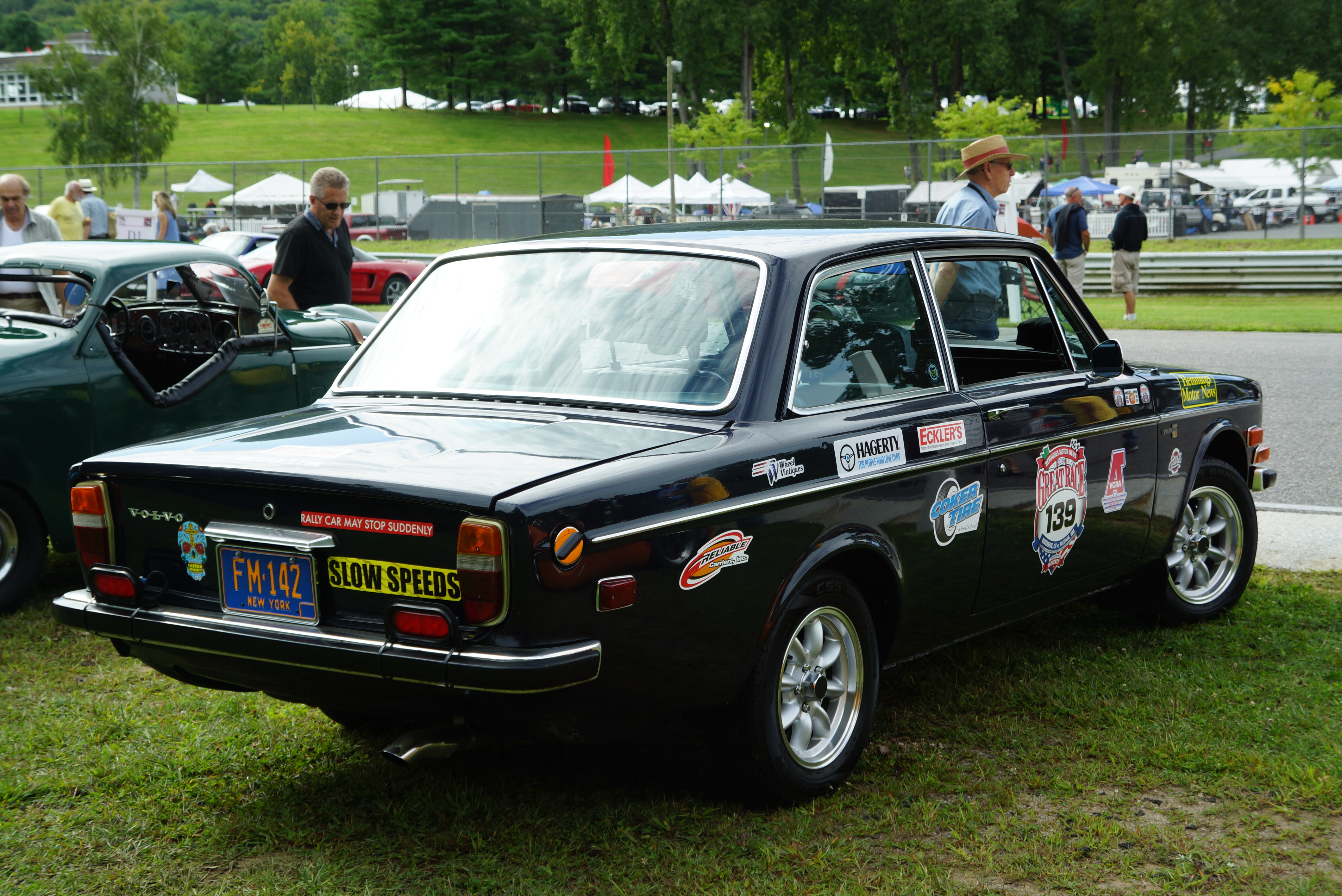
1971 Volvo 142
“142GT” rally car
Note interior extras
1979 Volvo 242
Heavily breathed upon
Volvo P1800
Emblem indicates Jensen-built car
Jensen interior
Supercharger gives extra oomph
JAPANESE
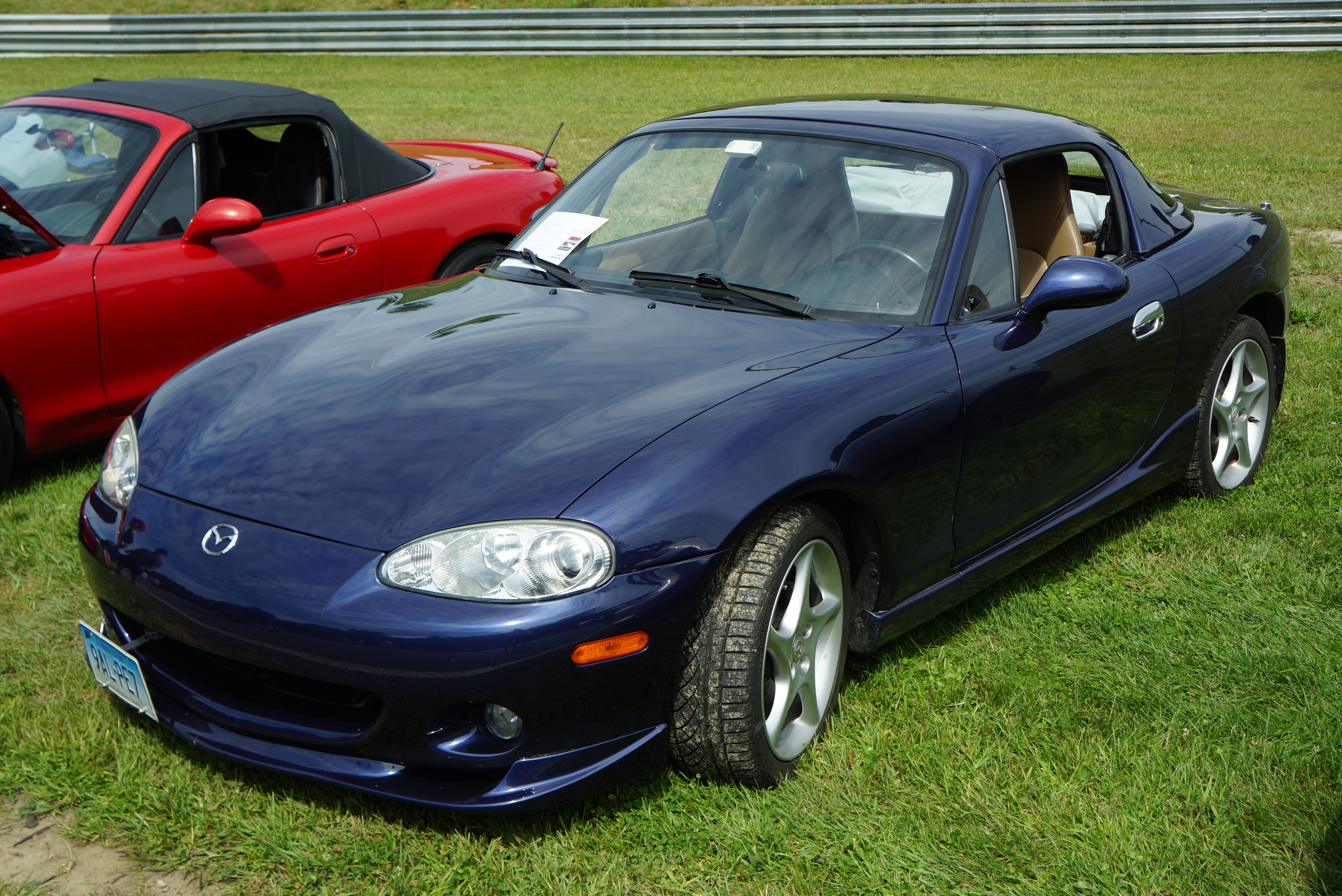
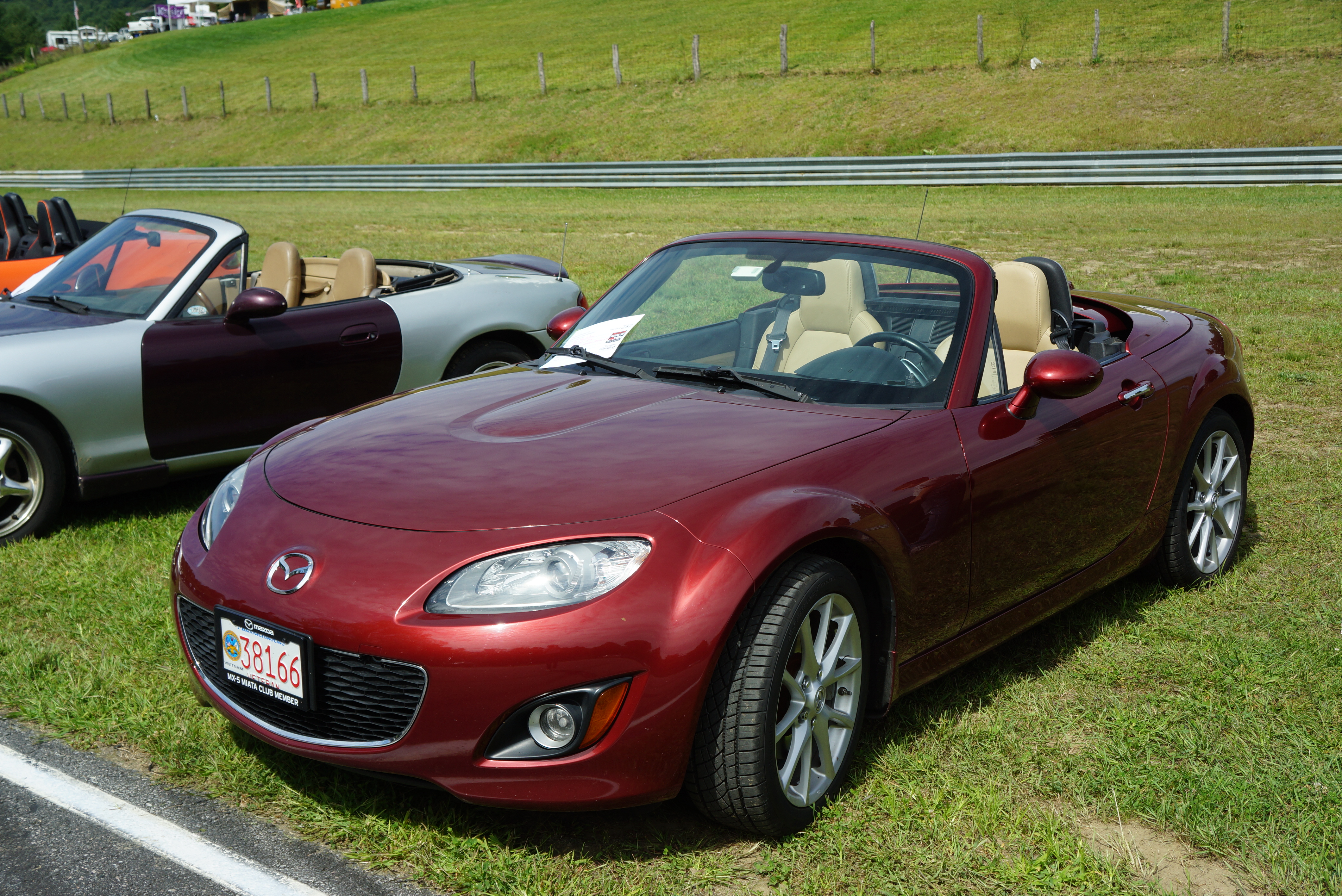
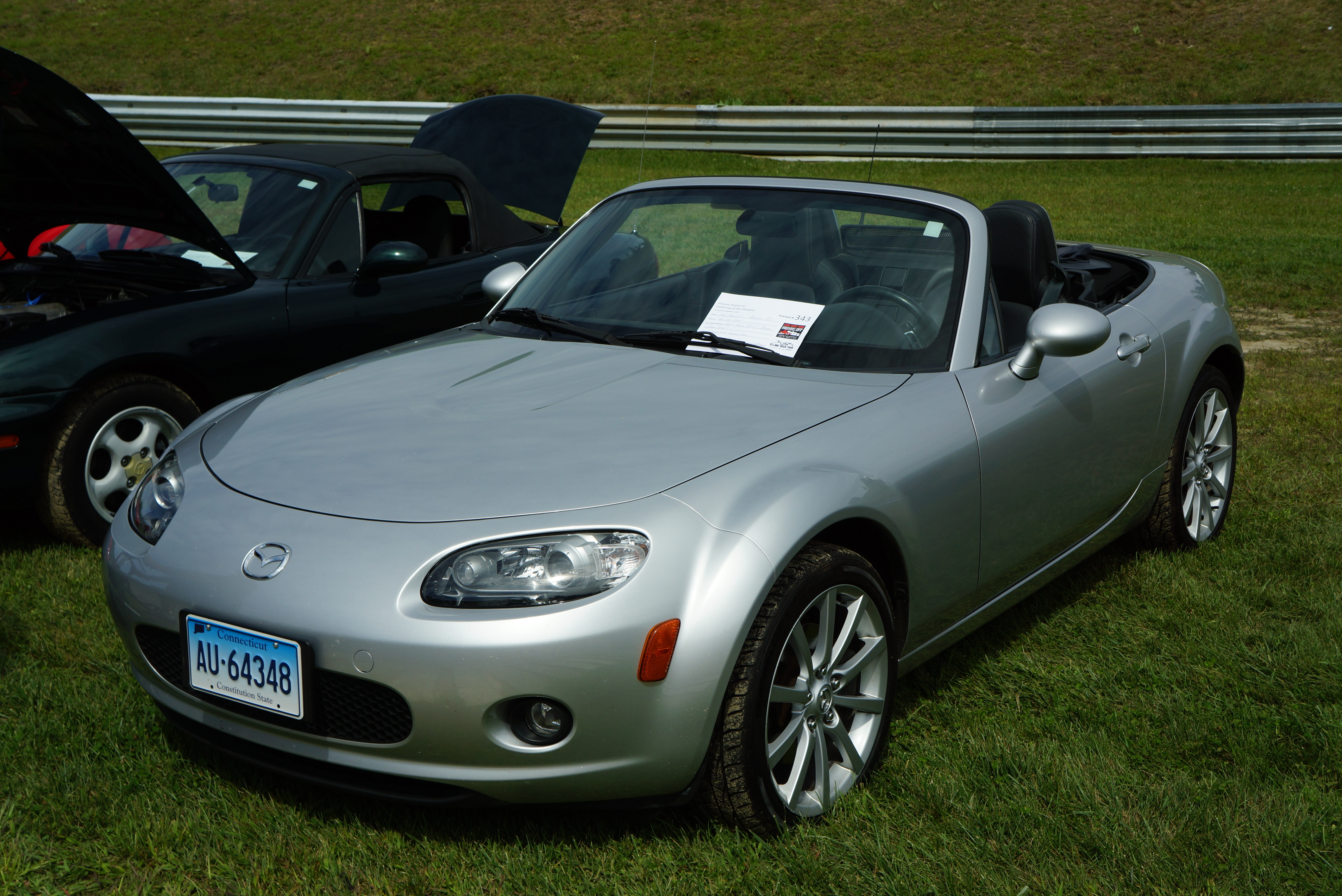
Mazda Miata in 4 generations:
1st gen (NA)
2nd gen (NB)
3rd gen (NC)
4th gen (ND)
RETRO DESIGN, AND THE ORIGINAL INSPIRATIONS (or, “Oh my child, how large you’ve grown!)
Now, the full story as to why I was not able to drive my Alfa to this year’s AROC (Alfa Romeo Owner’s Club) annual convention in Pittsburgh can be told. In my initial post about the convention, I wrote:
Let’s get this bit of disappointing news out of the way: while this Alfista was in attendance, his ’67 Alfa GT Junior was not. Four days before the scheduled departure, the car’s right front brake caliper locked up, and although repair parts were obtained, there wasn’t enough time to effect a safe and sufficient repair. So the green stepnose stayed home.
This is what happened: Four days before we planned to leave for Pittsburgh, I drove the Alfa to my friend George’s house. George (Geo to his really close friends) lives just five miles away, and while he was excited to join in the weekend’s festivities, he had never driven my car before. I thought it only fair that he have a crack at it before we commenced on a 6-hour journey.
As soon as I pulled out of my garage that morning, I sensed that something was amiss. The car seemed a little down on power, and it pulled to the right. Other than that, it drove OK, so I pushed onward. The moment I entered Geo’s driveway and killed the engine, smoke emanated from under the closed hood. I popped the hood but saw nothing obvious. When Geo came out, I explained what had happened, and we both decided to let him drive the car, if only for 2 or 3 miles.
Once Geo got the car back to his place, the smoke returned, only this time, the source was clear: it was pouring off the right front brake. Hindsight made the drifting and low power obvious: this brake caliper was seized. I was lucky we weren’t seeing flames.
We pulled the wheel and there was nothing visibly wrong that we could try to fix on the spot. Putting the wheel back on, I reasoned that I could “carefully” drive the 5 miles back home, and work on it there. As soon as I bade Geo ciao, I started the car, put it in first, and headed down his driveway to the street, where I would need to turn left. Hitting the brake pedal, it sank to the floor. Thankfully, my parking brake (sort of) works, and I used it to stop at the bottom of the driveway. I backed the car up the drive, and started to figure out what Plan B looked like.
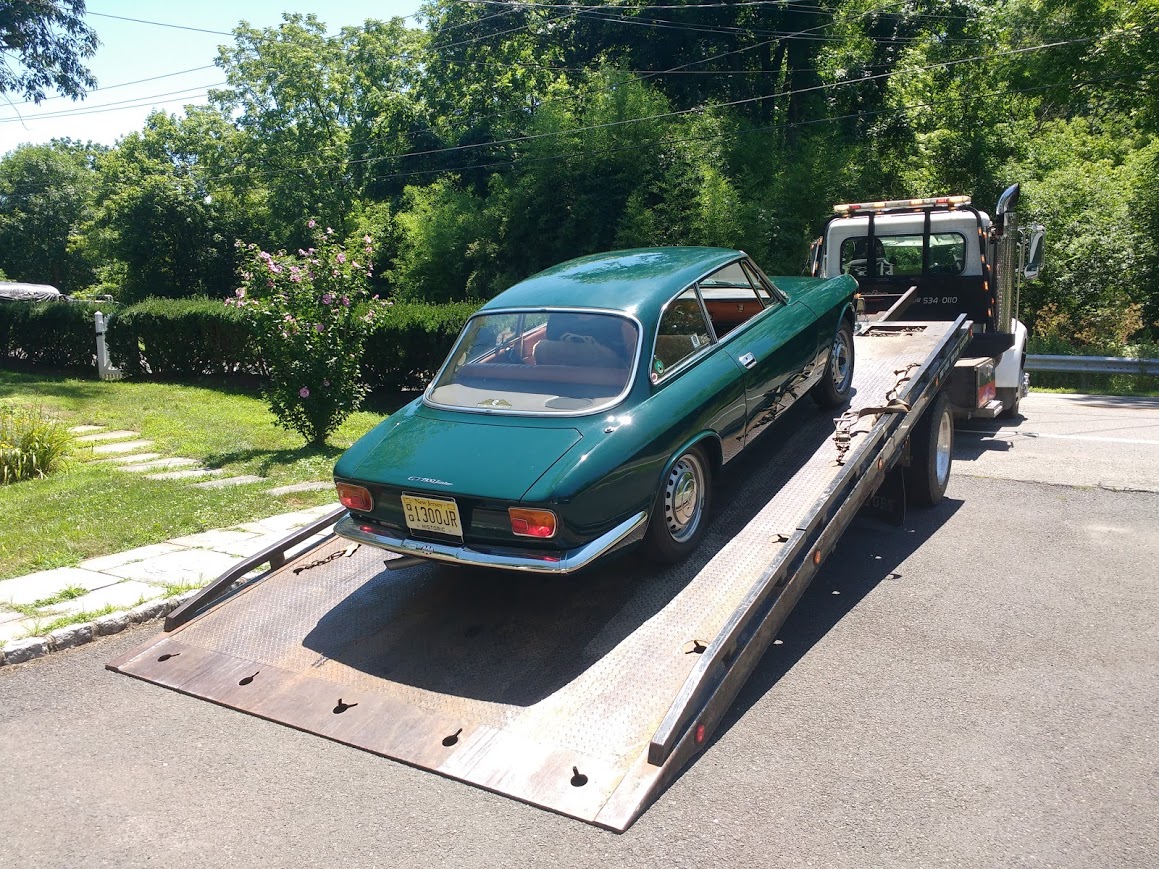
Geo couldn’t understand the loss of the pedal. I reasoned that the heat had caused the fluid to boil. Sure enough, 15 minutes later, a firm pedal returned. But I wasn’t driving this car home. There’s a reason I carry an AAA card. I called, they said one hour, and the truck was there in 90 minutes. In seven seasons of ownership, and in over 11,000 miles of driving, this car has never ridden on the back of a flat bed – until this brake failure. But the risk in driving it wasn’t worth it.
There’s a first time for everything
While waiting for the truck, I had time to calculate how I was going to get this repaired by Friday morning, just a few hours shy of four days away. My go-to Alfa parts supplier, Classic Alfa in the UK, was still open, if barely. I had always placed my orders via their website, never by phone, and this seemed like a most valid reason to spend the money for an international call. Given their stellar shipping reputation, I could have the parts by Wednesday, which I reckoned would still allow enough time to make a repair.
I called. ‘Chris’ answered. I explained my dilemma and asked him about my options. He quickly offered the choice of either remanufactured (reman) ATE calipers, or brand new ones. I asked him for the price difference, and he replied about 20 British pounds (approximately $25 thanks to the Brexit-depressed value of the pound). I figured that the small differential between new and reman made the new ones a deal, so I ordered a set. Since a core return wasn’t required, I asked Chris to include a caliper rebuild kit, thinking that I would eventually refurbish the old ones. It was now close to noon on Monday in New Jersey, and Chris said I should see the parts by late Wednesday.
Chris was wrong. The parts were in my hands at 5:30 pm ON TUESDAY. This was a miracle, and I presumed that the boys in the UK pushed the order through, having heard that I was planning on driving this thing to the U.S. Alfa convention in 4 days. So far, so good.
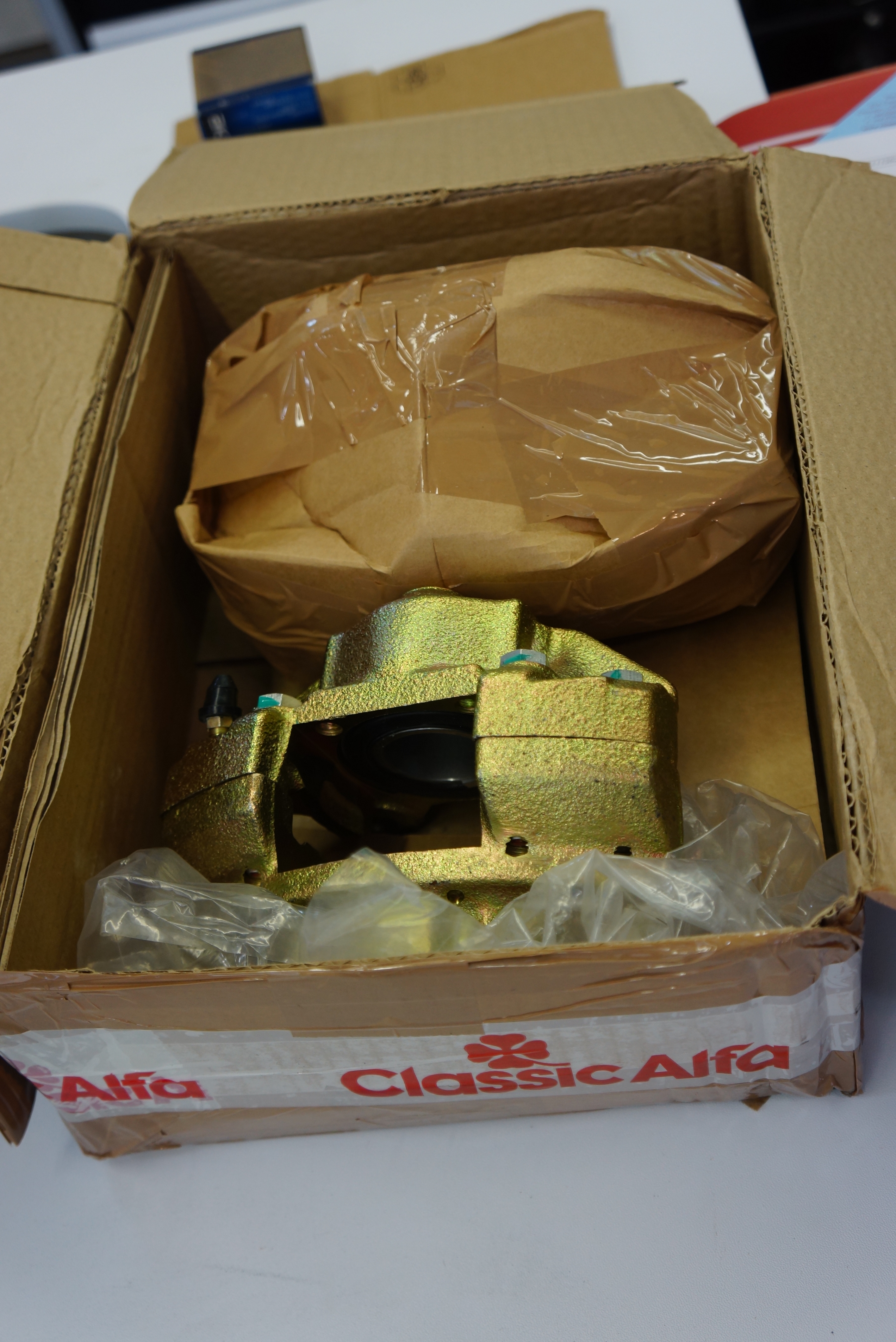
Shiny new caliper, ATE-like
Opening the box, the first disappointment was to discover that while these were certainly new calipers, they were not marked ATE, and I had to conclude that they were ATE copies. I unbolted the offending caliper, and an eyeball comparison proved that the new one was identically shaped. All I had to do was swap over the pads, connect the hard brake line, and bleed the system.
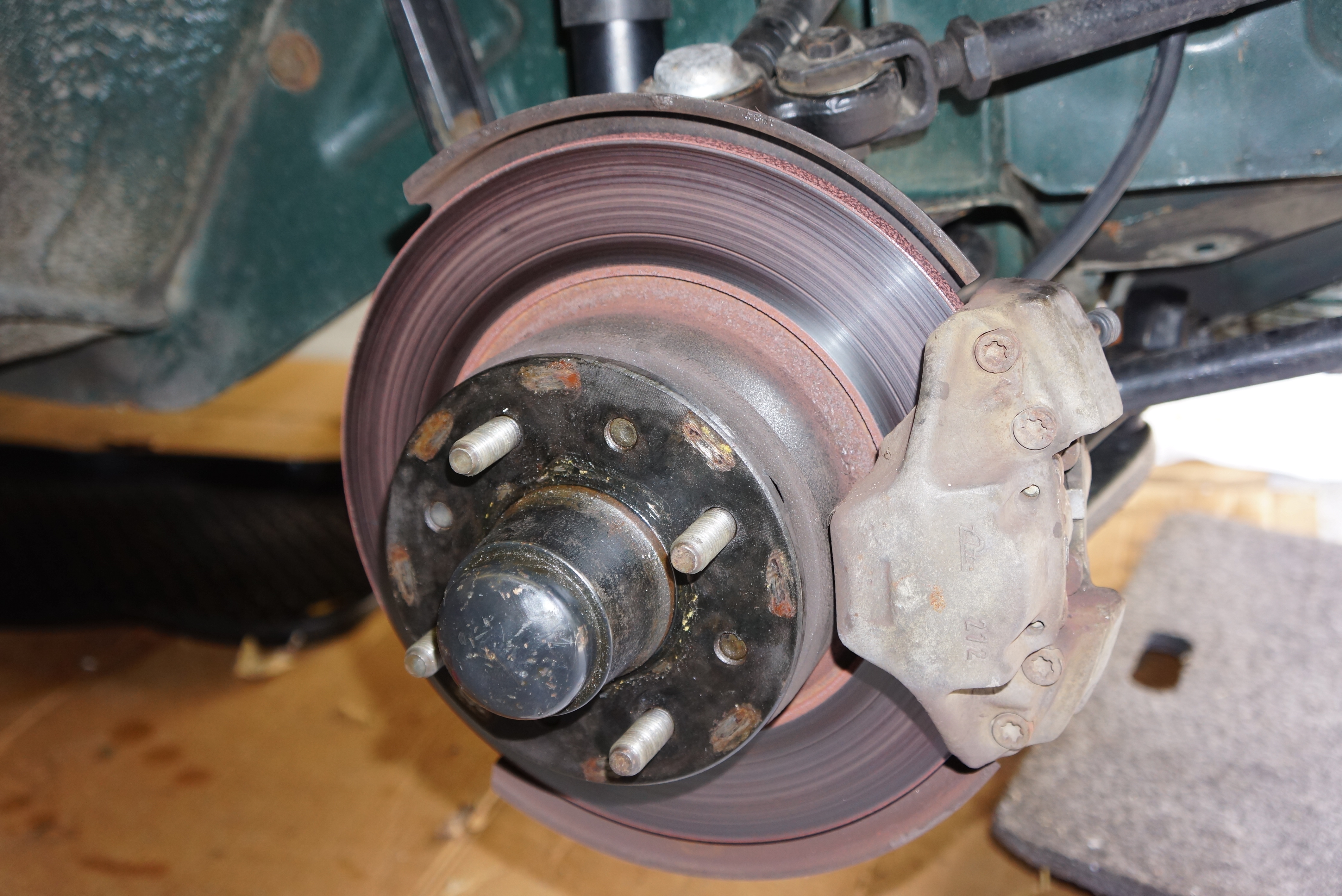
Right front rotor shows slight scoring, looks salvageable
With the existing pads and pad hardware installed, I knelt at the right front knuckle, held the 11 pound caliper in my right hand, and began to thread the brake line fitting into the new caliper with my left hand. The threads would not start. I tried every trick I knew; after perhaps 20 minutes, it felt like the threads had started, but I was unable to turn the fitting by hand more than half a turn. Of course, the dreaded fear is that I might cross-thread it, and ruin the caliper and/or the brake line fitting. After another 20 minutes, with blisters forming on the pads of my fingers, it felt again like it started. I picked up the flare nut wrench, and slowly, carefully, brought the fitting all the way down. It was about 8pm on Tuesday night. I was drenched, from both the 100% humidity and the nervous energy.
Flare-nut wrenches (this fitting is 11mm) indispensable for brake line work
The next evening, I removed the (good) left front caliper, and, convinced that the previous night’s issues were behind me, went through the same routine: swapped the pads, held the caliper up to the knuckle, and began to thread the pipe fitting. SAME PROBLEM. Desperate, I removed the hard line from the car, and brought it and the new caliper to the workbench, where I wouldn’t need to struggle with the caliper’s weight. I never came close to getting the threads to start.
New caliper looks great, too bad it leaks
I rationalized: I have the new caliper on the right front, to replace the known bad caliper. Certainly, I can keep the existing left front caliper in place and drive the car a few hundred miles. The left front caliper was reinstalled. Geo stopped by to assist. We were ready to bleed (the brakes, not us). I filled the master reservoir, asked Geo to climb in, and we began the “pump, hold, release” routine of manual brake bleeding.
There was a drip at the fitting at the right front caliper.
Reluctantly, I put a wrench on it and got another 10-15 degrees in clockwise motion. The bleeding resumed, and so did the dripping. I told Geo that we were done. While I did have the rebuild kit, it was now after dark on Wednesday, and I was out of time, patience, and confidence. Working on a car under such duress only encourages poor decision-making, unnecessary shortcuts, and botched repairs. My only desire was to enjoy the AROC convention, knowing that I would resume this wrenching at an unhurried pace upon my return. The new calipers would go back to Classic Alfa as defective or unusable.












































































 richardscarblog