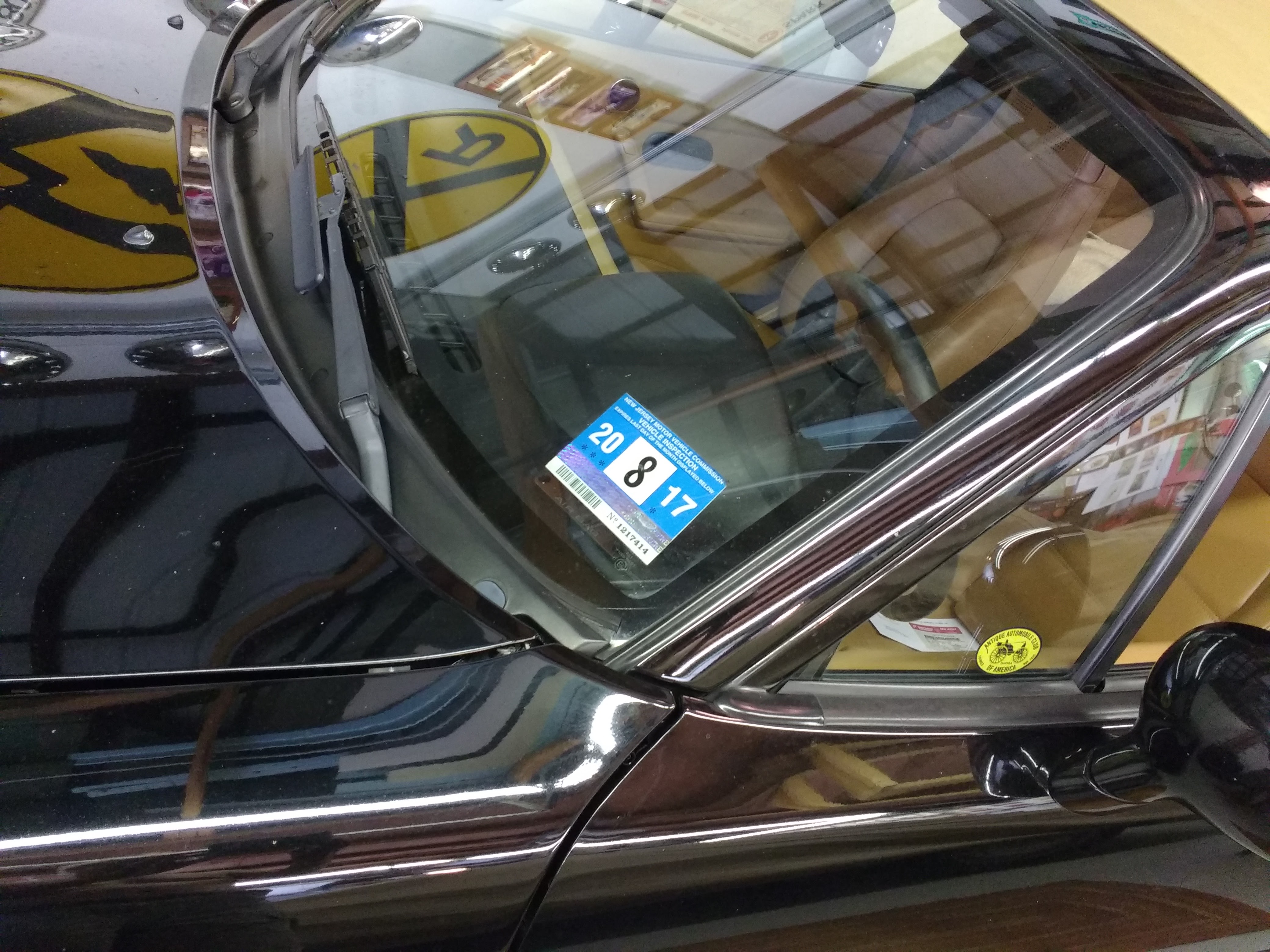
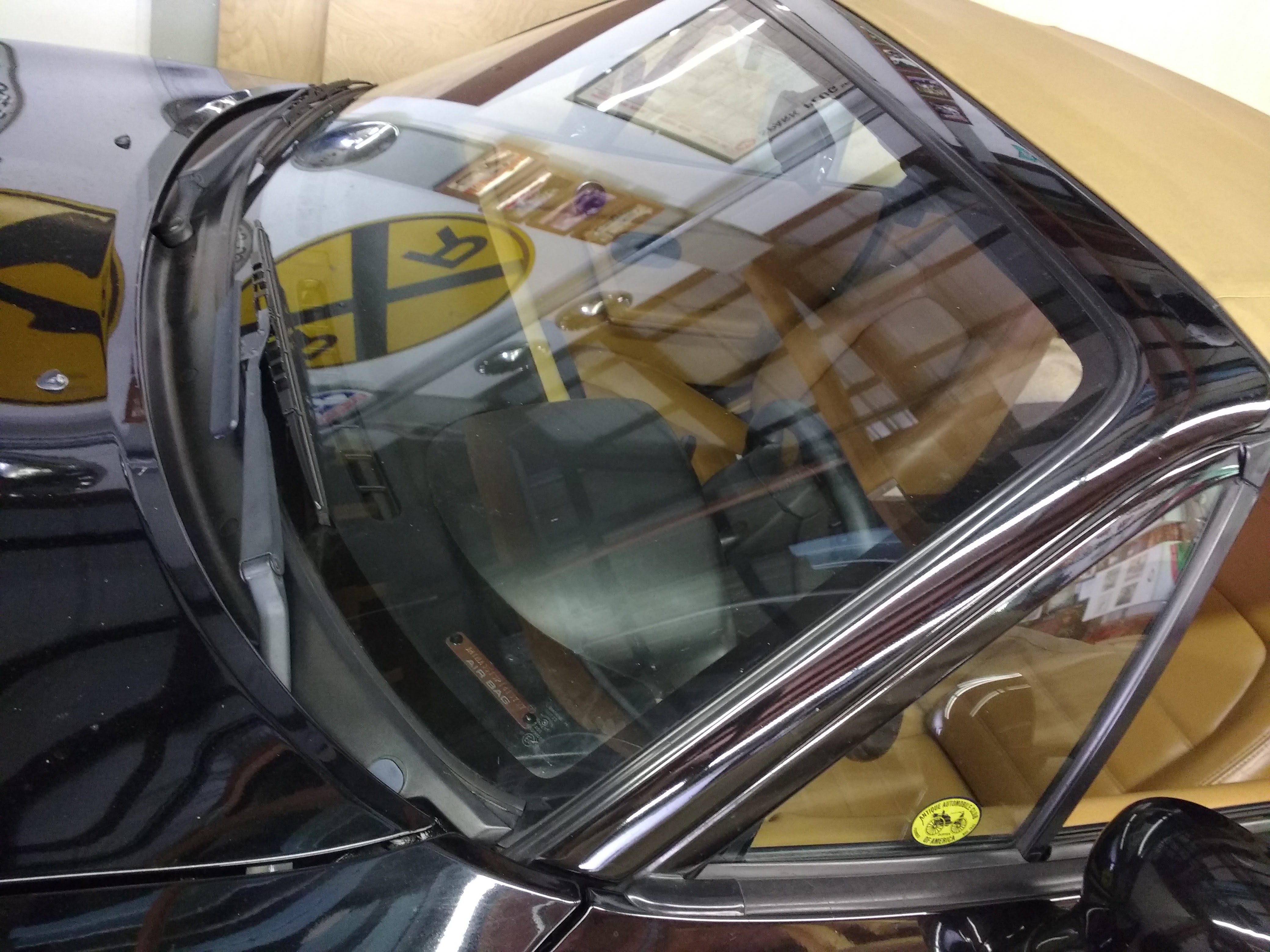
The Miata Has Been Sold!

Just shy of 28 years ago, in August of 1996, I was spending a long weekend at the Jersey shore. While driving around the neighborhood, I spotted a used white Miata on a Mazda dealer’s lot. (I’d say that it was a first-generation car, but in 1996, that’s all the factory had produced!) Having never driven one, I stopped in for a test drive. While I didn’t buy that particular car, the brief spin around the block had me hooked. Within days I began to scour the classifieds, and within a few weeks, I bought one: a black and tan 1993 Miata with 34,000 miles on it.

1996: With my 5-year-old nephew Karl Jr. behind the wheel

With plenty of summer weather still ahead of me, I drove my new-to-me Miata as much as I could, putting close to 10,000 miles on it within the first few months. I took it to work on nice days, and had it out almost every single weekend. The car was rust-free when I bought it and I intended to keep it that way, which meant that I’d never drive it in the winter. Since I was employed by Volvo and had a company car, the Miata became a toy car. We took day trips and week-longs trips with it, and it certainly got rained upon. But the exuberant feeling of being behind that wheel never faded.

Time flew by; the mileage continued to pile up; the car was serviced regularly by me; and almost nothing broke. In 2003, I had the top replaced. Sometime after that, the clutch secondary cylinder needed replacement (one of the car’s few known weak points). The power antenna needed repair. One headlight burned out! Oil changes, tires, and brake pads were attended to as needed, but the car was costing me very little to keep on the road.

2018: Hershey!

Time continued to fly by; during the time I owned the Miata, I also cycled through an MGB, a Mustang, and of course, the Isetta. I joined AACA and learned that any car 25 years or older was eligible to be shown at an AACA event. Suddenly it was 2018 and the Miata was 25 years old. I decided to register (what was still in my mind a “newish” used car) for Hershey! The Miata was awarded its HPOF badge, and subsequently shown at AACA Nationals in Parsippany (2019) and Saratoga Springs (2021).

2021: Saratoga Springs

But something else changed. I was not driving the car much, through no fault of the car. I had purchased my Alfa Romeo in 2013 and drove that car a lot, including 4 times in the New England 1000 rallies. The Miata was still great to drive, but my older body was less tolerant of the heat. When I did drive it, the top tended to stay up. The Miata is low, and getting in and out of it wasn’t the easy affair it had been. I considered selling it. A funny thing happened after posting ads and taking prospects on test drives: I would ask myself, “Why am I selling this car? It’s so fun to drive!” In April of last year, I had a buyer all lined up, but at the last minute, the deal fell through, and I decided not to continue the ad.

Earlier this month, I thought I would try again, and for the first time with the Miata, placed an ad on Facebook Marketplace, where I have done very well selling items in the $20-$200 range. I placed the ad on Tuesday morning. A little more than 24 hours later, the car was sold. It has a little over 109,000 miles on the clock, meaning I drove it 75,000 miles in 28 years. The new buyer, a young man, had an NC Automatic which he sold, and seems thrilled to be getting into an NA stick. I have some seller’s remorse, while in reality, I know full well it’s time to let go. Will I replace it? Not right away. I have some shows lined up for the Alfa for the remainder of the summer. I’ll patiently wait to see if anything interesting pops up, but I’m in no rush.


June 28, 2024: the key handoff


The happy new owners


All photographs copyright © 2024 Richard A. Reina. Photos may not be copied or reproduced without express written permission.

Harold “Pete” Wyman, 1933 – 2023

My dear friend Pete Wyman passed away on September 25, 2023. He was 90 years old. I first met Pete over 20 years ago when his daughter Pam, a good friend and former work colleague of my wife’s, was visiting our home. Walking past the garage where I was tinkering, probably with the Isetta, Pam uttered in the most nonchalant way, “Oh, you should meet my father, he likes old cars too”. A short time later, I did meet Pete, and we became good friends almost immediately, bonding over our shared automotive passions.

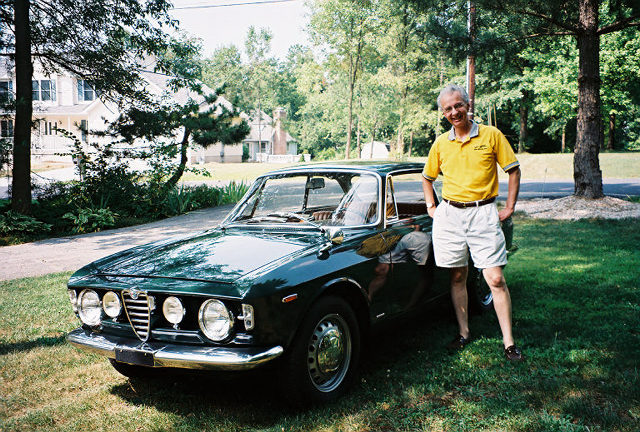
Pete was a man of few words, and even when he did speak, he was soft-spoken, so during that first meeting, he spoke a bit about his collection, but I had a difficult time grasping what he said. He invited us to his home in Fairfield PA, outside of Gettysburg, and we eventually made the trek. As we pulled into the driveway, I saw this gorgeous green Alfa Romeo parked on the front lawn. As soon as I exited my car, I pointed to the Alfa and exclaimed “sell me this car!” Pete immediately replied “No, it’s not for sale, but you can drive it if you’d like”. Of course, I had the first of what would be many stints behind the wheel, something I got to do at every visit.

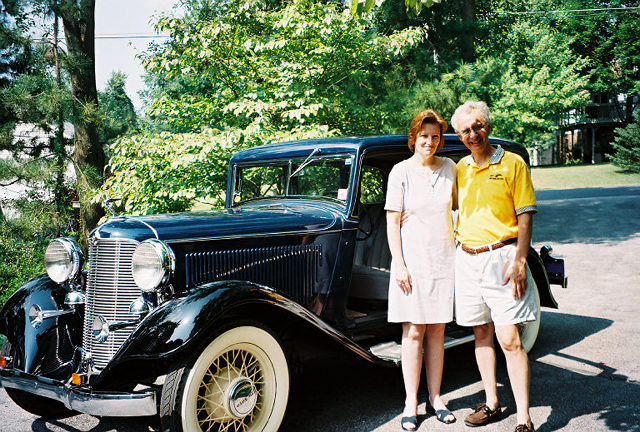
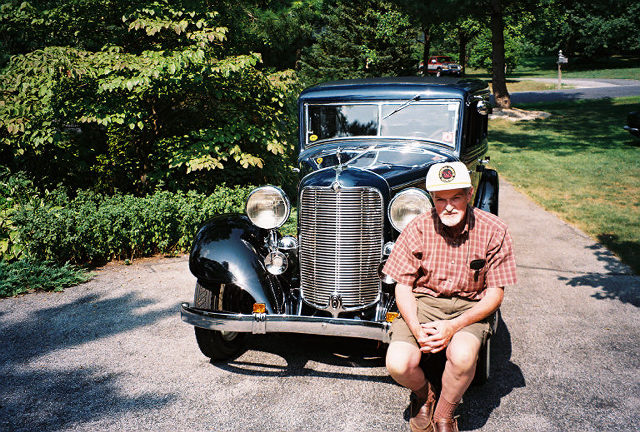
ABOVE: The first visit. Me with the Alfa which would someday be mine; my wife Margaretanne and I with the DeSoto; Pete with the DeSoto.

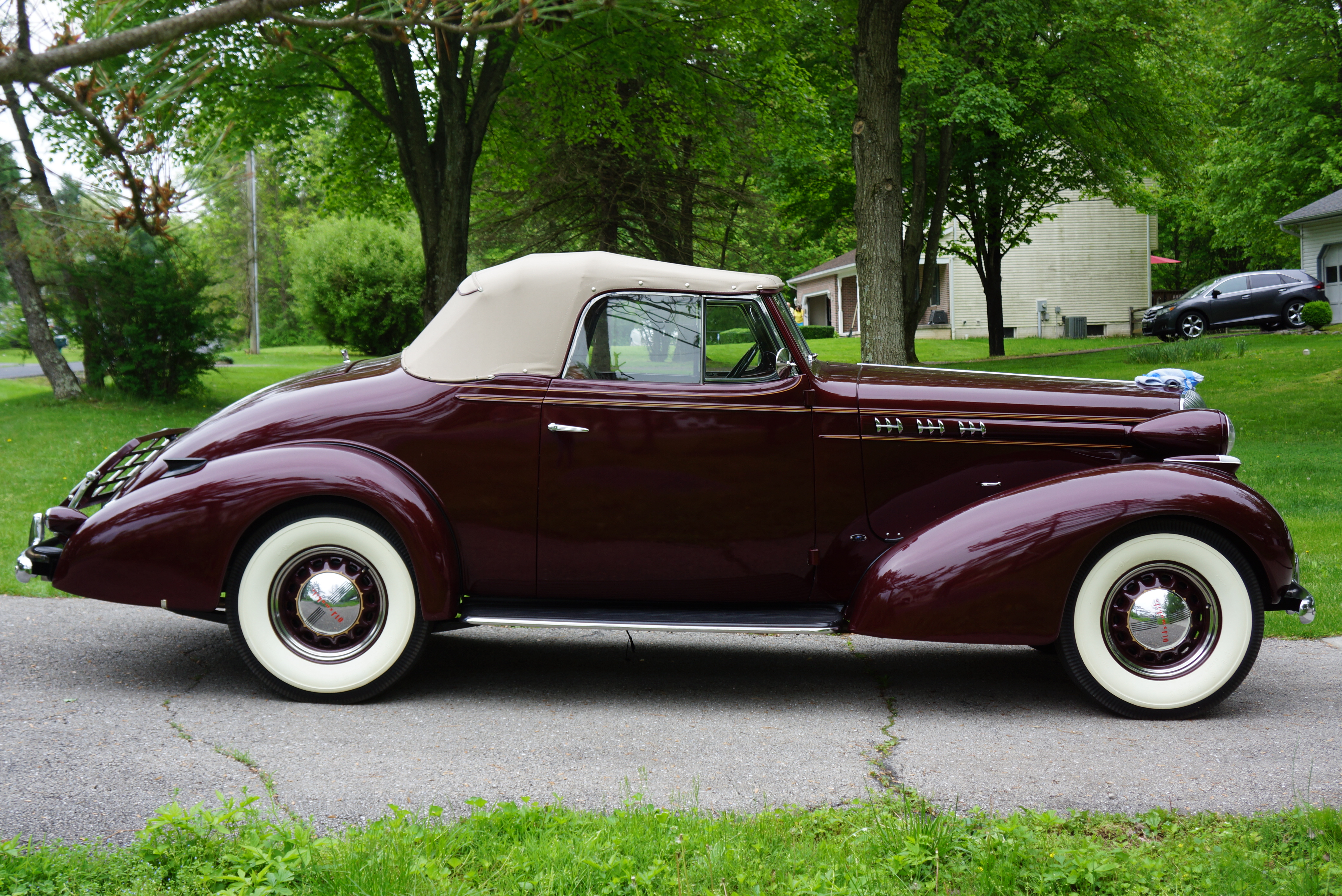
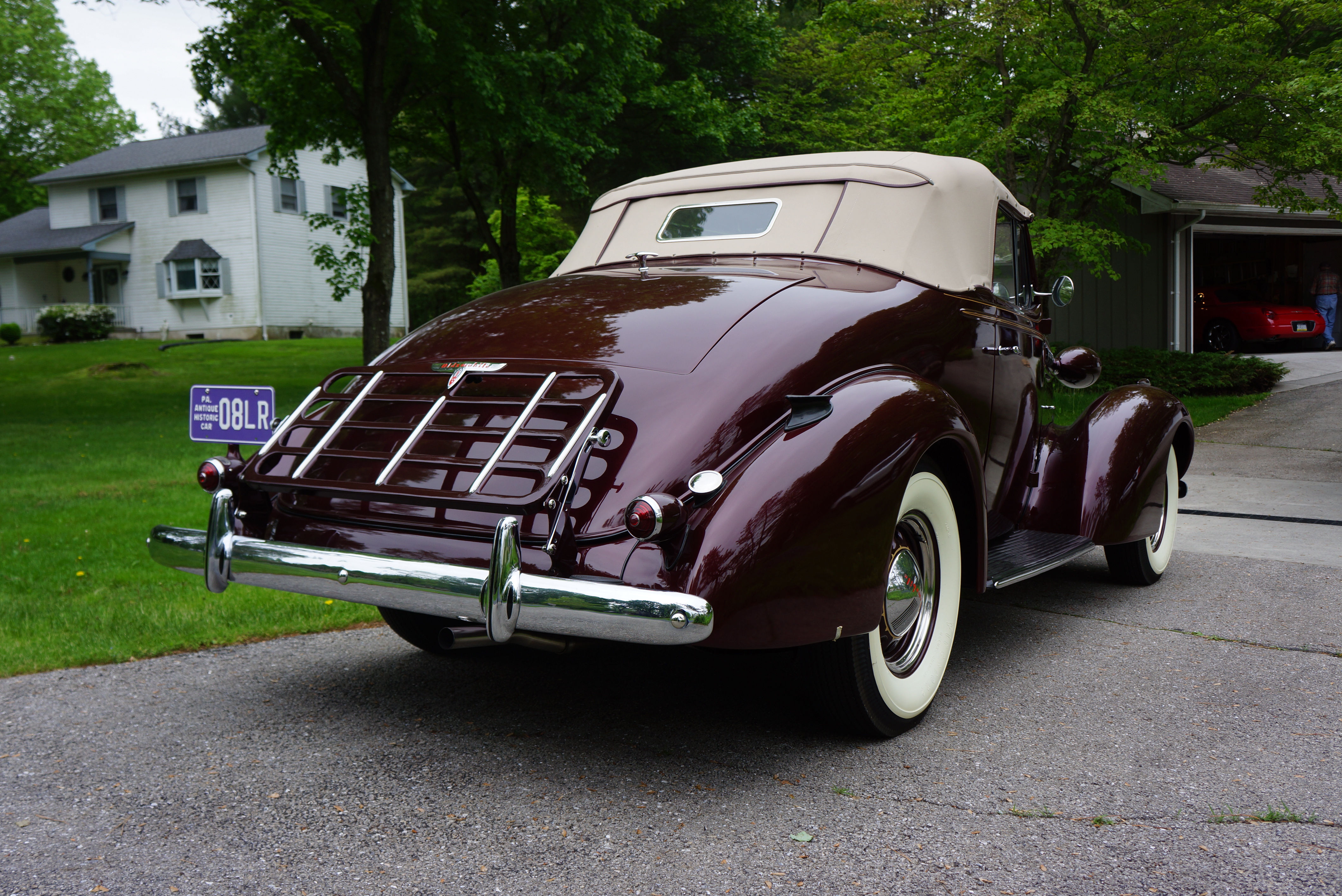
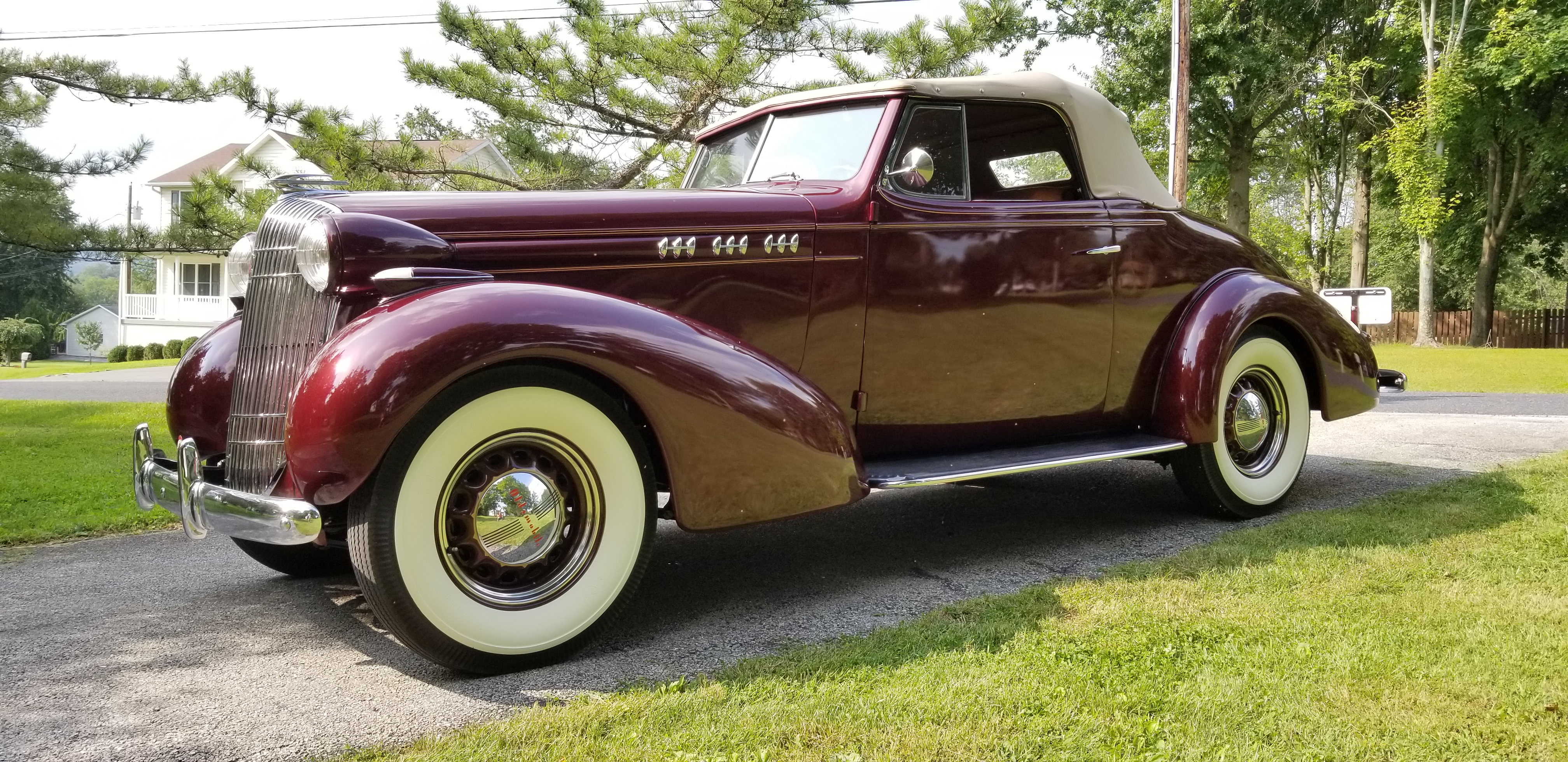
Also in his possession at that time were 2 pre-war cars, a 1931 DeSoto and 1936 Oldsmobile. The other surprise was to discover that he was the original owner of a 1979 Volvo 265 station wagon, an AACA award winner. I would eventually visit Pete at his home once or twice a year. At each visit I would work on one of his cars for him, and get to drive one or more of them. Through the years, the collection grew and shrank. Pete’s taste was eclectic: he added an AMC Pacer and Hudson Jet, neither of which he kept for long. In a moment of candor, he admitted that both were ‘whim’ purchases, made without much deliberation. He went on to sell the DeSoto, the Olds, and the Volvo, and added some newer iron in the form of a 2006 Jaguar XJ, a retro Ford Thunderbird, and a Volvo XC70. The Volvo was purchased new, while the Jag and T-Bird were low-mileage used cars.

ABOVE: The AMC Pacer next to my 2003 Volvo V70; the Alfa, Pacer and V70

Pete was an electrical engineer; you could literally say that he was a rocket scientist, as he performed contract work on the Space Shuttle for NASA. One of his proudest possessions was a photograph, autographed by the astronauts who had flown one of the Space Shuttle missions. Like other engineers I’ve met, he was fastidious with the care and upkeep of his cars. Also like some engineers, he enjoyed making what he saw as “improvements” to them. For example, the ’79 Volvo had a 3-speed automatic transmission, and to Pete, the engine revved too high at highway speeds. He was determined to put in a Volvo-sourced 4-speed, but ran into all kinds of issues regarding bellhousing shape, driveshaft length, and crossmember location. He persisted, though, and found a mechanic willing to work with him on it. Despite my own words of discouragement (“Pete, really, you hardly drive the car, is it worth it?”), he successfully completed the project.

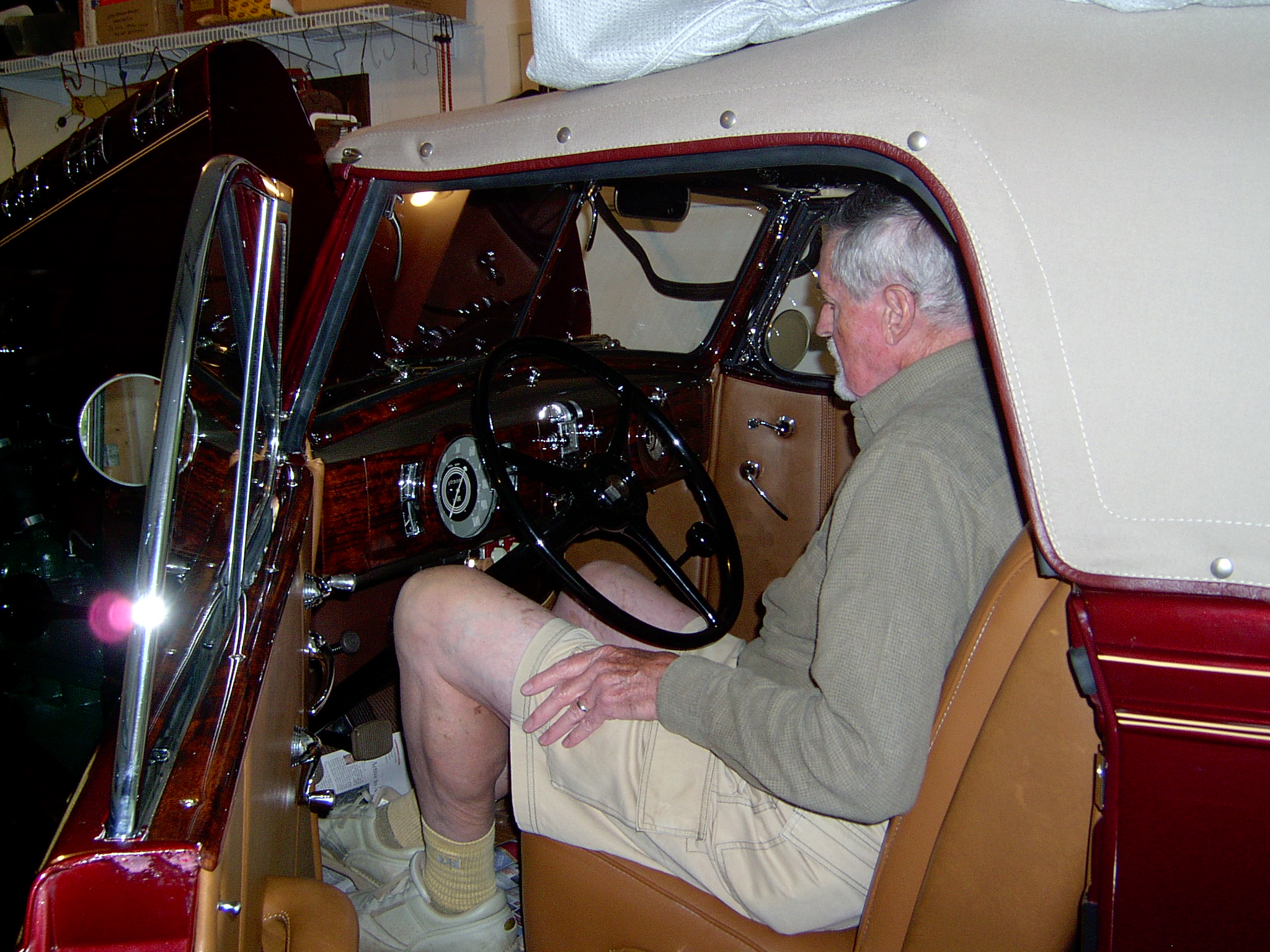
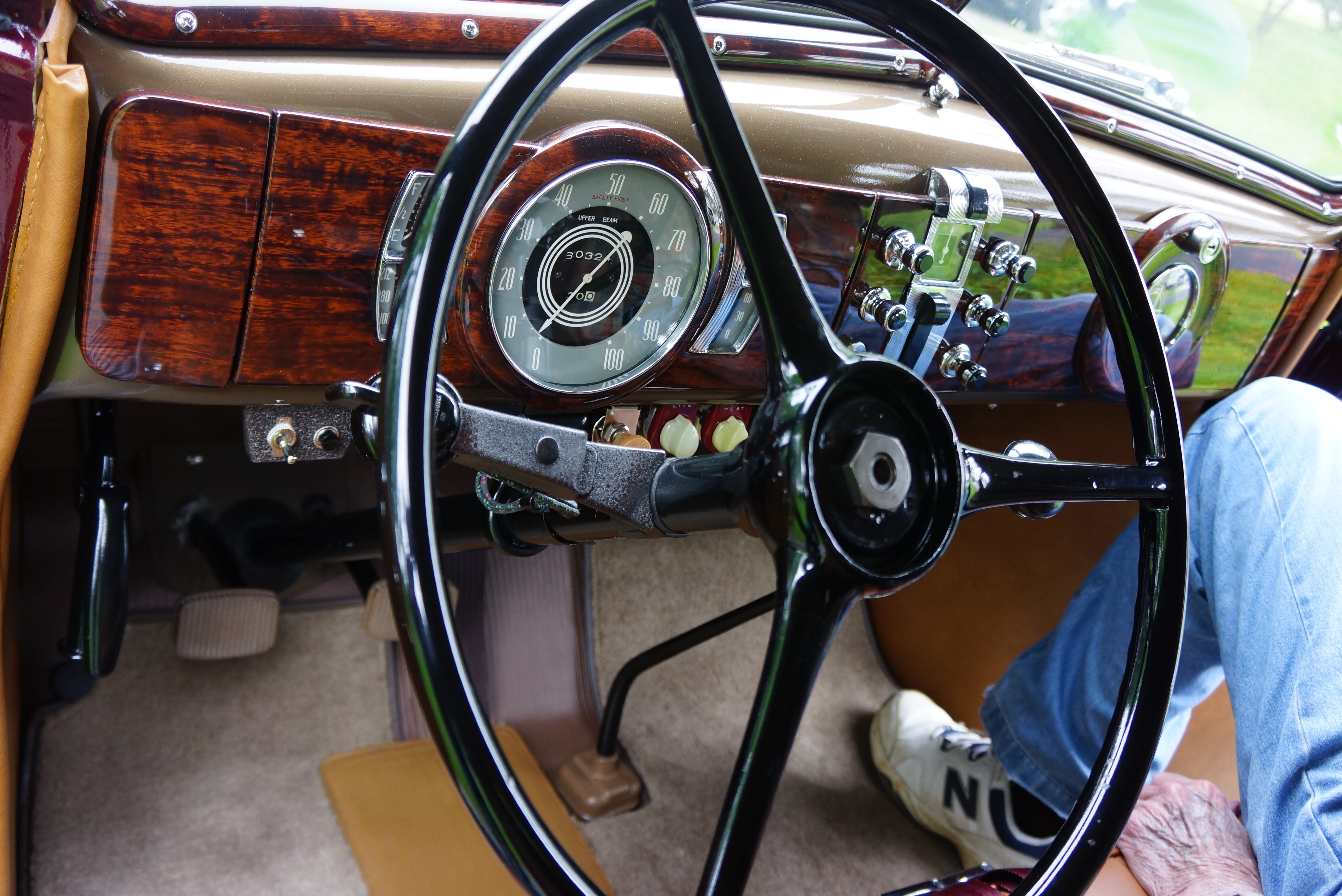
I drove every one of his cars except the Hudson (my recollection is that he owned that car for such a short period of time that he bought it and sold it in between my visits!). The DeSoto was my first time behind the wheel of a pre-war car – I was shocked at how easy it was to drive. The Pacer was competent and didn’t feel like an old car. I said this to Pete about the Jaguar: you could jump onto Route 80, set the cruise control, and arrive in San Francisco still refreshed. Driving the ’36 Olds convertible was a huge thrill. The torque from that straight-8 engine was endless; the ride and handling were sublime. Steering effort was manageable, but with that long, long hood, one had to plan for turns half a block in advance.

ABOVE: The Jaguar XJ, with Pete’s new XC70 in the garage

Finally, the Alfa: I’ve told this story so many times, and still get a kick out of telling it. After that initial “No!” from Pete, I persisted in asking him to sell me the car every time I saw him. Well, persistence pays off! It took 8 years, but Pete finally said yes, and that gorgeous ’67 Alfa Romeo became mine in March of 2013. The sale was contingent on a gentlemen’s agreement that I would keep the Alfa in as original condition as he had done during his 45 years of stewardship. I’ve kept to my promise, and even though Pete is gone, I intend to continue to honor it.

I attended Pete’s service and burial on Monday, October 2. His wife, four daughters, sons-in-law, and grandchildren were all there (one daughter predeceased him). Pete was in the hospital two weeks prior, and spent the final week of his life at his home in hospice care. My wife and I visited him in the hospital, and while he was physically very weak, his mind was as sharp as ever, proven by his recollections with me of many of our automotive adventures.

I will greatly miss my friend Pete. Even though one is aware that someone’s time is coming to an end, it’s still a shock to learn that a friend has passed. I am honored to say that Pete Wyman was my friend. Please read his obituary to learn more about this wonderful man:

https://www.myersdurborawfh.com/obituary/Harold-Wyman


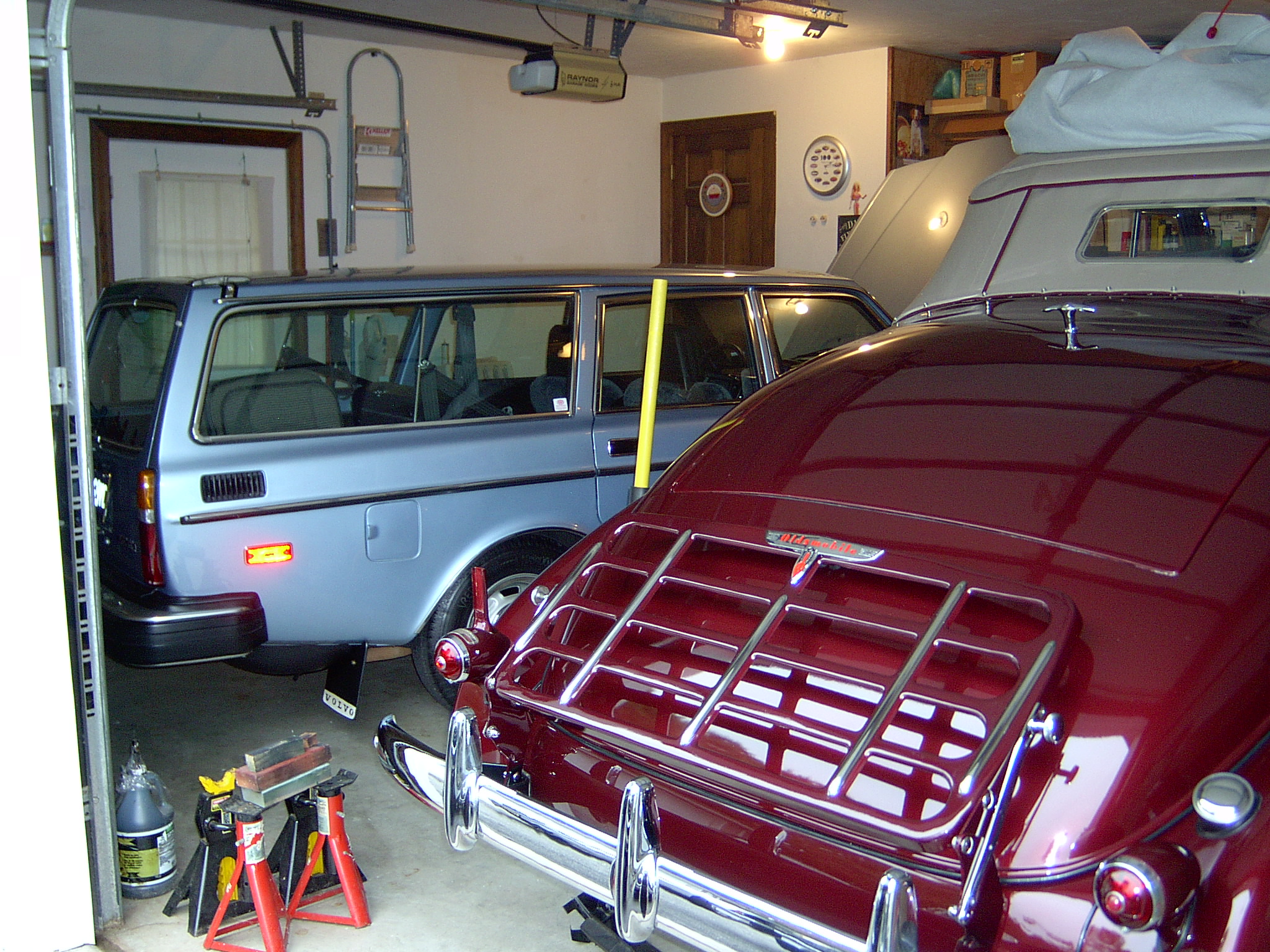
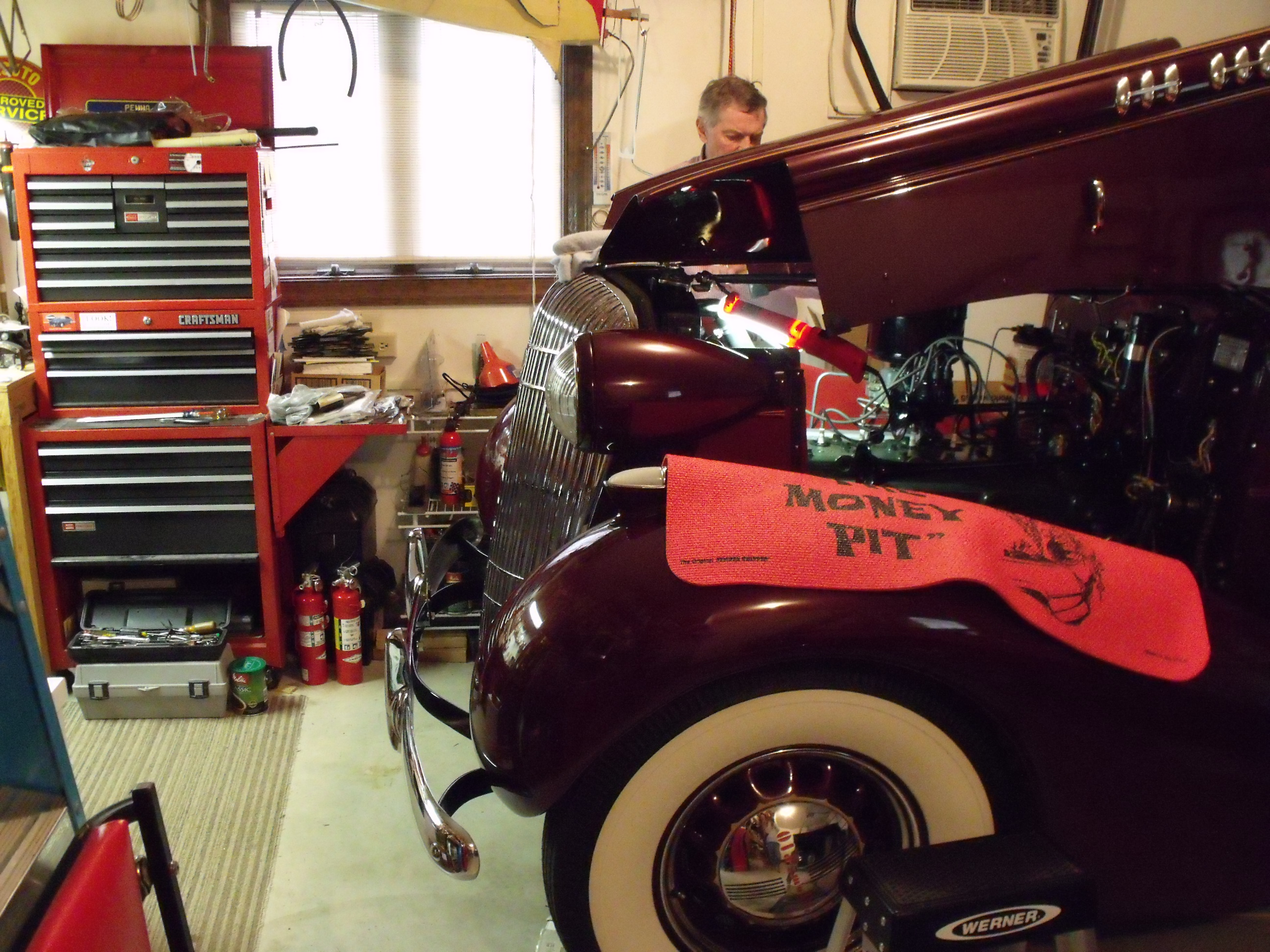
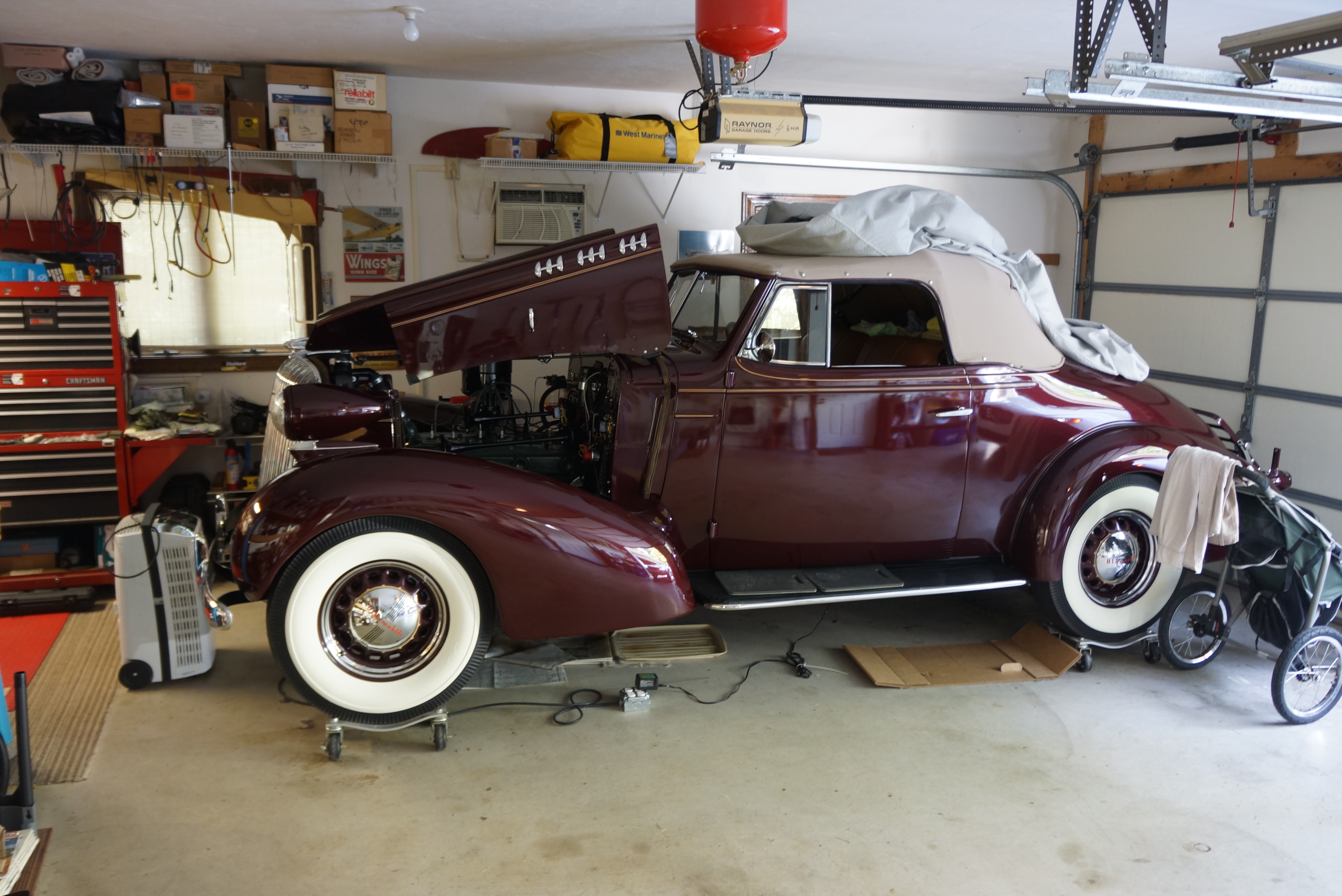
ABOVE: Views from inside the garage, with the ’79 265 and the ’36 Olds undergoing service.


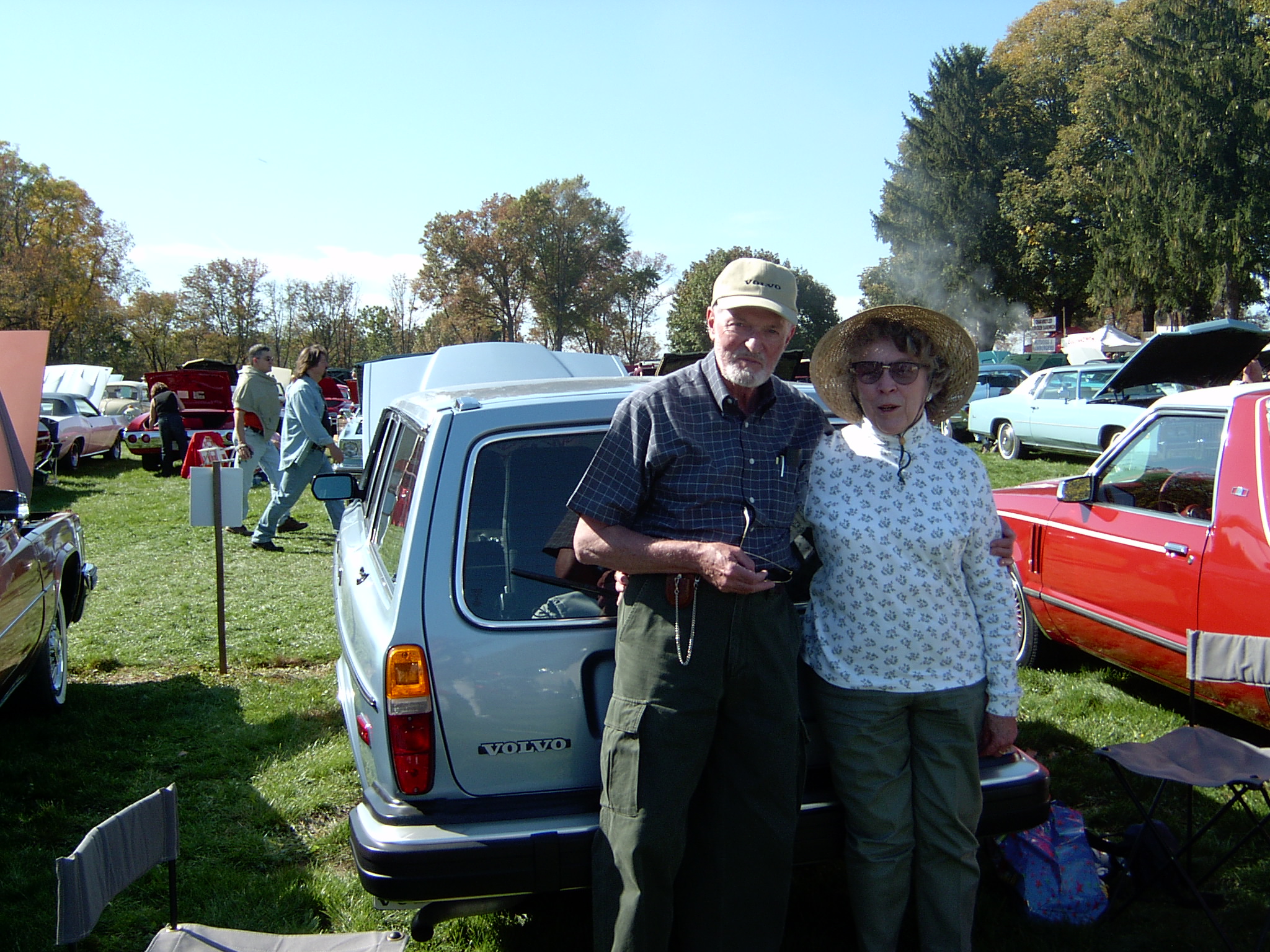
Pete, his wife Charlen, and Volvo 265 at Hershey


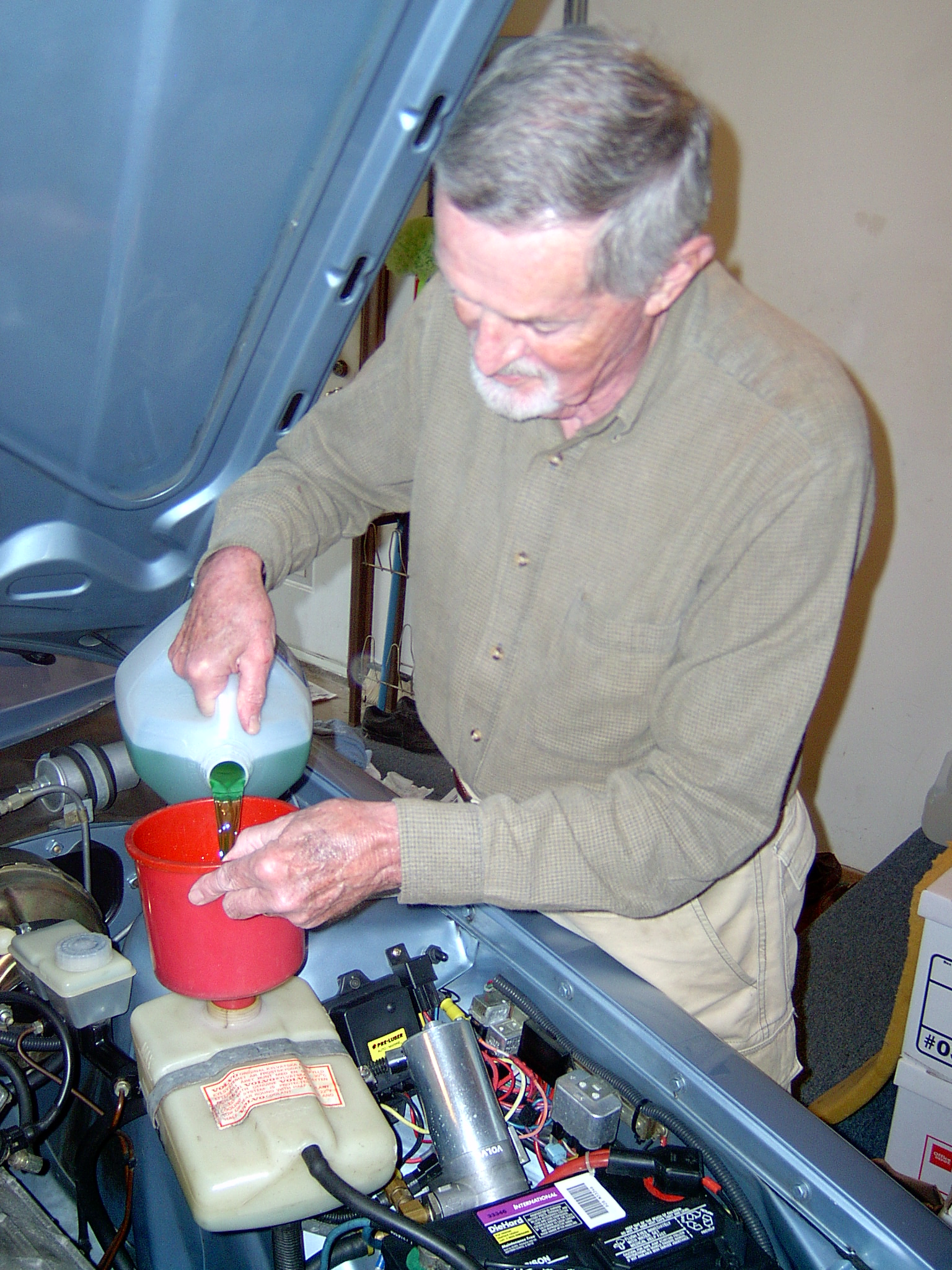
Pete under the hood of the 265. Silver canister to right of coolant overflow bottle is electric pre-oiler installed by him, which delivers engine oil to cylinder heads before cranking.


Pete inside the ’36 Olds.


Pete, his wife Charlen, and my wife Margaretanne (with Volvo 265) at Hershey


Pete under the hood of HIS Alfa

The T-Bird


1936 Olds with T-Bird and ’79 Volvo in their garages


ABOVE: Beauty shots of the 1936 Olds, taken after I returned from driving it.


All photographs copyright © 2023 Richard A. Reina. Photos may not be copied or reproduced without express written permission.

My Grandfather’s First Car

Angelo DiLella was my maternal grandfather, and I knew him well, at least as well as one could know a grandparent who spoke almost no English and didn’t talk much anyway. From researching my ancestral history, this I do know: he was born in Italy in 1894 and immigrated to the U.S. in 1911. Consider the timeframe for a moment: There were no automobiles in 1894, and when he arrived here at the age of 17, self-propelled cars and trucks were just starting to take over from the horse (possibly to his detriment at first, as upon arrival, he was employed as a blacksmith making horseshoes!).

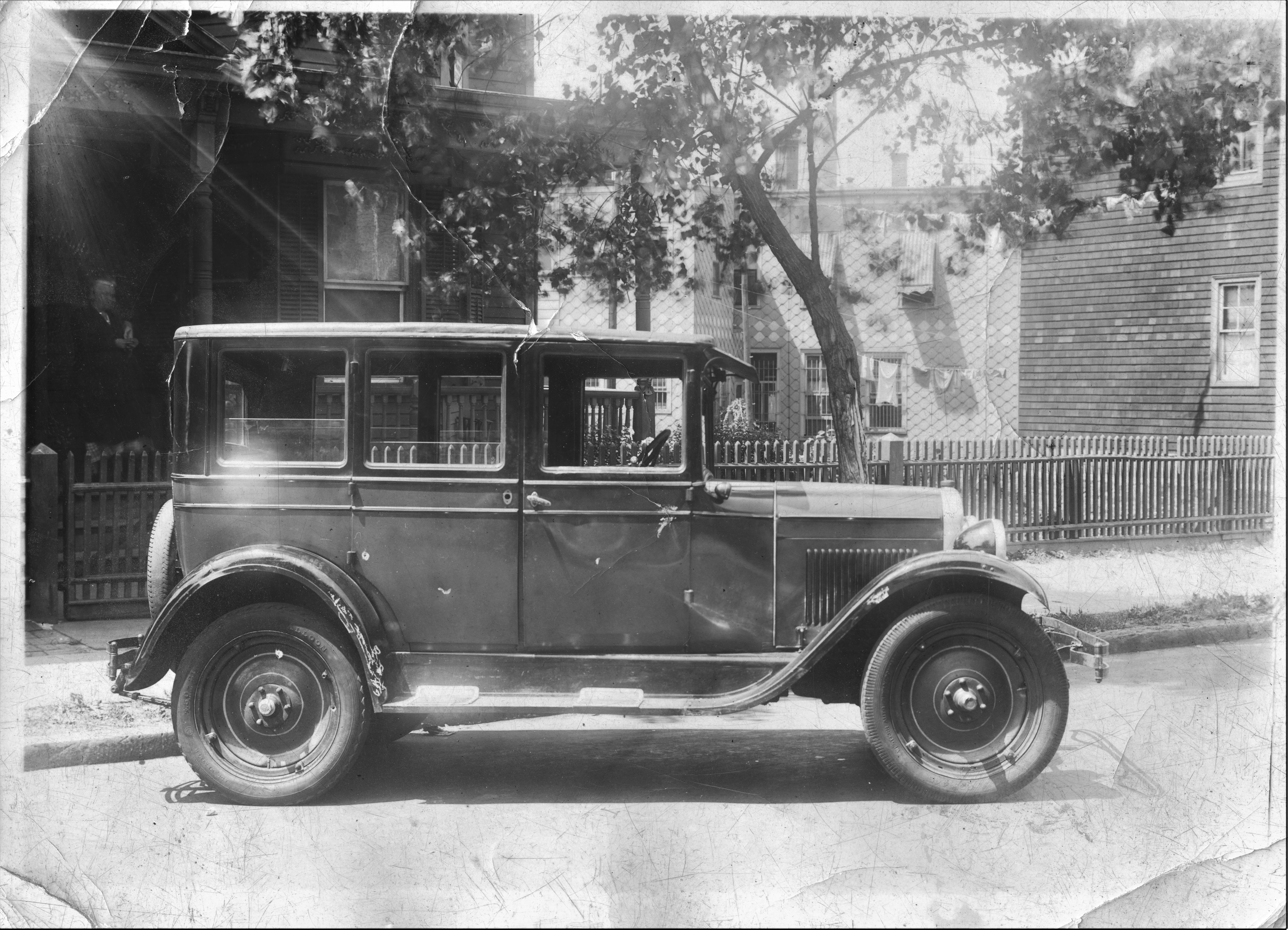
He got married in 1921, and by 1930, was living with his wife and four children in Hoboken, N.J. Whatever the public transportation options, at some point he decided that the family needed its own set of wheels. And so he became owner of the 4-door sedan pictured here, a fact passed on to me by my Aunt Rita who gifted me this photograph a few years ago.

My grandfather died in 1969 when I was 15; I never spoke to him about this car, or any car. I never saw him drive. By this time, my Aunt Rita did all the driving for her parents (my grandmother never had a driver’s license). Had I the opportunity, I would have loved to know where he got it, what he paid for it, and what it was like to drive. Of course, that imagined conversation would have started with: “hey Grandpa, what year, make, and model was it?”

Today, I’m left to my own devices to find the answer. After several hours of working the Google machine, here is my overarching conclusion: most 4-door sedans of the 1920s look remarkably similar. The upright grille, separate headlights, double-level bumpers, louvered hood, running boards with step plates, and suicide-hinged rear doors are features of almost every car I found. The decade of the ‘20’s was a transition from 4-doors with folding tops to metal tops; from wooden spoke wheels to metal disc wheels; and from rectangular side glass to the introduction of some curvature to the forms.

This last point brings me to the D-pillar on Grandpa’s car: note how thin it appears from the side, and how that rear quarter-glass has square corners. By the late ‘20s, many sedans incorporated a slope where the roof came down to meet the top of the D-pillar. The one other distinguishing characteristic on this car is the 2nd (lower) horizontal side molding, below the door handle. In the online photos I found, very few cars had two moldings like this one does. Finally, an extreme blowup of the photo, focused on that rear tire, shows what looks like the Chevrolet bow tie on the wheel hub. I think this car is a 1927 Chevrolet, and if anyone has supporting or contradicting evidence, I’d love to hear from you.

What else can we see in this photo? The car is not in great shape. Both front and rear fenders show body damage; the right rear outer door handle is missing; and if these are 6-bolt wheels, each wheel has a lug missing. It amuses me to imagine my mother as a 10-year-old girl riding in this ‘jalopy’ with her parents, quite likely her first-ever automotive experience.

How long did my grandfather keep this car, and did he replace it with something else? My Aunt Rita lived with her parents her entire life; if she got her license at the age of 18, she would have started driving in 1946. Around 1950, the family moved from Union City, N.J. to Staten Island, N.Y. I was born in 1954, and I have good memories of my Aunt’s Ford sedan, a ’52-’54 vintage she bought used. Maybe the old Chevy lasted until she got that Ford. It’s all speculation from here, as we lost Aunt Rita in 2015. But she was the ‘car enthusiast’ in the family, owning a succession of Oldsmobiles and then Volvos. I have a few photos of her and her cars, so I think I will write an article about her in a future post.


All photographs copyright © 2022 Richard A. Reina. Photos may not be copied or reproduced without express written permission.

Home movie film screenshots, early ’70s

My wife found a roll of 8mm movie film in a closet a few weeks ago. Her stepfather was an avid photographer who also liked to shoot movies. The handwriting on the metal film canister dated the shoots as spanning the years 1971-1973.

I had it transferred to a digital format so we could watch it. It was mostly typical family home movie stuff, but it was the cars that caught my attention. Forty years ago, these were the sedans and station wagons that everyone drove (no SUVs in sight, and pickups were primarily driven by farmers). Today, a collector car enthusiast would find every one of these vehicles to be of some interest.

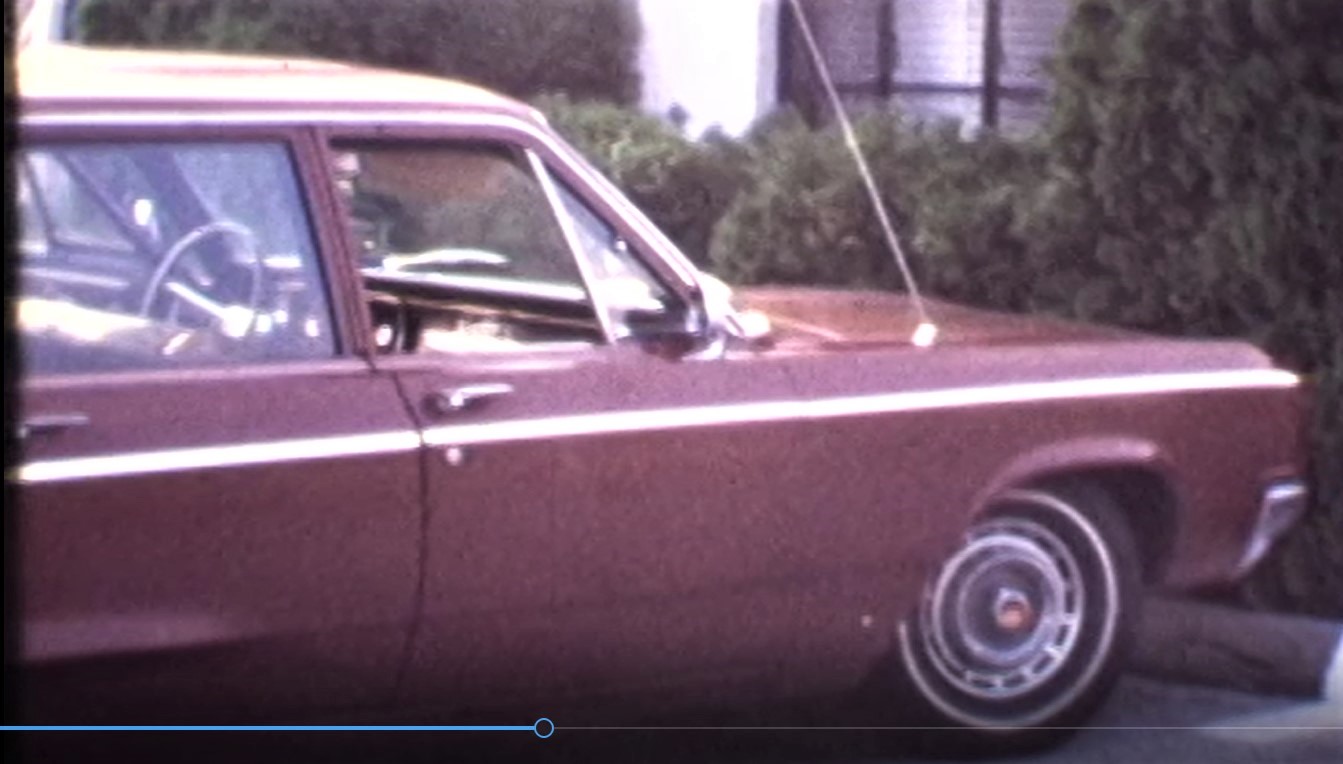
The screenshots are all blurry. The slow 8mm film speed combined with the digitizing made it impossible to freeze the view and end up with a crystal-clear image. (We are also all quite spoiled by the sharpness of our modern digital image-making tools.) However, the cars are still identifiable!

The biggest surprise of the film is that my wife’s stepdad filmed an antique car show. Given the early ‘70s time period, I fully expected to see only pre-war (before World War 2) vehicles at the show. As you’ll see below, that was not the case.

There are many more film canisters in the closet. We’ll get around to transferring the others someday.


The Murray family’s 1967 Dodge Polara station wagon: Note the Pentastar on the front fender, full wheel covers, whitewall tires, right outside mirror, long rear quarter glass, and lack of a roof rack. From what the family has told me, this was a 9-passenger vehicle.


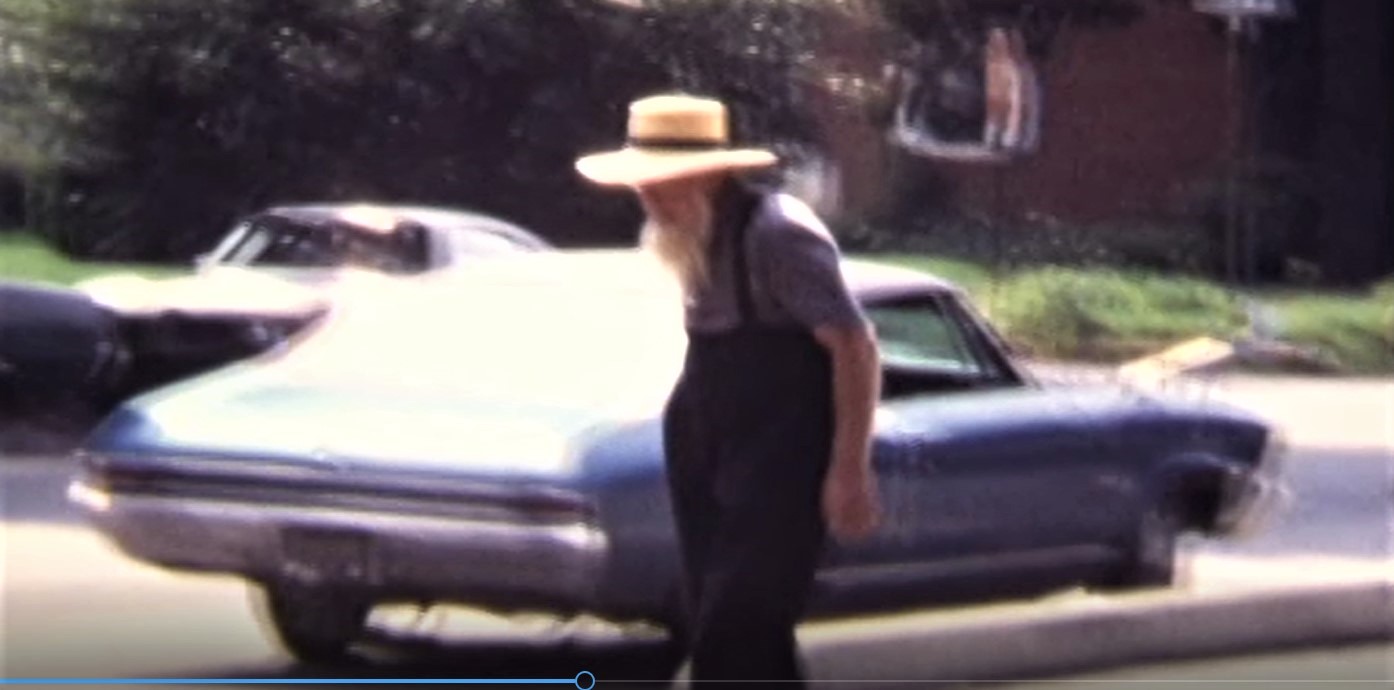
Taken in or near Bird-in-Hand, PA, this appears to be a 1968 Chevrolet Chevelle 2-door. Can’t see if it’s a post car or not, as the Amish fellow is in the way.


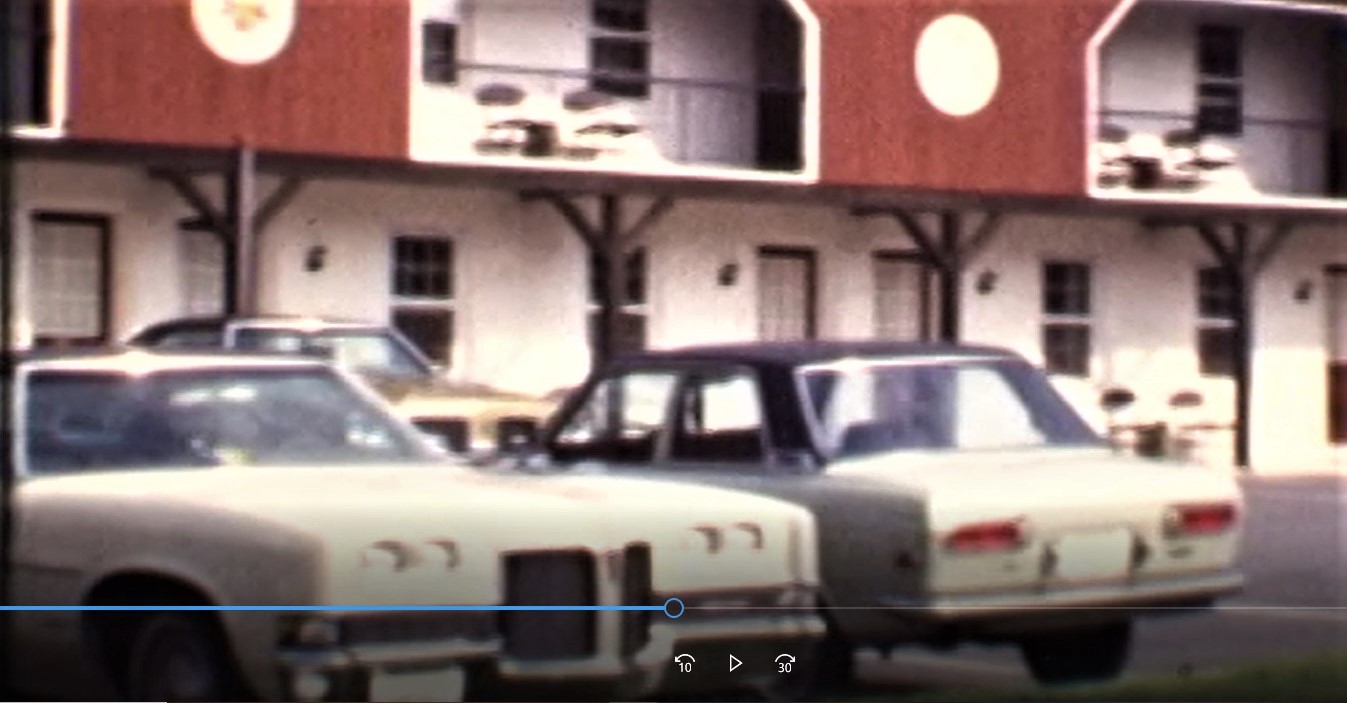
A motel parking lot, again in PA. From left to right: A Lincoln Mark III, Plymouth Valiant, and first-gen Ford Mustang.


The same parking lot: a 1971 Pontiac (making it an almost new car) and a Datsun 510 sedan, complete with vinyl roof, I’d guess a dealer add-on.


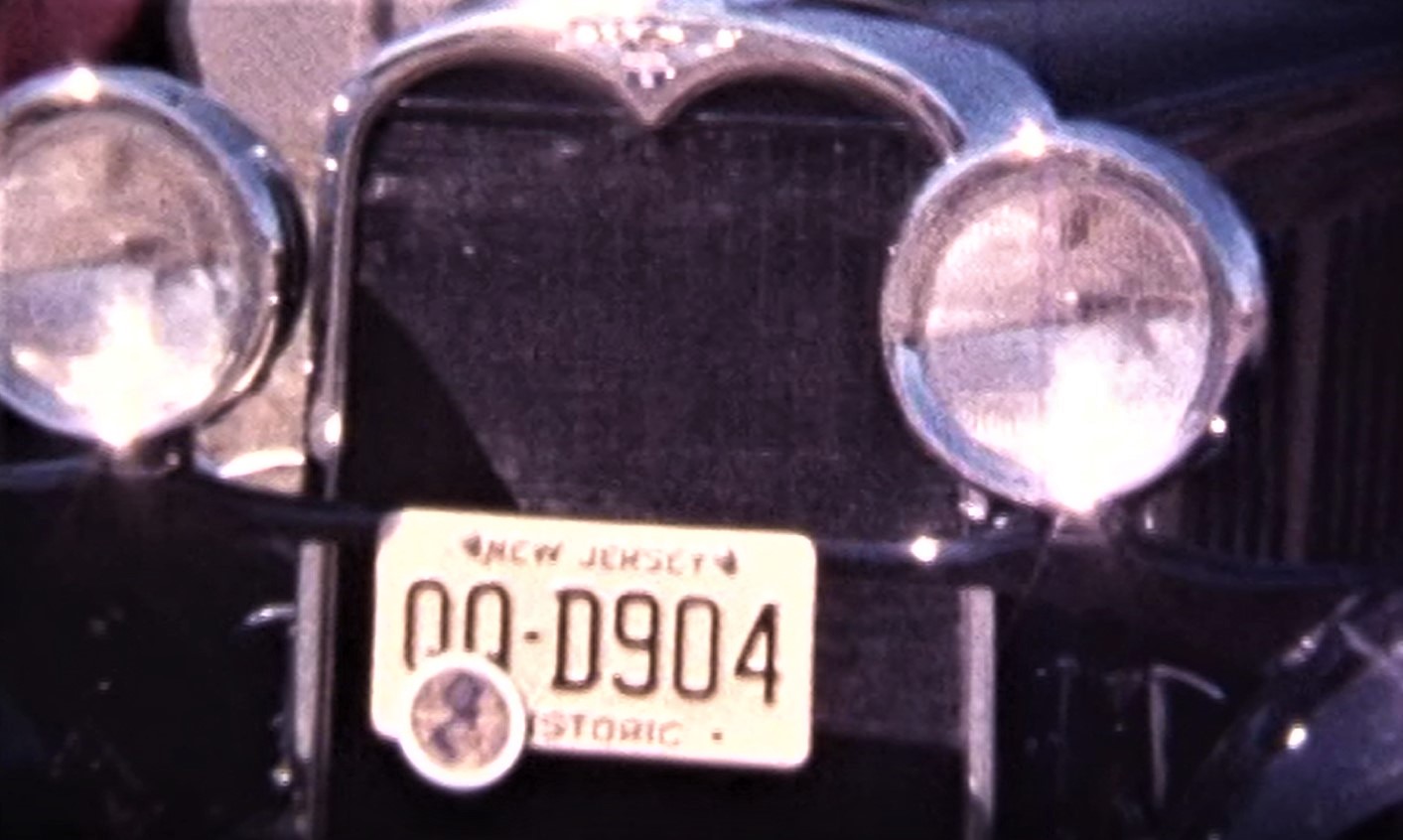
The antique car show as mentioned above. Note the NJ QQ plates which go back at least 50 years, the non-reflectorized “straw and black” color scheme, and to my utmost surprise, an emblem for the NJ Region of the AACA, using the same logo in existence today.


This long shot from that car show includes two 2-seat “baby Birds”, Thunderbirds which were only made from 1955 to 1957.


Final shot from that show: what appears to be a 1962 Corvette, making this car only 10 years old!


My wife’s uncle, arriving for a visit in his 1969 Plymouth Satellite station wagon. Note the full wheel covers and three-sided roof rack.


More parking lot shots, this time at the Jersey shore. Here is an early ’70s Olds Cutlass hardtop. I think more cars had vinyl roofs than didn’t.


Jersey shore again, two shots of the same lot. From L to R: VW Squareback, Dodge Challenger, Buick full-size 2-door, Volvo 142 (grille makes it 1969 or older) and what appears to be a Mopar wagon.


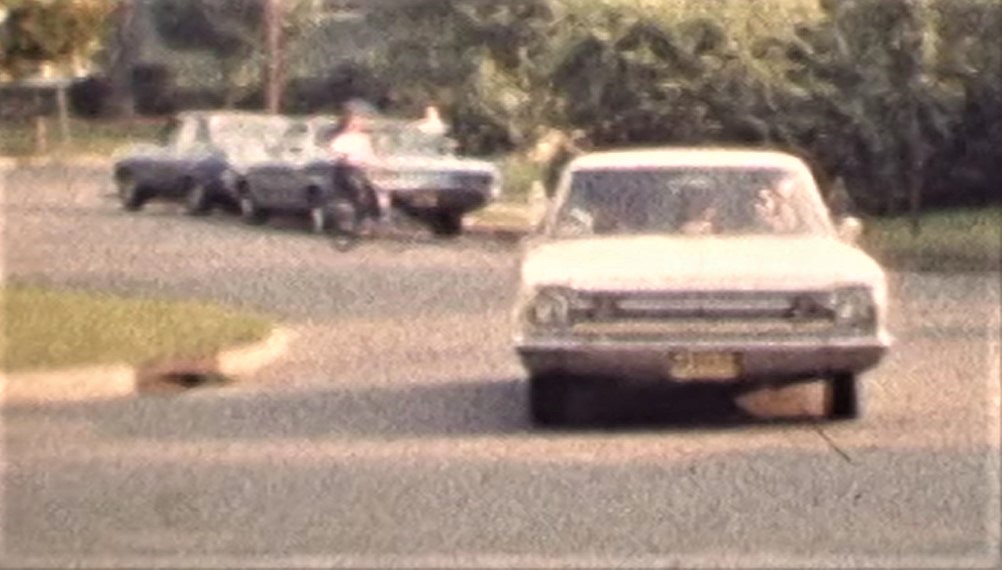
1967 Plymouth Belvedere approaching, with what looks like a Chevy Nova and Pontiac Tempest/LeMans at curbside in the background.

All photographs copyright © 2022 Richard A. Reina. Photos may not be copied or reproduced without express written permission.


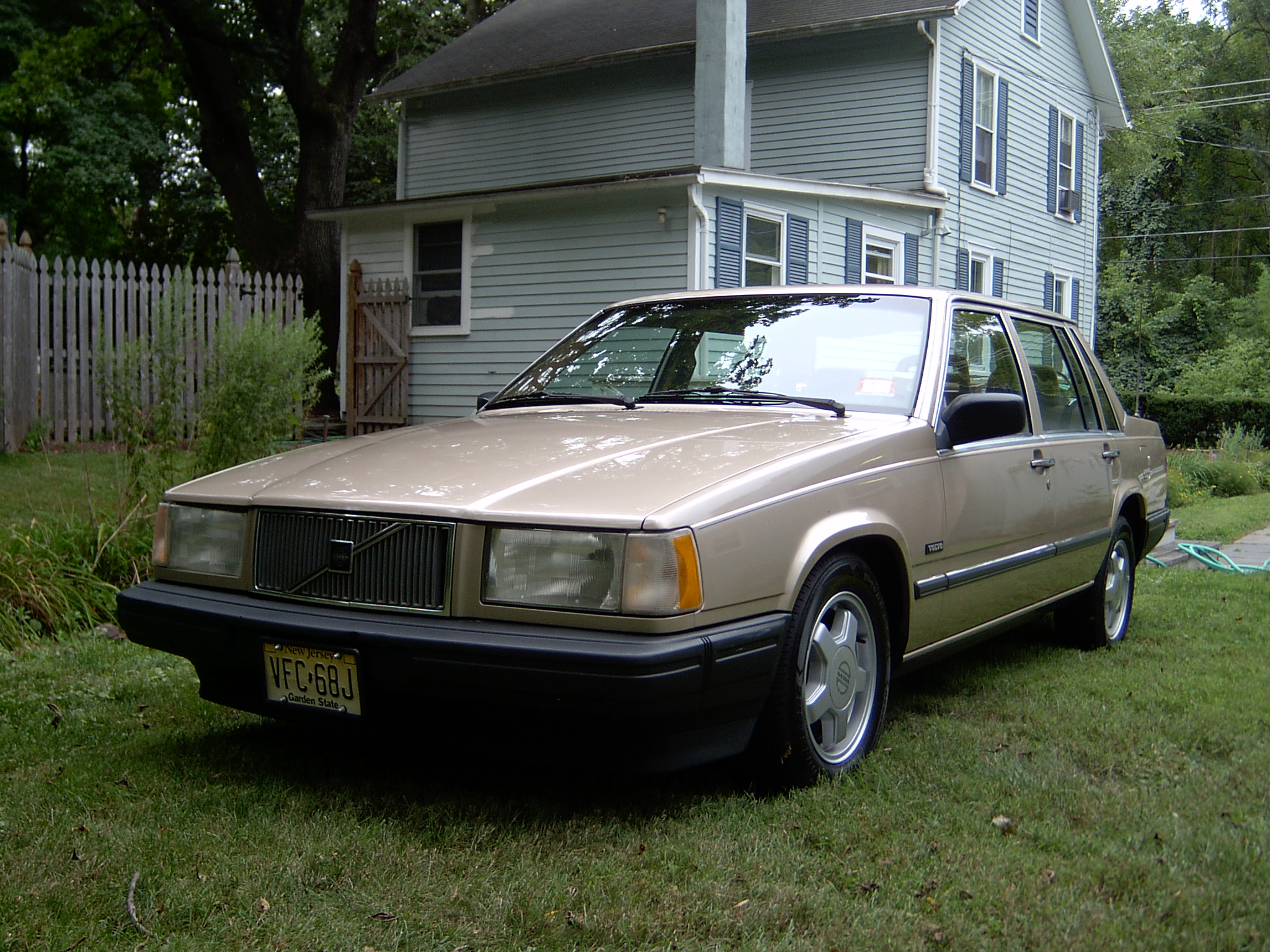
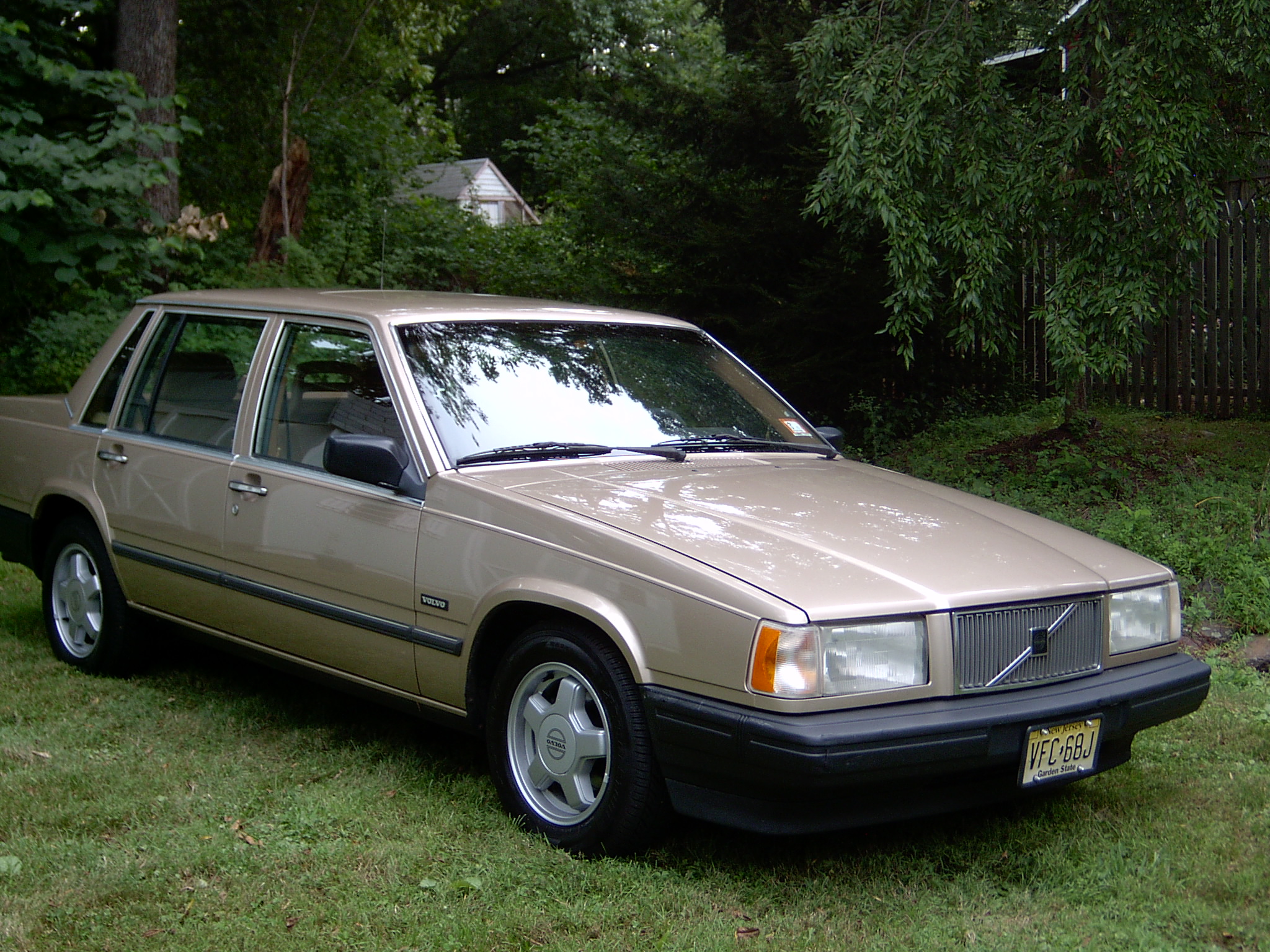
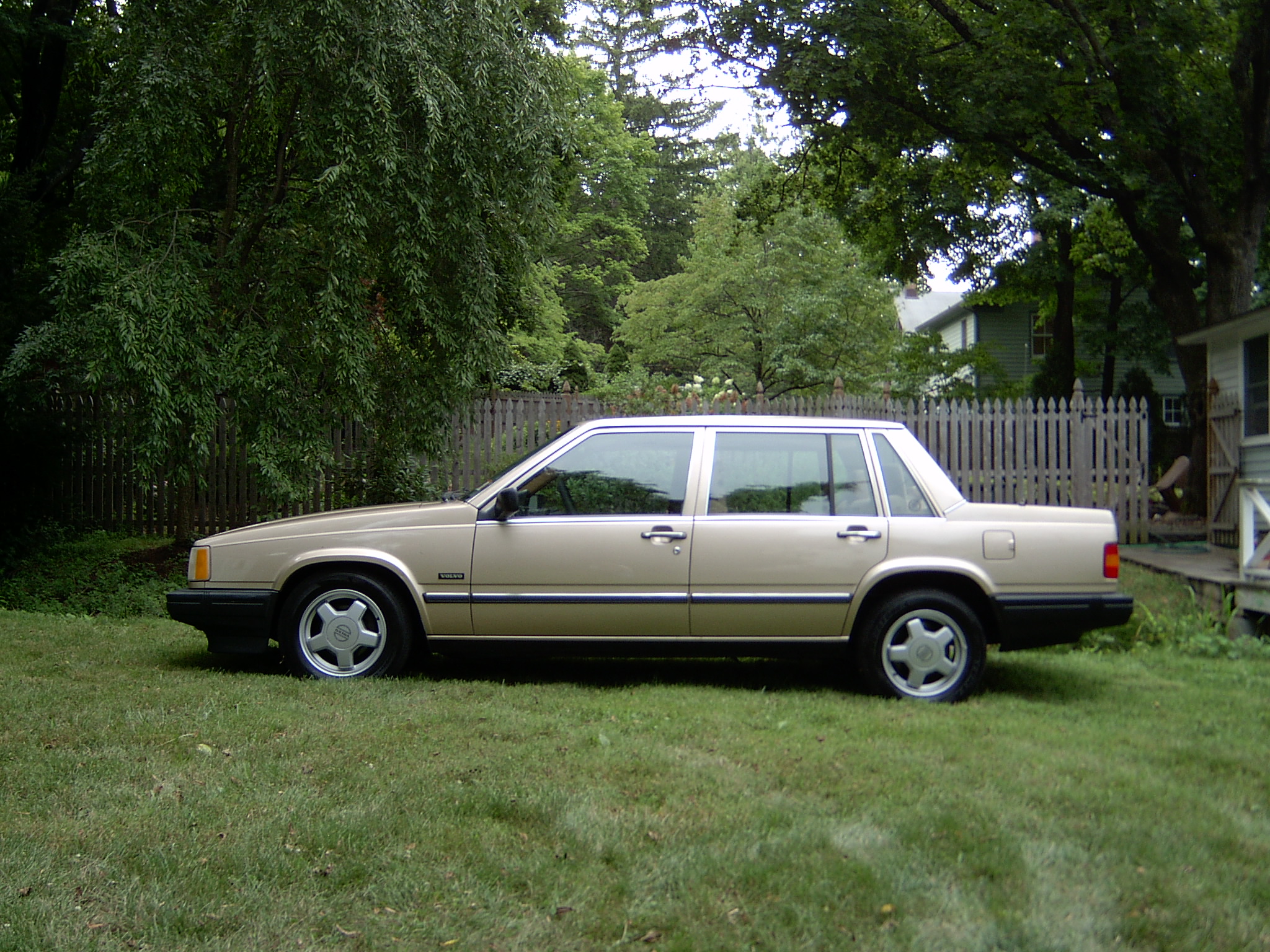
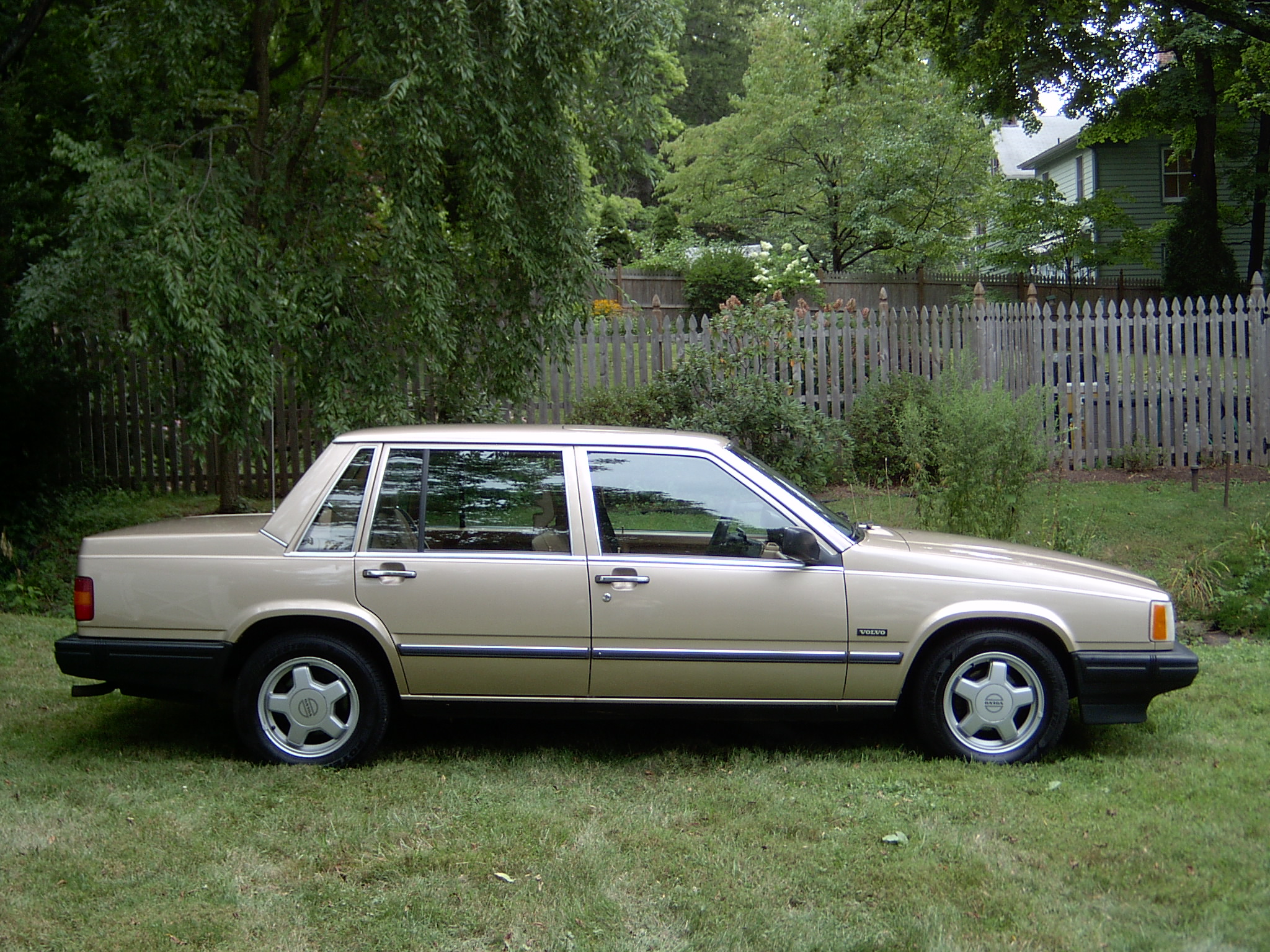
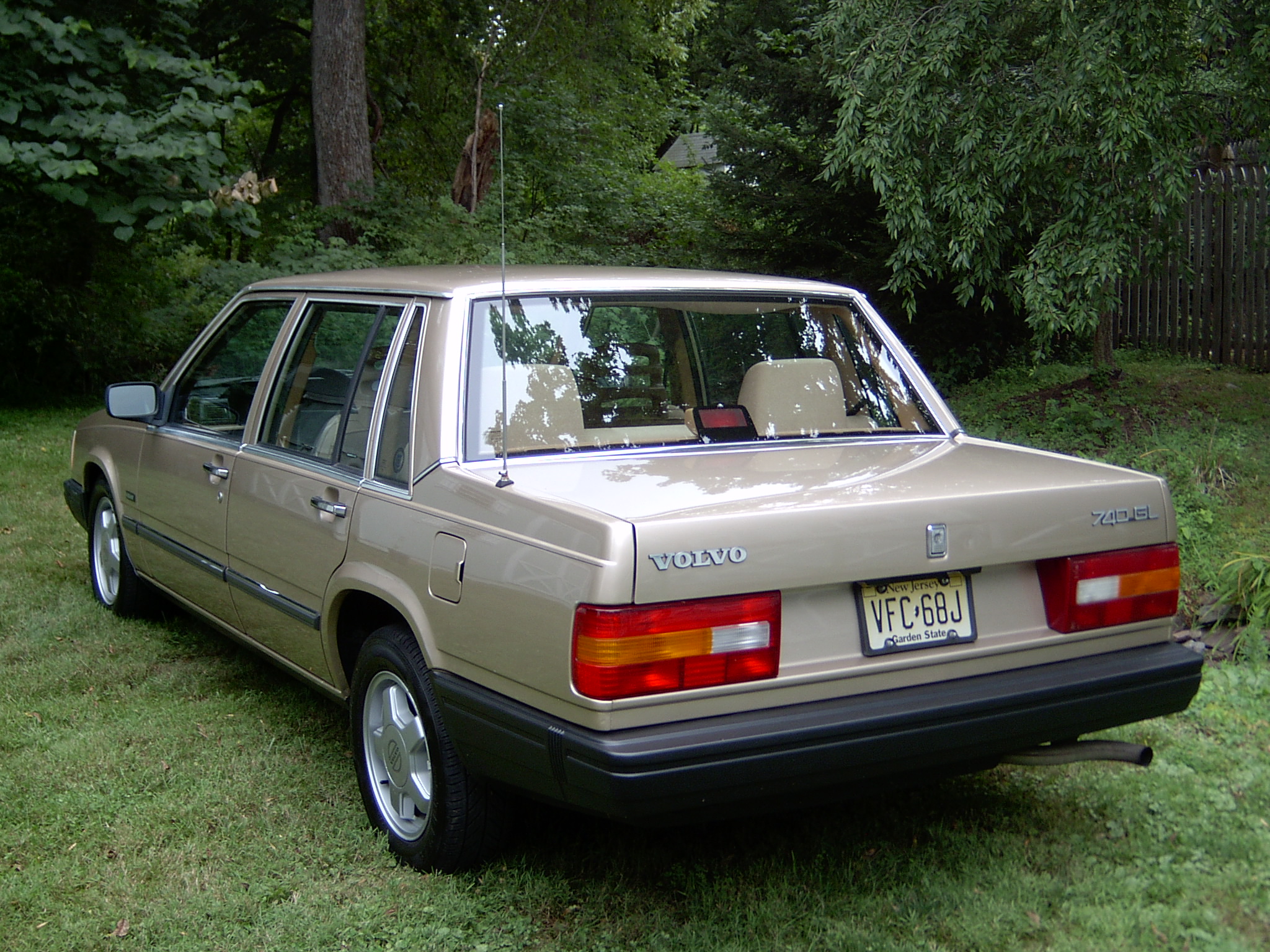
My 1990 Volvo 740GL sedan

After ten dynamic years working as a field representative for VCNA (Volvo Cars North America), during which time a company car was a business necessity, in 2006 I was transferred back to headquarters. Part of the initial discussion with my new management team centered around transportation, and I was assured that engineers in Product Engineering such as myself would have a Volvo test car as a component of performing their job.

That lasted about six months. The mid-aughts were a tough time for Volvo: our owners, the Ford Motor Company, paid little attention to us, money was tight, Volvo’s sales had nosedived, and cutbacks were sought everywhere. Around this same time, my mother was considering new wheels for herself. Her 1990 Volvo 740 was in great shape, but she thought that one final new car would be a nice treat. She visited Volvo of Princeton, the dealer which had been regularly servicing her 740, and bought a brand new 2006 S60 sedan. (She surprised us all by picking a bright red one, and yes, it was her final car.)

We didn’t even request a trade appraisal; instead, needing wheels once my company car was yanked, I bought the 740 from my mom and turned it into my daily driver. At that time it had around 190,000 miles and was in impeccable shape for its age, as my mother garaged it every night. Despite frequent dealer servicing, there were a few mechanical needs to which I attended. Cosmetically, the dark grey bumpers had faded to something approaching white. I bought SEM bumper paint, removed both bumpers from the car to avoid overspray, and repainted them. I was quite pleased with the result. I also found a nice set of Volvo alloys on Craigslist, and used the factory steelies for winter tires.

I drove it for about two years, and when I spotted an ad on a bulletin board in Rockleigh for a 2003 non-turbo V70 with a stick shift, I grabbed that and sold mom’s old 740.

Recently, while rummaging through some digital files, I came across the photos I had taken for the ad for the 1990. I had not seen these pics in a while, I was struck by how clean the car was. It had 210,000 miles on it when I sold it, yet had original paint which still gleamed. The ad I wrote noted that the only defects were a sagging headliner, an inoperative power antenna, and a non-functioning digital radio readout. I asked for, and got, $3,000 for the car.

Not too many 700-series Volvos from this era have survived. I see more 240s for sale on the popular classic car websites than I see 740s. However, the website www.carsandbids.com sold an ’87 740 GLE wagon with 293,000 miles on it earlier this month for $6,052. Perhaps I should have held onto my 740 a little longer!


All photographs copyright © 2021 Richard A. Reina. Photos may not be copied or reproduced without express written permission.


Dad’s cars: ’49 Jeep, ’53 Chevy, & ’61 Corvair

Last year, we moved my mom out of her house and into an assisted living facility. For almost-94, she’s doing remarkably well. The reason I bring this up is that the effort of moving her out of the home that she occupied for 38 years (25 of those with my dad) has unearthed a cornucopia of items, some of which I haven’t seen in decades, and some of which I’ve never seen before.

Some of my earliest blog postings have been of my father’s cars: his Corvair, his Buick, his Mustang, and his VW Bug. These four vehicles were around when I was a kid, taking my own snaps of them. This posting features photos taken earlier than that, and includes the vehicle my dad owned when my folks got married.

1949(?) Jeep Station Wagon

My dad was an early embracer of SUVs. When the first Wagoneer was introduced in the late ‘60s, he would tell me that he really liked it, although he never did buy one. I knew that when my parents got married in 1950 my father had a “Jeep” (mom didn’t have a license yet), but I knew little about it, until I discovered these photos.

From my research, I pin the year of this rig as 1949. According to Wikipedia, Jeep introduced a 4WD variant in 1949 named the “Utility Wagon”, while the 2WD was called the “Station Wagon”. In 1950, the grille changed to a V-shape and added horizontal bars. This Jeep has the original grille, and “Station Wagon” emblems on the front fenders, so I hereby pronounce it a 1949.

My dad labeled everything (those of you who know me really well now know where I got that habit), and that’s my mom in front of the car with the heading “Vermont Cabin Aug. 1952”. I was born in March ’54, and my folks talked about trips to New England during their early days together.


The second photo is a much clearer shot of the Jeep, with my cousins Marsha and Andy. I would guesstimate this pic as from 1950. Note the open cowl vent, two-piece windshield, dog-dish hubcaps, knobby tires, and inside spare tire mount.


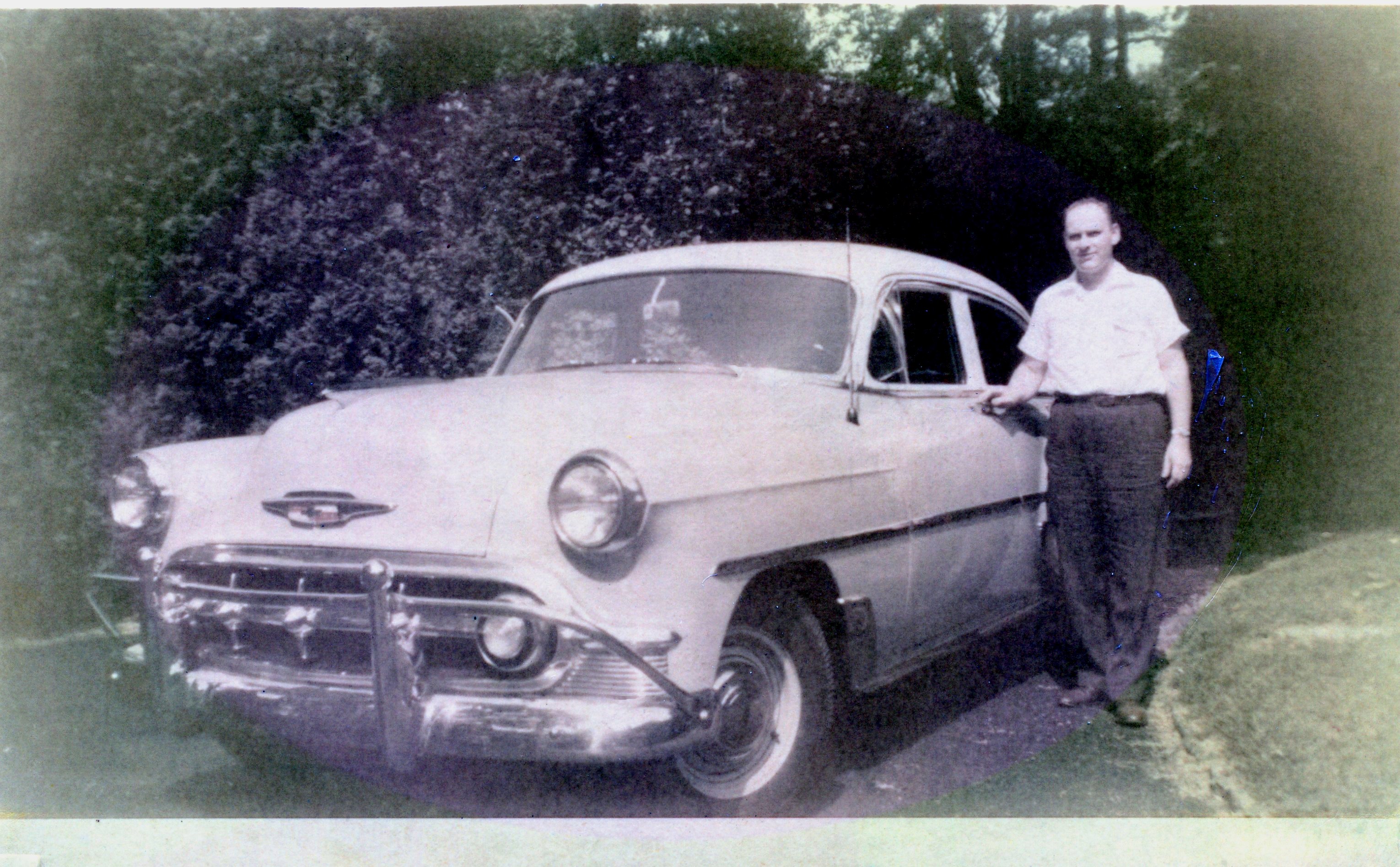
1953 Chevrolet 210 4-door sedan

Dad bought this car new, and I came home from the hospital in this thing. I have vague memories of it, mostly of me staring at the dash while riding in the back seat. This photo is a recent discovery. This is what’s stamped on the back:

“This is a Kodacolor print, made by Eastman Kodak Company, Week of October 26, 1953.”

I’m certain this car was white, but you wouldn’t know it based on this photo. The color print has faded to an almost monochrome sepia. I attempted to color-enhance it, which made marginal improvements. However, you can make out the blue and red in the hood-mounted Chevy emblem. Note the two open vent windows, radio antenna, dog-dish hubcaps, blackwall tires, and accessory front bumper overrider.


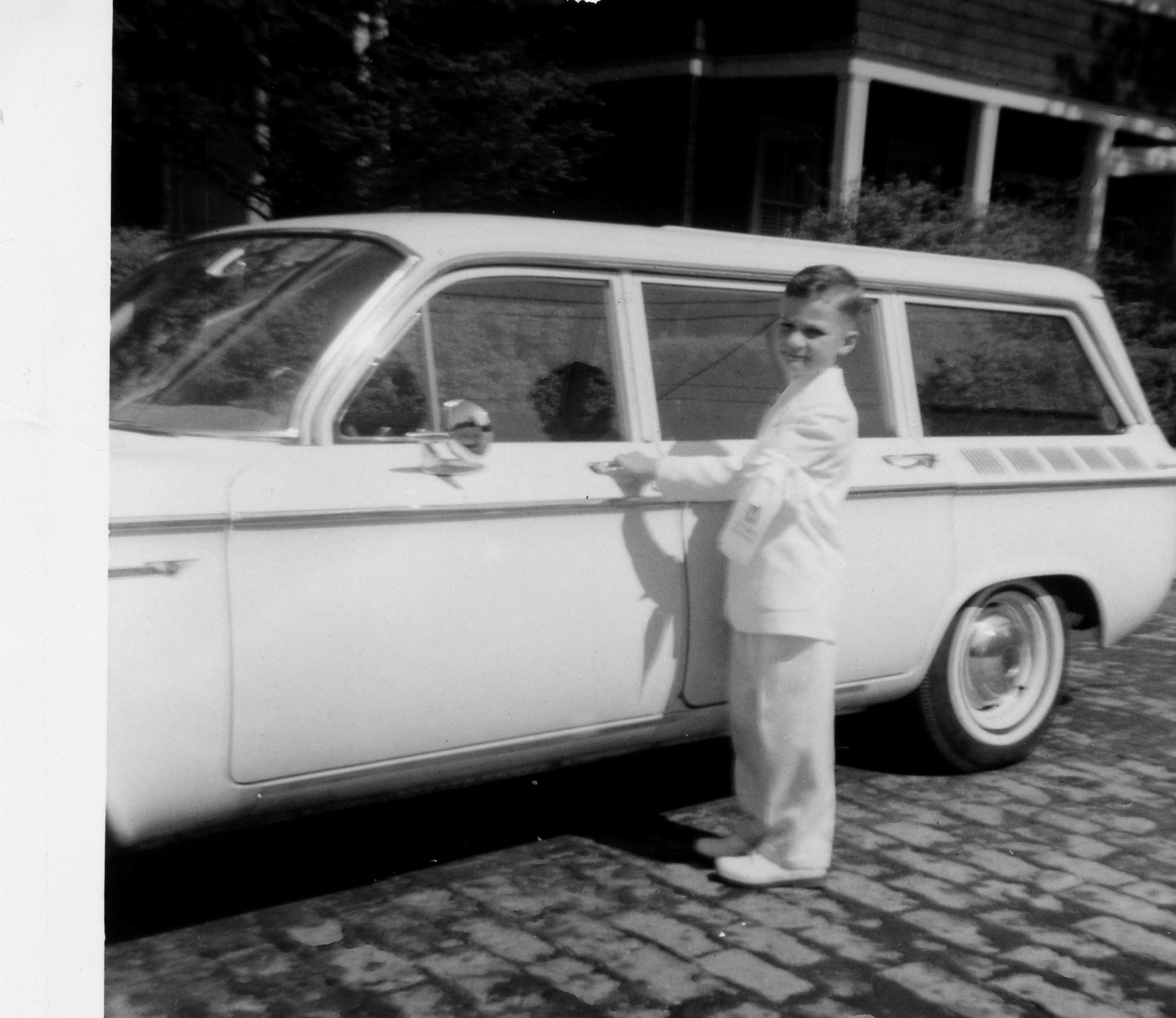
1961 Chevrolet Corvair

Oh, how infatuated my dad was with this car! As most of you know, Chevrolet introduced the new, rear-engine air-cooled Corvair as a 1960 model. Even then, and I was only 6, I can recall his excited tone of voice when talking to my mom about the car (and dad rarely got excited about anything). He waited a year for the station wagon’s introduction in 1961. One of my strongest early automotive memories is riding in the way-back of this wagon when my dad drove it home from the dealership. Both the Jeep and the ’53 were manual gearbox cars. Mom had just gotten her license around this time, and only drove an automatic, and that also drove this purchase decision.

This photo is date-stamped May 1962, and it’s my brother Michael, in his first Communion outfit, acting like he’s about to climb in and drive away. This one was the 700 model (there was also a cheaper 500 version), and dad’s car sports an outside rear-view mirror, dog-dish hubcaps, whitewall tires, and white paint. You can barely see the “Lakewood” emblem just beyond the rear quarter cooling slats.

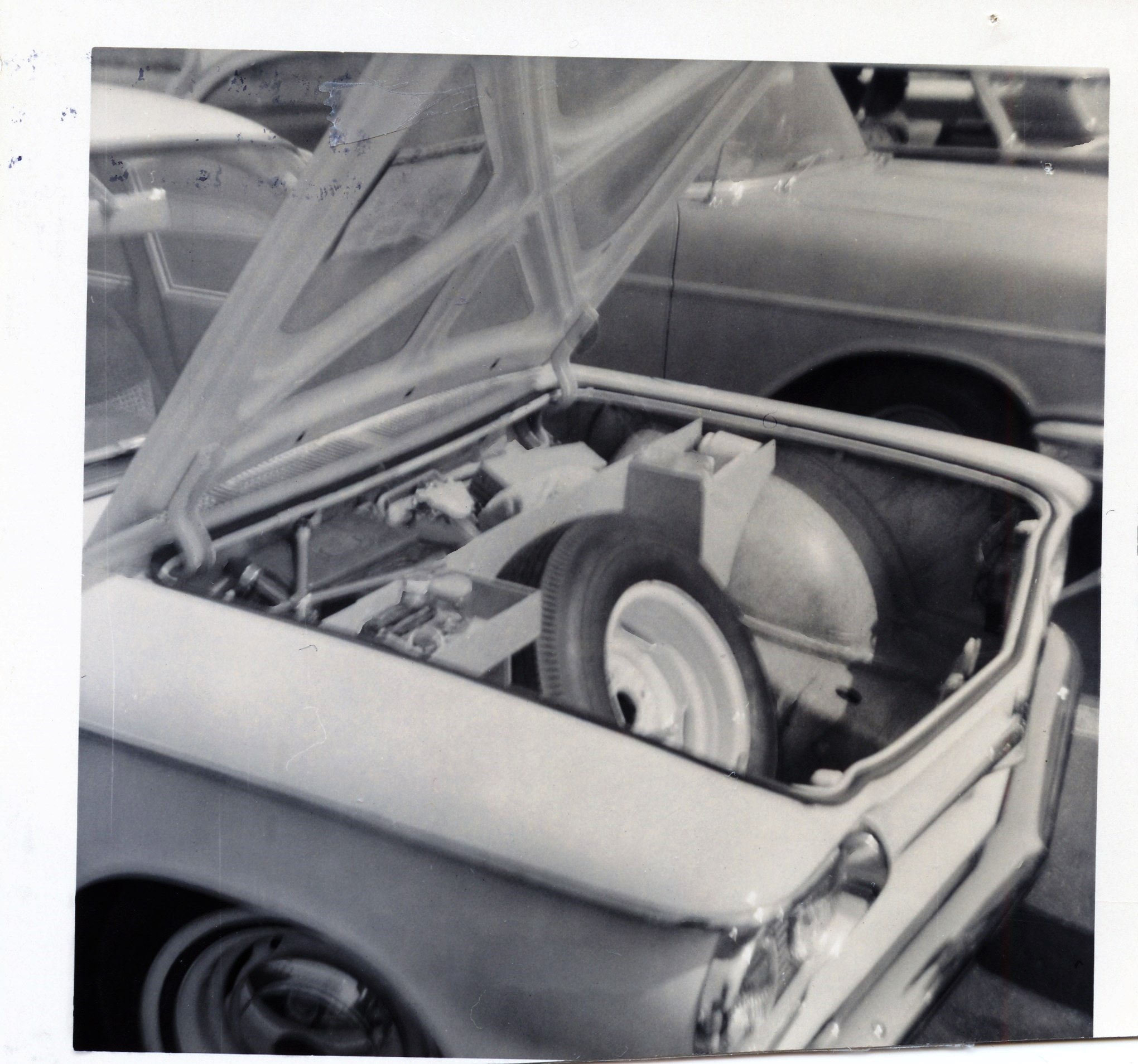
My father enjoyed woodworking, and he found a way to improve his Corvair, by designing and building a storage tray for the front trunk. He sent this photo to a number of magazines, including Popular Mechanics, hoping to get it published, but it didn’t happen. I know he was disappointed by that. Oh, and what’s that car next to the Corvair? Pretty sure I know, but I’ll invite you to guess.

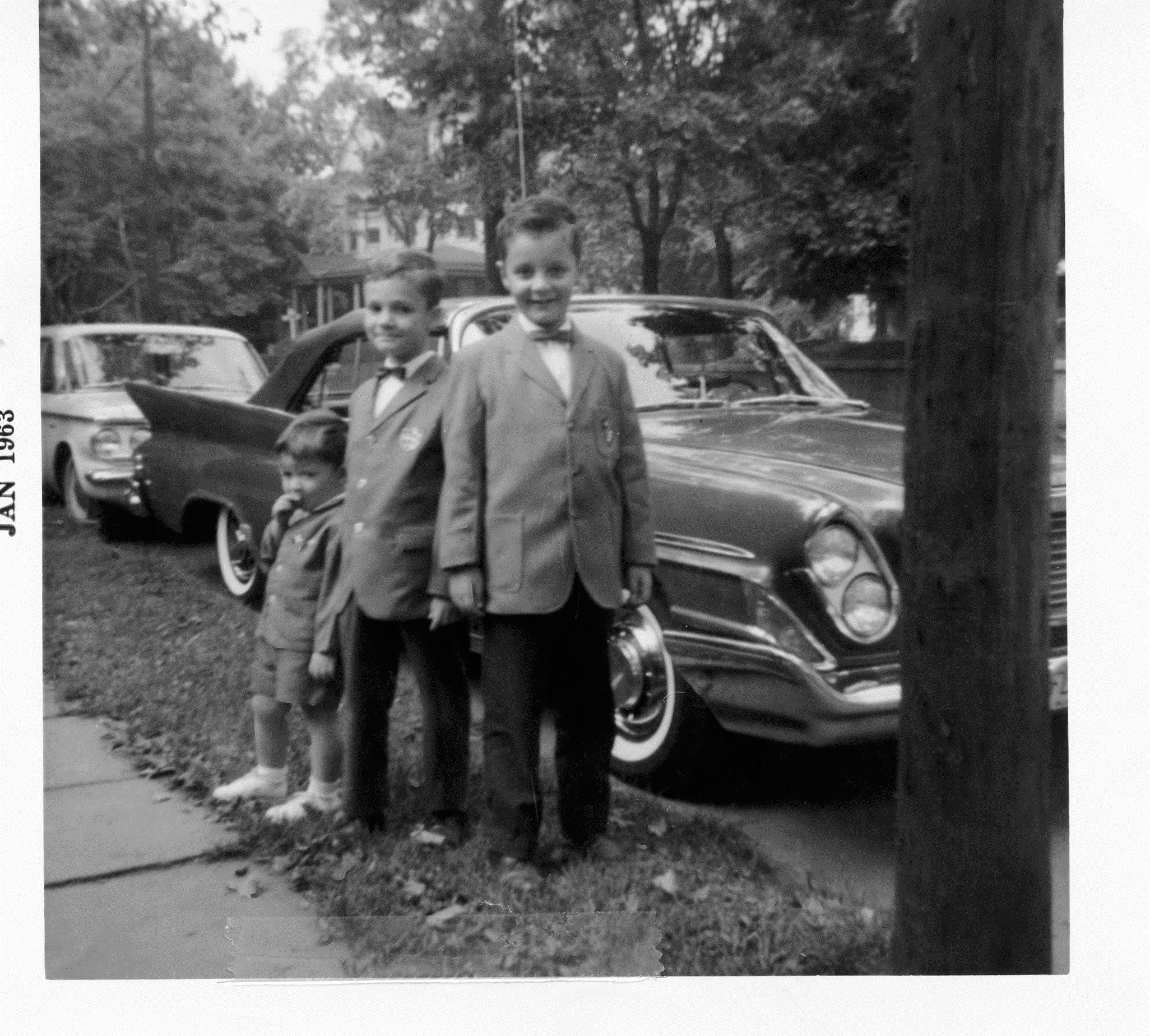
In this 3rd and final shot of the Corvair for this post, the primary subject is my parents’ children. The photo is stamped Jan. 1963 (our clothing would imply it was taken months earlier). From left to right, that’s my brother Karl, my brother Michael, and me; I’m 8, and already a car nut. LOOK WHAT’S DIRECTLY BEHIND US!! A 1961 Chrysler Newport convertible! My research informs me that Chrysler fielded 3 different full-size convertibles that year: Newport, New Yorker, and 300. The grille texture on the 300 was completely different, and the New Yorker had chrome along the wheel well openings. Note the dashboard-mounted inside mirror, canted quad headlights, large bladed front bumper, full wheel covers, and whitewall tires.

There are more of these in some other photo albums at my brother’s house, so watch for future postings of more old family cars!


All photographs copyright © 2020 Richard A. Reina. Photos may not be copied or reproduced without express written permission.


The Personalized Plate

(NOTE: The following is a work of historical fiction.)

Bill Farrell was not a car guy, and he knew it. He was painfully aware of it because his father, Thomas P. (Tommy) Farrell II, had been a car guy, and never let Bill, his only child, forget it.

Tommy came of age in the early days of hotrodding: shoehorning worked-over flatheads into chopped Deuce coupes was all he and his Army buddies wanted to do once the war ended. Laying rubber and chasing girls (not necessarily in that order) helped them forget the horrors of World War Two. They were just happy they survived.

Tommy wasn’t really one for much chasing. His high school squeeze, Helen, was waiting for him at the end of the war. But Helen was done waiting; she told Tommy in no uncertain terms that if he wanted her, he needed to get down on one knee “and be a man about it”. And so he did, and so they did: by the summer of ’46, the knot was tied, and it wasn’t long after that Helen was “with child”.

Tommy secretly hoped for a boy. Helen claimed she didn’t care, but growing up as the only girl in a family of five children, she dreamed of a daughter. On the 7th of July 1947, a son was born to Thomas and Helen Farrell. Tommy knew all along that if he had a son, he’d be named “Thomas P. Farrell III”. (The P stood for Patrick, and his Irish grandparents told him the name came from St. Patrick, even if he didn’t himself believe it.)

Helen had a secret she never told her husband: before Helen’s mother passed away, while Tommy was at war, Helen promised her mother that if she ever had a son, he would be named William, after Helen’s father, who succumbed to cancer when Helen was just 12.

In a way that only wives can do, Helen gently but firmly informed her husband that she wanted their son named after her dad. Tommy actually fought it for a day, then gave in, knowing he would never win. As something of a consolation prize, their son was given his dad’s name as a middle name.

For reasons which remained unspoken, and which were eventually taken to their graves, Tommy and Helen stopped trying to have another offspring. Bill was an only child.

He was a typical boy, playing with the typical toys of the time. Yet any attempt by Bill’s dad to coerce the youngster into joining him in the garage fell on deaf ears. Bill (“William” in school, and never “Billy” at home) would rather watch that new-fangled TV, for which Tommy had no use. So Tommy continued to fiddle with his Deuce in the garage, while Bill played with Lincoln Logs and watched Saturday morning cartoons.

Fast-forward to 1963: Bill, at the age of 16, was eligible for his driver’s license, and succeeded in passing his driver’s test on the first try. His mom’s car, a ’62 Dodge Dart 440 station wagon with automatic, was what he preferred to drive. His dad’s daily driver, a ’59 Chevy Biscayne 2-door post with 3-on-the-tree, would have been first choice for most teenage boys, but Bill didn’t know how to shift with a clutch, and showed zero interest in learning.

Always meticulous, the boy did enjoy the wash-and-wax ritual, and treated his mother’s wagon to a fresh coat of Simonize at least twice a year. He may not have been the consummate car guy, but he wanted his ride to be clean while he was behind the wheel.

There was one way he was very much like his dad: Bill met a girl, Sally, in high school, and it wasn’t long before they were going steady. By the time each of them was 20, they knew they wanted to spend their lives together. In the autumn of 1967, Bill and Sally married.

The newlyweds stayed in town, and took advantage of both sets of parents living nearby, very handy when Andrew (1969) and Eileen (1971) were born. Their house, at 7 Hemlock Court, in their leafy New Jersey suburb, had a two-car garage, of which Bill’s dad was unendingly jealous. Although Tommy could always afford to provide a vehicle for both Helen and him, he never managed to own property with more than a one-car garage. He burned up a bit more when he saw his son and daughter-in-law use the garage for bicycles and lawn furniture rather than automobiles.

Bill’s automotive choices were always practical. He liked full-size Fords as family cars, and had a series of them throughout the decade of the ‘70s, usually in brown or green. But between two gas crises and diminishing vehicular quality, Bill began to sour on cars from the Blue Oval. One day a new dealership opened in town, selling these nice-looking Japanese front-wheel-drive sedans. By 1978, Bill bought one of the first Honda Accords in his neighborhood, and he never looked back.

Before the decade of the ‘80s arrived, both of Bill’s parents passed away from natural causes.

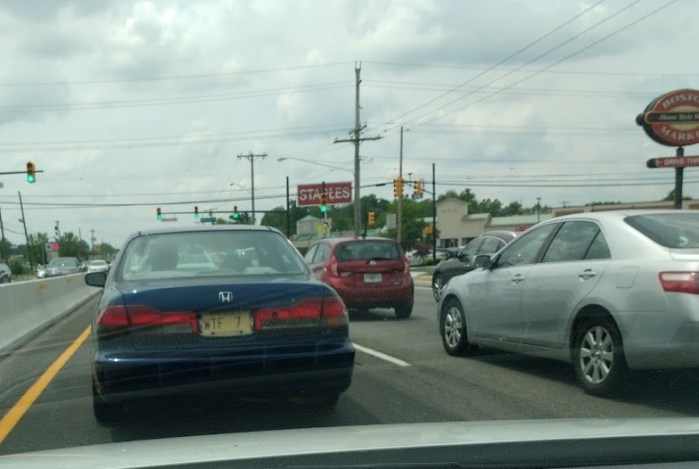
Bill never so much as changed his own oil (“that’s what dealer service departments are for”), but it still haunted him that he never lived up to his dad’s image as a “car guy”. One day, he noticed a car in the parking lot at work with 3 letters, followed by a number. That’s it! He told himself that he’d honor his father in his own way by getting a personalized plate, featuring his initials and his lucky number “7” (he was born on 7/7/47, and his house number was 7).

In New Jersey, car owners are allowed to transfer plates from one vehicle to the next, and that’s just what Bill did. His home state eventually redesigned their license plates, moving from the non-reflectorized “straw & black” to reflectorized plates in different shades. Still, Bill held onto his cherished tag, moving it from Accord to Accord. (He occasionally selected a different exterior color, but stayed with the same model.)

Both Andrew and Eileen grew up to be polite young adults, and like their parents and grandparents before them, each of them married young. Andrew and his bride Sandy moved to Indiana for her job. They also decided, for reasons kept to themselves, to remain childless. Eileen married Robb, and they moved two towns away from her folks. Bill and Sally became convinced they would never become grandparents, but Robb and Eileen were only postponing things until they got settled in their careers. They had two boys in quick succession, Tyler (2002) and Jordan (2005).

By the second decade of the 21st century, Bill Farrell wasn’t old by any stretch of the imagination, but he did feel himself slowing down. He drove less, mainly because he realized his eyesight wasn’t what it used to be. One day, approaching his car in the mall parking lot, he thought his eyes deceived him. A group of young boys was running away from his car, giggling. He thought he might have been imagining it. Then a few months later, some high school girls were using their phones (“how does a phone have a camera in it anyway?”) to take their pictures next to his car. “What could be interesting about an old Honda?” he asked himself.

Because his car was more than a few years old, and because Sally drove a newer Acura, they tended to use her car whenever they visited Eileen, Robb, and the boys. One day, since the Accord had just come back from the car wash and was blocking her car, they decided to hop into his car for the ride to visit their grandkids.

As soon as they arrived, Bill was heard to exclaim “gosh darned if these kids can’t get their noses unglued from their phones!” His daughter just shrugged her shoulders as he implored the boys to join him for a game of catch. Finally, Jordan, who had just turned 10, said, “sure Grandpa, let’s go outside”. Gramps replied, “OK, but no fastballs! And don’t hit my car with any wild pitches!”

Everyone else stayed in the air conditioning. Bill and his grandson got no further than 10 feet from the driveway when Jordan, catching his first-ever glimpse of his grandfather’s car, could not stop the hysterical laughing. Bill was equally stunned and annoyed. What in hell could be so funny? When the belly laughs finally subsided enough for Jordan to speak, he felt that he had to whisper the truth to his grandfather.

All that Bill could manage to muster in response was “texting?? Is that like email on the phone?” Beyond that, Jordan’s grandfather was speechless. And so it came to pass that William Thomas Farrell, who was so proud of the manner in which he honored his father’s memory, learned the irony of his personalized plate from his own young grandson.


This is a real photo, taken of a real car, with a real license plate (no Photoshop usage here). While driving in Flemington NJ during July of 2017, I saw this plate and fired off a shot with my phone before the car was out of my sight. The story almost wrote itself around this obviously-old NJ plate on the Accord.
All photographs copyright © 2017 Richard A. Reina. Photos may not be copied or reproduced without express written permission.


New Jersey Drops Emissions Testing for 1995 and Older Vehicles

Sometime last year, a story made the news in New Jersey, which seemed to garner little attention in the press. The State Government announced that during calendar year 2017, “older vehicles” would no longer be subject to mandatory emissions inspection.

A quick refresher for those who do not reside in the Garden State: for years, NJ subjected passenger cars to an annual inspection, consisting of both safety-related items such as tires, lights, horn, etc., and emissions testing, covering both a tailpipe sniff and a fuel filler cap integrity check. A few years ago, the law changed from an annual inspection to a biannual one. A few years after that, the safety portion of the inspection was dropped.

The announcement from the New Jersey Motor Vehicle Commission allowed that 1995 and older cars would no longer require any type of inspection. Model year 1996 and newer cars would continue as before, needing an emissions test every two years.

Was the 1995-1996 cutoff arbitrary? Not at all. The Federal Government requires that 1996 and newer passenger cars possess “On Board Diagnostic” (OBD) testing capability with a standardized access plug, and standardized Diagnostic Trouble Codes (DTCs). The 1996 nationwide requirement was actually a Phase Two level. So-called OBD I was a California requirement, but never a Federal requirement. Even if not mandatory, most 1991-1995 cars have some sort of rudimentary ability to read DTCs through an OBD system.

What does this technical discussion have to do with the State of NJ? Simple: cost. For a NJ inspection station to test emissions, two sets of equipment were needed: one to read OBD I (1995 and older), and one to read OBD II (1996 and newer). There is no compatibility between the two. The State Government saw this as nothing more than a money-saving decision. By eliminating testing for the older cars, only one set of test equipment must be purchased.

The newest vehicles which no longer need to pass an inspection are 22 years old. Since the average age of light-duty vehicles on the road today is 11 years, one can rationalize that as a percentage of the highway population, there are relatively few cars which may become “gross polluters”. (For what it’s worth, the NJ law as written still requires vehicle owners to maintain their cars, and further states that drivers can be cited for “malfunctioning or missing equipment”.)

Speaking from personal experience: my 1993 Mazda Miata, which I’ve owned since 1996, had always passed NJ emissions, until it failed in 2015. There were no warning lights, nor did the car behave any differently. It turned out that the car needed an oxygen sensor (for which there is no regular replacement interval). Had I not had the vehicle inspected, how would I have known?

Without getting too political, this comes down to a difference of opinion between those who believe in greater individual responsibility, versus those who believe that our government does occasionally need to act in order to protect the greater good. In this case, I see both sides. I actually have a bigger issue with the removal of all safety inspections. Cars alongside me on the road may have bald tires, worn-out brakes, and inoperative headlights, but are still operating legally (and yes, as stated above, they can be cited for obvious defects. When is the last time that happened in New Jersey?).

The new law regarding the emissions testing for 1995 and older vehicles went into effect on May 1, 2017. Owners of affected vehicles were told that the state would be mailing notices. As the owner of such an affected vehicle, I got my notice last week:


It’s in the glove box, but I didn’t check to be certain that the VINs match!


Yesterday, I took a razor blade to the inspection sticker, scraped it off for the last time, and spent quite a few minutes cleaning 24 years’ worth of adhesive residue. The new notice went into the glove box (thank goodness the state didn’t require that it be displayed on the dashboard), and I stood back to admire the newly-bare windshield glass.

My 1993 Miata looks just like all Miatas built from 1990 through 1997. How long might it be before I’m stopped for driving with a missing inspection sticker?

My ’93 next to one of Mazda’s newest, the CX-5; note the relative heights!


All photographs copyright © 2017 Richard A. Reina. Photos may not be copied or reproduced without express written permission.


2006: Adventures with Mustangs, Mine and Others

Since purchasing my ’68 Mustang California Special (aka GT/CS) in 2003, my desire had been to use the car as much as possible in automotive-themed events. As related earlier, we drove the car to Nashville for the Mustang’s 40th anniversary celebration in 2004. In 2005, rally brother Steve and I returned to the New England 1000 classic car rally after a 4-year hiatus, where the Mustang proved to be a powerful and reliable performer.

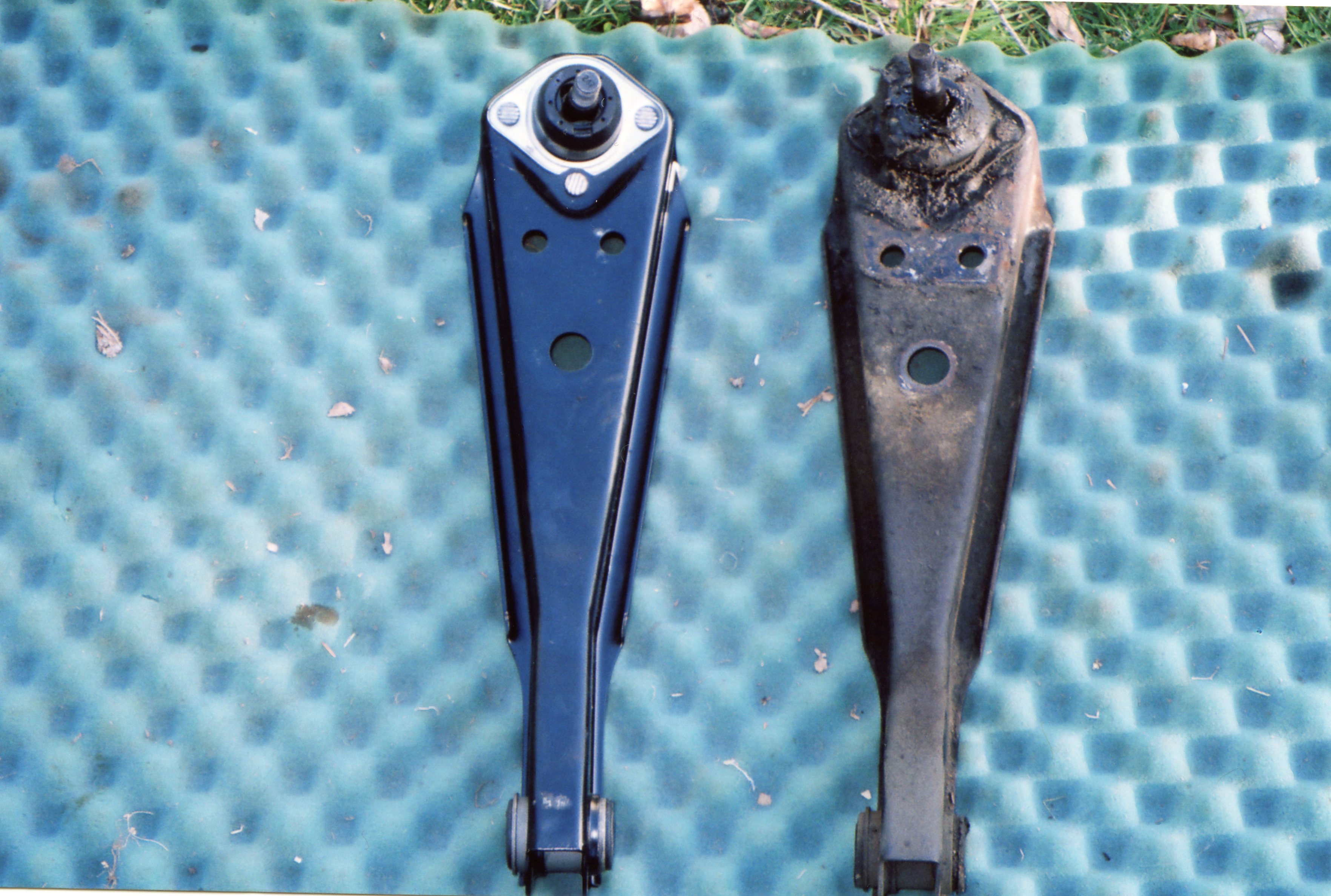
Before the 2006 driving season commenced, I needed to do something about the sloppiness in the car’s front end. While I held no illusions that this car would ever steer like a rack-and-pinion equipped sports car, the amount of freeplay in the steering seemed excessive, even by 1960s American car standards. A check of ball joints and bushings found enough wear to warrant the installation of new upper and lower control arms. (I opted to forego the Shelby-invented trick of relocating the upper control arms by one inch, effectively lowering the front suspension.) With the new suspension pieces bolted up, I happily observed that the dead spot at the top of the wheel was reduced by half.

The Garden State Region Mustang Club held its annual car show at a local Ford dealer in April of each year. In spite of poor weather, my car was there, mixed in among ponies both old and new.

My GT/CS takes its place among its siblings (note new 2006 yellow convertible on ramps)

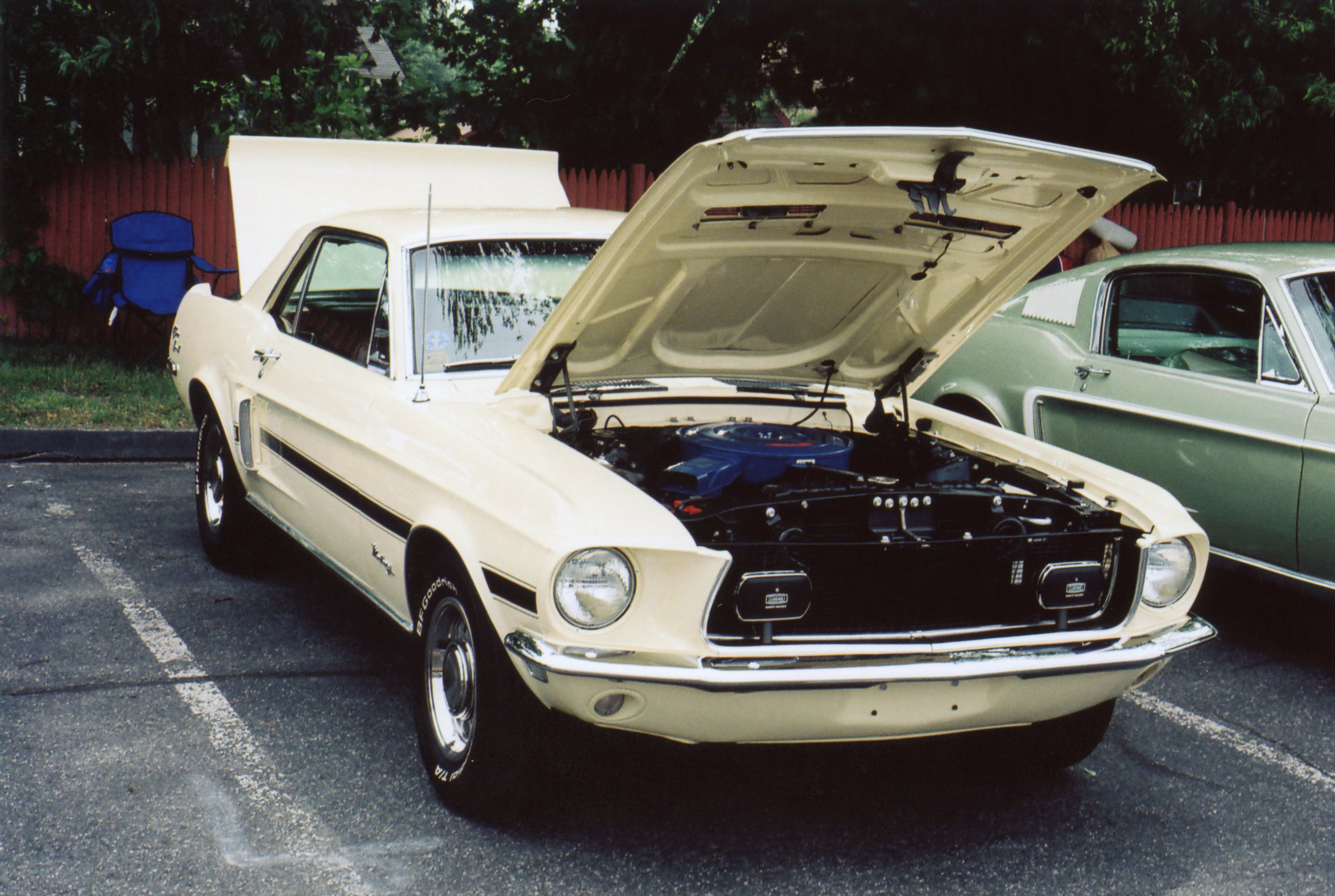
In July, we joined the Mustang Club of New England at a show in New Hampshire. It was 95 degrees on Route 95, but that big 390 kept its cool. It was neat to discover at least one other California Special in attendance, a pale yellow car restored to a condition several levels better than mine. I took copious notes.

Hood up, ready for judges


For once, another California Special was at the same show as me

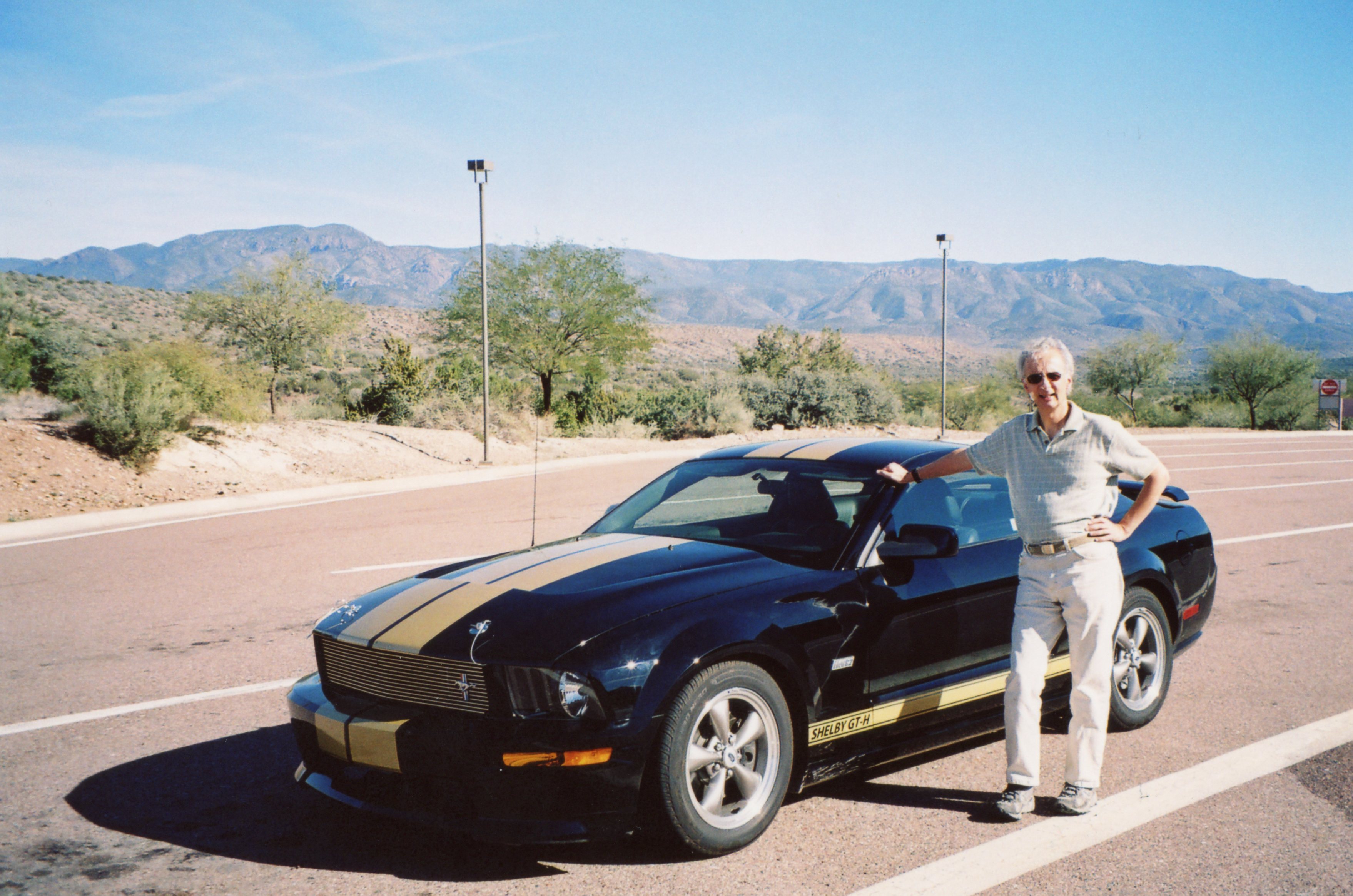
In the fall, my wife and I had a Mustang adventure of a quite different nature. We decided to take a week’s vacation in Arizona. As I made the travel plans and investigated rental choices, I noted that Hertz was now renting the Shelby Mustang GT-H, a throwback to the original Shelby Mustang rent-a-racers of the 1960s. I signed up for one.

Upon my arrival at the Hertz counter in Phoenix, I was not prepared for the strict lecture coming from the rental agency employee in delivering the car to me. He said in effect: “I’m going to show you every Shelby-specific item on this car, from the hood pins, to the Shelby-signed plates, to the guy wire securing the engine to the body (this to prevent, yes, engine swaps). You must sign here to verify that all these Shelby components are present, and you are liable if the car is returned with any of these missing!” Holy chicken farmer. I was afraid to leave the car in the hotel parking lot!

This was my first time driving this current-generation Mustang

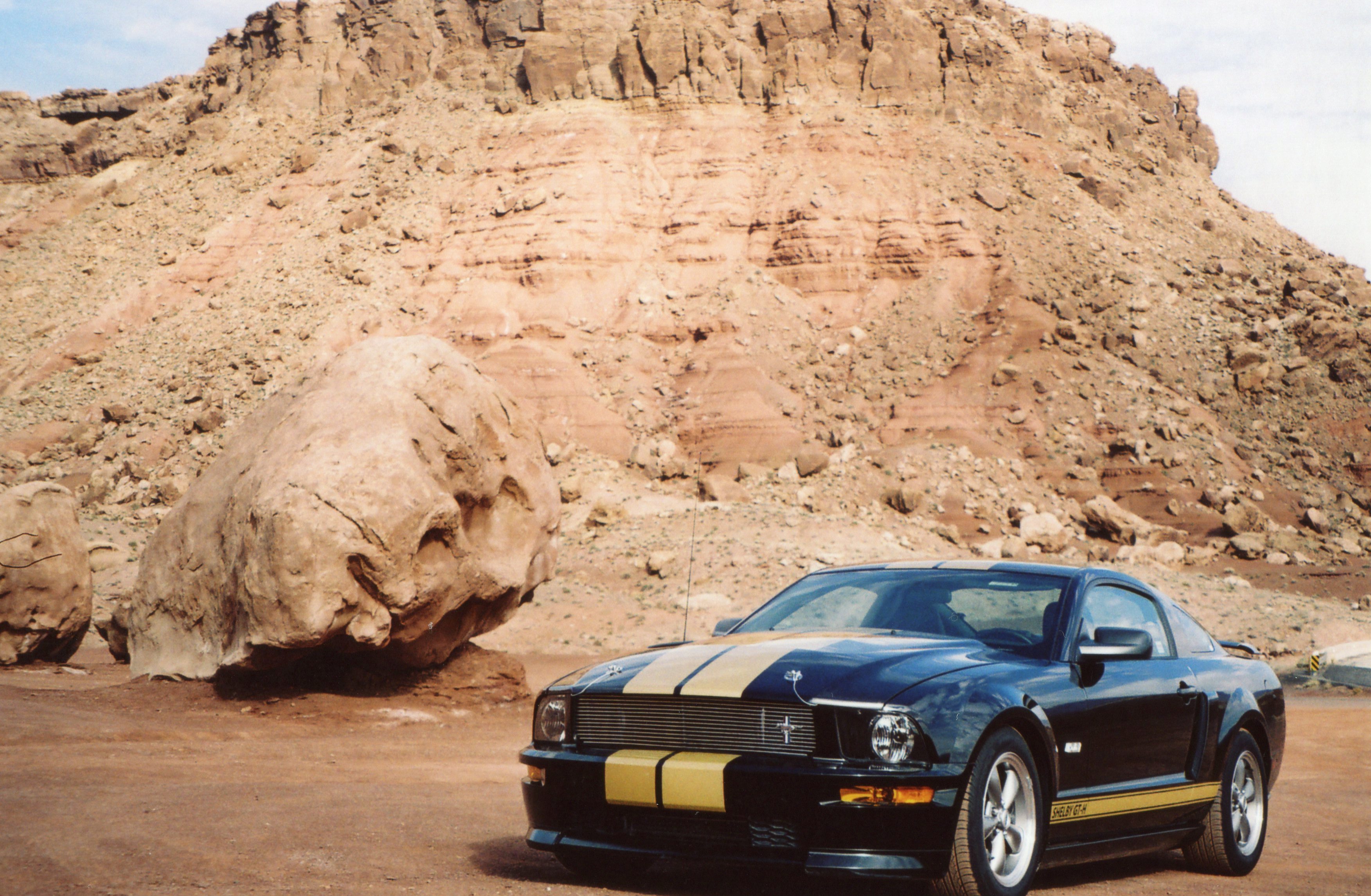
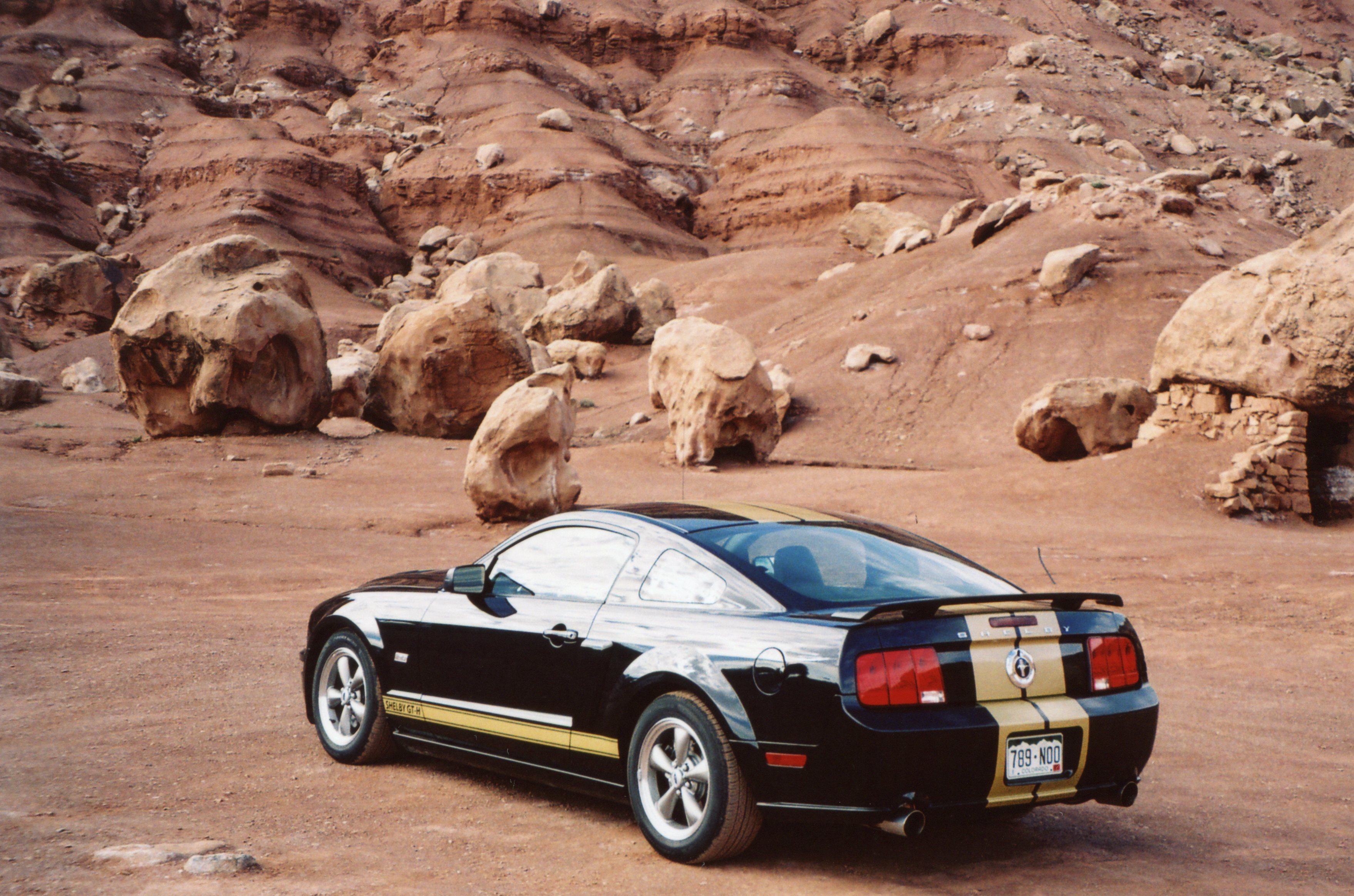
The car looked sharp in its black-and-gold livery, and was an absolute blast to drive. Even with an automatic, the fun factor was off the scale. The car made all the right sounds, and the steering, brakes, and handling were eons above my ’68, no surprise given the almost 40-year spread between the two Mustangs. For the first time in decades of renting cars, I didn’t want to return the rental.

We found a scenic rest area for photos


I lucked out; the light was just right for this picture

By the end of 2006, Steve and I were already talking about repeating the use of the ‘Stang in the 2007 NE 1000. I was game. The car was up to it, but there were still a few things on my punch list to attend to.


All photographs copyright © 2017 Richard A. Reina. Photos may not be copied or reproduced without express written permission.

Turning wrenches on your old car: When things go right

My first full year as the owner of a 1968 Mustang California Special was proceeding nicely. In April of 2004, the car successfully completed a 2,200 mile round-trip to Nashville for the MCA (Mustang Club of America) 40th anniversary event.

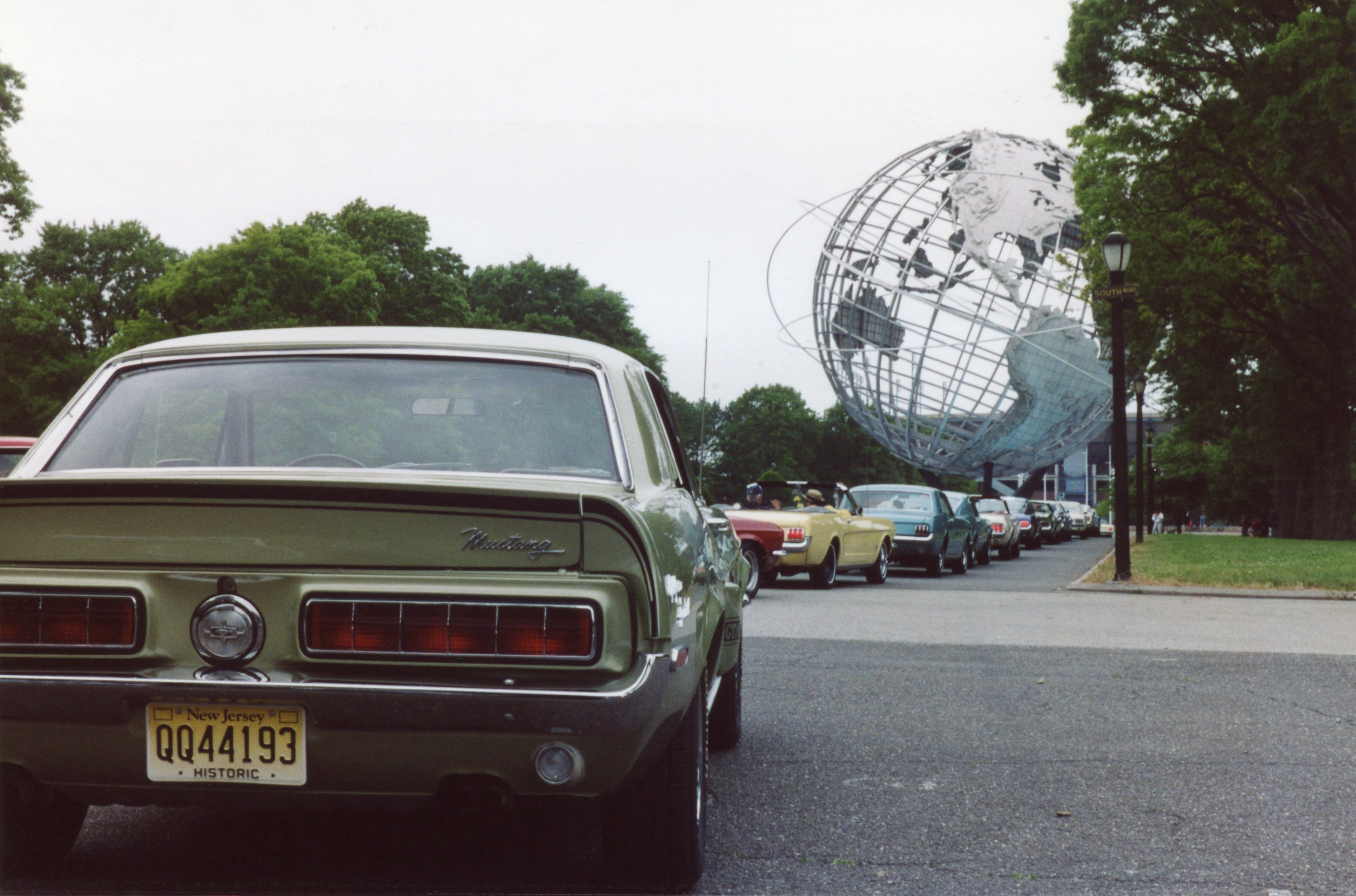
A month later, on Memorial Day Weekend, the Garden State Region Mustang Club (GSRMC) extended an invitation to attend a Ford Motor Company-sponsored event in Flushing Meadow Park in Queens, NY, site of the 1964-1965 World’s Fair, and site of the introduction of the first Mustang. The response from club members was enthusiastic, so early on Sunday morning of that weekend a large lineup of Mustangs caravanned through midtown Manhattan, arriving at the park by 10 a.m. Besides the GSRMC, the only other Mustang club invited was the Long Island club. Estimates of the total Mustang count was close to 100. My GT/CS was the only one of its kind there.

Waiting for the parade to start


For Ford, this was a marketing and PR stunt, as the all-new 2005 Mustang, which would not enter production until September, was represented by a pre-production prototype. Ford was looking for photo ops, so a ’64 ½ convertible was staged across from the 2005 ‘Stang. The stainless-steel Unisphere, one of the few remaining relics from the ’64-’65 fair, loomed in the background. A photographer, hired for the occasion, perched on a 10-ft. tall ladder.

One at a time, each owner was invited to drive his/her car across the cameraman’s field of view, stop between the two posed cars, lean out the window, smile, and move on. As you might imagine, this took some time. I used the downtime to take some of my own photos as we crawled in the queue. Eventually, I had my picture taken, and headed home.


The official photo; cloudy all day, the rain held off until the drive home

Rally brother Steve and I had started to make some noise about possibly driving the Mustang in next year’s New England 1000 rally. With that on my mind, it seemed that the winter of 2004-2005 would be the ideal time to tackle the leaky heater core. My collector cars are usually off the road for the winter, so I would have the time I’d need to get this done.

On a Mustang with factory air such as mine, the heater core and A/C evaporator reside together in a fiberglass box under the passenger side dash. Following the factory-recommended procedure, I began the disassembly that would grant me access to said box. My A/C was inoperative, with zero pressure in the system, so no further harm was inflicted onto the ozone layer when I broke open the evaporator connections.

Much of the dashboard and instrument cluster needed to be removed, so I used this as an opportunity to replace other worn parts (more about that in a bit). Most of the wrenching was straight-forward. If there was a tricky part, it was keeping track of the various color-coded vacuum lines that operate the blend doors. I knew that new vacuum line kits were available, so that was added to the shopping list.

Heater box birthed from car; dum-dum repair at corner was dumb

With the box out of the car, my heart sank to see that it was cracked; actually, a chunk was missing from one corner. I also knew that boxes were not available in the aftermarket, so the heater box was repaired with fiberglass matting and epoxy glue.

Fiberglass fix didn’t need to be pretty

Along with a new heater core, I was able to order a new foam heater box kit. All blend doors as well as the core itself got new foam seals. Having come this far, I thought better of reinstalling the dash pad, which was warped, and the woodgrain instrument cluster surround, which had lost most of its chrome. These parts were readily available from various suppliers, so new ones were ordered and installed.

Wood and clamps hold foam while glue dries

Near the end, I worked as long as my patience would allow to line up the new aftermarket dash pieces. Of course, they did not fit as well as the originals. Eventually, I got it to the point that only I would notice any misalignment.

Repaired box about to be reinstalled. A/C evaporator was also new

Did the new heater core work? You know the drill: Add fresh antifreeze; turn on the heat; pray that nothing leaks.

Nothing leaked. The car had tremendous heat output, and anyone riding in the front seats would have toasty dry toes. This would turn out to be a huge benefit during the running of the 2005 New England 1000.


All photographs copyright © 2017 Richard A. Reina. Photos may not be copied or reproduced without express written permission.