On the evening of November 18, 2016, the AACA Museum in Hershey PA officially opened its “Amore della Strada” Italian machinery exhibit with a reception at the museum. The public was invited to attend, and turnout was large, making for crowded aisles. The doors opened at 6pm, and your $20 admission included antipasti, beer, and wine. Those who owned cars on display were admitted “gratuito”.
Italian cars come in colors other than red!
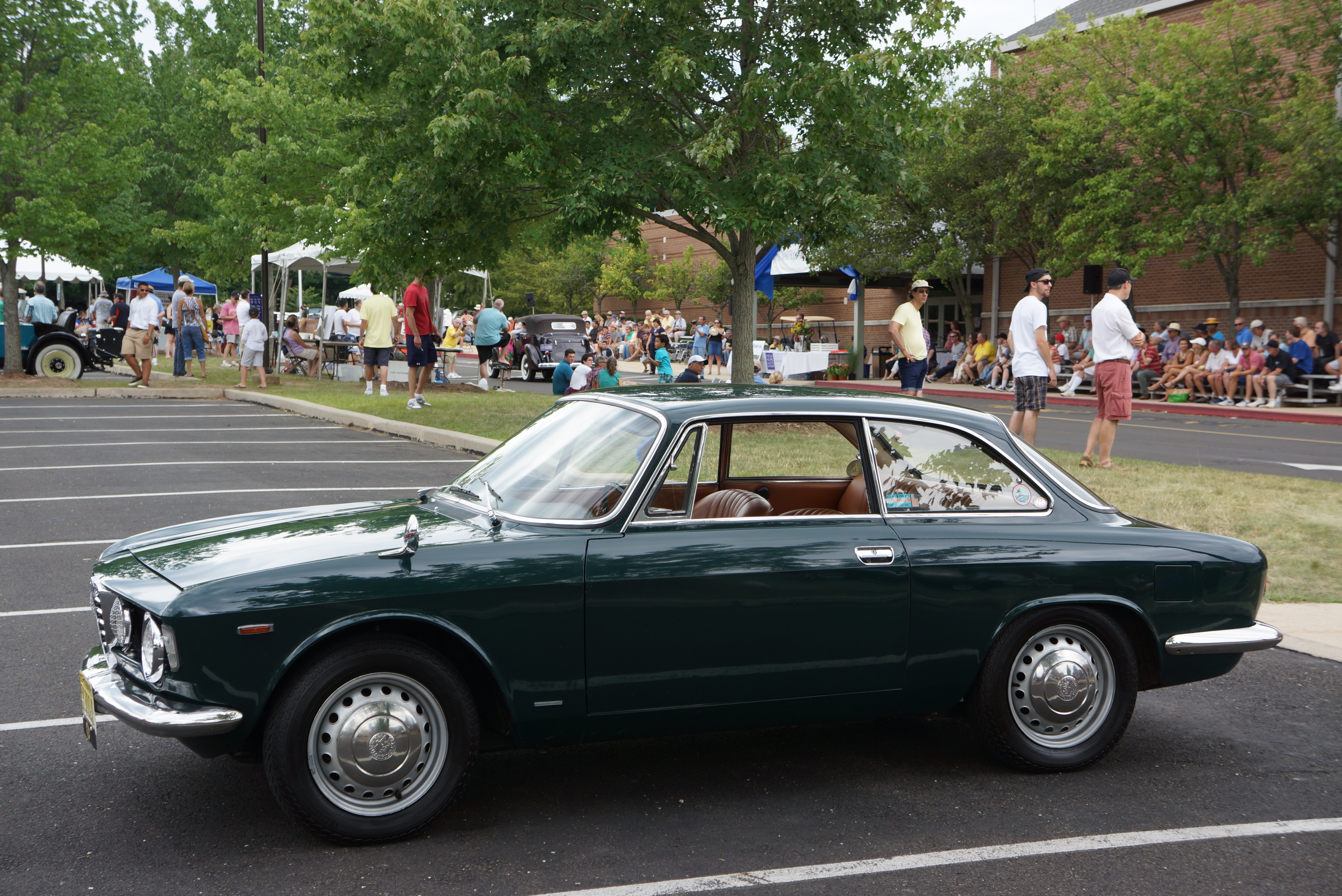
There were approximately 20 Italian cars, and perhaps a dozen or so Italian motorcycles. The museum is arranged in such a way that there was no practical way for the curators to place all the special exhibits together. Therefore, they were arranged in smaller groups of 2, 3, 4, or more, and placards with each vehicle provided sufficient history regarding the make and model. Owners who were loaning their wares for the five-month duration of the show were dutifully acknowledged. (Last week’s blog entry covered this author’s drive to deliver his ’67 Alfa Romeo GT 1300 Junior to the exhibit.)
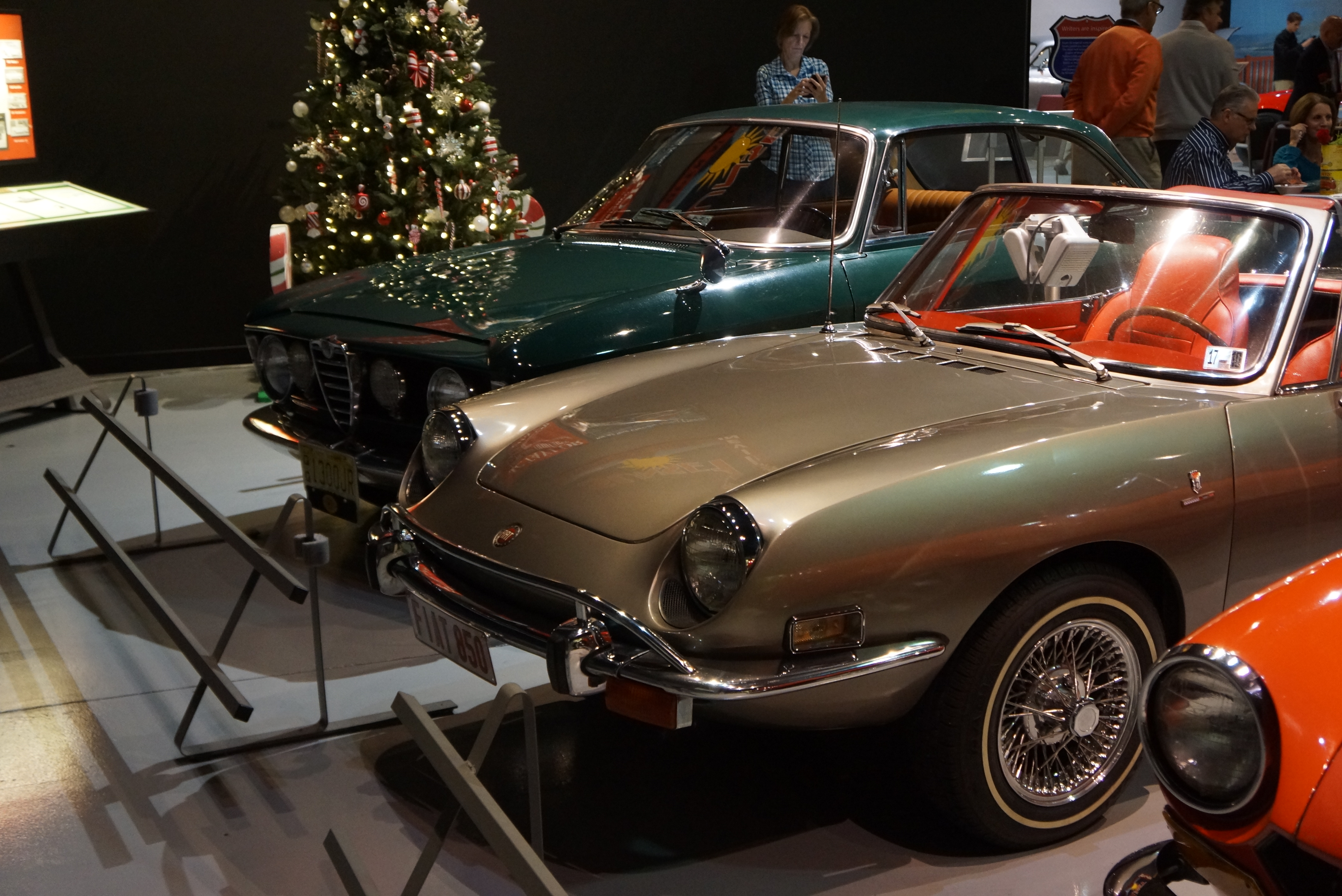
Fiat, Alfa, and Christmas tree
Fiats and Alfa Romeos seemed to comprise the bulk of the vehicle displays, and some might agree with me that it was a refreshing change of pace for an “Italian Car Show” to NOT be dominated by late-model supercars from the Big 3 of Ferrari, Lamborghini, and Maserati. (Of these three makes, I counted only two Ferraris.)
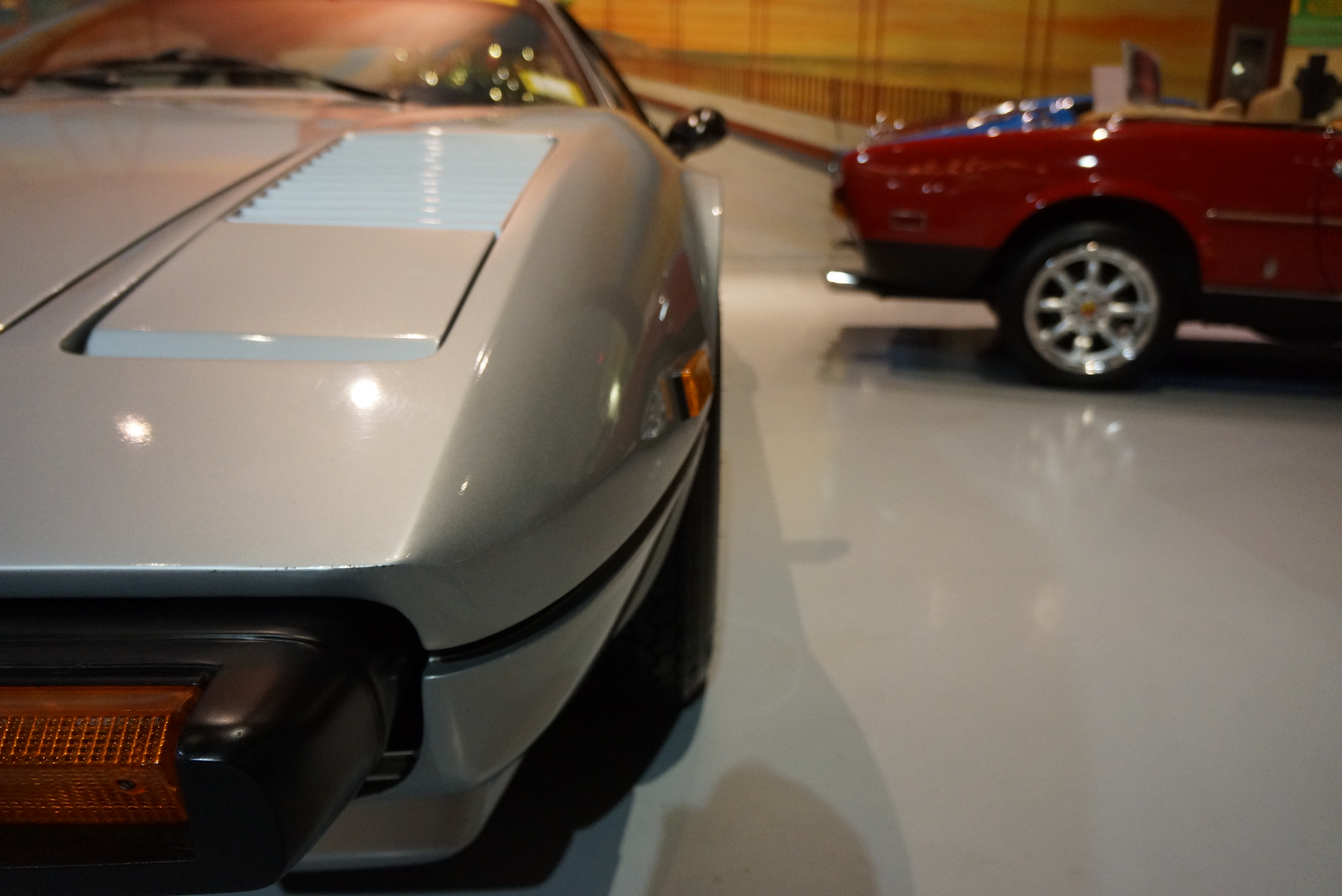
Ferrari 308GTB shares floor space with modified Fiat 124 Spider
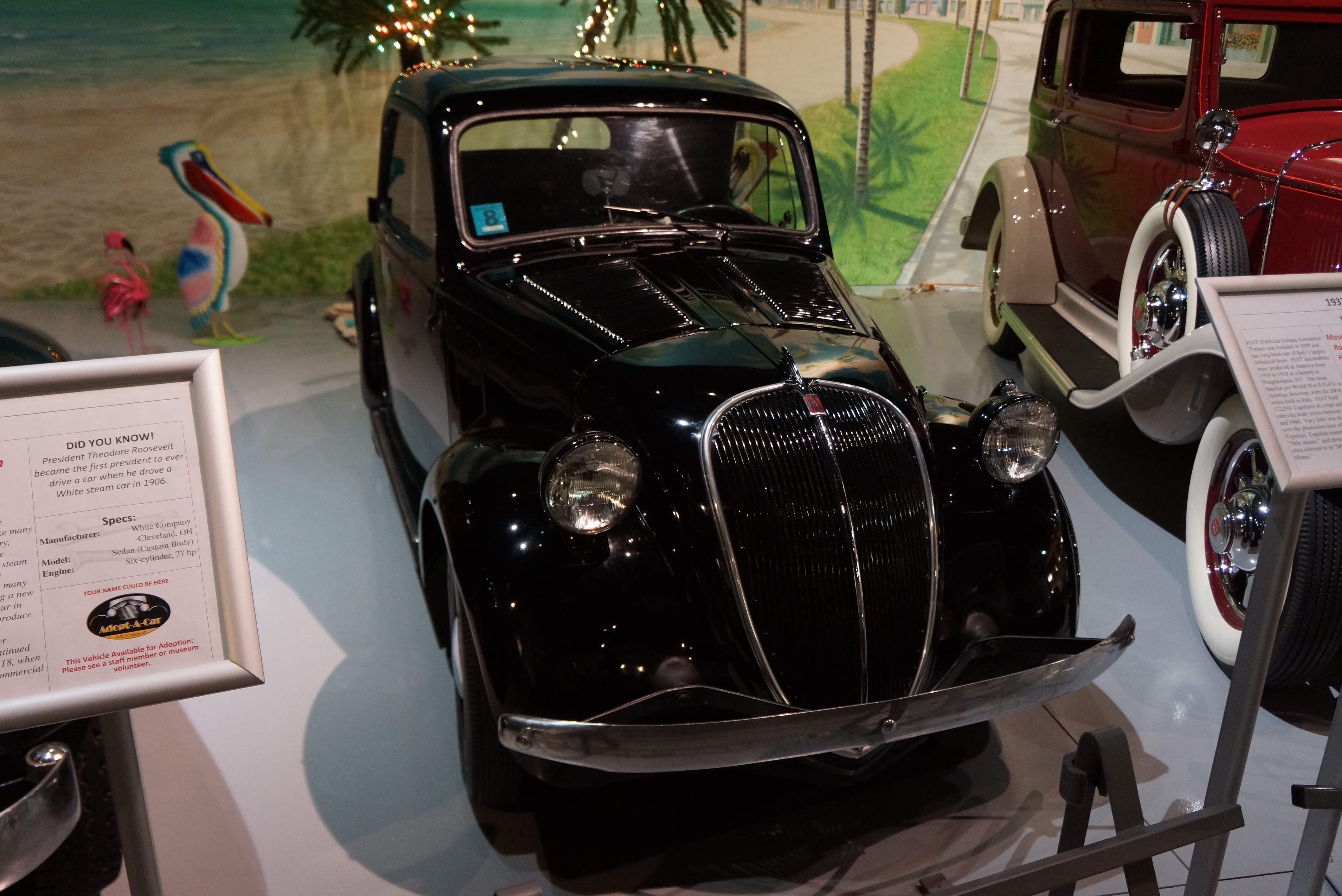
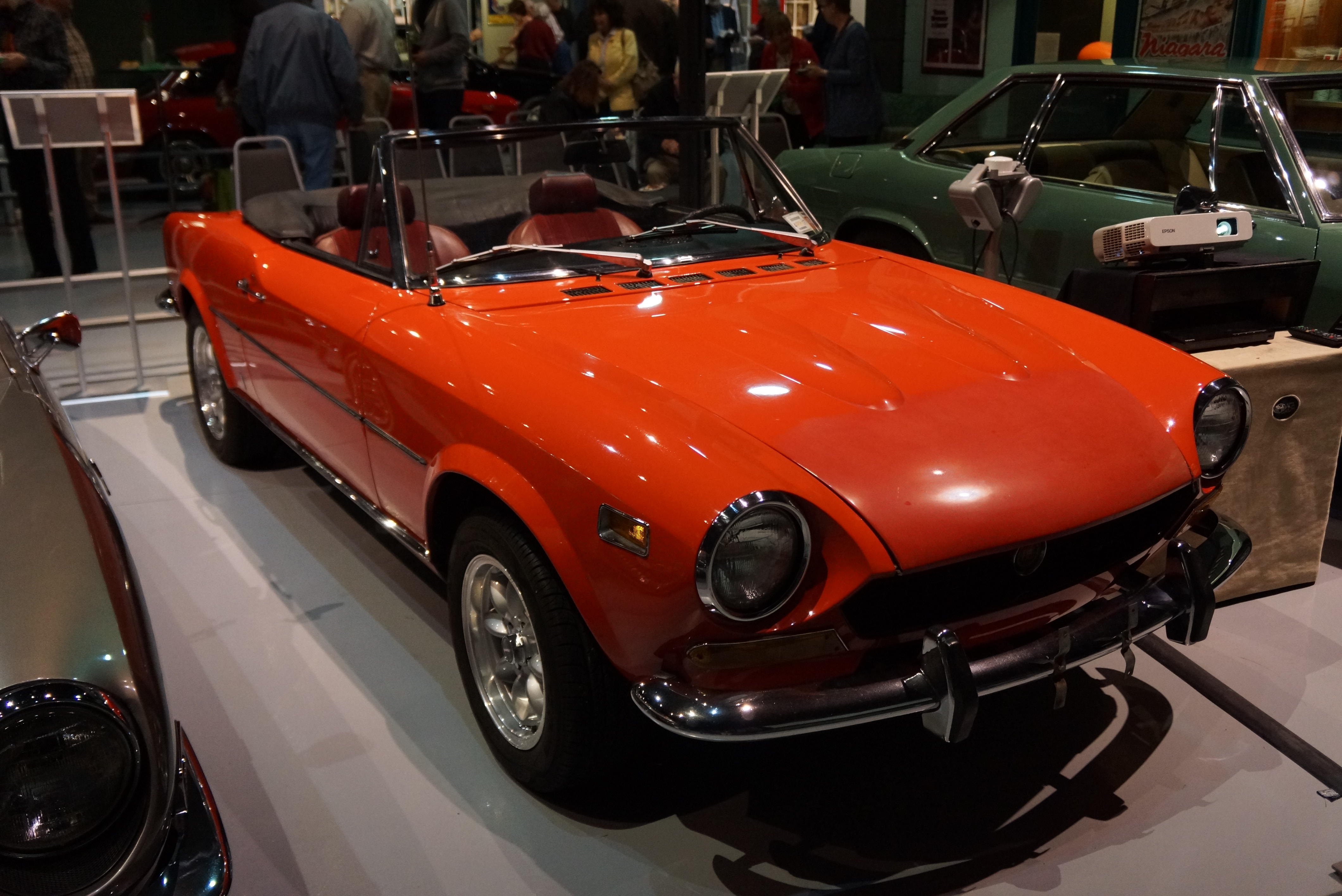
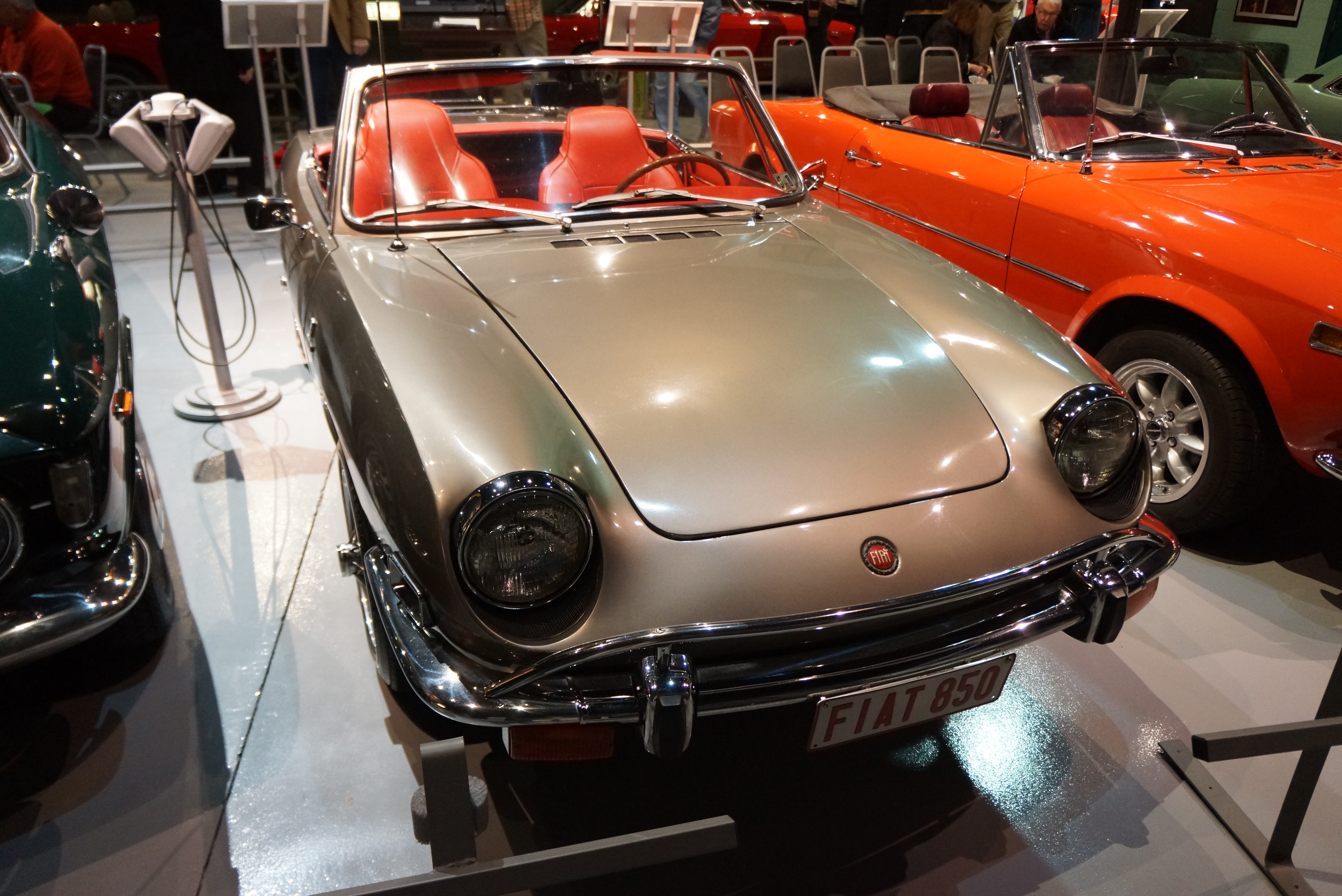
Among the Fiats, we saw three 124 Spiders, two X1/9s, and an 850 Spider. The X1/9s were a study in contrasts, as the bright green one was a first year example wearing the original bumper-less design, while the white one from 1987 wore no Fiat badges at all, as it was manufactured and sold by Bertone, and badged as such, since Fiat left the U.S. market after 1982. The only Italian prewar car on the floor was a delightful 1937 Fiat Topolino (Little Mouse).
Adorable 1937 Fiat Topolino (owned by AACA Museum)
1974 Fiat X1/9 – note lack of battering ram bumpers
1987 Bertone X1/9, one of the last of the breed
Nose of ’87 X1/9 wears this in place of Fiat badge
Early chrome bumper 124
Later 124 with bumpers removed
Fiat 850 Spider
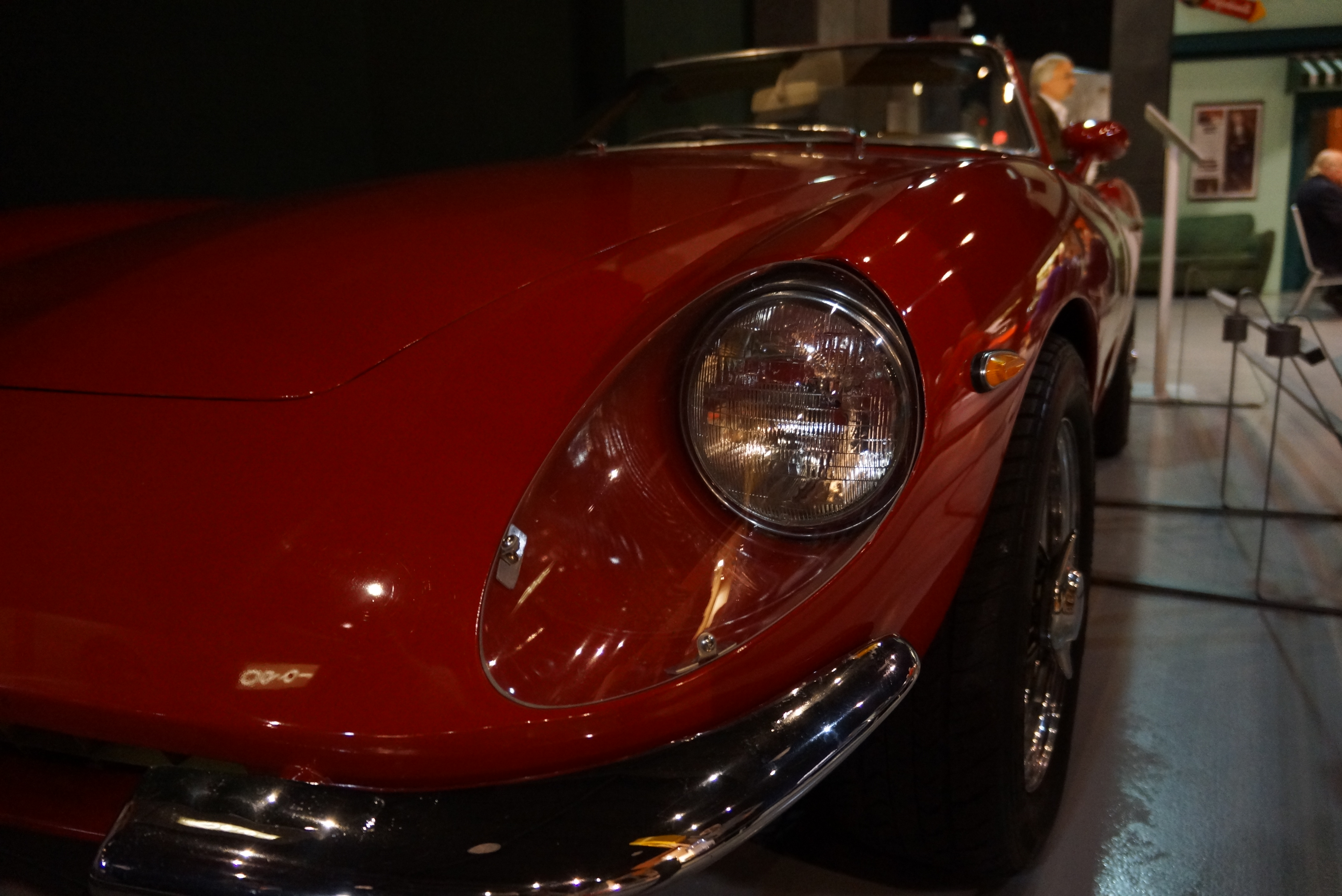
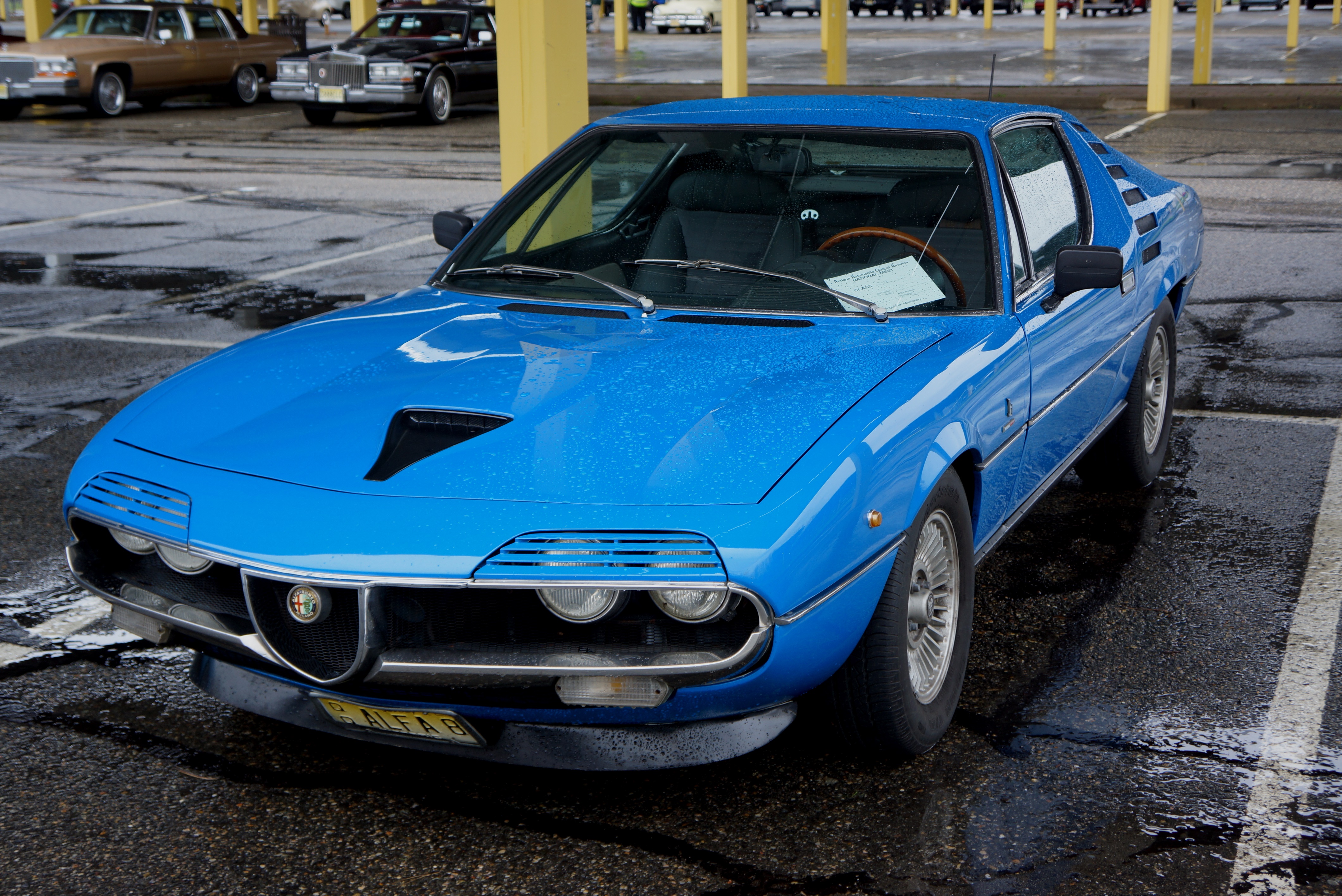
The four Alfa Romeos included two Giulia coupes, one early step-nose and one 2nd generation design, a rare Montreal Coupe (with a factory V8), and the last Alfa sold in the U.S. market (until Sergio’s recent resurgence), the large front-wheel-drive 164 sedan.
This ’67 has step-nose front
This ’74 has redesigned front
Owners Ed and Shayna Geller with their stunning Alfa Montreal
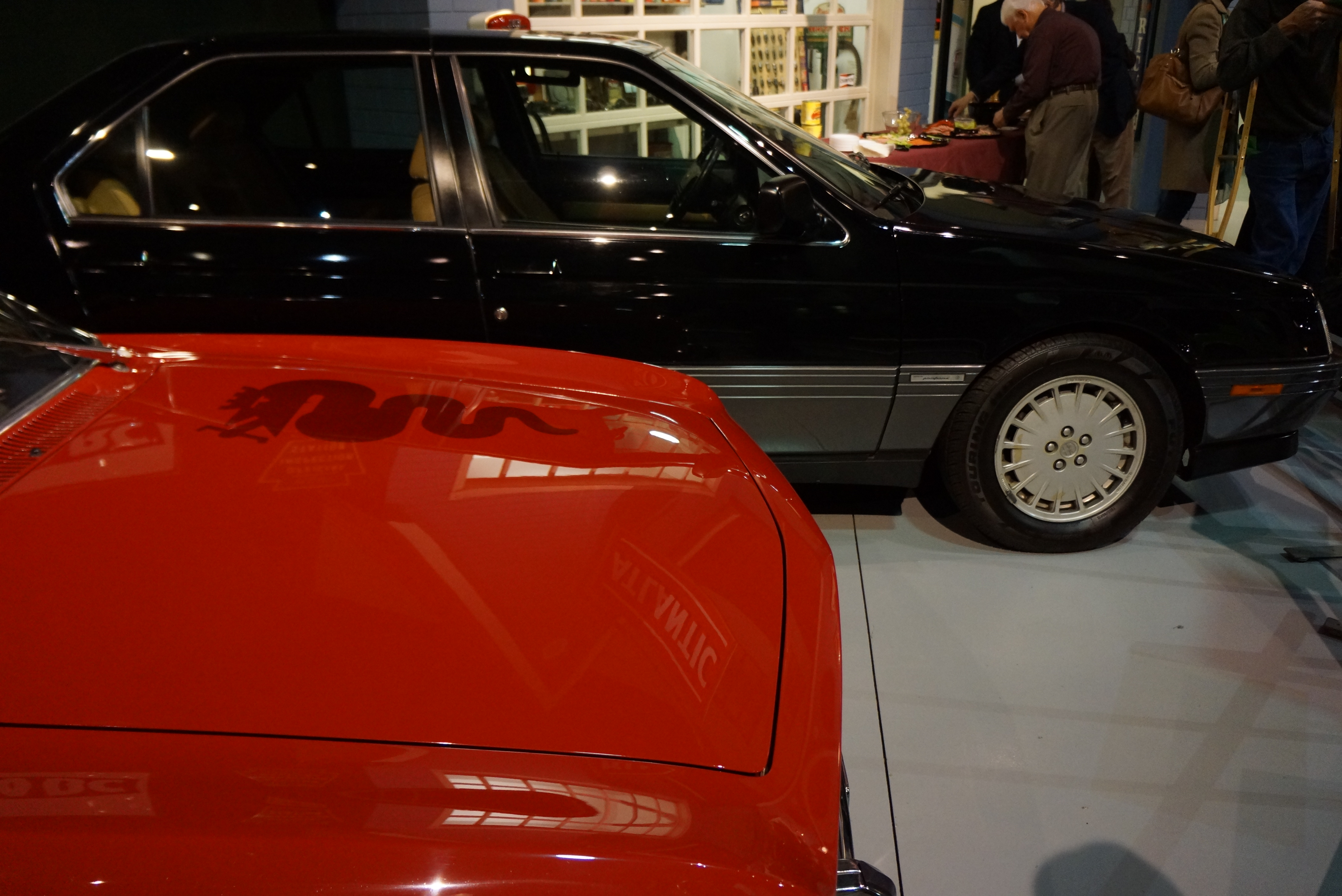
Alfa GTV in red, Alfa 164 in black. Snake eats man; it’s part of the Alfa legend.
Yes, there were speeches too
The show included vehicles that required an explanation how they passed the entrance exam, as two of them had big American V8 engines, and one had a British 4-cylinder lump. The DeTomaso Longchamp and Italia Omega are vehicles belonging to a class long known as ‘hybrids’ (decades before that term was used to describe a gas/electric vehicle).
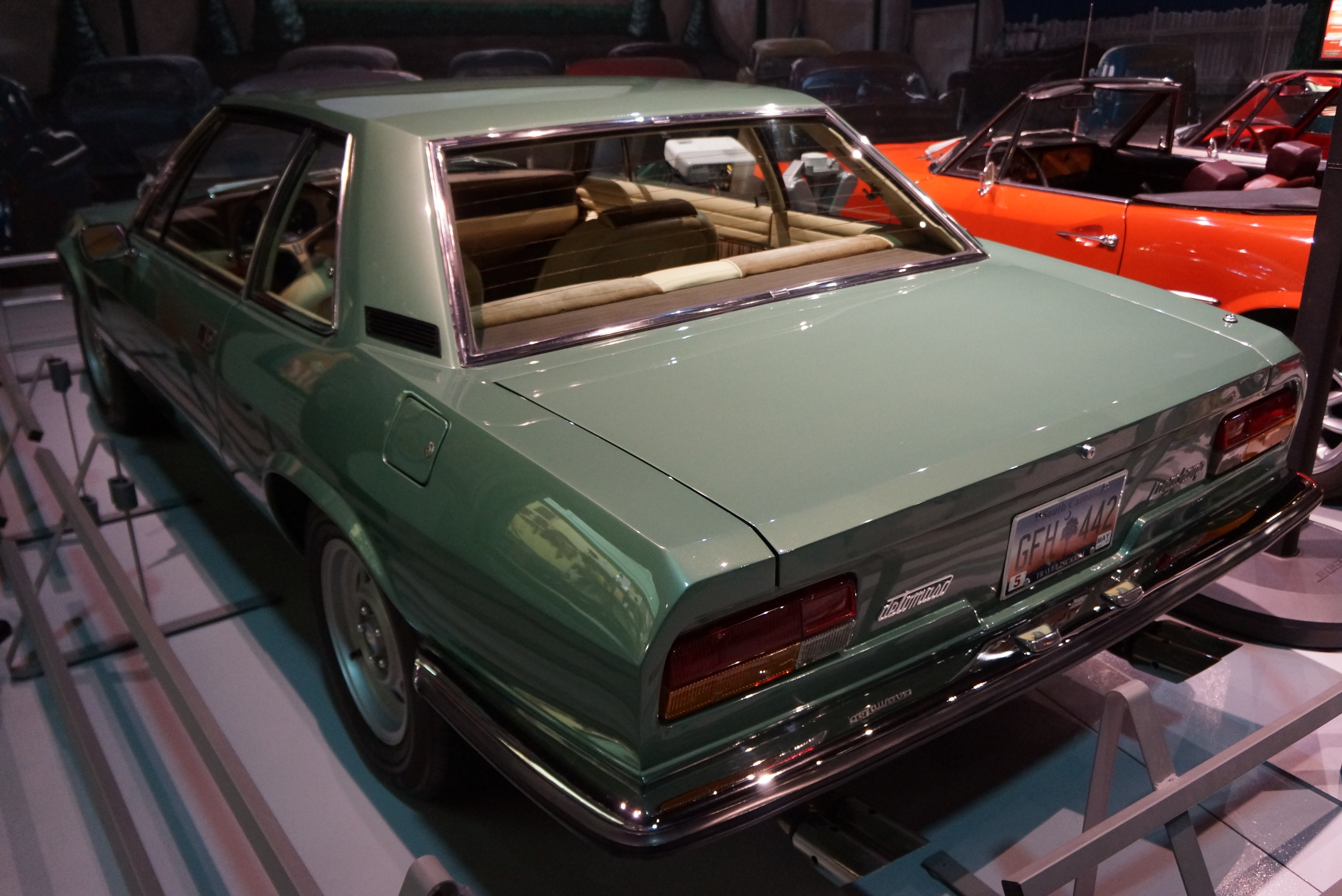
Most car aficionados have heard of the DeTomaso Pantera, sold here by Lincoln-Mercury dealers in the early 1970s. The Longchamp is the squared-off, four-seat sister to the Pantera. The one on display featured a Ford 351 Cleveland engine mated to a 3-speed automatic. I’ve seen many a photo of Longchamps, and this was the first one I’ve ever seen in the metal.
DeTomaso Longchamp
Longchamp rear shows hard edges
The car labeled as a 1967 Italia Omega is more familiarly known to me as an Intermeccanica Italia. Based on my reading of the car’s placard, the history of this car company is convoluted at best. (Indeed, none of the several import-based compilation books in my library make any mention at all of this company.) The vehicle in the museum was an attractive convertible, using a front-mounted Ford 302 V8 paired with a 4-speed manual transmission.
Italia Omega has LONG hood
Interior shows Italian sumptuousness
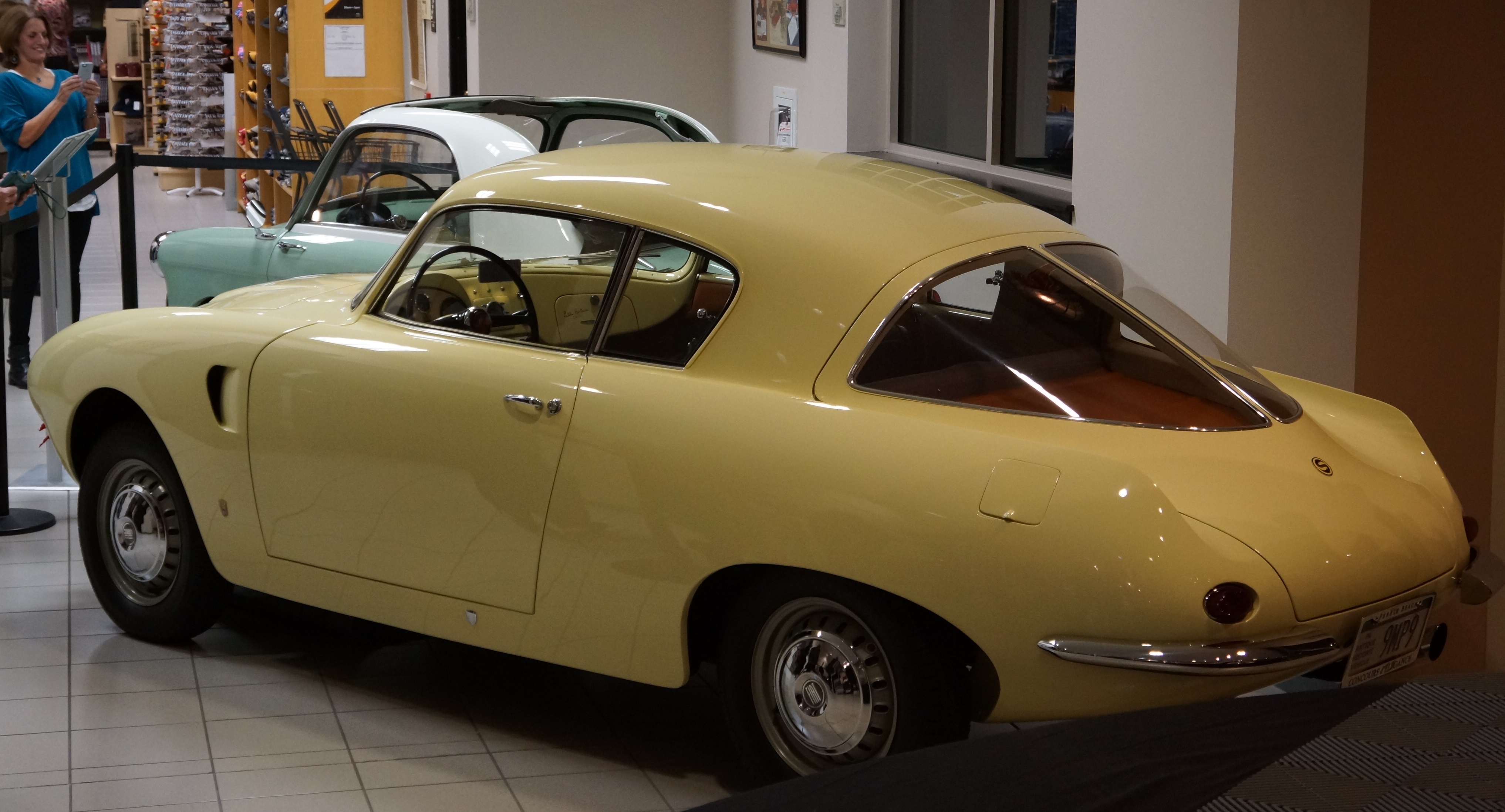
The 1961 Triumph Italia on display is one of 329 built. While the design is certainly in the Italian mold, the sheetmetal hides what is essentially the drivetrain and chassis of a stock Triumph TR-3. One of the outstanding features of the Italia is that it is the handiwork of a young Giovanni Michelotti, who would later pen the restyle of the TR-4 into the TR-6.
1961 Triumph Italia, with TR-3 mechanicals
Scan through the photos below for shots of other vehicles which were on display. (And as always, click on any of the photos to enlarge them.)
Among the motorcycles, which are not my primary interest, I could not help but be drawn to the 1958 Iso Moto, built by the same company that originally designed the Iso Isetta. Like the Longchamp, it was a first for me to actually see one of these in person.
The “Amore della Strada” exhibit runs through April 22, 2017. There’s plenty to see at the Museum besides the Italian stuff. If you’ve never made the trip, this is a good excuse to do so. If you have, the Italian cars are a nice addition to what you may have seen before.
1960 Fiat Autobianchi
1954 S.I.A.T.A, with Fiat 8V engine
1957 Vespa 400, designed in Italy but built in France
1971 O.T.A.S. 820 Grand Prix, built on Fiat 850 chassis
This 1954 Fiat 1100 wears custom bodywork reminiscent of the Alfa B.A.T. cars
Unlike the cars, the bikes fit into one room
Yes, it’s an ISO; same parent company as the Isetta and the Griffo
The Antique Automobile Club of America (AACA) hosted their Eastern Division National Fall Meet for the umpteenth (61st) time in Hershey PA during the first week of October this year. As someone who has attended “Hershey” at least 25 times over the years, I find myself asking “what is it that keeps drawing the crowds?”
Car Corral merchandise lines up on the perimeter road
After all, as has been reflected in numerous posts here as well as within every publication which covers collector cars, the old car hobby has changed in so many ways. The Internet, obviously, has driven transactions online. The greying of the hobby means that the aging boomers, who may finally have the means to buy that dream car, will buy it not as a project, but as a restored, ready-to-go vehicle, and may pursue that dream at an auction. Younger generations are not showing interest in 25-year-old and older stock vehicles, and frankly may be reluctant to join a club with the word “Antique” in its title.
Bargains still available, you supply the labor to restore
This blog has now been up and running long enough that some annual events are being reported for the second time. And so it is with Hershey. It may be instructive to revisit what was said a year ago: in essence, thanks in large part to its six-decade history, Hershey continues to be the go-to place for cars and parts which can be found in few other places, in person or online.
Two well-known hobby names in attendance
The sheer size of the event, with its combination of old-fashioned flea market, car corral, and judged car show can account for the crowds. (Again this year, the influx of foreigners was huge.) Weather may sometimes play a role (who remembers the Hershey mud?), but even that is a relic of the past, as the entire flea market and corral are on pavement.
Wooden road wheels and steering wheels
There certainly are things to see and do which cannot be duplicated on a tablet screen. For example, Hagerty Insurance, as they did last year, ran a “Search, Build, Drive” contest whereby they would purchase a project vehicle from the Car Corral, and bring it to running, driving condition using parts found in the flea market. And one more small detail: they challenge themselves to accomplish this within the 4 days of Hershey. You can read more about it here.
The Hagerty Team hard at work on this year’s Ford Model A project
Due to personal commitments, I was unable to attend Saturday’s judged meet this year. I did attend the RM-Sotheby auto auction, held about a mile away at the Hershy Lodge, which will be covered as a separate blog post.
Caffeine oasis in the flea market
The bulk of this post will be a report on a random sample of cars, domestic and foreign, in the Car Corral. While there are hundreds of cars for sale, I’m especially drawn to both imports and to orphan makes. Comments about each car follow the photos.
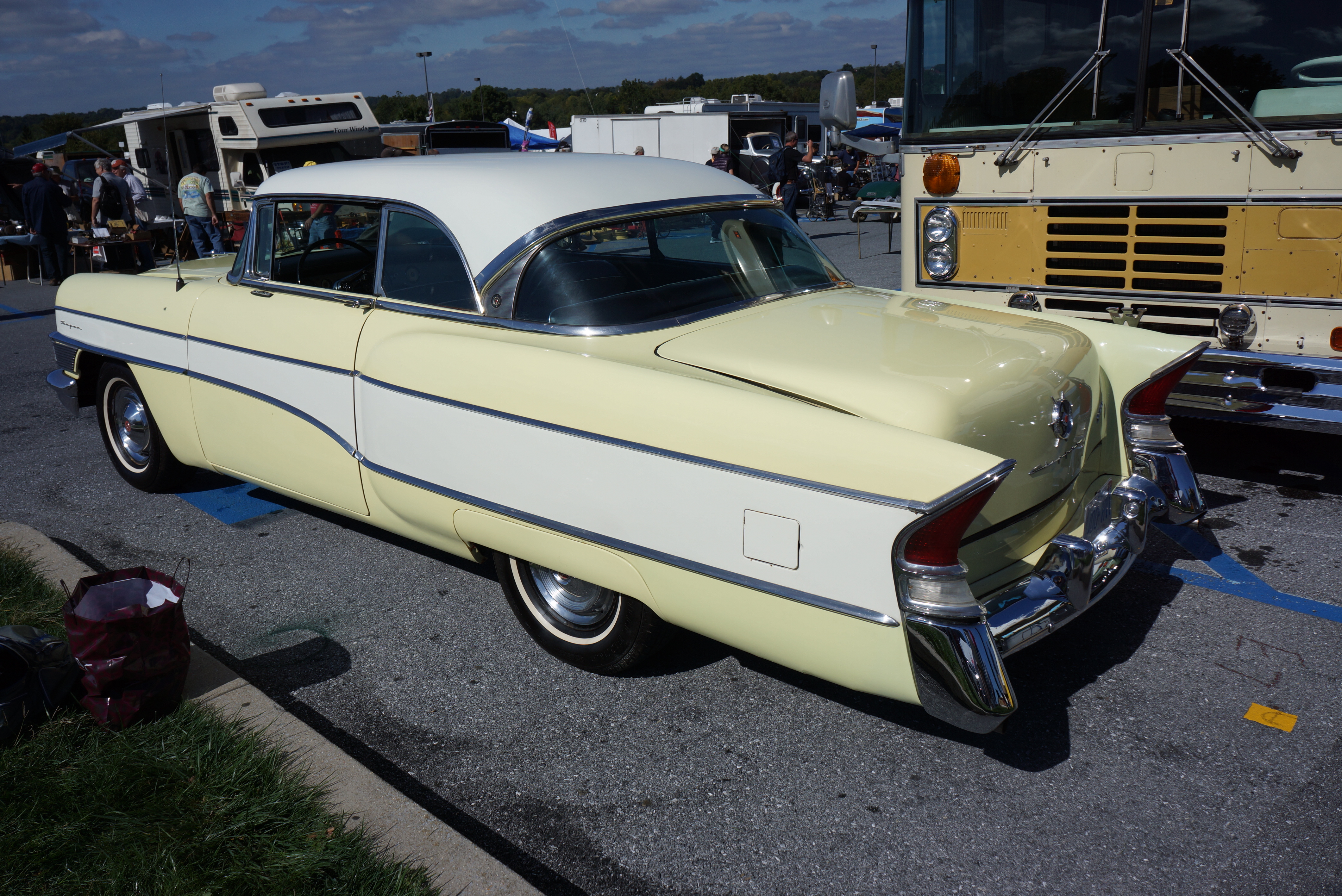
1956 “Clipper by Packard”
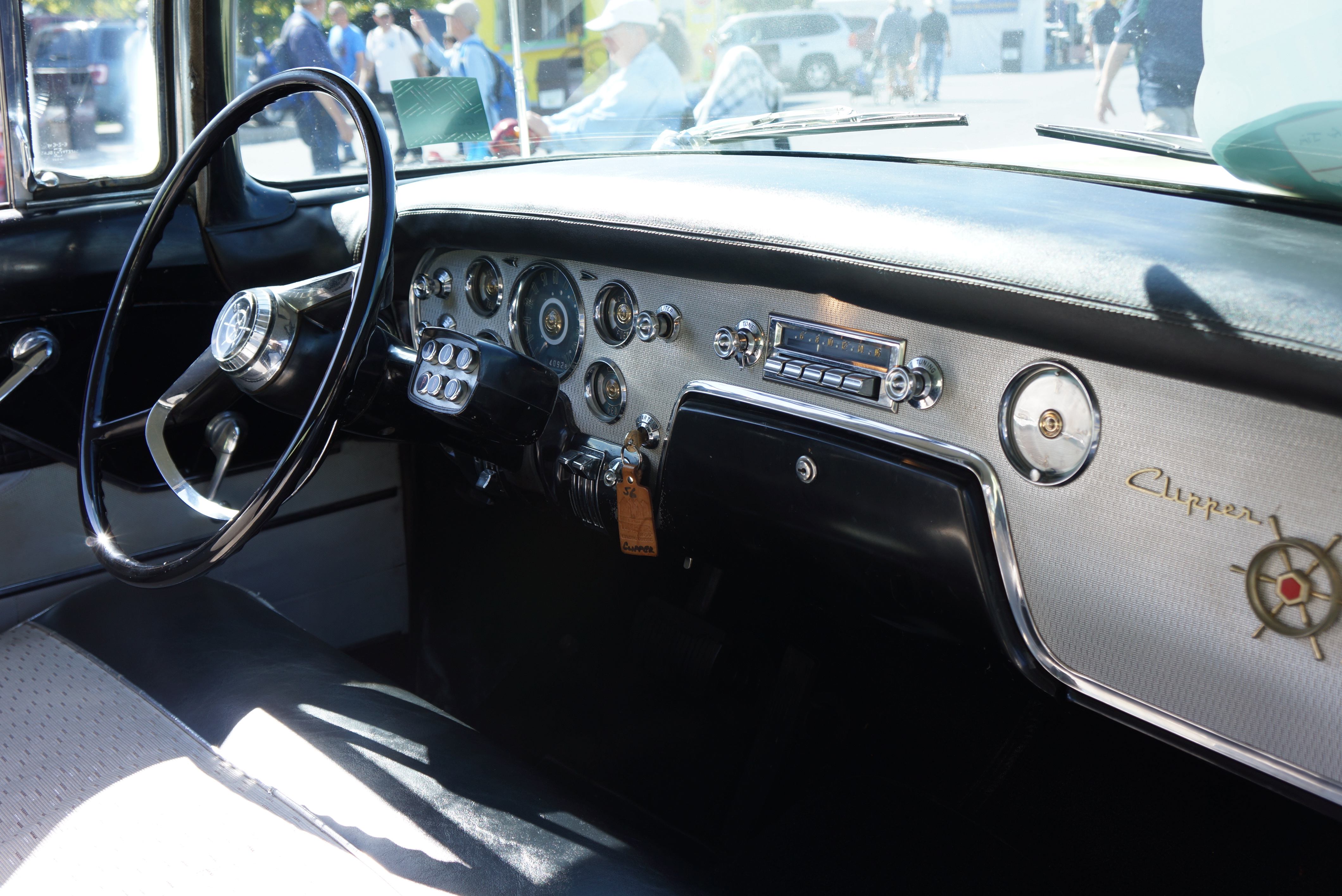
Dig the buttons on a stalk
This 1956 Packard Clipper 2-door hardtop was driven down from Ontario, Canada to the meet. It allegedly had 40,000 original miles, but much of the lower body was wavy with Bondo. The ask was $14,750. If that were Canadian bucks, it would be an even better deal.
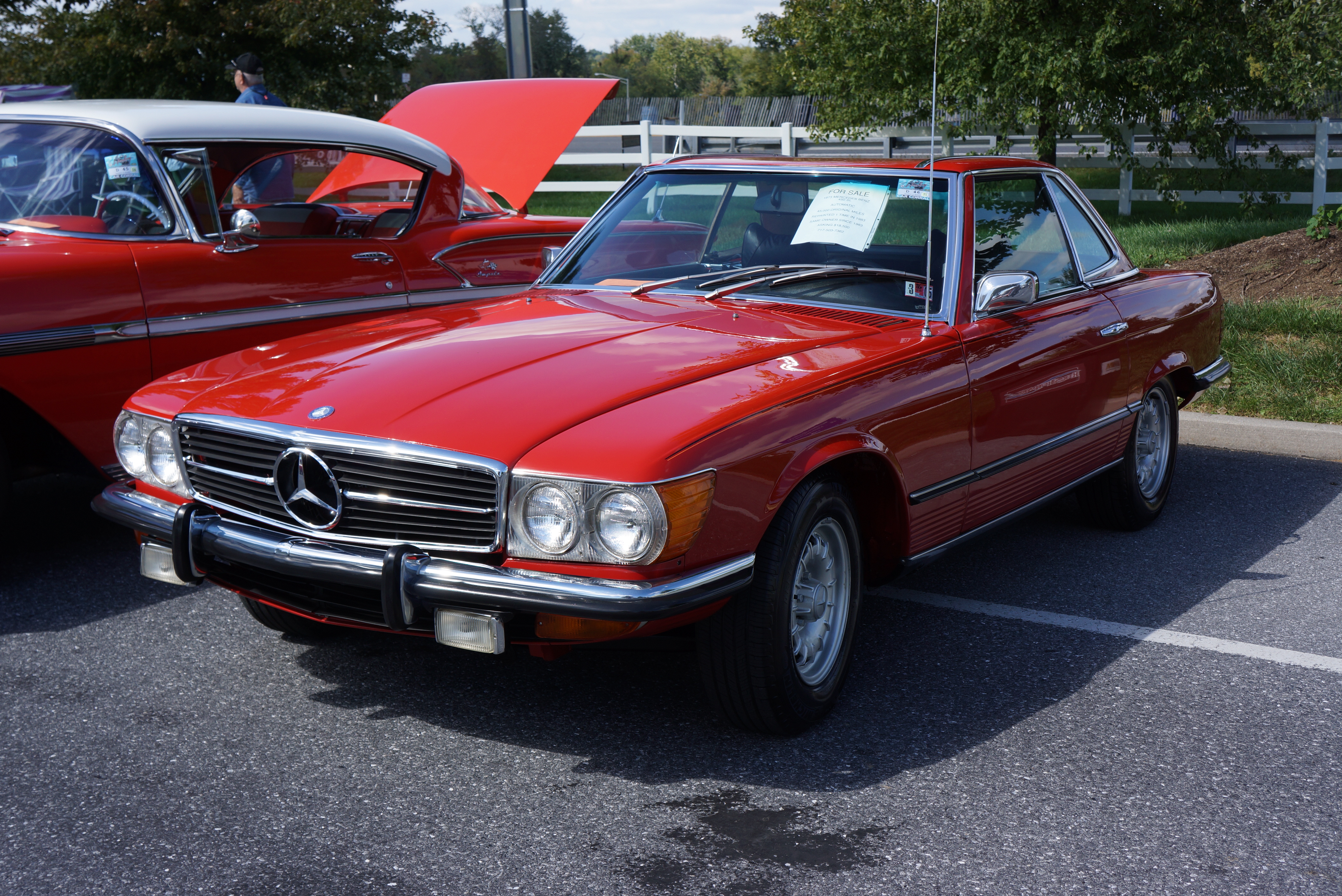
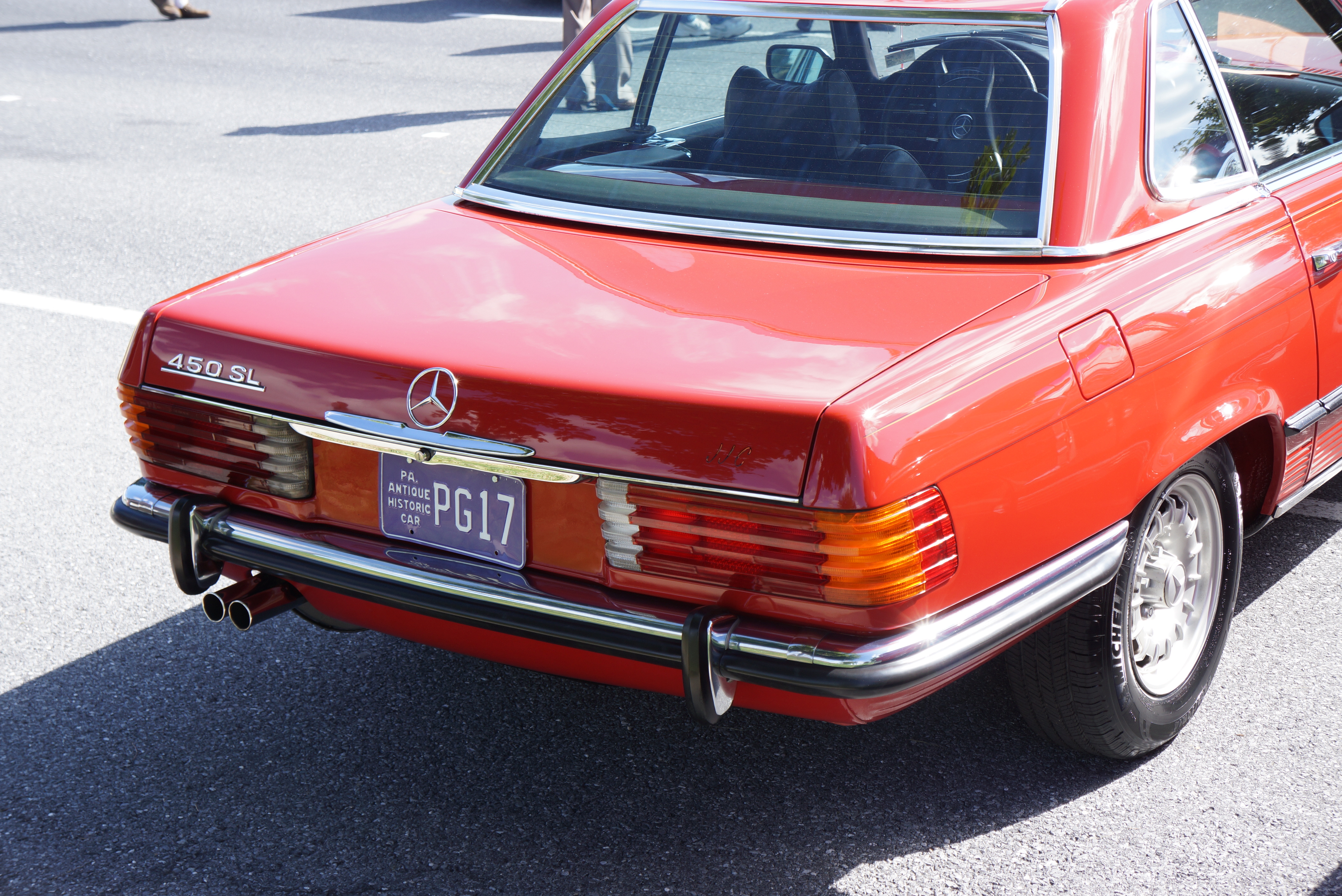
1973 Mercedes Benz 450 SL
Rear bumper as streamlined as front
This generation of the Mercedes-Benz SL (known as the “107” chassis to the devoted) was sold here from 1973-1989. We are so used to seeing them with their diving-board bumpers that we forget how elegant the original design was. This ’73 U.S.-spec car reminds us. This car claimed to have 45,000 original miles, and the owner was asking $18,500.
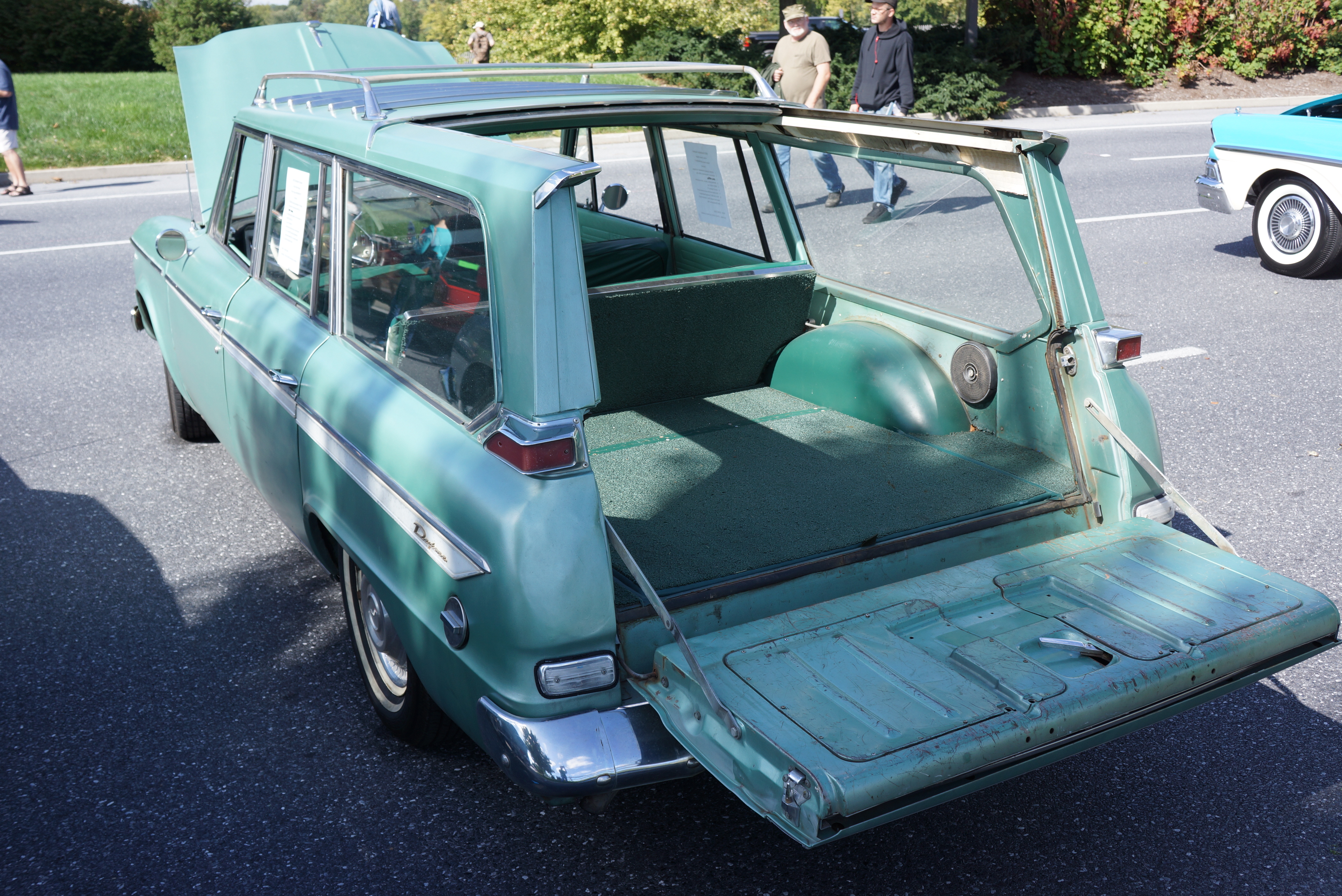
Wagonaire featured sliding roof panel
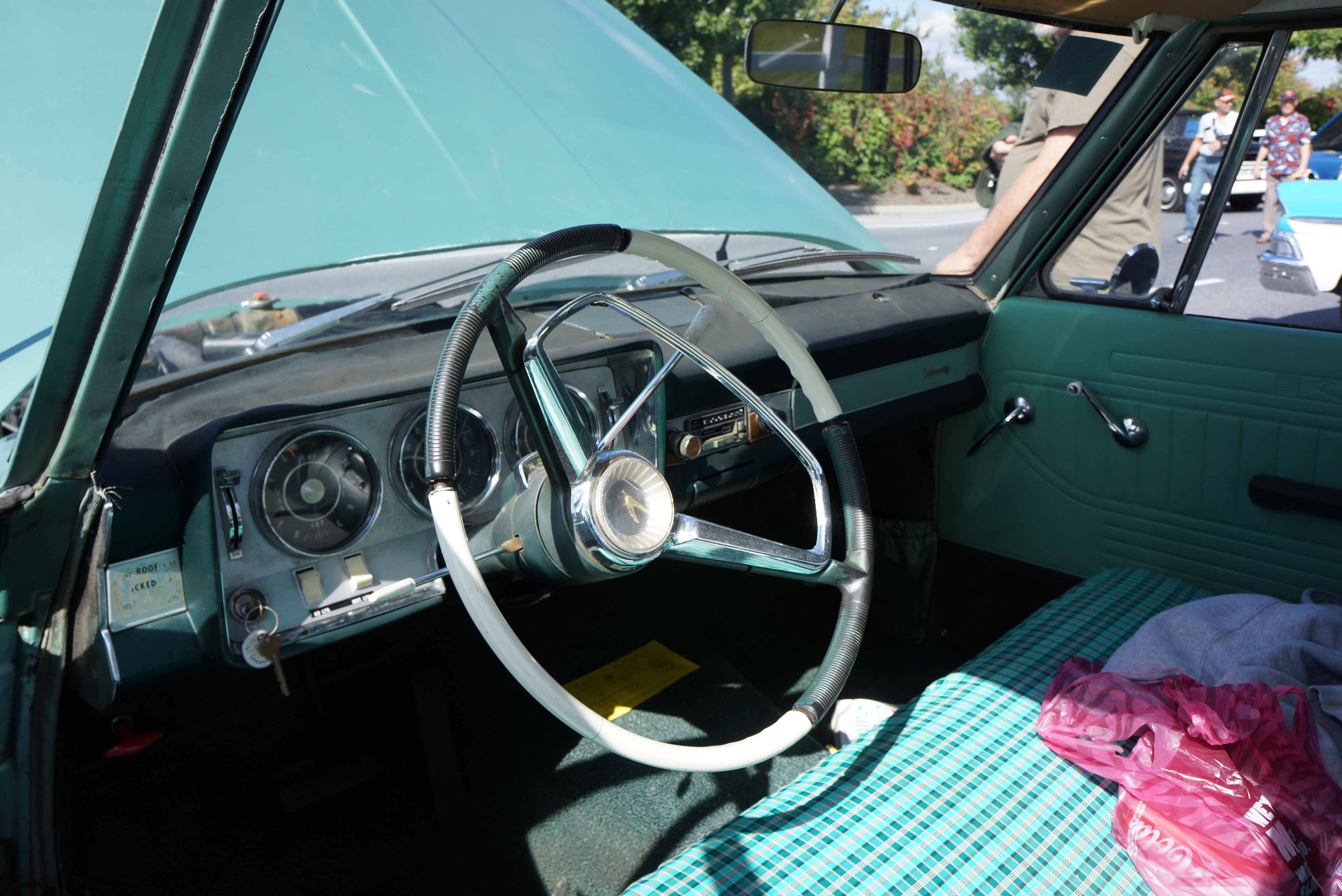
Wagonaire interior
This 1963 Studebaker Wagonaire was rough around the edges, but it looked like it was all there. Price was $7,500 OBO. It was the only one at Hershey.
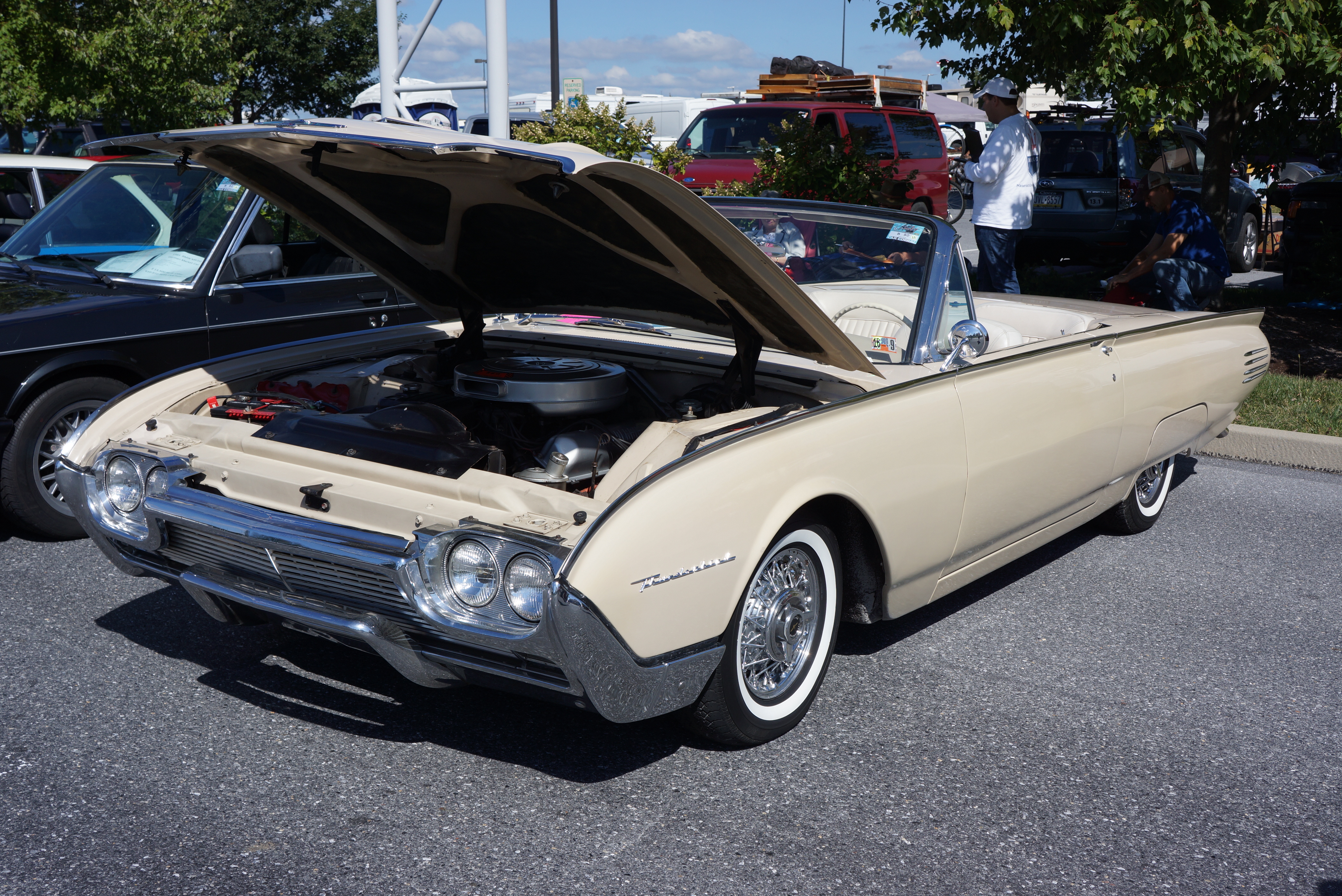
1961 Ford Thunderbird
T-Bird wrap-around dash
This ’61 T-Bird was claimed to be highly optioned with power steering, brakes, top, windows, and seats. It also had wire wheels. The beige-on-beige may not be your first choice, but I liked it. Asking $24,000 “cash! Priced to sell!”
1987 Alfa Romeo Graduate Spider
Alfa dash had gone electronic
The sign on this 1987 Alfa Romeo Graduate Spider gave little info other than “Low miles, $9,900“.
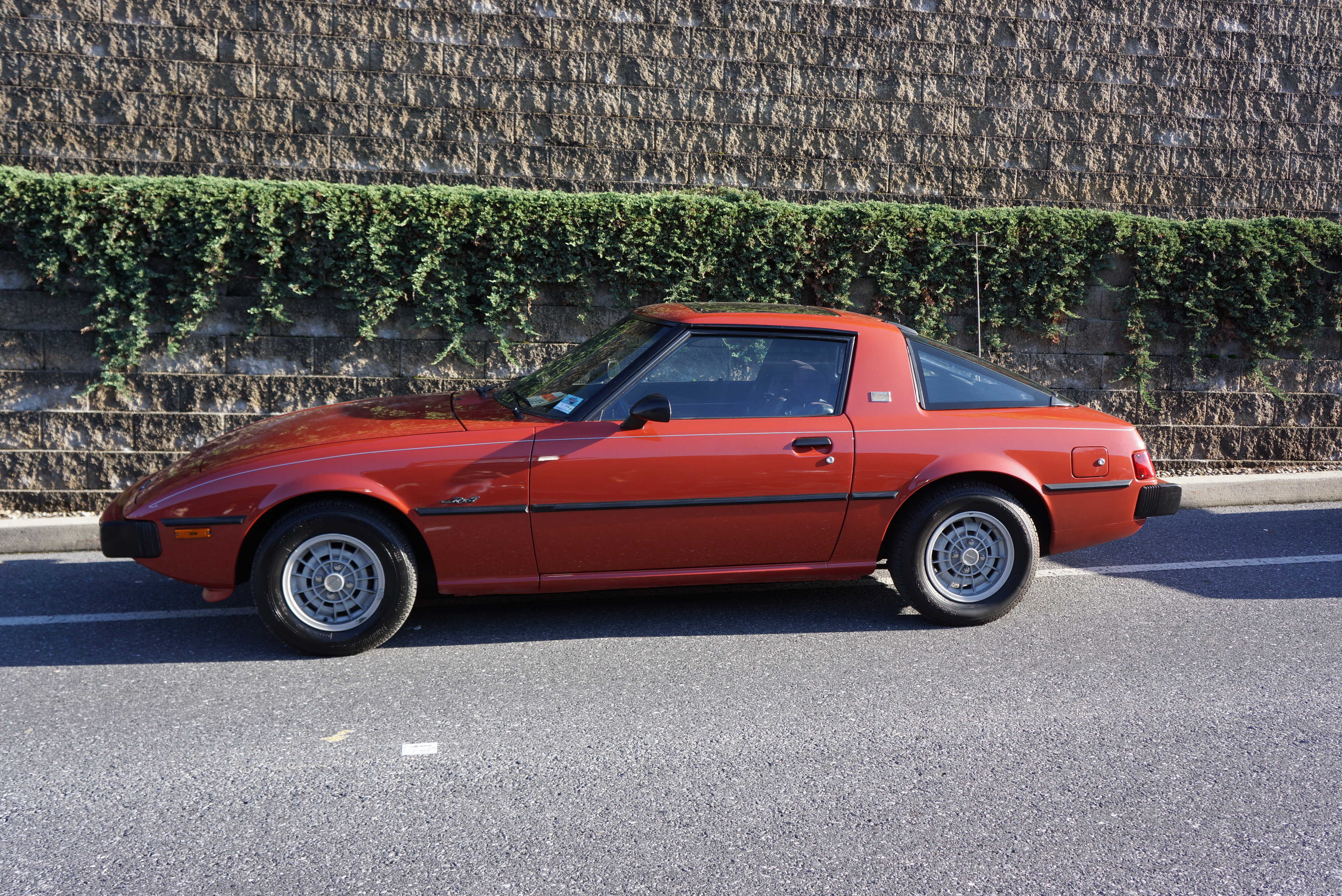
1980 Mazda RX-7
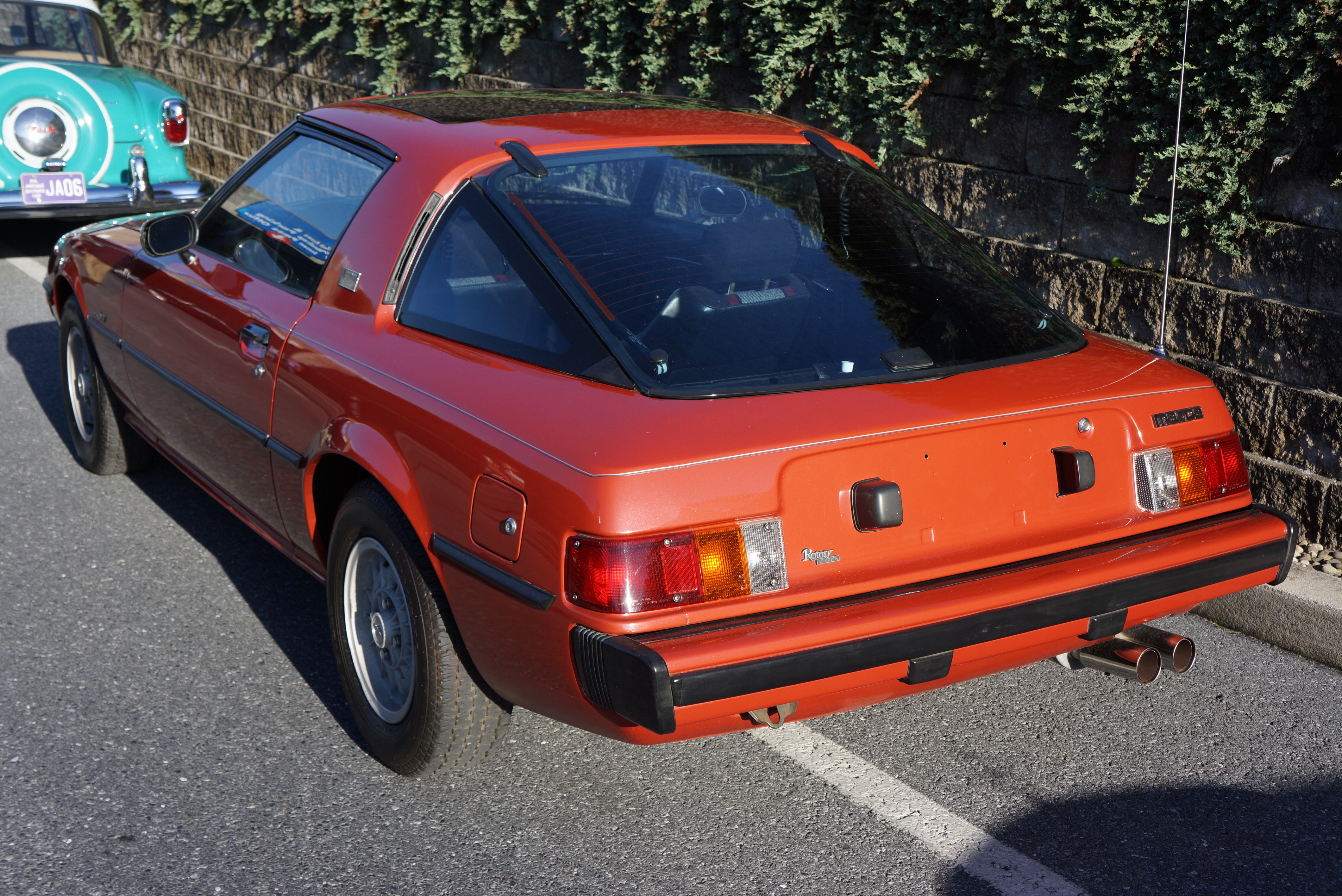
’80 still had original rear styling
This 1980 Mazda RX-7, a first-generation car, still wore the original tail light design, which was updated a year later. The sign claimed this car was an Anniversary Edition (whatever that is), and with 63,000 miles, the ask was $9,800.
1977 Jaguar XJ6-C
Interior shows auto, torn seat
This 1977 Jaguar XJ6-C is a rare 2-door version of the better-known XJ four-door sedan. My recollection is that 100% of these vehicles had factory vinyl roofs. This one’s was removed in favor of black paint. The car looked like it had needs, and these are known to be rust-prone, so check carefully before you pay the $12,500 asking price.
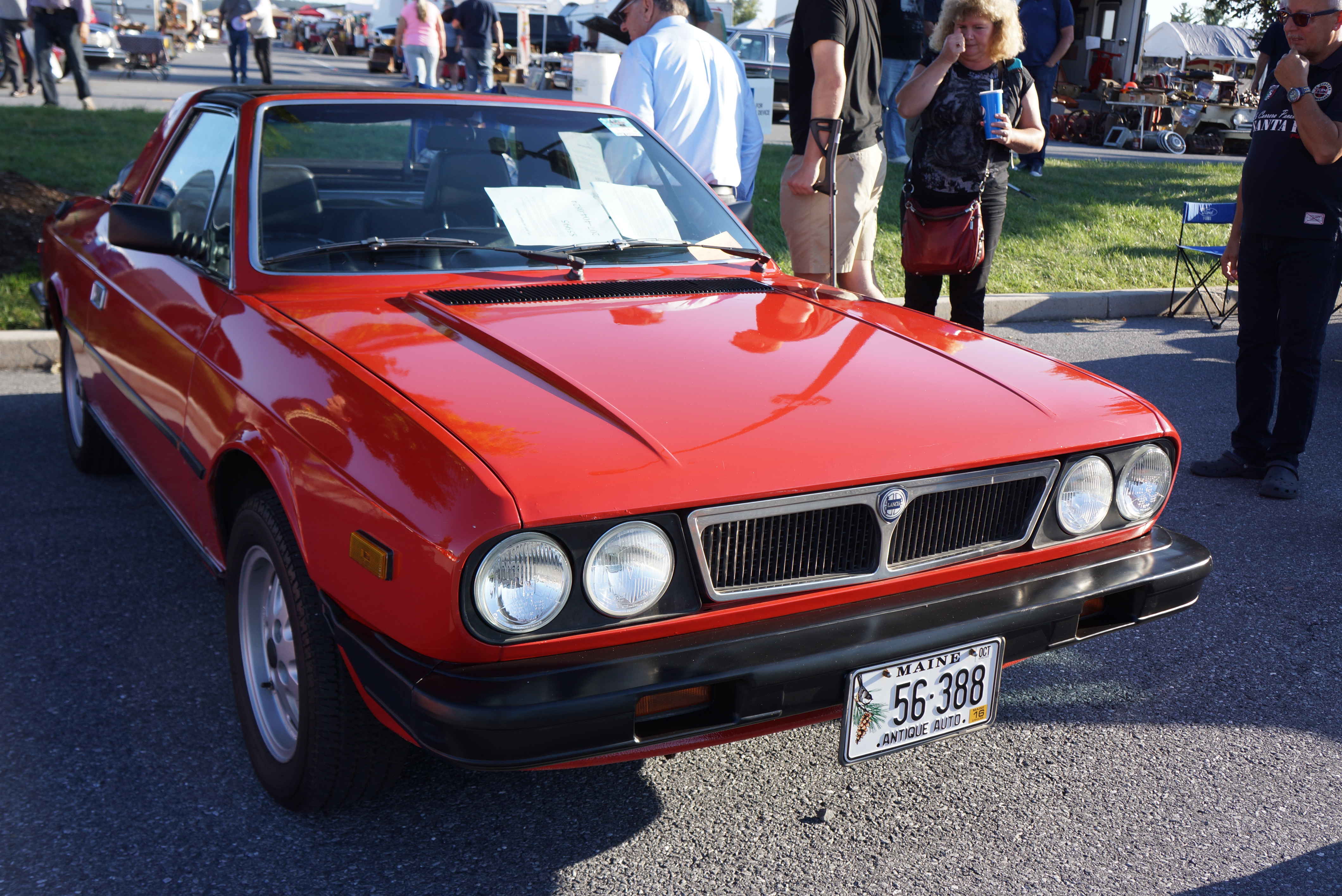
1982 Lancia Beta Zagato
Clean interior supports mileage claim
This 1982 Lancia Beta Zagato is from the final year of U.S. sales for this Italian import. Like the Beta coupe, the transverse engine drove the front wheels. The Zagato version has a fold-down soft rear window plus a removable targa top, giving an almost-convertible feel. The sign claimed 59,000 pampered miles, and it looked it. The owner was asking $5,995.
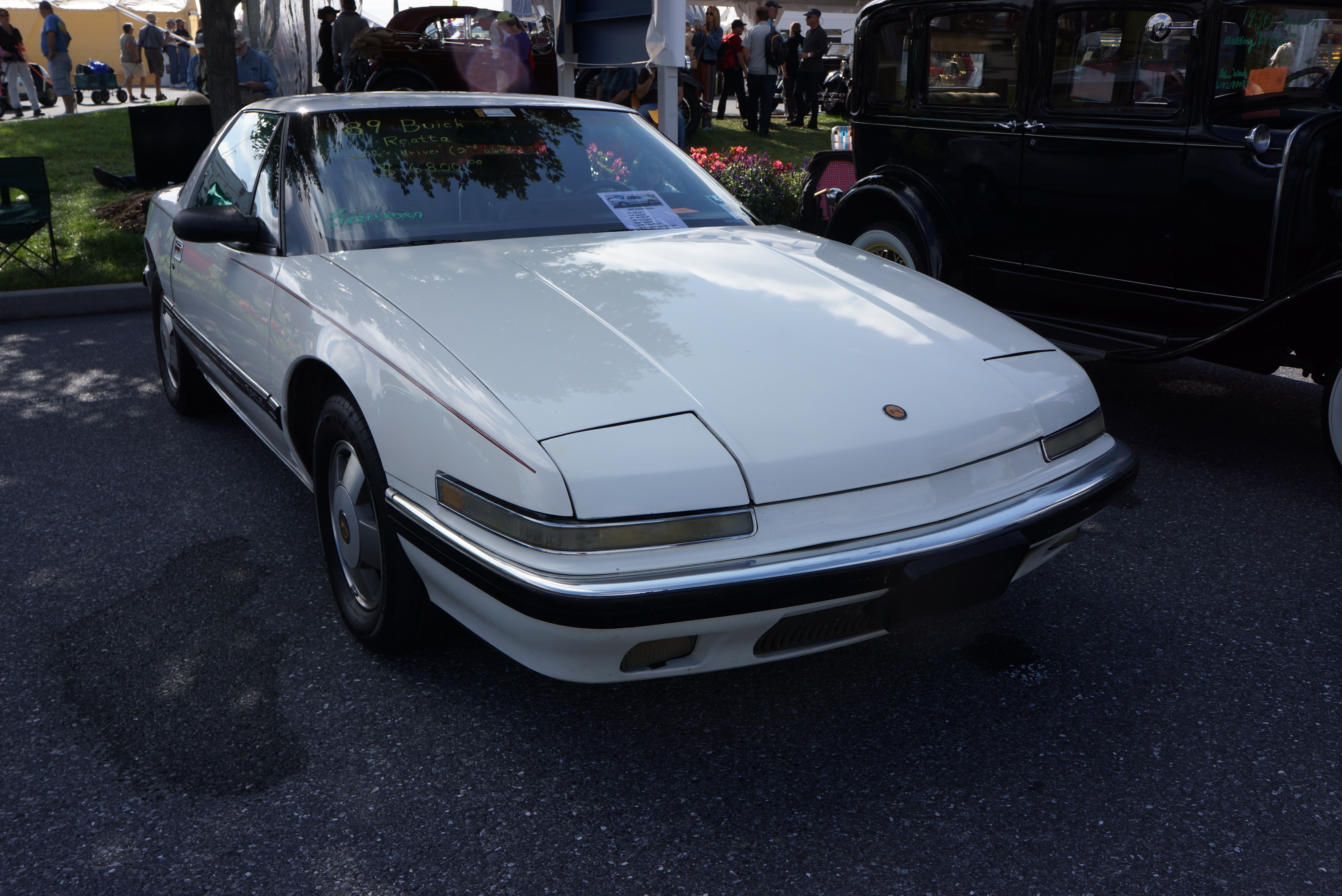
1989 Buick Reatta
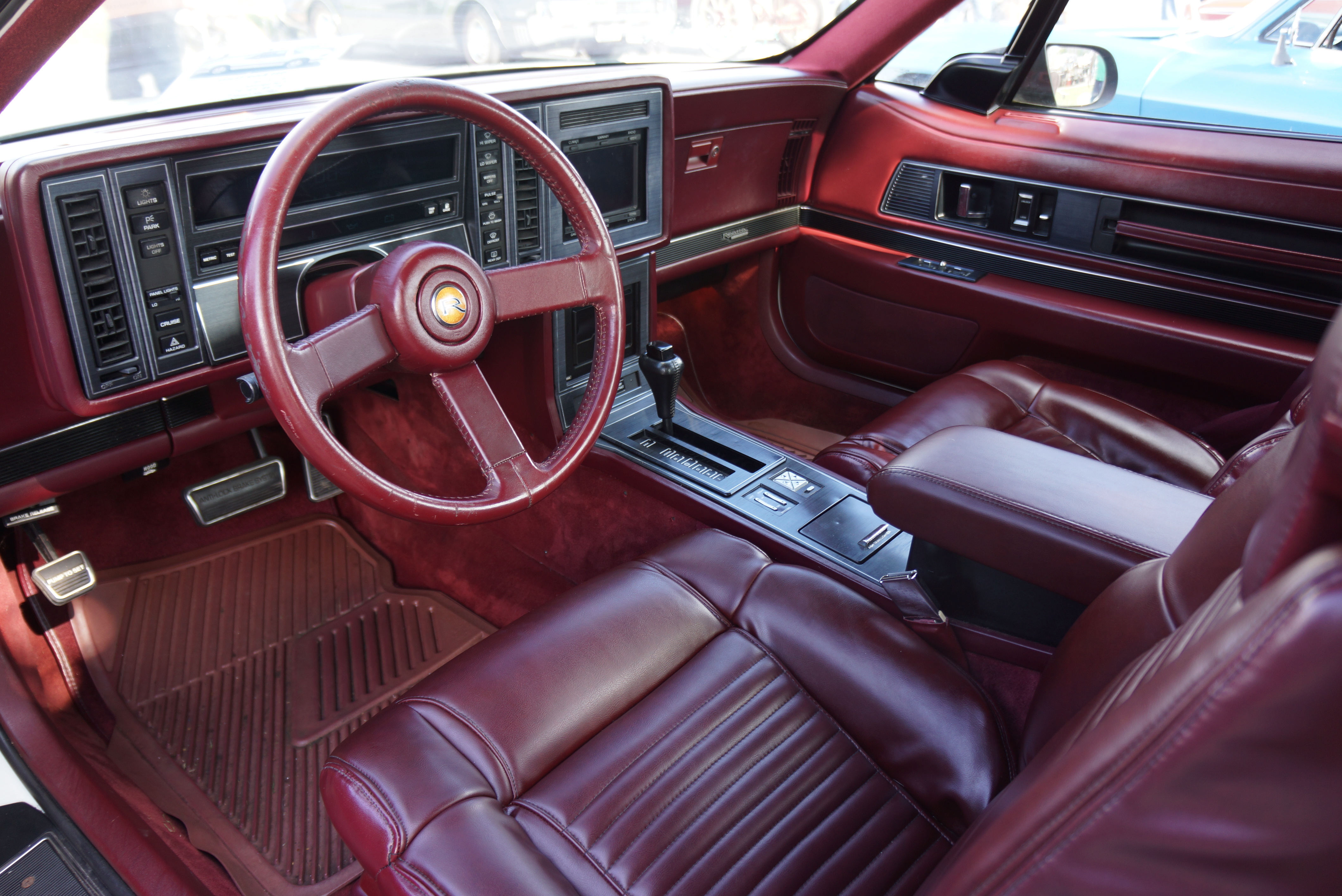
Very clean red leather interior
The Buick Reatta has been on the “appreciating future collectible” list for so long that I think most people have forgotten it. There are always a few for sale, and this one’s colors and condition made it stand out. The sign claimed it to be a two-owner car for only $6,800.
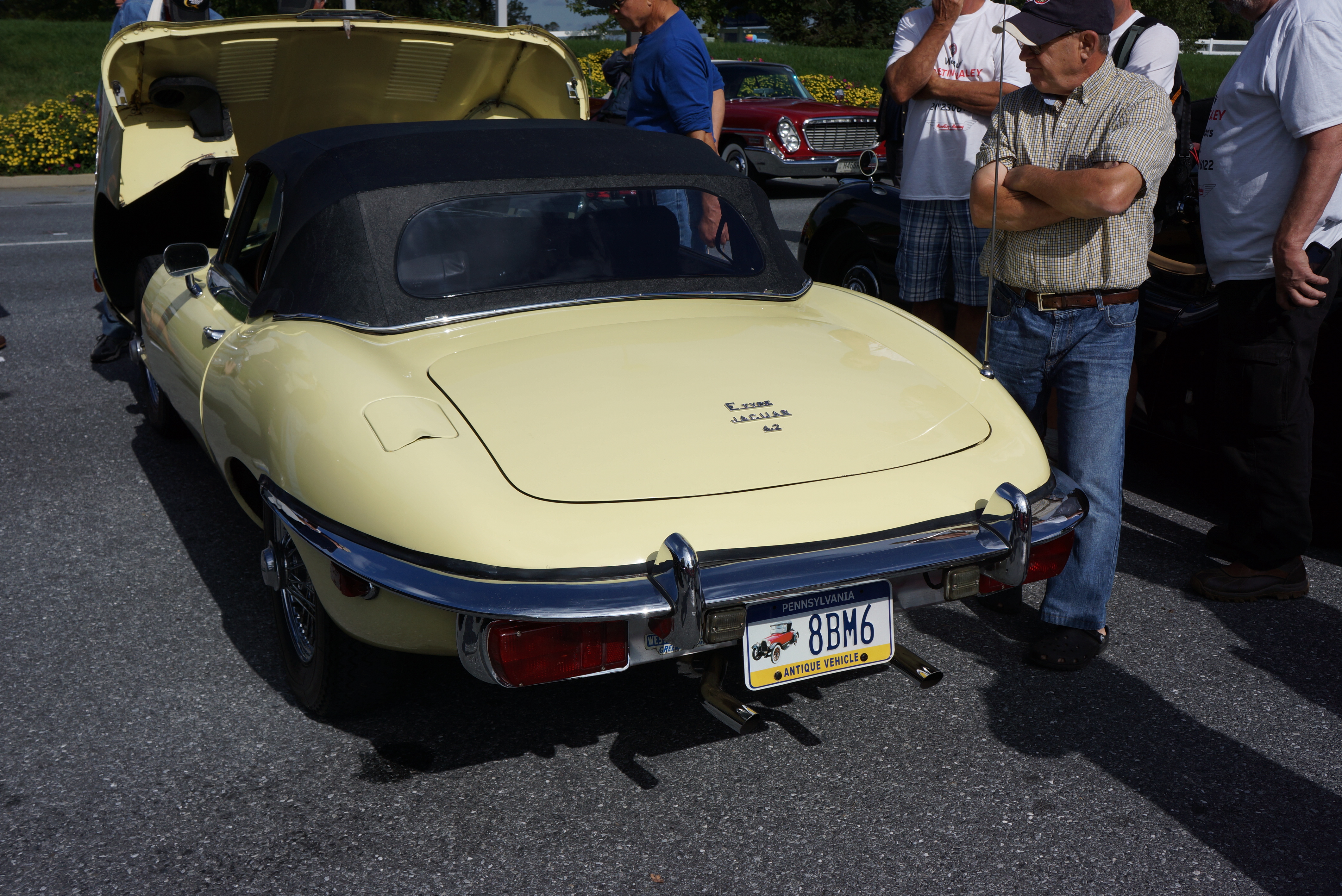
Series 2: tail lights under bumper, no fender flares
Stock interior, correct wood wheel
This 1969 Jaguar E-Type OTS (Open Two Seater) was claimed to be an unrestored original car with only 48,000 miles. Primrose yellow is one of my favorite E-Type colors. If solid, it may be a good buy at $75,900.
1971 Continental Mark III
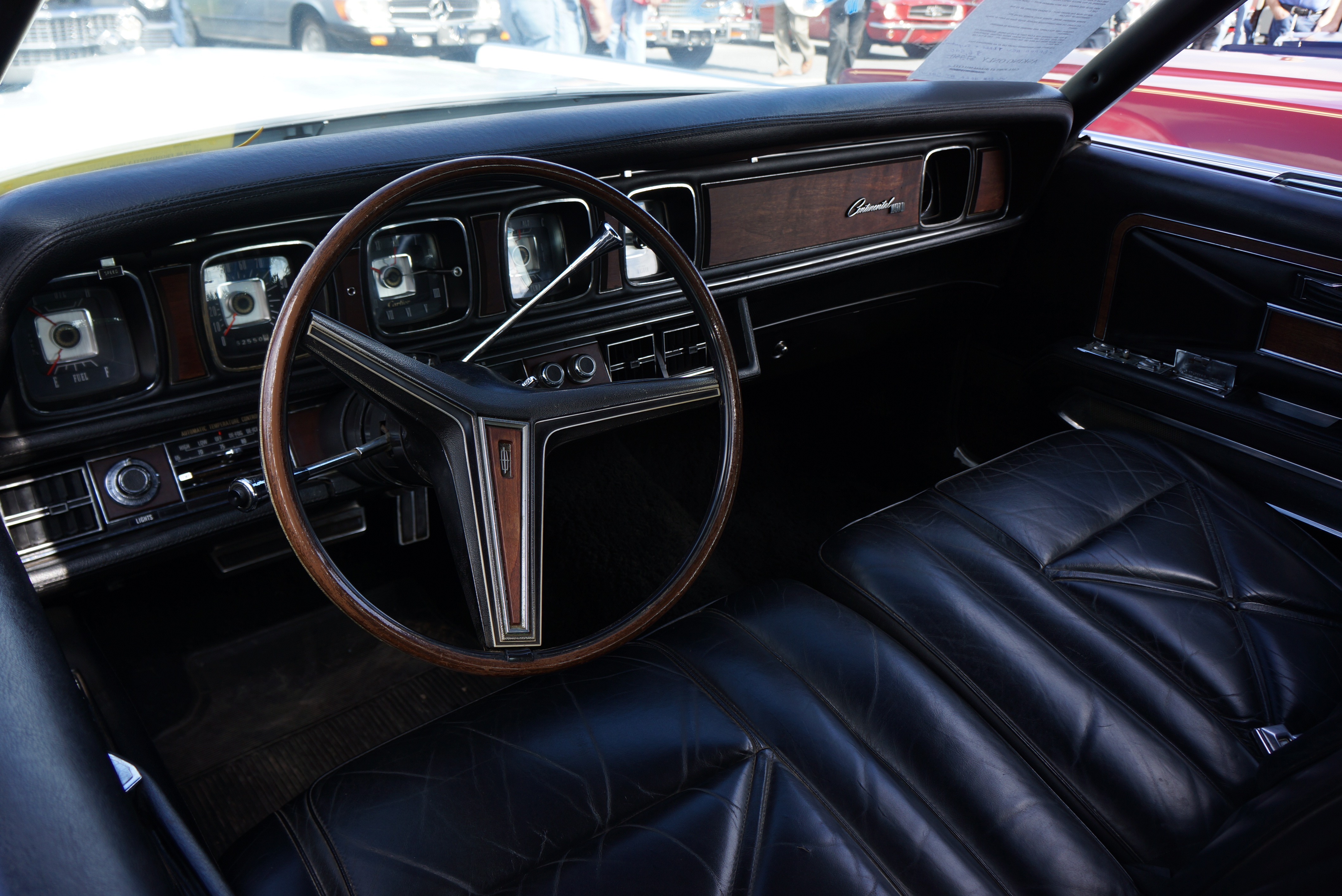
Mark III interior
This 1971 Lincoln Continental Mark III was alleged to be a 62,000 mile all-original car. A little bland in white with a black vinyl top and black leather interior, it would look good in your garage (provided it fit) for only $6,500.
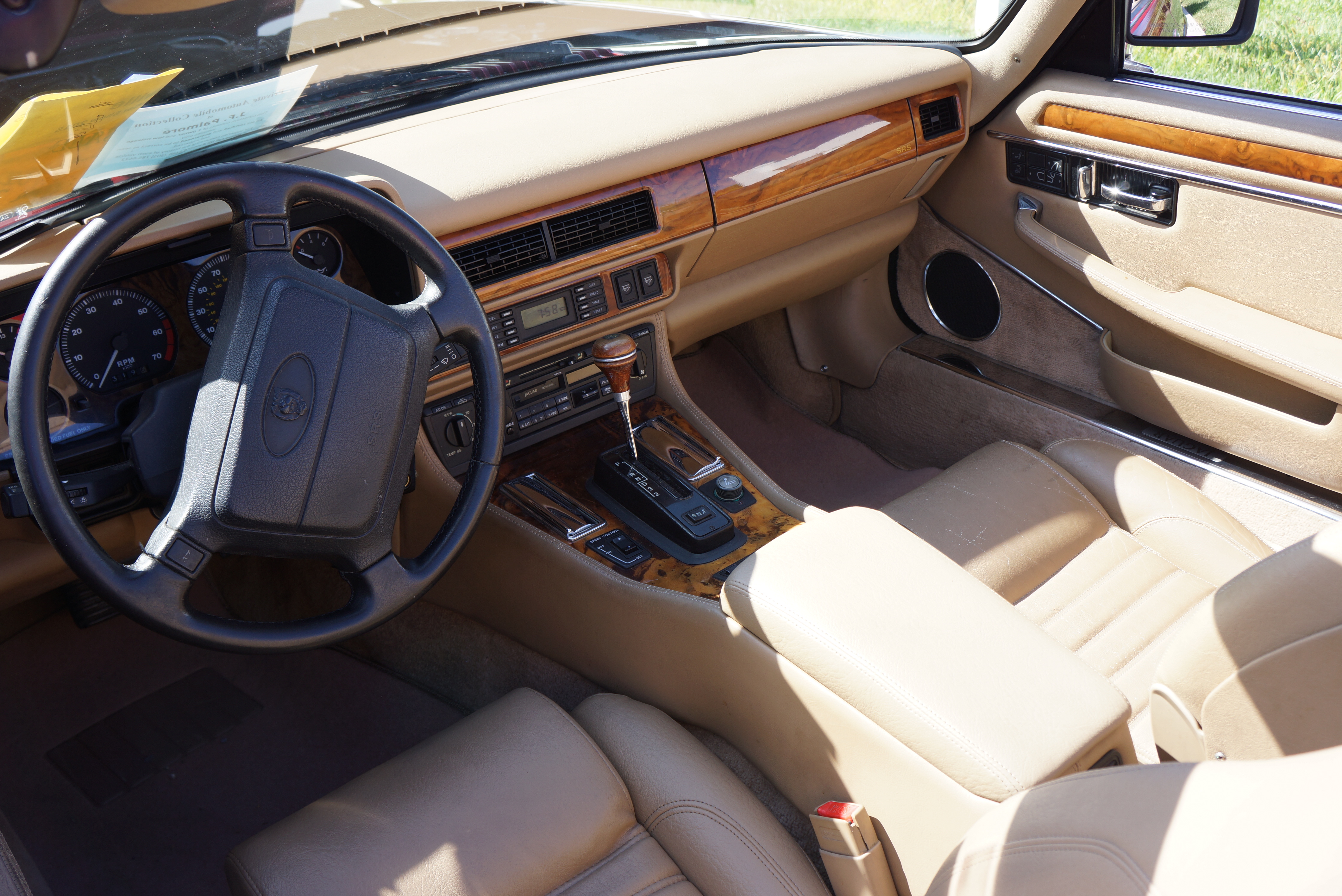
1994 Jaguar XJS convertible
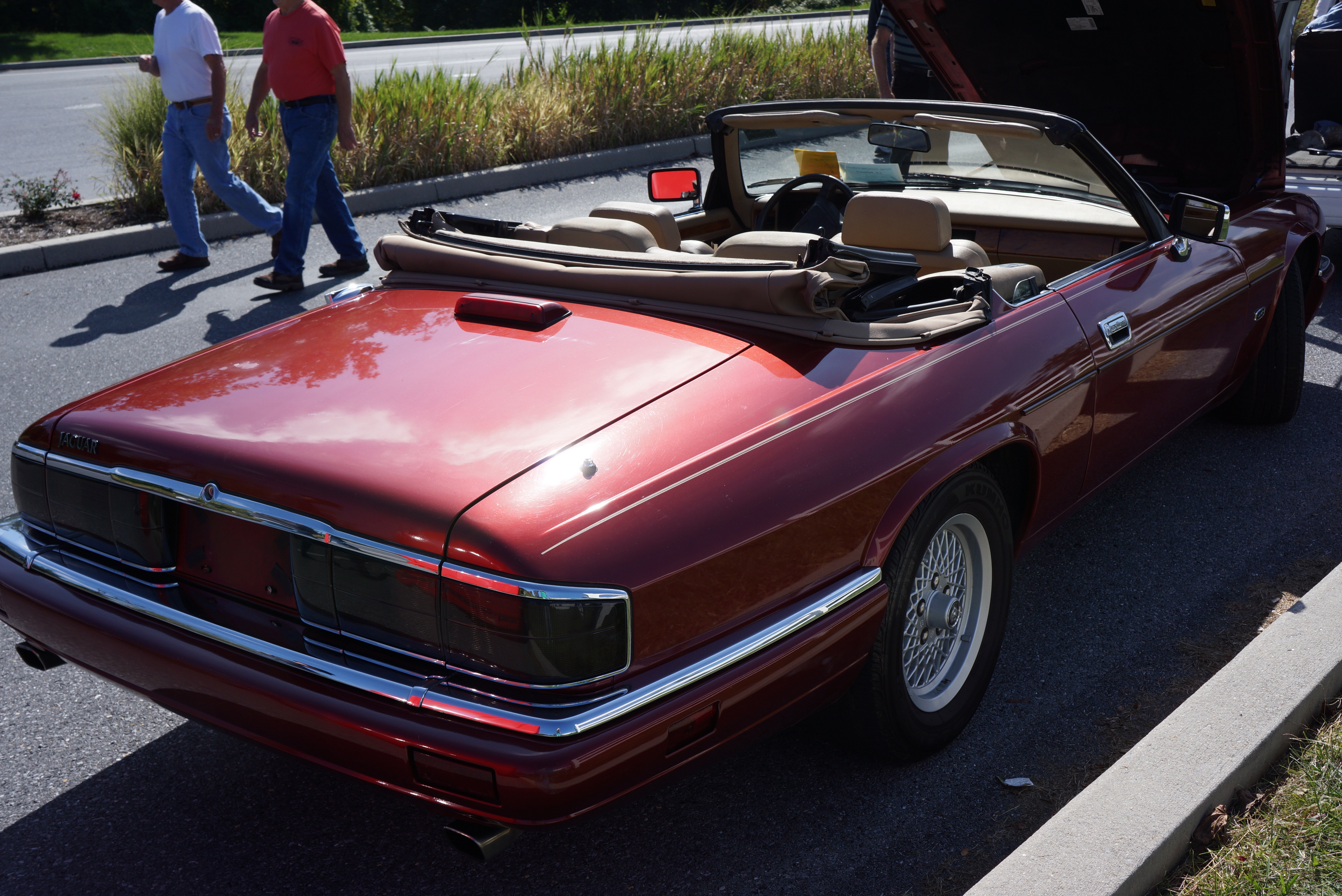
All U.S. XJS’s were automatic
This 1994 Jaguar XJS convertible had the 4.0 six-cylinder engine, but had bad paint, with clearcoat failure on several horizontal surfaces. The ask was $7,850 /offer.
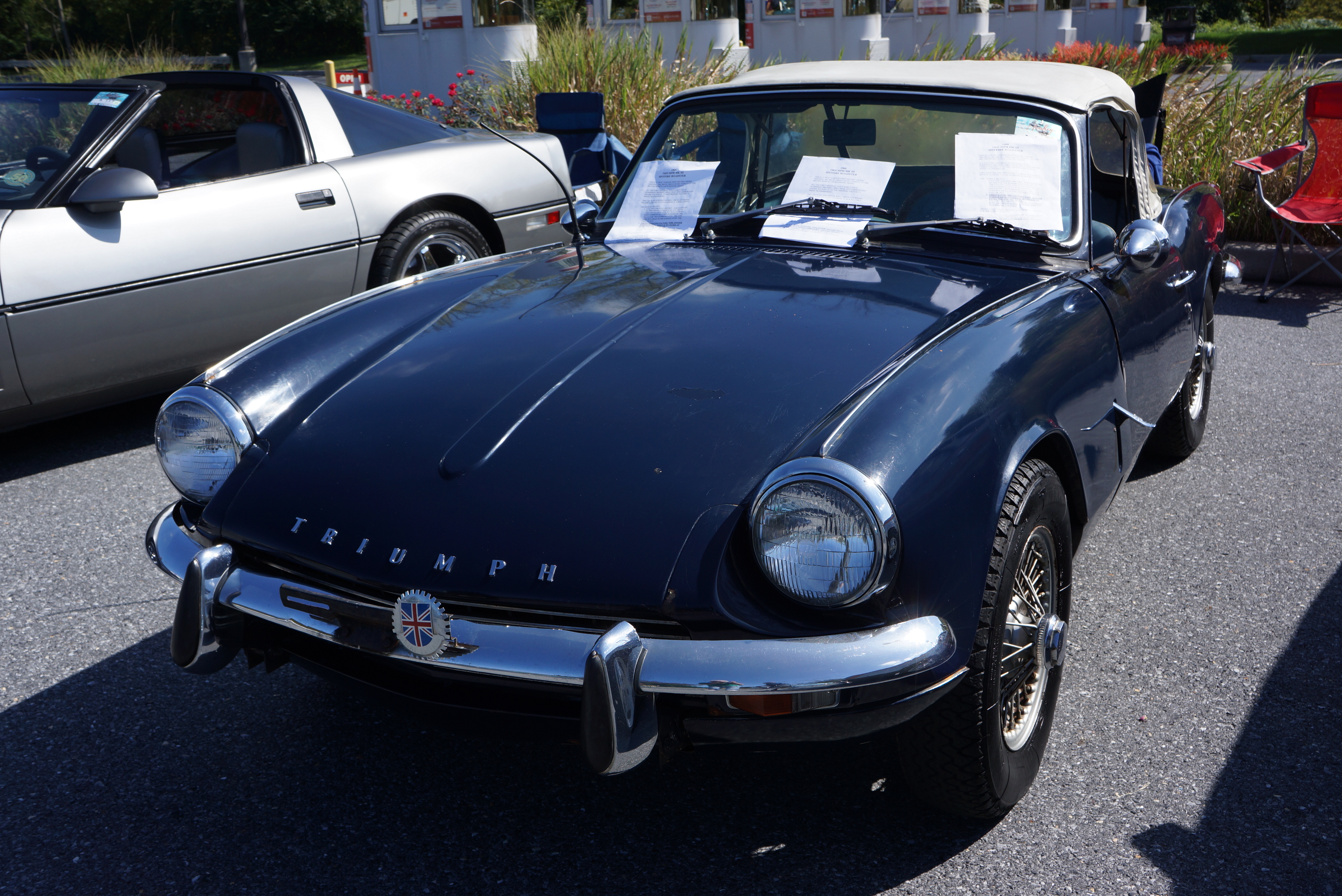
1968 Triumph Spitfire
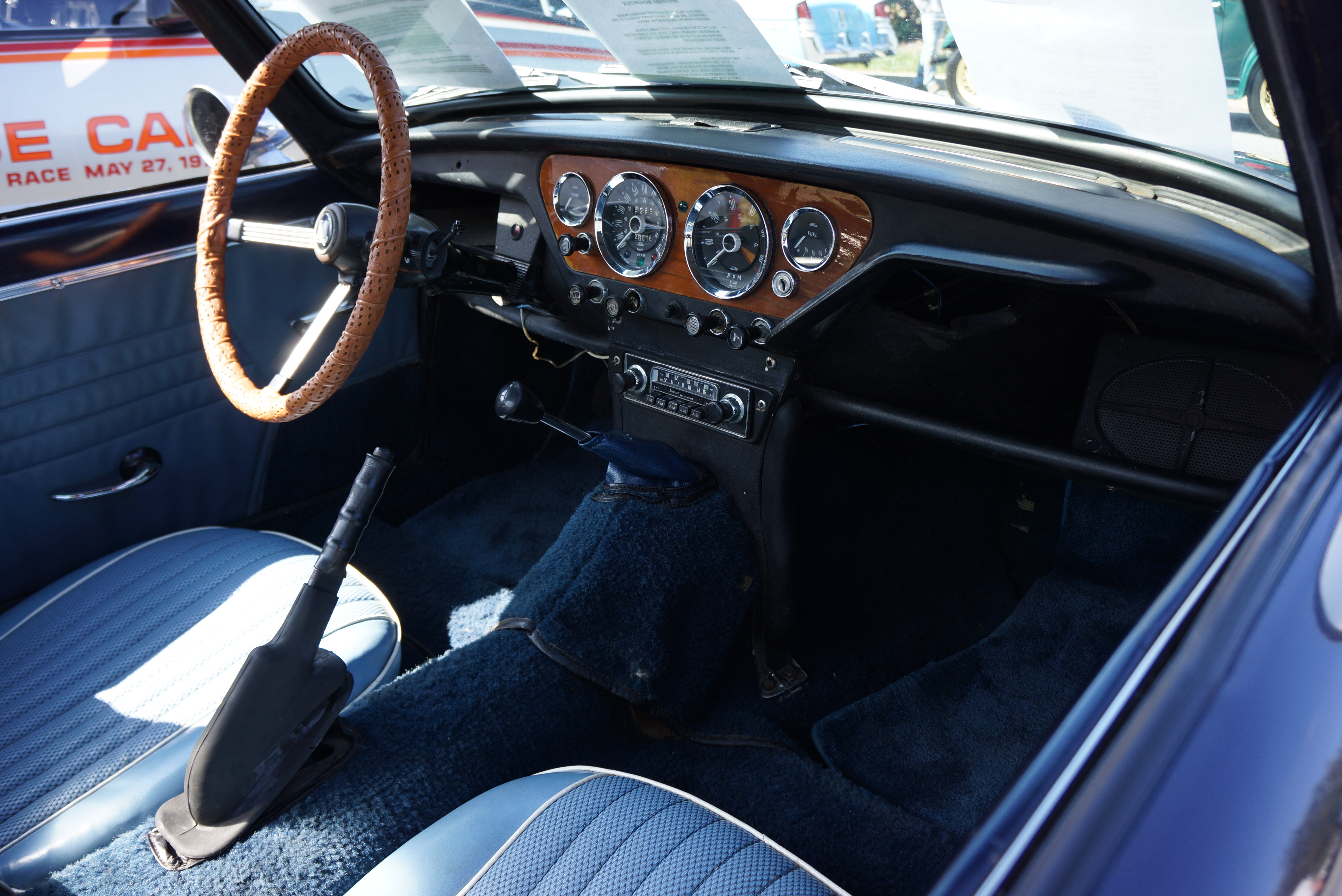
Spitfire interior
It’s rare to see a Triumph Spitfire this old that has not turned into a pile of iron oxide, but this 1968 appeared to be all there. Sure, it needed work, but it looked like you could drive it on weekends and attend to its needs during the week. The sign claimed that this car had been put away in storage between 1986 and 2015, and that accounts for the 28k original miles. The price, you ask? $4,975.
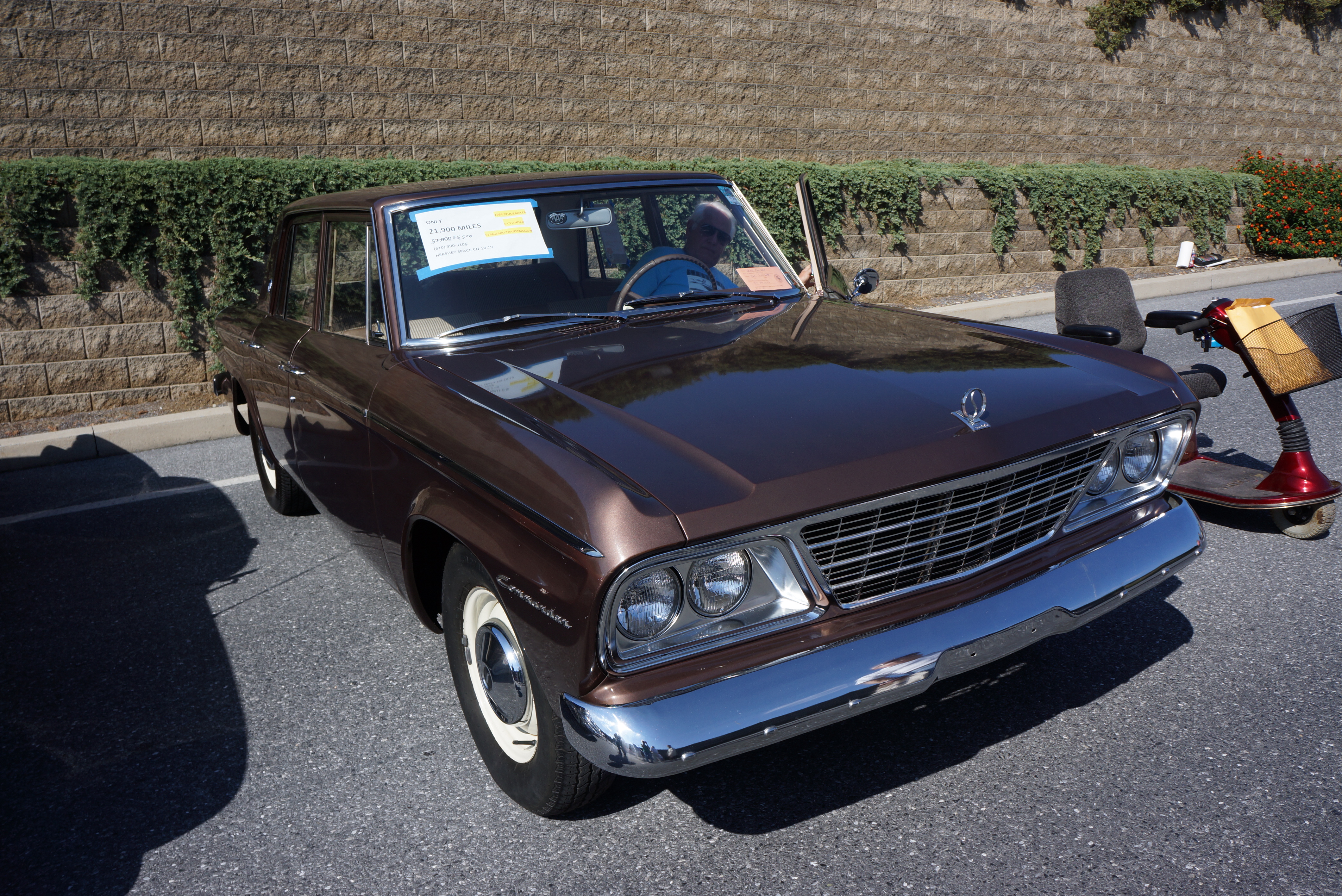
1964 Studebaker Commander
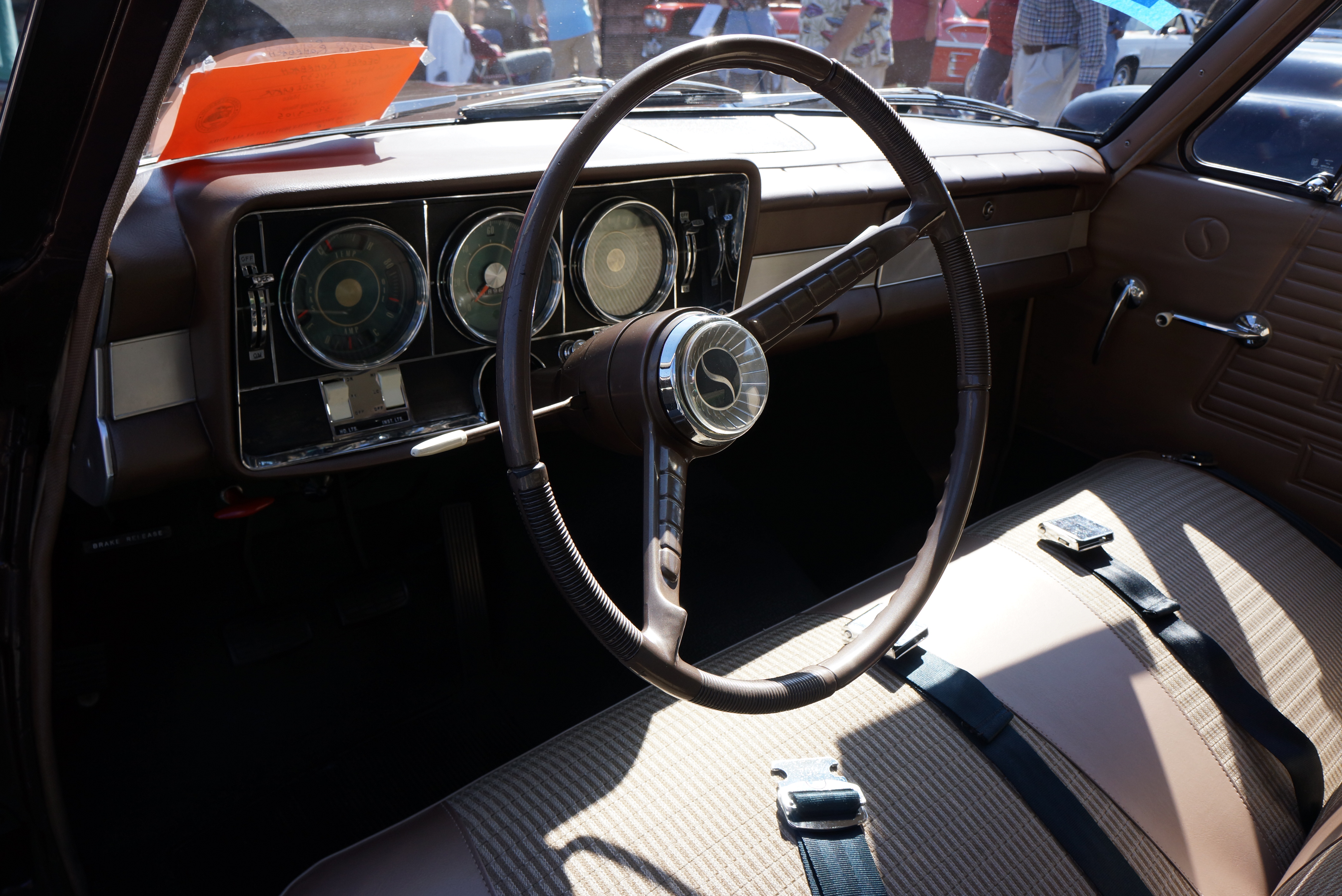
Power-nothing interior
This 1964 Studebaker Commander (in Bermuda Brown Metallic, the same FACTORY shade as the GT Hawk at Carlisle last week) had 21,000 original miles on it, was an unrestored car, and looked it. We had a lengthy discussion with the owner, who pointed out that the only option on this 6-cylinder engine, 3-speed manual car was a cigar lighter. He was asking $5,500.
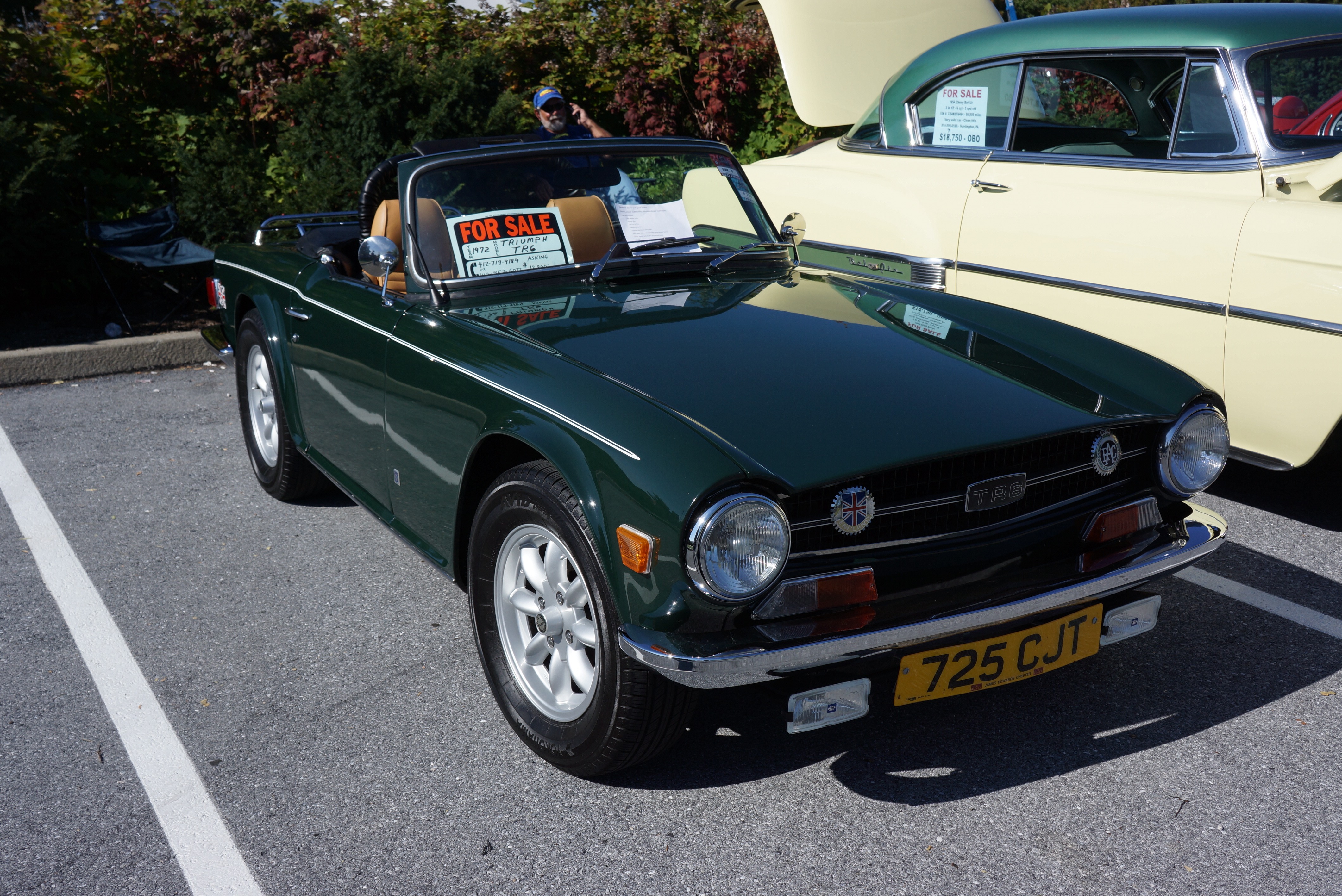
1972 Triumph TR-6
Nice TR-6 interior, non-original wheel
There were several Triumph TR-6s in the corral, and this was one of the nicer ones. A 1972 model has the smaller bumpers, and this green-over-tan car was nicely set off by oversize tires on Panasport wheels. The mods continued under the hood with dual Webers. It was cosmetically spotless. The owners were asking $12,900.
1958 Triumph TR-3
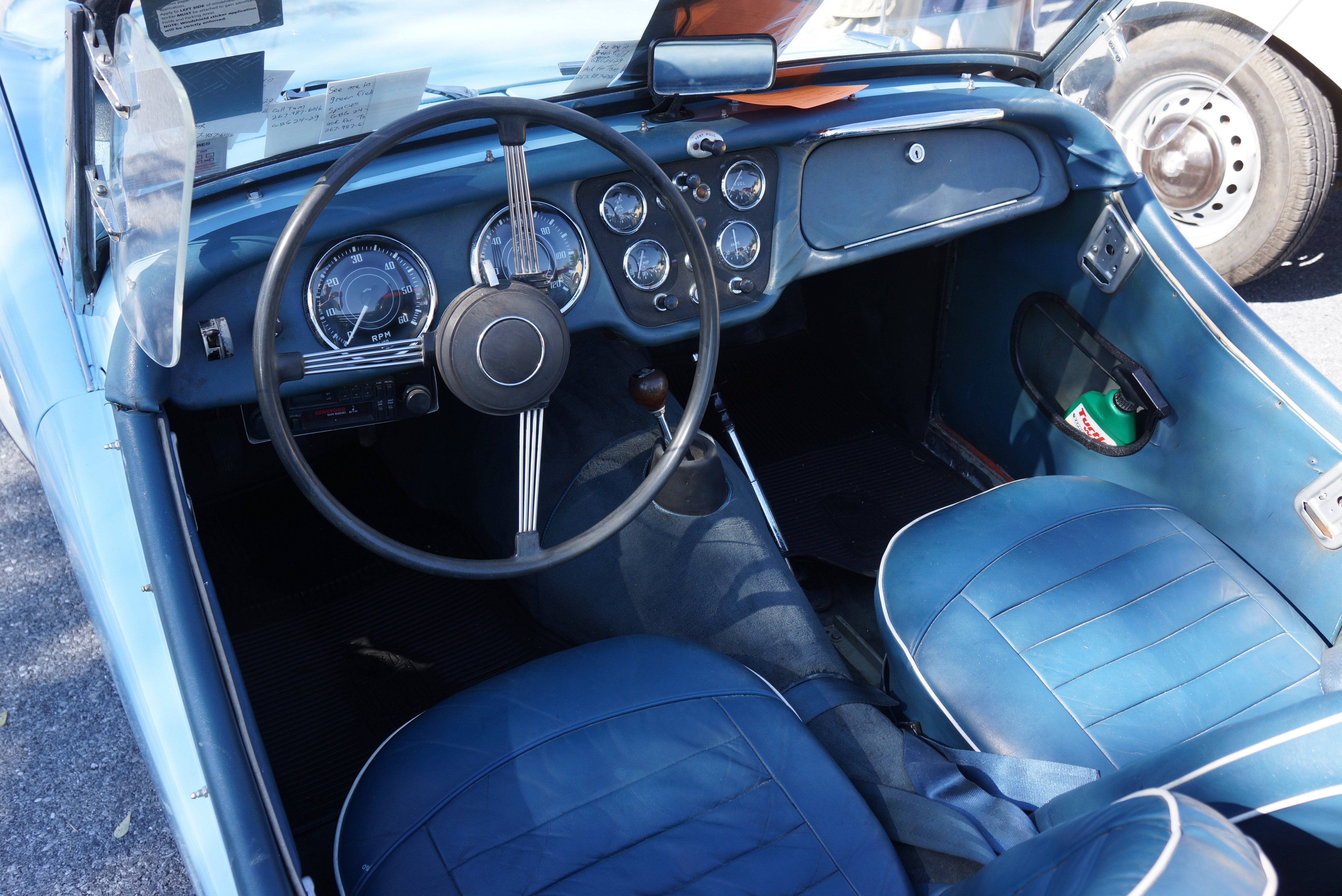
TR-3 interior; keep your arms in
This 1958 Triumph TR-3 was in baby blue over a medium blue interior, with whitewalls on chrome wires. It looked like you could hop right in and go for a cruise. This “older restoration” was for sale for $17,900.
1966 Lincoln convertible
Last of the American 4-door ‘verts
This 1966 Lincoln Continental convertible was parked next to an identical model from 1965. It was interesting to note the styling changes, both inside and out, with my vote going to the ’66. This one was cosmetically less attractive, but it had the more reasonable asking price of $20,000.
1971 Jaguar E-Type Series III
All Series III cars had longer wheelbase
This 1971 Jaguar XKE Series III coupe, again in Primrose yellow, was claimed to be a 97,000 mile unrestored car (you may have noticed the continuing trend toward “unrestored / all-original / barn find” cars for sale). All Series III cars rode on the longer 2+2 wheelbase and used the V-12 engine. This one was a stick (many Series III cars were automatic). There were rough spots, but it was about as reasonably-priced an E-Type as you’ll find for $39,000.
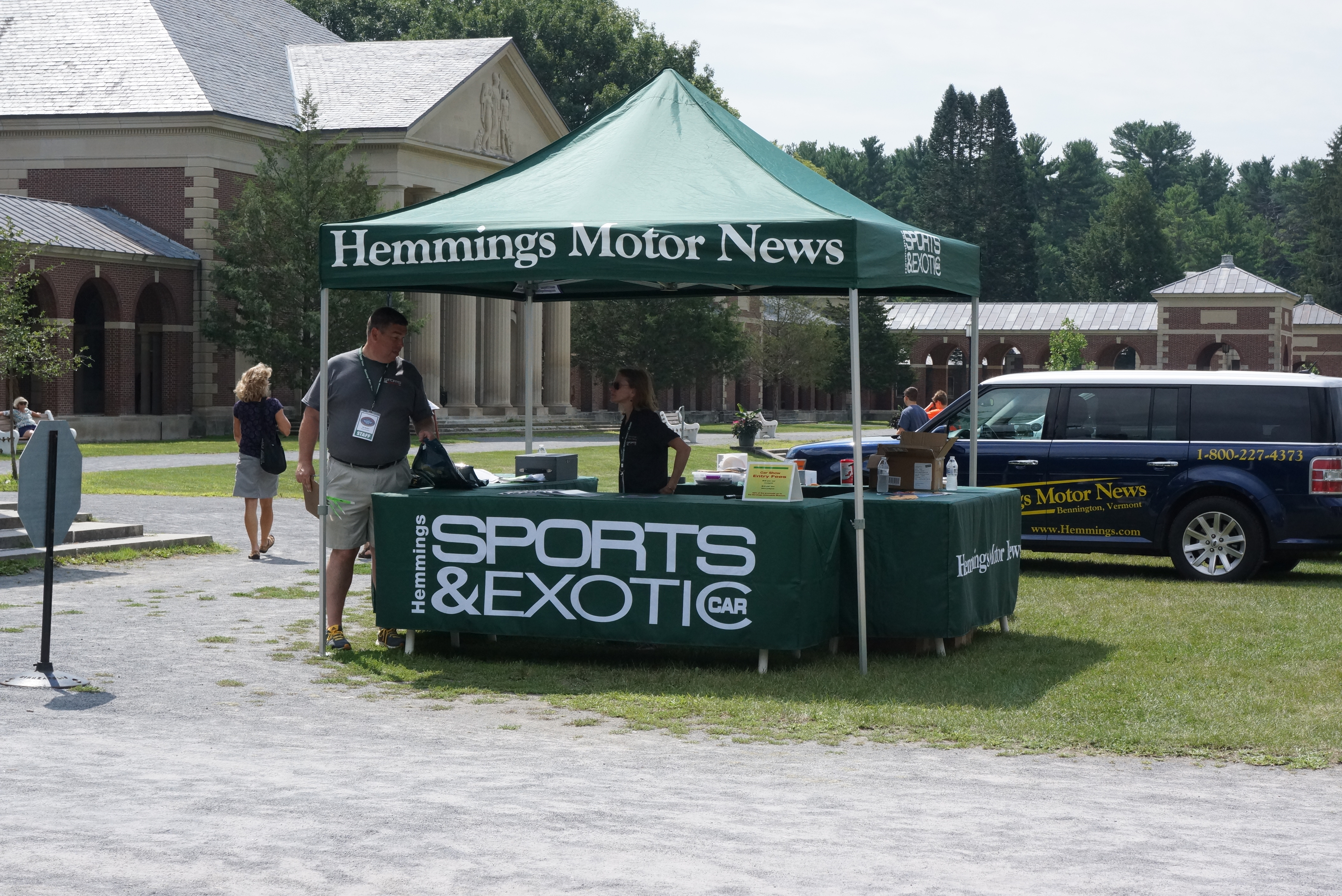
The good folks at “Hemmings”, publishers of several well-known collector car magazines, held their 11th annual Sports & Exotic Car Show on the grounds of the Saratoga Automobile Museum in Saratoga Springs, NY. The event took place on Saturday, August 6, 2016. In spite of a threatening forecast (and a published rain date of Sunday August 7), the organizers decided to press on, and the weather cooperated, as the show field remained sunny and dry, if a bit warm.
The show was open to “sports cars, GTs and exotics built outside the United States prior to 1992.” Those with newer imports were still welcome to attend, but would not have their vehicles judged.
My good friend Peter agreed to accompany me (and did most of the driving – thanks Peter!). Since I had attended one Hemmings show at the same location two years prior, I had reason to expect a professionally-run event, with a decent turnout and quality cars. We were not disappointed.
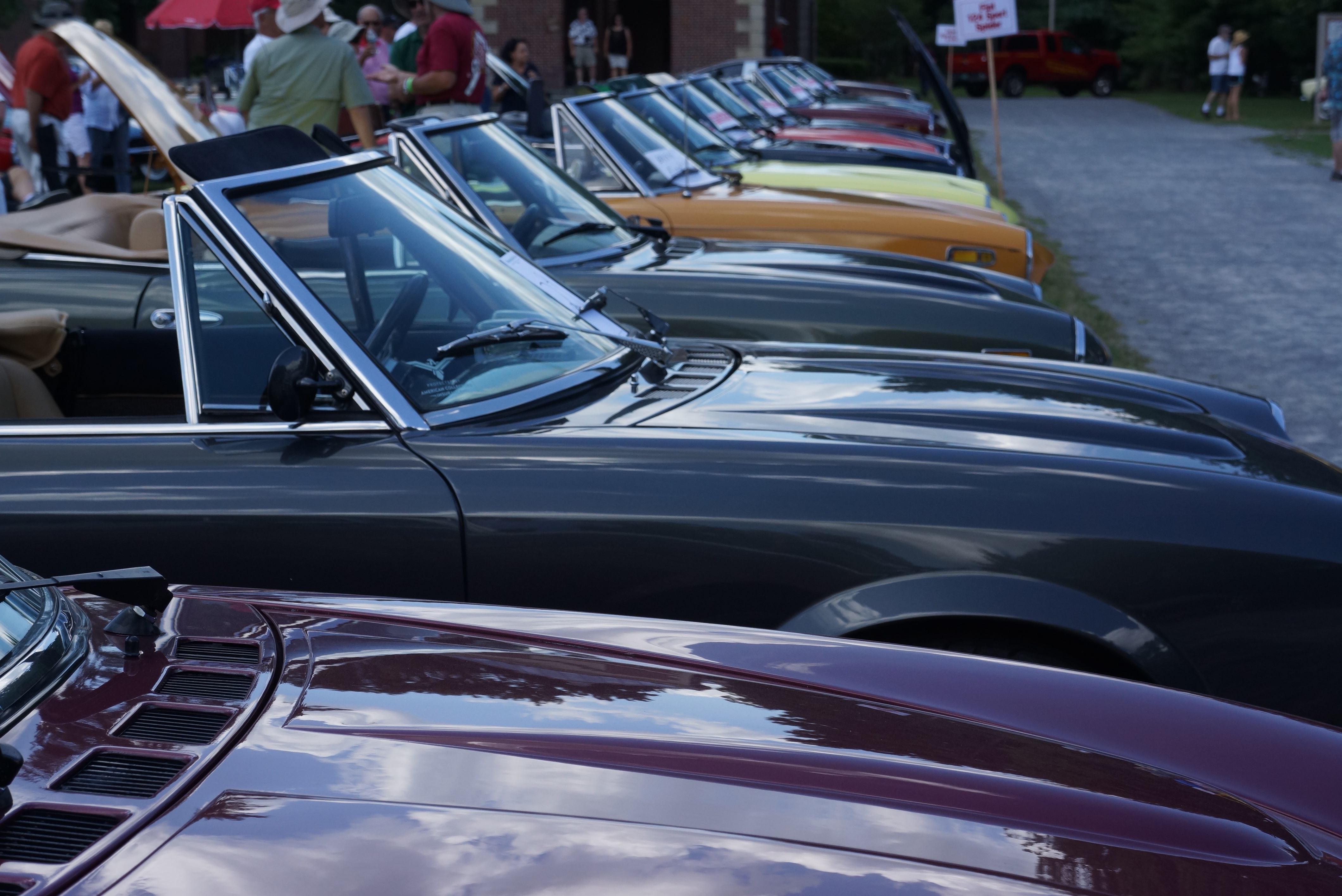
Arriving by 10:30 a.m., the show field was almost completely full. Cars were arranged by class, which for the majority of attendees was Country of Origin. As in years past, this show had several Featured Classes, including pre-1992 Jaguars, Porsche 356s, and Toyota Sports & GT cars. The big attractions for me were the two Italian Featured Classes: Fiat 124 spiders and Alfa Romeo spiders. Both the Fiat 124 spider and the Alfa Duetto/spider were celebrating their 50th anniversaries.
The entire event had a relaxed and casual feel to it. Most cars were prepped for judging, but unlike some other judged shows, the owners seemed carefree. (No one was spotted picking blades of grass out of their tire treads.) Everyone lazily walked the grounds, chatted up the drivers, and shared their stories. The verdant setting helped with the “stroll in the park” ambiance.
At 2 p.m. sharp, the Awards Ceremony began. There was a 2nd place and 1st place trophy for each of 13 classes. (I believe judging was done by that time-honored method known as “which cars do we really like?” Nothing wrong with that, either.) The winners were lined up and slowly driven past an admiring audience. By 2:30, it was over.
Hemmings hold two shows each year in Saratoga Springs, this one, and the larger Concours d’Elegance in September. If you haven’t been, either is highly recommended.
BRITISH
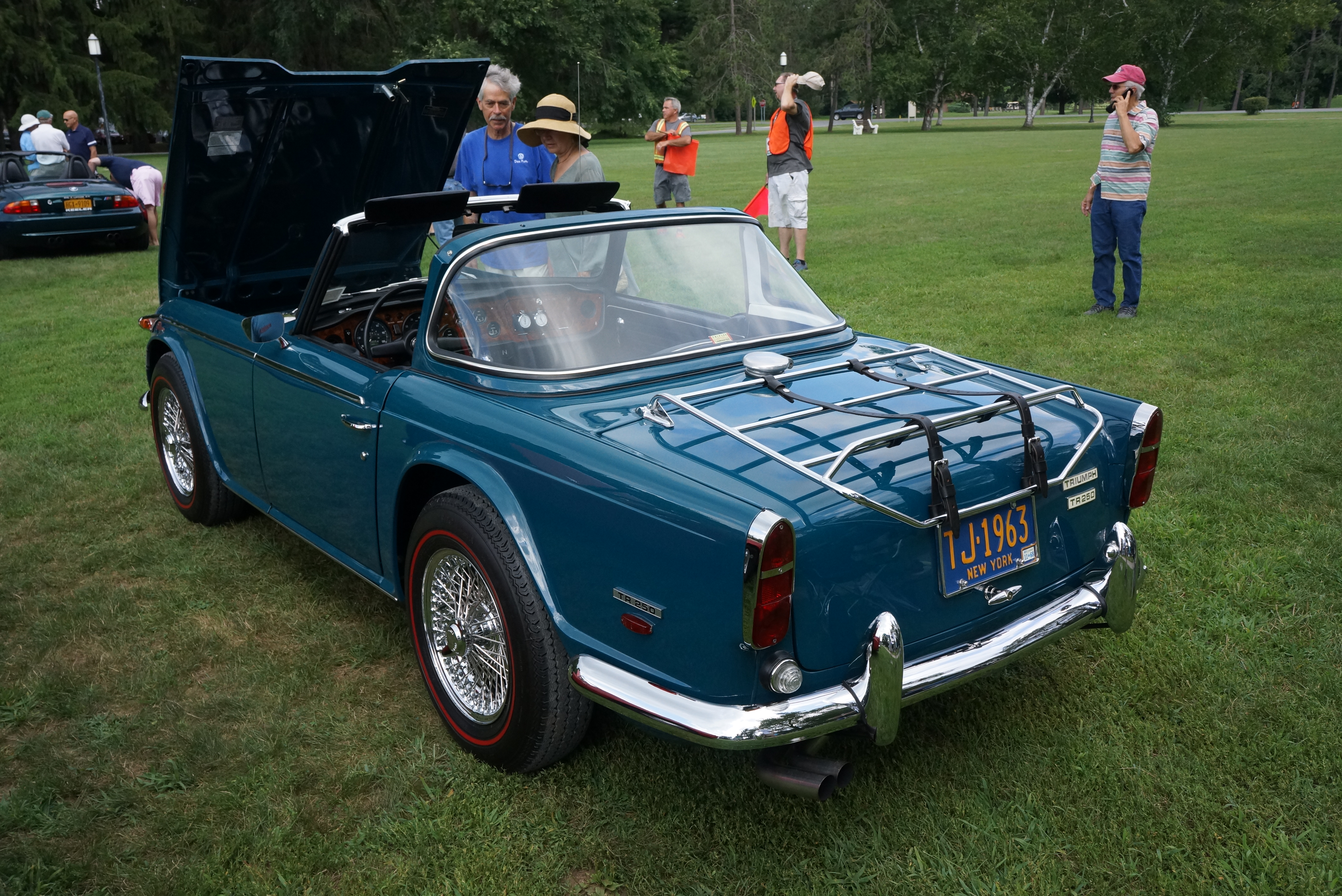
This 1968 Triumph 250 was voted “Best of Show”. It was immaculate, and it deserved it.
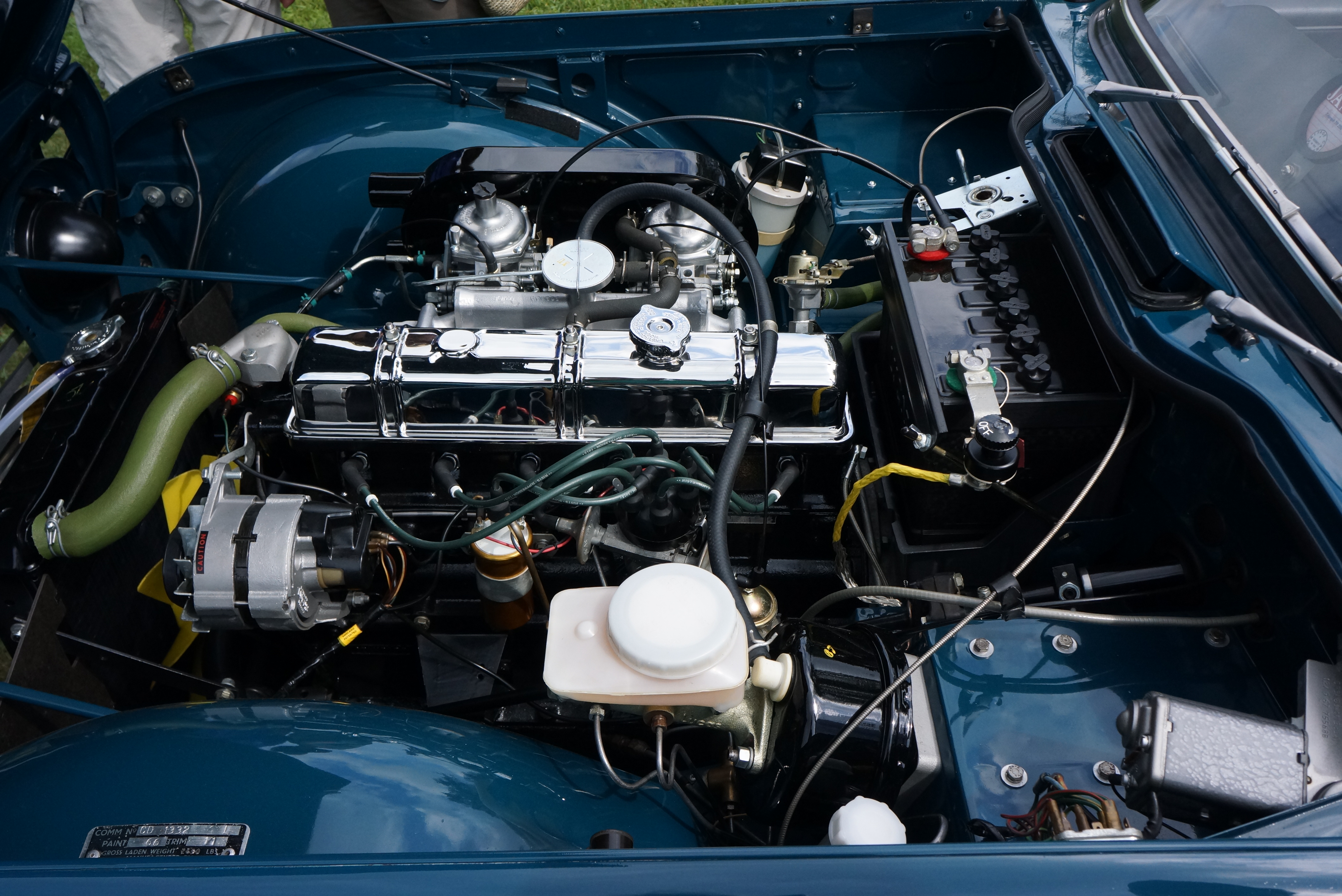
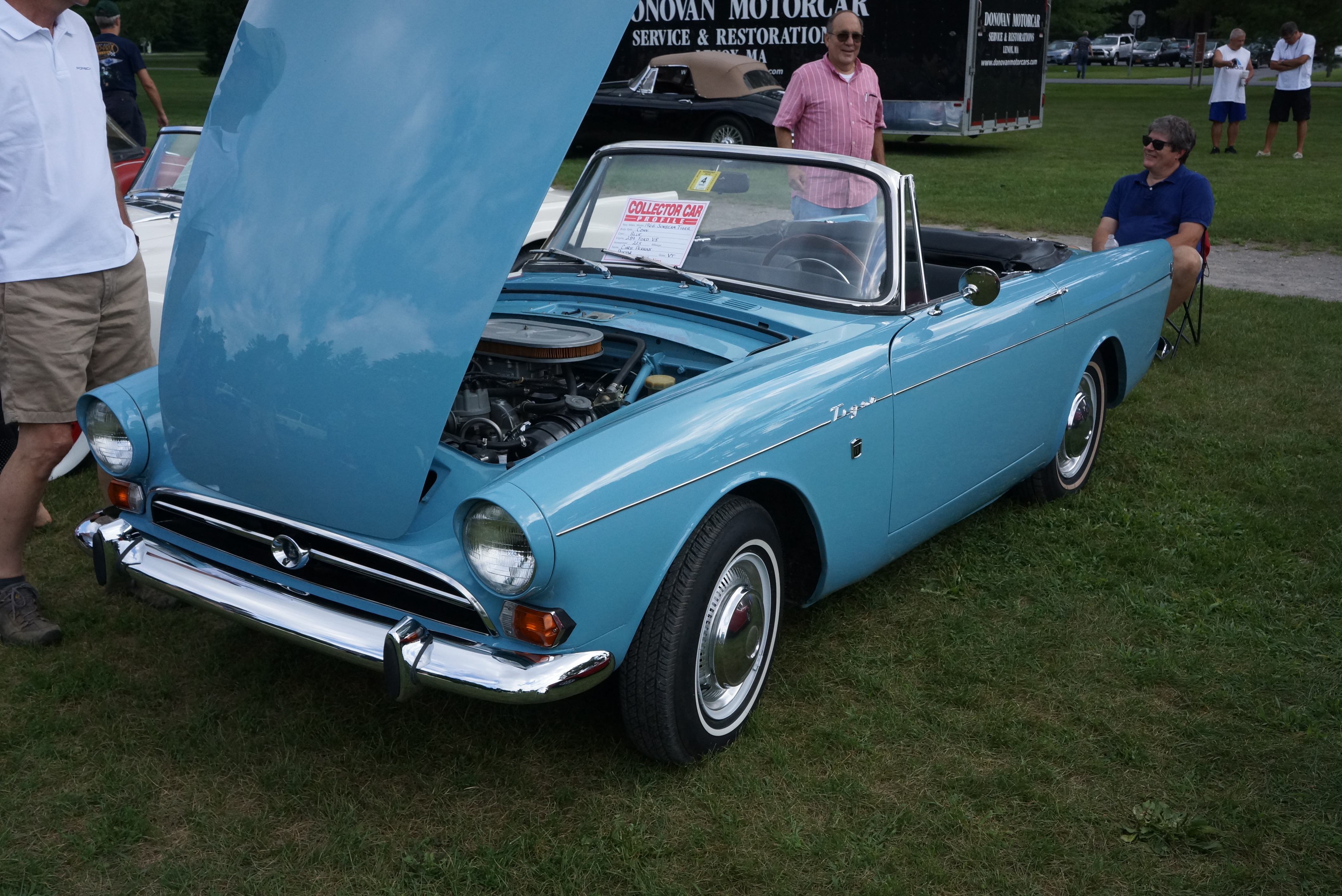
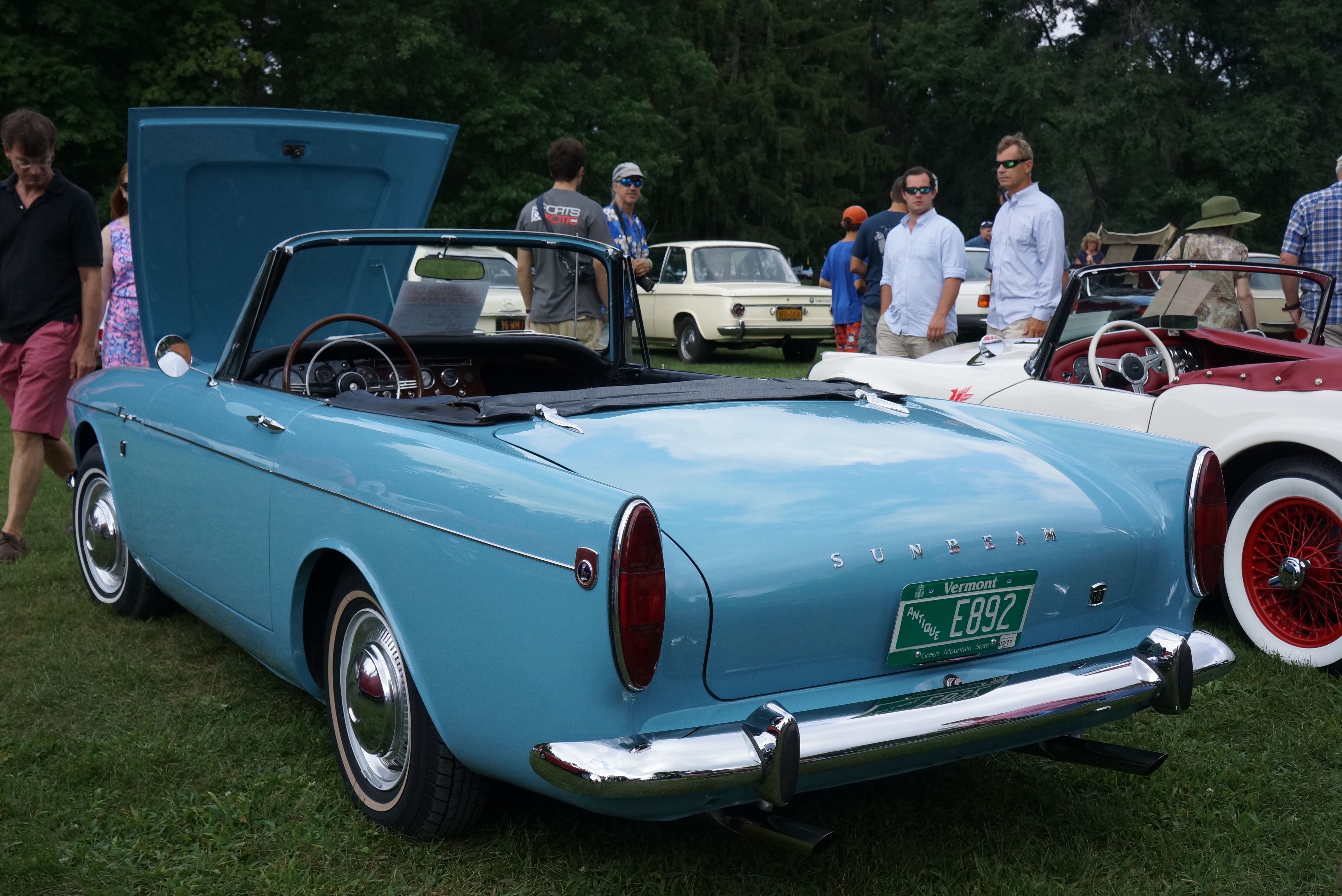
This Sunbeam Tiger was in a most unusual shade of baby blue, and we’re unsure if the color was an original choice from the factory.
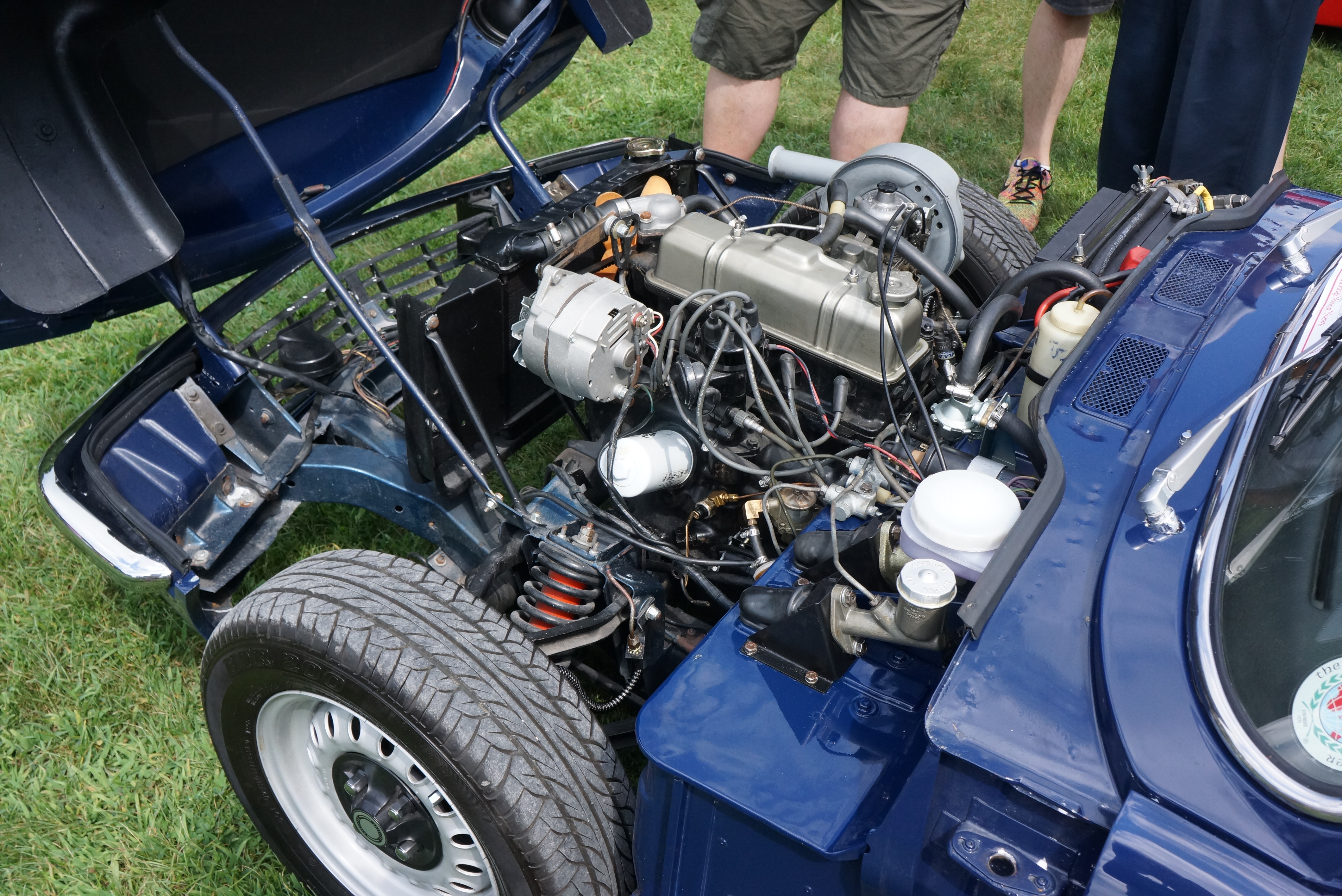
Triumph Spitfires have marvelous engine access.
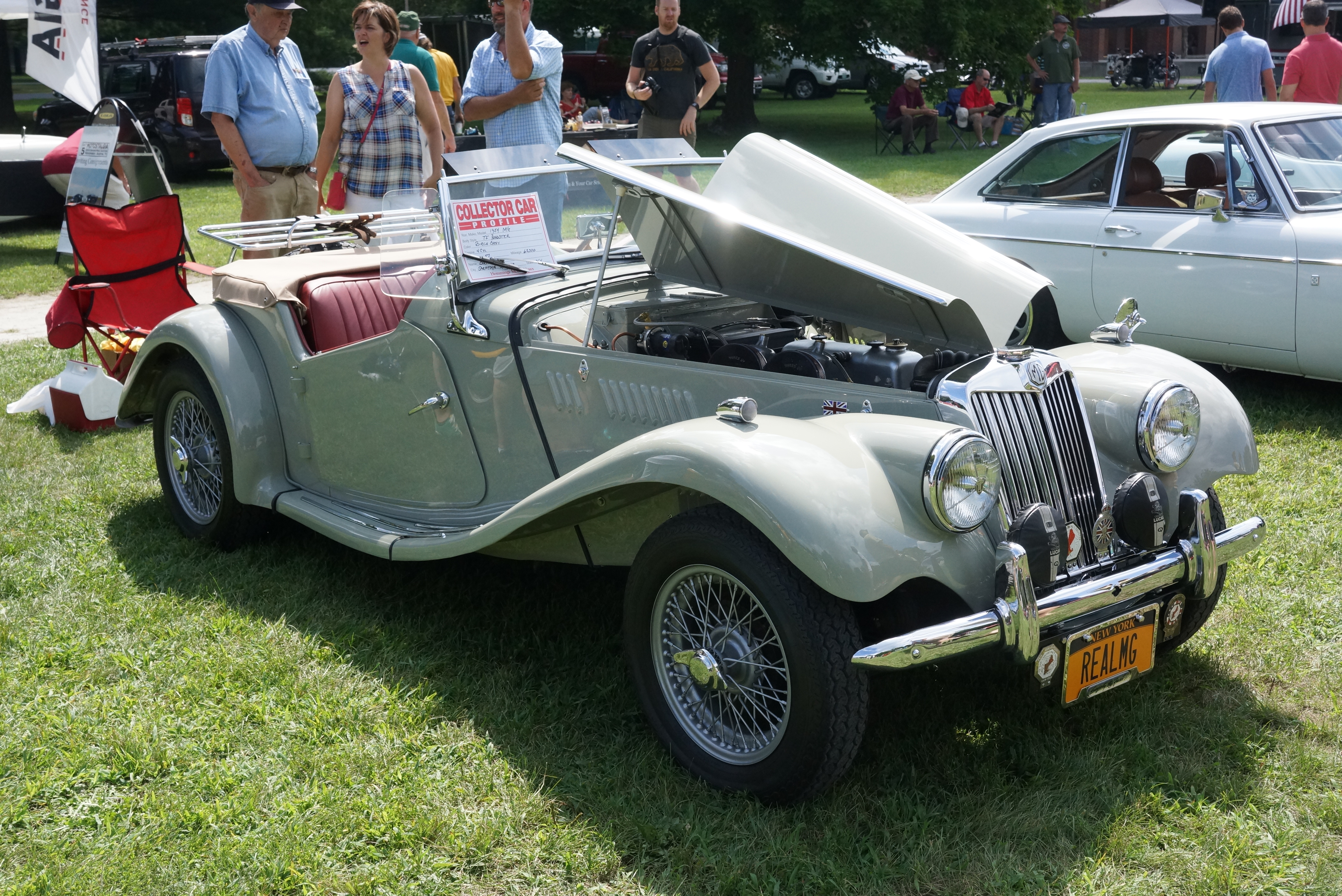
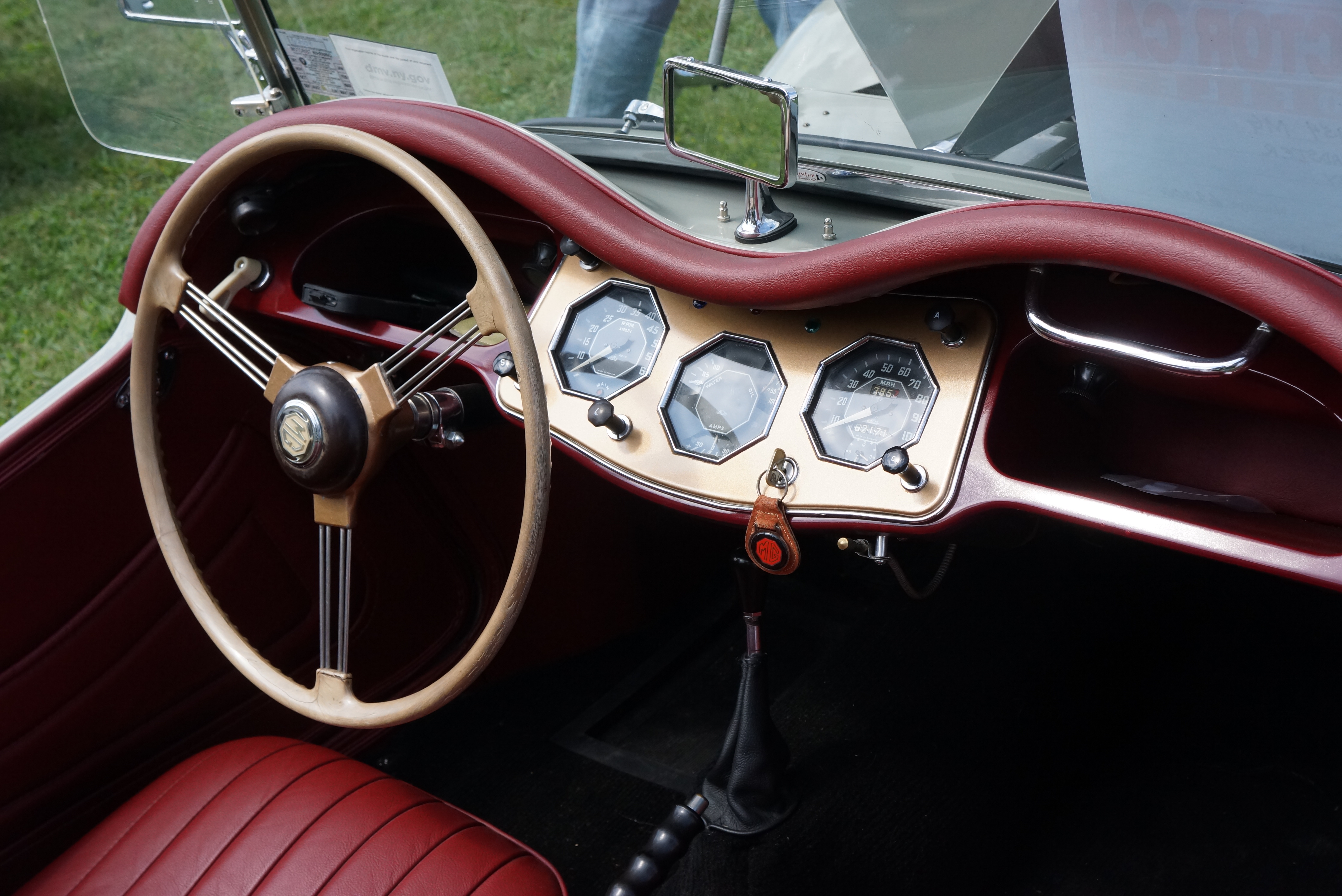
MG-TFs carried the marque’s octagonal badge shape to the instrument cluster.
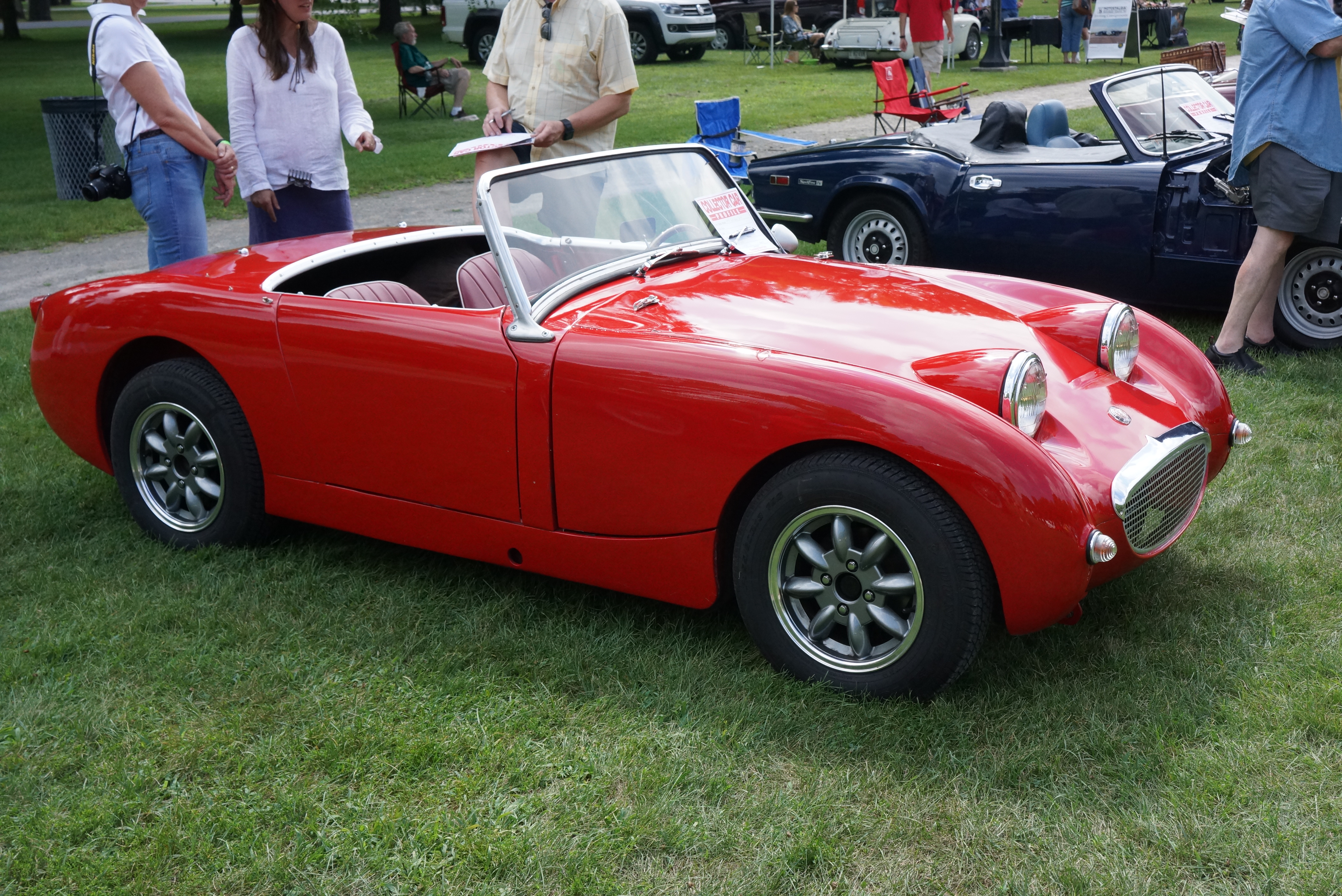
This Austin-Healey Bug Eye Sprite was even cuter sans bumpers.
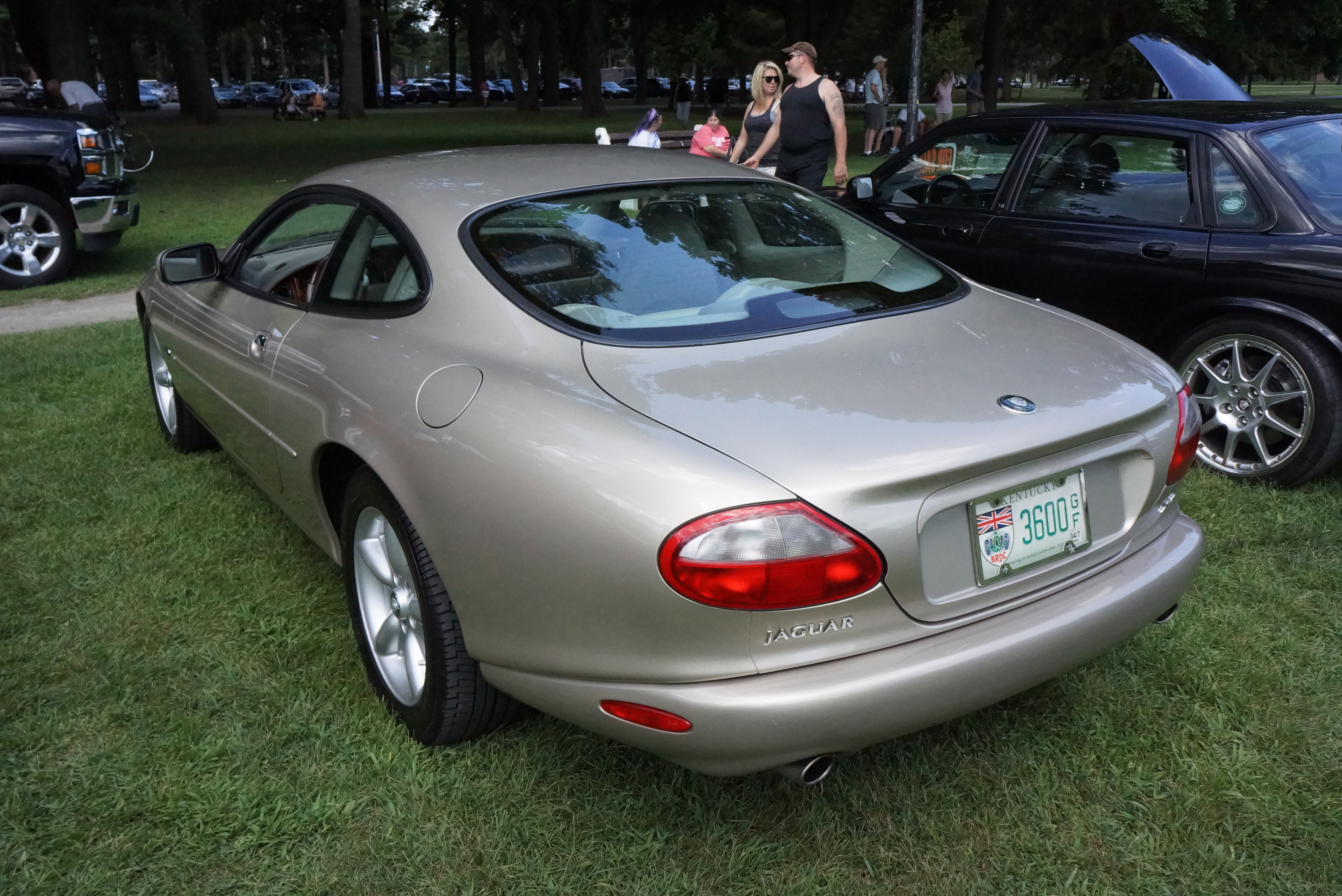
A Jaguar XK8 Coupe.
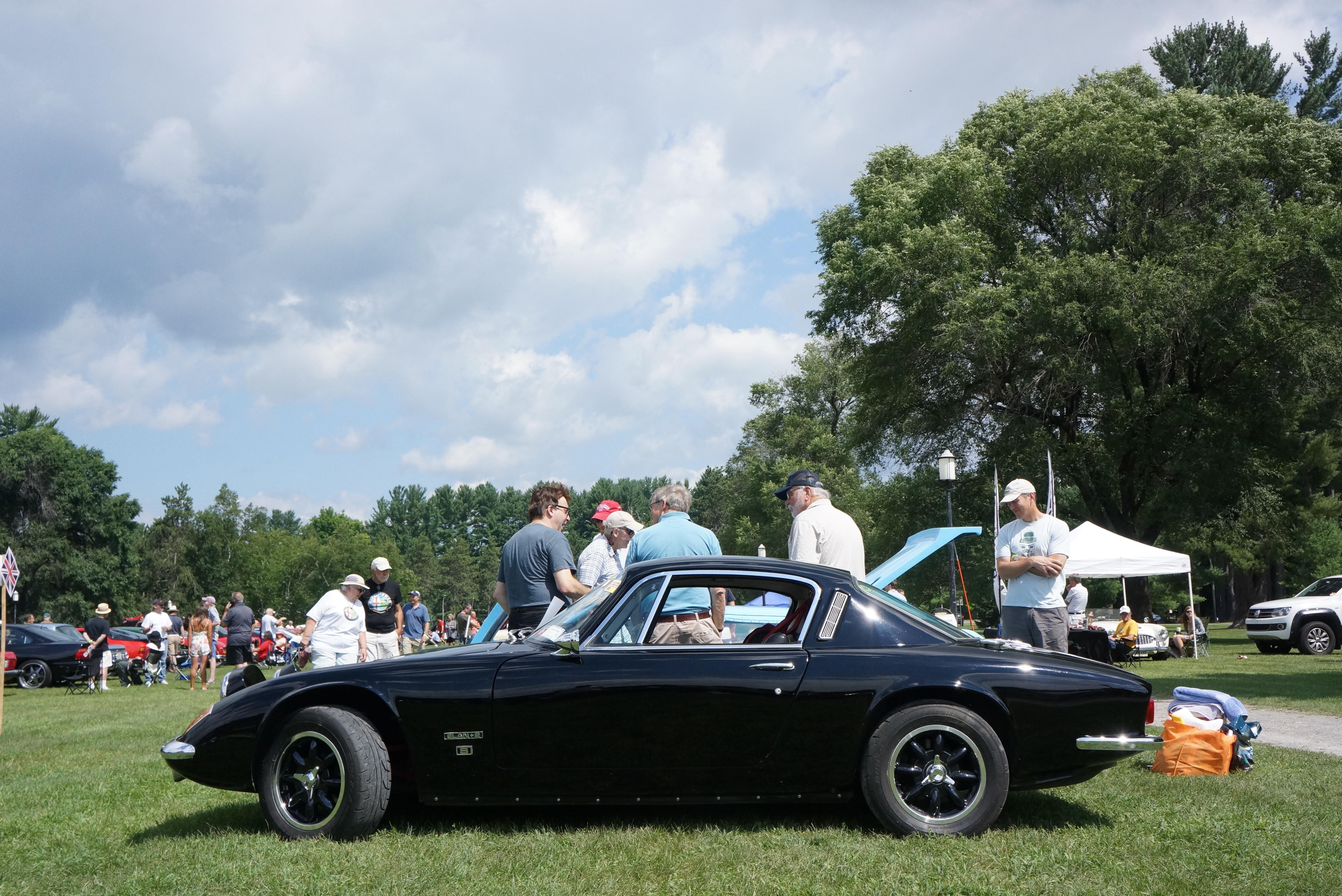
A rarely-seen Lotus Elan +2.
GERMAN
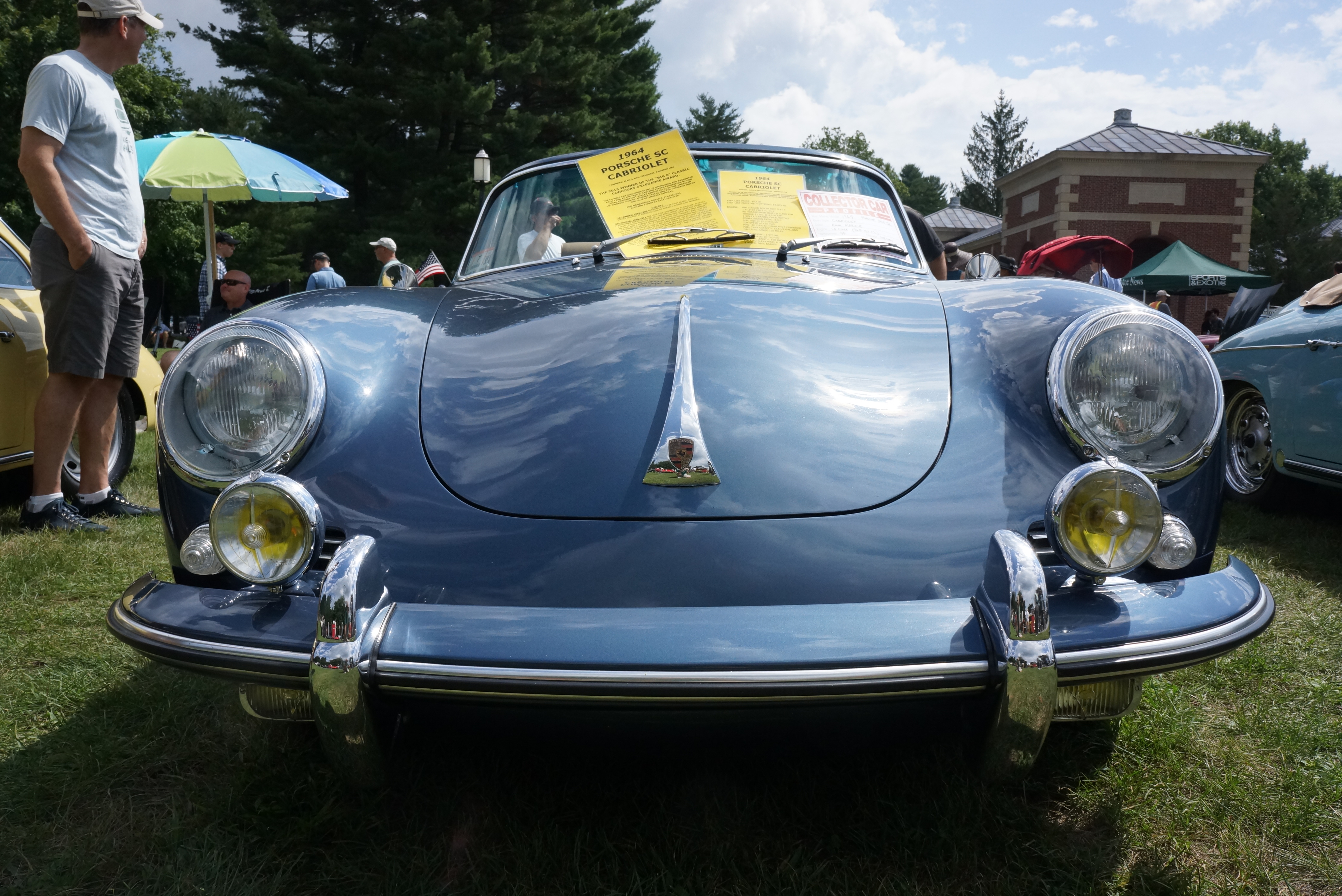
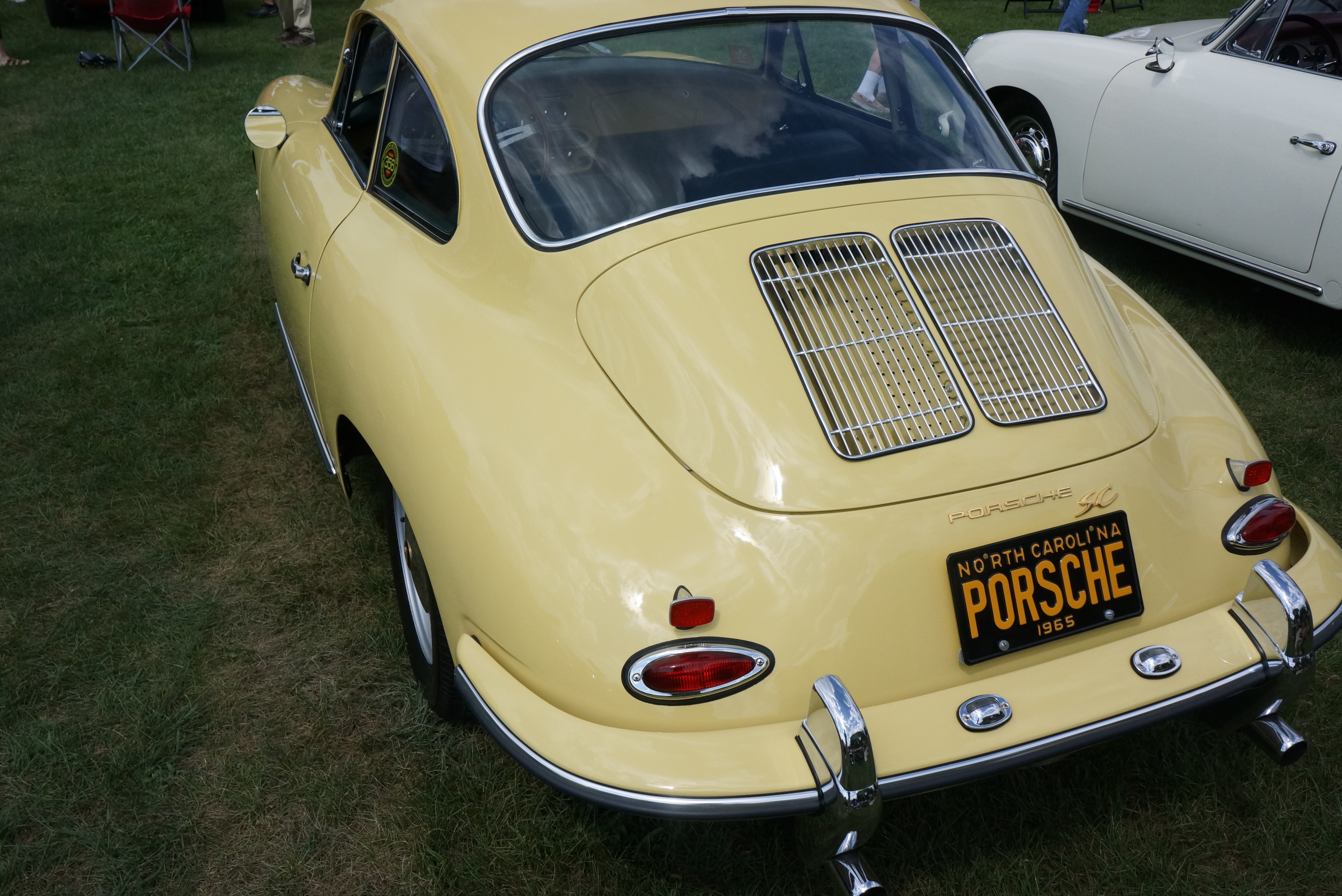
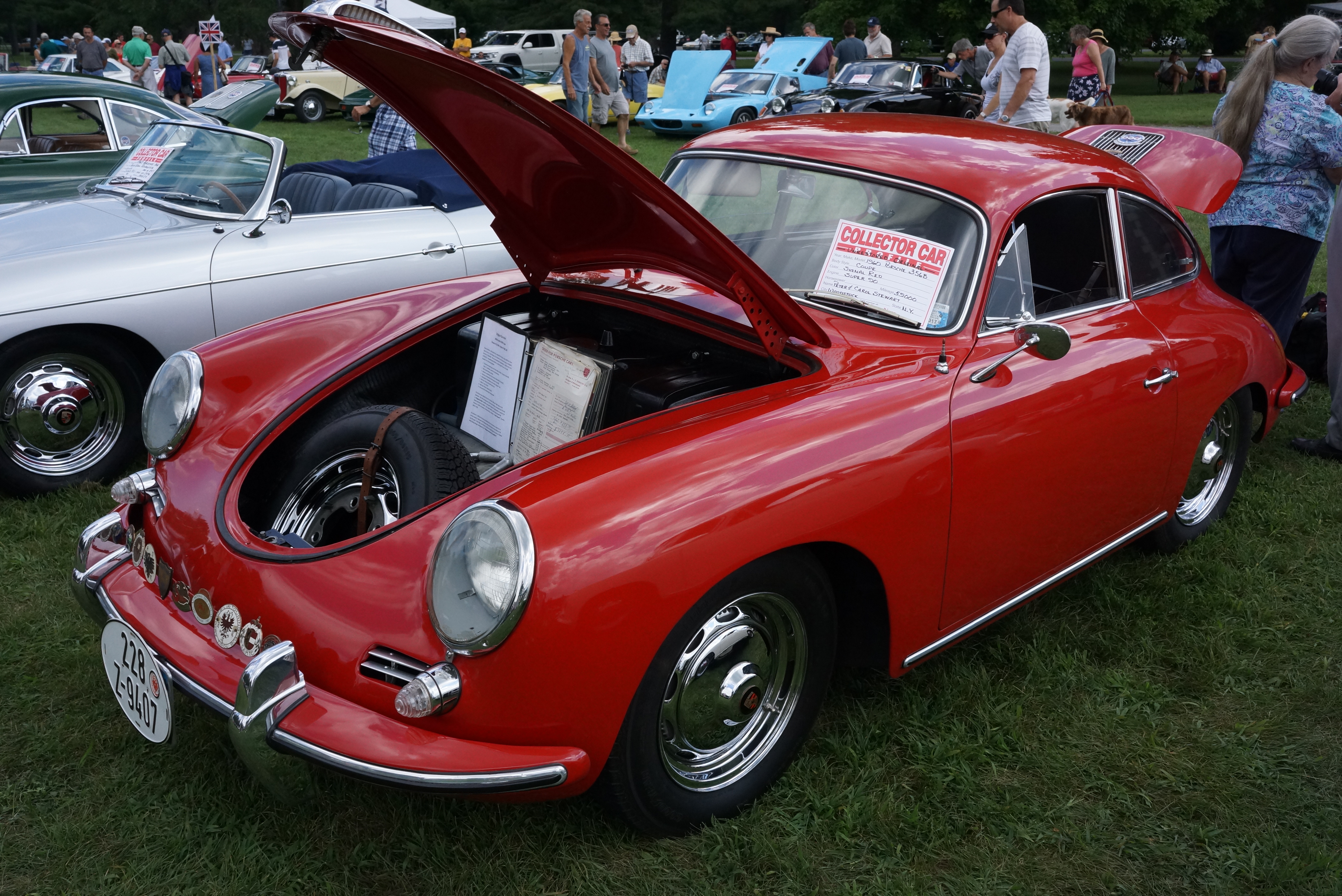
Porsche 356s were one of the Featured Classes.
Two of the more striking ones in attendance.
This 1960 356 coupe is an unrestored survivor.
One of my show favorites: this 1969 911 has been with the same owner for 25 years. Paint was peeling off the driver’s door. He told us he didn’t care; he owns the car to drive it.
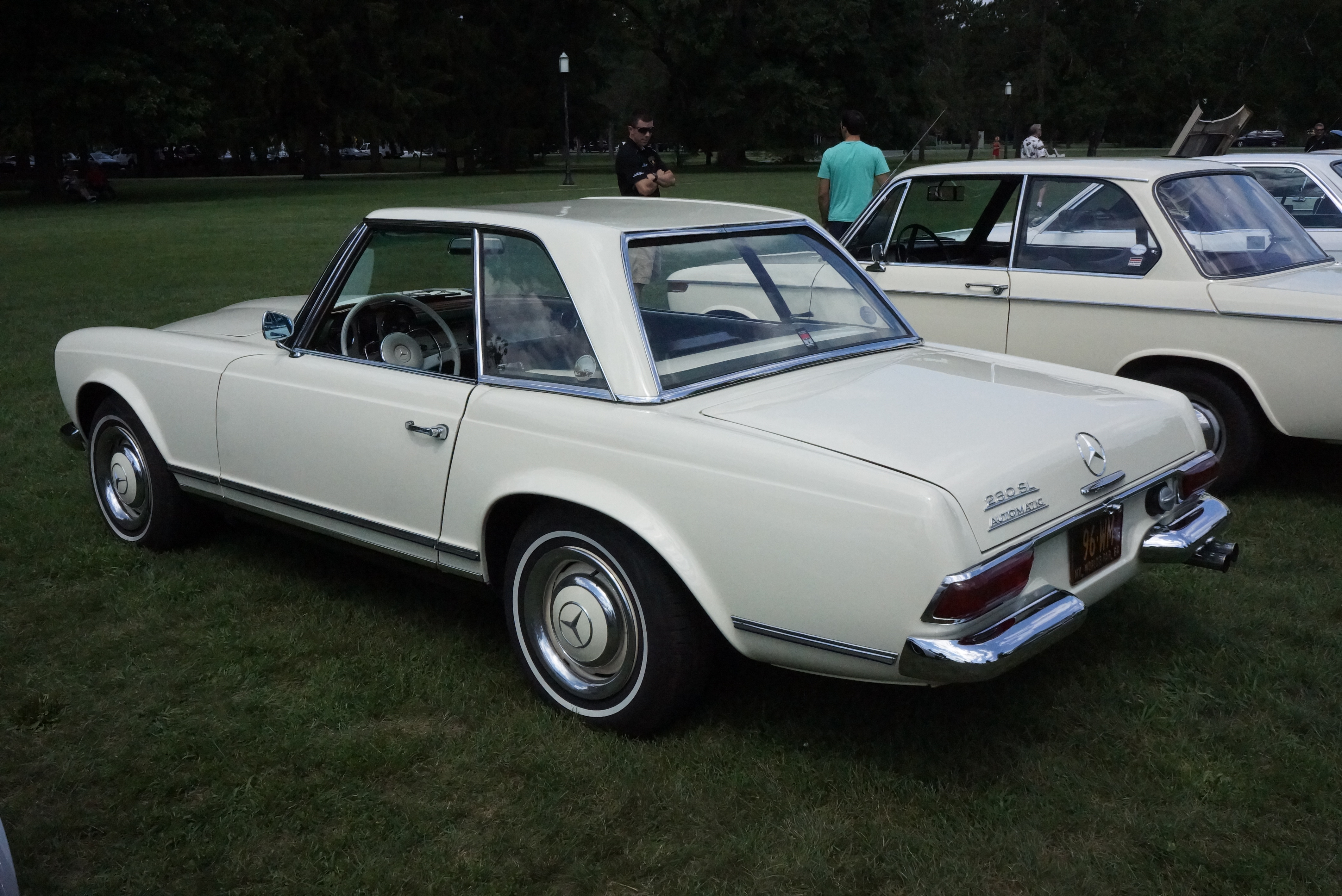
There were German cars there besides Porsche. This Mercedes Benz 230-SL had a side-facing rear jump seat.
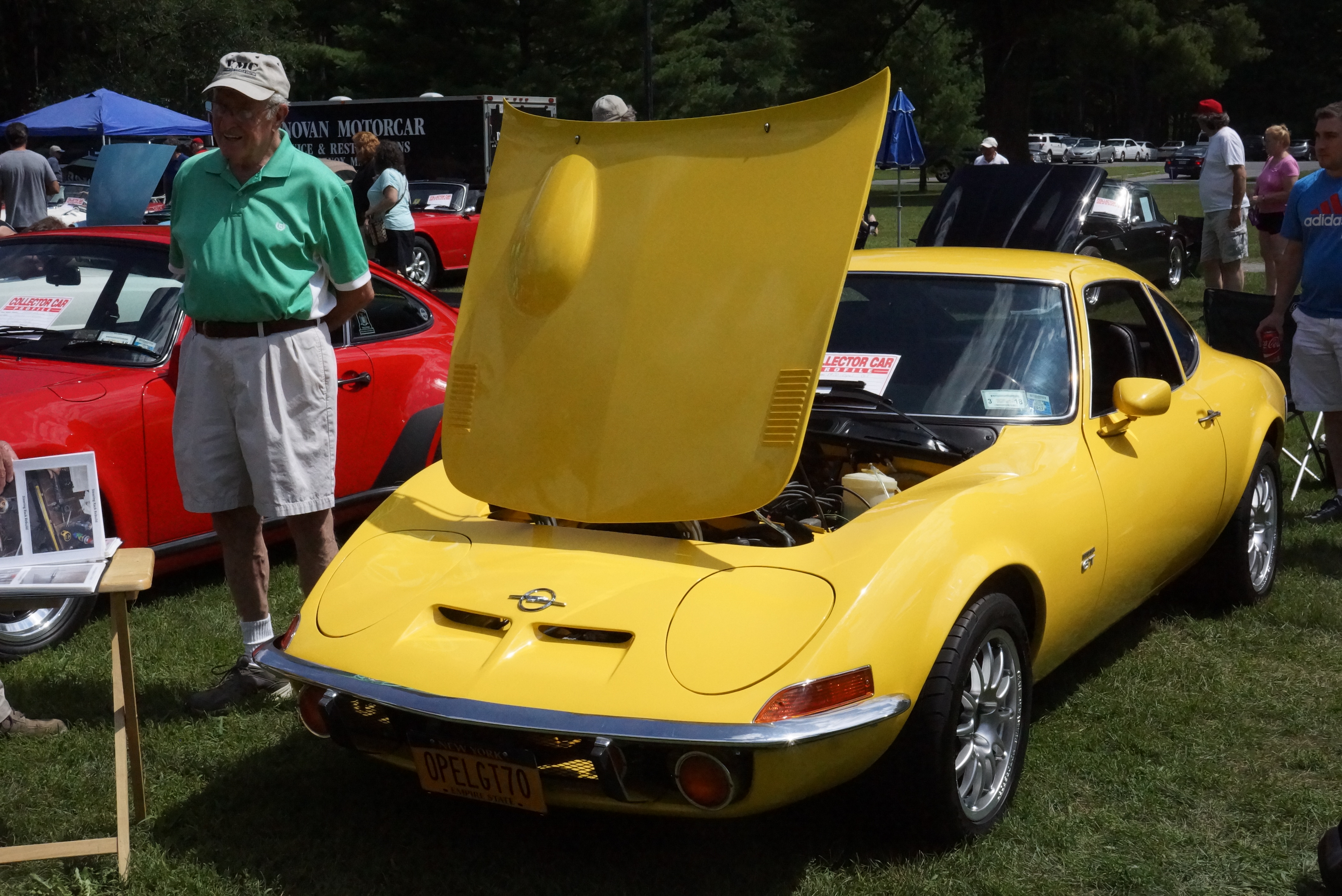
An Opel GT, sold new in the U.S. by Buick dealers.
Another favorite: this 1979 Ford (not Mercury) Capri had been privately imported. The car was tastefully modified, was clean and straight, and must be a hoot to drive.
SWEDISH
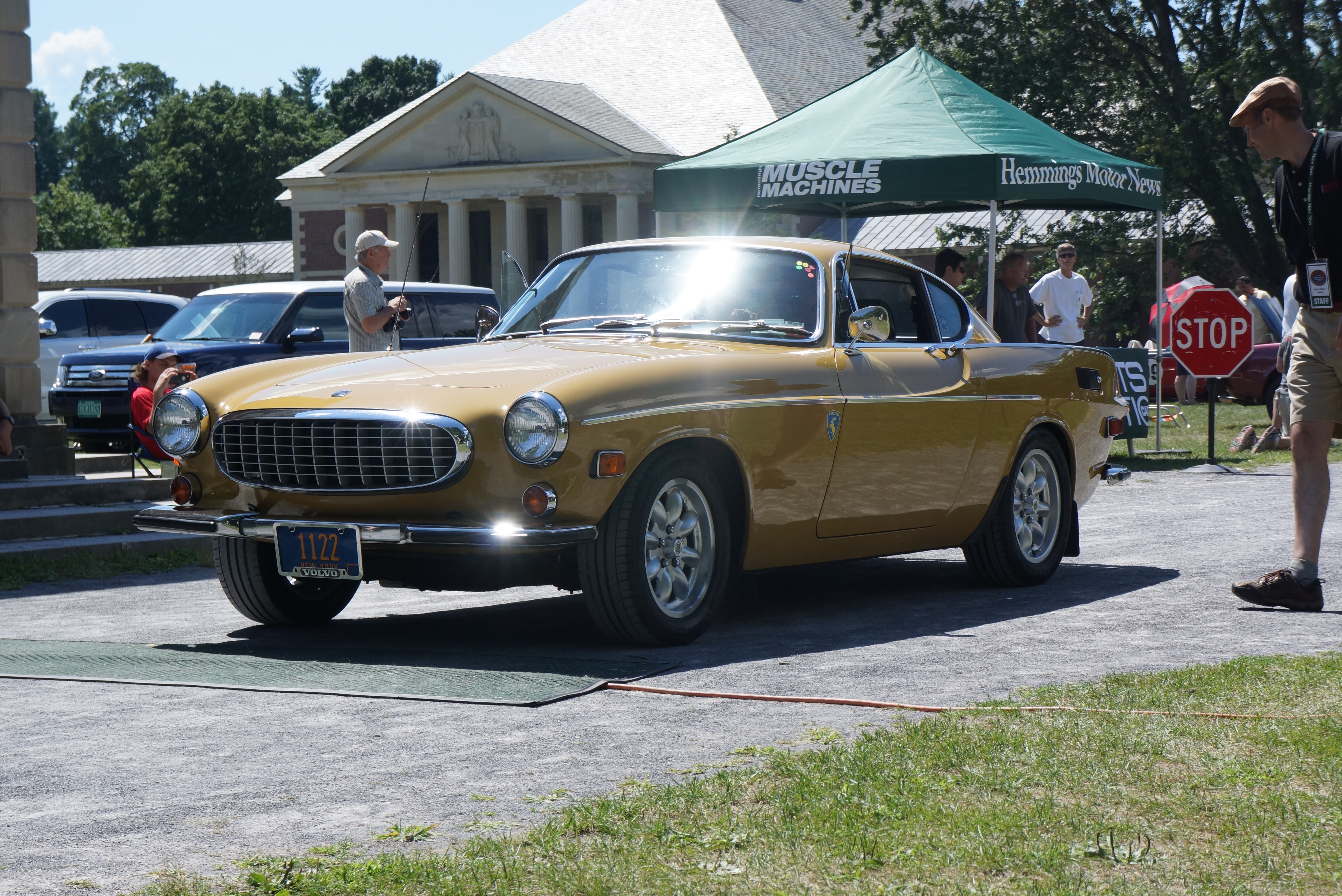
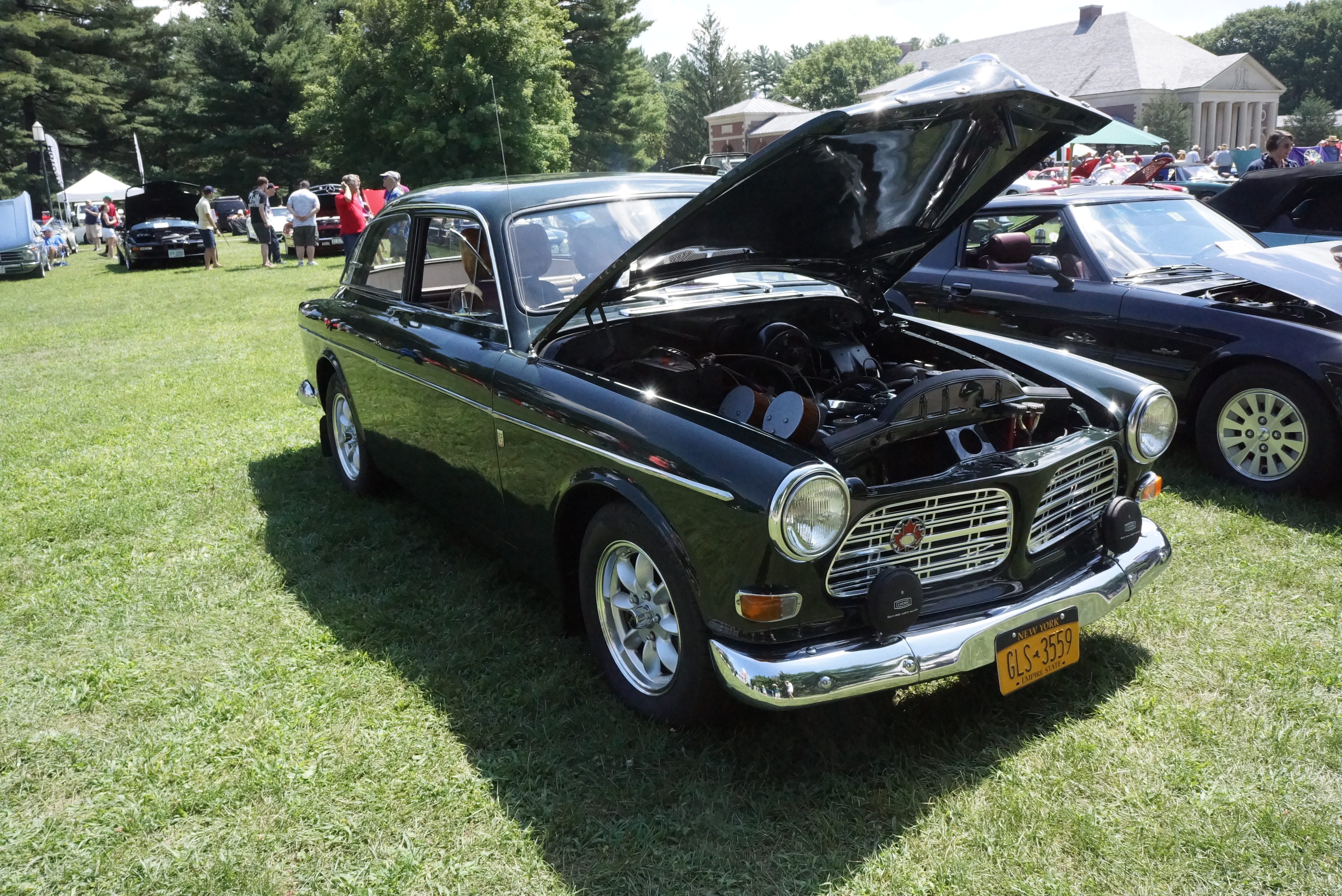
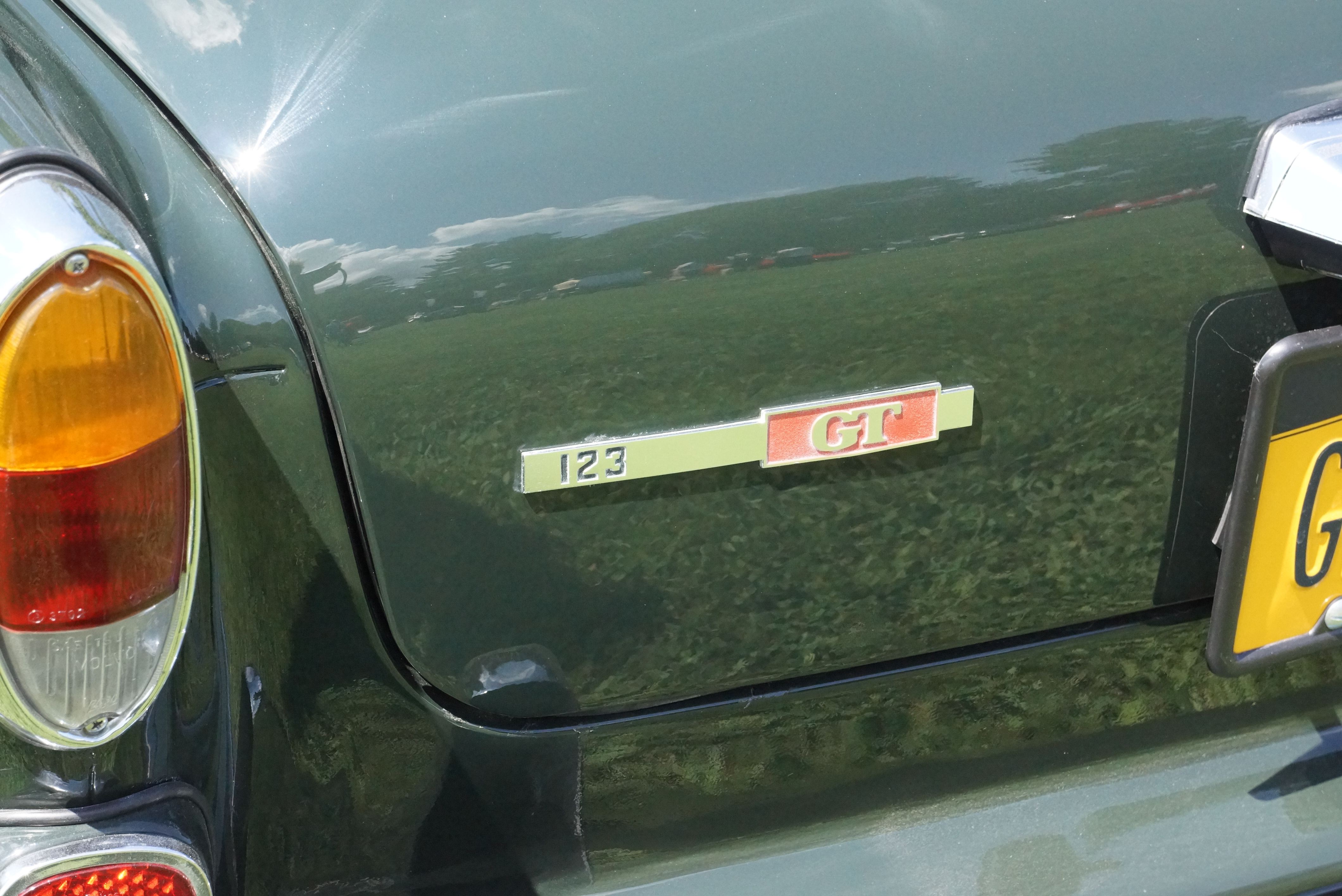
This Volvo 123GT looked authentic; at least it wore the correct badging. I don’t think I’ve seen an actual 123GT in about 20 years.
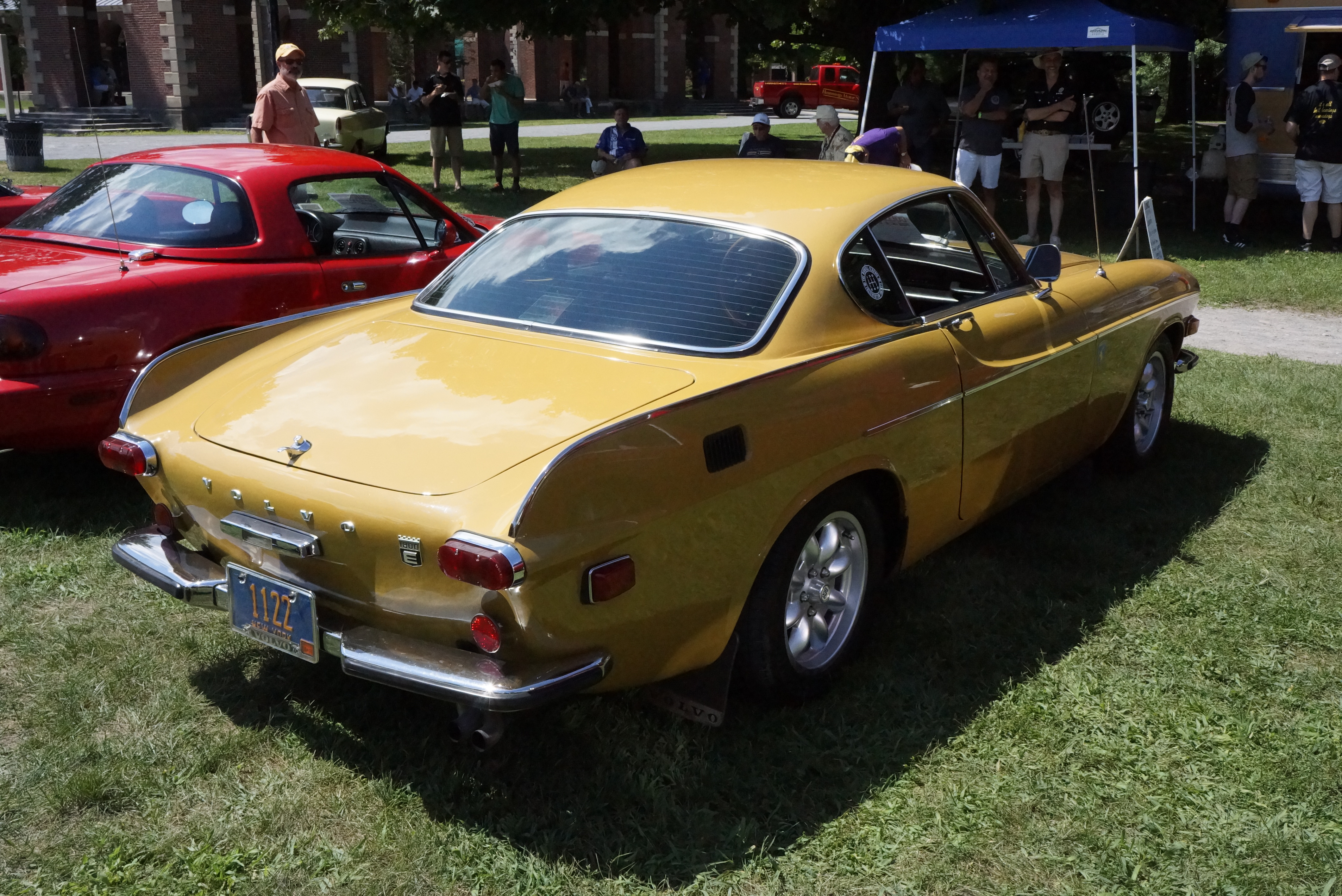
This was the only Volvo 1800 at the show.
FIAT 124 SPIDERS
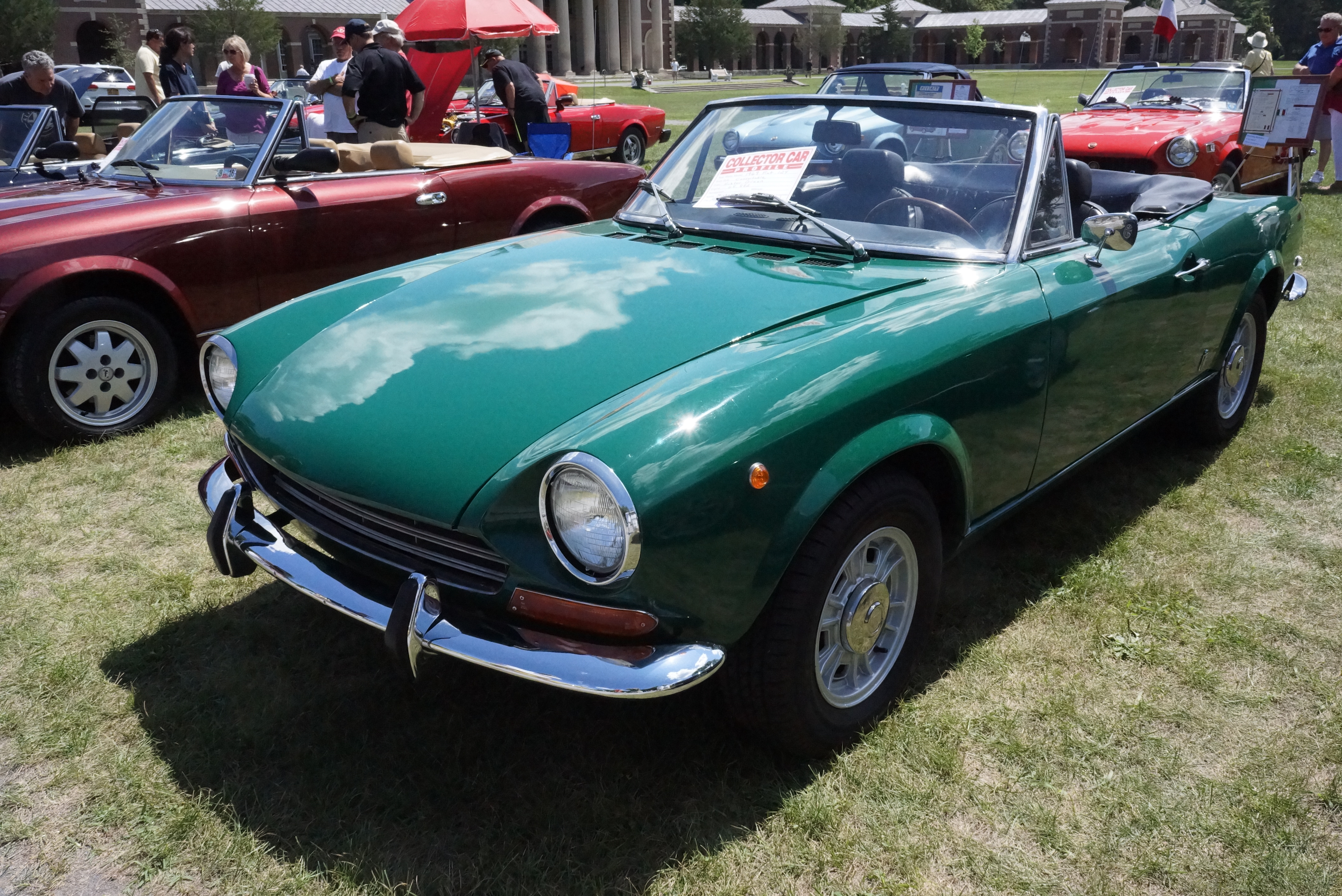
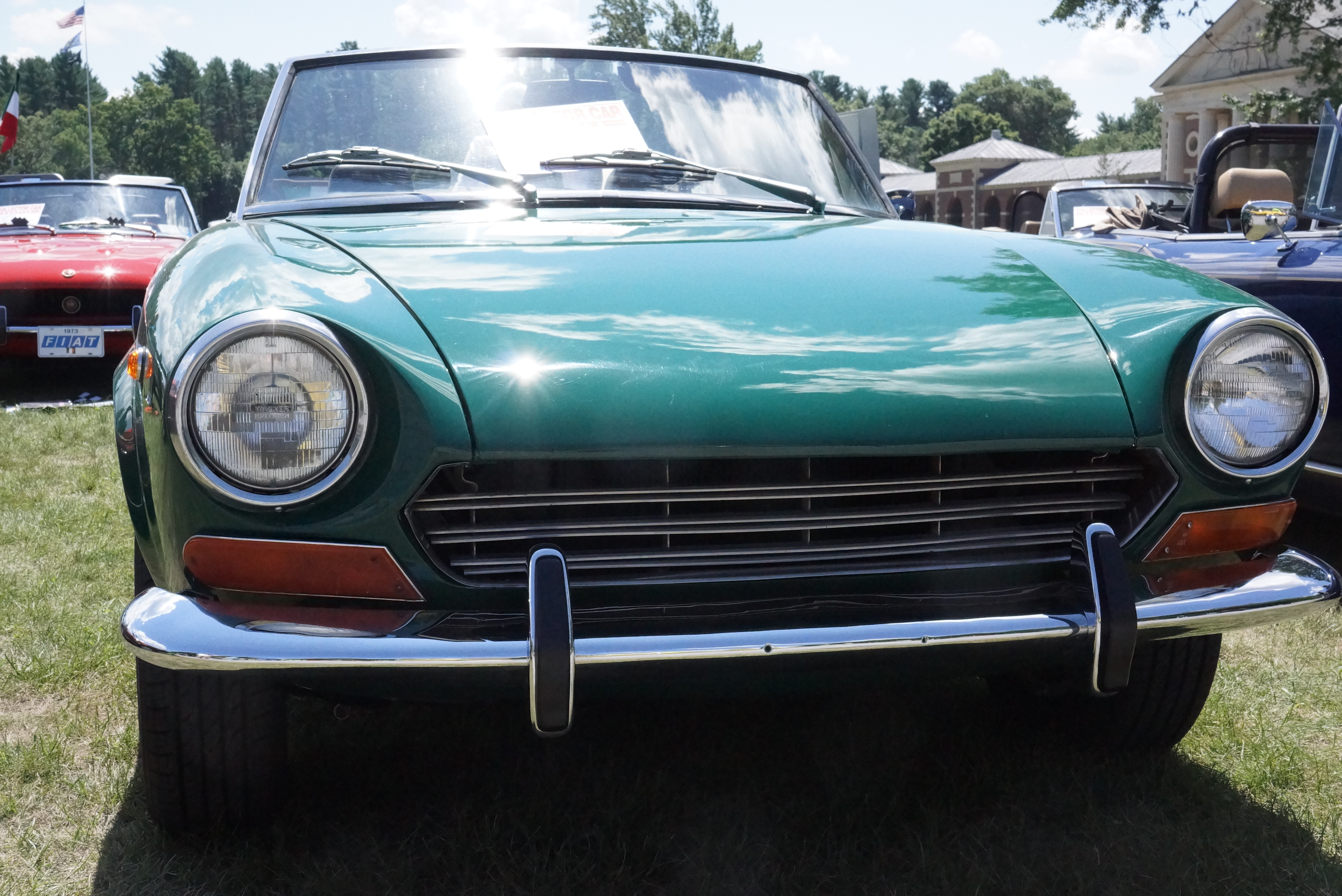
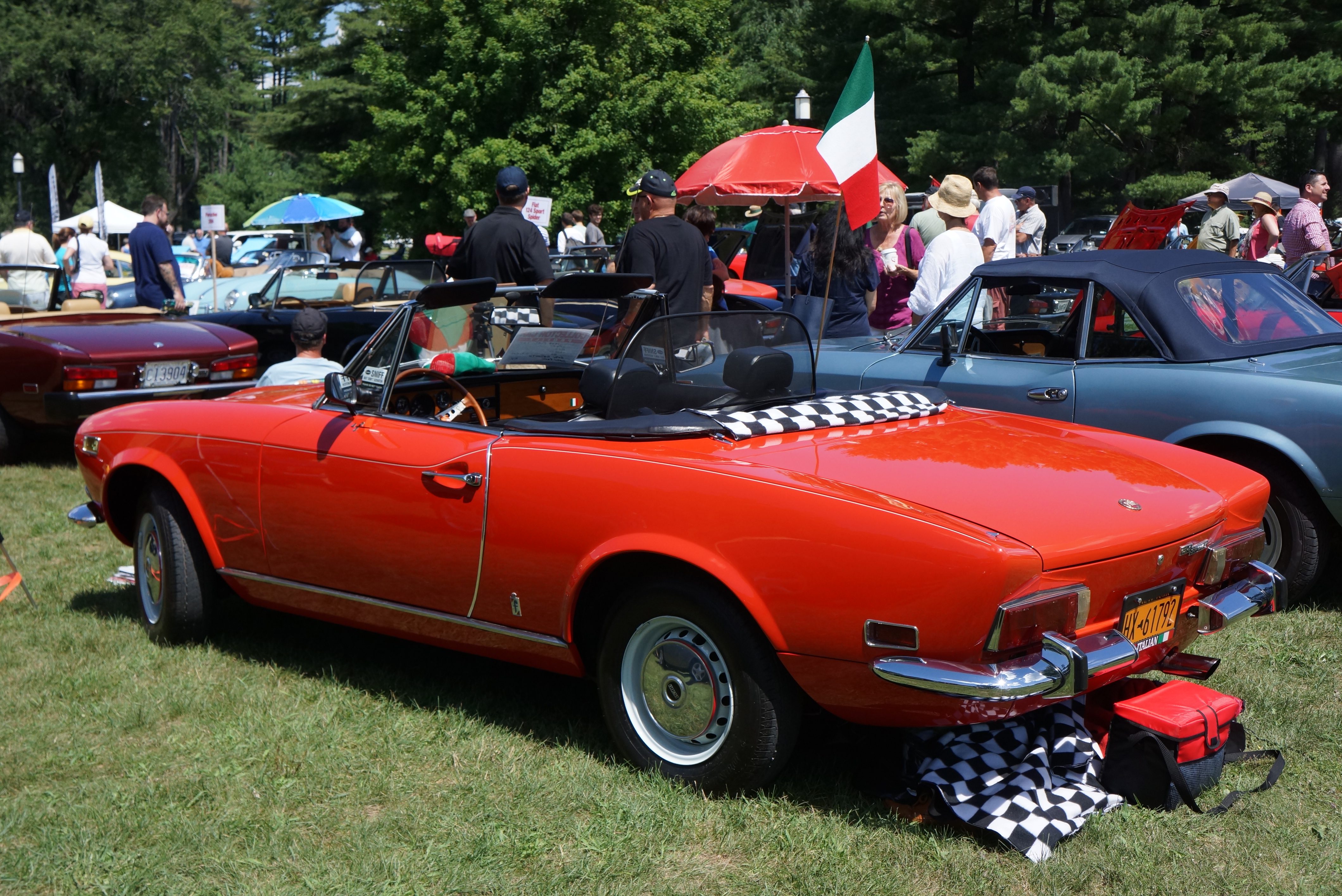
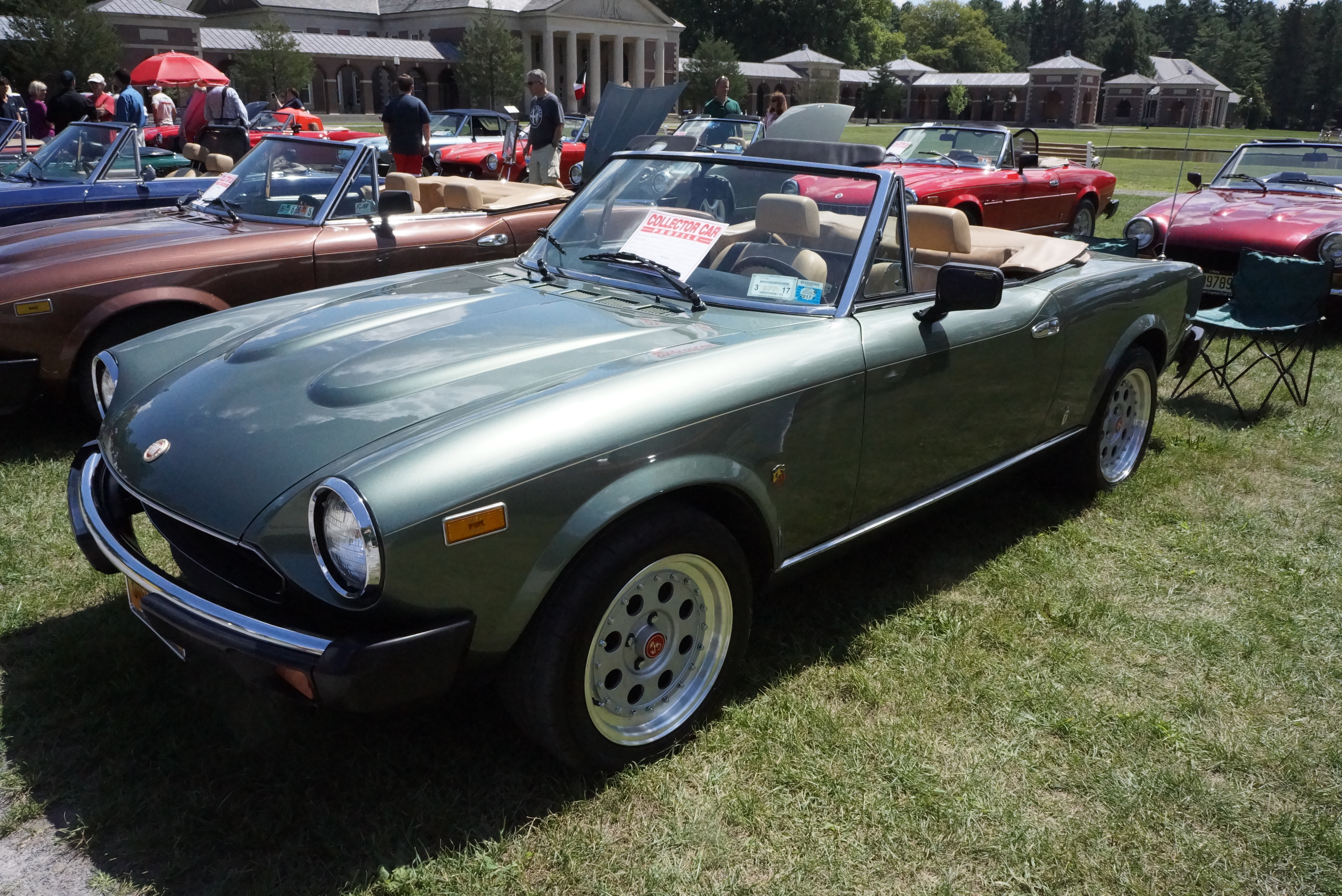
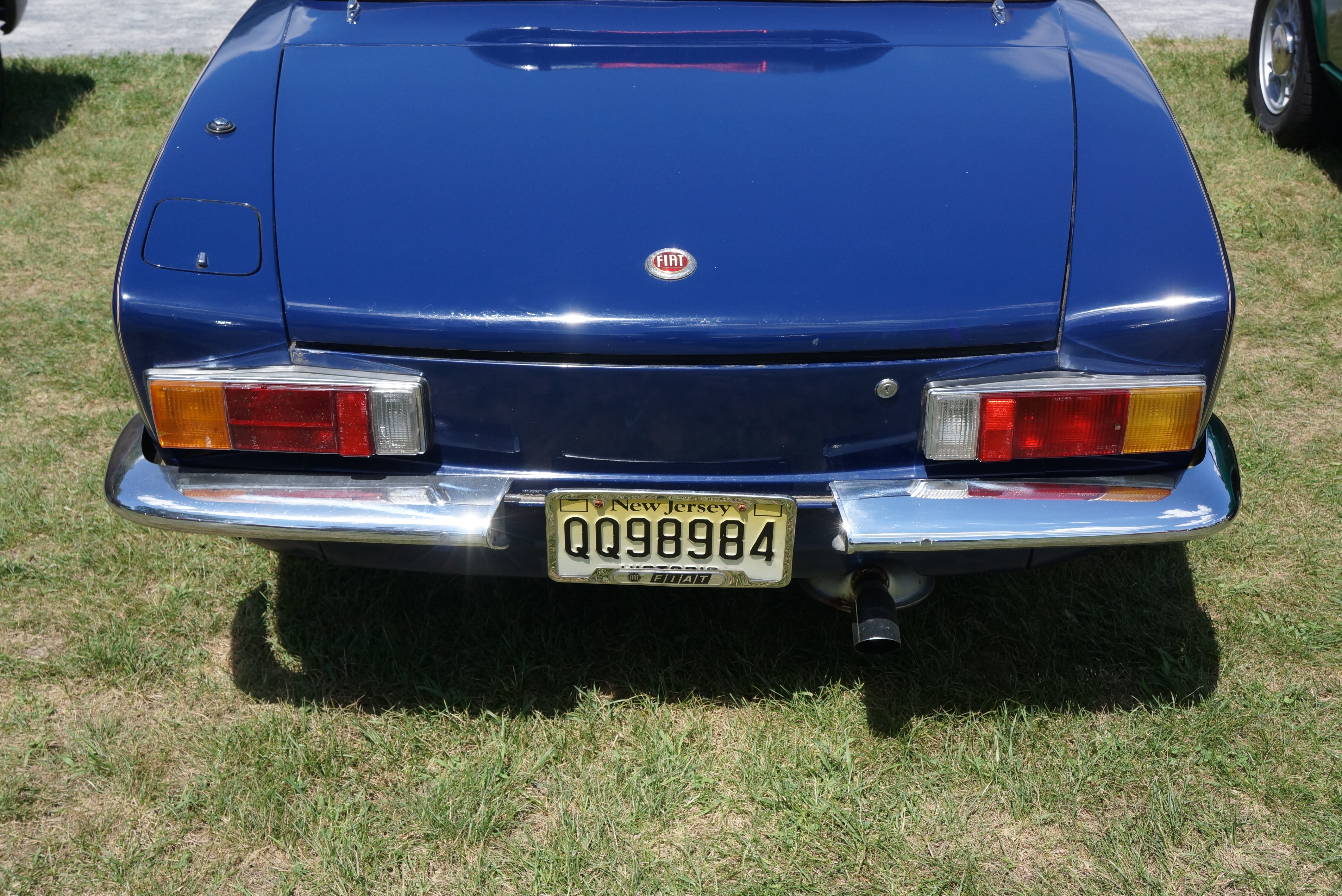
There were about 20 Fiat 124 spiders at the show, with cars from the first generation (late 1960s) right through to the Pininfarina-badged cars of the mid-1980s. As a former Fiat owner, it was difficult for me to believe that this many survived. Best of all, the owners were there just to have a blast. Bellissimo!
An early car: in addition to the chrome bumpers, note the slatted grille, and the small, round side marker lights.
The placard claimed this to be an unrestored survivor.
We spoke at length to the owner of the Positano Giallo car. He recently bought this car after it had sat, unused, in the previous owner’s garage for 30 years. There had been a small carb fire, and that owner gave up on it. The new owner refreshed the fluids, washed off 30 years of dust, and here it is.
This beauty took home 2nd place in this class.
More, more, more
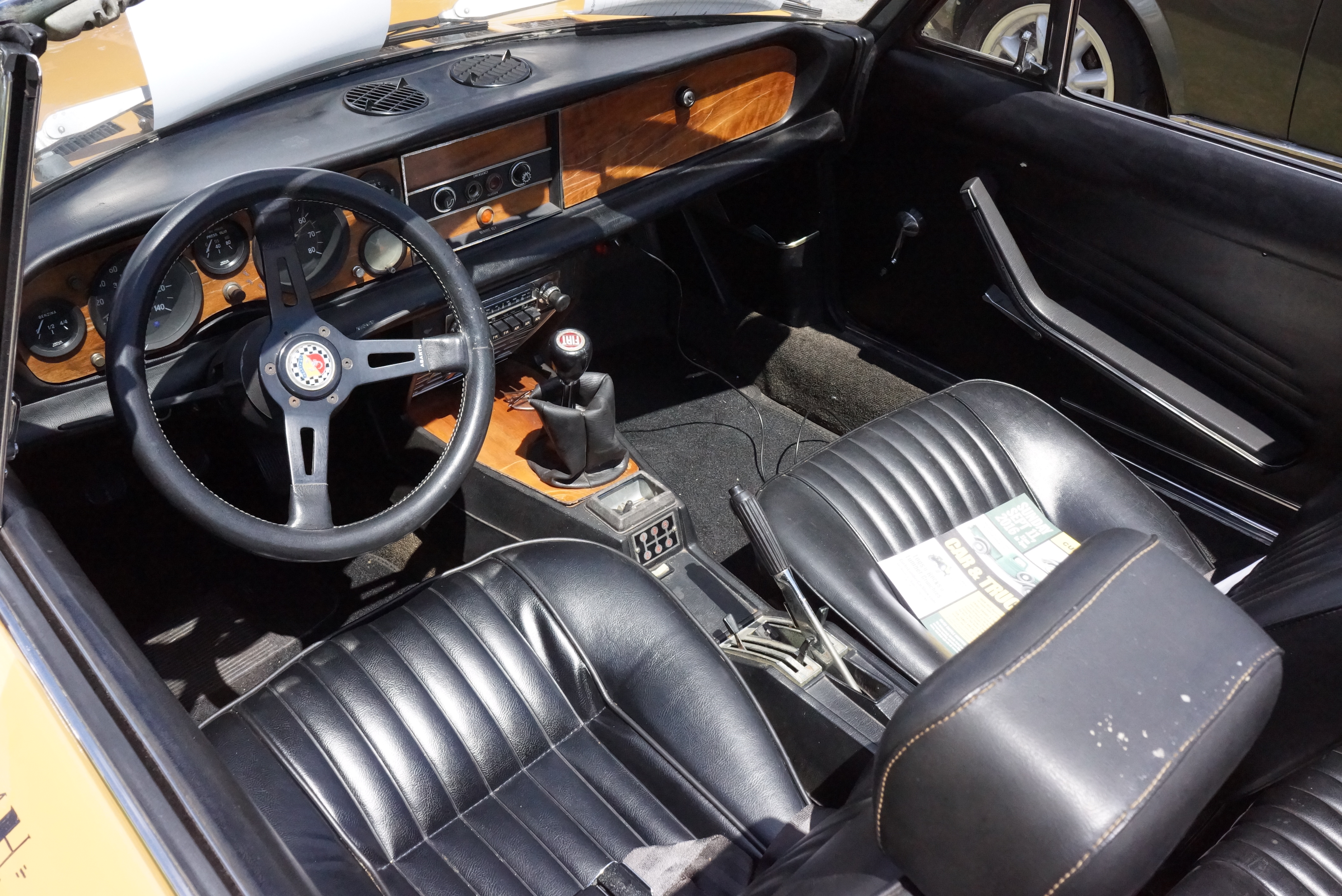
The Pininfarina cars got their first dashboard redesign.
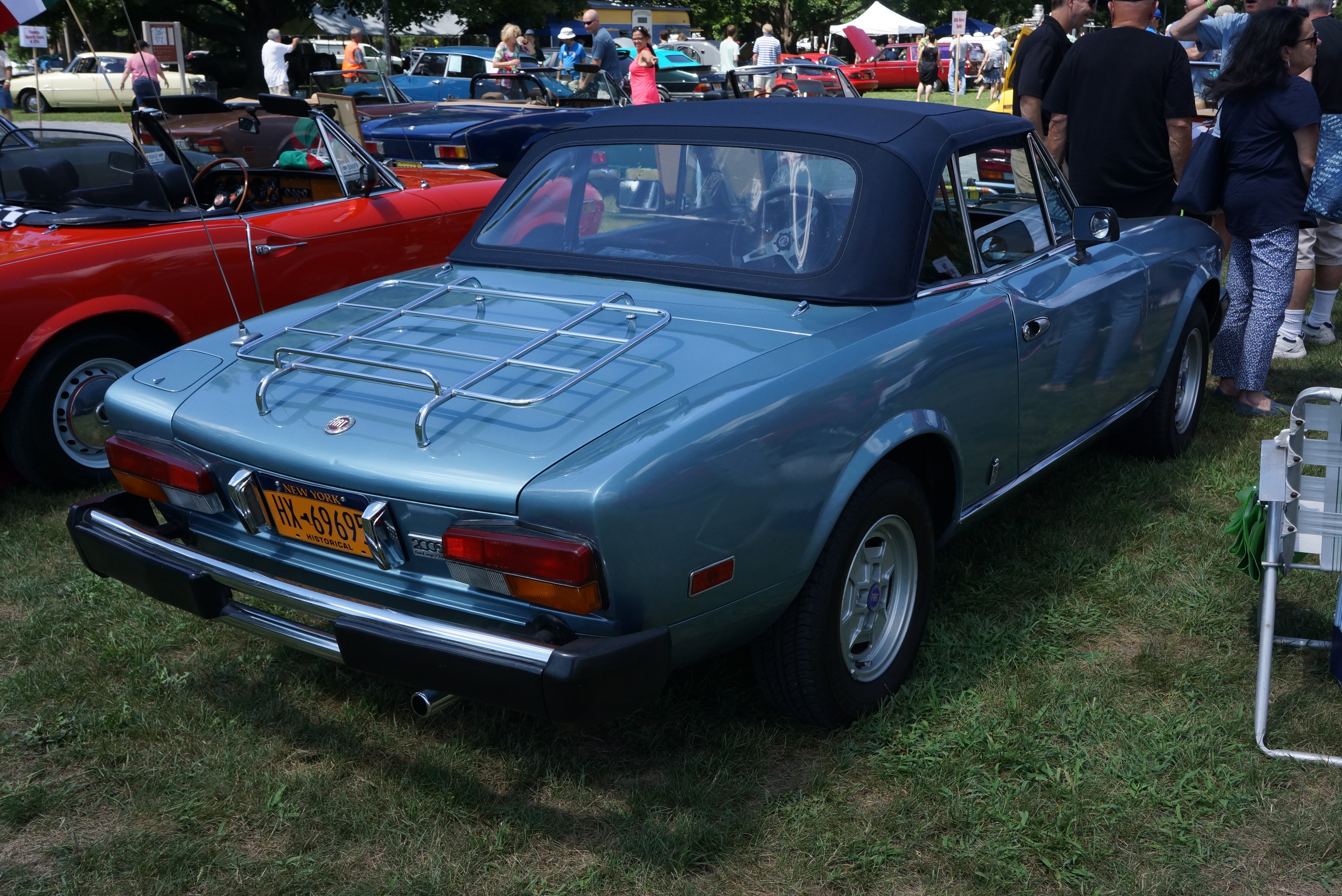
Here you see the 124 Spider tail lights evolve and enlarge.
OTHER ITALIAN
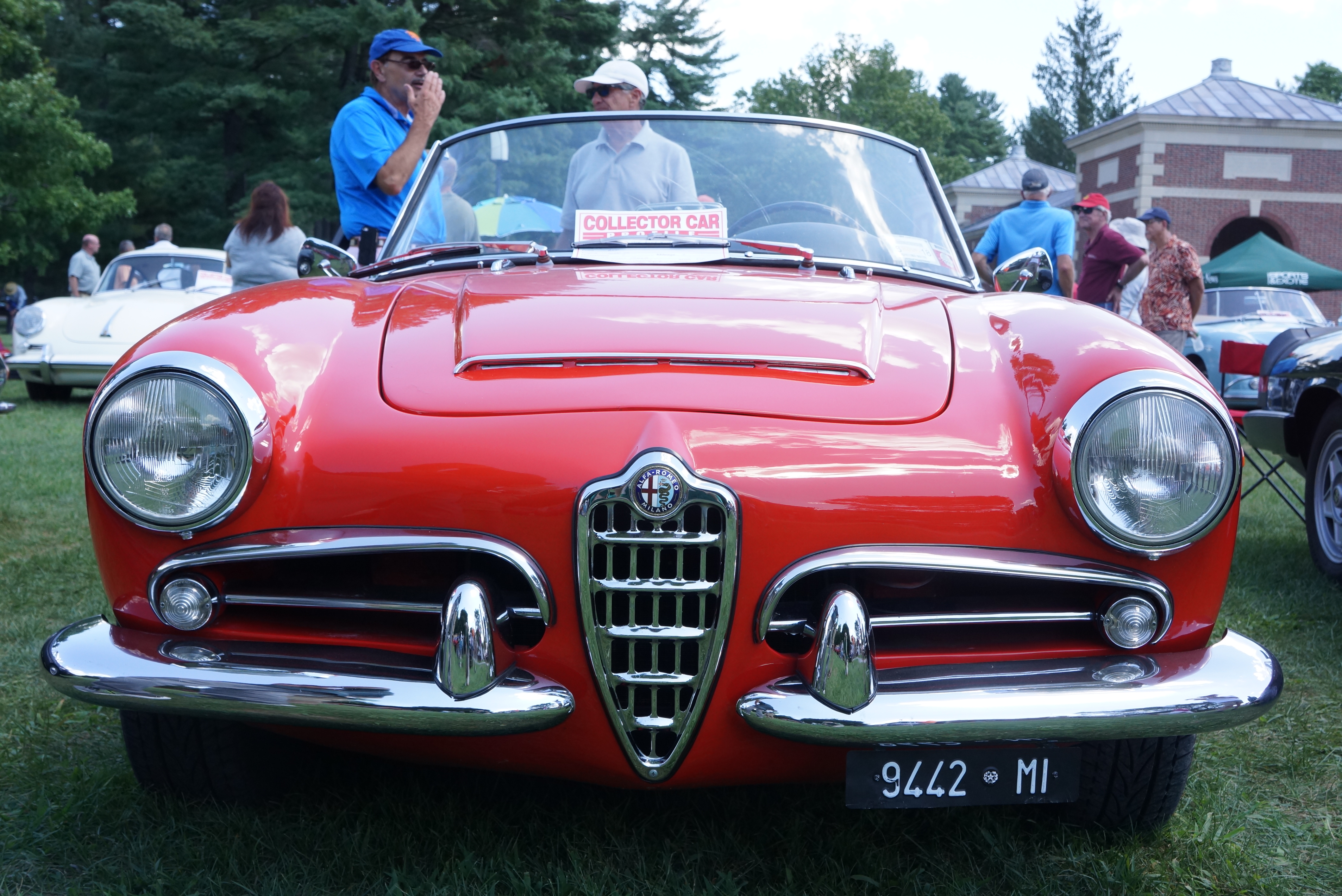
The Alfa class was disappointingly small. However, the cars that were there were gems.
Fine Italian jewelry:
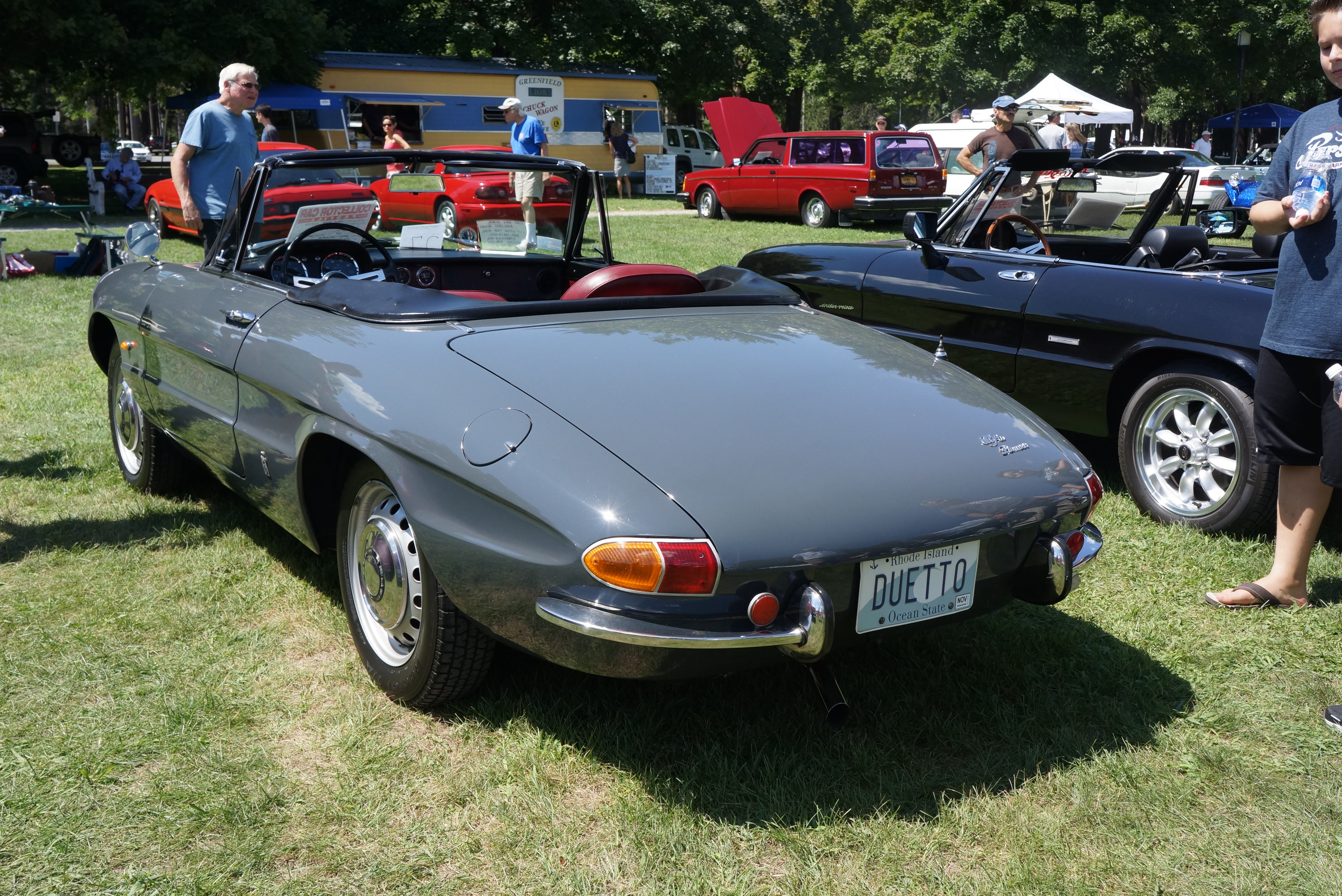
This Duetto, striking in grey, took 1st place in its class.
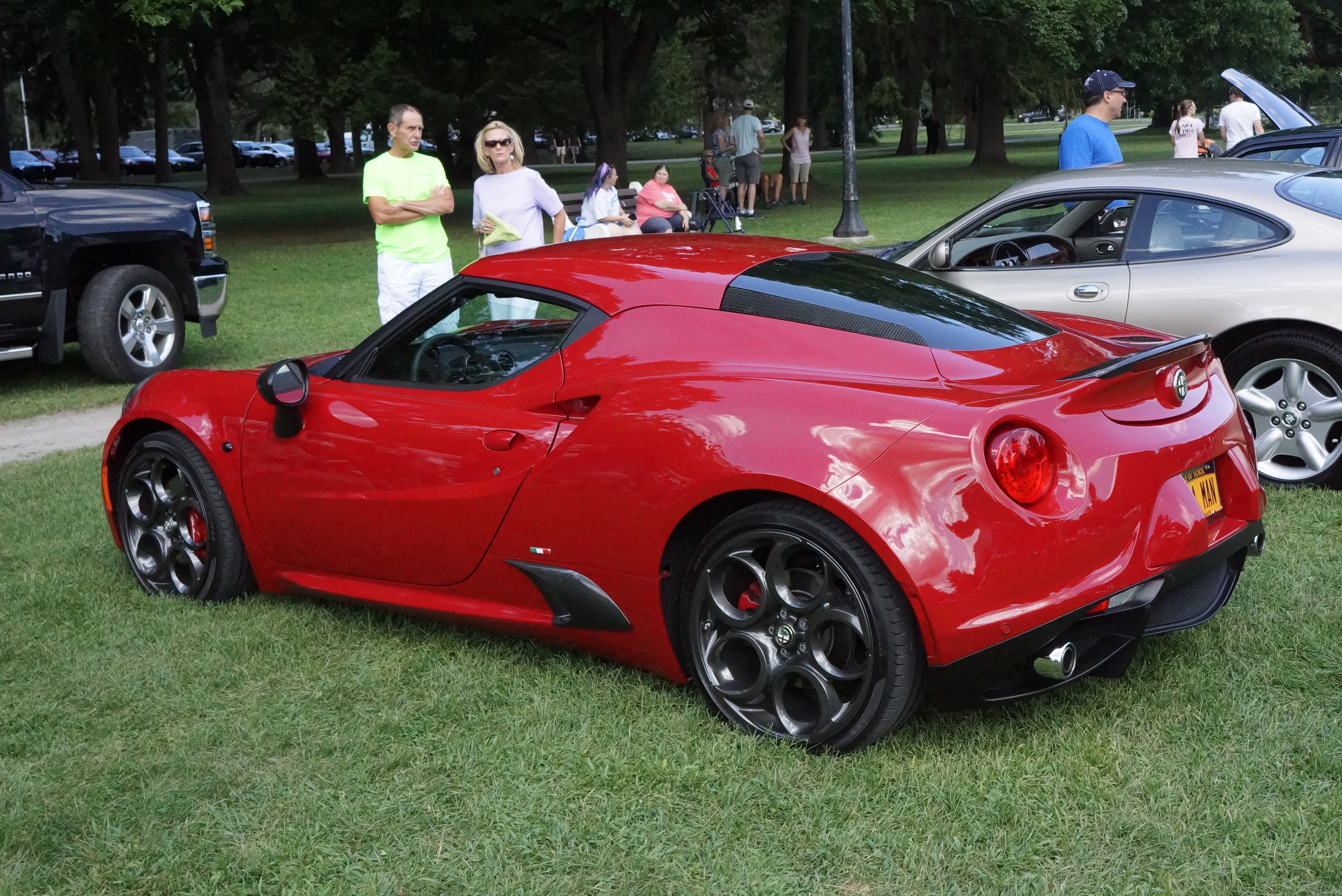
Modern Alfas, in the guise of a 4C coupe and 4C spider:
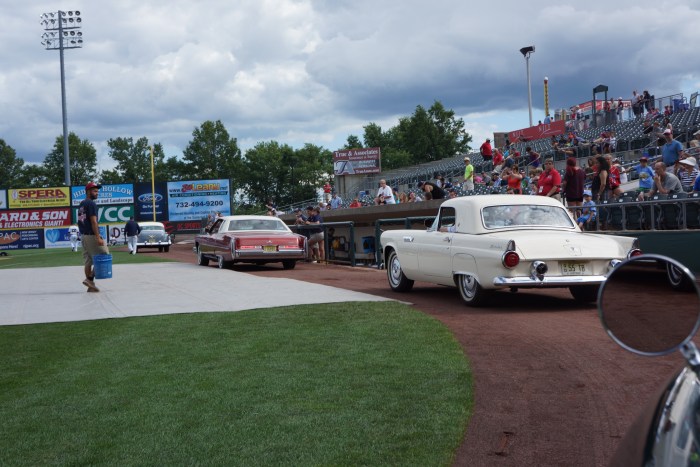
Display cars in the parking lot, with TD Bank Ballpark in the backgroud
Friday, July 8, 2016 was Collector Car Appreciation Day in the U.S., the seventh year in a row that such a date was recognized. The date was designated as per a U.S. Senate resolution which was passed with the support of various auto hobby lobbying groups, most notably SEMA (Specialty Equipment Market Association).
As part of this celebration, the New Jersey Region of the AACA (Antique Automobile Club of America) co-sponsored a car show held in the parking lot of the TD Bank Ballpark, the home stadium in Bridgewater NJ for the Somerset Patriots baseball team. This show was held on Sunday, July 10, 2016.
Another view of the cars on display.
Turnout among NJ AACA members was impressive, with 20 cars from the club on display. The Street Dreams Car Club had also been invited to participate. Their cars and trucks leaned toward newer and /or modified, but not exclusively so. In total, there were close to 50 vehicles in the show. Ballpark employees roped and coned off a section of the lot, allowing us to park together, and game spectators meandered the aisles, enjoying the vehicular variety.
The Street Dreams club cars were mostly at the other end of the lot.
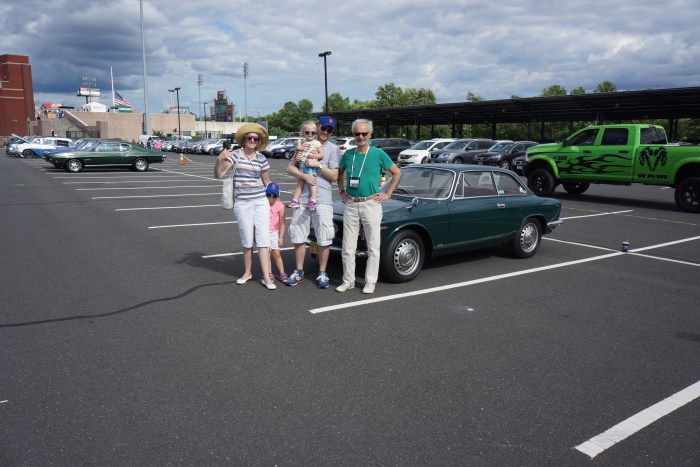
The parking lot show started at 3pm, and the ball game was scheduled to begin at 5pm. Around 4 o’clock, word went out that we all should start our cars and get into a queue near the back of the lot. A large gate swung open, and every show car was allowed to drive one parade lap completely around the field’s warning track. This Alfa Romeo owner had his wife, step-son, and two granddaughters in the car (FIVE occupants, a world record), and we thoroughly enjoyed the chance to see the ballpark from the vantage point of a vintage automobile.
A true family affair. Yes, we all fit into the little Italian job.
At the conclusion of the parade lap, we all returned to the parking lot, and most of us entered the stadium to enjoy a little baseball. This was the first time that the NJ AACA helped conduct such an event, and I understand that the club has already decided to make this an annual occurrence.
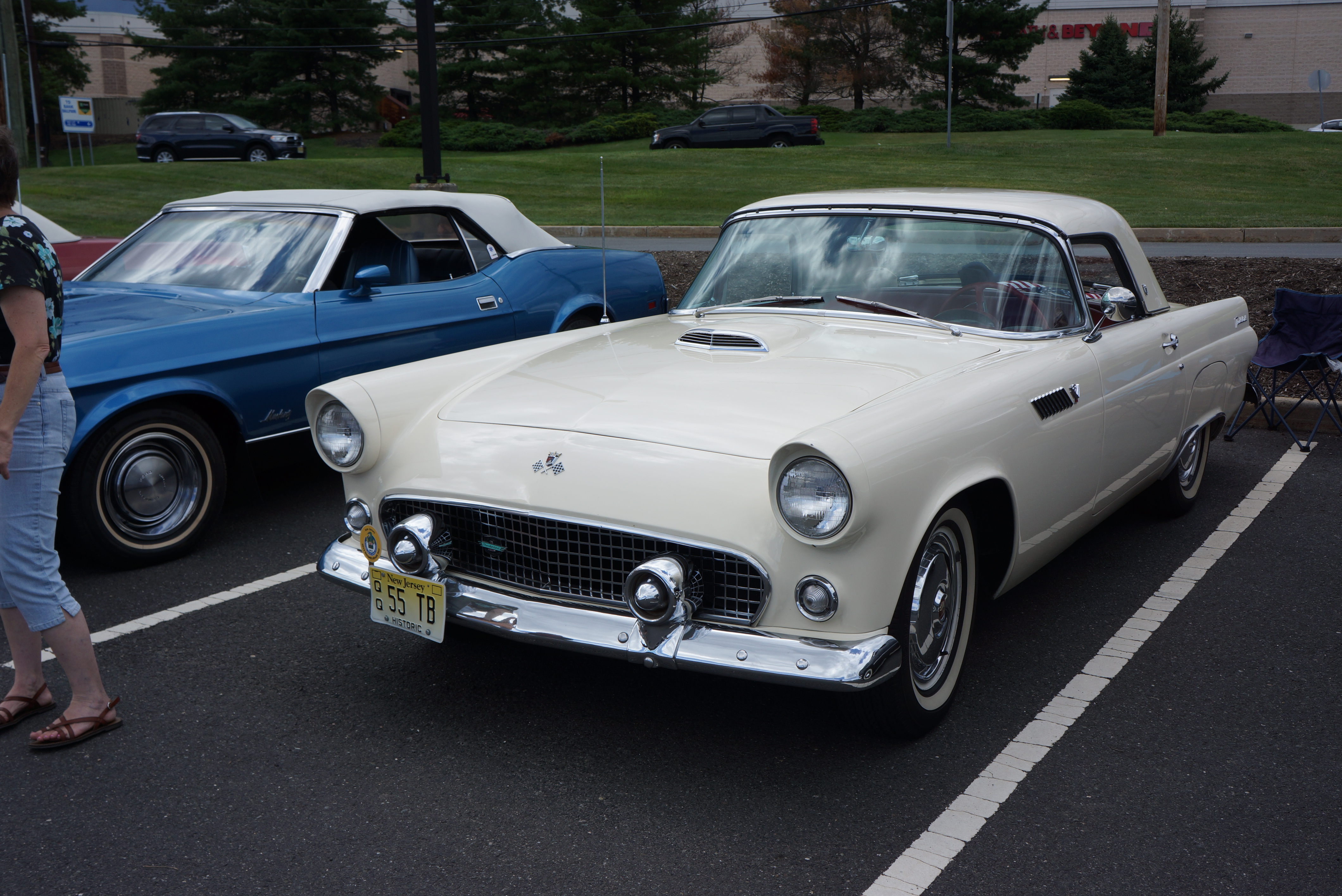
A ’55 T-Bird, first year of production.
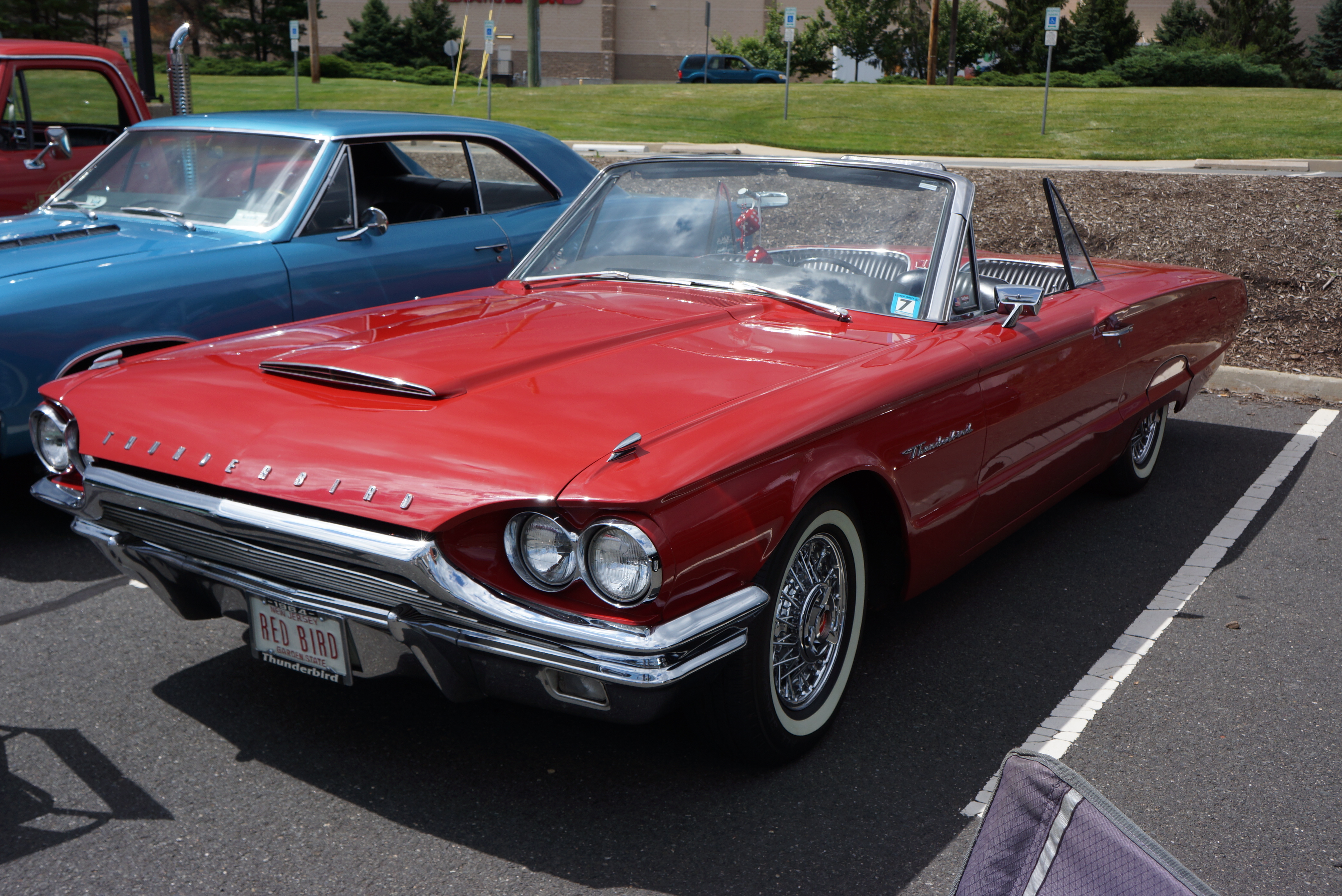
A ’64 T-Bird, one of the last of the so-called collectible Birds.
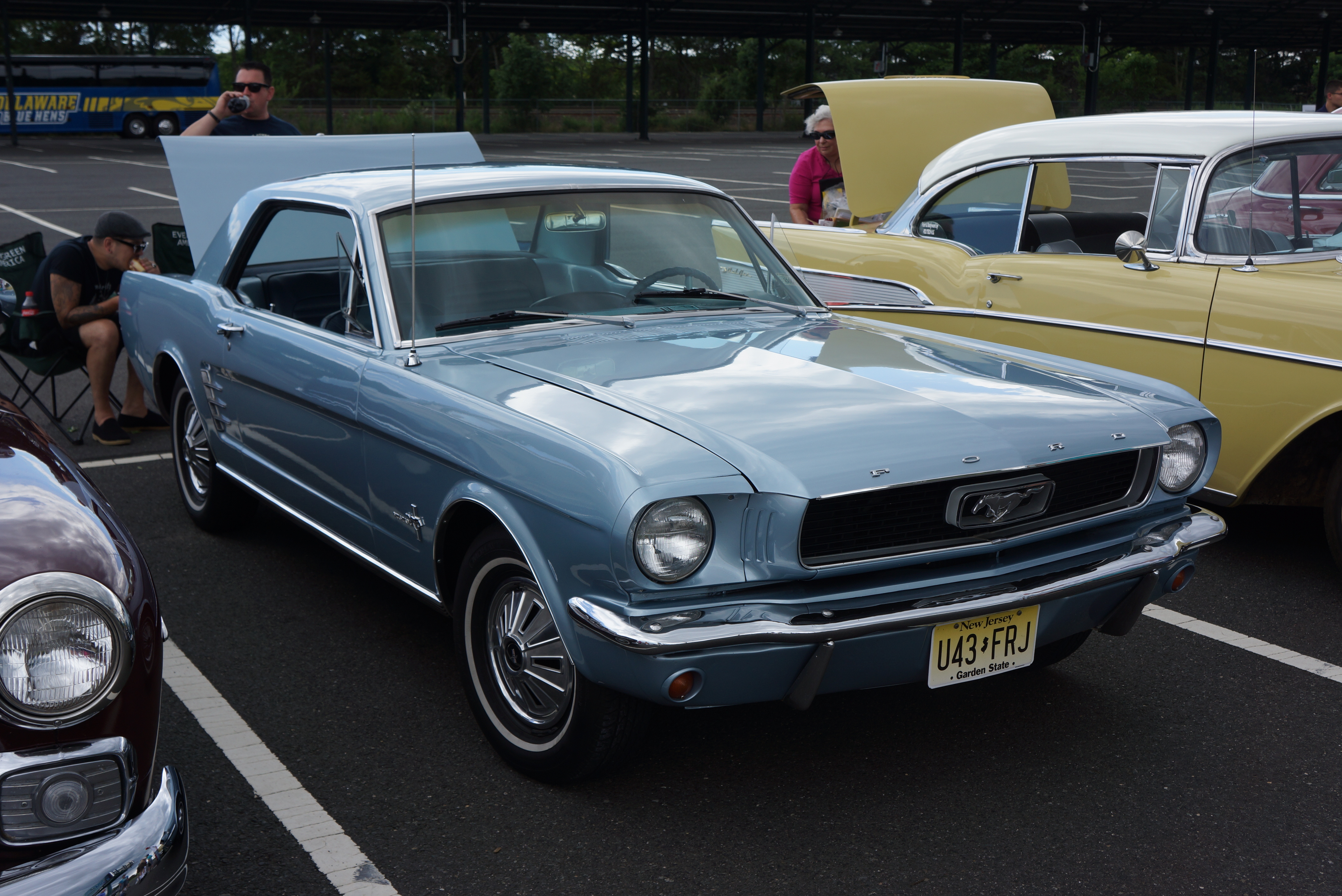
This ’66 Mustang is a 1st generation car.
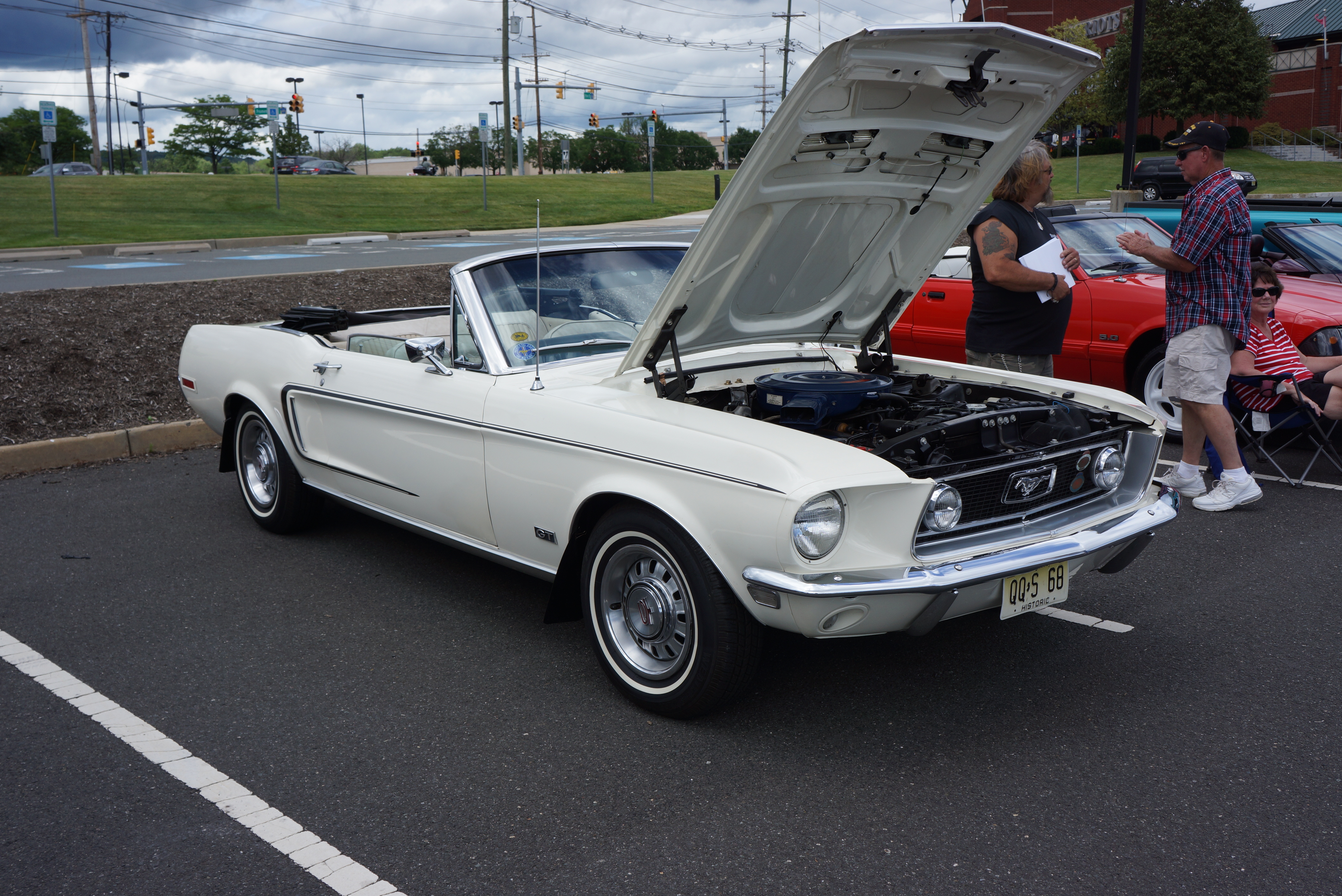
By 1968, the Mustang’s size grew.
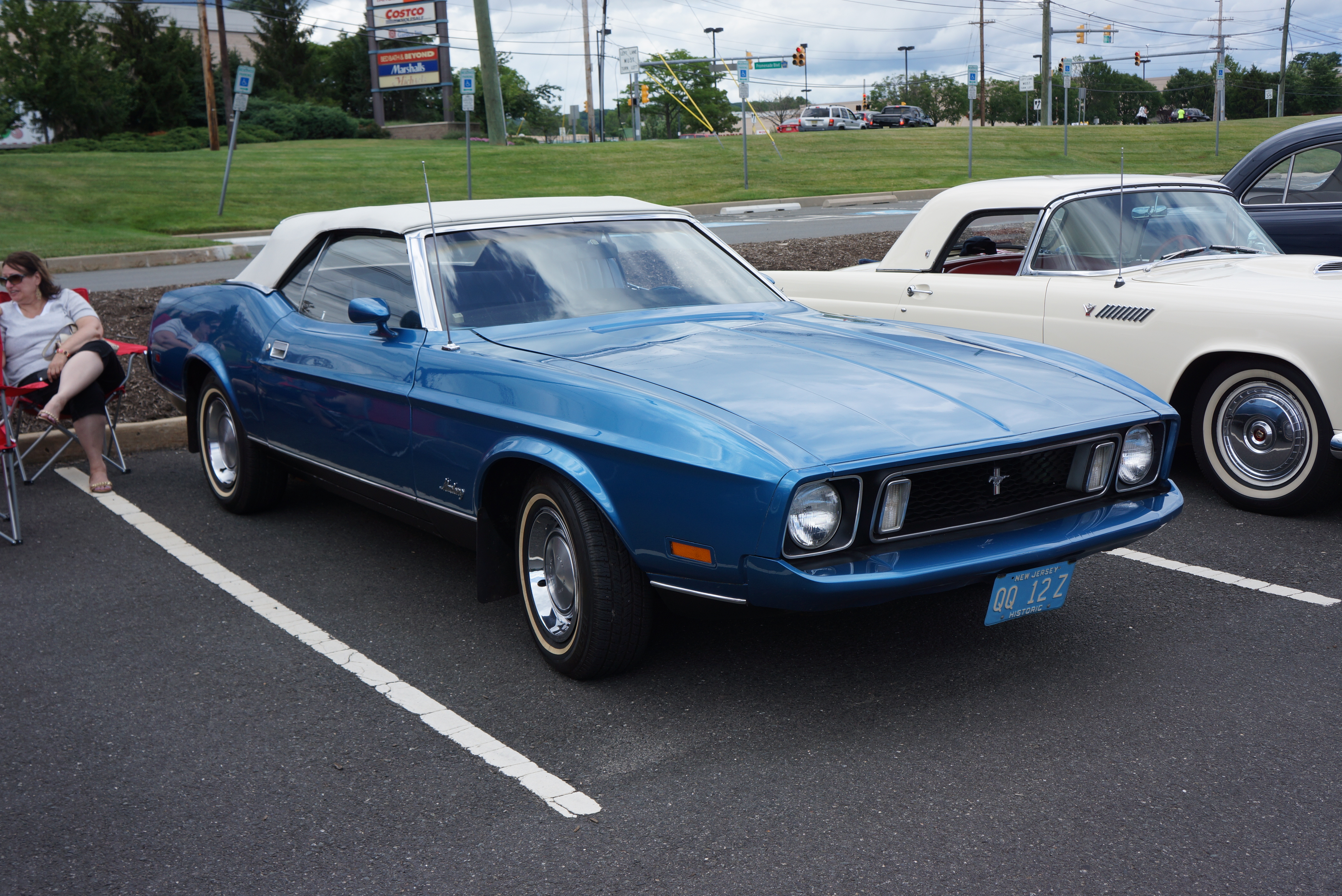
But by ’73, it was yet another size larger.
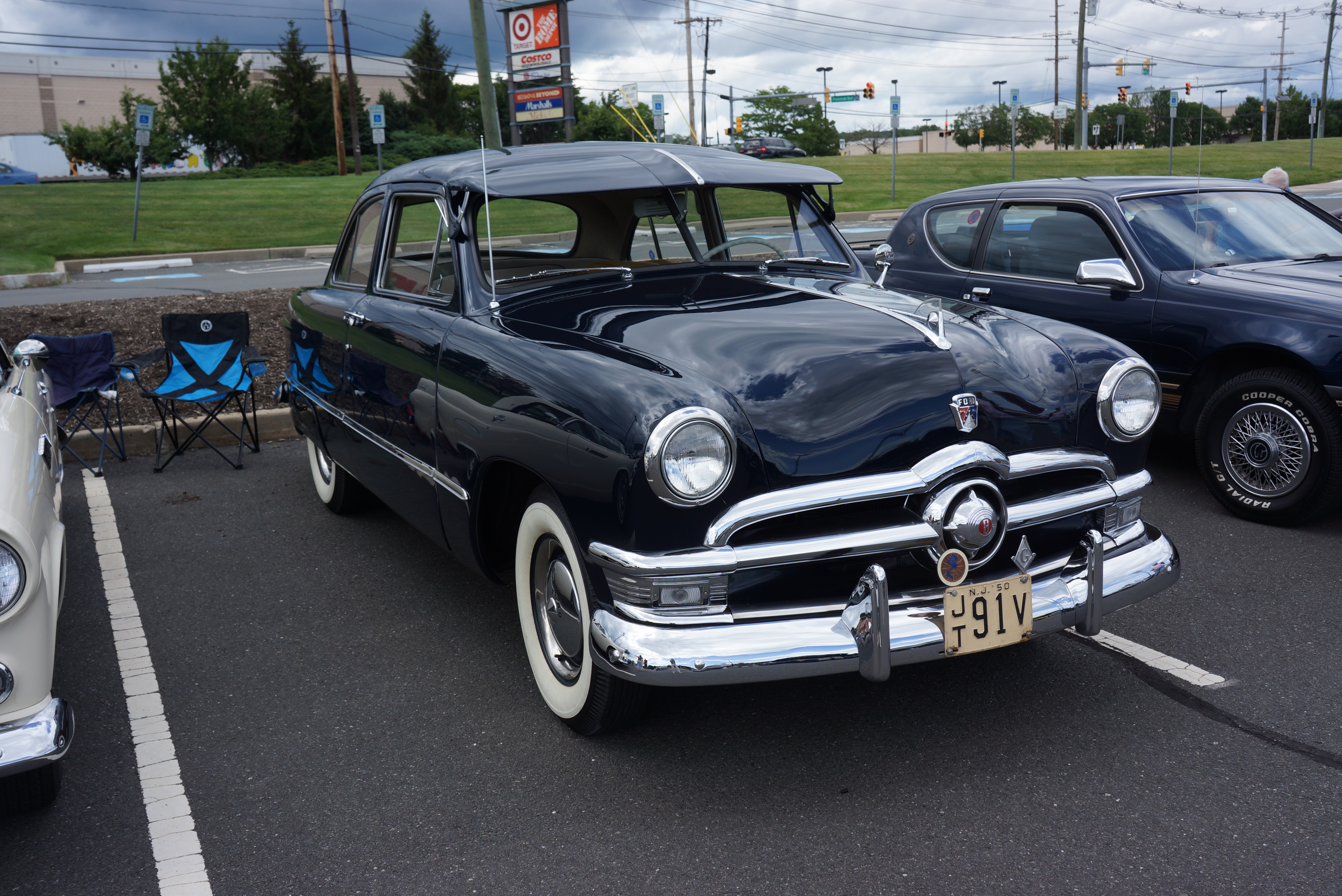
Older FoMoCo cars included this ’50 Ford
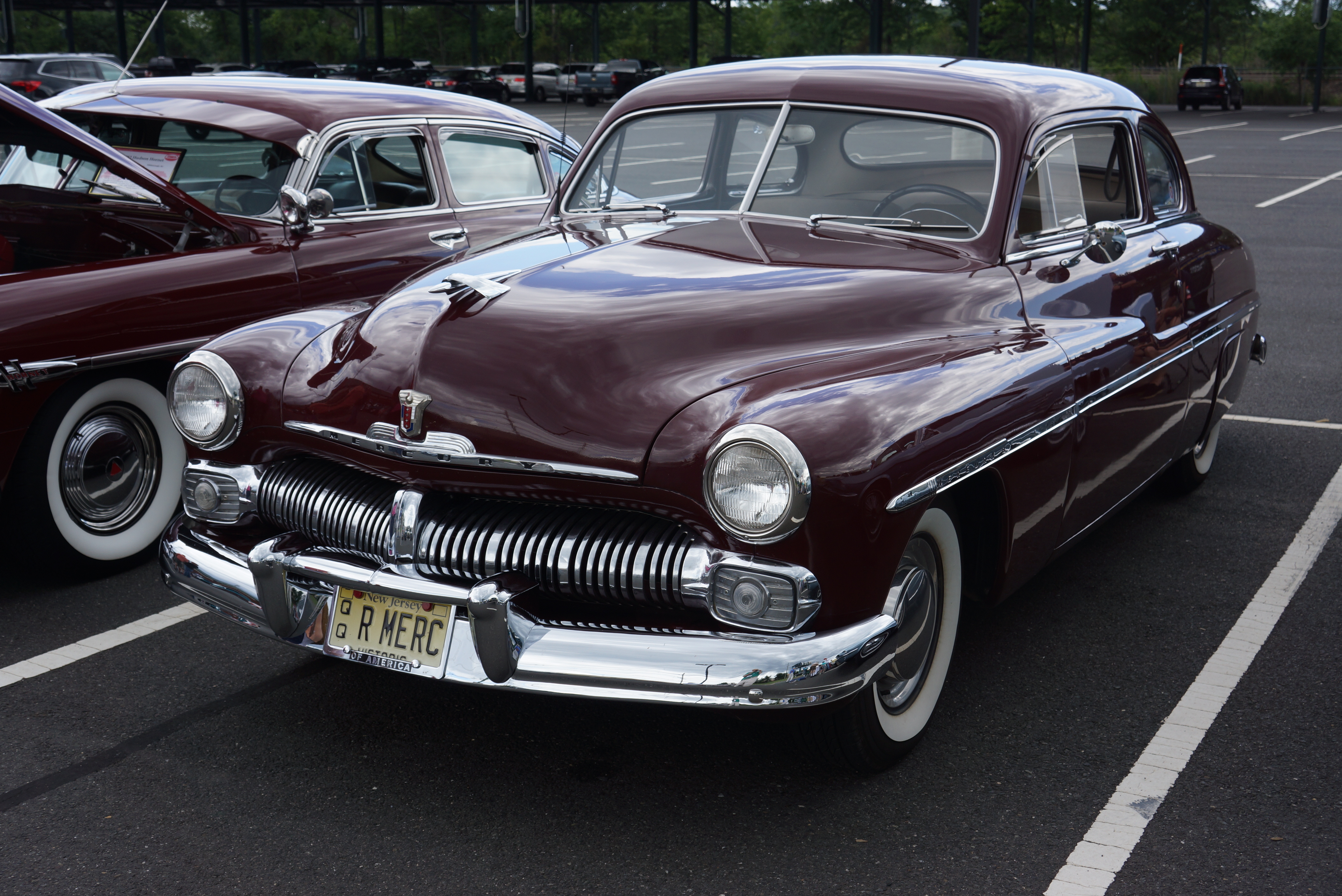
… and this ’50 Mercury.
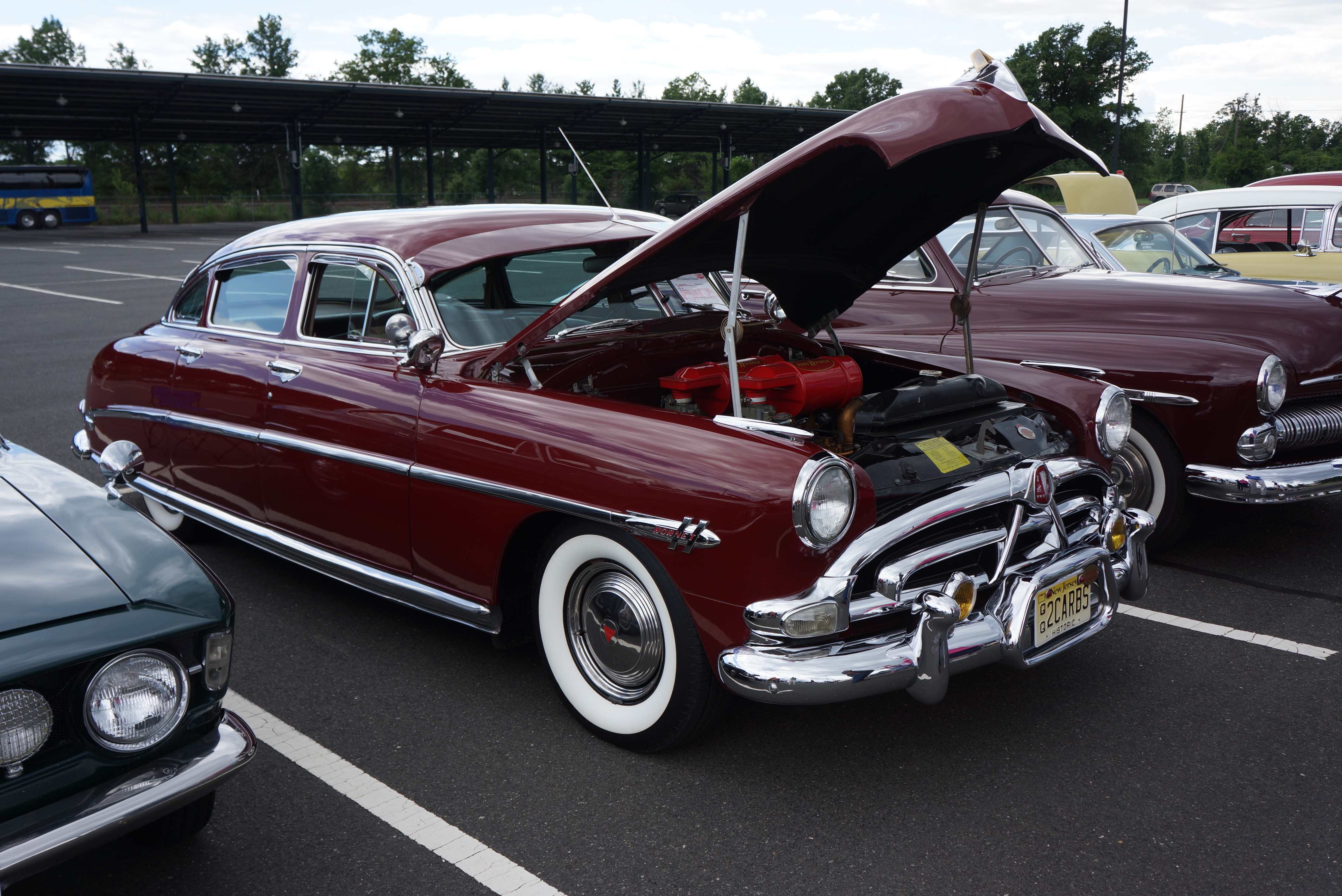
This 1952 Hudson Hornet was immaculate.
Its trunk carried this stylized badge.
The styling similarity between the ’50 Mercury and ’52 Hornet is obvious from the rear.
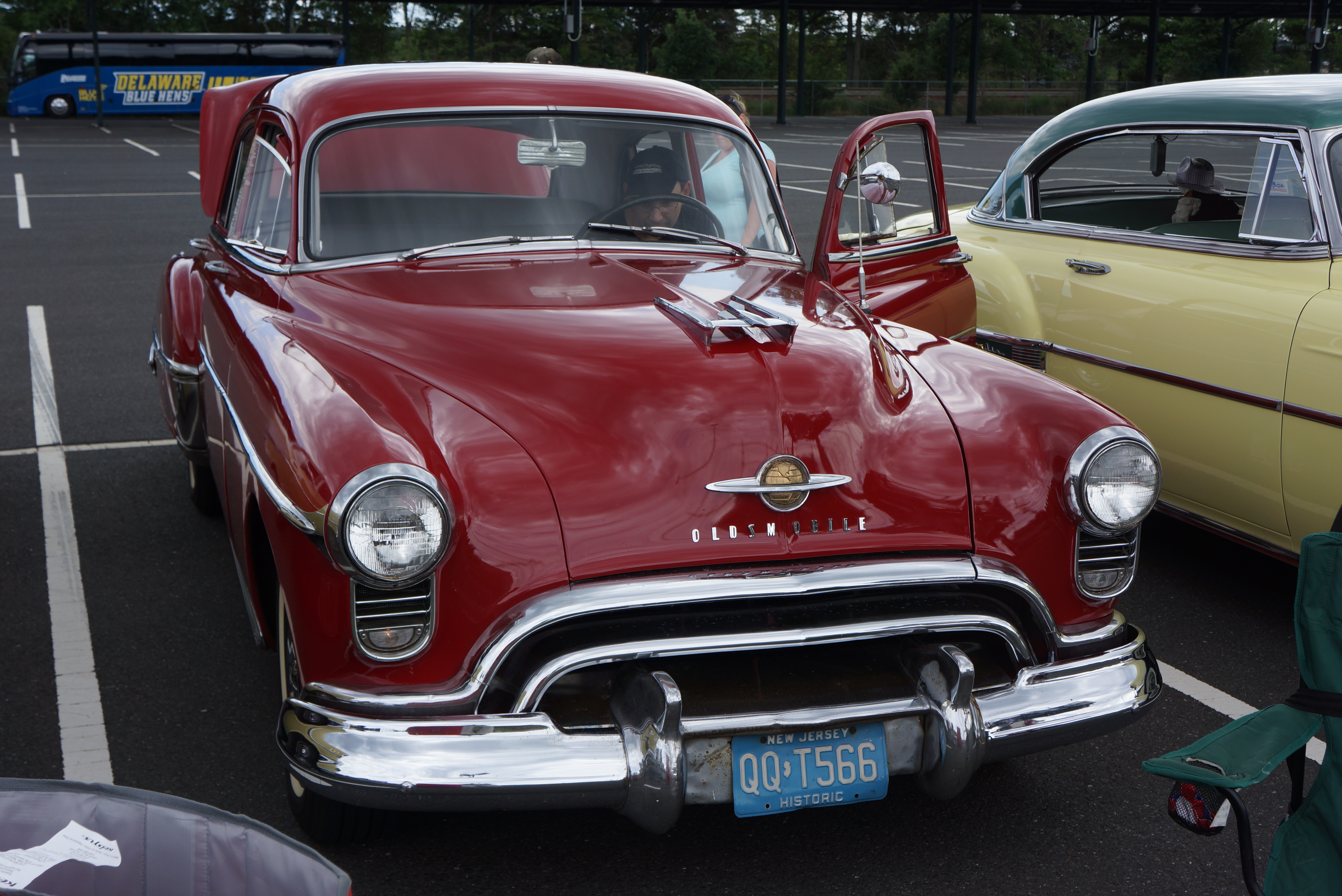
Fifties GM cars included this ’50 Olds,
this 1954 Chevrolet,
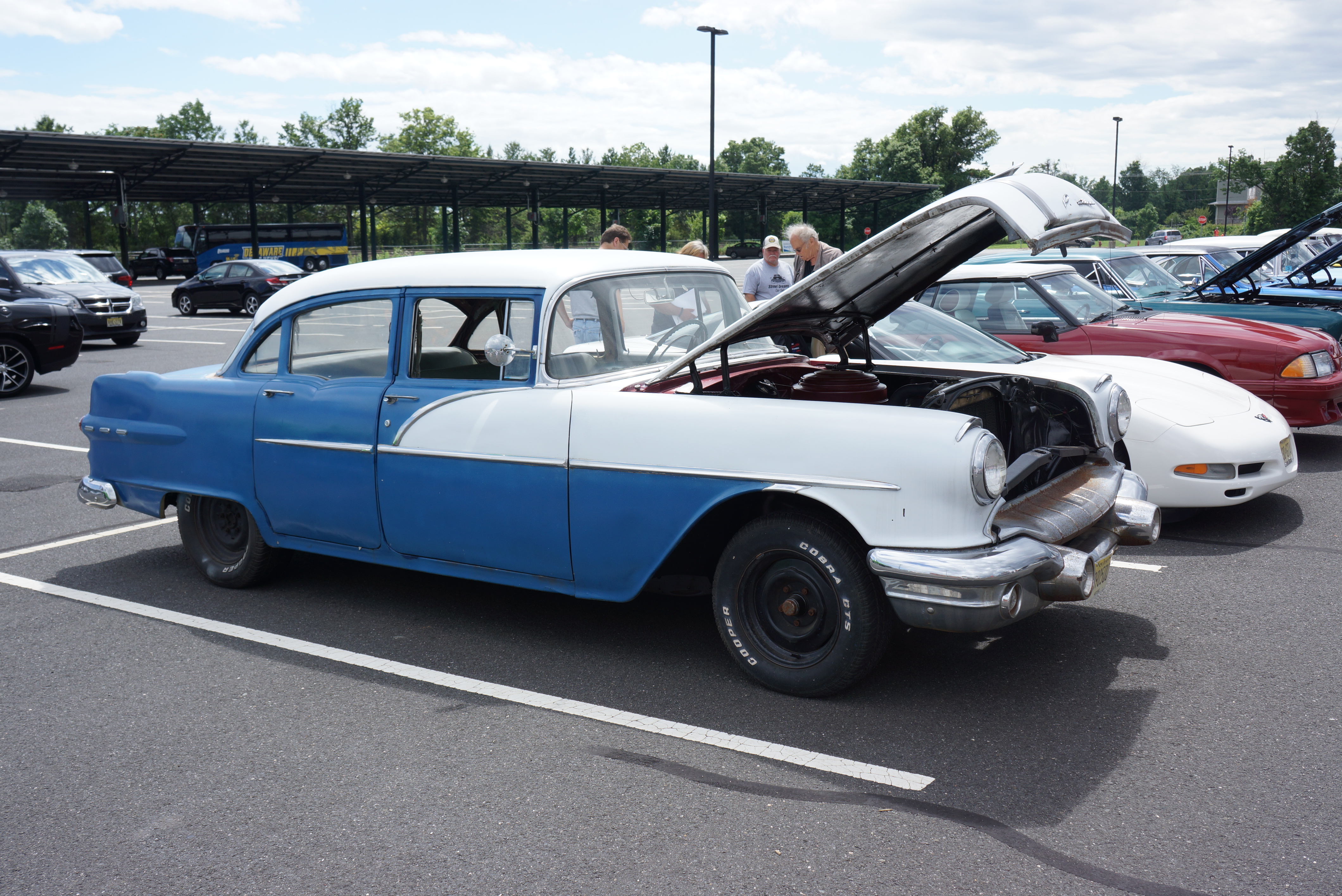
and this unrestored ’56 Pontiac.
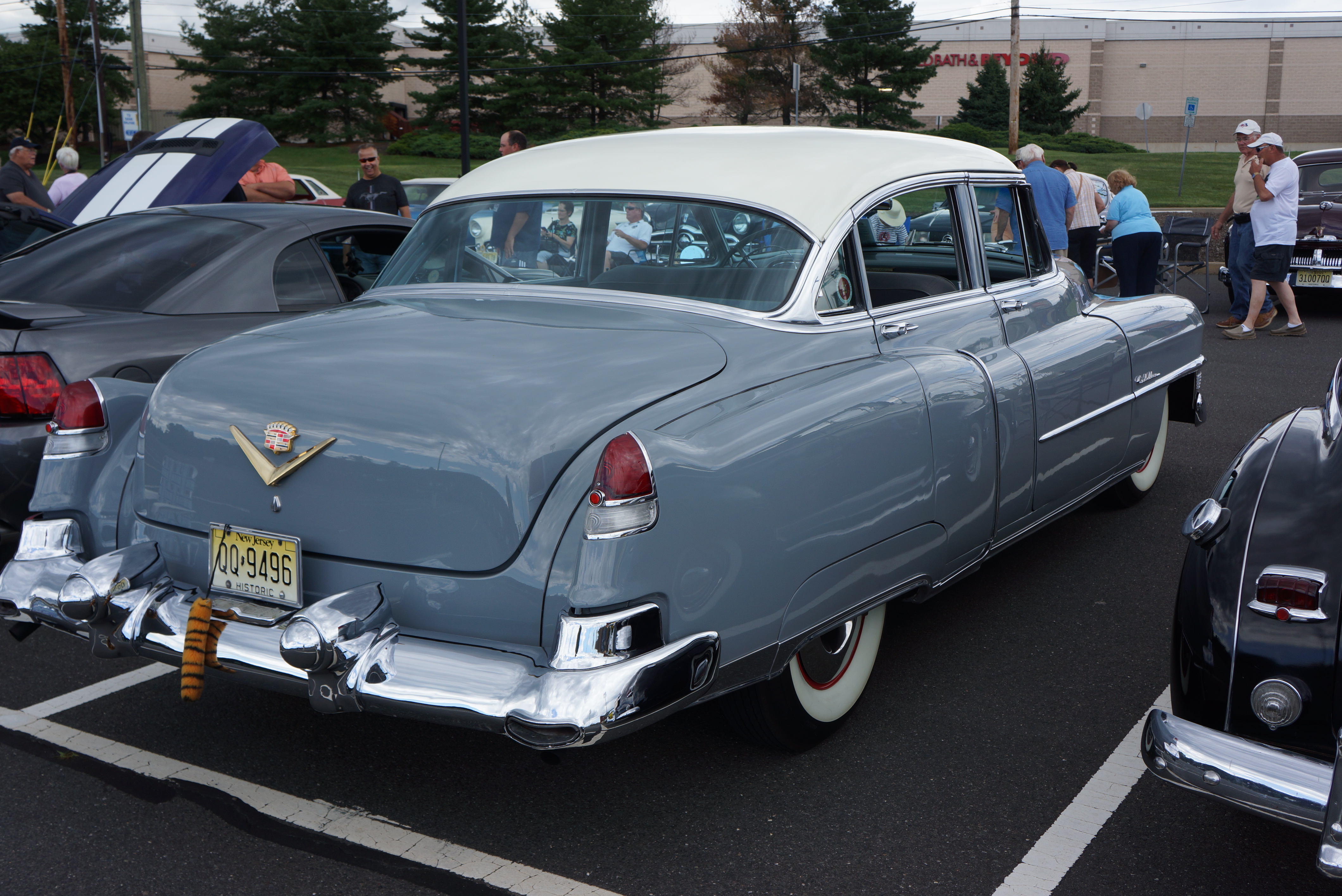
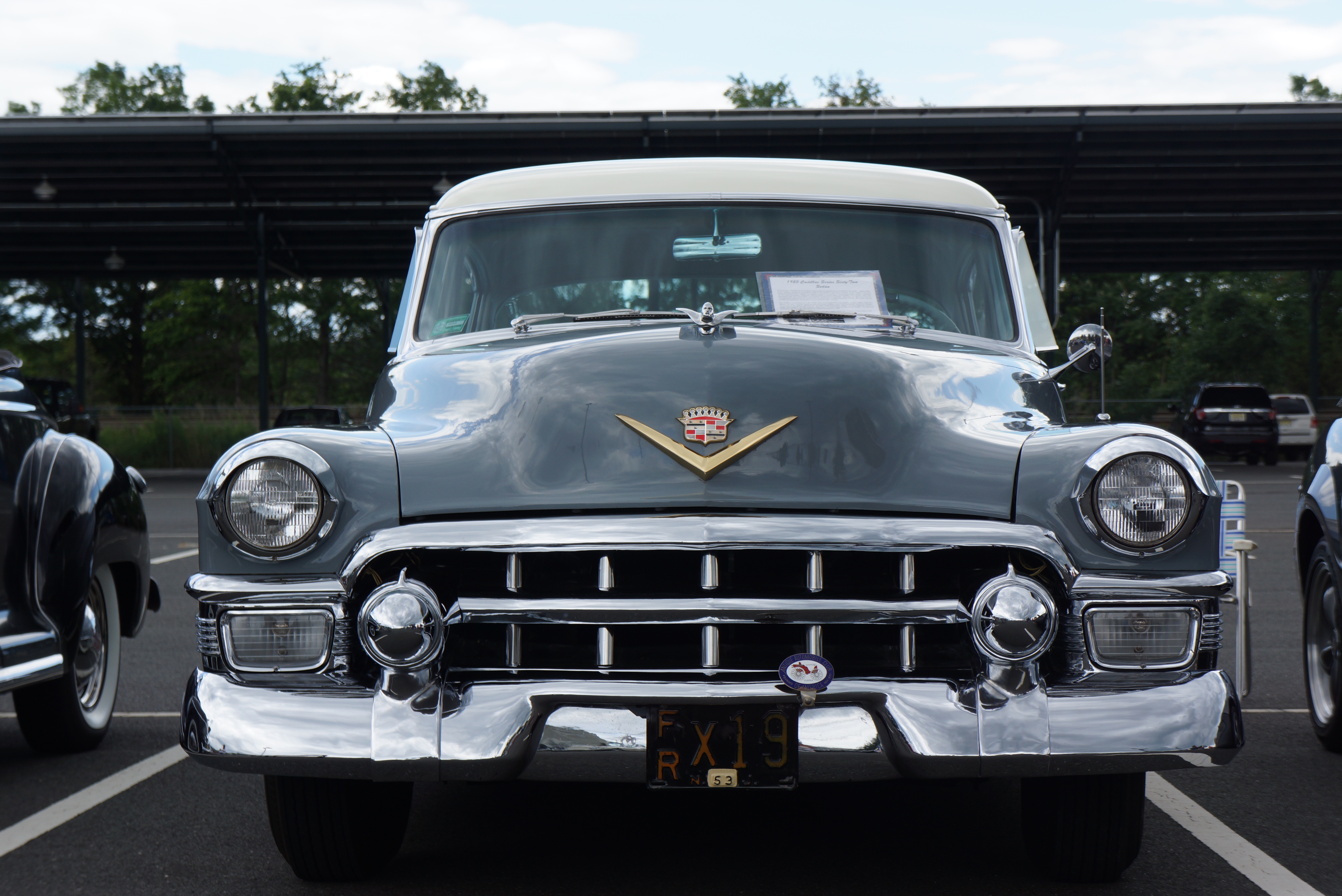
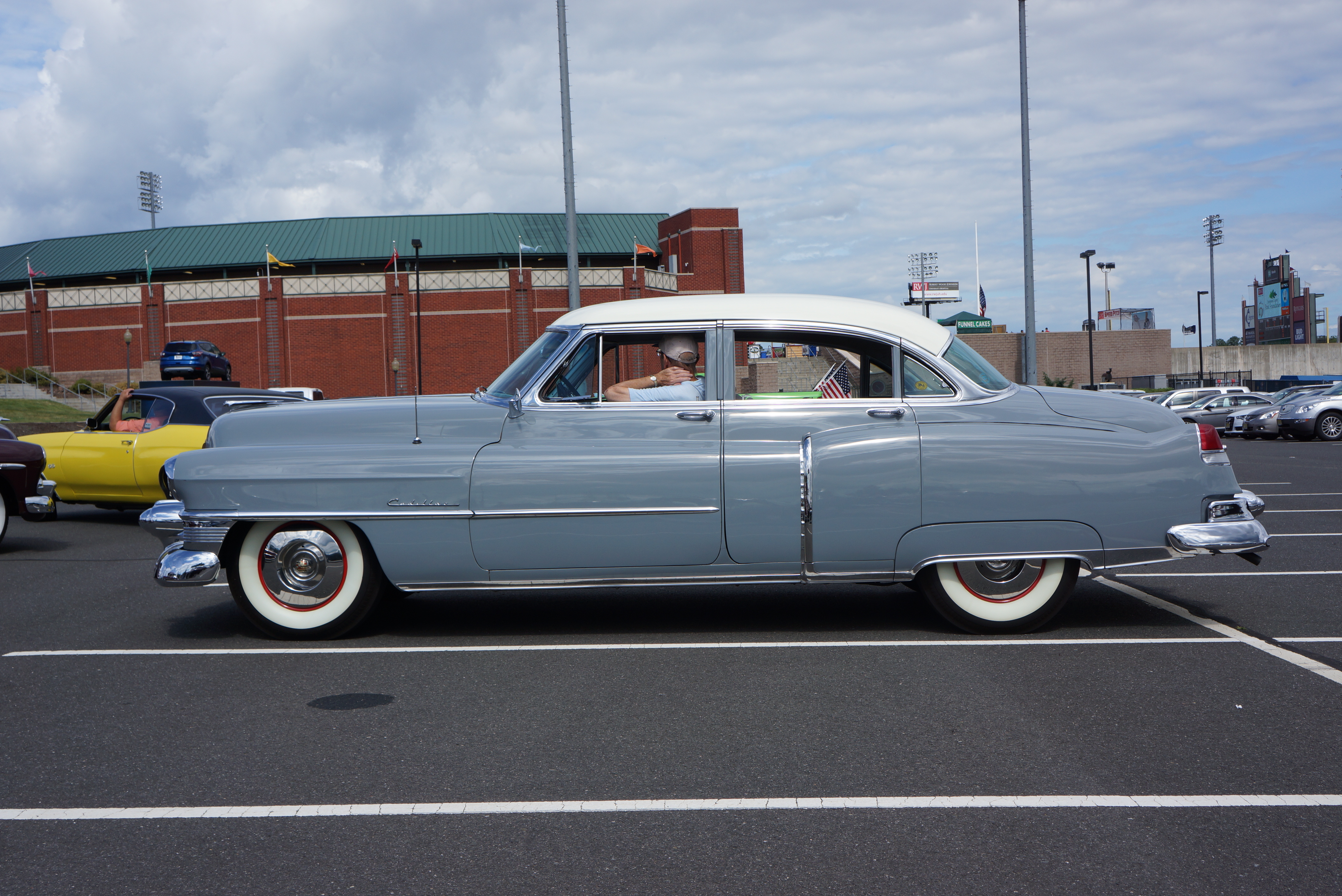
This 53 Cadillac is huge from any angle.
It looks especially wide from the front.
In length, it takes up more than a modern parking spot.
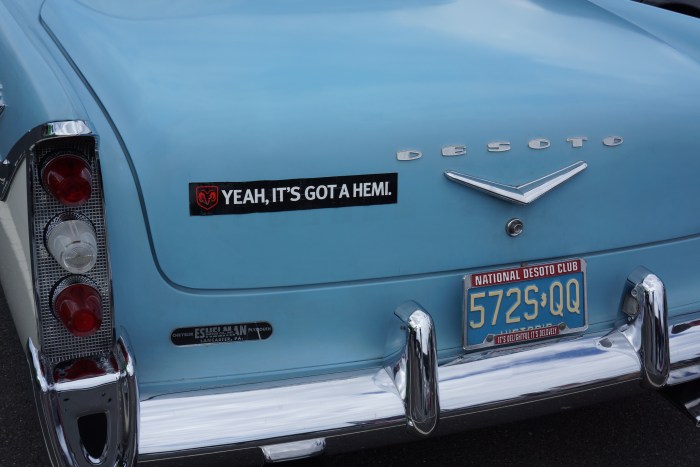
The owner of this ’56 DeSoto has a sense of humor (but it really does have a Hemi).
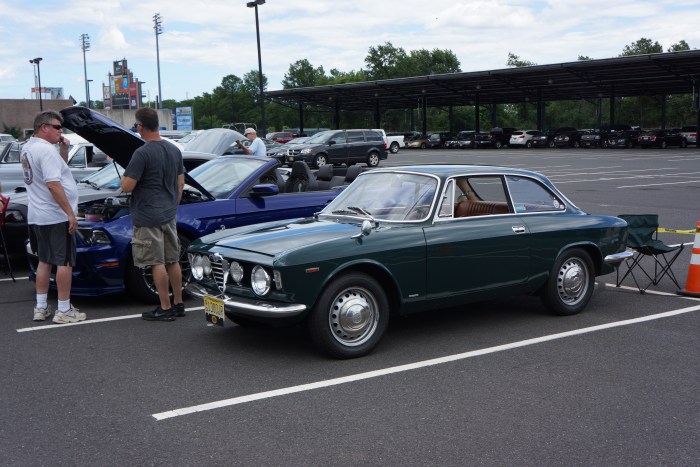
The author’s 1967 Alfa Romeo was the only non-American car in the show.
The New Jersey Region of the Antique Automobile Club of America (NJ AACA) held its annual car show at the Mennen Arena in Morristown NJ on Sunday, May 1, 2016. Compared to previous events, this year’s affair was unique in several ways: this was the first time that this location was utilized, as the venue which had been used for the previous 40+ years in Florham Park NJ was unavailable; and the turnout this year was the smallest your author has ever observed.
Yes, this was the NJ Region’s 65th show
The reason why 30 vehicles instead of the expected 200+ vehicles were in attendance had nothing to do with the location, and everything to do with the weather. The NJ AACA maintains a strict “rain or shine” show policy, but a steady series of showers combined with temperatures parked in the mid-40s kept entrants and spectators away in droves.
This ’30 Model A was one of the very few pre-war cars out to brave the elements
Nevertheless, vehicles did arrive, even if for the most part they were owned by club members. An advantage for those whose cars were to be judged is that no class had more than 4 vehicles in it (some had 2), and with 1st, 2nd, and 3rd place prizes to be awarded, your chance of winning went up exponentially.
A trio of immediate post-war iron: 2 Mercurys and a Hudson
Below is a sample of the fine machinery, both domestic and imported, which graced the show field. A trend which has been noticed on the National level was also found at this event: as AACA’s “25-year” rule continues in effect, the inclusion of unrestored and/or original-owner cars is growing, reinforced by vehicles which were considered collectible when new and were salted away (think Eldorado, Fiero, Beetle convertible, and anything first-year, last-year, or commemorative edition).
General Motors
An immaculate 1946 Chevy pickup
A rarely-seen 1957 Chevy 150; note different side trim
This Fiero was displayed in unrestored condition by its original owner
This Eldorado in its period green had matching dash & steering wheel
Bill Mitchell’s last hurrah: a bustle-back Cadillac Seville
FoMoCo
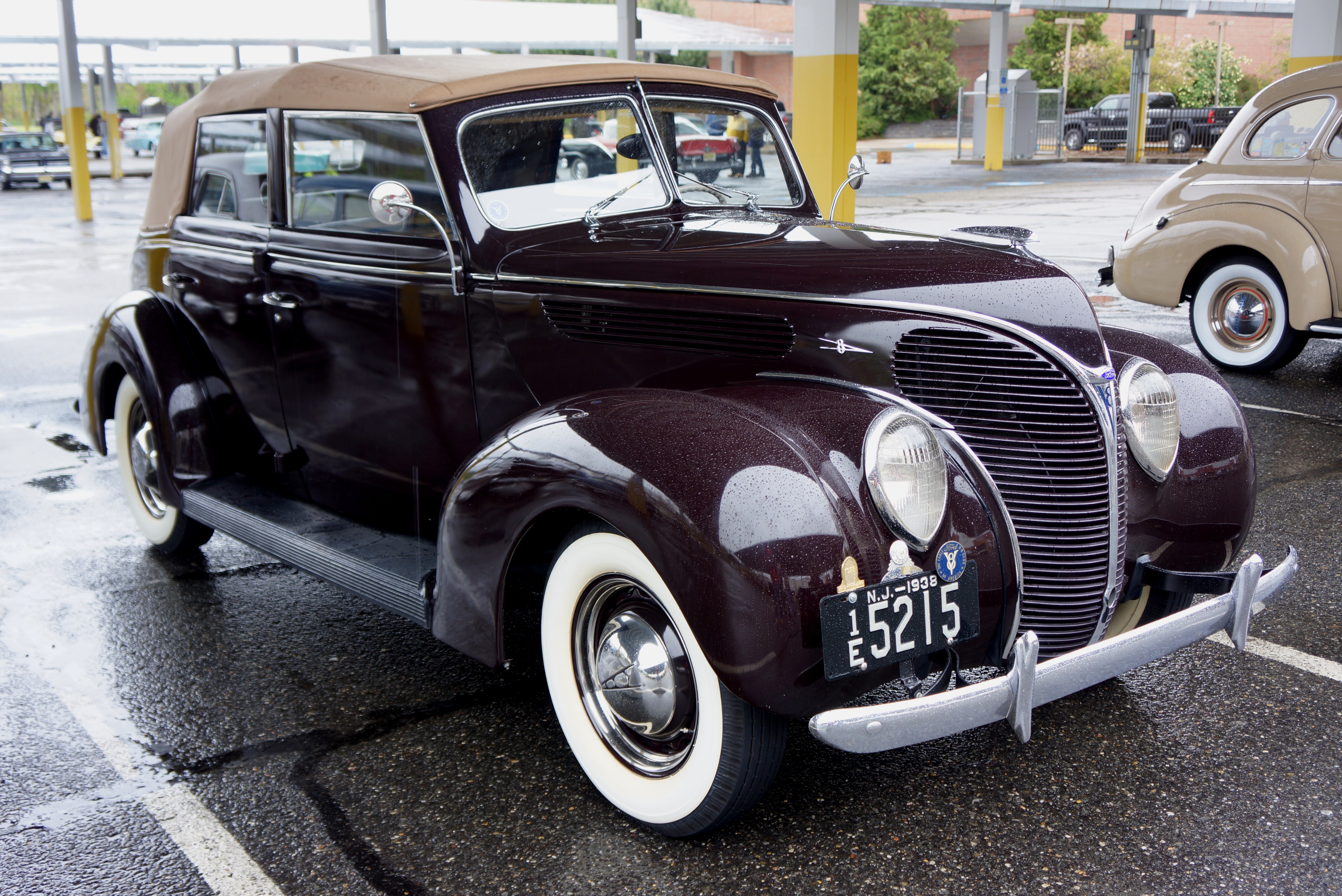
A 1938 Ford convertible sedan, a soon-to-be-extinct bodystyle
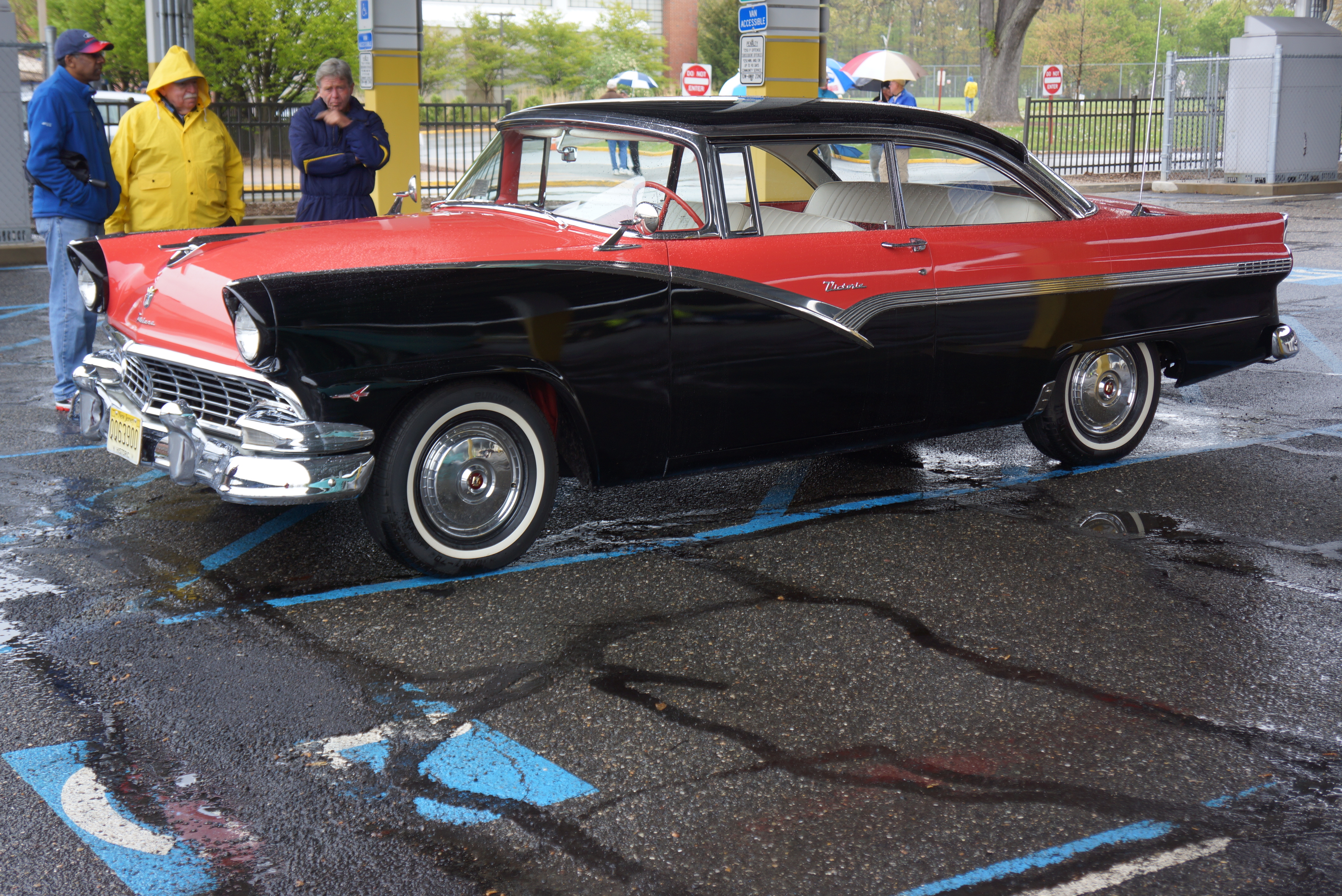
Eighteen years later you could get this 2-tone ’56
The 1957 T-Bird was the last of the two-seaters
Twelve years later, muscle cars like this ’69 Mach I were the rage
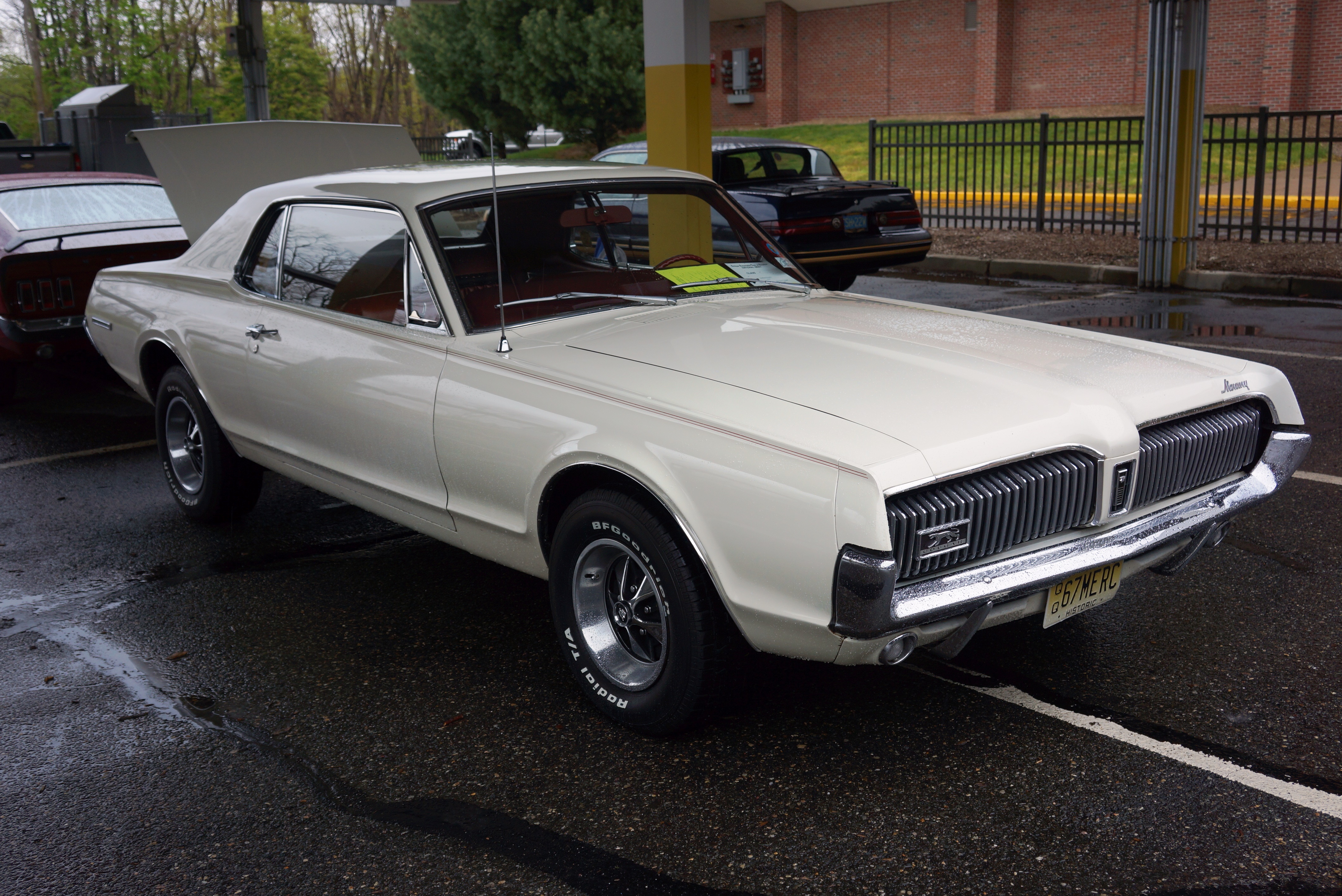
This first-year ’67 Cougar was original except for one quarter panel repaint
By the late 1980s, the Cougar nameplate was on a larger platform shared with the T-Bird
Jeep
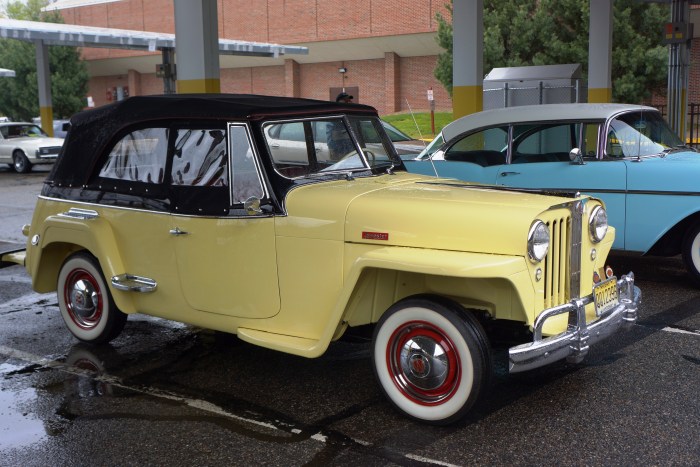
This immaculate Jeepster was driven to and from the show
Italian
An Alfa Romeo Montreal coupe
The Montreal has a V8 engine, and was never officially imported into the U.S.
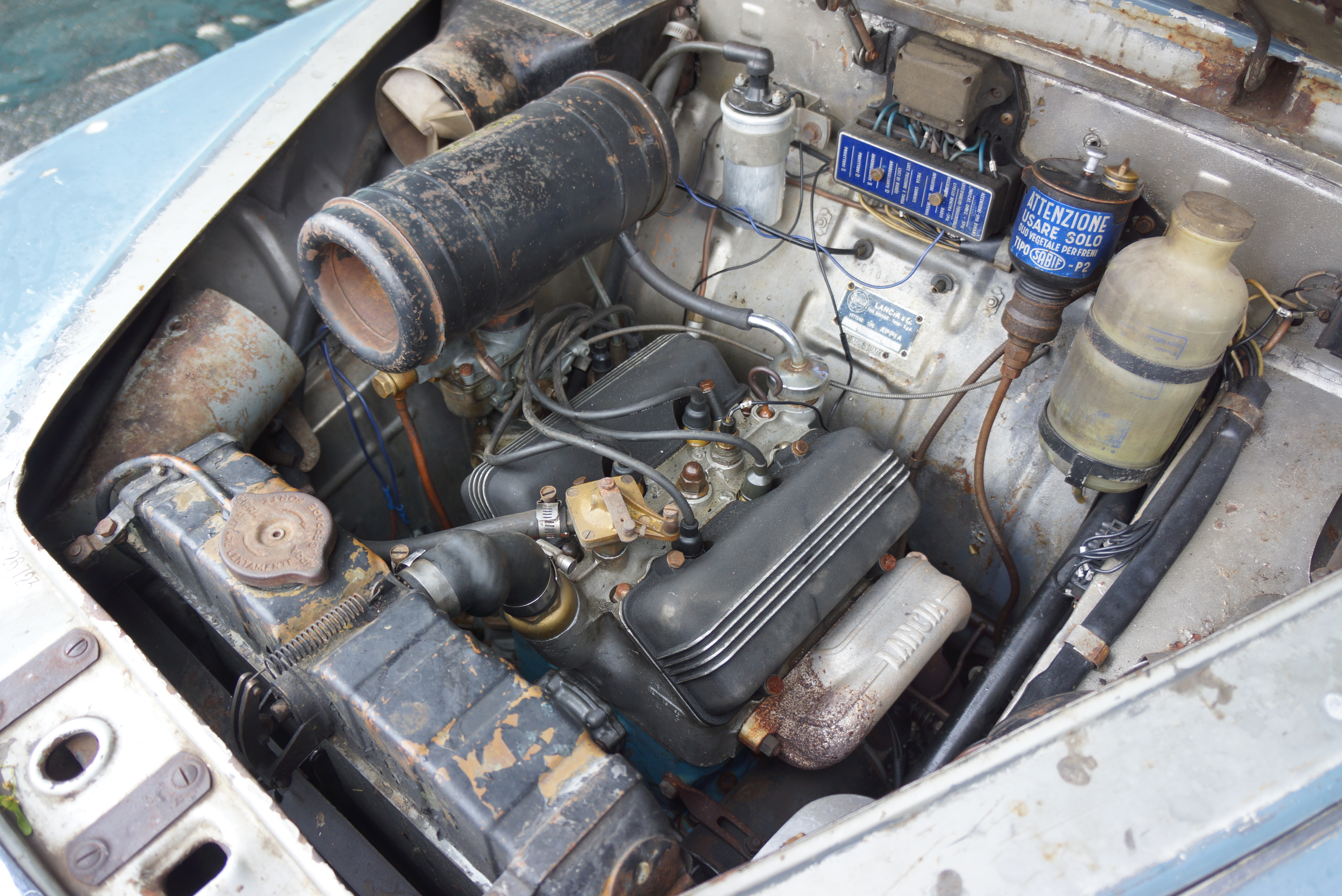
A 1958 Lancia Appia sedan
The Lancia narrow-angle V4 engine
This unrestored car has no B-pillar and rear-hinged back doors
The 2016 edition of the New York International Auto Show was held in the Jacob Javits Center on Manhattan’s west side, where it has been since 1987. As has been the custom, the show is run during Easter week, to give those who might be free for spring break a chance to see the show. Your author attended on Sunday, April 3, 2016, the final day the show was open to the public.
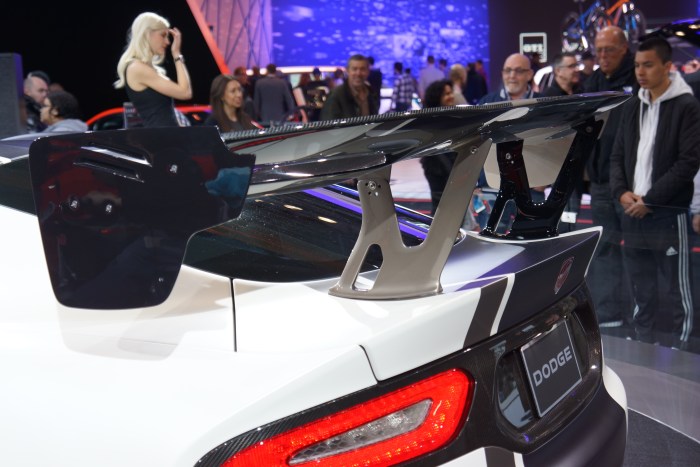
This was a car show, not an airplane show (but that’s an impressive wing)
If you’re expecting coverage of all the world- and North American premieres, look online. If you’re hoping to read about the new luxo-barge SUVs which were at the show (Maserati Levante, Bentley Bentayga, and Jaguar F-Pace), read the Robb Report. The only rhyme or reason to the vehicles I’ve written about below is that something attracted me to them. In some cases, I own or have owned similar cars. As an enthusiast, I tend to want to write about vehicles I’d like to drive. I also found myself drawn to vehicles which looked so much better in person compared to the photos I had seen (Alfa, Fiat, Buick, Ford, Volvo).
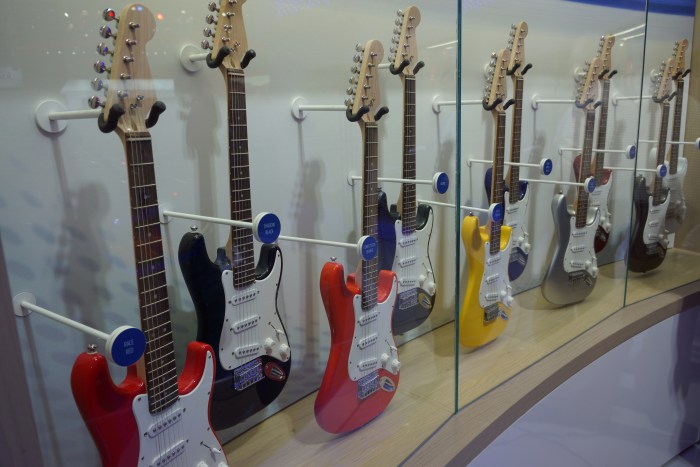
This was a car show, not a music show (but it was a clever way to display color choices)
Whether or not you were able to attend this year’s show, here’s hoping that you enjoy the report. As always, comments are welcome!
FIAT
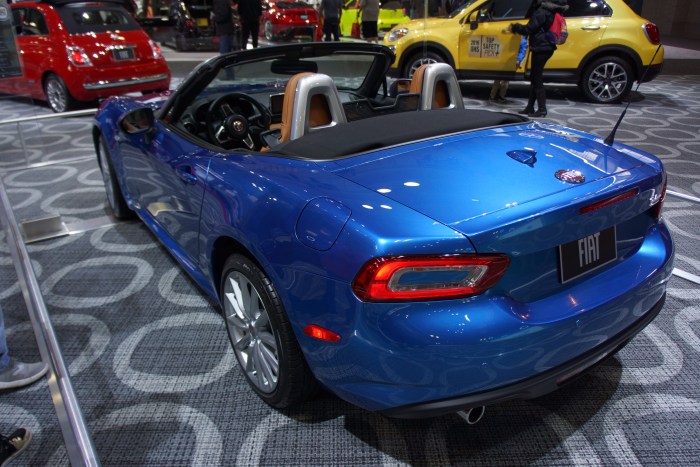
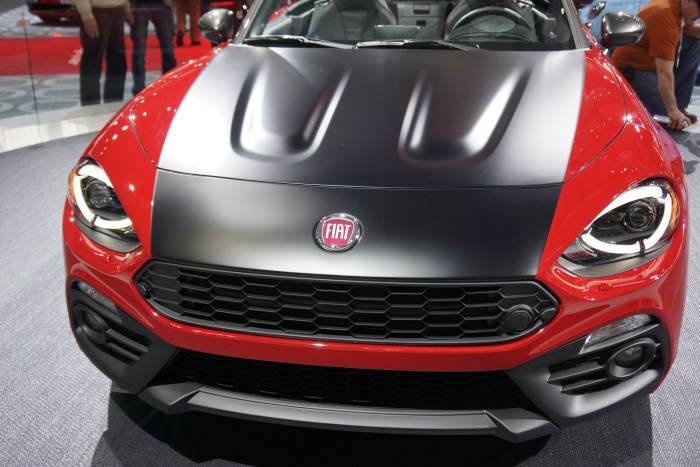
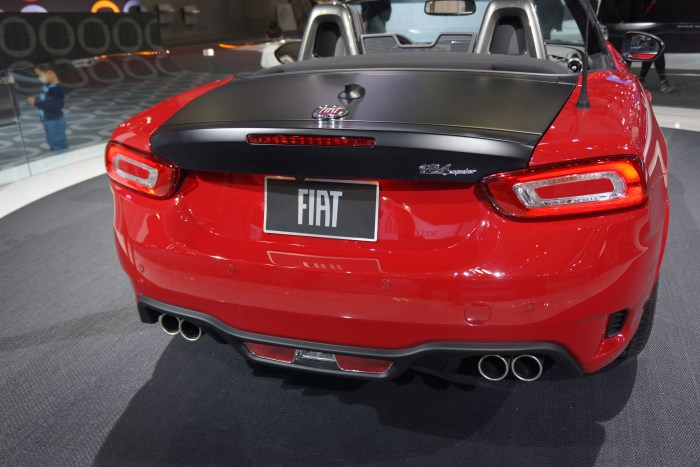
The star on the Fiat stand was the new 124 Spider, due to go on sale later this year. Most know that the 124 shares its platform and interior with the new, 4th generation Mazda MX-5 Miata. The Fiat has unique sheetmetal, and uses an FCA 1.4L turbo engine. There were only two on display: an “Azzurro” first edition car, and a red/black Abarth. The Spider looks much better in person, and seeing it up close brought home the realization that it looks nothing like its Mazda sibling, other than the fact that they are both 2-door convertibles.
The Fiat 124 Spider in Azzurro blue
Interior, but for Fiat emblem, is identical to the MX-5
Trunk badge looks no better here, detracts from otherwise sharp looks
TRANS-AM
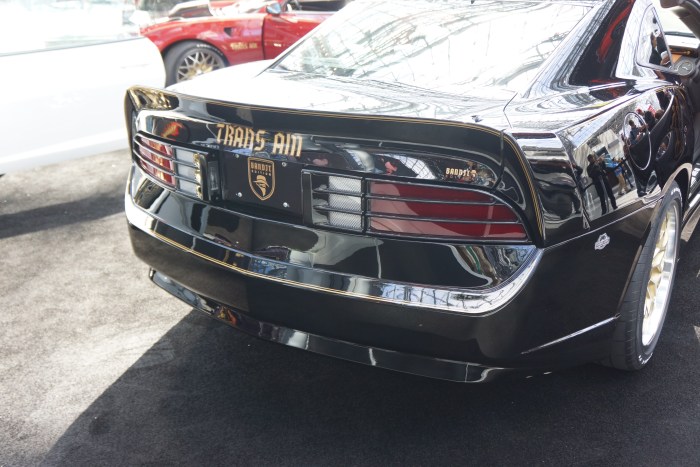
Someone has cleverly taken the current Chevrolet Camaro and tacked on Pontiac front and rear fascia, creating a new “Trans-Am”. Wait a minute – isn’t this what GM did in ’67? Based on the large number of young men with cellphone cameras swarming all other these things, this concept may prove to be a success.
The Screaming Chicken lives
Trans-Am Bandit edition also available
FORD GT
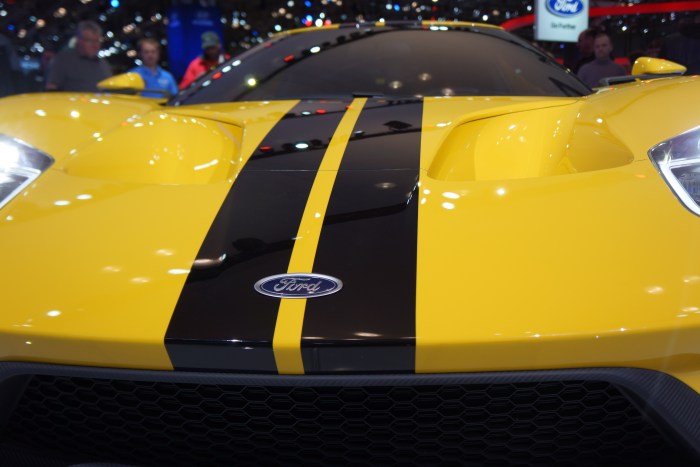
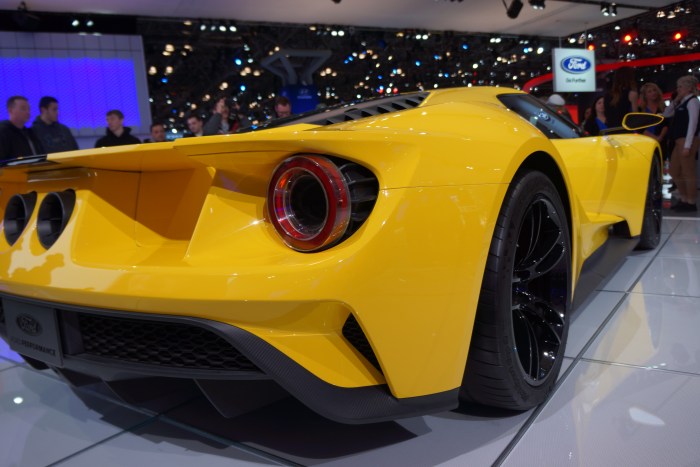
Perhaps it’s the color, as the first photos I saw of the new Ford GT were of a blue car, a color which has never appealed to me as an automotive shade. The NY car was in screaming chrome yellow; high impact is an understatement. As the cliché goes, if you need to ask the price, then you can’t afford it. Cost doesn’t matter – if you must have one and have the bucks, then there is nothing else on the road like it. No current Ferrari, Lambo, Bentley, etc., makes the visual statement that the new GT does.
Overheard: “I don’t like yellow, but I could look at this all day”
Stripes just like the GTs before it
Exhausts mirror tail lamp shape
Must look that much better in motion
VW BUDD-e
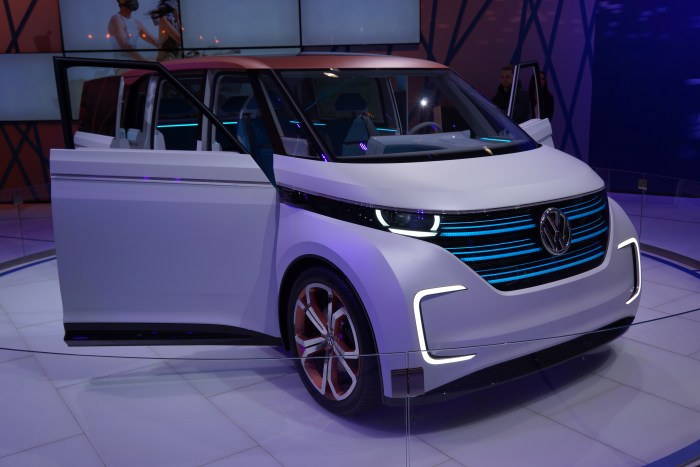
This microbus of the future is what, Volkswagen’s 4th concept along these lines? The Budd-e (how do you pronounce it, “buddy”?) is an all-electric concept that looks quite cool in person. No details were captured regarding its powertrain. You weren’t expecting a diesel, were you?
Front end looks like it could meet crash standards, unlike earlier concepts
Lots of room, helped by electric powertrain
BUICK AVISTA
If you told me 20 years ago that Buick would have one of the most significant and gorgeous concepts at the auto show, I might have said, “oh sure, what are you going to tell me next, that they’re going to axe Pontiac?” But the Avista is that stunning. Like a number of cars seen at the show today, photos just don’t do justice to its flowing lines and perfect proportions. It’s a two-door, pillarless hardtop, rear-drive sport-luxury car for the 21st century.
Photos don’t capture the stunning proportions
Side window shapes are work of art
Muscular luxury from this angle
MAZDA MX-5 “RF” CONCEPT
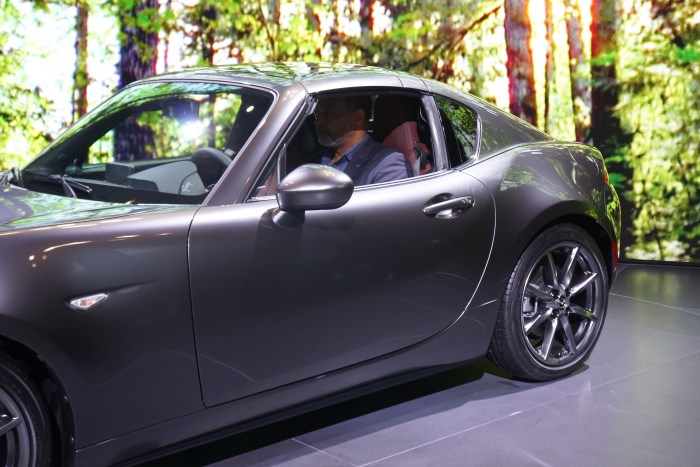
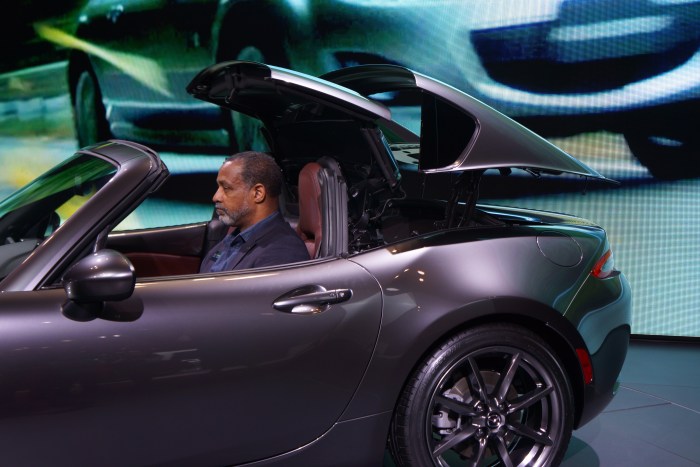
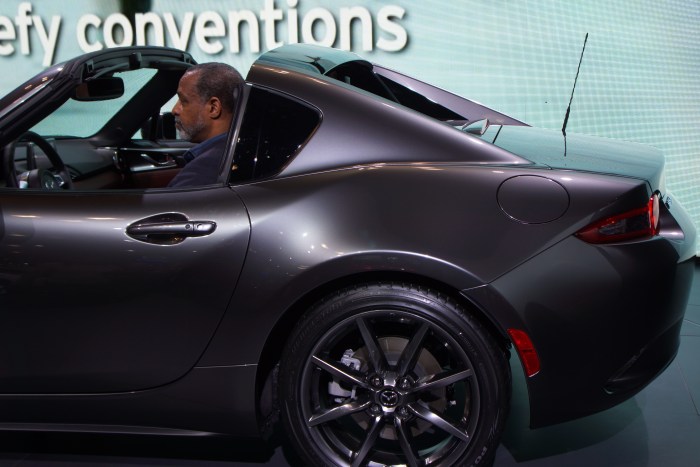
Another vehicle that did not impress in photos, but looks better in person, the “RF” (retractable fastback) is not a true convertible. Once you understand that, the concept makes more sense. The roof panel above the occupants electrically folds up and down, while the flying buttress pillars temporarily raise themselves to allow access for the panel. Once everything stops, those pillars are always in place (I had thought that they retracted). If you’re willing to give up the full convertible treatment for lots of style, then this is for you. If Mazda decides to build it.
Top up
Top in process of being lowered; buttresses lift
Buttress back down, top stowed
VOLVO
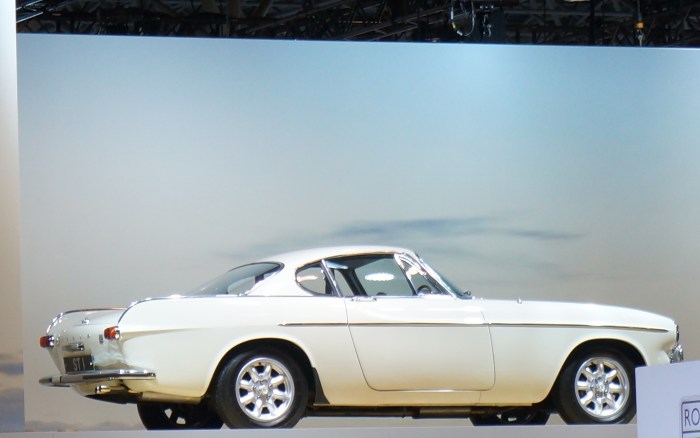
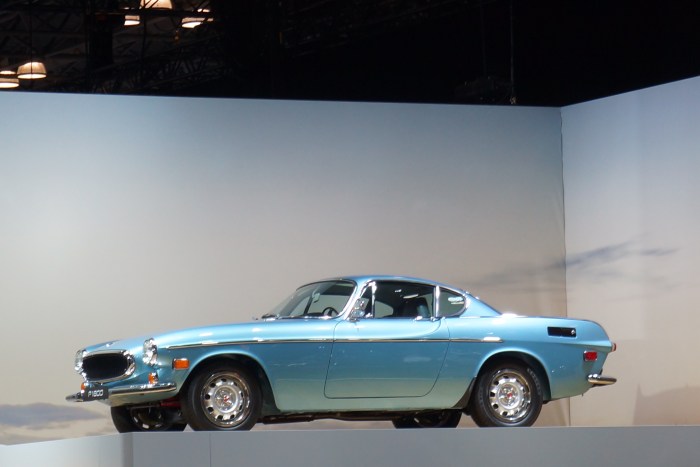
My former employer surprised me by having the new S90 sedan at the show. The rear end treatment, polarizing in pictures, looked softer and more integrated in person. Volvo cleverly displayed not one but two 1800 coupes, one white and one blue, high above the ground. And what other automaker would think to display an elk at an auto show?
S90 grille and headlight detail
Tail lamp treatment looks better in person
Lack of side markers mean it’s a pre-68
Side marker lights make this a ’68 or newer
You’d call it a moose; the Swedes call it an elk
ALFA ROMEO
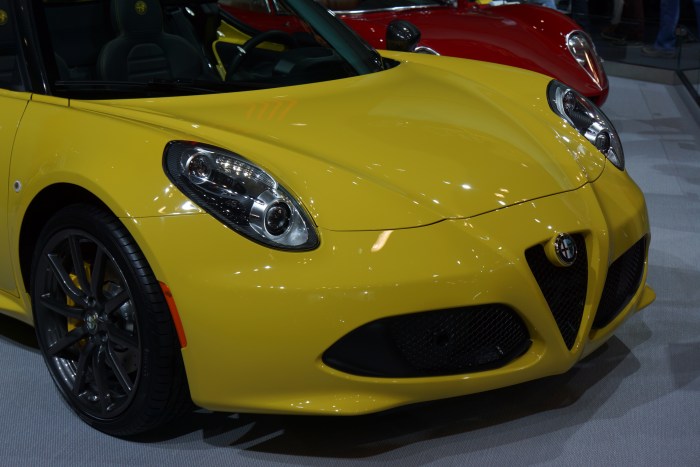
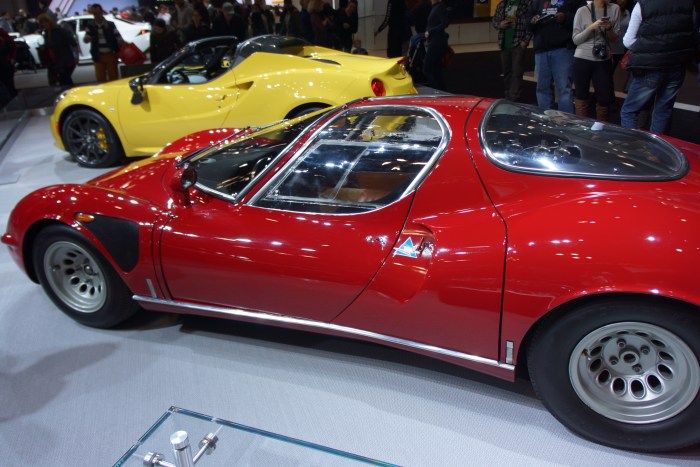
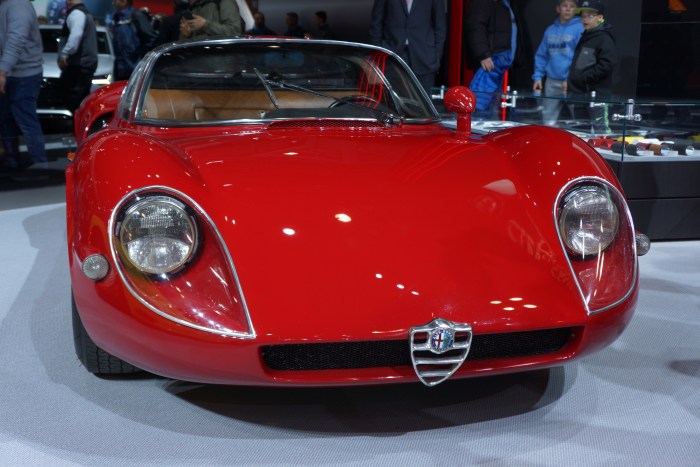
My current crush, if only because a ’67 Alfa GT Junior happily resides in my garage, Alfa is making a long, drawn-out comeback to the U.S. market. There was but one 4C on display, next to a former race car (Tipo 33? I saw no info about it).
Alfa 4C convertible
Old and new, side by side
Alfa Tipo 33?
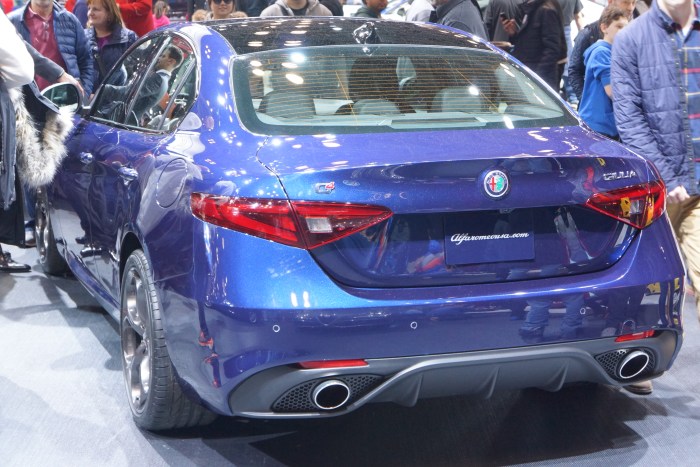
The “stars” on the Alfa stand were the Giulia sedans, with absolutely no information about the cars out for show-goers to gather. (The one handout was a list of dealers in the metro NY/NJ area. I saw numerous attendees pick it up, glance at it, and put it back down. Sergio, are you listening?) I asked one woman working the display about timing and pricing, and she curtly answered: “later this year, $40 thousand range”. Gee, thanks.
The new Alfa Romeo Giulia sedan
In the metal, the Giulia 4-door has a more purposeful, athletic look. The car is “tight”, with short overhangs, and looks smaller in person (in a good way) than in photos. Seen up close, it does not resemble a BMW sedan, which was the initial reaction.
The back end of the new Alfa Romeo Giulia sedan
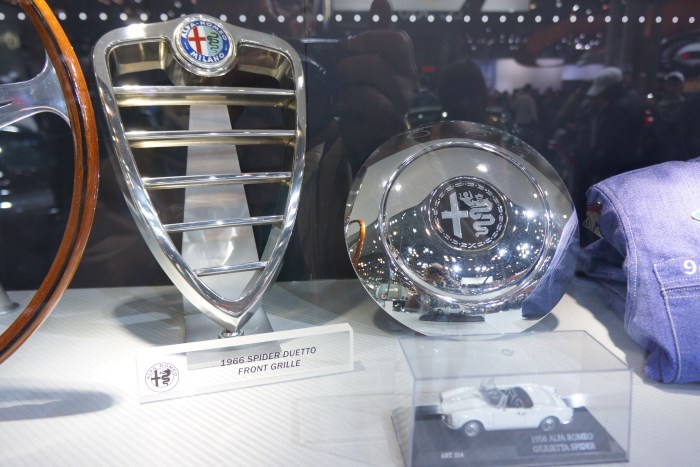
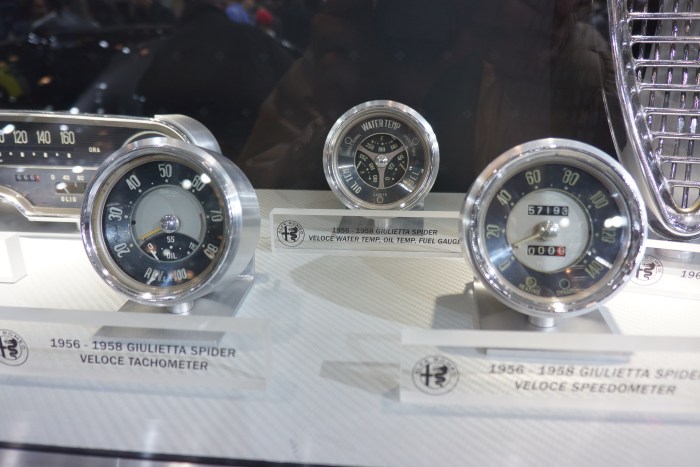
To Alfa’s credit, there was a plethora of historical information there, from a racing timeline, to displays of components from cars of the 1950s and ‘60s. The question is whether all this talk about the past will cause people to open their wallets in the showroom.
Historical timeline
Grilles and hub caps
Instrument panel gauges
ACURA NSX
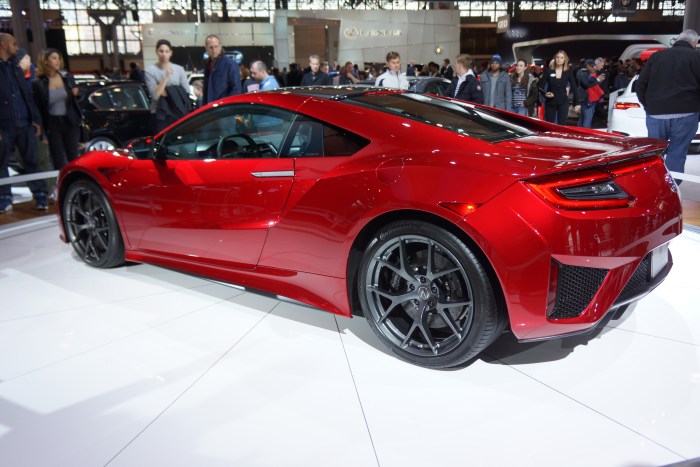
If the Ford GT hadn’t been there, the new Acura might be the supercar of the show. But compared to its Dearborn rival, the 2nd generation NSX was, well, just OK. Perhaps it’s the front end, which doesn’t look that different than most other new Acuras….
Yes, it’s an Acura
How can this compete with the Ford GT?
ODDS AND ENDS
There was a small display of cars from a classic car museum. Was there a better-looking pre-war front end than the one on a 1940 Ford?
1940 Ford
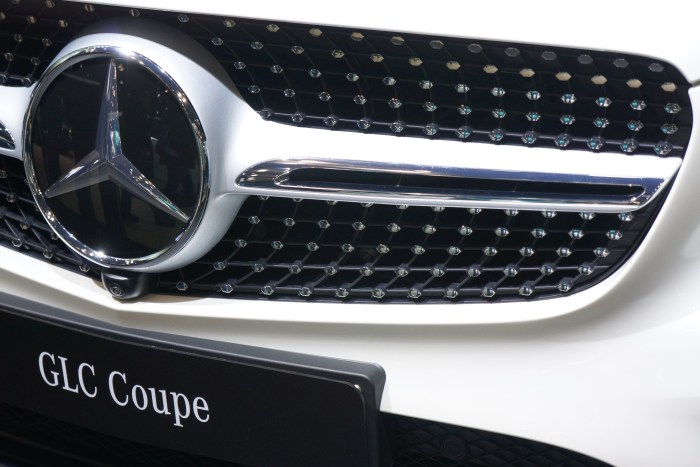
Everyone wants a distinctive front end. A grille that stands out is one way to do it. Used to be, the grille also had to be good-looking. Seems like now it only needs to be “unique”. (I cannot bring myself to photograph the grilles on any current Lexus models.)
What we’ve been getting used to (from Audi)
This M-B grille reminds me of a ’58 Buick (not a compliment)
The NY Police Department had a large historical display of police cars, stretching back to a 1958 Ford. It was well done, and interest in “professional cars” as part of the old car hobby continues to grow.
What you did not want to see in your rear view mirror in 1966
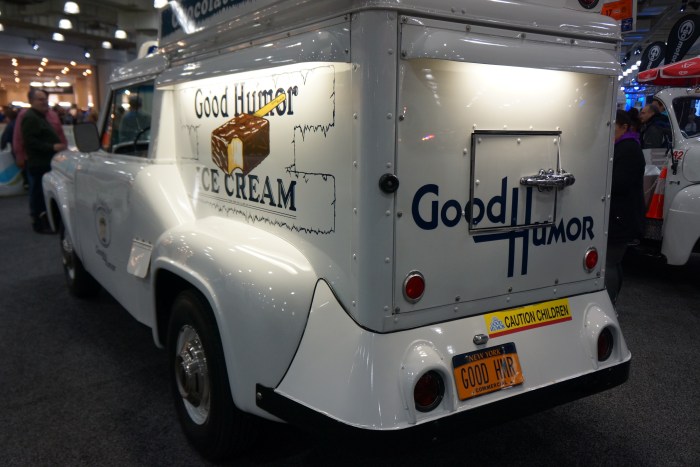
GOOD HUMOR
Just plain fun – a collector vehicle AND a part-time job!
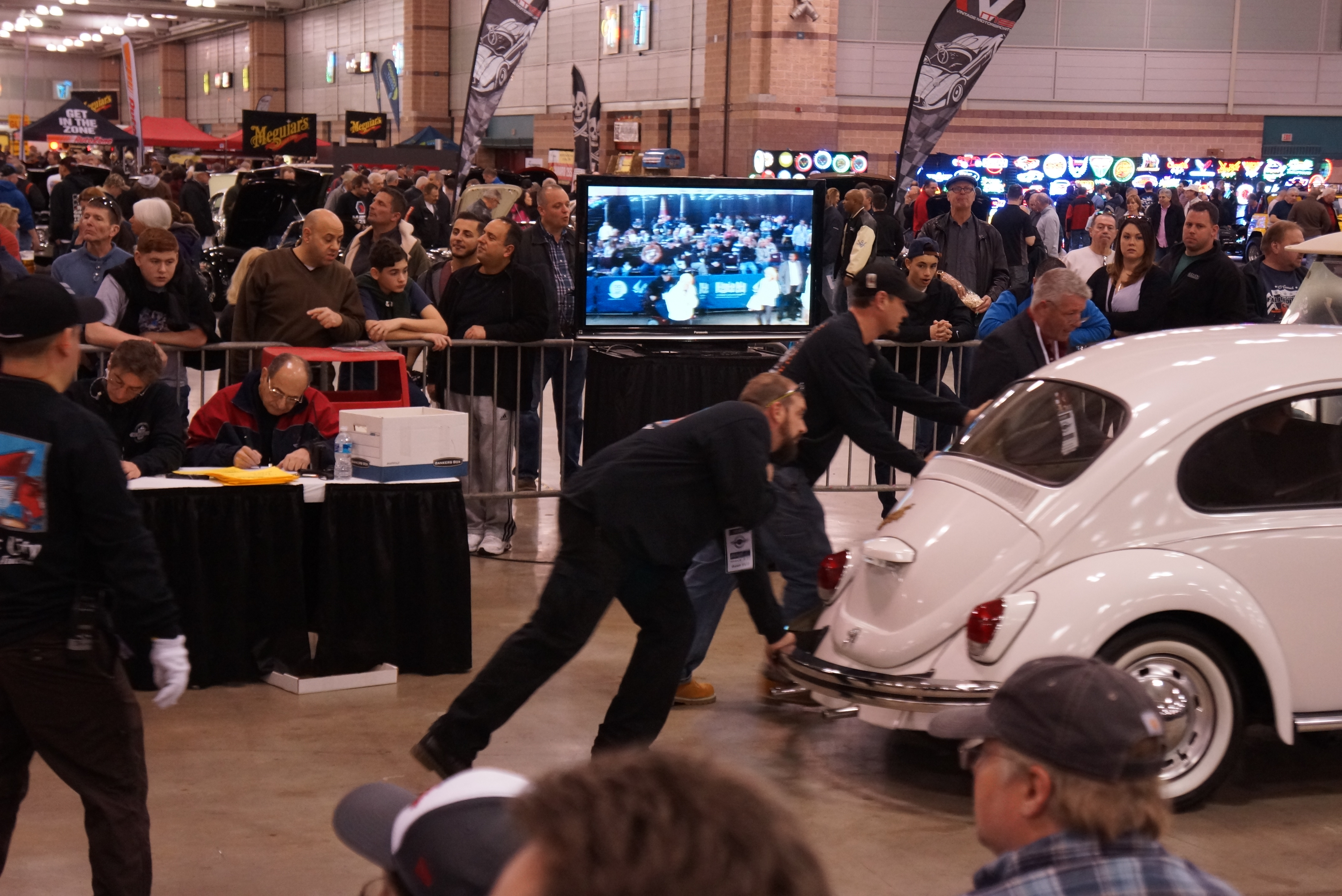
The pushers move a VW Beetle off the block. This one was a no-sale at $4,250.
G. Potter King (GPK) again hosted its winter edition car show in the Atlantic City Convention Center during the last weekend of February. The event features an auction, a car corral, and a swap meet, all of which comfortably fit inside the cavernous hall. One of the main attractions of this show is that it is mostly impervious to the weather, and so gives us hobbyists a chance to relieve our cabin fever.
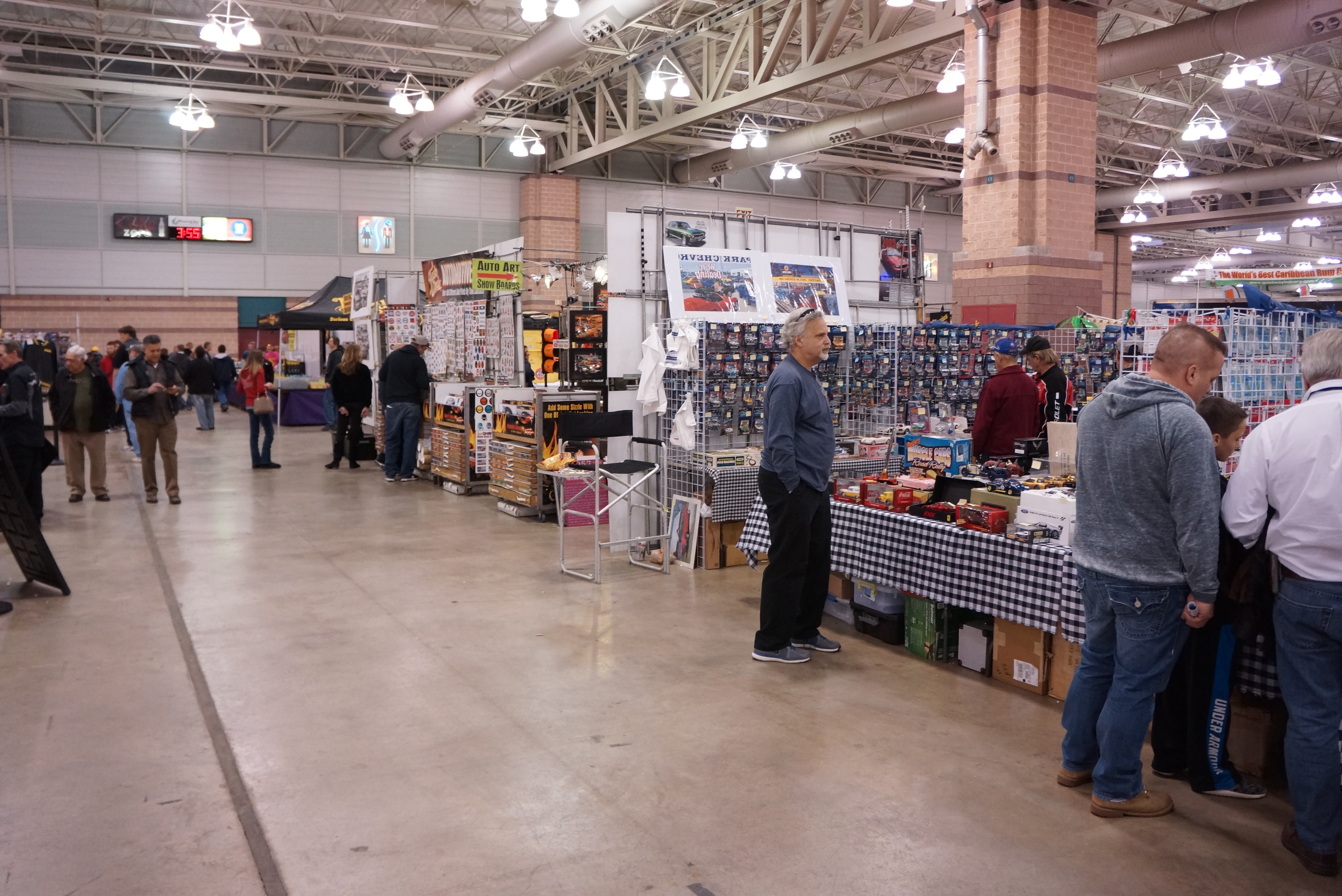
The swap meet had the usual mix of old and new stuff to tempt us all.
This year, similar to what we observed in 2015, the number of consignments seemed to continue to be on the decrease. The car corral in particular had enough empty space for an additional 20 or 25 cars. The auction side of the building was a bit more occupied, yet still could have held a few more cars.
The car corral again included plenty of dealers showing new and classic iron.
For the third time in the last 5 years, GPK rearranged the auction stage and seating. This time, the flow of cars on and off the block seemed better integrated, and seating for non-bidders (like me) was more readily available. One downside to the new set-up was the lack of airflow. Non-catalyzed vehicles emitting exhaust fumes in an enclosed space eventually gets to you. There needs to be a way to move more fresh air through the grandstands.
The view of the auction block from the grandstand.
Having attended auctions hosted by Mecum, RM, Bonhams, Auctions America, and Carlisle, it’s frustrating to see that GPK still could improve their auction block screen shots. This year, they took a step in the right direction by superimposing the lot number, vehicle year and make, and current bid onto the TV image. But the wording was not always easy to read, and often, the bidding on screen far lagged the real-time bidding. Mr. King, a suggestion: watch Mecum to see how it’s done.
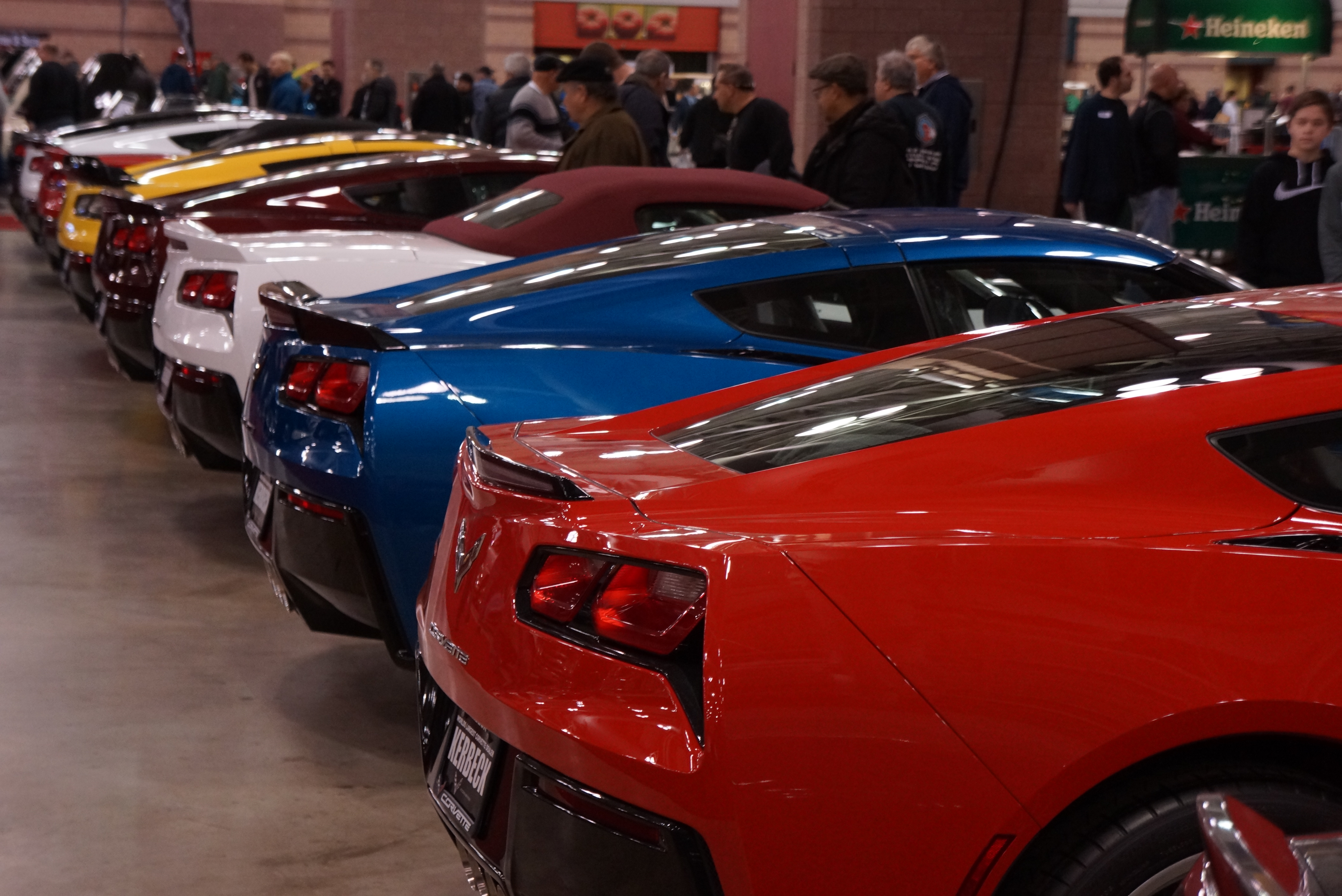
If old cars bore you, gaze upon this row of new C7 Corvettes.
The show was helped by a decent weekend of dry and sunny weather in southern New Jersey. There were 100 or more early birds who were waiting for the doors to open at 9 a.m. Foot traffic was plenty strong, and the bidders area directly in front of the auction stand was almost filled to capacity. Nevertheless, the sell-through rate, or, the percentage of cars actually meeting reserve and moving to new owners, appeared to hover around 50-60%. This is due to some combination of unrealistic reserves, poor quality offerings, or not the right bidders in the room.
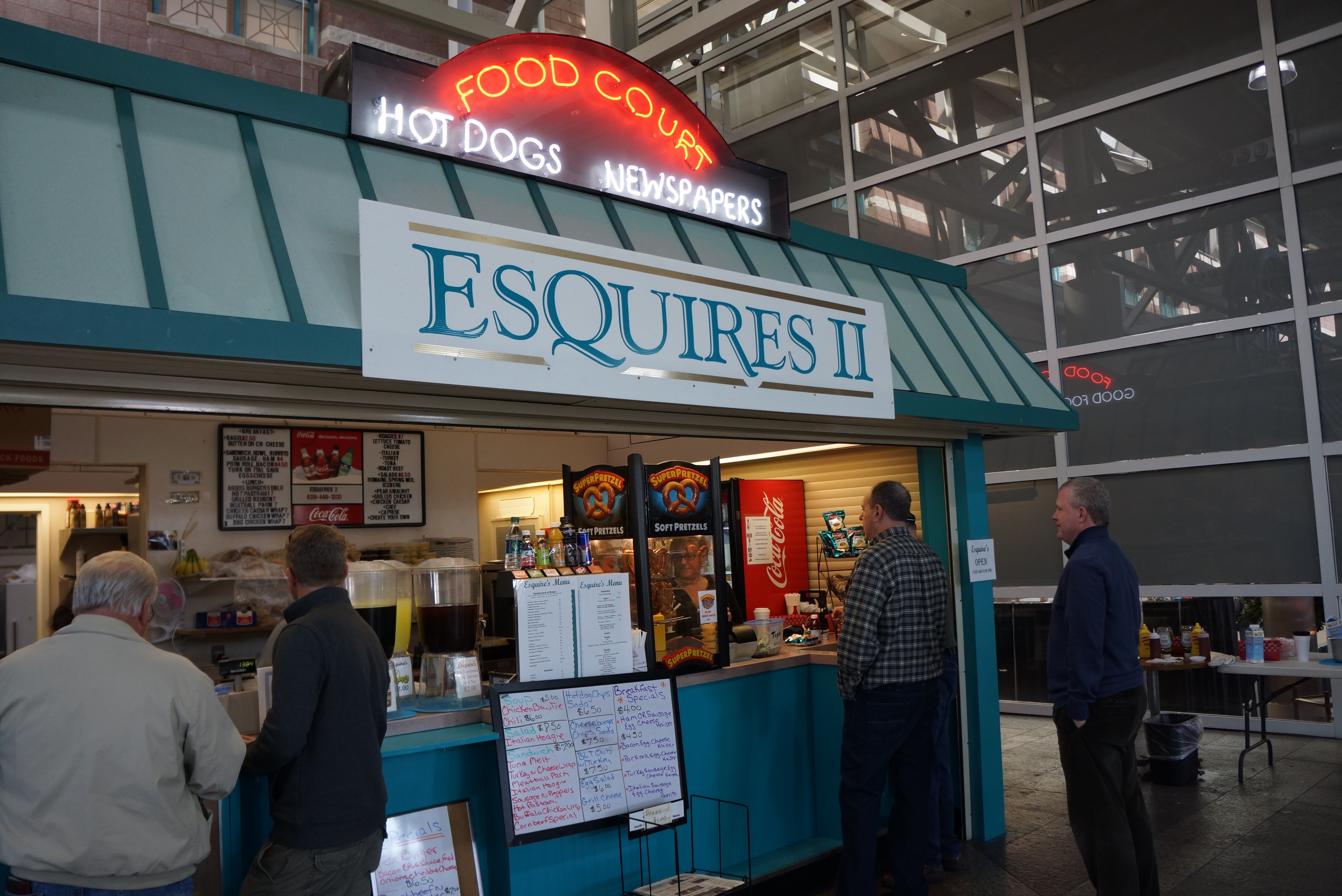
Car show food is overpriced and doesn’t taste great. We walked 5 minutes to the AC train station in the same building for great food at Esquire’s.
It says a lot about an auction company which can attract quality consignments, get sellers to agree to reasonable reserves, and then draw hungry bidders into the process. It may look easy from the outside, but it’s not. The Arizona auctions in January indicated some slight softening of the market, which didn’t help here. But we did see some cars change hands. Below are details on a random sampling of cars which caught our interest from both the auction and the car corral. (“CPI” values are from the author’s copy of the Jan.-Feb. 2016 edition of the classic car price guide Cars of Particular Interest.)
Auction cars, coming or going (sellers hope the latter).
AUCTION CARS
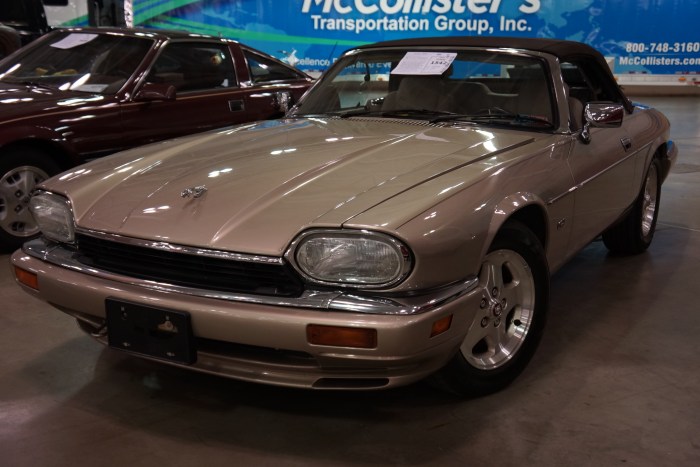
Lot #1542, 1995 Jaguar XJS convertible, champagne, brown cloth top, glass rear window, tan interior, 86,900 miles. Car looks very nice from the outside. Some driver’s seat bolster wear, otherwise clean interior. 6 cylinder, automatic, nice alloy wheels, paint looks great except for repainted passenger door (but it’s hardly noticeable). Sign on the dash said “not sold on Friday, but for sale at asking price of $9,500”. Online, the car was reported sold for $8,000. CPI values the car between $10,250 (#3) and $17,425 (#2). We would rate is at 3+ and call it very well bought.
’95 XJS looks good here
… as well as here
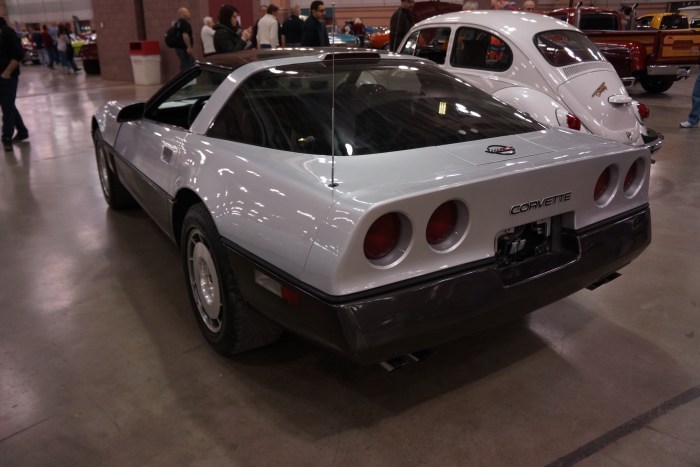
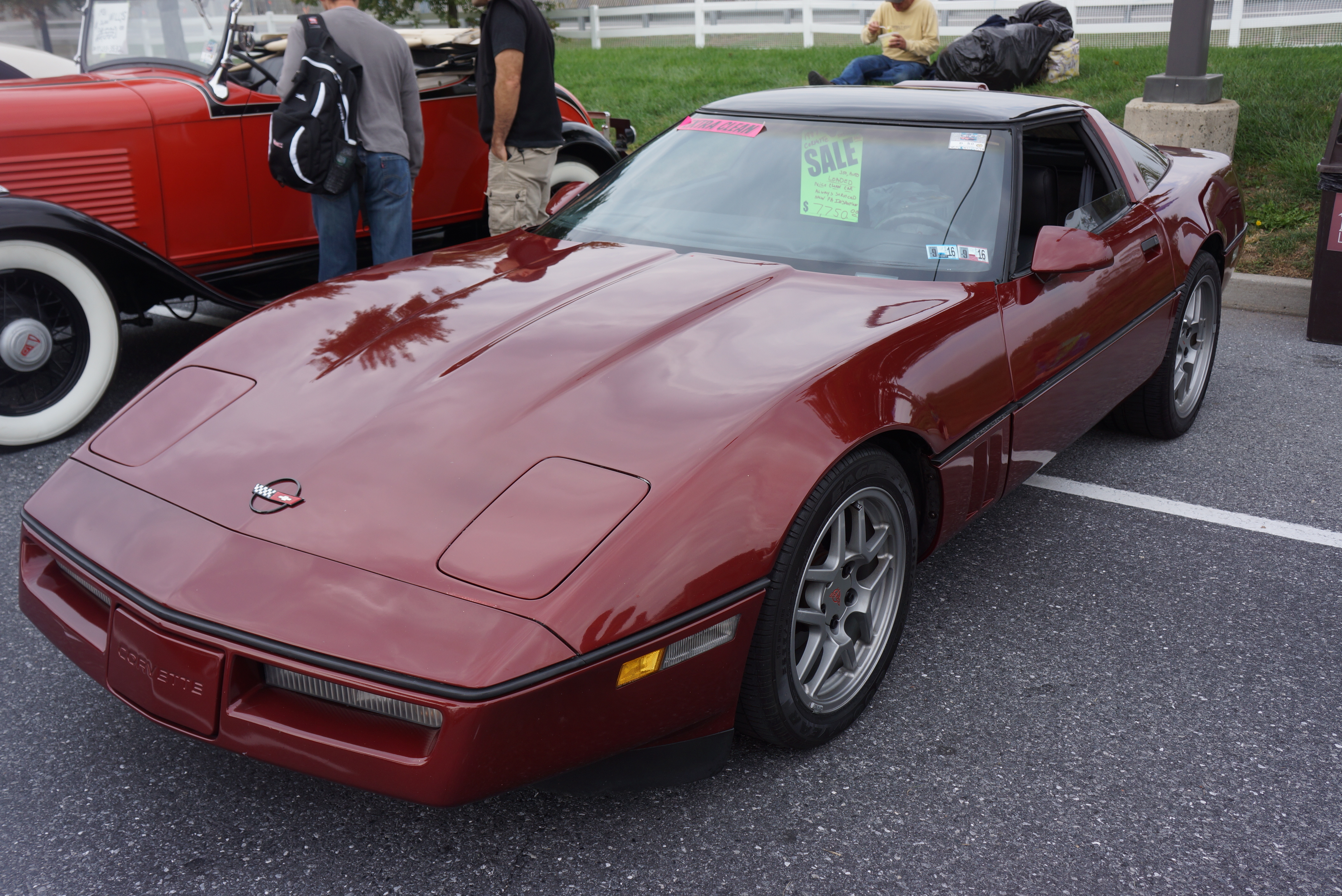
Lot #1712, 1986 Corvette coupe, silver/dark grey, red interior, automatic. Mileage is 109,073. Looks just OK on outside, red interior is very worn. Car offered at no reserve, hammer price was $3,400. We rate it a #4 car, and CPI rates a #4 car at $4,475. If it runs, passes state emissions, and doesn’t leak copious amounts of fluid, someone who just wants to have fun may have gotten a very good deal. As one buddy put it, “drive it for 10 years, then throw it away”.
OK from the front
OK from the rear
Interior quite worn
Someone just got a ‘Vette for $3,400
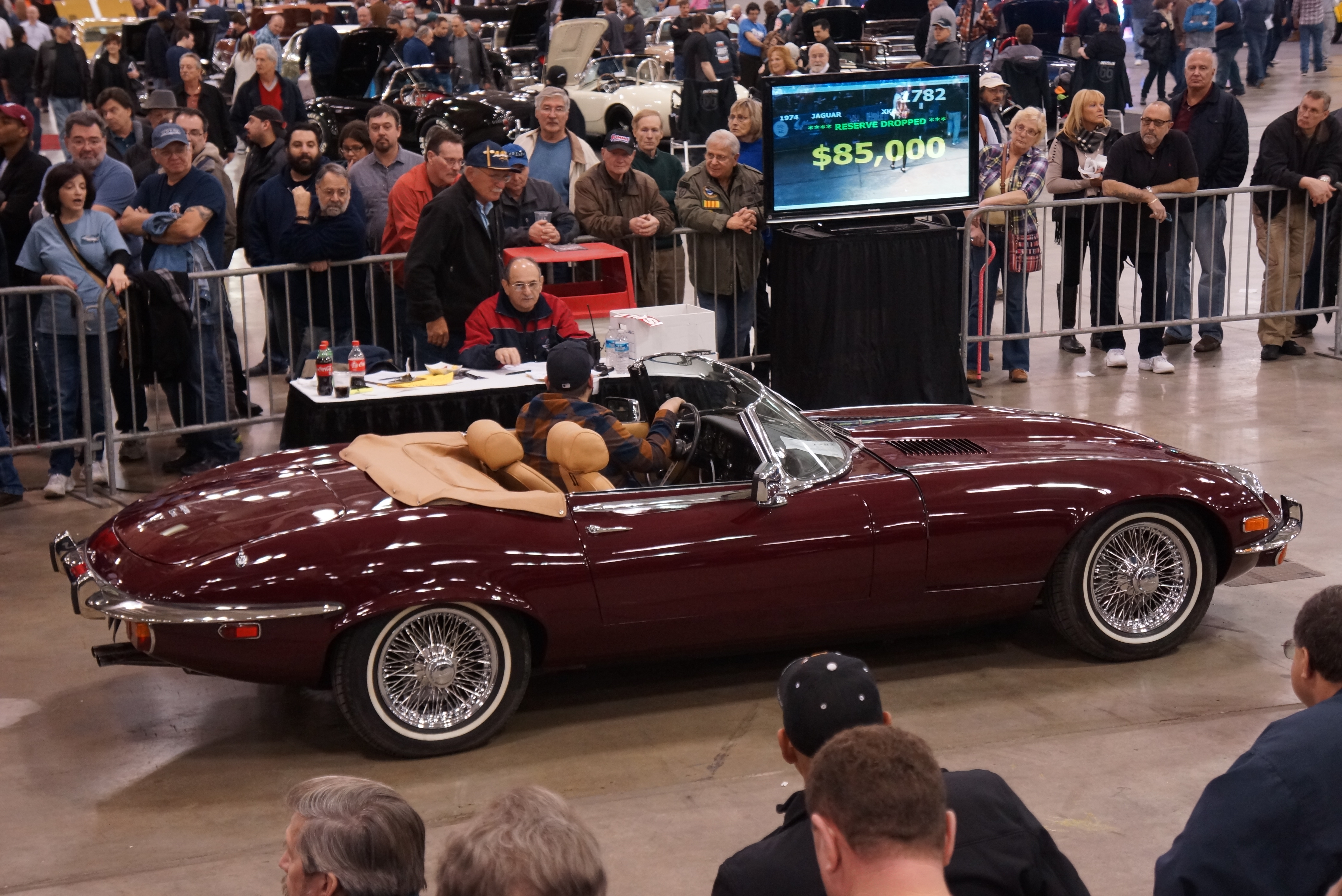
Lot #1782, 1974 Jaguar E-type convertible, Series III with V12 engine, manual transmission, A/C, dark red with biscuit top and interior. Last year for the E-type. Owner claims 16,000 original miles, and also claims it was thoroughly restored. We didn’t see this one up close, but it did appear to be near a #2 condition car. CPI values a #2 car at $87,750, and this hammered sold at $85,000, so someone was willing to pay full boat for it.
At $85,000, this E-Type was the highest sale we saw on Saturday.
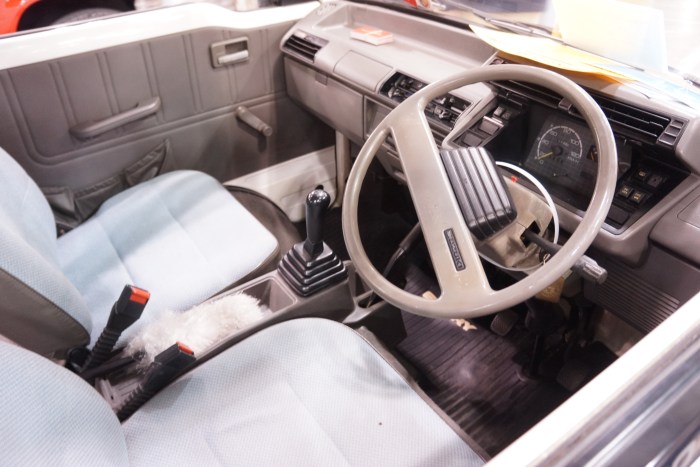
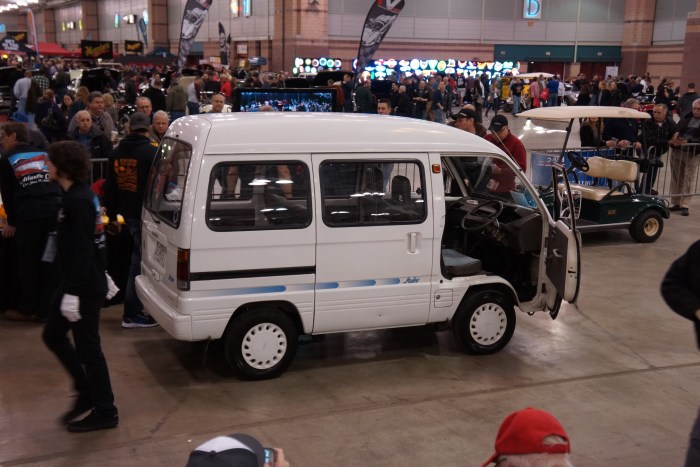
Lot #1716, 1990 Suzuki “Every” mini-mini van. Right hand drive, 3-cylinder, 5-speed, factory air, 2,800 original miles. Sliding doors, 2 rows of seats, roomy looking interior. Tall, narrow box on 4 wheels. Everyone was all over this little thing, but it was declared no-sale at a reported high bid of $8,250. We hope it sells just so you can claim to be the only person in your state with one.
That’s one small mini-van
Get a part-time job delivering mail
The Suzuki does not go to a new home
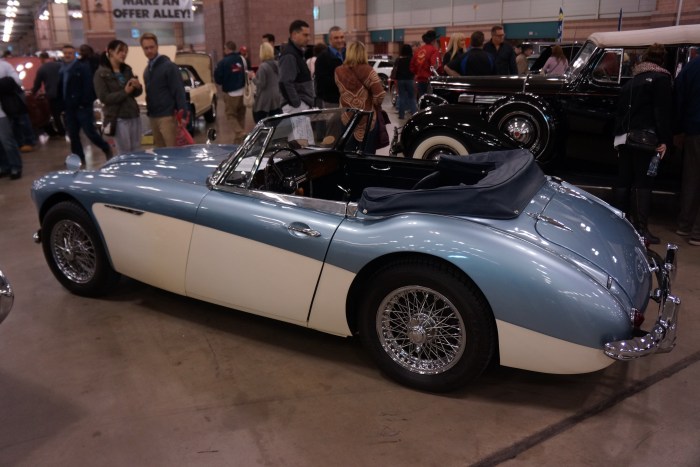
Lot #1783, 1965 Austin-Healey Mark III, inline 6, light blue over white paint, with dark blue leather interior. Chrome wire wheels, blackwall tires. Odometer reads 77,000. Car looks very clean overall, no blemishes outside or inside, but appears that restoration may have been done a few years ago. CPI rates a #3 car at $52,500 and a #2 car at $100,000, so that’s a huge spread, mostly defined by condition as there were few options. This one sold for $58,000 which was fair to buyer and seller.
’65 A-H in a classic color combo
Chrome wires set off the paint
Nice leather interior
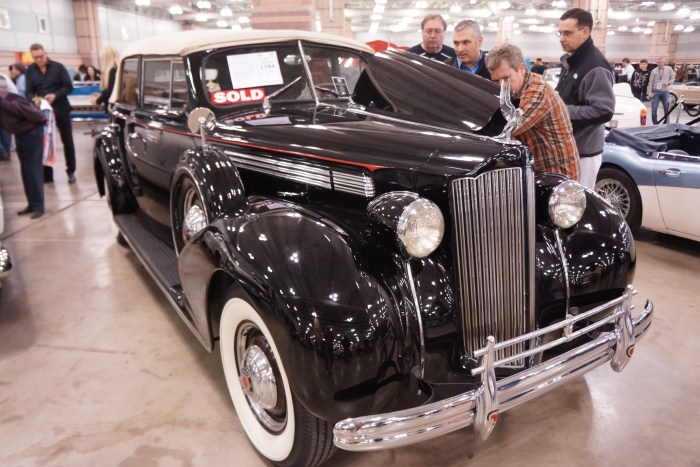
Lot #1784, 1939 Packard, 4 door convertible sedan, black, off-white convertible top, dark red interior. Odometer reads 50,166. Whitewall tires, Packard hub caps, everything looks stock. The car gives off the vibe of a vehicle that was restored 20-30 years ago. It’s all there, and may run out well, but everything has the look and feel of a 20-year-old used car. Rare and unusual body style not seen much, where the B-pillar is removable for a full-open look when the top is down. Car hammered sold for $38,000, which may seem rich, but A) it’s a Packard, and B) try to find another convertible sedan in that price range. Join AACA and go on a tour.
Packard grille stands out
Convertible top in good shape
Plenty of room on front bench
Inside shot of Packard B-pillar shows latches
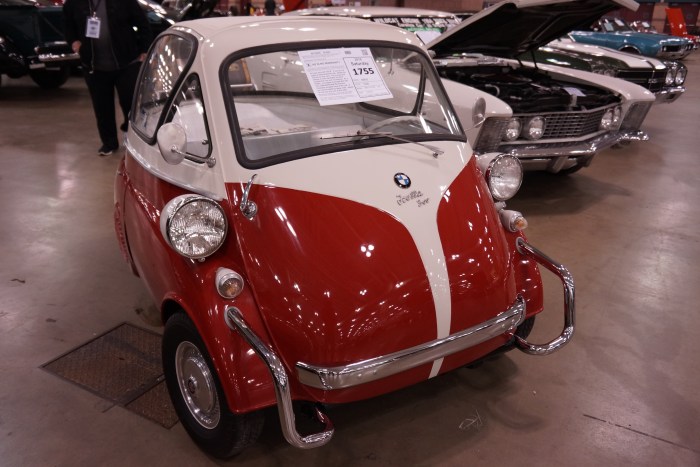
Lot #1755, 1956 BMW Isetta, bubble-window coupe, red/white, white sunroof, white vinyl interior. Restored to an acceptable cosmetic standard. Like most Isettas, interior not done to original style. Car has original ISO-designed side windows, as well as coveted “Z-molding” on the side. Every auction seems to have at least one Isetta. This one had shiny paint but little else to rave about. In the opinion of this former Isetta owner, if you plan to drive the thing, get the sliding-window model, as airflow through these tiny pivoting triangular windows is next to non-existent. CPI rates a #3 Isetta (which this one barely was) as worth $30,000. The car was sold for $33,500, so someone paid a slight premium for 13-horsepower worth of cute.
Red/white 2-tone is seen often
Side shot shows bubble windows, molding
There’s no trunk, so you need this
CAR CORRAL ENTRIES
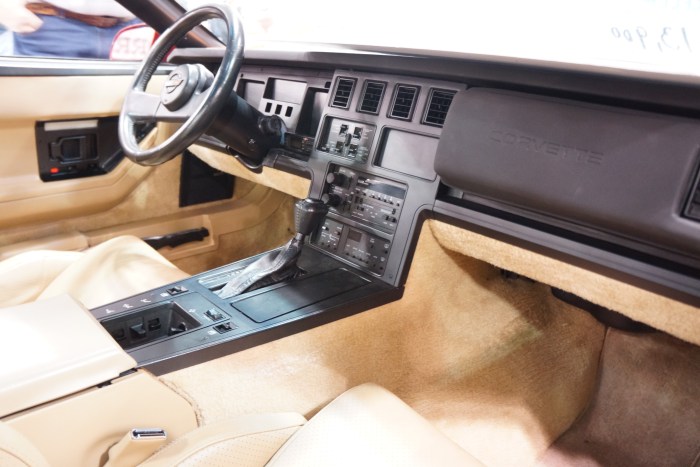
1986 Corvette coupe, red, tan interior, automatic, claimed to have 23,000 original miles. Asking $13,900. Car was fairly clean yet obviously used. Rear panel has been resprayed, and that red does not match rest of car. Lots of swirl marks in paint. Car is in CPI between $8,000 (#3) and $14,700 (#2), and this car just didn’t look like a 23,000 mile car. $10,000 would be all the money, however, there are lots of C4 Corvettes for sale all the time, many of them under $10k .
’86 Corvette for $13,900
Rear ‘cap’ repainted, doesn’t match
Interior as expected for 23,000 miles
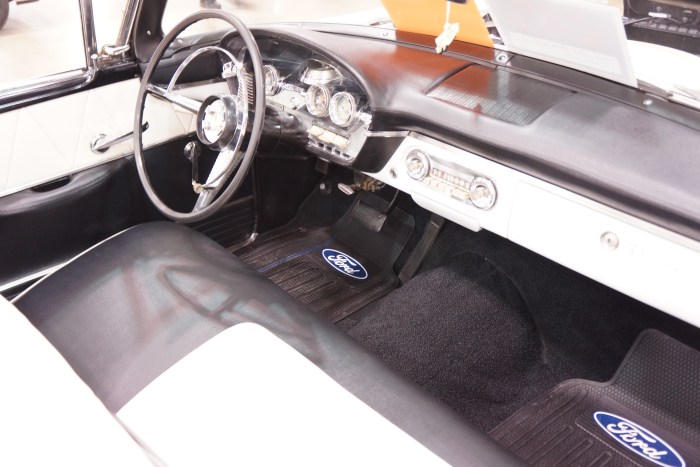
1958 Edsel Pacer convertible, unusual off-white/pale yellow exterior, black interior. Sign claims 35,000 miles, yet car looks restored, not preserved. Very straight overall, interior very nice, engine compartment especially well-done. The entire car does pop, but so does the asking price of $100,000. That is not a typo. CPI values a #2 car (which this is) at $66,000. Even if you pay a premium for the low miles, what do you do with it? Every mile you drive it will depreciate it.
1958 Edsel Pacer
Rear shows off 2-tone
Interior nice but bland
“E” stands for Edsel of course
1963 Mercedes Benz 190 SL, dark silver, black convertible top, red interior, narrow whitewall tires, MB hub caps in red, cosmetically very pretty car. No asking price displayed. (Why would you put a car in the car corral and not show a price?) All 190s have 4-cylinder engines and manual gearboxes. Having never driven one, I’ve read that the driving experience is nothing special. Up until about 2 years ago, these languished in the $30k-40k range. Suddenly, as 300SL Gullwings and Roadsters regularly broke through a million, the baby brother 190 came along for the ride. Prices broke $100,000 and seemed headed to $200,000. Now that there’s been a slight cooling, more level-headed thinking has pushed these values back into the high-fives. Whatever he’s asking, I wish him luck.
190 SL in car corral
Not sure if plate is included
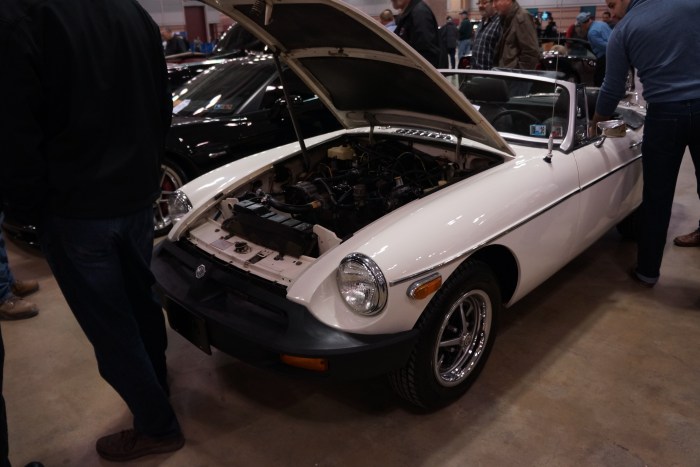
1980 MGB convertible, odometer reads 45,822 miles, odometer may have turned over once. White with black interior, stick shift with overdrive switch in shift knob, MG-style mag wheels, trunk-mounted luggage rack. Engine compartment a bit of a mess. Last year for the MGB in this market. This car might be unrestored, as it’s all there but nothing is tidy. We would rate this car as a #3- or even a #4. CPI puts a #4 car at $4,150 and a #3 car at $8,000. The ask here is $8,995. Offer $6,000 if a rubber-bumper MGB is on your bucket list and you’re feeling generous.
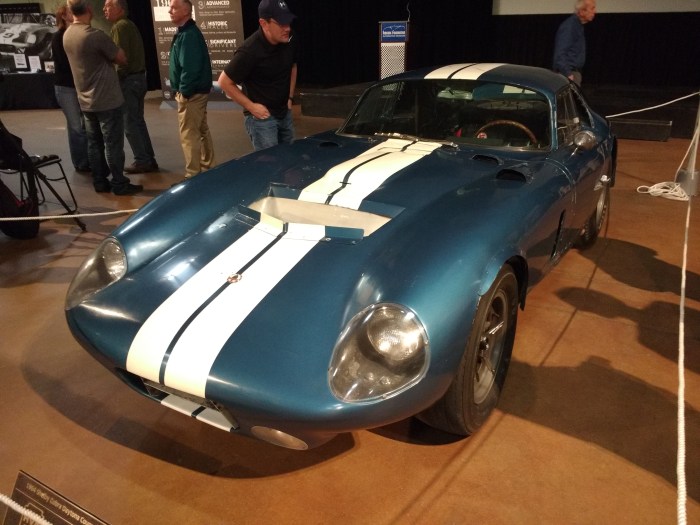
On Saturday, December 12, 2015, the Simeone Foundation Automotive Museum in Philadelphia PA hosted a special “Preservation Workshop”, featuring the Shelby Cobra Daytona Coupe (serial number CSX2287) owned by the Foundation. The gist of the presentation was that, after this vehicle spent some 30-odd years languishing in hidden storage, it was acquired by the Foundation and brought back to running, driving condition. The work to accomplish that goal was considered “preservation” and “conservation”, not “restoration”, in an attempt to keep the car as original as possible.
The star of the show awaits its start
This particular vehicle is one of only 6 Cobra Daytona Coupes built, and on that basis alone, it is an historically important vehicle. However, CSX2287 is also the first Daytona Coupe built, and the only one constructed entirely in the U.S. Most infamously, it has a long and convoluted ownership history (including, for a short time, serving as daily driver for the music producer Phil Spector). No attempt will be made here to delve into this history, about which much has been written elsewhere. Instead, this blog entry will summarize the workshop presentation, which was fascinating both for its detail as well as some of its controversial “conservation” decisions. For those interested, the Foundation’s website has this information on the car: http://www.simeonemuseum.org/the-collection/bonneville-salt-flats/1964-shelby-cobra-daytona-coupe
Various views: left front
Left rear
Right rear
The event started promptly at its scheduled time of 12 noon, with about 150-175 people in attendance. After the briefest of introductions, the mic was handed to Dr. Fred Simeone, who spoke while clicking through Power Point slides on a large screen at the front of the room. The Belle of the Ball, the car itself, sat on the floor, roped off from groping hands.
Dr. Fred Simeone works the crowd
The good doctor proved himself to be knowledgeable, well-spoken, interesting, and occasionally amusing. One got the sense while listening to him that he was actively involved in the car’s refurbishment. He may not have literally had his hands on components (indeed, he informed us that the work was performed by a restoration shop in Georgia), but he likely was helping to make key decisions.
Original tire, dry-rotted but OK for demo runs
Exotic spare tire hold-down mechanism
Fuel filler detail
The slide presentation began with the history of CSX 2287: its creation and racing exploits. Again, there is no need to cover that here. The Foundation purchased the car in the early 2000s, and since one of their goals is to maintain all vehicles in running condition, work started to make it a driver again. A rotisserie was constructed, with mechanical systems (fuel, suspension, brakes, etc.) disassembled and carefully documented and photographed. Various methods were employed to remove dirt, scale, and rust, while preserving whatever original finishes might be found. In this way, the original black paint on the tube frame was saved; so were factory markings on the engine, cooling system, even the hardware. Rubber fuel lines, obviously corroded to nothingness after such a long time, were replaced as a necessary safety matter. However, the metal ends were reused, a painstaking and more expensive approach, but one which preserved what could be saved. Almost every piece of hardware was cleaned and reused. In cases where worn parts were replaced (wheel bearings), the originals were kept and stored away.
As Yogi might have said: “Carroll must have signed it while he was still alive”
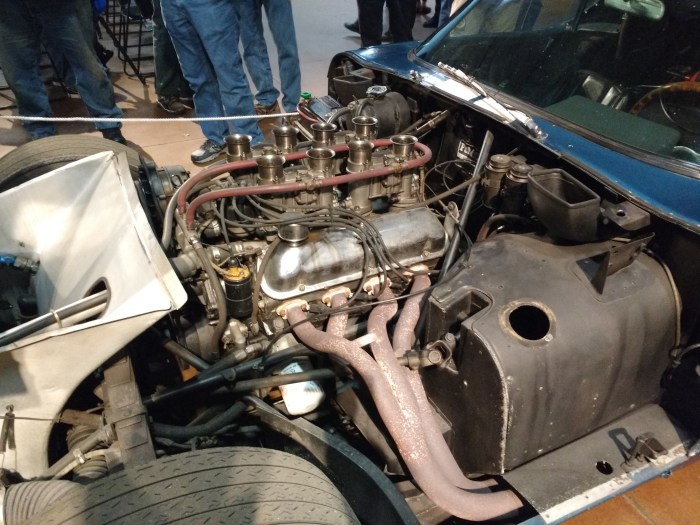
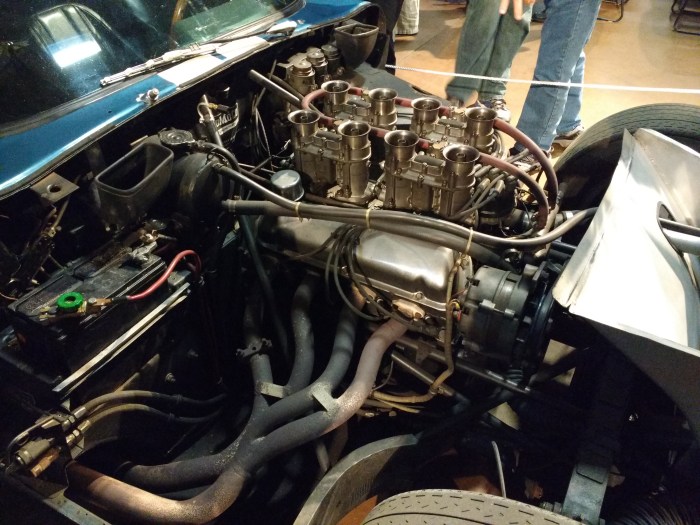
The engine, not original to the car (Shelby American installed a “spare” Hi-Po 289 into it when they sold it to a private individual in the late ‘60s), was determined to have relatively few miles on it. One controversial decision was to NOT rebuild the engine, for as far as anyone knew, there was nothing wrong with it! In fact, Dr. Fred stated that the ONLY reason the engine was removed from the frame was to replace a seeping freeze plug, a job which could not be done with the engine in situ.
Left side of Hi-Po 289- note steering shaft through header
Right side of engine- note Weber carbs
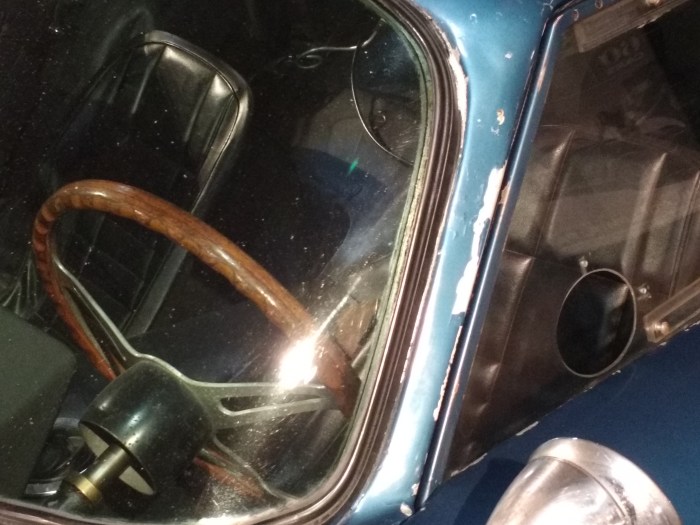
The photos below reveal that the body and paint on this Shelby were decidedly not restored. This of course, was also controversial, for several reasons. The first and most obvious is that in this hobby, “refurbished” cars are not just mechanically corrected; they are cosmetically returned to their most glamorous state. The controversy is further fueled by Pete Brock, this vehicle’s original designer. He has made it publicly known that in his opinion, the only correct “restoration” of CSX2287 is to remove its hood scoops and rear spoiler (which were added while the vehicle was competing in real races), and to repaint it in the original (lighter) shade of blue which it wore in 1964. Dr. Simeone was not shy in stressing that while he respects Pete, he disagrees with him.
Flaking paint at left A-pillar
Chipped paint at door/fender seam
As mentioned earlier, Dr. Fred was far from boring during the hour+ he held the mic. Some of his memorable quotes from the day include:
• “A car that doesn’t run isn’t a car. It’s a statue.”
• “Restoring a car for Pebble Beach does nothing for its conservation. All it does is make you eligible to win a plastic trophy.”
• (Quoting Carroll Shelby, who was trying to negotiate the repurchase of the Daytona coupe from the woman who hid it away for 30 years): “The bitch would only talk to me through the screen door”.
• “Watch out if you disagree with Pete Brock. First he’ll argue his case with you, and when he’s done, he’ll sic his wife on you”.
Floor poster sums up an incredible history
This concept of keeping original cars original is not new to CSX2287. Those in the old car hobby began to notice a hard right turn in that direction within the last decade or so. Recent auction results around the globe have shocked onlookers by repeatedly proving that “barn finds” in some cases fetch more money than 100-point restorations. The Simeone Automotive Foundation, in 2012, published a book “The Stewardship of Historically Important Automobiles”which draws parallels between art and furniture collections (which pieces would never be stripped of their finishes) and automobile collections.
Hood up so the battery could be connected
The book does make the distinction (as Dr. Fred did today) that the concept of preserving what is original is not intended for every “Model A and Mustang out there”. Some astute writers have noted that compared to an oil portrait or a desk, a functioning automobile has moving parts which are designed to become worn, deteriorated, and consumed. Eventually, the entire vehicle is discarded. Therefore, for many vehicles selected for the restoration process, there is no choice but to completely renew all their components.
After an hour of the slide presentation and audience Q & A, the Daytona Coupe was started and allowed to idle for a minute. Slow to crank, it fired up on the second try. Expecting a cacophonous roar, the vehicle sounded docile at idle. While never to turn a wheel in anger again, this simple demonstration helped prove that the preservation efforts accomplished their intended goal.
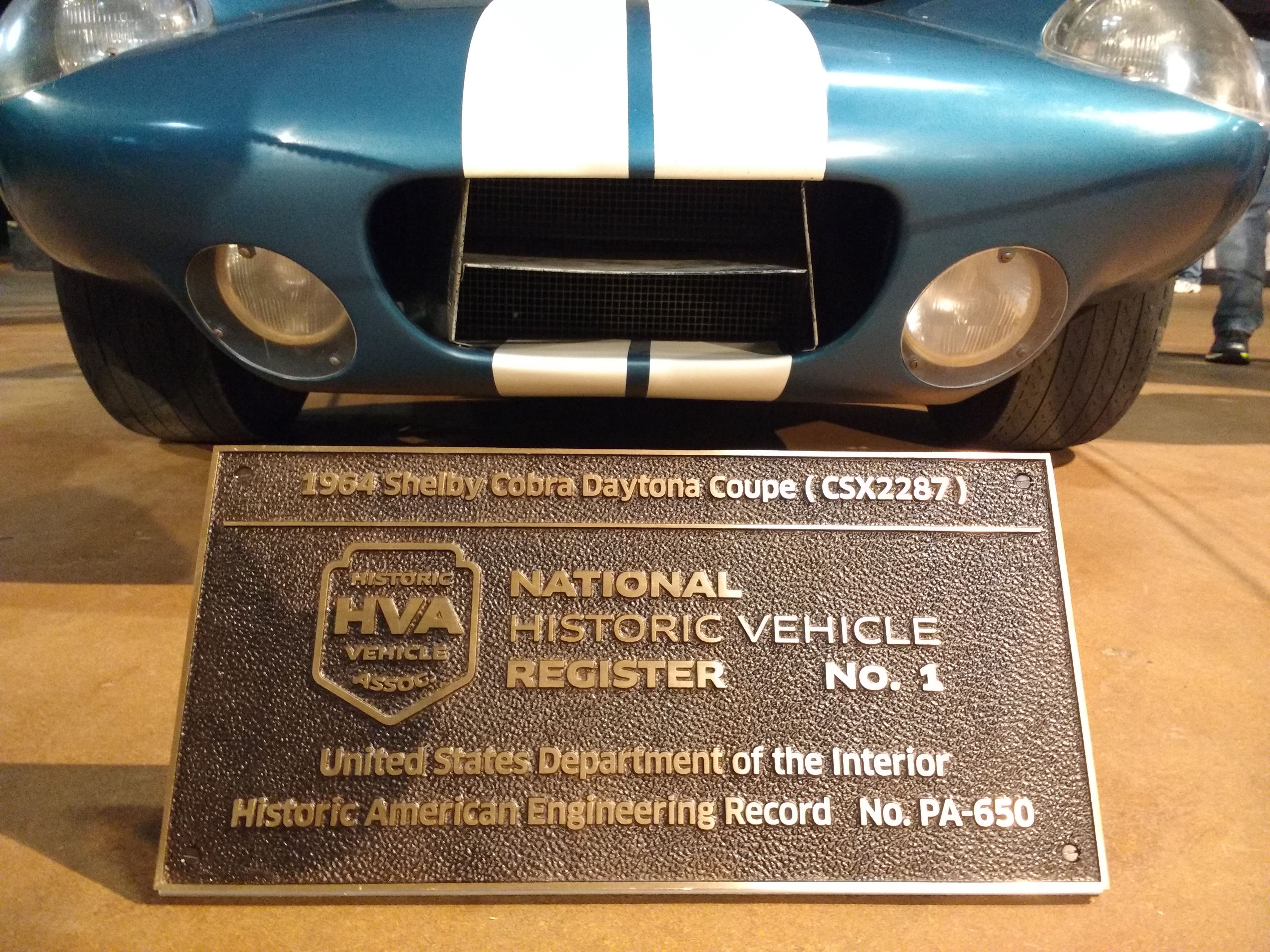
The first automobile granted historic status
More info about the HVA
A final note about this particular car and the maturing of the old car hobby concerns the National Historic Vehicle Register, overseen by the U.S. Department of the Interior. The National Historic Register has been awarding “historic status” to buildings and other architecture in this country for decades. Recently, it was proposed to extend such recognition to automobiles. This Shelby Cobra Daytona CSX2287 is the first such vehicle recognized, a massive accomplishment, and one that signifies that not only is the old car hobby alive and well, it is growing in important ways.
Comments concerning “restoration” versus “preservation“ are invited.
The annual car show formally called the “Antique Automobile Club of America Eastern Division National Fall Meet”, but known the world over simply as “Hershey,” was held for the 60th time on October 7-10, 2015. The event takes over most of the 121-acre grounds which are Hersheypark, plus some adjoining property. The town of Hershey PA, which not coincidentally is also home to national AACA headquarters, gives itself completely to “Hershey Week”. If you want a nearby hotel room next year, book it 4-6 months in advance.
For those who have never been to Hershey, describing it as the biggest car show on the East Coast and one of the biggest car shows in the world does not do it justice. Most of Hersheypark’s paved lots are blanketed with flea market vendors. Hundreds of antique and classic cars are offered for sale in the Car Corral. Saturday is the show’s raison d’être, as the finest restored cars and trucks in the country compete at a judged car show. Hershey attracts participants and spectators from around the world, many of whom have been making the annual trek for decades.
These die-hards renew old acquaintances, seek out valuable parts needed for their restorations, and buy and/or sell cars with regularity. Your scribe first attended Hershey in the late 1970s, and has not missed a meet since the late 1990s. If your interest is in stock (meaning unmodified) cars that are 25 years old and older, as required by AACA guidelines, this is the place to be. Newer and heavily modified vehicles (and parts for them) need not apply.
Hershey is endemic of, but not responsible for, many of the changes we’ve witnessed as the hobby has grown, changed, and matured. In years past, an automotive flea market consisted of vendors with rusty old junkyard parts, or obsolete dealer parts stock. Either way, the parts were in milk crates, scattered on folding tables, or spread out on tarps on the ground. You had better well know your needs, because you were going to spend hours looking through those piles to find that gem in the rough.
At many flea markets today, you can seek out a vendor who specializes in your make and model vehicle. Once you inform the vendor of your vehicle particulars, the part, remanufactured as an aftermarket component, probably “offshore” (a nice euphemism which allows you to avoid saying “China”), is handed over, neatly packaged in hard plastic. This is if you even bother to attend the flea market. Much of this stuff is available online with a few clicks of the mouse button.
Given two facts, one, that AACA is strict about its 25-year-old-and-older rule, and two, that many of the Hershey veterans still have a huge interest in pre-war (WWII) cars, the flea market has fewer of the reproduction vendors that you would likely see at Carlisle, for instance. The thrill of the hunt still applies. The photos below affirm that Hershey still does the flea market the old-fashioned (some would say the more fun) way:
THE CAR CORRAL, SUB-$10,000 EDITION
The Hershey Car Corral always has a nice variety of cars for sale. This year, the variety of domestic and imported vehicles seemed greater than usual. That is not to say that every car in the corral is an instant classic. There are those run-what-you-brung cars that look like they were someone’s daily driver as recently as last week. Part of my reaction to these cars is because I was of driving age when they were new. Heck, I saw cars for sale that were new at the car dealerships where I worked in the 1980s.
The good news is that many of these types of cars have low asking prices, and can serve as excellent starter vehicles for someone new to the hobby. (My friends and I enjoy pointing these out to those who say the hobby has become too expensive to enter.) Here are some random choices for those with limited means who still want an AACA-eligible car.
1990 Pontiac Firebird
One of the few car corral vehicles from the newest-allowable model year, the sign on this 1990 Firebird claimed it to be a one-owner car with 52,000 miles. The asking price was $6,000, likely held back because of the V6 under the hood. But moving down the road, who would know?
1965 Jeep J-10 pickup
With an asking price of $4,800, this 1965 Jeep J-10 pickup truck is rare. Many were used as work trucks and long ago met their fate at the crusher. Four-wheel-drive and V8 power meant that little was going to stop your forward motivation. The Colorado license plate helped assure that there was little to no body rust (none that could be seen with a cursory look). Buy this and you’re practically guaranteed to have the only one at the next Cars & Coffee.
1981 Honda Civic
Squeaking in under the wire of our self-imposed $10,000 limit with an ask of $9,900, this 1981 Honda Civic had many scratching their heads. Sure, by year and unmodified condition, it’s eligible. My personal reaction is that I remember doing new-car prep at the dealership on them, and my then-best friend bought one of these new. They CAN’T be allowed here, can they?
1979 Triumph TR7
By my account, the least expensive operational vehicle in the car corral, this Triumph appeared to have arrived under its own power. The sign on it said “new transmission, new clutch, new interior, runs great, fun car!” Asking price? $2,800. Make ‘em an offer.
1984 Datsun 280ZX
This car’s cleanliness belied its reported 123,000 miles. The paint and interior were unblemished. It was a stick to boot. Thursday’s price was $7,400, Friday’s was $6,500. Don’t know if he sold it, but this was a later “Z” that wouldn’t require the gold chains to be worn (by you, not the car).
1978 Cadillac Seville
My Caddy friends assure me that these first-generation Sevilles are future collectibles. We’ll see. However, if you wanted a sharp driver in a very appealing black over red, this car could do it. The windshield write-up claimed it to be a one-owner, 80k car. Another one going through a fire sale, Friday’s price was $5,600, down from an earlier $5,900.
1980 Mazda RX-7
First generation Mazda RX-7s are another model which pundits claim will double in value “soon”. Hasn’t happened yet. In the meantime, good clean cars sell for credit card money, and someone is having fun. This 1980 rotary rocket with 82,000 miles could be yours for $7,850. Handwritten next to the price was “let’s talk $”.
1987 Corvette
Sure, SS 396 Camaros and Shelby Mustangs are never going to make mention in a chapter called “sub-$10,000 cars”. But that’s not to say that good ol’ American performance can’t be had at that number. How about a Corvette? Seriously. The C4 Corvettes (1984-1996) are quite affordable right now. Here’s proof, in the form of a 1987 coupe. Yes, it’s a 350/auto with incorrect wheels, but at $7,750, it’s something you could drive every day and display at cruise nights. THE CAR CORRAL, VOLVO EDITION
Volvo 122S wagon
Two Volvos in particular stood out for me. A 122 wagon, in white over red, stick shift of course, was fresh from the Pacific Northwest, and looked it, as there were no signs of visible rust in the body. The ask of $14,500 may have seemed high, but try to find another one this solid on the East Coast. (Recent Bring A Trailer sales of 122s have approached $20,000.)
1979 Volvo 242DL
By contrast, this 1979 242DL, with automatic and (dealer installed) a/c, was super clean, and in that requisite 1970s brown. But $12,500? See sub-$10,000 cars above. This Volvo was for someone who HAS to have this particular configuration. THE CAR CORRAL, NOT IN THE CORRAL EDITION
Not every car for sale at Hershey is in the designated car corral. There were some interesting finds in the flea market area. There are also cars for sale in the parking lot, possibly as a way to avoid paying the AACA car corral fee.
1963 Studebaker Avanti
This Studebaker Avanti from the first year of production is distinguishable by its round headlight bezels. This car also has the desirable 4-speed with factory air. At $26,995, the asking price fell in between CPI’s “good” $14,000 and “excellent” $29,000 values.
1967 Porsche 912
Porsche 911s of all years, body styles, and performance levels are hot right now. The joke is that 911 pricing is like the fish at your favorite seafood restaurant: “market pricing”, which is X today and will likely change upward tomorrow. But the 912, the 4-cylinder variant, remains relatively affordable. This car was in the parking lot across the street. The sign said its engine had been swapped out for a 1969 version. The owner was asking $29,000. Going down the road, no one will know you’re not packing a flat-6. (By way of reference, nice 1967 911s are approaching six figures.)
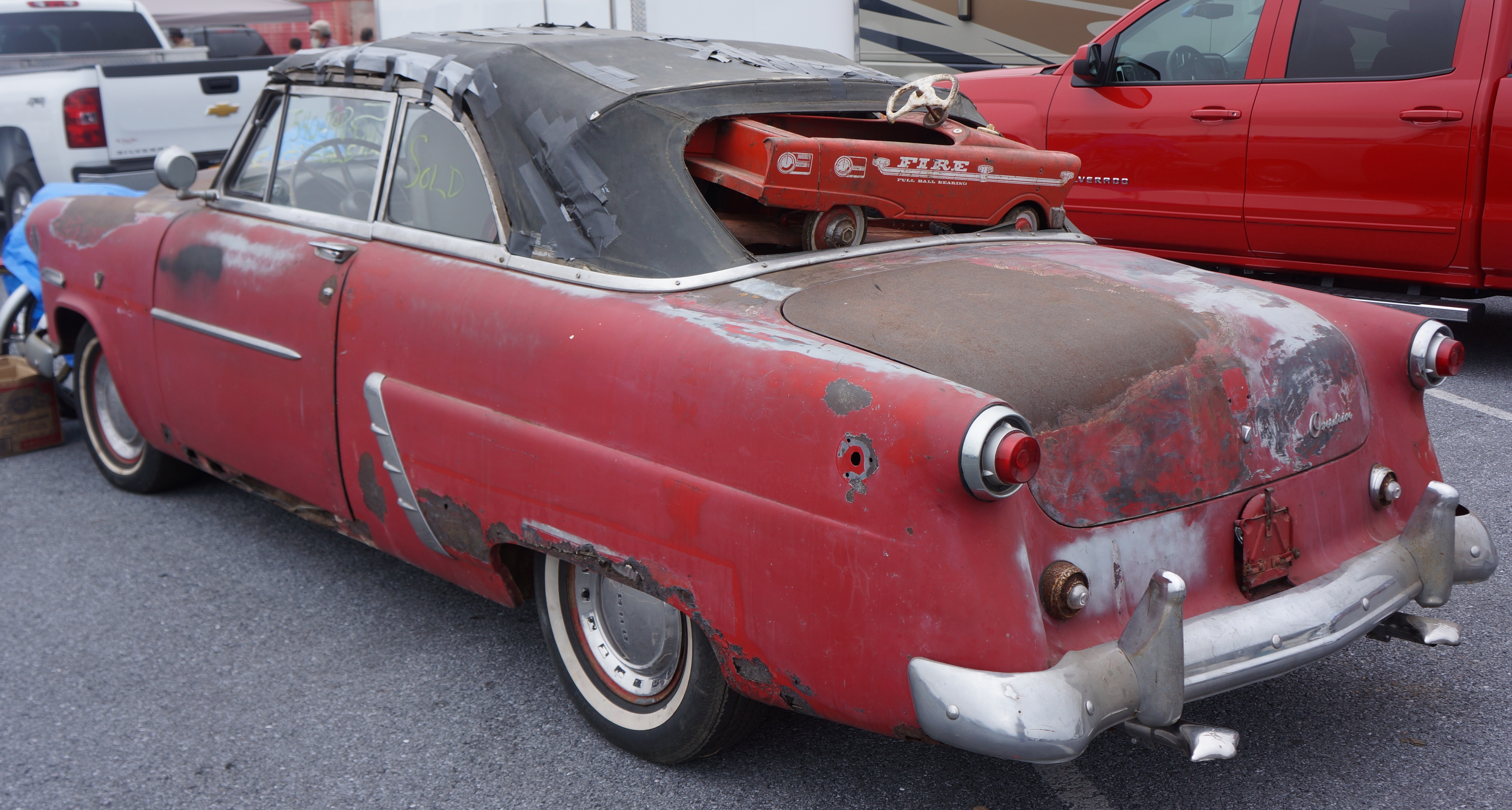
1954 Ford
This 1954 Ford convertible was hanging out in the flea market. The asking price, if it had been displayed, was now gone, and the car was marked “sold”. Given its overall dreadful condition, I took it as a healthy sign for the hobby that someone out there was willing to take it on. No word whether the Fire Chief pedal car was included (might be worth more than the Ford). SATURDAY’S CAR SHOW
My great friend and fellow rally driver Steve H and I have made the trip to Hershey together numerous times. It was one trip in the 1990s when we discovered that if we arrived early enough on Saturday morning, we could have the pleasure of watching the parade of cars as they entered the show field (AACA rules require that show cars be driven onto the field under their own power).
As has become my custom, I was on the grounds before 8 a.m., and found a good viewing spot. It is endlessly entertaining to see the cars. If you’re close enough, you can also capture the drivers’ faces, almost every one of them grinning as they proudly pilot their machines. Below is an assortment of vehicles moving under their own power before finding their designated show field spots (click on these, or any photos in the post, to enlarge them).
Fiat-Abarth
Studebaker Hawk GT
1930s Cord (FWD)
Continental Mark II
Plymouth Superbird
Triumph GT6
Jaguar XJ-S
Triumph Italia
“bathtub” Packard
1957 Ford Skyliner
Two GM “alternative powertrain cars”: Corvair and Fiero
Looks like a Fiat; it’s a Zastava
1961 Pontiac bubble top
BMW 507
Alfa Romeo Spyder 2000
1979 Volvo 265
Ferrari 275GTS
Jaguar XK120 coupe
FINAL COMMENTS
Sometimes, the “business” of the hobby causes us to forget that this IS a hobby, which means we’re doing this for fun. And looking around at the sights and sounds, plenty of people at Hershey are having fun. We’ll leave you with a few photos as reminders.
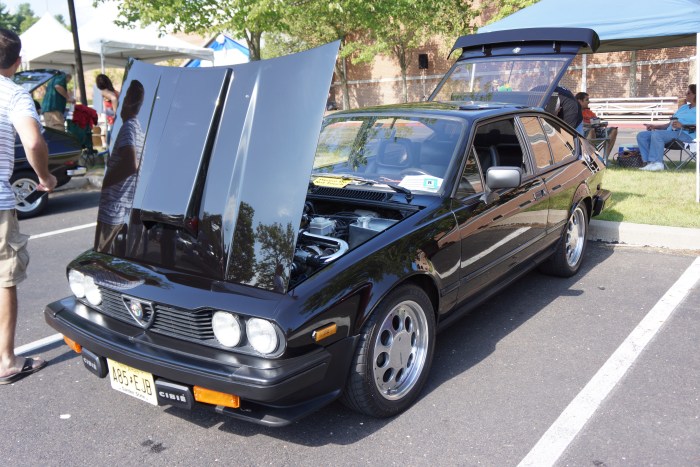
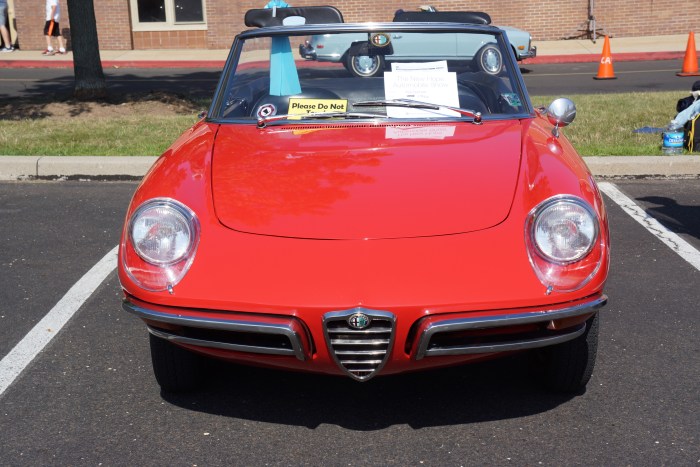
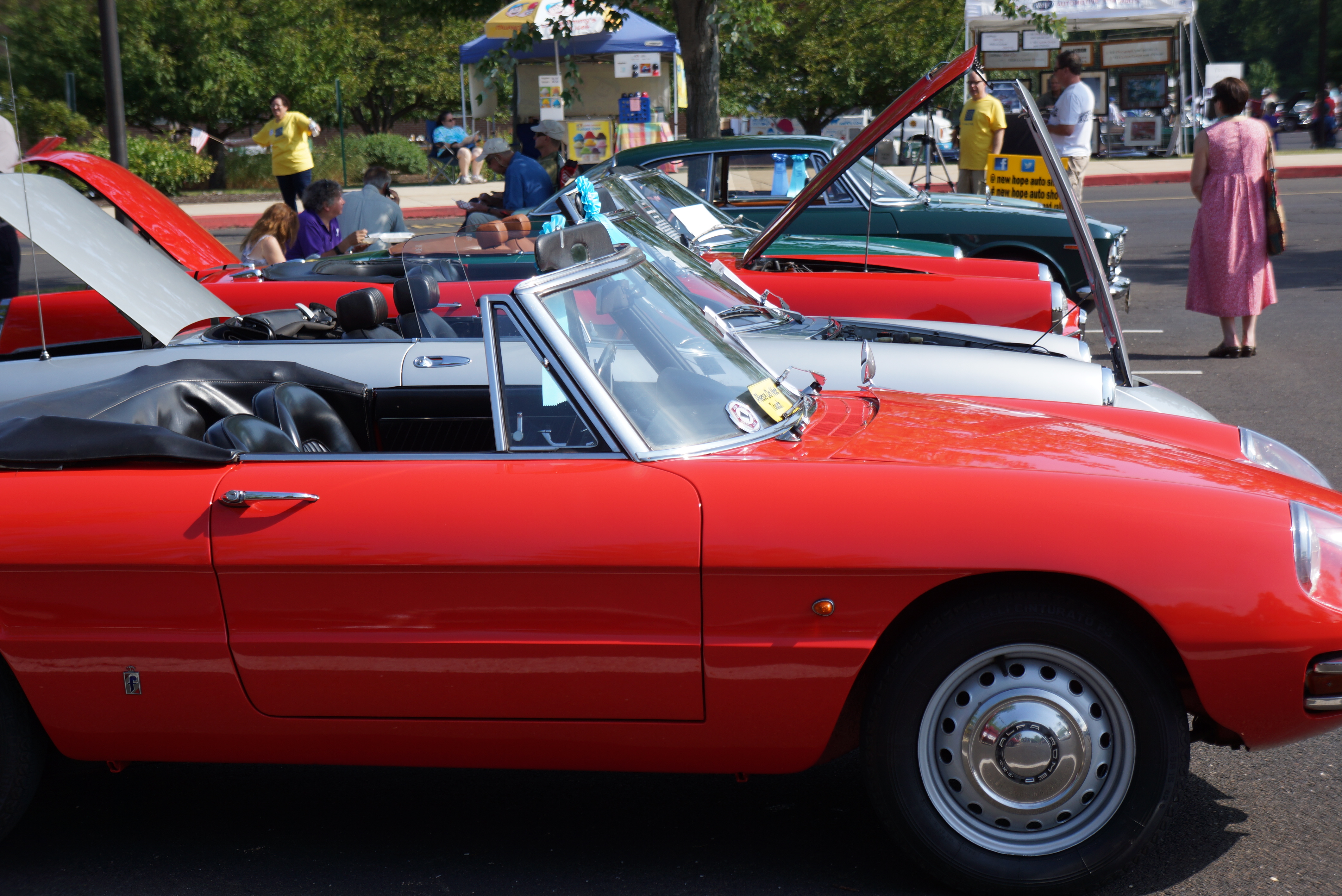
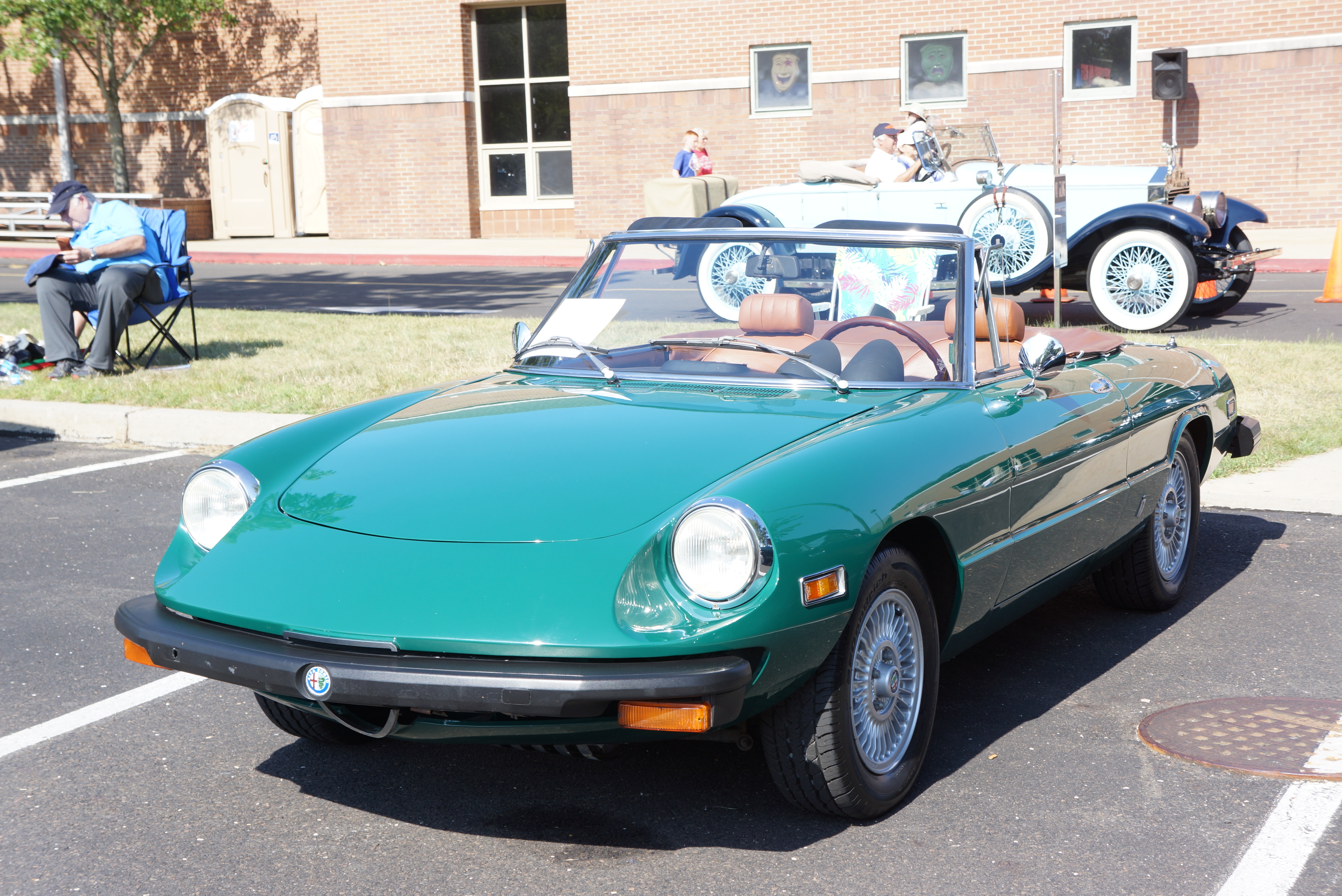
The storied Italian car maker Alfa Romeo was heavily featured at this year’s New Hope Auto Show, held on the grounds of this Pennsylvania town’s high school. The Alfas, assigned their own class, were all parked next to each other, although there was no particular order to their arrangement. The casual observer would be forgiven if s/he thought that Alfa only made convertibles. Of the 15 cars present, 10 were soft tops (“spiders” in Alfa-speak). Of those 10, 9 were of the same basic body style, a design which debuted as the Duetto in 1966 and concluded its run as the Spider Veloce in 1994. That is a very long time in car-years.
Alfas in a row The only Giulia coupe at this year’s show, and a step-nose to boot
Your author’s car, a 1967 GT 1300 Junior, was proudly on display, and was one of the few tin-tops in attendance. The field was rounded out with an early ‘60s 2000 Spider (the so-called Large Alfa), an Alfetta GT, a GTV-6, and a 164 sedan (the only front-wheel-drive Alfa present among all the rear-wheel-drive vehicles).
A 1979 Alfetta GT
An early ’60s 2000 Spider
A 1985 GTV-6 Callaway Twin-Turbo
It was a rare treat for me to see so many Alfa Romeos in one place at the same time. But the real treat was provided by the gang which brought in these beautiful cars. Alfa owners are a passionate lot; they like to drive their cars; they like to show off and talk about their cars; and they like to meet and chat with fellow Alfa owners and wanna-be owners. Most of the day was consumed by conversation about our Milanese machines.
Front end of the Duetto
The Duetto’s “round tail”
The first couple I met had arrived in their 1979 Alfetta GT 2-door coupe. “Quinn” and I happily traded stories about each other’s cars. One story I shared occurred last week. While driving to work, I spotted a car just like theirs on the road with me. It had been ages since I had seen an Alfetta moving under its own power. This particular one was mostly in grey primer, with its passenger door still red (and still wearing a large “ALFA ROMEO” decal). It was bumperless, and obviously a work-in-progress. But by the sounds it was making, I knew the driver was having a blast.
An Alfetta GT reflected in the mirror of a Bentley Continental GT
What made our roadway rendezvous rather unique that morning is that I was piloting my boss’ 2012 Bentley Continental GT Coupe, all W-12 twin-turbo 500+ horsepower of it. I’m always a bit self-conscious driving that car, and tend to stay to the right, moving at the speed limit, in order to avoid undue attention. As the Alfetta drew closer, I wanted to drop my window and give the driver a big thumbs-up. Dismissing any concern about what he might think of me, I did just that. His ear-to-ear grin told me all I needed to know.
1989 Alfa Spider
The Spider hardtop
The owner of the ’79 Alfetta GT told me that he has owned his car in excess of 20 years, and although he has done scores of maintenance and repair work on it, he considers it a mostly original car. Looking the car over, I agreed with him, as much of the black lacquer as well as the beige cloth upholstery remained as it was in 1979. These early Alfettas had a controversial dash design: the tachometer was centered in front of the driver, with all the other gauges in the center. I’ve driven these cars, and it takes some time to get used to the arrangement.
Not all Alfas are red; just most of them
Immediately to one side of me was a Spider owner who is also a very active member of his Alfa Romeo Owners Club local chapter. He, among many other owners, encouraged me to join the club in order to become more involved in their driving events. “Bill” is a marque expert who delighted in telling me about the nuances among the display cars, including which cars were factory-correct and which were not. The truth is that he was a tremendous knowledge source about all things Alfa.
1982 Alfa Spider
On the other side of me was another spider. “Jim” had bought this car just a few months ago (sight unseen off eBay!). It was a Texas car, in very nice shape. This was his 4th Alfa, and he told me that the drive to the show that morning was the longest he had driven the car since obtaining it earlier this year.
1976 Alfa Spider
An hour or so after arriving, the couple with the ’79 Alfetta returned to my car to make an announcement: they had shared my story about “The Alfetta and the Bentley” with the folks in the car next to theirs, and he was the driver of that primered Alfa! “Tom” and I met and screamed over and over at each other “I can’t believe it!” After I told him that I had arrived at work and shared my photo with several fellow enthusiasts, he told me that he got to work and called his wife to tell her “hey honey, some guy in a BENTLEY gave me a thumbs-up”. (His wife chimed in that he never called her from work, and she had at first assumed that something was wrong). Of course, I clarified for him that my daily-driver Jetta was home while I put some miles on the boss’ car. He told me that I had made his day, which made me feel wonderful about the entire encounter.
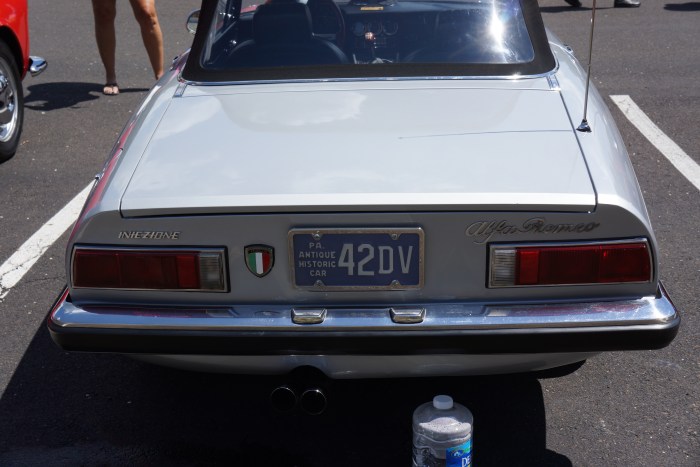
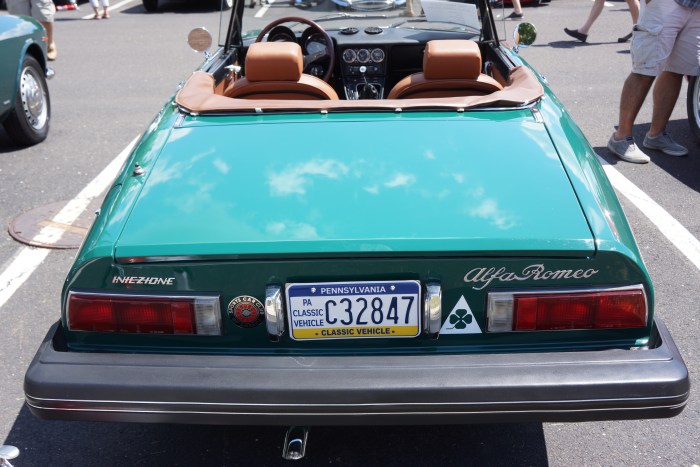
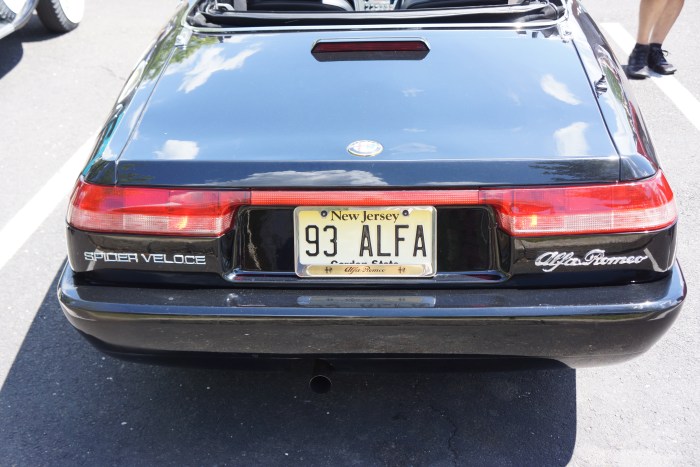
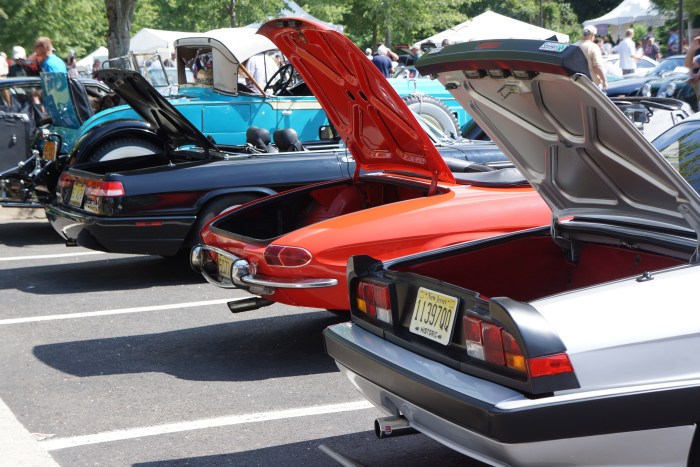
The number of spiders at the show gave me the chance to document something which I knew about, but for which I was lacking empirical data: the evolutionary design changes of the spider’s back end through 4 generations, known among the faithful as S1, S2, S3, and S4. (The front end also evolved, but to a lesser degree.) Photographing each version and displaying them side-to-side clarifies the differences. It also makes it plain to this set of eyes which of these wins the beauty contest. Your opinion may vary.
S1 (Duetto)
S2 Kamm-back (chrome)
S2 Kamm-back (black)
S3 (Duck tail)
S4 (aero tail)
L to R: S4, S1, S3
Kudos to the organizers of the New Hope show. With close to 250 cars on display, the difficult logistics of successfully running such an event become clear once you spend most of the day observing it. As the cars paraded off the field, my Alfa eventually became the sole representative of the marque. Lovely cars were seen, photographed, dissected, and discussed. Most importantly, new friendships were begun, with the promise of future automotive adventures to come.



































































































































 richardscarblog