Driving the GT/CS to Nashville for the Mustang’s 40th Anniversary

With the recently-acquired Mustang in the garage for the winter of 2003-2004, I set out to do three things in preparation for the 2004 driving season: join the local Mustang club, subscribe to Mustang Monthly magazine, and obtain as many vendor parts catalogs as possible.

The N.J.-based club was the GSRMC (Garden State Region Mustang Club), and soon after joining, its President invited me to submit an article about my car, as we both surmised it was the only GT/CS in the club.

Cover car!
Cover car!

Prior exposure at events like Carlisle had shown that (especially compared to Isetta vendors) there were dozens of Mustang parts suppliers, so any needed part should be only a phone call or mouse click away. I was soon to learn otherwise.

As weather allowed, I would slip into the garage to perform some preventative maintenance: tune-up, oil change, coolant hoses & clamps, etc. Removing the air cleaner lead to the discovery, missed by me and unmentioned by previous owner Tony, that the heater hoses were disconnected from the heater core at the firewall. Against my better judgment, I reconnected them, filled the system, started it up, and ran the heater. All was dry, so I let it be.

As I placed orders for my Mustang-specific parts, I sampled various vendors, including Mustangs Unlimited, CJ Pony Parts, Virginia Classic Mustang, and NPD. Two truths became apparent: first, the quality of aftermarket parts varied widely, and was not always good, to the point that substandard parts were returned; and second, the idea that any part could be found at any vendor was hindered by my engine.

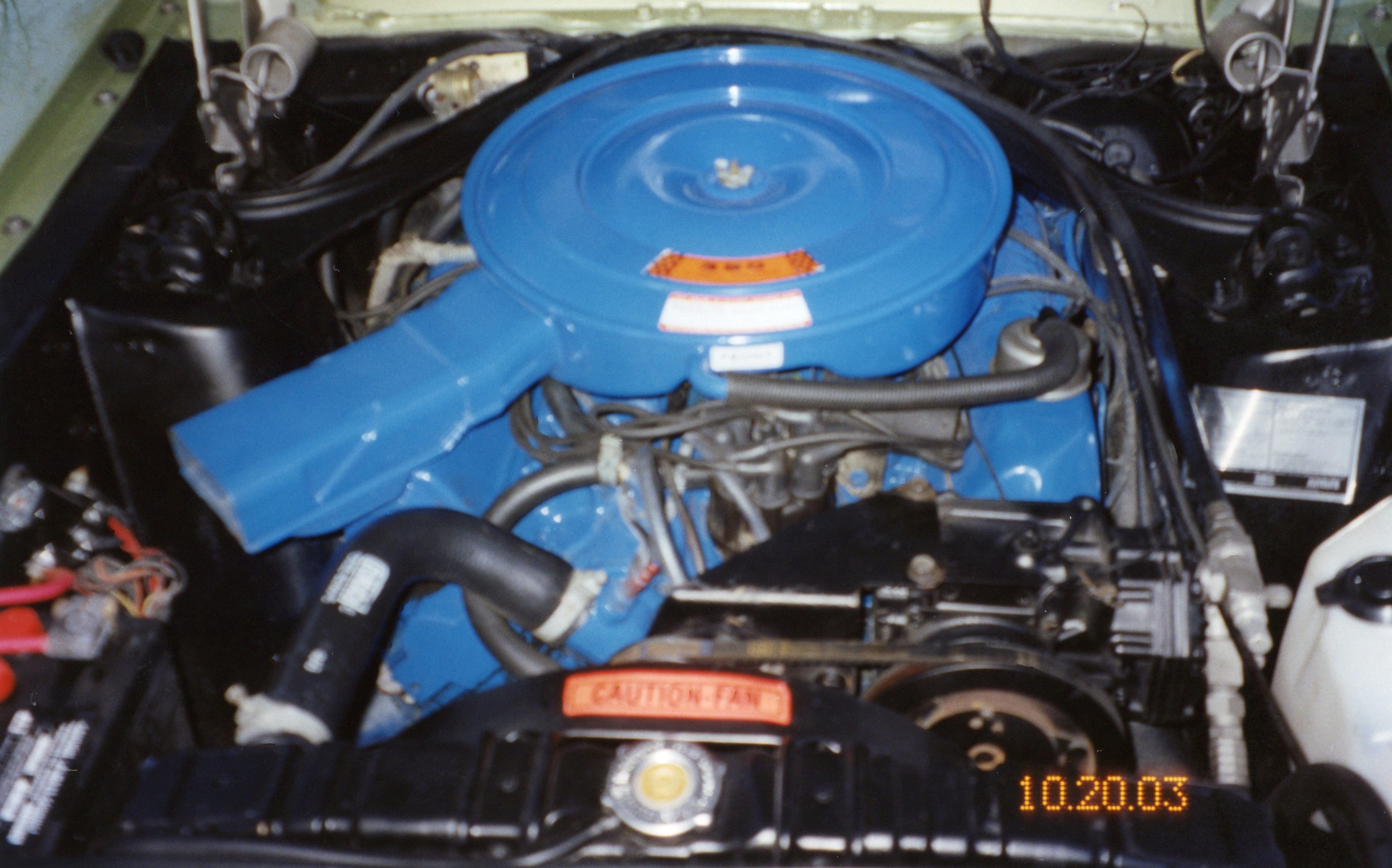
The “X code” 390 2-barrel FE-block was so rare that most Mustang suppliers did not carry parts for it. (Some catalogs, and some otherwise-well-written tomes on the Mustang did not even acknowledge that Ford used this engine in Mustangs!) Out of 317,000 1968 Mustangs, the X-code engine was put into 476 of them (2/10ths of 1%). Among California Specials, 75, or about 2%, used it. Either way, that makes for one rare engine.

The vast majority of its parts are shared with the S-code 390 “GT” 4-barrel engine. The differences are all on top: intake manifold, carb, air cleaner, emission controls, and various connecting parts. For my needs, I was stymied at obtaining vacuum hose connection parts, and a replacement for the missing air cleaner snorkel. (Much later, I found that the snorkel was not being reproduced, and was available used for about $900. I didn’t buy it.)

Early in 2004, the Mustang Club of America (MCA) announced that it would be hosting a 40th anniversary celebration for the Mustang in April, with the event to be held at Nashville Speedway in Tennessee. (The Ford Mustang debuted at the New York World’s Fair in April 1964.) Checking with the GSRMC, there seemed to be lukewarm interest in attending. However, the New England Mustang Club was organizing a caravan, stopping at various points to pick up participants, and they would be stopping at CJ Pony Parts in Harrisburg PA. My wife was willing, so we signed up.
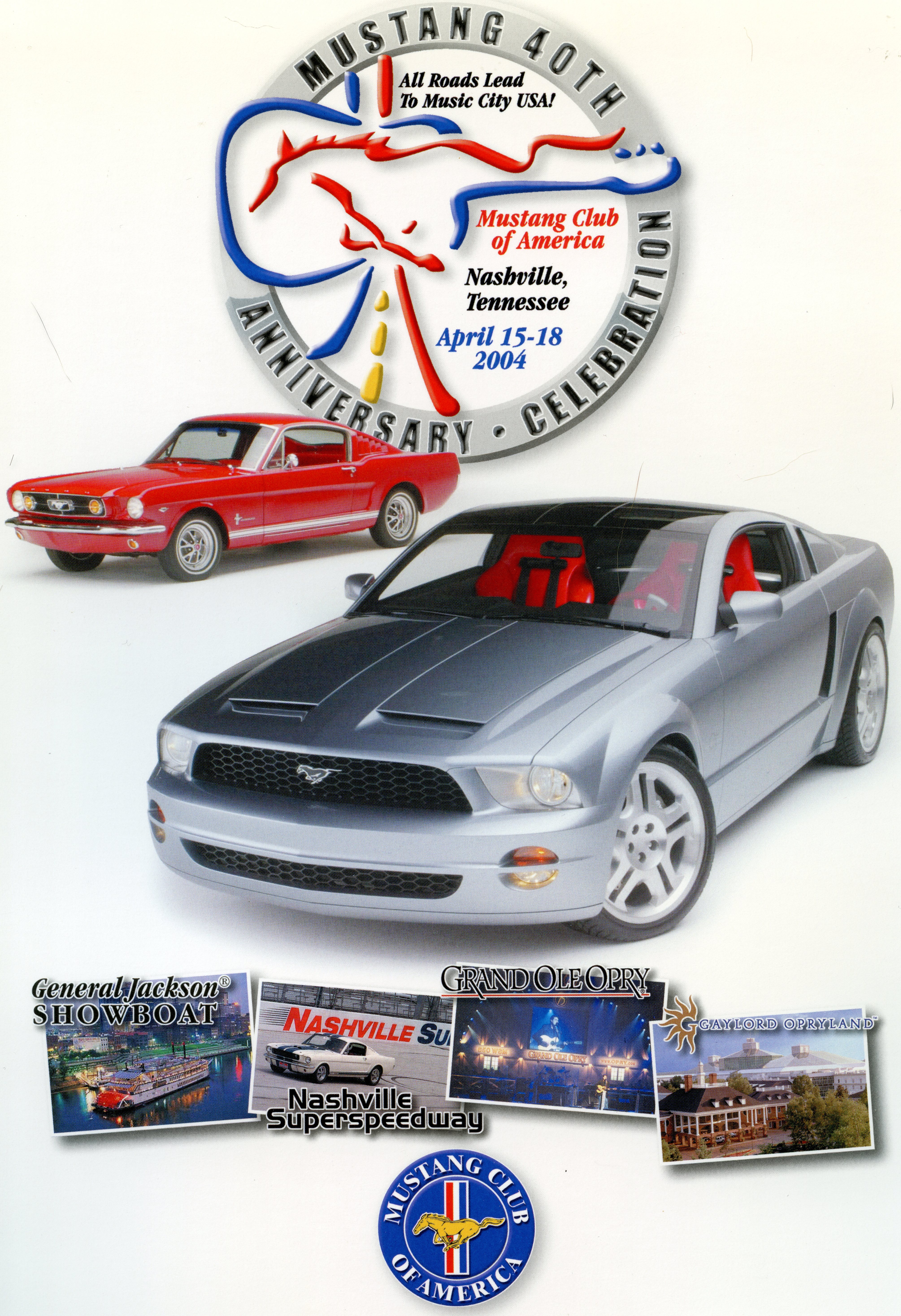
 

Portfolio cover for 40th anniversary show


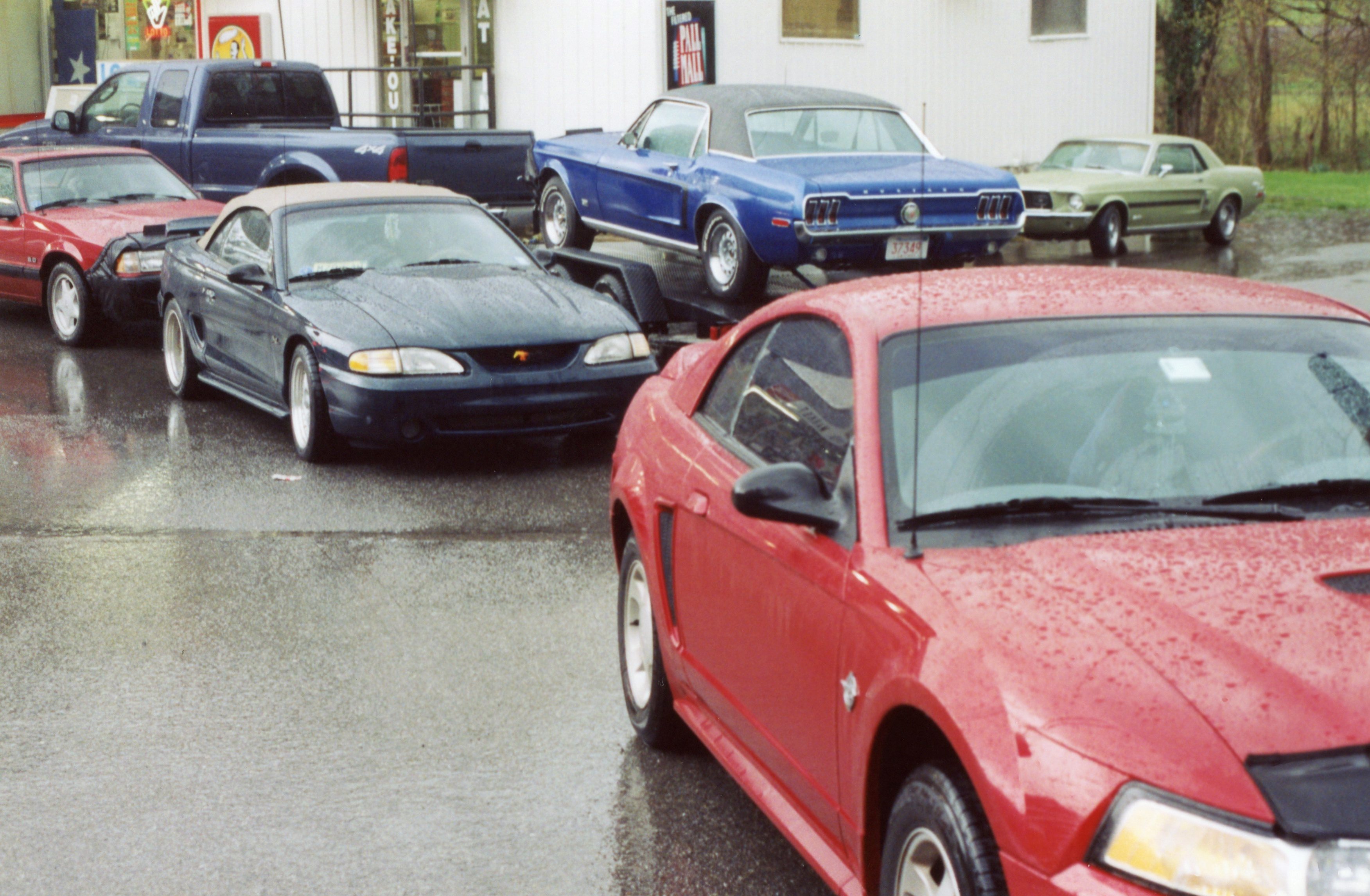
On a rainy April day, we headed out to Harrisburg. The group, at this point about a dozen strong, showed up a short time later. The New England crowd was friendly, and warmly welcomed us. (They promised a “wicked good” journey.) It was nice to have some company on the trip south. The Mustangs consisted primarily of first-generation cars and Fox bodies. Most were driven; several were trailered. As we traveled, other Mustangs joined, and soon there were close to 20 cars. The group was informed that our destination for the night was Harrisonburg VA, and that we would be in Nashville by the afternoon of the second day. The weather remained cool and damp, but we were comforted by fairly good heat output in our car.

That is, until my wife said something about green fluid leaking from the dash near her feet.

We pulled over, and several other drivers also stopped in solidarity. Fortunately, the coolant loss was small enough that the temp gauge stayed in the Normal range. With assistance from several helping hands, we routed the heater hoses in a “U”, bypassing the core. The leak stopped, but we had no heat. Within a few hours, grey skies gave way to sunshine, and a significant jump in the thermometer. By the time we reached Nashville, temps were in the 80s.
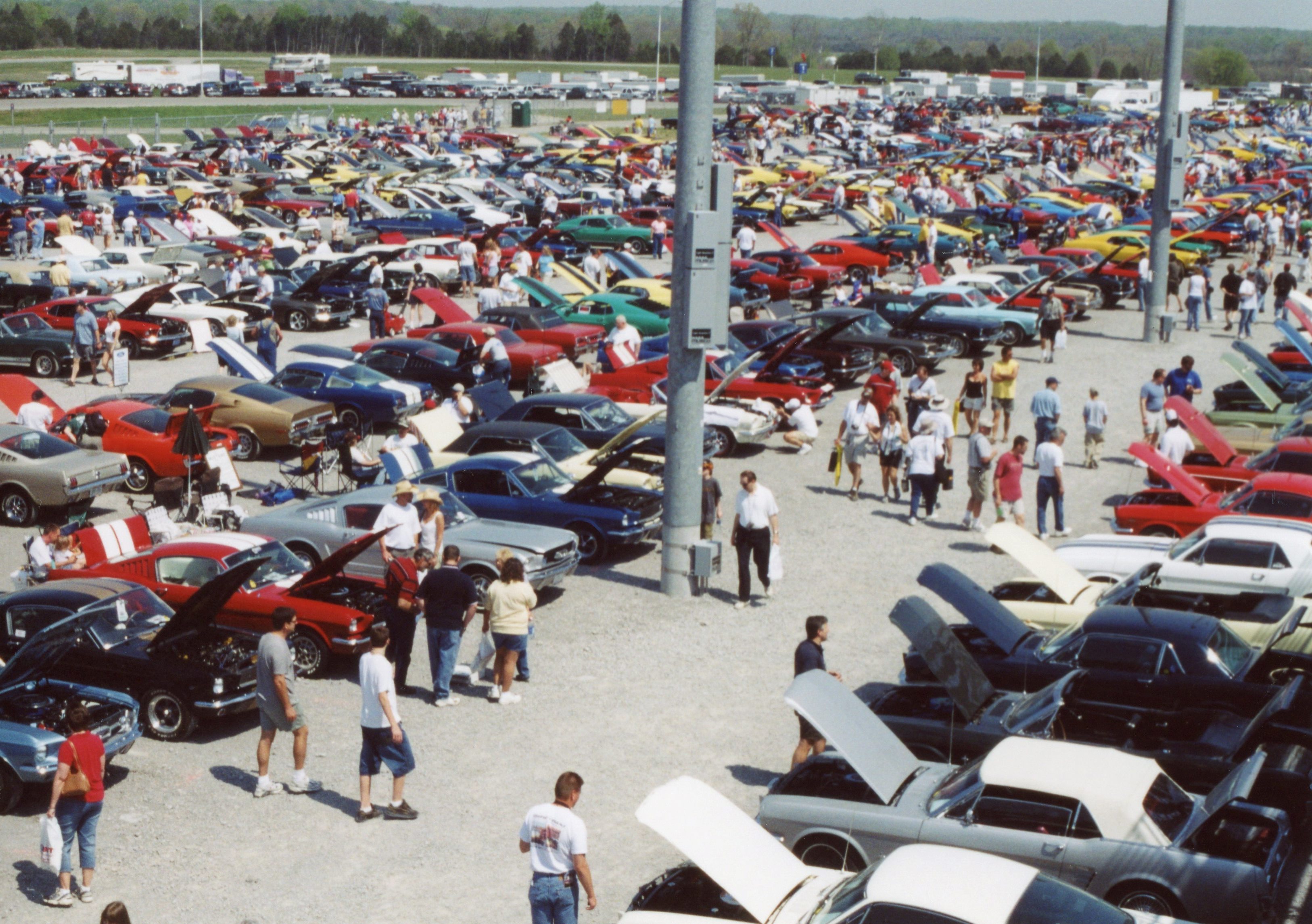
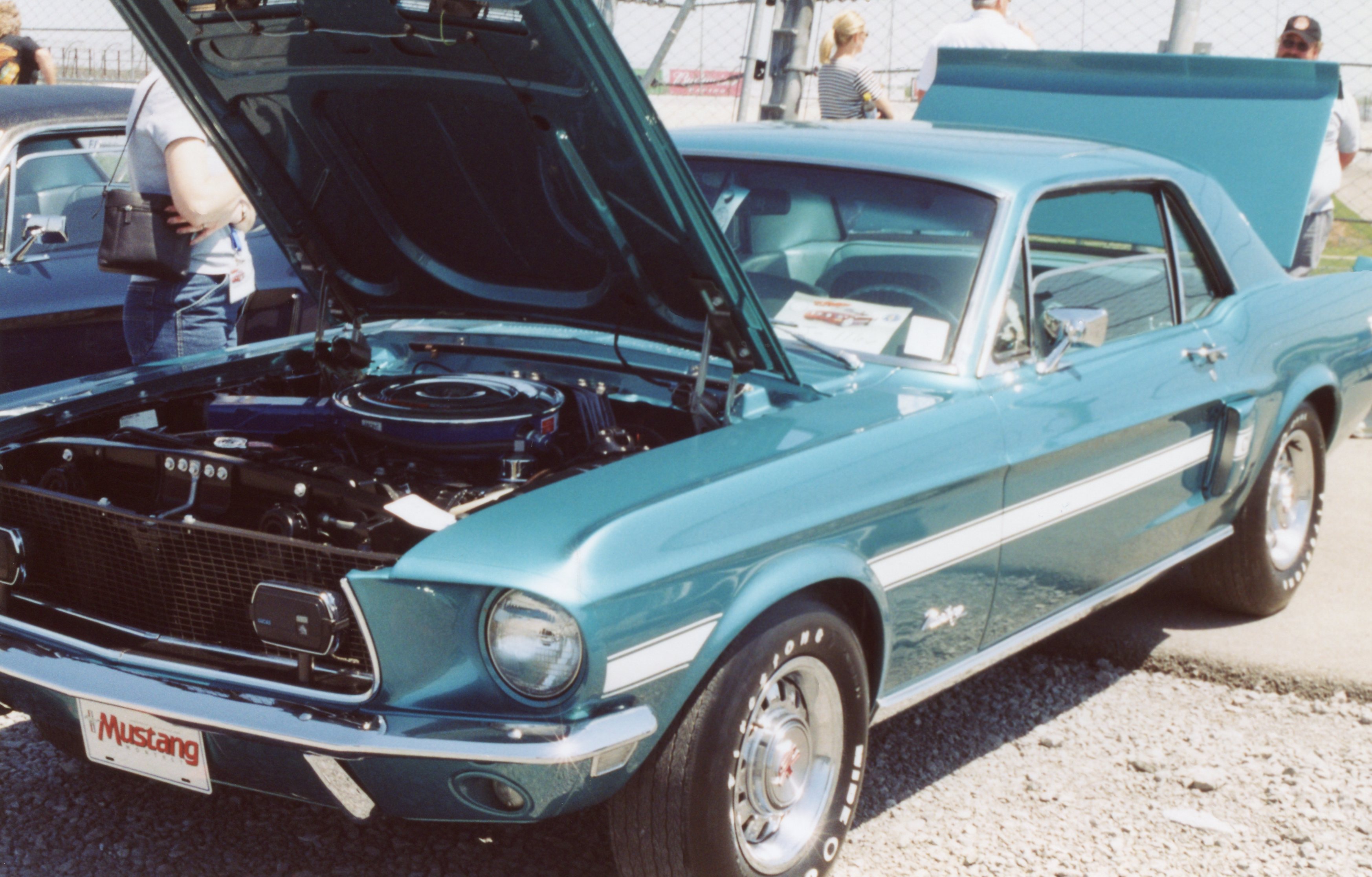
MCA 40th anniversary show field, Nashville TN


Show revelers happily tailgate on the gravel


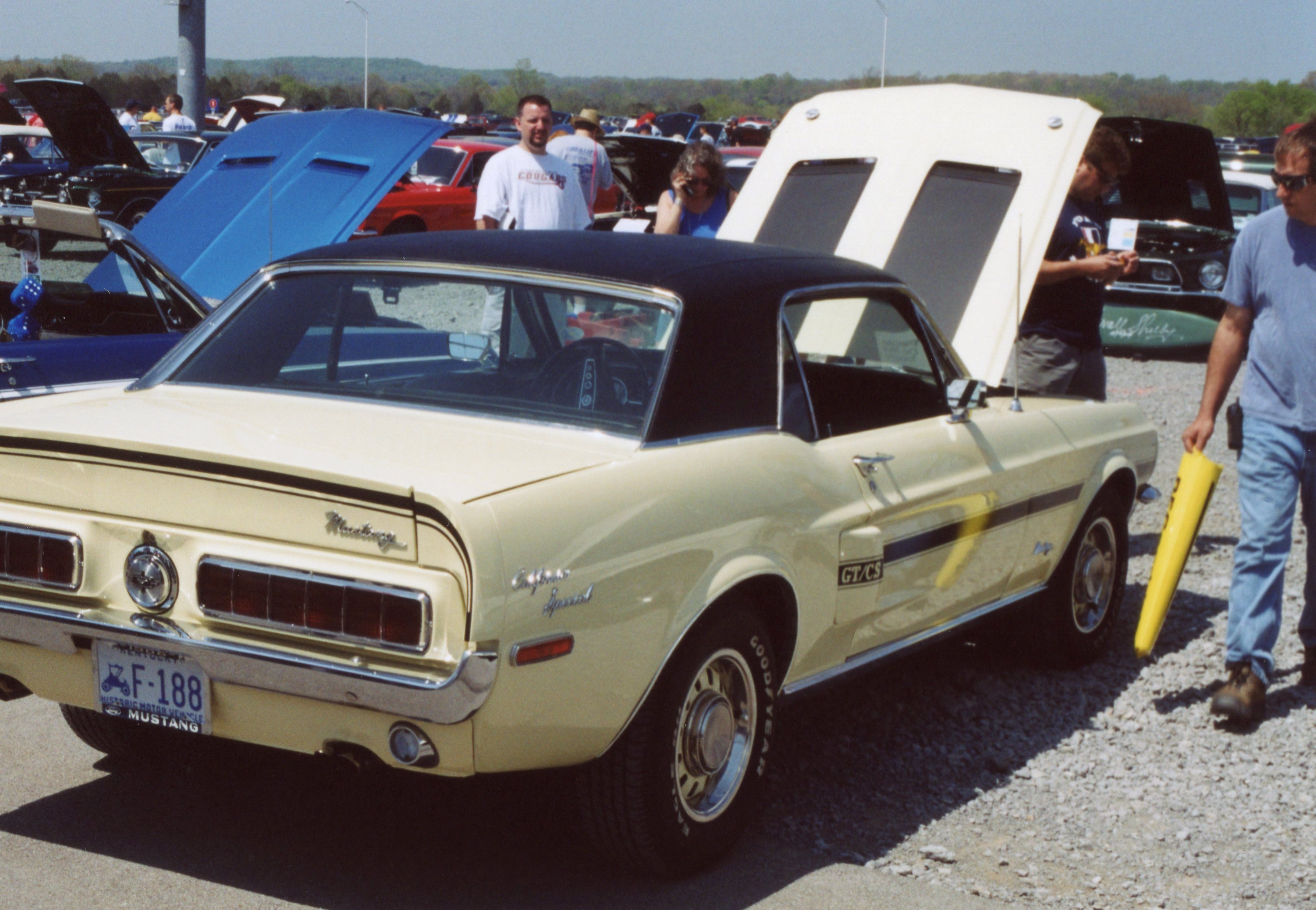
My GT/CS on the showfield; Speedway grandstand in background
My GT/CS on the show field; Speedway grandstand in background

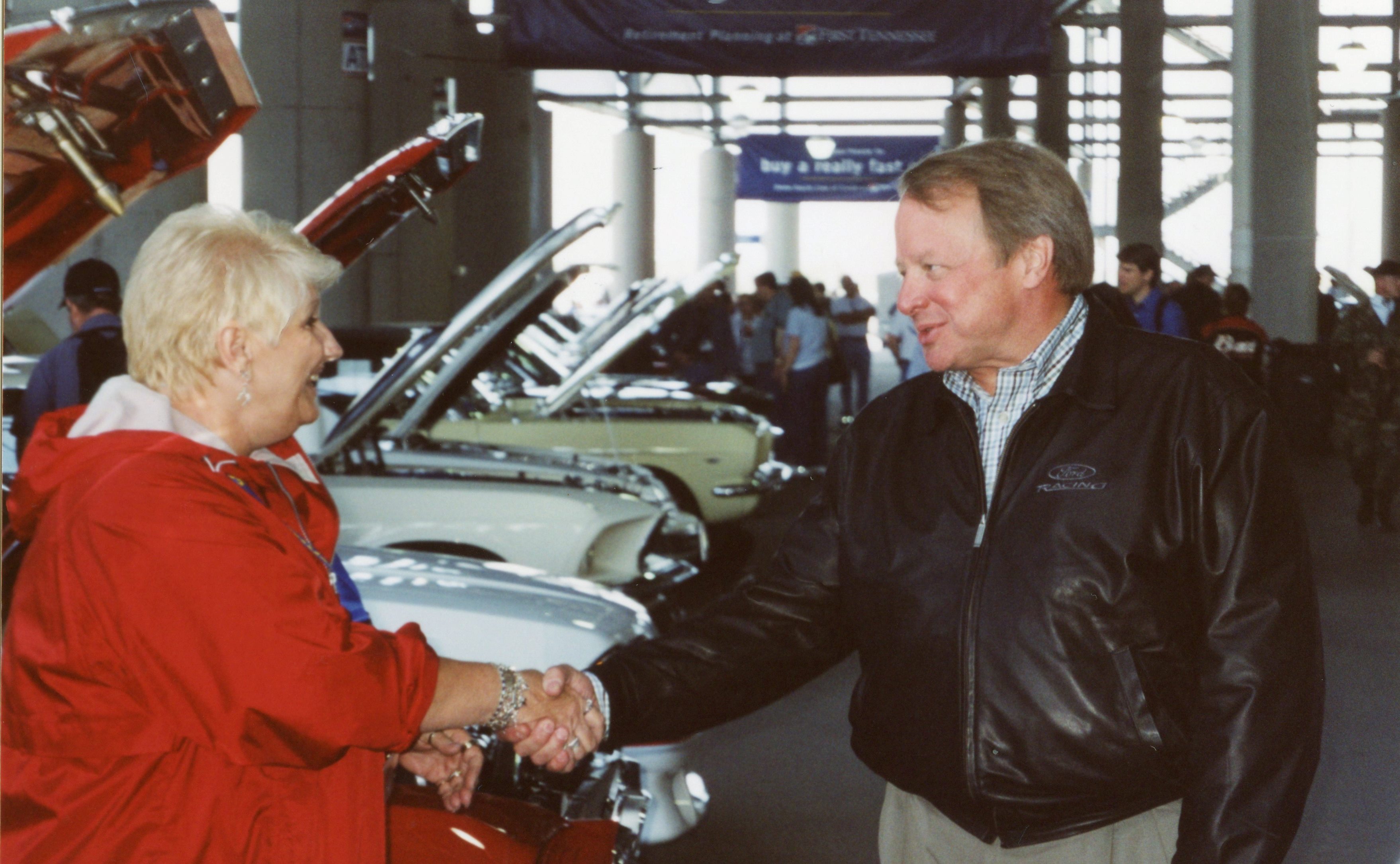
This was the first time I had attended a show of this magnitude. Memory tells me that there were about 3,000 Mustangs in attendance. Once we entered the parking lot, it was first-come first-served to find a spot; except for some pre-chosen cars parked under cover, there was no attempt to organize the field. We parked and walked around. The Ford Motor Company was an official sponsor, so it was a treat to see one of the first Ford GTs. Edsel Ford II (son of Henry Ford II) was in attendance, and had a friendly greeting for anyone who came by his way.

A proud pose into one of the first GTs shown to the public
A proud pose in front of one of the first Ford GTs shown to the public


Mr. Edsel Ford II, son of Henry Ford II, grandson of Henry Ford

This was a 3-day show, and Day 2 was not that different from Day 1. Temperatures stayed in the 80s, and cars were kicking up a lot of dust in the gravel parking lot. The heat and the dust did not make walking an enjoyable endeavor. I did spot a number of other GT/CS cars, and when possible, introduced myself to the owners.

A photo of someone taking a photo

One evening, there was a caravan into downtown Nashville, where we saw a show at the Grand Ole Opry, and enjoyed some local BBQ. By Day 3, we were ready to head home. We drove sans caravan, stopping at a B&B on the way, and taking in the scenic views of the Blue Ridge Parkway and Skyline Drive through Virginia.

The California Special poses outside of our B&B

We got home without further incident. The Mustang did 2,200 miles, flawless except for the leaky heater core (for which I should have known better). Now I knew what I’d be working on during the upcoming winter!

My wife takes in the beautiful Virginia scenery
My wife takes in the Virginia scenery, pleased that there is no more green fluid to deal with


All photographs copyright © 2017 Richard A. Reina. Photos may not be copied or reproduced without express written permission.


The Purchase of My 1968 Mustang California Special

After participating in the New England 1000 classic car rally for four years straight, I took a break. Admittedly, this “break” was dictated by circumstances; Steve had moved to California, and I had sold the MGB, so I was without a rally-eligible ride. It was fun to take the little BMW Isetta to car shows and cruise nights, but a 13 horsepower microcar was no long-distance rally contender.

Sure, you can buzz around the neighborhood, you aren't going to rally in that thing, are you?
Sure, you can buzz around the block, but you aren’t going to rally in that thing, are you?


By 2003, the itch to get a drivable classic car had returned full strength. And I knew what I wanted. Much of the spring and summer of that year was spent searching online for a Ford Mustang California Special.

Why this particular Mustang? The story really starts in the early 1990s, while attending a Carlisle (PA) antique car event. Rounding a corner in the flea market, I stopped dead in my tracks at the sight of a Mustang coupe, the likes of which I had never seen before. From some angles, especially the rear, it looked like a Shelby Mustang. But this car was a 2-door notchback, and all of Shelby’s cars were either fastbacks or convertibles. My next thought was that someone had created a one-off tribute car. Whatever it was, I needed to find out more.

After returning home and conducting some research, I was fascinated to find out, for the first time, about this very special Mustang model. Here is the capsule version of that story:


In mid-1968, the Ford Motor Company recognized that increased competition from GM (Camaro, Firebird), Chrysler (Barracuda), and AMC (Javelin) was hurting Mustang sales. Ford, encouraged by their strong Los Angeles dealer network, agreed to create a special model, to be sold only in the state of California. The California Special (also known as GT/CS) option was a $194 trim package, only for coupes, and available with any engine. Initially, the plan was to build 6,000 units. When sales results did not keep up with forecasts, dealers throughout the west were allowed to order and sell the GT/CS. No cars were ever sold east of the Mississippi. Final production total was 3,867 units out of 249,447 ’68 coupes, representing about 1.5% of total coupe production.


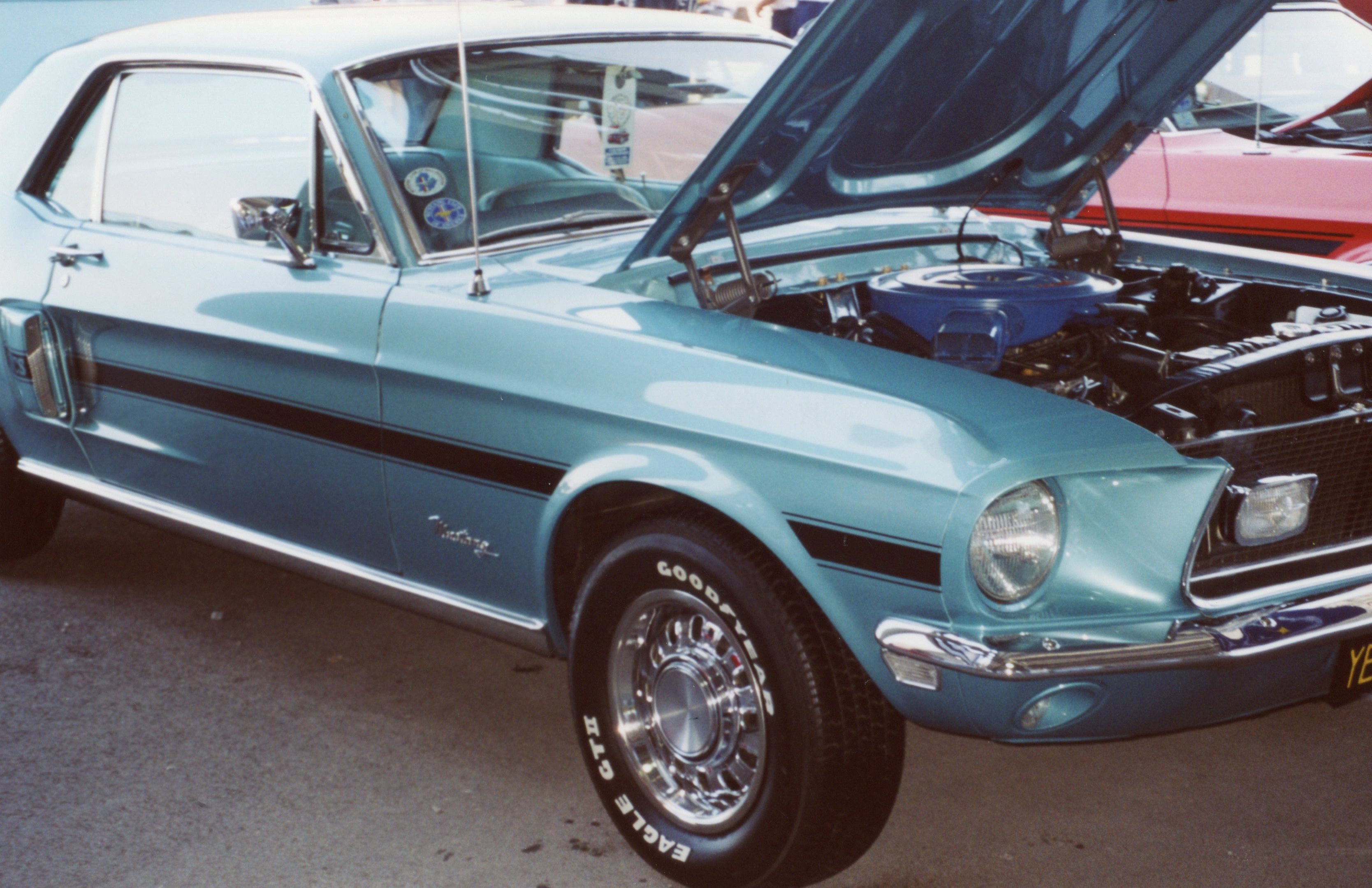
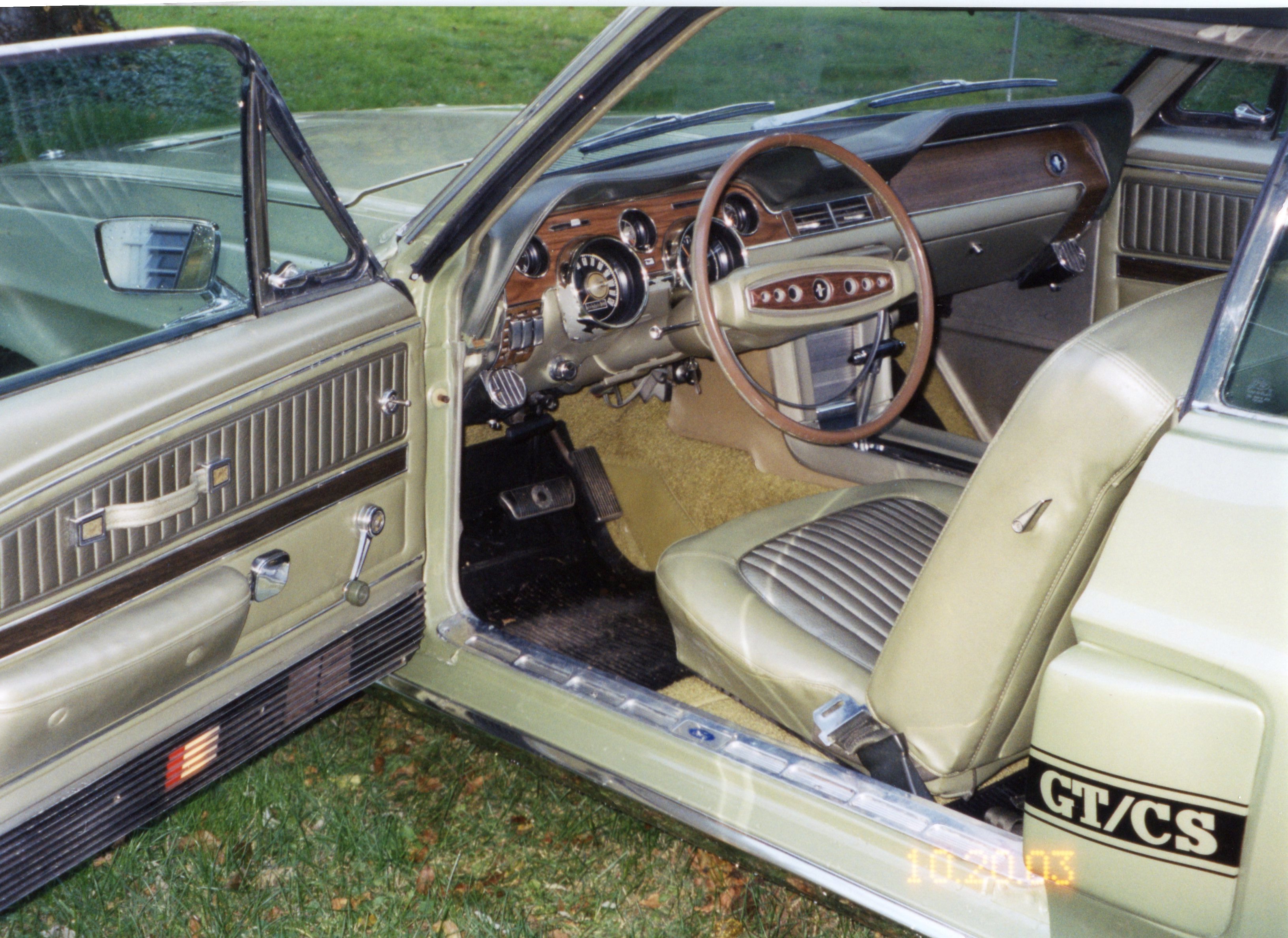
Steve owned a book dedicated to the GT/CS, which he generously loaned me. From this book I learned that all of its distinguishing features were external: blacked out grille, fog lamps, hood locks, side stripes and scoops, rear spoiler, pop-open gas cap, and Shelby taillamps. This was a “Shelby look” Mustang at a fraction of the price of a real Shelby.

My infatuation was growing, and was further fueled by discovery of the www.californiaspecial.com website. The search for a car began, complicated by (no surprise) seeing that most of these cars were 2,000-3,000 miles away from me! Not many California Specials wandered far from their birth place.

After about 6 months of constant searching, this ad popped up on the californiaspecial.com website:

Tony's ad from August of 2003
Tony’s ad from July of 2003


Several factors were immediately attractive: the car was Lime Gold, the same as my ’67 Mustang (even though the ad incorrectly described the paint as Ivy Gold, which was the interior color), and it was in Maryland. Less attractive was the 390 (this is the cue for big block fans to boo and hiss, but I preferred the Ford 289-302 small block, one of the world’s best V8s), and the price, which was about 25% higher than my target. Before proceeding any further, I bought a Marti Report for the car.

Kevin Marti runs a business whereby customers supply him with a VIN from a classic Ford product, and he supplies a report detailing the production details for that specific car. He started his company by purchasing these records directly from the Ford Motor Company. There were many warnings about GT/CS clones, and knowledgeable online forum participants stressed that a Marti Report (only $17) was one sure way to guarantee that the California Special under consideration was not a fake (or as those who practice such shenanigans would call it, “a tribute car”).


The Marti Report for my GT/CS, X154014


The Marti Report for the car in Maryland not only confirmed that it was a real California Special; it showed the car to be highly optioned from the factory, with air conditioning, power steering, power disc brakes, GT package, deluxe interior, and center console. One further revelation from the report: the car was sold new in Hawaii! I rang up Tony, and one Sunday in August of 2003, took a ride to Germantown MD.

On my arrival at his home, Tony had the car parked outside. I spent at least two hours going through it, flashlight and screwdriver in hand. It was solid and complete, and drove well. There were some minor faults in the paint, and underhood looked like it needed a weekend’s worth of detail work, but there was a lot to like. Knowing there was no rush, I pitched a low-ball offer to him, convinced he’d never take it, and concluded with “think about it, and we can talk during the week”. As I took out my keys and walked toward my car, Tony yelled out from 20 feet “I’ll take it!” Oops. My gambit worked.

We did the whole money and paperwork part of the deal from our respective residences, and about two weeks later, plates in hand, my step-son John and I headed down in my Volvo. He drove the Volvo home, following me in the ’68. The car drove absolutely fine the entire way, until I pulled into my driveway, at which point the mechanical fuel pump sprung a leak! My timing could not have been luckier. It also gave me my first taste of the difficulty of working on that massive engine, as the A/C compressor needed to be swung out of the way to reach the pump. But the car was on the road again in short order.

I had big plans for the Mustang for 2004, 2005, and beyond. This car was going to be driven and enjoyed.


All photographs copyright © 2017 Richard A. Reina. Photos may not be copied or reproduced without express written permission.

The 1972 MGB roadster

By the year 2001, my rally brother Steve and I had participated in three New England 1000 rally events: 1998, 1999, and 2000. We had every intention of making it “four in a row”, except, we had a small problem. After each running, we had excitedly exclaimed to our girlfriends how thrilling it had been to drive the bucolic highways and byways of New England in a classic convertible with like-minded enthusiasts. After all these years of listening to our exploits while they sat at home, they wanted in.

Okay.

For Steve, that meant gearing up the Tiger for yet another run, and given its exemplary performance so far, there seemed to be nothing that would prevent the Tiger from achieving a Grand Slam.

For me, that meant obtaining a rally-eligible car.

To car collectors, this is what is known as a “good problem to have”. Many a hobbyist will tell you that the thrill is in the hunt. While I generally agree, my hunt was complicated by the facts that a) I had just gotten engaged, and there was a wedding to plan; and b) we had just purchased a house, and were planning to move into it in March.

Okay.

What do we do when faced with such challenges? Of course: we confine our search for a rally car to the local area! So it was with a great amount of fortuitousness that I happened to see an online listing for a 1972 MGB roadster, in western Hunterdon County (only 30 minutes away) for sale for $5,000. I drove out to see the car; it had some issues; I conveniently ignored them. I offered the owner payment with a personal check; he accepted. I drove the B home. Things were looking up!

To prepare the car for the upcoming rally, I installed a set of Vredestein tires (I must like that brand, as the Alfa has Vredesteins on it), and while the tires were off, resprayed the painted wheels with wire-wheel paint from Moss Motors. An oil change, a quick tune-up, and we were rally-ready.

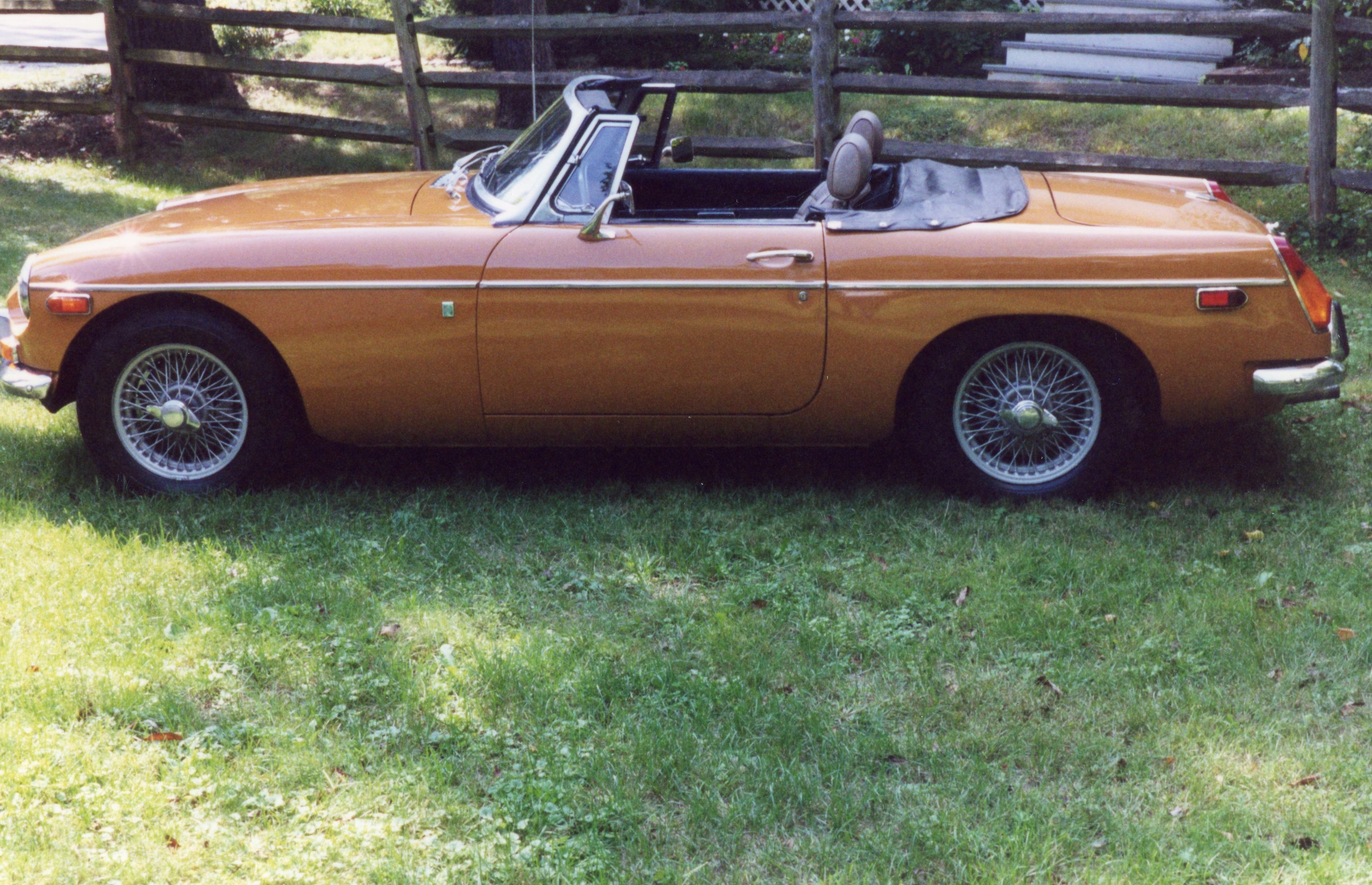
This MGB was my first British car. Like all Bs before and after, it had a 1.8L 4-cylinder engine, in my case, producing about 95 horsepower. Carburetion was via two SUs, complete with manual choke. Transmission was a 4-speed manual, without the desirable overdrive. The color was a true ‘70s pumpkin orange, complemented by a beige and black interior. (I was later informed that the seats were out of a later-model MGB.) Braking was discs in front, drums in rear, and steering was rack & pinion. As a 1972 model, its chrome bumpers were much better-looking than the big rubber bumpers soon to come. It was an easy car to drive, and a very easy car to work on.

The complete story of our participation in the 2001 New England 1000 rally will be covered in the next blog post. Suffice to say that after three years of joyously sharing seat time in that Sunbeam Tiger, this MG proved its mettle as a formidable (albeit slower) competitor.

Spring of 2001: the MGB on the front lawn of our new home
Spring of 2001: the MGB on the front lawn of our new home; note triple wipers


For such a compact car (153" long), interior was roomy
For such a compact car (153″ long), interior was roomy


Interior shot shows wheel, seats, and 3rd version of B dash


All photographs copyright © 2017 Richard A. Reina. Photos may not be copied or reproduced without express written permission.


Drop-top Mopar: the 1967 Dodge Dart GT Convertible

Sometime in the late 1980s, someone told me about Lime Rock, that is, Lime Rock Park, which isn’t really a park, but a race track, tucked into a valley in the rolling hills of north east Connecticut.

Automobile races are held there all season long, but racing holds little attraction for me. However, every Labor Day Weekend, Lime Rock Park hosts what they now call the “Historic Festival” and what used to be called the “Fall Vintage Festival”. The three-day weekend features historic race cars on the track (on Friday and Monday). Because racing is banned there on Sundays, they’ve taken advantage of that restriction by hosting a vintage car show on that day. I began attending the Fall Vintage Festival on an annual basis.

Visiting the track on Labor Day Weekend in 1991, I spied a car in the parking lot with a For Sale sign on it. Normally, I would not have found myself attracted to this type of automobile. It was the combination of asking price combined with some its technical features which drew me closer.

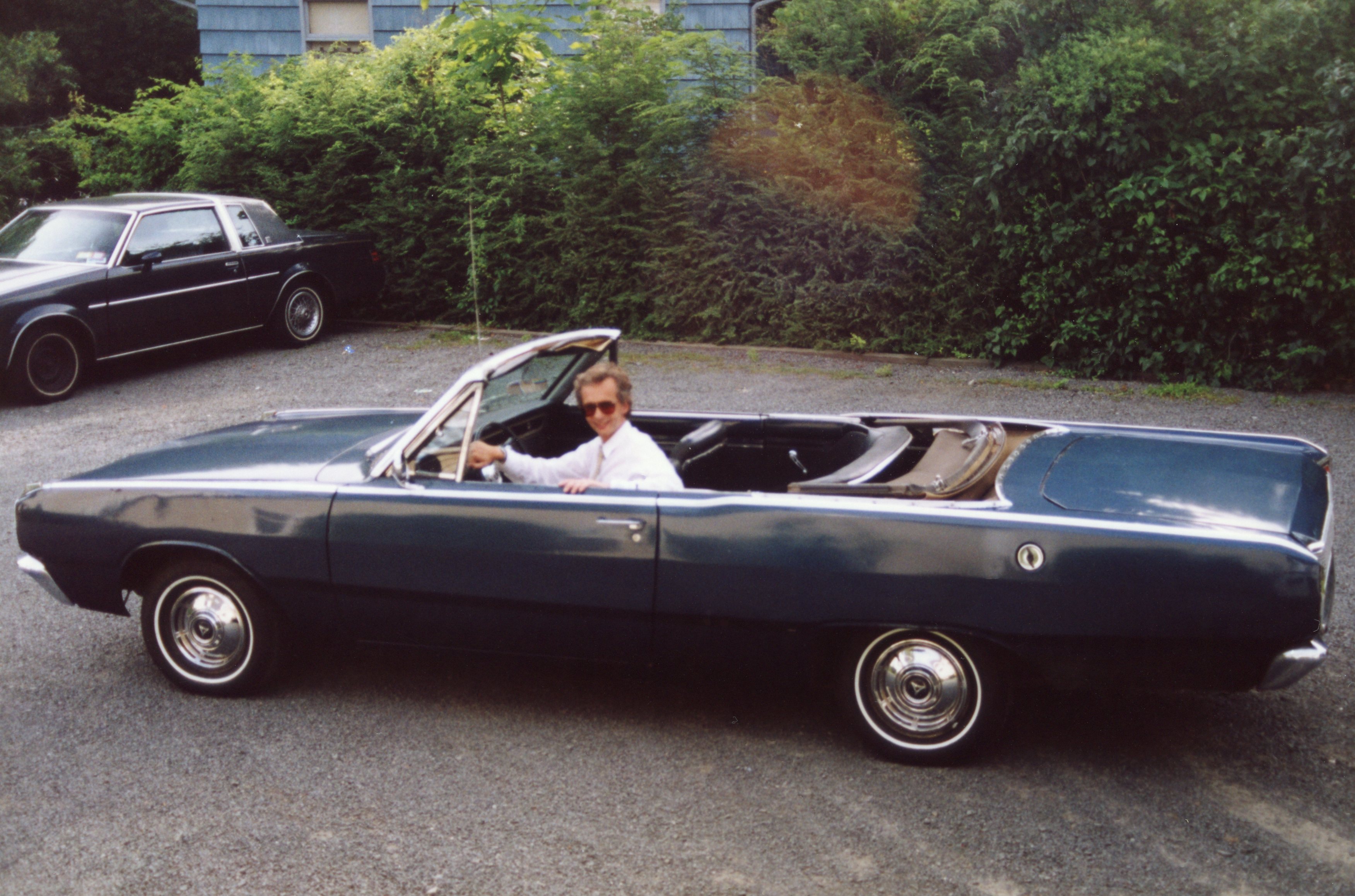
The car was a 1967 Dodge Dart GT convertible, dark blue with a blue interior, and an unattractive (not to mention worn and dirty) tan convertible top. Popping the hood, I saw that the Dart had a V8, not the slant six I was expecting. Inside were buckets, floor shifter, and center console, with the desired three-pedal setup. The asking price was $1,500, and the sign directed me to the guards’ booth for further information.

I tracked down the owner, a young man who indeed was working as a guard at the track. He told me he had owned the car for about a year and just didn’t want it anymore. We went for a test drive, and I was impressed by how well the car drove. Although I certainly hadn’t visited Lime Rock with the intention of bringing home a car, I quickly agreed to pay the ask (concerned that someone else might snap it up), gave him some sort of deposit, and headed home on the promise that I would be back the following weekend with the balance.

Next weekend, I made the 3-hour trip back, and we again met at the track. The payment and paperwork exchange went smoothly enough. But it was then that the young fellow told me “Uh, the car isn’t running so well right now. I don’t know what it is, maybe the carburetor”. (Note: anyone with car troubles who doesn’t know the diagnosis always blames the carburetor.) Sure enough, the engine had a miss, although it was there at all engine speeds, and I suspected ignition.

I now owned the car. Under the circumstances, I had little choice but to get in the car, point it south, and hope that I would make it home. With my heart in my stomach for the entire ride, I did make it, and was so relieved that I put the car in the garage, deciding to deal with the problem sometime later.


Home (thankfully) after drive from CT
Still time to take a drive in the autumn of ’91


The following weekend, I popped the hood and began to go through the basics: plugs, wires, points, condenser, cap and rotor…. As soon as the distributor cap came off, I saw the crack. This was an easy fix, and given that none of the aforementioned parts looked like they had been replaced in a while, I gave the car a full tune up. It ran spectacularly after that.


Ratty but serviceable. Funny, I don't recall the manual brakes.
Ratty but serviceable. Funny that I don’t recall the manual brakes.


There was one administrative issue that needed attention: insurance. At the time I bought the Dart, my daily driver was a company lease car. The lease generously included insurance. As I owned no other automobiles, I didn’t even have an automobile insurance policy in my name. This was when I discovered collector car insurance. The Condon & Skelly Insurance Company wrote me a policy, and as a side note, I’ve had collector car insurance with them ever since.

I enjoyed top-down motoring for the little time I had left in the autumn of ’91, then tucked the car away for the winter.

When spring of ’92 broke, the Dart came out of hibernation. Truthfully, the car needed a complete restoration to be any kind of show car, but that’s not why I bought it. It was nothing more than a toy to cruise in during nice weather.

Removing the front tires to perform a routine brake check, I was aghast at what I found: both front brake hoses had been wrapped with duct tape, then clamped with small hose clamps. The rubber hoses were cracked, and it is a miracle that I didn’t lose hydraulic pressure. The temptation to contact and berate the previous owner was overwhelming, but 1) I had no proof that he even knew about it, and 2) many months had passed since buying the car, so I decided to let it go. New brake hoses were purchased, and were easy enough to install. Whew! Glad I caught that when I did.

The next order of business was carpeting, as in, the car had none, and I wanted it to have some. Lack of carpet at time of purchase was an advantage, because that allowed me to see the condition of the floor. Someone had welded in a totally new floor before my purchase. Except for some surface corrosion, it was solid. Removing the seats, I gave the floor a coat of Bill Hirsch Miracle Paint (similar, but in my opinion better than, POR-15). With the floor so sealed, in went a new piece of carpet. The sound level reduction transformed the driving experience.


Seats about to be removed for carpet install.


Bill Hirsch Miracle Paint going down before carpeting.


The blackwall tires were serviceable but old, and I thought that narrow whitewalls would look sharp against the dark blue paint. I got the least-expensive tires I could at the local STS (Somerset Tire Service). Reinstalling the factory wheel covers also brightened the look. The car really needed a new top, but rather than spend the money, I hid it by driving with the top down.

I took the car to the office several times that summer, and let colleagues drive it. They agreed that it was a fun car to drive. The torque from the 273 c.i. V8 was impressive, as was the smoothness of the gearbox and clutch.

It was really fun to drive.
Summer of ’92, this was as good as the Dart looked under my ownership.


Working for the Swedish company Volvo, there were Swedes on location who would make comments about my “big American car”. “Big?” I’d reply. “The Dart was the compact car in a Dodge model lineup that included an intermediate-sized car and a full-size car!” It’s all relative. Yes, the Dart, with an overall length of 195”, was five inches longer than the contemporary Volvo 240 at 190”. Good thing I hadn’t bought a Coronet (203”) or Polara (220”)!


The final photo, taken just before selling it.


By 1993, I had a problem. Time spent with the Dart was taking time away from the restoration work on my BMW Isetta, which had been underway for three years. The decision was made to sell the Dodge. By late in the summer of ’93, it was gone.

All my friends in the hobby talk about the cars we’ve owned, and a frequently visited theme is “the ones that got away”. Of all the cars I’ve owned and sold, it’s this Dart that I wish I still had. It had good bones, was fun to drive, simple to wrench on, and had a drop top. Had I had a little more free time (and spare cash) it would have been a straight-forward restoration. But I was determined to finish the Isetta, and with the Dart out of the way, I did. THAT’S a story for another time.


THE 1967 DODGE FULL-LINE SALES BROCHURE

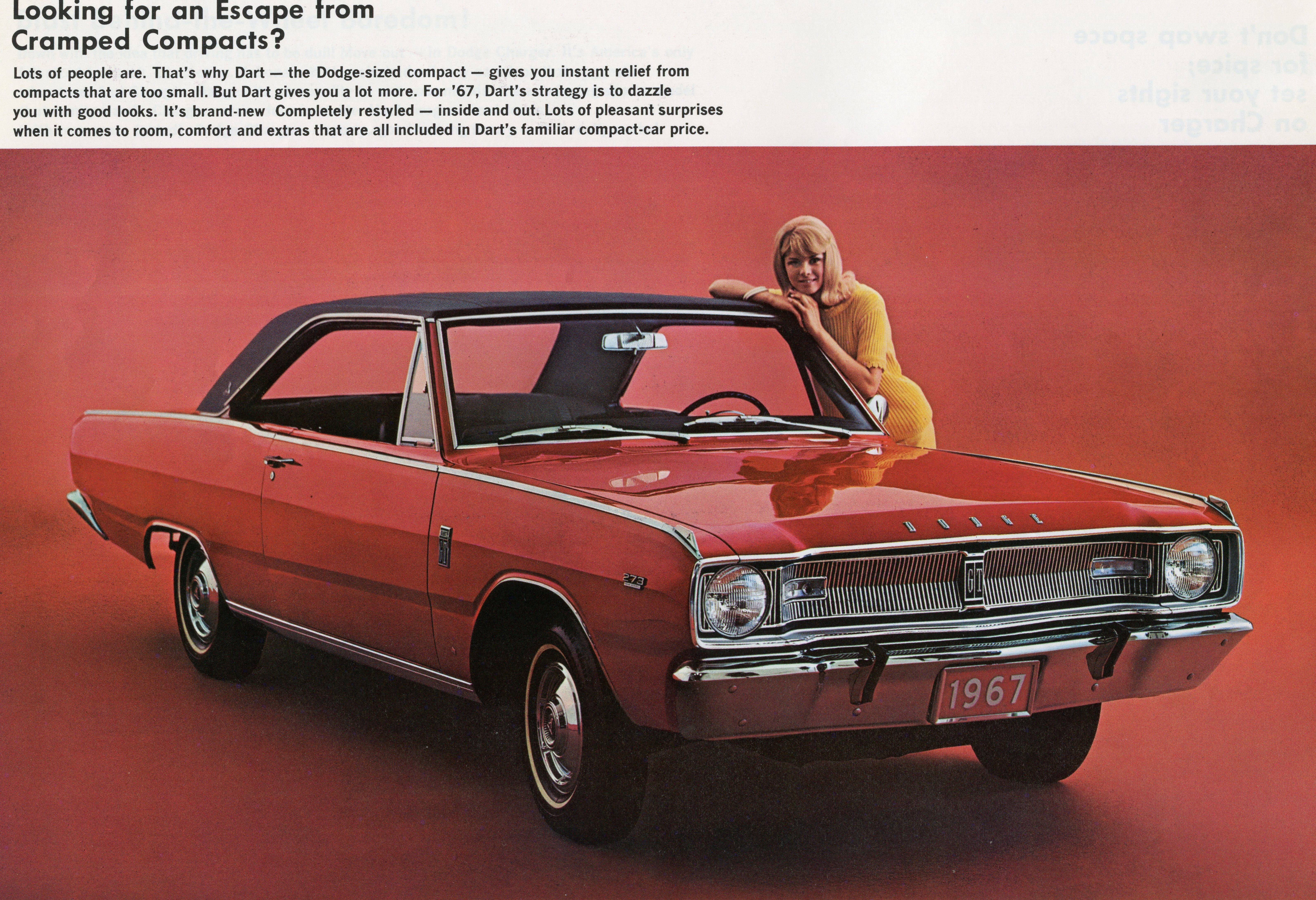
This brochure, from my collection, includes all of Dodge’s models from that year.


Brochure cover - polka dots and white boots were "it" in '67
Brochure cover – polka dots and white boots were “it” in ’67


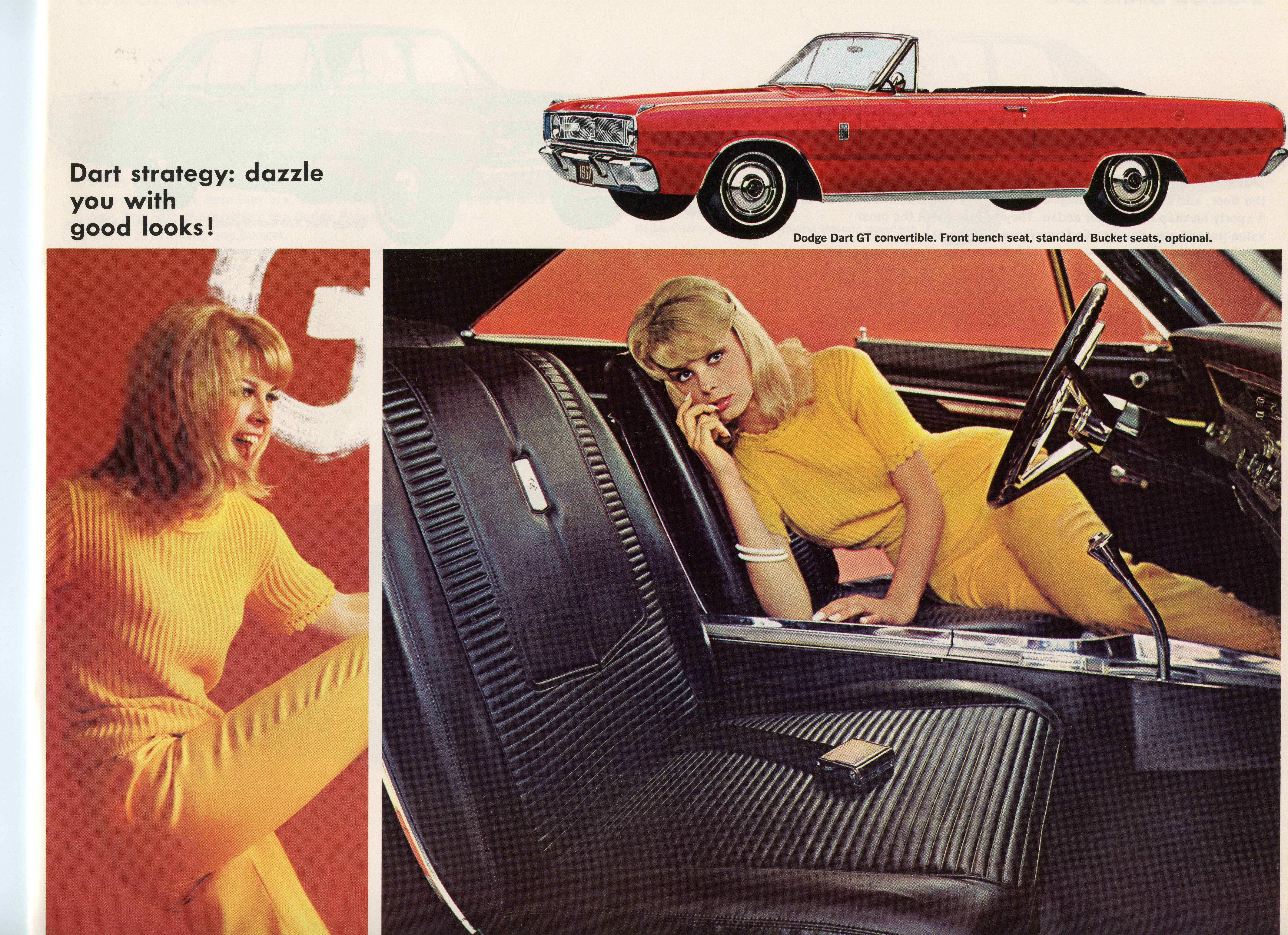
The Dart GT could be ordered with any engine, 6 or 8.
The Dart GT could be ordered with either 6 or 8 cylinder engine.


Note that convertible had bench seat standard, with buckets optional.


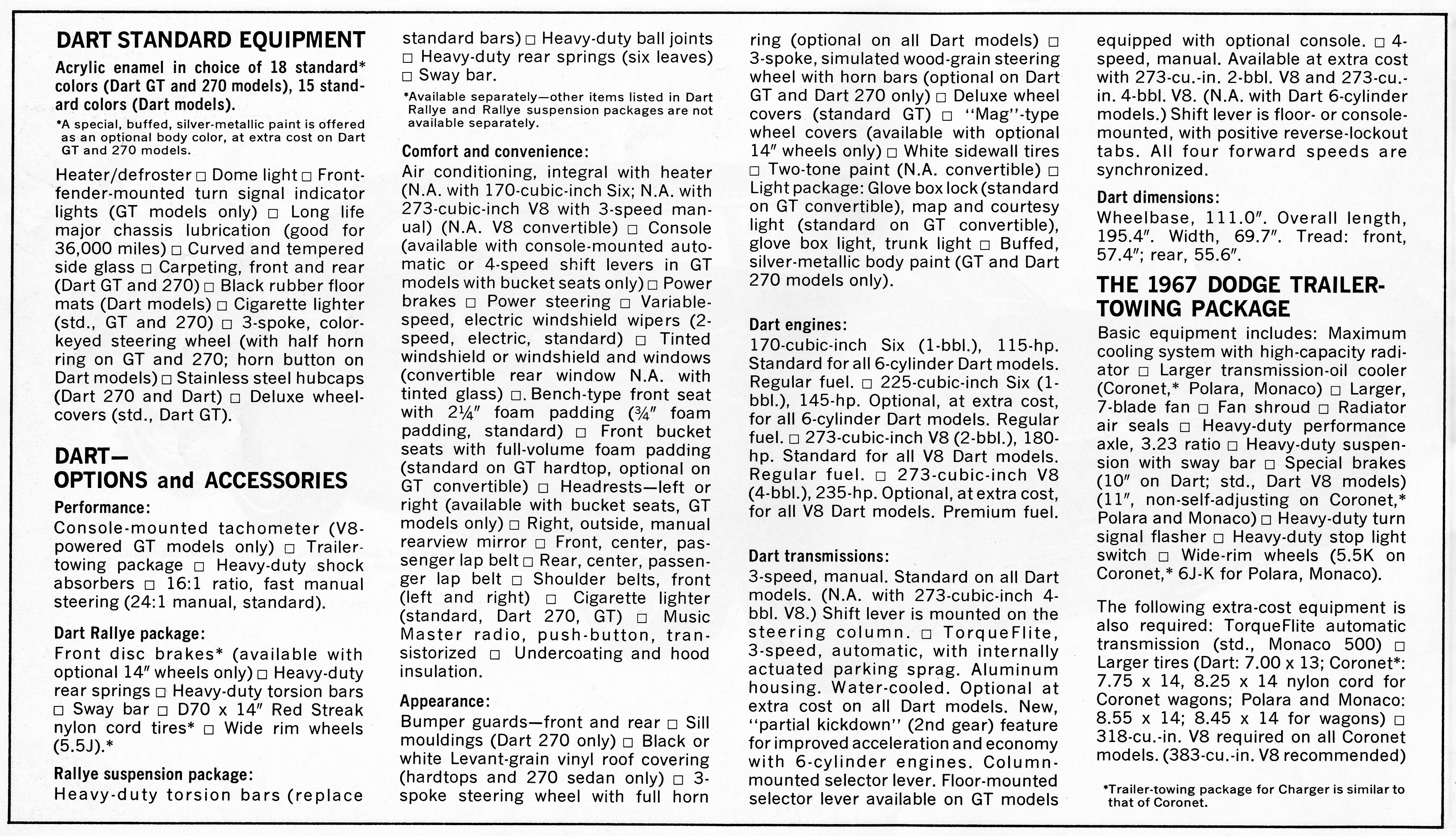
Dart specifications page


Back cover; note "safety equipment" and also note shorter warranty for Hemi engines!
Back cover; note “safety equipment” and also note shorter warranty for Hemi engines!


All photographs copyright © 2017 Richard A. Reina. Photos may not be copied or reproduced without express written permission.


Turning Japanese: The 1982 Plymouth Champ

After two years of nursing along a badly wounded Audi Fox wagon (the gory details can be found here), it was time to find something else to drive. The Fox was my third consecutive VW-based product (it was a rebadged VW Dasher), and I was ready to consider another marque.

At the start of the 1980s, Japanese nameplates were firmly ensconced in the American automotive landscape. A combination of excellent fuel economy and great reliability drew a growing stream of customers into showrooms. At the dealerships where I worked, one friend drove a Toyota Corolla SR-5, and another an AWD Subaru. A girlfriend bought a new Mazda GLC. I had ridden in or driven each of these cars. The owners had zero complaints about their cars; in fact, each of them praised the low maintenance and repair costs.

It was early 1986 when I narrowed my replacement search to a Mitsubishi product. The Chrysler Corporation had been selling their Dodge Colt since the early ‘70s. These Colts were all rebadged variants of various Mitsubishi Mirage/Galant models. (I don’t know who Chrysler thought they were fooling. It had always struck me as ironic how Lee Iacocca implored U.S. citizens to “buy American” with these Japanese-designed and –built vehicles in his showrooms.)

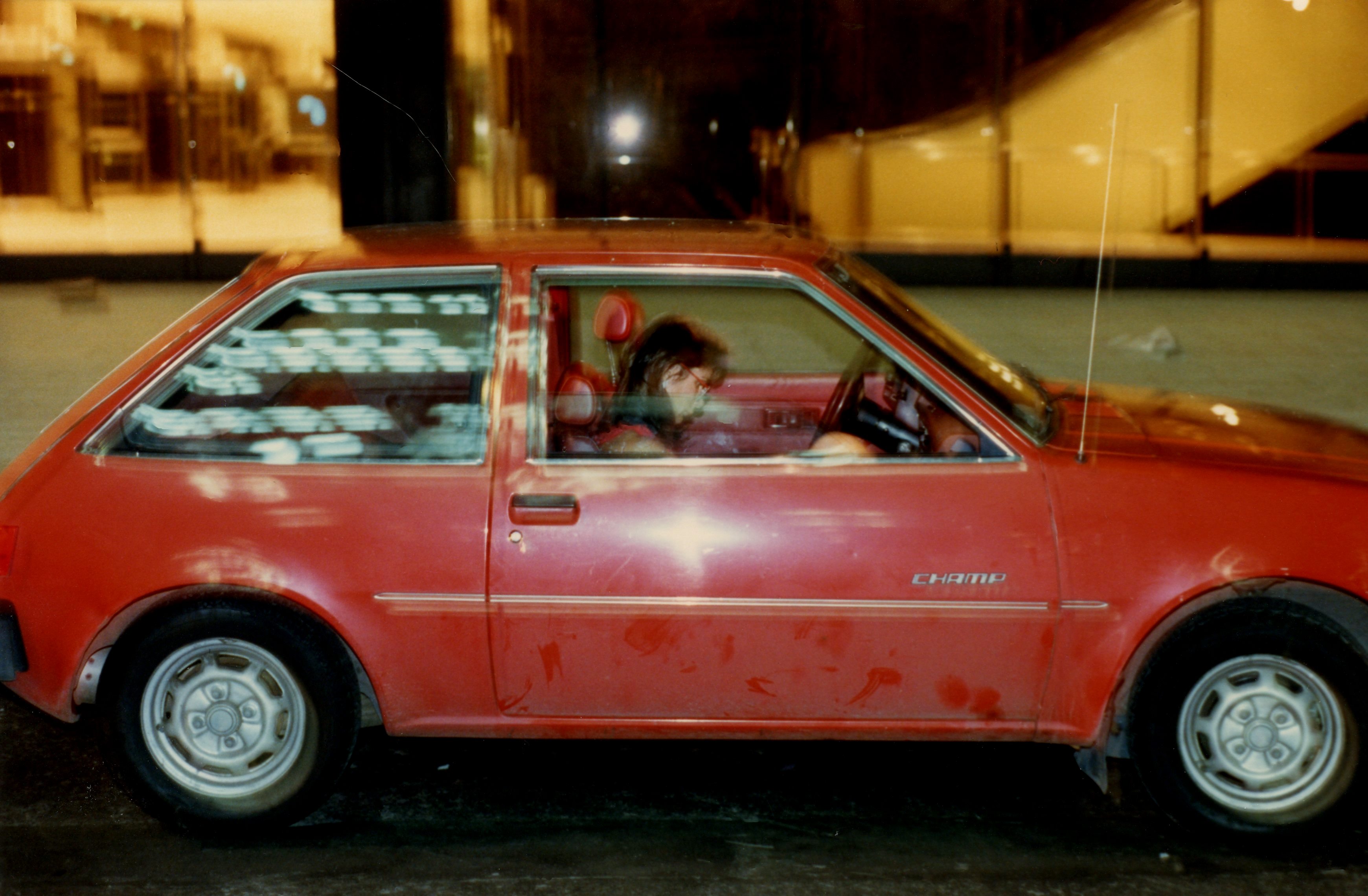
The generation of Colts introduced for the 1979 model year switched from a RWD to a FWD platform. The new body style, a practical 3-door hatchback, reminded me of a 7/8 scale VW Rabbit. Checking the Want-Ad Press, I found one locally, an ’82 with reasonable miles on it, stick shift of course. Memory says I paid $1,300 for it. Mine was badged “Plymouth Champ”, but was otherwise identical to its sister Colt.

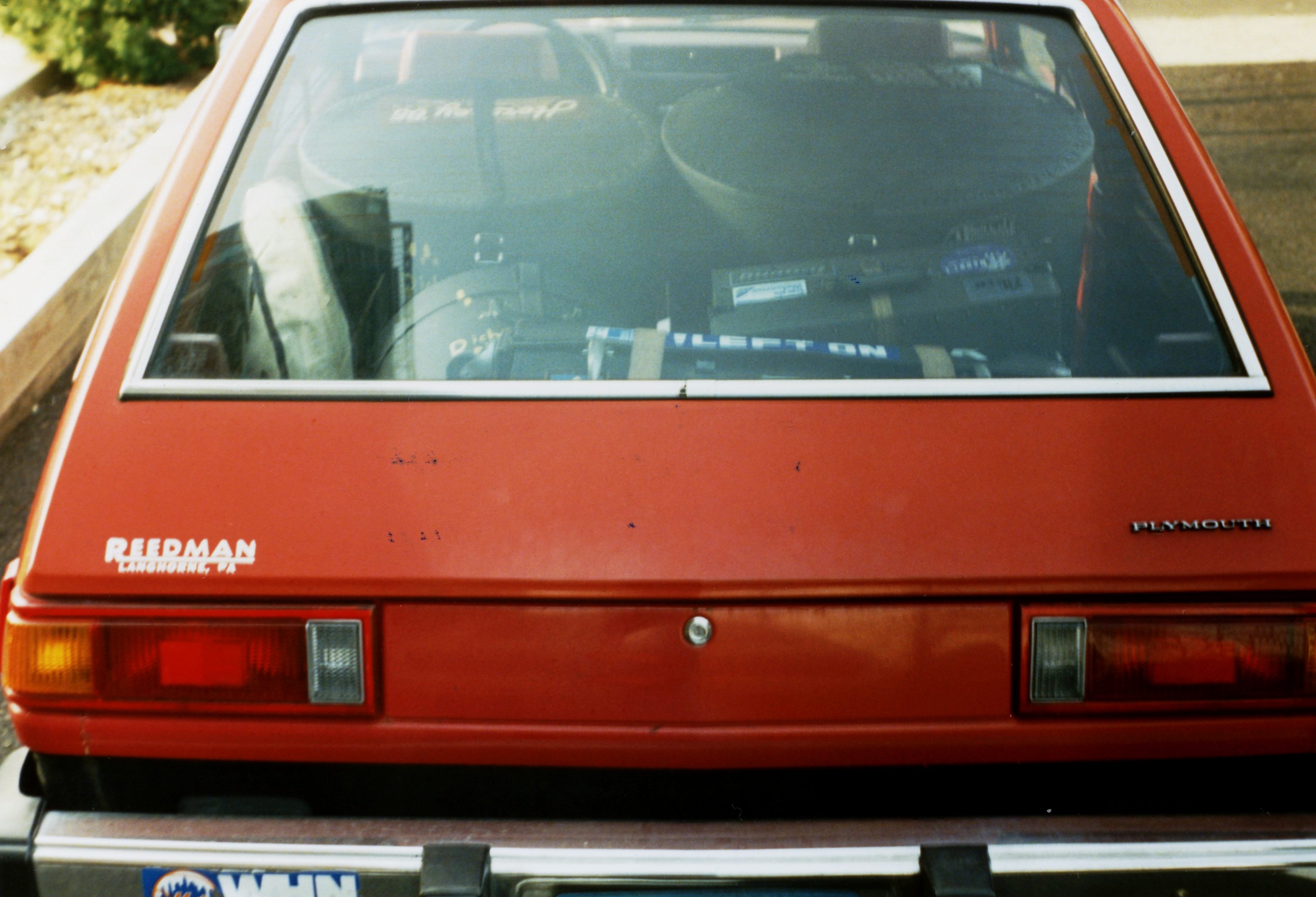
Simply put, the car was a blast to drive. And simple it was. No power anything, no A/C, a frugal 4-cylinder engine, and most fun of all, the “Twin Stick” transmission which provided EIGHT forward speeds (if I wanted to shift every 3 seconds). I replaced the tires with something decent, changed the oil, and did precious little else to it but add fuel every few weeks. It was a great city car: at 145 inches long, 10 inches shorter than my Rabbit, I could squeeze it into the tiniest of Manhattan parking spots. (And no worries about someone stealing it.) It even held my drumset, and so became my transportation to and from gigs.

With back seat folded, full 4-piece drum kit fits. Note Mets bumper sticker!

Thirty years’ hindsight reveals something else about my first Japanese car. I didn’t take it as seriously as anything in my possession before (or after) it. I have no envelope full of receipts from my time with it, as I have with almost every other car I’ve ever owned. It was a challenge to find any photos of it. It’s obvious to me now that I may have considered it to be disposable transportation, though to be fair to the car, that was based in part by how little nurturing it needed.

Among other things the car didn't get done to it was washing.
Among other things the car didn’t get done to it was washing.

Within a few months of buying it, I changed jobs and got my first dealer demo. I kept the Champ; it was useful backup transportation. Sometimes, I loaned it out to friends. By 1989, there were other, newer vehicles in the household. The Champ was not being driven. I sold it to a friend of a friend for a pittance; last I had heard about it, years later, he was still driving it. I was not surprised.


All photographs copyright © 2016 Richard A. Reina. Photos may not be copied or reproduced without express written permission.

German Once More: My 1977 Audi Fox Wagon

After buying new cars in 1977 and 1981, I decided to try to save a little money by returning to something used. Both of the new purchases had been Volkswagens, and my overall experience had been good. Although I was working for a Volvo dealer, the Swedish car maker’s then-current lineup of 240s, 260s, and 700s were too large and staid for a single dude like me. I liked the fuel economy, hatchback utility, and front wheel drive of these German subcompacts.

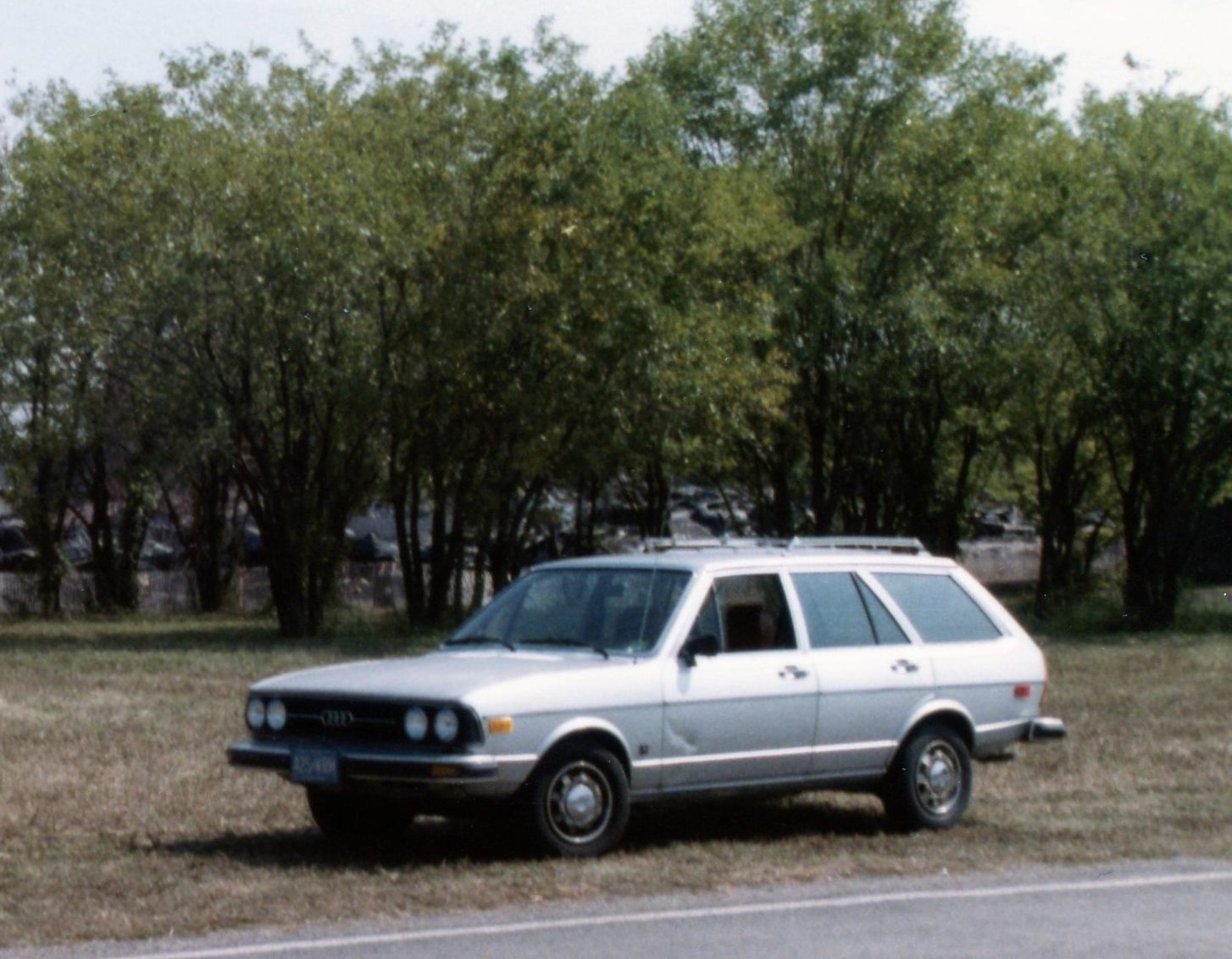
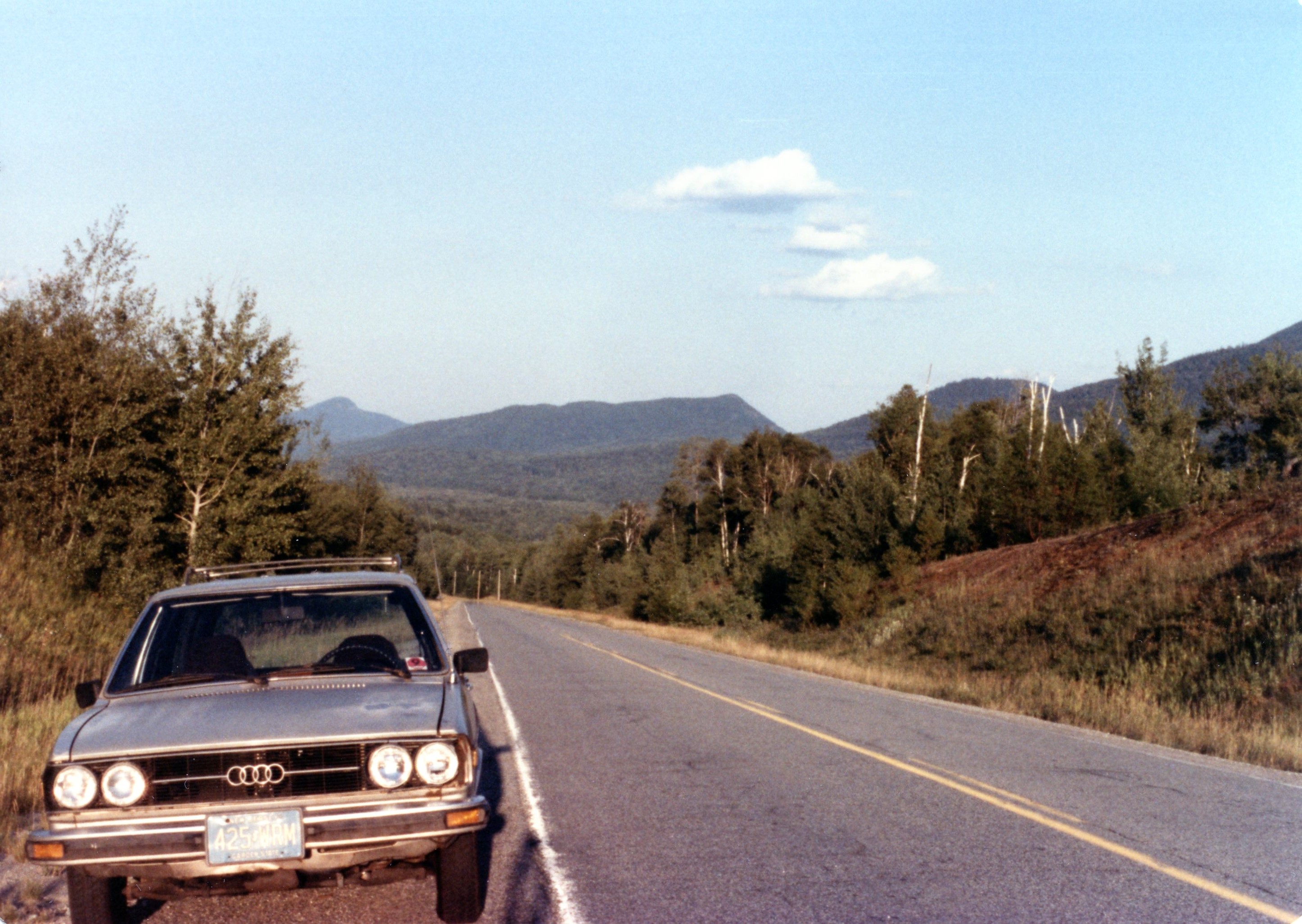
In the summer of 1984, the dealership where I was employed, Smythe Volvo, took in a 1977 Audi Fox station wagon on trade. The outside of the car looked scruffy, but the interior was OK, there was no significant rust, and the mileage of 79,500 was about what you’d expect on a 7-year-old car. Besides, it was a stick (an automatic would have been a deal-breaker). The car was what you might call a “beater”, and my rationale was that since I was mechanically inclined, a beater would give me a cheap entry price and allow me to perform my own maintenance and repairs as necessary.

The '77 Audi Fox, soon after purchase
The ’77 Audi Fox, soon after purchase

I spoke to Bill Smythe, one of the dealer principals, about buying the wagon. He seemed reluctant at first, but then relented, and sold me the car for $850 (plus tax & registration; they were kind enough to waive any doc fees).

The Bill of Sale
The Bill of Sale

The Audi Fox was the mechanical equivalent to the VW Dasher of the day (and not to be confused with the later VW Fox). As such, its engine sat longitudinally, not transversely like my two previous VWs. The Audi interior was likely a slight upgrade over its Dasher cousin. Other than that and an Audi grille, the Fox and Dasher were almost indistinguishable from each other.

The farther from the lens, the better it looked

The first issue I had with the car was oil consumption – by now, I knew the problem was valve stem seals, and I had one of the techs in our Service Department take care of it for me as a side job. I attended to the wipers/brakes/tires, to assure that they were good. The problem with the Fox, though, was typical of ‘beaters’ as they teeter toward the end of their useful lives: it was nickel-and-diming me to death.

Who decides on these poses anyway?

Once I got the oil consumption conquered, the exhaust system fell off. The car ate front brake pads every 7-8,000 miles, and I didn’t know why. The radiator sprung a leak and needed replacement. That’s when I saw that every coolant hose was dry rotted. I blew out an almost-new Michelin tire on a sewer grate (not the car’s fault, but still….).

"We" failed inspection- note the sticker. One friend gave car the nickname "Worm wagon" (see plate)
“We” failed inspection- note the sticker. One friend nicknamed it the “worm wagon” (see plate)

While each one of these repairs was simple enough, and none of them broke the bank, it became obvious that the previous owner had neglected the beast. Confidence that the car would get me to my destination and back began to slip away.

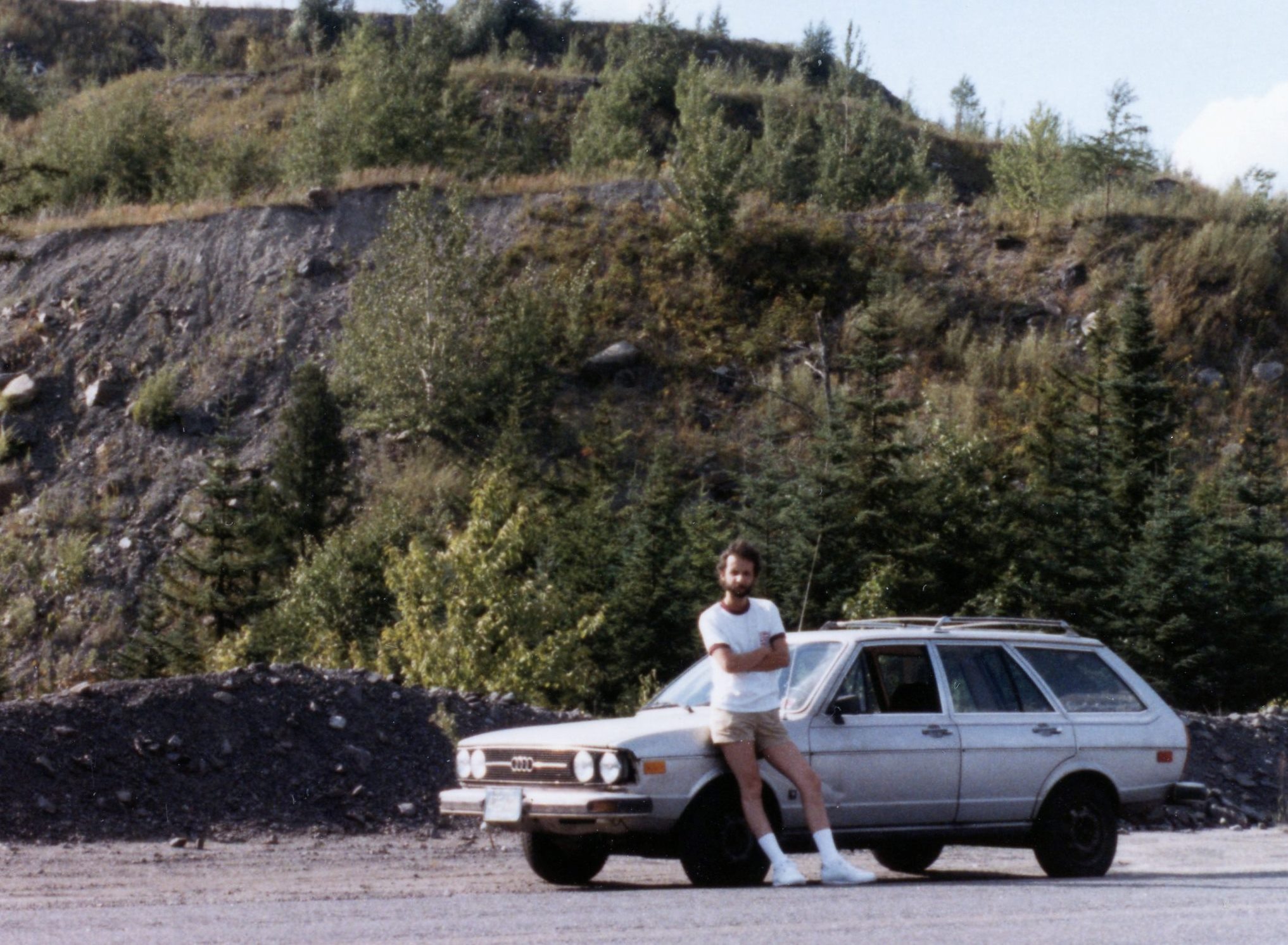
Looking good in Adirondack scenery
Looking good immersed in Adirondack scenery

One of the final indignities was the fuel pump failure, which happened at a buddy’s house in Brooklyn. I borrowed a car to drive home and get a replacement part, because I had the bright idea to replace the pump in his driveway (in November) in order to save a tow charge. Sure, I got it done, but adding up the time and effort, towing it may have been the better decision.

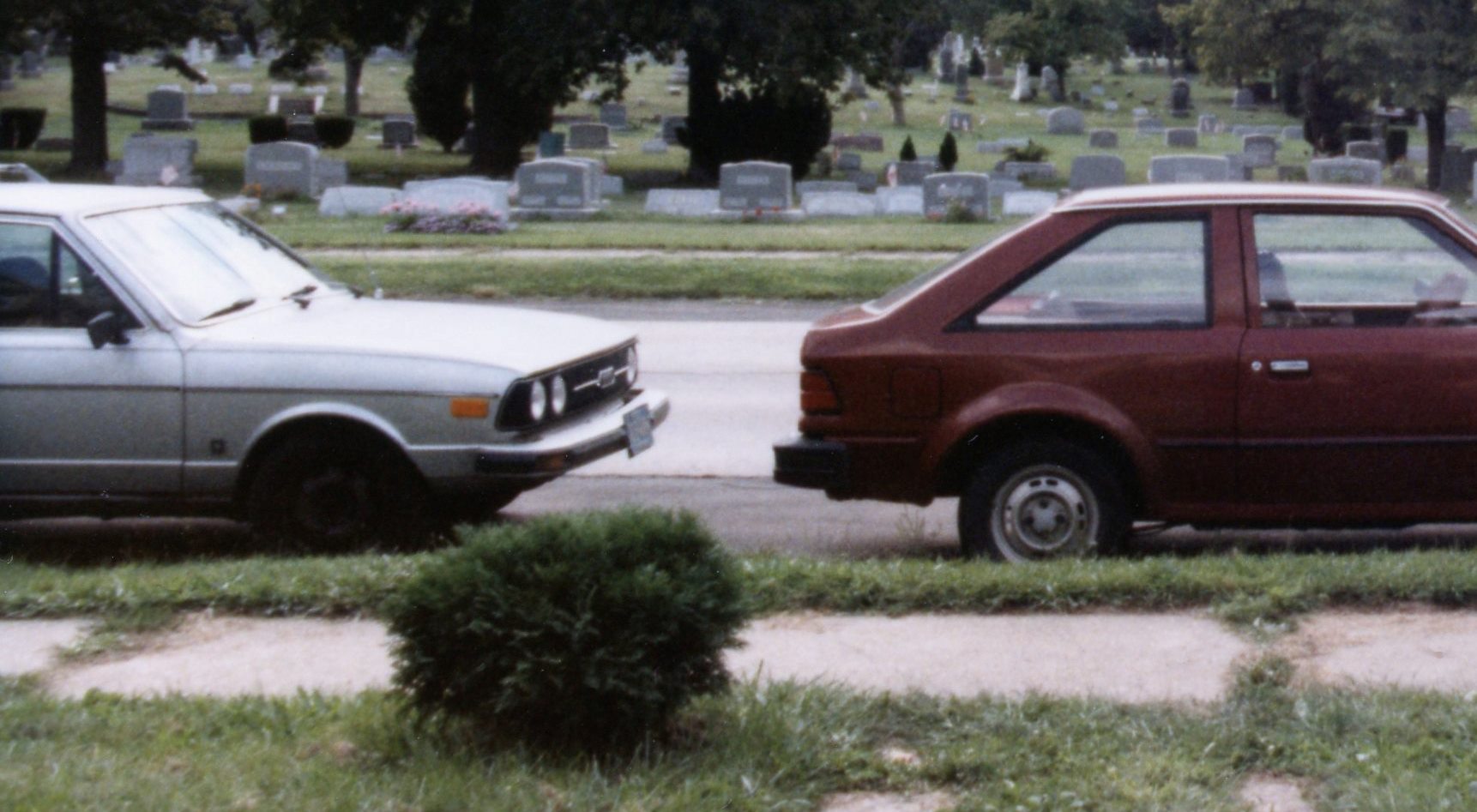
In front of my brother's house, behind his '81 Ford Escort
In front of my brother’s house, behind his ’81 Ford Escort

By early 1986, after two and a half years, it was time to quit. According to the log book I kept, I got rid of it at 110,000 miles, which looking back, surprises me. My memory is of a car which almost constantly needed attention, yet, it carried me over 30,000 miles. Nevertheless, it was time to switch brands. After three Volkswagen products in a row, for the next car, I would be turning Japanese for the first time.


All photographs copyright © 2016 Richard A. Reina. Photos may not be copied or reproduced without express written permission.


Bought new: The 1982 VW Scirocco

By late 1981, my 1977 VW Rabbit, which I had purchased new in September of 1977, had been driven well over 100,000 miles. Although the car still ran well, and had never let me down during four years of ownership, it was starting to show its age.

Most disconcerting were the rust bubbles forming at the base of the windshield pillars. The upholstery was starting to wear, and oil consumption was rising. It was around this time that I began to think about a replacement vehicle, and another new Volkswagen was at the top of the list. The Scirocco had always been appealing, but the 1st generation car was tight inside, especially in the all-important hatchback area. The ability to carry my drum set was a top priority. Sometime in 1981 I learned that the Scirocco would be restyled for the 1982 model year.

My attempt at an artsy Scirocco shot.

In December 1981 I visited Douglas VW in Summit NJ, which was about a mile from the Volvo dealer where I was employed. They had the new Scirocco on the showroom floor, and I was smitten. Admittedly, the exterior styling was a letdown compared to the previous version, but the interior more than compensated for this. The dash, sport seats, upholstery, and ample trunk space were all factors in its favor.

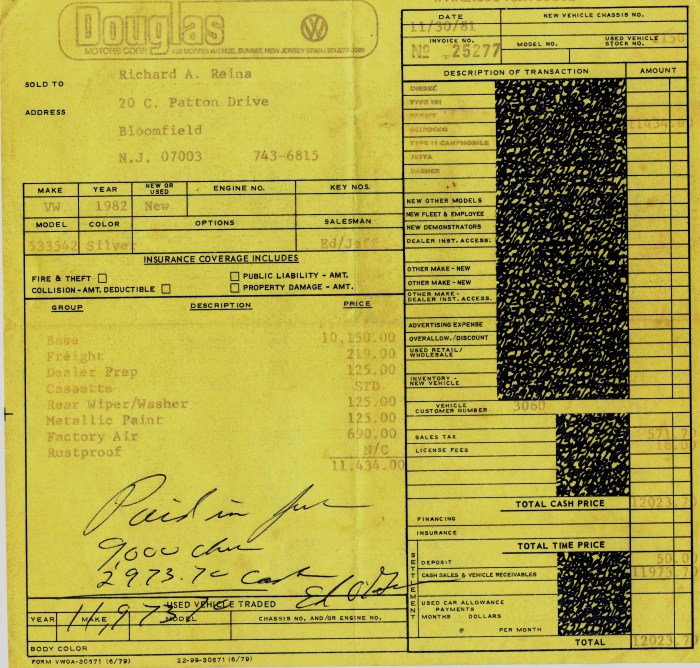
The all-important sales order; seems cheap now, but not in 1981.

Then I looked at the Monroney label. This new car stickered for over $10,000. It seemed like yesterday that I paid $3,599 for the Rabbit! The sticker shock was the result of rampant inflation, as well as a long list of standard and optional equipment which was not on the Rabbit: factory air, AM/FM/cassette radio, alloy wheels, rear wiper, and metallic paint. The Scirocco was a 5-speed, while the Rabbit made do with four, so I also expected fuel mileage to be a tick better.

After test driving the vehicle, I selected a car in stock with silver paint and a red plaid cloth interior. The Rabbit was sold for $1,000 to one of the techs at the Volvo dealership. My car insurance at the time was with Allstate, and they had sent me blurbs that they financed new car purchases, so I “conveniently” (and blindly) arranged a car loan with them.

It's not clean, but I was on a road trip.
It’s not clean, but I was on a road trip.

Shock #2: the interest on the loan was 18%! Yes, I was in the car business; no, I was not savvy in the ways of new car purchases. Nevertheless, I wanted this car badly, so I plowed ahead and made the monthly payments.

Compared to the Rabbit, there was much to like. As mentioned above, the interior was especially plush. The sport seats fit me wonderfully. This car, lower than the Rabbit, handled better. I had A/C for the first time since the 1966 Buick. However, several design features did not put VW in the best light, and it took driving in the elements to discover this.

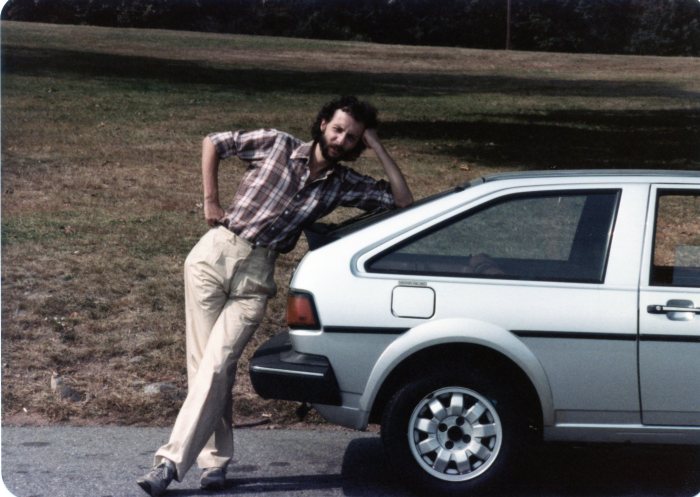
That's me on the left, visiting college roommate Eric, Summer '84.
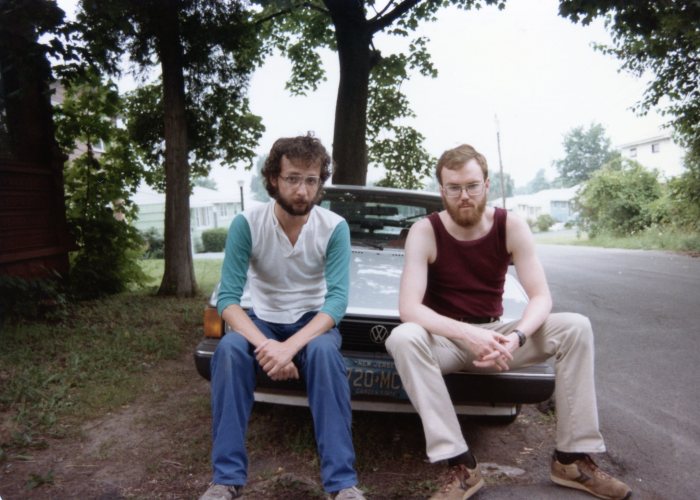
That’s me on the left, visiting college roommate Eric, summer ’84. Beards were in.

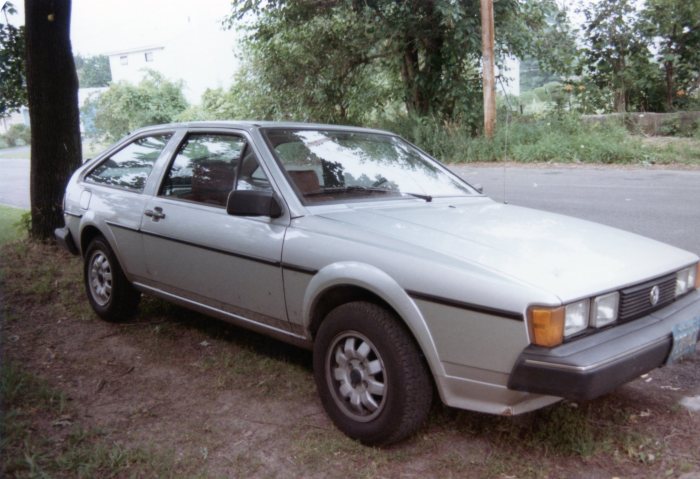
First, the front wiper. Yes, singular. The ’82 Scirocco had a single wiper, likely as a styling statement. It looked cool, but didn’t work well. As is the standard for left-hand-drive cars, the wiper parked on the passenger side, and wiped up and toward the left side of the car. The single blade’s tip would reach the middle of the left A-pillar, and would leave two large triangles unwiped in the driver’s line of sight. Several model years later, VW went back to two front wipers on the Scirocco. (Mercedes-Benz would solve this problem with an articulating wiper.)

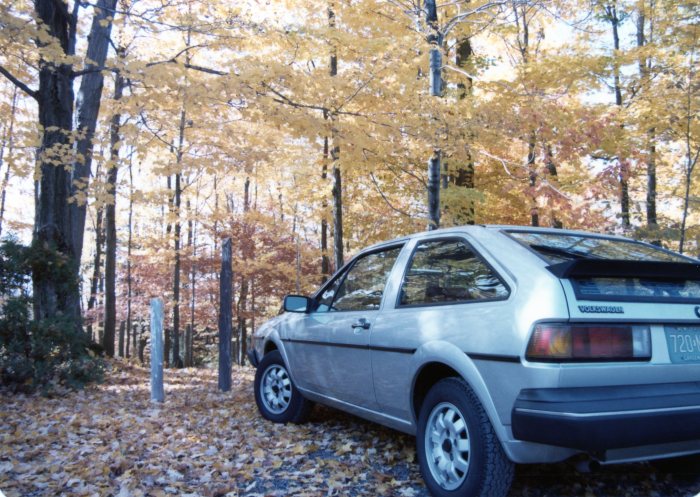
Another artistic angle, this time with fall foliage.

The other issue was the standard rear spoiler, which sat several inches above the lower edge of the hatch glass. In the winter, this spoiler served as a catch for snow. Although the car had a rear wiper, it couldn’t remove the snow that piled up on the spoiler. If I were driving while it was snowing, the backlite would eventually become covered. My solution was to unbolt the rear spoiler for winter driving.

My excuse is, the photographer asked me to pose like this.

Other than these issues, this VW was as reliable as the first one. By 1986, there were over 100,000 miles on it, and I was ready for a replacement, but wanted to save money by buying something used this time. The Scirocco was advertised locally and sold to a young woman. I could not have known that it would be twenty years before I would again step into a new car dealership and purchase or lease a brand new car.


All photographs copyright © 2016 Richard A. Reina. Photos may not be copied or reproduced without express written permission.
My First Collector Car: The 1957 Ford Skyliner

September of 1977 was a month of new beginnings: I began my first post-college job, working in NYC for the U.S. Department of Labor, and purchased my first new automobile, a 1977 VW Rabbit. Commuting from Staten Island to Manhattan, though, did not involve driving. As it is for the vast majority of New Yorkers, public transport was the way to go. In my case, the one-way journey was a 90-minute ride on bus, ferry, and subway, giving me plenty of time to read.

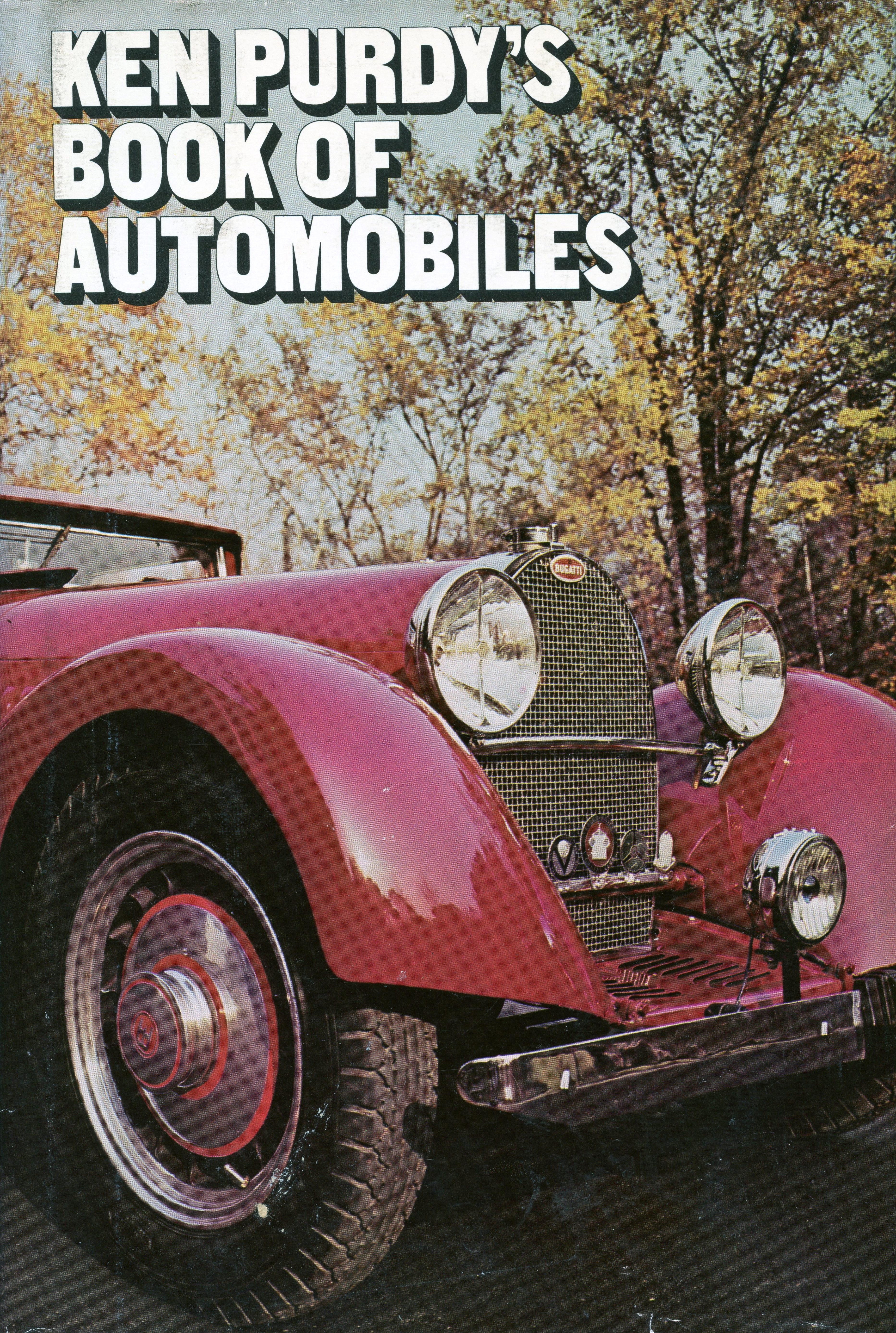
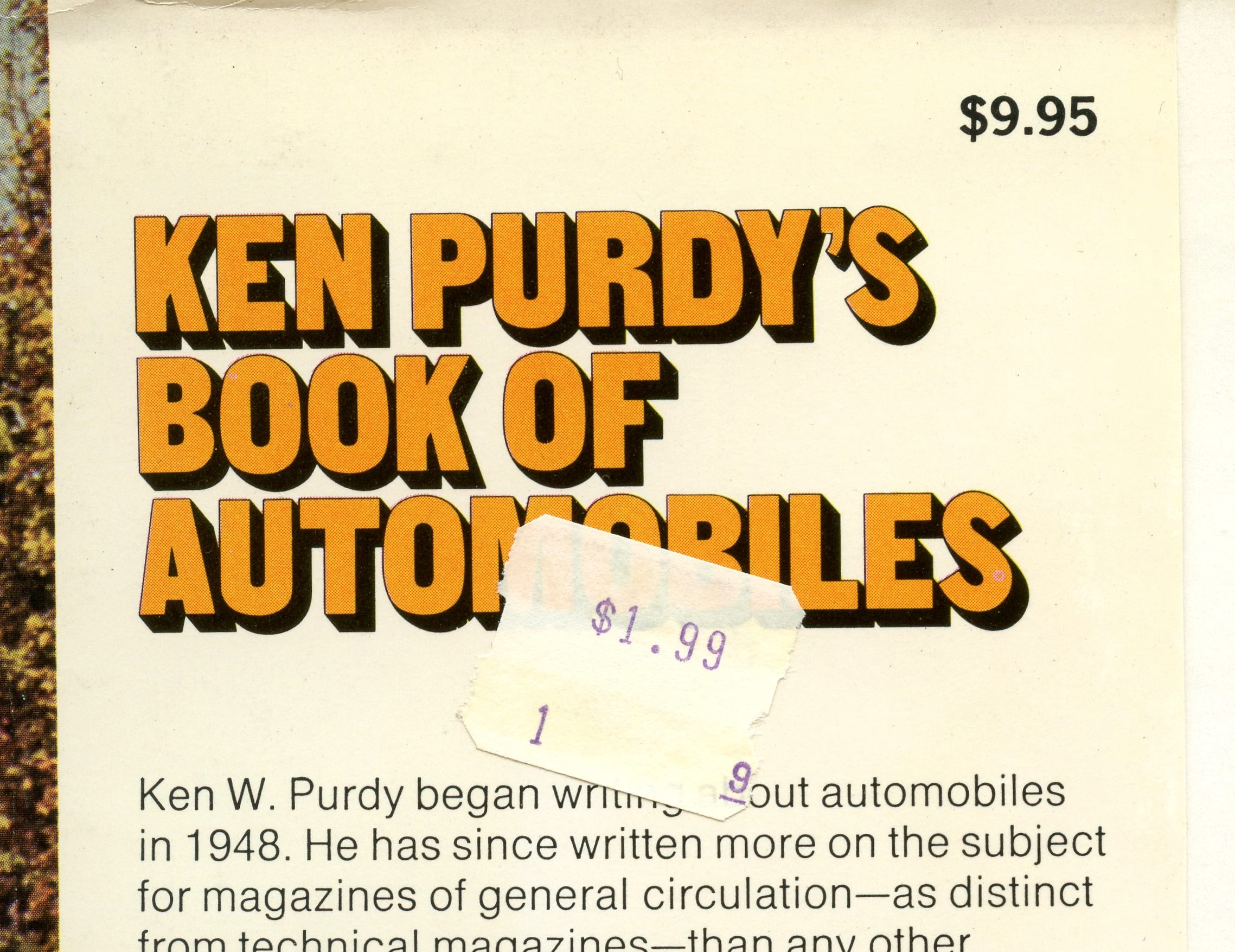
One day at lunchtime, I wandered into a bookstore. On the bargain table sat a book entitled “Ken Purdy’s Book of Automobiles”. While I had never read anything by Mr. Purdy, I knew the name because David E. Davis, editor of Car and Driver magazine, had extolled the virtues of Ken Purdy’s writing in numerous columns. Perhaps best of all, the book was marked down from $9.95 to $1.99. I bought it.

This was not a book of new material; rather, it was a compendium of previously published short stories and articles. (Unbeknownst to me at the time, Ken Purdy had died in 1972.) Nevertheless, it was all new to me. The brevity of each chapter made it an easy read; I devoured the book in a matter of days. As soon as I finished it I had an epiphany: automobiles were something that I could enjoy as a hobby! No matter what daytime job I had, car collecting would allow me to indulge in my true passion. I decided to consider buying a collectible car, and that is when I remembered the Manna family.

Lou Manna was a college friend whom I had met through mutual friends. Unlike most of us in the dorms whose homes were several hours away, Lou’s home was about a 15 minute drive from campus. One day, Lou invited me to have Sunday dinner with his parents. This starving college kid said ‘yes’ before the invite was finished.

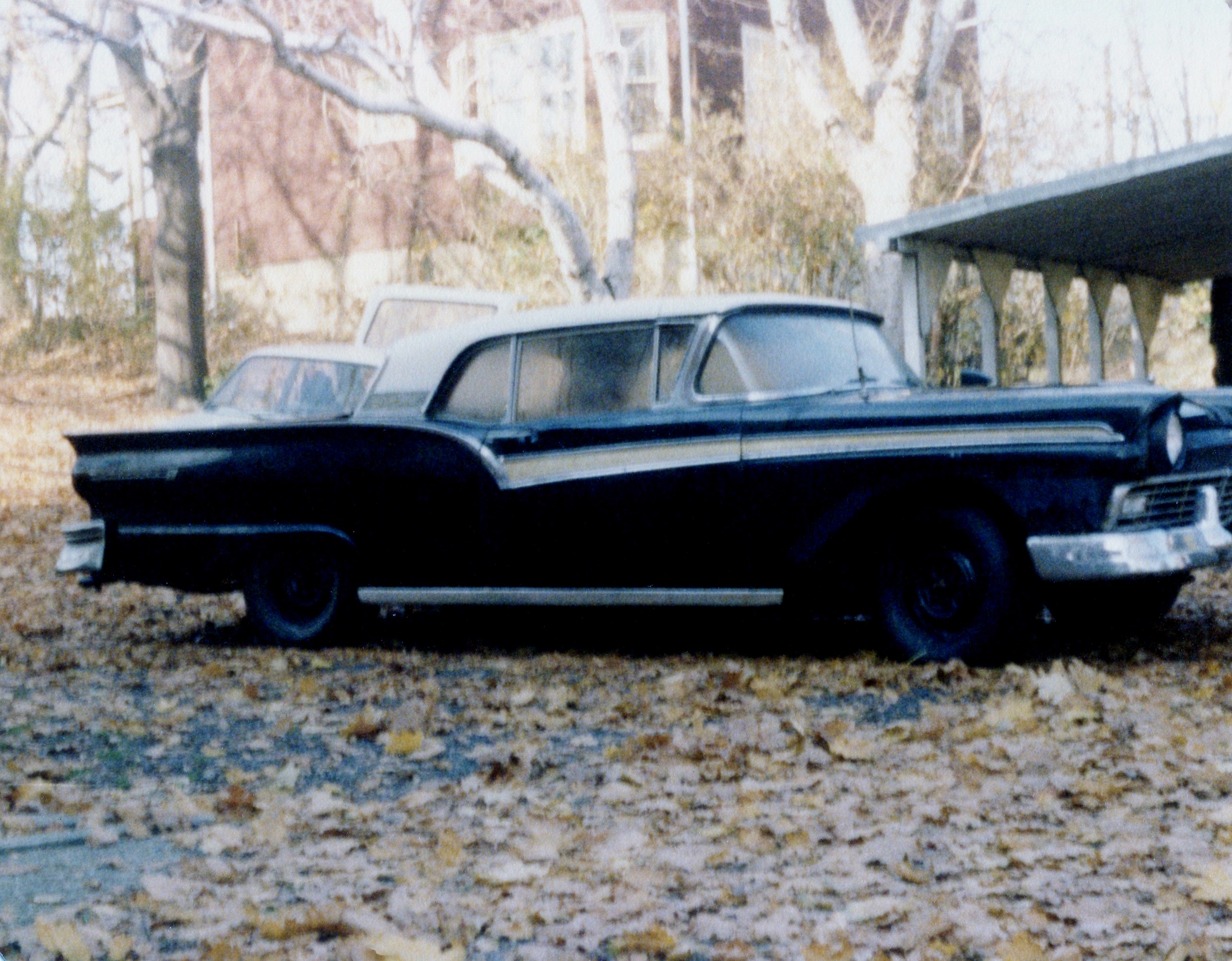
Mrs. Manna cooked a wonderful Italian meal, and I probably got some leftovers to help get me through the week. Mr. Manna (Louis Sr.), it turned out, was a bit of a car enthusiast. He drove a Fiat 128, and his wife drove a 1957 Ford Skyliner (retractable hardtop convertible), which the family had owned since new.

The Ford brochure for '57 featured the Skyliner on the cover (from the author's collection)
The Ford brochure for ’57 featured the Skyliner on the cover (from the author’s collection)

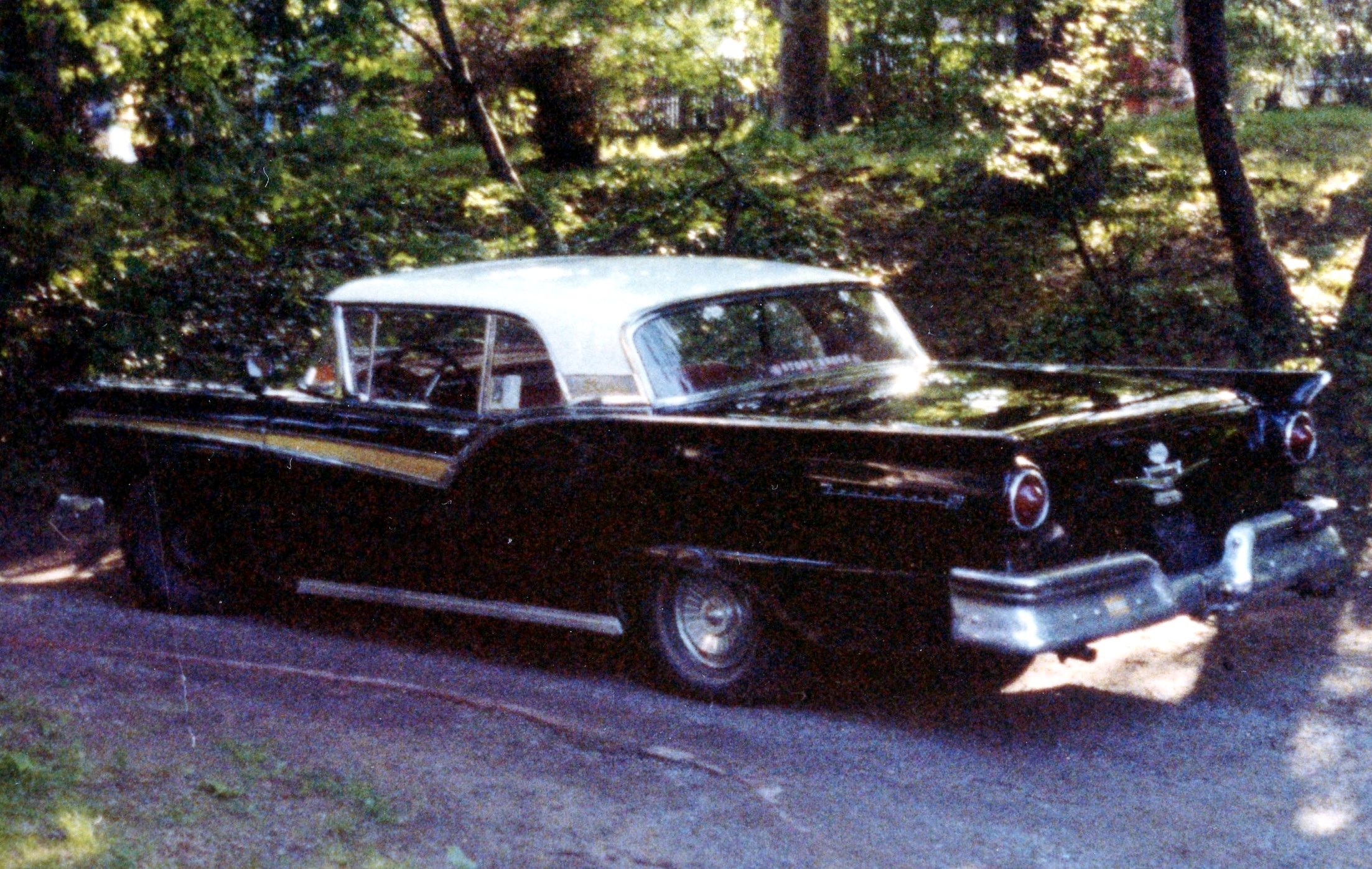
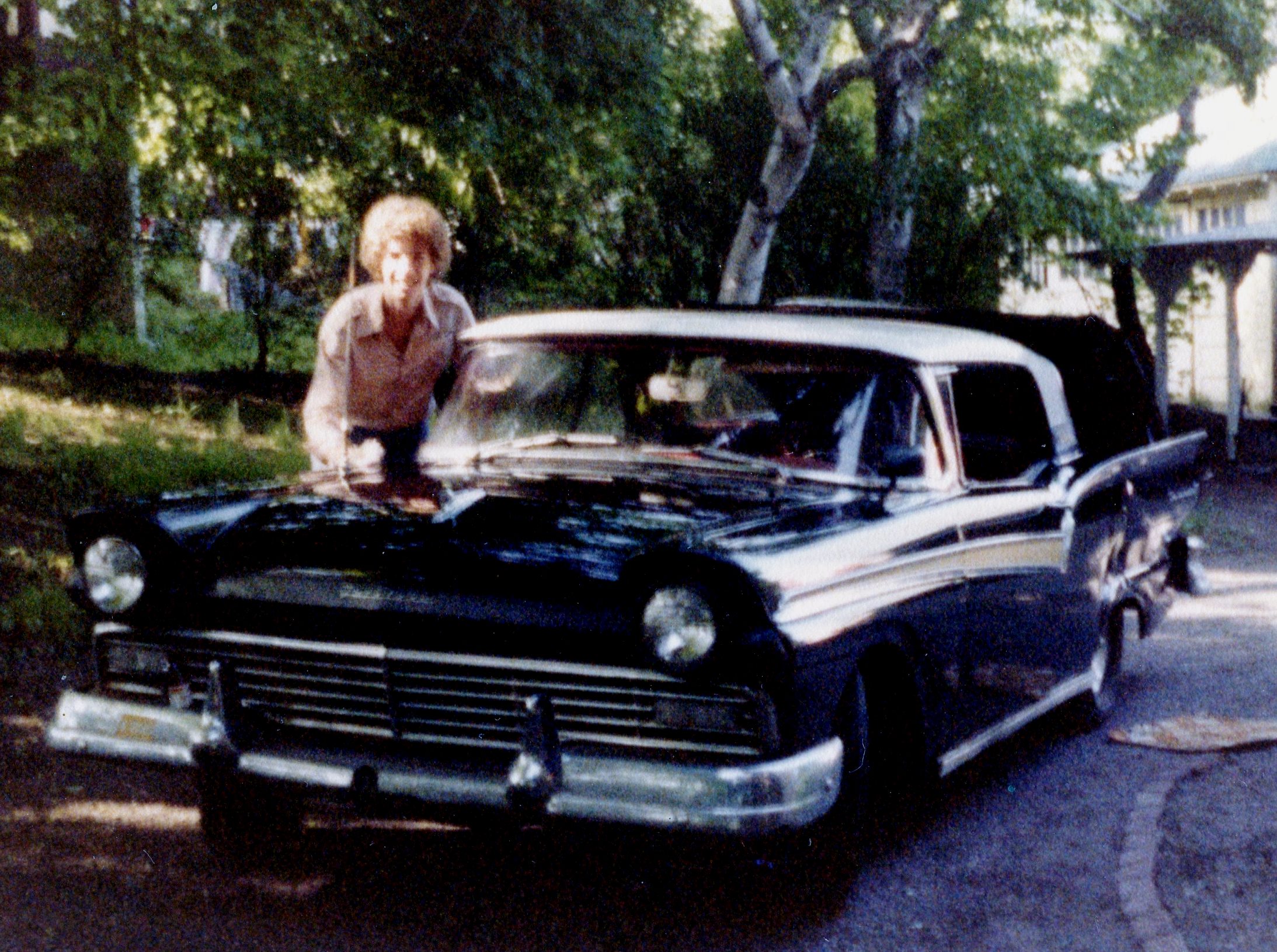
Mr. Manna Sr. told me that he always had convertibles. After the war, he bought a new 1948 Ford convertible. But he said he always hated dealing with soft tops which were noisy, leaked, required replacement, and didn’t offer enough security. When Ford announced mid-way through the 1957 model year that they were introducing a convertible with a steel roof, Mr. Manna told me he was hooked, and he purchased one. The car they bought was black with a white top and red interior. I thanked them for the meal, and did not think much more about the Skyliner.

The NY registration in Louis Manna's name (NY did not use titles at this time)
The NY registration in Louis Manna’s name (NY did not use titles at this time)

After college, I had not seen much of Lou, but in November of 1977, I reached out to my college buddy, and as luck would have it, his parents had realized that it was time to let the car go. They told me that the asking price was $1,000; my offer of $900 was accepted. The car had 140,000 miles on it, the rear quarters were rusty, but the vehicle was in otherwise decent original condition.

I took the Long Island Rail Road out to Kings Park, and drove the big Ford home to Staten Island. Mrs. Manna was so upset at her car’s departure that she cried, and went back into the house rather than watch the car leave her driveway for the last time. Even though the car was “only” 20 years old, it drove like an old car. My Rabbit with rack and pinion steering was a model of directional accuracy and stability. This Ford had so much freeplay that I could rotate that big wheel 90 degrees left and right before my inputs had any influence on vehicular direction. The Belt Parkway was a quite the challenge that night, but we safely made it.

Now that the car was home, I really didn’t know what to do with it! The Ford sat semi-enclosed in a carport my father had built next to our 2-car garage. I didn’t bother registering or insuring the car, as I had no intention of driving it that much. Fast forward to the summer of 1978, when I left my cushy Manhattan office job to begin employment as an apprentice auto technician, and my tool collection and confidence both grew. It was time to overhaul the Ford’s engine.

This was my first engine rebuild. I purchased the factory service manual, and with a rented cherry picker and borrowed engine stand, yanked the block with the vehicle in the carport. The cylinder heads and ancillaries were removed, and I had the nerve to put the bare block into the back of the Rabbit so that I could drive it to a machine shop.

Dig those labor prices!

The cylinders were bored 0.030” over, which necessitated eight new pistons. The heads were sent out for a complete valve job. In addition to the machine shop’s parts and labor costs, I spent money for new gaskets, motor mounts, water pump, and camshaft. It felt like every spare cent I earned was going into this engine rebuild, which likely was close to the truth.

The rebuild came together, the engine was reinstalled, and the Ford was roadworthy again, but still not legally so. The interior needed to be reupholstered, the tires and brakes were poor, and there was the matter of the rusty rear quarters. But other changes were coming first.

In January of 1980, I moved out of my parent’s house and into an apartment in Somerville NJ, a mile from the dealership where I worked. The Ford stayed on Staten Island, at least until 1982, when my father retired and my folks decided to sell the house and move to a retirement community.

The Skyliner was moved into a public storage garage, really a converted chicken coop, in Readington NJ. The rent at “Van’s Storage” was $18 a month, and the owner said that there were strict rules against working on the cars on site. My Ford was on the 2nd floor of a two-story cinder block building, nestled among 50 other collector cars in various states of disrepair. The storage facility also had trucks, school buses, and loads of printed material stored among the classic and not-so-classic old cars.

The years were rolling by, and no work was being performed on the Ford. It had ceased to become a priority. With no garage access, I had no place to work on it. In the back of my mind, this was a “one day I’ll get to it” project, with the reality that “one day” could be a long way off.

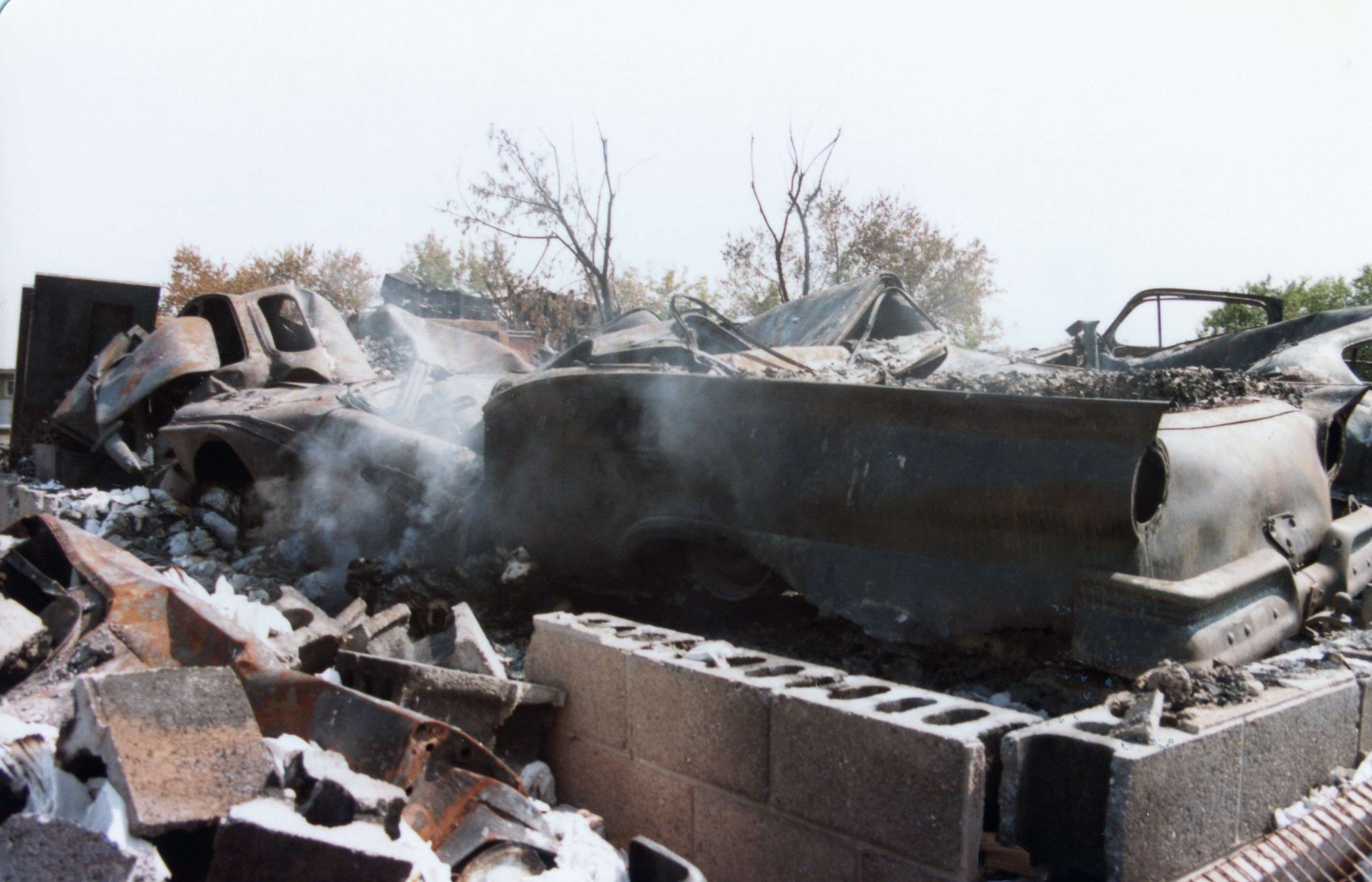
One evening in the summer of 1984, enjoying a quiet weeknight in my apartment, the phone rang. It was “Van” of Van’s Storage. The voice said “I have bad news. We’ve had a fire out here. Everything’s in bad shape. You need to come out and see what you can salvage of your car.” I was upset, but not that upset, thinking I could rebuild the car or at worst, sell off the car for parts.

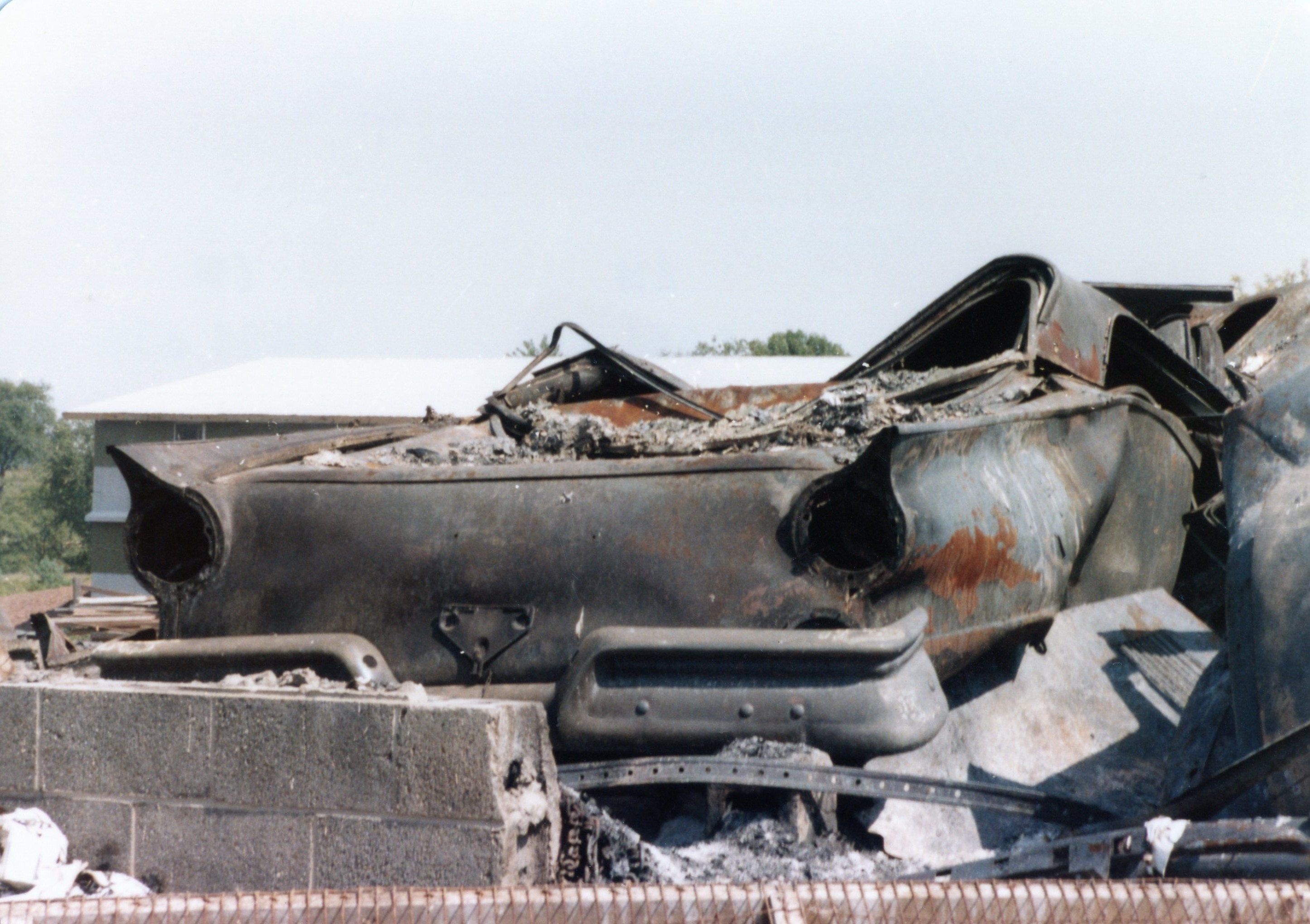
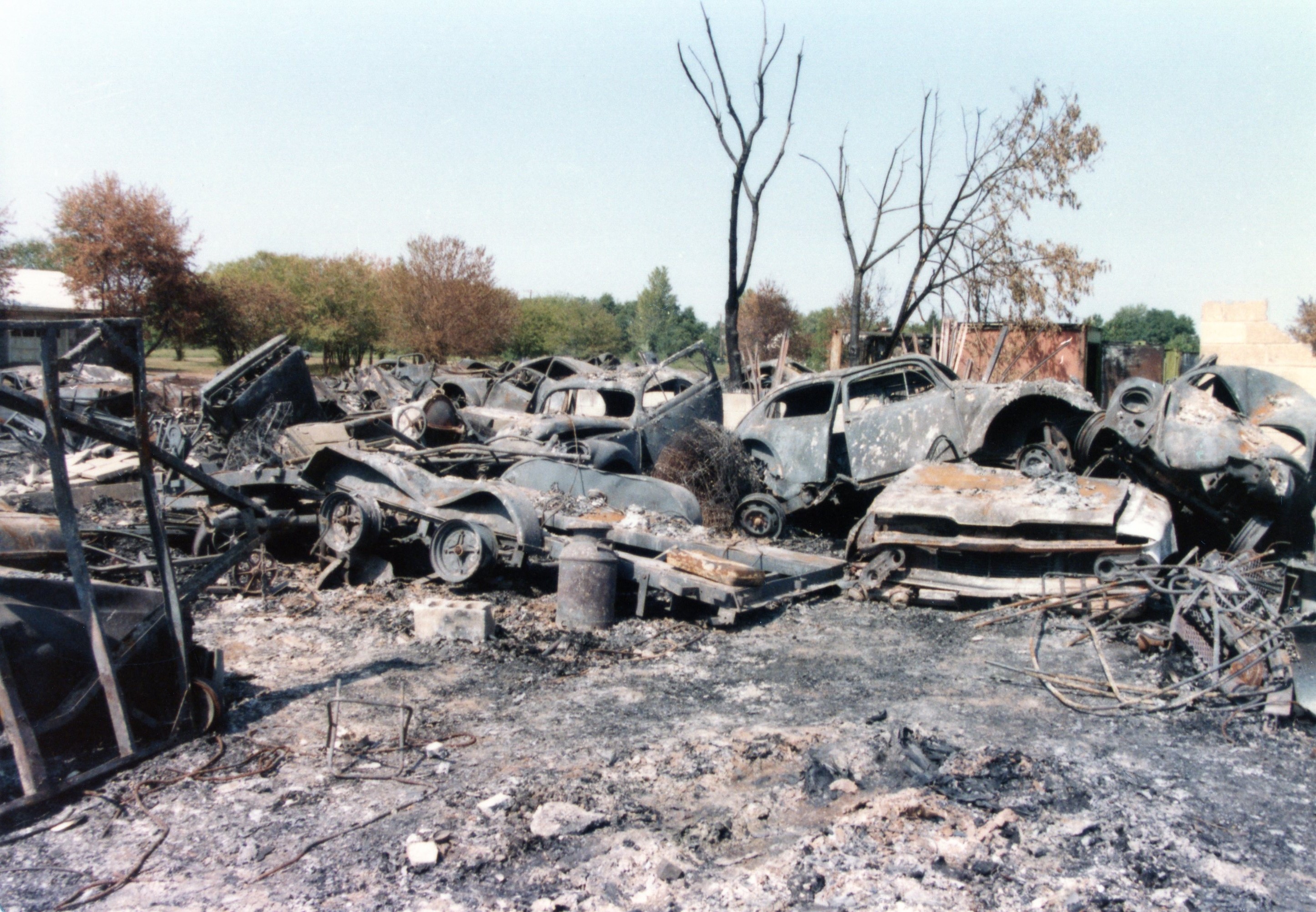
I waited until the weekend to drive out to the site. Four days after the phone call, the pile of ashes was still smoldering. The building was gone, and so were all 50 cars. Amazingly, I could spot my Ford. The fact that it was on the 2nd floor meant that as the building collapsed, my car was on top. But I was horrified at what fire can do: the glass, engine, wiring, and much of the sheet metal were consumed. The only component potentially salvageable was the rear bumper. It was all I could do to snap a few photographs and walk away.

Newark Star Ledger article
Newark Star-Ledger article

As reality sank in, I was angry only at myself for my own immaturity: I never had bothered with insurance on the Ford. The fire was investigated by the local Police Department, and was ruled accidental. Van’s was not responsible; in fact, the rental agreement I signed absolved Van’s of any responsibility for theft, fire, etc. My total monetary investment in the Skyliner was about $4,000, now literally all up in smoke. At the age of 30, I felt foolish for fancying myself a “car restorer”.


Letter from local police department


This was a tough way to learn some difficult lessons. One lesson was to ensure that my first order of business needed to be attending to my legal and financial obligations. Insurance exists for a reason. There was the more subtle lesson that letting a restoration project “sit” for years is not a workable approach. If I wanted to succeed in the restoration of collector cars, I’d need to do better. Losing the Ford was a wake-up call. I’d like to think it helped me as I moved forward with my other projects in this hobby.


All photographs copyright © 2016 Richard A. Reina. Photos may not be copied or reproduced without express written permission.


Finally, my first new car: the 1977 VW Rabbit

Upon my return home from the 3-week adventure which we nicknamed “Coast-to-coast in the Swedish car”, a letter was awaiting me. The U.S. Department of Labor was offering me an interview to be considered for employment in their Bureau of Labor Statistics. I interviewed, was accepted, and was told I could start in mid-September. Elated at the prospect of full-time employment, I especially looked forward to a full-time paycheck! Since I was still without wheels of my own, having sold my Vega to my brother several months prior, my thoughts turned to consideration of finally owning a new car.

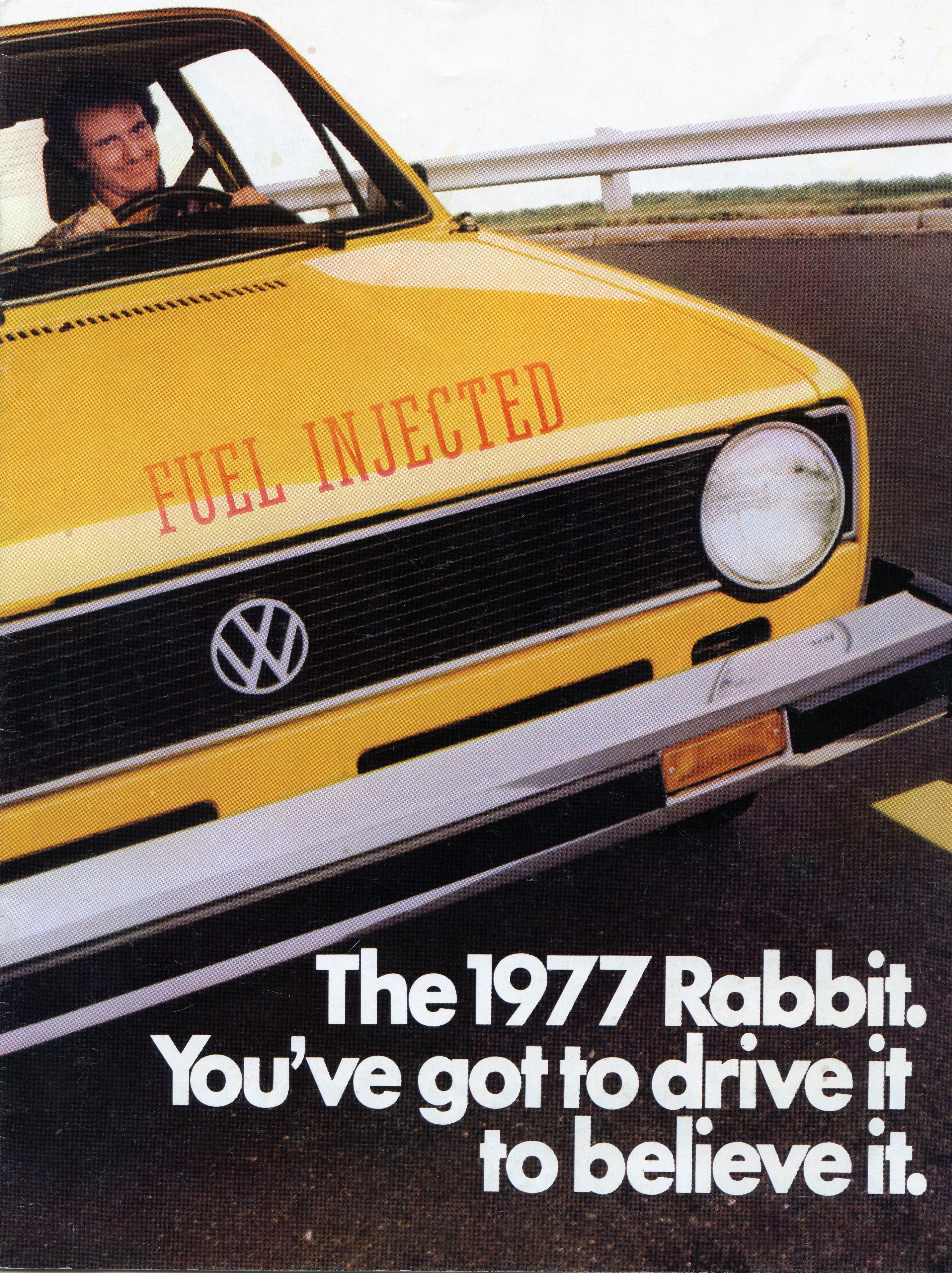
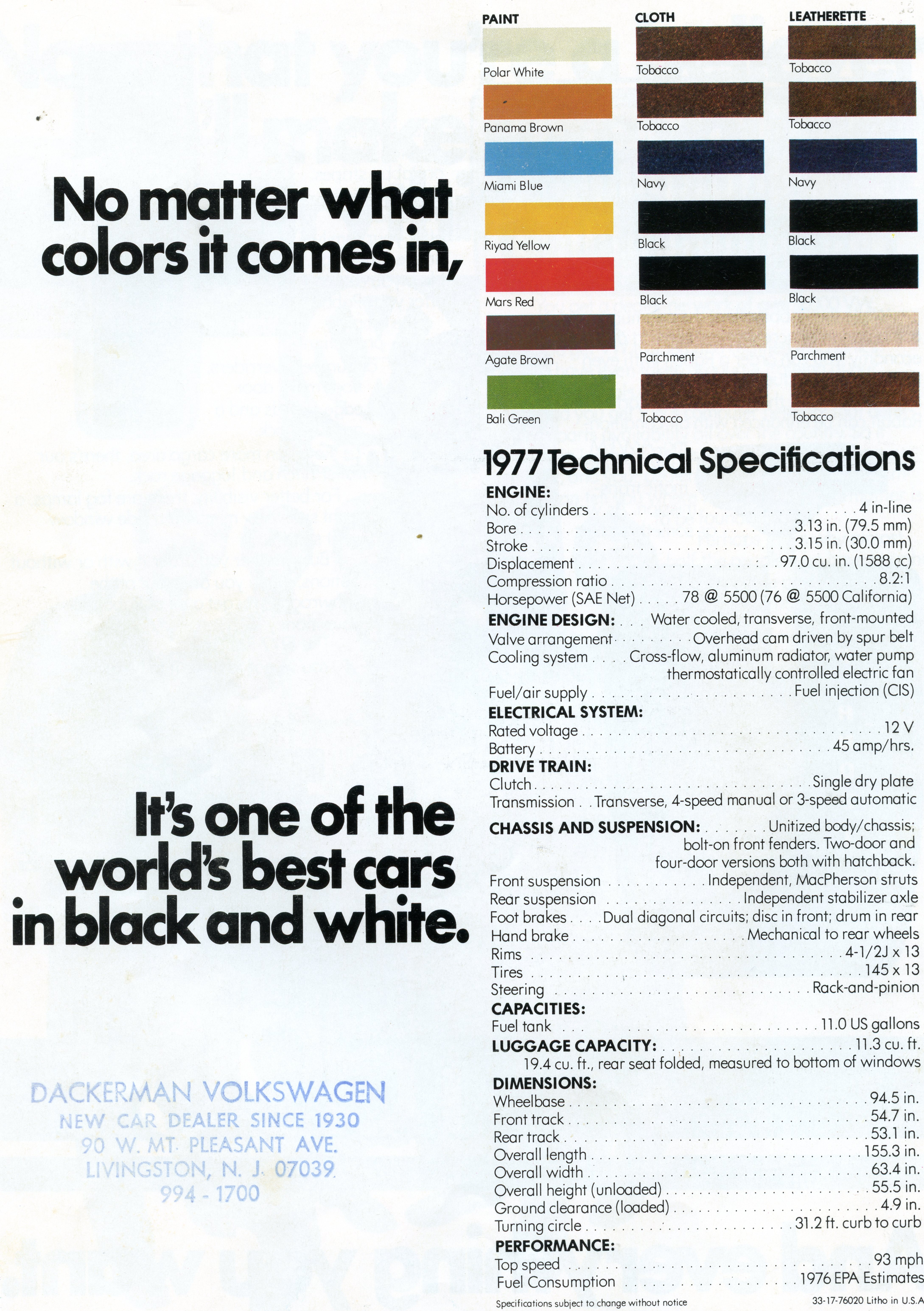
The car magazines which I voraciously devoured had said generally good things about Volkswagen’s newest economy car, the Rabbit. The vehicle (called the Golf in the rest of the world) was introduced in North America as a 1975 model. During its first two years on sale here, one of the few issues concerned its troublesome carburetor. In 1977, VW ditched the carb, switched to Bosch K-Jetronic fuel injection, and likewise jettisoned the catalytic converter in the process. There were other attractive features: front wheel drive, hatchback roominess, and great fuel economy. I test drove several models at my local dealer, Staten Island Small Cars. Frankly, I don’t believe I even considered anything else. At least there’s no recollection of test-driving anything but Rabbits.

It was now September of 1977, and the new ‘78s were on their way. The buff books had informed me that for 1978, VW was reducing the engine size from 1.6L to 1.5L, with a horsepower drop from 78 to 71. Determined to find the “best” ’77 I could, I bounced around VW dealers in Brooklyn, Queens, and NJ, but ended up back at the Staten Island store.

My salesman was Arthur McKeever, an interesting guy, and difficult to forget once you met him, as Mr. McKeever had no right arm. He shook hands with his left, and could shock you with his ability to drive a stick shift. As we climbed into his red demo, I reached for the seat belt. He said “oh, you don’t need to put that on”. I put on the belt, as I had been wearing one since the Mustang wreck six years prior. The Rabbit was quite peppy, and while the shift action didn’t have quite the precision of a RWD car, it wasn’t bad at all. My mom’s ’76 Honda Accord had tons of torque steer; by comparison, the Rabbit had almost none.

scan514ccc
Area code not required; Anyone care to guess what the “YU” exchange stood for?

He had three 1977 2-doors remaining (the 4-door model was not sporty enough for me, and so was a deal-breaker). One was his red demo, but I didn’t think the car looked good in red. The yellow car was attractive, but the priciest of the choices. The white car was an anomaly: a base model Rabbit, when every other car I looked at was the “Custom”. The base model had these features compared to the Custom: 145-13 bias-ply tires instead of radials; houndstooth cloth upholstery instead of leatherette; vinyl flooring instead of carpeting; non-opening vent windows instead of opening ones; and a manual rod for the hatch instead of a gas strut. But the sticker price of $3599 was very attractive.

The back of his card spells out my 3 options

A deal was struck for the white car, which looked good with its black-and-white interior. My dad had to co-sign the bank loan, but he knew I was good for it. Taking delivery of my first new automobile still ranks up there with one of the great car-related thrills of my life.

Yes, I kept the Monroney

Three weeks into the ownership, I ordered a set of Pirelli CN-36 radial tires in size 175/70-13. They truly transformed the car, and lasted 56,000 miles! I also was an early adapter of Cibie euro-style headlights with replaceable H4 bulbs, which did amazing things for night-time visibility. Both the tires and the lights were purchased from Euro-Tire, which advertised heavily in Car and Driver magazine. I put my own sound system in the car, and repainted the bumpers, but did little else other than maintain it and drive it.

The Rabbit served as my daily driver for over four years, from September of 1977 until December of 1981. I put about 112,000 miles on it, almost all of it trouble-free. The car started to use oil, a known issue with the valve stem seals, but oil was cheap enough that I just kept checking and adding it. There was also the start of some rust at the base of the A-pillars. My overall experience was so positive that I replaced this VW with another new VW. We’ll get to that story at another time.

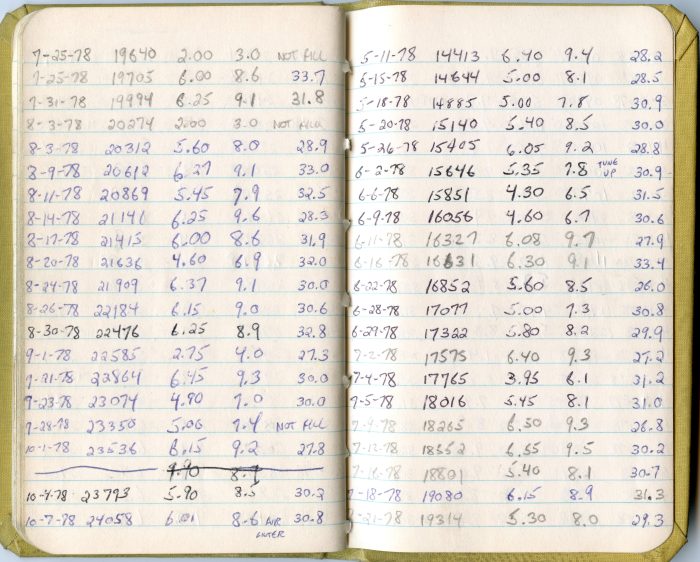
Fuel log: average price was 68 cents/gallon


All photographs copyright © 2016 Richard A. Reina. Photos may not be copied or reproduced without express written permission.

The 1974 Chevrolet Vega GT

After the love/hate relationship which was my 1970 Fiat 124 Coupe, my father, wanting to be helpful, told me to “get an American car”. It was the summer of 1976 and I was about to enter my senior year of college. Although I was working a summer job which paid a decent wage, I wasn’t exactly able to afford what I really wanted – which was a new sporty import.

Deciding at first to ignore dad’s advice, I visited various car dealerships on Staten Island and looked at or test drove the new Toyota Corolla SR-5, Mercury Capri, and Datsun 280Z. The MSRP of these cars in 1976 was $3900 for the Corolla SR-5, $4100 for the Capri, and $6600 for the Datsun (these numbers courtesy of my copy of the Standard Catalog of Imported Cars 1946-1990). My budget, however, was around $1500.

The reality of this situation made me conclude that I only needed a car to last me a year or so. Once I graduated and landed a real job, I could then buy something new. So I thought I would heed my father’s words and look at American iron. In 1976, if one were considering an American car and wanted a sporty, small, 2-door coupe, there were two choices: a Pinto or a Vega.

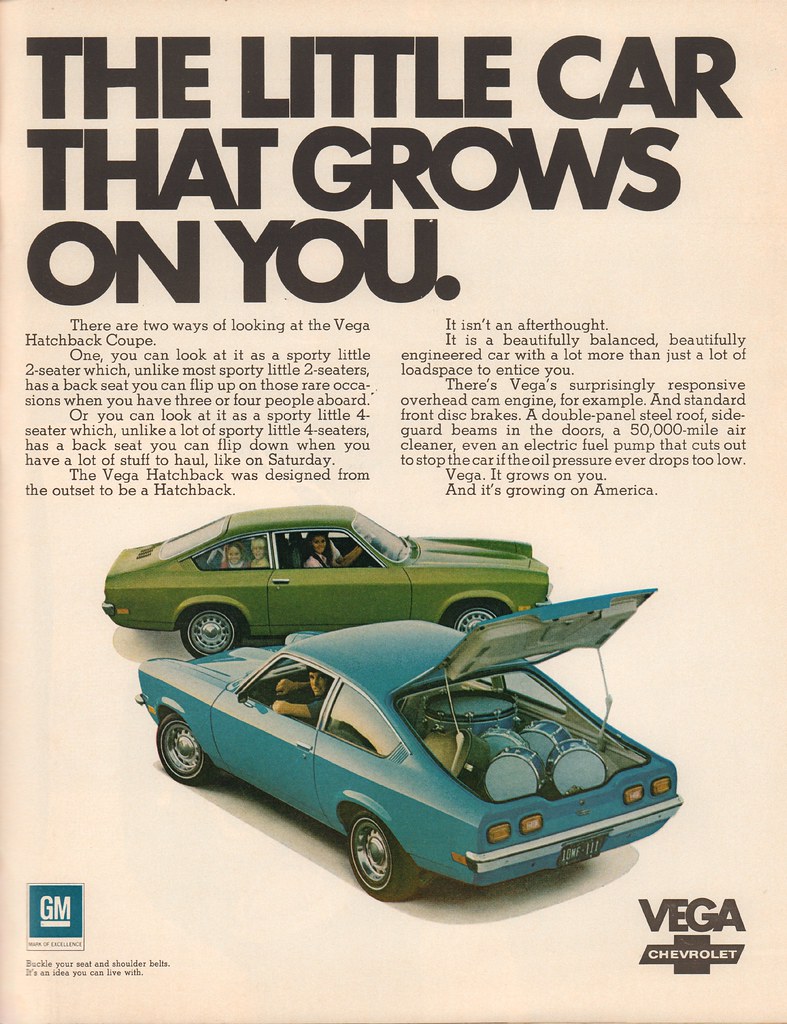
The recollection is that I only looked at Vegas, and I’m not sure why. However, an advertising photo put out by Chevrolet when the Vega was launched had always stayed with me, which showed a drum set in the load area of the hatchback. A car which could more easily swallow my kit was a priority (the Fiat had room for the drums, but using the side doors for rear seat access was awkward).

https://c1.staticflickr.com/9/8756/18168369476_d2d7bbff38_b.jpg
My attention was caught by this Vega ad showing its ability to carry a drum kit


There was also the temptation of the Vega “GT” model, which included nice looking alloy wheels and more complete instrumentation. After test driving several used Vegas, I found a 1974 GT with a 4-speed stick for only $1350. This car was four model years newer than the outgoing Fiat, and was in overall good condition.
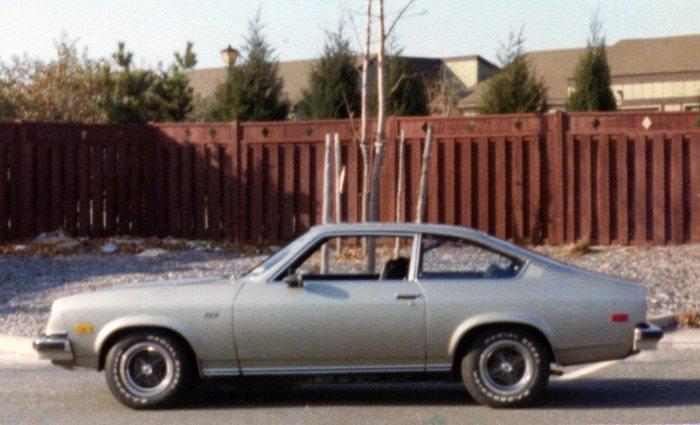
Side view of my '74 Vega GT, taken autumn of 1976

Side view of my ’74 Vega GT, taken autumn of 1976

The Vega got me through my senior year of college, and truth be told, it wasn’t a bad car. It never broke down on me, it was somewhat fun to drive with the manual tranny, and it cost me very little in the way of maintenance and repair. The car’s Achilles’ heel was oil consumption. During the entire time I had it, the engine consumed a quart of oil about every 400-500 miles (I saw no external leaks). It’s likely that I dispensed with regular oil changes, as the car was getting a fresh quart every couple of weeks or so. Other than oil, I don’t believe I put any money into the car.
Photos taken at the local car wash, right after it got cleaned

In May of 1977, I graduated, moved back home with my parents, and decided to take the summer off to enjoy what would be my last long stretch of free time for quite a while. My brother Karl was desperate for transportation, so I gave him the Vega, with full disclosure about its oil issue. Shockingly, I replaced it with… nothing. When I needed wheels, I borrowed a car from dad, mom, or bro’. Instead of driving, I spent time in NYC, accessible by public transportation. Later that summer, I made my first cross-country trip by car, sharing a ride in a friend’s 1971 Volvo 144. I (correctly) presumed that upon my return from California, I would land a job and buy my first new car. That’s a story for another post at another time.


All photographs copyright © 2016 Richard A. Reina. Photos may not be copied or reproduced without express written permission.