My excitement was barely containable. For the FOURTH consecutive year, I would be driving in Rich and Jean Taylor’s wonderful vintage car rally, along with about 50 like-minded car enthusiasts. My good friend and rally partner Steve would again be joining the troupe, with one significant difference: we would each be taking our own cars. Steve would be teamed up with his girlfriend (now wife) Carol in their Sunbeam Tiger, and I with my fiancé (now wife) Margaretanne would drive our recently-acquired ’72 MGB. Oh boy.
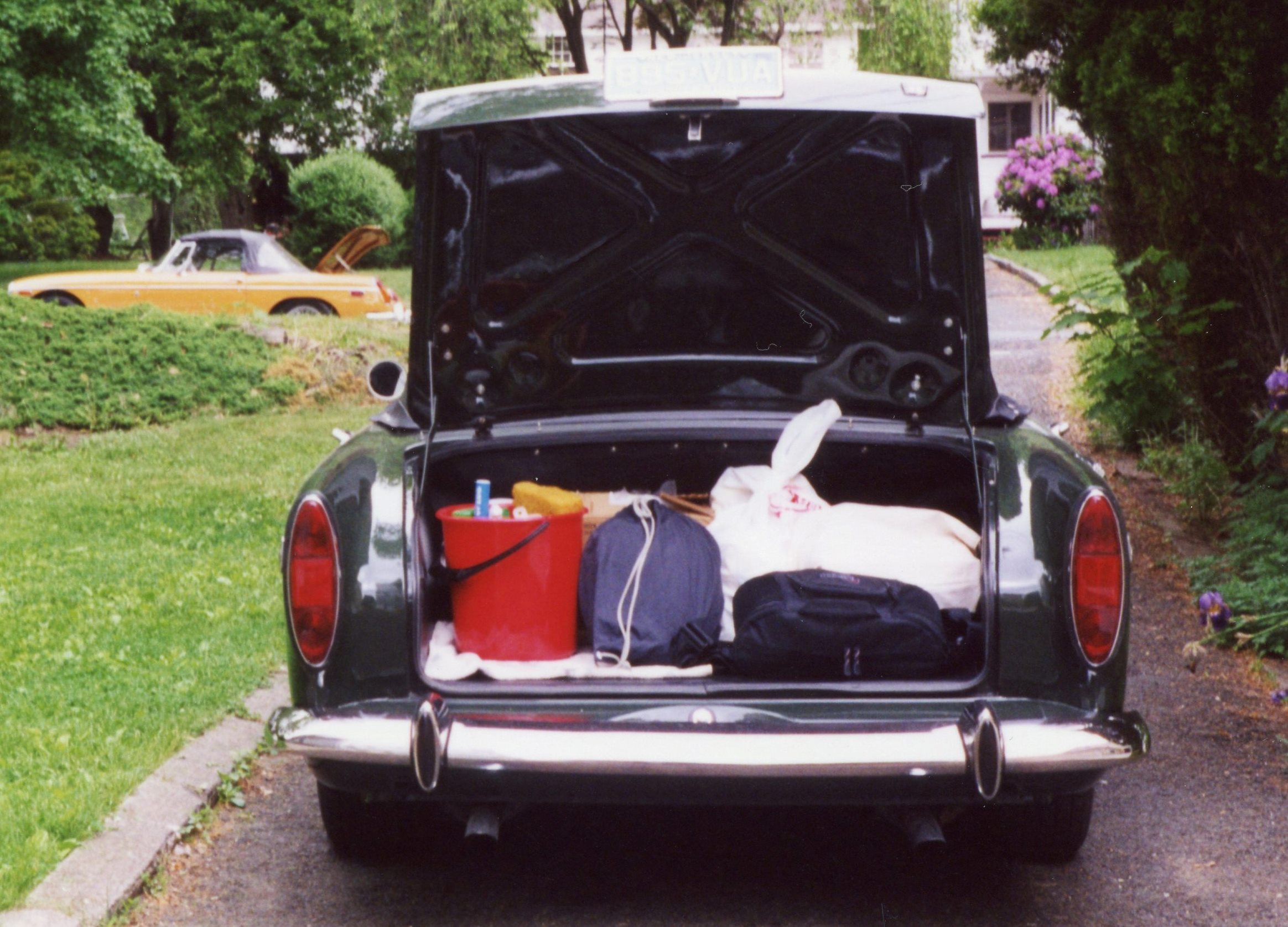
Packing the Tiger’s trunk: spare parts, tools, and the all-important wash bucket
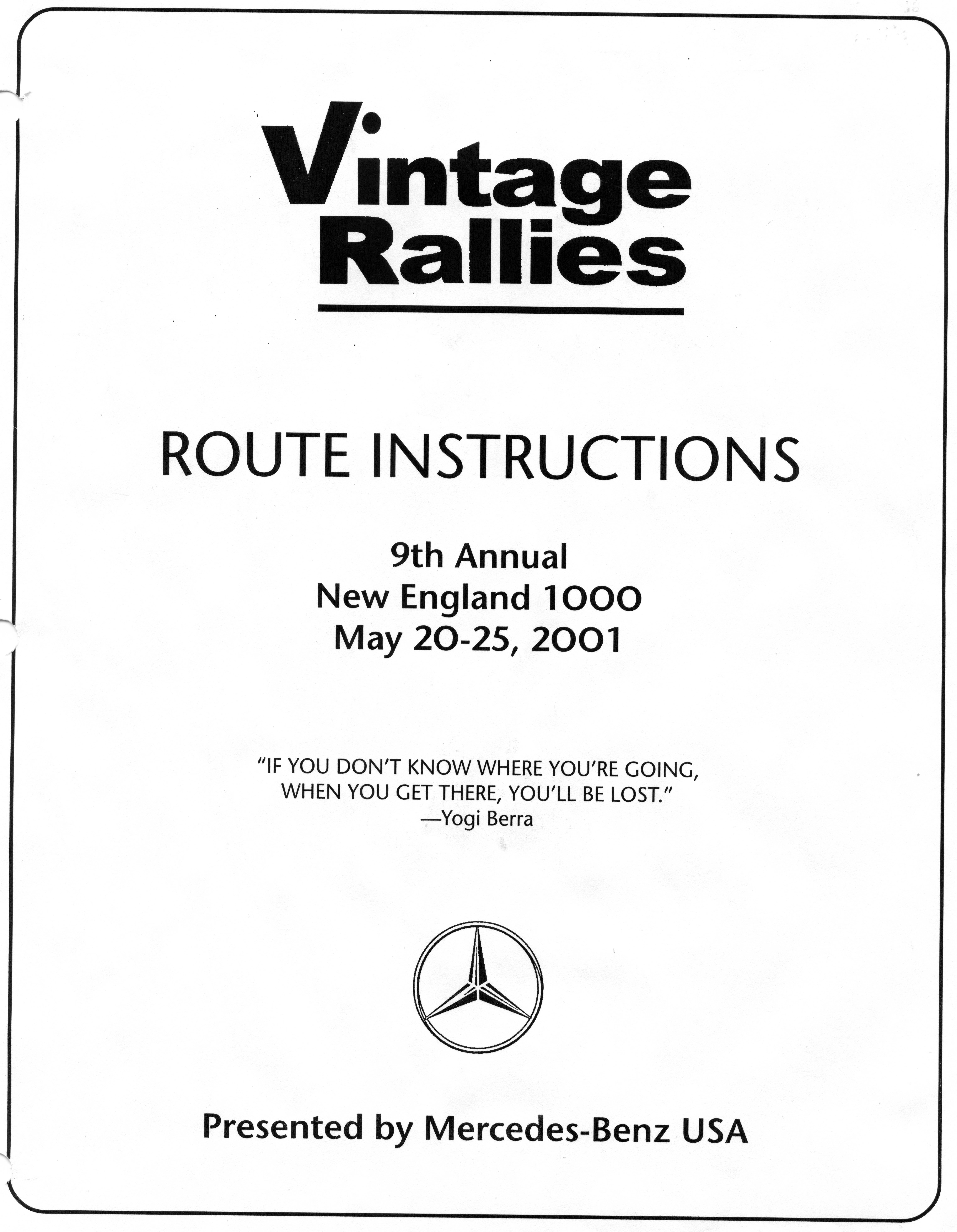
Yogi provides all the driving philosophy you need
They can’t say they didn’t ask for it. As alluded to in an earlier post, after three straight years of hearing us rave about the rallies, the ladies wanted in. We departed from Steve’s home in Morristown NJ and caravanned to the rally starting point in Lake Placid NY. My B, purchased just a month prior, was relatively untested, and I’ll admit to some trepidation about its roadworthiness (Lucas electrics and all that). However, Steve’s British car (aside from its Yank lump) had been a bastion of reliability all these years, so I did my best to cast aside doubts.
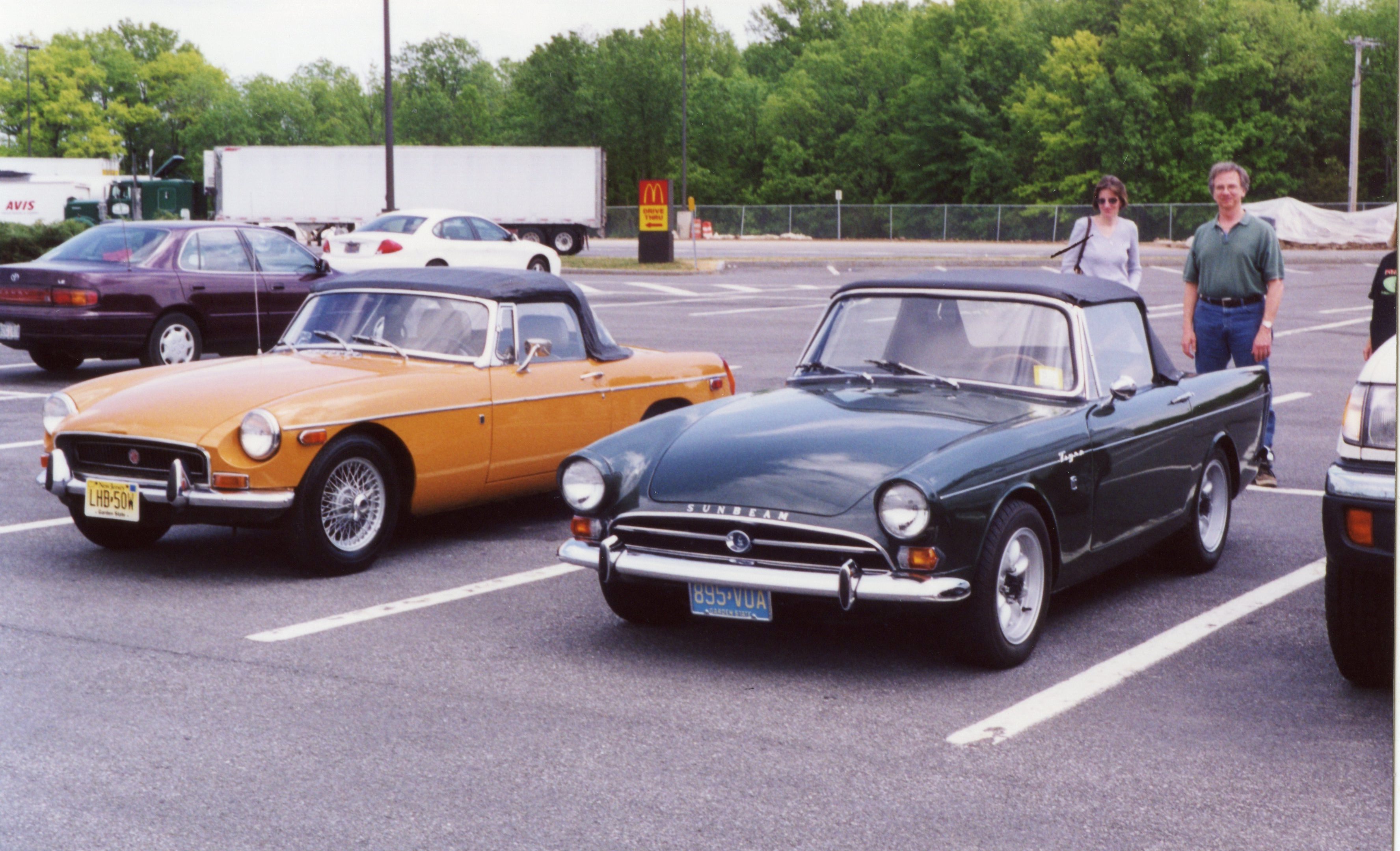
En route, the two Brit roadsters sit at a NY Thruway rest area
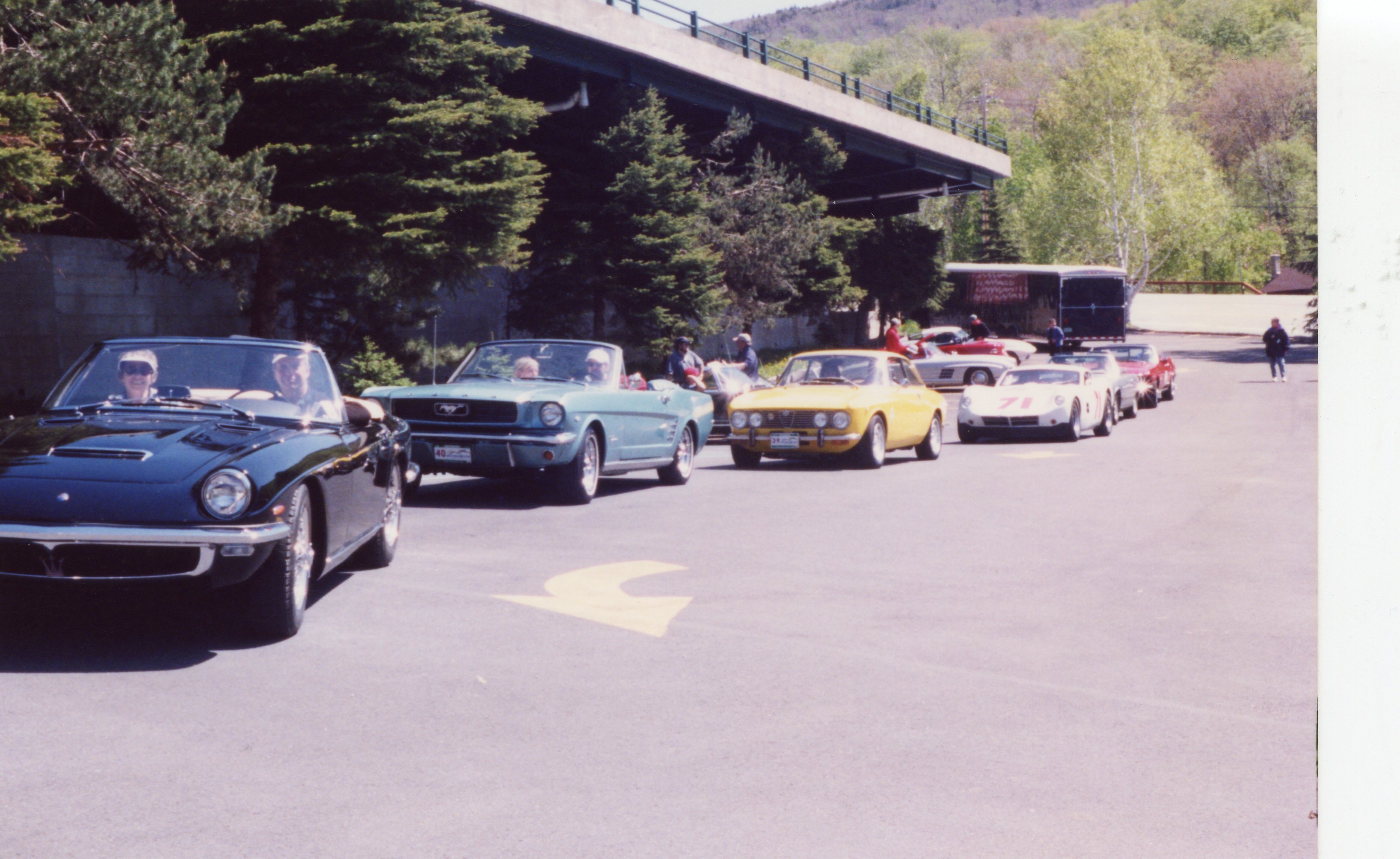
Arriving at the Mirror Lake Inn on Sunday May 20, the field of rally vehicles did not disappoint; if anything, this year’s variety of cars got more interesting. The number of domestic vehicles was greater than previously seen, and included a ’64 Corvette Sting Ray, ’70 Ford Mustang, ’63 Dodge Dart, ’61 Chrysler 300G, and ’62 Ford Thunderbird (ALL convertibles).
Nice overview of the parking lot, prior to the rally’s start
The European sports cars continued to dominate the field, and we became almost blasé at repeated sightings of Mercedes 300-SLs, Porsche 356s, Aston-Martins, Jaguar XKs, and Ferraris. The BMW 507 seen earlier returned; and of special note to me, our friend Dave Allison, who had previously entered an Alfa Giulietta spider, a Porsche 356, and a Lotus Elite, showed up with a 1971 Austin Mini. His conclusion? Of the four, the Mini was his favorite to drive!
Aston, Jag, BMW (would make a nice collection for my garage)
And drive we did; as always, it’s almost exactly 1,000 miles over four days (that’s why it’s called the N.E. 1000), not including our mileage up and back. Fears about the MGB were totally unfounded; we suffered no ill effects from driving an almost-30-year-old car (not counting a very fiddly convertible top). For my wife, truth be told, getting up early and adhering to a rigidly-scheduled day was not her idea of a vacation, but she did admit that the concept and the camaraderie made it fun.
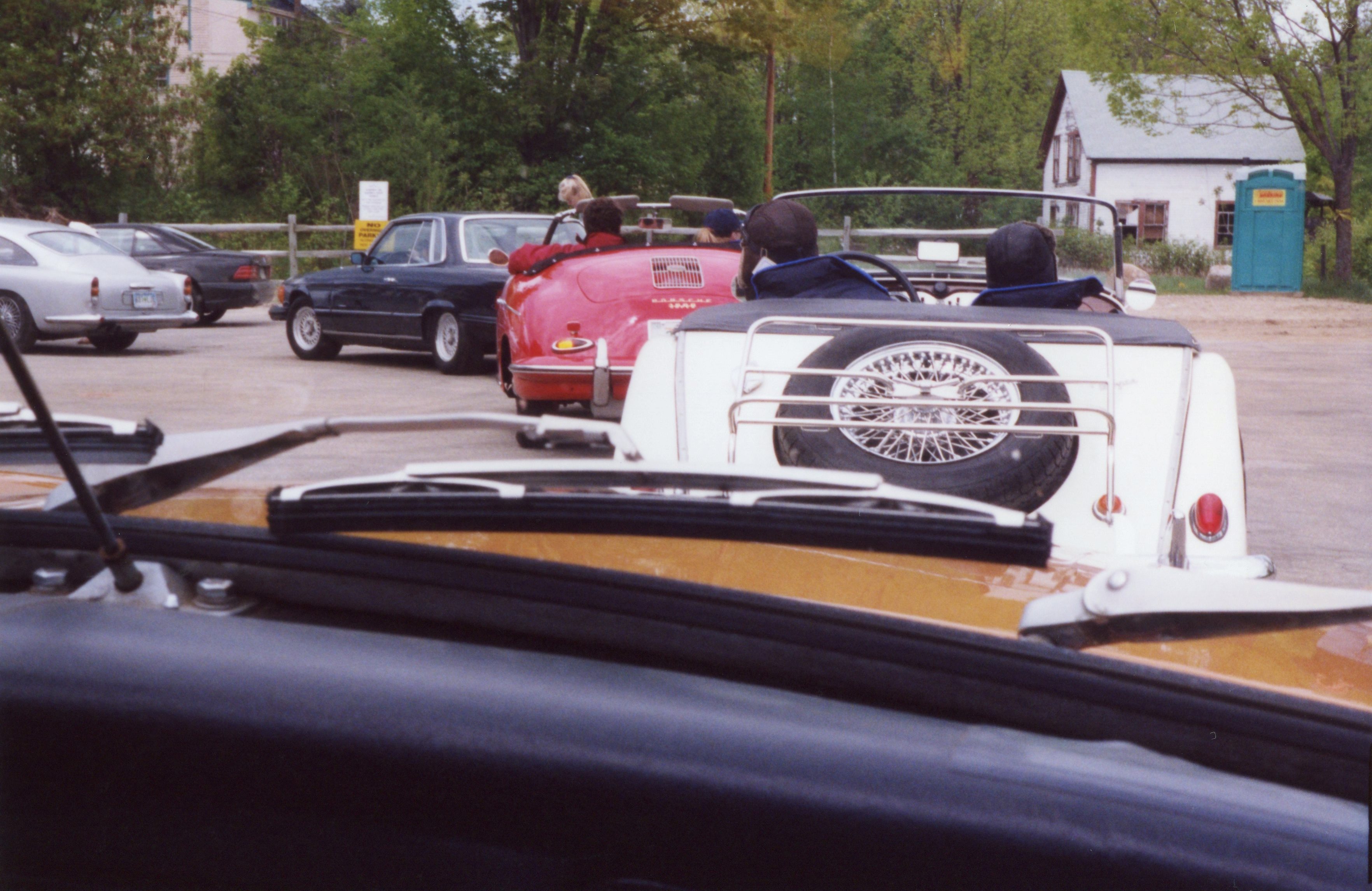
Typical queue waiting for our time out
And this was the line behind us
The future Mrs. Reina takes her turn behind the wheel of the B
The return trip was uneventful. I kept the MG for the remainder of 2001, but with the BMW Isetta finally being show ready, I wanted to focus on only one collector car. Besides, the newish ’93 Mazda Miata in the garage offered plenty of sporty top-down driving whenever I wanted, so in the spring of 2002, I sold the B for exactly what I paid for it.
Shortly after the conclusion of the 2001 rally, Steve and Carol relocated to California. Due in large part to our geographical separation, it would be another four years before we again entered a vintage rally together, driving a yet-to-be-purchased vehicle. Stay tuned for that story.
Beautiful backdrop for classic car lineup
Dave shows all of us what that Mini can do (he WON the competitive driving award this year)
Big Chrysler almost looks at home among the sports cars
Two M-B 300SL roadsters sit it out
The best of Britain: Jaguar E-Type and Aston Martin DB-6
Drizzle required top-up, no quick job in the MG
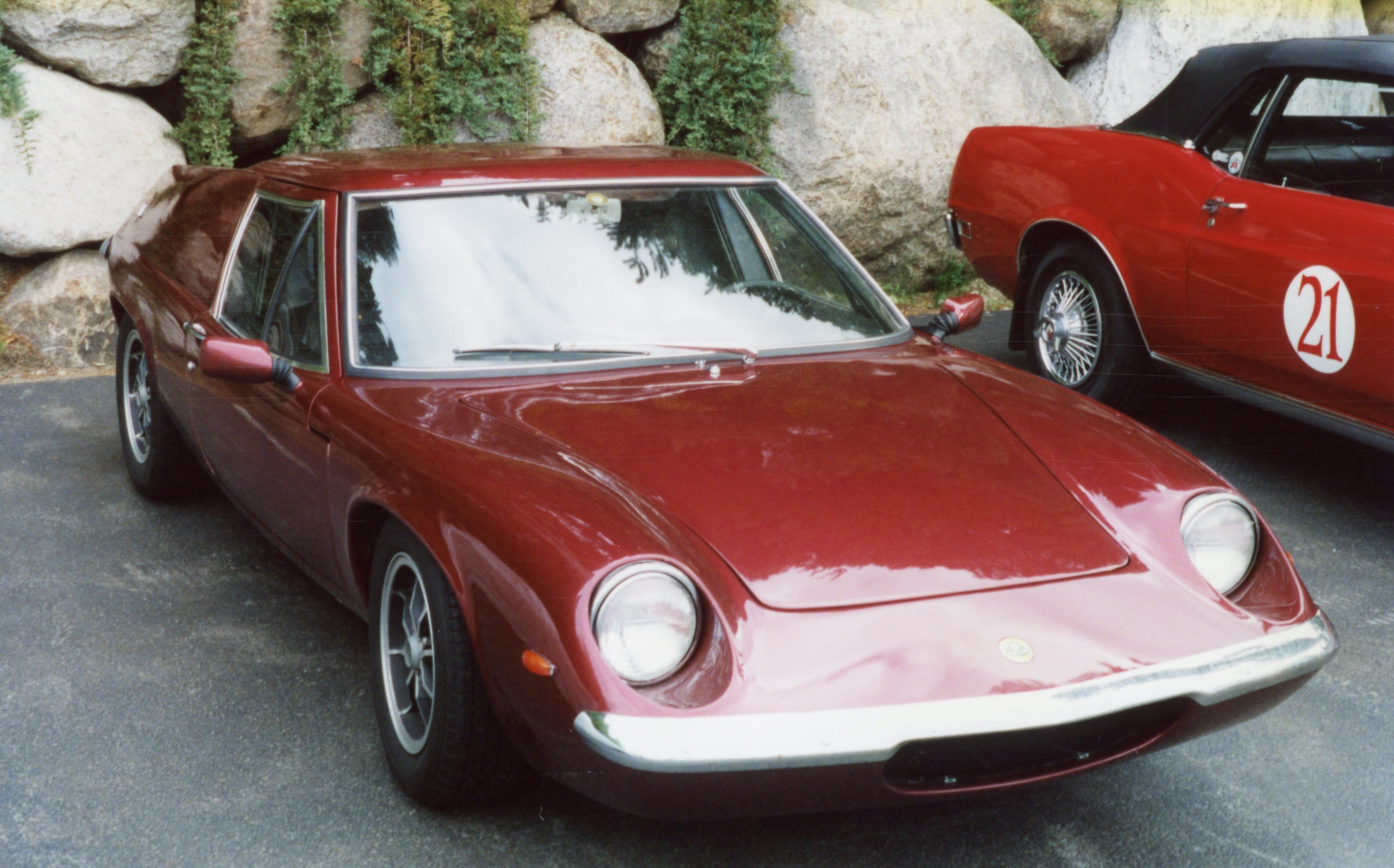
Lotus Europa
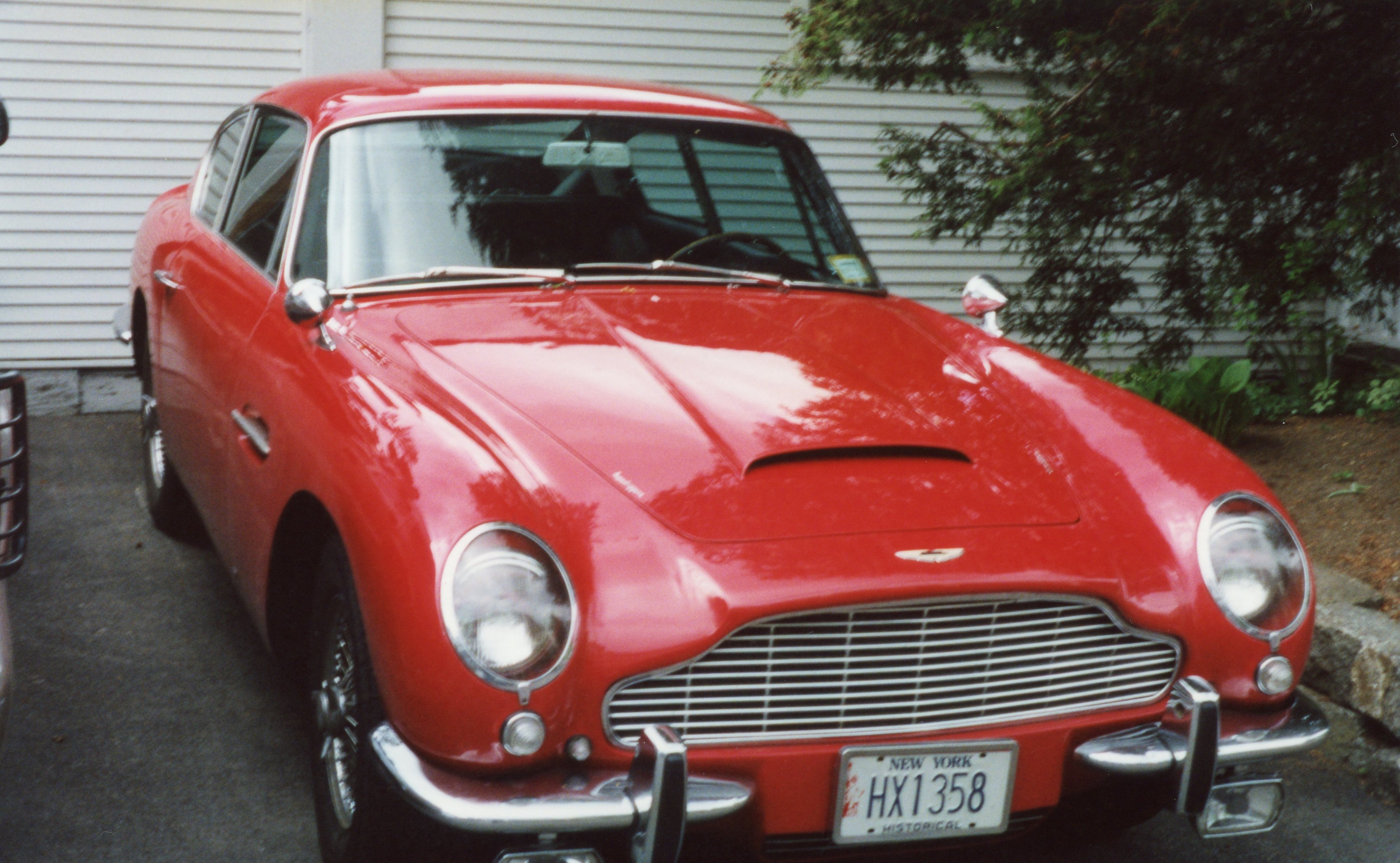
Aston Martin DB-5
Alfa Romeo GTV #09
Alfa Romeo GTV #39
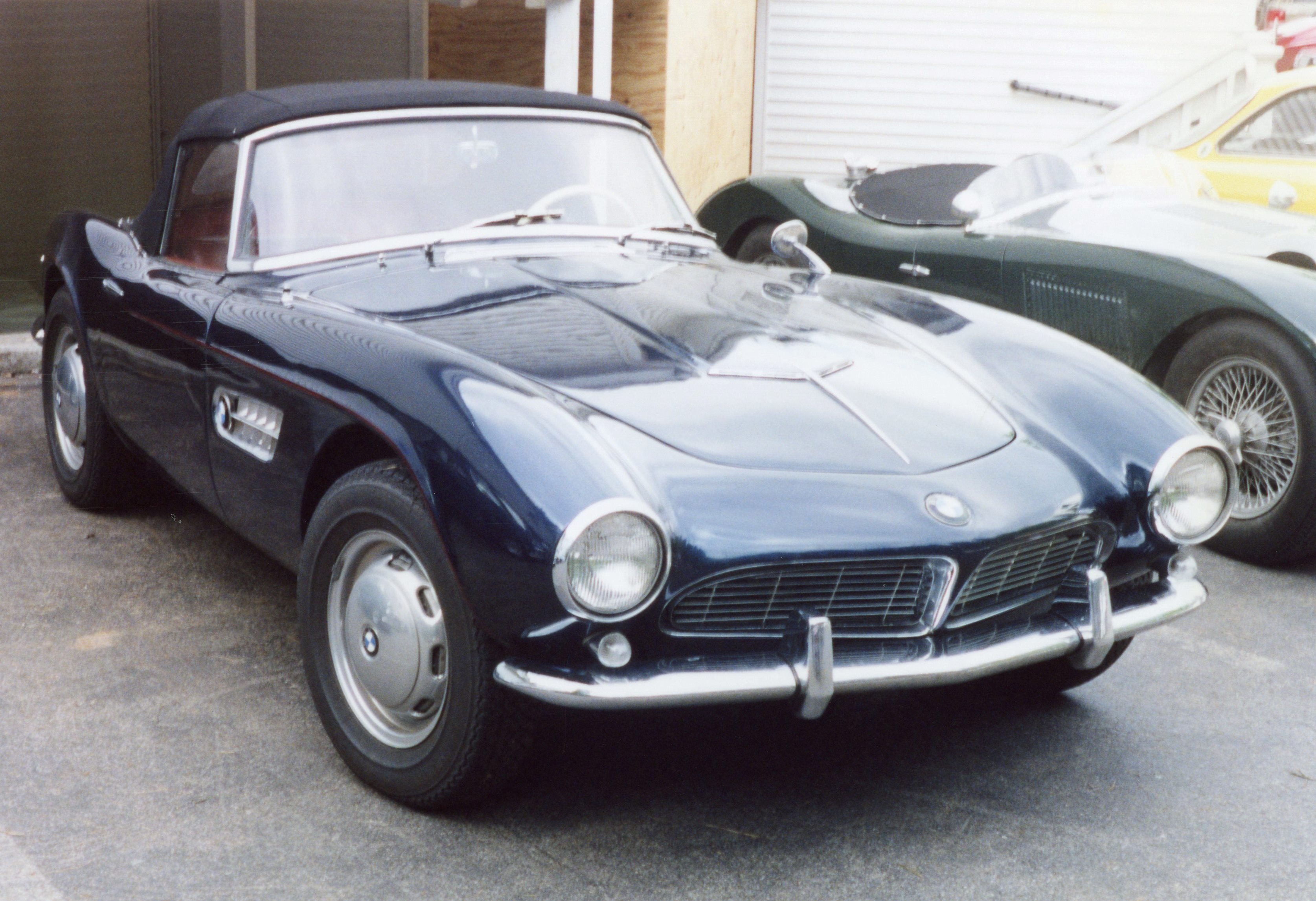
BMW 507
Dave Allison’s Austin Mini
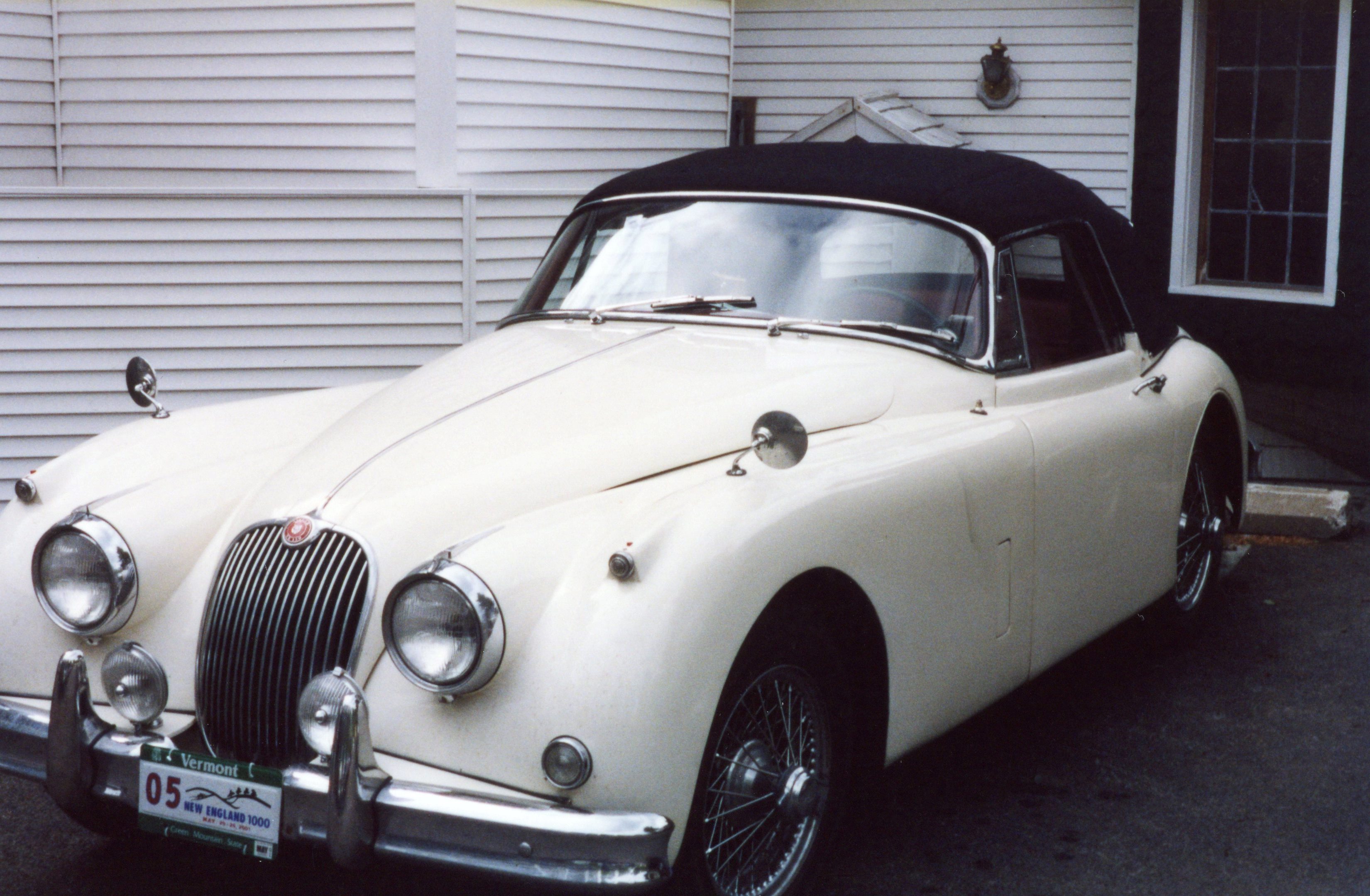
Jaguar XK-150
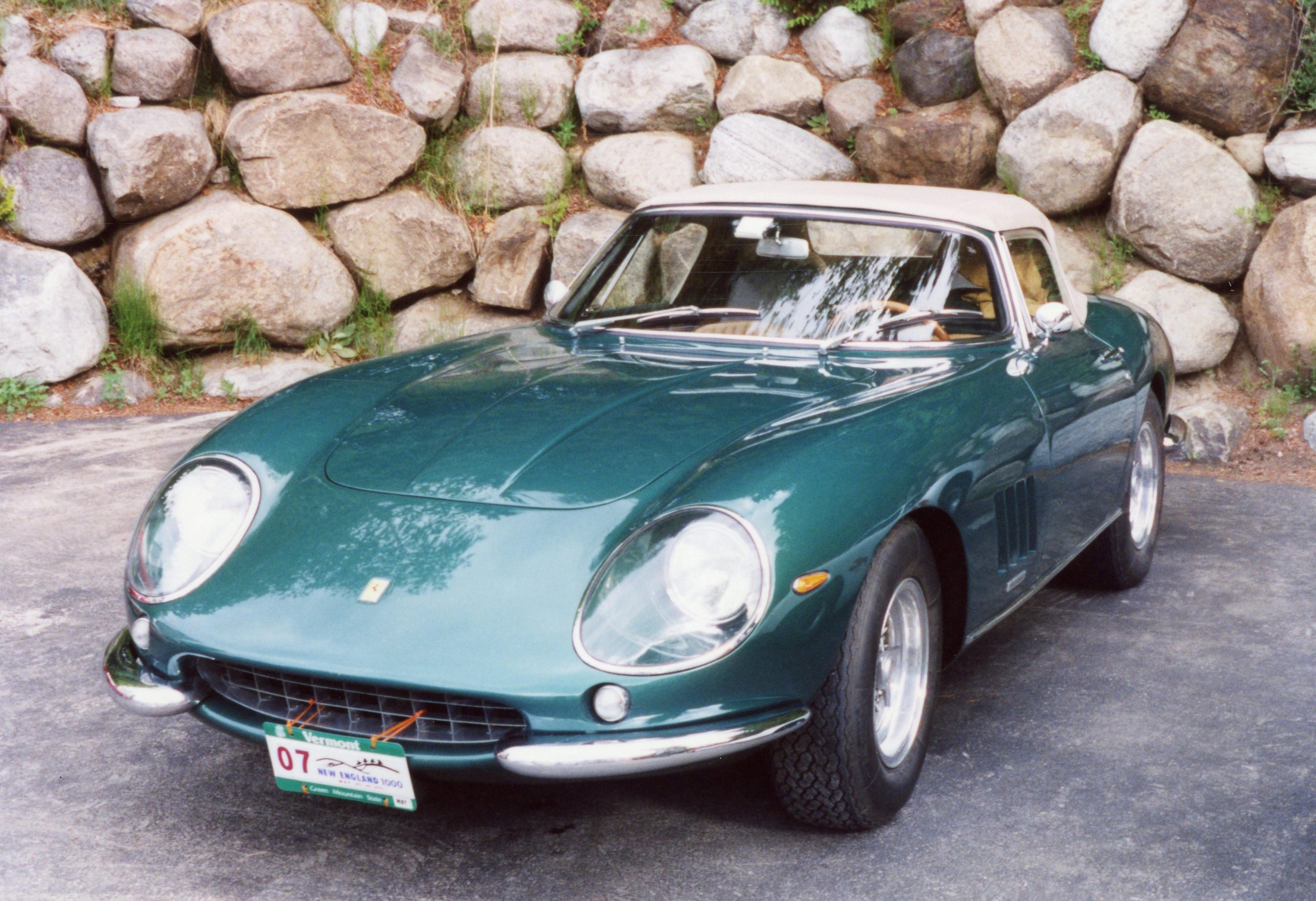
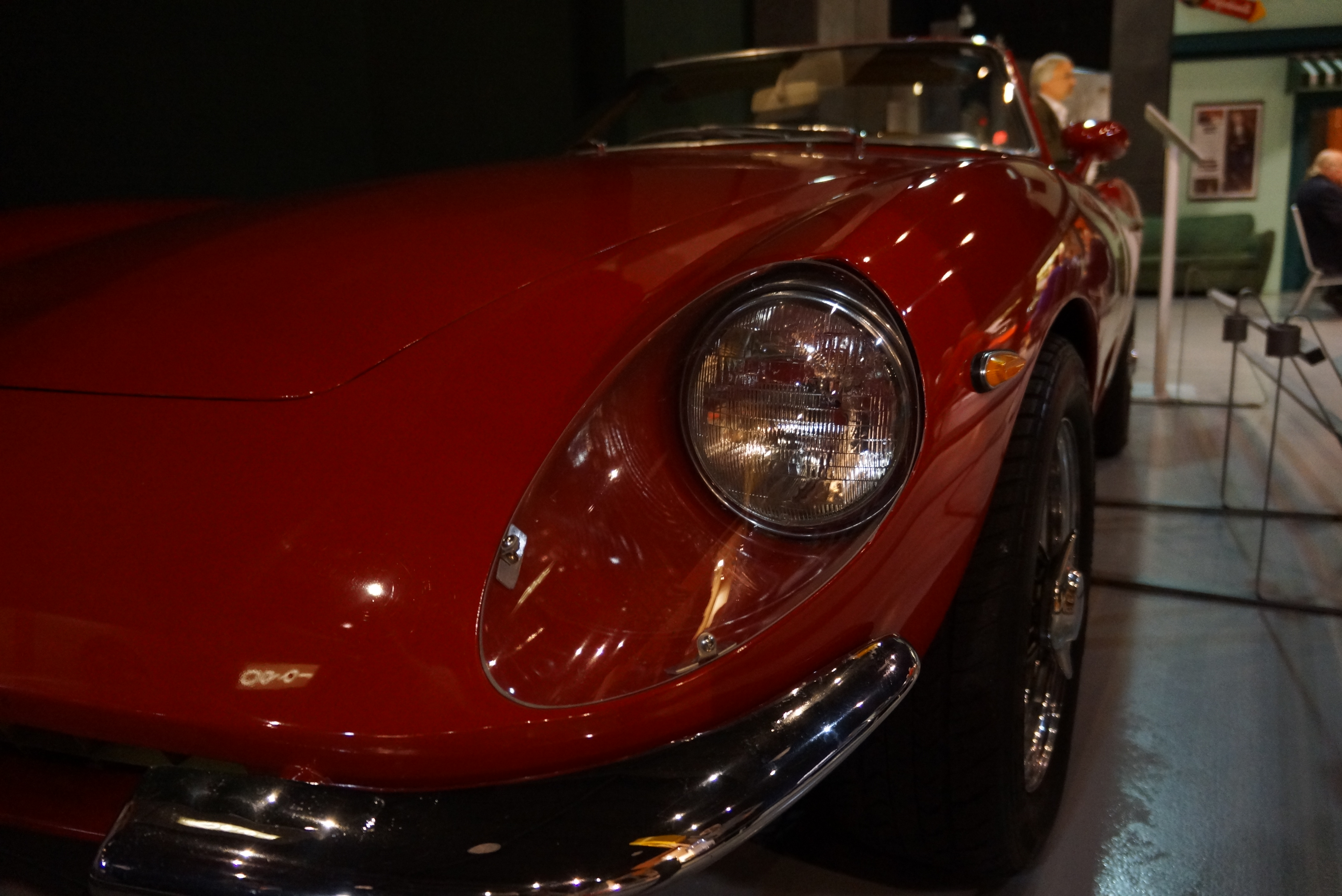
Ferrari 275GTB/4 NART spider
Porsche 356
Hard to believe, but this Maserati Mistral just passed our MGB
On the evening of November 18, 2016, the AACA Museum in Hershey PA officially opened its “Amore della Strada” Italian machinery exhibit with a reception at the museum. The public was invited to attend, and turnout was large, making for crowded aisles. The doors opened at 6pm, and your $20 admission included antipasti, beer, and wine. Those who owned cars on display were admitted “gratuito”.
Italian cars come in colors other than red!
There were approximately 20 Italian cars, and perhaps a dozen or so Italian motorcycles. The museum is arranged in such a way that there was no practical way for the curators to place all the special exhibits together. Therefore, they were arranged in smaller groups of 2, 3, 4, or more, and placards with each vehicle provided sufficient history regarding the make and model. Owners who were loaning their wares for the five-month duration of the show were dutifully acknowledged. (Last week’s blog entry covered this author’s drive to deliver his ’67 Alfa Romeo GT 1300 Junior to the exhibit.)
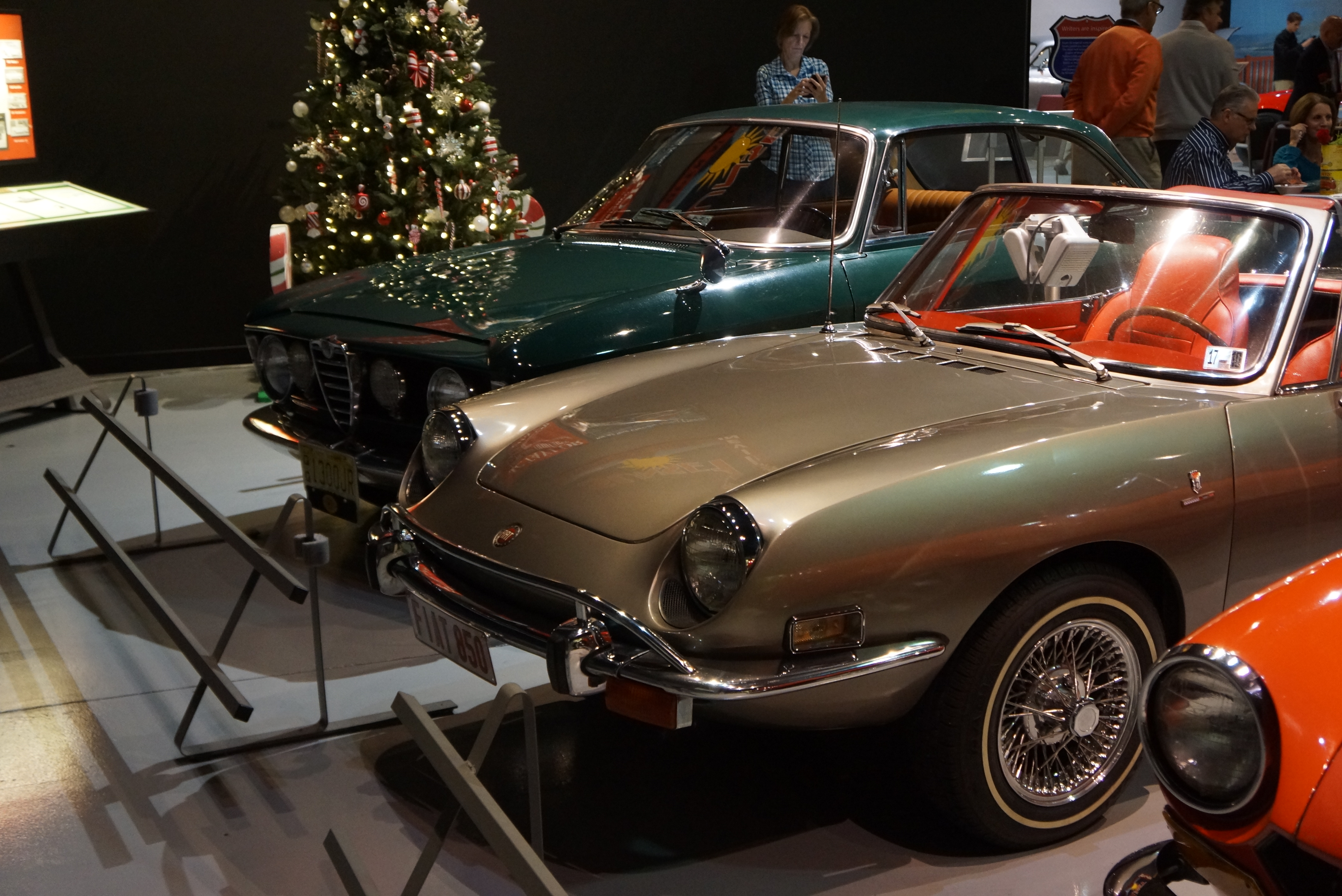
Fiat, Alfa, and Christmas tree
Fiats and Alfa Romeos seemed to comprise the bulk of the vehicle displays, and some might agree with me that it was a refreshing change of pace for an “Italian Car Show” to NOT be dominated by late-model supercars from the Big 3 of Ferrari, Lamborghini, and Maserati. (Of these three makes, I counted only two Ferraris.)
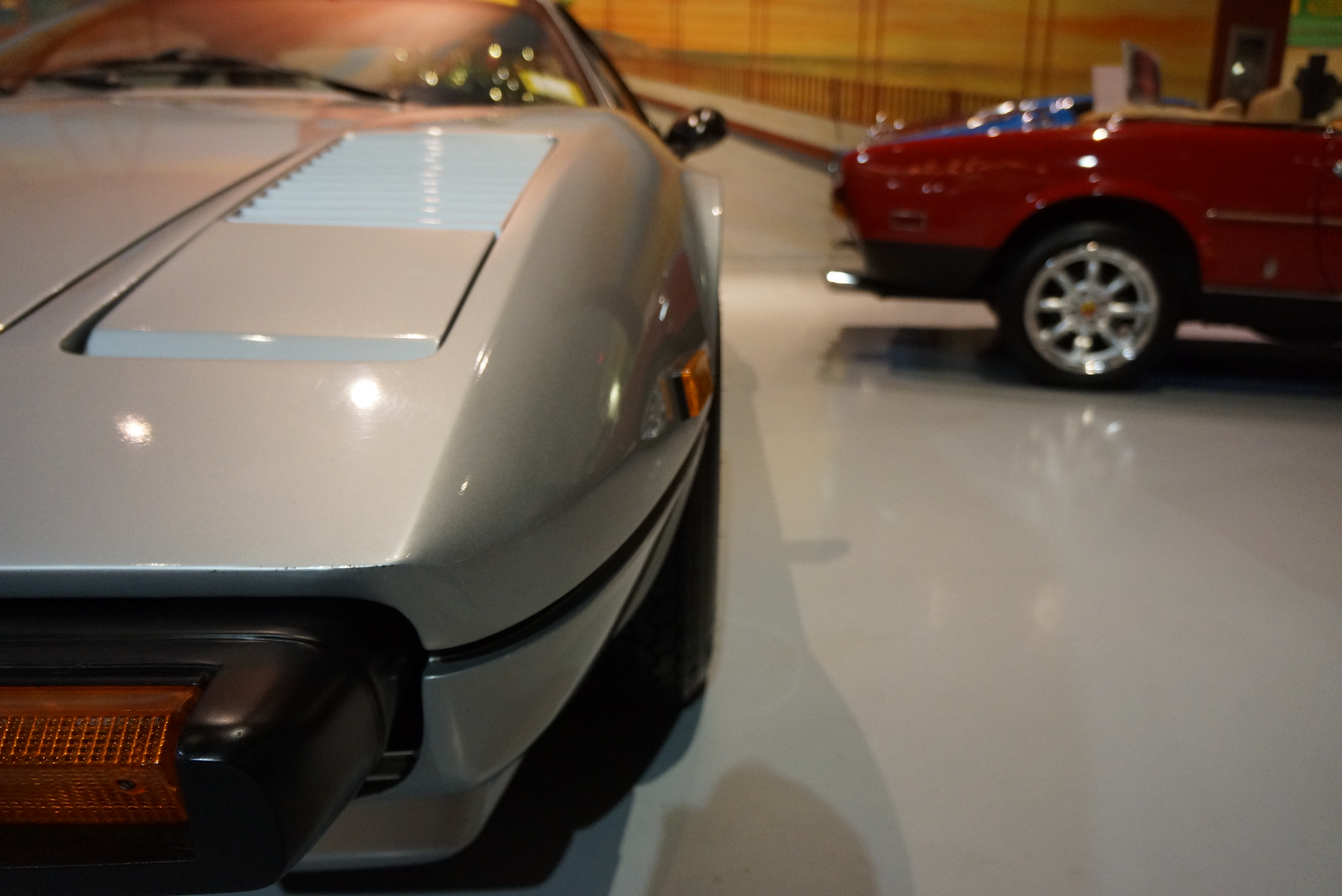
Ferrari 308GTB shares floor space with modified Fiat 124 Spider
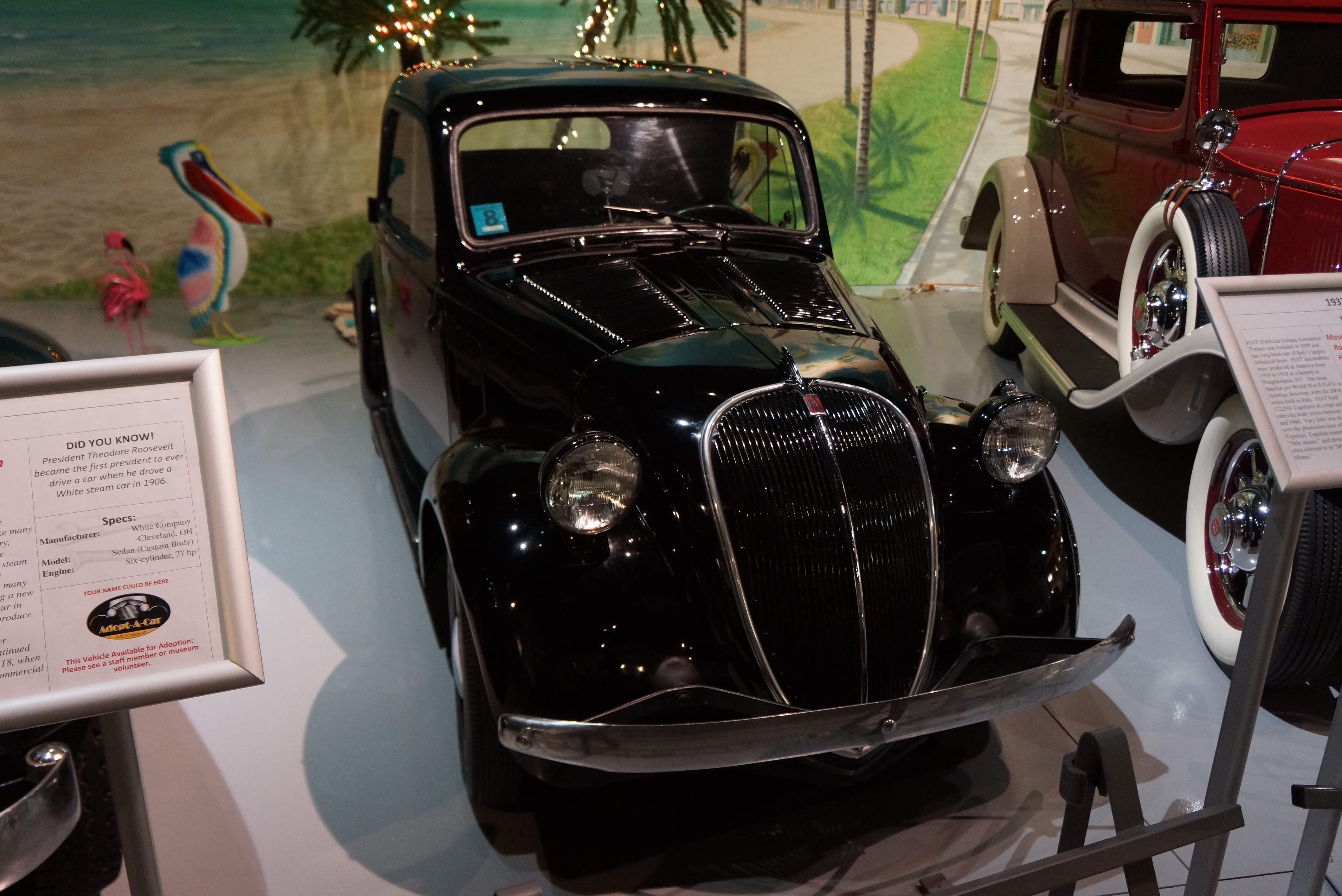
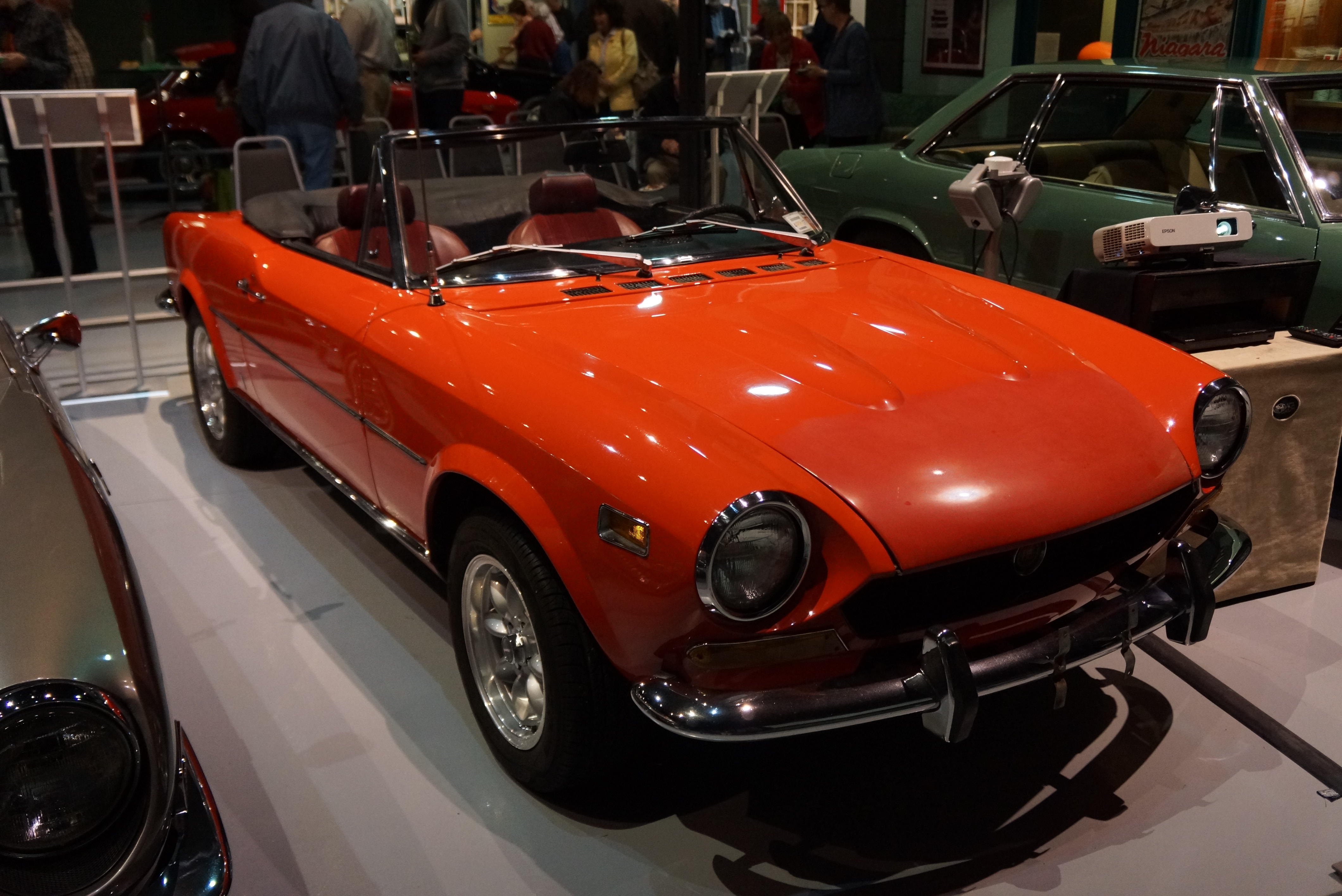
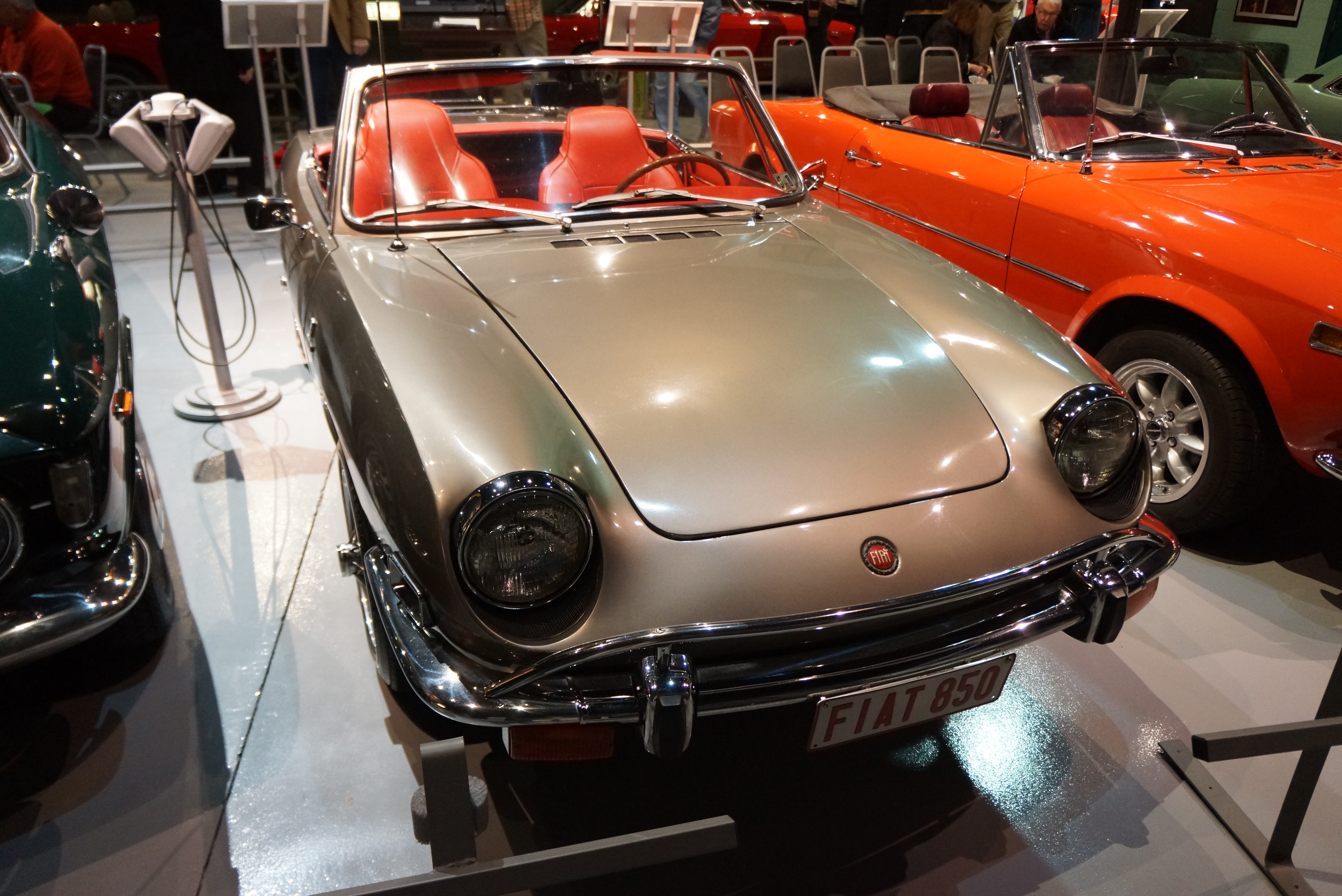
Among the Fiats, we saw three 124 Spiders, two X1/9s, and an 850 Spider. The X1/9s were a study in contrasts, as the bright green one was a first year example wearing the original bumper-less design, while the white one from 1987 wore no Fiat badges at all, as it was manufactured and sold by Bertone, and badged as such, since Fiat left the U.S. market after 1982. The only Italian prewar car on the floor was a delightful 1937 Fiat Topolino (Little Mouse).
Adorable 1937 Fiat Topolino (owned by AACA Museum)
1974 Fiat X1/9 – note lack of battering ram bumpers
1987 Bertone X1/9, one of the last of the breed
Nose of ’87 X1/9 wears this in place of Fiat badge
Early chrome bumper 124
Later 124 with bumpers removed
Fiat 850 Spider
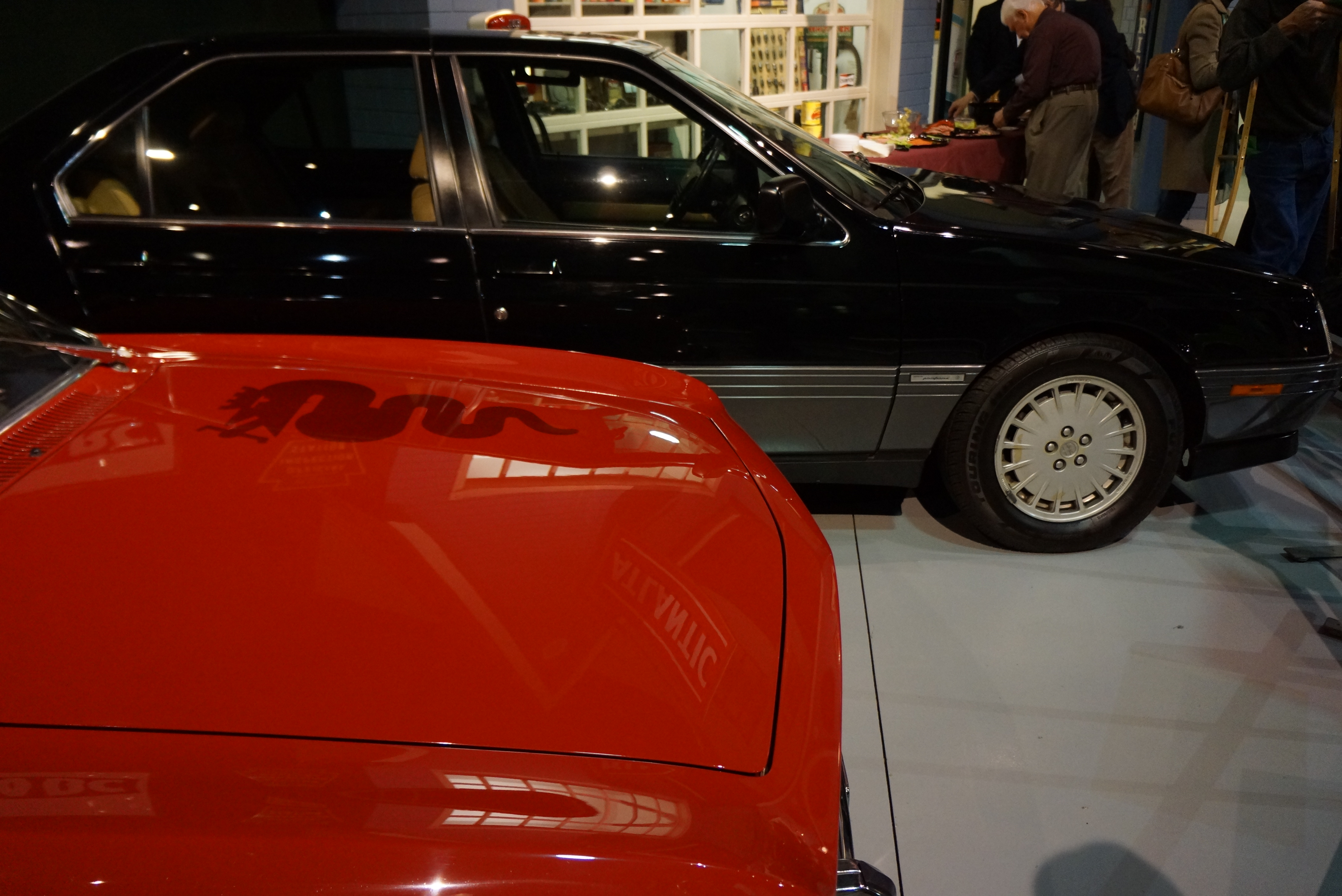
The four Alfa Romeos included two Giulia coupes, one early step-nose and one 2nd generation design, a rare Montreal Coupe (with a factory V8), and the last Alfa sold in the U.S. market (until Sergio’s recent resurgence), the large front-wheel-drive 164 sedan.
This ’67 has step-nose front
This ’74 has redesigned front
Owners Ed and Shayna Geller with their stunning Alfa Montreal
Alfa GTV in red, Alfa 164 in black. Snake eats man; it’s part of the Alfa legend.
Yes, there were speeches too
The show included vehicles that required an explanation how they passed the entrance exam, as two of them had big American V8 engines, and one had a British 4-cylinder lump. The DeTomaso Longchamp and Italia Omega are vehicles belonging to a class long known as ‘hybrids’ (decades before that term was used to describe a gas/electric vehicle).
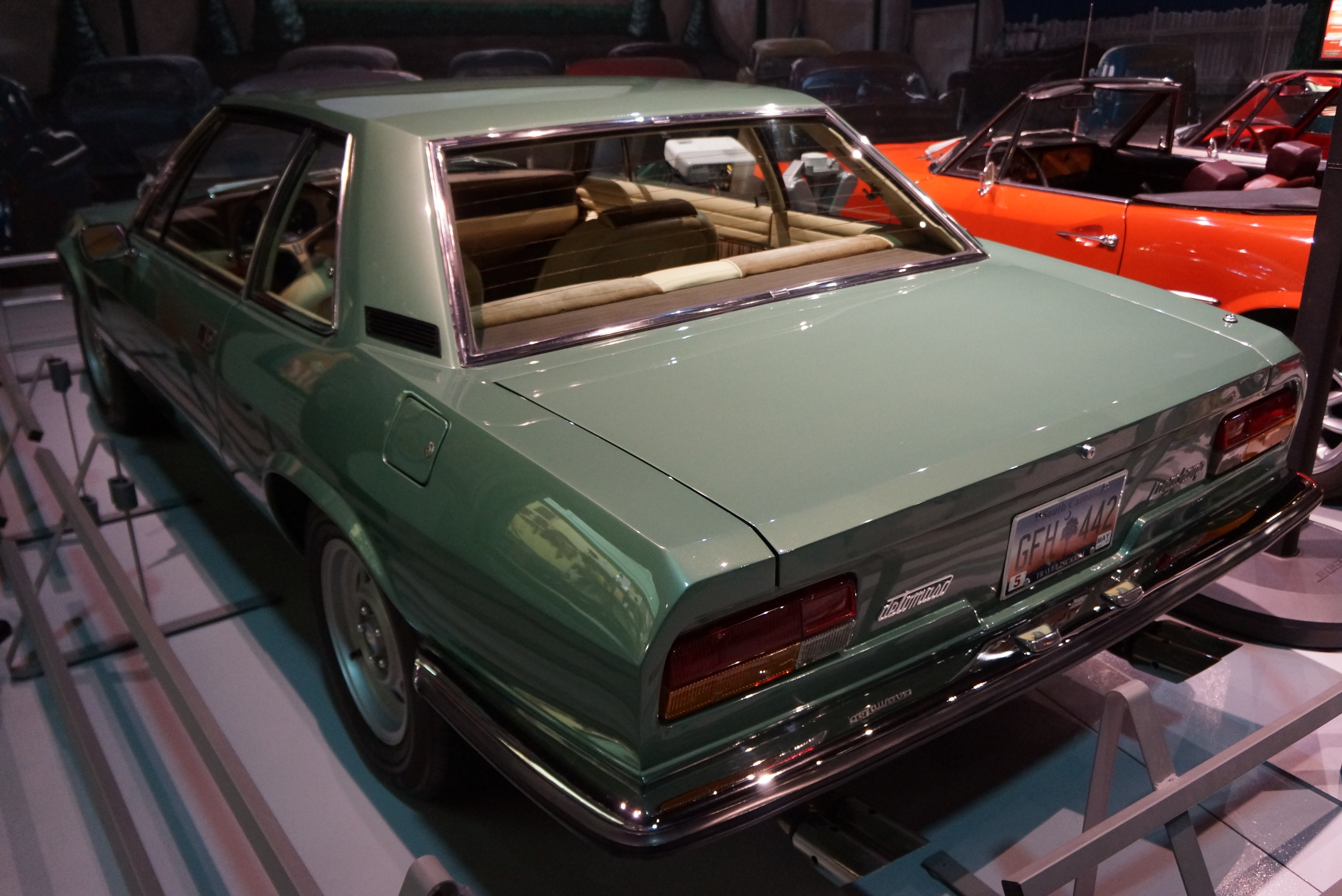
Most car aficionados have heard of the DeTomaso Pantera, sold here by Lincoln-Mercury dealers in the early 1970s. The Longchamp is the squared-off, four-seat sister to the Pantera. The one on display featured a Ford 351 Cleveland engine mated to a 3-speed automatic. I’ve seen many a photo of Longchamps, and this was the first one I’ve ever seen in the metal.
DeTomaso Longchamp
Longchamp rear shows hard edges
The car labeled as a 1967 Italia Omega is more familiarly known to me as an Intermeccanica Italia. Based on my reading of the car’s placard, the history of this car company is convoluted at best. (Indeed, none of the several import-based compilation books in my library make any mention at all of this company.) The vehicle in the museum was an attractive convertible, using a front-mounted Ford 302 V8 paired with a 4-speed manual transmission.
Italia Omega has LONG hood
Interior shows Italian sumptuousness
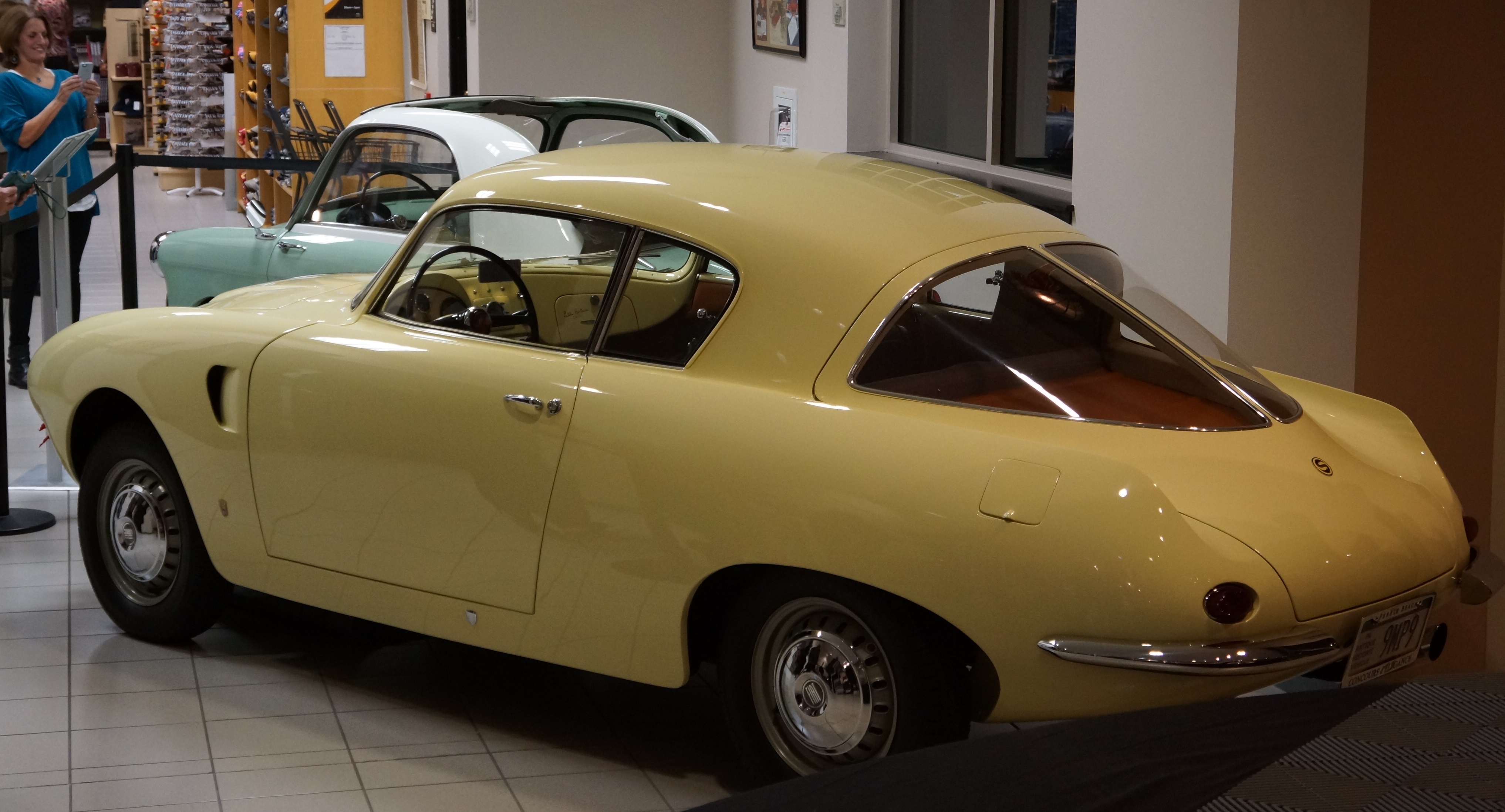
The 1961 Triumph Italia on display is one of 329 built. While the design is certainly in the Italian mold, the sheetmetal hides what is essentially the drivetrain and chassis of a stock Triumph TR-3. One of the outstanding features of the Italia is that it is the handiwork of a young Giovanni Michelotti, who would later pen the restyle of the TR-4 into the TR-6.
1961 Triumph Italia, with TR-3 mechanicals
Scan through the photos below for shots of other vehicles which were on display. (And as always, click on any of the photos to enlarge them.)
Among the motorcycles, which are not my primary interest, I could not help but be drawn to the 1958 Iso Moto, built by the same company that originally designed the Iso Isetta. Like the Longchamp, it was a first for me to actually see one of these in person.
The “Amore della Strada” exhibit runs through April 22, 2017. There’s plenty to see at the Museum besides the Italian stuff. If you’ve never made the trip, this is a good excuse to do so. If you have, the Italian cars are a nice addition to what you may have seen before.
1960 Fiat Autobianchi
1954 S.I.A.T.A, with Fiat 8V engine
1957 Vespa 400, designed in Italy but built in France
1971 O.T.A.S. 820 Grand Prix, built on Fiat 850 chassis
This 1954 Fiat 1100 wears custom bodywork reminiscent of the Alfa B.A.T. cars
Unlike the cars, the bikes fit into one room
Yes, it’s an ISO; same parent company as the Isetta and the Griffo
From the ’60s through the ’90s, the family resemblance is there
The New Jersey Chapter of the Alfa Romeo Owner’s Club held an informal Sunday cruise during the afternoon of November 6, 2016. Five club members, led by our chapter head Enrico Ciabattoni, gathered at our starting point at the PNC Bank Arts Center in Holmdel NJ. We pushed off around 2pm and cruised to various spots in Monmouth County, including Atlantic Highlands, Sandy Hook, and Colts Neck.
Alex and Carly’s ’66 Duetto
John’s 164
The oldest car in today’s contingent was the 1966 Duetto driven by Alex and Carly. Richard’s 1967 GT 1300 Junior was just a year newer. The eighties were well-represented by two GTV6s, Enrico’s and Bill’s. The newest Alfa for today was John’s beautifully-kept 164. Alas, no new Giulia sedans showed up to surprise us. However, Enrico’s wife and daughter did a commendable job driving the sweep car in their Honda Odyssey. Thanks, ladies!
Richards’ ’67 GT 1300 Jr.
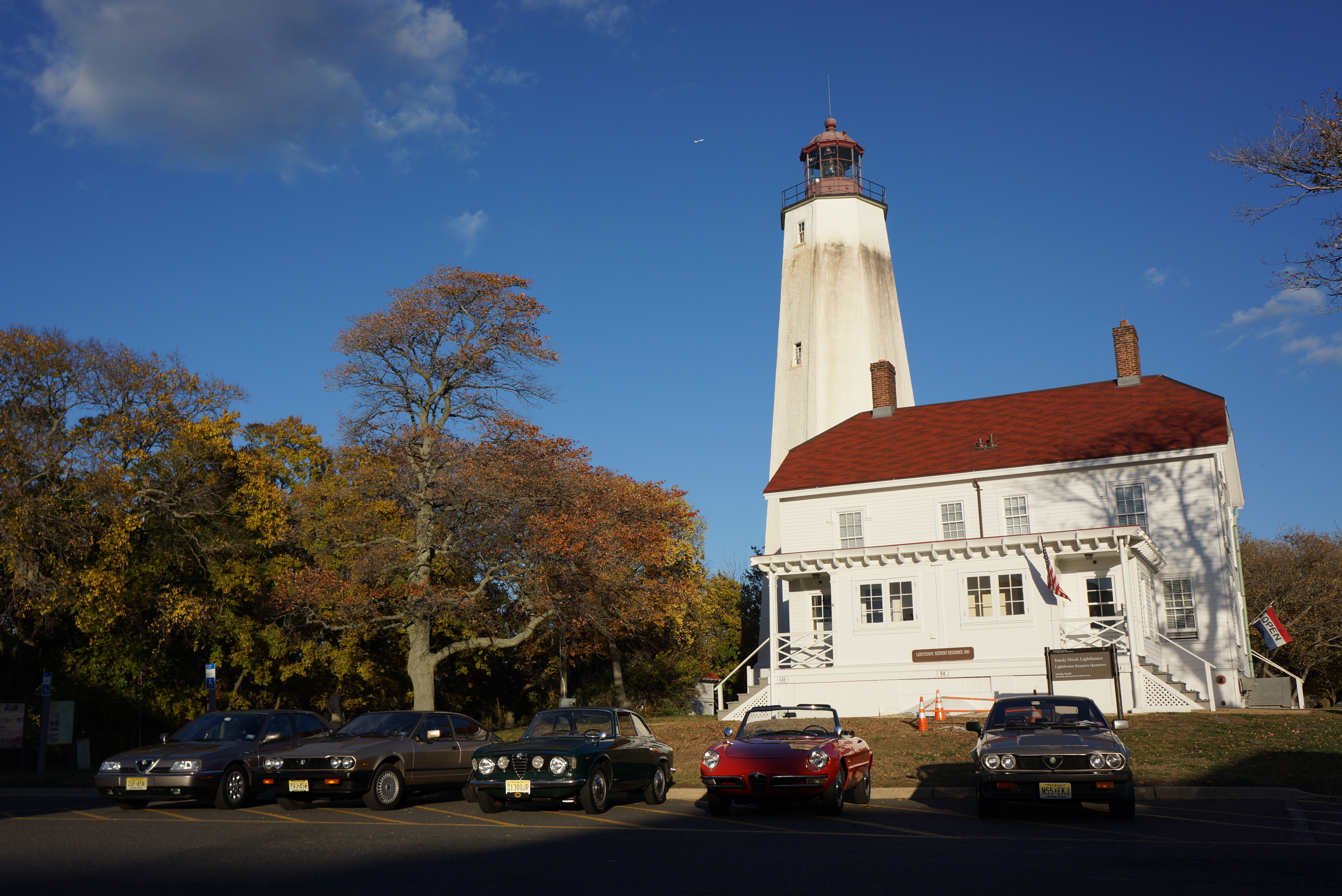
Plenty of time was allotted for photo ops (what with such gorgeous cars!), and a personal highlight was stopping for pictures at the Sandy Hook Lighthouse, the oldest operating lighthouse in the country. The cameras were not always aimed at cars; the vista from atop the Mount Mitchill Scenic Overlook in Atlantic Highlands provided glorious views of the New York skyline and lower bay.
The Alfas line up in front of the Sandy Hook Lighthouse
The tremendous view from the Mount Mitchill Overlook
Our day ended at Delicious Orchards in Colts Neck, which also gave us a chance to pick up some produce (Enrico was spotted heading for the Italian chestnuts). Since it was the first day back on Eastern Standard Time, the rapidly-diminishing daylight had this scribe heading for home before sunset.
The six-cylinder cars hang out together
And you thought Subaru Foresters were small cars….
For those who doubt the reliability of Italian machinery: combined with this morning’s breakfast run, Richard’s Alfa was driven a total of 260 miles today, much of it buzzing along the highways of New Jersey at 70 mph, fending off soccer moms in the SUVs. Not bad for a 49-year-old car.
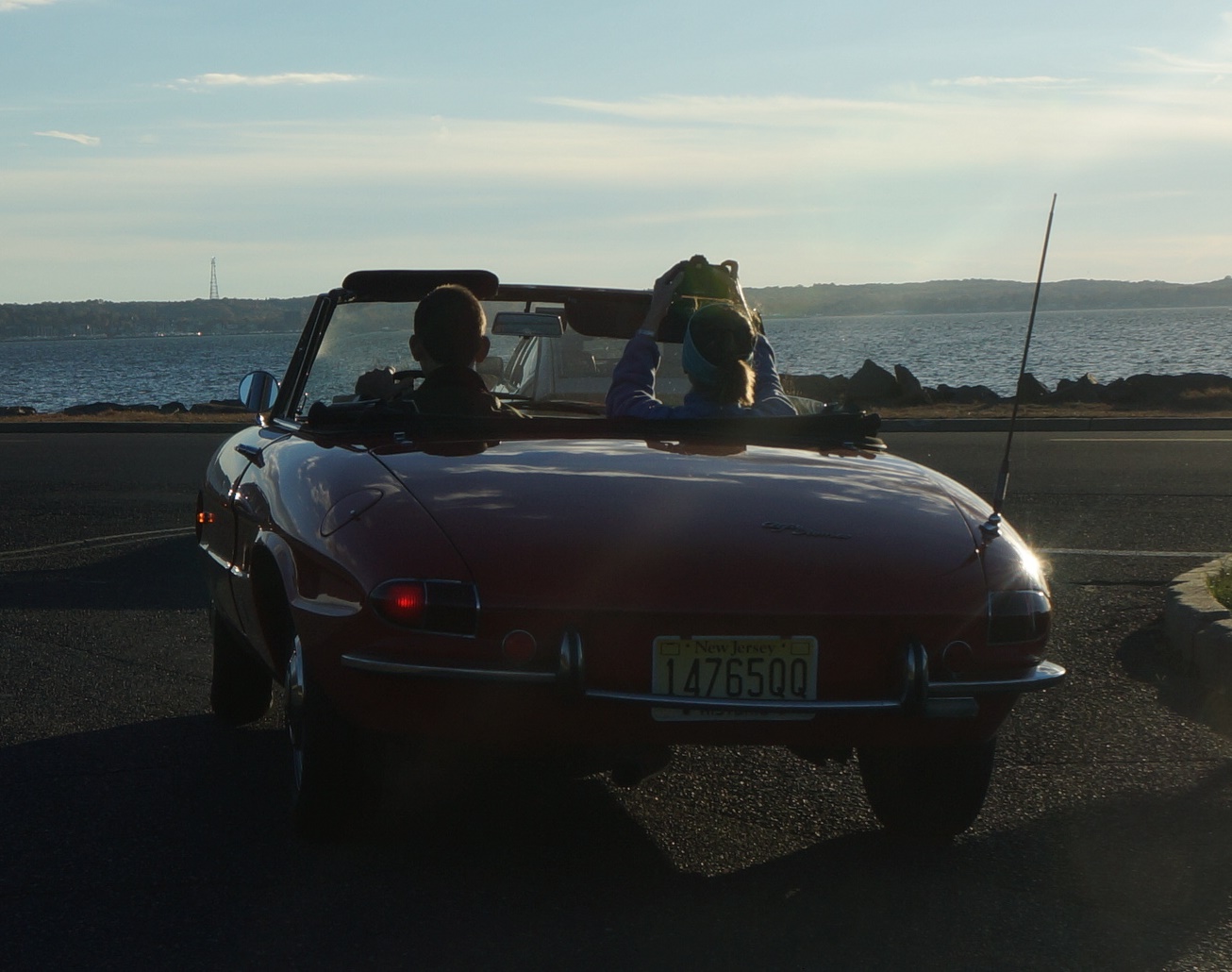
Carly snaps, and has a great line of sight with the top down
It was wonderful to be out with fellow Alfisti and to delight in the sounds of 4- and 6-cylinder engines in full song. We hope to get the group back on the road in early 2017.
The Antique Automobile Club of America (AACA) hosted their Eastern Division National Fall Meet for the umpteenth (61st) time in Hershey PA during the first week of October this year. As someone who has attended “Hershey” at least 25 times over the years, I find myself asking “what is it that keeps drawing the crowds?”
Car Corral merchandise lines up on the perimeter road
After all, as has been reflected in numerous posts here as well as within every publication which covers collector cars, the old car hobby has changed in so many ways. The Internet, obviously, has driven transactions online. The greying of the hobby means that the aging boomers, who may finally have the means to buy that dream car, will buy it not as a project, but as a restored, ready-to-go vehicle, and may pursue that dream at an auction. Younger generations are not showing interest in 25-year-old and older stock vehicles, and frankly may be reluctant to join a club with the word “Antique” in its title.
Bargains still available, you supply the labor to restore
This blog has now been up and running long enough that some annual events are being reported for the second time. And so it is with Hershey. It may be instructive to revisit what was said a year ago: in essence, thanks in large part to its six-decade history, Hershey continues to be the go-to place for cars and parts which can be found in few other places, in person or online.
Two well-known hobby names in attendance
The sheer size of the event, with its combination of old-fashioned flea market, car corral, and judged car show can account for the crowds. (Again this year, the influx of foreigners was huge.) Weather may sometimes play a role (who remembers the Hershey mud?), but even that is a relic of the past, as the entire flea market and corral are on pavement.
Wooden road wheels and steering wheels
There certainly are things to see and do which cannot be duplicated on a tablet screen. For example, Hagerty Insurance, as they did last year, ran a “Search, Build, Drive” contest whereby they would purchase a project vehicle from the Car Corral, and bring it to running, driving condition using parts found in the flea market. And one more small detail: they challenge themselves to accomplish this within the 4 days of Hershey. You can read more about it here.
The Hagerty Team hard at work on this year’s Ford Model A project
Due to personal commitments, I was unable to attend Saturday’s judged meet this year. I did attend the RM-Sotheby auto auction, held about a mile away at the Hershy Lodge, which will be covered as a separate blog post.
Caffeine oasis in the flea market
The bulk of this post will be a report on a random sample of cars, domestic and foreign, in the Car Corral. While there are hundreds of cars for sale, I’m especially drawn to both imports and to orphan makes. Comments about each car follow the photos.
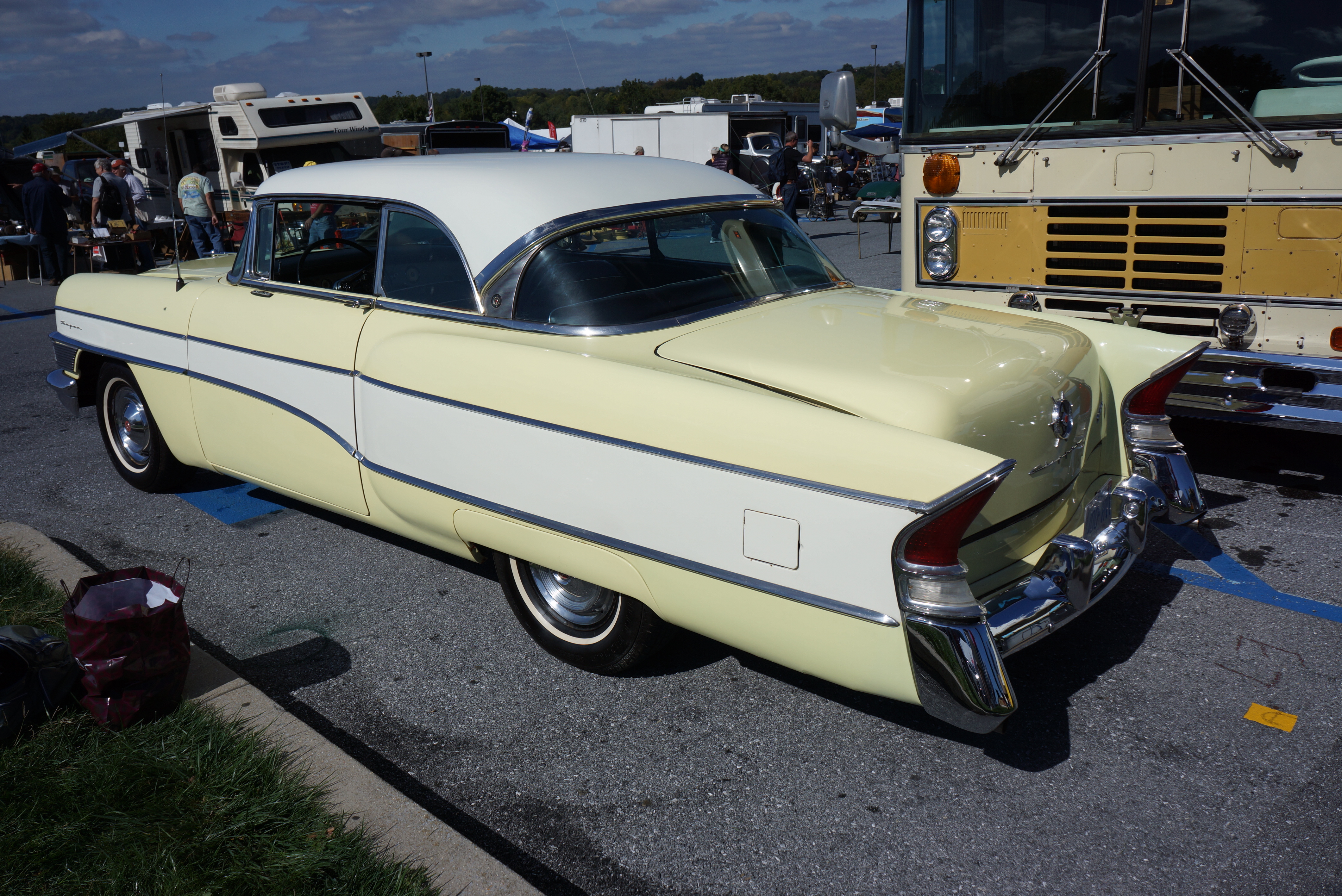
1956 “Clipper by Packard”
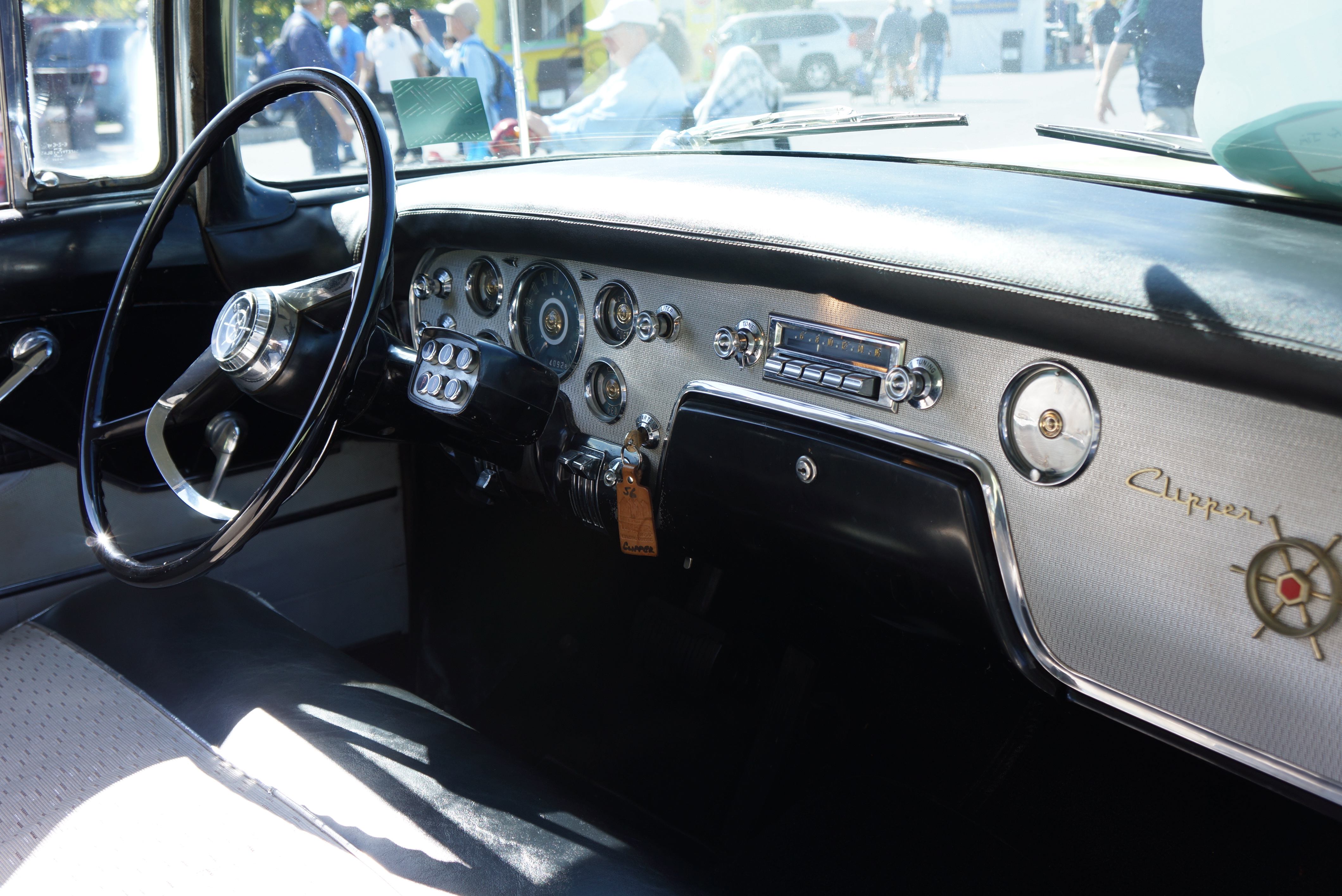
Dig the buttons on a stalk
This 1956 Packard Clipper 2-door hardtop was driven down from Ontario, Canada to the meet. It allegedly had 40,000 original miles, but much of the lower body was wavy with Bondo. The ask was $14,750. If that were Canadian bucks, it would be an even better deal.
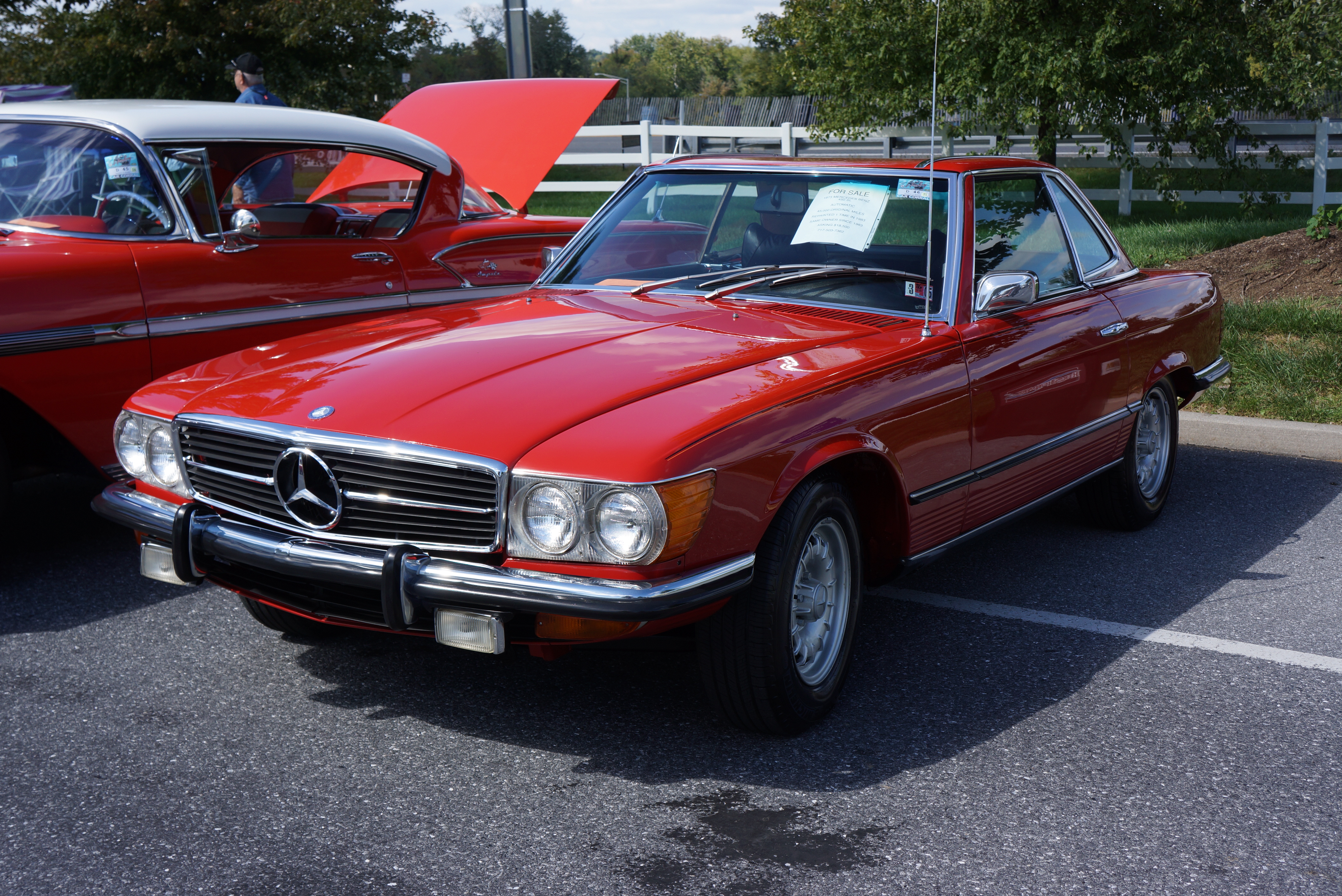
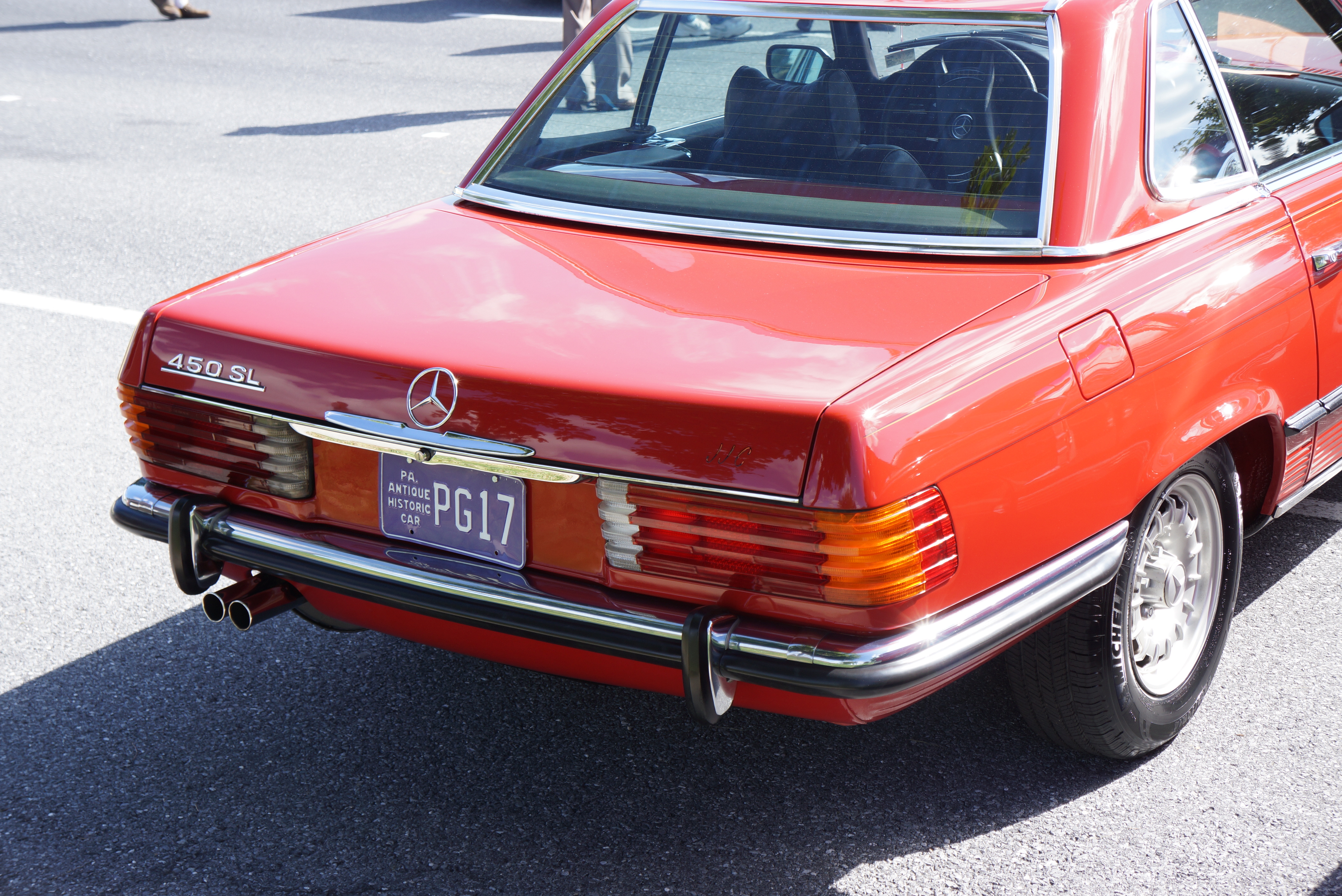
1973 Mercedes Benz 450 SL
Rear bumper as streamlined as front
This generation of the Mercedes-Benz SL (known as the “107” chassis to the devoted) was sold here from 1973-1989. We are so used to seeing them with their diving-board bumpers that we forget how elegant the original design was. This ’73 U.S.-spec car reminds us. This car claimed to have 45,000 original miles, and the owner was asking $18,500.
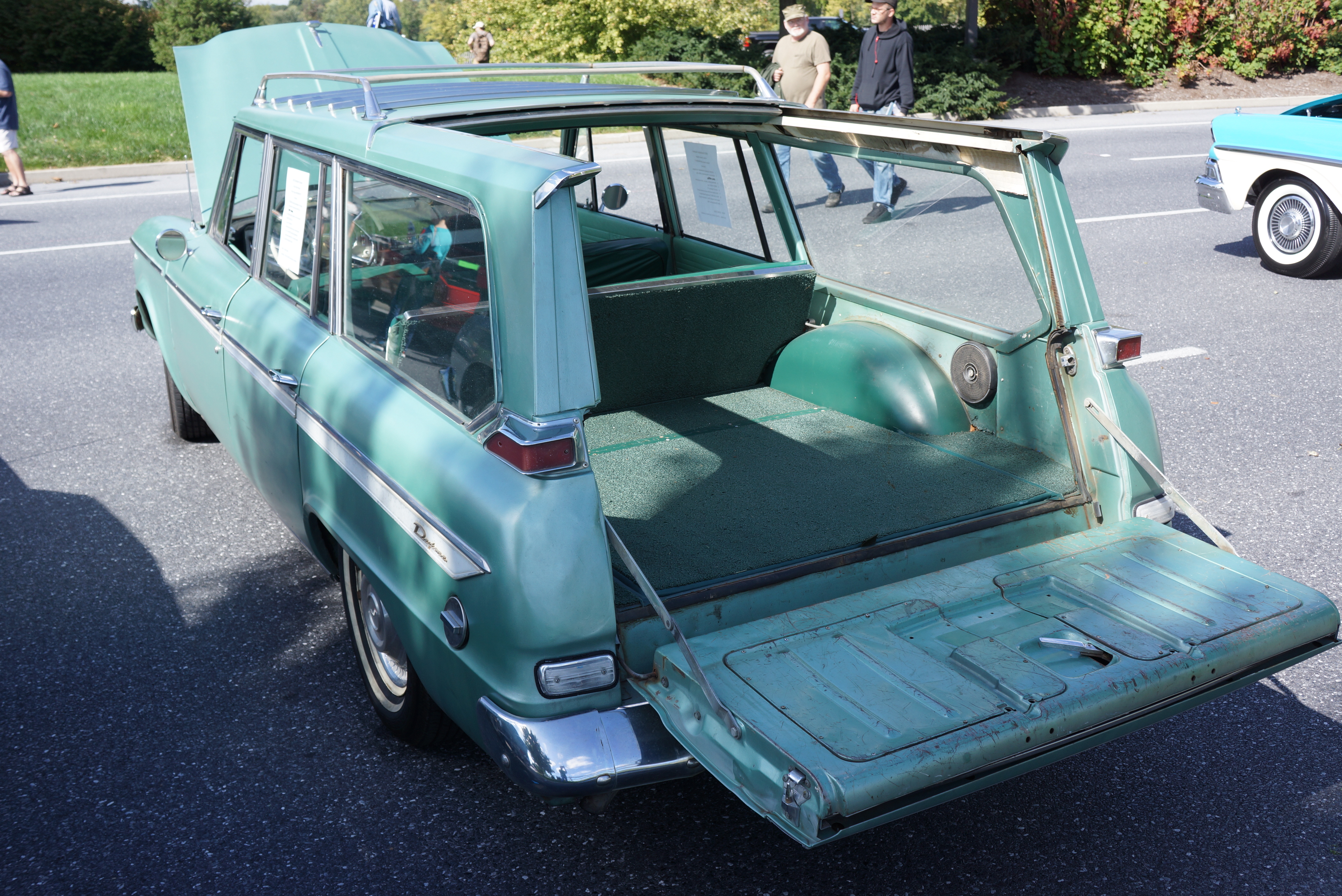
Wagonaire featured sliding roof panel
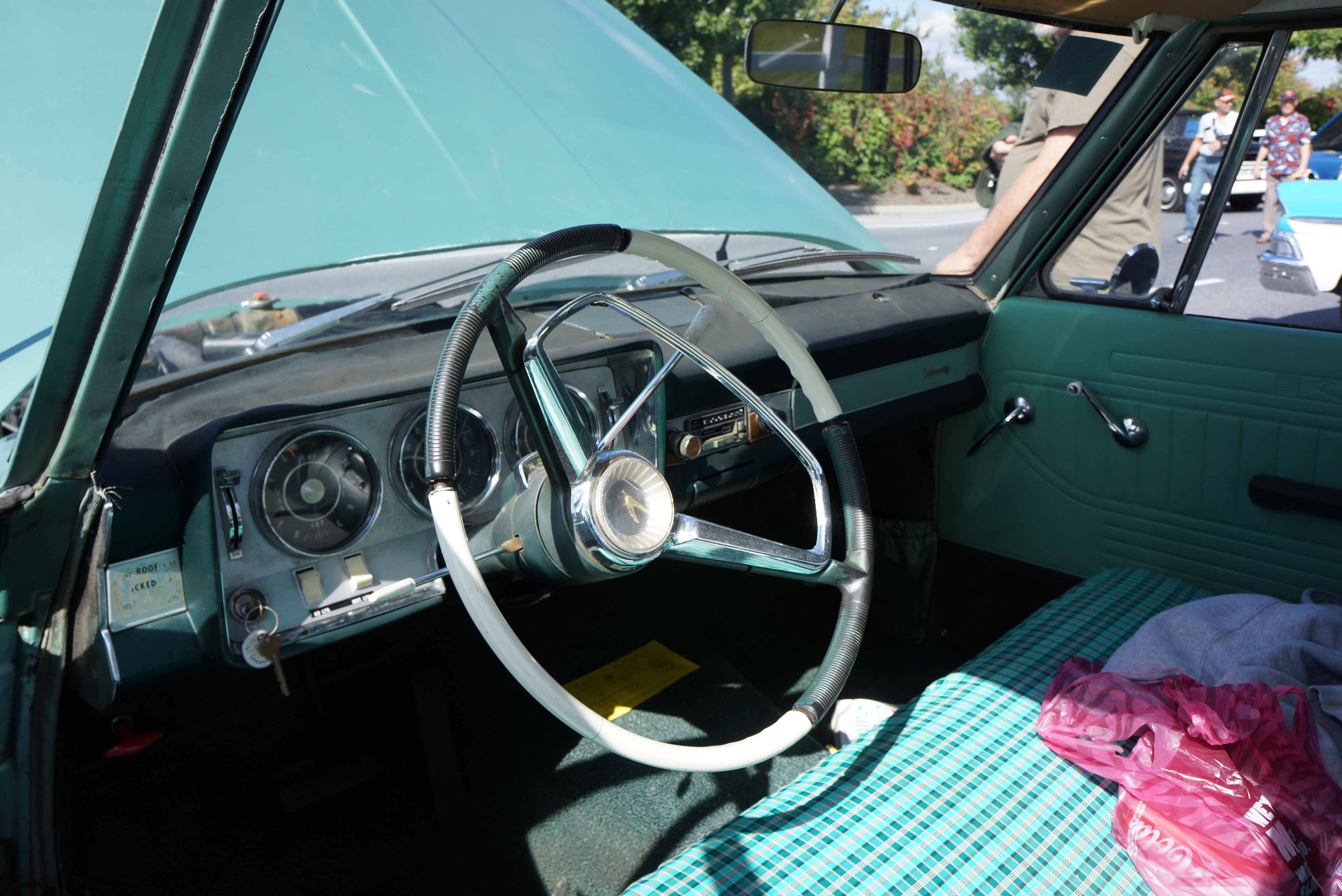
Wagonaire interior
This 1963 Studebaker Wagonaire was rough around the edges, but it looked like it was all there. Price was $7,500 OBO. It was the only one at Hershey.
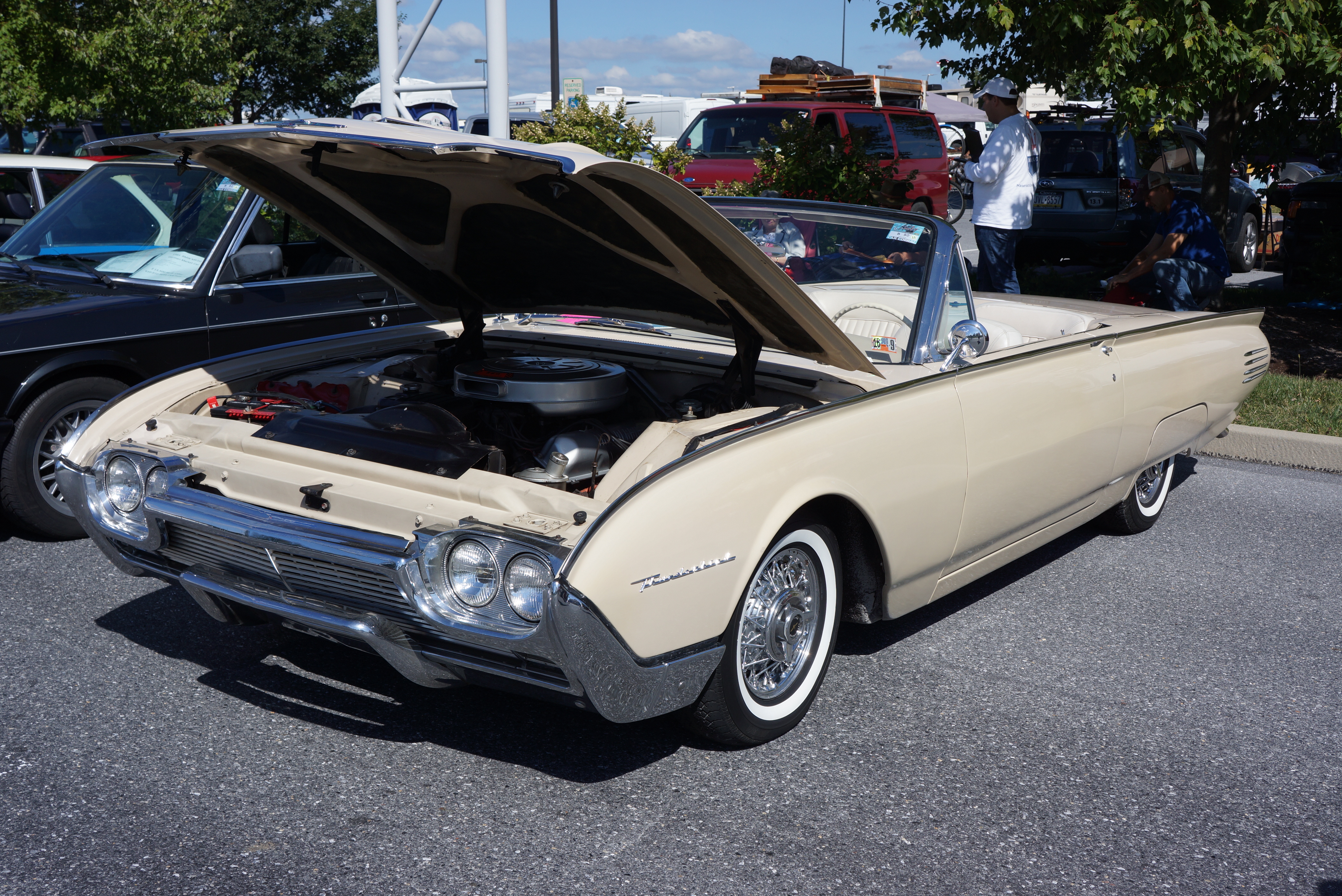
1961 Ford Thunderbird
T-Bird wrap-around dash
This ’61 T-Bird was claimed to be highly optioned with power steering, brakes, top, windows, and seats. It also had wire wheels. The beige-on-beige may not be your first choice, but I liked it. Asking $24,000 “cash! Priced to sell!”
1987 Alfa Romeo Graduate Spider
Alfa dash had gone electronic
The sign on this 1987 Alfa Romeo Graduate Spider gave little info other than “Low miles, $9,900“.
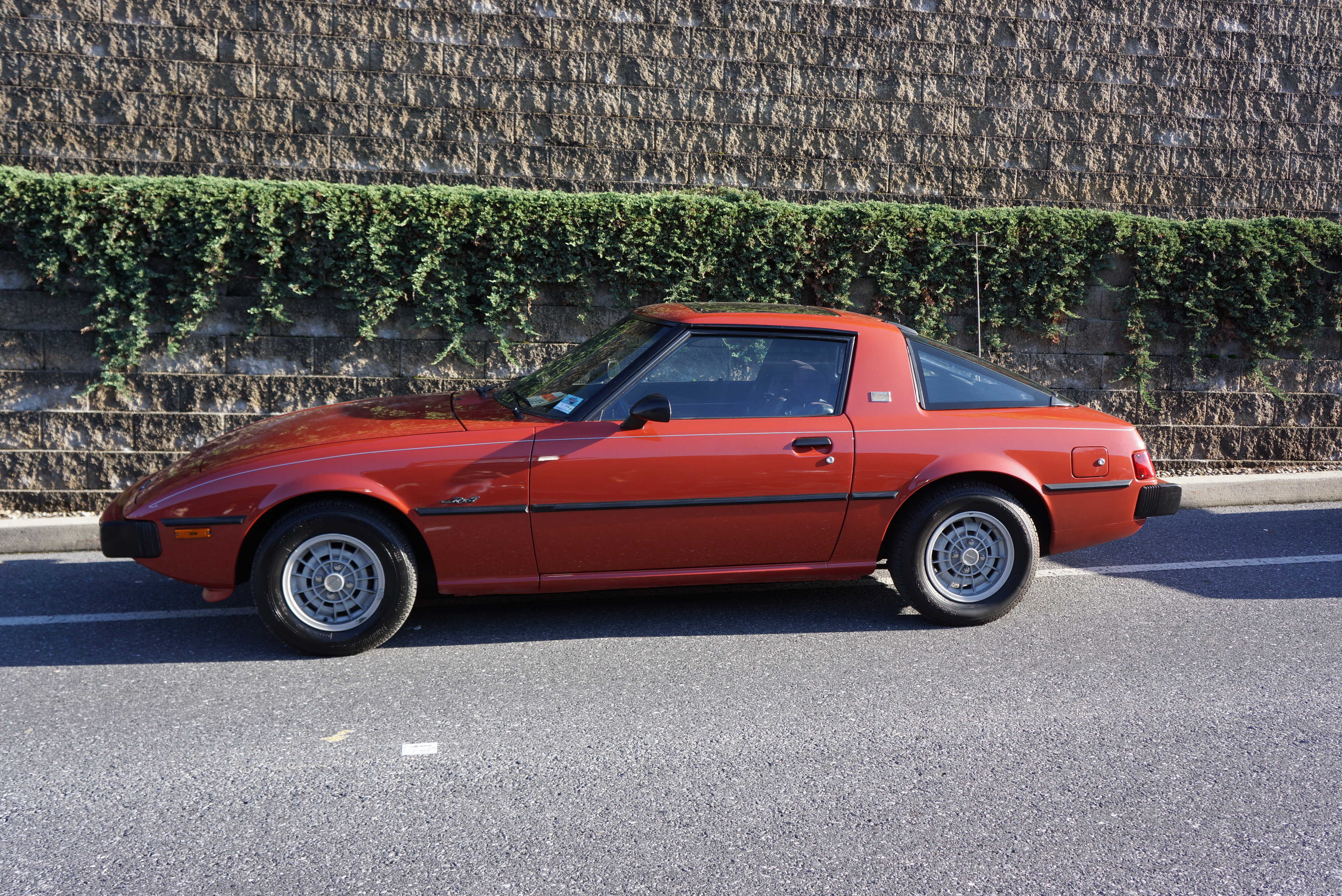
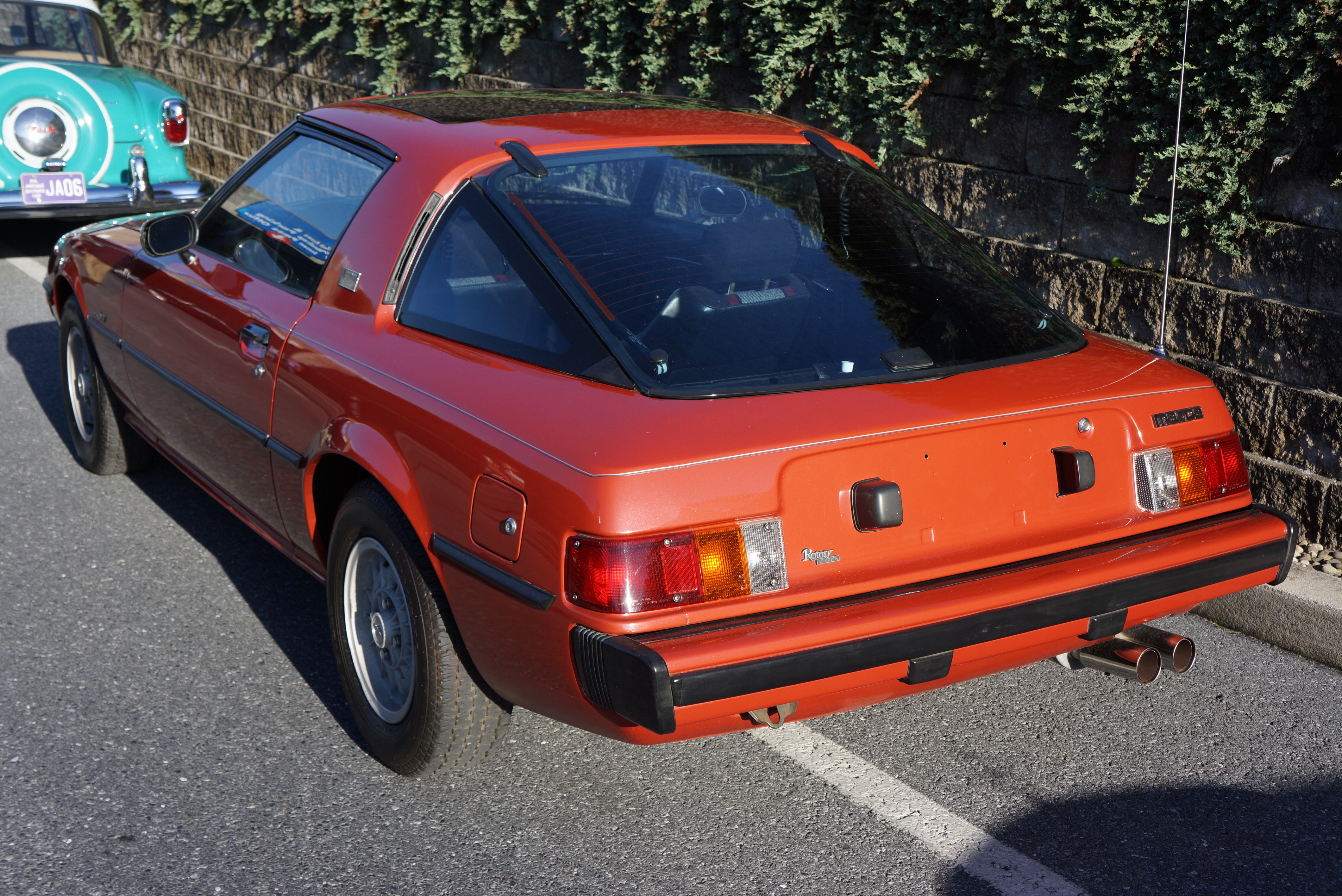
1980 Mazda RX-7
’80 still had original rear styling
This 1980 Mazda RX-7, a first-generation car, still wore the original tail light design, which was updated a year later. The sign claimed this car was an Anniversary Edition (whatever that is), and with 63,000 miles, the ask was $9,800.
1977 Jaguar XJ6-C
Interior shows auto, torn seat
This 1977 Jaguar XJ6-C is a rare 2-door version of the better-known XJ four-door sedan. My recollection is that 100% of these vehicles had factory vinyl roofs. This one’s was removed in favor of black paint. The car looked like it had needs, and these are known to be rust-prone, so check carefully before you pay the $12,500 asking price.
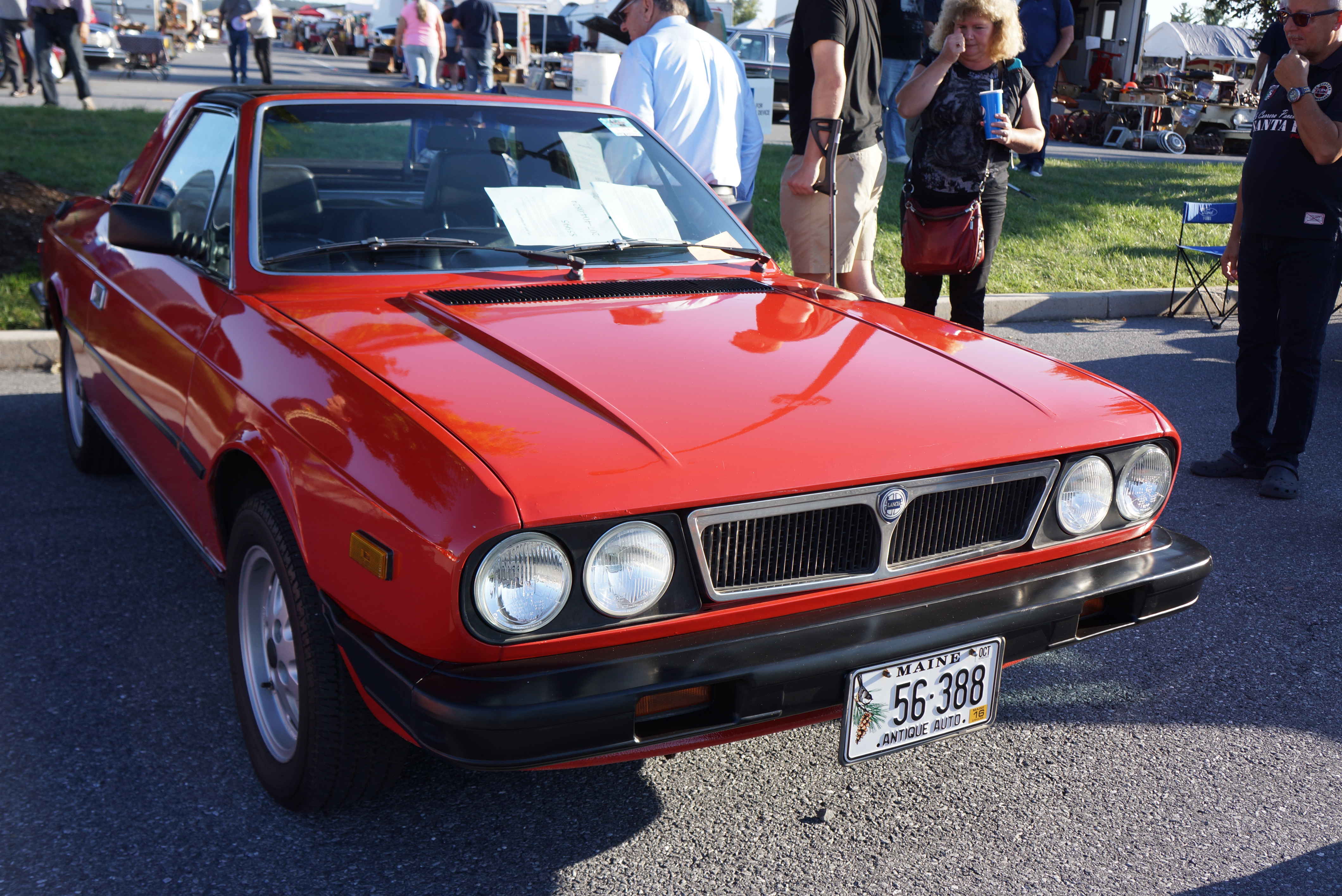
1982 Lancia Beta Zagato
Clean interior supports mileage claim
This 1982 Lancia Beta Zagato is from the final year of U.S. sales for this Italian import. Like the Beta coupe, the transverse engine drove the front wheels. The Zagato version has a fold-down soft rear window plus a removable targa top, giving an almost-convertible feel. The sign claimed 59,000 pampered miles, and it looked it. The owner was asking $5,995.
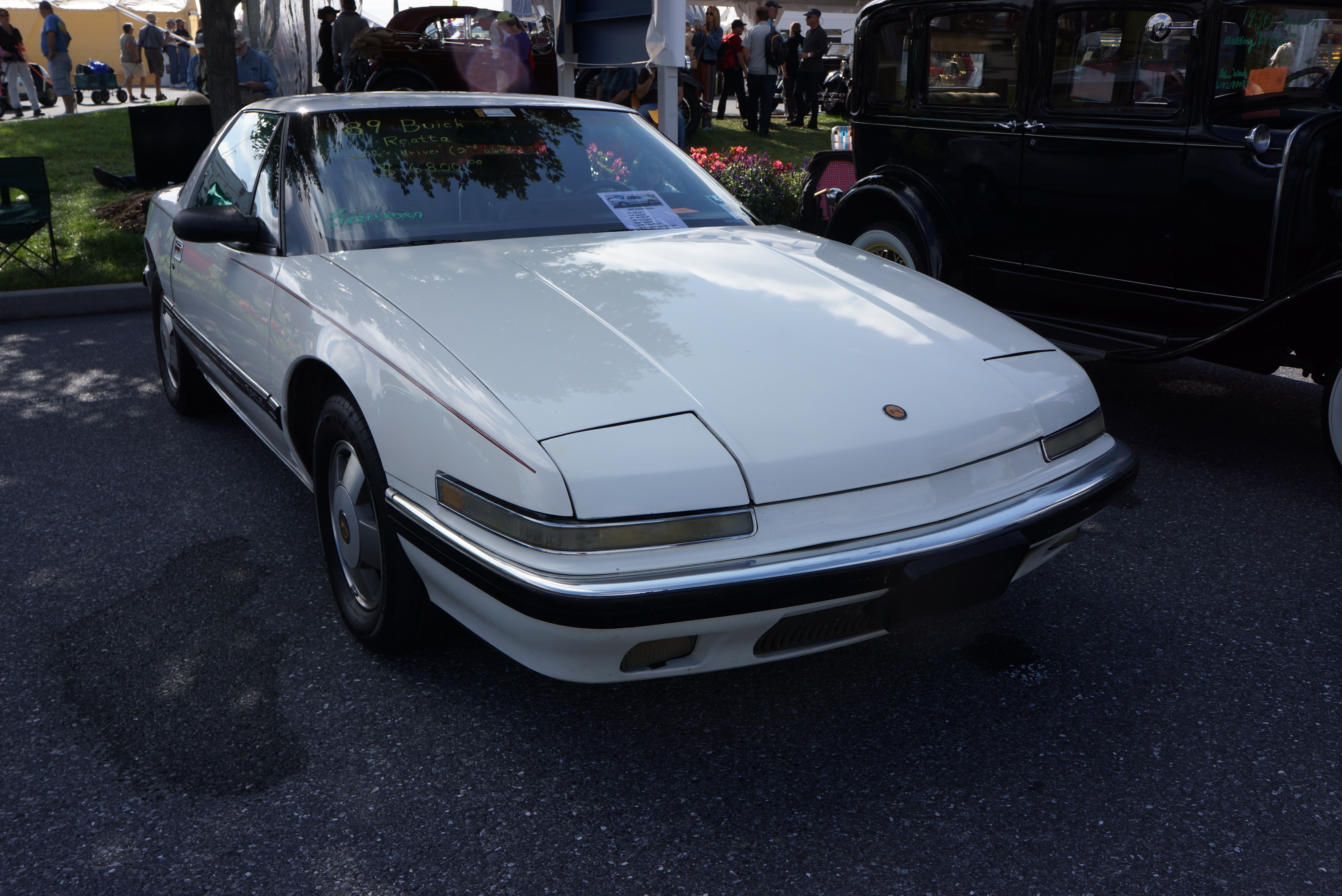
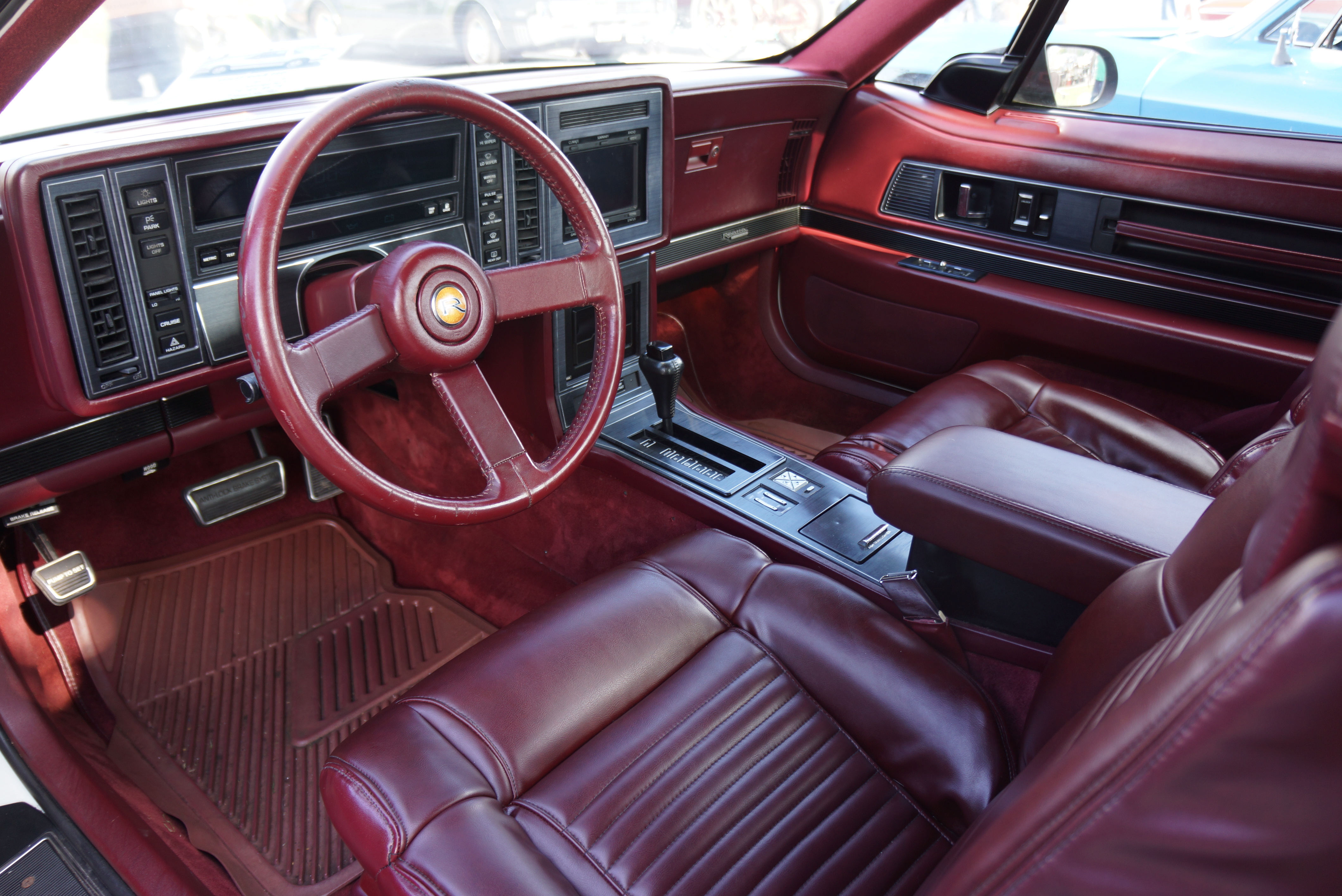
1989 Buick Reatta
Very clean red leather interior
The Buick Reatta has been on the “appreciating future collectible” list for so long that I think most people have forgotten it. There are always a few for sale, and this one’s colors and condition made it stand out. The sign claimed it to be a two-owner car for only $6,800.
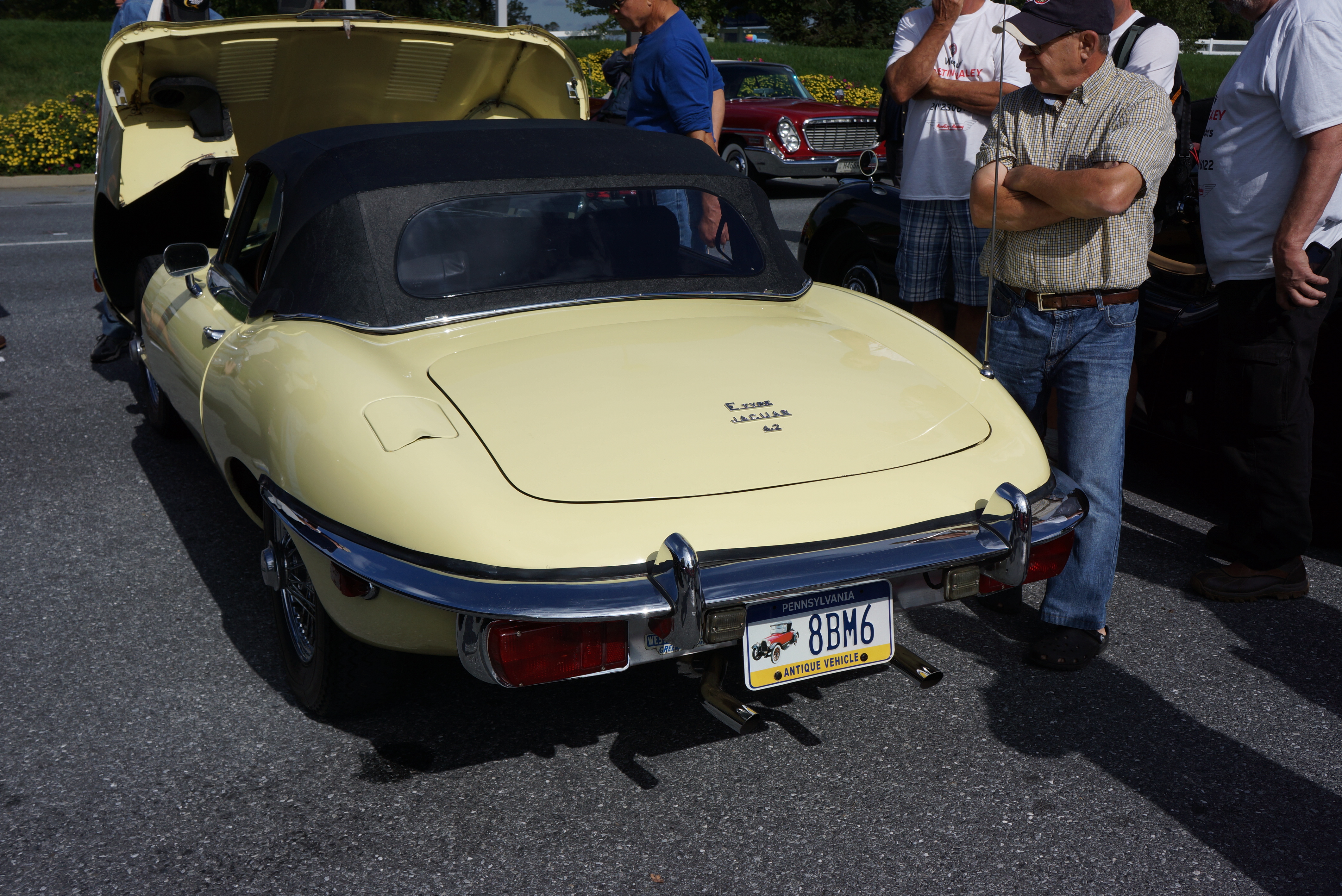
Series 2: tail lights under bumper, no fender flares
Stock interior, correct wood wheel
This 1969 Jaguar E-Type OTS (Open Two Seater) was claimed to be an unrestored original car with only 48,000 miles. Primrose yellow is one of my favorite E-Type colors. If solid, it may be a good buy at $75,900.
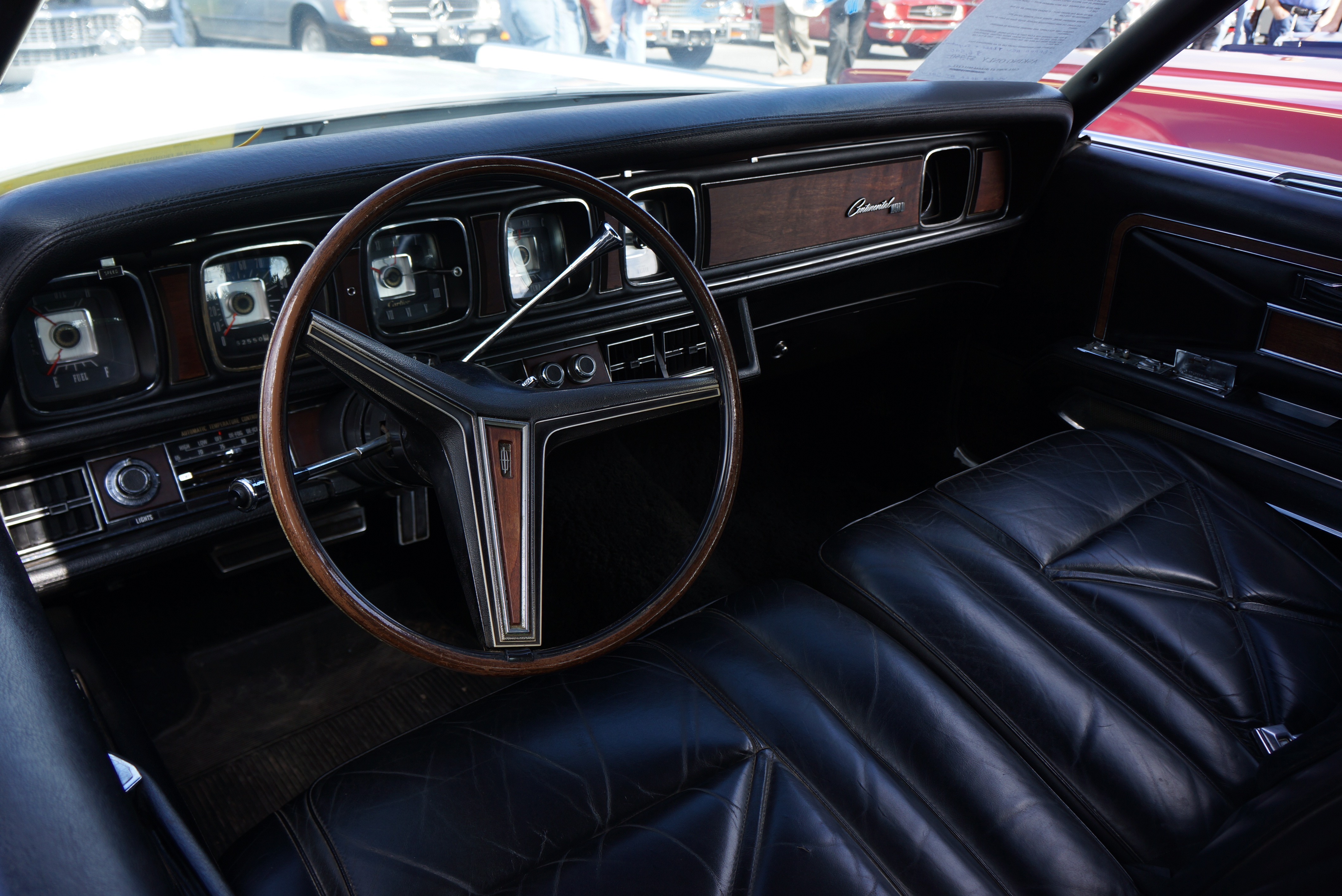
1971 Continental Mark III
Mark III interior
This 1971 Lincoln Continental Mark III was alleged to be a 62,000 mile all-original car. A little bland in white with a black vinyl top and black leather interior, it would look good in your garage (provided it fit) for only $6,500.
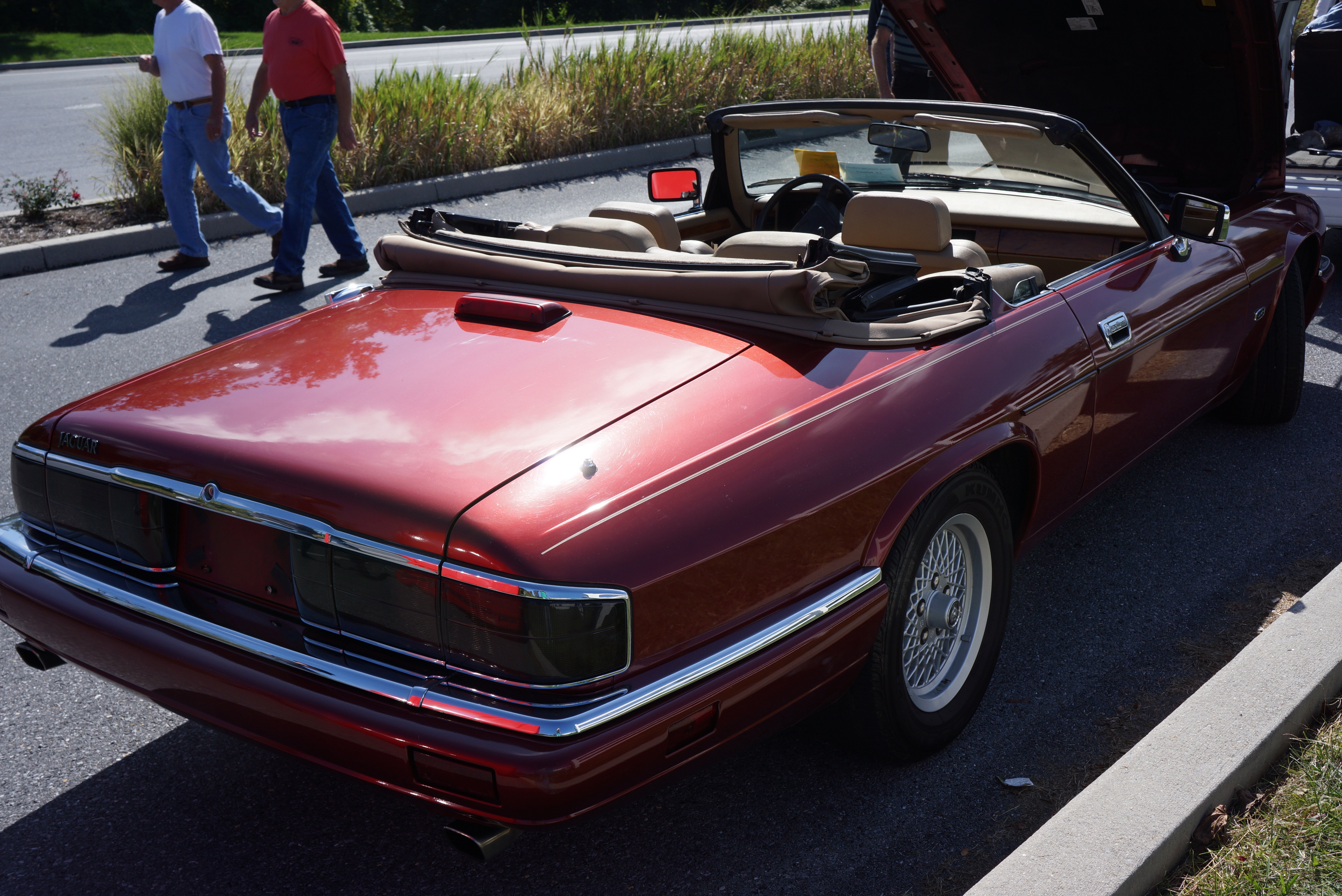
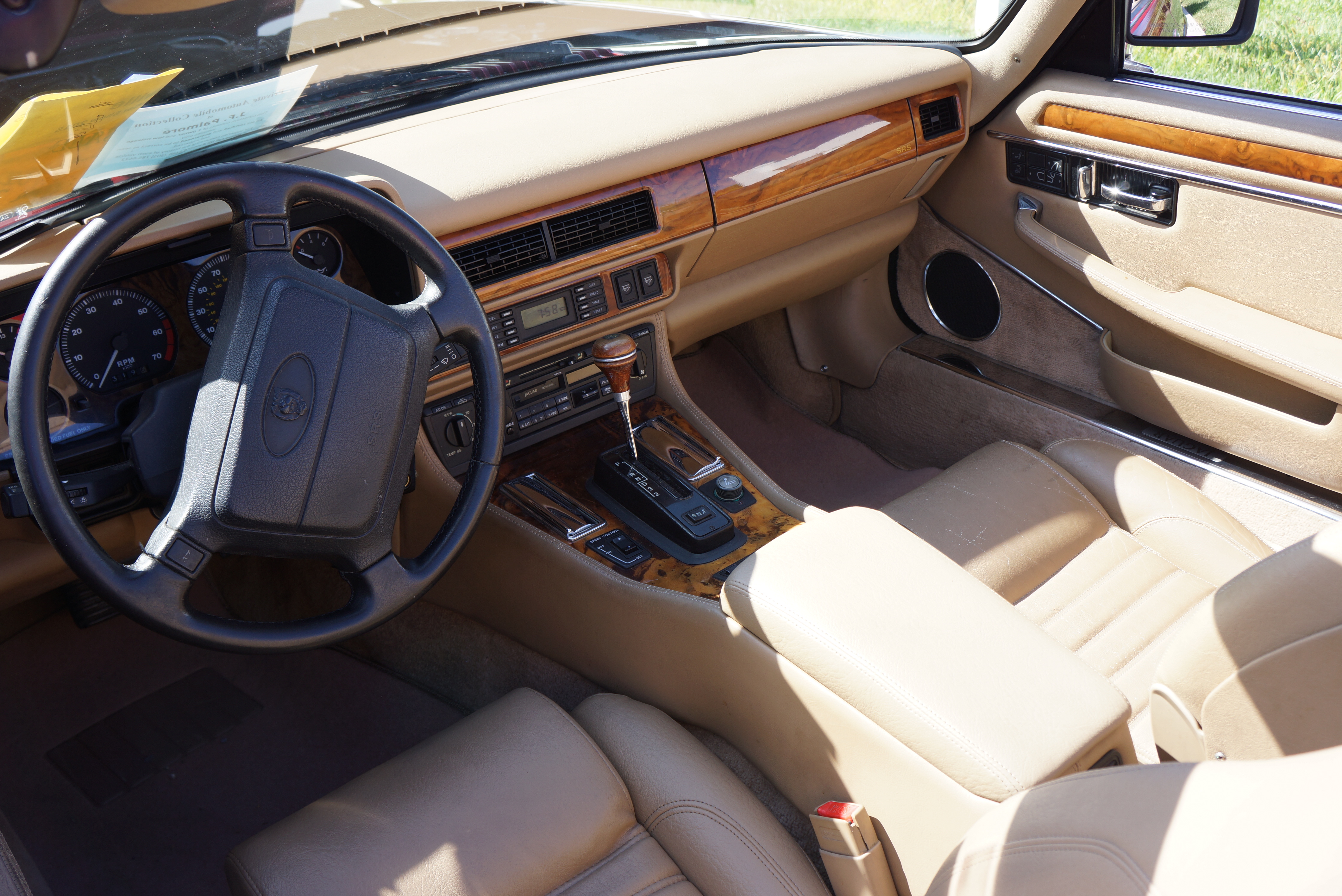
1994 Jaguar XJS convertible
All U.S. XJS’s were automatic
This 1994 Jaguar XJS convertible had the 4.0 six-cylinder engine, but had bad paint, with clearcoat failure on several horizontal surfaces. The ask was $7,850 /offer.
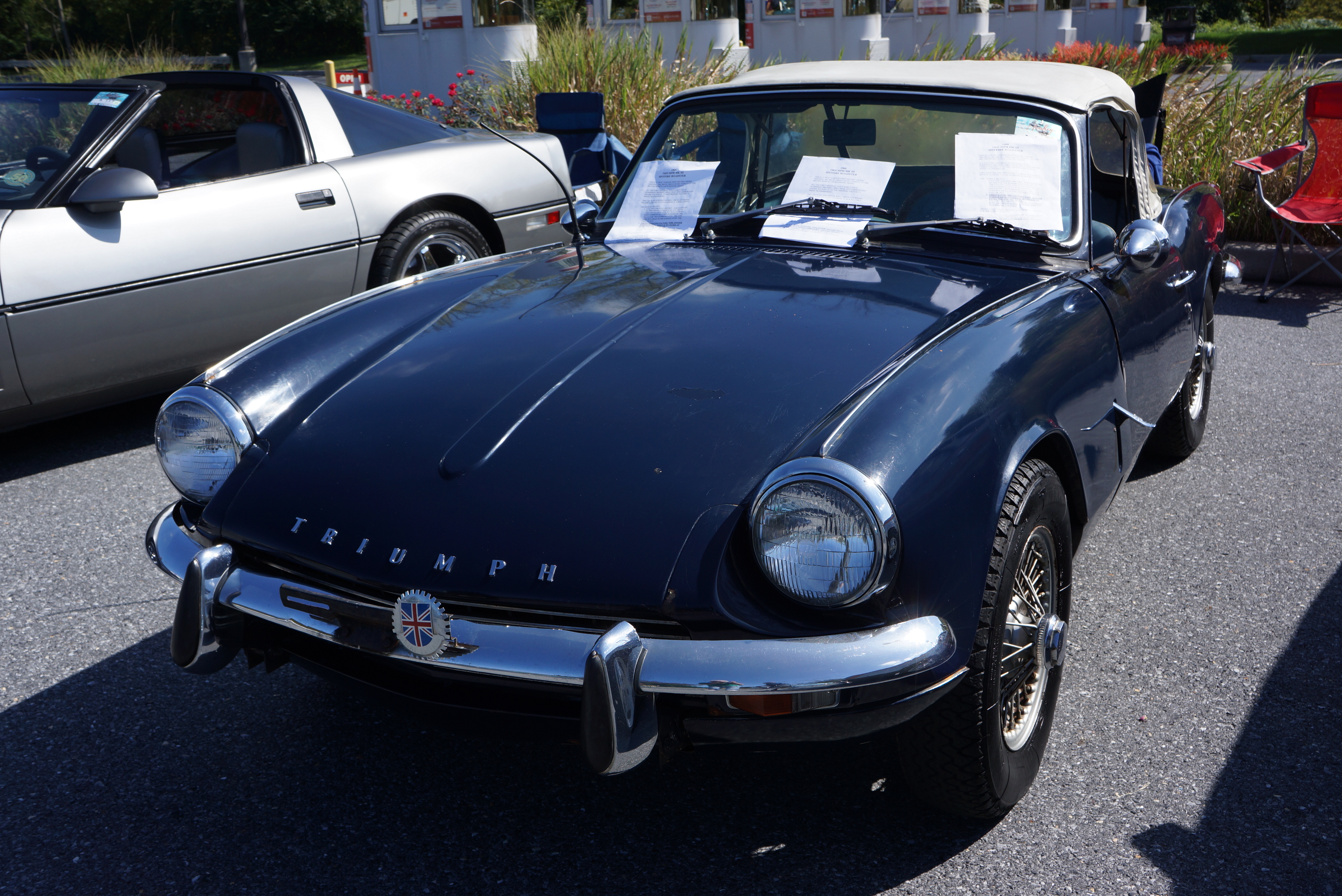
1968 Triumph Spitfire
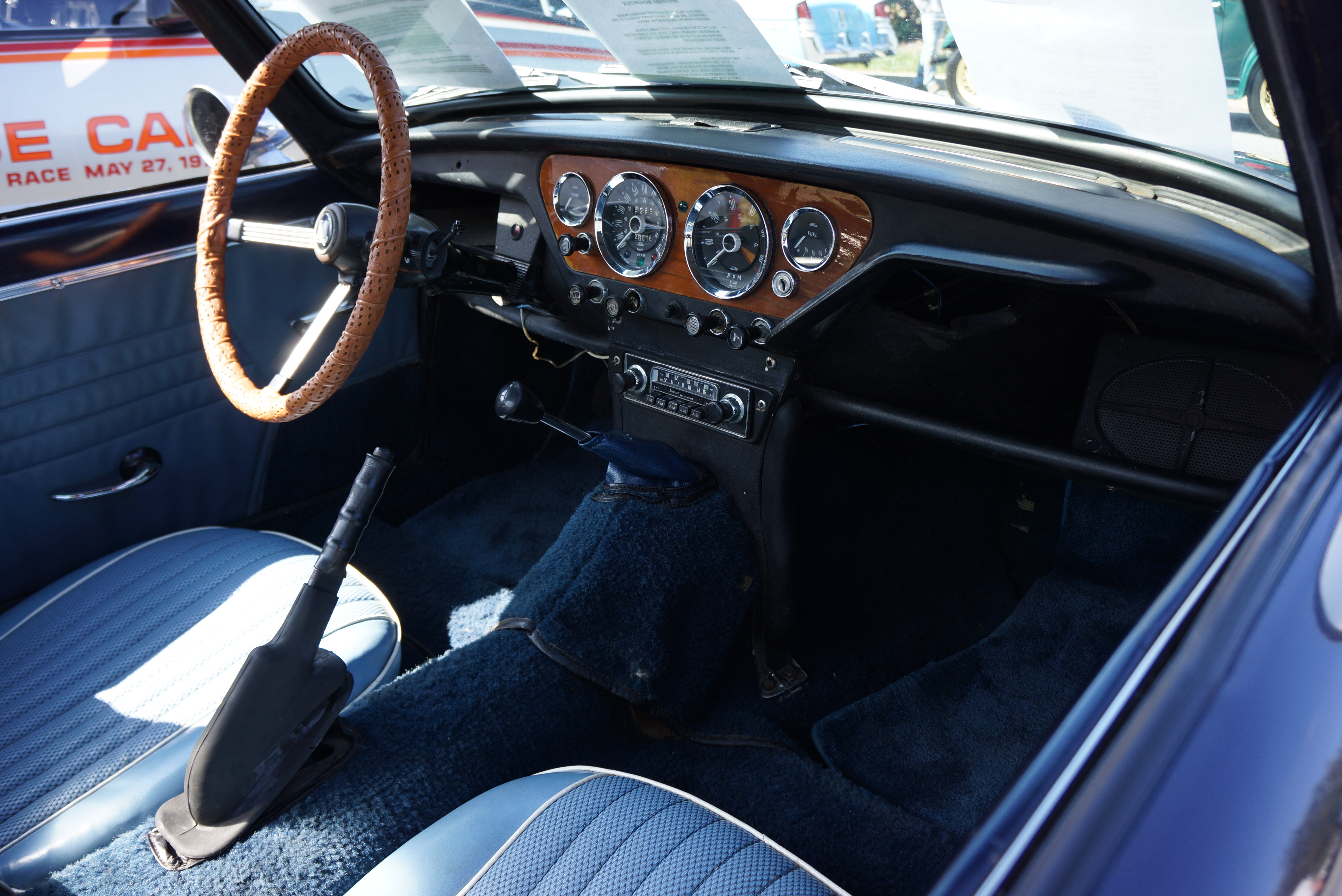
Spitfire interior
It’s rare to see a Triumph Spitfire this old that has not turned into a pile of iron oxide, but this 1968 appeared to be all there. Sure, it needed work, but it looked like you could drive it on weekends and attend to its needs during the week. The sign claimed that this car had been put away in storage between 1986 and 2015, and that accounts for the 28k original miles. The price, you ask? $4,975.
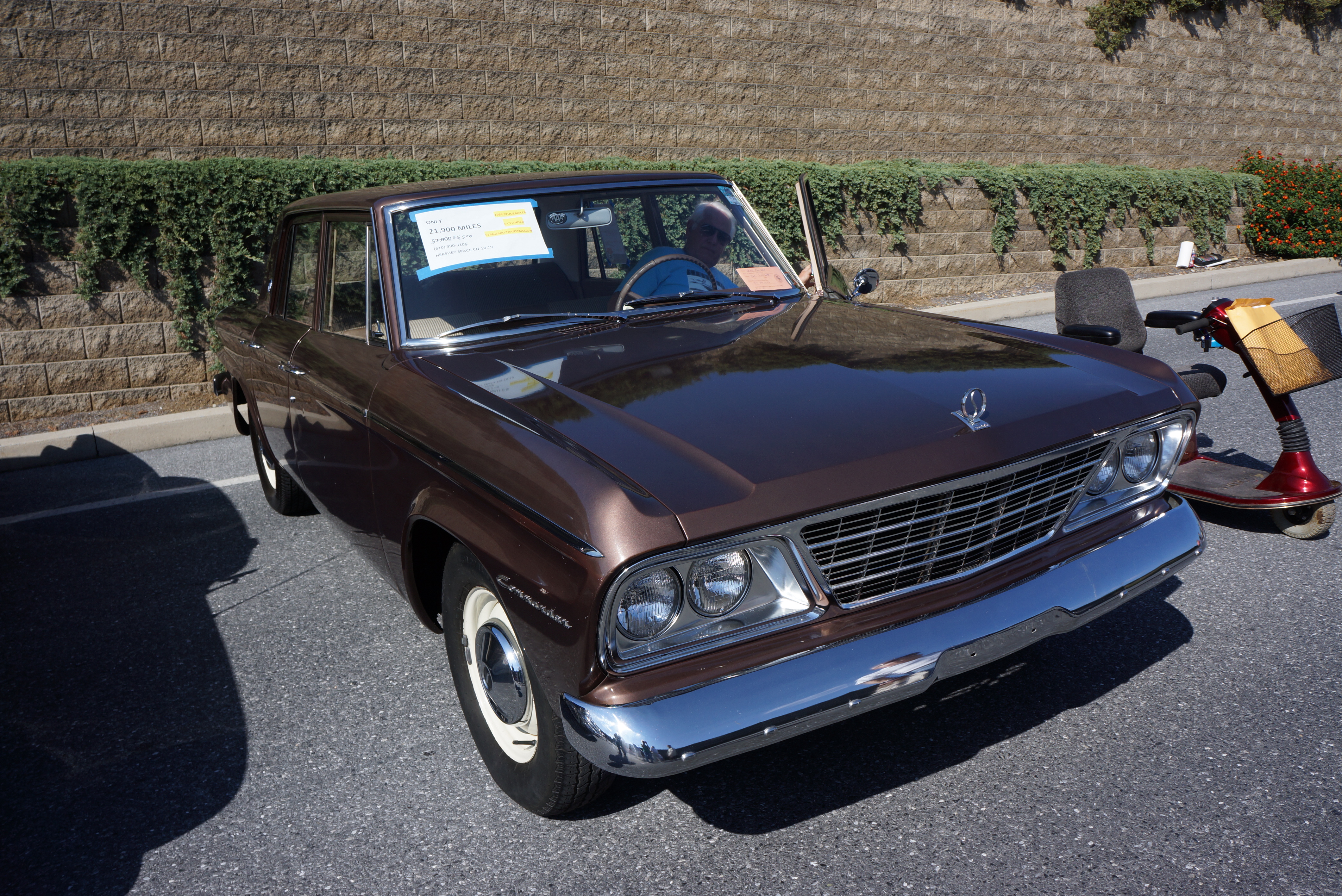
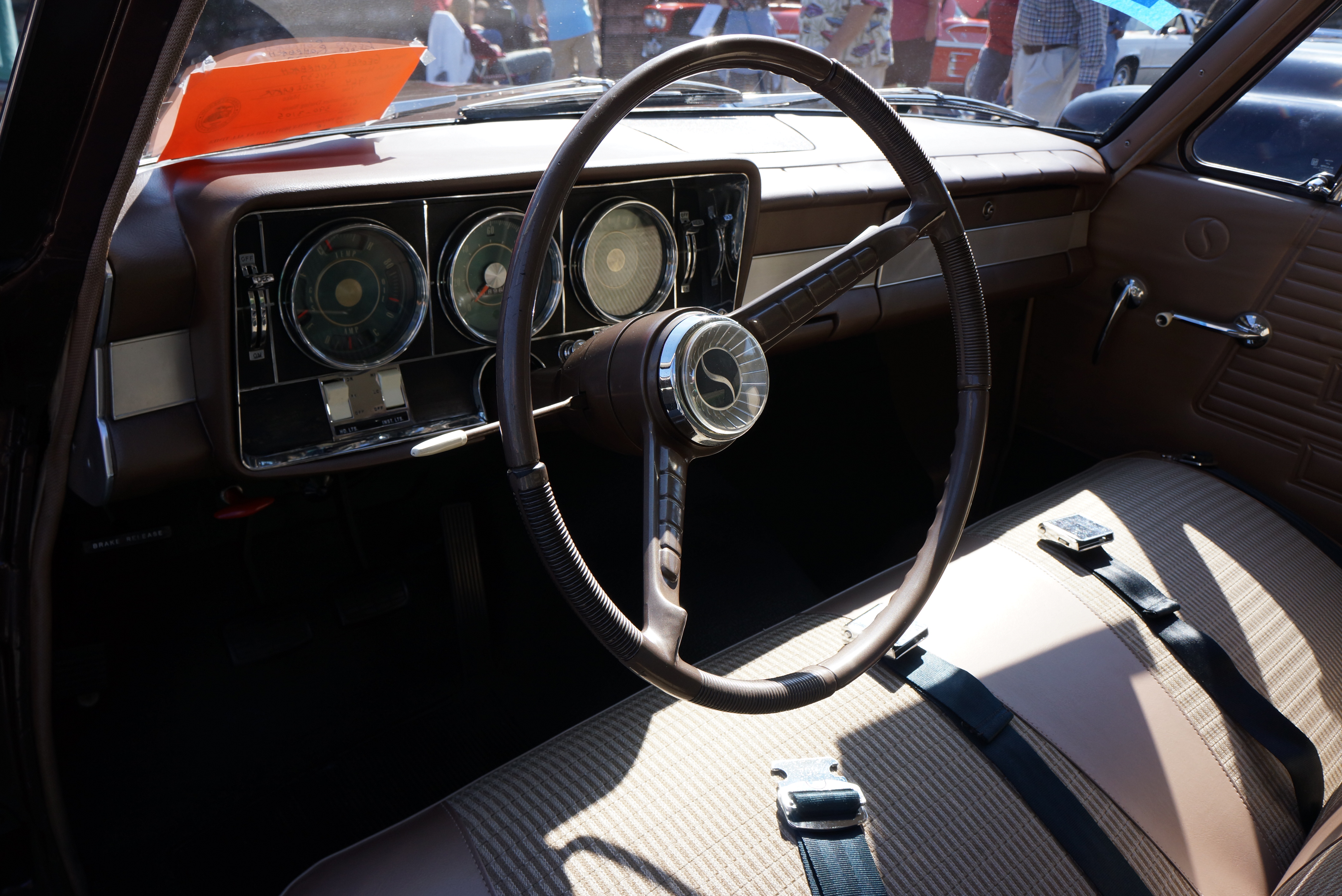
1964 Studebaker Commander
Power-nothing interior
This 1964 Studebaker Commander (in Bermuda Brown Metallic, the same FACTORY shade as the GT Hawk at Carlisle last week) had 21,000 original miles on it, was an unrestored car, and looked it. We had a lengthy discussion with the owner, who pointed out that the only option on this 6-cylinder engine, 3-speed manual car was a cigar lighter. He was asking $5,500.
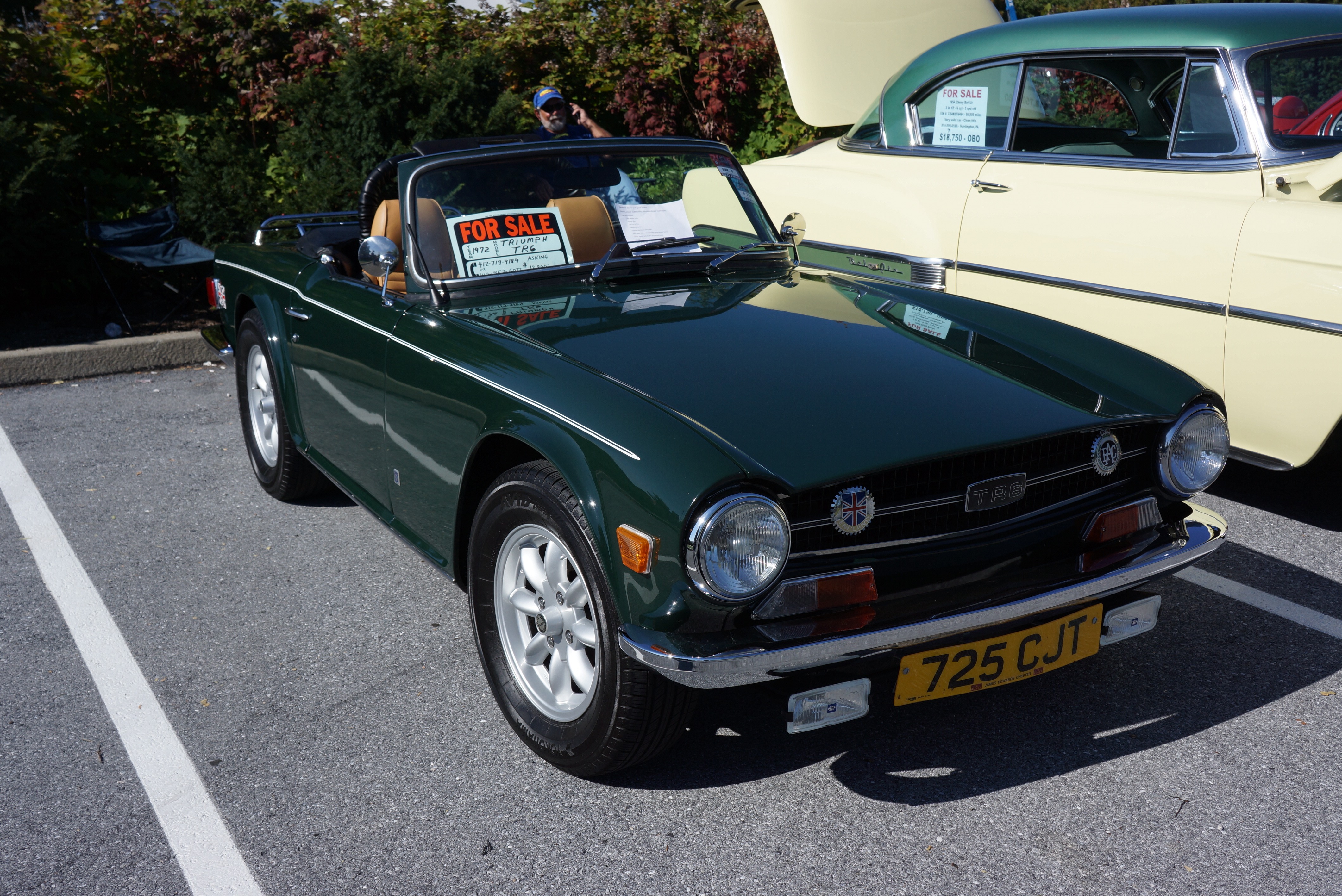
1972 Triumph TR-6
Nice TR-6 interior, non-original wheel
There were several Triumph TR-6s in the corral, and this was one of the nicer ones. A 1972 model has the smaller bumpers, and this green-over-tan car was nicely set off by oversize tires on Panasport wheels. The mods continued under the hood with dual Webers. It was cosmetically spotless. The owners were asking $12,900.
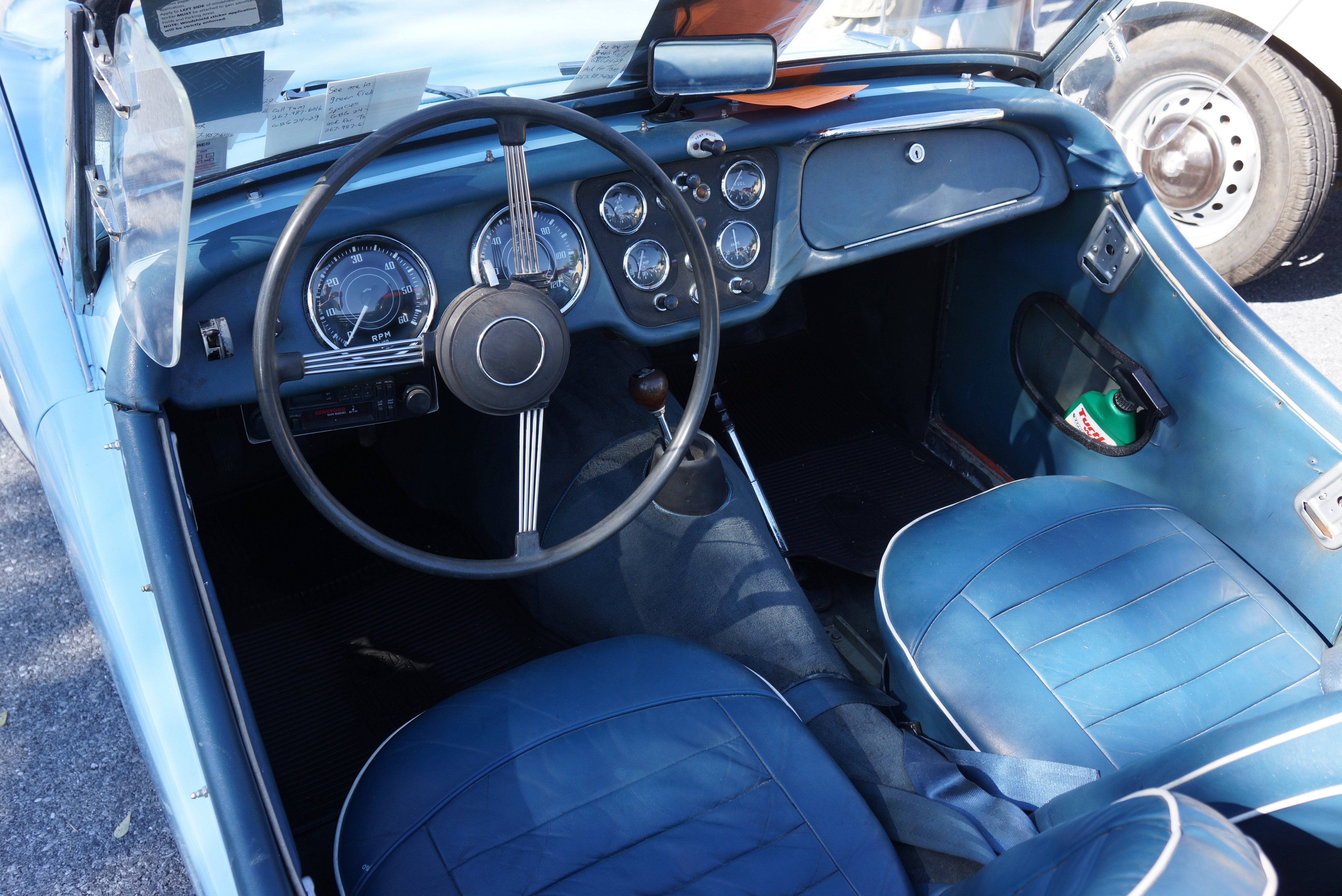
1958 Triumph TR-3
TR-3 interior; keep your arms in
This 1958 Triumph TR-3 was in baby blue over a medium blue interior, with whitewalls on chrome wires. It looked like you could hop right in and go for a cruise. This “older restoration” was for sale for $17,900.
1966 Lincoln convertible
Last of the American 4-door ‘verts
This 1966 Lincoln Continental convertible was parked next to an identical model from 1965. It was interesting to note the styling changes, both inside and out, with my vote going to the ’66. This one was cosmetically less attractive, but it had the more reasonable asking price of $20,000.
1971 Jaguar E-Type Series III
All Series III cars had longer wheelbase
This 1971 Jaguar XKE Series III coupe, again in Primrose yellow, was claimed to be a 97,000 mile unrestored car (you may have noticed the continuing trend toward “unrestored / all-original / barn find” cars for sale). All Series III cars rode on the longer 2+2 wheelbase and used the V-12 engine. This one was a stick (many Series III cars were automatic). There were rough spots, but it was about as reasonably-priced an E-Type as you’ll find for $39,000.
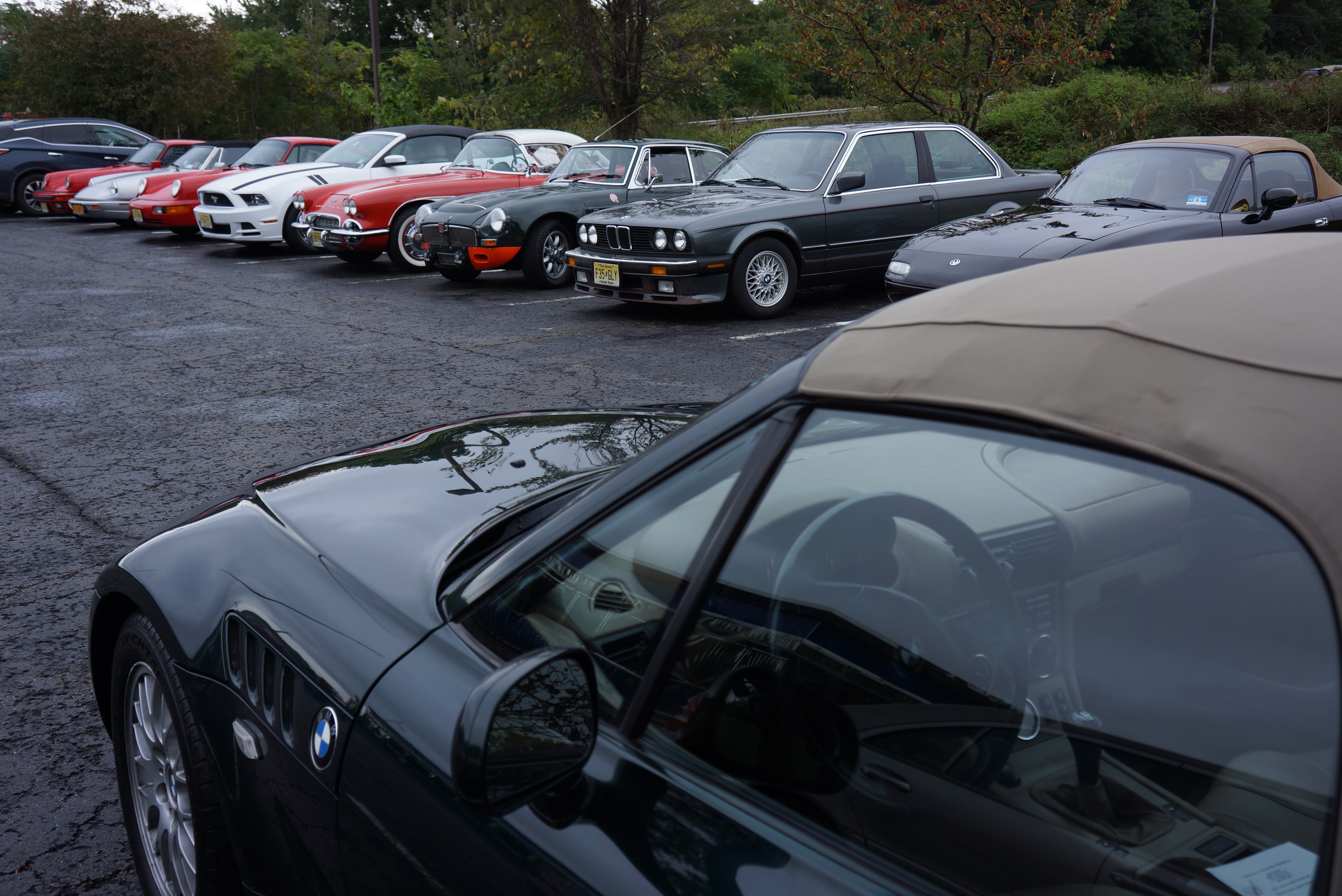
We had an excellent turnout for our early October outing, with 16 like-minded friends willing to venture out in spite of a gloomy forecast (for the record, it didn’t rain during the drive). All in, we had 12 classic cars, 2 modern Volvos, plus a motorcycle! Several first-timers seemed to like it well enough that they’ve threatened to show their faces again.
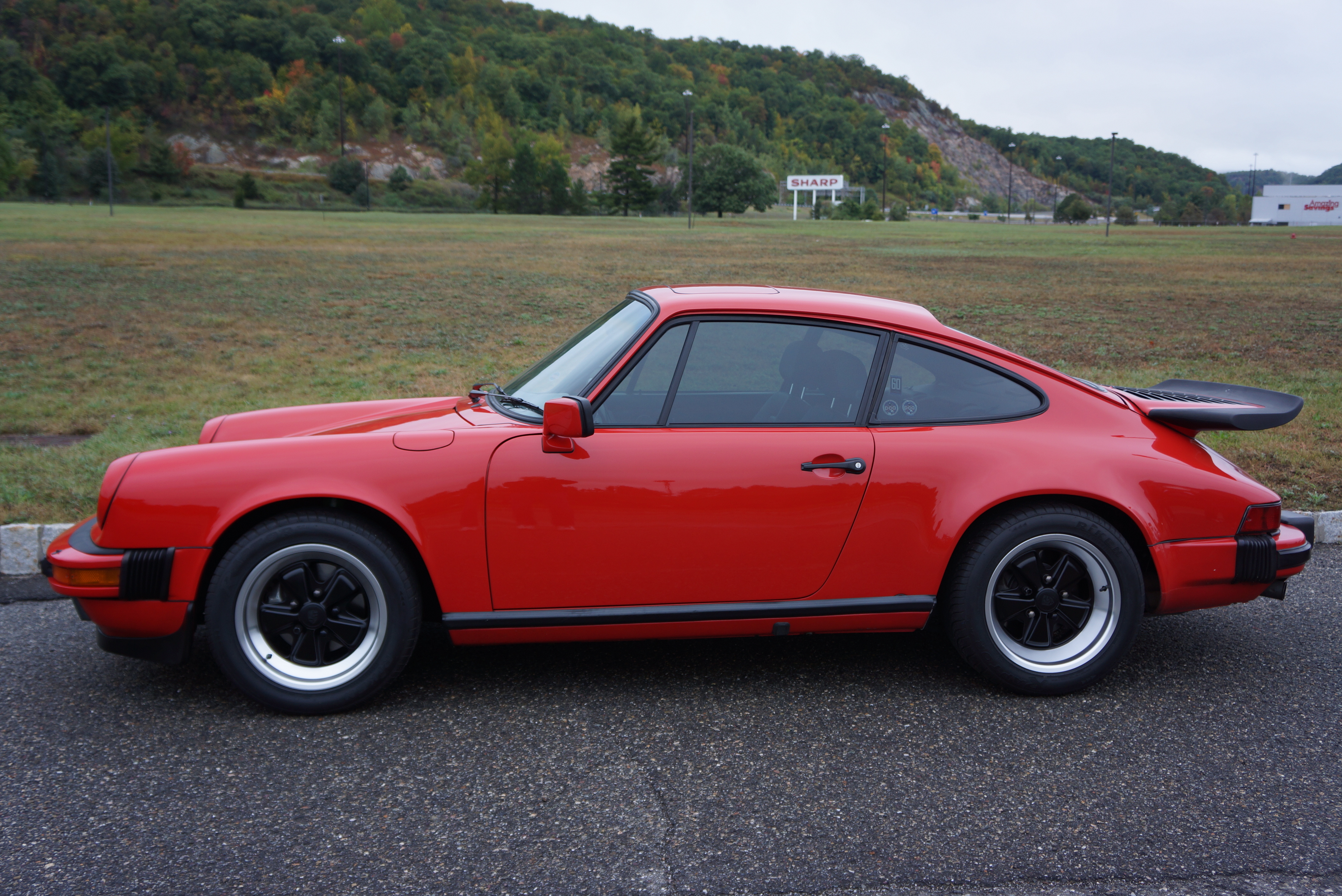
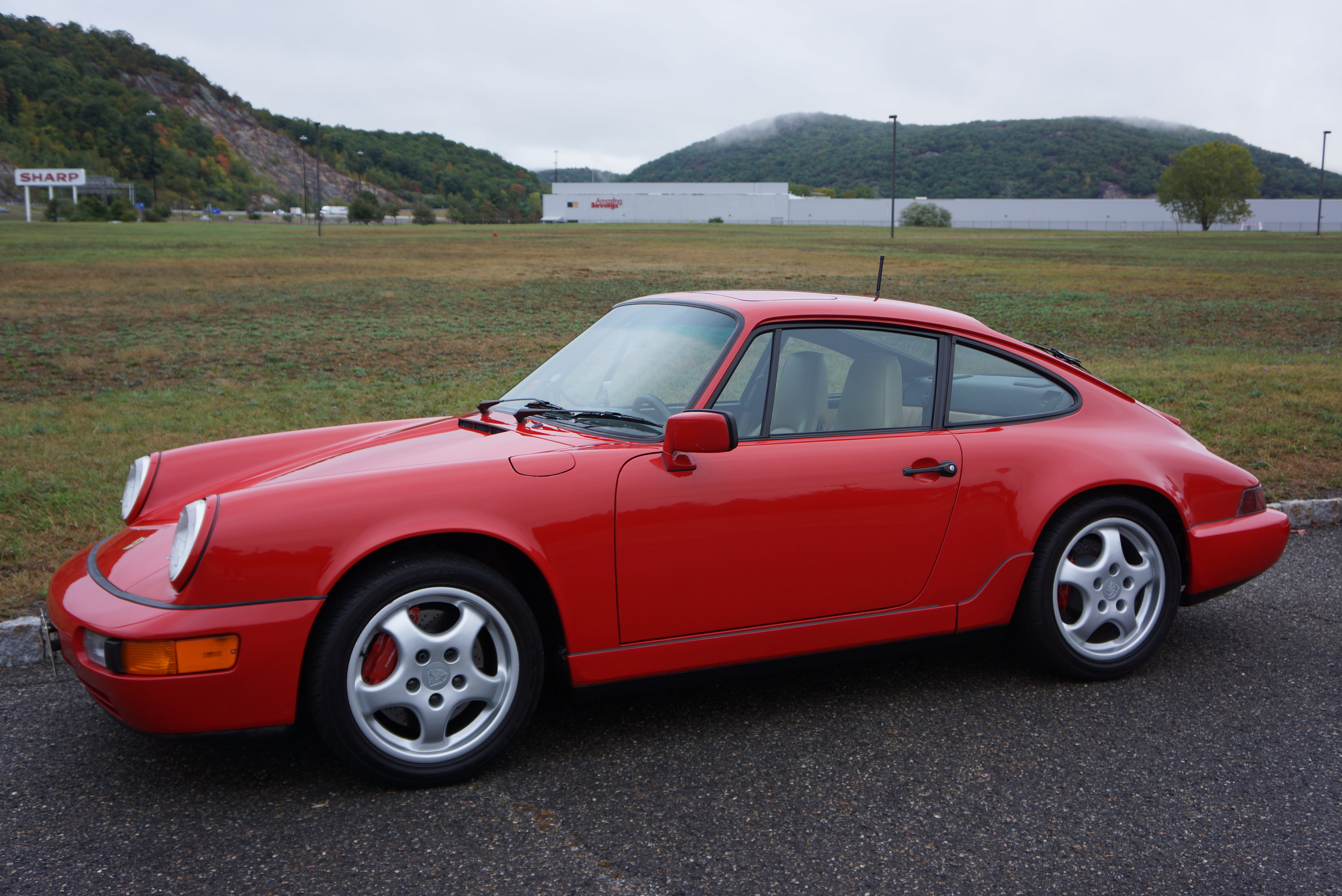
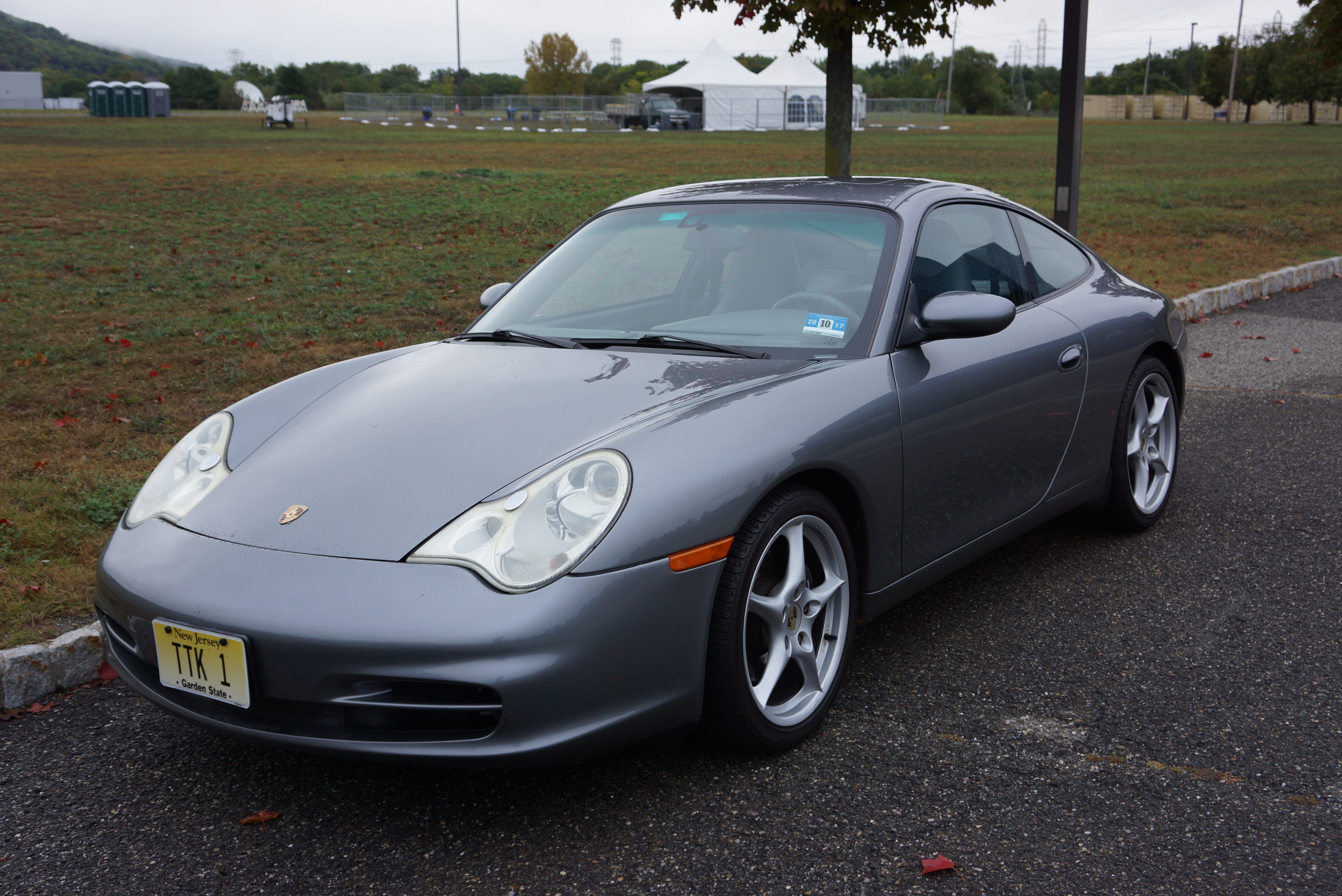
You could be forgiven for looking at the photos and thinking that this was a meeting of the local Porsche 911 club, what with four of them (three red) among our assortment. We still had a fine mix of American, British, Italian, Japanese, and other German cars, old and new.
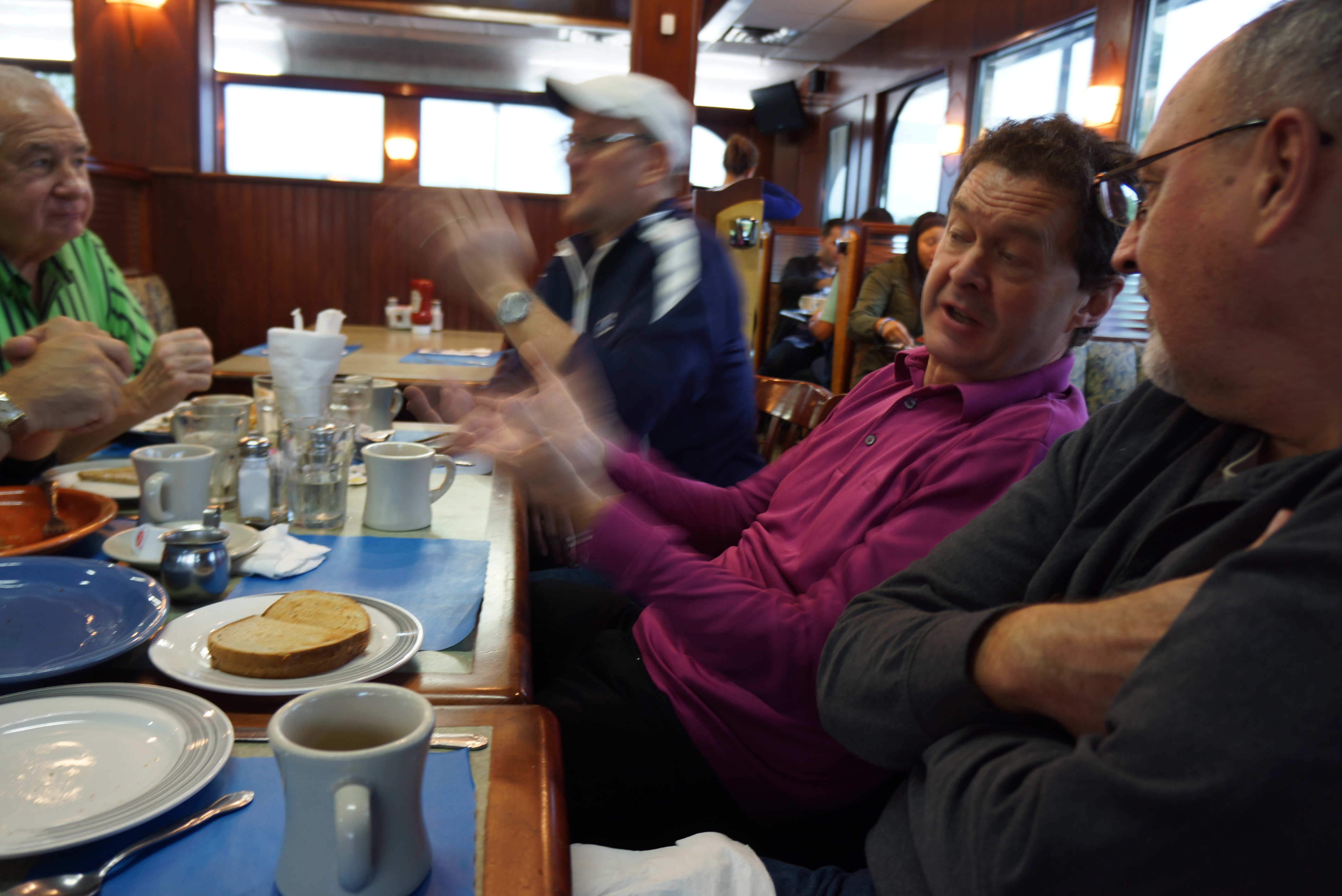
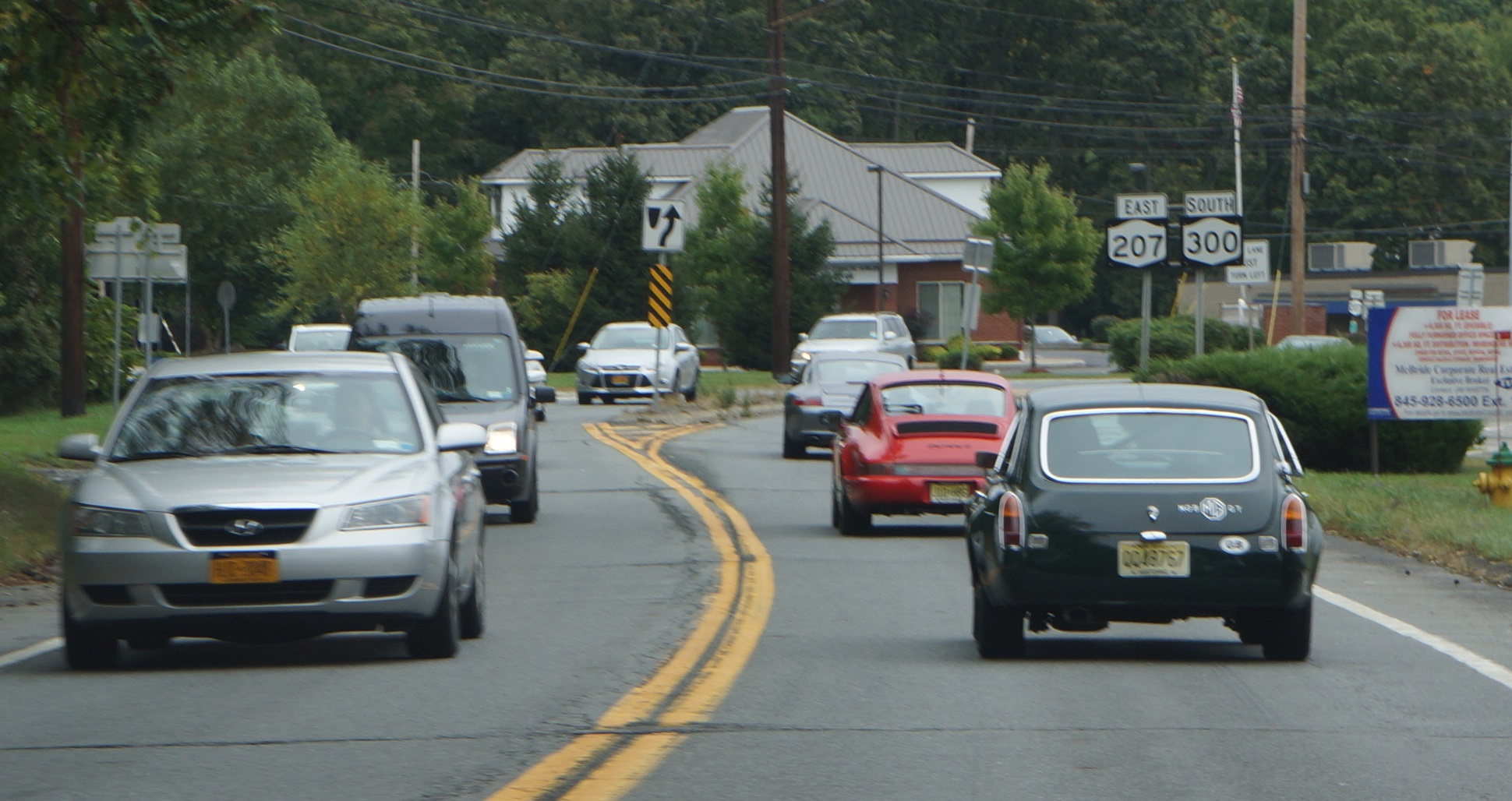
Our ride this day took us north from the Sheraton in Mahwah, along Greenwood Lake, and eventually to New Windsor, NY, where we dined at the Ikaros Diner. The diner staff had a table waiting for us, and somehow, in spite of constant blabbering, we also managed to consume food and coffee.
The diner’s parking lot made for an excellent staging area for group photos. (Thanks to Bill W and Andy M for the panorama photo of us). We must be doing something right, because at the end of the event, most everyone wanted to know when we’re going to do this again. It must be the coffee.
Ken’s RED 911
Peter’s RED 911
Dave’s RED 911
Ted’s NON RED 911
Jeff’s BMW Z3
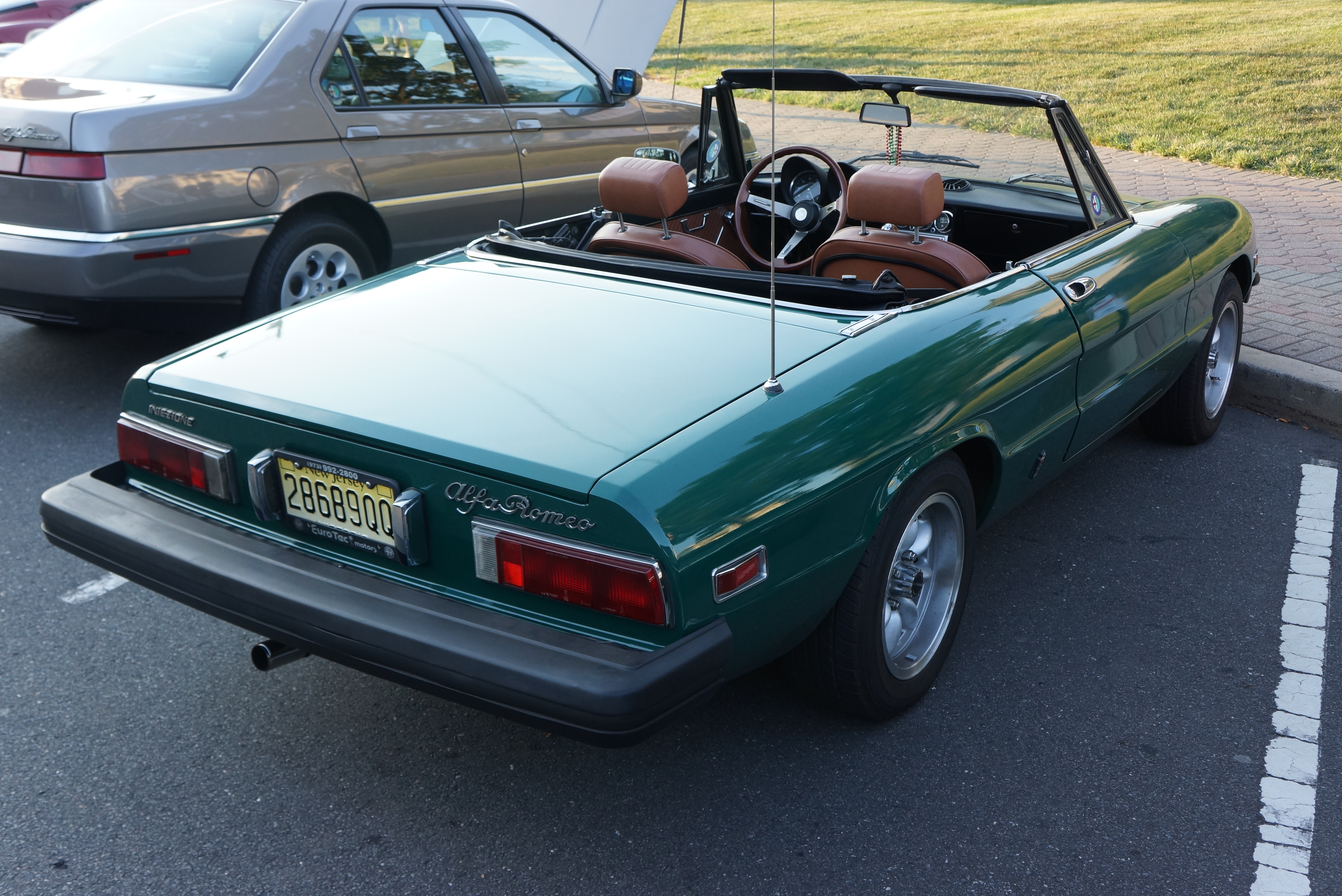
Enzo’s Alfa Spider
Nick’s Mustang
Bill’s C1 Corvette
Sal’s E30 BMW 3-Series
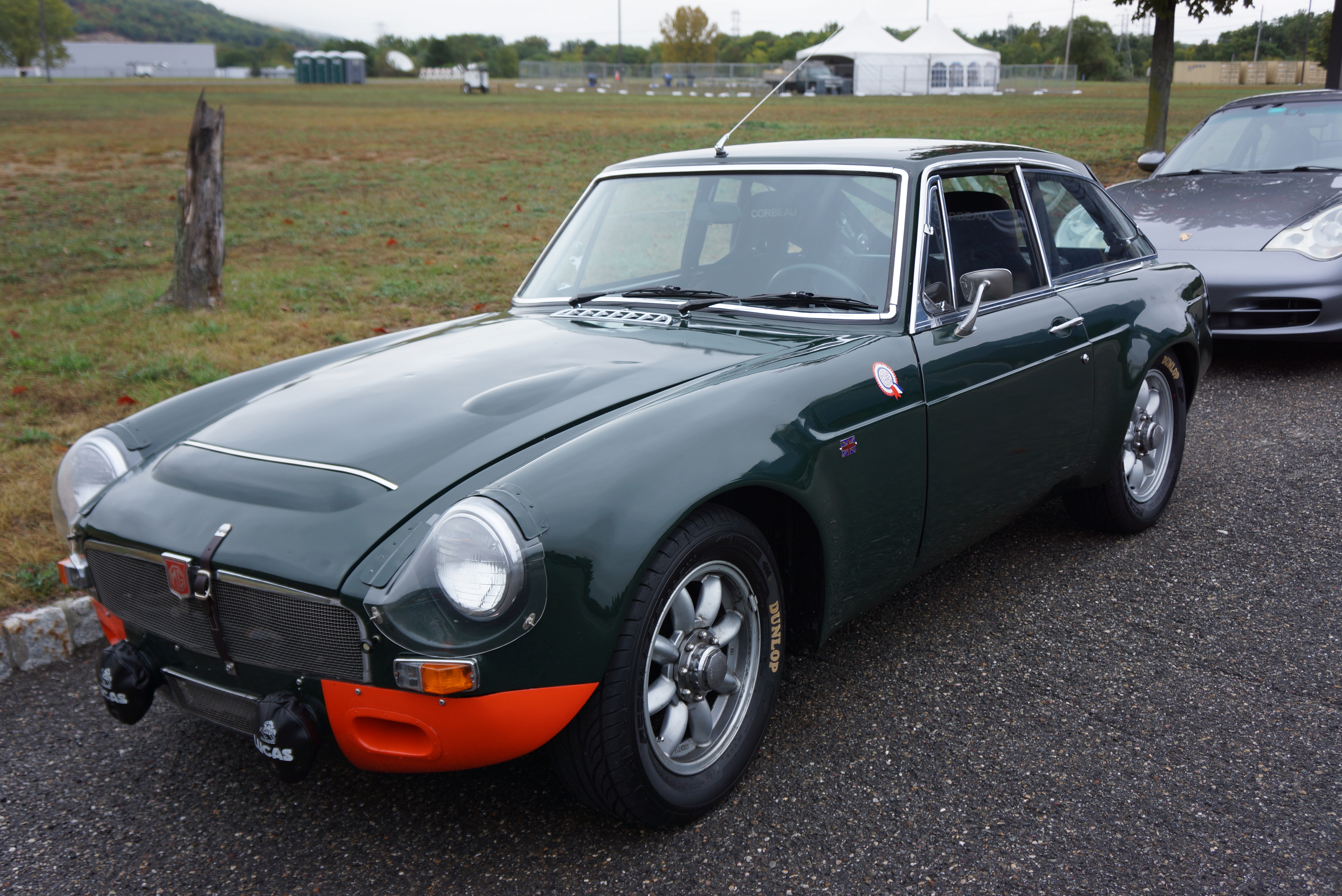
Tim’s MG-B/C/V8-GT
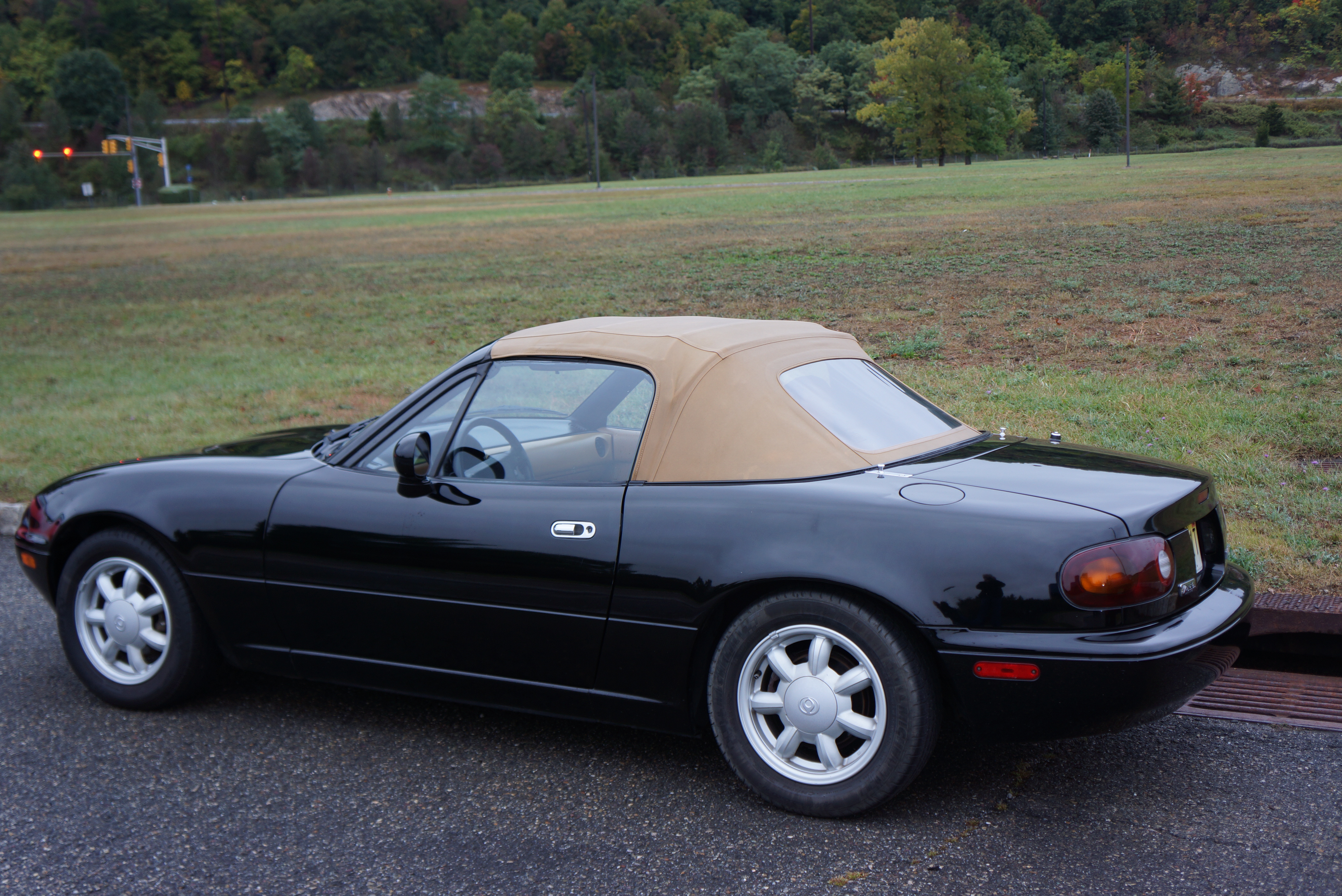
Your author’s Miata
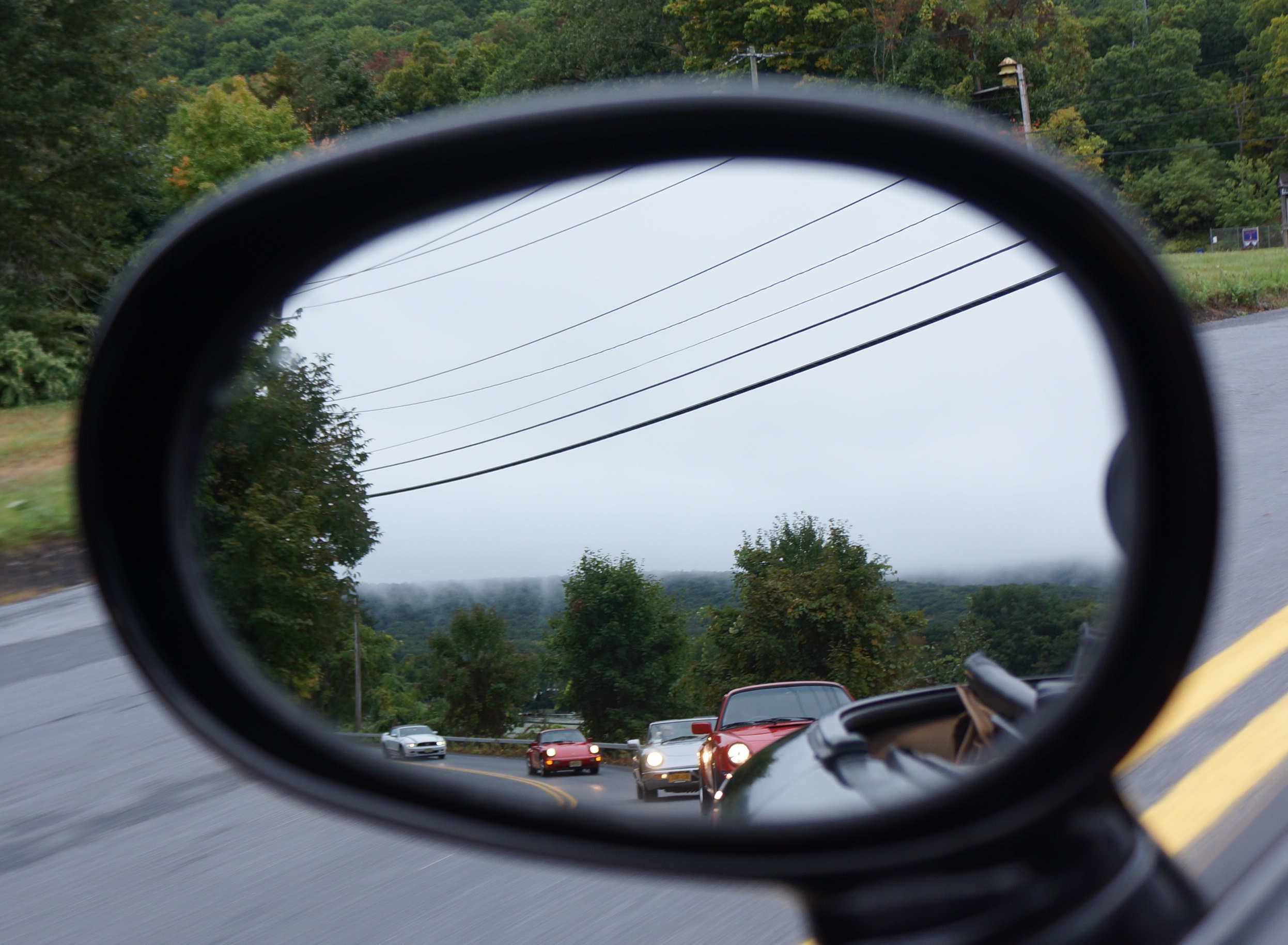
Red Porsche in front, red Porsche in back
Porsche, Alfa, Porsche, Mustang in Miata mirror
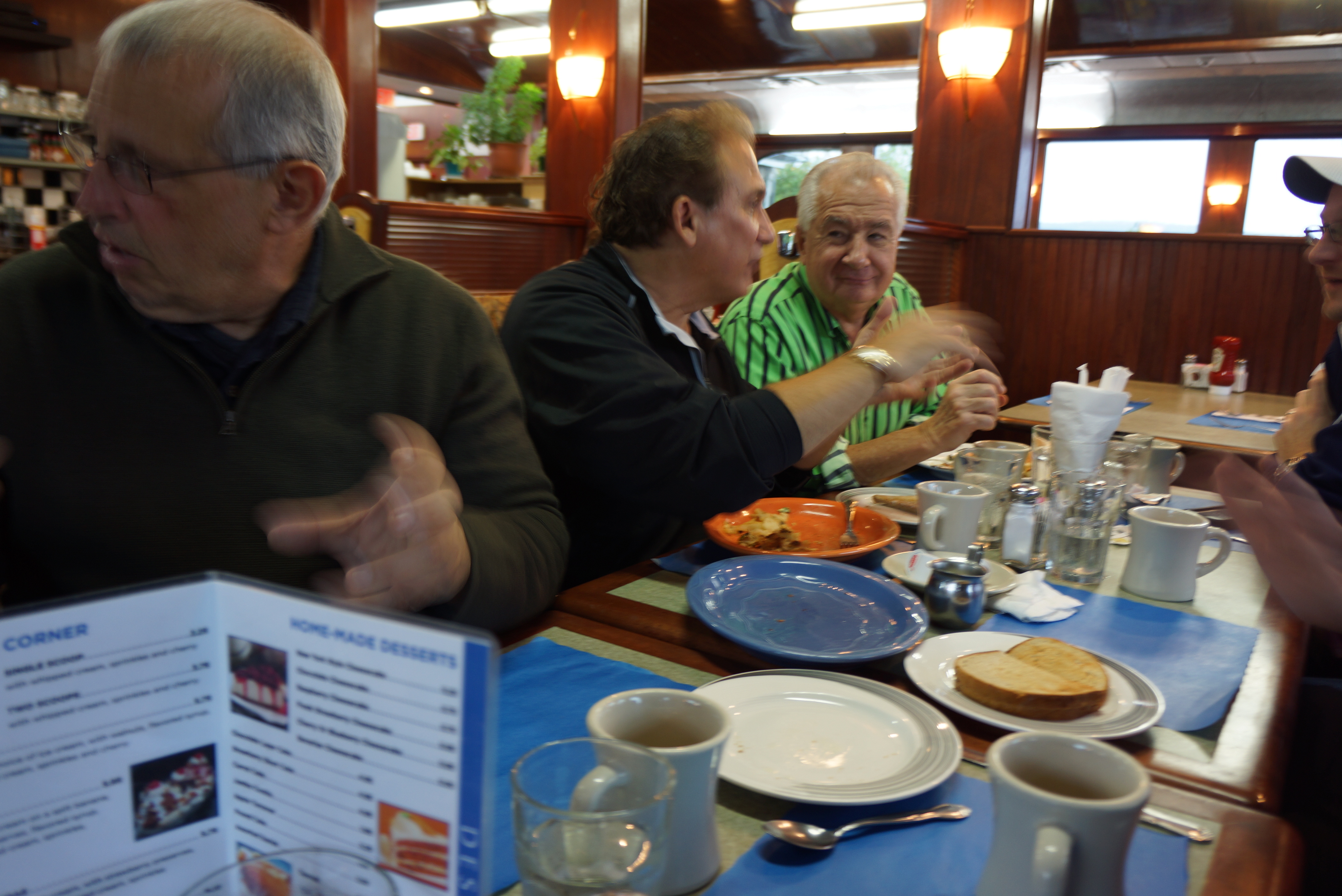
“I turned left when you went straight”
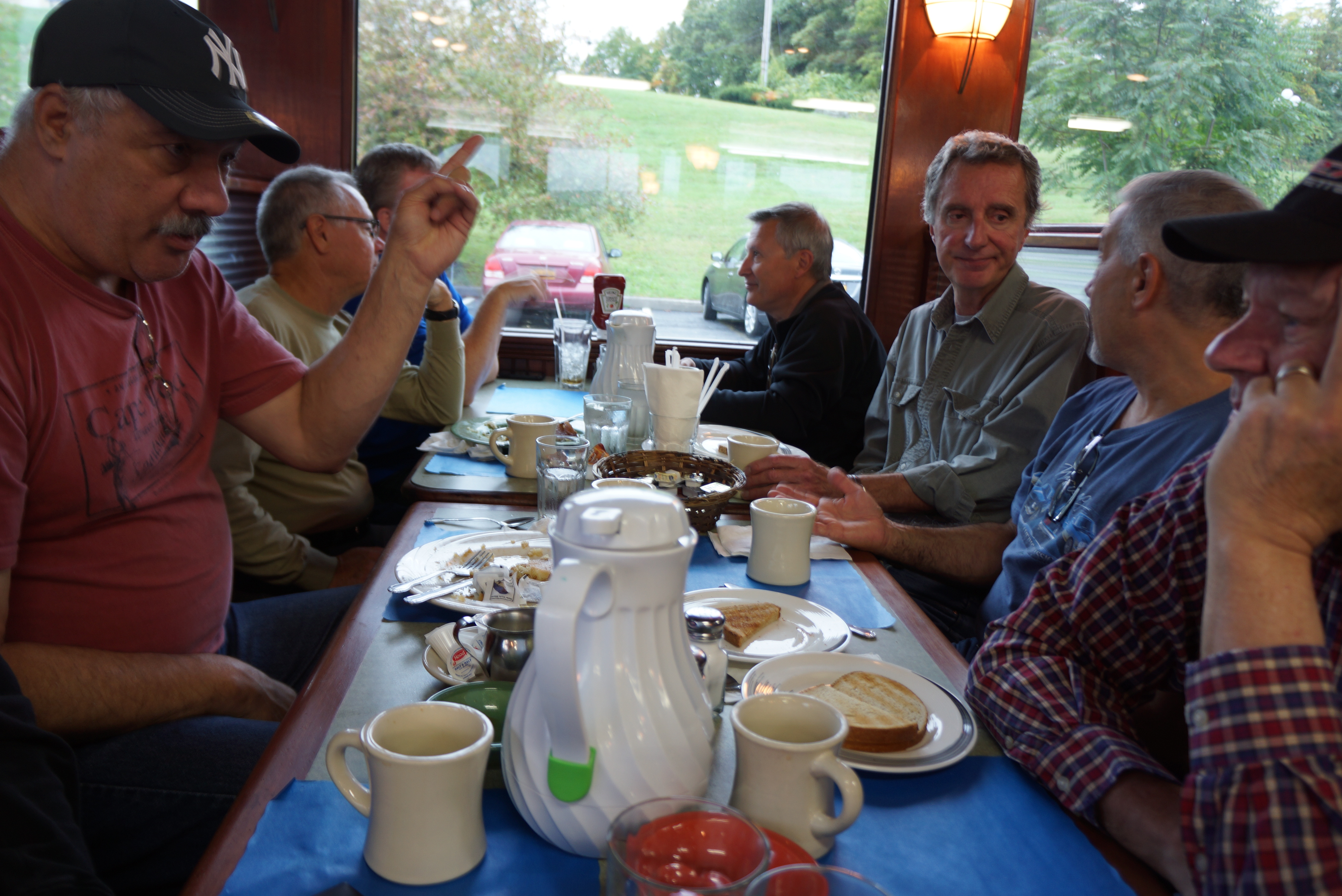
Proof that men…
… talk with their hands
The Z3 serves as a nice foreground
As does Richard’s Jaguar F-Type
“I gotta get over there, they’re talking about me”
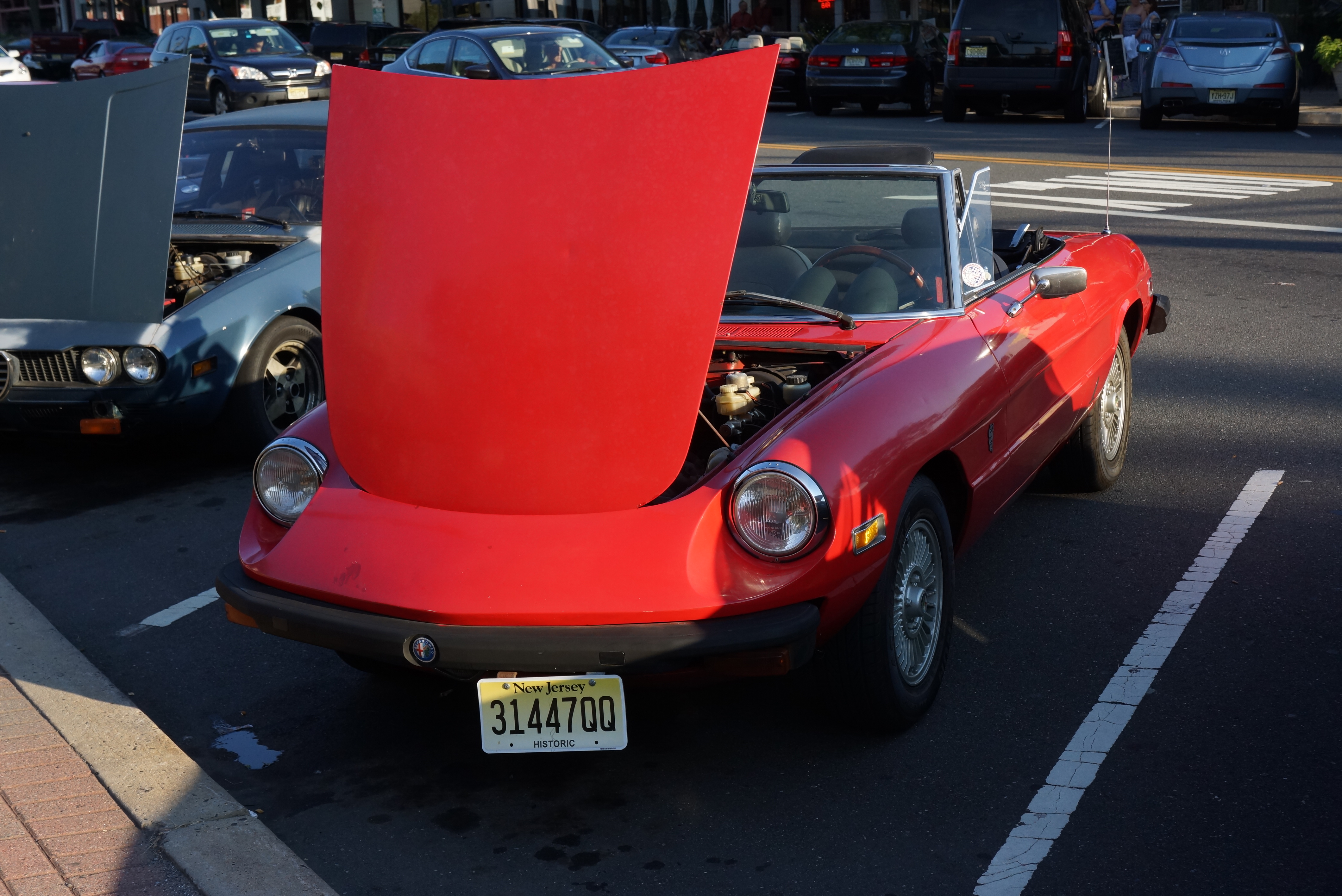
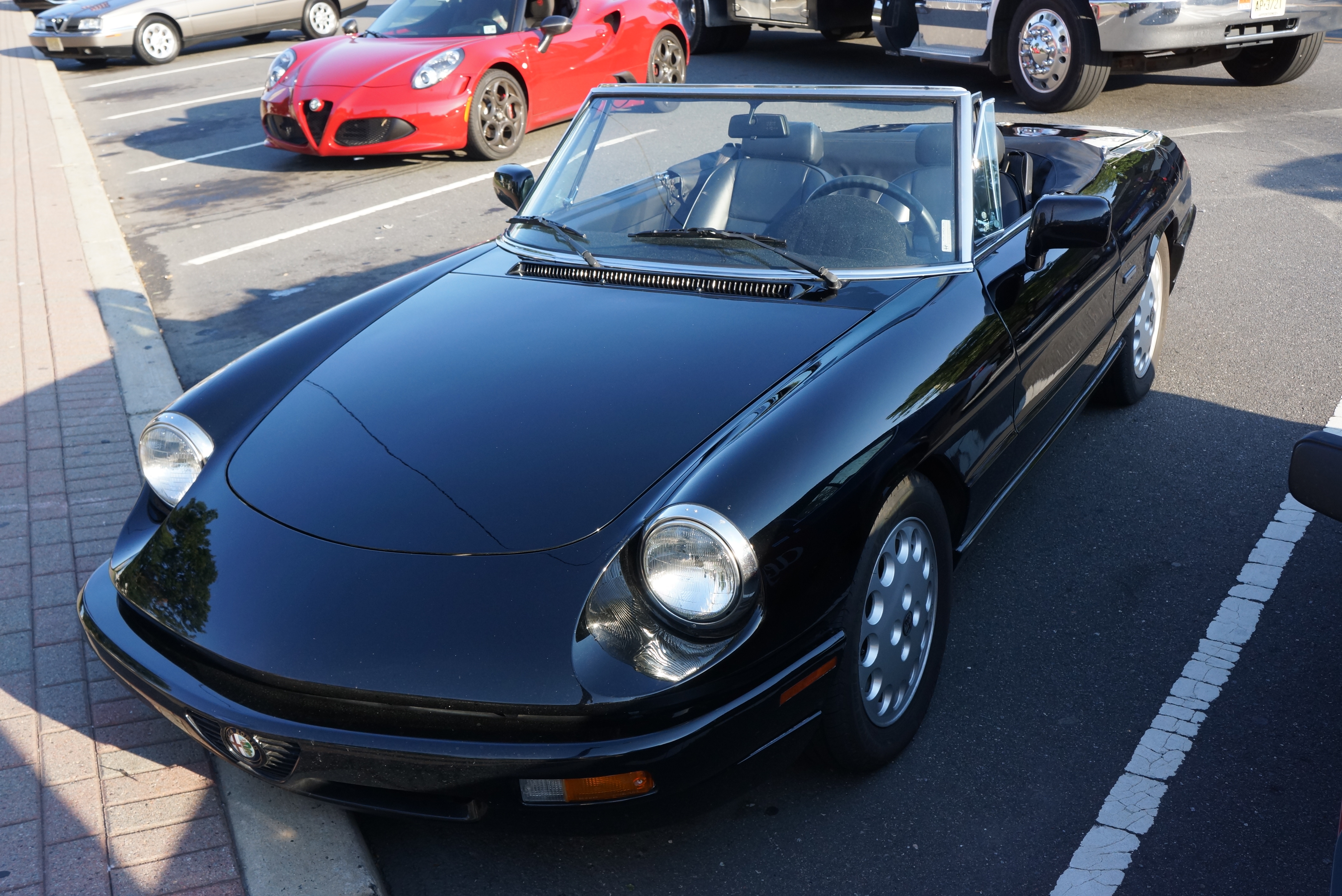
The Friday tradition known as the Somerville NJ cruise night took place as expected on August 26, 2016. However, the usual swarm of domestic muscle cars and old-school hot rods was invaded by members from the NJ Region of the Alfa Romeo Owners Club (AROC). In total, there were 9 Alfa Romeos present, which was an excellent showing for this sweltering late summer evening.
The club had reached out to the cruise night organizers to request a group parking spot. As has been done in the past for other clubs, the spaces in front of the Somerset County Courthouse were reserved for us. The first Alfa was in place before 5pm, with the majority of cars claiming their spots by 6pm. Based on the steady flow of foot traffic parading past our cars, we can presume that the audience enjoyed the rather unexpected gathering of Italian machinery.
There was great model diversity, with Alfetta GTs, Spiders, a 164, two 4Cs, and your scribe’s GT 1300 Junior. The Junior was the sole vehicle from the 1960s, but we had great representation from the ‘70s and ‘80s.
The 4Cs were the surprise of the evening, with one privately-owned car in attendance, as well as a brand new one from the local dealer, Fullerton Fiat-Alfa (thanks, Dave!).
No mirrors were used in this shot
Gorgeous interior (note carbon fiber)
Engine hidden under shroud
Old friends got reacquainted, new friends were made, and with darkness arriving by 8pm, most of us were back on the road by then. It was an enjoyable way to spend an evening with like-minded people, and we hold out hope that our local Alfa club can find its way to organize one more gathering before the cars are stored for the winter.
1977 Spider
Still owned by original purchaser
Interior a mix of original and refurbished
Spider in obligatory red
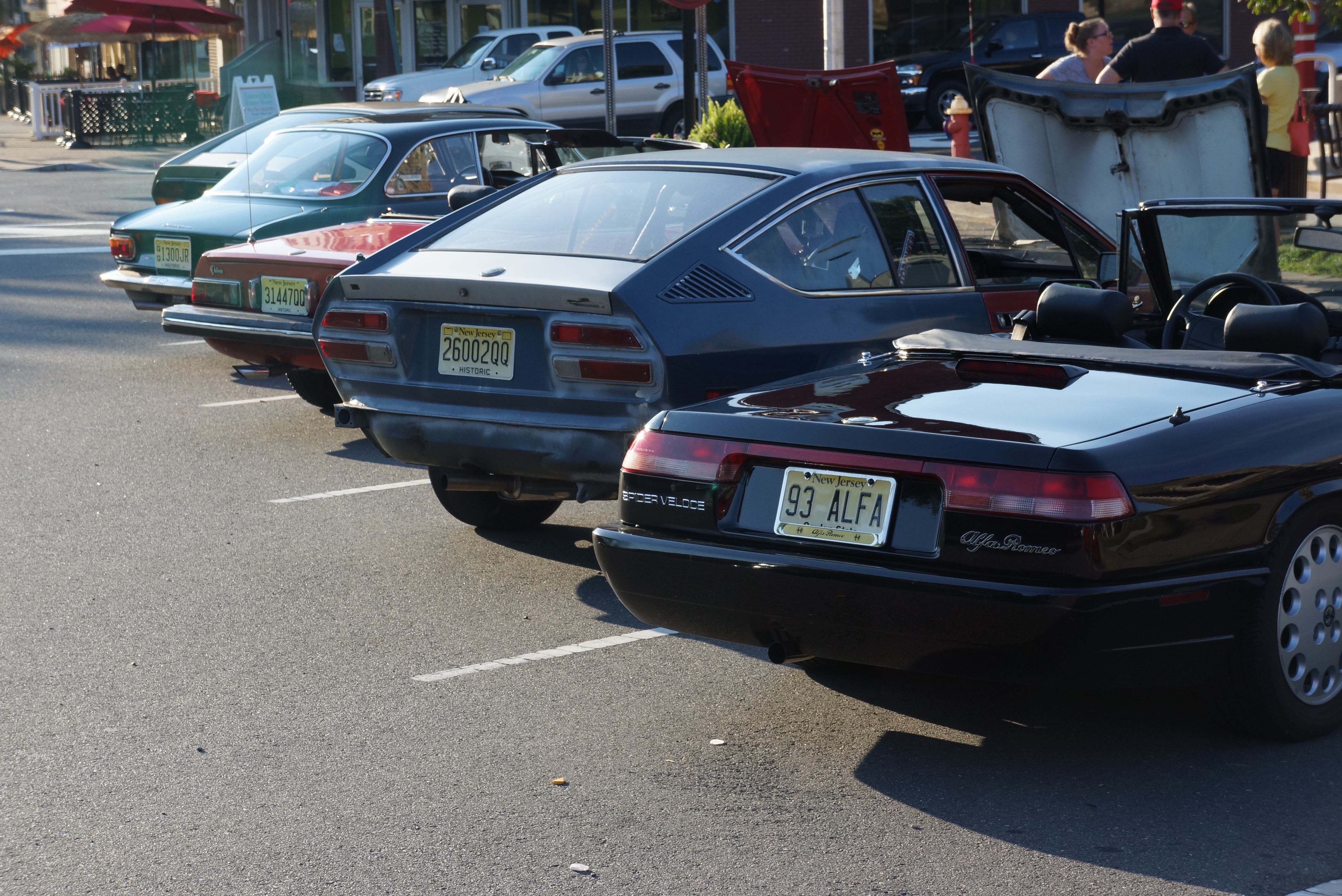
1993 Spider looking sharp in black
’70s era Alfetta GT
In case you didn’t know the marque
Rare twin-plug engine
Earliest Alfettas put tach in front of driver, with speedo pushed to center
The 164: V6 & FWD
So clean it looked a year old
Detailed engine compartment
My 1967 GT 1300 Junior
A V6-equipped ’80s GT Coupe
Sixty years later, Alfa still using manual release in 4C’s door jamb to open trunk
In August of 1978, bored silly after 11 months in my office job, I answered an ad in a local newspaper. A car dealership was looking for apprentice mechanics – “willing to train”, it said.
My one and only interview was with the dealer’s service manager. Jerry Miller told me that he was an engineer, but preferred working around automobiles. He seemed impressed that I had a Bachelor’s degree, and inferred that he and I would be the only college-educated people there. Assuring me that my pay would be “x” dollars per hour, he hired me. I gave two weeks’ notice to the Department of Labor, and, shocking my family and friends, announced that I was entering the car business to work as a mechanic (the term “technician” was not yet in vogue).
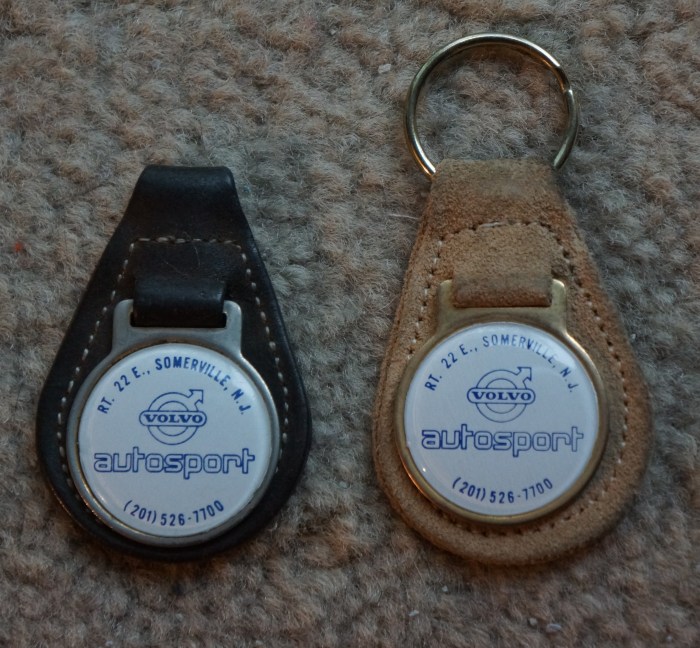
The dealership was Autosport, in Somerville, NJ. The store sold and serviced Volvos, Hondas, Alfa Romeos, and Holiday Rambler motor homes.
I used the fob on the left for years. Today, at the same location and same phone number (different area code), is Bridgewater Volvo. “Autosport” continues as a stand-alone Honda store across the street.
My first day on the job, Jerry said that there were ten mechanics, in two teams of five. One team primarily worked on Volvos, the other on Hondas, with the Alfa and motor home work shared between the two. He looked at me and said “I will put you on the….Volvo team”. Funny how one seemingly simple decision, made by another, can cast your fate.
I walked over to the Volvo side of the shop, and waited for the Volvo shop foreman to arrive. About 30 minutes later, a clapped-out Mercedes-Benz sedan with faded blue paint bounded into the parking lot. Behind the wheel was a dark-haired man, about 10 years older than I was, somehow holding both a cigarette and a cup of coffee while driving. He meandered into the building, and being the amicable Irish chap he was, stuck out his hand and said “Hi, I’m Andy Finnegan. Welcome”.
Misunderstanding #1: I’d be supplied tools and a toolbox by the dealership.
As I recall, I asked few questions during the interview, and made many assumptions, some of which turned out to be false. For example, this naïve 24-year-old thought that dealerships supplied tools.
Andy: “Where’s your tool box?” Me: “You guys give me one, right?” Andy: “Nope”.
After work, I drove to the local Ace hardware store and bought their house-brand tool box. Just an upper chest, I likely paid around $75 for it. My dad, none too happy about this career change as it was, gave me a small supply of tools to augment the only ones I did own, which was a set of Craftsman ½” drive metric sockets. (Thinking I was set with the metric stuff, I soon found out that most Volvos used SAE-size hardware.) Andy kindly let me use a rolling cart to serve as a place to put my tool chest.
The “Master Mechanic” label forced me to endure much ribbing. The missing red paint was caused by bench-bleeding a master cylinder and shooting a spray of brake fluid against it.
Misunderstanding #2: I’d be working only on cars.
About two weeks into the job, I was handed a Repair Order (RO): “Customer states that shower leaks”.
Huh?
Oh, right, this must be one of those Holiday Ramblers. At least it would be easy to find in the lot. Entering the motor home, I was greeted with piles of dirty dishes and dirty laundry. The shower looked like it had not been cleaned in several months. I got Andy, who said “I’ll take care of this”. He complained to the Service Manager that “car mechanics” were not going to service someone’s unkempt mobile residence. I was never again given an RO for a Holiday Rambler.
Other unexpected jobs included spraying undercoating onto the underside of new Hondas (without a mask), and painting the service shop floor.
Misunderstanding #3: I’d be making my hourly pay rate times 40 hours per week.
Two months into the job, I considered quitting. The work was much more difficult than I had imagined. Under the flat-rate system, I was supposed to find the car, diagnose the problem, procure the parts, complete the repair, and perform a road test, all within a published book time. That rarely happened for me. My preferred approach was to grab the Volvo service literature and page through it, looking for possible solutions. This was not how to make money.
My hourly rate, had I been able to earn 40 hours’ worth of it, would have been roughly equivalent to my previous job’s pay. In reality, I was earning about 25-30 hours a week. Without Andy there, I would have earned even less. Then, six months into my employment, Andy quit.
He told me he had gotten a job as a “Field Technical Specialist”, or FTS, at Volvo Cars of North America. I was devastated, and had no choice but to latch on to the new Volvo team leader, who, while also helpful, was no Andy. However, Andy’s career change gave me the idea that down the road, such a move could be possible for me.
At least the dealership gave me formal training. Six times in 1979, I attended Volvo service training at the Rockleigh headquarters. Many of my service training instructors later became colleagues.
The Volvo Service Training Passport. Earning a sticker was a badge of honor.
As time went on, my skills did improve. I got a loan from the Snap-On tool guy, bought a roller cabinet, and soon had just about all the tools I needed. I even started to enjoy the work, although I was no Class A mechanic. Some of my mishaps were quite humorous.
My favorite story concerns the Alfa Romeo Alfetta I brought in for recall work. Alfa had announced a recall on its catalytic converters, which at that time were filled with coated pellets. The recall was necessary because the converters had not been completely filled at the factory. The repair was simple enough: unbolt the converter, remove the plug at one end, get the box of pellets from the parts counter, fill up the converter, and put everything back together.
My job complete, I let the car idle in my stall while I wrote up the repair on the back of the RO. Suddenly, the guys across the aisle started to yell. “Hey, Reina, your car is shooting at us!” What? I walked around and saw small white objects leaving the car’s tailpipe. Back at the workbench, I found the plug which I had forgotten to reinstall – the car was shooting its catalytic pellets like a BB gun. I needed to do the job all over again, and, bear the wrath of the Parts Manager (“this box of pellets costs us $1,000!”). Talk about not making flat-rate….
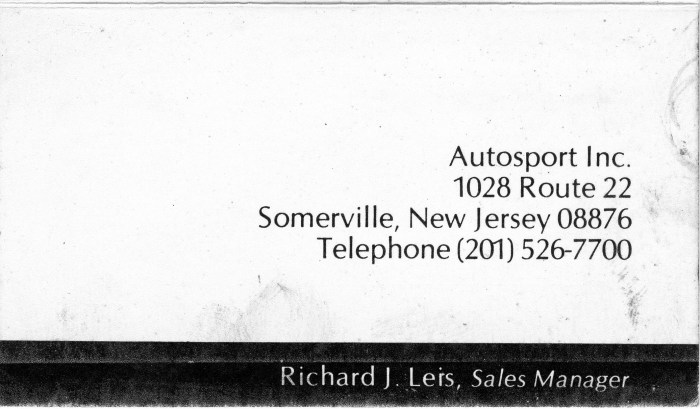
A year into the job, the Sales Department was abuzz because Jerry Lustig, the dealer principal, was going to add a nameplate to the showroom: Autosport had signed up to become a DeLorean dealer. In anticipation, the Sales Manager printed business cards with his name. Alas, it never happened, and whether that was due to Jerry L. or John Z., I wasn’t there long enough to find out.
A DMC business card; collectible?
Autosport never became a DeLorean dealer
Two years after starting at Autosport, it was time to find the next opportunity. Andy had told me about a Volvo dealer where, he had heard, service was run more smoothly. Walking in cold off the street, I applied for a job as a B tech at Smythe Volvo in Summit NJ, and was hired. When I left Autosport, my take home pay was not much more than when I started. As a tech at Smythe, I would be paid hourly; their technicians did not work flat rate. That was fine by me.
A portrait of the mechanic as a young man. Note the hipster pocket protector.
My first two years wrenching on cars were like a college education all over again. I learned as much on this job as I had learned in four years at the university. Best of all, the skills I acquired have stayed with me and have been put to good use working on my personal and hobby cars.
Thank God for my time with Andy Finnegan. He was late every day, smoked like a chimney, and regularly mouthed off to the boss. But he patiently helped me every day he was there, and taught me everything he knew about Volvos and car repair in general.
Years later at Volvo corporate, Andy and I became colleagues, and although we did not work directly together, we kept in touch. About ten years ago, he became quite ill and passed away. Before he left us, I visited him and told him how much I appreciated what he did for me. To this day, when working on any of my cars, he’ll cross my mind. I feel that I owe my career to him.
My good friend Enzo (“EC” to his buddies) bought his first collector car, a 1991 Alfa Romeo spider, last autumn. This was not Enzo’s first Italian car, as he had Fiats as daily drivers, albeit 30 years ago. But upon retirement, he decided to treat himself, and found this pristine low mileage beauty locally. Like any other 25-year-old vehicle, it needed attention to some small details, but EC has been fastidious about staying on top of needed repairs.
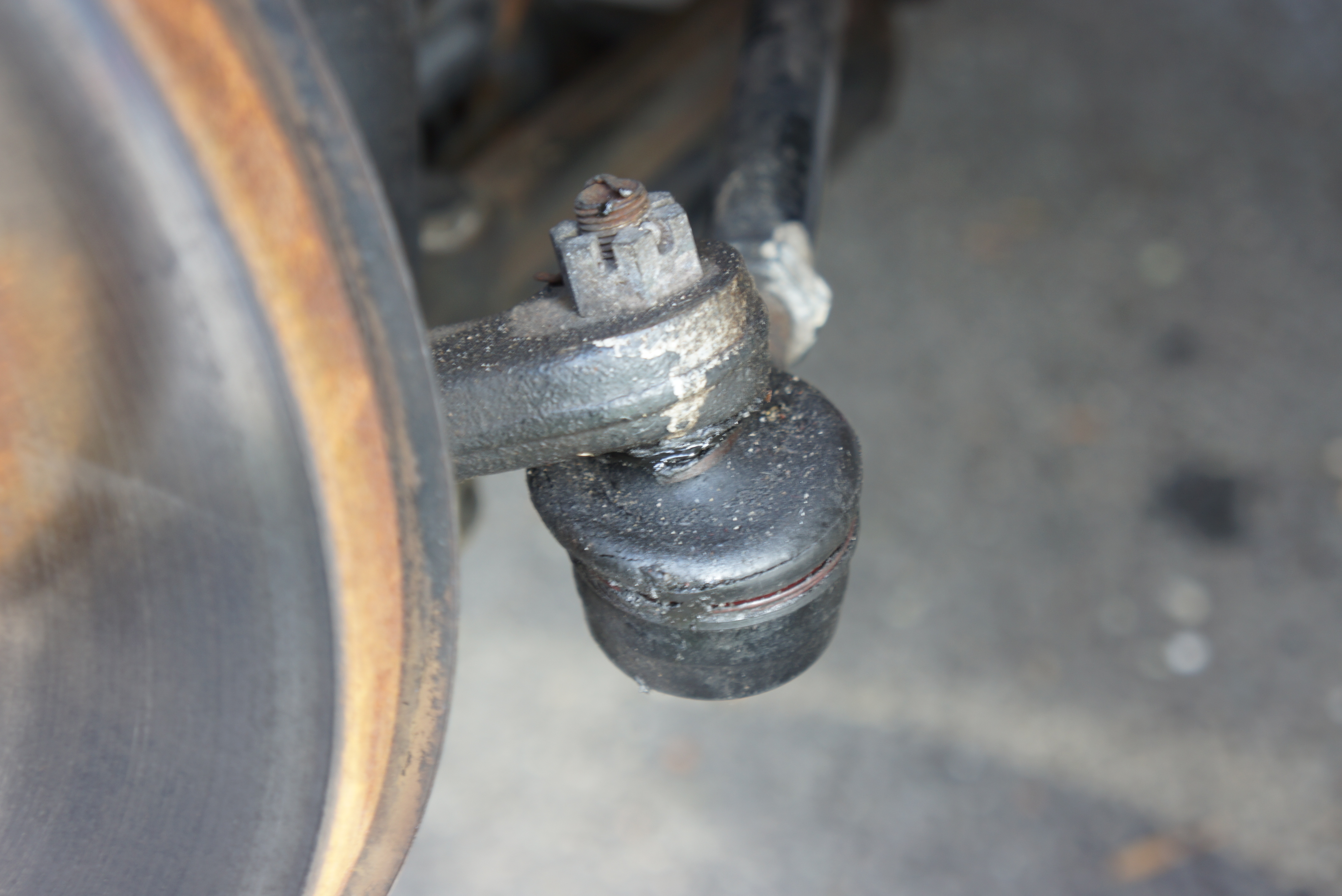
When I had had the chance to go over the car with him late last year, we found that one of the tie rod end boots was torn. It didn’t require immediate replacement, but over the winter he ordered parts, then invited me to his home for a day to be spent swapping out tie rod ends.
One of the outer tie rod ends, about to meet its demise
Upon arriving one day last week, I saw that he had ordered ALL SIX tie rod ends. I was under the now-mistaken impression that we were replacing only the two outer. (All 4-cylinder Alfas on the 750-, 101-, and 105 platforms use recirculating ball steering, with a center link and two tie rods. Each rod has two ball joints, one with right-hand thread, and one with left-hand thread, to allow for toe adjustment.)
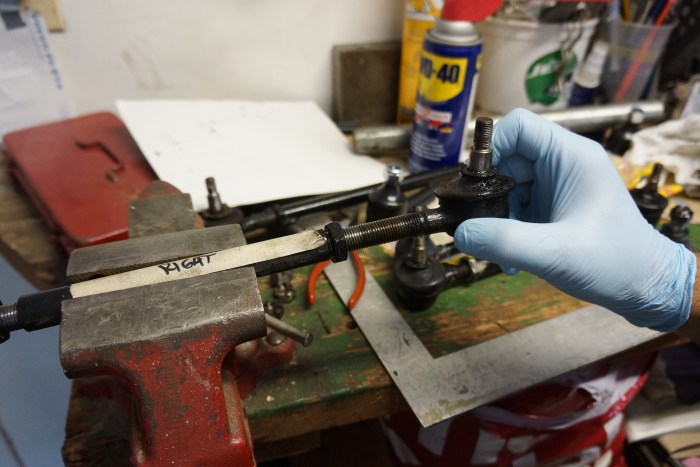
One of the tie rods is out and is measured
We got to work. First order of business was to pull out the cotter pins, but these pins were so thin and rusted that half of them broke before we could retract them. We ended up forcing the socket over the castle nuts and using an impact wrench to remove all six nuts.
Part numbers marked on each end to keep track
A trick I had remembered from doing the same repair on my Alfa was to rotate the steering wheel to bring the center nuts to an exposed position from within the engine compartment. Then, using a long extension, we could gun the nuts loose from up top, which was much easier than trying it while on our backs.
Next came out the pickle fork. Persuasion from a two-pound hammer was all it took to get the links to drop.
We were cranking the tunes in the garage!
With the three links off the car, we counted threads AND measured overall length, as our best attempt to reassemble the car without changing the alignment too much. We matched up old and new parts (with EC marking part numbers on each component using a Sharpie), and had all six tie rod ends installed into their respective links within minutes.
This may have been the point when we took a lunch break. Prosciutto, Parmesan, salami, olives, and wine (!) were on the menu. Lunch concluded with a nice cup of coffee (to wake me up after the wine), and we were back to the garage.
Masking tape helps keep identification straight (wine does not)
The new parts, bought from Classic Alfa in the UK (the author’s favorite Alfa parts supplier) used castle nuts and cotter pins for the four outer ends, and locking nuts for the two inner. We did not have the correct-sized cotter pins on hand, so the ever-resourceful EC made his own from coat hanger wire. The temporary pins will be replaced with authentic pins once he gets to the store.
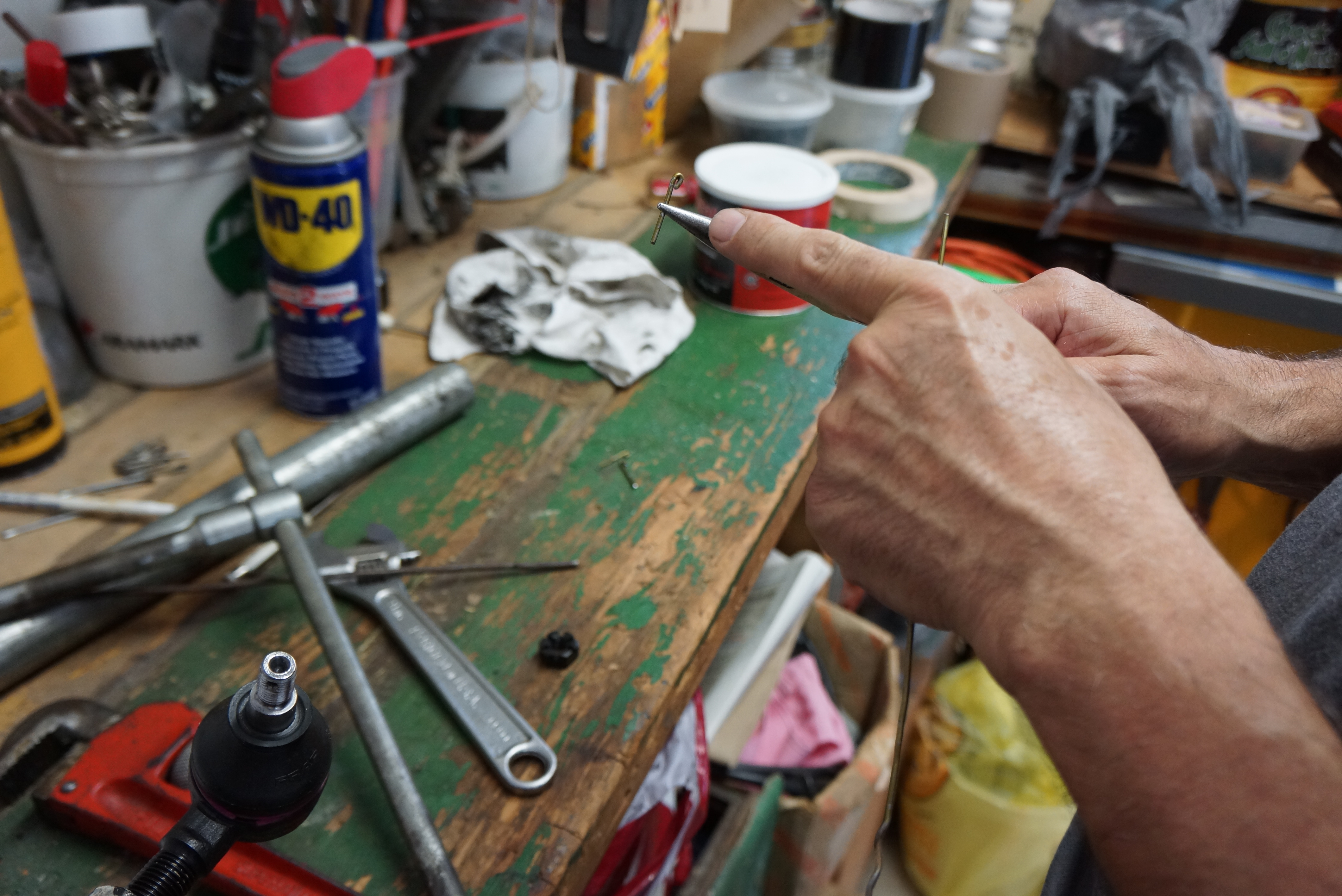
EC fashions cotter pins…
… points out handiwork
Much to my surprise and satisfaction, all six nuts tightened right up without giving us any trouble. I had concerns that the ball joints might spin and prevent us from reaching the proper torque, but that didn’t happen. With everything buttoned up, Enzo took the car for a test drive, and came back to report that the only issue was a steering wheel which was slightly off center. The car will need an alignment after this work anyway.
Front wheels remained attached during test drive
At the rate my friend EC is moving, there is very little else that needs attention on this gorgeous drop-top. It’s running great, and he’s got the summer to enjoy it! I know that we’ll see him and his Alfa out with us on our weekend jaunts.
The Boonton NJ cruise night, held on Fridays in the WalMart shopping Plaza, had its first show of the 2016 season on June 10. This year’s festivities were scheduled to start on June 3, but that show was cancelled due to inclement weather.
The cruise night, sponsored by the Starlight Cruisers car club, began in 2007 and has proven to be one of the better attended events of its kind in northern Jersey. The parking lot is roped off to allow parking for up to 250 cars. Because of the show’s popularity, vehicles are limited to those with QQ (NJ antique automobile) plates, or those which are at least 25 years old. The club provides music and door prizes.
The weather on the 10th was perfect – sunny, warm, cloudless, with low humidity, which brought out the crowds. The show cars were 99% domestic product, with a large percentage of them easily defined as “modified” – everything from bolt-ons to full customs in the old-school sense. GM vehicles from the 50s and 60s dominated, but there was also enough variety to keep things interesting for those who seek the unusual. There was a smattering of pre-war iron, including a lovely 1940 LaSalle convertible. Original owner and/or unrestored cars were present, such as a 1967 AMC Marlin whose owner has had it since 1971. And some imports dared to show up among all the Chevys and Fords, including an Opel GT, a Saab 93, and your author’s Alfa.
AMC products are rare sightings at any car event. This cruise night featured a number of them, including this Rebel “The Machine”, and this 1978 Concord AMX.
AMC Rebel The Machine
1978 AMC AMX
This 1967 Marlin was striking in several ways, most notably because its owner told us that this was his first car when he bought it in 1971. His daughter was dutifully deployed to attend to polishing duties. When asked about the missing fuel door, he replied that the door has been shipped to Sweden (!) for color-matching. We were left unclear as to why.
1967 was on Ambassador platform
Sign nicely captures history
She’s only half-way done
The number of Corvettes in attendance easily reached several dozen. What was especially impressive was the large number of C1 and C2 cars.
’58 and ’62 C1 side-by-side
1961 C1 in Fawn Beige
Iconic ’63 Split Window- note the plate
These C2s lined up their beautiful rear ends
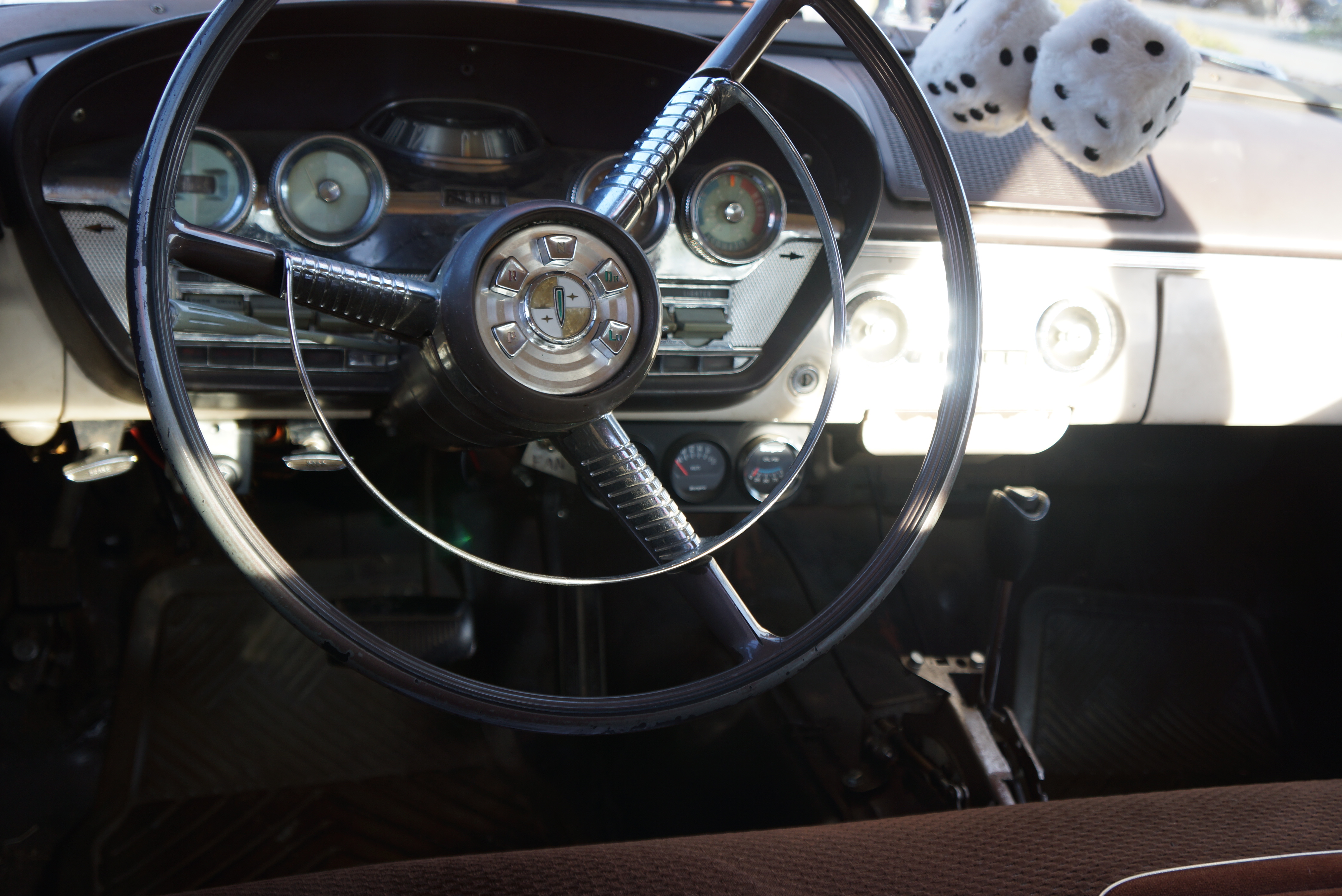
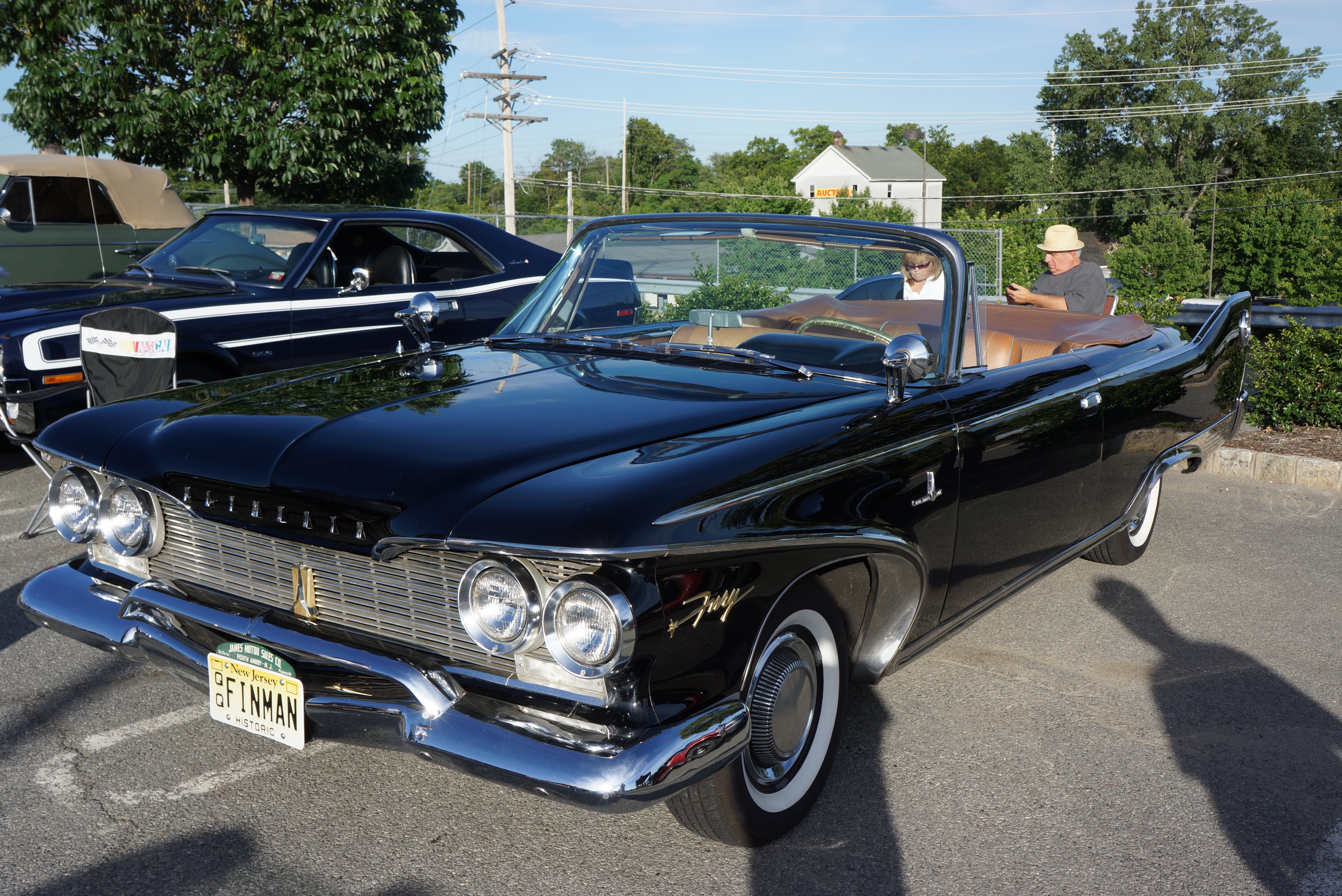
It is often stated that American car styling reached its bizarre peak in the late 1950s. While that may be true, what is sometimes missed is that interior styling also captured some of that strange creativity, and that included functional items such as transmission controls. This 1958 Edsel and 1960 Plymouth both used unusual solutions for transmission control placement. (Note that the Edsel has a floor shifter as part of a complete drivetrain swap.)
Quarter panel trim for a ’58 Edsel? Yeah, we got that.
Tranny buttons front and center
Chrysler didn’t get the memo that tail fins were out
Trans push buttons and square wheel
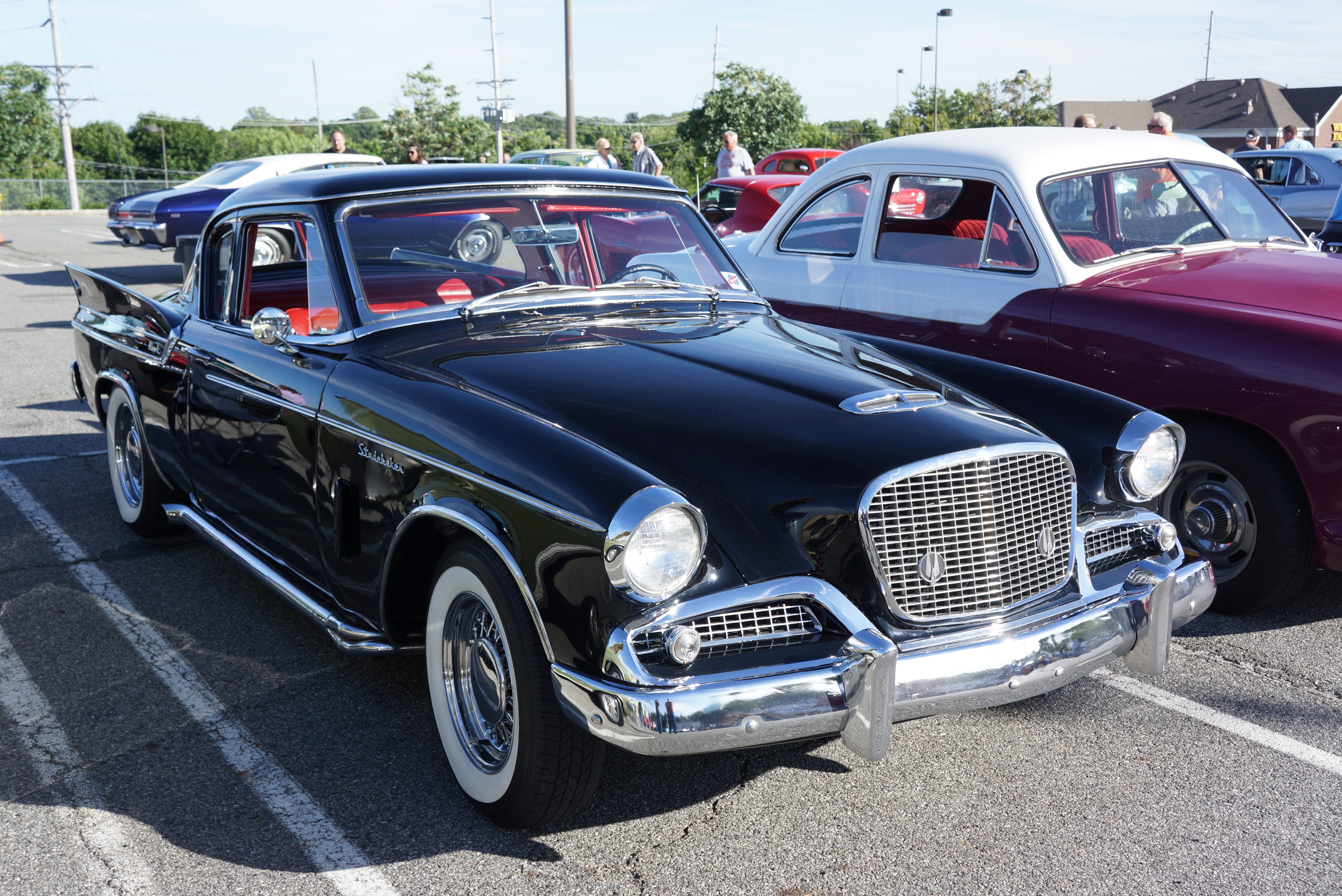
Studebaker’s history began 50 years before the dawn of the motorized vehicle, when the Studebaker brothers manufactured covered wagons. By the 1950s, they struggled to compete with the Big Three. “Daring to be different” was a strategy employed by them (as well as by AMC), as borne out by this Hawk and Avanti.
Studebaker Hawk with side pipes
’63 (first year) Avanti
Despite the dominance of 50s-60s muscle, a few cars from an earlier time were also on the show field. None was more striking than this 1940 LaSalle. The LaSalle brand was a “junior Cadillac”, but alas, could not compete in the marketplace. Production ended in 1940, making this car a representative of the marque’s final year.
1940 LaSalle convertible
Gorgeous Art Deco logo
Grille badge is subtle
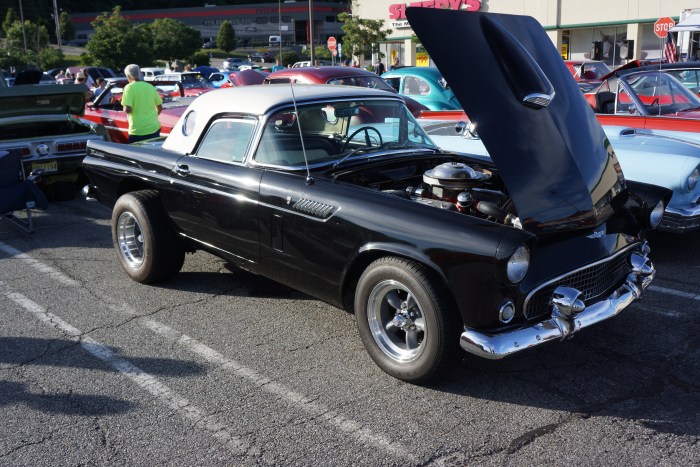
Not all T-Birds are restored to AACA standards. This ’56 was ready to rumble.
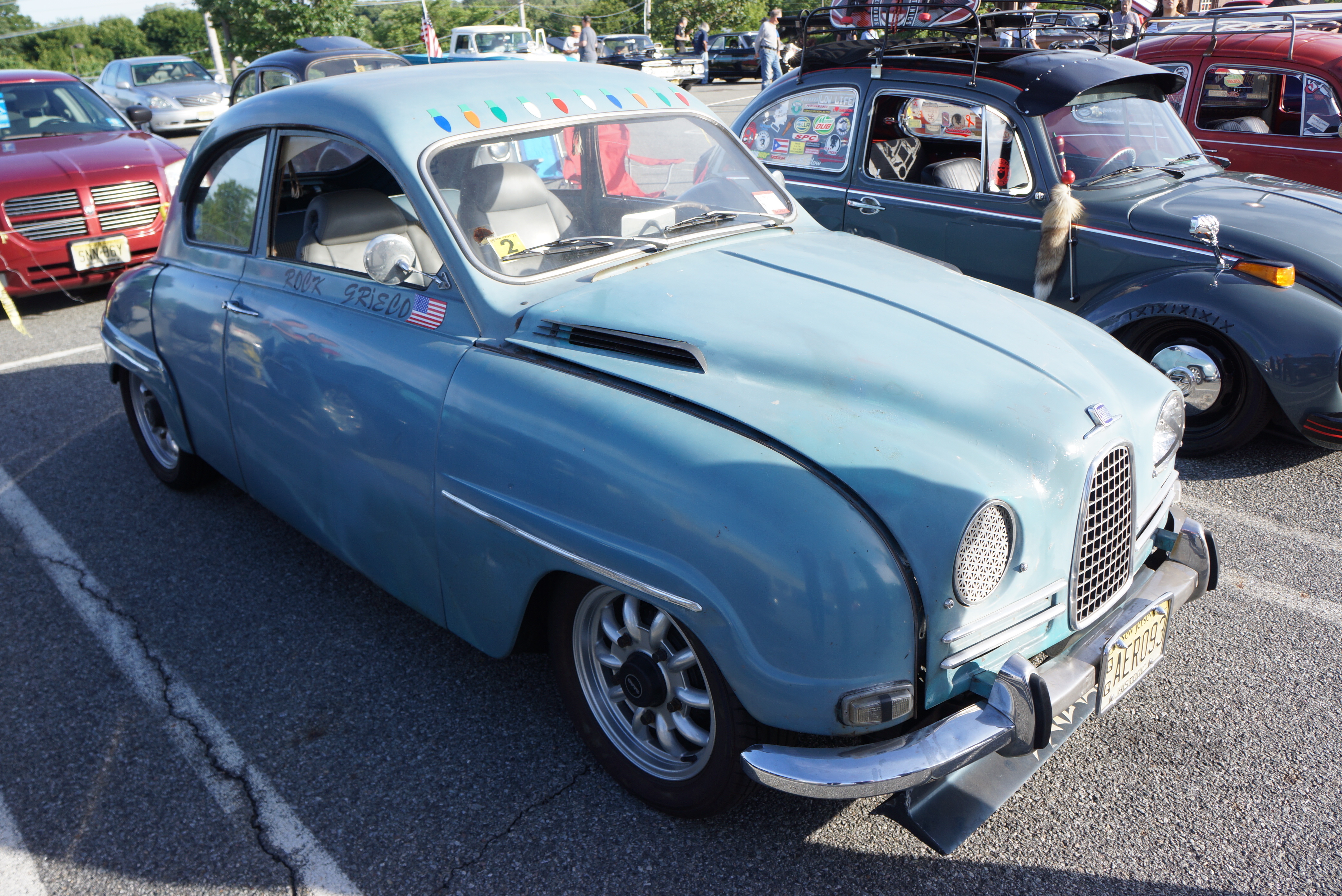
This Saab has been in Boonton before. Although we did not have the pleasure of seeing it run on this particular evening, the owner has kept the 2-stroke motor and has opened up the exhaust a bit, resulting in some glorious albeit raucous noises.
Saab 93
Sounds like a popcorn machine when running
Proof that Erik Carlsson has not driven this Saab
DeLoreans never went away; they’ve been hiding in plain sight all these years. For a vehicle which was manufactured for only two years (1981-1982) and in limited numbers, one always seems to turn up. Their collectibility may be on the rise, though, as a recent change in government regulations will allow the “new” DeLorean Motor Company to begin to legally manufacture cars again.
No BttF jokes, promise!
In 1970, if you could not afford a new Corvette, you may have been drawn to the Opel GT. Buick dealers sold them as captive imports. Built in Germany, the Opel GT was available with either a 1.1L or 1.9L inline 4-cylinder. You certainly didn’t pay the Corvette’s price, but you didn’t get the Corvette’s horsepower either.
Rarely seen Opel GT
Was called the “Corvette Jr” when new
This ’67 Firebird has the optional hood-mounted tach
The Alfa may have looked lost among the sea of U.S. built cars (it certainly is physically smaller than all of them), but several spectators stopped by to tell the typical “I had one of those” stories. The car ran flawlessly up and down Route 287 that evening.
My friend Enzo (he signs his emails as “EC”, so that shall be his nom de plume) is a former colleague of mine from Volvo corporate. We’ve known each other for over 25 years. After I retired from Volvo in 2009, I didn’t see him again until he retired this past December, when we reconnected. Since then, he’s joined us for several of our weekend breakfast runs, but always riding shotgun.
Note valve cover indentation for previous version air intake
Since his retirement, he’s talked about acquiring a toy car, preferably an Alfa Romeo. He informed me that as a younger man, he owned a Fiat 124 spider and several water-cooled 4-cylinder Porsches, and had no desire to repeat those experiences. He TRIED to buy my Alfa from me, but alas, it’s not for sale. The only Alfa GTVs in his price range are project cars, which are not where his interest lies.
Clean interior features Alcantara seat inserts
EC put considerable effort during 2015 into searching for the “right” car. He and I talked at length about an Alfa spider. Although a convertible was not his first choice, he did finally recognize that at the present time, almost all of the “Duetto” shaped spiders, built for over 25 years without significant change, represent a good value in the collector car marketplace. Only the original dove-tail spiders, sold in the U.S. from 1966-1969 (MIA in 1968 and again in 1970 for failing to meet emission standards), were out of his price range.
VIN plate verifies that in 1991, official company name was “Alfa Lancia”
The so-called Series 2, 3, and 4 spiders, which differ mainly by fuel delivery systems and nose-and-tail styling enhancements, are available in the high 4-figure range in reasonably good condition. They also were built in sufficient quantity that dozens are on the market at any given time. As with any Italian car, rust is public enemy #1. A former Alfa corporate field rep once cautioned me: “these cars are pre-rusted from the factory”.
Company symbol “f”, company name “pininfarina”. Anyone know why? Add a comment.
Earlier this month, EC found the right car. A classic used-car dealer in Queens, NY had a 1991 spider, with a purported 43,000 original miles. Attractive in silver with a black cloth top and tan interior, there was a stack of recent maintenance and repair records, including but not limited to new Pirelli tires, new brake calipers, rotors, pads and hoses at all 4 corners, and a front suspension rebuild. The car was put on a lift and verified to be solid. EC’s assessment after several test drives was that the mileage was believable, the condition was excellent, and the price was fair. A deal was struck, and EC picked up his new toy and first-ever Alfa Romeo several weeks ago.
Washer motor and A/C accumulator only accessible from under front bumper
On the day after Thanksgiving, by mutual arrangement, EC drove the car to my house so that we could give it a more thorough going-over. While much work had indeed just been completed, there were still items requiring attention, truthfully not unusual for a 21-year-old used (Italian) car. This GT 1300 Junior owner took the spider for a spin, and overall, completely agreed with the new owner’s assessment: the car was solid, drove well, and gave us no reason to think that it couldn’t be taken for a long weekend trip right now. The few minor mechanical and cosmetic issues were not deal-breakers, and most could be tackled while continuing to enjoy the car, at least until the first snow flies.
Spider at rest
We rotated the tires, and while doing so, verified the date stamps on all the tires (good) as well as the brake and suspension work (also good). Several torn boots on steering tie-rods were noted, as well as one incorrect wheel lug nut, so a list was begun of needed parts. Just before he was about to head home, I asked EC to drive my ’93 Miata. He had never driven an MX-5, and found it enjoyable, if a bit rough-riding with 98k on the clock (the original shocks are shot and will be replaced this winter).
Tire rotation aided by fire-truck-sized wheel chocks
All 4 wheels have right-hand threaded nuts; author’s ’67 has left-hand threads on 2 left wheels
Steering tie rod end boot is torn but still holds grease
So, to my friend Enzo, I offer heartfelt congratulations on behalf of myself and the rest of our group! As you yourself would say, you finally pulled the gun. When we schedule our first breakfast run of 2016, you no longer need to hitch a ride – we look forward to seeing you there with YOUR OWN Alfa Romeo.

































































 richardscarblog