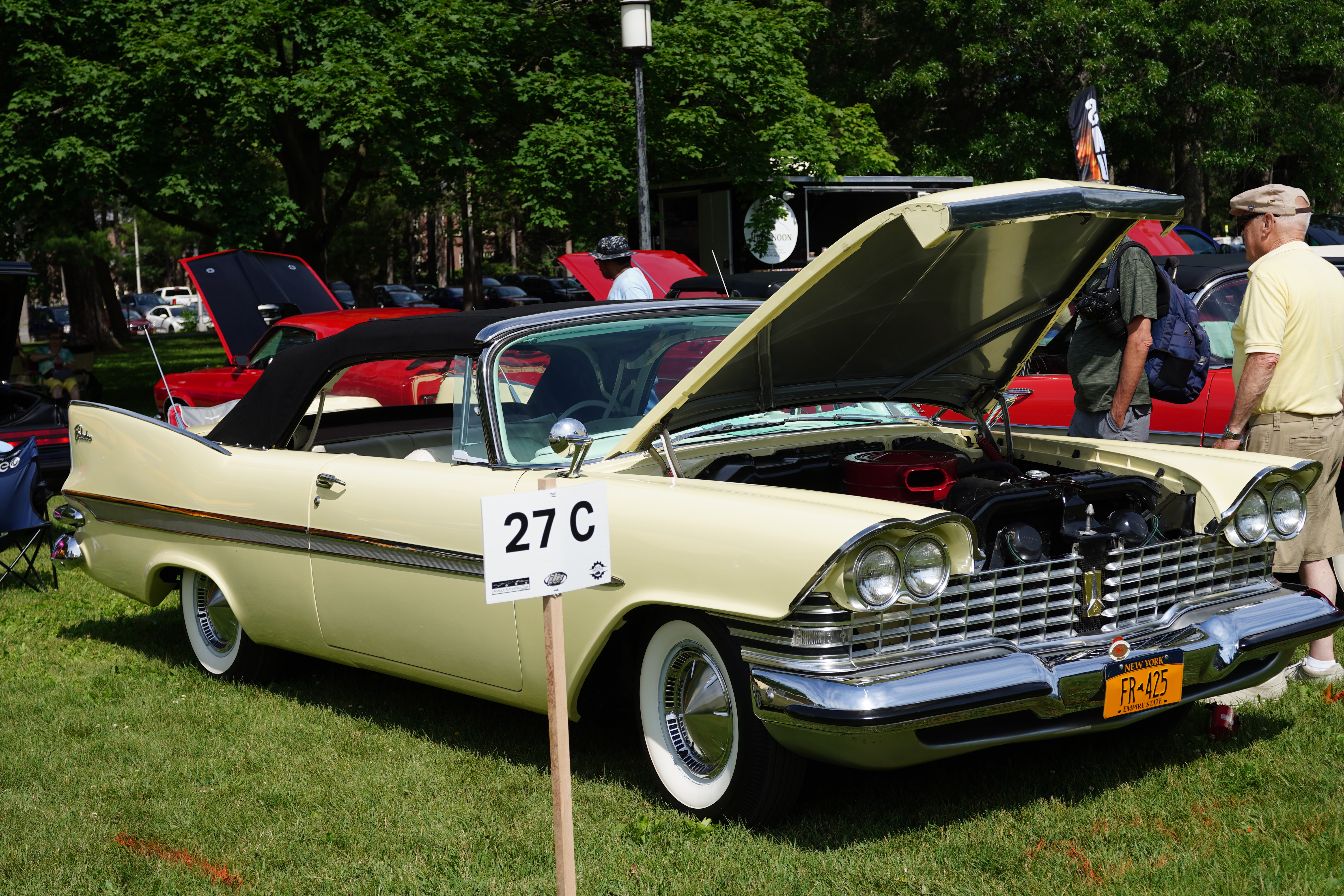
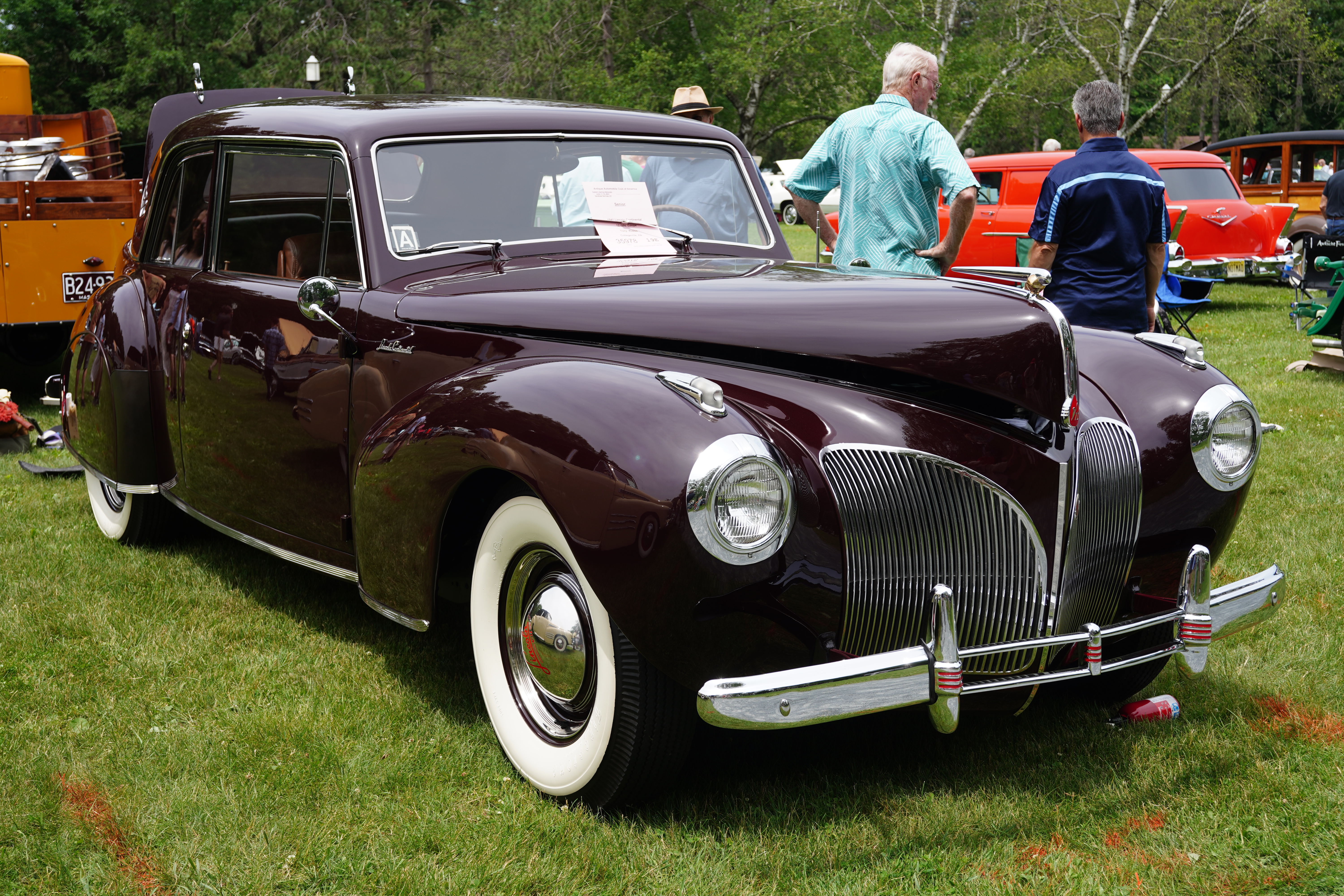
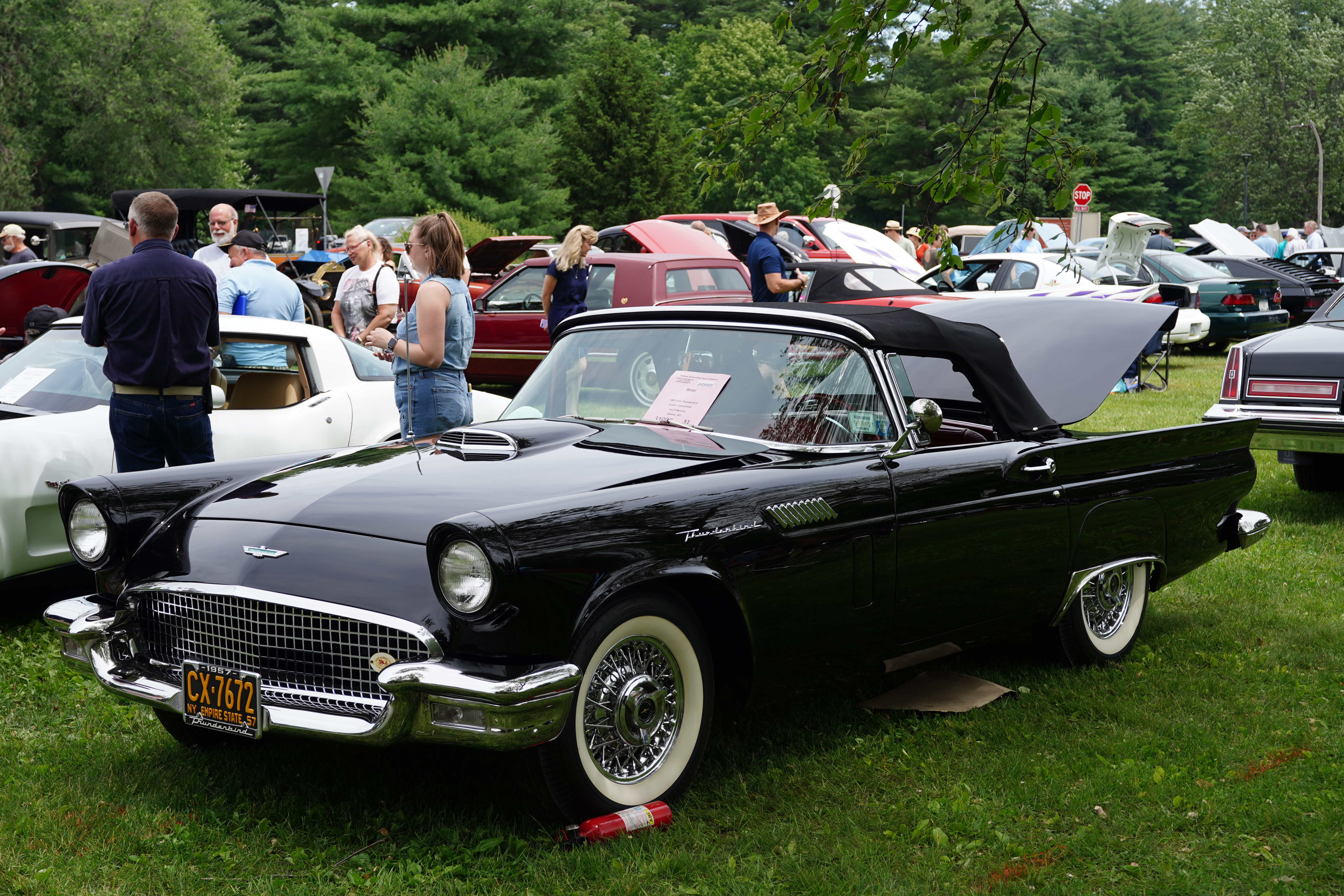
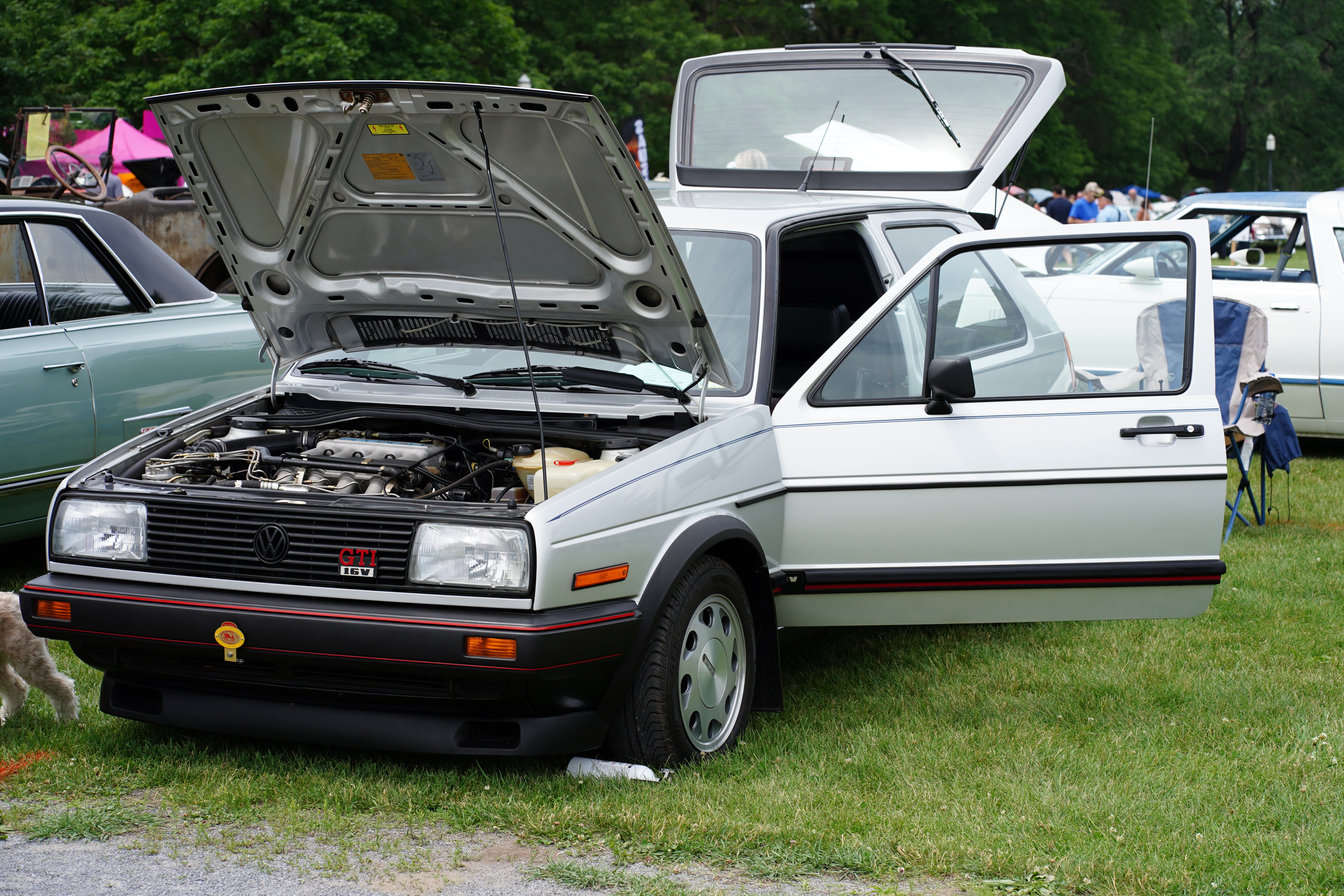
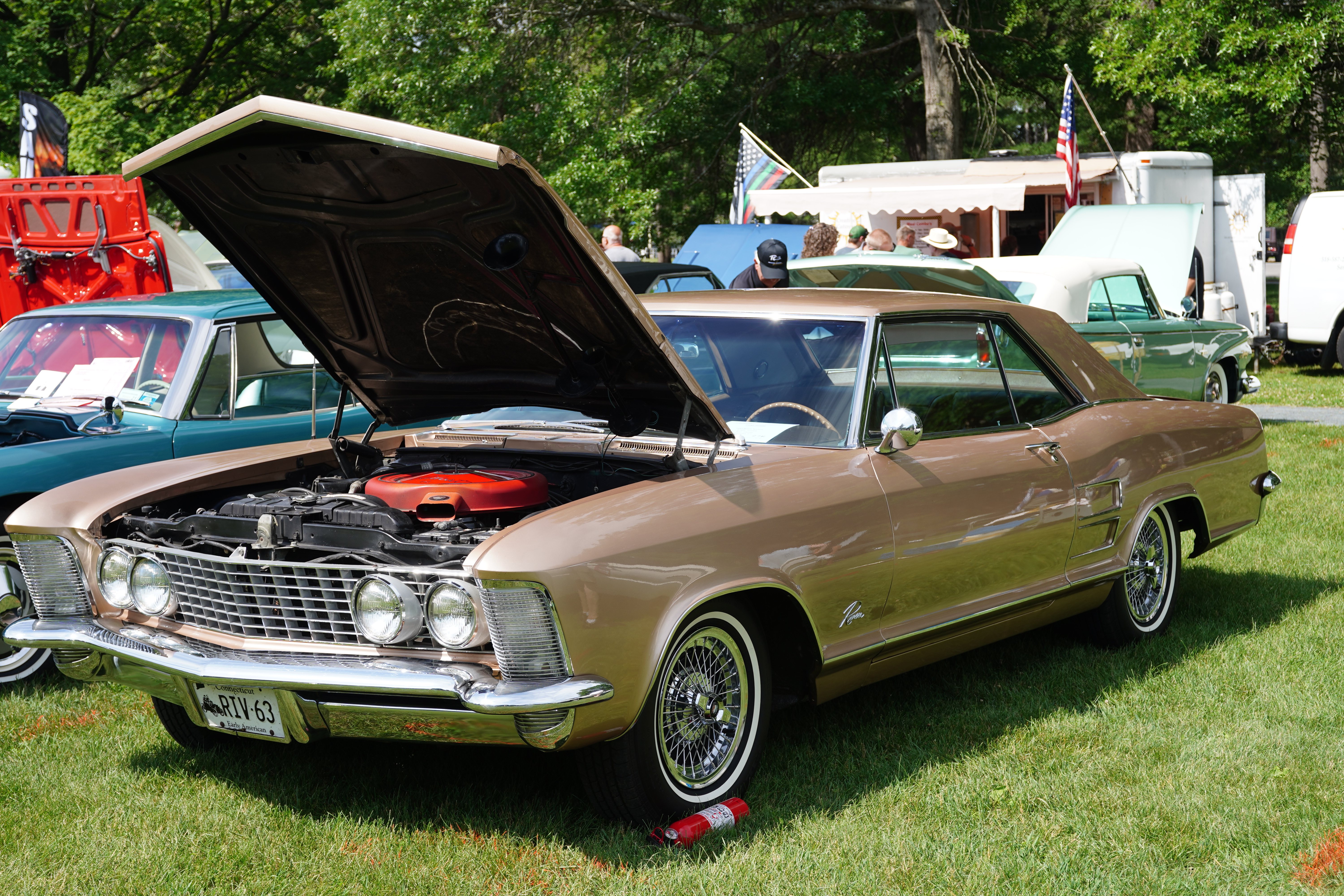
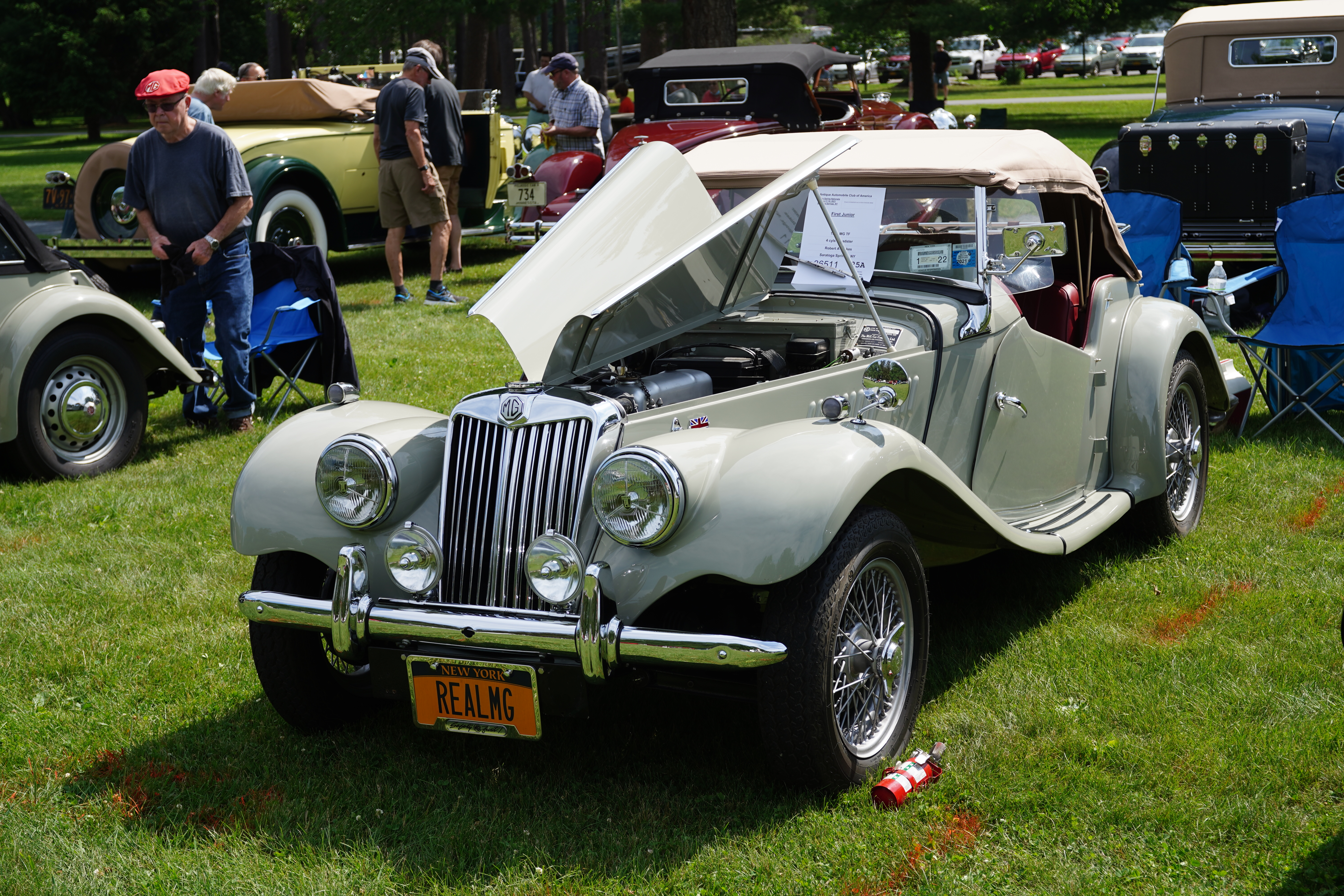
The Antique Automobile Club of America (AACA) held its 2021 Eastern Spring Nationals on Saturday June 19, 2021, in Saratoga Springs NY. The AACA Saratoga Region hosted the event, choosing the Saratoga Spa State Park as the show site, and selecting the Gideon Putnam as the host hotel, itself just a short walk from the show field.
My 1993 Mazda Miata was entered into the show, seeking a repeat Original HPOF (Historical Preservation of Original Features) award. There will be more to say about that in a future post. I drove the Miata up to Saratoga Springs on Thursday, enjoying perfect weather both that day and the next. The forecast for Saturday was for rain, but thankfully that was inaccurate, as Saturday’s weather was warm and a tad humid, but dry and delightful for an outdoor car show.
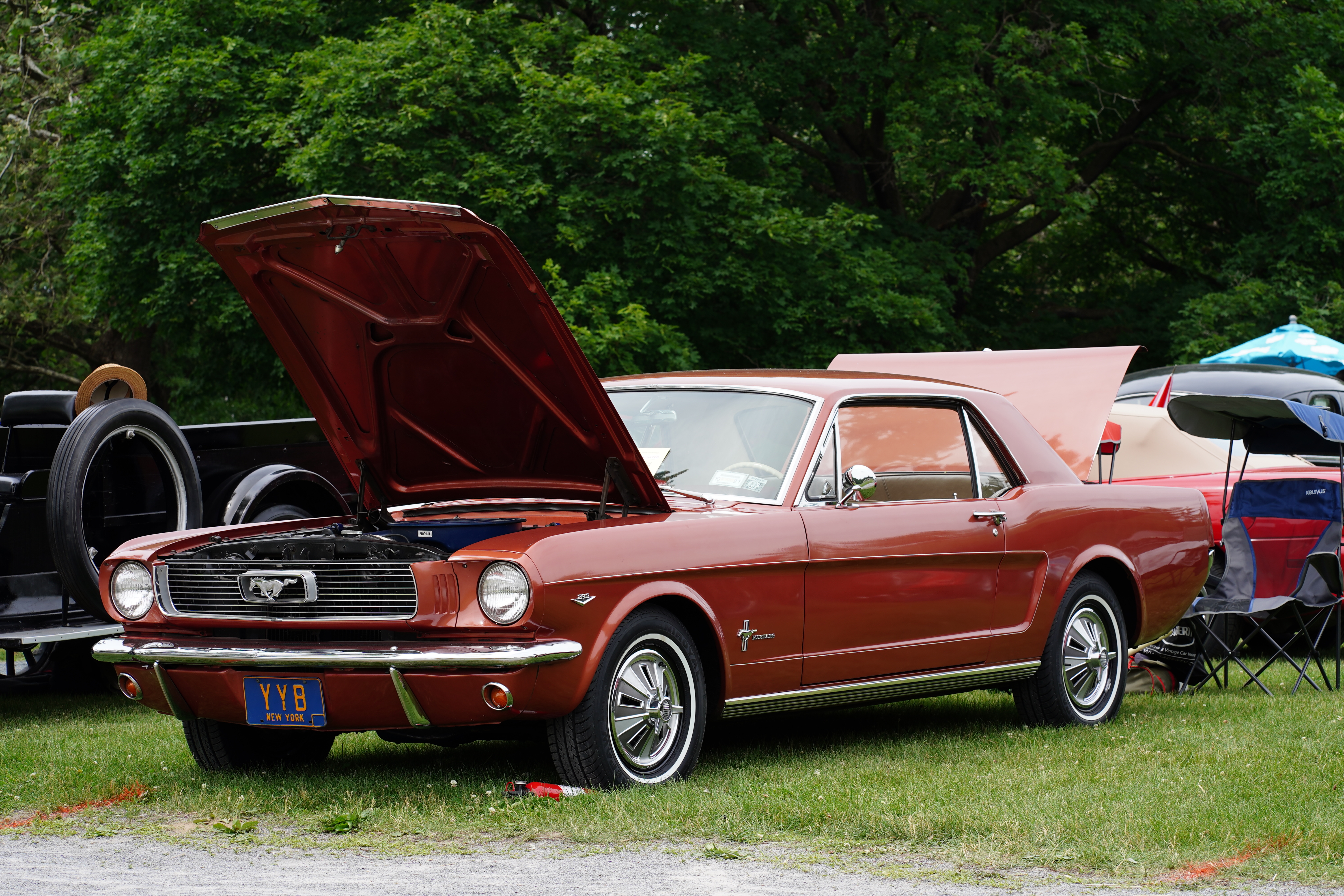
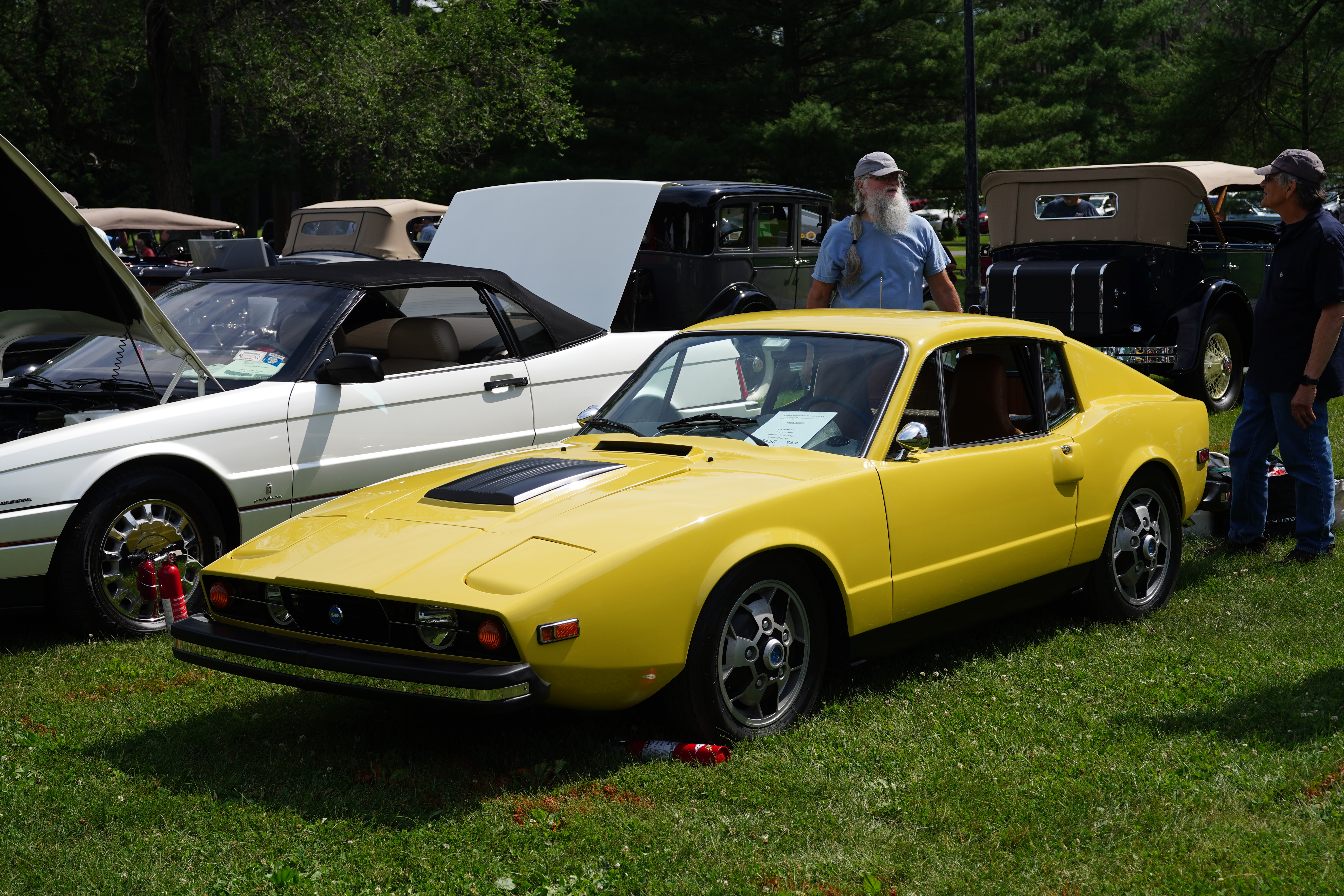
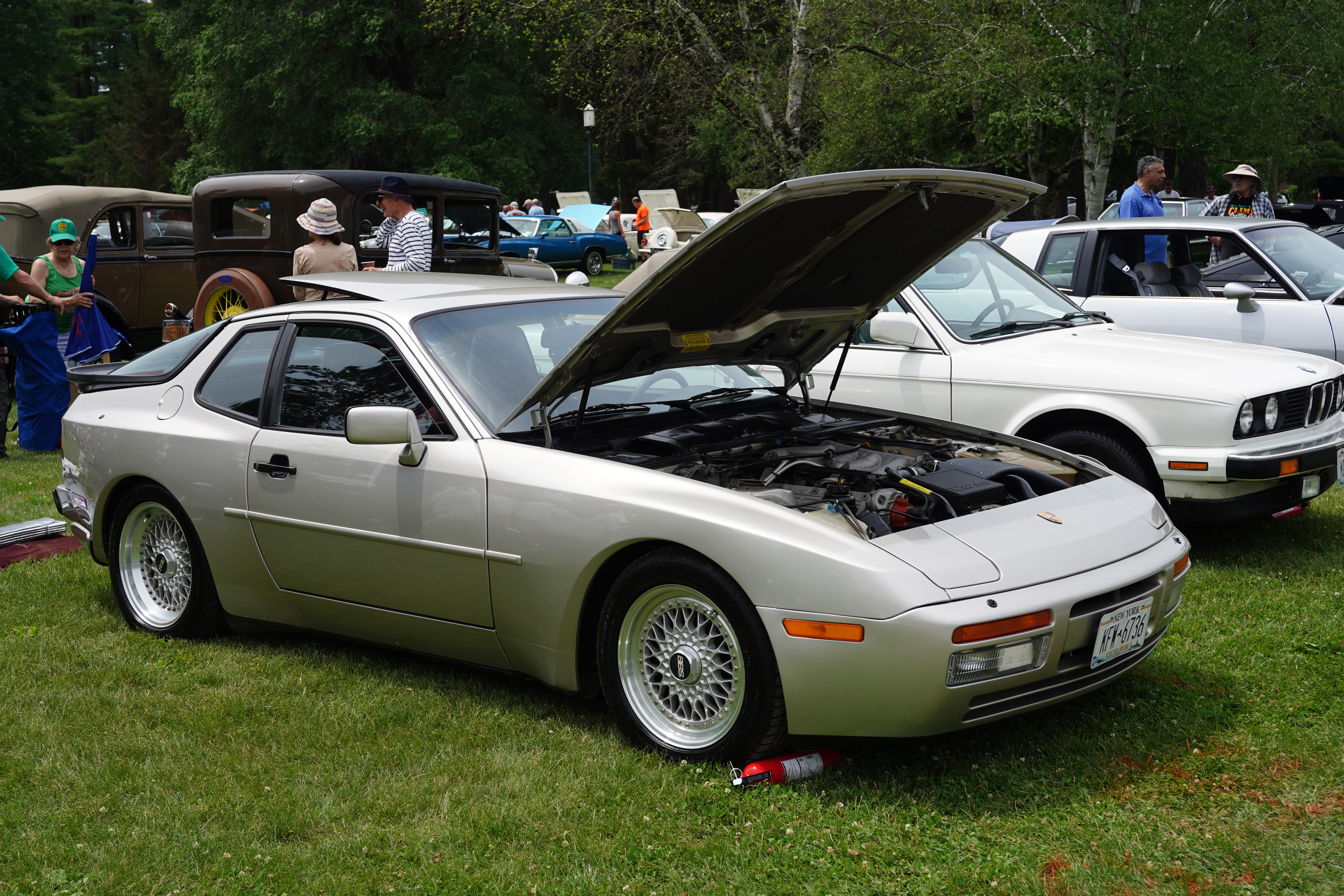
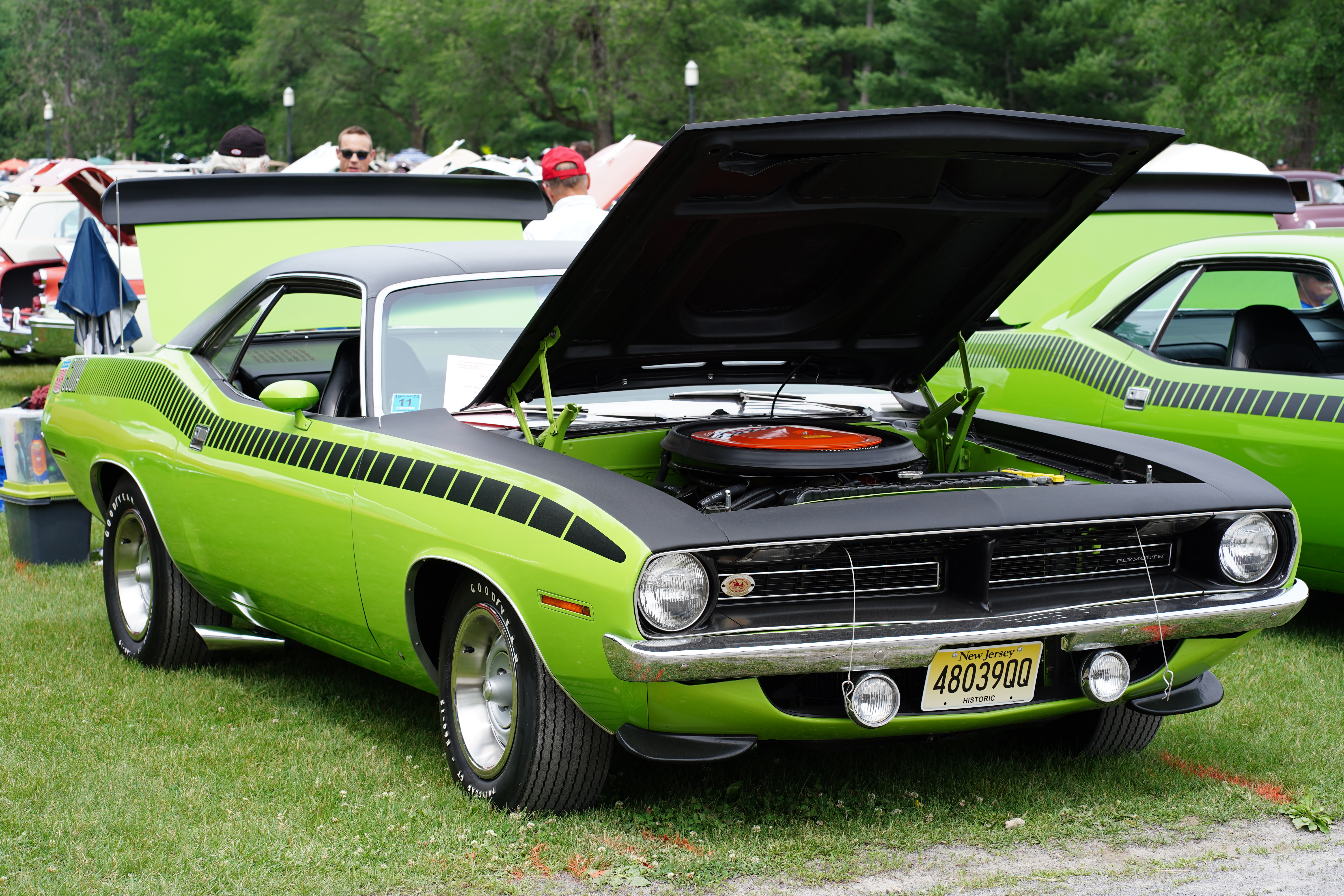
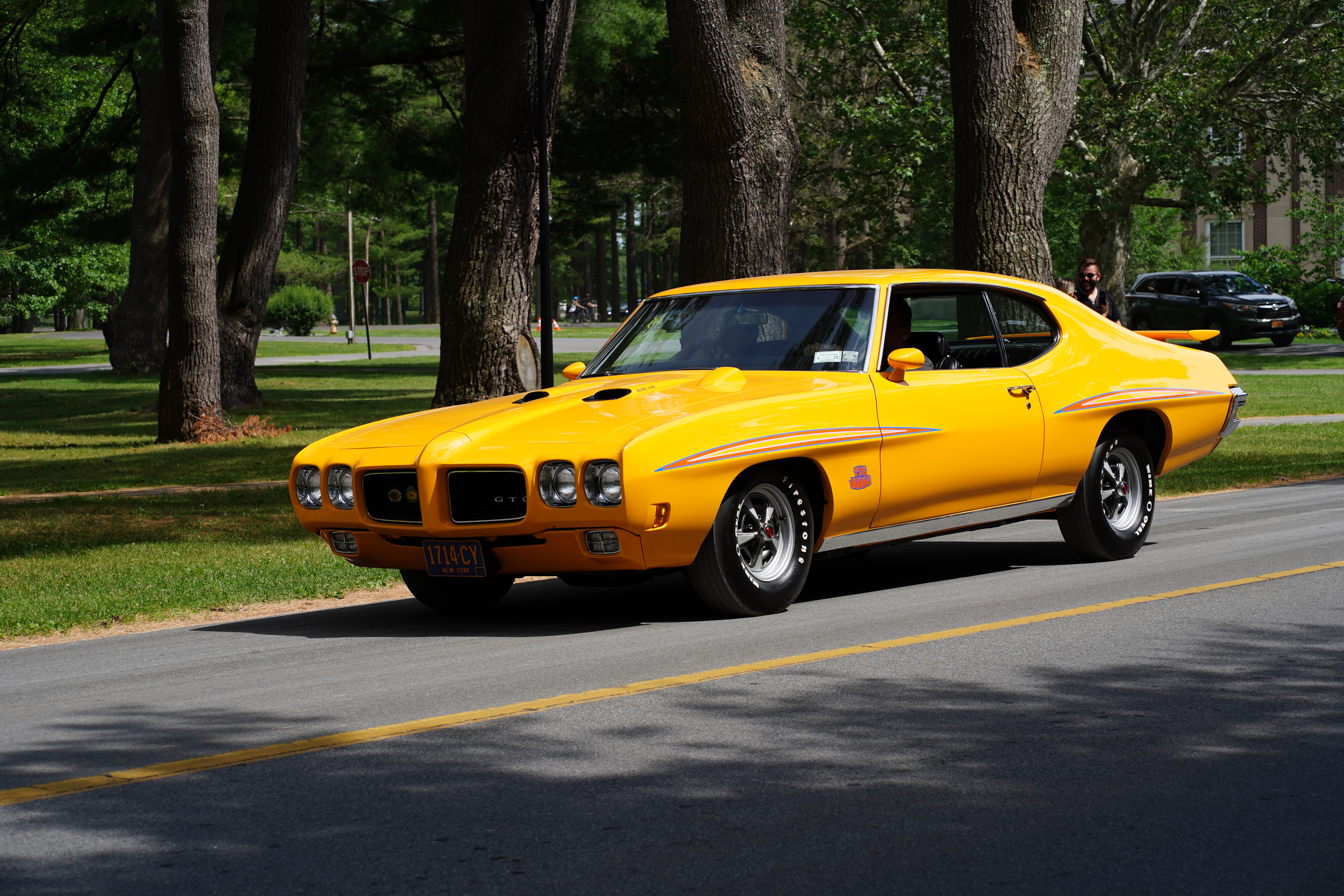
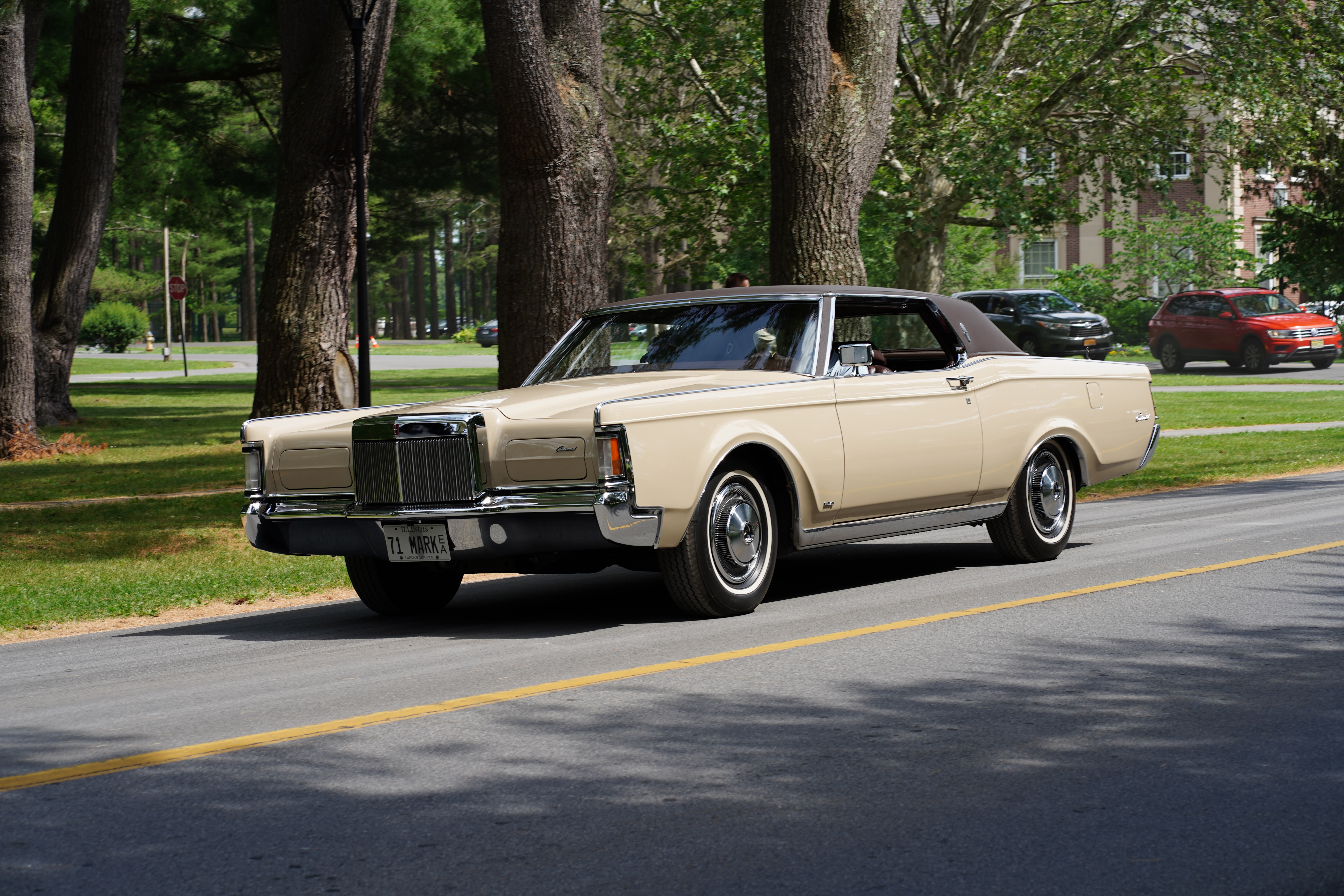
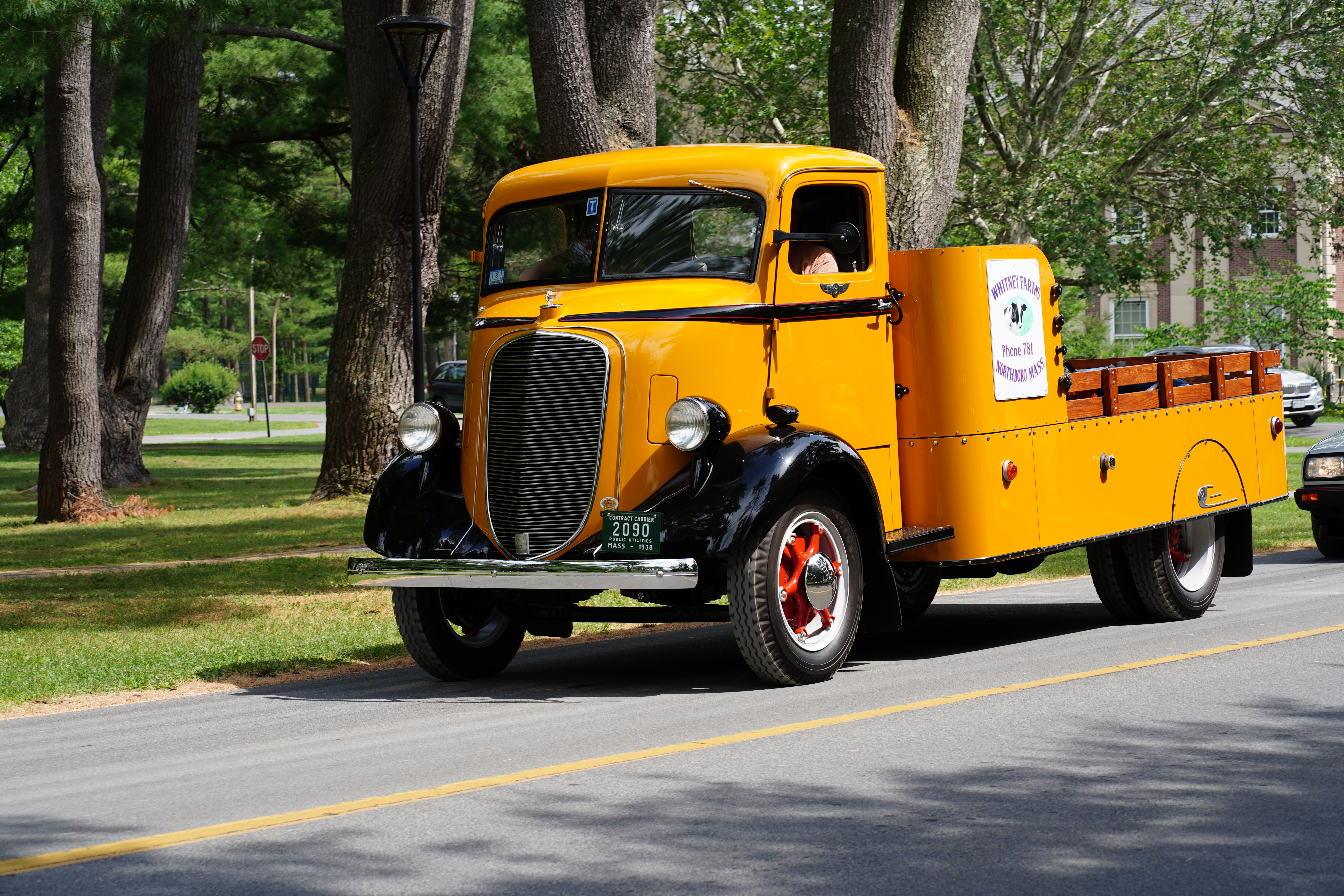
Approximately 275 vehicles were in attendance. AACA does tend to attract the best of the best, as the quality of the show vehicles (cars, trucks, motorcycles) was outstanding. One of the most enjoyable aspects of this kind of show is the chance to meet new hobbyists and learn the background stories about their cars. My next blog post will relate a number of those stories. For now, I will turn this into a “photo dump” and allow the reader to enjoy these images of beautifully restored classic cars.
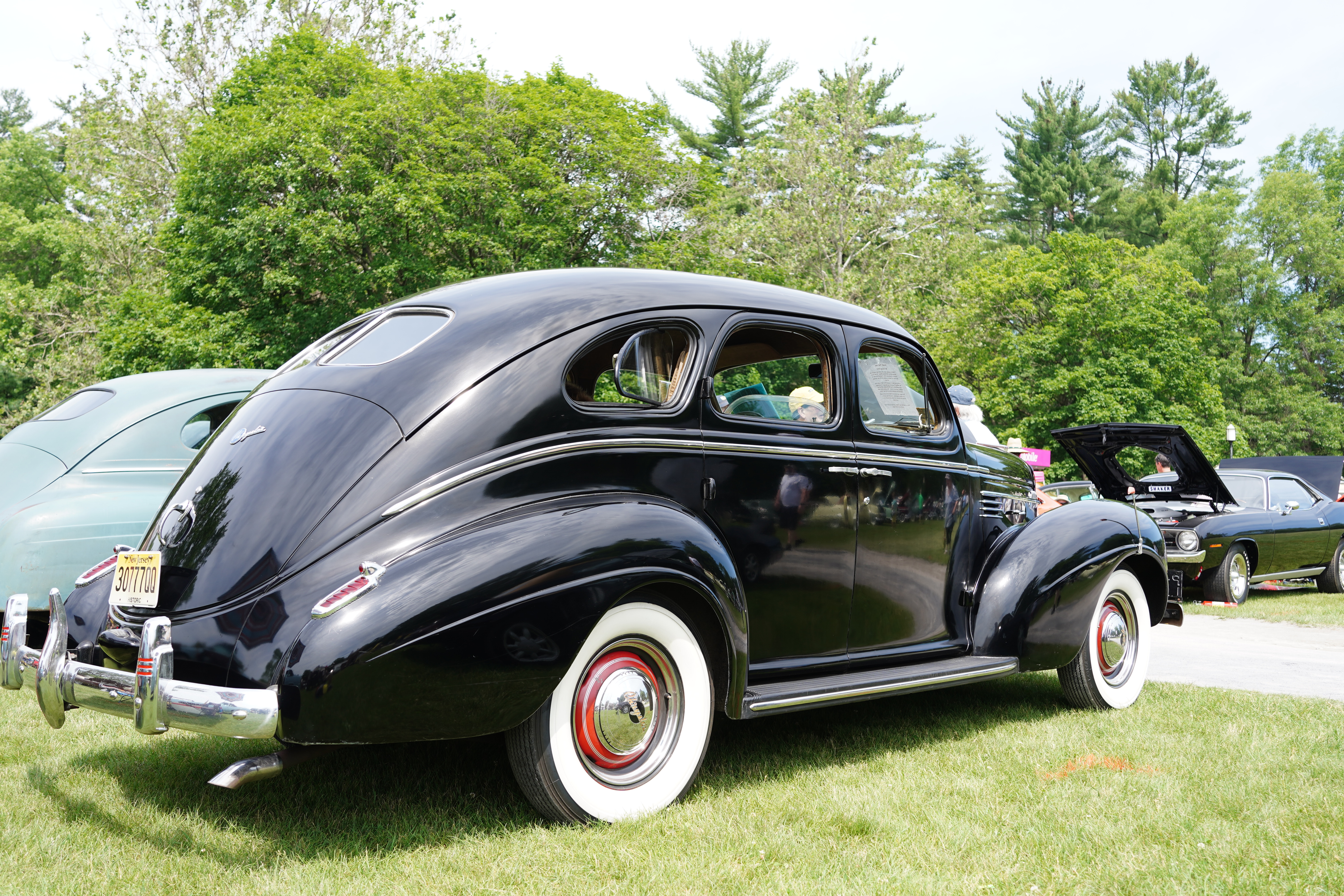
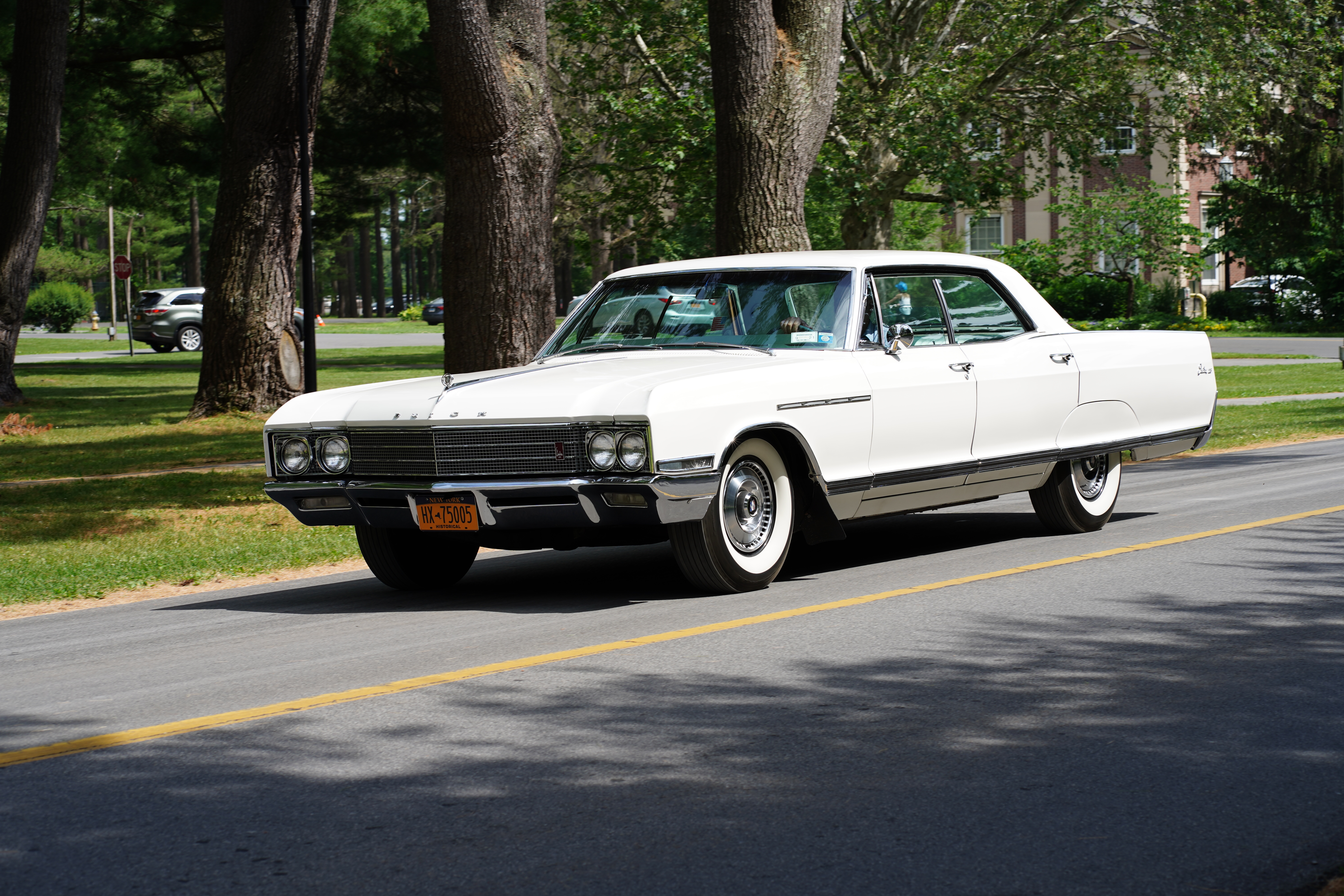
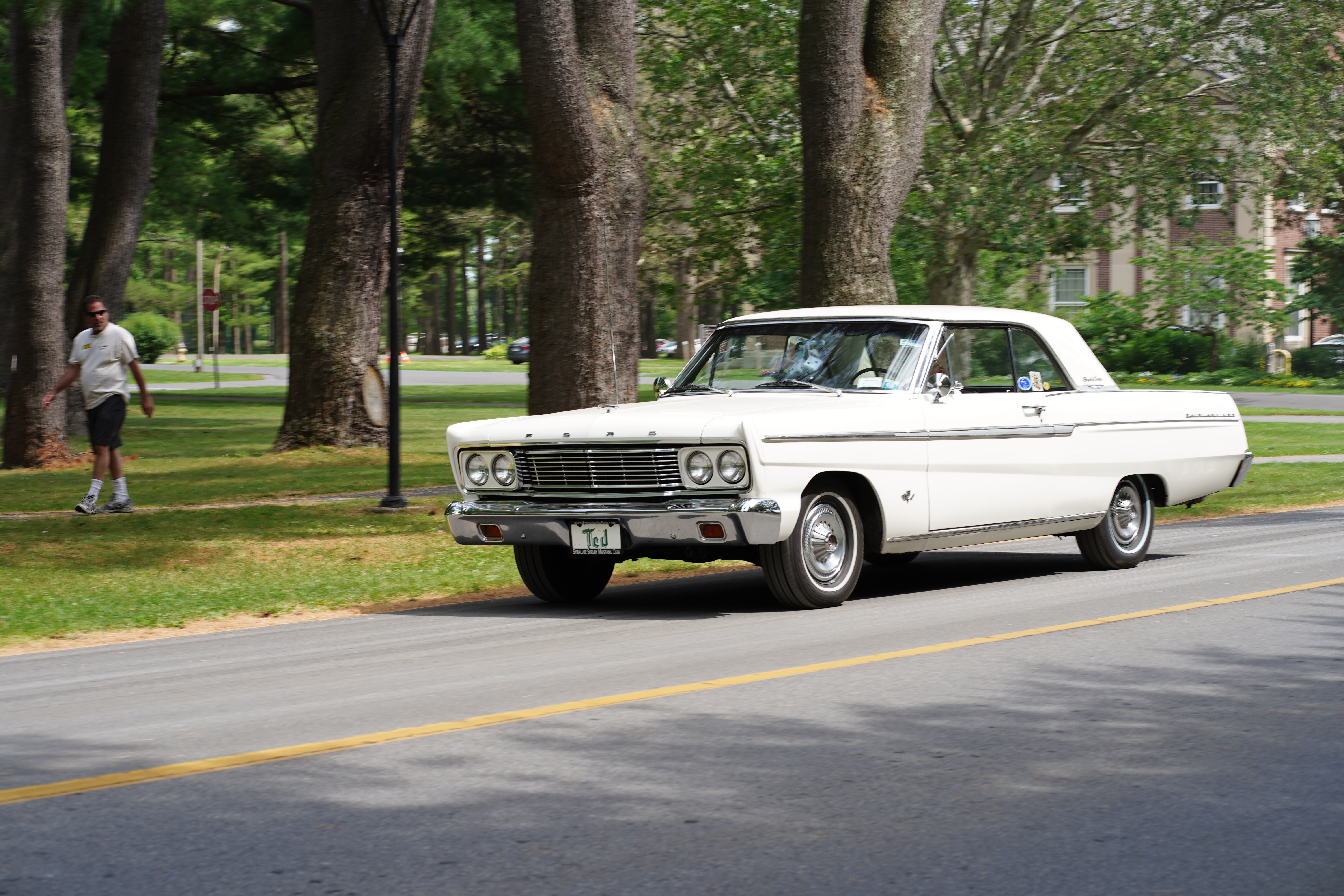
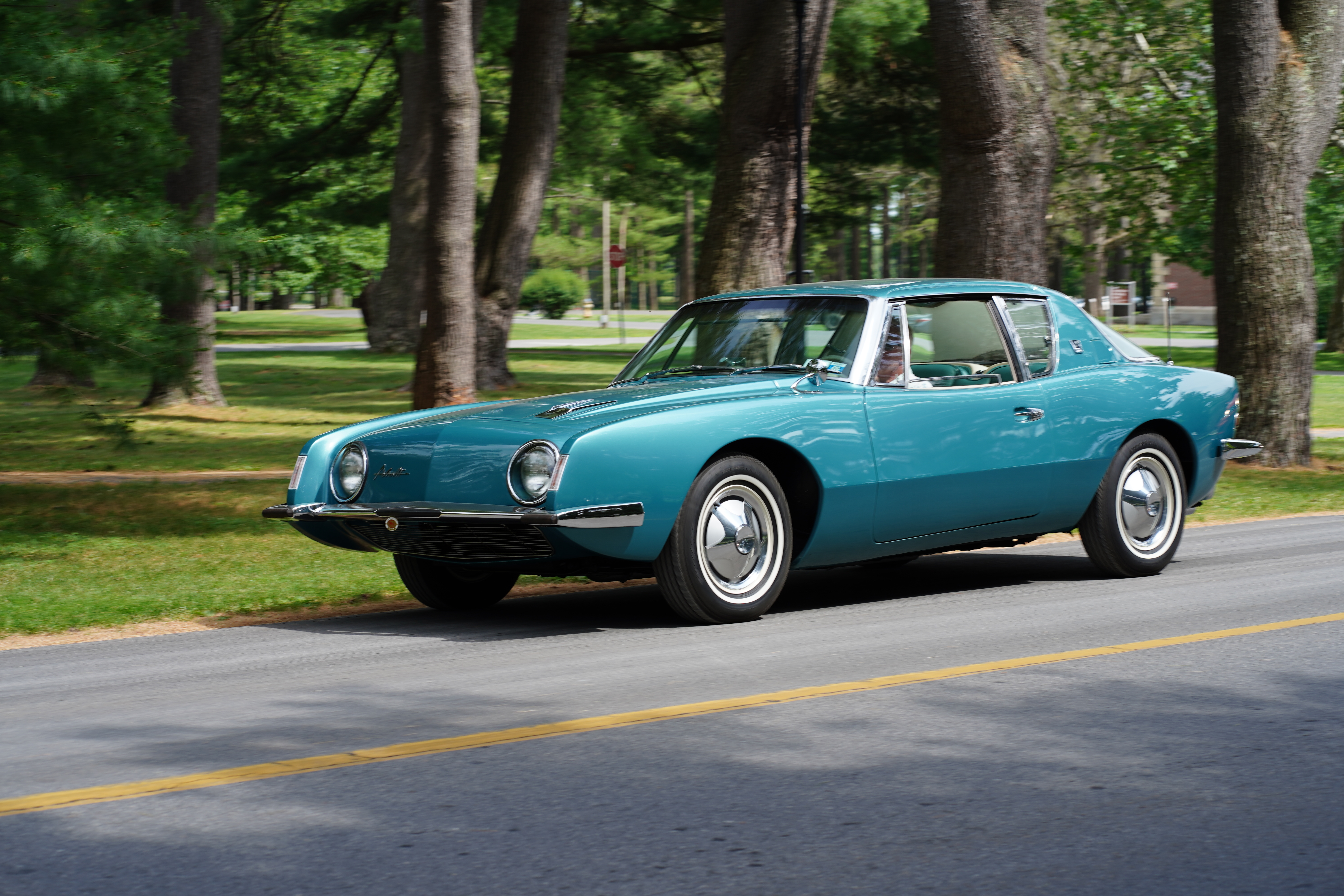
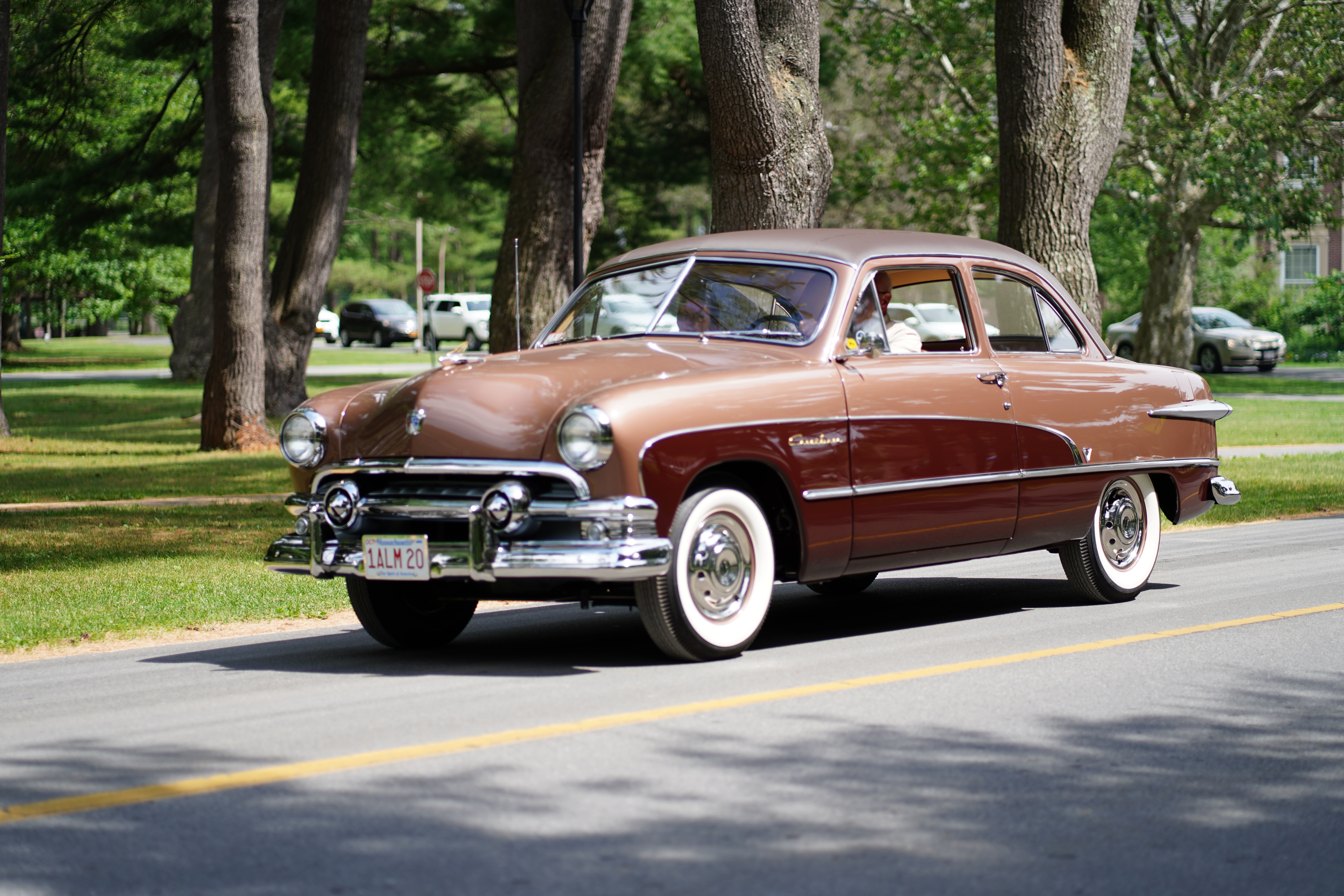
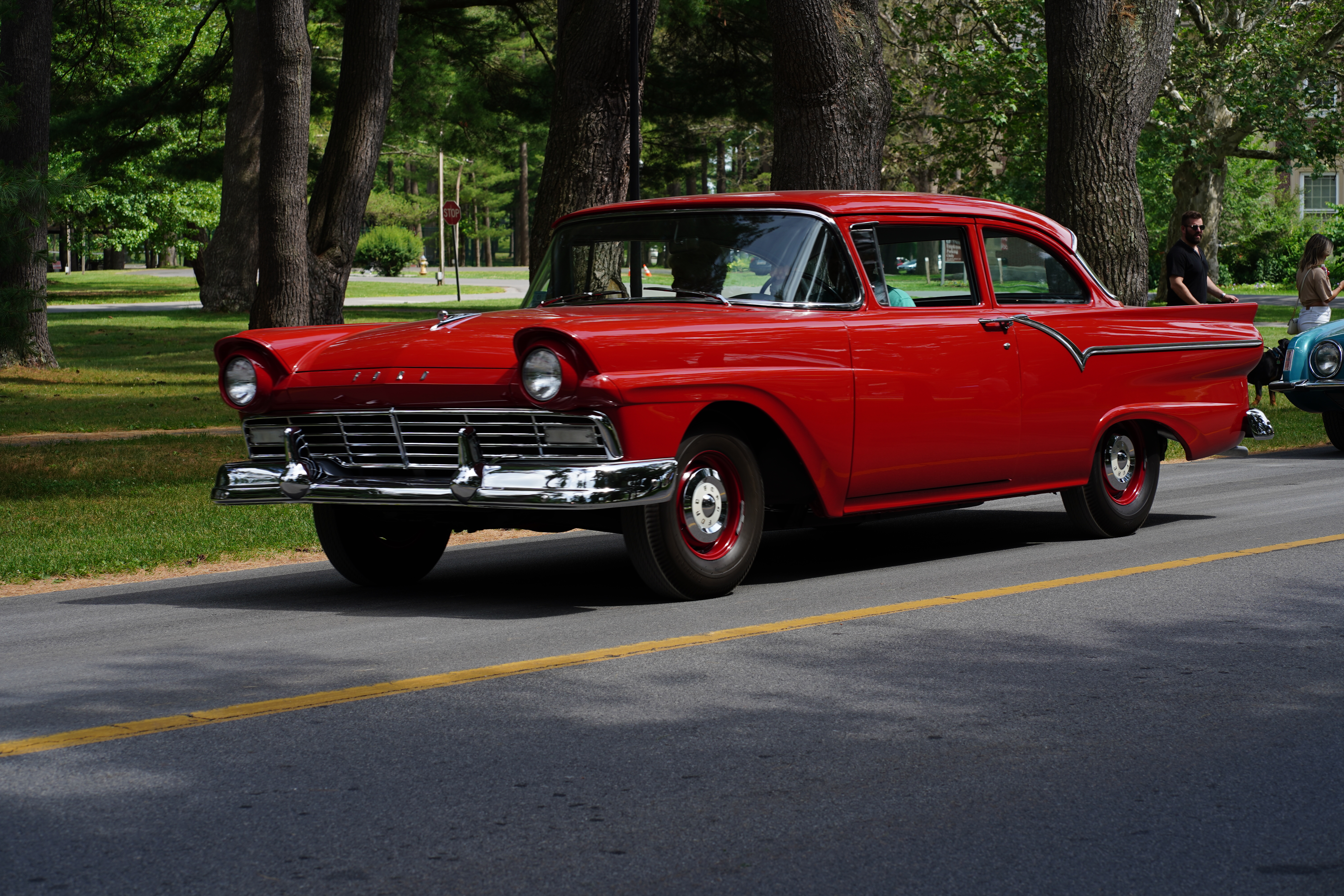
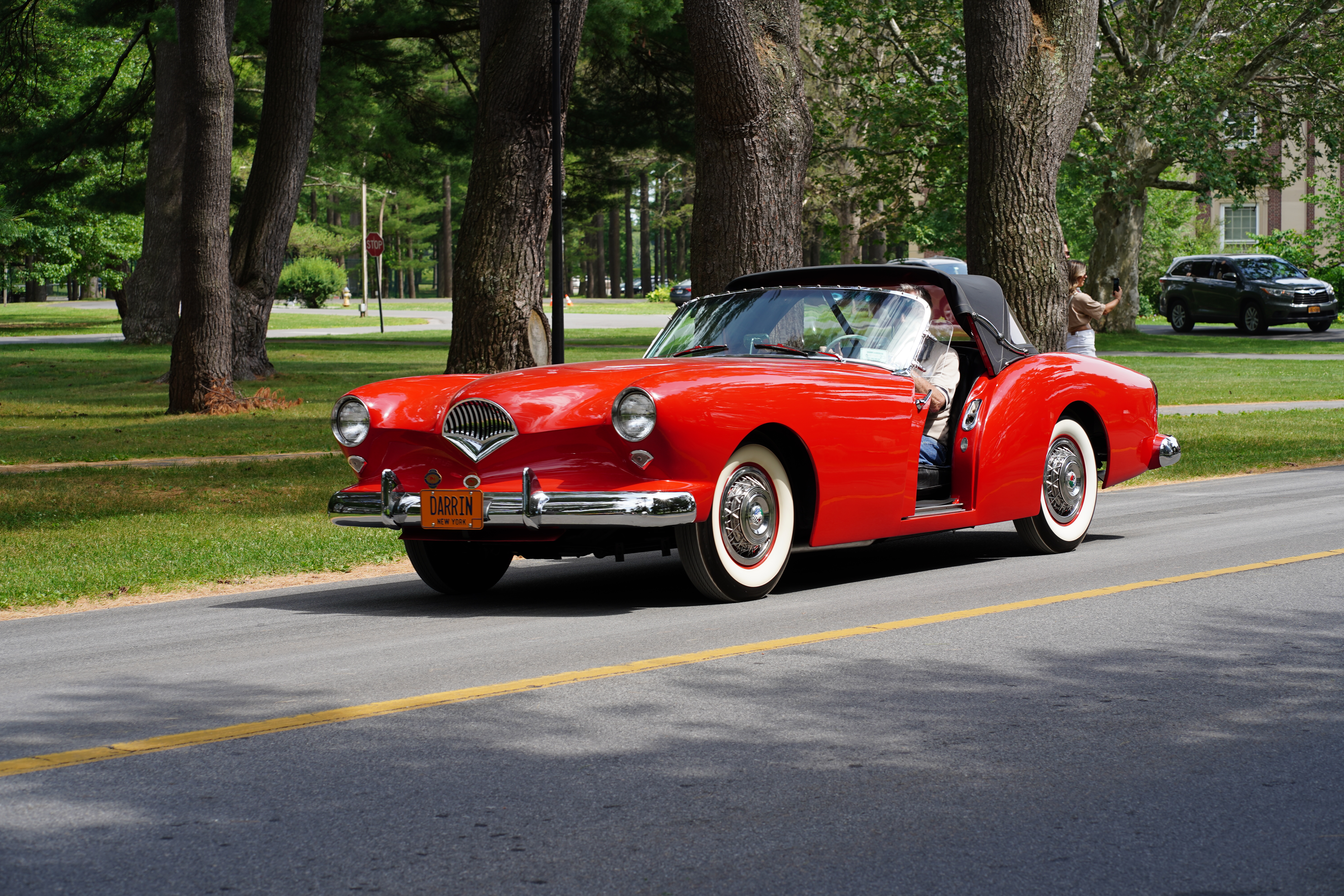
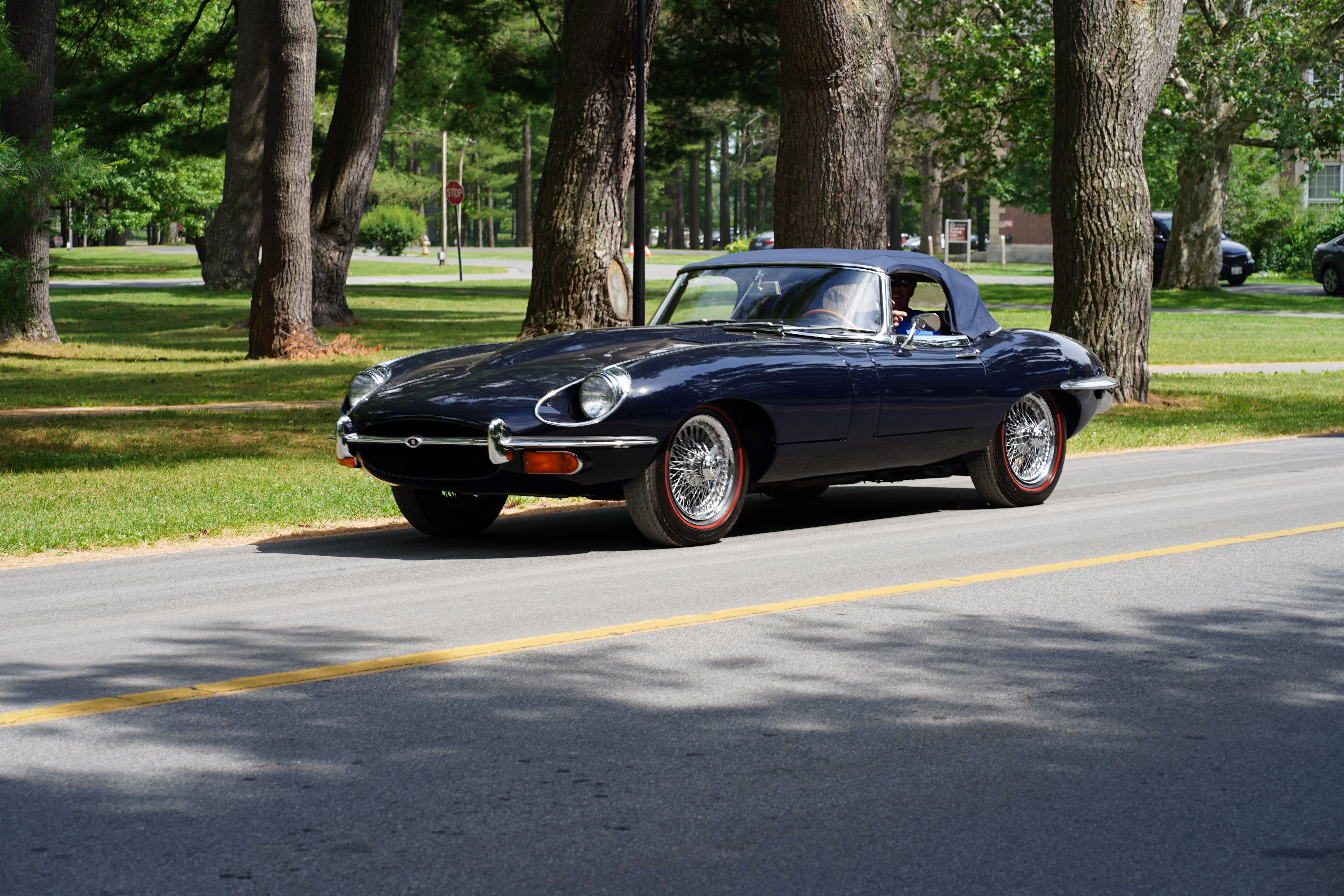
Promptly at 3 p.m., the show cars were allowed to depart the field, and the exit parade began. I was in no rush to leave, but decided instead to walk under some tall pines to be able to stand in the shade for a few minutes. That’s when I discovered that I was in a perfect spot to capture some photos of vehicles as they left the park, which is when all of the following pictures were taken.
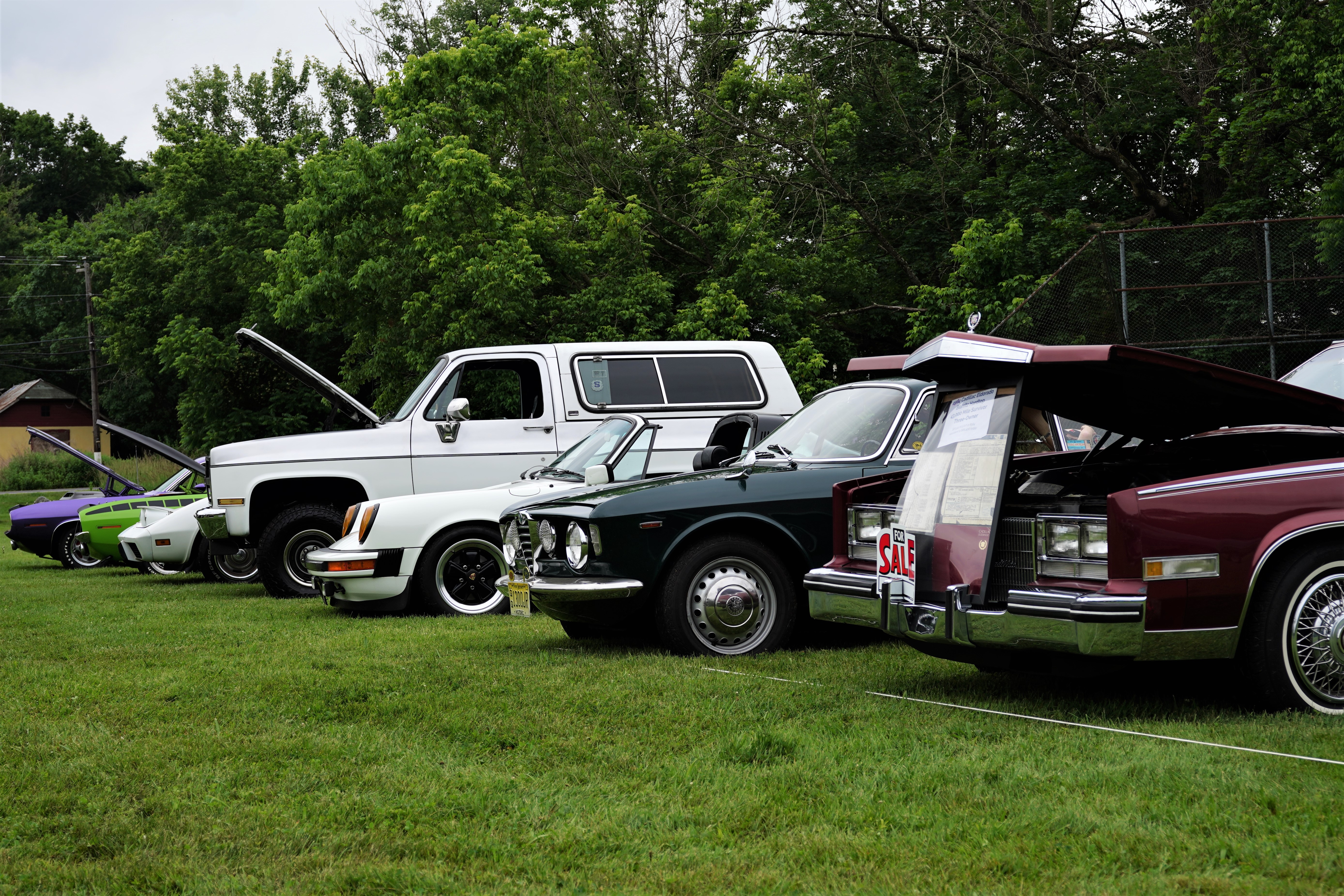
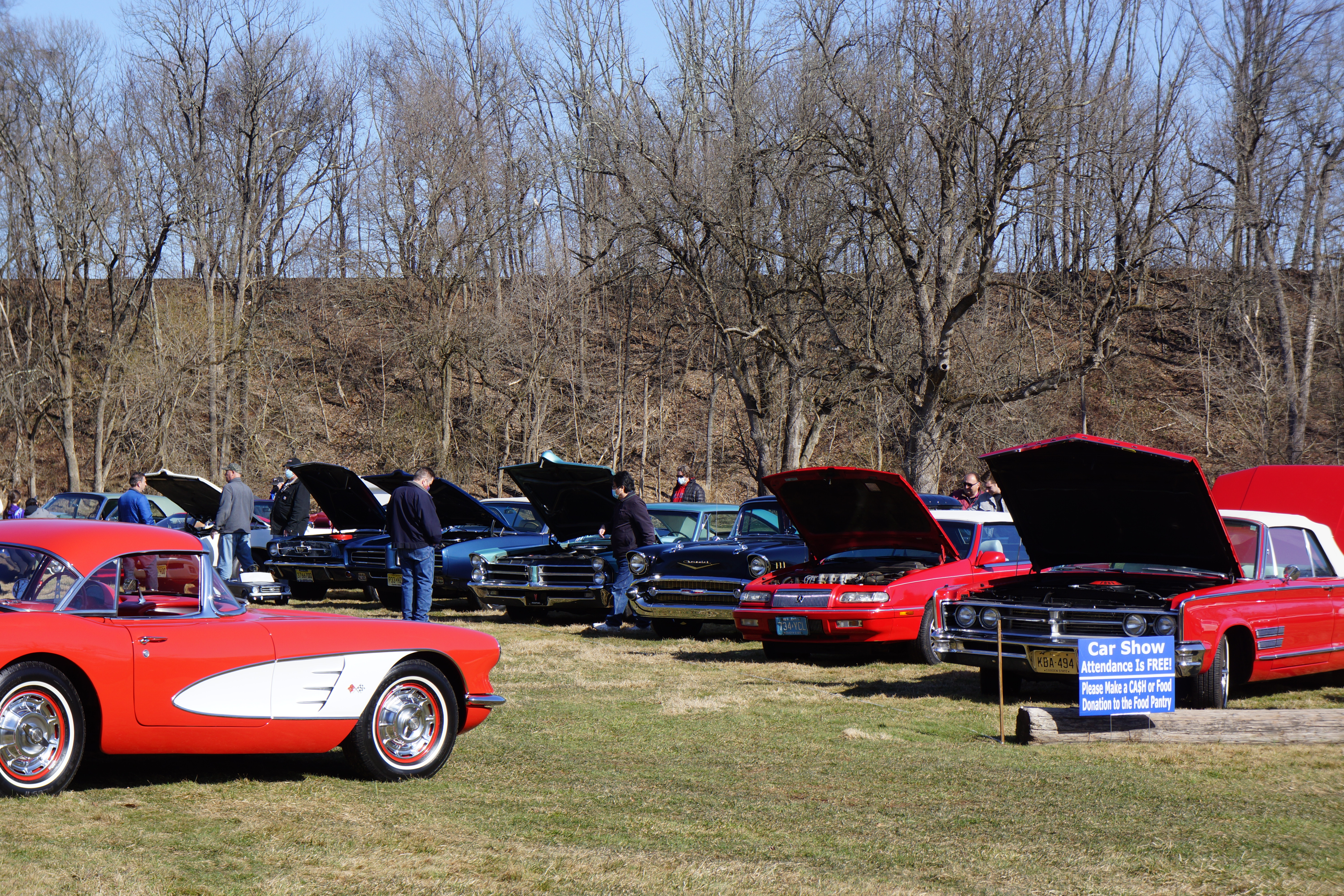
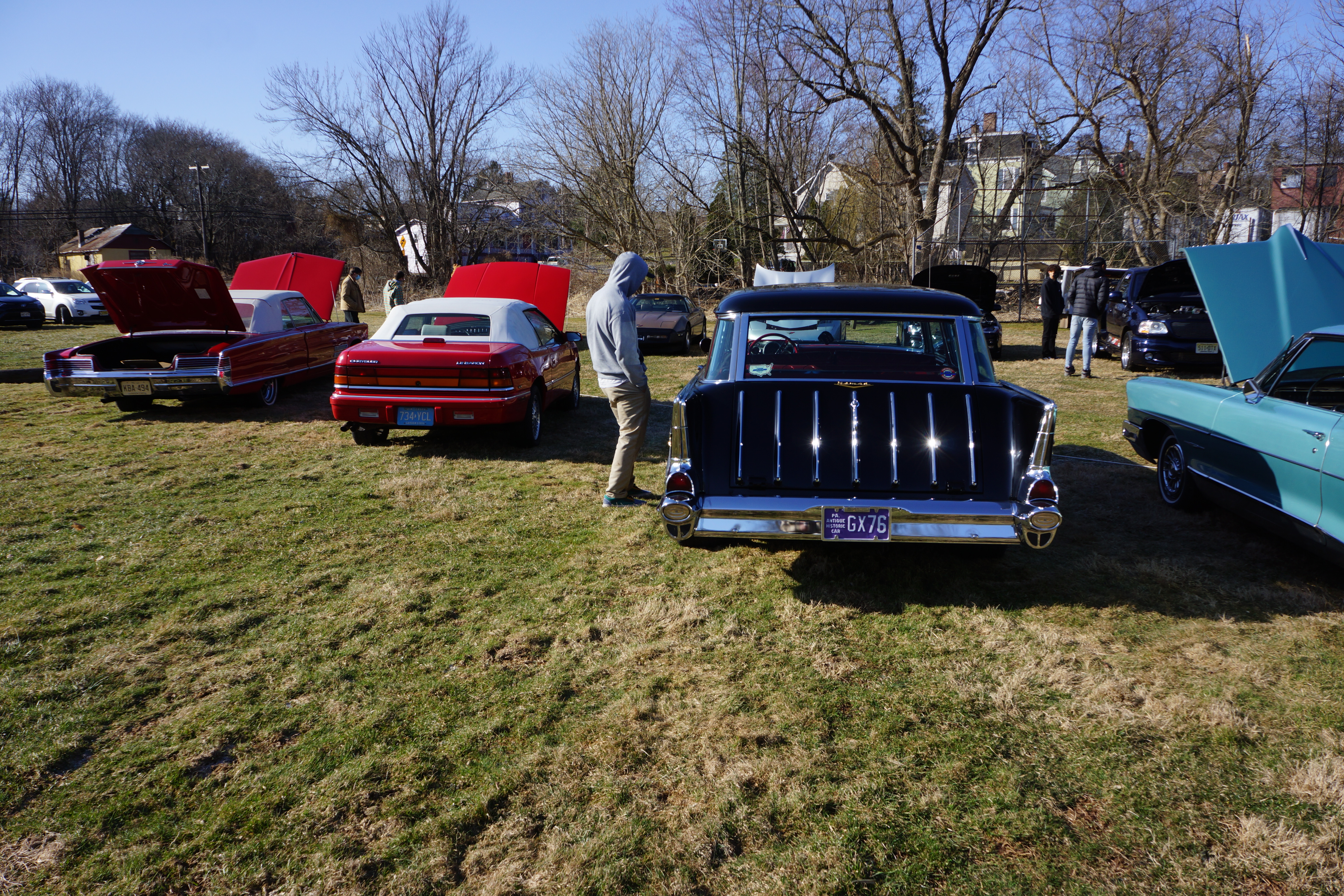
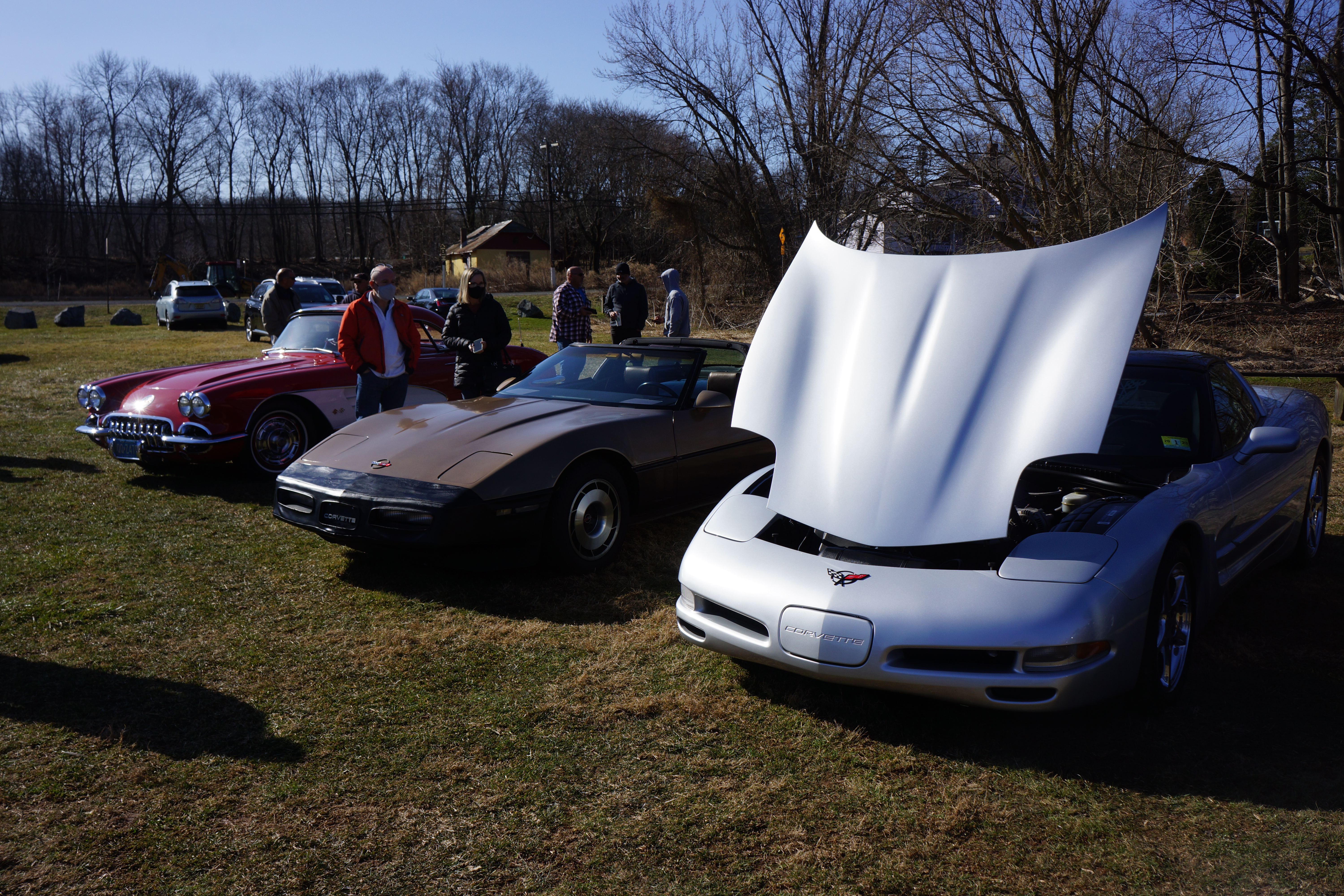
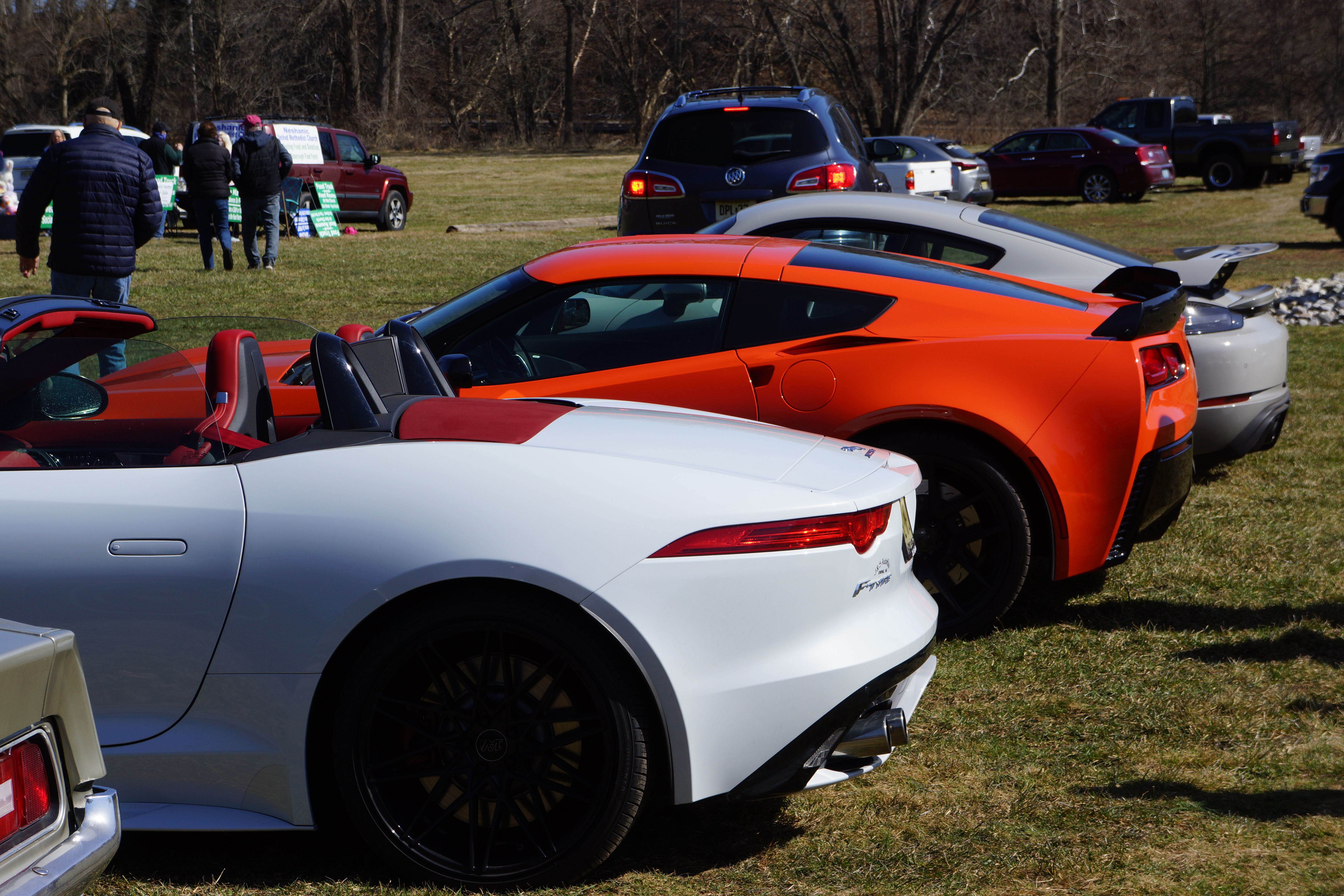
The monthly Neshanic Station Car Show and Flea Market held its June event on Saturday, June 12, 2021. While vehicular attendance was perhaps a little lighter than previous shows this year, there still was a respectable number cars, perhaps several dozen, on what was a cool, cloudy, but dry day. (I have also just discovered that as per its website, there will be two shows during the months of June, July, and August.)
As always, this is a “run what you brung” kind of show, so anything of interest, be it older, newer, original, modified, etc., is welcome. The flea market seemed better supported with vendors compared to earlier this year, and plenty of spectators were there to wander the grassy field. Attendance for all is free, with a requested donation of food or cash for a local food bank, always a worthy cause.
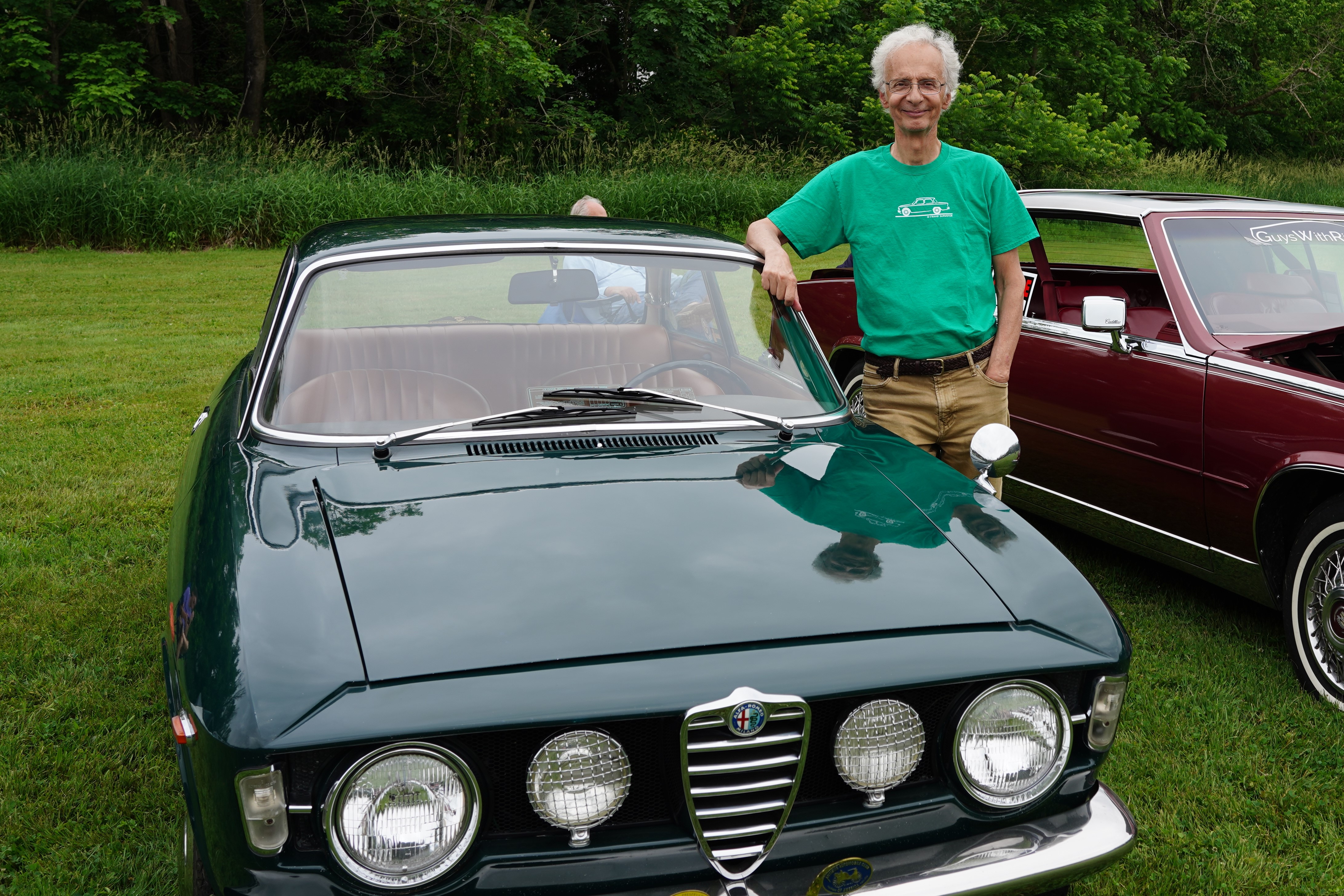
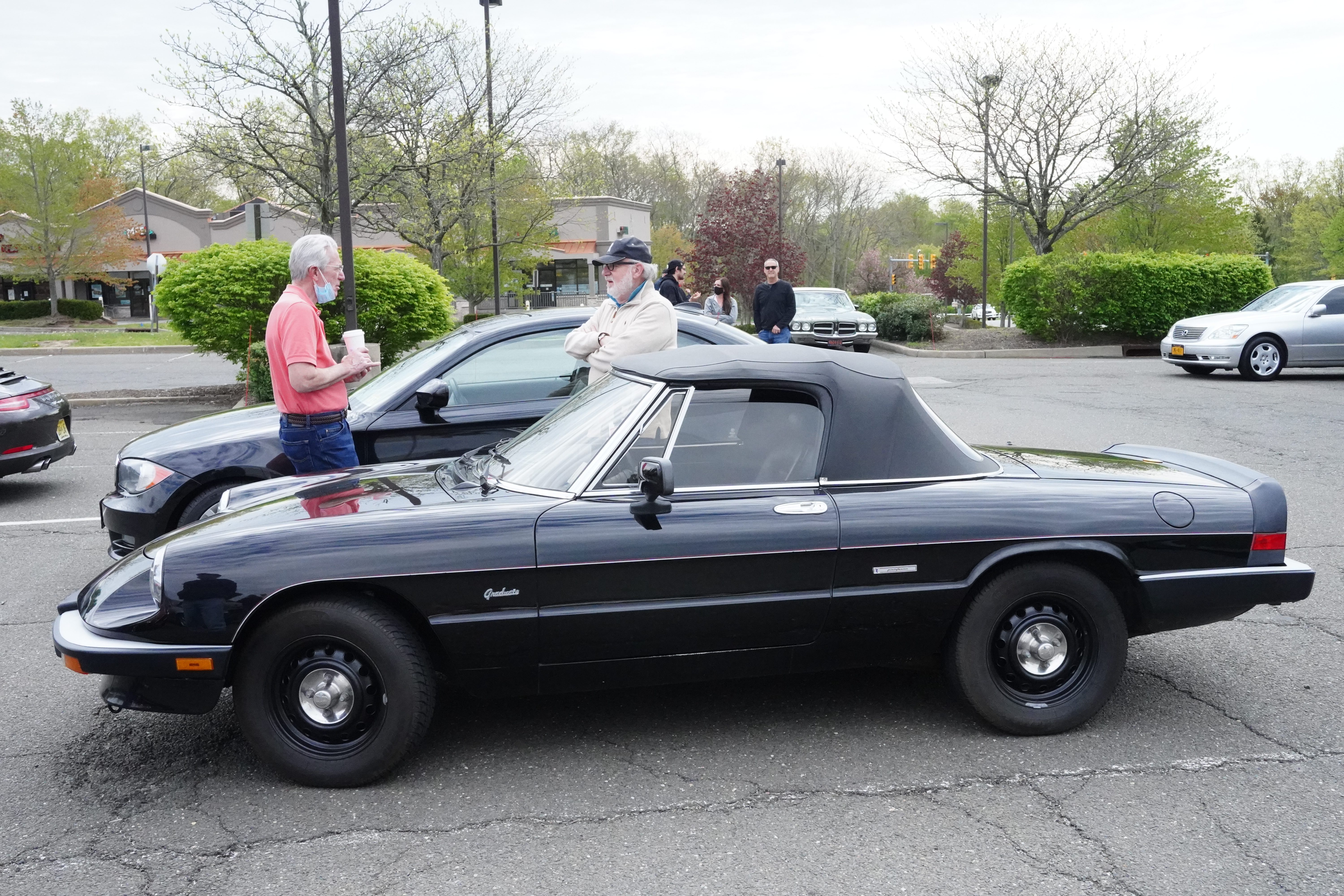
On a personal note, I was thrilled to be able to drive and show my 1967 Alfa Romeo to this show, its first public appearance since June of 2019. Much of the past two years was spent completely rebuilding its brakes, then completely rebuilding its carburetors. While the car had made several very short outings near home, this was the farthest I had ventured in it (a whopping 3 miles) since completing the multiple overhauls. The Alfa felt strong under both accelerator and brake pedals, so I did something right!
A few cars were ones I had seen earlier this year, but most were new to me, which is a big part of the fun. Drivers felt free to come and go as they pleased, so I missed photographing some of the earliest departures, but did just manage to capture Jessie and her Saturn (more about that below). The Neshanic Station Car Show has turned into one of my personal favorites, admittedly in part due to its proximity, but also for its variety. I’m looking forward to making an appearance, with or without a car, for as many of the remaining monthly shows this year as my calendar allows.
Jessie and her Saturn
She was a late arrival, driving onto the field around 10 a.m. or so (when I had been there since before 8 a.m.). I’ll be the first to admit that my prejudices were in full bloom as I watched this white wagon approach, saying to myself “who thinks that an old Saturn station wagon is collectible, or the least bit interesting to anyone else??” Then, as she ambled by me at 3MPH and I peeked inside, I saw the first item of interest: the driver was on the right side of the car. This was a RHD Saturn, likely an old mail delivery vehicle.
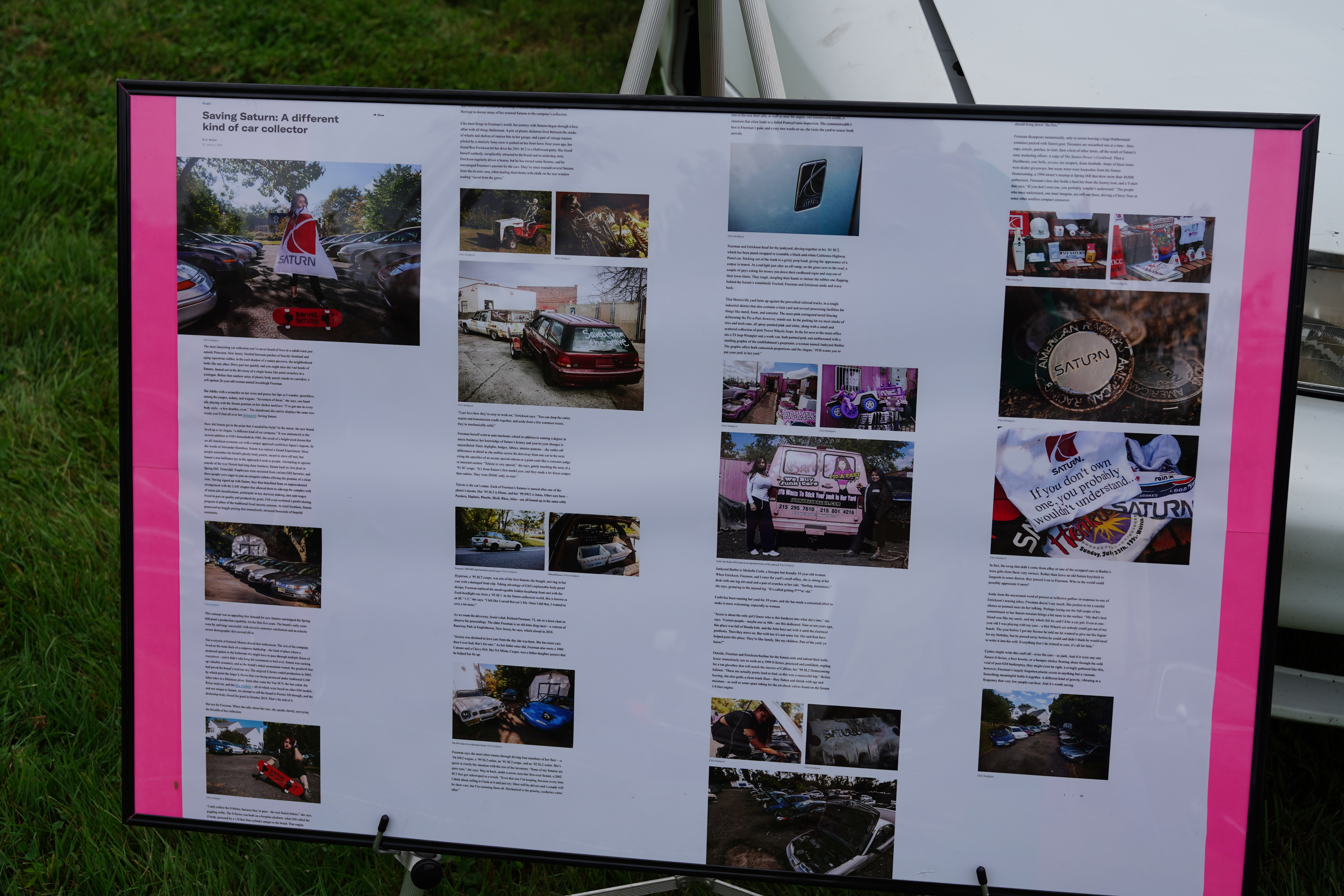
She parked, and almost as if she does this every week, the young driver went about her routine, first removing an easel, then a large picture board she placed on the easel, then some other mail-related paraphernalia at the rear. I approached her and asked her name; “Jesse” she replied. In short order, she told me that the picture board was a reprint of an article from the Hagerty magazine, featuring her and her 17(!?!) Saturns. “You own 17 Saturns?” I asked somewhat incredulously. “Yes”, she said, noting that she had 2.5 acres of room in nearby Millstone for her collection.
It took only a few minutes for me to get it. She is a young, enthusiastic, car collector, and in that sense, she’s no different than I am, or many of my friends. The only difference is she collects Saturns, and mind you, only the “S” series cars, built in Spring Hill TN. No “L” series cars built in Delaware, or heaven forbid, those rebadged Opels sold by Saturn dealers near the end of the make’s run. She knows what she likes, and that’s what she sticks with, which actually puts her a step or two ahead of some collector buddies who can’t seem to decide on a theme for their own collections.
I wished Jessie good luck, which I don’t think she needs from me, and walked back to my car, further realizing that I do know several other people, male and female, who are in the 20s, crazy about cars, but who tend to like vehicles not in my own field of interest. Does that make her (or them) any different from the way I was in my 20s, or the way the rodders of the 1950s were? Not at all; the good news is, there is room in this hobby for all of us, even those who collect Saturns.
The New Jersey Chapter of the Alfa Romeo Owners Club (AROC) held its first official event of 2021, a Saturday morning Cars & Coffee on June 5. Our generous host for the day, club member Martin M., invited members to his home, where bagels, Danishes, and coffee were available on the rear deck. We served ourselves while enjoying the perfect morning weather: sunny and warm with low humidity.
Above: A Spider is cornered by 3 modern Giulias, while a newer Spider looks on
And do car people hang out on the deck near the breakfast spread? Of course not. Food and drink in hand, we wandered among the dozen or so Alfas driven to and parked in the yard, comprising a nice mix of older sedans and Spiders along with an assortment of new Giulias. We also got to enjoy eyeballing Martin’s eclectic collection, only some of which are of Italian origin.
Above: cars like this Renault 4CV are easily tucked away; you never know when you might need a spare engine for one!
Best of all, with COVID restrictions finally relaxing, this was the first chance in a long while for we Alfisti to get reacquainted with old friends while making new ones. I belong to a number of different clubs, and I was reminded again that Alfa owners really are the friendliest. I’m already looking forward to other events this year with AROC’s NJ Chapter.
Success! Our informal Sunday Morning Breakfast Group, which last held a gathering in September of 2019, managed to put together our own Cars & Coffee-style event this past Sunday. As an unexpected surprise, the “CarParkers” drive event held the same day resulted in dozens of additional cars joining us in the spacious lot of the Dunkin’ Donuts on MacArthur Blvd. in Mahwah NJ.
By 8:30 it was quite crowded
In our own group, we had perhaps a dozen and a half friends show up with their cars. On one hand, it was overwhelming to think that we had not seen each other in over a year and half. On the other hand, like the long-term companions we are, we fell right back into our lively repartee and wasted no time in catching up with each other, while those who procured new rides since our last drive enjoyed showing them off.
Our breakfast haven for the day
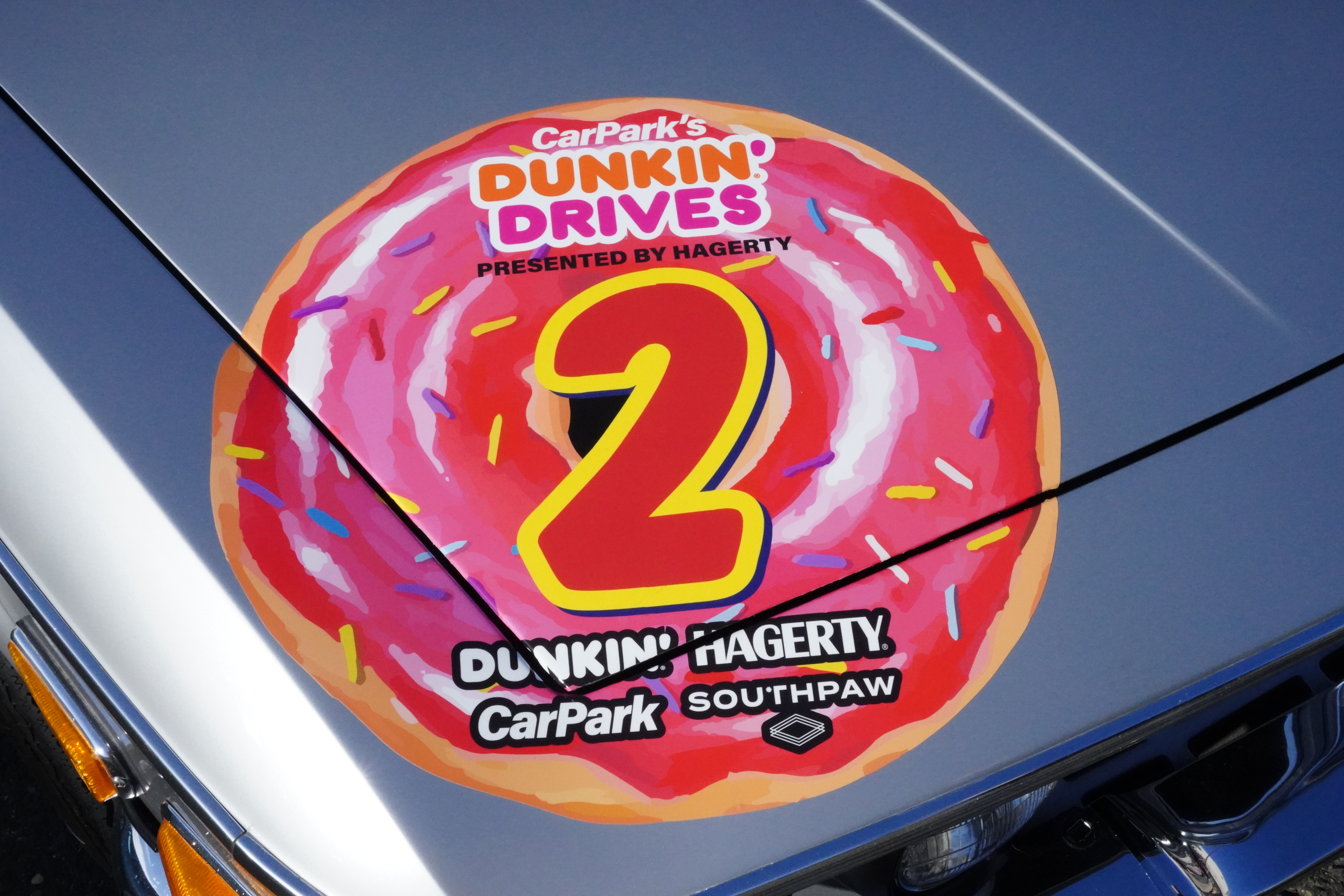
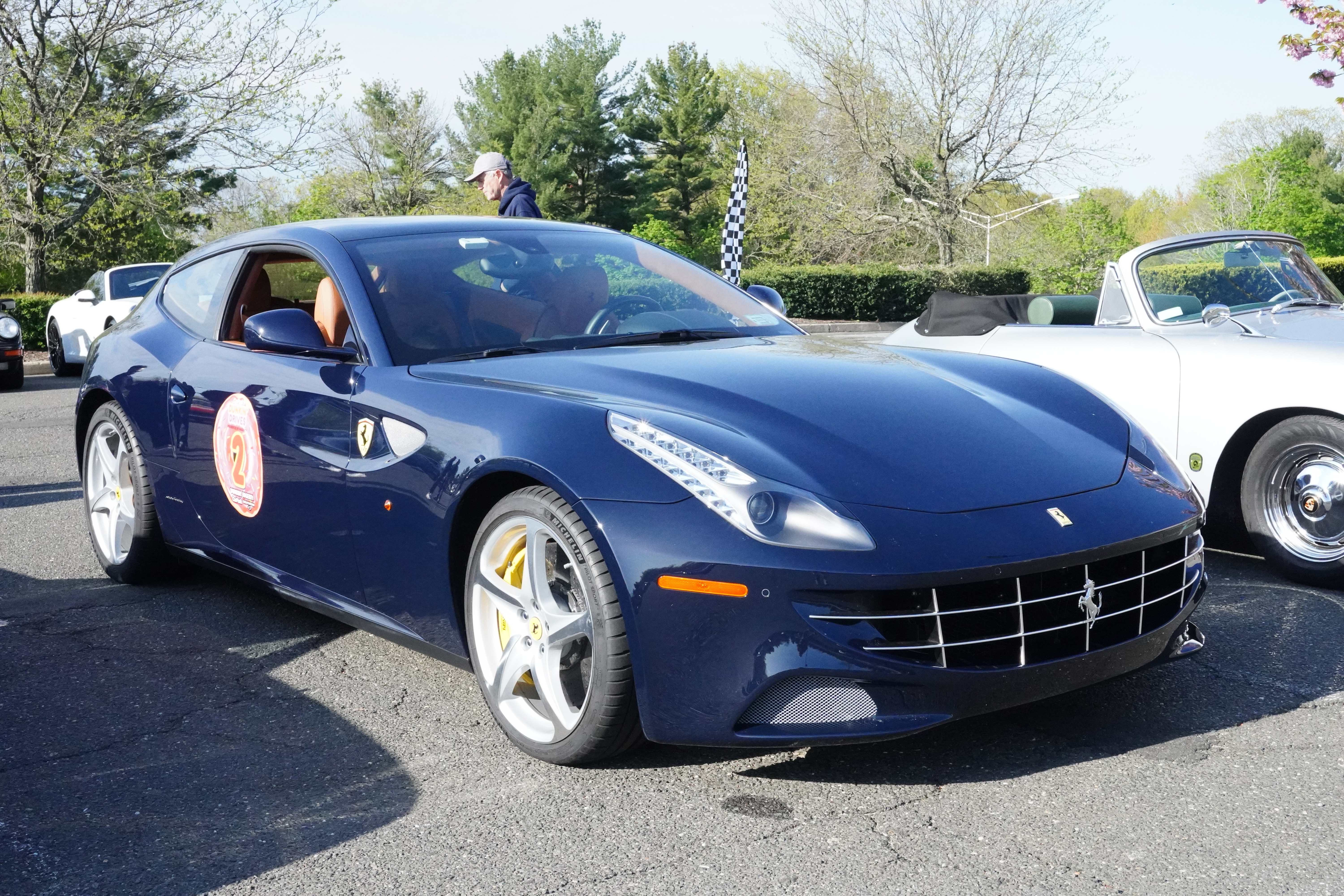
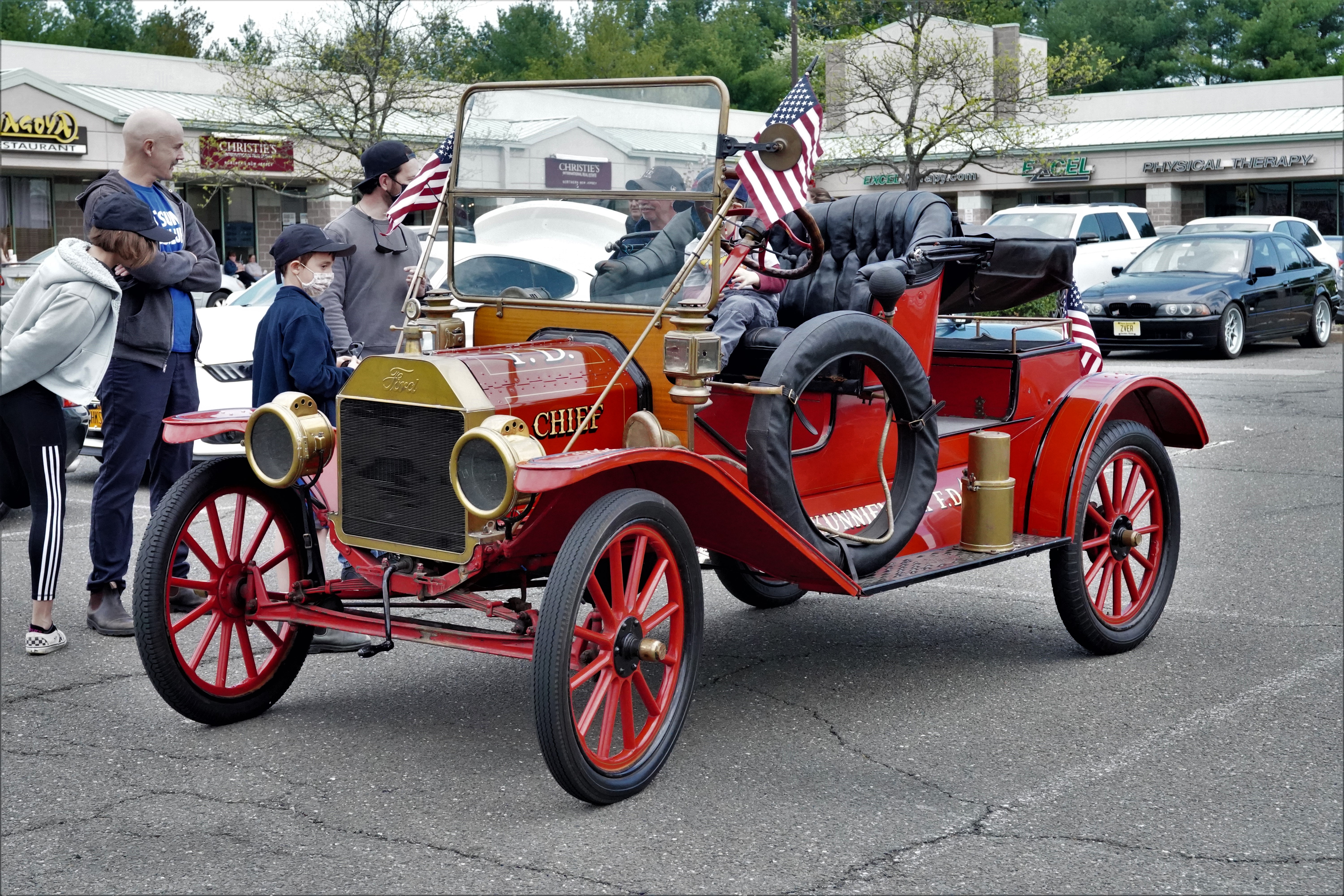
Hagerty and CarPark co-sponsored the other drive event along with Dunkin’ Donuts, the basic concept centering around a morning of driving to and meeting up at several Dunkin’ Donuts stores, with the chance to win some giveaways. I had alluded to this event in our own Cars & Coffee invitation, but frankly was expecting at most 10 or 20 other cars. The actual turnout was 3 to 4 times that, with a nice mix of older and newer exotics, including rarities ranging from a Ford Model T fire truck to a Sterling 825.
Can you guess the car?
The breakfast line got a bit long at times, but mask-wearing and social distancing appeared to be at 100% compliance while inside. Outside was much less of a concern; we became unmasked, but our usual bear hugs were on postponement until a later date.
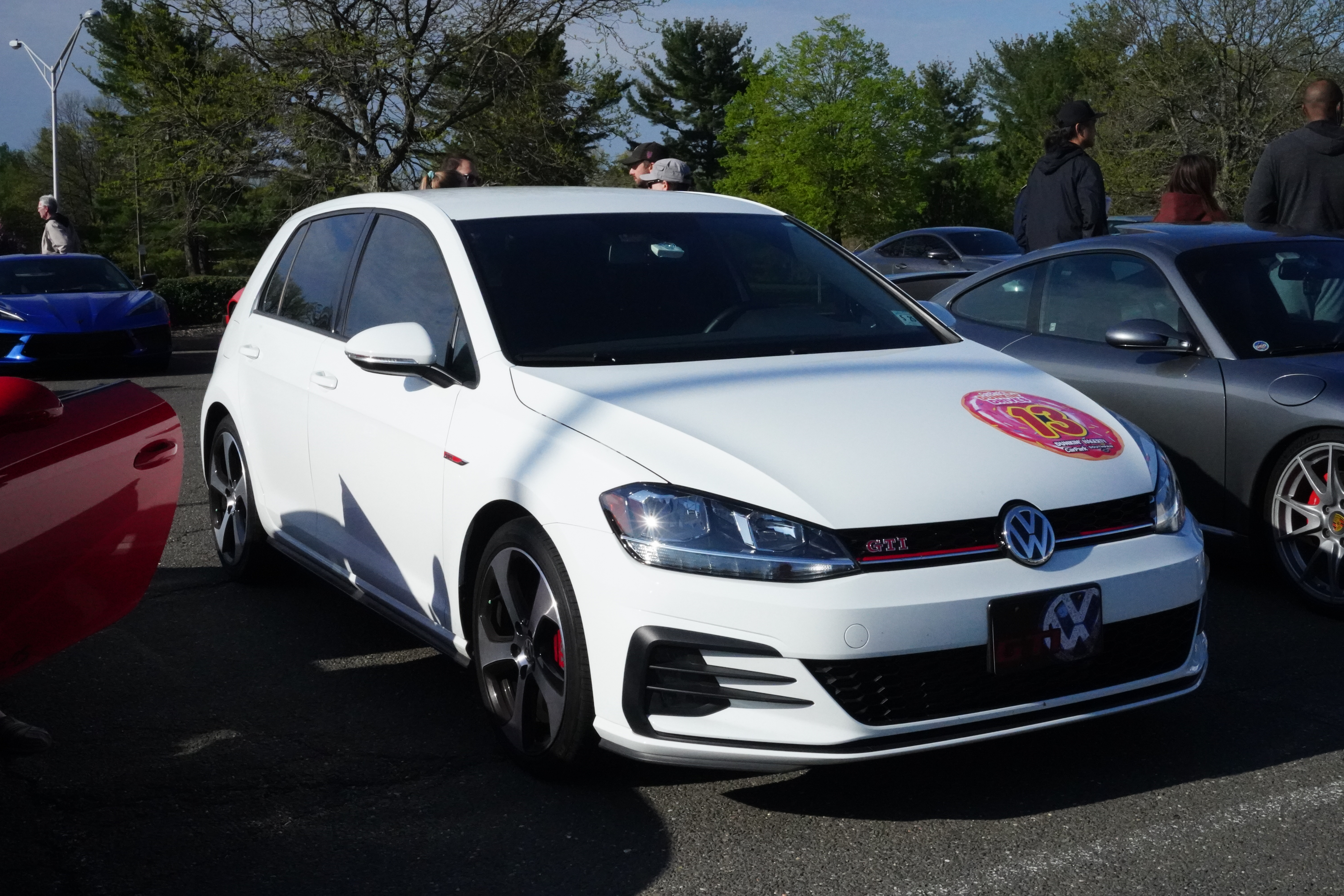
Some cars wore the sponsors’ decal
There was no driving element on this occasion as we knew that time for us to mingle and swap stories would need to take precedence. What surprised me was how much more enjoyable I found this arrangement. Rather than be tied to a table, I was free to wander from subgroup to subgroup, and ended up chit-chatting with more of the guys than otherwise. My drive event co-planner and I are already intending to include a Cars & Coffee event on our rotating schedule for the Sunday Morning Breakfast Group.
I was so distracted by seeing old friends and meeting new ones (talkin’ about you, the young couple in the Suzuki Cappuccno) that I simply failed to photograph every car in the lot. However, the ones that did make it into my Sony are below. Final note about the photos: WordPress seems to have changed the method to see full-size versions of them. For full-screen versions, right-click on the picture, select “Open Image in New Tab”, and then click on the picture again.
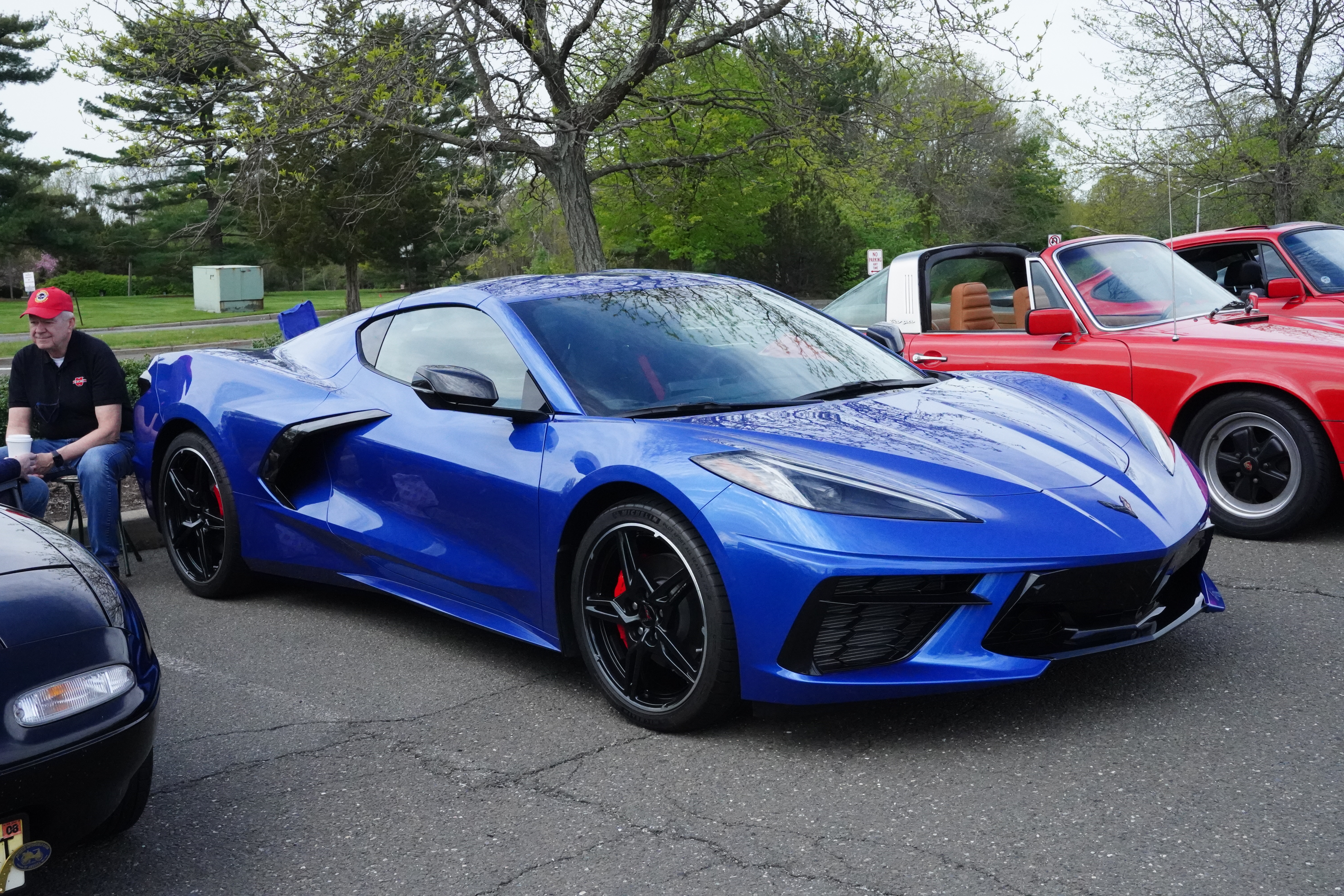
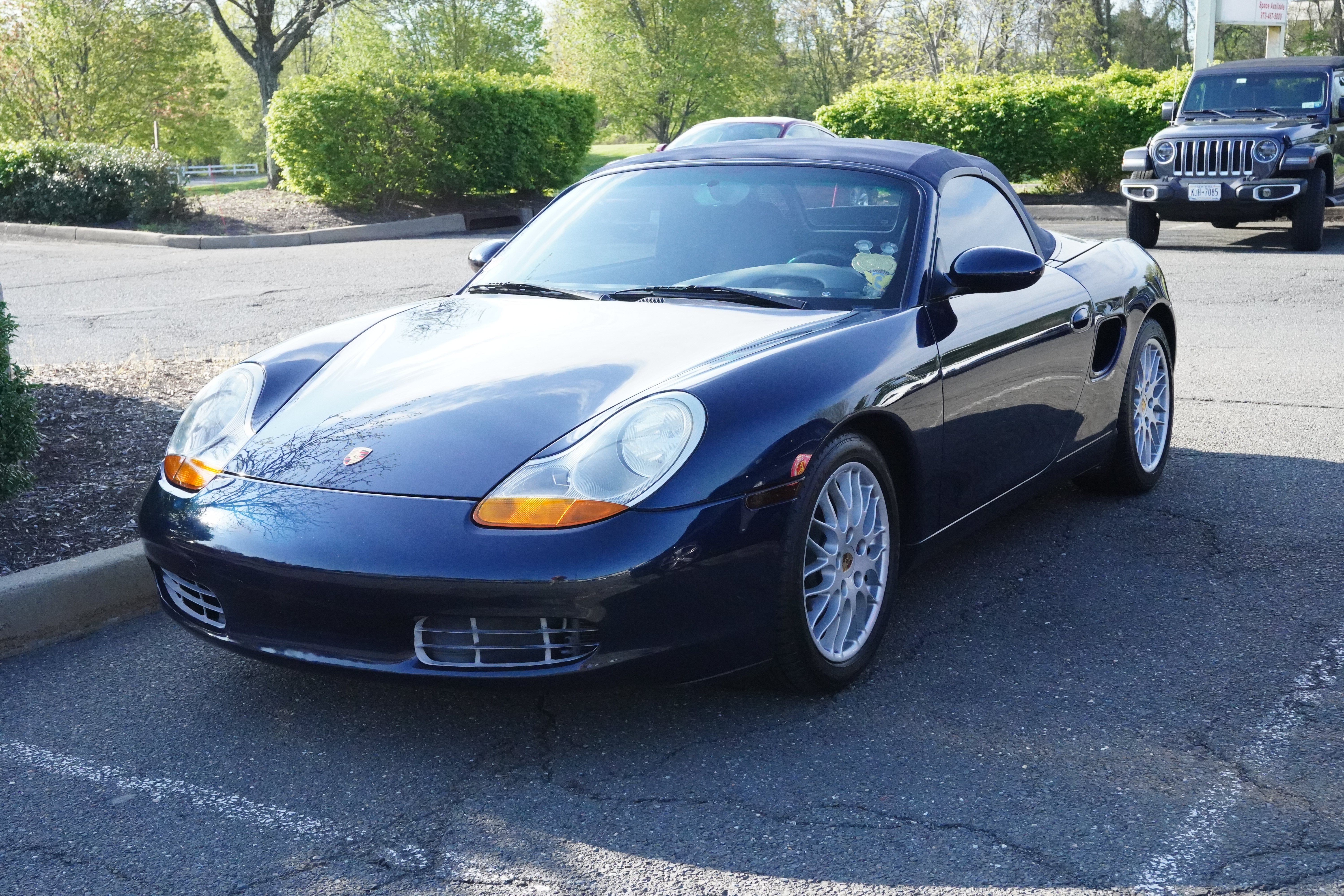
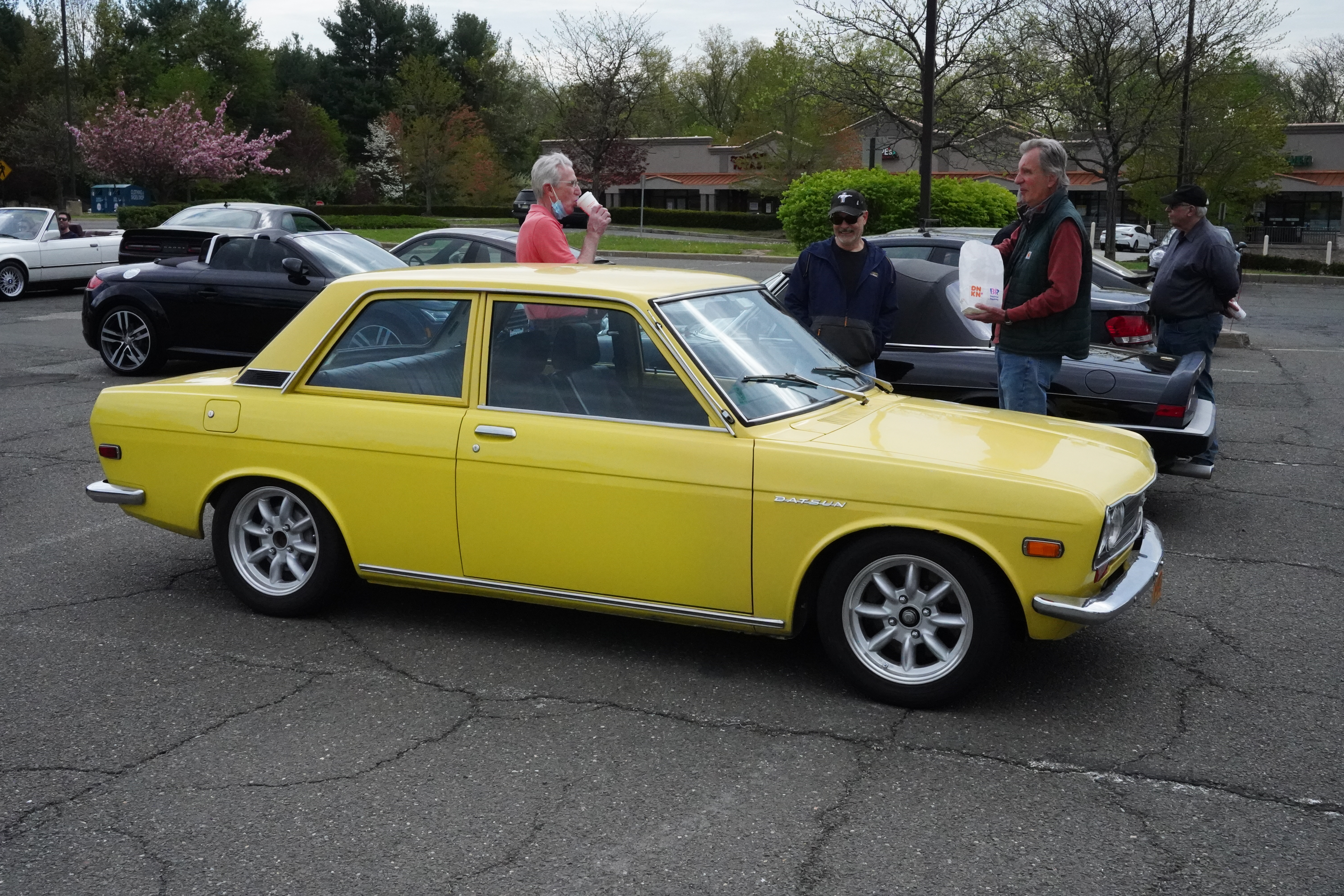
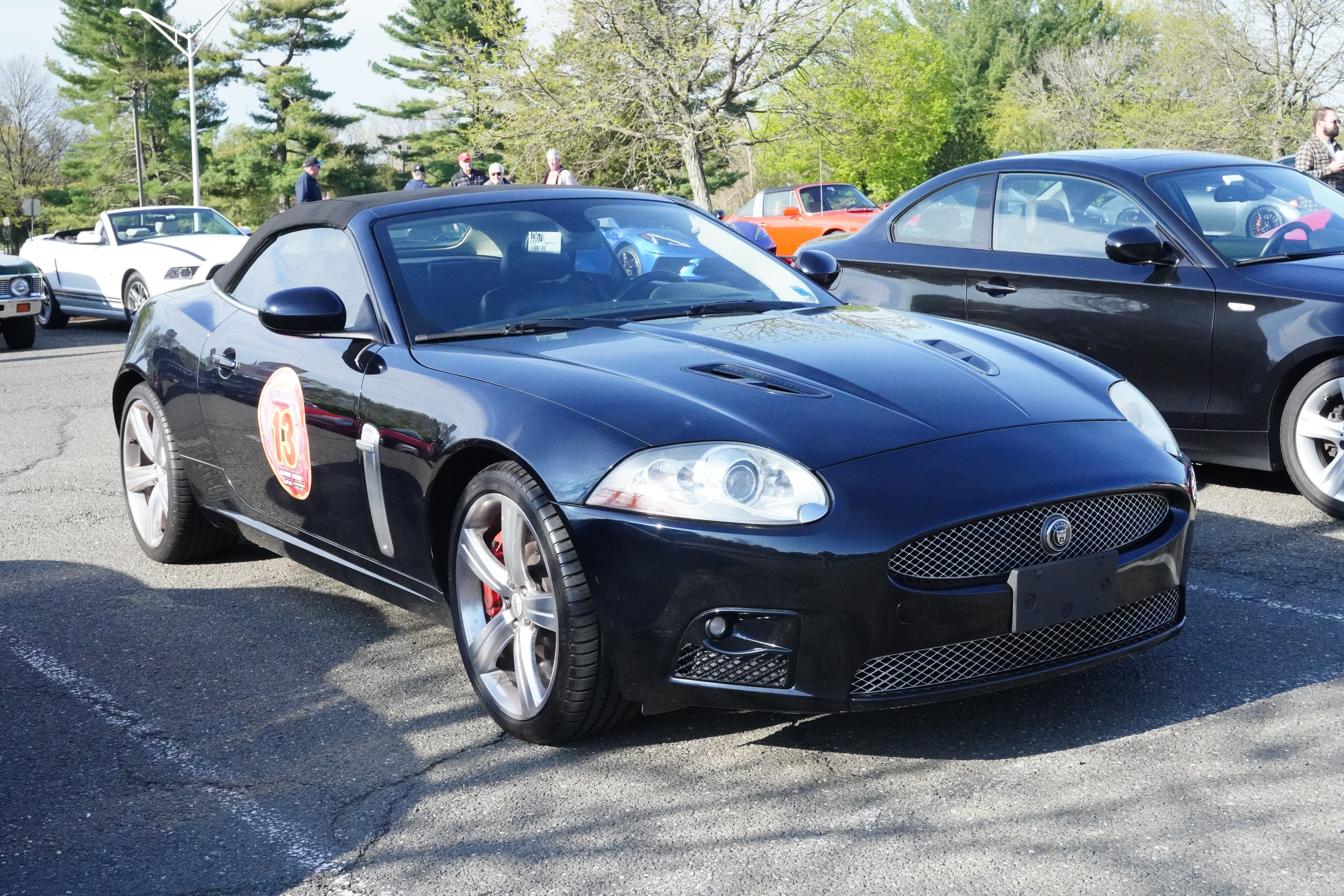
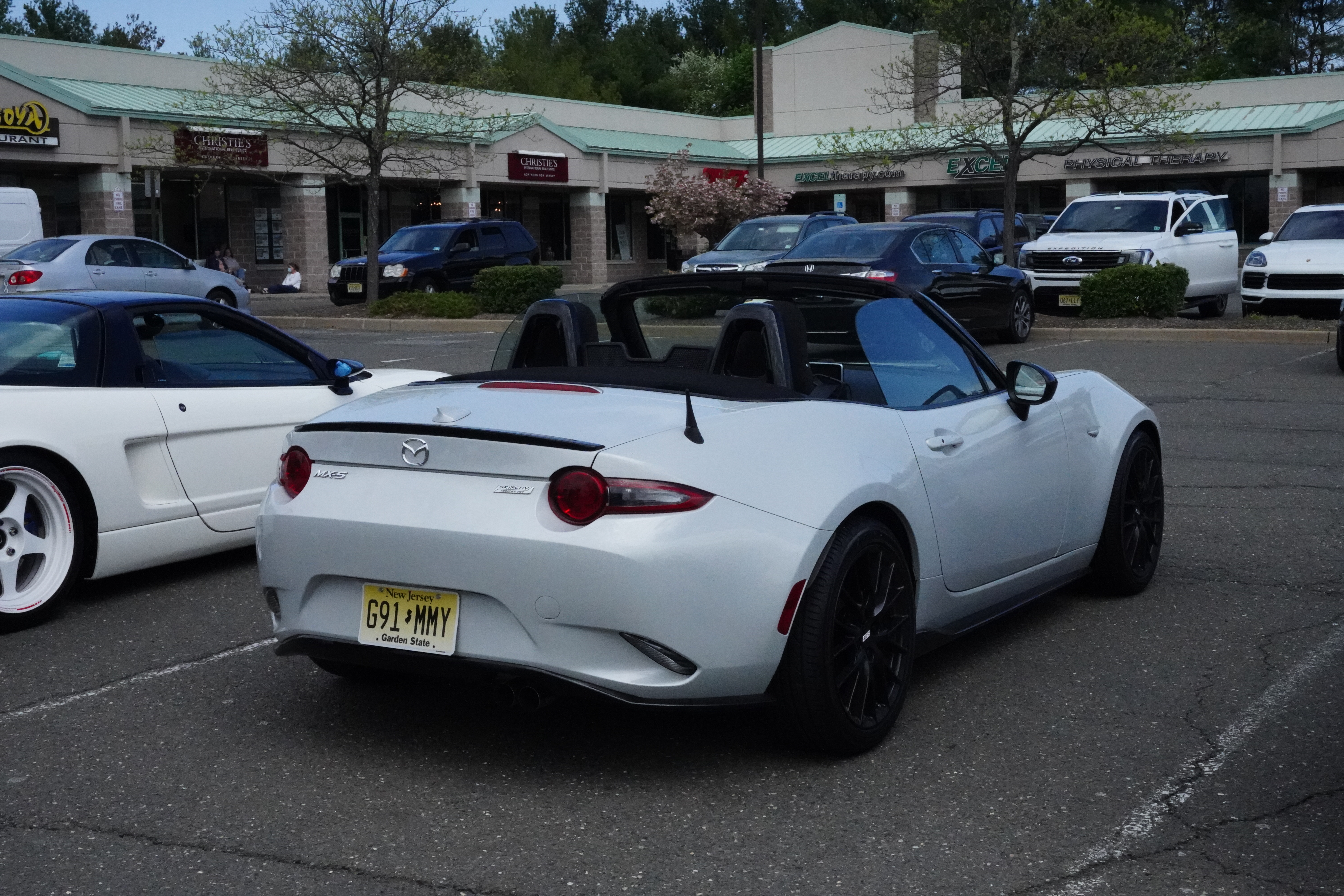
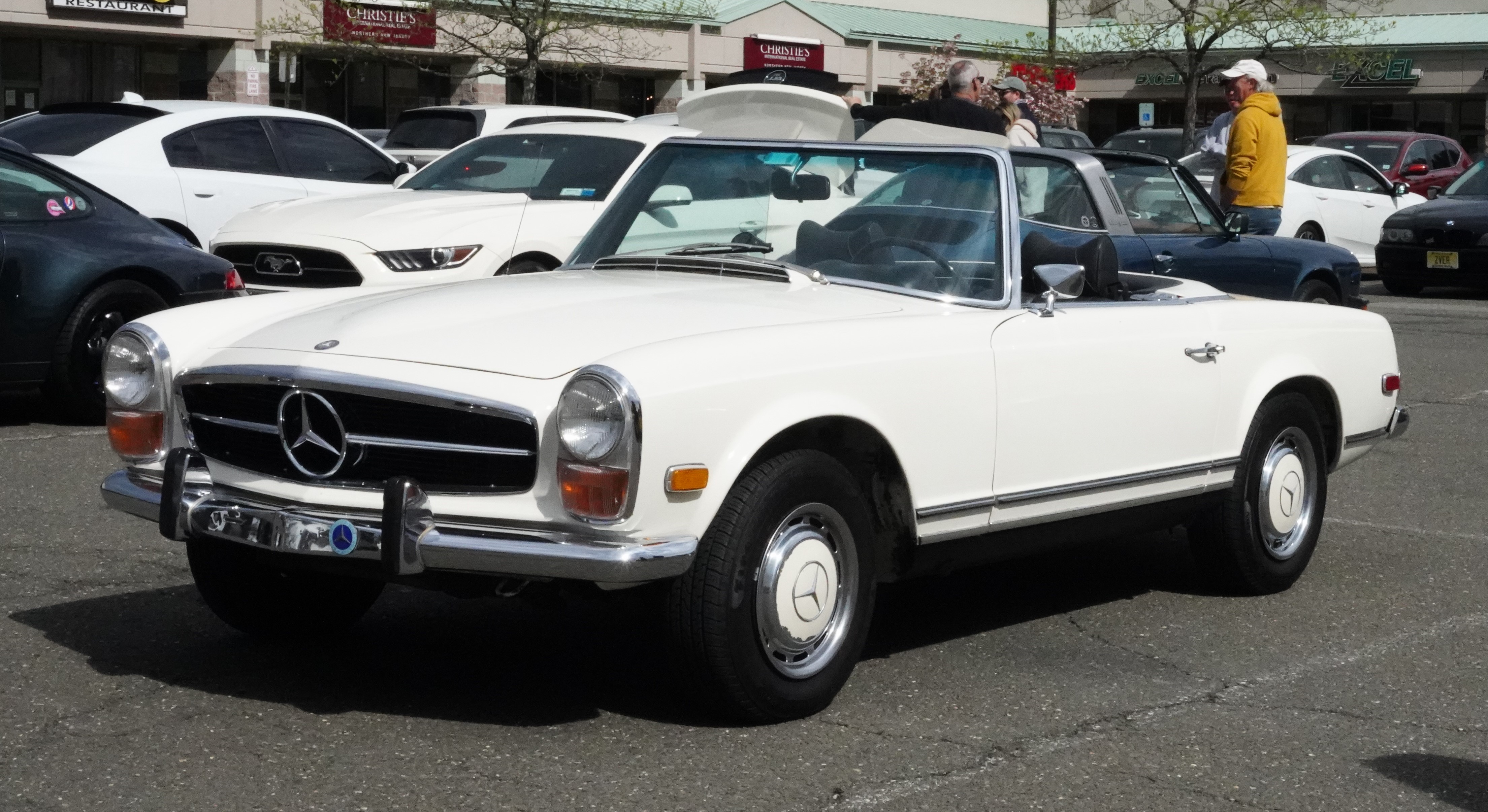
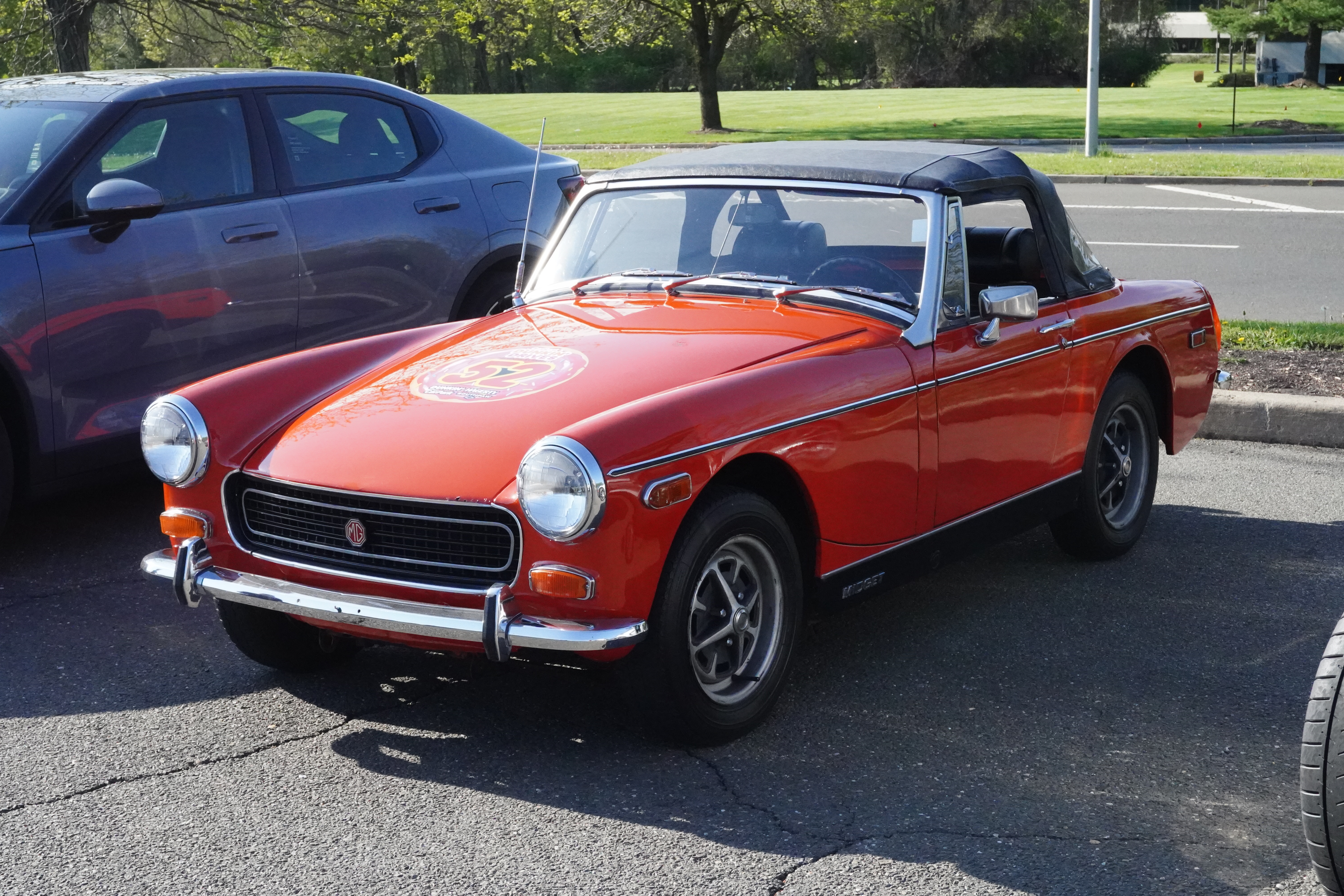
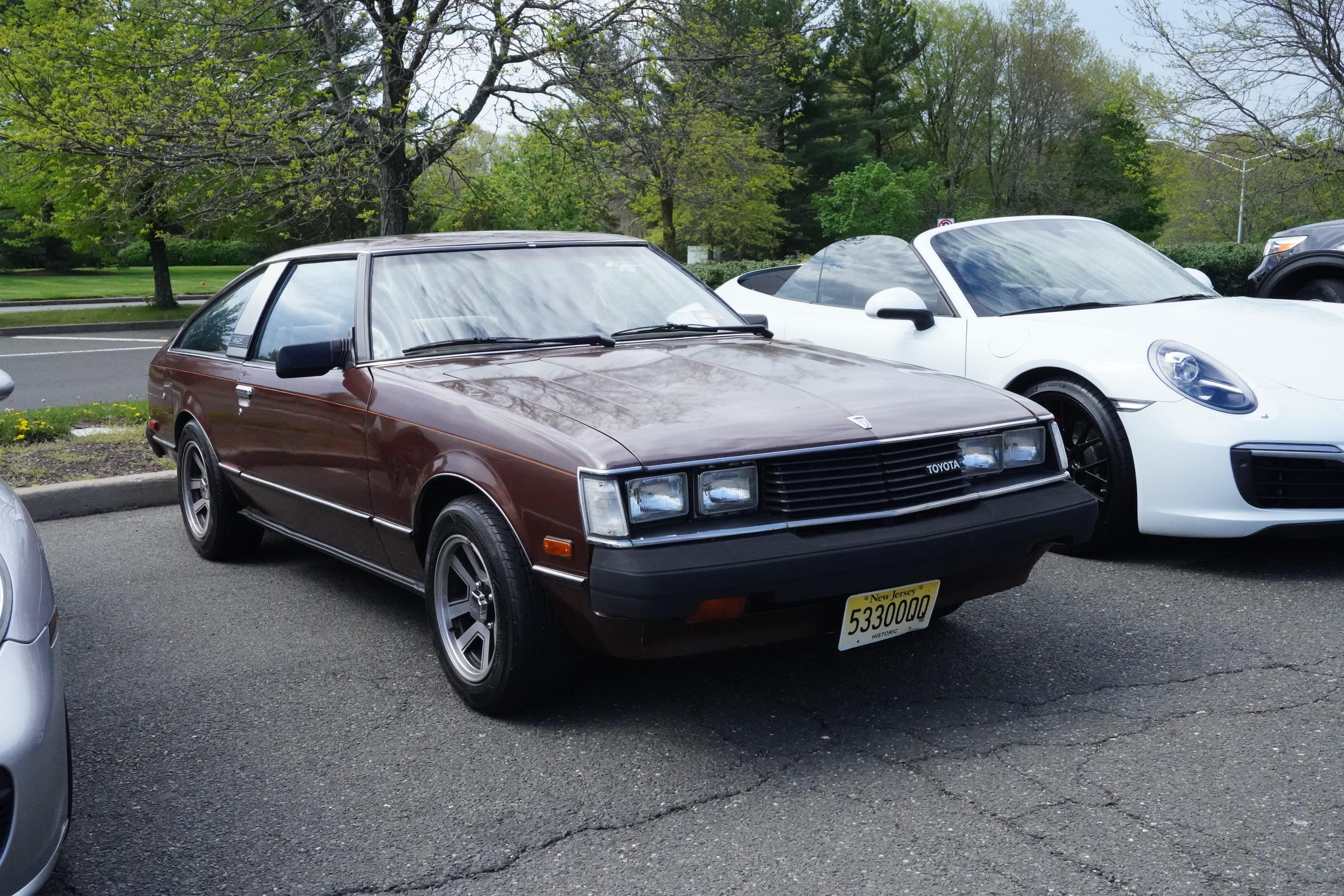
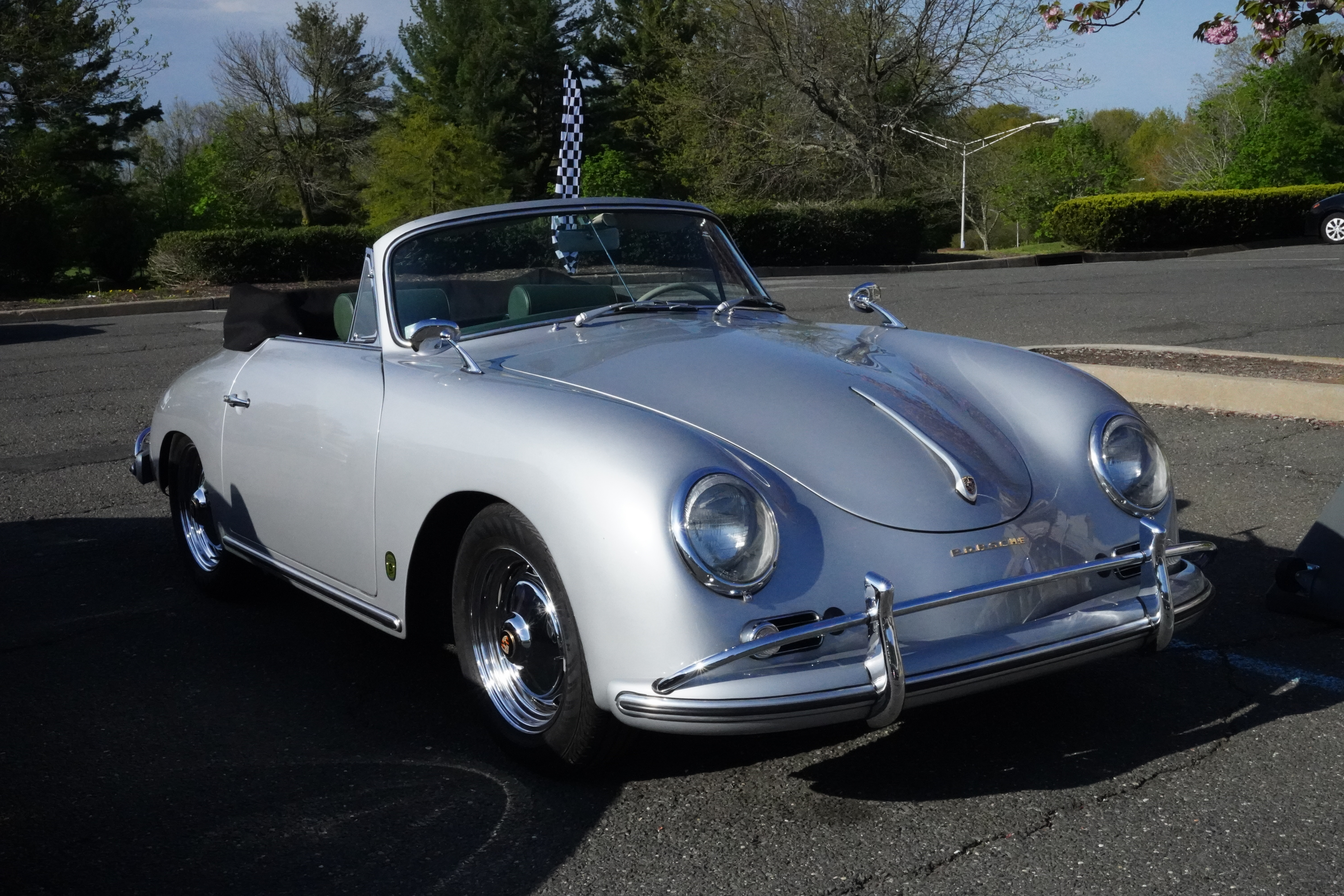
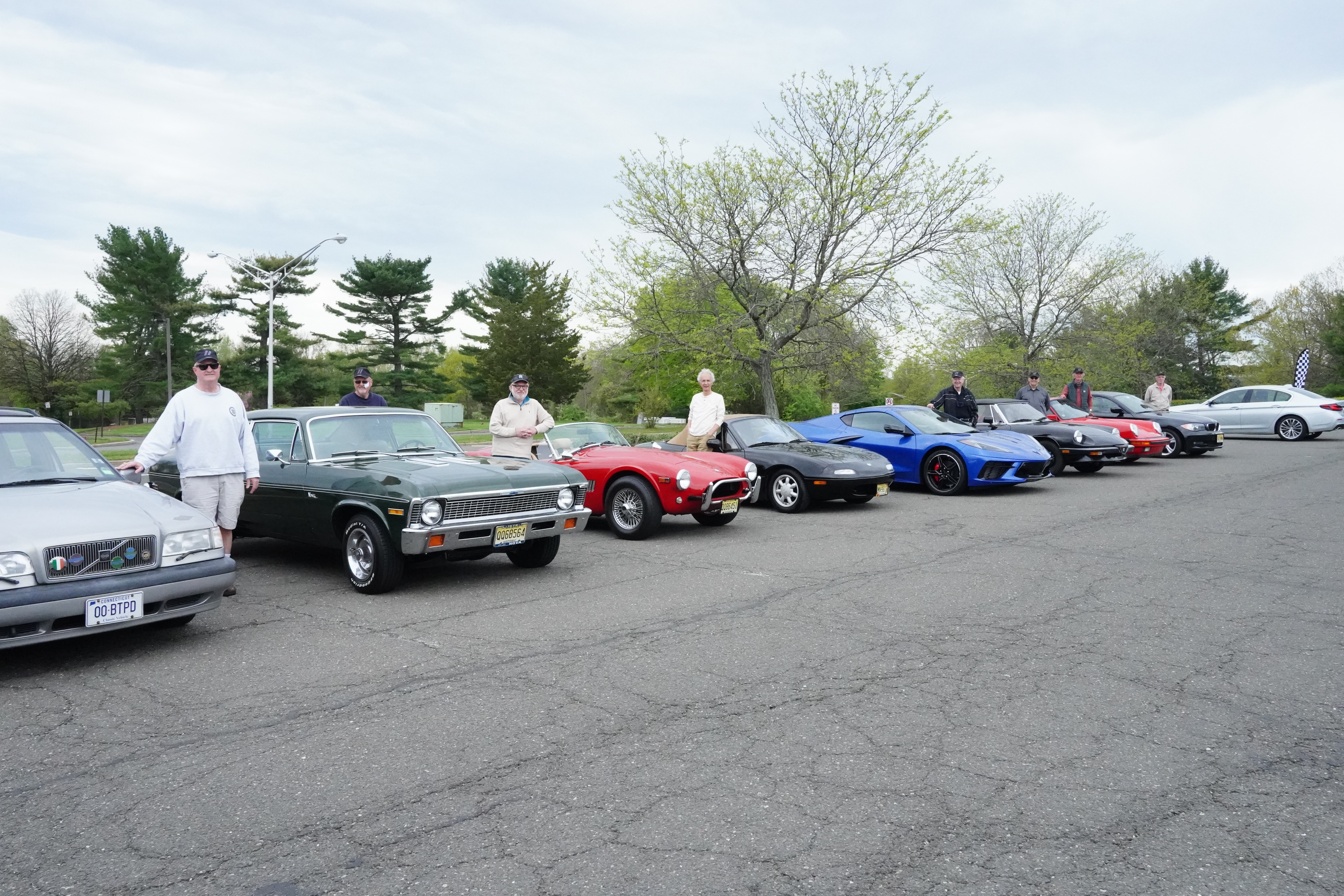
Alfa Romeo SpiderBMW 3.0 coupeBMW E30 3-series convertible1972 Buick Riviera boattailCorvette C7Corvette C8Ferrari FFFord Model TPorsche BoxsterDatsun 510Ford Mustang convertibleSaab 900Jaguar XKSterling 825 (interior pic is above)Mazda Miata NDMazda Miata NAMercedes-Benz 230/250/280 SLMG MidgetToyota Celica SupraPolestar 1 & Polestar 2VW GTiPontiac LeMansPorsche 356The final 8 in our group (from the left)The final 8 in our group (from the right)
If you live in the Northeast corner of the U.S., then you can relate to the observation that the weather can be fickle. Springtime is especially unpredictable: March can bring sunny 75 degree F weather or two feet of snow. April can be as hot and dry as summer, or can make us suffer through two weeks of ‘April showers’.
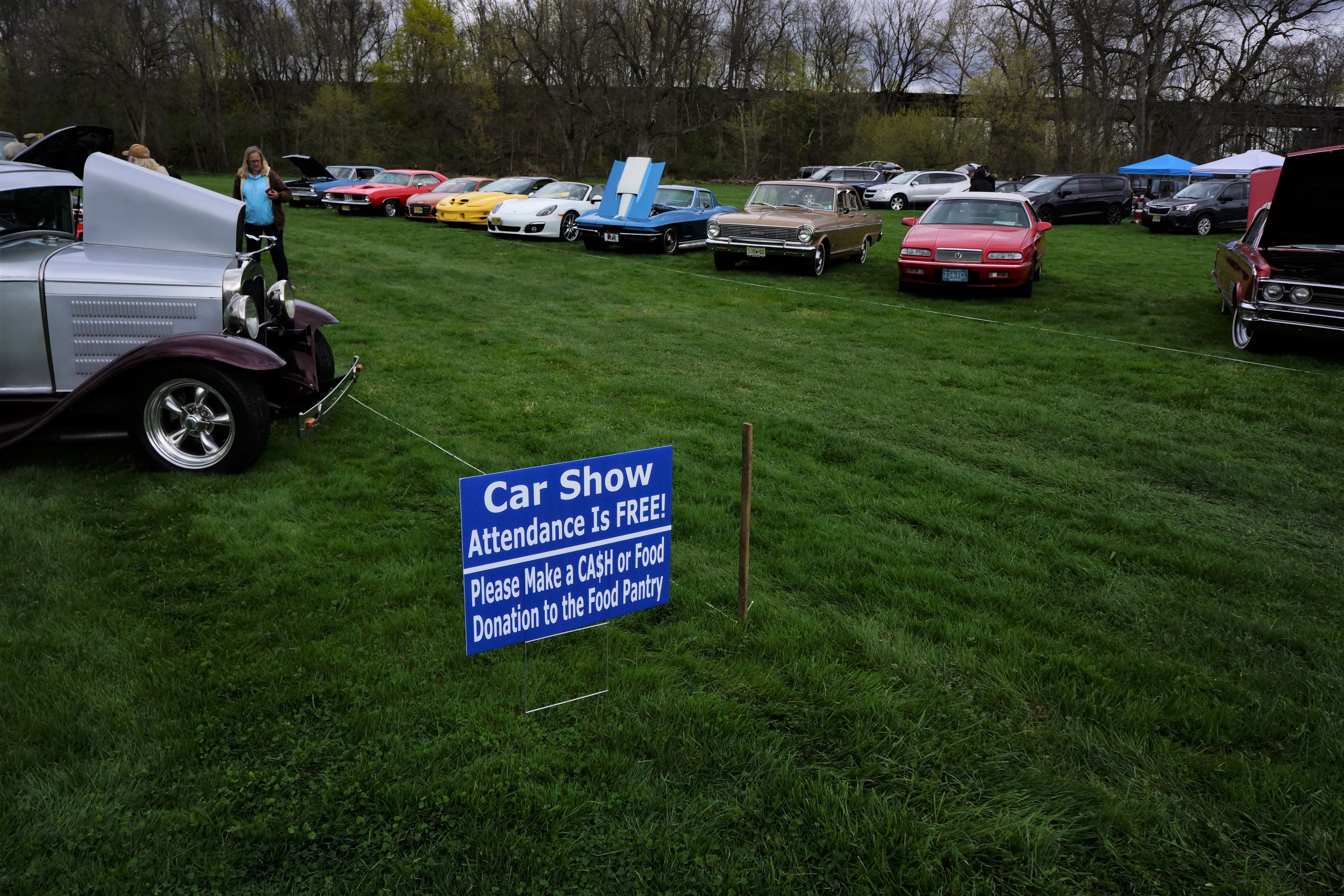
The neatly arrayed car show field
For us car gals and guys, the weather is important only as it relates to car shows. The Neshanic Station (NJ) Car Show, new for 2021, had its premiere event last month, on the first day of spring actually, and the weather was magnificent. The weather was something less than magnificent for the second one on April 17, with dark cloudy skies and cool temps the order of the day.
Nevertheless, it stayed dry, and the cars came out. Some were the same as seen in March, and many others were new. As before, there were no ‘rules’ about what you could bring, which again resulted in a nice mix of old, new, original, and modded. In other words, there was something for everyone.
I was a spectator for this one, and I’ll simply say that time constraints both before and after the show impeded my participation. Not only was the vehicular turnout impressive; spectators, catching wind of this, were out in good numbers, possibly lured by the flea market on the same field. Like before, there was no entrance fee, but participants and spectators were encouraged to donate food or cash to support a local food bank, a wonderful cause indeed.
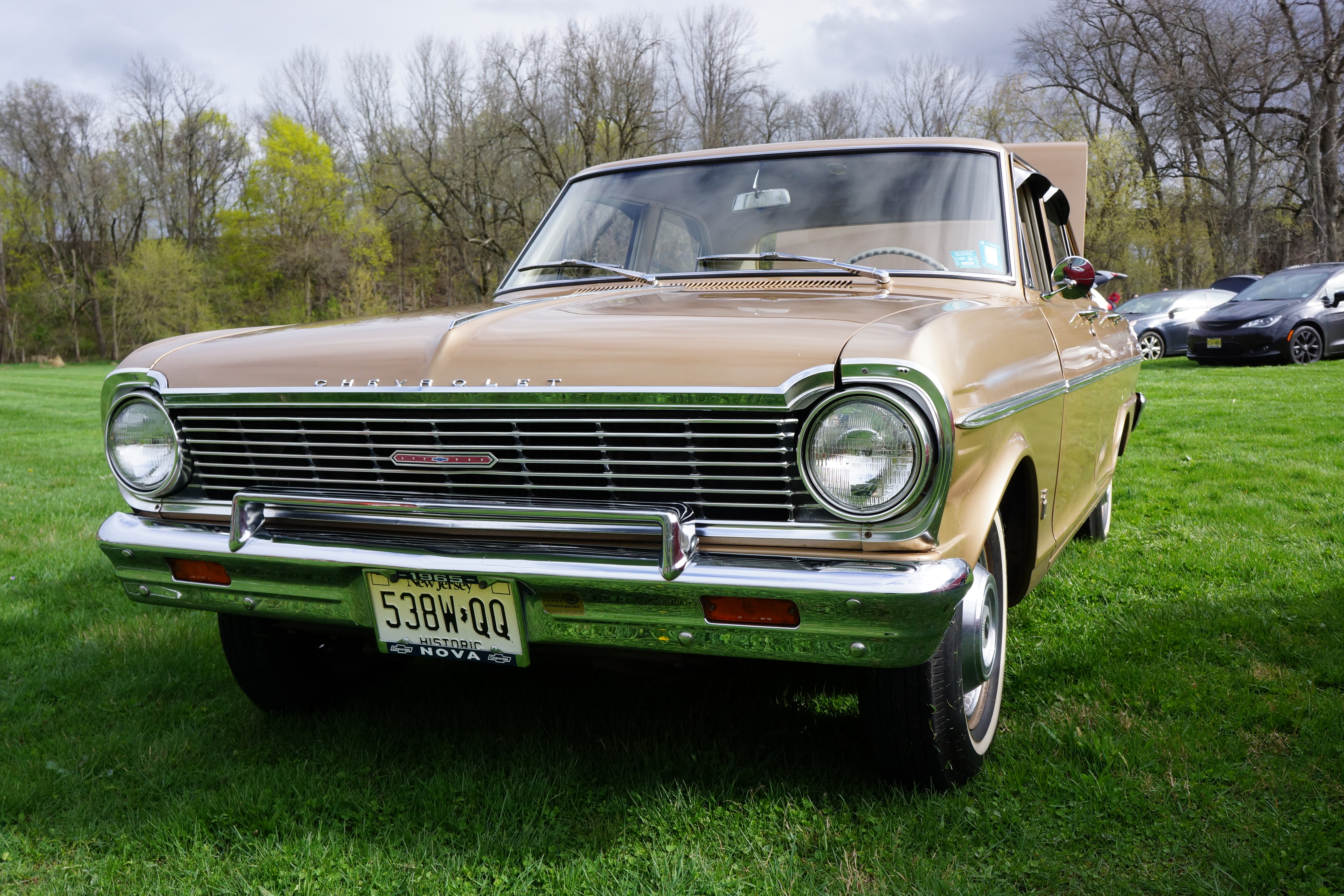
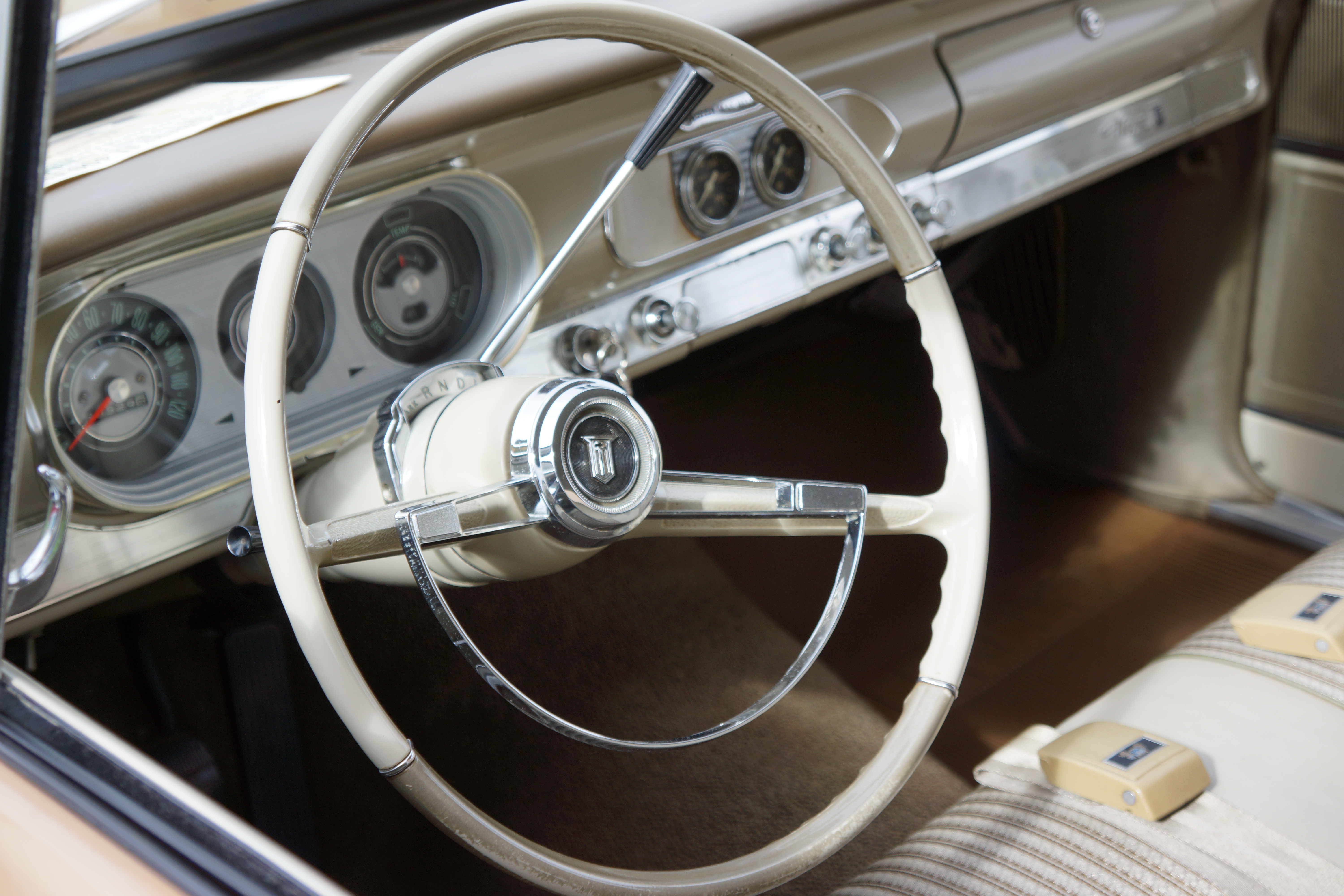
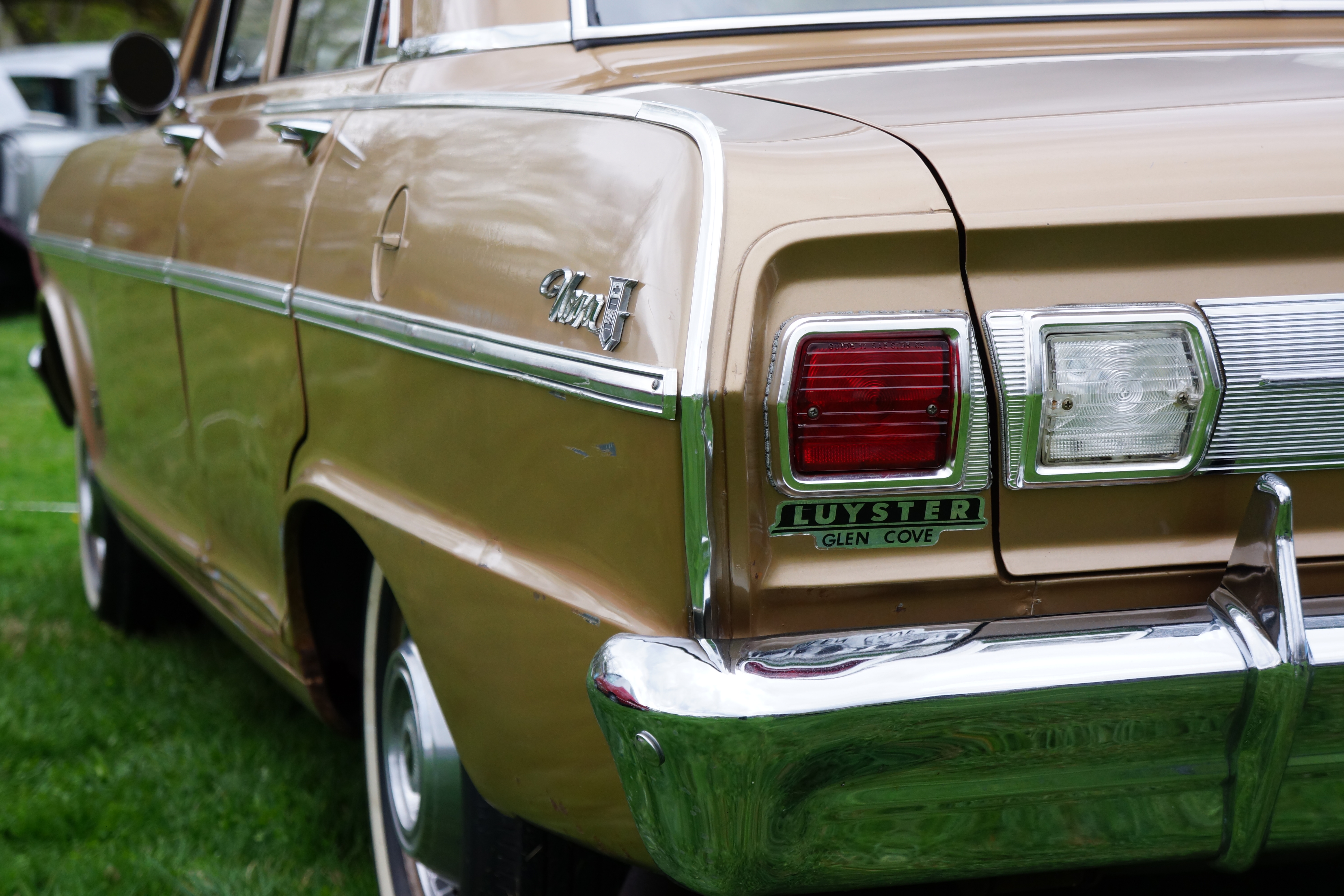
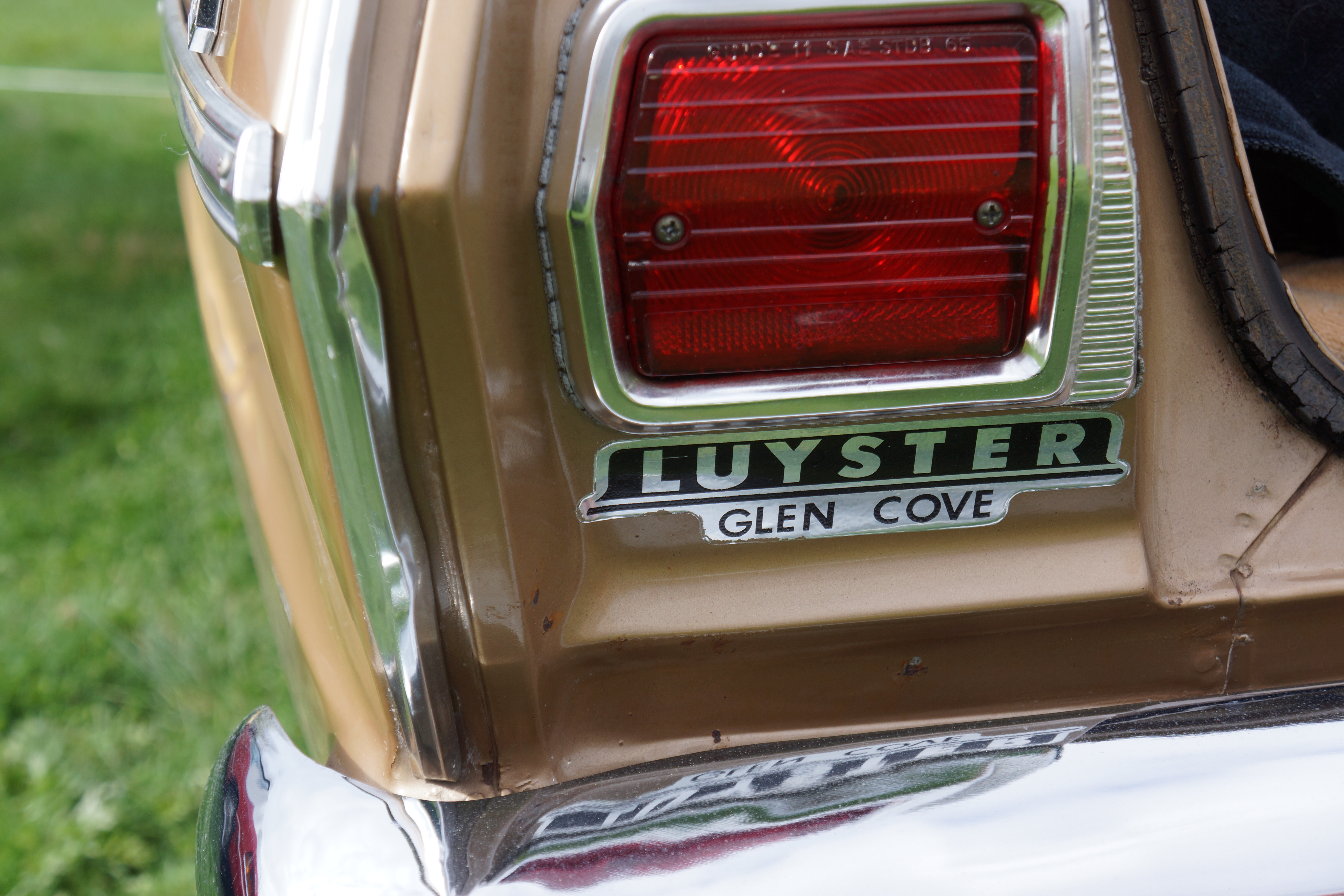
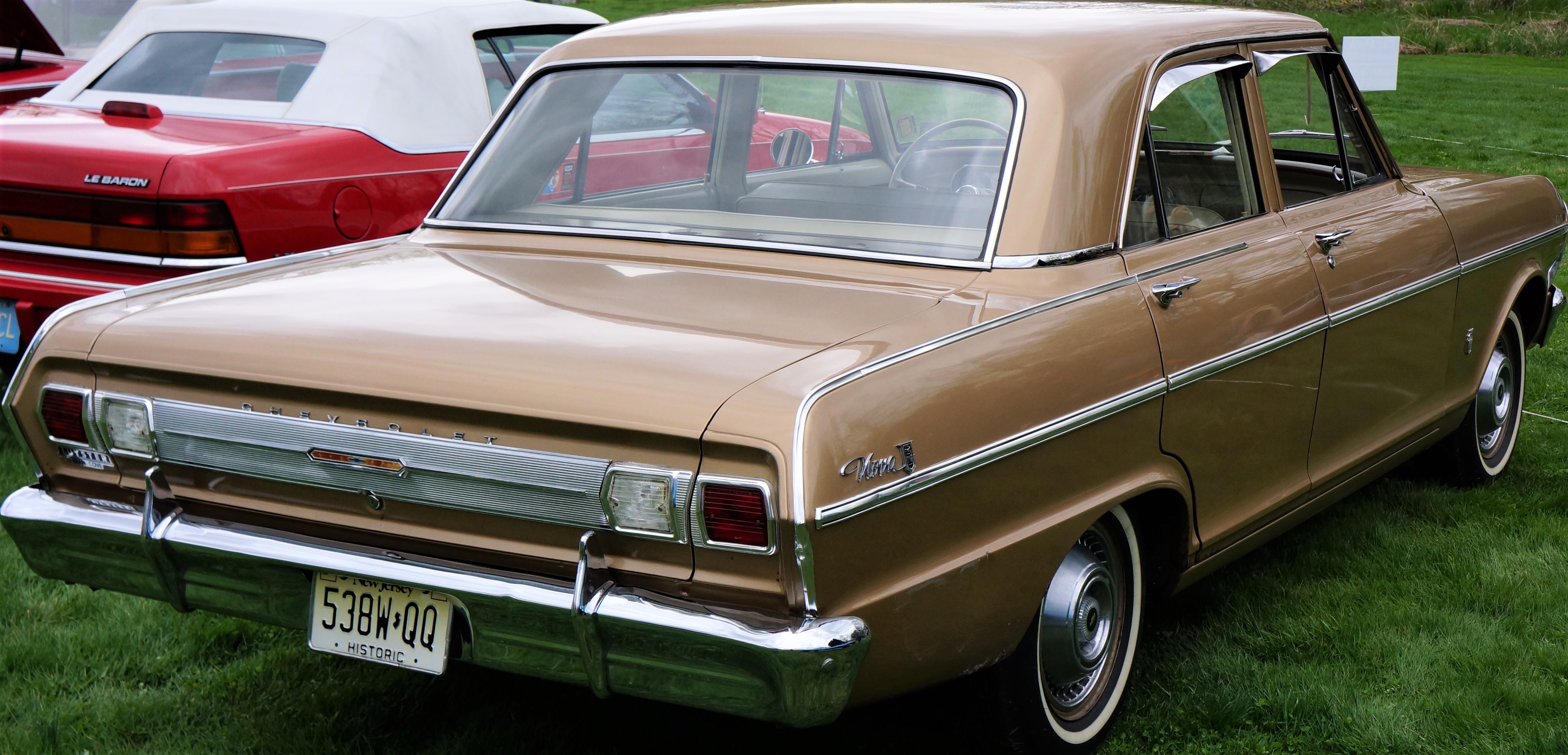
The photos can do most of the remainder of the work here, although I do wish to call special attention to the 1965 Chevrolet Chevy II four-door sedan which, similar to the ’65 Bonneville I wrote up last time, was a single-family-owned car in completely original condition, and a true time capsule. The next show is set for Saturday May 15 (they will run once a month, always on a Saturday), and as we move into the presumably less fickle spring weather, it won’t be a surprise to see an even greater turnout.
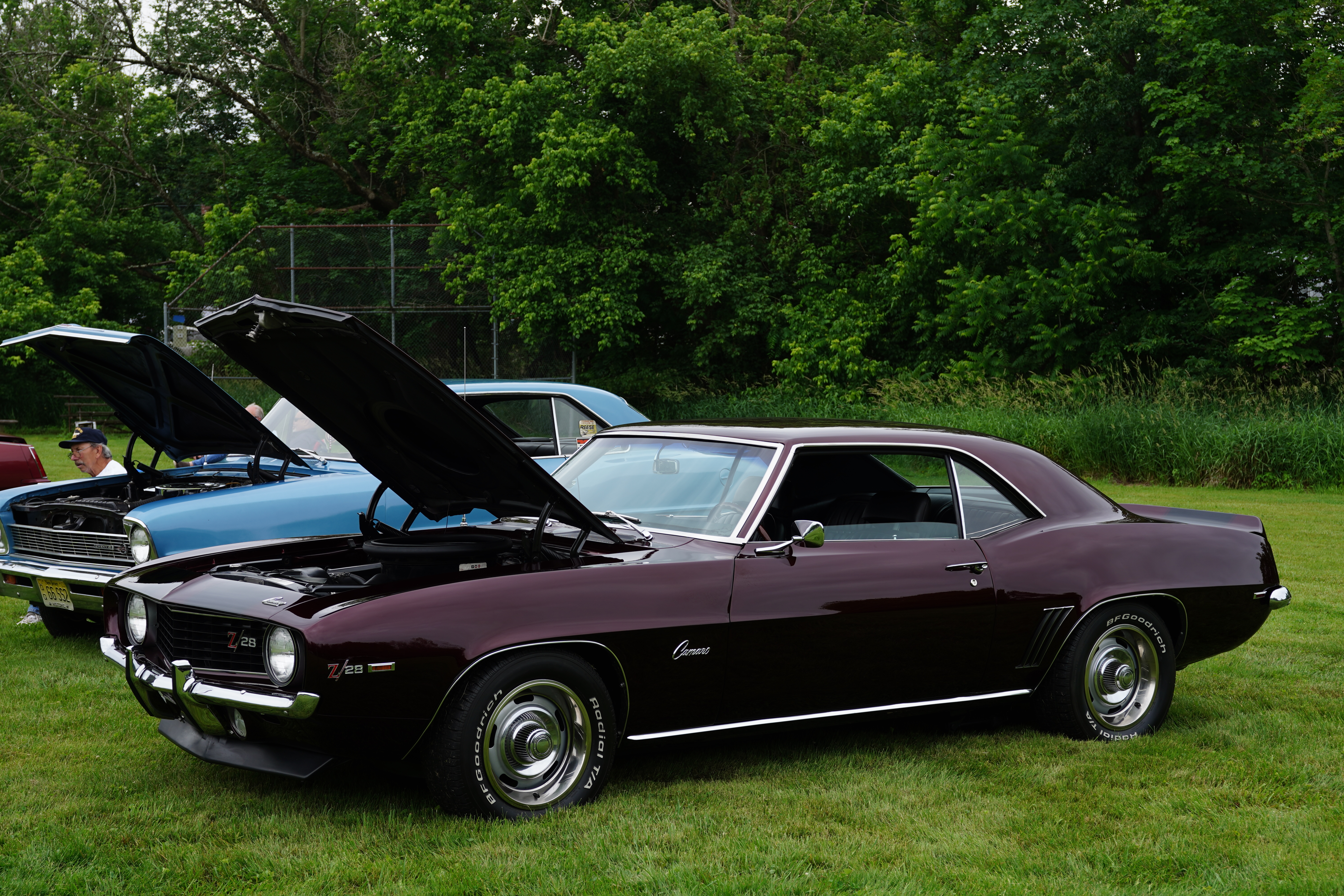
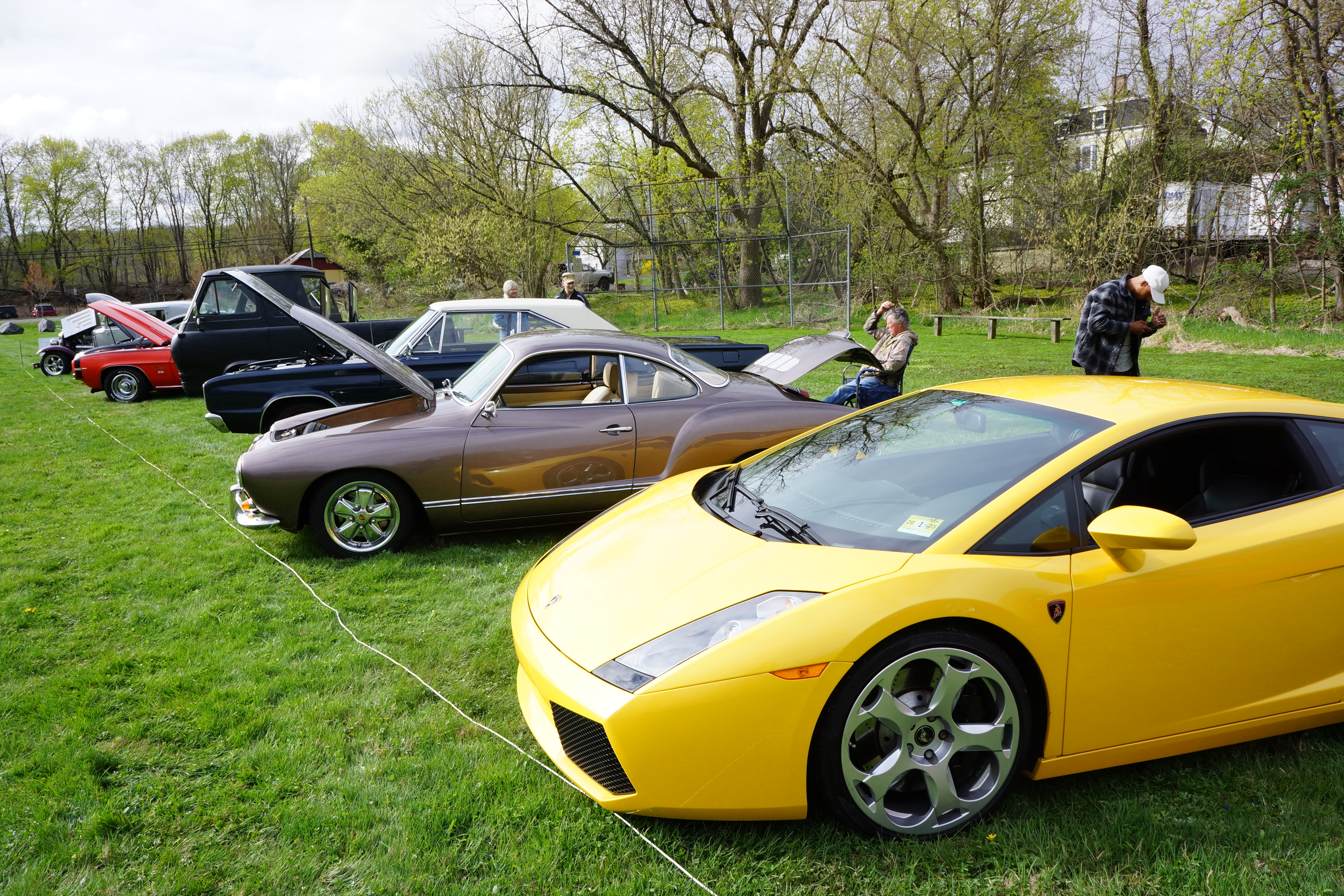
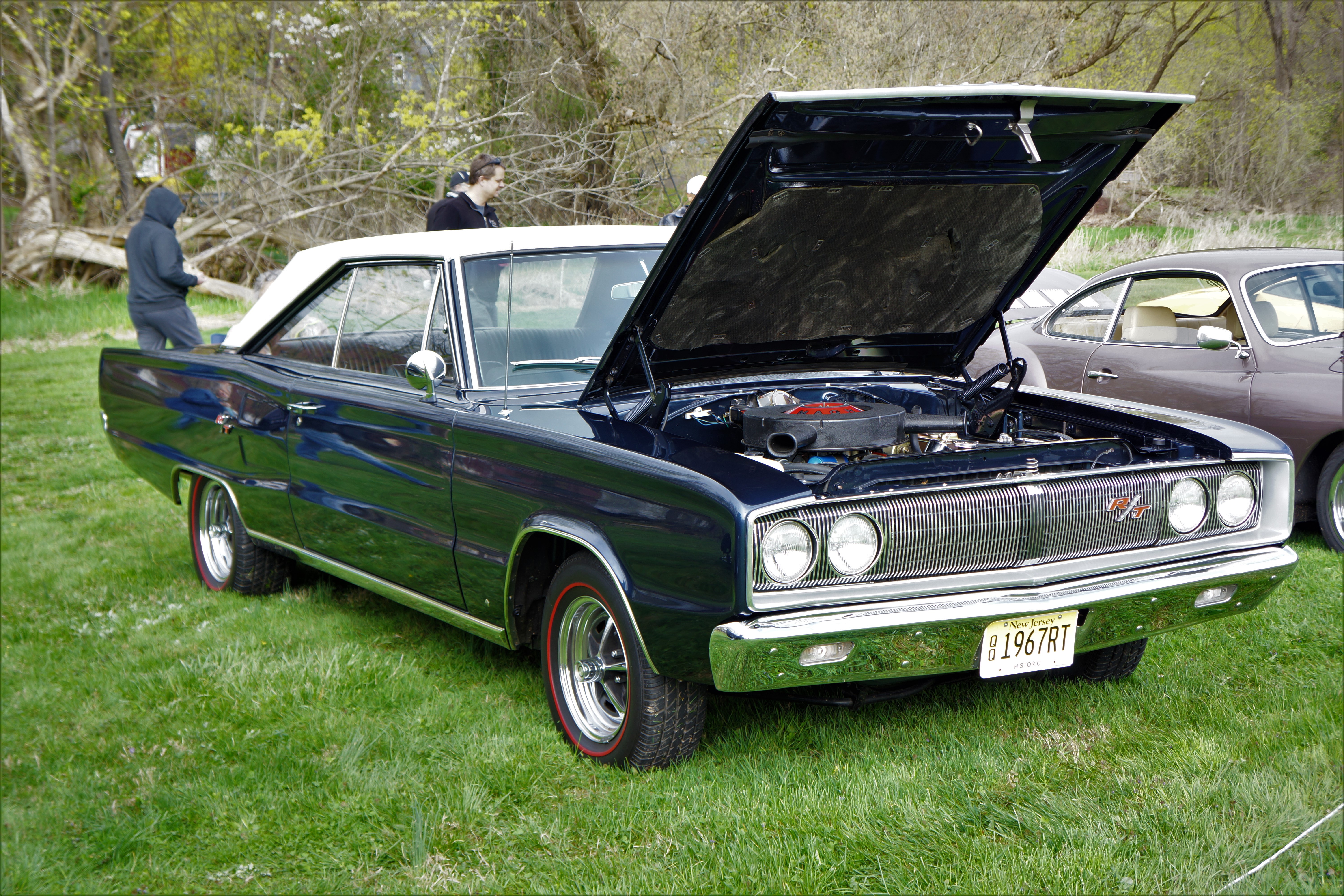
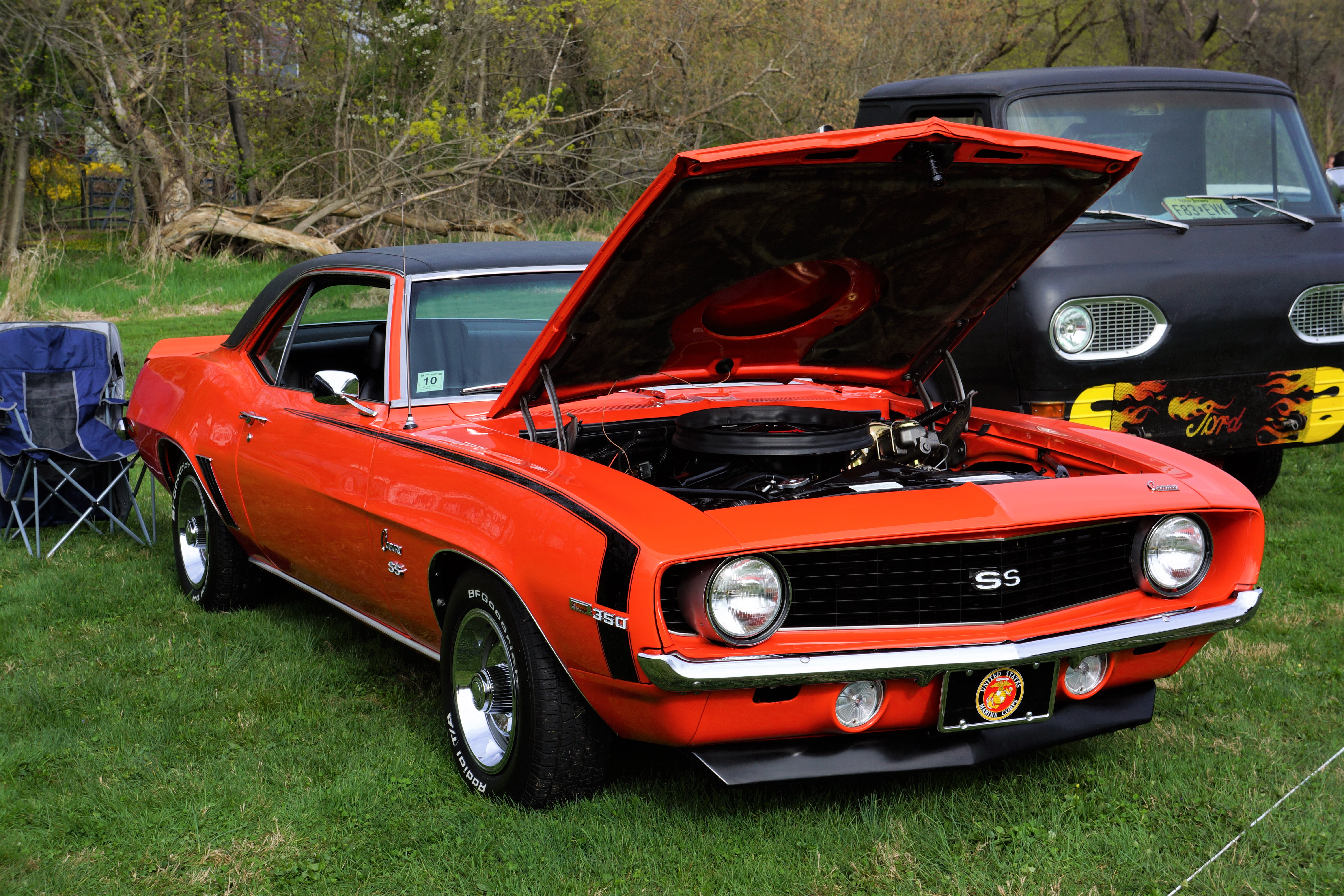
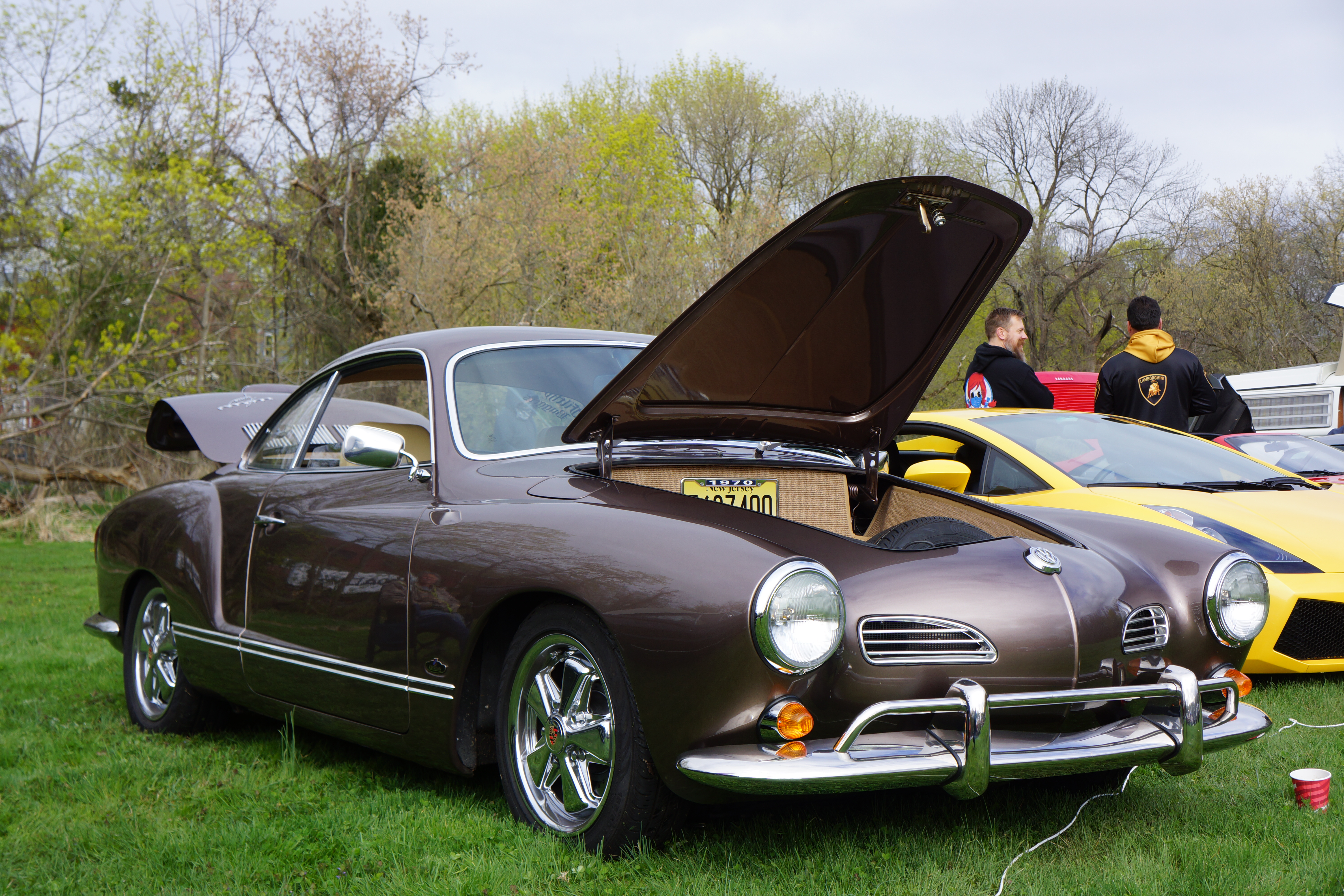
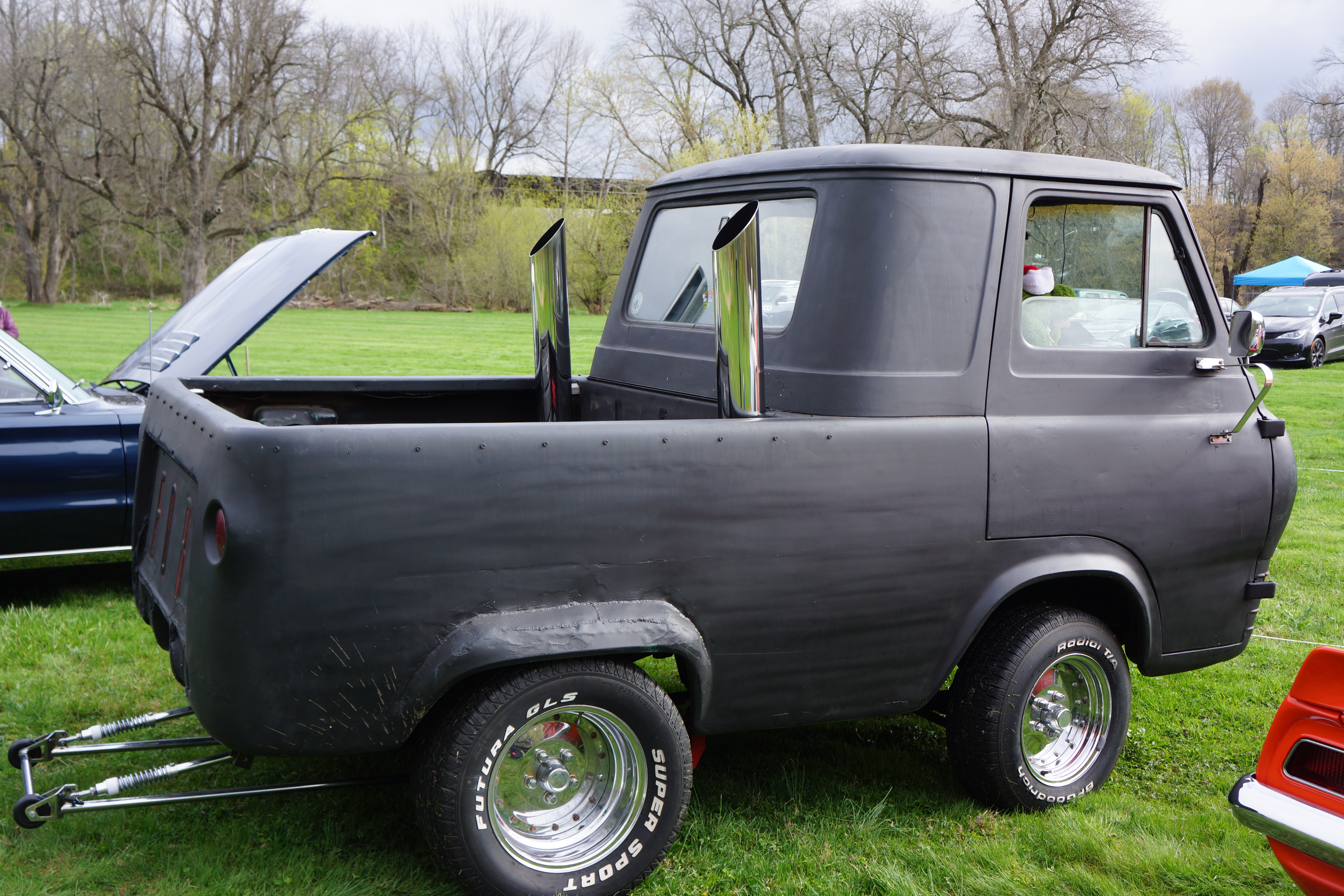
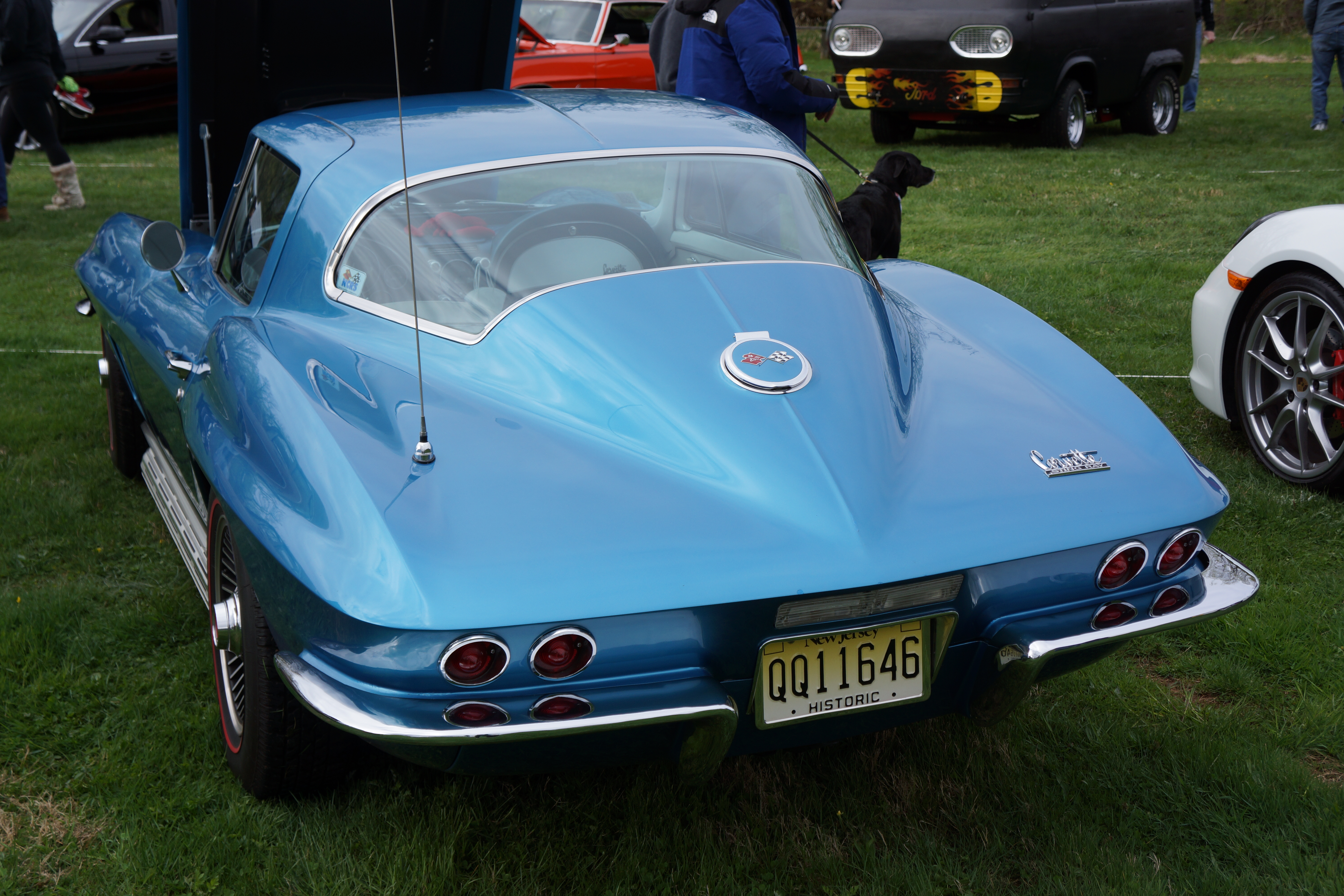
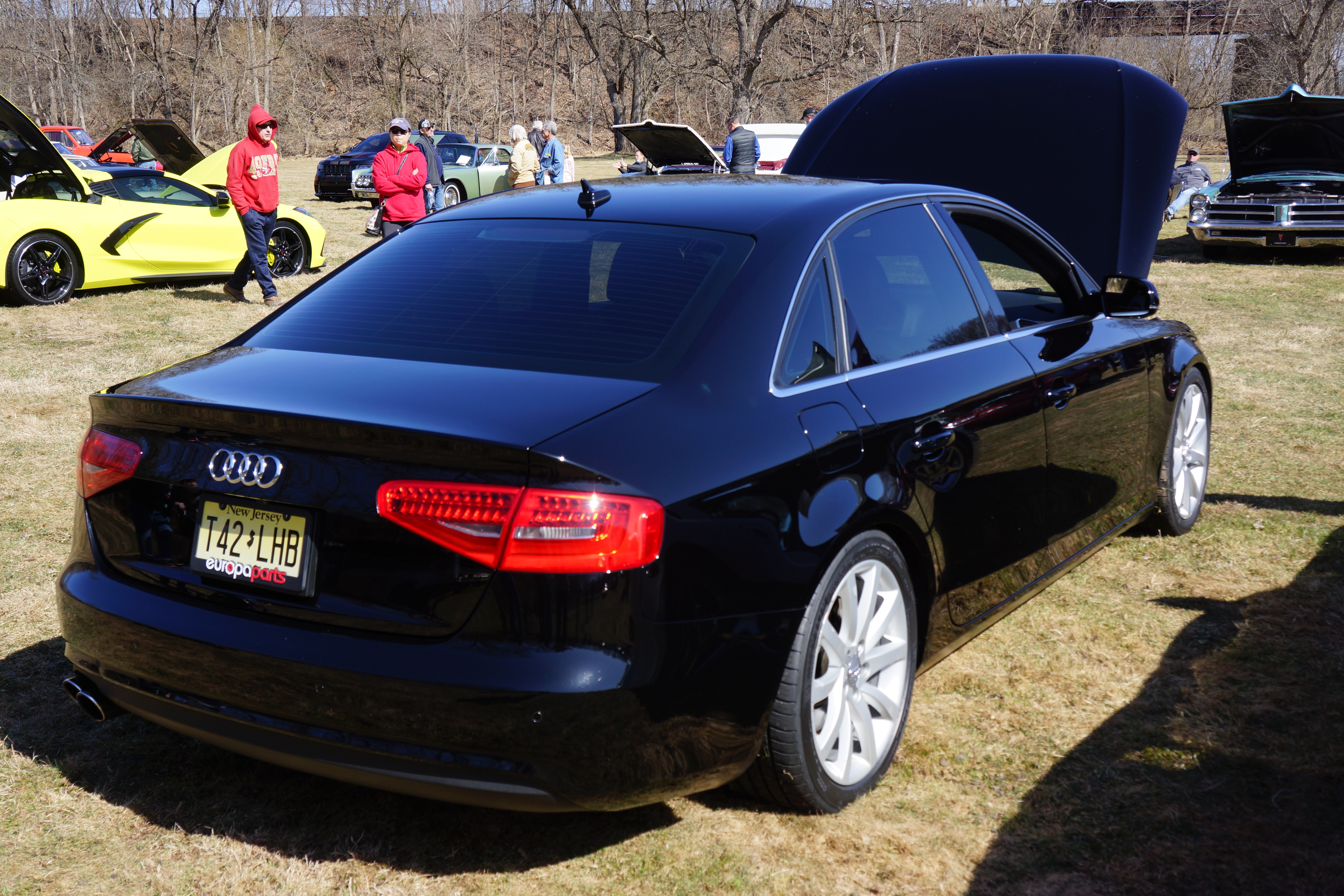
Nicely done Ford rod with what appears to be Henry steelAudi A41967 Dodge Coronet1969 Chevy CamaroTastefully customized VW Karmann GhiaFord Econoline with a non-standard wheelbaseLamborghini GallardoFerrari 348C2 Corvette coupeAudi R8
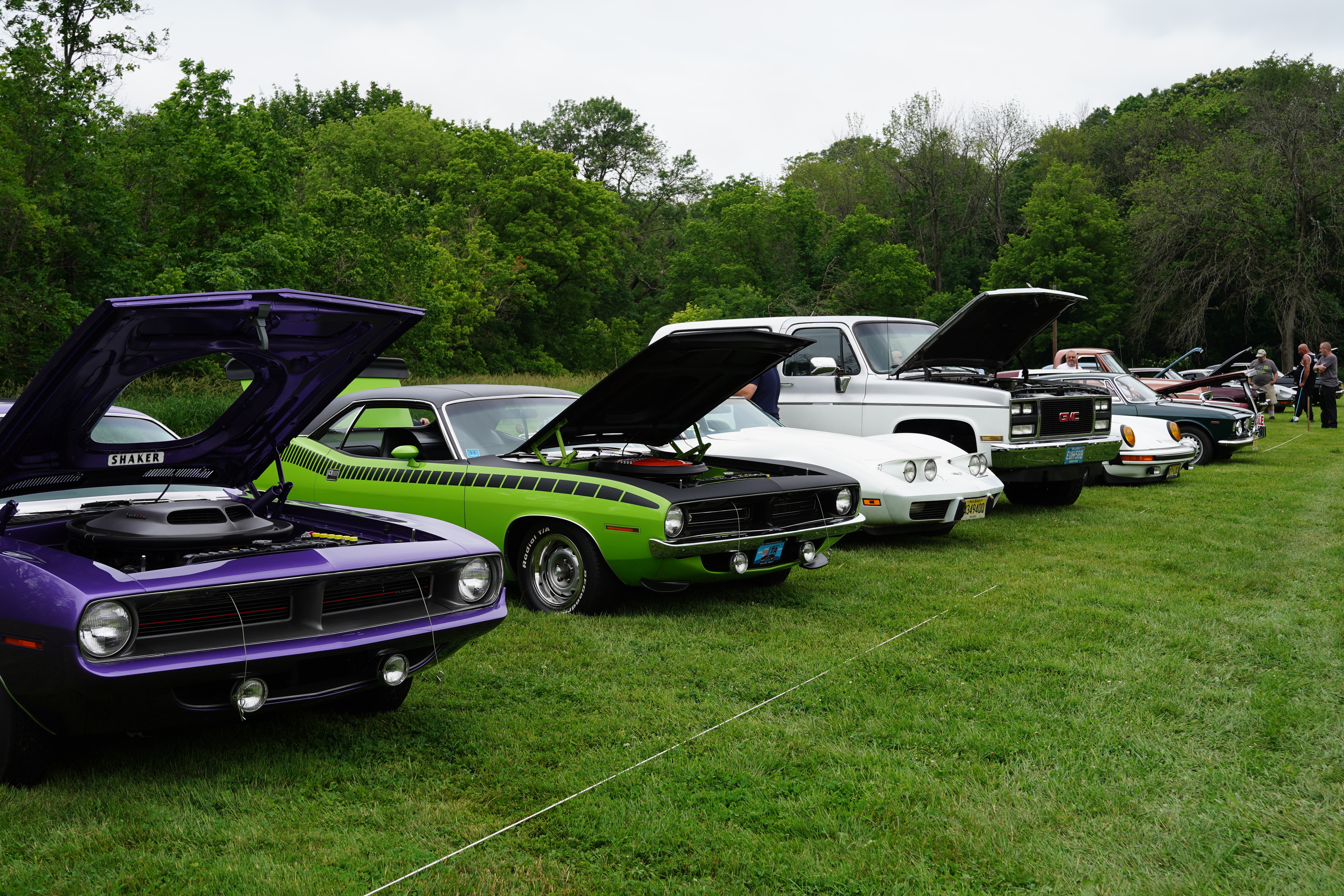
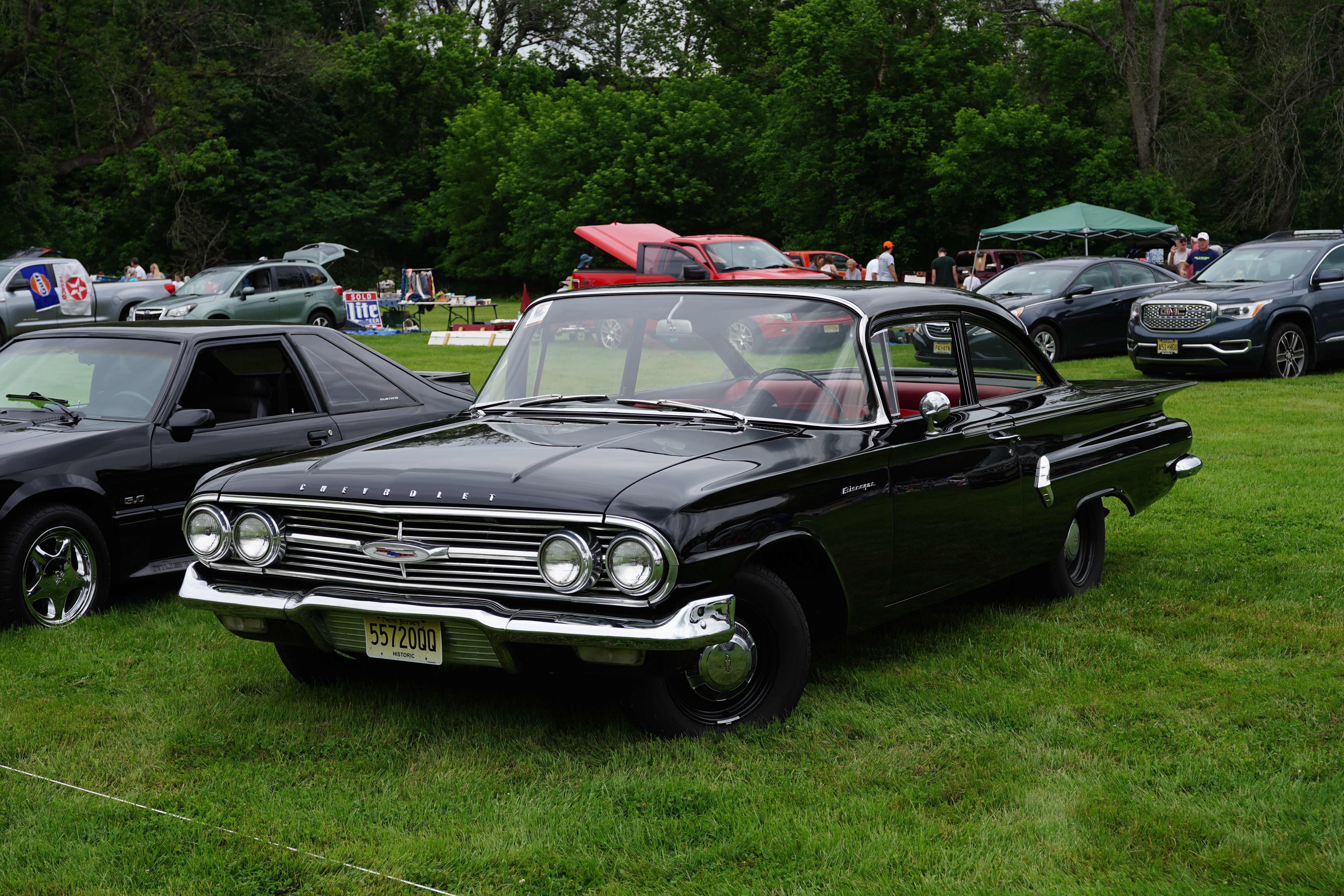
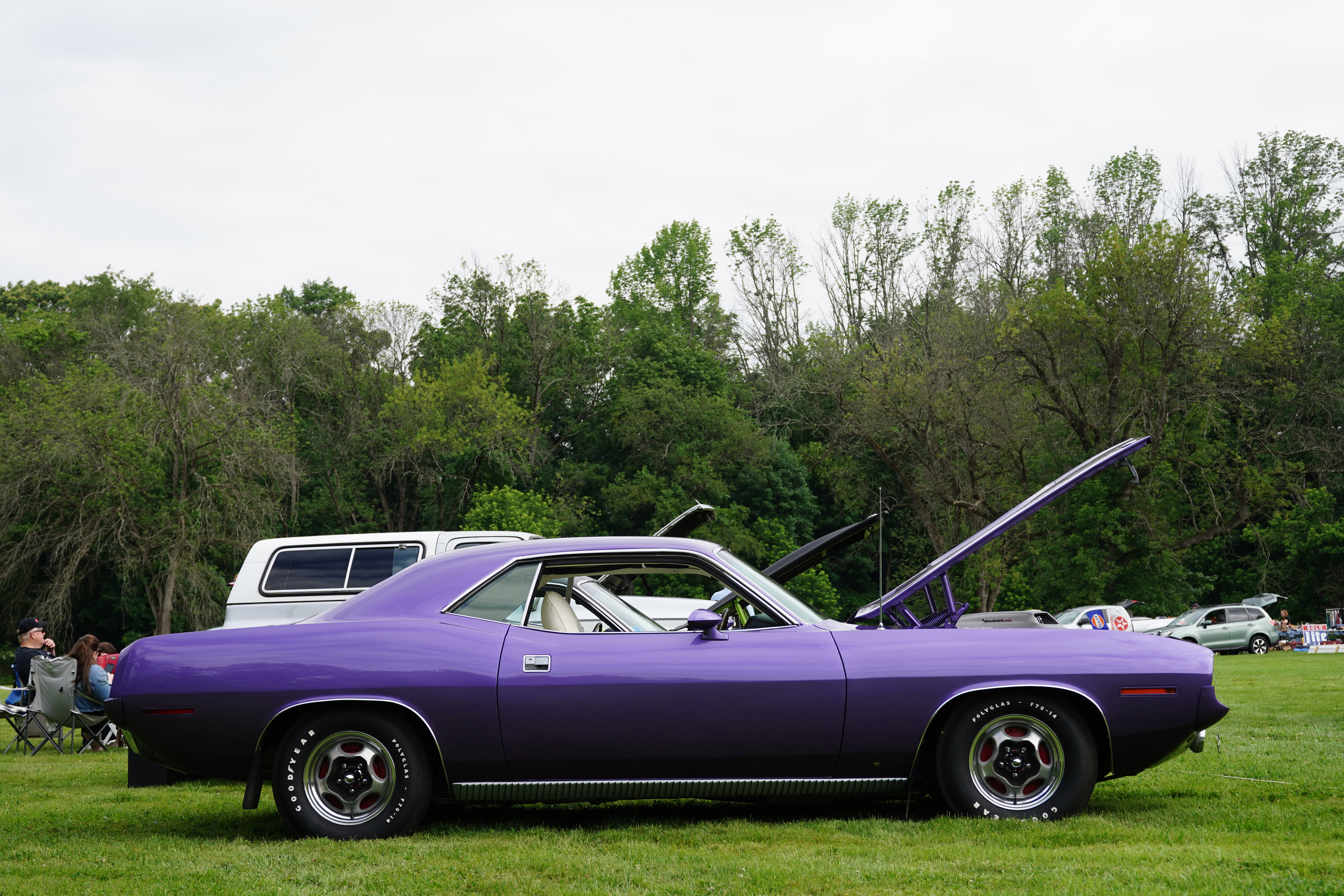
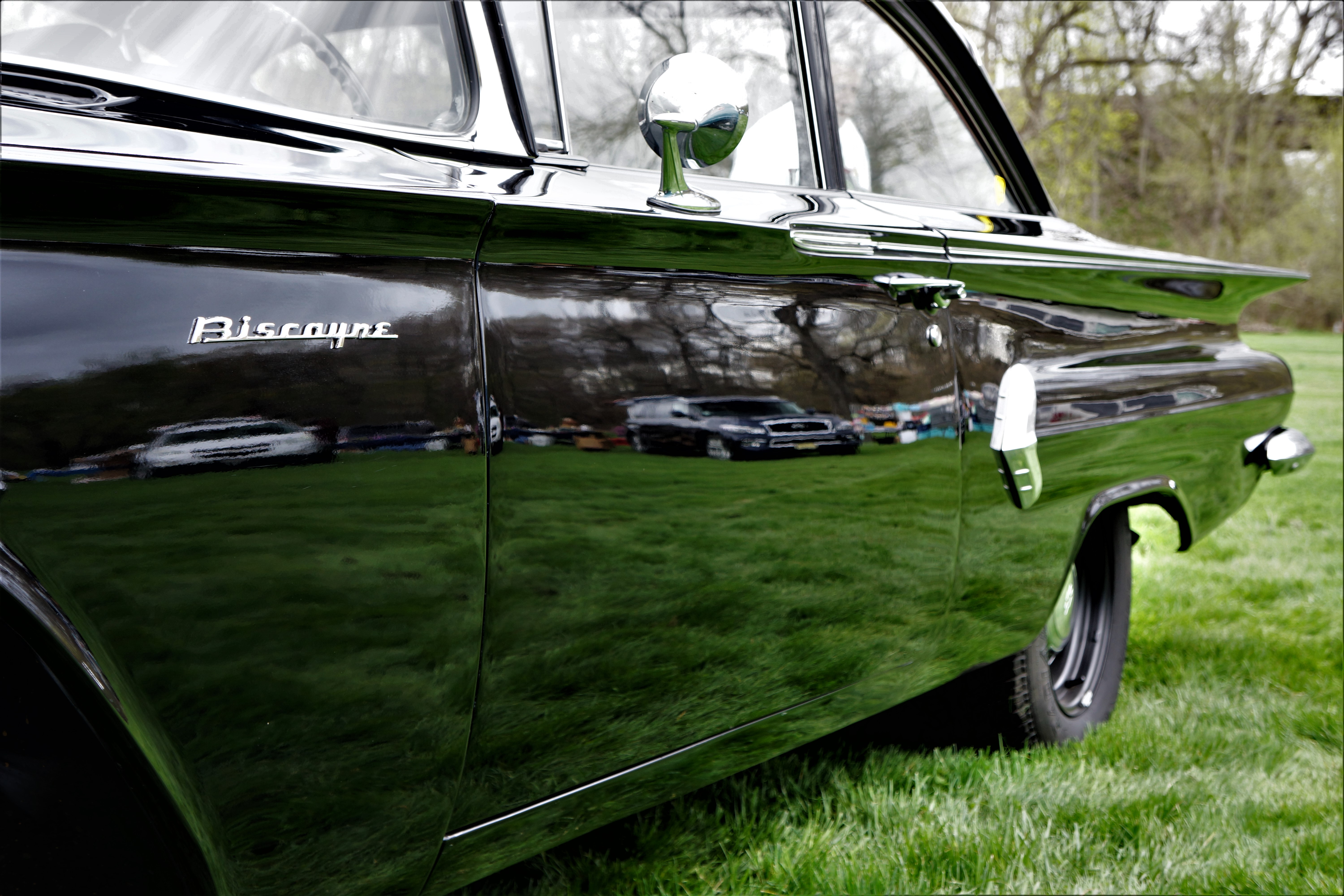
1960 Chevrolet in rarely-seen Biscayne trimPlymouth Barracuda
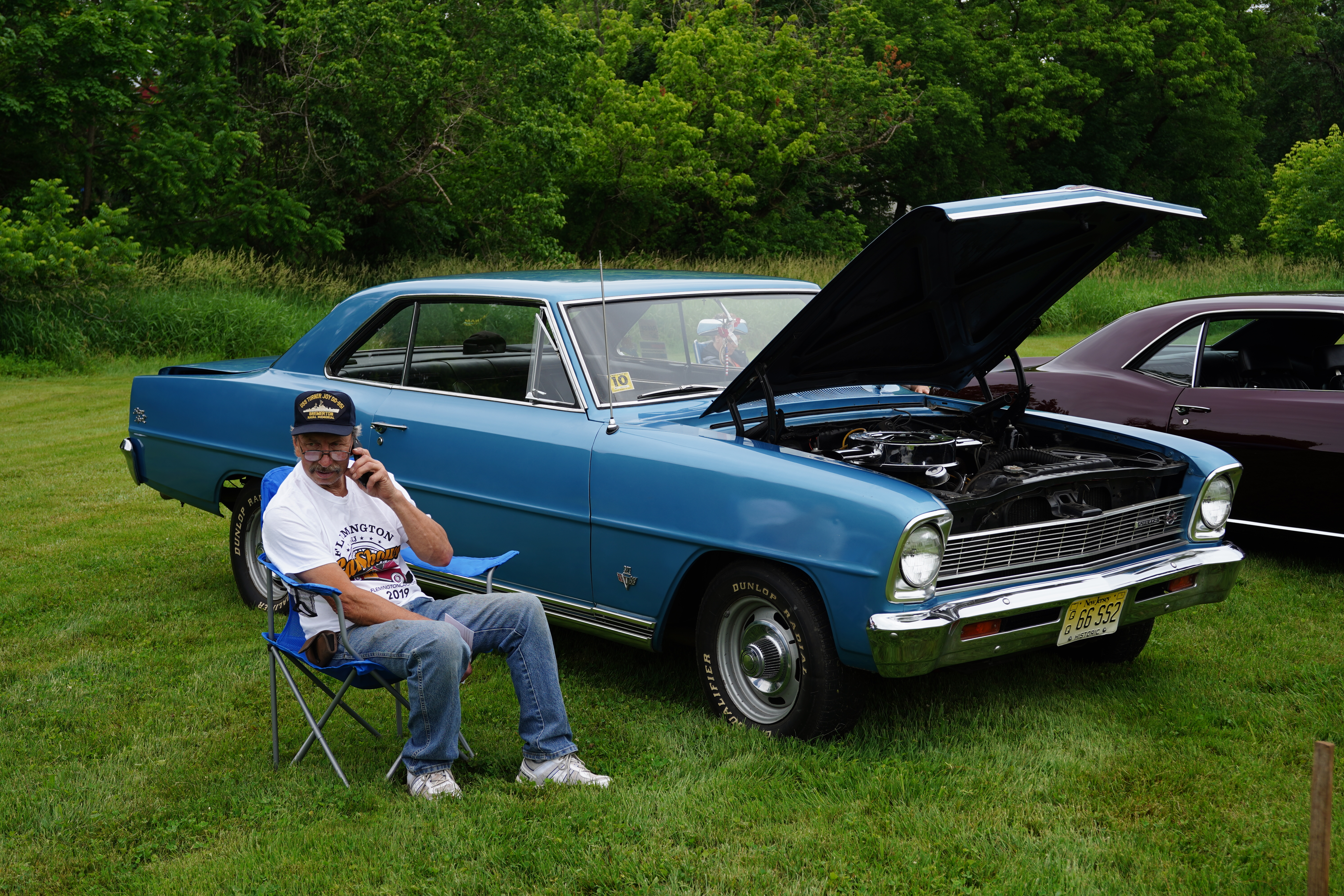
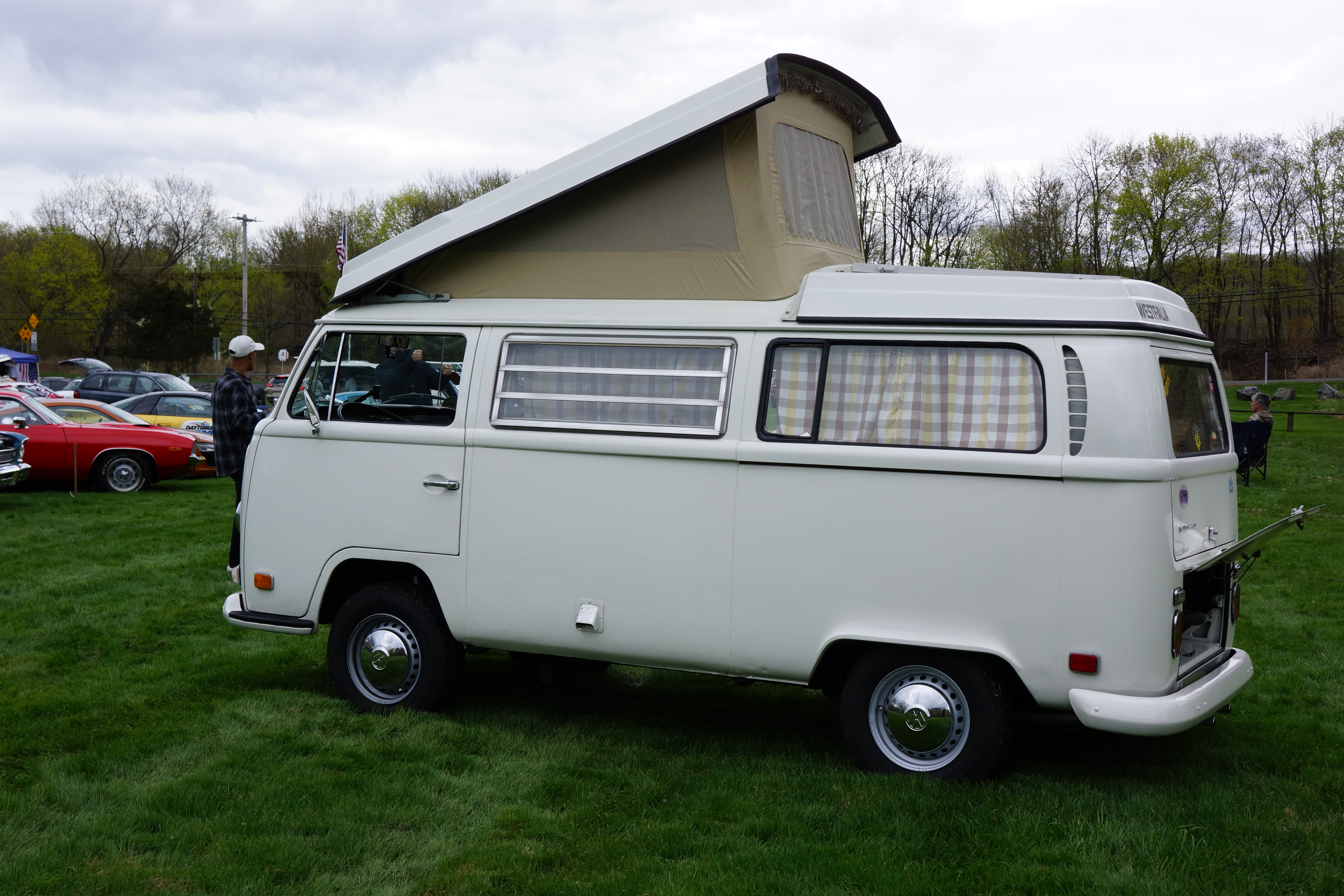
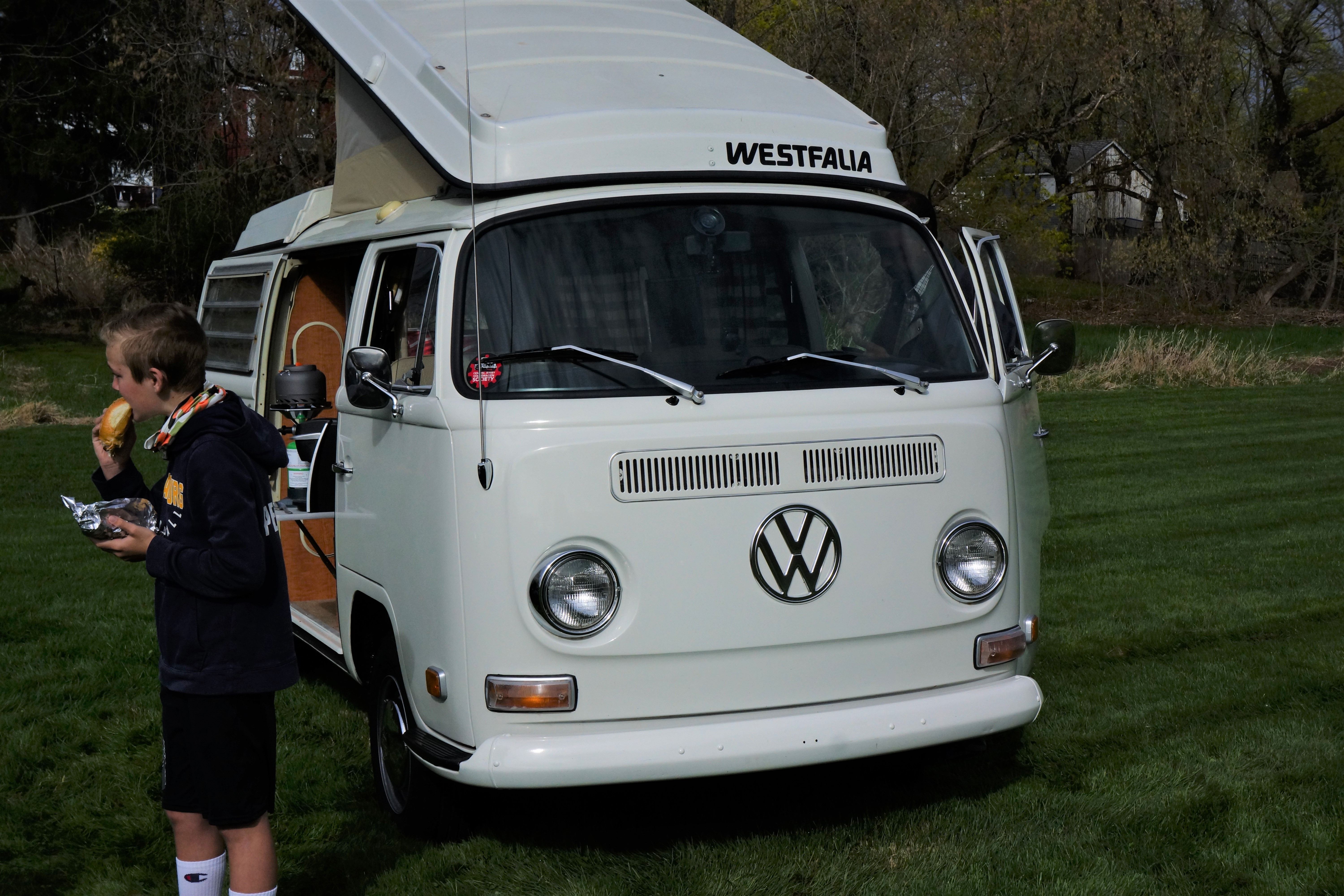
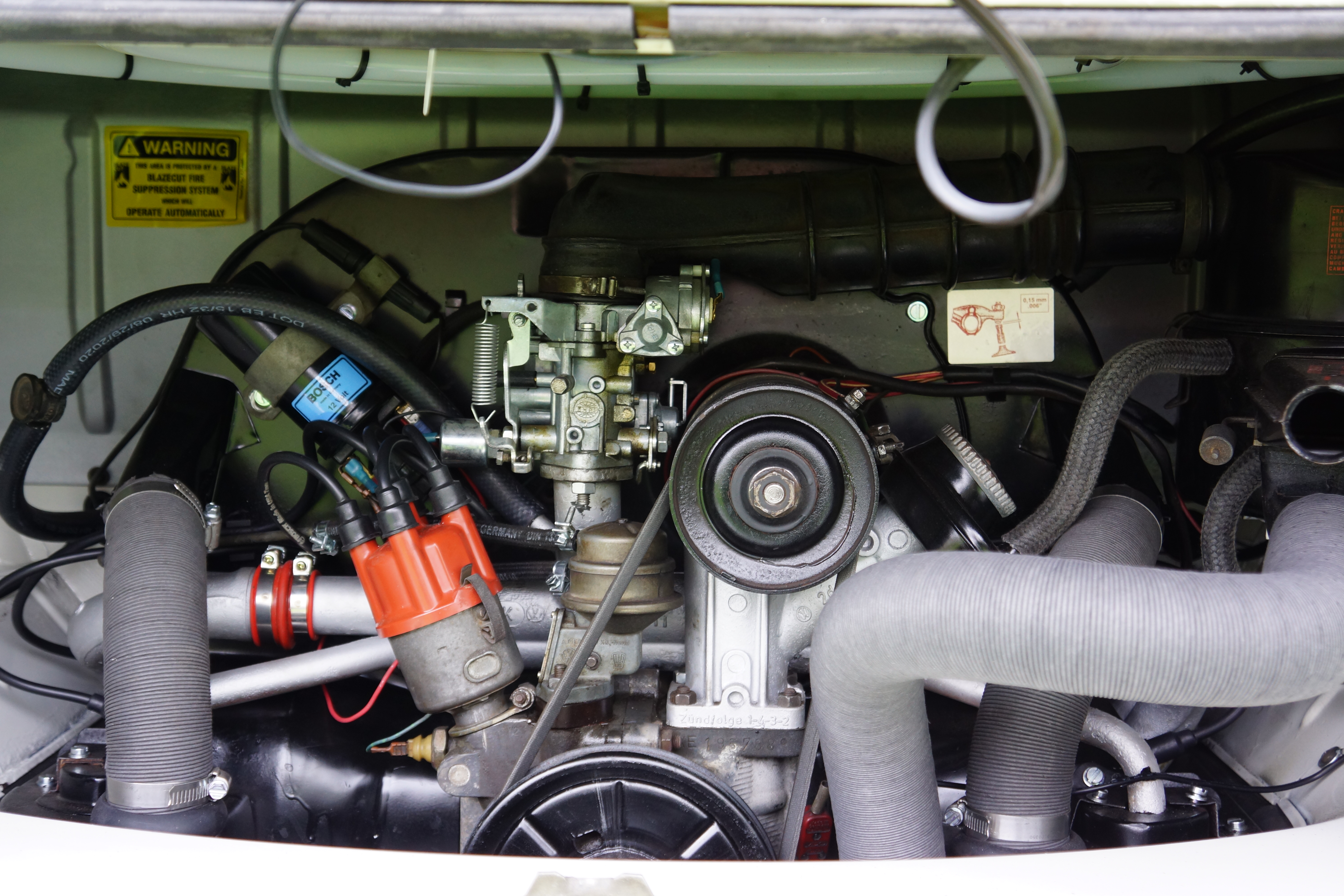
VW Westfalia camper1967 Chevy Nova
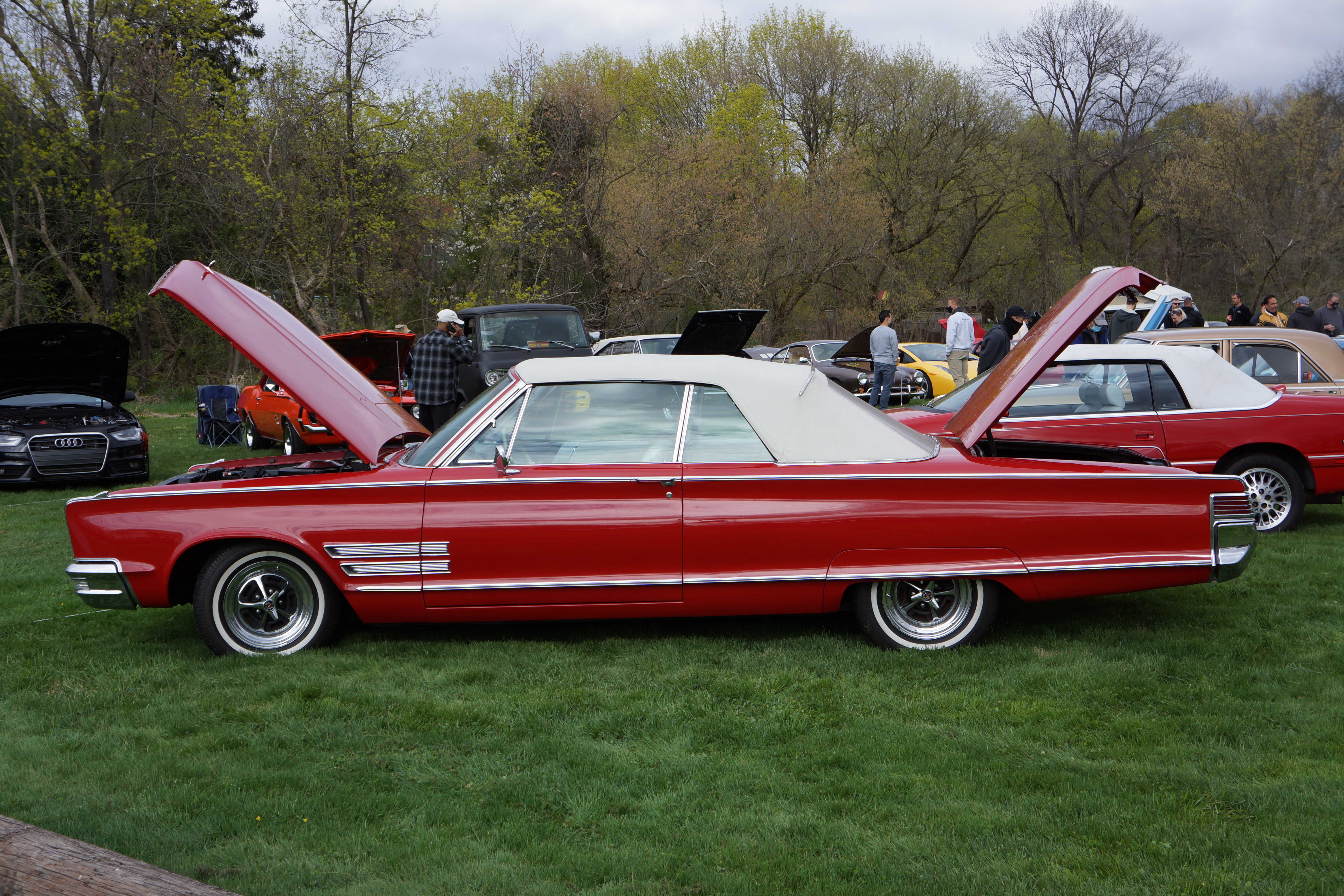
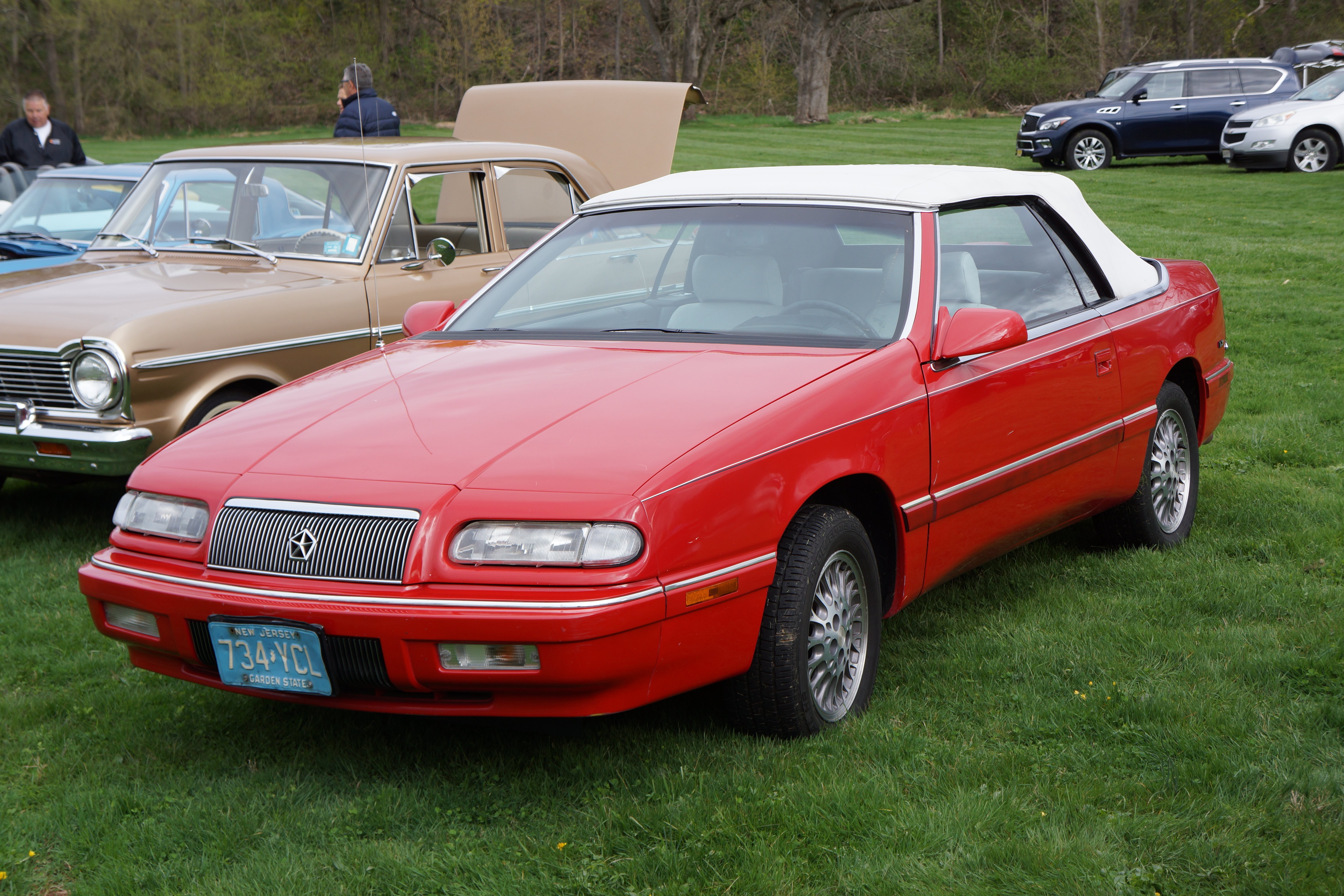
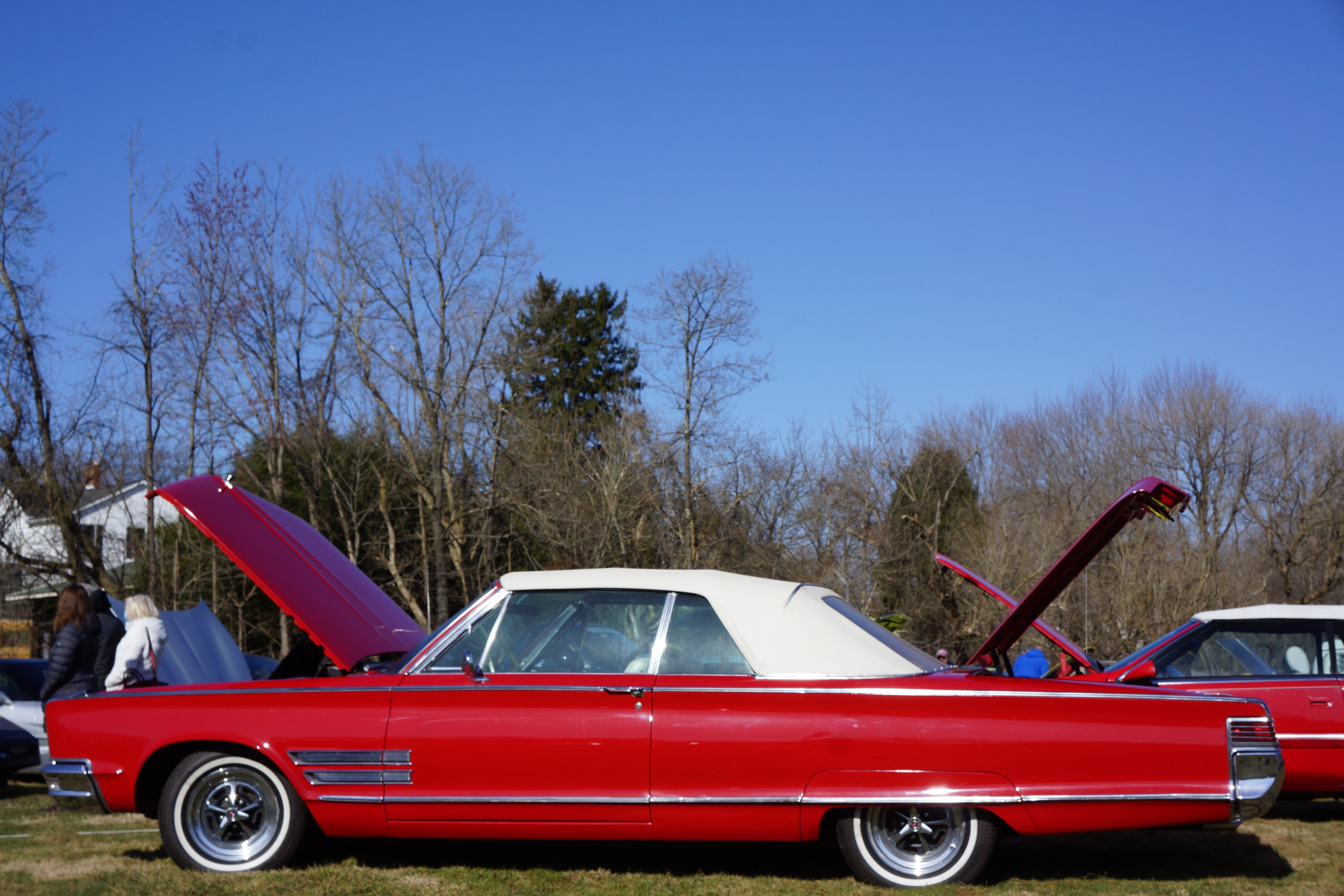
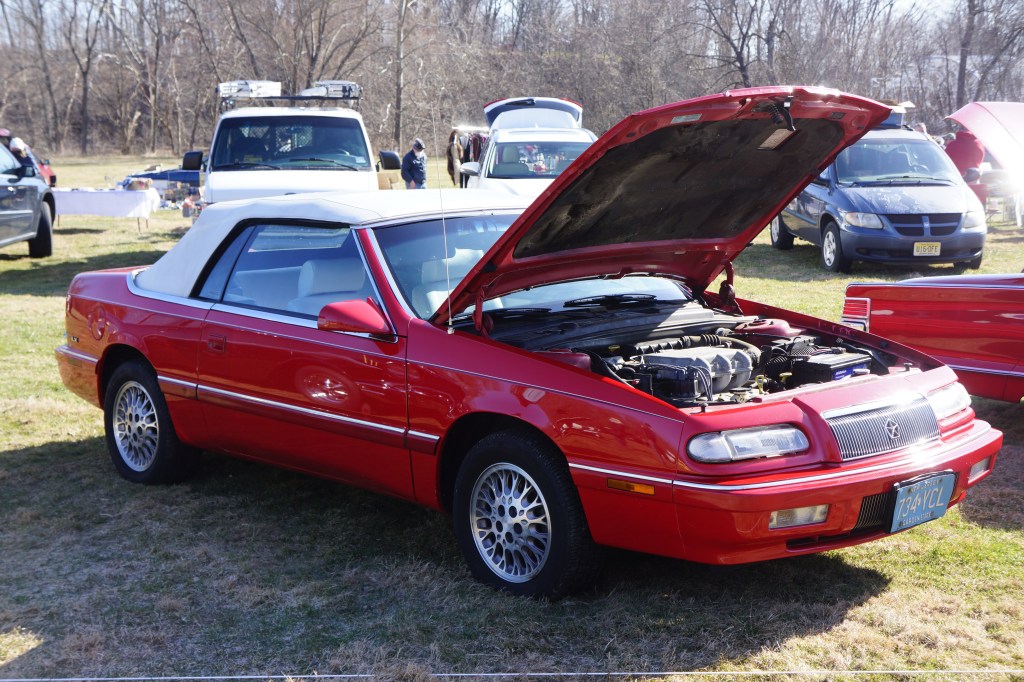
Two Chrysler convertibles, both red with white tops and interiorsThe food truck had a line all morning (& the fried egg sandwich was pretty good!)
FAVORITE CAR OF THE SHOW: 1965 CHEVY II
I spoke to this owner at length, who told me that his great uncle had purchased this car new, and it has remained in the family ever since. He stated that it’s all original, including paint, interior, and inline-6 engine. While there were a few scrapes along the sides, there was absolutely no sign of rust or corrosion anywhere. This Chevy II was a “Nova”; many may forget that the Nova name began as an upmarket trim level on this compact before eventually replacing “Chevy II” as the model name. The ’64 NY license plate includes mention of the World’s Fair; growing up in NYC, I remember those plates as a boy.
A new entry on the collector car calendar has sprung up in 2021: the Neshanic Station Car Show, which held its inaugural event on Saturday March 20, nicely coinciding with the first day of spring. And a glorious day it was, with sunny blue skies, no wind, and moderate temperatures reaching close to 60F by midday. The clear air made for some stunning photography.
Side by side and as different as can be
The car show was combined with a general (not automotive) flea market, which deserves some background history. The tiny hamlet of Neshanic Station for decades held a flea market every Sunday during decent weather, with a wide range of vendors selling a great variety of new and used goods. It became quite well-known and would draw an audience from all parts of the Garden State. A few years ago, the private property which hosted the flea market was sold, and the lot was taken over by the county, merged with a local park. The old flea market was dead.
A nice show for a good cause
The Neshanic United Methodist Church resurrected the flea market, combining it with a car show to help draw a crowd. For 2021, it will a once-a-month-on-a-Saturday affair. To sign up, one only needed to send an email stating the desire to exhibit a car. There is no fee, but the church requests a voluntary donation to the food bank that it sponsors. The church has access to a spacious lot across the street from the original flea market location, a flat and grassy piece of property easily 5 or 6 times the size of what had previously been used.
I had registered my Miata a few weeks prior, and since the location is literally three miles from my house, I departed a few minutes before 9 a.m. and was still there in plenty of time. There were close to a dozen cars already in place as I motored past them, with a dozen or more yet to show up after me. This was a “run what you brung” kind of show: no limitations based on age, condition, restoration quality, or modifications, and sometimes that’s the best kind of show, because you truly get the largest variety of vehicles. It’s also a great way to make sure that anyone who owns what THEY consider an interesting car can feel included in a group that frankly might shun them at another type of show.
The new mid-engine C8 Corvette
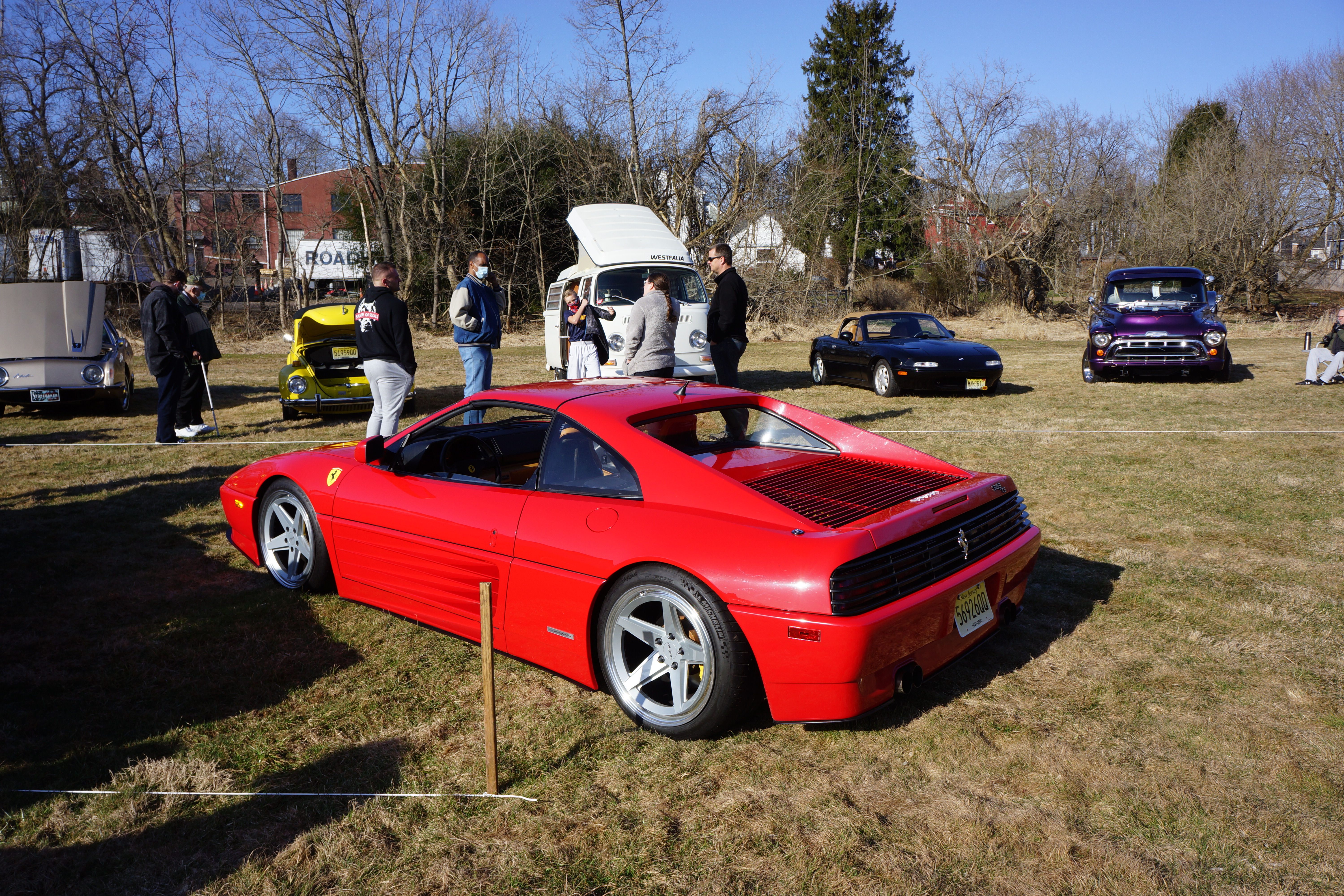
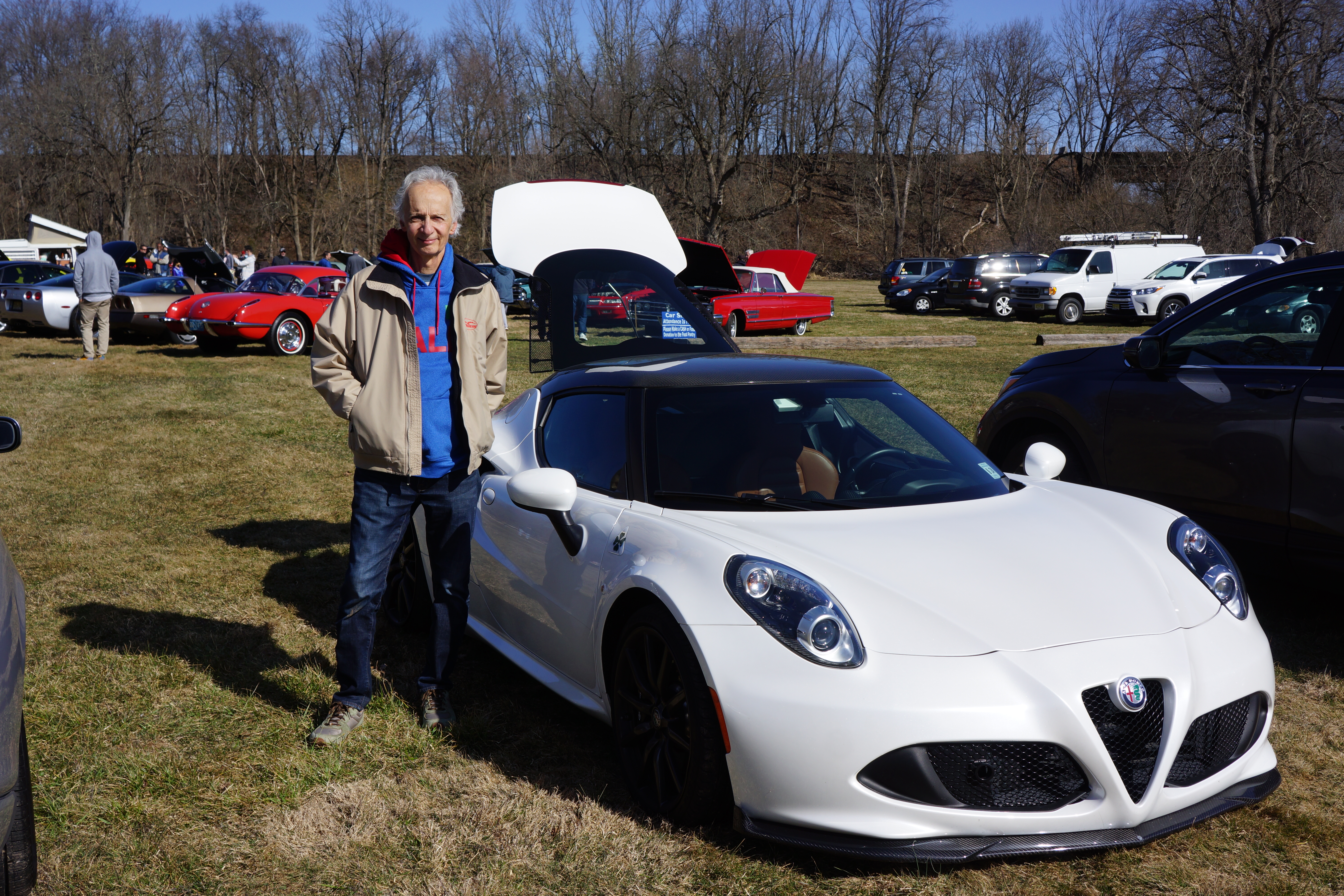
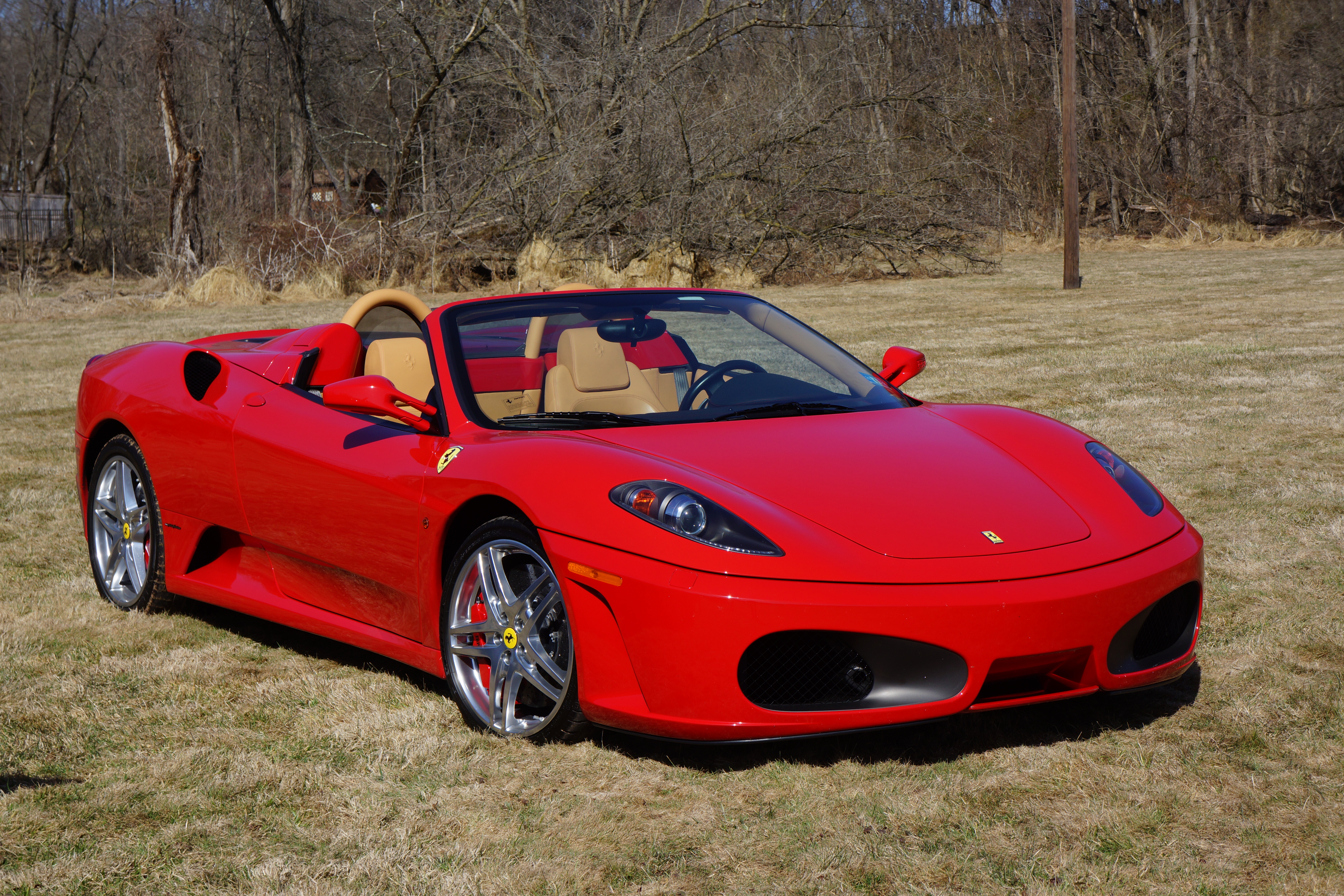
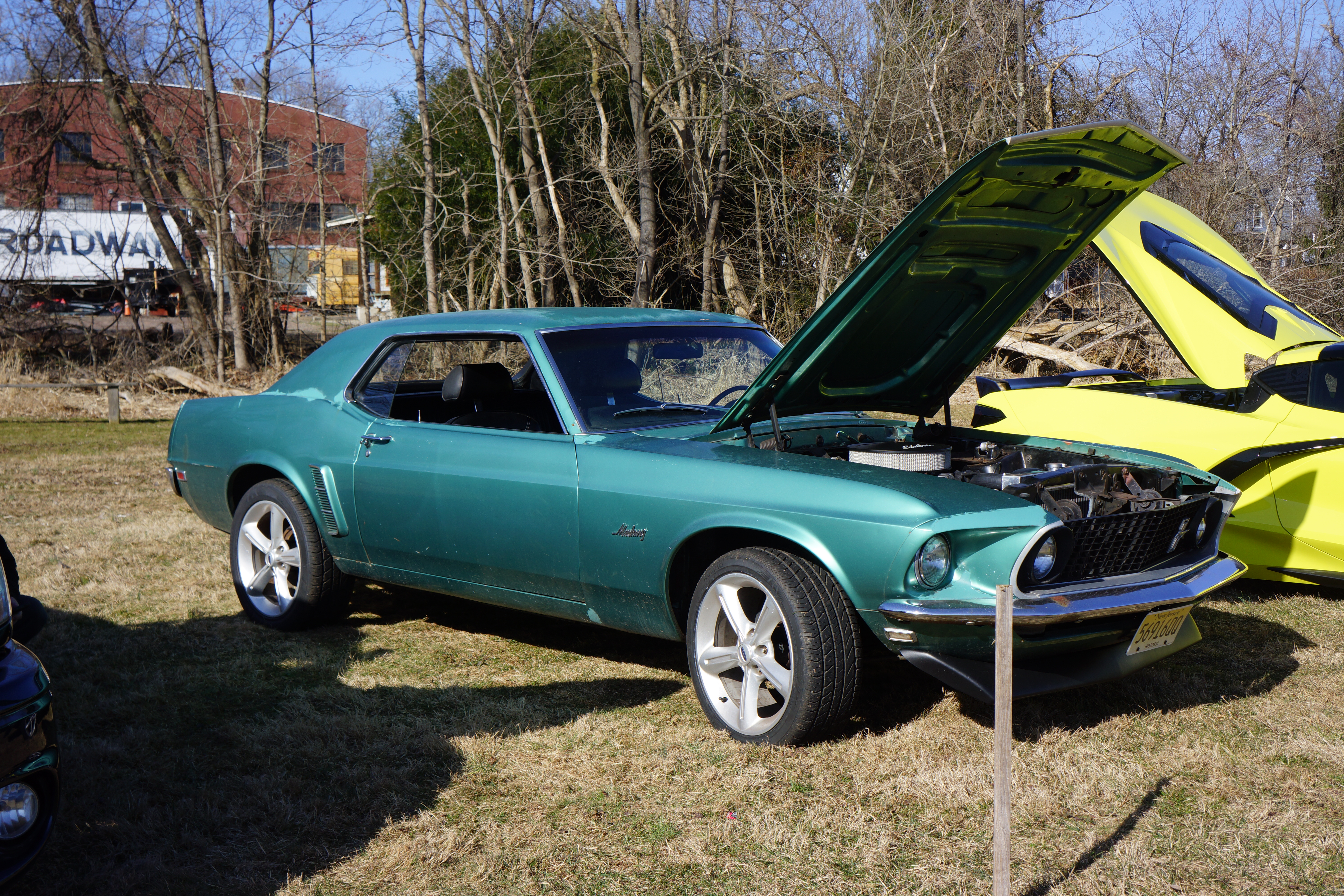
Domestic iron from the 1960s comprised a large percentage of show cars, with two late-model Ferraris covering the exotic end of the spectrum. Not to be outdone, the Corvette contingent was out in full force, including a C8 mid-engine beauty in an eye-searing yellow. Late model cars included a Challenger, an Audi, and an Alfa 4C.
The flea market vendor turnout was smaller than I expected; the show cars dwarfed the vendors based on the amount of real estate taken. The crowd was a decent size, and the vast majority of folks walking the field outside adhered to the ‘masks on’ request except when eating or drinking something they bought from the on-site food truck. There is no doubt in my mind that for car owners and spectators alike, there was an overwhelming desire to get back to normal compared to 2020, and that helped account for the turnout.
As has been said many times before, after a certain amount of time in the hobby, it’s the people and their stories who become the real center of interest, and I met several fine folks whose stories are recounted below. The Neshanic Car Show organizers have already laid out their calendar through the remainder of the year, with the next two shows set for April 17 and May 15. My personal goal is to get that Alfa out of the garage where it’s been since 2019 in time for either the April or May event.
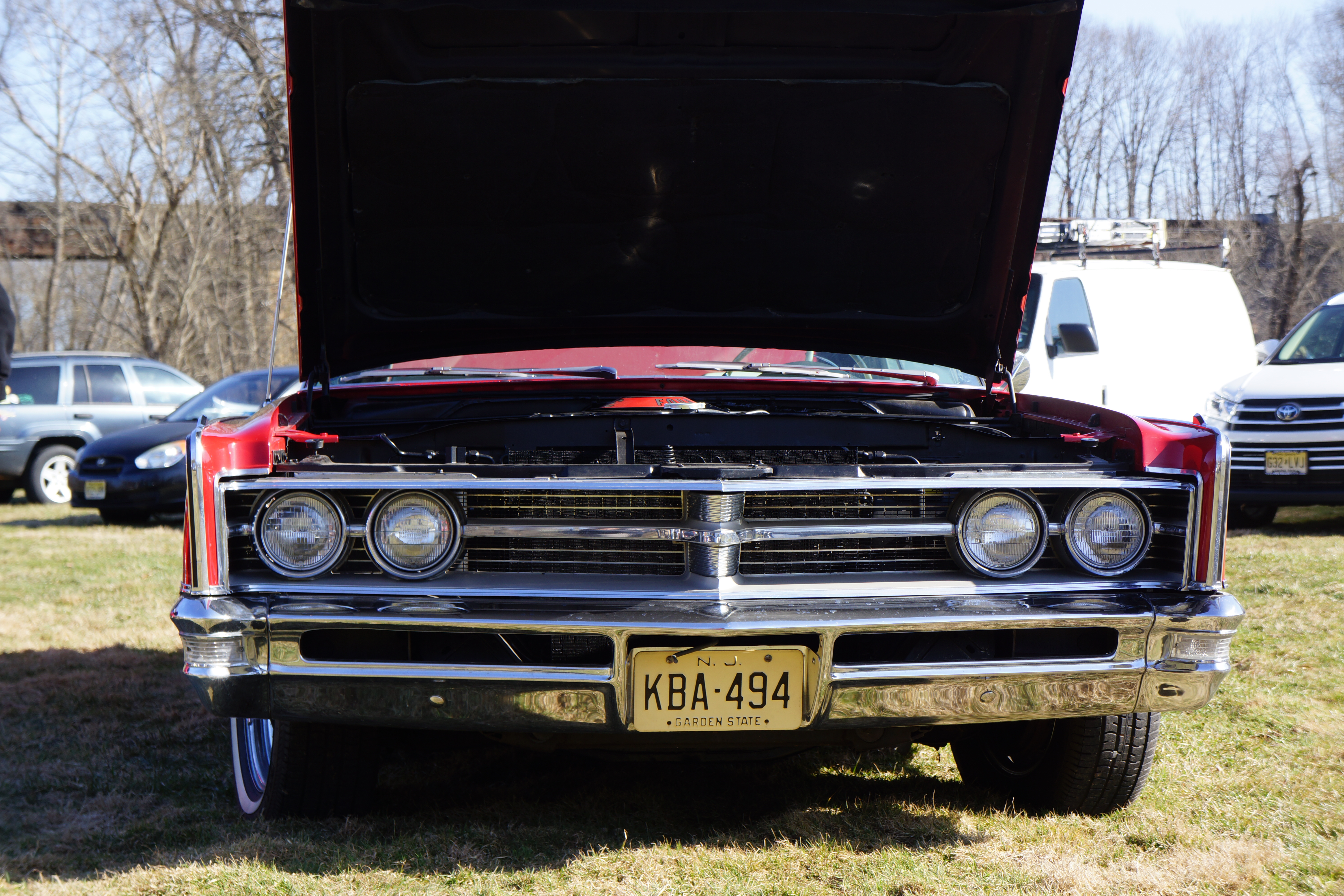
1966 Chrysler 300 convertibleTwenty years later, another white over red Chrysler convertible…
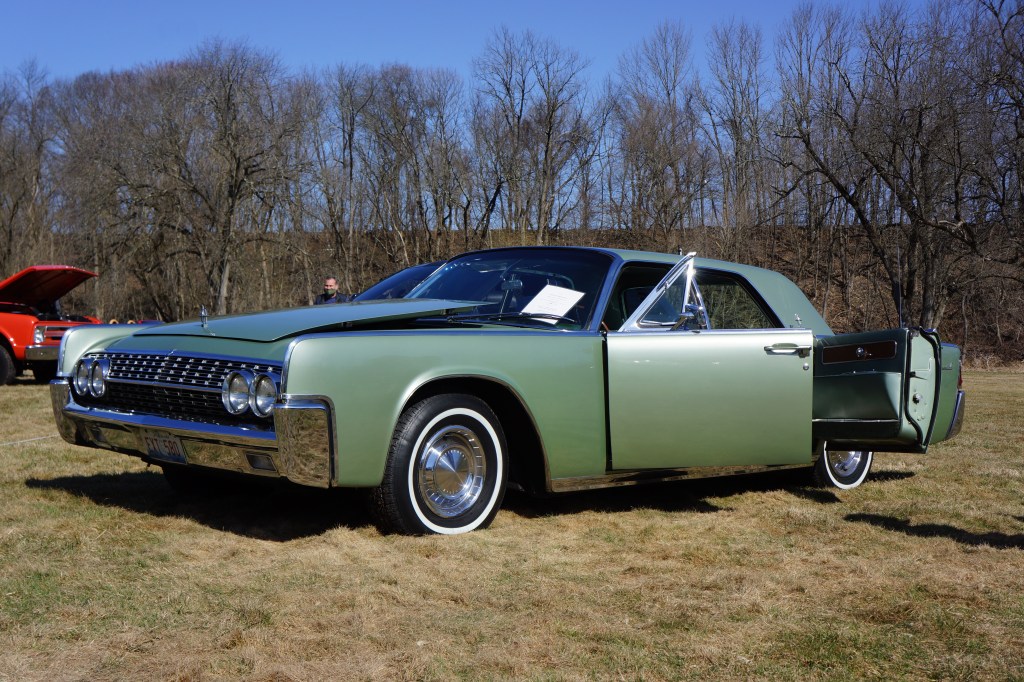
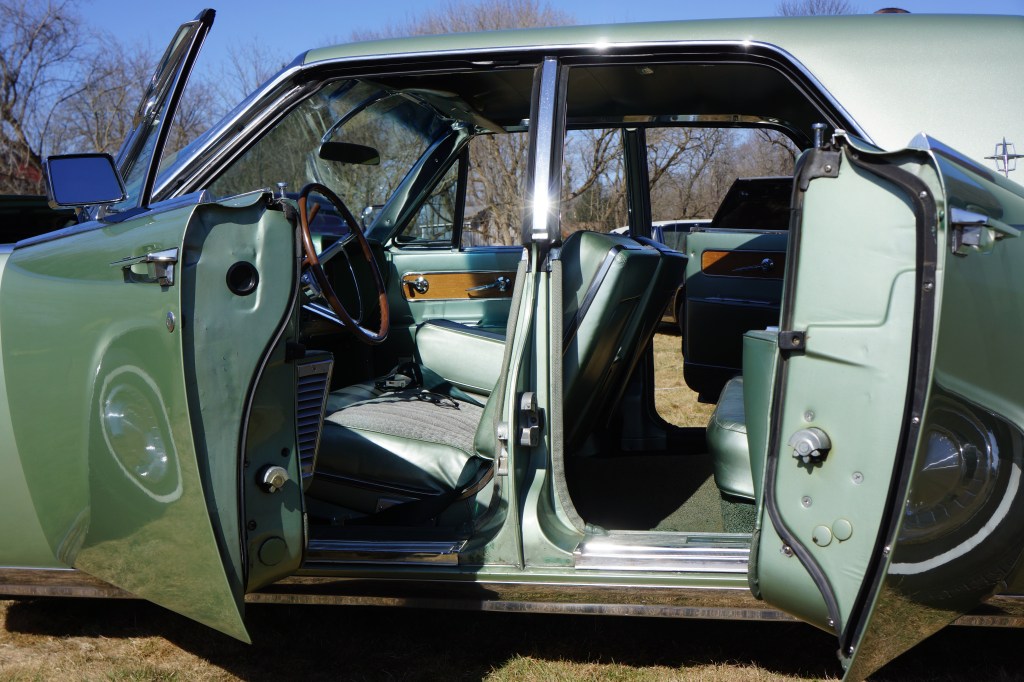
1962 Lincoln Continental 4-door sedan
I approached the owner of this 1962 Lincoln and told him how refreshing it was to see a sedan since what I see at car shows are almost exclusively the four door convertibles. He told me that he was at a dealer in suburban Philly who had both the 4-door sedan and the 4-door convertible. Although he really wanted the droptop it was so outside his price range, he went with this green-on-green one. The car is all original, everything functions, and he named the car after his departed mother, calling it the “Queen Maryellen”. He went on: “Listen, I’m really not a car guy but I just love this thing, it’s so easy to drive and attracts so much attention no matter where I take it.” He also has an Olds Aurora at home and he hopes to come back next time with a friend so he can bring both cars.
2014 Audi A4
A young man in his mid-20s approached my Miata and struck up a conversation, telling me about a friend who has a Miata with an LS motor in it. I told him that I was familiar with the conversion and that kits are available to do just that. This got us both talking about cars in general. I could tell that he was a genuine enthusiast who seemed to harbor no prejudices when it came to interesting cars. He finally let it out that he was the owner of the 2014 Audi A4 at the other end of the aisle from me. It’s a four-cylinder stick shift car, and he’s done some “minor” modding as he called it, with a performance chip, cat-back exhaust, and some other tweaks. His car was spotless. I truly admired this young guy’s devotion and enthusiasm. The hobby needs to find a way to be inclusive to gals and guys like him who have a late model vehicle which is their pride and joy. ‘Our’ rules cannot be forced on them. They are the future of this hobby if it is to survive.
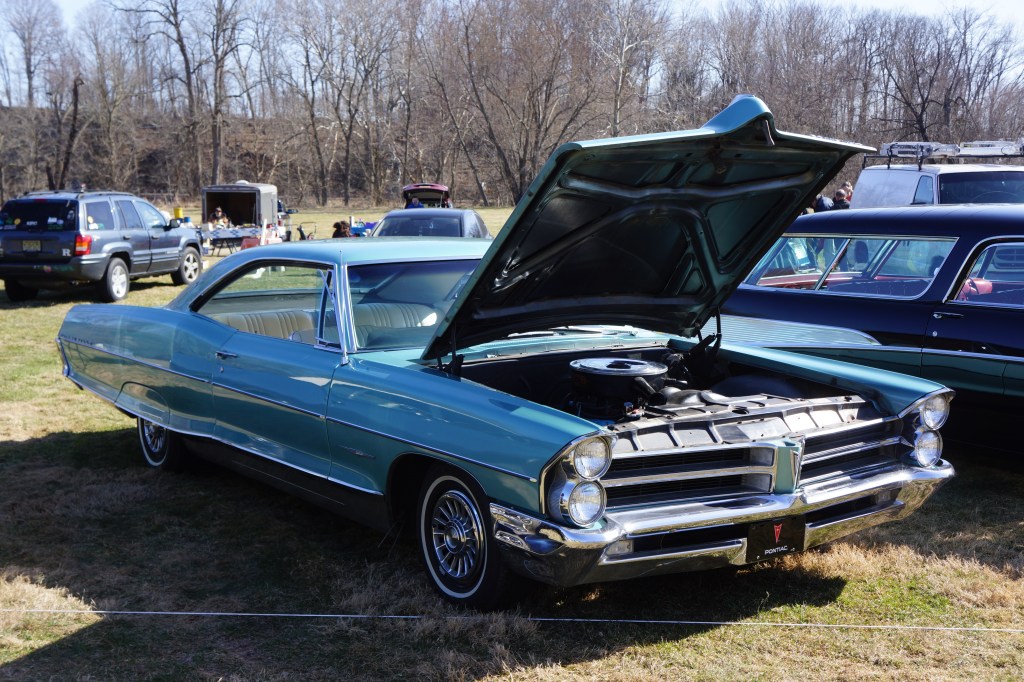
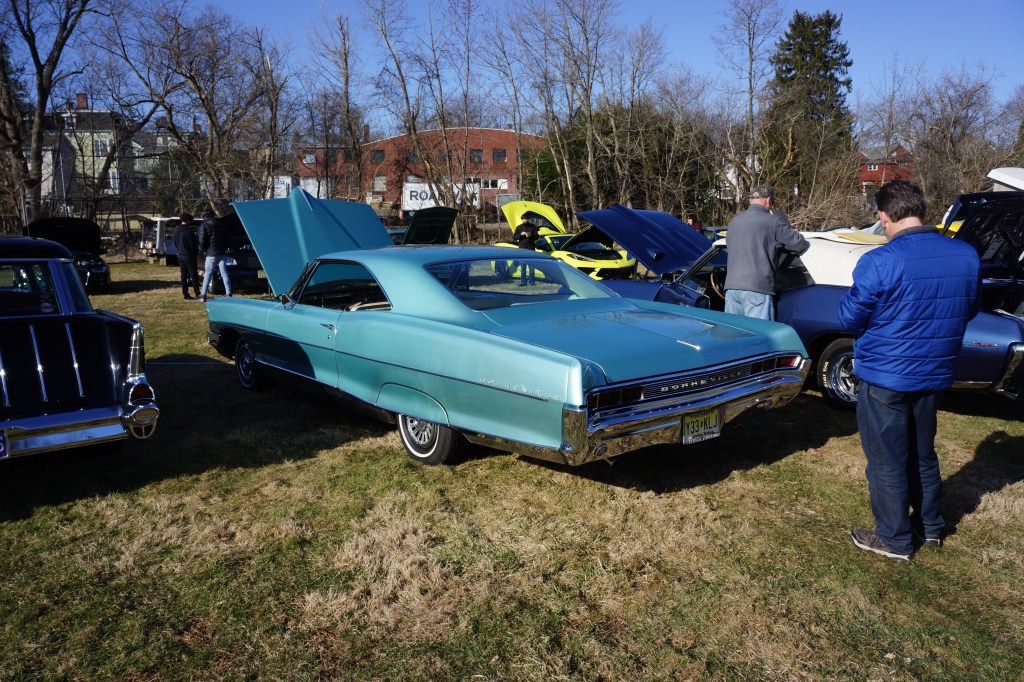
1965 Pontiac Bonneville 2-door hardtop
This 1965 Bonneville, at first blush, was a nice looking car without anything overtly special about it. I began a conversation with the owner, asking my usual first question: “how long have you owned it?” He answered by telling me “my grandmother bought this car new in Pasadena California”. This Bonneville is a one-family-owned car which resided in southern CA until he brought it to NJ when he married and relocated. The car was in a collision in the 1980 s and got a total repaint at that time; otherwise, it’s all original. This was my favorite car of the show.
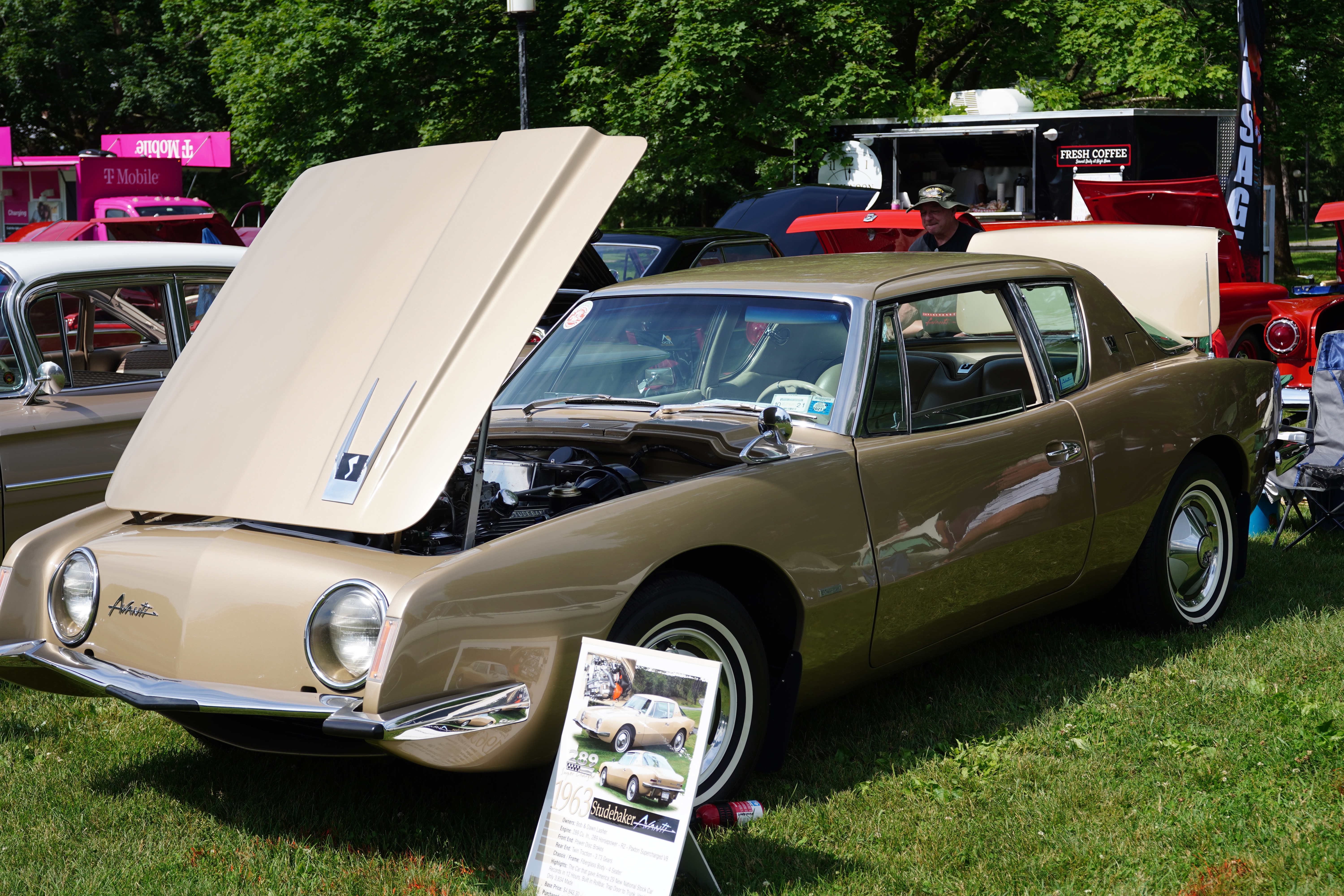
1963 Studebaker Avanti
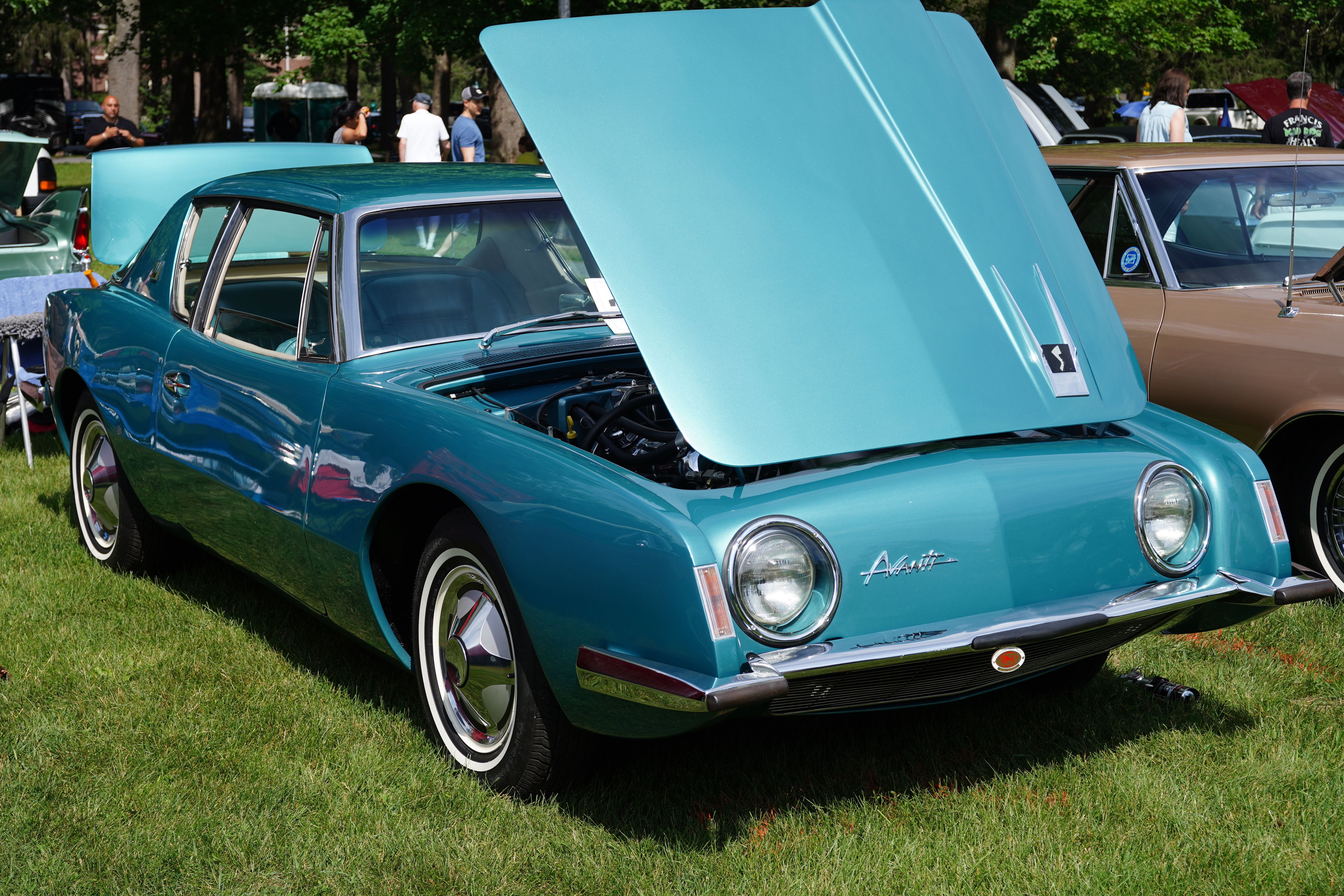
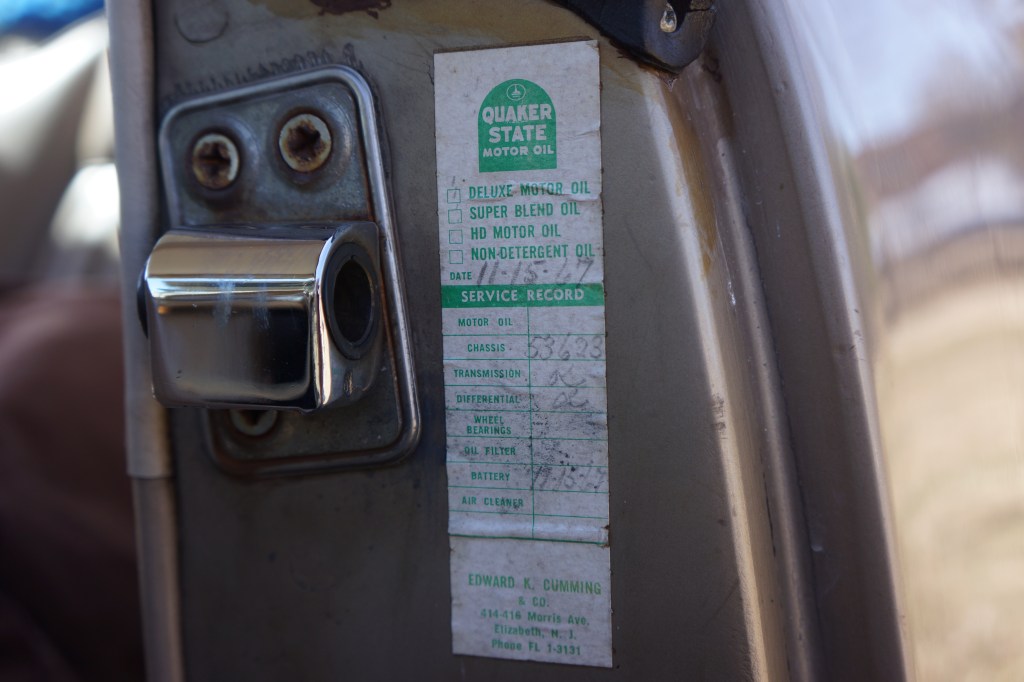
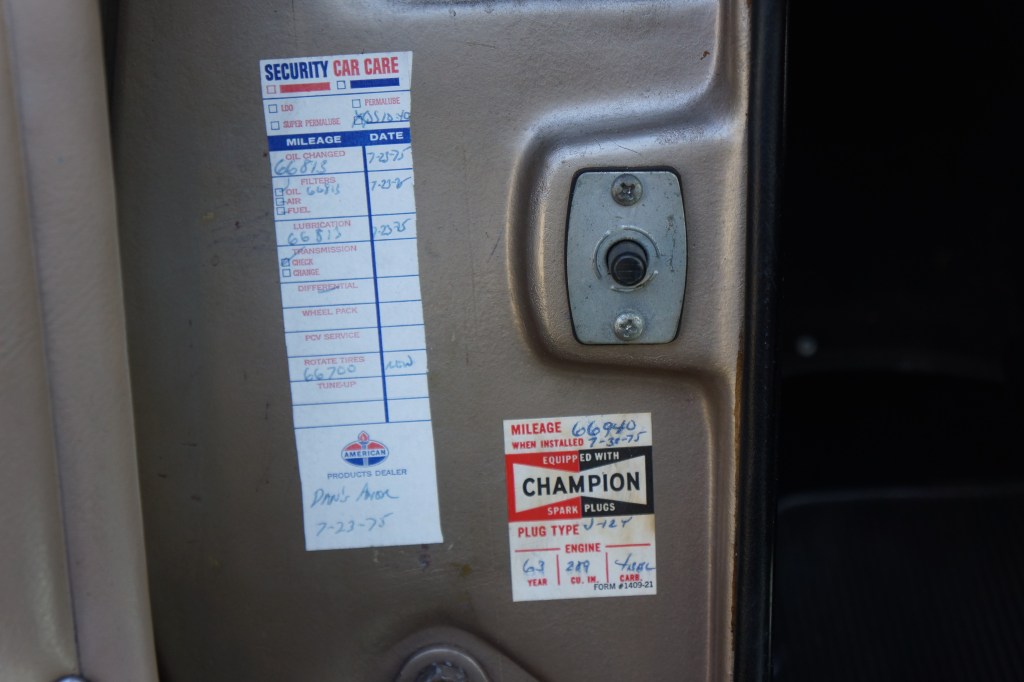
The Studebaker Avanti is an automotive enigma – born out of desperation as the company was going out of business, it was manufactured only for two model years, 1963 and 1964. Fewer than 5,000 were built as “Studebakers” before the factory shut down. (Don’t confuse these with the Avanti II, which is an almost-identical car manufactured when the tooling was bought by two Studebaker dealerships.) This owner has had this car for about 10 years, stating that he pulled it out of dry storage and got it roadworthy. It’s an unusually low-spec car, with a 3-speed manual floor shift, and lacking power steering, power windows, or A/C. This too was claimed to be a mostly original car, and I saw little reason to doubt it. Perhaps most convincingly, old-fashioned service stickers from 1967 and 1975 were still in the driver’s door jamb.
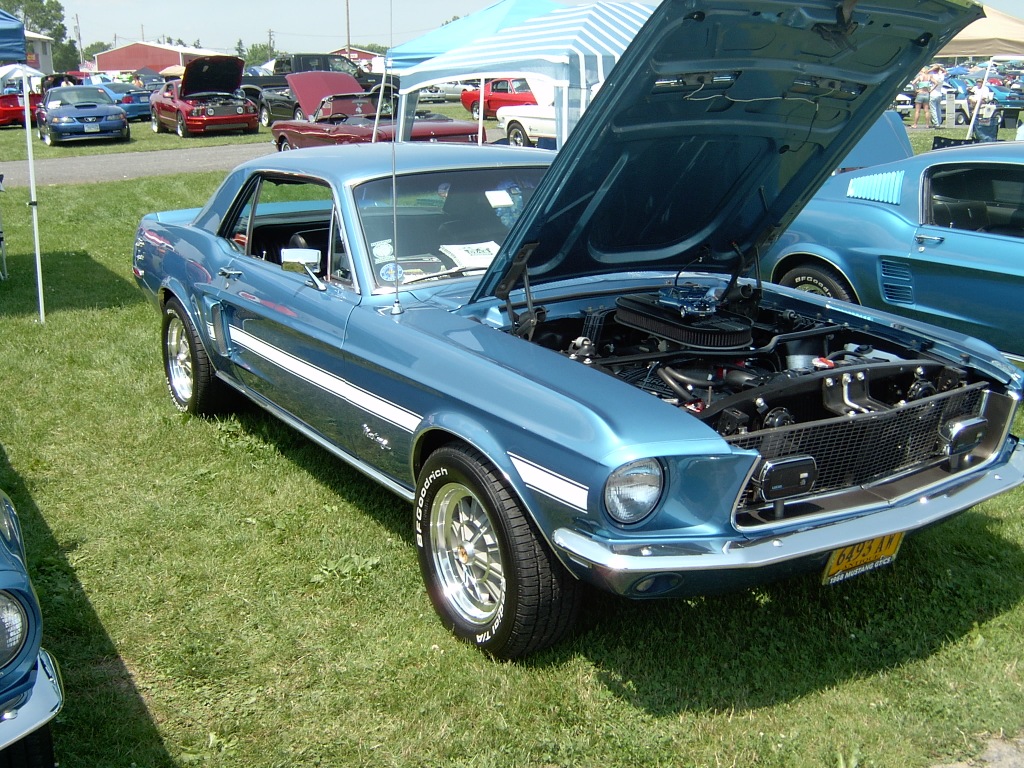
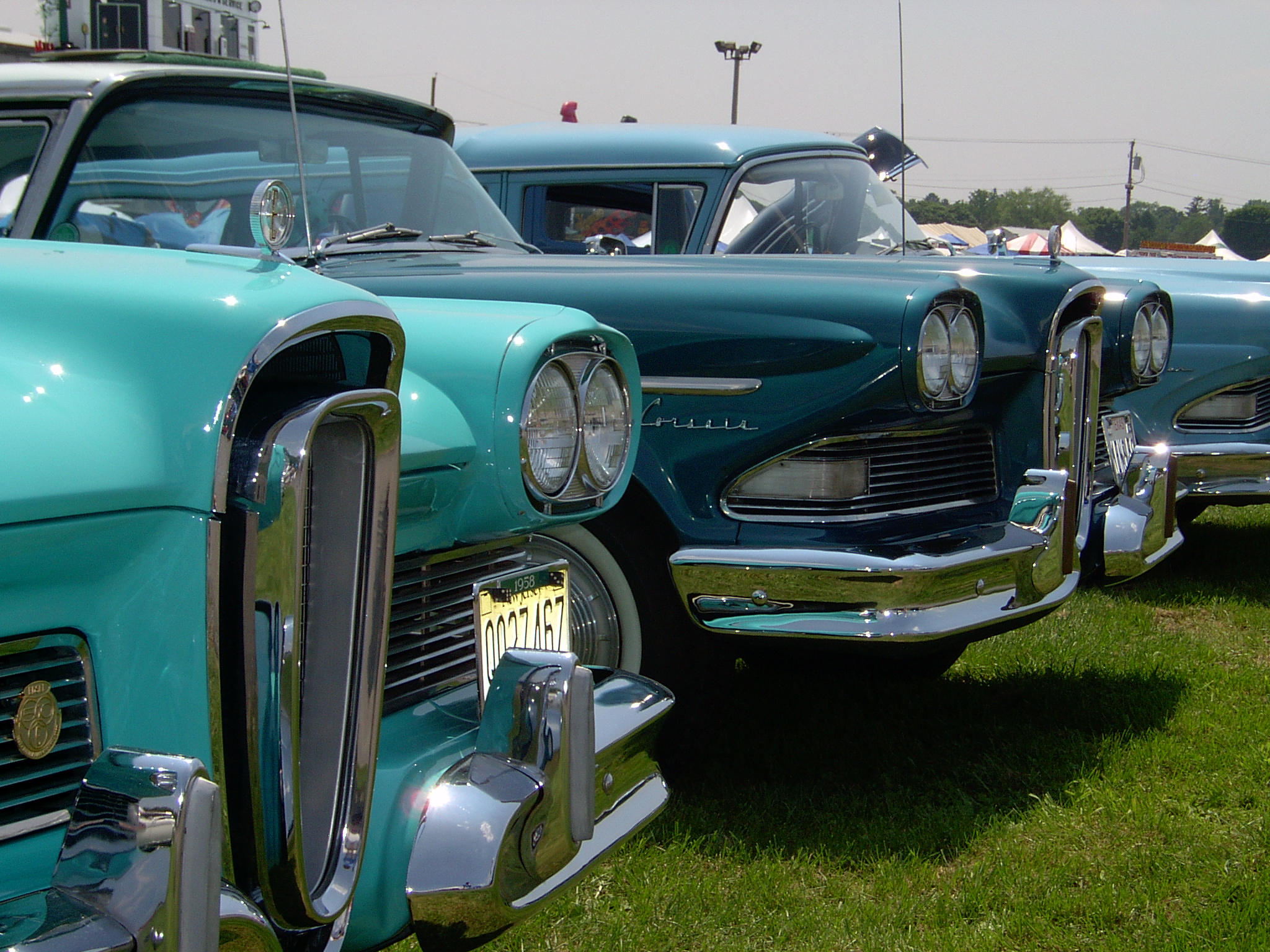
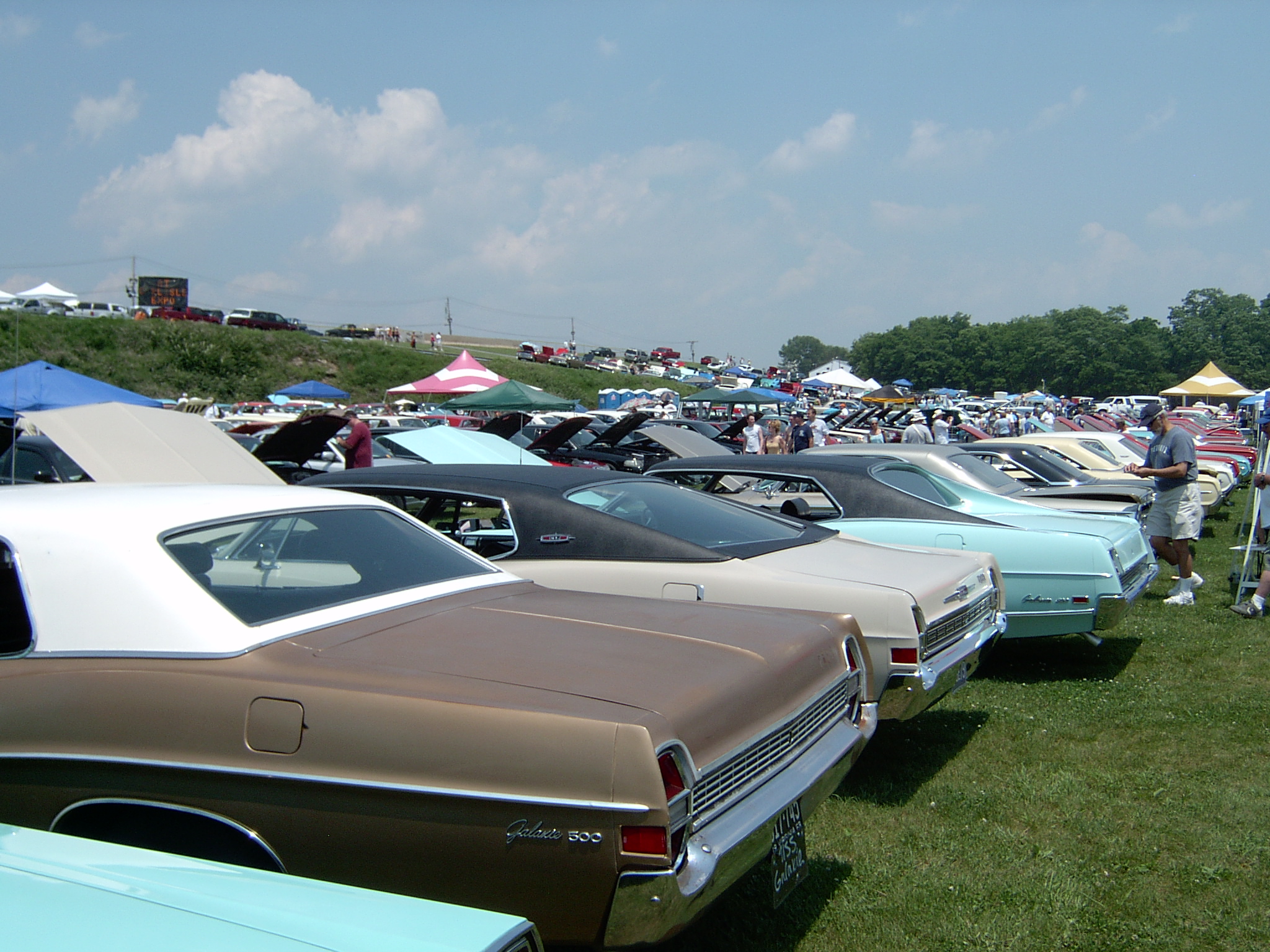
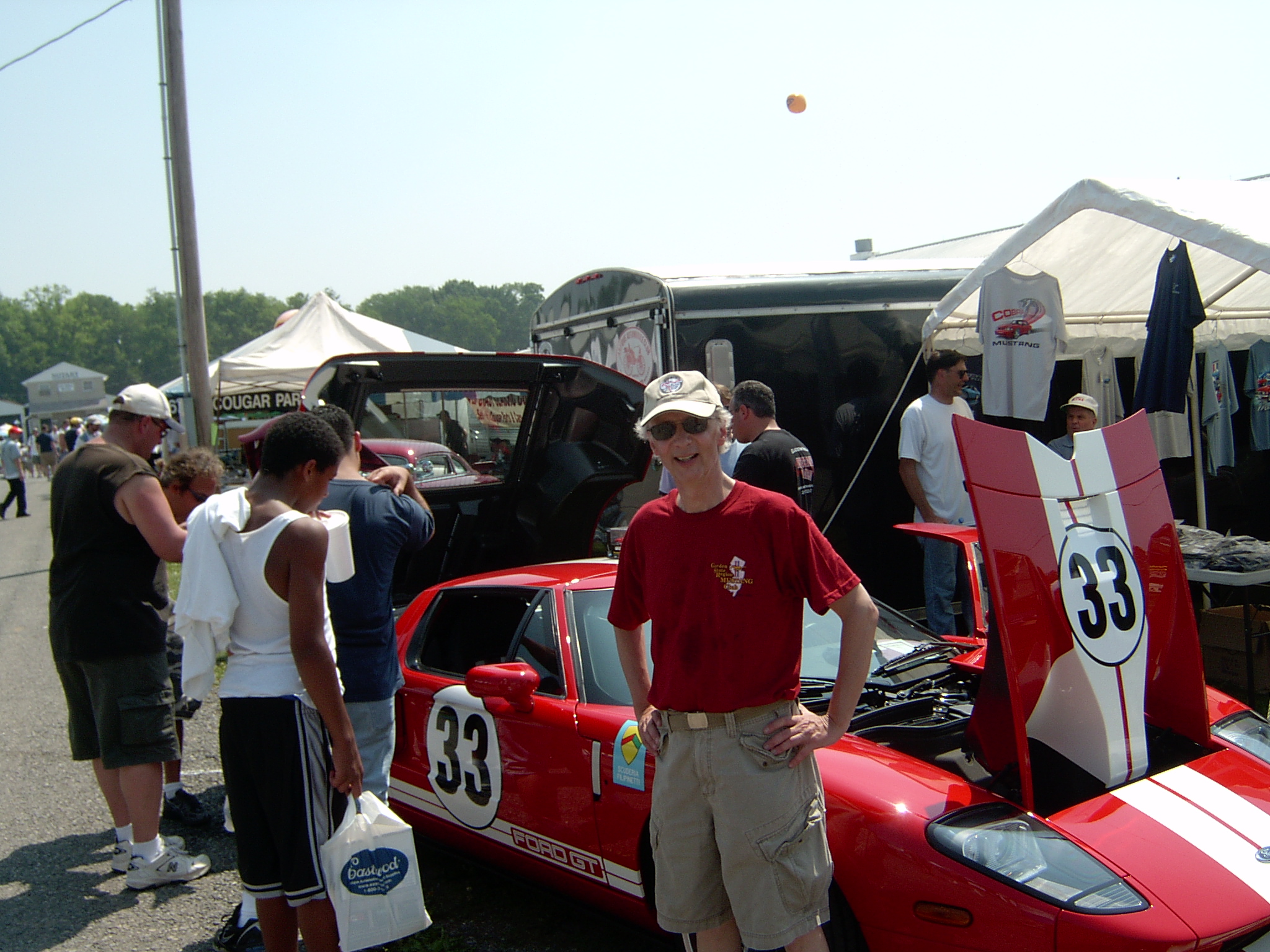
Perusing some older photos, I’ve realized that there are some gaps in my coverage of events which were attended with my 1968 Ford Mustang GT/CS, aka California Special. One such event is Fords at Carlisle, where my green machine and I made an appearance in June 2008.
“Carlisle” as a hobbyist destination should need no introduction here: the organizers have been hosting Spring & Fall Carlisle since 1974, and in the ensuing years, have expanded the number of events via marque-specific weekends, including Corvettes at Carlisle, Chryslers at Carlisle, the Carlisle Import Show, and so on. The Ford event is traditionally scheduled in June, and having attended many of the other smaller mid-year shows, the All-Ford (and Mercury, Lincoln, Edsel, Merkur, etc.) National is one of the larger ones in the series.
The previous month, we had been to the Carlisle Import show with the Isetta in tow. Although not mentioned in my coverage, that particular May day was brisk, with daytime temps in the low-to-mid 50s. Typical for the Northeast, the weather can change on a dime, and two weeks later, on the day of my 5-hour round trip, the thermometer hit 100F (38C for those of you in the rest of the world). It was HOT! The A/C, factory-equipped in my car, remained non-functional during my entire ownership. My deepest regrets for failing to fix it were reserved for this particular day. At the same time, my 390 big block never pushed the temperature gauge past its mid-point. The car ran strong and cool all day.
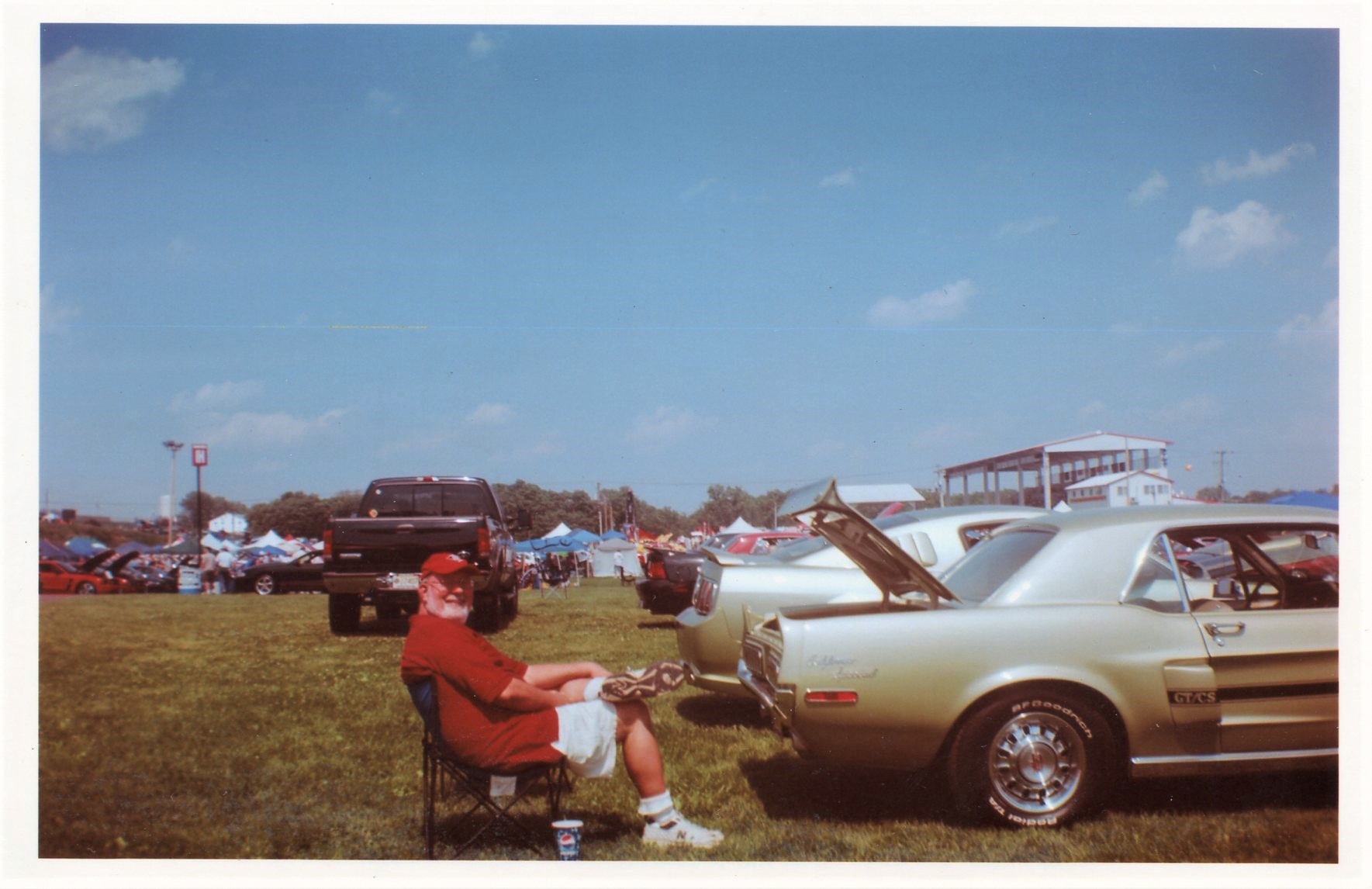
My Lime Gold GT/CS and me; note the late-model Mustangs in background
At least I had company for the ride. A family friend with whom I had recently become acquainted, Mike Larkin, was more than willing to ride shotgun. Mike wasn’t a traditional car guy but said he was always up for an adventure. The heat seemed to bother him less than it did me as we cruised with our 260 air at full blast.
Mike Larkin relaxes behind his ride home (photo taken with 120 roll film camera)
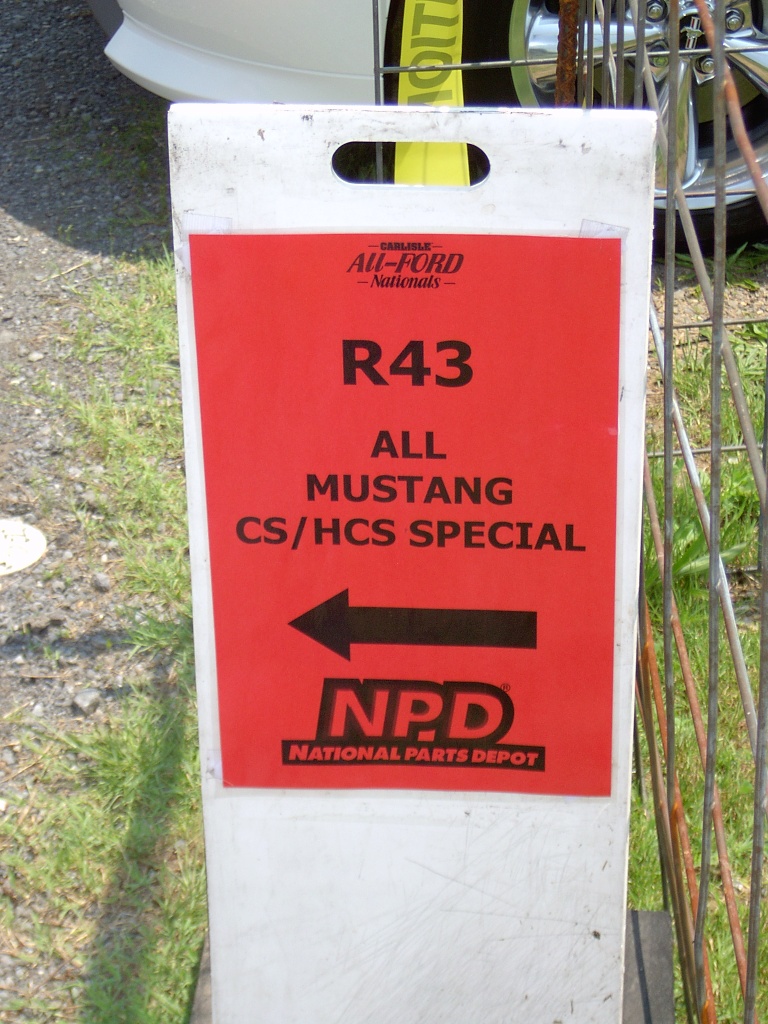
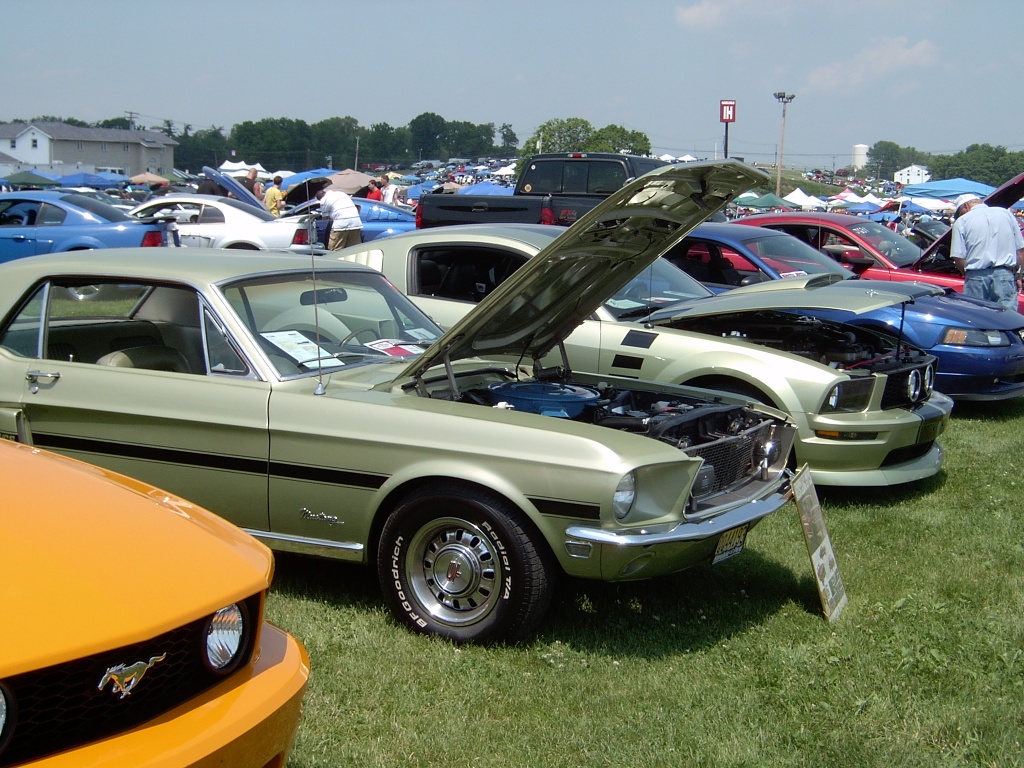
Arriving at the fairgrounds, the number of Mustangs on the grounds was overwhelming! Carlisle could probably host “Mustangs at Carlisle” and have a large enough turnout for a standalone show. To my surprise and delight, the “Specials” (California Special and its Colorado cousin, the High Country Special) were afforded their own display area. We pulled in, found a spot, and climbed out of our steaming hot car to bask in the even steamier fairground air.
All CS (California Specials) & HCS (High Country Specials) were in their own group
The photos can tell the rest of the story from here, although I must confess that there were many other interesting Fords which did not get photographed. Someday, whether there’s a Ford in my future or not, I’ll work my way back to Fords at Carlisle.
A striking ’68; note wheels and model car on air cleaner
My Lime Gold car parked next to a Legend Lime late-model MustangA modern GT/CS sandwiched by two 1968sYes, there is a Yellow Mustang Club, and the word went out to show up in forceDifficult to tell, but this is a High Country Special, lacking “California Special” script on rear quarters
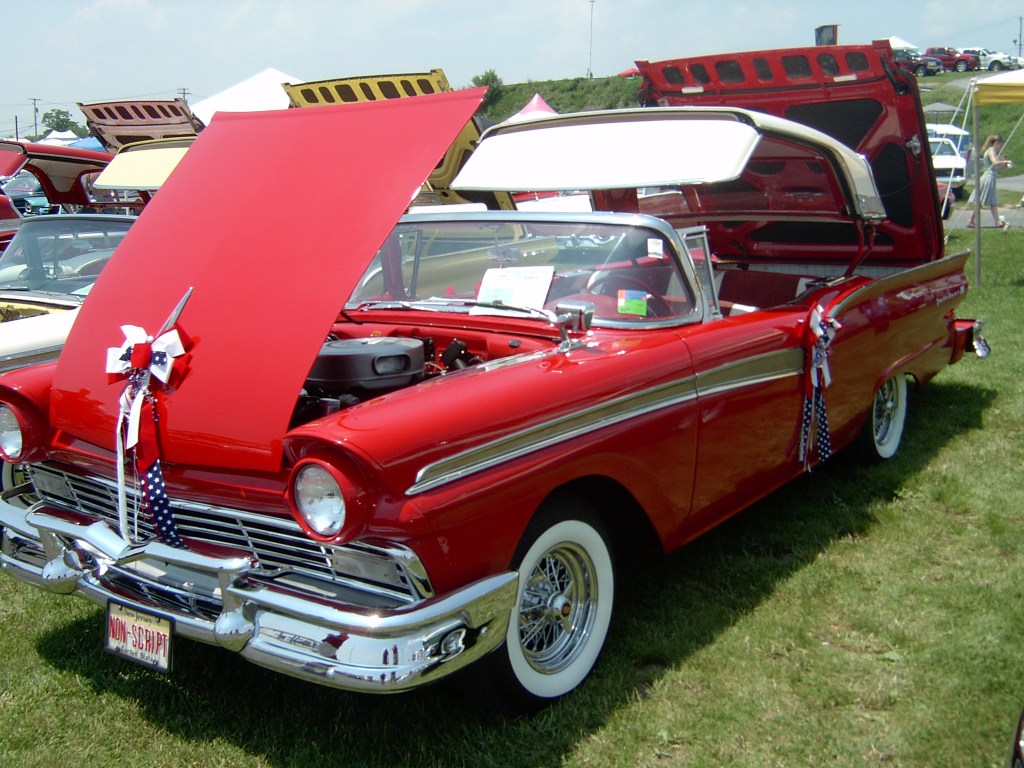
Above: flippin’ for Ford’s Flip-Tops! The Ford Skyliner Retractable Hardtop was made only for 3 years: 1957, 1958, and 1959. The top photo shows a ’57; note the front plate, “NON SCRIPT”, referring to the earliest production cars which lacked the “Skyliner” script on the roof’s C-pillar. The bottom photo shows two ’59s side-by-side, both with the garage-challenging Continental kits added.
Yes, people collect Mavericks….
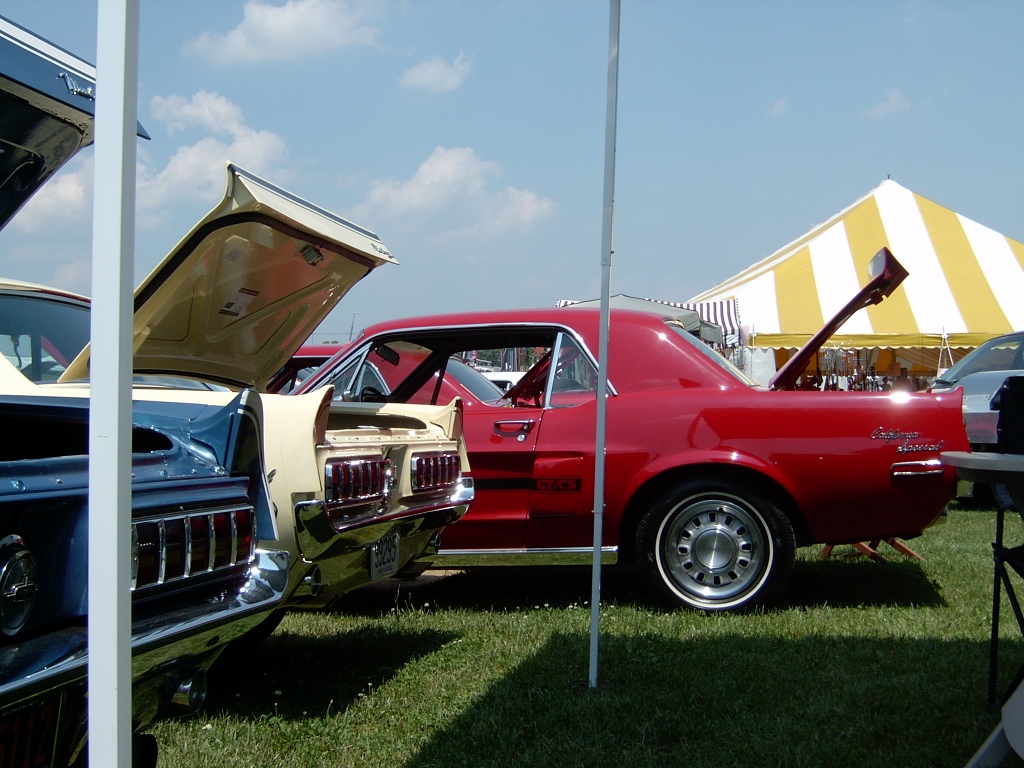
Some rear views of California SpecialsLong gone, but far from forgotten: the 1958 (first year) Edsel with its infamous grilleFull-size Fords were on plentiful display tooThe Breezeway window on a mid-60s MercuryThe Ford GT, made in ’05-’06, was “just” a used car here
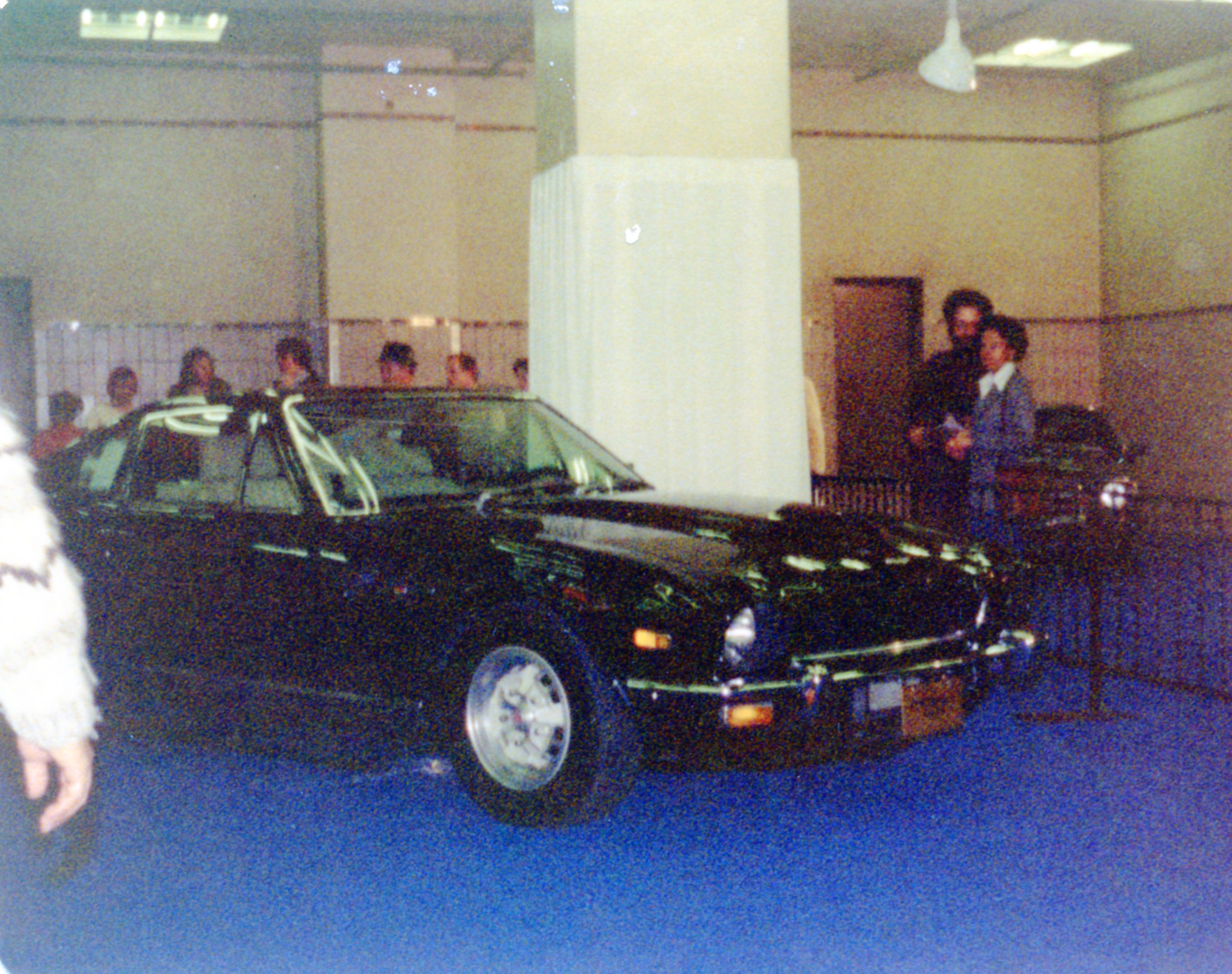
Scanning and posting my photos from the 1969 New York Auto Show resulted in my flipping through other photographs of mine from the ‘60s and ‘70s. To my surprise, I rediscovered photos that I had frankly forgotten about: pictures from the 1977 New York Auto Show (or so I thought). One reason that these pictures hadn’t resonated with me was their poor quality. Taken with a Kodak 110 Instamatic camera, the flash was barely powerful enough to illuminate the subjects. Thankfully, digital photo-editing software goes a long way toward making them halfway presentable. These photos also verify what was seen in my 1969 event pictures: the claustrophobic nature of the Coliseum’s exhibit halls.
As I did some Googling about the show, I came across a 2nd surprise: these pictures were in fact NOT taken at the “official” NY show, but at an event held a few months later called “Auto Expo”. Still held in the Coliseum, Auto Expo was all imported cars. I’m not sure if that’s because the funny furrin’ ones didn’t get enough exposure at the main event, or if promoters/dealers wanted to give the imports a chance to shine on their own.
One website I stumbled across lists the details of every NY Auto Show from 1900 to 2020, by date, sponsor, official title, and location. Presuming that this data is accurate, I note that I was incorrect in my earlier post when I stated that the NY Show has been held “continuously” since 1900; the show was on hiatus during the war years 1941-1947. The new Coliseum first hosted in 1956, and that show carried the title of New York’s “1st International Automobile Show”. The next year was the “2nd” and so on. This title structure remained until the GNYADA (Greater New York Automobile Dealers Association) assumed sponsorship in 1972.
In 1977, the GNYADA show ran from January 29 through February 6. But two men, Robert Topaz and Raymond Geddes, sponsored the first all-import Auto Expo, held that year from April 3 to April 10. I’m certain that’s the show I attended, as I was in college in ’77, way out in eastern Long Island, and would not have traveled into Manhattan in January. But I would have been home on Staten Island for Easter break, when Auto Expo was held, and it would have been a breeze to take public transport up to the Coliseum.
Auto Expo lasted all of three years; perhaps Gotham City couldn’t generate enough traffic to viably support two new car shows spaced just a few months apart. After 1979, the only NY auto show was hosted by the GNYADA, and that continues to this day.
This NY Times article points out some attractions my camera missed, and also helpfully advises that “free parking (is) nonexistent within three blocks before 6 P.M on weekdays”. I only took five photographs, and they are arranged below in alphabetical order by manufacturer. I’ve compiled some basic engine and price data sourced from The Standard Catalog of Imported Cars 1946-1990, published by Krause Publications. Some of these prices shock me, even today. For comparison, five months after attending this show, I bought my first new car, a 1977 VW Rabbit, for $3,599. And to think I could have had a Le Car.
1977 Alfa Romeo 2000 Spider Veloce
Alfa Romeo introduced a new 2-seat convertible, the Duetto, to the world in 1966. Although the little roadster got semi-frequent styling and engine upgrades, the same basic shell was still on offer 11 years later as the 2000 Spider Veloce. Let’s break that down: 2000 as in engine size (2.0L); Spider as in Italian for “convertible”; and Veloce as in “fast” (a relative term). The 1977 version of the fabled Alfa twin-cam four-cylinder put out 110 HP; entry into the topless Alfa club started at $8,795 in ’77.
In 1977, could Alfa have imagined that this Spider would last another 17 years?
1977 Aston Martin V-8
An Aston Martin showroom in 1977 presented two choices: the 4-door Lagonda, and the 2-door V-8. The car pictured, the V-8, was also available in Vantage (high-performance) and Volante (drop-top) versions. The base non-Vantage V-8, with 4 dual-choke Webers, pushed out 350 horsepower and started at $33,950. Can you put a price on exclusivity? The company built a total of 262 V-8 models in 1977.
The great DB4, DB5, and DB6 behind them, this was brutish British performance
1977 BMW 630CSi
BMW introduced its new 6-series coupes to the world halfway through the 1976 model year, but didn’t bring this 630CSi stateside until 1977. BMW didn’t have a large presence in the U.S. yet: showrooms held this car, the 2-door 320i, and the 4-door 530i, and that was it. (But the front plate already proclaims “The Ultimate Driving Machine”.) The 630CSi’s 3L inline-six churned out 176 HP, and its starting price of $23,600 was $9,000 higher than the 1976 3.0Si coupe it replaced!
BMW’s version of long-legged luxury and performance
1977 Porsche Turbo Carrera Coupe
For a photo that only captures one hind quarter, the details are telling: the wide flared rear fenders and whale-tail spoiler are dead giveaways that this is the Porsche 911 Turbo, officially known as the Turbo Carrera Coupe. Introduced to the U.S. market the year before, Porsche brought it back in ’77 with almost no changes for its sophomore year. The 3-liter engine produced 234 HP in Federal trim, with a list price of $28,000. (By comparison, a 1977 Porsche 911S Coupe started at $13,845, a 50% discount.)
The Turbo looks mighty menacing, even in ’70’s brown.
1977 Renault Le Car
Like the Porsche Turbo Carrera, Renault’s two-door microcar was in its 2nd model year in the states. That’s about where the similarities end. Starting price was $3,345 for the 58-horsepower 2-door. A fact of which I was unaware: when introduced here in 1976, the vehicle was called the “R-5”; the name change to “Le Car” happened in in ’77. The Le Car hung around in the U.S. market through the 1983 model year, by which time its base price had risen to $4,795 (that’s a lot of French bread).
In case you missed the car’s name, it’s on the front AND the side.
The New York Auto Show is the longest continually-running automobile show in the United States. New York was the first city in the country to host such a show, which it did in 1900. The show has been an annual tradition ever since, the only exception being the 2020 pandemic cancellation.
During the first half of the 20th century, the show was held within various exhibition halls throughout Manhattan. When the New York Coliseum at Columbus Circle (W 59th St.) opened in 1956, the show was moved there and remained until 1987 when the brand new Jacob Javits Convention Center took over host duties. The Javits Center continues to be the show’s location.
In 1969, as a car-crazed teen, my father took me to the Coliseum to see the show for the first time. He wanted to see the show too, but it wasn’t his first visit, as he had brought home show programs from previous years (which I wish I still had). I grabbed my camera and off we went. It’s likely we drove into the city; both of us at that time were commuting into Manhattan from our Staten Island home, he for work, and I for high school, so perhaps we wanted a break from the subway.
The exact day of our attendance is lost to history, but it must have been a weekend. The internet informs me that the 1969 show was held from Saturday April 5 through Sunday April 13. Easter was Sunday April 6 that year, and amazingly, this plan of holding the public show during Easter week is still the plan today.
I took 12 photographs at the show, which means I shot an entire roll of film with my Kodak 127 Brownie. My photographic skills in 1969 needed a lot of work, and to be fair, the photos document how crowded it was, so getting a clear line of sight to any vehicle was a challenge. Looking at these pictures 51 years later provides some insight into my young automotive mind. In general, the production cars I chose to snap are still of interest today. The concept cars I chose are quite humorous in retrospect, and maybe not surprisingly what a young boy would find funny.
Here are the 12, with a brief blurb under each.
PRODUCTION CARS
Chevrolet Corvette
I liked all of the C2 Corvettes (of course, we didn’t call them that in the ‘60s), and liked the new-for-’68 C3 Corvette even more (not an opinion I still hold). The Mako Shark-inspired styling, with its incredibly low front end, peaked front fenders, pinched waist, and flying buttress rear pillars on the coupe was so racy to me. There was a crowd around this car all day, and I felt lucky to capture the left front fender and hood.
Dodge Super Bee
I don’t recall being a big fan of this styling (and am still not), but it was probably the blacked-out hood, hood scoop, factory ‘mags’, and redline tires that appealed to me.
Oldsmobile Toronado
By 1969, the big front-driver from Olds was in its 4th model year, and although the overall body shape hadn’t changed, the front and rear ends had a heavier look, losing some of initial lightness of the ’66. I’m struck by this typical late ‘60s color combo: a dark metallic hue with white vinyl roof, white pinstripe, white wall tires, and white interior! Note the F-85 sign in the background, which seems odd now because I would have expected Olds to more likely market the Cutlass nameplate.
Cadillac Eldorado
General Motors’ other FWD luxury car was in its 3rd year, with exposed headlights (after two years of concealed ones) as one of the few styling changes. This paint color looks identical to the Olds! Note the Mercury/Lincoln sign and the very low ceiling.
Avanti II
It’s interesting to me that I would even be aware of this car. I doubt I saw any on the streets of Staten Island. In case you don’t know it, the brief backstory is that the original Avanti was a model produced by Studebaker for only two years, 1963 and 1964. When Studebaker ended production, the car’s tooling was purchased by two men who ran Studebaker dealerships. They reintroduced the car as the “Avanti II” in 1965, so this little-changed 1969 version was in its 5th model year. I wish my photo had captured more of the sign to the right.
Jeep Wagoneer
My father, who rarely expressed his opinion about anything out loud, let it be known to me that he liked the Jeep Wagoneer. There’s no doubt that his admiration for it extended back to the Jeep Station Wagon he owned when he first married my mom. Something this large and truck-like held no interest for me, although this photo reveals that Jeep did its best to market this to the masses, with chrome bumpers, a full-width bright grille, roof rack, full wheel covers, white wall tires, and exterior wood-grain applique. Yet you can see the front leaf springs (!) peeking out below the bumper.
Pontiac Firebird
I loved the ’69 Firebirds when they were introduced, and I still find them among the best-looking Firebirds ever. I’m including this under “Production Cars” even though this one appears to be slightly customized. The yellow-and-white seats and door panels, along with the yellow color-keyed wheels, don’t look factory, yet on the other hand, are probably slight cosmetic changes, possibly done by a local dealer. And can someone tell me why the three people behind the passenger-side A-pillar are all wearing sunglasses?
CONCEPT CARS
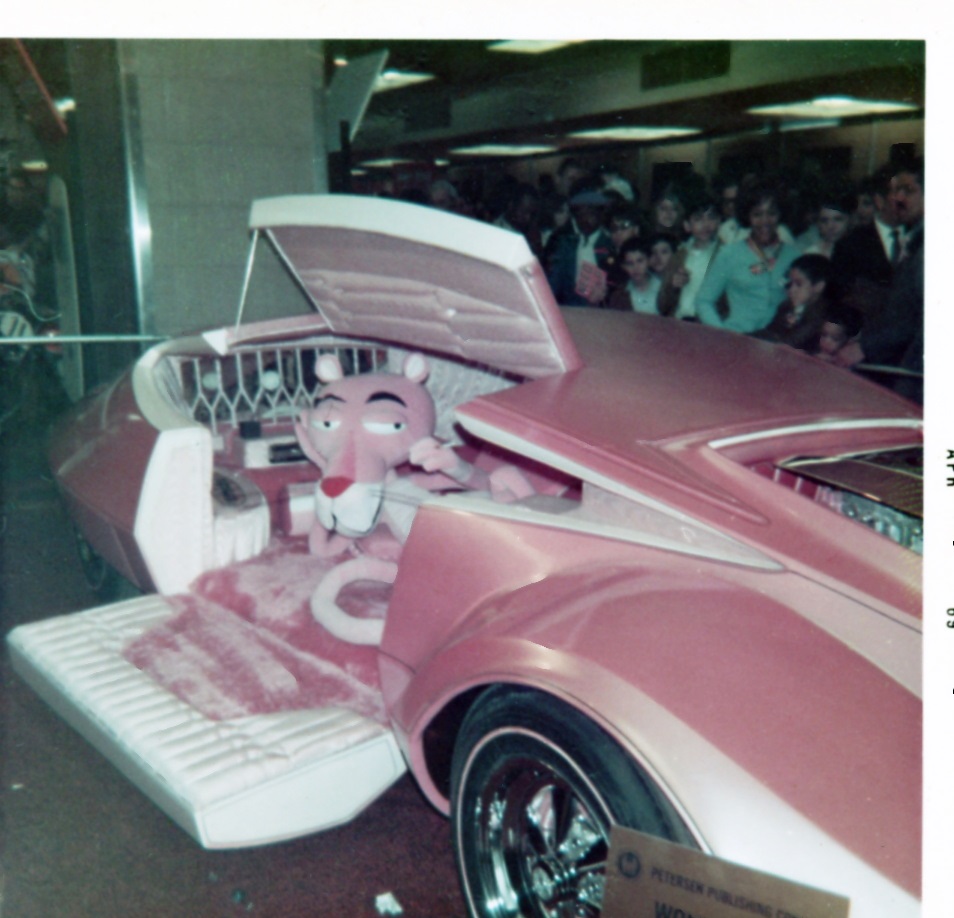
The Pink Panther mobile
There’s nothing I can say in my defense, except, I wasn’t alone in wanting to see this car – look at the crowd behind it! Also note the sign in the lower right, which reads “Petersen Publishing”. What was their involvement? Where is this car today?
This is one of the vehicles featured in the short video clip; yet in the movie, the car is blue, and here it’s white. An internet search for photos shows the car in both colors, as well as gold. Perhaps Buick was trying out different colors to gauge audience reaction, or borrowing a trick from ol’ Shelby, they wanted to give the impression that there was more than one Cruiser Concept. Note the Ford Cortina sign and British flag in the background.
It was probably 1982 and I was at Hershey, in PA, in October, at the big annual AACA Hershey show. It was perhaps only the 3rd or 4th time I was there. I was young, and this was still all new, and I had so much to learn about the collector car hobby. I was living in an apartment without a garage. I had my Isettas stored in one garage not near me, and my ’57 Ford Skyliner stored in another garage not near me. I still dreamed of that future point in time when I would get back to these cars to perform a complete restoration on each of them. However, I had no real concrete plan for getting to that point.
As I strolled the aisles of that Saturday car show, I was still learning that these cars were here to be ranked and rated by AACA judges. The judging was a very strict and formal process. The car owners took this very seriously, and very much wanted to win. They wanted their 1st Junior, or 1st Senior, or their Preservation Award, things I had yet to learn about. It was neat for me, the neophyte, to discover that the vehicles were arranged in something resembling a sensible order, based on year, make, and model.
A particular recollection concerns the Baby Birds, the 2-seat Ford Thunderbirds only made from 1955-1957. They were all lined up, in their candy colors of red and blue, and pastel colors of green and yellow, and monochrome colors of black and white. They didn’t look like cars! They looked like edible sweets on a shelf. As I walked down this row of cars which were barely 25 years old, I could not get over how perfect each car was. With hoods up and trunks open, reproduction chalk marks and ink stamps were exposed. It was clear to me, the newbie, that these cars were rarely, if ever, driven.
The entire spectacle depressed me. How does an owner, I asked myself, get to a point that the car is so perfect that it’s not driven? Was this what the hobby was about? I was yet to learn that some owners did indeed treat their cars as trailer queens, driven only on and off trailers, and brought to shows only to collect awards. It was impossible for me to imagine a day when I would show a car at Hershey.
Fast forward exactly 30 years, and here I was in 2012, with a car of mine on the Hershey show field. I was as giddy as could be, and while I took the whole spectacle seriously, the event was eliciting a reflexive ear-to-ear grin that I could not erase. How did I get to this point? Having joined the National AACA around the year 2000, and attending almost every Hershey since then, the urge to enter a car was growing. With over 10 years of experience in showing the Isetta, as you’ve been reading in the Isetta Saga, it was time to put the car in the big boys’ show.
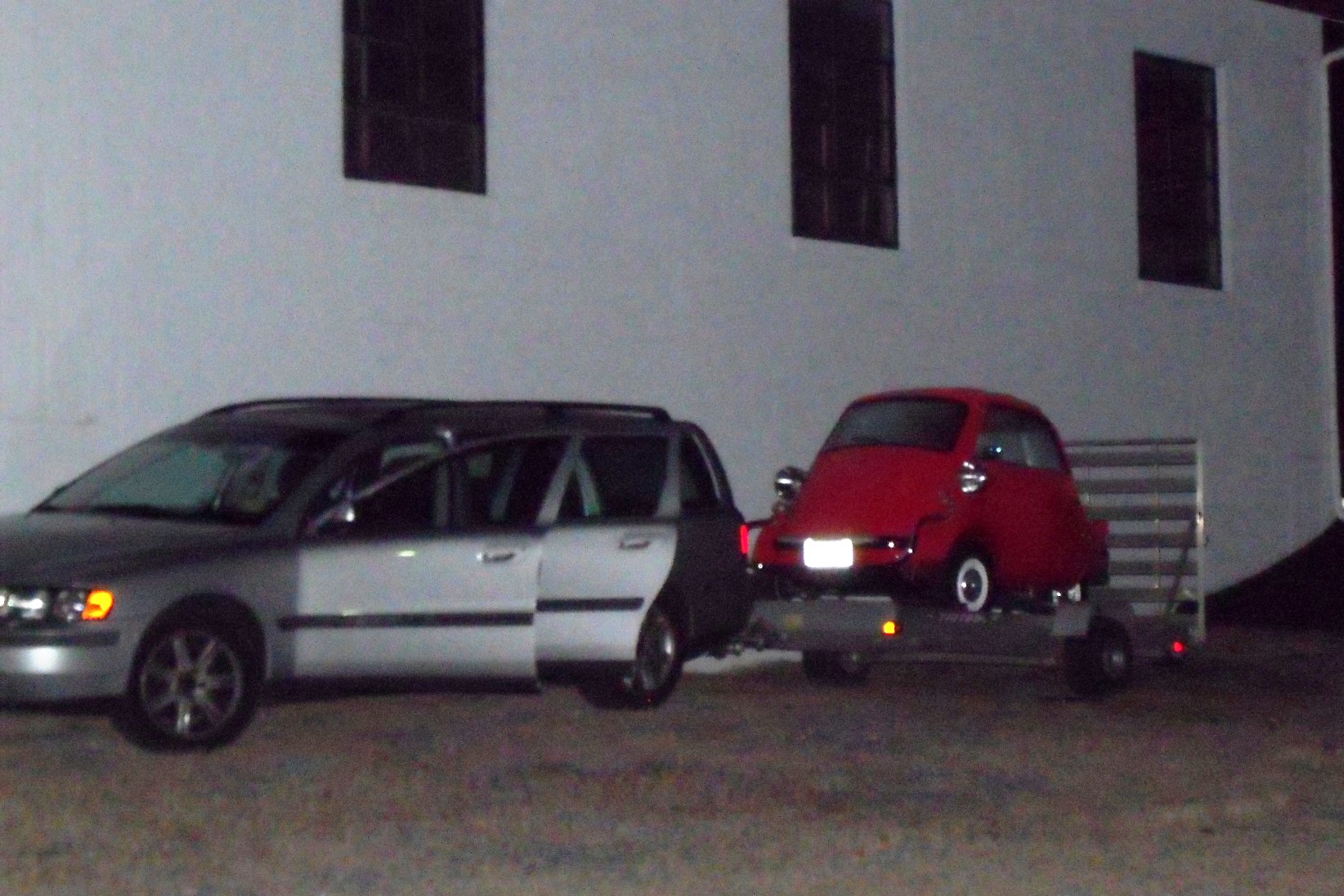
There was not much prep necessary. I had my trailer and my hitch-equipped Volvo V70 ready to make the journey. A logistical issue for anyone bringing a show car to Hershey is the question of “what do I do with my car during the week?” The judged show is always Saturday, but the flea market / car corral begins four days prior on the Tuesday. Owners who drive their show cars to the event leave them overnight in the hotel parking lot. They’ll then use those cars to commute back and forth during the week. If they have a flea market spot, they’ll just drive it onto the field and park in their spot.
Parked at the B&B in Dillsburg
My little Hershey secret, which I had begun to use about 10 years prior, was to stay at a local Bed & Breakfast in lieu of a hotel. (I refer to it as a ‘secret’ because if too many show attendees started doing the same, it wouldn’t be as easy to book a room. Compared to hotels, which start booking rooms for next year’s event the day after this year’s event ends, I found that local B&B’s had rooms available as late as 6 or 8 weeks before Hershey week.)
The B&B’s were more comfortable than hotels, they included breakfast (to go if I asked), and were about the same cost. There was a B&B in Dillsburg, located halfway between Hershey and Carlisle, which I started frequenting. When I called for the reservation, I asked permission to leave the Isetta on its trailer somewhere on the grounds. The woman proprietor, with whom I was on a first-name basis, told me that was absolutely fine, and said she had a spot behind the barn where my rig would be away from other guests’ cars, as well as out of sight from the road. Upon my arrival, I put the trailer where asked, unhooked it, and was then able to use the Volvo to-and-from the show during the week.
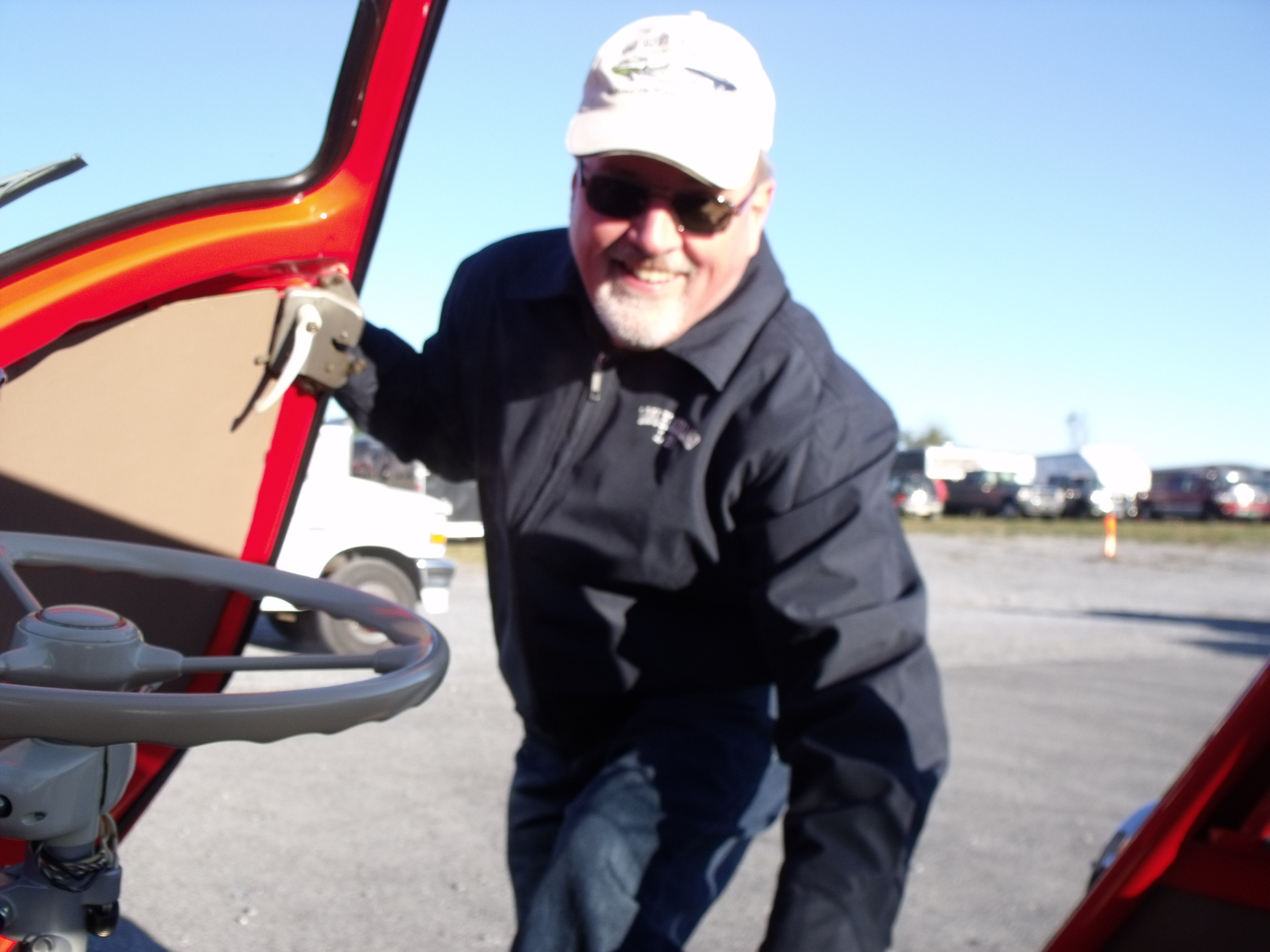
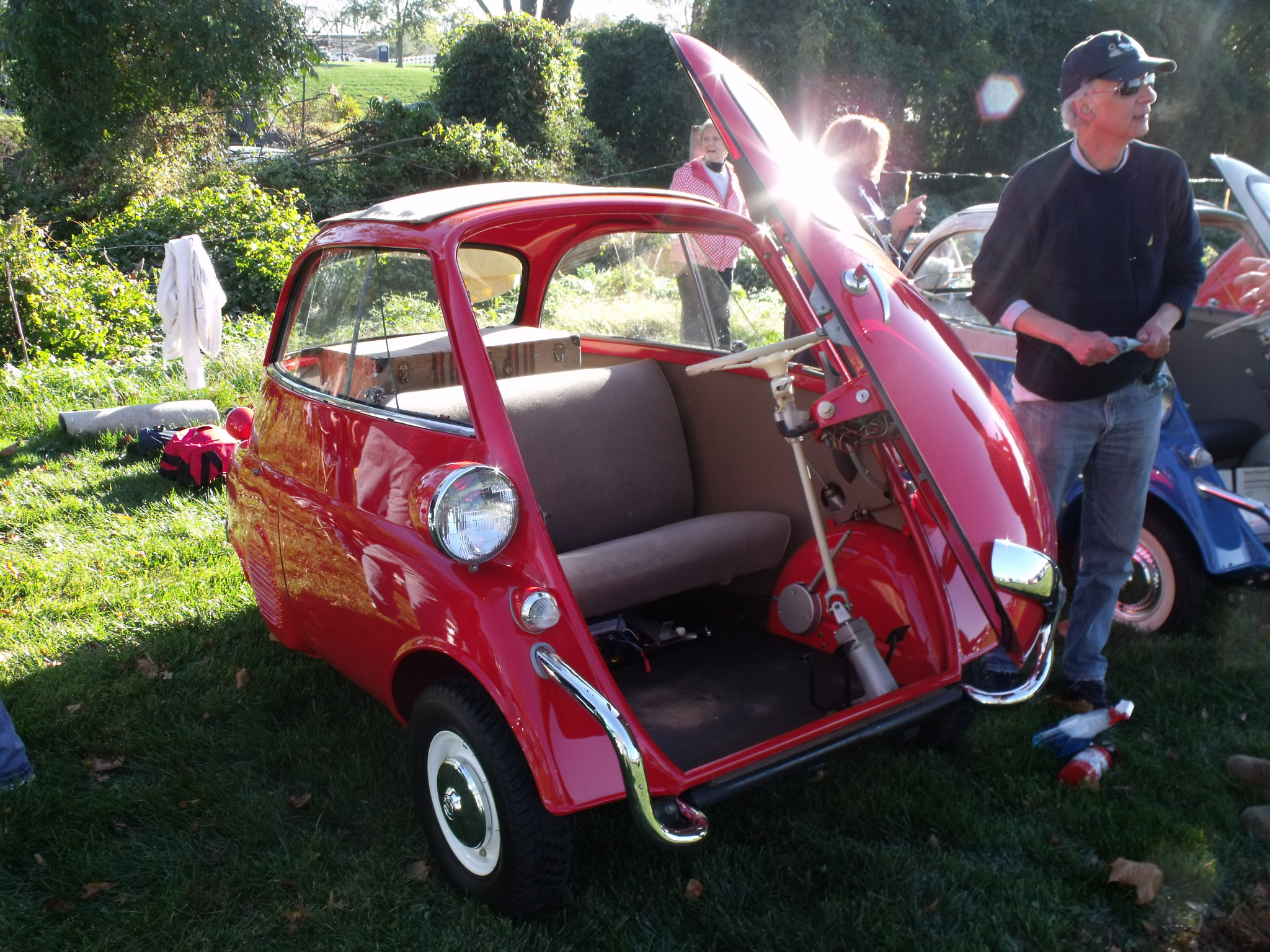
Larry hops in for the cruise to the show field
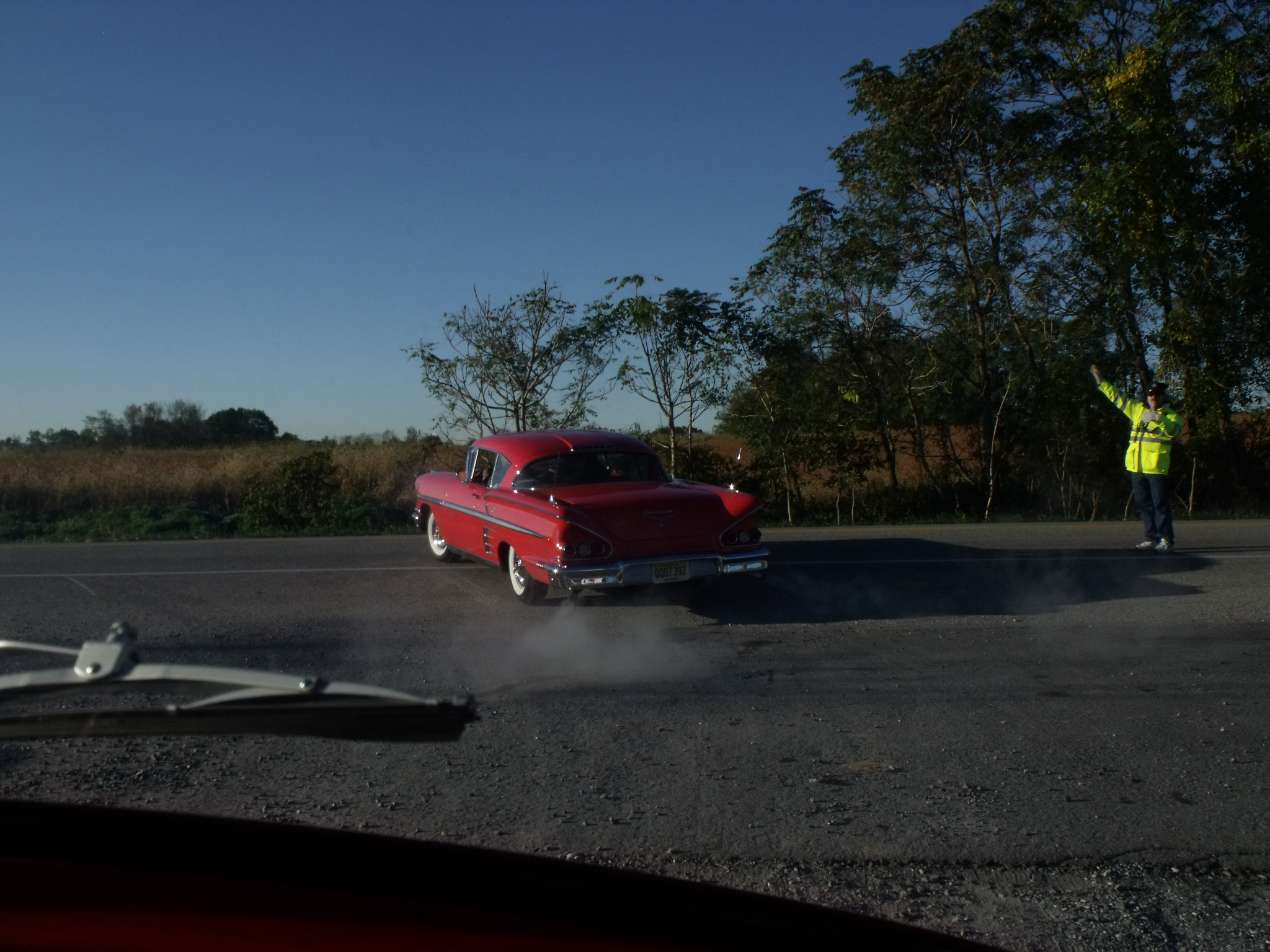
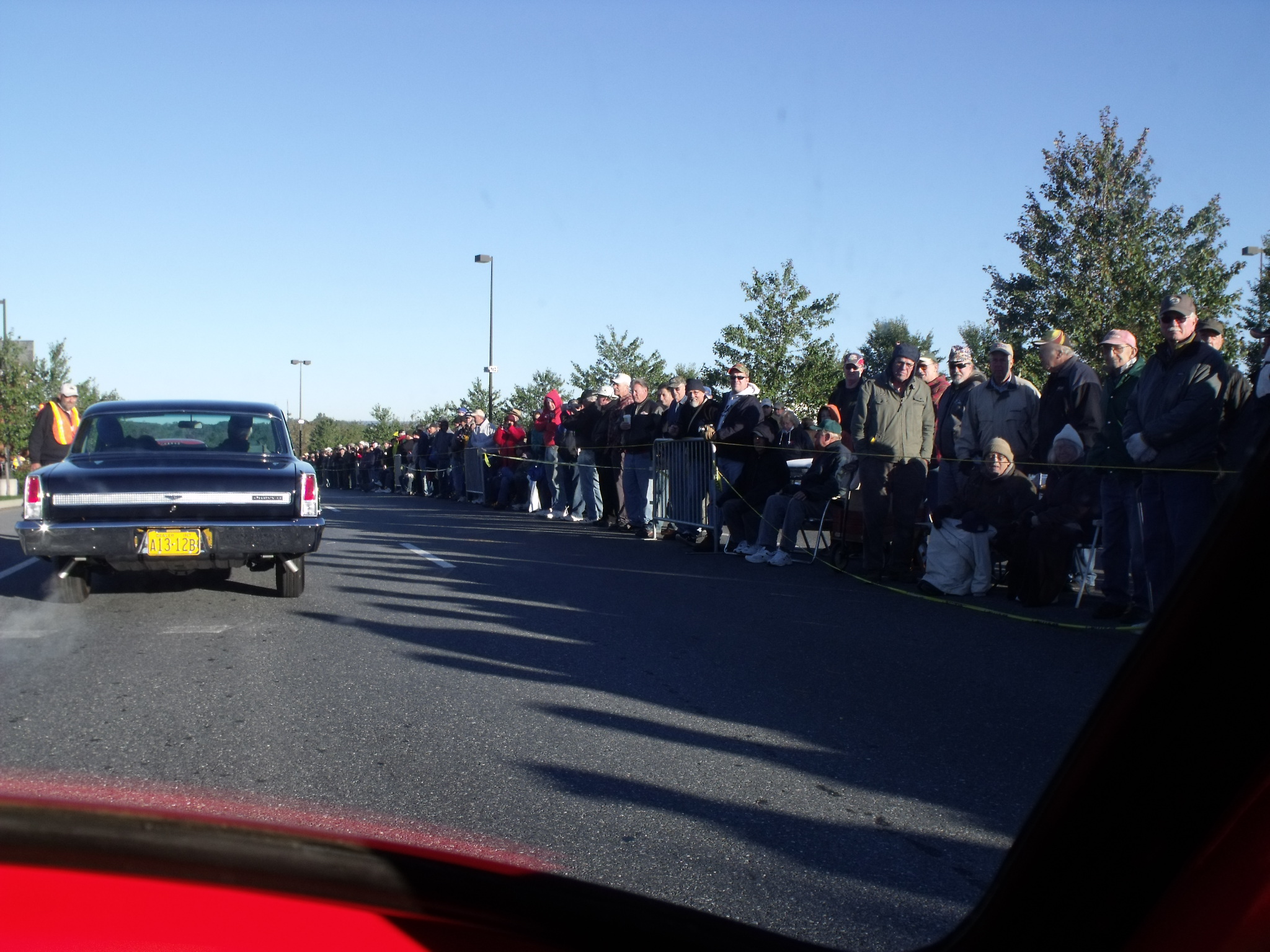
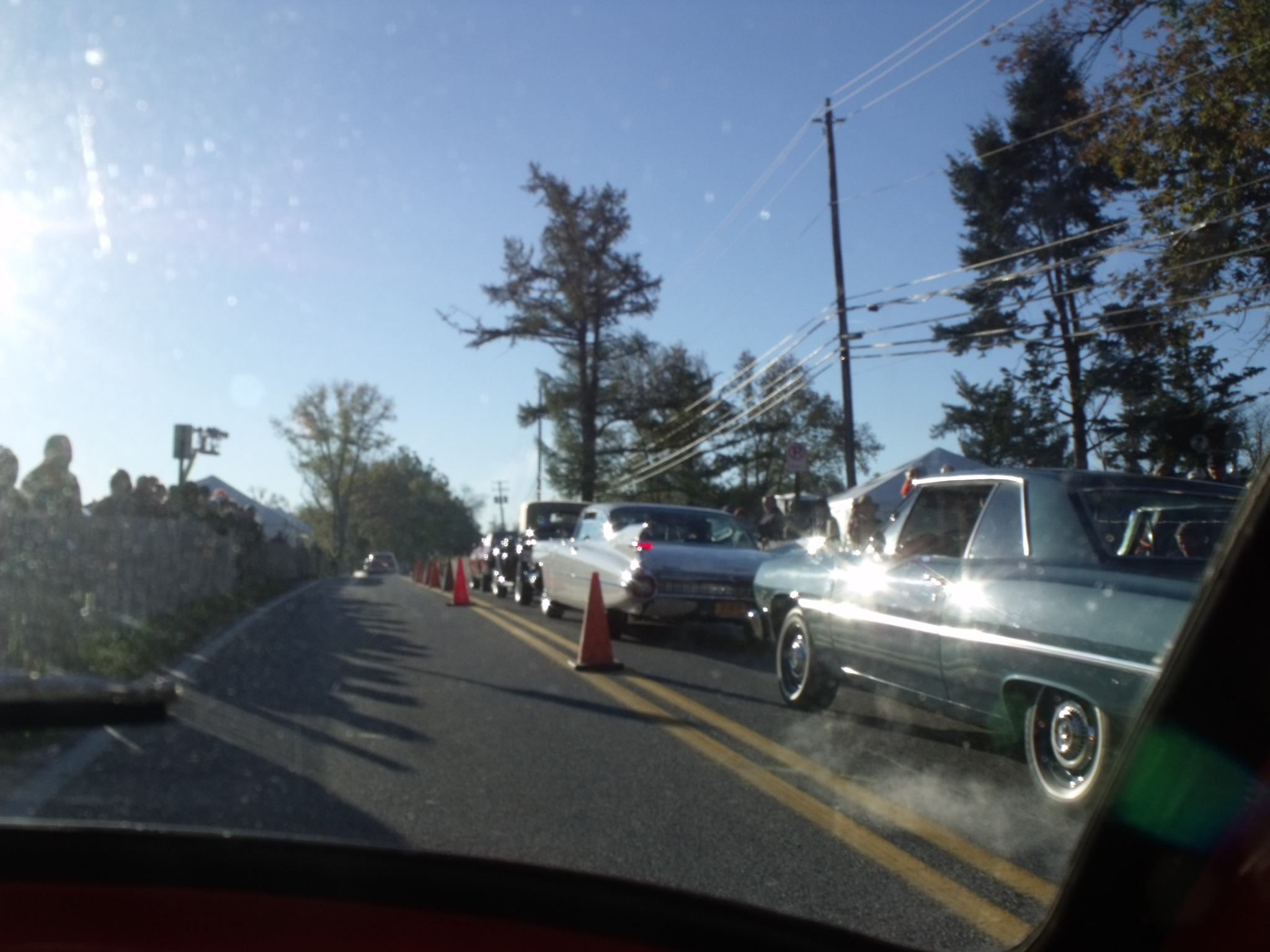
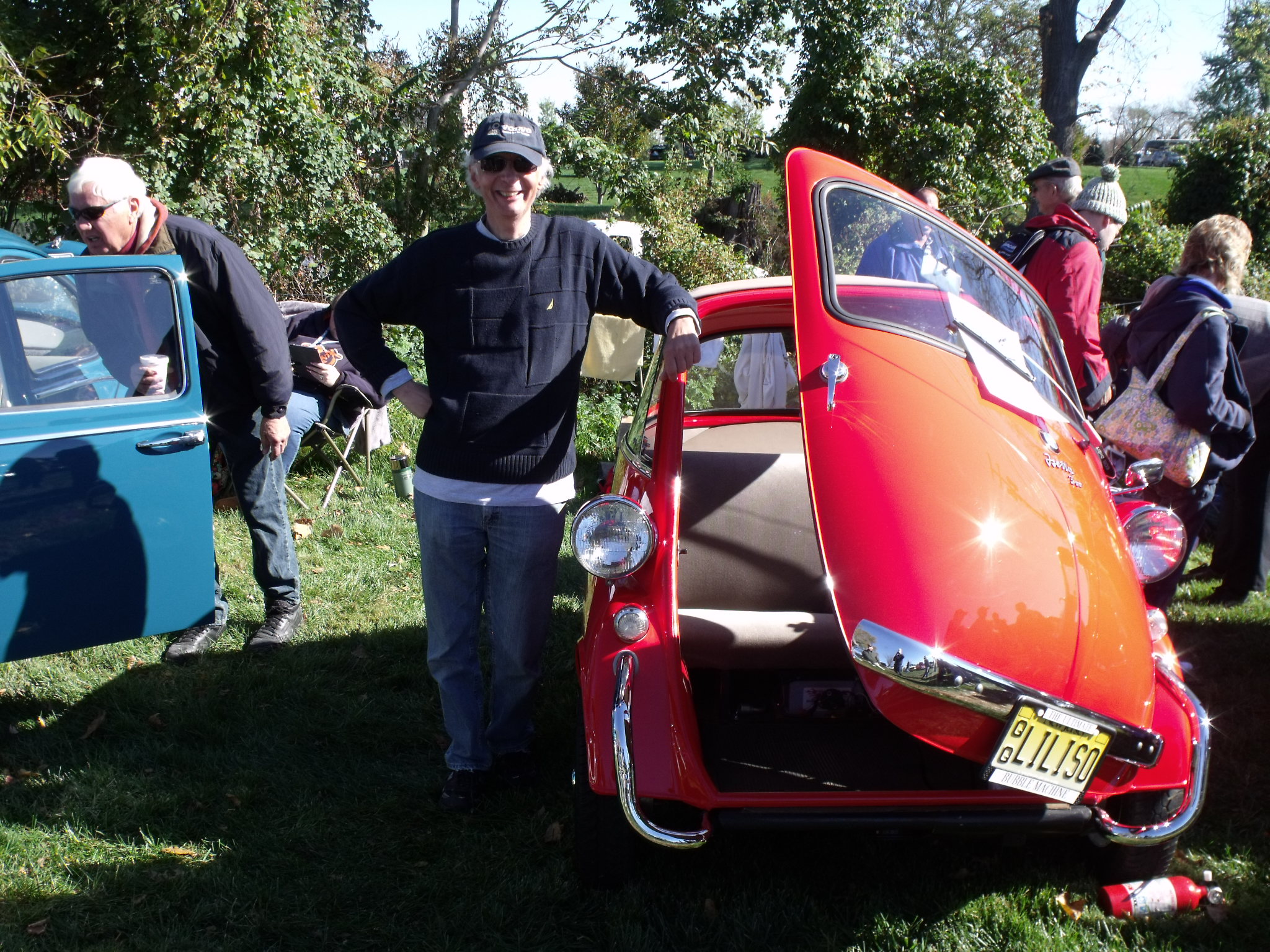
Once Saturday morning arrived, I reconnected the trailer and was off to ‘trailer parking’. AACA had set up a lot about 1.5 miles away from the show field dedicated to the dozens and dozens of trailers which needed to be staged somewhere. I asked my bestie Larry if he wanted to meet me there and ride with me in the Isetta, and he was more than game. As he climbed in, I handed him my camera and asked him to take as many photos as he could manage. We were literally in the parade of cars that I had witnessed as a spectator on so many prior occasions.
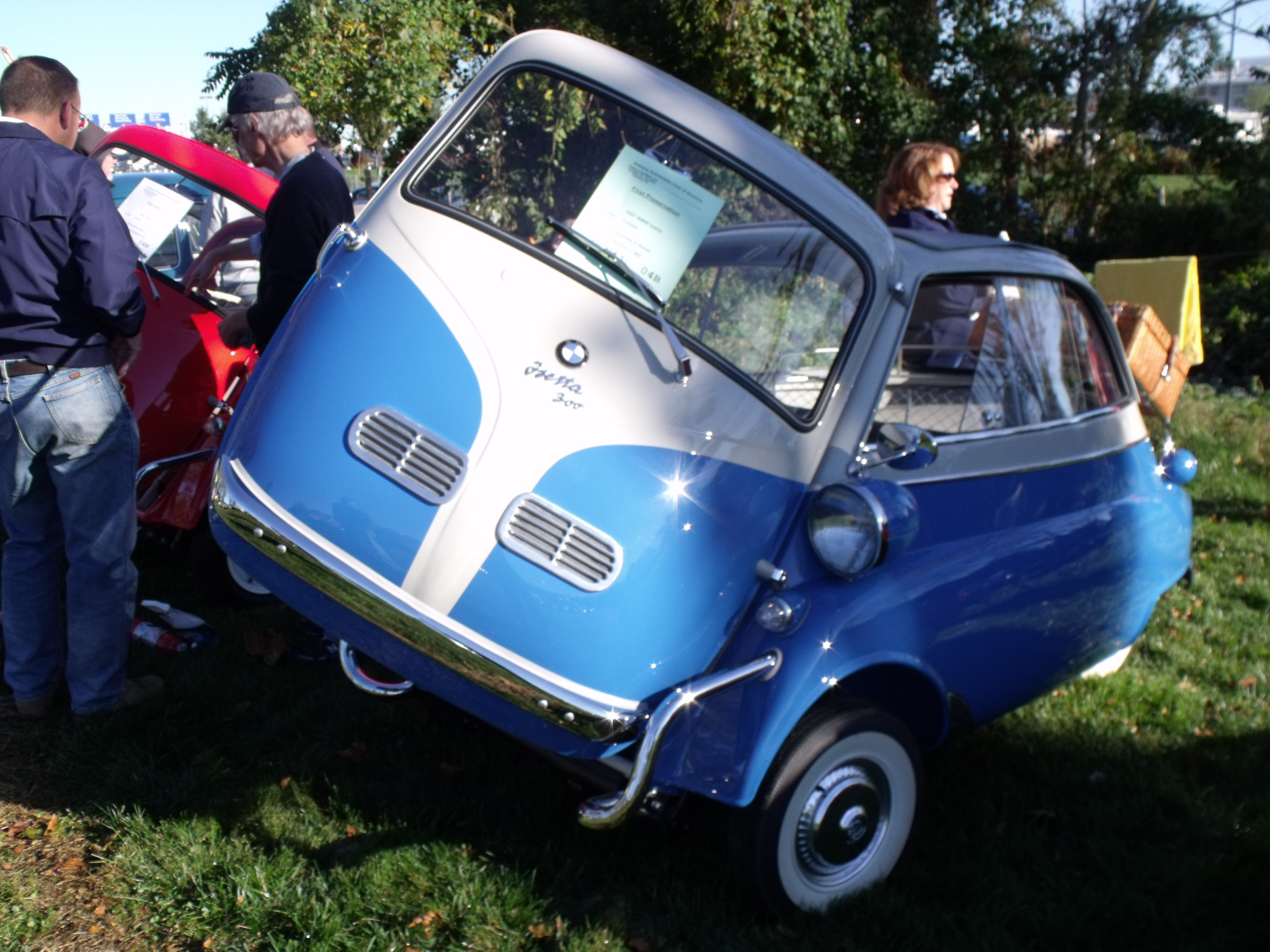
Once at the grounds, I was directed to my parking spot in Class 04B, “small vehicles 1942 and later” (04A is 1941 and older). I parked next to the only other Isetta at the show that day. Other cars in my class included a Vespa and several VW Beetles (which look large next to an Isetta). I exited the car, put up my signage, and stuck around as required for judging. The judging team was there soon enough to do their thing. Once that was done, I was free to walk around, but as is my wont, I preferred to stay near the car and engage with attendees.
We’ve arrived!
Three of the cars in Class 04B that year
The other Isetta was a beautiful two-tone blue & grey car, from Maryland, and the car was there for its Preservation Award, meaning that it had already achieved Senior status. Cosmetically, I thought it was a notch above mine; it certainly looked ‘fresher’ (I wasn’t telling anyone that the paint on my car was already 17 years old). The owner was sitting in her folding chair behind her car, and I went up to her to make a sincere effort to both compliment her on her car as well as engage her in conversation about it. When I asked her some details about the restoration process, she demurred, and didn’t really make any attempt to answer my questions. What eventually came out of our conversation was the realization that she was not an active participant in the car’s restoration. It’s what we call a “checkbook restoration”; she wrote the checks to the shop that did the work, and picked up the car when it was done. This is not to take anything away from the obvious quality of the work. But there is something to be said for taking more ownership of your own restoration, which helps elevate the understanding of how the car is designed, engineered, and built, and how it operates.
The blue/grey Isetta won its Preservation Award
Bubble cars side by side
Around 3 p.m., the show cars began to exit the field. It was a magnificent day on so many levels: the car ran great, the judging went smoothly, the audience enjoyed it, and I enjoyed the audience. It helped that the fickle Hershey weather was near perfect. I drove the car back to the trailer parking, loaded it up, and headed home, arriving before dark.
I had plenty reason to be happy
A few weeks later, a letter arrived in the mail from AACA, announcing that I had succeeded in winning my 1st Junior award (there was, as always, an Award Banquet on Saturday night, but I did not attend). Had I been there, I would have been handed my trophy. The letter from AACA informed me that if I wanted the trophy, I would need to pay the nominal shipping cost, which I did.
At the close of 2012, I realized that I had been trailering my Isetta to various shows throughout NJ, NY, CT, and PA for the past 13 years! While I had previously made half-hearted attempts at selling the car, with absolutely no success, I knew that 2013 was going to be the year to let it go. I had had my fun. An auction was the best choice, and it was a question of selecting an auction company, having already held preliminary conversations with both Bonhams and RM. The Bonhams auction I had in mind was their Greenwich event held in conjunction with the Greenwich CT Concours in early June. For RM, the Hershey auction in October was also being considered. I had some time to decide, however, the wheels were firmly put in motion at the end of 2012. After 35 years of ownership, and 13 years of show attendance, it was time.
















































































 richardscarblog