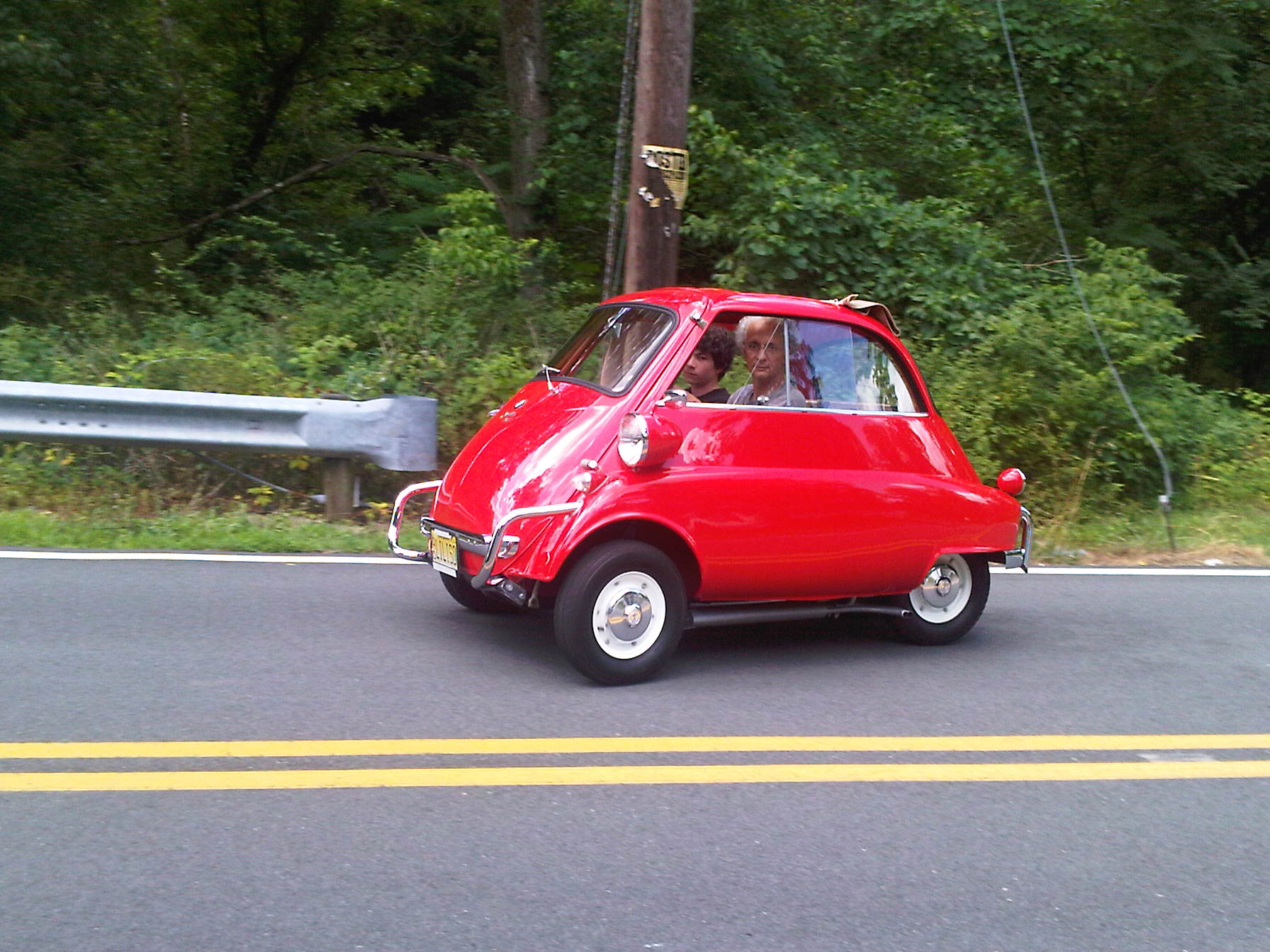
The Isetta Saga, Chapter 32: 2010’s Retirement Affords Lots More Time for Shows

December 23, 2009 was my final day of work at Volvo Cars of North America, where I had been employed for over 23 years. For the first time since college graduation, I was free of daily obligations. I had every intention of resuming my career, but with my wife’s encouragement, I decided to take some time off.

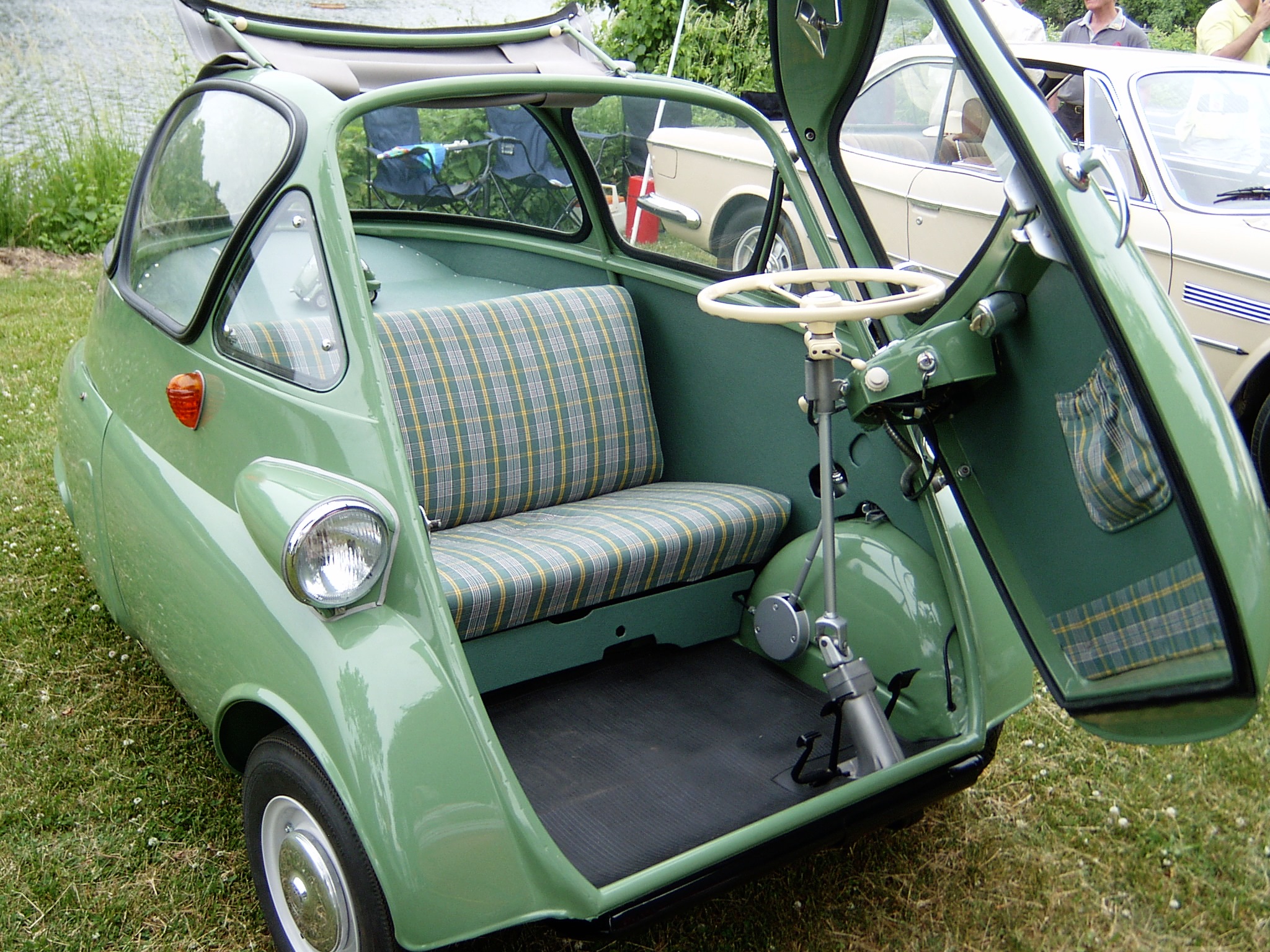
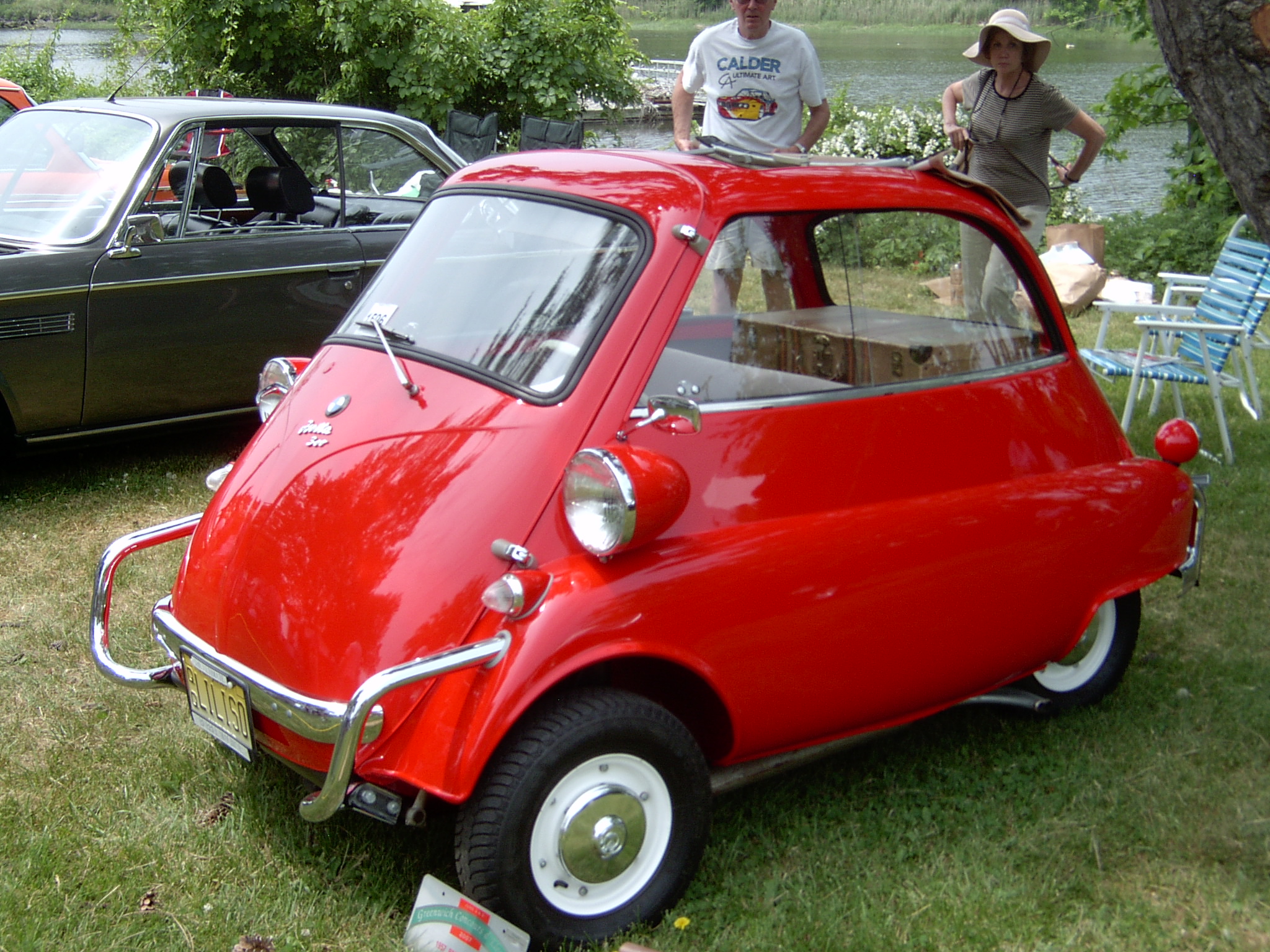
As 2010 dawned, I looked at the collector car calendar and could foresee upping my participation above what had already been a busy schedule. While the garage held both the ’68 Mustang and the Isetta, I decided to look for opportunities to get the Isetta out more. The additional time needed to load and unload the car would be less of an issue now.

In addition to attendance at the 2010 Greenwich Concours d’Elegance, I had the time to also take part in these activities:

APRIL: RAMAPO HIGH SCHOOL CAR SHOW

My friend Larry, who lives in the vicinity of this school, made me aware of this show, which sounded like fun. It was also a chance to lend support to a bunch of teenagers who wanted to experience the makings of a car show in their own back yard.

The kids of course, enjoyed my car, and I in turn enjoyed the variety of vehicles in attendance. Two young men floored me, as they showed me around their VW bus while wearing tie-dye shirts. Flashing the peace sign was their idea, not mine!

MAY: AACA NJ REGION ANNUAL CAR SHOW

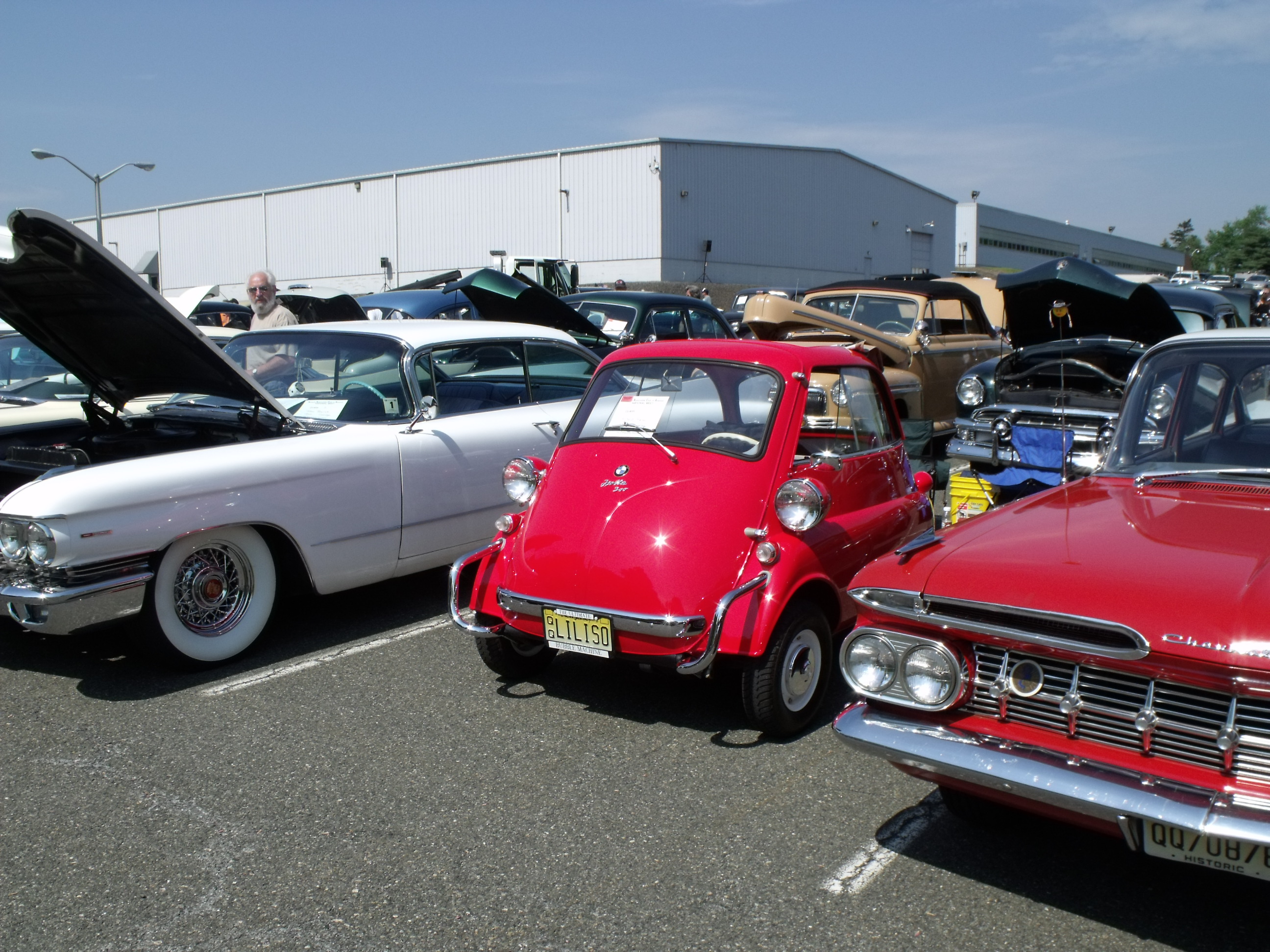
I had only recently become a member of the NJ Chapter, so none of my mates in the club had seen the Isetta yet. Entering the microcar in the same class as the American iron of the ‘50s meant that it was up against some very stiff competition (it also looked like a toy next to these ‘50s gargantuans). 

My friend Ron, whom I knew from the multiple New England 1000 rallies we’ve run together, showed up in his ’55 T-Bird and parked next to me. Lo and behold, when it was time to depart, his Bird wouldn’t start! Ron knew the car became fuel-starved because of a hot soak issue, and he said that all he needed to get going was a bit of fuel to pour into the carb. But where to get that fuel? From the Isetta’s fuel tap!
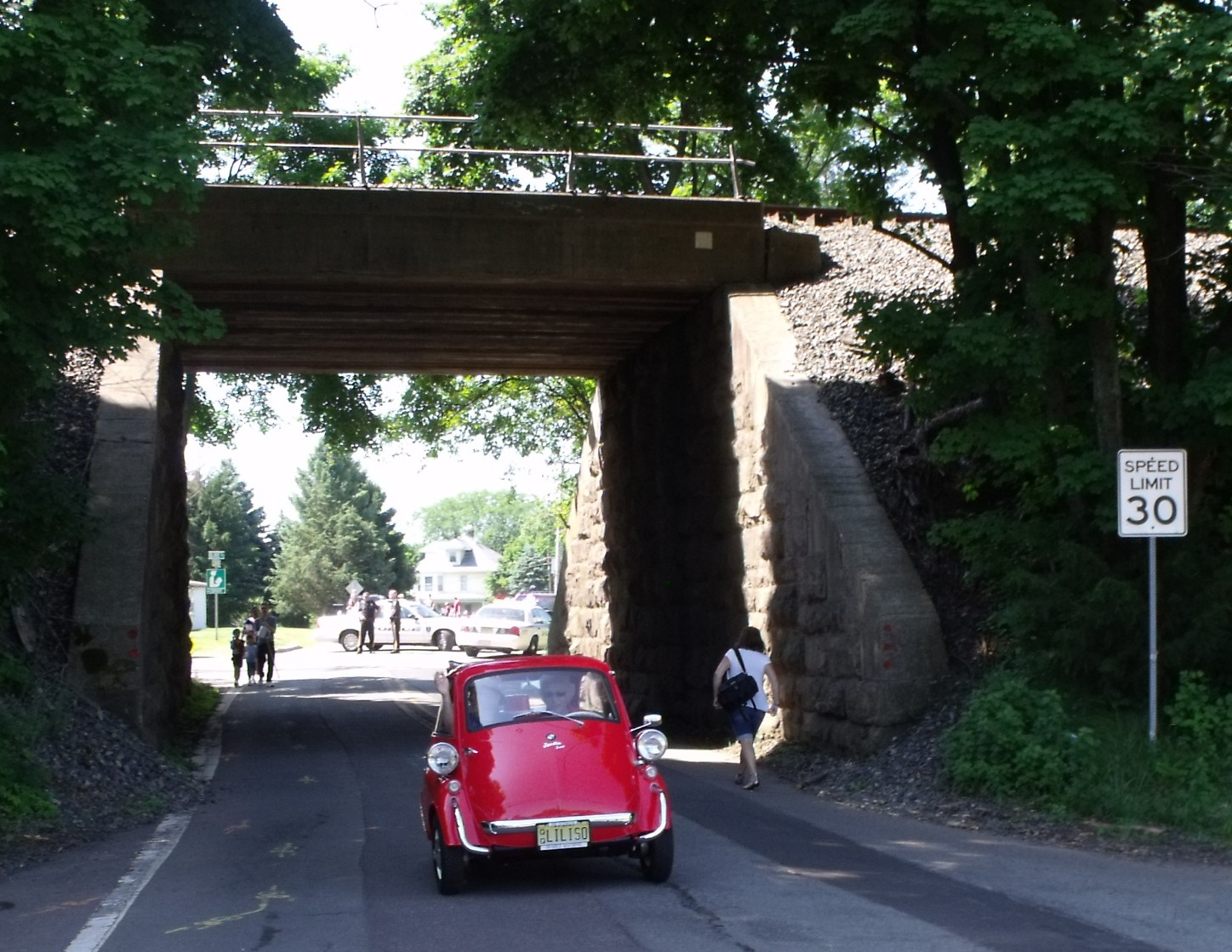
MAY: NESHANIC STATION MEMORIAL DAY PARADE

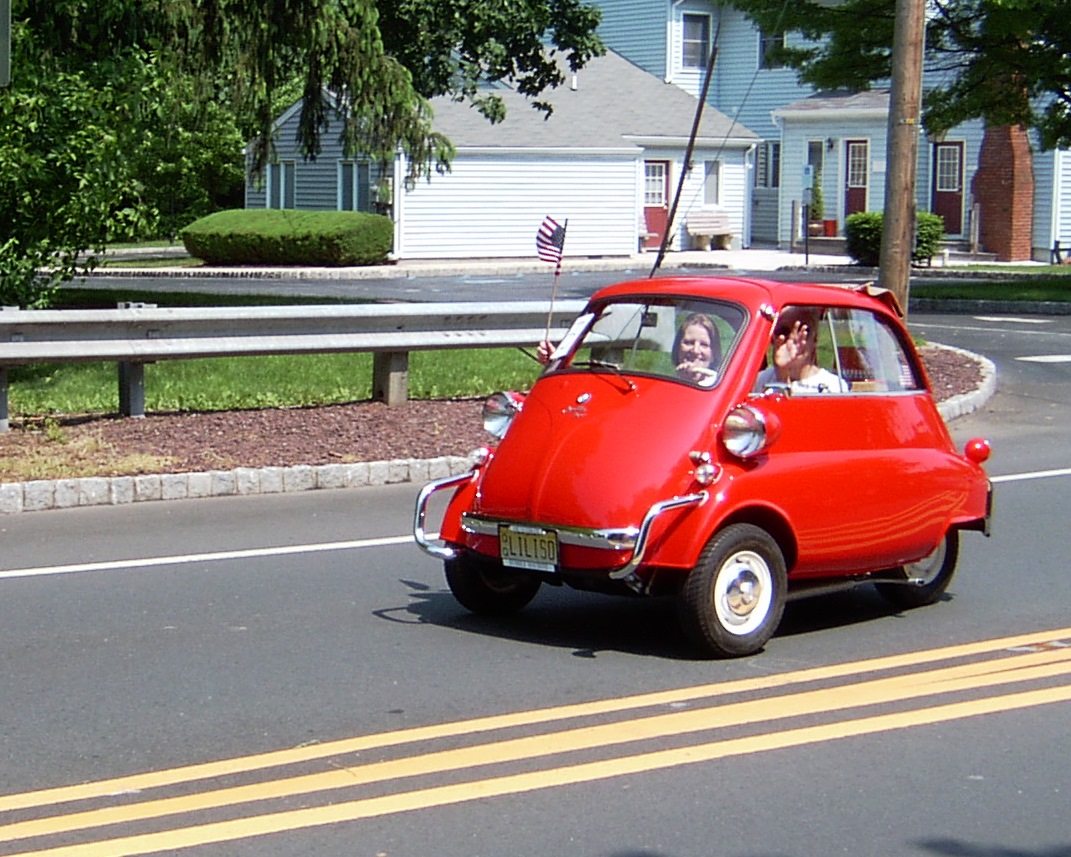
We were getting good at parade participation, and this one was close enough to my house that I could actually drive the 3 miles back and forth, and I did! My stalwart friend Richard Sweeney did not miss the chance to ride in the car, and waved to the crowd as if he were the mayor.
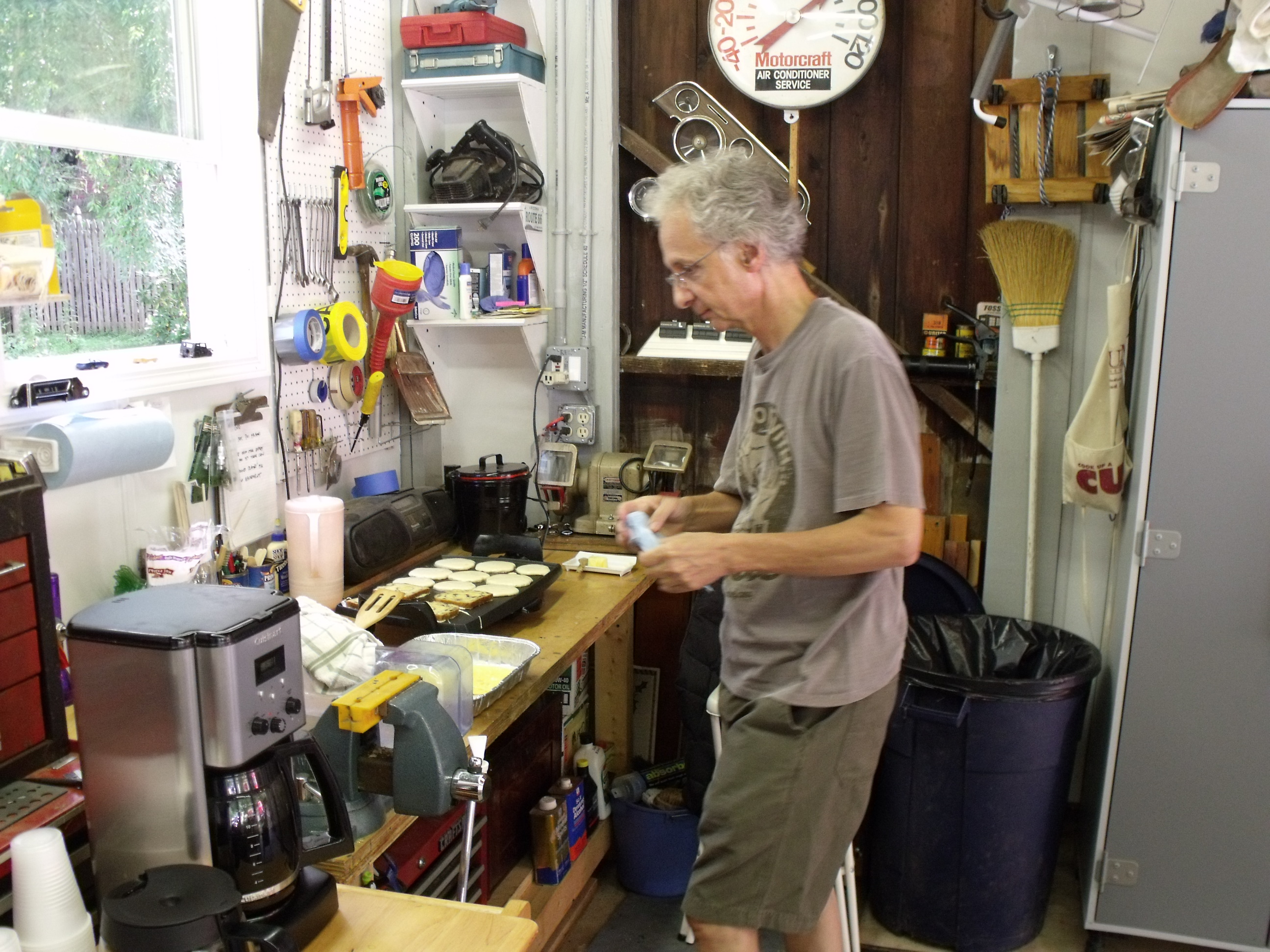
JULY: BREAKFAST AND ISETTA RIDES AT THE REINAS

As a changeup from the typical Sunday morning breakfast drive, I emptied my garage of cars, set up a table and chairs, brought out the electric griddle and coffee pot from the kitchen, and invited a bunch of the regulars down to breakfast. (My wife said it looked like I could move in there; perhaps that was a hint….) Even Irv Gordon made it (after receiving the invite, he called me up and asked “Rich, do you think the guys would mind if I drove the C70 instead of the 1800? I want to ride in air conditioning”.)
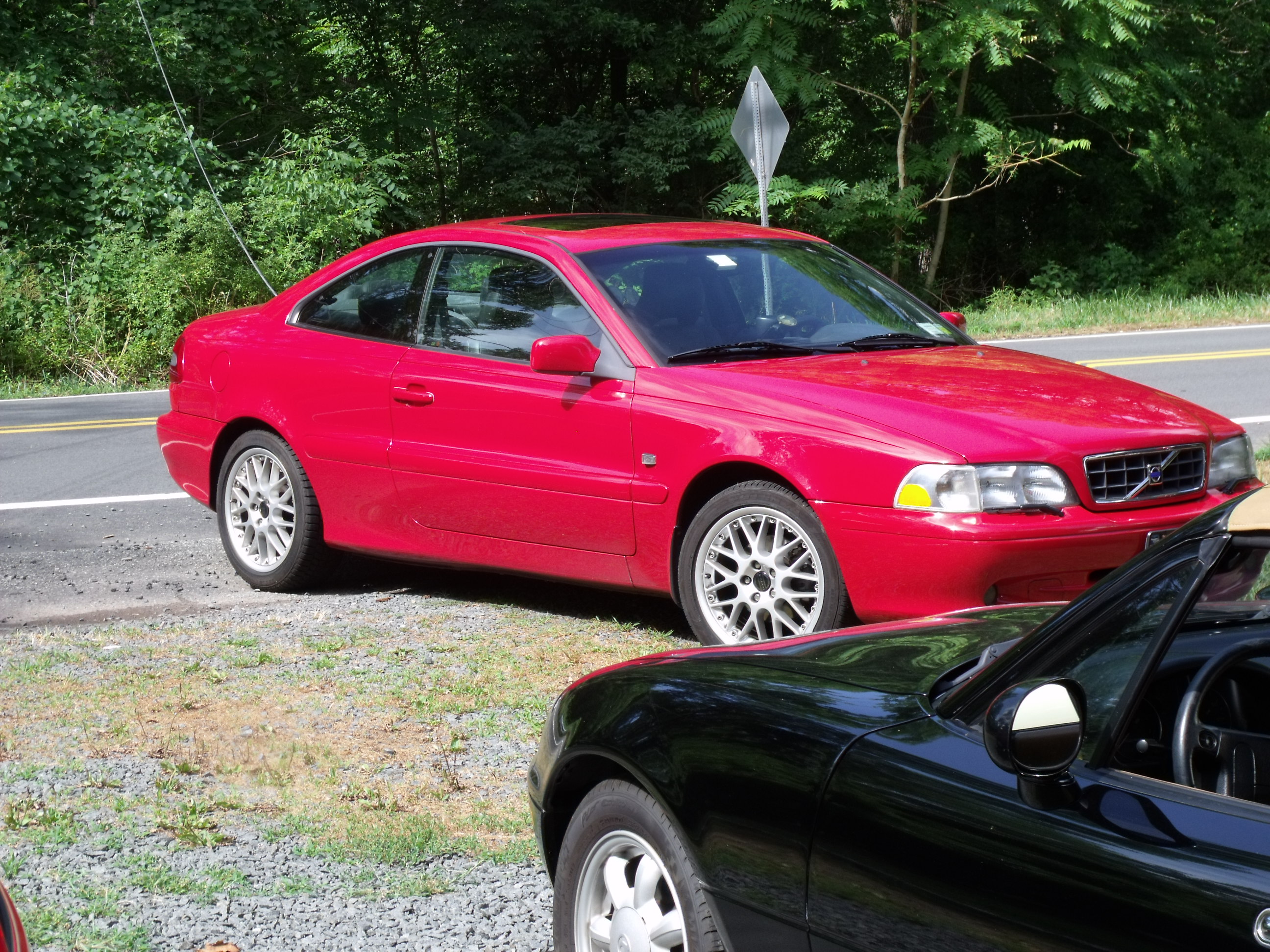
We had something of a mini car show on the lawn and in the driveway, and for anyone brave enough, rides up and down the road in the rolling egg were freely offered.

AUGUST: DAS AWKSCHT FESCHT, MAGUNGIE PA

This show, held in the charming town of Macungie PA since the 1960s, wins the award for “car show name with greatest ratio of consonants to vowels”. I’ve attended “Macungie” as we call it (easier to say) since the early ‘80s, as it was a known gathering spot for microcar owners.

There was no contingent of micro units this year, but I did manage to secure a shady spot on what was a typical hot and humid summer day. This show has always prided itself on an eclectic variety of display vehicles, typically arranged by year, make, and model. One particular memory is of a young woman who described herself to me as an artist. Having gone through my restoration photos, she seemed to take great delight in informing me that I too, was “an artist”. I accepted the compliment!

By the autumn of 2010, I was back to work, albeit only on a part-time basis. With the show calendar quickly coming to a close, I was already anticipating more of the same in 2011.


All photographs copyright © 2020 Richard A. Reina. Photos may not be copied or reproduced without express written permission.
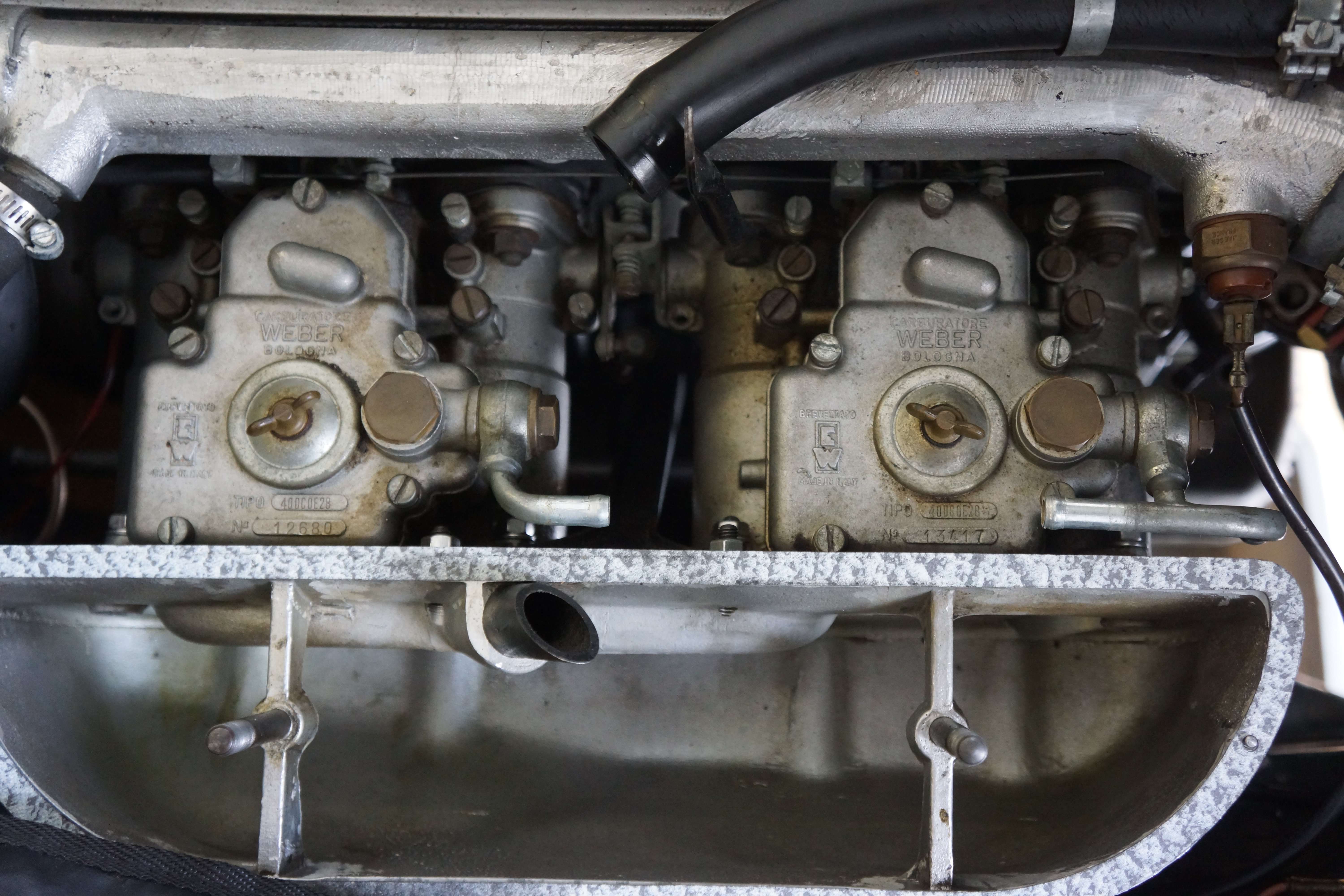
Alfa Carb Leak Lands Them on My Workbench

It’s long been a tenet in the old car hobby that cars like to be driven; they don’t do well when they sit; and as long as you’re on top of maintenance, there’s no reason not to expect some reliability from an older car.

I’ve been lucky with the Alfa Romeo (although frankly, luck has little to do with it): having purchased the car in March of 2013 with 54,000 miles on the odometer, by July of 2019, the car had just shy of sixty-six thousand on the clock. In a little over six years, I managed to drive a 1967 Italian car almost 12,000 miles, which neatly works out to 2,000 miles a year. That changed, though, when the brakes seized, resulting in a complete teardown and rebuild of the braking system that took a year to complete. The car had not sat silent under my ownership for that long before, and when I did restart it, it ran poorly. Suspecting the fuel had gone sour, I drained the tank, added fresh premium, and swapped out the plugs. Success! Except … now I had a fuel leak under one of the carbs.

So, much of September was spent reading up on Weber carburetors. At first blush, they seem unnecessarily complex. Add to that complexity the words of the late Pat Braden, as he wrote in The Alfa Romeo Owner’s Bible, a copy of which I own (and I’m paraphrasing here): “if your car is running fine, don’t touch the carbs. Everyone wants to fiddle with the carbs. If it’s running ok, leave the carbs alone”.

Well, Pat, the car does ‘run’ fine, but liquid fuel dripping onto my starter motor does not get me very excited, at least not in a good way. I did some more research, including reading some very helpful posts on the Alfa BB (Bulletin Board), and concluded that the gaskets and seals were probably old, and the float height should be measured and adjusted, but other than that, I am going to leave the carbs alone!

From bottom: plenum; carbs; intake manifold

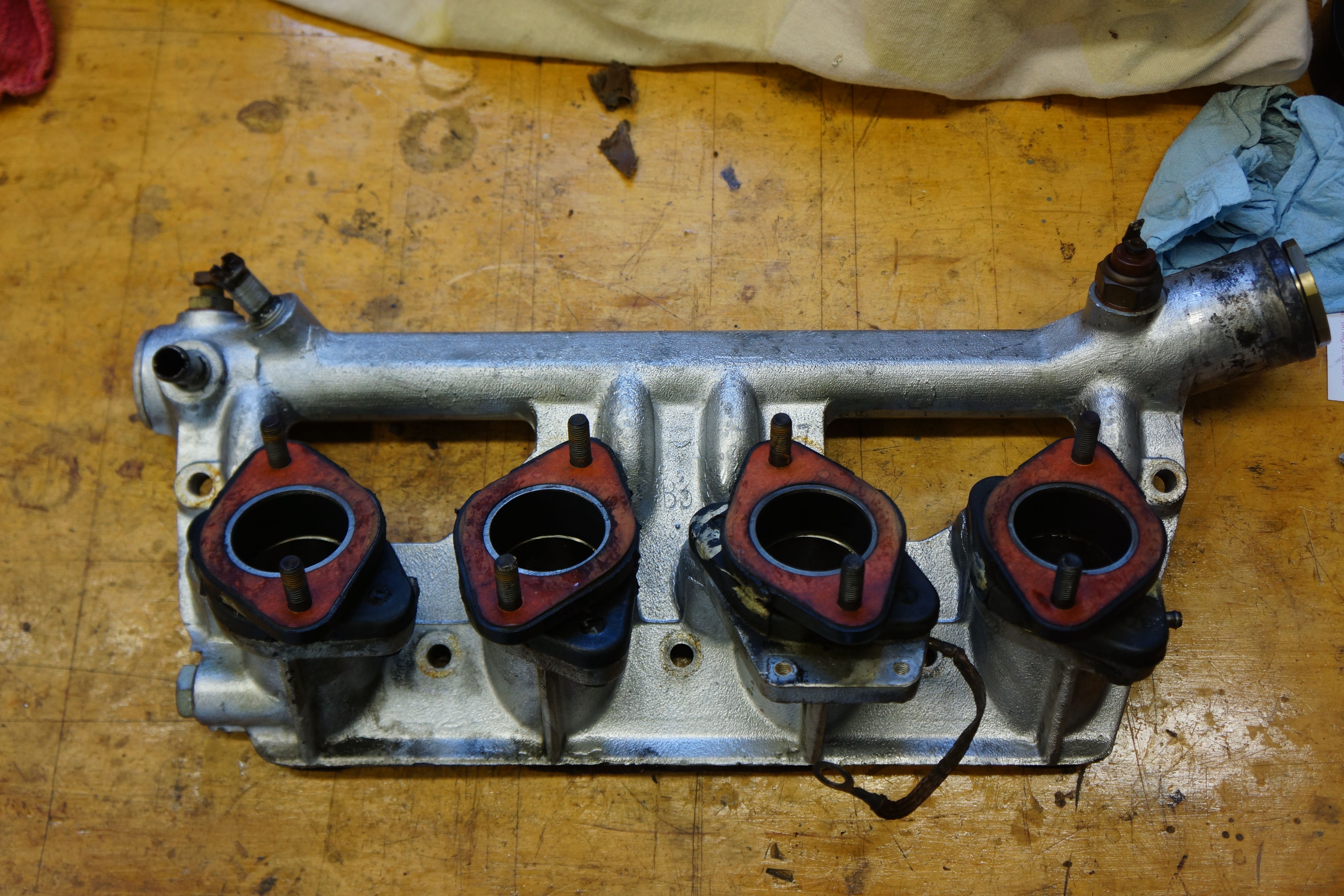
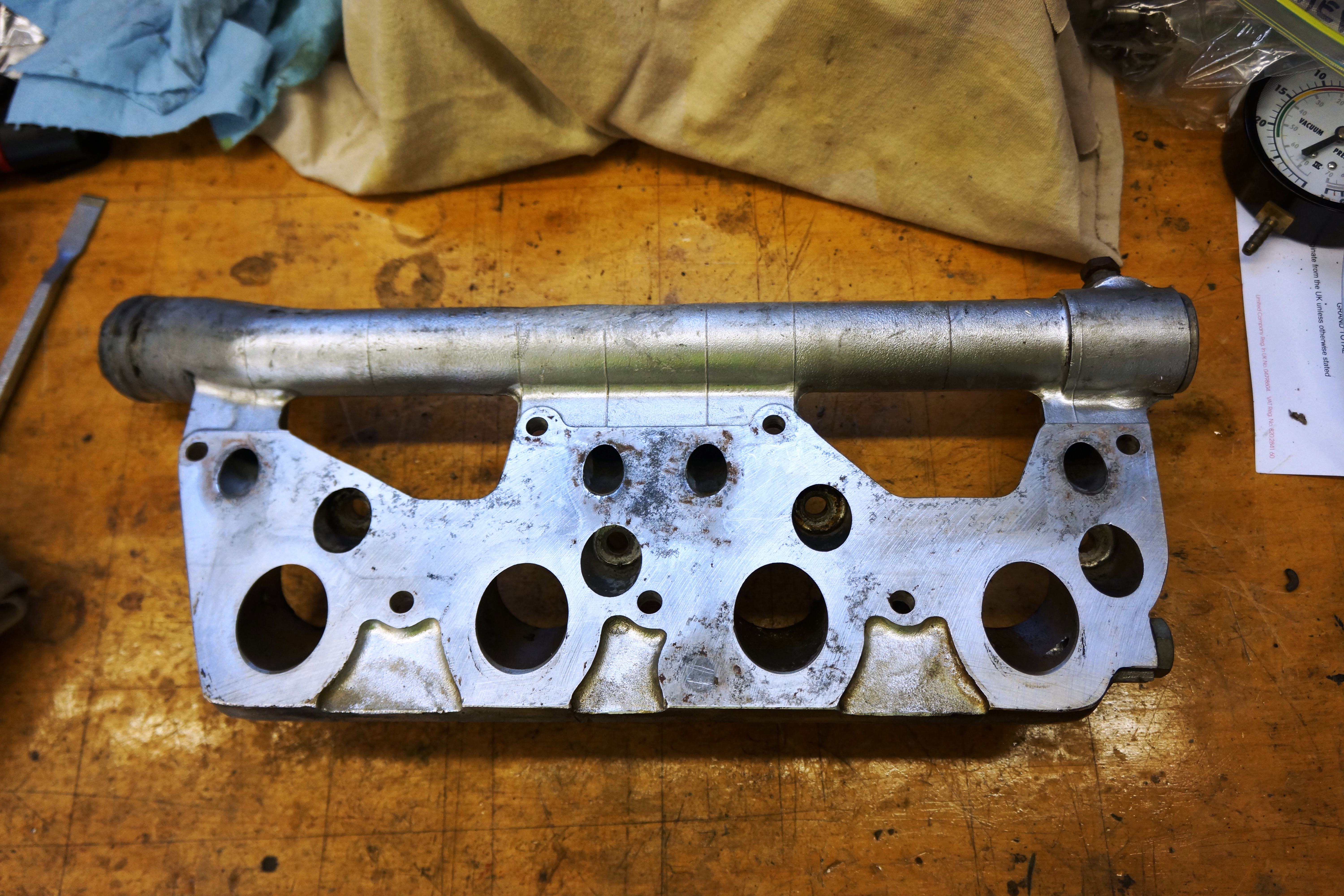
I’ve never removed the Webers from my car before. Removal didn’t look complicated, but would certainly prove to be time-consuming. First, the upper plenum is removed (two hose clamps, one bolt, and two nuts, all easily accessible). Next, the lower plenum comes off (ten nuts and washers, four of which are totally blind). Now one has access to the carbs themselves (eight nuts, four of them blind). Once the banjo bolts for the fuel connections are undone, the carbs can be removed from the car. The carburetors bolt to 4 rubberized mounts, each of which has 4 studs. To remove the mounts, one first must remove the intake manifold, as 8 of the nuts for the mounts are only accessed if the intake manifold is unbolted from the cylinder head (7 nuts, some of them only reachable with an open-ended wrench, which only allows 1/6 of a turn at a time).

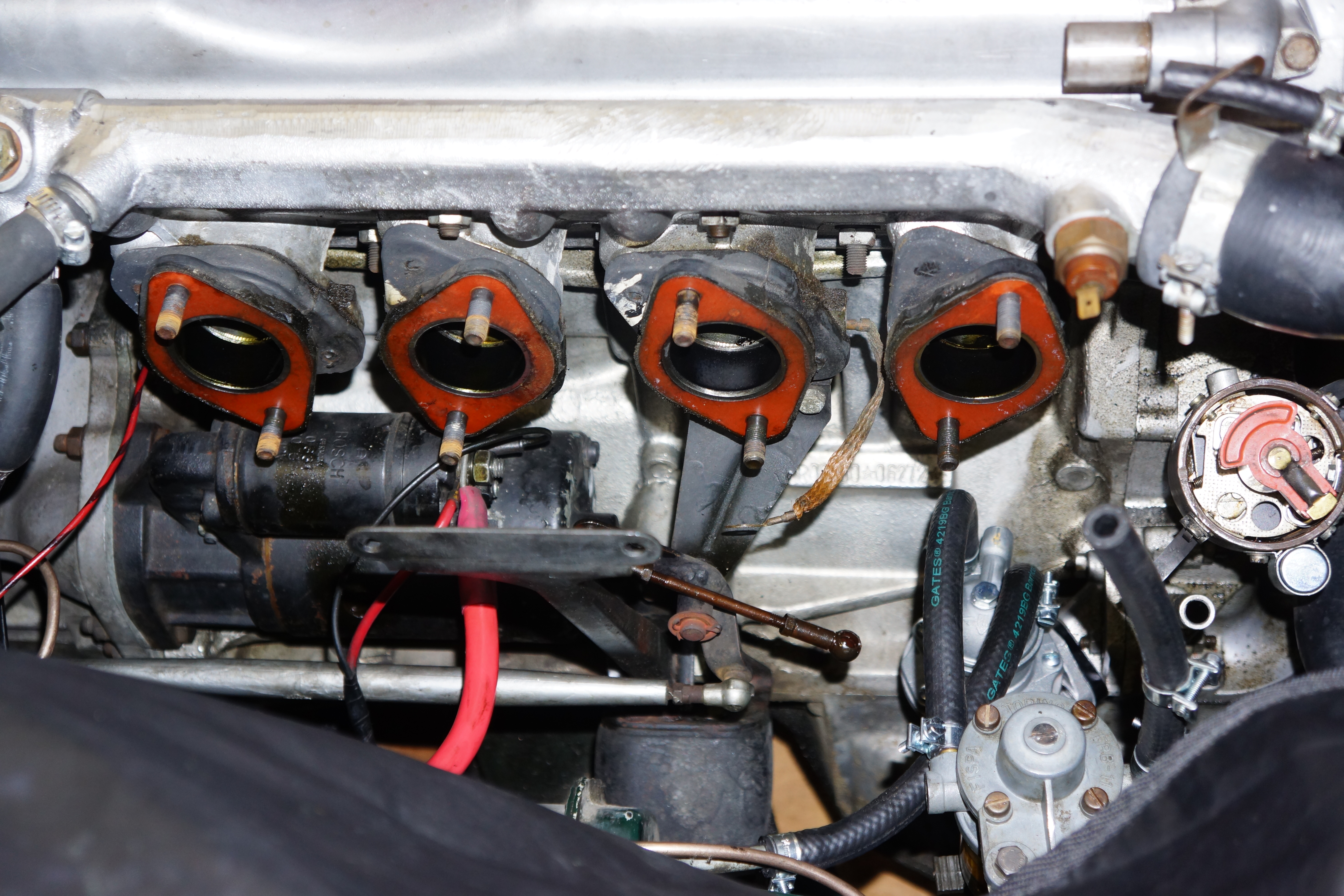
With carbs gone, rubber mounts are obvious. Note starter motor.


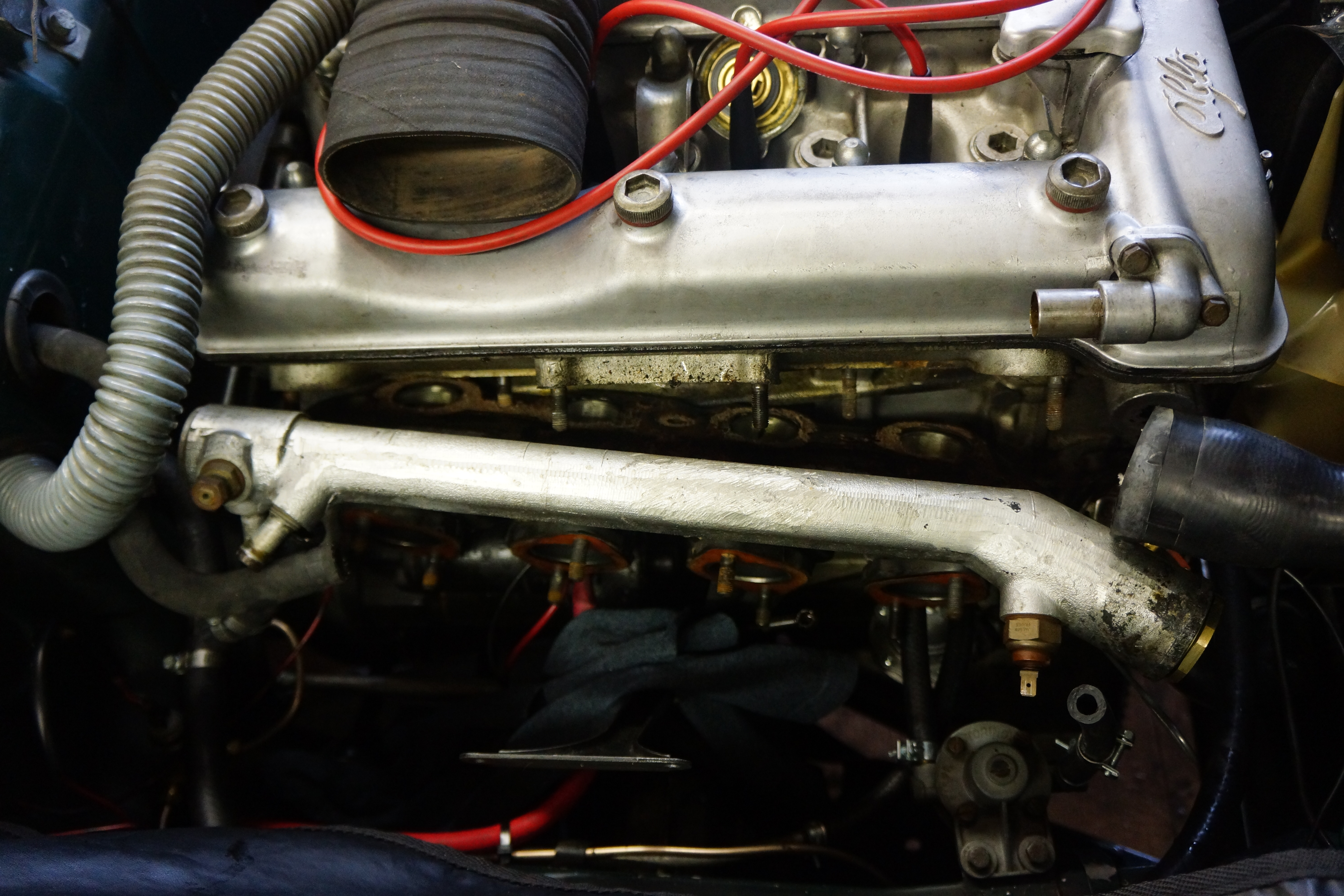
Intake manifold half off cylinder head

Back to these rubberized carb mounts: it was eye-opening to learn from the Alfa BB that side draft carbs, hanging off the right side of the cylinder head, are prone to enough vibration to cause fuel delivery issues. To combat that, Alfa employed a bracket extending upward from the right motor mount to the lower plenum, and mounted the carbs on rubber mounts which absorb vibration. But a number of the Alfa owners on the BB stated that these mounts should be considered service items: eventually, the rubber hardens and develops hairline cracks which allow air to enter the intake stream, throwing off the fuel-air mixture.

Manifold on bench, giving better view of carb mounts


Former owner Pete must have replaced them at one point, because I had an old set among the spares he had given me. Checking the website of my favorite (really only) parts supplier Classic Alfa, I saw that they had a carburetor gasket kit for $35, and new carb mounts for $25 each. That all seemed reasonable enough, and as usual, my order arrived from the UK 48 hours after I placed it. I was ready to get to work.

Both carbs on the bench


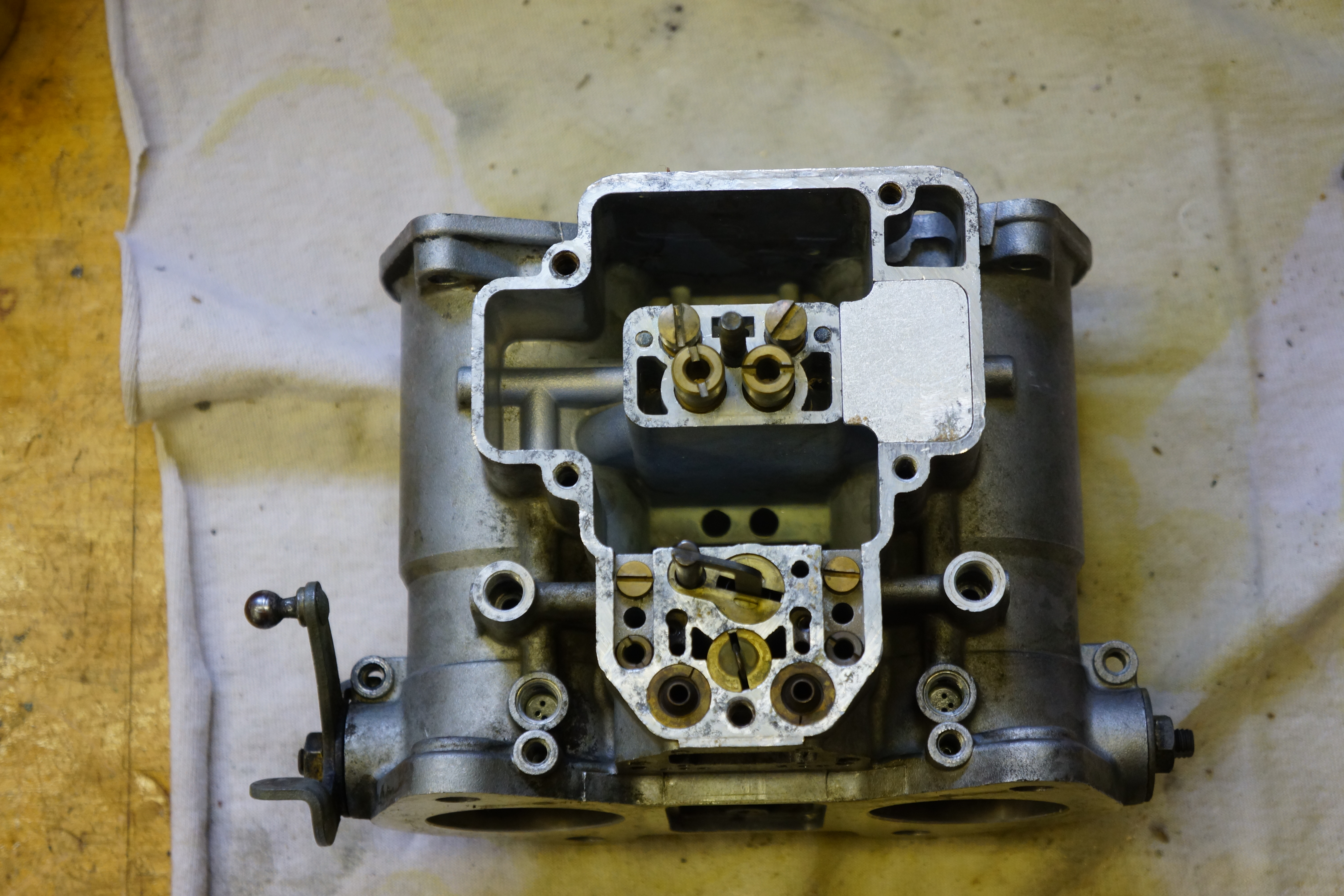
Removal of top cover exposes all jets


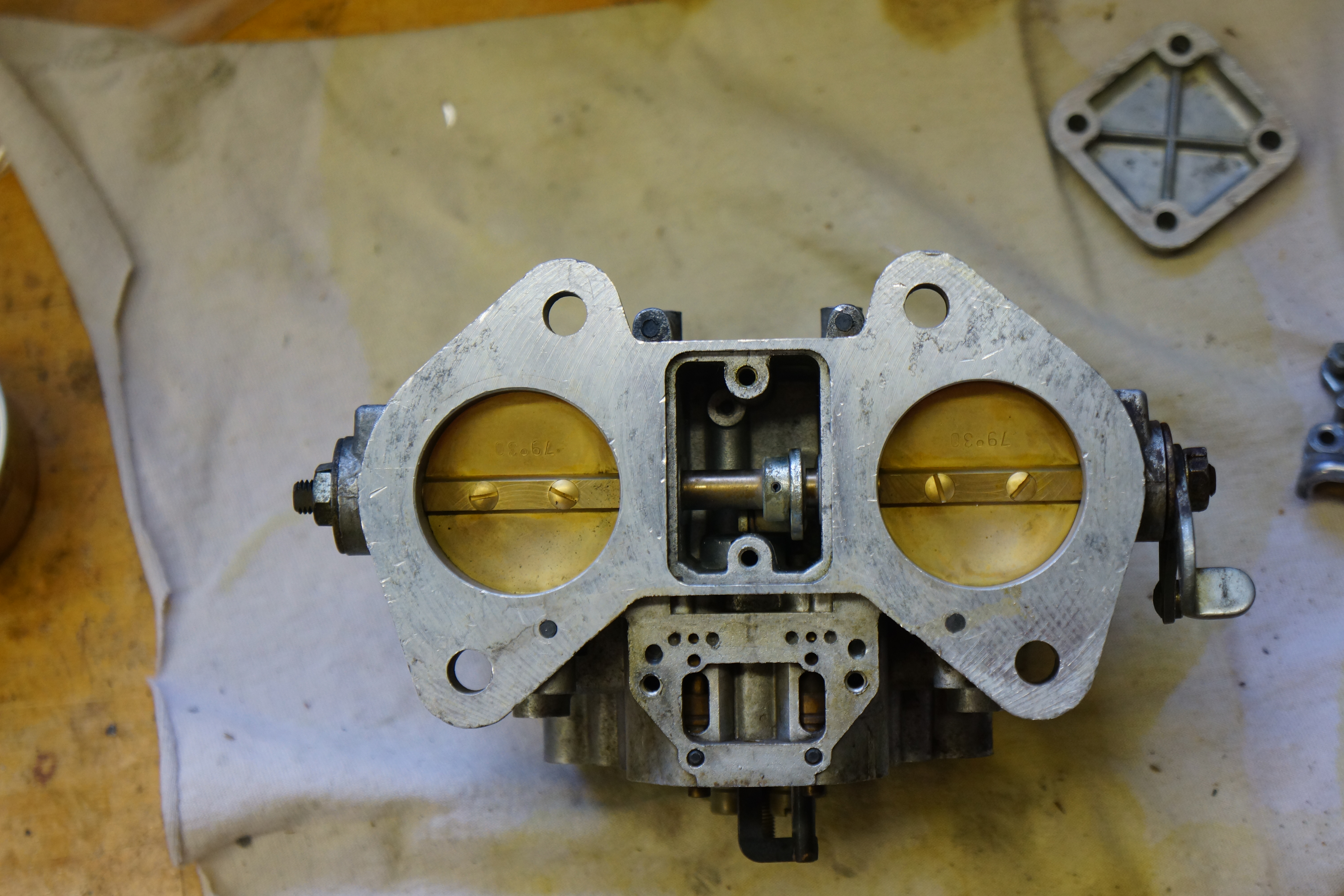
Service books clearly state to leave throttle plates and shaft in place unless obviously defective


It was important for me to stay focused on the goal: I wanted to clean out the carburetors, inspect them for any obvious faults, then reassemble them using all new gaskets. Perhaps it’s from a lifetime of dealing with old cars, but I do have the habit of over-repairing my vehicles. The issue with Webers is that other than setting the idle mixture, idle speed, and float height, any other adjustments involve a lengthy trial-and-error game of swapping jets. One more time: aside from the fuel leak, the car ran fine. I selected the rear-most carb (the leaker) and removed all the covers.

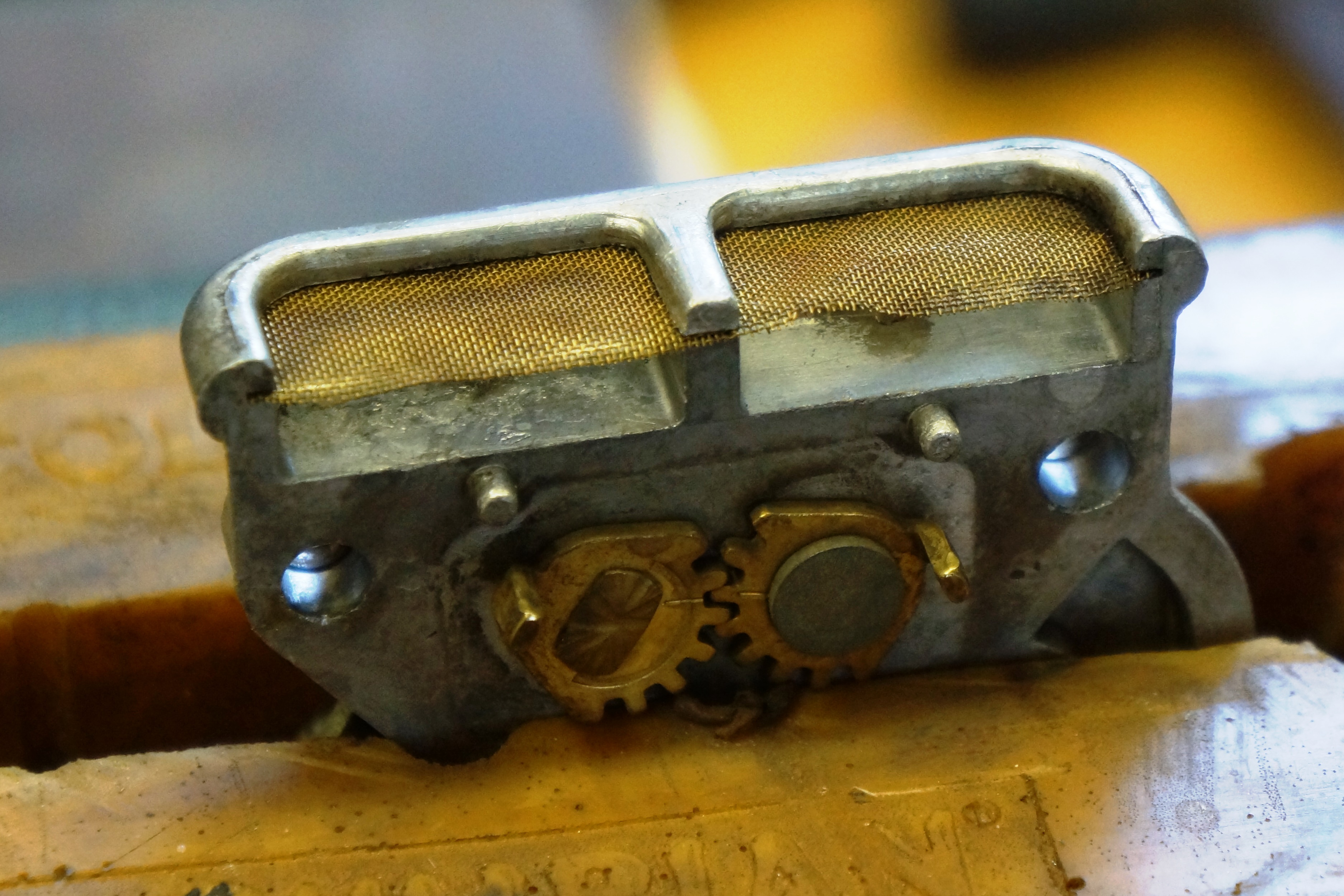
Screens under choke control were black


They cleaned up nicely with Gumout


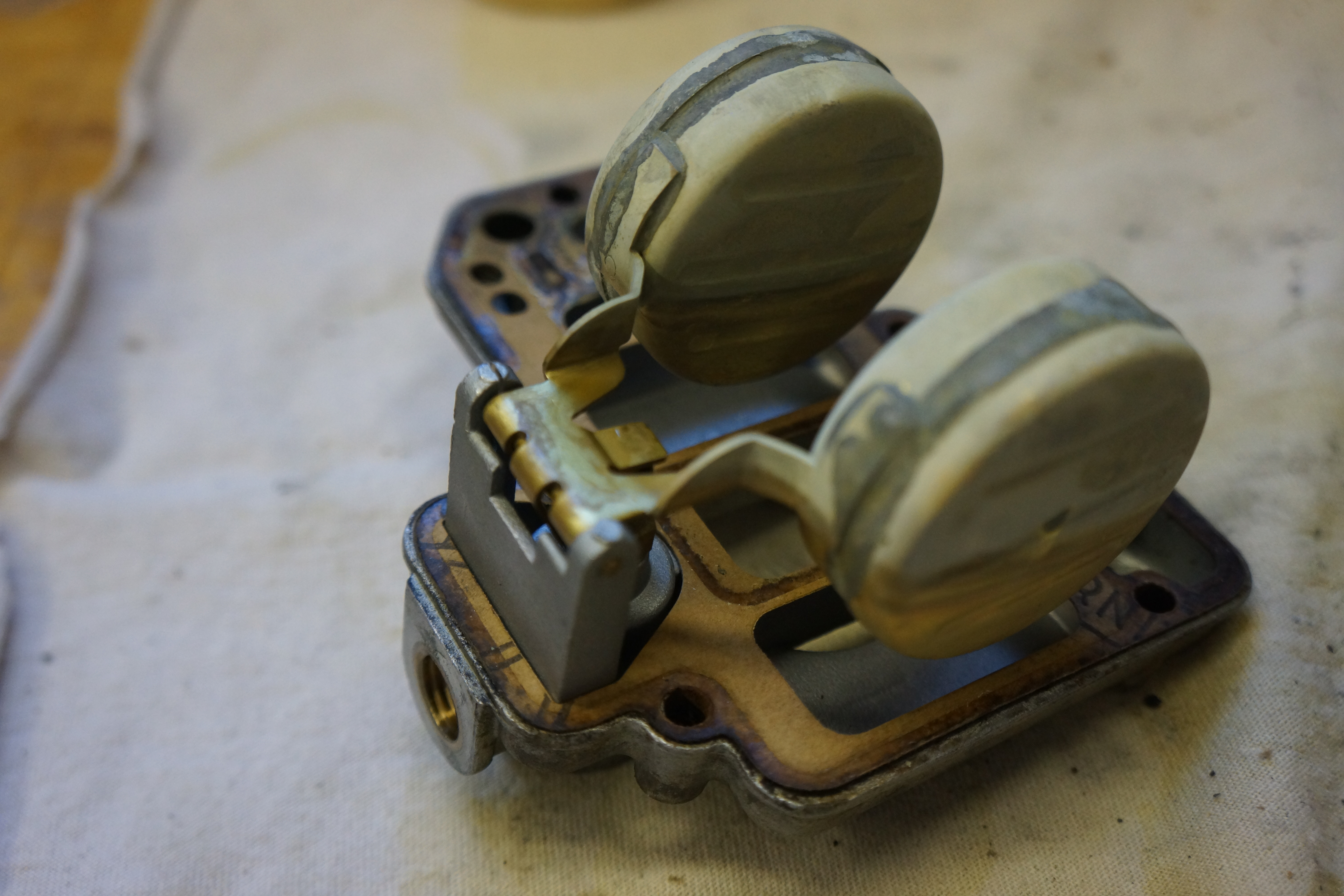
Having several service manuals with exploded diagrams at my side, things didn’t look too bad. There was clearly some dirt built up, but no obvious faults or defects as far as I could see. Numerous cans of Gumout were emptied to clean things up, and I’ve been pleased with the progress. The float needs to be carefully measured and adjusted, and once that’s done, reassembly will commence, which is where I will pick up next time.

Float is attached to top cover, adjusted by bending brass tabs


All photographs copyright © 2020 Richard A. Reina. Photos may not be copied or reproduced without express written permission.
RM Sotheby’s 2020 Auburn Auction: Six Great Collector Cars for Under Ten Grand

RM Sothebys, the automotive auction company, recently concluded its Auburn Fall auction which was held September 3-5, 2020. Unlike many of RM’s recent previous auctions conducted online due to the coronavirus, RM allowed this one to be an in-person gathering at Auburn Auction Park in Indiana. However, being onsite was not a requirement for bidding, as telephone and web-based bids were still accepted.

Over 500 motor cars crossed the block, and while most sales were under the six-figure mark, several notable high sales included a 1935 Auburn Speedster which sold for $700,000, and a 1936 Duesenberg Tourster which hammered for $575,000. (Both these number are without the auction company’s 10% buyer’s premium added, so they reflect actual final bid when the gavel fell.)

Scanning through the results, I was amazed to see that over 60 of the automotive lots sold for under $10,000. True, many of these cars were projects, or unpopular pre-war vehicles in pedestrian body styles. But much of my amazement is simply finding so many cars available for an initial outlay of ten grand (or less). Frankly, I still hear the cries of “the hobby has gotten too expensive for me”, and again, those cries are originating from those who lament passing on that chance in the early 1970s to score a Shelby Mustang for $1,500. While those days are over, there are still plenty of affordable ways to enter the hobby.

A mantra of mine, which I chant to those looking for that first collector car, is “be open-minded”. If one is willing to consider brands, models, and body styles outside the typical collector’s purview, there are lots of choices, and there’s also lots of fun to be had.

Among the low-priced sales at RM Auburn, I selected six which struck me as interesting cars at fair prices. I’d be happy to have any one of these cars in my garage; some of them I might hold onto just for a few months so I could say “yeah, I had one of those once”; others might be worth hanging onto a little longer. While the selected six are personal favorites, I also made an attempt to select from a variety of body styles. You’ll find sedans, convertibles, trucks, and station wagons on my list. Undoubtedly, your six choices would be different. That’s the fun of collecting.

Let me know your thoughts: do you have a favorite among these? Is there one car which you think represents a best value? I’m more than happy to entertain a little back-and-forth about my picks. The results are arranged in ascending hammer price order (when you click on the link, please note that RM Sotheby’s shows a higher price because they always include the 10% buyer’s premium).


  1. 1988 Toyota Celica GT convertible hammered sold for $3250

https://rmsothebys.com/en/auctions/af20/auburn-fall/lots/r0271-1988-toyota-celica-gt-convertible/941717

The cheapest car on my list, it might also qualify as the most reliable. The bulletproof qualities of most Toyotas include this rare convertible variant. While not much to look at stylistically, this would be a fun car to take to cars-and-coffee events and cruise nights. I’d guarantee that you would have the only one there.

From a value perspective, Bring a Trailer (BaT) sold one in 2019 for $7,650. My Cars of Particular Interest (CPI) retail price guide puts this car in the range of $2000 to $5000 for a good-to-excellent value, so $3,250, while perhaps not a steal, seems a fair price.

  1. 1952 Kaiser Manhattan sedan hammered sold for $4750

https://rmsothebys.com/en/auctions/af20/auburn-fall/lots/r0439-1952-kaiser-manhattan-sedan/977039

Kaiser is a brand which I see at car shows so infrequently. It’s usually takes a National AACA show like Hershey for me to come across one. Kaiser production ended in 1955, so there aren’t many around, and therein lies the charm here. For under five large, you can have an almost “one of a kind”. One downside might be parts availability, but hey, the hobby is all about the adventure of scrounging for rare parts.

This price looks especially good when checking CPI, which publishes a range of $8,500 to $20,000 for cars in the good-to-excellent condition categories. And BaT sold  one earlier this year for $8,800 , so buy this one and flip it if that’s your thing.

  1. 1988 Buick LeSabre Estate wagon hammered sold for $5750

https://rmsothebys.com/en/auctions/af20/auburn-fall/lots/r0272-1988-buick-lesabre-estate-wagon/941719

Station wagons, known as long-roofs among collectors, have really taken off in just the last few years. While much of the interest seems focused on ‘60s and ‘70s American cars, this Buick wagon from 1988 is a little more modern, and a little more ready to be pressed into daily driver duty if necessary. The subject car even has the de rigueur reverse-facing rear seat (for when a minivan is just too ordinary).

The CPI values, at $1,500 to $3,600, surprise me, and frankly I think they’re low. Again, while older wagons have risen in value, snagging this ’88 puts you ahead of the curve. Compare this car to the one I found on Hemmings which is on offer for $9,000, and I think the RM car looks pretty pretty good.

  1. 1978 Ford F-150 hammered sold for $6000

https://rmsothebys.com/en/auctions/af20/auburn-fall/lots/r0569-1978-ford-f-150-pickup/989378

Pickup trucks are hot: they’re hot as new vehicles (last I checked, which was earlier this year, average transaction price for a new pickup truck out the door was $51,000), and they’re hot as collectibles. Of my six choices, this one shocks me the most. Maybe I’m missing something; yes, it’s a long bed, and yes, it’s RWD. But still….

CPI, to my complete lack of surprise, pins this generation F-150 at $12,000 for a “good” truck and $26,000 for an “excellent” truck. BaT sold a similar one earlier this year for $11,750.  Forget flipping the Kaiser. Flip this.

  1. 1956 Lincoln Premiere convertible hammered sold for $7250

https://rmsothebys.com/en/auctions/af20/auburn-fall/lots/r0044-1956-lincoln-premiere-convertible/870051

Of these six selections, this one is the project car, and for that reason, I hesitated in choosing it (I got over my hesitation). The aura exuded by this automobile is so overwhelmingly impressive that no matter its condition, it remains an object of desire. Now, even at a smidgen over seven grand, you’d need to pour in multiples of that to turn this into a reliable road car, never mind something show-worthy. And RM sold two other ‘56s, one of which, while over our arbitrary price break at $17,000 , was certainly the better deal.

Check out these numbers from CPI: $42,000 for “fair”, $68,000 for “good”, and $123,000 for “excellent”. Your choices are: park this one on your lawn as an ornament, or put $100k into a restoration, sell it for $120k, and net $3,000. I’m going to mull that one over and get back to you.

  1. 1976 Pontiac Bonneville Brougham coupe hammered sold for $7250

https://rmsothebys.com/en/auctions/af20/auburn-fall/lots/r0257-1976-pontiac-bonneville-brougham/941689

Tied for most expensive car on my under-ten-grand list, I think this might be the best choice in many ways: GM parts availability, orphan brand with huge hobby support, final year of the big GM full-size cars, roadworthiness as a touring car, and lots of creature comforts including air and cruise.

It’s difficult to find comparables, although Mecum did sell a ’76 Bonneville four-door for $10,500 way back in 2017. The CPI range is $6,000 to $14,000, which means this sale price is not a steal but not a rip-off. I’d need to blow a hole in the garage wall to fit it, but it might be worth it.


The Isetta Saga, Chapter 31: Greenwich for a Fourth and Final Time in 2010

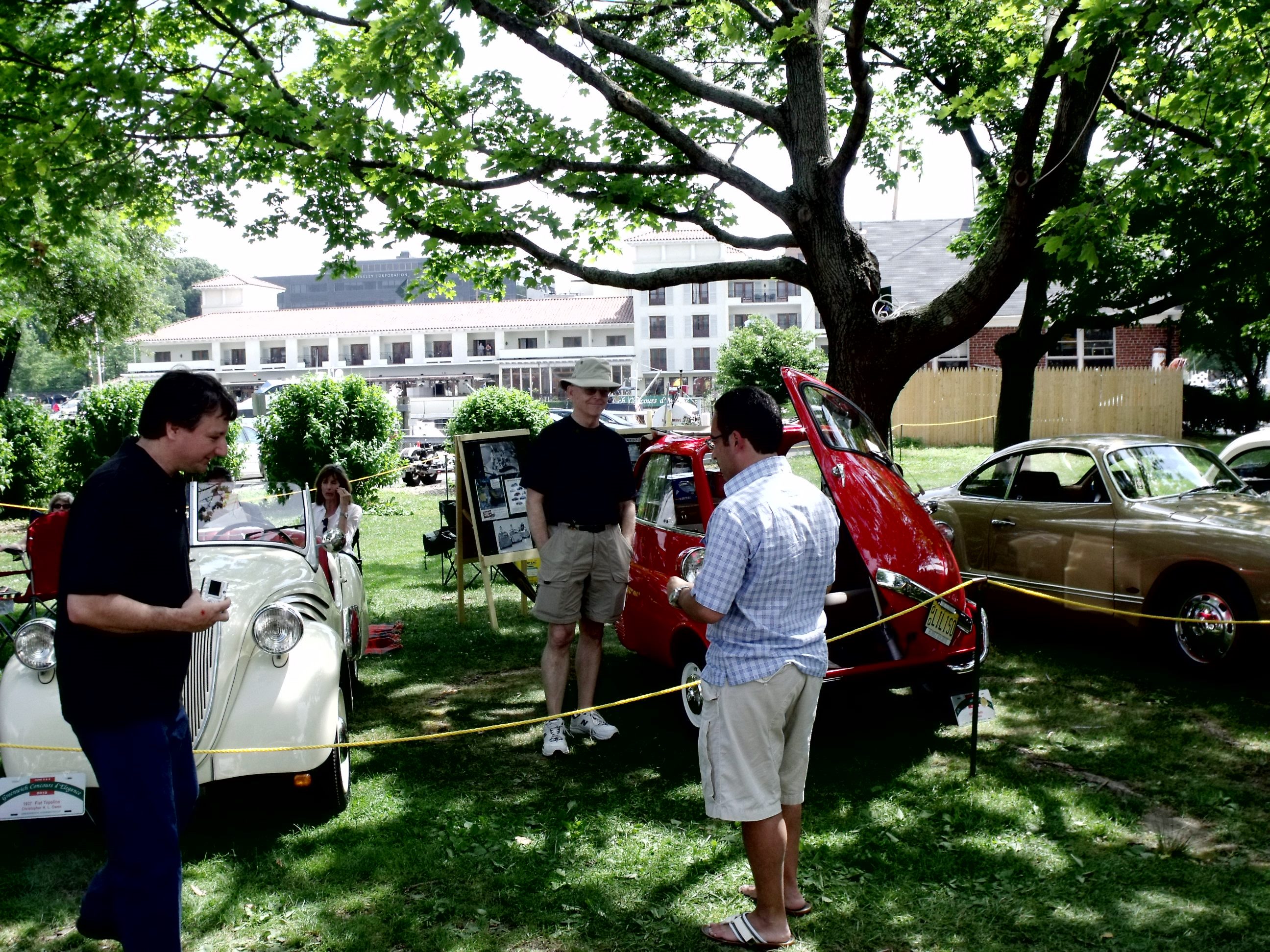
The Greenwich Concours d’Elegance has a very strict rule: a vehicle can be shown at one of its events only every three years. As Bruce Wennerstrom himself told me, this ensured that repeat audiences would see different cars the following year. I had shown my 1957 BMW Isetta in 2001, 2004, and 2007, and when 2010 rolled around, I didn’t hesitate to apply again. The Wennerstroms welcomed me back for a fourth, and what would turn out to be, final time with the Isetta.

My dear friend Richard Sweeney, NJIT Library Head and non-car person extraordinaire, jumped at the chance to accompany me, which also meant that my long-suffering wife was off the hook this time, although I didn’t hear too many complaints from her about it. Richard was of great help from the get-go, and as we got the car positioned as instructed by the field organizers, Richard wanted to play an active role in standing near the car, chatting it up with attendees. I could tell he loved every minute of it.

Richard Sweeney stands at the ready next to the Isetta


The crowd is starting to heat up

To my eye, 2010 had significantly more spectators than I had noticed during my previous outings. Perhaps it was the beautiful weather; certainly, a major factor was the increasing recognition that Greenwich was getting, with some press calling it “The East Coast version of Pebble Beach” – high praise indeed. The caliber of vehicles, always high, seemed to create even more oohs and ahhs among show-goers.

Instead of other BMWs, my car was with similar small cars such as the VW Karmann Ghia and this prewar Fiat

What can I say? I talk with my hands

At awards announcement time, the Bubble made the cut yet again, winning “Most Fun Car” for the Sunday Europa show. Well, 3 out of 4 ain’t bad at all. I think Bruce had a soft spot for my little car, as we won in 2001 and 2007 too. Once we reached the awards table, Bruce presented my trophy and again asked me if my Isetta has the ‘big block’. Microphone in hand, I again told the assembly that European cars got 12hp, but we in the states got the 13hp version. Bruce again chuckled; he never tired of that story.

In the queue on our way to the viewing stand

My friend Richard was overjoyed at the prospect of riding in the car past the viewing stand. He couldn’t stop talking about peoples’ reactions, because his interest was completely enveloped in the sociological and cultural impacts of this car on an audience. It wasn’t the car per se; it was how people reacted to the car, whether they were seeing an Isetta for the first time, or reliving memories of one from long ago. He never let go of his idea of making a documentary about the car and the public’s responses to it.

Seated spectators on left, awards tent on right

We got the car loaded onto the trailer and got back on the road just as a major late spring storm hit. We made it back safely, though, and I thanked Richard profusely for all his help. All he could say was that he’d gladly do it again.


All photographs copyright © 2020 Richard A. Reina. Photos may not be copied or reproduced without express written permission.
 

The Isetta Saga, Chapter 30: Two Events in 2009

It turned out to be an eventful year, 2009, which in retrospect was no surprise at all. It started with me (again) telling my bosses at Volvo that I had every intention of taking voluntary retirement in December, to which they continued to react with disbelief. My recent promotion to Manager of Technical Engineering kept me busy, and my own work ethic wanted to ensure that I would depart without leaving unfinished assignments for others to clean up. I was informed that there would be at least one more business trip to Sweden, likely my last. Finally, I would be turning 55 in March, not a major milestone in my mind, but one that still deserved some reckoning.

I still had the ’68 Mustang, and I still had the Isetta, both tucked safely away in the garage. I had toyed with the idea of selling the Isetta, and even ran a few print ads, which got zero response. Since participation in the New England 1000 classic car rally seemed to be on hiatus for now (we last drove in it in 2007, and wouldn’t again until 2013), I continued to search for new opportunities to show the Isetta. The first such opportunity of the year came about when I saw an ad for the Readington Township Memorial Day parade: the parade organizers were looking for “old cars”.

Various old clunkers are staged before the parade’s start

My entry was accepted, and we trailered the car to the assembly area, a local strip mall. (In fact, we live in Readington Township which is quite large. I considered driving the car there but it would have meant crossing several major thoroughfares.) The variety of vehicles in the parade confirmed for me that there were no limits to vehicle type, as long as the cars were “old”. Volunteers handed us the obligatory red, white & blue accoutrements, and we were off.

Yes, a VW Beetle IS larger than a certain BMW


The King and Queen of the parade pose for a pic


Appropriately attired, we’re about to take off


You can’t be an introvert and ride in an Isetta during a parade


The challenge with driving an old car in a parade is maintaining an appropriate speed. Too fast, and you’ll zoom by spectators who’ll barely get to see their reflections in your shiny chrome. Too slow, and you might overheat, or, if you’re driving a stick, you may find yourself slipping the clutch. This parade was S-L-O-W. I had trouble maintaining a steady pace of, oh, about 2.5 mph. More than once I would pop it into neutral and coast, even if that meant leaving a greater distance between my car and the car in front of me. Nevertheless, it was a delightful parade, with Main Street lined with the cheering residents of Readington. The tortoise-like pace, though, bored me, until I got the bright idea to throw the door open while driving. The car can still be steered, however, the door opens both outward AND upward, which blocked my forward view. It was worth it, though, because the crowd (ok, just the kids) went wild with screams and laughter every time I did that.

A different kind of horsepower

Later that summer, I dragged the little red bubble to the Boonton Cruise Night, a Friday tradition in northern NJ. Boonton’s affair is possibly typical for a suburban cruise night, set in the large parking lot of a strip mall anchored by a WalMart, so there’s plenty of regular traffic along with that generated by the car nuts. A pizzeria kept us nourished with food and caffeine, and a few friends showed up. This September outing was the second and final one for the Isetta in 2009. In December, as promised, I retired from Volvo Cars of North America after 23 years of employment. I had no idea what I would do in 2010, but I certainly hoped to have more free time to play with cars.

Two red cars, one just slightly more powerful – note the Isetta Jeopardy board on display


The view from the folding chair


All photographs copyright © 2020 Richard A. Reina. Photos may not be copied or reproduced without express written permission.

Lime Rock Fall Vintage “Sunday in the Park”, Sep. 2020

At 7:10 a.m. on Sunday, September 6, 2020, I was in the parking lot of local bagel shop, buttered bagel and hot coffee in hand. Sitting in my Volvo V60, I used the car’s navigation system to find “Lime Rock Park”, amazed that I located it so quickly within that sometimes-quirky system. Estimated drive time was 2 hours, 30 minutes. With that, I pulled out of the lot, and was on my way to attending my first car show since the global pandemic shutdown began.

There are no words I can use which would add in any meaningful way to what so many have already expressed about the year 2020. I had resigned myself months ago that the entire year would be one huge write-off for participating in the car hobby, yet when I discovered that Lime Rock was planning to move ahead with its 38th annual “Sunday in the Park” concours, I reconsidered my rather conservative position. I knew the show well, and knew that even at its most crowded, the size of the track and the spacing of the show cars would allow for plenty of social distancing. Reading Lime Rock’s website, I learned that they planned to limit attendance by restricting the number of ticket sales, and they would also be enforcing a mask mandate. The final vote-in-favor was the weather forecast, which promised sunny skies, low humidity, and temperatures no higher than the low 80s.

Volvo’s navigation didn’t let me down, and I arrived at the track at 9:40. As soon as I drove onto the bridge over the track, I saw that indeed, this would be an experience different than almost every previous visit. Usually, the parking lot would be more than half-full by this time, and there would be rows and rows of trailers and tents visible in the distance. Instead, parking appeared to be about 25% full, and there was no camping this year – it had been removed as an option.

I parked and headed down the paved ramp toward the track, fearful that maybe there would be an equivalent lack of show cars on display. That wasn’t the case at all, even if the number of vehicles was less than the usual turnout. By my most unofficial calculation, I would guesstimate that both counts (cars and spectators) were about 50% of a typical Lime Rock Fall Vintage show. Almost everyone was masked, and track workers on foot and in golf carts were actually on patrol. If they spotted someone sans mask, the Lime Rock rep stopped that person and told them that masks were required. Good for them! It greatly added to my own comfort level as I walked the show.

The display cars did not disappoint: as always at Lime Rock, there were the pre-arranged “classes”, different every year, which allow for great variety within each class (for example, “Untouched and Preserved Originals and Barn Finds”). The show organizers also managed to squeeze in some fun at the expense of the coronavirus by naming one class “Distancing at a Distance – Vintage Travel Trailers & Campers”. The other major group of show vehicles is collectively known as the “Gathering of the Marques” – for these cars, there is no pre-registration. As one drives up to the gate, the driver makes it known that they intend to park their car with others from the same marque, and there is no model year cutoff. It does make for an eclectic gathering, and show goers have the option to linger or march past.

The spectator parking area itself can provide plenty of automotive entertainment too. New Englanders seems especially fond of motoring to this show in their ‘60s four-wheeled icons and parking them among all the other daily drivers. I suggest that the Lime Rock Park officials consider trophies to vehicles at least 50 years old found in the parking lot!

Awards were handed out between 1 and 2 p.m., at which point, show participants began to leave. I had covered the entire track by about 2 o’clock, so my time was up too. The drive home was hampered by a little more traffic than I encountered in the a.m., but I still managed it door-to-door without stopping in just under 2 hours and 45 minutes. I was really glad I went. It felt great to be outside and back at a show again, my first since attending Atlantic City in February. The Lime Rock Fall Vintage weekend has been a favorite of mine for 30 years, and I can only hope that the 2021 visit will feel like normal again.


DOMESTIC

1911 Cadillac

This restoration was over-the-top, yet the accompanying signage claimed that the owners regularly tour in it, and that’s believable too. I loved the “outside” speedometer, and the likely-original worn clutch and brake pedals.

1928 Packard with 5th wheel trailer

I’ve seen this rig before, I think at Hershey. Its originality is impressive. I also overheard the owner say that the car is driven regularly. Take note of the 5th wheel, back when they really were wheels!

1964 Chevrolet Corvair

This Monza coupe was found in the barn-find class; the accompanying signage indicated an original 30,000 miles. The condition and colors made this a standout among 1st gen Corvairs.

1956 Packard

This 400 model coupe was from the last year of “true” Packards. The signage indicated it was equipped with the optional torsion-leveling suspension.


C8 Corvette

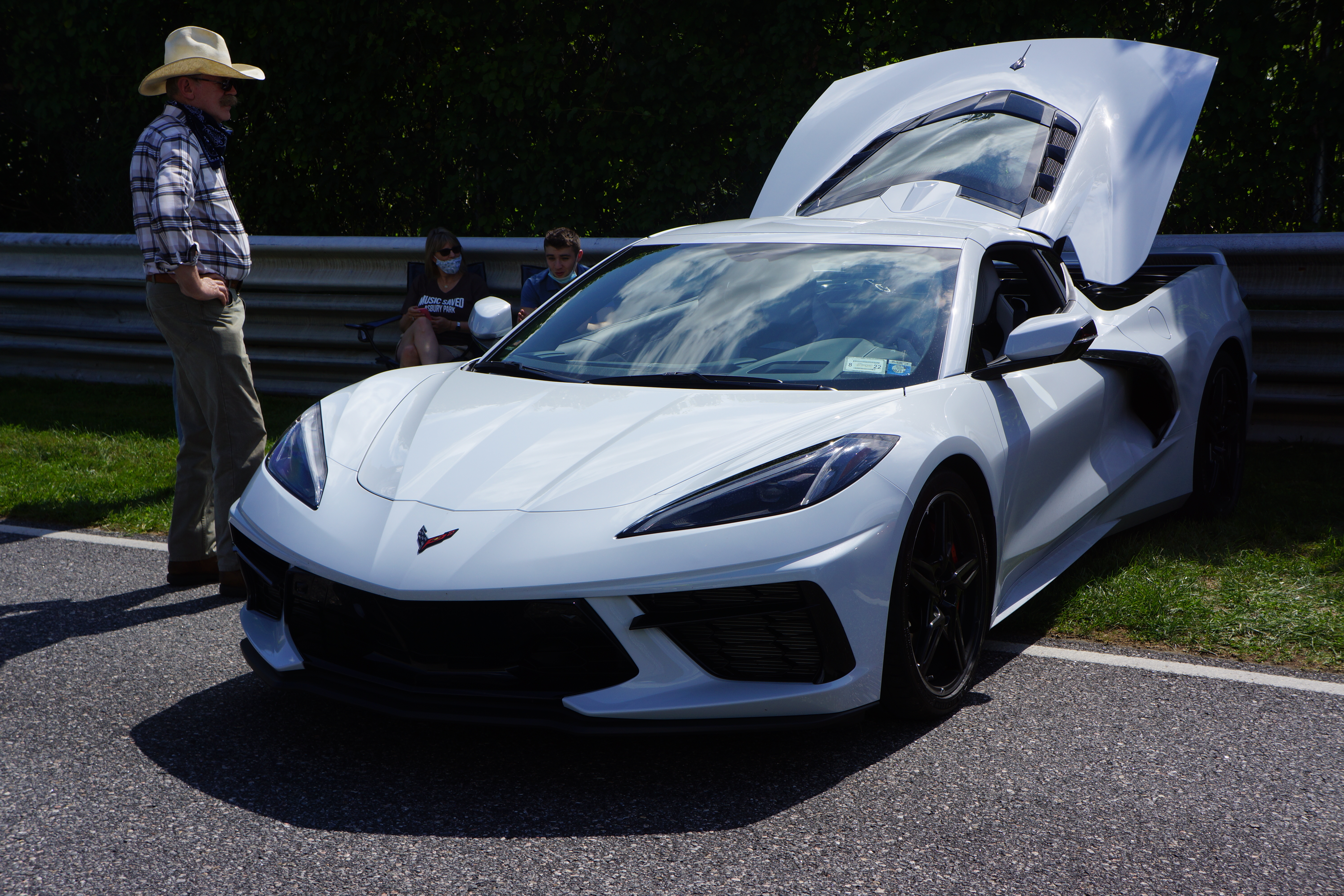
This was my first in-person sighting of the mid-engined marvel from GM. It looked a bit underwhelming to me, an opinion I chalk up to its plain off-white exterior and interior.


ITALIAN

1938 Lancia Aprilla

New England Rally friend Chuck Schoendorf showed this immaculate Lancia in the pre-war class. The car’s engineering was ahead of its time, with 4-wheel independent suspension and a narrow-angle V4 engine.


Iso Rivolta

Renzo Rivolta’s ISO firm sold manufacturing rights for its Isetta to BMW, and used those profits to design and build this Italian-American hybrid, with a Corvette V8 under the hood.


1971 Fiat 124 Sport Coupe

Owners Dave and Cathy returned to Lime Rock with this gorgeous 124. I met them both last year and the car looked better than ever. Dave said that the oversize air cleaner is hiding two 2-barrel Webers, and stated that this is a high-horsepower European setup which was a dealer option.

1973 Fiat 124 Sport Coupe

These 124 coupes are rare, and it was very unusual to find two of them at the same show, when there were none of the more-common 124 Spiders.


1982 Ferrari 308GTSi

This “common” Ferrari model stood out for its unusual and attractive shade of verde medio, or medium green.

Ferrari Dino GTB coupes

I was struck by all 3 cars being GTB models, B for berlinetta, or coupe, compared to the more common S or spider models with a removable top center section.


Alfa Romeo coupe, spider, and sedan

Alfa Romeo Junior Z Zagato

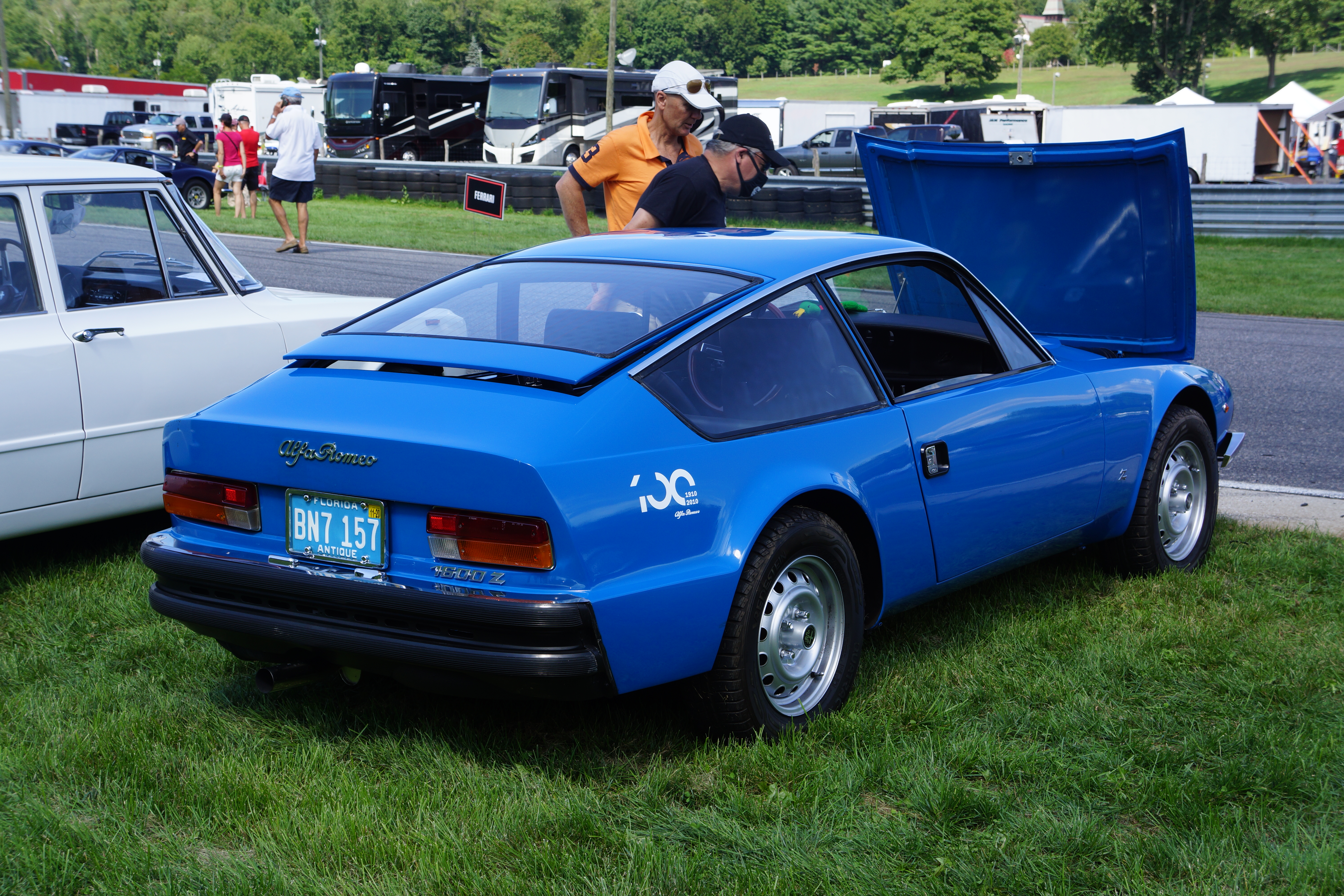
This rare Alfa looked great in blue and I overheard the owner talk about having driven the car in Europe; I was envious.

3 Very Different Alfas

The Spider has a longitudinally-mounted engine in the front, driving the rear wheels. The 164 has a transversely-mounted engine in the front, driving the front wheels. The 4C has a mid-mounted engine driving the rear wheels.


GERMAN

1963 VW Karmann-Ghia convertible


1973 BMW 3.0CS


Porsche 911 Targa “long hood”

Mercedes-Benz 300SL Gullwing

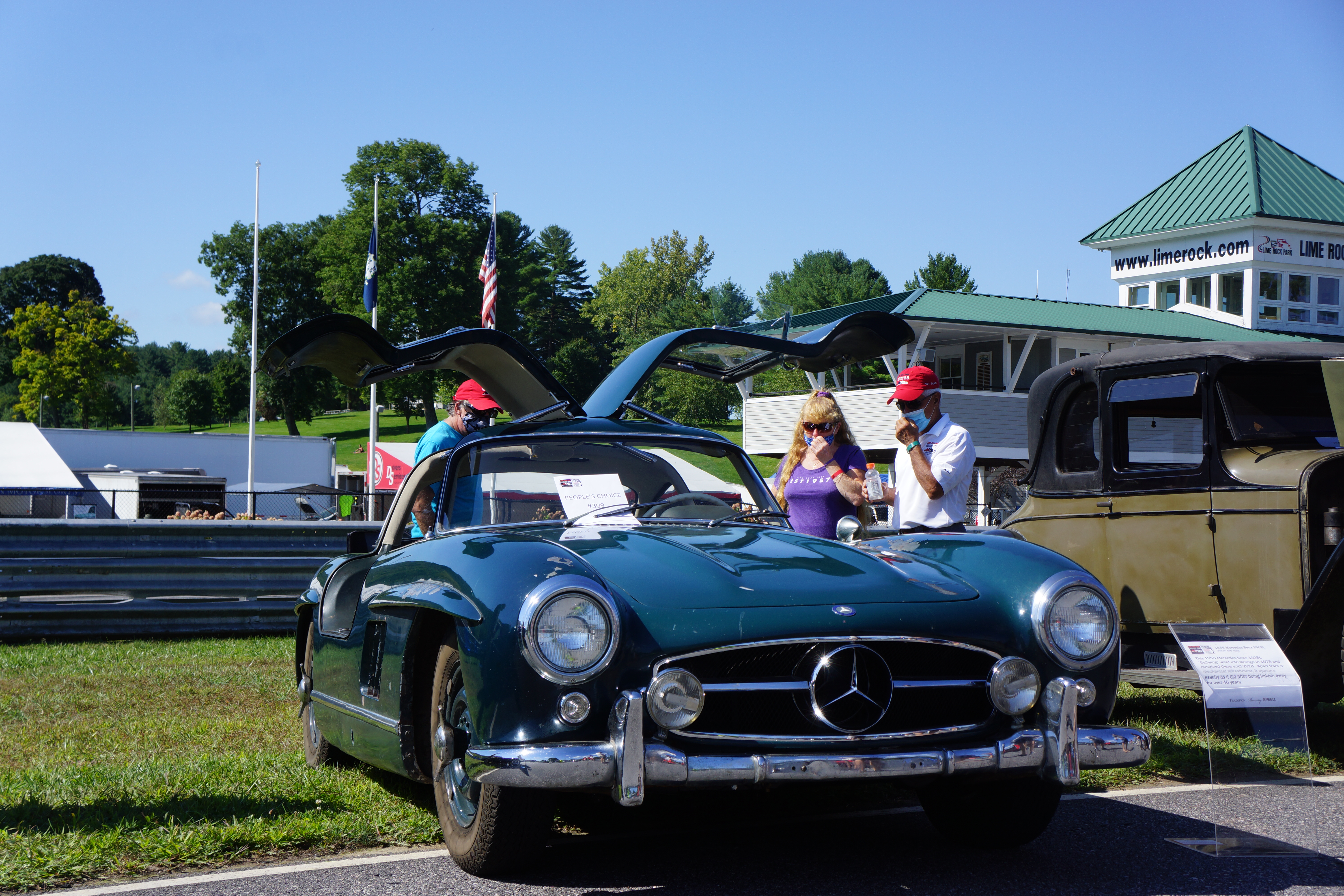
This 300SL was in the barn-find class, and given the values of these icons, it’s incredible to see one which hasn’t been restored. Based on photos on display, the engine had been yanked for an overhaul. The car, as worn as it is, looked completely functional, and frankly, I really hope the owner does NOT restore it! They’re original only once.

SWEDISH

1965 Volvo 544

This was also in the barn-find class, with signage claiming 34,000 original miles and all-original condition, including paint and upholstery. It could be the only such 544 out there.

1968 Volvo 1800S


Volvo station wagon display

Volvo, well-known globally for its 5-door estate cars, started to add performance to the mix. Here were a few examples.

ASIAN

Mazda Miatas

Miatas are usually well-represented at Lime Rock. This year, the turnout was a bit smaller than usual.


Datsun 240 Z

A lineup in red, white, and blue.


A FEW PARTING SHOTS

A star mascot


Curvy glass


A well-accessorized Ferrari owner


Mr. Brown wasn’t shy about putting his name on his cars


Free fuel?


Dad and son


Bye til next year


All photographs copyright © 2020 Richard A. Reina. Photos may not be copied or reproduced without express written permission.
The Isetta Saga, Chapter 29: The 2008 Carlisle Import Show

My first blog post about “Carlisle”, as in the car shows at Carlisle Fairgrounds, was written in April of 2015, after I had attended the Spring Carlisle event. As I’ve mentioned innumerable times, Carlisle has been a mainstay of my adventures in the collectible automotive hobby going back to my first visit in 1978.

For the first 15 years or so of its existence, Carlisle Events consisted only of a Spring show in April and a Fall show in late September/early October. In their desire to expand, the show organizers branched out in several ways. One addition to the calendar was the Carlisle Import Show. Since the ‘big’ shows which bookmarked the year spent about 99% of their energy on domestic product, the Import Show provided an opportunity for enthusiasts of European and Asian cars to have something to call their own. I first attended the Import Show in 1990, and observed that it took up less than one half of the acreage of a normal show. We actually could park our daily driver cars on the field.


1990 Carlisle Import Show, Italian cars

1990 Carlisle Import Show, British cars

Volvos at the 1990 Import Show

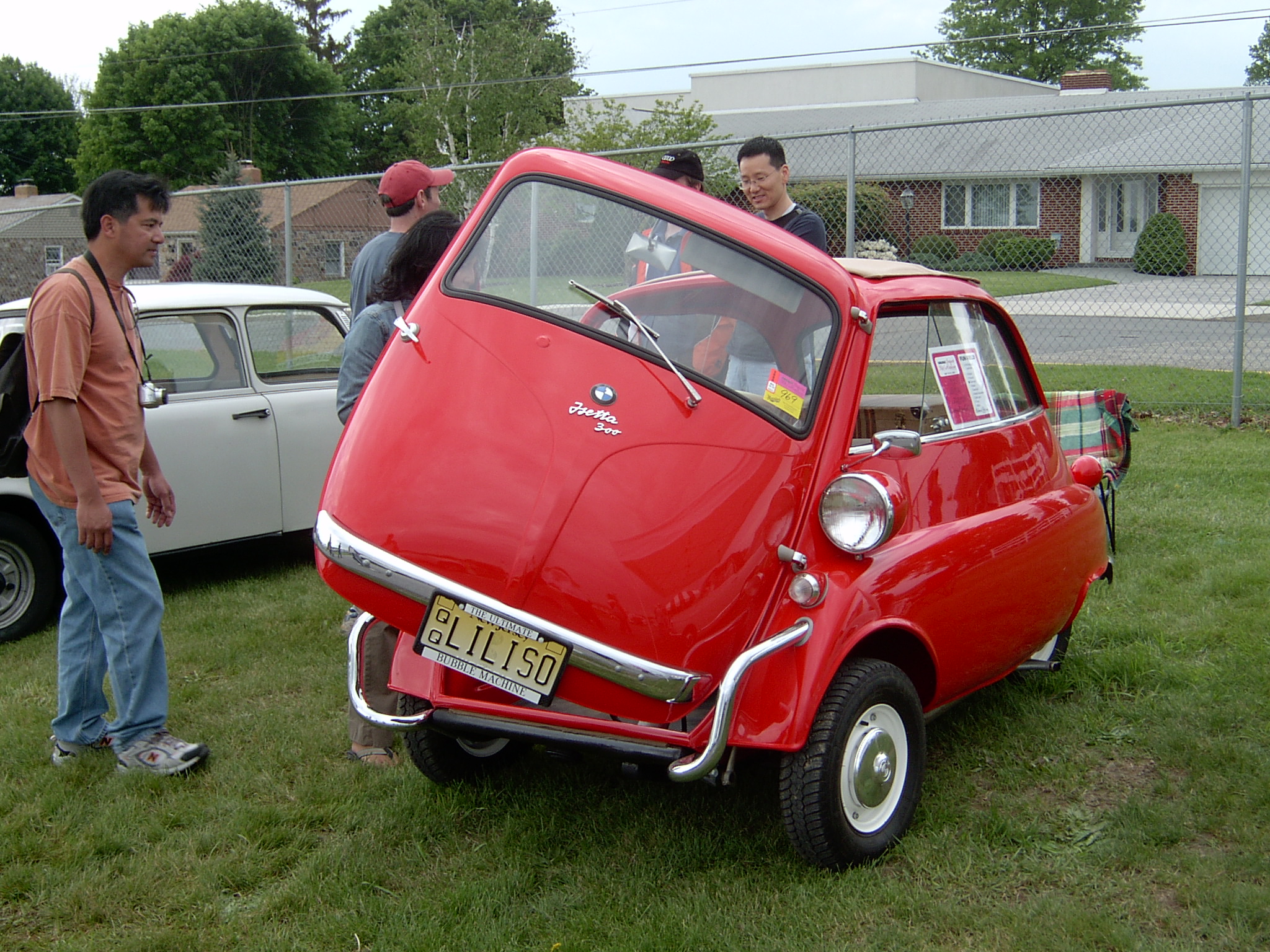
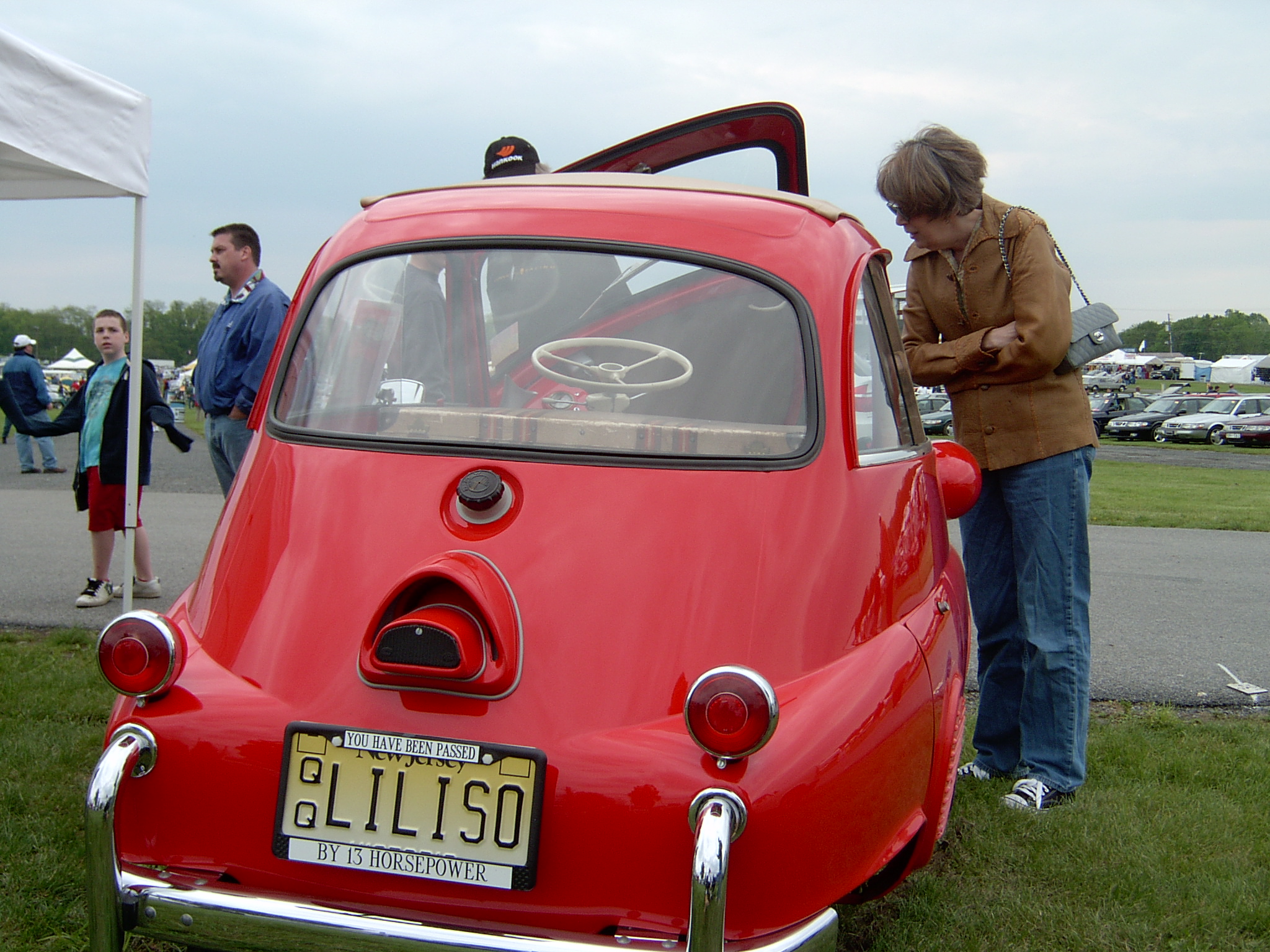
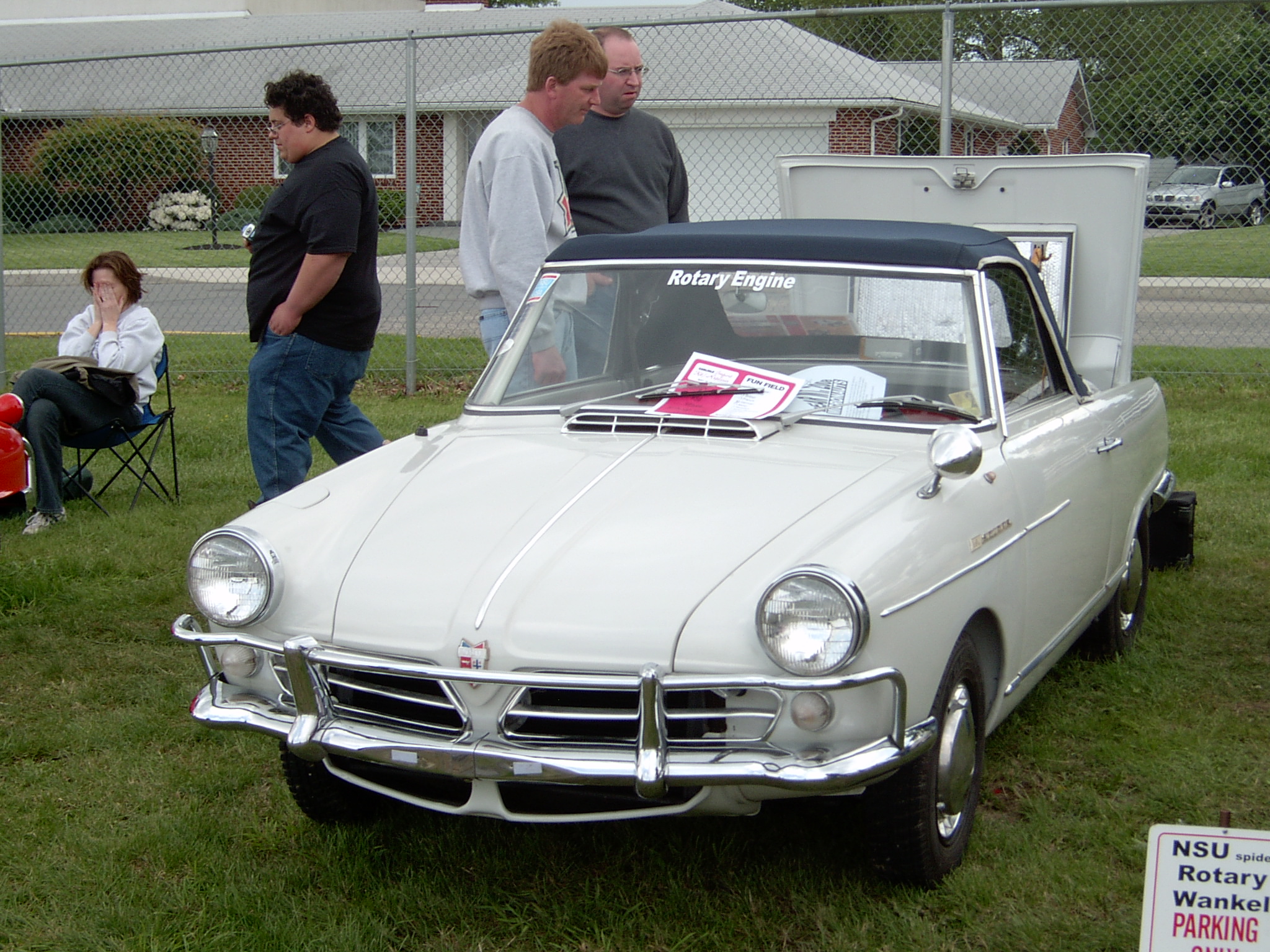
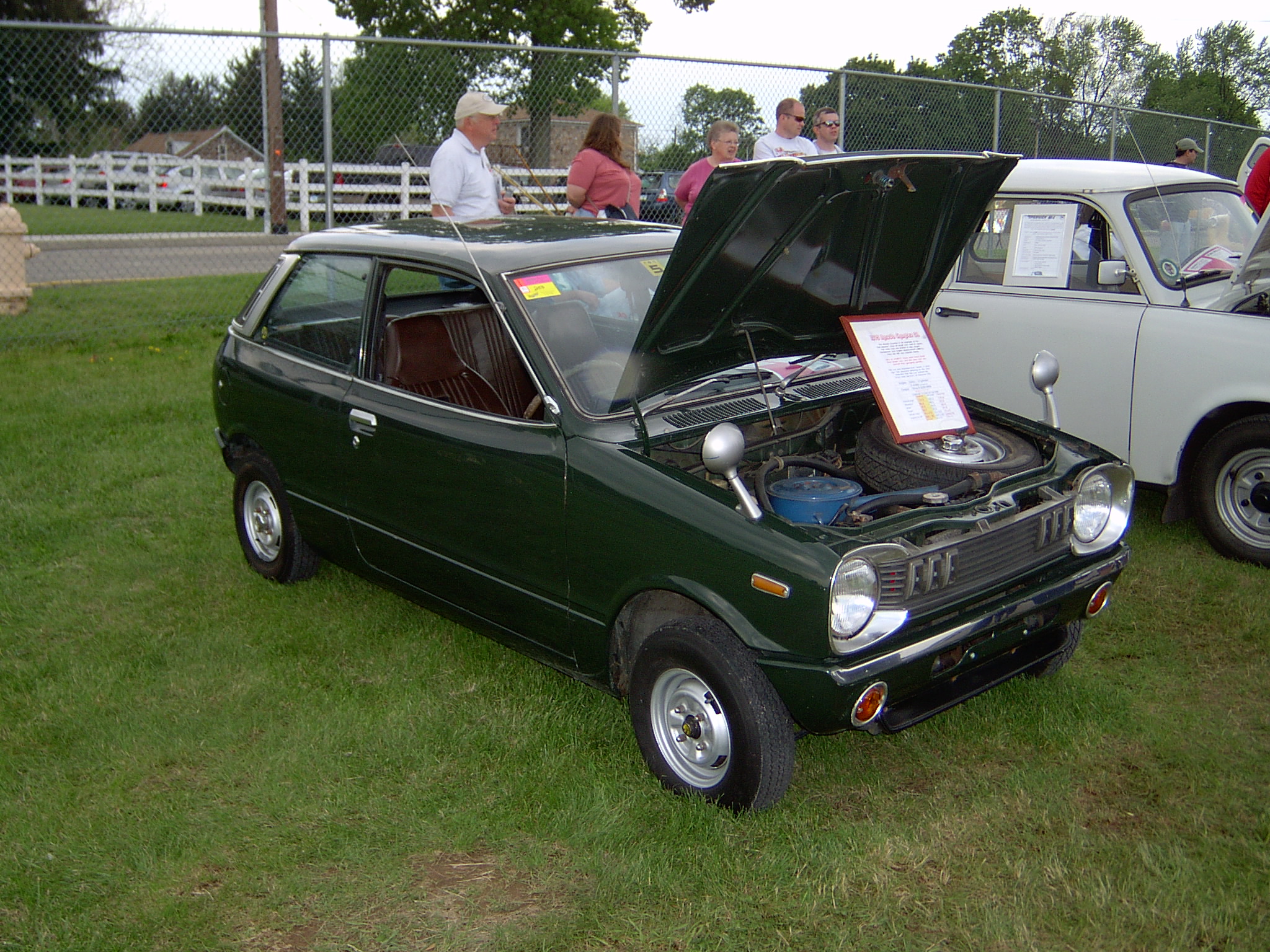
Fast forward to 2008: The Carlisle Import Show, held in May, was next in line for the Isetta. Instead of placing me with the Germans, my car was situated with a group of microcars, which was actually more fitting. I had the pleasure of parking my bubble between an NSU Wankel Spider and an East German Trabant(!).  Another very cool microcar in attendance was the Mazda Chantez, a kei-class car, with a two-cylinder, two-stroke engine making 35 horsepower. I had never seen one before, and I haven’t seen one since.


Four German cars in a row

NSU Wankel Spider

The Mazda Chantez kei-car

One of the great things about the Import Show is the tremendous club support. Vehicles are arranged by marque, and the clubs are very proactive in setting up tents, tables, chairs, and displays. The entire atmosphere is much more cordial and familial compared to one of the huge spring or fall events.

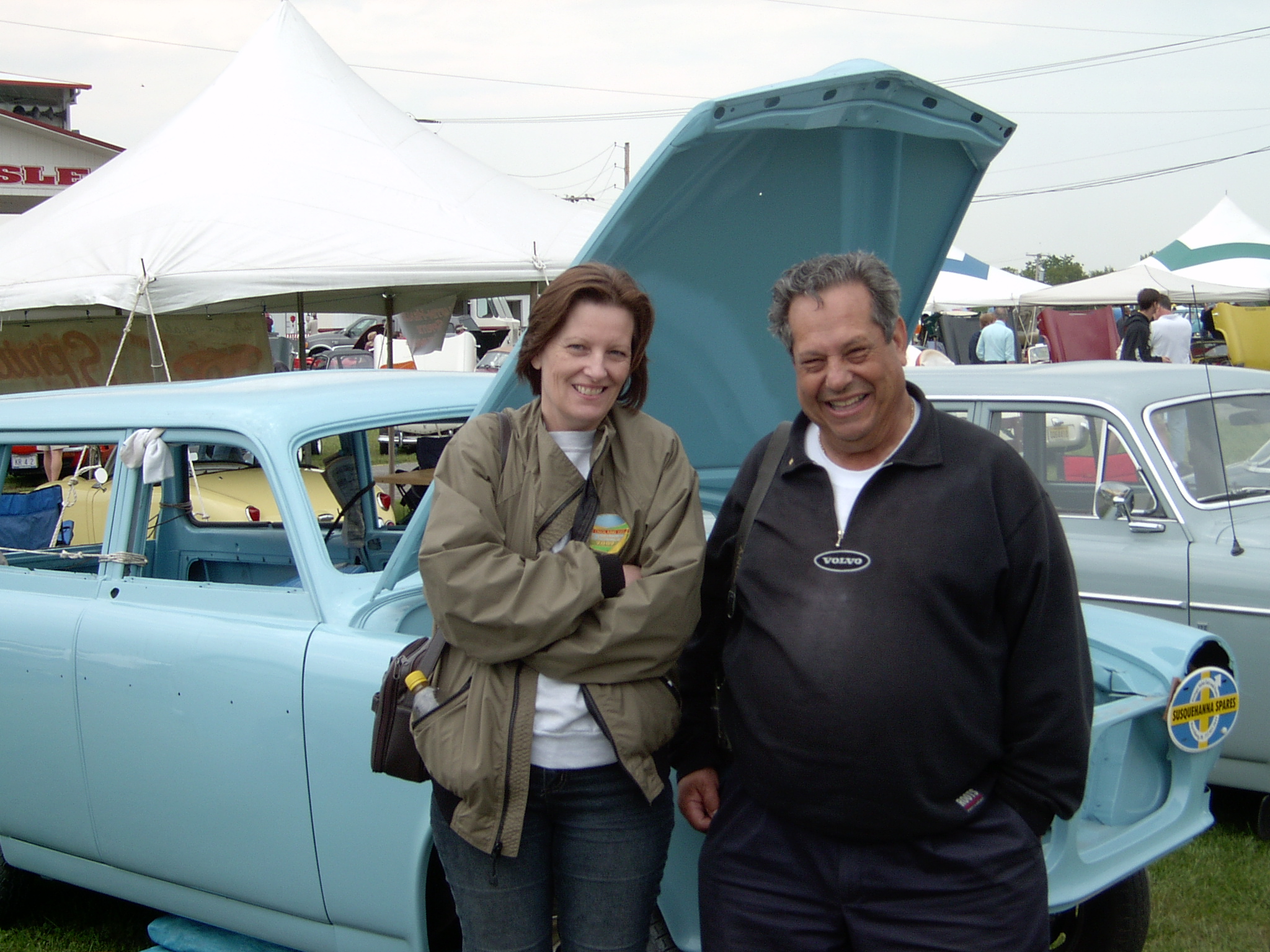
The Volvo Club of America has always made a strong showing here, and of course, that spokesperson of spokespersons, Irv Gordon, was in attendance. As you can see on the map, the Swedish brands Volvo and Saab were assigned separate blocks, the only such division. Note that this show also embraced kit cars, although their numbers were but a small minority of total show participation. I have no idea how or why there is a section for “Fiero”, which of course is a domestic Pontiac! And like Spring and Fall Carlisles, there was a Car Corral and a Swap Meet area, but again, these were minuscule compared to the big events. At Carlisle Imports, the emphasis was definitely on the display cars.

Mrs. Reina with Irv Gordon

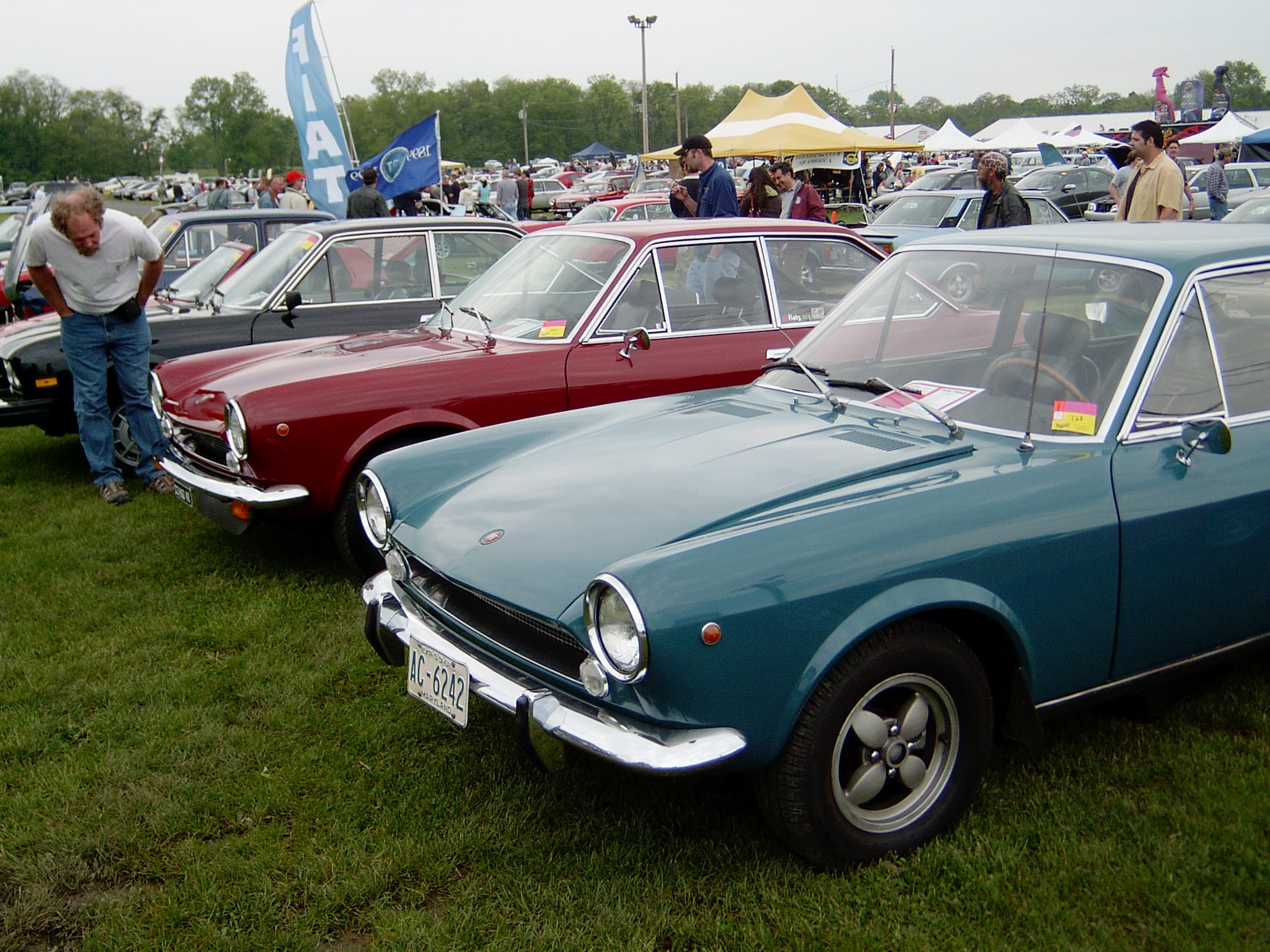
Personal favorites, the Fiat 124 Sport Coupe


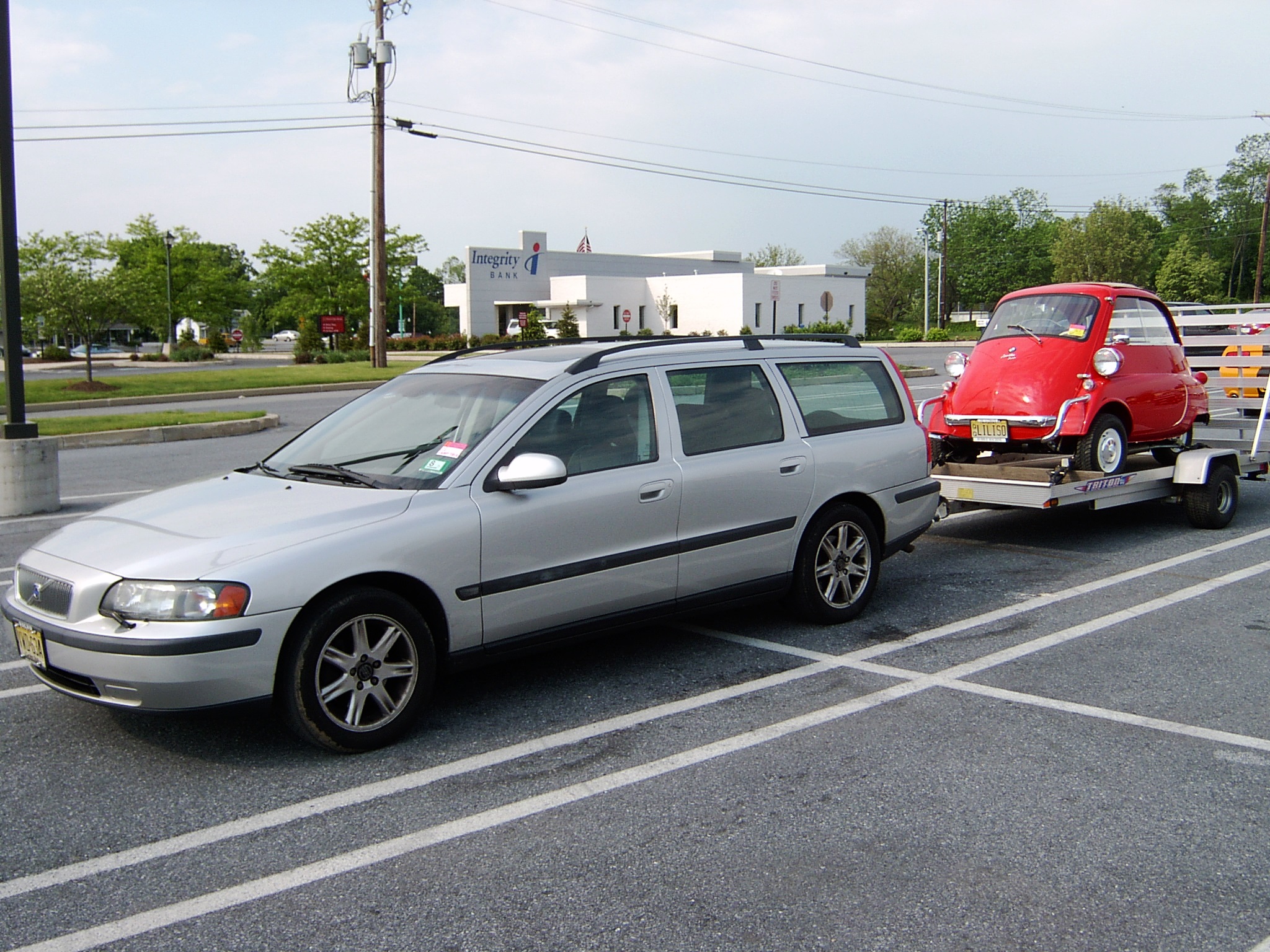
The Ford Aerostar was gone, with my trusty 2003 Volvo V70 now assigned to Isetta trailer duty. We made it back and forth with no issues, and I was more than pleased to have had the opportunity to show my BMW Isetta on the same tract of land where I’ve been walking the aisles for the past 30 years.

The European Duo

I think Irv asked me why I wasn’t driving the Isetta home


All photographs copyright © 2020 Richard A. Reina. Photos may not be copied or reproduced without express written permission.

The Isetta Saga, Chapter 28: The 2007 Greenwich Concours d’Elegance

The Romans knew it all too well: “Tempus fugit”, Latin for “time flies”. But I don’t think the Romans were thinking of the Greenwich Concours d’Elegance when uttering those words. I certainly was saying “time flies” to myself when I looked at the calendar, saw that it was 2007, and realized that the Isetta would again be eligible to be shown at this favorite car show of mine. So I sent in my registration form, got my acceptance letter, and off we went!

This view highlights the attractive and verdant setting

Compared to 2004, the weather was much more cooperative, if still a bit warm and muggy for early June. My wife Margaretanne, for the third and final time, accompanied me to the show. The show organizers, Bruce and Genia Wennerstrom, have always made it a point to recognize all the hard work and effort that goes into bringing a car to an event. As such, Greenwich is one of the few car shows where vehicle owners do NOT pay an entrance fee; instead, catered breakfast and lunch are provided, plus this year, we took advantage of a cruise boat ride into Long Island Sound, a non-automotive diversion which my wife appreciated.

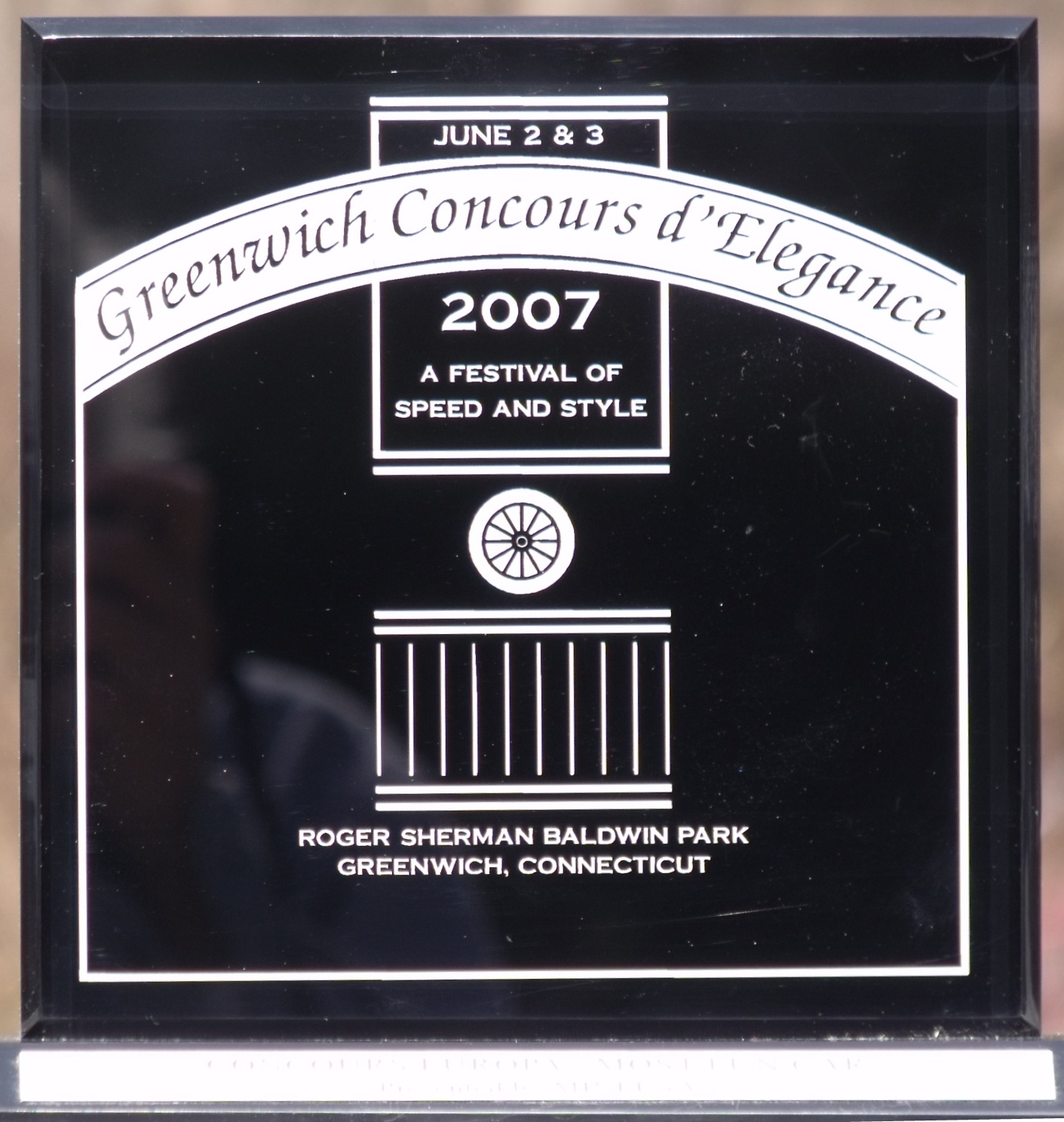
As happened in 2004, the Isetta was wisely placed among other BMWs, with some Porsches on the other side of it. And in another echo of 2004, there was another Isetta, this time, a European-spec 300 which had been beautifully restored. I enjoyed my time chatting it up with attendees about my car, and Bruce most generously awarded me with a Concours Europa – Most Fun Car trophy. During the ceremonial drive-by, he chuckled once again when I told him about my US-spec car having the “larger and more powerful 13 horsepower engine”!

Euro-spec Isetta: note smaller headlights, lack of bumpers, and amber sidelight


This is what 13-hp can get you

At the end of the show, we drove the Isetta back to the parking lot, about a half-mile away, and began the process of loading the car onto the trailer once again. Several yards from me, I noticed an elderly man, who looked to be at least 90, struggling to roll his own open trailer into position. He was a dapper dresser in his plaid sport coat and tweed cap. A woman who may have been his daughter was scolding him that he shouldn’t be pushing the trailer on his own, which didn’t phase him one bit. He looked familiar to me, so I took a chance and approached him.

“Excuse me, are you John Fitch?”

“Why, yes I am!”

“It’s a real pleasure to meet you.”

“Thank you very much!”

With that, I shook the hand of 90-year-old John Fitch, race car driver, inventor, and on this day, just another participant at the Greenwich Concours d’Elegance.


All photographs copyright © 2020 Richard A. Reina. Photos may not be copied or reproduced without express written permission.


The Isetta Saga, Chapter 27: The Metuchen NJ Cruise Night, Aug. 2006

The collector car hobby experienced tremendous growth during the latter part of the 20th and early years of the 21st centuries, a good part of which was fueled by small town “cruise nights”. The name is certainly a misnomer: participants aren’t cruising anywhere except into the town or lot where the evening show is being held. Each owner finds a parking spot while the general public wanders among the vehicles. It’s a nice way to spend a warm summer evening.

Compared to larger and more formal car shows, cruise nights have proven to be simpler to organize and run. Vehicles are usually not limited by make, model, or age; spectators do not pay a fee for the privilege of attending; weekday evening time slots makes it family-friendly and possible to sample while still arriving home at a reasonable time; and maybe best of all, local towns have benefited as restaurants, bars, and retail stores stay open during cruise night hours to service the increased foot traffic.

Sometime during the summer of 2006, my friend Richard Sweeney let me know that his hometown, Metuchen NJ, was hosting a monthly cruise night on the first Wednesday of each month, and he suggested that the Isetta would be a hit there. I had become friendly with Richard because his wife and my wife worked together for many years. Richard and I got along, but I would never describe him as a “car guy”. Yet, he knew about my Isetta, and from our conversations, I sensed that he was more interested in the public’s reactions to my car than he was interested in the car itself. Wednesday would be somewhat difficult, as Metuchen is 45 minutes from my house, and I didn’t relish getting home too late with work the next day, but I agreed, really for Richard’s sake, as he was genuinely excited at the prospect.

On the appointed night, my wife and I drove to Metuchen. Like the Friday night Somerville cruise night, Metuchen cordoned off its downtown Main St. and reserved street parking for show cars. After parking the tow rig and trailer and unloading the Isetta, I drove the Isetta along Main St., snagging one of the last available parking spaces.

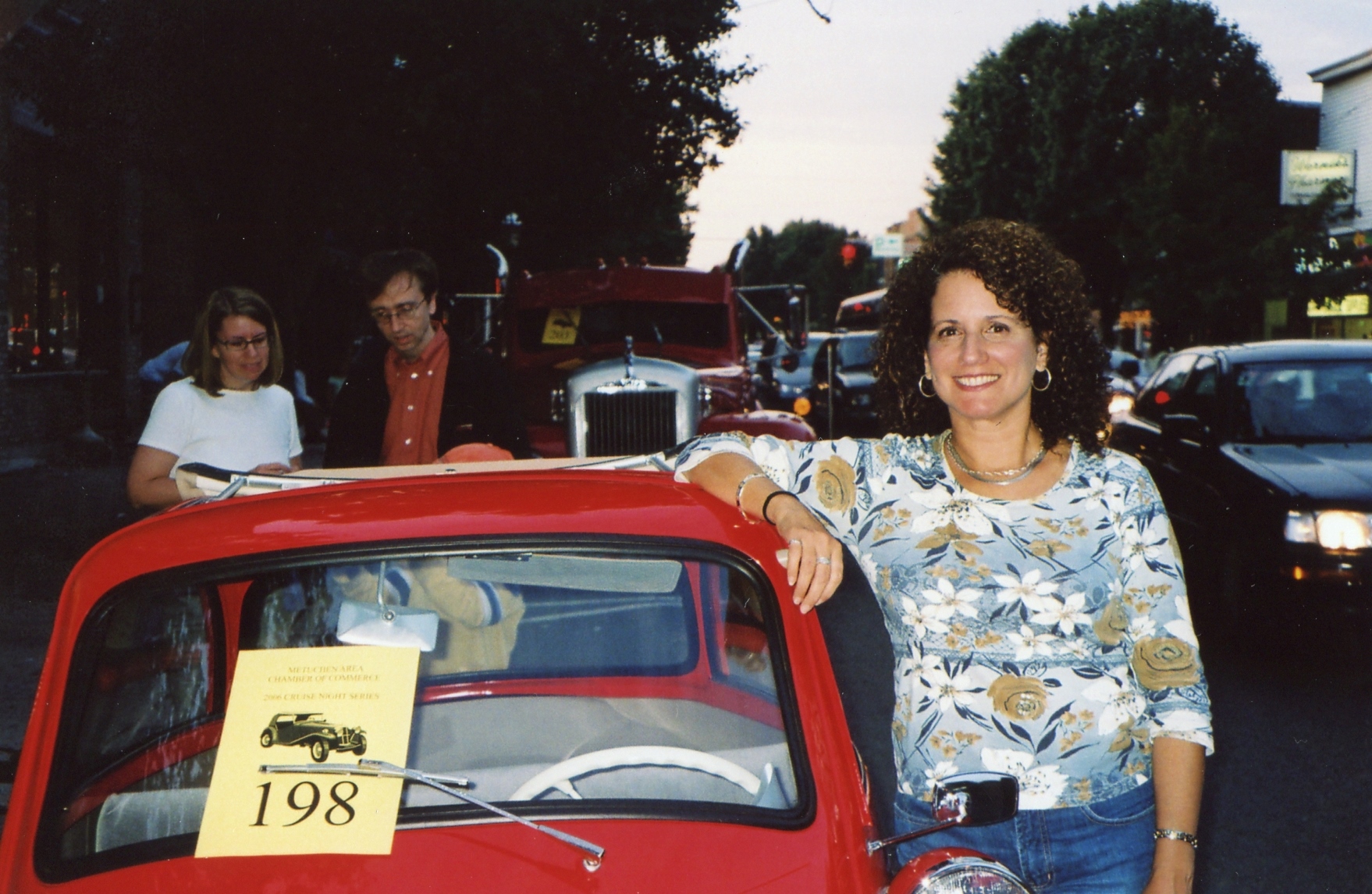
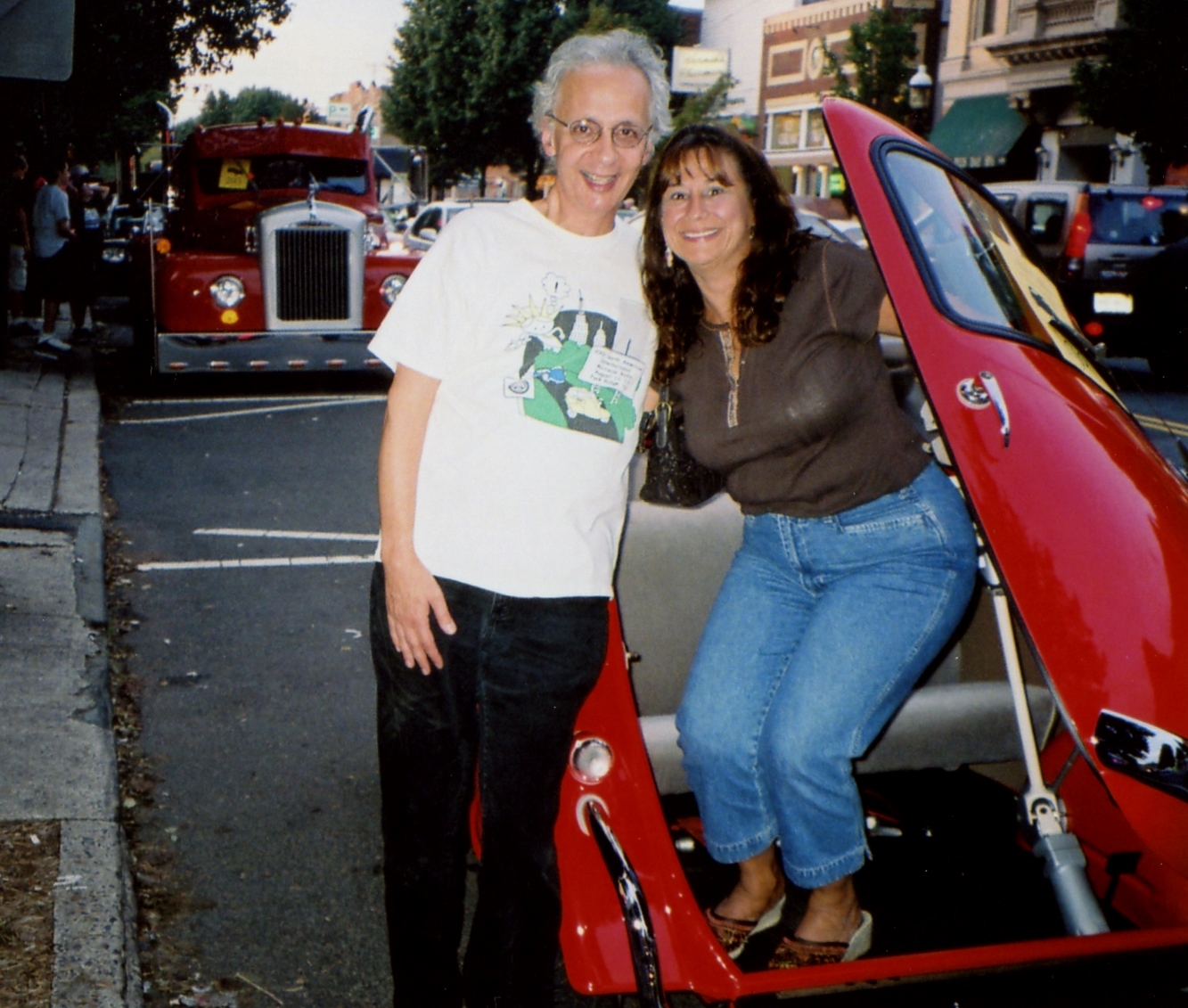
Women practically lined up to pose with the car and me


This event was also the debut of a board game I created called Isetta Jeopardy. At every previous showing of this car, I was struck how show-goers repeatedly asked the same questions. I found myself reciting the same answers so often that I wondered if I should make up a sign with all the answers preprinted. This gave birth to the idea of a game whereby, when a question was asked, I would point to a board which would have a dozen different numbers on it. I would then challenge the questioner to guess which number correctly answered their question. The numbered “answer” would then be raised to reveal the “question”, a la the real Jeopardy game.

The Isetta Jeopardy board game

A few weeks before the cruise night, I revealed the Jeopardy game to Richard, and not only did he enjoy it, he committed all the answers to memory (a brilliant man, he was the Chief Librarian at NJIT, the New Jersey Institute of Technology), and, he volunteered to be the one to work the crowd that night! I made sure to pack a folding table so we had somewhere to place the game.

Richard Sweeney (in blue shirt) about to reveal an answer


Richard patiently awaits the audience’s best guess

Of course, the crowd loved the Isetta, and the usual questions arose. “How much did this cost new?” “How many were sold in the U.S.?” “What does it weigh?” Although I had known Richard for years and had always observed him to be mild-mannered, he was a different animal that night. Overhearing the crowd’s questions, he practically pulled people over to the Isetta Jeopardy display and dared them to pick the right answer. I’m not sure which Richard was having more fun.

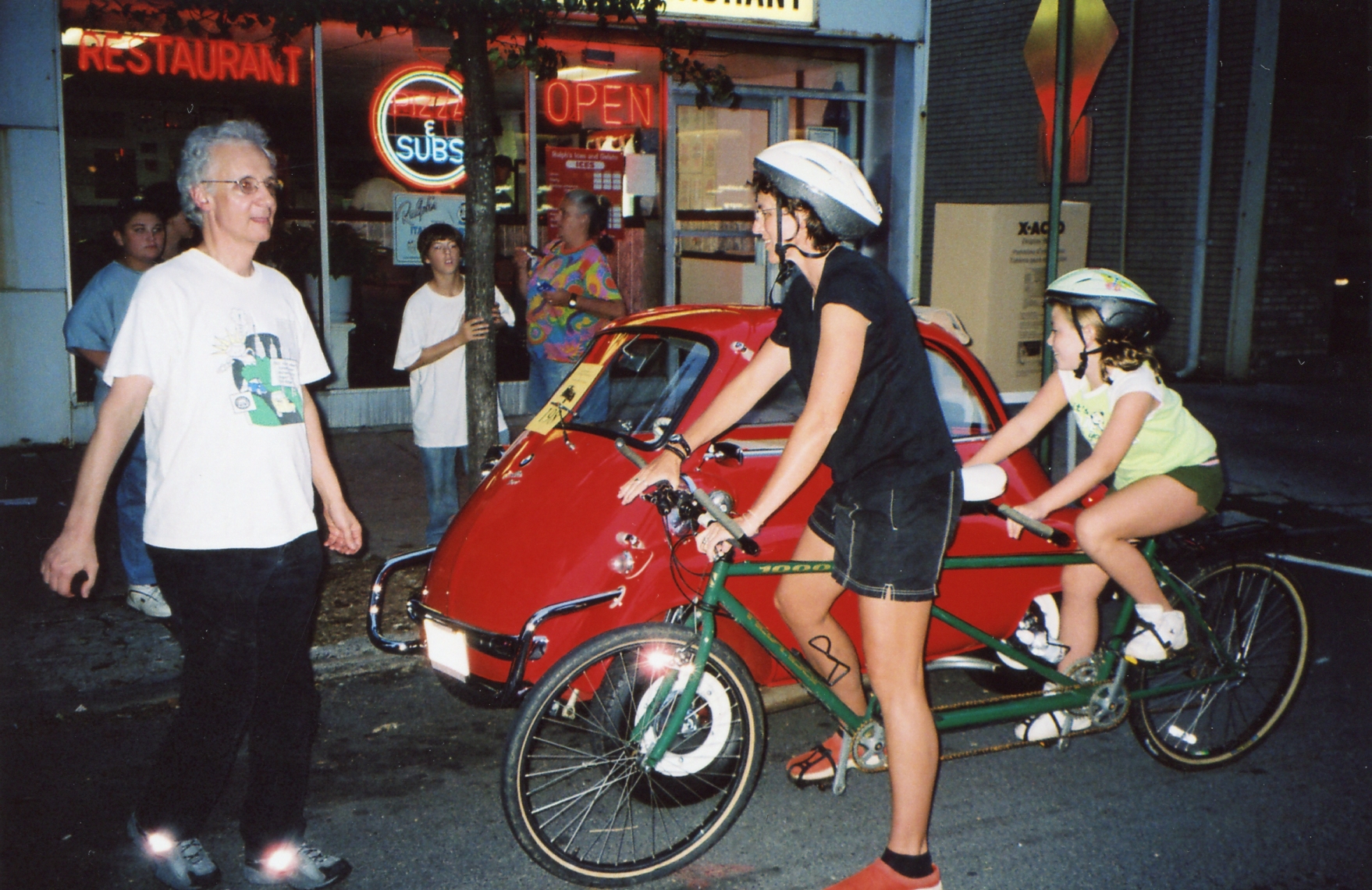
From this angle, it appears that the tandem bike’s wheelbase is longer than my car’s

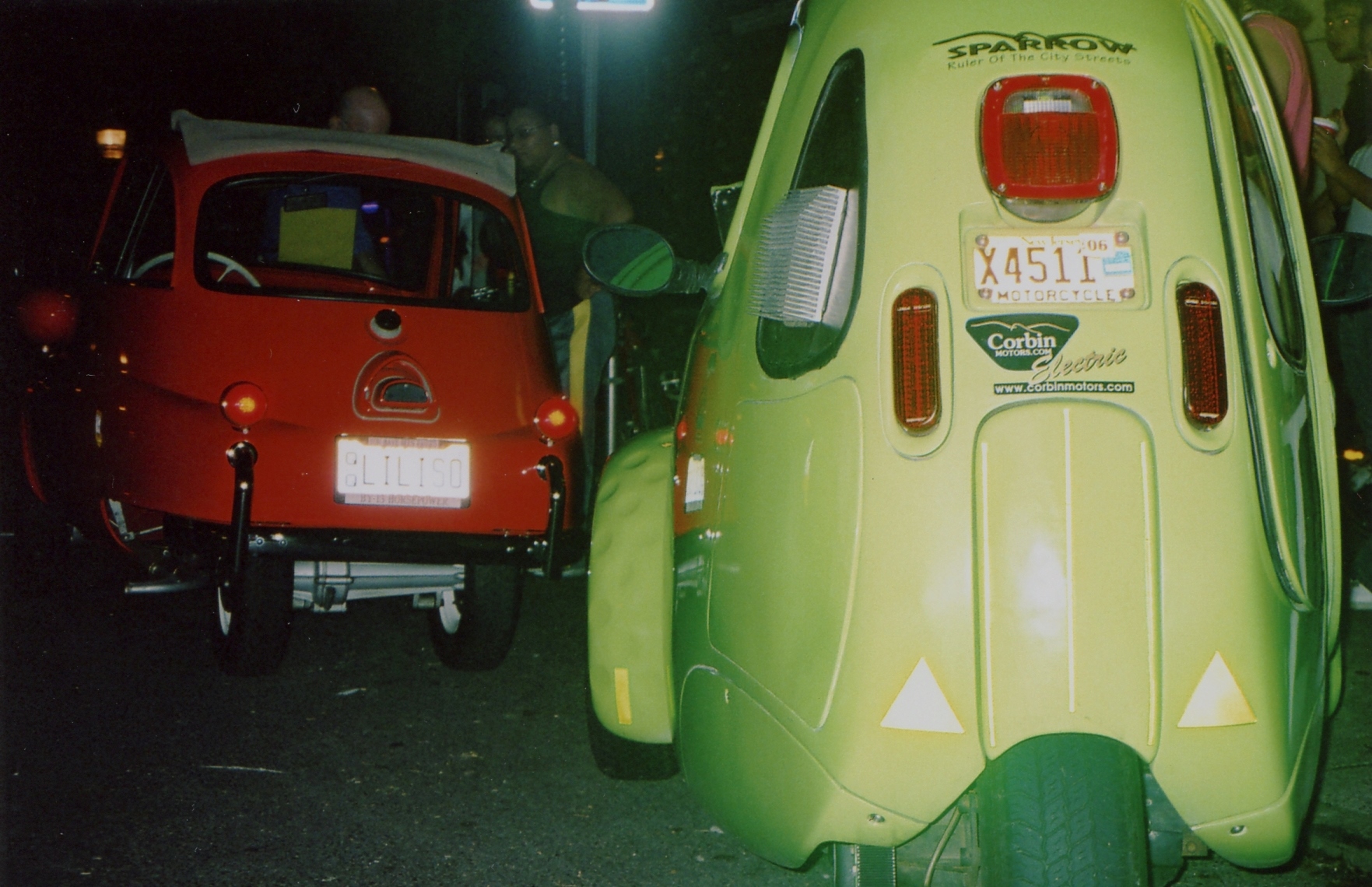
The cruise night continued well past sunset, and it was shortly after dark when a Corbin Sparrow pulled in behind me. The Corbin was a one-passenger all electric “commuter car”, and the owner, an enthusiastic young man, told me he was driving by when he saw the Isetta and had to stop. The Corbin was within 3 inches of the Isetta’s total length, and while the electric Corbin beat my little bubble for efficiency, I must point out that the Sparrow is strictly a one-passenger vehicle, while my Isetta, at least in a pinch, could fit three people (provided they really liked each other).

Corbin Swallow parked behind my Isetta – note motorcycle license plate

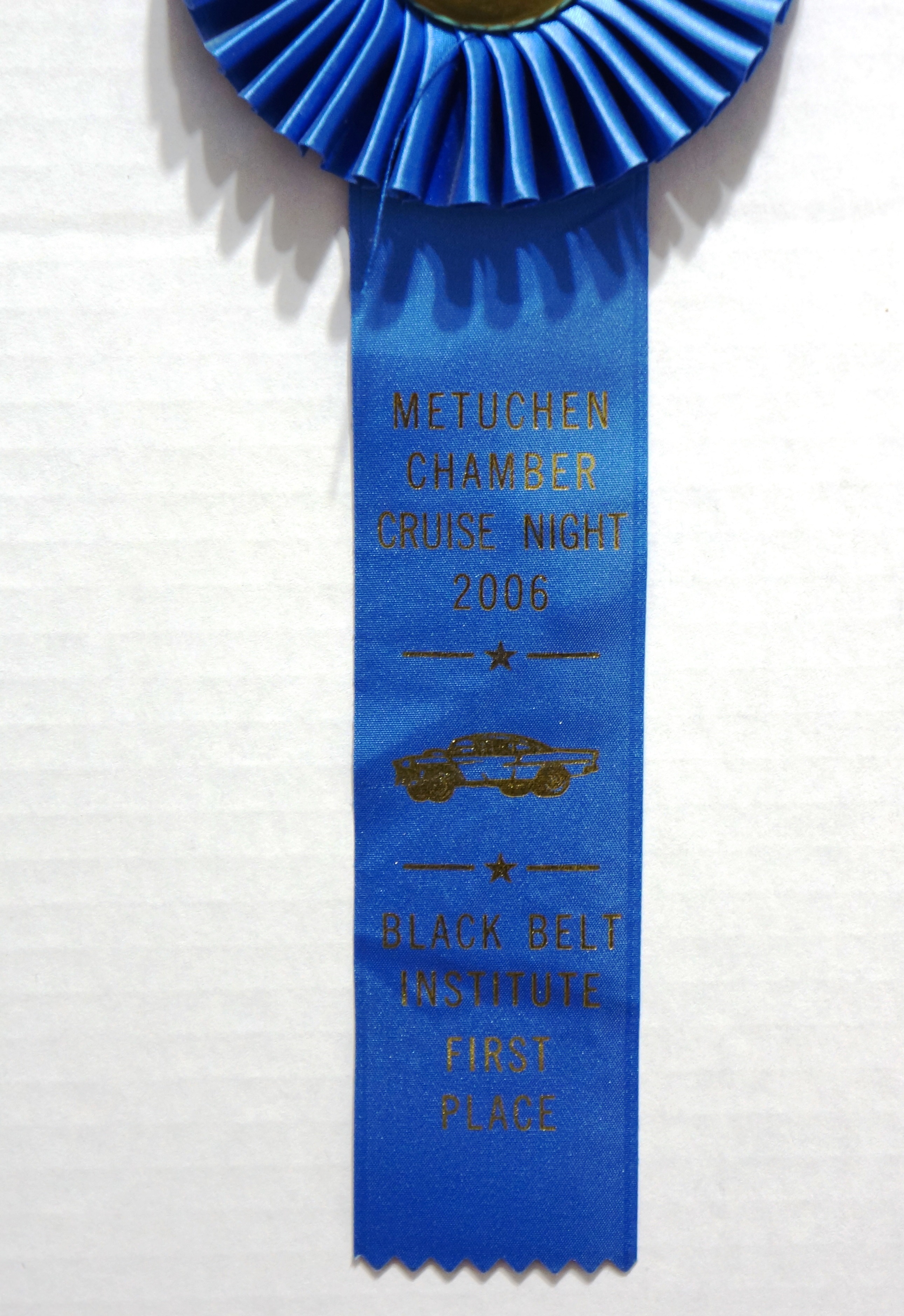
Some cruise nights have awards, and if they do, it’s “People’s Choice”. Well, the Isetta won. “We” got the proverbial blue ribbon, and I really wanted Richard to have it because of his relentless enthusiasm. But he wouldn’t hear of it. Richard Sweeney, the non-car guy, got full immersion into the sociological impact that a BMW microcar can have on the public. This was the first, but would not be the last time that Richard would join me and the Isetta at an automotive event.

The Blue Ribbon Award!


All photographs copyright © 2020 Richard A. Reina. Photos may not be copied or reproduced without express written permission.


Bidding at RM/Sotheby’s “Shift/Monterey” Online Auction

Enough digital “ink” has been spilled regarding our current global pandemic’s effect on the collector car hobby that I don’t need to rehash it here. (The more serious human toll certainly puts our hobby into some perspective.) So why am I mentioning it at all? I bring it up only because there have been some rays of hope for those of us still looking for ways to enjoy it. Classic car auction companies, at least some of them, have found a path forward by switching from live events to online formats.

One cannot discuss web-based car auctions without first acknowledging the success of Bring a Trailer (www.bringatrailer.com, aka BaT). The website, which started as nothing more than a place to repost links for interesting cars found elsewhere online, began to auction vehicles several years ago. Fed by a mostly-positive and very enthusiastic comments section, they have changed the rules of engagement. One element of their business which is now blatantly copied is their two-minute anti-sniping provision. A classic complaint about eBay has been bidders with sharp reflexes (or clever computer programs) placing bids with one second remaining on the clock. Bidding would close, the so-called “sniper” would win the item, and anyone who had been willing to bid higher was shut out.

BaT, wanting to level the playing field, was I believe the first online auction company to change the game: any bid placed with two minutes or less on the clock resets the countdown clock to two minutes, giving others a chance to still bid.

Another surprise element was BaT’s move into the premium segment of the hobby. When their auctions started, naysayers claimed that “this is fine for $12,000 Alfa Spiders and $20,000 BMW 3-series sedans, but the big money buying 6-figure exotics will only do that at a live auction”. Wrong. Just this year, BaT sold a 1960 Ferrari 250GT for $585,000; a 1913 Rolls Royce for $657,913; and a 1968 Lamborghini Miura for $990,000. If you think that Bonhams, Gooding, and RM haven’t noticed, I’d think you’re mistaken.

Of course, when the year started, none of the major auction houses were expecting the shutdown. The pandemic’s message was: either find a new way forward, or spin your wheels while waiting out the crisis. As 2020 unfolded, with news only getting worse, one auction company in particular led the pack in switching from in-person to online, and that was RM Sotheby’s.

I’ve attended many live auctions. Whether it’s the boisterous volume of Mecum, or the understated elegance of Bonhams, there’s excitement in the air. You can touch the cars, watch them drive across the block, and feel the tension in the room as the auctioneer implores the audience to bid higher. The crowd may be milling around the block (Mecum) or may be patiently parked in their seats ready to raise paddles (Bonhams). Emotions are running high, causing some bidders to bid with their hearts and not their heads. Consigners are counting on that! Yet all that is lost in the online setting. Still, RM Sotheby’s knew they had to try, and motivated in part I would guess by BaT, they embraced this new business model by doing things they’ve never done before.

On RM’s website, the number of photographs of each vehicle has expanded, with photographers emphasizing flaws (paint chips, upholstery tears, oil stains) to avoid any post-sale surprises. Any available repair or restoration receipts are scanned and posted as PDF files. Finally, for almost every car, RM provides a condition report which lists the condition of the paint, engine, upholstery, and undercarriage using the traditional 1-to-5 scale. I’ve read a few of them, and while they’re brief, they’re also refreshingly honest. RM’s online auctions also use the two-minute extension a la BaT.

August has always been Monterey’s month: the Pebble Beach Concours d’Elegance, the multiple car auctions, and myriad number of special car shows. This week-long event in northern California is one of the biggest car-centric extravaganzas in the world, and like almost everything else this year, it’s been cancelled. RM Sotheby’s, though, is holding its “Shift/Monterey” online auction this week. Bidding opened on Monday August 10, with lots scheduled to close either on Friday the 14th or Saturday the 15th. I’ve been anxious to test the waters with RM, as I have my sights set on a future auction, so I took the plunge: I registered to bid at “Monterey”, and actually placed a bid!

The registration process was too easy: I scanned my driver’s license and a recent bank statement, provided a credit card to be used for a hold, and submitted those docs. About 15 minutes later I got an email message: “Congratulations! You’re registered to bid.” Unlike some previous auctions I’ve watched, there was no bidder’s registration fee.

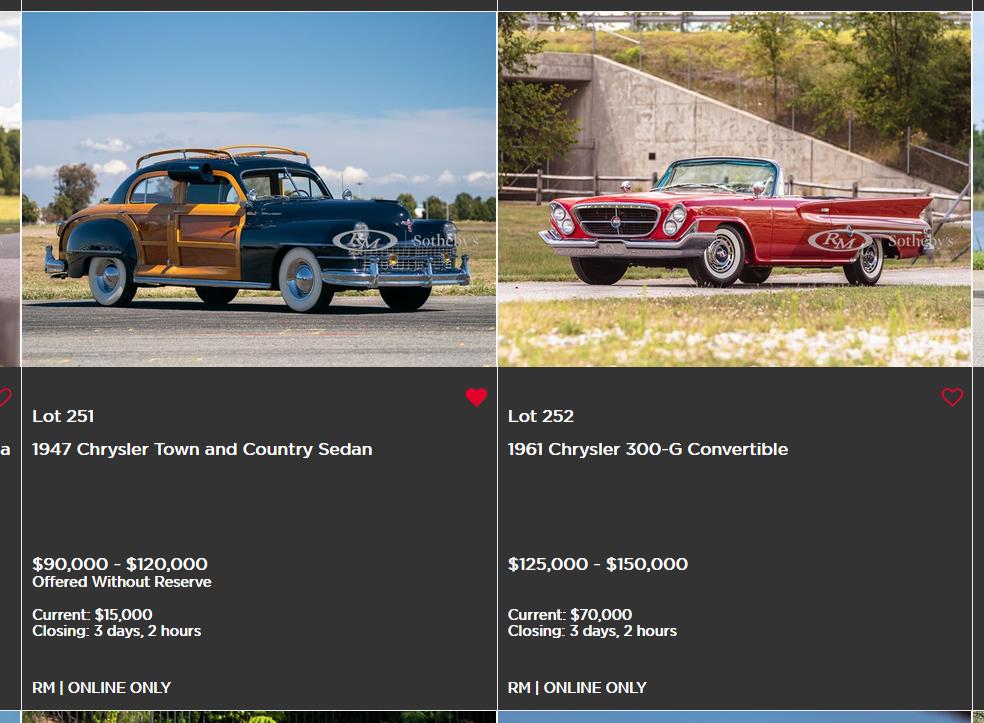
RM website clearly indicates if lot is no reserve

There are 109 vehicles (107 cars, 2 motorcycles) and some automobilia online at Shift/Monterey. (Note that despite its name, vehicles are physically scattered around the country, an advantage for sellers who avoid transport costs; the website indicates the vehicle’s location by city and state). By RM standards, it’s not a big auction. Since I don’t intend to actually purchase a car but want to experience the process, I sought out something with a high pre-sale estimate and with a very low current bid. I found a 1947 Chrysler Town & Country sedan, listed at no reserve, with a pre-sale estimate range of $90,000-$120,000. The current bid was $3,600.

I’m high bidder!

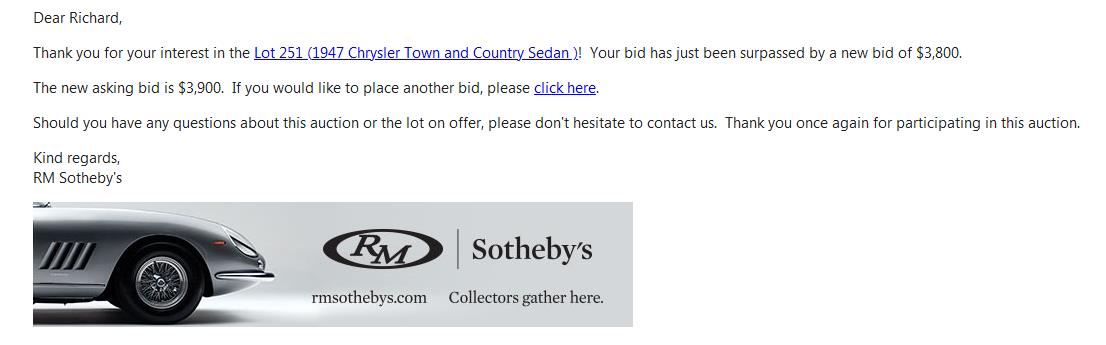
In spite of the numbers, I was still nervous. What if I won? (Sure, I’m going to get a woody Chrysler for under $5,000.) RM provides the minimum bidding increment, in this case, $100. I keyed in “$3,700”, clicked on the green “place bid” bar, and the screen changed: “Your high bid!” I got a confirmation email informing me that, for now, I was high bidder on the Chrysler. Did I mention this is a no-reserve auction? That means if NO ONE ELSE BIDS, THE CAR IS MINE. The euphoria lasted for four minutes. A new email popped in: “You Have Been Outbid”. I was further informed that the “new asking bid is $3,900”. At least I knew where I stood. As tempted as I was, I stopped.

I know where I stand

Everything considered, the RM online bidding experience is perhaps the best it can be when you can’t be there in person. I’m frequently asked “do people really buy cars sight unseen?” Yes they do. RM’s online closing ratio is around 60-65%, which is very respectable, if not as high as it’s been at live shows. Still, I think that RM has set a fine example for conducting honest and transparent business in an online format under particularly difficult circumstances. I’ll have more to say about RM Auctions in future posts.
All website screen shots courtesy of RM Sotheby’s