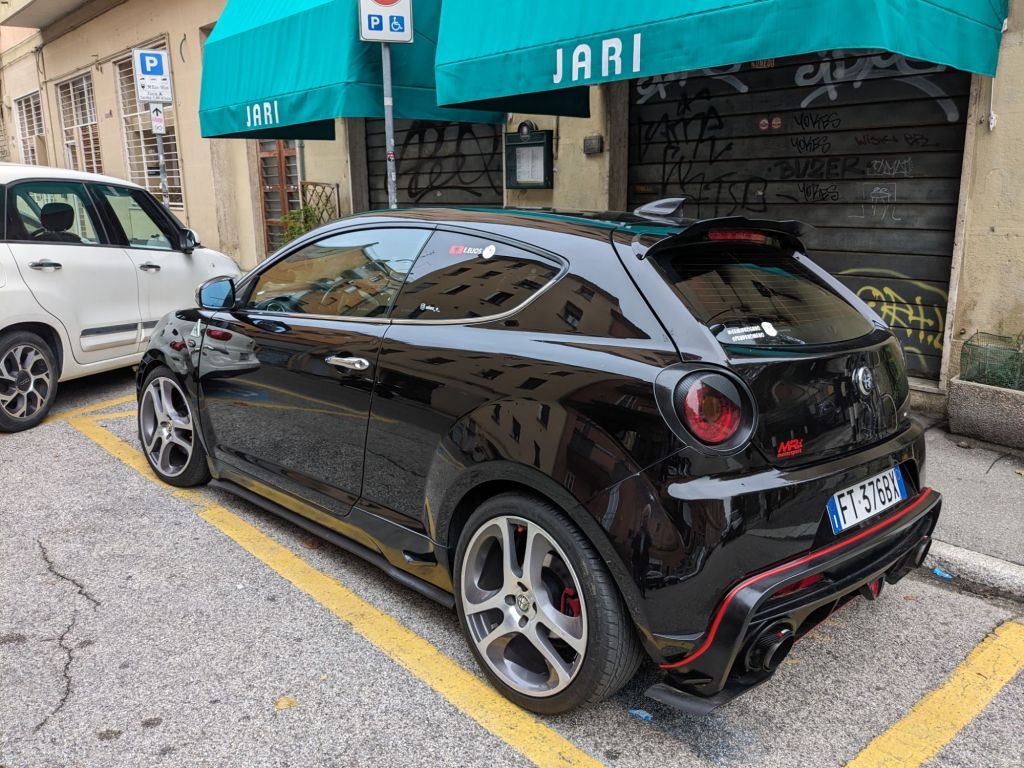

I’m here for a week, with a major auto show coming up in two days, so watch this space! More to come.
I’m here for a week, with a major auto show coming up in two days, so watch this space! More to come.
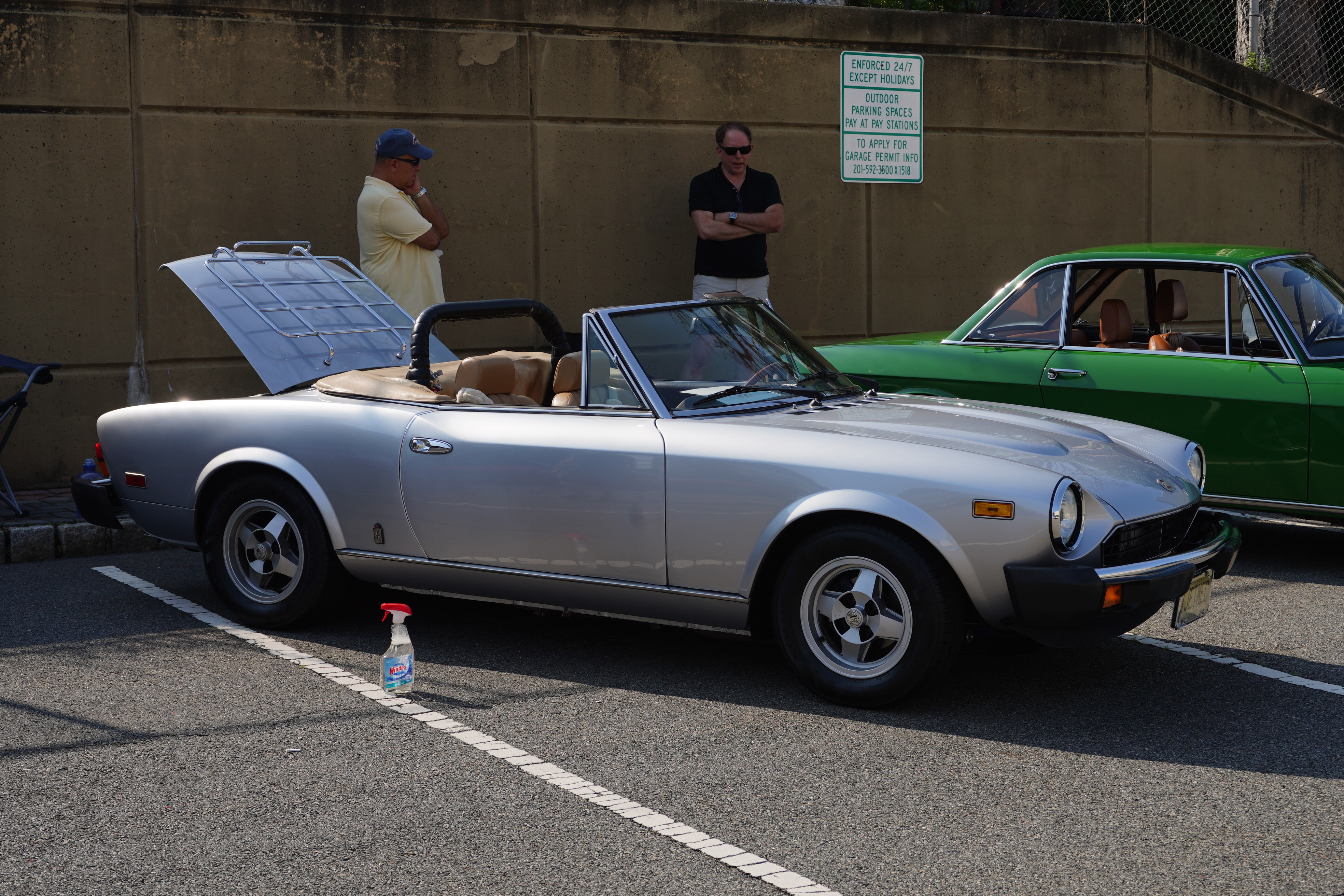
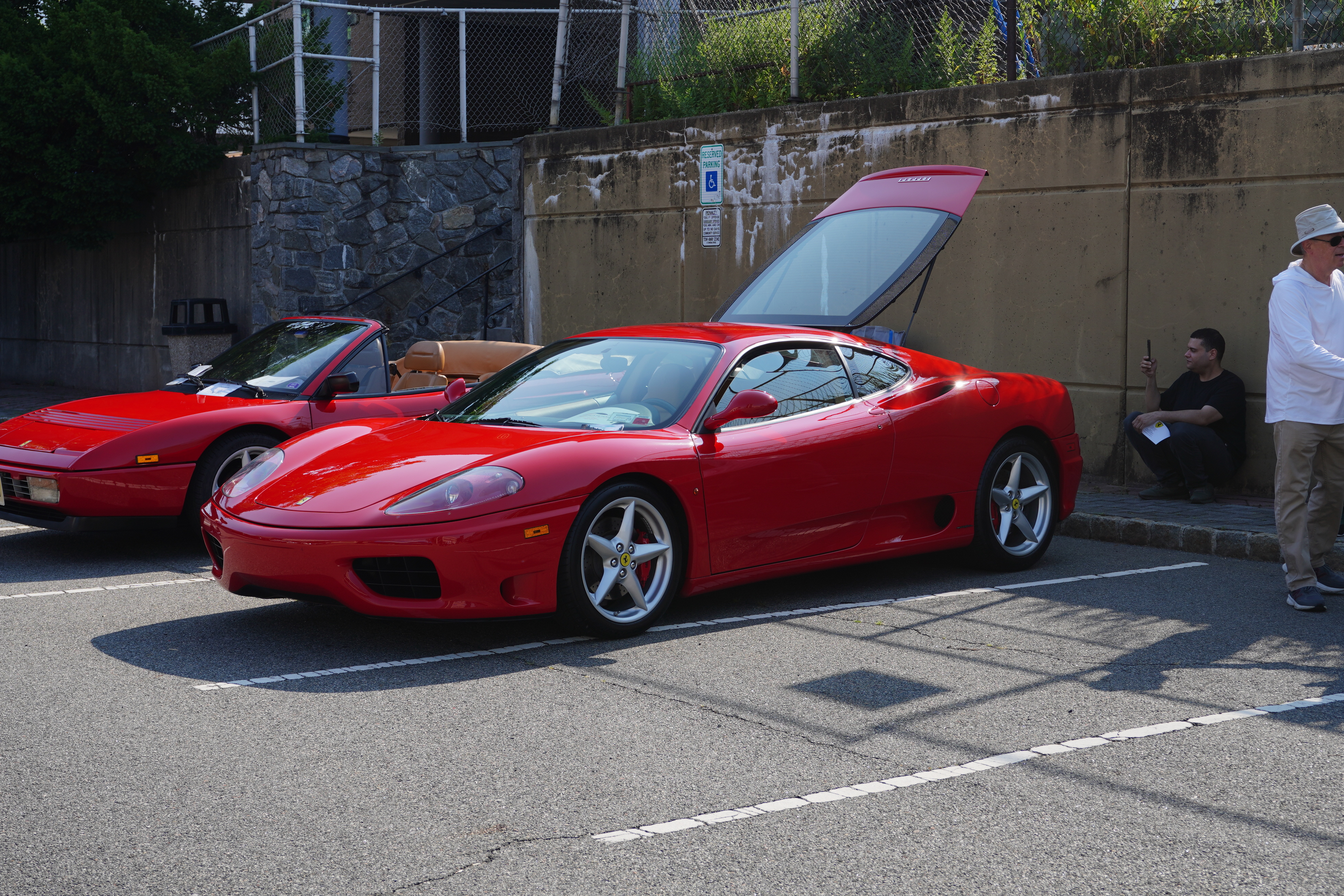
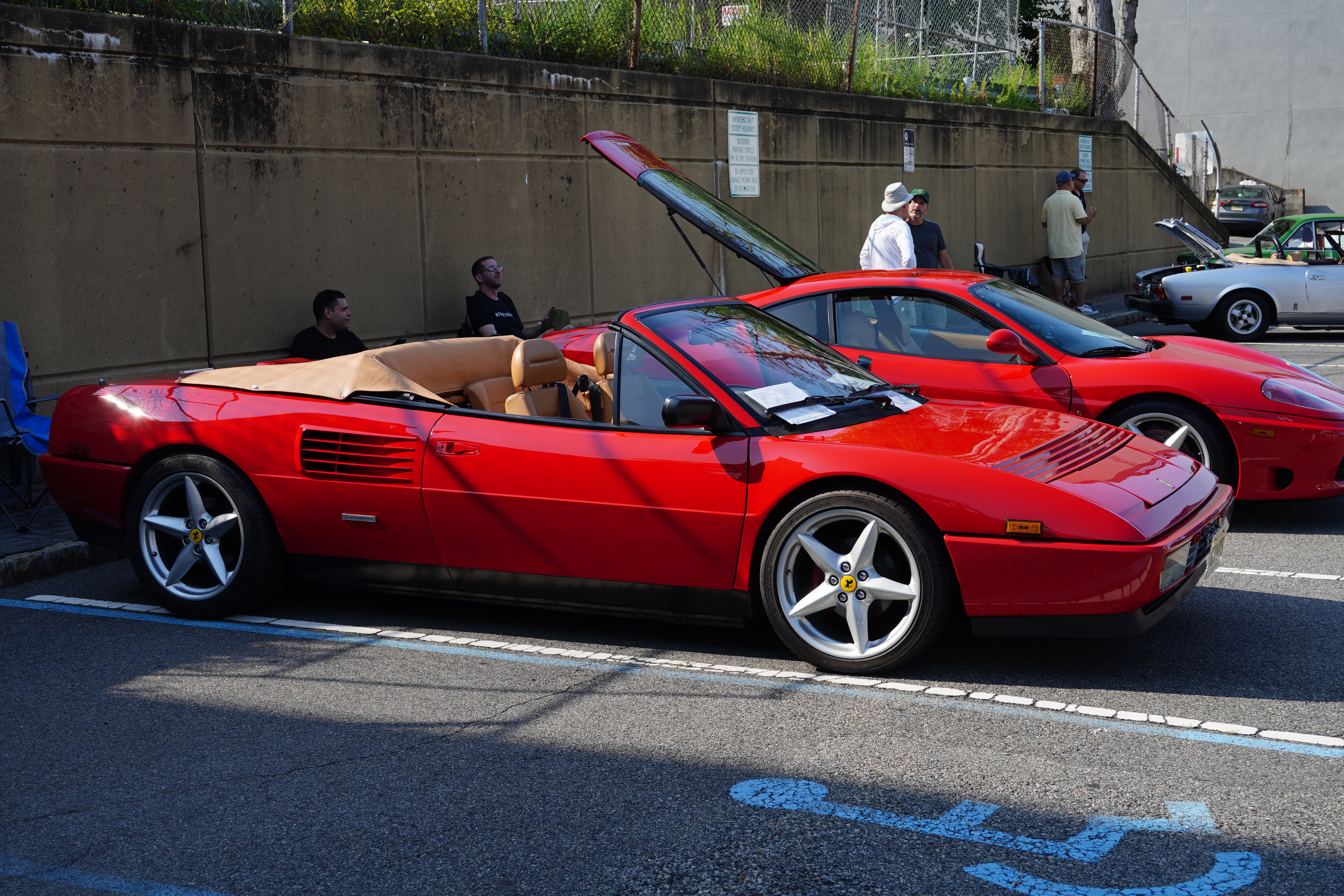
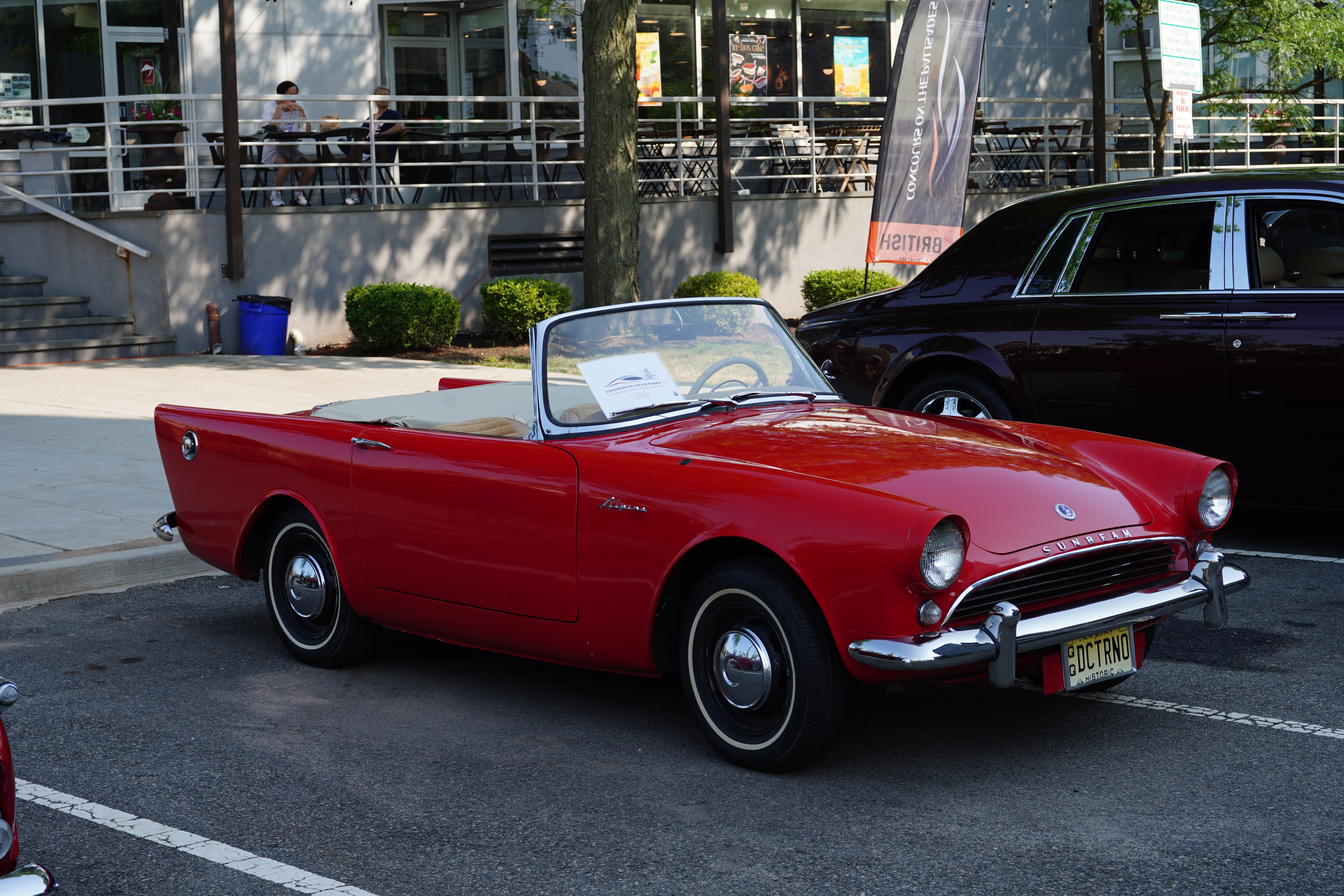
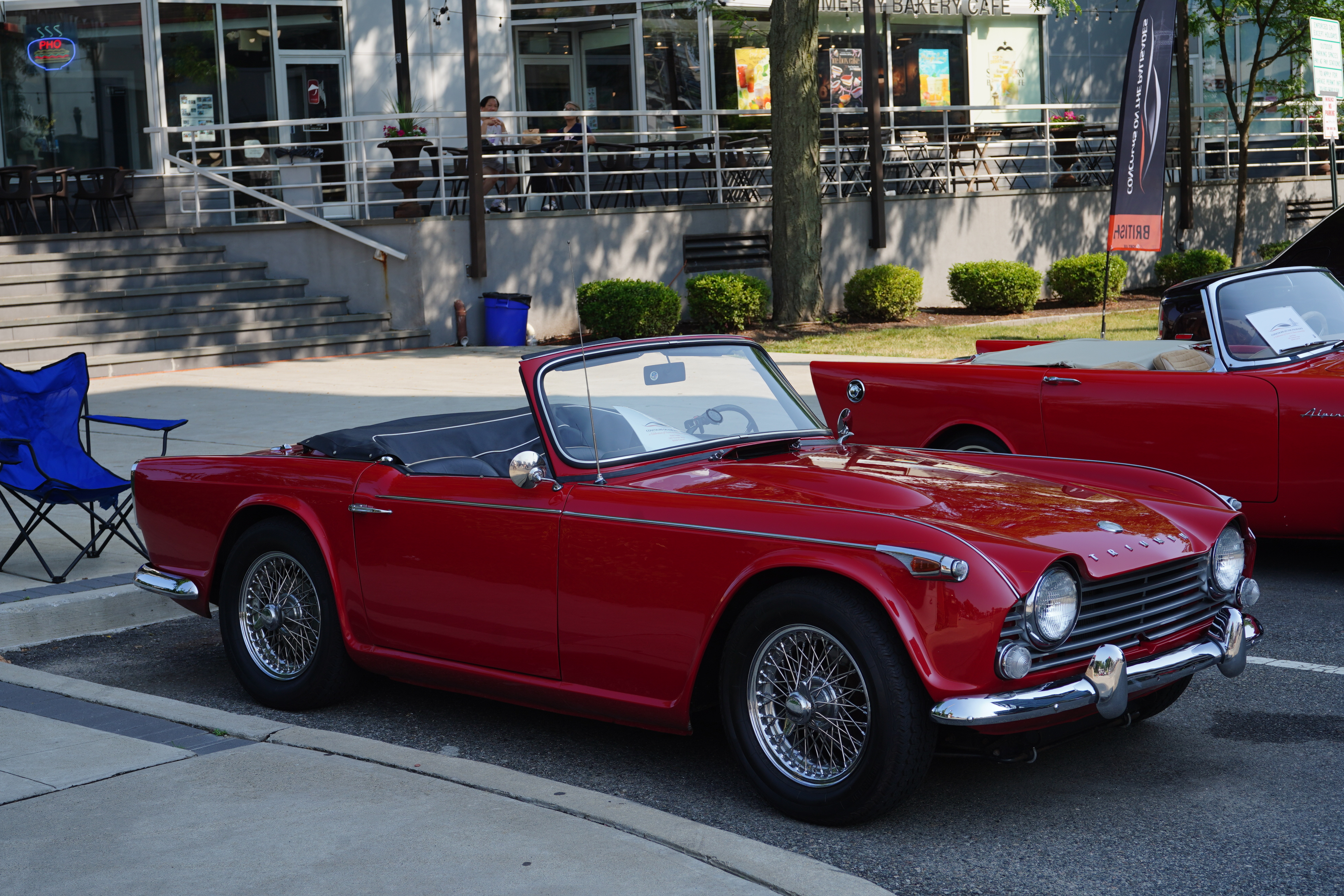
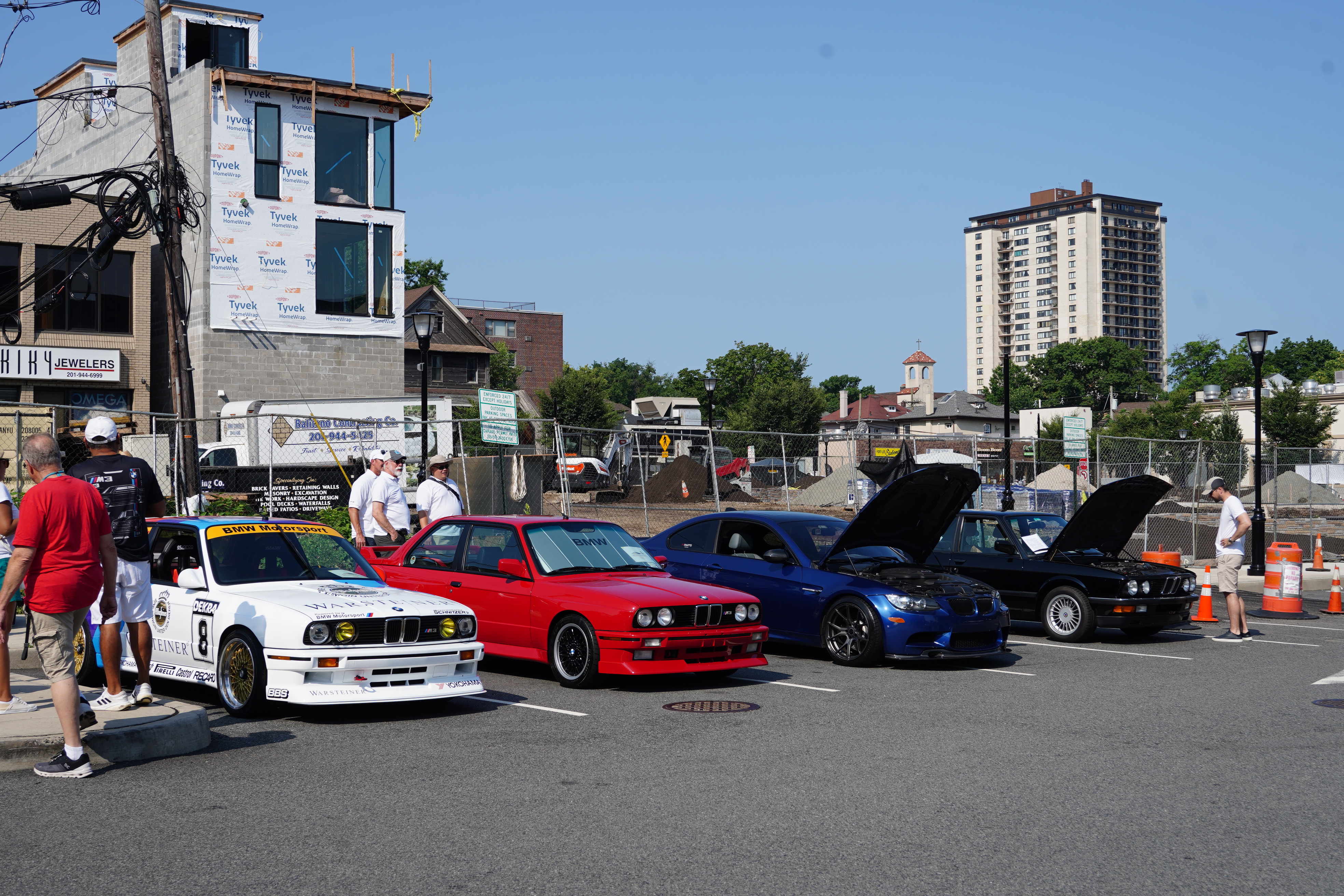
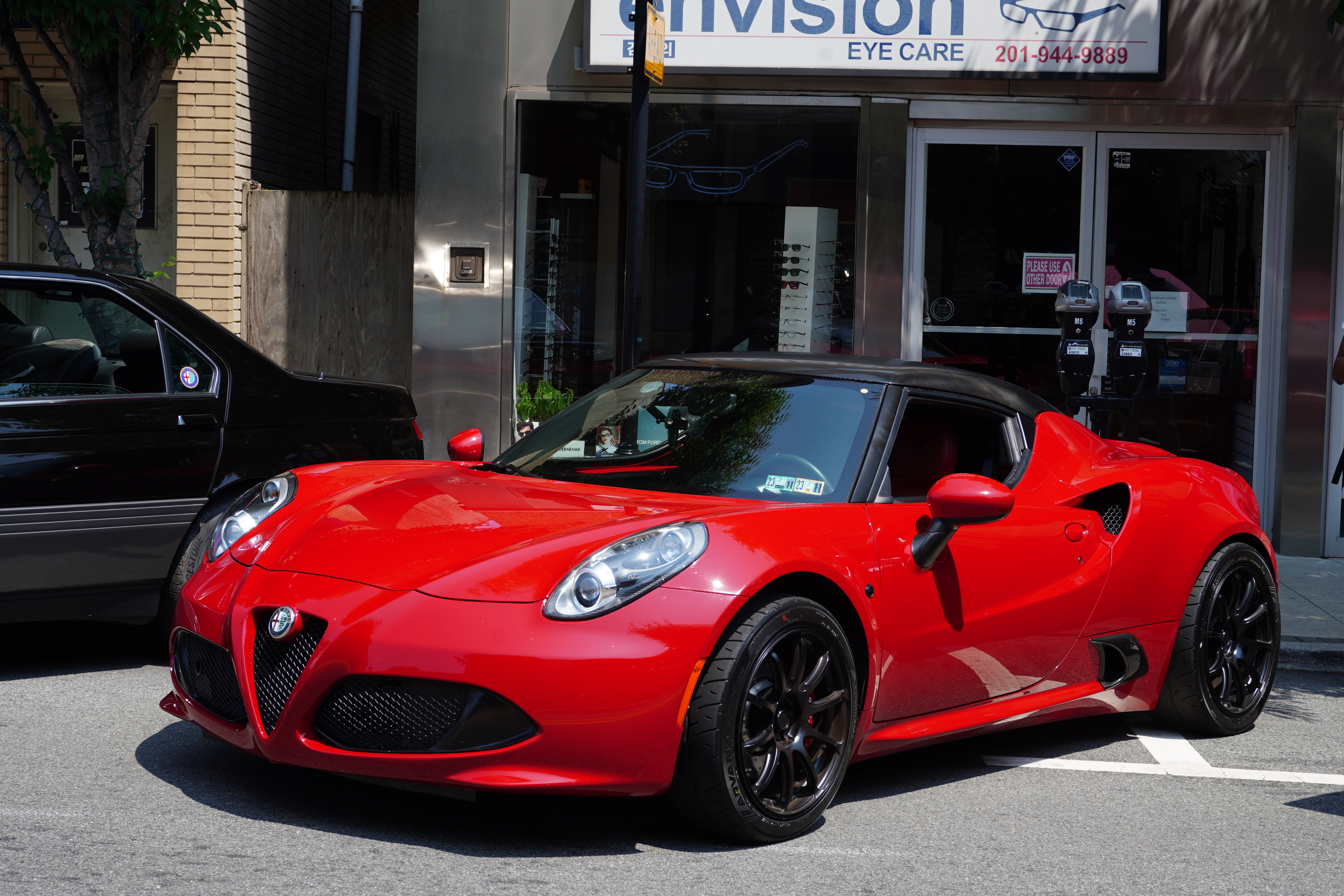
On Sunday July 14, the town of Fort Lee hosted its 3rd annual “Concours on the Palisades”, a celebration featuring a variety of older and newer classic and exotic cars. I posted about last year’s event, when I worked as a judge. This year, my judging duties were again requested, and I also entered my ’67 Alfa into the show, as there was a special class of Alfa Romeos to honor the 70th anniversary of the Giulietta and the 50th anniversary of the Alfetta.
Last year’s show was good but could have been better organized. We provided feedback that not all cars were parked in their correct classes, which added a layer of complexity to our jobs. This year, the Chief Judge (Bob Austin, a former Volvo colleague and dear friend) decided that the judges would assist in parking the cars for the classes they would be judging. I was on a team of 4 judges, and our assigned classes were “Italian” and “Japanese” cars. So there we were, at 8 a.m., directing traffic. Aside from the early hour (not really an inconvenience) I thought this was a brilliant move, as it gave us early insight into the cars in our classes. As was suggested to us, watching the cars move under their own power and providing an initial “welcome” to the owners meant we had greater familiarity with the cars and owners once formal judging commenced.
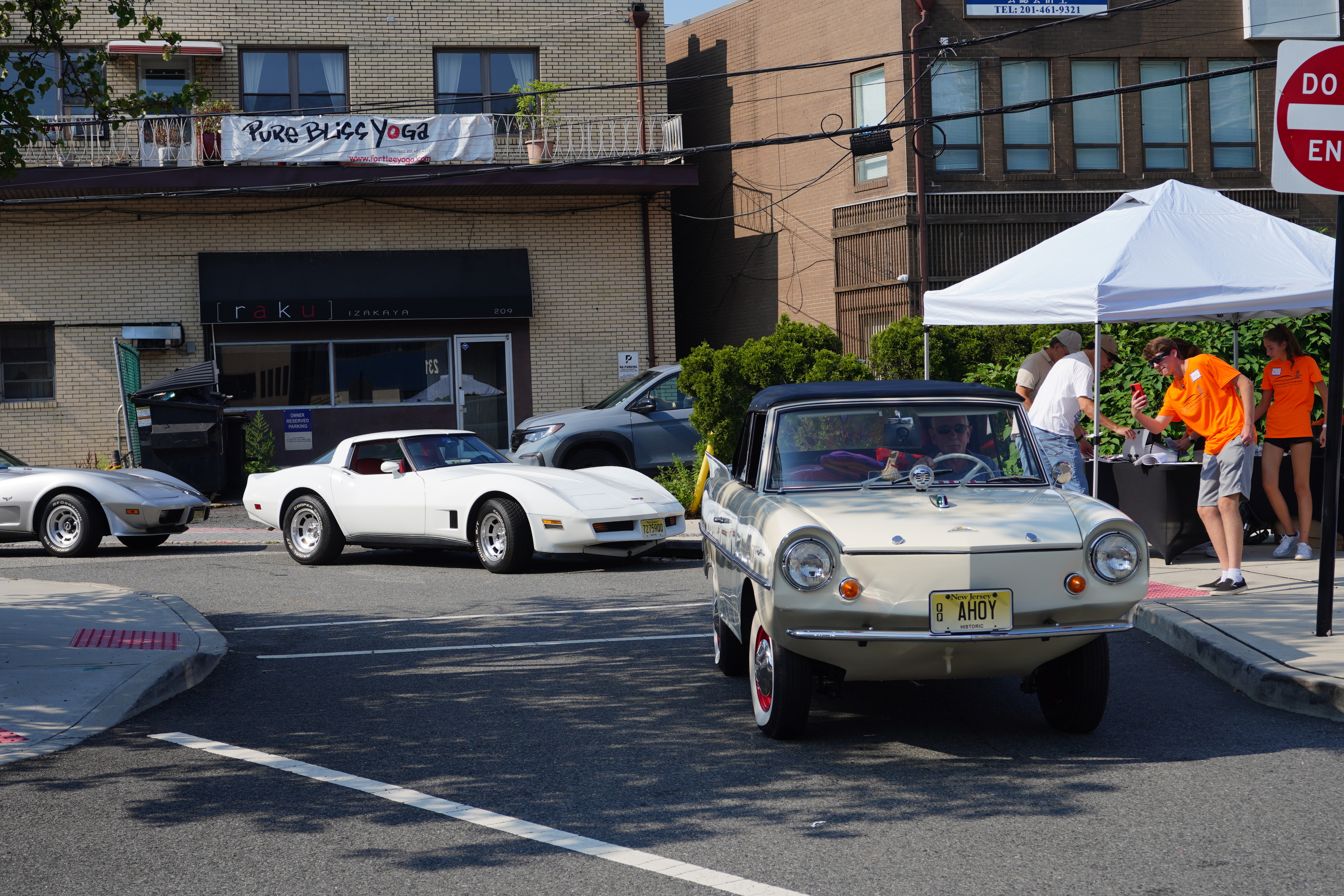
Our scoresheets showed 10 cars in the Italian class and 11 in the Japanese class. However, only 6 Italian cars showed up, and only 7 Japanese cars. We were tasked with selecting the Top Four so in reality, we didn’t have a heavy workload. The most difficult part of the judging process was dealing with the 90 degree-plus heat. Thankfully, we were done with our field review by 11 a.m. and headed to an air-conditioned conference room to make our final tallies.
The Concours on the Palisades uses “French Rules”: judges need to answer only one question, which is, “what kind of visual impact does this motor vehicle present to me?” Yes, condition, workmanship, personal histories, etc., do play a part. But ultimately, it’s the overall visual statement made by the car which decides the winners.
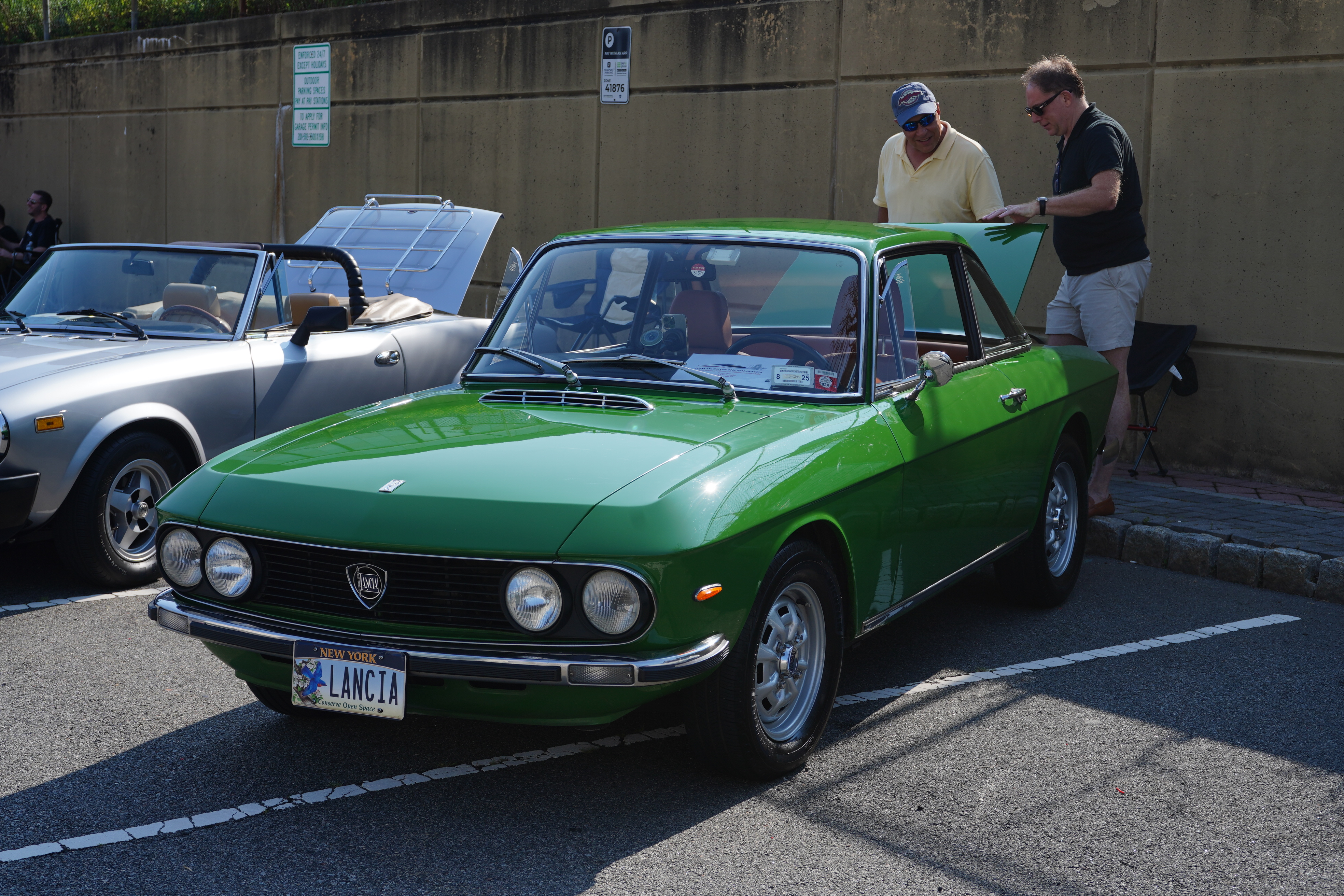
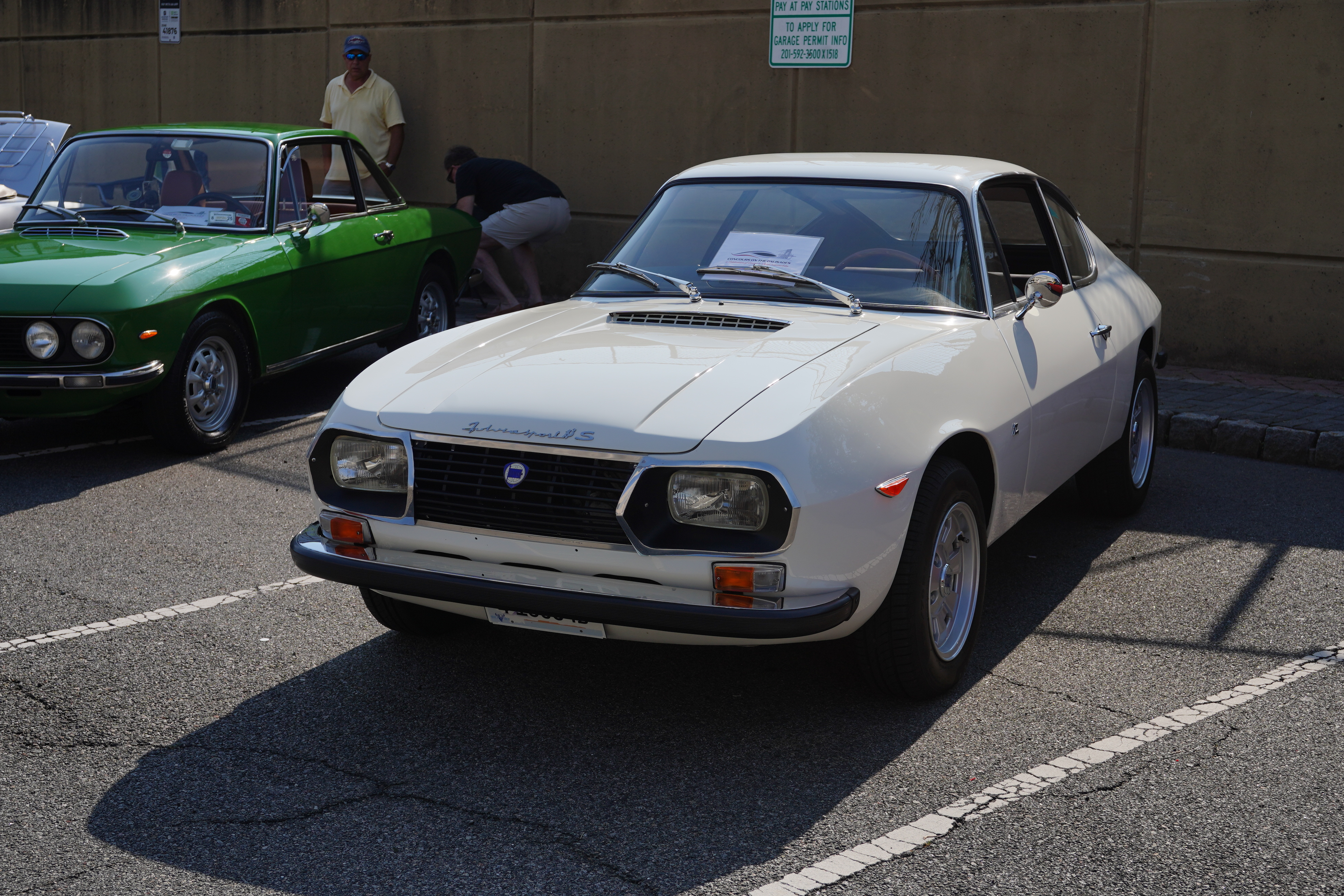
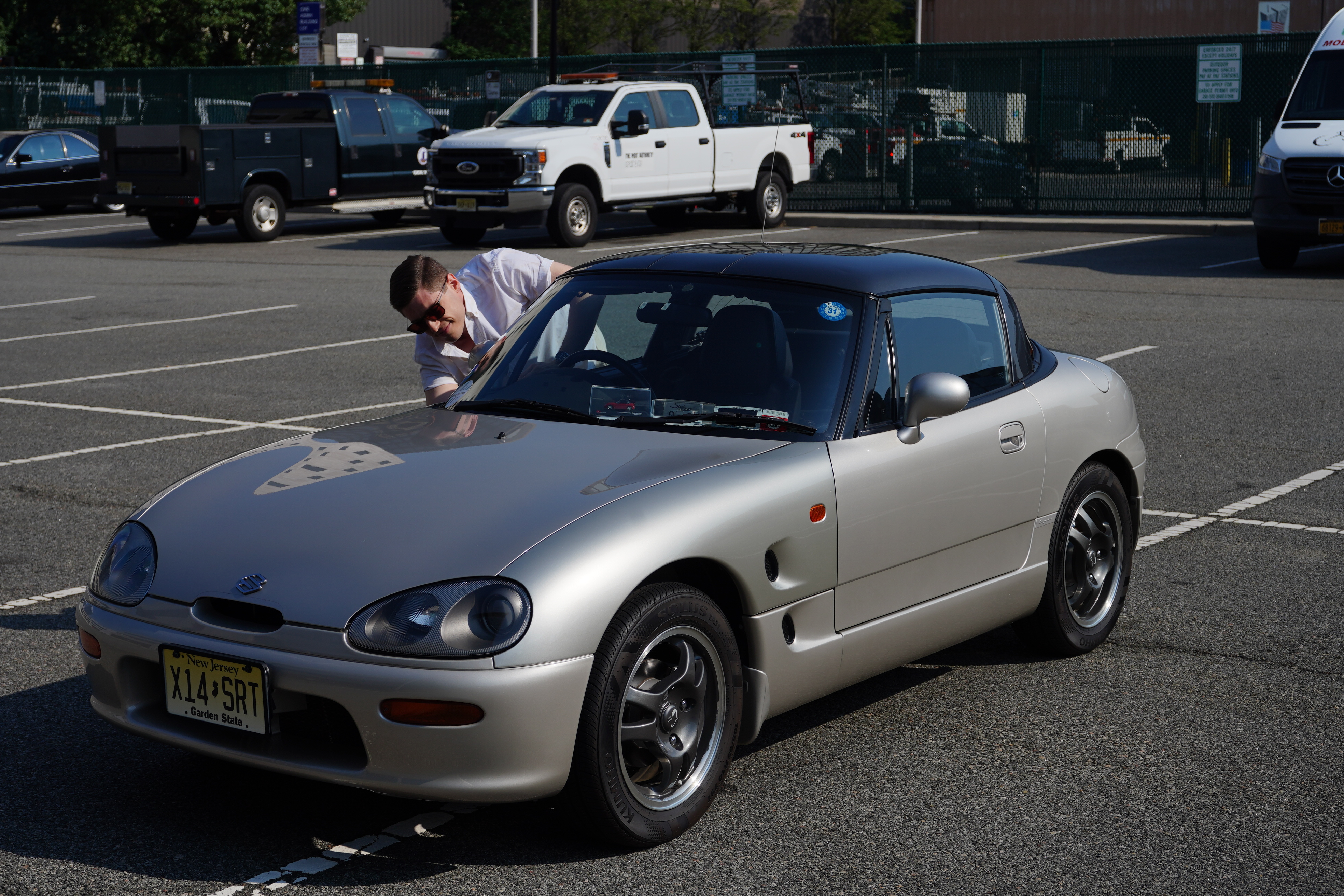
In the Italian class, we gave 3rd place to a green Lancia Fulvia, 2nd place to an orange DeTomaso Pantera, and 1st place to a white Lancia Fulvia Zagato. The Zagato emerged on top due to its uniqueness, color combination, and overall condition. Among the Japanese cars, 3rd went to a black 1989 Nissan 240SX track car, 2nd to a Suzuki Cappuccino “kei car”, and 1st to a near-bone-stock orange 1974 Toyota Corolla. For our entire judging team, the Toyota was an emotional choice. The car was a survivor, in what appeared to be unrestored condition, in a period color combo one doesn’t see today. We agreed that had it had a manual gearbox it would have been perfect.
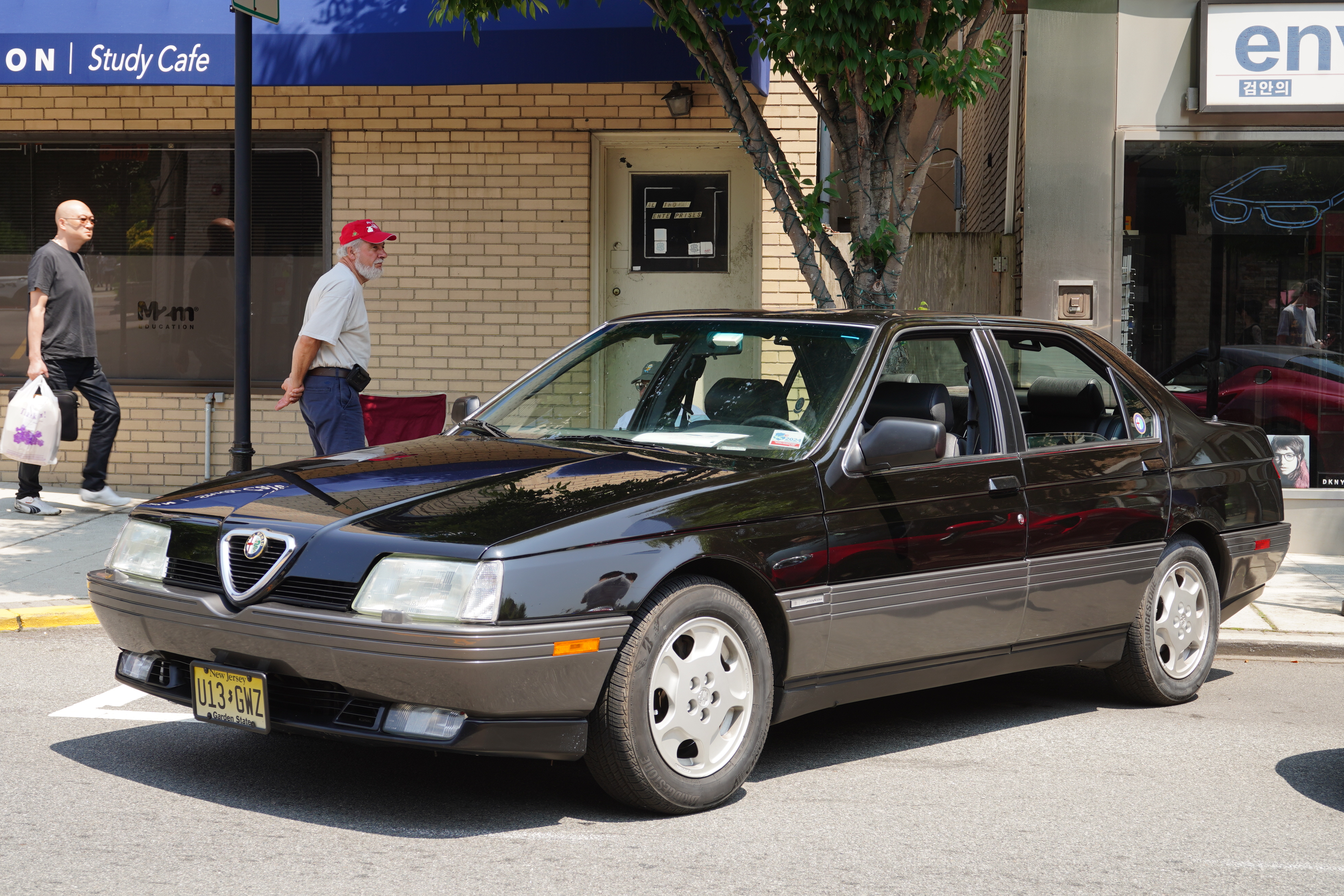
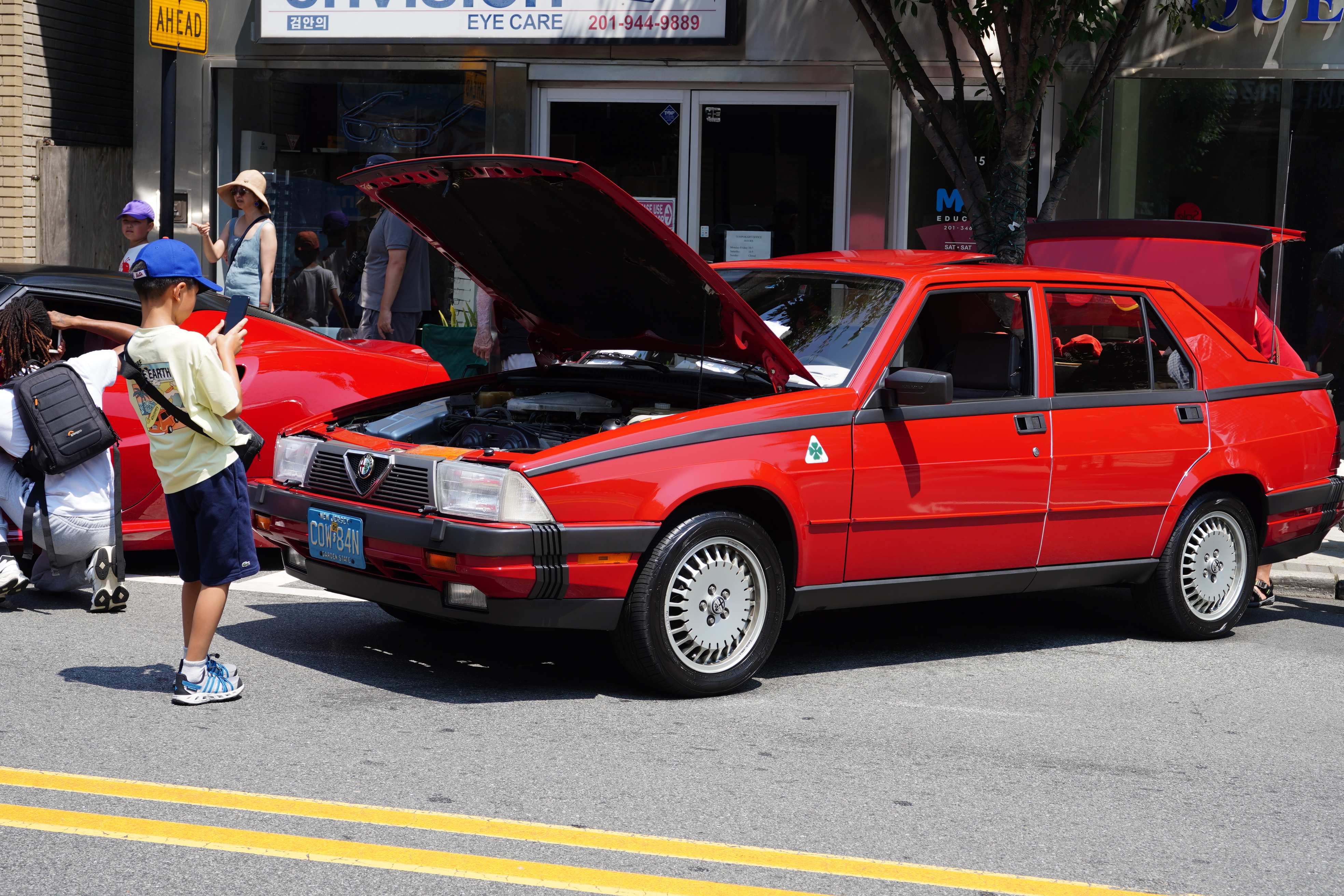
The Alfa Romeos (separate from the other Italian cars) were parked on Main St. in a position of honor, along with the other Special Class this year, the Mercedes-Benz SLs (all years). Nine Alfas were registered, in itself a low number, yet only 6 showed up, a very disappointing turnout. Was it the heat? Competition with other shows? We’ll never know. Still, it was nice to see our Alfas so recognized. Third place went to a black Alfa 164 sedan, second to a red Alfa Milano sedan, and first to a white Giulietta Spider. (I believe that my car, as one entered by a judge, was “display only”.)
The awards ceremony got underway a few minutes after 1 p.m. and was over before 2 p.m. The timing was good because rain clouds quickly moved in, and sprinkles started a few minutes after the final “see you next year!” was proclaimed. My Alfa completed the 120-mile round trip without a problem, even as the temp gauge registered slightly higher in the hot and humid air. I walked into my house a little after 3 p.m. and that air conditioning felt great!



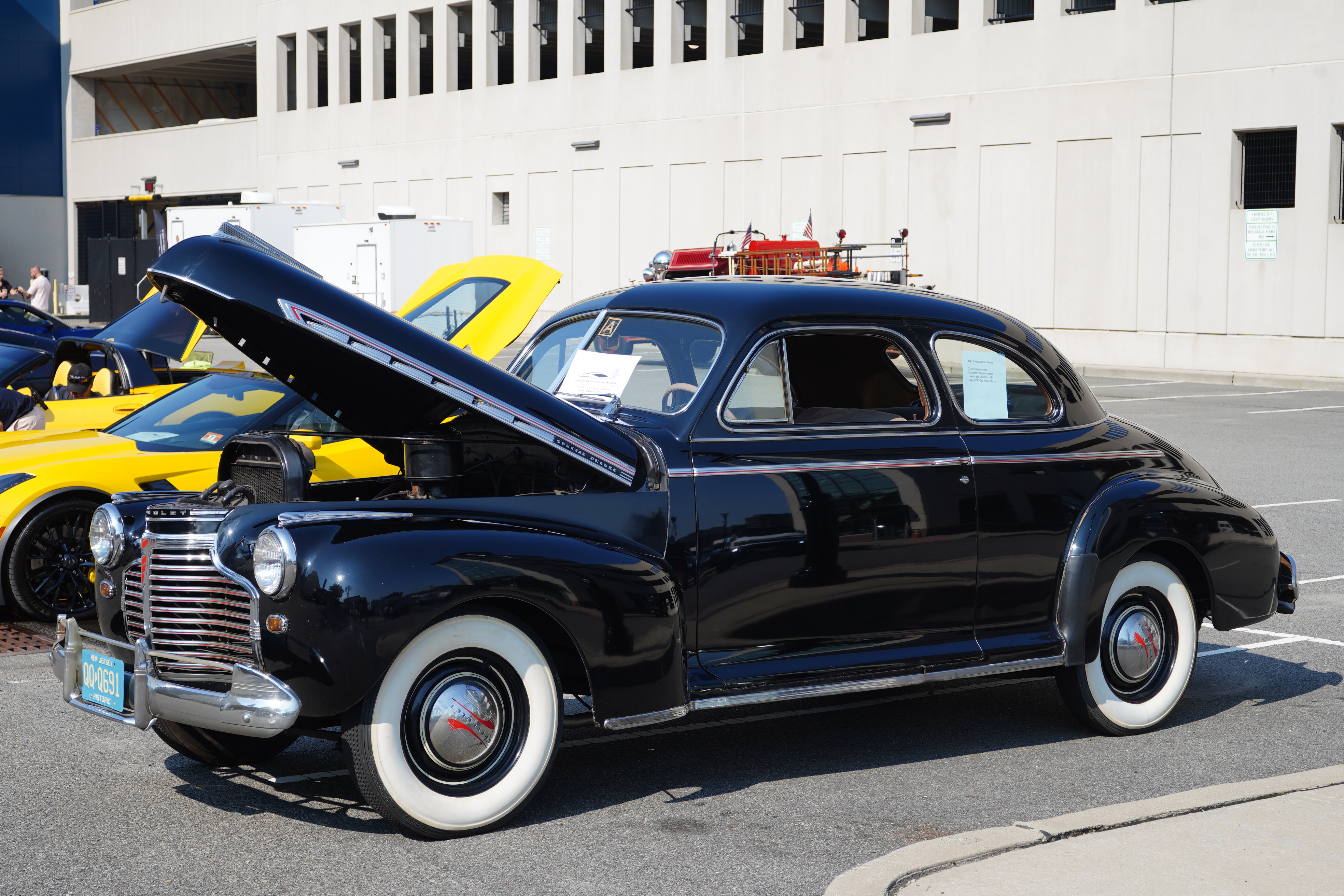
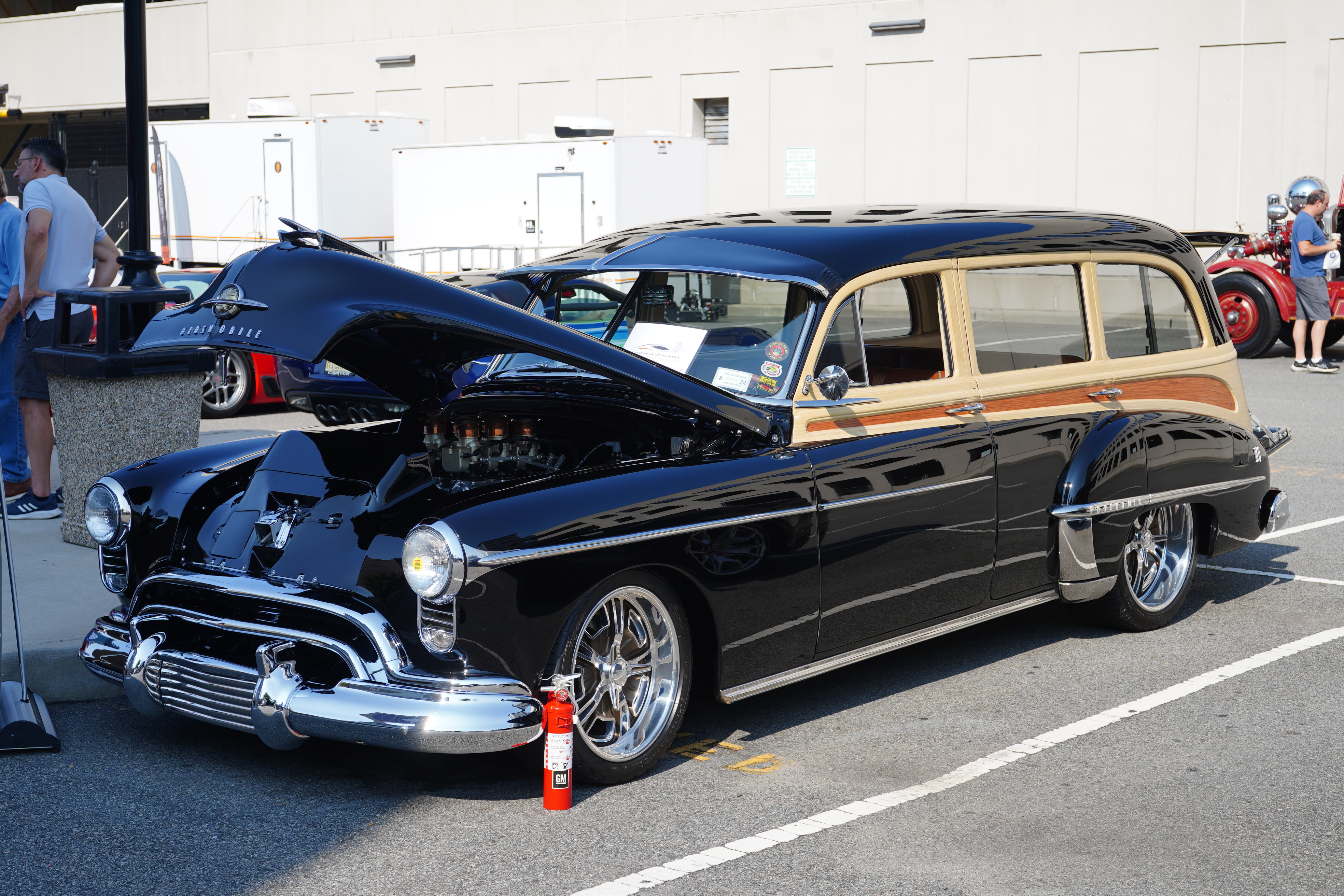
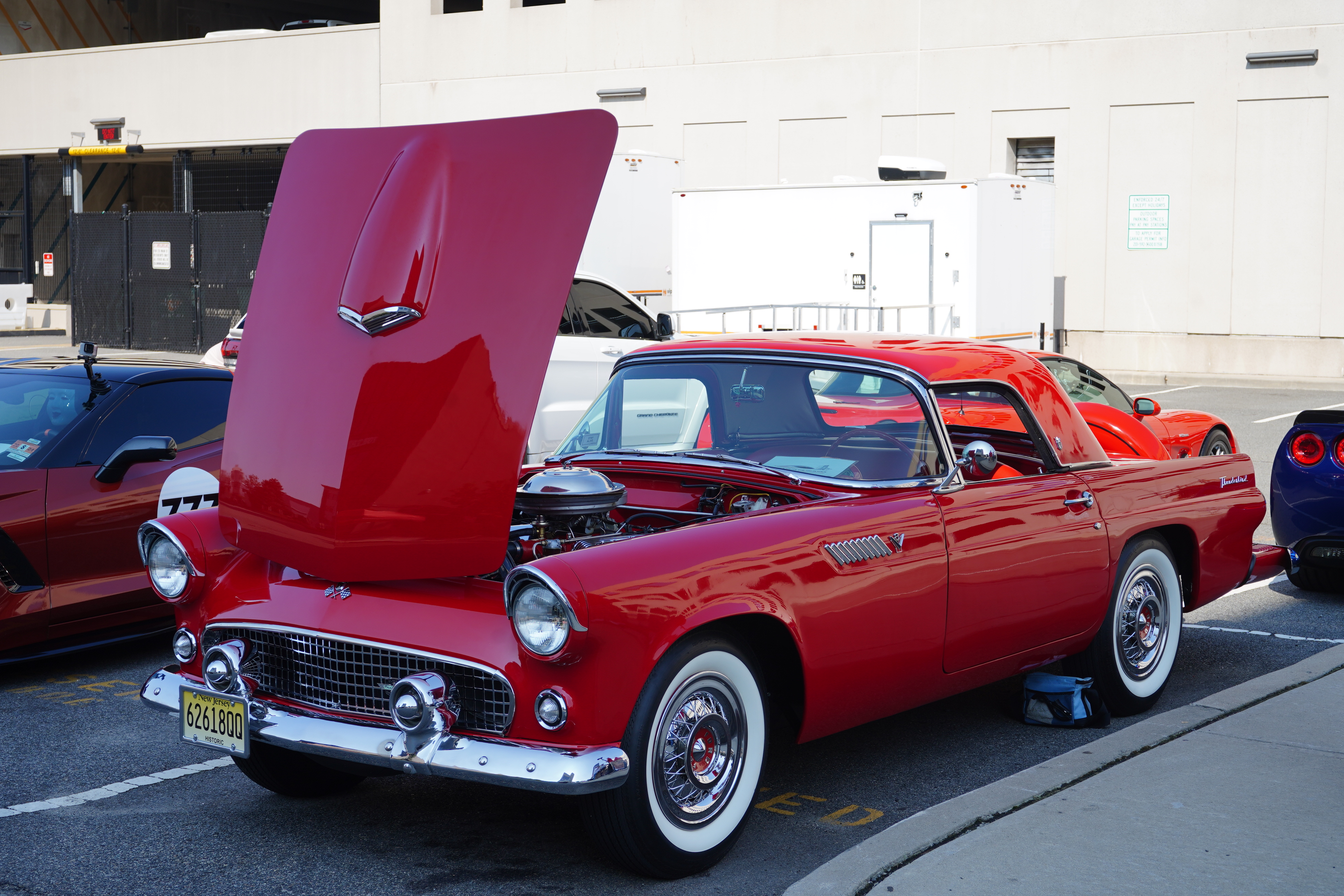


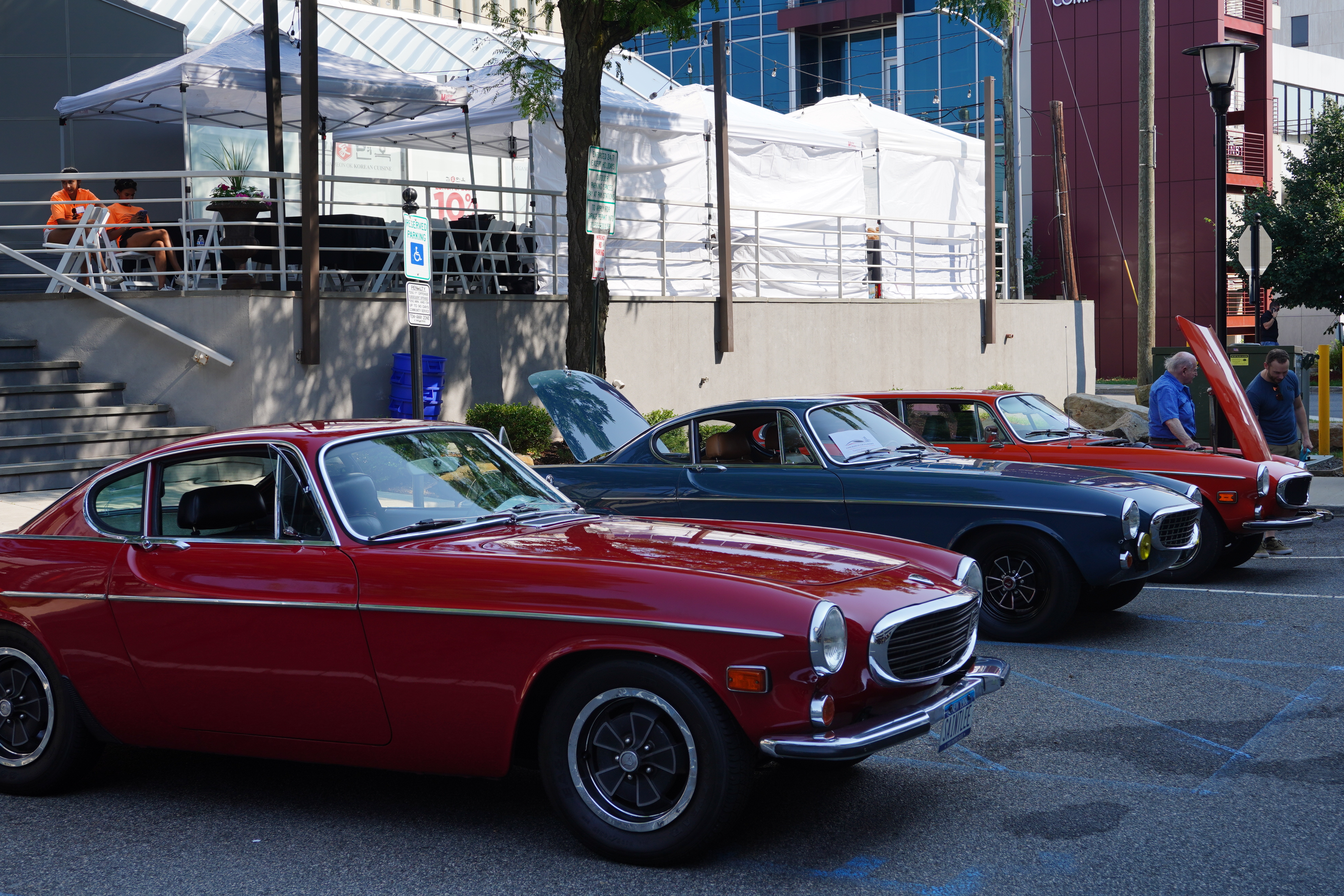





Entire blog post content copyright © 2024 Richard A. Reina. Text and photos may not be copied or reproduced without express written permission.
The movie “Ferrari”, a biopic about Enzo Ferrari who founded and ruled over the famous car company that bears his name, was released to movie theaters late last year. I saw it during its opening week, and despite my initial misgivings, I enjoyed it. Much of my doubt centered around two concerns: one, I knew that the movie covered only one year of Enzo’s life (1957), and I could not imagine how a 2+ hour-long movie could do his story justice; and two, with an American (Adam Driver) in the lead role, and a Latino (Penelope Cruz) playing his wife Laura, I had trouble believing that these non-Italian actors could carry their parts. However, Director Michael Mann, who I’m told is famous for many of his previous movies about which I know nothing, brilliantly brought it together. By focusing primarily on the races, race cars and drivers of that year, and all but ignoring the production cars, the plot moved along nicely.
I had read complaints about the crash scenes, which were very realistic, including the depiction of gore. The harsh reality is that in racing, cars crash, and drivers die. The real tragedy in the races of this time, though, is that they were held on public roads, and too often, fatalities included innocent bystanders of all ages. The gore in “Ferrari” wasn’t there for its own sake. Rather, it was a real-world depiction of what happened during this era in racing.
The single most fascinating aspect of “Ferrari” the movie, though, wasn’t what was shown on screen; rather, it was the screenwriters’ source material which piqued my interest. The movie is based on but one chapter from the Brock Yates-penned biography “Enzo Ferrari: The Man, the Cars, the Races”, first published in 1991, a year after Enzo’s death. I have known of this book since it was released, and had always intended to read it. Watching the movie finally provided the impetus (it was available at my local public library).
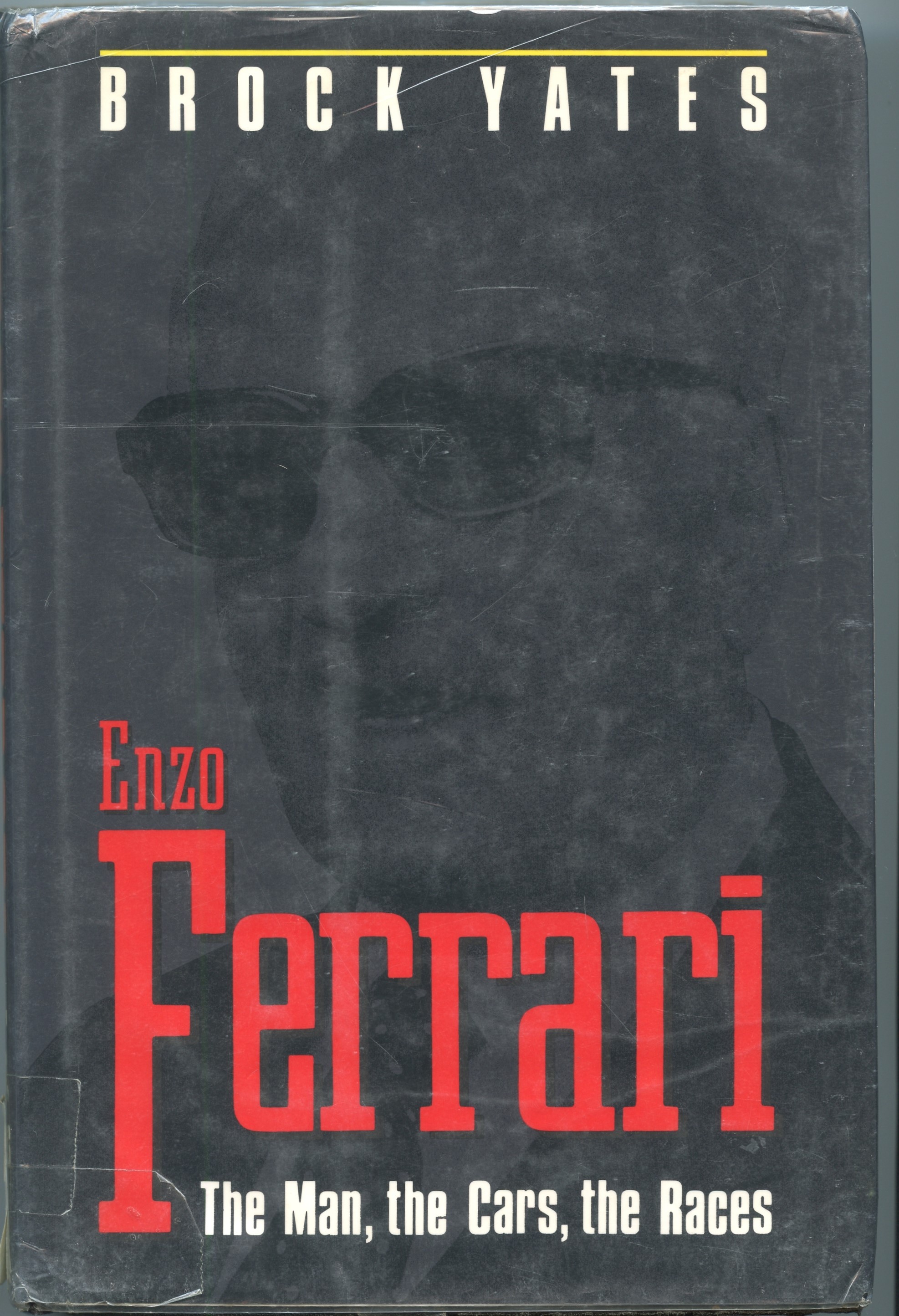
At 453 pages including endnotes, it will take you a while to dig in. Brock had a certain writing style, one that I am well accustomed to from reading his columns and articles in Car & Driver magazine (see my blog post honoring him shortly after his passing here). He loved sentences that could snake across the page with a litany of adjectives or nouns, like “a lusty man who embodied the image of the wild-living, extroverted, hard-driving international racing star”. He delighted in describing this race scene with as much excess as he could pour out: “They sailed through the twisting downhill of The Hatzenbach with the tires smoking, then hammered, eyeballs bulging and palms dripping sweat, through the terrible, blind humps of the Flugplatz. Two Rip Van Winkles hounded by the Headless Horseman, they skidded and bounced around the ghostly place, the shriek of their Jano V8s slowly being battered away by the baleful yowl of Colombo’s venerable straight-6.” Okay, Brock!
But when Yates wanted to, he could craft a narrative to bring you to the edge of your seat, feeling like you were a first-hand witness to the drama and excitement. From the Ferrari book, here is Yates’s description of how Tazio Nuvolari, driving for the Scuderia Ferrari, blasted past the favored Germans to win the 1935 German Grand Prix. (This excerpt has been edited for brevity.)
There was one final, monumental triumph for the Scuderia Ferrari before the capitulation to the German onslaught was completed. It was only proper that the greatest living race driver – and perhaps the greatest of all time – Tazio Nuvolari, should be the key to that astounding moment in motorsports.
The rise of the Germans had produced a national craze for motorsports, and by July it seemed like the entire population of Germany was descending on the Nürburgring for an event that was sure to fall to either Auto Union or Mercedes-Benz.
The front row consisted of the two Mercedes-Benzes of Caracciola and Fagioli bracketing the Nuvolari Alfa – a mechanical sandwich with a red Italian morsel pinched between a pair of sure winners. But this was Tazio’s day, and he launched the old Alfa off the line as if amphetamines had been mainlined into its fuel tank. On the eleventh lap of the huge circuit Nuvolari made a routine stop for fuel and was delayed when a pump failed and the tank had to be hand-filled from cans sloshing with gasoline. By the time he jumped back aboard the Alfa, apoplectic over the delay, he had fallen far behind into sixth place.
At this point began what many believe to be one of the greatest feats of driving in the history of the sport – a titanic driver on a magnificent racetrack facing overwhelming odds. Nuvolari seemed at this moment to ascend into another sphere of skill entirely. Even the multitudes could sense that a master was at work. He was hardly braking for the corners, those stomach-turning twists and hollows. He was charging into the bends flat out, then yanking the Alfa into a series of lurid slides, elbows akimbo, flailing madly to maintain control.
Manfred von Brauchitsch (in a Mercedes Benz) had assumed the lead in the later stages, as the other German aces had either faltered or stopped. There was little doubt that he could hold off the mad thrusts of Nuvolari – who had now, amazingly, preposterously, surged into second place. Three laps remained and Nuvolari had cut Brauchitsch’s lead to sixty-three seconds. Observers on the circuit were reporting that Nuvolari was gobbling up the distance like a berserk hare. The pressure was becoming unbearable. Could Nuvolari pull it off? One mad fourteen-mile lap remained.
The squad of NSKK troopers in black motorcycle helmets were standing by to hoist an immense swastika on a flagpole that towered over the grandstand. Meanwhile, out on the circuit, Nuvolari continued his banzai drive. The masses in the pit-row tribunes and the assembled teams heard the shocking news from the loudspeaker: “Brauchitsch has burst a tire! Nuvolari has passed him! Brauchitsch is trying to catch up on a flat tire!”
Despair. Humiliation. Defeat. Nuvolari crossed the finish line a clear winner. In the midst of his mad game of catch-up, Nuvolari had also spotted a wind-frazzled Italian flag hanging over the main press tribune. It stood in stark, shoddy contrast to the pristine red, black and white Nazi bunting surrounding it. The first words the sweating, exhausted Nuvolari spoke as he crawled from behind the Alfa’s wheel were: “Tell the Germans to get a new flag!”
Brock Yates apparently spent years researching Ferrari’s life, including multiple trips to The Old Man’s homeland, to produce an impeachable bio. He does not hold back. Many of the Ferrari faithful on both sides of the Atlantic though Enzo was a saint in life and a deity in death. The book, much like the movie, tells a very different story. But in fairness, Brock Yates devotes equal time to the great successes along with the great failings of someone who, by any measure, launched one of the most successful car companies of all time.
I enjoyed the book most of all for what it taught me about Enzo the man. Here are the major points which I either learned from the book, or I thought I knew and were confirmed by it:
Enzo Ferrari did indeed begin his automotive career by racing Alfa Romeo race cars during the 1920s and 1930s (Scuderia Ferrari). However, he was fired by Alfa Romeo in the late 1930s, and held a grudge against the Milanese company for most of the rest of his life.
Ferrari didn’t produce the first automobile (really a prototype) bearing his name until 1947, when he was already 49 years old.
For the first few decades of the company’s racing experience, Ferrari stubbornly clung to the idea that “horsepower is everything”, and all other vehicular components had little impact on the success of a race car. To quote Yates: “ A myth has grown up around the cars relating to their advanced designs, but actually Enzo Ferrari was extremely conservative and was often left at the starting gate by more creative builders (his reluctance to adopt such obviously superior components as mid-engine layouts, coil spring suspensions, disc brakes, monocoque chassis, magnesium wheels and fuel injection exemplifies his crude approach to design).”
The above ties in very neatly with what I have heard from those who have owned Ferrari road cars from the 1950s and ‘60s. One fellow hobbyist described his Ferrari thusly: “It’s an engine on a tractor chassis”.
Contrary to almost everything I’ve read over the last 50 years, Enzo’s son Dino had just about nothing to do with the development of the Ferrari V6 engine which the father named after the son. Simply put, at his young age (25), Dino lacked the education and experience to delve deeply into engine design. The book notes that Jano and Lampredi, world-famous engineers in their own right, had both been working on V6 designs shortly before the Ferrari Dino debuted, and they are given credit for its design.
Ferrari traveled very little. Once his car company started, he rarely ventured more than a few kilometers from his home base. He almost never attended any Formula 1 races; he preferred to hear about results via long-distance phone calls. His trips outside of Italy could probably be counted on one hand.
Racing was everything to him. It is certainly true that the only reason he manufactured street cars at all was to fund the racing business. He grew to detest the wealthy people who gobbled up his cars as if they were precious diamonds, even though it was their funds which fed the hungry racing machine.
It was Fiat’s takeover in the late 1960s which finally propelled the road cars into the modern era. Mid-engine placements, modern manufacturing methods, and up-to-date comfort and convenience features were first found in the mid-‘70s’ 308/328 Berlinettas and Spiders. According to Yates, Ferrari cared even less about the road cars at this point and simply rubber-stamped whatever Fiat churned out for him.
Whether you’re passionate about the Ferrari mystique or simply want to learn more about the man behind the name, I recommend both the movie and the book.
Last Thursday, the monthly AACA meeting ended around 9 p.m., its usual time. I was tired, and anxious to begin the one-hour drive home. After wishing Happy Holidays to those around me, I grabbed my coat and headed out the door of the American Legion Hall. And there it was. Suddenly tired no more, I froze, perhaps because its appearance was so unexpected, or perhaps because its enormity stood out in a parking lot full of smaller, modern vehicles. In this setting, there was nothing similar to distract from its visual impact. This 1961 Cadillac Coupe DeVille was a grand automobile when new, and is still grand today, in every sense of the word.
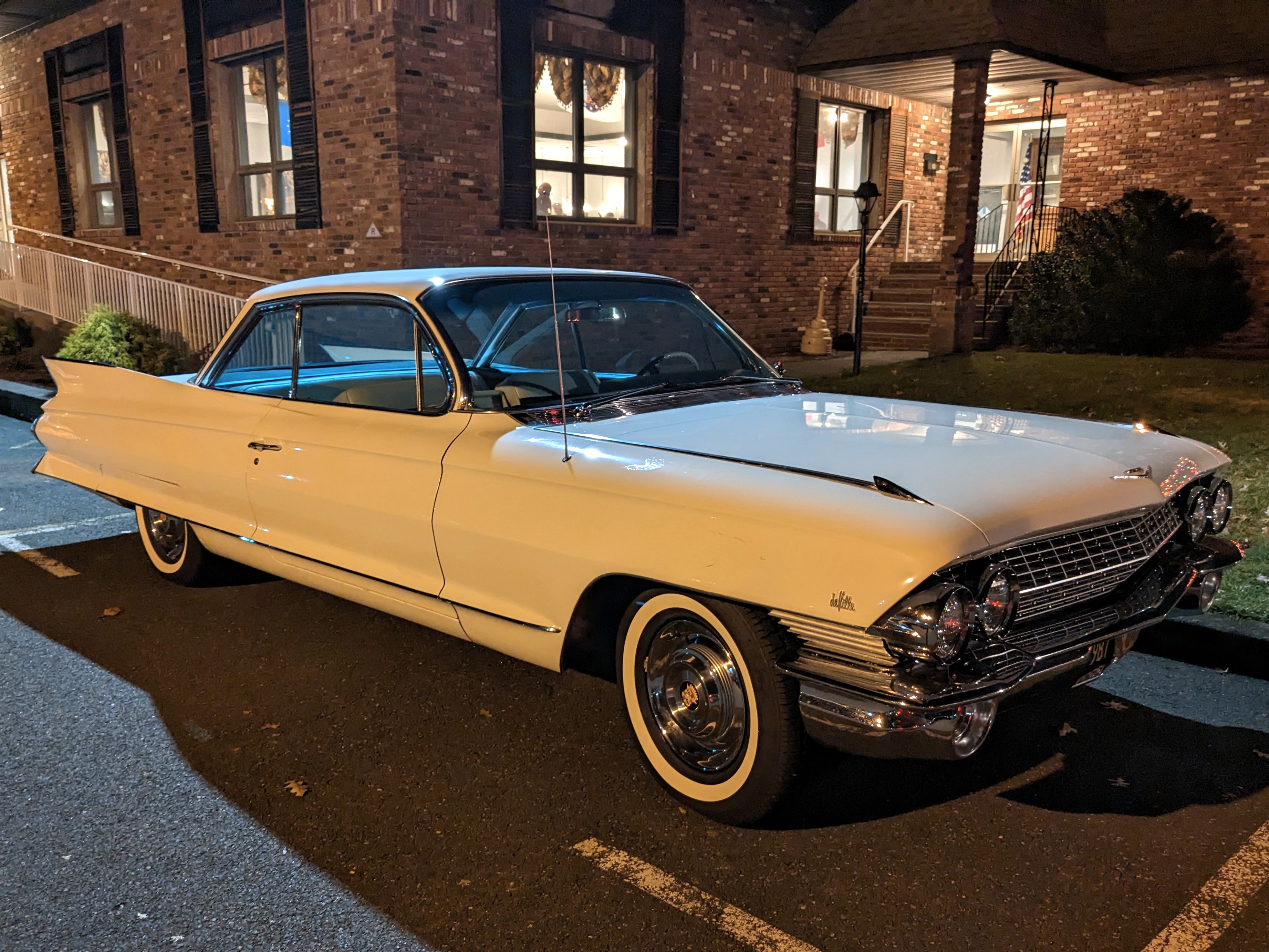
The car belongs to one of our club members, an infrequent meeting participant, but someone who is known for his exquisite taste in classic automobiles. I had not seen this car of his before. What first struck me were its proportions. For a two-door, its greenhouse is enormous, with the backlight (rear window) possibly larger than the windshield. The rear deck appeared to be as long as the hood, a trend that would soon disappear with the introduction of the Mustang just 3 years away. If you know your Cadillac history, then you know that the decade of the 1950s featured ever-larger fins through 1959, after which the tailfins began to shrink. Compared to what came before, these ’61 versions looked miniature.
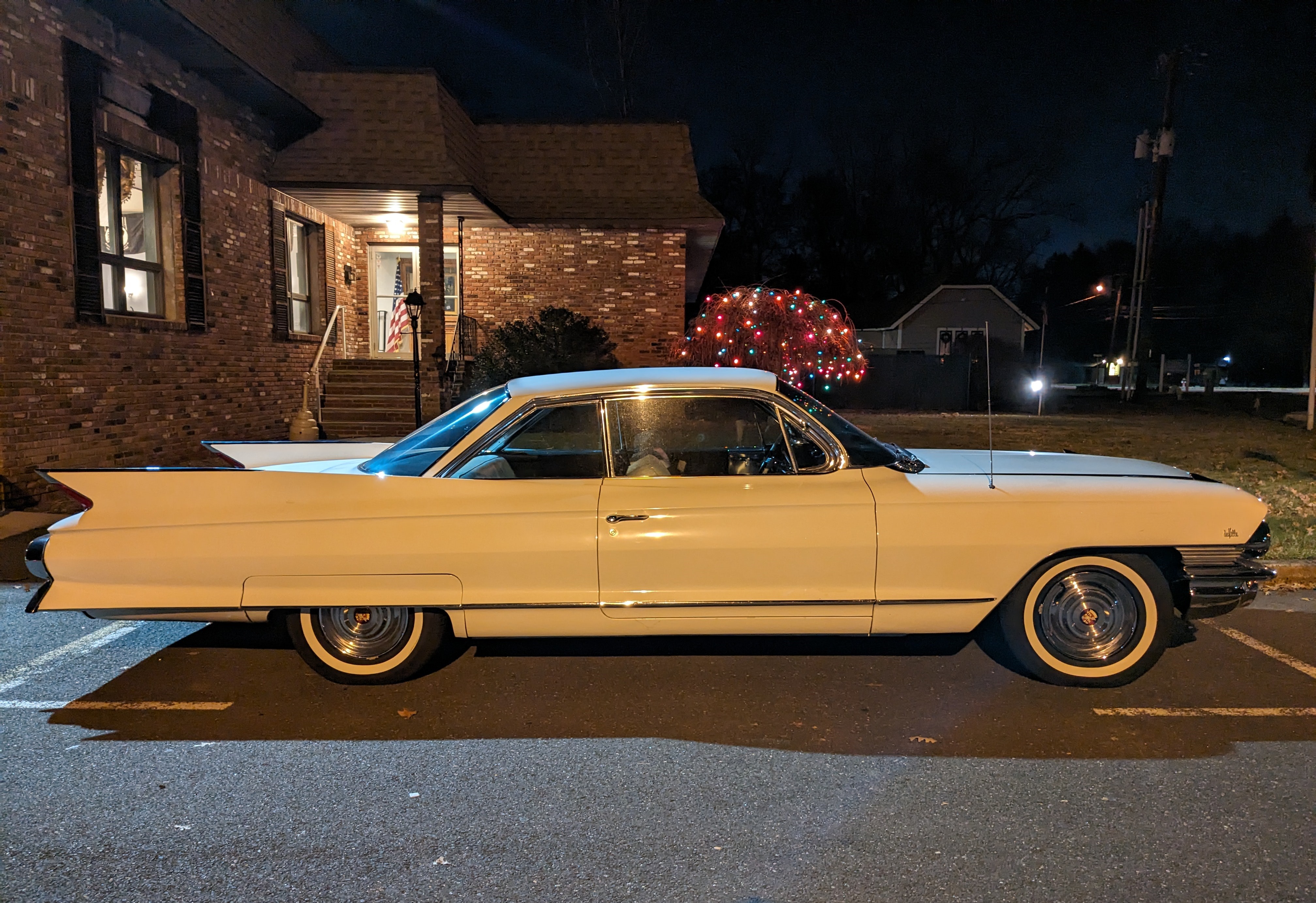
According to my copy of The Standard Catalog of American Cars, all 1961 Cadillacs were powered by a 390 cubic-inch engine producing 325 HP. The Coupe DeVille rode on a 129.5” wheelbase, with an overall length of 222”. The two-door car was priced starting at $5,252 (compared to $5,498 for the Sedan DeVille), and weighed in at 4,595 lb. Cadillac churned out 20,156 Coupes DeVille (the 3 Sedan DeVille models totaled 35,018 units). While power steering, brakes, seats and windows were standard, one paid extra for options such as air conditioning, power door locks, a radio, and my personal favorite, “permanent antifreeze” ($9 for protection down to -40 degrees).

If the styling of the Coupe DeVille didn’t more the spirit within you, you could consider the ’61 Imperial Crown Southhampton coupe, still retaining massive fins, for $5,403. But FoMoCo fans were left high and dry in 1961: the dramatically restyled Lincoln, as gorgeous as it was, could be had only as a 4-door sedan or 4-door convertible. Two-door Lincolns were out for the time being.

This ’61 Cadillac epitomizes the luxury leadership that the brand would maintain throughout the decade of the 60s. I hope that this car’s owner considers bringing this car to an upcoming show so that I may gaze upon it in good light, and in more detail!

All photographs copyright © 2023 Richard A. Reina. Photos may not be copied or reproduced without express written permission.
December 23, 2009 was my final day of work at Volvo Cars of North America, where I had been employed for over 23 years. For the first time since college graduation, I was free of daily obligations. I had every intention of resuming my career, but with my wife’s encouragement, I decided to take some time off.
As 2010 dawned, I looked at the collector car calendar and could foresee upping my participation above what had already been a busy schedule. While the garage held both the ’68 Mustang and the Isetta, I decided to look for opportunities to get the Isetta out more. The additional time needed to load and unload the car would be less of an issue now.
In addition to attendance at the 2010 Greenwich Concours d’Elegance, I had the time to also take part in these activities:
My friend Larry, who lives in the vicinity of this school, made me aware of this show, which sounded like fun. It was also a chance to lend support to a bunch of teenagers who wanted to experience the makings of a car show in their own back yard.
The kids of course, enjoyed my car, and I in turn enjoyed the variety of vehicles in attendance. Two young men floored me, as they showed me around their VW bus while wearing tie-dye shirts. Flashing the peace sign was their idea, not mine!


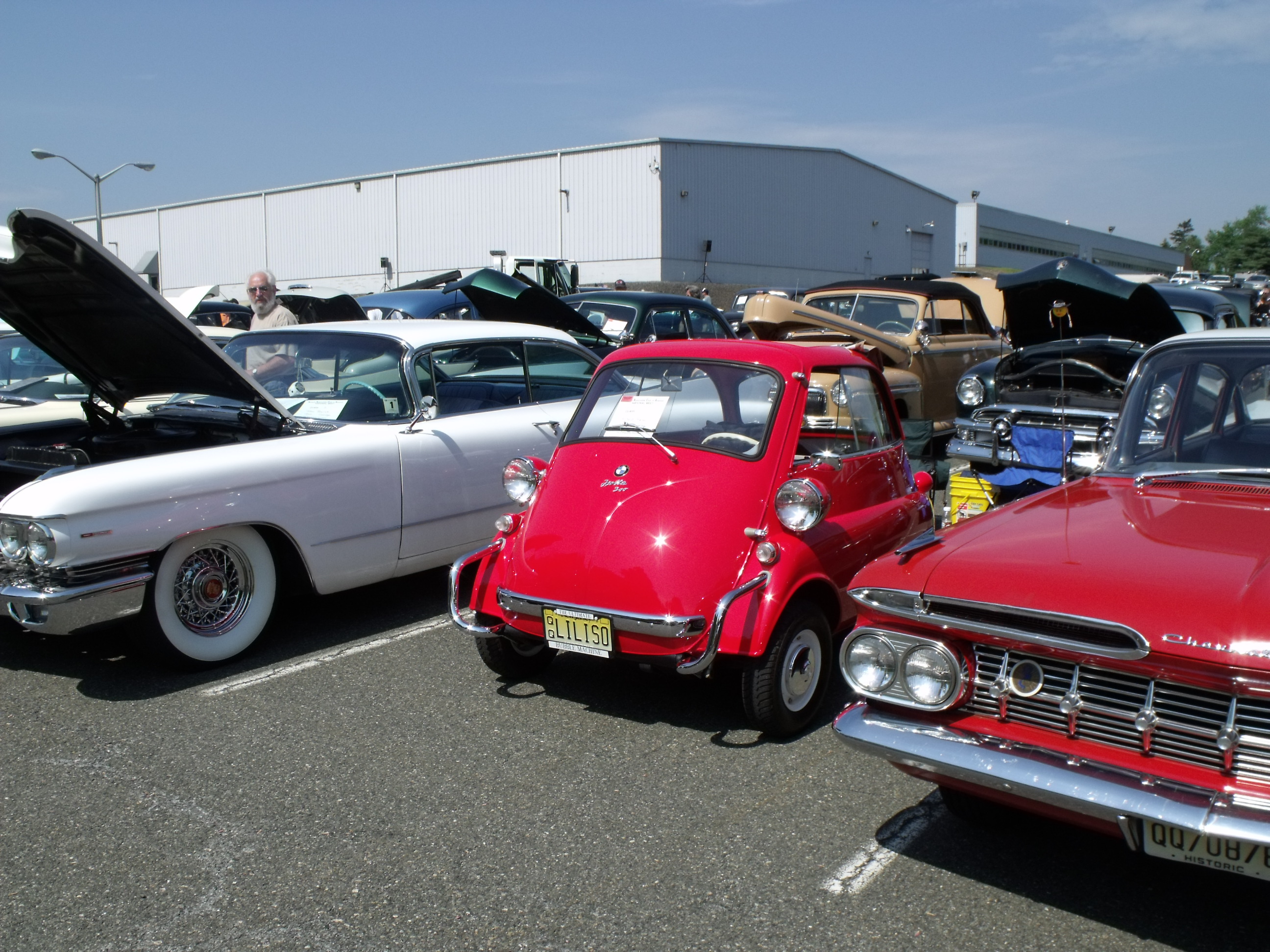
I had only recently become a member of the NJ Chapter, so none of my mates in the club had seen the Isetta yet. Entering the microcar in the same class as the American iron of the ‘50s meant that it was up against some very stiff competition (it also looked like a toy next to these ‘50s gargantuans).
My friend Ron, whom I knew from the multiple New England 1000 rallies we’ve run together, showed up in his ’55 T-Bird and parked next to me. Lo and behold, when it was time to depart, his Bird wouldn’t start! Ron knew the car became fuel-starved because of a hot soak issue, and he said that all he needed to get going was a bit of fuel to pour into the carb. But where to get that fuel? From the Isetta’s fuel tap!


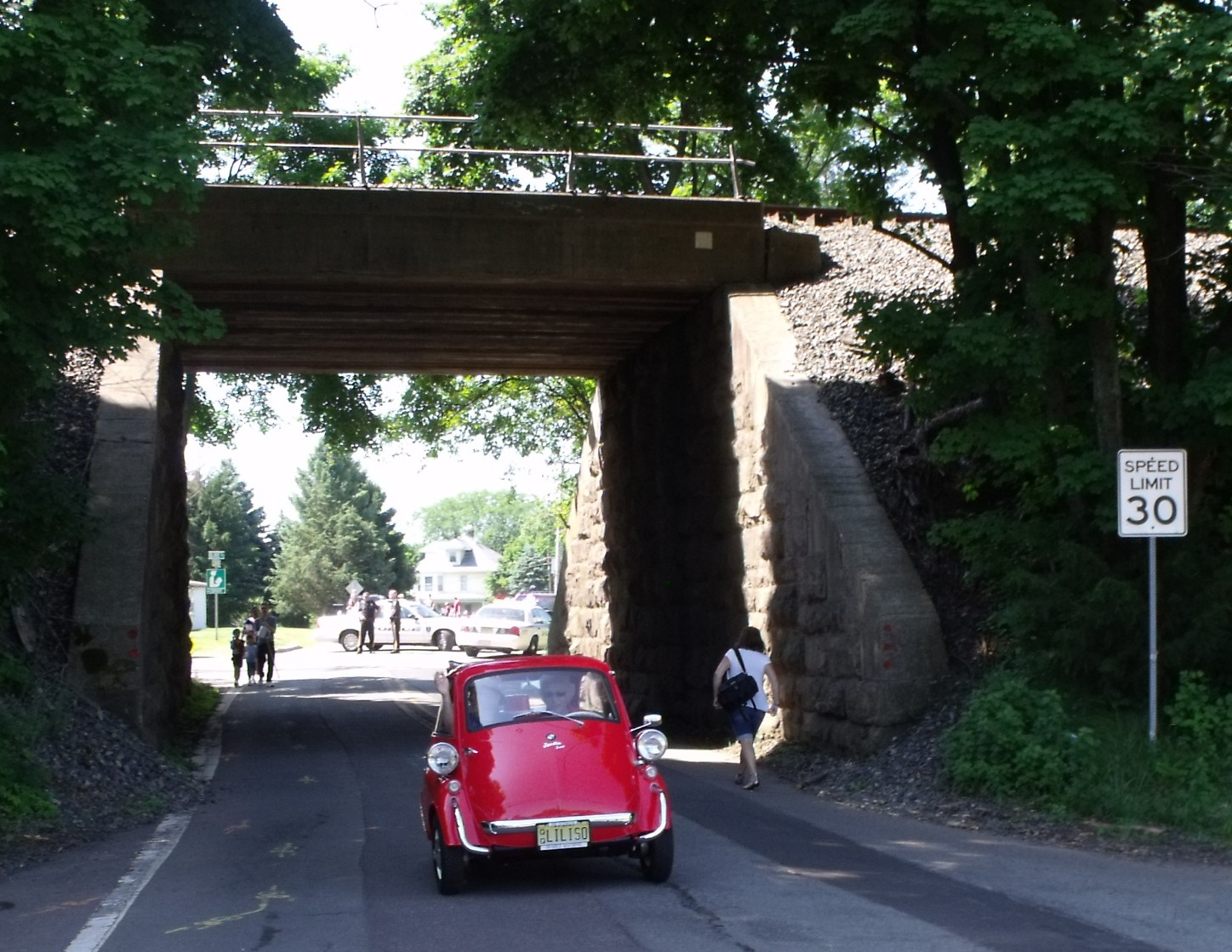
We were getting good at parade participation, and this one was close enough to my house that I could actually drive the 3 miles back and forth, and I did! My stalwart friend Richard Sweeney did not miss the chance to ride in the car, and waved to the crowd as if he were the mayor.


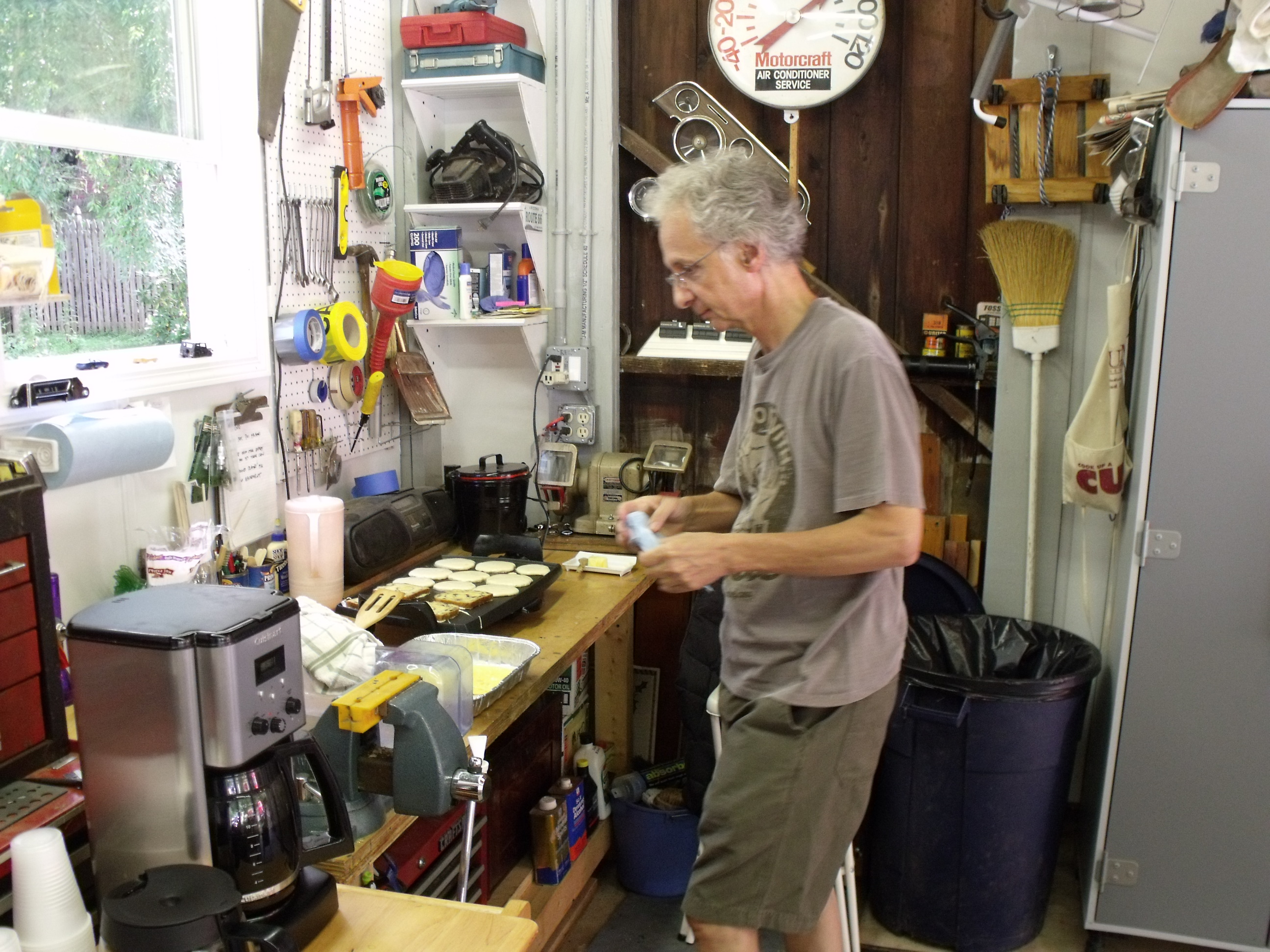
As a changeup from the typical Sunday morning breakfast drive, I emptied my garage of cars, set up a table and chairs, brought out the electric griddle and coffee pot from the kitchen, and invited a bunch of the regulars down to breakfast. (My wife said it looked like I could move in there; perhaps that was a hint….) Even Irv Gordon made it (after receiving the invite, he called me up and asked “Rich, do you think the guys would mind if I drove the C70 instead of the 1800? I want to ride in air conditioning”.)
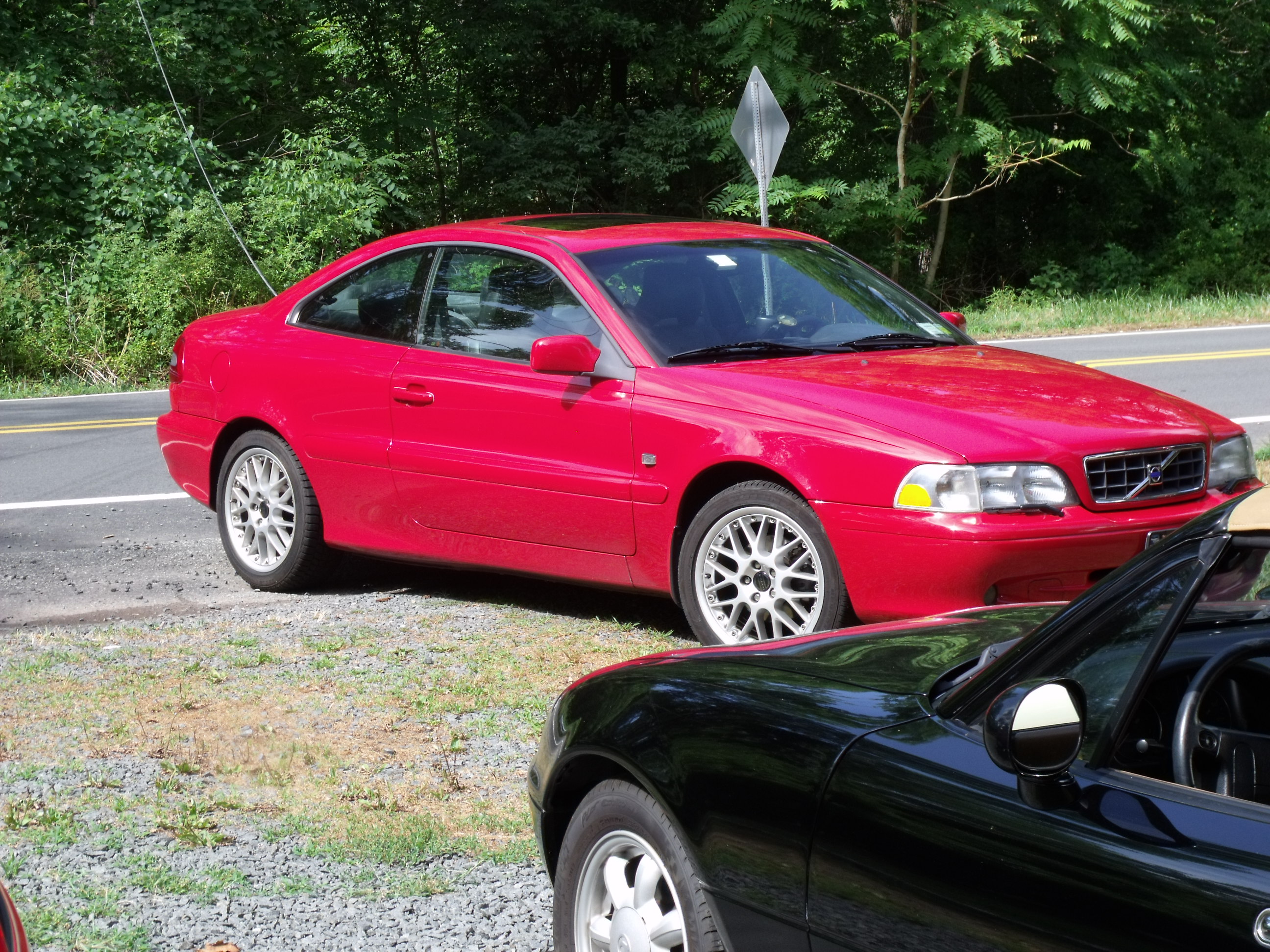

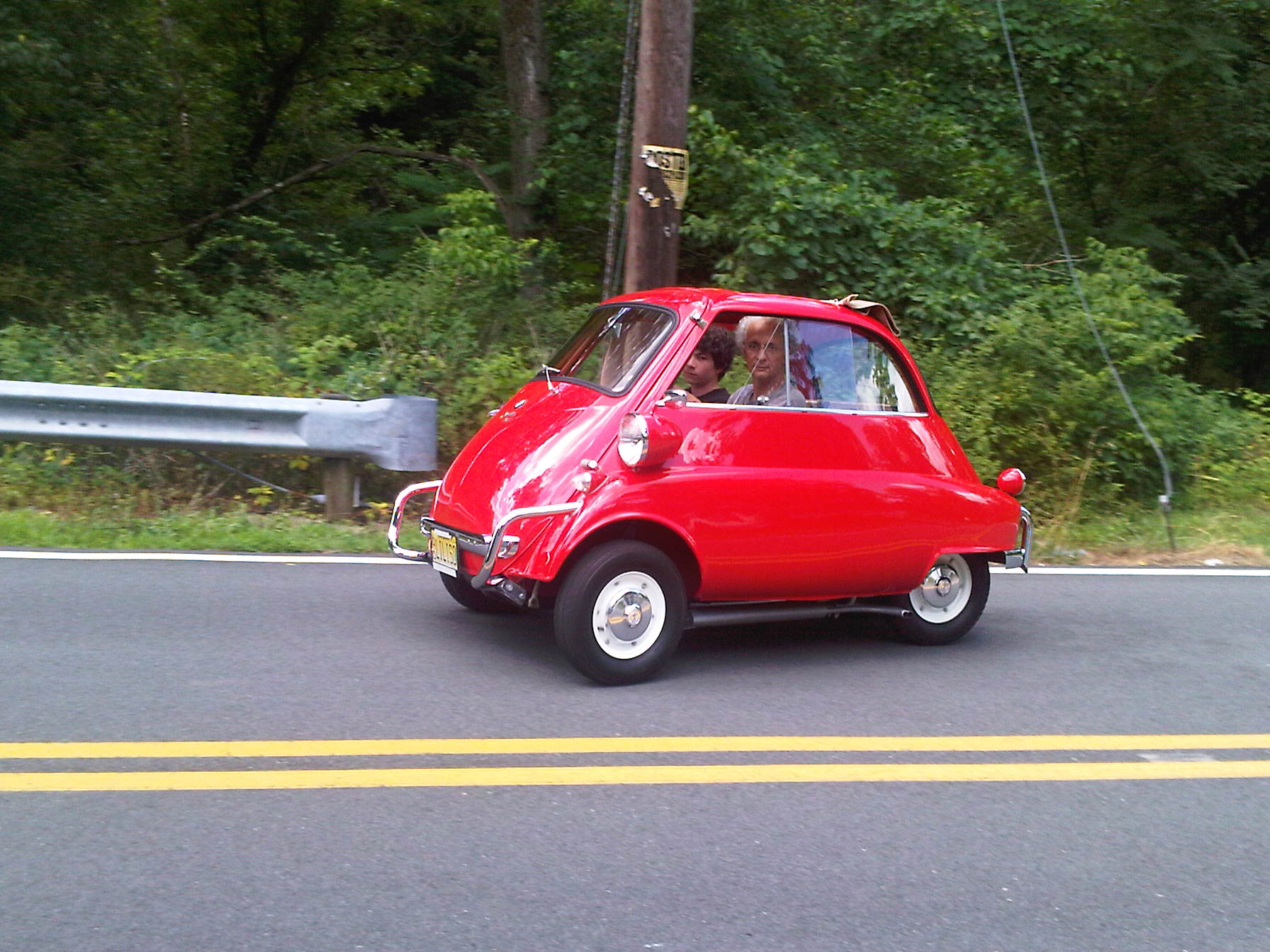
We had something of a mini car show on the lawn and in the driveway, and for anyone brave enough, rides up and down the road in the rolling egg were freely offered.



This show, held in the charming town of Macungie PA since the 1960s, wins the award for “car show name with greatest ratio of consonants to vowels”. I’ve attended “Macungie” as we call it (easier to say) since the early ‘80s, as it was a known gathering spot for microcar owners.
There was no contingent of micro units this year, but I did manage to secure a shady spot on what was a typical hot and humid summer day. This show has always prided itself on an eclectic variety of display vehicles, typically arranged by year, make, and model. One particular memory is of a young woman who described herself to me as an artist. Having gone through my restoration photos, she seemed to take great delight in informing me that I too, was “an artist”. I accepted the compliment!
By the autumn of 2010, I was back to work, albeit only on a part-time basis. With the show calendar quickly coming to a close, I was already anticipating more of the same in 2011.


All photographs copyright © 2020 Richard A. Reina. Photos may not be copied or reproduced without express written permission.
It’s long been a tenet in the old car hobby that cars like to be driven; they don’t do well when they sit; and as long as you’re on top of maintenance, there’s no reason not to expect some reliability from an older car.
I’ve been lucky with the Alfa Romeo (although frankly, luck has little to do with it): having purchased the car in March of 2013 with 54,000 miles on the odometer, by July of 2019, the car had just shy of sixty-six thousand on the clock. In a little over six years, I managed to drive a 1967 Italian car almost 12,000 miles, which neatly works out to 2,000 miles a year. That changed, though, when the brakes seized, resulting in a complete teardown and rebuild of the braking system that took a year to complete. The car had not sat silent under my ownership for that long before, and when I did restart it, it ran poorly. Suspecting the fuel had gone sour, I drained the tank, added fresh premium, and swapped out the plugs. Success! Except … now I had a fuel leak under one of the carbs.
So, much of September was spent reading up on Weber carburetors. At first blush, they seem unnecessarily complex. Add to that complexity the words of the late Pat Braden, as he wrote in The Alfa Romeo Owner’s Bible, a copy of which I own (and I’m paraphrasing here): “if your car is running fine, don’t touch the carbs. Everyone wants to fiddle with the carbs. If it’s running ok, leave the carbs alone”.
Well, Pat, the car does ‘run’ fine, but liquid fuel dripping onto my starter motor does not get me very excited, at least not in a good way. I did some more research, including reading some very helpful posts on the Alfa BB (Bulletin Board), and concluded that the gaskets and seals were probably old, and the float height should be measured and adjusted, but other than that, I am going to leave the carbs alone!
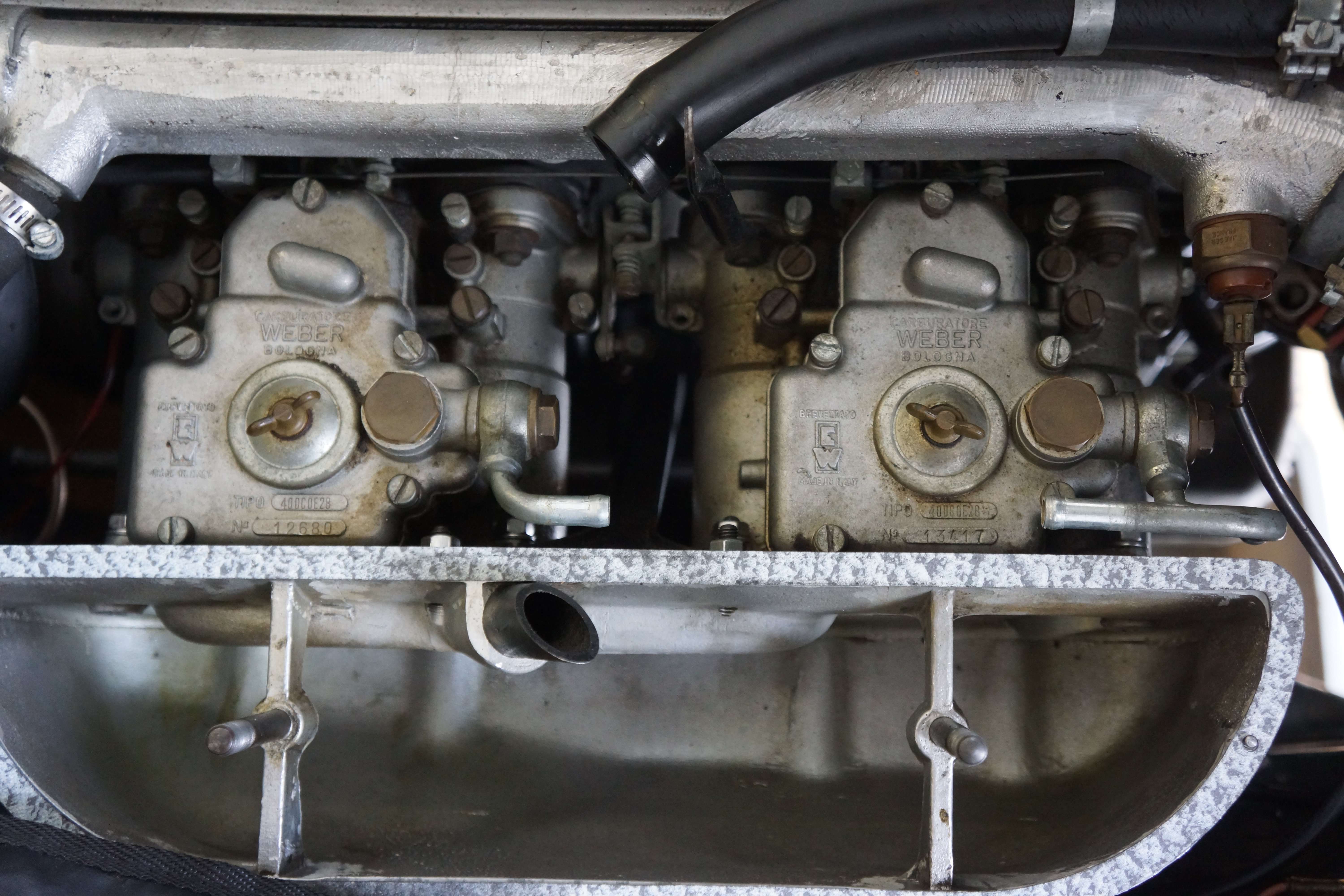
I’ve never removed the Webers from my car before. Removal didn’t look complicated, but would certainly prove to be time-consuming. First, the upper plenum is removed (two hose clamps, one bolt, and two nuts, all easily accessible). Next, the lower plenum comes off (ten nuts and washers, four of which are totally blind). Now one has access to the carbs themselves (eight nuts, four of them blind). Once the banjo bolts for the fuel connections are undone, the carbs can be removed from the car. The carburetors bolt to 4 rubberized mounts, each of which has 4 studs. To remove the mounts, one first must remove the intake manifold, as 8 of the nuts for the mounts are only accessed if the intake manifold is unbolted from the cylinder head (7 nuts, some of them only reachable with an open-ended wrench, which only allows 1/6 of a turn at a time).
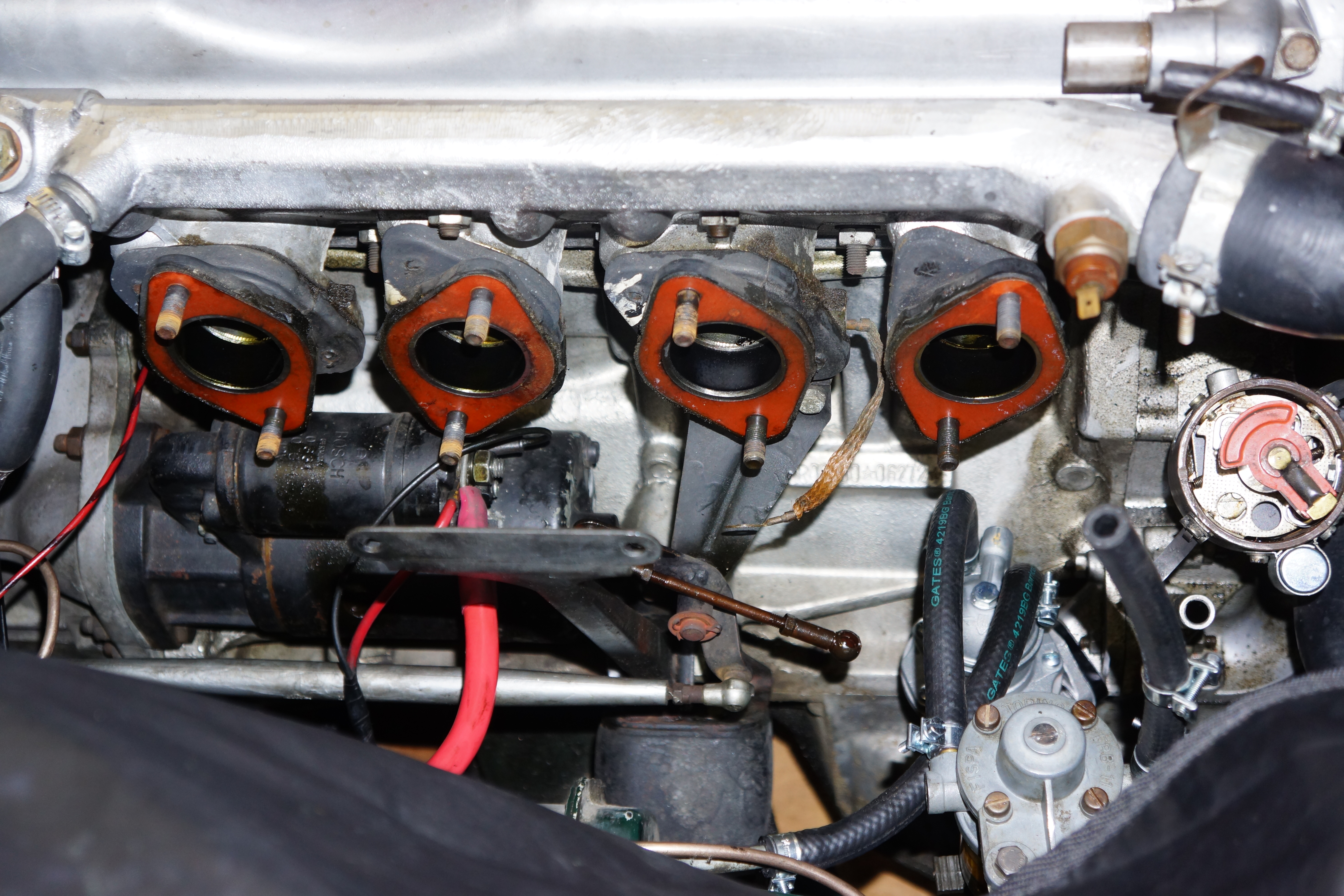
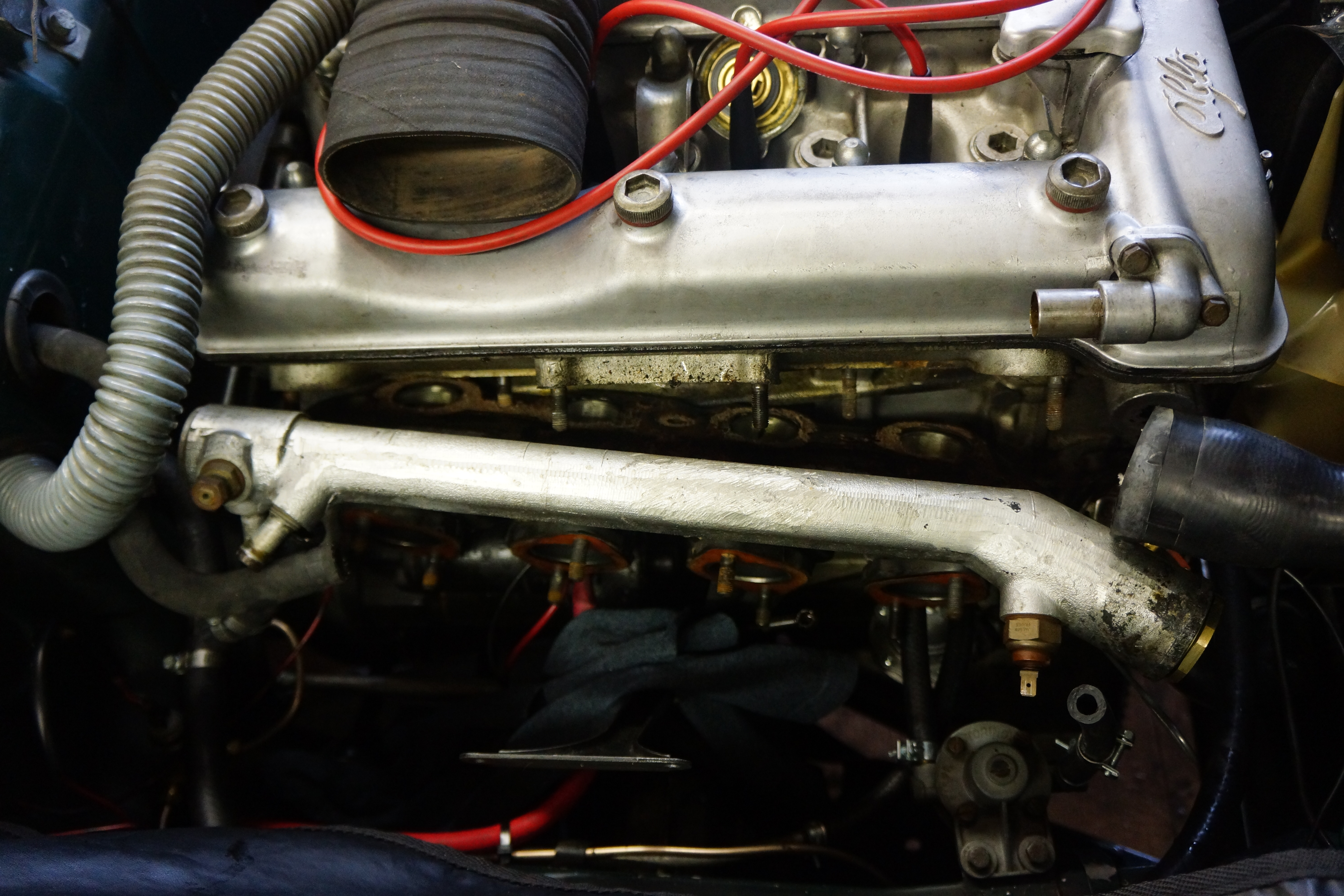
Back to these rubberized carb mounts: it was eye-opening to learn from the Alfa BB that side draft carbs, hanging off the right side of the cylinder head, are prone to enough vibration to cause fuel delivery issues. To combat that, Alfa employed a bracket extending upward from the right motor mount to the lower plenum, and mounted the carbs on rubber mounts which absorb vibration. But a number of the Alfa owners on the BB stated that these mounts should be considered service items: eventually, the rubber hardens and develops hairline cracks which allow air to enter the intake stream, throwing off the fuel-air mixture.
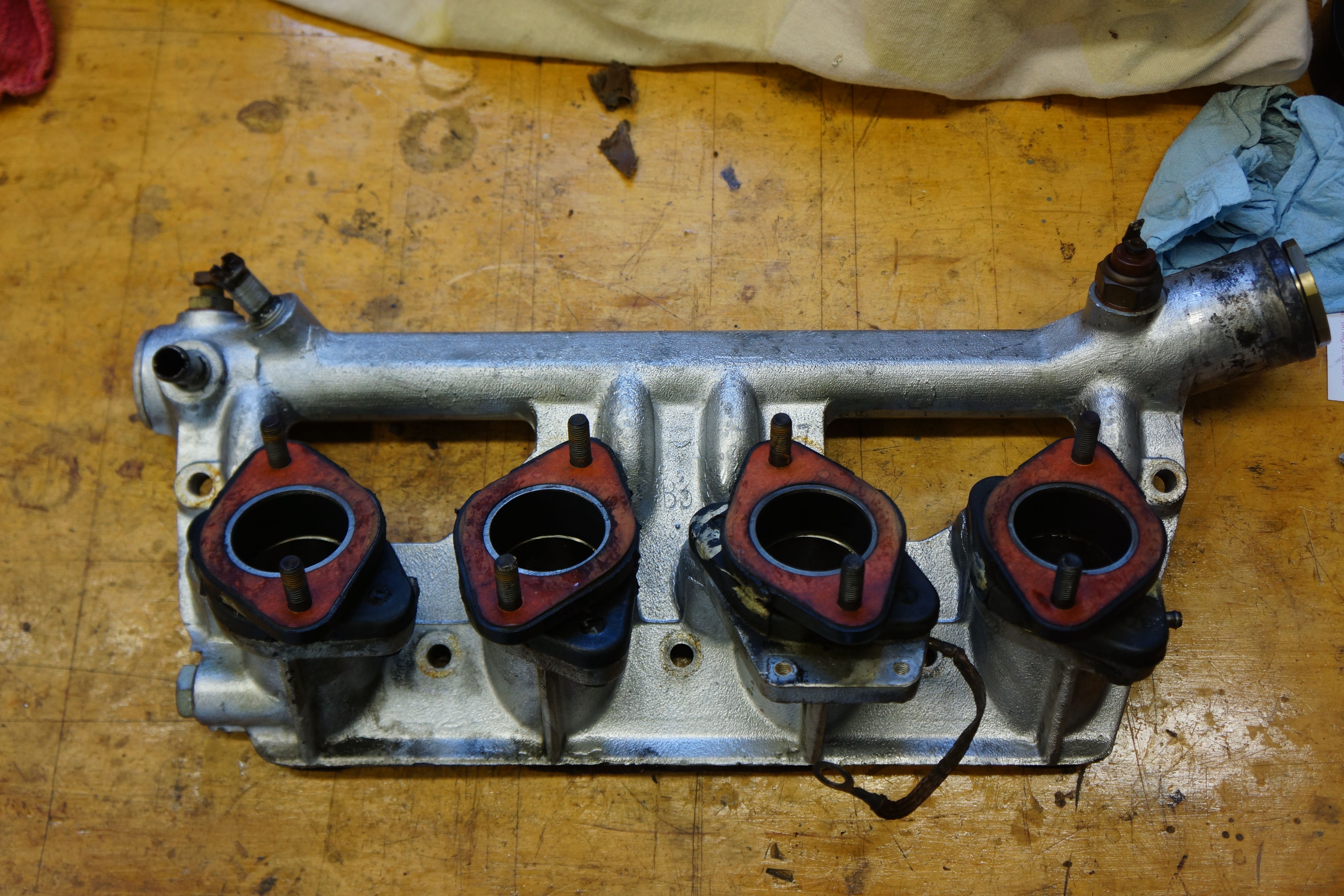

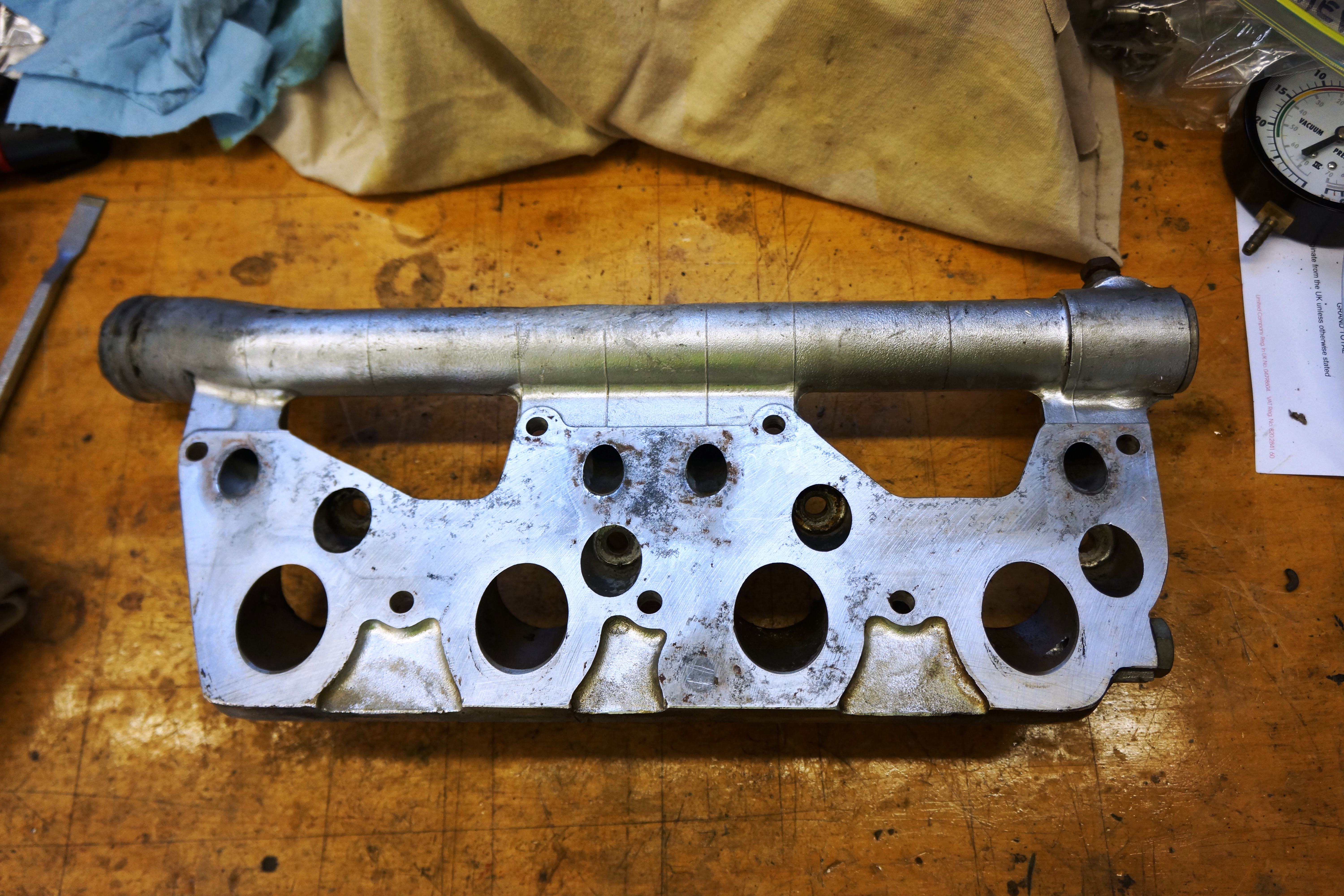
Former owner Pete must have replaced them at one point, because I had an old set among the spares he had given me. Checking the website of my favorite (really only) parts supplier Classic Alfa, I saw that they had a carburetor gasket kit for $35, and new carb mounts for $25 each. That all seemed reasonable enough, and as usual, my order arrived from the UK 48 hours after I placed it. I was ready to get to work.

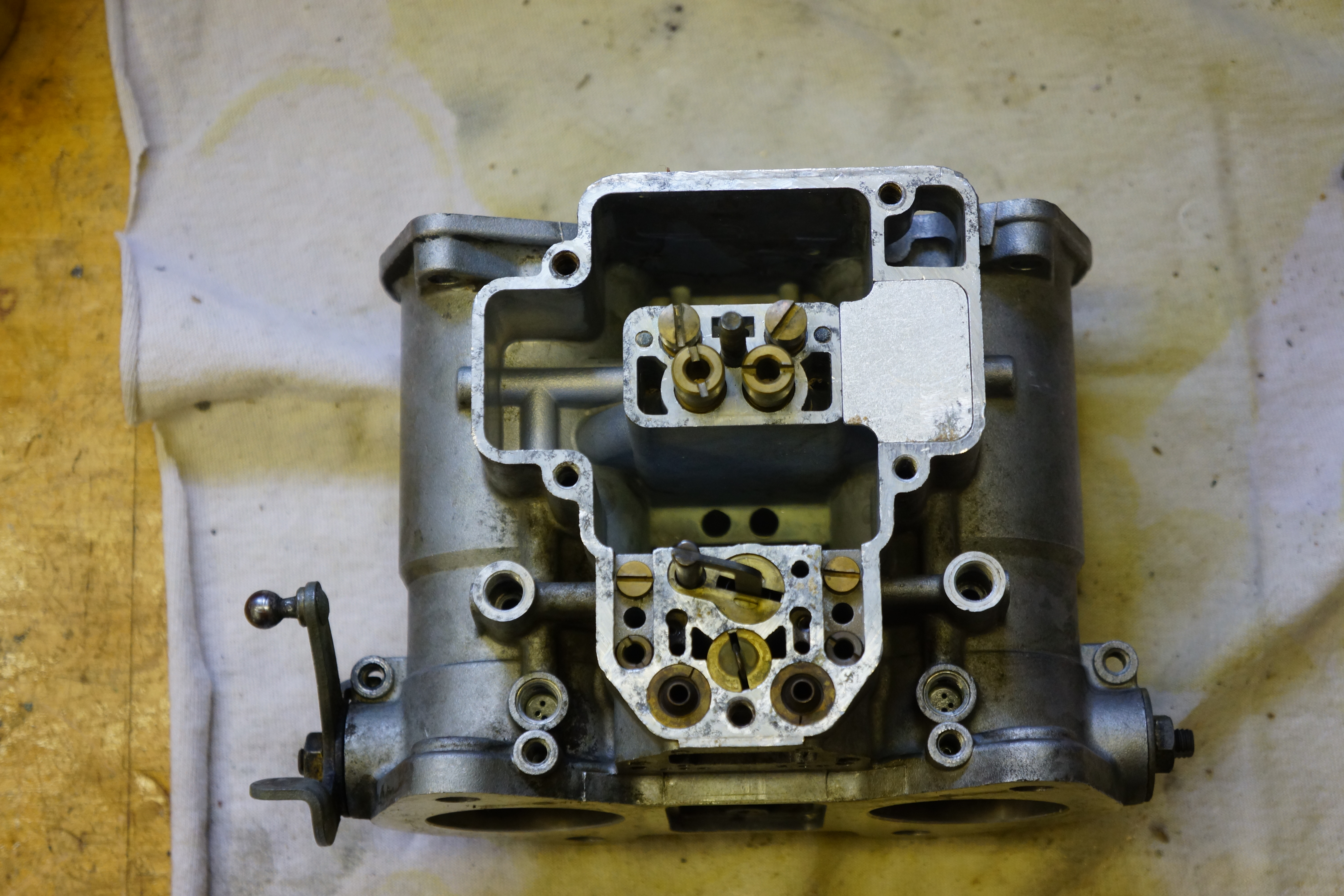
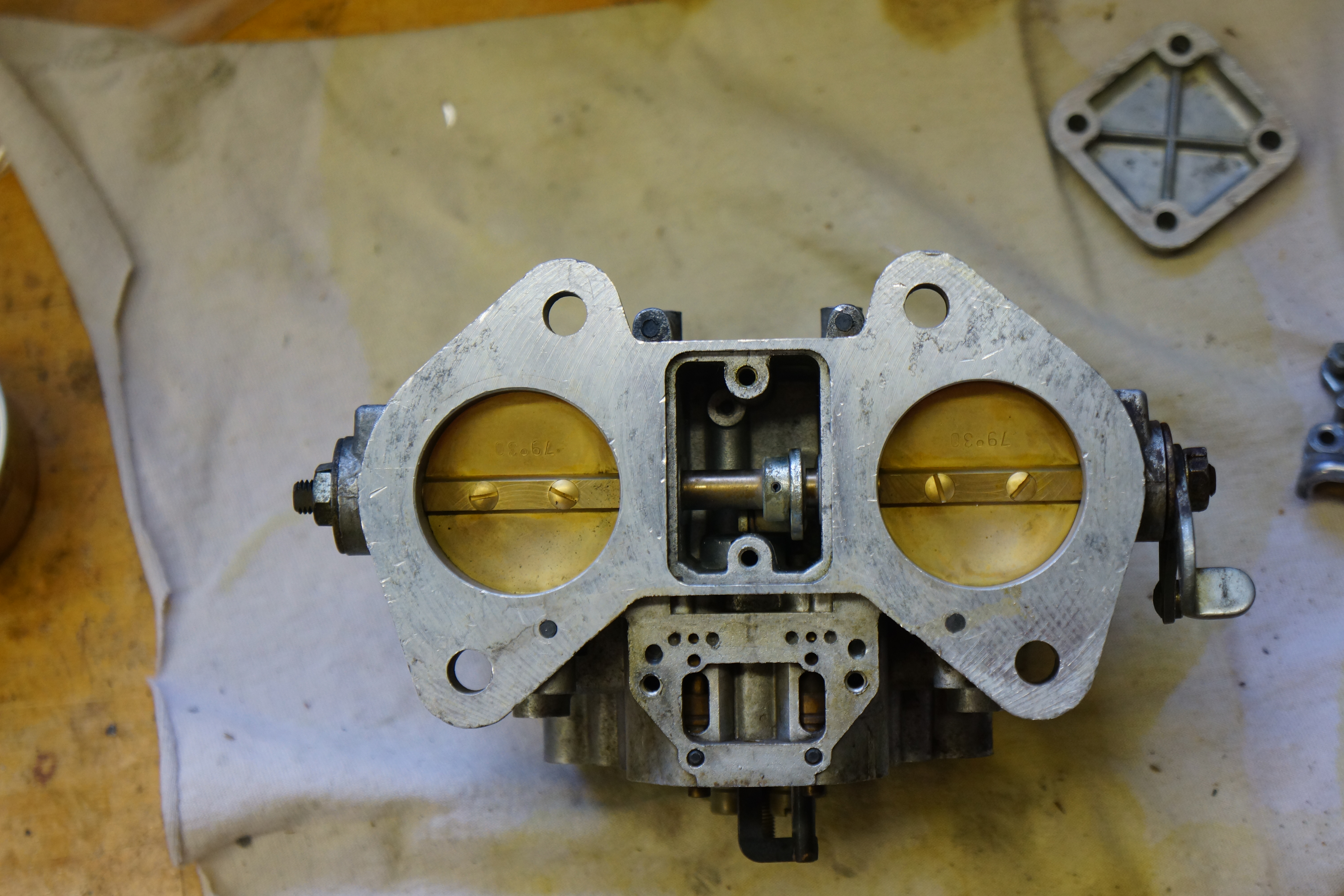
It was important for me to stay focused on the goal: I wanted to clean out the carburetors, inspect them for any obvious faults, then reassemble them using all new gaskets. Perhaps it’s from a lifetime of dealing with old cars, but I do have the habit of over-repairing my vehicles. The issue with Webers is that other than setting the idle mixture, idle speed, and float height, any other adjustments involve a lengthy trial-and-error game of swapping jets. One more time: aside from the fuel leak, the car ran fine. I selected the rear-most carb (the leaker) and removed all the covers.

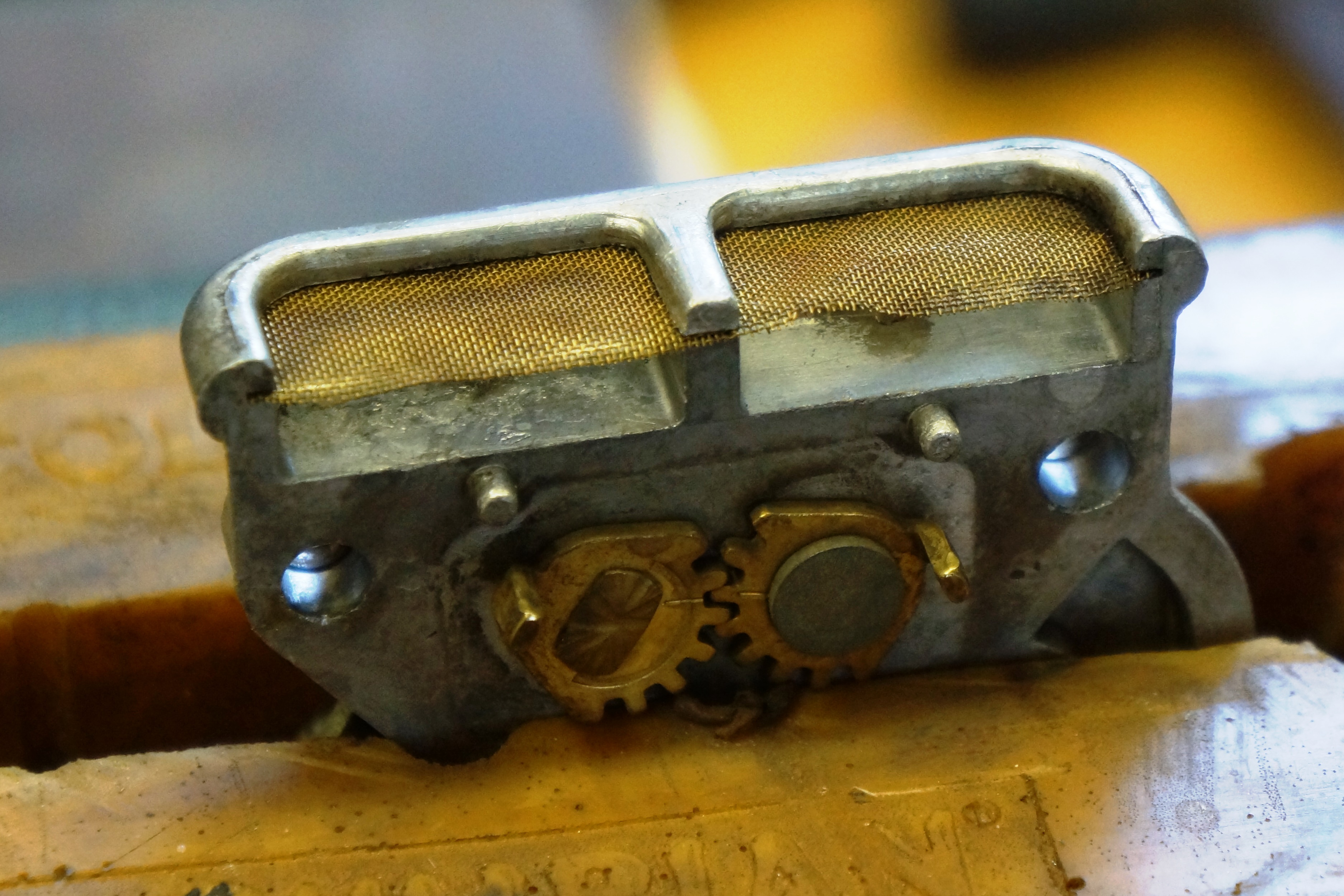
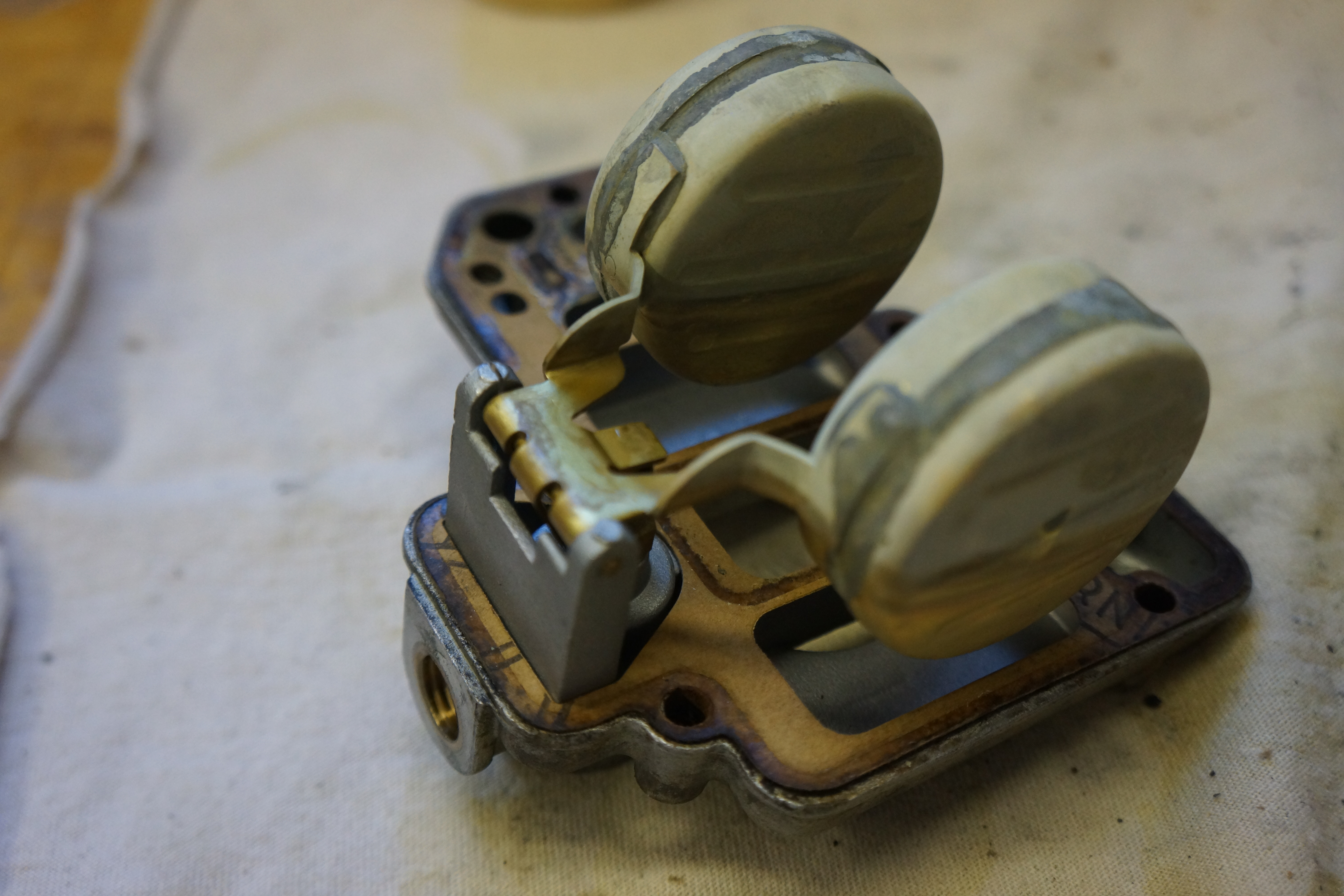
Having several service manuals with exploded diagrams at my side, things didn’t look too bad. There was clearly some dirt built up, but no obvious faults or defects as far as I could see. Numerous cans of Gumout were emptied to clean things up, and I’ve been pleased with the progress. The float needs to be carefully measured and adjusted, and once that’s done, reassembly will commence, which is where I will pick up next time.


All photographs copyright © 2020 Richard A. Reina. Photos may not be copied or reproduced without express written permission.
My first full year as the owner of a 1968 Mustang California Special was proceeding nicely. In April of 2004, the car successfully completed a 2,200 mile round-trip to Nashville for the MCA (Mustang Club of America) 40th anniversary event.
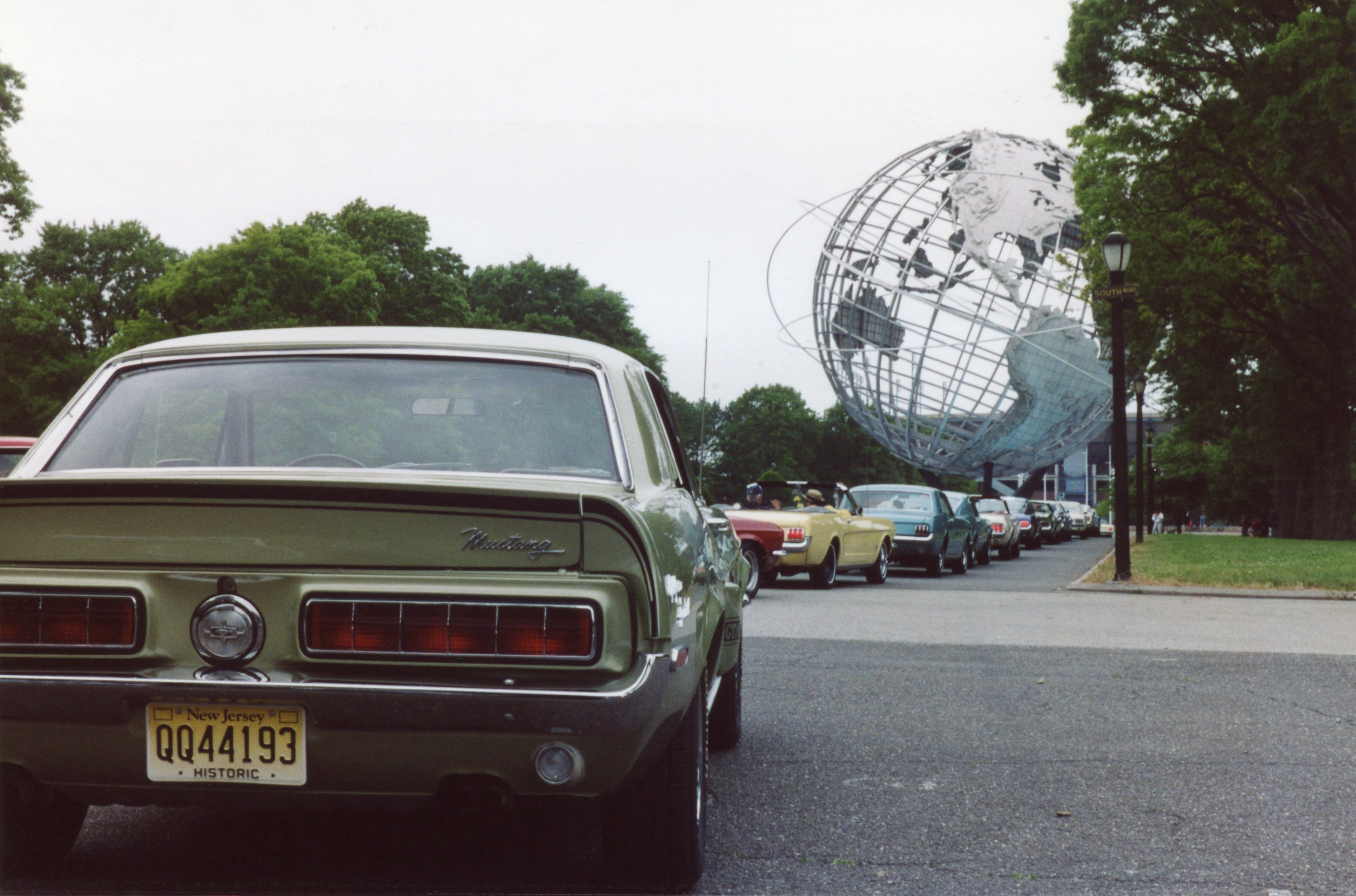
A month later, on Memorial Day Weekend, the Garden State Region Mustang Club (GSRMC) extended an invitation to attend a Ford Motor Company-sponsored event in Flushing Meadow Park in Queens, NY, site of the 1964-1965 World’s Fair, and site of the introduction of the first Mustang. The response from club members was enthusiastic, so early on Sunday morning of that weekend a large lineup of Mustangs caravanned through midtown Manhattan, arriving at the park by 10 a.m. Besides the GSRMC, the only other Mustang club invited was the Long Island club. Estimates of the total Mustang count was close to 100. My GT/CS was the only one of its kind there.

For Ford, this was a marketing and PR stunt, as the all-new 2005 Mustang, which would not enter production until September, was represented by a pre-production prototype. Ford was looking for photo ops, so a ’64 ½ convertible was staged across from the 2005 ‘Stang. The stainless-steel Unisphere, one of the few remaining relics from the ’64-’65 fair, loomed in the background. A photographer, hired for the occasion, perched on a 10-ft. tall ladder.
One at a time, each owner was invited to drive his/her car across the cameraman’s field of view, stop between the two posed cars, lean out the window, smile, and move on. As you might imagine, this took some time. I used the downtime to take some of my own photos as we crawled in the queue. Eventually, I had my picture taken, and headed home.


Rally brother Steve and I had started to make some noise about possibly driving the Mustang in next year’s New England 1000 rally. With that on my mind, it seemed that the winter of 2004-2005 would be the ideal time to tackle the leaky heater core. My collector cars are usually off the road for the winter, so I would have the time I’d need to get this done.
On a Mustang with factory air such as mine, the heater core and A/C evaporator reside together in a fiberglass box under the passenger side dash. Following the factory-recommended procedure, I began the disassembly that would grant me access to said box. My A/C was inoperative, with zero pressure in the system, so no further harm was inflicted onto the ozone layer when I broke open the evaporator connections.


Much of the dashboard and instrument cluster needed to be removed, so I used this as an opportunity to replace other worn parts (more about that in a bit). Most of the wrenching was straight-forward. If there was a tricky part, it was keeping track of the various color-coded vacuum lines that operate the blend doors. I knew that new vacuum line kits were available, so that was added to the shopping list.

With the box out of the car, my heart sank to see that it was cracked; actually, a chunk was missing from one corner. I also knew that boxes were not available in the aftermarket, so the heater box was repaired with fiberglass matting and epoxy glue.

Along with a new heater core, I was able to order a new foam heater box kit. All blend doors as well as the core itself got new foam seals. Having come this far, I thought better of reinstalling the dash pad, which was warped, and the woodgrain instrument cluster surround, which had lost most of its chrome. These parts were readily available from various suppliers, so new ones were ordered and installed.

Near the end, I worked as long as my patience would allow to line up the new aftermarket dash pieces. Of course, they did not fit as well as the originals. Eventually, I got it to the point that only I would notice any misalignment.

Did the new heater core work? You know the drill: Add fresh antifreeze; turn on the heat; pray that nothing leaks.
Nothing leaked. The car had tremendous heat output, and anyone riding in the front seats would have toasty dry toes. This would turn out to be a huge benefit during the running of the 2005 New England 1000.
All photographs copyright © 2017 Richard A. Reina. Photos may not be copied or reproduced without express written permission.
In 1993, with seven years at Volvo Corporate under my belt, I had done my share of domestic and international business travel. Volvo generously allowed employees to keep and use their own earned frequent flyer points. In April of that year, with some of my points about to expire, I burned a bunch of them by taking a long weekend trip to Phoenix AZ.
Now, Phoenix was not exactly my first choice as a vacation hot spot. Of course, there was an ulterior motive: I had heard about the auto salvage yards in the area, mainly filled with ‘50s-‘60s Detroit iron (as rust was not an issue in the Southwest). My 1967 Dodge Dart was in need of a few components not available in the aftermarket. Telling this to my buddy John M, who owned a 1963 Buick, resulted in being given a shopping list for his car. (I sold the Dart several years after this trip was taken; John still owns that ’63 Wildcat convertible today.)
Packing little more than a weekend bag, my camera, and some cash, I was off to Phoenix. Expecting warm weather, I didn’t bother with sweaters or coats. Good thing, too, because Phoenix was having a heat wave. Temperatures reached 114 degrees F during my stay, making me very glad that my hotel’s swimming pool was open.
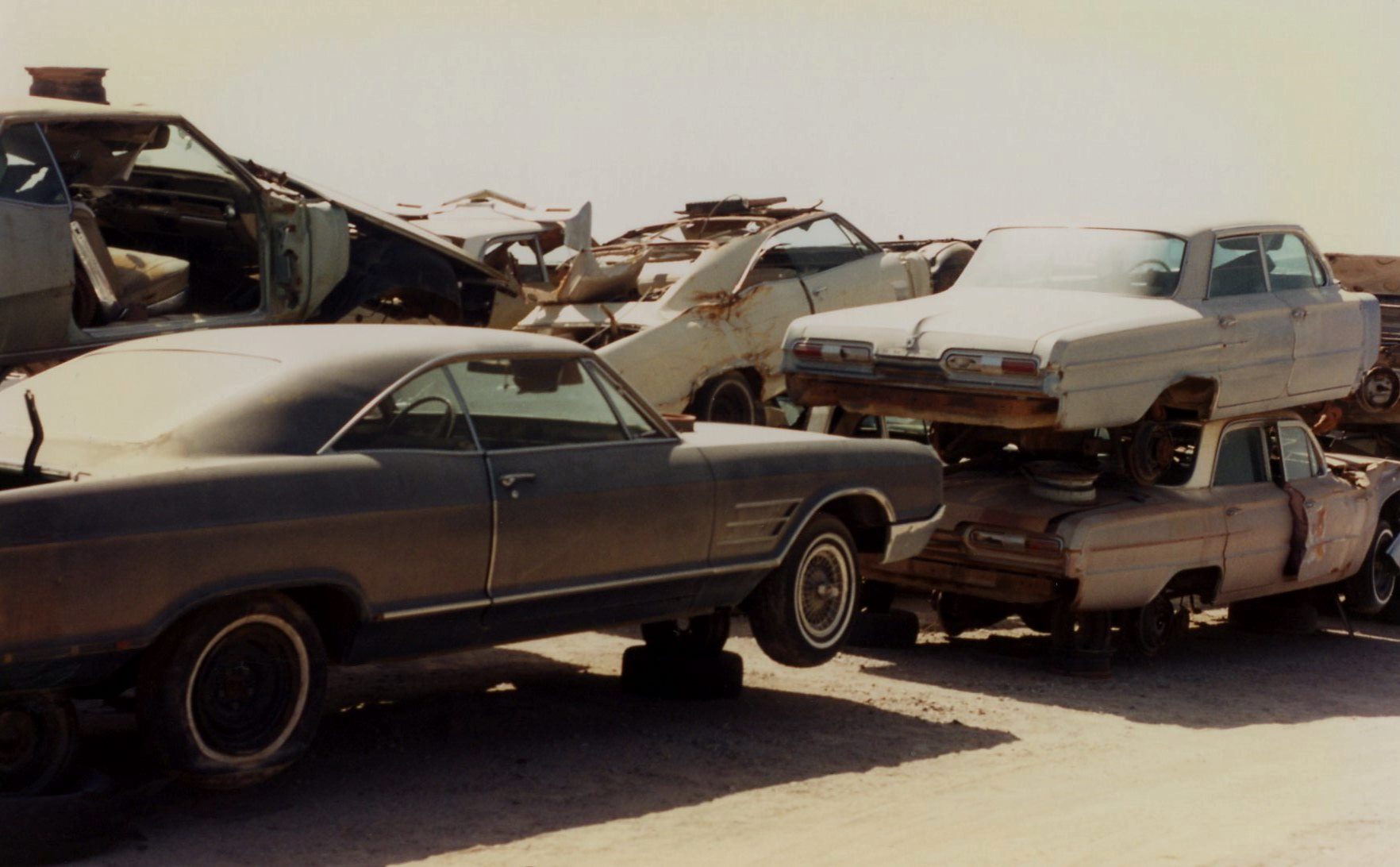
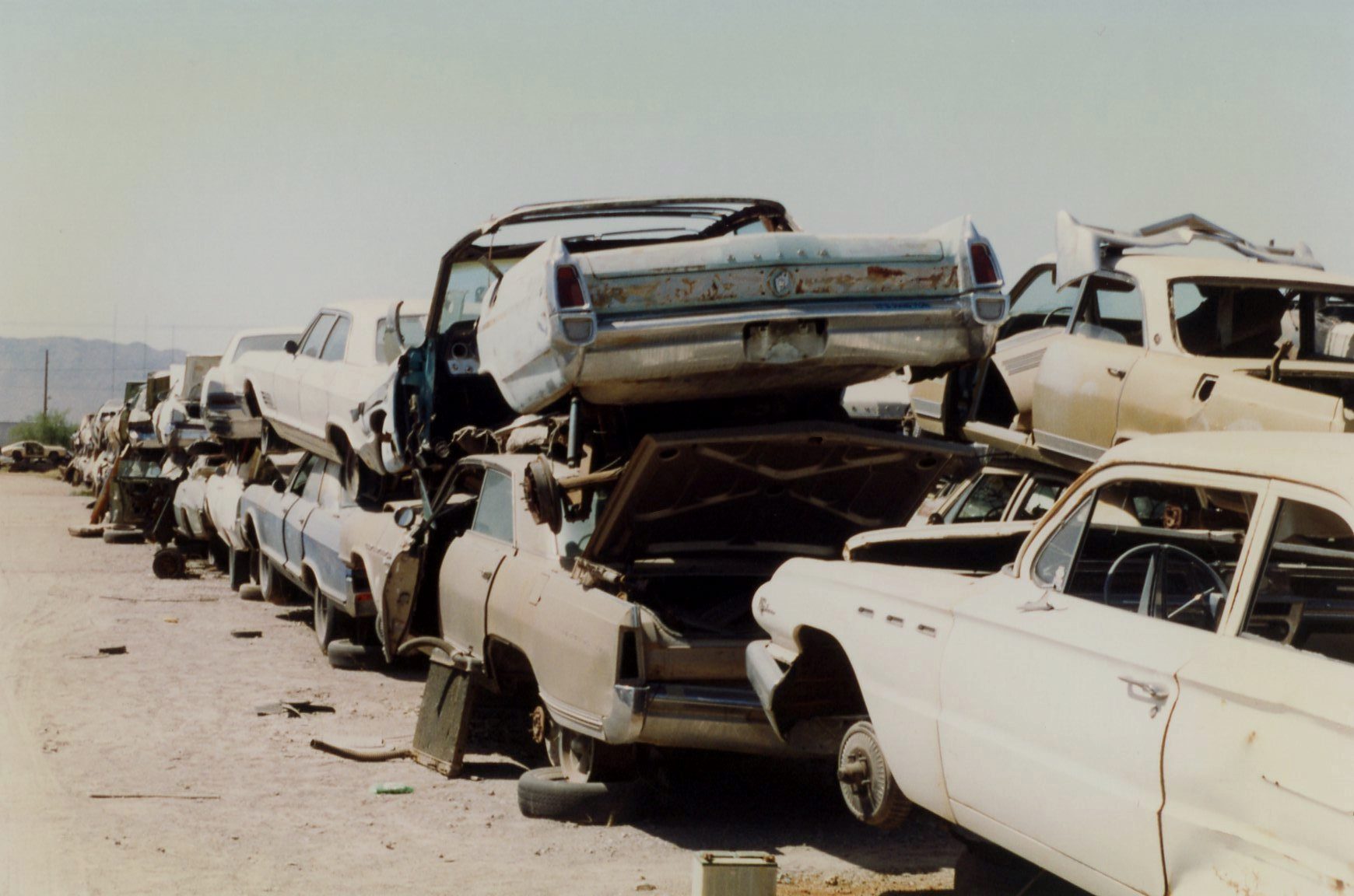
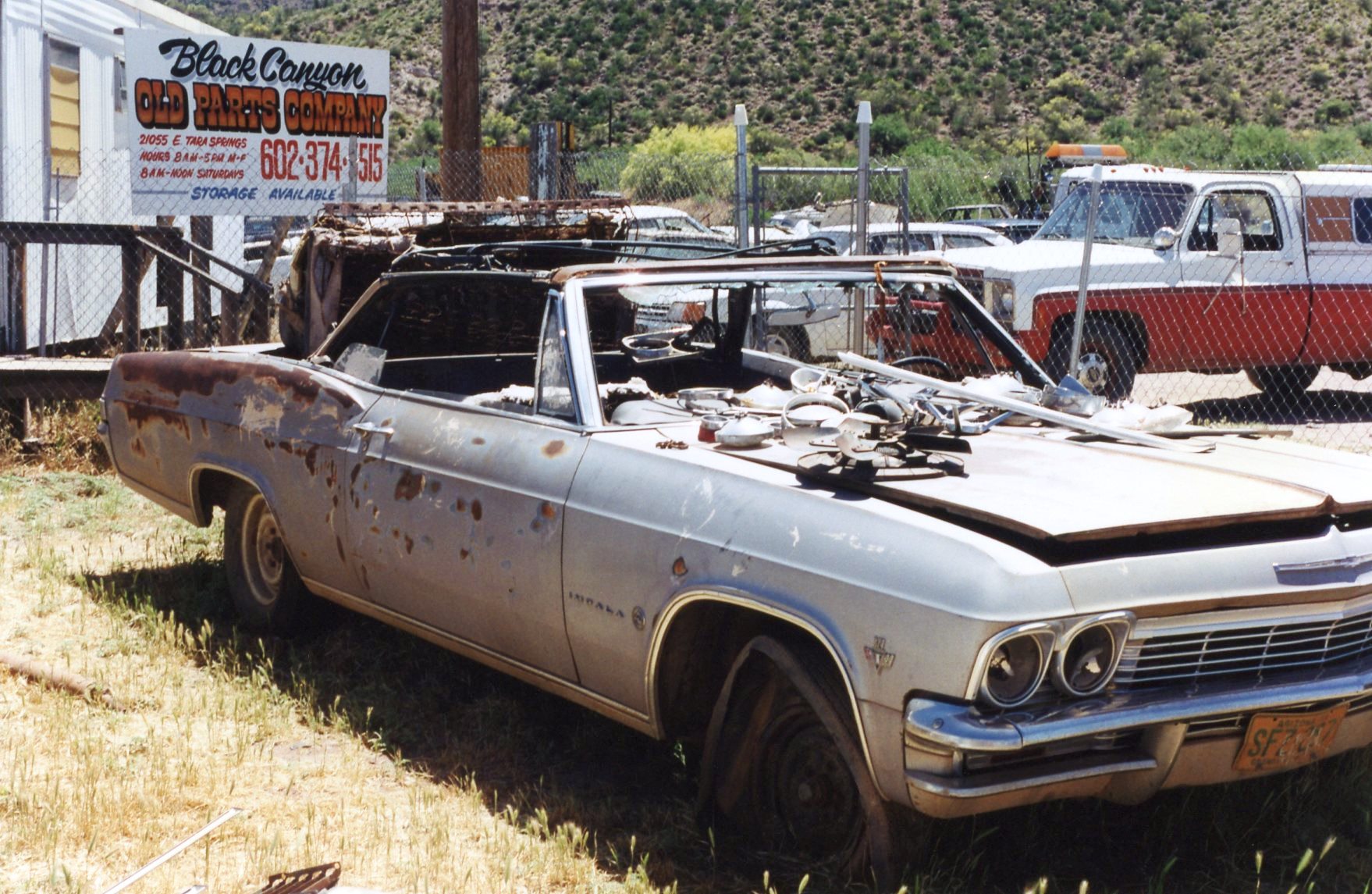
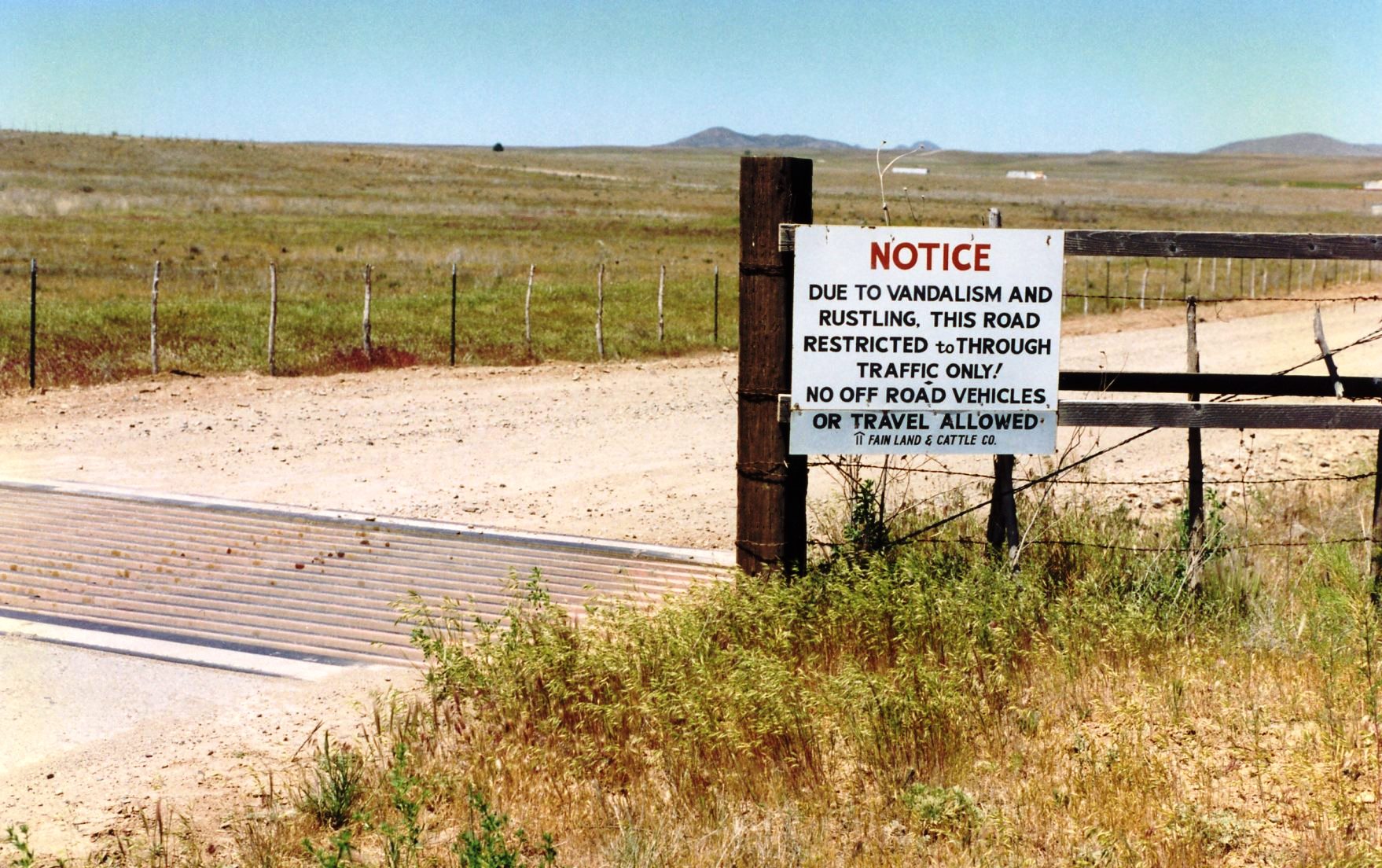
Finding the salvage yards was easy. I brought the Yellow Pages from my hotel room with me, and armed with a map I picked up in the airport, off I went in the rental car. While I did find my parts, the real treat was being able to stroll through these yards at my leisure. The staff was more than willing to let me wander, scrounging for parts, admiring the cars, taking photos, and generally acting like the East Coast tourist I was.
I’ve long forgotten what I purchased for the Dart and Wildcat (John, do you recall?). However, the sights of the 4 or 5 yards I visited were captured on color film, and looking at them brings me back to that busy (if blazing hot) weekend. Here is a small selection of those photographs.
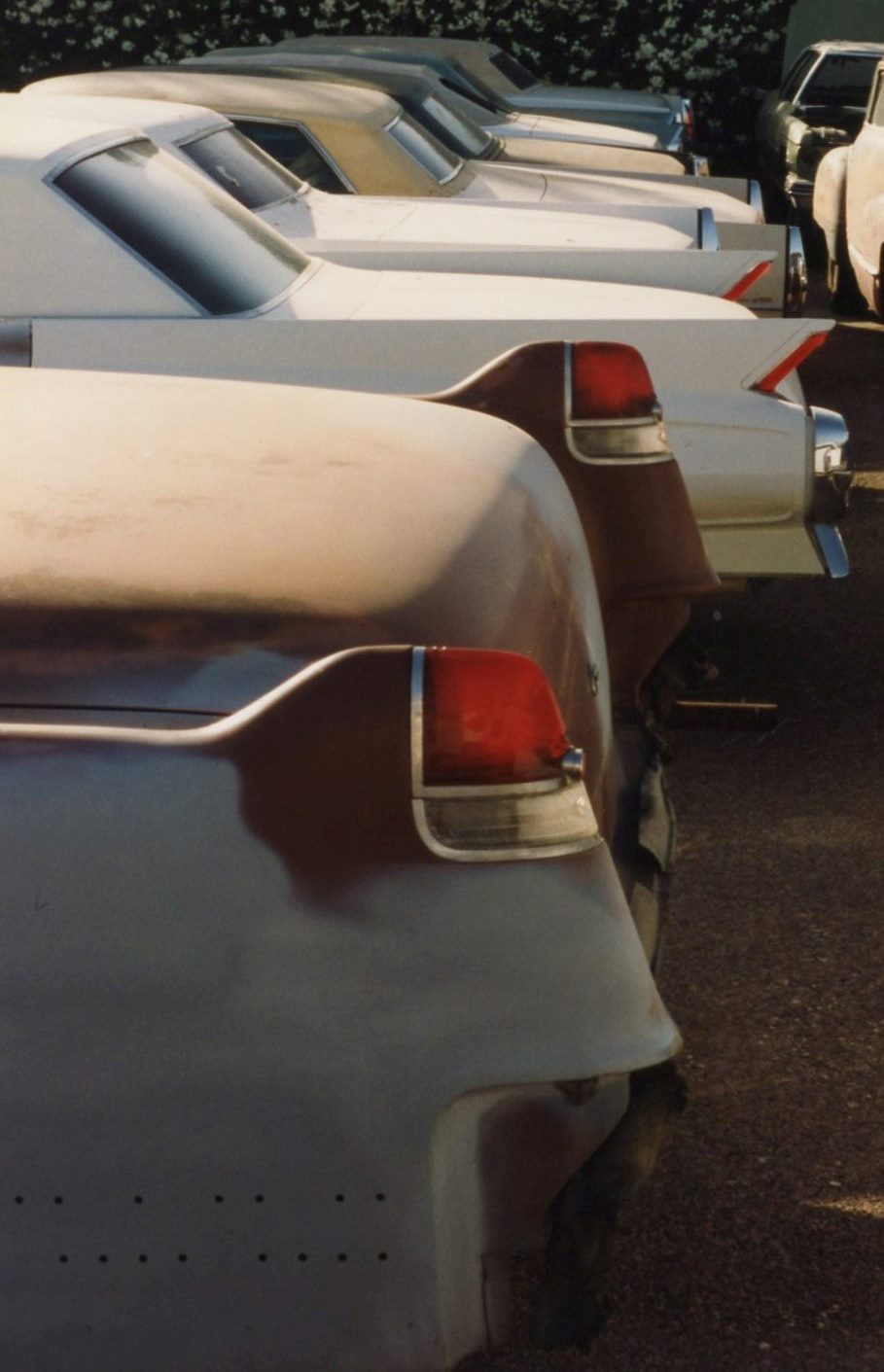
The evolution of the Cadillac tail fin
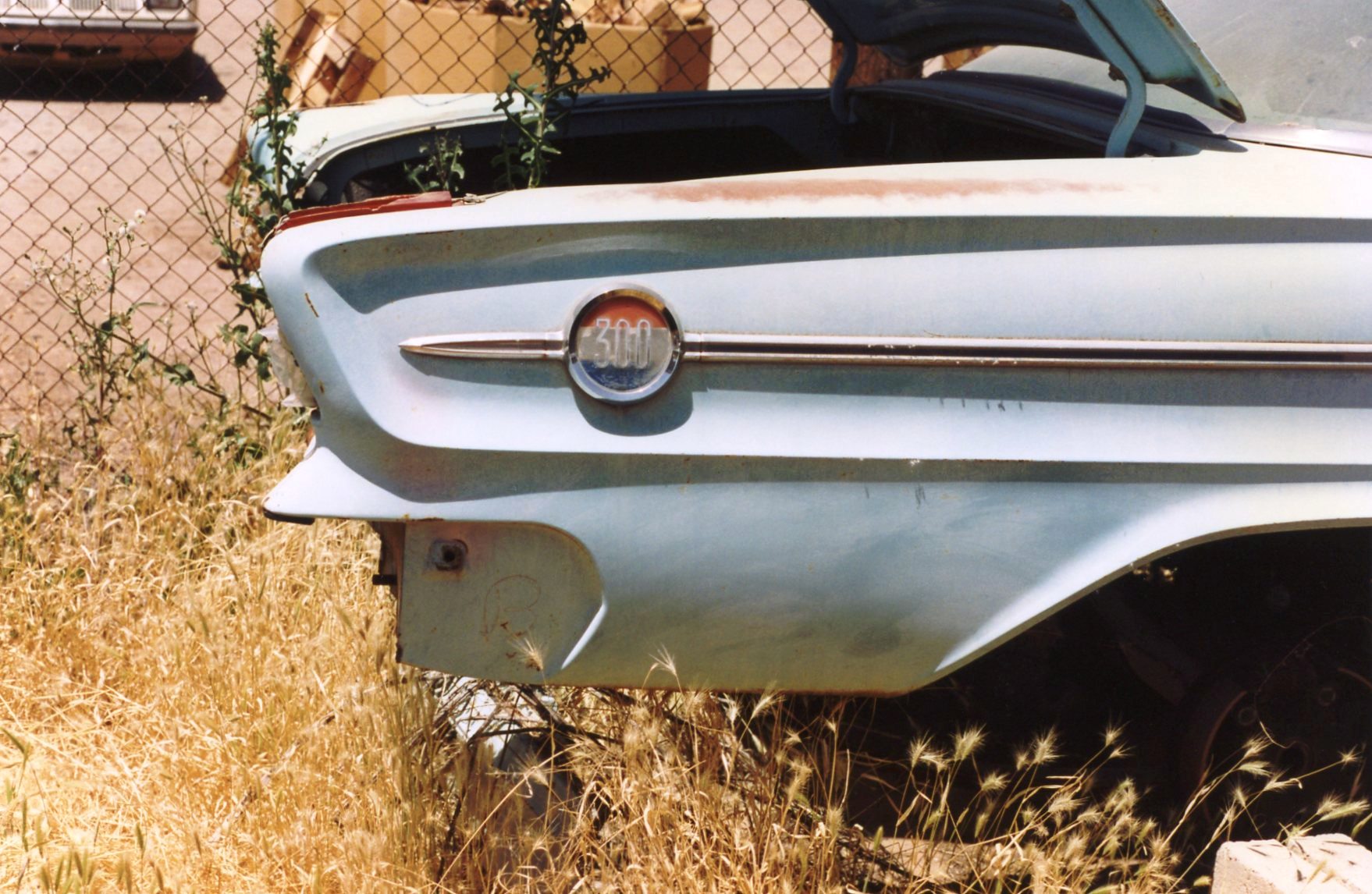
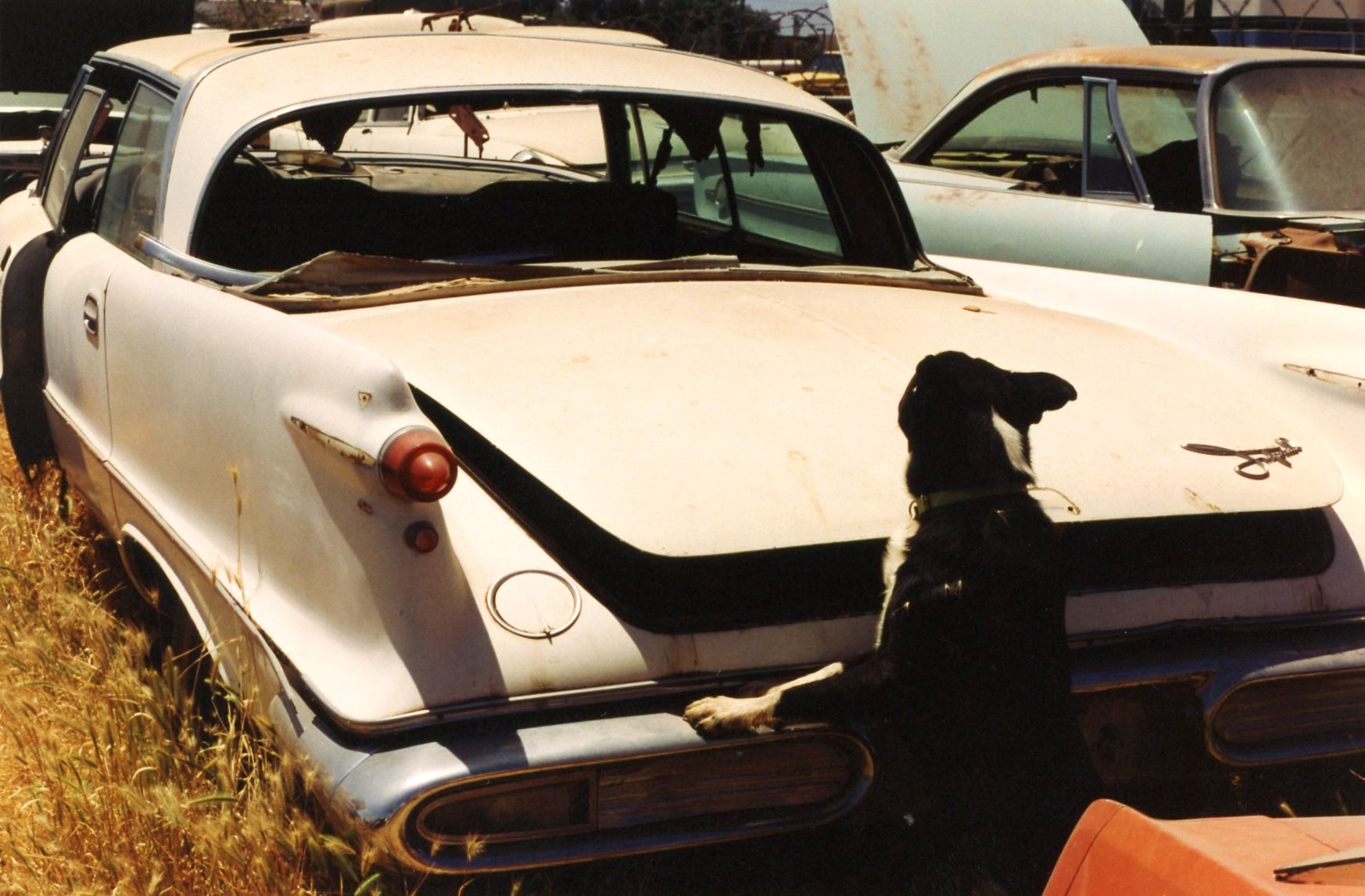
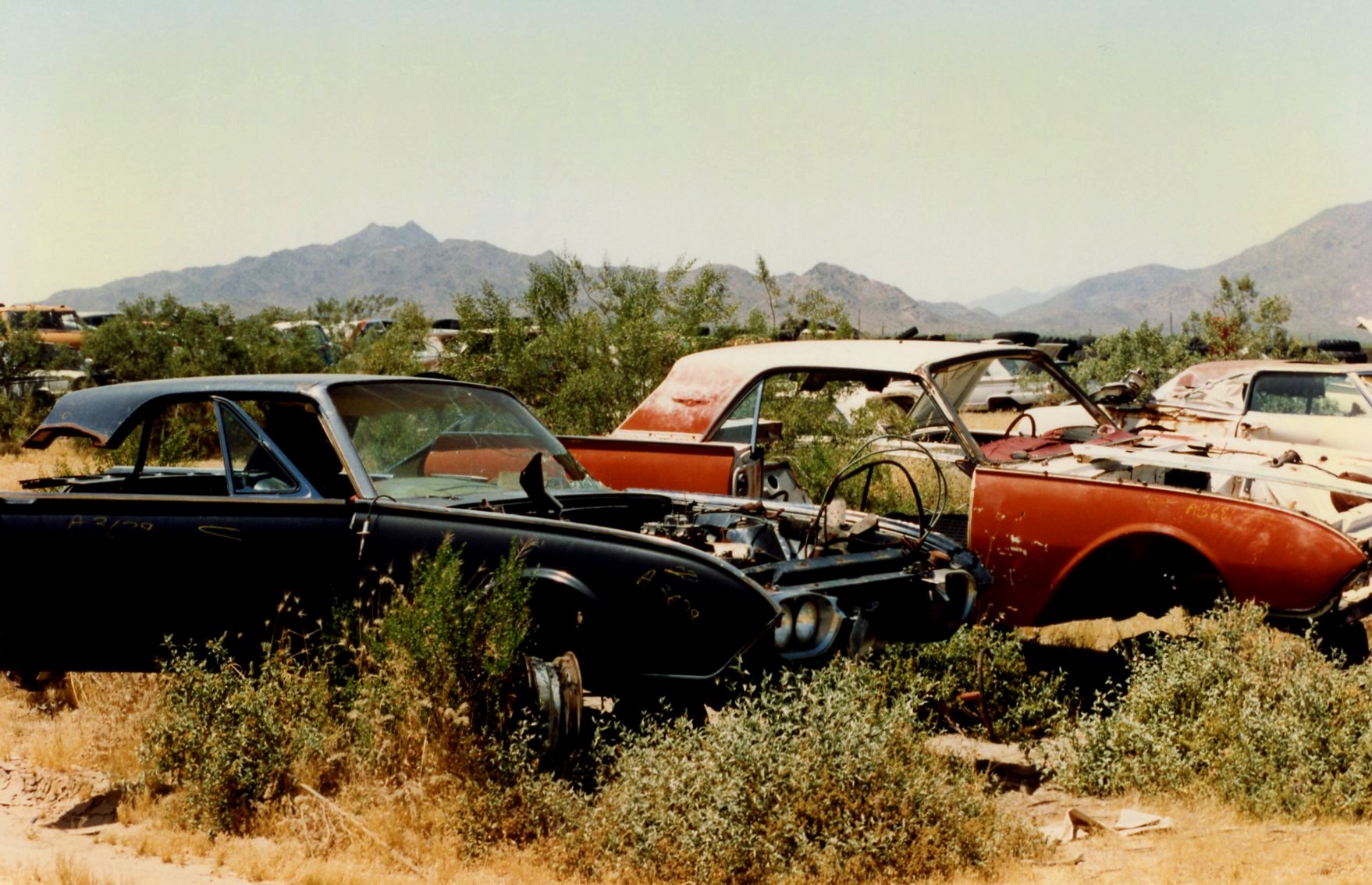
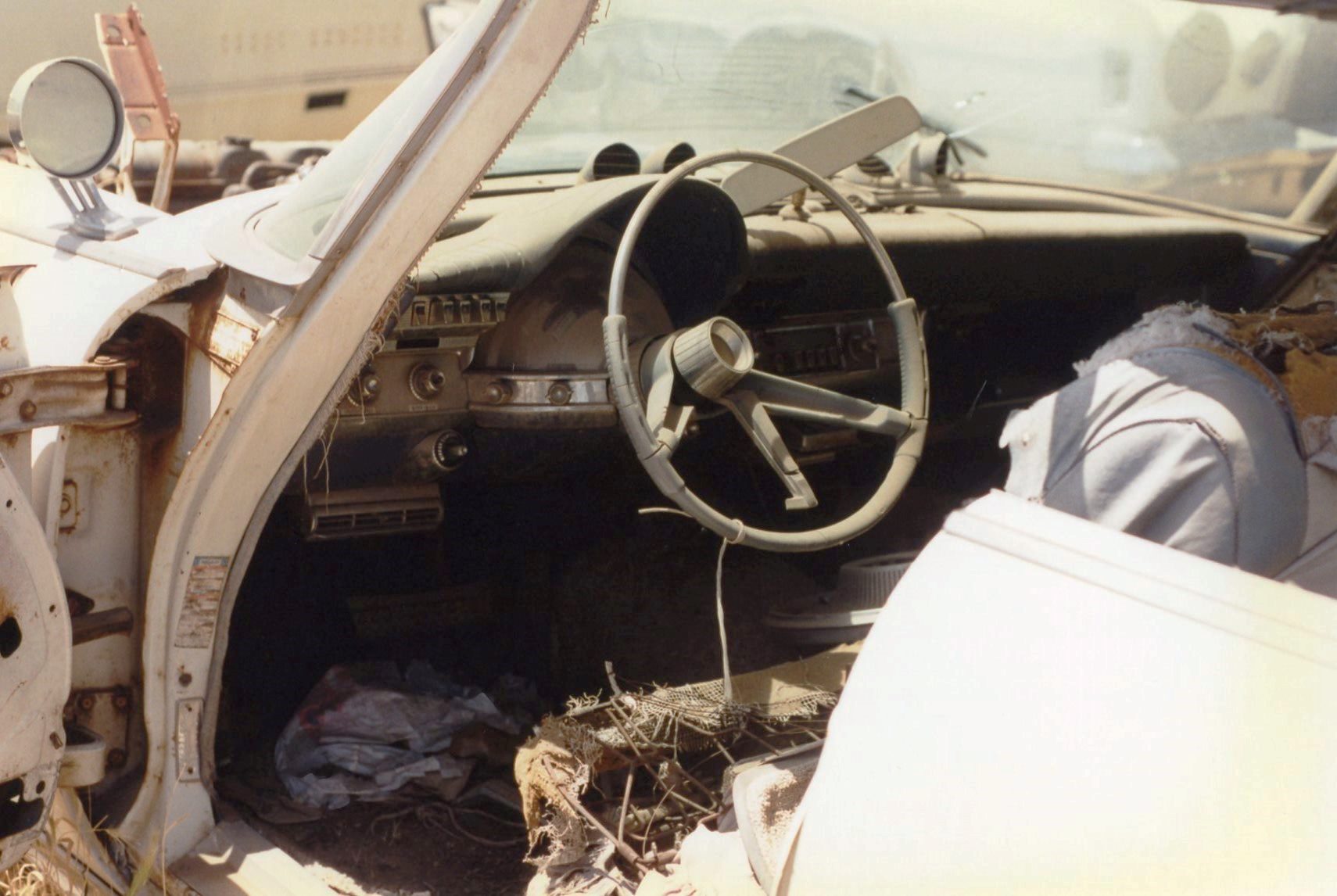
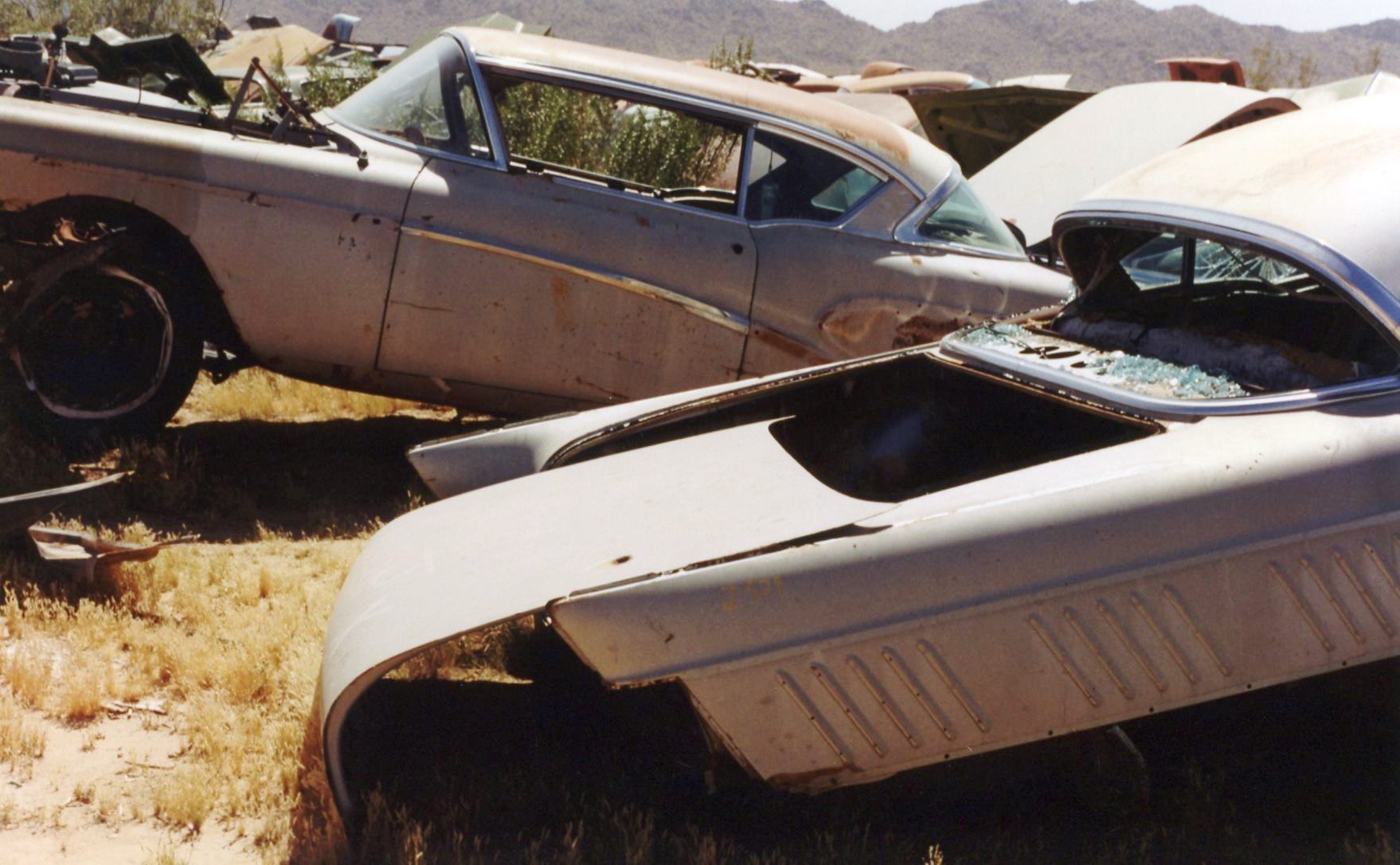
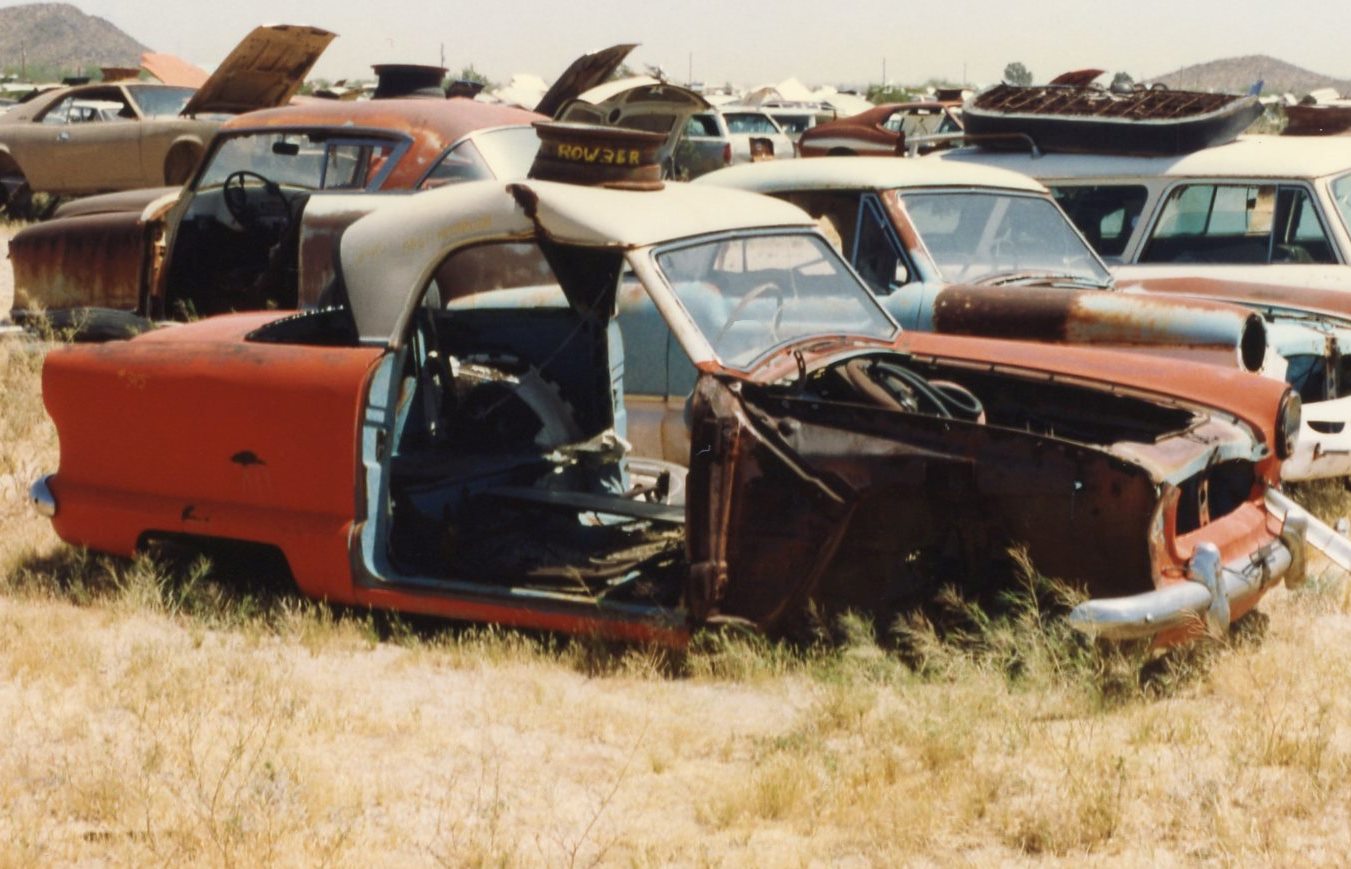
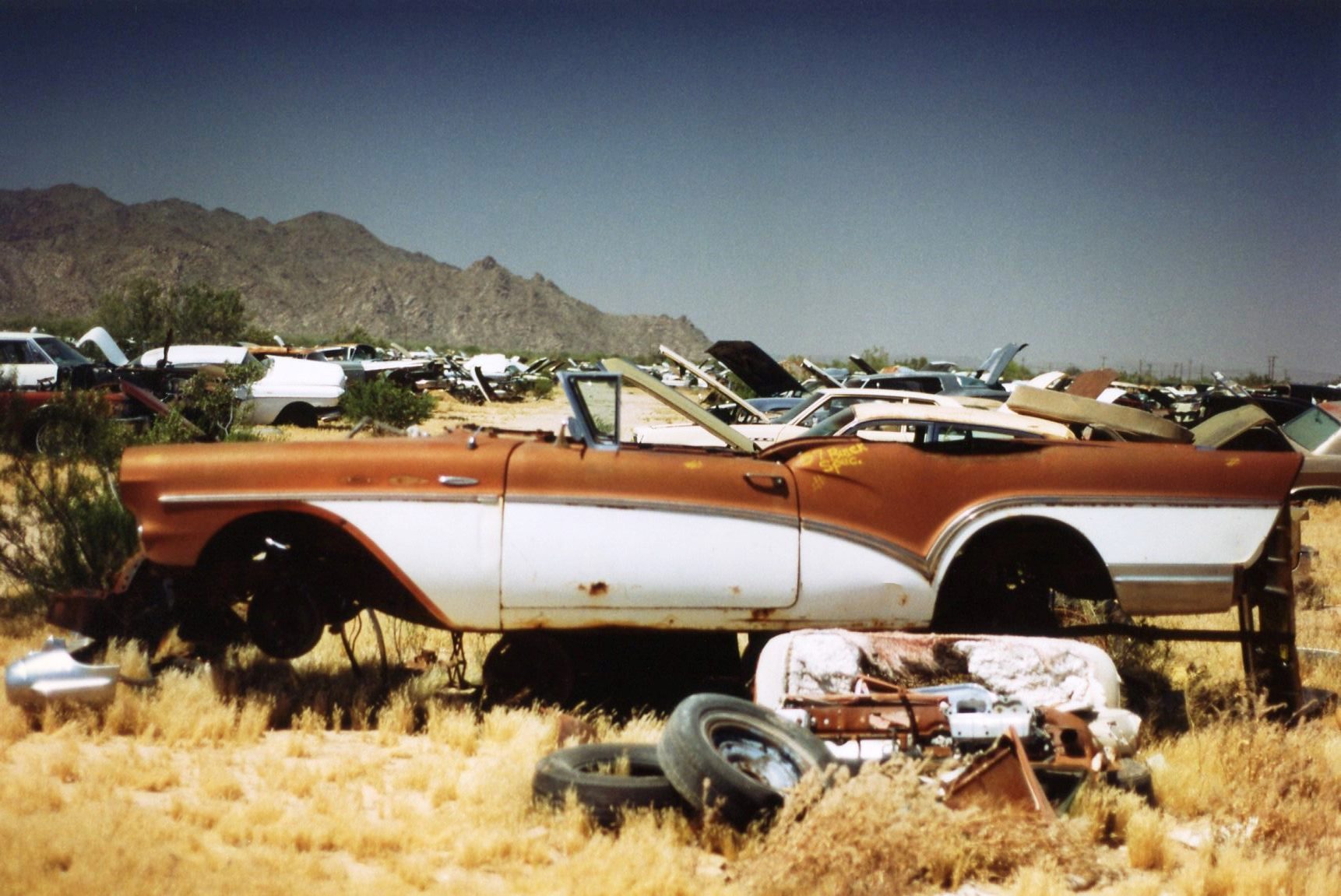
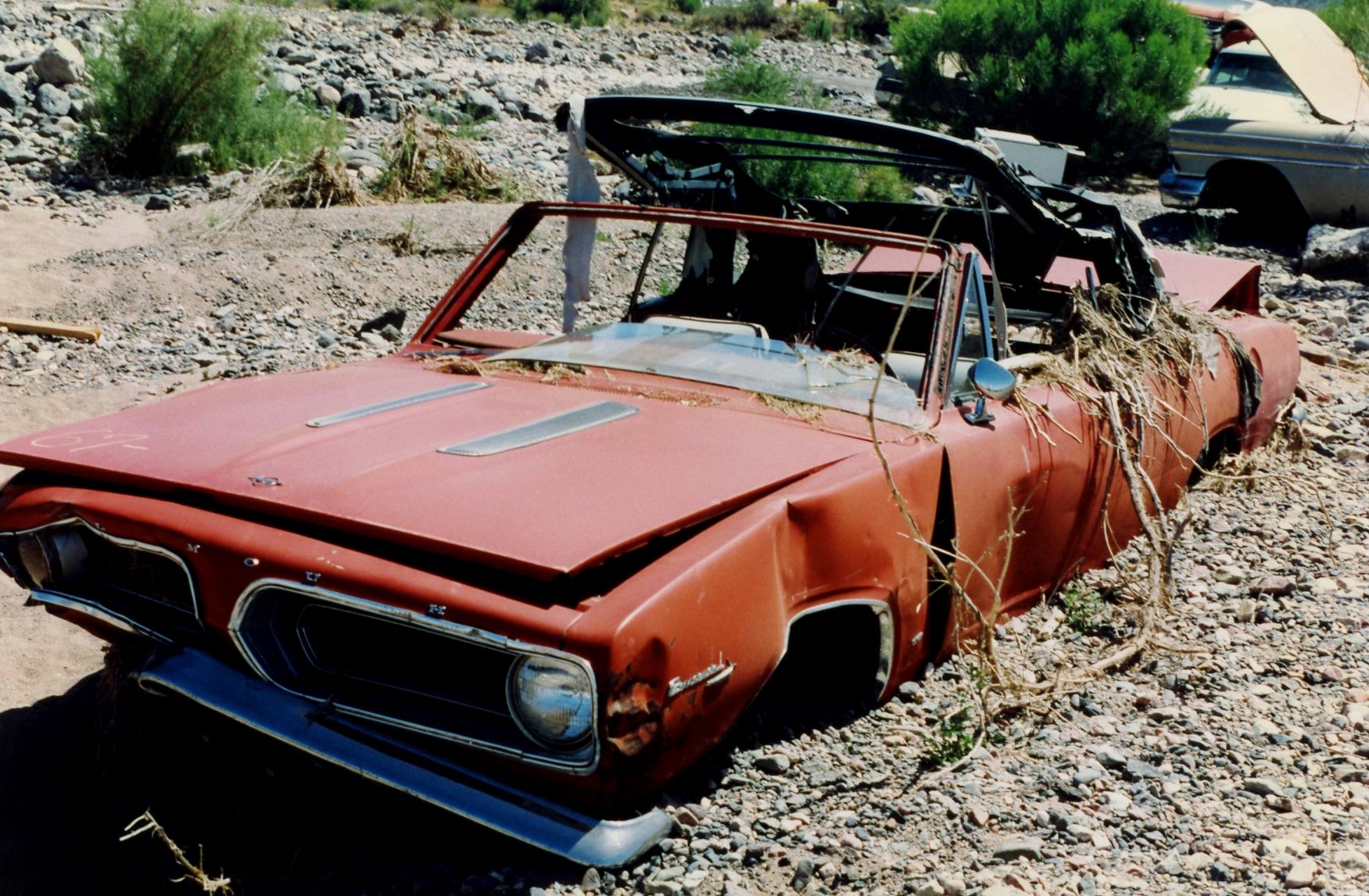
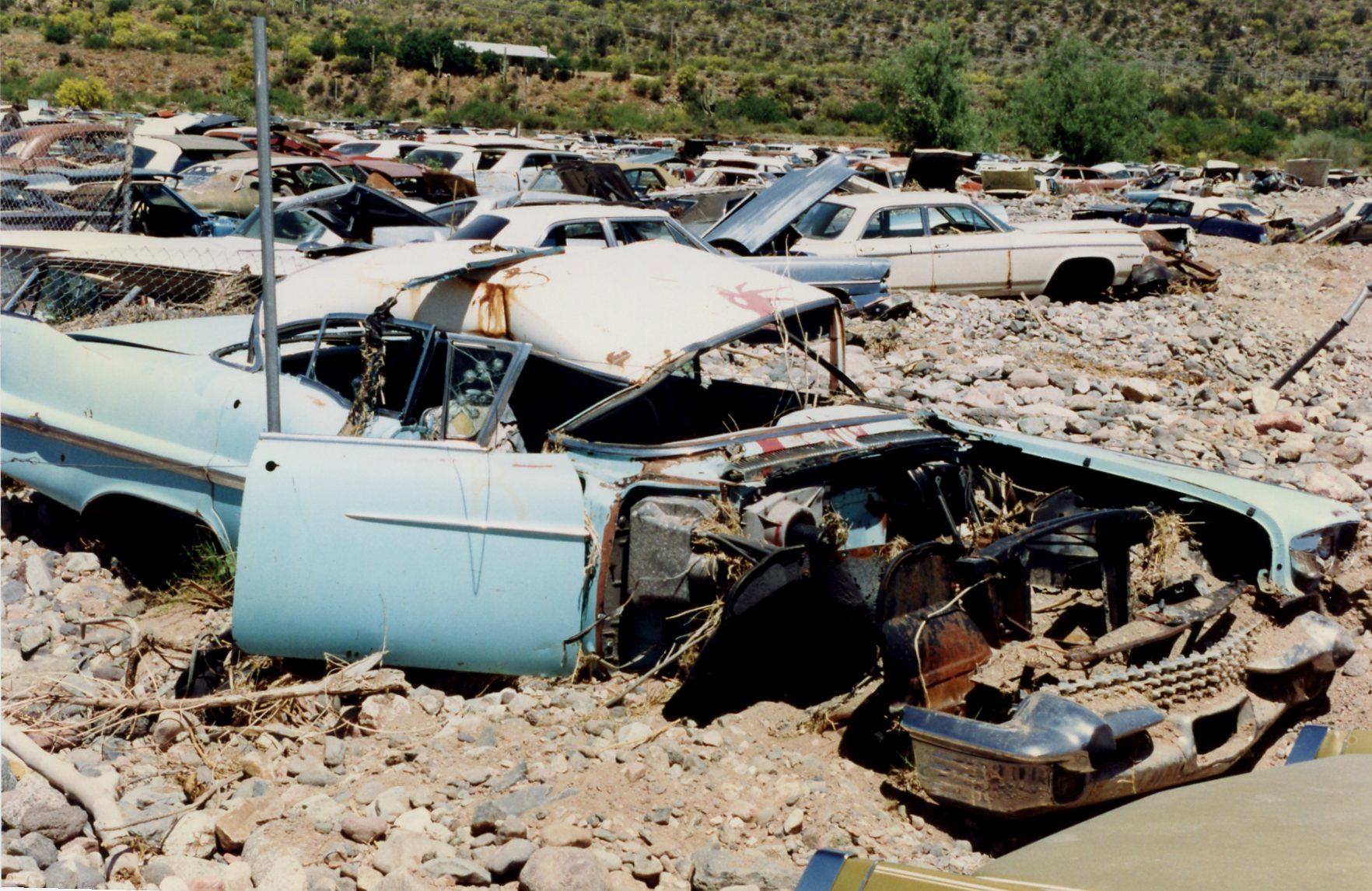
Photos were taken with my Nikon EM camera; film info not recorded, but likely Kodak Gold, either 100 or 200 ISO. Prints scanned with Epson V500 photo scanner.
All photographs copyright © 2016 Richard A. Reina. Photos may not be copied or reproduced without express written permission.
Hello Friends,
Welcome to my blog. As someone who has spent his entire adult life both working in the car business and enjoying the collector car hobby, I’ve long looked for a better way to share my experiences with friends and colleagues.
With this blog, I intend to accomplish the following:
On this first day, it may be equally important to state what this blog will NOT be:
This will be a place where people can sign up for email updates when new content is added, and can contribute comments. The immediate goal is to add fresh material approximately once a week, more frequently if I’m attending a multi-day event (like the New England 1000 rally). It’s exciting to start this venture, and will be a rewarding challenge to keep it going!
Thanks for visiting,
Richard
 richardscarblog