Hershey 2023 Part 1: The RM Sotheby’s Auction

The auction company RM Sotheby’s continued their October tradition by hosting a collector car auction at the Hershey Lodge in Hershey PA during the AACA Fall Eastern Nationals. RM (for Rob Myers, company founder), based in Canada, is one of the premier automotive auction houses, hosting events around the world; their appearance here is one of the few times they’re on the East Coast. Hershey Lodge is less than 2 miles from Hersheypark, where the AACA was holding its flea market/car corral/judged show (more about that in Parts 2 and 3). When Hersheypark decided to extend its open weekends into October, they forced the AACA to move its agenda back by a day (so the judged show, which for 50+ years had been on Saturday, is now held on Friday). RM similarly adjusted its two-day schedule to coincide, so their auction is now on Wednesday and Thursday.

RM Sotheby’s continues to attract consignments which are what I describe as pre-war and immediate post-war American classics, with a smattering of European cars. Despite pundits’ predictions that the ageing of the hobby would eliminate all interest in the classic cars of the 1910s – 1930s, that has not occurred: interest in well-restored examples of fine cars remains strong, even if prices have leveled off or dipped somewhat. By my casual observation, RM’s strength in filling their lots with high quality machinery at reasonable reserves results in a very strong sell-through rate. Of the dozen cars that I report on below, all sold. This is helped of course by the no reserve status of most of them, so high bid takes the car home. At the same time, RM’s published pre-sale estimates tell an interesting story: most of these cars sold below their estimates, at numbers which in some cases strike me as relative bargains.

My report covers only cars listed on the RM Sotheby’s website as “sold”. As I was not in attendance during the auction, sale prices are taken from their website; they include the 10% buyer’s premium which is backed out by me, so my numbers are “hammer” prices. Cars are listed in sold price order from low to high.


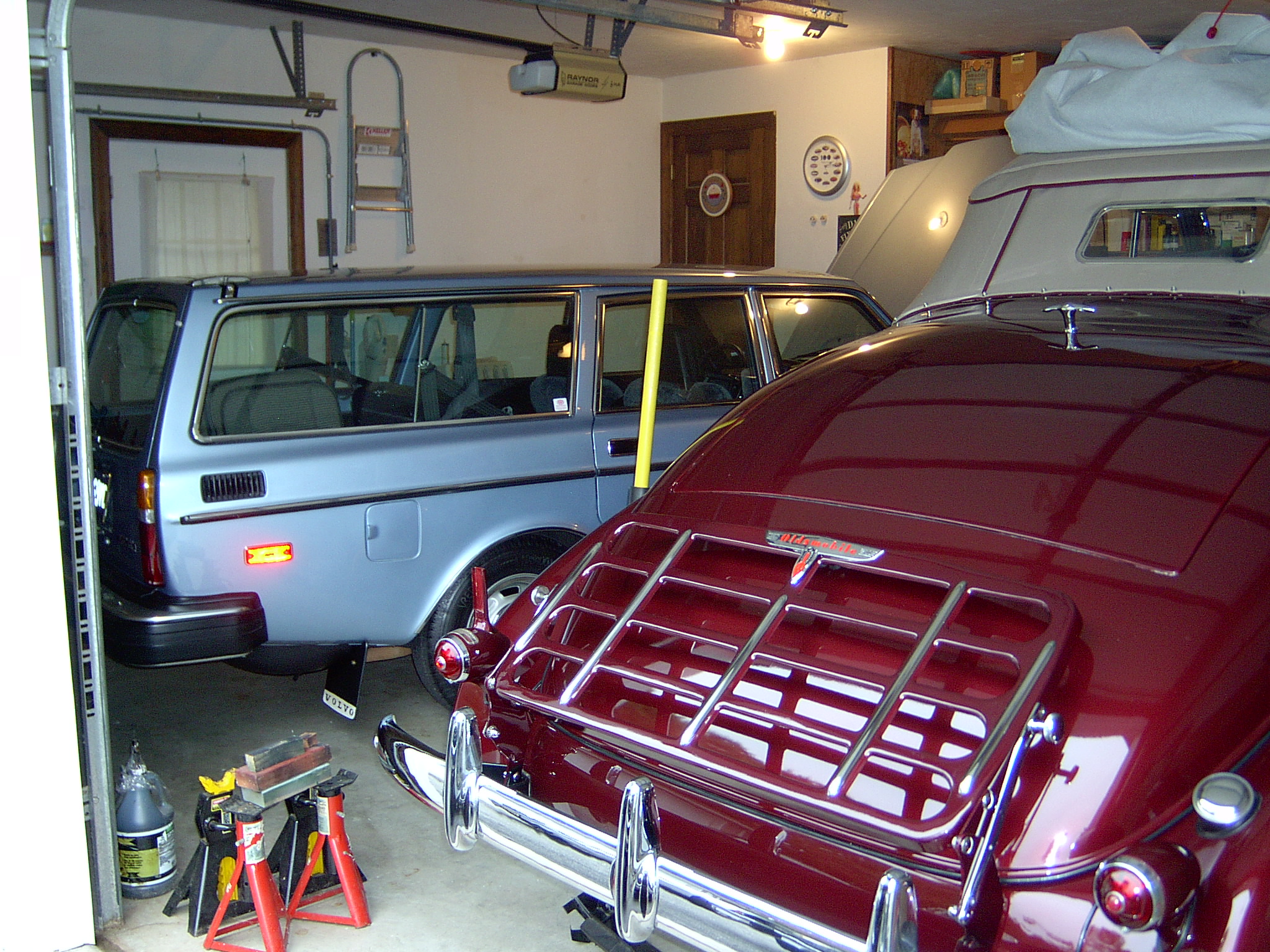
Lot 453, 1962 Volvo PV 544, grey paint, two-tone blue interior, dual outside mirrors. Appears well-restored on the outside, interior shows some wear. No reserve.

Pre-sale estimate: $12,000 – 16,000

Sold: $19,000; one of the few cars reported on here which sold above its high-end estimate. Seemed a bit pricey for an old Volvo.

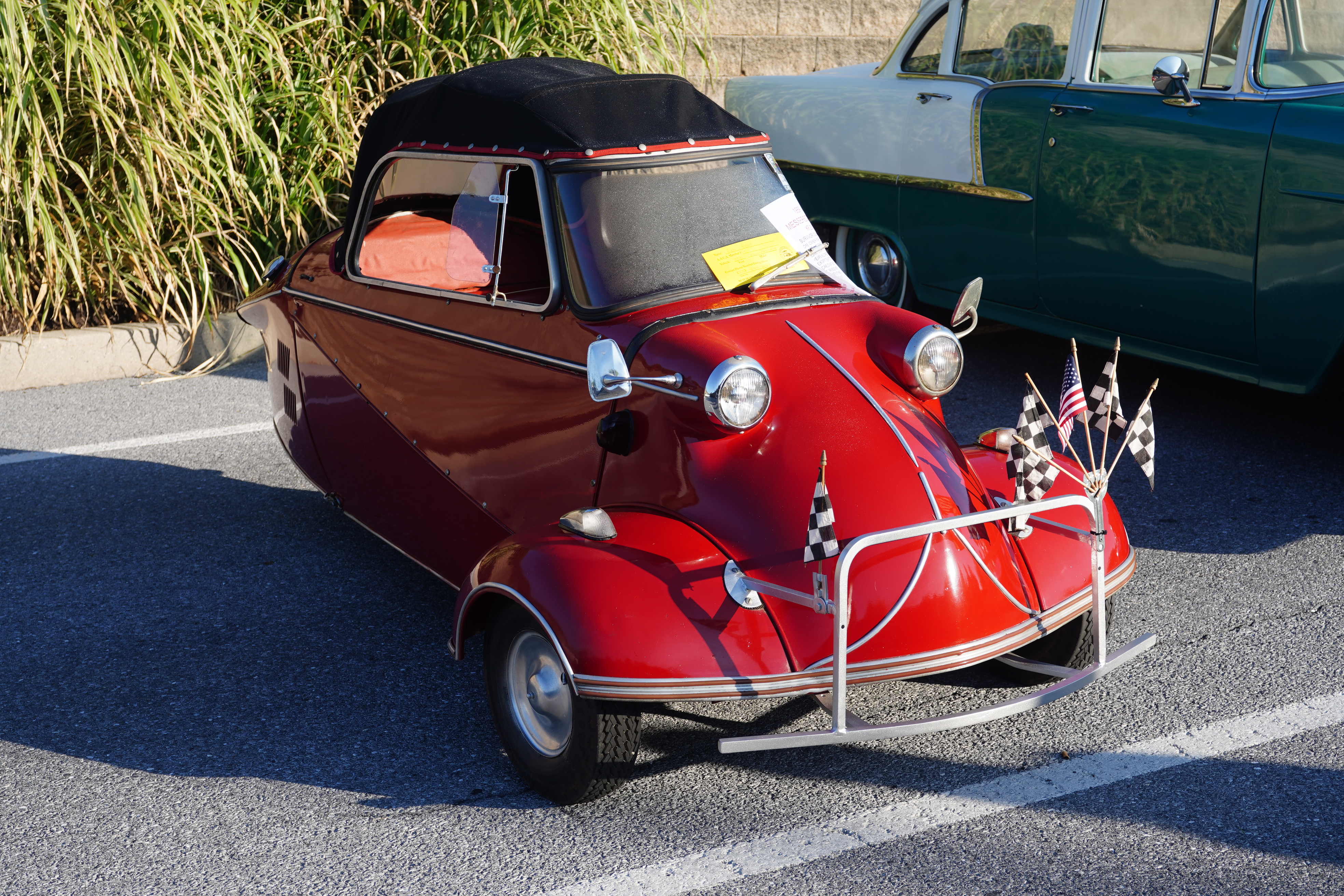
Lot 456, 1957 BMW Isetta, two-tone light blue & white, off-white interior. Relatively rare European-spec version of the Isetta: no front bumper overriders, small headlights, large amber “repeater” lights, original style tail lights. No reserve.

 Pre-sale estimate: $30,000 – 40,000

Sold: $20,000; This is under other recent sales by $5,000-10,000, and the keen Isetta observer will enjoy its uniqueness compared to the much more common U.S. versions.


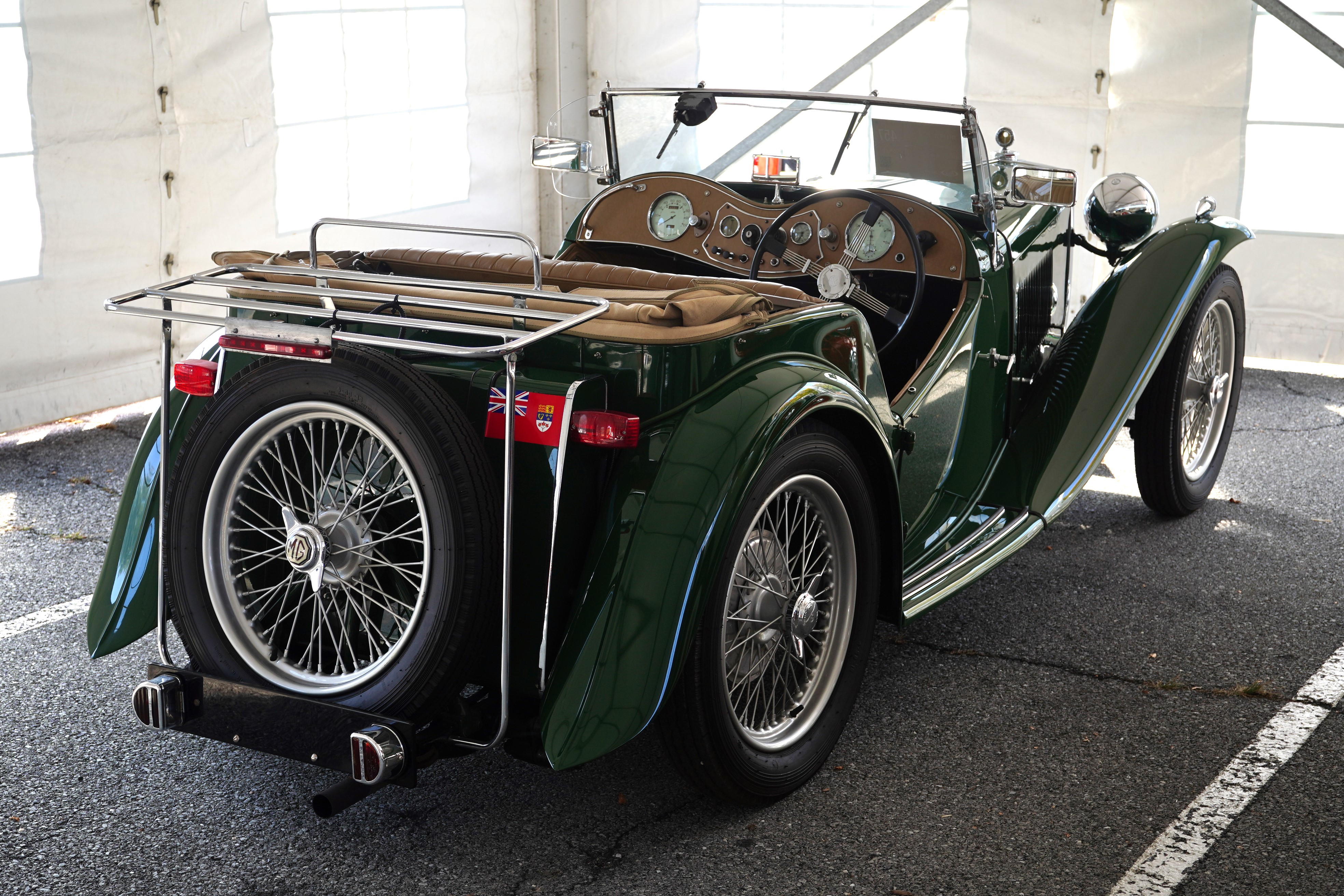
Lot 457, 1949 MG-TC, green, tan interior, tan top, silver-painted wire wheels. RHD as all TC’s are. This is the model vehicle credited with igniting the sports car craze in the U.S. when WW2 vets returning from the UK brought some of these back with them. No reserve.

Pre-sale estimate: $30,000 – 40,000

Sold: $25,000; a slight bargain compared to what some TC’s sell for on sites like Bring a Trailer, and possibly sold for less than what it cost to restore.  


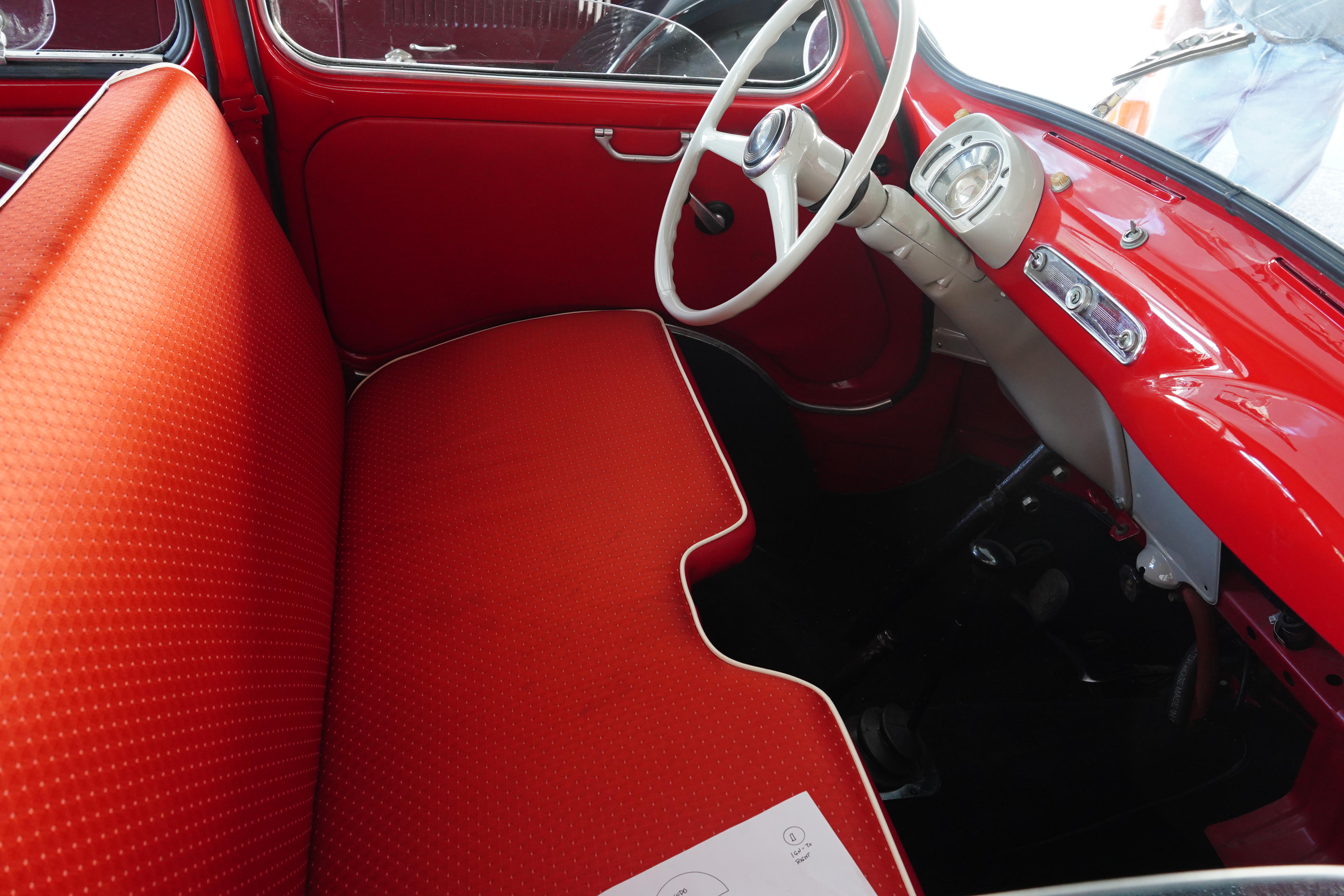
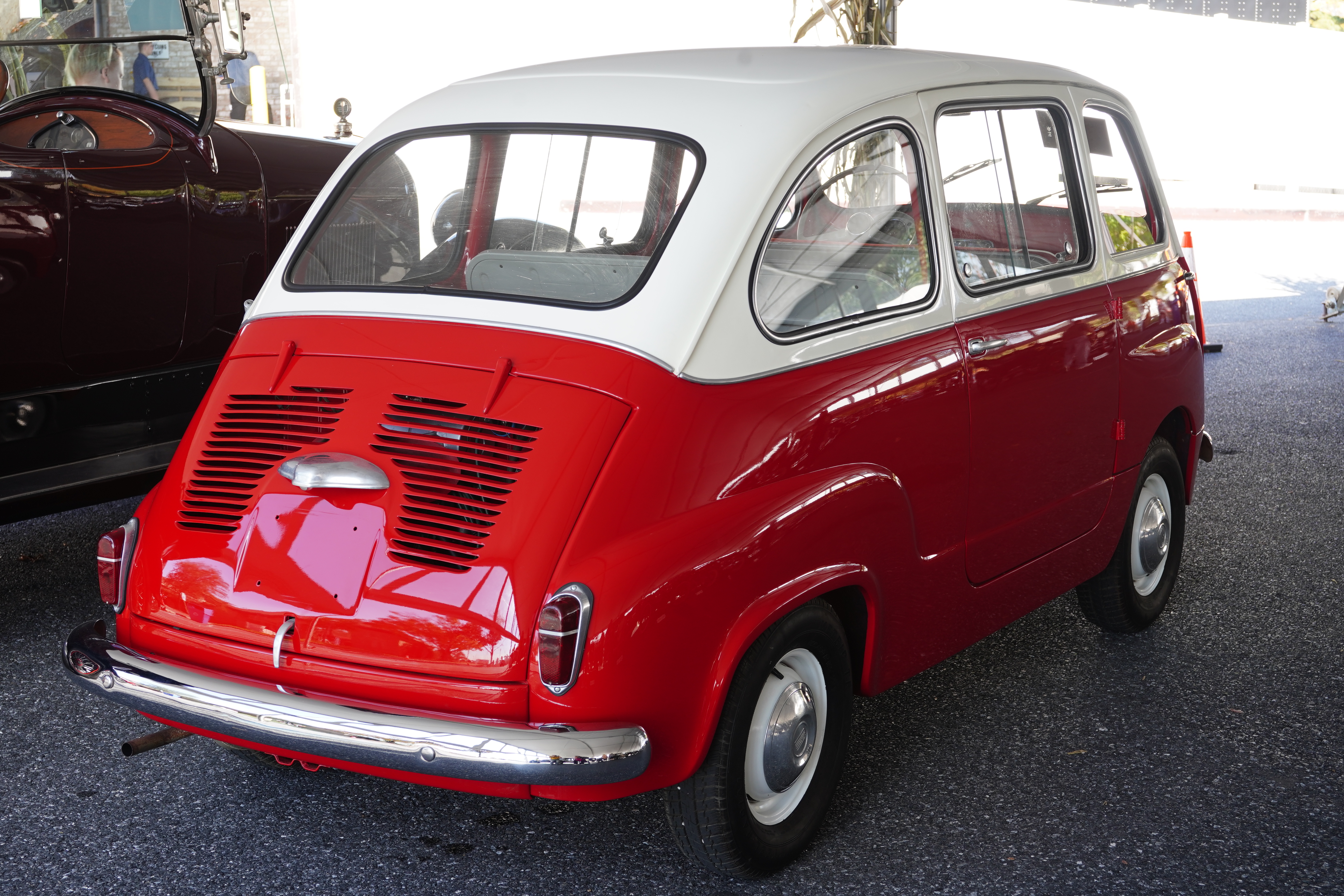
Lot 196, 1959 Fiat 600 Multipla, two-tone red & white, red interior, very rare in the U.S. This was Fiat’s successful attempt at building a really (really) small 6-passenger vehicle. No reserve.

Pre-sale estimate: $30,000 – 40,000

Sold: $27,000; some recent examples have sold on Bring a Trailer for $50,000+, so buyer did well here.

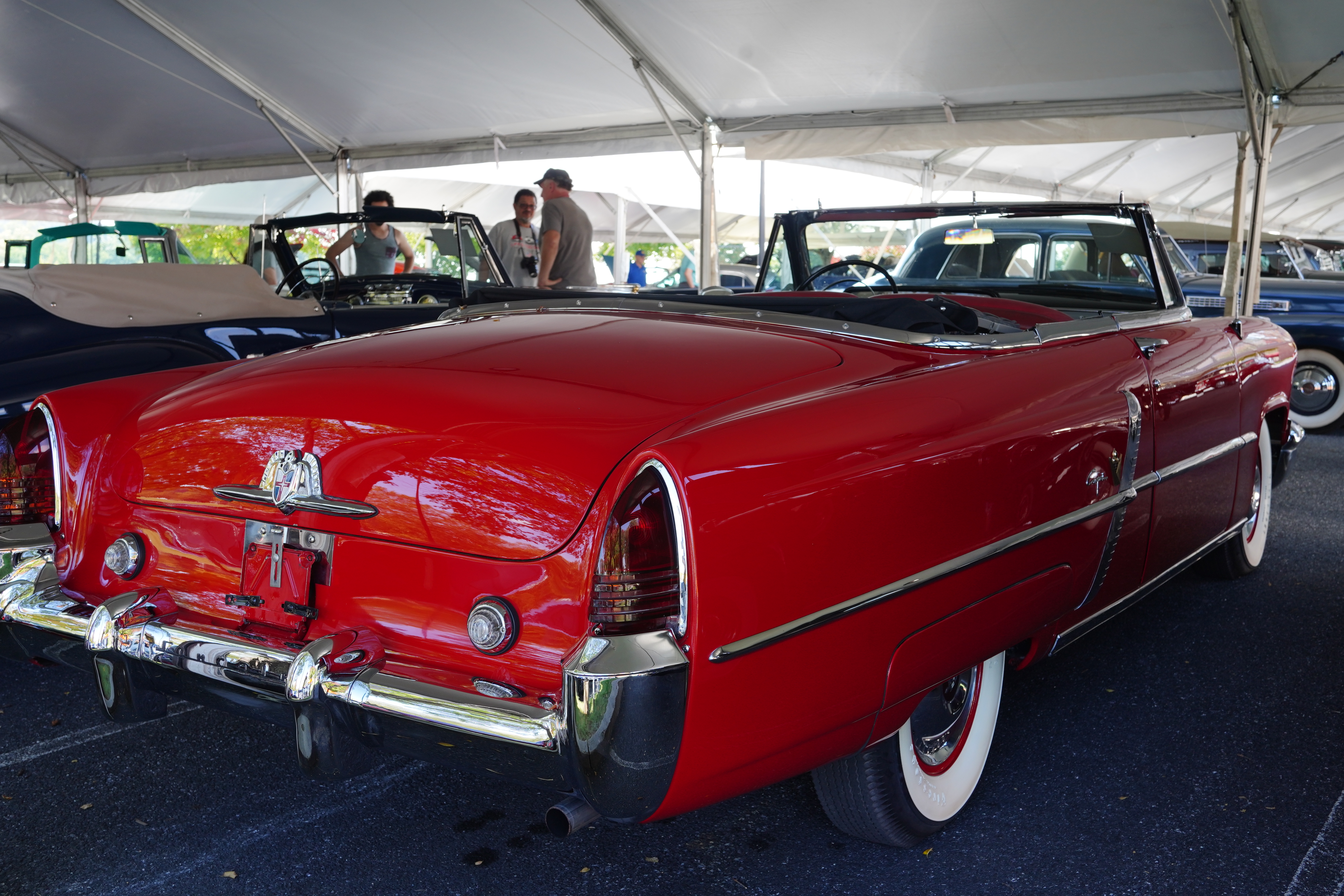
Lot 213, 1953 Lincoln Capri convertible, red, grey/black/red interior, black top, wide whitewall tires. Lincoln styling was beginning to enter the modern age; note the futuristic dash design. No reserve.

 Pre-sale estimate: $30,000 – 40,000

Sold: $27,000; CPI has a #3 car at $35,000, so advantage to the buyer here.

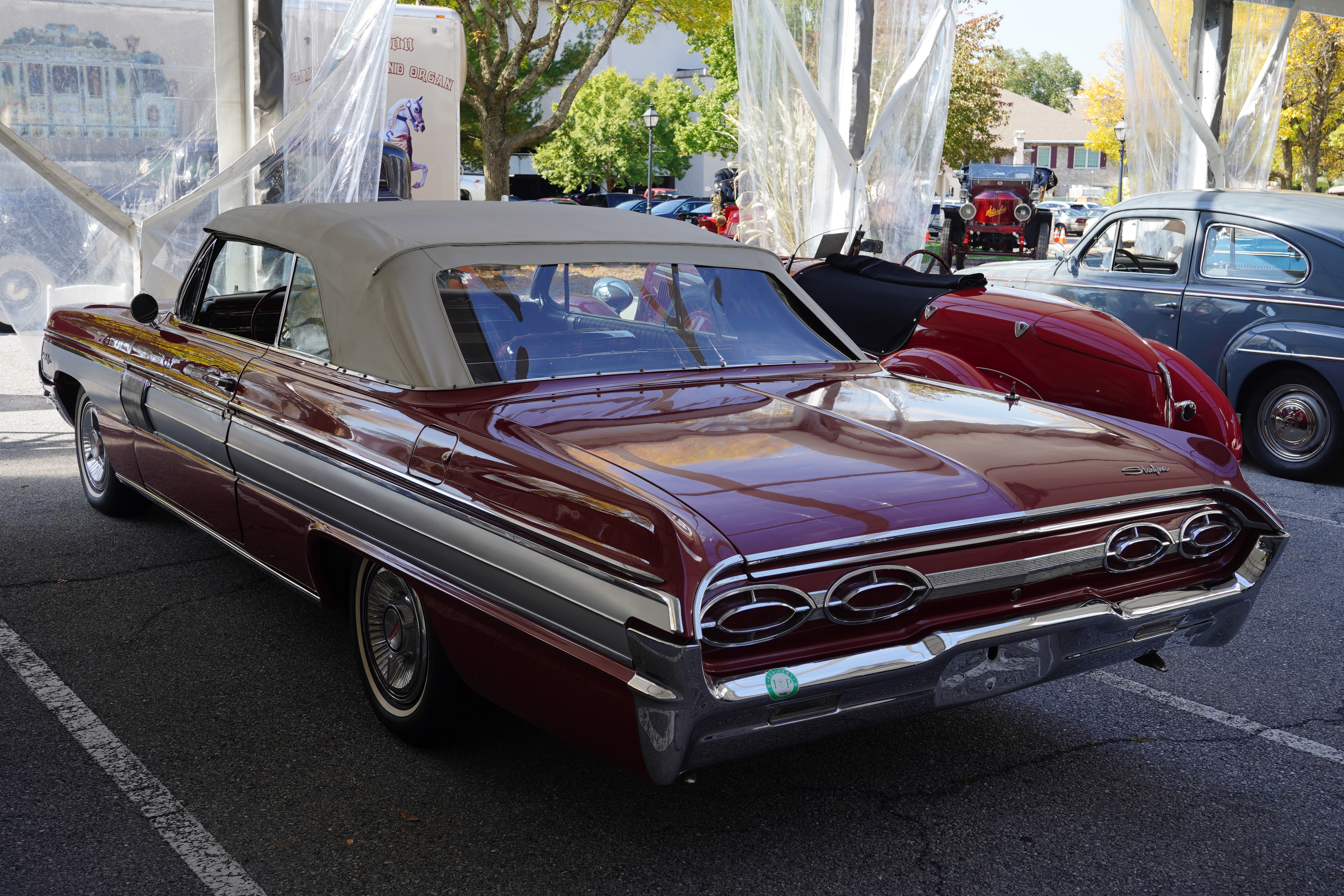
Lot 452, 1962 Oldsmobile Starfire convertible, red, white top, two-tone red interior, buckets & console like all Starfires. Second year for the model. No reserve.

Pre-sale estimate: $35,000 – 45,000

Sold: $28,000; Only a grand more than the ’53 Lincoln, and with much more “modern” driveability compared to that car.

Lot 228, 1968 Olds 442 convertible, dark blue paint (looks almost black), light blue interior, white top, white stripes on front fenders, 4-speed stick shift, buckets, console, RWL tires. First year for this generation Cutlass body style. This car stood out for its less-than-stellar presentation. Paint looked slightly dull, some chrome pitted, interior looked unkempt, driver’s seat showing wear. No reserve.  

Pre-sale estimate: $35,000 – 45,000

Sold: $32,000; bidders ignored condition and bid based on model and equipment.

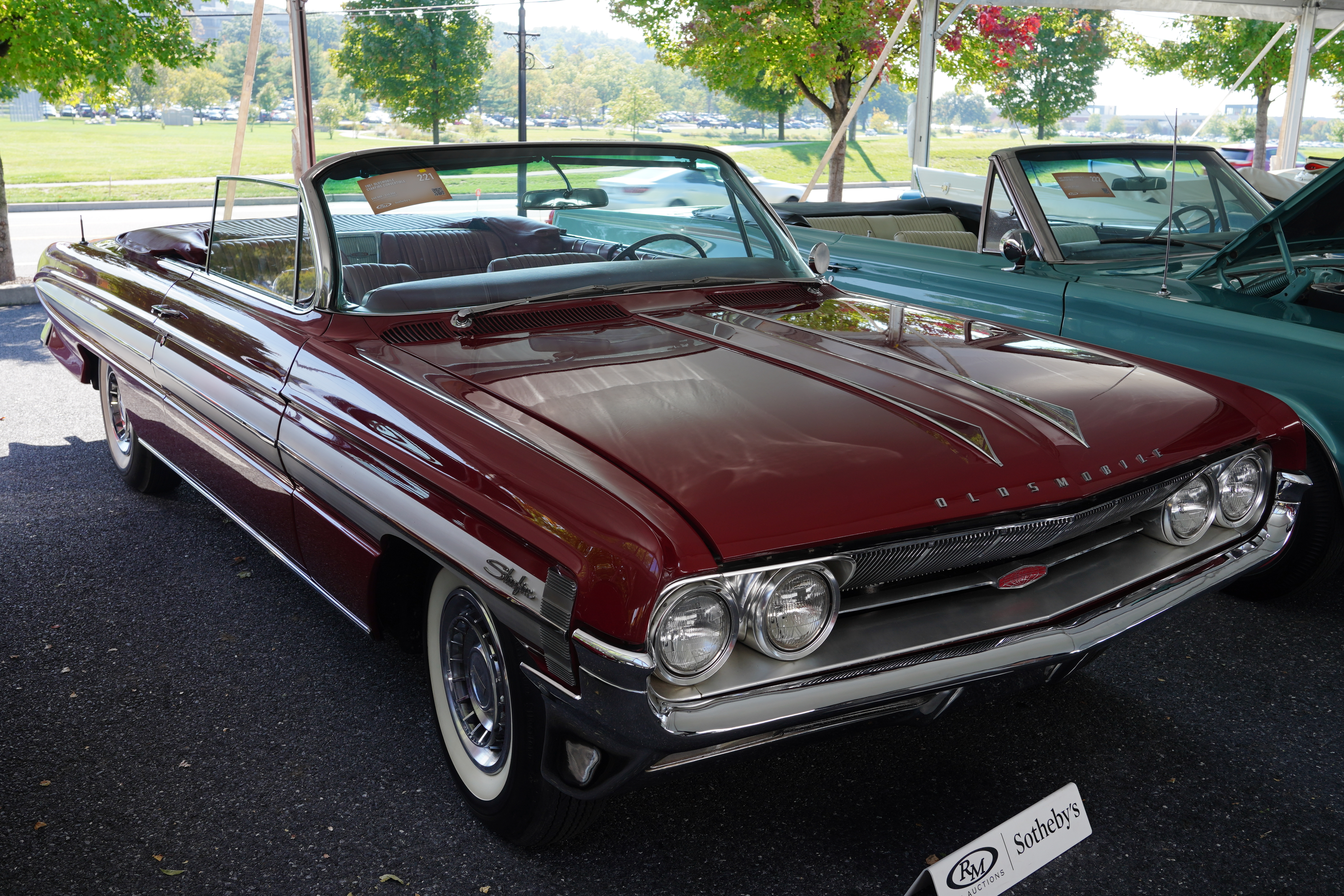
Lot 221, 1961 Olds Starfire convertible, triple red: red paint, red interior, red top. First year for Starfire, and all were convertibles. No reserve.

 Pre-sale estimate: $40,000 – 50,000

Sold: $33,000; five grand more than the ’62, and there are those who prefer this year’s styling.

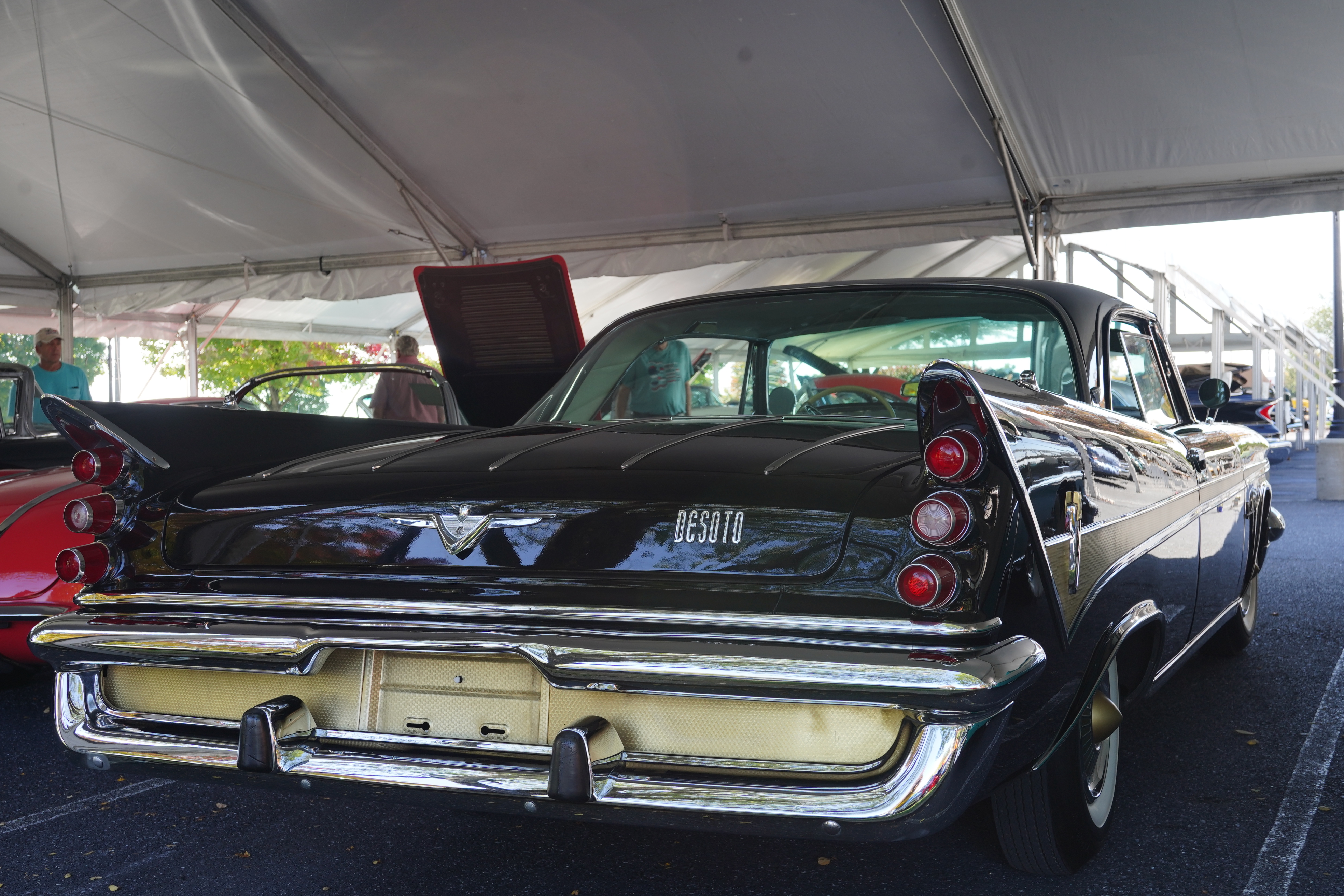
Lot 216, 1959 DeSoto Adventurer Sportsman Coupe, black paint, black/white/gold interior, Chrysler’s Forward Look styling still holding up despite some additional fussiness; certainly compares well next to some GM offerings of that year. Getting near the end for DeSoto. No reserve.

Pre-sale estimate: $45,000 – 55,000

Sold: $45,000, right at low end of estimate. DeSotos of this decade continue to be strong sellers.  


Lot 419, 1937 Cord 812 Custom Beverly 4-door sedan, black paint, red interior, FWD & V8 engine like all Cord 810/812 models. According to RM’s website, the “Custom” models were built on a 7-inch-longer wheelbase for increased rear seat room. No reserve.

Pre-sale estimate: $50,000 – 60,000

Sold: $67,500, above high estimate, and deservedly so, for condition and rarity.

Lot 442, 1956 Imperial Southampton two-door hardtop, black paint, white/grey interior, chrome wire wheels, wide whitewalls, “gun sight” tail lights, optional record player mounted under dash. At this time, “Imperial” was its own make, separate from Chrysler. Offered with unrevealed reserve.

Pre-sale estimate: $75,000 – 90,000

Sold: $69,000, 6 grand below estimate; only 2,094 two-door hardtops built for ’56, this one was for the true Imperial enthusiast.   

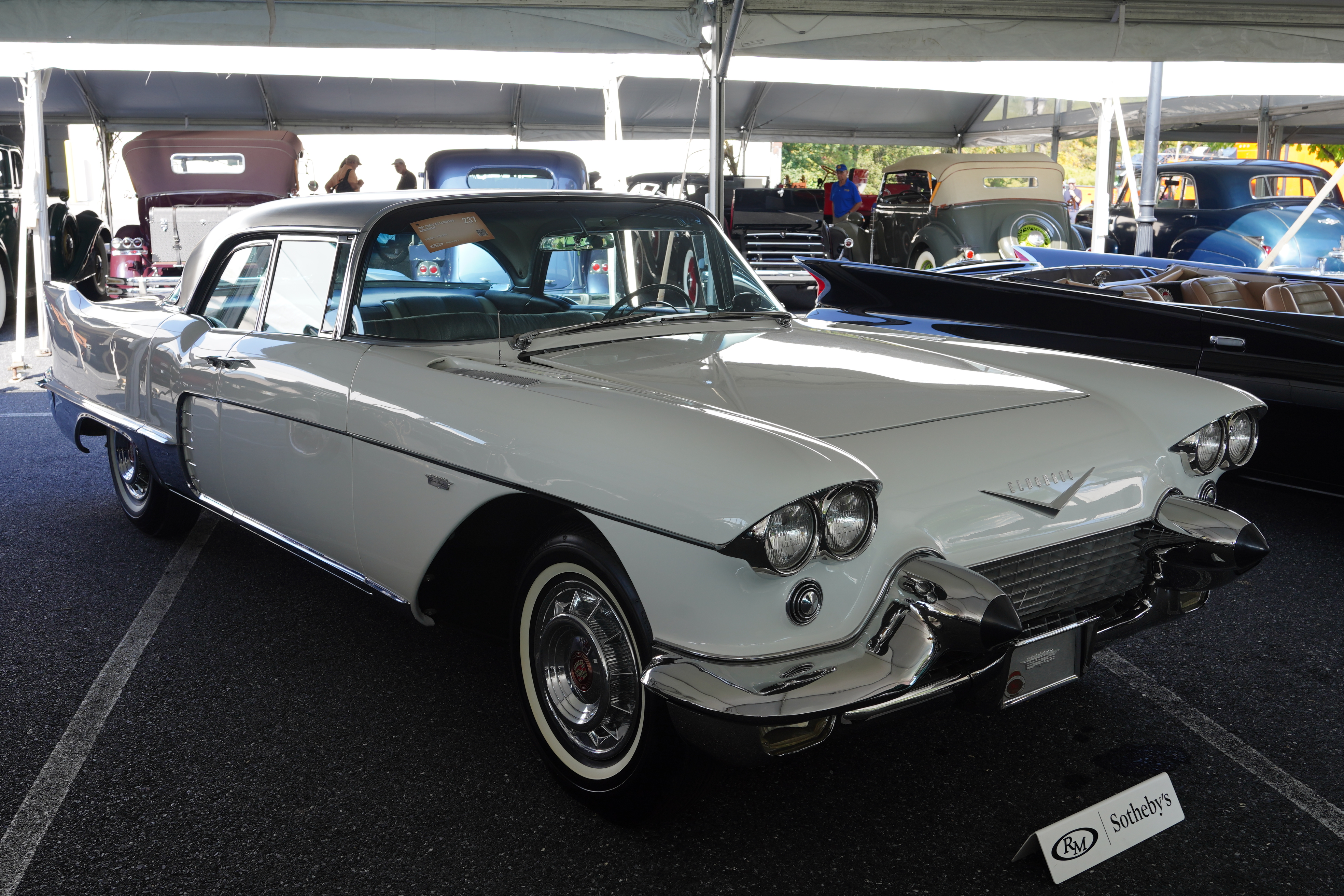
Lot 237, 1957 Cadillac Eldorado Brougham, white paint, stainless steel roof, suicide rear doors, grey & white interior. The Eldorado sub-brand featured exclusive styling in 3 different body styles: the 2-door hardtop Seville, the 2-door convertible Biarritz, and the 4-door hardtop Brougham. This was one of America’s most expensive cars when new, costing over $13,000 when a ’57 DeVille 4-door hardtop could be had for $5,188. Offered with unrevealed reserve.

Pre-sale estimate: $90,000 – 120,000

Sold: $92,500, just clearing its low-end reserve. This distinguished car will always have value, and will always have a following.


All photographs copyright © 2023 Richard A. Reina. Photos may not be copied or reproduced without express written permission.
 

Cars & Coffee, Mahwah NJ, Oct. 1, 2023

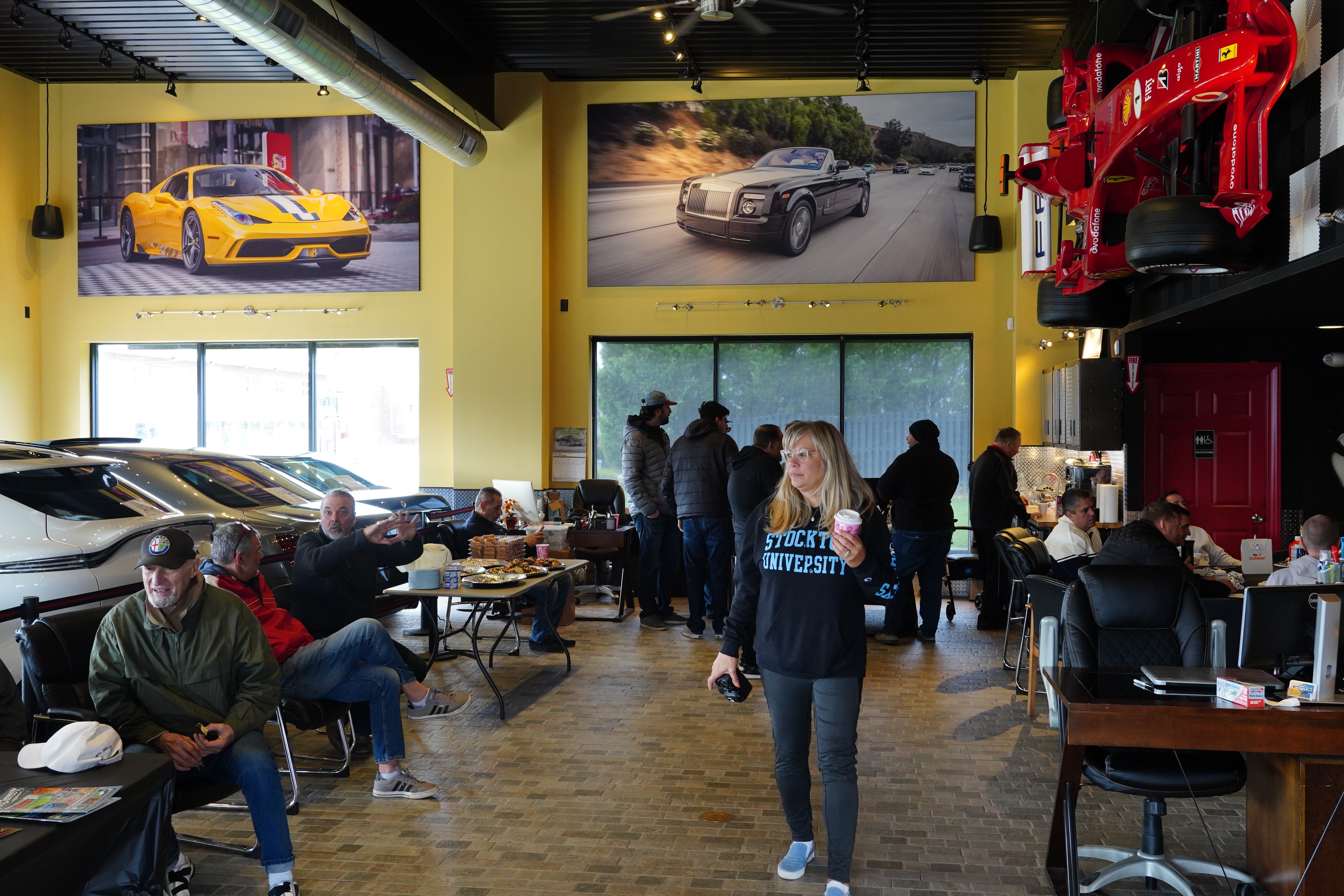
The last time my driving club buddy Larry and I organized any kind of get-together for our misfit group of car enthusiasts was October 23, 2022, just under a year ago. In the interim, we had announced to our compadres that the days of arranging drives to breakfast destinations were over. However, during a recent conversation with Larry, he suggested that we could again “host” a Cars & Coffee which would involve no more work than sending an email. So we did, and we did, and the result was good!

We scheduled the shindig for Sunday October 1, and after a week of significant rainfall, we lucked out with a day that was sunny, warm, and clear. I counted 14 individuals who showed up, the vast majority of whom know each other from sharing office space at Volvo corporate. In my case, I’ve known some of these gentlemen for over 30 years. Ten cars which qualified as “special interest” were driven there, while a few souls drove modern iron, which was fine with us, because we were really there for each other’s company.

Thanks to Mike for taking the snap (after driving here from PA in his Volvo C40 EV!)

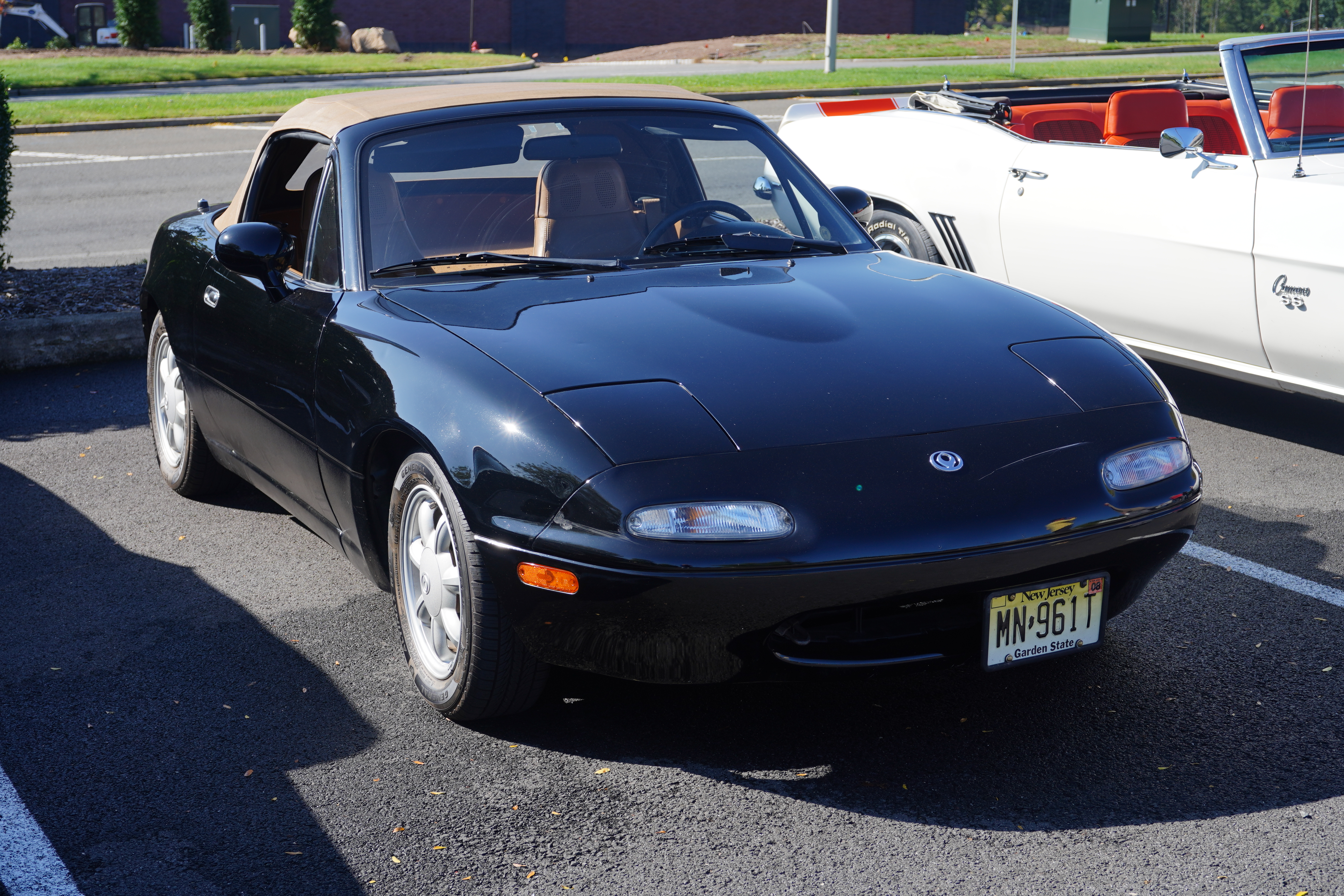
Cars started arriving at 8:30 am and we successfully occupied most of one row in the lot. The Dunkin’ in Mahwah had bagels, donuts, and coffee, and what more could a bunch of old guys want on a Sunday morning? We stood in the parking lot with our food and drink and gabbed the morning away. Cars started to depart around 10:30 and I made my own getaway a little after 11 am to get home for some personal business. After driving the Alfa as my classic car of choice for most of the year, I brought the Miata to this event so that I could put fresh fuel into it! Aside from a few local trips, I had hardly moved it. The ride to and from added another 120 miles to the odometer, which was good for it.

Larry and I decided that while we will adhere to the “no more drives” decision, hosting a Cars & Coffee once or twice a year might be worth it, so we’ll calendar this for a repeat performance in the spring of 2024. Sounds far away, but it isn’t!

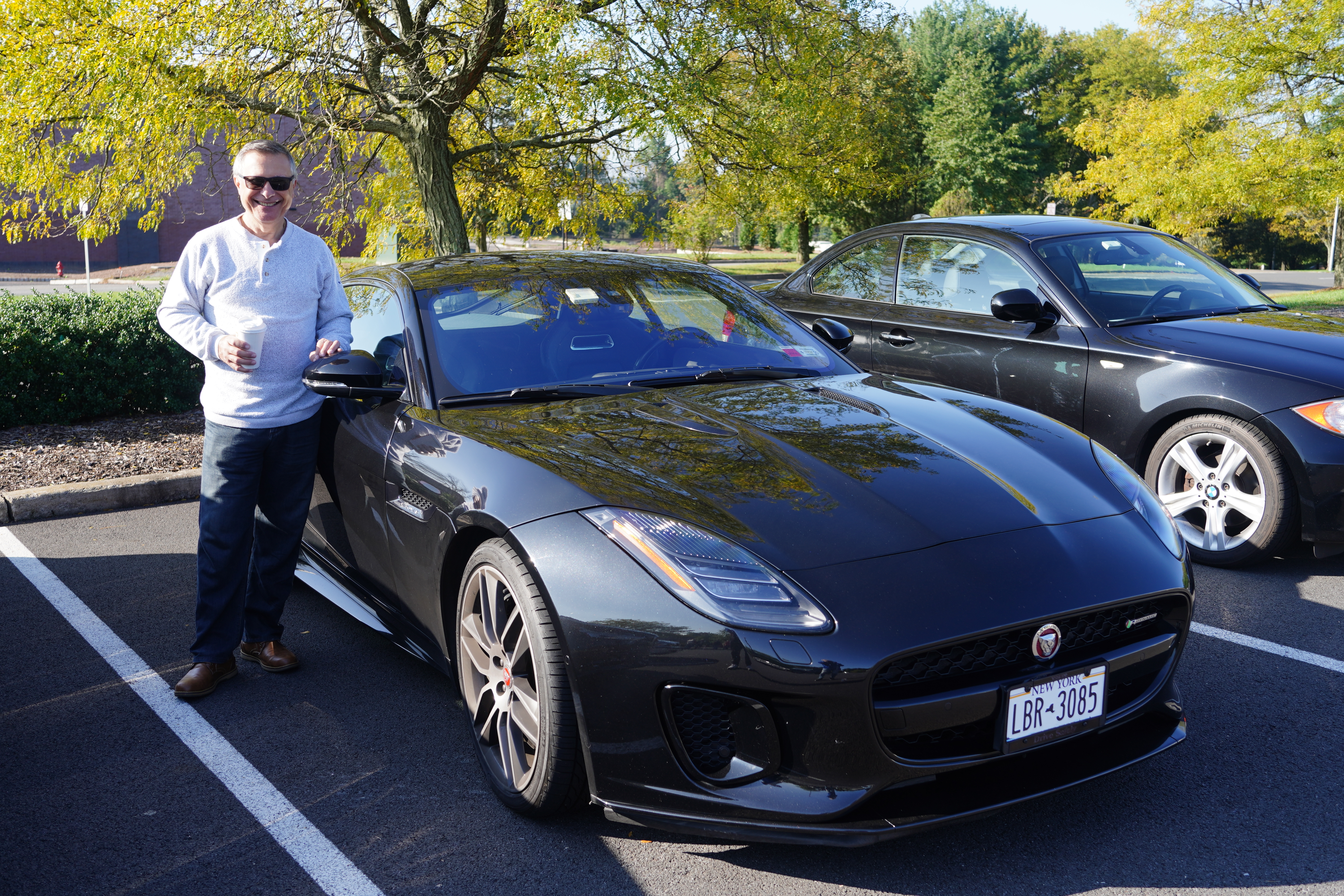
Enzo and his Jaguar F-Type


Julio and his 2000 BMW 540


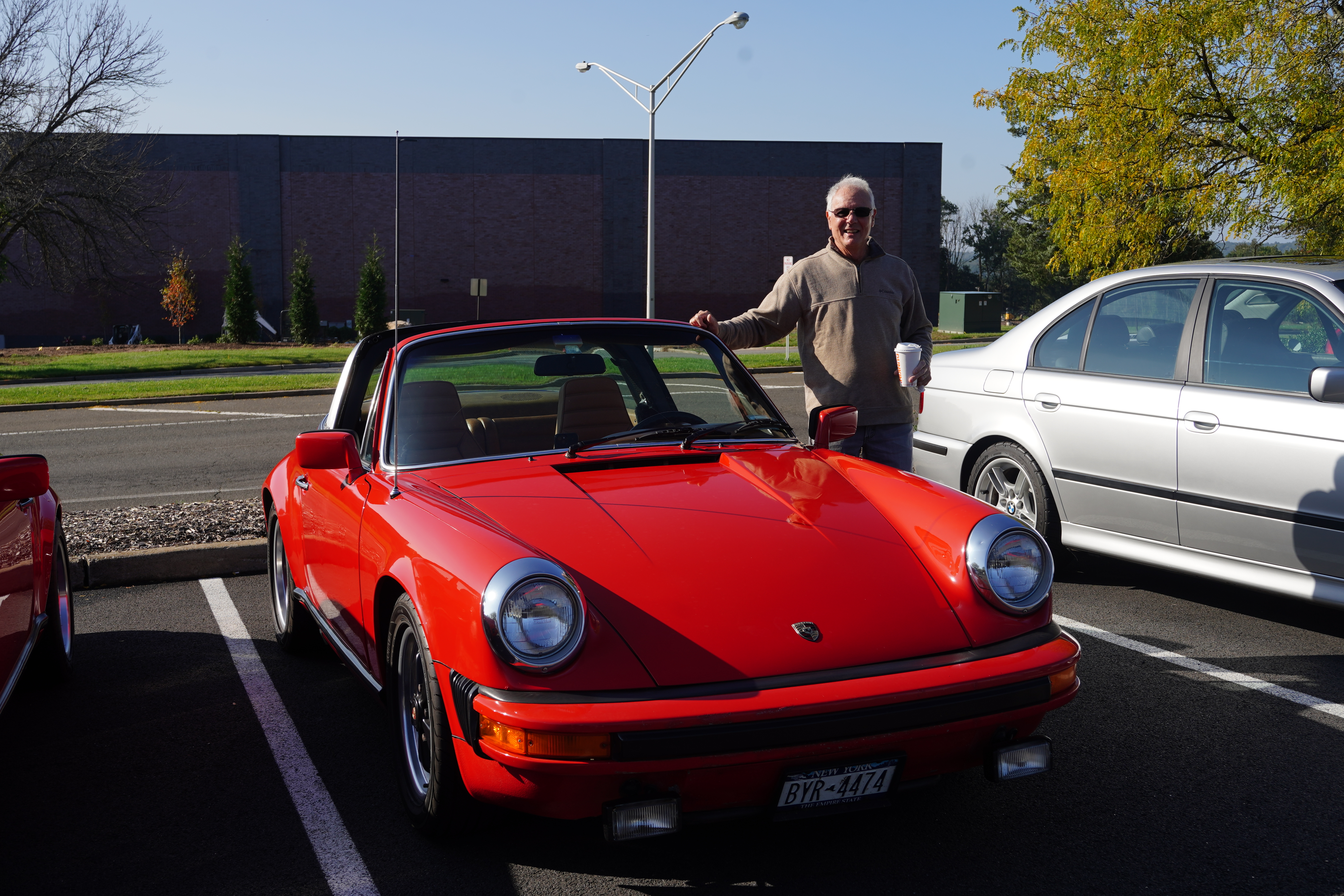
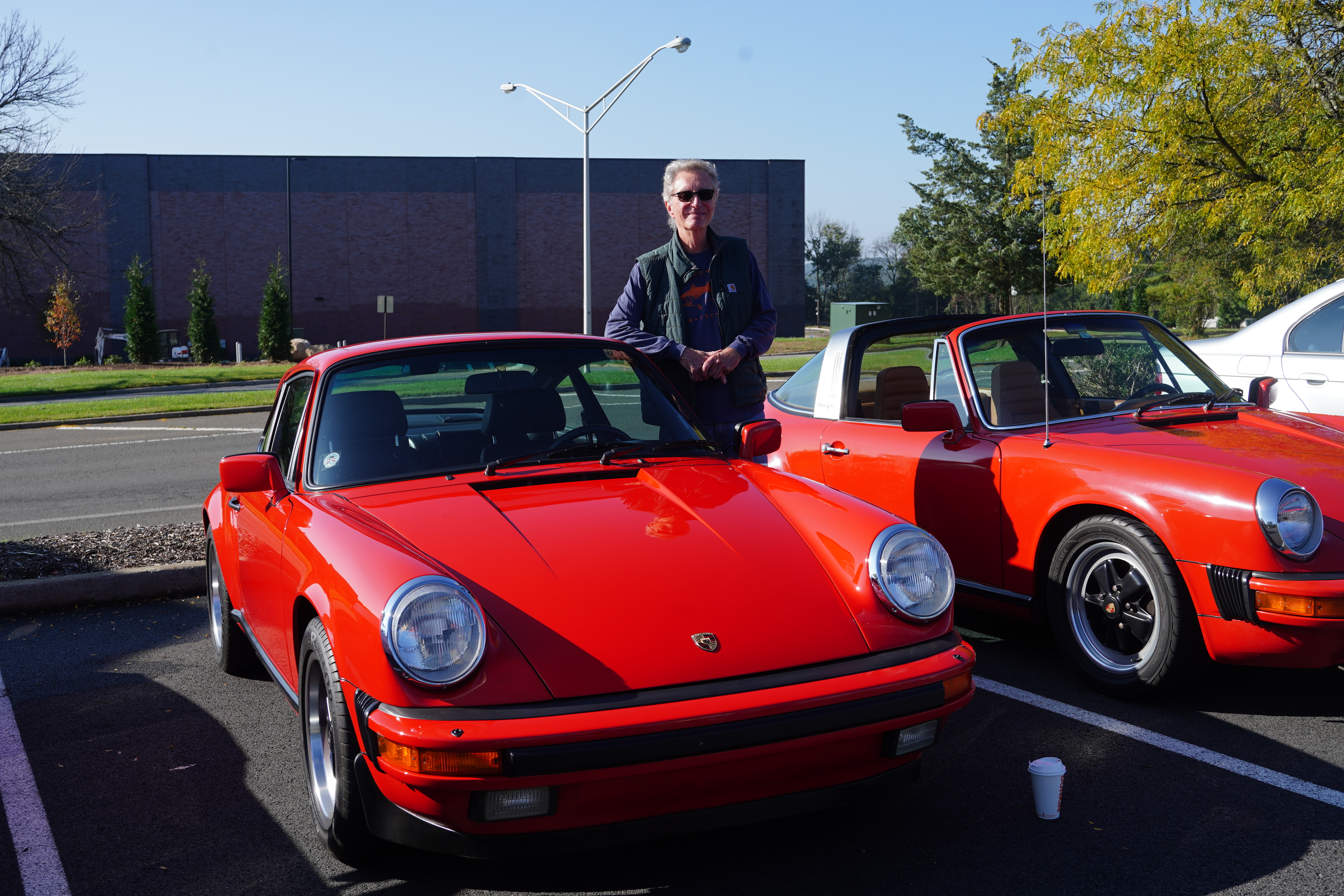
Kenny Z and his 911


Peter and his 911


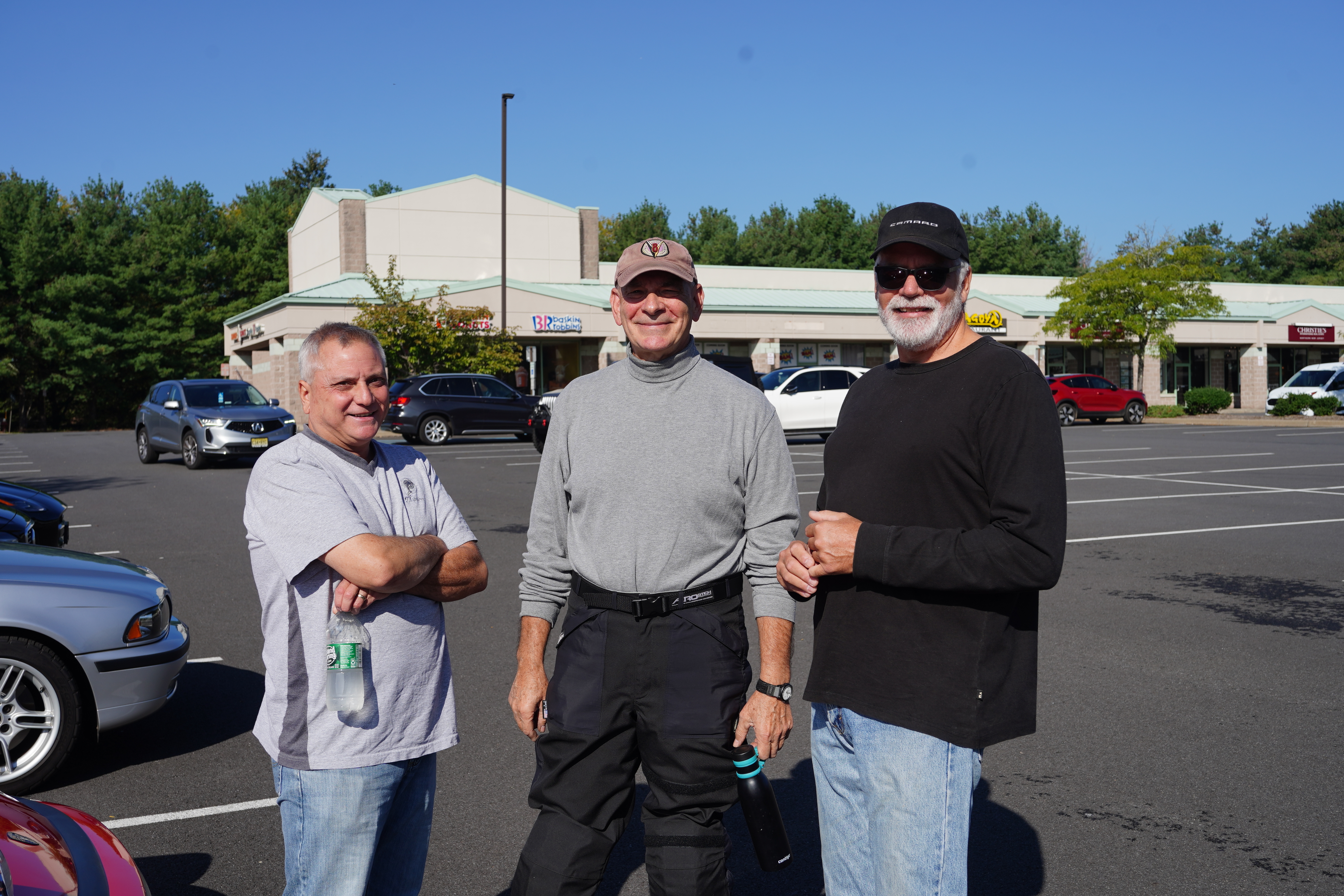
Fred, Terry, and Paul in the sun


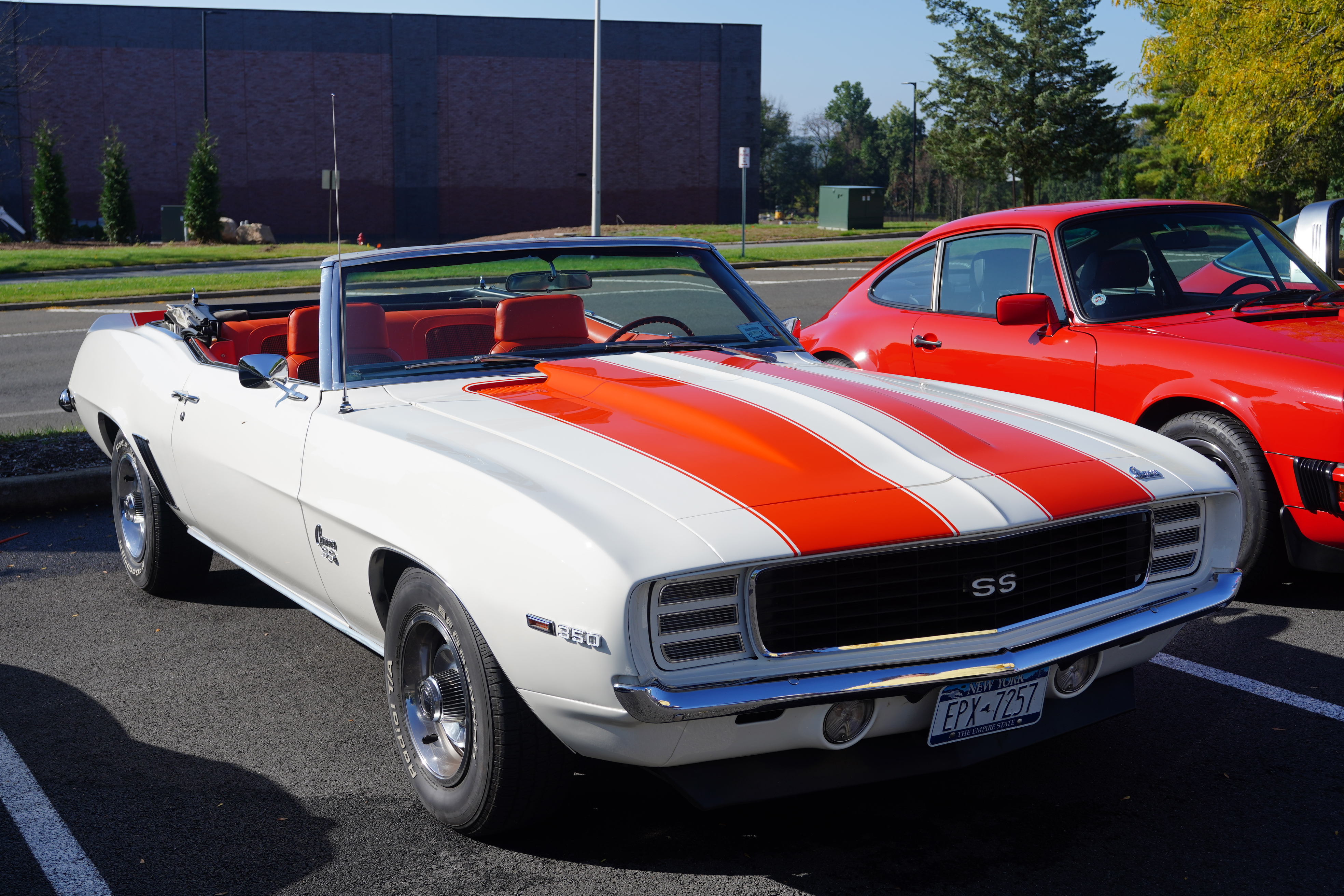
Paul’s ’69 Camaro


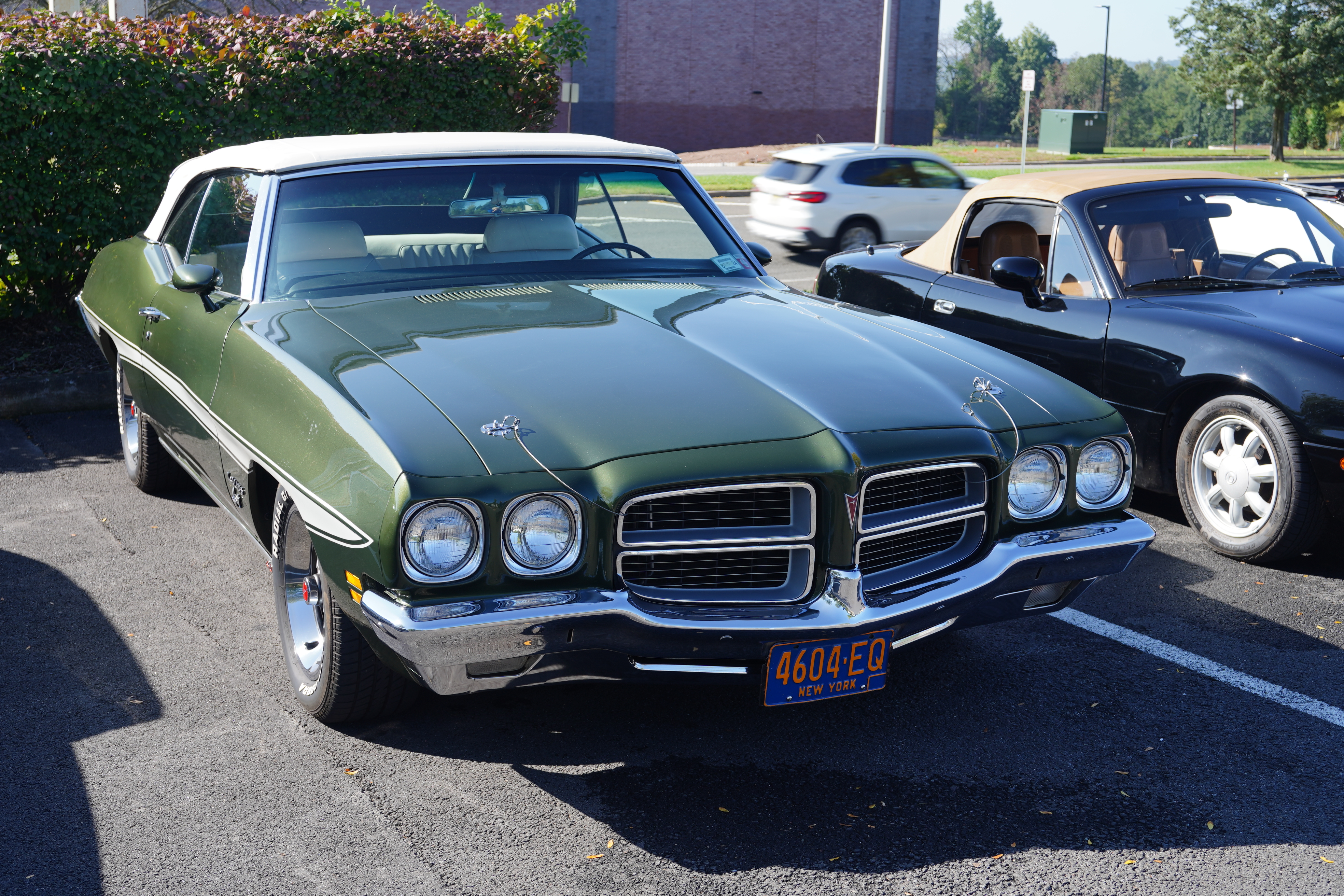
Fred’s Pontiac LeMans


Art’s BMW 128


Richard’s ’93 Miata


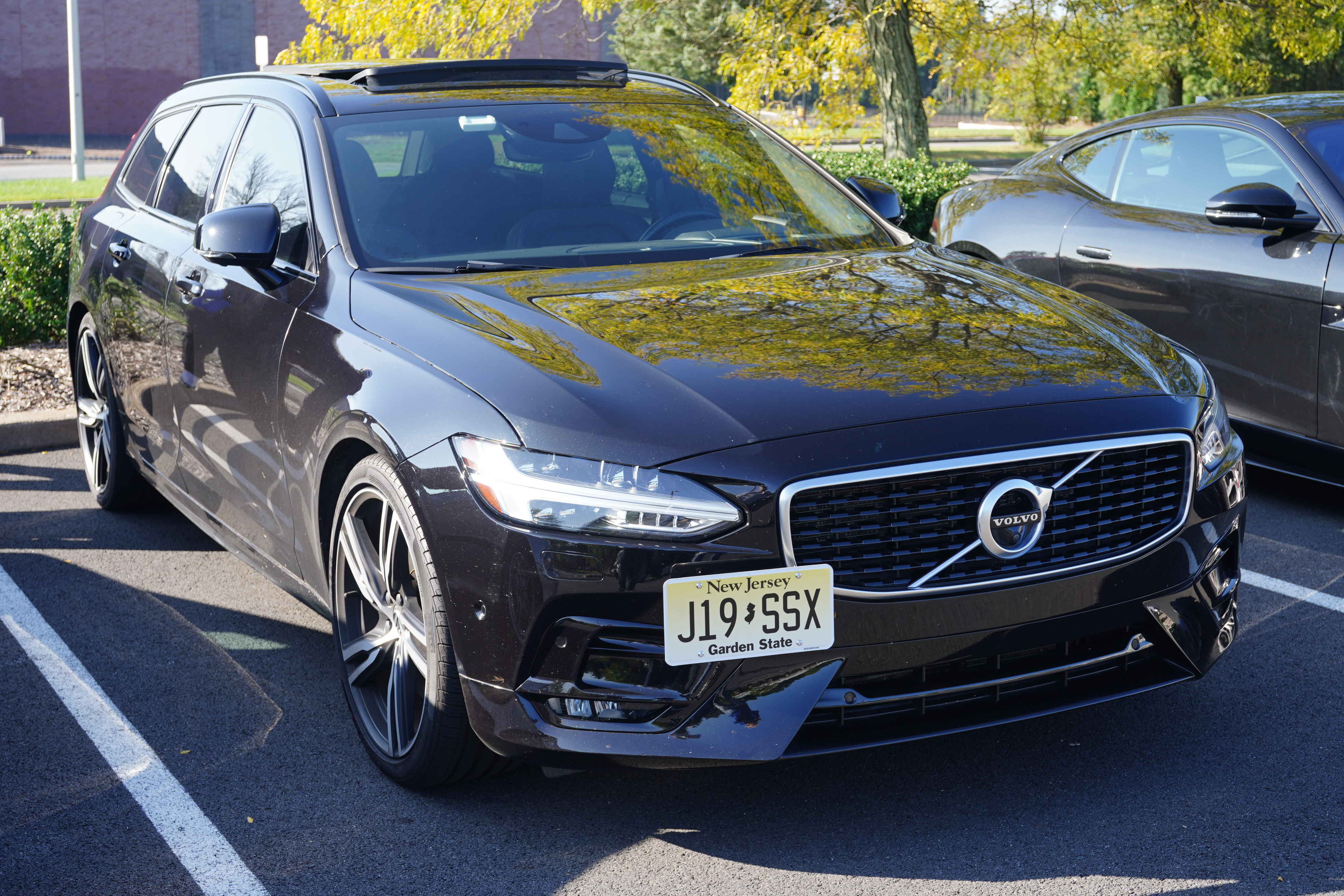
James’ Volvo V90


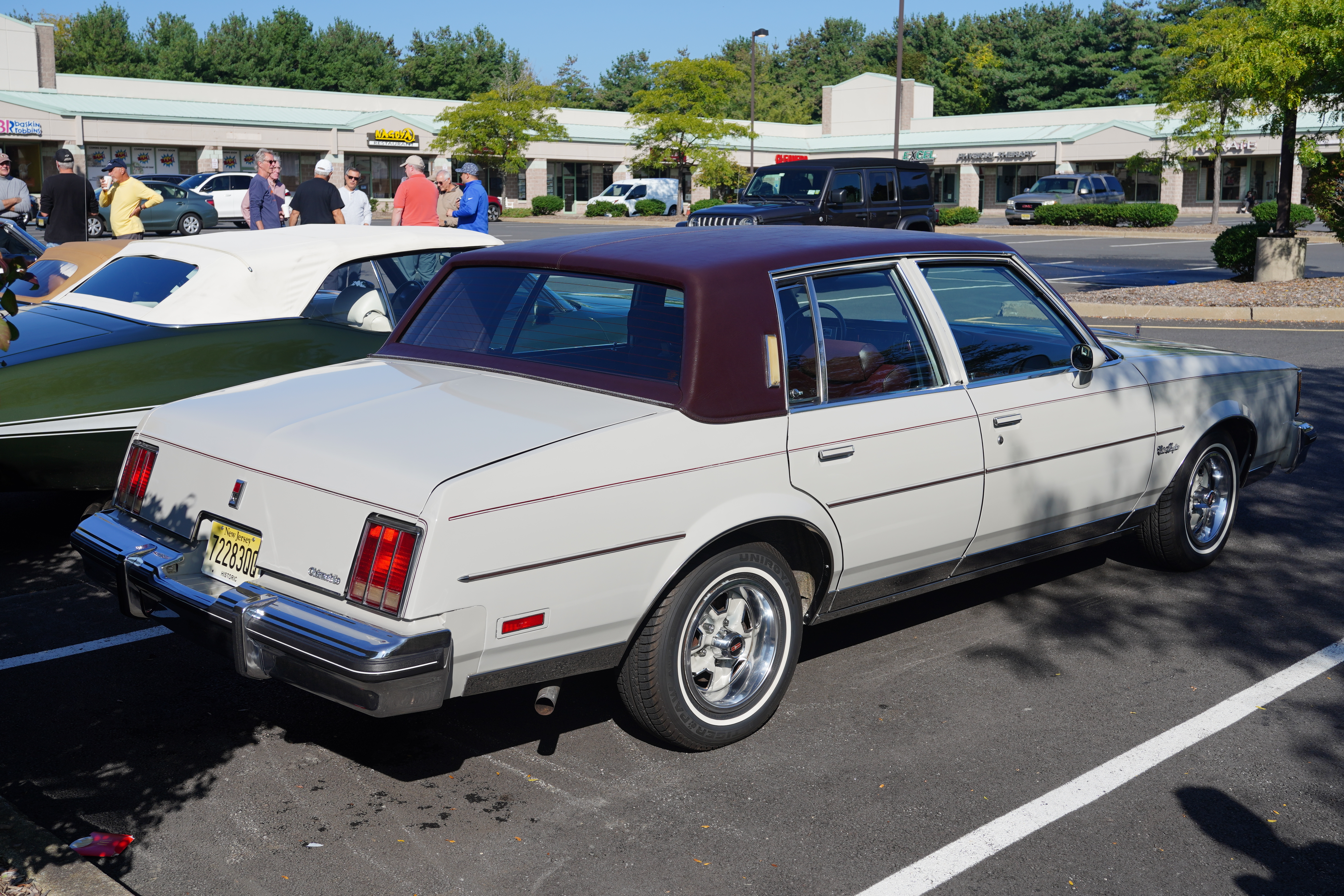
Larry’s newest acquisition, a 1980 Olds Cutlass


Julio, Peter, and James


All photographs copyright © 2023 Richard A. Reina. Photos may not be copied or reproduced without express written permission.
An Alfa Romeo in 1/18 scale

Saw my friend Pete last week. He’s the family friend whom I met through his daughter Pam, who is long-term best buddies with my wife. Pete sold me his Alfa Romeo 10 years ago, in 2013. When I saw him, he generously gifted me a 1/18 scale model he had of an Alfa Giulia coupe. I stopped collecting car models long ago, but as I placed this new Alfa on the shelf with the other models, I saw that I’m back up to eight, most of them presents from others. It’s ok, because this way each model has some emotional attachment, and a story to go along with it.

This Alfa model is labeled a 1965 GTA, but I can’t say I ever saw one of those in black. The GTAs were special lightweight racing models, with aluminum body panels and Perspex windows. Real ones today are worth something in the neighborhood of $200,000 and up (compared to “normal” Giulia coupes which sell between $30k and $60k, very dependent on condition). This model isn’t quite that valuable. Yet the details on it are quite good.

I find that with many car models, getting the exterior proportions correct can be the trickiest. Often, the bumpers are too large, or the wheels and tires are too small, things like that. This car is nicely proportioned. My only beef might be the grille. A true GTA had a silver grille devoid of trim; this grille is rendered in black.

Perhaps on a 1/18 scale model I should not have been surprised about the opening panels, but I was. The hood, trunk, and both doors are hinged. The engine compartment is accurate with the crossover air plenum, side draft carbs, and battery location. The interior detail is a little sparse, but I’ll give them an A for effort with the wood wheel and shift lever. I suspect that the incorrect wood steering stalks speak to the commonality of materials. And although you’re least likely to see this, the most accurate details are in the chassis. They nailed it with the oil pan, exhaust, front A-arms, differential, gas tank, and spare tire well. Kudos to Road Signature, the manufacturer, for this level of attention.

The new-to-me Alfa has taken its place alongside 4 (!) BMW Isettas, 2 Lancia Fulvias, a Fiat 124 Coupe, and a Volvo 1800. It looks especially bizarre because the Alfa is the only one in this scale. The other models are a mix of 1/25 and 1/43 scale. But that’s it. When you’re considering a gift for me, I’m at critical mass with models!


All photographs copyright © 2023 Richard A. Reina. Photos may not be copied or reproduced without express written permission.
 

The Lime Rock “Sunday in the Park” car show, Sep. 2023

Another Labor Day weekend, and another trip to Lime Rock Park for their vintage car weekend. The signage at the track made it clear that “Historic Festival 41” marks the 41st year for this treasure. As I have related in previous posts, racing is done on Friday, Saturday, and Monday, with Sunday racing banned by local ordinance (to give the locals a break from the noise). Cleverly, this becomes an excuse for the track to host a car show known as “Sunday in the Park”. I’ve been attending for over 30 years, and Lime Rock never fails to disappoint with the uniqueness and quality of the motor vehicles on display. Along with Greenwich, I consider it one of the premier car shows in the Northeast.

There were a number of featured classes again this year, and two which stood out for me were the letter-series Chrysler 300s, and the pre-war MGs. The 300s on display were stunning, but I was disappointed in the small number of vehicles. The factory produced them from 1955 through 1965, but only a few of those model years were represented. Conversely, the display of pre-war MGs was plentiful. I had remarked in my recent New Hope post that one of the highlights was a ‘30s MG; at Lime Rock, there were close to a dozen such vehicles. Given that they were never officially imported into the States, I was pleasantly surprised at the turnout.

Other specialized classes included Chrysler concept cars, Japanese performance cars, and American station wagons (which basically duplicated the wagons on display at Greenwich in June). And as we have seen every year for the past decade or so, the “Gathering of the Marques” gives owners of interesting daily drivers a chance to park with cars of the same make and/or model around the track. Sightings included groups of Corvettes, Volvos, Miatas, BMWs, Alfas, and Fiats among others. But large swaths of the track were empty this year. Notable by their absence were large-scale representations of Shelby Mustangs, BMW 2002s, and domestic vehicles of any brand. At previous shows, the Shelby Mustangs alone numbered in the dozens, driven by strong club support. I’m not sure why the turnout was low; I’m just hoping that this is not a sign of diminished participation in car shows in general.

The entire day was sunny and it got quite warm by late morning, with the temps hovering just under 90 degrees F. The round-trip was greatly helped by my friend Tony, he of the NJ Alfa club, who assisted with the driving both directions, and was great company for the entire day. We got to the show just before 10am, and were headed home by 2pm, with the heat having gotten to both of us. Lime Rock is a Labor Day tradition which I plan to continue as long as possible!


CHRYSLER 300 LETTER CARS
The canted headlights were a feature of all ’61 and ’62 Chryslers


CHRYSLER CONCEPT CARS


1995 Chrysler Atlantic


1952 Chrysler D’Elegance


1957 Chrysler Diablo


No signage accompanied this car above. I thought it was the Thunderbolt, but Google shows a 2-door with a retractable hardtop for that one. Can anyone identify this car?


1954 DeSoto Adventurer II


PRE-WAR MG CARS


JAPANESE PERFORMANCE CARS


Nissan 300ZX Turbo


Honda (not Acura) NSX, JDM spec. Note RHD


1992 Mazda RX-7 Efini Type R, JDM spec. Note RHD


GERMAN CARS


1952 “split window” VW Beetle


VW Cabriolet


BMW Isetta, original aside from one repaint


BMW 3-series wagon


BRITISH


Jaguar E-Type Series I FHC


Triumph GT6


A pair of brightly colored Lotuses


VOLVO
1800S


1800E


V70R (with Atacama interior)


FIAT


This 1st series Fiat 124 Sport Coupe (“AC” in Fiat-speak) is the single-headlight version from the late ’60s. It was spotted in the paddock.


1973 124 Sport Coupe, 3rd series (“CC” in Fiat-speak)


124 Spider


X1/9


Chrome-bumper 124 Spider next to most recent gen (coined “Fiata” due to shared platform with Miata)


LANCIA


1967 Flaminia


Lancia Fulvia


ALFA ROMEO
1932 8C 2300


Various Alfa competition cars


Giulia Spider


2600 Coupe


2000 Spider


Junior Zagato


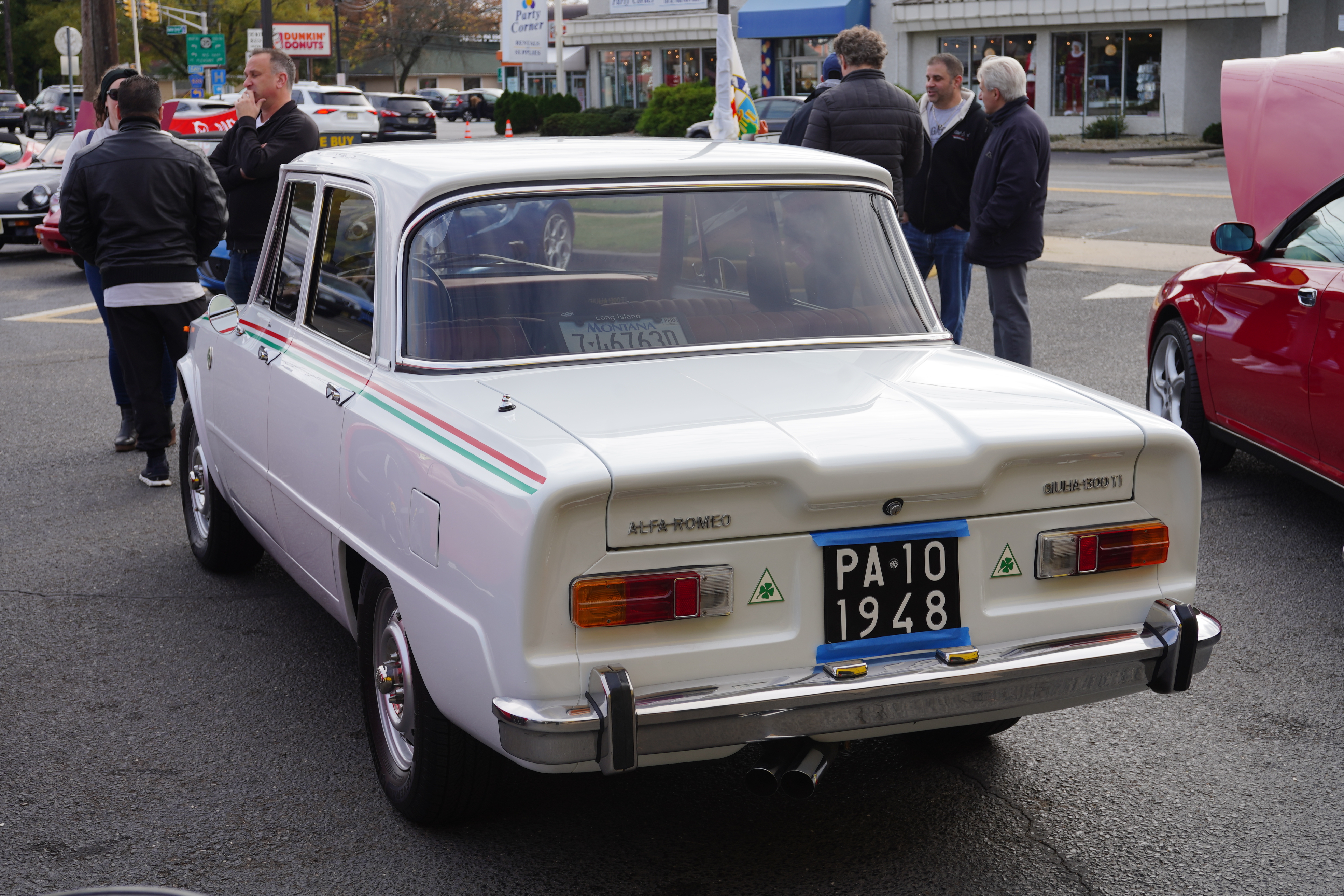
Giulia sedan


Giulietta Spider motors past Italian brethren


All photographs copyright © 2023 Richard A. Reina. Photos may not be copied or reproduced without express written permission.
Bridgewater NJ Cars & Coffee, August 27, 2023

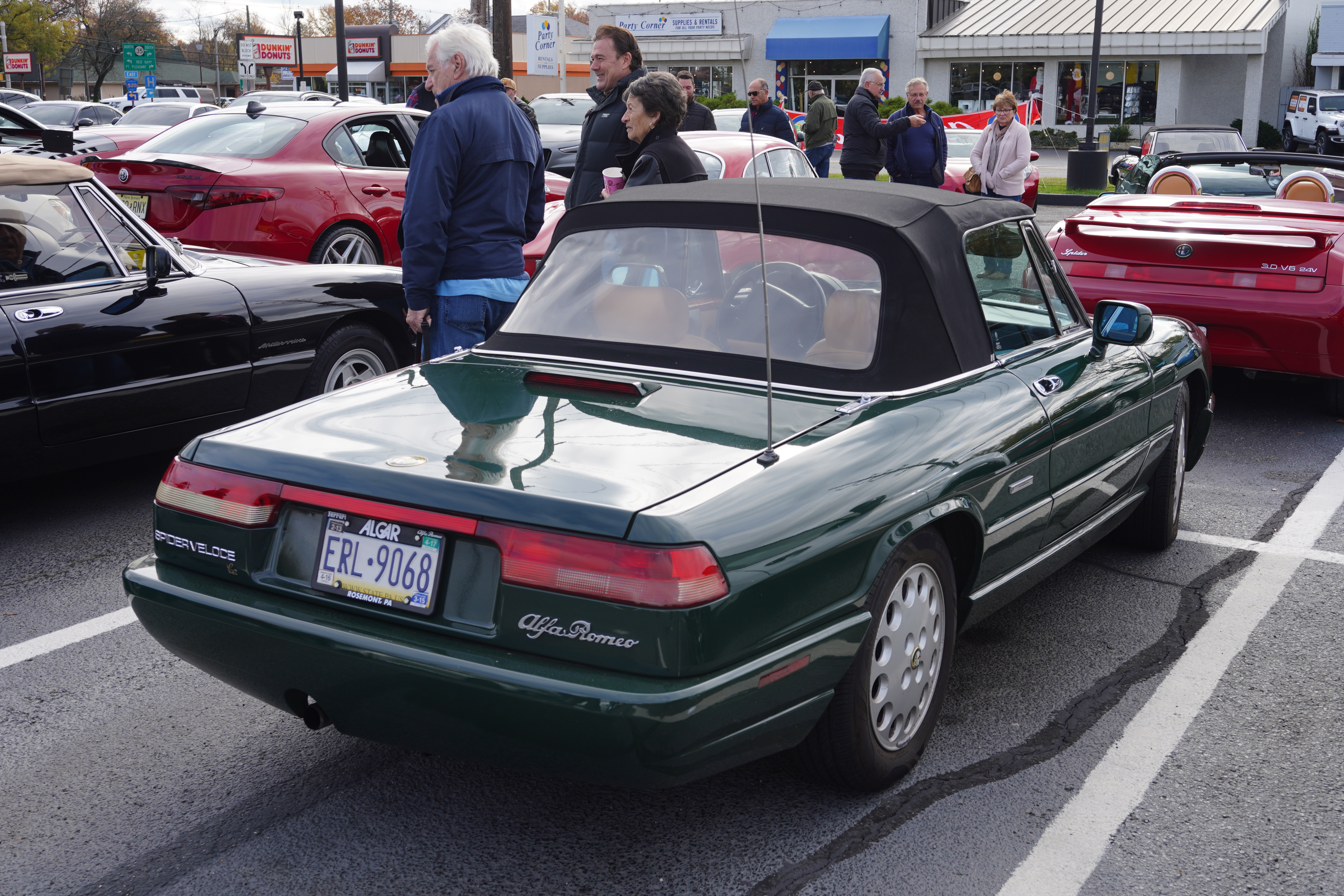
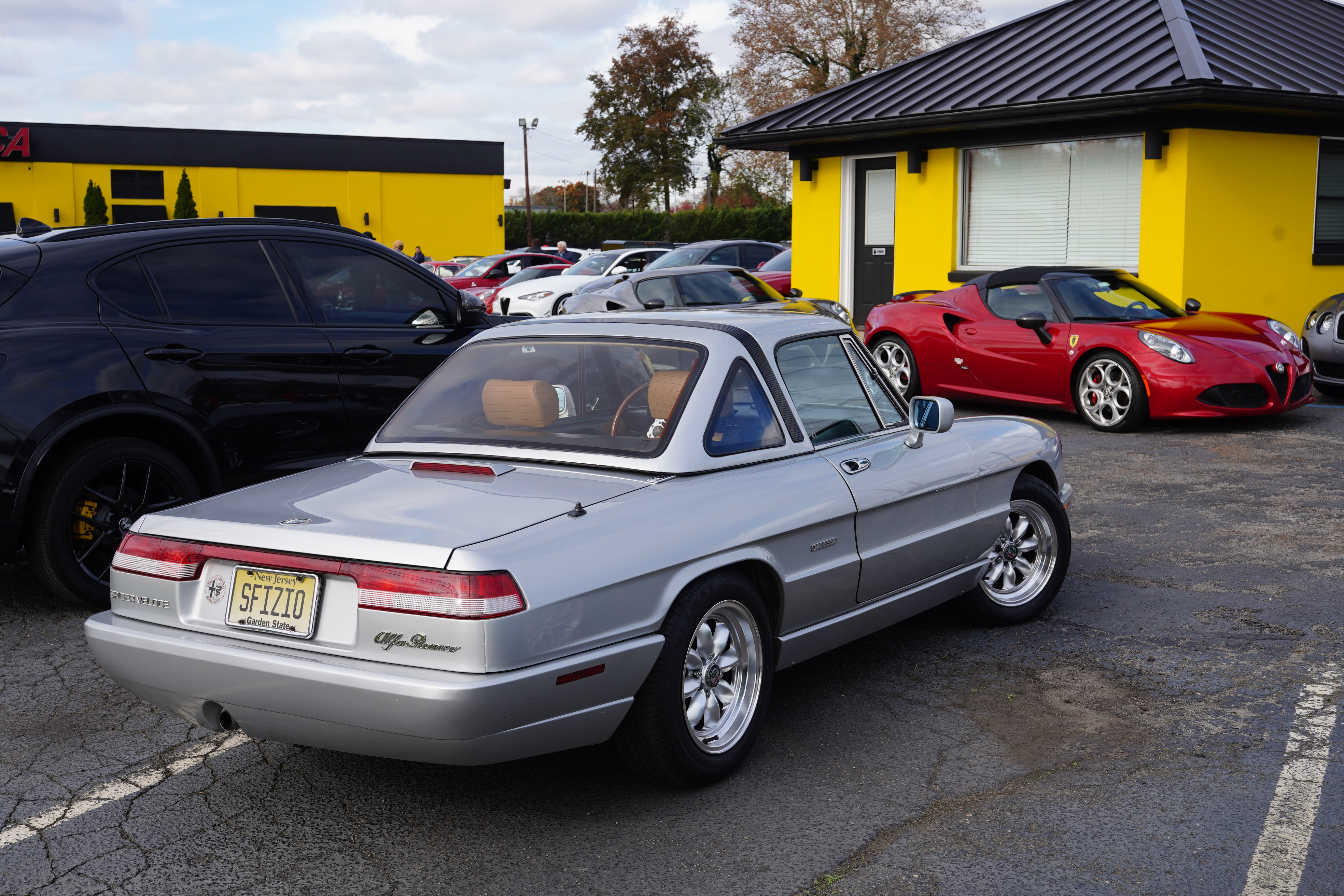
Word went out last week via the NJ Chapter of the Alfa Romeo Owners Club (AROC) about an event which was new to me: a Sunday morning Cars & Coffee in the parking lot of a Dunkin’ Donuts on Route 22 in Bridgewater NJ. This was all of 6 miles from my house, and was scheduled to run from 9am to 11am, so it was an attractive choice, especially if a few other members of the Alfa club were to show up.

I arrived 15 minutes early to find several dozen cars already lined up, most of them late-model Corvettes and Mustangs. I’ve been to, and have heard about, other Cars & Coffee events in NJ like this, and perusing row after row of newer high-horsepower machines driven by millennial hipsters looking for bragging rights isn’t my thing. It was with great relief that I spotted a current generation Alfa Giulia sedan and parked next to it. The owner, Neil, was a younger chap who, with his traveling buddy Caleb, took an immediate interest in my ’67, and we spent a few minutes chatting about the Alfa Romeo brand in general. They both were friendly and delightful, and showed themselves to be interested in all kinds of automotive machinery.

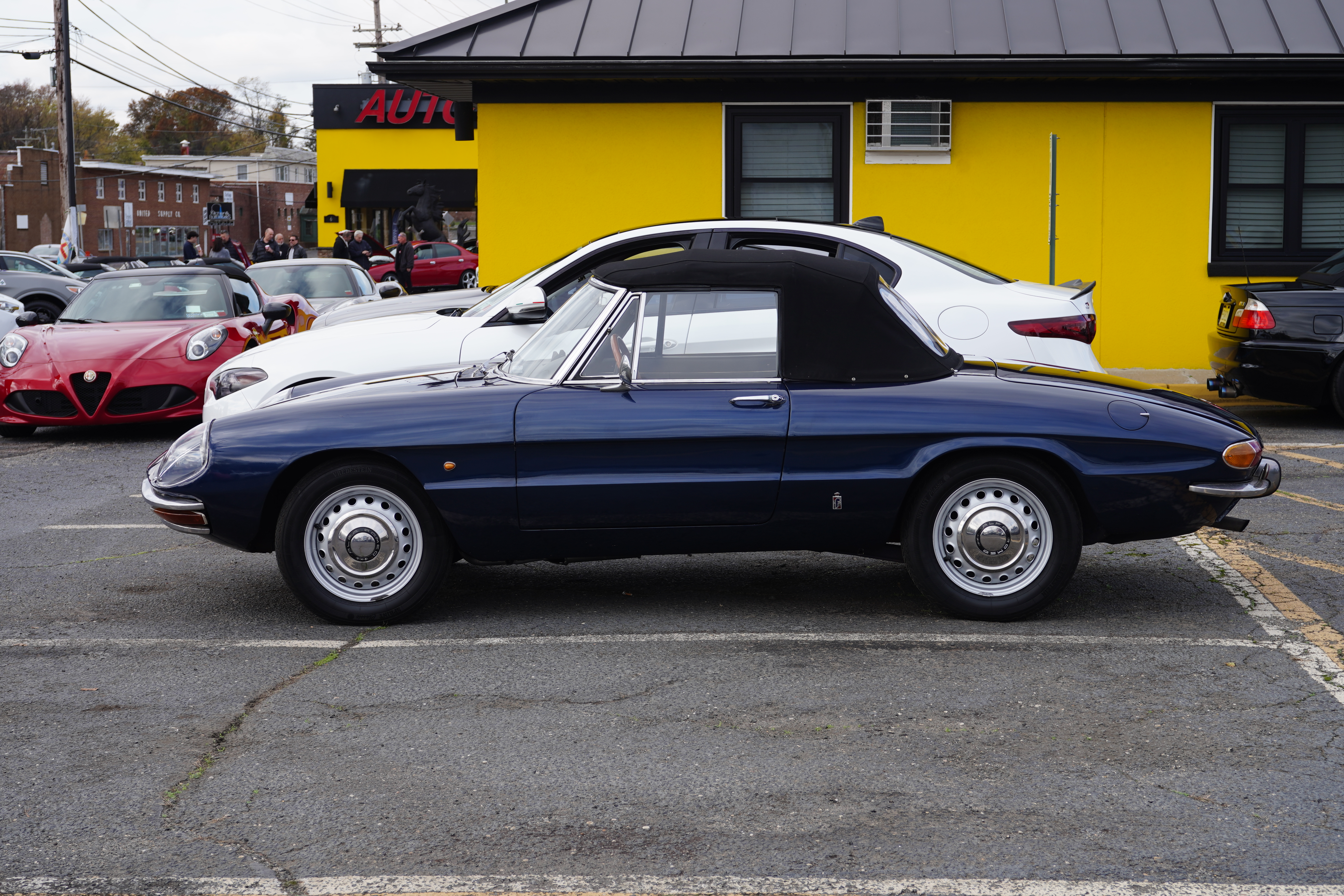
Soon after I arrived, 3 members of AROC’s NJ Chapter showed up, all driving Spiders. Tony had his blue Series 1, Mike arrived in his red Series 3, and Bob parked his immaculate red Series 4, with all of us adjacent to each other. It was a great opportunity to show Neil and Caleb the distinctions among the different generation Spiders.

I broke away from the camaraderie several times to take in the other vehicles. Frankly, a long row of C6, C7, and C8 Corvettes more closely resembles a used-car lot than a car show to me, but I get it. Scattered among the 21st century iron were a few gems. Standouts included a 1970 AMX, a 1970 240Z, a 928, and an early ‘70s Firebird.

The day was warm and sunny with low humidity, but as the temp started to climb, I decided on a slightly early departure of 10:30, which had me home by 11am. Would I attend again? There was no denying that the shortish drive was a convenience. If I knew I could count on seeing friendly faces, I would certainly pay another visit to this particular Cars & Coffee.

ALFAS:


AMERICAN:


GERMAN:


ASIAN:


All photographs copyright © 2023 Richard A. Reina. Photos may not be copied or reproduced without express written permission.


The 2023 New Hope Auto Show

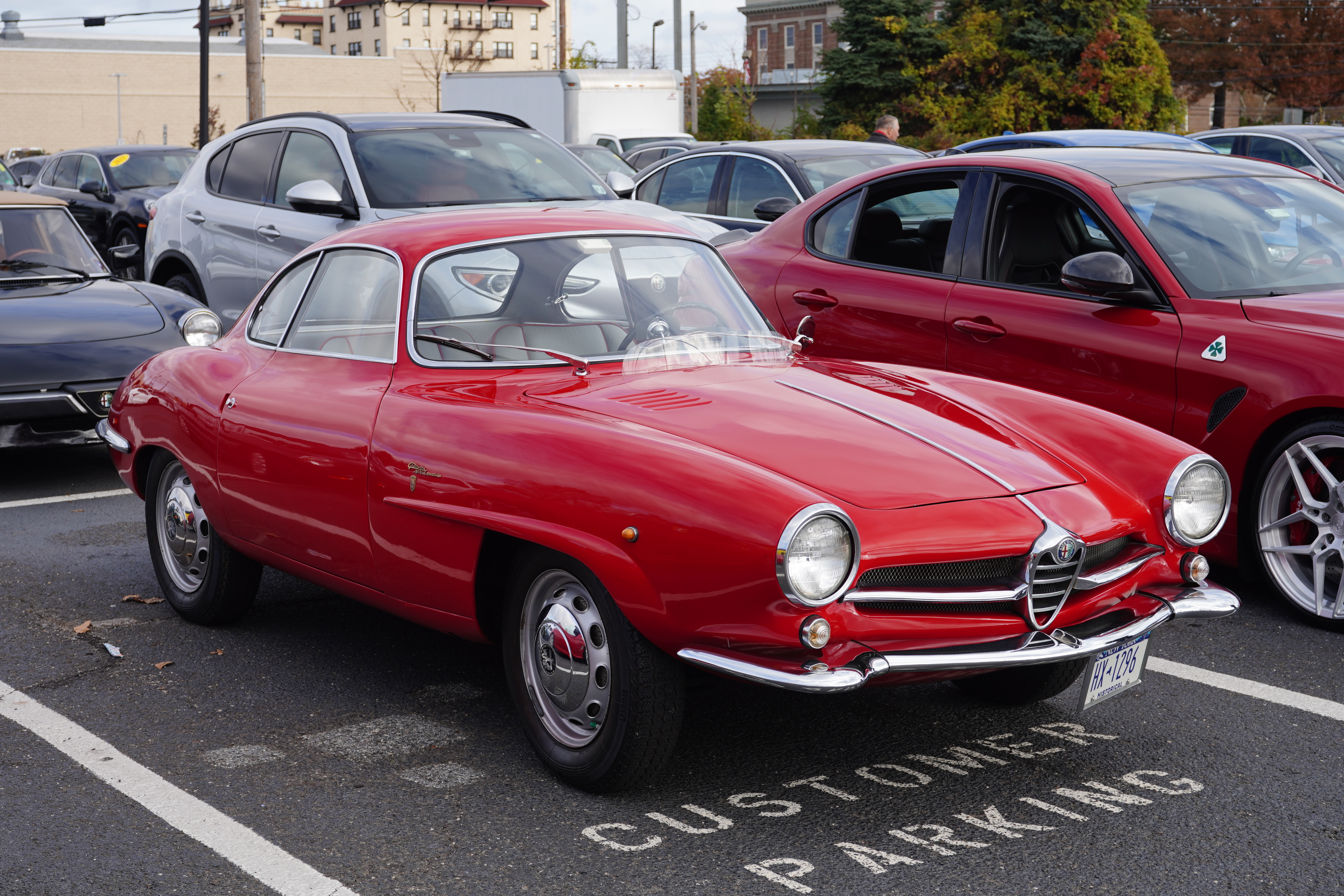
The New Hope (PA) Auto Show has been a mainstay of eastern Pennsylvania for over 60 years. (I was somewhat shocked a while back, when perusing some old copies of Car & Driver magazine in my library, to stumble across a story about the show they published in the mid-1960s.) It is ironic to me that despite my decades-long attendance at other relatively nearby shows in Macungie, Carlisle, and Hershey, I had not ever heard of the New Hope show until I joined the Alfa Romeo Owners Club (AROC). It was then that I learned that AROC members tended to turn out in support of it, and by 2015, I was invited to join the fray. The Alfa was there that year, and came back for more in 2021. My 2023 appearance makes it a triple play for my Milanese macchina.

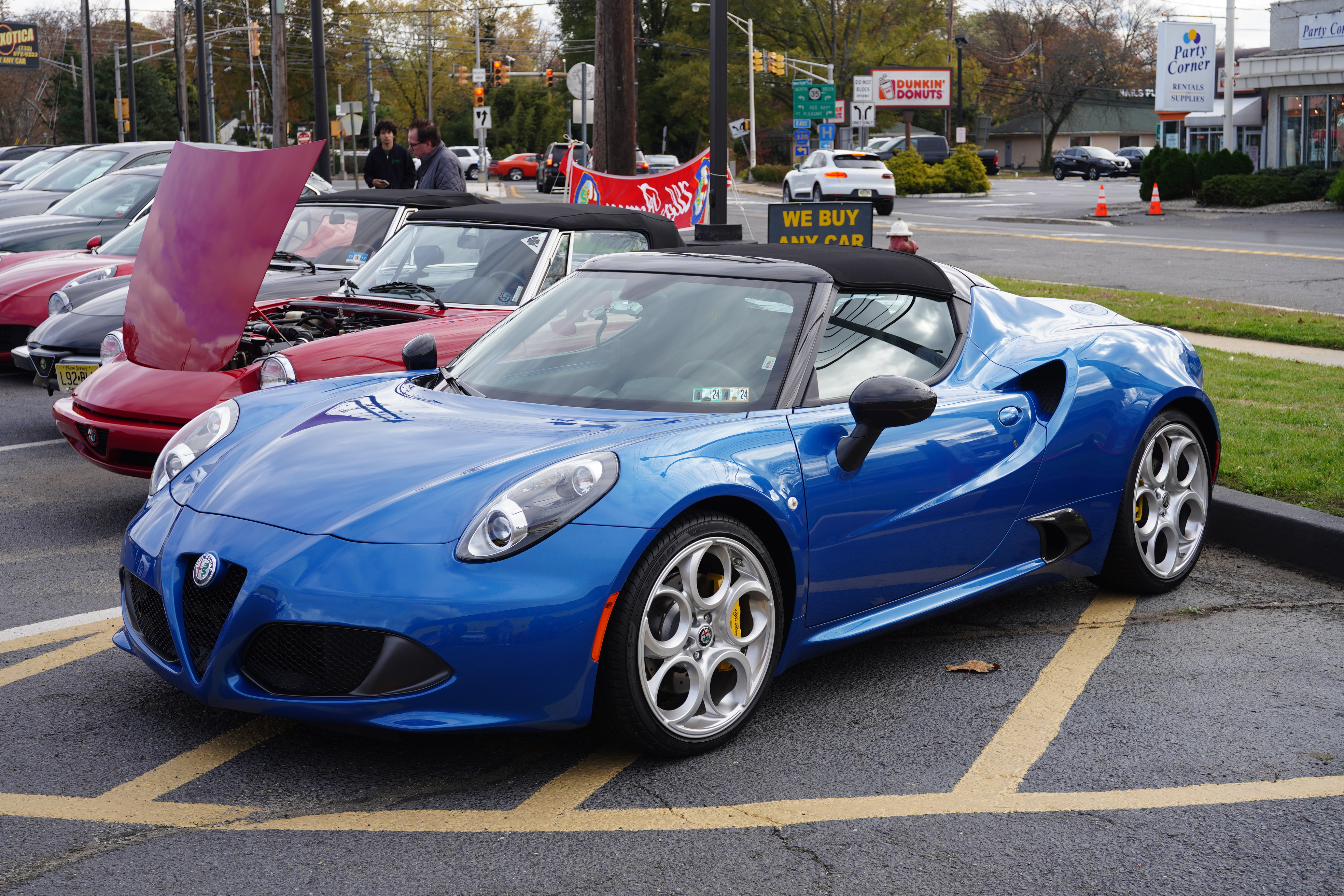
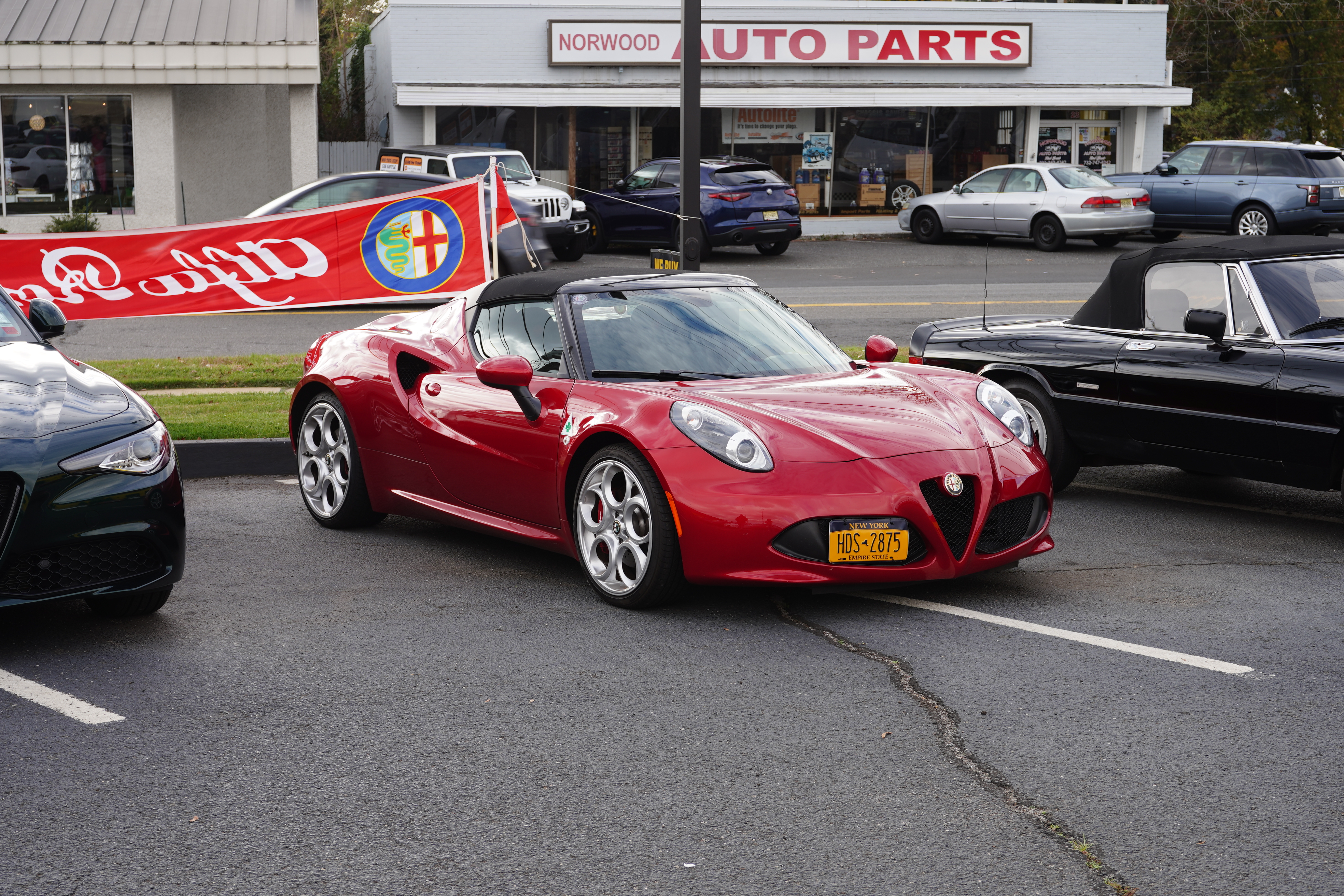
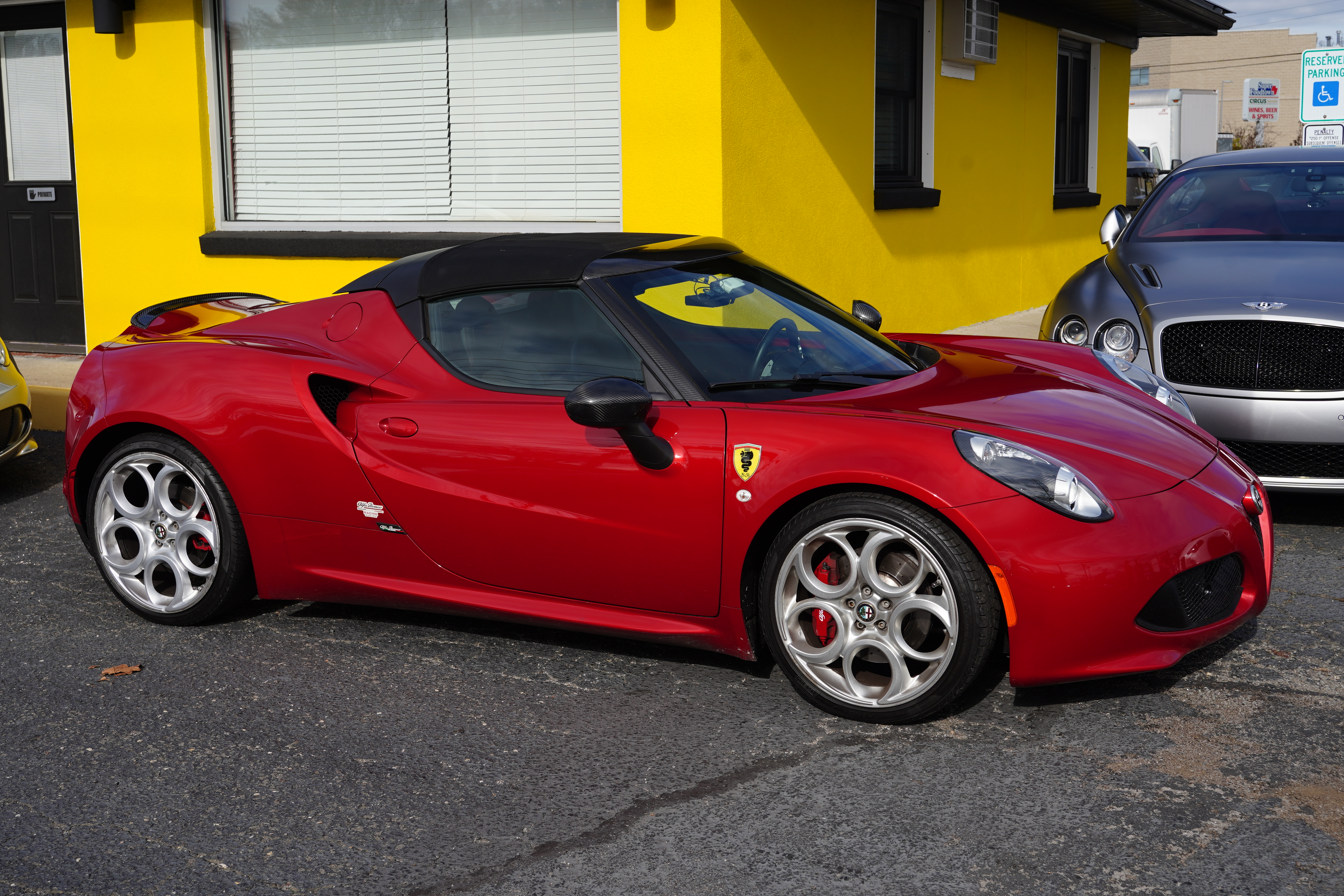
According to our AROC NJ Chapter president, who also served as Chief Judge for our marque, there were 14 Alfa Romeos, which he felt was down in count compared to recent years. It was no surprise that Spiders comprised the most popular bodystyle there, which is almost always the case, given the model’s long production run. (Alfa made this final version of the US Spider from 1966 to 1994.) I counted eight Spiders, two Giulia coupes, one Milano sedan, two 164 sedans, a 4C, and a RHD British-spec Spider from the 1990s, a bodystyle never sold in the states. So my count is 15; it’s possible that the 4C was part of the “exotic car” class and was not counted among the Alfas.

As I’ve mentioned in previous posts, the two-day New Hope show is two car shows in one, with domestic vehicles on Saturday and imports on Sunday. (This is how the Greenwich Concours used to be organized, which I preferred over what I experienced there this past June.) Alfa Romeos were far from the only brand on display, as my photos will attest. There was a wonderful assortment of British, Japanese, German, Swedish, and other Italian cars, liberally spread out in the paved parking lot and on the lawn of the school on Bridge St. which hosts the event.

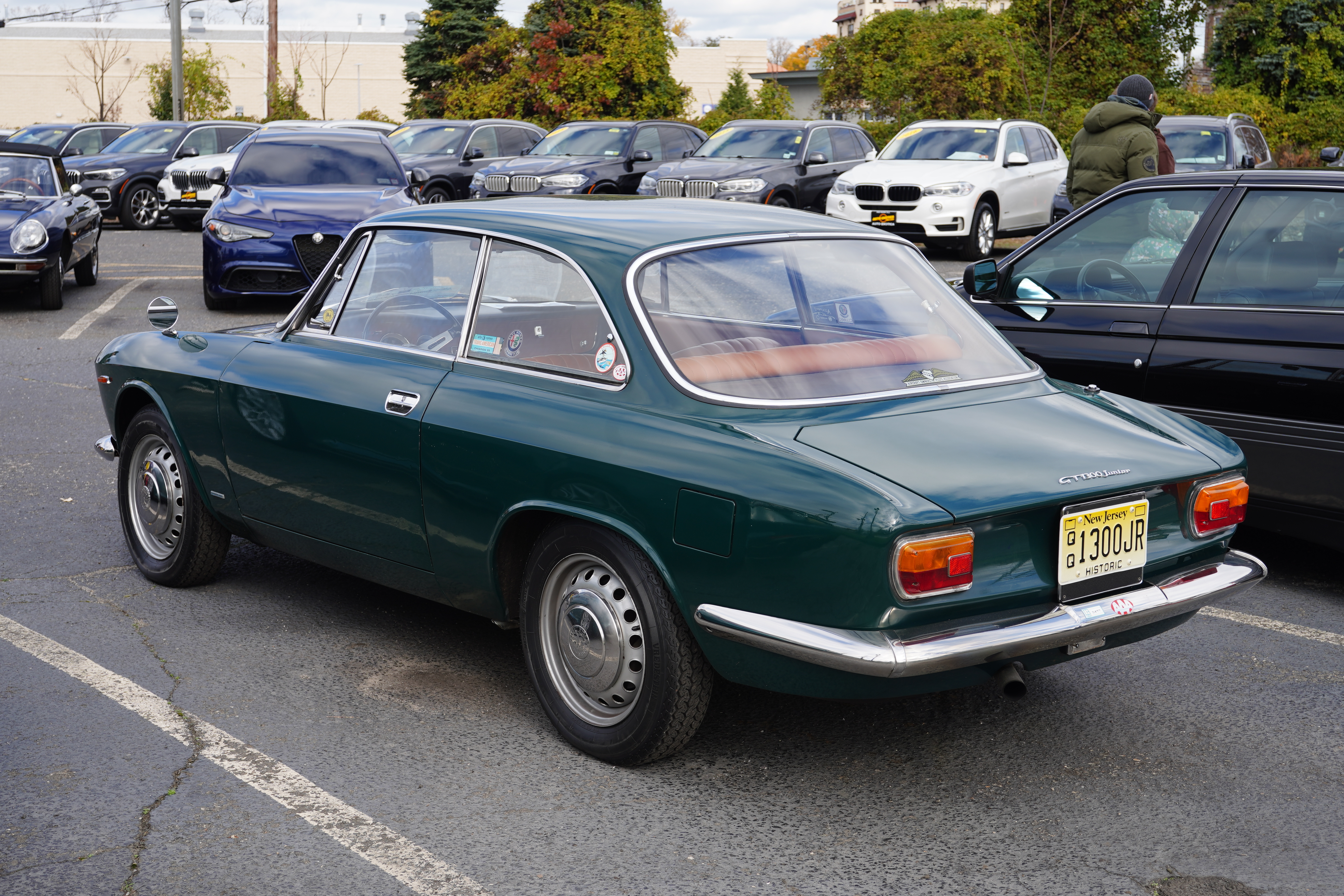
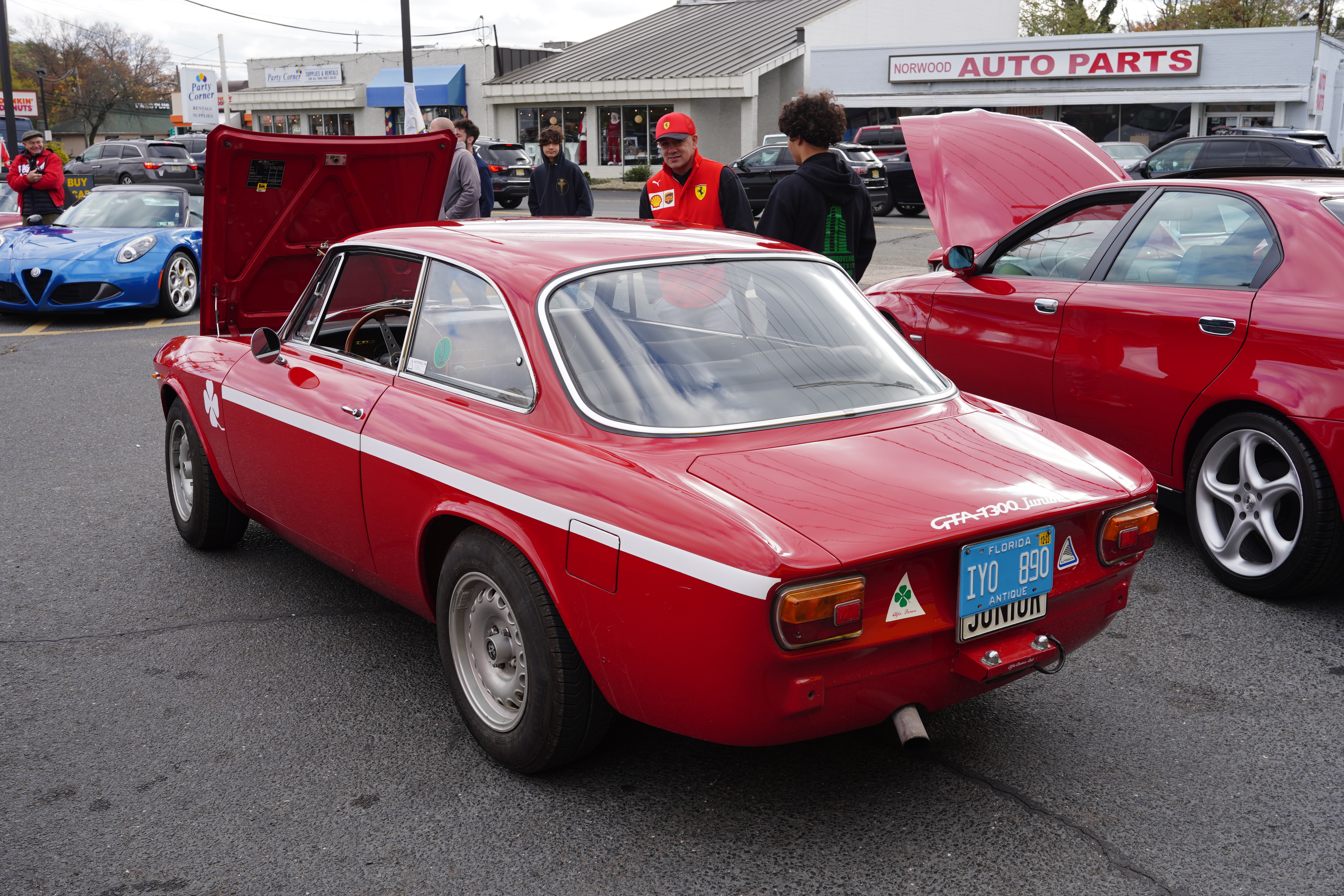
For me, the best part of the show, any show really, is the willingness of spectators and other show car owners to engage me in conversation. I no longer try to count the number of people who point to my car and exclaim “I used to have one like it!”. Such comments are frequently laced with twinges of regret over having let go of their prized vehicle. I’m also asked for advice about parts, service, and vendors for the brand, which I’m always happy to discuss. But the most popular topic is the originality of my ’67 GT 1300 Junior, likely because it is so unusual to find a 56-year-old Italian car with 67,000 miles on it which has never rusted and has never been disassembled for restoration. The honor for this achievement goes to owner #2, my friend Pete, who was the car’s steward for 45 years. My 10 years of ownership have mainly focused on keeping the status quo.

The day was very warm but with low humidity and a surprising breeze. Still, sitting and standing in the sun non-stop from 8 a.m. was taking its toll. The Alfa judging team emerged around 2 p.m. to award ribbons. Unlike previous years when “closed cars” and “open cars” comprised separate classes, for 2023 all Alfas in attendance were judged as one class. First place went to a gorgeous violet 1971 GTV, 2nd place went to a red 1991 Spider, and 3rd place was given to my ’67, for which I was flattered and honored.

Once that part of the day was over, it was time to hit the road. New Hope is an easy 25-minute drive each way, and after baking in the sun all day, it was time to put both the car and me back into the shade for the remainder of the afternoon. I’ll make every effort to show the car at New Hope again next year.


SWEDISH
1967 Volvo 1800S


Saab Sonnett


ITALIAN (NON-ALFA)


1961 Ferrari 250 GTE


Lancia Scorpion


Fiat (Pininfarina) Spider


Modern Fiat 124 Spider (Fiata)


Lamborghini Huracan


GERMAN
Mercedes-Benz 280 SL


Porsche 928
Pascha! Pascha!


Mercedes-Benz 190 SL


BMW 2002


BMW 2002 with rare soft rear window


1956 VW Beetle, unrestored of course


A newer Beetle in better condition


VW Corrado


Porsche 914s clinging together


Porsche 911 longhood


BRITISH


MG-TC entering the show grounds


Jaguar XK-140


A row of Jaguar E-Types


Series II E-Type roadster


Series I E-Type coupe


1953 Sunbeam Alpine


This 1935 MG P-Type was one of my favorite cars at the show. From my observation, pre-war MGs are rarely seen in the U.S.


JAPANESE
Mazda RX-7 3rd gen


1995 Mazda Miata M-Edition


Datsun 510


Nissan 300ZX


ALFA ROMEOS
Spiders


Giulia coupes


164 sedans


Milano sedan

4C coupe


A British-spec RHD Spider from the 1990s, never imported here:


All photographs copyright © 2023 Richard A. Reina. Photos may not be copied or reproduced without express written permission.
 

Mecum Harrisburg Auction, July 2023

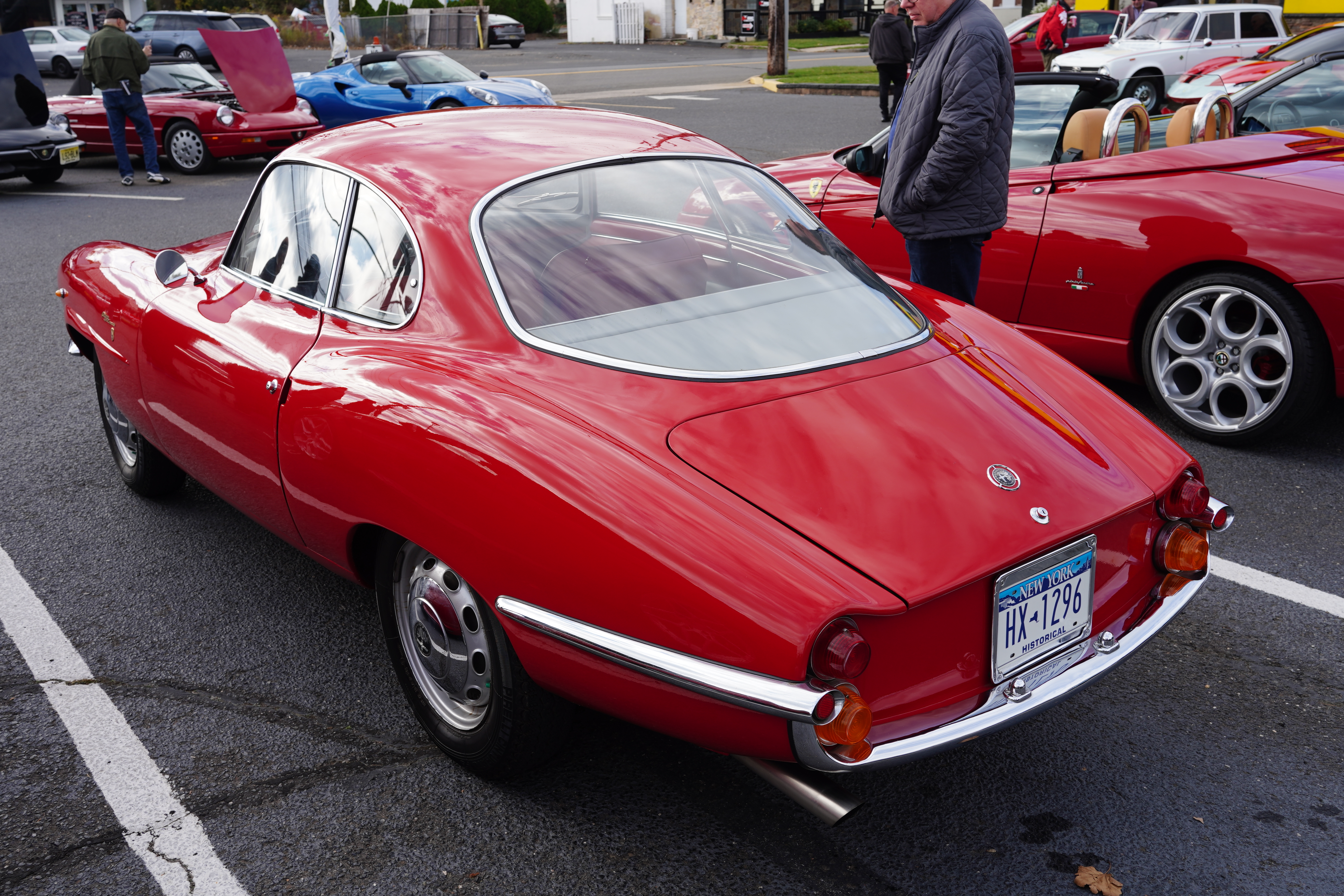
My appearance at the 2023 edition of the Mecum Harrisburg collector car auction marks the 6th time I have made the trek. Mecum’s reputation is up there with Barrett-Jackson as an auction company that sells comparatively affordable classics, compared to the “catalog” auction companies like RM Sotheby’s and Gooding. Nothing against those outfits, in fact, I’m a fanboy of RM especially after they sold my BMW Isetta for me. But Mecum at least dangles the possibility of a “good deal” for the hobbyist.

If you want to read my prior posts, which can be entertaining when you see what some cars have sold for, here are the links:

Mecum Harrisburg 2015

Mecum Harrisburg 2016

Mecum Harrisburg 2017

Mecum Harrisburg 2018

Mecum Harrisburg 2022

Harrisburg is only a 2+ hour drive from my home, and it’s smack in between Hershey and Carlisle, the two east coast locations with which every old car fanatic is familiar. In years past I’ve made the Mecum Harrisburg visit a multi-day affair, but I’ve observed that the most fun happens on Day One. Prices quickly escalate on subsequent days. To the credit of Mr. Dana Mecum and his staff, their Harrisburg event has grown substantially. In prior years it was a 3-day auction, Thursday through Saturday. This year, Day One was Wednesday, but still ended on Saturday, for a total of 4 days. They try to run about 250-275 cars a day, so in round numbers, figure that they auctioned around 1,000 cars.

Part of the growth is that this PA location is Mecum’s only event in the Northeast. The next closest locale for them is Indianapolis. Yet the Day One crowd looked smaller than in previous years. A lot has changed since their 2014 inaugural event in Harrisburg, still in the PA Farm Show Complex. One of the biggest changes is the eruption of successful online auctions, most notably Bring A Trailer. But there’s nothing like kicking the tires with real shoes. Several cars which looked great in photos on Mecum’s website showed serious battle scars when examined up close and personal.

Below are highlights of some of the cars which caught my attention, mostly cars which sold on Wednesday, the day we were there. Indicated prices are HAMMER prices. All sold lots incur a 10% buyer’s premium, included in the prices shown on Mecum’s website, which is why my listed prices are lower. (Auction companies love to do that, as it inflates the appearance of how much they raked in.)

Richard’s Car Blog is the only online auction reporting site which arranges sold cars in price order, to give the reader some sense of what a particular amount of money will buy. And may I point out yet again, for all those who continue to moan that “there’s nothing affordable in the hobby anymore!”: the first seven cars listed below hammered at $15,000 or under. That is NOT to say that all were good deals. Some were decidedly not; in some cases, spending $5,000 to $10,000 more would get you the better deal. But there are still some very good starter collector cars available to those willing to be open-minded about make and model.


F190.1 1984 Ford Mustang SVO, 2.3L inline turbo 4, 5-speed manual, dark red, grey cloth interior. First year of the Mustang SVO, which was made only 3 years (’84-’86). Very worn paint, other exterior trim show excess wear. Interior relatively clean by comparison.

SOLD FOR $7,000. Condition is everything sometimes. Compare to W218 below, another SVO, which sold for almost 3 times this sale price and would be the smarter purchase.


W25, 1983 Buick Riviera convertible, white, burgundy top and interior, 5.0L V8, odo shows 59k, decent shape overall, few Riviera convertibles built (sign claims only 1,750 of them in 1983). Aftermarket wood steering wheel detracts.

SOLD FOR $8,500. I know a club member who has one and he loves his. This was one of the first cars across the block on Wednesday, which may have affected the price. I’ve also seen Riv coupes of this generation sell for near this number, so I’d mark this as well bought.


W133 1964 Ford Thunderbird hardtop, color possibly “rose beige”, matching interior, black vinyl roof with landau bars, 390 V8, automatic, Orange plug wires and aftermarket carb don’t “fit” the car.

SOLD FOR $10,000. This was one that looked decent on my home PC – until my in-person inspection quickly turned up a thick bead of silicone squeezed into the junction of the windshield and vinyl roof. Fixing that in a proper way will be pricey.


W136 1965 Ford Thunderbird, white, black interior, 390 V8, automatic, LF wheel cover is off the wheel and sitting behind the driver’s seat. Clean, straight looking car, but nothing extraordinary.

SOLD FOR $11,500. For an additional $1,500, this was the better deal compared to W133 above. This could be a good starter collector car.


W237 1983 Datsun 280ZX, 2.8L straight 6, 5-speed manual. Tacky two-tone silver and blue straight from the early ‘80s. Blue interior with shiny silver leather seats, ditto. Covered headlights and T-tops complete the look. Sign claims 78k miles.

SOLD FOR $11,500. If you can ignore the colors (or perhaps if you like them), this is actually a lot of car for the money. These 2nd gen Z-cars, while lacking the purity of the 1st gen, still are fun drivers and decent GT cars if not out-and-out sports cars. Given how earlier and later Z-car prices are climbing, I’m predicting that these will see a slow but steady appreciation.


W93 1955 Chrysler New Yorker, blue & white outside, blue & white inside. Sign on car claims 64k miles. Hemi V8 engine, 331 cubic inches, automatic, power steering, brakes, and windows.

SOLD FOR $12,000. This was an odd presentation. The outside looked mostly original, with what might have been a much older repaint. The inside was recently redone, but with non-original materials and patterns. Price seemed high based on body style and condition. Any attempt to fully restore it would have you upside-down.


W120.1 1966 Ford Mustang hardtop, inline 6, automatic, light blue with two-tone blue interior, dealer or aftermarket A/C, few options other than that.

SOLD FOR $14,000. The only reason this car drew me in was its very high quality cosmetic condition. It’s unusual to see this much love and money poured into a six-banger. It’s equally unusual to see the small engine kept, as often it gets pulled in favor of a non-original V8. If you were in the market for a good-looking first gen Mustang and were not concerned with the ponies, this was your car. I doubt you could find another well-restored Mustang of this generation for a price near this.


W147 1961 Pontiac Bonneville bubble-top coupe, red, tri-tone red interior, 389 V8, automatic, 8-lug wheels. Looks like it’s all there, but most paint is faded away, and rust is bursting out like teenage acne from all the lower sheetmetal.

SOLD FOR $15,000. When Bill Mitchell took the styling reins from Harley Earl at GM in 1959, the changes were dramatic and almost immediate. Gone were the excesses of the ‘50s, replaced by smooth, clean, downsized shapes. The ’61 Pontiacs have always stood out for me as Exhibit A of that change, especially the 2-door bubble tops like this one. This was expensive for a project, but will be amazing if restored correctly. However, will take bucks to make it right.


W82 1982 Toyota Supra, blue metallic, blue and grey cloth upholstery, 2.8L inline 6, 5-speed manual, sign claims 49k miles, believed to be “P” package car based on large fender flares and even larger rear wing.

SOLD FOR $17,000. The first-gen Supras looked very much like the Celica on which they were based. This car, a 2nd gen, was given a more unique styling treatment. I remember these well when they were new and we thought they were hot. Prices for 2nd (and 3rd) gen Supras were reasonable until very recently; check BaT to verify the escalation in sale prices. Based on what I’ve seen online, this was about right, maybe even a little light.


S34 1967 Buick Special, gold, black vinyl roof, black interior with bench seat, 340 V8, auto on column, factory A/C. Online photos look stunning, in person less so. However, overall cosmetic condition is strong.

SOLD FOR $17,500. I liked this car, spurred on no doubt by my ownership of a ’66 Buick Sportwagon in the same color combo. Note that this car is a ‘Special’ and is NOT a ‘Skylark’. I think finding a GM intermediate in this condition at this price makes this a good deal.


W218 1985 Ford Mustang SVO, claim to fame is the reported 10k original miles, but it looks it. Dark red, grey leather interior, 2.3L inline-4 turbo, 5-speed manual. “Late ’85” with the aerodynamic headlights and greater power output.

SOLD FOR $19,000. If I ever were to get a Fox body, the SVO would be my first choice. When new, these sold for more than the V8-powered GTs. Their lighter 4-cylinder engines made them better handling cars. My price guide puts SVOs between $10k and $20k, and very clean ones have sold on BaT for very high teens, so this one, as a 10k mile survivor, was worth the winning bid.


T19 1987 Ford Thunderbird Turbo Coupe, 2.3L inline 4, 5-speed manual, sign claims 32k original miles, dark red, grey cloth interior.

SOLD FOR $21,500. These are Fox body platform cars, but larger than their Mustang brethren. This one sold for a bit of a premium, probably because of condition and the rarity of the 5-speed. Nice car.


W232 1986 Porsche 928, metallic beige, beige leather interior, 5.0L V8, automatic, odo stated to read 80k miles. Sign on car claims original paint.

SOLD FOR $22,000. It doesn’t seem that long ago when nice 928s were sub-$10k cars, but no one wanted them. Prices took off around the start of Covid and may have cooled a bit since. This car was straight but nothing special other than being the only 928 here. Interior seemed better than many other 928s, which tend to show cracked dashes and seat upholstery. Mileage is on the low side; many 928s at auction show well over 100k on the clock. At this price I’d give slight advantage to the seller. Hope the new owner plans to drive it and not just stare at it.


W189.1 1967 Oldsmobile 98 convertible, gold, tan top, tan interior, 425 V8, automatic. A huge boat of a car, it was in gorgeous condition and looked great in these colors.

SOLD FOR $28,000. Expensive? Not for condition. I would bet that a Chevy from the same year would sell for more; this Olds is arguably the better-looking car.


S82.1 1983 Datsun 280ZX, dark grey metallic, silver leather, 2.8L inline 6, 5-speed manual, sign claims under 60k original miles. Factory A/C, T-tops, sign claims car kept in climate-controlled garage.

SOLD FOR $31,000. Condition was great; the car looked like a 5-year-old well-kept used car. Compare this selling price with W237, the other 280ZX in this report: colors and condition brought almost triple the money.


T109 1969 Volvo 1800S, blue with brown interior, 2.0L inline 4, 4-speed manual with electric overdrive.

SOLD FOR $32,500. While the car was spotless, something looked off to me, and that was the color, or perhaps the colors. I’m clearly not an 1800 expert, but I cannot recall seeing this exact shade of blue on a Volvo before. Same with the brown interior, at least not on a ’69. The trunk panels appeared non-original as well. Even some engine compartment detailing wasn’t what I’d call factory correct. Would love to hear comments from some of the Volvo faithful.


F175.1 1969 Jaguar E-type roadster, Series II car, red, tan top and interior, 4.2L inline-6, sign on car claims 5-speed manual. Clean, straight XKE.

SOLD FOR $82,000. These used to be the “affordable” E-Types, after the Series I cars. But “affordable” is a relative term here. Roadsters still bring much more than the coupes. Buyer’s premium brought the price to over $90k; sale price was about the going rate for a Series II roadster, possibly a bit of a steal for the buyer.


All photographs copyright © 2023 Richard A. Reina. Photos may not be copied or reproduced without express written permission.


Concours on the Palisades, Fort Lee NJ, July 23, 2023

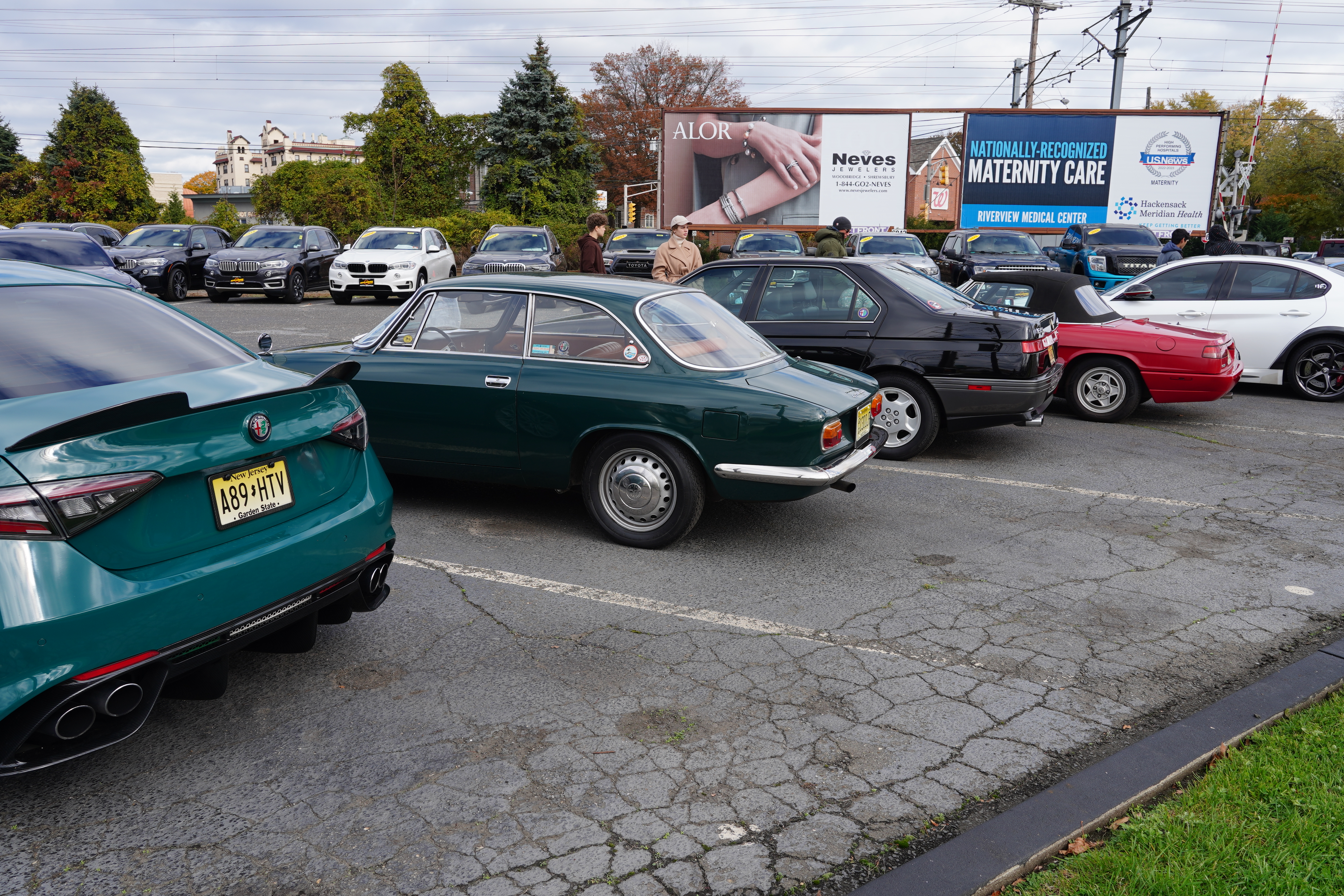
The 2nd annual “Concours on the Palisades” was held in Fort Lee NJ on Sunday July 23, 2023. The show reverted to this rain date when threatening weather on the original planned date of July 16 made it imprudent to hold the event on that day.

The postponement was a wise move, as the weather on the 23rd was sunny and warm, with low humidity and a slight breeze. If there was a downside, it was the observed possibility that a number of registered cars didn’t show up because the owners were unavailable on the new date. Still, turnout was strong. I would estimate that there were close to 150 show vehicles on site, and a varied assortment they were. The featured marque was the Chevrolet Corvette, celebrating its 70th anniversary in 2023. Several blocks of Main St. in downtown Fort Lee were closed to outside traffic to allow the Corvettes to take over. There were 50+ Corvettes in attendance, from all 8 generations, from the C1s through the new mid-engine C8s.

The remainder of the show cars were arranged in a parking lot surrounding a large parking garage, just up the block from Main St. Classes included American, British, Italian, German, Japanese, and Swedish cars, plus ‘exotic’ and ‘vintage’ automobiles. Similar to what many towns have done during Cars & Coffee and Cruise Night events, the local restaurants and shops threw open their doors and hopefully were able to drum up some business with all the spectators milling about.

I was there to do more than spectate; I was also judging the show! (See sidebar.) Judging gave me a chance to converse with owners, which is always fun, but I then needed to race through the classes I didn’t judge so that I could take in the rest of the show. The event officially opened to the public at 10 am, and the awards ceremony was held at 1 pm, with everything wrapped up by 2 pm, so it was not an all-day affair.

I’m not familiar with any similar show in the northeast part of NJ (The “Ramapo Concours” ran for only one or two years and seemed to have petered out), so we shall see if Fort Lee can work their magic and have a 3rd consecutive show in 2024.


EXOTIC
2018 McLaren


One of two first-gen Ford GT cars in attendance


VINTAGE
1957 Plymouth


’57 Chevy; those are NOT whitewalls! The 18″ wheels have white outer edges!


’57 Chevy Nomad custom


’59 Chevy low rider


Highly modified 1955 T-Bird


JAPANESE
This Honda S2000 looked showroom new, had 180,000 miles on it


A pair of JDM Mitsubishi Pajero Minis


SWEDISH
Volvo 1800S, the only Swedish car in its class!


BRITISH
Jaguar XK-120


Triumph TR-4


ITALIAN
Ferrari 308GTS


Fiat 124 Spider


Alfa Romeo GTV-6


Alfa Romeo 4C


GERMAN
BMW 6-Series; note the license plate (body style was known as the “shark”)


Opel GT


AMERICAN
1963 Mercury Monterey


1964 Buick Riviera


Dodge Charger Daytona


’57 T-Bird


Chevrolet Corvair


Ford Mustang Mach-E EV


CORVETTES
C1:


C2:


C4:


C6:


C7:


SIDEBAR: JUDGING A CONCOURS

My very good friend Sal, whom I know from our now-discontinued Sunday breakfast drives, found himself invited to be a judge at the inaugural Concours on the Palisades last year. He invited me to also participate in judging, but I had a personal conflict in 2022 and could not join. Sal repeated the invite this year and put me in touch with the Chief Judge, someone I’ve known for decades: Bob Austin, a Volvo corporate colleague whom I met in the late 1980s. Bob signed me up and the emails began to fly.

I’ve judged a number of car shows, mostly AACA events. AACA has a rulebook chock full of specifics. Overall, AACA rules require that cars be judged based on how they would have appeared when new and about to be delivered by an authorized dealer to the car’s first customer. In essence, this means the vehicle being judged should be 100% stock with no factory deviations. In addition to shiny paint, sparkling chrome, and pristine glass, the colors, materials, and equipment must match what was used in the year the car was built.

As Bob explained it to us judges in Fort Lee, we would be judging by “French rules”. He explicitly gave these examples: “I don’t care if the color is one that was never original to the car, and I don’t care if the engine or the upholstery has been changed. We are judging cars on condition, of course, but the ultimate question you might ask yourself is ‘would this be the car that I would want to take home with me?’” Put another way, how did the cars impact us emotionally? We were handed outlines about exterior and interior judging, and also told that our judging would not include the engine or trunk. Bob said “be consistent. If you knock a car down because the glass is dirty, you need to be sure to objectively judge the cleanliness of the glass for all the cars.”

The French rules were 180 degrees from AACA judging, but we judges would be on teams that needed to reach a consensus, and no matter how many (or how few) cars were in a class, we had to select 1st, 2nd, and 3rd place. As my fortune would have it, I was teamed up with Sal, with 4 smaller classes to judge: exotic, vintage, Japanese, and Swedish. There were few enough cars in each class that choosing the 3 cars was easy; we then had to rank them, which involved a bit more back-and-forth between us, yet it didn’t take us long to create the final lists.

I’m going to avoid the “how and why” of our choices, for several reasons. One, under French rules, it’s likely that any other team of two would have chosen completely different cars; two, if you weren’t there to see them in the metal, it could be very difficult to explain why we chose the cars we did; and three, I think it’s unwise to reveal any of the process should show car owners be reading this.

Judging can be fun; it can also be time-consuming, frustrating, challenging, and if one is not careful, inconsistent. The last point might be the most important. My own cars have been judged multiple times, and you want the judges to be fair. I believe we were, and I’d like to see Sal and I end up on the same judging team next year.


All photographs copyright © 2023 Richard A. Reina. Photos may not be copied or reproduced without express written permission.

NJ AACA Covered Bridge Tour, July 22, 2023

On July 22, 2023, Dick and Bobbi Bettle of the AACA NJ Region hosted a Covered Bridge Tour of Bucks County PA. Twelve vehicles were in attendance: most were AACA cars, but the group included two modern vehicles plus a handful of Ford Model As from the local Model A club. The tour took us through 8 covered bridges and included a picnic lunch stop at a nearby park.

At my wife’s urging, I reached out to two sets of friends who own convertibles, although both cars are new enough to be ineligible for AACA. Our friends Andy and Greta drove their BMW Z4 roadster, and our friends George and Pat cruised in their 2009 Infiniti G37 retractable hardtop. I was thrilled that having Greta and Pat along meant that my wife was more than willing to ride in our Alfa for the day. Dick and Bobbi’s attitude about it was “the more the merrier”.

We left our house at 8 a.m. and headed to the Clinton Station Diner for breakfast. Andy and Greta followed us there in the Z4. The Diner was the official kick-off spot for the tour, as we met most of the remaining drivers in the parking lot. From there it was a short ride to Tinicum Park in PA where we met up with the rest of the contingent, including all the Model As as well as George and Pat in the G37.

The bridges were fantastic. At least 5 of these were part of the NJ AACA-sponsored Glidden Tour from last year. The bridges are all similar enough: wooden structures with creaky noisy wooden floors, and so narrow that traffic can move only in one direction at a time. George and I honked our horns inside every bridge, just because we could.

We stopped for lunch at precisely 12 noon and out came the picnic baskets and folding chairs; although it was very warm in the bright sun, it wasn’t humid. Nevertheless, we found a picnic table in the shade, which was a special relief to our friends driving topless.

After lunch, the bridge tour continued. In the morning I had been driving mid-pack, but after lunch I drove sweep. Dick and Bobbi made a point of putting the Model As closer to the front after lunch, as earlier they were the last cars in line and may have been falling back. I don’t know where in PA we were; my phone had no cell service, and we were just following the line of cars in front of us.

It was now getting near 3 p.m. and we needed to be home to meet someone, so at our final stop, we drove in, waved goodbye from inside our car, and headed home (my wife’s phone managed to pick up a Google map signal before my phone did). We were home by 4 p.m., with the Alfa trip odometer reading 138.5 as the day’s total mileage. It was a great tour, and the architectural and automotive scenery made the long day worthwhile.

Gathering to chat at Tinicum Park


George, Pat, and Margaretanne


An assortment of covered bridges:


There were even a few interesting Pennsylvania barns, great for storing those extra collector cars:


Our hosts’ ride, Lotus Elan

Above: the Model A Collection


1990 Chrysler LeBaron


1990 Chevrolet Impala


Nash Metropolitan


Olds Cutlass


Chevrolet Cavalier


2009 Infiniti G37


BMW Z4


1967 Alfa Romeo


Enjoying an al fresco lunch


All photographs copyright © 2023 Richard A. Reina. Photos may not be copied or reproduced without express written permission.


Car Spotting, Staten Island NY, July 2023

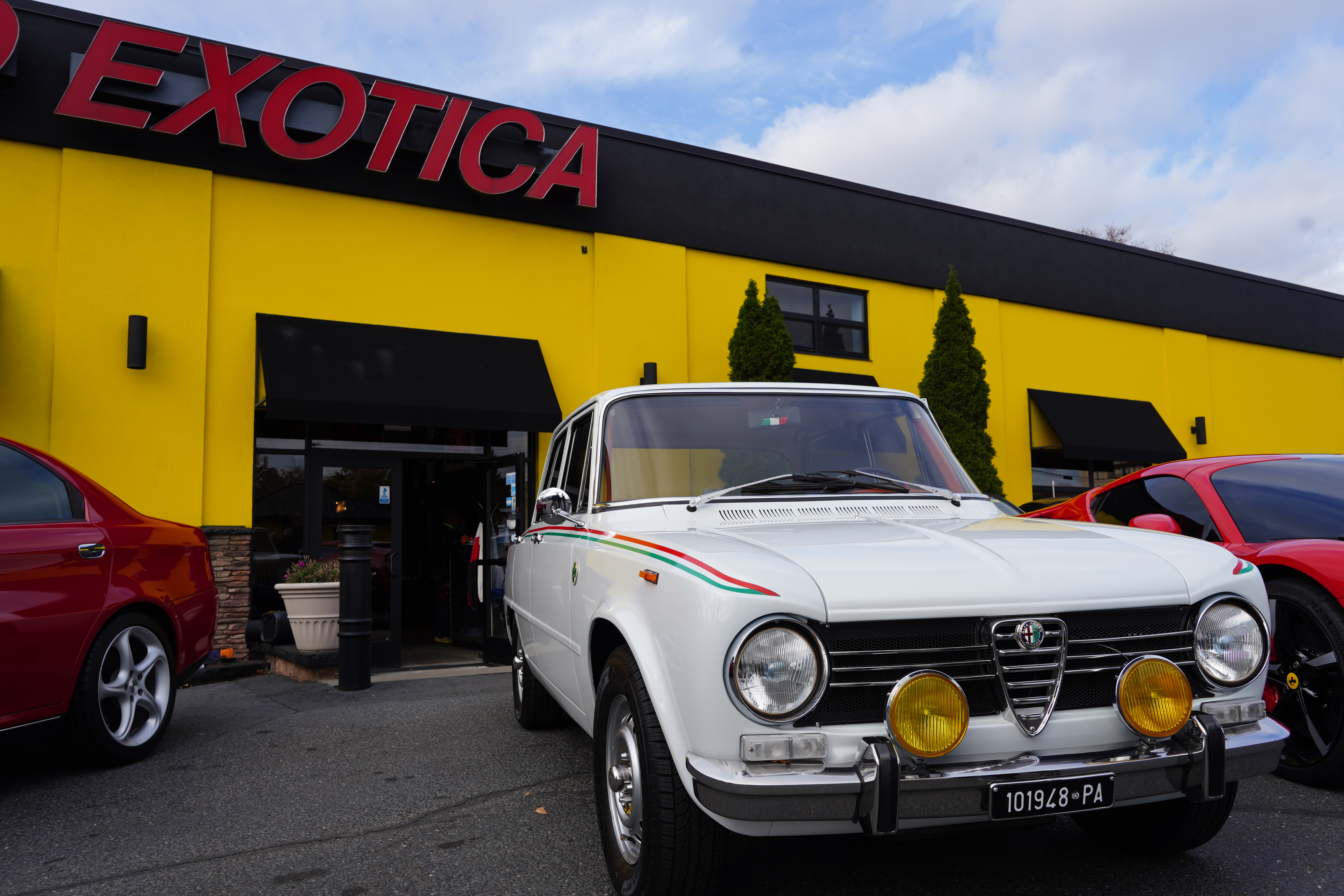
This past weekend found me back once again to the (is)land of my youth: Staten Island. In a fit of nostalgia, I agreed to drive some of my wife’s younger cousins, born and raised on the “sout shaw” of the Island, to the “nawt shaw” where I resided, excepting my years away at college, until I was 25. As relatively small as Staten Island is (14 miles tip-to-tip), it is historically understood that north shore and south shore people don’t venture into what is the foreign end of the island to them. Hence the tour, during which I was surprised at how many older vehicles are parked outside, although most of them are not in what you’d call show-ready condition.


Mercedes-Benz produced its “ponton” sedans like this one from 1953 to 1963. In an obviously non-original color, it wears NY “historical” plates and is in very fine cosmetic condition.
 

This ’68-’72 Chevy pickup needs a new door! Who knows what the passenger side door looks like. The flyer on the windshield proclaims that the truck is parked in a towaway zone.


This ’63 T-Bird, ironically enough, was included in my March 2021 Car Spotting post. Time has not been kind to this car, as you would expect. Compare the photo from 2.5 years ago and you’ll see increased paint loss on the roof and trunk. The tires look flatter too!


This ’55 Oldsmobile also wears historical plates, but strikes me as less road-worthy than the Benz. Although, now that I note the newer GM SUV behind it, perhaps the Olds does run, at least well enough to be moved out of the way.


Parked in front of the same house where the Olds resides is this ‘60s-era Ford Econoline van. This one is unplated, and the collection of road debris around the trailer wheels causes me to suspect that neither the trailer nor the van have moved in a while. (Look at the Olds photo again and you can see this van in my rear-view mirror.) How do the neighbors put up with this?
 

The plate on this Kia Soul had me laughing out loud. Let me know if you need a translation. The plate really should be on an Alfa!


All photographs copyright © 2023 Richard A. Reina. Photos may not be copied or reproduced without express written permission.