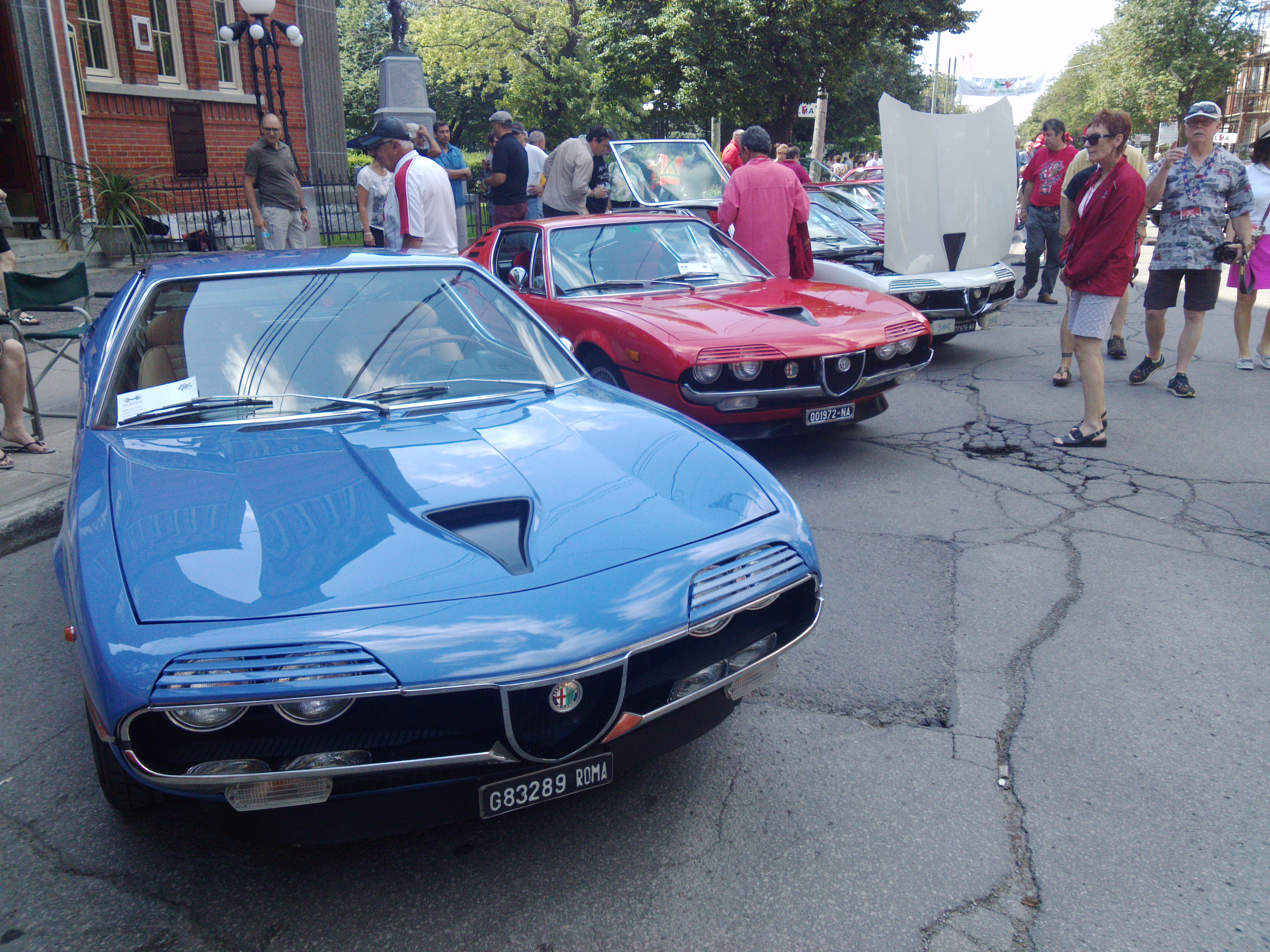
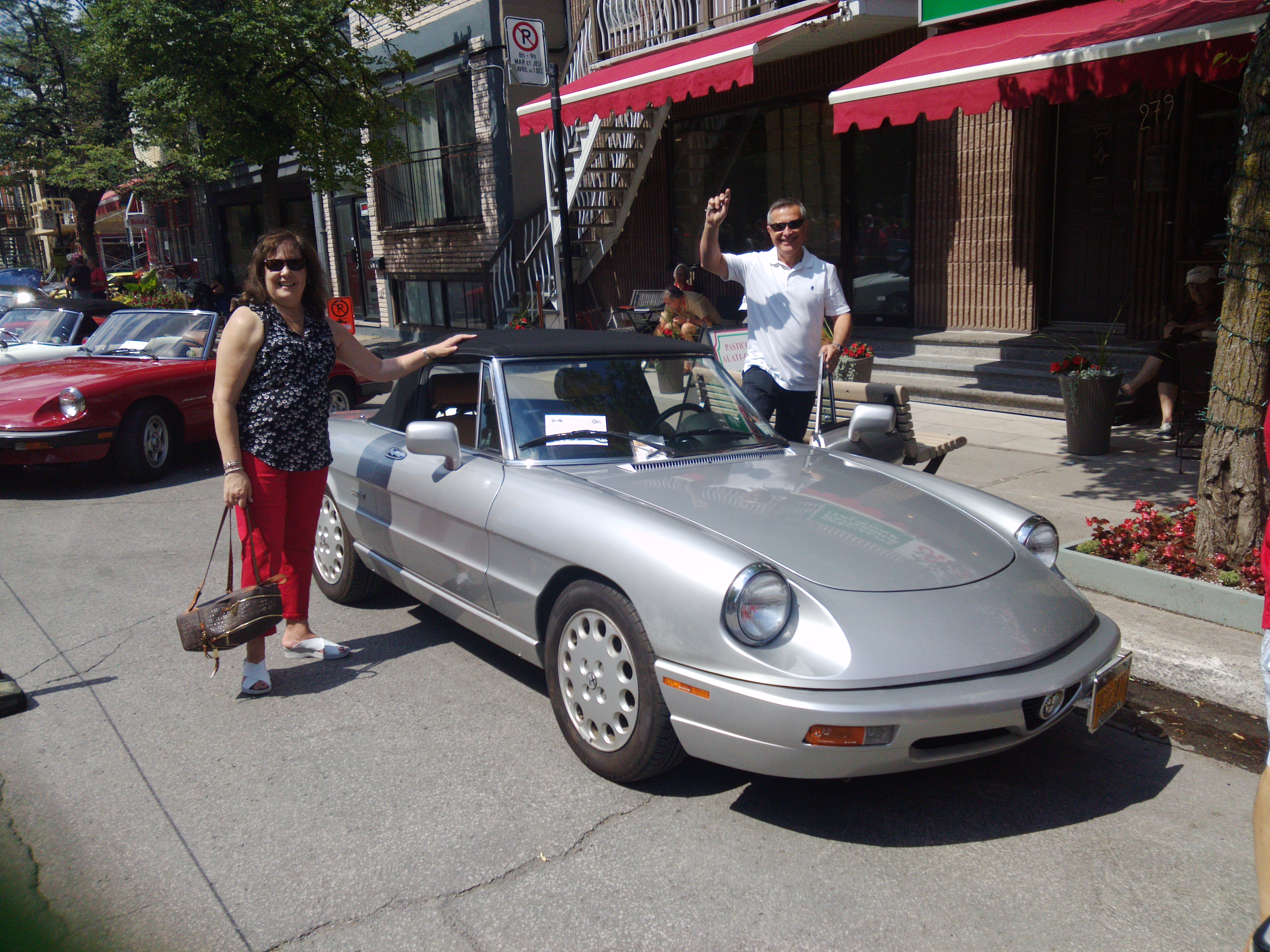
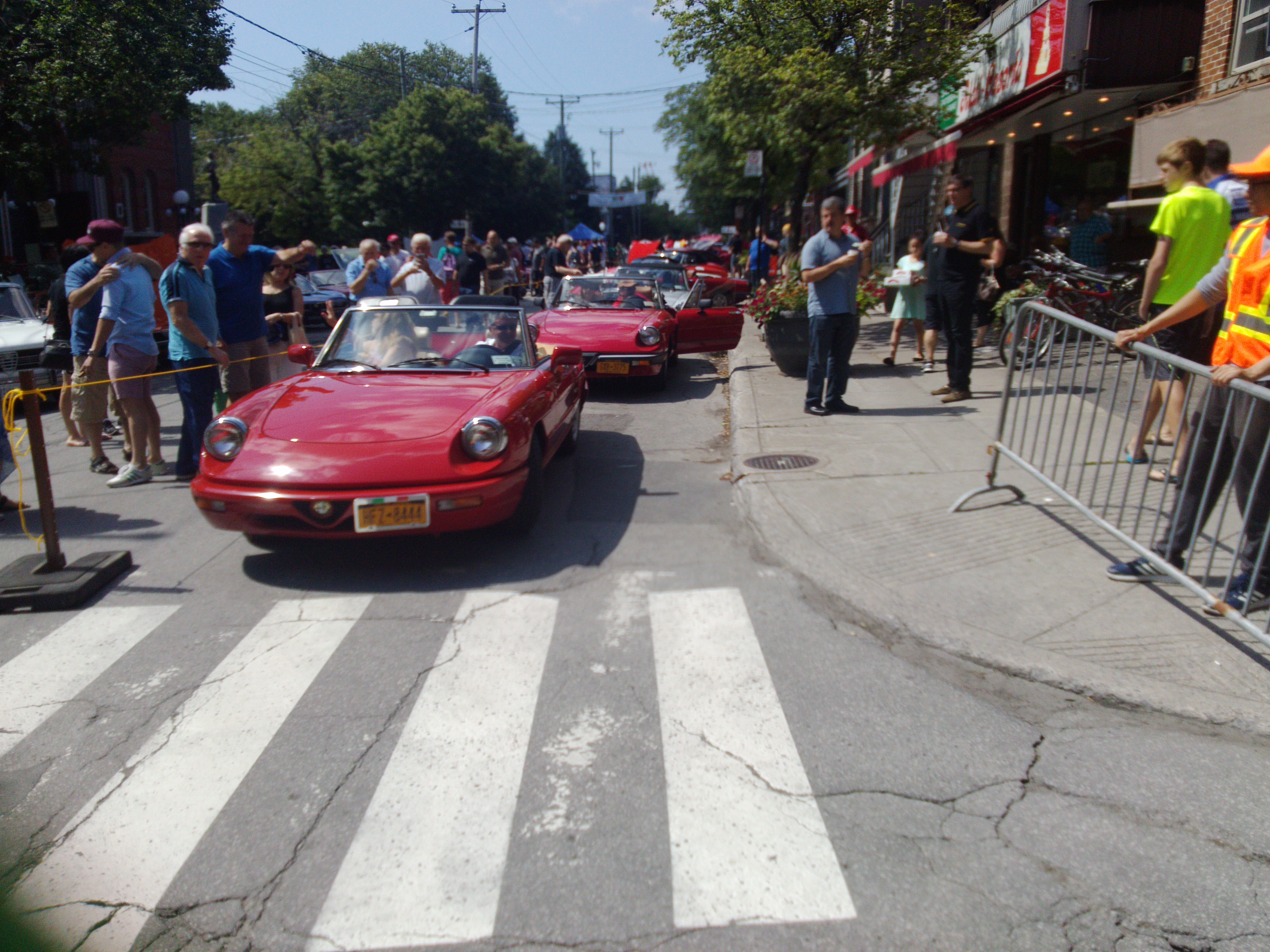
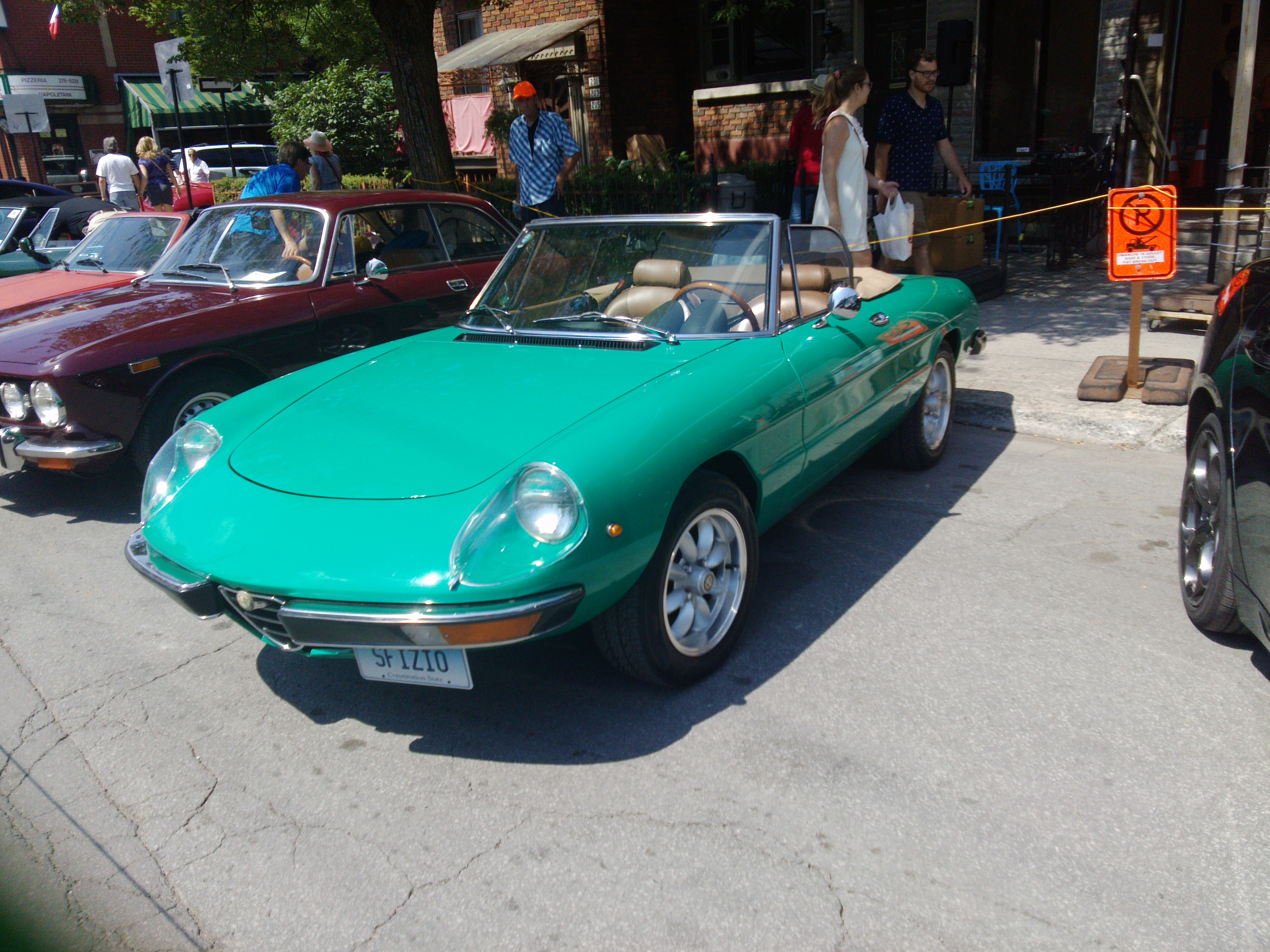
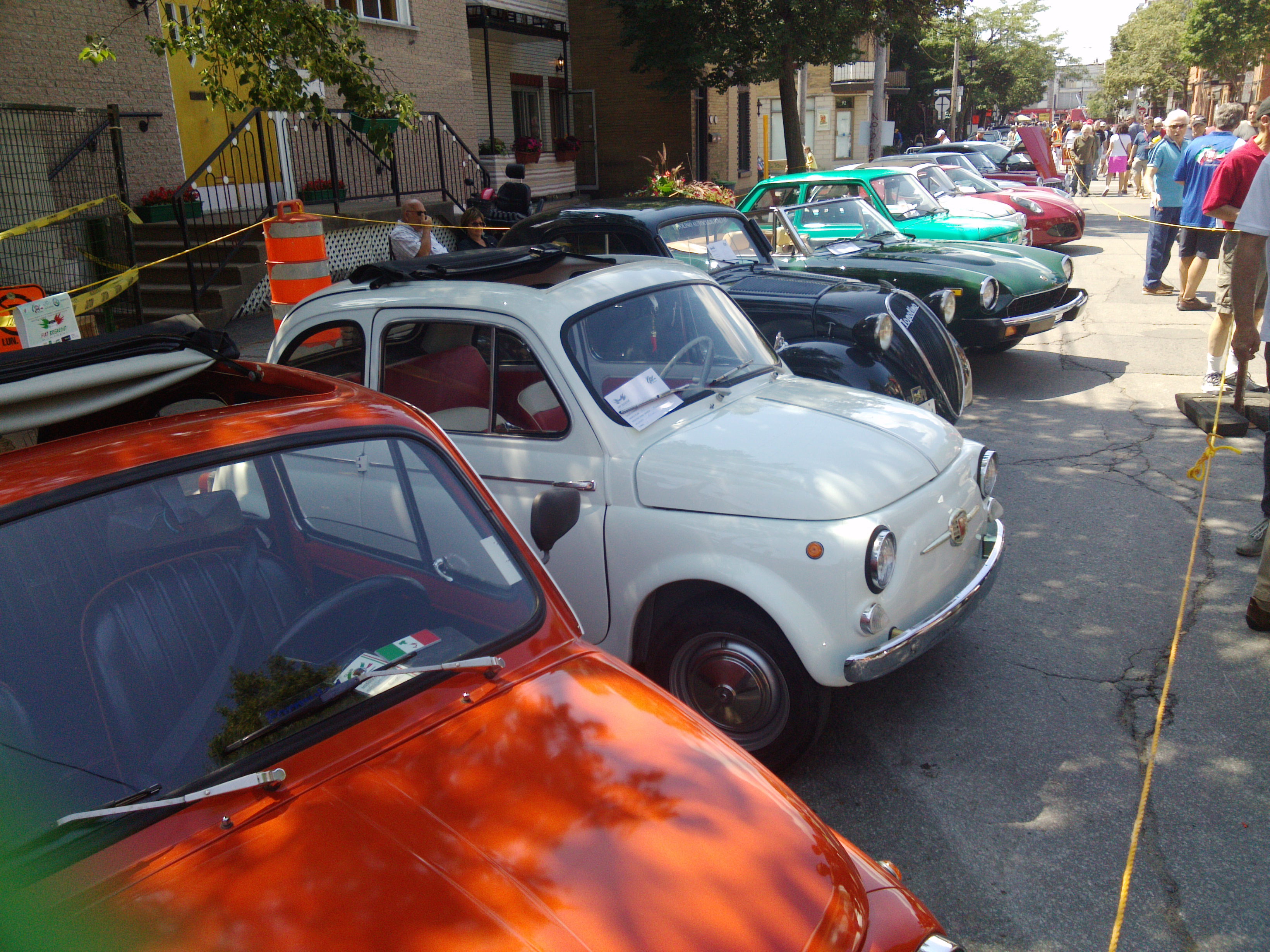
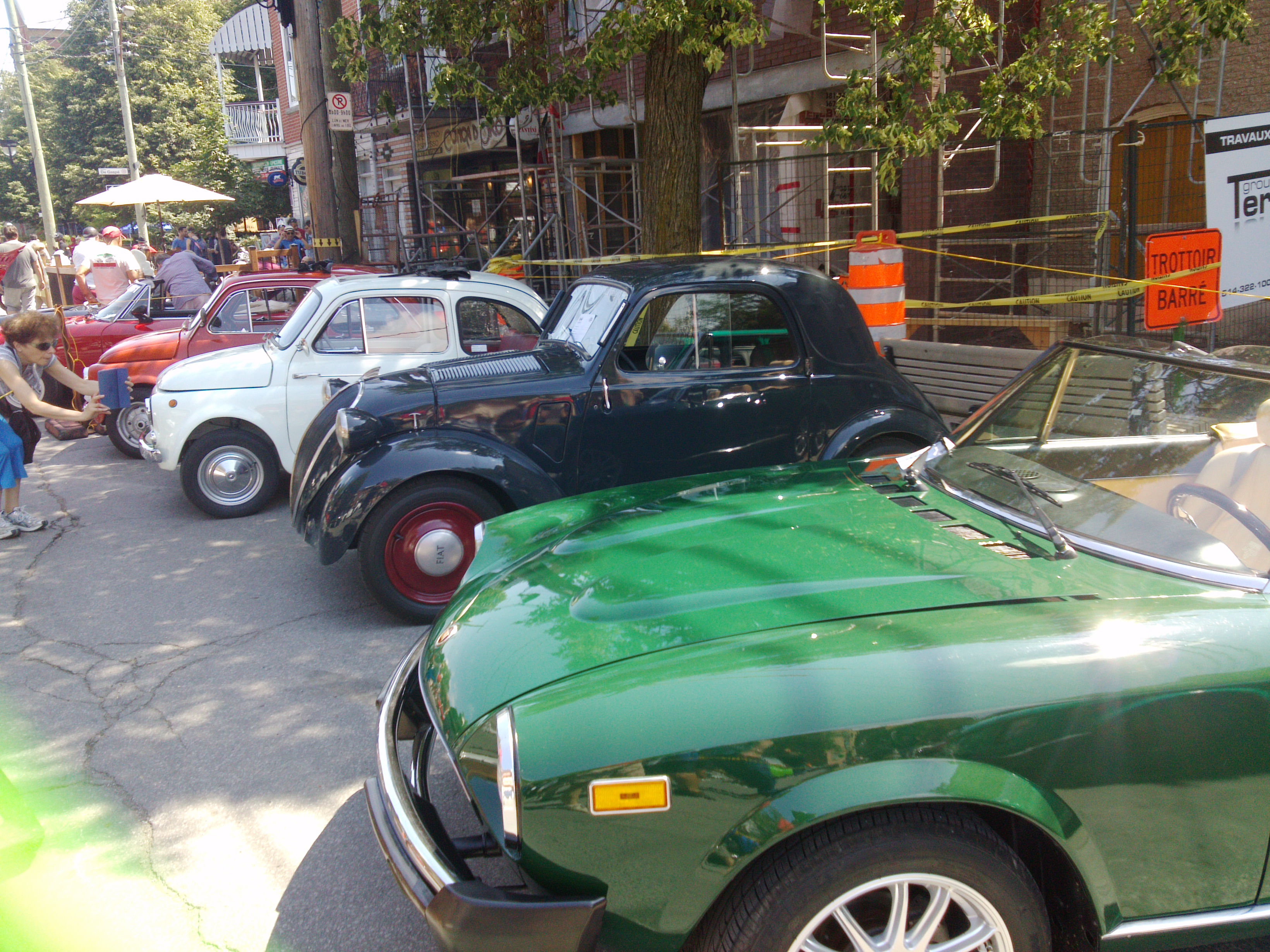
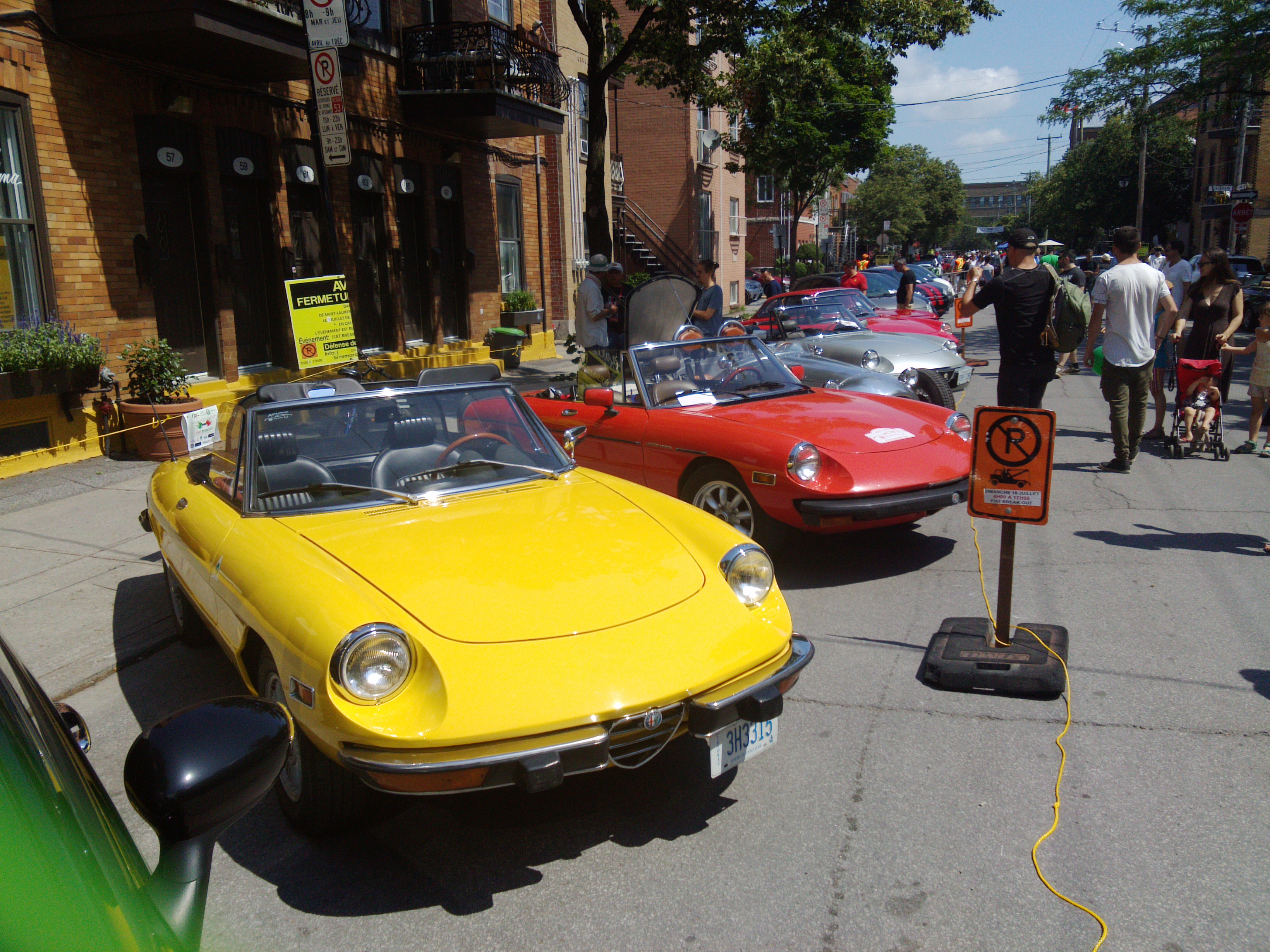
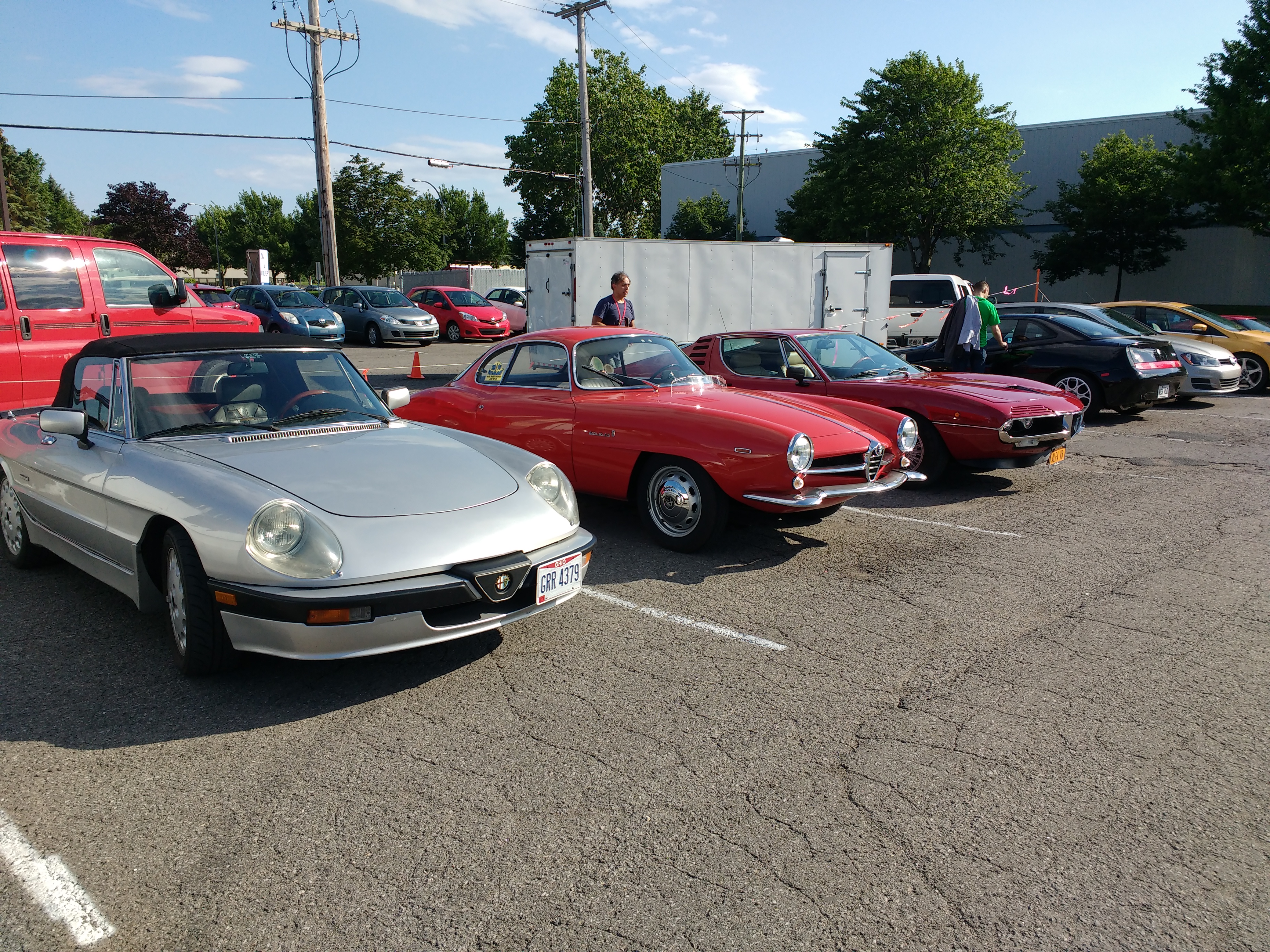
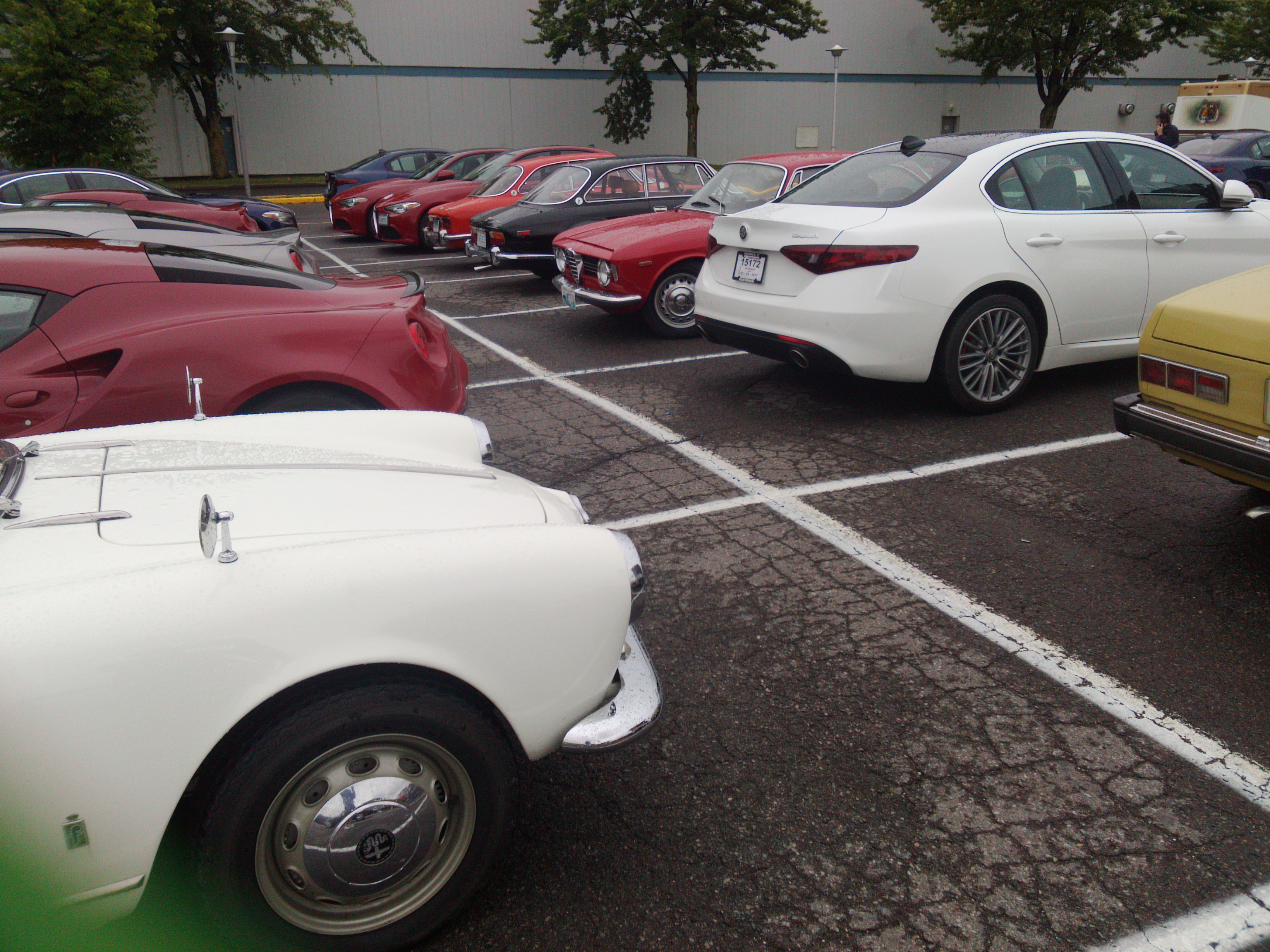
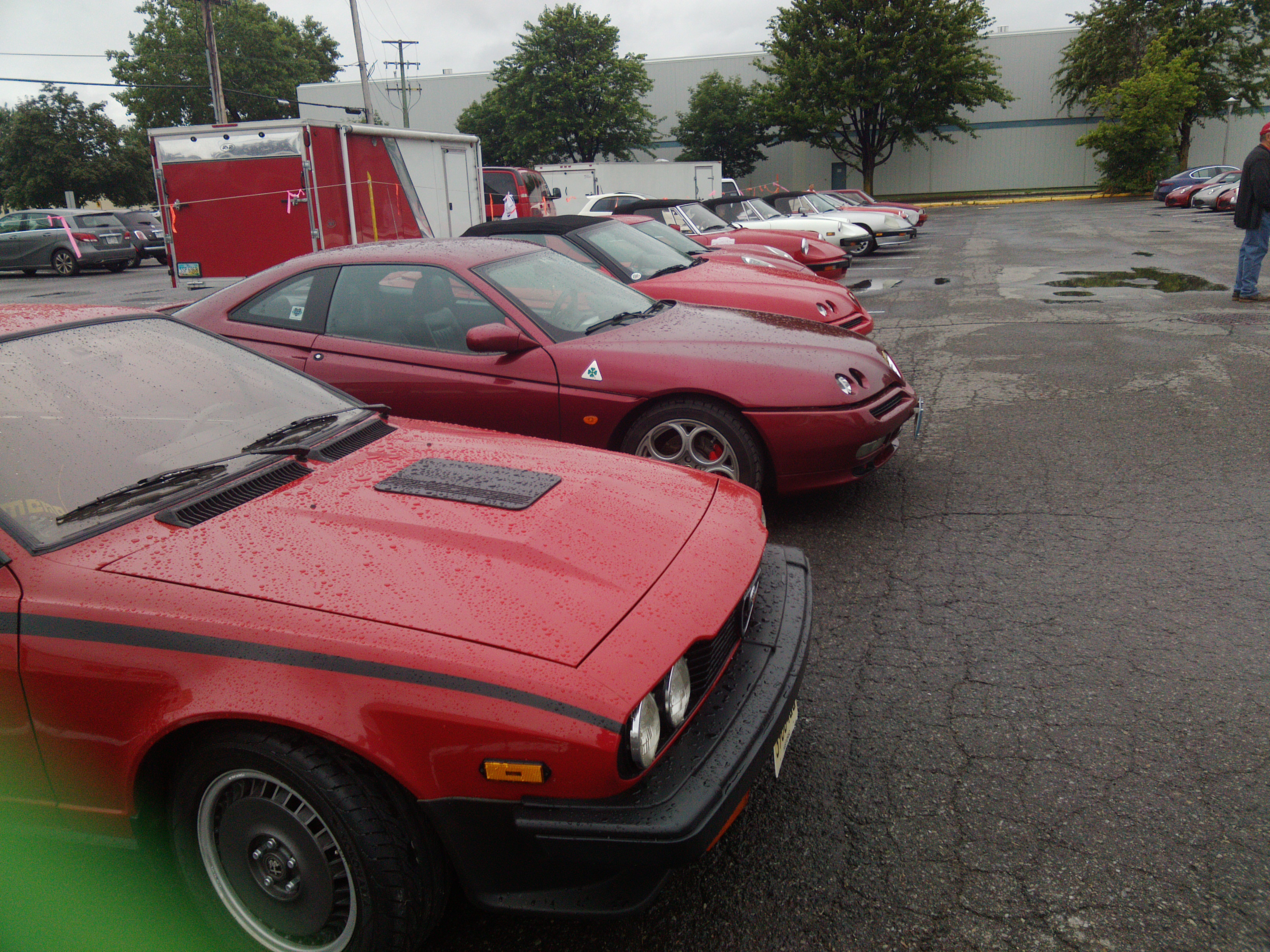
The final day of official events for the AROC (Alfa Romeo Owners Club) arrived. The Concorso was held in the Petite Italie (Little Italy) neighborhood in Montreal, populated with Italian restaurants, shops, and bakeries.
The AROC show was held in conjunction with the Fiat club of Montreal. Hence, many Fiats, Ferraris, and other Italian exotics joined.
The weather was perfect, and the crowds were large and enthusiastic.
A full event report covering all three days will follow.
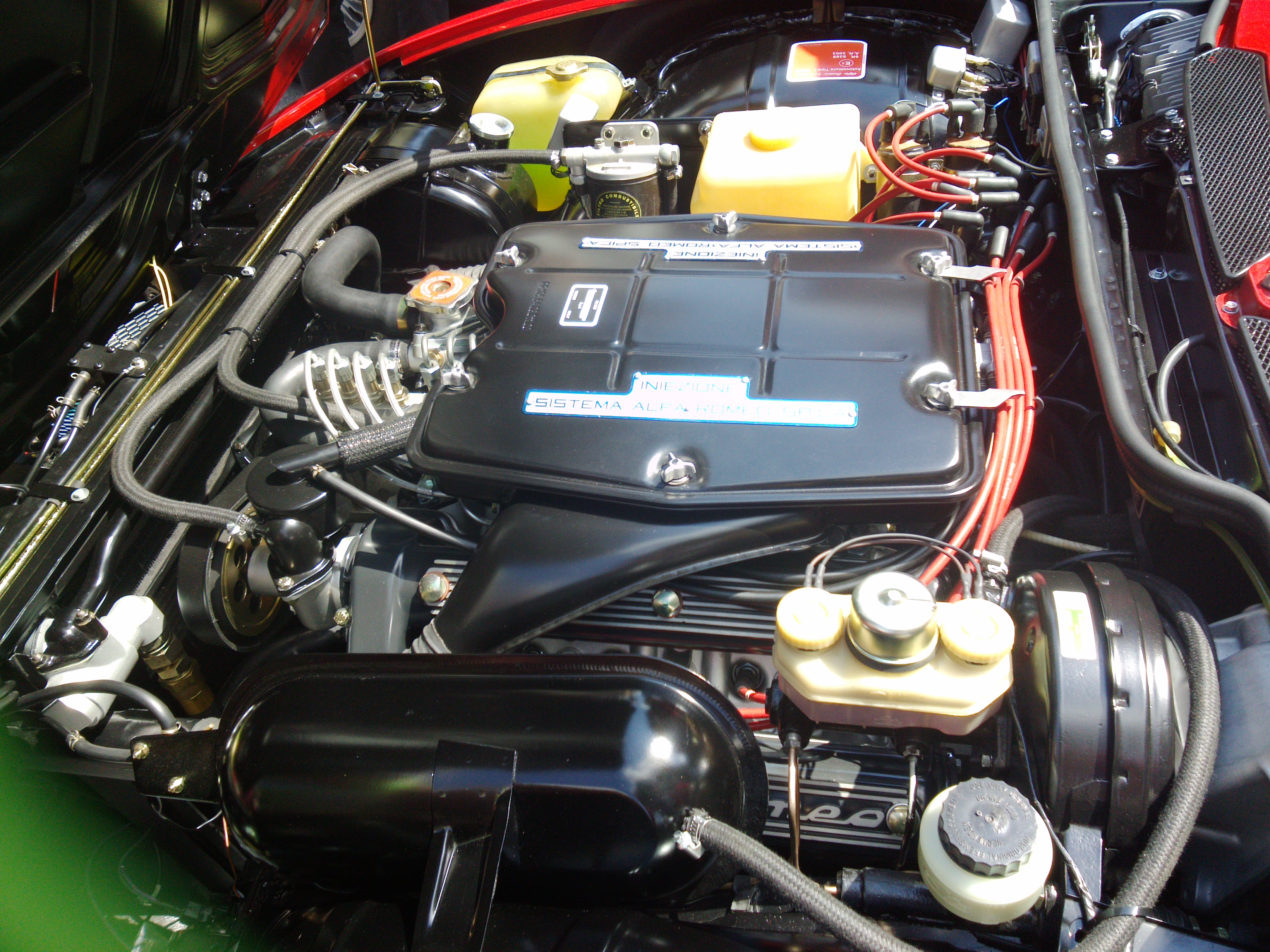
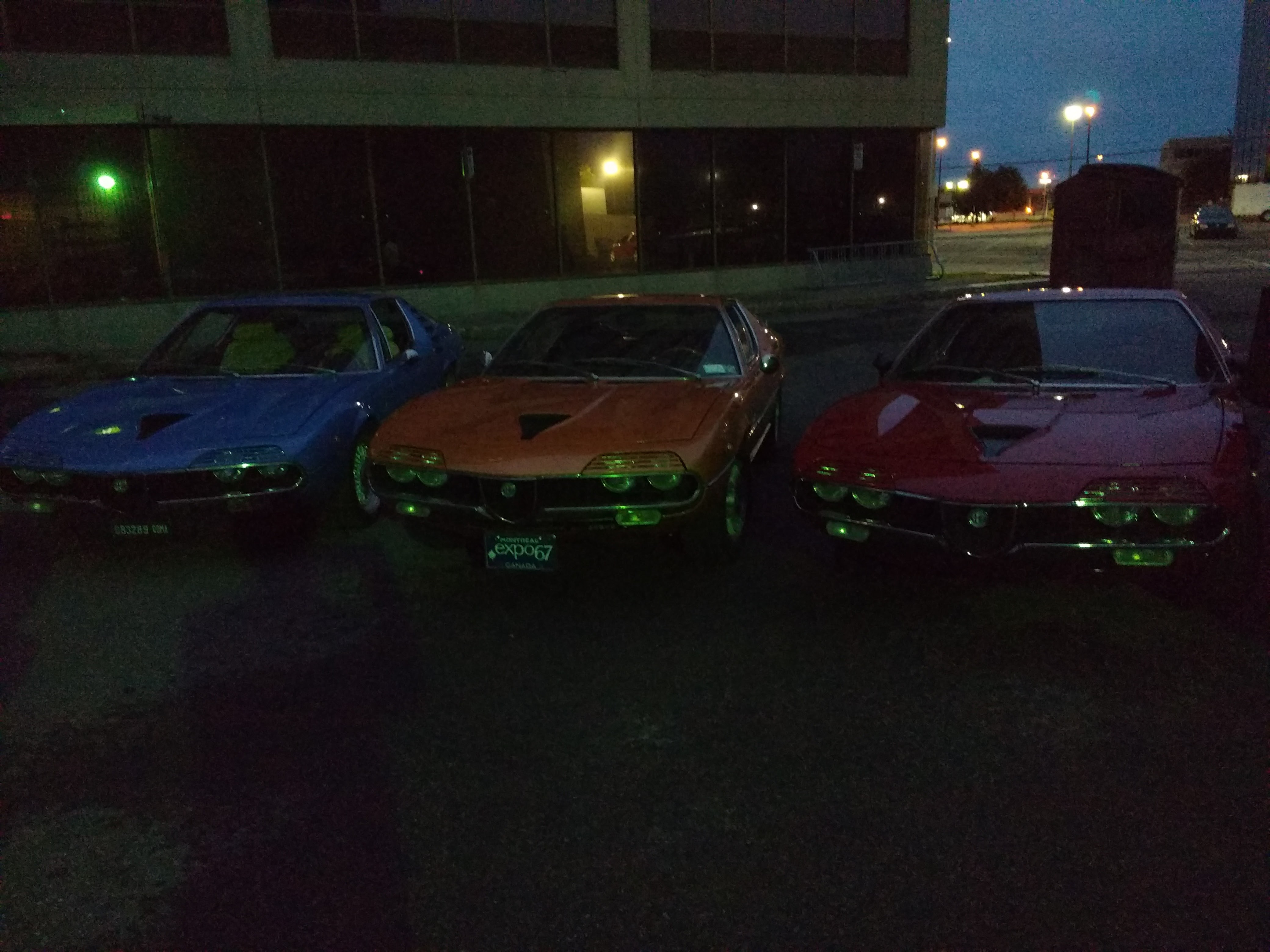
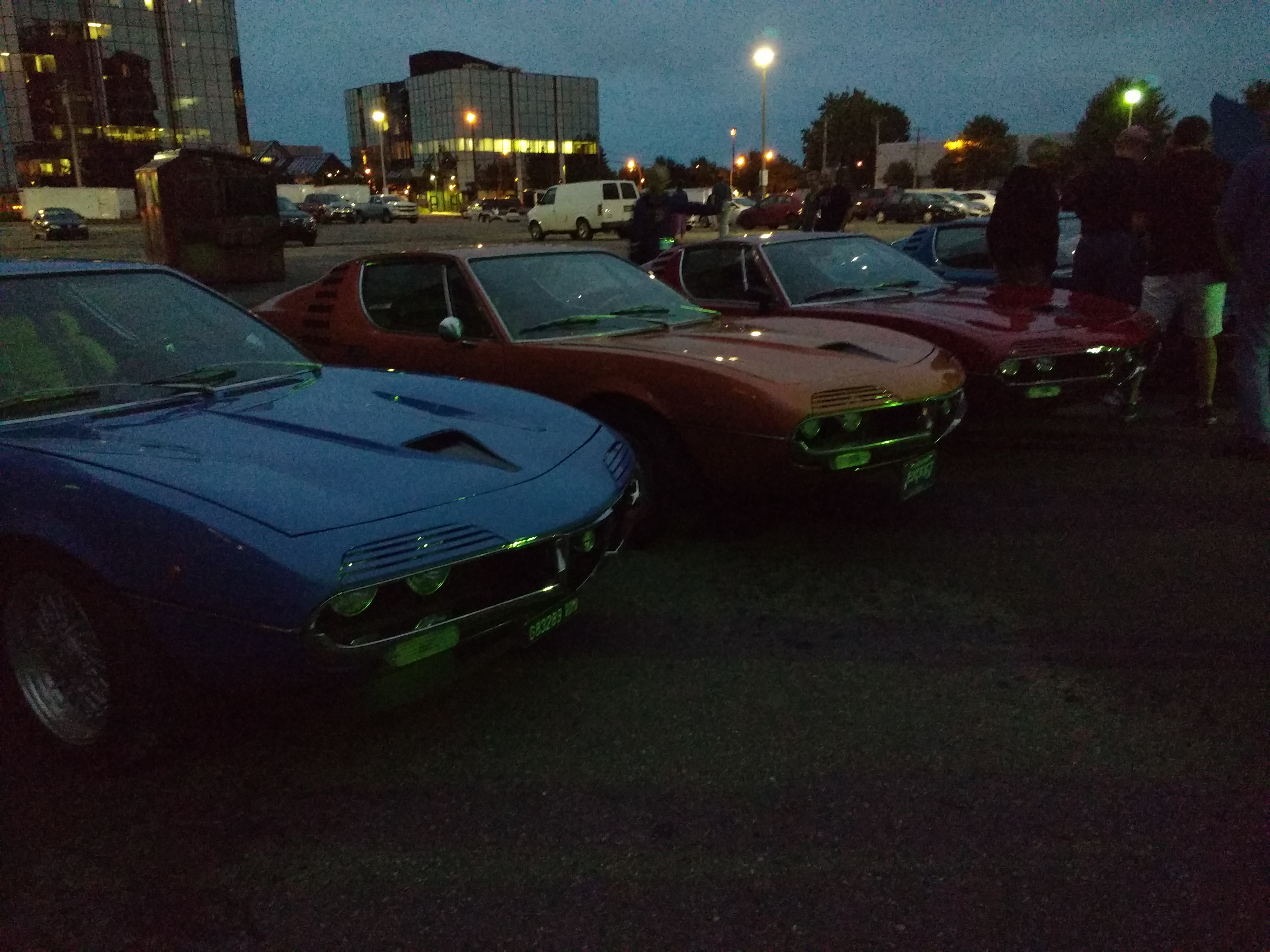
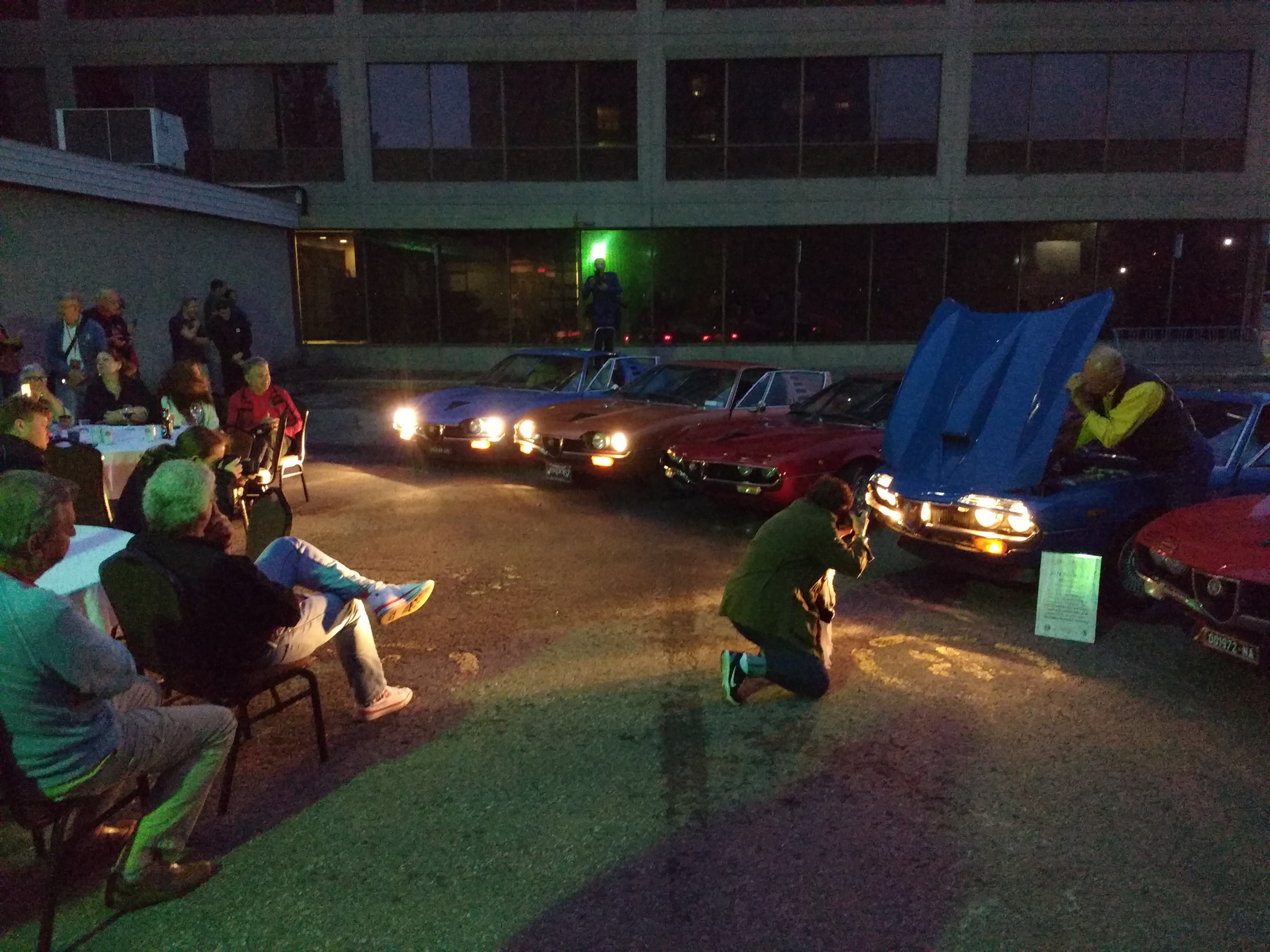
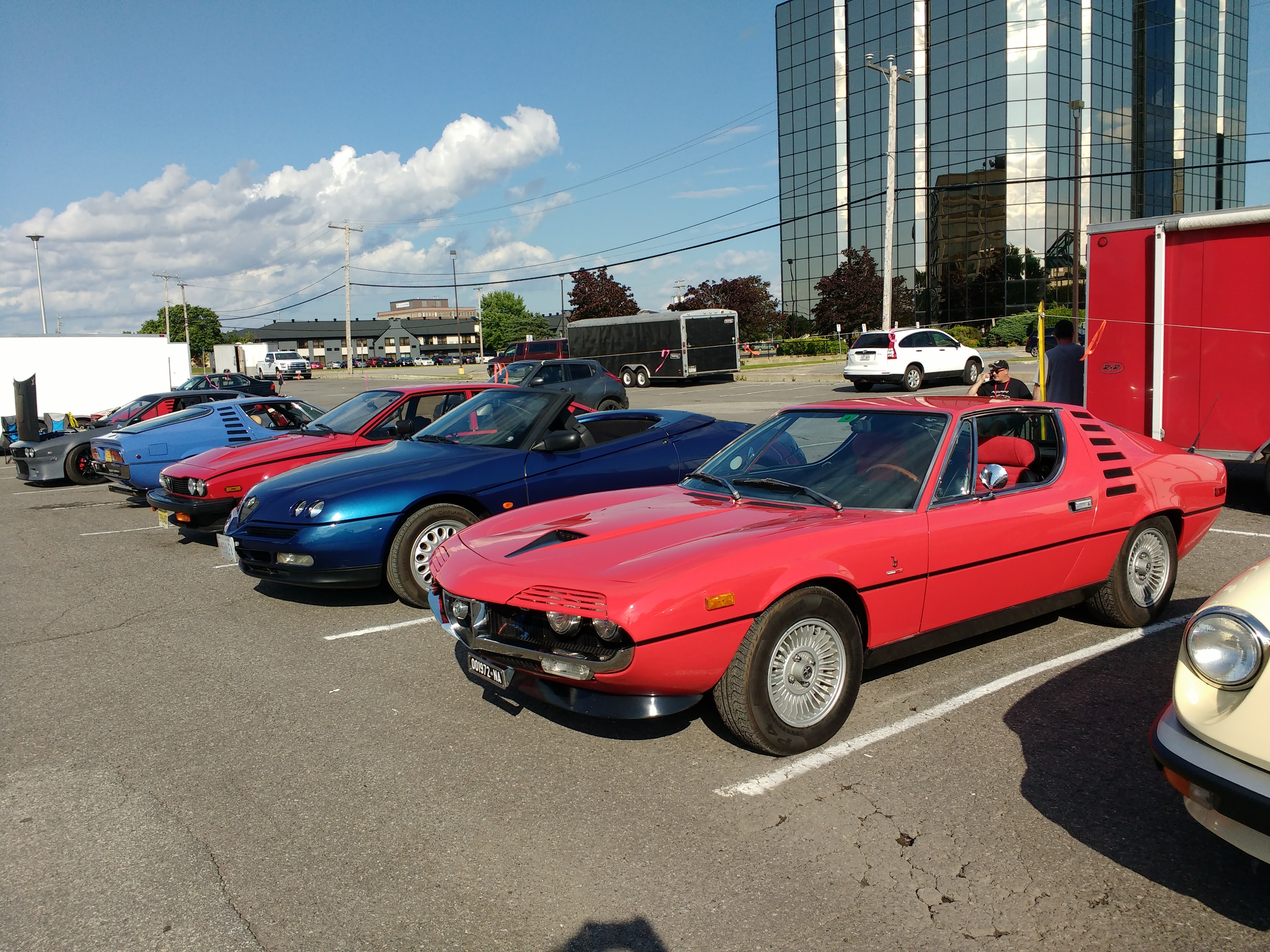
This post really starts with Friday night. After dinner, five Montreals gathered for a tech session. It was a great photo op.
On Saturday, some cars went to the track. We hung out and detailed the cars in prep for the big Sunday concours. Perhaps the best part of the day is chatting it up with fellow Alfa owners.
Rally brother Steve and I had earlier decided to make the trek on Saturday rather than Sunday, this to give us an extra day to relax, while being certain to join the informal concours on Sunday. We arrived on Saturday night just as any semblance of daylight was disappearing. If there was good news, it was that the car was running just fine, and, we anticipated no need for headlight usage during the upcoming week. Although I had not intended to work on the headlight issue during the rally, my trusty service manual was with me just in case.
Obligatory departure pic. My smile was my disguise to hide my nervousness.
Some light reading for Sunday morning.
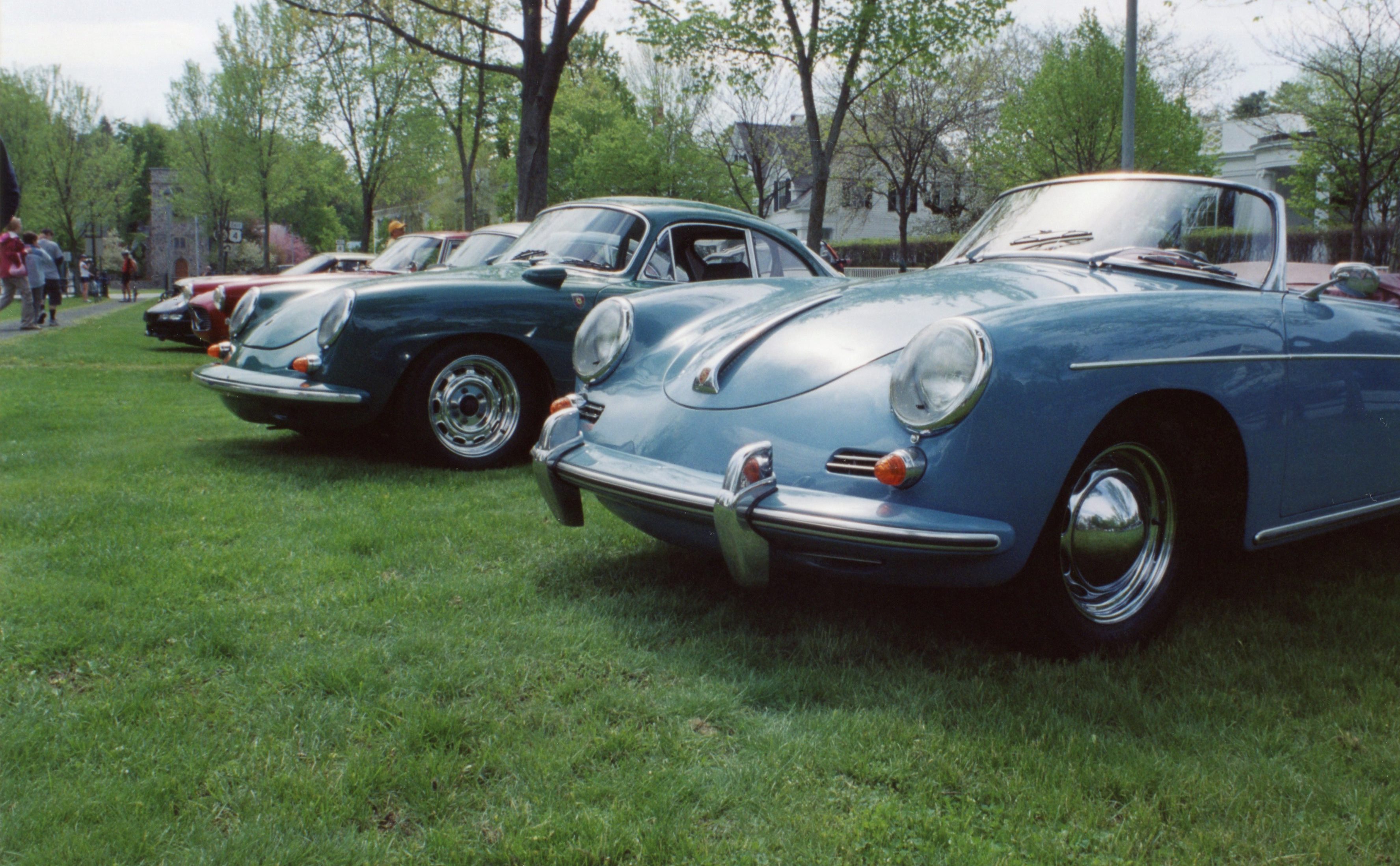
The afternoon concours was a delight, helped in large part by stunning weather. The show was held in a park in town, and was therefore open to the public. The variety of cars was the best yet (and yes, I say that for every NE 1000). The photos in this case do provide evidence to support my claim.
Sunday concours: Porsche 356s
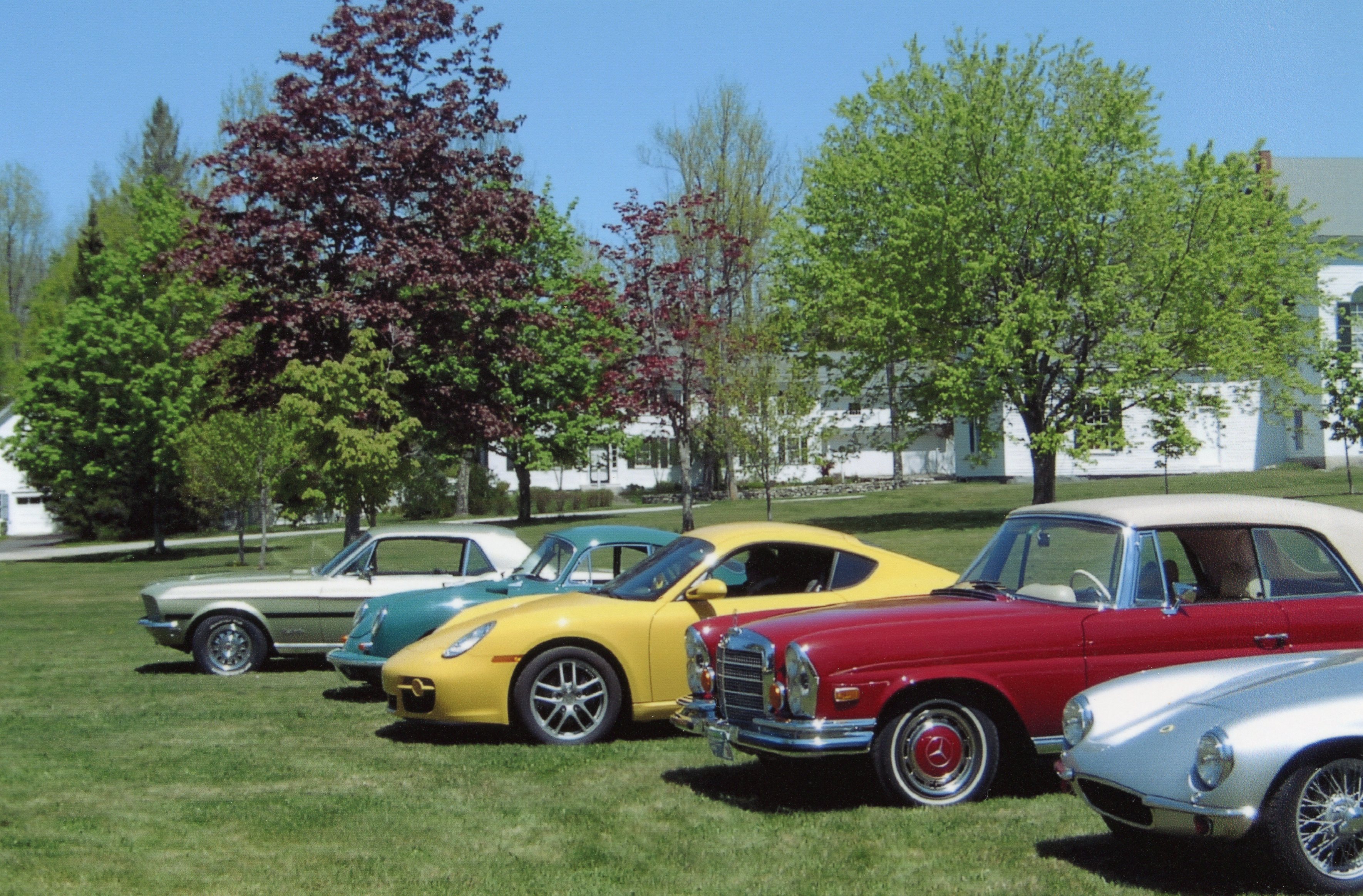
Sunday concours: German, British, and Italian
Sunday concours: Porsche 356 dashboard
Sunday concours: park visitor takes in the views, and snaps a few
Highlights of the week included two nights’ stay at the Mountain View Grand Resort in Whitefield NH (a wonderful backdrop for photography), and a visit to Hemmings World HQ in Bennington VT. Aside from some fog and frost in the (very) high elevations, sunshine was the order of the week, right through our return drive on Friday.
My Mustang in front of the Mountain View Grand Resort
Benz stands proudly in front of Mountain View
Porsche 356 with Mountain View Grand Resort in back
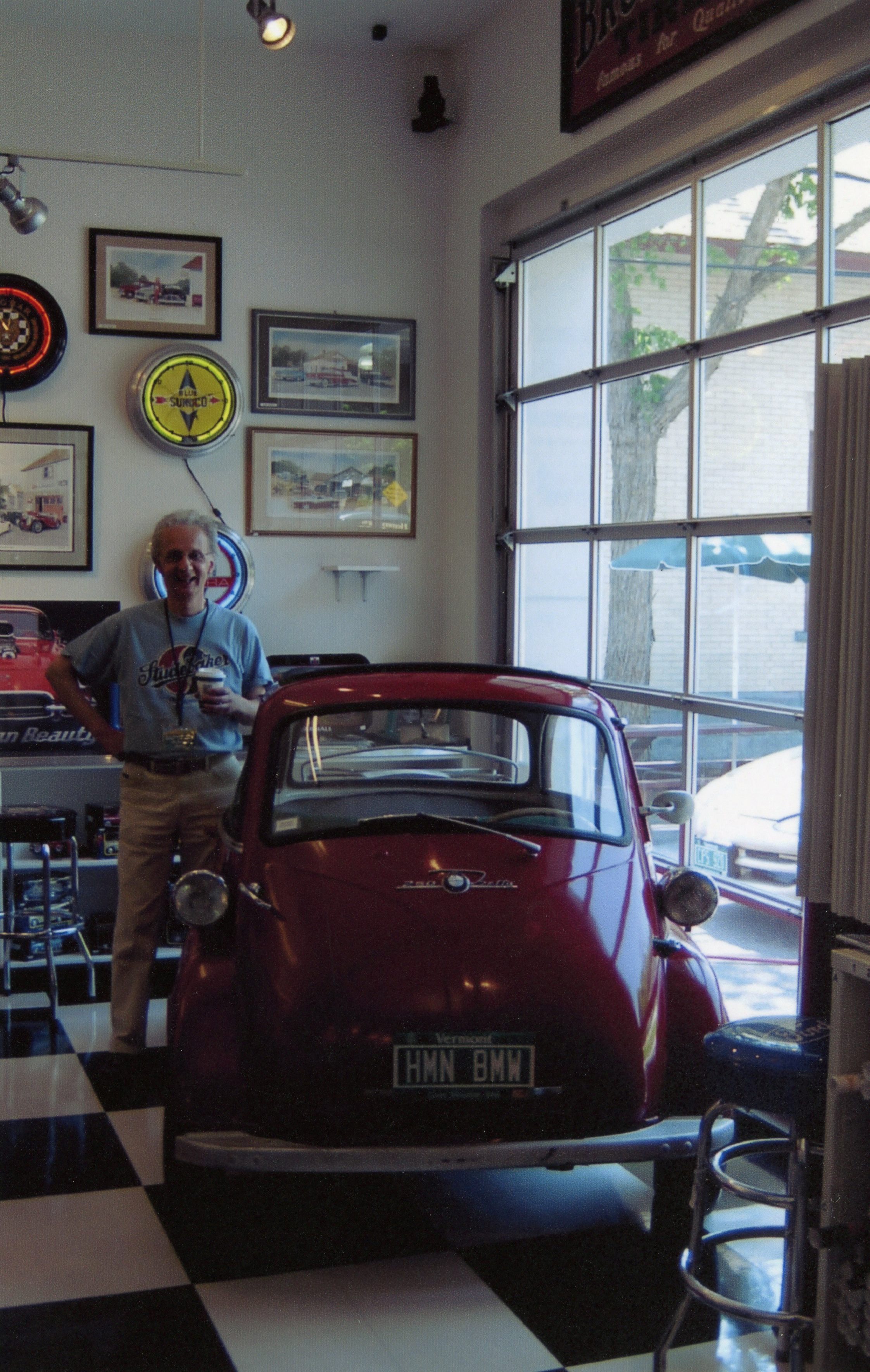
Posing with the Hemmings Isetta
We didn’t know it at the time, but the 2007 rally would be the final time that my GT/CS would serve as a rally car. It would also be six long years before we returned as participants in the NE 1000. In the meantime, we were both glad that the wiring harness debacle of just one week ago did nothing to diminish our joy in participating once again in such a prestigious event with like-minded individuals.
Cars queue up for morning time out of lot
Rally brothers proudly pose with pony
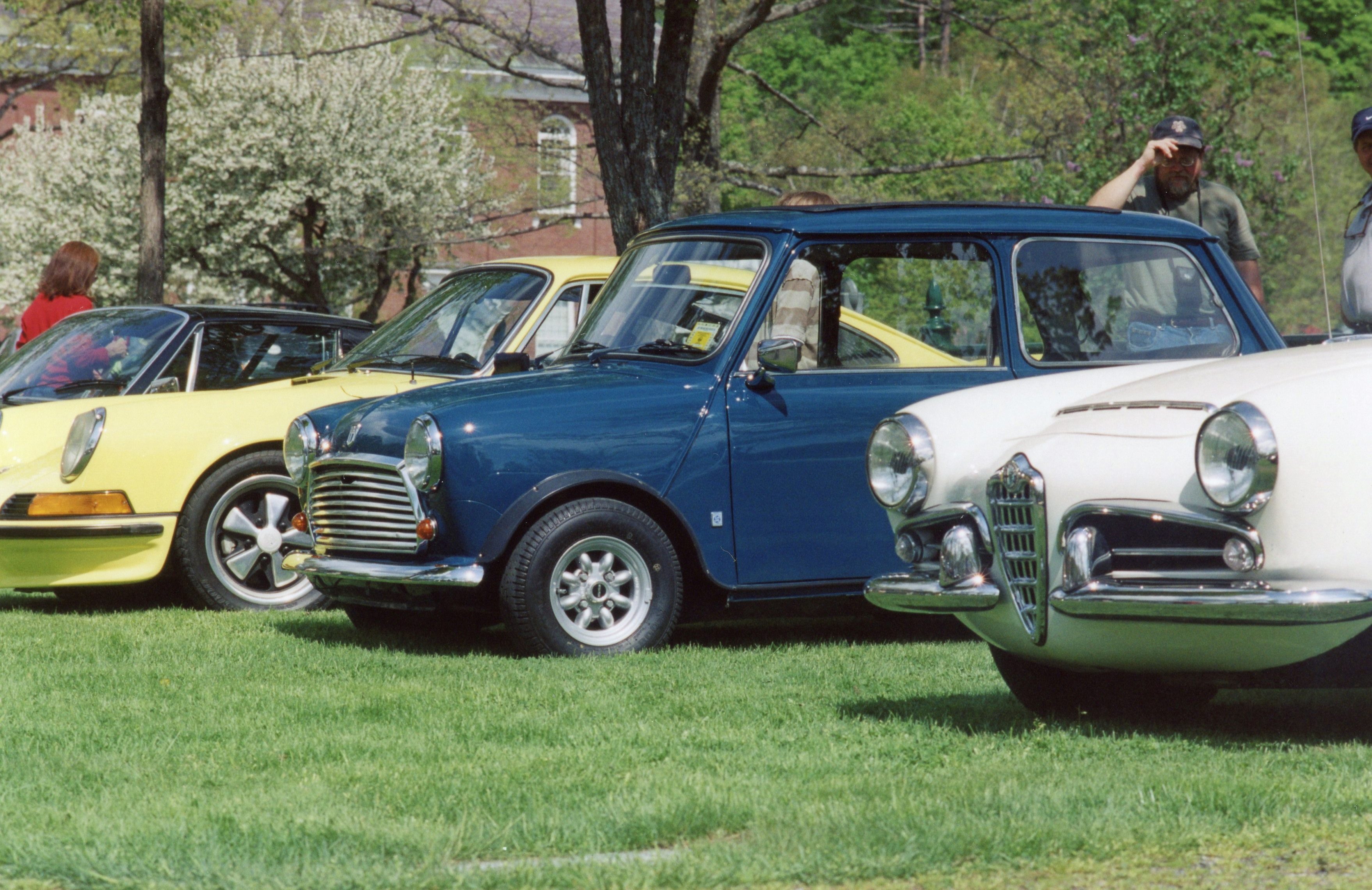
Original Mini is truly mini
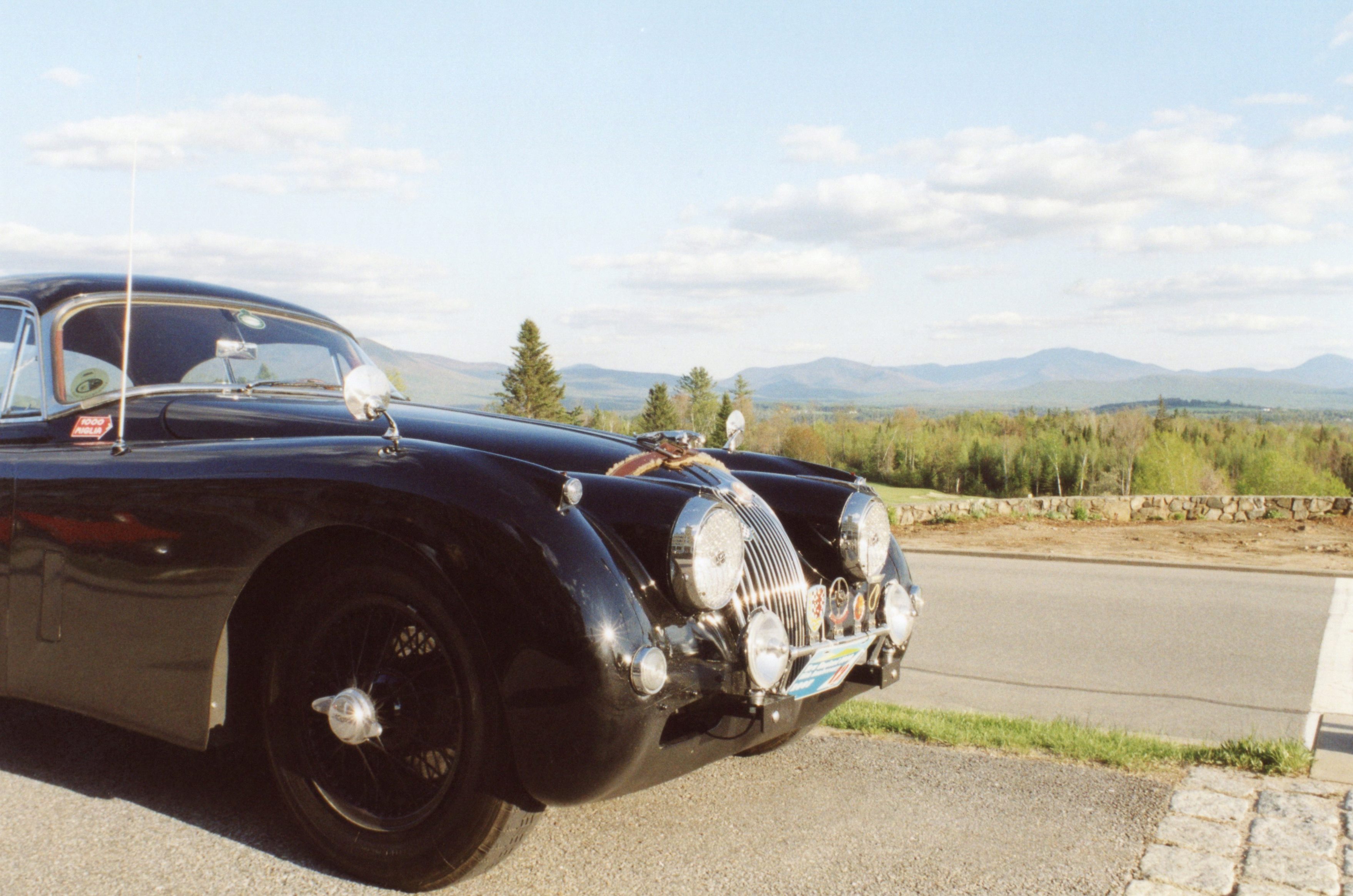
Jaguar XK-120
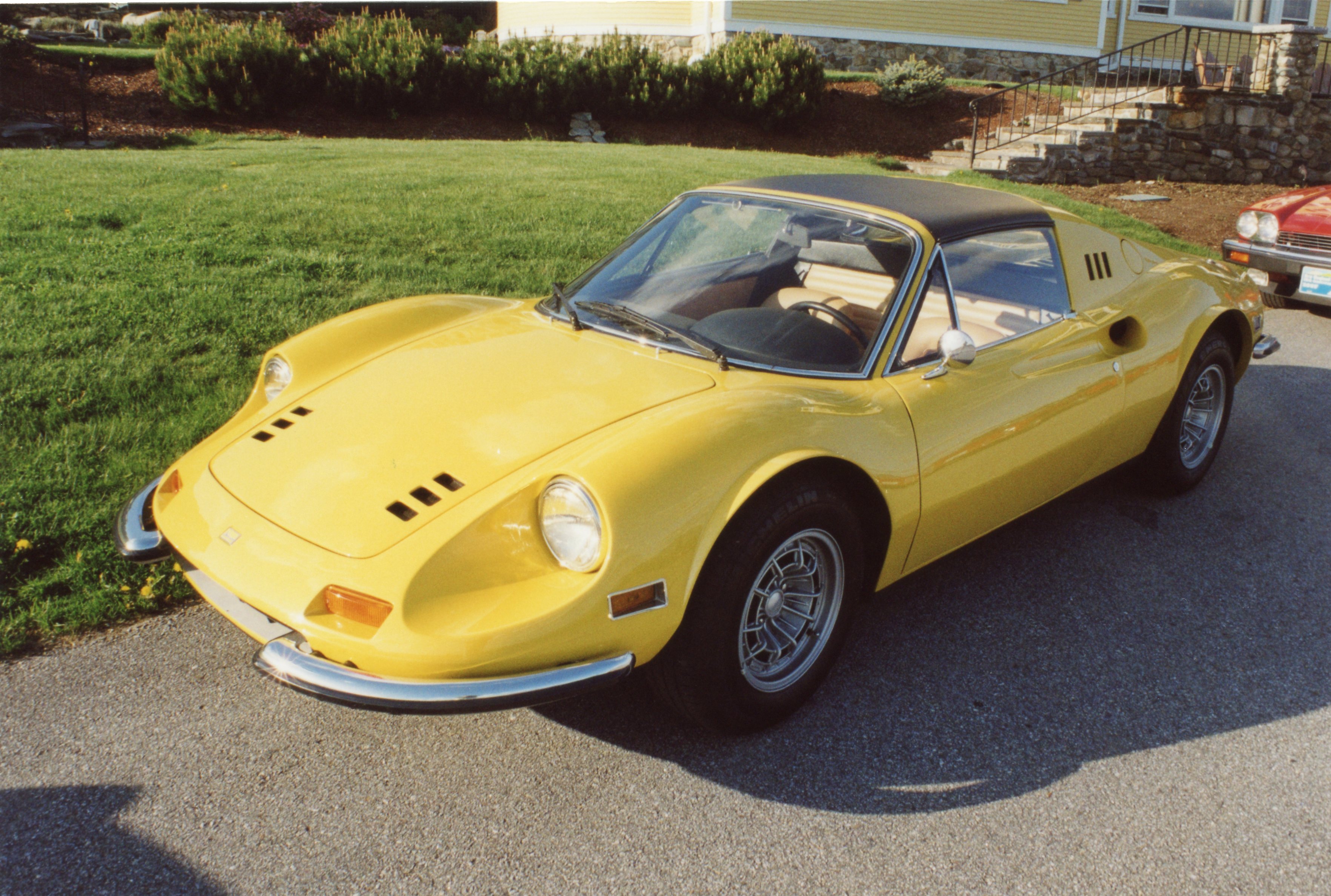
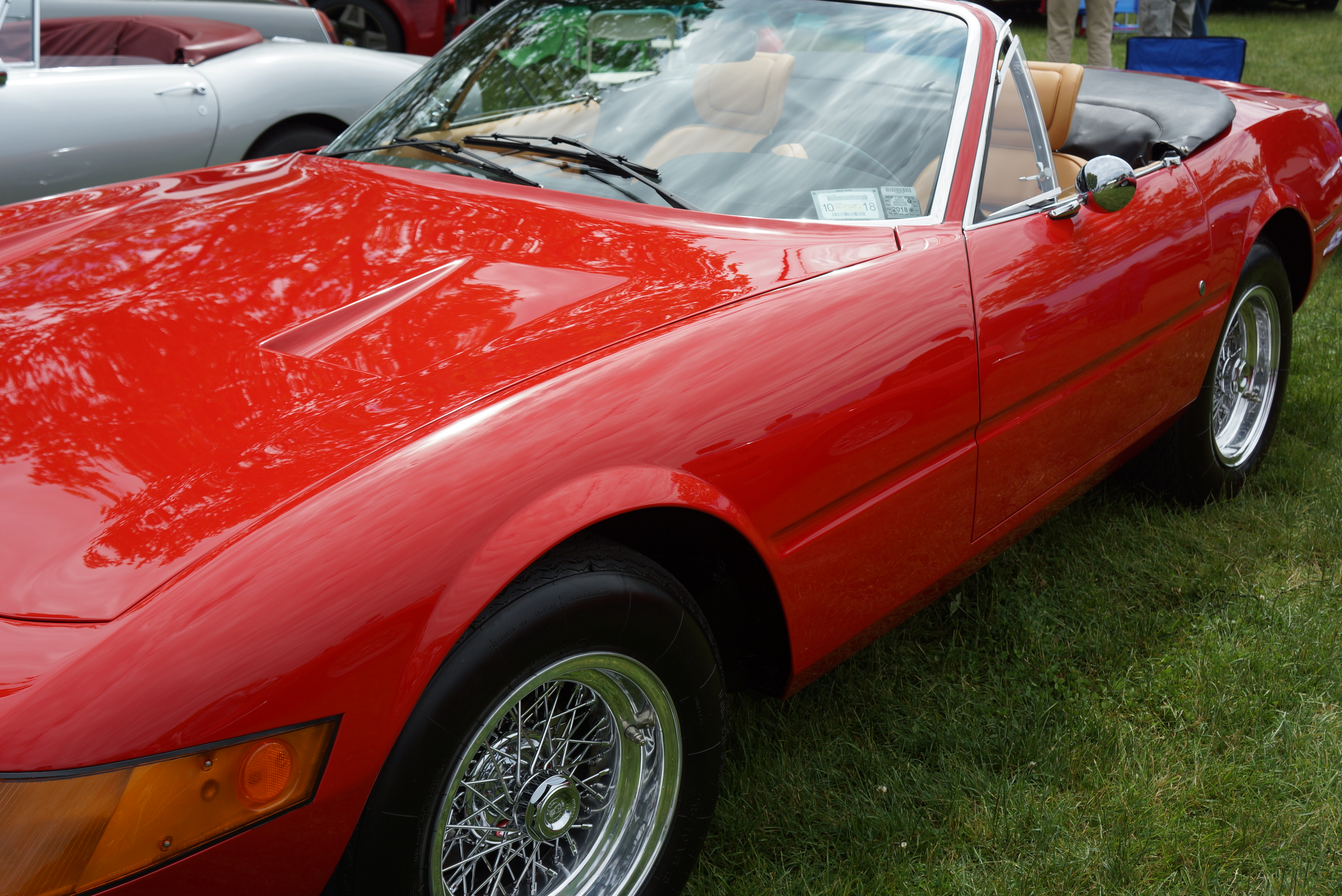
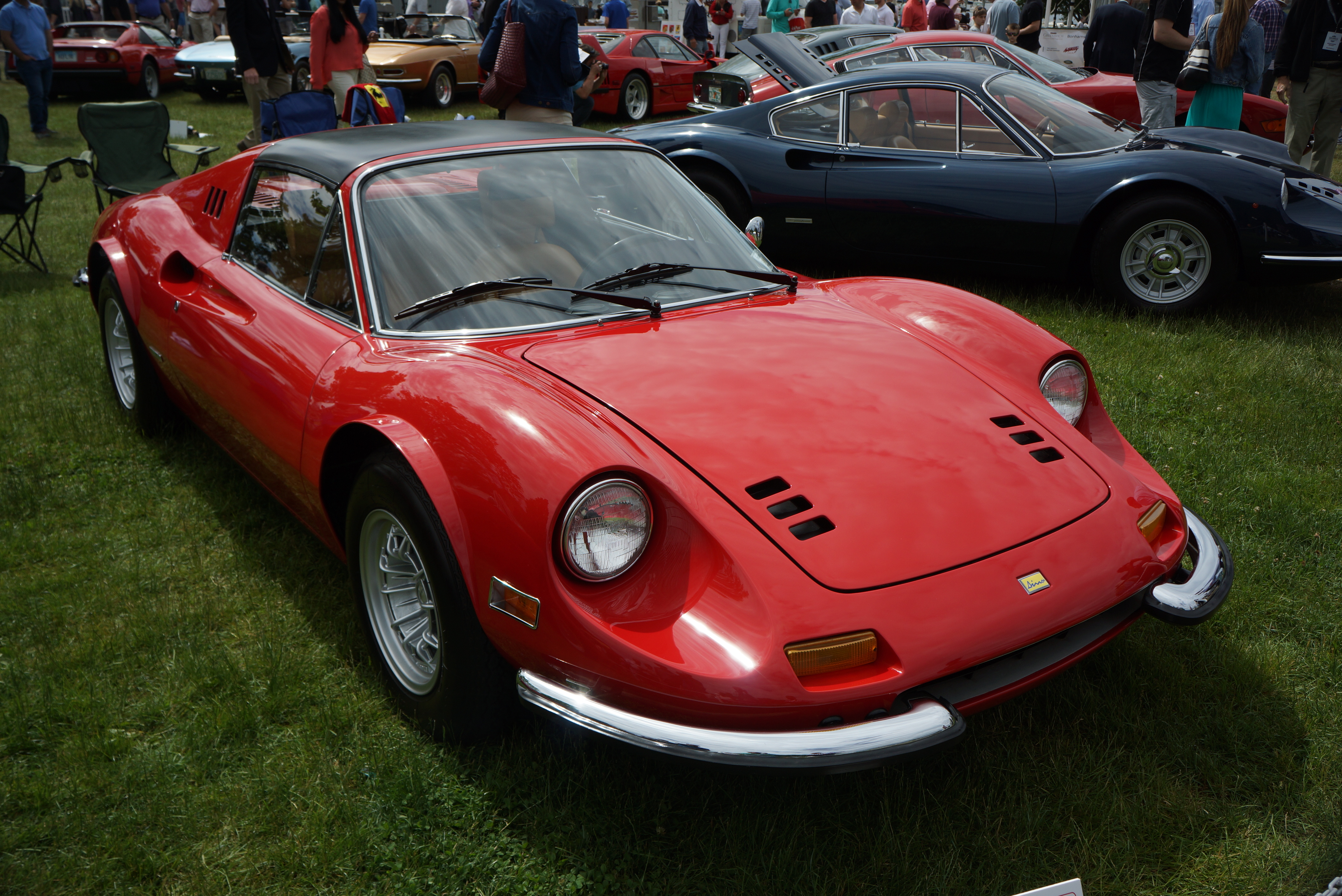
Ferrari Dino 246-GTS
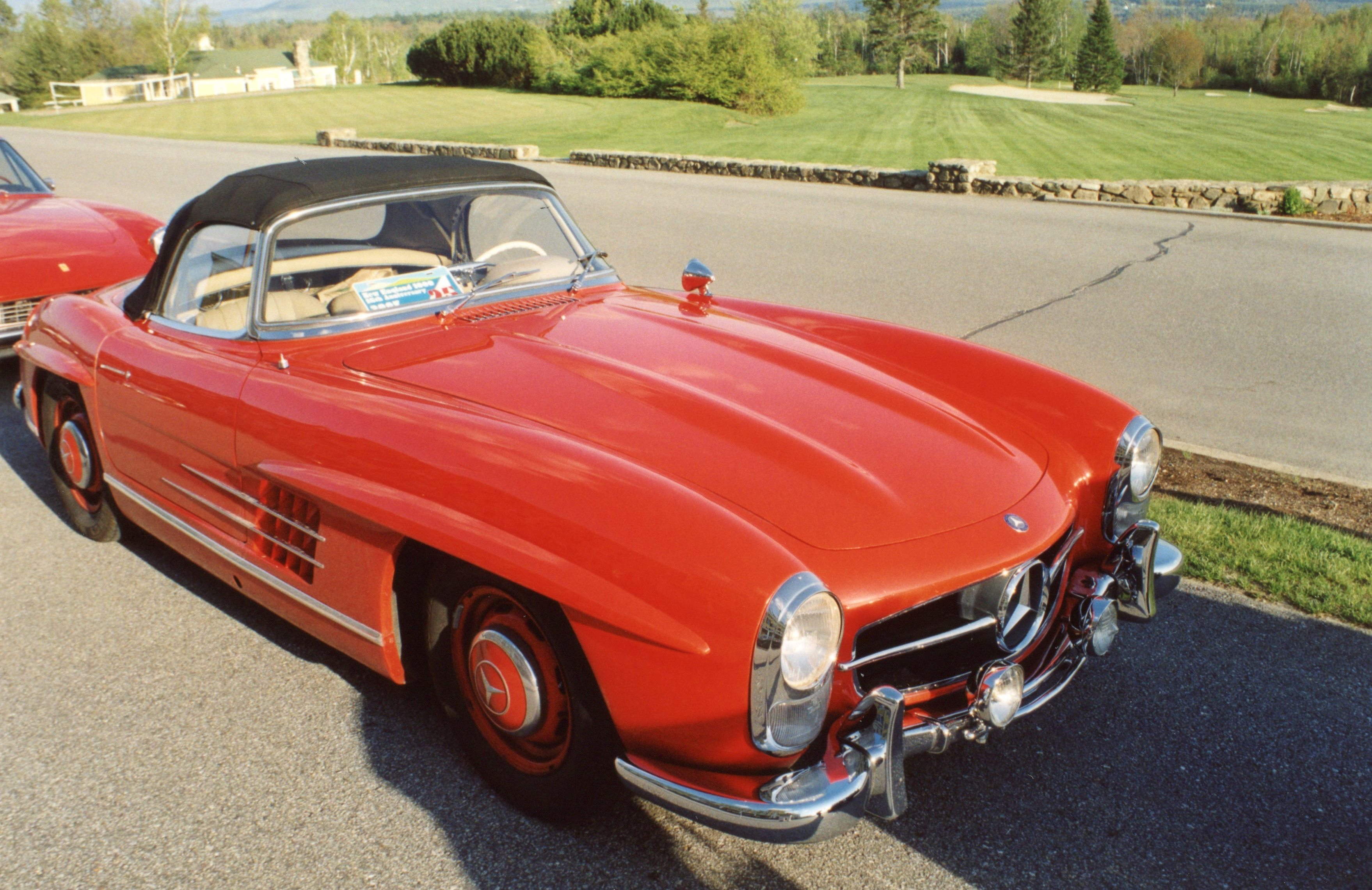
Mercedes-Benz 300SL roadster
Lotus Elite
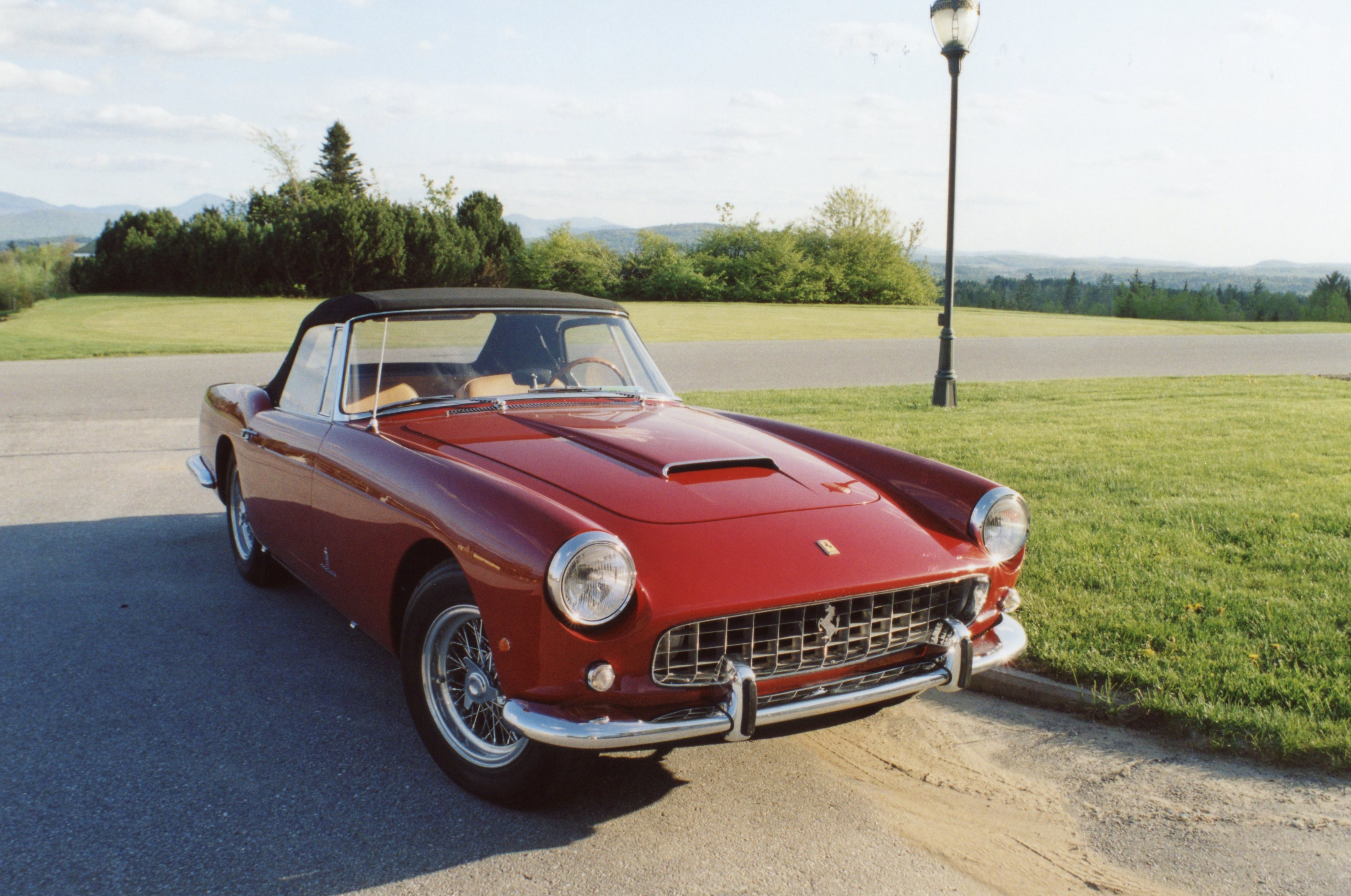
Ferrari 250GT Pininfarina cabriolet
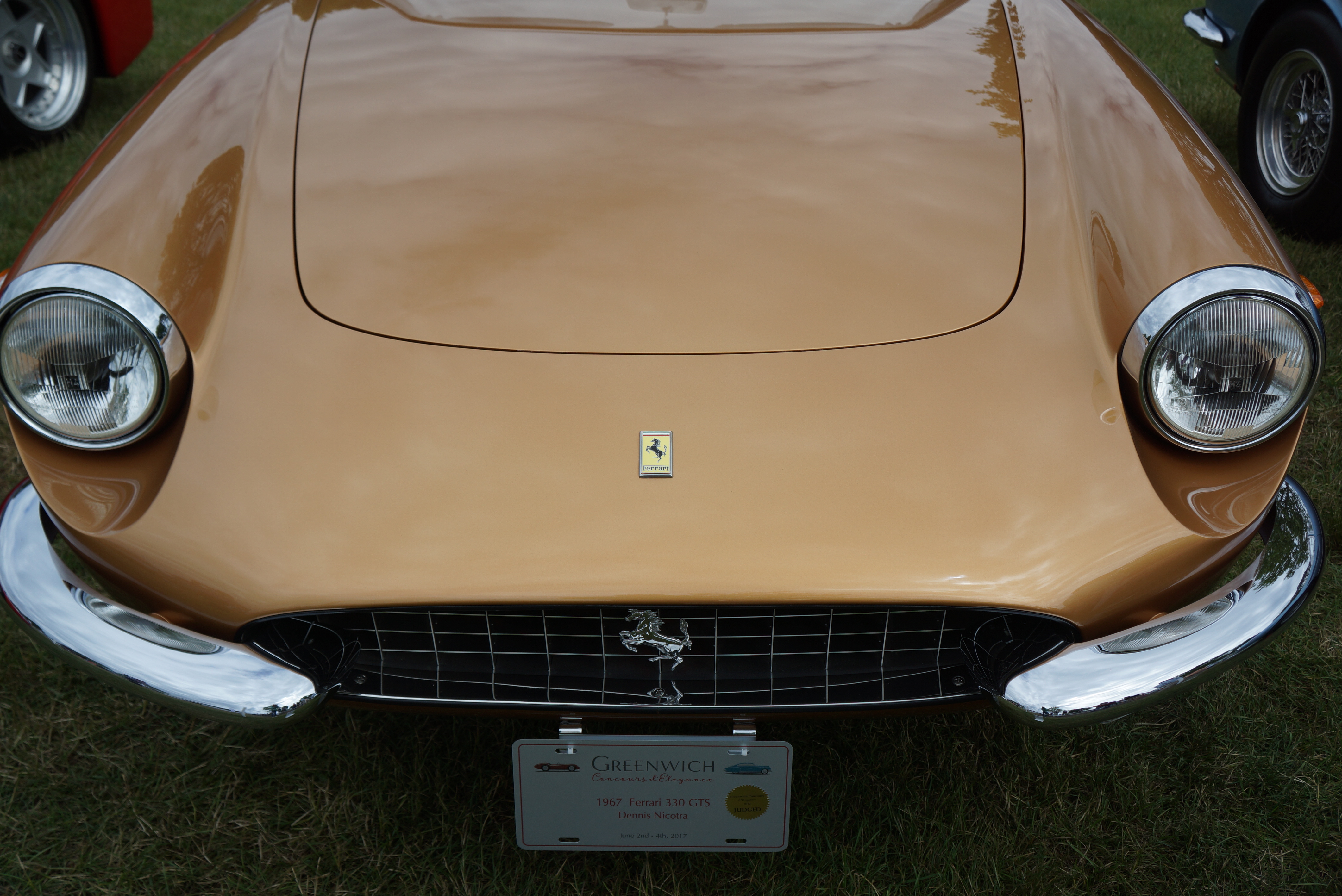
Ferrari 330 GT 2+2
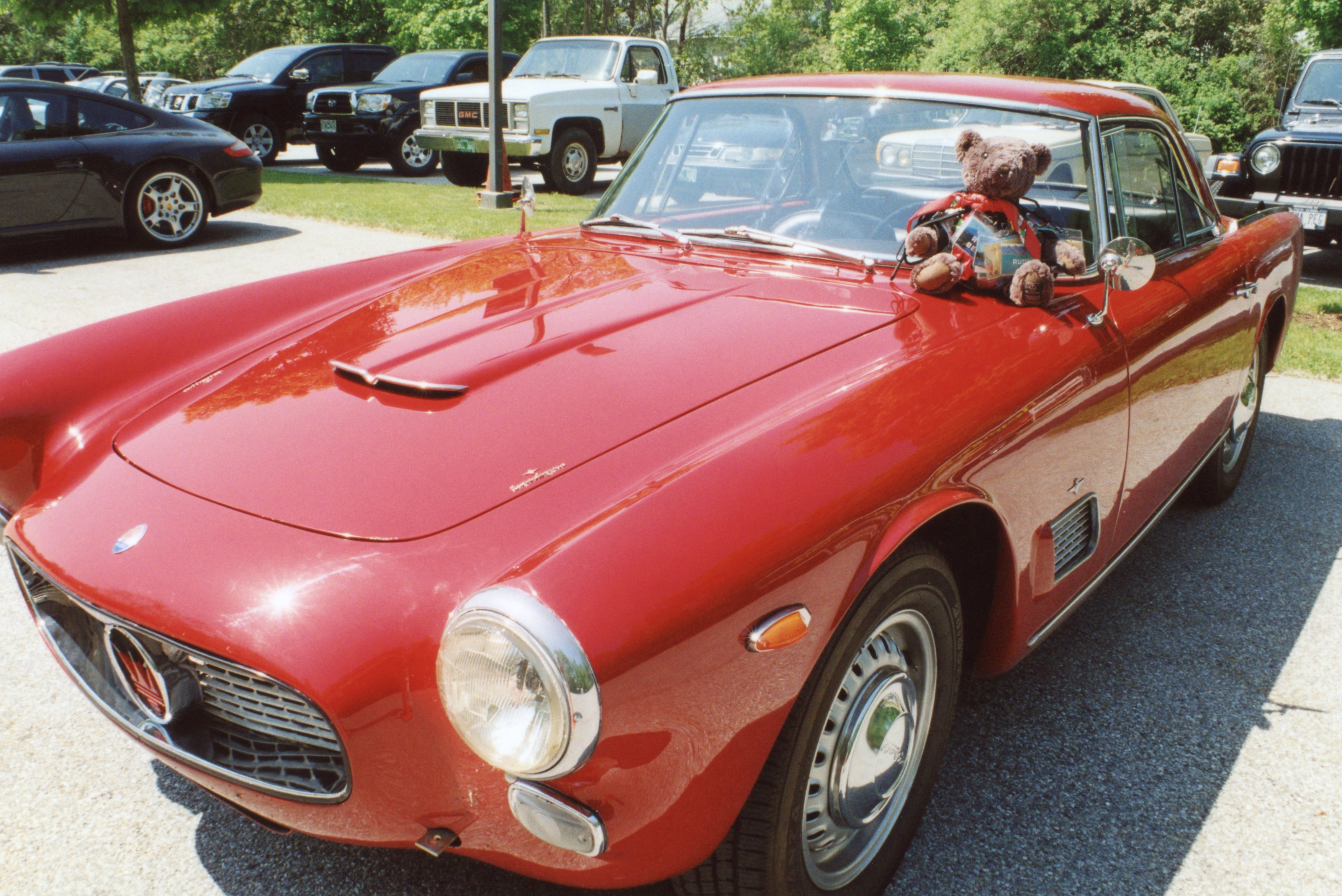
Maserati 3500GT
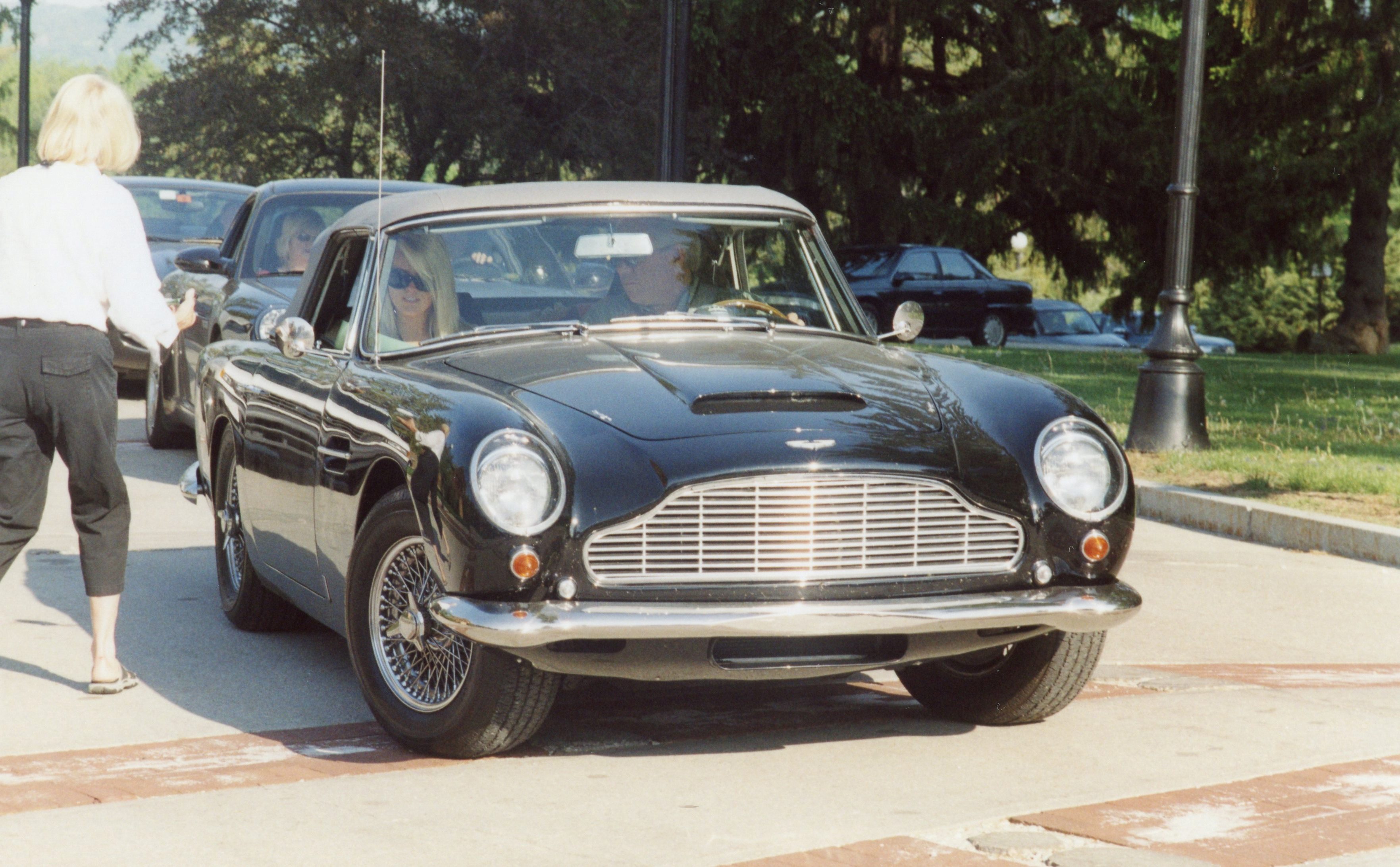
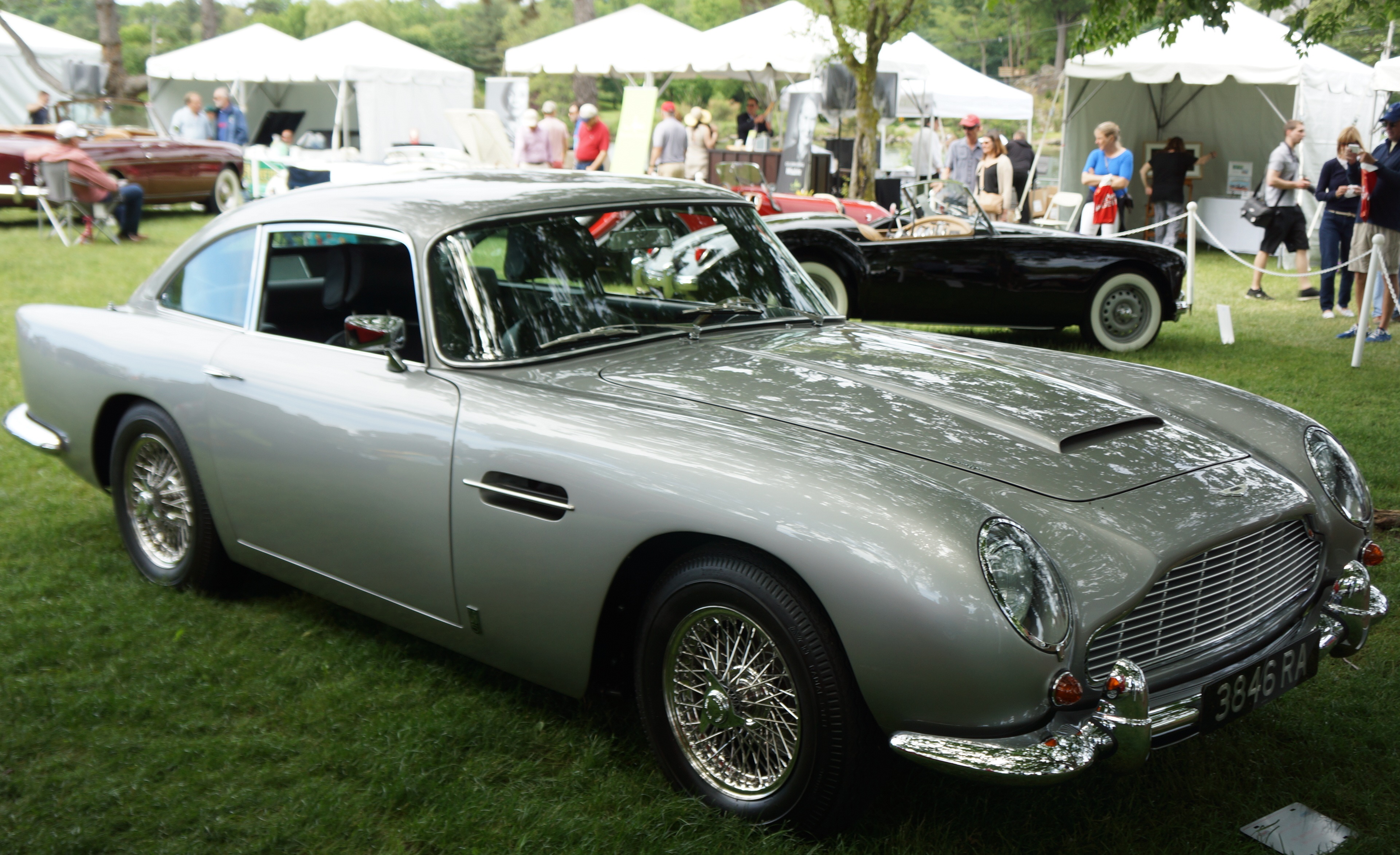
Aston Martin DB-5
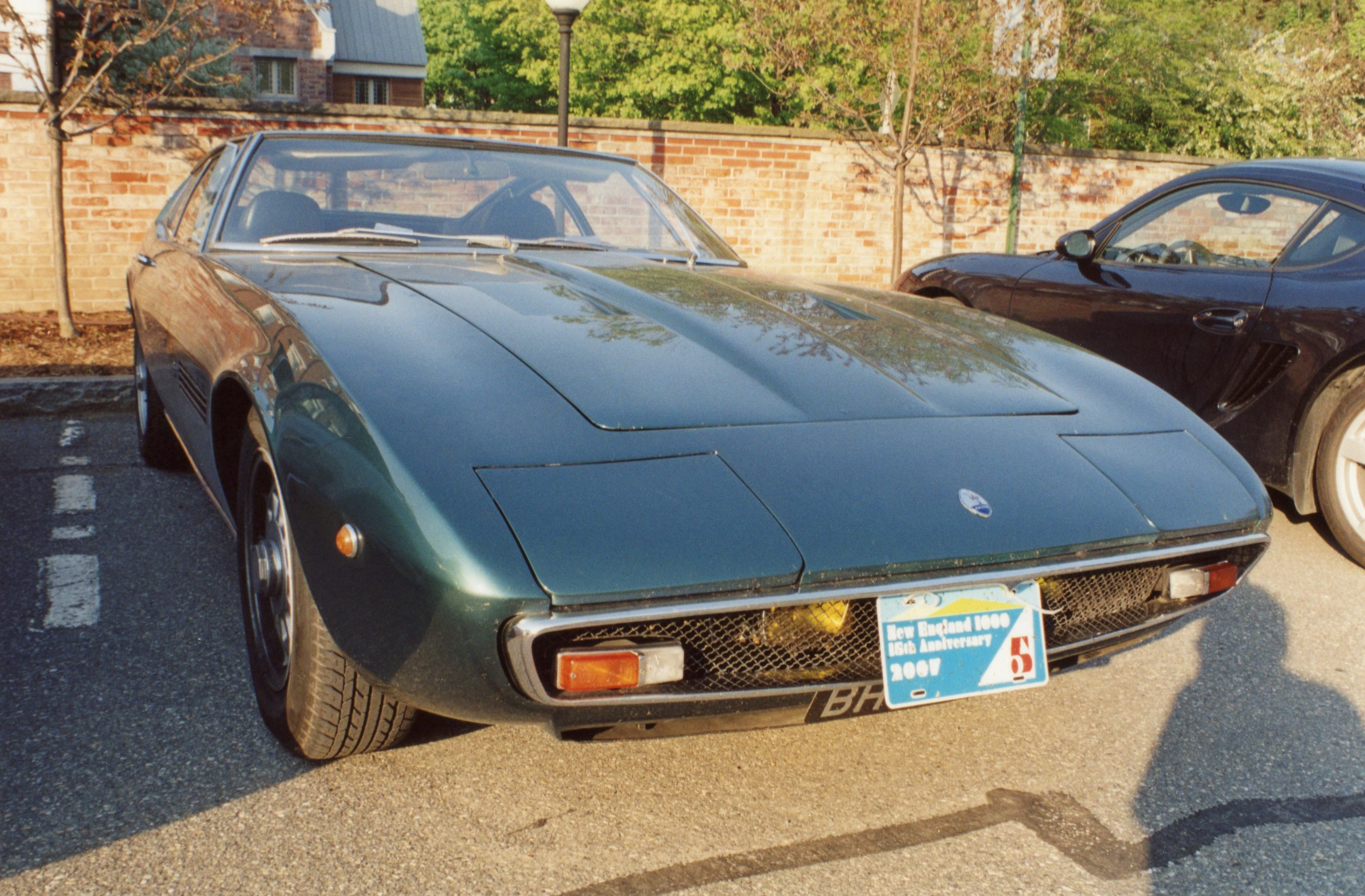
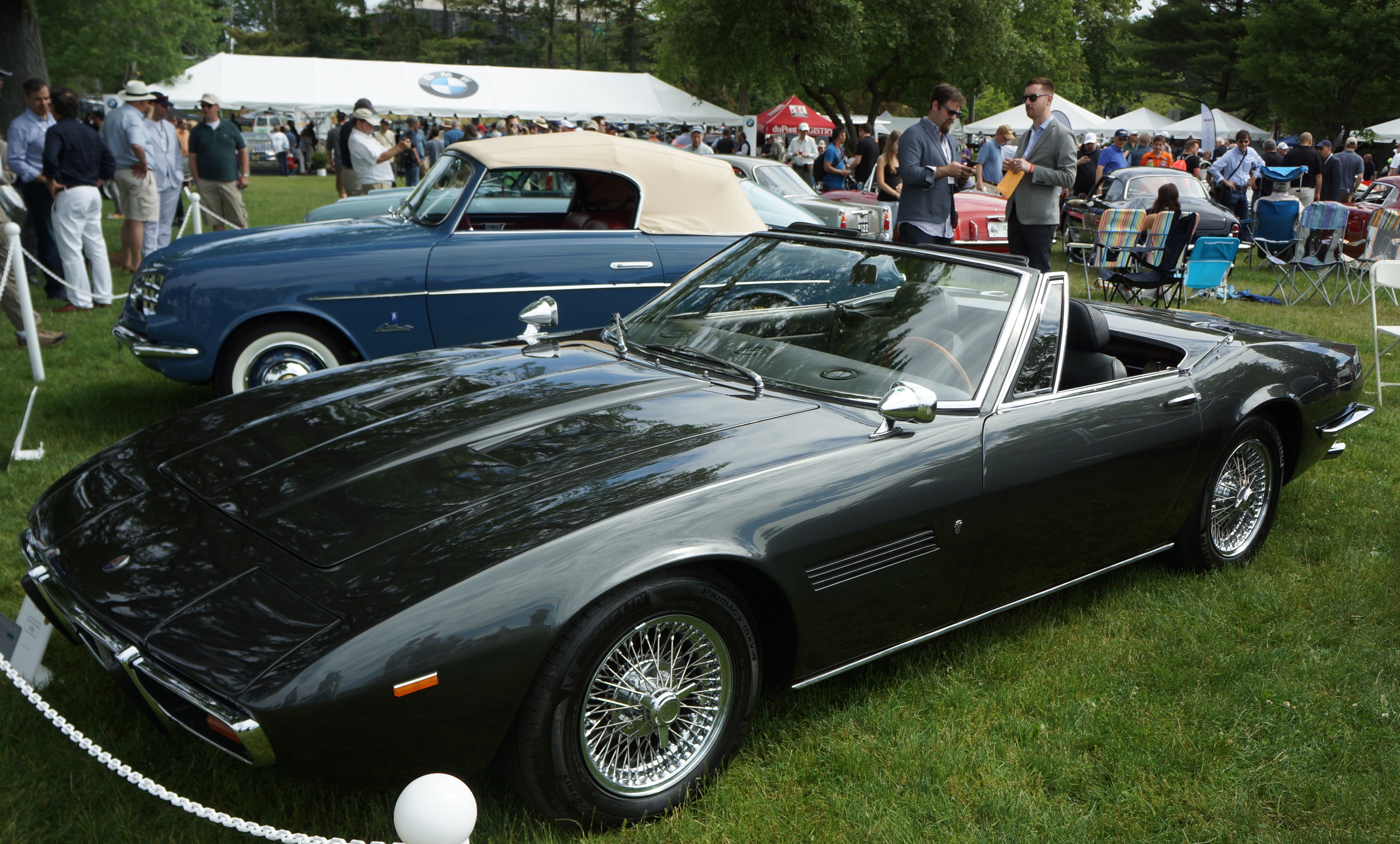
Maserati Ghibli
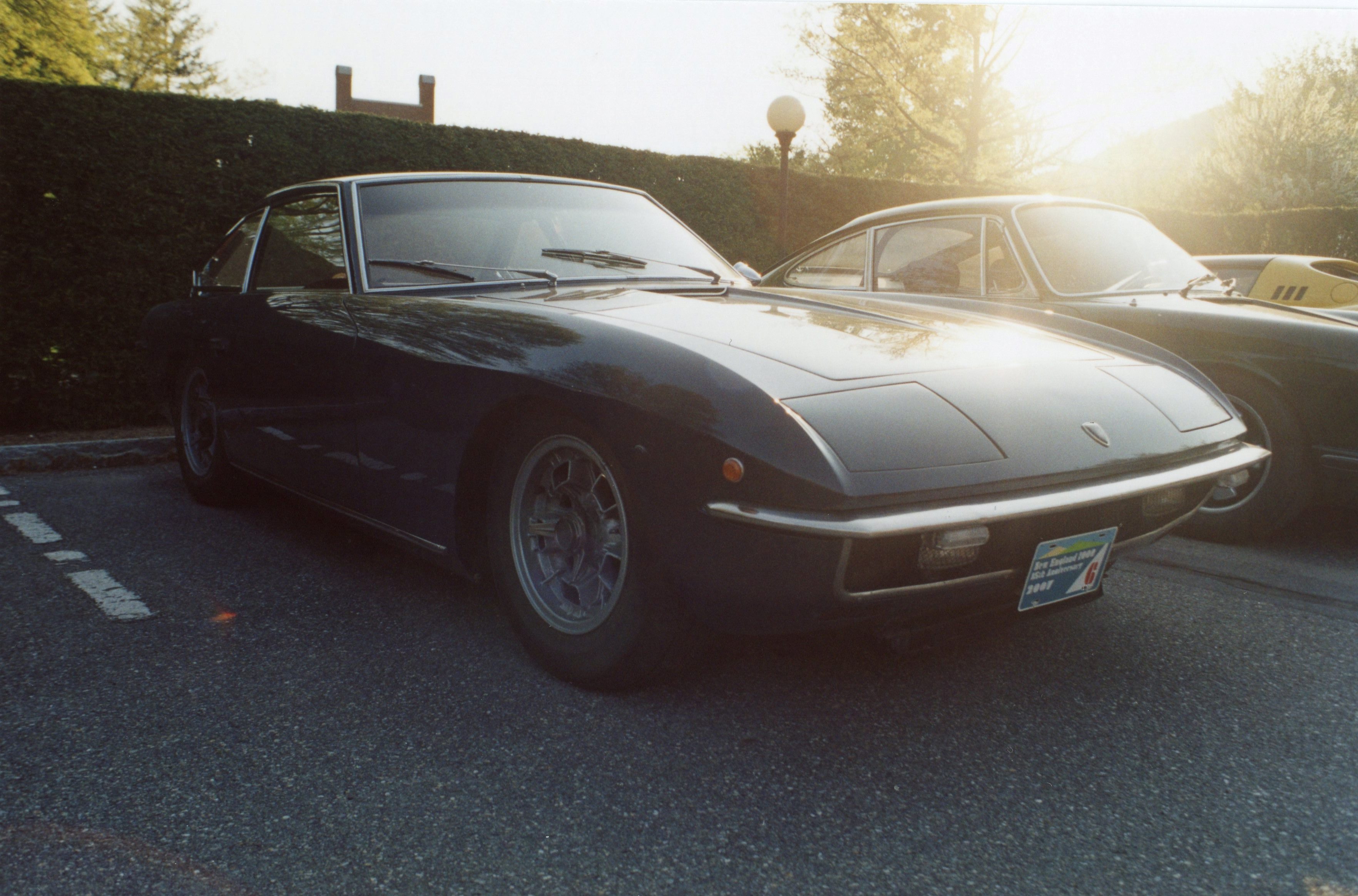
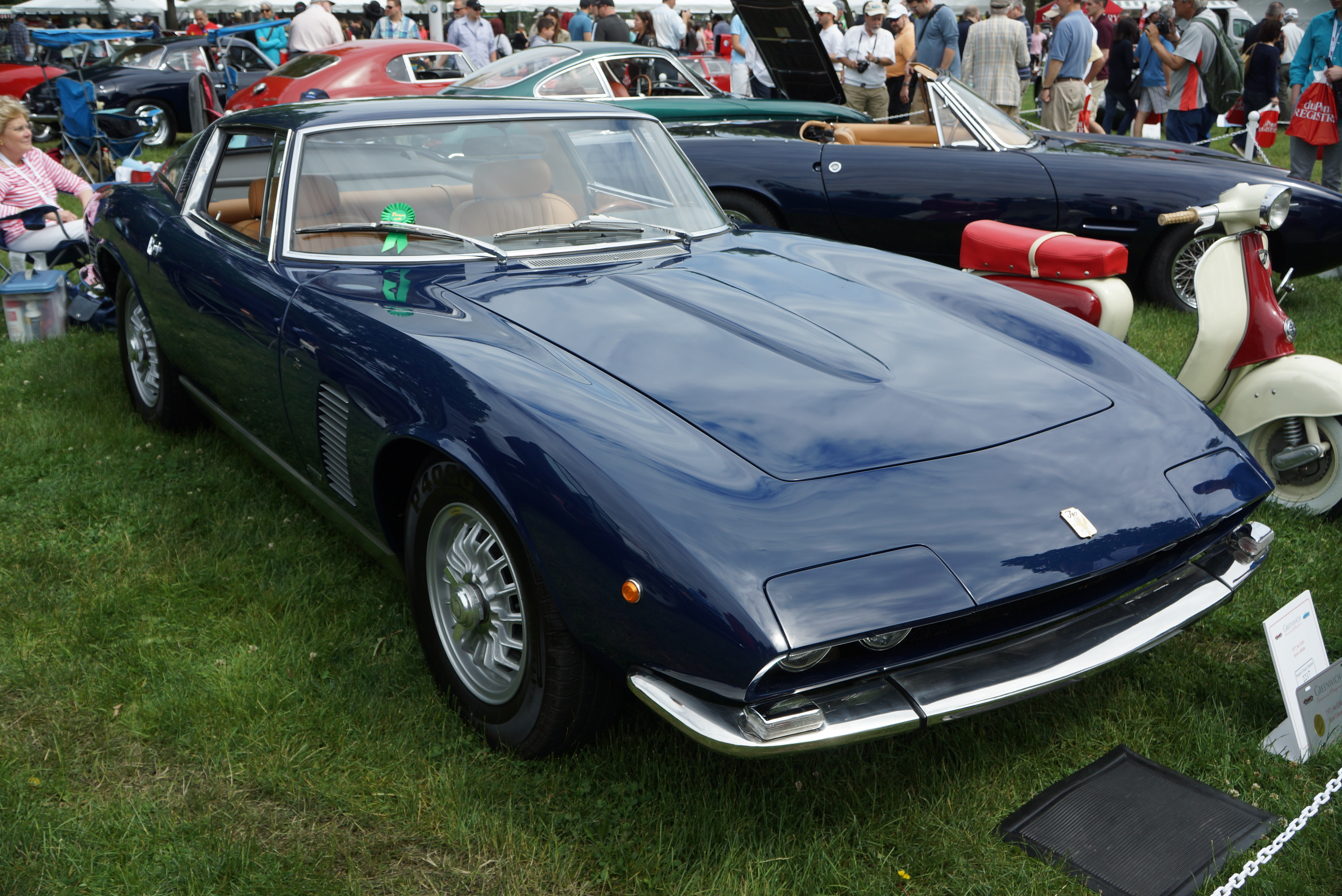
Lamborghini Islero
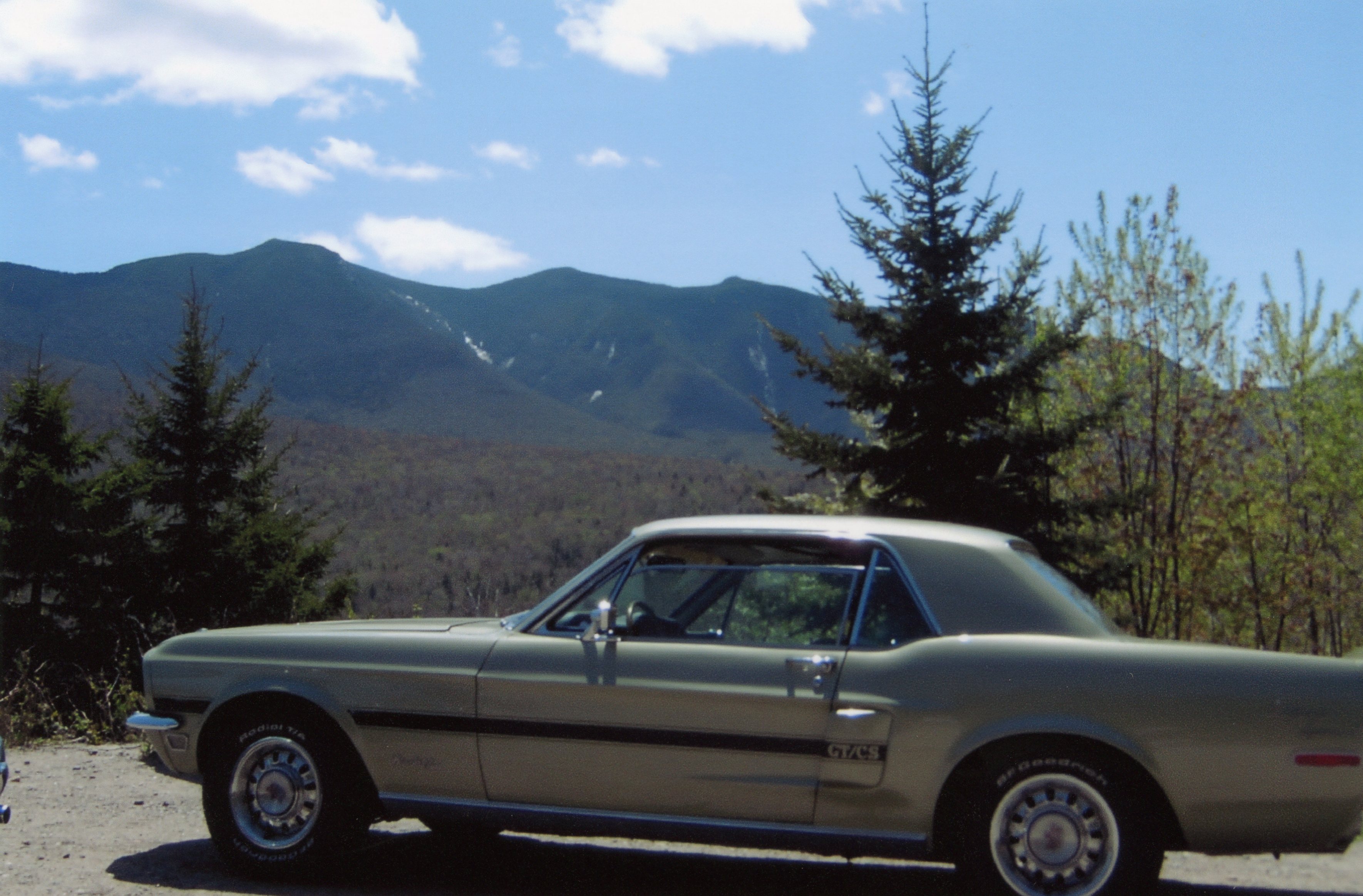
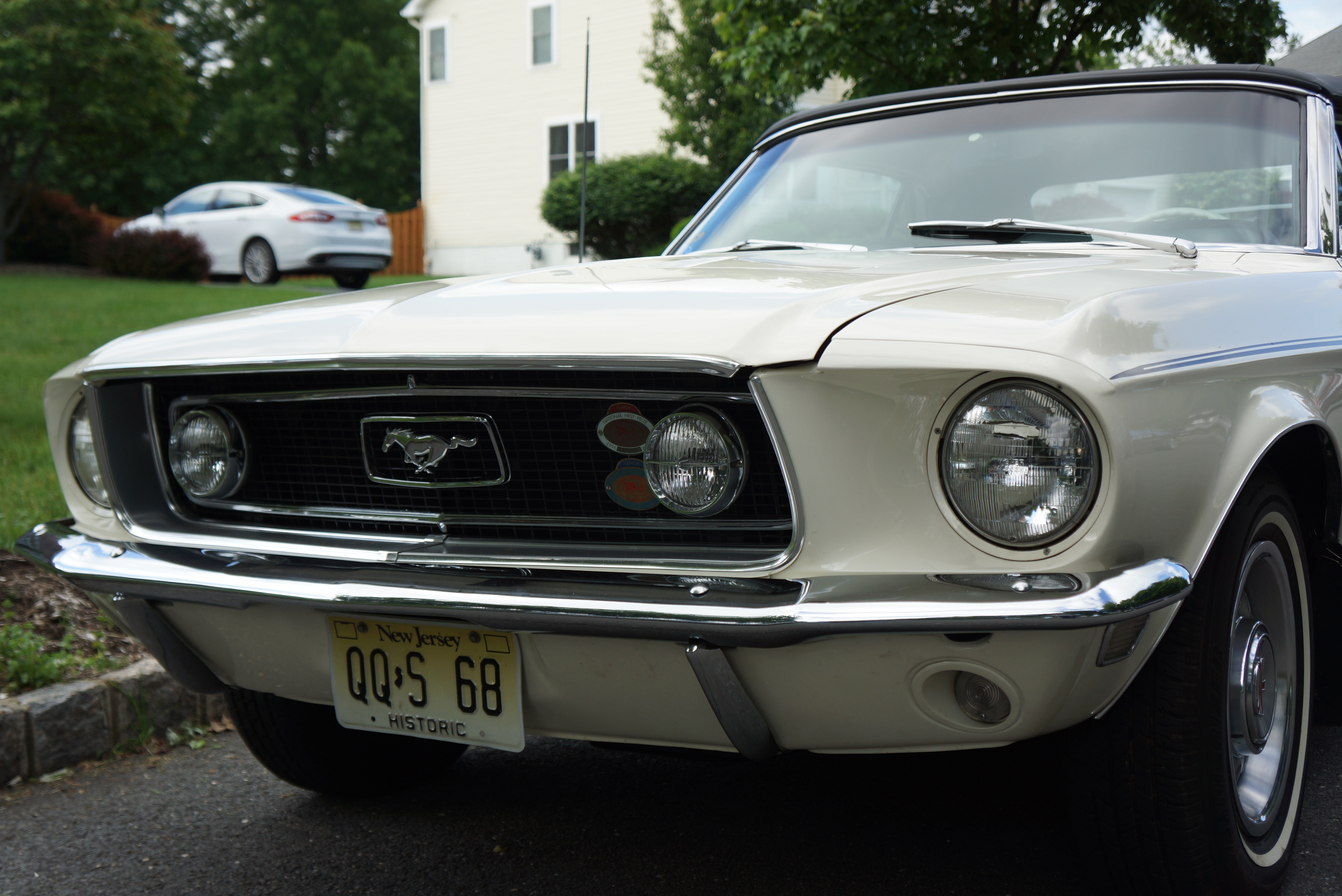
Mustang poses in the White Mountains of NH
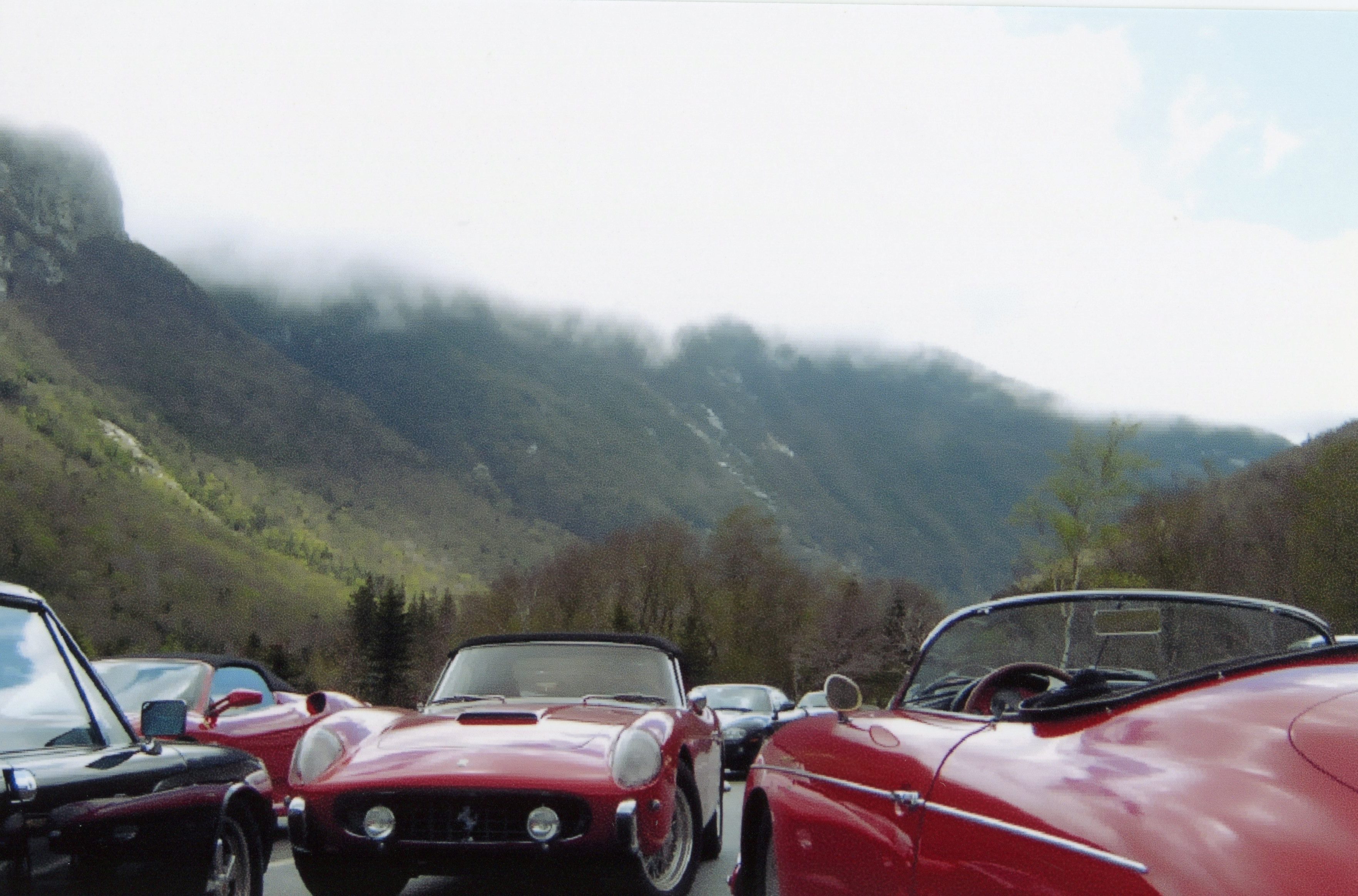
Mist and fog add ethereal glow to rally car gathering
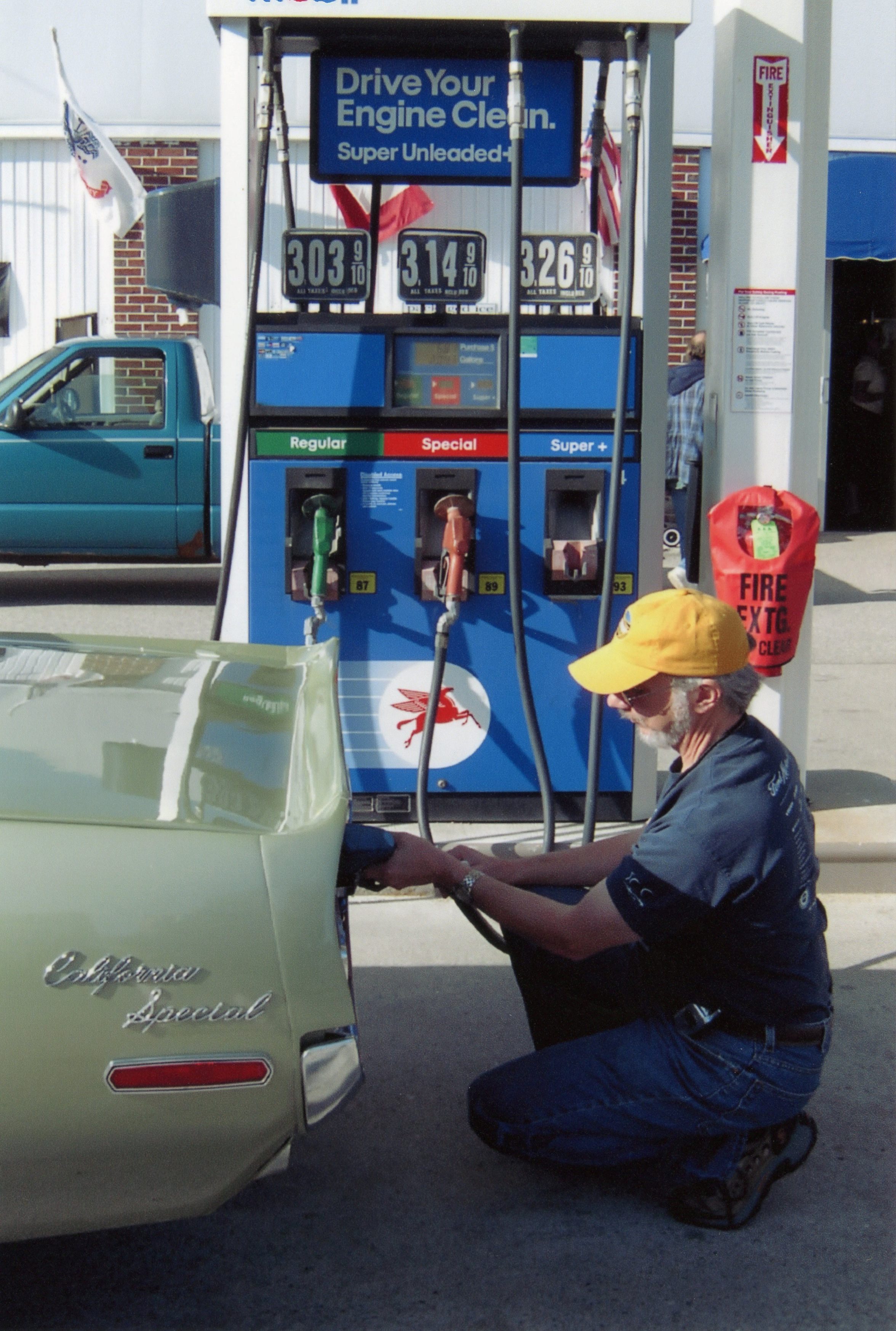
Steve feeds pony its high-test hay
Mustang on lawn with rally sub-group
Cal Special and Islero take deserved break
As always, wash stations were set up behind hotel parking lots
License plate frame honors original selling dealer
Moose collisions especially dangerous in 50-year-old European cabriolets
The event was too traumatizing to even consider documenting it via photography. Besides, there was a deadline to meet.
It was May of 2007, and to my great delight, rally brother Steve and I were once again registered to drive in the New England 1000 classic car rally. This would be our second time using my ’68 Mustang as the rally car, and our fifth event together as co-drivers and co-navigators.
The previous month, I had again shown my car in the Garden State Region Mustang Club’s annual all-Ford car show. Driving it to the show and back proved that it was in great shape. There was little to do to prep it for the rally other than check its vitals, an easy enough task on a ‘60s-era American car.
My ’68 GT/CS at the GSRMC car show, April 2007
One thing bugged me. It was like an itch I needed to scratch.
Some previous owner, most likely as a repair, had replaced the door lock cylinders. They worked fine. The issue was that I had 3 different keys for the car: one for the doors, one for the ignition, and one for the trunk. The factory gave you TWO keys: the same key was supposed to operate the door locks and the ignition switch.
Every one of the 19 Mustang parts catalogs I had showed new sets of ignition and door lock cylinders for sale. It looked easy enough to do. Best of all, when I was ready to give Steve a set of keys to hang onto for the rally, he’d only have two. As would I. I placed the order.
The only time available for me to do the job was the day before our departure. The door lock cylinders went in first. While I had the door panels off, I did a quick adjust-and-lube of the window regulators and channels. On to the ignition switch.
The instructions said that I needed to insert the existing key into the ignition, and use a paper clip in an access hole to release an internal catch. Once the paper clip was in, it said, turn the key, and pull outward.
I did all the above. The ignition cylinder came right out. At the same time, I saw a puff of talcum powder emanating from the switch area.
It wasn’t powder.
It was smoke.
My car’s wiring harness was on fire.
It took about 30 seconds for me to run into the garage, grab a ½” wrench, and disconnect the negative battery cable (the hood, thankfully, was already open). The smoking stopped.
WHAT in creation had happened?
Two observations: one, in re-reading the instructions, I had clearly overlooked the line which stated “disconnect the battery before proceeding”. Two, it was very typical on a car like this Mustang for the manufacturer to run an unfused B+ wire from the battery directly to the ignition.
Something had shorted out. I didn’t know what, and at that moment, I didn’t need to know. There were fewer than 24 hours before we would be departing for the rally. Frantically, I began to remove the engine compartment wiring harness. The sheathing had melted, but there had been no open flame. With the harness on the garage floor, I cut it open.
Exactly one wire was damaged, the feed to the ignition. All other wires were fine. Racing off to the auto parts store, I bought all the 14-gauge wire they had. Working through the afternoon, evening, and into the following morning, I was able to replace the one damaged wire, re-wrap the harness, and reinstall it in the car.
The car started up without drama (which is to say, without smoke).
Steve arrived at my house and endured the telling of the tale. We left, a little later than planned, and headed for this year’s starting point, the Woodstock Inn in Woodstock VT. Everything seemed to be working well with the car.
On the NYS Thruway, we pulled into a multi-level parking garage to make a quick pit stop. It was dark in the garage, so I turned on the car’s headlights.
They didn’t work.
We checked turn signal and brake lights, which did operate. But we had no headlights or tail lights. Given our tardy departure, we were almost guaranteed to arrive in Woodstock after dark. We hustled as quickly as we dared push the car, which is to say, with its 390 V8, pretty quickly.
We pulled into the Woodstock Inn just as the sky turned from twilight to black. We made it.
I normally stick to wine or beer on the occasions that I do have an alcoholic drink, but I believe I had a scotch on the rocks that first evening in Woodstock.
And how did we do on the rally? That’s for a future post.
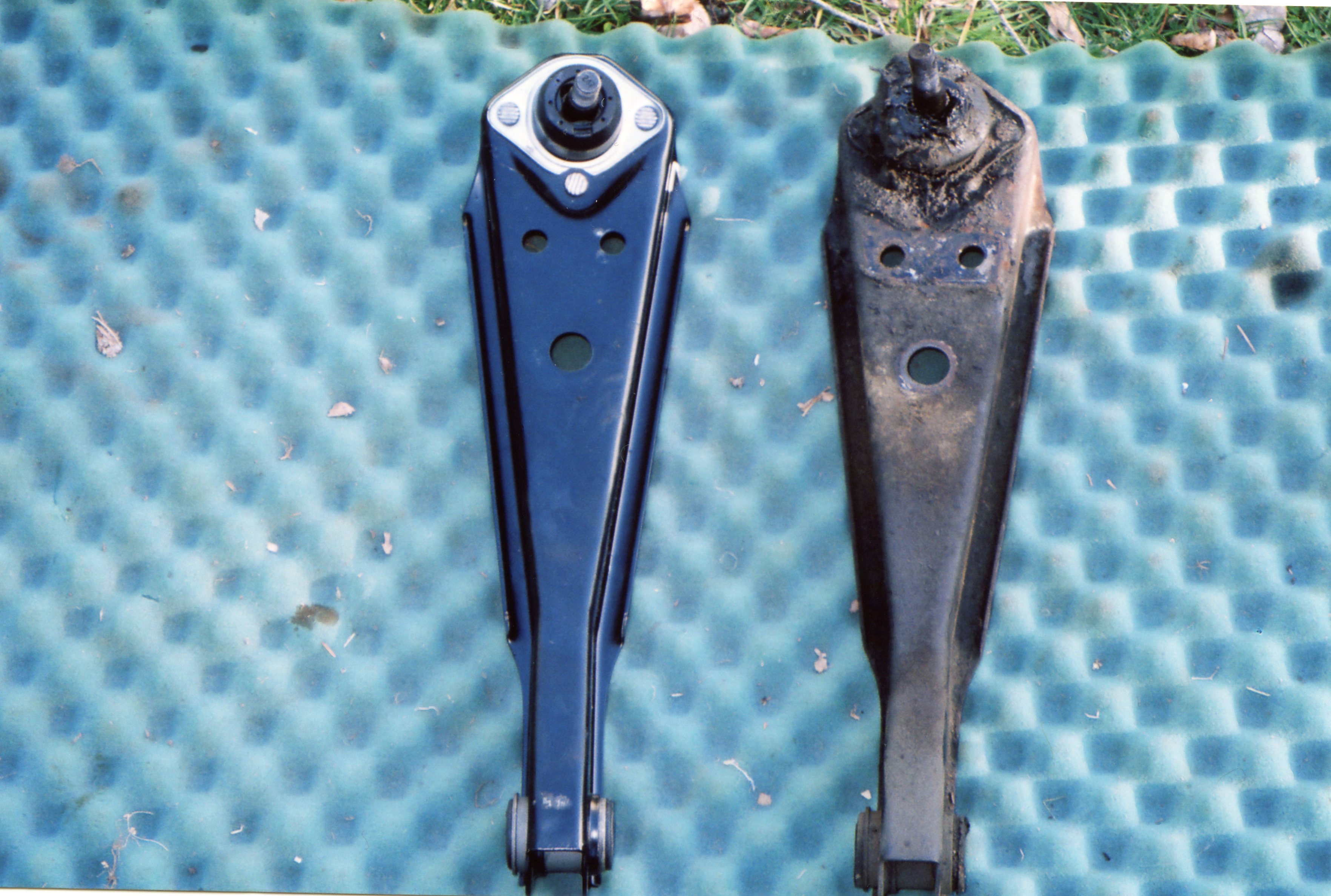
Before the 2006 driving season commenced, I needed to do something about the sloppiness in the car’s front end. While I held no illusions that this car would ever steer like a rack-and-pinion equipped sports car, the amount of freeplay in the steering seemed excessive, even by 1960s American car standards. A check of ball joints and bushings found enough wear to warrant the installation of new upper and lower control arms. (I opted to forego the Shelby-invented trick of relocating the upper control arms by one inch, effectively lowering the front suspension.) With the new suspension pieces bolted up, I happily observed that the dead spot at the top of the wheel was reduced by half.
Upper control arms, new & old
Lower arms w/ball joints
The Garden State Region Mustang Club held its annual car show at a local Ford dealer in April of each year. In spite of poor weather, my car was there, mixed in among ponies both old and new.
My GT/CS takes its place among its siblings (note new 2006 yellow convertible on ramps)
In July, we joined the Mustang Club of New England at a show in New Hampshire. It was 95 degrees on Route 95, but that big 390 kept its cool. It was neat to discover at least one other California Special in attendance, a pale yellow car restored to a condition several levels better than mine. I took copious notes.
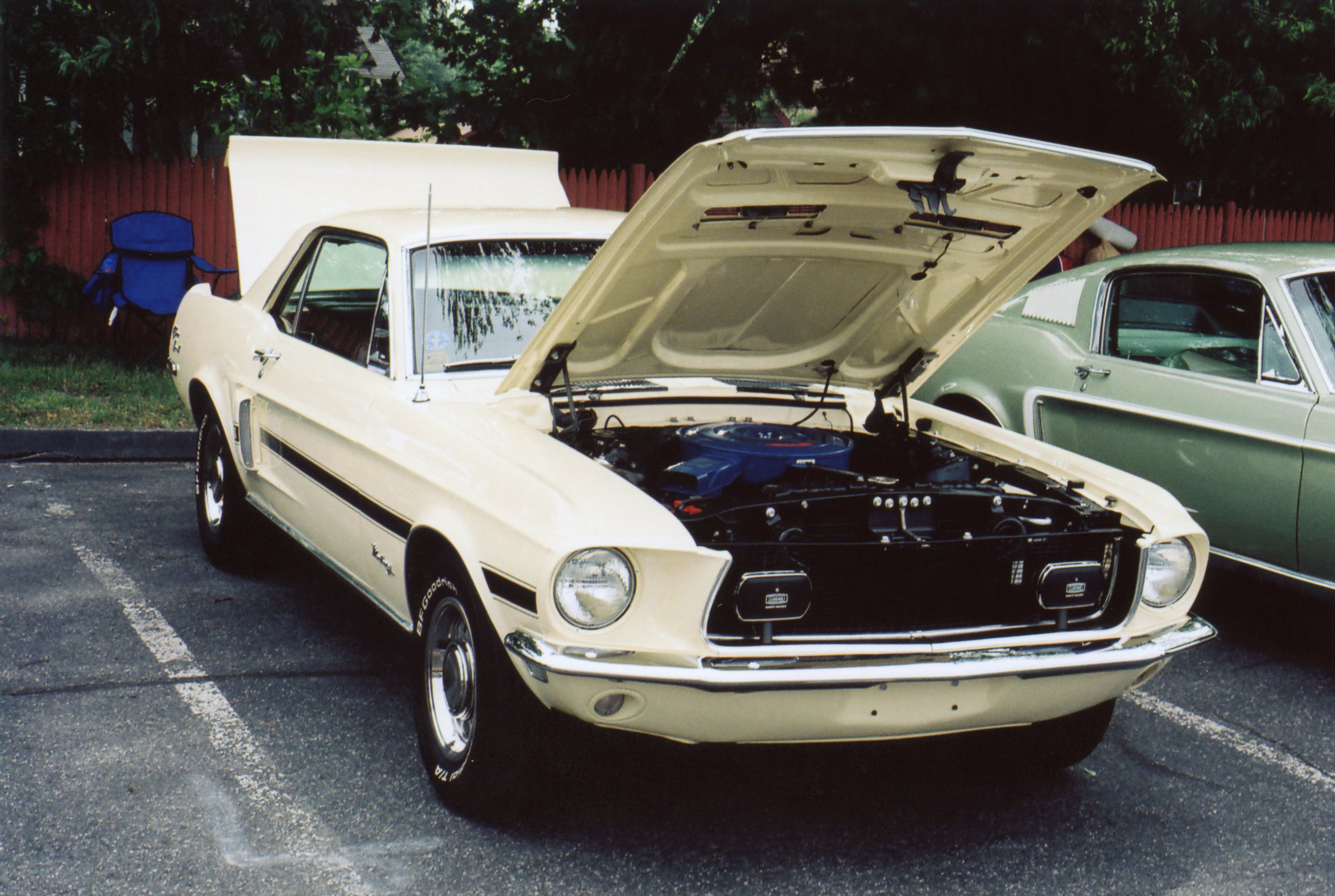
Hood up, ready for judges
For once, another California Special was at the same show as me
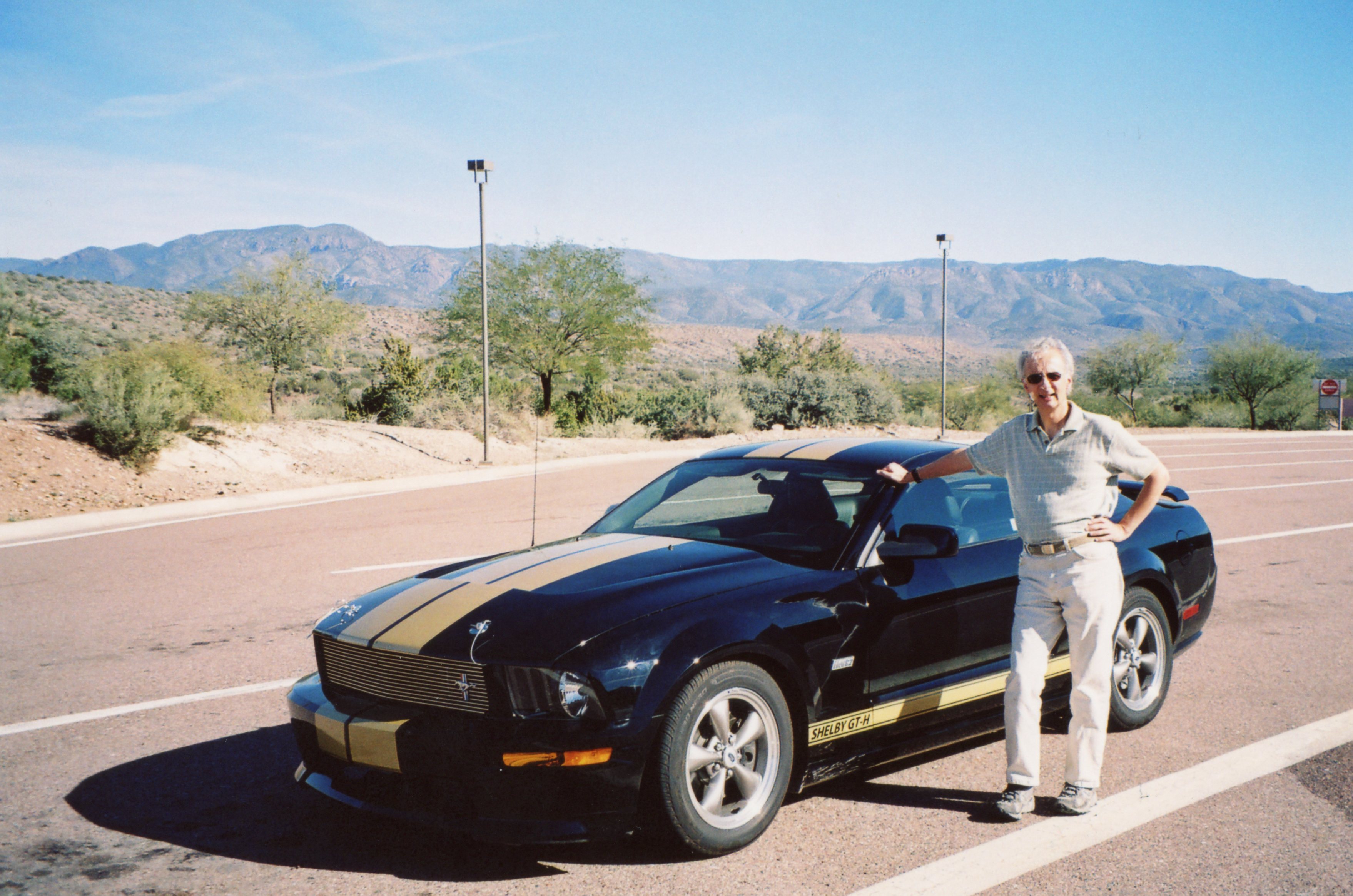
In the fall, my wife and I had a Mustang adventure of a quite different nature. We decided to take a week’s vacation in Arizona. As I made the travel plans and investigated rental choices, I noted that Hertz was now renting the Shelby Mustang GT-H, a throwback to the original Shelby Mustang rent-a-racers of the 1960s. I signed up for one.
Upon my arrival at the Hertz counter in Phoenix, I was not prepared for the strict lecture coming from the rental agency employee in delivering the car to me. He said in effect: “I’m going to show you every Shelby-specific item on this car, from the hood pins, to the Shelby-signed plates, to the guy wire securing the engine to the body (this to prevent, yes, engine swaps). You must sign here to verify that all these Shelby components are present, and you are liable if the car is returned with any of these missing!” Holy chicken farmer. I was afraid to leave the car in the hotel parking lot!
This was my first time driving this current-generation Mustang
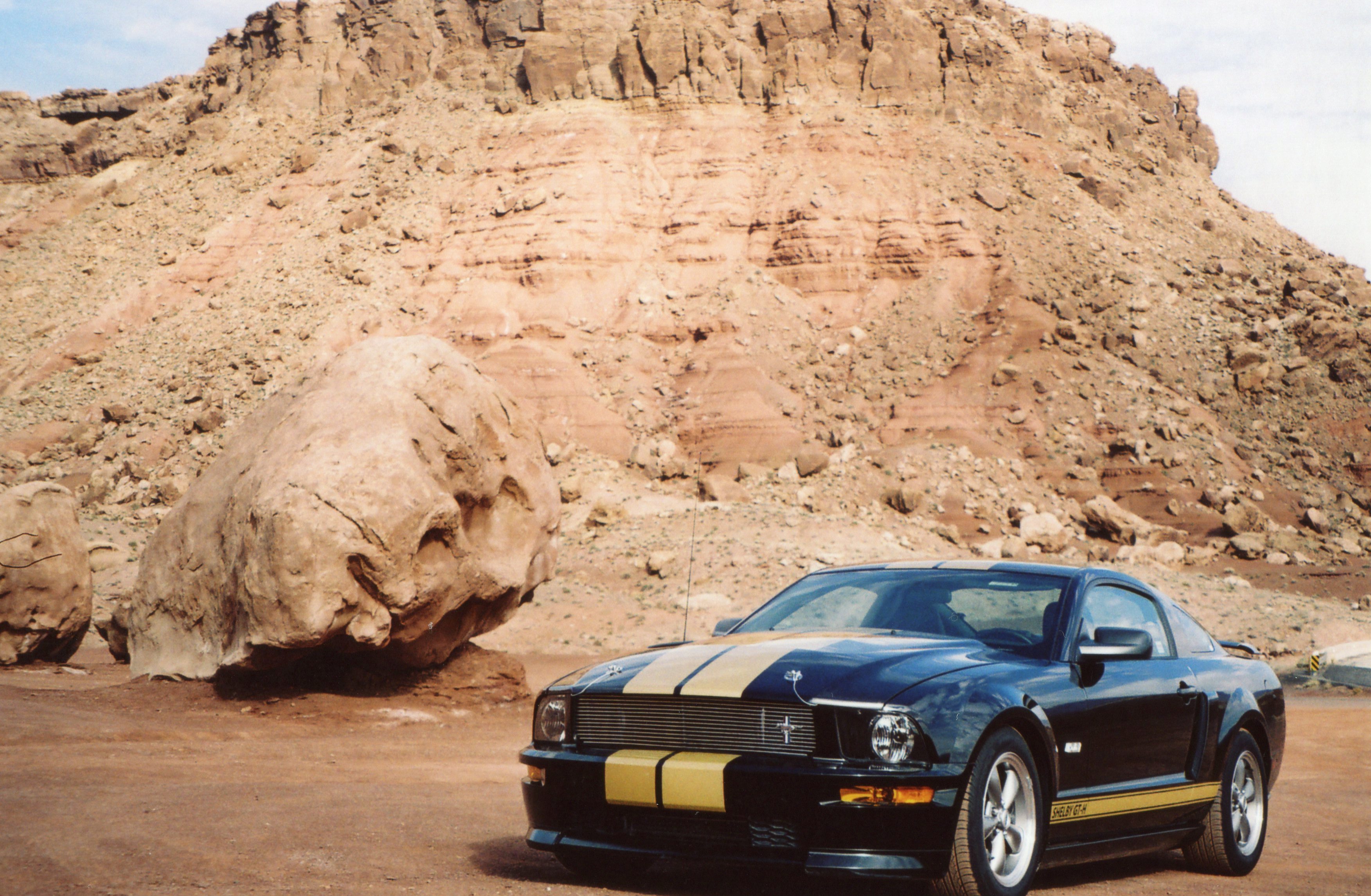
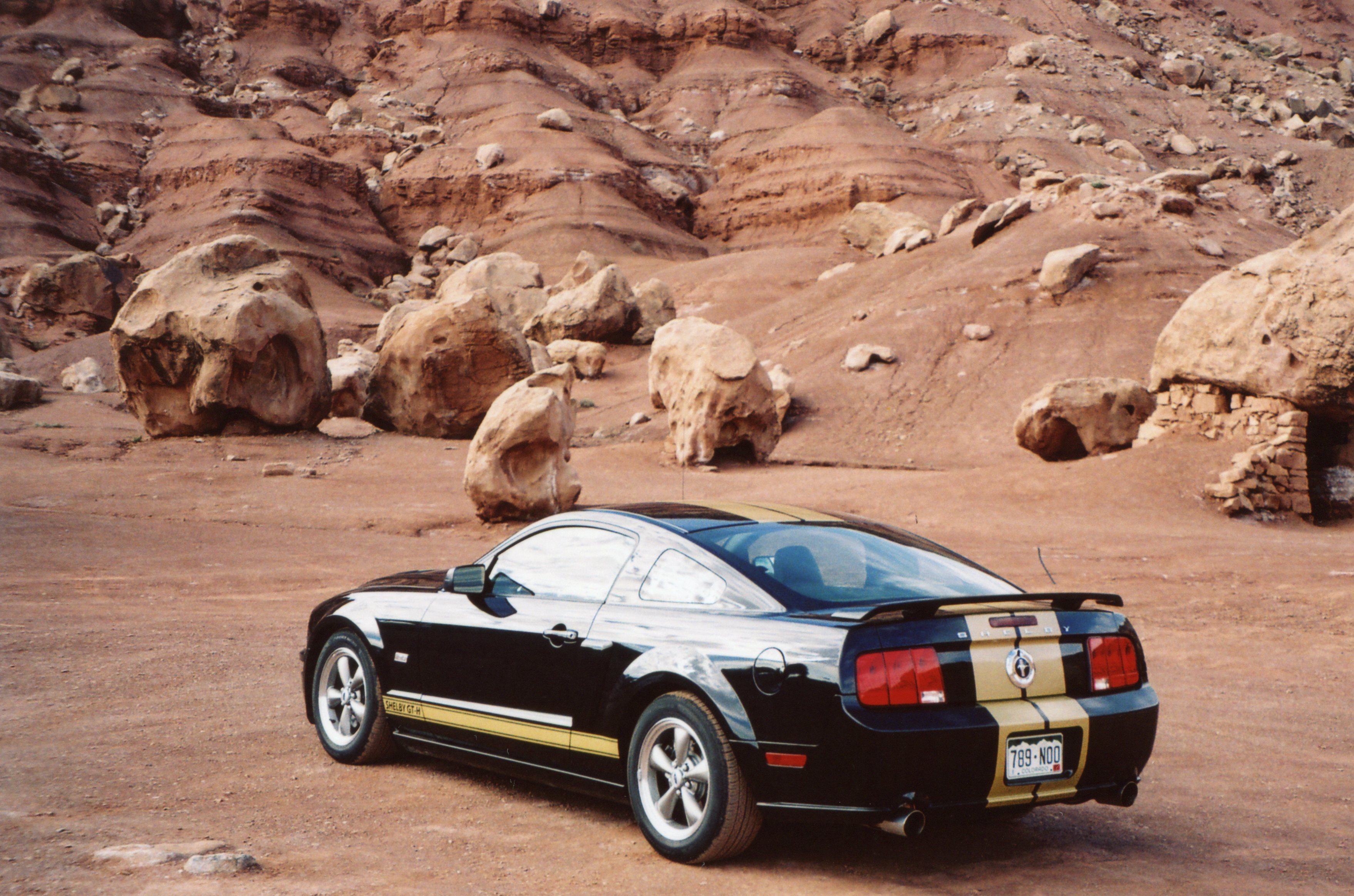
The car looked sharp in its black-and-gold livery, and was an absolute blast to drive. Even with an automatic, the fun factor was off the scale. The car made all the right sounds, and the steering, brakes, and handling were eons above my ’68, no surprise given the almost 40-year spread between the two Mustangs. For the first time in decades of renting cars, I didn’t want to return the rental.
We found a scenic rest area for photos
I lucked out; the light was just right for this picture
By the end of 2006, Steve and I were already talking about repeating the use of the ‘Stang in the 2007 NE 1000. I was game. The car was up to it, but there were still a few things on my punch list to attend to.
The 2017 edition of the Greenwich (CT) Concours d’Elegance marked the 22nd consecutive year for this prestigious event held every June in Roger Sherman Baldwin Park, situated along the harbor in Long Island Sound. As has been the custom, the two-day show features domestic makes on Saturday, and imports on Sunday. Compared to other shows in the Northeast, the Greenwich show stands out for its garden-like setting; its manageable size of about 120 cars; and its high standard of presenting top-notch automobiles.
A longstanding rule for the Wennerstroms, family chairpersons of the Concours, is that any car shown at Greenwich must wait four years for a repeat showing. Your scribe showed his 1967 Alfa Romeo here in 2013, so the car became eligible again this year. Still, one must “apply” in order to be accepted, and my vehicle was readily granted entry.
It was an easy 1.5 hour ride on Sunday morning to the park, with a brief stop along the way to pick up my friend Enzo, making his first foray to this Concours. Unlike almost every other show, where attendees pay an entry fee, Greenwich accepts entrants without charge, AND, provides each owner plus a guest with breakfast, lunch, wine, and a harbor boat ride. The gate fee (which I understood to be $40 this year) supplies the cash for the goodies, as well as a substantial donation for the Americares charity.
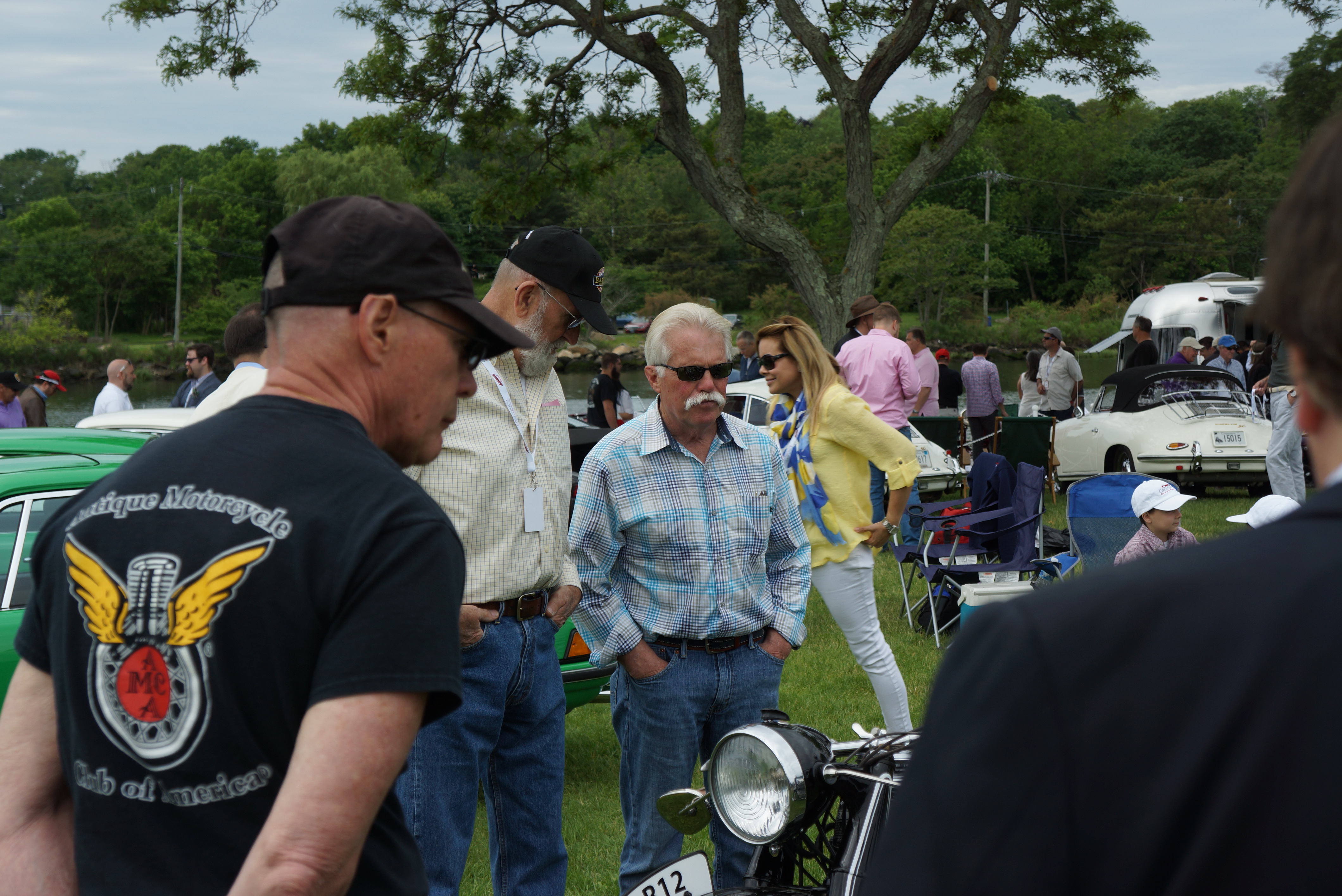
Wayne Carini wears shades, goes undetected in Greenwich crowd
Another nicety: cars are arranged in circles, facing outwards, making for a unique and accessible way for attendees to view the wares. We were in Circle G, which I anointed the Etceterini Circle. We were kept company by Swedish, Czech, French, Japanese, German, and other Italian cars (in other words, “cars which did not otherwise easily fit into other circles”).
Other groupings were large enough to represent a single marque: Ferrari, Porsche, Bugatti. British cars (Jaguar, Aston Martin, MG) had their own circle, as did high-end Italians other than Ferrari (Maserati, Lamborghini, Iso). In fairness to the organizers, groupings depend so much on numbers and makes of vehicles, and only so many cars can fit into one “group”. The good news is, the show is small enough that you can walk around and see everything in a few hours.
Two other unique elements: first, new cars are on display. Vehicle manufacturers and local dealers lure the crowds with beautiful new machinery. This year, we were treated to the sights of BMW i8s, Alfa Romeo Stelvios, Maserati Levantes, plus Teslas, McLarens, Lincolns and Cadillacs.
Second, Bonhams held a classic car auction on-site on Sunday, about the sixth or seventh consecutive year for them to be at Greenwich. A large tent is erected at one corner of the park to hold all the auction vehicles. The trend toward barn-finds continues. We saw a Series I Jaguar E-Type roadster which, based on a windshield registration decal, was last on the road in 1975. The car appeared to have been stored top-down in a dusty barn since then. At the other extreme, there were some beautifully-restored vehicles which deserved top dollar. A limiting factor is that the tent precludes the possibility of driving cars across the block. Better do your homework before you raise that paddle.
Rupert Banner of Bonhams works the room, er, tent
While the day dawned sunny and dry, the forecast promised wetness by early afternoon, and unfortunately, said forecast was accurate. By 2pm, a gentle shower enveloped the field, and we headed out. While there was no award for the Alfa this year, the car continued to draw its fans, most of who cannot believe that they are looking at an unrestored 50-year-old car with original paint. Its owner will maintain that paint as best he can in hopes of returning to Greenwich in 2021.
GERMAN
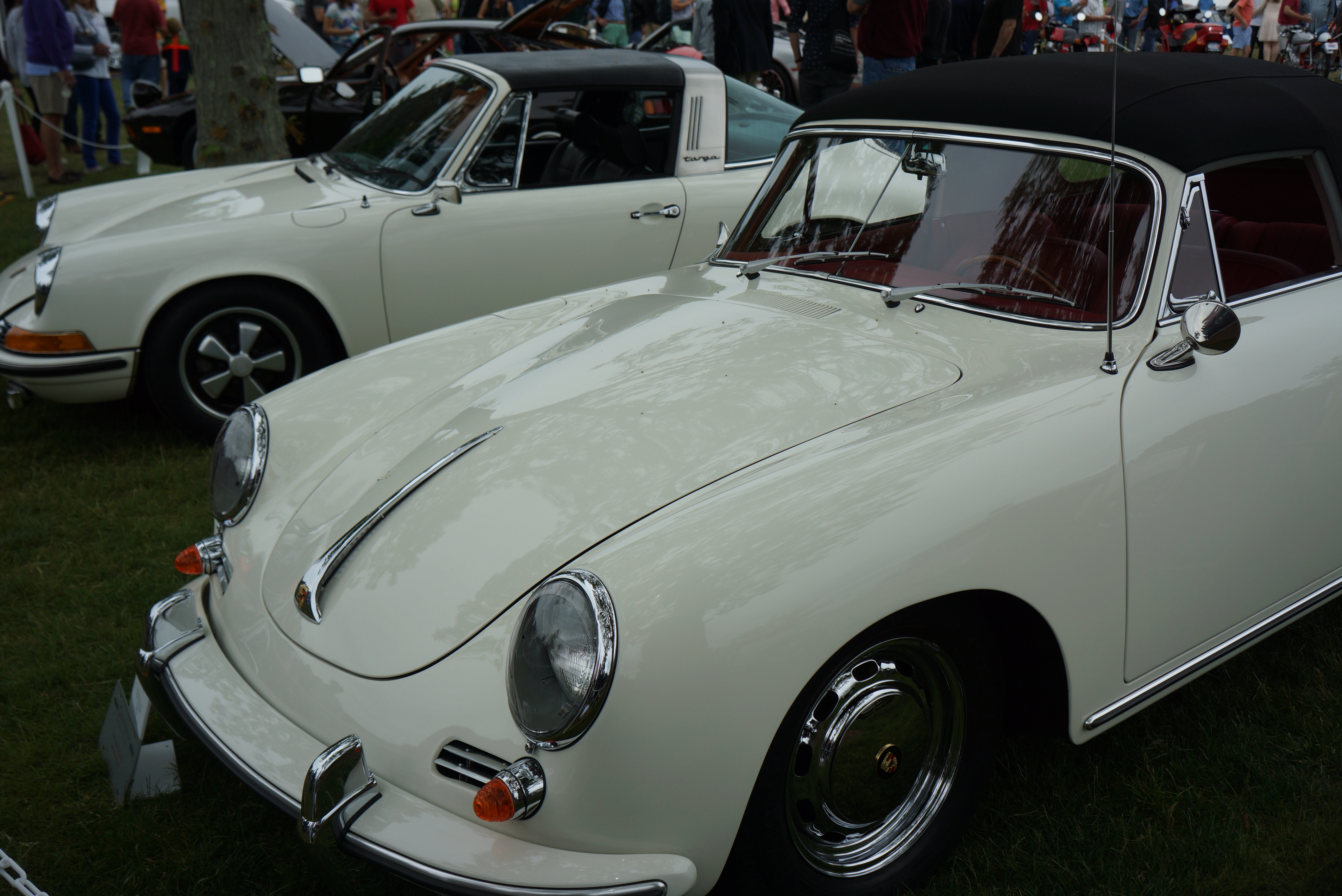
White Porsches, 356 & 911
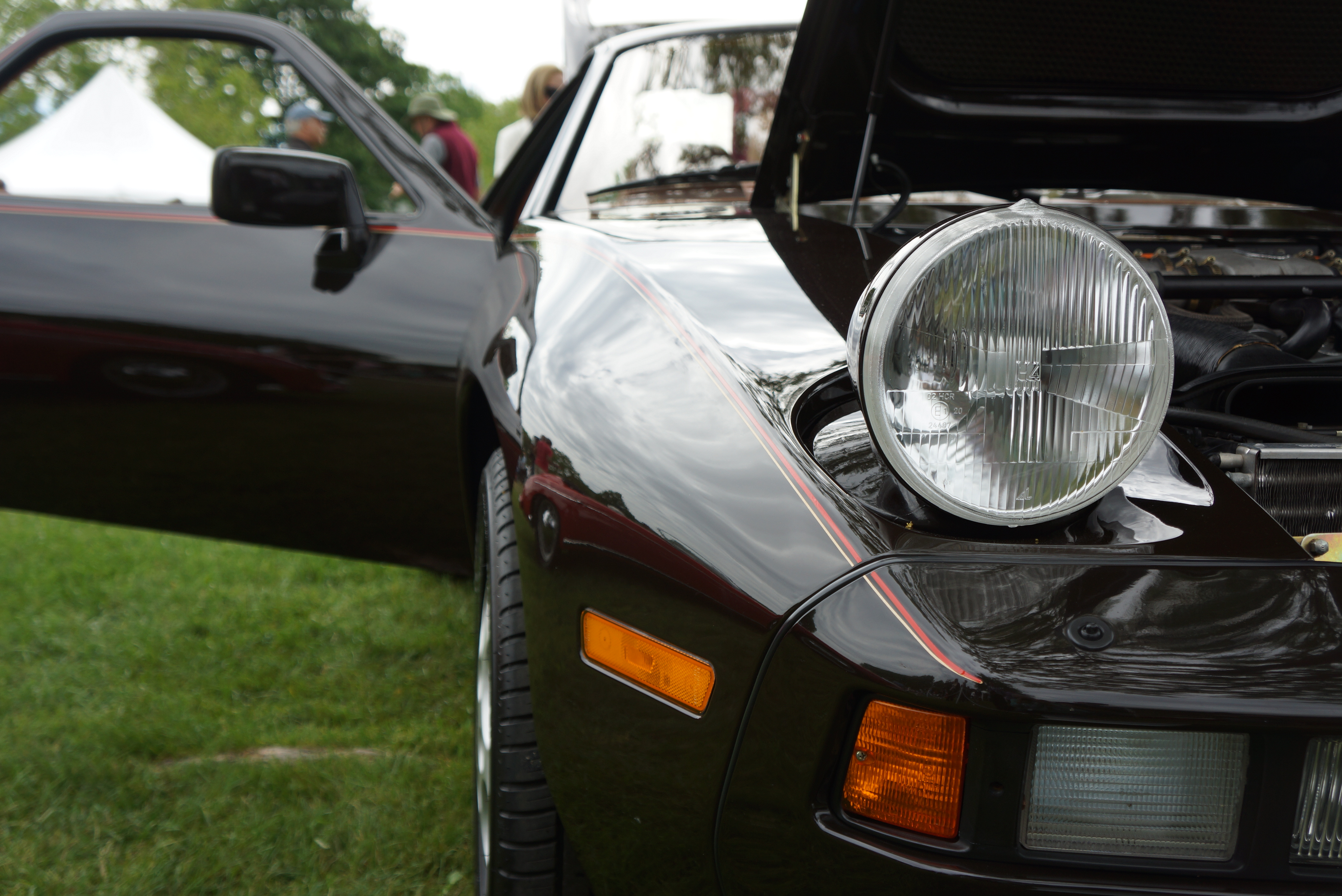
Porsche 928 with its apertures open
Split-window VW
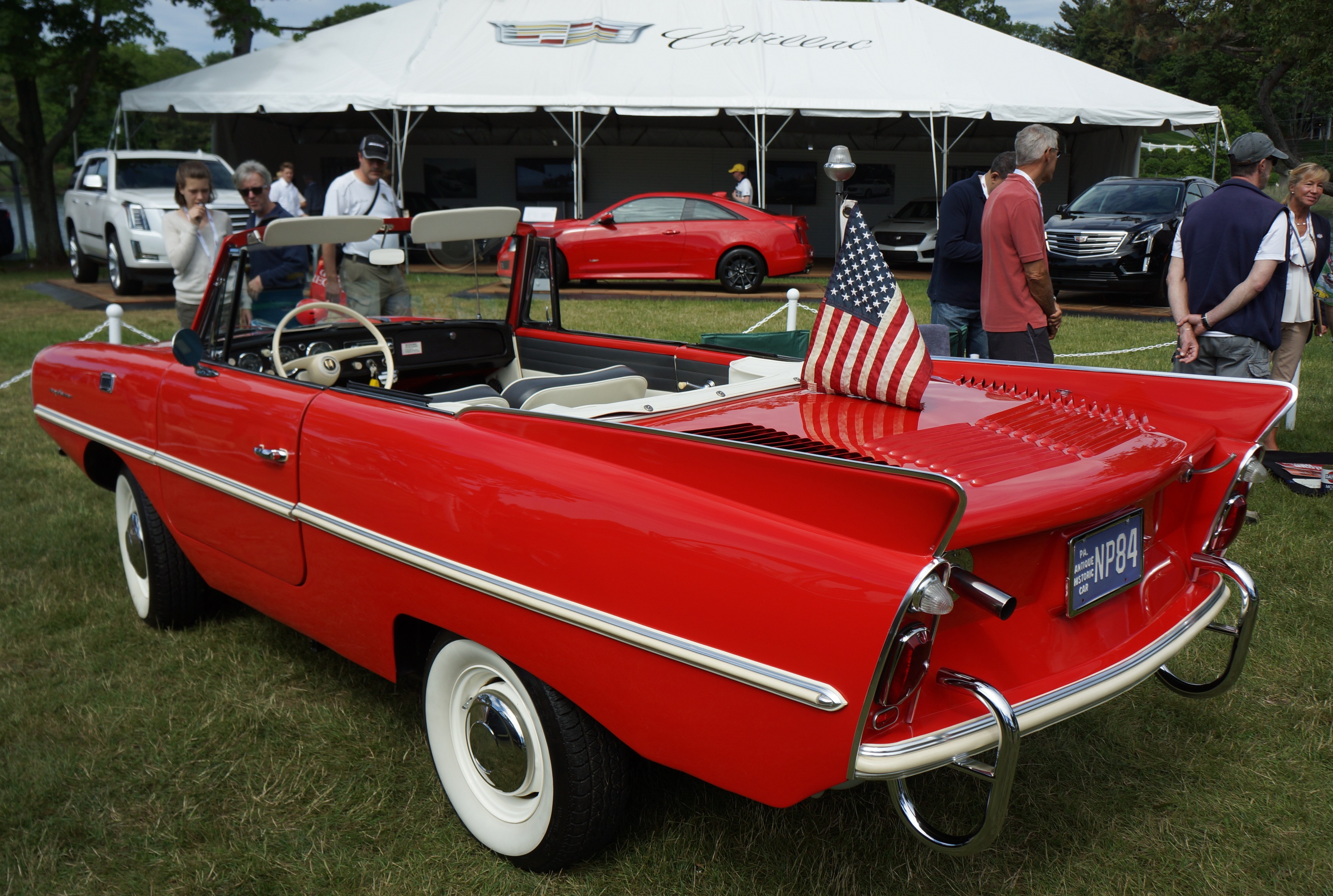
Amphicar
BRITISH
Jaguar XK-120 Coupe
Jaguar XK-140
Jaguar XK-150
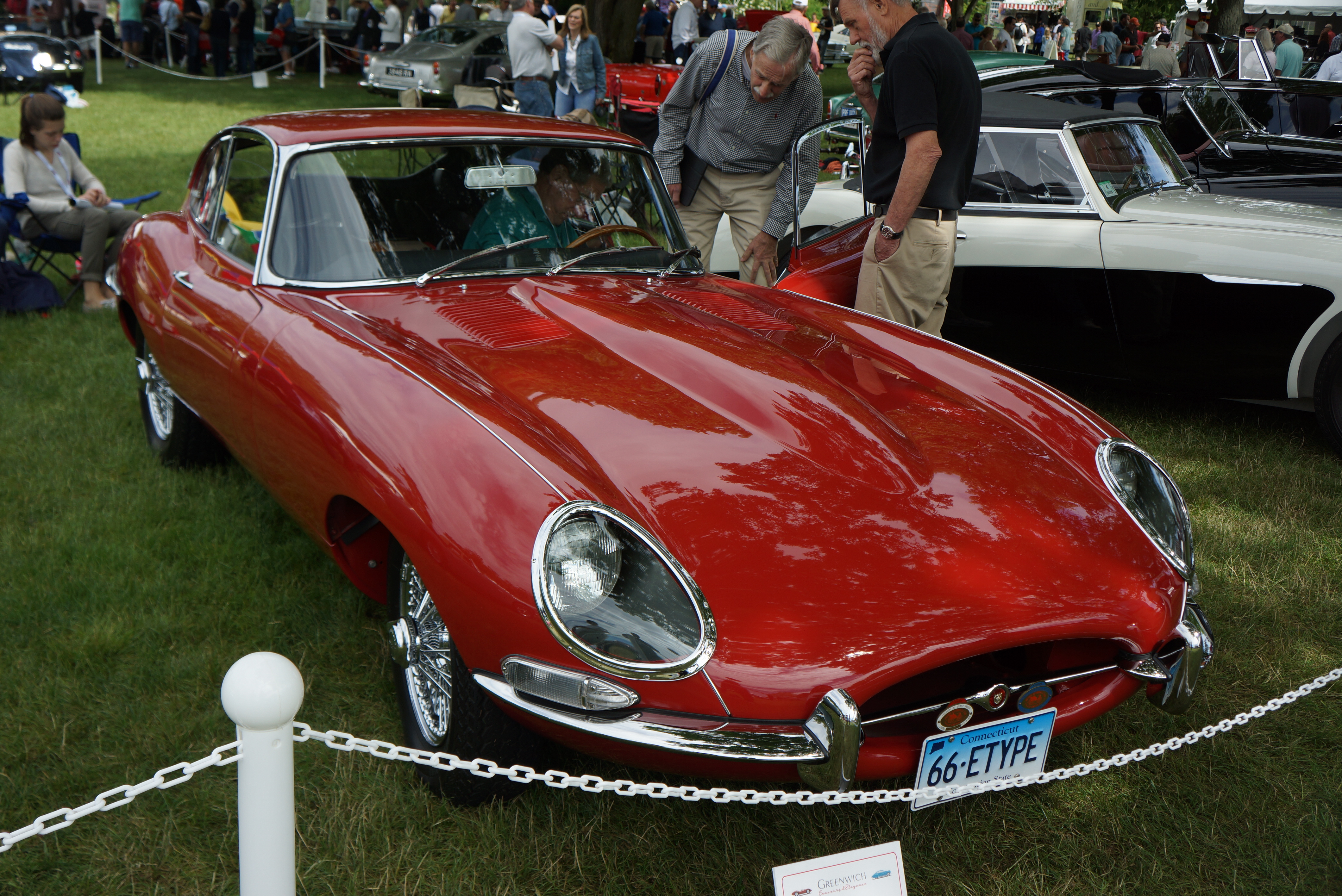
Jaguar E-Type
MGA
Aston Martin DB-4
FRENCH
The Bugatti Owner’s Club showed up in force, resulting in a significant number (a dozen or more) of these rare French cars on display together. Given their racing history, it is also not surprising to see a higher percentage of unrestored original cars.
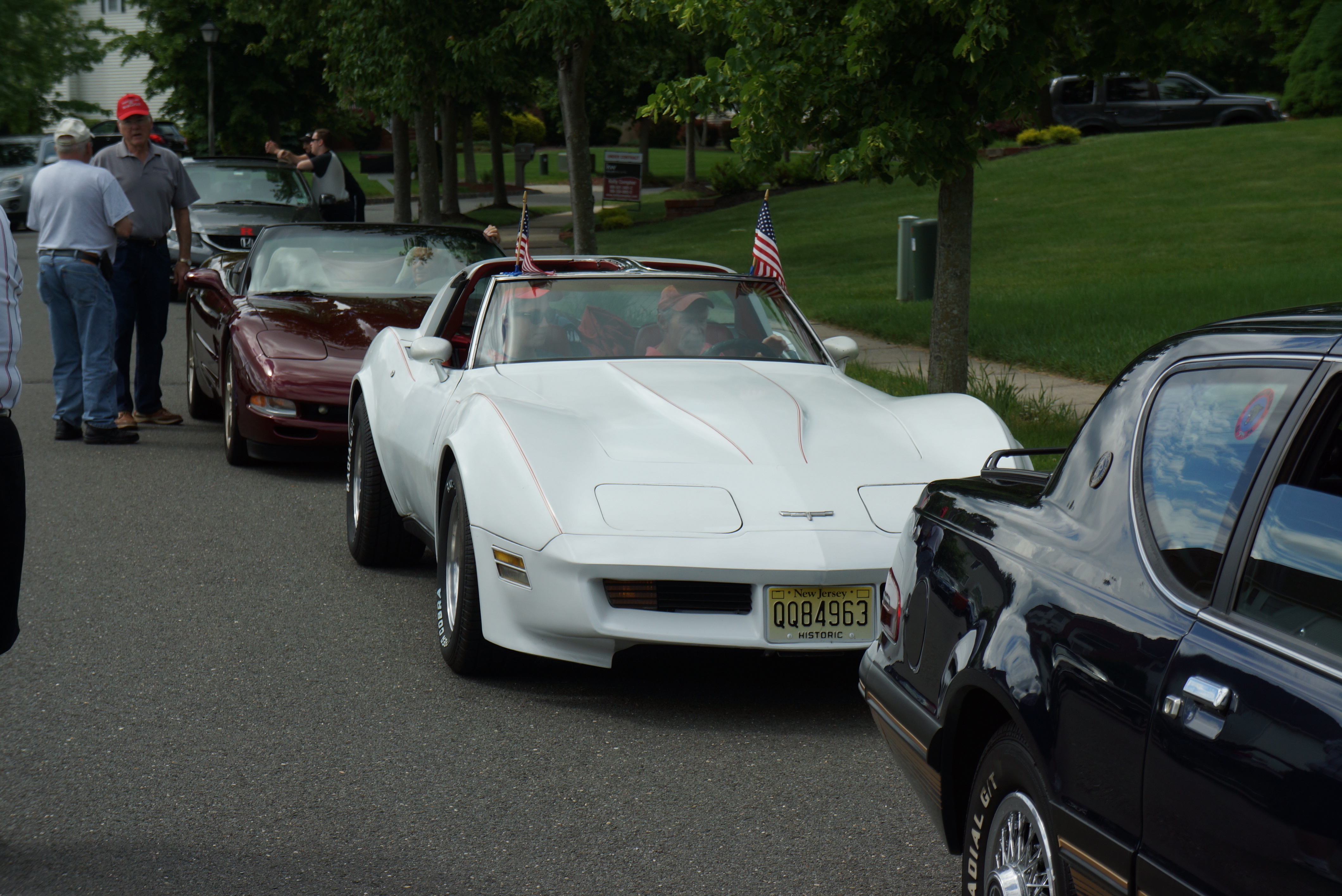
The town of Hillsborough NJ held its annual Memorial Day parade on Saturday May 27, 2017. The day dawned sunny and warm, in spite of a forecast which predicted showers, and the turnout from the NJ Region of the AACA (Antique Automobile Club of America) was extensive and eclectic. The club has supported this parade for years, but this was the first time that your scribe was able to join in the festivities.
We were asked to convene by 9:30 a.m., with a planned kick-off at 10:30 a.m. Over 20 member-driven cars and trucks were in attendance, including a LaSalle, a Stevens-Dureya, numerous Corvettes, several ‘60s-era Pontiacs, the ubiquitous 1957 Chevy, two Model T Fords, two Mustangs, and a first-gen Monte Carlo. Among non-American makes were two Alfas and a rarely-seen Sunbeam Alpine GT hardtop.
In a unique approach, we were asked to arrange ourselves by vehicles’ decade (not exactly year order), so perhaps the multitudes lining the route could get a sense of automotive history parading by. We moved along at something less than 5 mph, tough on the clutch, but the throngs were appreciative of all the gleaming sheetmetal and chrome.
We probably drove 1.5 miles, and it was over. The cars dispersed, having fulfilled our civic duty for the weekend. It was a thrill to see happy smiling faces waving at you, even as one young man yelled out to me, “hey, is that a Jaguar?” I suppose I should have been complimented.
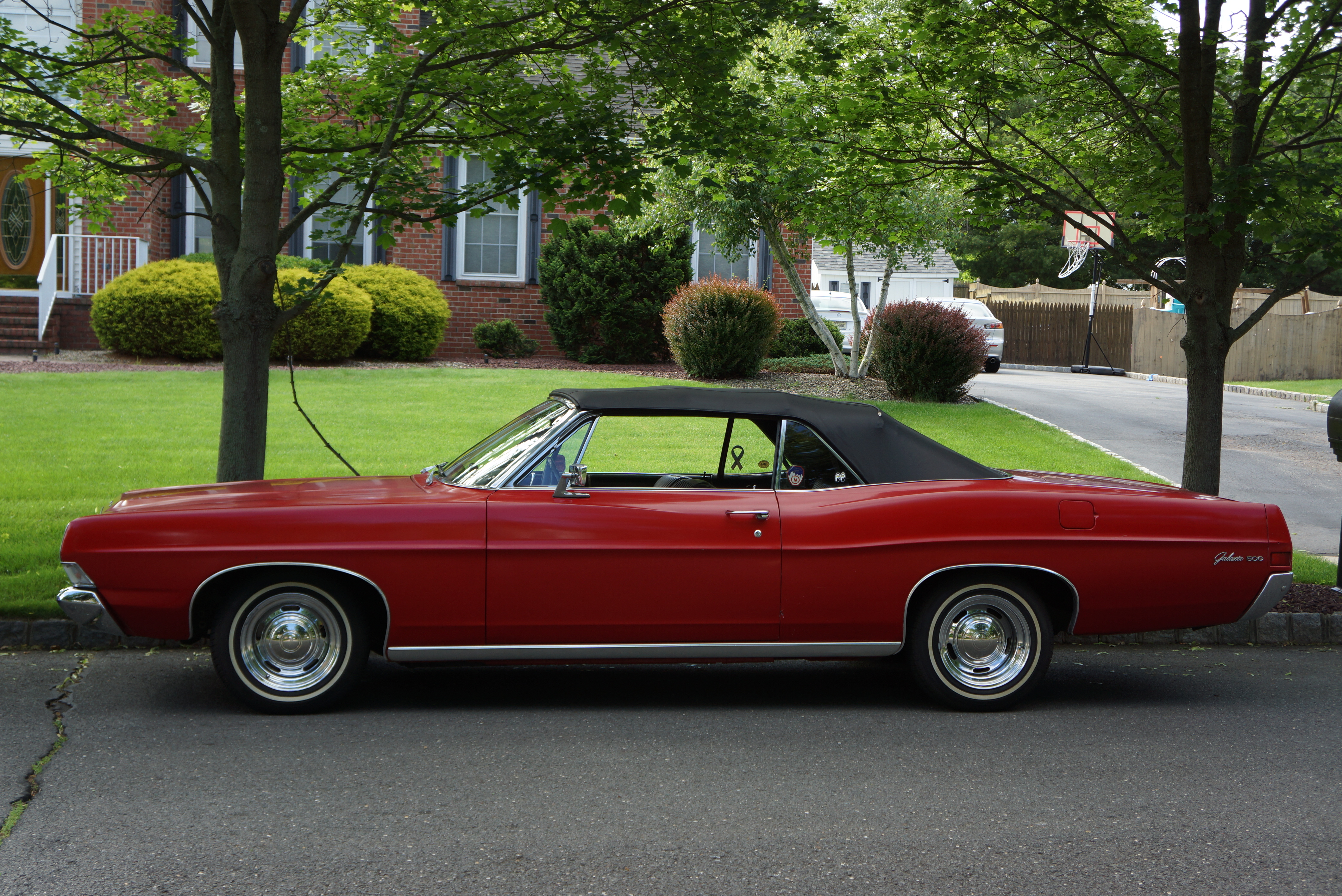
The New Jersey Region of the Antique Automobile Club of America held its annual car show as it always does, on the first Sunday in May, which this year was the 7th.
Last year, the show was moved to the Mennen Arena in Morristown NJ, so 2017 was only the club’s second time here, after being held in Florham Park for the last 5 or 6 decades.
While nowhere near the washout of 2016, this year still required participants and spectators alike to deal with cloudy and somewhat cool temperatures for this time of year. At least the promised rain held off until about an hour before the show was done. In spite of the threats, turnout was decent, with some unofficial estimates putting the vehicle count at close to 200 cars. Spectators turned out in decent numbers too.
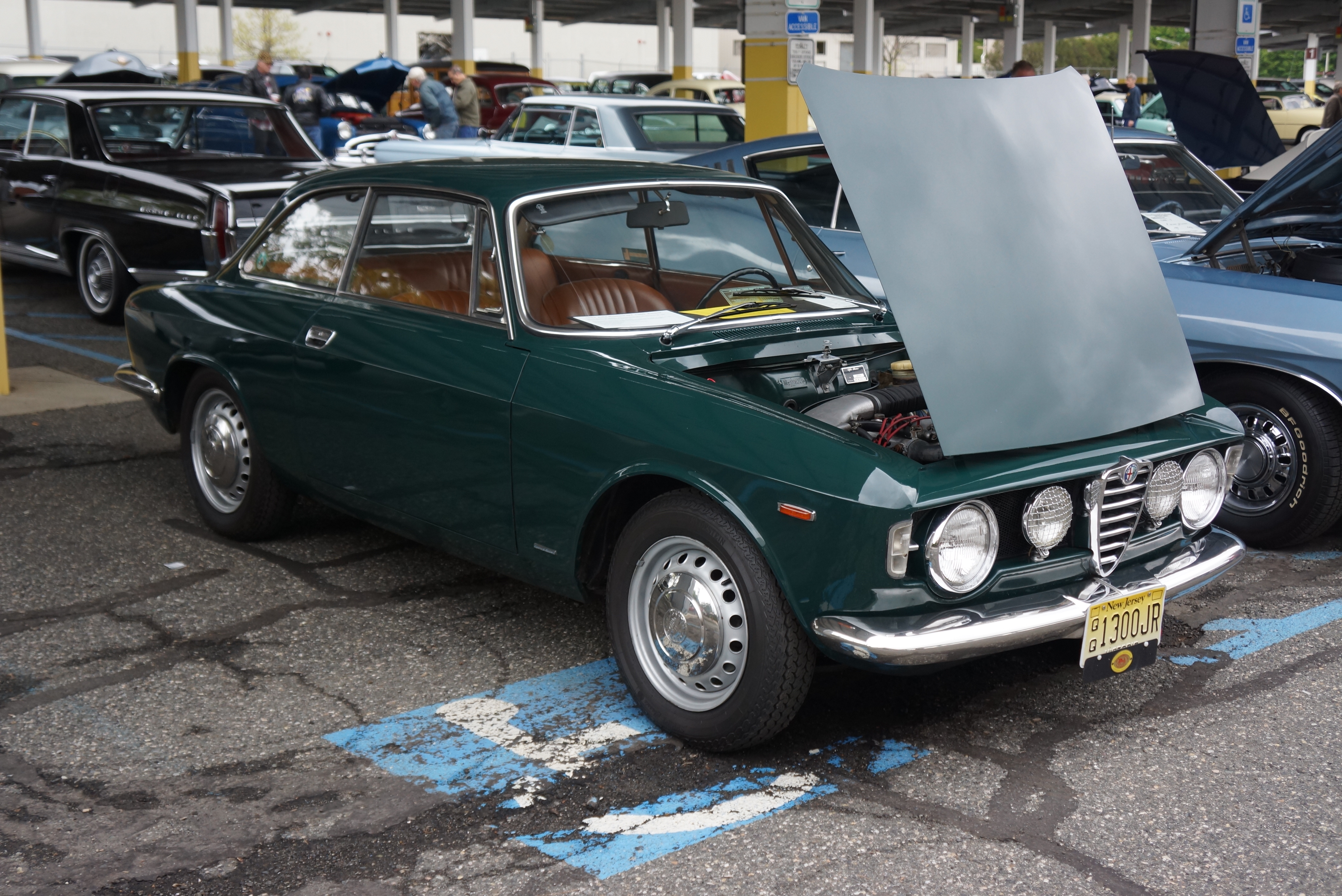
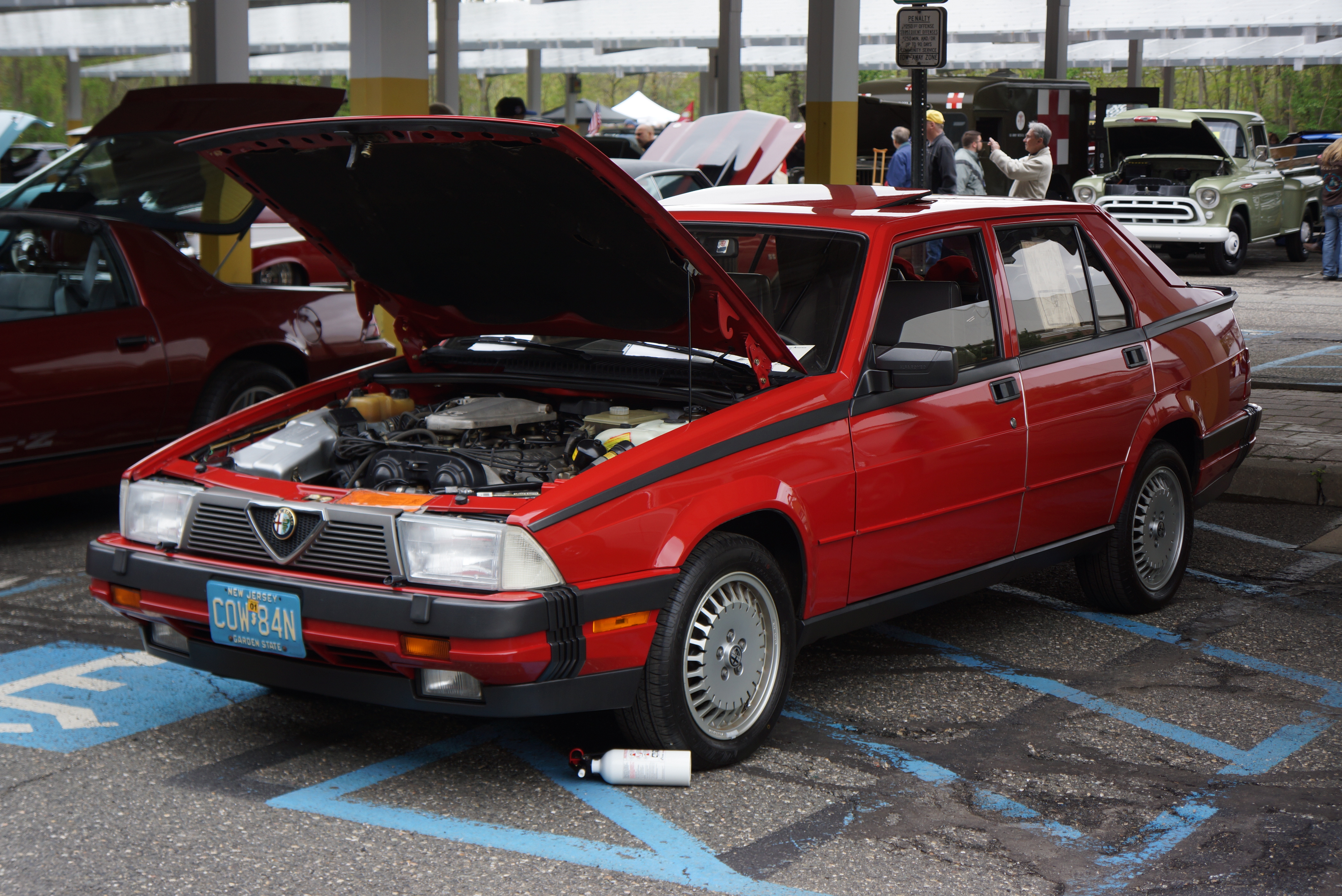
I was proud to have my Alfa Romeo, fresh from the AACA museum, on display, and was pleasantly surprised to see that it was one of three Alfas at the show, joined by a rare Euro-spec Nuova Giulia sedan, and a one-owner Milano. The Italian car feast was rounded out by a Lancia Fulvia coupe.
’67 Alfa GT 1300 Junior
’78 Alfa Nuova Giulia
’87 Alfa Milano
Lanica Fulvia Coupe
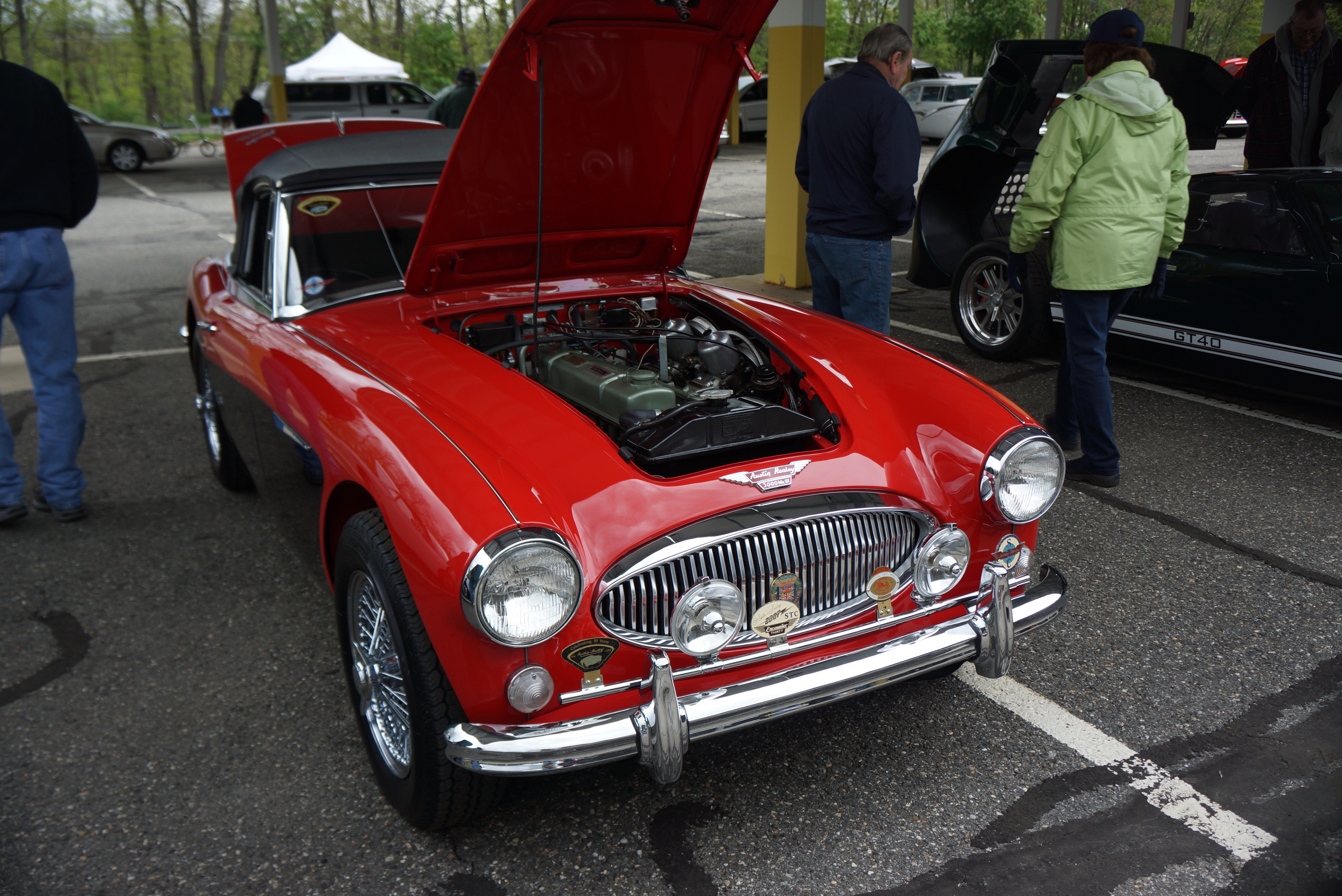
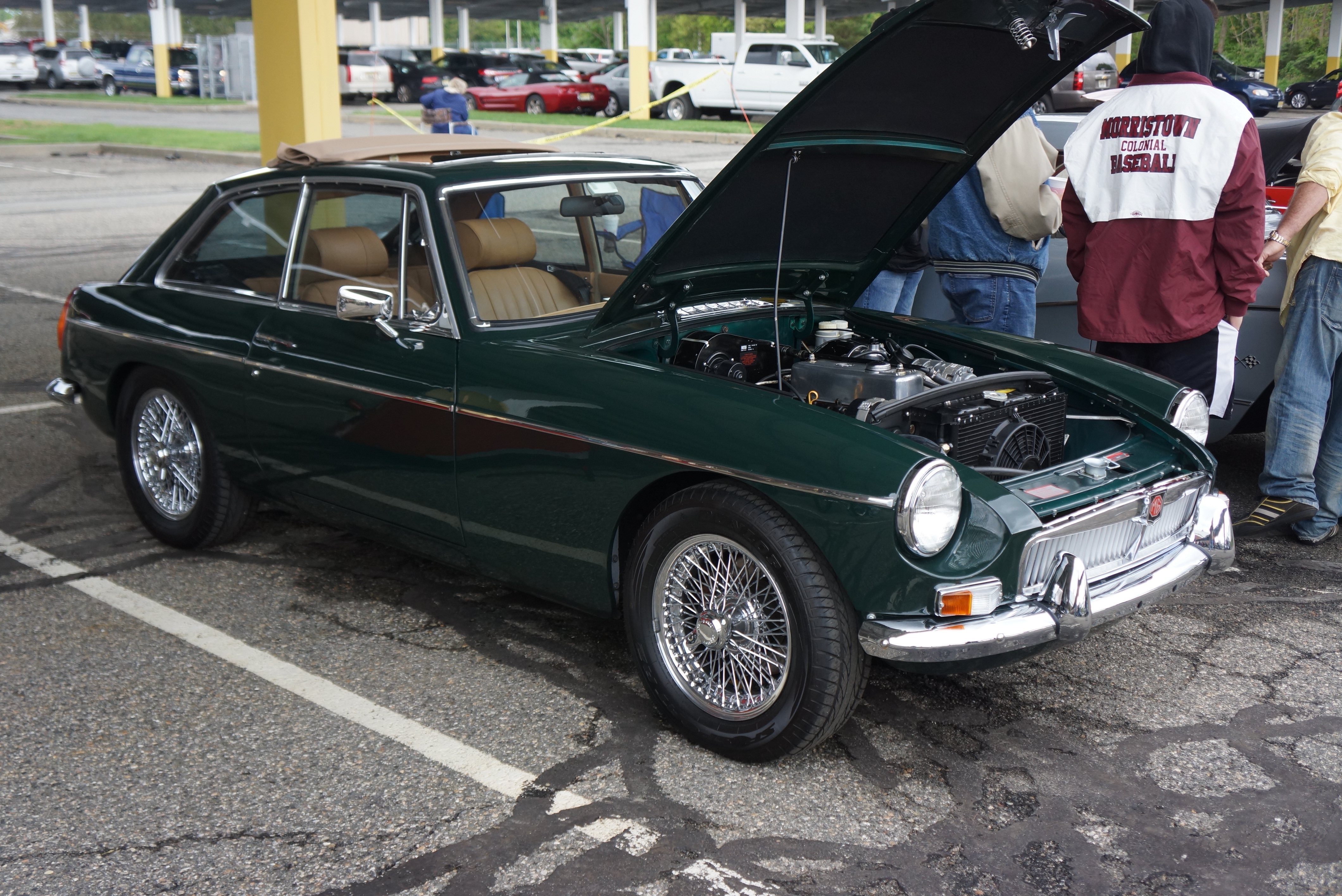
British cars included an Austin-Healey, a stunning MGB-GT, and two Lotuses (Loti?), an Elan and a Europa (yes, all Lotus model names begin with the letter E).
Austin-Healey
MGB-GT
Lotus Elan
Lotus Europa
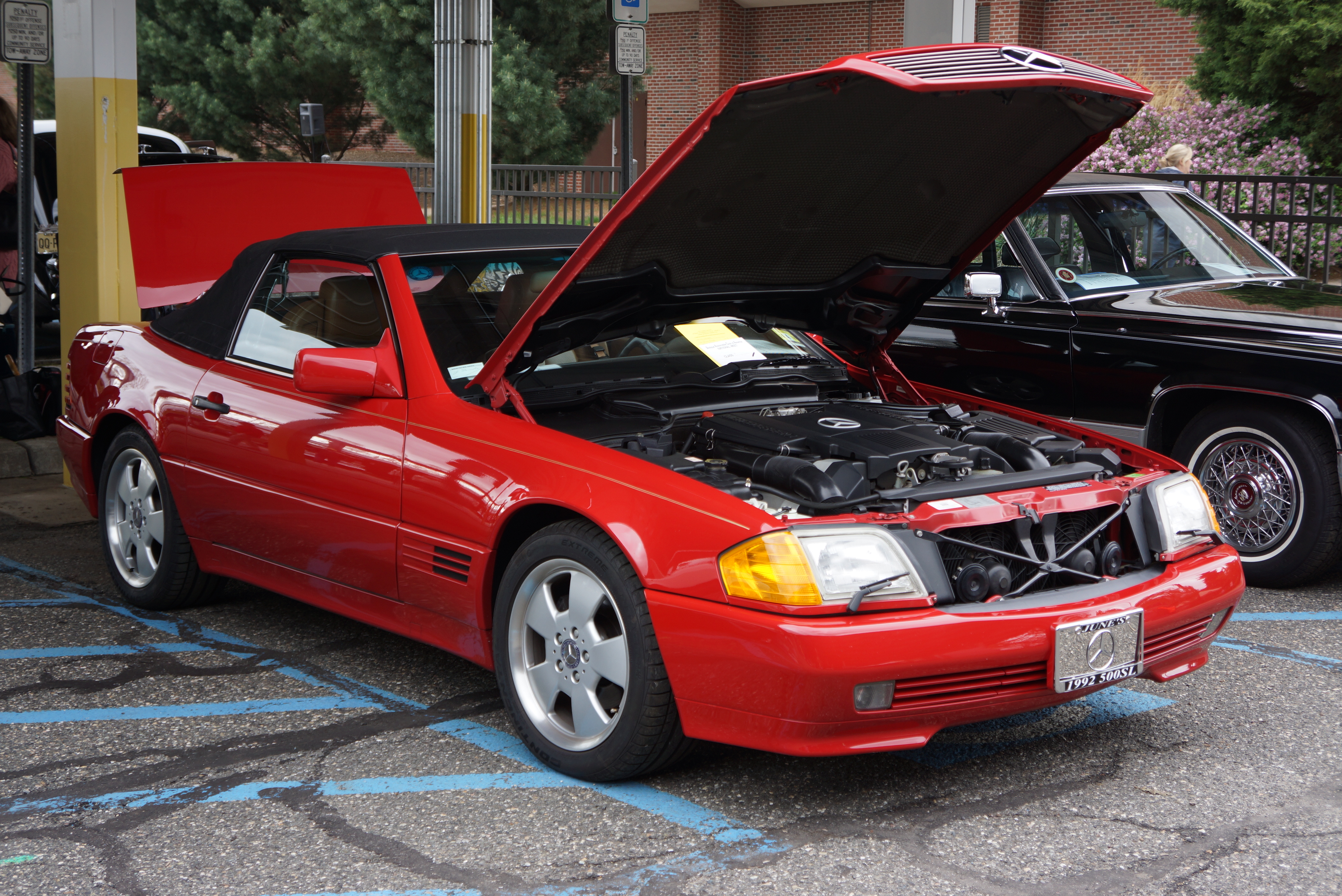
AACA rules allow cars to be shown once they reach 25 years of age. So on a rolling basis, each new calendar year means that there is a new “class” of eligible cars. For 2017, 1992 and older cars can be shown, so it was a pleasure to see this beautiful ’92 Mercedes Benz 500SL on the showfield.
1992 Mercedes Benz 500SL
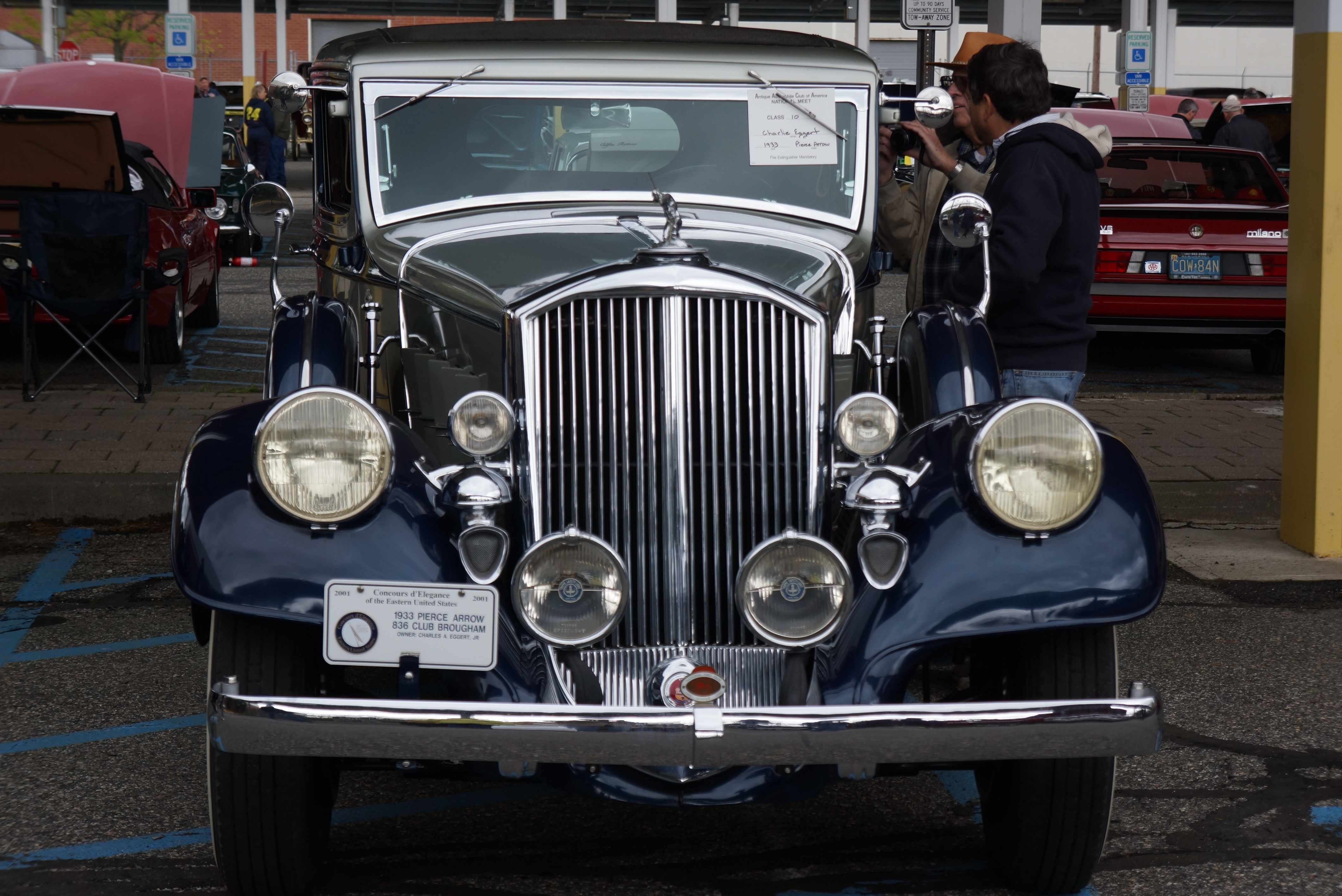
Of course, American makes dominate the display, including the so-called orphan manufacturers (those whose marques no longer exist). Below are some examples of these, including Pierce Arrow, LaSalle, Crosley, DeSoto, and Pontiac (still strikes this writer as odd to see Pontiac’s name with the others).
1935 LaSalle
1939 Pontiac
1933 Pierce Arrow
DeSoto Hemi V8
Crosley inline-4
One does not need to be a member of AACA to enter a car into the show. One of the draws for members and non-members alike is the chance to win something, as this show is one of the few in the area which is judged (to AACA standards). The NJ Region recently switched from trophies (aka dust-collectors) to tool and duffle bags, to make for more practical prizes. It’s the generosity of the sponsors who help make it possible to have awards.
After several years of this, Steve took a job transfer to California, but we both wanted to continue participating in the New England 1000. This meant that Steve needed to fly east, and your scribe needed to provide the rally ride. Steve did come back to this area four times between 2005 and 2015. For those rallies, we initially drove my ’68 Mustang California Special. When that car went away, we switched to my ’67 Alfa Romeo GT 1300 Junior.
Throughout this time, I had always informed him that should a left-coast event become available, I’d return the favor and fly west. Besides, the thrill of driving that V8-powered British sports car of his was something I savored to repeat. During the winter of 2016-2017, we found an opportunity that seemed to hit all the right notes.
The rally was called “Drive Toward a Cure”. Scheduled to be held in April of 2017, it would be a 3-day event, starting in downtown Los Angeles, and overnighting in Paso Robles in central CA. Its mission: raise funds and awareness for Parkinson’s Disease. We would be driving in its inaugural run. We were in!
With a rally push-off date of Friday April 28, I flew out on Wednesday the 26th, to meet up with Steve on Thursday and attend to any last-minute details. It was great to see the Tiger again. We changed the oil and buttoned up a few loose ends. The biggest difference compared to last time was the installation of a hardtop, which meant no top-down driving.
Rally brothers ready for the next adventure
Friday morning arrived quickly enough. We were up at 4:30 a.m. (my body still on NY time), because we needed to depart his house at 5:15 a.m. to reach our destination, the Petersen Museum in L.A., at 7 a.m.
This New Yorker couldn’t believe the traffic on the highways of southern California at 6 a.m. on a weekday morning! Steve drove in without issue, and we parked at the Petersen to collect our registration papers, get coffee, and meet some of our fellow rallyists.
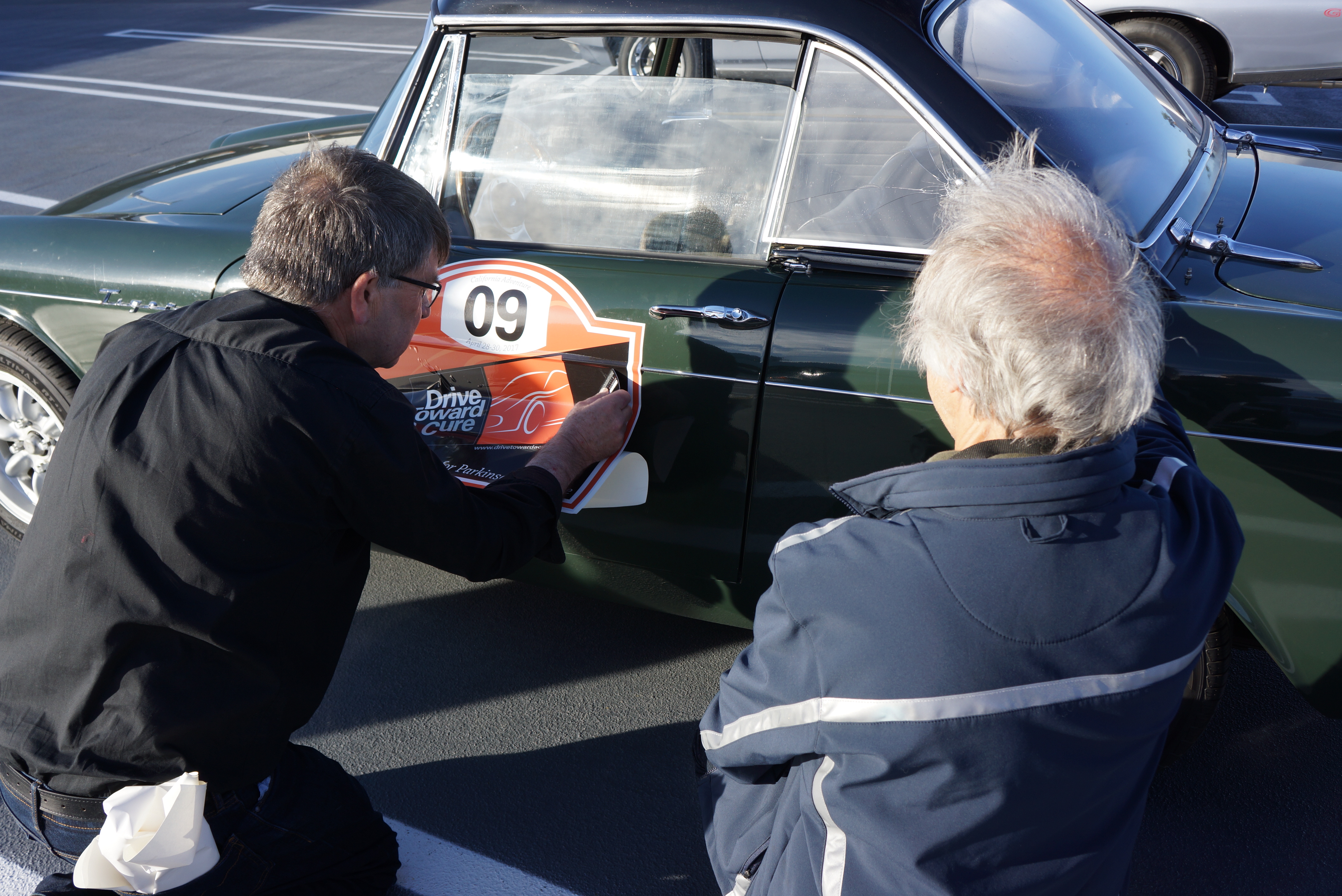
The Tiger gets its rally decals installed
There were approximately 20 cars with scheduled check-out times one minute apart. One of the unique features of this rally was that there were another 20 cars doing likewise, but starting in Danville, outside of San Francisco. They would head south as we headed north. We would not see those cars until our rendezvous at our host hotel.
The Petersen parking deck, Friday morning
The Tiger (with a Goat on the left) ready to depart
We left the parking deck of the Petersen, and drove directly into… downtown LA congestion. We were trying to get to the Pacific Coast Highway (PCH), just a few blocks away, but gridlock maximized our time getting there.
Once on the PCH, we were moving along nicely. After a few miles, we turned right, and went straight uphill into the mountains. By this time, there was a lineup of 4 to 5 rally cars behind us, and one in front of us. The lead car was a Jensen Interceptor Coupe, with a Chrysler V8. Another hybrid, just like our Tiger.
The Jensen Interceptor of Bob Humphreys leads the way
The scenery of oceanfront beaches changed to deep canyons full of verdant foliage. The roads were winding, with sharp bends and hairpin switchbacks. For long stretches, there were no guardrails between you and the bottom of the canyon. It didn’t matter. The weather was perfect.
Porsche 356 on our tail(fin), with more rally cars behind it
Our first stop was the Mullin Museum in Oxnard. Peter Mullin’s private collection resides here, and it consists of exclusively French automobiles. The museum’s interior design is just as impressive as the cars. The only drawback to our visit was a one-hour limitation, which meant we may have seen about 25% of it.
The stunning interior of the Mullin Museum
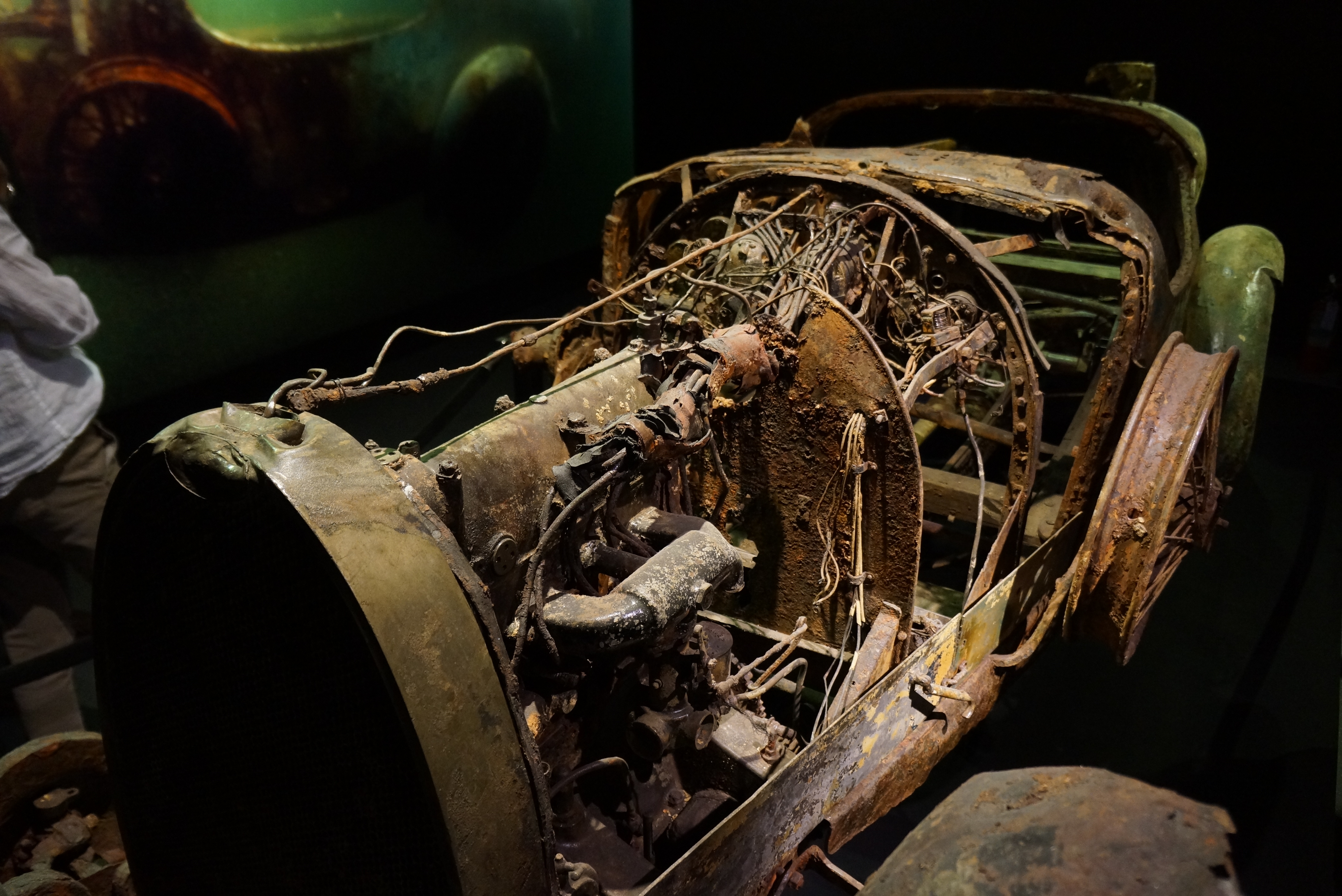
The Bugatti which sat at the bottom of Lake Como for 50 years, now at the Mullin
Yes, we were “encouraged” to keep moving, but it’s important to point out that very much UNLIKE the NE1000, our driving stages were NOT timed. This California Adventure was not a TSD (time/speed/distance) type rally, and as such, it made for a more relaxed driving atmosphere behind the wheel.
A collection of rally cars at rest
Lunch was in the charming town of Solvang (it’s redundant to say “charming” about these California towns outside of the metropolitan areas), and we were back in the saddle to be on time for 7 p.m. dinner at the Allegretto Resort in Paso Robles.
We were very, very late for dinner.
With me behind the wheel, Steve saw it first. The temperature gauge, which we monitored constantly, suddenly shot up well past what had been its normal 200 F. I pulled into a bank parking lot; we opened the hood; and it was a trifecta: the sight of green fluid all over the engine compartment; the unmistakable odor of hot coolant; and a loud hiss as the steaming liquid and vapor tried to escape.
Steve checked the radiator hose clamps for tightness. He had just replaced the factory radiator with an aluminum model to try to stay one step ahead of the Tiger’s Achilles Heel: excess engine heat. Steve reported that all clamps looked good. Because things were so hot under there, we were prevented from further diagnosis.
Our savior on Friday night came in the form of Hagerty roadside assistance, which was part of the rally’s benefit package. Within an hour, a flatbed truck picked up the car, and we rode in the cab with “Junior”. He drove us the final hour to the hotel. We walked into dinner at 9 p.m., tired, hungry, and most upsettingly, unsure of what was ahead for the car.
Junior loads the Tiger, with special thanks to Hagerty
What transpired on Saturday morning will restore anyone’s faith in human nature. Or, as Steve himself put it, “yes, there is a rally God”. (The details are in the sidebar story below: “Paso Robles Good Guys Rescue Stranded Tiger”.)
While we missed Saturday morning’s driving events, we didn’t miss lunch! After our meal (including a visit from the mayor of Paso Robles, Steve Martin), we were on the road again for the afternoon’s drives. (Another distinguishing characteristic compared to the NE1000: Day 1 is “rallying”; Day 2 is “scenic cruising”.) We drove through the mountainous landscape dotted with vineyards, then out to Cambria, on the coast, before heading back to the Allegretto.
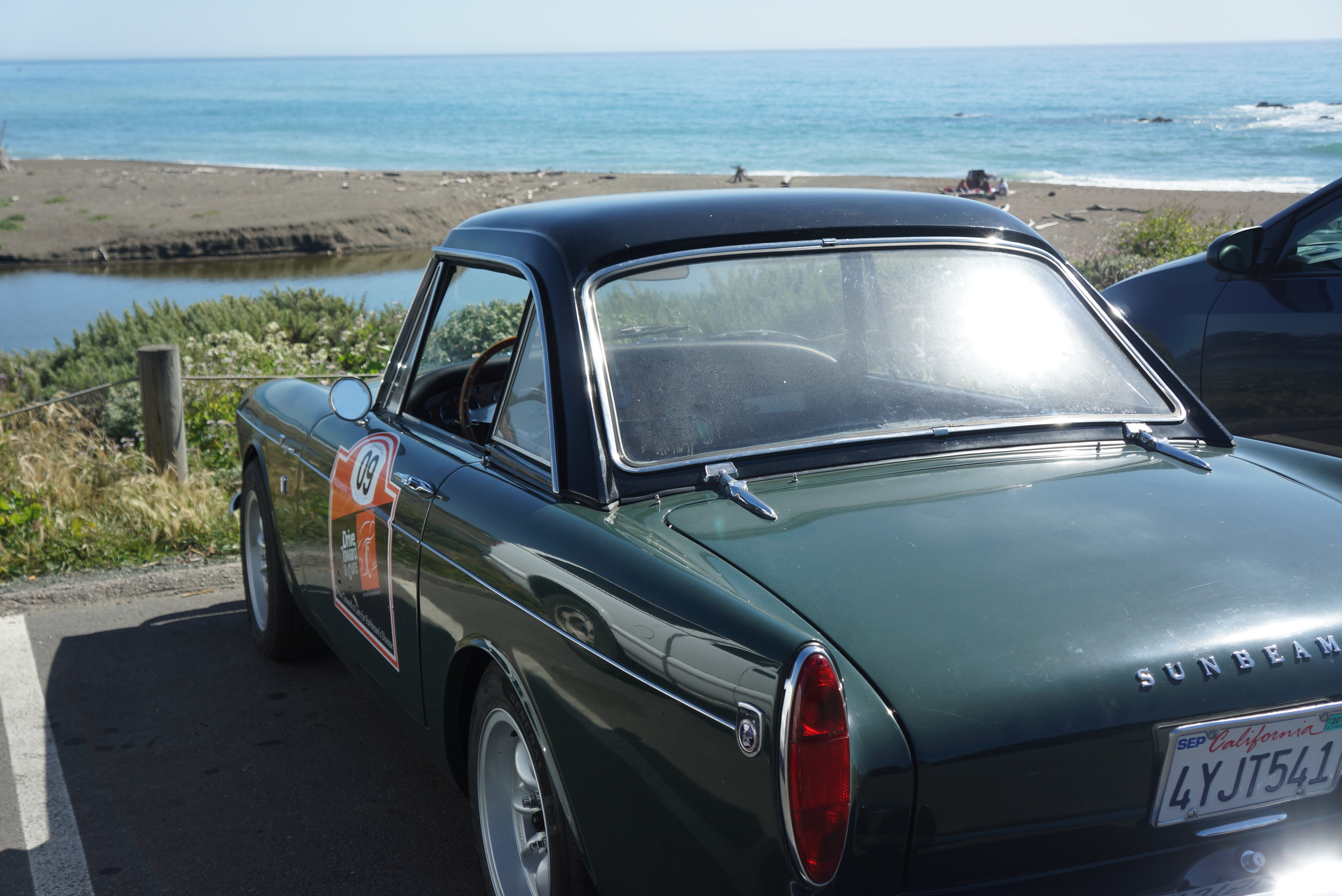
The Tiger on the central California coast
Dinner was at a different nearby winery, and was served family style. You really get to know your fellow rallyists when you must ask the Ferrari driver “could you please pass the potatoes?” The free-flowing wine helped.
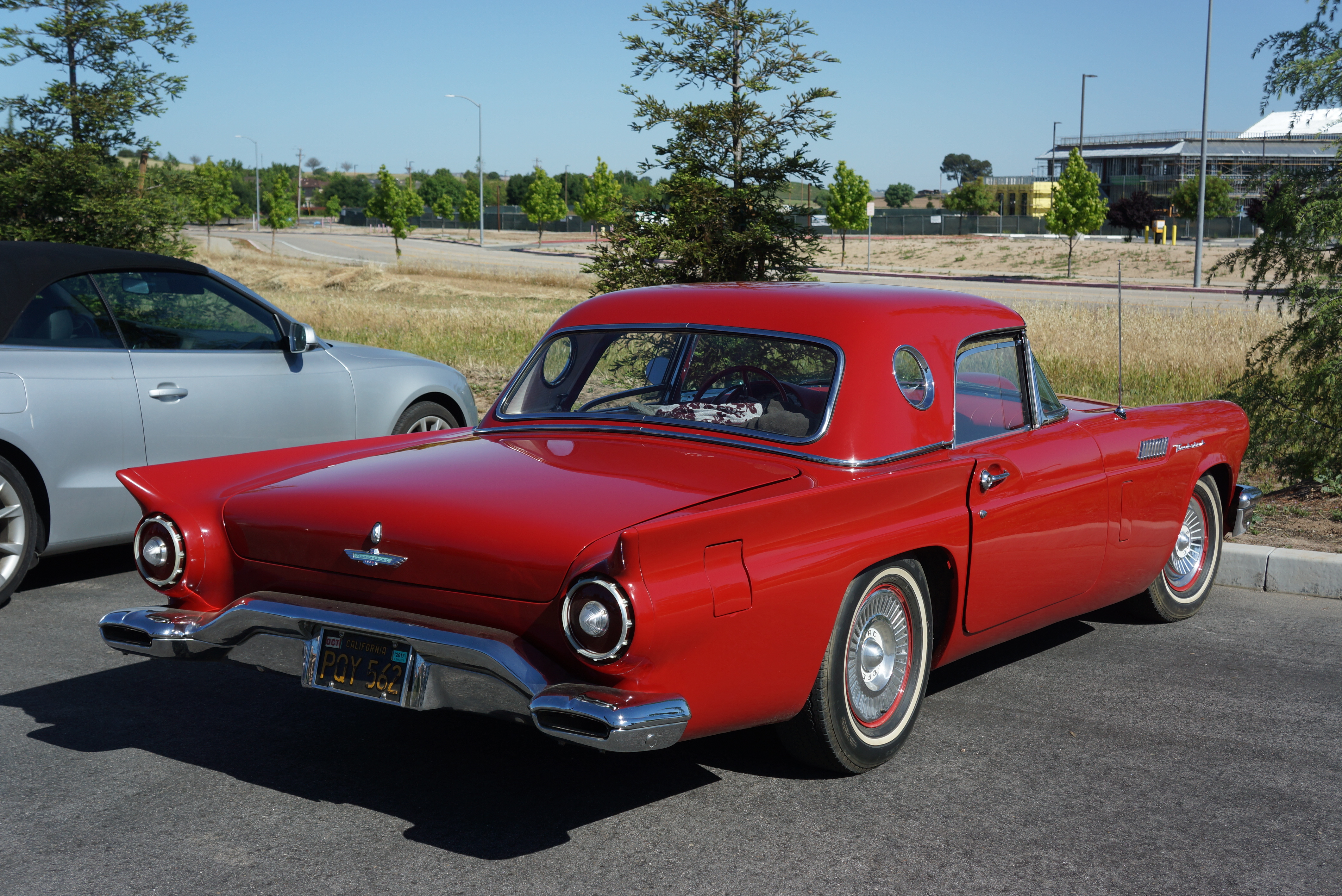
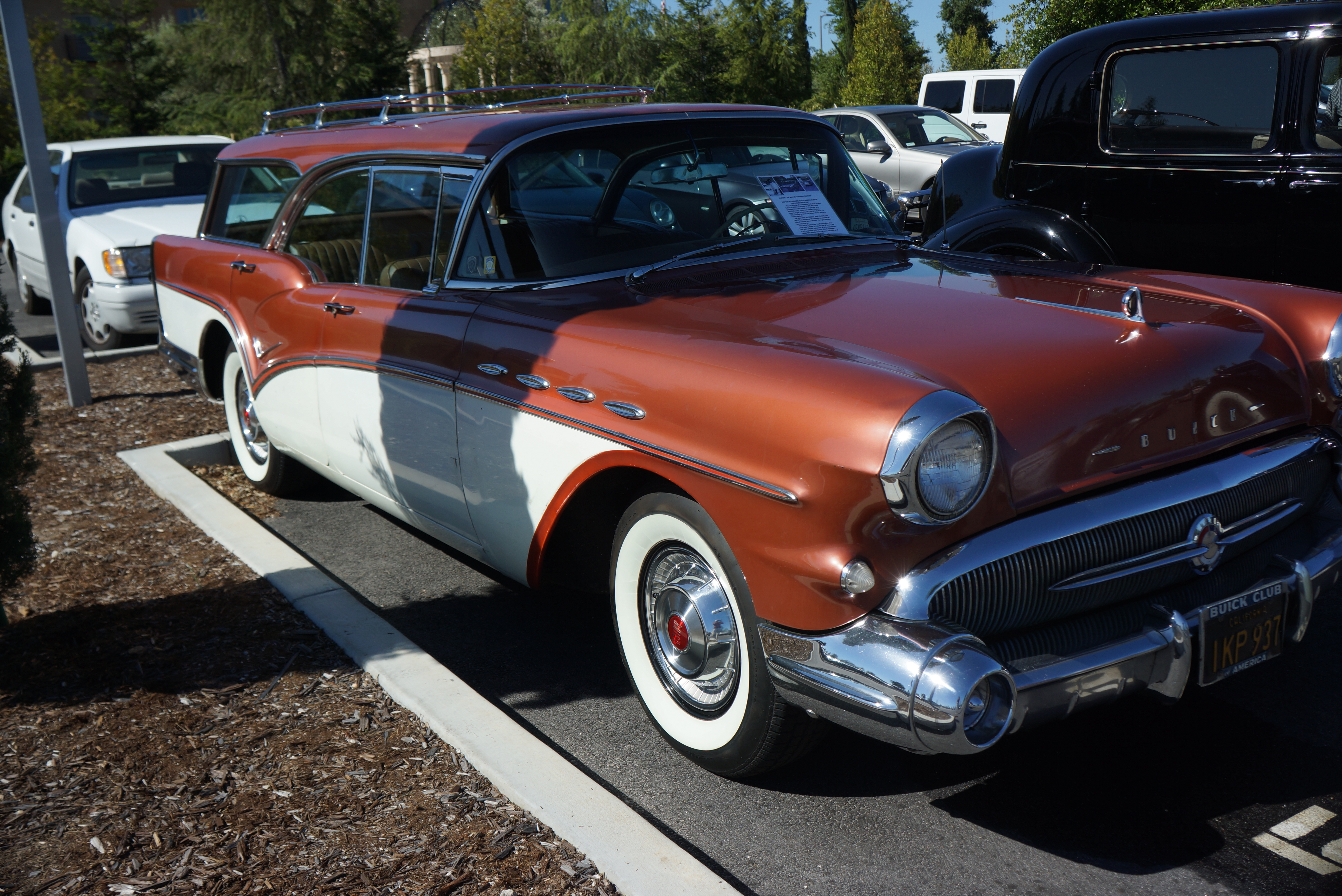
Sunday morning started with a surprise visit from the local San Luis Obispo-based AACA club. Several American classics, definitely different from the rally cars, were in the parking lot for us to admire. Soon after, we were headed to brunch at our 3rd winery stop (Paso Robles must have 100 vineyards). After brunch, it was adieus, and we were on our way home.
AACA cars:
1957 T-Bird
1957 Buick 4-door hardtop wagon
1958 Ford Ranchero
The trip to Steve’s house was mostly on I-5, a north-south highway in the middle of the state. The ambient temperature increase was noticeable compared to the delightfully moderate Paso Robles, and we were glad for the hardtop. Had we been convertibling, we would have roasted.
The Tiger got us home in plenty of time for a celebratory dinner with Steve and his wife. All hot-running issues were behind us. The car did about 700 miles, and except for the hose failure, proved that you can drive a 51-year-old car in these kinds of adventures. We don’t exactly know what’s next in our quest for another rally, but it’s sure to yield stories.
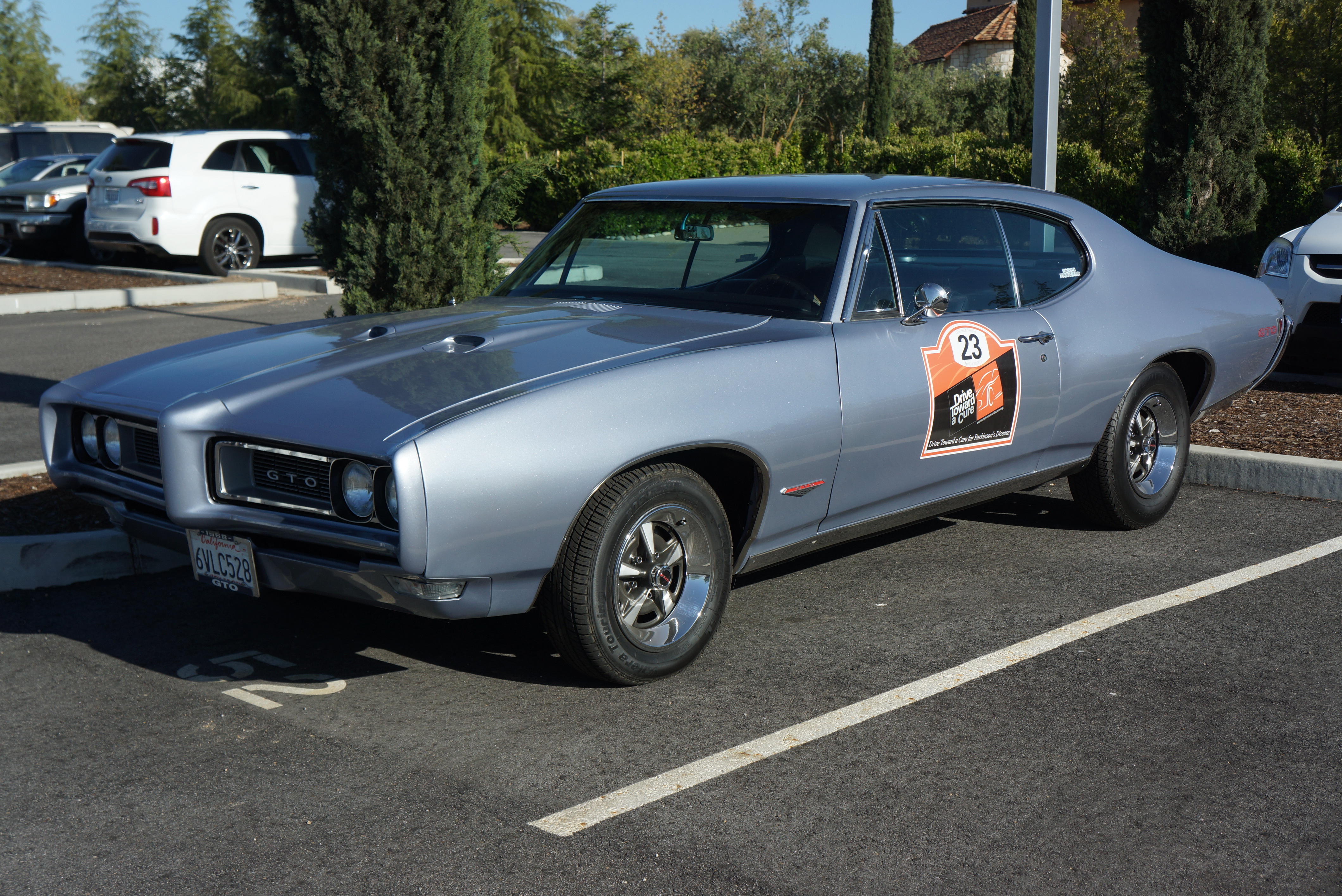
1968 GTO
1957 Chryster
1954 Lincoln
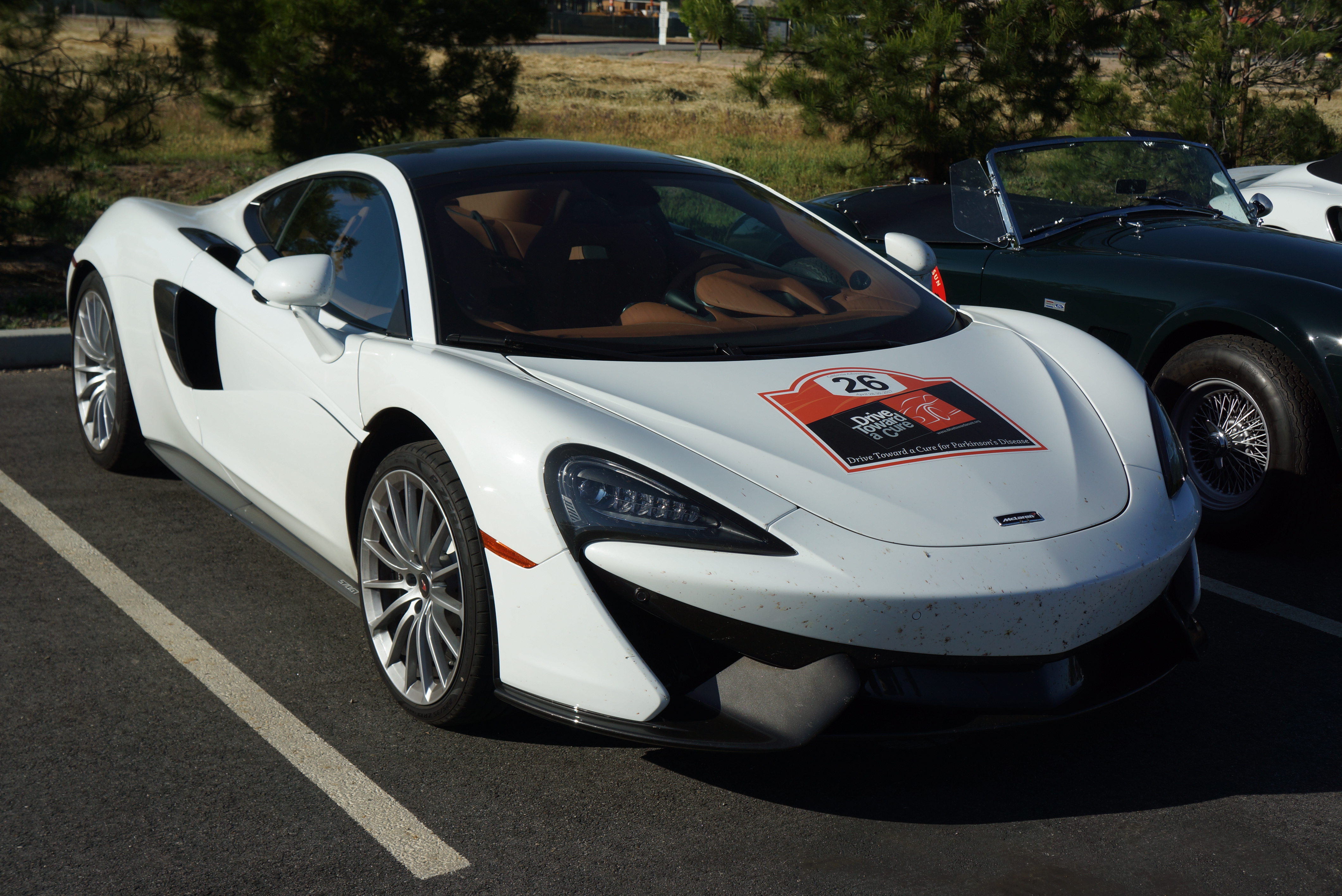
McLaren (LOANED to the rally)
Dodge Viper
New Acura NSX
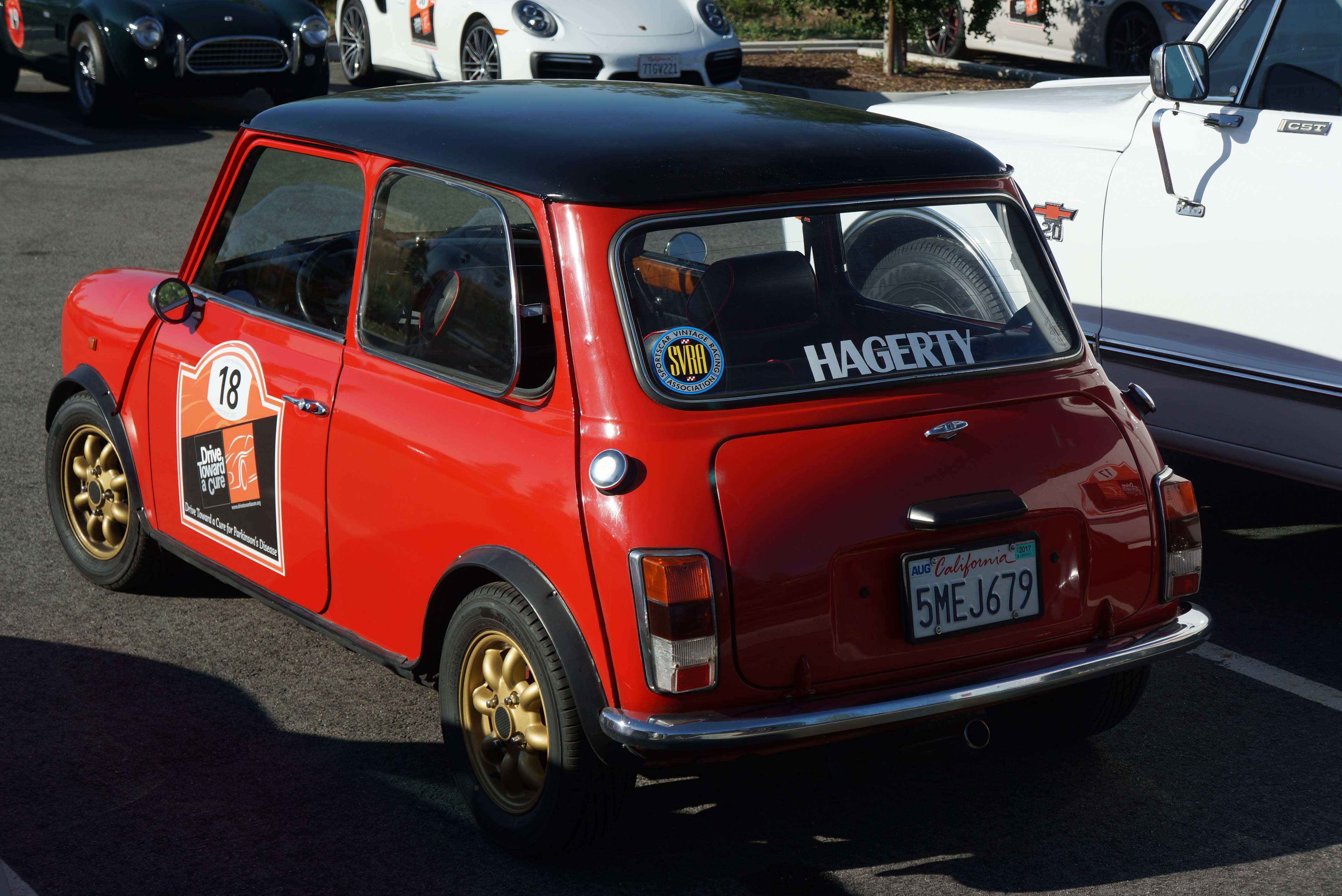
Original Mini
Porsche 356 coupe
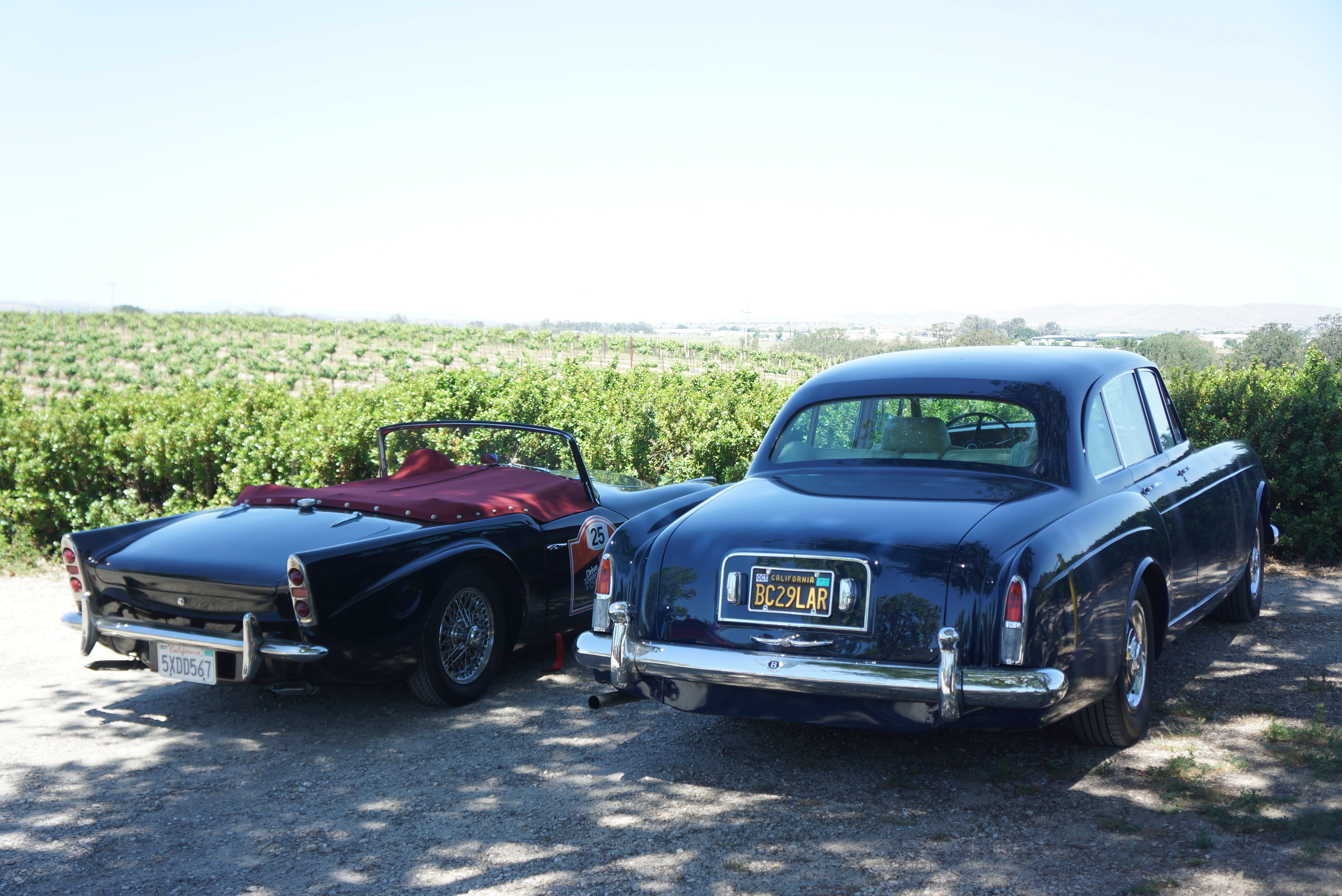
Daimler SP250 Dart
Daimler and Bentley visit a vineyard
SIDEBAR: “Paso Robles Good Guys Rescue Stranded Tiger”
After being towed to our hotel on Friday night, it was a non-stop conversation centered around “what do we do now?” While it was necessary to begin to consider options for Sunday (Tow the car home? Leave it in Paso Robles and rent a car? FLY back to L.A.??), we also knew that we had to spend Saturday morning giving our best shot to a repair attempt.
Before breakfast, Steve worked the Google machine and compiled a list of local repair shops. Most of them didn’t open until 8 a.m., so we breakfasted at 7:30, then quickly headed back to the room to work the phones. With both of us making calls, I struck pay dirt on my 3rd try. “Jorge” at Dave Foltz Automotive answered the phone. I must have sounded like a broken-hearted teenager: “Hi, listen, I’m from out of town, we’re driving an old car, it broke down, we’re stranded, WWWAAAAAHHHHHH!!!”
Alright, it wasn’t that bad. Even if I did sound desperate, Jorge was cool and calm. “Listen, I don’t know what it is, but bring it in, and we’ll look at it right away.” “OK, Jorge, but I need it FLAT-BEDDED. Can you do that?” “No, but call Dennis at 123-456-7890.” I called Dennis. “Sure, I got a flat-bed. I can be there in 10 minutes.” Was I dreaming?
By the time we walked downstairs and out to the portico, Dennis and his truck were waiting for us. Dave Foltz Automotive was 1.5 miles away. As we pulled into the lot, I spotted a NAPA store next store. I mean, five paces away.
I jumped out and Jorge greeted me. But every bay was full, and I was doubtful they’d get to it anytime soon. Jorge said, “we’re finishing one up in 10 minutes, then we’ll bring in the Tiger”. Sure enough, the Tiger was next into the shop, and tech Antonio went to work. I sat in the customer lounge, and tried to distract myself with a year-old People magazine.
Within another few minutes, Jorge was in front of me with a blown lower radiator hose in his hands. “Hey, where do you get parts for something like this?” I said I had no flippin’ idea. He said that he’d walk next door to see what NAPA had. Back to People.
FIVE minutes later, the NAPA parts dude shows up holding a new version of the exact hose. I was so beside myself that I wanted to hug Jorge. (But I refrained.) A few more minutes with People, and I heard a honk. Antonio was outside, beckoning me to join him for a test drive. Halleluiah! They did it!
Antonio, our hero for the day
Total time at Dave Foltz: about 90 minutes. Total charges, including California surcharge for handling cancer-causing chemicals (I made that up): $106 (I didn’t make that up). Antonio got his palm greased to the tune of $20. The Tiger was back at the Allegretto by about 11 a.m. Saturday morning.
The fine auto repair personnel at Dave Foltz Automotive of Paso Robles deserve nothing but our highest praise. At 9 p.m. the night before, even my best-case fantasy didn’t have the car fixed THIS quickly.
The rally Gods smiled. “We’ll take care of you this time….”




























































 richardscarblog