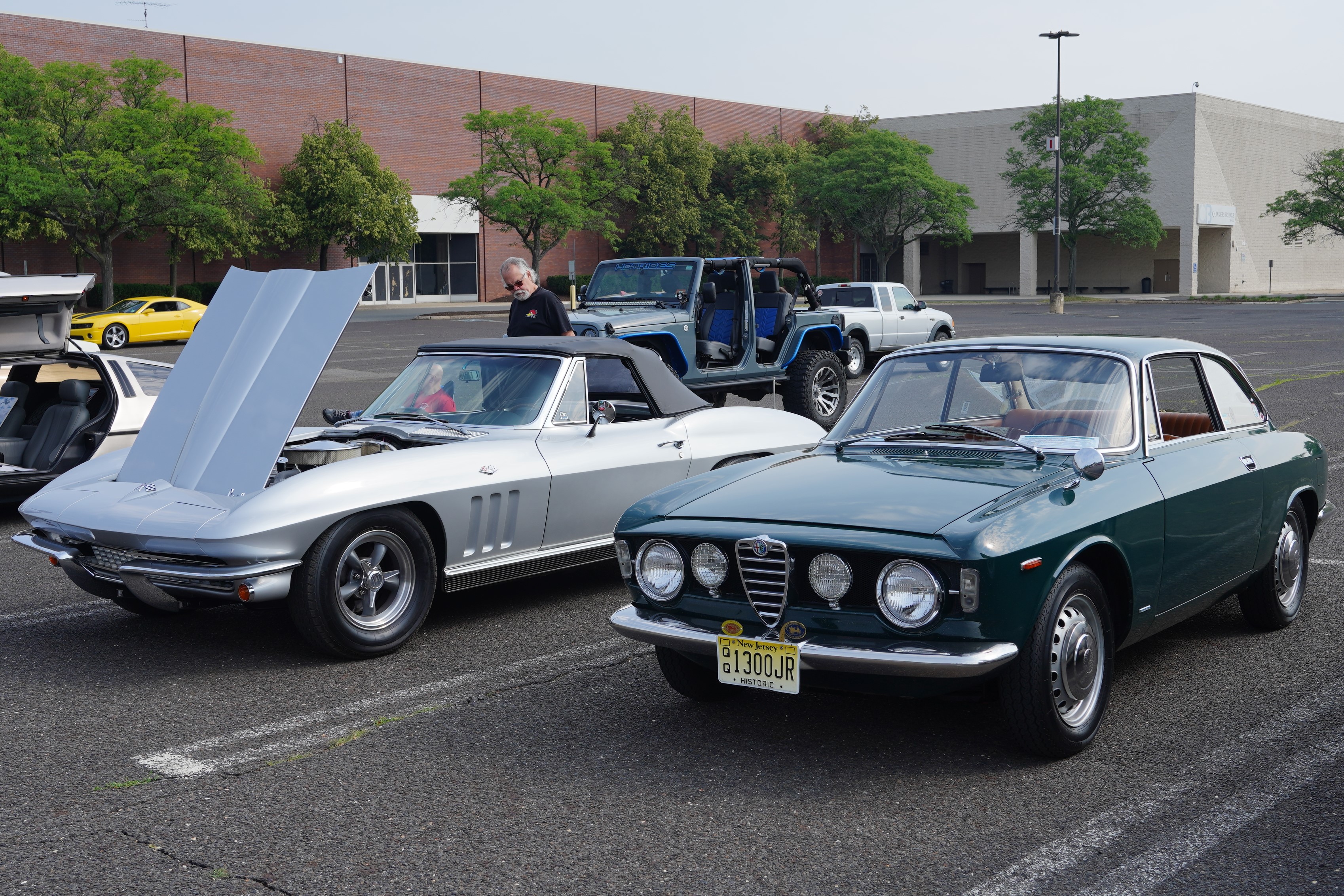
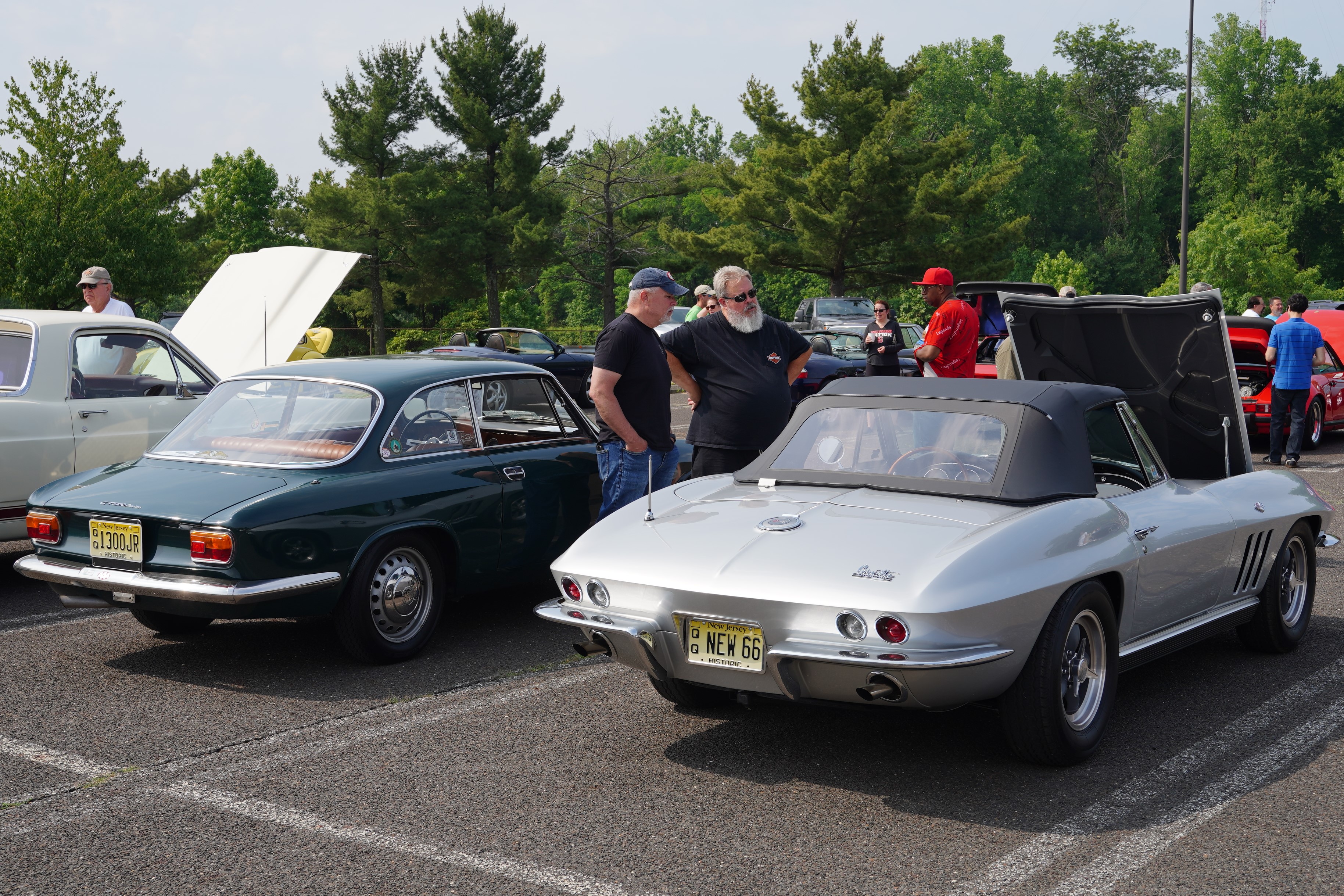
I showed up precisely at the announced start time of 8 a.m. to discover about a dozen cars already in place. The mall has a huge parking lot, and the designated spot for the show is in a corner at the rear. I staged my Alfa next to Mike’s beautiful ’66 Corvette roadster, and after exchanging pleasantries, I was on the hunt for caffeine, hoping there would also be something resembling breakfast food. A rep from the insurance company had complementary Dunkin’ Donuts coffee and donuts, so I made do with a cruller to accompany my brew. Next time, I’ll stop for a proper meal on the way down.
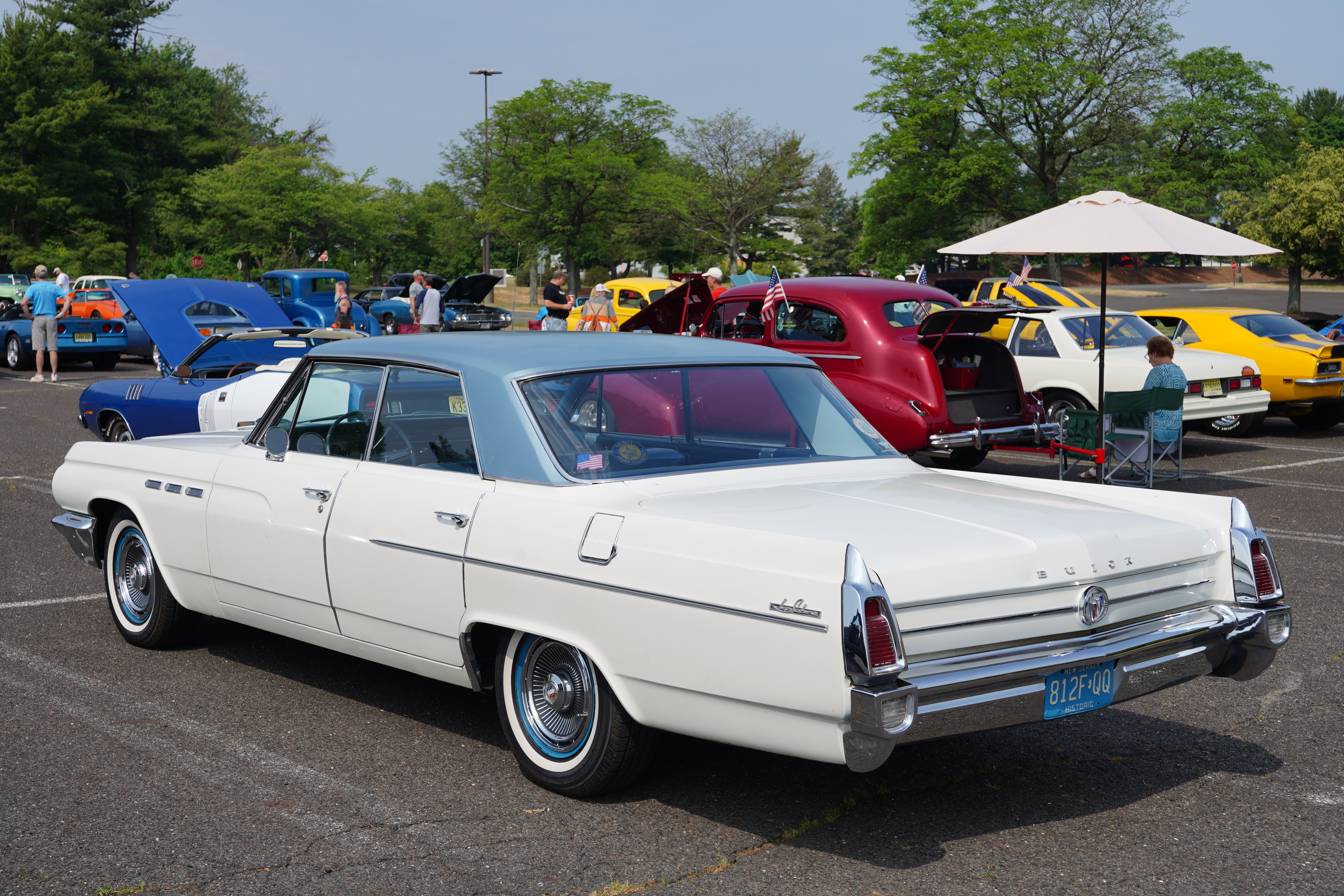
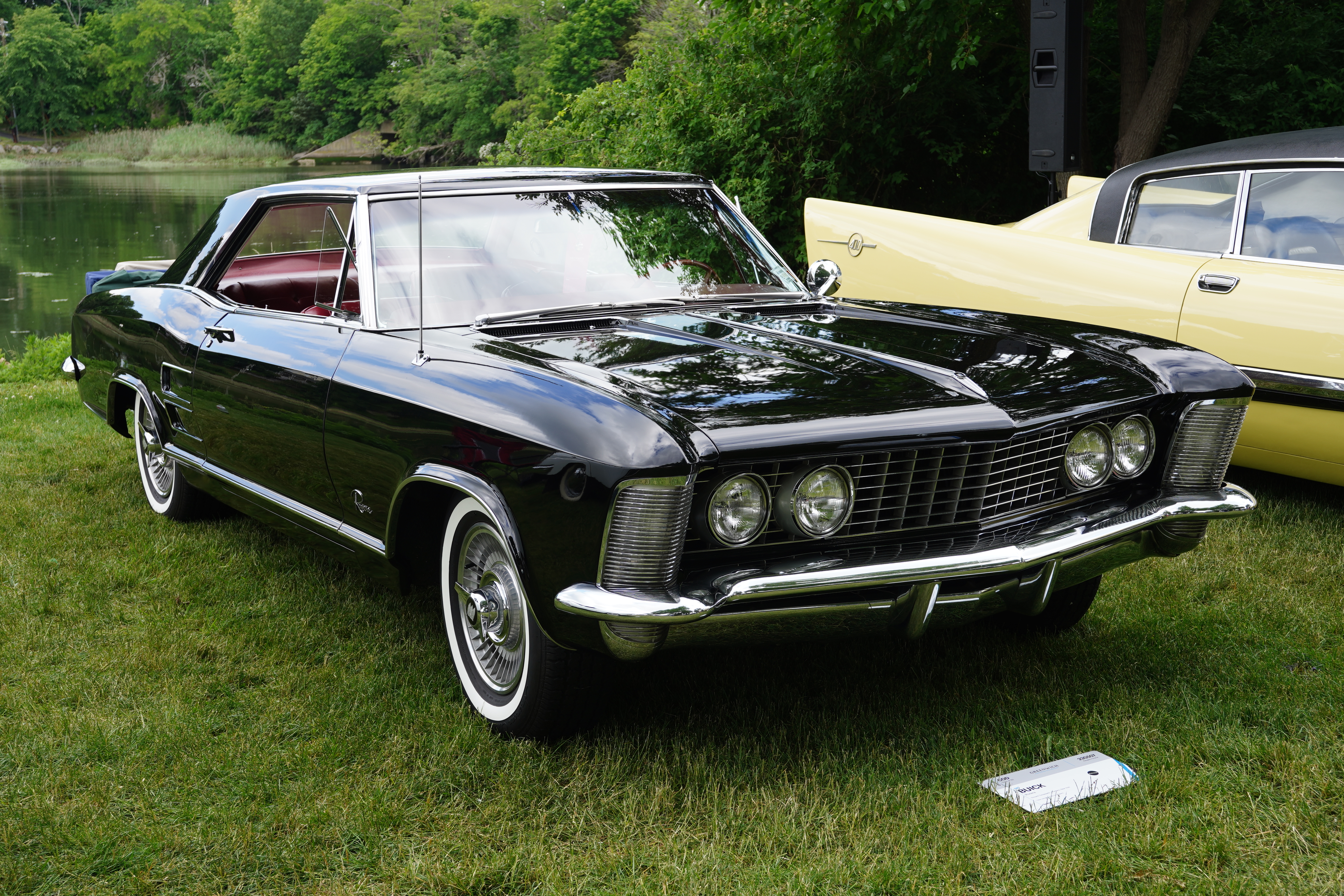
1963 Buick
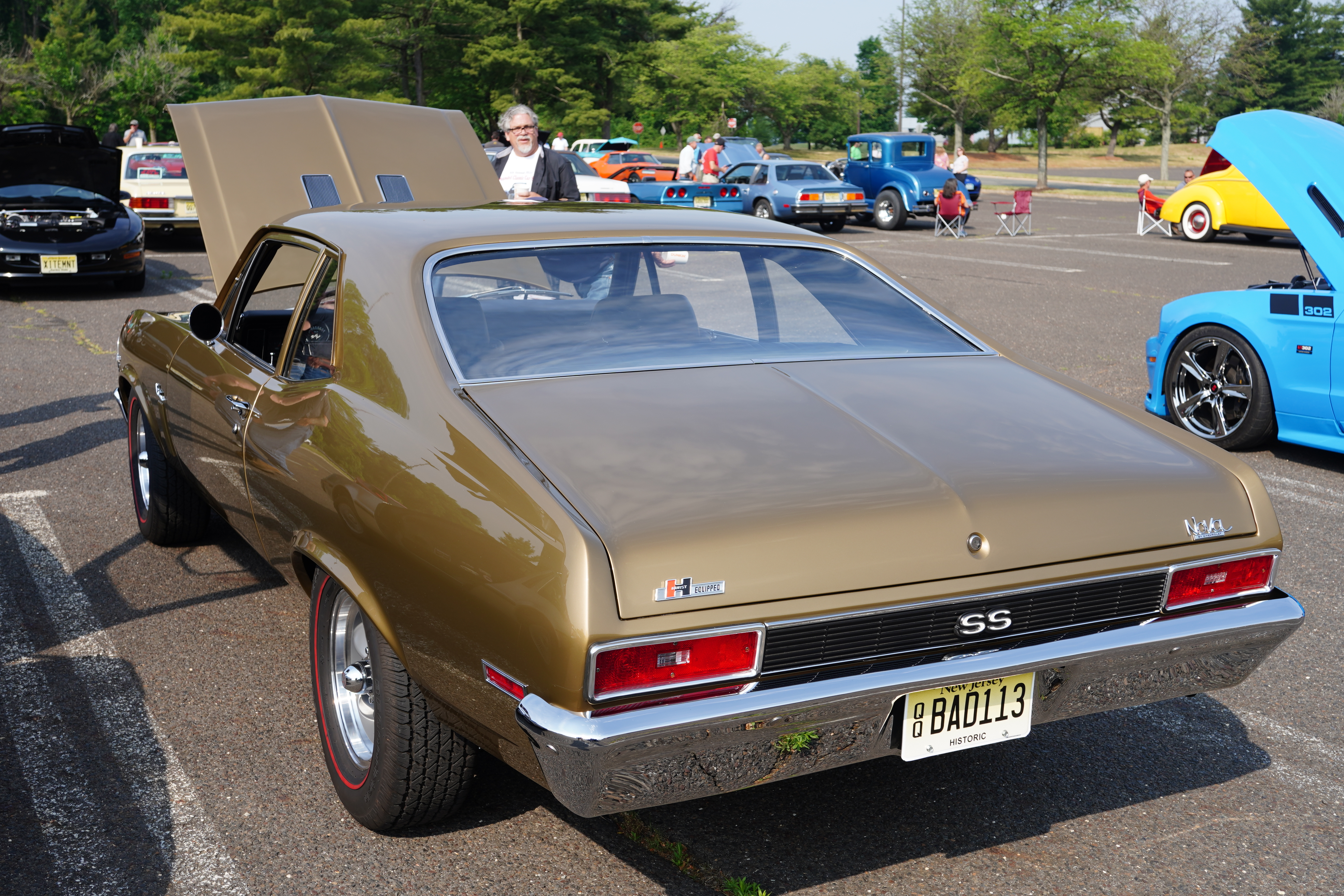
Within minutes, a fellow car owner named Harry ambled over and introduced himself. He drove a stunning Chevy Nova which had been born with a 6-cylinder and now sported a 396 big block. Both Mike and I spent a good deal of time chatting it up with Harry, who proved himself to be a real “car guy”: knowledgeable yet humble.
What’s the plate mean?
396 BB replaces I-6
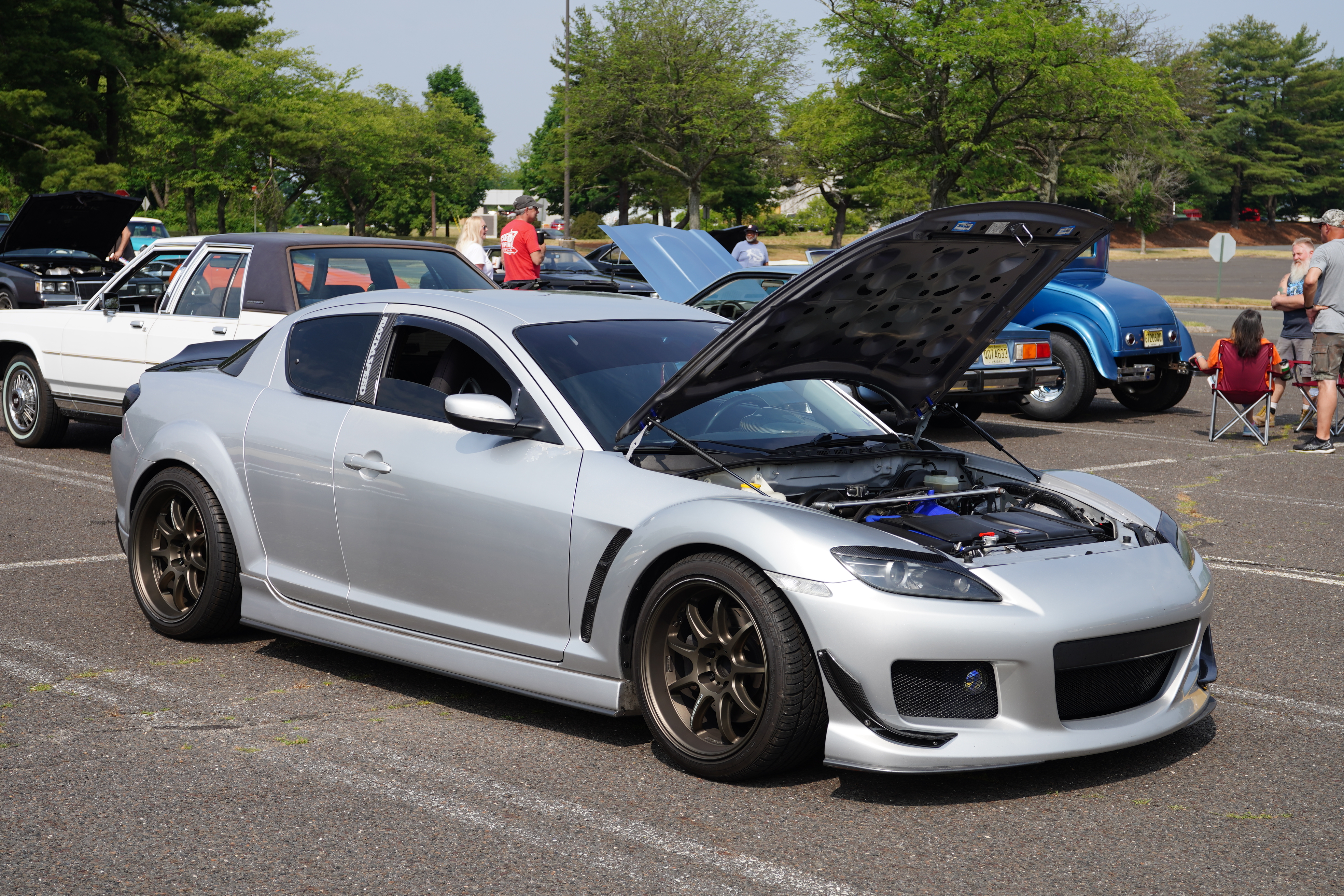
The vehicles on display ran the gamut of old and new, stock and modified, domestic and imported. The oldest vehicle was a ’38 Buick (but restomodded, with a modern drivetrain) and the newest was possibly the Mazda RX-8. As seems to often be the case, my Alfa Romeo was the only Italian car.
1938 Buick restomod
Although advertised to run from 8 a.m. to 12 noon, both Mike and I scooted a little after 10. First, I was famished; second, there were no bathroom facilities! (The mall would open at 11 a.m. for those willing to wait for food and restrooms.) This was an enjoyable way to spend a Sunday morning, and weather permitting, I’m going to try to make it to the next Quaker Bridge Mall event on Sunday July 9.
A Falcon and a Beetle (no, this is not the zoo)
Another Falcon
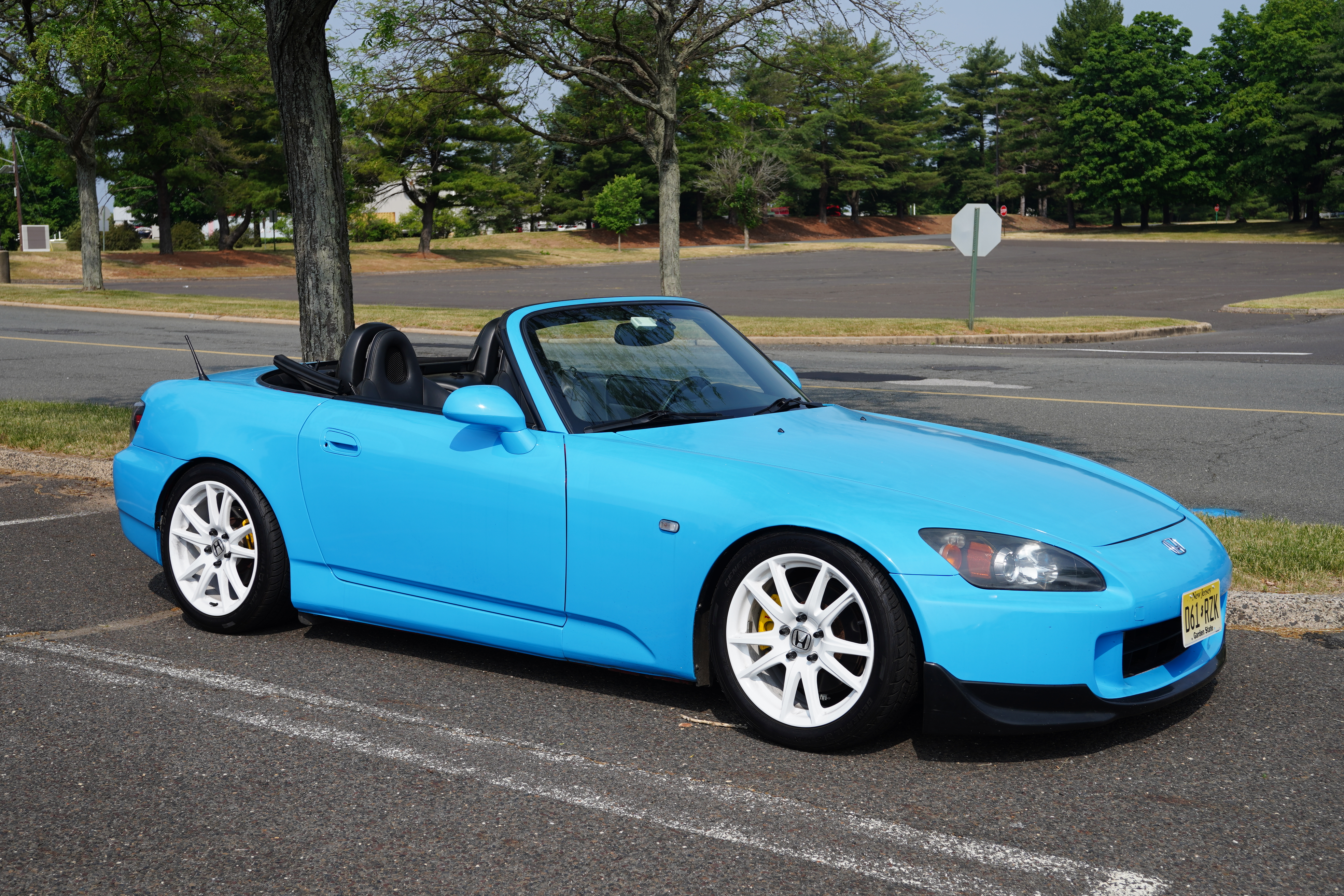
One of the newer cars there, a Honda S2000
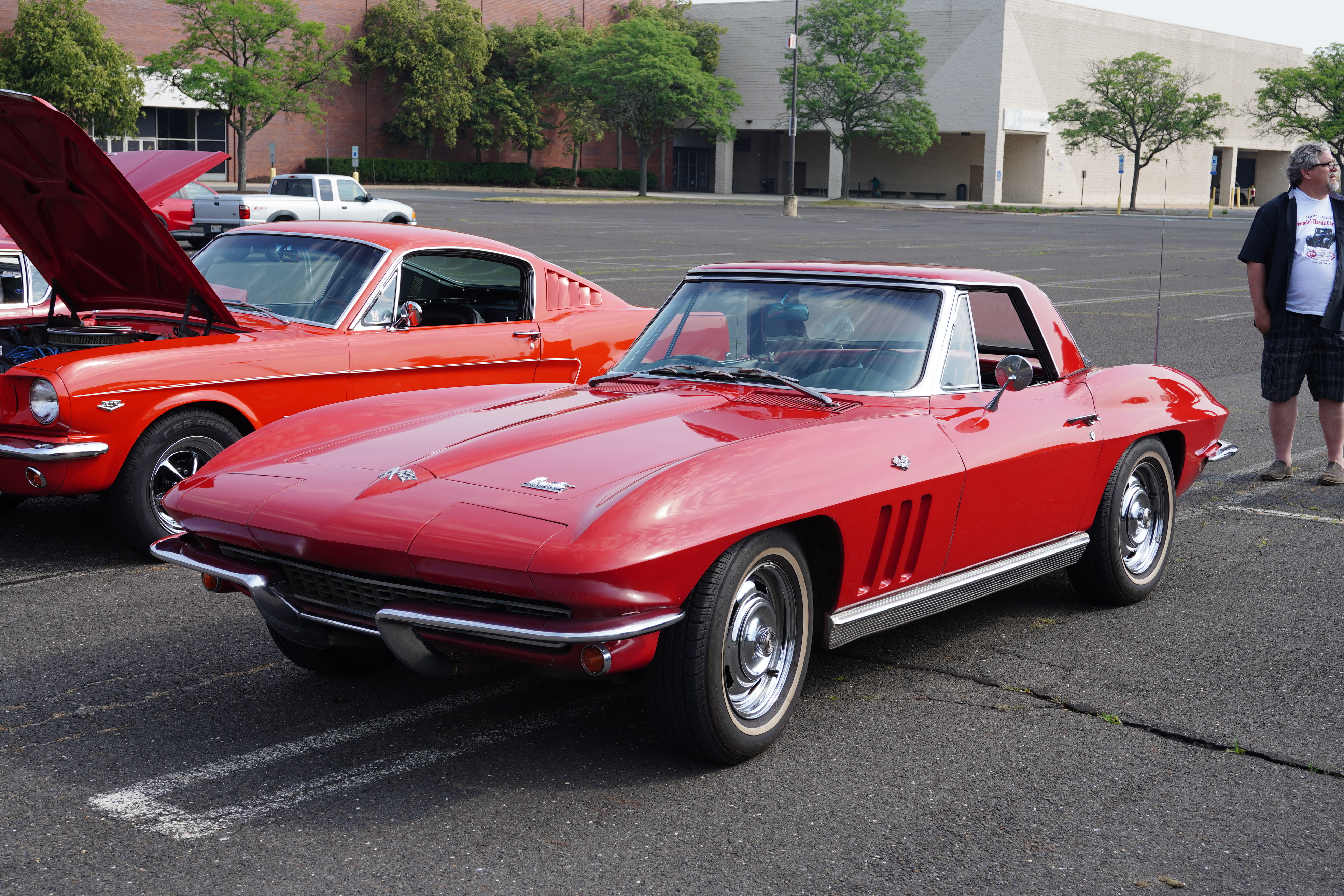
Another ’66 C2; owner claimed it was all-original
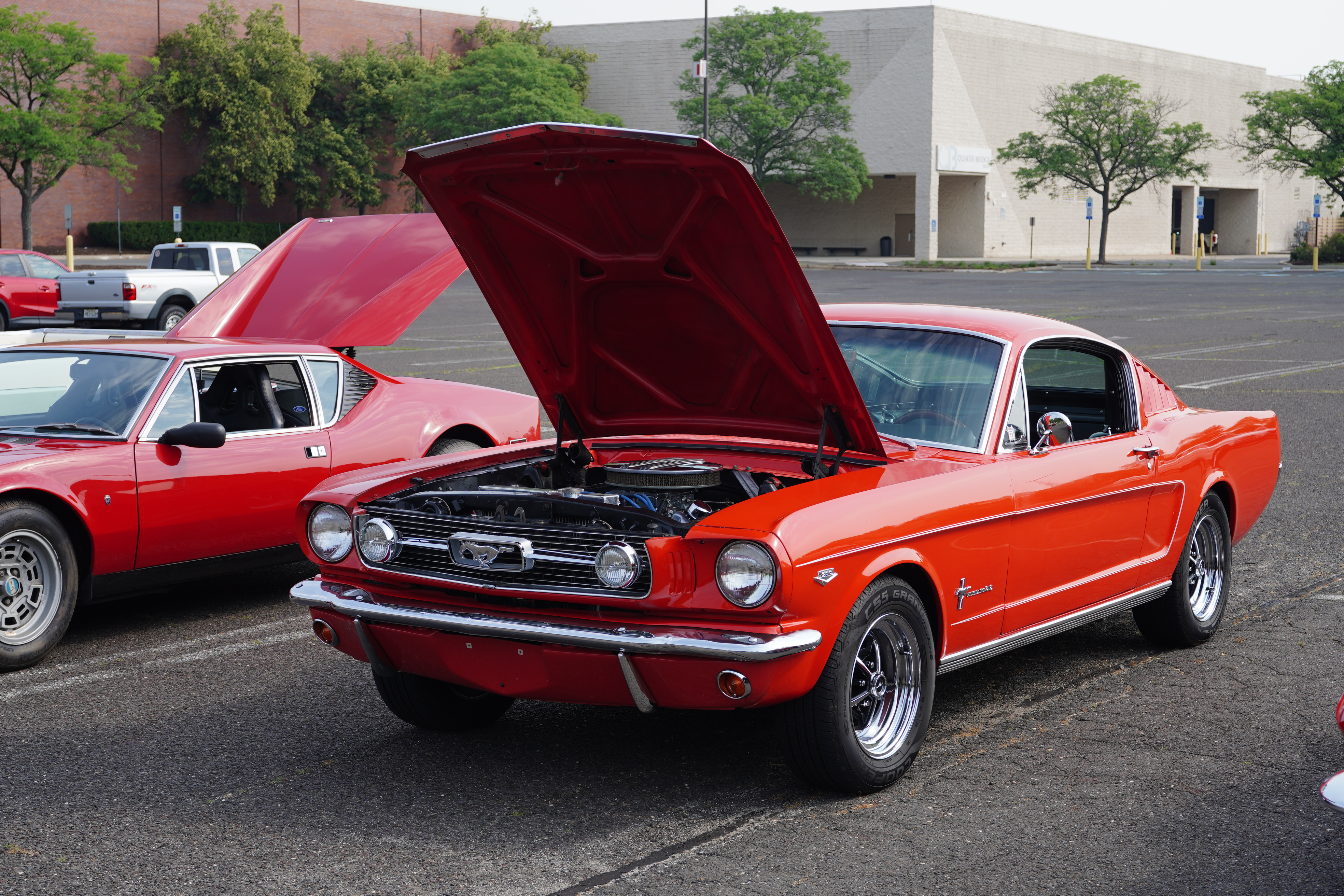
1st gen Mustang fastback
DeTomaso Pantera
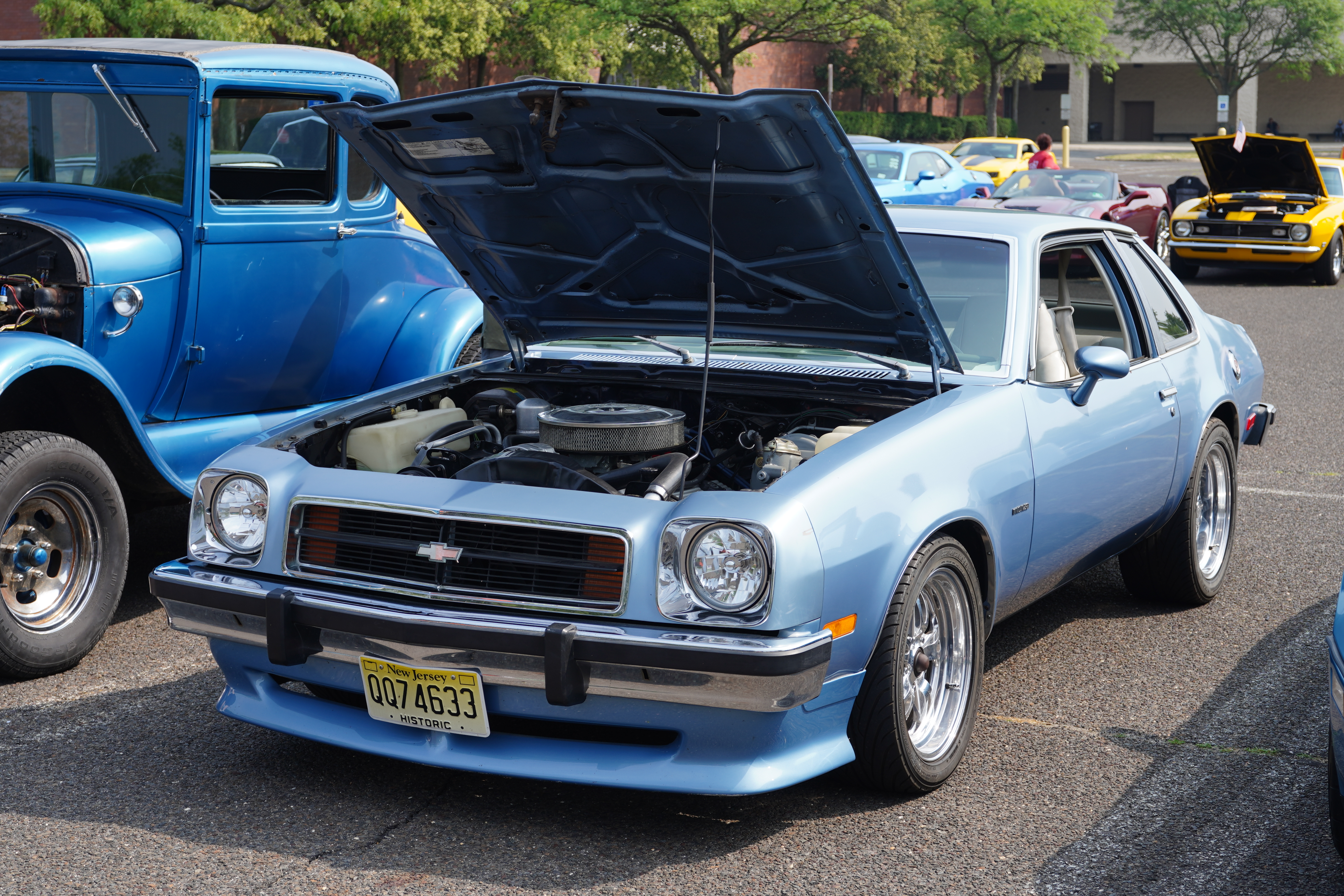
Great drivetrain access!
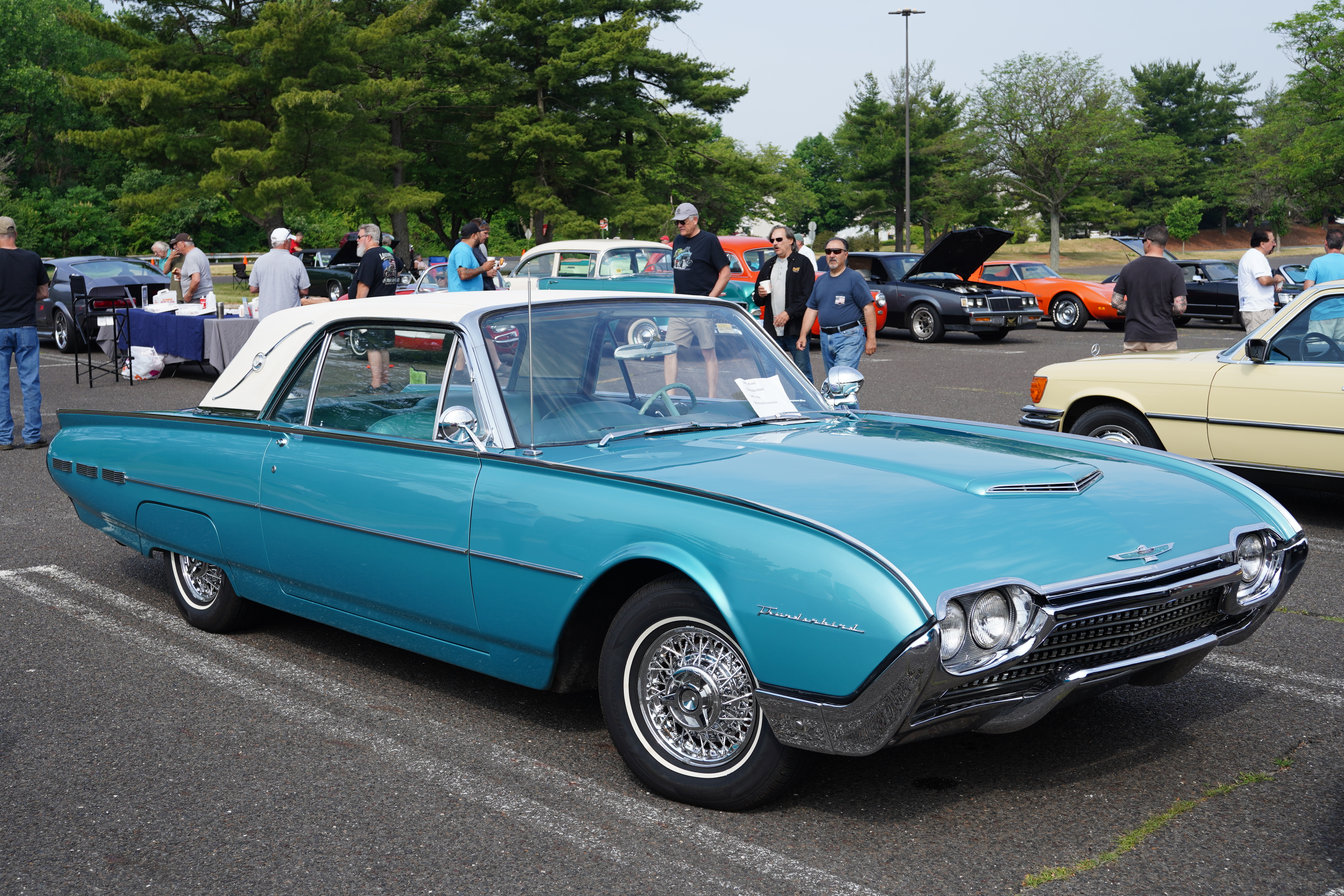
1962 T-Bird
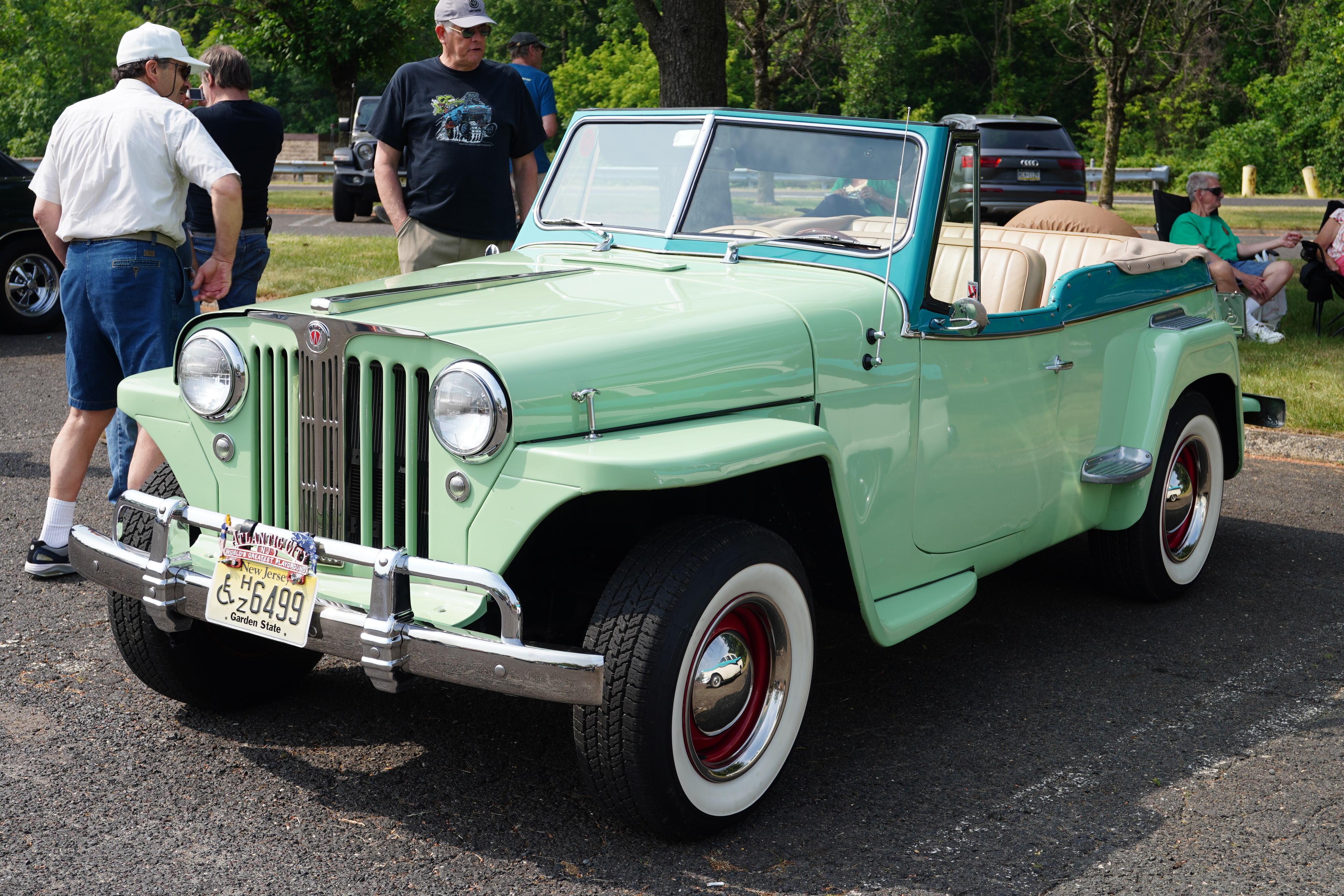
Willys Jeepster
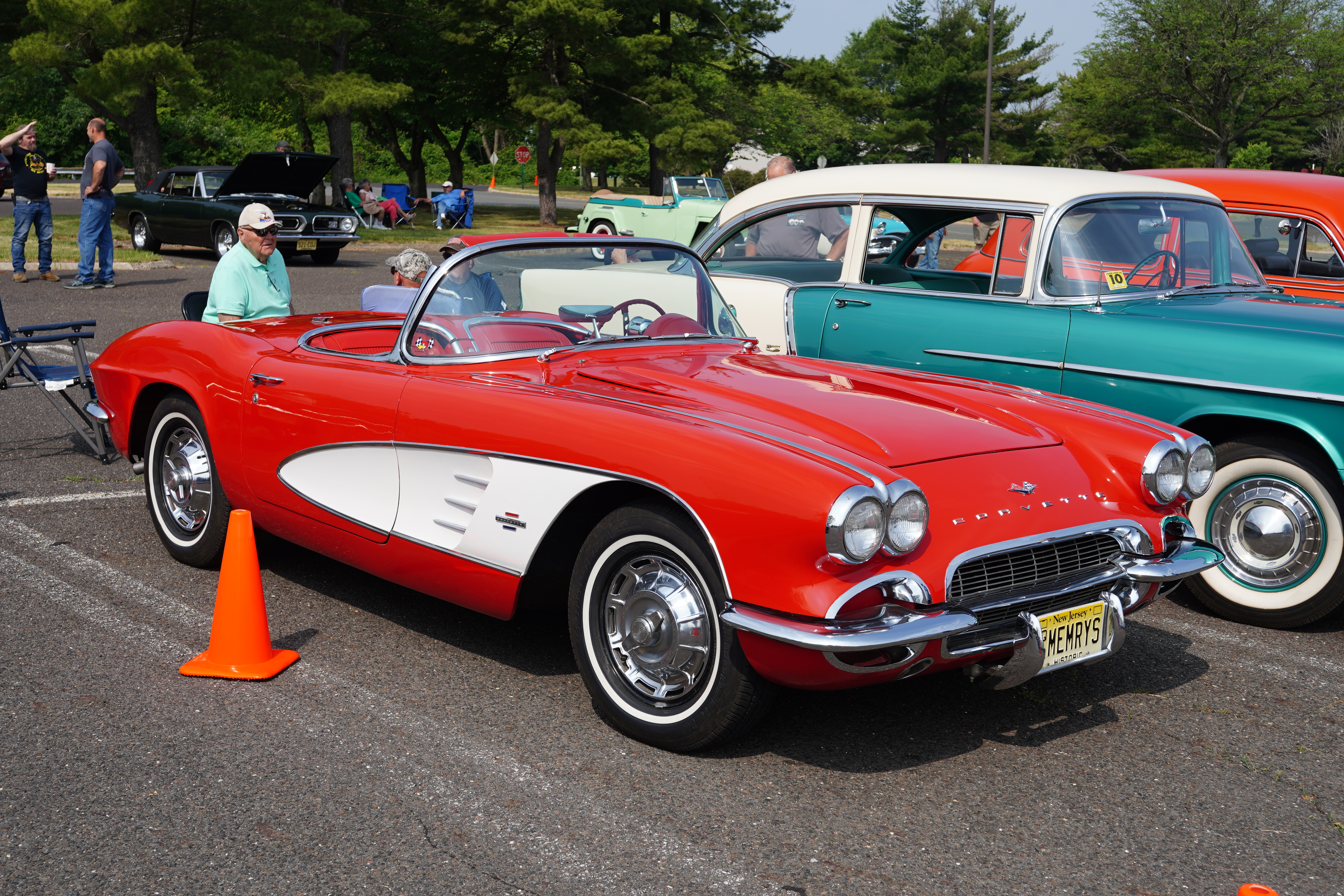
C1 Corvette
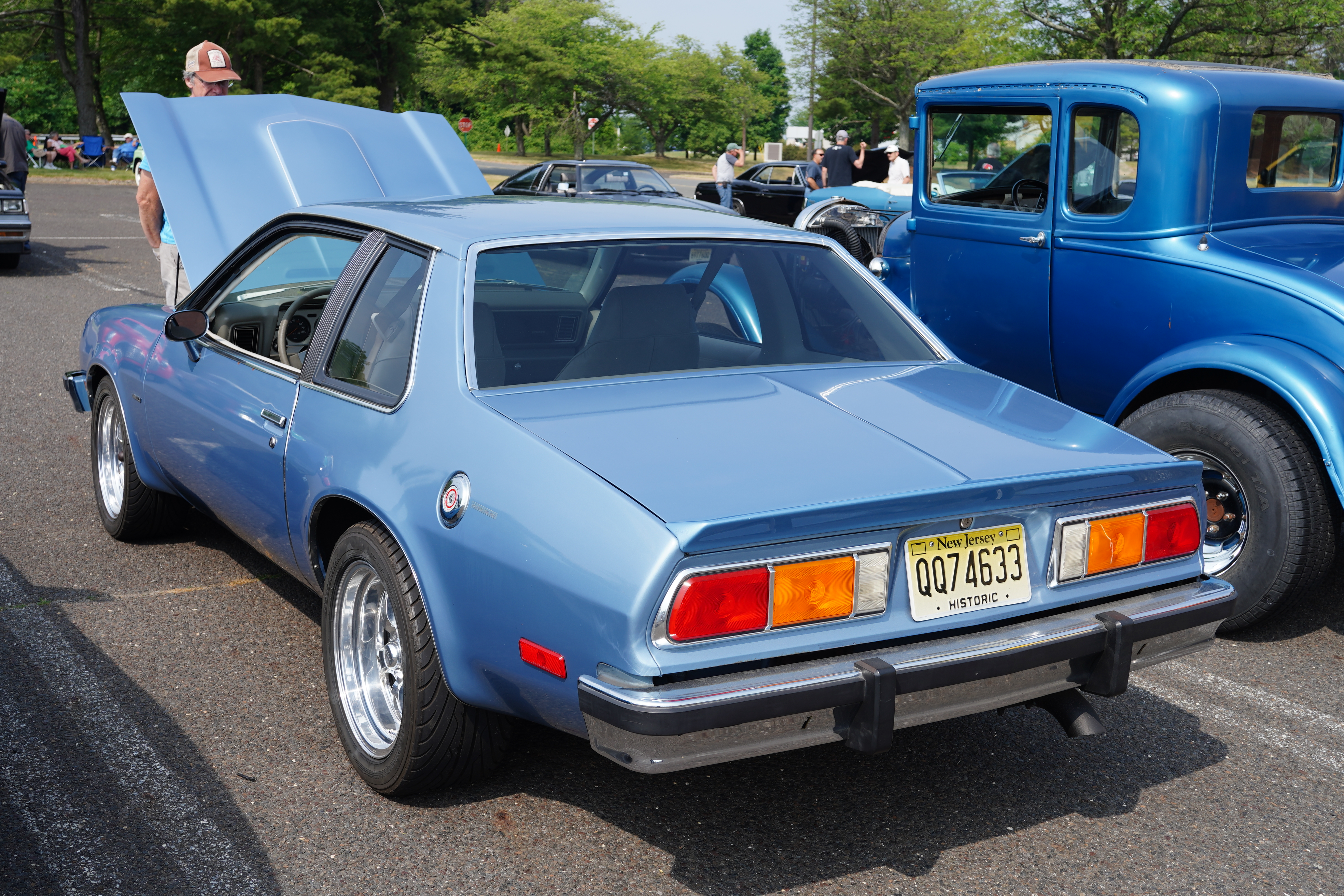
(Above): I don’t know when I last saw one of these; in fact, I had to look it up to write about it. The Chevy Monza was built from 1975-1980, on the Vega platform. Standard engine was the Vega 4-cylinder, but a V8 was optional. The fastback 2+2 is the one I remember, but this “Town Coupe” came later. I think this design has held up well.
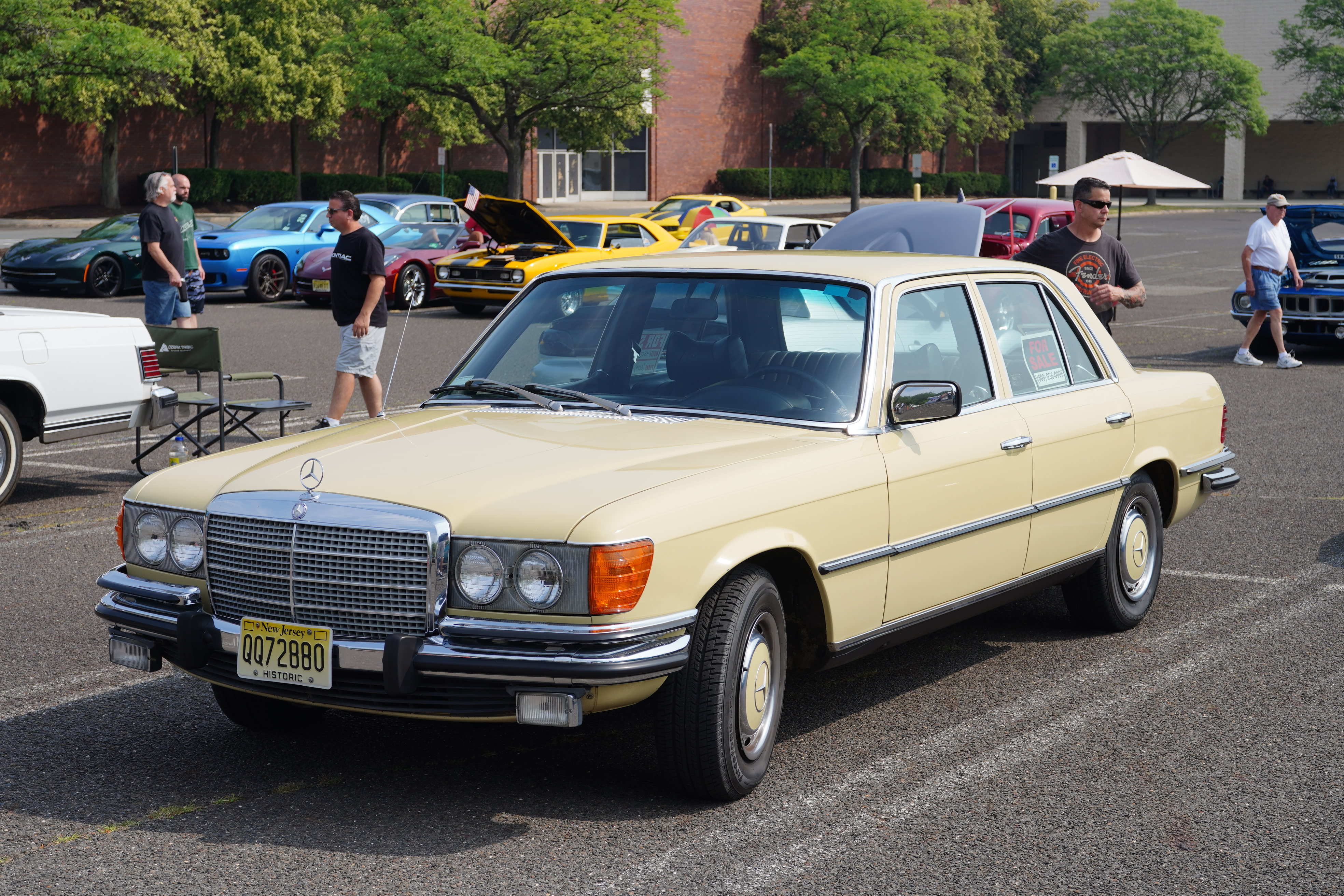
Mercedes-Benz sedan
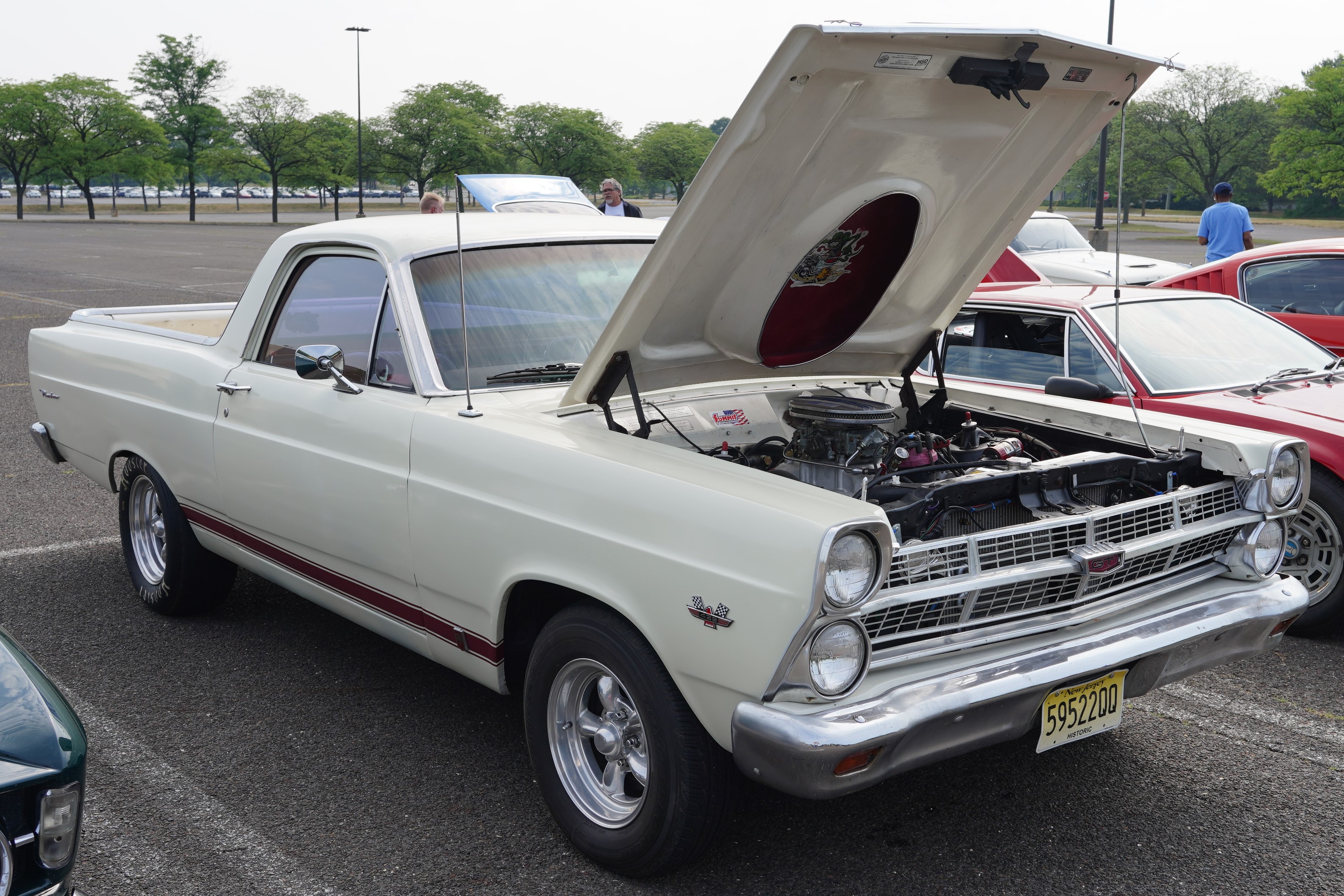
1967 Ford Ranchero
E-body Barracuda; note the “billboard” quarter panel treatment
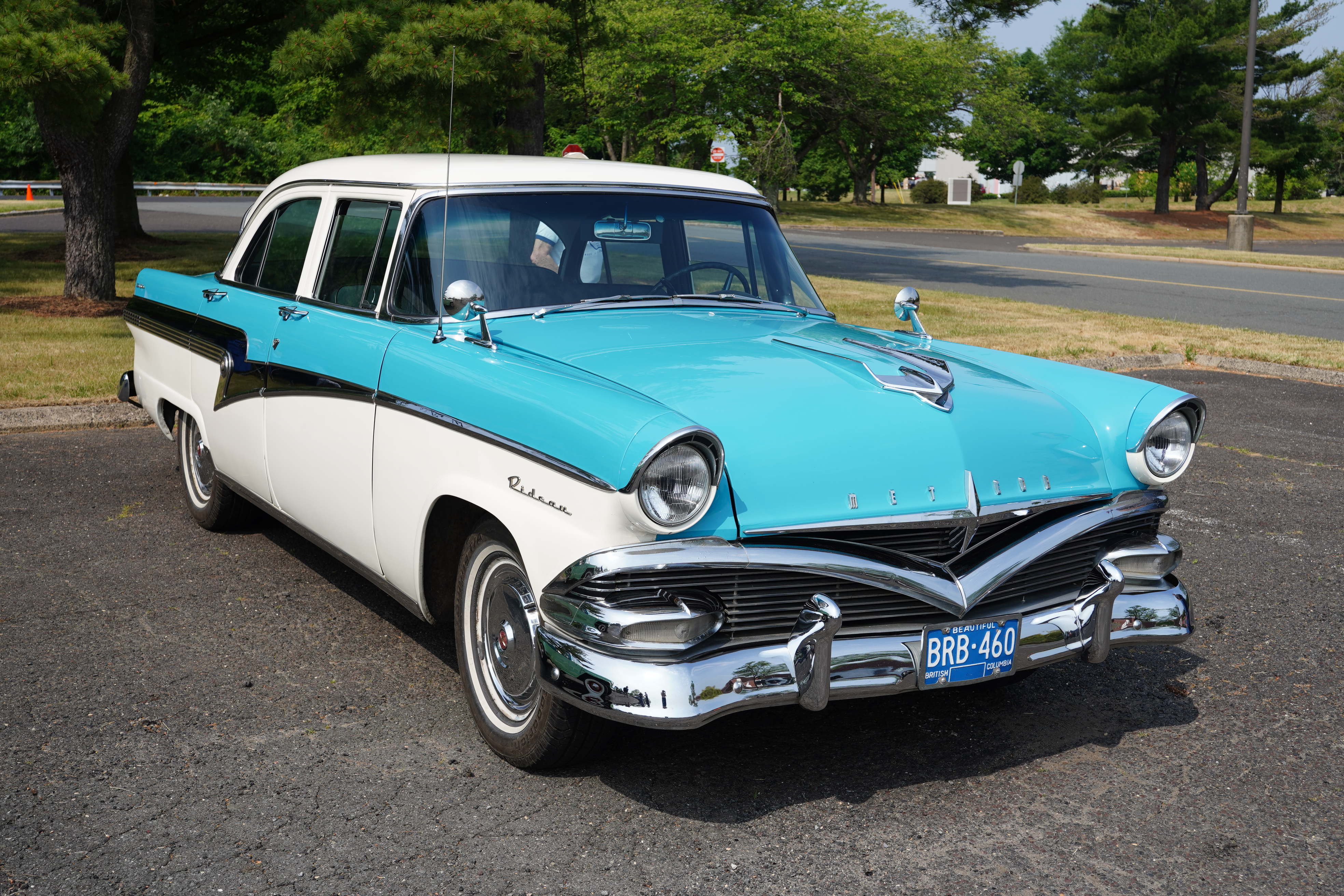
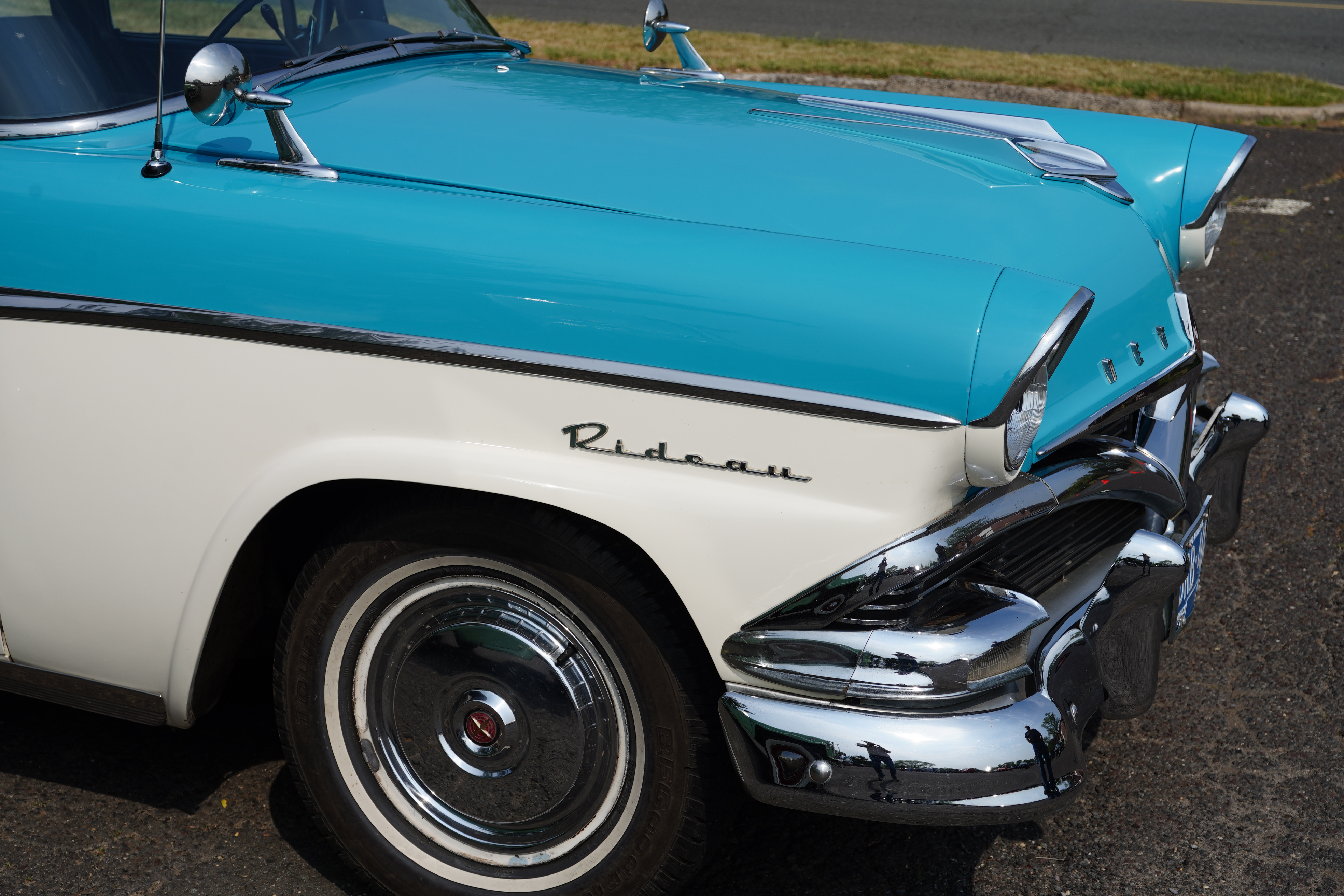
(Above) The most unusual car at this show, this 1956 Canadian-spec “Meteor Rideau” wore a grille treatment and side trim unlike any U.S. spec FoMoCo product. The owner told me that “Rideau” is a river in Canada.
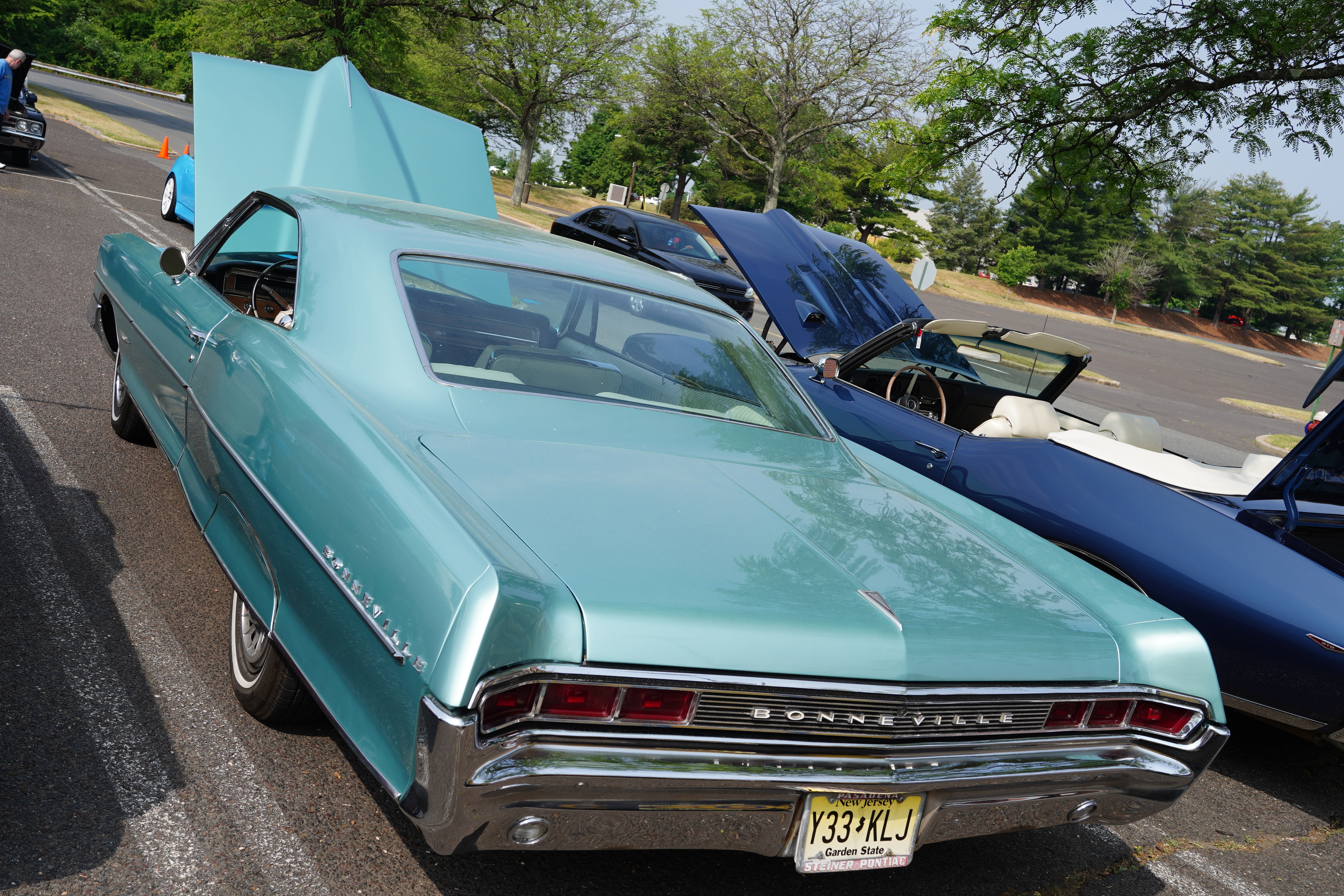
One of the nice things about Sunday’s show (and I presume Saturday’s as well although I wasn’t there) was the variety of cars. Perhaps it was too varied, but more words about that below. I have so far posted photos of Italian and British cars, as well as cars from classes not dependent on country of origin. To finish this off, here are photos of some of the American cars on display that day, primarily consisting of personal luxury cars and muscle cars.
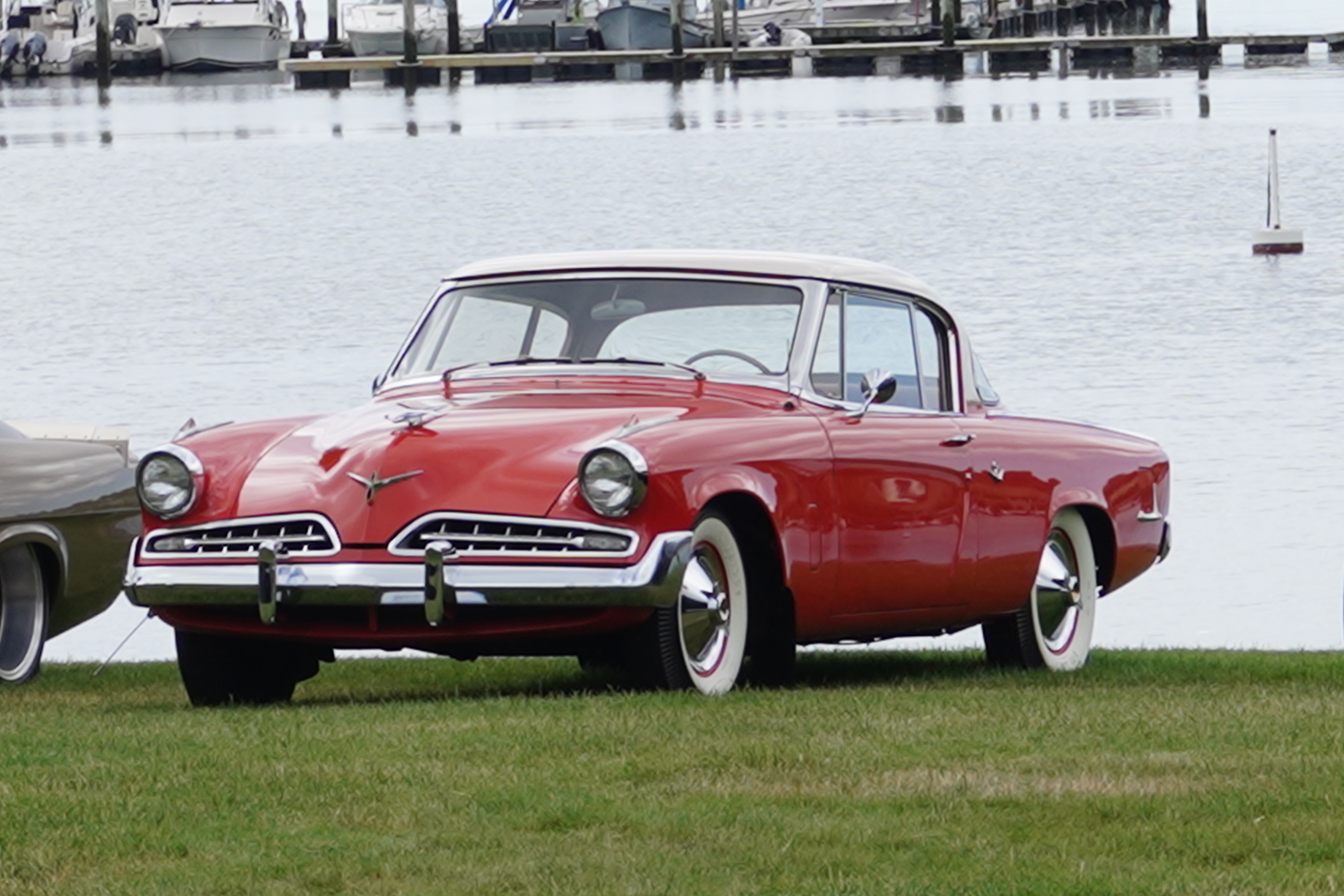
Wayne Carini’s Studebaker
AMERICAN MUSCLE
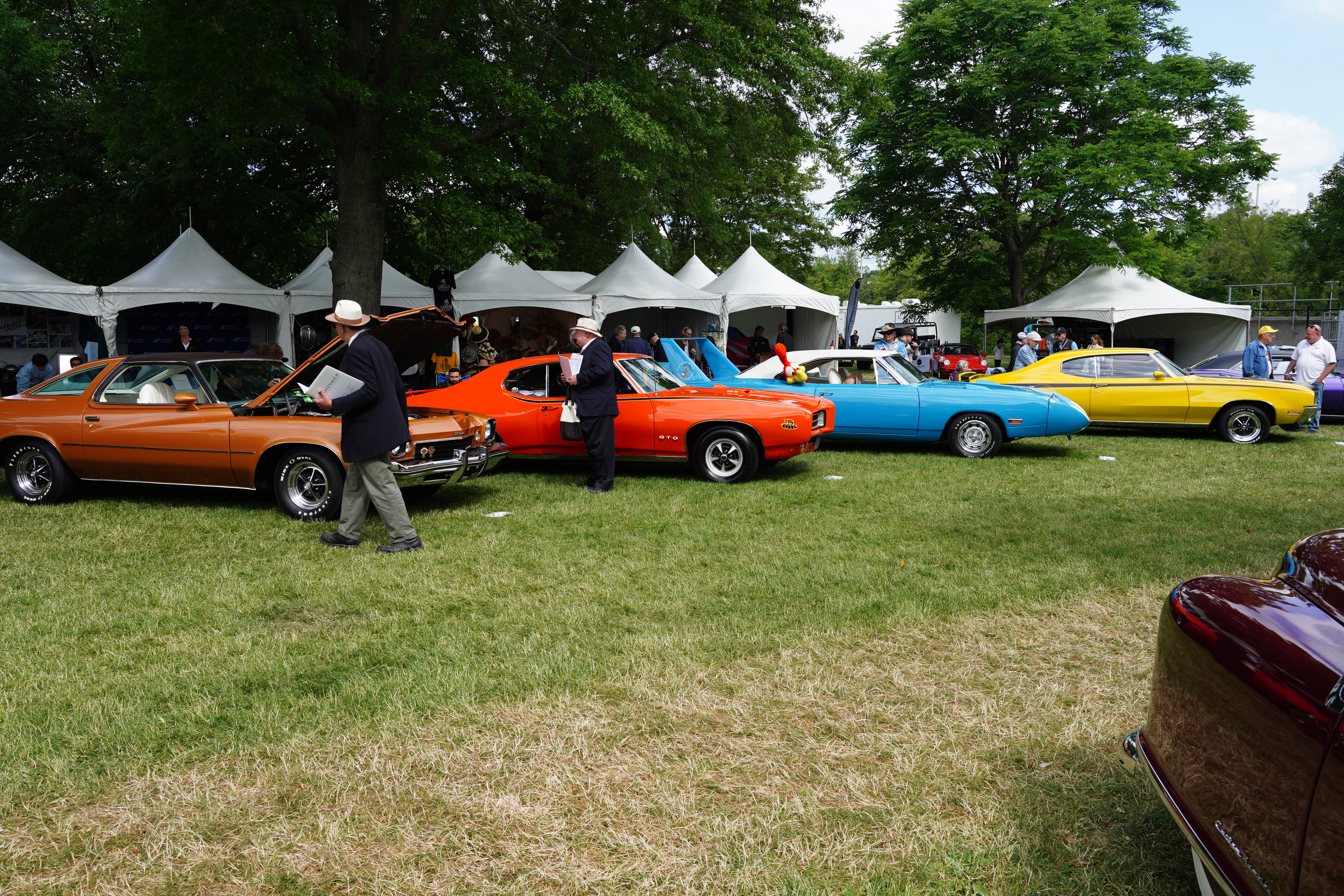
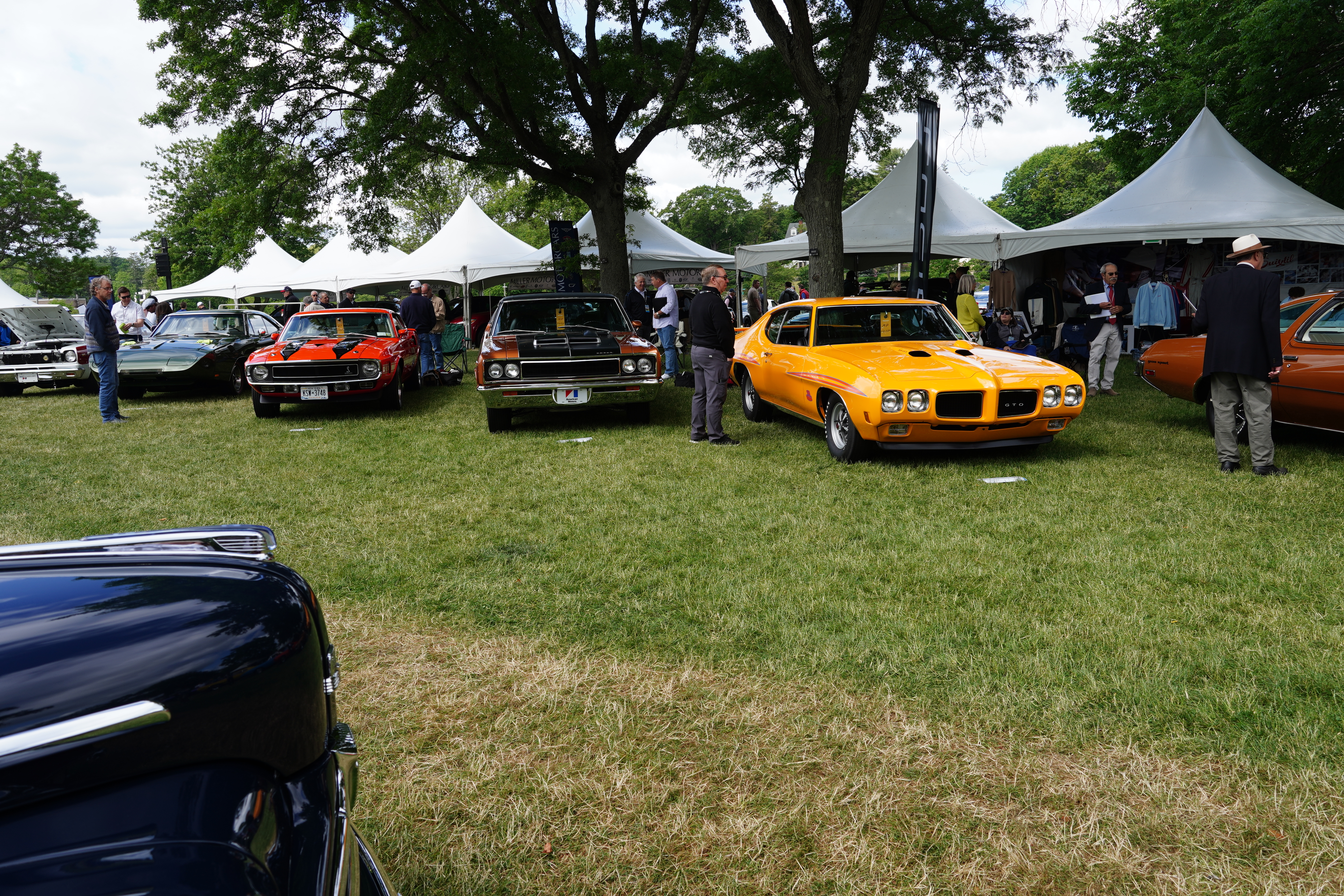
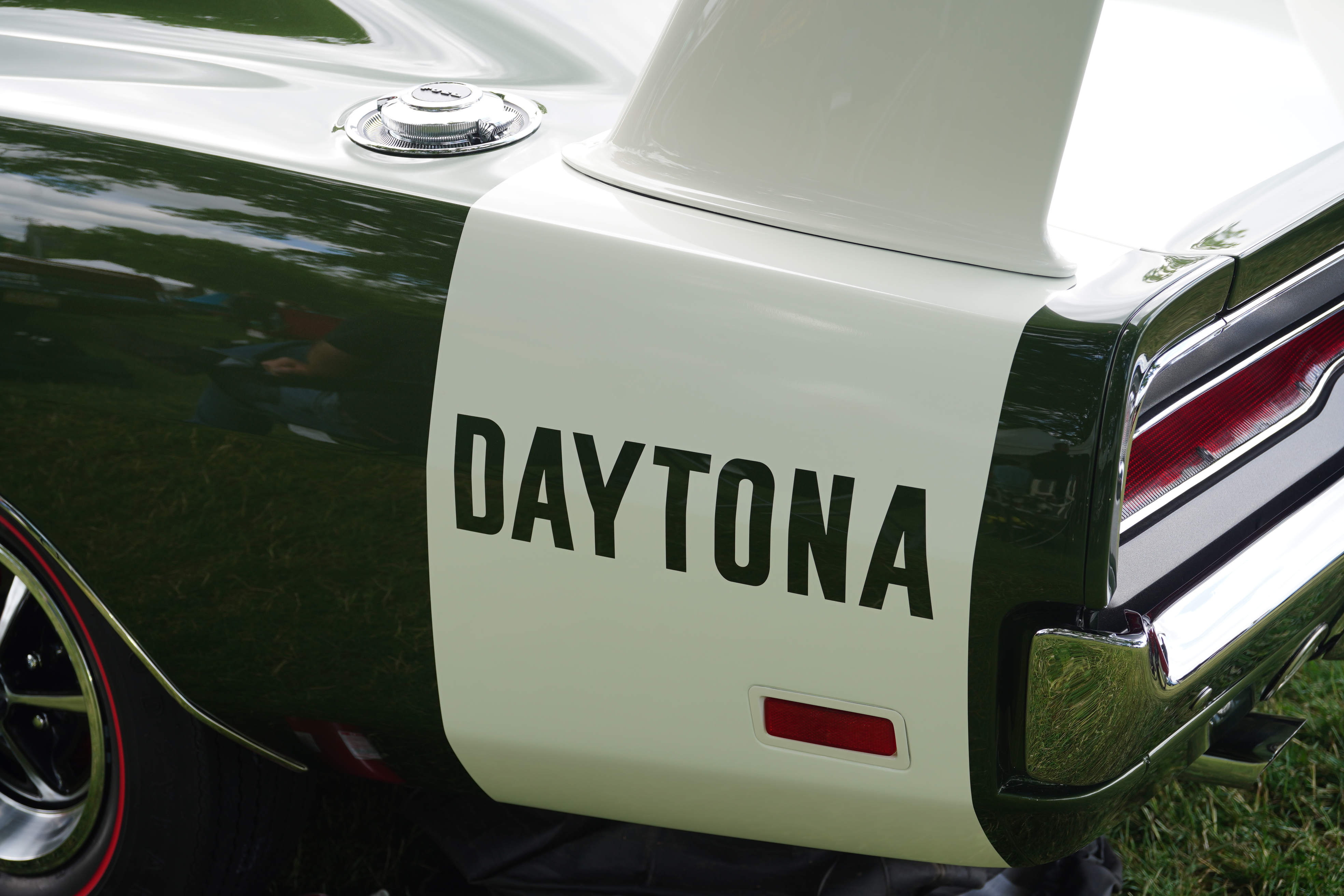
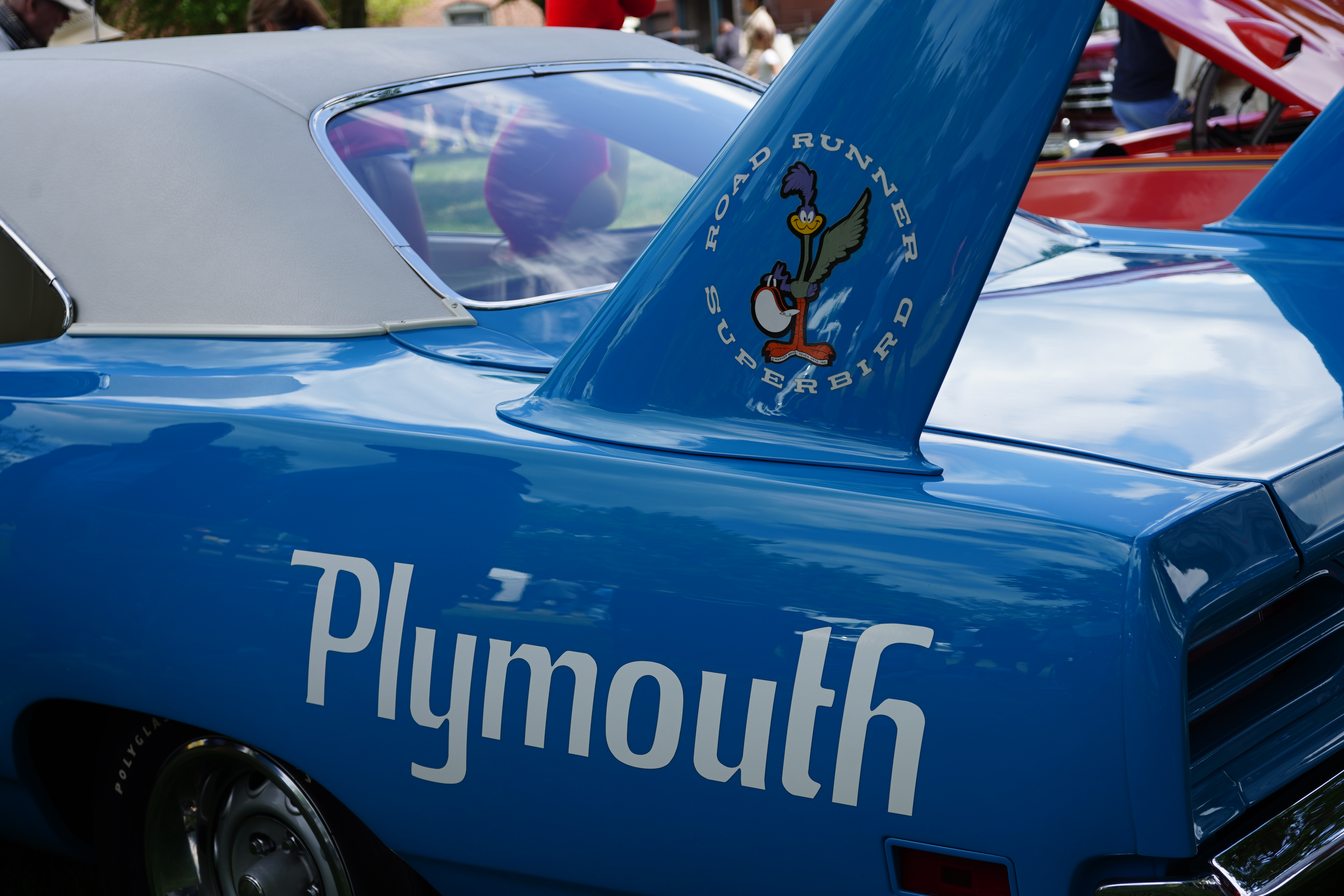
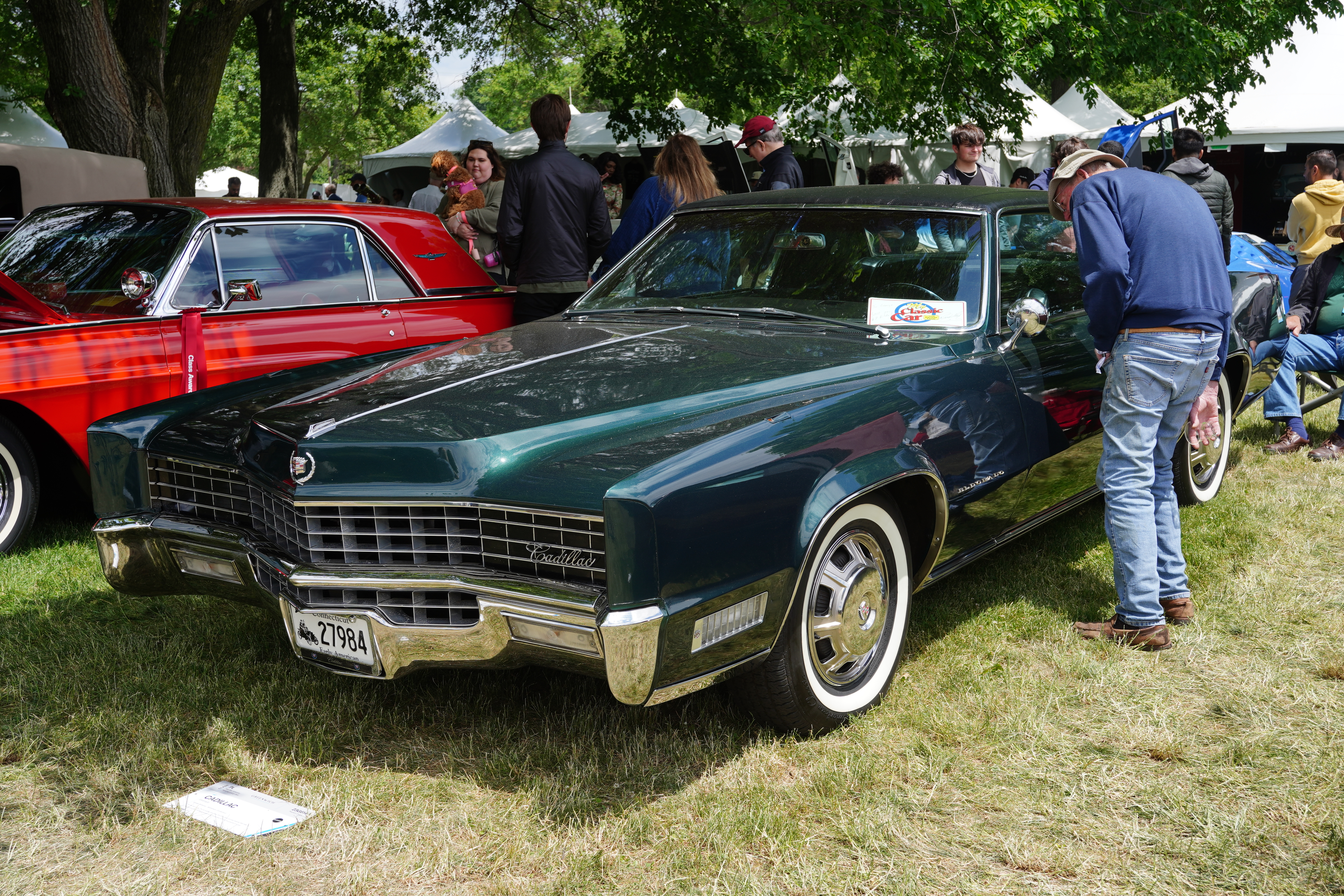
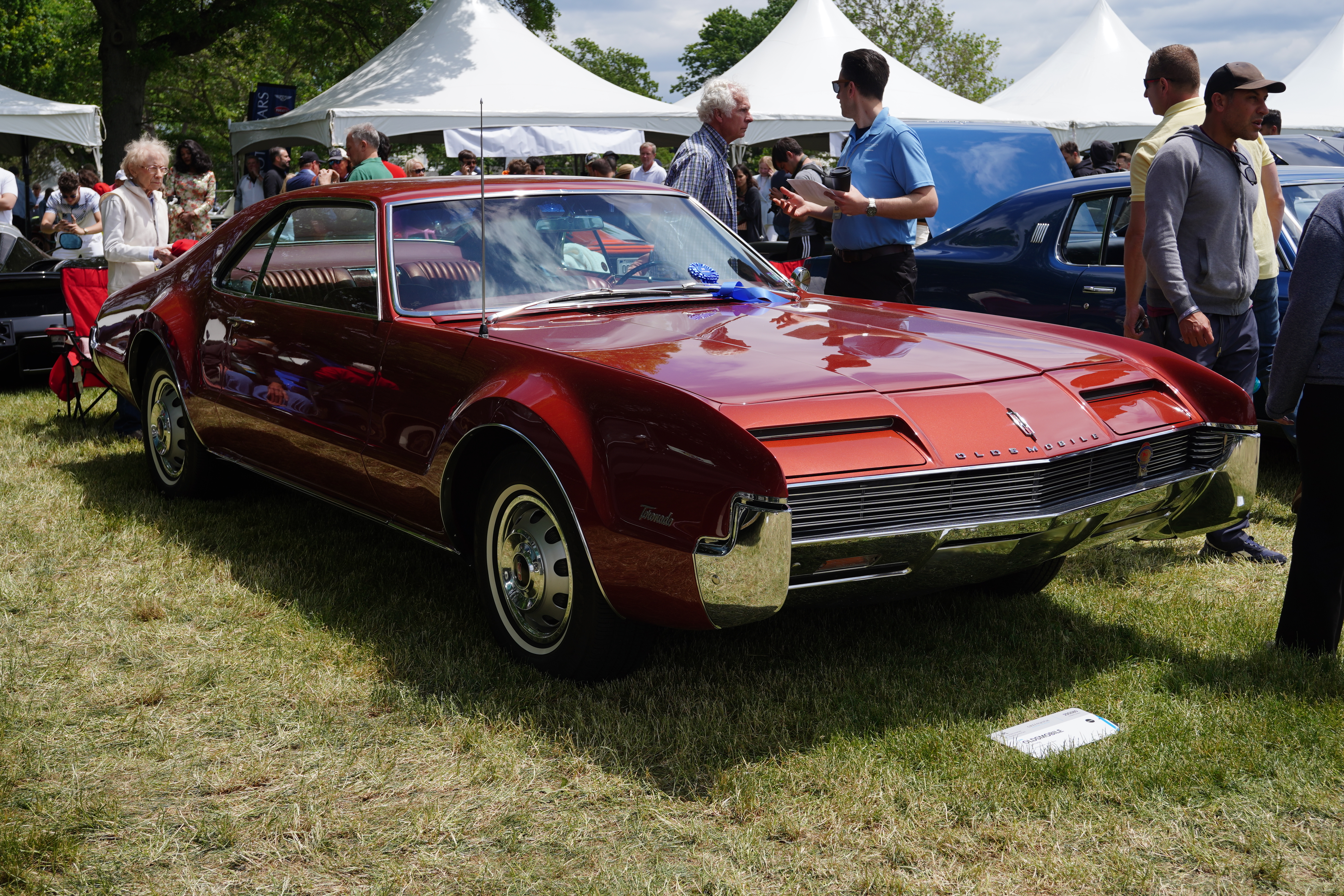
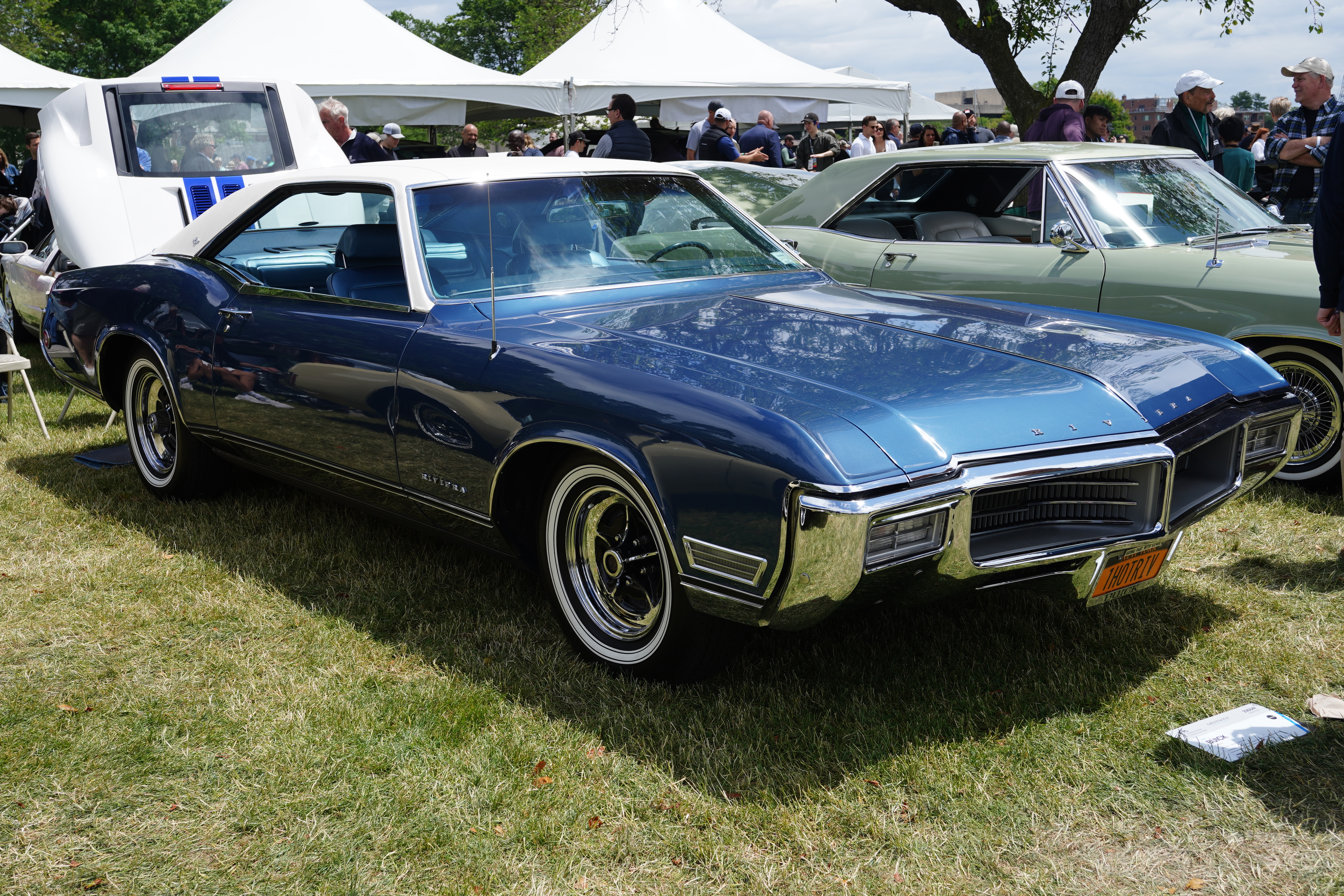
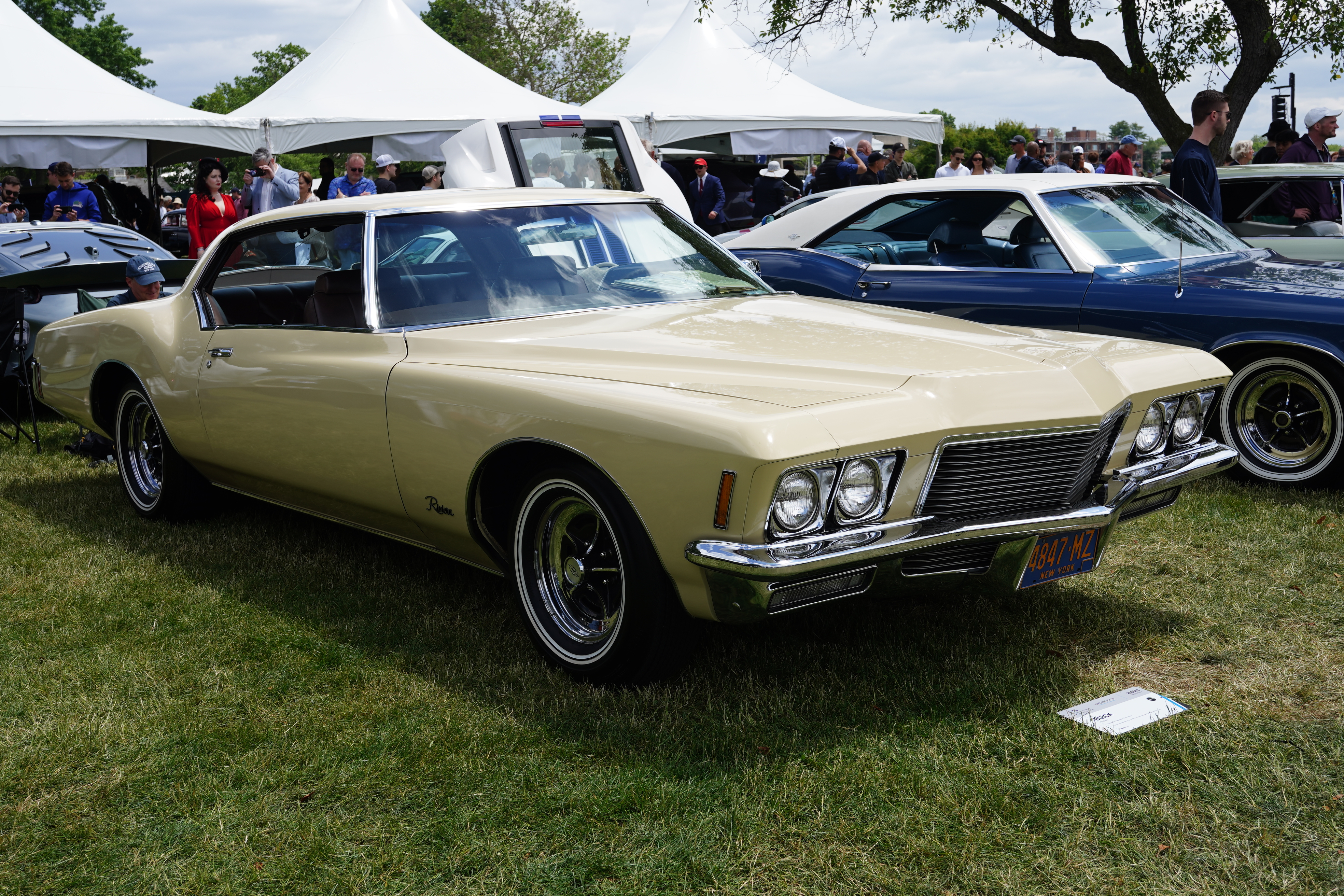
One class consisted of “American muscle cars in high-impact colors”, some of which you see here:
Pontiac Grand PrixCadillac EldoradoOlds Toronado1969 Buick Riviera1971 Buick Riviera boattail
HAGERTY, THE SHOW OWNERS AND HOSTS
The Greenwich Concours d’Elegance began in 1996, when husband-and-wife team Bruce and Genia Wennerstrom decided to host a true Concours in the area. When Bruce and Genia passed away, their children continued the tradition. It was always a two-day event, with domestic cars on Saturday and import vehicles on Sunday. When it was a family affair, I showed cars there 6 times, an honor which I don’t take lightly. Attending the show was always an easygoing and relaxed day.
Hagerty bought the Greenwich Concours from the Wennerstroms a few years back. My 2023 participation was the first time under the Hagerty umbrella. Overall, Hagerty puts a tremendous amount of effort into organizing, arranging, and hosting an event like this. It’s still a two-day show, but now the classes are more varied. This year the Saturday show was billed as “Concours de Sport” and Sunday was the “Concours d’Elegance”. Sunday’s show consisted of a total of 19 different classes! From my observation, there was no overriding theme or sense of unity to the displays.
As a participant, I felt that Hagerty crossed the line from “organization” to “control”. Innumerable emails told me everything from what time I must load in on Sunday (“6 a.m. to 7:30 a.m., and we reserve the right to turn away entrants who arrive later”), to how I should park (“place the left front tire of your vehicle on top of disc hammered into the ground at your parking spot”), to what time I could leave (“show gates will be locked until 4:30 p.m., and no one will be permitted to exit before then”). I was told that absolutely no signage of my own was permitted on, in, or around my car, which didn’t stop me from putting informational posters I had created on top of my dash and rear parcel shelf. We had passes for an included lunch, which was nice, but were sternly told that “you may only enter once; once you leave you cannot reenter the luncheon area”. It was difficult to converse with showgoers at times because the MC blared incessantly through the too-loud PA all day long.
What was a relaxed, low-key, fashionable, reasonably-sized and well laid-out classic car show set in a verdant water-lined park has been turned into a mega-event. The communal spirit which flowed through every aspect of what the Wennerstroms had created has been displaced by a big-business approach as would be taken by a major corporation. It’s still a great show; it’s just not as great as it once was.
The Greenwich Concours d’Elegance is more than just the cars; it’s the people, of course: fellow car owners, judges, spectators, and really anyone who wants to chat about interesting cars. Below are capsule summaries of a few of my encounters.
Ed Welburn
I had seen in the program that an honorary judge for the event was Ed Welburn, who recently retired as GM’s Vice President of Global Design (a position previously held by a couple of gents named Harley Earl and Bill Mitchell). As I strolled among the show cars, there was Ed, walking along by himself, so I stopped and asked “are you Ed Welburn?” When he replied in the affirmative, I shook his hand and told him it was an honor to meet him. You can read about his professional life here.
Fellow AROC members
It was nice to catch up with several AROC (Alfa Romeo Owners Club) members, especially those from the NJ Chapter whom I recently met on a Zoom call and had never met in person. Thanks for stopping by, Lambert and Vic!
Ian Kelleher from Broad Arrow Auctions
In 2013, when I finally decided to go with RM/Sotheby’s Auctions to sell my Isetta, I still had a bit of trepidation about the particular arrangements. My RM ‘rep’ was a fellow named Ian Kelleher, and I have not forgotten about his patience and graciousness as he walked me through the particulars. Ian now works for Broad Arrow Auctions (owned by Hagerty), and when I saw him on Sunday, I took advantage of the opportunity to again thank him for his help. BTW, Bonhams Auctions used to be the in-house auction company at Greenwich, but since Hagerty bought Greenwich, they won’t allow an ‘outside’ auction company to operate there. The same thing happened at Ameilia Island, as RM was told “you’re out” and Broad Arrow was told “you’re in”. So it goes….
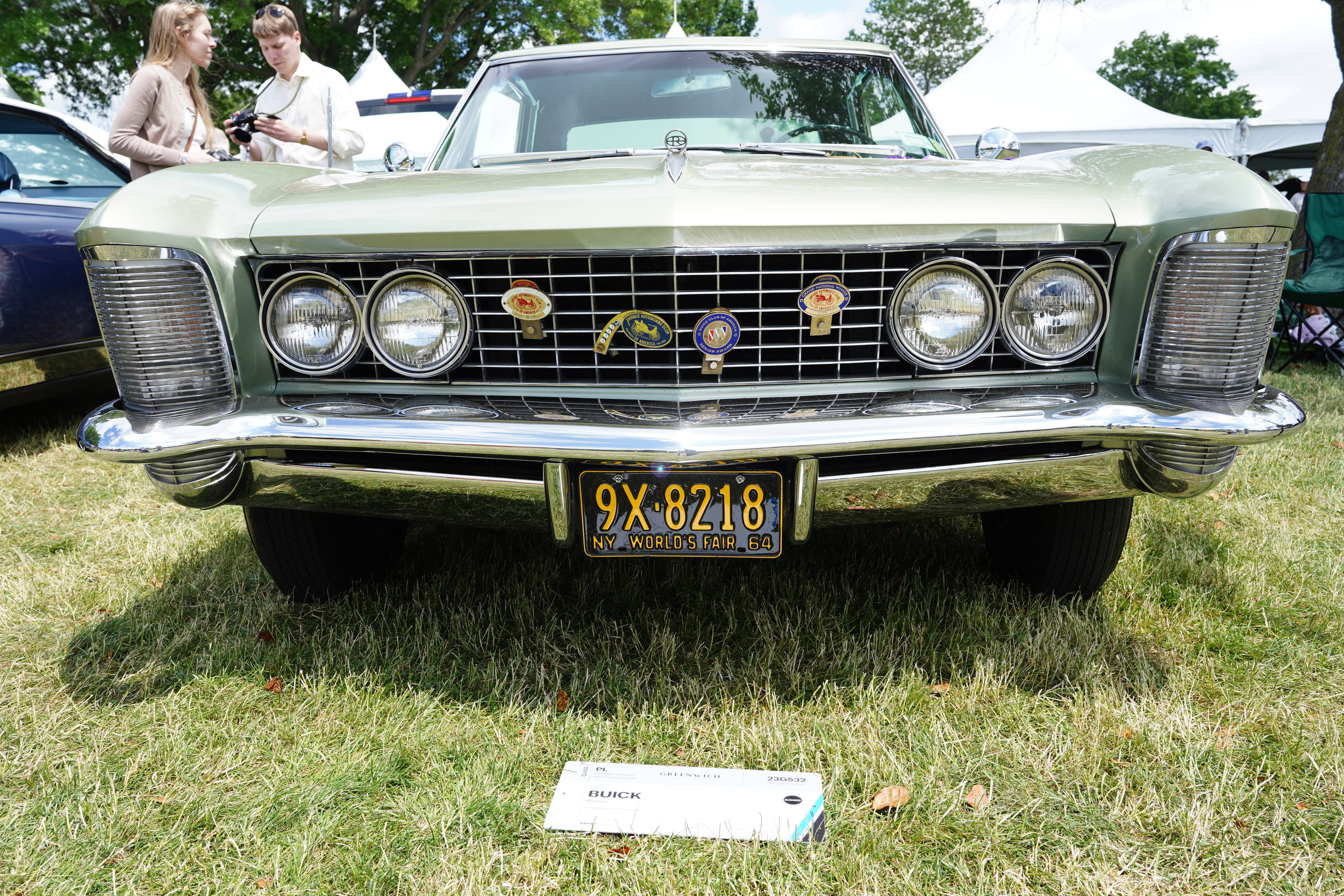
Richard with the Riviera
I’ve seen this same green ’64 Buick Riviera so often that I’ve gotten to know the owner. Rich drives his car up and down the East Coast attending car shows. I featured him and his car in this blog post about the 2021 AACA Nationals in Saratoga Springs NY.
Erich from the Boca Raton Concours
The gentleman patiently stood there waiting while I finished up speaking to a spectator. He quickly introduced himself and handed me his business card. He said, “I see that this Alfa is all original. Because it has been so well kept, I want to formally invite you to enter your car in the Preservation Class at next year’s Boca Raton Concours d’Elegance, in February 2024. Besides, it’s a nice time of year to be in Florida!” I thanked him for the invite and told him I was honored that he would consider my car for it. Of course, getting the car there and back is on me, which makes it very unlikely, but it was still very nice to be recognized in this way.
Rich Taylor
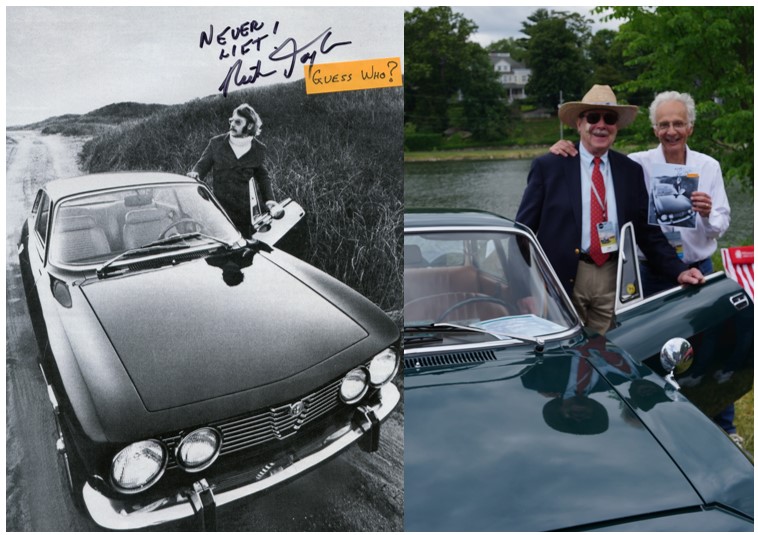
On occasion, I will pull random copies of old Car & Driver magazines from my library and leaf through them. About two weeks ago, the July ’73 issue ended up in my hands, and lo and behold, the cover told me that there was a review of the “new” Alfa Romeo GTV. I sat down to read it, and as I turned the page to the full-page photo, I immediately said to myself, “that guy looks familiar”. I scanned the page, printed out an 8×10 glossy, put a Post-It note on the pic which said “guess who?” and at the show on Sunday, placed the photo on top of the Alfa’s dash.
When judging started, who came around to judge my car (actually, the entire class of Alfas) but Rich Taylor himself. After we exchanged pleasantries, I directed him to check out the photo. He grabbed it and said “let me pose like this again!”. I got into the shot holding up the glossy (which he signed for me). Anything for a chance to have a little fun with that “famous automotive journalist Rich Taylor”.
BRITISH & ITALIAN CARS
Below is a sampling of the European cars which I found to be photo-worthy.
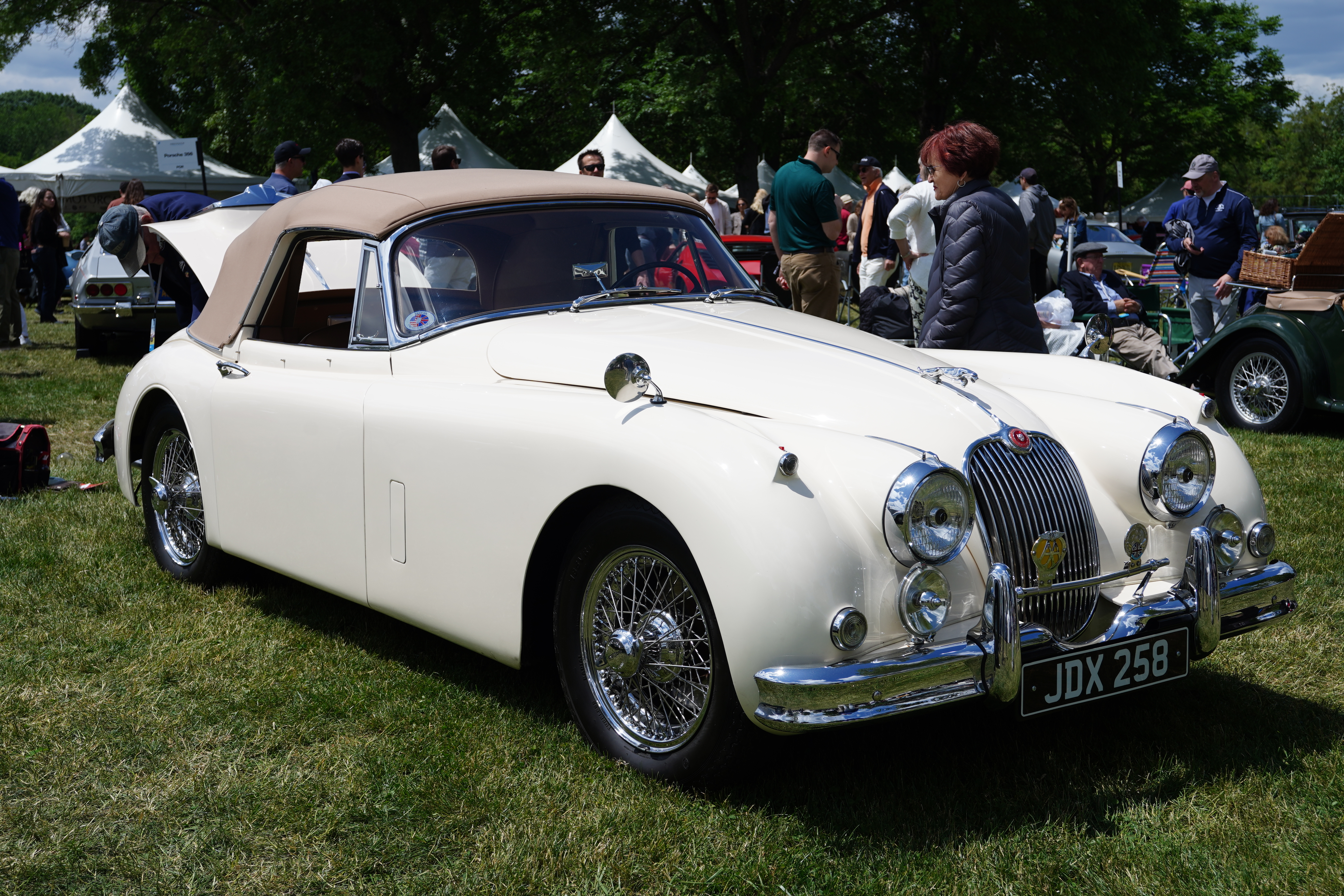
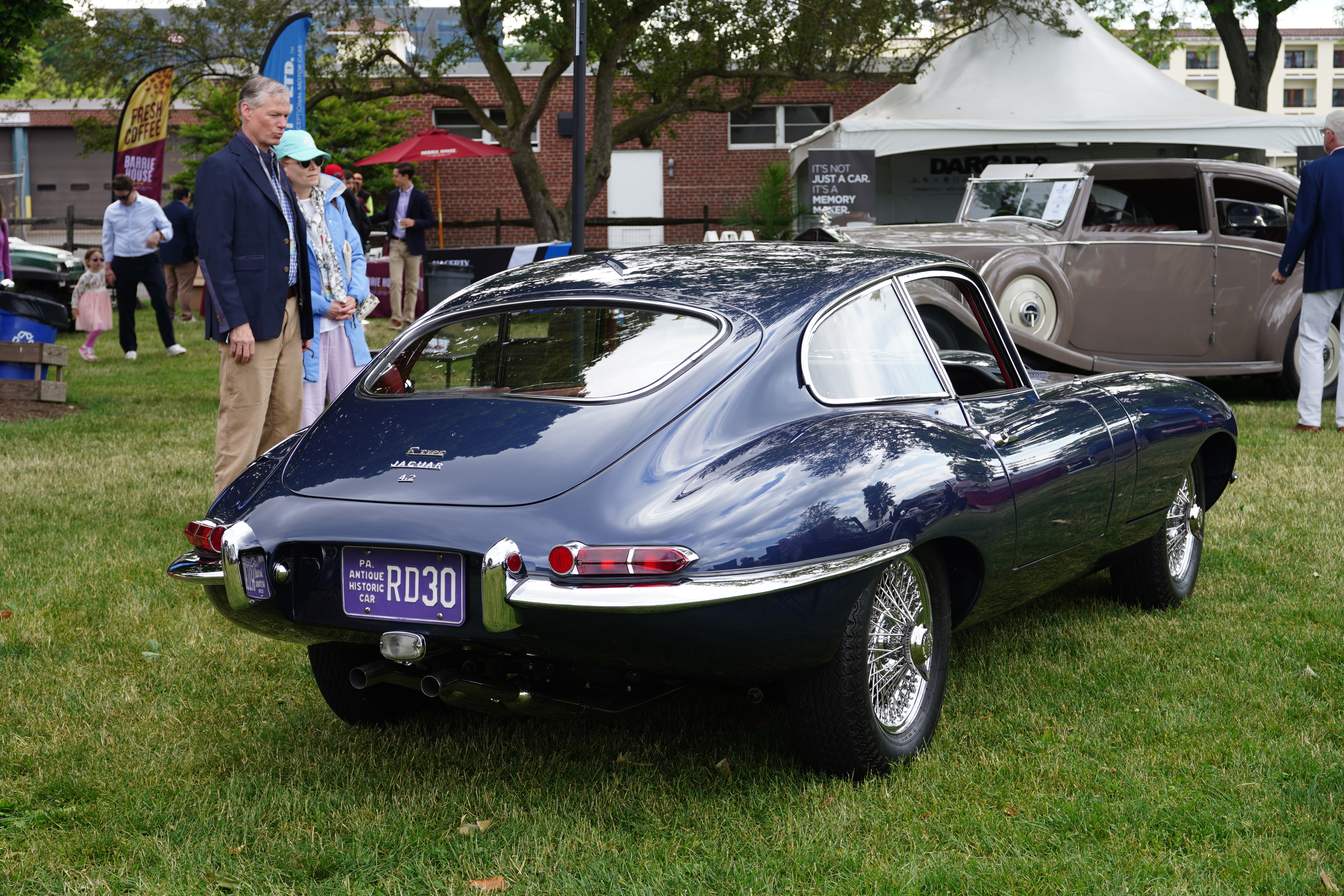
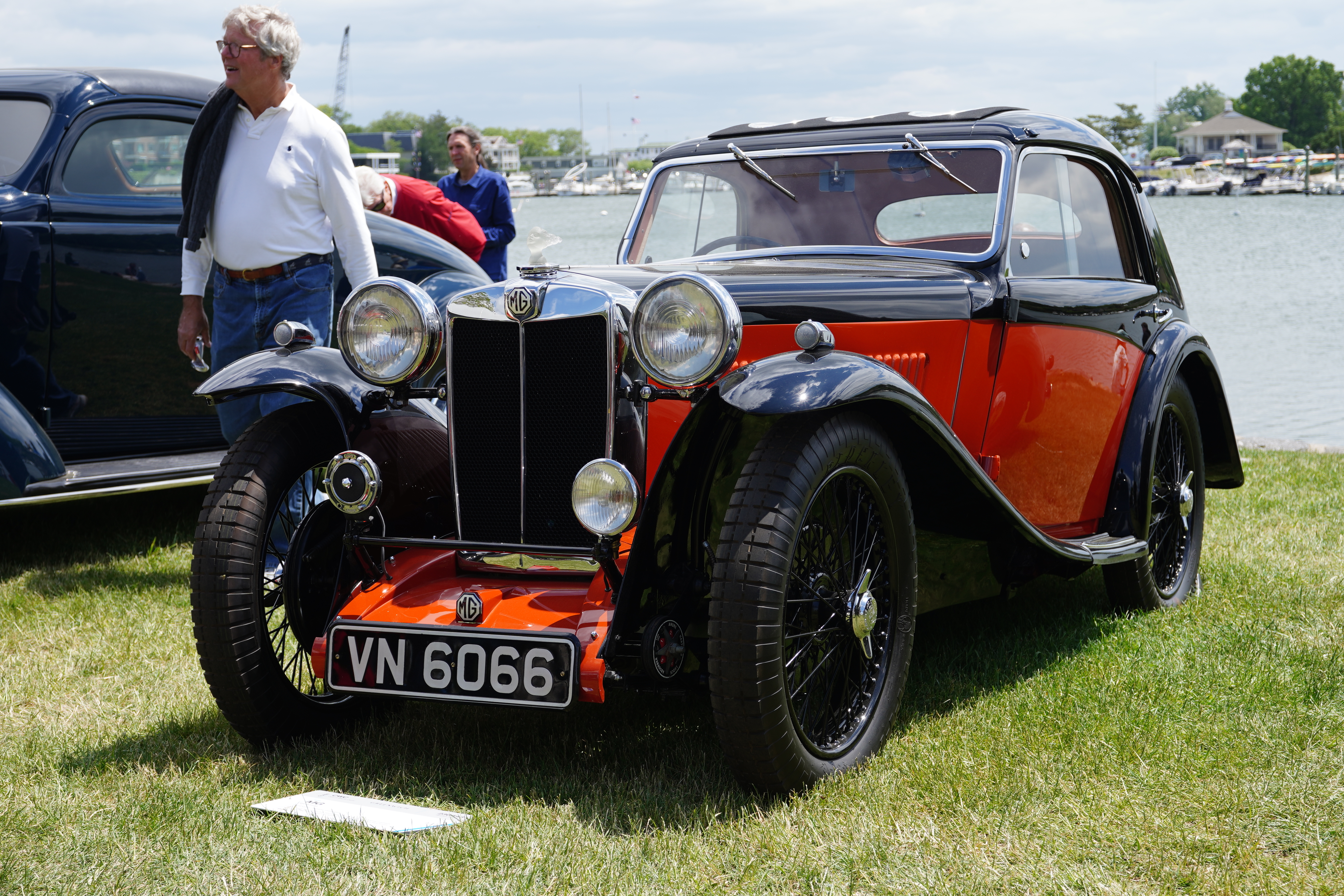
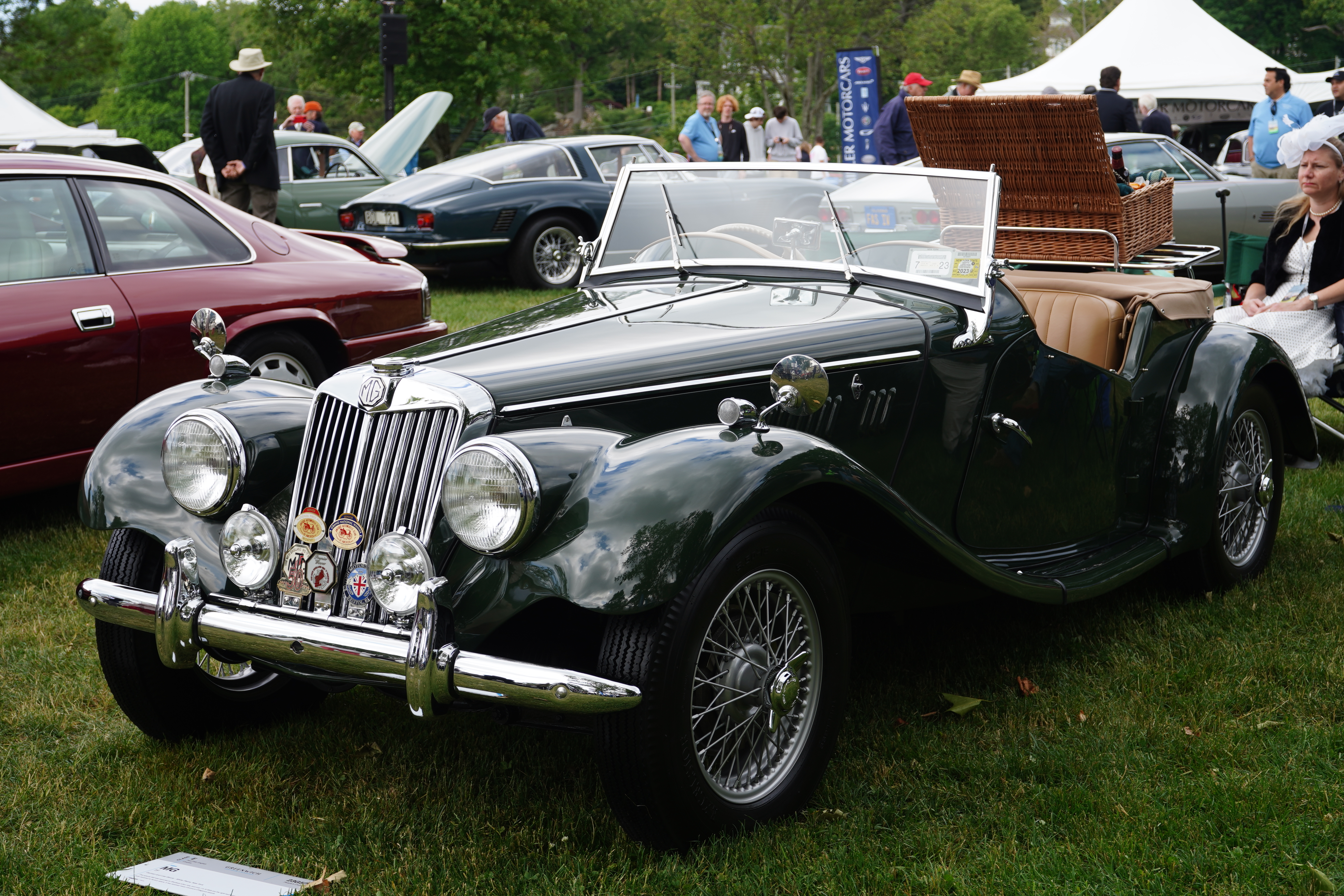
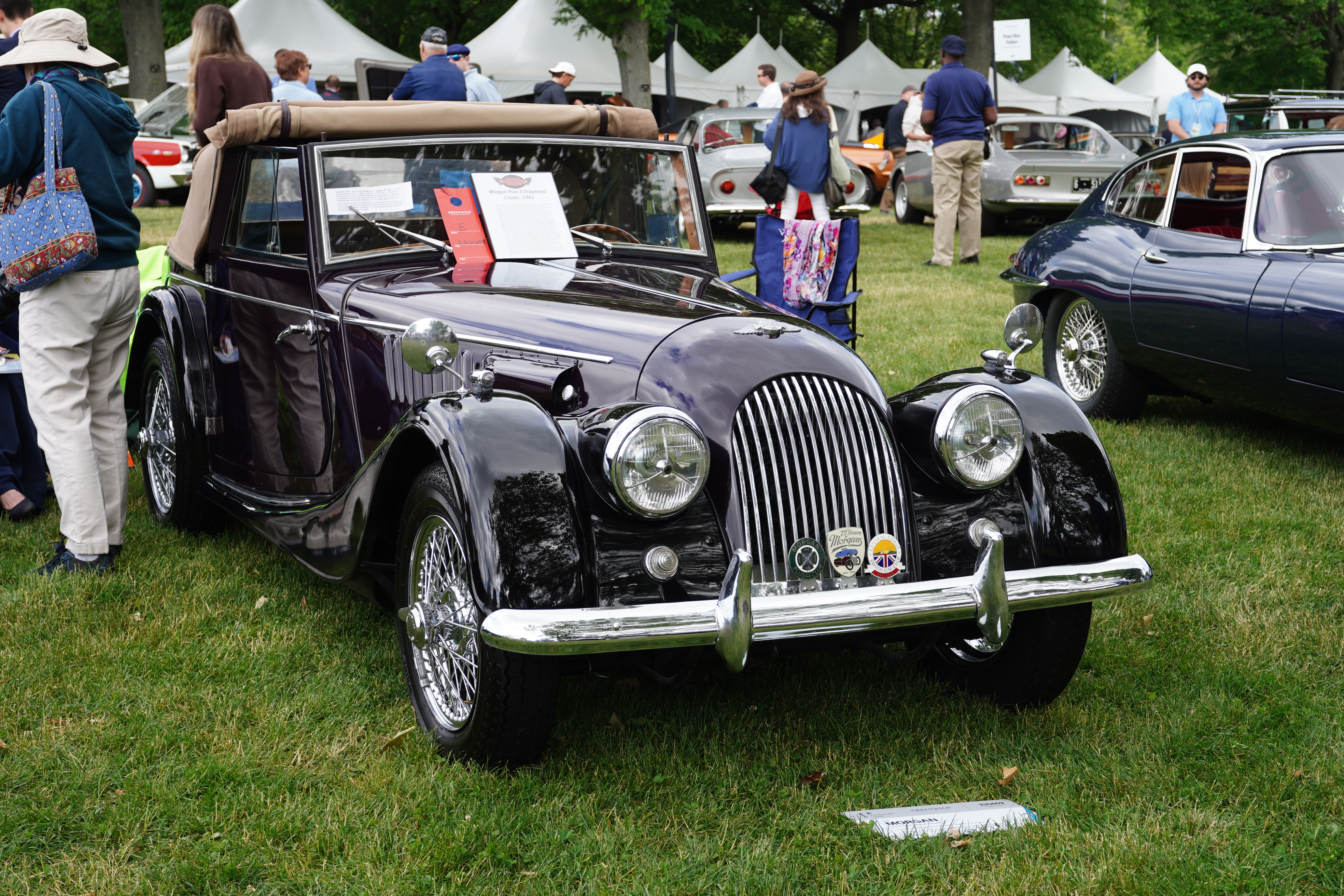
Jaguar XK-150Jaguar E-Type Series 1 FHCPre-war MG (one of Wayne Carini’s cars)MG-TFMorgan
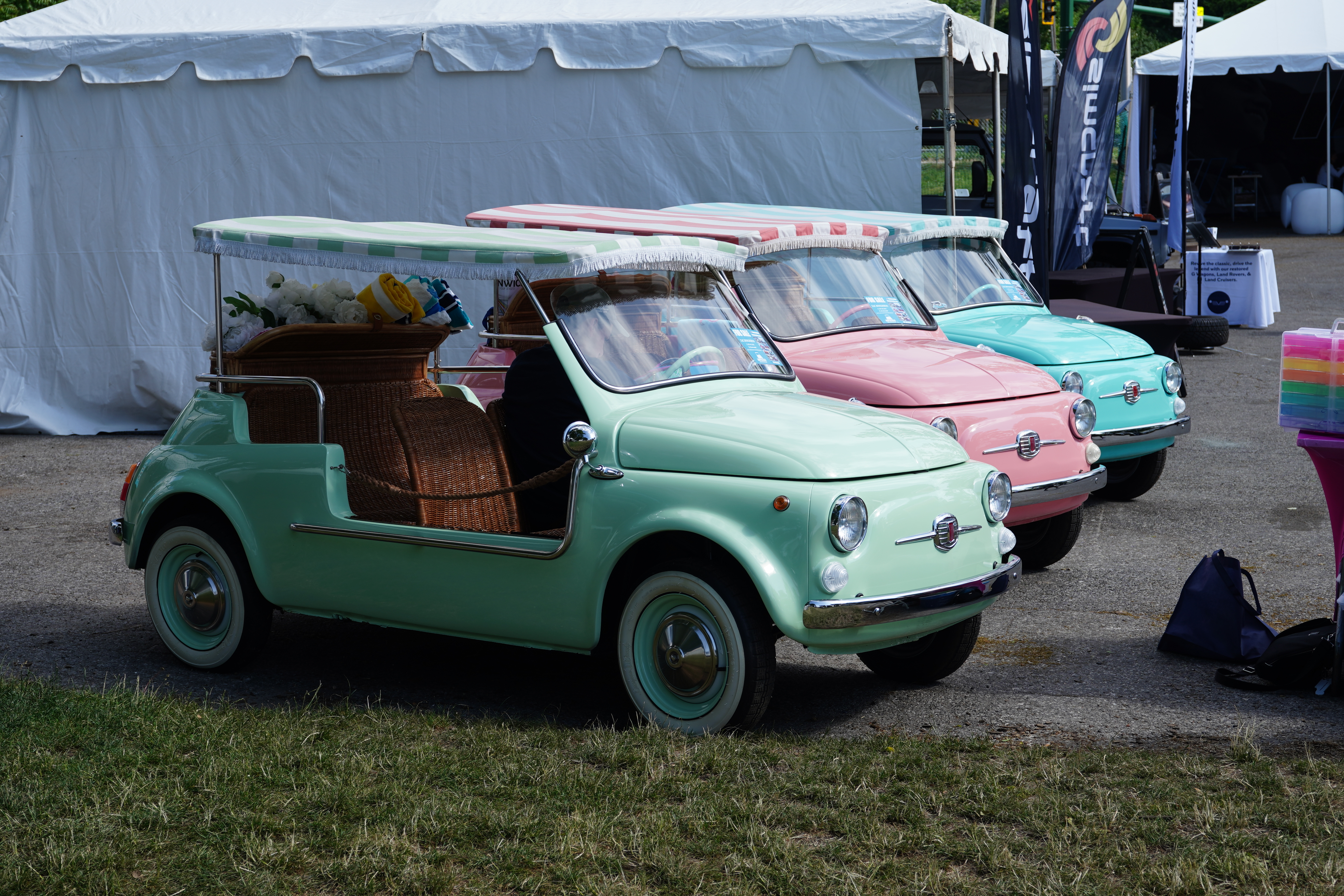
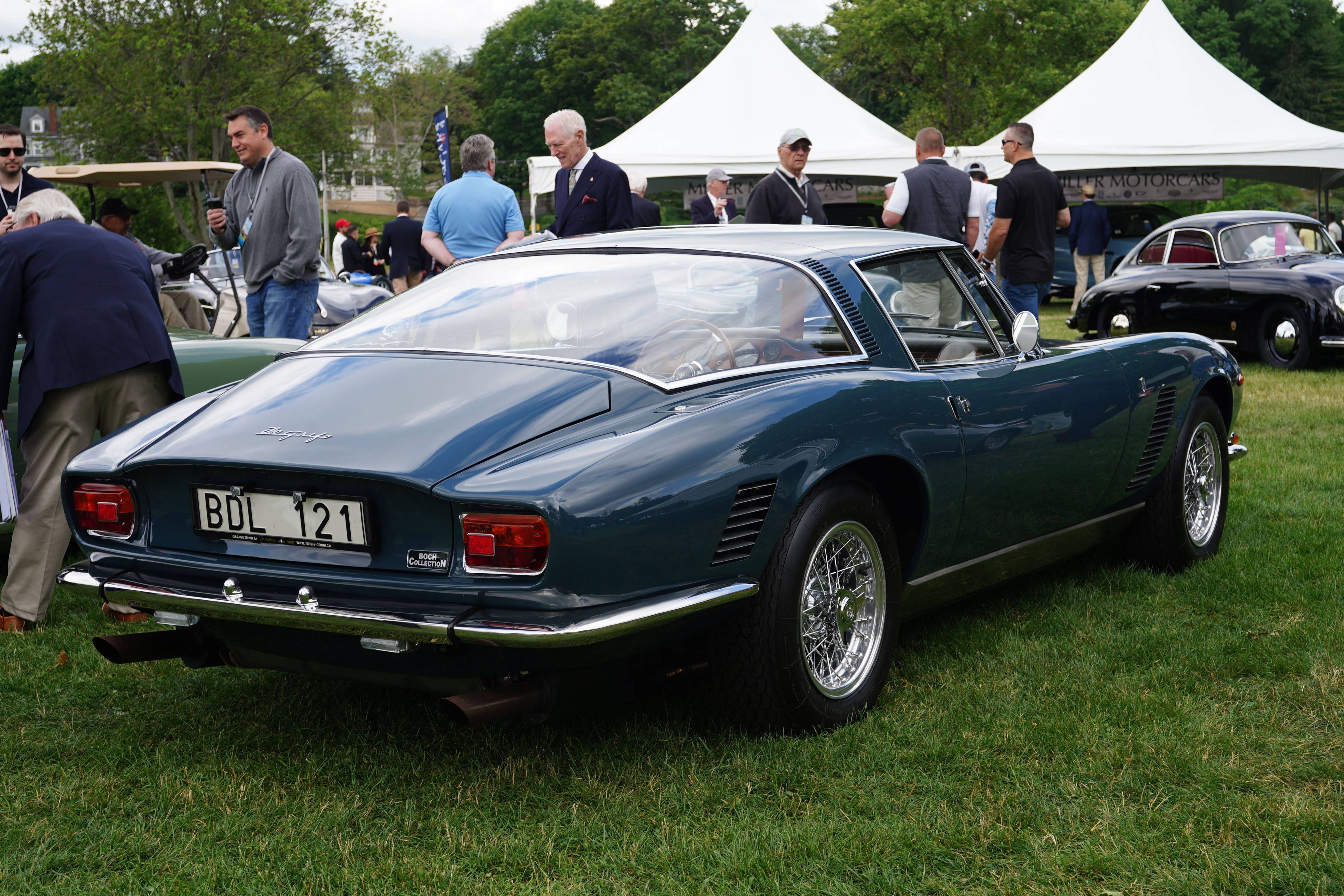
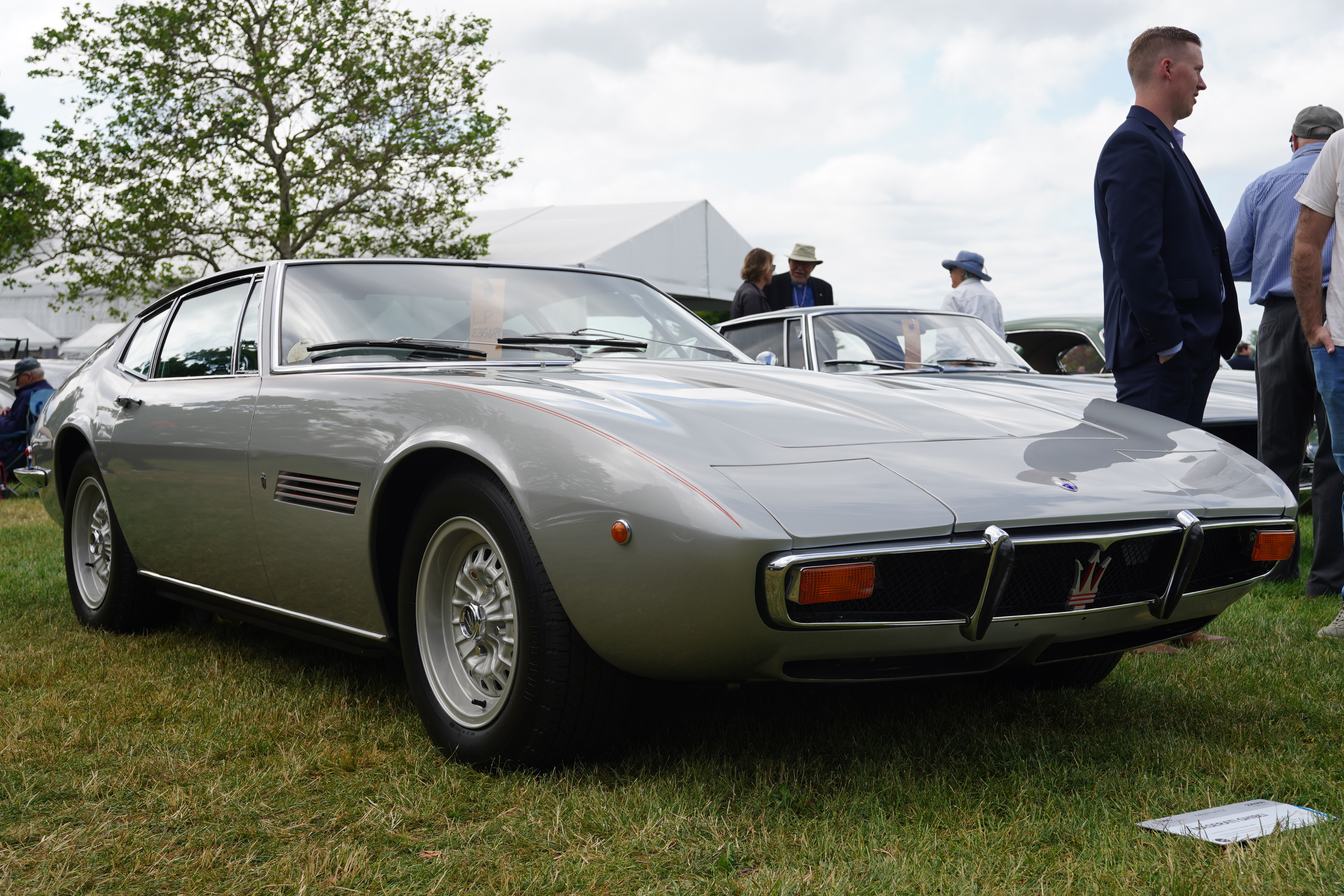
Fiat JollysIso GrifoMaserati 3500GTMaserati GhibliLamborghini MiuraLambo 12-cylinder engine with 6 Weber carbs
As I mentioned in Part 1 of this blog series, the Greenwich Concours is an invitation-only event, so it is an honor to show a car there. My Alfa was there in 2013 and again in 2017; however, the Wennerstrom family was still running the show in those years. Bruce Wennerstrom knew of me because I had shown the BMW Isetta at Greenwich 4 times (2001, 2004, 2007, and 2010), and he had always been gracious and welcoming to me and my little bubble car, surrounded as it was by machinery worth 5 or 10 times its value. Hagerty bought the Greenwich Concours a few years ago (and I will elaborate on my impressions of Hagerty in a later post). For 2023, Greenwich was not necessarily on my radar until an email arrived in March from Rich Taylor.
I know Rich from the New England 1000 rallies. He knows of my Alfa because I drove it in 4 of those rallies (2013, 2014, 2015, and 2018). He wrote to tell me that Alfa Romeo would be a featured marque at Greenwich this year, and he was “in charge” of assembling both pre-war and post-war classes. He continued “I would like to include your rare GT Junior”. Of course, I replied in the affirmative. (There’s lots more to the Rich Taylor story from Sunday. Stay tuned.)
A few weeks later, an email arrived from Hagerty confirming my acceptance at the show. That set off a slew of follow-up emails from the show sponsors about what was expected of me. My wife decided to accompany me, and although we had originally planned to depart very early Sunday morning (show cars were required to be on the field no later than 8 a.m., and it’s a one hour, forty-five minute drive from our house), we made a very late decision on Friday to head up during the day on Saturday. I’m glad we did because we got to the hotel early Saturday evening, had a relaxing dinner, and had a simple 3.5 mile drive on Sunday morning.
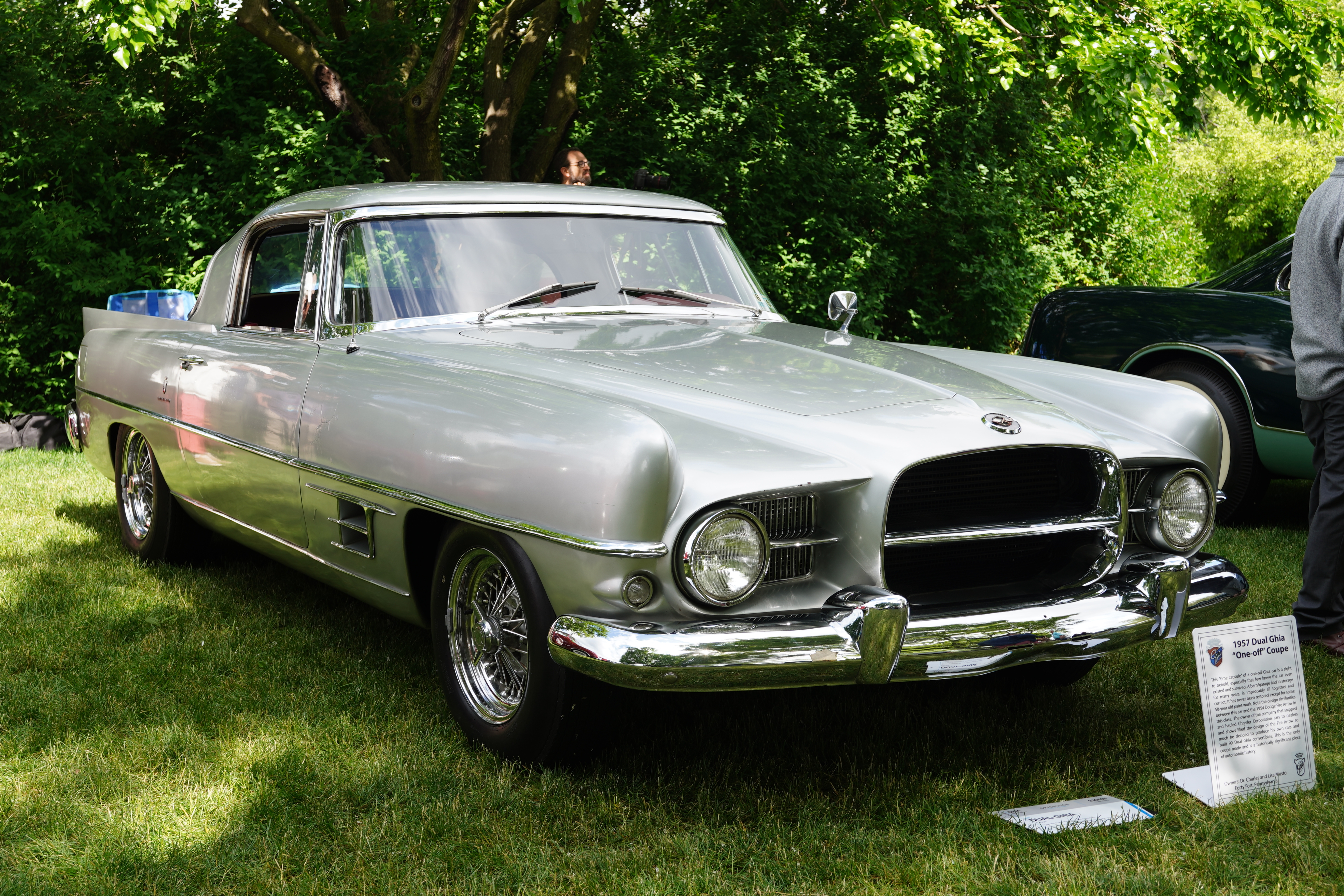
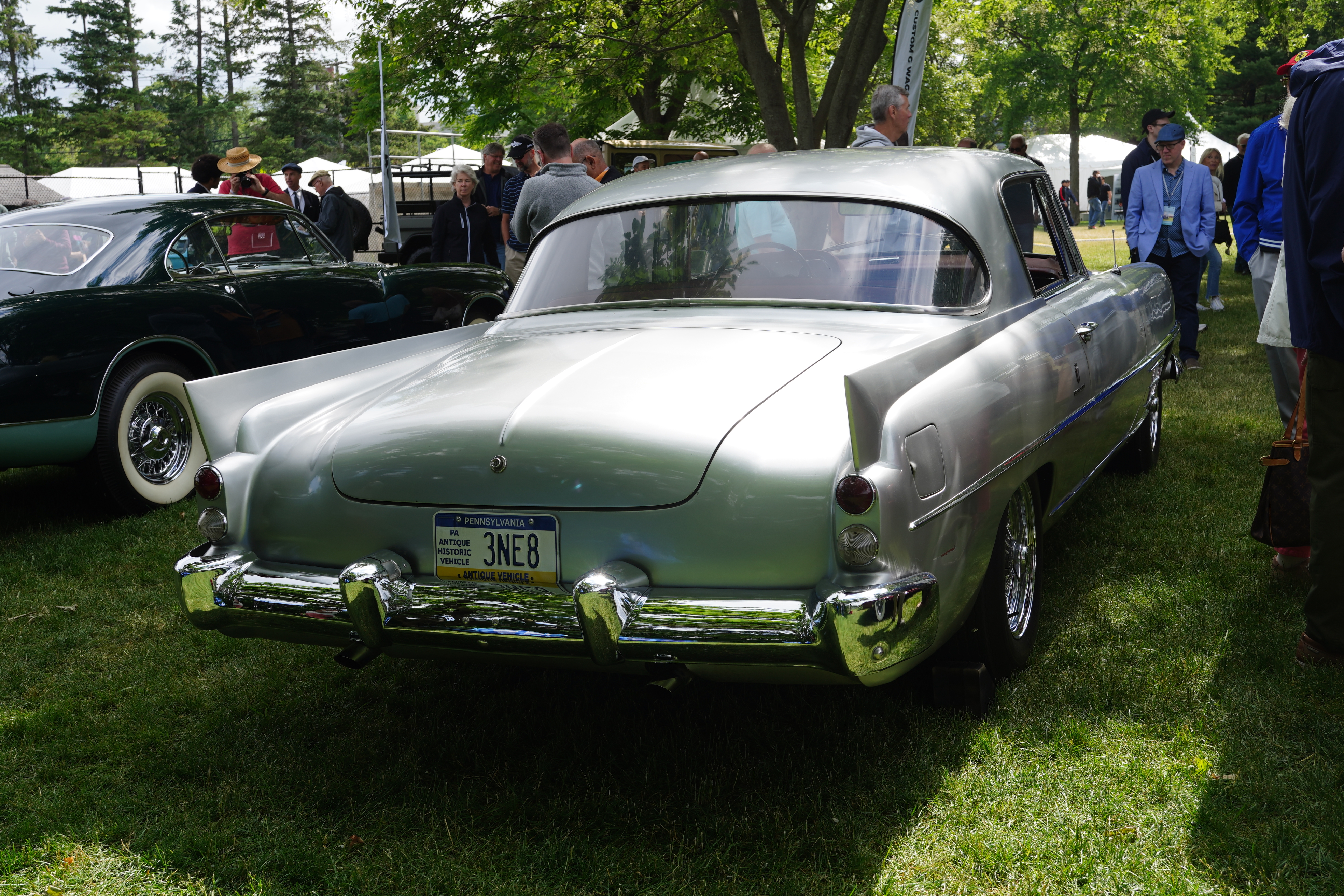
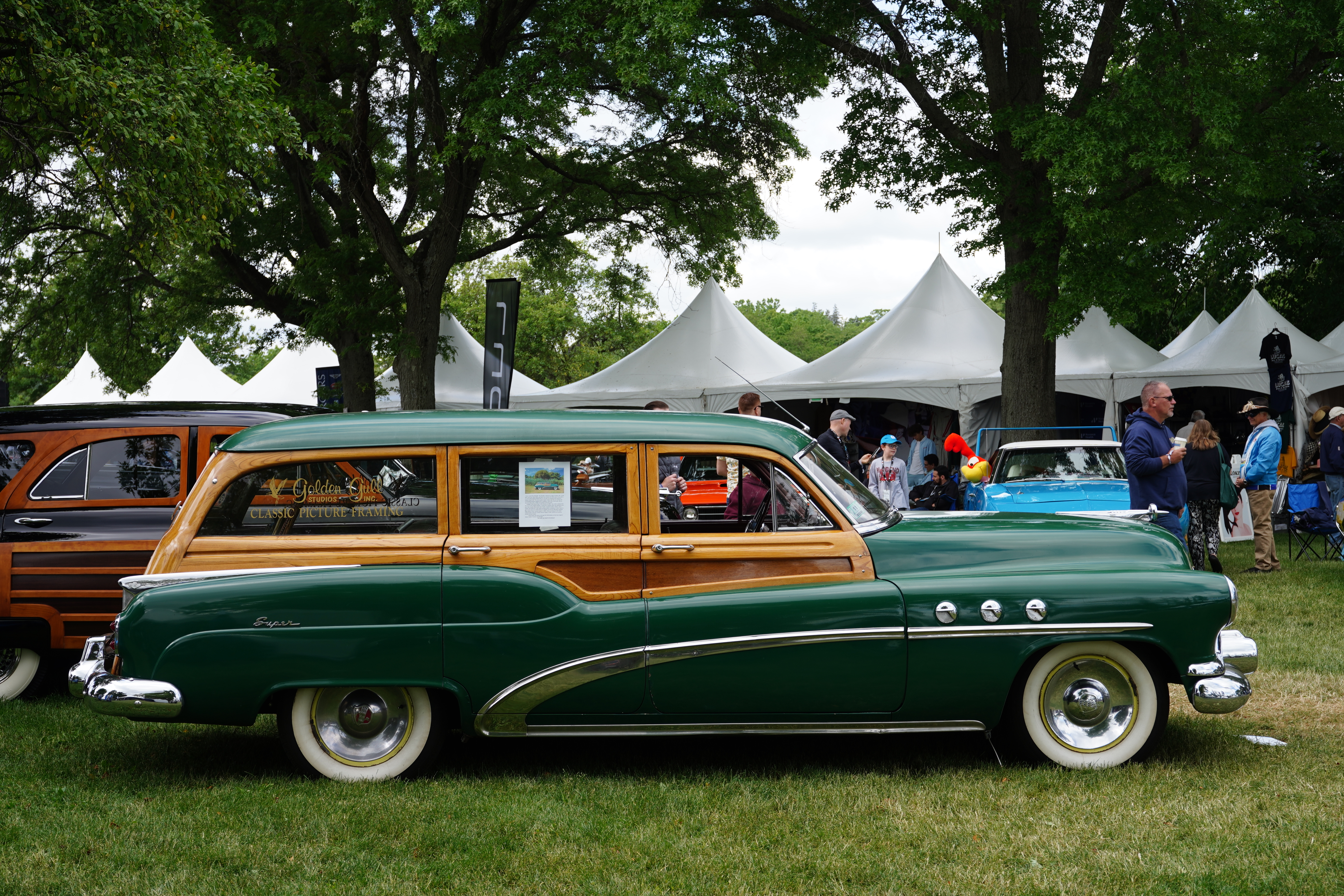
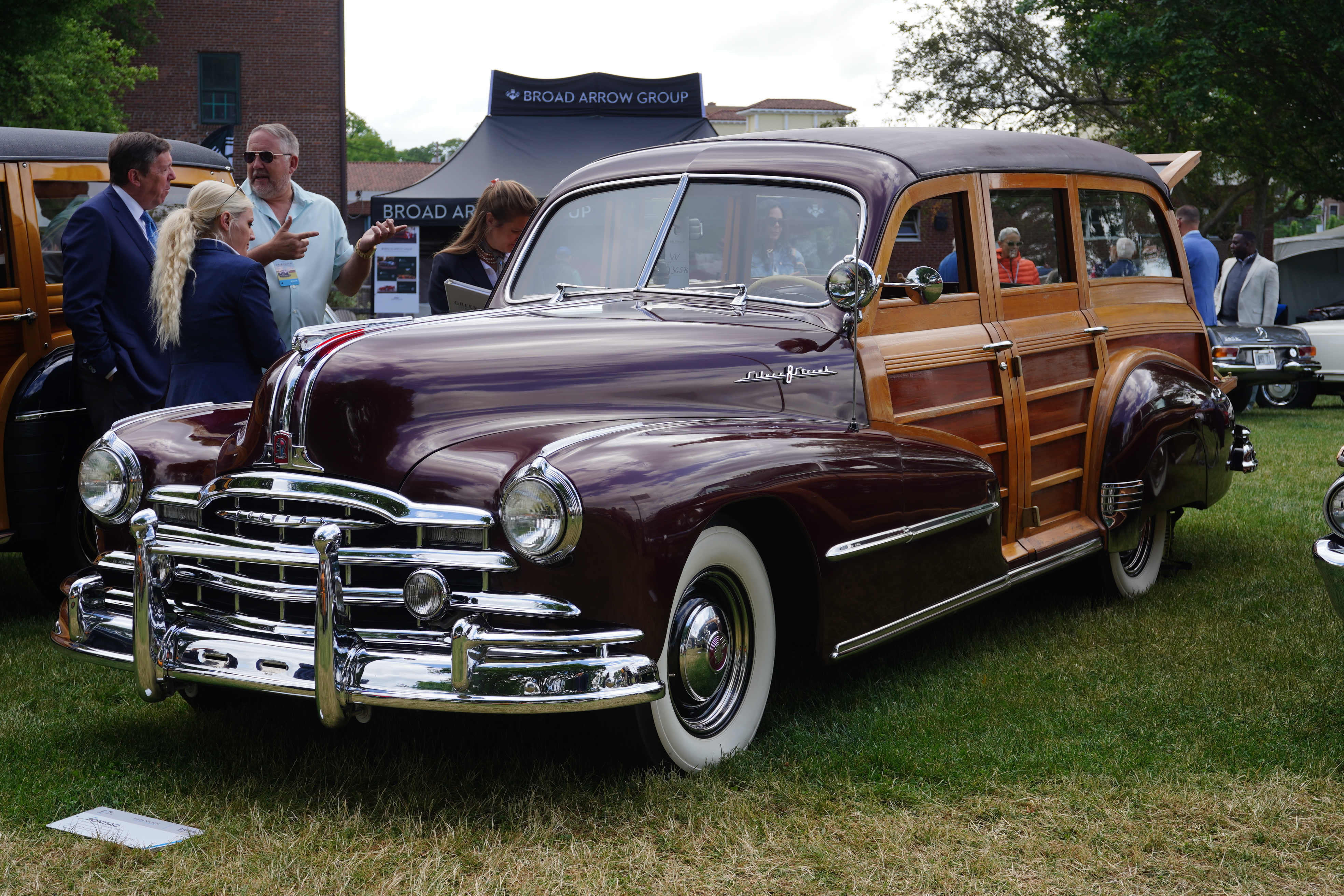
When I wasn’t busy hanging around my car to field questions (there is certainly something about the “Giulia coupe” which draws people; let’s acknowledge that it is a near-universally-loved design), I managed to walk the field several times to photograph the rest of the show. It was a wildly varied mix, with plenty of domestic and European brands (but no Asian brands), pre-war and post-war generations, and production and concept cars. For this post, I will feature 3 classes: The Ghia concept cars; the Woodies; and the “Class of 1963”.
THE GHIA CONCEPT CARS
I didn’t have time to read all the explanatory signs around these gorgeous concept cars which Ghia built for Chrysler in the early-to-mid ‘50s. One or two I’ve seen before, and others I’ve only seen in photographs. To see them in person was breathtaking.
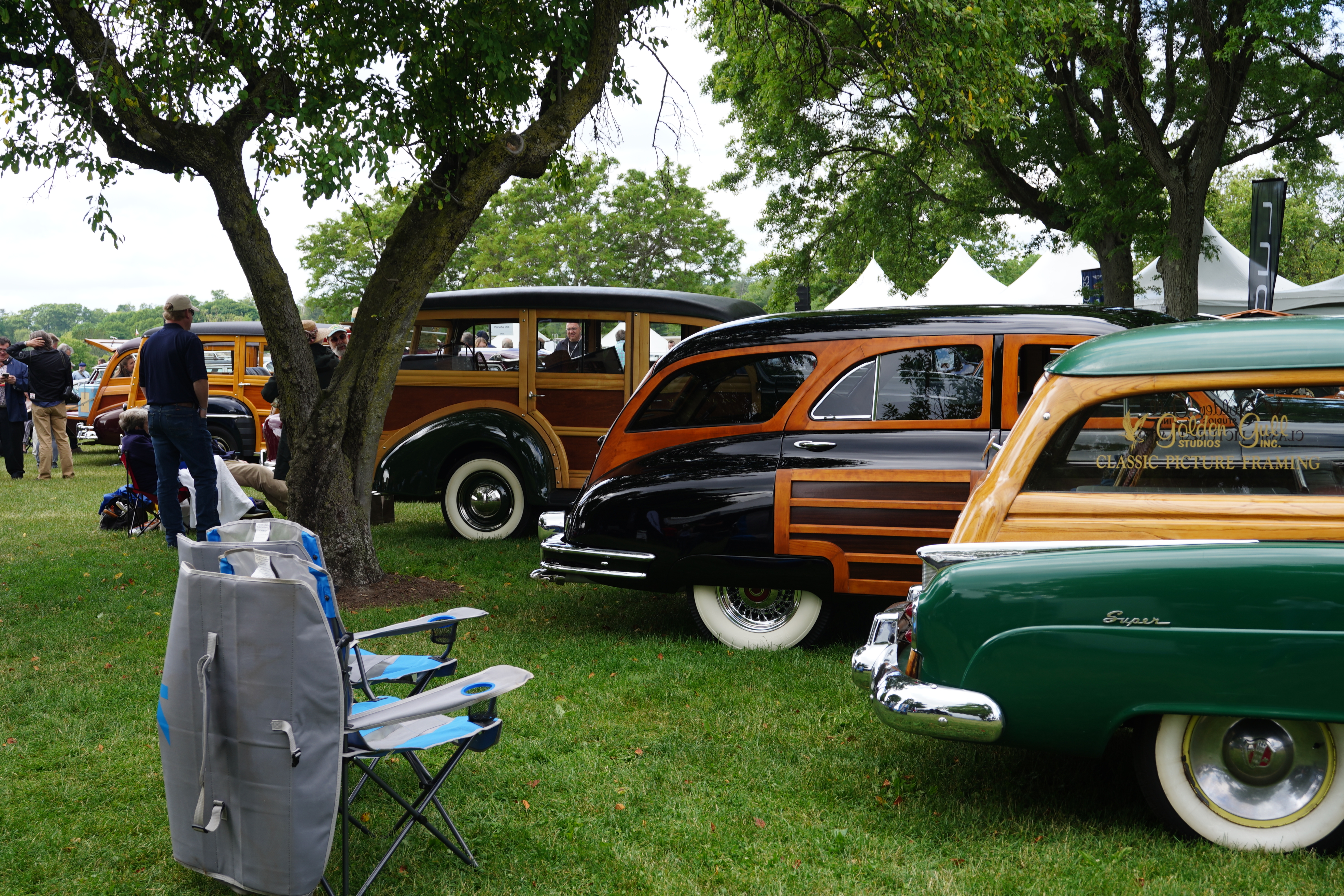
THE WOODIES
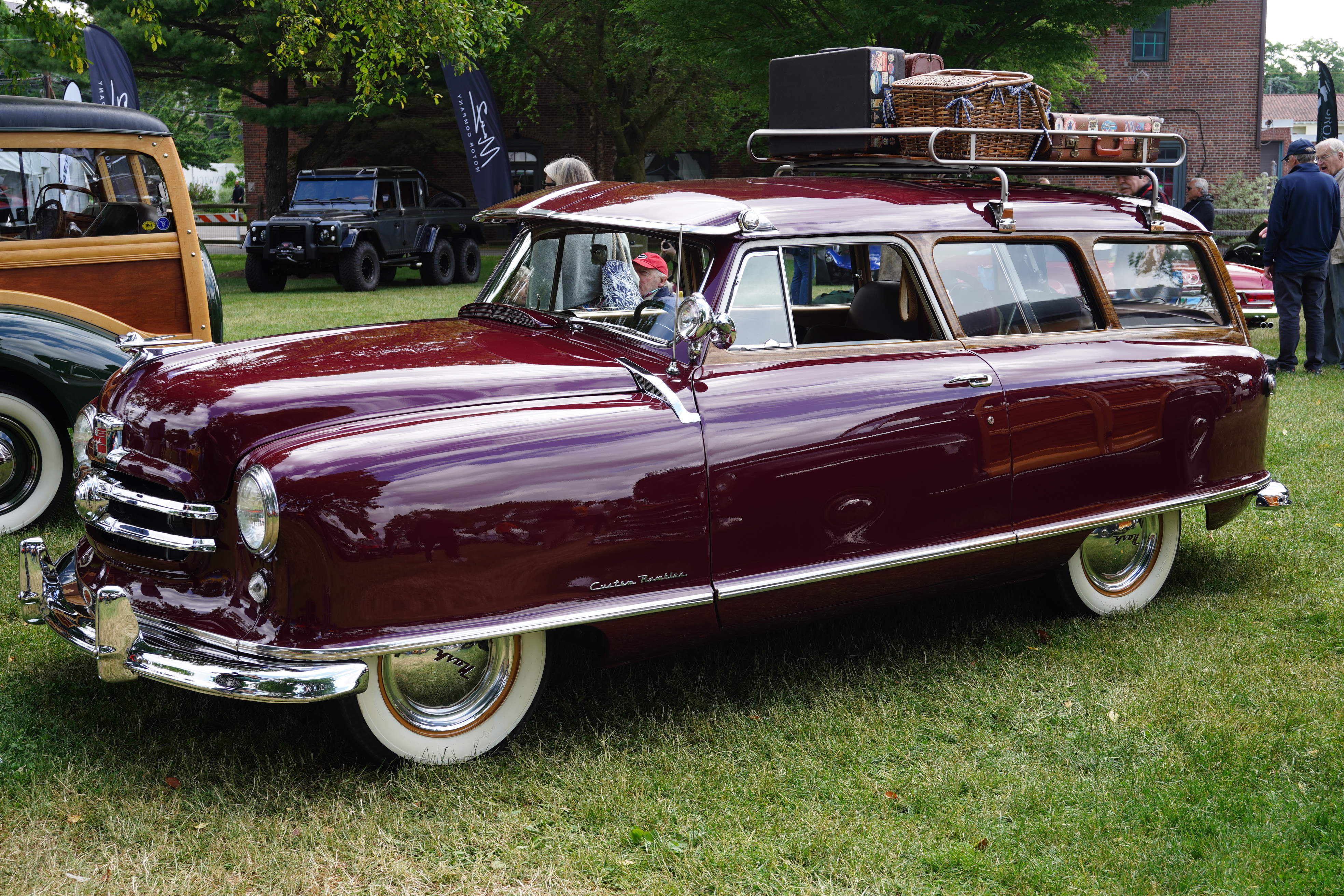
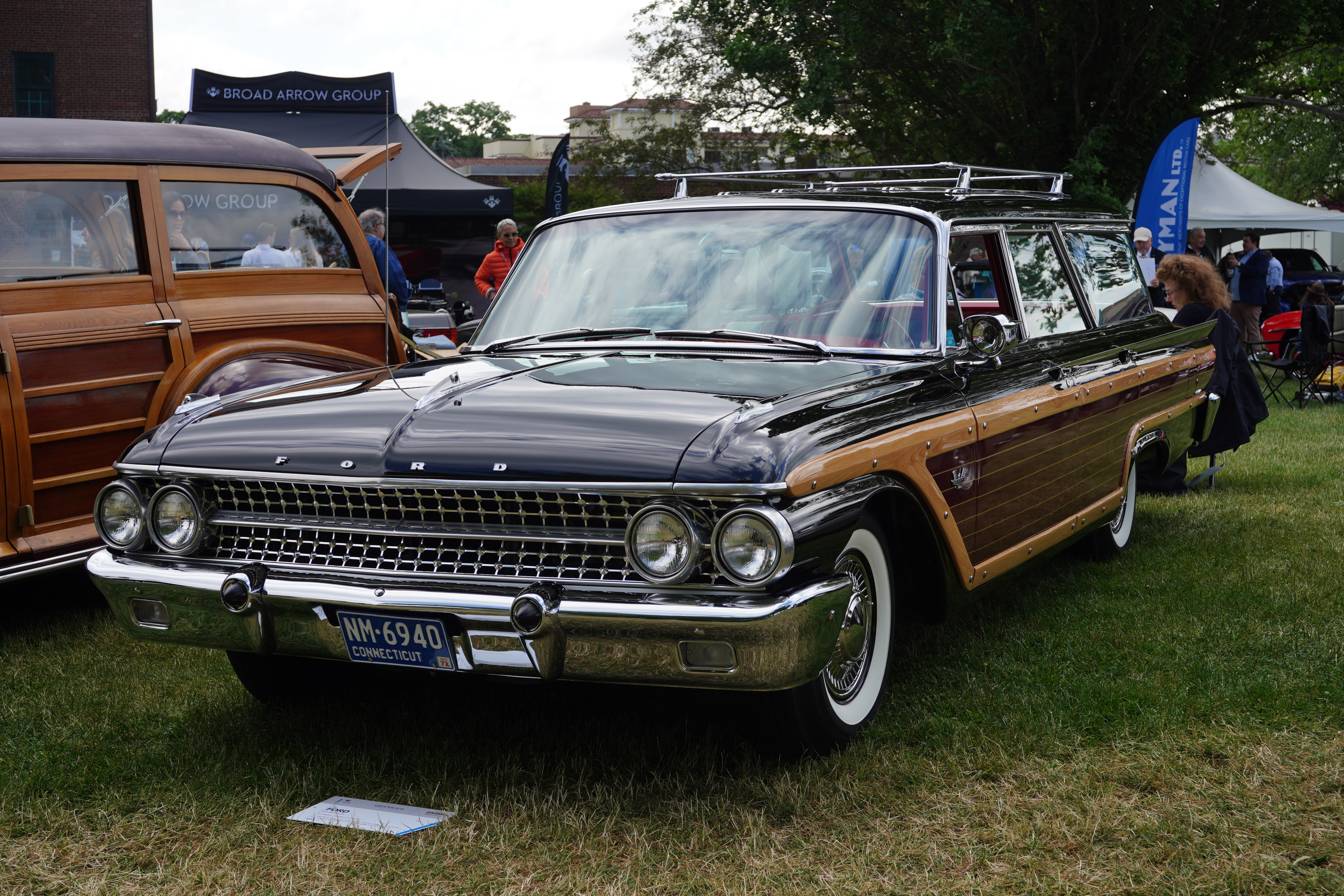
Wood was originally used as a vehicle body material out of necessity. Station wagons up through the first half of the 20th century used wood because there weren’t yet presses large enough to stamp the big sheets of steel needed for the wagon’s body panels. Once domestic station wagons switched to all-steel, which happened by the end of the 1940s, there was some nostalgia for woodies, so Detroit continued to trim their wagons with wood. Eventually, as a cost savings, vinyl sheets with woodgrain patterns were used. The 1961 Ford was the newest woody wagon on display. The Nash Rambler, with its minimal fake wood treatment, was a vehicle I can’t recall ever seeing before.
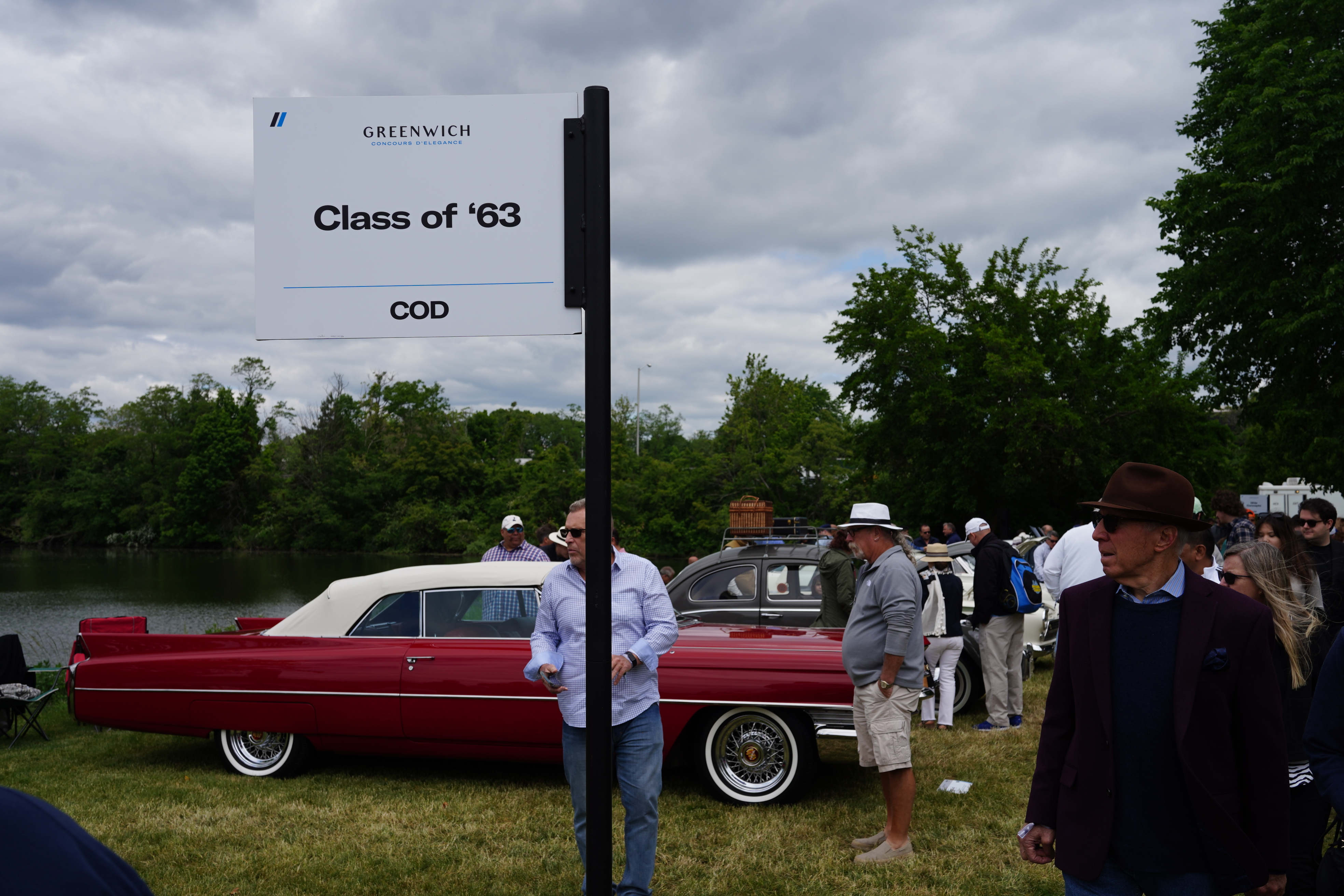
THE CLASS OF 1963
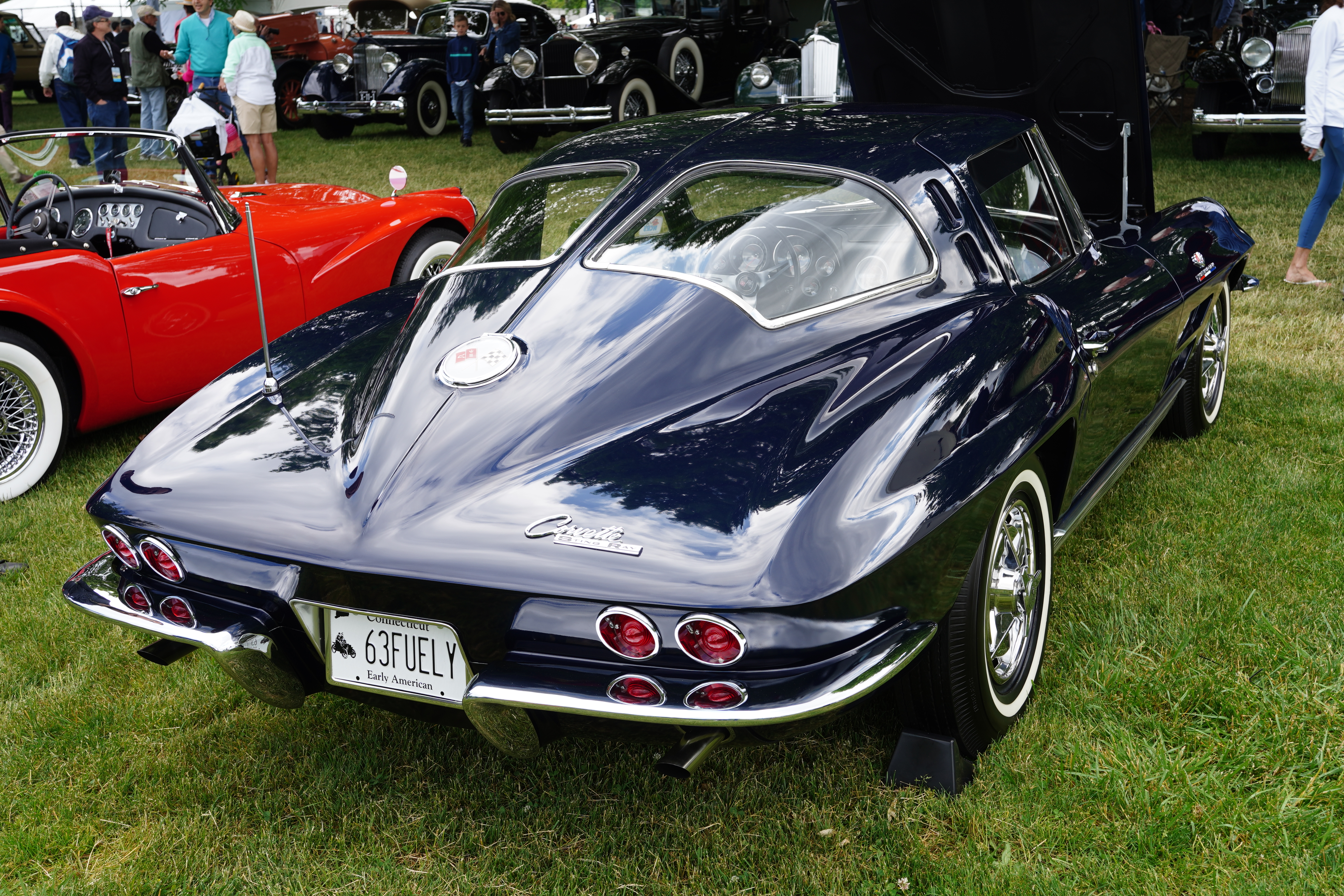
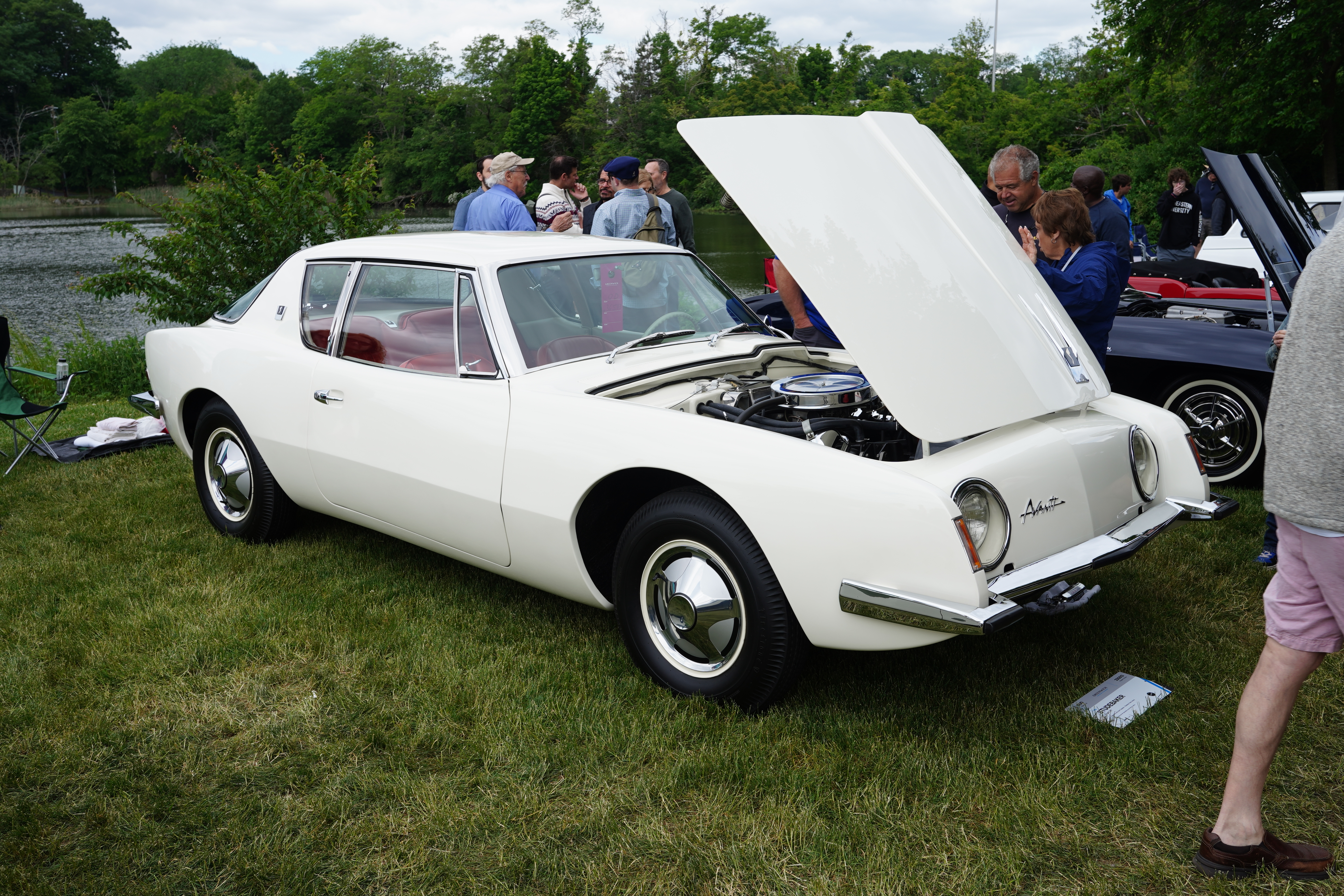
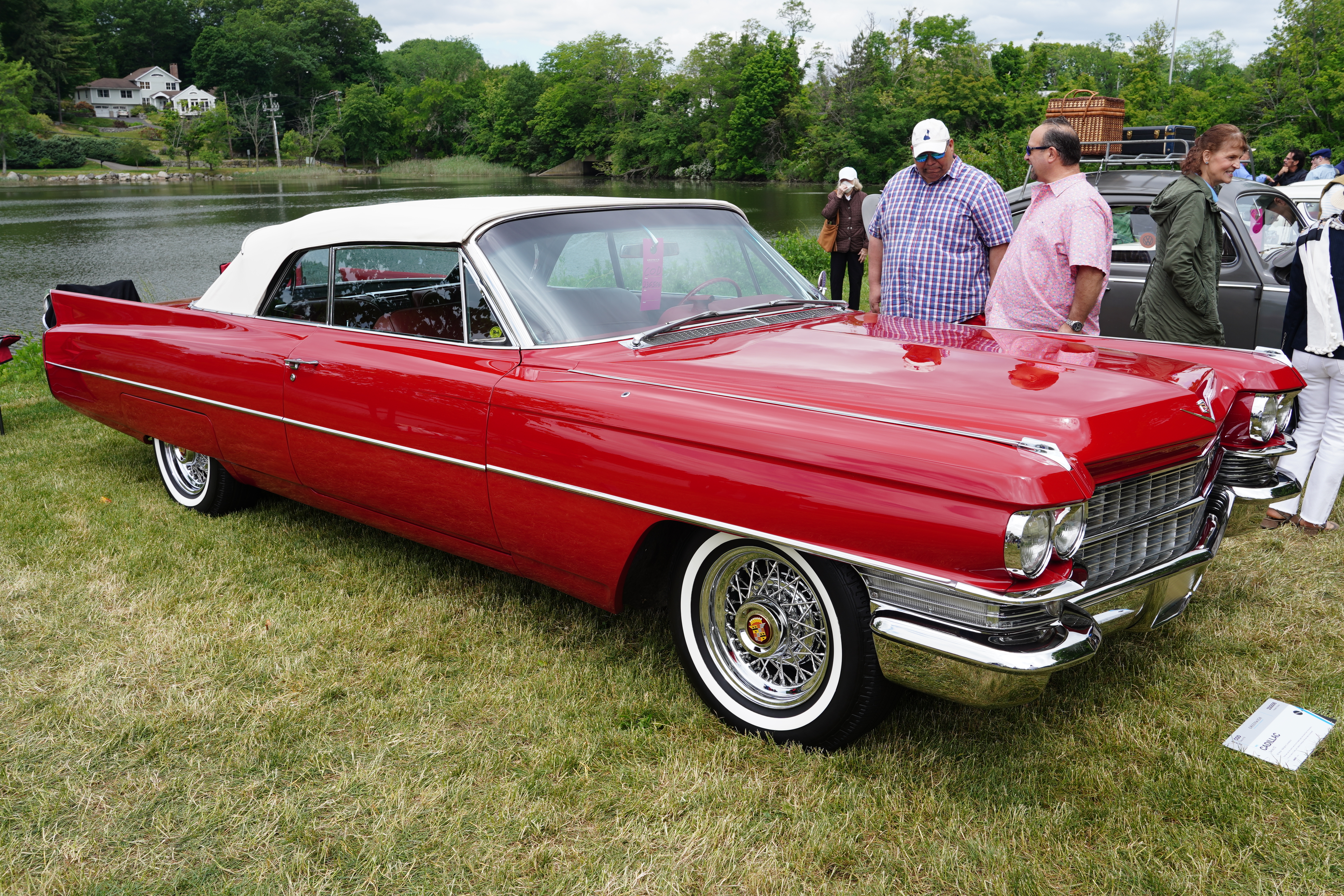
I’ve often fantasized what it must have been like to have been a young person of driving age in 1963, with money in one’s pocket to buy almost any new car available. It was a banner year for new vehicle introductions, which included the Chevrolet Corvette Sting Ray in both split-window coupe and roadster forms; the Buick Riviera, GM’s first real competition against the Ford Thunderbird in the personal luxury coupe class; and the Studebaker Avanti, an all-fiberglass coupe which, in a last-ditch effort by Studebaker to stay alive, was radically designed by Raymond Loewy. Other choice offerings included the Chrysler 300J, the Lincoln Continental 4-door convertible, and the Pontiac Grand Prix. If you were willing to consider “foreign cars”, you could check out the Jaguar XKE, the Austin-Healey 3000, the Fiat 1200 Spider, the Iso Rivolta, the MGB, the Porsche 356, the Triumph TR4, and the Volvo P1800, among others.
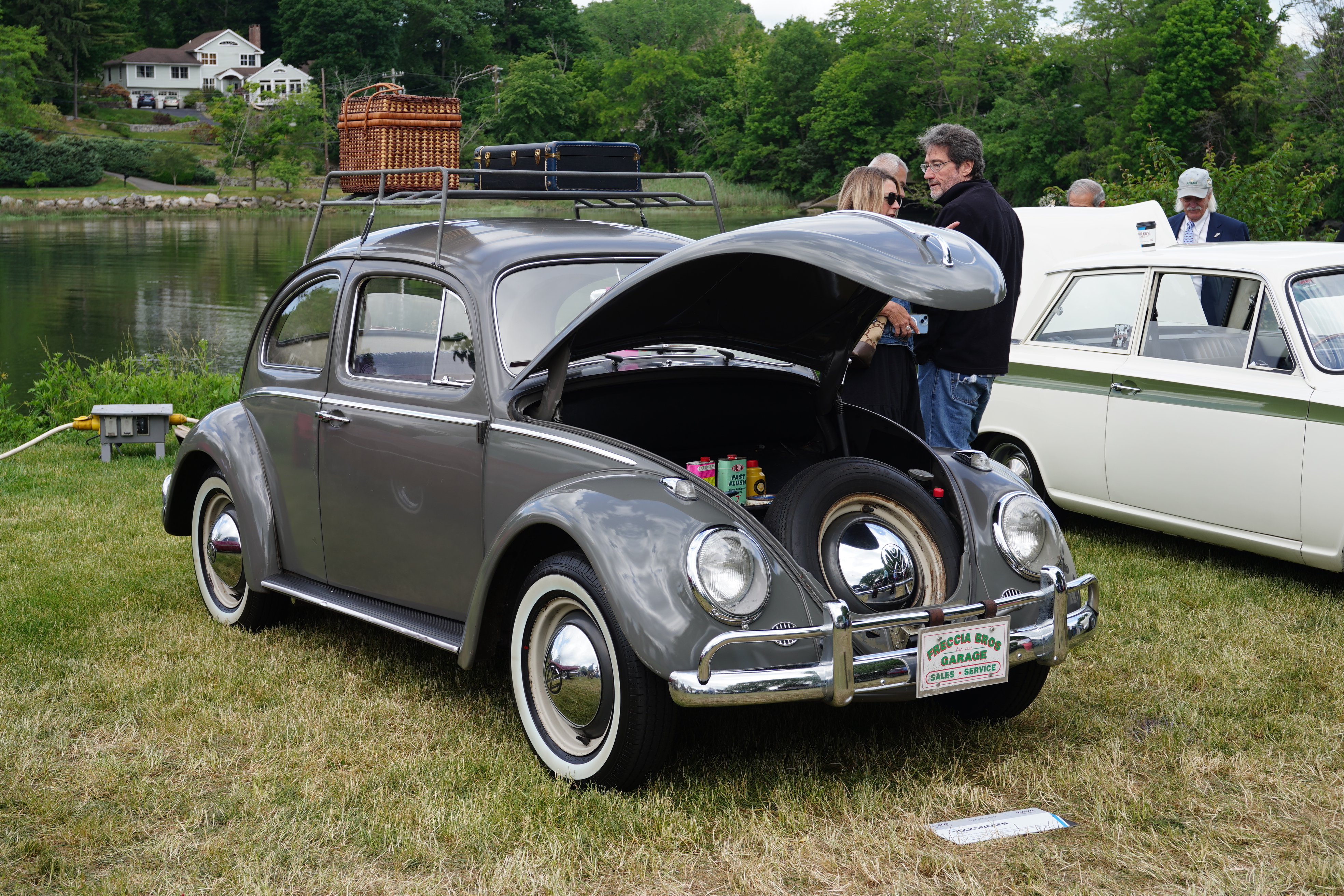
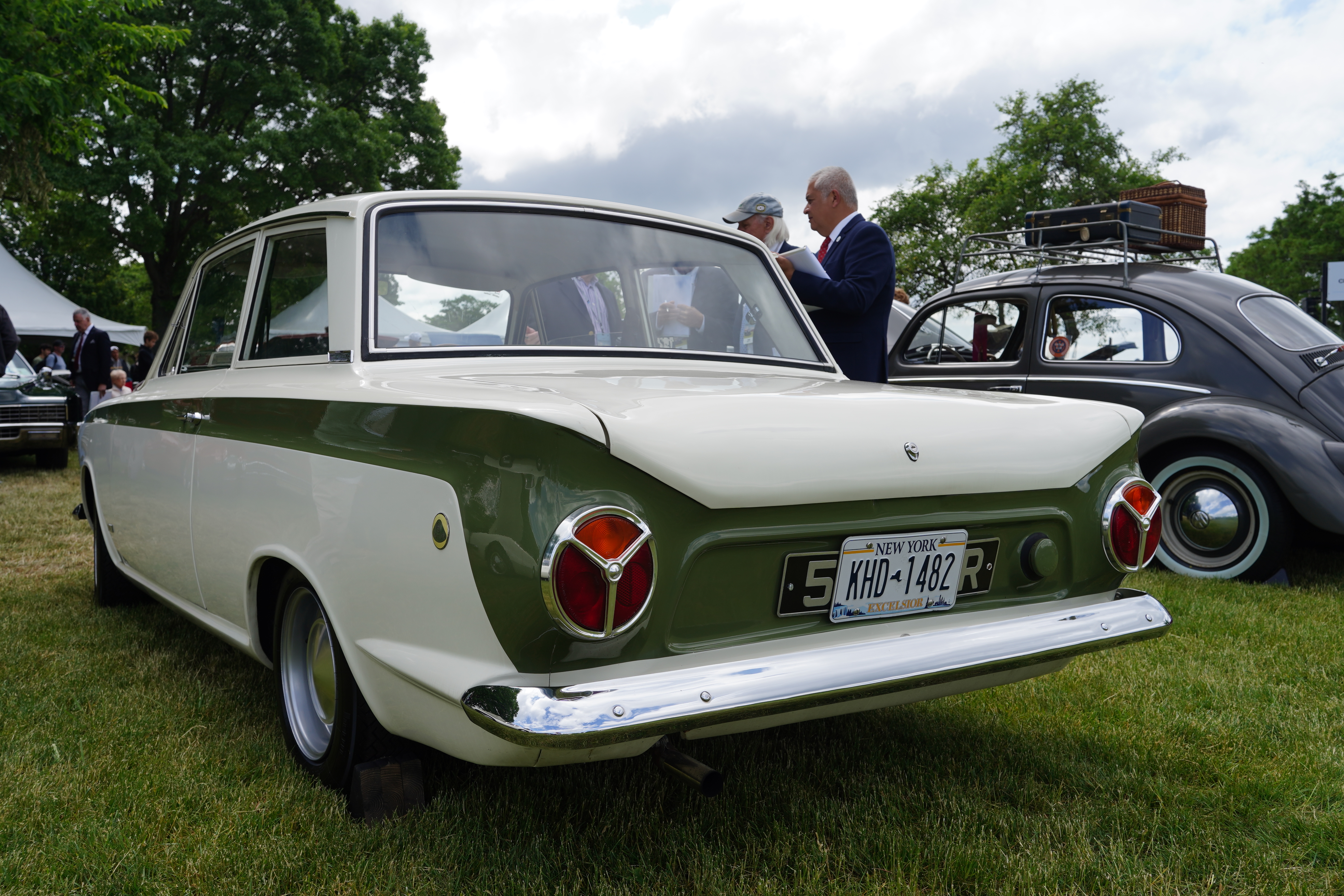
I don’t know if Hagerty chose “The Class of 1963” because it was an iconic year or because it was 60 years ago. Either way, there was a delightful and eclectic variety of 1963 model year vehicles lined up, ranging from Volkswagen to Cadillac, and some interesting things in between. .
AN ALFA ADDENDUM
Thanks to my new buddy Lambert from the NJ Alfa Club who took this shot and gave me permission to use it, here is that class-winning 1900:
For Part 3 I will have plenty more photos plus more stories about some of the personalities I met.
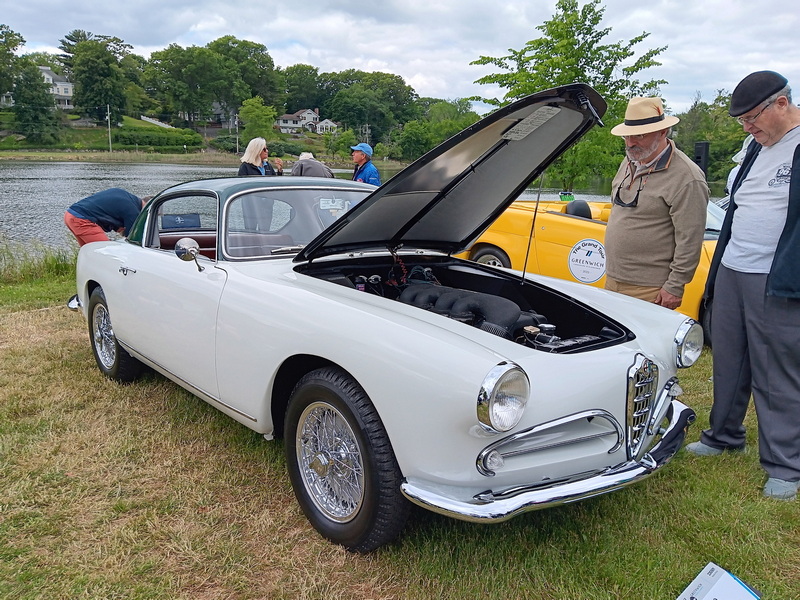
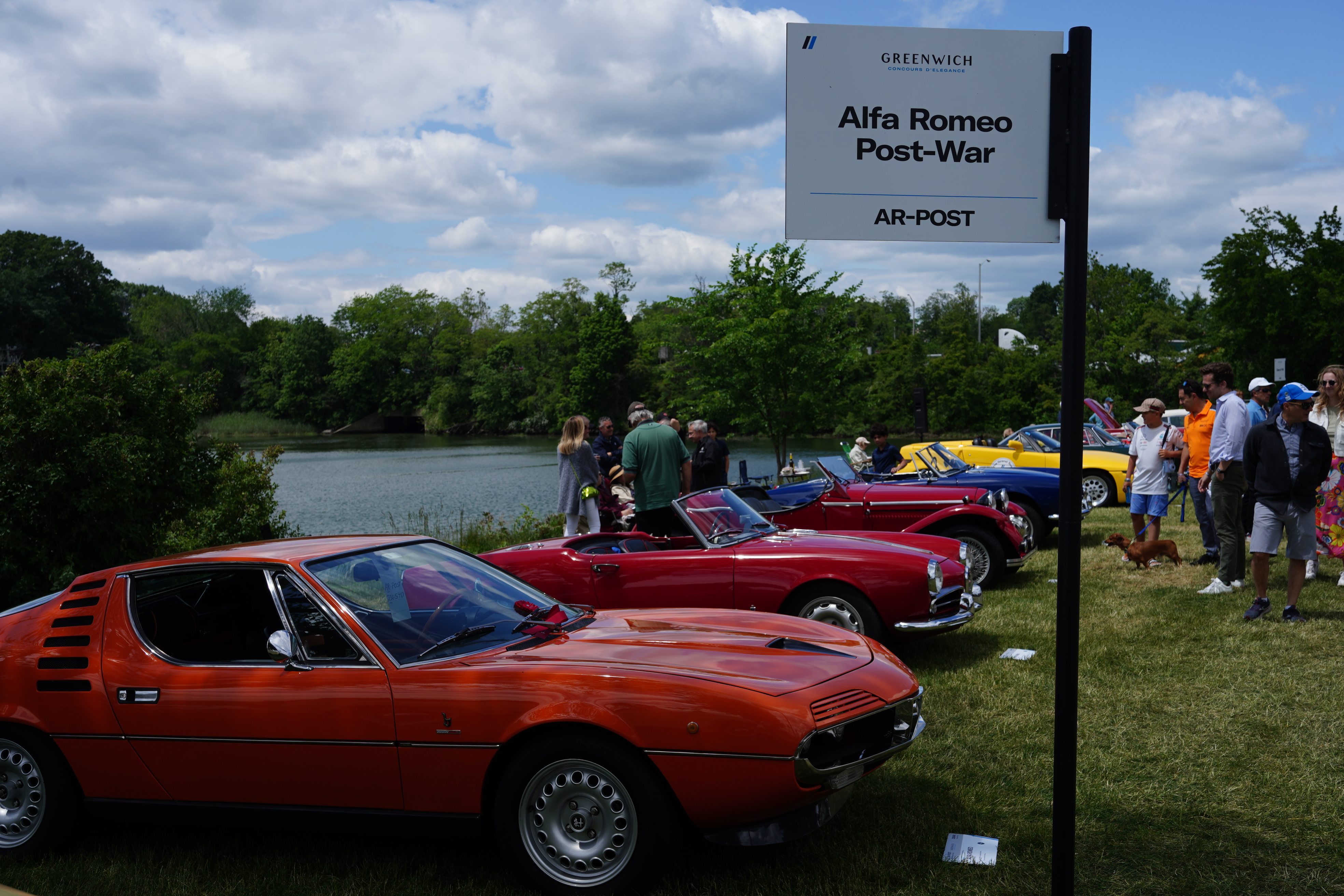
My wife and I just got back from a whirlwind 25-hour up-and-back trip to Greenwich CT for the 2023 Greenwich Concours. My Alfa was on the lawn again this year, and given that this is an invitation-only event, it was a high honor indeed. Alfa Romeo was a featured marque on Sunday, divided into pre-war and post-war classes. My ’67 was in the post-war class, of course, and although we didn’t win anything, it was an exciting and event-filled day. This first post about the show will focus only on the Alfa Romeos. There is much else to cover, and I will put up additional stories about the rest of the show during the week.
THE POST-WAR CLASS
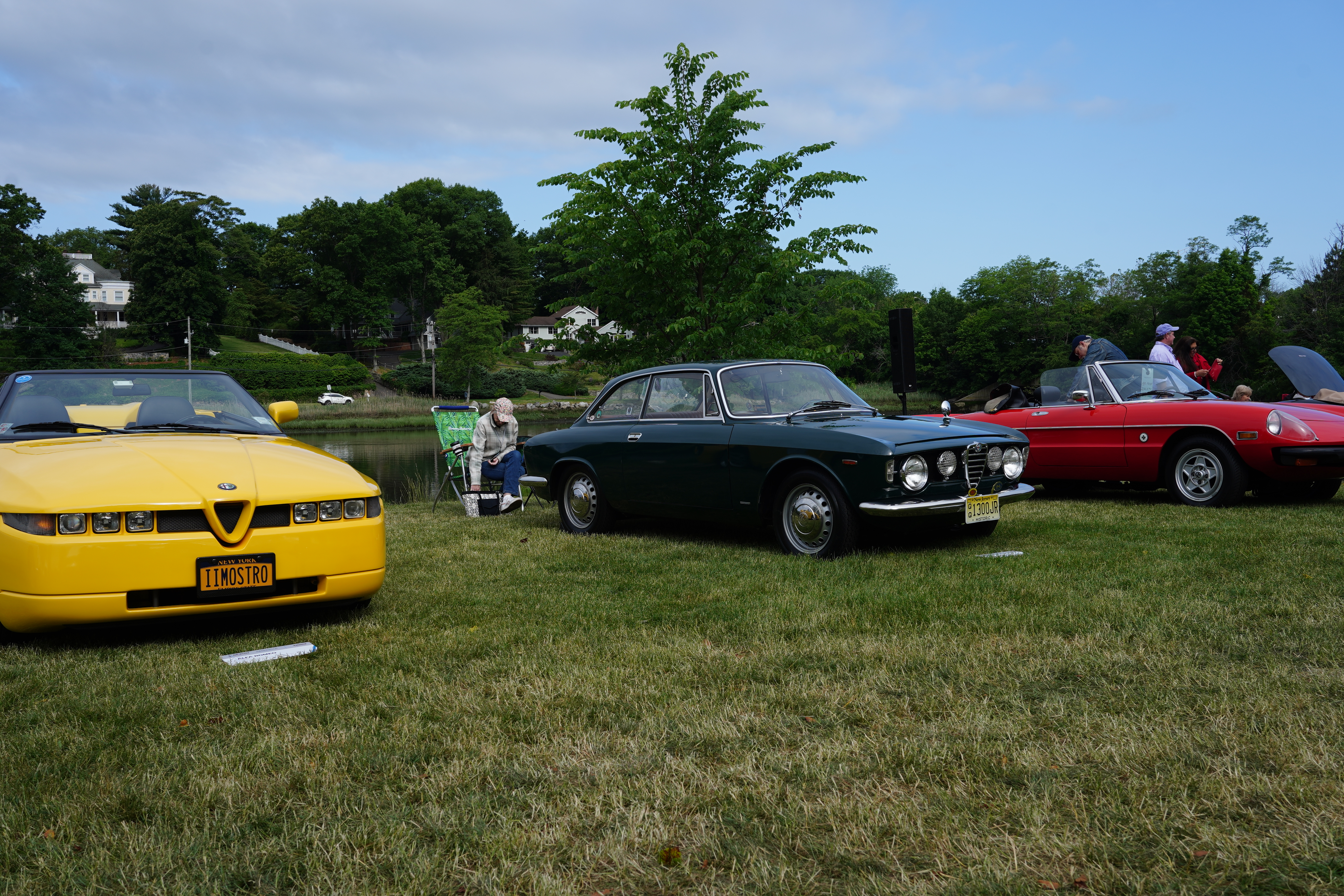
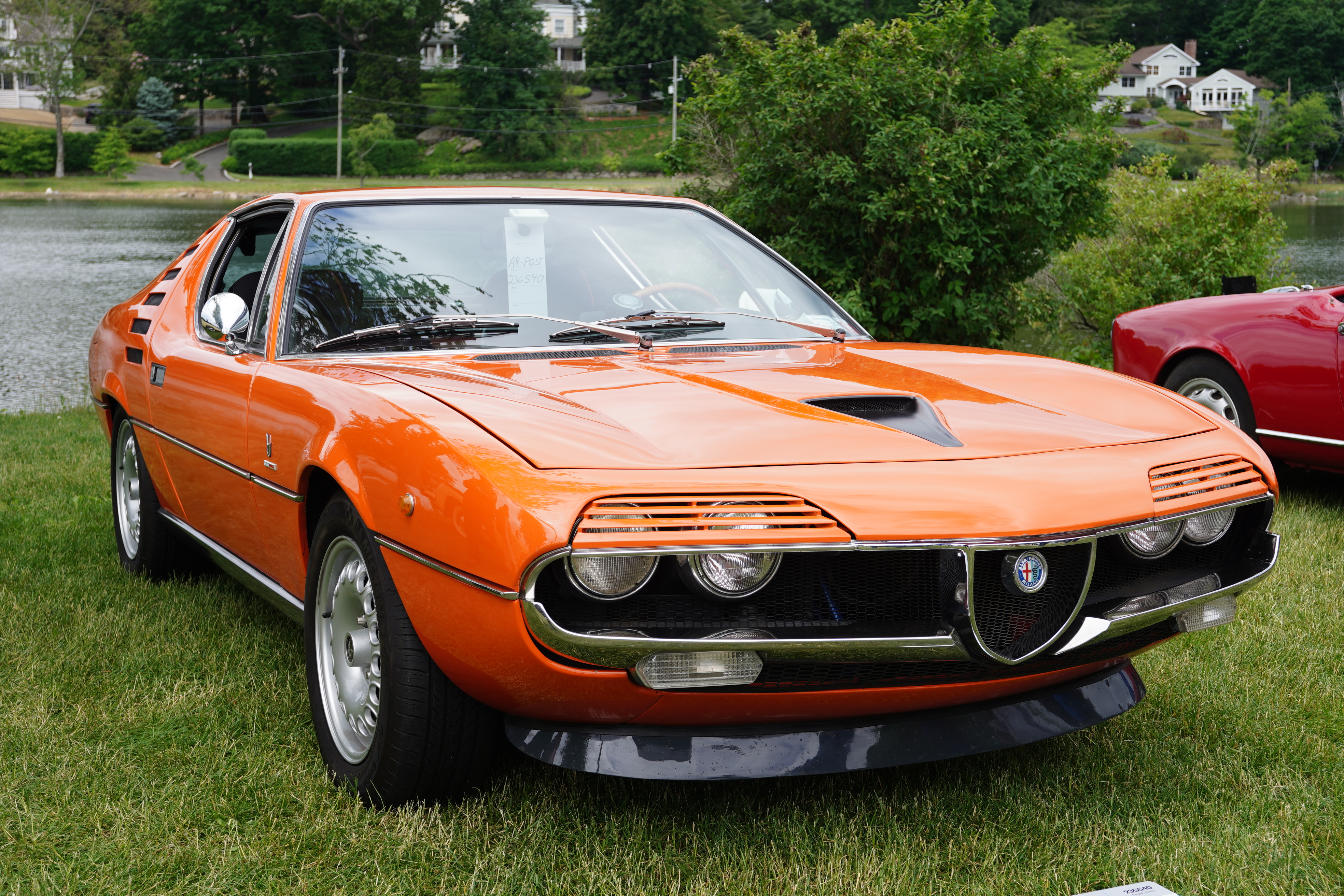
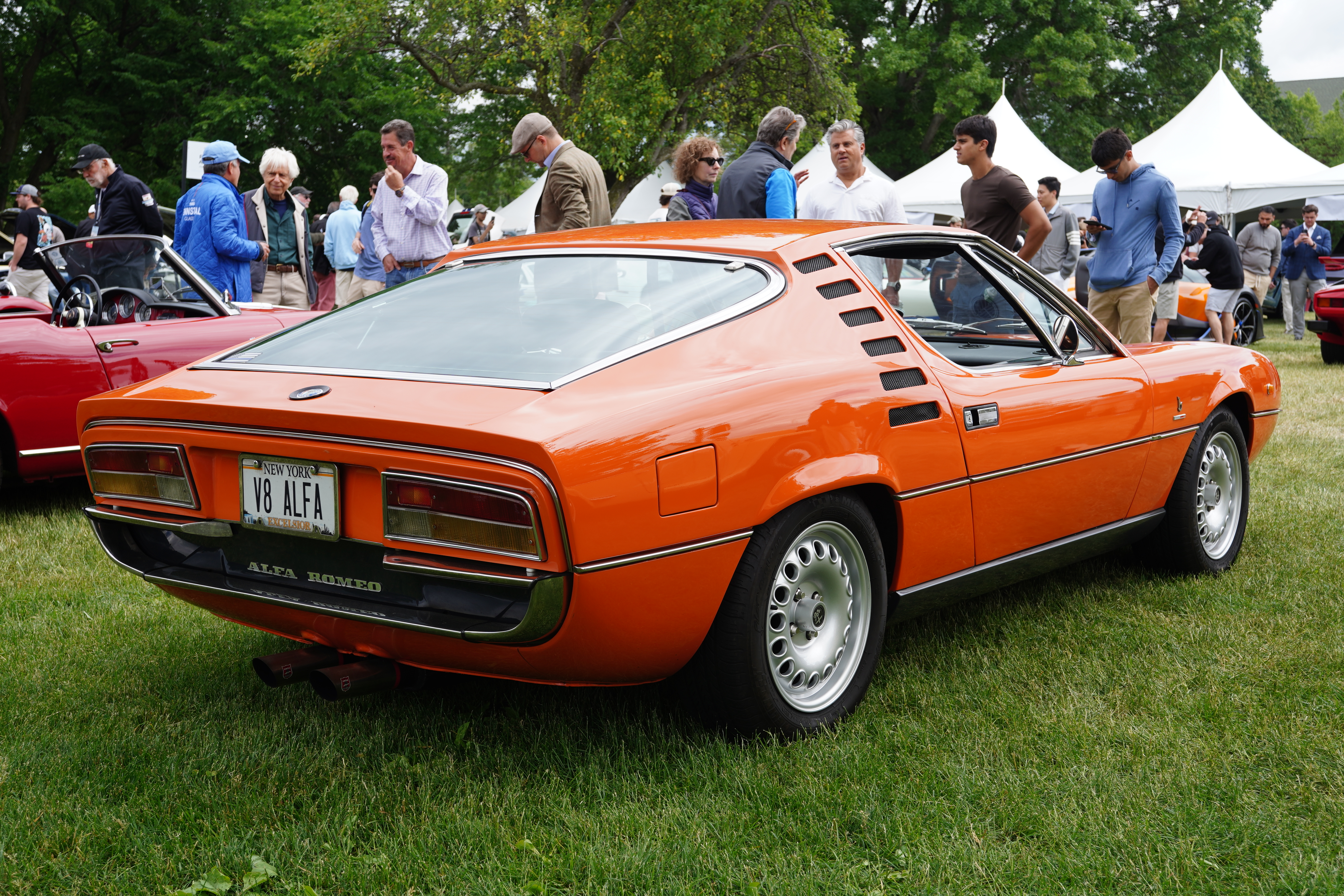
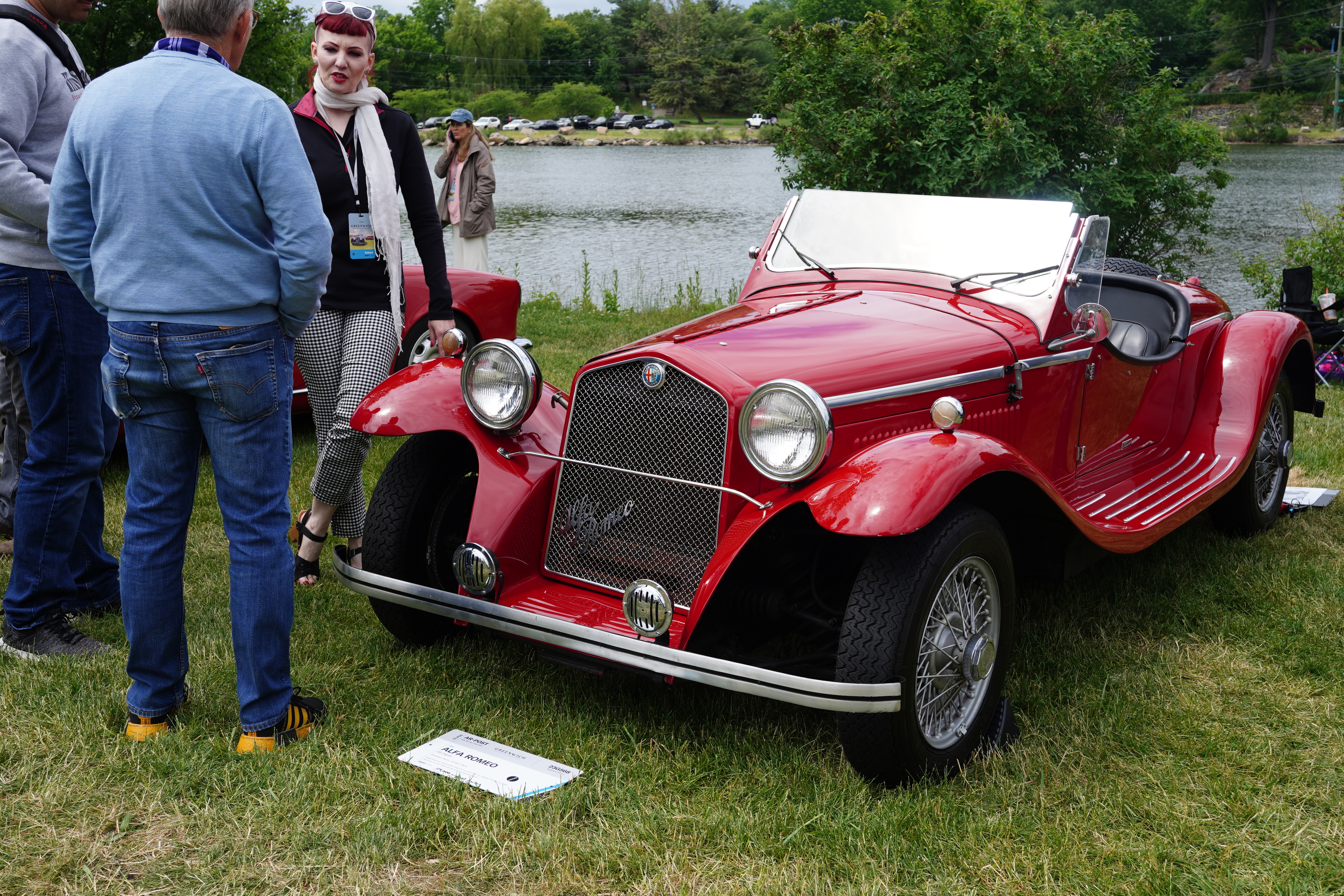
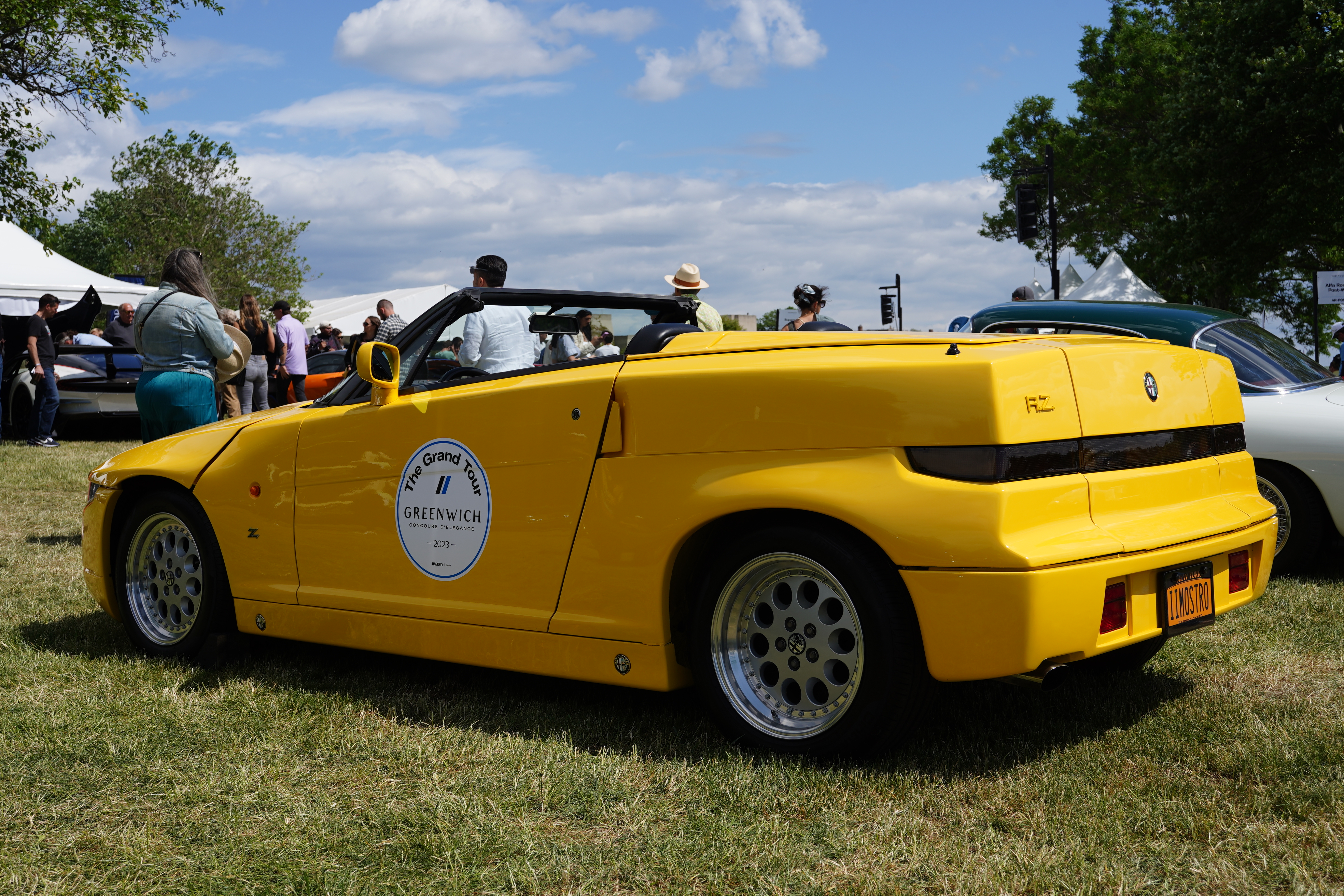
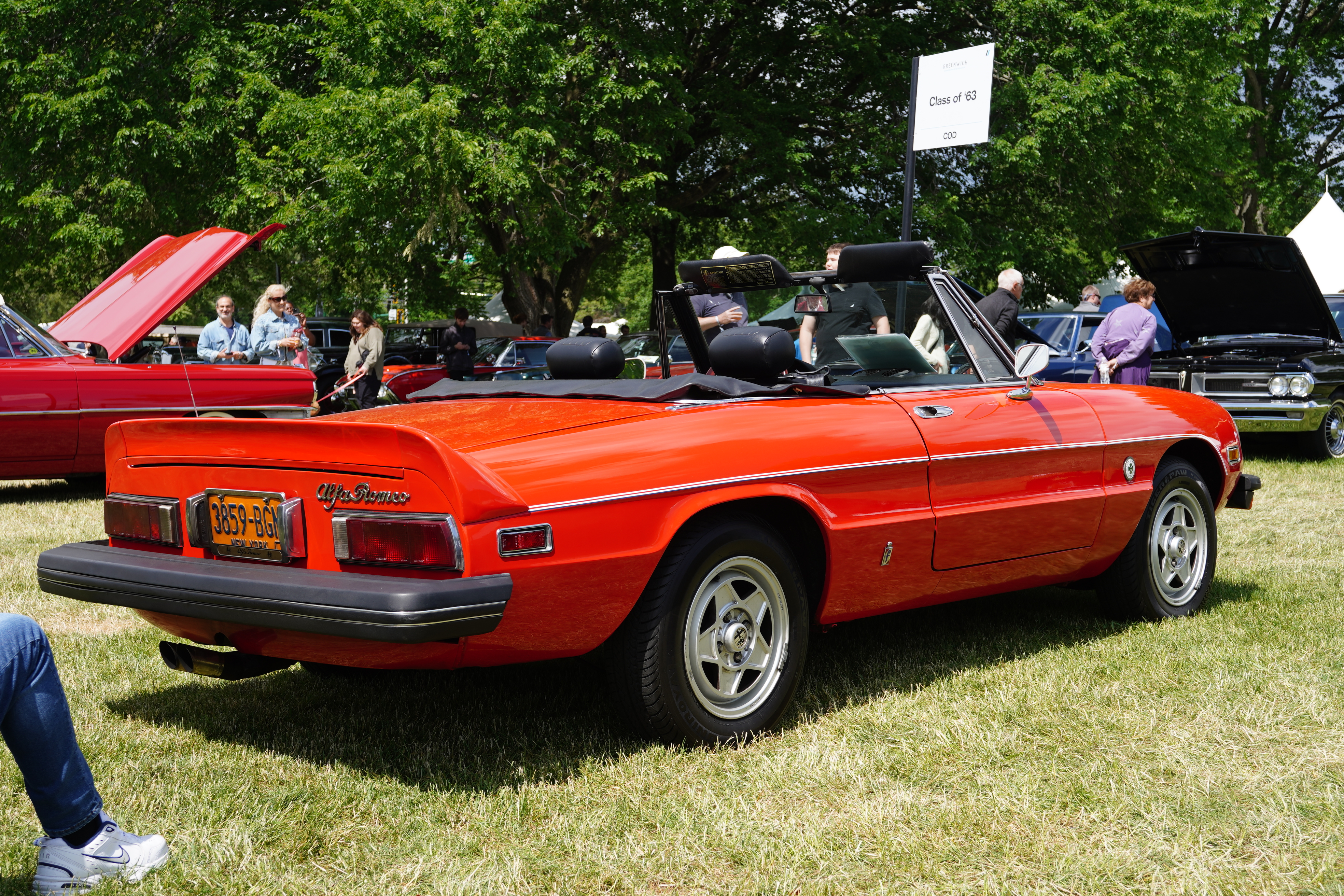
There were 8 vehicles; in model year order, they were a ’56 1900, a ’59 Giulietta Spider, a ’63 Giulia Spider, a ’67 4R Zagato, my ’67 GT 1300 Jr., a ’71 Montreal, a ’78 Series 2 Spider, and a ’93 RZ Zagato. Right off the bat, note the strong representation from THREE iconic Italian design houses: Pininfarina, Bertone, and Zagato.
THE MONTREAL
This car is so-named because Alfa Romeo exhibited a concept car at the 1967 Montreal Expo. That design study went into production and was therefore named after the city where it was first displayed. It remains Alfa’s only road-going V8-powered automobile.
THE 4R ZAGATO
I’ve read about this car but never saw one in the metal before today. The woman representing the car (she’s wearing the scarf in the first photo) told me that only 92 were ever produced, only 3 are in the U.S., and the other two are on the west coast. That kinda explains why I haven’t seen one before this. The chassis and all mechanicals are 1967 Alfa. The factory commissioned Zagato to build a “pre-war style body” on top of the Guilia chassis. Viola!
RZ ZAGATO
Another Zagato oddball (is that redundant? 😉 ). I know very little about these except that the Italians nick-named it “The Monster”, which in Italian is “Il Mostro”. Ergo the license plate.
THE EARLY SPIDERS
I think that the ’63 Giulia is the blue car and the ’59 Giulietta is the red car, but I’m not certain. Someone will correct me if I got that backwards.
MY GT 1300 JUNIOR
Spending the week prior to the show detailing it did it wonders. We drove it 192 miles round-trip, mostly at 65-70 mph, and it performed flawlessly. Interestingly, it was the only Giulia coupe in the show.
’78 SERIES 2 SPIDER NIKI LAUDA EDITION
I have no recollection of being aware of this special model before. Phil, the owner of the car, parked next to me so we spent a bit of time chatting. He said that in 1978, when Lauda left Ferrari and joined the Alfa racing team, Alfa created this special model. Included were the headlight covers, body-painted rear spoiler, pin striping, and fender badges. Phil said that the Turbina wheels would be correct for this model, not the 5-star ones on it now. Here, Phil clowns with a leather racing helmet on his head.
MEA CULPA
Each car in our class was judged, and the winning car was the 1900. Unbelievably, of the 8 Alfa Romeos in the class, it is the one car I did not photograph. although you can get slight glimpses of it in the background of some of the photos above. My excuse is that as class winner, the car spent a good part of the day on display elsewhere on the show field. That’s the best I can do.
THE PRE-WAR CLASS
For whatever reason, the 3 Alfa Romeos in the pre-war class were arranged in a different area of the showfield, nowhere near us. I managed to get only one photo of the group of cars. When I went back to take additional photos, I couldn’t get near them as the area was roped off in preparation for the awards ceremony.
Future posts will cover many of the remaining show cars; there were about 140 vehicles on the showfield, and a nice variety it was. I also met some amazing people and I have stories to tell about those encounters.
The New Jersey Region of the Antique Automobile Club of America (AACA) held its 70th annual Spring Meet on Sunday, May 7, 2023. The show, traditionally hosted on the first Sunday of May, was in a new location this year: Nielsen Dodge/Chrysler/Jeep/Ram on Route 10 in East Hanover NJ.
The last few years for our Spring Meet have been rocky, to put it mildly. After literally 60 years at the same location, the club was forced to move, and we spent a few years holding our show at the Mennen Arena in Morristown NJ. (These links will take you to those shows in 2016, 2017, 2018, and 2019.) But between unbelievably bad luck with the weather, combined with Covid shutdowns, we never had a good show there. Last year, we were at a school (link here), which had its positive points, but many didn’t care for the parking layout. This dealer offered us a spacious lot emptied out for us, and we finally had the weather on our side, with a sunny, warm, and slightly breezy day. There was a great turnout of show cars (my extremely unofficial count putting it at around 150), and a large number of spectators helped by our location along a busy 4-lane Jersey thoroughfare.
Music, like last year, provided by Gup
For reasons having nothing to do with the car, I was unable to bring the Alfa to the show, even though I had registered it. I did drive up in modern iron, though, because I had volunteered to be a judge. This task needs to be completed because many owners still are in love with the concept of placing 1st, 2nd, or 3rd, and bringing home a trophy (what I’ve come to call a dust collector). All cars are placed in classes based on decade of manufacture, vehicle type, or make/model, done at the discretion of the club. There are 4 areas of the car which are examined: exterior, interior, engine compartment, and undercarriage. Each of those areas is scored on a scale of 1 to 10, 10 being the best. Maximum score is 40. Ideally, the judging team consists of 4 judges, with each judge taking on the same area for all cars in the class. In reality, we only had enough judges to form teams of 2. I was teamed with a club member who said that he is an experienced Hershey judge, although he also said he knew pre-war cars better than post-war. I thought we made a good team as we balanced each other out. He took exterior and interior, and I took engine compartment and undercarriage.
Not as many pre-war cars this year; this is a ’29 PackardBob Smith’s Dodge roadster
First class we judged: 2-seat sports cars. We had quite a few Corvettes (C1 through C4), a few 2-seat T-Birds, a Triumph TR-6 and a Porsche 912. We are judging to AACA standards: the car should appear as it would have when delivered as a new car by a dealership. The 912 had a number of mods to it, which knocked it down. All the Corvettes were nice, but the ’54 C1 was close to perfect and took first place.
Porsche 912’54 Corvette which took 1st in its class
Next class was a tough one: “pony cars”, which in this case was 5 Mustangs and a ’70 Cougar. Mustang owners tend to be meticulous in their attention to detail, especially if they have ever been judged by the Mustang Club, where the judging is much stricter than it is at AACA. My personal fave was a ’67 Shelby GT-500 fastback with inboard lights. As stunning as that car was, it only took 3rd! Two other Mustangs were that much nicer.
My co-judge and I tallied our scores and handed our sheets back to the Chief Judge. I sat down for a quick lunch, thinking we were done. We were not. Somehow, “Class 6” got missed and some of the owners were peeved. We were asked if we could tackle it and we said yes. This too was a tough class, as it was American cars of the 1960s. First place went to a ’67 Cadillac convertible, and 2nd place to a supercharged Studebaker Avanti. But my personal favorite which came in 3rd was a ’63 T-Bird convertible with the roadster package, in triple black. With gleaming wire wheels and white walls, it was gorgeous. But again, the competition can really be challenging.
’67 Caddy which took 1st in class’63 T-Bird’66 Olds 442
To give you some further insight, most cars that we judged scored somewhere between a total of 25 and 38. It would be very rare indeed to score any one area below a “5”, and even if we did, another area might still score an 8 or a 9. No car that we judged scored a “40”, although 2 or 3 did score “39”. Provided there are at least 3 cars in the class (and for us, there always was), we need to deliver a 1st, 2nd, and 3rd place score back to the Chief Judge. What if there was a tie? That happened twice. In those cases, my co-judge and I looked at our judging sheets, and one of us adjusted one score either up a point or down a point. We did it as fairly as possible, although we also thought about the overall impact that the vehicle made on us.
ABOVE: Baby Bird parade: a ’56 and two ’57s
Again, I thought I was done. The Chief Judge, Ed, whom I’ve known for 20 years, asked me to accompany him as we still needed to judge cars for “Membership Trophies”. Let me explain: these awards, open only to NJ Region members, are for special categories, including the 3 best unrestored cars in 3 different year ranges. During registration, owners must request that their cars be considered. There are only 2 or 3 candidates in each category, and truthfully we were just giving them a quick eyeball. The problem was that these cars were in their respective classes, and therefore, scattered from one end of the show field to the other, so we had a lot of walking to do to locate them. But we eventually did, and finally, judging was done. Looking back at my photos, I see that I was not able to take as many shots as I would have liked! Including my brief lunch break, I was walking the field and judging cars (four different classes in total) for about 4 hours! I’m sorry that I missed photographing some of the stunning cars that I judged.
This mostly-unrestored Imperial took a Membership trophy
ABOVE: Two of the many Cadillacs at the show: a ’58 and a ’73
The awards ceremony started a bit late, probably around 3pm, but most owners stuck around, and I must admit that I did enjoy seeing their grins of satisfaction as they collected their trophies. It takes many, many volunteers from our club to make this show happen, and I was happy to be part of the team which pulled it together. I overheard that the Region hopes to use the same location next year, so my fingers are already crossed that the weather will cooperate in 2024.
My friend Sean with his ’75 Pontiac’70 Fiat 500’56 Dodge’66 Chrysler’53 Hudson’71 CamaroHillman MinxLotus Elan’64 Chevy II’56 Ford
With Covid shutdowns in their rearview mirrors, the organizers of the New York International Auto Show (NYIAS) were back on track this year. As has been their scheduling regimen, there were two press days on the Wednesday and Thursday before Good Friday, with the public days running from Good Friday through the Sunday after Easter. I was again able to attend on a press pass (issued to “Richard of Richard’s Car Blog” for the first time), and unlike my previous experiences, the show was completely set up on Wednesday. (Previously, attending on a press day meant dodging cars and displays being maneuvered into place by NYC union workers.)
As was noted in the blog post from the 2022 NYIAS, the traditional in-person auto show is dead, but only for some manufacturers. Notable by their absence were BMW, Mercedes-Benz, Volvo, and Mazda. Surprisingly, some corporate nameplates were there while sister brands were not. So we had Chevrolet, but not Buick, Cadillac, or GMC; Honda, but not Acura; Nissan, but not Infiniti; VW, but not Audi or Porsche; and Ford, but not Lincoln. Yet big splashes were made by Stellantis (Dodge, Chrysler, Jeep, Ram, Fiat, and Alfa Romeo), Toyota (including Lexus), and Subaru. The Koreans were there in full force, with cars from Hyundai, Kia, and Genesis. (It is worth noting that Audi and Porsche each had a small four-car display provided not by the manufacturer but by a local dealer.)
Compared to last year, there was a dearth of EV start-ups. INDI and VinFast, both with vehicles on display in 2022, were MIA this year. However, both the main level and lower level had more real estate devoted to EV test tracks, where willing attendees could hitch a ride in an EV. It is, of course, their lack of an emissions-spewing tailpipe that makes it possible to run them indoors.
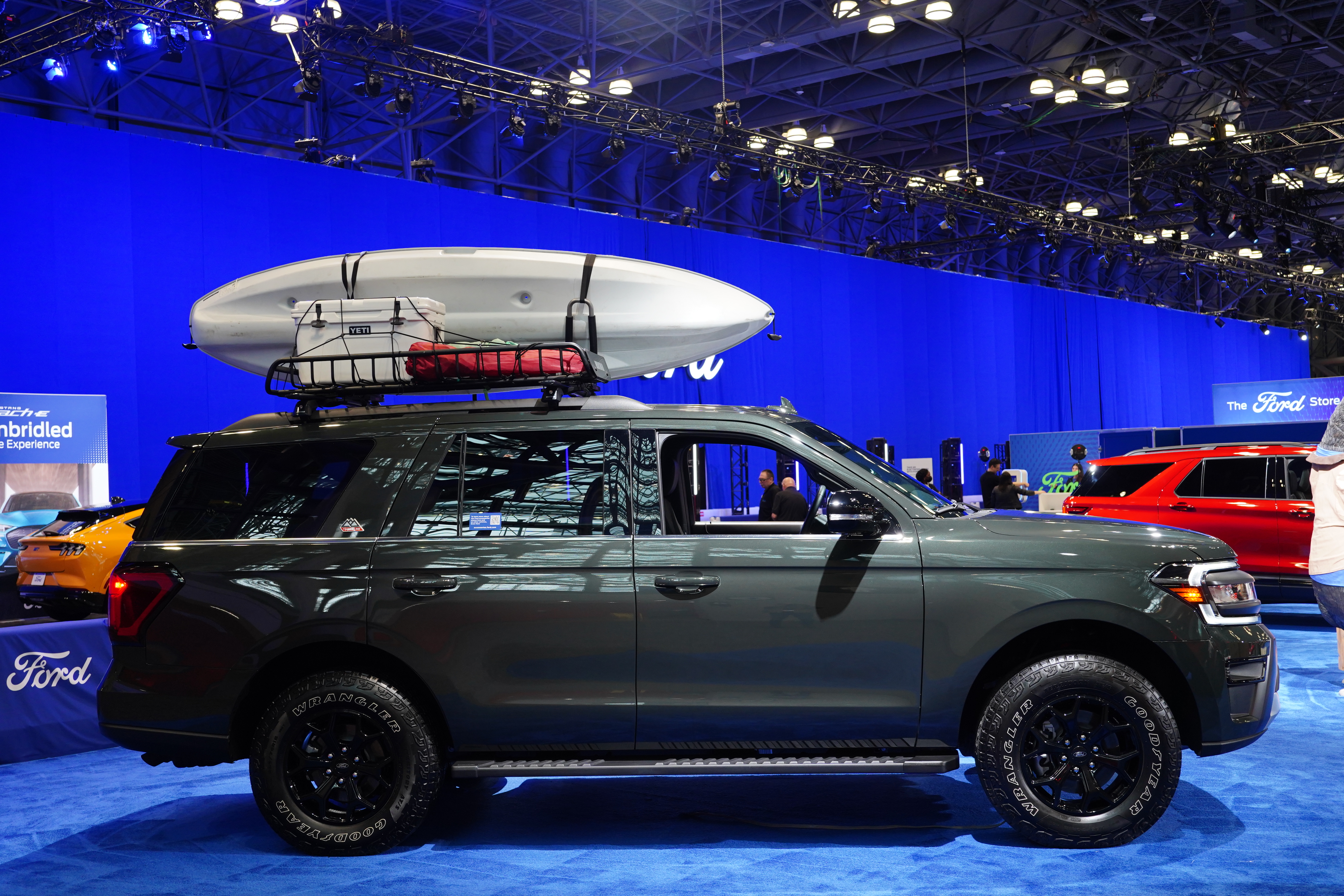
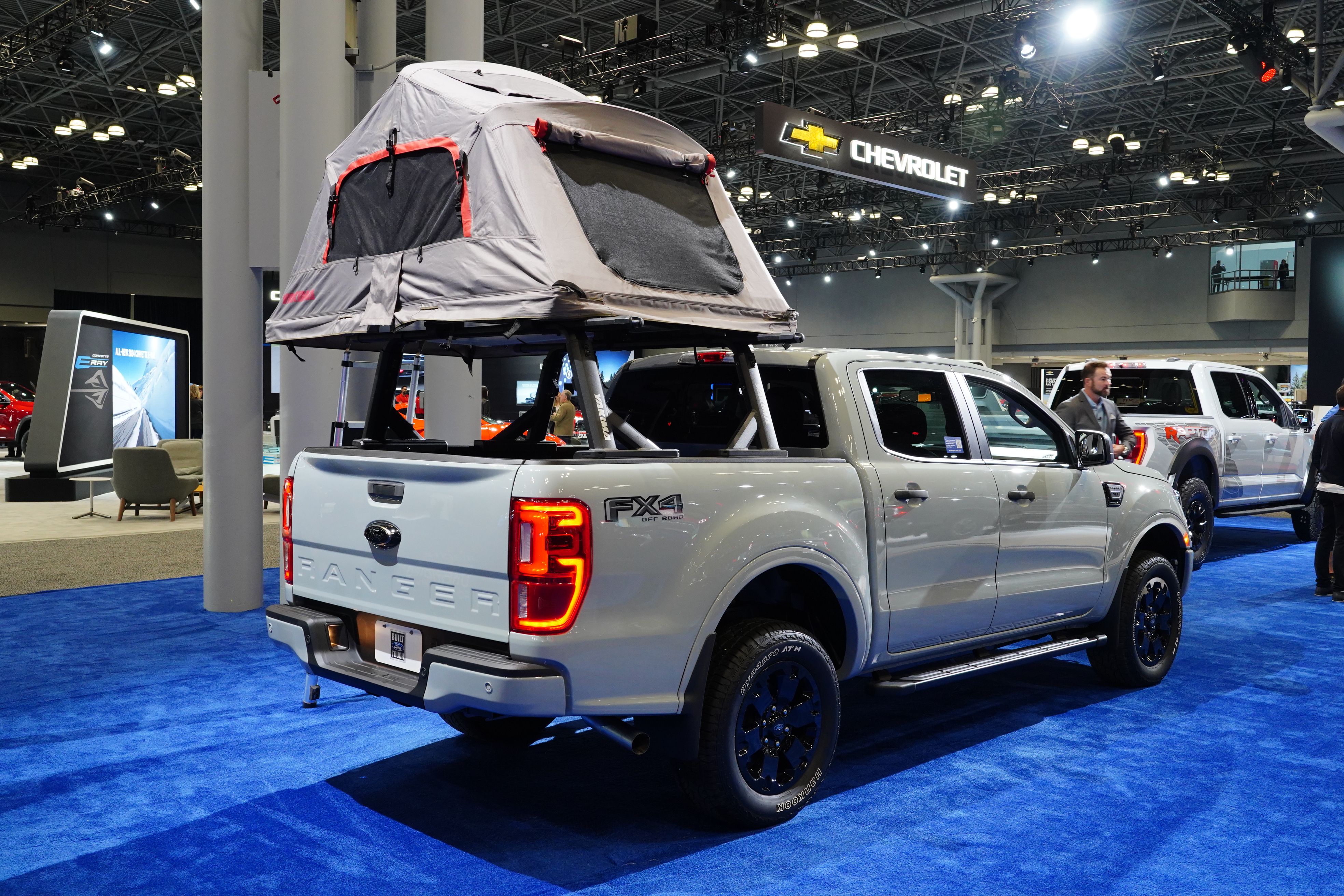
The show was a case of extremes, with a significant segment of the wares devoted to our EV future, while large pickups and SUVs were also dominant. Many of the trucks showcased the outdoor lifestyle, equipped as they were with tents, cargo boxes, and bike carriers. Subaru was the leader this year in promoting this theme, as their press conference began with an overview of Subaru’s dedication to AWD, enabling owners to take their cars far off the beaten path.
Additional detail from the show is included as part of the photo displays below.
FORD
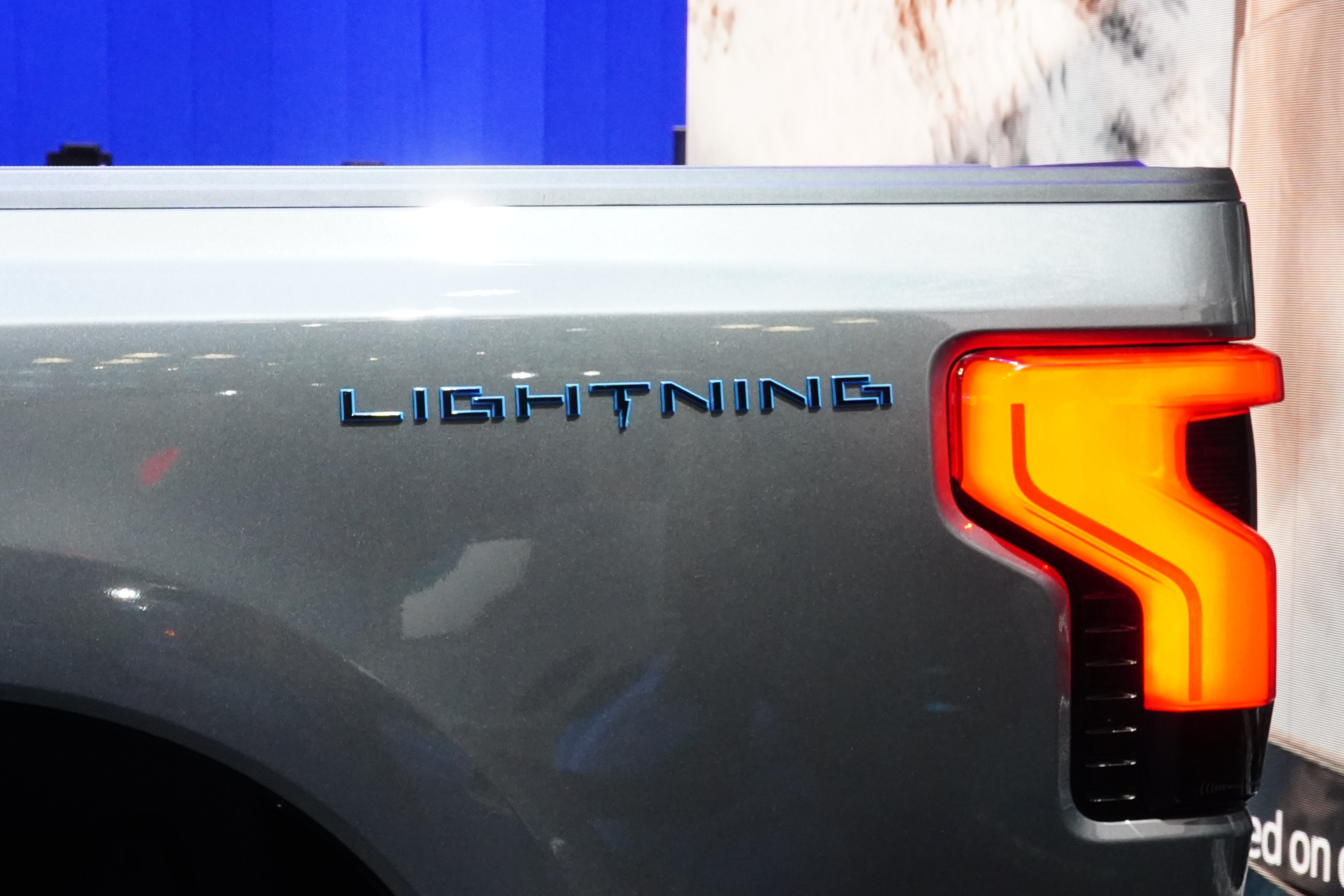
The F-150 Lightning was a large part of Ford’s display, as were both Mustangs: the ICE coupe, and the EV SUV. Various Broncos and pickups showed off their rugged, off-road personalities
CHEVROLET
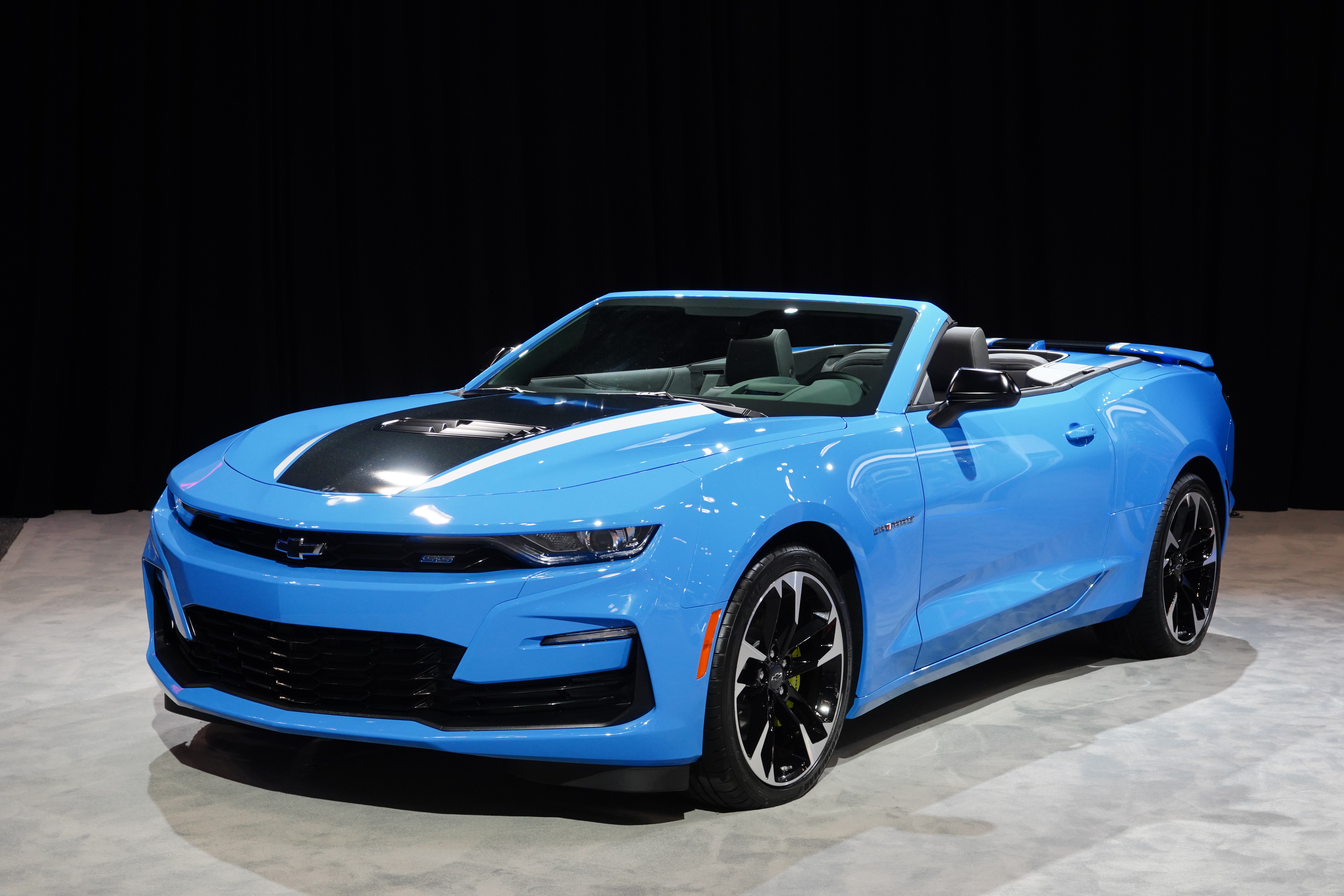
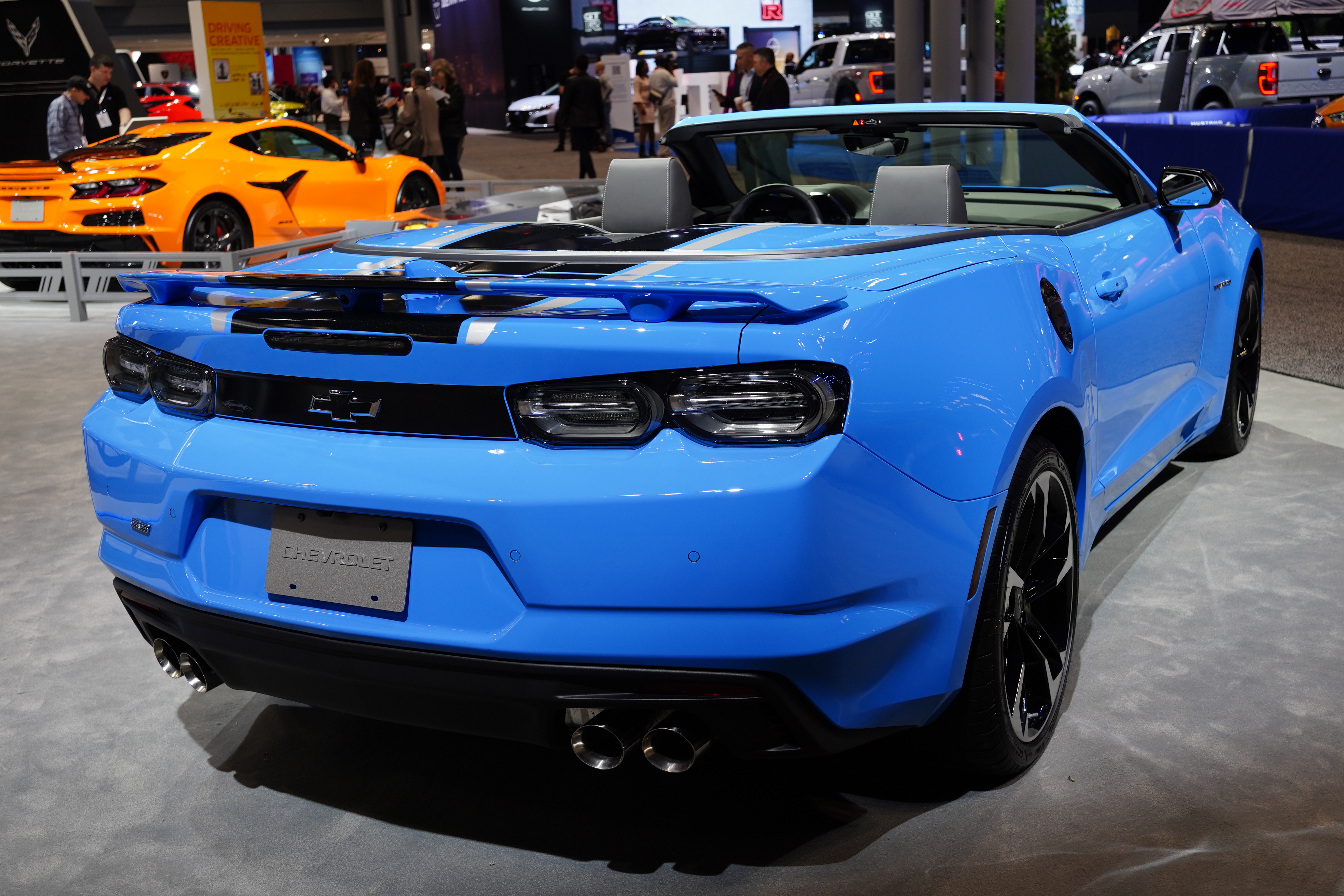
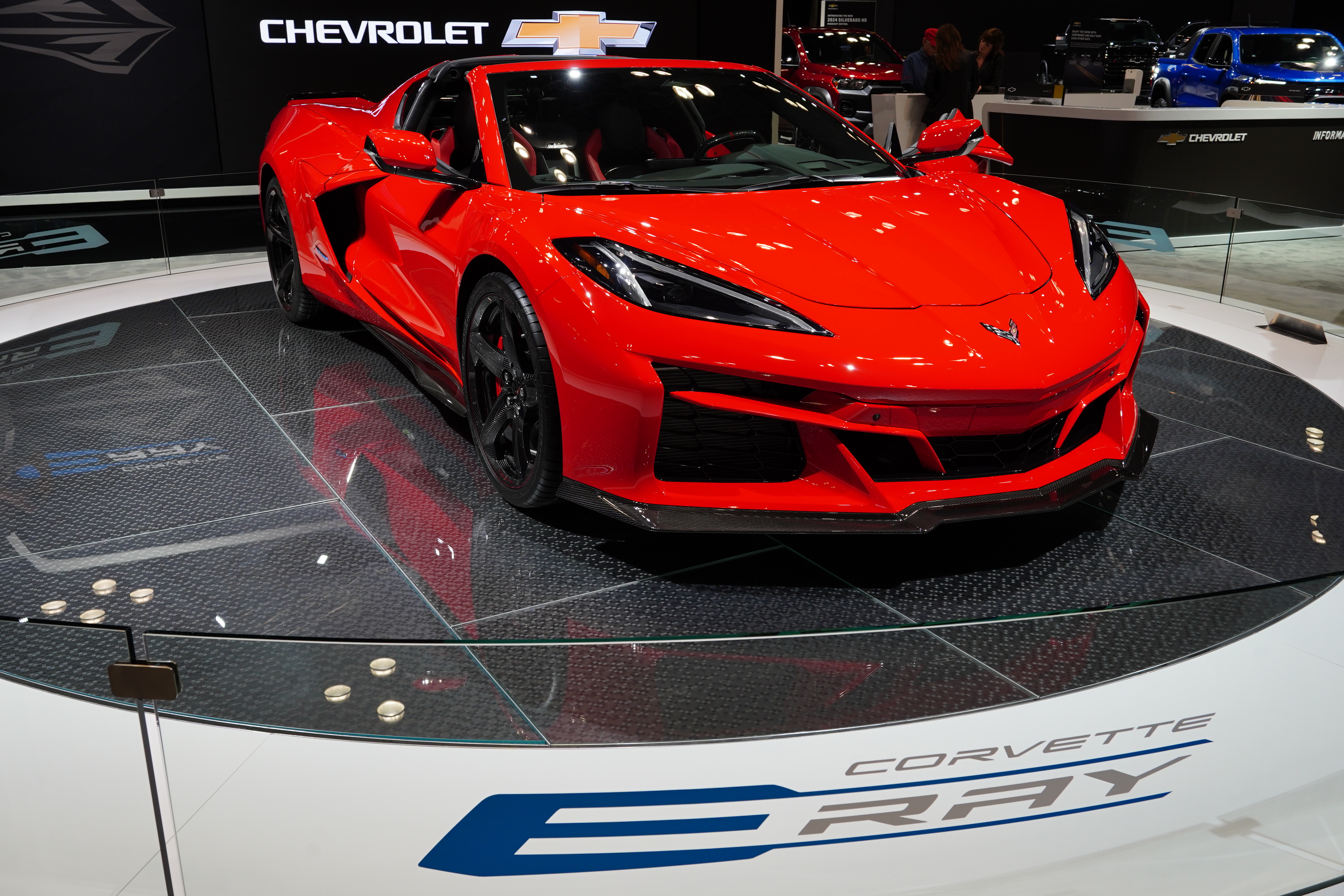
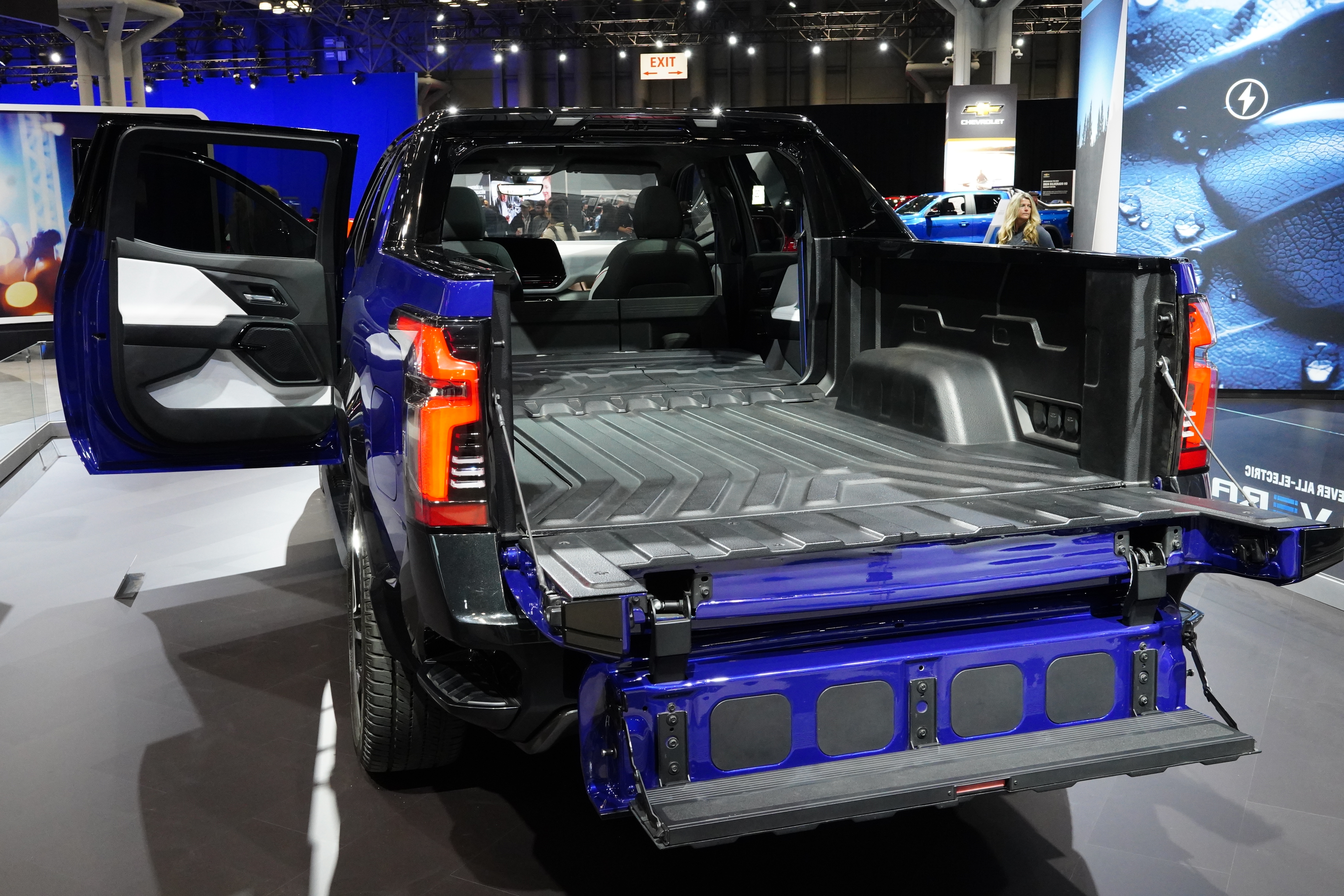
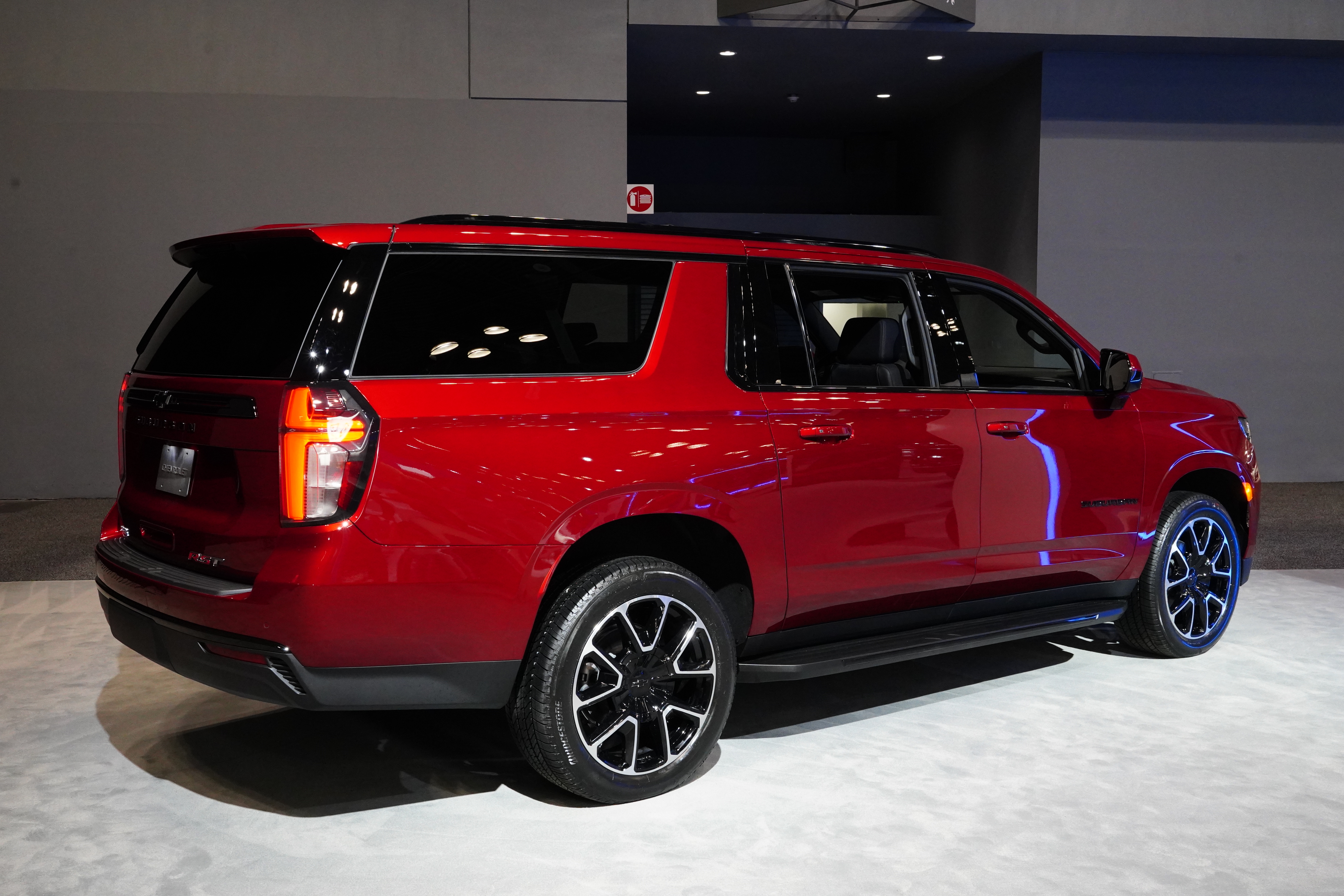
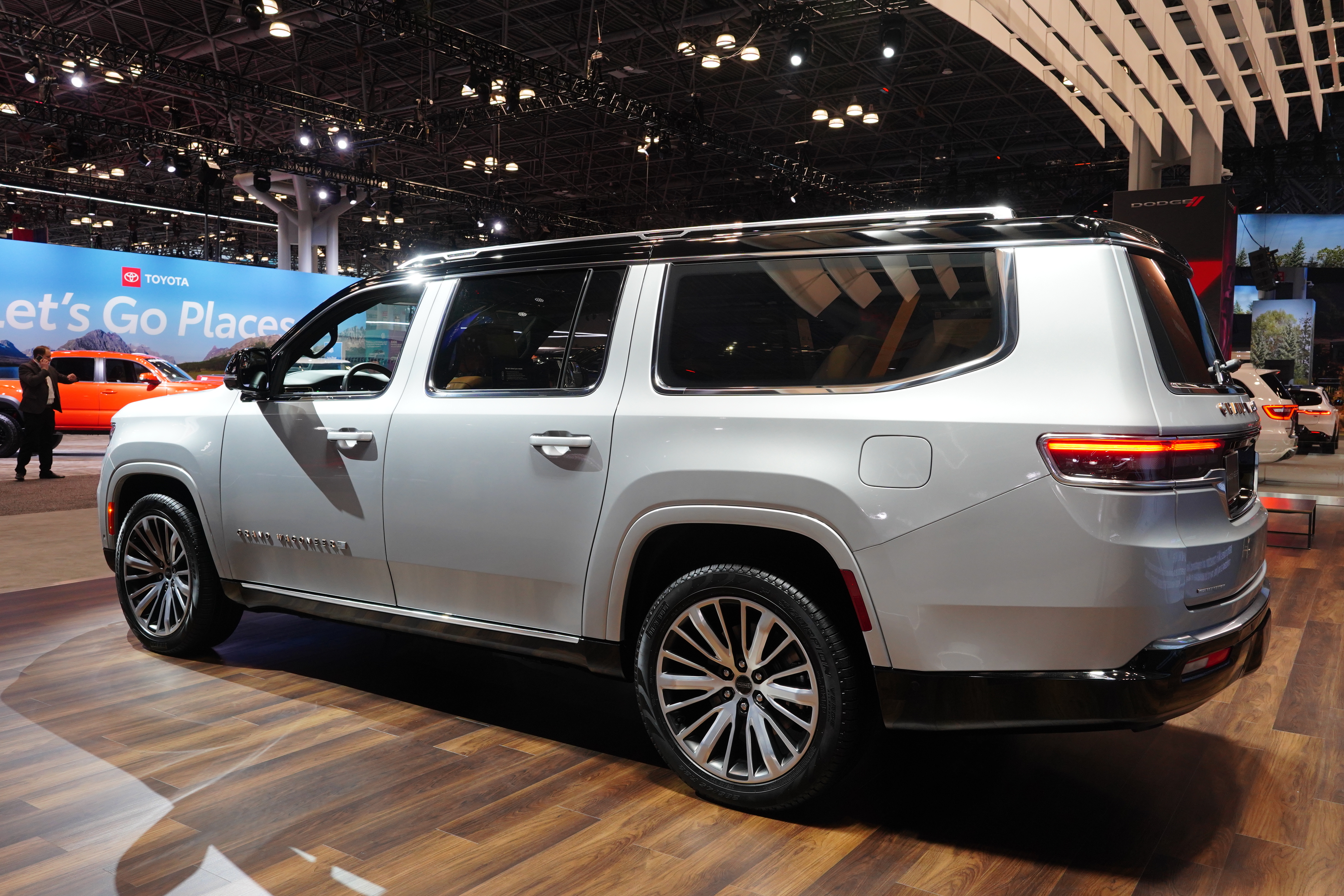
Chevy did their best to make it look like it was the domestic EV leader, with many soon-t0-be-released EV trucks on display. The problem: these vehicles are not for sale yet. The EV Silverado was there, same as last year, but still isn’t in any showrooms. However, the one Camaro on the floor represented an end to an era, as the Camaro pony car will soon be no more. Not to be outdone, the Corvette E-Ray was there, looking identical to its ICE siblings. For those who crave maximum size on a body-on-frame platform, the Suburban continues to exist.
STELLANTIS
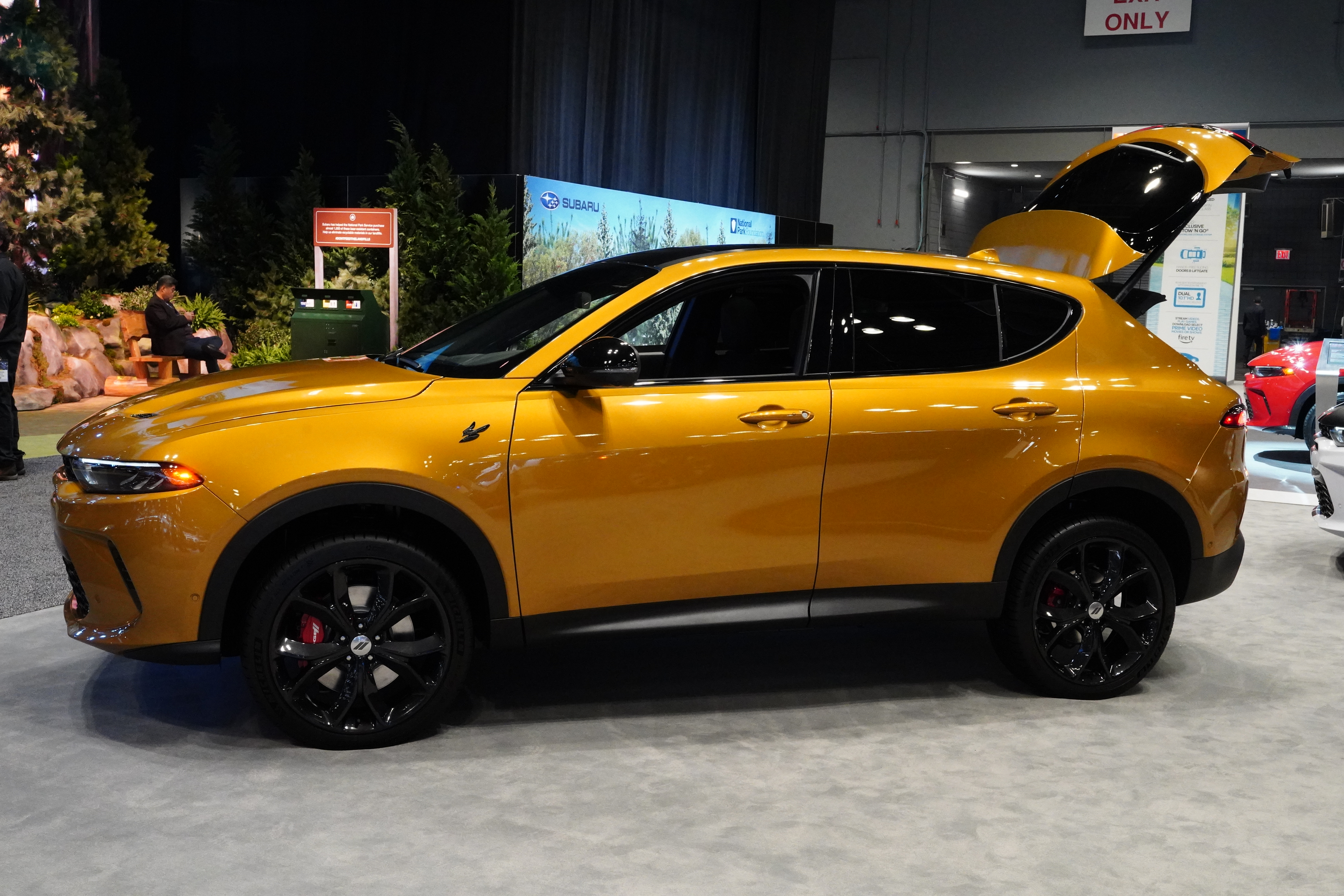
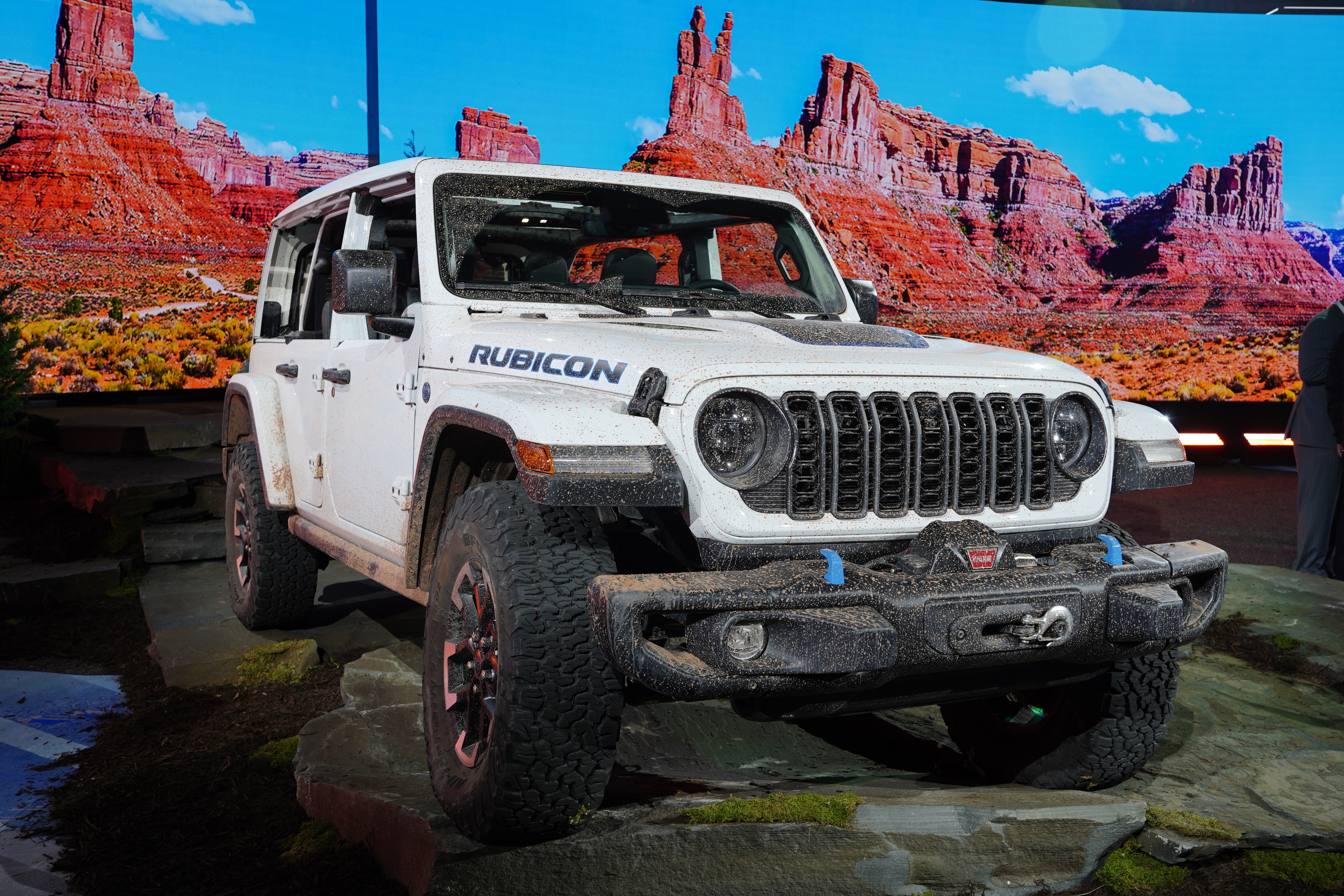
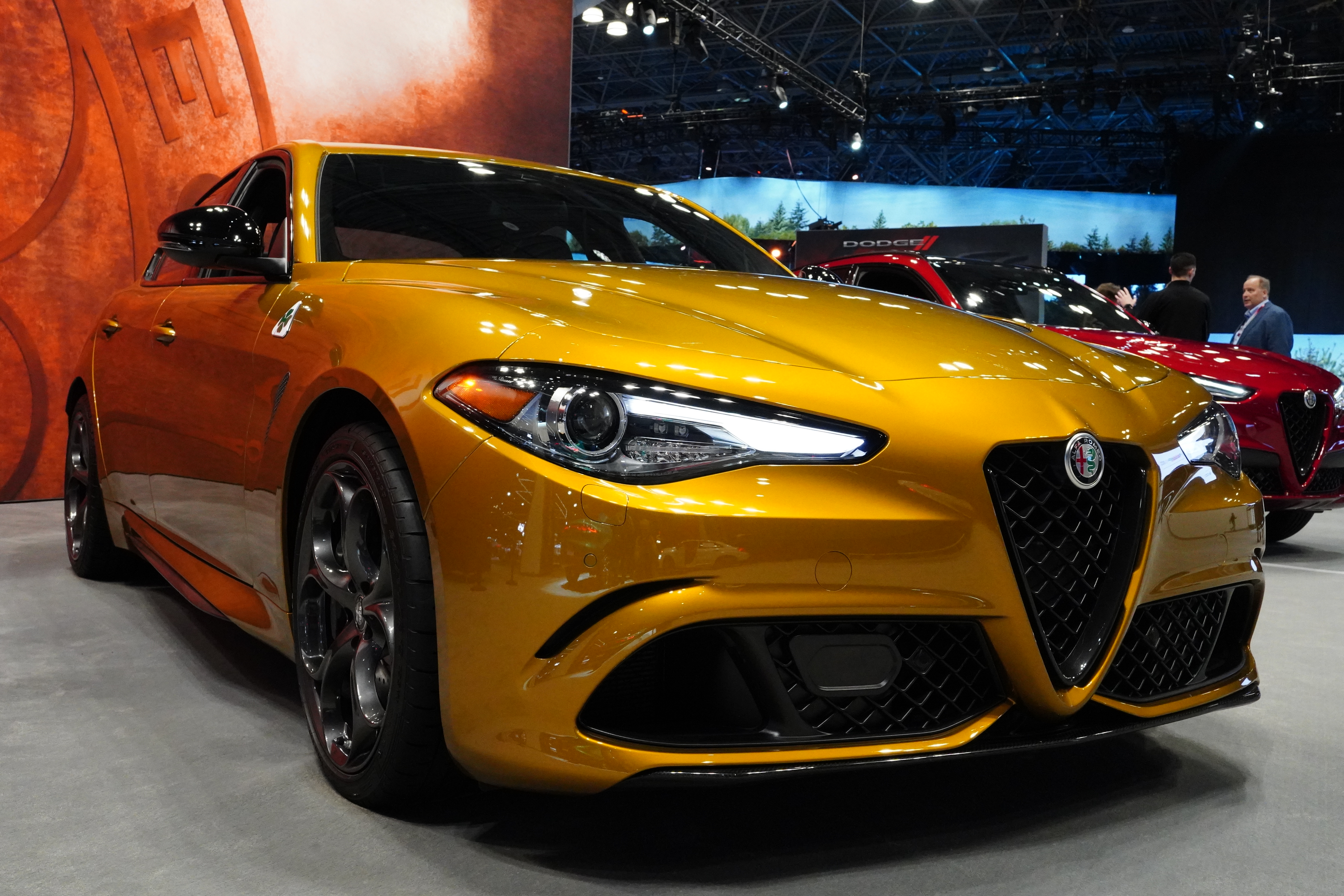
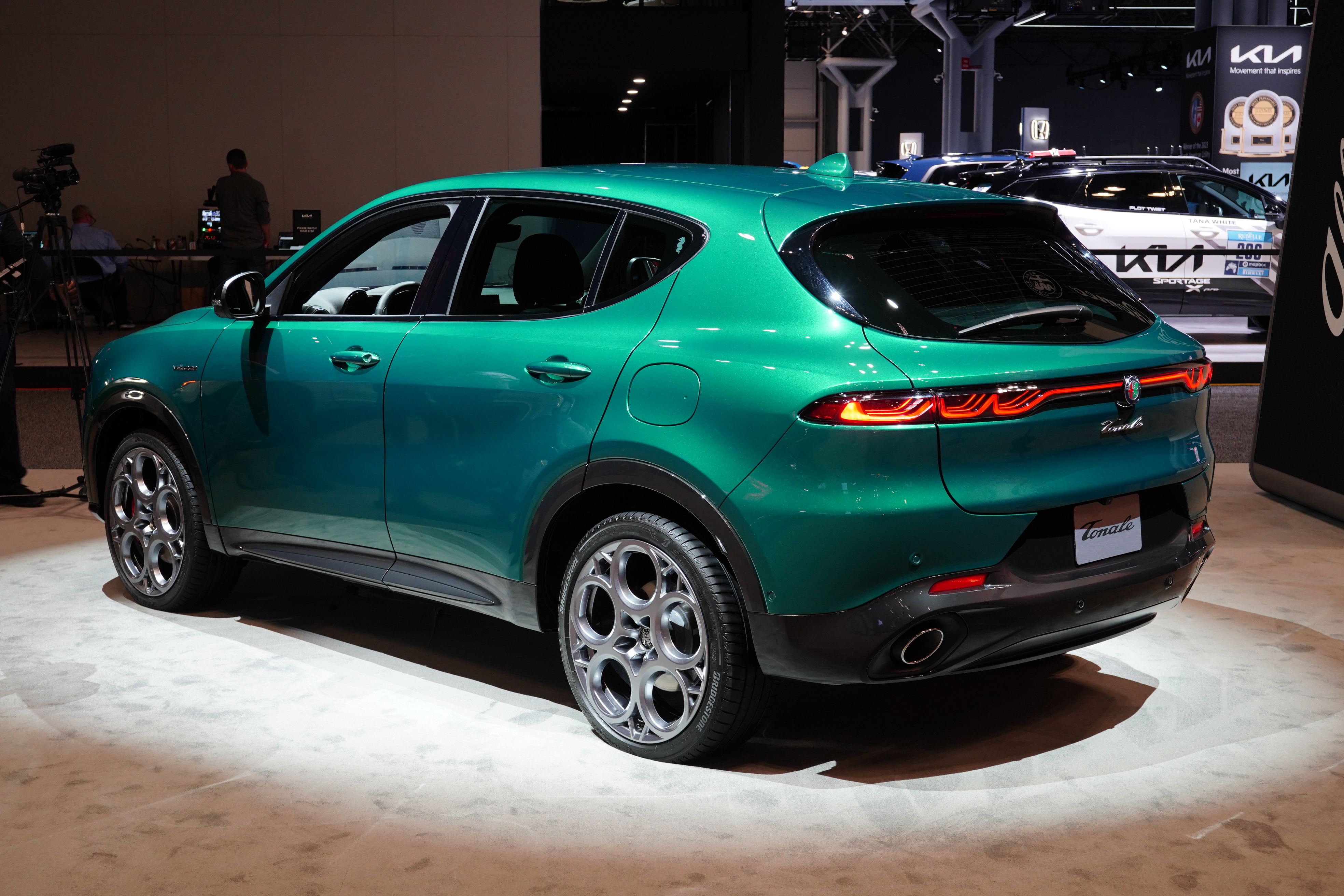
As the only domestic manufacturer with a full lineup of its brands on display, Stellantis stood out. It helps that the Ram and Jeep brands have great products and are selling well. A surprise to me was the Dodge Hornet, which I knew to be a brand-engineered version of the Alfa Romeo Tonale. The Hornets on display looked great, and even better, had impressive interiors with inviting seats I hadn’t expected to find in a Dodge. I predict that the Hornet will do well and will handily outsell the Tonale, especially given how little Alfa seems to market its cars in this country.
The RAM REV EV pickup is a disappointment, looking almost nothing like the stunning concept truck which had been shown at the CES a few months prior.
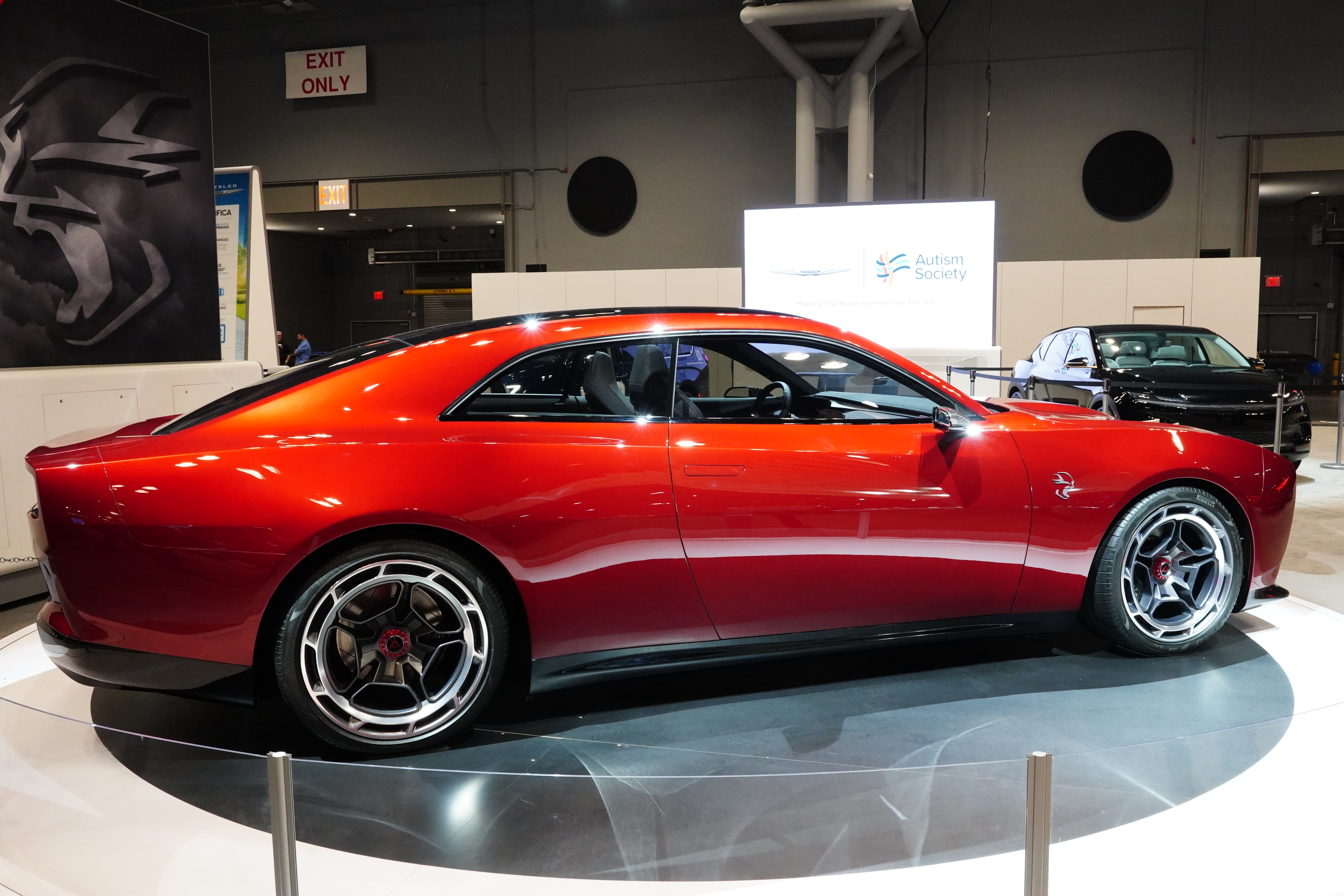
My vote for best-looking vehicle at the show: the Charger Daytona EV concept:
HYUNDAI
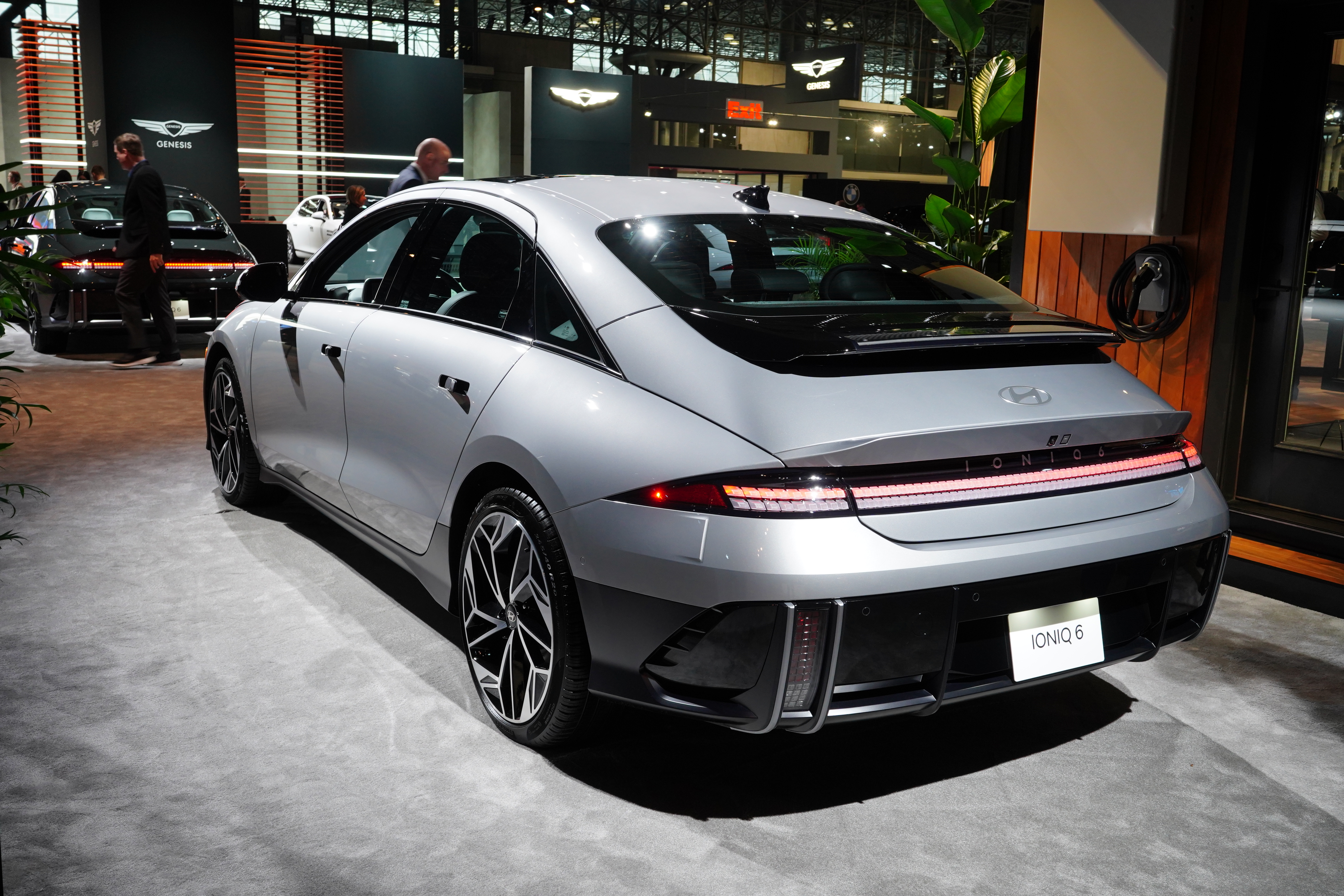
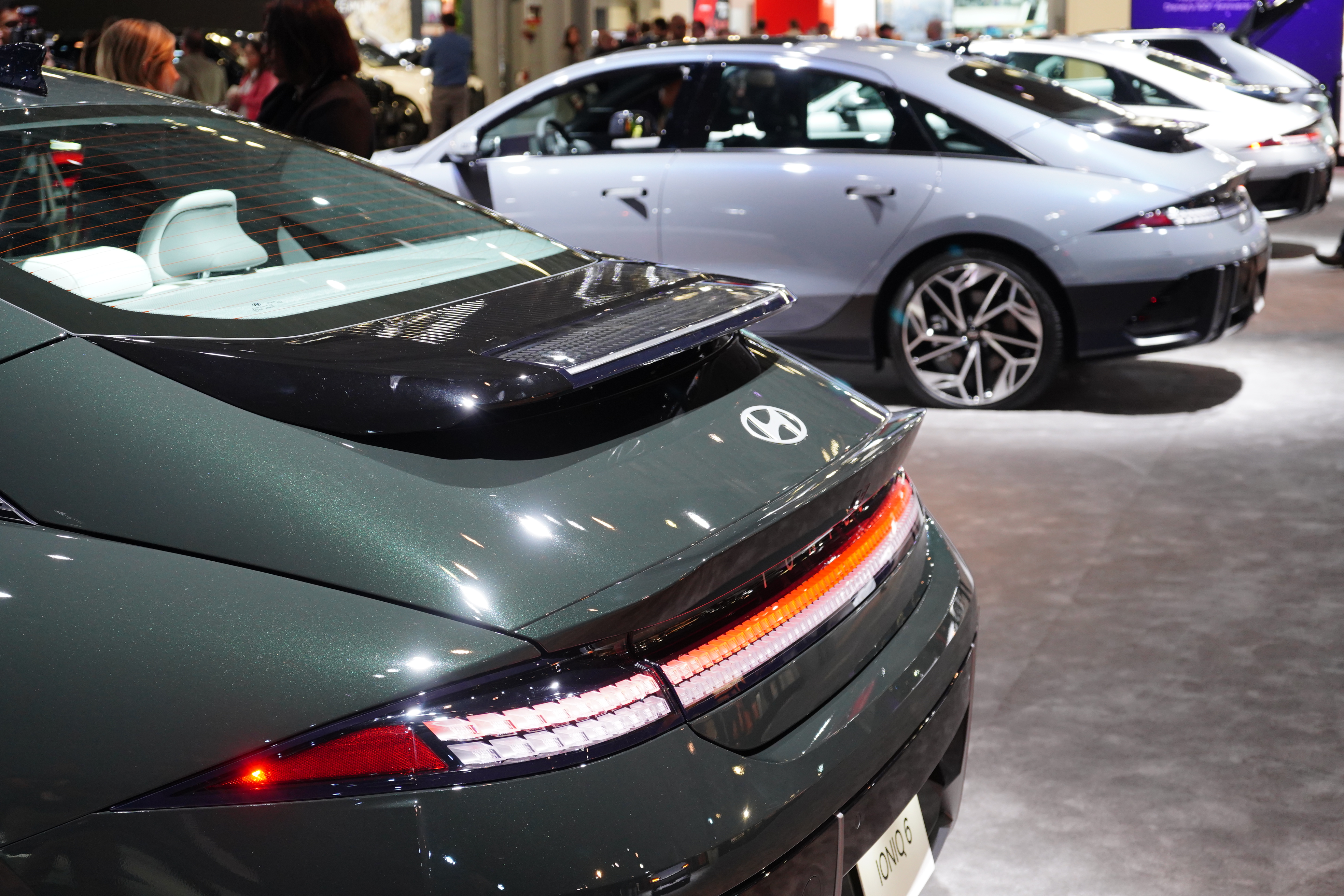
The Hyundai Ioniq 6 is a striking-looking four-door sedan in a world full of SUVs.
VW
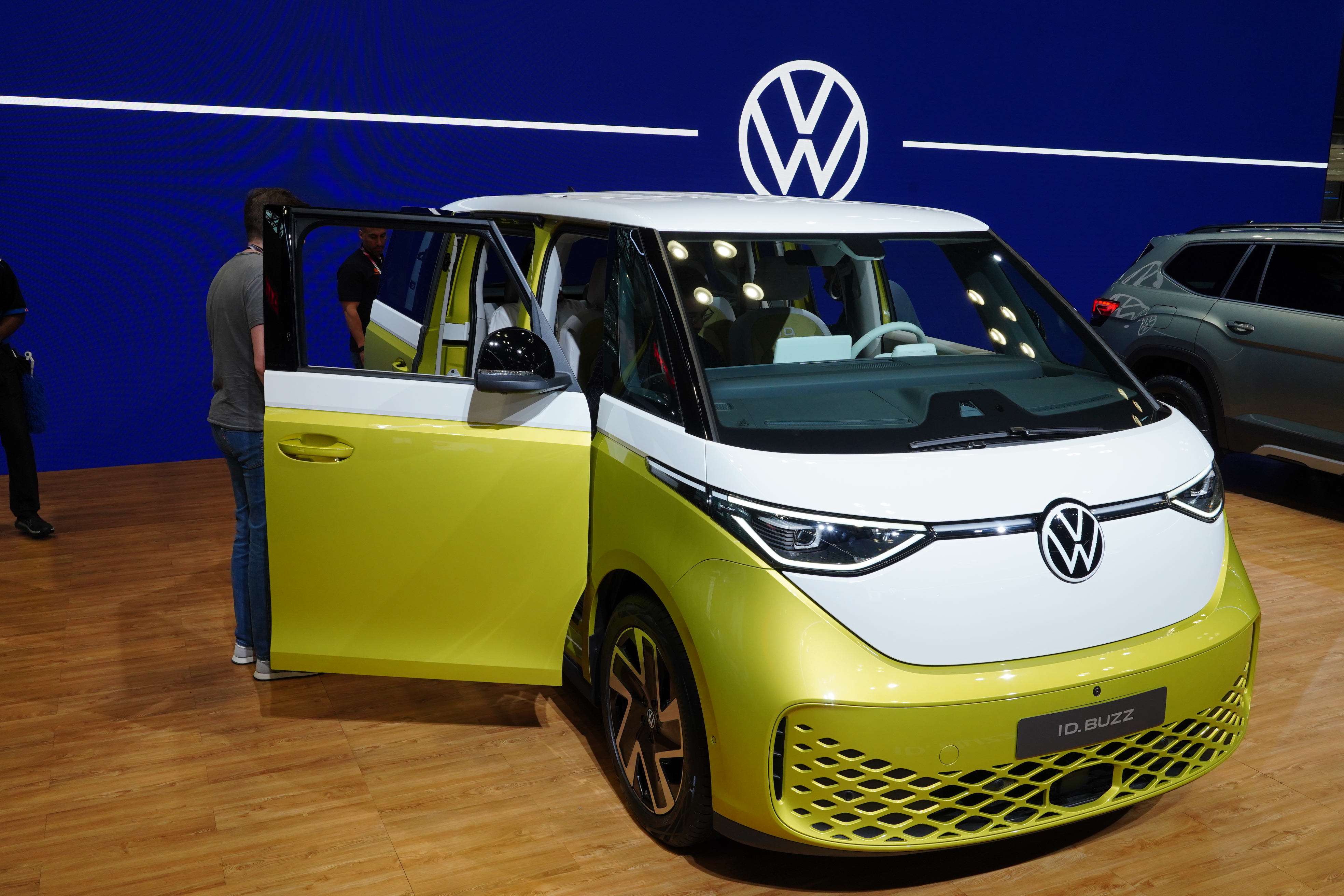
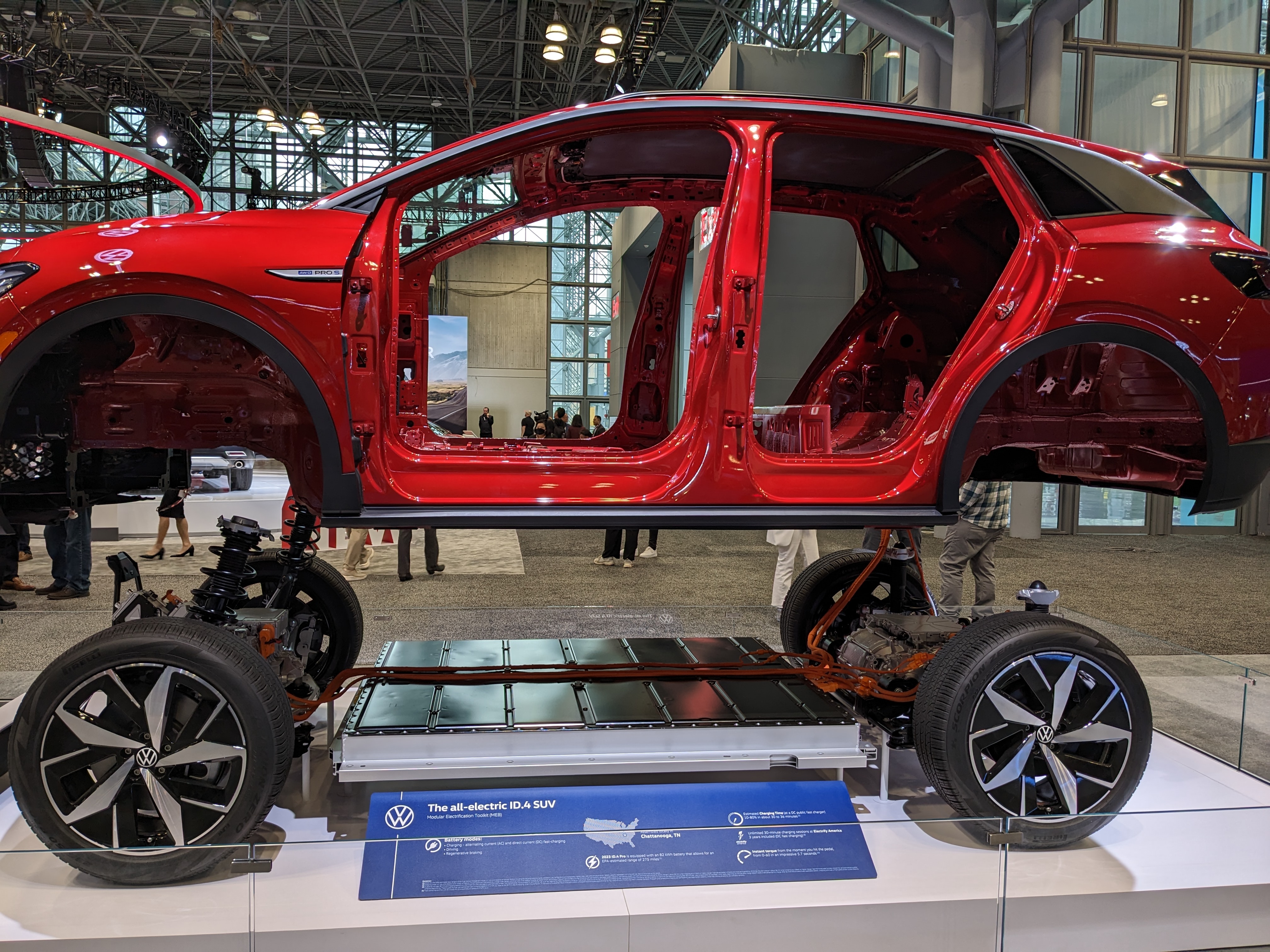
The I.D. Buzz, looking like the same one I saw last year, was here again. One of the more clever displays was the lifted I.D. 4, exposing the EV battery “skateboard”.
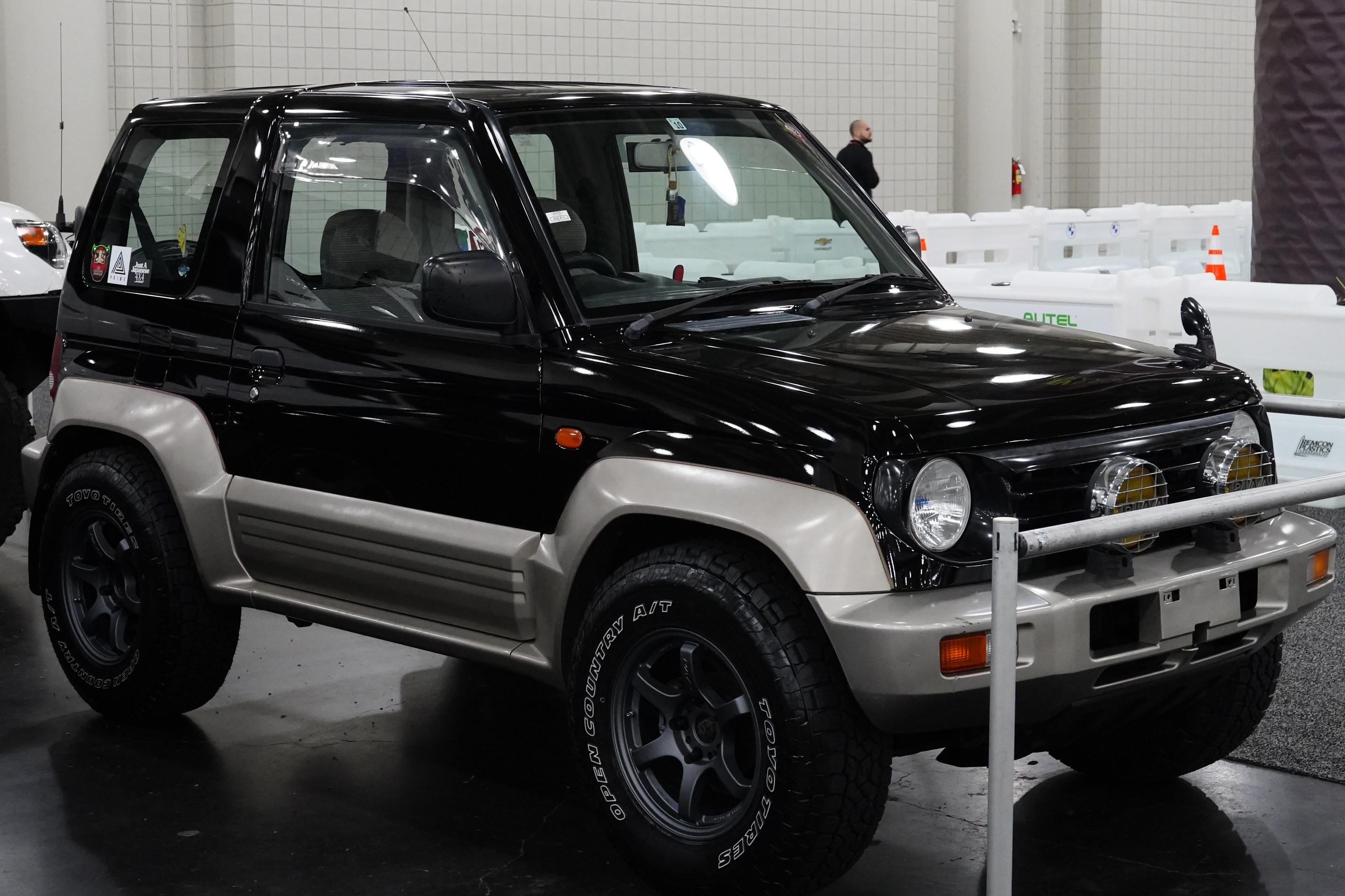
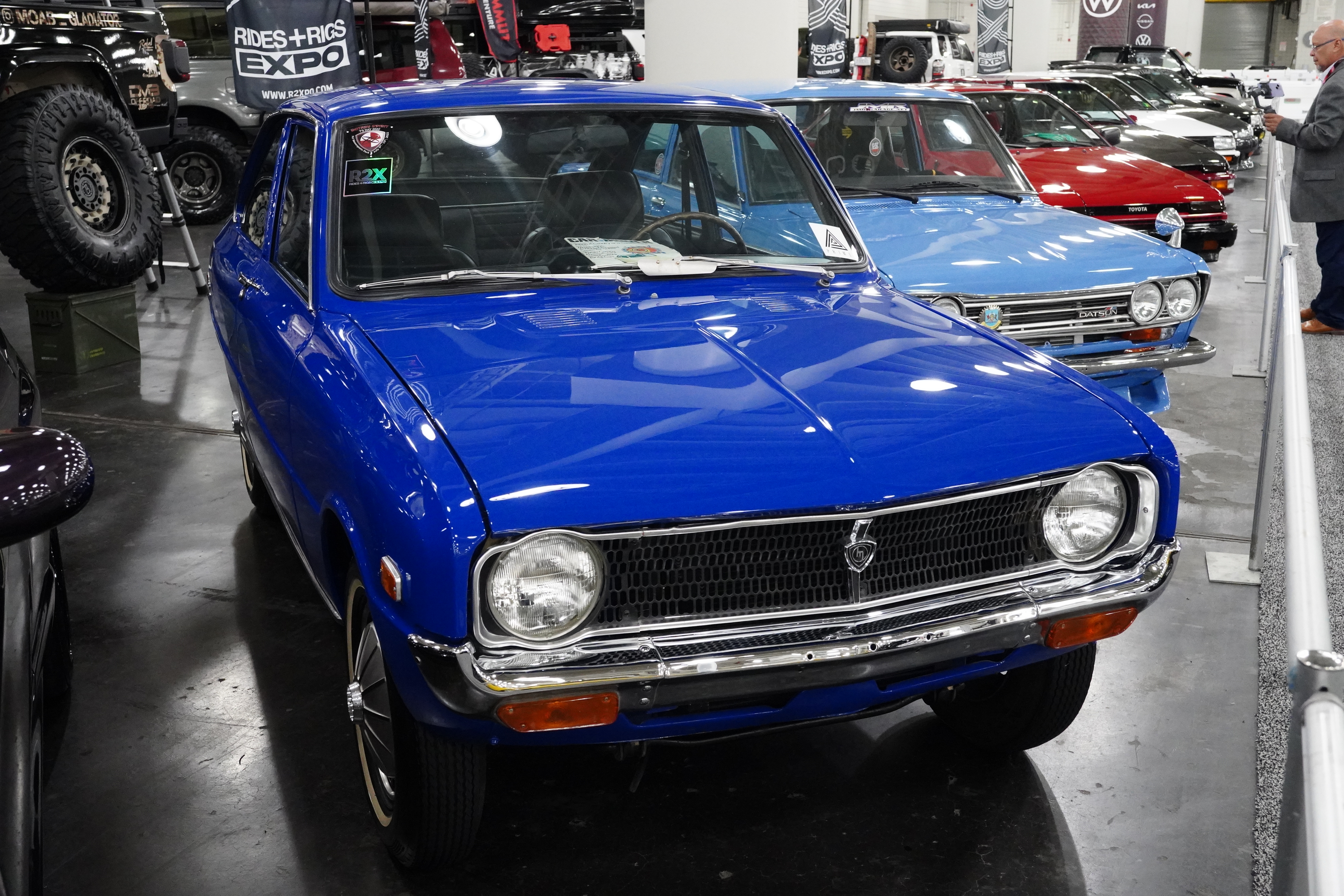
A large section of the bottom floor was devoted to what looked like a club-sponsored display of JDM (Japanese Domestic Market) cars, perhaps three dozen in all. They were segregated by decade, and it was clearly some of the older ones which grabbed my attention.
Lexus SC CoupeMitsubishi PajeroDatsun 510’80s Toyota Corolla, RWD, known by its “AE86” internal platform code.1970 Mazda R100, which predated the RX-2 in this country.
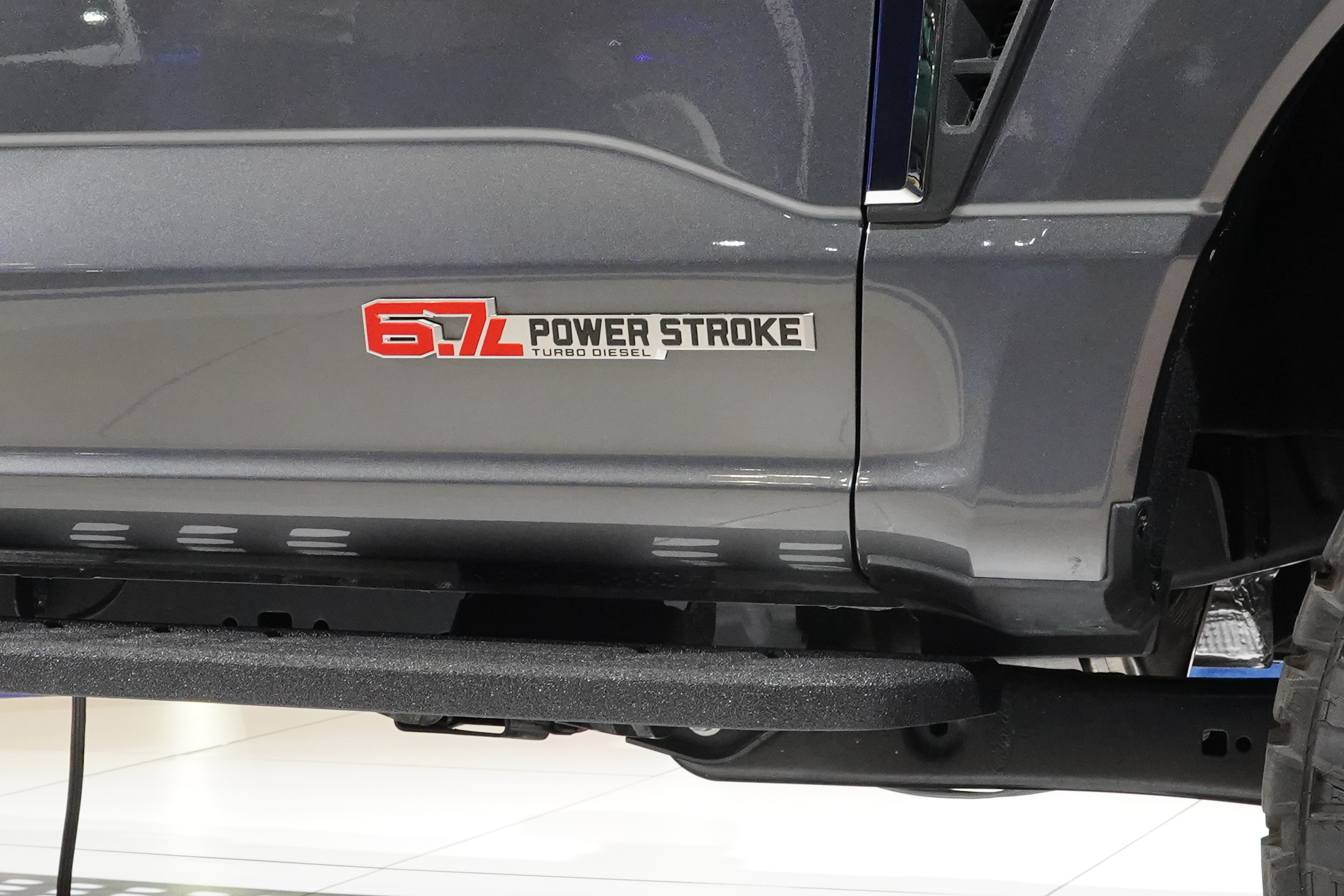
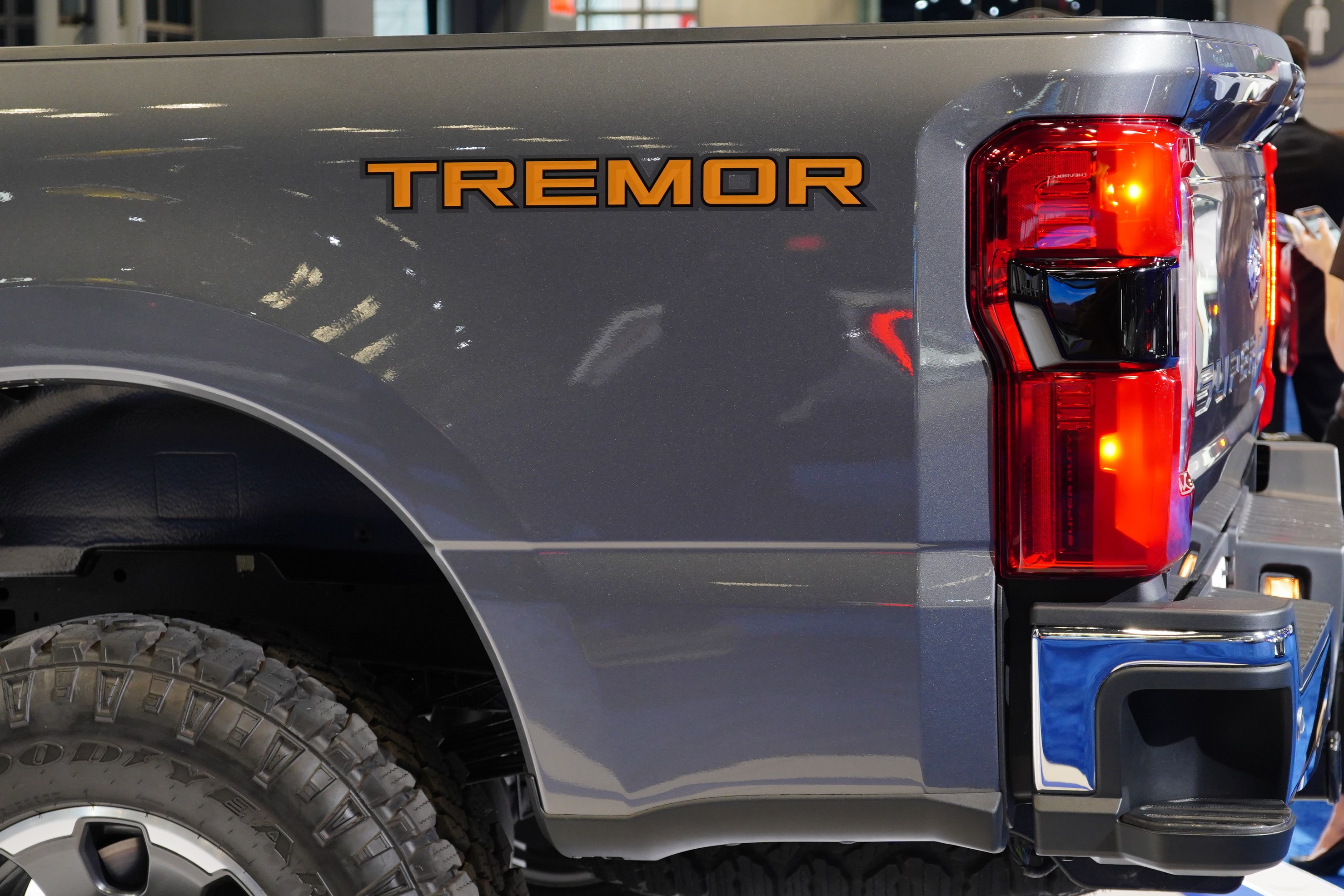
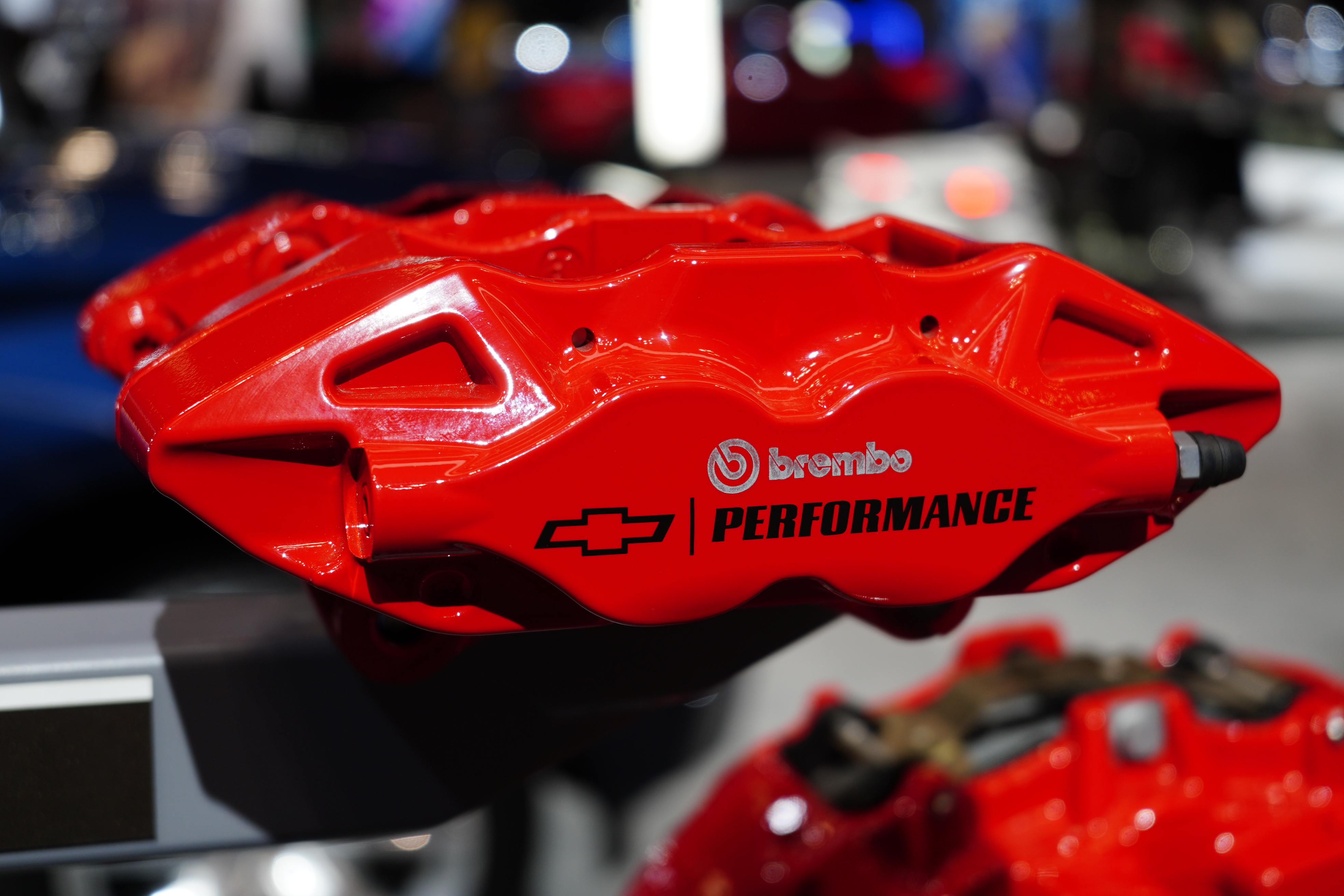
EMBLEMS AND BADGES
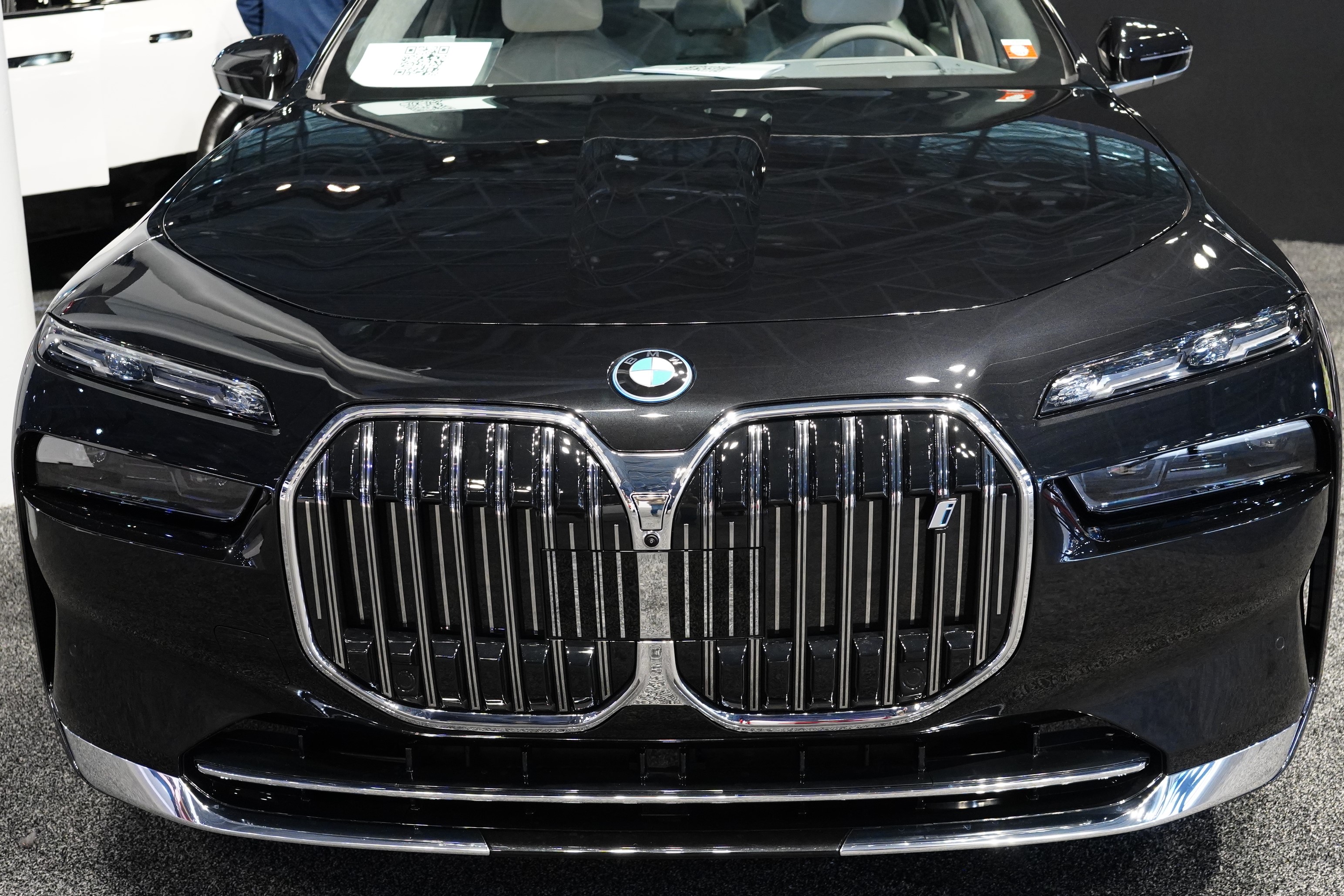
THE GRILLE WARS CONTINUE
WHAT I DREADED TO SEE IN MY REARVIEW MIRROR IN 1972:
My 2006 visit to the AACA Fall Eastern Meet, better known as “Hershey”, was likely the 5th consecutive year I attended. Before that, most of my trips to eastern PA car shows were to Carlisle. However, Hershey’s focus on original cars which were 25 years and older was becoming a more attractive proposition to me.
Hershey has had a long history with mud. Ask any oldtimer, and they can regale you with stories of mud up to the knees, and classic cars buried in mud up to their axles. While more and more of the field area was gradually becoming paved, in 2006, not all of it was on asphalt yet. One photo in particular documents what appear to be Car Corral vehicles parked across the street from Hershey Park, on the lawn in front of the Hotel Hershey. There’s lots of sunshine as well so the infamous and soon to be gone Hershey mud was not a factor that year.
Ever since my rally brother Steve and I discovered it in the late 1990s, the spectacle of witnessing the Saturday morning parade of show cars has been a must-see part of the Hershey visit. Several of these photos capture that parade, as disorganized as it may appear! Take a note of all the spectators alongside the cars, enjoying the same sights as I was.
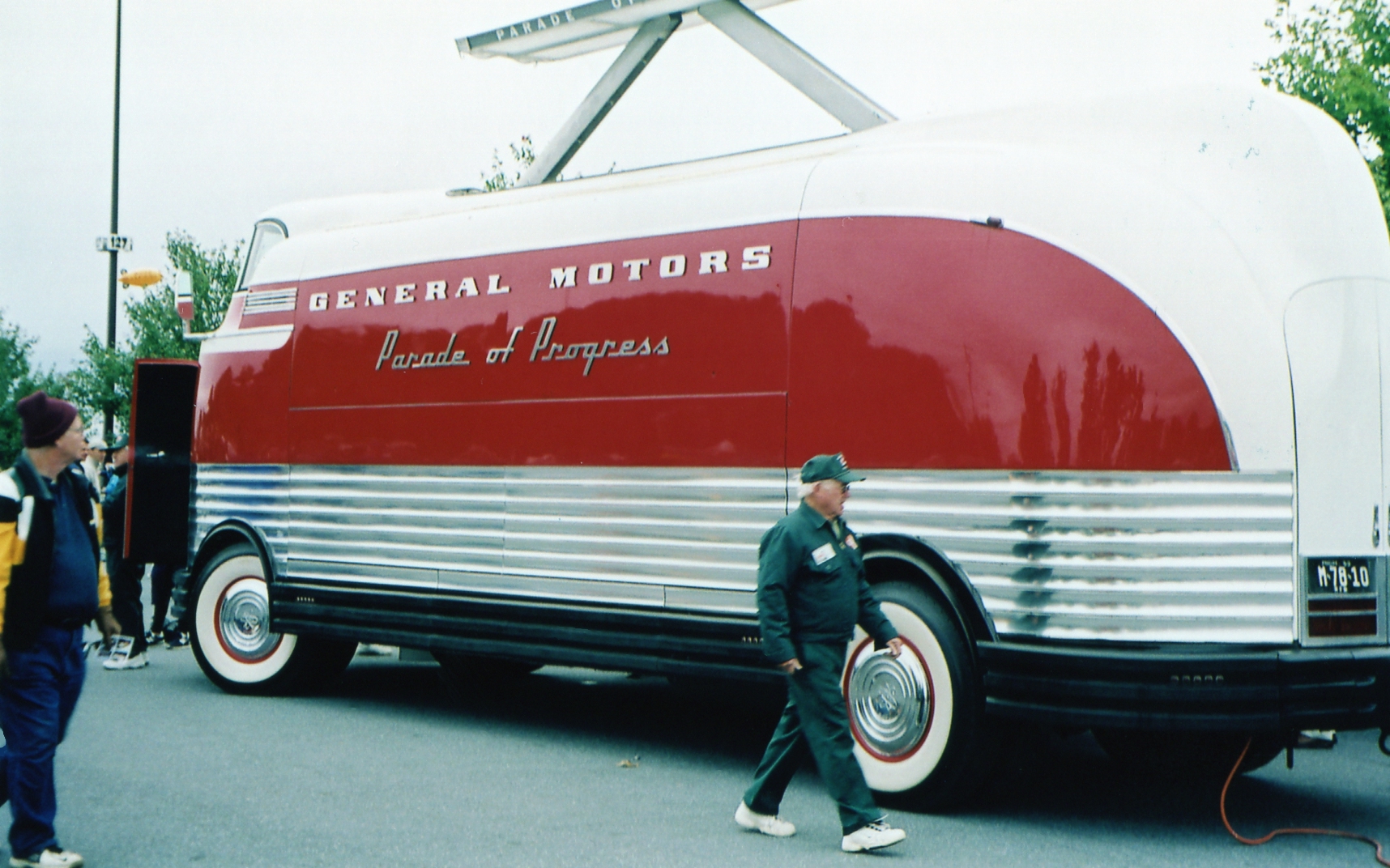
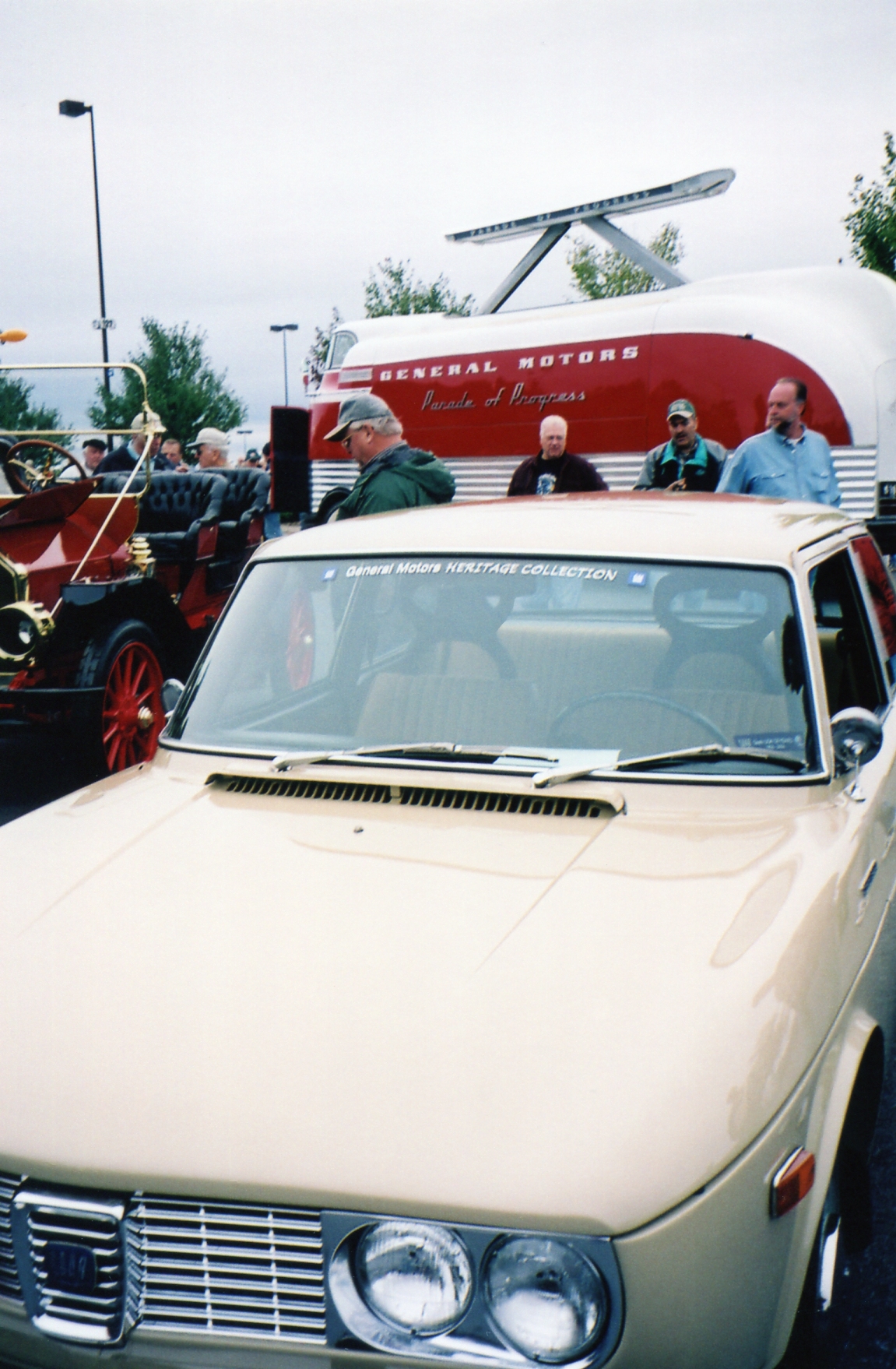
The big surprise of 2006 was the special display trucked in by General Motors. They dipped into their “GM Heritage Vehicle Collection” and brought a number of cars and trucks which were set up in a special area near the Giant Center. The most outstanding of them, in several ways, was the GM Futurliner. I had been reading articles about these massive vehicles for years. In January of 2006, a Futurliner sold at a Barrett-Jackson auction for $4 million. More shocking to me was their size, something difficult to capture in photographs. It makes me wonder how GM was able to move it; but of course, being GM, they have all kinds of vehicles and equipment at their disposal. And if you’re asking yourself “why is there a Saab near the Futurliner?”, it is because GM had purchased Saab and included several of the Swedish brand’s models in its display. A stretch? I thought so then, and still think so now.
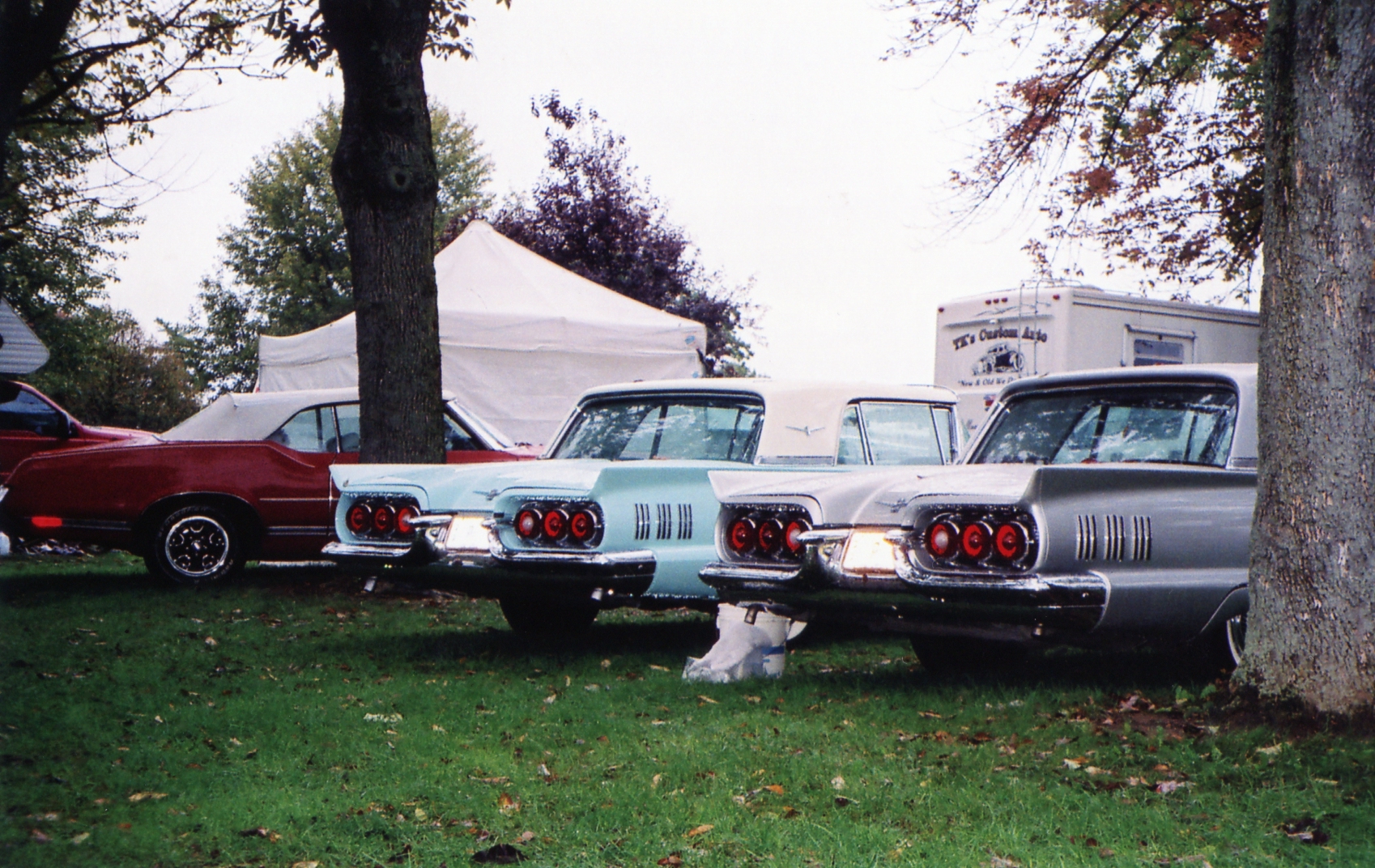
The Car Corral drew a nice crowd of tire-kickersA couple of Ford “Squarebirds”, aka 2nd gen T-Birds, sit side-by-side
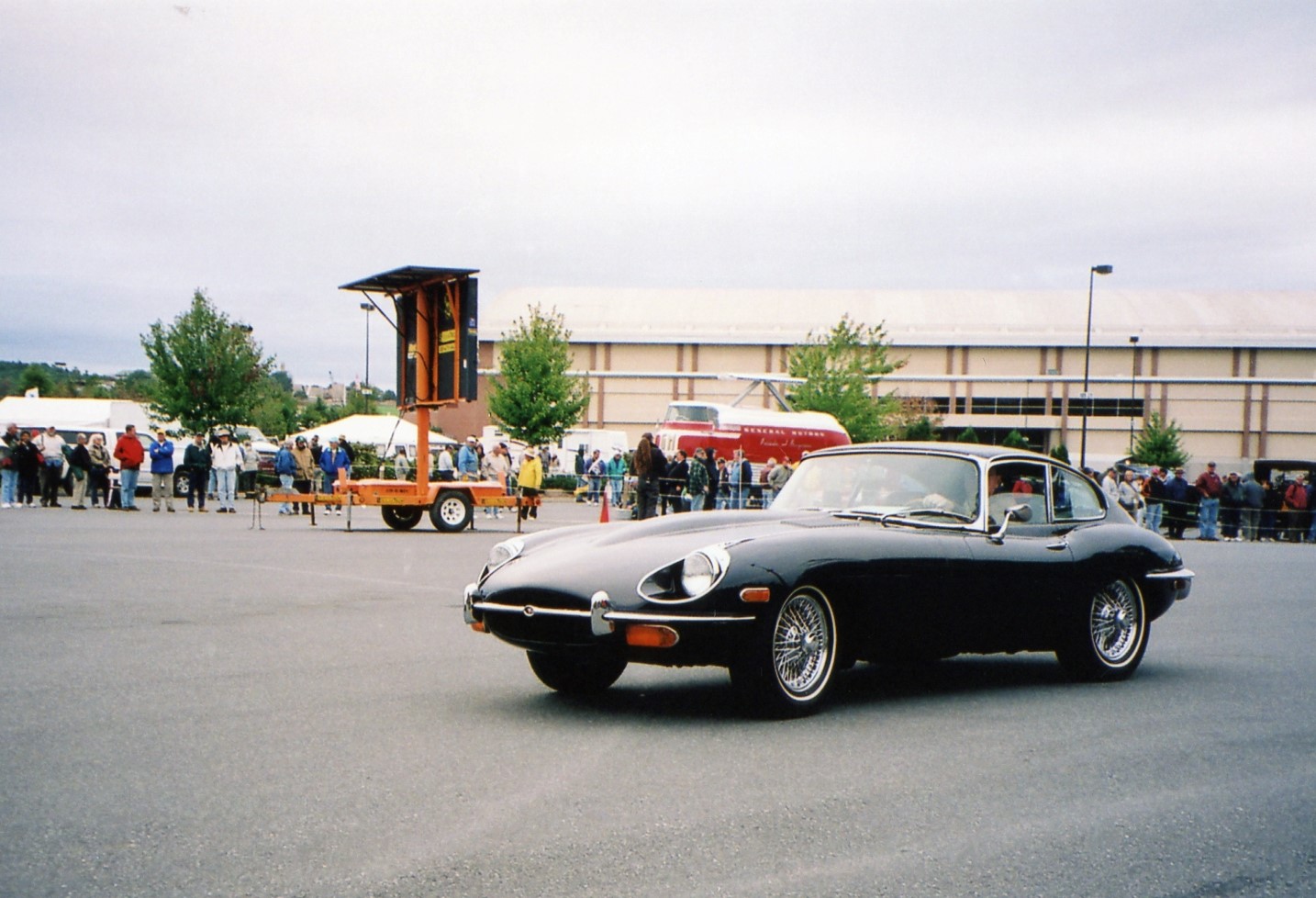
A Jaguar E-Type heads toward the show field – Note the Futurliner in the background
In 2012, the NJ Region of the Antique Automobile Club of America (AACA) held its 59th annual car show on its traditional date, the first Sunday in May. The show was held in the parking lot of the Automatic Switch Company in Florham Park, NJ. The Region had been using this location as far back as anyone could remember, possibly since the 1960s. However, just a few years after these shots were taken, the Automatic Switch lot was no longer available and the Region was forced to find a new locale.
These photographs were taken with a film camera, and since I don’t have any record of digital pictures from this event, the ones below are the only photos I have of the show (see sidebar if you’re interested in details about the camera and film used).
At its peak, the NJ Region’s annual show was known to attract between 250 and 300 automobiles. Without knowing the time of day my photos were snapped, don’t be too judgmental about the ‘gaps’ in the parking lot. It may well be that I took my photos in the morning as cars were still arriving. Since I was in charge of setting up and running the PA system for the club at these shows, I had work to do and did not have the luxury of wandering the show field all day.
As the scanned photos are smaller than the digital photos you’re used to seeing here, you many find it especially helpful to click on each photo, then click on it again to enlarge it to fill your screen.
From this vantage point, we can see mainly cars from the 1960s and ’70s.
I don’t exactly recall the point of the doodled-up truck, but it may have served as an attraction for any children in attendance.
This out-of-focus shot features what look like Ford Model A’s.
1967 Buick Wildcat convertible
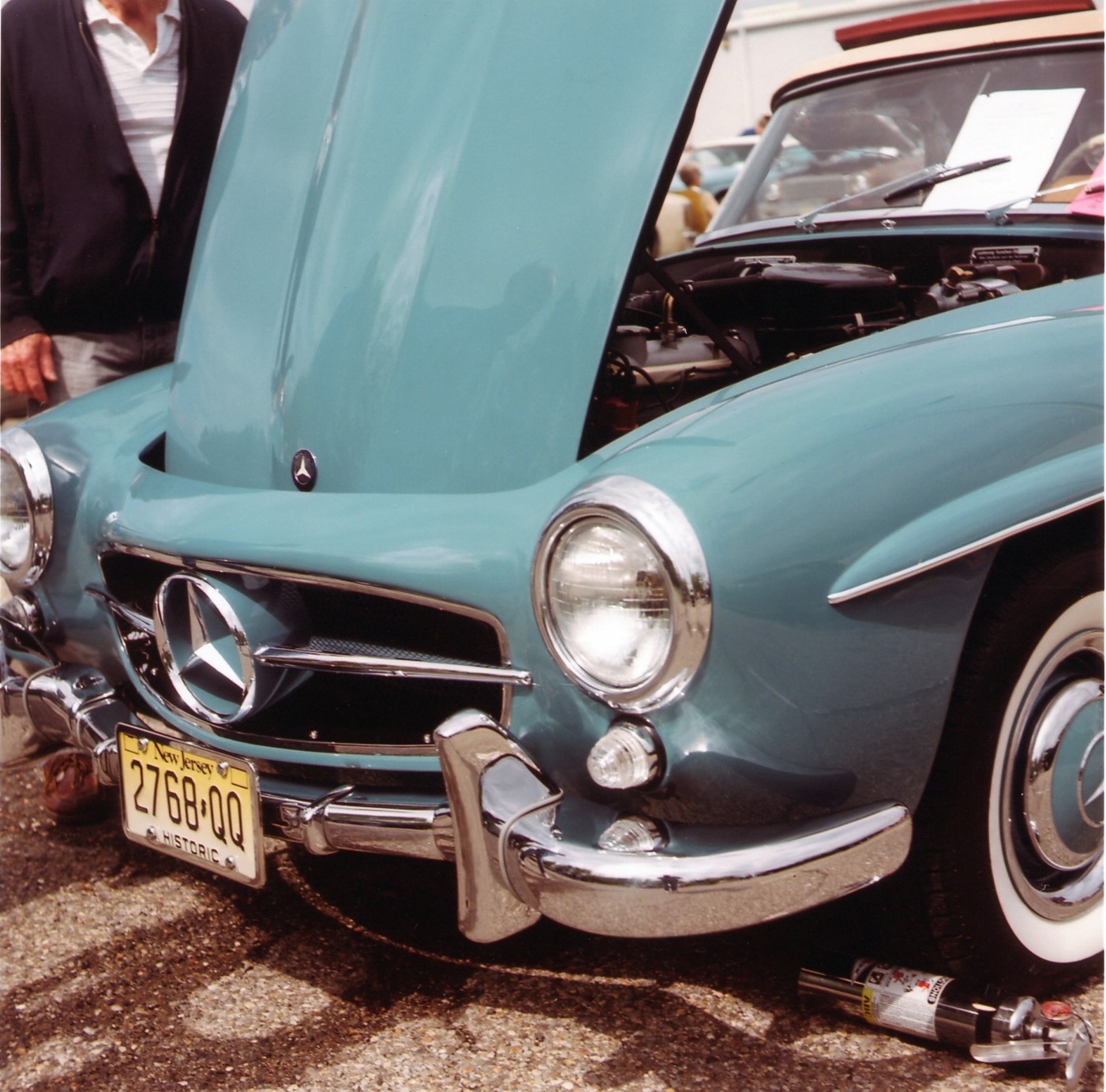
Mercedes-Benz 190 SL roadster
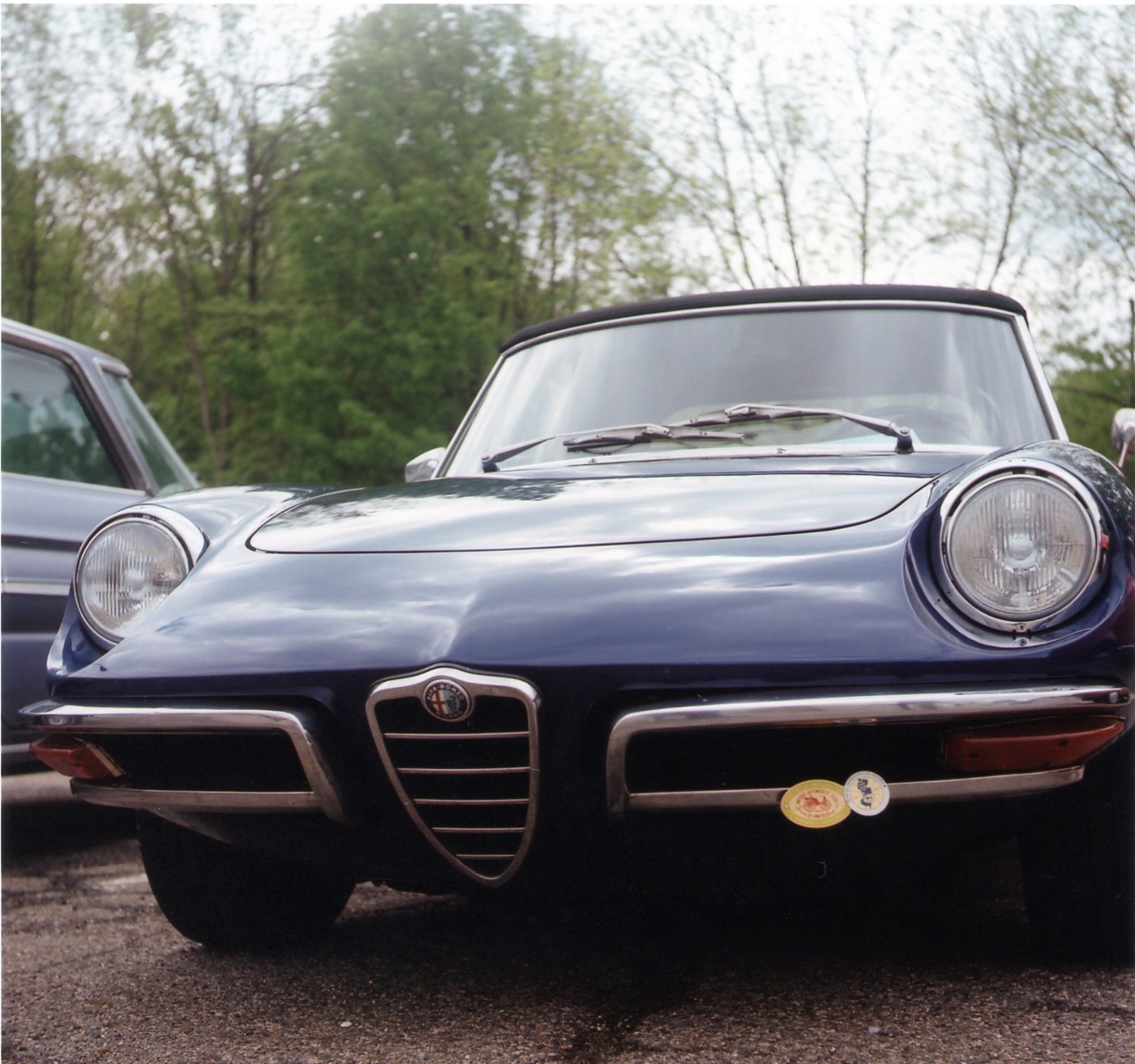
Alfa Romeo 1750 Spider
Detail of 1958 Mercury tail light
Detail of wood on a Chrysler Town & Country
Jump seats in what I recall was a stretched-wheelbase early ’50s Chrysler
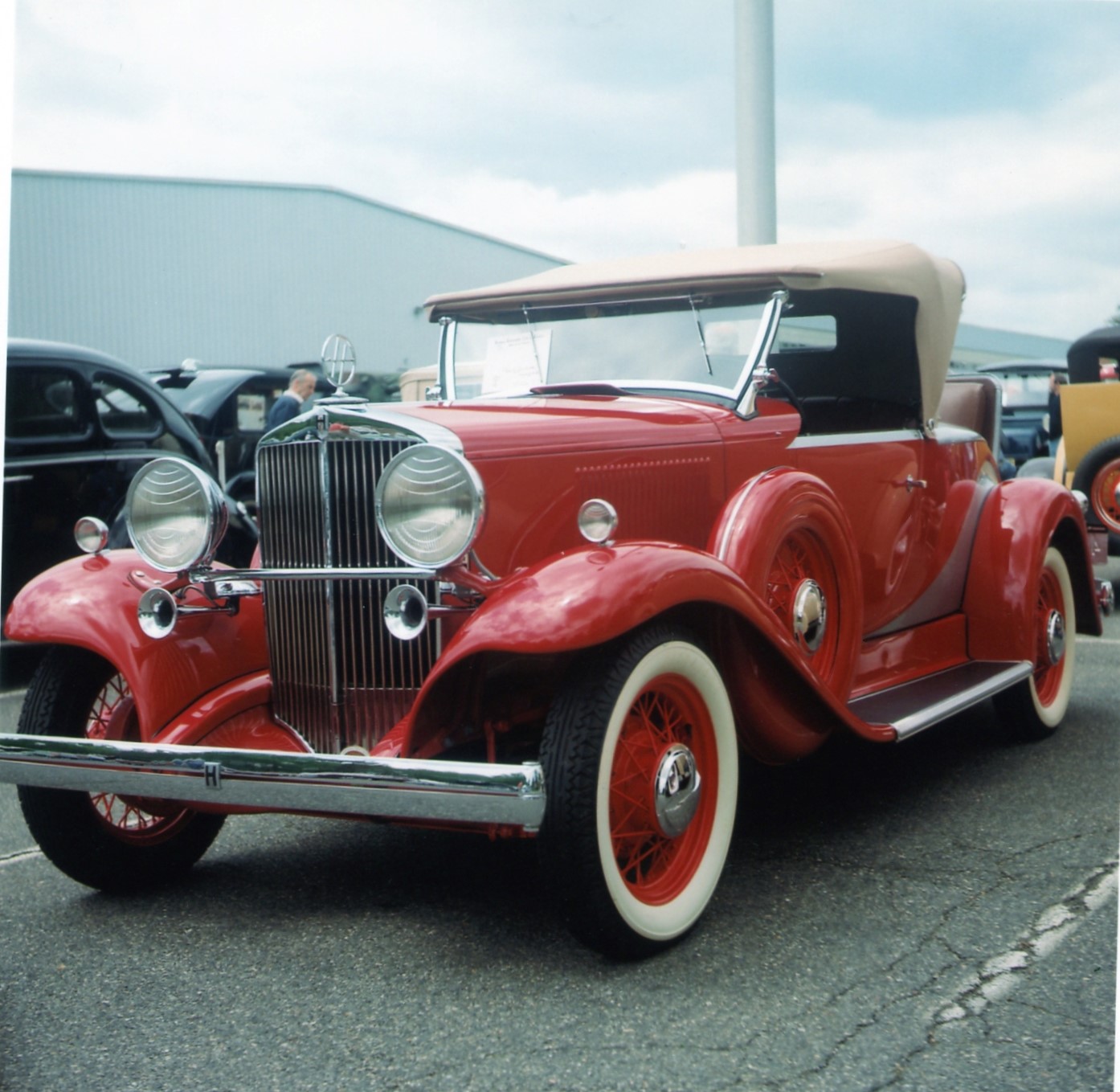
Huppmobile (note the “H” on radiator shell and as hood ornament), early ’30s?
My friend Ron with his 1936 Packard convertible
The trophy table, awaiting the announcement of the day’s winners
SIDEBAR: The Ciro-flex 120 film camera and Kodak VC160 film
I’ve been collecting film cameras for about 15 years, and I actually take pictures with the ones in my possession. This Ciro-flex camera, made in Delaware, Ohio, is the only non-Kodak U.S.-made camera I own, and luckily, it takes the readily-available 120 film size, rather than the 620 film that Kodak forced consumers to use (Kodak made out because they were the ones producing the 620 film).
I bought the camera at the Rose Bowl flea market in California, I think in 2009, and paid $25 for it. It’s a dual-lens reflex camera. The top opens, and one gazes into a ground glass while holding the camera at about waist level. It can be manually focused, and both the aperture and shutter speed are adjustable. The focal length is set at 85 mm.
For these shots, I used Kodak’s VC160 film. “VC” stands for “vivid color” (as opposed to “NC” film, or “neutral color”). It’s a bright film, and while I’ve read that some photographers find the colors to be over-saturated, I like the look. The 160 in the film name refers to the film speed. When I was shooting 35mm almost exclusively, most film I used was either 100 or 200 speed, so the 160 is almost exactly in between.
Focusing the Ciro-flex is tricky. The ground glass is hazy, and you get a clear image in it only in the brightest lights. As you can see, the focus is better in some photos than in others. In a perfect world, I’d use the camera often enough to become more accustomed to it, when in fact I use this one sporadically. Overall, though, I greatly enjoy shooting with film, because it forces me to slow down the process, think before pushing the shutter button, and delivers photos with that old-world quality look which I just don’t get from digital.
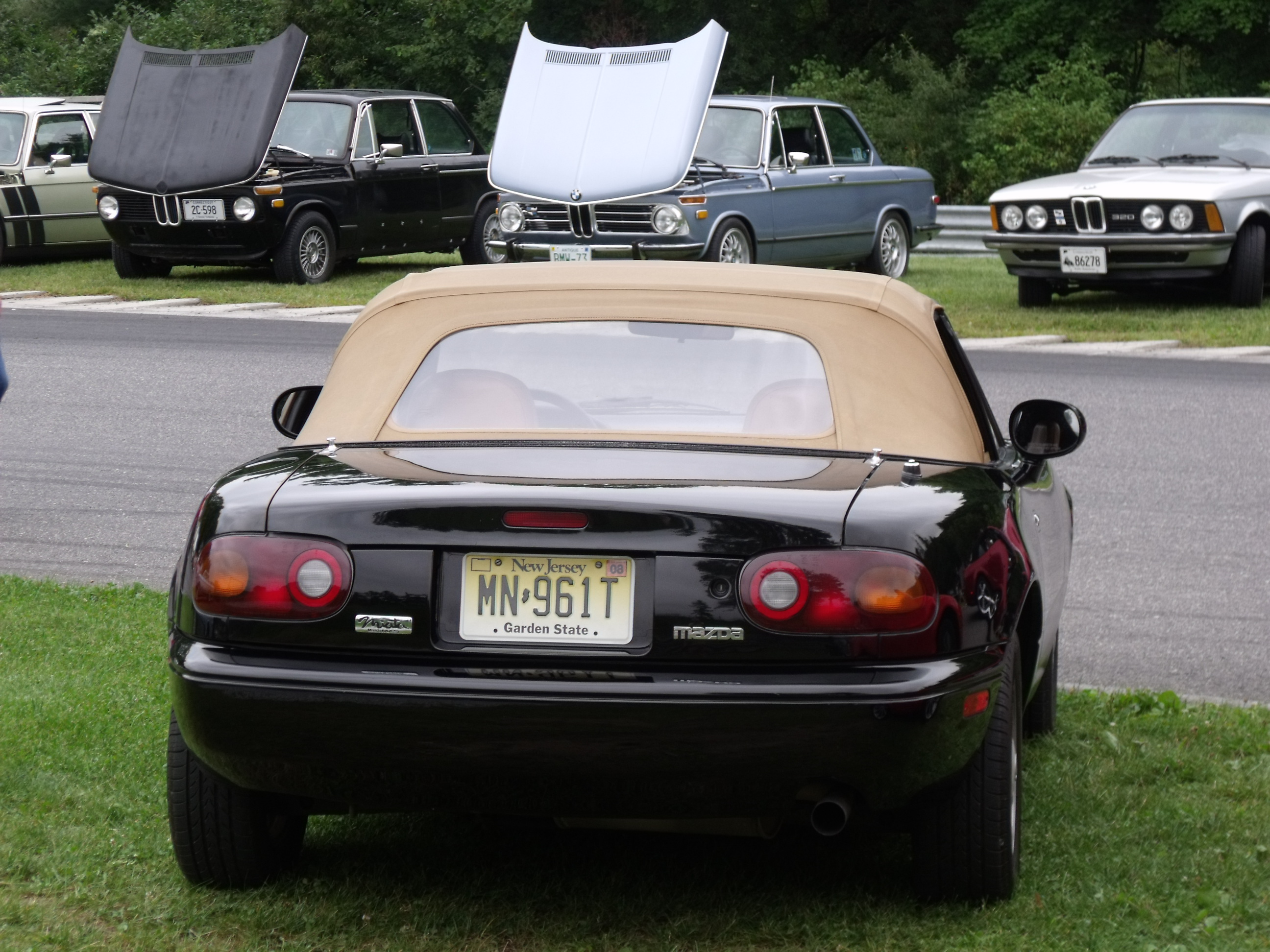
In 2014, for the first and (so far) only time, I traveled up to Lime Rock for their Labor Day Vintage Race Weekend and took advantage of the ‘Gathering of the Marques’, which allows owners of certain automobiles to put their cars on display. That year, I drove my Mazda Miata to the show, and although I still had to pay full price to enter, I was allowed to circle the track, find the Miata group, and park with them.
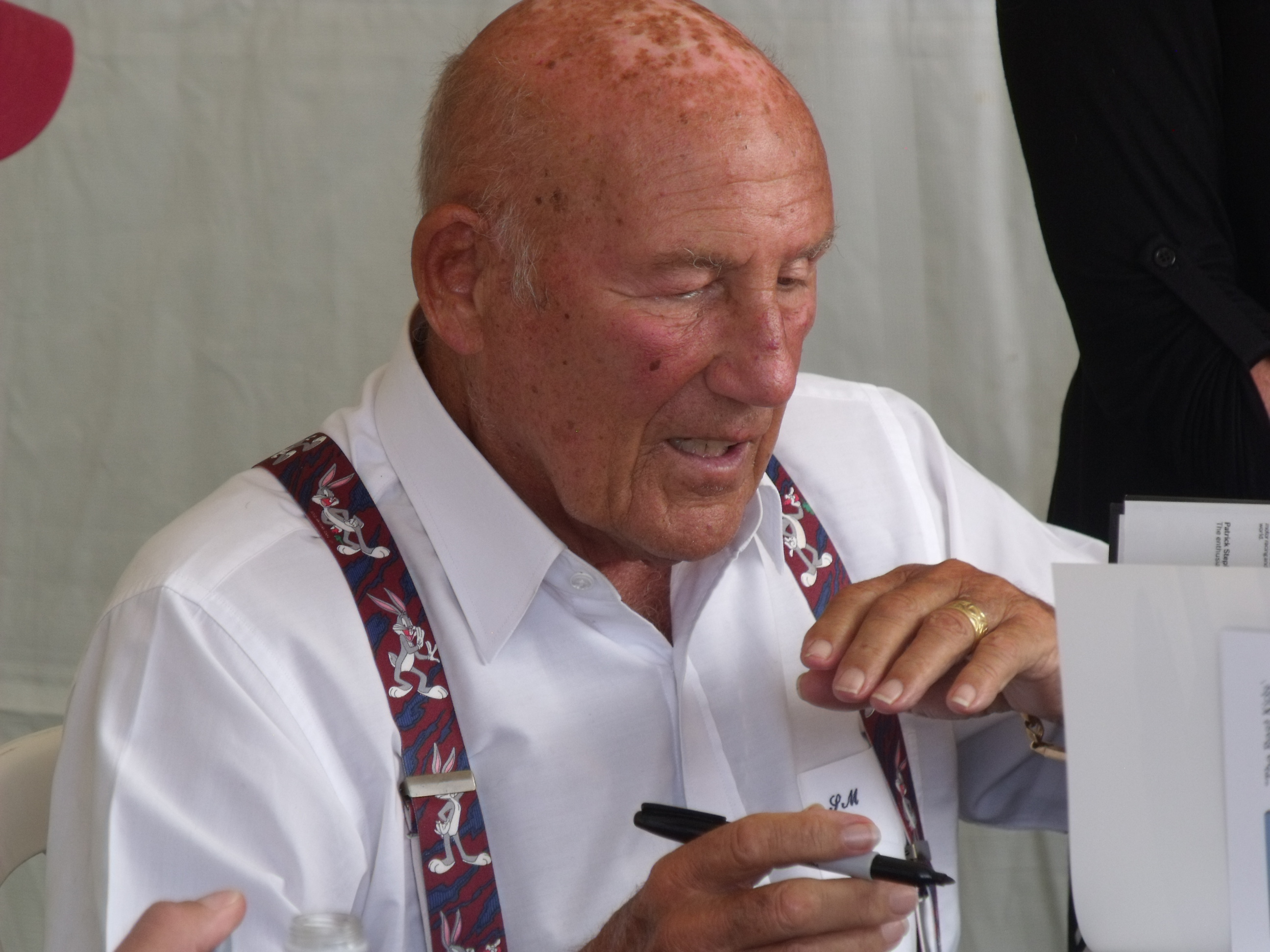
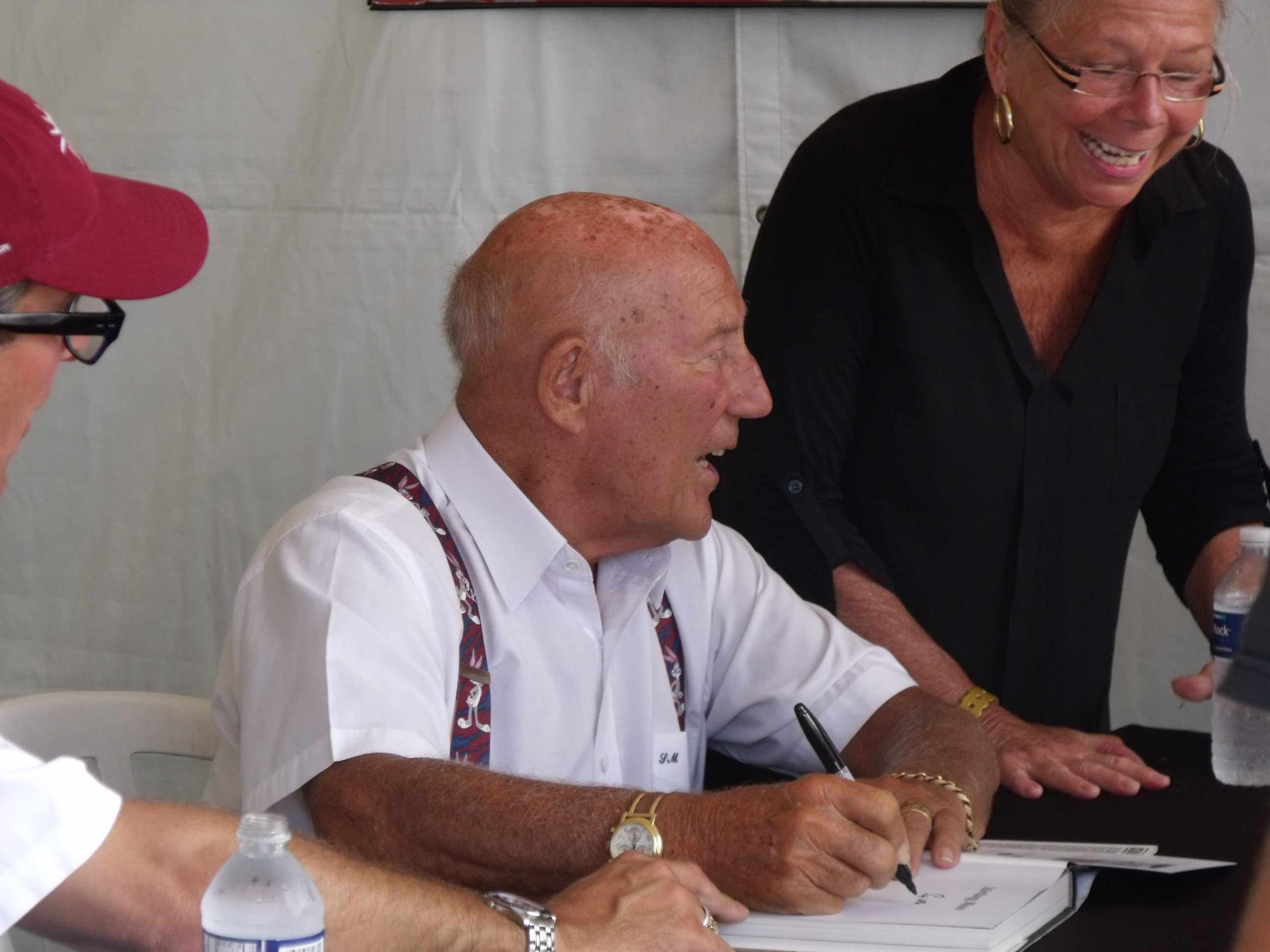
There were several special treats this year, including displays of Fiat 500s, Fiat Abarths, and a personal appearance from famed race car driver Sir Stirling Moss. As is typical for Lime Rock, some of the cars in the parking lot are just as interesting as the ones in the show, and the paddocks are open to allow spectators to roam freely (but no touching!).
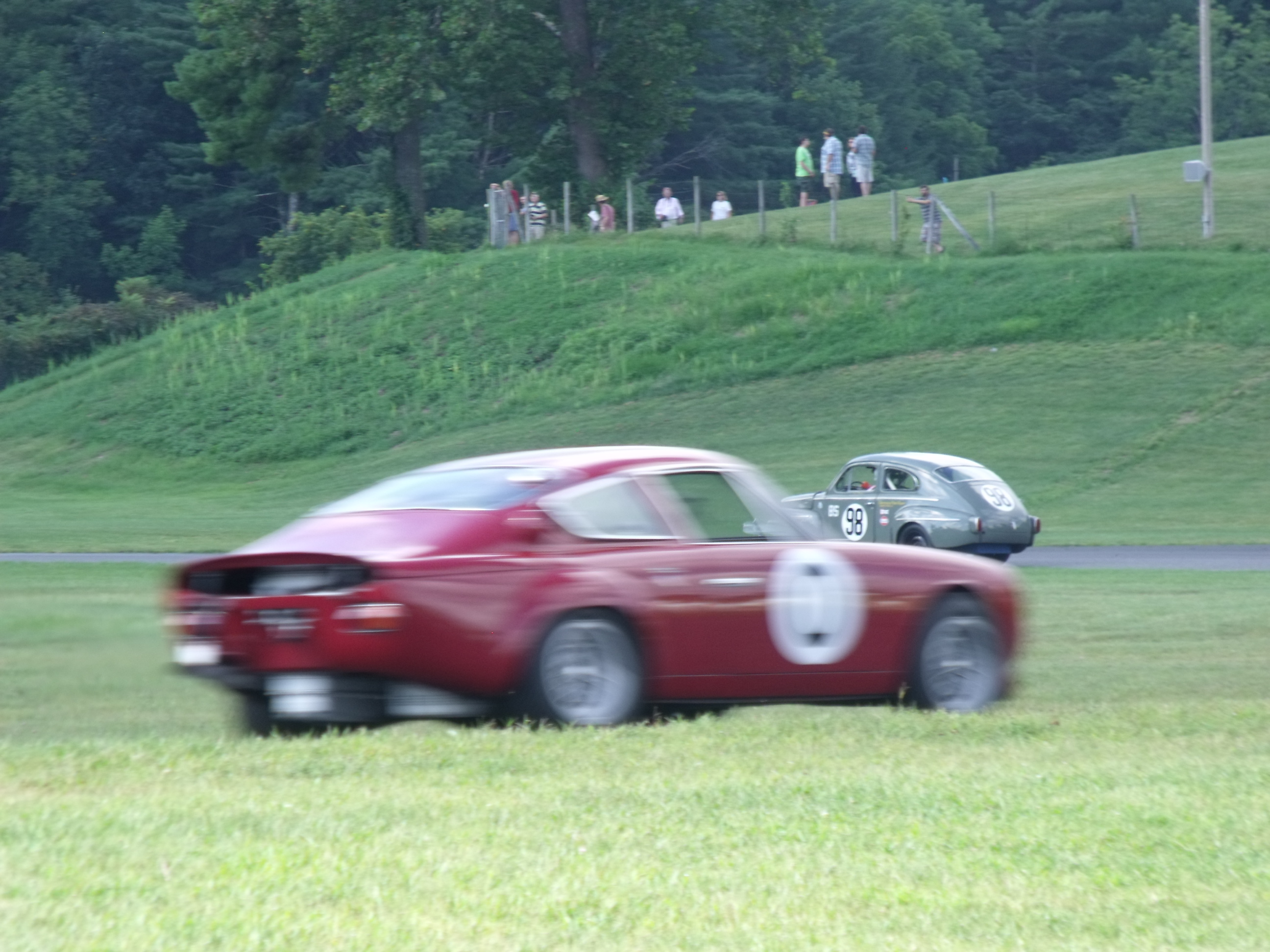
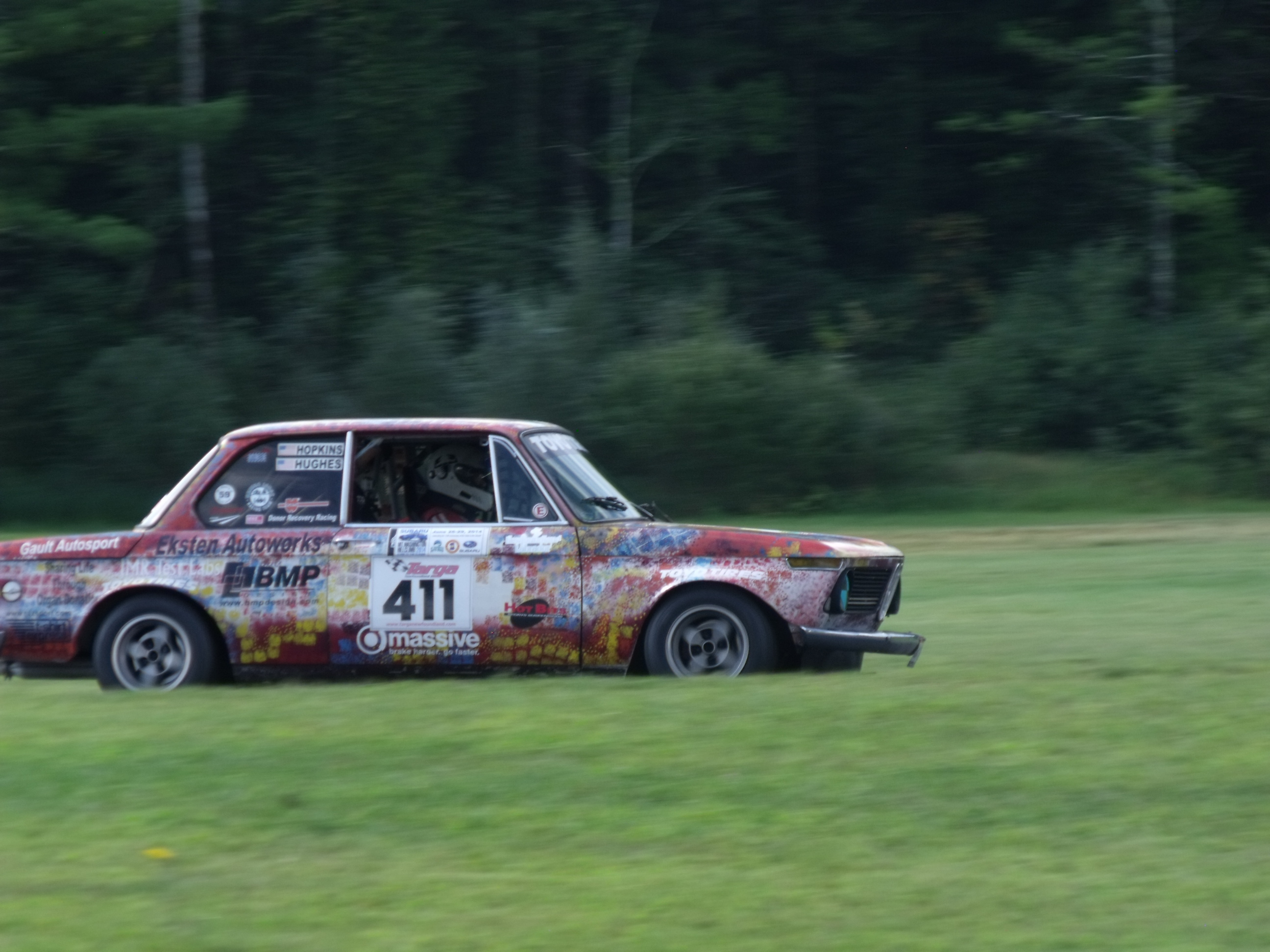
Another unique element to my visit is that I stayed overnight locally, which enabled me to take in some racing action. Photographing speeding vehicles is an art unto itself, and one that I need to practice more. Nevertheless, I was able to fire off a few shots of cars at speed that I trust my readers will find of interest.
ITALIAN
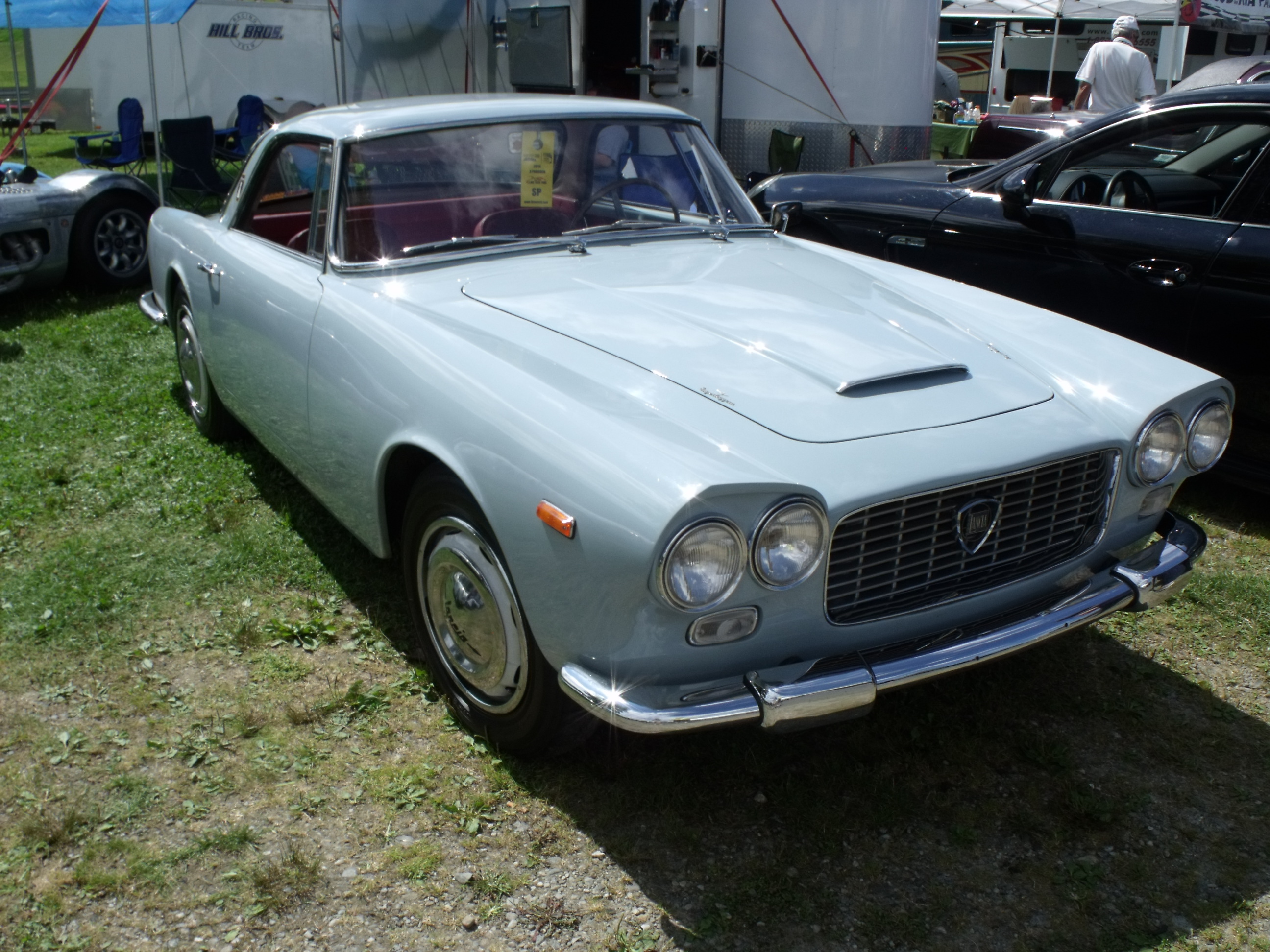
Lancia Flaminia
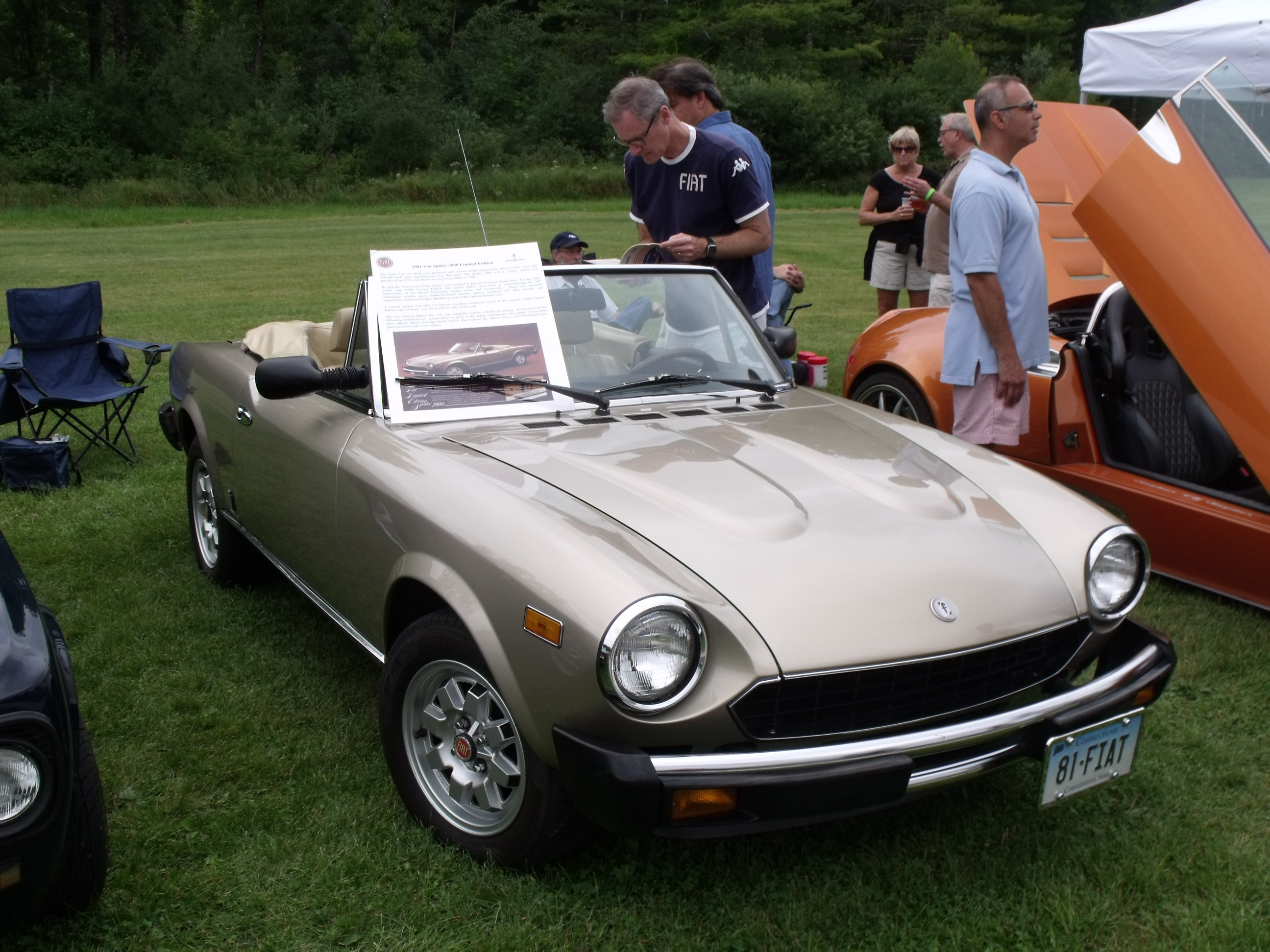
Fiat 2000 Spider Anniversary model
A pair of Alfas
Fiat 500s
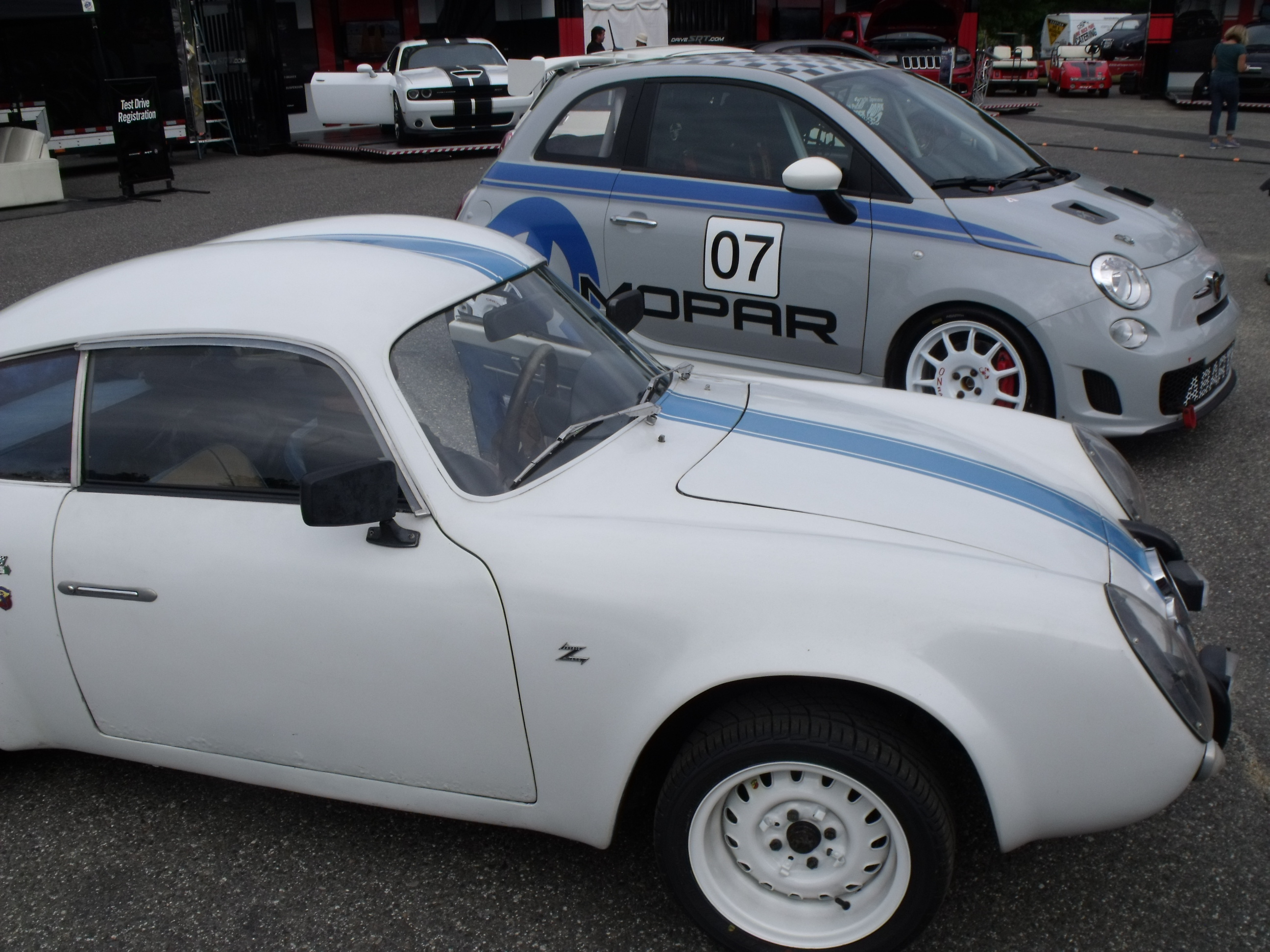
Older and newer
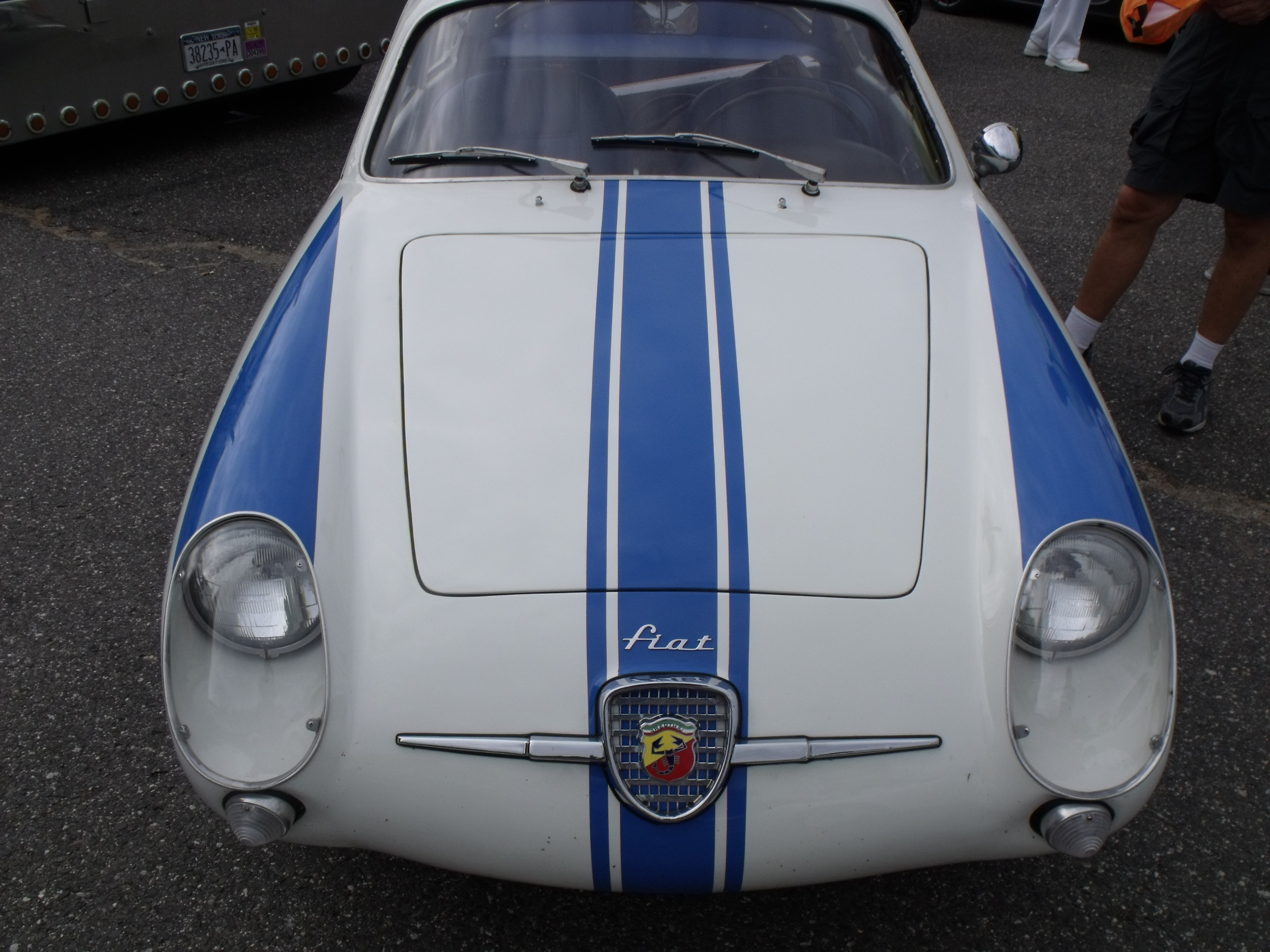
Abarth!
Abarth older …
… and newer
MY MIATA
BRITISH
Triumph TR-3
MGB
Blower Bentley
My dear friends Ann Marie and Dennis Nash, with their Bentley. They both have passed on.
Spitfires at salute!
GERMAN
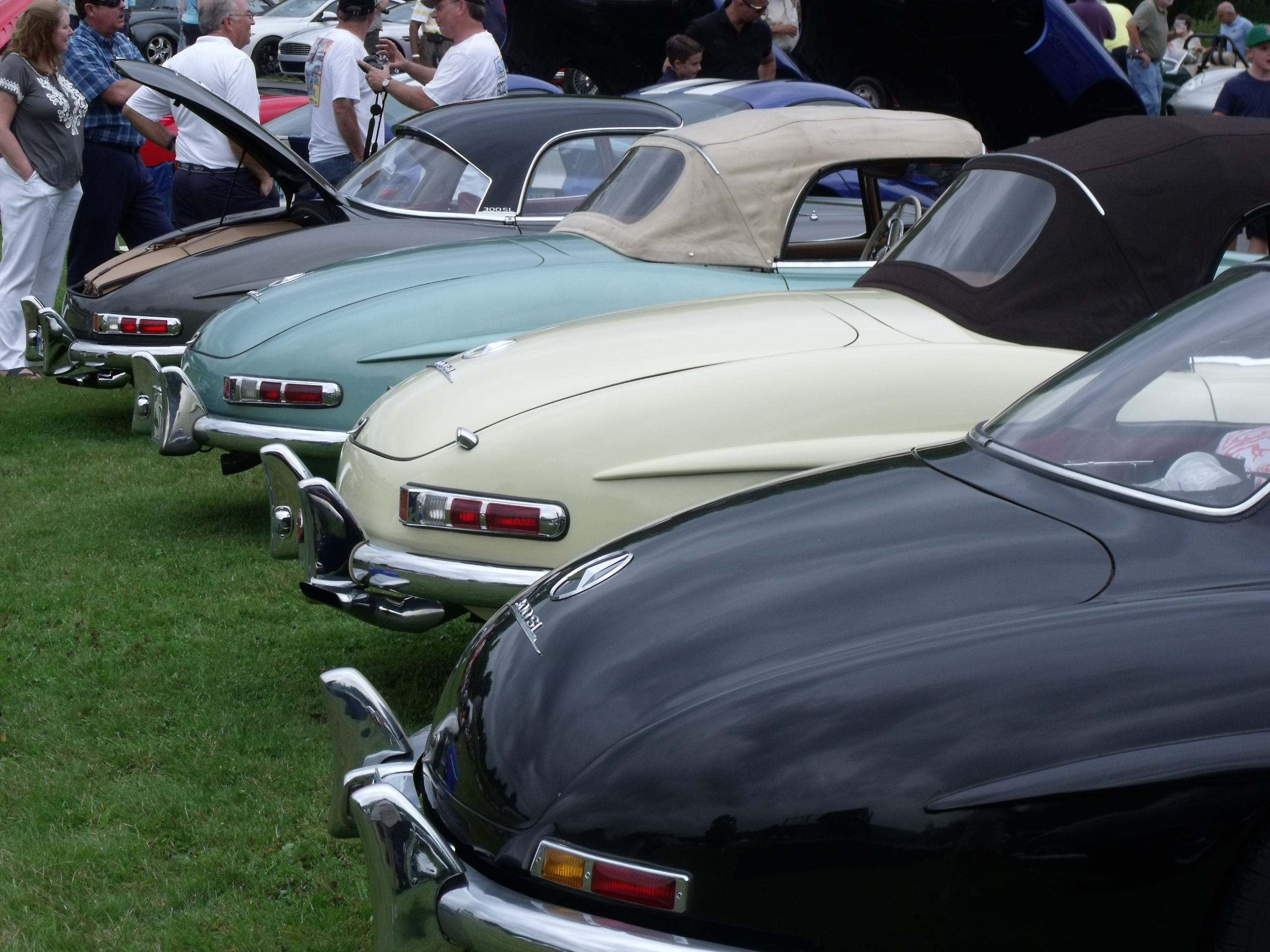
Mercedes-Benz 300SLs; note tail light differences between coupe and roadster


 One of the newer cars there, a Honda S2000
  Another ’66 C2; owner claimed it was all-original



































 J
J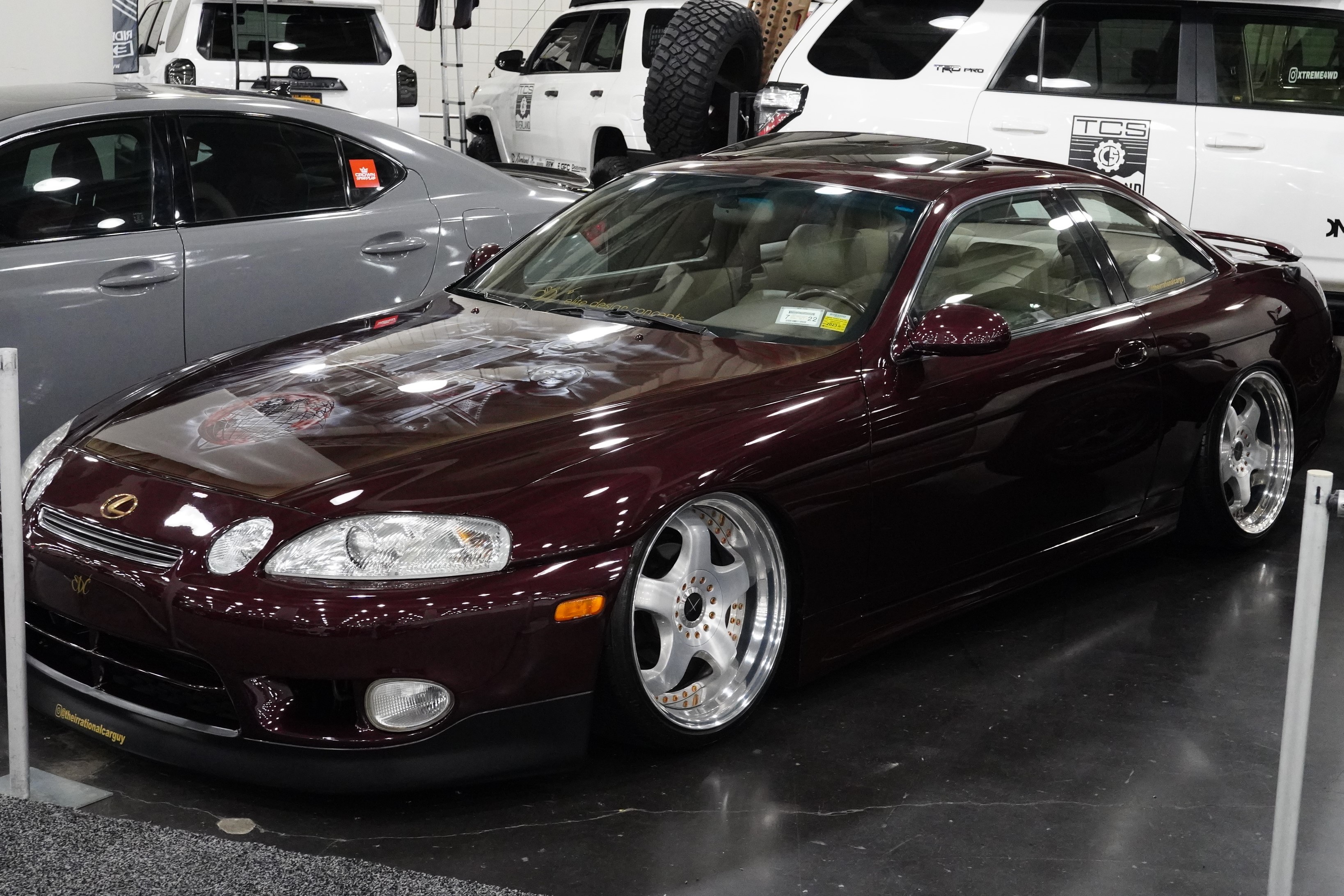


























 richardscarblog