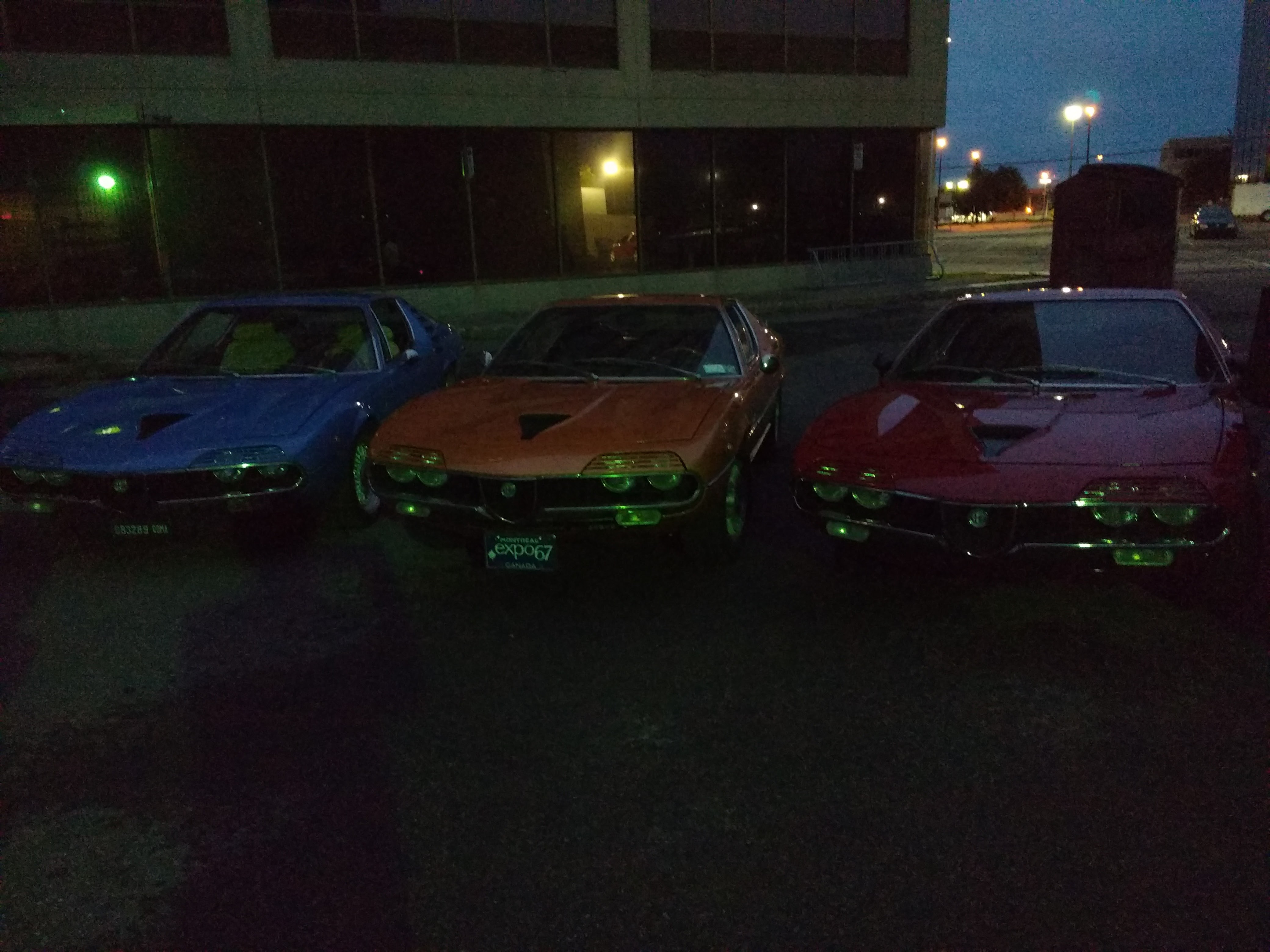
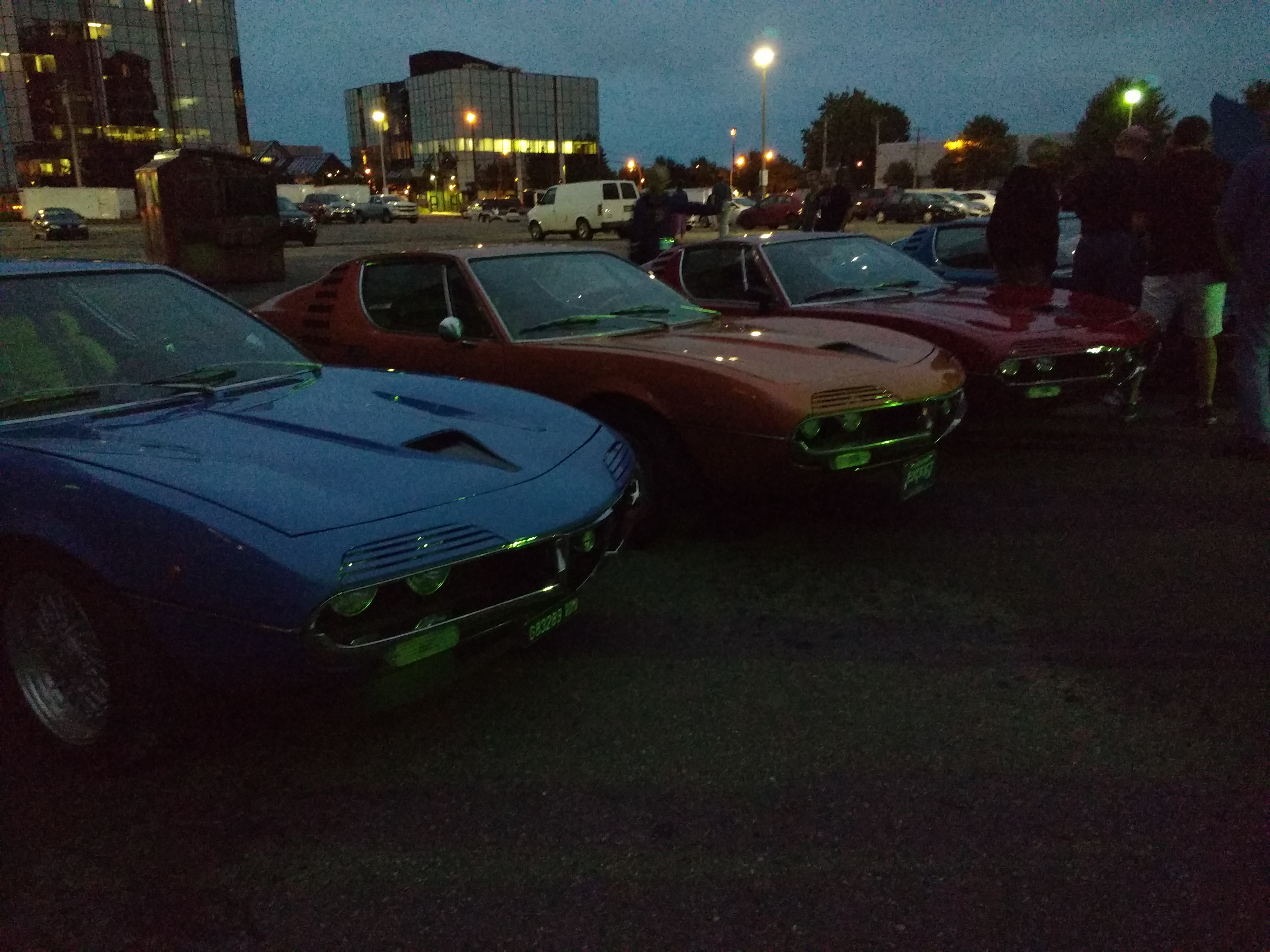
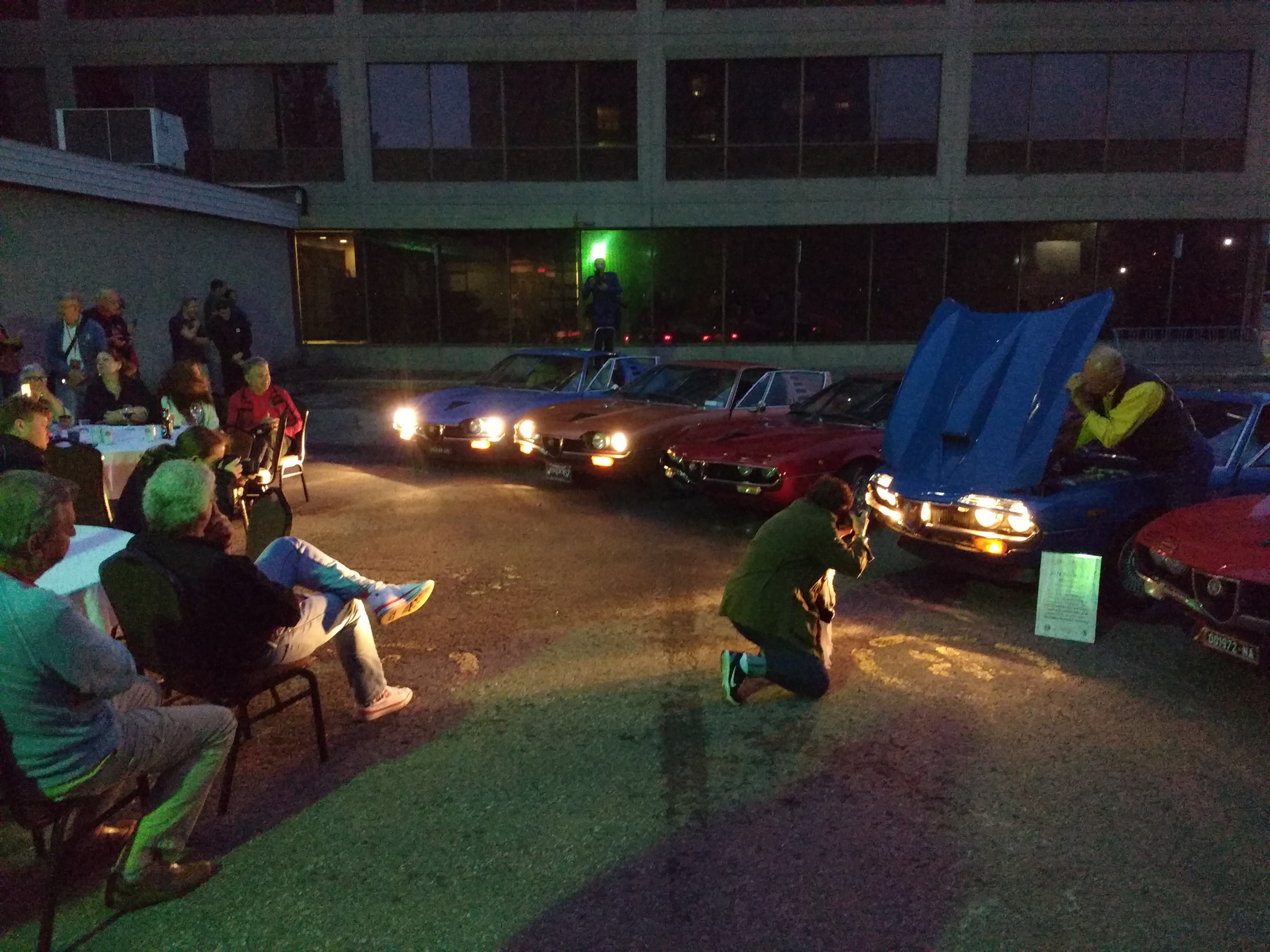
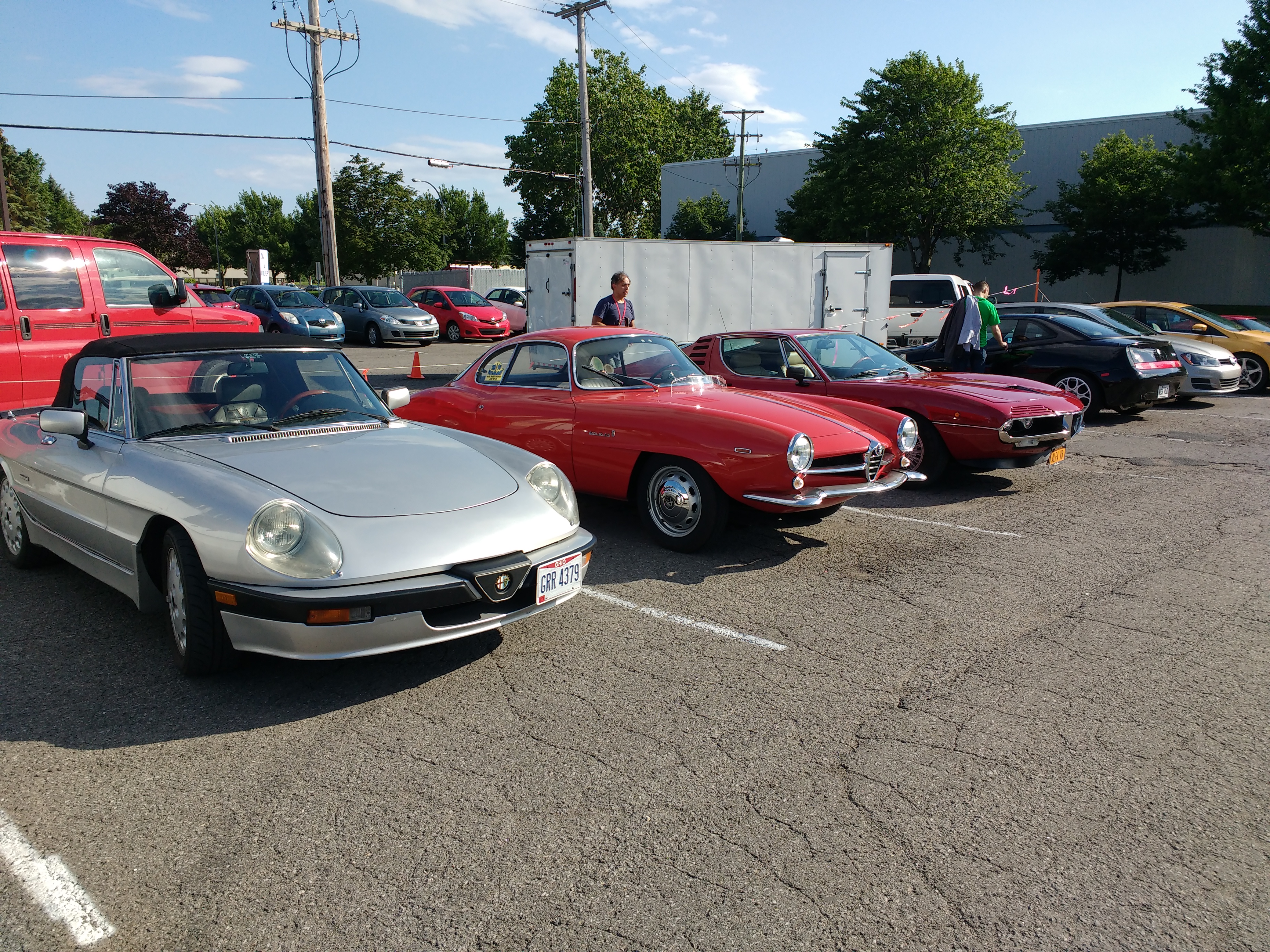
This post really starts with Friday night. After dinner, five Montreals gathered for a tech session. It was a great photo op.
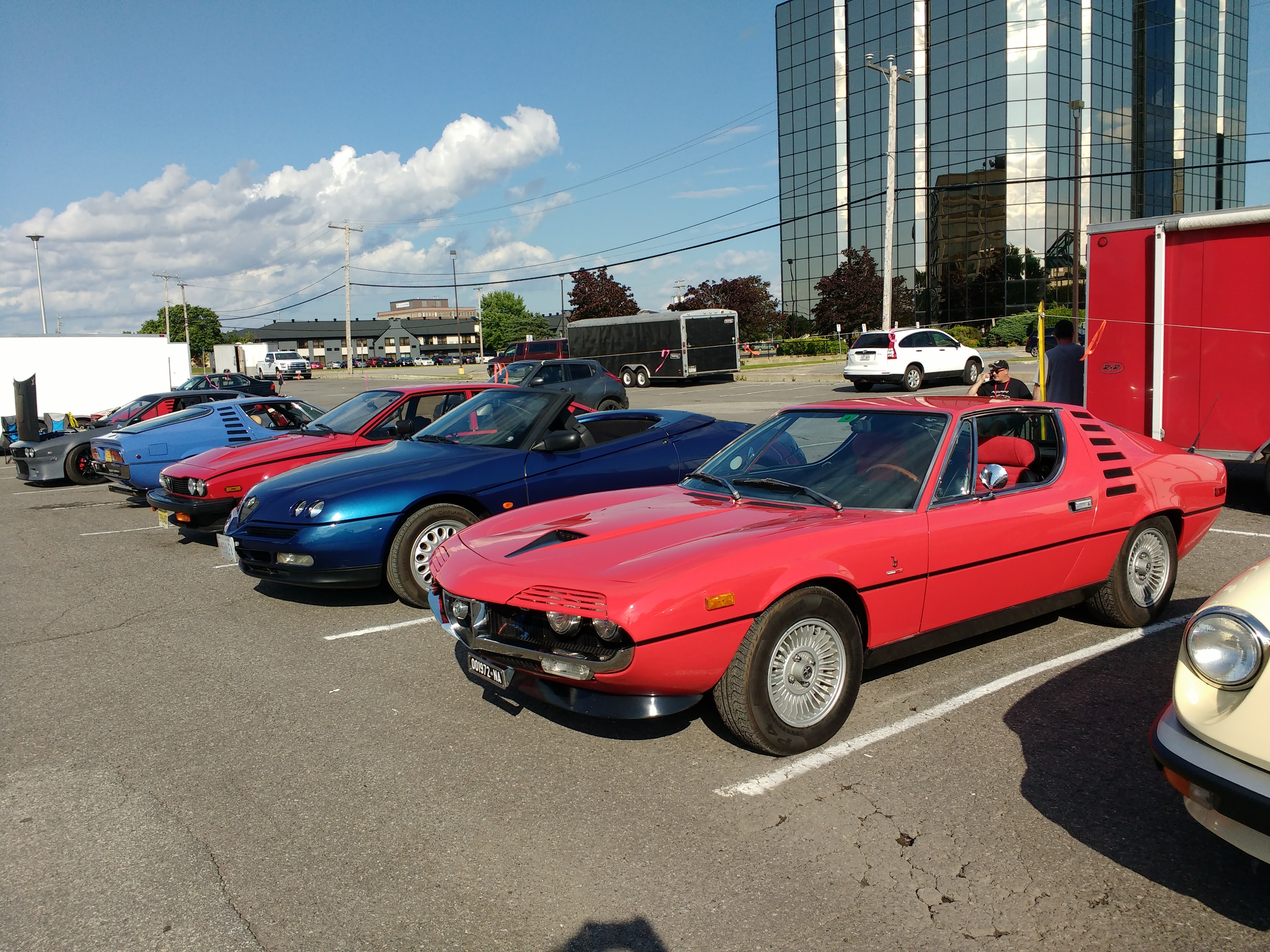
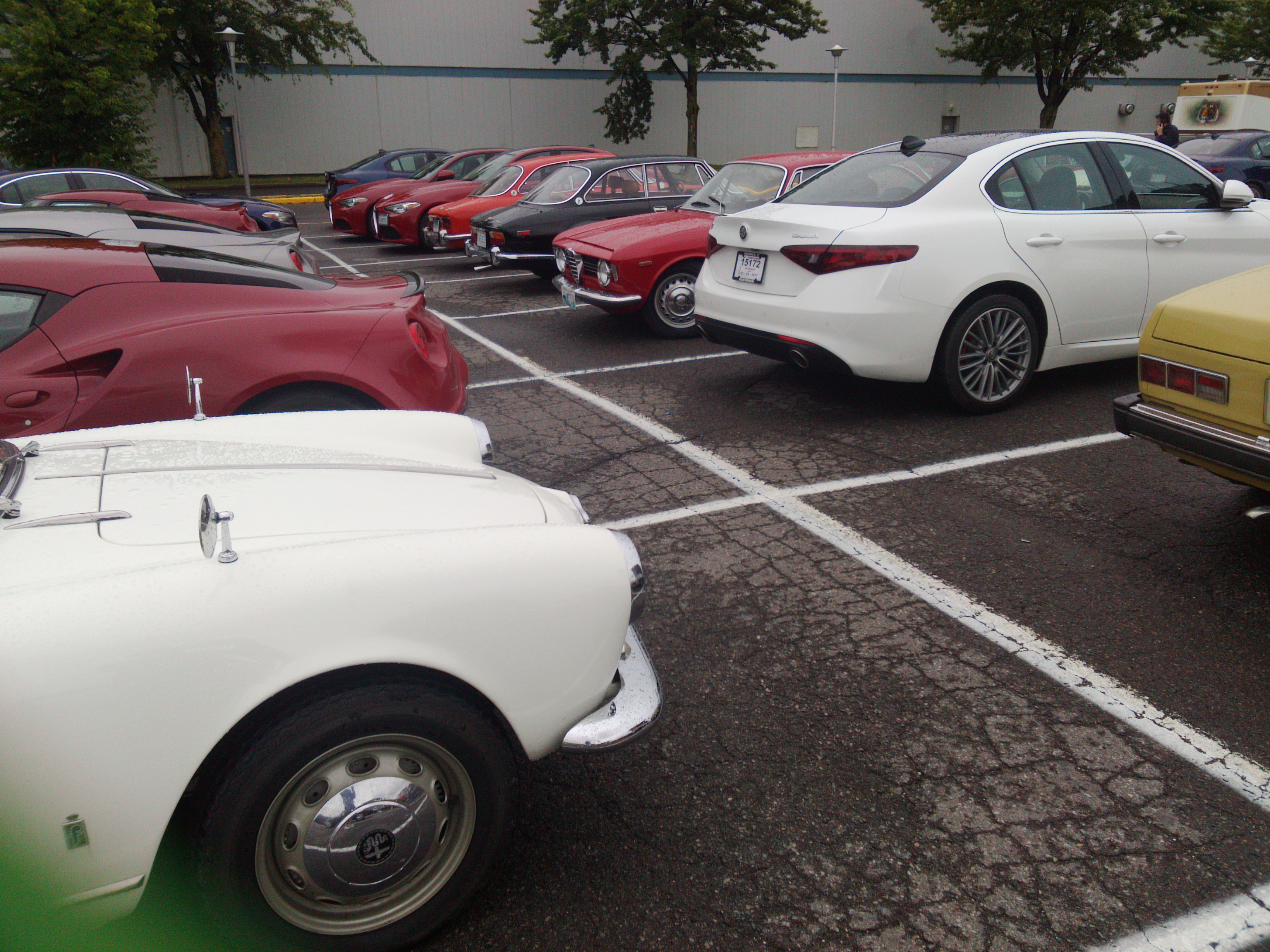
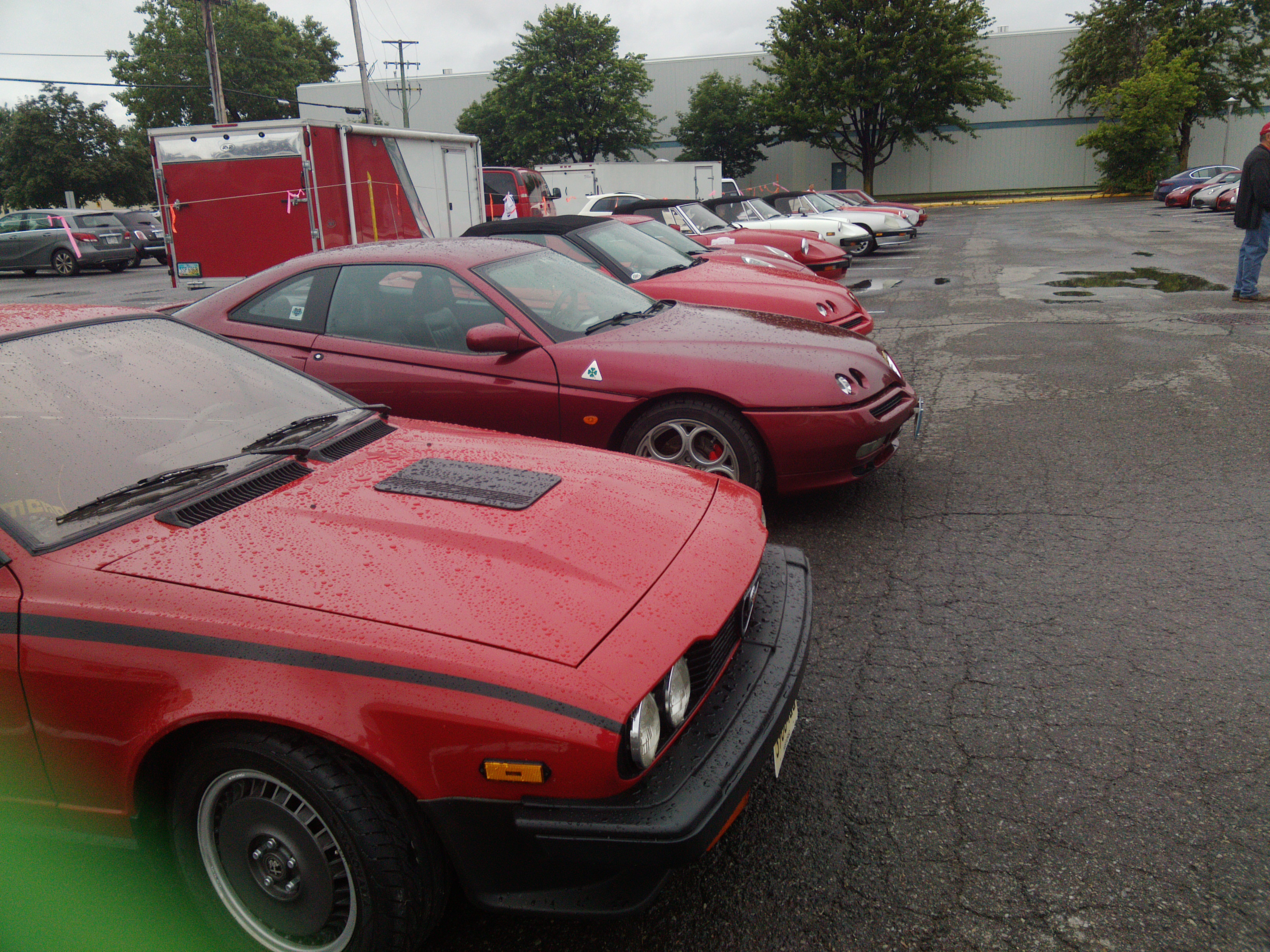
On Saturday, some cars went to the track. We hung out and detailed the cars in prep for the big Sunday concours. Perhaps the best part of the day is chatting it up with fellow Alfa owners.
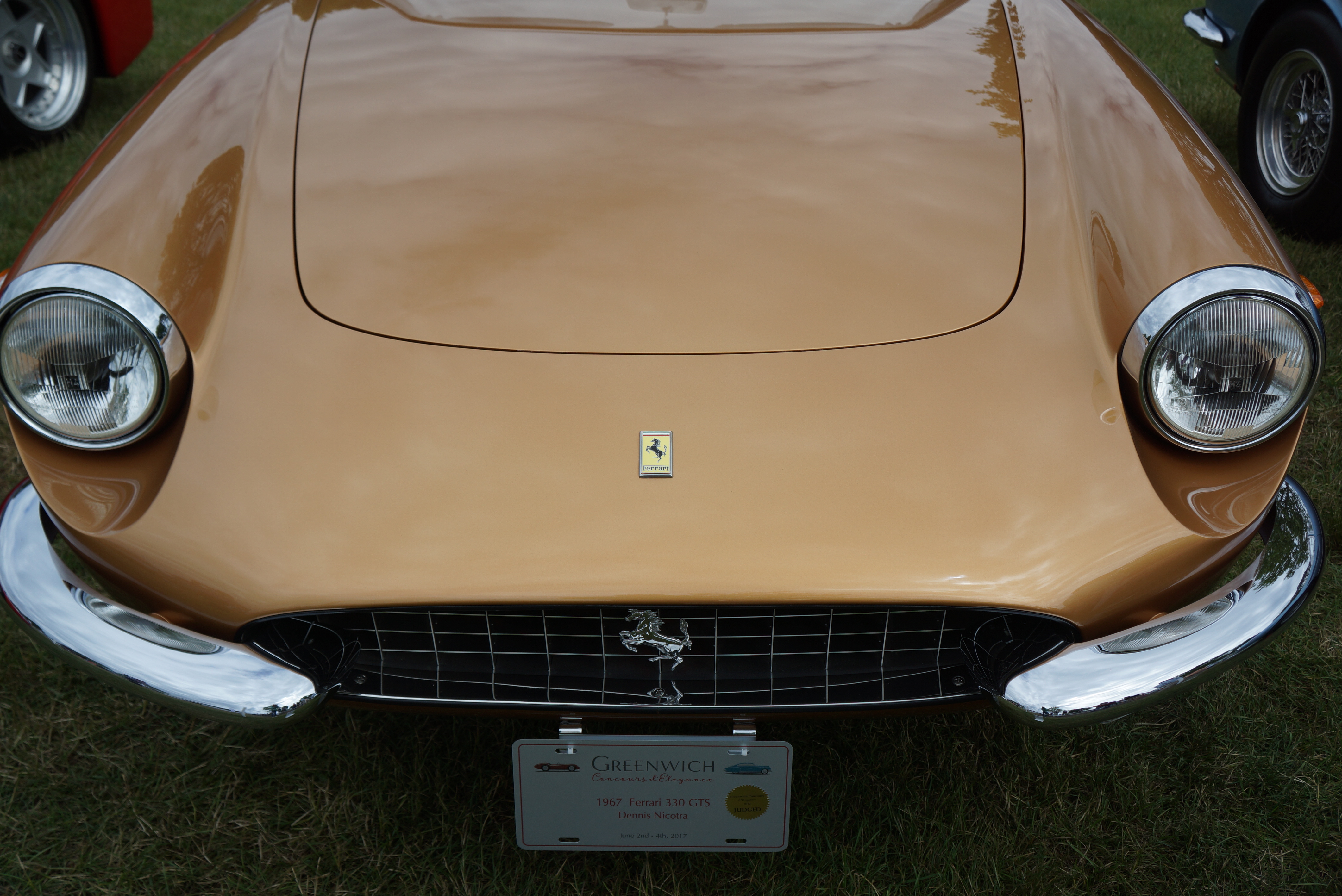
The 2017 edition of the Greenwich (CT) Concours d’Elegance marked the 22nd consecutive year for this prestigious event held every June in Roger Sherman Baldwin Park, situated along the harbor in Long Island Sound. As has been the custom, the two-day show features domestic makes on Saturday, and imports on Sunday. Compared to other shows in the Northeast, the Greenwich show stands out for its garden-like setting; its manageable size of about 120 cars; and its high standard of presenting top-notch automobiles.
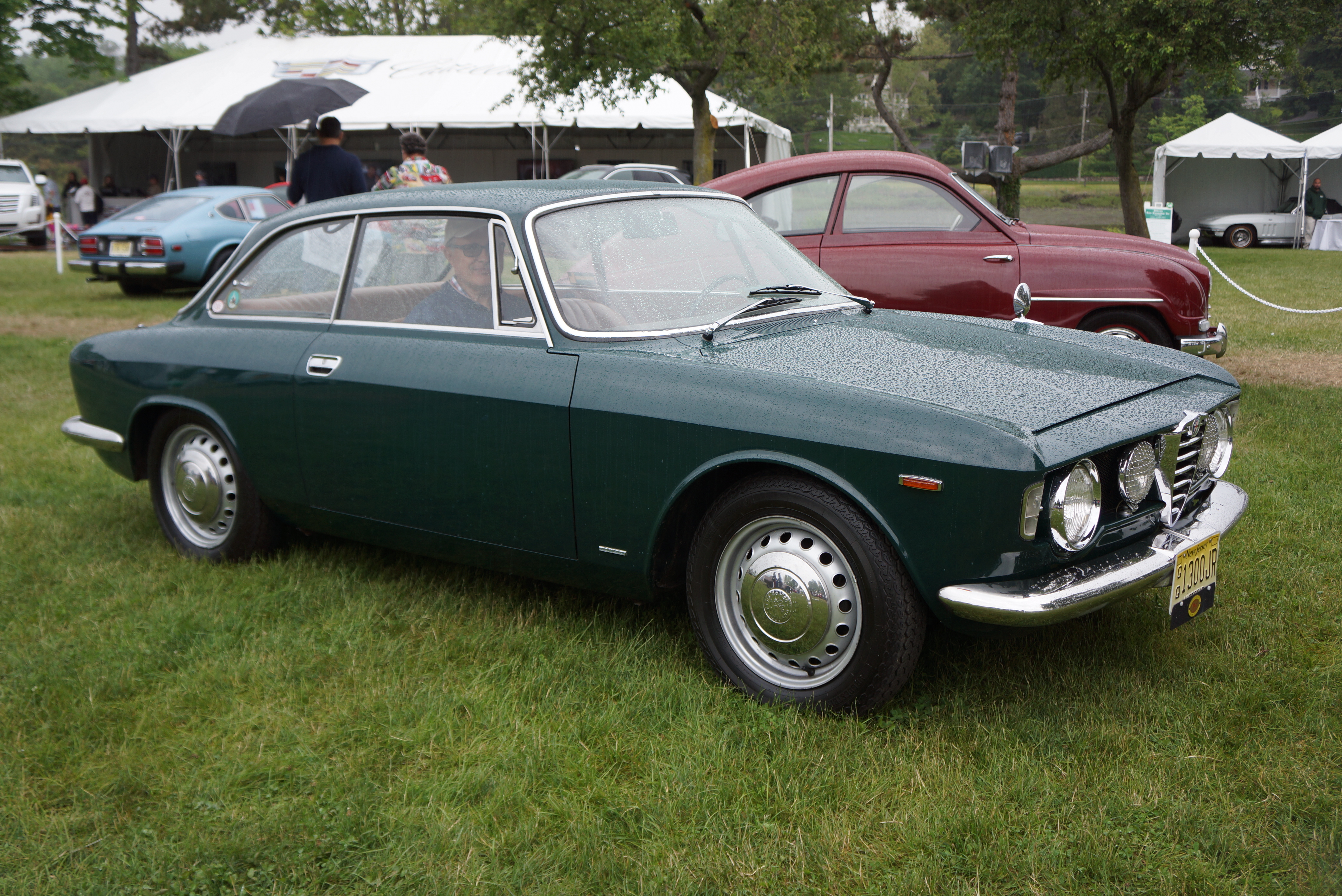
A longstanding rule for the Wennerstroms, family chairpersons of the Concours, is that any car shown at Greenwich must wait four years for a repeat showing. Your scribe showed his 1967 Alfa Romeo here in 2013, so the car became eligible again this year. Still, one must “apply” in order to be accepted, and my vehicle was readily granted entry.
It was an easy 1.5 hour ride on Sunday morning to the park, with a brief stop along the way to pick up my friend Enzo, making his first foray to this Concours. Unlike almost every other show, where attendees pay an entry fee, Greenwich accepts entrants without charge, AND, provides each owner plus a guest with breakfast, lunch, wine, and a harbor boat ride. The gate fee (which I understood to be $40 this year) supplies the cash for the goodies, as well as a substantial donation for the Americares charity.
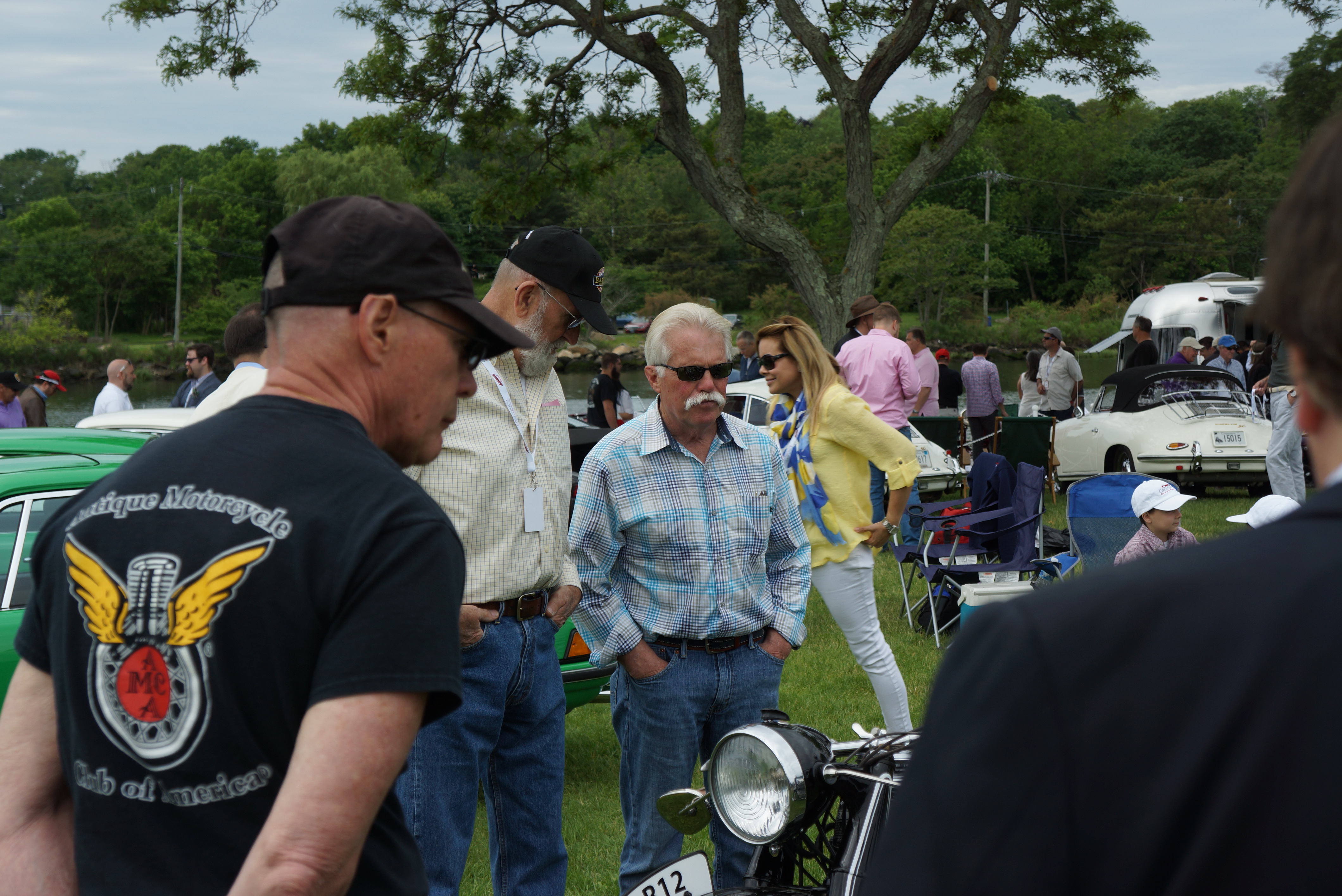
Wayne Carini wears shades, goes undetected in Greenwich crowd
Another nicety: cars are arranged in circles, facing outwards, making for a unique and accessible way for attendees to view the wares. We were in Circle G, which I anointed the Etceterini Circle. We were kept company by Swedish, Czech, French, Japanese, German, and other Italian cars (in other words, “cars which did not otherwise easily fit into other circles”).
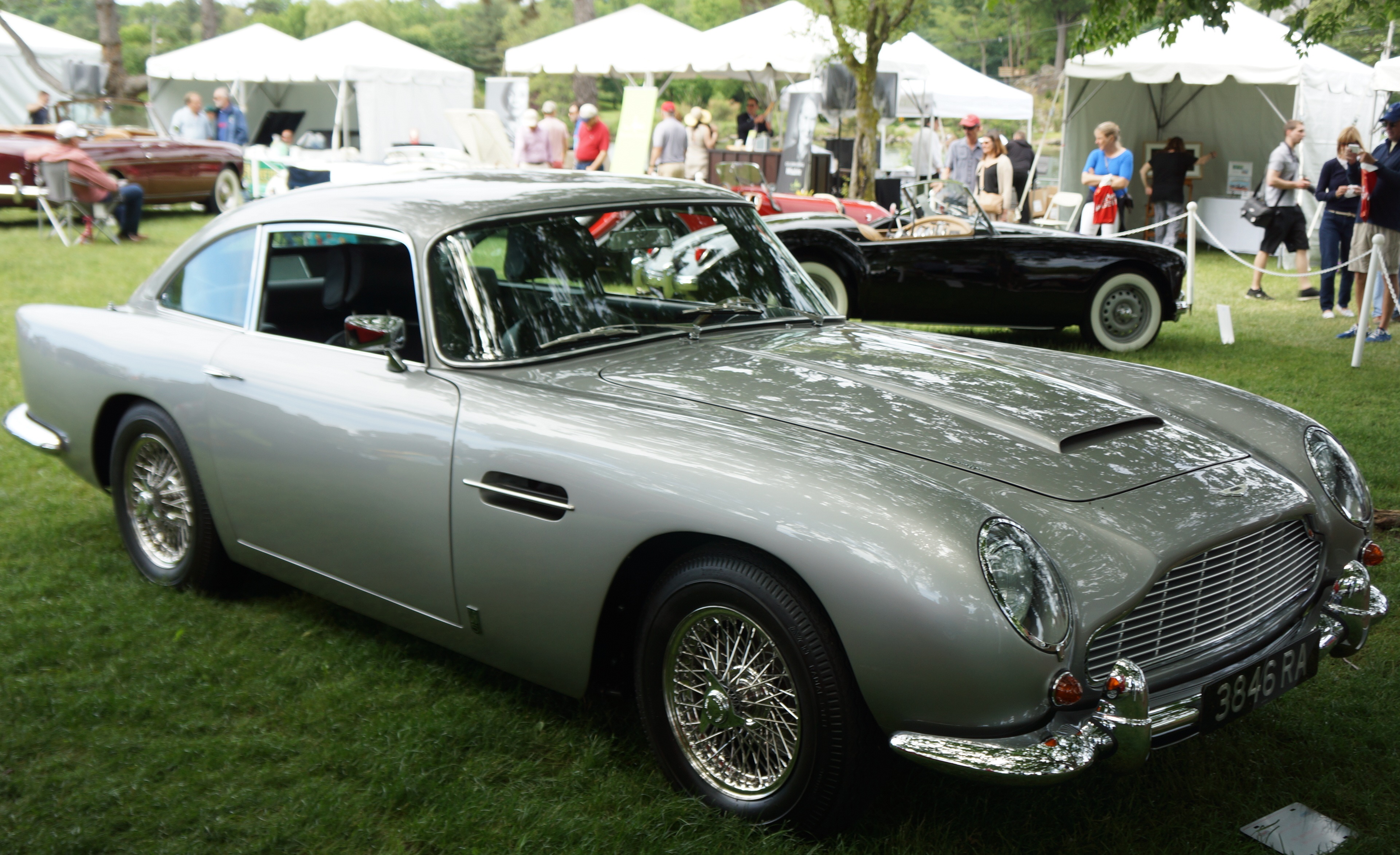
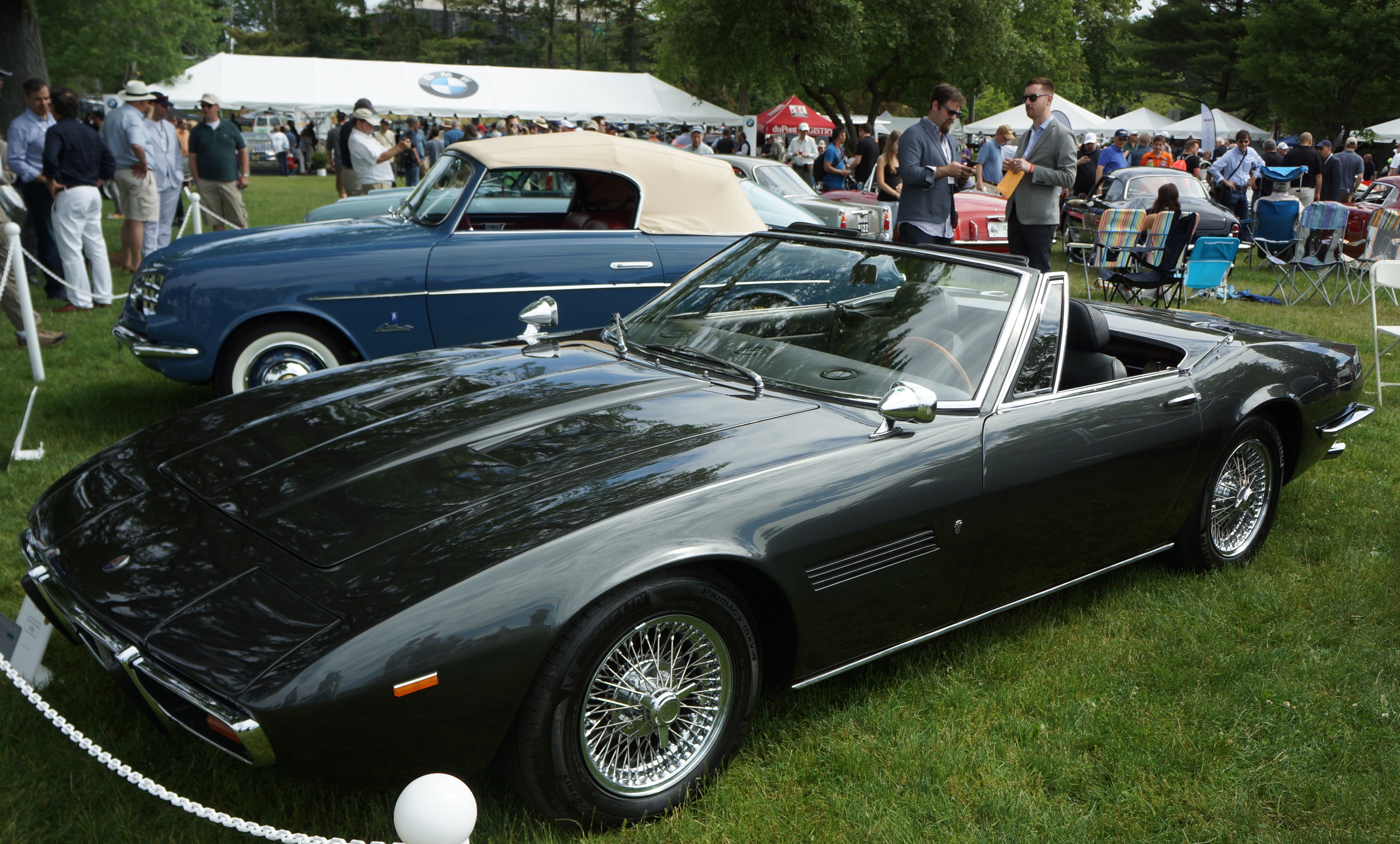
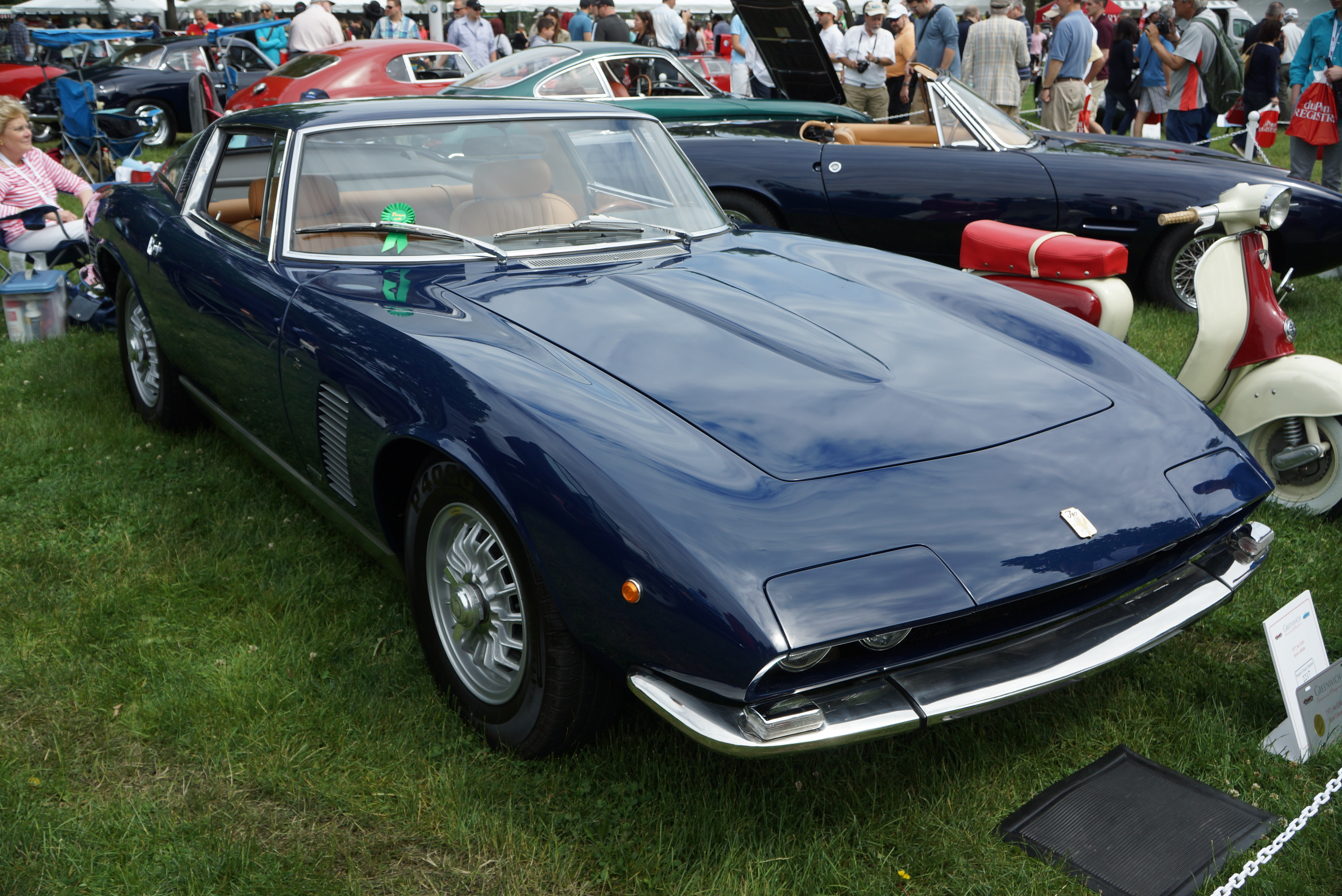
Other groupings were large enough to represent a single marque: Ferrari, Porsche, Bugatti. British cars (Jaguar, Aston Martin, MG) had their own circle, as did high-end Italians other than Ferrari (Maserati, Lamborghini, Iso). In fairness to the organizers, groupings depend so much on numbers and makes of vehicles, and only so many cars can fit into one “group”. The good news is, the show is small enough that you can walk around and see everything in a few hours.
Two other unique elements: first, new cars are on display. Vehicle manufacturers and local dealers lure the crowds with beautiful new machinery. This year, we were treated to the sights of BMW i8s, Alfa Romeo Stelvios, Maserati Levantes, plus Teslas, McLarens, Lincolns and Cadillacs.
Second, Bonhams held a classic car auction on-site on Sunday, about the sixth or seventh consecutive year for them to be at Greenwich. A large tent is erected at one corner of the park to hold all the auction vehicles. The trend toward barn-finds continues. We saw a Series I Jaguar E-Type roadster which, based on a windshield registration decal, was last on the road in 1975. The car appeared to have been stored top-down in a dusty barn since then. At the other extreme, there were some beautifully-restored vehicles which deserved top dollar. A limiting factor is that the tent precludes the possibility of driving cars across the block. Better do your homework before you raise that paddle.
Rupert Banner of Bonhams works the room, er, tent
While the day dawned sunny and dry, the forecast promised wetness by early afternoon, and unfortunately, said forecast was accurate. By 2pm, a gentle shower enveloped the field, and we headed out. While there was no award for the Alfa this year, the car continued to draw its fans, most of who cannot believe that they are looking at an unrestored 50-year-old car with original paint. Its owner will maintain that paint as best he can in hopes of returning to Greenwich in 2021.
GERMAN
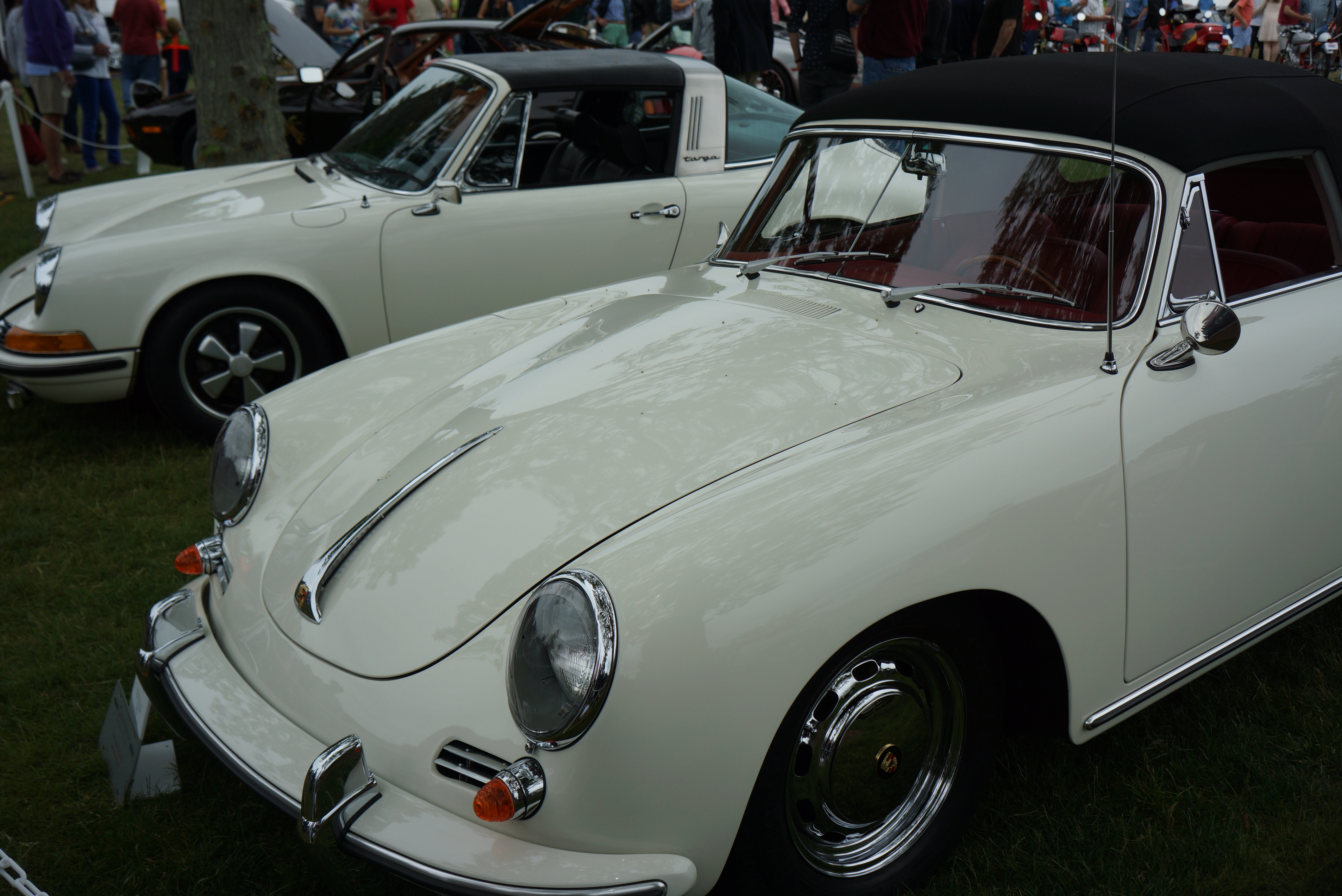
White Porsches, 356 & 911
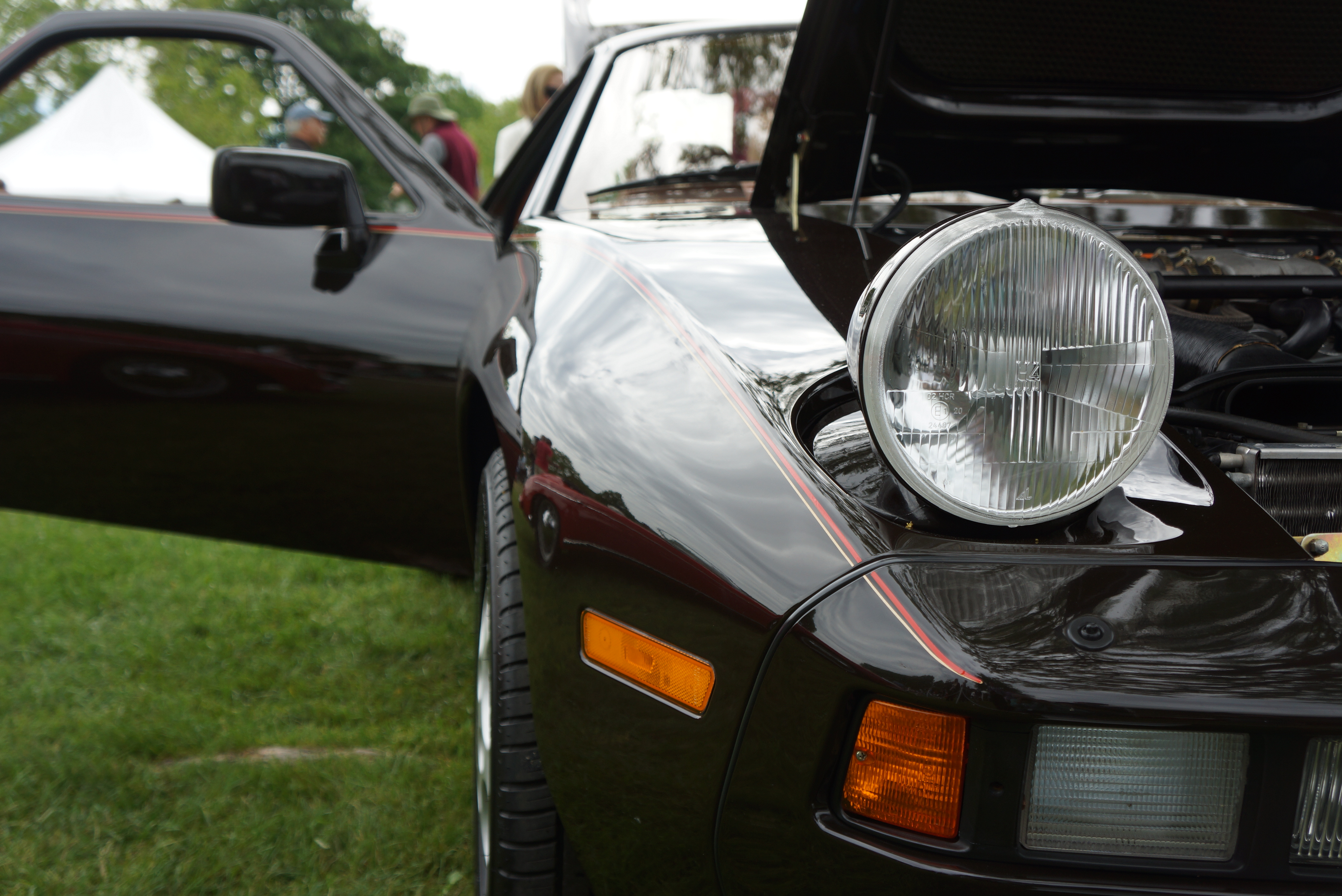
Porsche 928 with its apertures open
Split-window VW
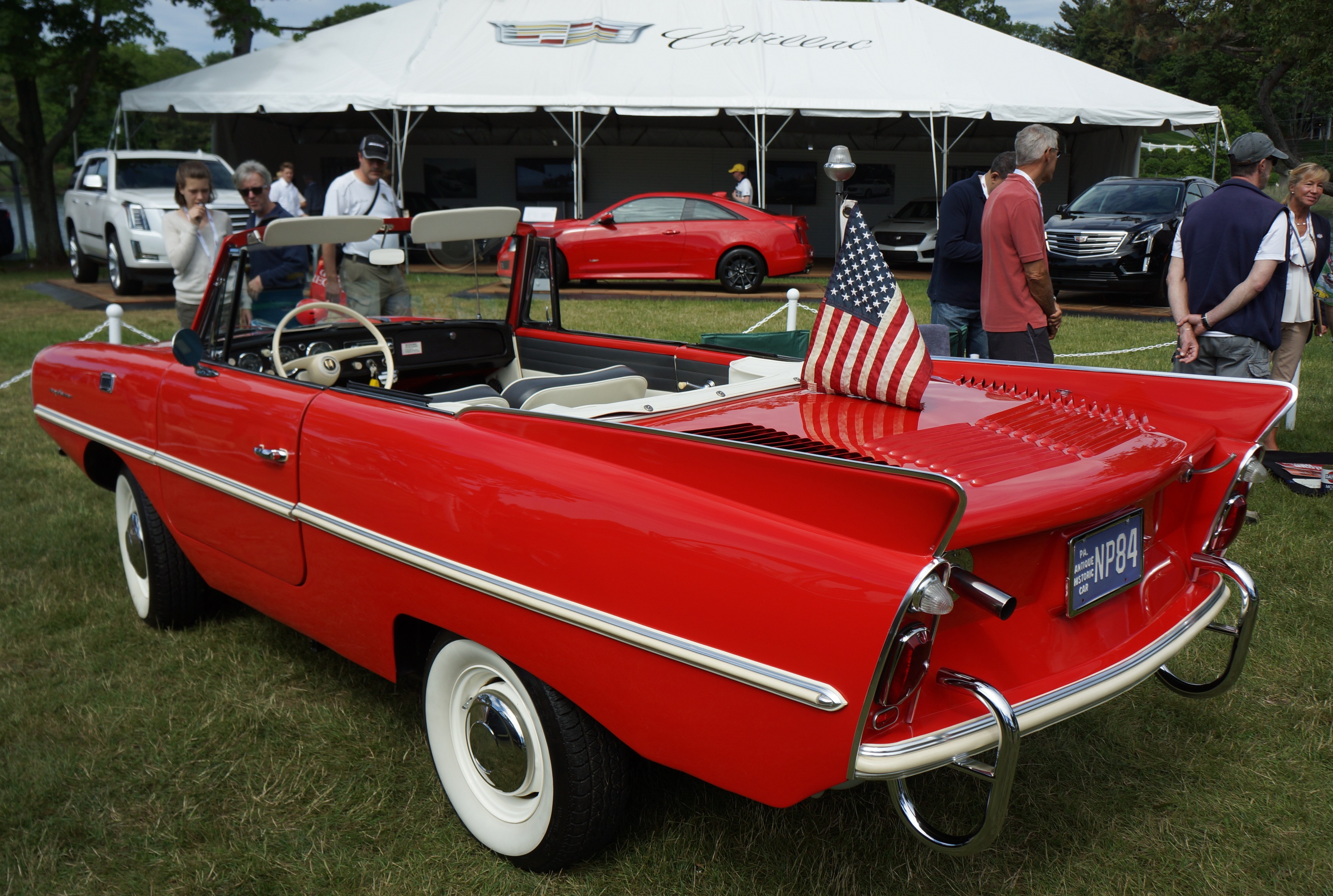
Amphicar
BRITISH
Jaguar XK-120 Coupe
Jaguar XK-140
Jaguar XK-150
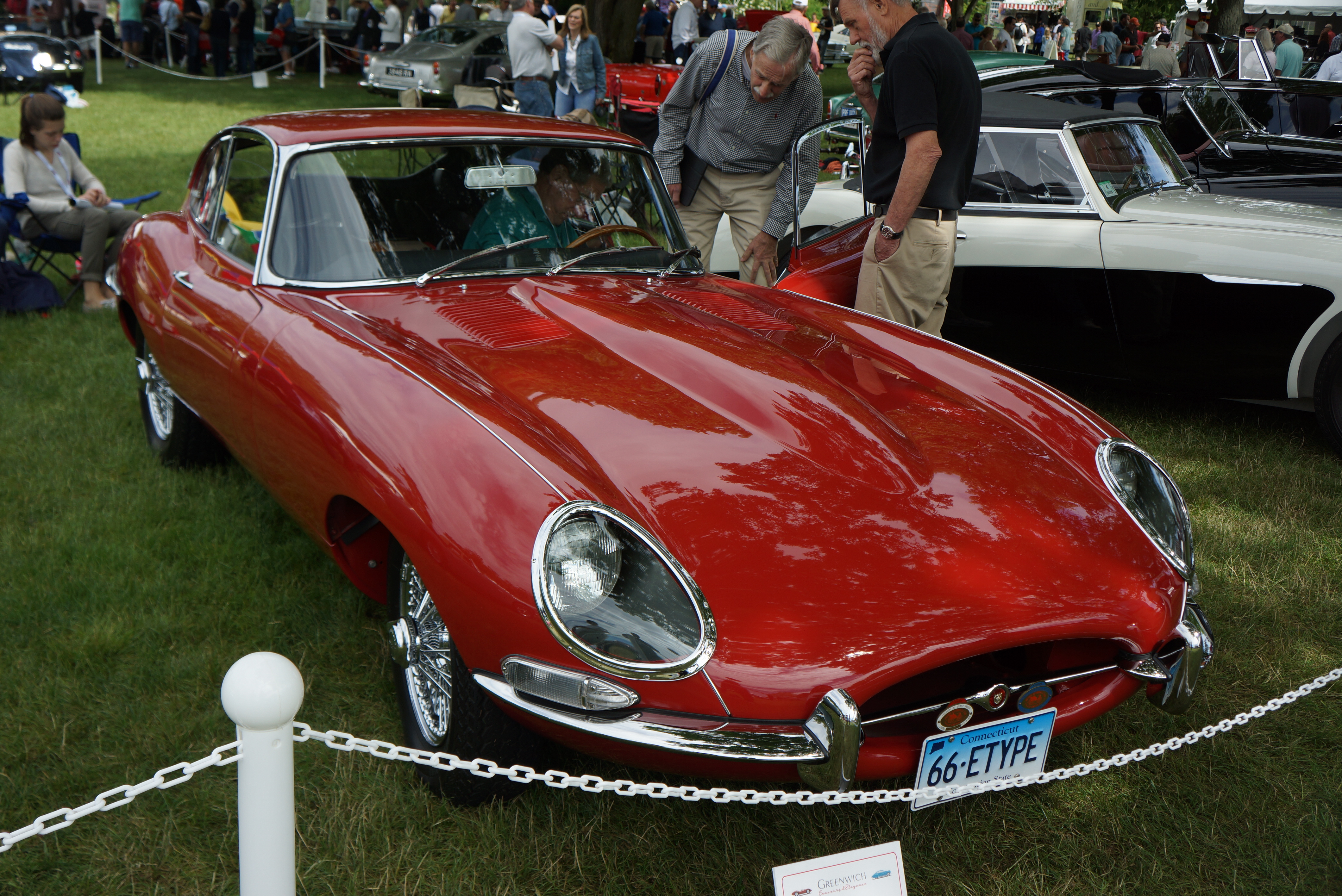
Jaguar E-Type
MGA
Aston Martin DB-4
FRENCH
The Bugatti Owner’s Club showed up in force, resulting in a significant number (a dozen or more) of these rare French cars on display together. Given their racing history, it is also not surprising to see a higher percentage of unrestored original cars.
The New Jersey Region of the Antique Automobile Club of America held its annual car show as it always does, on the first Sunday in May, which this year was the 7th.
Last year, the show was moved to the Mennen Arena in Morristown NJ, so 2017 was only the club’s second time here, after being held in Florham Park for the last 5 or 6 decades.
While nowhere near the washout of 2016, this year still required participants and spectators alike to deal with cloudy and somewhat cool temperatures for this time of year. At least the promised rain held off until about an hour before the show was done. In spite of the threats, turnout was decent, with some unofficial estimates putting the vehicle count at close to 200 cars. Spectators turned out in decent numbers too.
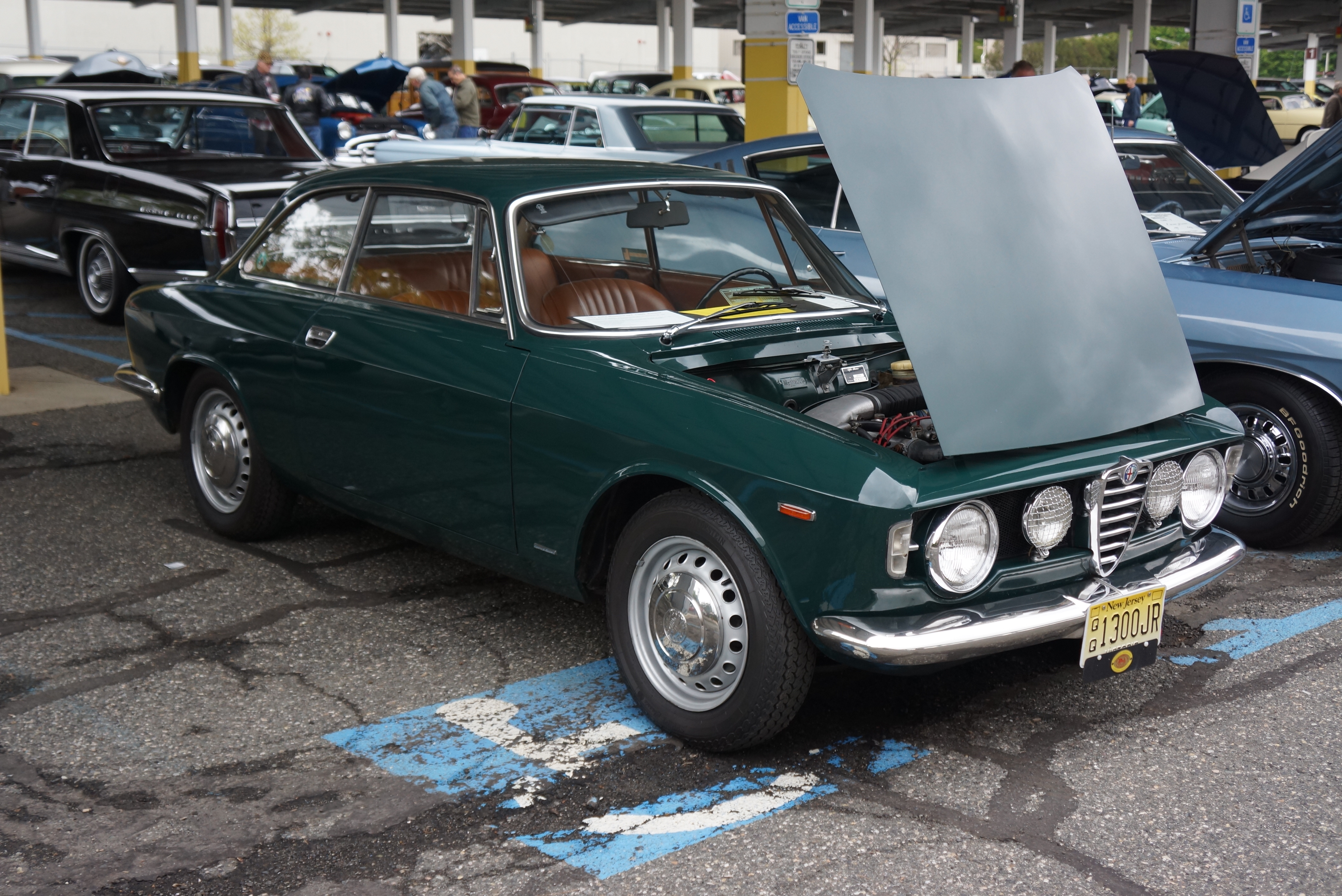
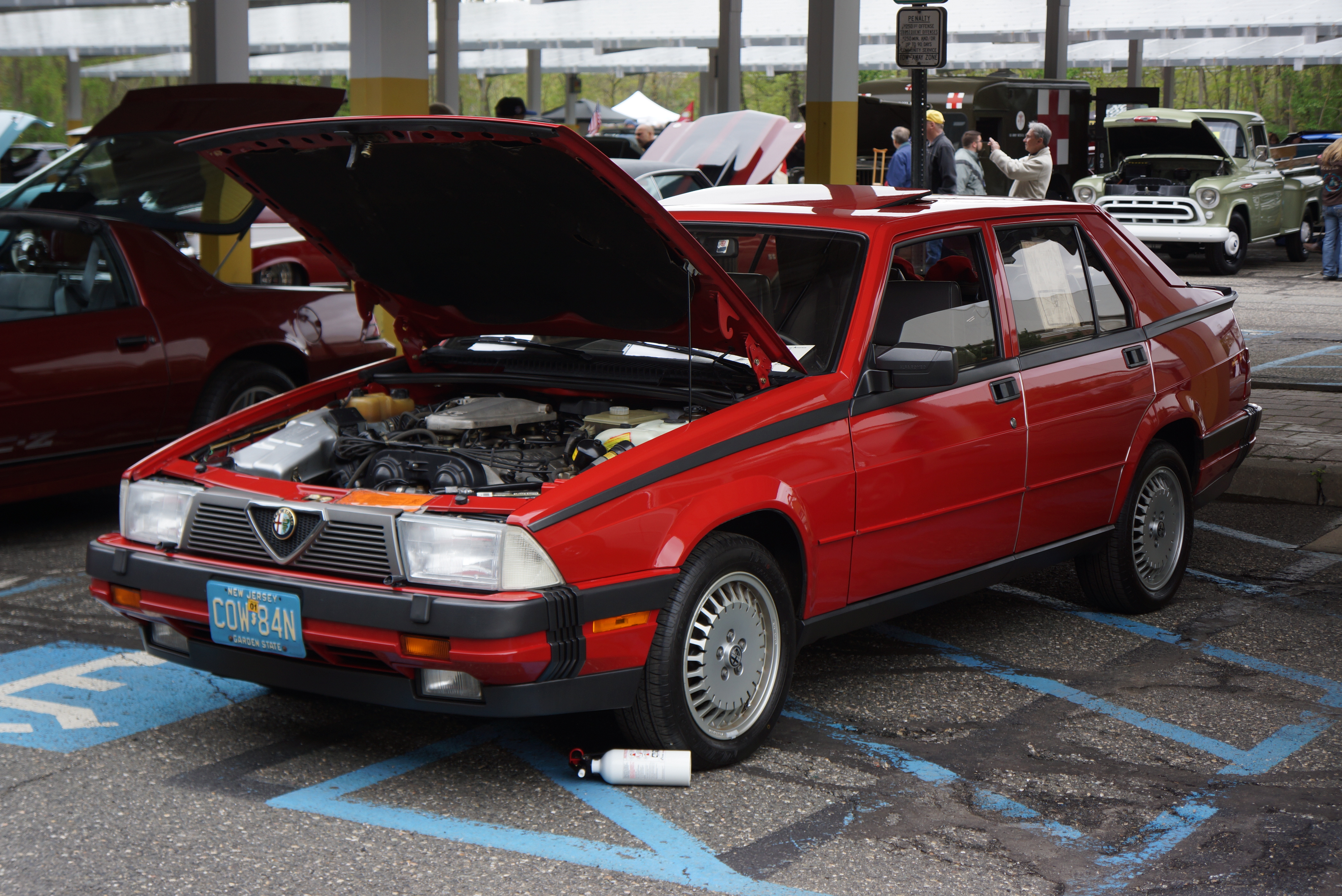
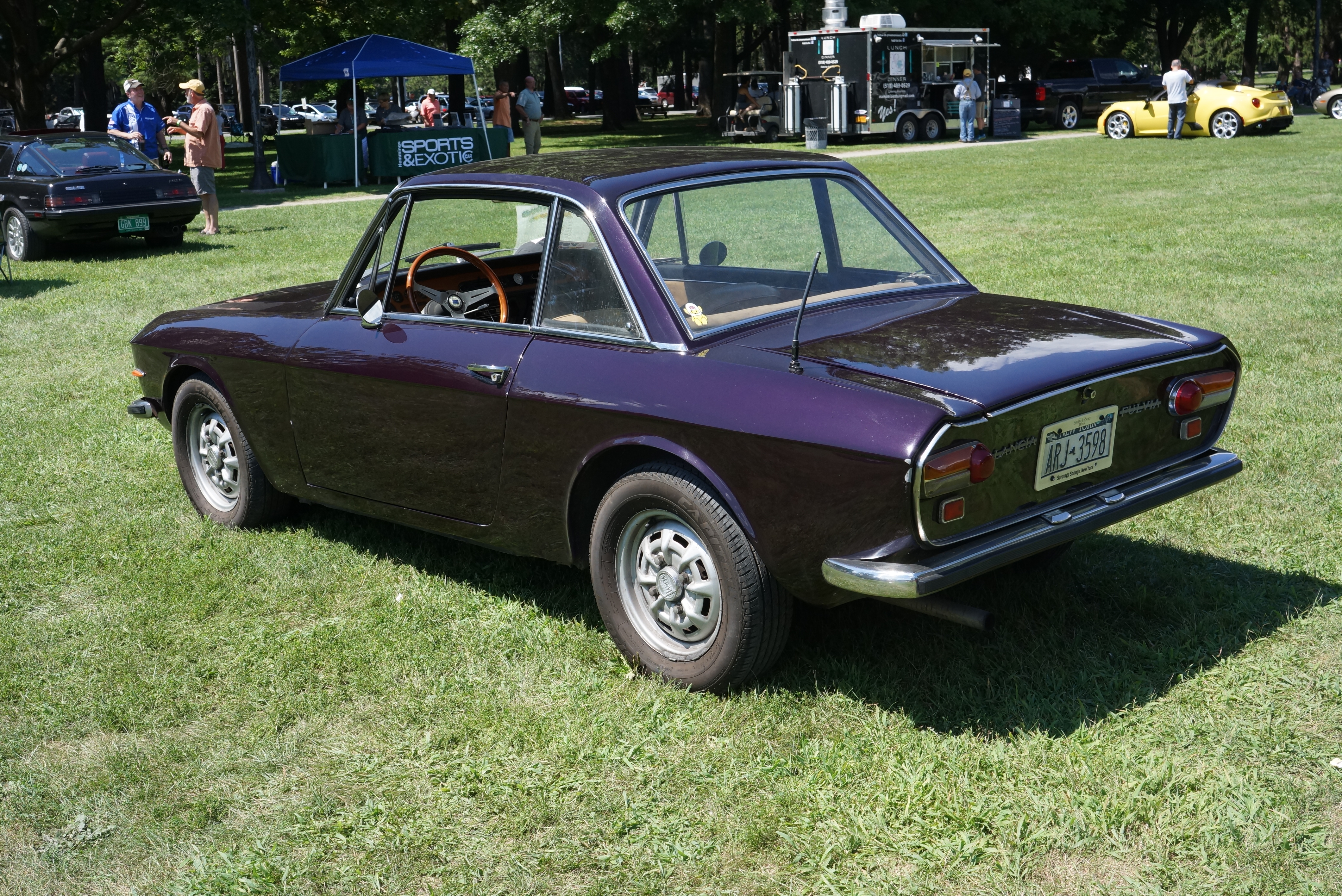
I was proud to have my Alfa Romeo, fresh from the AACA museum, on display, and was pleasantly surprised to see that it was one of three Alfas at the show, joined by a rare Euro-spec Nuova Giulia sedan, and a one-owner Milano. The Italian car feast was rounded out by a Lancia Fulvia coupe.
’67 Alfa GT 1300 Junior
’78 Alfa Nuova Giulia
’87 Alfa Milano
Lanica Fulvia Coupe
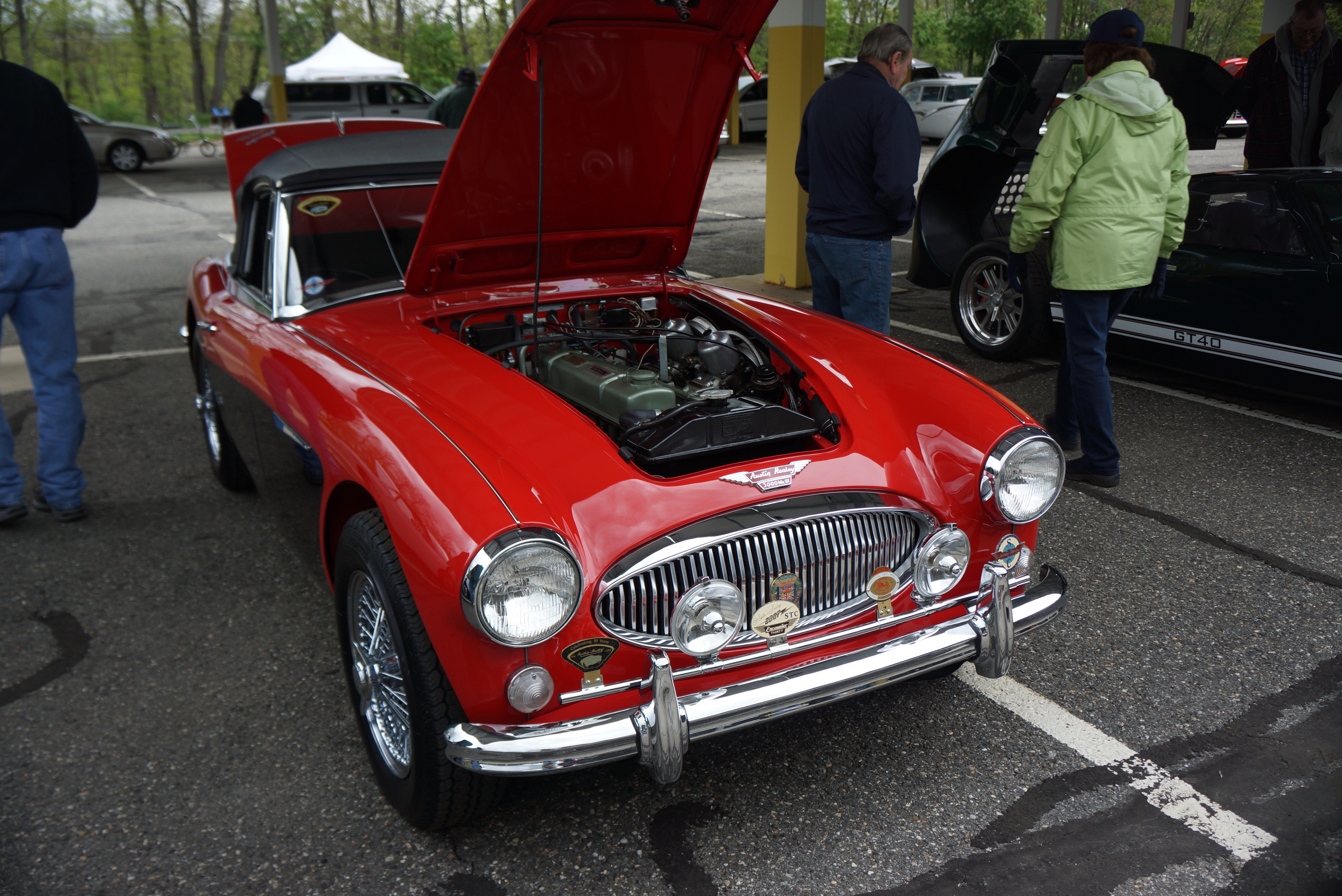
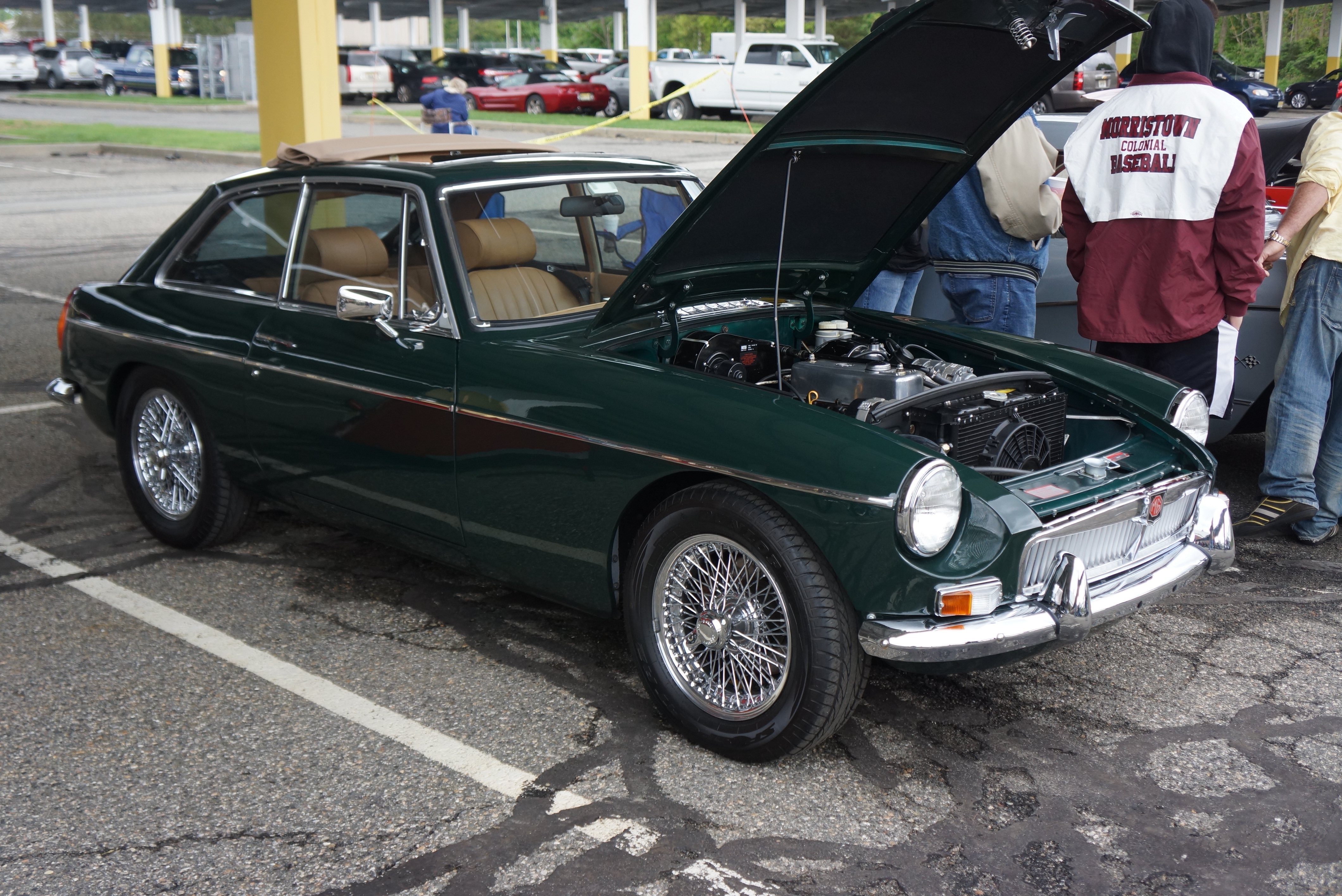
British cars included an Austin-Healey, a stunning MGB-GT, and two Lotuses (Loti?), an Elan and a Europa (yes, all Lotus model names begin with the letter E).
Austin-Healey
MGB-GT
Lotus Elan
Lotus Europa
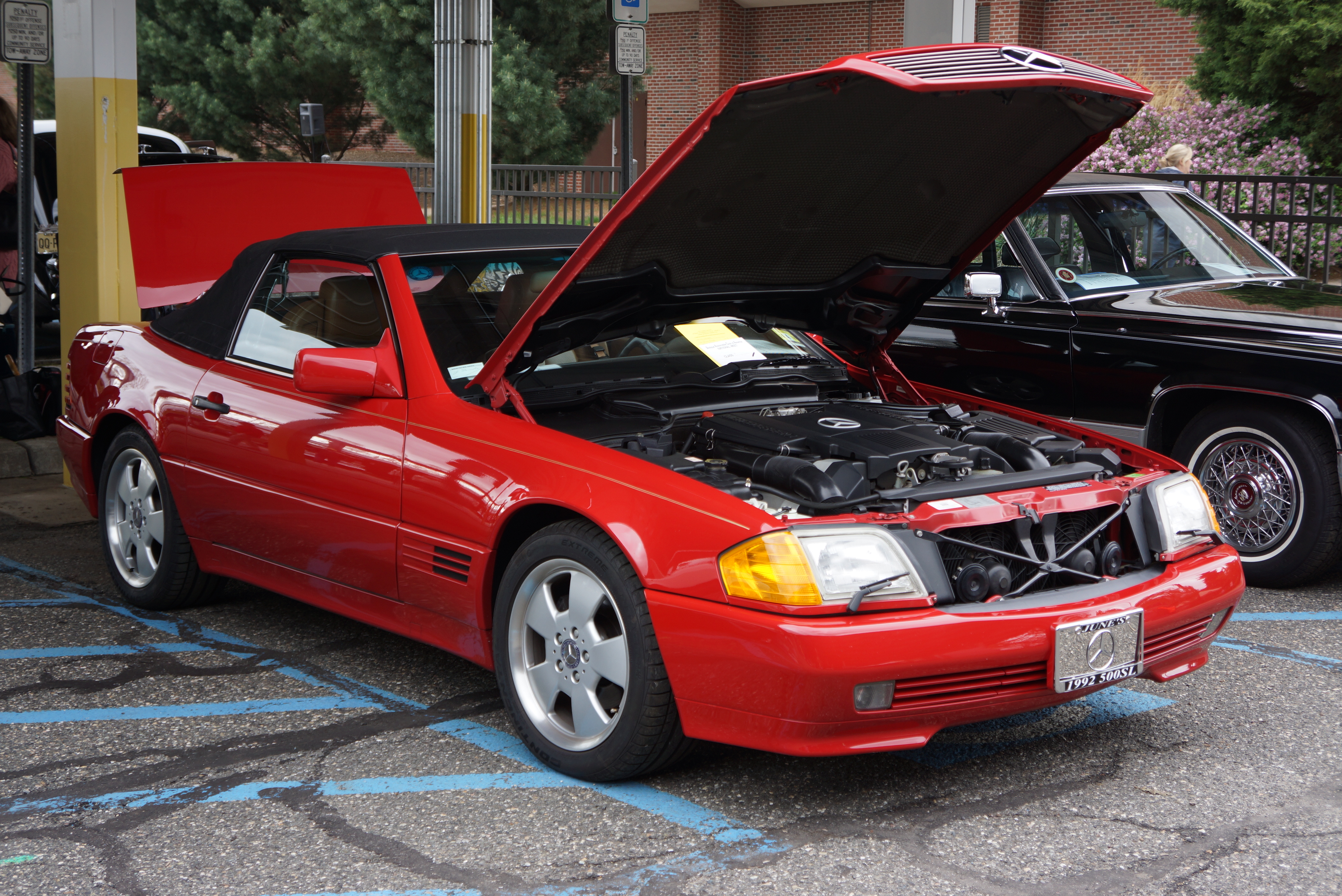
AACA rules allow cars to be shown once they reach 25 years of age. So on a rolling basis, each new calendar year means that there is a new “class” of eligible cars. For 2017, 1992 and older cars can be shown, so it was a pleasure to see this beautiful ’92 Mercedes Benz 500SL on the showfield.
1992 Mercedes Benz 500SL
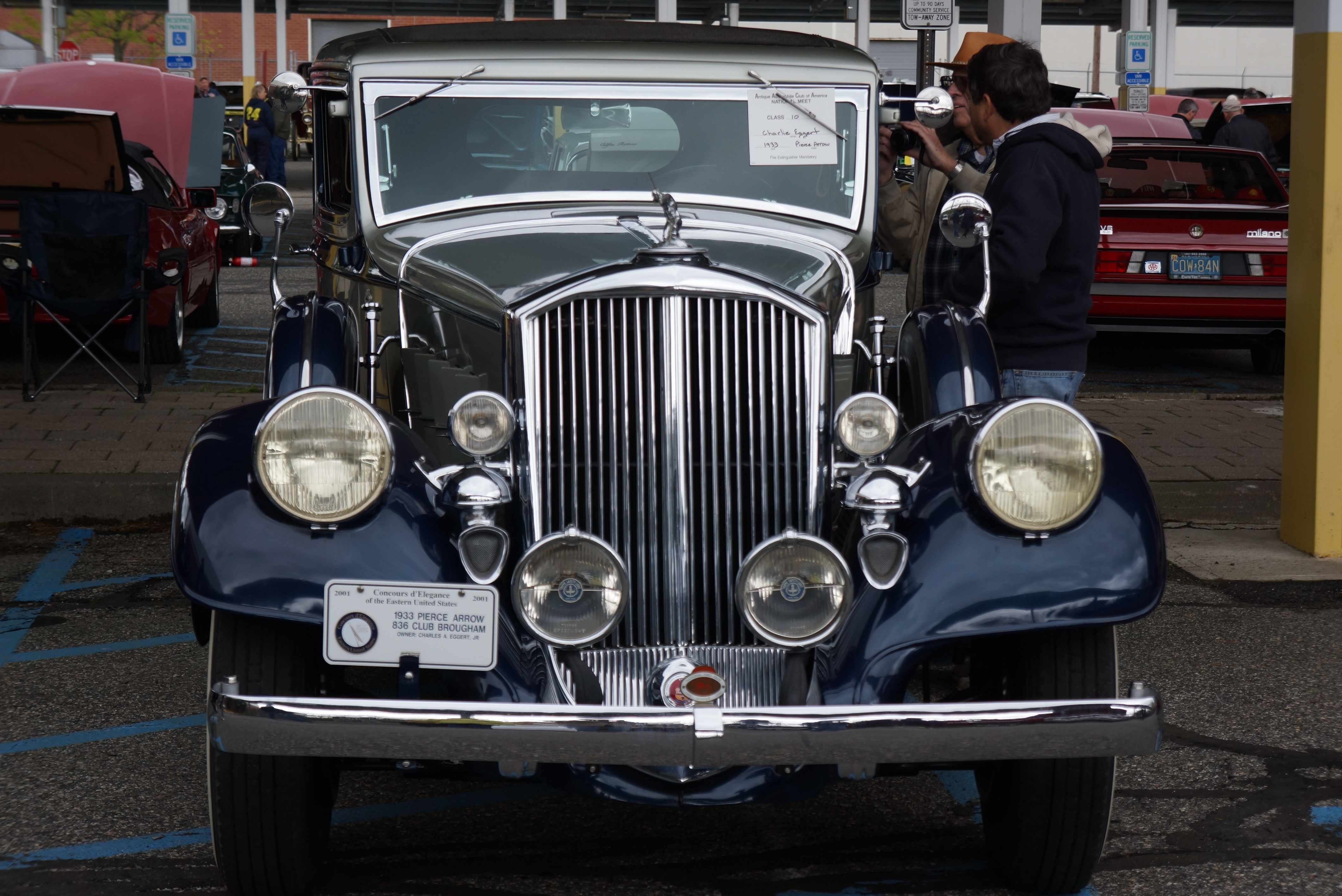
Of course, American makes dominate the display, including the so-called orphan manufacturers (those whose marques no longer exist). Below are some examples of these, including Pierce Arrow, LaSalle, Crosley, DeSoto, and Pontiac (still strikes this writer as odd to see Pontiac’s name with the others).
1935 LaSalle
1939 Pontiac
1933 Pierce Arrow
DeSoto Hemi V8
Crosley inline-4
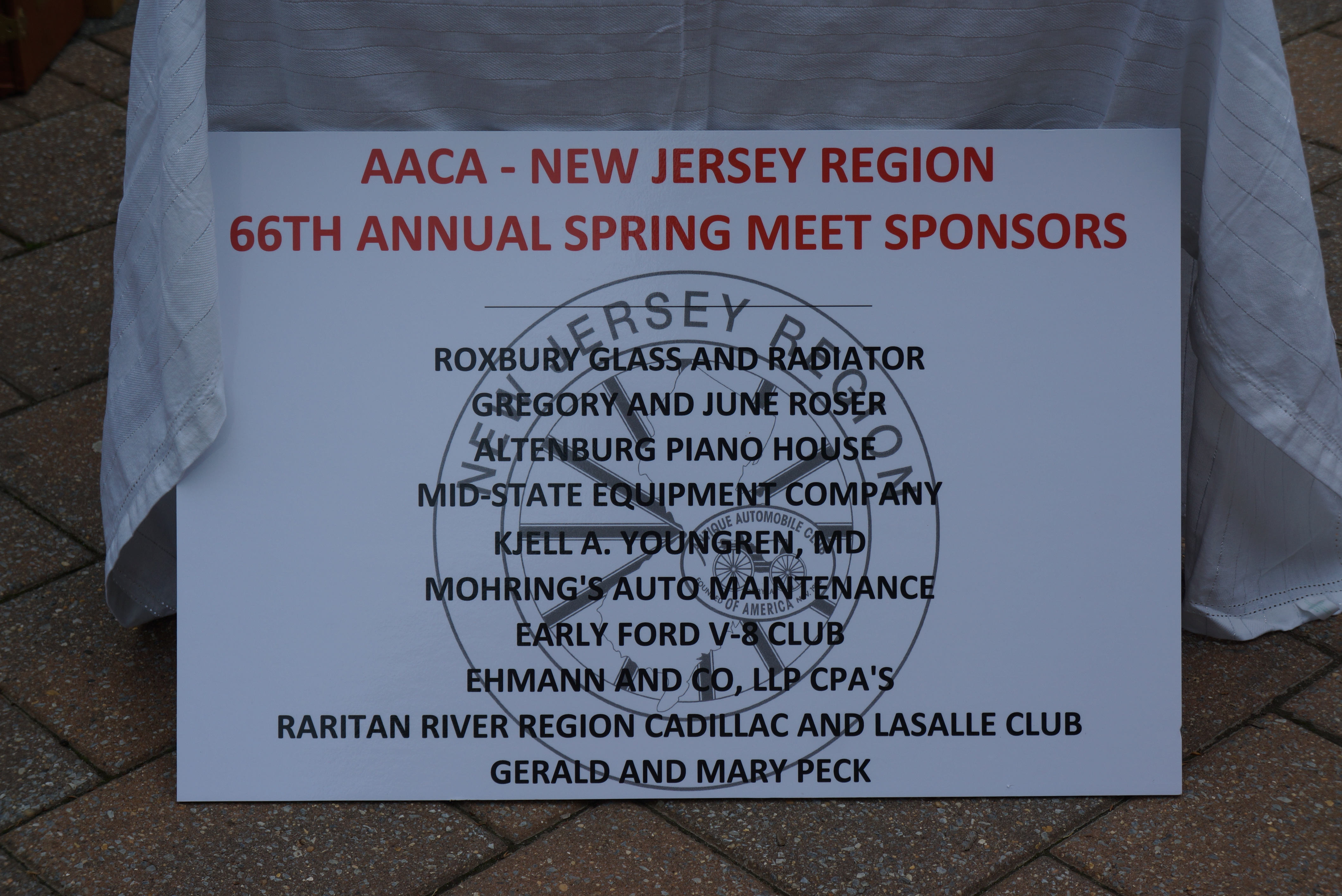
One does not need to be a member of AACA to enter a car into the show. One of the draws for members and non-members alike is the chance to win something, as this show is one of the few in the area which is judged (to AACA standards). The NJ Region recently switched from trophies (aka dust-collectors) to tool and duffle bags, to make for more practical prizes. It’s the generosity of the sponsors who help make it possible to have awards.
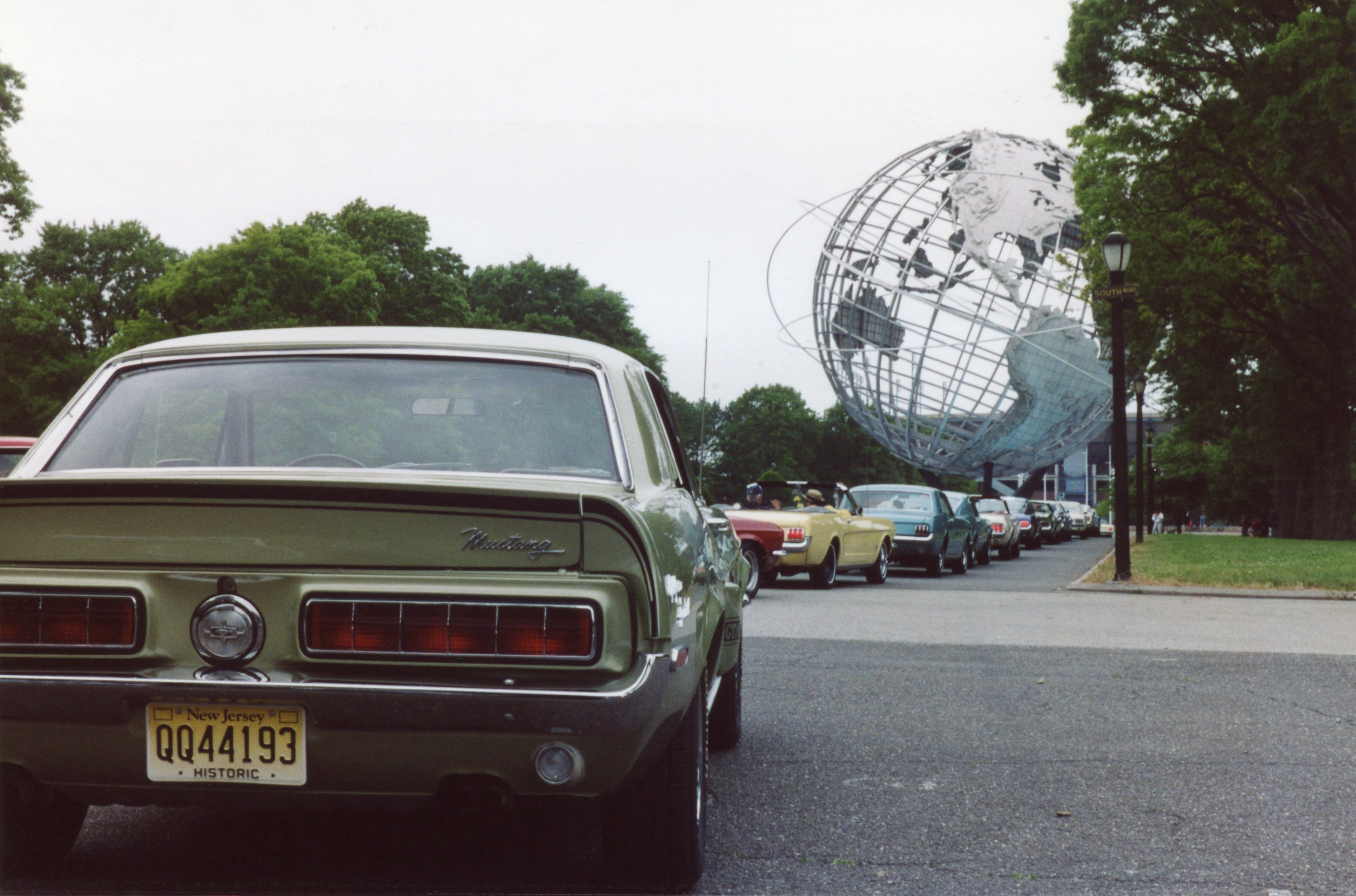
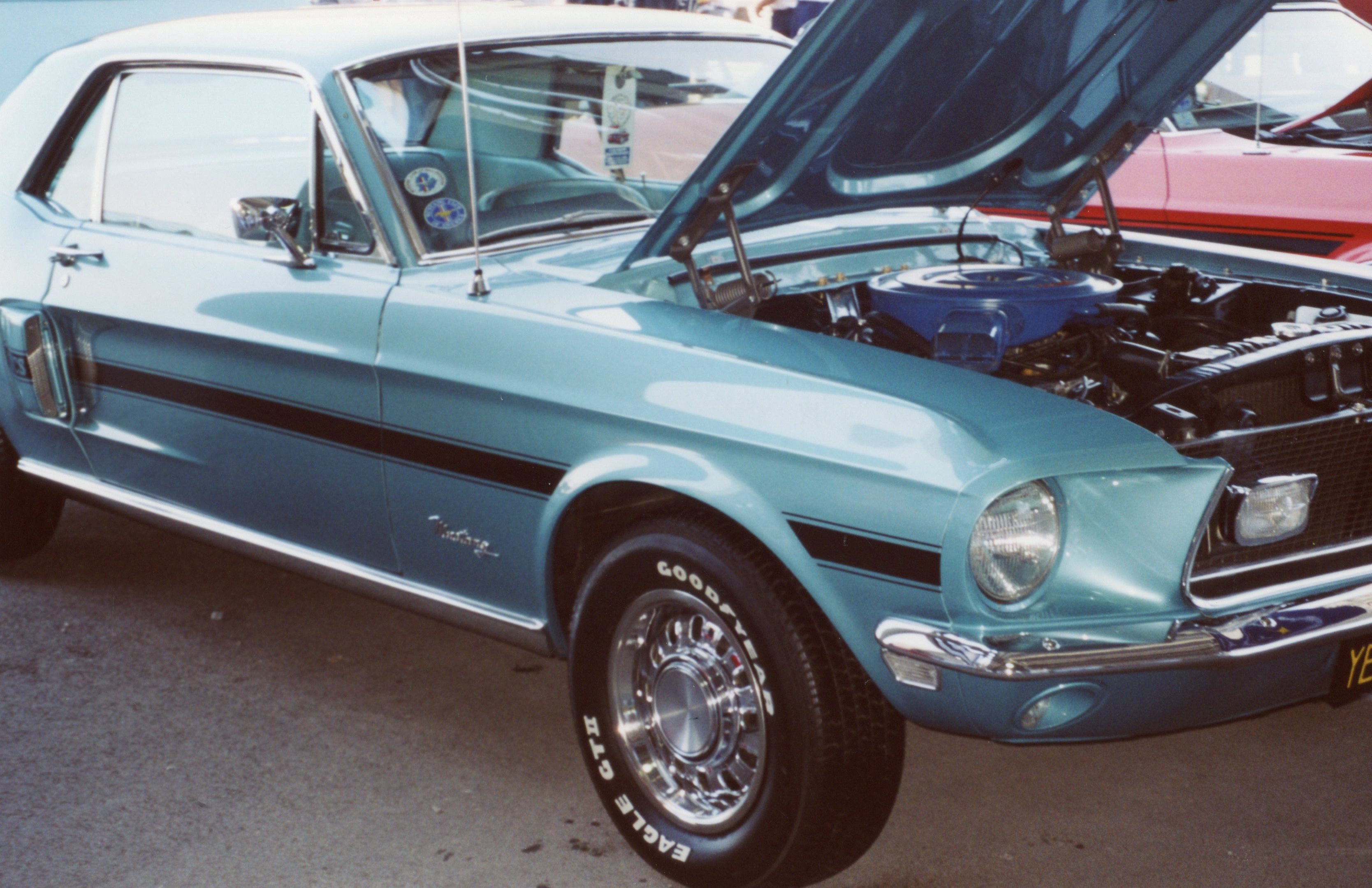
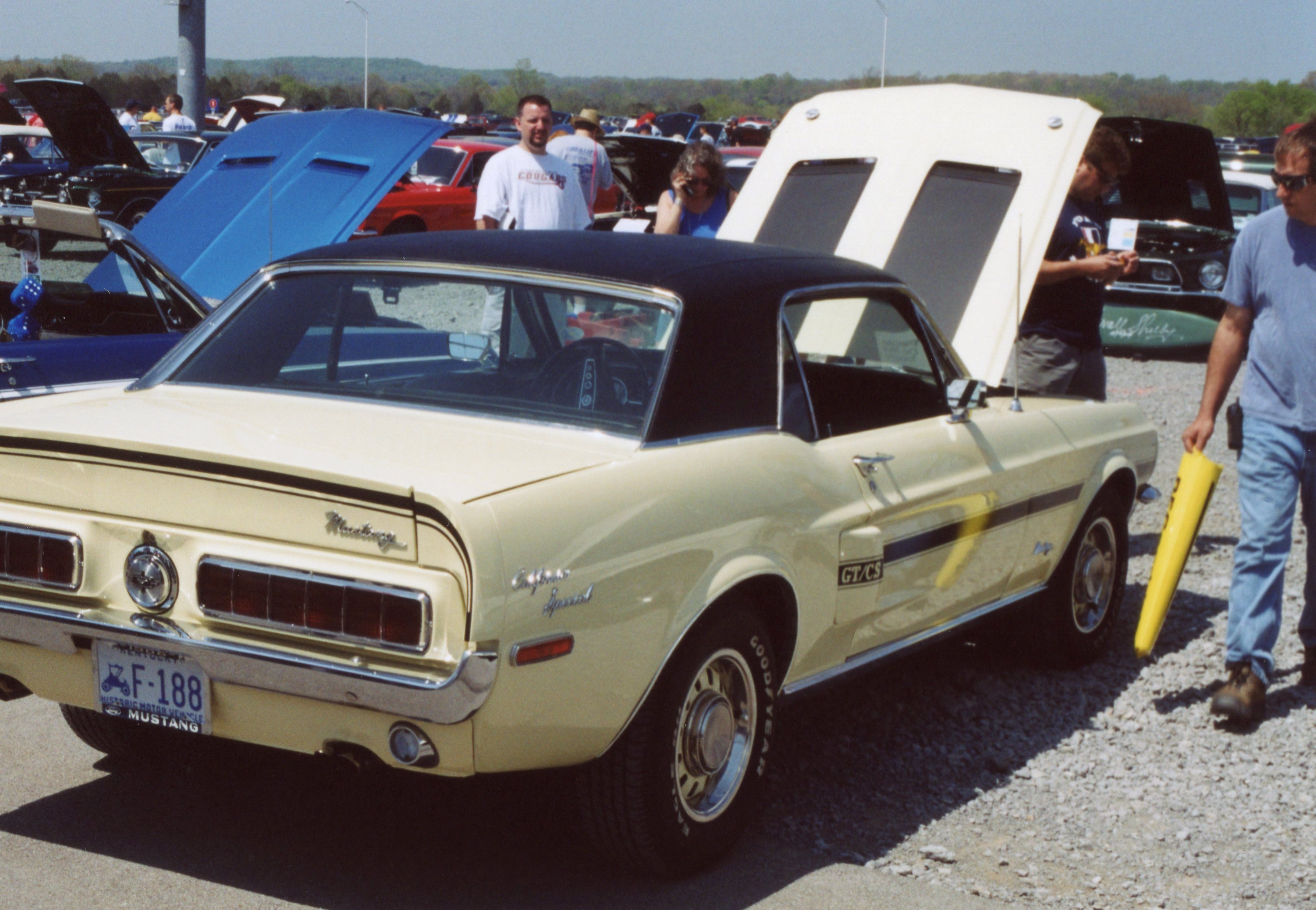
A month later, on Memorial Day Weekend, the Garden State Region Mustang Club (GSRMC) extended an invitation to attend a Ford Motor Company-sponsored event in Flushing Meadow Park in Queens, NY, site of the 1964-1965 World’s Fair, and site of the introduction of the first Mustang. The response from club members was enthusiastic, so early on Sunday morning of that weekend a large lineup of Mustangs caravanned through midtown Manhattan, arriving at the park by 10 a.m. Besides the GSRMC, the only other Mustang club invited was the Long Island club. Estimates of the total Mustang count was close to 100. My GT/CS was the only one of its kind there.
Waiting for the parade to start
For Ford, this was a marketing and PR stunt, as the all-new 2005 Mustang, which would not enter production until September, was represented by a pre-production prototype. Ford was looking for photo ops, so a ’64 ½ convertible was staged across from the 2005 ‘Stang. The stainless-steel Unisphere, one of the few remaining relics from the ’64-’65 fair, loomed in the background. A photographer, hired for the occasion, perched on a 10-ft. tall ladder.
One at a time, each owner was invited to drive his/her car across the cameraman’s field of view, stop between the two posed cars, lean out the window, smile, and move on. As you might imagine, this took some time. I used the downtime to take some of my own photos as we crawled in the queue. Eventually, I had my picture taken, and headed home.
From the right…
And then the left; the line is long
The official photo; cloudy all day, the rain held off until the drive home
Rally brother Steve and I had started to make some noise about possibly driving the Mustang in next year’s New England 1000 rally. With that on my mind, it seemed that the winter of 2004-2005 would be the ideal time to tackle the leaky heater core. My collector cars are usually off the road for the winter, so I would have the time I’d need to get this done.
On a Mustang with factory air such as mine, the heater core and A/C evaporator reside together in a fiberglass box under the passenger side dash. Following the factory-recommended procedure, I began the disassembly that would grant me access to said box. My A/C was inoperative, with zero pressure in the system, so no further harm was inflicted onto the ozone layer when I broke open the evaporator connections.
Dash pad & instruments out; wheel can stay
HVAC controls & center console out
Much of the dashboard and instrument cluster needed to be removed, so I used this as an opportunity to replace other worn parts (more about that in a bit). Most of the wrenching was straight-forward. If there was a tricky part, it was keeping track of the various color-coded vacuum lines that operate the blend doors. I knew that new vacuum line kits were available, so that was added to the shopping list.
Heater box birthed from car; dum-dum repair at corner was dumb
With the box out of the car, my heart sank to see that it was cracked; actually, a chunk was missing from one corner. I also knew that boxes were not available in the aftermarket, so the heater box was repaired with fiberglass matting and epoxy glue.
Fiberglass fix didn’t need to be pretty
Along with a new heater core, I was able to order a new foam heater box kit. All blend doors as well as the core itself got new foam seals. Having come this far, I thought better of reinstalling the dash pad, which was warped, and the woodgrain instrument cluster surround, which had lost most of its chrome. These parts were readily available from various suppliers, so new ones were ordered and installed.
Wood and clamps hold foam while glue dries
Near the end, I worked as long as my patience would allow to line up the new aftermarket dash pieces. Of course, they did not fit as well as the originals. Eventually, I got it to the point that only I would notice any misalignment.
Repaired box about to be reinstalled. A/C evaporator was also new
Did the new heater core work? You know the drill: Add fresh antifreeze; turn on the heat; pray that nothing leaks.
Nothing leaked. The car had tremendous heat output, and anyone riding in the front seats would have toasty dry toes. This would turn out to be a huge benefit during the running of the 2005 New England 1000.
With the recently-acquired Mustang in the garage for the winter of 2003-2004, I set out to do three things in preparation for the 2004 driving season: join the local Mustang club, subscribe to Mustang Monthly magazine, and obtain as many vendor parts catalogs as possible.
The N.J.-based club was the GSRMC (Garden State Region Mustang Club), and soon after joining, its President invited me to submit an article about my car, as we both surmised it was the only GT/CS in the club.
Cover car!
Prior exposure at events like Carlisle had shown that (especially compared to Isetta vendors) there were dozens of Mustang parts suppliers, so any needed part should be only a phone call or mouse click away. I was soon to learn otherwise.
As weather allowed, I would slip into the garage to perform some preventative maintenance: tune-up, oil change, coolant hoses & clamps, etc. Removing the air cleaner lead to the discovery, missed by me and unmentioned by previous owner Tony, that the heater hoses were disconnected from the heater core at the firewall. Against my better judgment, I reconnected them, filled the system, started it up, and ran the heater. All was dry, so I let it be.
As I placed orders for my Mustang-specific parts, I sampled various vendors, including Mustangs Unlimited, CJ Pony Parts, Virginia Classic Mustang, and NPD. Two truths became apparent: first, the quality of aftermarket parts varied widely, and was not always good, to the point that substandard parts were returned; and second, the idea that any part could be found at any vendor was hindered by my engine.
The “X code” 390 2-barrel FE-block was so rare that most Mustang suppliers did not carry parts for it. (Some catalogs, and some otherwise-well-written tomes on the Mustang did not even acknowledge that Ford used this engine in Mustangs!) Out of 317,000 1968 Mustangs, the X-code engine was put into 476 of them (2/10ths of 1%). Among California Specials, 75, or about 2%, used it. Either way, that makes for one rare engine.
The vast majority of its parts are shared with the S-code 390 “GT” 4-barrel engine. The differences are all on top: intake manifold, carb, air cleaner, emission controls, and various connecting parts. For my needs, I was stymied at obtaining vacuum hose connection parts, and a replacement for the missing air cleaner snorkel. (Much later, I found that the snorkel was not being reproduced, and was available used for about $900. I didn’t buy it.)
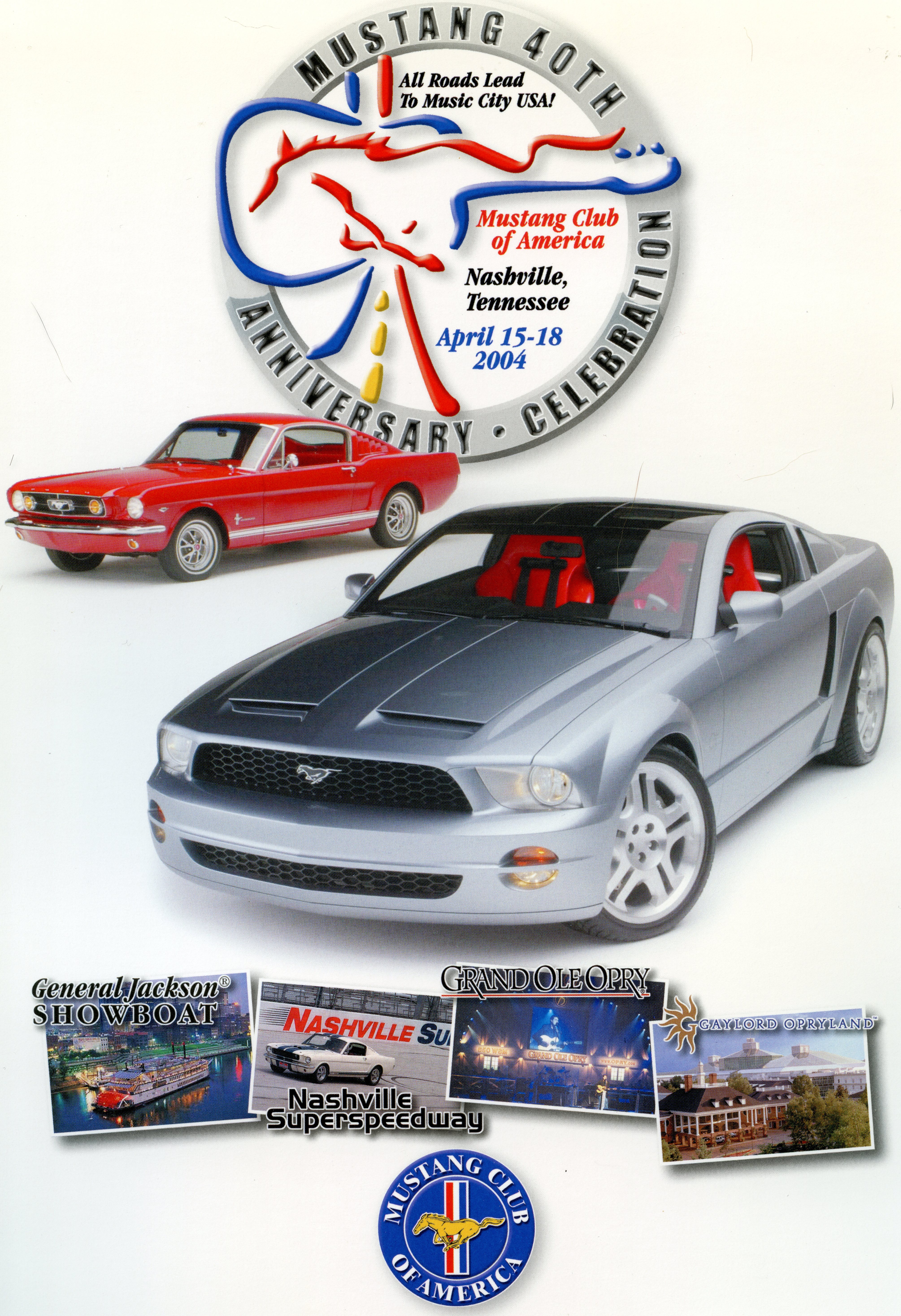
Early in 2004, the Mustang Club of America (MCA) announced that it would be hosting a 40th anniversary celebration for the Mustang in April, with the event to be held at Nashville Speedway in Tennessee. (The Ford Mustang debuted at the New York World’s Fair in April 1964.) Checking with the GSRMC, there seemed to be lukewarm interest in attending. However, the New England Mustang Club was organizing a caravan, stopping at various points to pick up participants, and they would be stopping at CJ Pony Parts in Harrisburg PA. My wife was willing, so we signed up.
Portfolio cover for 40th anniversary show
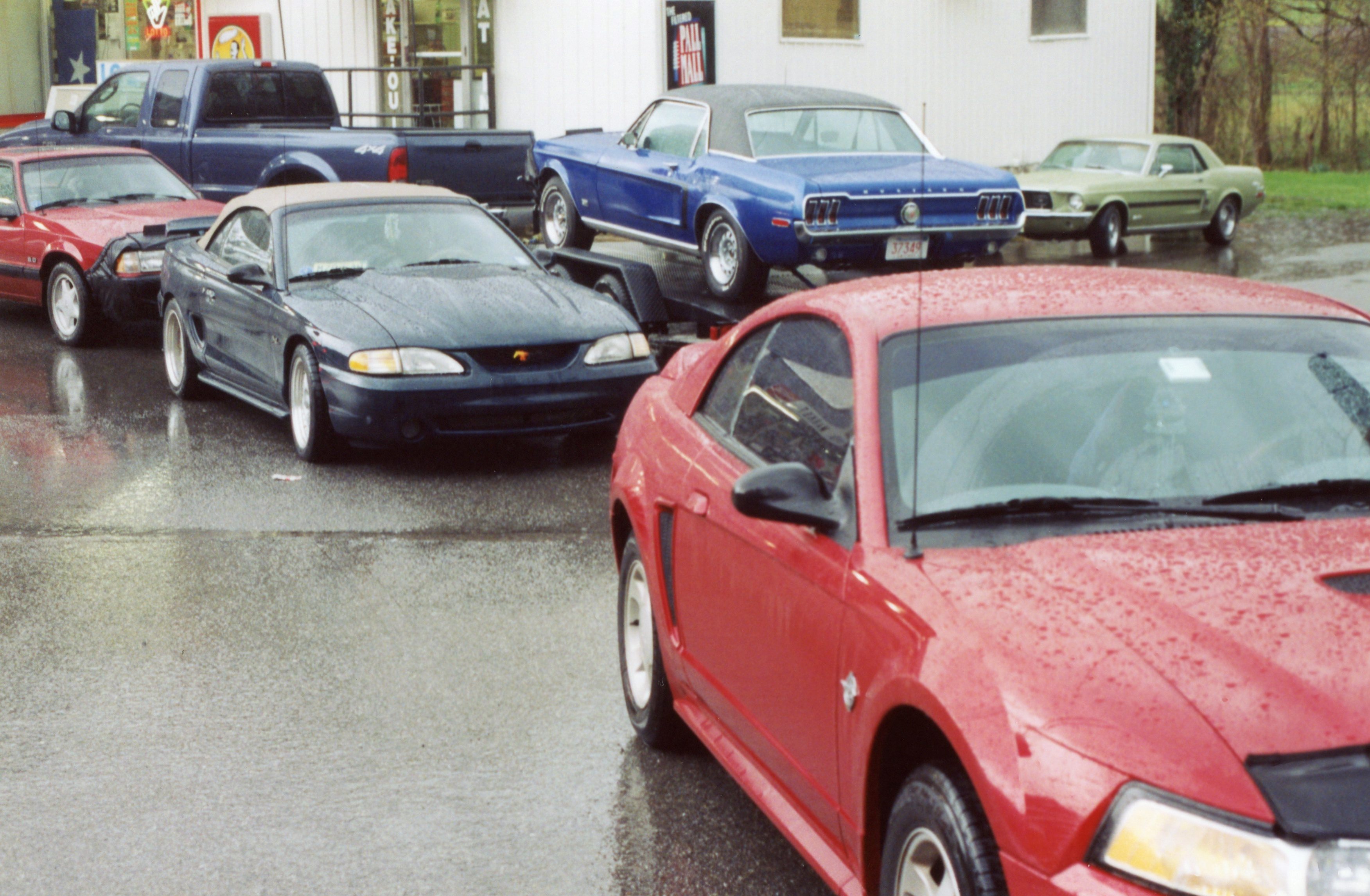
Caravan Day 1 was damp
Cars outside CJ Pony Parts
Our Cal Special queues up
On a rainy April day, we headed out to Harrisburg. The group, at this point about a dozen strong, showed up a short time later. The New England crowd was friendly, and warmly welcomed us. (They promised a “wicked good” journey.) It was nice to have some company on the trip south. The Mustangs consisted primarily of first-generation cars and Fox bodies. Most were driven; several were trailered. As we traveled, other Mustangs joined, and soon there were close to 20 cars. The group was informed that our destination for the night was Harrisonburg VA, and that we would be in Nashville by the afternoon of the second day. The weather remained cool and damp, but we were comforted by fairly good heat output in our car.
That is, until my wife said something about green fluid leaking from the dash near her feet.
We pulled over, and several other drivers also stopped in solidarity. Fortunately, the coolant loss was small enough that the temp gauge stayed in the Normal range. With assistance from several helping hands, we routed the heater hoses in a “U”, bypassing the core. The leak stopped, but we had no heat. Within a few hours, grey skies gave way to sunshine, and a significant jump in the thermometer. By the time we reached Nashville, temps were in the 80s.
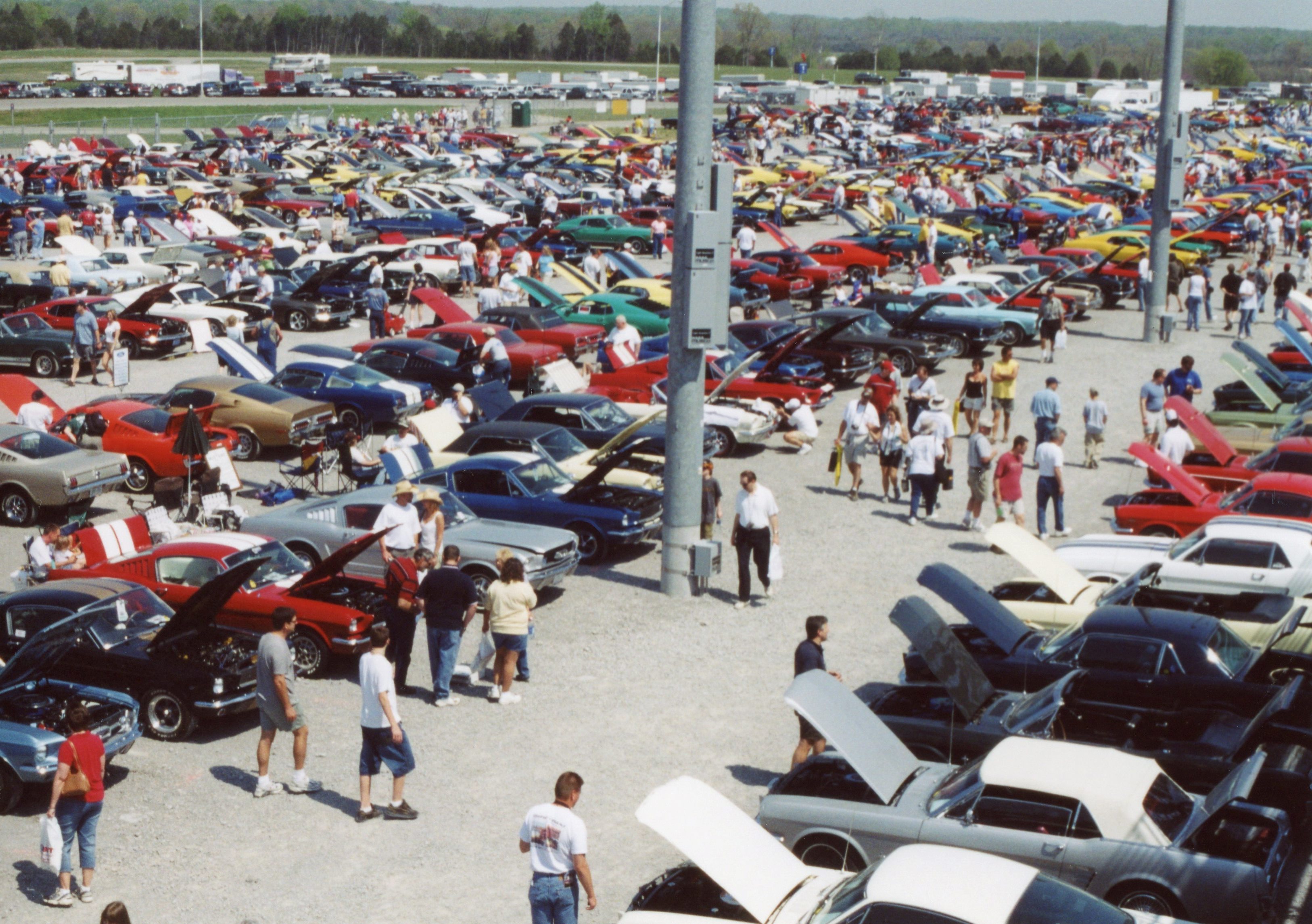
MCA 40th anniversary show field, Nashville TN
Show revelers happily tailgate on the gravel
My GT/CS on the show field; Speedway grandstand in background
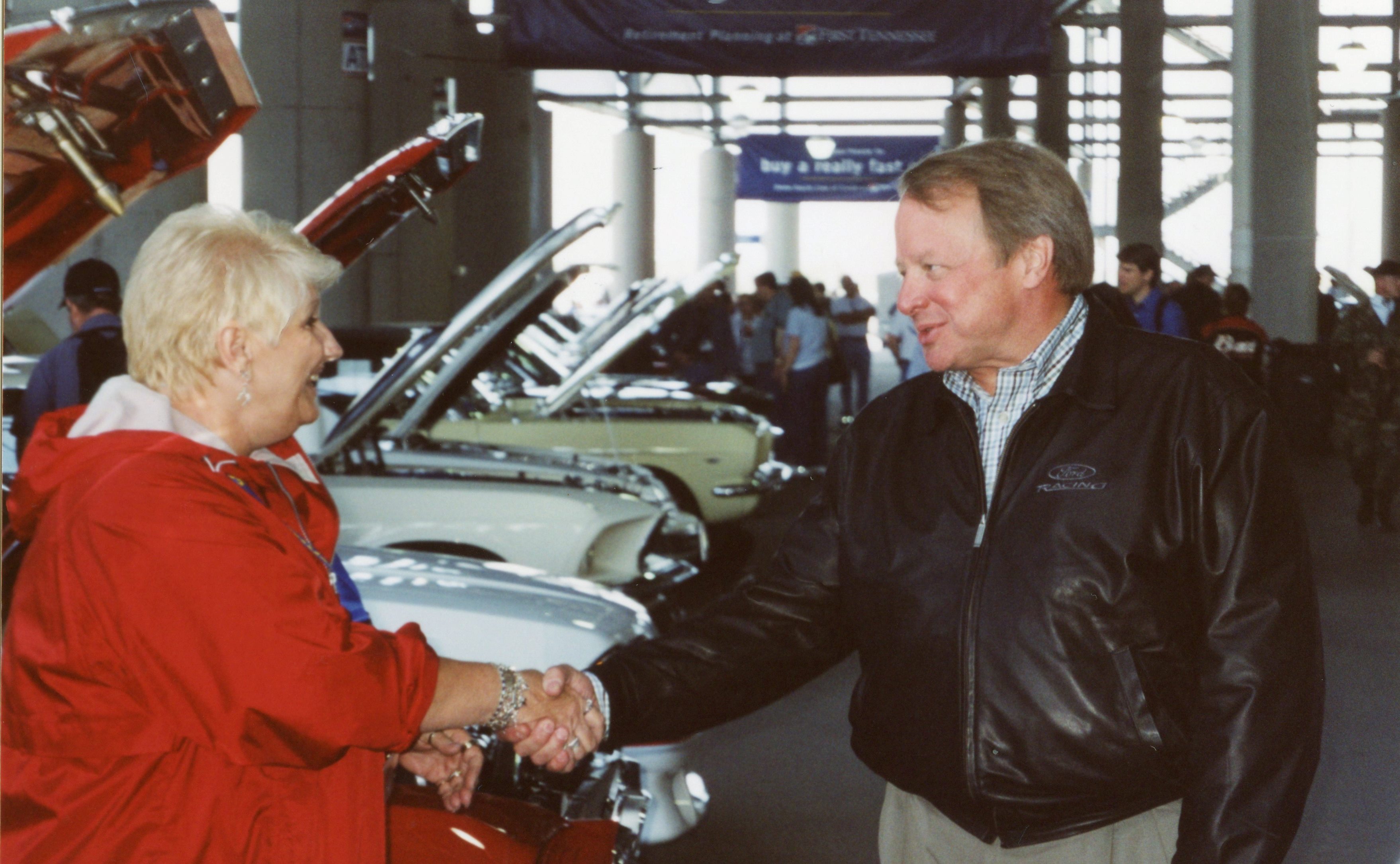
This was the first time I had attended a show of this magnitude. Memory tells me that there were about 3,000 Mustangs in attendance. Once we entered the parking lot, it was first-come first-served to find a spot; except for some pre-chosen cars parked under cover, there was no attempt to organize the field. We parked and walked around. The Ford Motor Company was an official sponsor, so it was a treat to see one of the first Ford GTs. Edsel Ford II (son of Henry Ford II) was in attendance, and had a friendly greeting for anyone who came by his way.
A proud pose in front of one of the first Ford GTs shown to the public
Mr. Edsel Ford II, son of Henry Ford II, grandson of Henry Ford
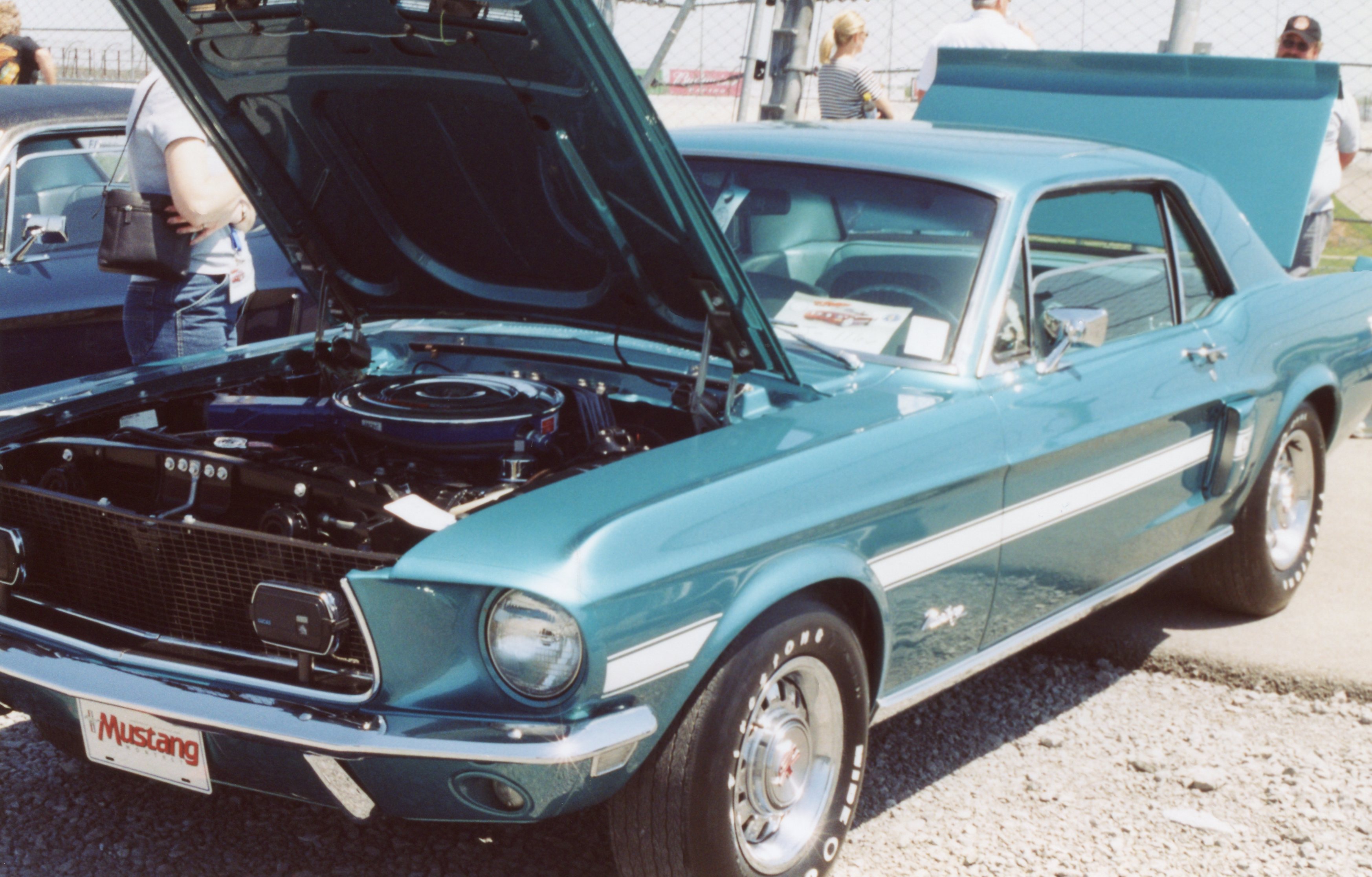
This was a 3-day show, and Day 2 was not that different from Day 1. Temperatures stayed in the 80s, and cars were kicking up a lot of dust in the gravel parking lot. The heat and the dust did not make walking an enjoyable endeavor. I did spot a number of other GT/CS cars, and when possible, introduced myself to the owners.
GT/CS red w/white stripes
Aqua w/white stripes
Aqua w/black stripes
Yellow w/black stripes
A photo of someone taking a photo
One evening, there was a caravan into downtown Nashville, where we saw a show at the Grand Ole Opry, and enjoyed some local BBQ. By Day 3, we were ready to head home. We drove sans caravan, stopping at a B&B on the way, and taking in the scenic views of the Blue Ridge Parkway and Skyline Drive through Virginia.
The California Special poses outside of our B&B
We got home without further incident. The Mustang did 2,200 miles, flawless except for the leaky heater core (for which I should have known better). Now I knew what I’d be working on during the upcoming winter!
My wife takes in the Virginia scenery, pleased that there is no more green fluid to deal with
A few weeks ago, my wife and I were in downtown Manhattan, where we spent a pleasant afternoon at the new Whitney Museum. Our trip into New York County was via the Staten Island Ferry, and while we had taken a taxi from the ferry terminal to the museum, the afternoon weather was pleasant enough for us to make the return trip to the terminal on foot.
Much of our walk took us south on Hudson St., through the West Village and SoHo. These areas are full of trendy bars, coffee shops, and galleries, and autumn’s Sunday warmth had lots of people out and about.
Just about the last brand name I expected to see on a building in SoHo
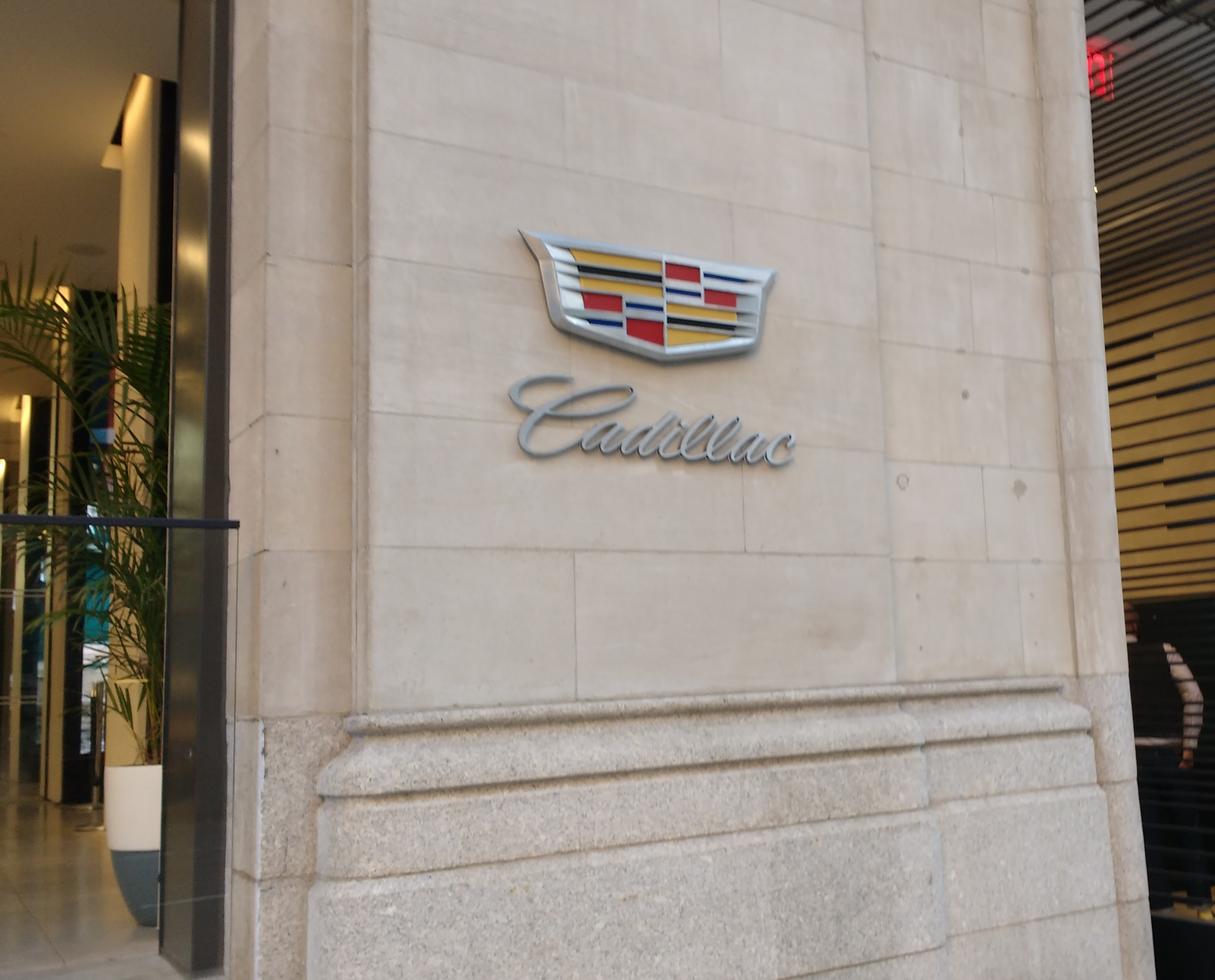
I’ll be the first to tell you that my eyesight isn’t that great … except when it comes to spotting cars. A few blocks past Houston St., in the glass window of a building across the street from where I stood, was the unmistakable chrome face of a 1958 Cadillac. “Wait, wait”, I yelled to my wife, whom I knew would have no choice but to follow me. “What is this place? Wait, the Cadillac emblem is on the front of the building!”
The view that first caught my eye
My wife went in first; I wasn’t even sure they were open. But sure enough, they were. We scooted past two young adults who were building some kind of display, and entered the first floor ‘showroom’, all glass and mirrors and chrome. Oh, and several Caddies from the ‘50s and ‘60s.
Public area on first floor is all hard surfaces
We wandered around a bit. There was a hipster coffee bar, and a small clothing boutique in the rear. A large placard gave details about an upcoming Andy Warhol exhibit. The space is open seven days a week, and “hanging out” is encouraged.
Sit, stay a while, enjoy the views
Cadillac + Andy Warhol = who knew?
We didn’t stay long, and on the way out, I asked the young woman at the desk if this was in fact Cadillac’s headquarters. “Oh yes” she exclaimed enthusiastically. “All the upper floors are where all the offices are. We like it here, because this is a great neighborhood.”
Fun with mirrors, part 1
Fun with mirrors, part 2
The Cadillac brand, in an attempt to establish independence from its General Motors parent, moved its national operation to New York in 2015. This is all part of brand chief Johan de Nysschen’s grand plan to take the luxury car maker upscale.
Say “tailfins”, and most will conjure up an image of the ’59 Cadillac
My presumption had been that their offices would be somewhere in Midtown: perhaps near Bloomingdale’s (and Trump Tower), or maybe around the corner from Rockefeller Center. So Johan wants to be where the young trendsetters are. Hasn’t this been tried before?
1963 Cadillac, in black, natch
I had one more question for our hostess: “Where are the new cars?” She said that they had all been moved out in preparation for the Warhol event. For now, these behemoths from Cadillac’s heyday had the floor to themselves. Here’s hoping that Cadillac finds its muse somewhere in lower Manhattan.
The organic coffee sign symbolizes the distance between this ’58 and its trendy surrounds
On the evening of November 18, 2016, the AACA Museum in Hershey PA officially opened its “Amore della Strada” Italian machinery exhibit with a reception at the museum. The public was invited to attend, and turnout was large, making for crowded aisles. The doors opened at 6pm, and your $20 admission included antipasti, beer, and wine. Those who owned cars on display were admitted “gratuito”.
Italian cars come in colors other than red!
There were approximately 20 Italian cars, and perhaps a dozen or so Italian motorcycles. The museum is arranged in such a way that there was no practical way for the curators to place all the special exhibits together. Therefore, they were arranged in smaller groups of 2, 3, 4, or more, and placards with each vehicle provided sufficient history regarding the make and model. Owners who were loaning their wares for the five-month duration of the show were dutifully acknowledged. (Last week’s blog entry covered this author’s drive to deliver his ’67 Alfa Romeo GT 1300 Junior to the exhibit.)
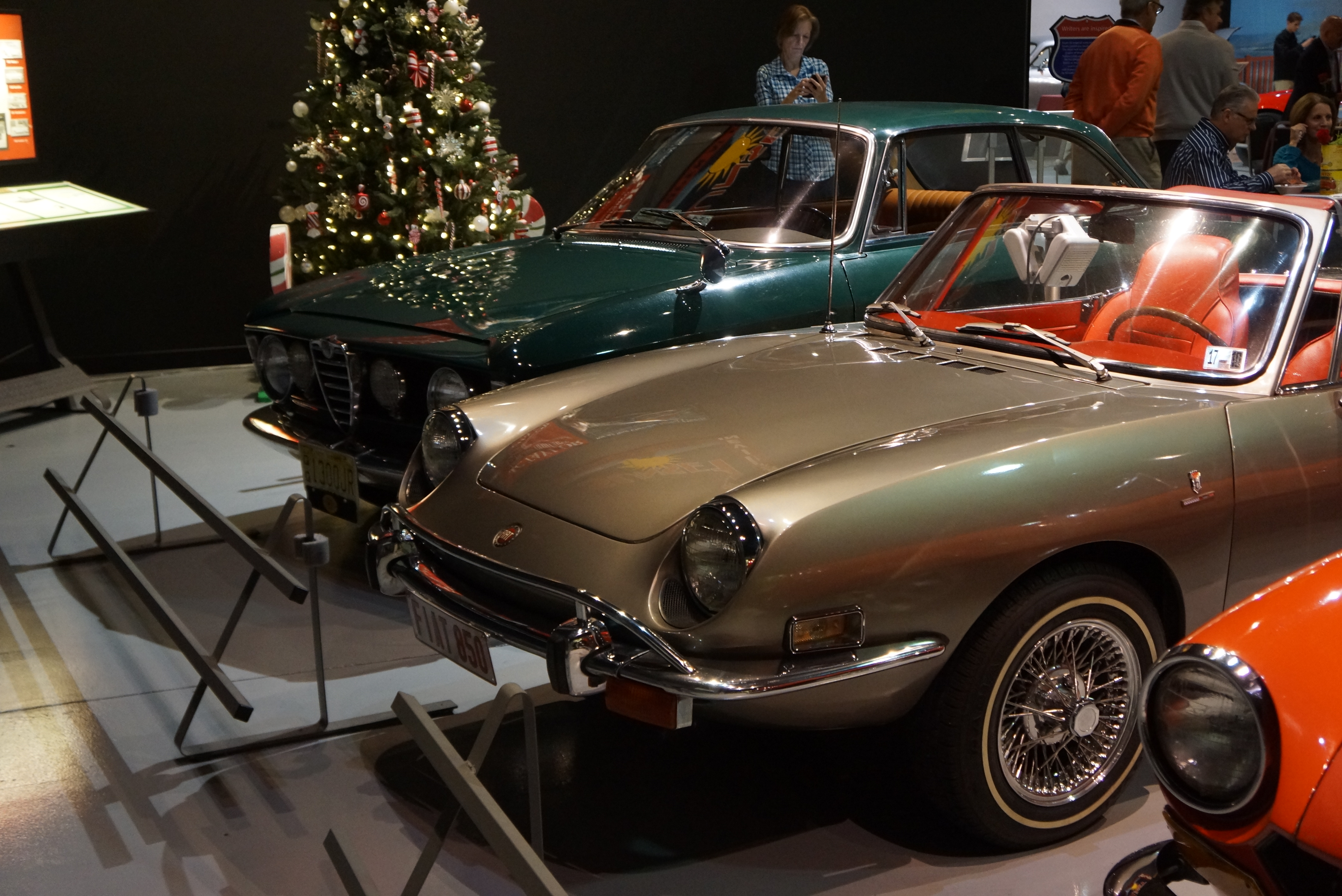
Fiat, Alfa, and Christmas tree
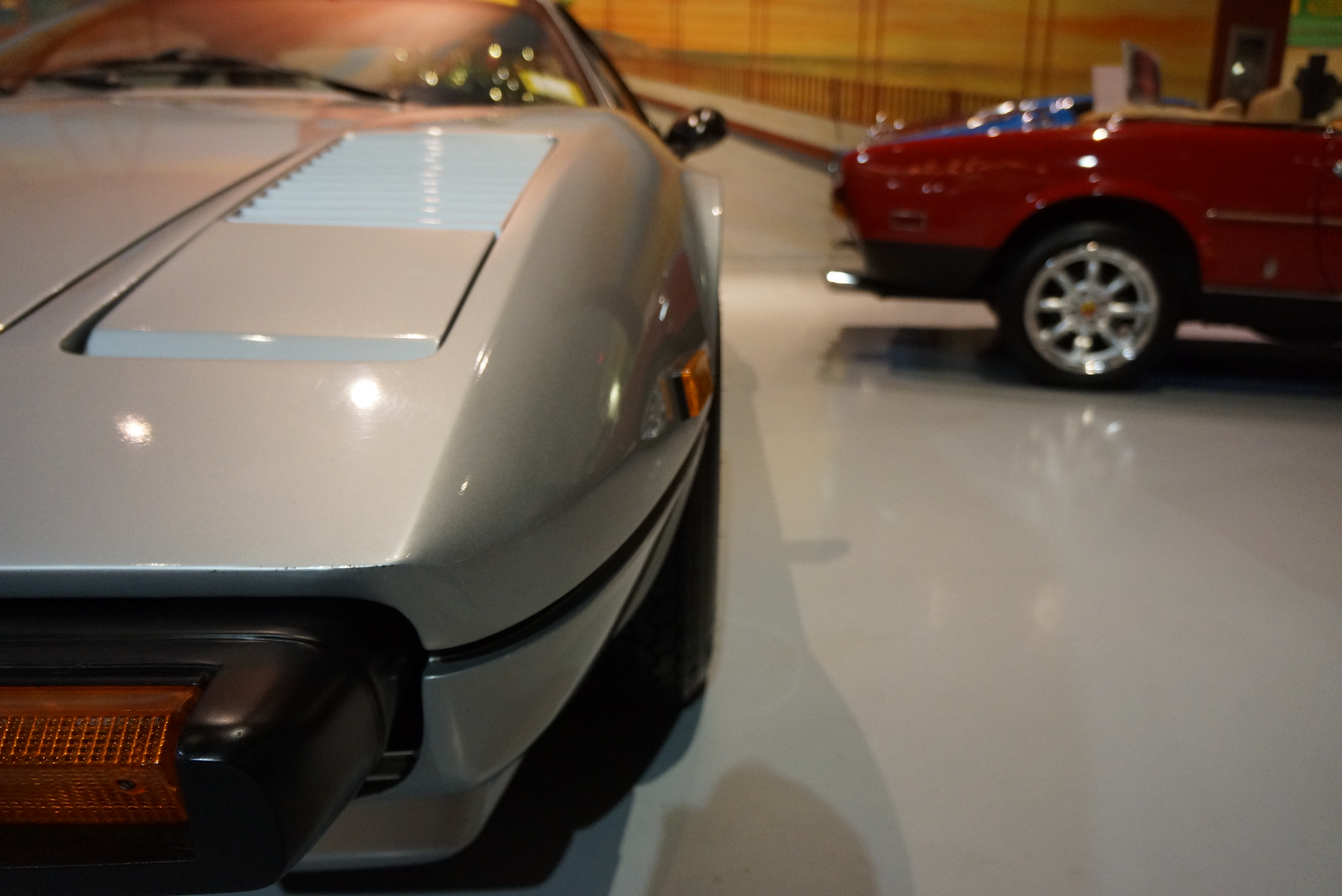
Fiats and Alfa Romeos seemed to comprise the bulk of the vehicle displays, and some might agree with me that it was a refreshing change of pace for an “Italian Car Show” to NOT be dominated by late-model supercars from the Big 3 of Ferrari, Lamborghini, and Maserati. (Of these three makes, I counted only two Ferraris.)
Ferrari 308GTB shares floor space with modified Fiat 124 Spider
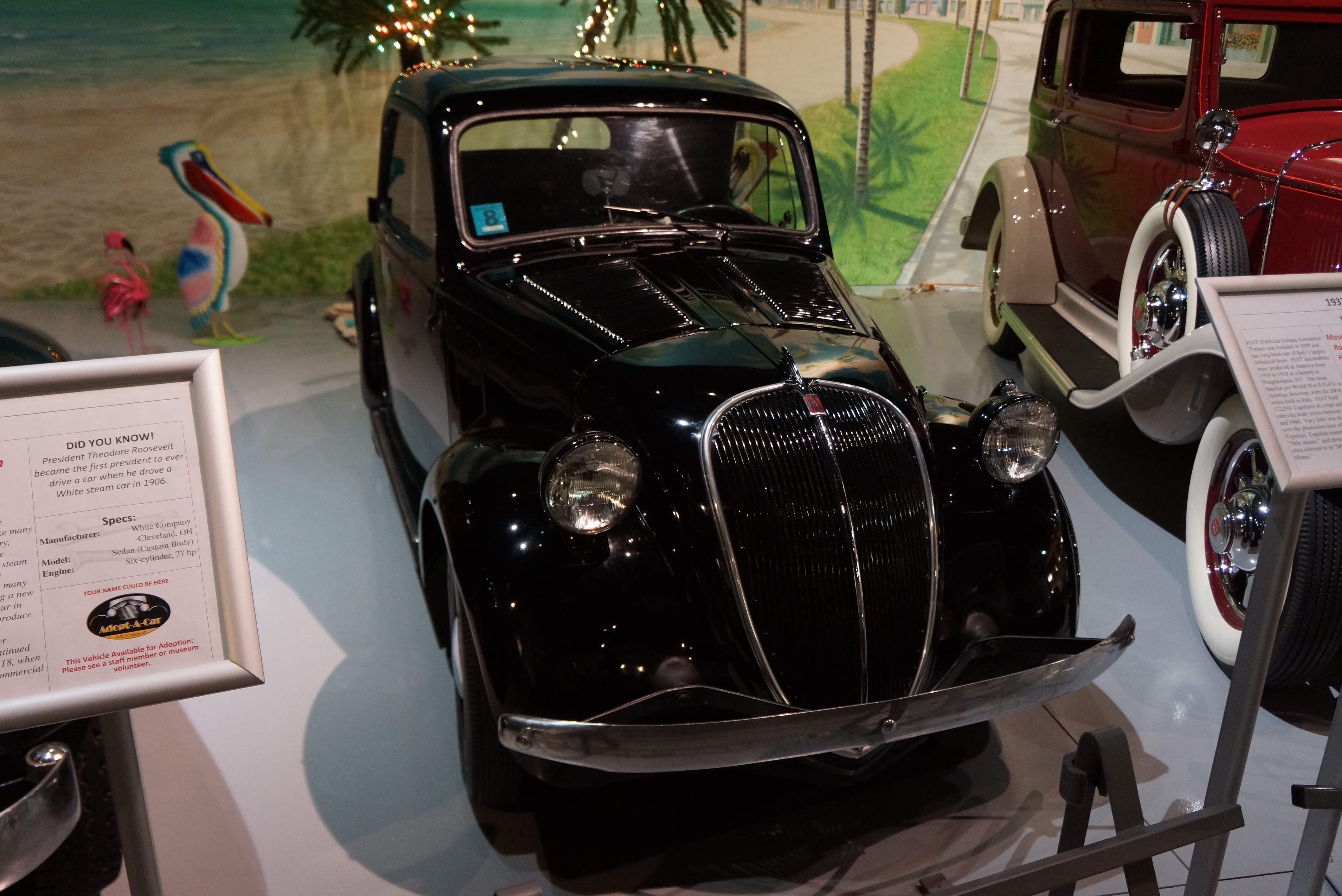
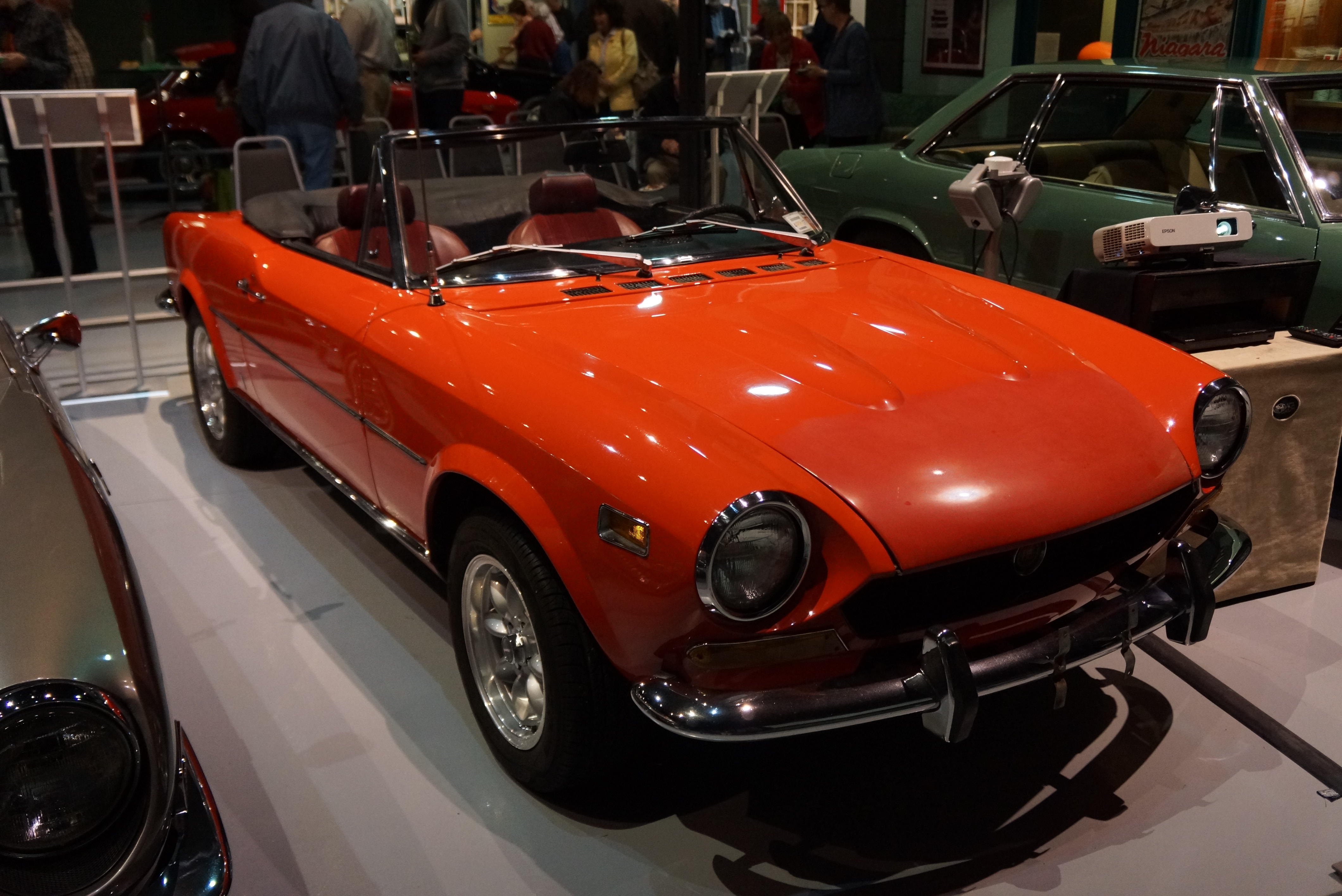
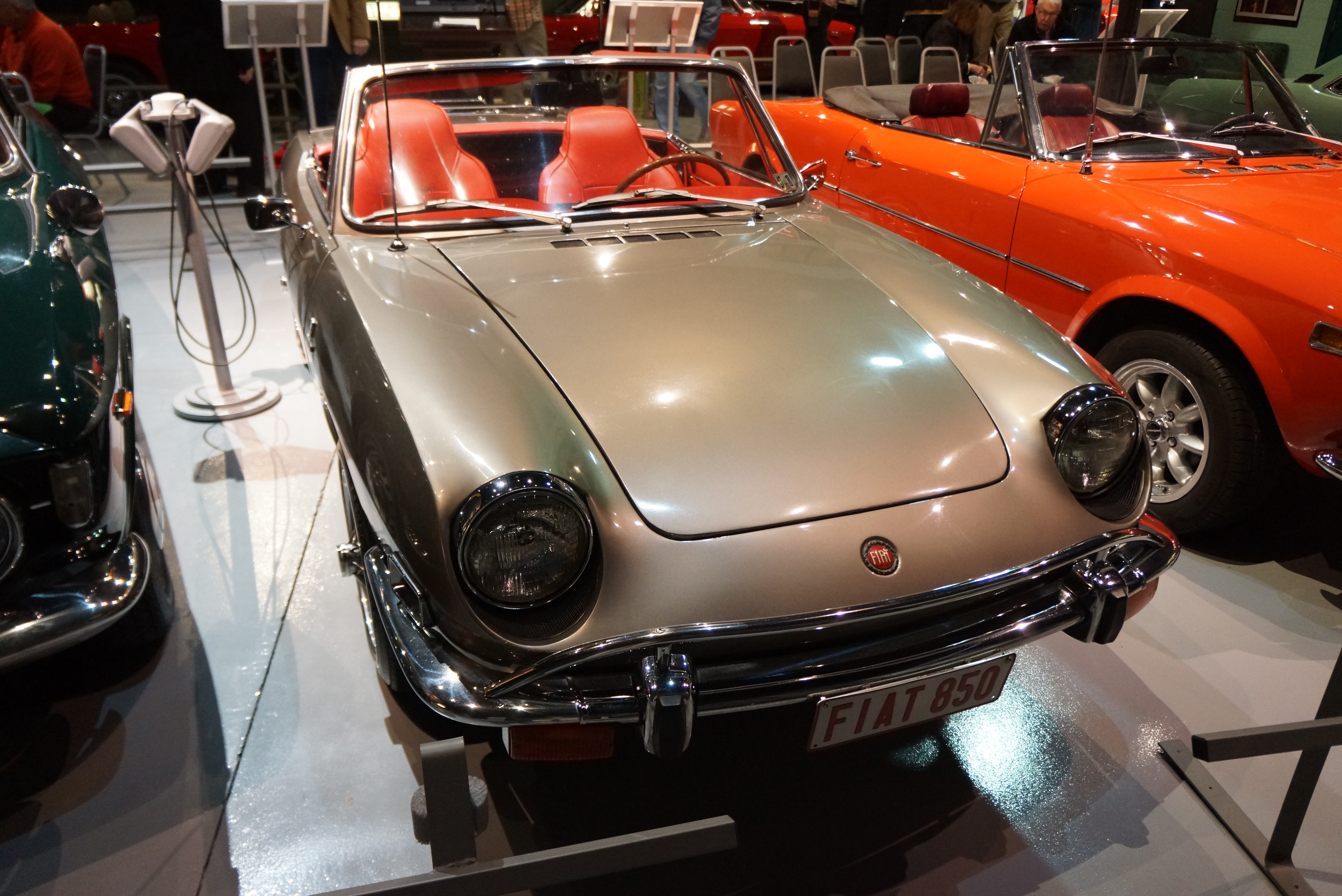
Among the Fiats, we saw three 124 Spiders, two X1/9s, and an 850 Spider. The X1/9s were a study in contrasts, as the bright green one was a first year example wearing the original bumper-less design, while the white one from 1987 wore no Fiat badges at all, as it was manufactured and sold by Bertone, and badged as such, since Fiat left the U.S. market after 1982. The only Italian prewar car on the floor was a delightful 1937 Fiat Topolino (Little Mouse).
Adorable 1937 Fiat Topolino (owned by AACA Museum)
1974 Fiat X1/9 – note lack of battering ram bumpers
1987 Bertone X1/9, one of the last of the breed
Nose of ’87 X1/9 wears this in place of Fiat badge
Early chrome bumper 124
Later 124 with bumpers removed
Fiat 850 Spider
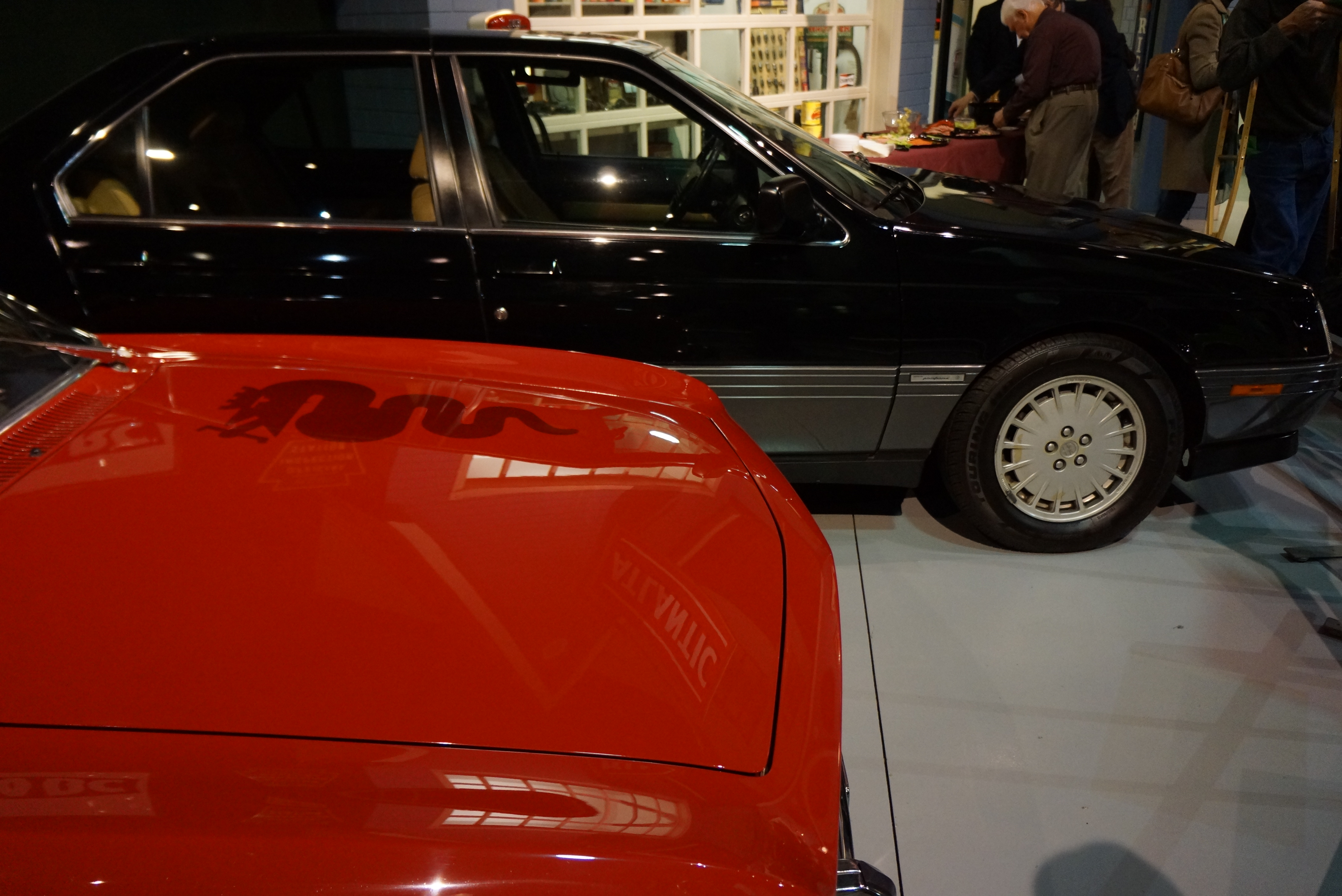
The four Alfa Romeos included two Giulia coupes, one early step-nose and one 2nd generation design, a rare Montreal Coupe (with a factory V8), and the last Alfa sold in the U.S. market (until Sergio’s recent resurgence), the large front-wheel-drive 164 sedan.
This ’67 has step-nose front
This ’74 has redesigned front
Owners Ed and Shayna Geller with their stunning Alfa Montreal
Alfa GTV in red, Alfa 164 in black. Snake eats man; it’s part of the Alfa legend.
Yes, there were speeches too
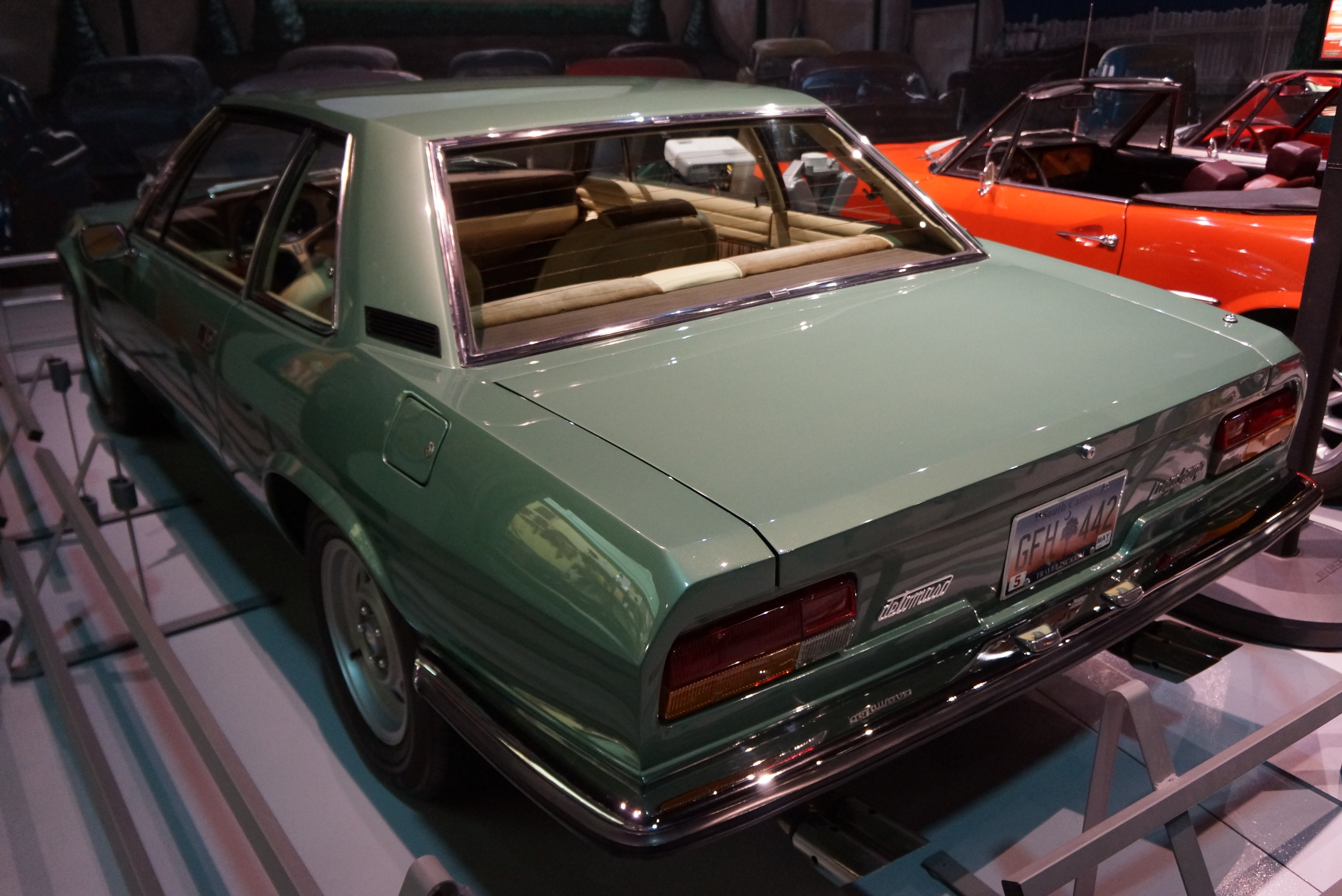
The show included vehicles that required an explanation how they passed the entrance exam, as two of them had big American V8 engines, and one had a British 4-cylinder lump. The DeTomaso Longchamp and Italia Omega are vehicles belonging to a class long known as ‘hybrids’ (decades before that term was used to describe a gas/electric vehicle).
Most car aficionados have heard of the DeTomaso Pantera, sold here by Lincoln-Mercury dealers in the early 1970s. The Longchamp is the squared-off, four-seat sister to the Pantera. The one on display featured a Ford 351 Cleveland engine mated to a 3-speed automatic. I’ve seen many a photo of Longchamps, and this was the first one I’ve ever seen in the metal.
DeTomaso Longchamp
Longchamp rear shows hard edges
The car labeled as a 1967 Italia Omega is more familiarly known to me as an Intermeccanica Italia. Based on my reading of the car’s placard, the history of this car company is convoluted at best. (Indeed, none of the several import-based compilation books in my library make any mention at all of this company.) The vehicle in the museum was an attractive convertible, using a front-mounted Ford 302 V8 paired with a 4-speed manual transmission.
Italia Omega has LONG hood
Interior shows Italian sumptuousness
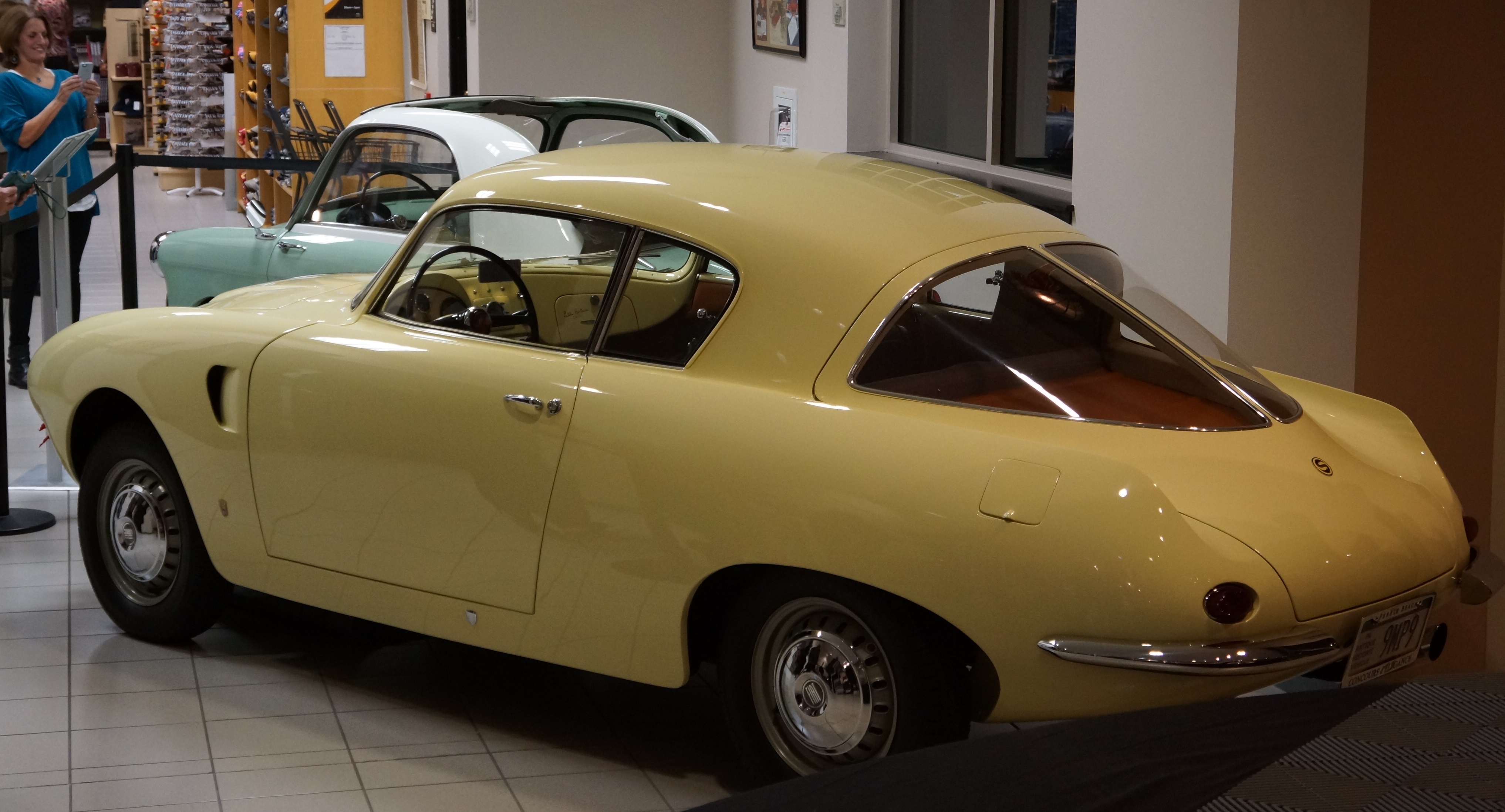
The 1961 Triumph Italia on display is one of 329 built. While the design is certainly in the Italian mold, the sheetmetal hides what is essentially the drivetrain and chassis of a stock Triumph TR-3. One of the outstanding features of the Italia is that it is the handiwork of a young Giovanni Michelotti, who would later pen the restyle of the TR-4 into the TR-6.
1961 Triumph Italia, with TR-3 mechanicals
Scan through the photos below for shots of other vehicles which were on display. (And as always, click on any of the photos to enlarge them.)
Among the motorcycles, which are not my primary interest, I could not help but be drawn to the 1958 Iso Moto, built by the same company that originally designed the Iso Isetta. Like the Longchamp, it was a first for me to actually see one of these in person.
The “Amore della Strada” exhibit runs through April 22, 2017. There’s plenty to see at the Museum besides the Italian stuff. If you’ve never made the trip, this is a good excuse to do so. If you have, the Italian cars are a nice addition to what you may have seen before.
1960 Fiat Autobianchi
1954 S.I.A.T.A, with Fiat 8V engine
1957 Vespa 400, designed in Italy but built in France
1971 O.T.A.S. 820 Grand Prix, built on Fiat 850 chassis
This 1954 Fiat 1100 wears custom bodywork reminiscent of the Alfa B.A.T. cars
Unlike the cars, the bikes fit into one room
Yes, it’s an ISO; same parent company as the Isetta and the Griffo
The Antique Automobile Club of America (AACA) hosted their Eastern Division National Fall Meet for the umpteenth (61st) time in Hershey PA during the first week of October this year. As someone who has attended “Hershey” at least 25 times over the years, I find myself asking “what is it that keeps drawing the crowds?”
Car Corral merchandise lines up on the perimeter road
After all, as has been reflected in numerous posts here as well as within every publication which covers collector cars, the old car hobby has changed in so many ways. The Internet, obviously, has driven transactions online. The greying of the hobby means that the aging boomers, who may finally have the means to buy that dream car, will buy it not as a project, but as a restored, ready-to-go vehicle, and may pursue that dream at an auction. Younger generations are not showing interest in 25-year-old and older stock vehicles, and frankly may be reluctant to join a club with the word “Antique” in its title.
Bargains still available, you supply the labor to restore
This blog has now been up and running long enough that some annual events are being reported for the second time. And so it is with Hershey. It may be instructive to revisit what was said a year ago: in essence, thanks in large part to its six-decade history, Hershey continues to be the go-to place for cars and parts which can be found in few other places, in person or online.
Two well-known hobby names in attendance
The sheer size of the event, with its combination of old-fashioned flea market, car corral, and judged car show can account for the crowds. (Again this year, the influx of foreigners was huge.) Weather may sometimes play a role (who remembers the Hershey mud?), but even that is a relic of the past, as the entire flea market and corral are on pavement.
Wooden road wheels and steering wheels
There certainly are things to see and do which cannot be duplicated on a tablet screen. For example, Hagerty Insurance, as they did last year, ran a “Search, Build, Drive” contest whereby they would purchase a project vehicle from the Car Corral, and bring it to running, driving condition using parts found in the flea market. And one more small detail: they challenge themselves to accomplish this within the 4 days of Hershey. You can read more about it here.
The Hagerty Team hard at work on this year’s Ford Model A project
Due to personal commitments, I was unable to attend Saturday’s judged meet this year. I did attend the RM-Sotheby auto auction, held about a mile away at the Hershy Lodge, which will be covered as a separate blog post.
Caffeine oasis in the flea market
The bulk of this post will be a report on a random sample of cars, domestic and foreign, in the Car Corral. While there are hundreds of cars for sale, I’m especially drawn to both imports and to orphan makes. Comments about each car follow the photos.
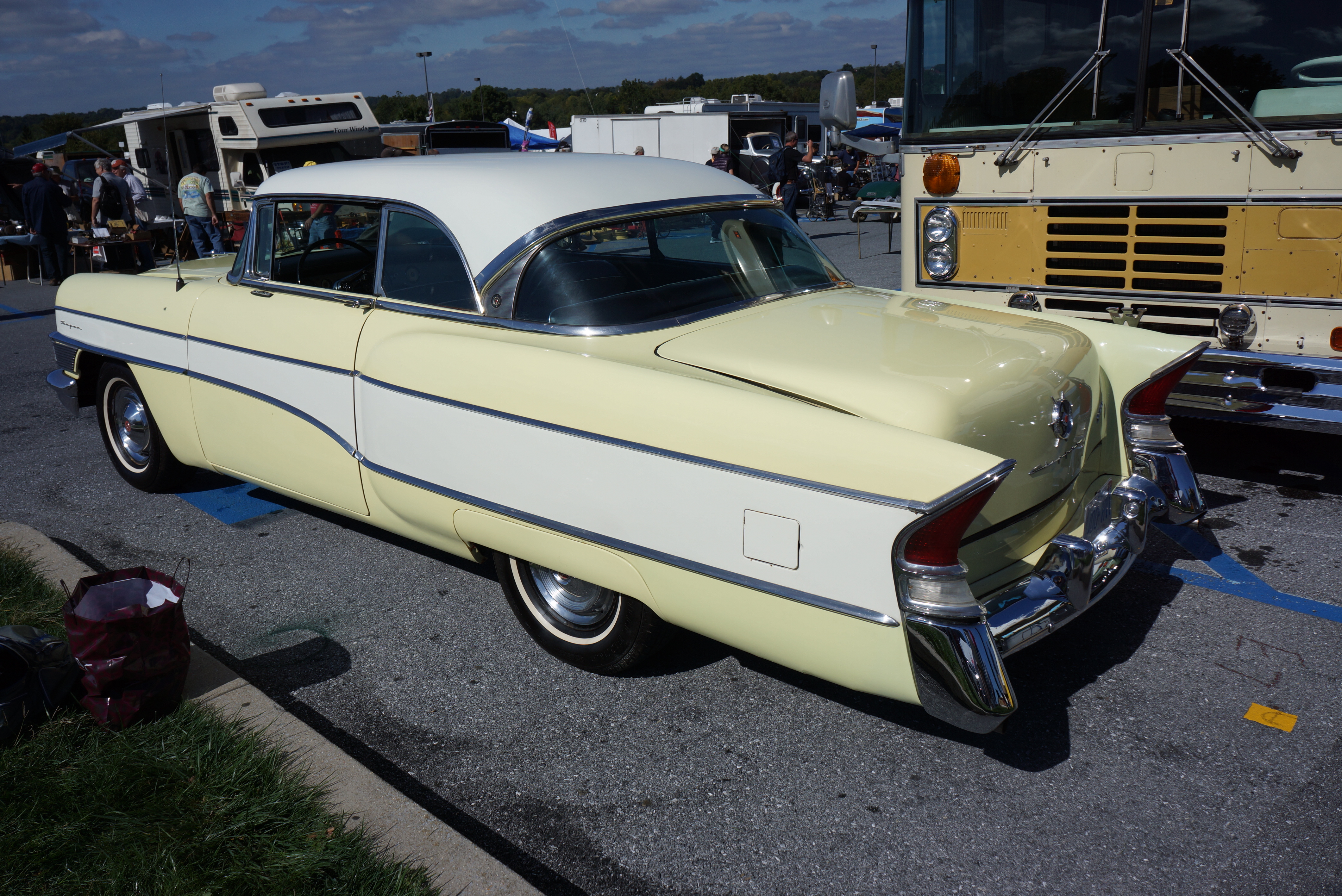
1956 “Clipper by Packard”
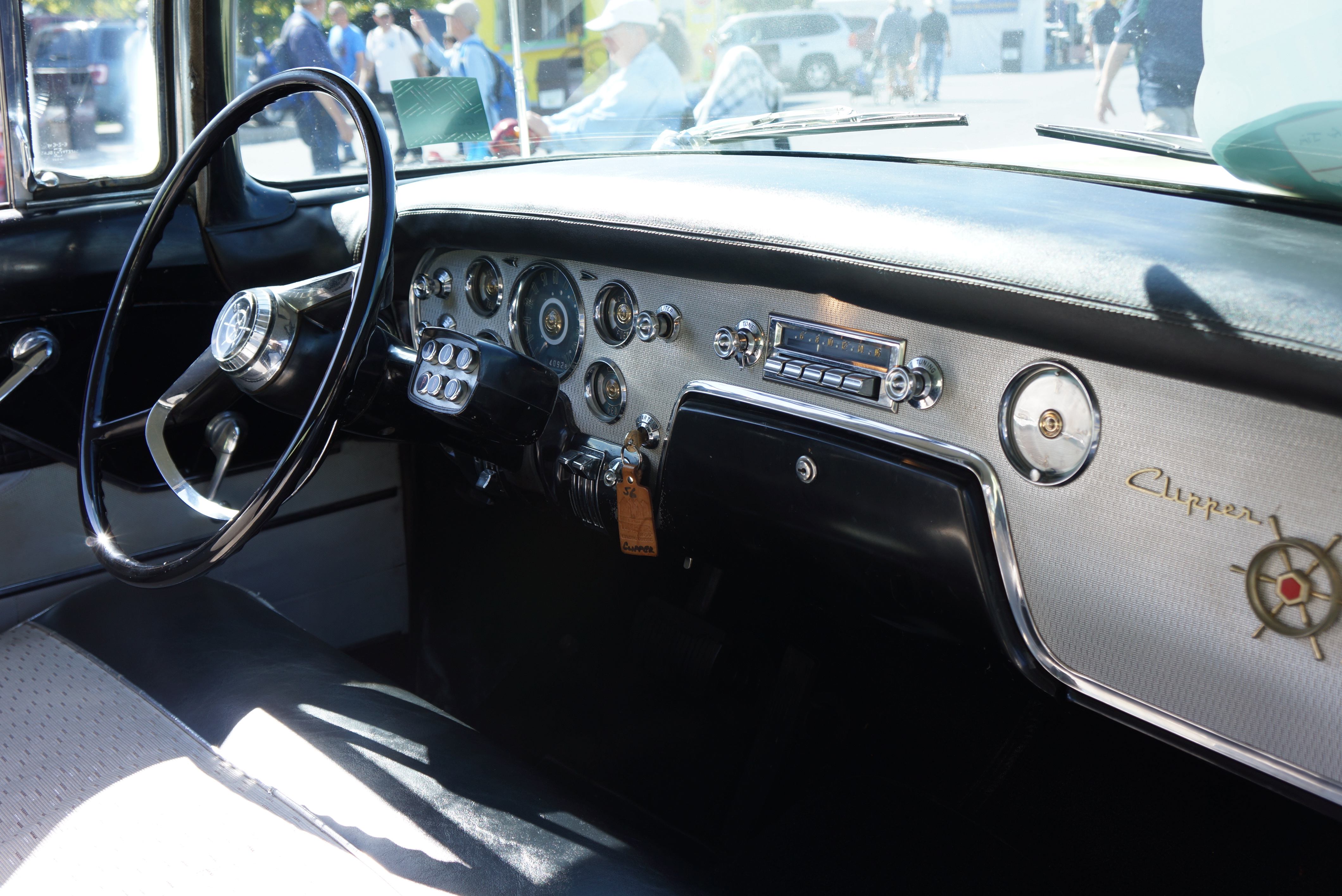
Dig the buttons on a stalk
This 1956 Packard Clipper 2-door hardtop was driven down from Ontario, Canada to the meet. It allegedly had 40,000 original miles, but much of the lower body was wavy with Bondo. The ask was $14,750. If that were Canadian bucks, it would be an even better deal.
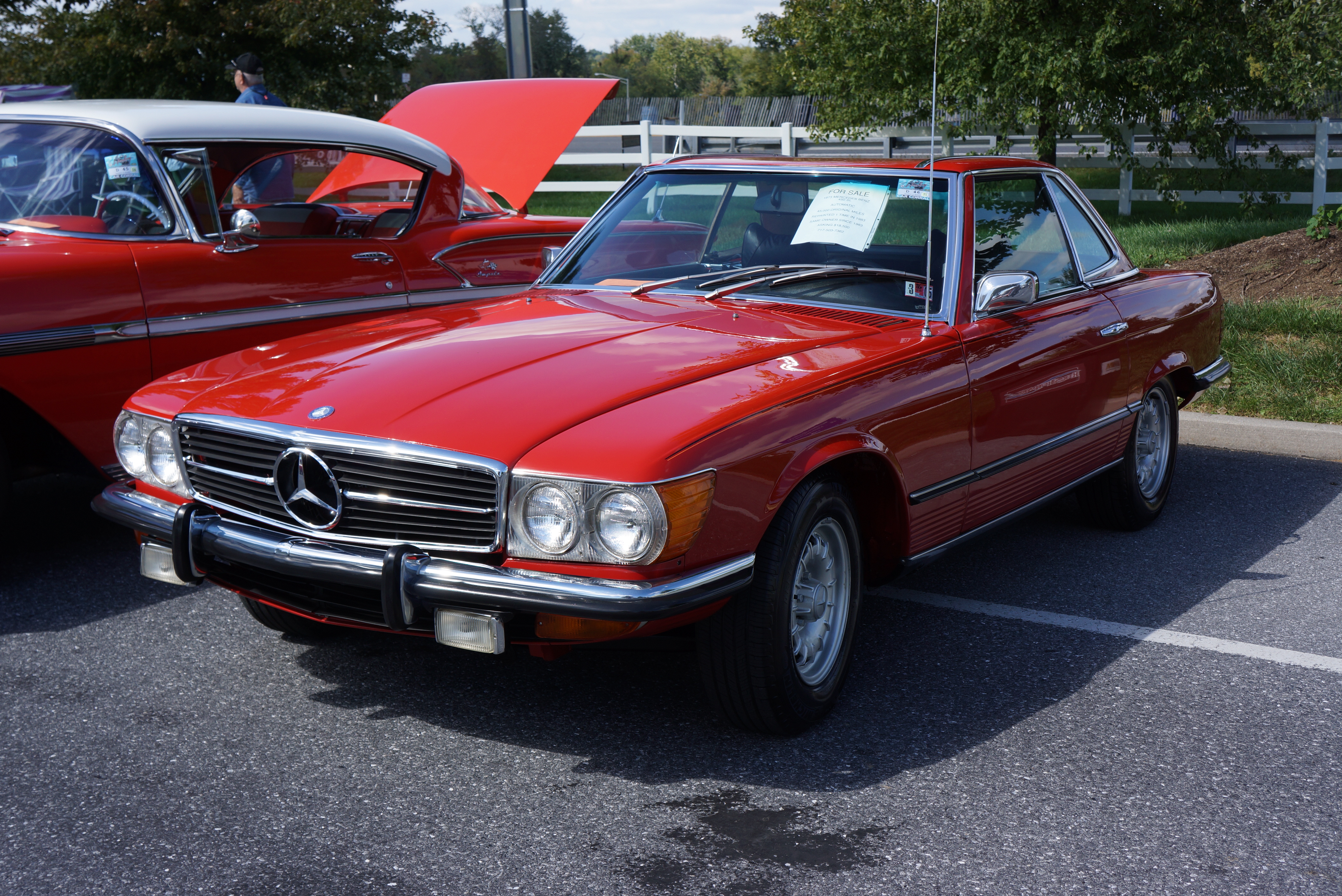
1973 Mercedes Benz 450 SL
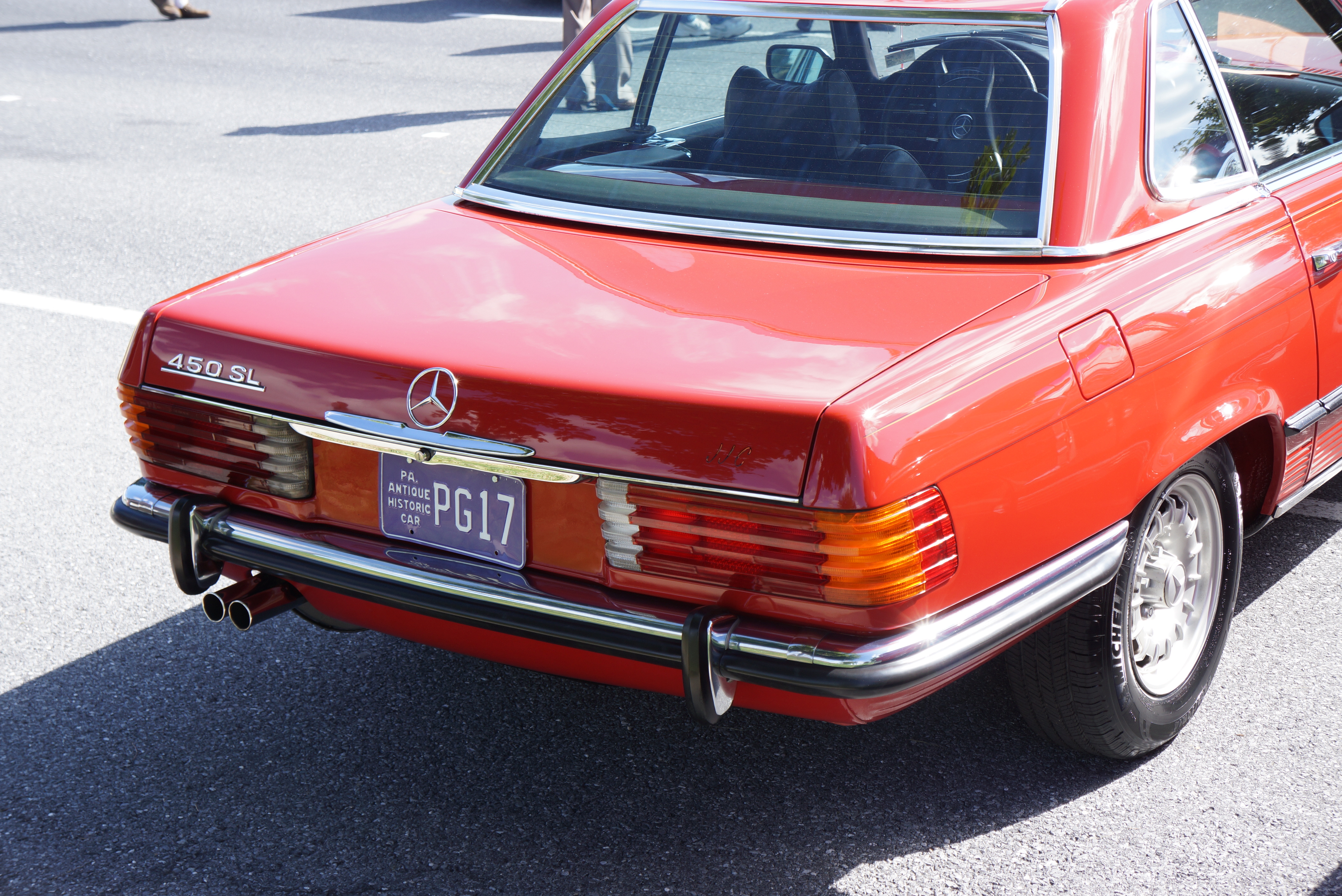
Rear bumper as streamlined as front
This generation of the Mercedes-Benz SL (known as the “107” chassis to the devoted) was sold here from 1973-1989. We are so used to seeing them with their diving-board bumpers that we forget how elegant the original design was. This ’73 U.S.-spec car reminds us. This car claimed to have 45,000 original miles, and the owner was asking $18,500.
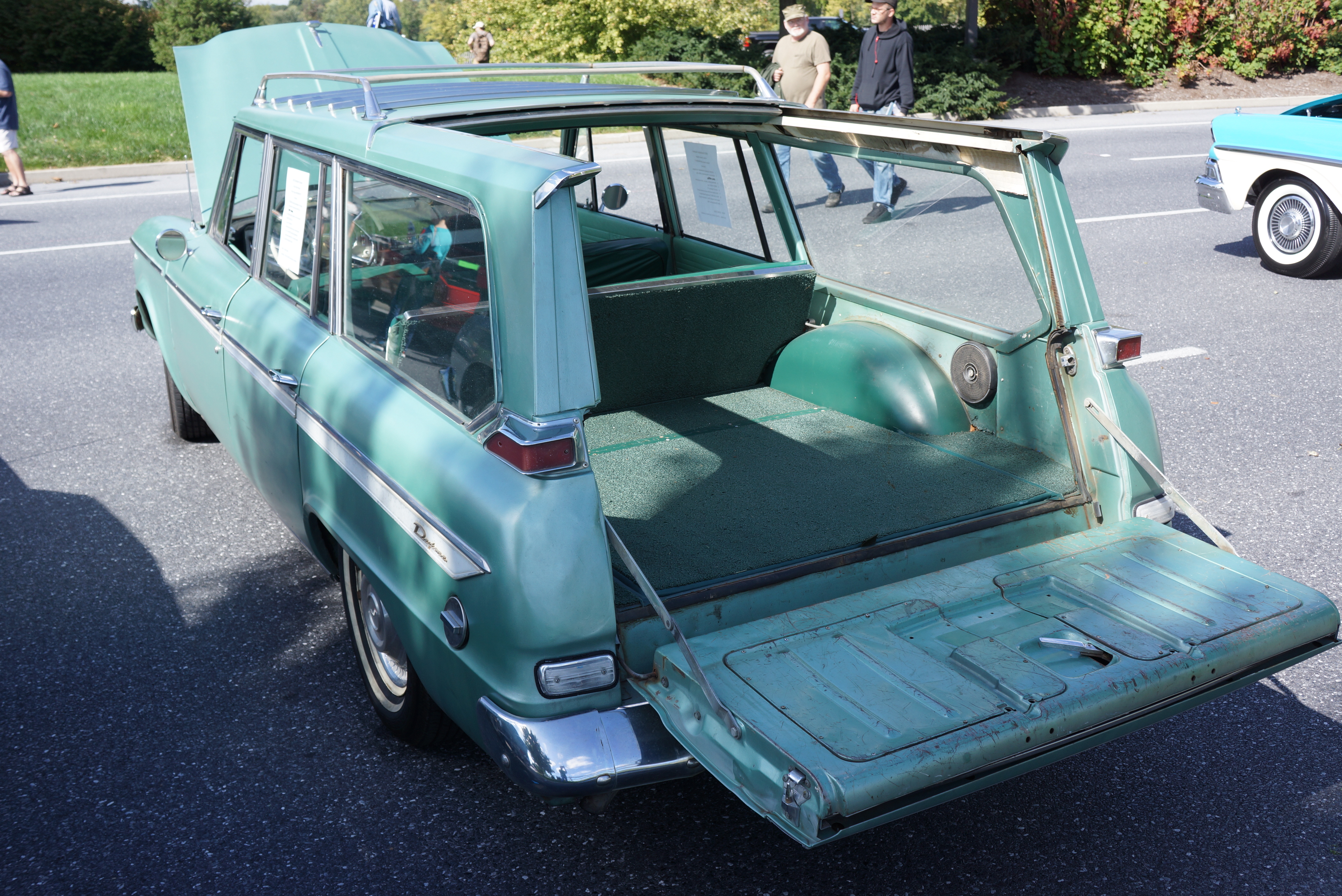
Wagonaire featured sliding roof panel
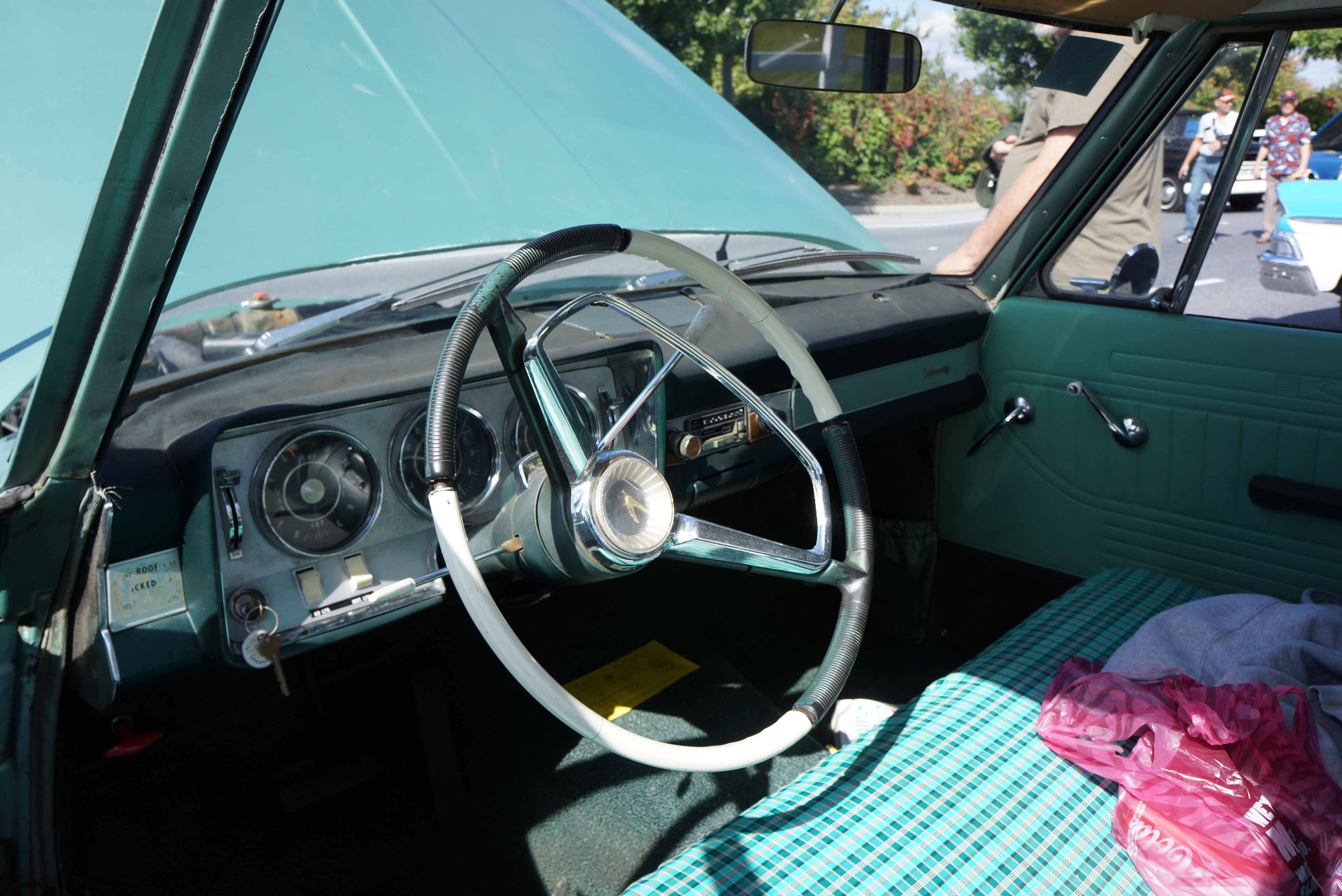
Wagonaire interior
This 1963 Studebaker Wagonaire was rough around the edges, but it looked like it was all there. Price was $7,500 OBO. It was the only one at Hershey.
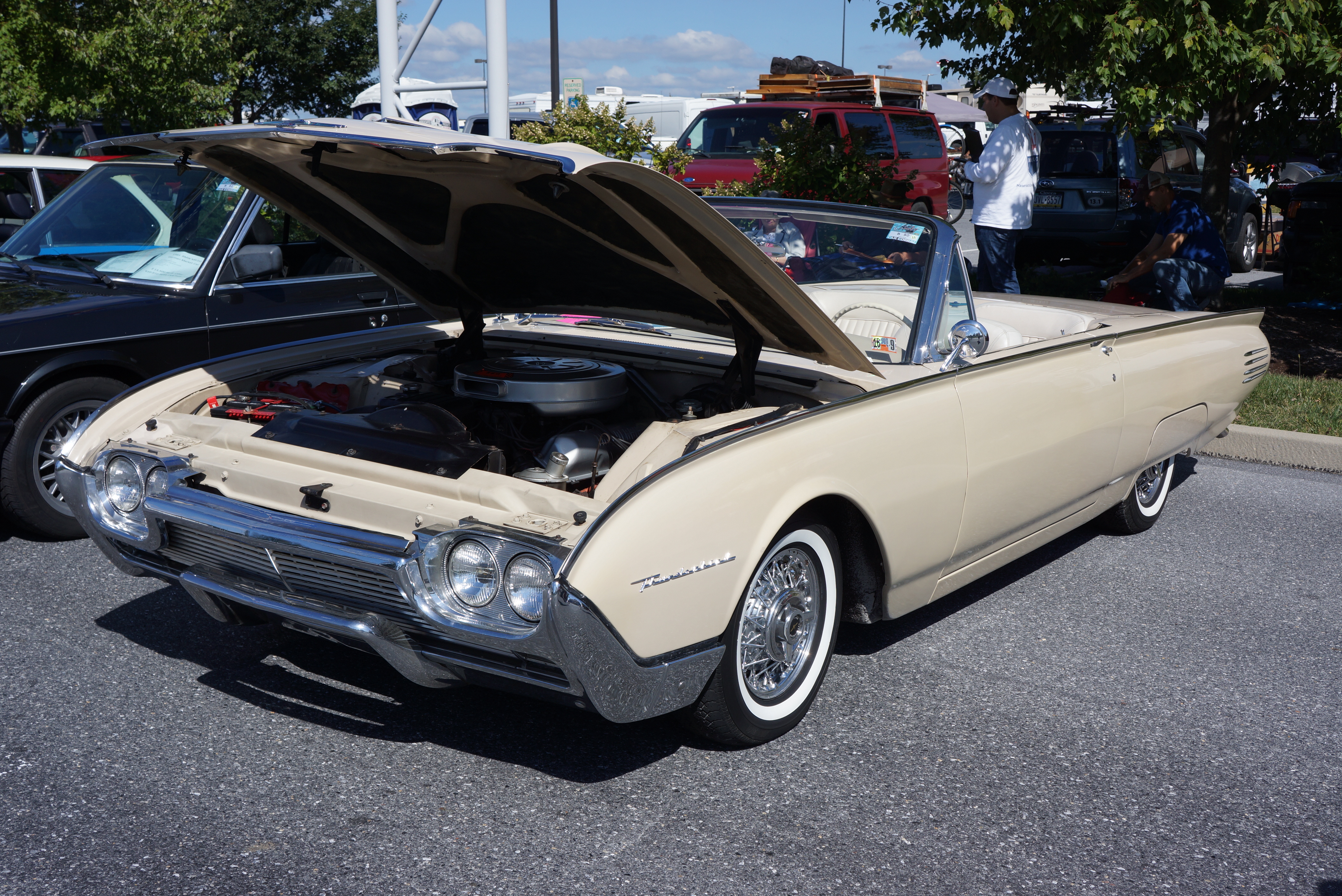
1961 Ford Thunderbird
T-Bird wrap-around dash
This ’61 T-Bird was claimed to be highly optioned with power steering, brakes, top, windows, and seats. It also had wire wheels. The beige-on-beige may not be your first choice, but I liked it. Asking $24,000 “cash! Priced to sell!”
1987 Alfa Romeo Graduate Spider
Alfa dash had gone electronic
The sign on this 1987 Alfa Romeo Graduate Spider gave little info other than “Low miles, $9,900“.
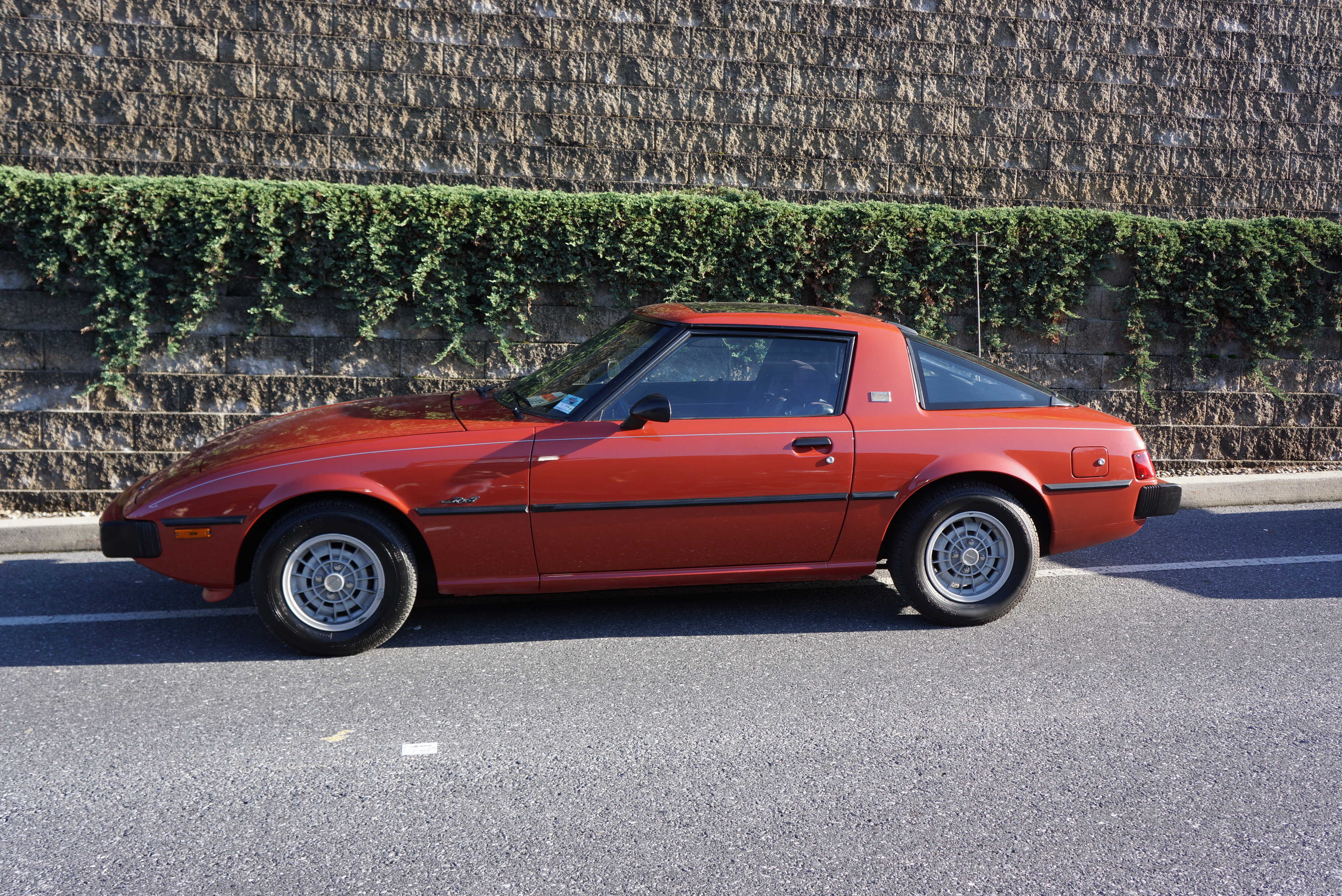
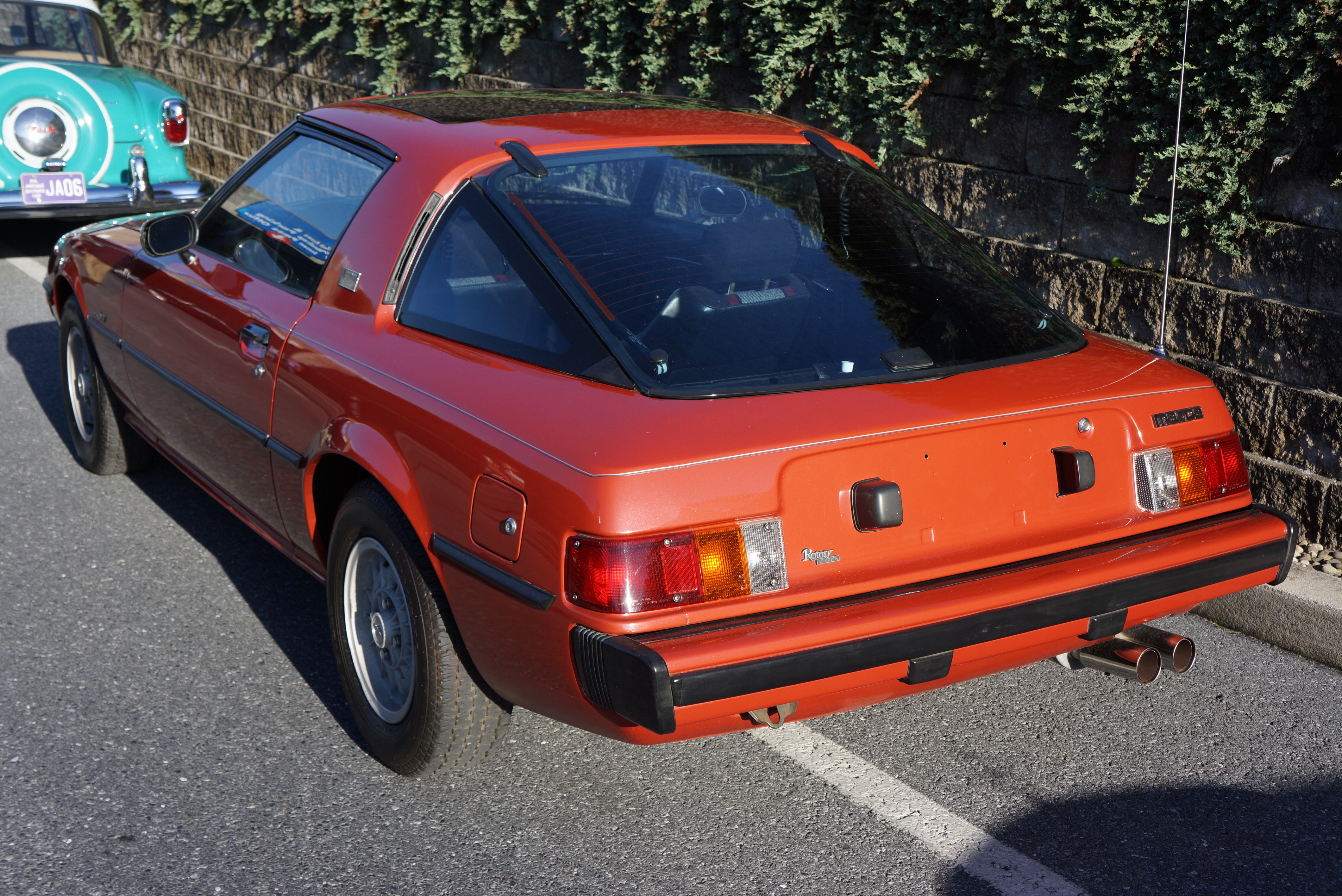
1980 Mazda RX-7
’80 still had original rear styling
This 1980 Mazda RX-7, a first-generation car, still wore the original tail light design, which was updated a year later. The sign claimed this car was an Anniversary Edition (whatever that is), and with 63,000 miles, the ask was $9,800.
1977 Jaguar XJ6-C
Interior shows auto, torn seat
This 1977 Jaguar XJ6-C is a rare 2-door version of the better-known XJ four-door sedan. My recollection is that 100% of these vehicles had factory vinyl roofs. This one’s was removed in favor of black paint. The car looked like it had needs, and these are known to be rust-prone, so check carefully before you pay the $12,500 asking price.
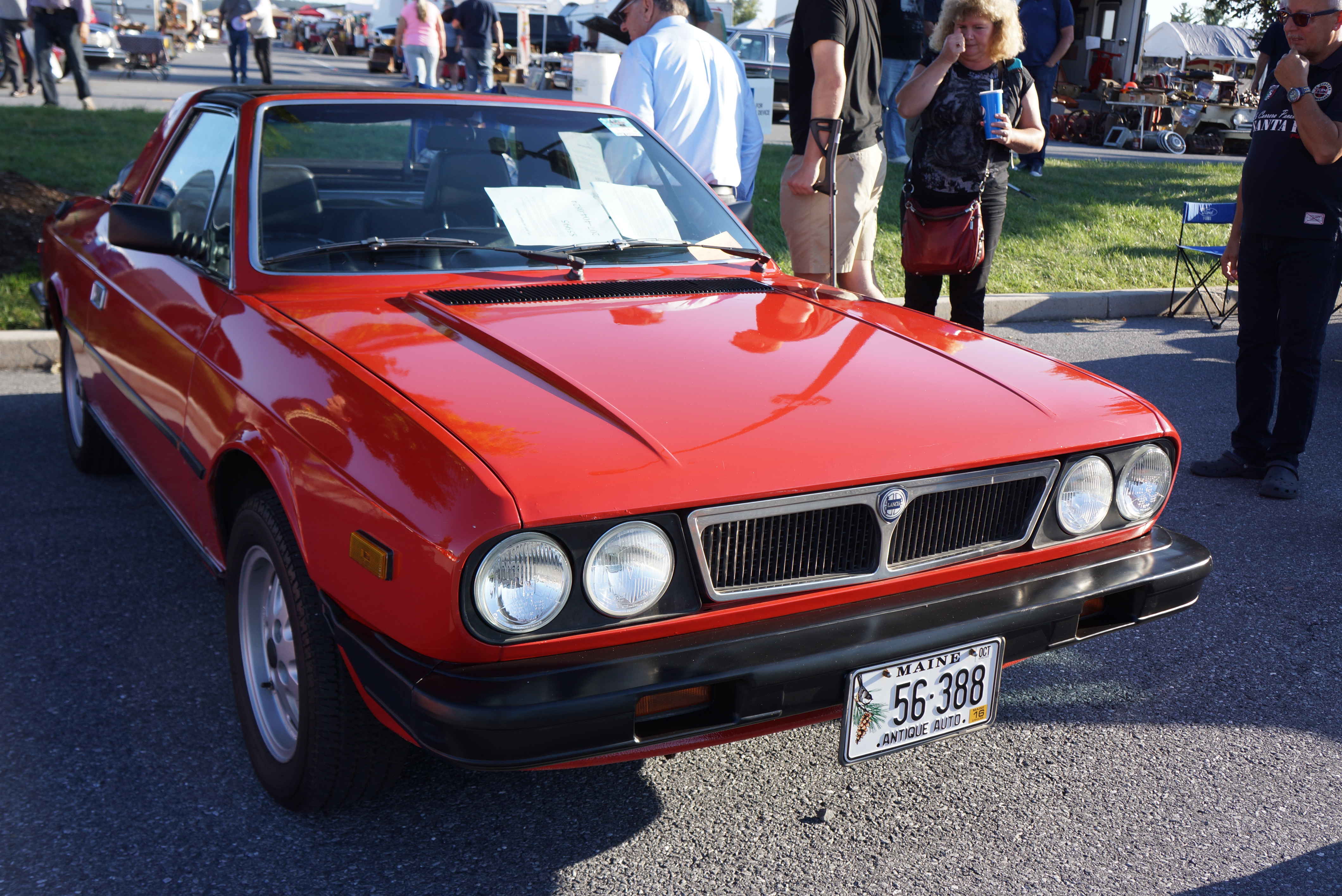
1982 Lancia Beta Zagato
Clean interior supports mileage claim
This 1982 Lancia Beta Zagato is from the final year of U.S. sales for this Italian import. Like the Beta coupe, the transverse engine drove the front wheels. The Zagato version has a fold-down soft rear window plus a removable targa top, giving an almost-convertible feel. The sign claimed 59,000 pampered miles, and it looked it. The owner was asking $5,995.
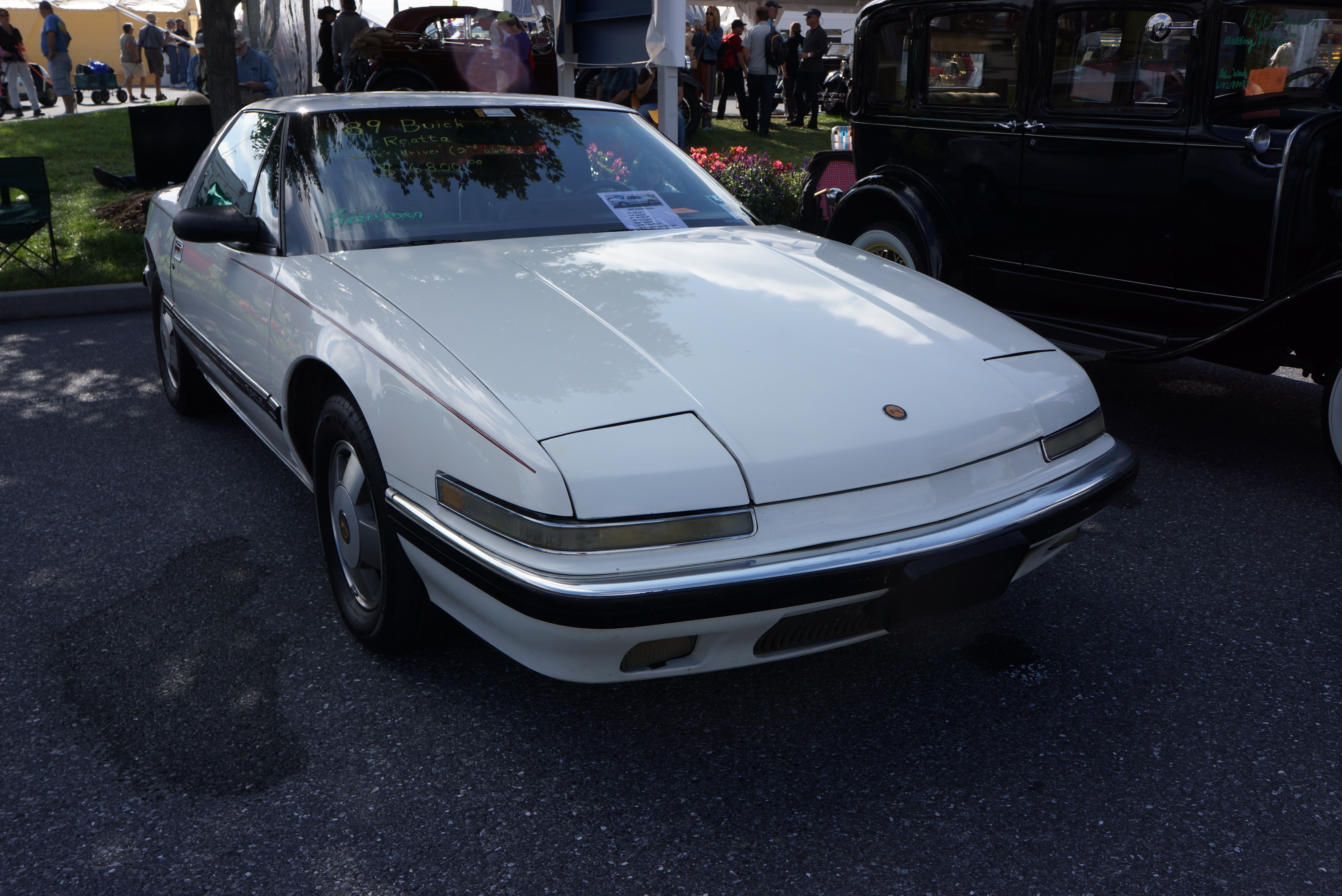
1989 Buick Reatta
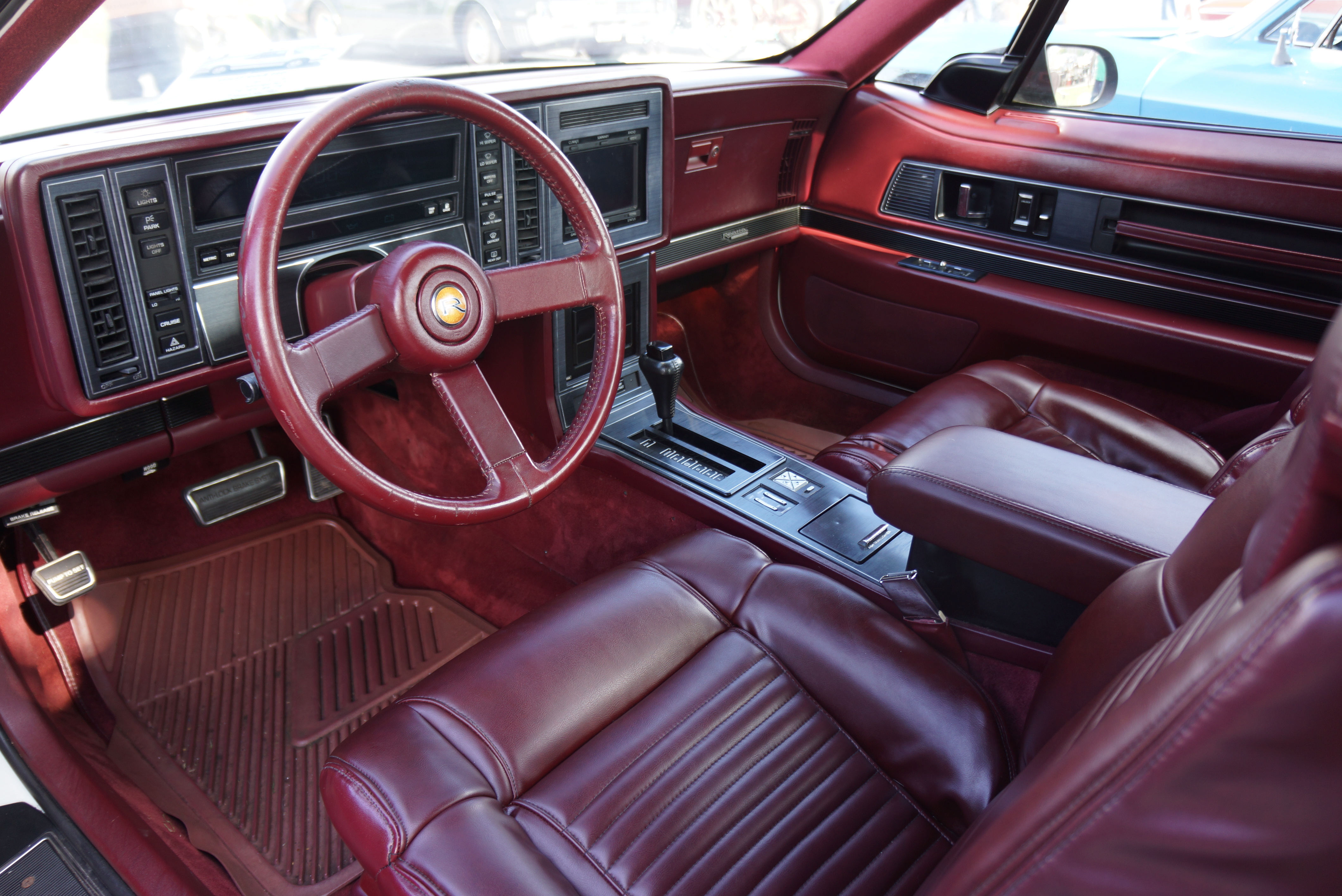
Very clean red leather interior
The Buick Reatta has been on the “appreciating future collectible” list for so long that I think most people have forgotten it. There are always a few for sale, and this one’s colors and condition made it stand out. The sign claimed it to be a two-owner car for only $6,800.
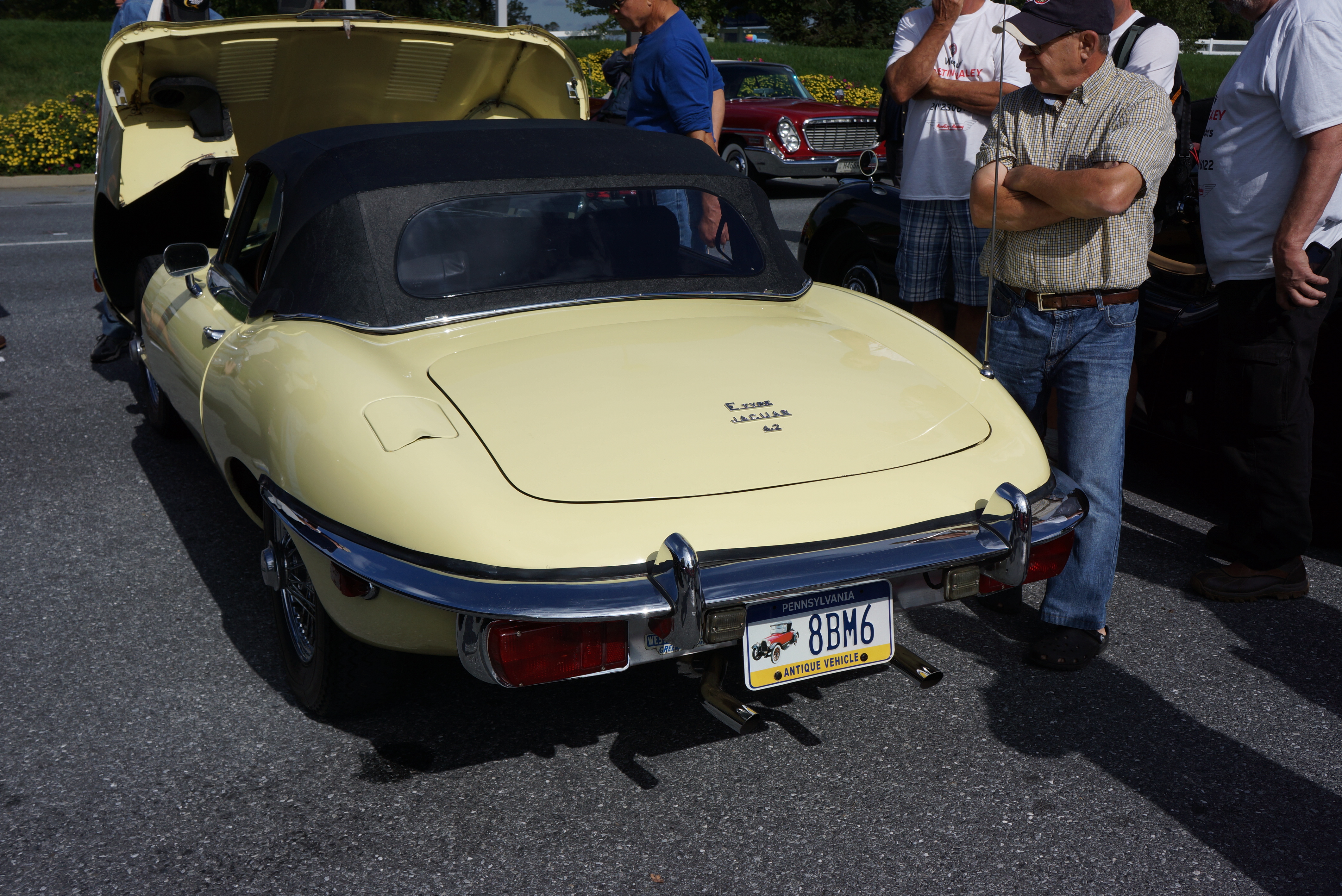
Series 2: tail lights under bumper, no fender flares
Stock interior, correct wood wheel
This 1969 Jaguar E-Type OTS (Open Two Seater) was claimed to be an unrestored original car with only 48,000 miles. Primrose yellow is one of my favorite E-Type colors. If solid, it may be a good buy at $75,900.
1971 Continental Mark III
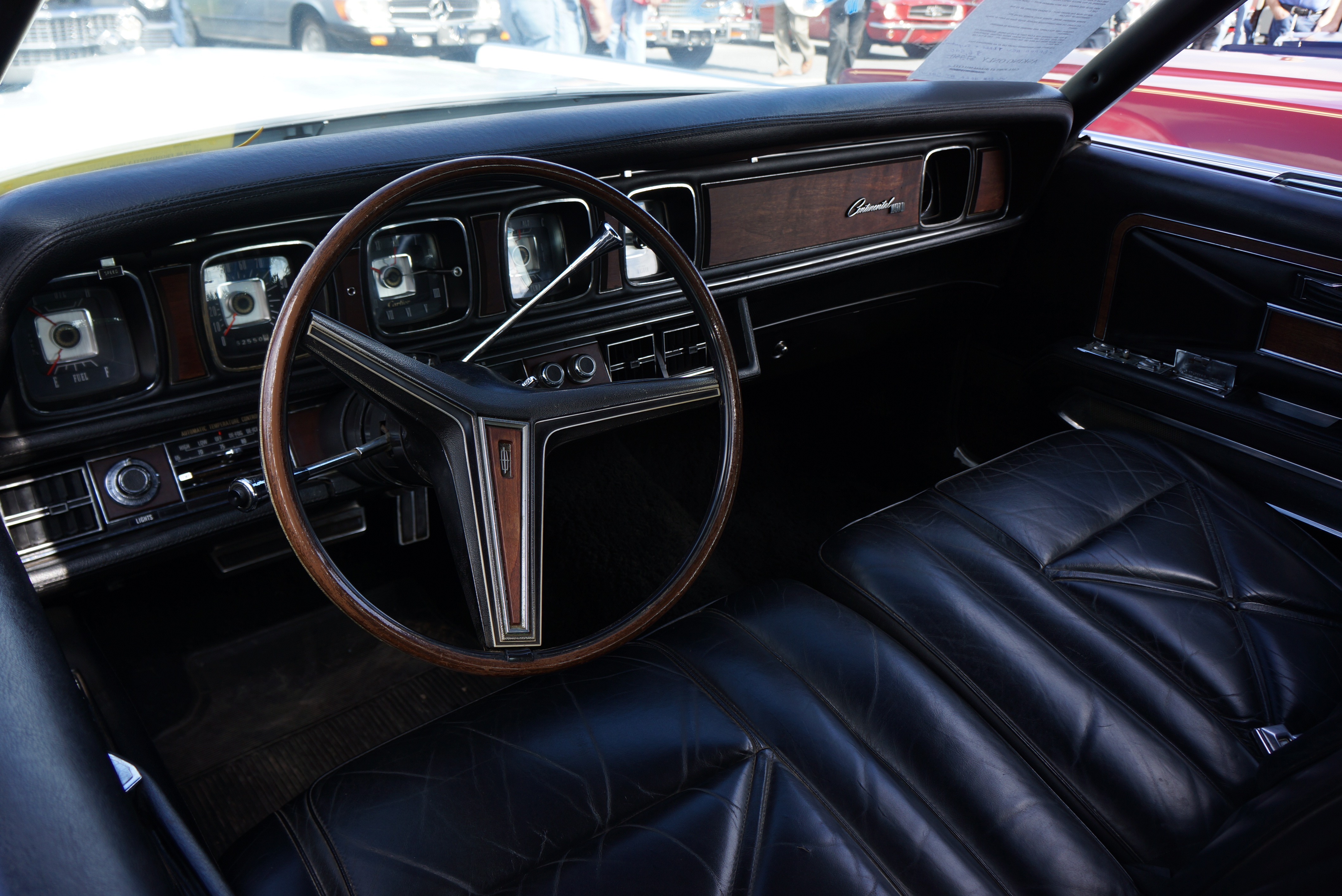
Mark III interior
This 1971 Lincoln Continental Mark III was alleged to be a 62,000 mile all-original car. A little bland in white with a black vinyl top and black leather interior, it would look good in your garage (provided it fit) for only $6,500.
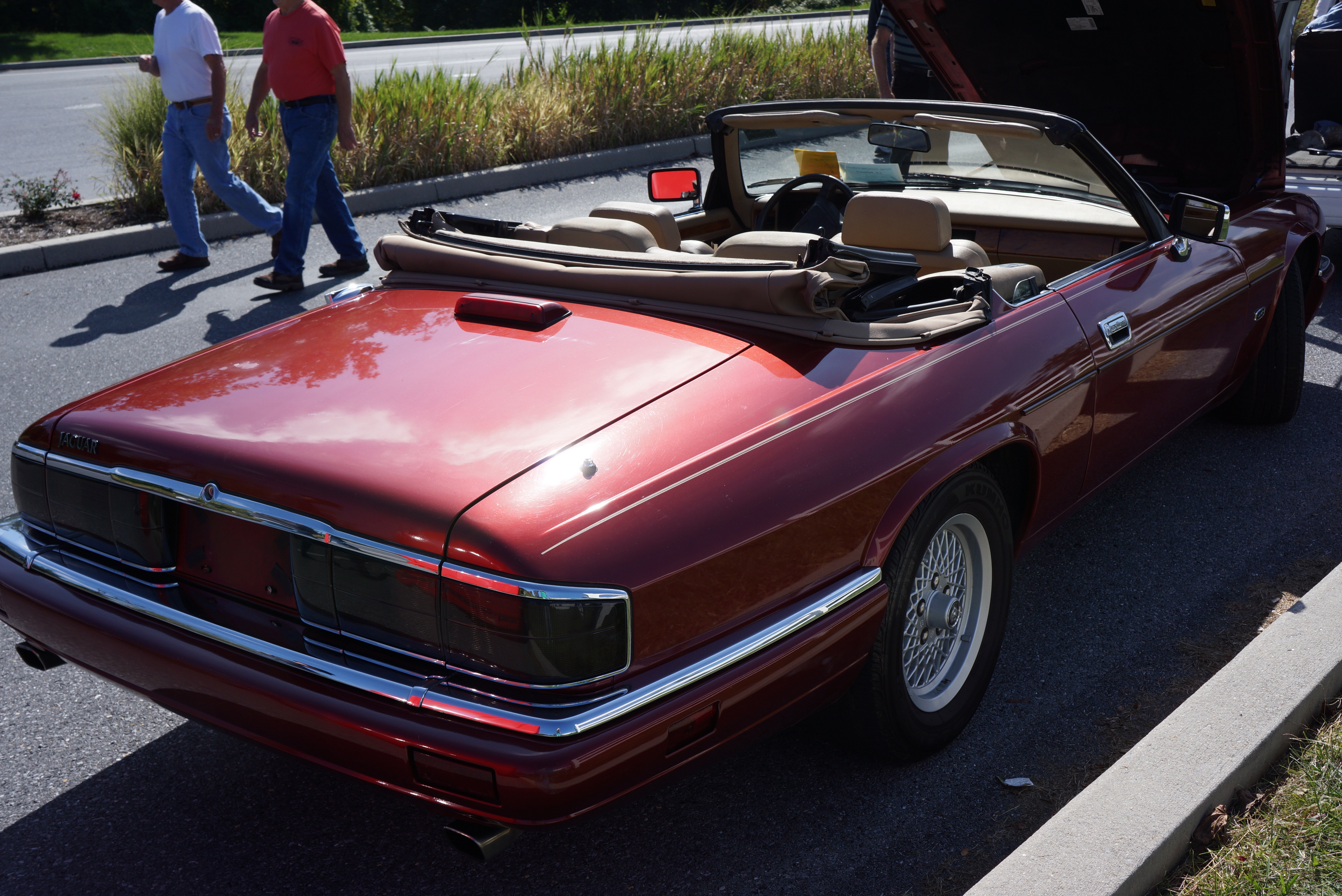
1994 Jaguar XJS convertible
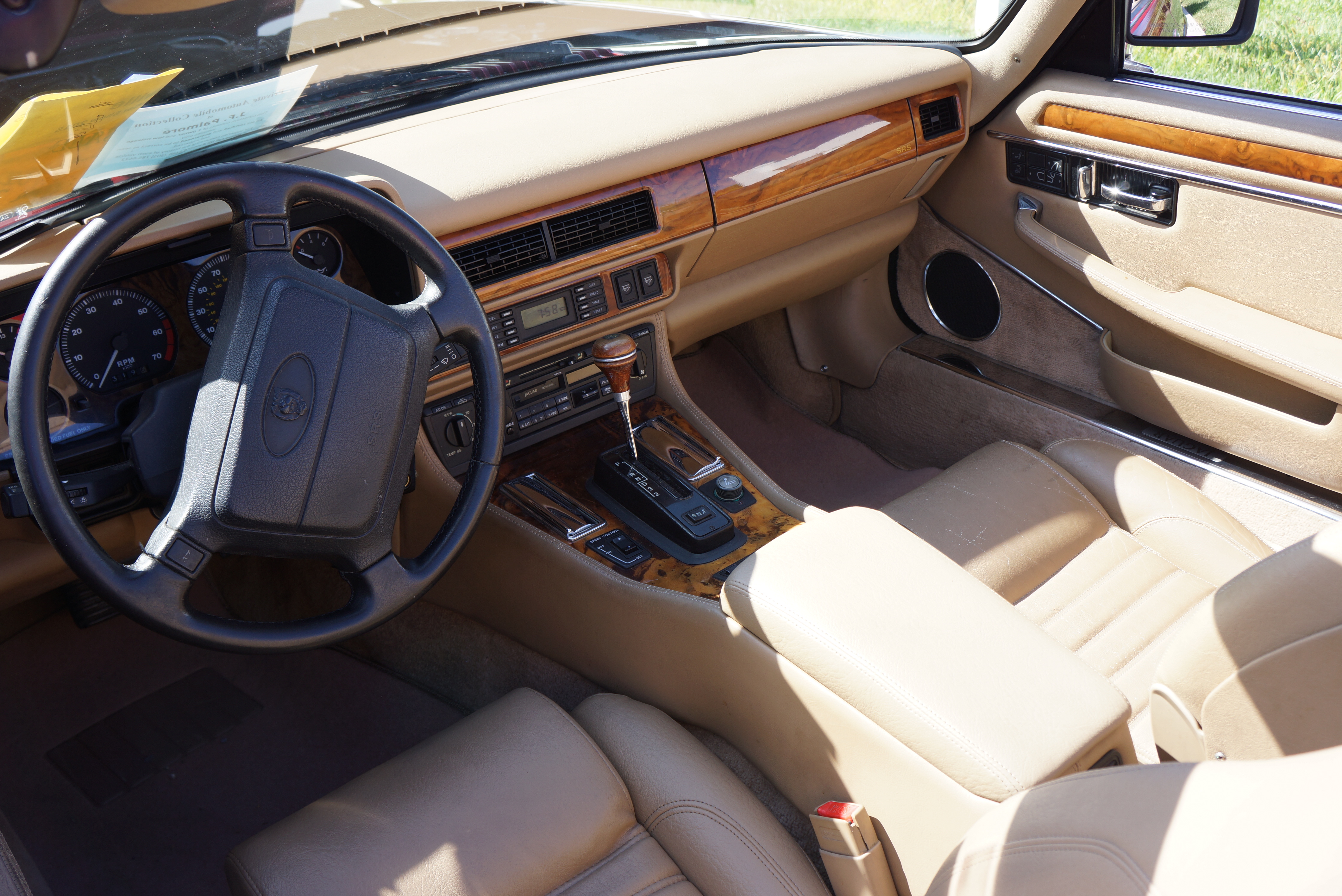
All U.S. XJS’s were automatic
This 1994 Jaguar XJS convertible had the 4.0 six-cylinder engine, but had bad paint, with clearcoat failure on several horizontal surfaces. The ask was $7,850 /offer.
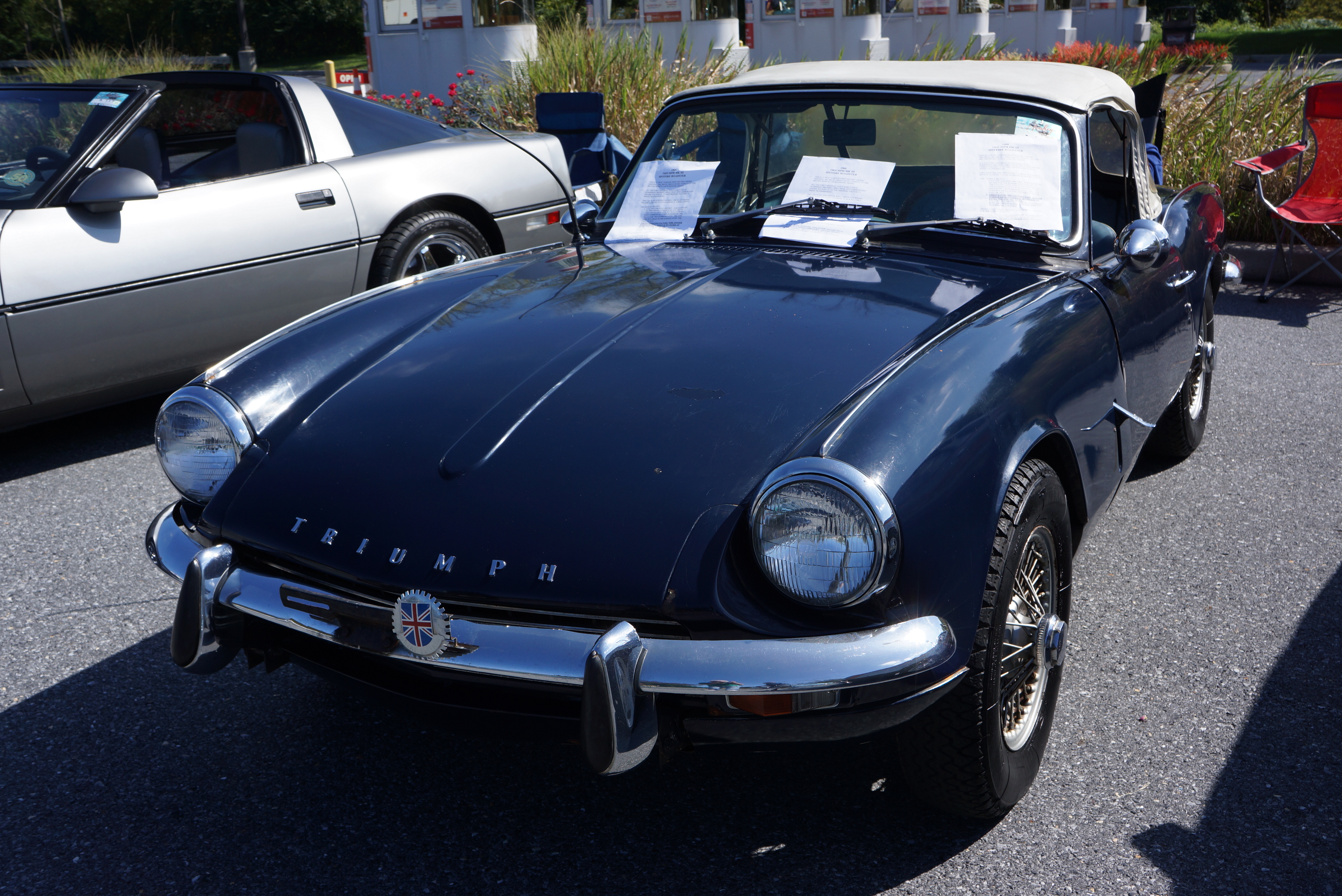
1968 Triumph Spitfire
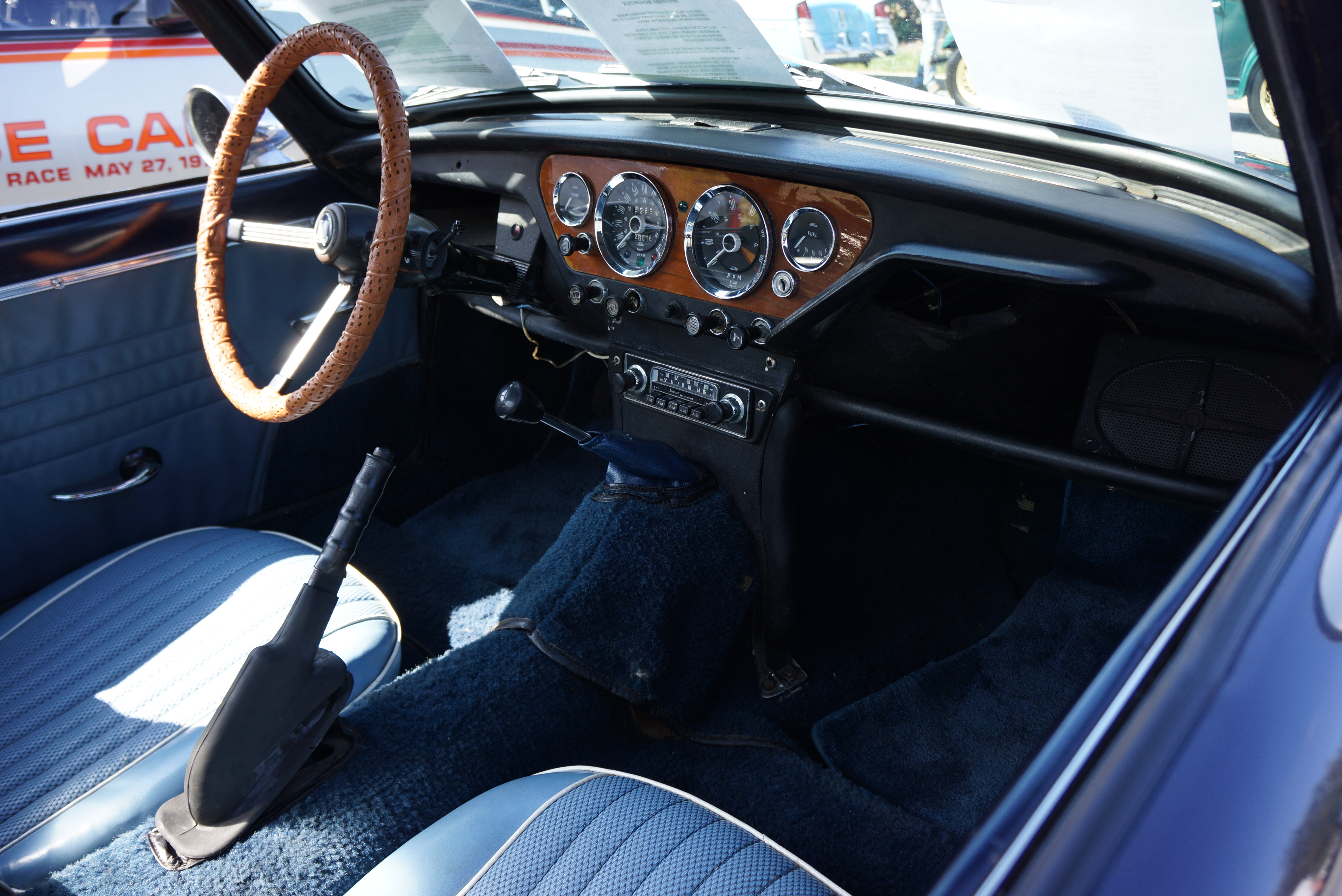
Spitfire interior
It’s rare to see a Triumph Spitfire this old that has not turned into a pile of iron oxide, but this 1968 appeared to be all there. Sure, it needed work, but it looked like you could drive it on weekends and attend to its needs during the week. The sign claimed that this car had been put away in storage between 1986 and 2015, and that accounts for the 28k original miles. The price, you ask? $4,975.
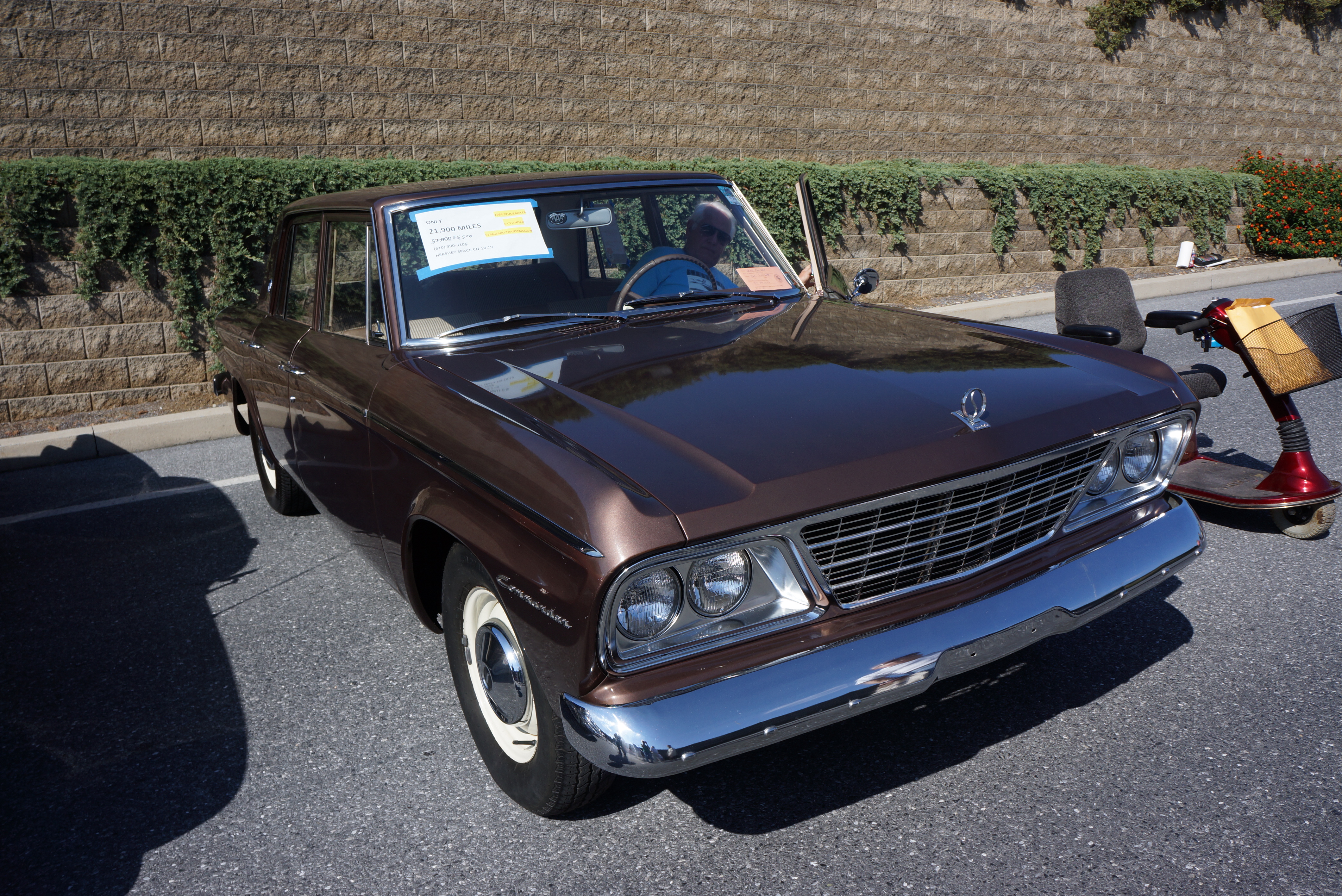
1964 Studebaker Commander
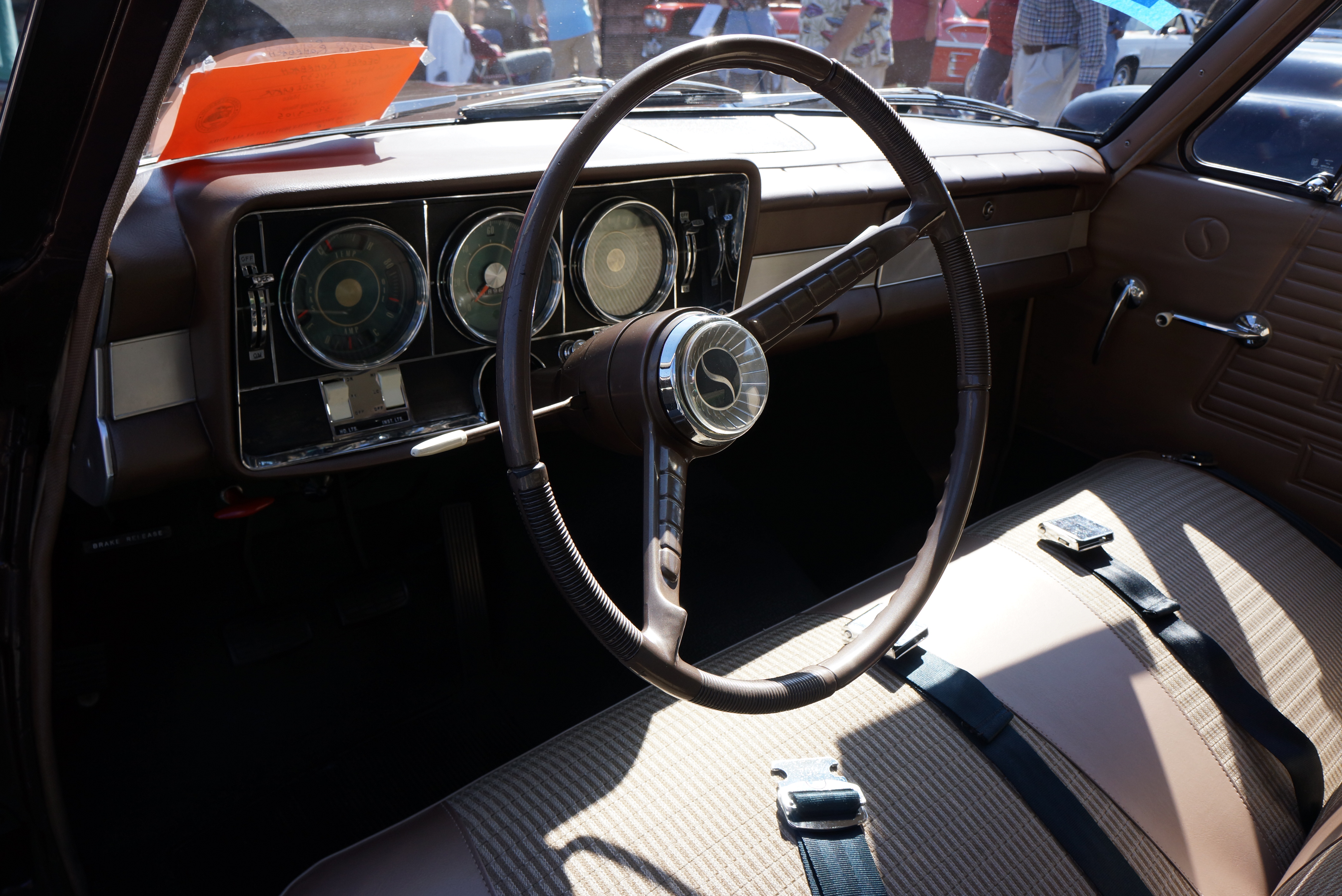
Power-nothing interior
This 1964 Studebaker Commander (in Bermuda Brown Metallic, the same FACTORY shade as the GT Hawk at Carlisle last week) had 21,000 original miles on it, was an unrestored car, and looked it. We had a lengthy discussion with the owner, who pointed out that the only option on this 6-cylinder engine, 3-speed manual car was a cigar lighter. He was asking $5,500.
1972 Triumph TR-6
Nice TR-6 interior, non-original wheel
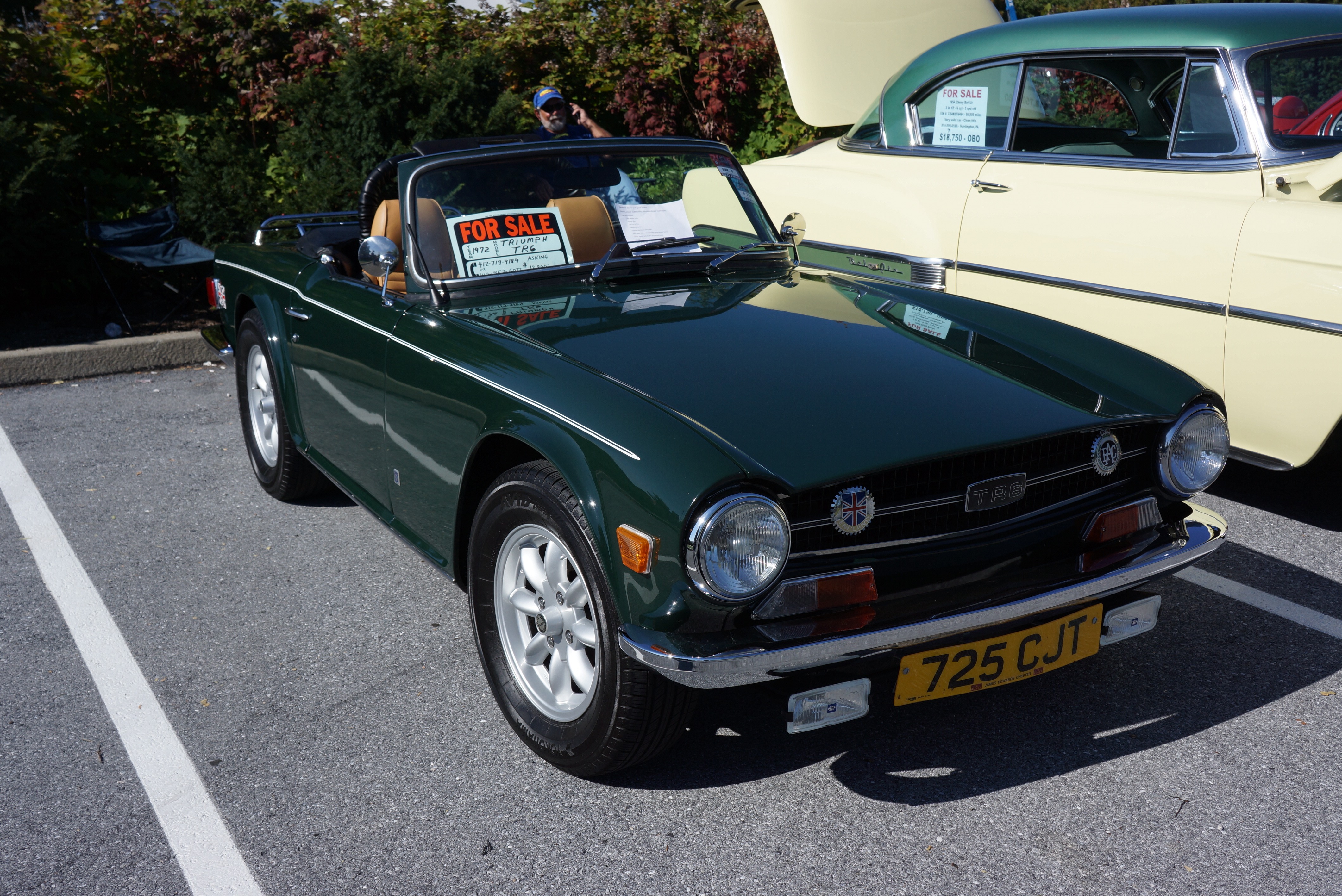
There were several Triumph TR-6s in the corral, and this was one of the nicer ones. A 1972 model has the smaller bumpers, and this green-over-tan car was nicely set off by oversize tires on Panasport wheels. The mods continued under the hood with dual Webers. It was cosmetically spotless. The owners were asking $12,900.
1958 Triumph TR-3
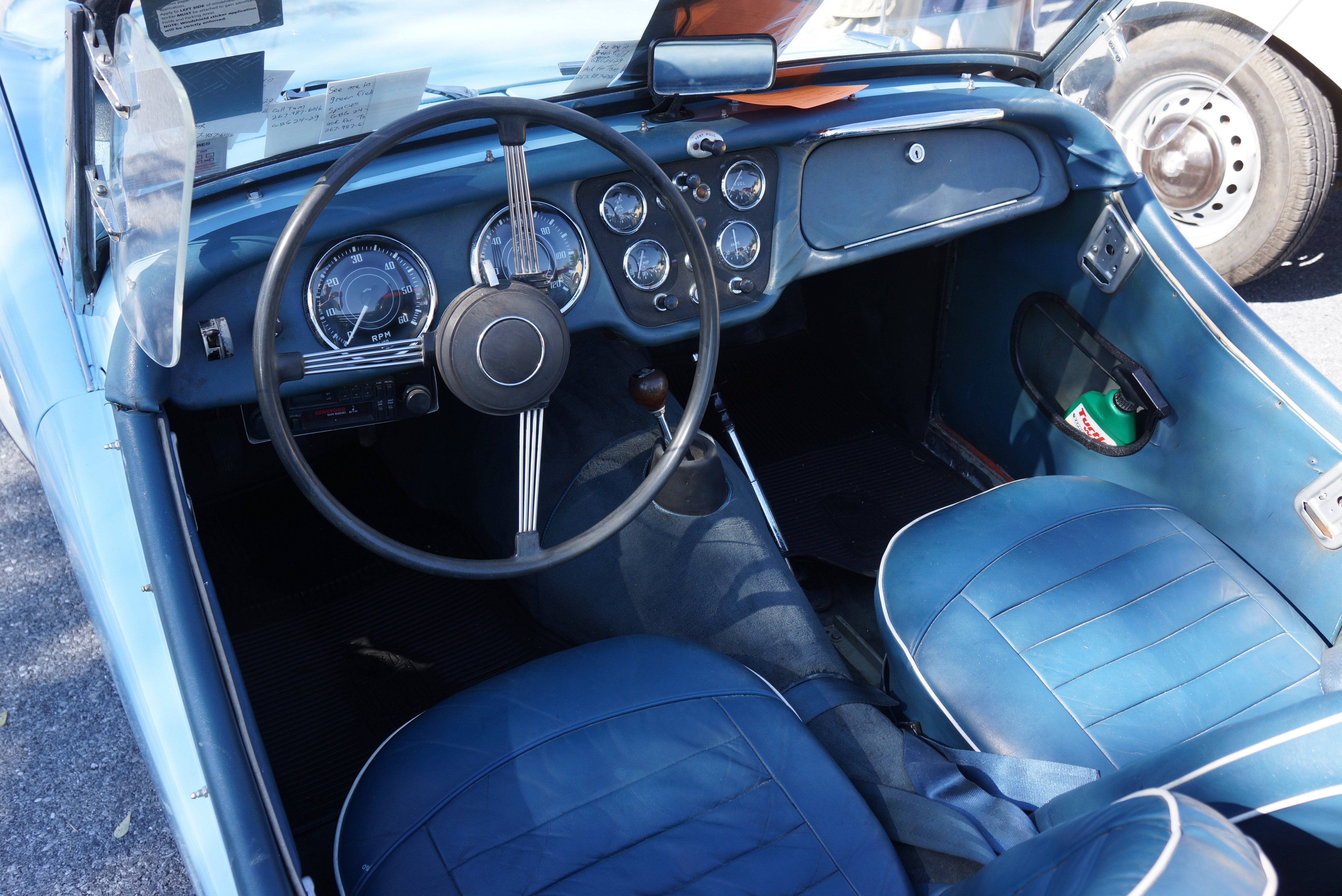
TR-3 interior; keep your arms in
This 1958 Triumph TR-3 was in baby blue over a medium blue interior, with whitewalls on chrome wires. It looked like you could hop right in and go for a cruise. This “older restoration” was for sale for $17,900.
1966 Lincoln convertible
Last of the American 4-door ‘verts
This 1966 Lincoln Continental convertible was parked next to an identical model from 1965. It was interesting to note the styling changes, both inside and out, with my vote going to the ’66. This one was cosmetically less attractive, but it had the more reasonable asking price of $20,000.
1971 Jaguar E-Type Series III
All Series III cars had longer wheelbase
This 1971 Jaguar XKE Series III coupe, again in Primrose yellow, was claimed to be a 97,000 mile unrestored car (you may have noticed the continuing trend toward “unrestored / all-original / barn find” cars for sale). All Series III cars rode on the longer 2+2 wheelbase and used the V-12 engine. This one was a stick (many Series III cars were automatic). There were rough spots, but it was about as reasonably-priced an E-Type as you’ll find for $39,000.
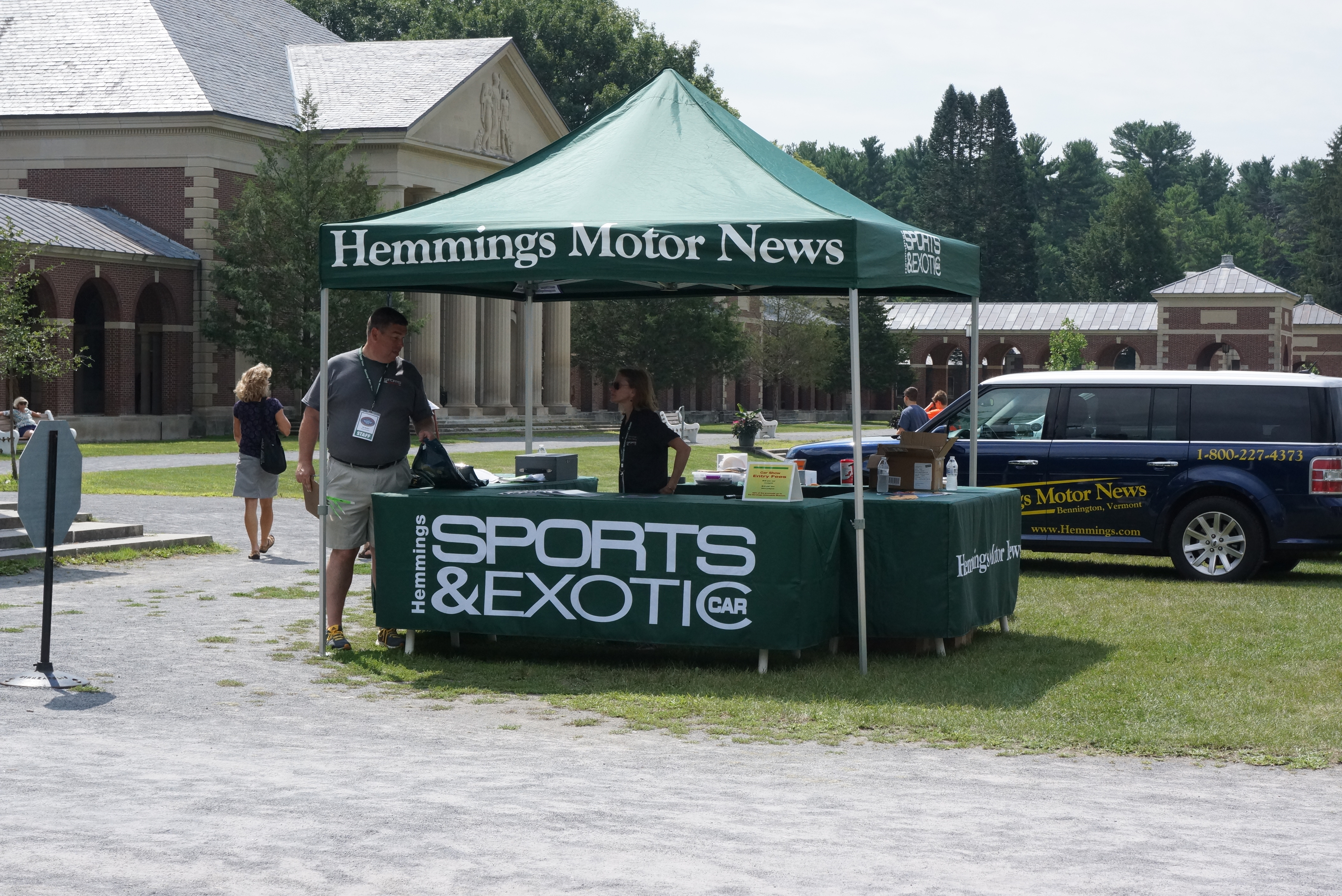
The good folks at “Hemmings”, publishers of several well-known collector car magazines, held their 11th annual Sports & Exotic Car Show on the grounds of the Saratoga Automobile Museum in Saratoga Springs, NY. The event took place on Saturday, August 6, 2016. In spite of a threatening forecast (and a published rain date of Sunday August 7), the organizers decided to press on, and the weather cooperated, as the show field remained sunny and dry, if a bit warm.
The show was open to “sports cars, GTs and exotics built outside the United States prior to 1992.” Those with newer imports were still welcome to attend, but would not have their vehicles judged.
My good friend Peter agreed to accompany me (and did most of the driving – thanks Peter!). Since I had attended one Hemmings show at the same location two years prior, I had reason to expect a professionally-run event, with a decent turnout and quality cars. We were not disappointed.
Arriving by 10:30 a.m., the show field was almost completely full. Cars were arranged by class, which for the majority of attendees was Country of Origin. As in years past, this show had several Featured Classes, including pre-1992 Jaguars, Porsche 356s, and Toyota Sports & GT cars. The big attractions for me were the two Italian Featured Classes: Fiat 124 spiders and Alfa Romeo spiders. Both the Fiat 124 spider and the Alfa Duetto/spider were celebrating their 50th anniversaries.
The entire event had a relaxed and casual feel to it. Most cars were prepped for judging, but unlike some other judged shows, the owners seemed carefree. (No one was spotted picking blades of grass out of their tire treads.) Everyone lazily walked the grounds, chatted up the drivers, and shared their stories. The verdant setting helped with the “stroll in the park” ambiance.
At 2 p.m. sharp, the Awards Ceremony began. There was a 2nd place and 1st place trophy for each of 13 classes. (I believe judging was done by that time-honored method known as “which cars do we really like?” Nothing wrong with that, either.) The winners were lined up and slowly driven past an admiring audience. By 2:30, it was over.
Hemmings hold two shows each year in Saratoga Springs, this one, and the larger Concours d’Elegance in September. If you haven’t been, either is highly recommended.
BRITISH
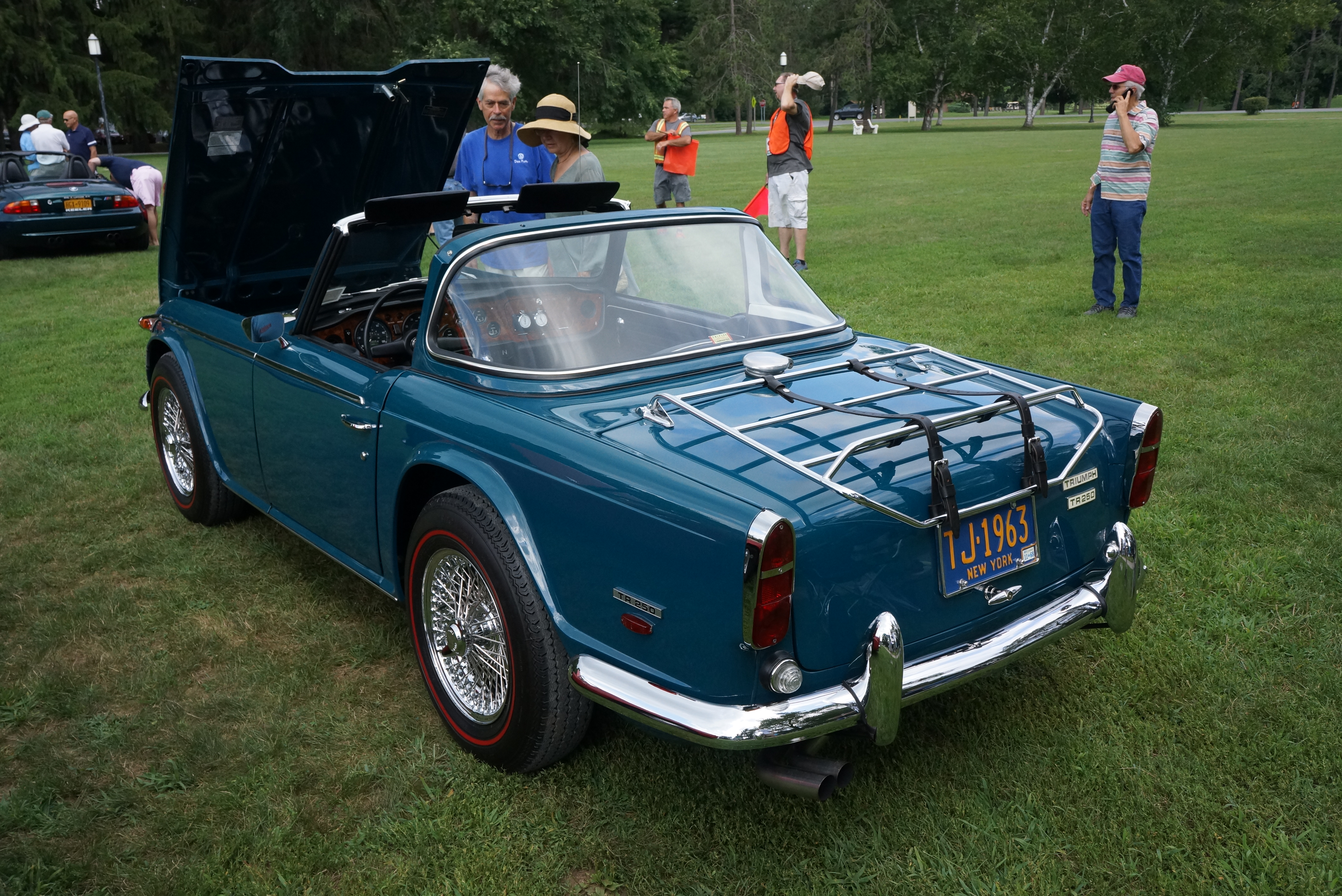
This 1968 Triumph 250 was voted “Best of Show”. It was immaculate, and it deserved it.
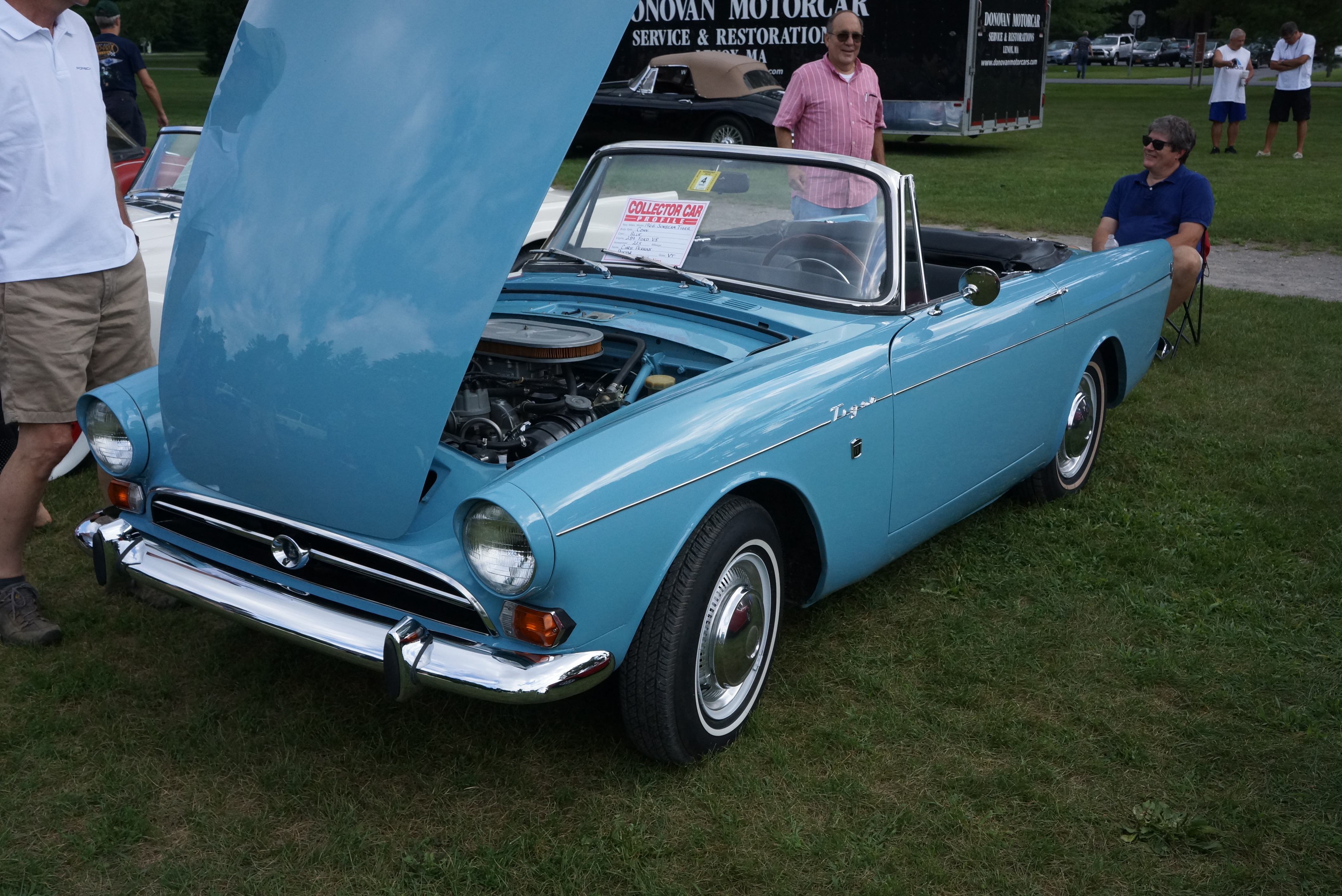
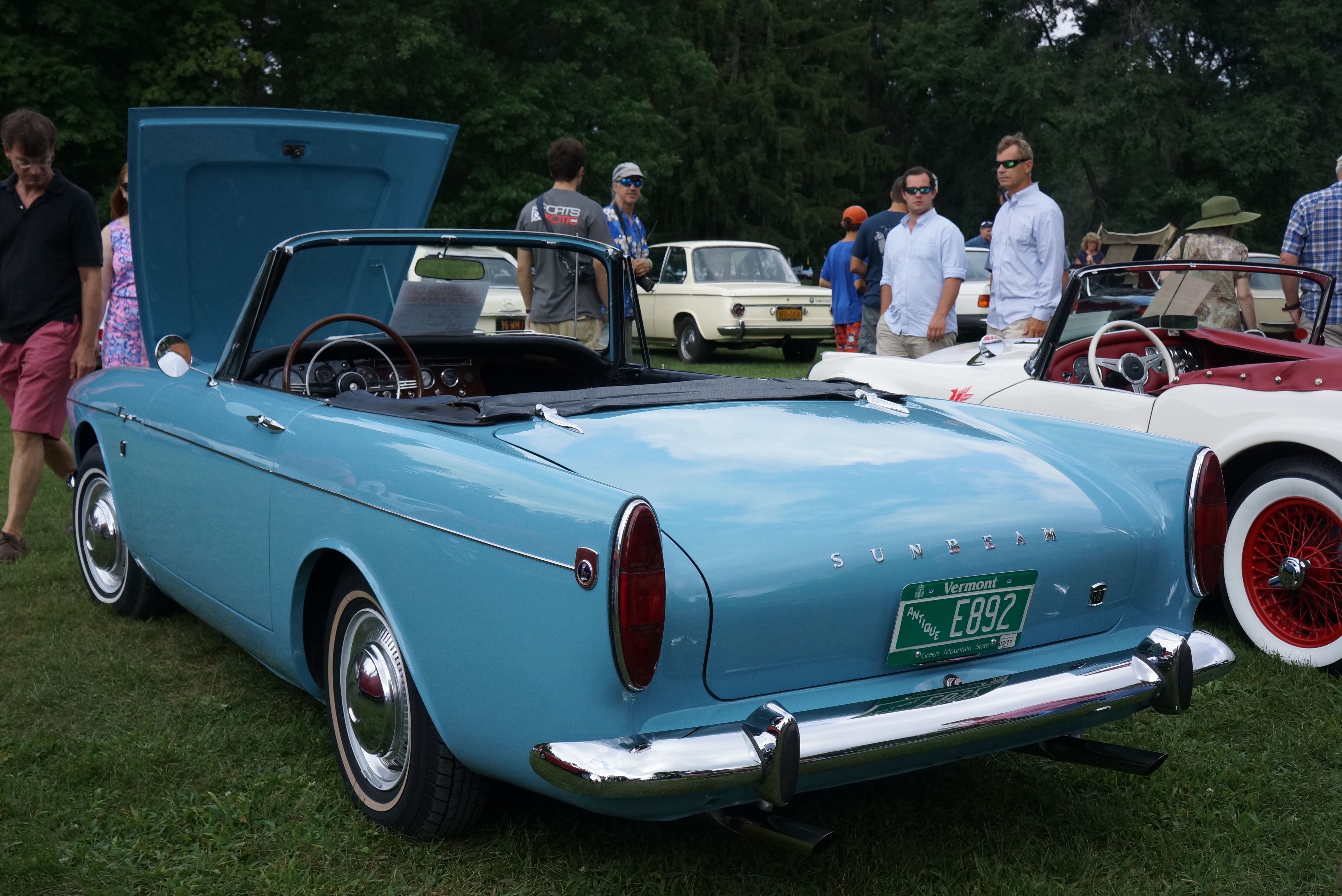
This Sunbeam Tiger was in a most unusual shade of baby blue, and we’re unsure if the color was an original choice from the factory.
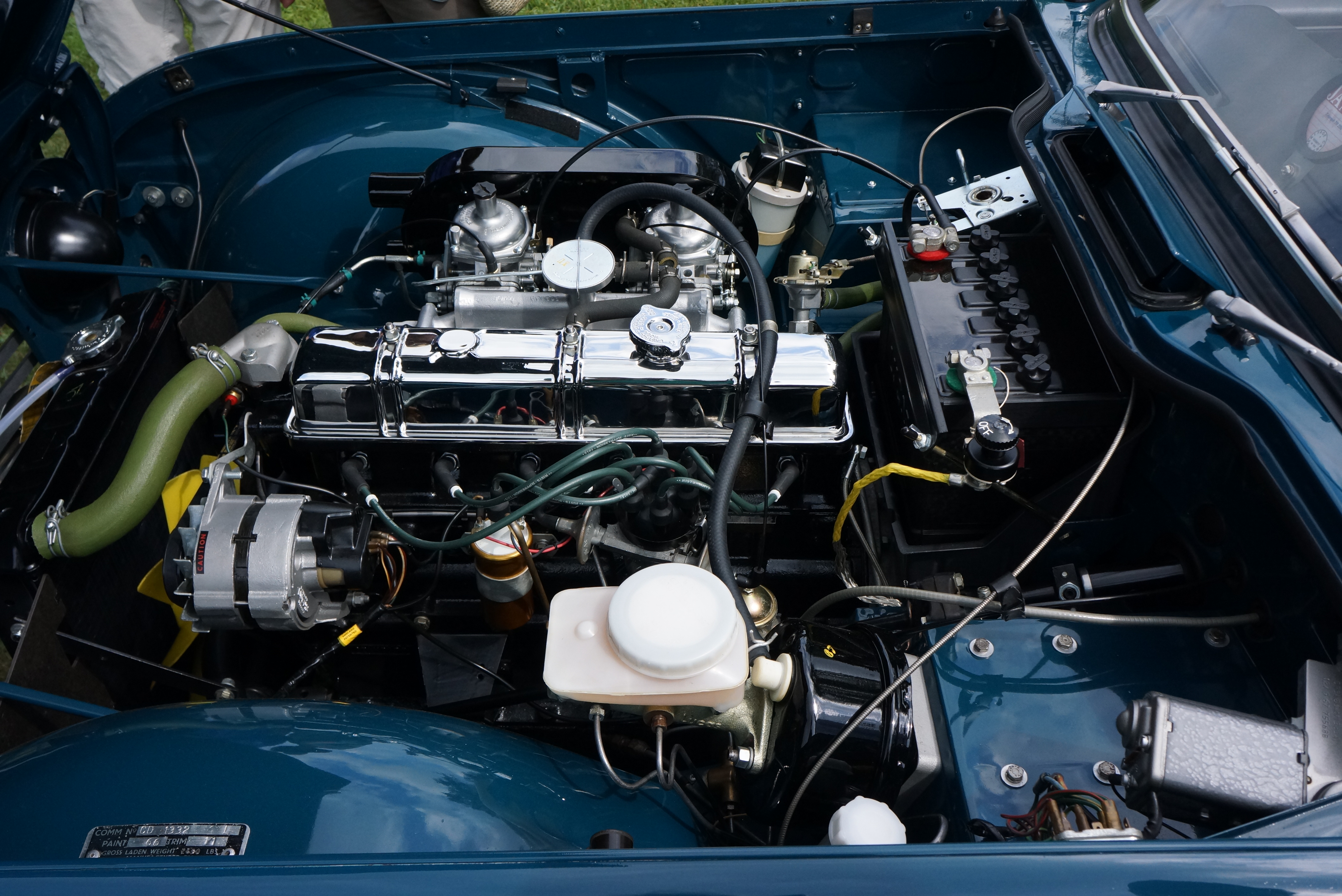
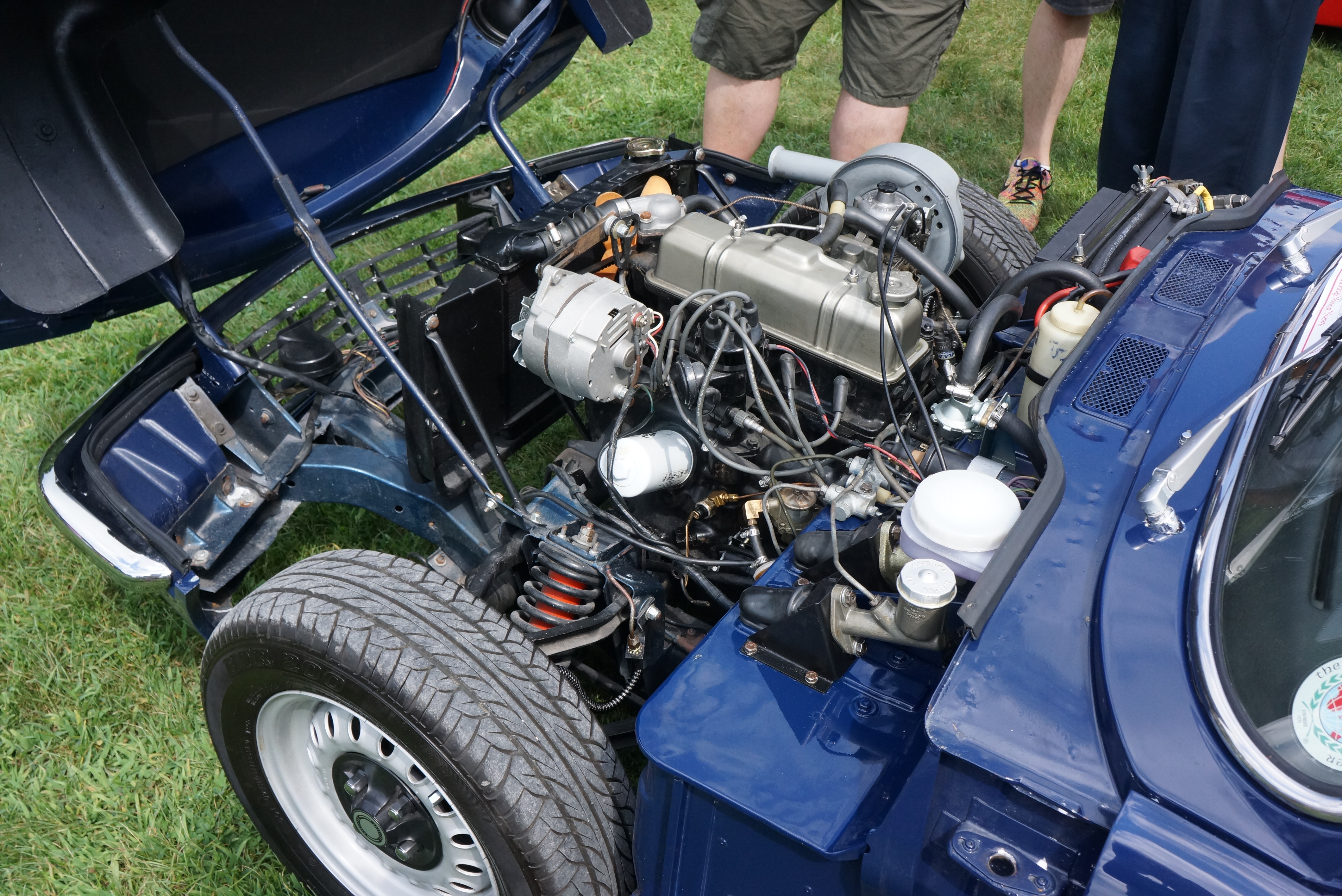
Triumph Spitfires have marvelous engine access.
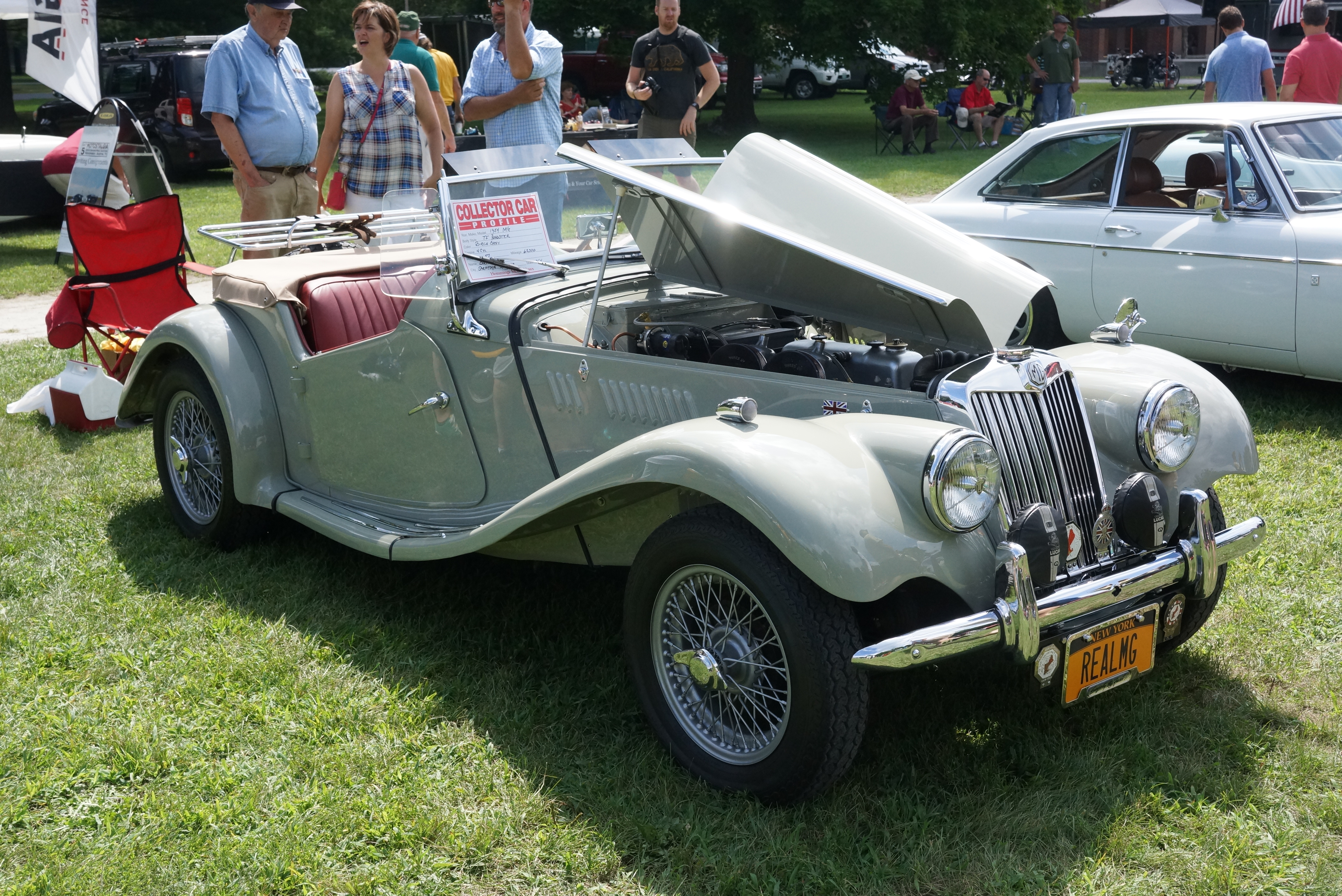
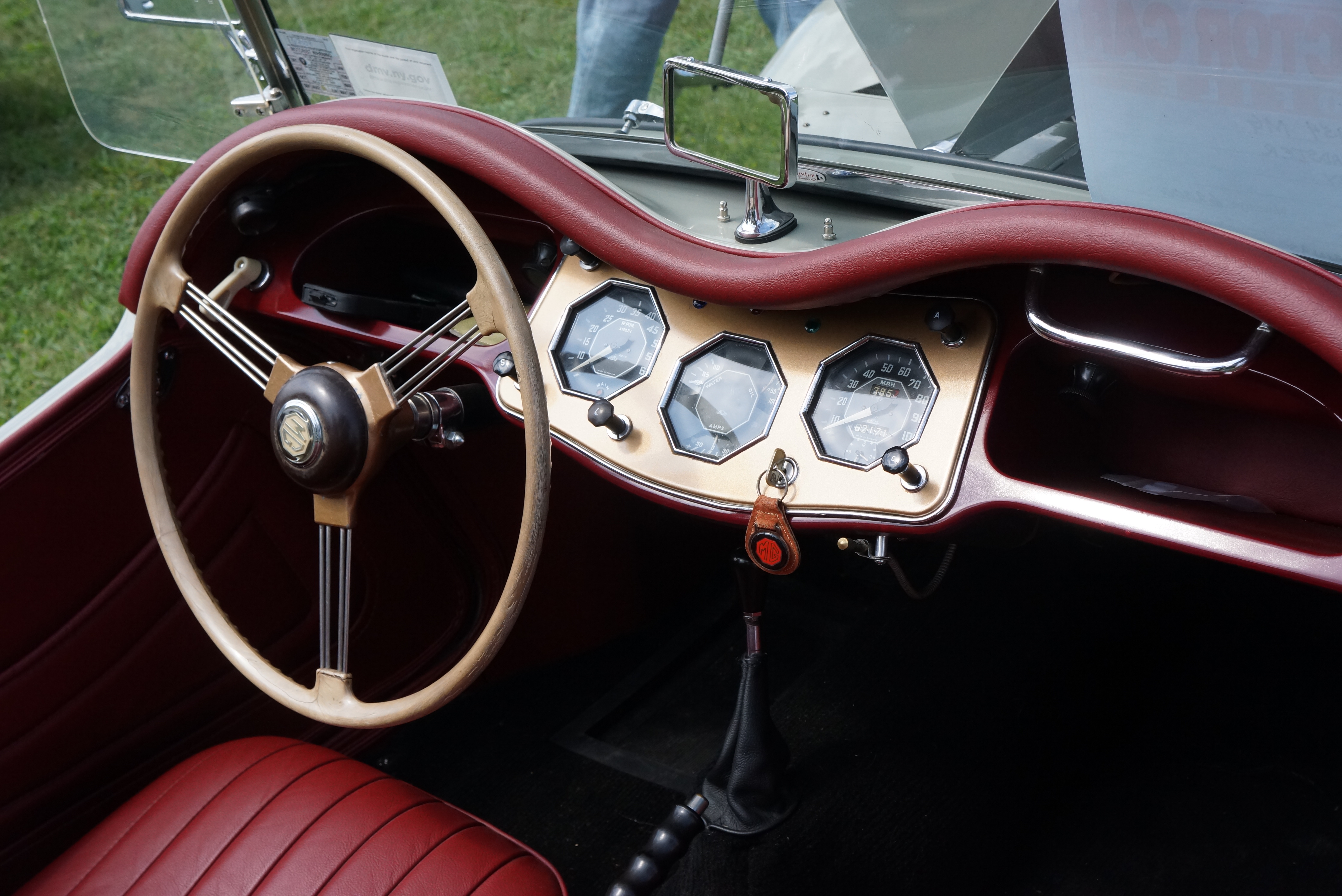
MG-TFs carried the marque’s octagonal badge shape to the instrument cluster.
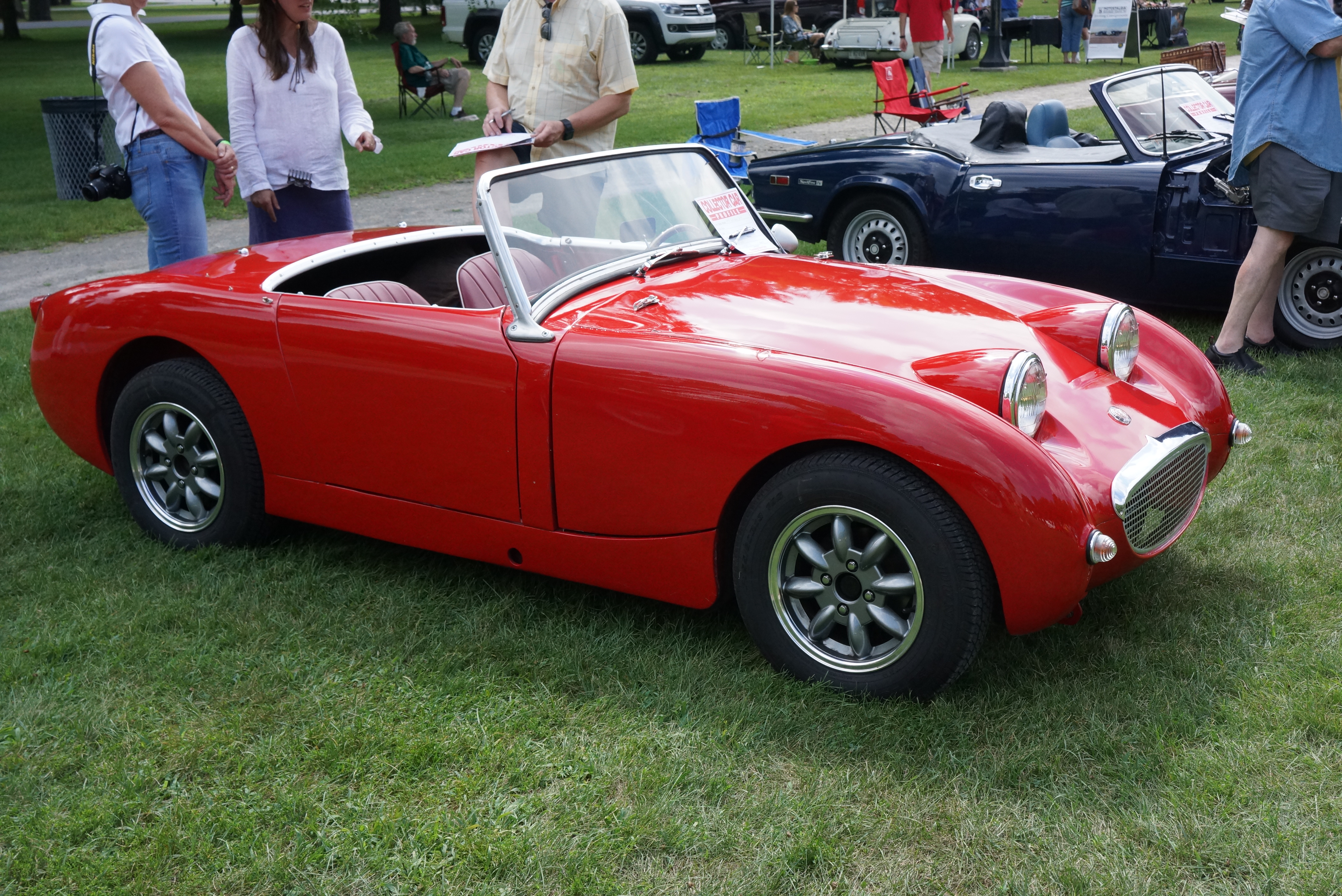
This Austin-Healey Bug Eye Sprite was even cuter sans bumpers.
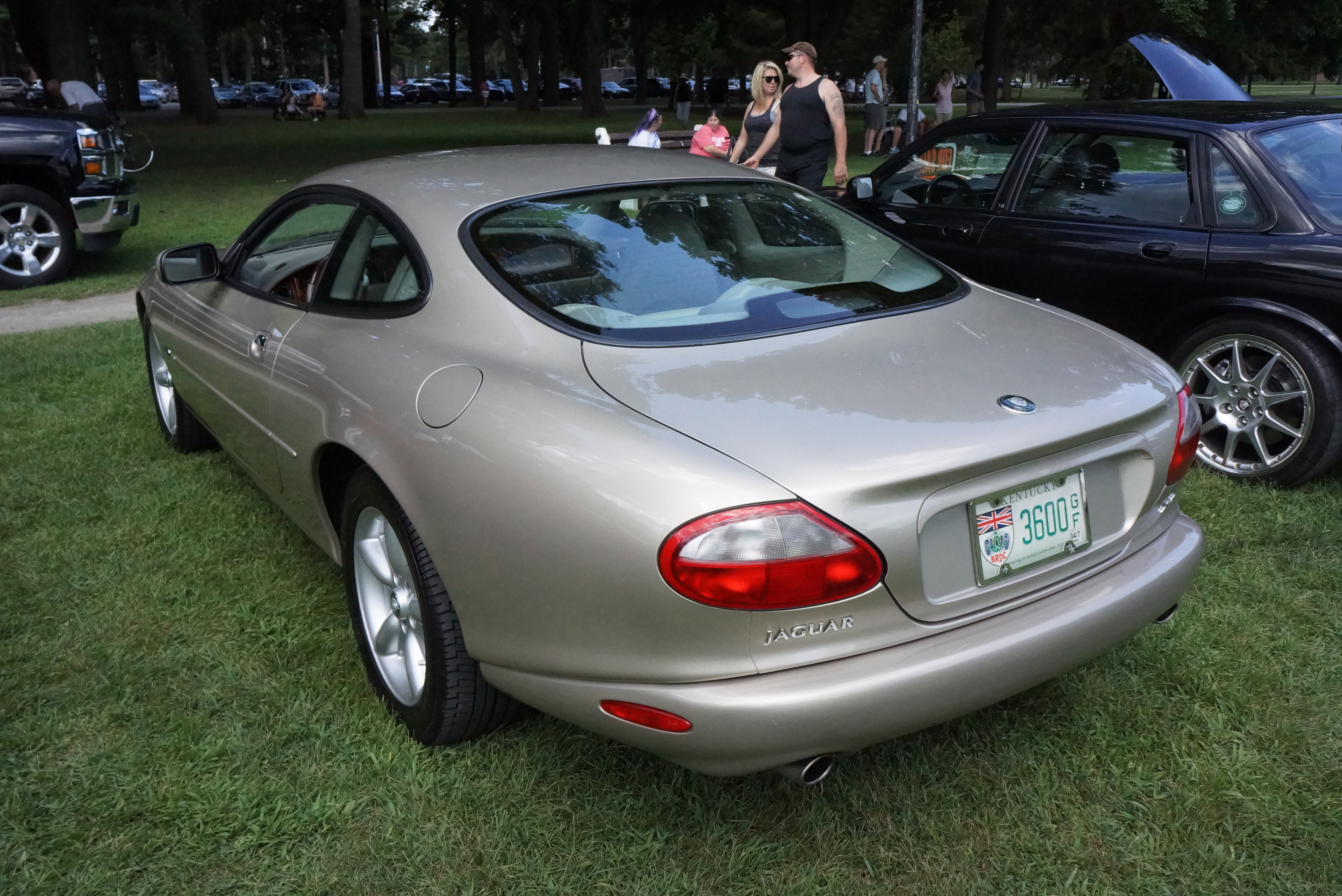
A Jaguar XK8 Coupe.
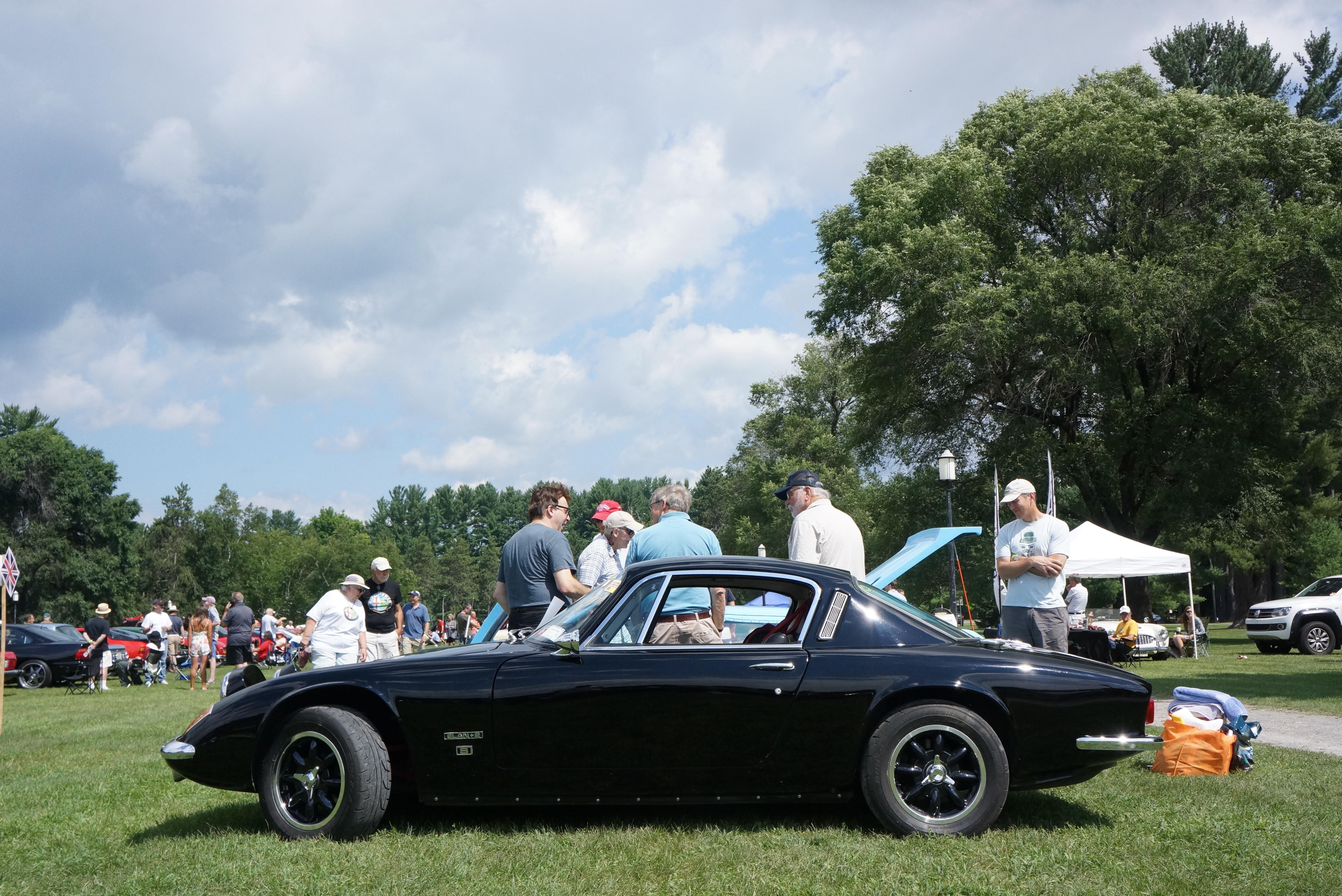
A rarely-seen Lotus Elan +2.
GERMAN
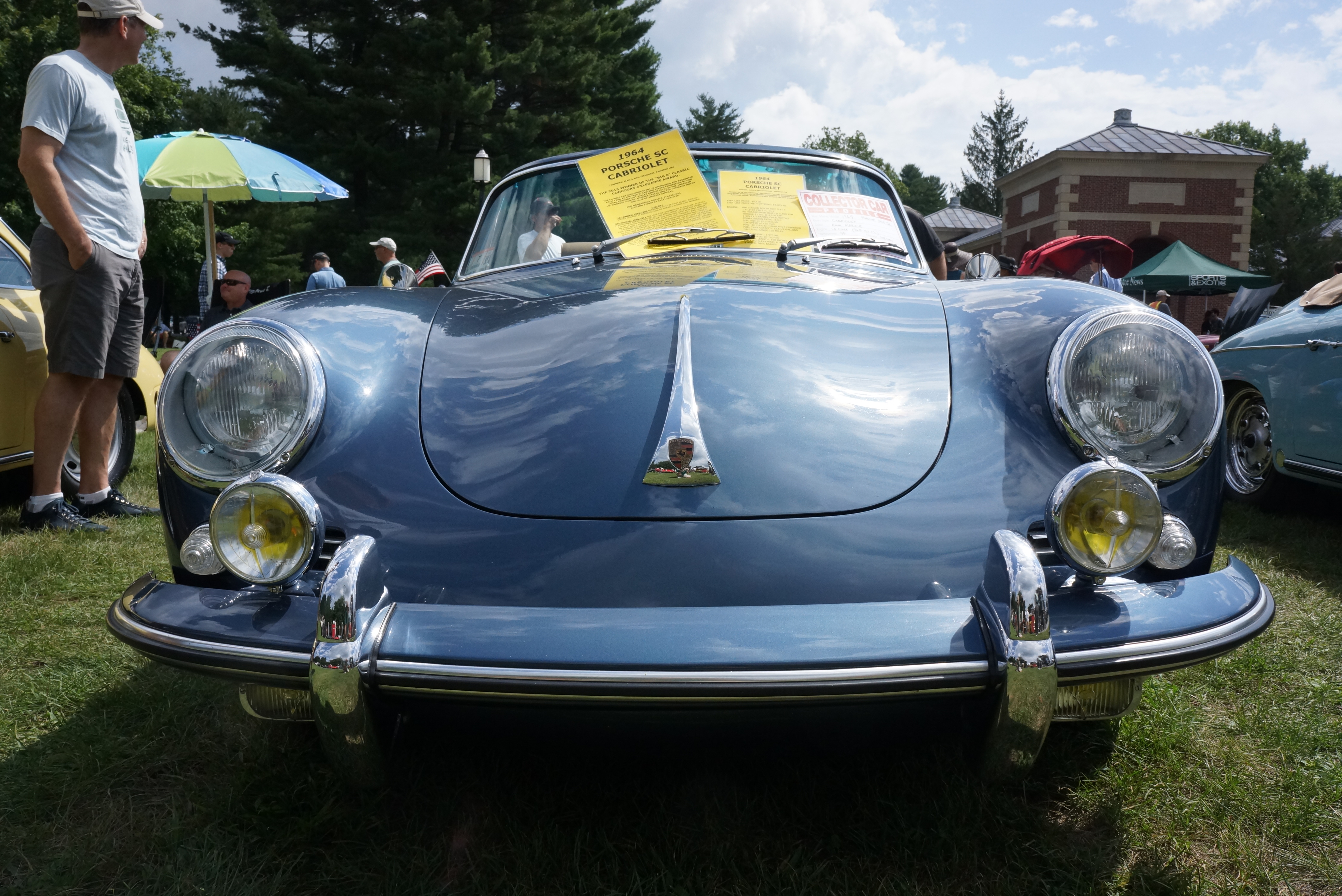
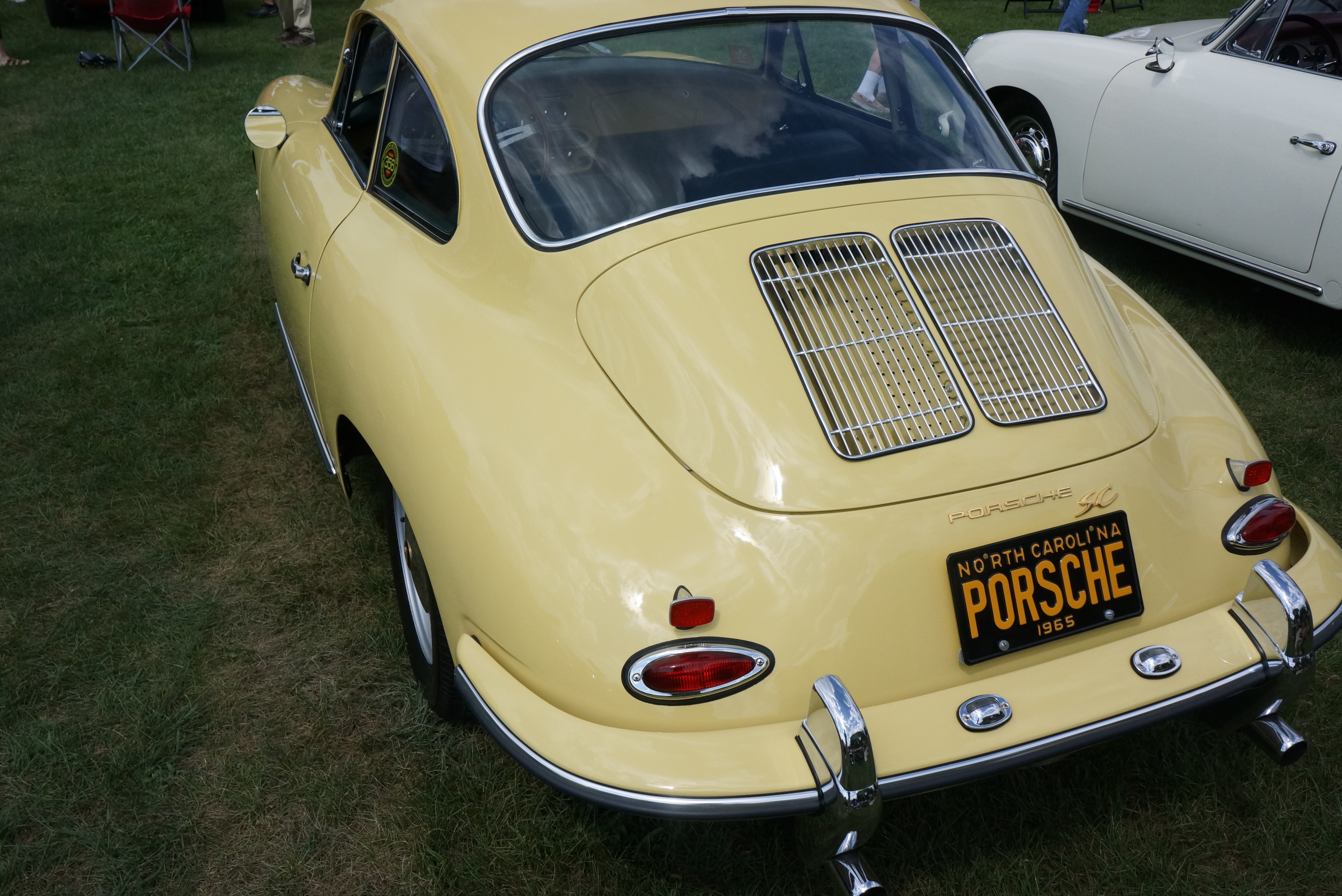
Porsche 356s were one of the Featured Classes.
Two of the more striking ones in attendance.
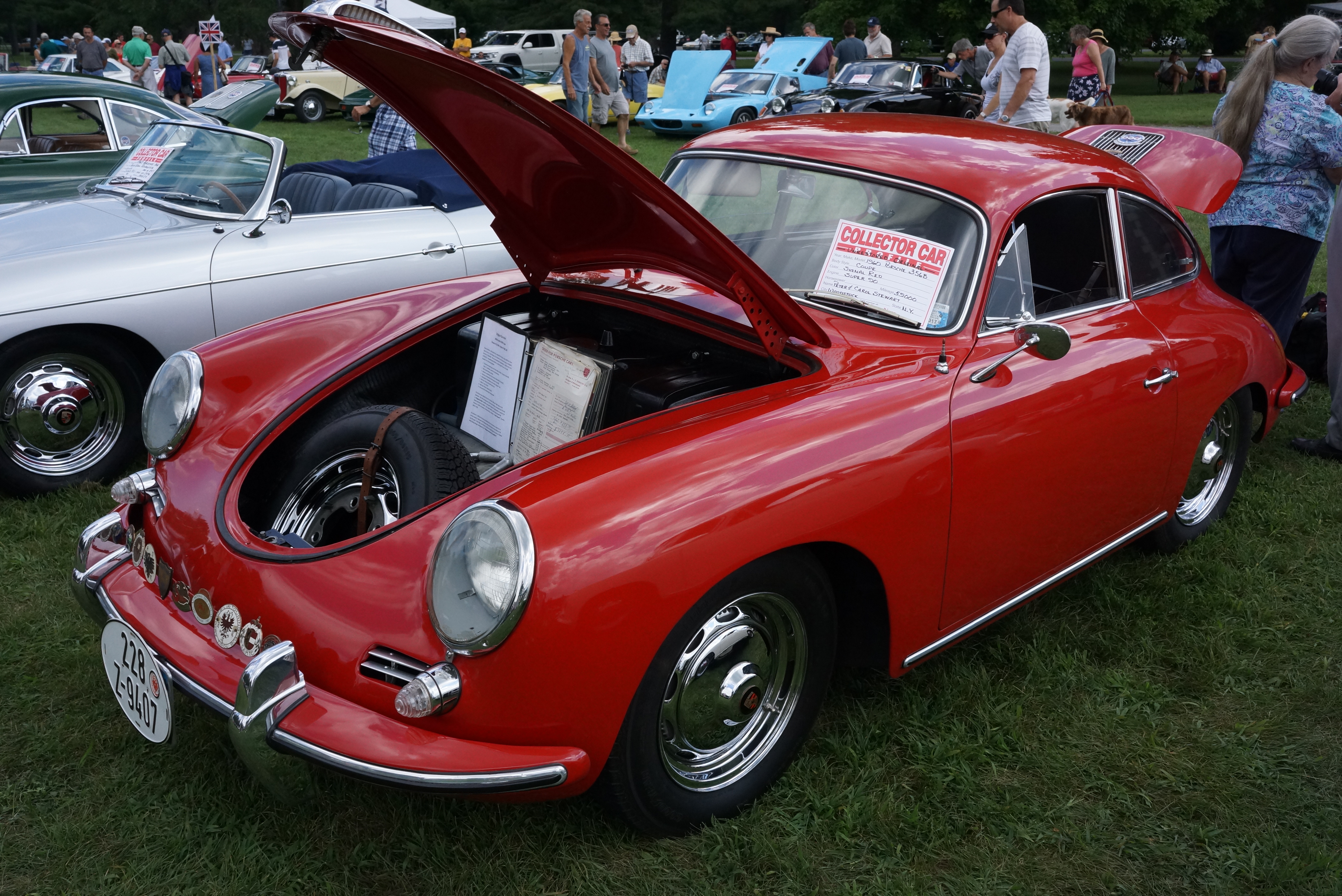
This 1960 356 coupe is an unrestored survivor.
One of my show favorites: this 1969 911 has been with the same owner for 25 years. Paint was peeling off the driver’s door. He told us he didn’t care; he owns the car to drive it.
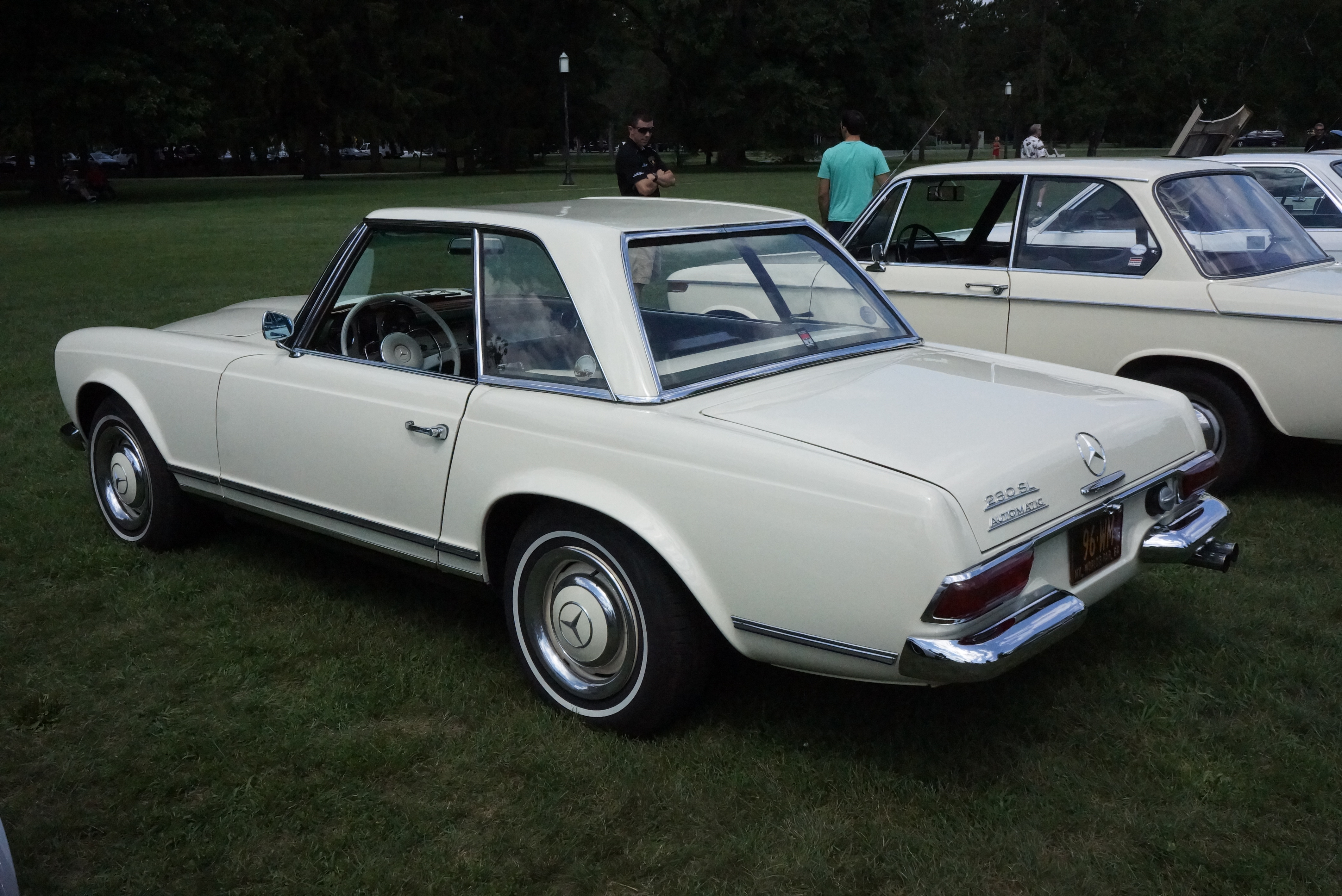
There were German cars there besides Porsche. This Mercedes Benz 230-SL had a side-facing rear jump seat.
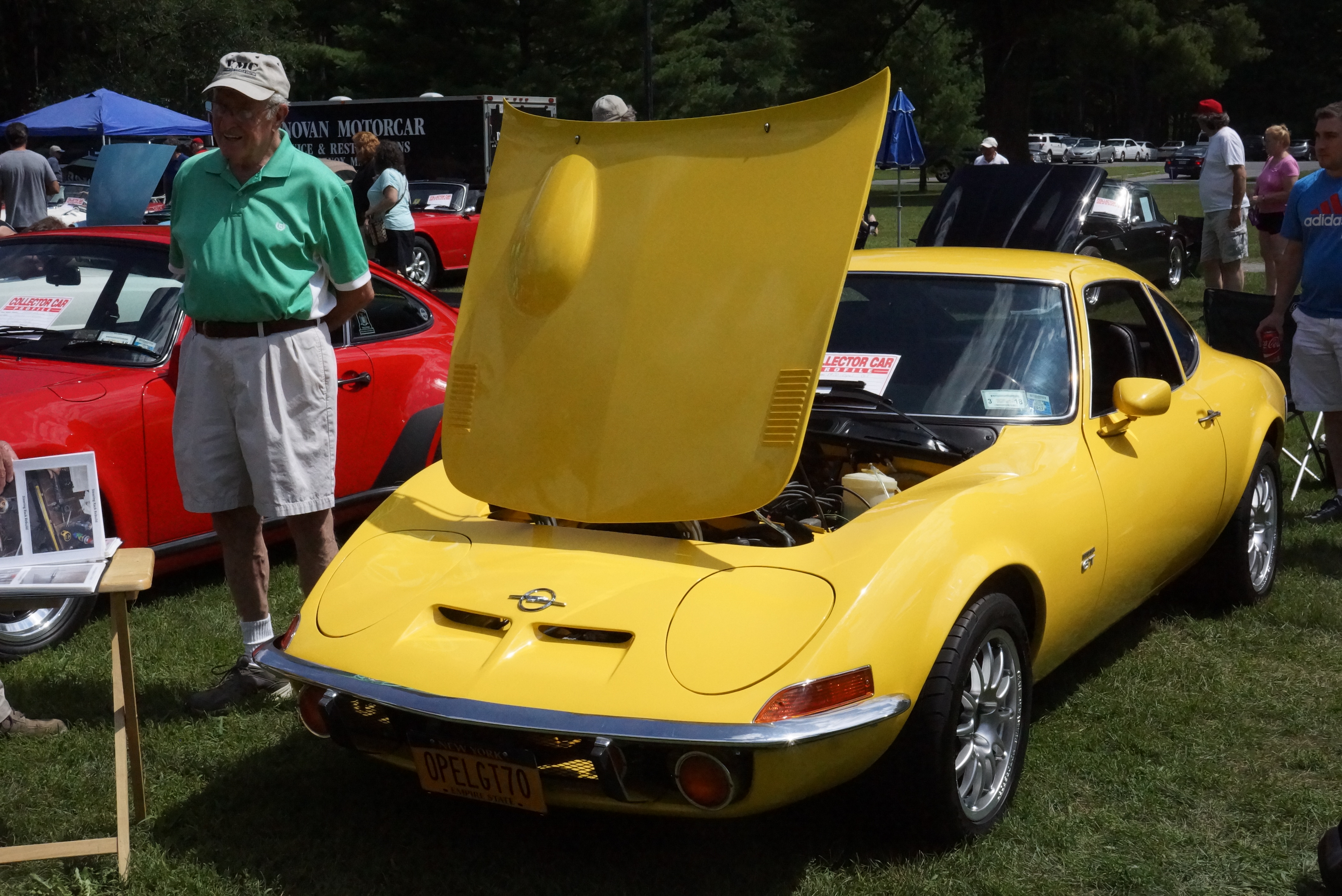
An Opel GT, sold new in the U.S. by Buick dealers.
Another favorite: this 1979 Ford (not Mercury) Capri had been privately imported. The car was tastefully modified, was clean and straight, and must be a hoot to drive.
SWEDISH
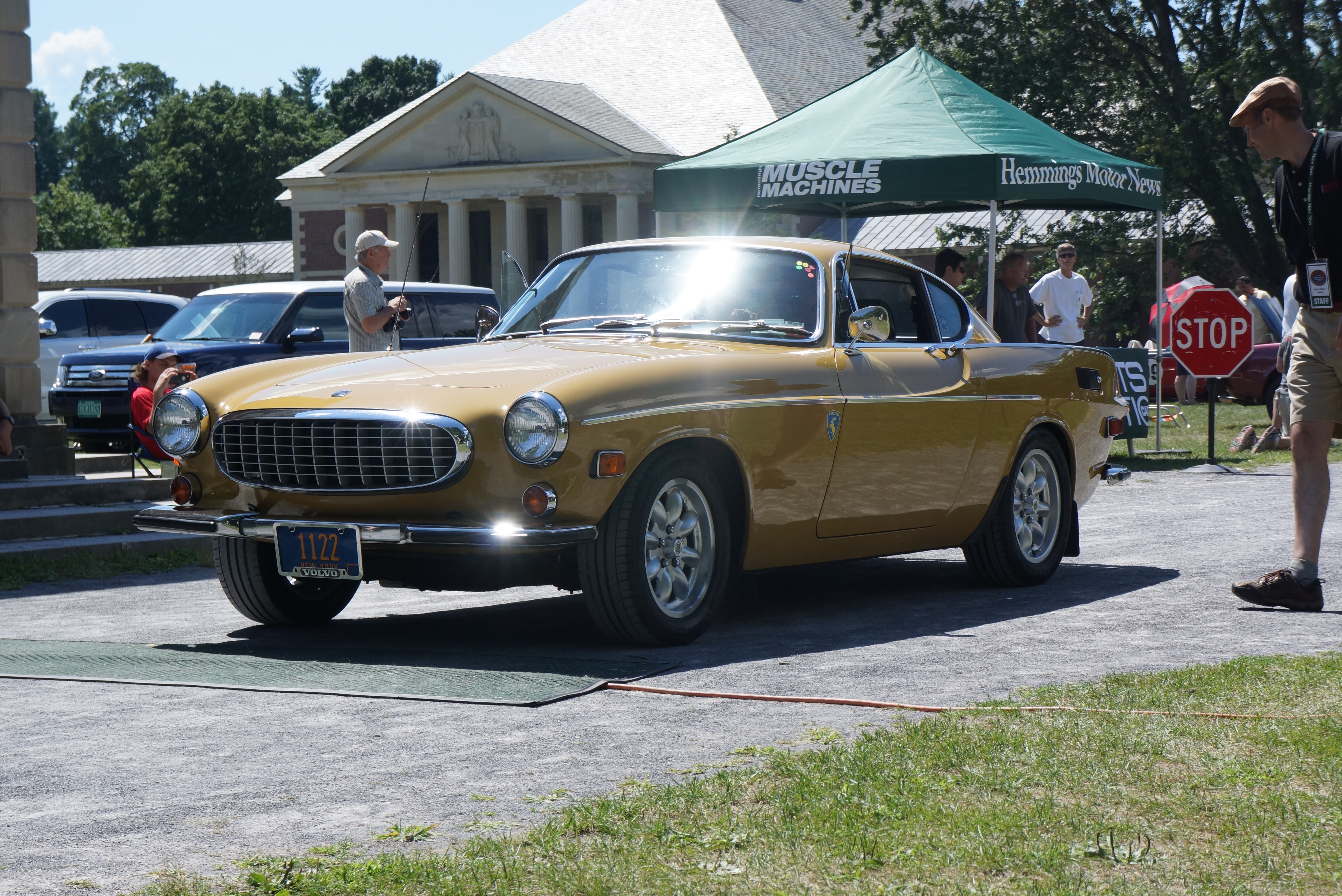
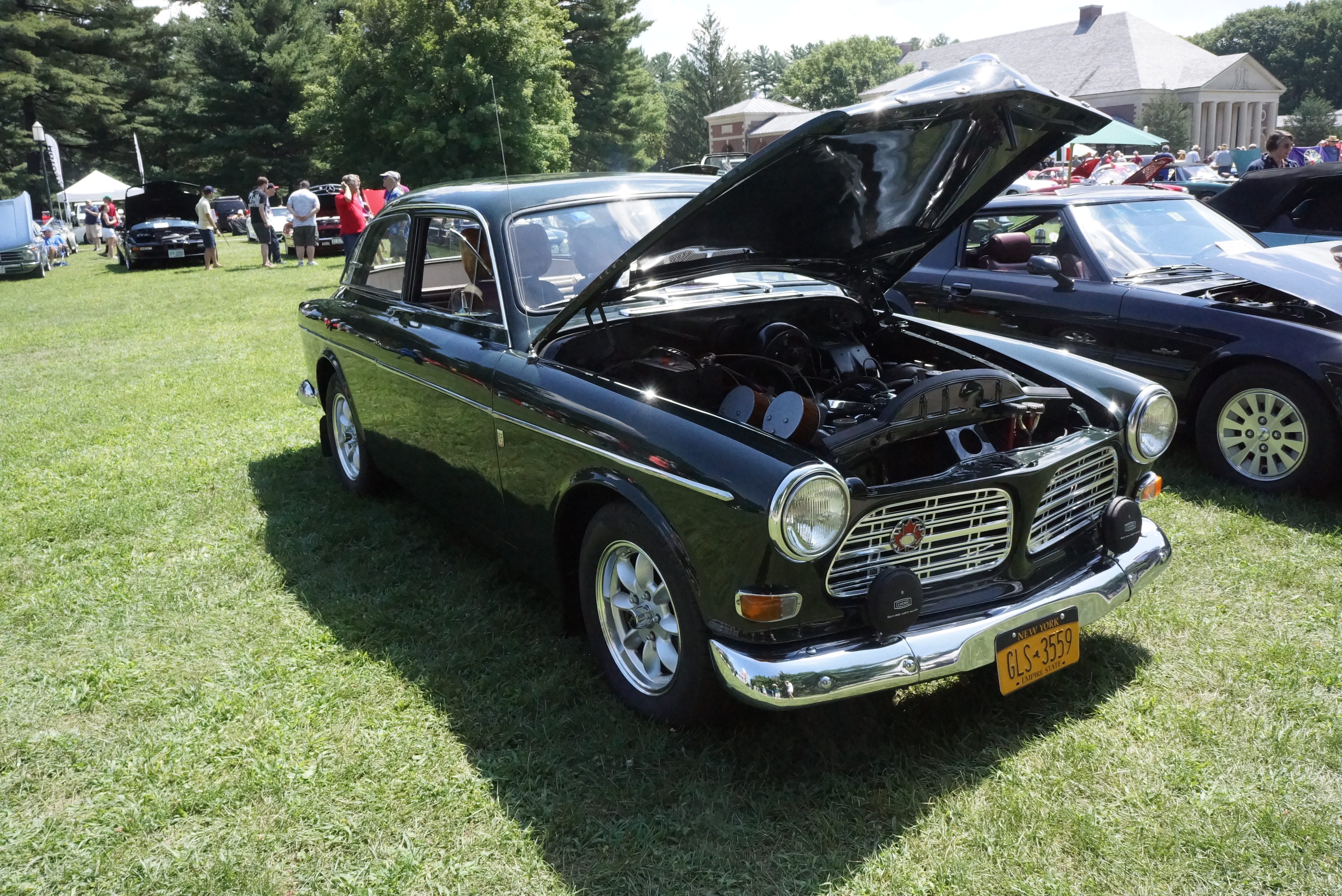
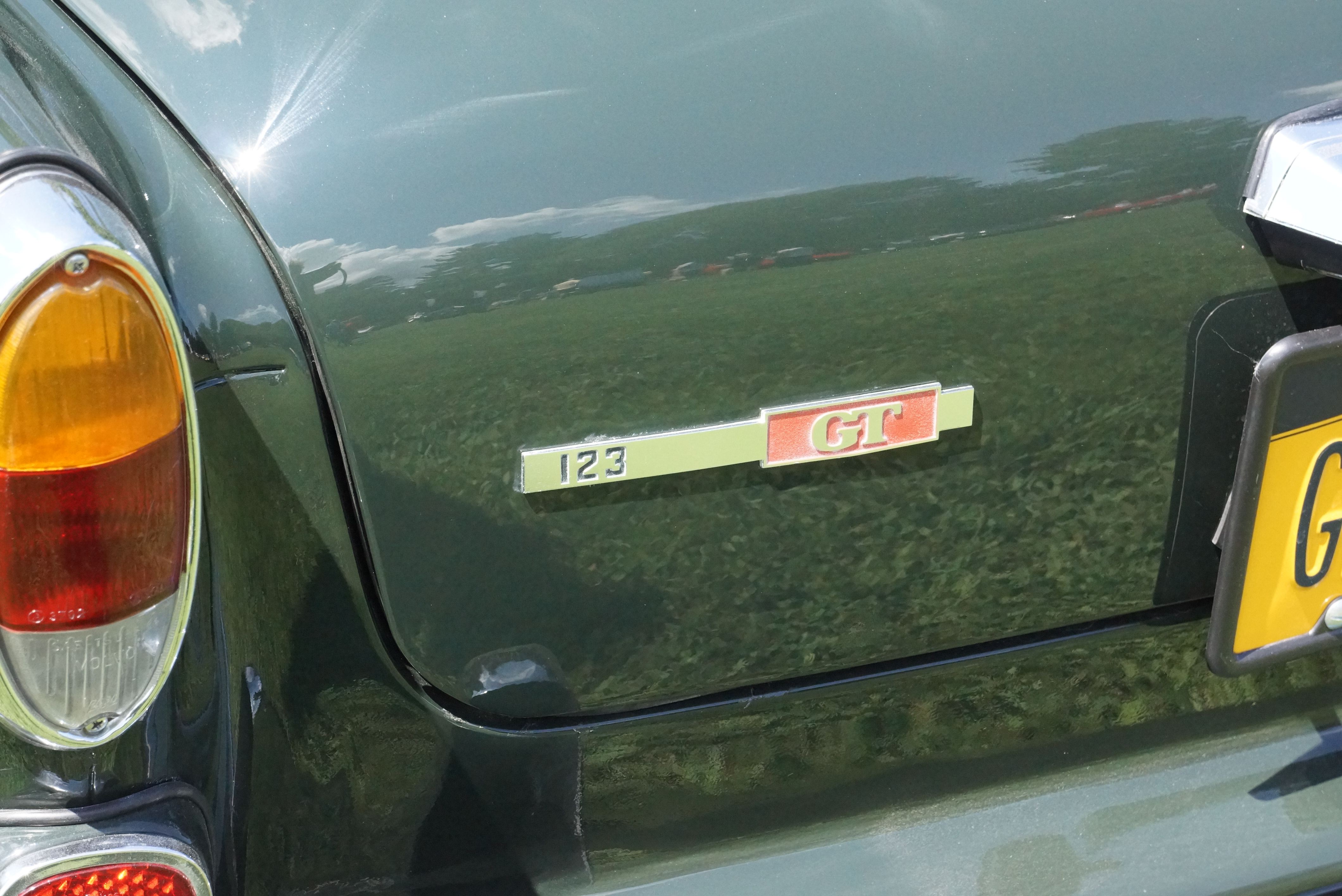
This Volvo 123GT looked authentic; at least it wore the correct badging. I don’t think I’ve seen an actual 123GT in about 20 years.
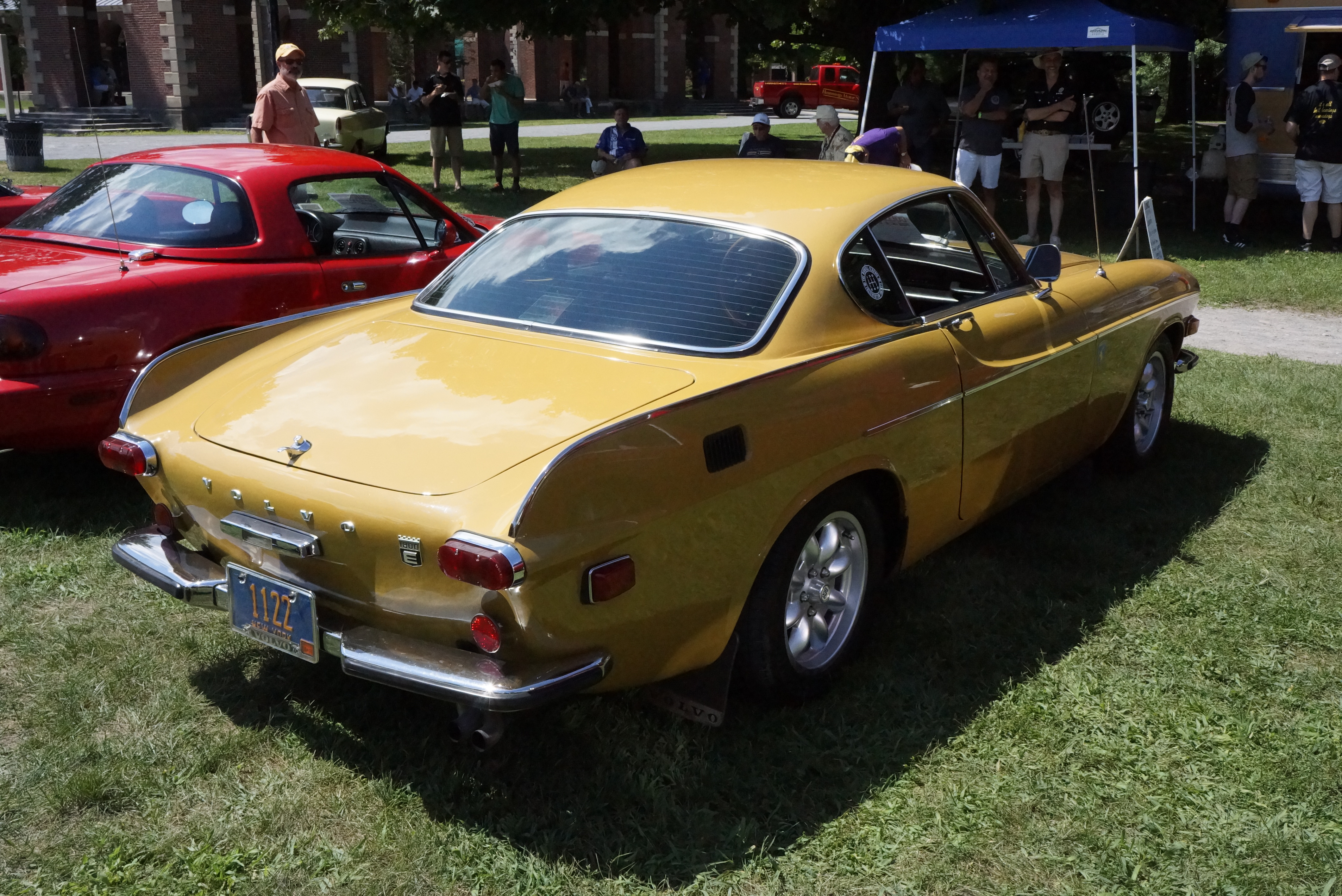
This was the only Volvo 1800 at the show.
FIAT 124 SPIDERS
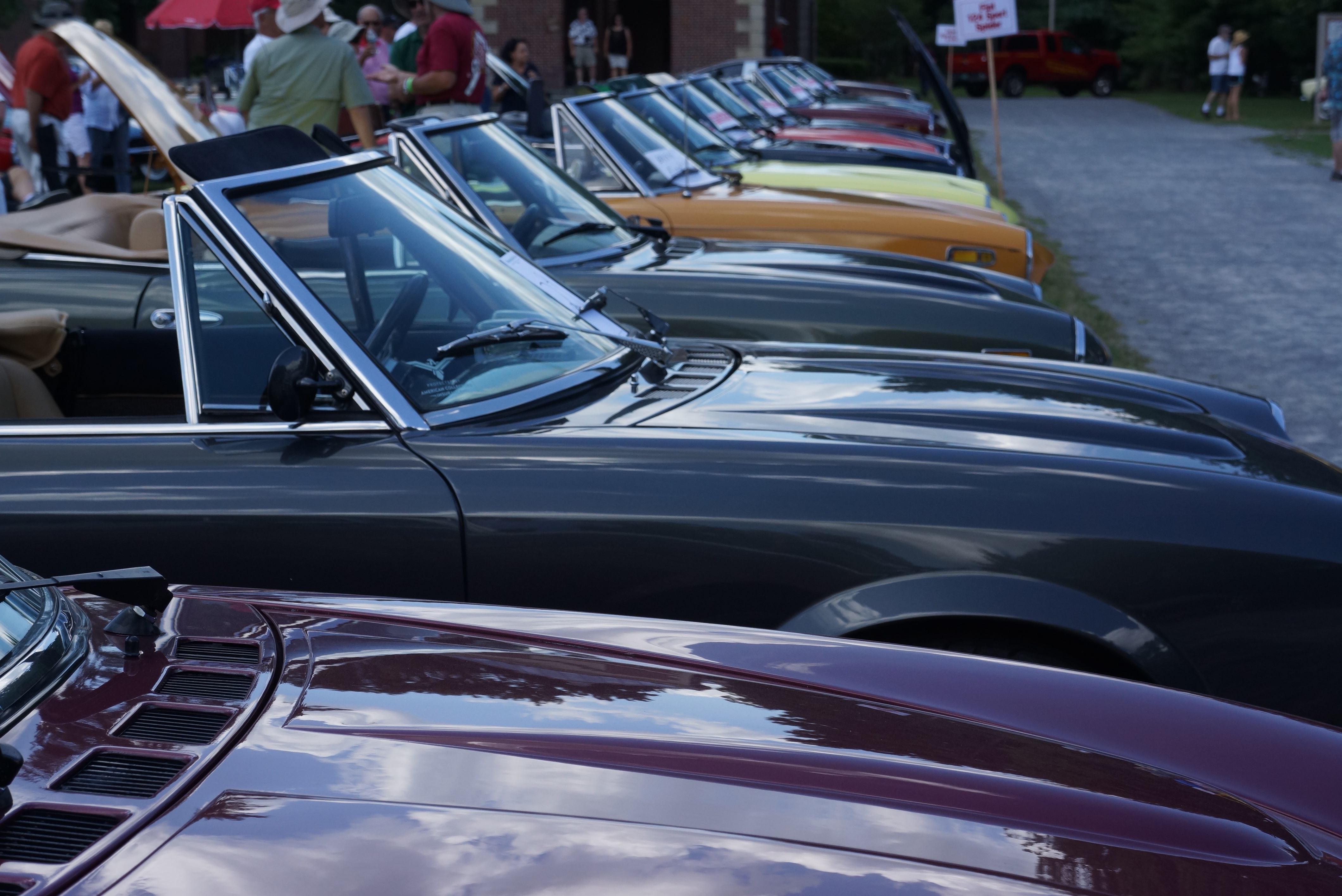
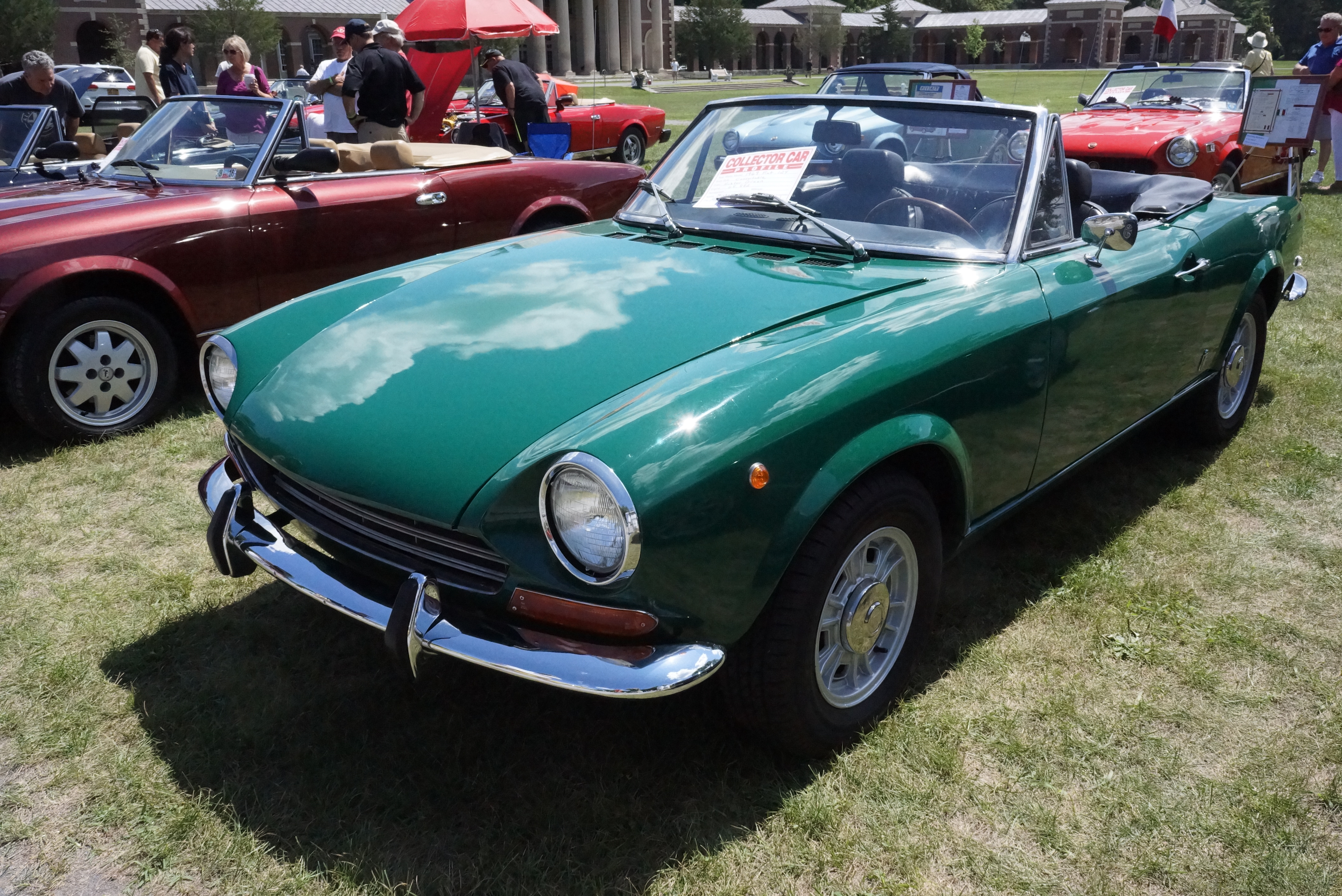
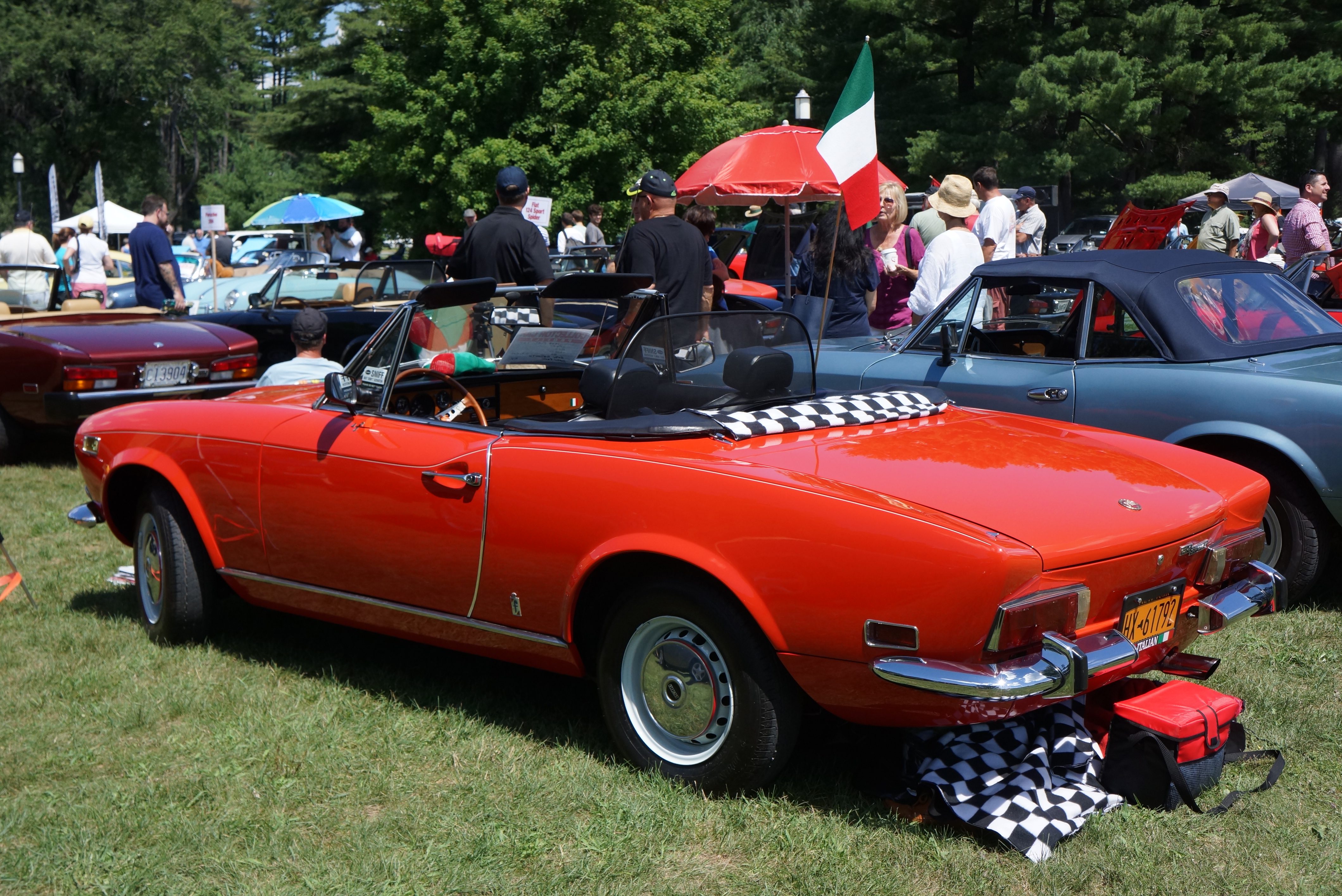
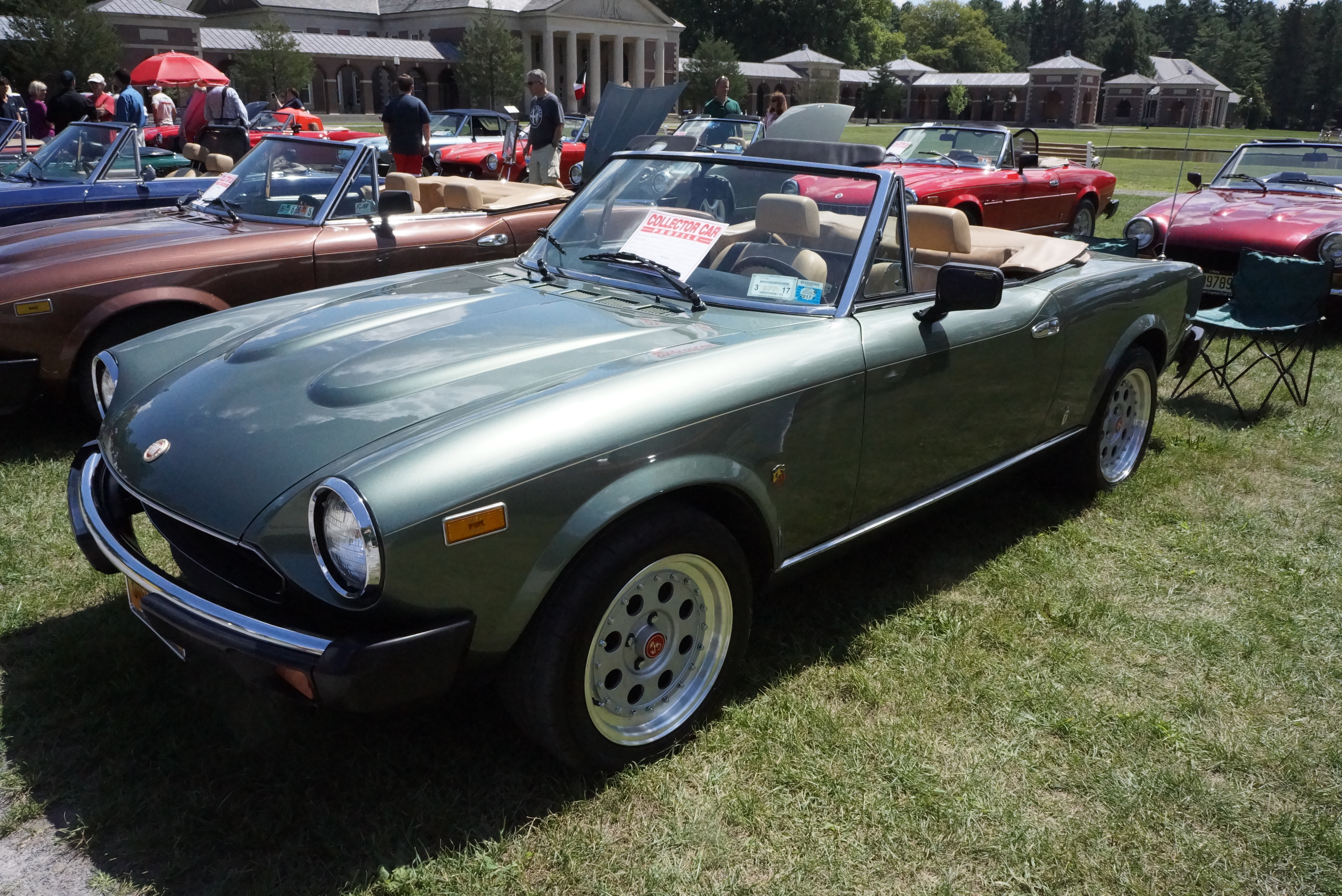
There were about 20 Fiat 124 spiders at the show, with cars from the first generation (late 1960s) right through to the Pininfarina-badged cars of the mid-1980s. As a former Fiat owner, it was difficult for me to believe that this many survived. Best of all, the owners were there just to have a blast. Bellissimo!
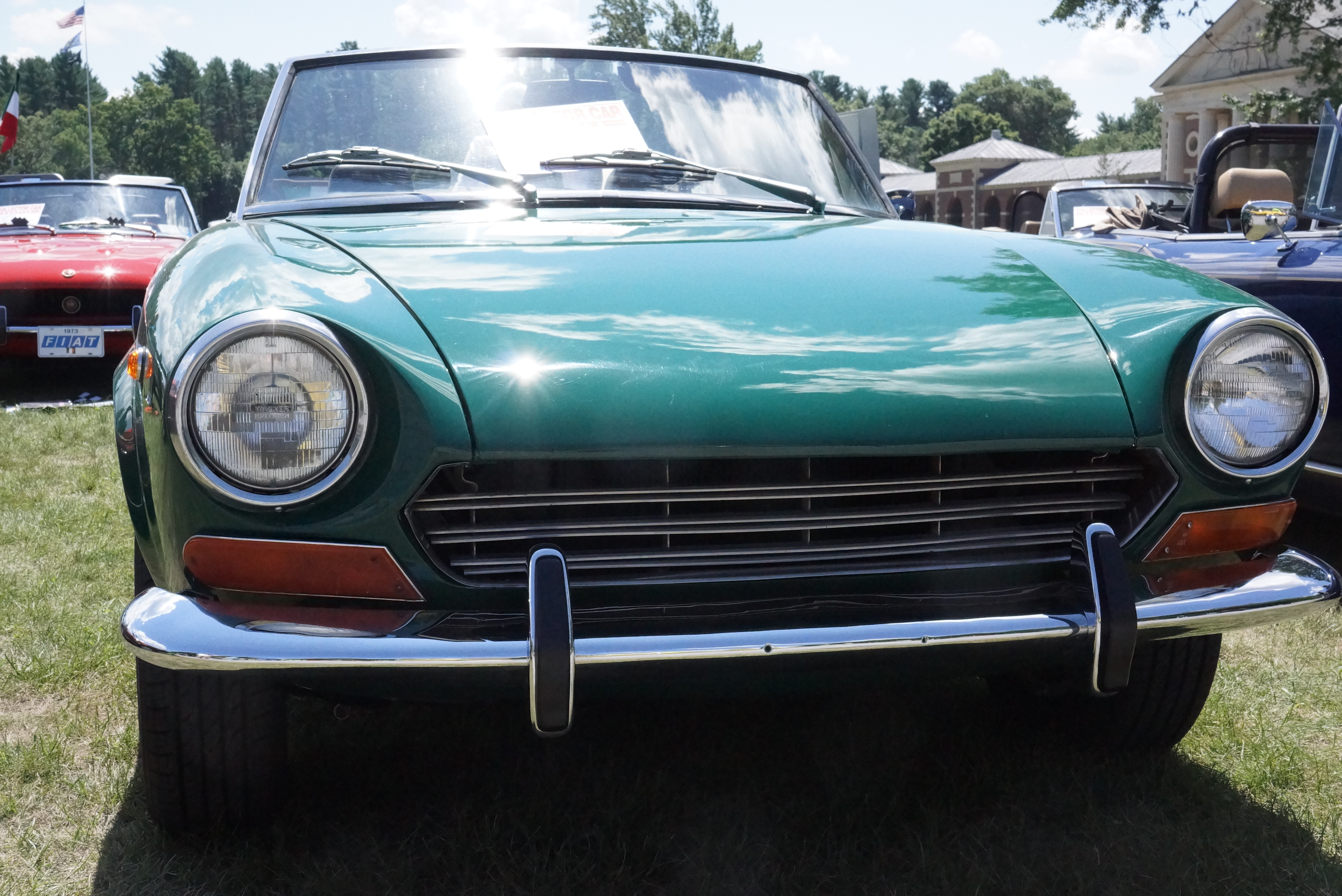
An early car: in addition to the chrome bumpers, note the slatted grille, and the small, round side marker lights.
The placard claimed this to be an unrestored survivor.
We spoke at length to the owner of the Positano Giallo car. He recently bought this car after it had sat, unused, in the previous owner’s garage for 30 years. There had been a small carb fire, and that owner gave up on it. The new owner refreshed the fluids, washed off 30 years of dust, and here it is.
This beauty took home 2nd place in this class.
More, more, more
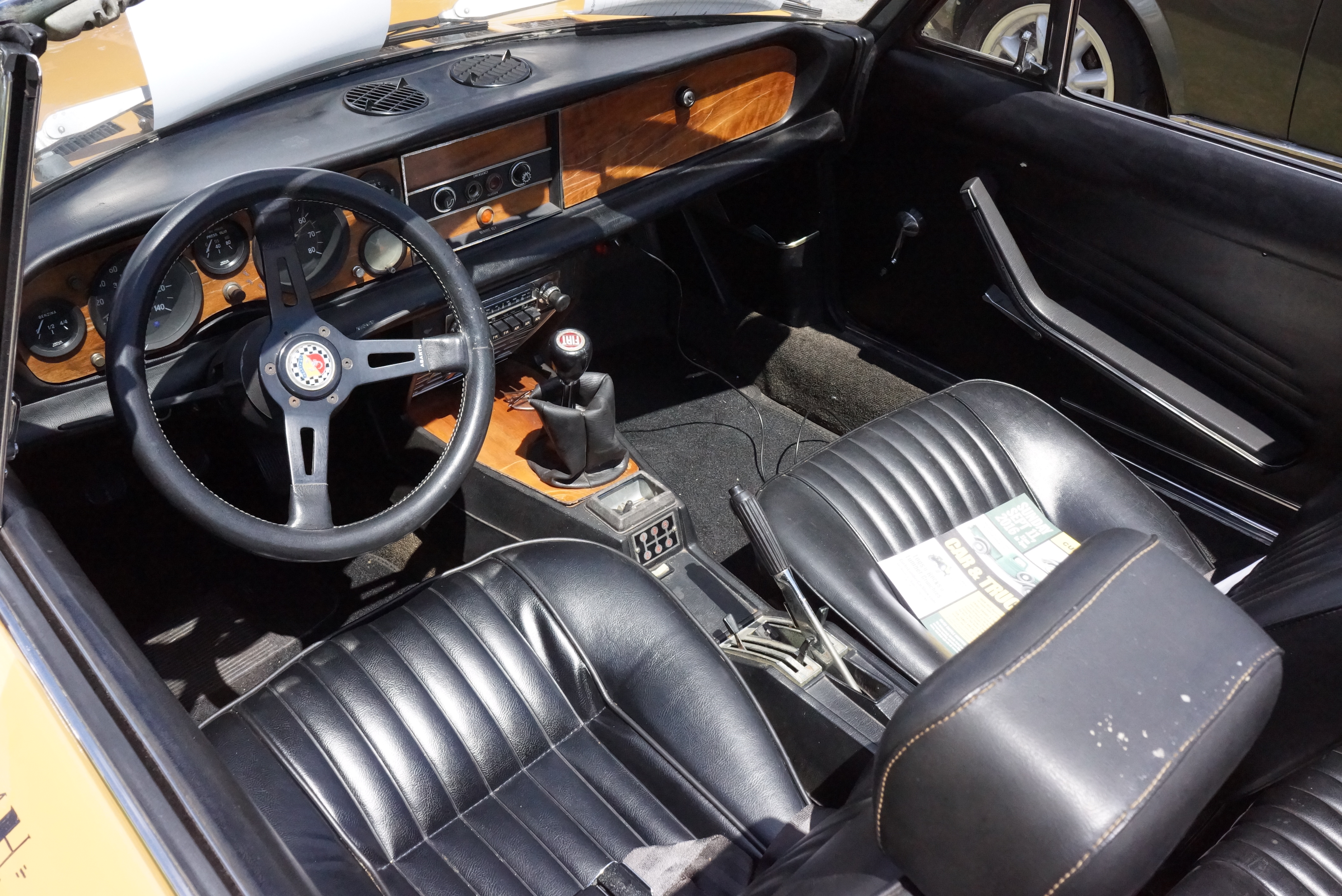
The Pininfarina cars got their first dashboard redesign.
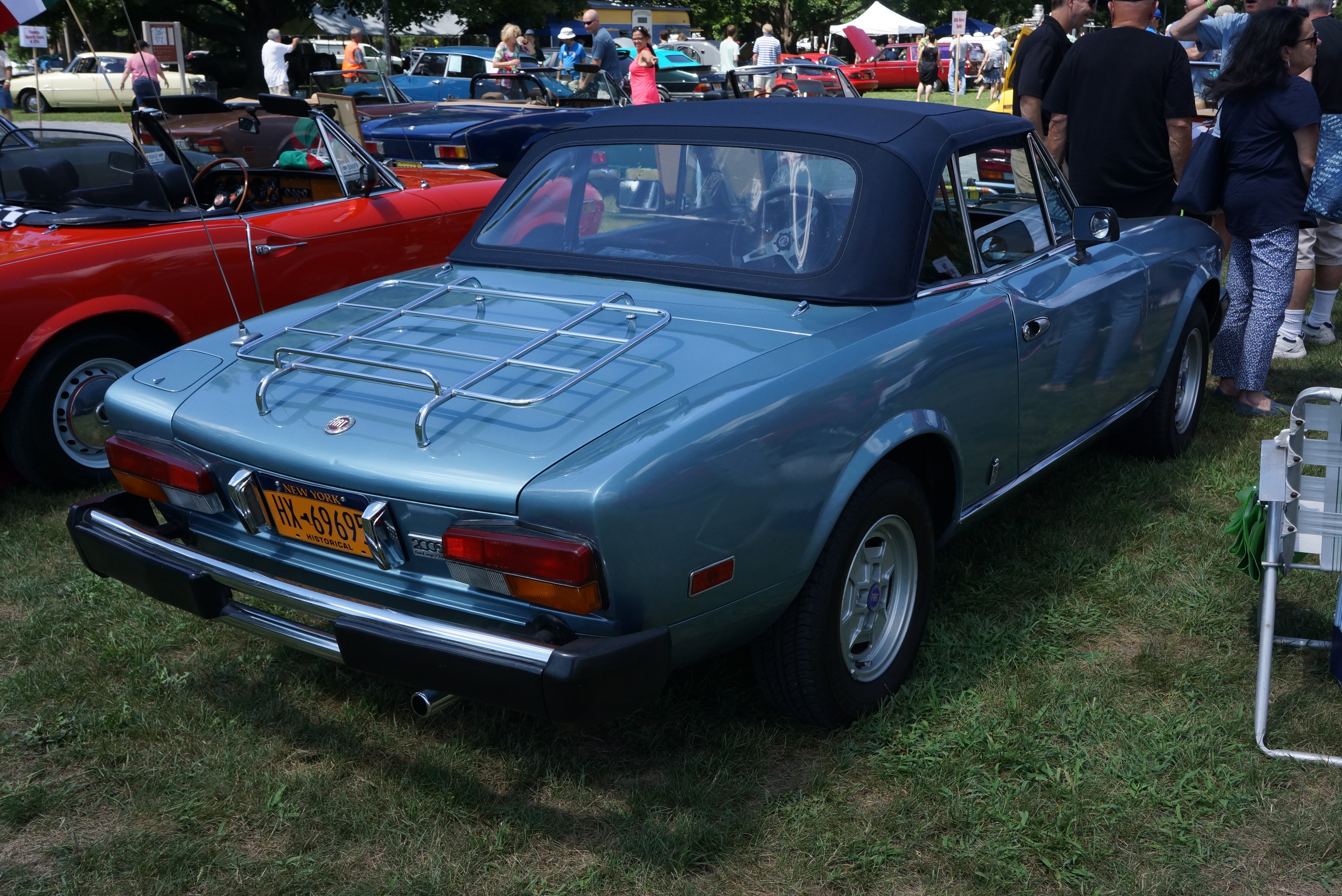
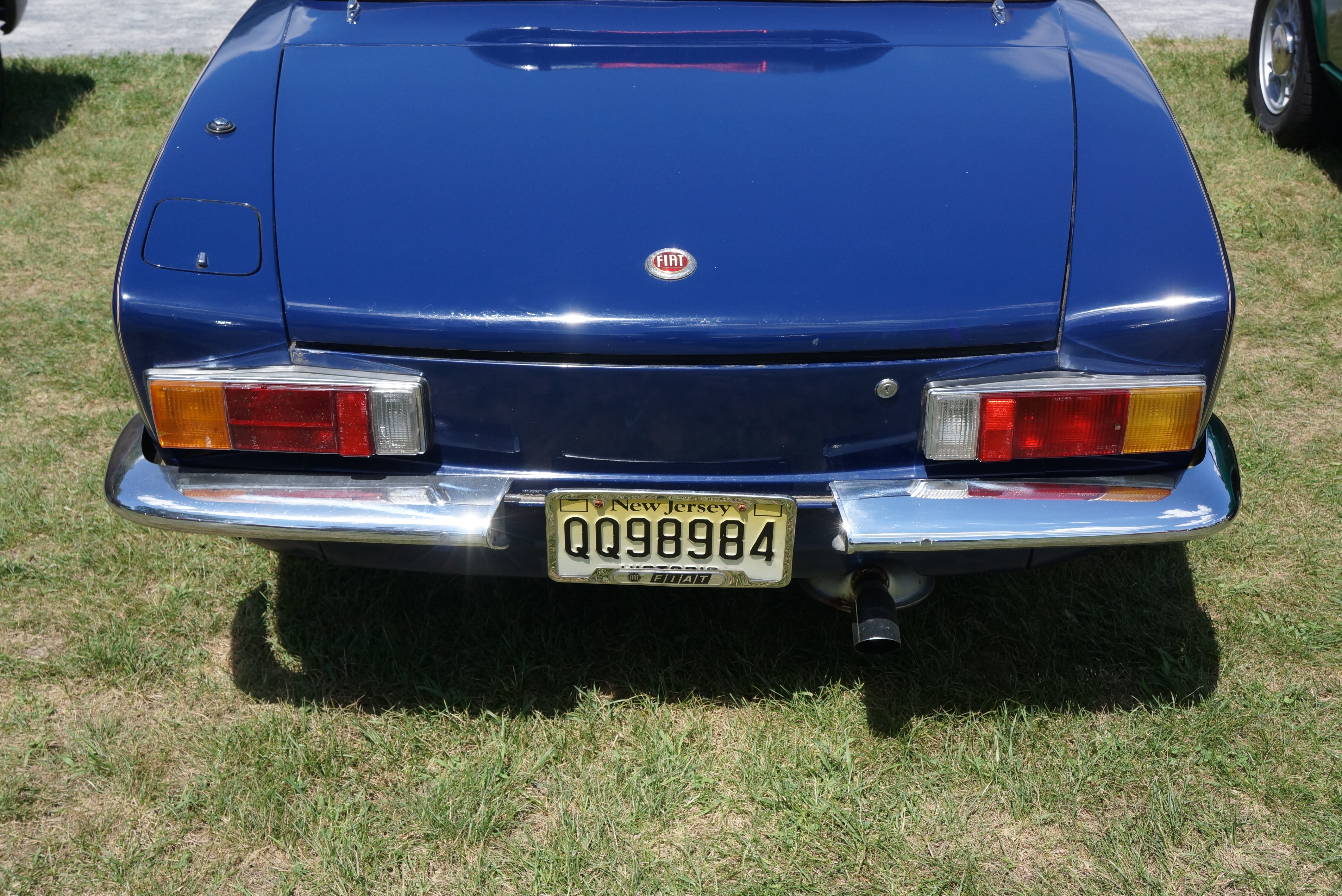
Here you see the 124 Spider tail lights evolve and enlarge.
OTHER ITALIAN
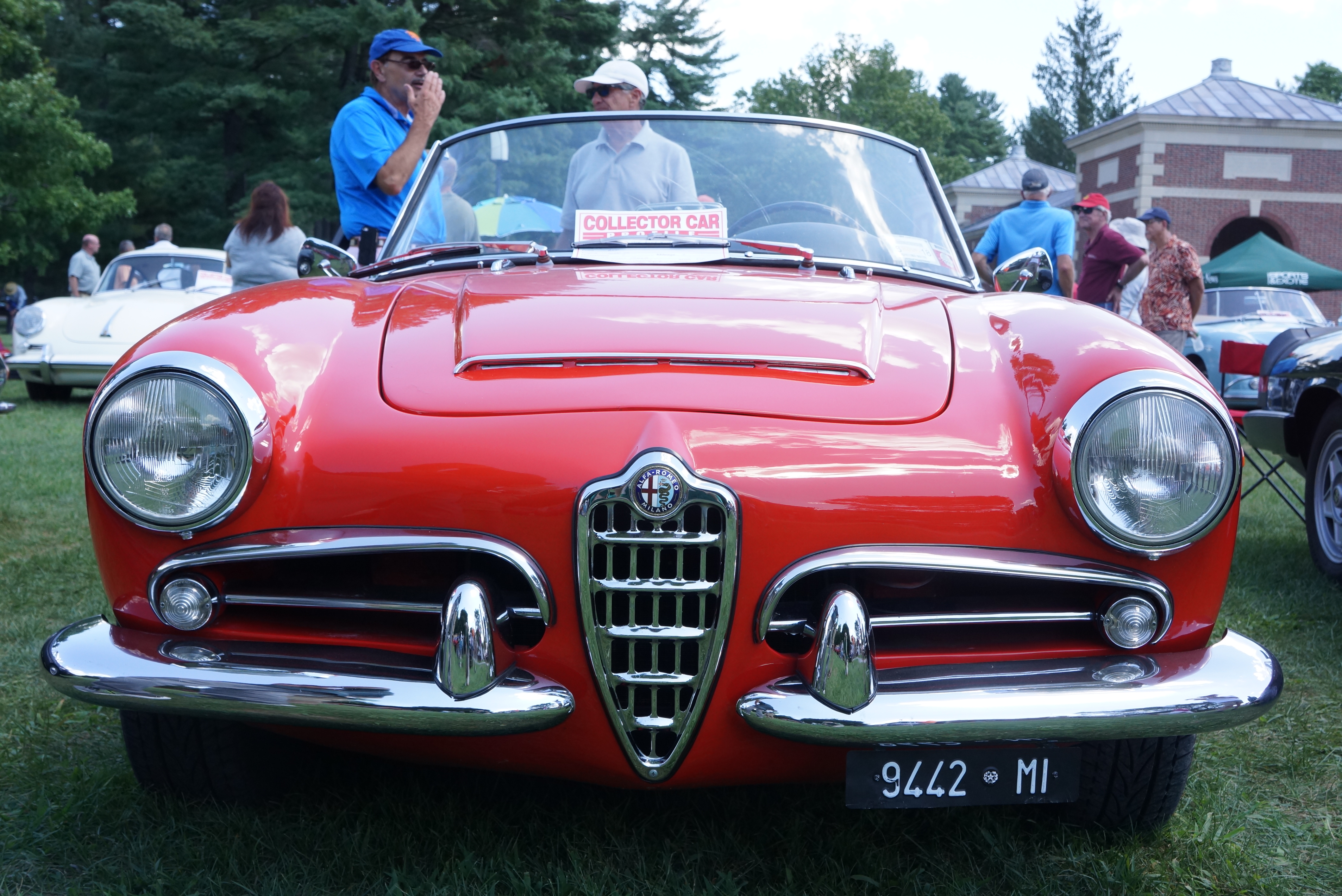
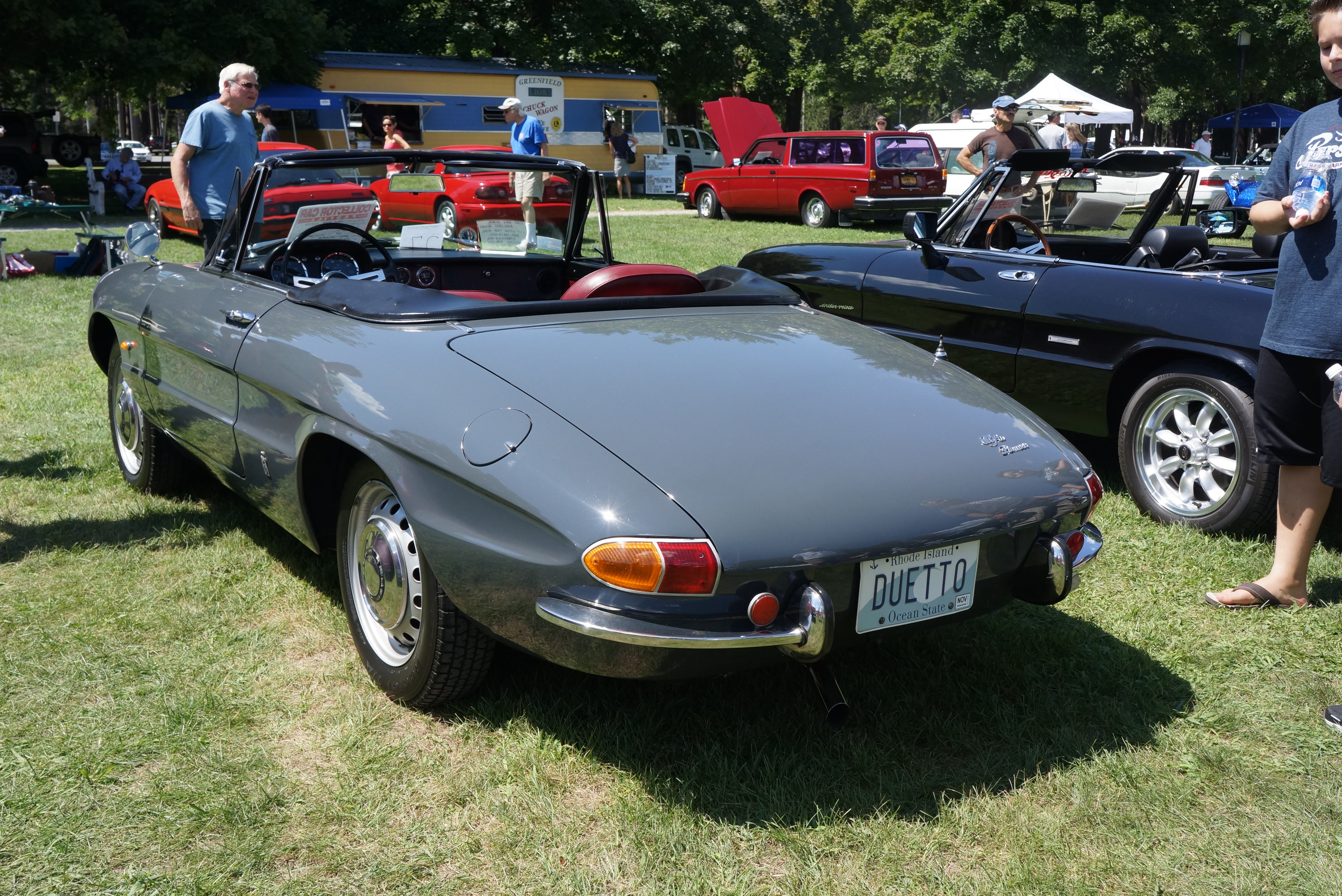
The Alfa class was disappointingly small. However, the cars that were there were gems.
Fine Italian jewelry:
This Duetto, striking in grey, took 1st place in its class.
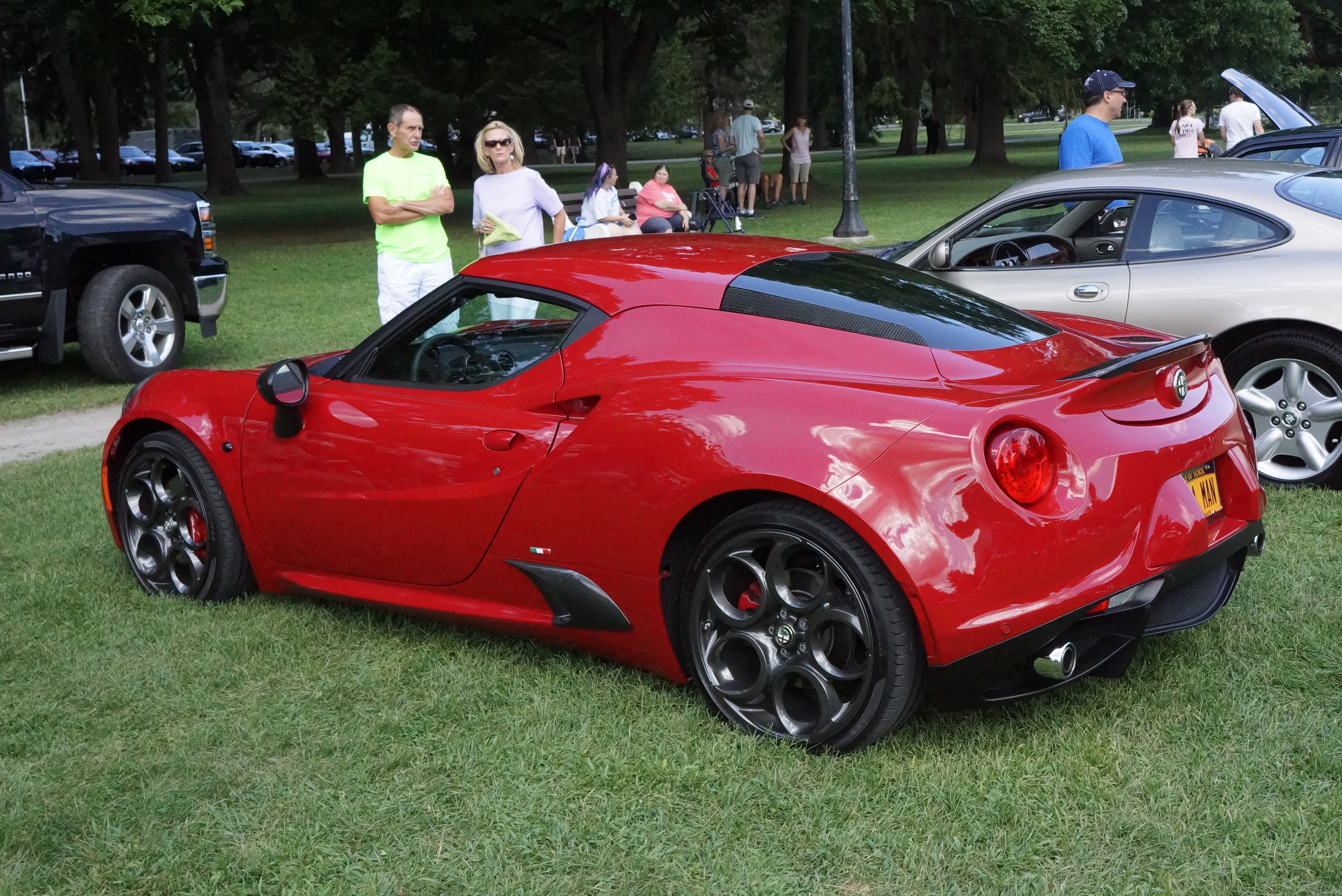
Modern Alfas, in the guise of a 4C coupe and 4C spider:

 On Saturday, some cars went to the track. We hung out and detailed the cars in prep for the big Sunday concours. Perhaps the best part of the day is chatting it up with fellow Alfa owners.



















































































 richardscarblog